Unknown's avatar

THE CORALS OF FOWL CAY MARINE PRESERVE, ABACO [VIDEO]

DCB GBG Cover Logo dolphin

THE CORALS OF FOWL CAY MARINE PRESERVE, ABACO

coral6

I usually have 3 or 4 planned posts on the go. Some are quick to compose, some are not. Especially those requiring technical input from the technically unsound – downloading a video, changing the file format, editing and polishing, uploading to a compatible ‘carrier’ etc. I’ve been meaning to get round to making some fish and reef videos from footage of a trip with Kay Politano of Abaco Above & Below. Now I have…coral8

If you are tolerant enough to at least start this one, which focusses on coral, can I restate the excuses? I swim like a panicking cat. I hadn’t snorkelled for a great many decades years until 2011. I was a stranger to underwater scenery, let alone photography. I wave my tiny camera around too excitedly, though not deliberately to inflict seasickness on hapless viewers… It is a bit less bad this time round, however. Luckily I can tell from my stats if anyone has bothered to click on the video below, and you can rely on me to trash the thing if I find a paltry (or non-existent) response. Best just to watch on the small screen, though.coral14

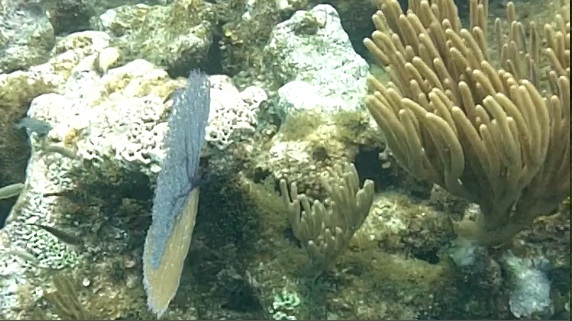
With those dire warnings, here is the video. I would be very interested to ID all the corals that can be seen. There are the easy ones like sea fan, elkhorn, mustard hill, brain… but what’s that one over there? No, behind the waving one…? Comments / suggestions welcome. And if you don’t much care for coral, there are some pretty fish to look at…

Music Credit: Adrian Legg’s ‘Old Friends’, from ‘Guitar Bones’

ADDENDUM JAN 13 I am really grateful to Capt Rick Guest for taking the time to view the video, and the trouble to analyse the contents. He has very helpfully highlighted many points of interest in the film, both as to coral and as to fish, so I’ll post his commentary in full, with my thanks. Of both interest and concern are Rick’s remarks about the Elkhorn Coral. I had wondered about its bleached look. It’s dying…

CORALS ETC

  • At 0:36 a lavender Sea Fan…(Gorgonia ventalina).
  • At 0:52 Yellow “Leaf”,or “Letuce Coral”. Agaricia species growing around a living soft coral called a “Sea Rod”. Soft Corals have living polyps which feed on plankton just like the hard corals.
  • At 1:02 More Agaricia, and a small Brain Coral at bottom. Either a Diploria, or Colpophylia species.
  • At 1:10 A Sergent Major fish, (Abedefduf saxatilus). One of my favorite Taxanomic names! Behind is mostly dead, Elkhorn Coral. The white areas being indicative of “White Plague”. A disease responsible for Coral Whiting…..Death!
  • At 1:37 A Blue Tang swims over some “Mustard Coral”… Porites porites.
  • At 1:55 A chubby “Chub” swims by. Likes caves and caverns and edible, but not palatable.  
  • At 2:33-38  Much coral bleaching damage here on these Elkhorn Corals.  
  • At 2:40-48 A Thalassoma bifaciatum,or “Blue Headed Wrasse” is swimmin’ about. This guy used to be a lady,but he’s a product of Protandric Hermaphrodism! When there’s a paucity of males in the area, a yellow female will step up and become a male for the school.
  • At 3:29 Lower right: a fine example of Millepora complanata,”Fire Coral”. Fire Coral is more related to Man-O-War, and jellyfish than Corals.
  • At 3:50 More Elkhorn Coral with White Plague  
  • At 4:23 Brain Coral, probably Diploria clivosa 
Unknown's avatar

CARIBBEAN CORAL REEFS FACE COLLAPSE – IUCN REEF MONITORING REPORT


CARIBBEAN CORAL REEFS FACE COLLAPSE

Caribbean coral reefs are in danger of disappearing, depriving the world of one of its most beautiful and productive ecosystems

Guardian: Monday 10 September 2012 03.00 BST

• INTERACTIVE GUIDE: CORAL REEFS AROUND THE WORLD

• WHAT DOES A CORAL REEF SOUND LIKE?

coral reef

A pair of French angelfish enjoy the coral reef in the Caribbean Sea. Photograph: Marcus Mays for the Guardian


Caribbean coral reefs – which make up one of the world’s most colourful, vivid and productive ecosystems – are on the verge of collapse, with less than 10% of the reef area showing live coral cover.

With so little growth left, the reefs are in danger of utter devastation unless urgent action is taken, conservationists warned. They said the drastic loss was the result of severe environmental problems, including over exploitation, pollution from agricultural run-off and other sources, and climate change.

The decline of the reefs has been rapid: in the 1970s, more than 50% showed live coral cover, compared with 8% in the newly completed survey. The scientists who carried it out warned there was no sign of the rate of coral death slowing.

Coral reefs are a particularly valuable part of the marine ecosystem because they act as nurseries for younger fish, providing food sources and protection from predators until the fish have grown large enough to fend better for themselves. They are also a source of revenue from tourism and leisure.

Carl Gustaf Lundin, director of the global marine and polar programme at the International Union for Conservation of Nature (IUCN), which published the research, said: “The major causes of coral decline are well known and include overfishing, pollution, disease and bleaching caused by rising temperatures resulting from the burning of fossil fuels. Looking forward, there is an urgent need to immediately and drastically reduce all human impacts [in the area] if coral reefs and the vitally important fisheries that depend on them are to survive in the decades to come.”

Warnings over the poor state of the world’s coral reefs have become more frequent in the past decades as pollution, increasing pressure on fish stocks, and the effects of global warming on the marine environment – in the form of higher sea temperatures and slightly elevated levels of acidity in the ocean – have taken their toll.

Last year, scientists estimated that 75% of the Caribbean’s coral reefs were in danger, along with 95% of those in south-east Asia. That research, from the World Resources Institute, predicted that by 2050 virtually all of the world’s coral reefs would be in danger.

This decline is likely to have severe impacts on coastal villages, particularly in developing countries, where many people depend on the reefs for fishing and tourism. Globally, about 275 million people live within 19 miles of a reef.

IUCN, which is holding its quadrennial World Conservation Congress on Jeju island in South Korea this week, said swift action was vital. The organisation called for catch quotas to limit fishing, more marine-protected areas where fishing would be banned, and measures that would halt the run-off of fertilisers from farmland around the coast. To save reefs around the world, moves to stave off global warming would also be needed, the group said.

On a few of the more remote Caribbean reefs, the situation is less dire. In the Netherlands Antilles, Cayman Islands and a few other places, the die-off has been slower, with up to 30% coverage of live coral still remaining. The scientists noted that these reefs were in areas less exposed to human impact from fishing and pollution, as well as to natural disasters such as hurricanes.

The report – compiled by 36 scientists from 18 countries – was the work of the IUCN-coordinated Global Coral Reef Monitoring Network.

Unknown's avatar

“GLIMPSES OF LIFE ALONG A CORAL REEF” A c19 NATURALIST VISITS ABACO


GLIMPSES OF LIFE ALONG A CORAL REEF by F. H. HERRICK

This post is aimed at those with a particular interest in the flora and fauna – especially avifauna – of Abaco and its Cays. It is a naturalist’s account from 1886 of an expedition to Abaco, interspersed with a few line drawings. It’s an easy read if you are interested in Abaco, its history, and the state of natural life on the islands 125 years ago. Those who have come to this site for the photos and / or even the occasional jest are warned to expect neither. However, to tempt waverers I’ll highlight below (by way of a quiz) some intriguing aspects of the 9-page article. I have had to edit it to correct the many ‘literals’ in the open-source material; however the c19 spellings are retained. I’ve also added coloured subject-matter codes as follows: PLACE NAMES; BIRDS; PLANTS; FISH; CREATURES

In 1886, Herrick visited Abaco with a party of naturalists. This trip predated by 3 years the publication of Charles Cory’s groundbreaking ‘Birds of the West Indies‘. There would have been scant readily-available published material about the natural history of the Bahamas, let alone of Abaco itself. Herrick and a friend left the main party and went on their own wider explorations of Abaco with two local guides. Herrick recorded their findings, which were subsequently published in ‘Popular Science Monthly‘ in 1888. In Herrick’s wide-ranging account of the adventure you will find the answers to the following 15 questions. If any one of them whets your appetite to read this historic account, press the link below the quiz!

  • What fruit might you have found growing in fields on Abaco in 1886?
  • What was the local name for the perforated rock at Hole-in-the-Wall?
  • What is an “egg-bird”?
  • What was causing “the gradual extermination” of flamingos?
  • What were “shanks” and “strikers”?
  • To what human use were Wilson’s Terns put?
  • How many eggs does a tropic-bird lay?
  • What law prevented the shooting of tropic-birds, and indeed any other bird, by naturalists?
  • What sort of creature is a “sennet”?
  • Which was rated the better for eating – grouper or ‘barracouta’ (sic)?
  • Who or what is or are “grains”?
  • What common creature had a burning touch like a sharp needle?
  • What bird was reckoned to have the call ‘loarhle-ee’ ?
  • What – or indeed who – was described as a “pilepedick”?
  • What creature laid 139 eggs?

ABACO NATURAL HISTORY Popular Science Monthly Volume 32 January 1888

Unknown's avatar

A GLIMPSE OF ARTIFICIAL REEF NIGHTLIFE – ABACO, BAHAMAS


A GLIMPSE OF ARTIFICIAL REEF NIGHTLIFE

This very short time-lapse video was posted on the always informative ABACO SCIENTIST website administered by Craig Layman of FIU (Florida International University). The site benefits from the wide knowledge of a variety of contributors in many different fields. As it says, Abaco, just like all of the Bahamian Islands, hosts a wealth of natural wonders. From parrots to whales to blue holes to mangrove wetlands, it is no wonder that scientific research is thriving on the island. The Abaco Scientist is intended as your one-stop source for all things science on Abaco and throughout The Bahamas.

The coral reefs of Abaco and the Bahamas (as elsewhere) are vital yet vulnerable eco-systems. The adverse effects of global warming (or however you describe it if you shy away from that specific term) are increasingly evident. To that damage can be added a slew of other major threats to coral survival – and to the marine life that thrives on the reefs.  There are a number of research projects in progress in the Bahamas into the effectiveness of artificial reefs as a means of conservation of the ecology of reef waters. One of these is by FIU undergraduate student Martha Zapata. In her words, We have recently been capturing time lapse video of the artificial reefs at night. Many reef fishes, like grunts, will leave the reef around dusk to forage in the nearby seagrass beds during the night. We wanted to be able to observe the fish on the reefs without influencing their behavior, so we used infrared light (which fish cannot see) to illuminate the reef. The image sequences have shown a stark difference in fish abundance from day to night. Also, we have been able to observe some of the more cryptic organisms that have made these reefs their home. Usually masters of disguise, urchins roam about the surface of the reef. Look out for the banded coral shrimp and crab that crawl up the side of the reef to graze on algae and detritus while the fish are away. Even a moray eel makes an appearance near the end!

Besides specially constructed artificial reefs, other man-made objects provide  good foundations for an artificial reefs and marine life – in particular, wrecks. There are many of these in the low waters of the Bahamas, some centuries old, others recent. Fred and Melinda Riger of Grand Bahama Scuba, Freeport, take their diving schools to wrecks because of the profusion of marine life that gathers around – and indeed inside – them.

Unknown's avatar

FISH FRENZY AT FOWL CAY MARINE PRESERVE, ABACO, BAHAMAS


FISH FRENZY AT FOWL CAY MARINE PRESERVE, ABACO

This is the first short video from footage taken in June at Fowl Cay, 2000 acres of protected coral reef waters. This was the start of another great day out snorkelling and island-hopping with dive-diva Kay Politano of ABOVE & BELOW ABACO Marsh Harbour.  In due course there will be more videos of fish and coral. There is very slight evidence that lessons have been learned since last year’s erratic novice snorkeler / underwater photographer efforts. Still a way to go of course. The production process has been hampered by a major format problem between my camera chip thingy and the Mac I now use. It told me the data was unrecognisable / corrupted / damaged etc, which was massively disappointing. Then I thought of  <<techno-tip>> downloading to an old PC and transferring to the Mac on a memory stick. Problem solved.

This huge swirling mass of (tens of) thousands of small fish confronted me as I round one end of the reef. I’ve never seen anything like it before, except on TV. It was an astounding, dizzy-making spectacle. When I swam into the middle of the shoal, I expected to feel tickled all over – but despite the huge numbers of fish, their speed, and their sudden and apparently random direction changes, I wasn’t conscious of feeling them at all. I assume the commotion resulted from the presence of larger fish feeding on the small ones. Or possibly from my appearance…

Music credit: Gordon Giltrap (Hofner champion) ‘Fast Approaching’

Unknown's avatar

EXPLORING CORAL REEFS: FOWL CAY MARINE PRESERVE, ABACO


EXPLORING THE CORAL REEF AT FOWL CAY MARINE PRESERVE, ABACO

First, a warning for anyone arriving new to this blog (hi! welcome) either on purpose or accidentally: I can’t swim very well, I hadn’t snorkelled for decades until last year, and I’d never before used a camera underwater.

That said, there is probably enough in this 2:40 min video  to warrant a quick view. As with other videos from this expedition to Fowl Cay Marine Preserve (STINGRAY / BLUE TANG), best viewed small to avoid queasiness and disorientation. You can always Pause for a breather. There are some nice fish obligingly in view from time to time, and the coral is very diverse. And I’ll know what to do this year to get better results, besides trying harder with the swimming… (Music: East Wes by Eric Johnson, off Ah Via Musicom)

Unknown's avatar

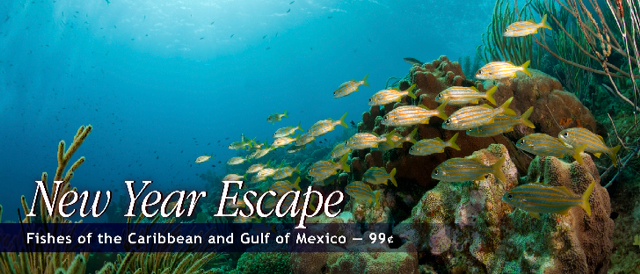
AUDUBON CARIBBEAN FISHES APP £0.69 / $0.99 PROMOTION: GET IT NOW!


AUDUBON FISHES OF THE CARIBBEAN & GULF OF MEXICO APP

iphone, ipad (172mb)    £0.69 / $0.99 offer until 31 Jan, then reverts to $9.99          rollingharbour rating *****

This is app is so good, and such an utter bargain until 31 Jan 2012, that I have awarded it the rh logo position at the top of the page. Praise indeed. Audubon guides are legendary, of course. The excellent Audubon bird app has already been reviewed and also given a rare 5*- see BIRD APP on the BOOKS ETC drop-down menu. Now here are the Caribbean Fishes, in all their glory. First, a clip shot of the download page – click on it to enlarge and avoid eye-strain

This is a very well designed app, a comprehensive search and identification tool with a myriad of features. It’s fine for an iPhone, but I guess it would really come into its own on an iPad. Whatever that is. Here’s a brief overview of the contents

SEARCH OPTIONS:  by shape (dividing size into 5 categories, from giant to tiny); family (alphabetical list of species); name (alphabetical list with useful thumbnails to assist – and cleverly, the ability to search by first name ‘Sergeant’ or last name ‘Major’), or advanced search (size / shape; habitat; regions; colour)

REFERENCE sections on biology; fish-watching tips; marine habitats; biogeography; conservation; fish taxonomy; dangerous fishes; large glossary

OTHER FEATURES include the facility for having a (free) account, enabling a ‘My Content’ facility; Journal; and GPS

Crits? Very few at first glance. The odd typo. My inital search for bonefish by size (over-optimistic, of course) led me to the larger ladyfish, but a search by name took me straight to it. The most significant confusions may arise from the present ‘single image’ ID format. For example, if you look for the uncomely  greeny-blue adult male stoplight parrotfish, you may be surprised to find the prettier black, white & red female pictured. Similarly, you won’t find juveniles, such as the small blue-with-yellow-spots yellowtail damselfish. But these are small points in an app with such a large scope. Anyway, who knows what upgrades will follow?

Overall for £0.69 / $0.99 a complete steal for New Year

Unknown's avatar

GRAND BAHAMA CORAL REEF DAMAGE: CRUISE SHIP POESIA GROUNDING (3 VIDEOS)


On 7 January 2012 the enormous Panama-registered cruise ship MSC Poesia – 100 foot long, 100,000 tons, 6000 + 1000 crew capacity – ran aground on the coral reef off Lucaya Beach, Grand Bahama. She was refloated by tugs on the evening high tide, leaving a trail of destruction to the reef behind her.

Video footage posted by FREDGBSCUBA shows the predicament of this huge vessel above the surface; his subsequent underwater footage graphically shows the extent of damage and explains the longer-term consequences of the incident, including the toxic effects of the anti-fouling paint scraped off the hull (video 3).

STOP PRESS Jan 18 The first video has now been blacked out, with the message that it has been “removed by the user”. Hmmmmm. No comment.

But through the magic of techo-wizardary it has been restored to life and can be now be seen again by clicking===>>>VIDEO 1 HERE

Video 2 has survived intact

Whoops! Video 3, a scientific analysis of the toxic anti-fouling paint, has now ‘gone’ too. Let’s see if we can… Good, here it is again

I’m no mariner, but wouldn’t a ship of that size and weight in known shallow water and reef territory have (a) navigators (b) detailed nautical charts (c) depth gauges or sounders and (d) one or more pairs of eyes keeping a look out? Or does this sort of thing happen all the time?

This is not Poesia’s first brush with misfortune. I see from Wiki that in her first year of operation, 2008, “…MSC Poesia and Costa Classica collided in the Adriatic Sea near Dubrovnik. No one was hurt, and the damage was minimal. The cause of it was that MSC Poesia’s anchor loosened and precipitated (sic) her to hit Costa Classica. Both continued their scheduled itinerary with no delays”. The coral has not escaped so lightly…

I see that this ship also plies the Venice lagoon. I hope she knows not to stray from the deepwater channels: the average depth elsewhere is ± 1 metre…

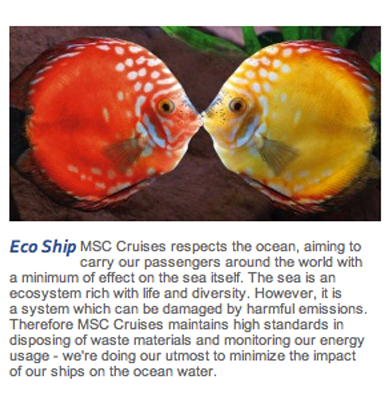
The website of MSC Cruises sets out an encouragingly positive environmental mission statement (below), so let’s hope the company swiftly applies these principles and comes up with proposals for redressing the adverse environmental consequences of this episode…

The vessel’s name means ‘Poetry’ – so, an inspiration for some hot doggerel: It really is beyond belief / That she should ground upon a reef / For ‘Poetry’, once set in motion / Upon a pristine turquoise ocean / Should avoid such Eco-griefs / And steer well clear of coral reefs…

Credits: Thanks to Fred Riger of Freeport for approval for using his 3 videos

STOP PRESS For a report of the incident in the Freeport News 14 January 2012 CLICK LOGO===>>>


Unknown's avatar

STINGRAY AT FOWL CAY MARINE PRESERVE ABACO


A while ago, I posted stills from a reef-snorkelling video – my first ever underwater video attempt, and indeed my first snorkel for about 40 years CLICK===>>> REEF FISH   I started with a stingray, producing some rather… ok, very… modest results, but it was at least identifiable if you looked carefully and felt benign.

I’ve learned a few tricks since then. Here is the whole clip, still hopeless in most respects but there’s something quite cute about the creature. Mercifully it is only 37 seconds long. I reserve the right to delete this post when I realise no one has actually watched it! [LATER: Oh! I find a few hardy souls have done so. It’s a democratic vote for the ray to stay, as I see it]

[Belated credit to the fairly litigious Joe Satriani (see JS v Coldplay 2009) for borrowing the intro to one of his  songs. It’s a non-commercial tribute, Joe]

Unknown's avatar

REEF SNORKELLING AT FOWL CAY MARINE PRESERVE, ABACO


You will need: swimming kit; sweatshirt (it can be cold on the boat after snorkelling); stuff for Island Hopping later on, inc. camera, money etc; snorkel practice in the pool if you haven’t used one for (say) 20+ years – use the Club gear; Ian Took’s slim ‘Fishes of the Caribbean Reefs’. NB there is limited room on the boat, so you’ll need a bit of a nifty towel work to preserve modesty when changing…

Kay Politano of Abaco Above and Below in Marsh Harbour pencils in an unspecified number of places for a day’s island-hopping and reef-snorkelling while I find out how many non-fishing-that-day Delphi guests might be interested. Seven sign up, and one morning we all set off to Marsh Harbour. In Kay’s shop we try on our flippers, marvel at the scuba possibilities (a completely implausible proposition for most of us…), then we troop off to the marina and Kay’s reassuringly powerful and safe-looking catamaran. It takes 12 passengers; the other 5 are already aboard. We set off towards a threatening-looking weather front; rain later is a certainty…

Kay and rh at the controls

Passing by several Cays, we arrive at Fowl Cay Marine Preserve and drop anchor. We don our flippers, wrestle with our masks and snorkels, and in turn drop off the back of the boat (ok, stern, is it?) into warmish water, under thick grey cloud. My practice in the Delphi pool has paid off, and soon I am wheezing and gurgling my way towards the reef with my head (mostly) under water, a situation I generally avoid.

I am completely unprepared for what I find when I get to the reef. David Attenborough’s favourite production team has kindly arranged for a wide variety of bright fish, some electrically charged, to come up close and inspect me, an intruder in their world. I’ll spare you the colour-supp superlatives and graphic intensifiers – you’re probably blasé and have seen it all before – but I am totally gobsmacked, even with my mouthpiece in place. It’s all real! It’s even better than TV! And don’t get me started on the coral…

Sergeant Major

Parrot Fish

Blue Tang / Ocean Surgeonfish

Blue Chromis

Sting Ray

While I gasp and bubble my way around, I keep a small waterproof video camera running (see GADGETS review). My swimming is feeble at the best of times, but somehow it all seems to be coming together – my flailing limbs, the laboured breathing, the reef, the fish and the footage. We circle round the reef – occasional pale figures appear in my lateral vision – for about 25 minutes, then return to the boat and the struggle to remove our flippers…
 Everyone is excited about what they have seen (some saw barracudas). Who cares that it’s started drizzling… we are wet already and it’s off to Lubbers Cay for lunch; see forthcoming Island-Hopping Post. And see MARINE LIFE page for more reef fish photos taken on this expedition.

ADDITION April 2012 I notice there have been a few specific searches ‘what is the plural of Sergeant Major?’ Good question. The strict grammatically correct answer is, I suspect (as with the military rank), ‘sergeants major’ because it’s the sergeants who are plural and the ‘major’ is a qualifier to distinguish from other degrees of sergeant (were there sergeants minor, for example). It’s the same with courts martial – not ‘court martials’. BUT it sounds all wrong and pernickety. I reckon the whole fish is a sergeant major. If there are 2 or more, you’ve got some sergeant majors to play with.