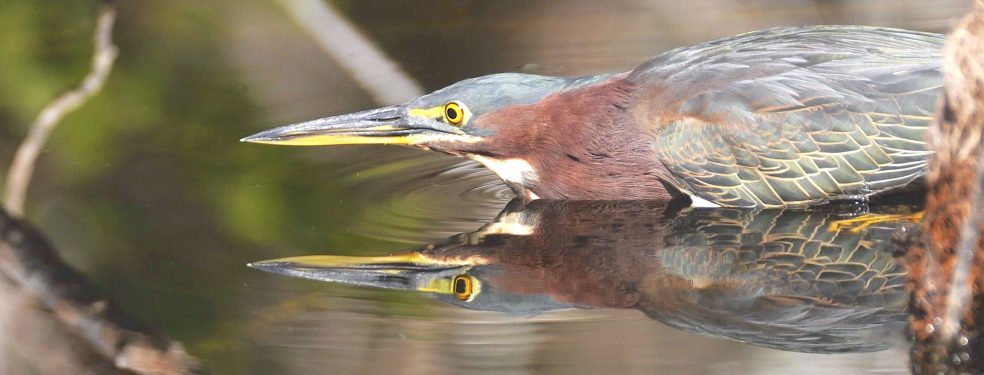
“I MUST FLY”: GONE TO ABACO. BACK SOMETIME.
UPDATES AS & WHEN
HIS ‘N’ HERS RODS ON THE BEACH AT DELPHI
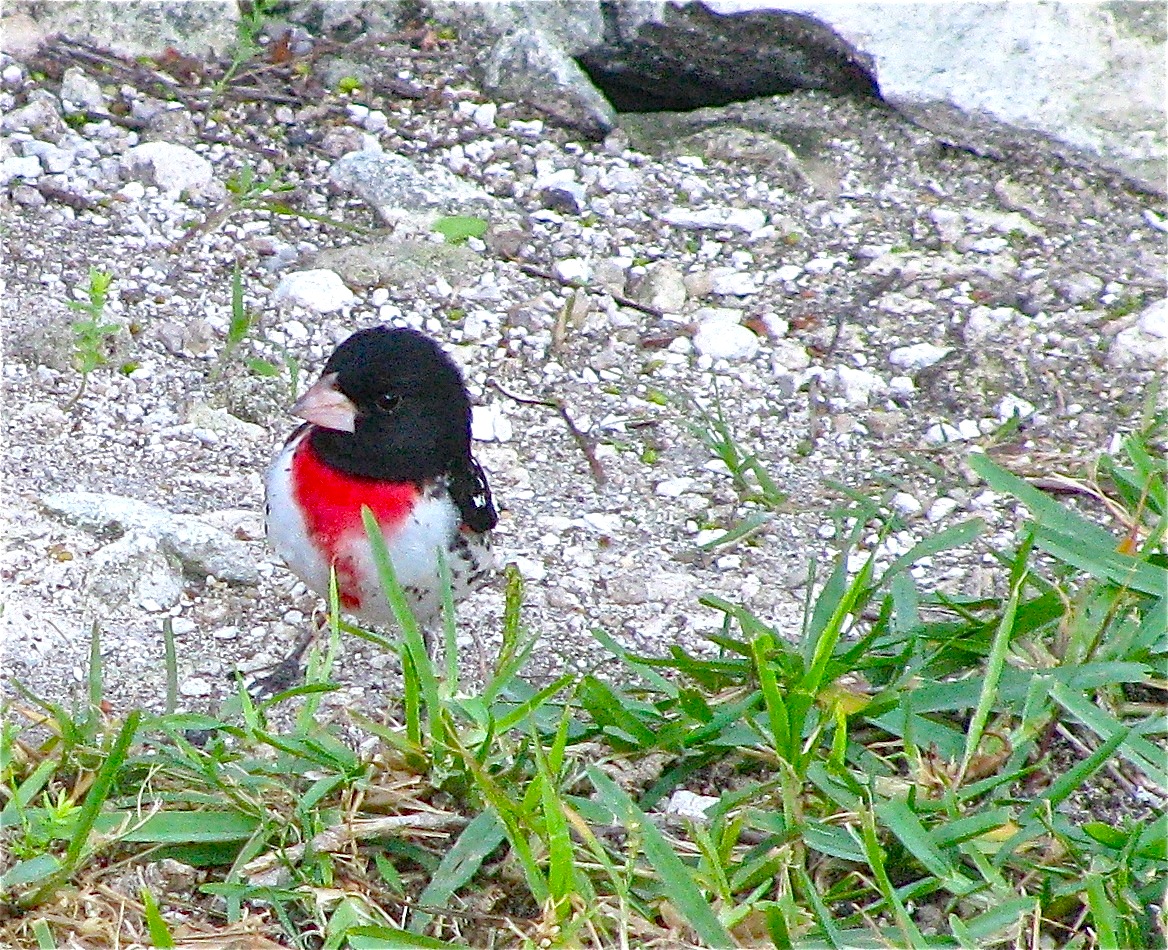
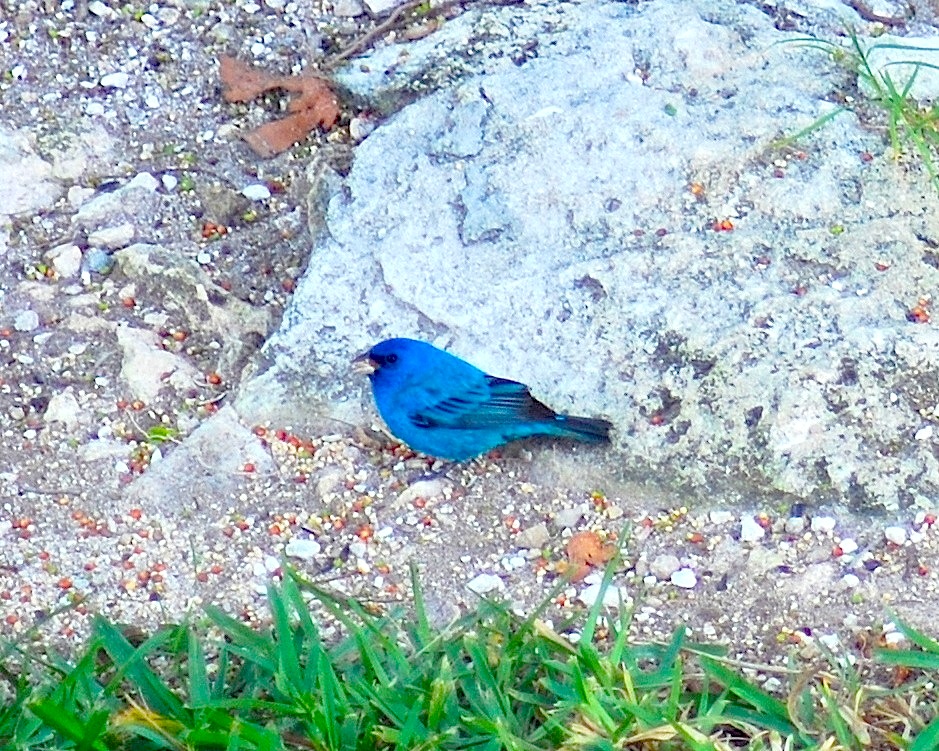
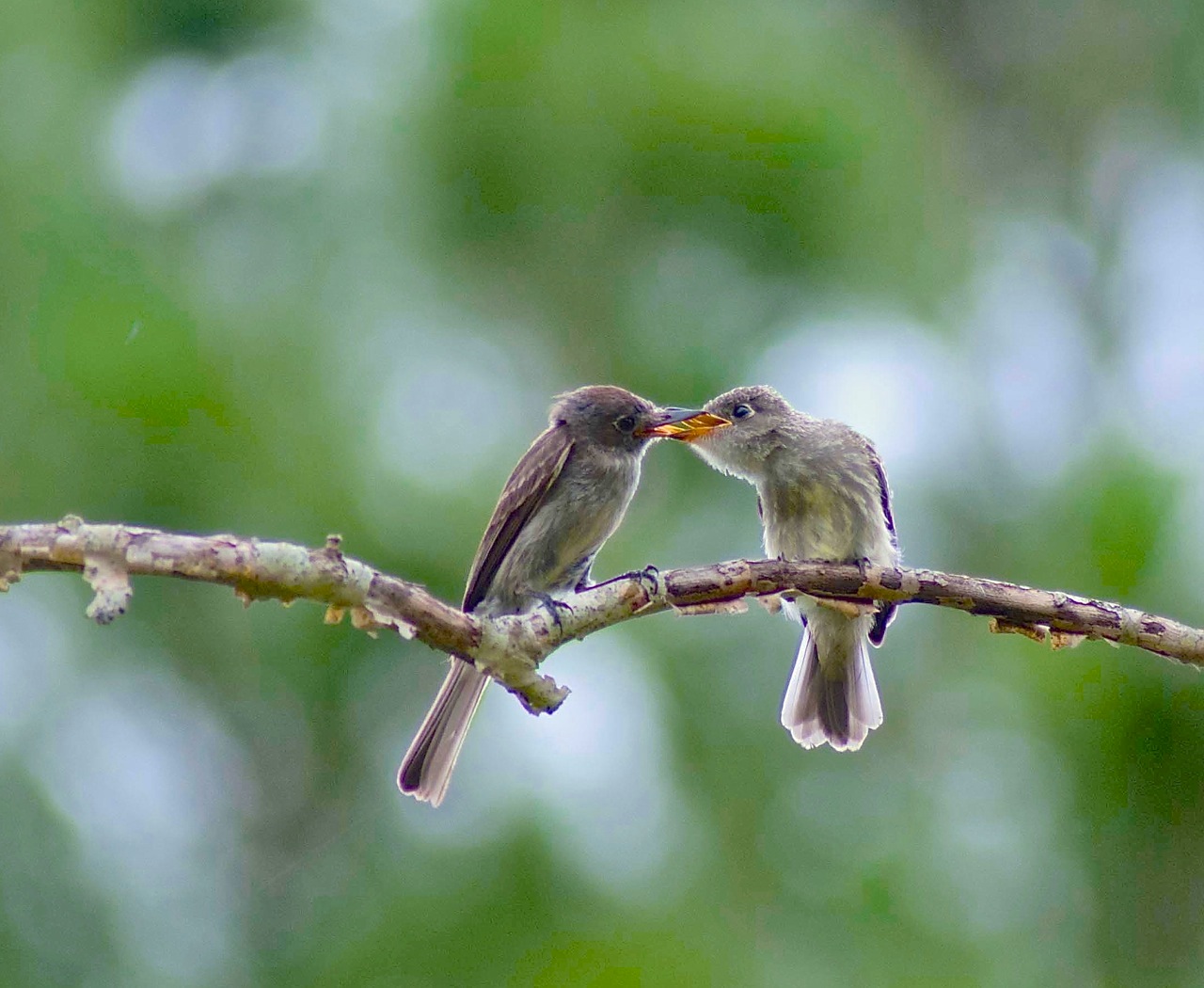
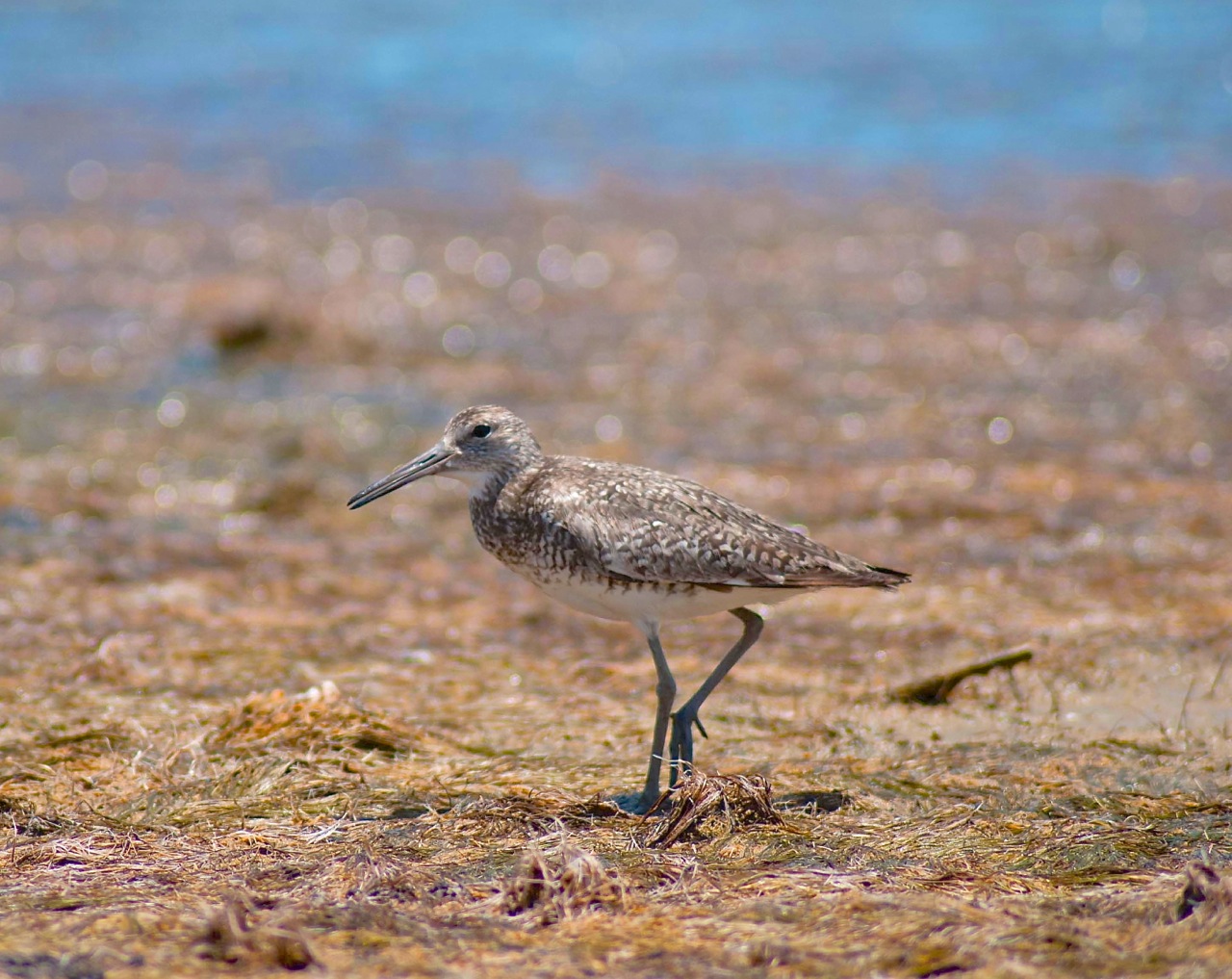
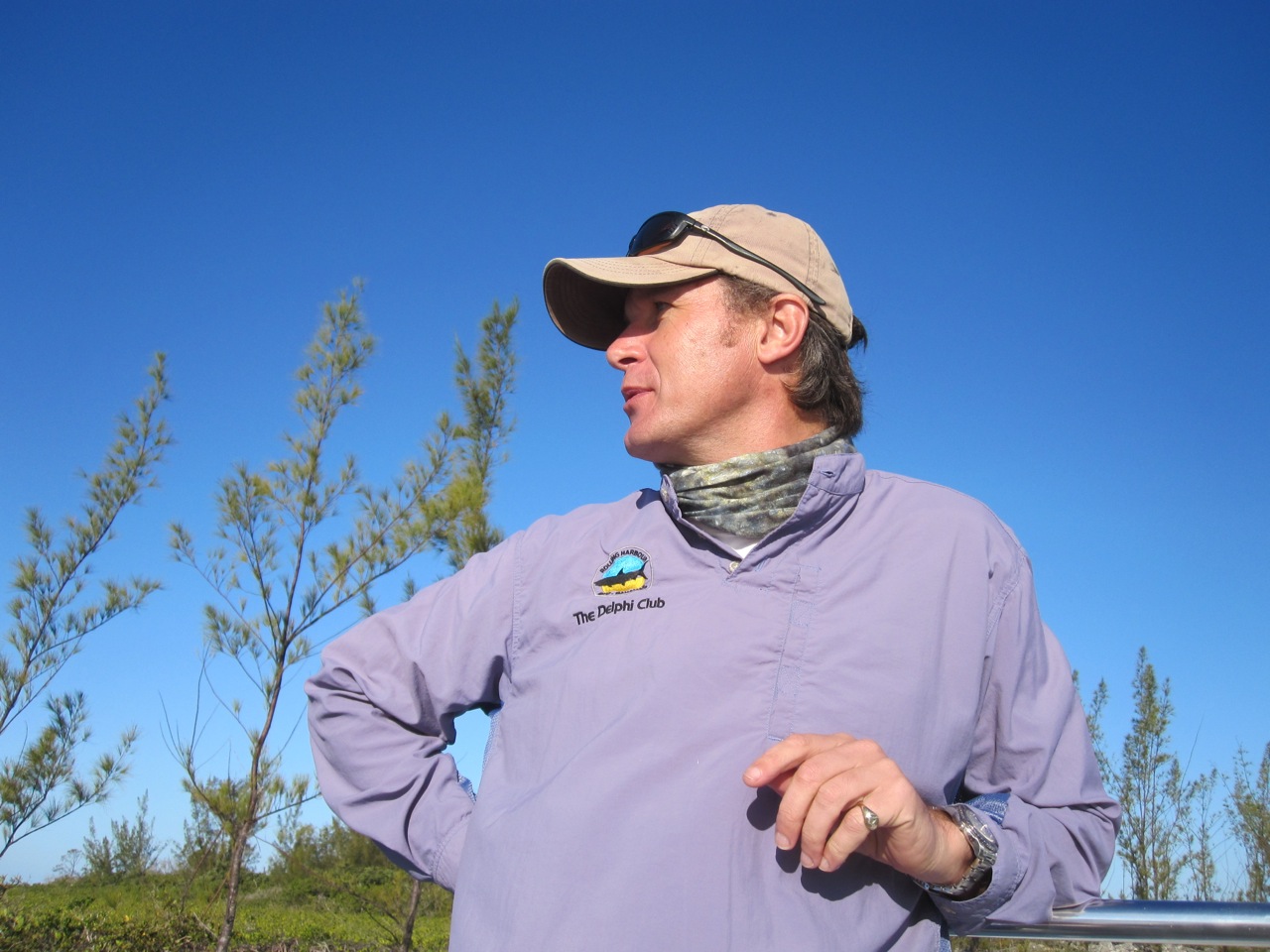
Photos: Tom Sheley, RH, Charlie Skinner, Melinda, Kaitlyn Blair on FB, RH
WHAT HAS THE GESTATION PERIOD OF A WALRUS (16 MONTHS) AND WEIGHS THE SAME AS A PAIR OF FULLY GROWN PINEAPPLES (2 KILOS)?
A unique bird book is been published and has arrived on Abaco today. Printed in Italy at the end of January, it has made its way from Florence via Bologna, Leipzig, Brussels, Cincinnati, Miami and Nassau. Having spent an unexpectedly long sojourn in Nassau, 2 pallets of books are now safely at the Delphi Club… at last!
The Guide showcases the rich and varied bird life of Abaco, Bahamas and features both resident and migratory species including rarities and unusual sightings. It is available for sale now from the Delphi Club in a limited edition of 500. The main features are as follows:
The book is published by the Delphi Club (contact details below). The project was managed by a publishing specialist in art books. The author is the wildlife blogger more widely known on Abaco and (possibly) beyond as ‘Rolling Harbour’. Oh! So that would in fact be Mrs Harbour and myself. Well well. What are the chances?
Images by Tom Sheley, Bruce Hallett, Gerlinde Taurer, Tony Hepburn, RH
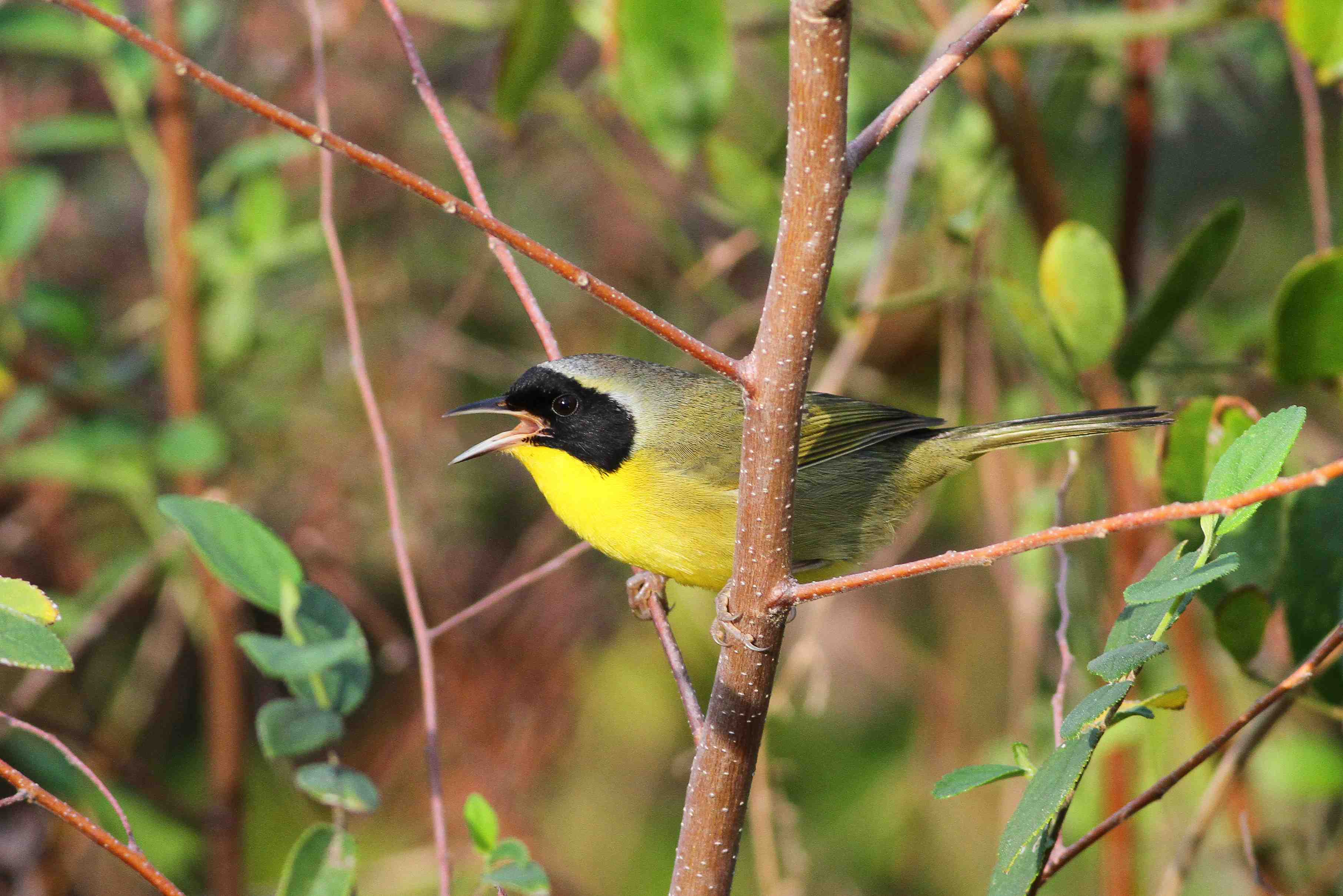
It’s not necessary to prowl around the coppice or lurk in the pine forest to see beautiful birds. They are on the doorstep, sometimes literally. Especially if there are full seed feeders and hummingbird feeders filled with sugar water for the Cuban Emeralds, Bahama Woodstars and other birds with pointy beaks (Bananaquits, for example). Here are are a few from the gardens immediately around the Delphi Club.
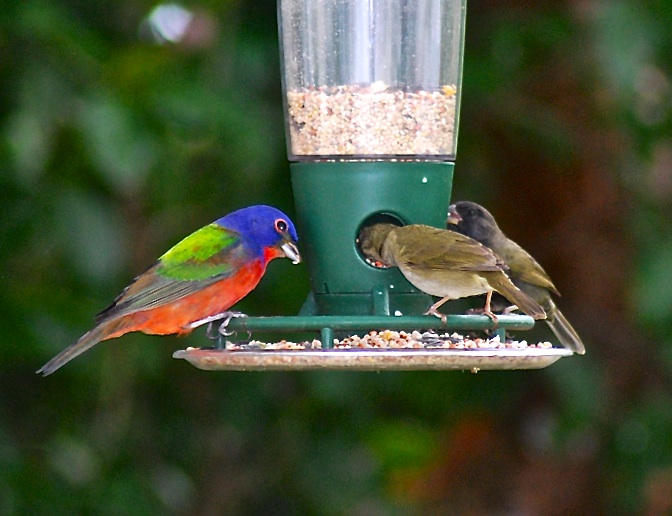
PAINTED BUNTING (m) WITH BLACK-FACED GRASSQUITS (m & f)
This is a TBV recording made with my iPhone.
For details how to record birds (or indeed animals. Or people) with a smart phone and embed the results as an mp3, CLICK HERE
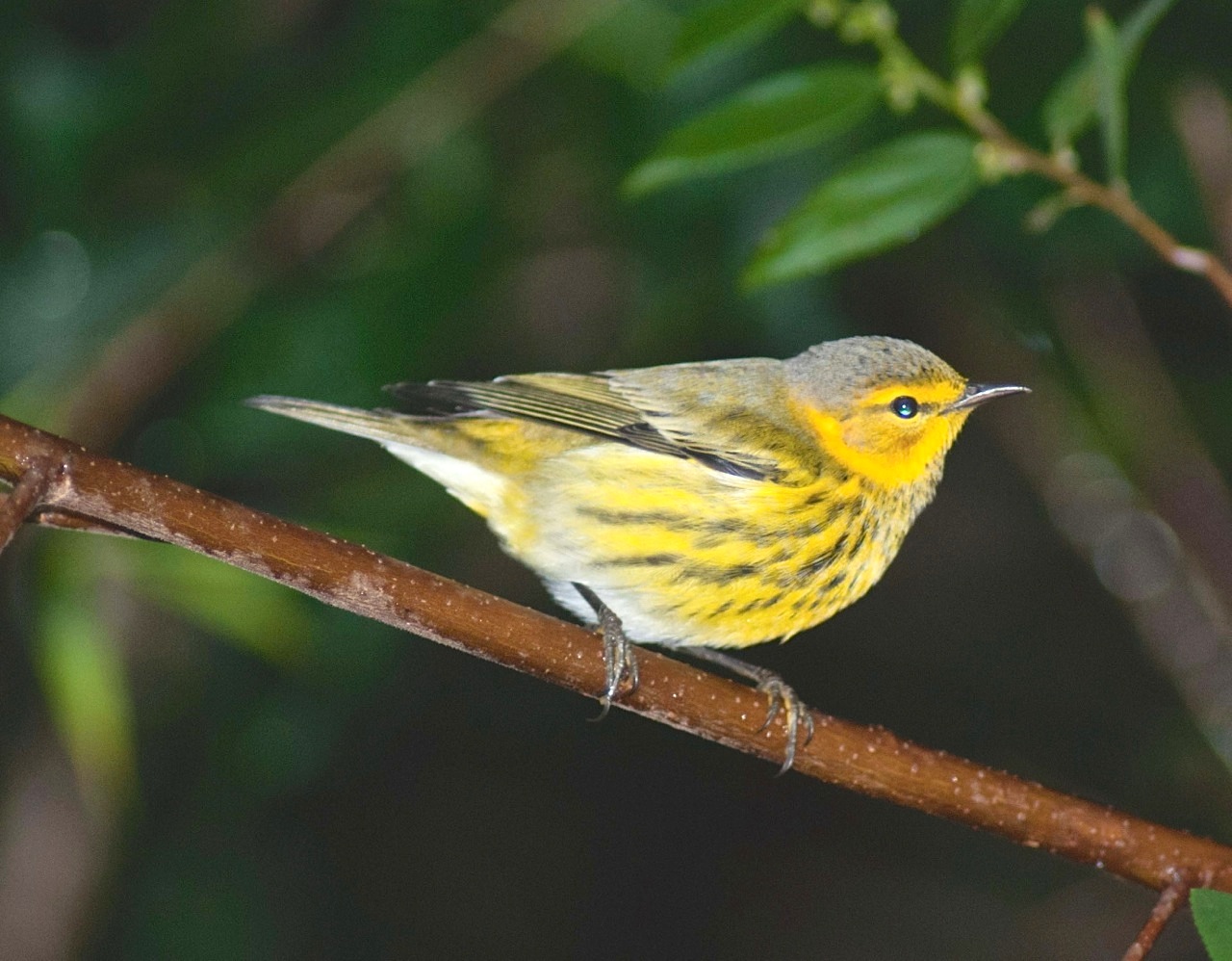
A PAIR OF CAPE MAY WARBLERS
These little birds are autumn / winter visitors, though I have seen one at Delphi in June – it must have like it there and decided to stay on. Strangely, though originally named for one found on Cape May in the c19, there wasn’t another one recorded there for another 100 years…
THE DELPHI CLUB, ABACO
Credits: Mainly Sandy Walker; a couple from Peter Mantle; DCB by RH

This post features some great Abaco bird photos taken by Sandy Walker, a man familiar to anyone connected with the Delphi Club in any capacity at all, and well-known far and wide from Marsh Harbour to Ireland. Possibly notorious in some places… Sandy doesn’t talk about his photography much, though he has plenty to say on most topics. Here are a few of his photos taken in the last 6 months or so, and deserving a wider audience. The header image, from the Delphi garden, shows a Bananaquit in characteristic feeding mode.
CUBAN PEWEES
A great picture of feeding time, with the huge chick already seeming to have outgrown the parent – apart from its rather stumpy tail
CLAPPER RAIL
These shy birds are reclusive by nature and relatively hard to photograph. They tend to lurk in the undergrowth or half-hidden on water margins. If they are caught in the open, they tend to run in a somewhat cartoonish sort of way. This one was having a good dig in the mud for food.
WILLET
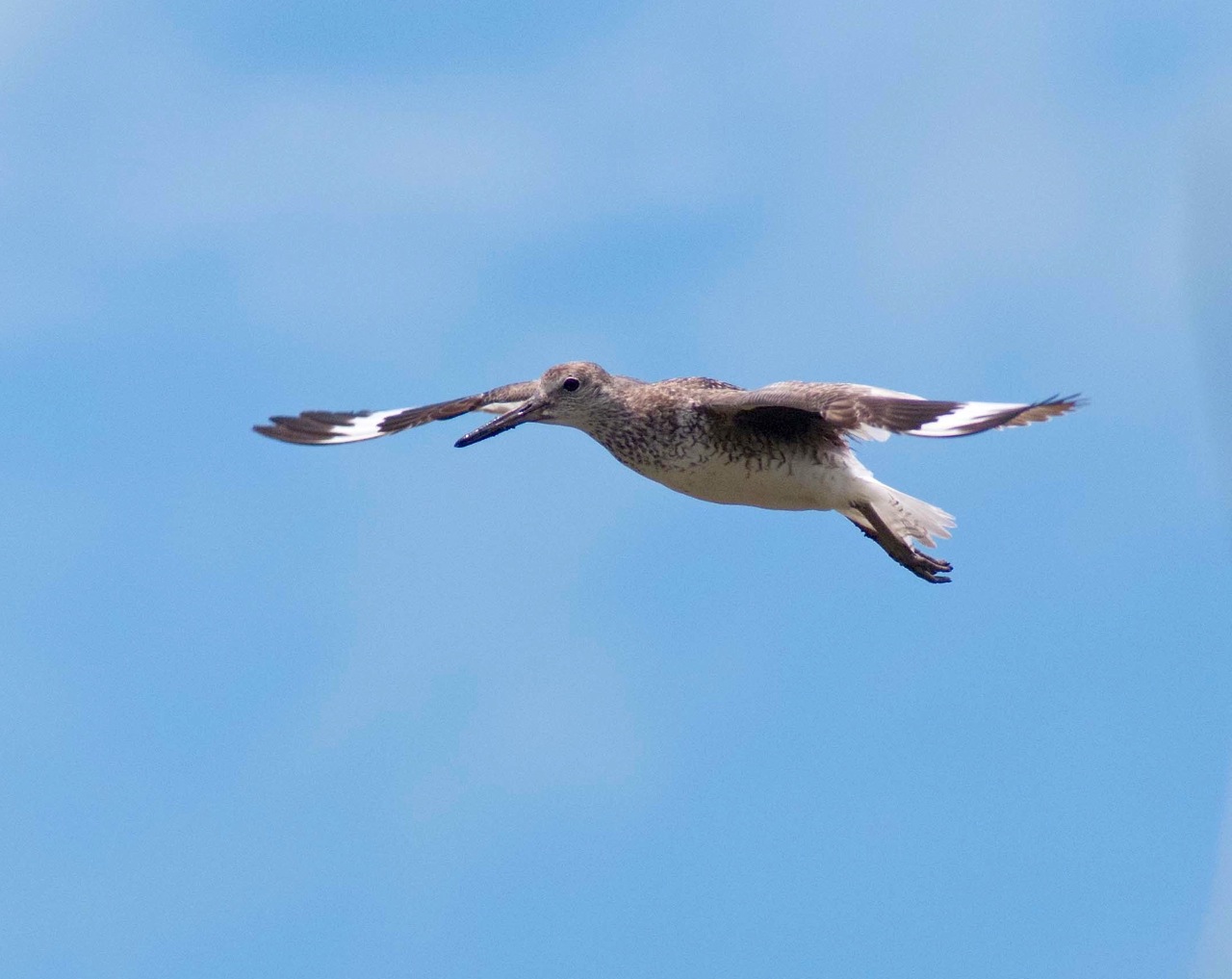
Large birds of the shoreline and mangrove swamps, and classed with sandpipers. In flight, they have eye-catching wing stripes that Sandy has captured with a bit of camera sharp-shooting. You can see more Willets HERE

ANTILLEAN NIGHTHAWK
I was with Sandy when he took this photo during an amazing early evening feeding display of these birds. A hundred or more were swooping and jinking, making the most of an evening fly hatch. Sometimes they flew very close to our heads, make a whirring sound as they passed. Their speed and jagging flight made them very hard to take. I hardly got one in my viewfinder at all, but Sandy is an excellent shot of a different sort, so I guess aiming isn’t a problem for him…
SNOWY EGRET
I love these handsome birds, distinguishable from all other white herons and egrets (in some cases as white morphs) by their astonishing bright yellow feet. These are so vivid that they are often clearly visible when a snowy egret is standing in the water. This one was taken by the jetty at a local pond, a wonderful and secluded place to see water birds of many varieties, including rarities. 

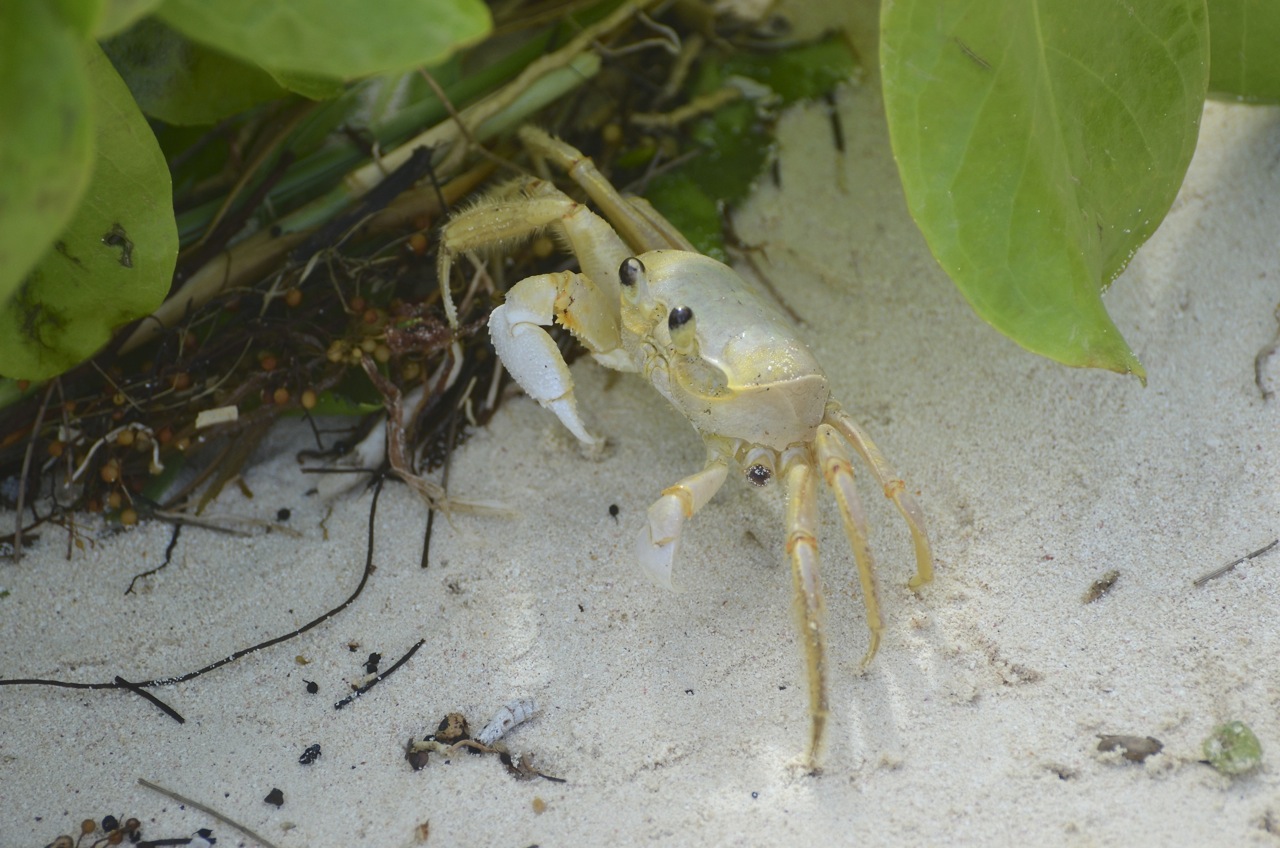
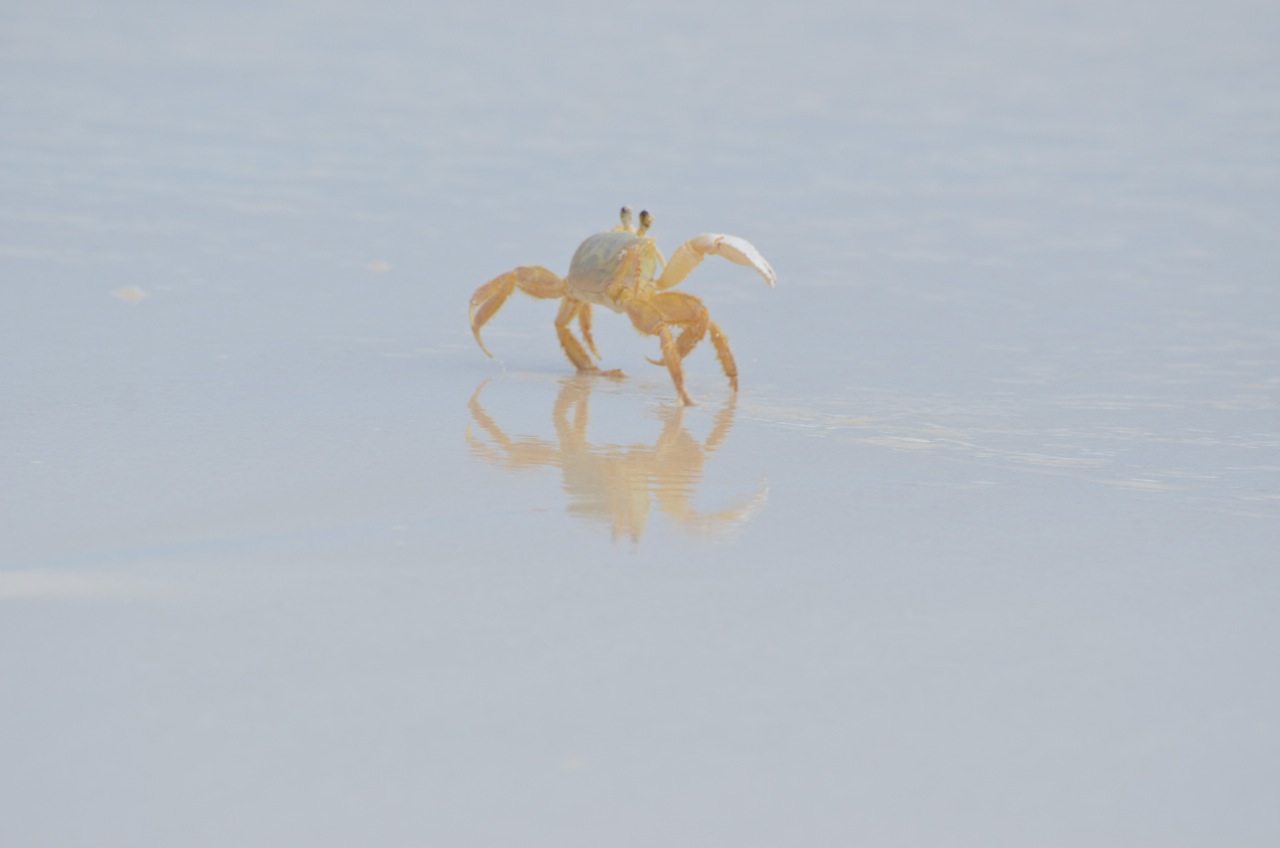
Crabby the Crab lived amongst the greenery at the very back of the Delphi Club Beach
It was a very beautiful beach indeed. Lucky Crabby!
One day Crabby decided to go down to the sea for a swim
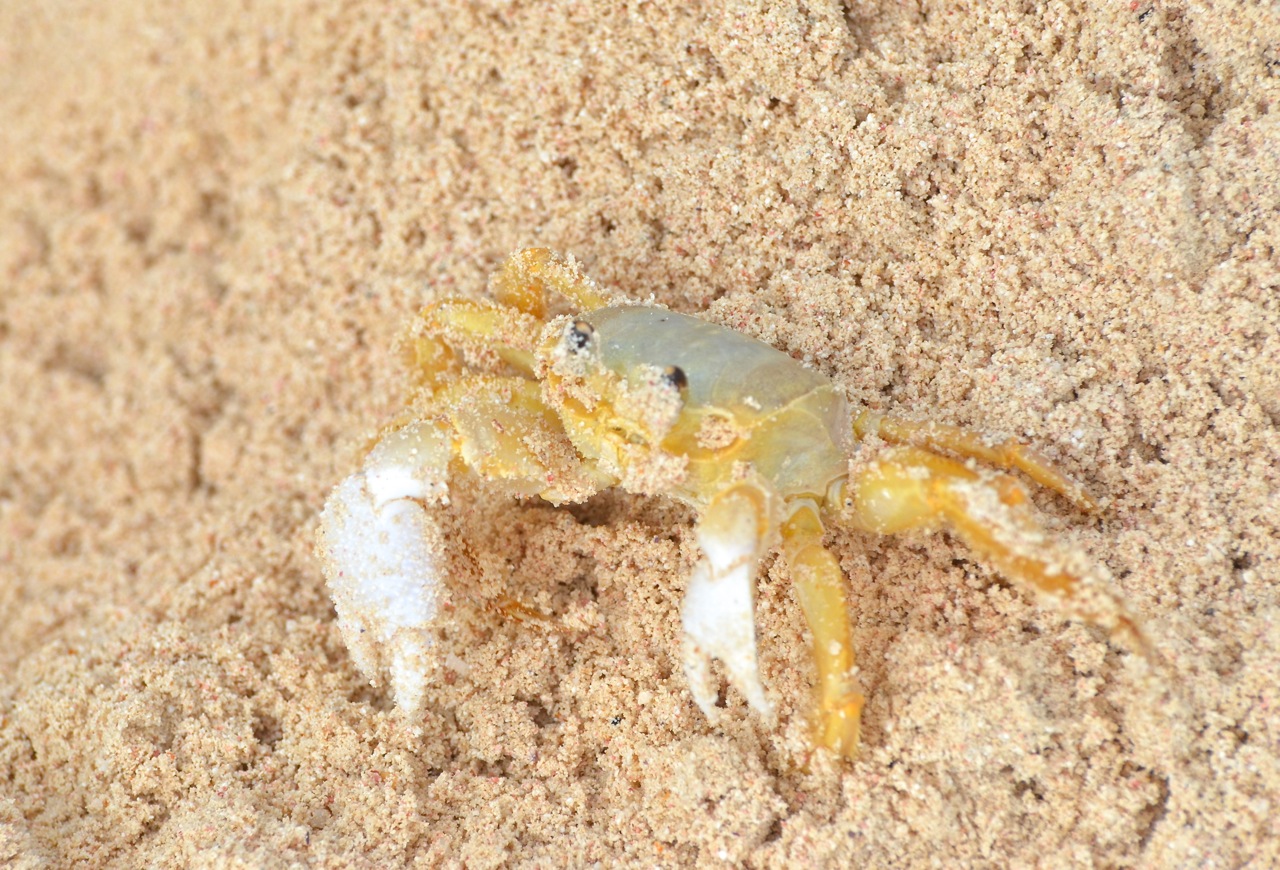
He scuttled across the sand towards the sound of the waves
He passed the burrow of his friend Sandy. Sandy was very busy tidying his house.
“Would you like to come for a paddle?” asked Crabby. “No thanks”, said Sandy, “I’m busy today”
So Crabby carried on towards the water’s edge. He got closer, to where the sand was wet…
…and closer, to where the water tickled his toes…
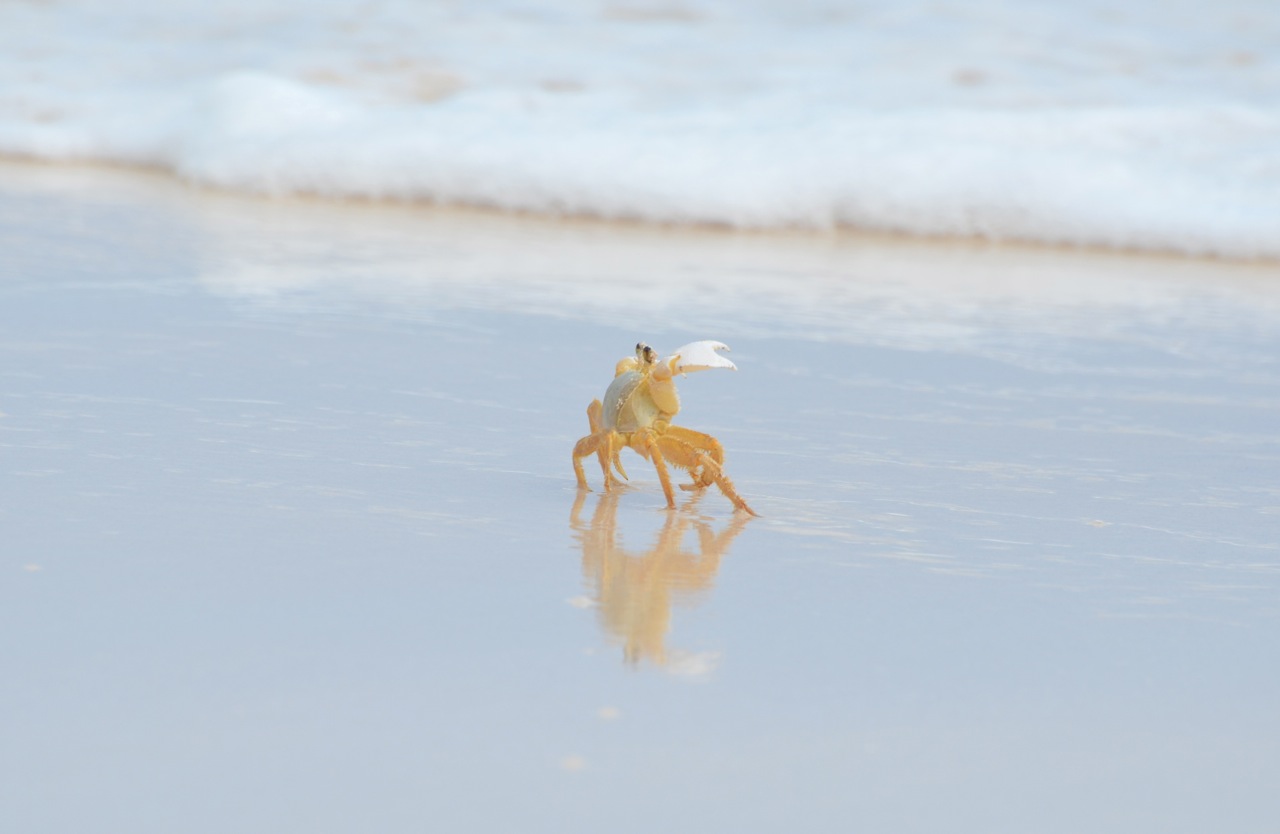
…and closer, to where the tide ripples reached. Crabby waved his claws with excitement
Finally, he was paddling in the warm water. It was just perfect. Whoops! Don’t fall in, Crabby!
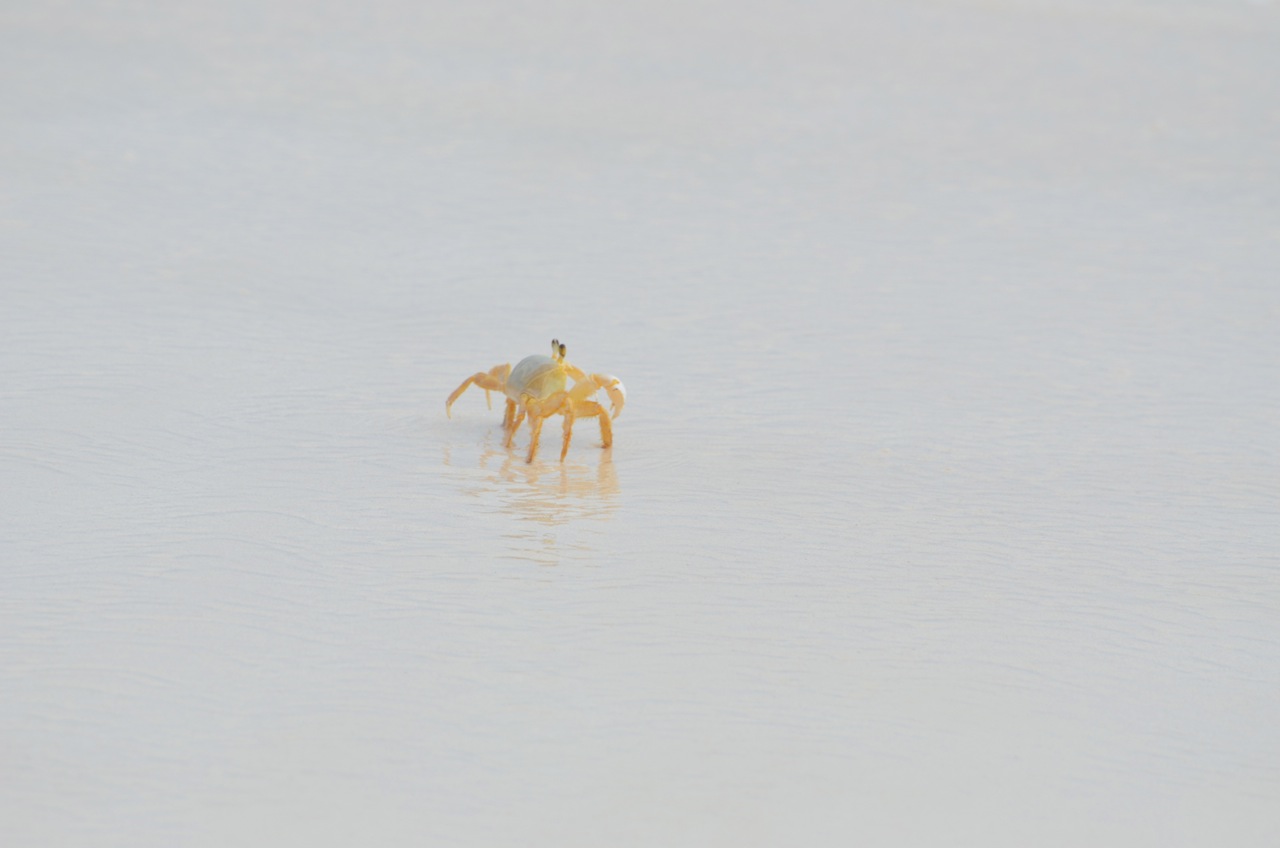
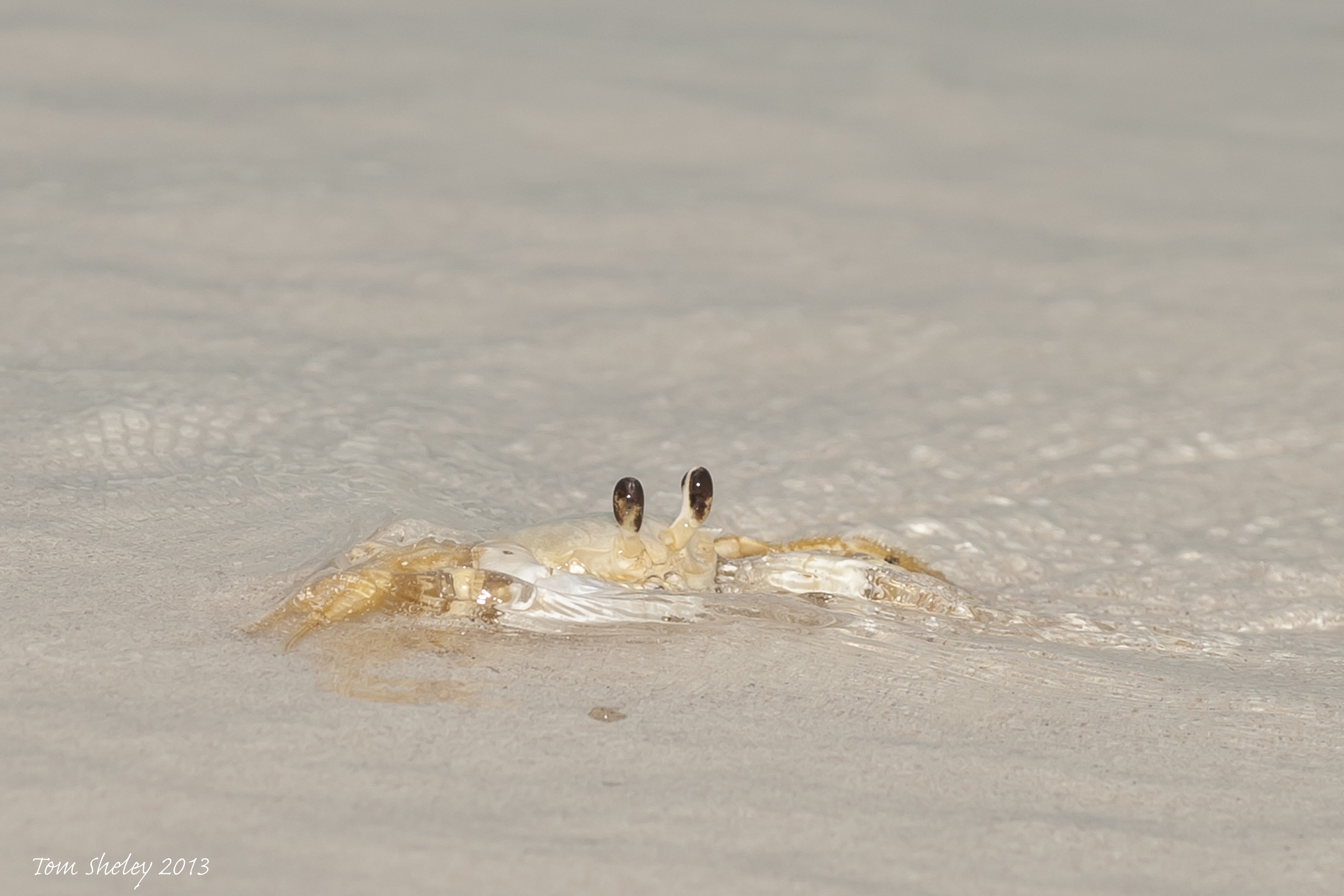
Very soon Crabby was in the water, right up to his eyes. What a beautiful day for a swim!
See ‘Crab Run: The Movie’, starring Crabby the Crab
CREDITS: header & beach, RH; last image, Tom Sheley; the rest, Charlie Skinner. DEBITS: pre-Christmas nauseatingly anthropomorphic tomfoolery and video – blame me. No crabs were harmed or even mildly embarrassed during this photoshoot.
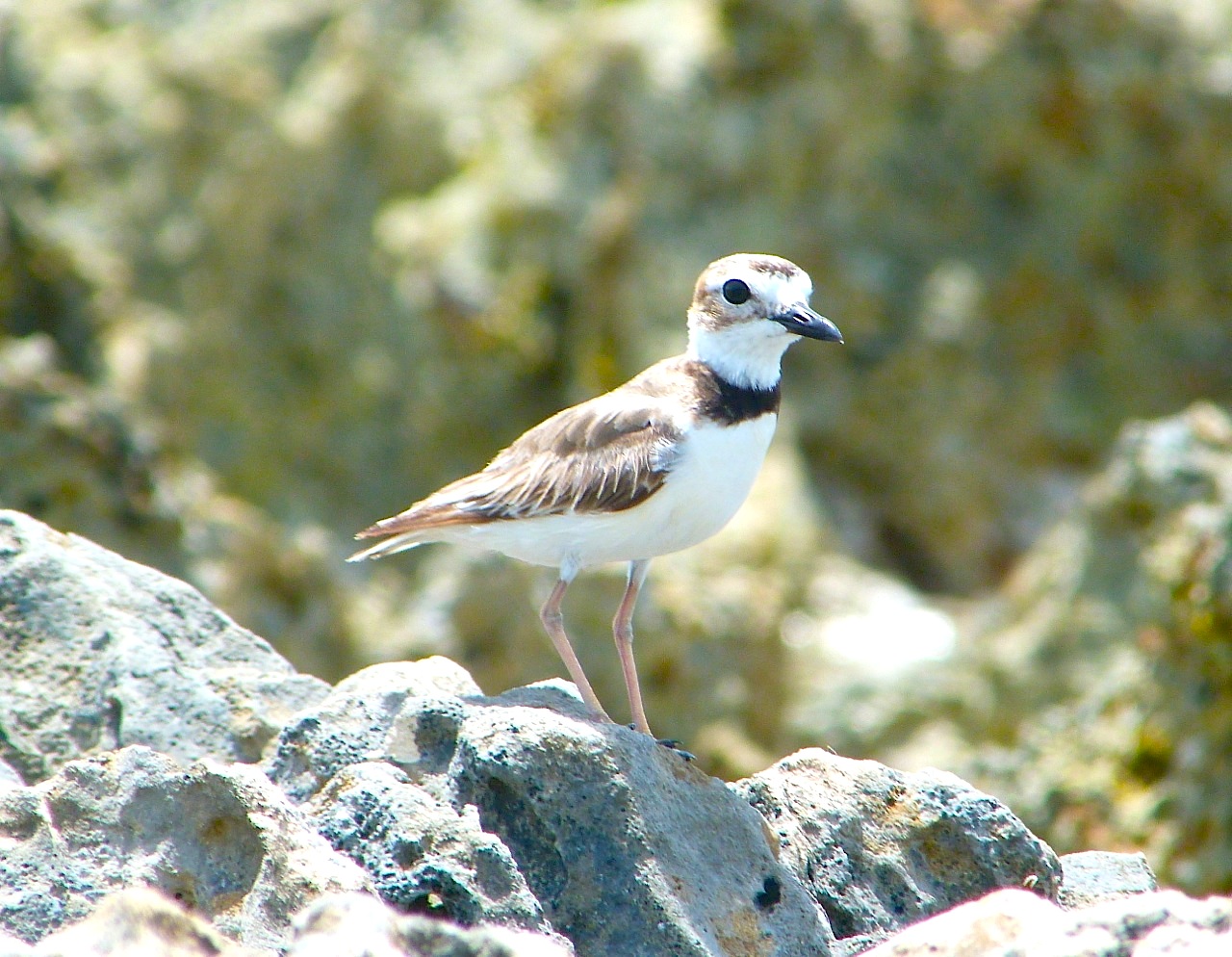
SCRAPES, CHICKS & BROKEN WINGS: WILSON’S PLOVERS ON ABACO (3)The male plover above is keeping watch from a rocky vantage point over an area at the north end of the beach at Delphi. And with good reason. It’s the summer breeding season, and on the sand are some nests. One of them is his.
This is a ‘scrape’ – not the carefully constructed nest that most birds make, but a shore bird’s collection of sticks and twigs – sometimes stones or shells – clumped together on the sand to provide a comfortable place for the mother to sit until the eggs have hatched.
Though tiny at first, the chicks soon become independent enough to explore their surroundings
Usually, there will be a pair of chicks, maybe more. The two in the photo below have scuttled to the back of the beach for safety because the adults thought I was getting a bit close, and sent them to hide in the pine needles
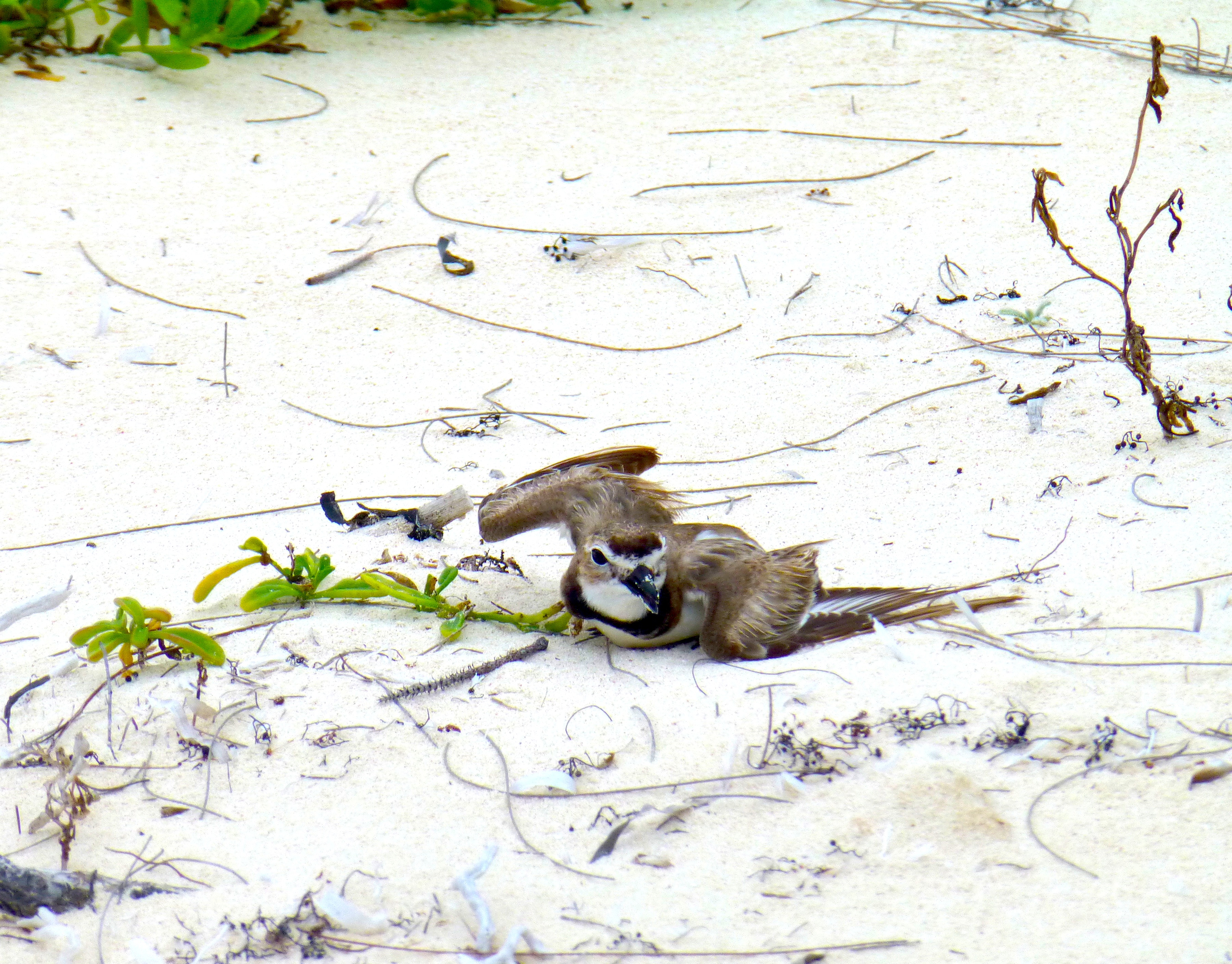
When a nest is threatened by a predator, Wilson’s plovers have a defensive technique that is remarkable to watch. Other shore birds, for example Killdeer, resort to this method as well. A parent will flutter about pathetically on the sand, apparently with one or both wings broken, attracting the predator by its faked vulnerability. The plover will gradually draw the threat away from the nest area, protecting the eggs or allowing chicks to make themselves scarce. Here are some examples of the ‘broken wing display’, all photographed on the beach at Delphi. The first 2 images show a female; the third, a male.

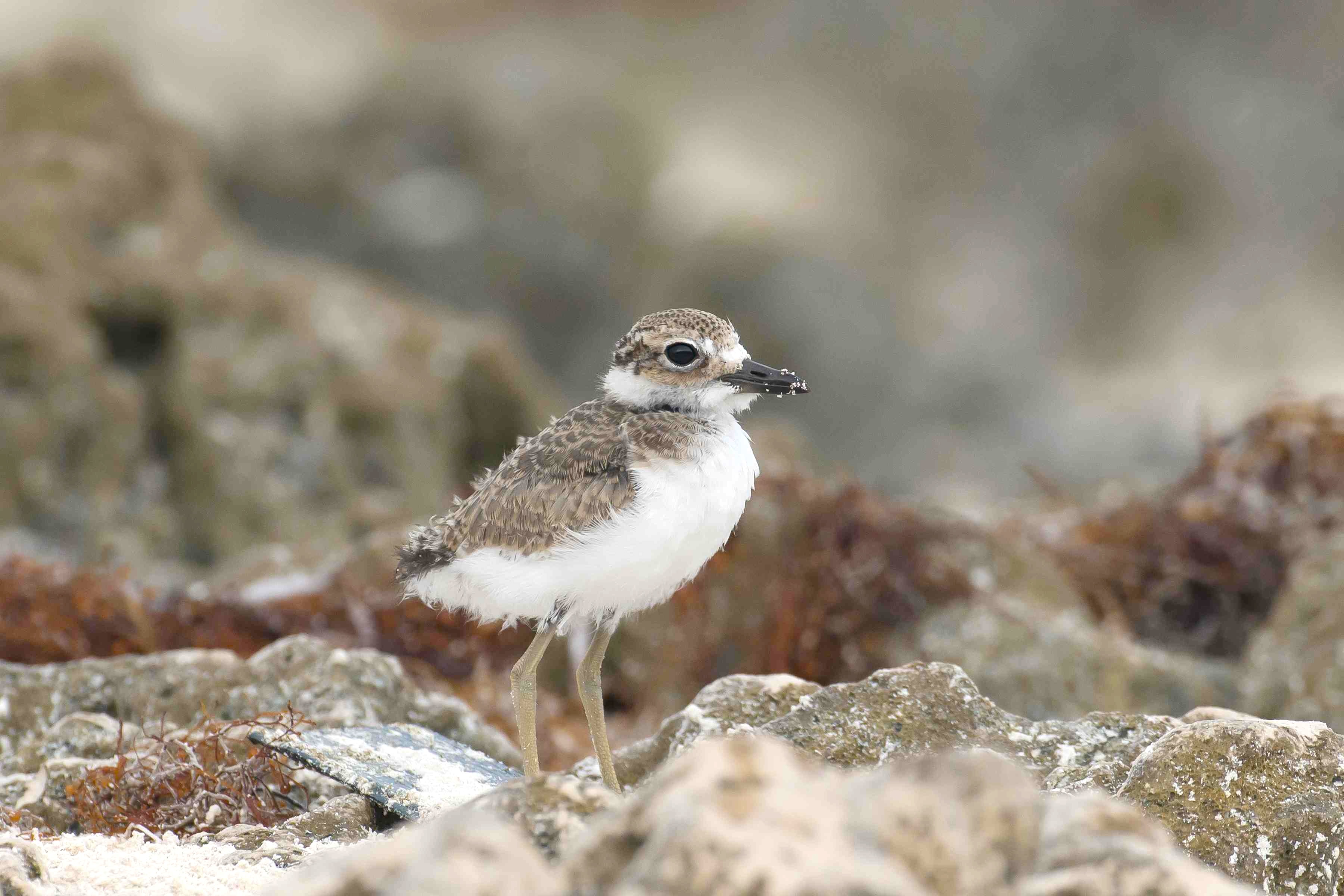
Athough the little chicks are vulnerable, they grow quickly
Before very long, they are able to get onto the same rocky vantage point as their parents to practise surveying the scene. Next summer, they will be keeping watch over nests and chicks of their own.
The previous posts in the series are WILSON’S PLOVERS (1) showing the adults; and WILSON’S PLOVERS (2) that shows how plovers nesting on the shore at Nettie’s Point were protected from human activity in the boat-launching area.
“I’m off now. See you next year”
Credits: scrape & broken wing display, Clare Latimer; last (and best) chick image, Tom Sheley; the rest, RH
![]()
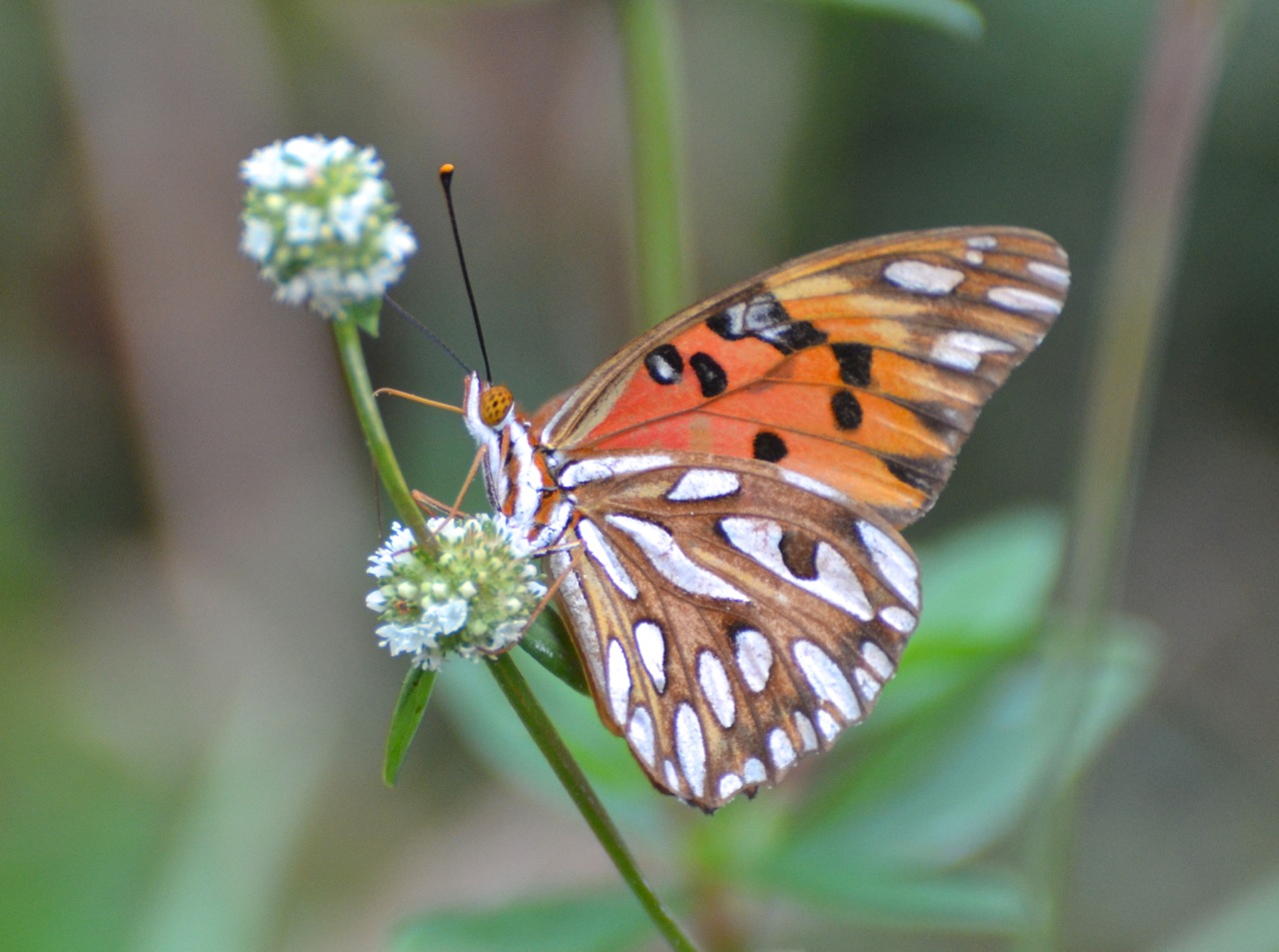
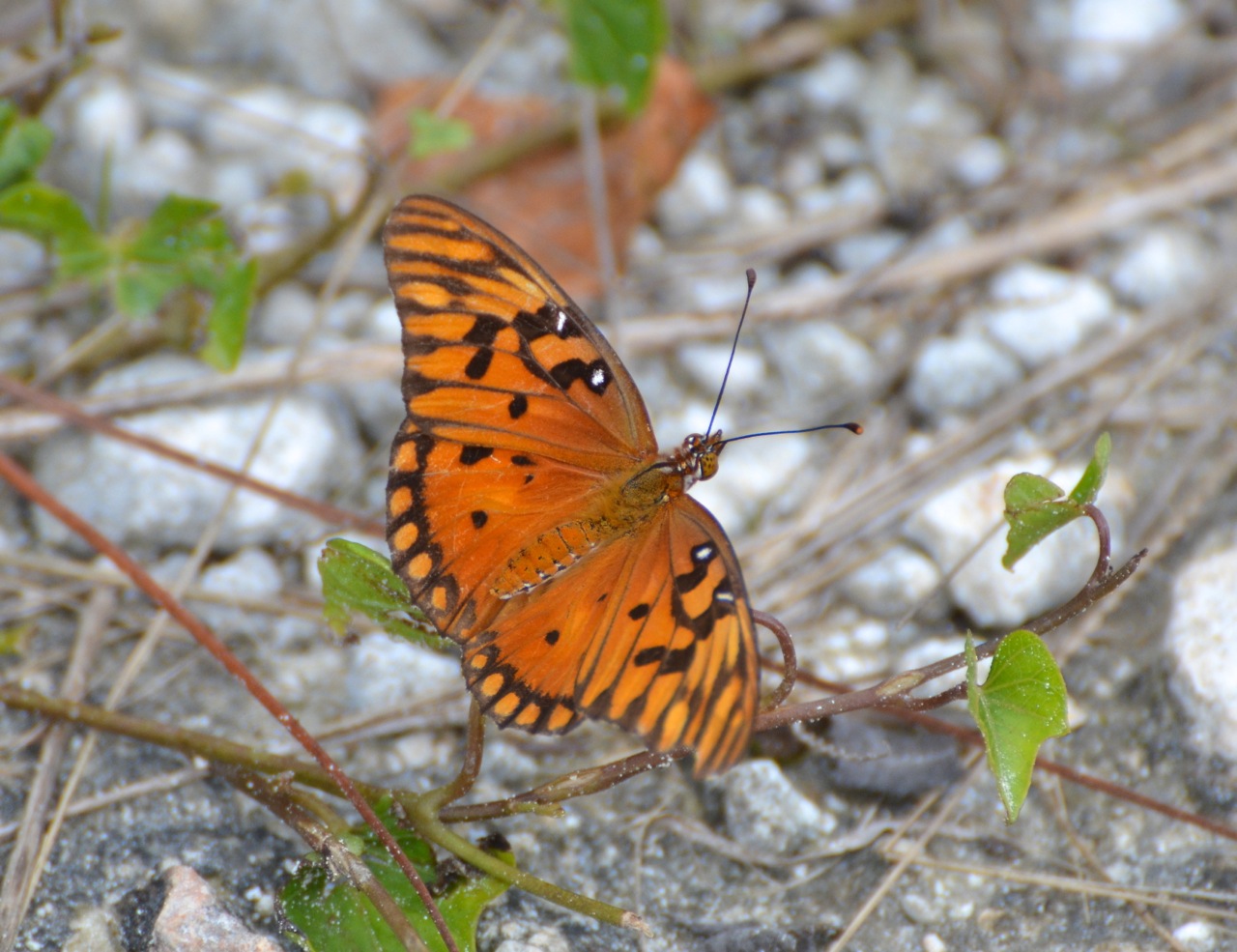
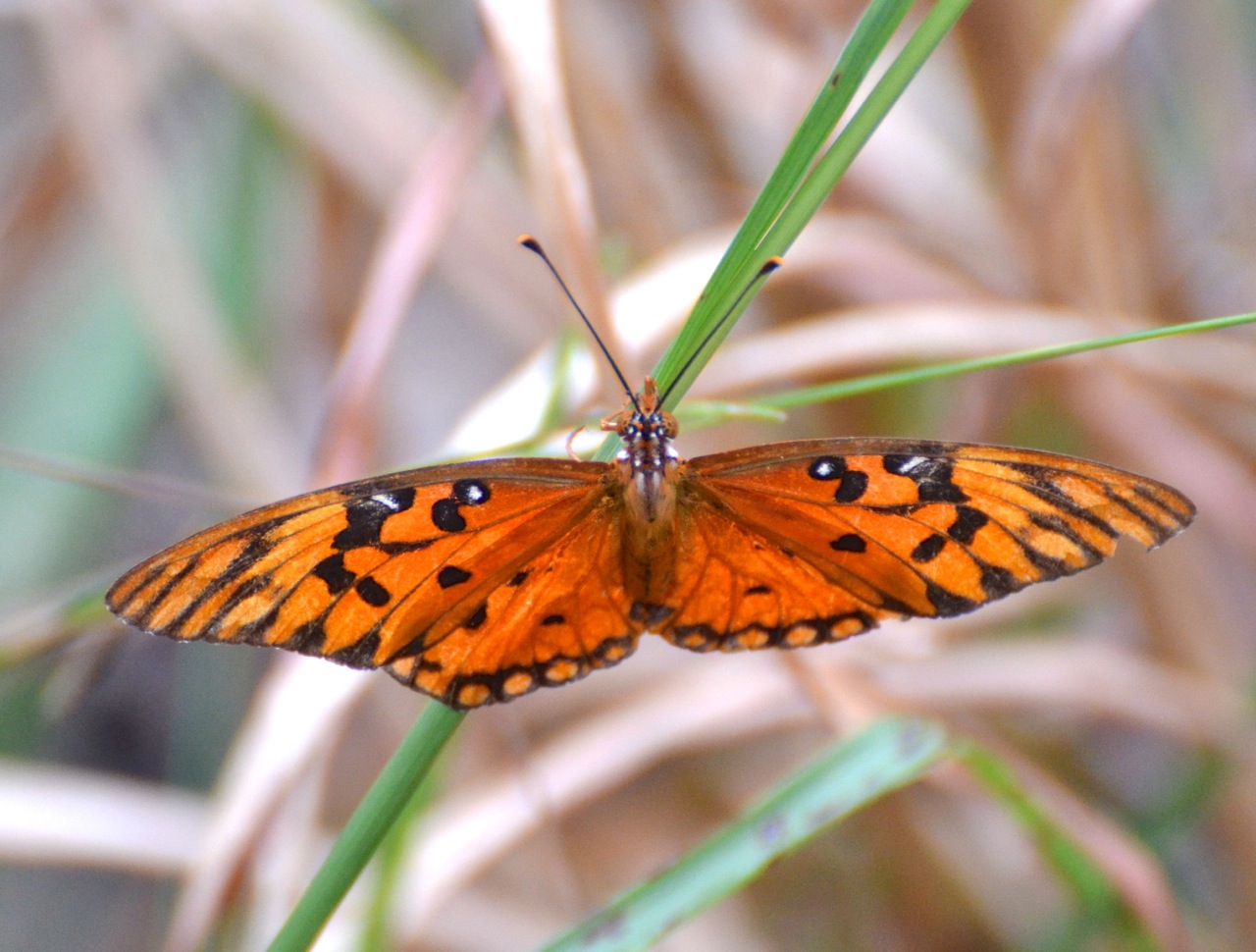
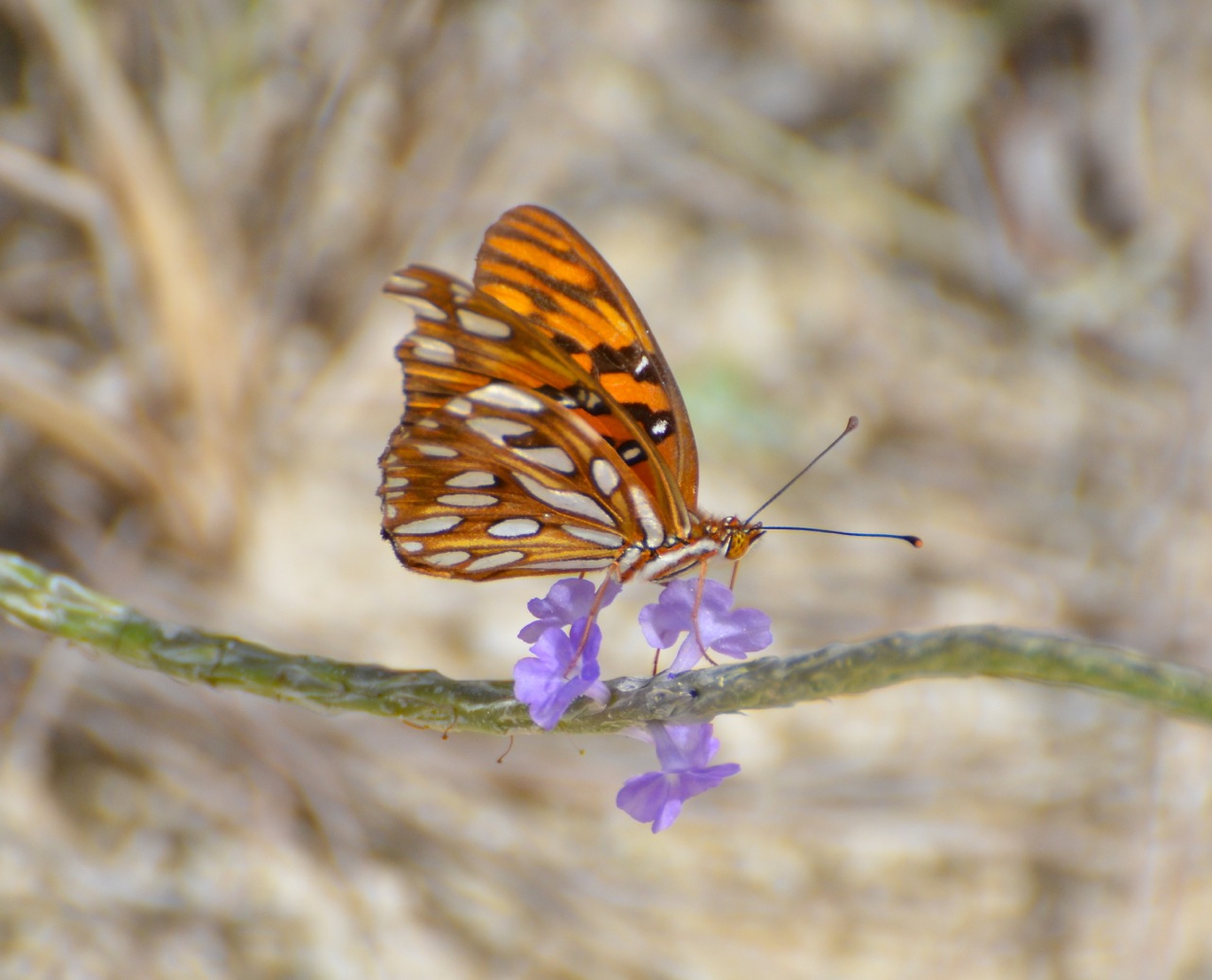
The GULF FRITILLARY Agraulis vanillae is a so-called ‘longwing’ butterfly species found from South America to central North America, named for its migration route over the Gulf of Mexico.

The black and orange patterns of this butterfly are a reminder to predators of the toxicidity of its stripy caterpillar and birds tend to leave them alone. Just in case. The markings are also similar to other butterflies that are poisonous – for example the Monarch. Tip of the hat to Wiki for the information that “this species belongs to the ‘orange’ Batesian mimicry complex”. Me neither! It is where an innocuous species resembles a noxious one in order to discourage predators without going to the bother of actually developing its own ‘on-board’ toxins.
The gulf fritillary is common on Abaco, as elsewhere in the Bahamas. I particularly fond of the photo below, in which the whole feeding apparatus can be seen. I haven’t done my homework, I’m afraid. If anyone wants to provide the technical terms (mouth? proboscis? tongue-thing?), that would be welcome. Please use the comment box to spread enlightenment.
FURTHER BUTTERFLIES YOU MAY ENJOY
ATALA HAIRSTREAKS and LIFECYCLE OF THE ATALA HAIRSTREAK
Credits: all amazing photos by Charlie Skinner, except header image Wiki – to which credit also for the graphic and some info in particular ‘Batesian Mimicry complex’, which is definitely one to drop lightly into conversation…
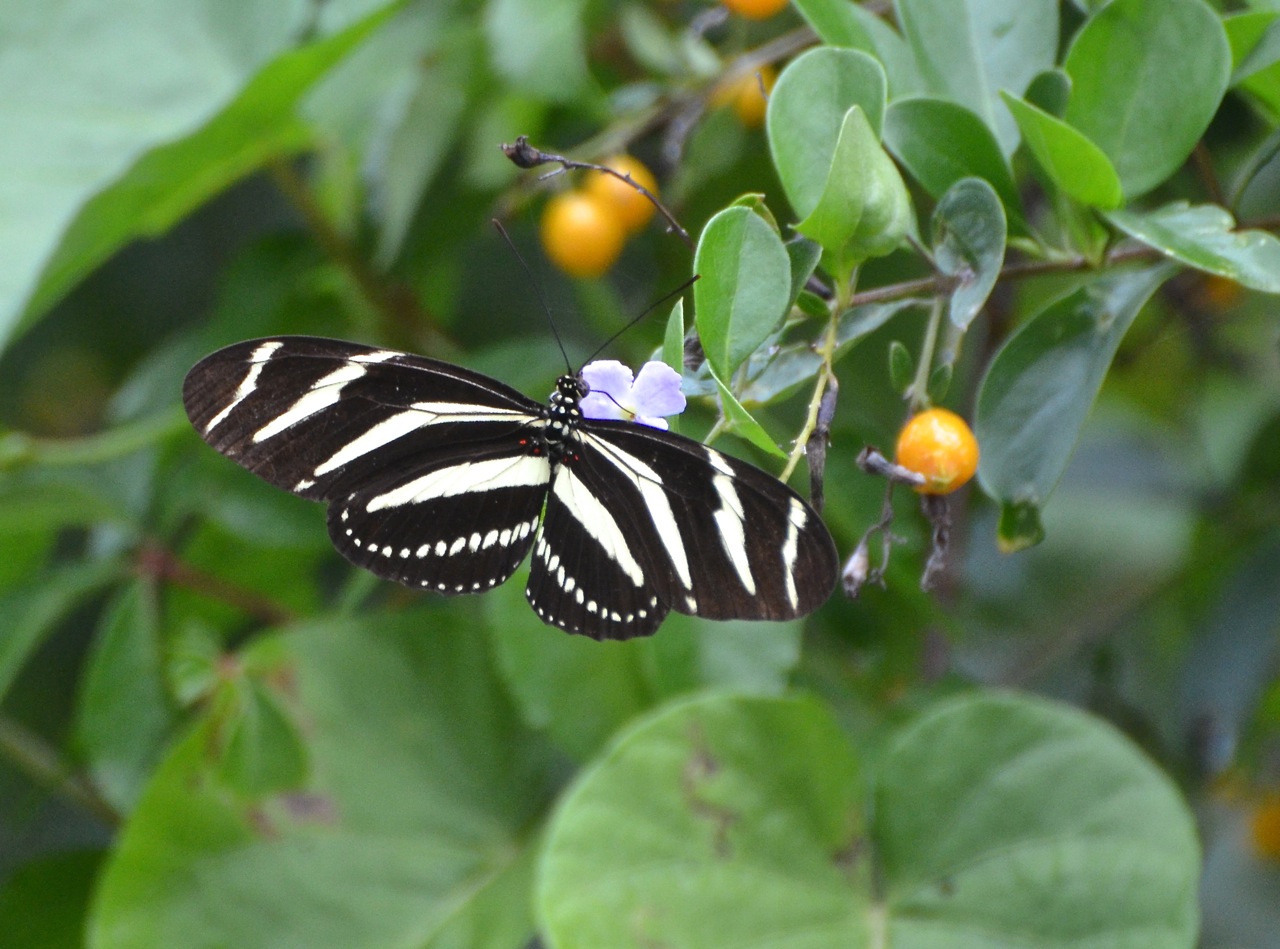
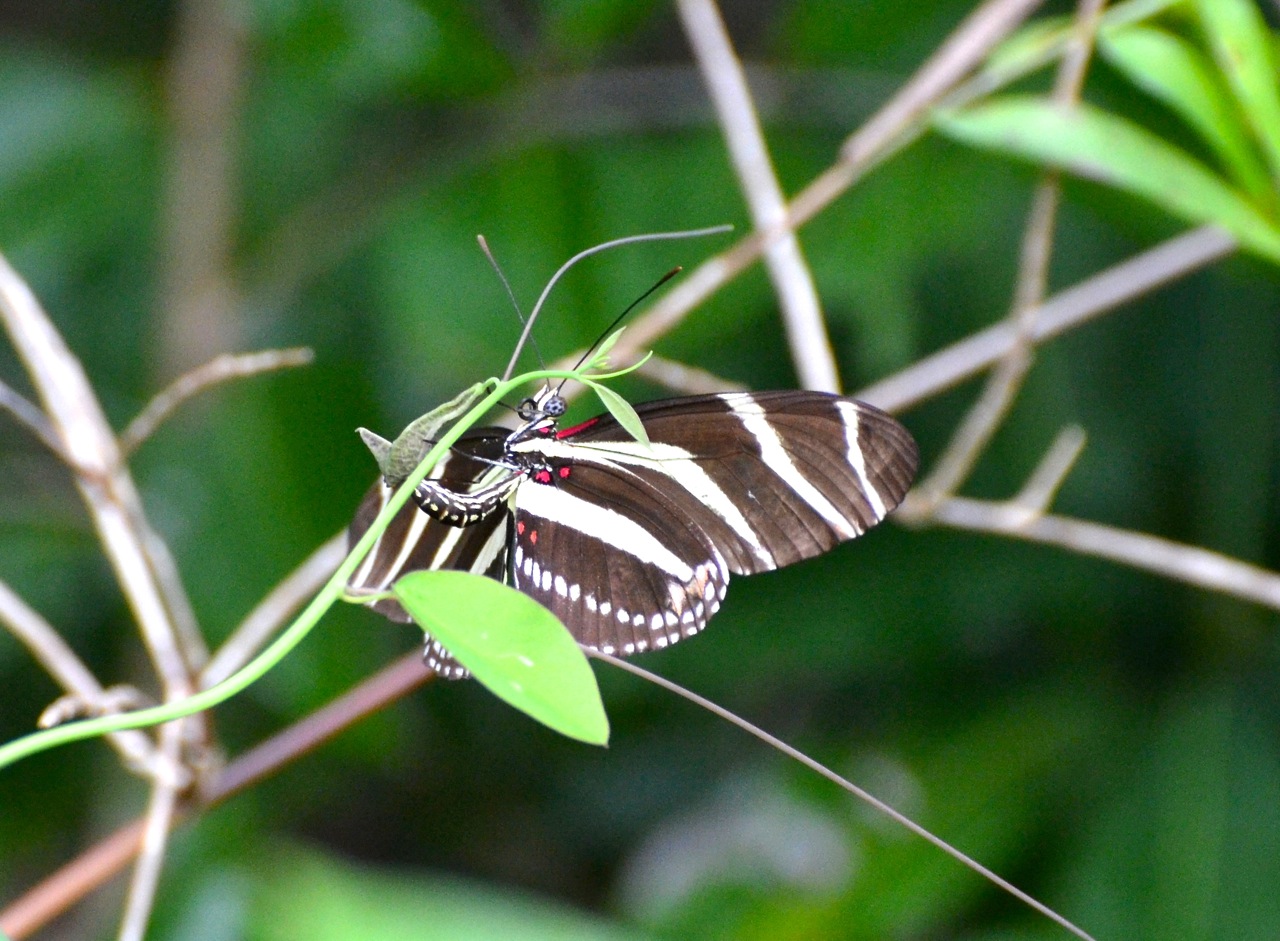
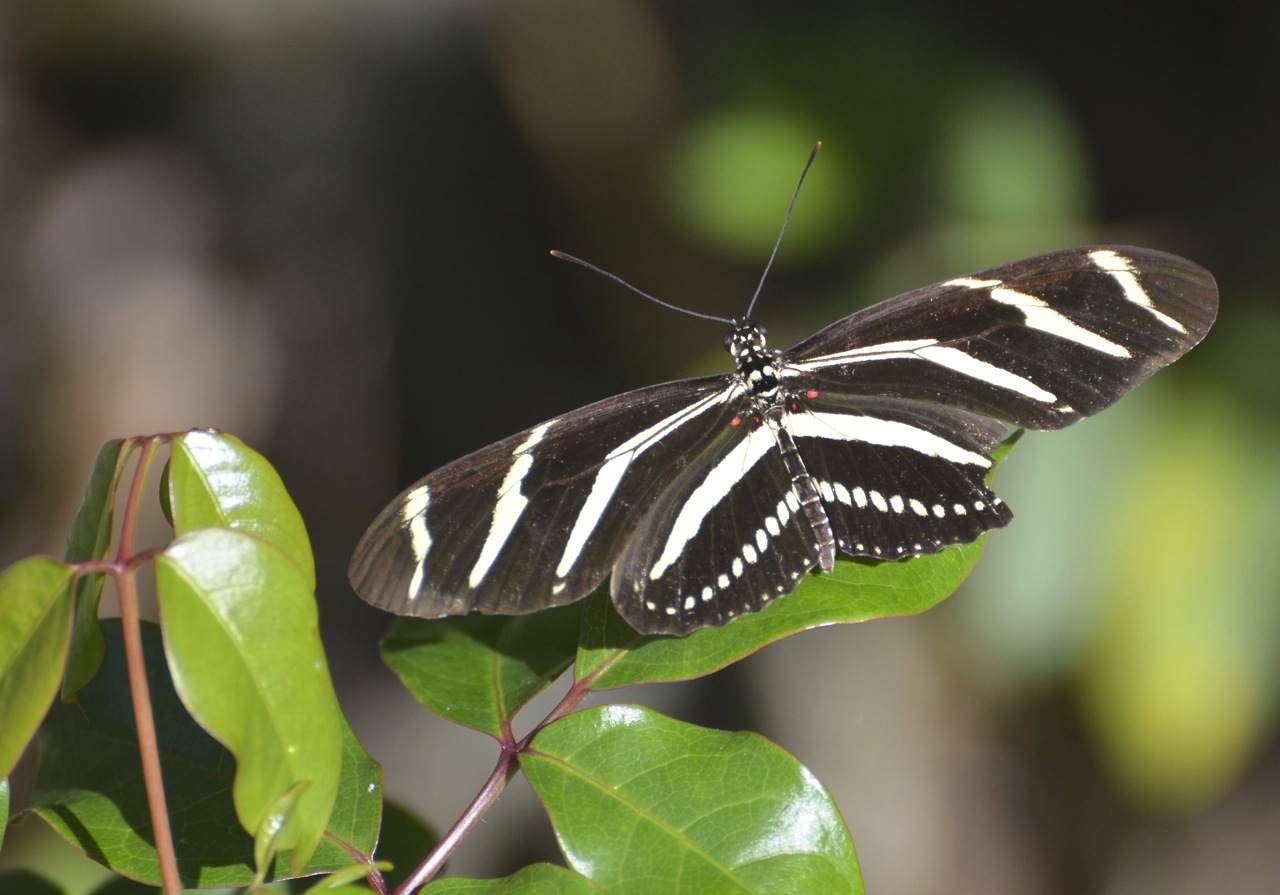
The Zebra Heliconian butterfly Heliconius charithonia is also know as the Zebra Longwing. These striking butterflies roost nightly in large colonies, a species behaviour that is believed to be a protective measure against predation, providing safety in numbers (or at least reducing the probabilities that you will be the one to be eaten). In 1996 the Zebra Longwing was appointed the State Butterfly of Florida.
![]()
![]()
![]()
![]()
![]()
Credits: all images by Charles Skinner, taken in the vicinity of the Delphi Club, Abaco

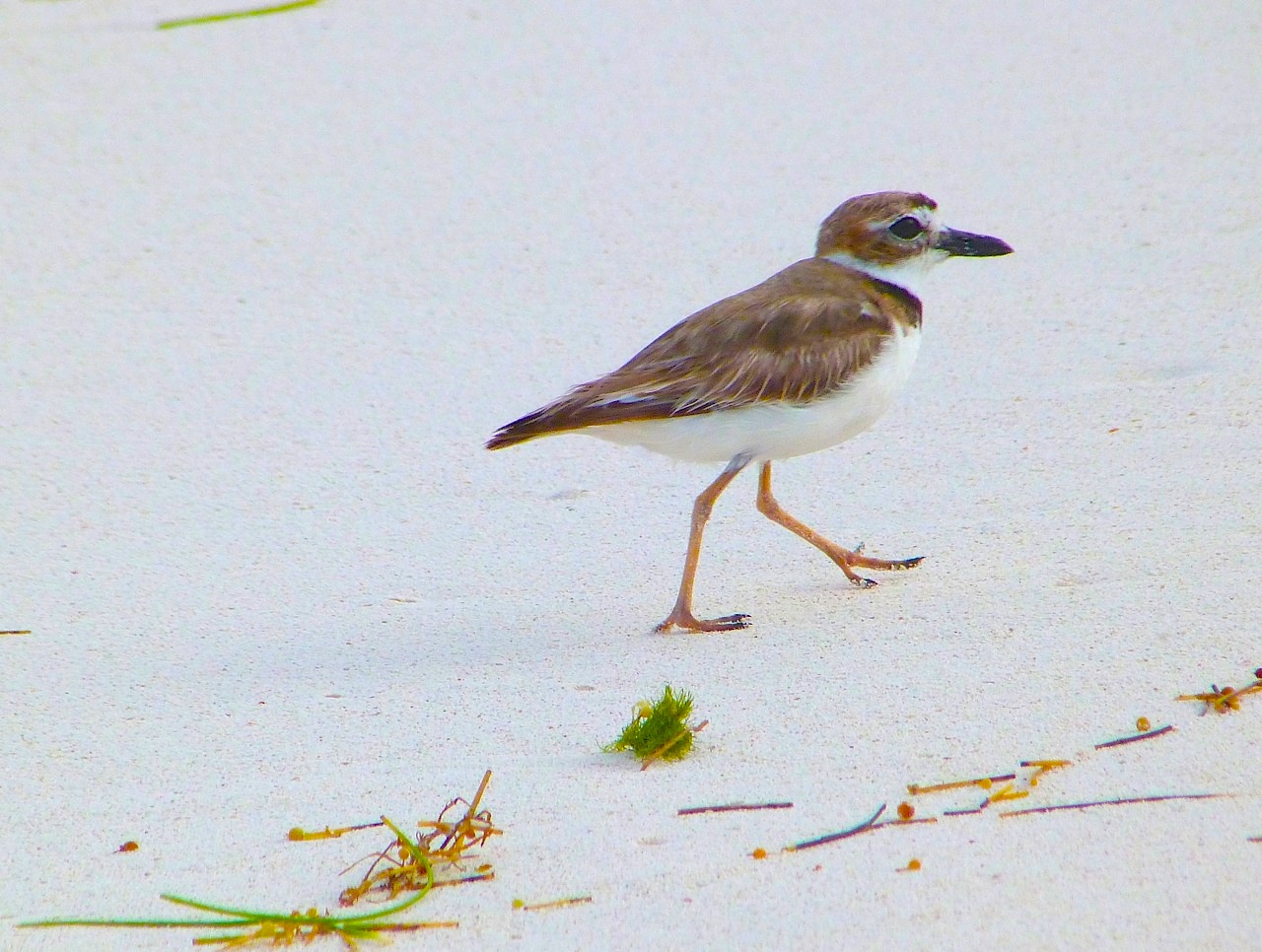
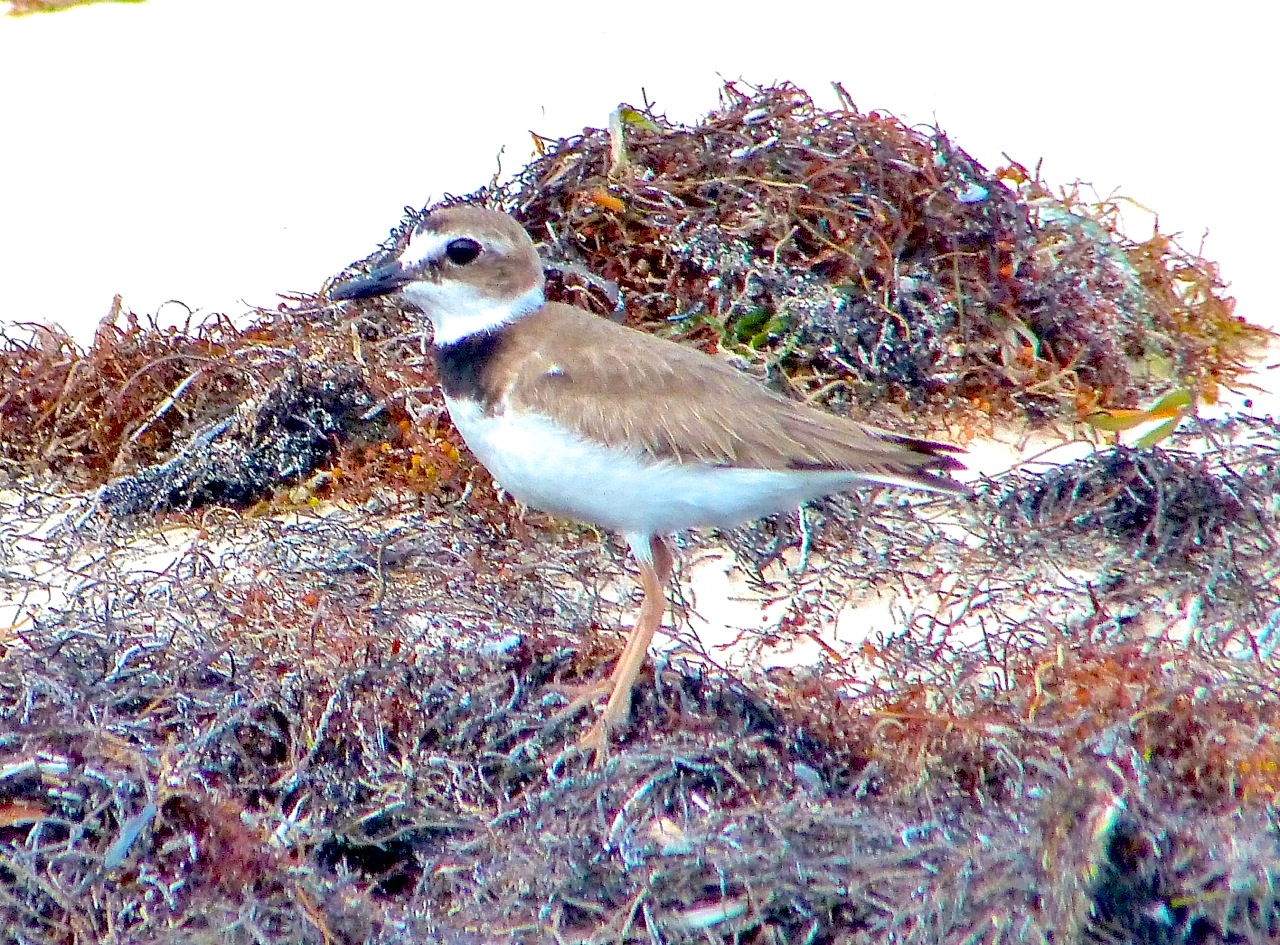
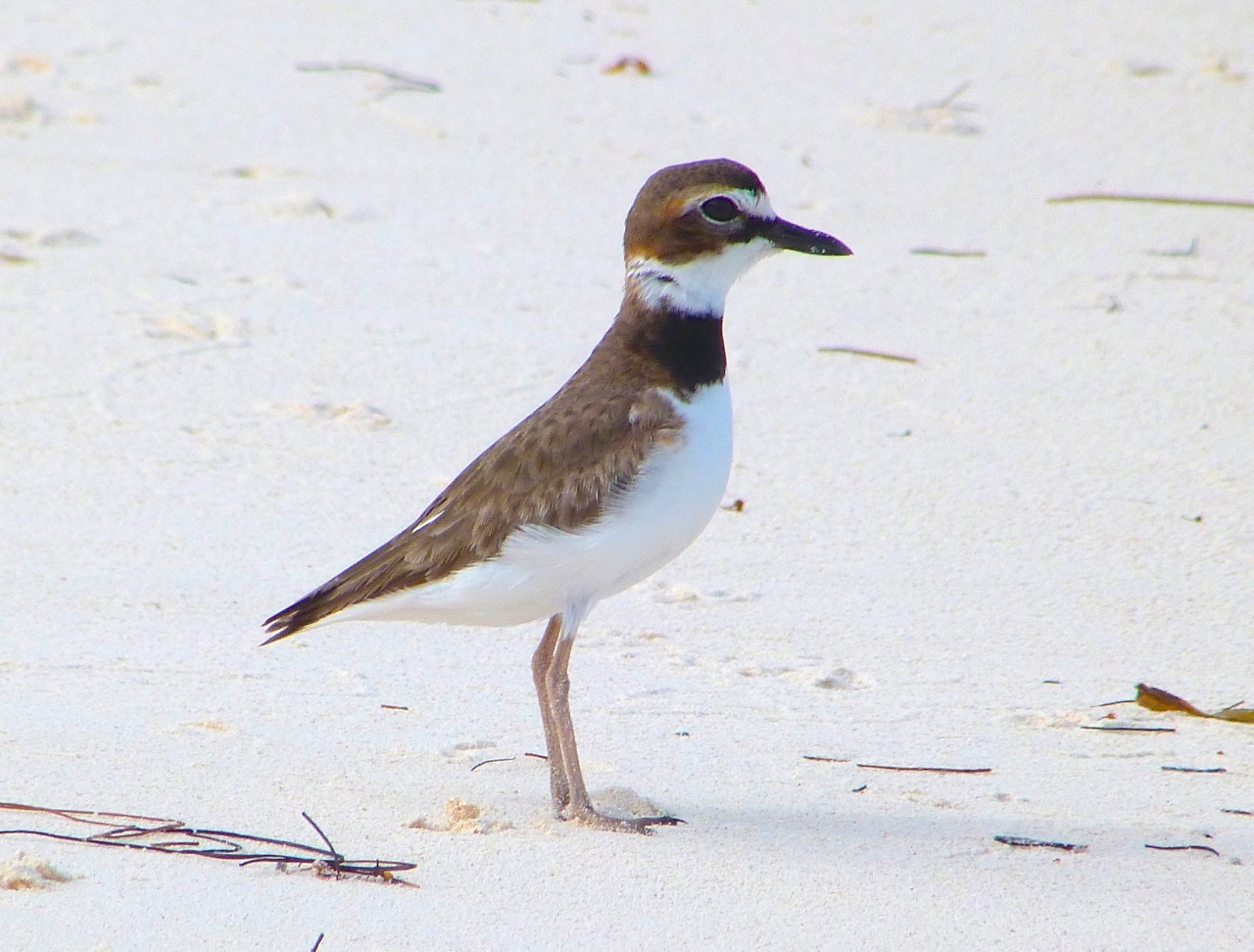
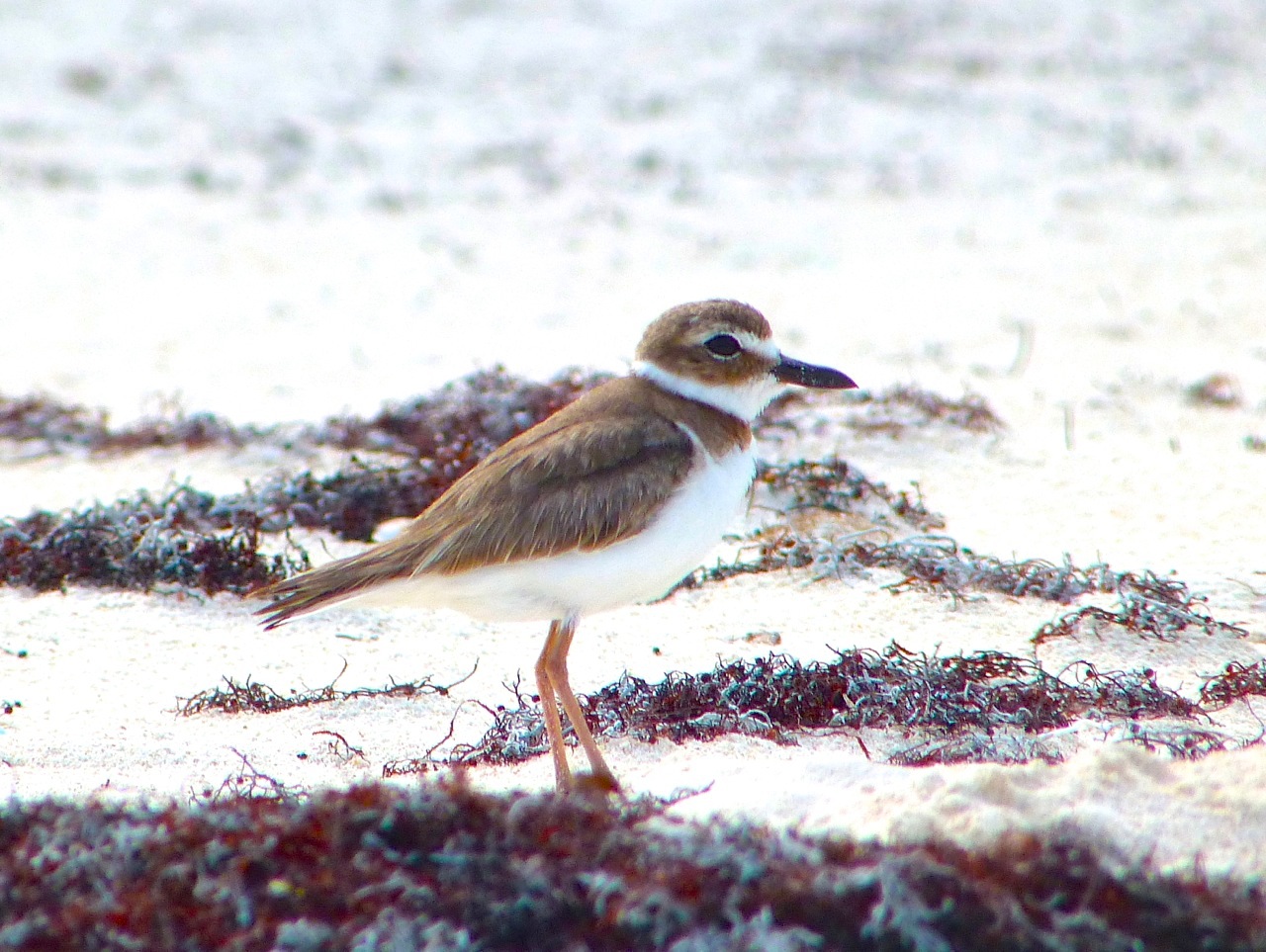
Dream Plover? Well, granted, not quite as adorable as the tiny surf-chasers, the Piping Plovers Charadrius melodus. But Wilson’s Plovers Charadrius wilsonia live on Abaco all year round, and may readily be seen on a beach near you. They breed on Abaco, and in the summer you’ll see their tiny puffball chicks scampering round. And if you approach a nest, you’ll very likely see the amazing ‘broken wing display’ by a parent, who will lurch strickenly and pathetically across the sand… leading a predator gradually further away from the nest or her chicks. Part 2 will include photos of this fascinating protective performance, and of some chicks on the Delphi beach.
And who was the Wilson who lent his name not only to a plover, but also to a snipe, a warbler, a storm-petrel and a phalarope, all birds that have been recorded for Abaco?
ALEXANDER WILSON (1766- 1813)
Wilson was Scottish poet. Besides traditional ballads, he also wrote satirical commentary on the conditions of mill weavers. One vicious tirade against a particular mill owner resulted in Wilson’s arrest. He was sentenced to burn the work in public, and imprisoned. After his release, he sensibly emigrated to America in 1794.
Wilson became a teacher in Pennsylvania, where he developed an interest in ornithology and painting. He ambitiously decided to publish a collection of illustrations of all the birds of North America. He spent several years travelling, collecting material and painting, eventually publishing the nine-volume American Ornithology. Of the 268 species of birds illustrated there, 26 had never previously been described.
SIDE-ON AND FRONT VIEWS OF THE SAME MALE PLOVER 

FRONT AND SIDE VIEW OF THE SAME FEMALE PLOVER
All birds on this page were photographed on the Delphi Beach. They happily coexist there with other shore bird species that include Least Sandpipers, Ruddy Turnstones and Killdeer. Here is a taster for Part 2, the family life of the Wilson’s plover. 

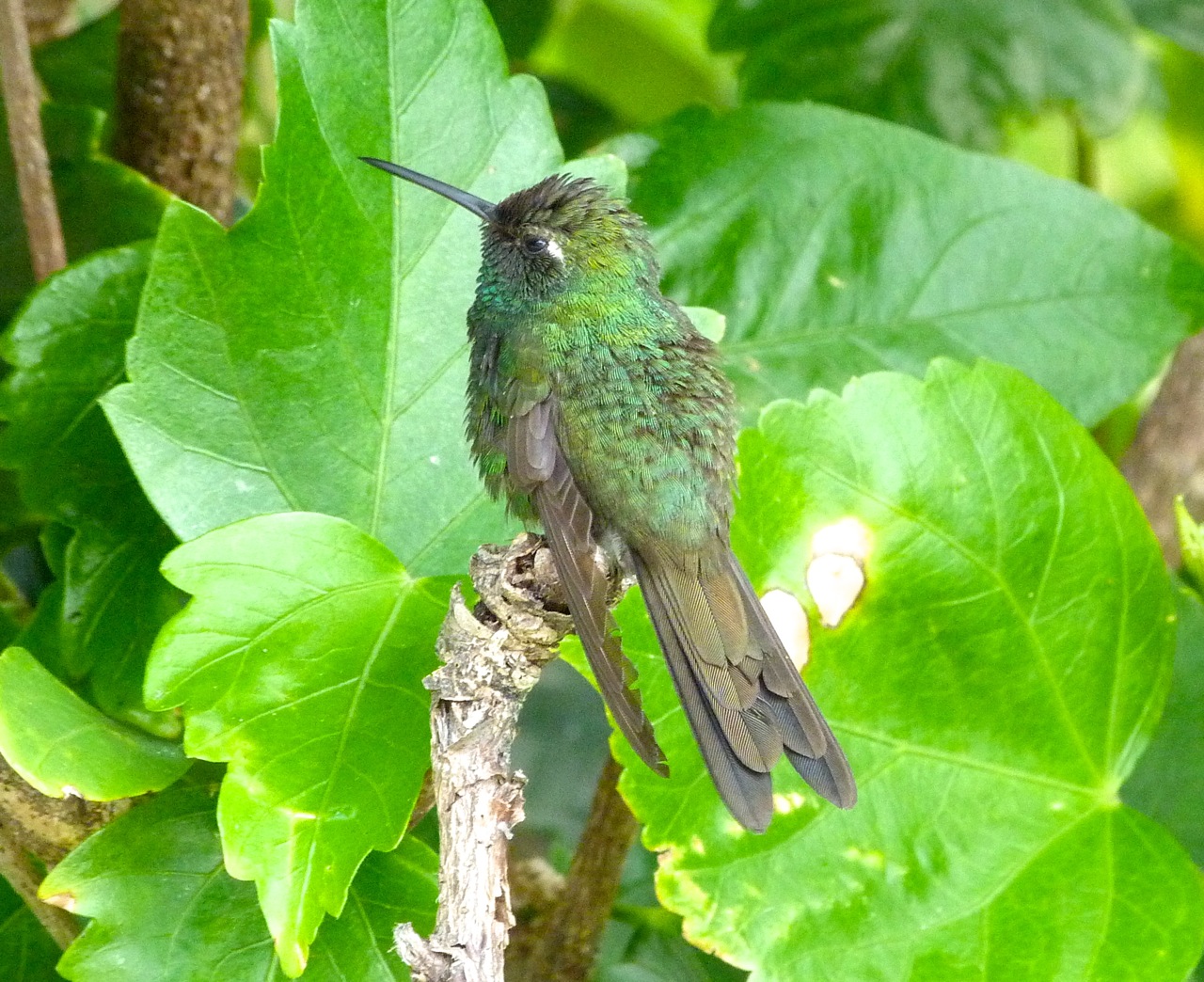
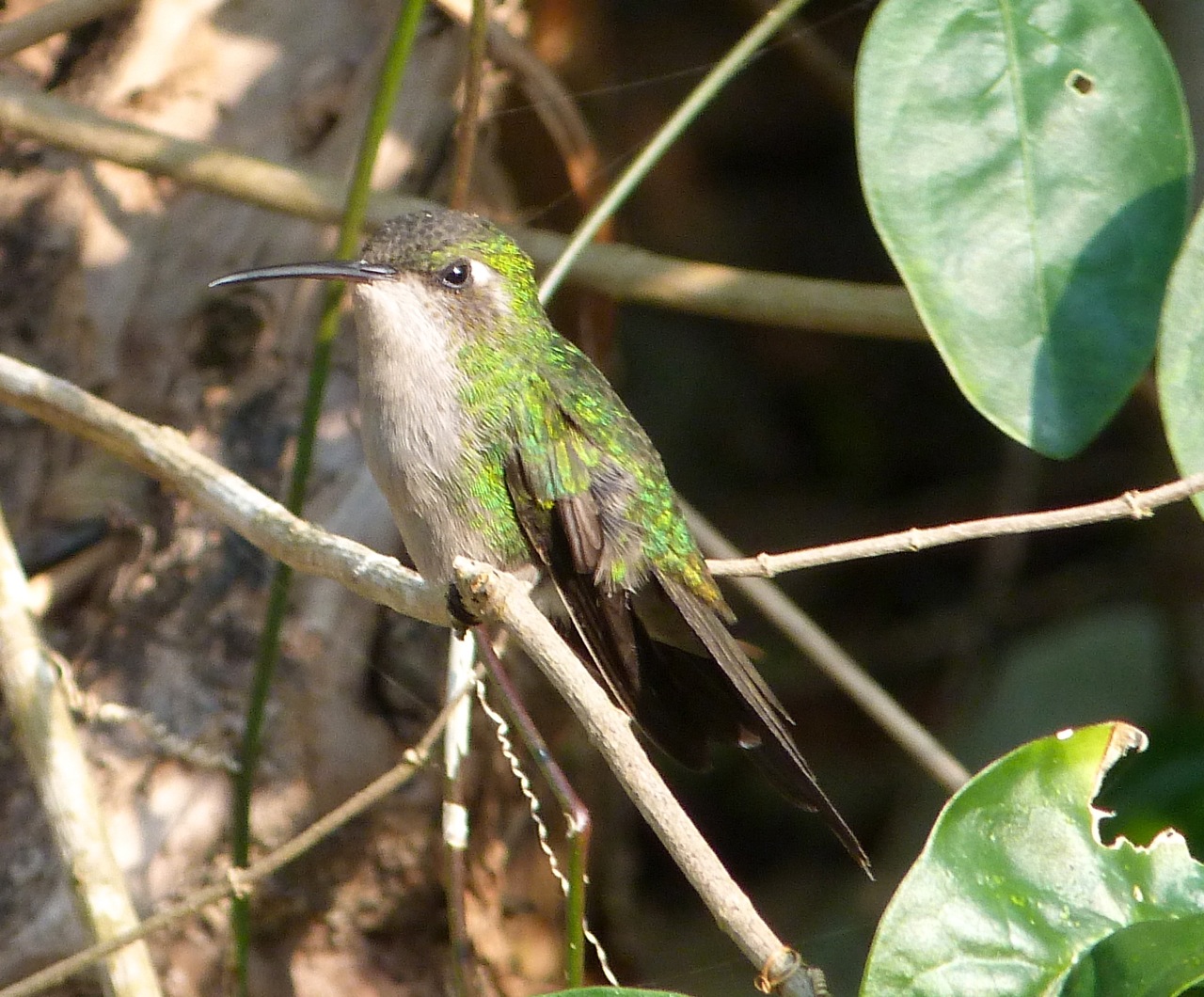
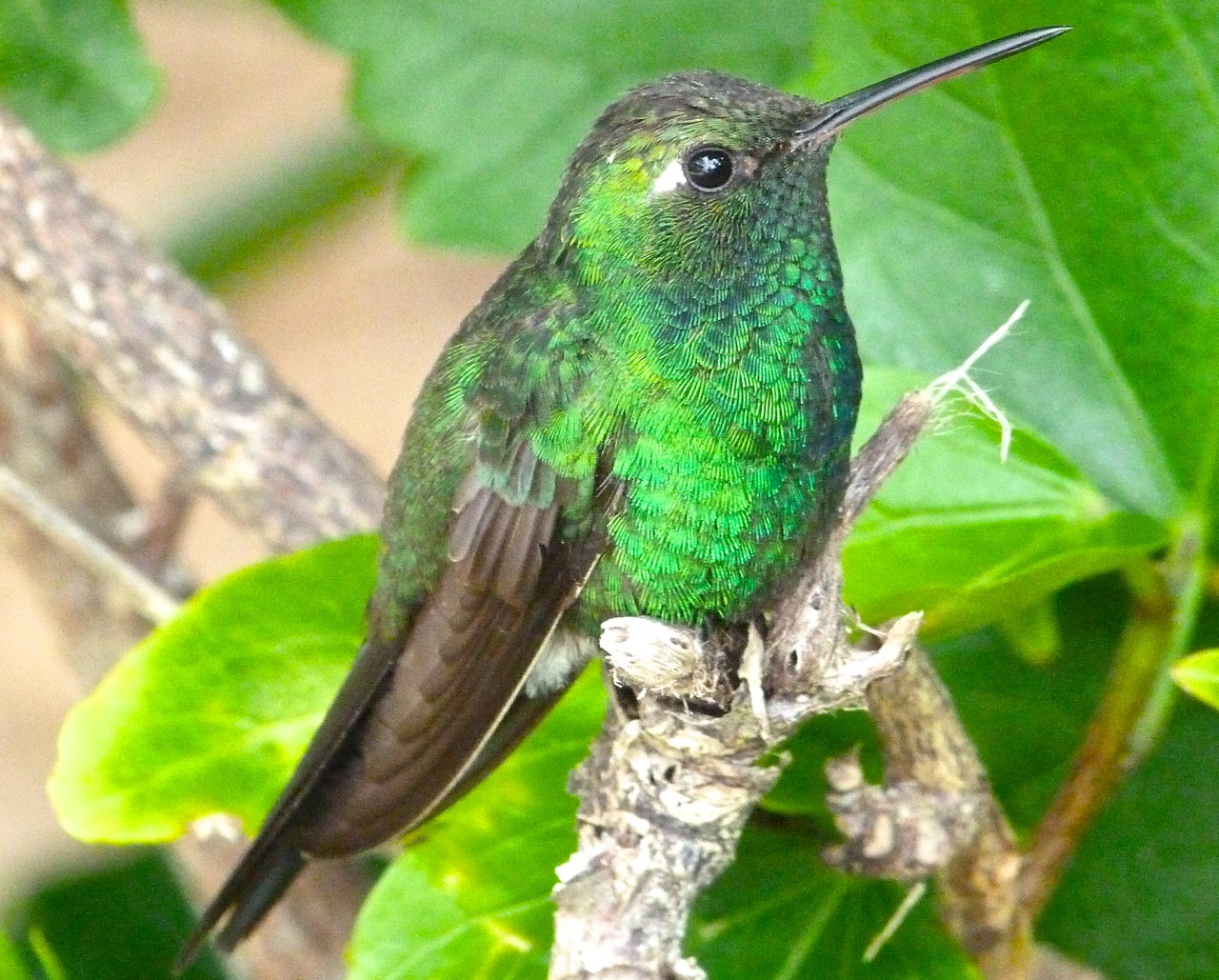
Mostly, the Cuban Emeralds at Delphi spend their days perching briefly on twigs before zooming like tiny green rockets to their next appointment – an inviting sugar-water feeder, a promising flower or maybe yet another tempting twig. Sometimes, pairs will put on an acrobatic mid-air display, flitting around each other at high speed, chittering, before disappearing into the coppice together. Avian speed-dating. Occasionally, they are more contemplative. I recently posted HERE about one that had let me get (very slowly) right up to it. Emeralds may be quite hard to spot in amongst the green leaves, but often they are there, quietly watching you go by. Here is one that stayed put when I stopped to admire it.
I’ll tuck my wing in neatly if you are going to take pics of me
Uh-oh! Close-ups. This is my better side.

That’s enough, human. I’ve stopped the posing. Now push off and leave me alone.
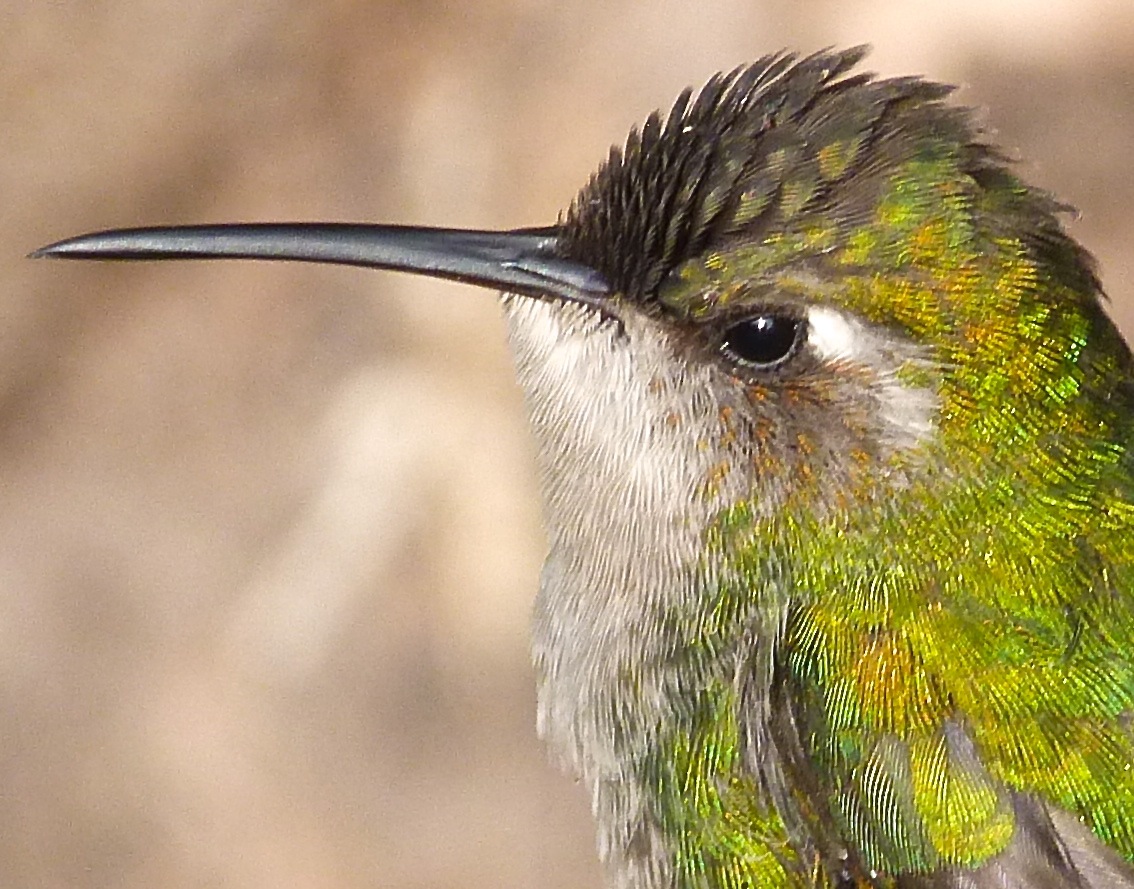
In close-up, the feathers look like tiny iridescent pine needle fans
The Delphi Club: a hive of activity for birds (to mangle a metaphor)

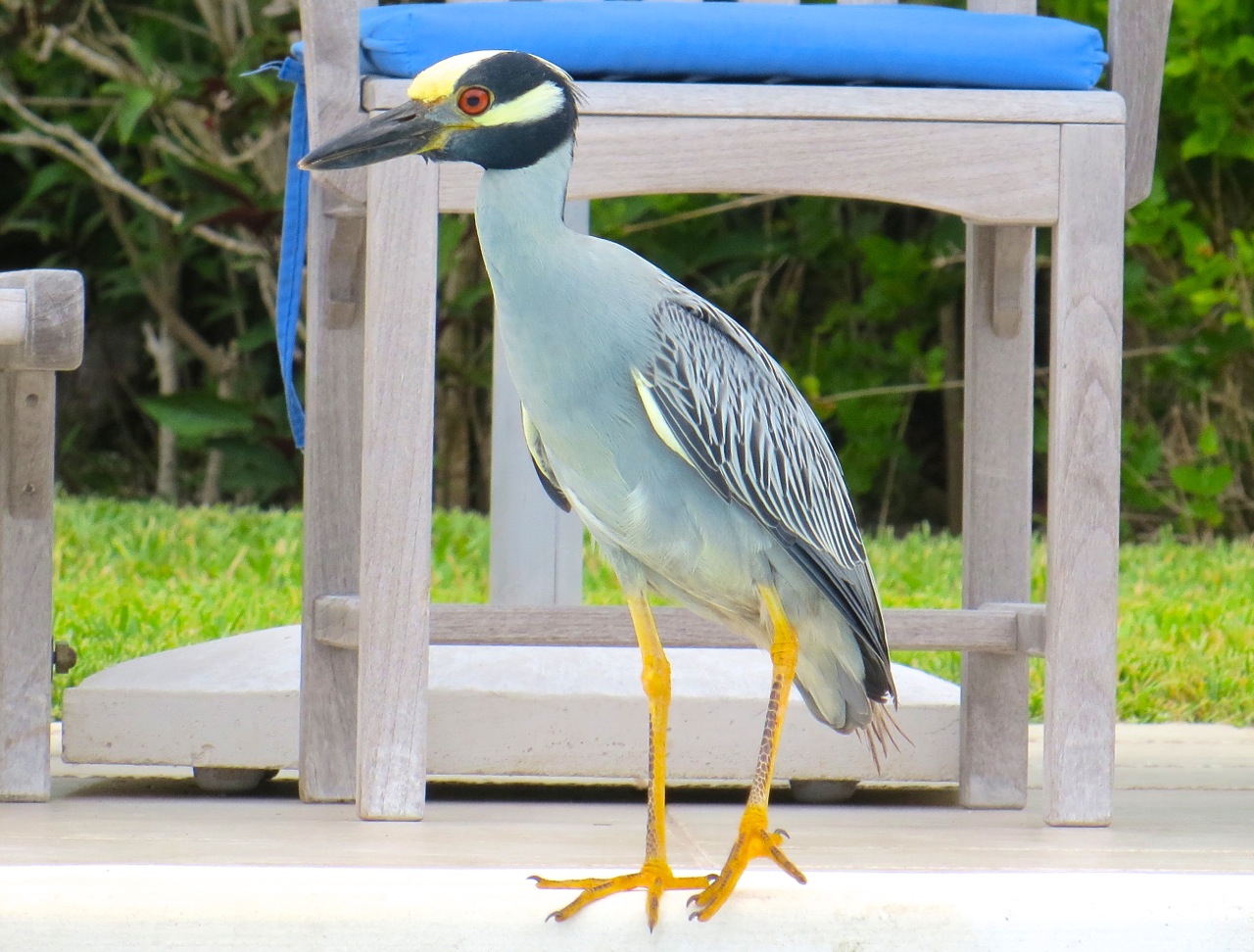
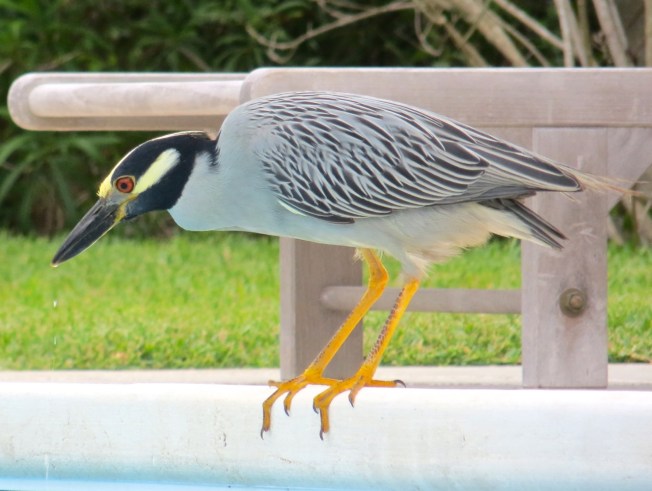
The Yellow-crowned Night Heron (Nyctanassa violate) is a smallish heron, and avian counterpart to the Black-crowned Heron (Nycticorax nycticorax). The clue to the main difference between them is in the names. The juveniles of both species are similar. The ‘night’ part of the name refers to their preferred time for feeding. They have broad appetites that include crustaceans, molluscs, frogs, fish, and aquatic insects.
At Delphi, these lovely birds are regularly seen in gardens round the pool; drinking from the pool; standing hopefully waiting for prey to show itself in the water; and occasionally getting a bit confused by the whole thing (see below). 
Looking hungry
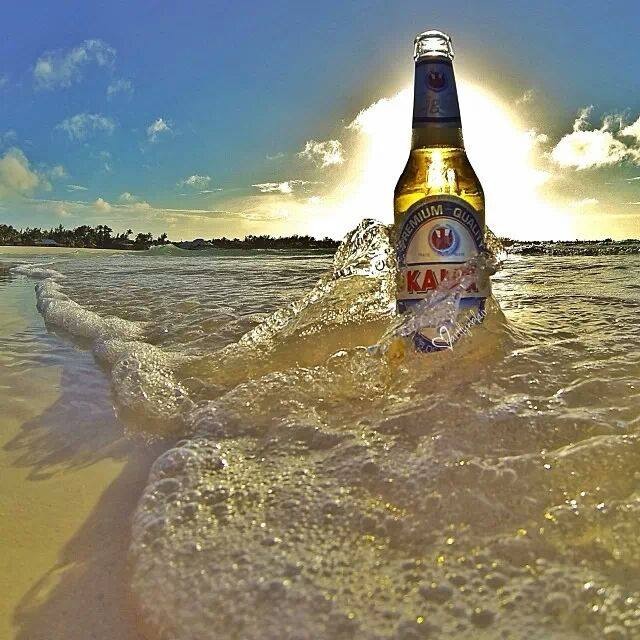
The YNCH will stand motionless, waiting to ambush its prey. So a human, wandering to the pool laden with towel, book, iWotsit™, sun stuff and a cool Kalik, may easily not spot the bird at first. It will have seen you first, anyway, and moved away quietly if it isn’t too sure about you. However, they can be surprisingly tame if not startled. You may settle down, and suddenly sense that you are being watched from the other side of the pool…
Peter Mantle managed to capture a wonderful moment when a juvenile YCNH made a bit of a mistake early one morning while the pool cover was still in place… It looks embarrassed and slightly apologetic.
Usually, these birds are to be found in marshy areas, or by brackish ponds where (unlike the pool) there is a ready supply of food for them. A few miles south of Delphi is an excellent pond for birding near Crossing Rocks, where there is always the chance of seeing an unusual or rare species. Herons and egrets often use the landing stage as a vantage point for scoping out the feeding opportunities. The next pictures are of a juvenile (?teenage) YCNH doing just that – and fortunately, the pond does not have a cover to cause discombobulation of the species.


Black-crowned night heron for comparison
Photo credits: All RH except the across-pool-starer (David Rainford); the confused juvenile on the pool cover (Peter Mantle); and the last 2 comparatives (Wiki)

ONCE UPON A TIME, on a magical far away island called Abaco, where the sun always shone and the people were always friendly and smiling, there lived a little woodpecker. It was a beautiful little woodpecker with long shiny golden locks and its name was Hairy… oh look, I can’t go on with this drivel and neither can you, I’m sure. Sorry about that. Let’s take it from the top…
♦ ♦ ♦ ♦ ♦ ♦ ♦ ♦ ♦ ♦ ♦ ♦
I have mentioned before the excellent birding opportunities that a wander round the Delphi drive circuit has to offer. It’s the best part of 2 miles. I am working on a list of all species encountered on the route from the Lodge, along the guest drive to the white rock on the road, and back down the service drive. It is turning out to be a gratifyingly long one.
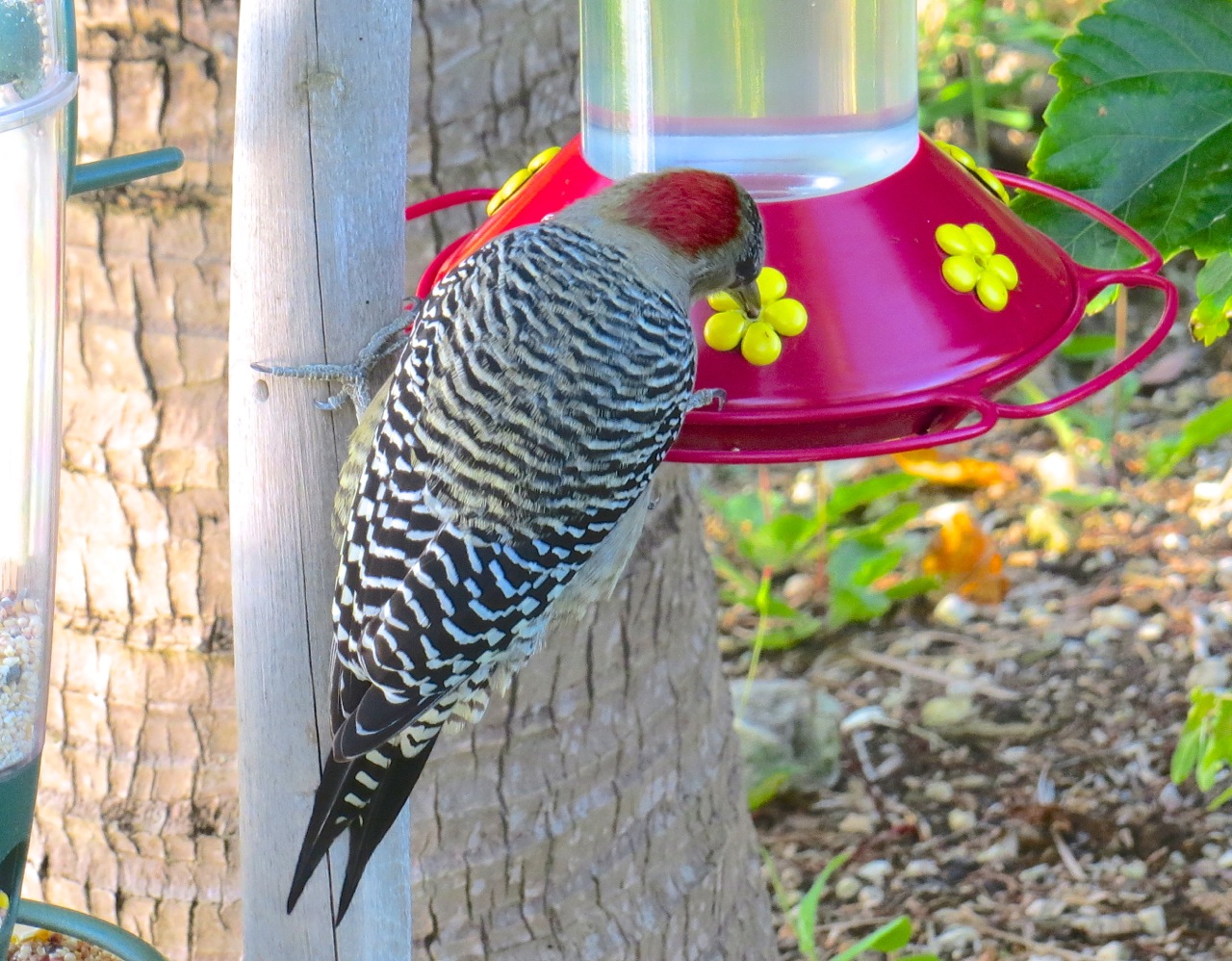
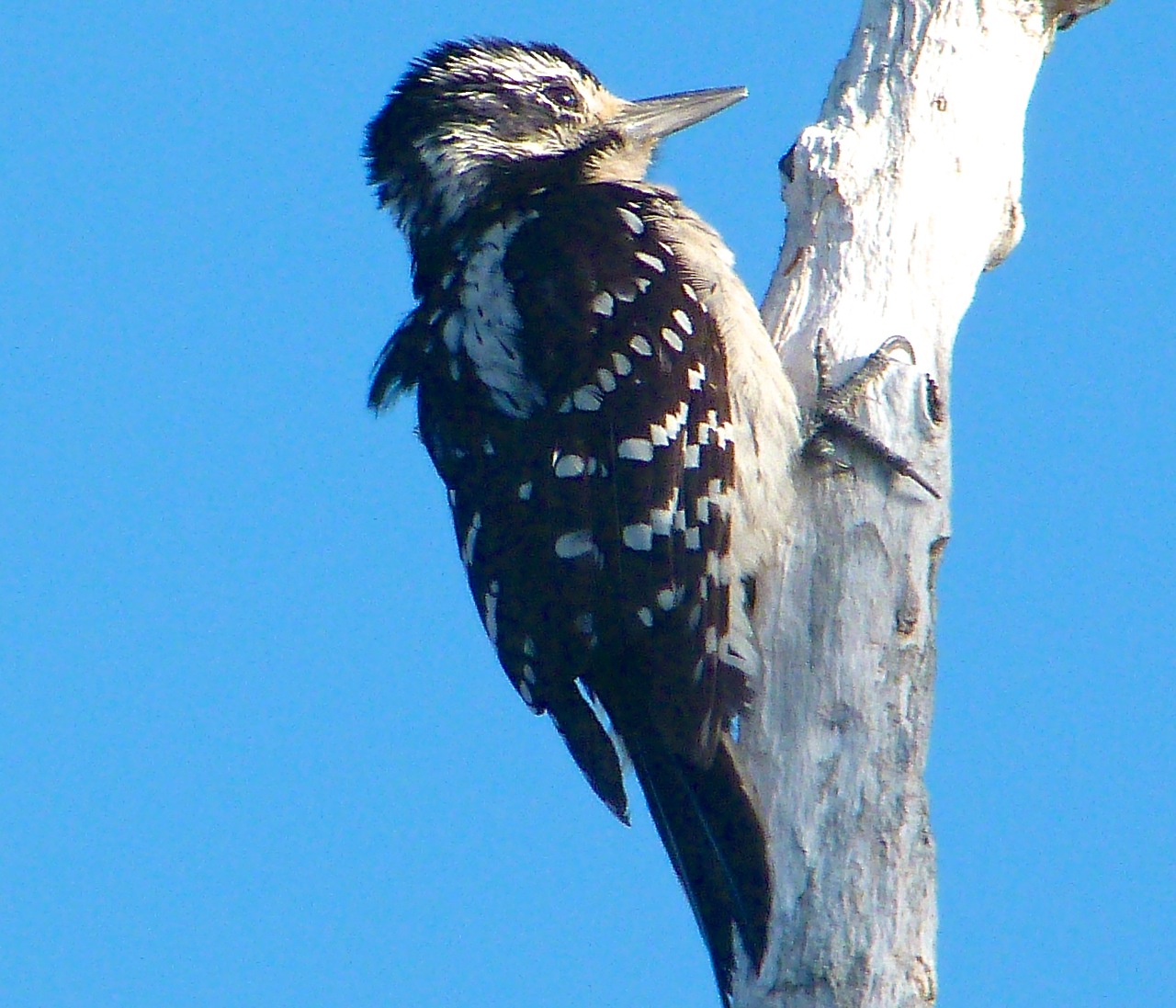
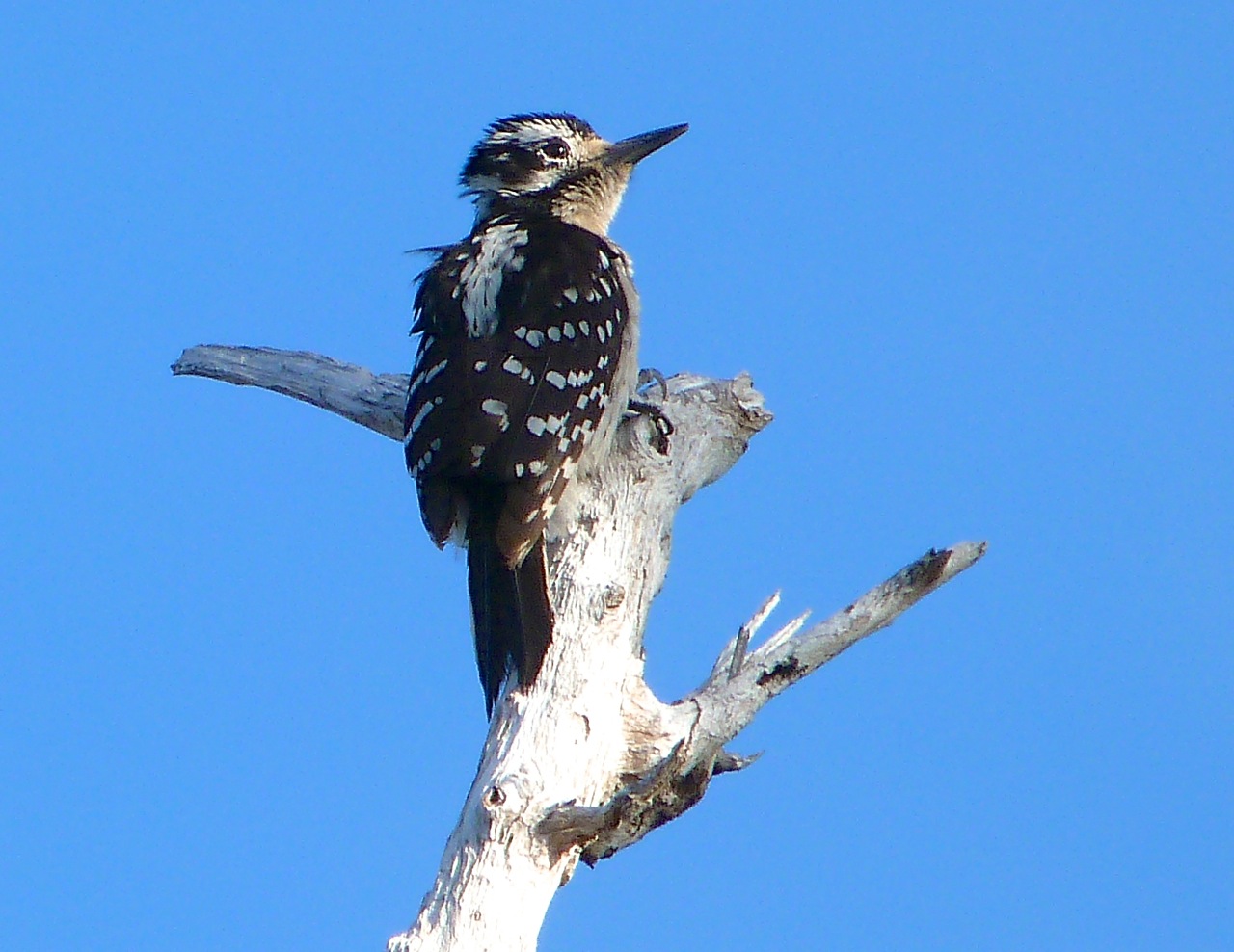
During your stroll, it’s worth checking out the dead trees, especially the upper trunk and branches, as you go. For a start, these provide excellent places for birds to pause and scope out the territory below. They also have a good chance of finding insects there. And for some species, like the Hairy Woodpecker Picoides villosus, it is home. 
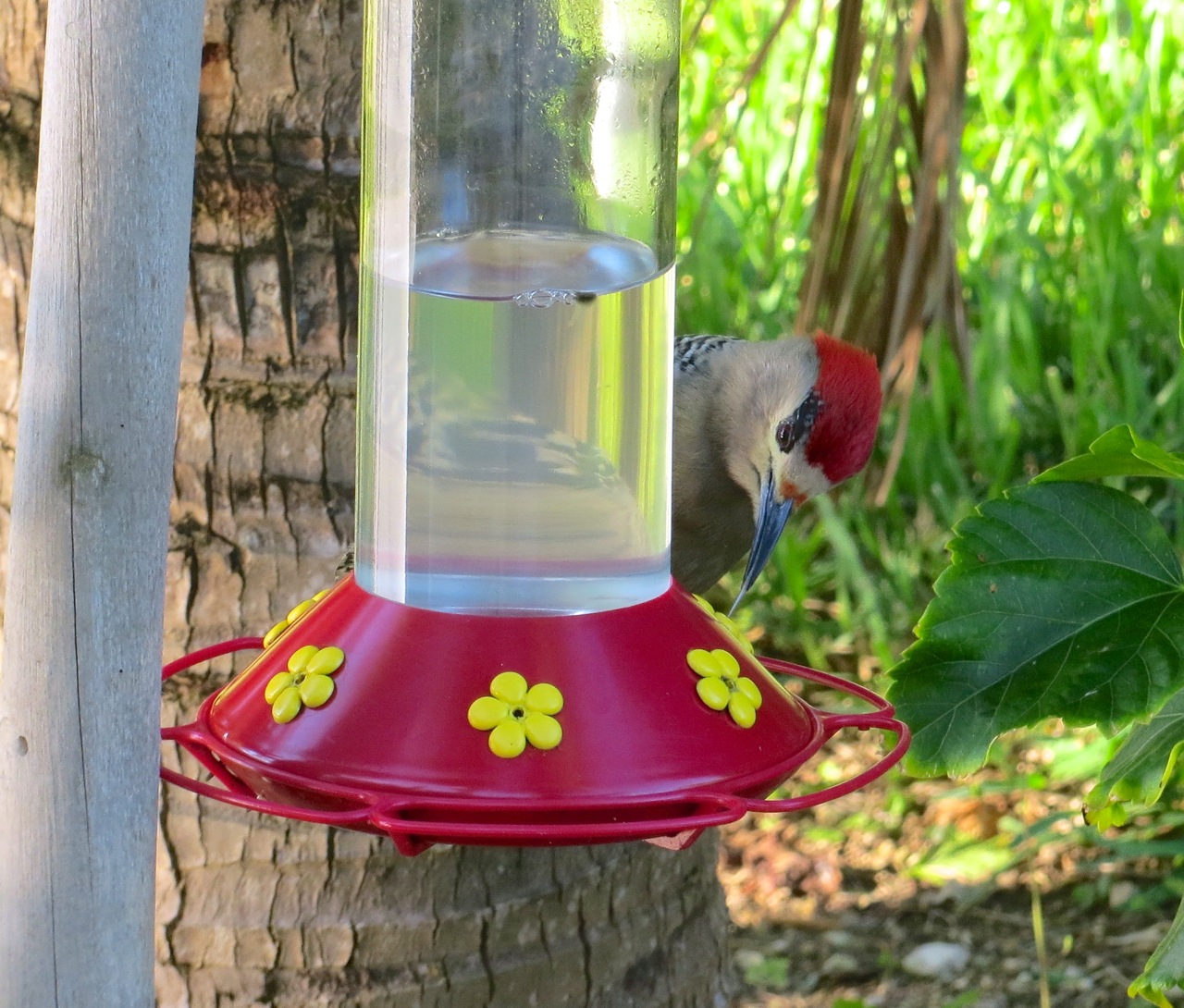
The Hairy Woodpecker is very similar to the Downy Woodpecker Picoides pubescens, the smallest woodpecker of North America. Male HWs have a prominent red patch on the back of the head. You can find an earlier post about a male HW and its nest in the Delphi coppice, with some HW species facts, HERE
Last June Tom Sheley, a birding expert and photographer from Ohio with serious (by which I mean huge camo-covered camera and tripod) equipment, was staying at Delphi. He tipped me off about a woodpecker nest he’d found 1/3 of the way along the guest drive, just before the first bend. So I grabbed a camera – the wrong one, as it turned out, but my main camera battery was charging – and headed out. I found the nest at the top of a dead tree near the edge of the drive (shown above) and a female HW close to it. 
She watched my approach carefully, and as soon as I paused close to the nest tree, she went into a fascinating ‘diversionary tactic’ routine to distract me from the nest. She flew across the track close in front of me, and settled on a tree on the other side of the drive, about 1/3 of the way up its trunk. There, she proceeded to scold me loudly as I fiddled about with the camera… 
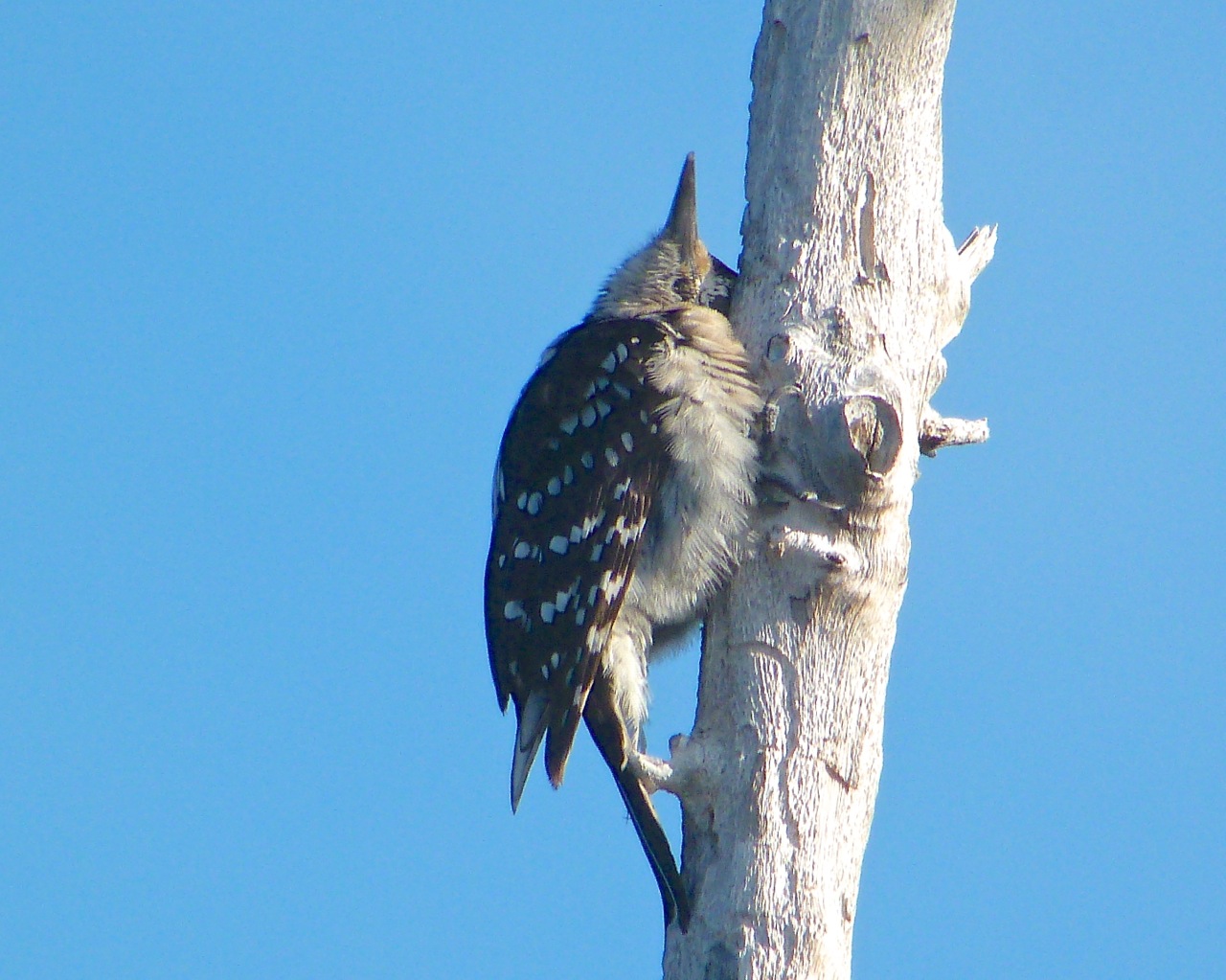
Still scolding, she then started to climb the tree quite slowly, pausing occasionally to fire off some more angry woodpecker abuse at me. 
From time to time, she would change tack, closing her eyes gradually and hugging the trunk. This was presumably to make herself appear vulnerable to a predator (me), and therefore retain its (my) interest. If anyone is familiar with this behaviour, please leave a comment.
The woodpecker carried on up the tree, chattering as she went…
…before performing the closed eye / sleepy routine again

By now she was nearing the top of the tree, and I was thinking of giving in…

Once she had reached the very top, I made the decision to move on, marvelling at her persistence in taking on a two-legged predator 6ft 5″ high and… not exactly a bantam-weight. Then I realised that, in all of this, I hadn’t thought of the nest behind me a single time. She and her distraction technique had won, and so I made my apologies for disturbing her and left. HW 1, Human 0. At least I knew that on a hot cloudless day I had something to look forward to back at the ranch…
NOTE The original post more than a year ago was intended in part as a celebration of passing the 50,000 hits mark. As I said then, “…so much interest in the wildlife of one small island? Thanks to all those who have visited during the last year or so”. Now we are speeding towards 125,000. In that time, the readership has increased somewhat (I thank you both…). So I am rolling this one out again with a few revisions, because it went down quite well before, at least with Pinaphiles…
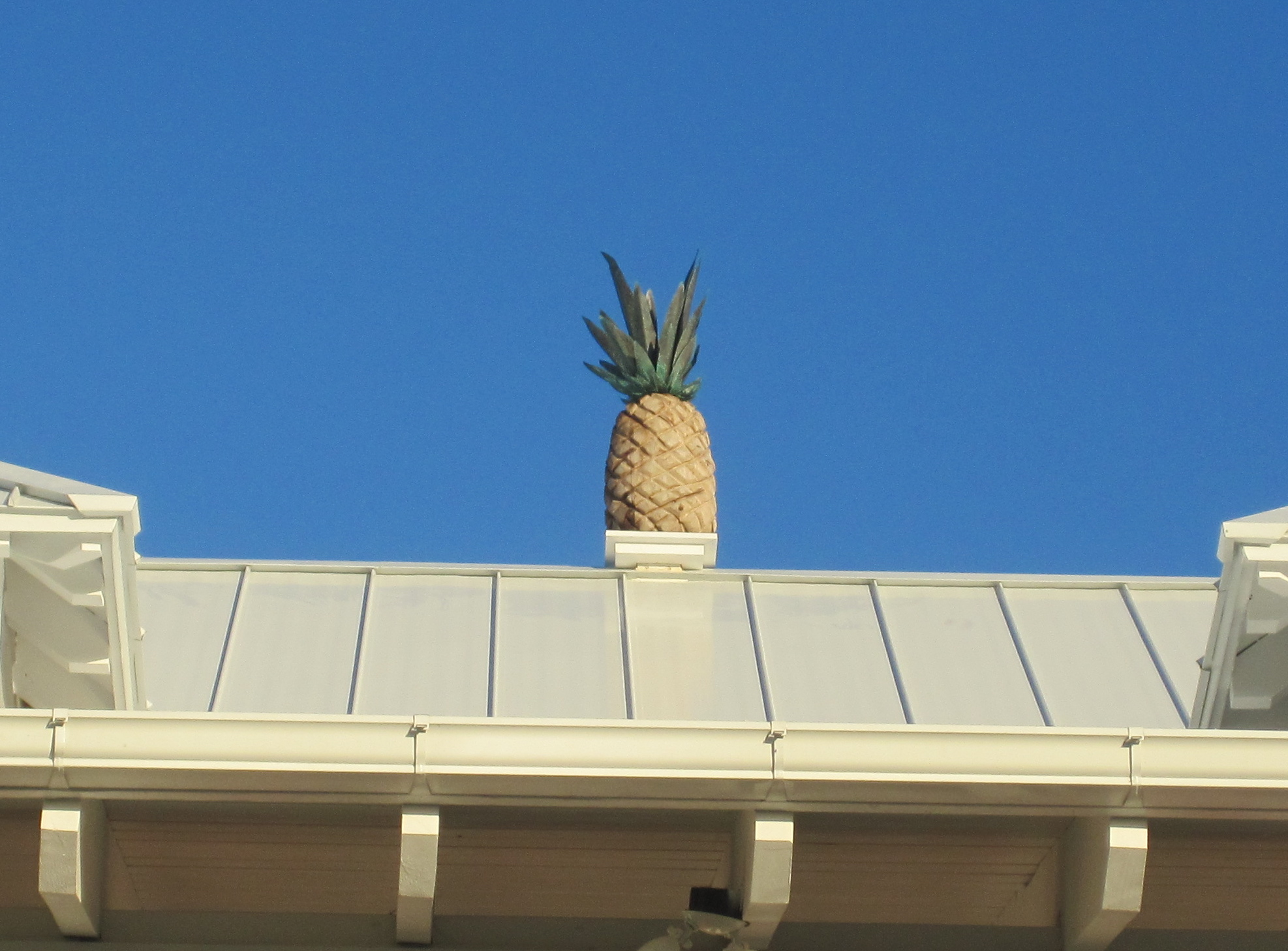
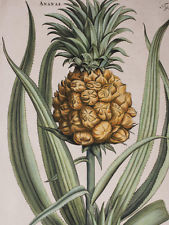
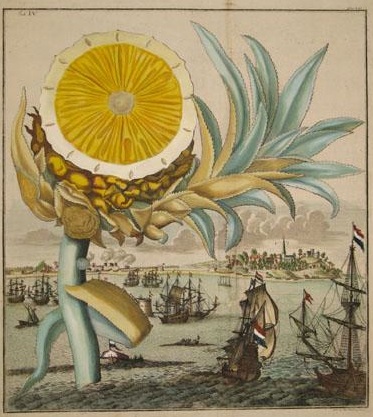
The first image below is of the handsome locally hand-carved pineapple that surmounts the roof of the DELPHI CLUB Abaco. The fruit lost a few leaves in Hurricane Irene, which scored a direct hit on the Club. As posted on the ABACO FACTS page (under RANDOM main menu) “the precise Longitude & Latitude coordinates of the Pineapple [on] the Delphi Club roof are respectively –77.1787834167480 & 26.20450323936187 “. But why is it there? Time for a Short Voyage around the Pineapple…
HISTORICAL & SOCIAL CONTEXT

CULTURAL SYMBOLISM
By Appointment to HM the Queen
ARTS & CRAFTS


SPORT
MOTORING

Read Jim Kerr’s interesting article in ABACO LIFE on Abaco’s pineapple past HERE
FRANCESCA BEAUMAN 2006
THE PINEAPPLE – KING OF FRUITS
If you want to find out more about pineapples, their history and social significance, you should be able to pick up a copy of this book on Am@z%n, Abe or ALibris for a few dollars
“What?” I hear you cry, “you’ve managed a whole page about pineapples without mentioning modern advertising”. Shall I do so now? The man from Del Monte, he says YES
[youtube http://www.youtube.com/watch?v=YqmpVWzH4FM]Sources: Own ideas + some magpie-thieving-borrowing from a variety of sources, many of which contain identical info and / or quote from the above book. Hope everyone is comfortable with that…
NB Not every fact above is strictly 100% true, so expect to be challenged if you try one out. In particular Prince Phillip is of course naturally docile and gentle-mouthed…
POST SCRIPT The first 21 Fibonacci numbers (just add 2 successive numbers to produce the next) are
| F0 | F1 | F2 | F3 | F4 | F5 | F6 | F7 | F8 | F9 | F10 | F11 | F12 | F13 | F14 | F15 | F16 | F17 | F18 | F19 | F20 |
| 0 | 1 | 1 | 2 | 3 | 5 | 8 | 13 | 21 | 34 | 55 | 89 | 144 | 233 | 377 | 610 | 987 | 1597 | 2584 | 4181 | 6765 |
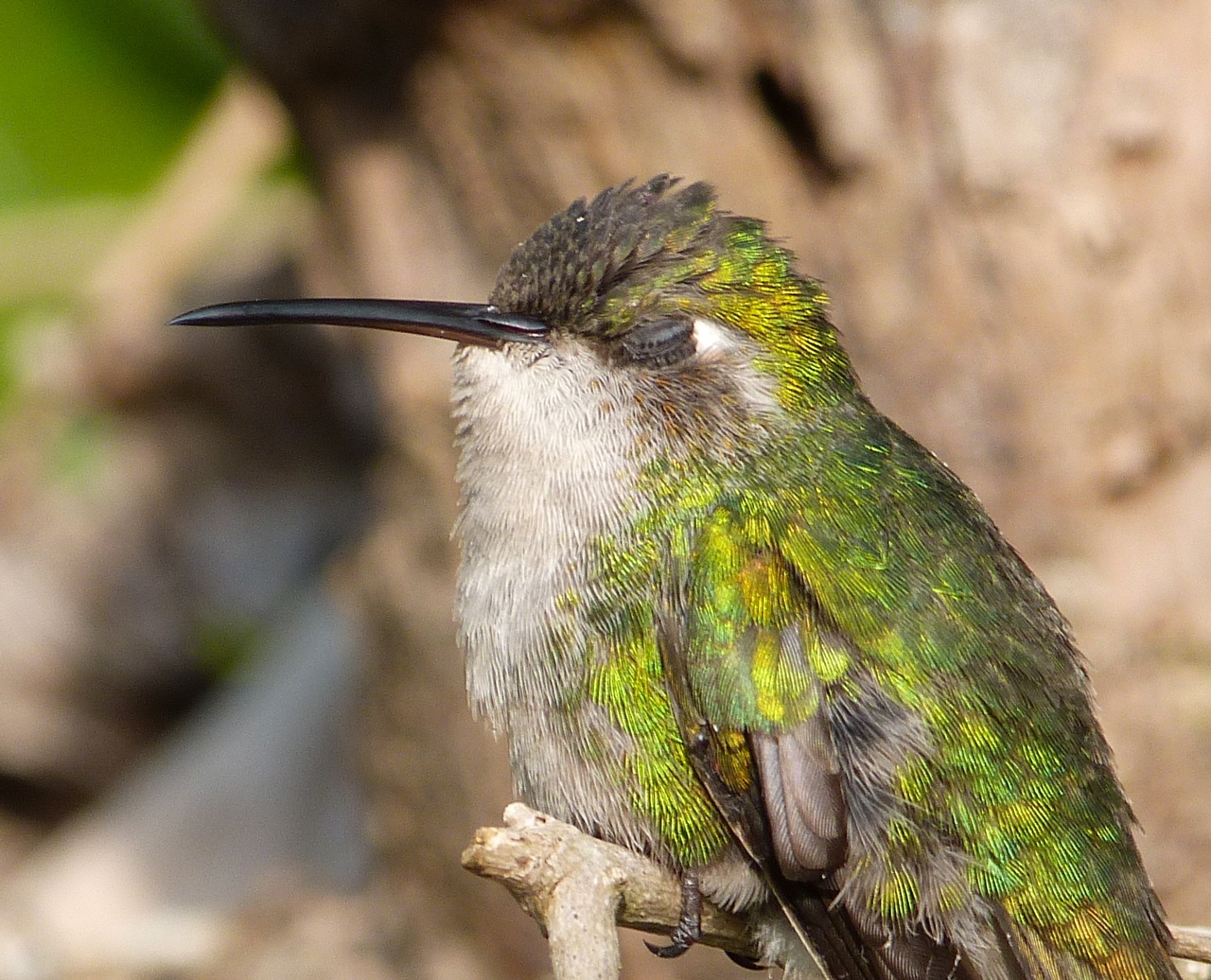
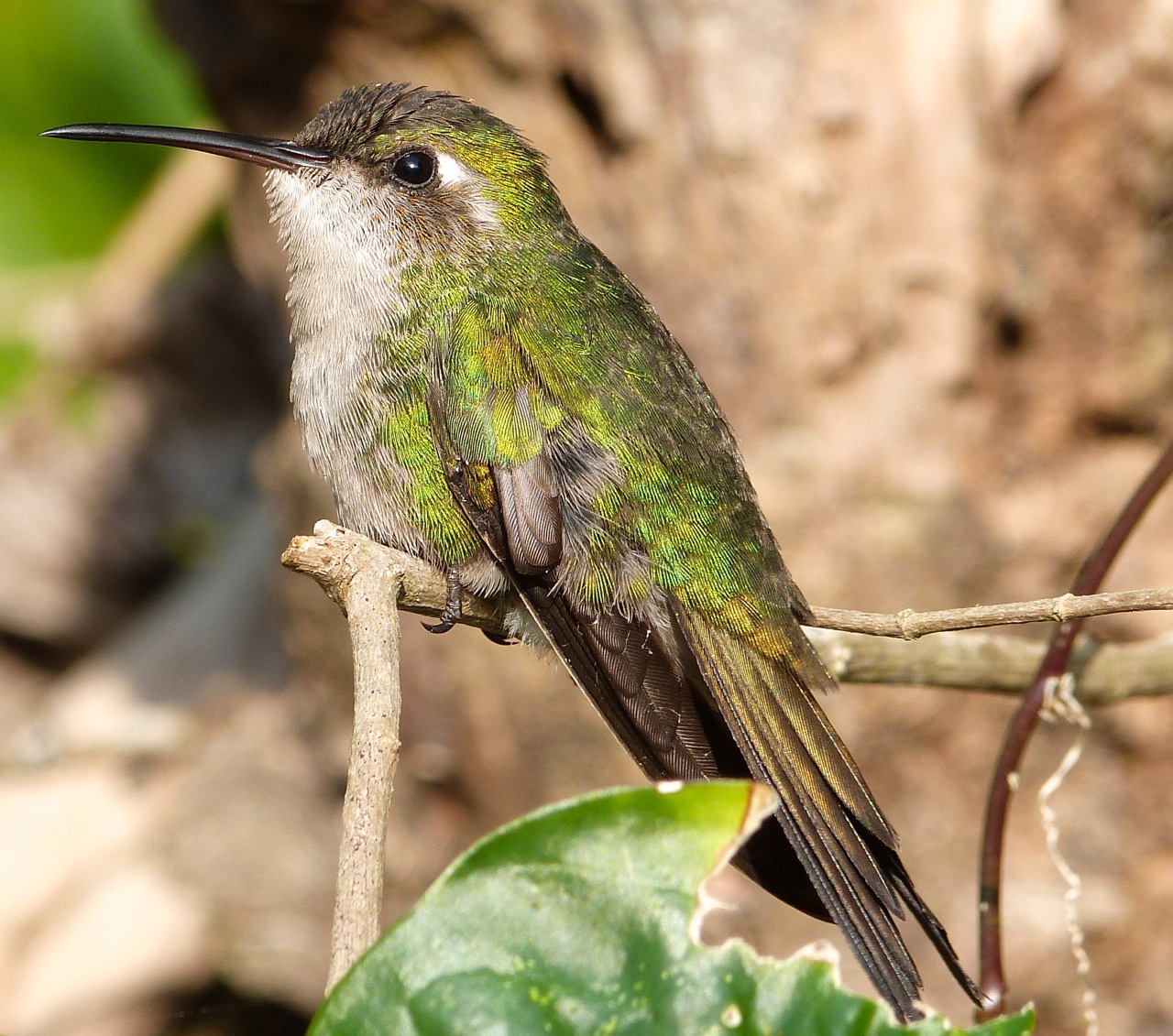
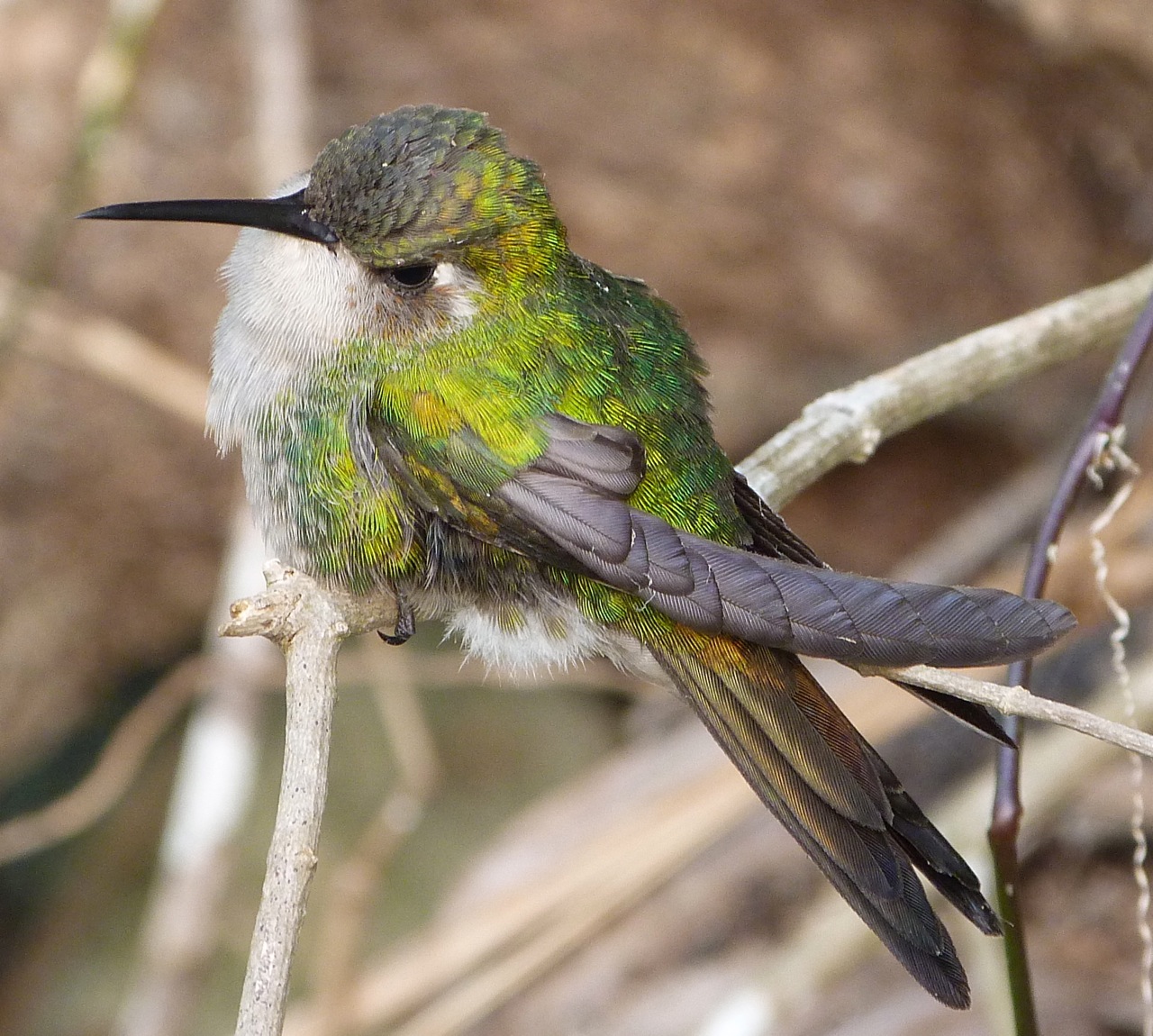
PRECIOUS EMERALDS ON ABACO: GREEN HUMMINGBIRD JEWELSThere are two resident hummingbird species on Abaco: the beautiful endemic Bahama Woodstar; and the lovely non-native Cuban Emerald. The species don’t get on, and tend to keep to separate territories. At Delphi the Emeralds predominate, though luckily there are Woodstars as well. Both species of these tiny birds have featured in previous posts, but this little hummer was a special one. 
There’s a small patch of cleared coppice at Delphi, the ‘Farm’. This is where plants are ‘grown on’ for the gardens. In particular, there are coconuts planted in soil to germinate, to provide replacements for any palms that are trashed in the hurricane season. Since both Irene (in 2011) and Sandy (2012) passed directly over Delphi, you can see the sense in having an on-site garden centre. It can be a good place for birds, having both sun and shade. It’s where I suddenly spotted this Emerald, a few feet away from me. 
It seemed quite relaxed, so I decided to see how close I could get. My attempt at stealth was slightly spoiled by my inexplicable need to make totally unnecessary “soothing” clicking and chooking noises as I crept forward. But the bird just watched peacefully, assuming me to be insane and probably harmless. 
I shuffled forwards, expecting the bird to fly off at any moment. Instead, it seemed to go to sleep… By now I was a couple of feet away, and felt it was time to stop the ridiculous noises. The bird could not have been more at ease if I had sung it a lullaby. [Apart from the fact that I can’t sing, that is]
By now the metallic glint of the feathers in the sun was extraordinary, with colours other than green clearly visible, especially on the tail. Does this bird look nervous? I was a foot away from it.
In the end I actually reached the bird. I stood over it and could easily have touched it. I quite see that it had probably been using the sugar water feeders, and was used to seeing people. But still. It was mini and I am… not. Here is my last shot, an aerial view. Then I crept away again, leaving the bird in peace and doubtless wondering what on earth that had all been about. I have a general rule against anthropomorphic ‘special moments’ but if I did not, then this was one…
All photos RH armed with a Panasonic Lumix. If you want to use a photo – surprisingly, people occasionally do – please ask first and it will probably be fine. One or more of my images may be published shortly, and I don’t want a wrangle on my hands. Or anywhere else…
![]()

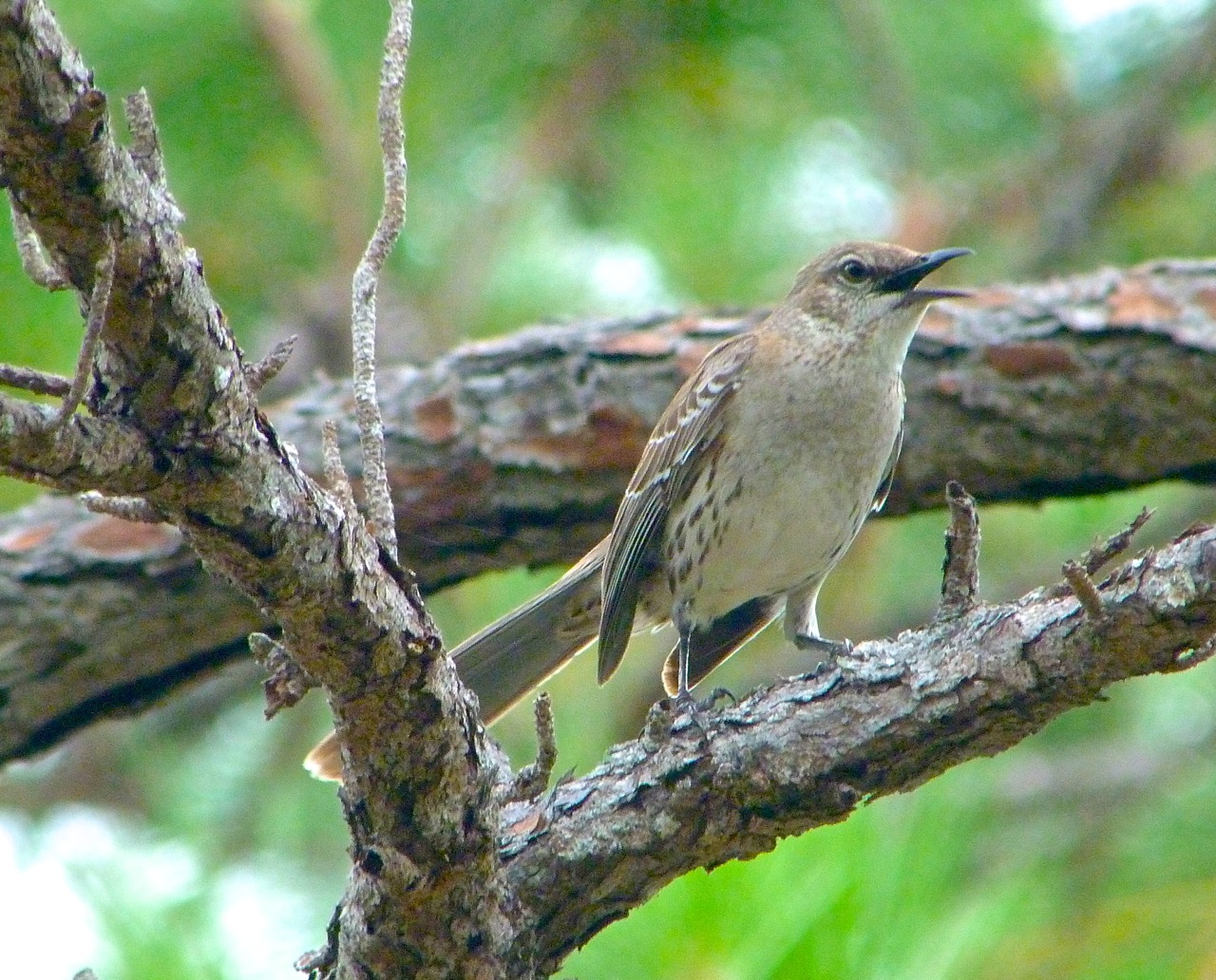
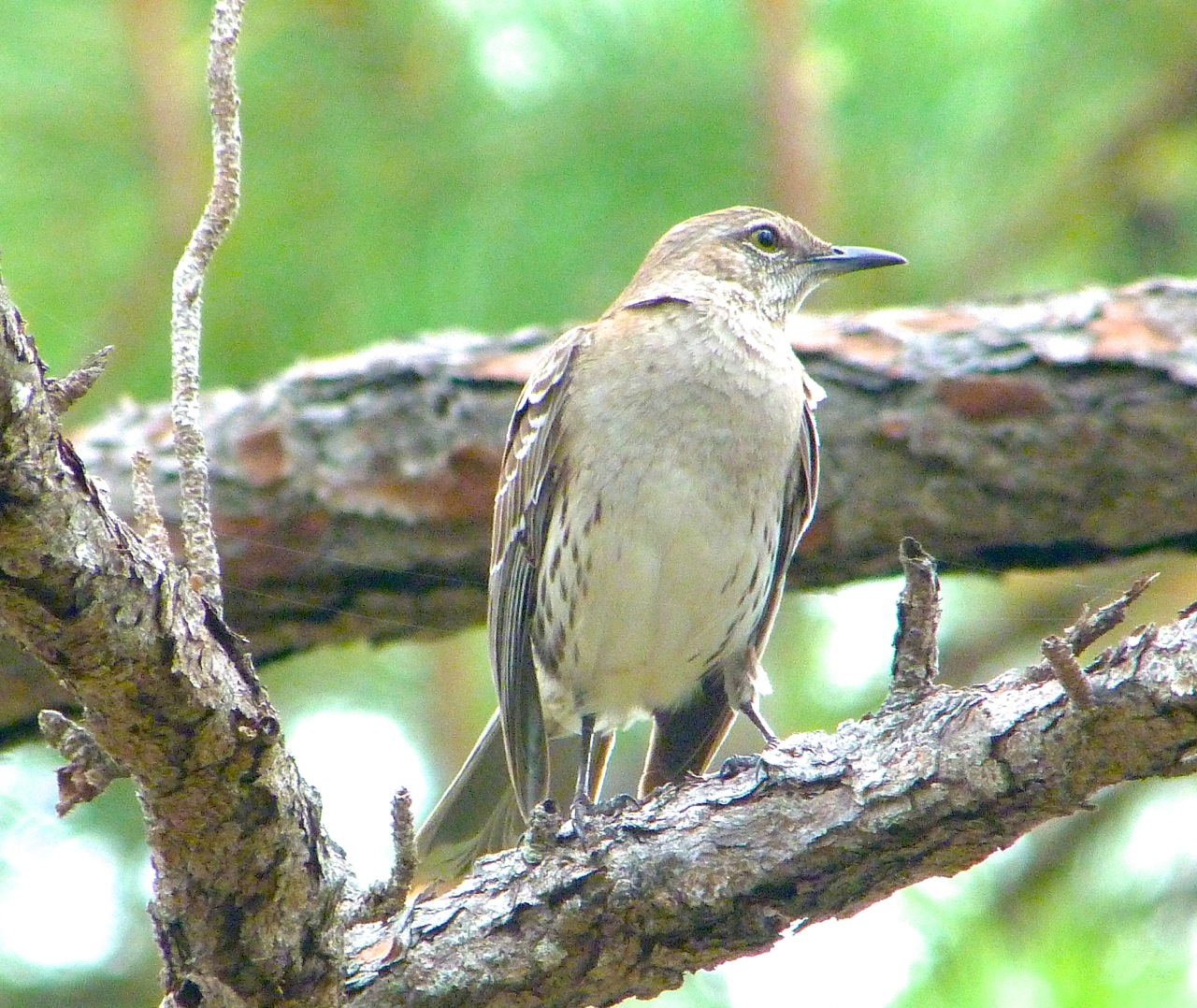
The Bahama Mockingbird Mimus gundlachii is similar to its slightly smaller cousin, the widespread Northern Mockingbird Mimus polyglottis. The range of Bahama Mockingbirds is slightly wider than the Bahamas themselves, and includes areas of Cuba, Jamaica and TCI. It is also a vagrant to the United States, especially southeastern Florida.
The Bahama Mockingbird is browner than the Northern Mockingbird, and has distinctive streaking and spotting to its breast and undercarriage.
Both species are found on Abaco. The NMs are ubiquitous in towns, settlements, gardens, coppice and pine forest, whereas BMs are shyer and tend to be found in the pine forest and well away from humans and their operations.
We took a truck into the pine forest south of Delphi with well-known Abaco birder Woody Bracey and Ohio bird photographer Tom Sheley. They were quick to locate a bird, in part because one was sitting prettily on a branch singing lustily. It was well within range of Tom’s massive lens; more of a struggle for my modest Lumix (as you may detect). I was astounded by the beauty and variety of the song. It consisted of very varied notes and phrases, each repeated 3 or 4 times before moving on to the next sounds in the repertoire. Here is a short 18 second example I recorded, using my unpatented iPhone method, for which see HERE.
For those with interest in birdsong, here is a longer 1:13 minute song from the same bird, with largely different sounds from the first recording made minutes earlier. There’s even a decent stab at imitation of a 1960s Trimphone™. Had we not had to move on to Sandy Point for an appointment with some cattle egrets and American kestrels, I could have stayed listening for far longer.
Finally, the Northern Mockingbird below was photographed in a garden at Casuarina – far tamer and clearly very different from its cousin. The range map shows the stark contrast with the very limited range of the Bahama Mockingbird.

Hunt them. Then when you have found them, shoot them. But only with a camera, obviously… These attractive dabbling ducks are far too pretty for anything more controversial than watching and enjoying. Many moons ago I posted about them HERE, but I’m a bit cannier since then, and even have my own photos now…
NOTE Within hours of posting this, I was alerted (thanks, Tony W) to the inadvisability of (a) using the word ‘hunting’ in the title; and (b) the opening 2 sentences. (a) has been changed to the neutrally vanilla ‘finding’. (b) remain but with this warning: “It is illegal to shoot white-cheeked pintail in the Bahamas“. While I don’t imagine the readers of a blog like this will already have rushed to the gun cabinet, packed up a cartridge bag, added a couple of Kaliks and headed off with extreme pintail population decrease in mind, I expect a g**gle search for ‘hunting & shooting sweet small ducks’ could indeed provoke the odd (to very odd) person to assume it is open season for pintails. It isn’t. It never is.
![]()
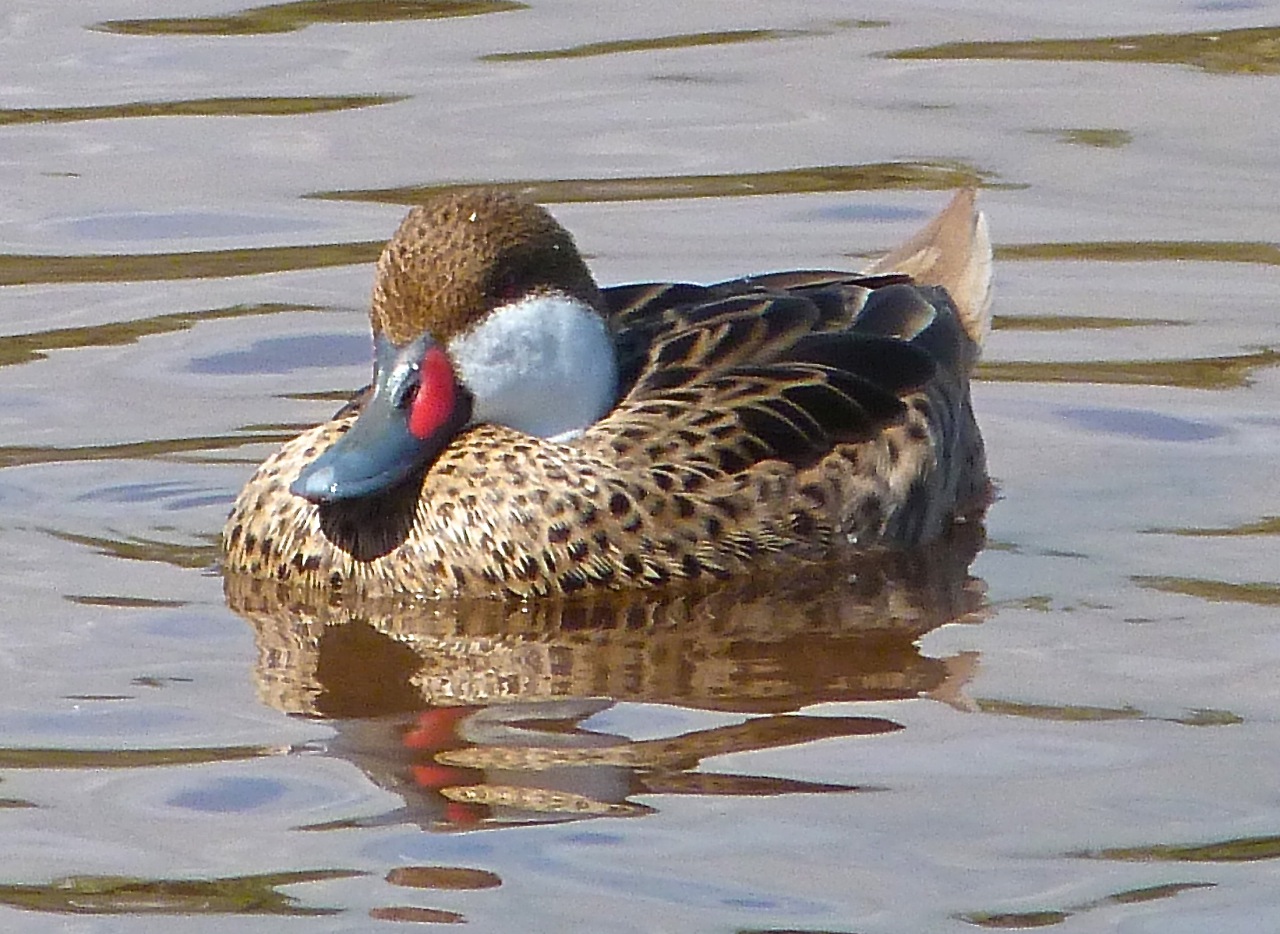
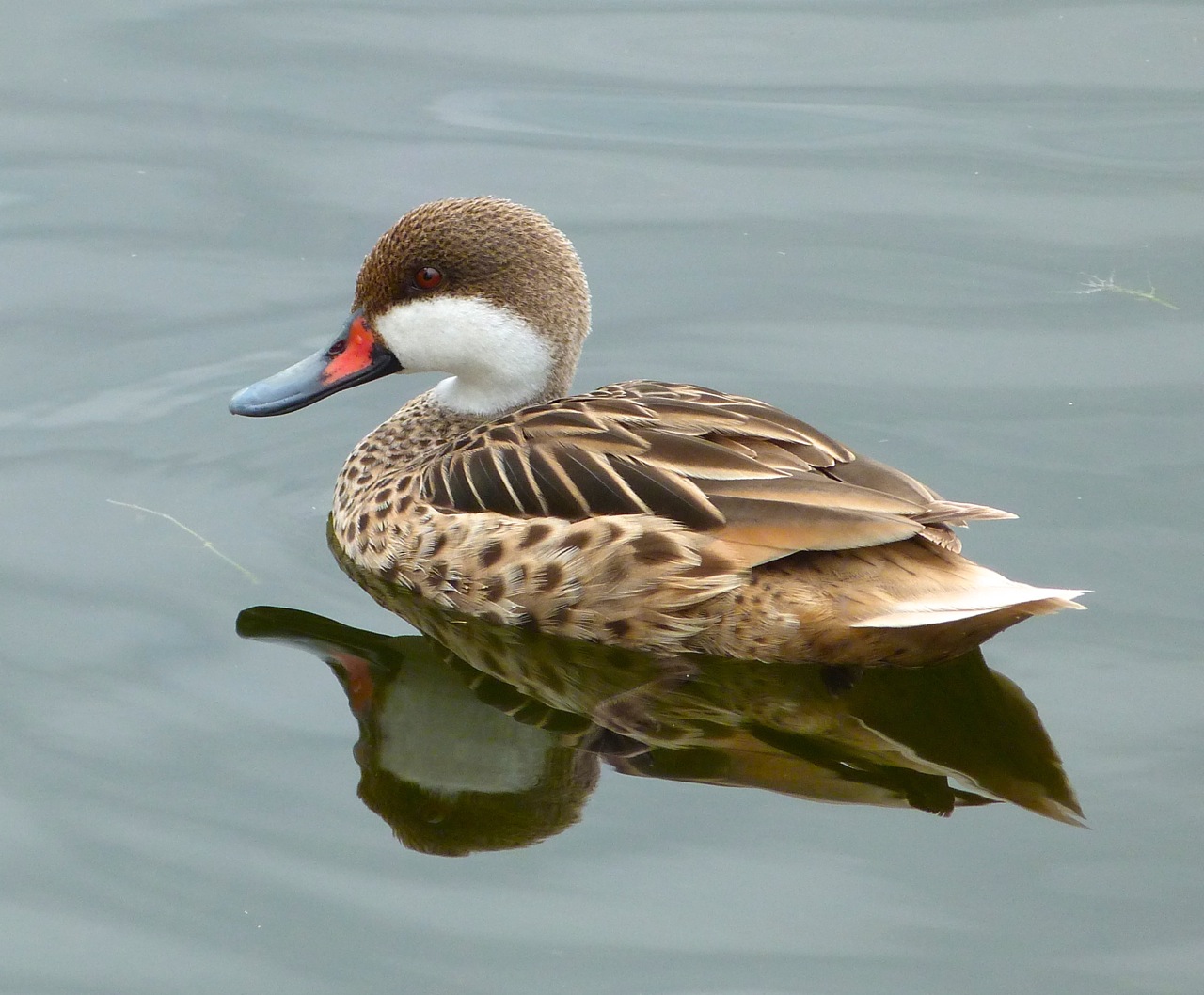
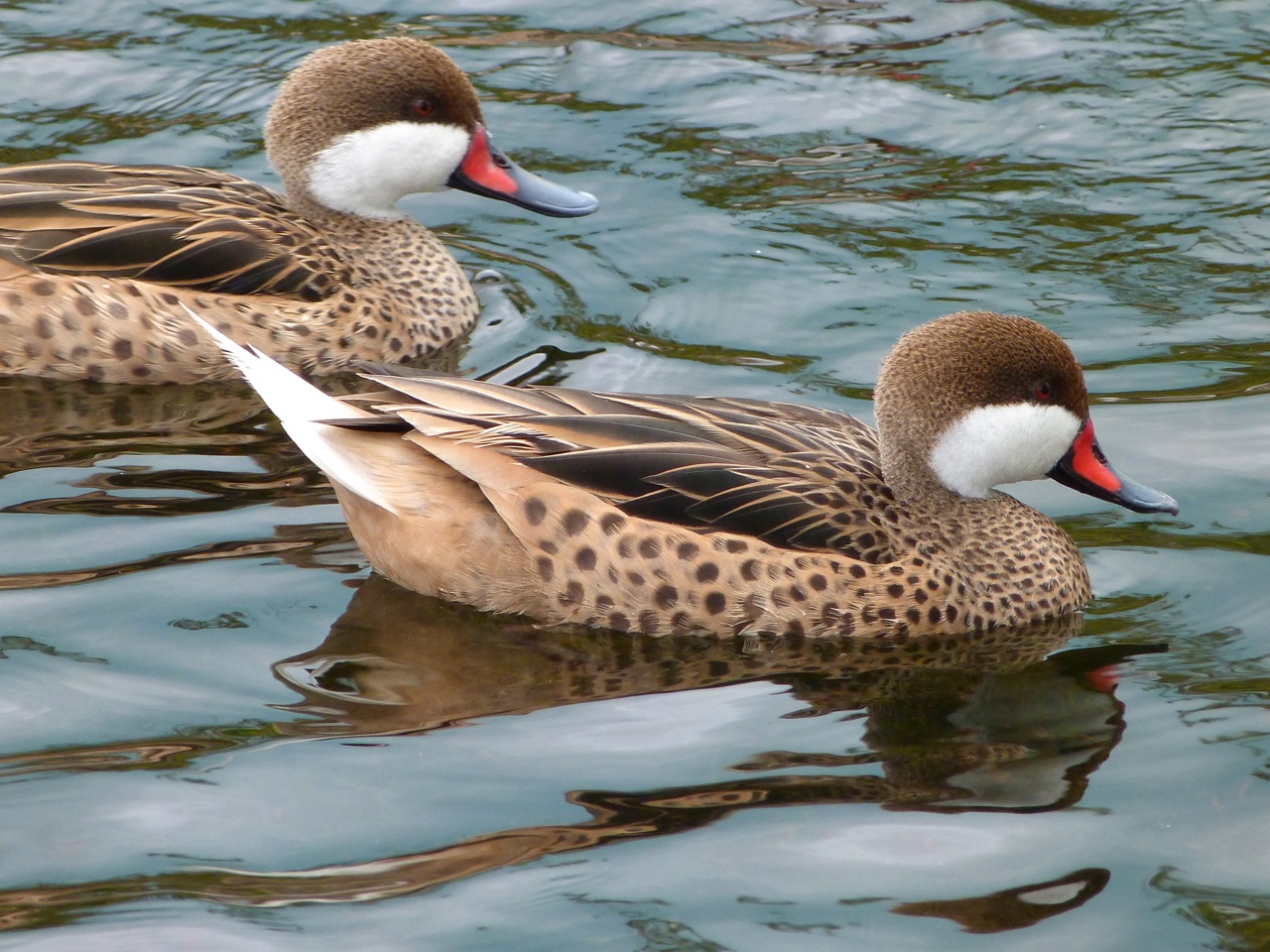
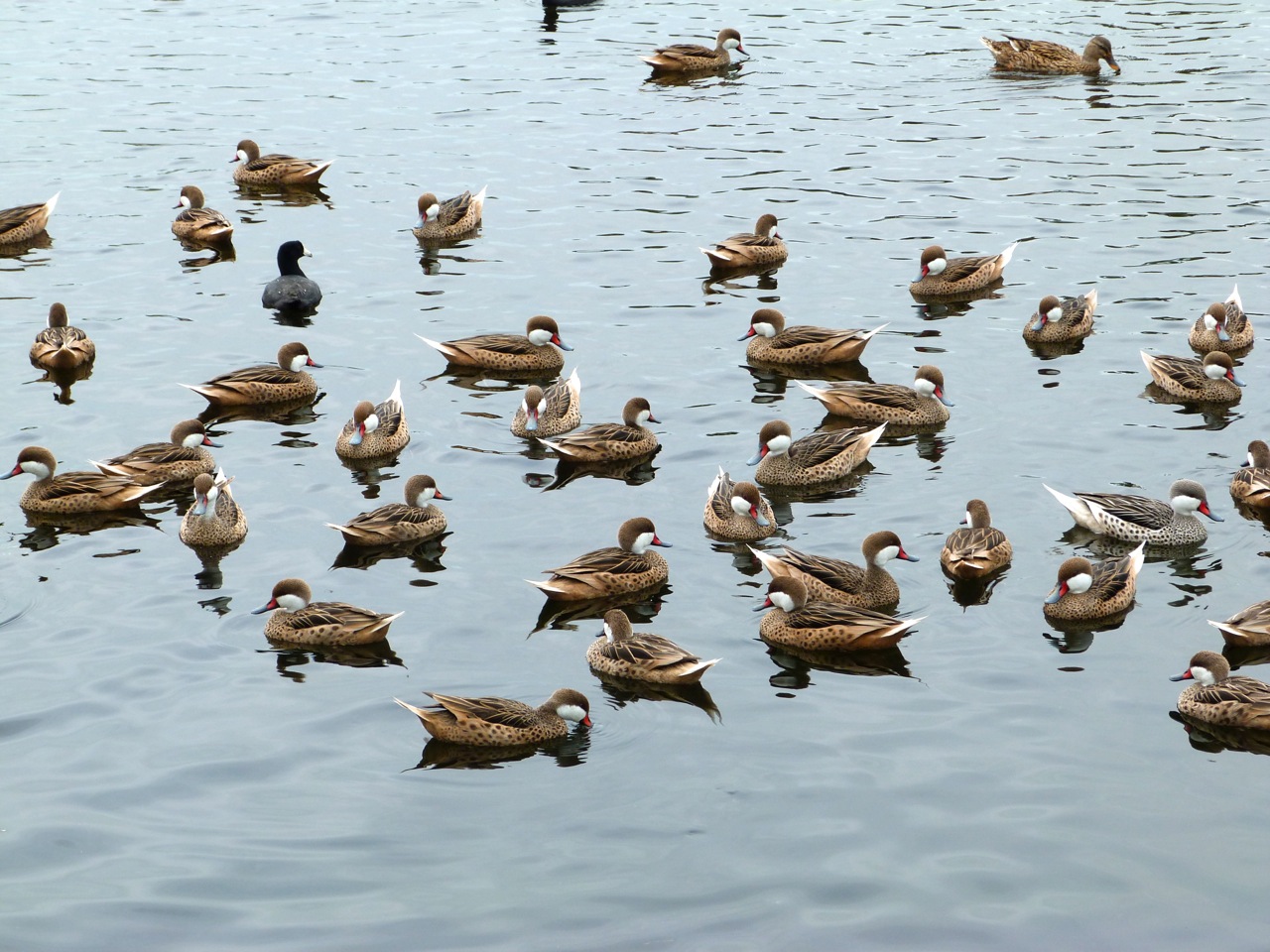
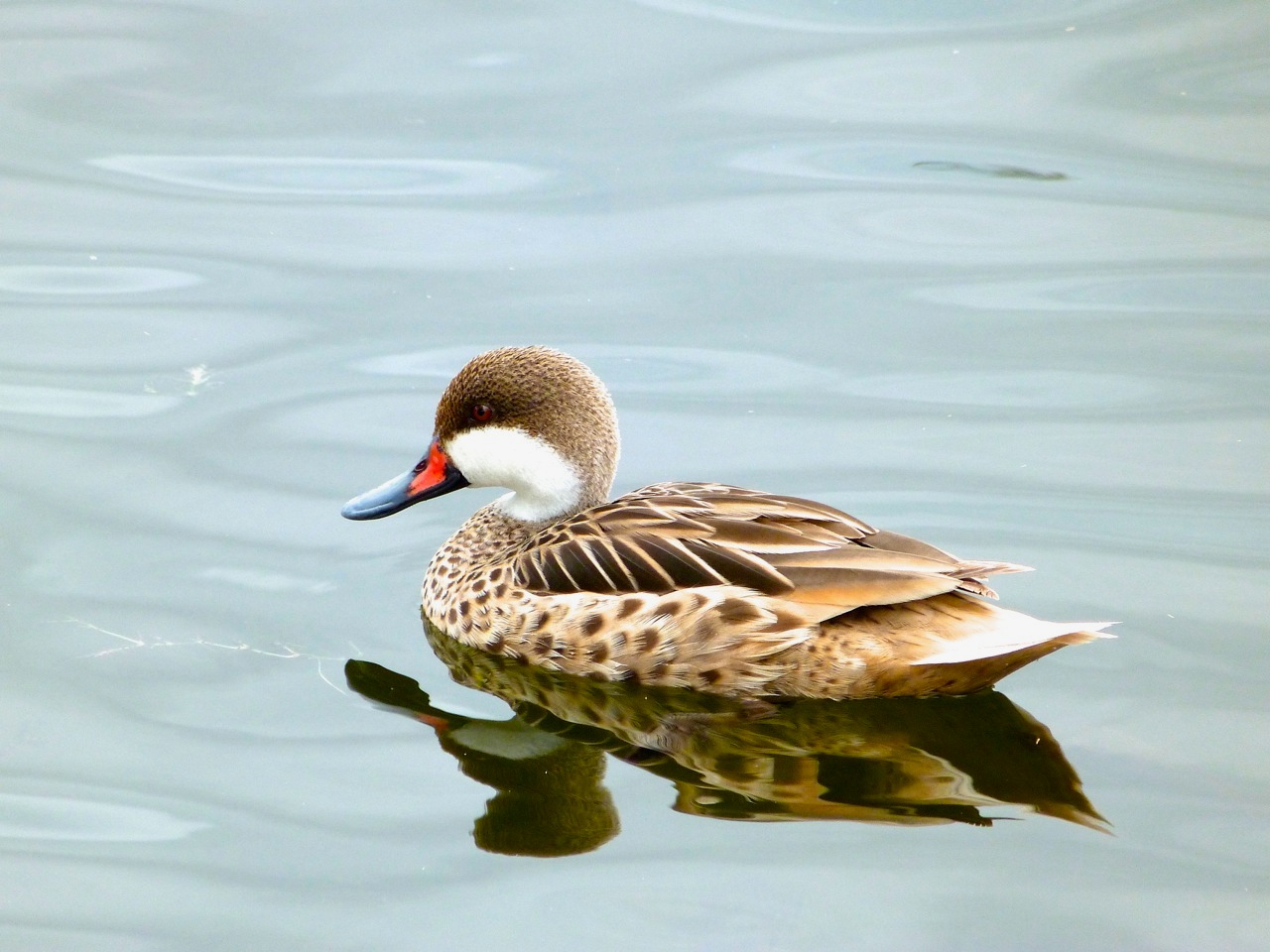
The white-cheeked pintail Anas Bahamensis is also known as the Bahama Pintail. It is a gregarious species, often found in large numbers on lakes and ponds. An excellent place to see them on Abaco is at the pond by Hole 11 at Treasure Cay golf course. Don’t all rush at once – and if you do follow up the hint, check in at the Clubhouse to get permission – there may be a competition in progress… You’ll see many other waterbird species there, and I will do a follow-up post about them. Do mind your head – if someone yells ‘fore’ they will probably not be counting duck species.
The male and female of the species are very similar. However, in the image below there’s one bird that stands out from the others… and I don’t mean the American Coot. Near the bottom right is a LEUCISTIC variant of the Bahama Duck, a genetic condition similar to albinism.
Here is a close-up of the same duck on dry land. These variants are known as Silver Bahama Pintails. They are worth more than the standard version. You can see some good comparative pictures and find out more at MALLARD LANE FARMS
Here is a more extreme wiki-example of a silver bahama pintail

Another excellent place for pintails is in the Crossing Rocks area of South Abaco. Strictly, it is on private land. And legally too, for that matter. So I won’t pinpoint these pintails publicly. There is a wonderful variety of waterbird life there. I have seen great egrets, little blue herons, yellow-crowned night herons, belted kingfishers and elegant BLACK-NECKED STILTS there, besides several duck species. I have also seen a sora there (twice), a small, furtive rail that skulks in the reeds and foliage at the edge of the water, profoundly hoping that you won’t notice it… If you are birding on Abaco from Delphi, ask Peter or Sandy for the location. Or else contact me.
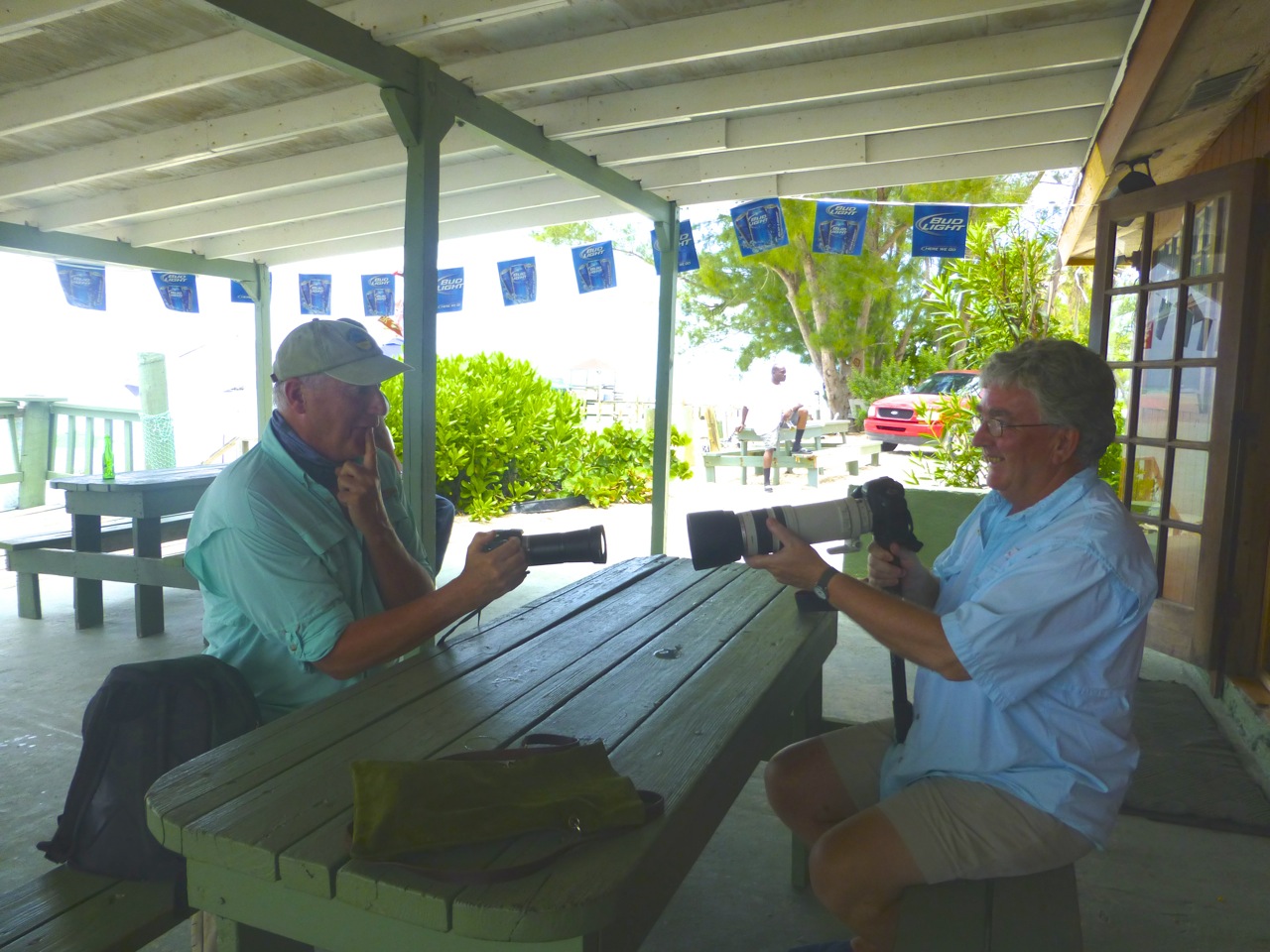
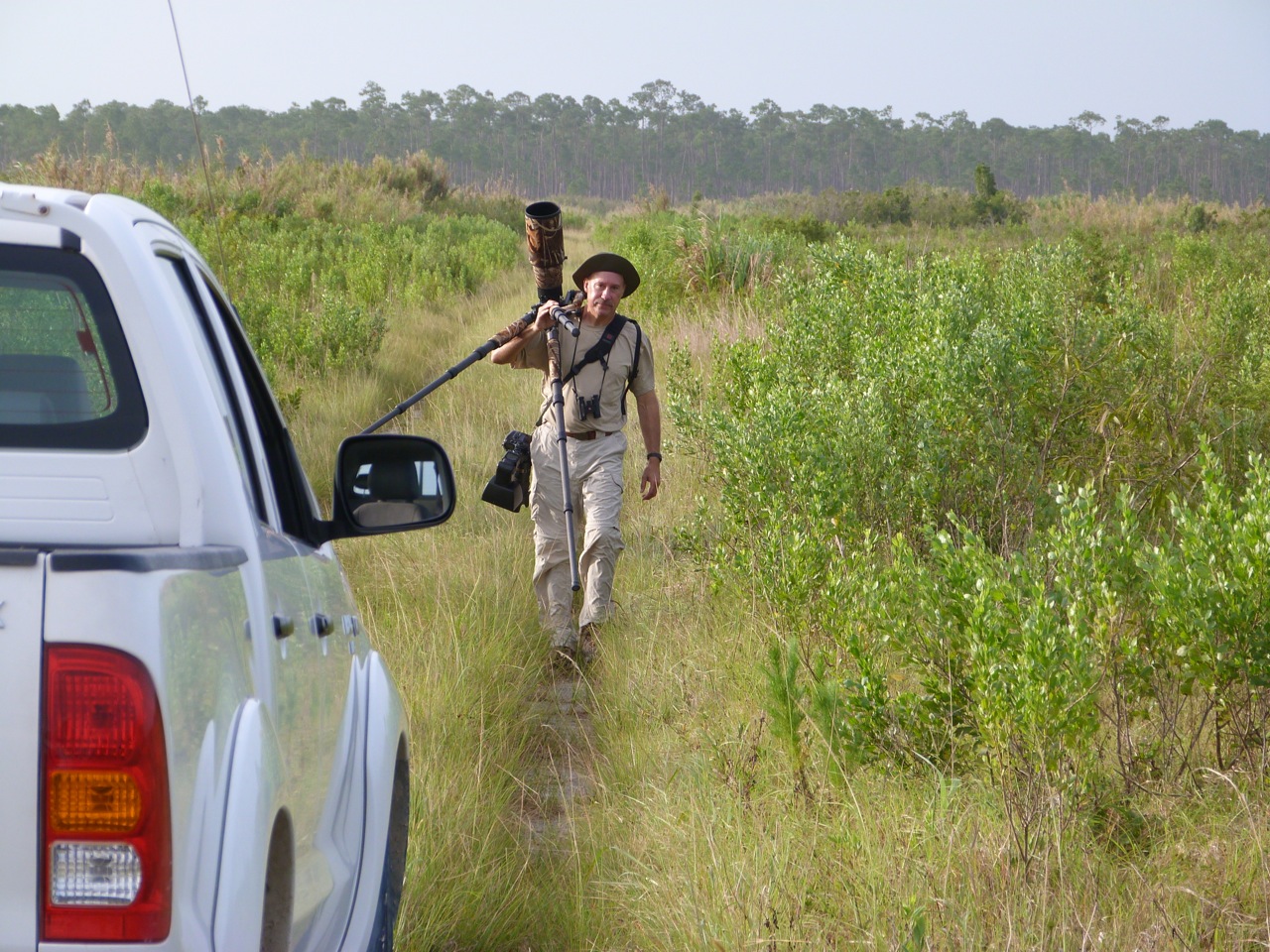
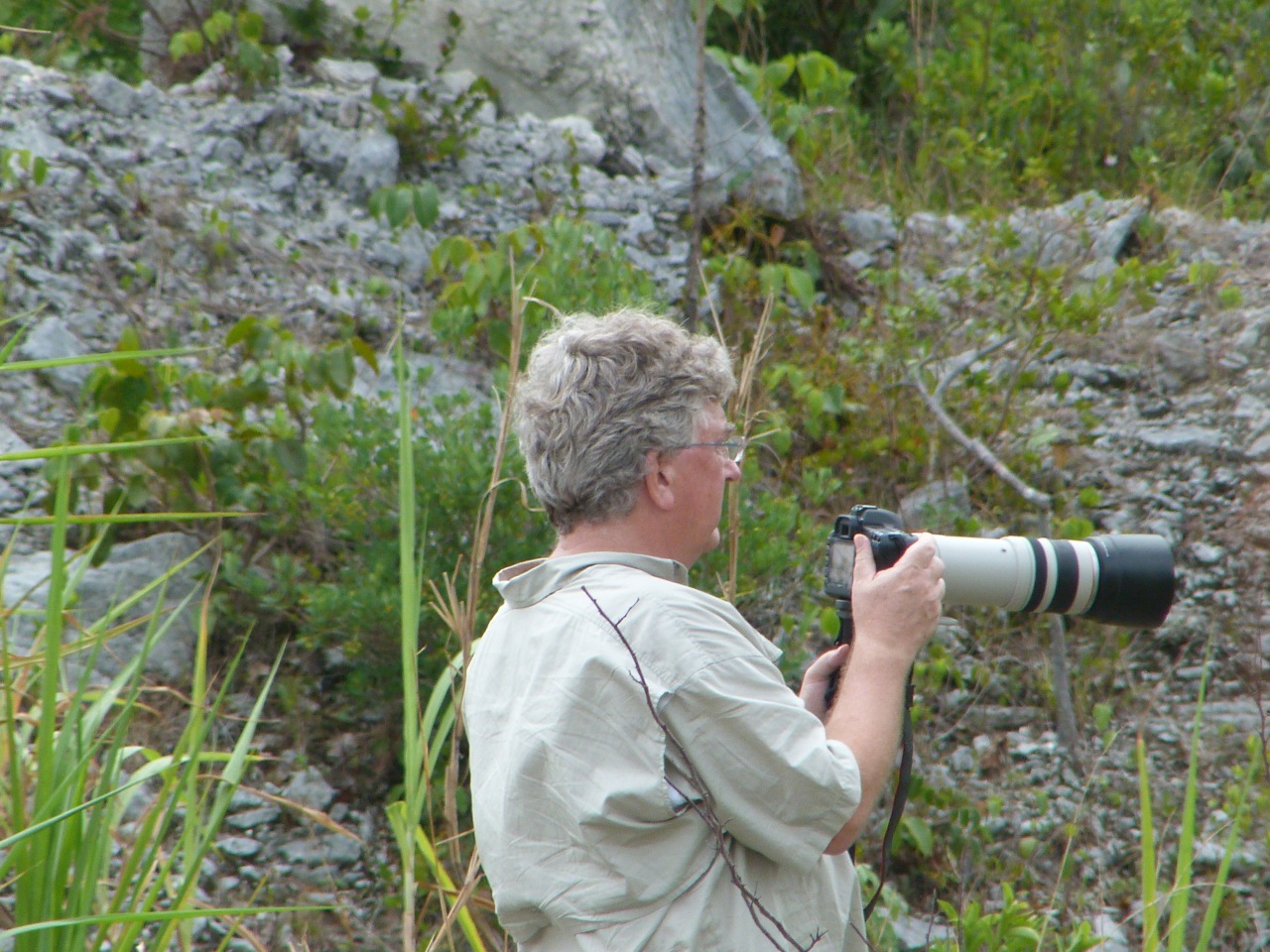
Who indeed does photograph the people who take the photographs? Here is a small gallery of photographers on Abaco caught in the act of shooting wildlife, so to speak. And if anyone has ever seen – or been – a photographer photographing photographers photographing other photographers, trust me, that is one stage beyond weird.
RH on a nature trek with Ricky Johnson
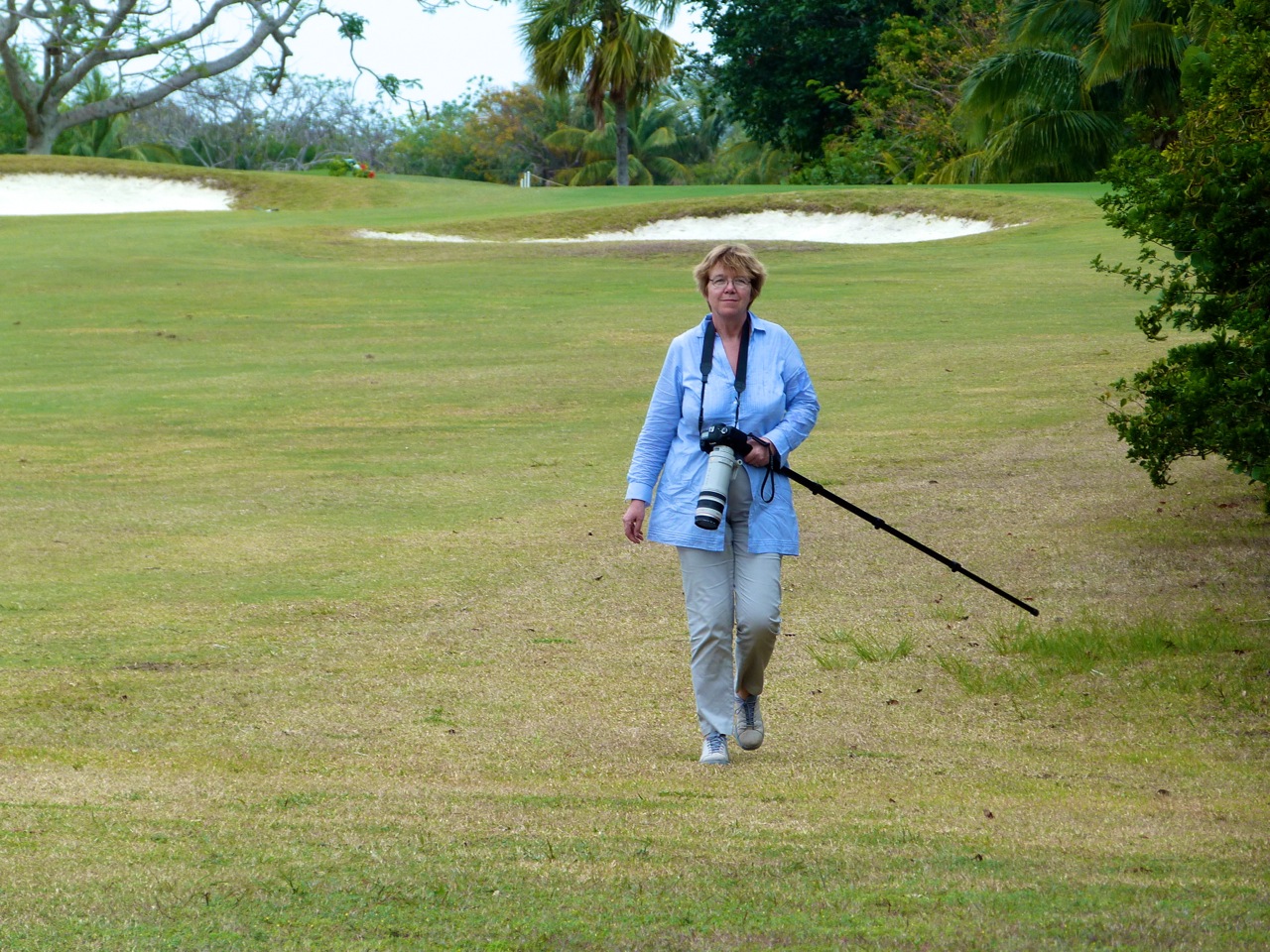
Mrs RH goes right off-piste & ends up on the golf course at TC [good birding there in fact]
RH (who uses a stick – or ‘cane’, if that isn’t too ’50 shades’) takes a collapsible wading stick on these occasions. Since he, too, is collapsible it is sometimes helpful to have a seat while photographing. Not elegant, though, and not especially comfortable. Cheers, Clare, for capturing the indignity…
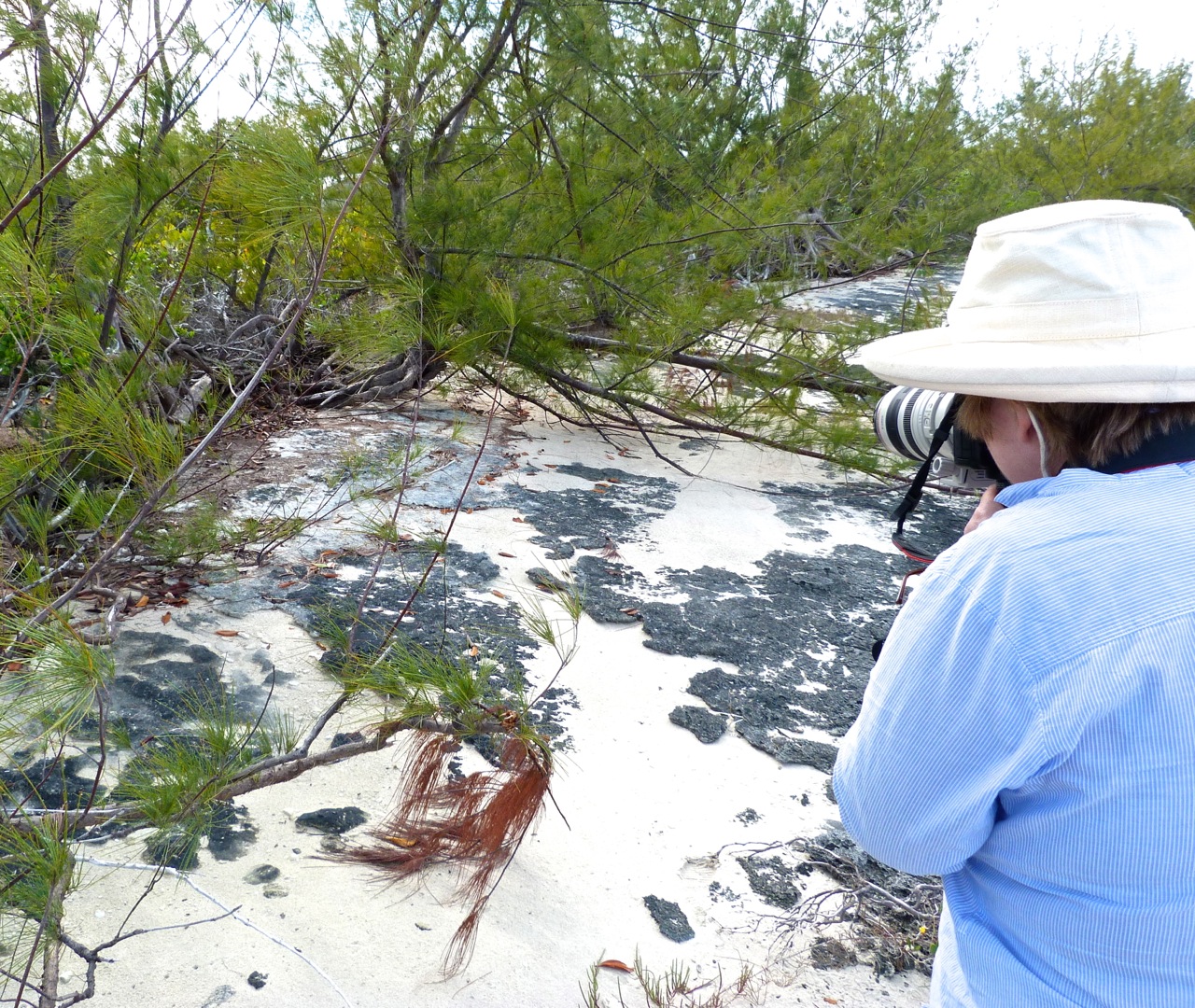
Mrs RH zooms in on a possibly rare bird… as it turned out, a female grassquit!
RH sort of looks the part but the backpack is crammed full of food & drink, not equipment, and he is looking for shade for a picnic at Casuarina
PM challenges RH to a ‘camera-off’ duel at Nancy’s, Sandy Point, and proves that his is the biggest…
Ace birder and photographer from Ohio, Tom, arrives at Delphi and puts PM’s puny equipment to shame – and with Camo for extra cool. Even the tripod legs.
Sandy Walker, General Manager of Delphi and man of many parts, turns out to own a snappy Nikon
PM & RH engaged in a ridiculous challenge to photograph various items on the beach. Both lost, even though they had devised the rules…
The professionals Tom and Woody (‘Birdman of Abaco’) Bracey get serious with Bahama Mockingbirds in the pine forest. The red bandana is to attract the endemic Bahama Woodstar hummingbirds.
However at Sandy Point they seem to have forgotten their cameras…
Tom returning to the truck after filming an evening festival of dozens of nighthawks on the wing
Out in the field… or scrubland – with 2 cameras
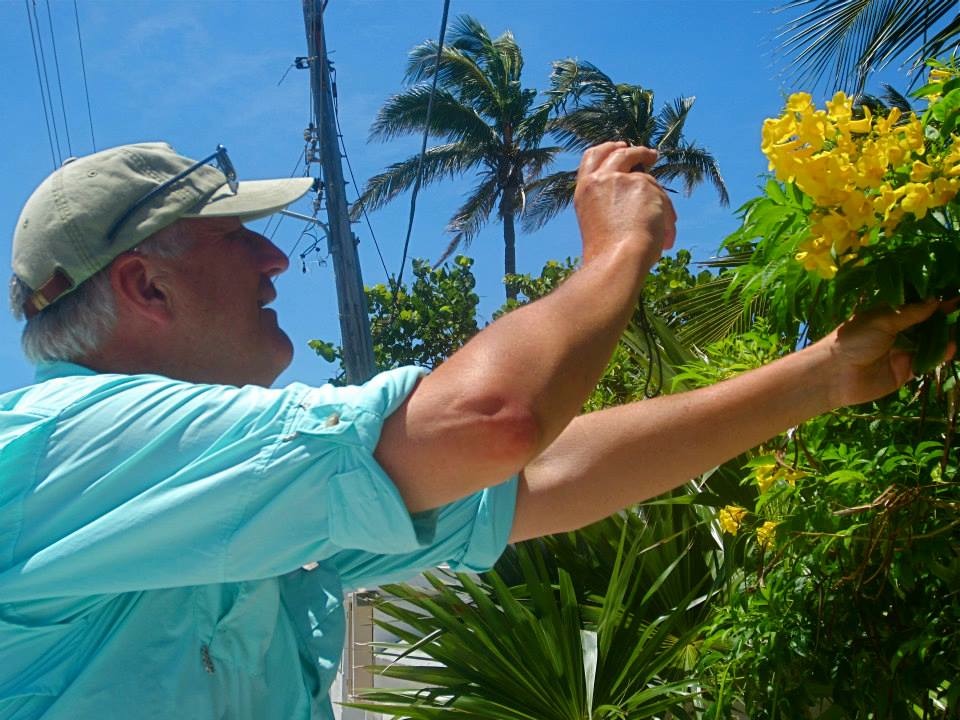
RH subdues an unruly Yellow Elder (Bahamas national flower) for a close-up
*This titular nod to the phrase ‘quis custodiet ipsos custodes’ (‘who is guarding the guardians’) is open to objection on the ground of illogicality. It’s a Latin tag with a greek-derived verb and noun forms jocularly inserted. A ‘photograph’ is, literally, ‘light writing’ in Greek. So ‘quis lux-scribit ipsos lucis-scriptores’ is the best solution I can offer… Let’s have that Elder flower to end on a light note 
DRAMATIS PERSONAE
Photographees: Peter Mantle, Sandy Walker, Tom Sheley, Woody Bracey, Mrs RH, RH
Photographers: Clare Latimer, Brigitte Bowyer, Mrs RH, RH
Photographers of photographers photographing photographers: none that we were aware of
![]()
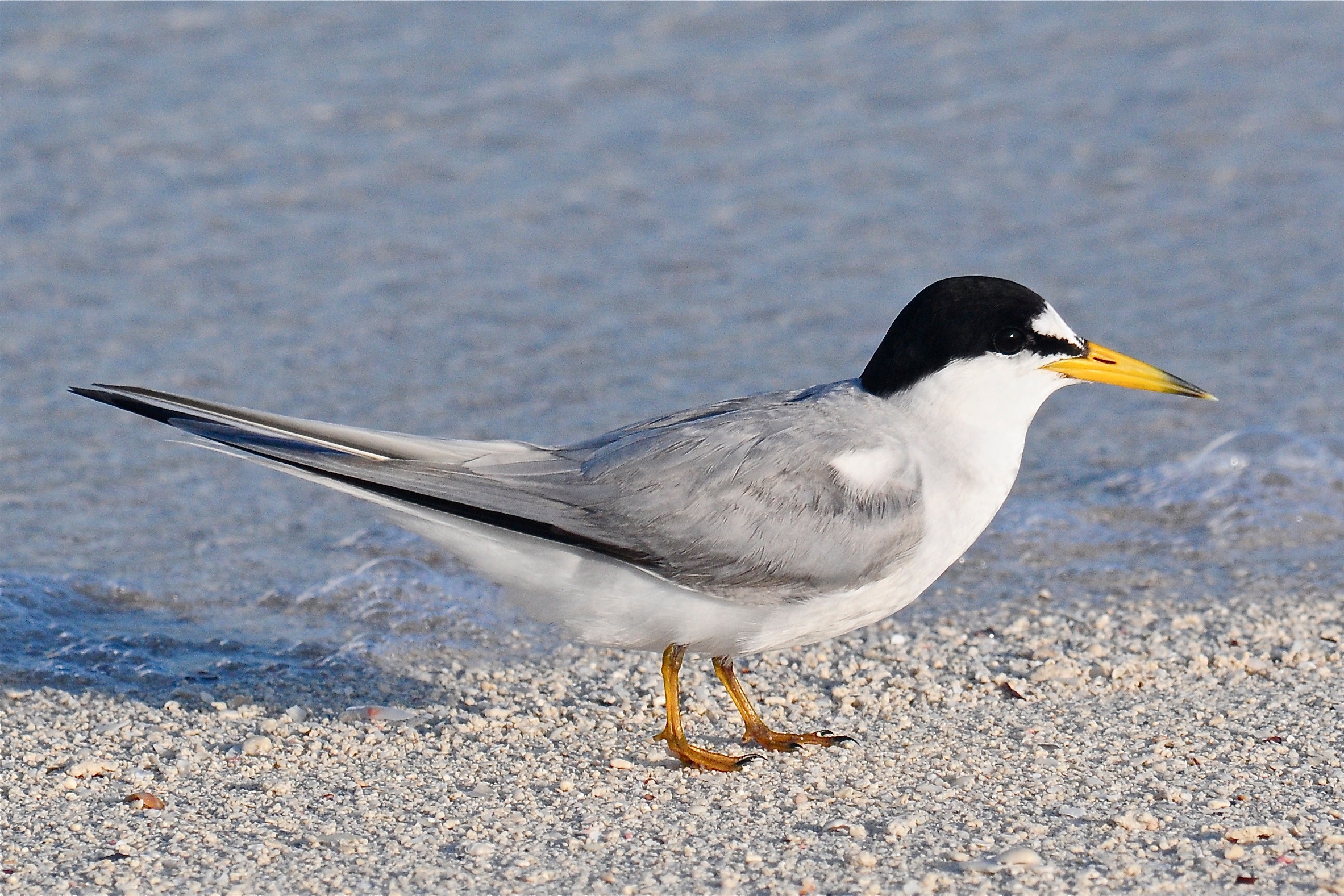
The LEAST TERN (Sternula antillarum, as it is now designated) is a small tern of the Americas and Caribbean, a very pretty, delicate little bird. It is a rare a vagrant to Europe, with a single example recorded in Great Britain. It is quick and manoeuvrable in flight, slightly hunched and ready to assume the position shown below after hovering over a likely spot for small fish. This image shows the bird coming out of its hover, and at the very start of its rapid plunge to the water. It’s here for illustrative purposes only – I realise it is somewhat inept as a photograph, but frankly you can never be sure when the dive is going to happen. Unless you have lightning reactions, a refrangible apex lens and a zircon-encrusted focal-zone flange, you’ll be lucky to do much better. Oh, and steady hands.
I had a lucky break on the Delphi beach one day, when I was taking photos of Wilson’s plovers and their new chicks (soon to feature here). A least tern appeared from nowhere and landed at the water’s edge within a few yards of me. I had no time to rethink my settings – a perennial problem at the best of times – and I simply aimed the camera and managed to squeeze off 3 shots before the bird took off again. One was a blurry fail, one is the header picture… and the 3rd captured the bird as it turned its head. You can see that, even though this is a small and light bird, its feet have sunk right into the soft, damp white sand.
Another day on the beach produced a more measured opportunity. A least tern landed quite close to me, and was so preoccupied with its preening routine that it let me creep closer, all the while keeping a beady black eye on me. In the top shot, it has just become aware of me behind it. I was lucky it chose to stay and let me watch.

![]()
![]()
TURKEY VULTURES (Cathartes aura) are a familiar sight, wheeling effortlessly overhead on thermals or gliding with the wind in singles, pairs or flocks. Statistically, 83% of all photographs of turkey vultures are taken from below and look like this 
Of those, 57% are taken in unhelpful light, and look like the one below. On the positive side, this picture show the extreme delicacy of the wing-tip feathering that enables these birds to adjust their direction and speed (this is not the bird above; it was taken by someone else at a different time. But 100% of TV in-flight photos are indistinguishable).
TVs have a wide range in the Americas and the Caribbean, and can prosper in almost any type of habitat. This is probably because these large birds are almost exclusively carrion feeders, and carrion is everywhere. They spend their days scavenging, or thinking about scavenging. They do not kill live creatures.
The word ‘vulture’ derives from the latin word ‘vulturus’ meaning ‘ripper’, ‘shredder’, or ‘very loud Metallica song’. TVs have very good eyesight, and an acute sense of smell that enables them to detect the scent of decay from some distance. A breeding pair will raise two chicks which revoltingly are fed by the regurgitation of all the rank… excuse me a moment while I… I feel a little bit…
When they are not flying, feeding, breeding or feeding young, TVs like best to perch on a vantage point – a utility post is ideal. But unusually for a bird, you won’t ever hear them sing or call. They lack a SYRINX (the avian equivalent of a larynx), and their vocalisation is confined to grunting or hissing sounds. Here’s a hiss (at 10 / 15 secs).
These vultures are often seen in a spread-winged stance, which is believed to serve multiple functions: drying the wings, warming the body, and baking bacteria.
They are equally happy to spread their wings on the ground, the shoreline being ideal
10 SCAVENGED TURKEY VULTURE FACTS FOR YOU TO PICK OVER
![]()
REVOLTING CORNER / TOO MUCH INFORMATION
SQUEAMISH? LOOK AWAY NOW
UNATTRACTIVE HABITS The Turkey Vulture “often defecates on its own legs, using the evaporation of the water in the feces and/or urine to cool itself, a process known as UROHIDROSIS. This cools the blood vessels in the unfeathered tarsi and feet, and causes white uric acid to streak the legs”. The droppings produced by Turkey Vultures can harm or kill trees and other vegetation.
![]()
HORRIBLE DEFENCES The main form of defence is “regurgitating semi-digested meat, a foul-smelling substance which deters most creatures intent on raiding a vulture nest. It will also sting if the predator is close enough to get the vomit in its face or eyes. In some cases, the vulture must rid its crop of a heavy, undigested meal in order to take flight to flee from a potential predator”
DIETARY NOTES TVs tend to prefer recently dead creatures, avoiding carcasses that have reached the point of putrefaction. They will occasionally resort to vegetable matter – plants and fruit (you could view this as their salad). They rarely, if ever, kill prey – vehicles do this for them, and you’ll see them on roadsides feeding on roadkill. They also hang around water, feeding on dead fish or fish stranded in shallow water.
ECO-USES If you did not have birds like this, your world would be a smellier and less pleasant place, with higher chance of diseases from polluted water and bacterial spread.
FORAGING TVs forage by smell, which is uncommon in birds. They fly low to the ground to pick up the scent of ethyl mercaptan, a gas produced by the beginnings of decay in dead animals. Their olfactory lobe in the brain is particularly large compared to that of other animals.
SEX TIPS Courtship rituals of the Turkey Vulture involve several individuals gathering in a circle, where they perform hopping movements around the perimeter of the circle with wings partially spread. In humans, similar occasions are called ‘Dances’. In the air, one bird closely follows another while flapping & diving.
For more about Turkey Vultures, including cool videos, visit DEAR KITTY
It’s possible you may enjoy a visit to max-out-cute Birdorable. Click TV below for link
And if you’d prefer something TV but less cute, depressingnature.com has the thing for you…
Credits: Photos mainly RH, 2 by Clare L, small ones Wiki; Info – cheers Wiki & random pickings
Oh. Ok. Here’s the Metallica thing referenced above. Sweaty. Not my taste these days.
You must be logged in to post a comment.