Unknown's avatar

ABSORBING SPONGES ON THE BAHAMAS REEFS…


sponge-melinda-riger-gb-scuba

ABSORBING SPONGES ON THE BAHAMAS REEFS…

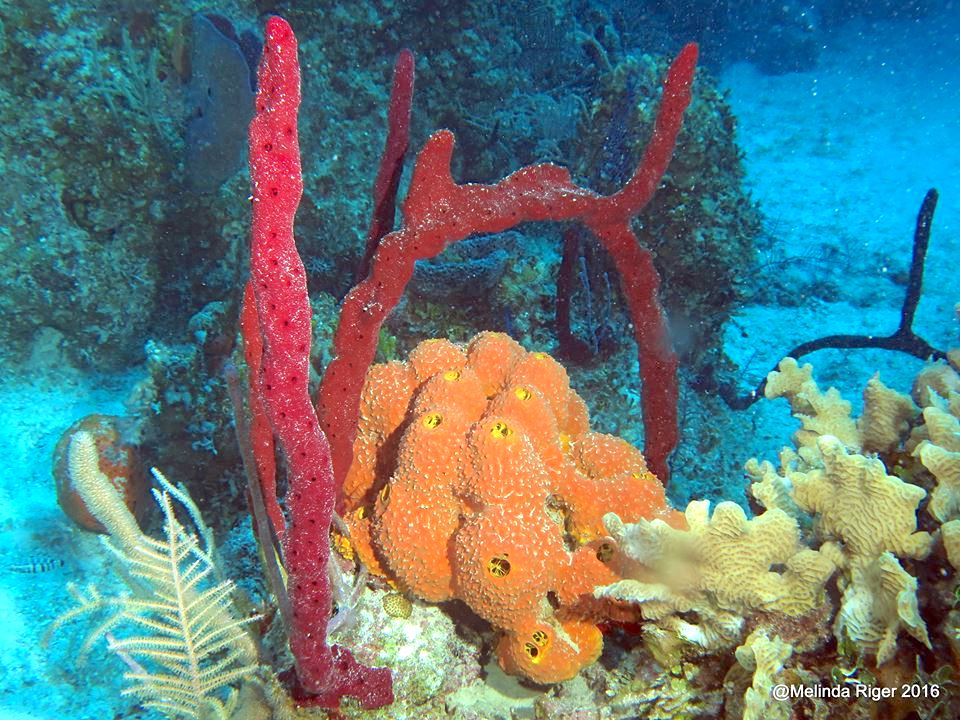
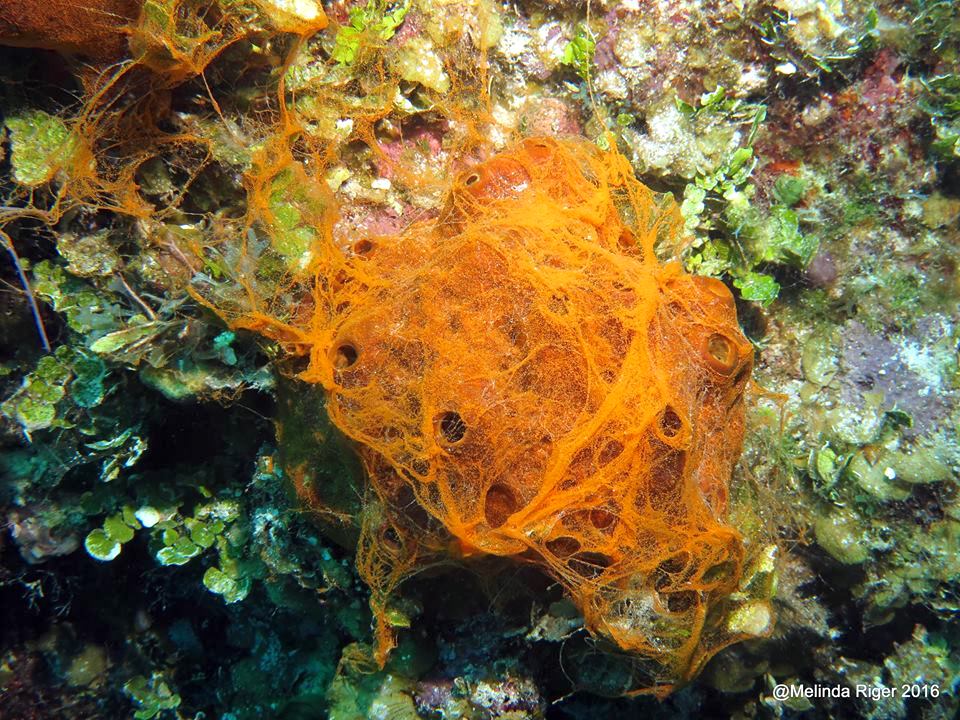
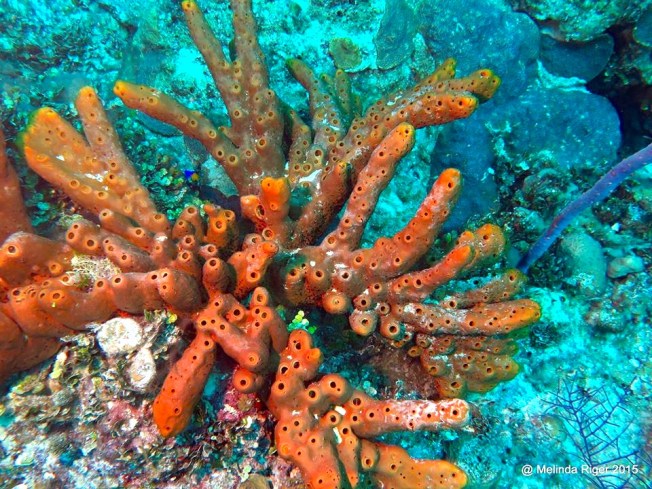
A while back I showed a collection of colourful sponges – one that you might come across with minimum equipment. Snorkel, mask, flippers. Oh, and a coral reef, if you happen to have one handy. I suspect that to quite a few people the word ‘sponge’ means soggy yellow thing, as found in the proximity of a bath. Or a scratchy nylon-based equivalent. Well, here are a few more sponges to enjoy. Some I can give you the names of, some I don’t know and am too idle busy to look up… Sorry.

sponges-melinda-riger-g-b-scuba

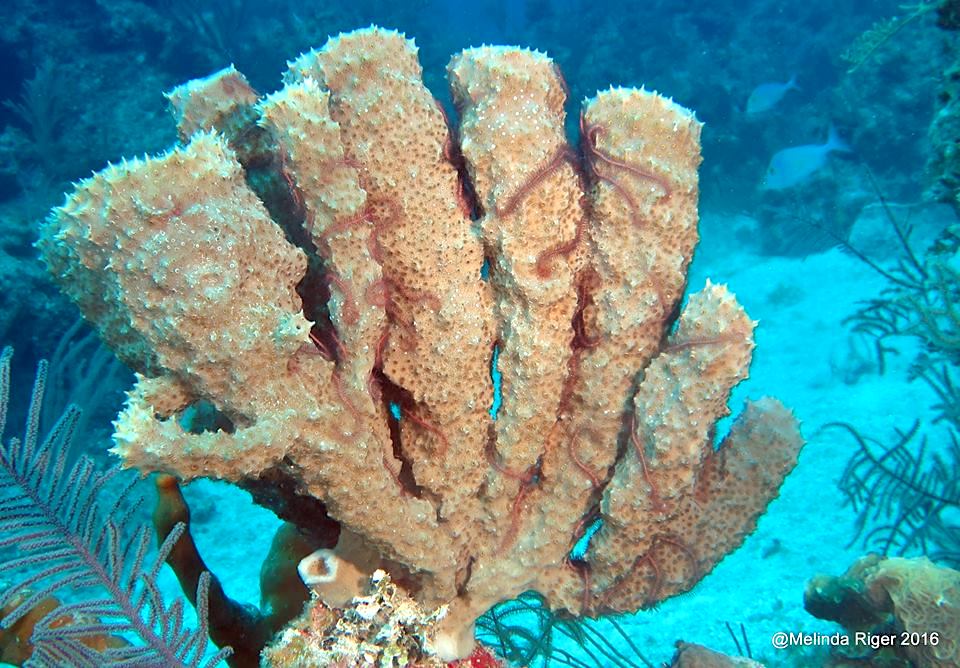
Candelabra Songe (with brittle stars attached)candelabra-sponge-melinda-riger-g-b-scubasponge-melinda-riger-g-b-scuba

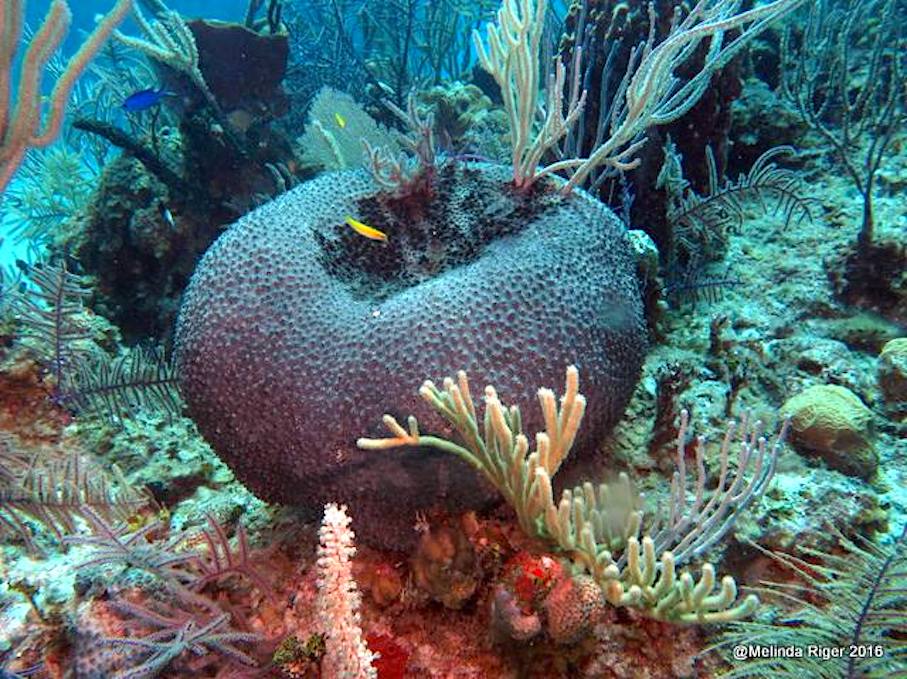
Black Ball Spongesblack-ball-sponge-melinda-riger-g-b-scuba-copy

One for Valentine’s Dayheart-shaped-sponge-melinda-riger-gb-scuba

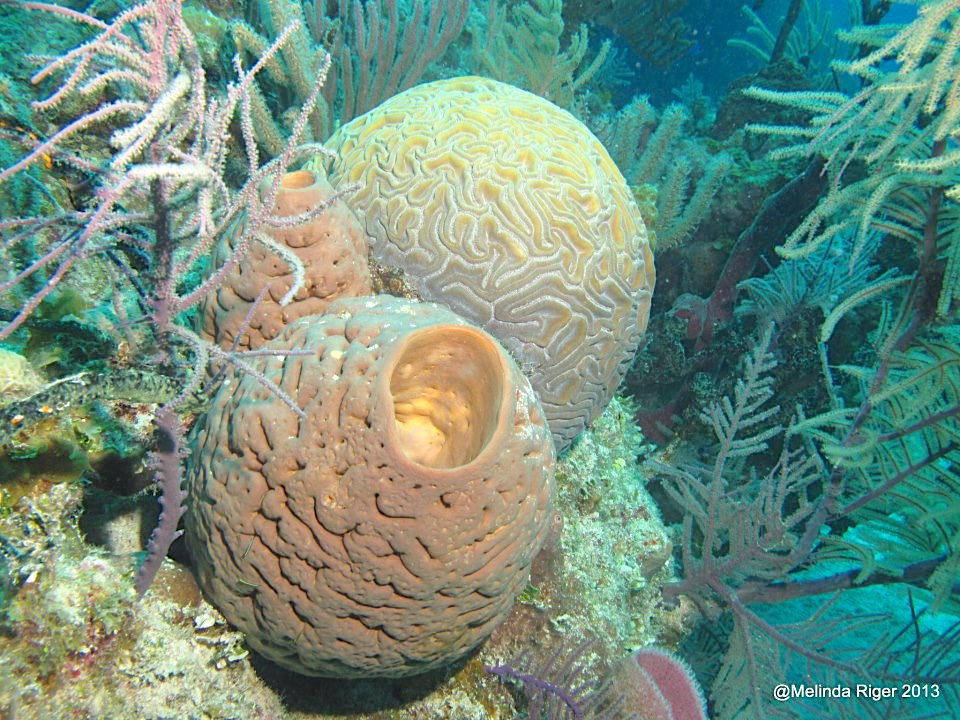
Vase Spongesvase-sponge- pink-melinda-riger-gb-scubavase-sponge-melinda-riger-g-b-scuba

sponges-and-coral-on-the-reef

Spawning Brown Encrusting Spongebrown-encrusting-sponge-spawning-melinda-riger-g-b-scuba

All photos: Melinda Riger, Grand Bahama Scuba

Unknown's avatar

CHRISTMAS TREE WORMS: FABULOUSLY FESTIVE


christmas-tree-worms-adam-rees-scuba-works-copy

CHRISTMAS TREE WORMS: FABULOUSLY FESTIVE

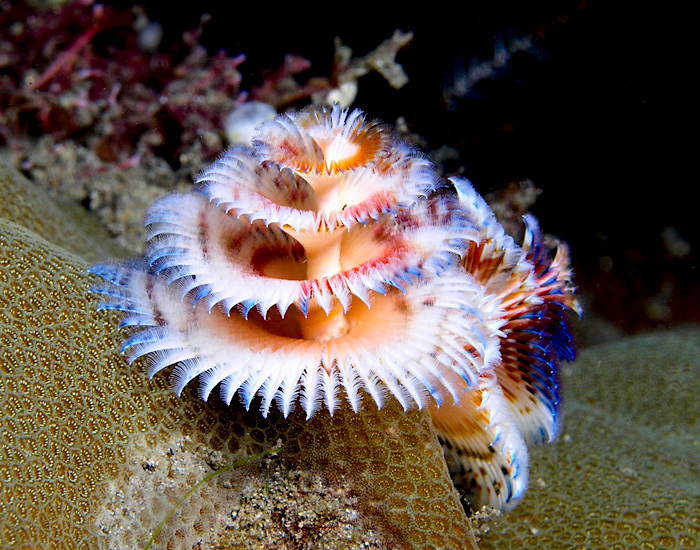
music-notes-clip-art-png-music“Deck the Reefs with Worms Like Christmas Trees… Fal-La-La-etc-etc ” is a traditional Carol familiar to all. Well, most. Ok, some, then. Oh right – maybe with different words. Anyway, now is as good time as any to take a look at these remarkable plants creatures and subsurface symbols of good cheer.

christmas-tree-worm-melinda-riger-g-b-scuba

10 CHRISTMAS TREE WORM FACTS TO PONDER

  • The 2 colourful spirals are not the worm, but complex structures for feeding & respiration
  • The spirals act as specialised mouth extensions for ‘filter-feeding’
  • Prey is trapped by the feathery tentacles & guided by cilia (microscopic hairs) to the mouth
  • The tentacle things are radioles and act as gills for breathing as well as prey traps
  • It is not believed that prey slide down the spiral to their doom, like on a helter-skelter

christmas-tree-worms-melinda-riger-g-b-scuba

  • The actual worm lives in a sort of segmented tube, with extremely limited mobility skills
  • It contains digestive, circulatory & nervous systems – and a brain in the middle of it all
  • The worm also has a tiny drainage tube (I think I have this right) for excretion etc
  • They embed themselves into heads of coral such as brain coral. And stay there
  • And yes, the Christmas trees are retractable…

spirobranchus_giganteus_orange_christmas_tree_worm-nick-hobgood-wiki

HOW DO THE WORMS… YOU KNOW…  ER… REPRODUCE?

This is a delicate area. They don’t tend to talk about it much, but as far as I can make out they eject gametes from their what-I-said-above. There are mummy and daddy CTWs, and their respective gametes (eggs and spermatozoa) drift in the current and presumably into each other to complete the union. The fertilised eggs develop into larvae, which settle onto coral and burrow into it, build their protective tubes and the process begins again.

christmas_tree_worm-nick-hobgood-wiki

LOOK, YOU DON’T REALLY UNDERSTAND THESE CREATURES, DO YOU?

I won’t lie. I found it hard to work out how the CTWs function in practice. There are plenty of resources showing them in their full glory, but that only takes one so far. Then I came across a short video that shows it all brilliantly simply (except for the reproduction part). So maybe I should have just posted this first and saved you (and me) some trouble…

The worm, invisible in its coral burrow, hoists its pair of trees. You can easily see small particles – possibly zooplankton – drifting in the water, and the radioles swaying to catch potential food. Bingo. It all makes sense! Next: the New Year Worm

Credits: Melinda Riger (G B Scuba); Adam Rees (Scuba Works); Nick Hobgood; Betty Wills; Absolutely Wild Visuals; MarineBio; Wikibits & Magpie Pickings

blue_christmas_tree_worm-betty-wills-wiki

Unknown's avatar

SILVERSIDES: BAHAMAS REEF FISH (32)


silversides-school-melinda-riger-g-b-scuba

SILVERSIDES: BAHAMAS REEF FISH (32)

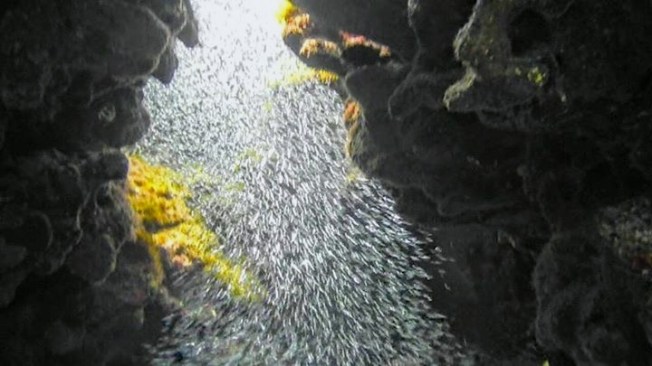
I have no idea if there is a collective noun for a large group of silversides. ‘Frenzy’ would cover it, but that is reminiscent of ‘feeding freezing’ which has a specialist meaning – and anyway, silversides are crazy even when they aren’t feeding. 24/7/12/365 as far as I can make out. I think ‘a panic of silversides’ might be the answer. They are just… all over the place at high speed. Sometimes swirling around pointlessly, other times moving in unison and suddenly all changing direction simultaneously, like a single creature made of tiny shards of silver.

silversides-school-melinda-riger-g-b-scuba-copyfish-frenzy-melinda-riger-gbs

There are quite a few silverside species around the world. The ones in the Bahamas are Atlantic silversides (Menidia menidia), also known in the north east of the United States as ‘spearing’. They seem to exist for two purposes. The main one is to be breakfast, lunch or dinner for larger fish, sea birds and shore birds. The other is for their usefulness in scientific research because of their sensitivity to environmental changes. 

silversides-melinda-riger-g-b-scuba-copy-2silversides-school-melinda-riger-gb-scuba

In one sense they are easy prey for predators. A determined fish will always manage a snack by swimming into the middle of a panic and (probably) simply by opening its mouth wide. On the other hand, their sheer numbers coupled with the speed and randomness of movement mean that a single may find a degree of safety in numbers. It’s hard for a predator to target any individual fish in the general melee and confusion. Silversides also favour seagrass beds, which give some shelter and protection – and a reasonably safe place to spawn. Or, as some of these photos show, they will hang around wrecks or squeeze into rocky spaces in the reef.

silversides-melinda-riger-g-b-scuba-copysilversides-melinda-riger-g-b-scuba

A panic of silversides apparently pouring like a waterfall down through a gap in the reefsilversides-waterfall-abaco-kay-politano

WHAT DOES A STATIONARY ATLANTIC SILVERSIDE LOOK LIKE?

meber_u0

Some time ago we used to go to the reef at Fowl Cay Marine Preserve with Kay Politano, and I would snorkel with a small and very basic lo-res underwater camera. I was hampered by being a disgracefully feeble swimmer; by not having snorkelled for a length of time calculable in decades; and by being a complete novice at underwater photography.  Despite these not inconsiderable disadvantages I managed to cobble together a few short movies on my computer (I was new to that too). Here’s one that nearly works, in that it gives an idea of what happens if you ‘swim with silversides’. I know you scuba guys all swim with sharks, but cut me some slack here please…

Photo Credits: Main photos Melinda Riger of Grand Bahama Scuba; Silverside Waterfall by Kay Politano; motionless silversides by FISHBASE.ORGMusic: Goldon Giltrap, ‘Fast Approaching’

Unknown's avatar

HOGFISH: BAHAMAS REEF FISH (31)


Hogfish at cleaning station ©Melinda Riger @GB Scuba

HOGFISH: BAHAMAS REEF FISH (31)

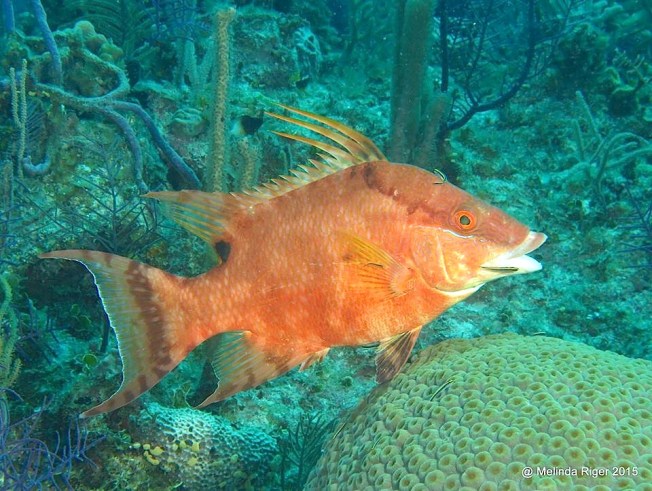
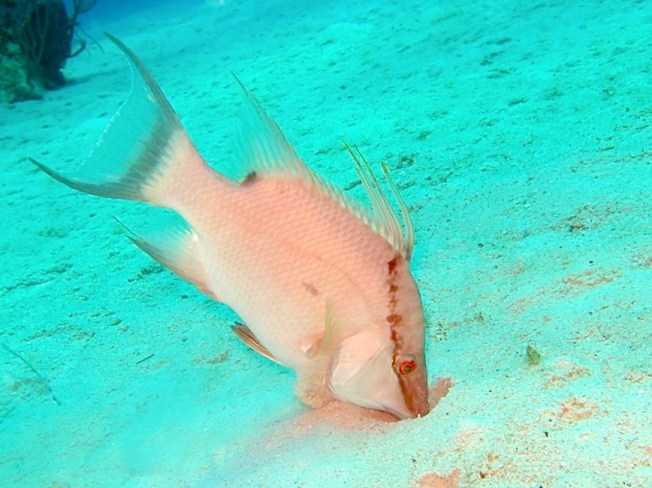
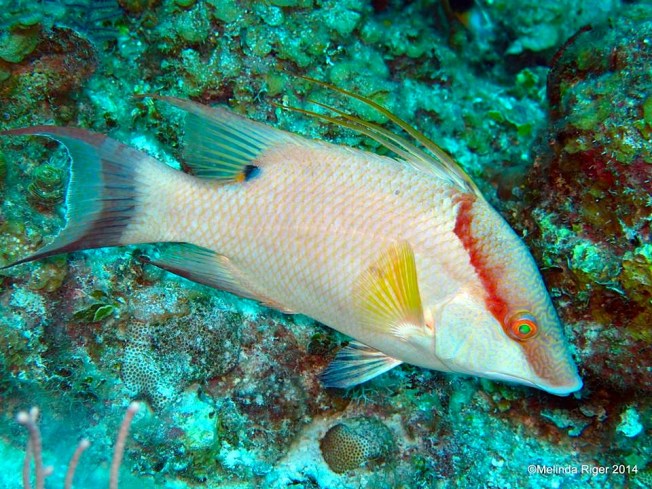
Hogfish. Fisherman’s delight… getting ‘high on the hog’. This wrasse species Lachnolaimus maximus is a reef denizen, especially where gorgonians are found. It has the distinction of being the only known member of its genus, and because it is IUCN listed as vulnerable, there are strict regulations governing bag, size, and gear limits to protect the species from overfishing.

Hogfish ©Melinda Riger @ G B Scuba

The hogfish gets its name from its long ‘pig-like’ snout, coupled with its rootling behaviour on the sea floor for crustacean prey.

Hogfish ©Melinda Riger @ GB Scuba copy ed Hogfish foraging ©Melinda Riger @ GB Scuba

GENDER STUDIES: IT’S COMPLICATED

The hogfish is a sequential hermaphrodite, meaning it changes sex during different life stages. Juvenile hogfish are female, but mature into males at around 3 years old.

Hogfish ©Melinda Riger @ G B ScubaHogfish ©Melinda Riger @ G B Scuba copy

Hogfish social groups are organized into harems, where one male will protect a group of females in his territory and mate with them.

Hogfish ©Melinda Riger @ GB Scuba Hogfish with isopods ©Melinda Riger @ GB Scuba

CAUTIONARY NOTE Capt. Rick, a loyal follower, has made another of his pertinent comments: “A bit of caution is necessary here! There is some history in the Bahamas of mild to severe Ciguatera poisoning from Hogs. Our M.O. was to only eat Hogs no larger than 5 or 6 lbs. Temporary or permanent blindness, paralysis, and even death is possible with bigger Hogs”. Ciguatera is also a problem with, for example, ‘cuda on Abaco. Those caught on the Marls (west) side are ok to eat; those from the east side have to be treated with circumspection…

Hogfish (with isopod above eye) ©Melinda Riger @ GB Scuba

Credits: all fantastic fish fotos – Melinda Riger at Grand Bahama Scuba

Unknown's avatar

SPONGES ON THE REEF: A COLOURFUL MISCELLANY


Brown Tube Sponge ©Melinda Riger @ G B Scuba

SPONGES ON THE REEF: A COLOURFUL MISCELLANY

It’s time to take an up-close look at some of the sponges you may find as you snorkel or scuba round the reefs of the Bahamas. I am always amazed by how bright and colourful they are, and by their many different shapes and sizes. Even the unpromising sounding (slightly medical, even?) BROWN TUBE SPONGE turns out to be fascinating to examine closely. Here are some more sponge species. 

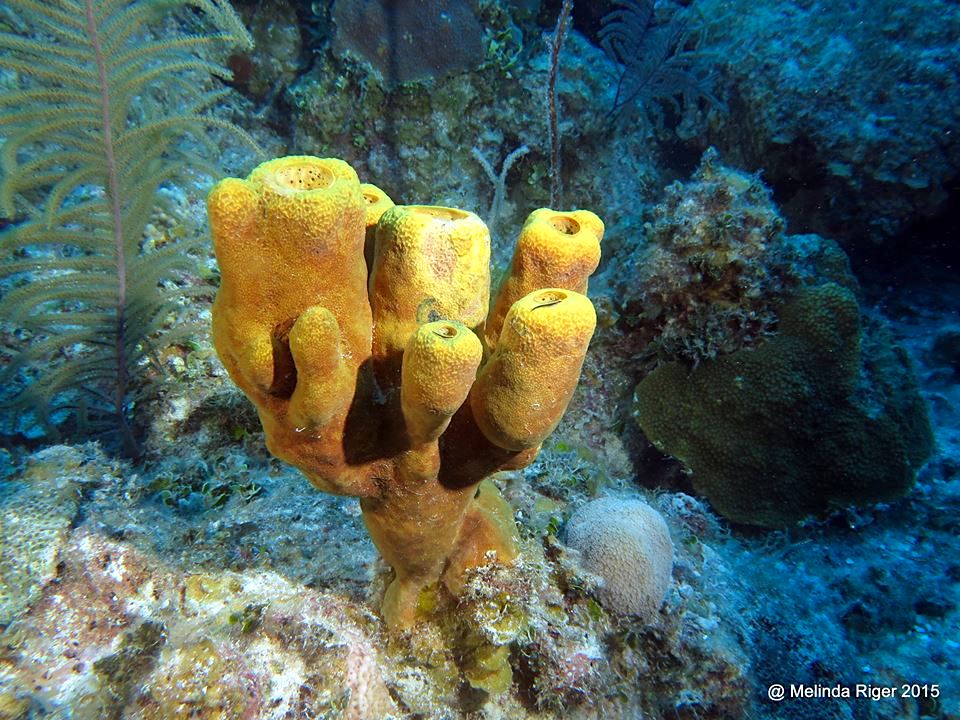
CANDELABRA SPONGECandelabra Sponge ©Melinda Riger @ G B Scuba copy

STOVE PIPE SPONGEStove Pipe Sponge ©Melinda Riger @ G B Scuba

PURPLE VASE SPONGEVase Sponge, purple ©Melinda Riger @ G B Scuba

BRANCHING TUBE SPONGE WITH ROPE SPONGESponges - Branching Tube Sponge with rope sponge ©Melinda Riger @ GB Scuba

PURPLE TUBE SPONGEPurple Tube Sponge ©Melinda Riger @ GB Scuba

PURPLE SPONGE WITH GIANT ANEMONEPurple Sponge : Giant Anemone ©Melinda Riger @ G B Scuba

VASE SPONGEVase Sponge ©Melinda Riger @ G B Scuba

The above sponges represent a fraction of the sponge varieties found on Bahamas reefs. I’ll post some more quite soon. All this has made me want to go for a snorkel. But right now I am 30 miles from the sea. And I have no gear…

HANG ON A MOMENT! WHAT IS A SPONGE WHEN IT’S AT HOME?

It’s really very simple: if you are ever asked the question, just reply “a sponge is a primitive sedentary aquatic invertebrate with a soft porous body that is typically supported by a framework of fibres or calcareous or glassy spicules. Sponges draw in a current of water to extract nutrients and oxygen”.

AND WHAT, PRAY, IS A SPICULE?

You’re having a laugh… if you seriously want to know, read the abbreviated version about them HERE. And admire this microscopic collage of ‘demospongiae spicule diversity’ made available by the wonders of Wiki and the research of about 20 credited scientists.

Demospongiae_spicule_diversity

All photos: Melinda Riger, Grand Bahama Scuba. Tip of the hat to Wiki and scientists

Unknown's avatar

WHALE-WATCHING: THE APPLIANCE OF SCIENCE


Blainville's Beaked Whale, Sandy Point, Abaco 14 (Keith Salvesen

WHALE-WATCHING: THE APPLIANCE OF SCIENCE

The Bahamas Marine Mammal Research Organisation has just celebrated its 25th year of existence. It was formed in 1991. The omnivorous leviathan Amazonus giganticus emerged in 1994 and the invasive species Megacorpus googleii not until 1998. A full 10 years later the first garbled recordings of Sarahpalinus illogicus were made. And all the while, a watchful eye was being kept on the cetaceans of the Bahamas – researching, counting, measuring, identifying, recording, poop-scooping, analysing samples, tagging, comparing, protecting and conserving. 

Blainville's Beaked Whale, Sandy Point, Abaco 20 (Keith Salvesen

As the years passed, so the science and technology evolved and became more sophisticated. Researching became at the same time easier, yet more complex as the organisation’s remit expanded to accommodate the vast increase in data collection now made possible by refined techniques. Here are two very recent examples – 25th anniversary projects, in fact – with thanks to Charlotte, Diane, their team and their colleagues in linked organisations.

TAGGING BLAINVILLE’S BEAKED WHALES

Last month, a tagging project started, involving suction cups being attached to the backs of BLAINVILLE’S BEAKED WHALES. The purpose of the research is to compare the foraging efficiency of the whales in Abaco waters with those of Andros, the second part of the project. I imagine this will provide valuable insights into the whale movements and behaviours in each location as well as such issues as the comparative availability of the food supply, and other factors that may affect expected foraging patterns. 

The tag is moved towards an adult male. Note the aerial (antenna?) at the back of itTagging a Blainville's beaked whale with a suction cup 1

Planting the tag on the whale’s backTagging a Blainville's beaked whale with a suction cup 2

Successful suction!Tagging a Blainville's beaked whale with a suction cup 3

The tag in placeTagging a Blainville's beaked whale with a suction cup 4

The tag is tracked for 18 hours, after which it is retrieved and the recordings can then be analysed back at BMMRO HQ in Sandy Point. So far, an adult male, a young male and two adult females have been tagged. Each female had a calf, but these were not tagged.

Female beaked whale with her calfBlainville's beaked whale female and calf

AERIAL PHOTOGRAMMETRY USING A HEXACOPTER

Drone technology is rapidly expanding as new uses for them are devised. BMMRO in conjunction with NOAA have used a sophisticated HEXACOPTER to take the first  PHOTOGRAMMETRY images of Blainville’s beaked whales. These aerial photographs were taken from approximately 100ft altitude. But note: not just anyone with a $50 drone can do this: the project required flight clearance from the Bahamas Department of Civil Aviation and a permit for research on marine mammals granted by the Bahamas Department of Marine Resources.

 Blainville’s beaked whale photogrammetry image – adult male (note ‘erupted’ teeth) Blainville's beaked whale photogrammetry image - adult male (note 'erupted' teeth) BMMRO

 Blainville’s beaked whale photogrammetry image – female and calf Blainville's beaked whale photogrammetry image - female and calf BMMRO

STOP PRESS Two additional images from the latest batch Blainville's beaked whales photogrammetry image - BMMRO  Blainville's beaked whales photogrammetry image - BMMRO

Photogrammetry: the science of making measurements from photographs. Applications include satellite tracking of the relative positioning and alterations in all Earth environments (e.g. tectonic motions etc), research on the swimming of fish, of bird or insect flight, and other relative motion processes. The results are used to guide and match the results of computational models of the natural systems. They help to invalidate or confirm new theories, to design novel vehicles or new methods for predicting or/and controlling the consequences of earthquakes, tsunamis etc, or to understand the flow of fluids next to solid structures, and many other processes. (Wiki-précis)

Hexacopter (6 rotors)Hexacopter_Multicopter_DJI-S800_on-air_credit_Alexander_Glinz

Tag Team: BMMRO, University of St Andrews (Scotland), Woods Hole Oceanographic Institution

Hexacopter: BMMRO, NOAA

Photo Credits: top two, moi (from BMMRO research vessel); remainder except for last, BMMRO; last, Wiki

Unknown's avatar

WORLD OCEANS DAY 2016: “STASH THE TRASH”


View from a Skiff, the Marls, Abaco, Bahamas

WORLD OCEANS DAY 2016: “STASH THE TRASH”

Today the NOAA and other worldwide ocean guardian organisations are celebrating World Oceans Day. Looking at the websites and FB pages, one message is clear: People Are Rubbish. To put it another way, the global pollution of the oceans is caused solely by humans. The pristine seas and beaches of the world were unsullied until, say, the last 200 years. In 4 or 5 generations, all that has changed irreversibly.

Leave only Footprints - Delphi Beach, Abaco

My rather (= very) negative intro is counterbalanced by some more positive news: there are plenty of good guys out there working hard to make a difference to the rising tide of filth polluting the oceans. Clearing seas and beaches of plastic and other debris. Collecting tons and tons of abandoned fishing gear. Rescuing creatures trapped, entangled, injured and engulfed by marine debris and pollutants. Educating adults and – far more importantly – children and young people by actively involving them in their campaigns. Conducting research programmes. Lobbying and protesting. And a lot more besides.

A marine garbage patch: the sea creatures’ view (NOAA)Marine Garbage Patch from below (NOAA)

Abandoned fishing gear: a monk seal that was lucky; and a turtle that wasn’t (NOAA)Monk Seal in discarded fishing nets (NOAA)Sea turtle trapped in abandoned fishing gear (NOAA)

Four shearwaters killed by a cone trap. A fifth was rescued (NOAA)13138799_1188762361142231_1433873125345242619_n

The NOAA and sister organisations carry out massive programmes of clearance of marine debris, with working parties of volunteers who do what they can to deal with an intractable problem.Clearing Beach Debris (NOAA) Clearing Beach Debris (NOAA)

But you don’t need to be on an official working party for a large organisation. In the Bahamas and on Abaco, the BAHAMAS PLASTIC MOVEMENT, FRIENDS OF THE ENVIRONMENT  and BAHAMAS NATIONAL TRUST among others, do wonderful work on a more local level.
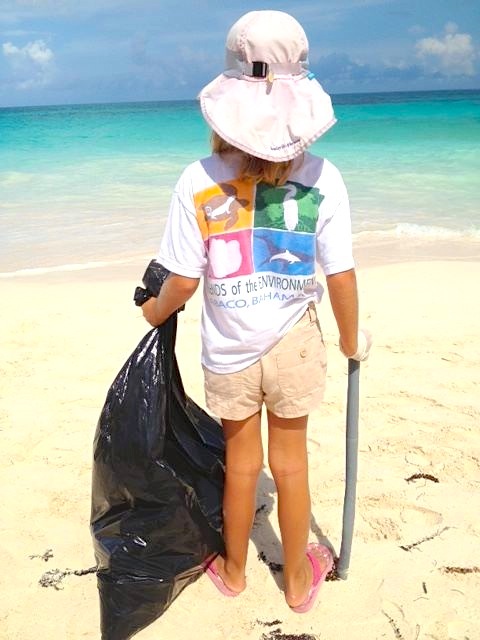
Childen collecting beach debris, Abaco (FotE)

HOPE  FOR  THE  FUTUREYoung conservationist on Abaco, Bahamas

Elsewhere, some tackle the problems caused by particular types of trash, balloons being an excellent example. I have posted before about BALLOONS BLOW, the brainchild of two sisters who learnt of the serious consequences to wildlife caused by mass balloon releases. Their work has been so effective that increasing numbers of mass releases are being cancelled in favour of other forms of celebration. A minus for balloon-makers of course, but a big plus for wildlife. The BB sisters also keep their own beach clear of the junk brought in on every tide.

Balloons Blow - Beach Debris (http://balloonsblow.org) Balloons Blow - Beach Debris (http://balloonsblow.org)

And on an individual basis, any old fool can make a tiny difference to a local beach. Here is one such doing just that…

A tangle of balloon strings on Delphi beachBalloon Strings, Delphi Beach (RH)

Guinea Schooner Bay: little visited, rarely cleaned. Plastic crap from a 10 foot radiusRH & trash, Guinea Schooner Bay

Credits: NOAA, FOTE Abaco, BPM, Balloons Blow, RH, Mrs RH

Unknown's avatar

“TEACH YOUR CHILDREN WELL”: WHERE CONSERVATION BEGINS


Young conservationist on Abaco, Bahamas

“TEACH YOUR CHILDREN WELL”: WHERE CONSERVATION BEGINS

“Catch ’em young”. The perfect plan with children. On Abaco, wonderful work is continually being done with young children on the mainland and on each cay to teach them how precious their environment is, how fragile, and how important it is to take good care of it. The huge enthusiasm of the youngsters casts a beam of light onto the rather dark global picture of habitat destruction, pollution and ecological neglect that we have become depressingly accustomed too.

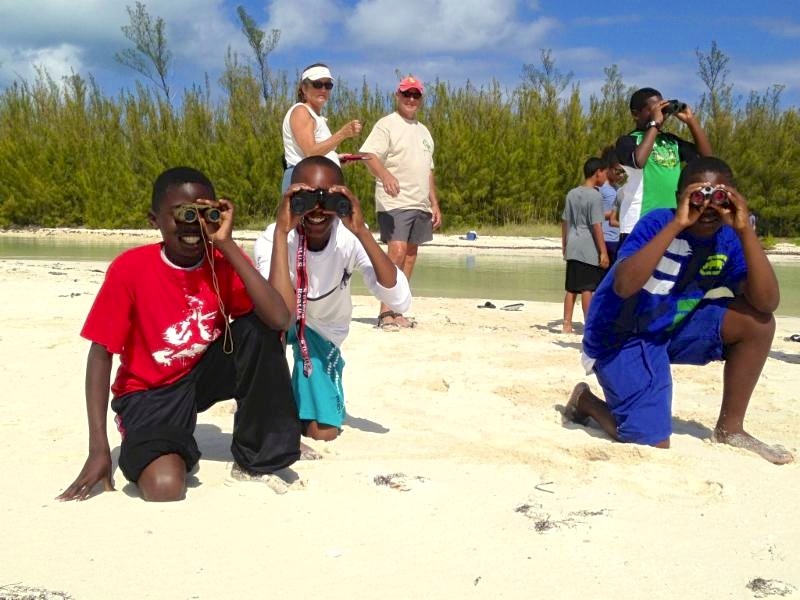
Young conservationists on Abaco

Education and training is carried out in schools; field work is done involving children of all ages; and camps are organised. FRIENDS OF THE ENVIRONMENT carries out this invaluable and rewarding task on an almost daily basis, offering students an astounding range of environment-based activities. Even the very youngest are catered for: the “Sea Beans Club”  is an after-school club for ages 3-5, which introduces young minds to their environment through educational activities and outdoor play.

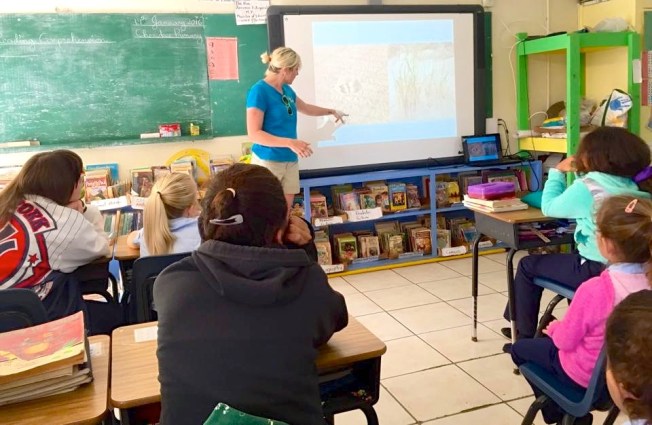
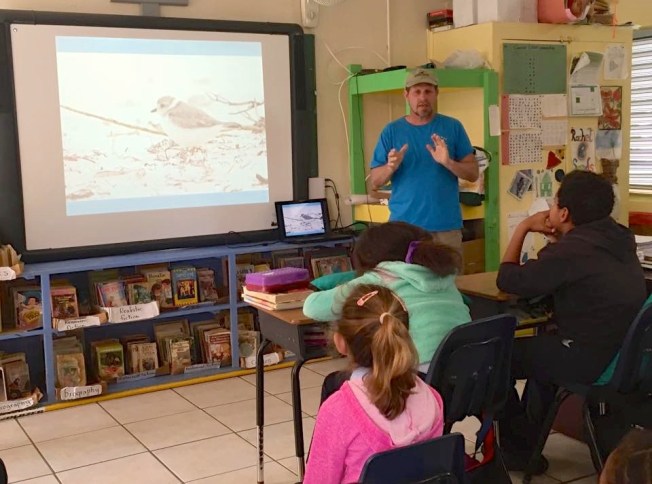
Students and researchers from CWFNJ survey the beach to make sure that their activities will not disturb any plovers feeding in the areaYoung conservationists on Abaco

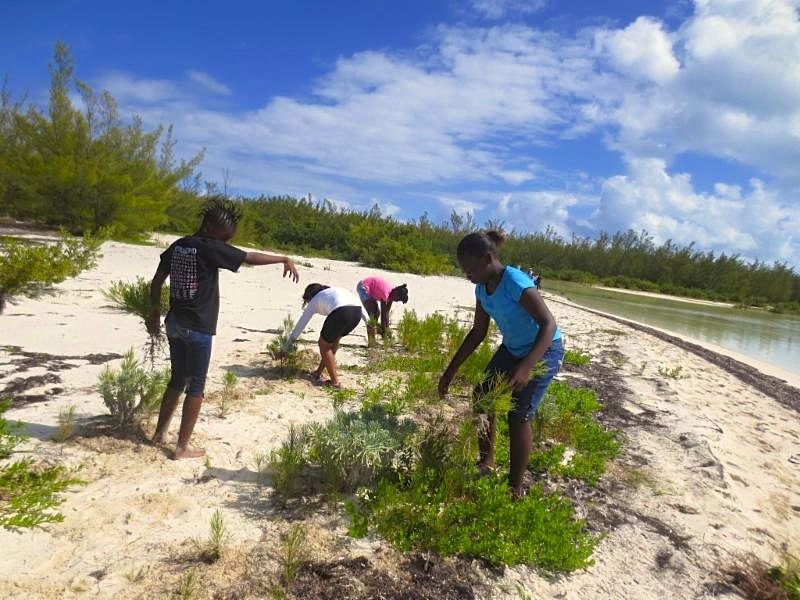
Students and volunteers selectively remove small invasive Casuarinas, which were encroaching on plover roosting habitat. By removing the invasive plants, native plants will be able to flourish and help stabilize the beach.Young conservationists on Abaco

The BAHAMAS NATIONAL TRUST, too, plays its part in educating children about the fascinating yet frail world around them. For example, Scott Johnson’s snake protection work, in which he demonstrates to small kids that Bahamas snakes are completely harmless and to be respected not feared, is a wonder to behold.

BNT’s Scott Johnson visits a school with his non-scary snakesScott Johnson - BNT - Bahamas Snakes - Children's Education

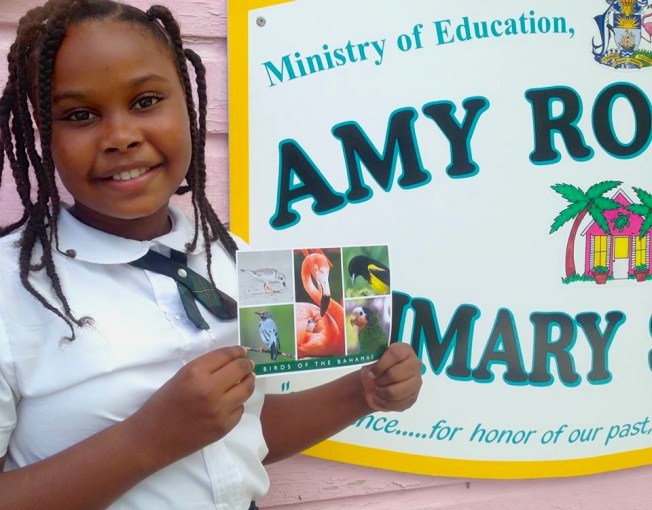
In addition there are strong partnerships with organisations many miles away from the Bahamas, of which the CONSERVE WILDLIFE FOUNDATION OF NJ is the prime example. Todd Pover, Stephanie Egger and the team take their remit beyond their well-known piping plover conservation work by engaging with the pupils of Abaco’s schools each year and inspiring them.

Amy Roberts Primary School CWFNJYoung conservationists on AbacoYoung conservationists on AbacoYoung conservationists on Abaco

Much of the work is done in the field, getting the children interested in birds, the shoreline, the vital ecological role of mangroves, and the problems of marine debris. Other important work can be done in the classroom.

Young conservationists on Abaco Young conservationists on Abaco(A quick shout-out to Tom Reed, who I know took the piping plover photo!)

The clear message being sent out to the schoolchildren on Abaco is this: you are never too young to learn how to appreciate, respect and look after your environment. And they are responding with intelligence and enthusiasm. We are lucky that these kids are the future.

IMG_7390

Stephanie Egger of CWFNJ writes: “This year, we’ve reached over 120 students through the Shorebird Sister School Network Program, both from the Bahamas and in the United States. We hope to foster a greater appreciation for wildlife, especially for the Piping Plover and its habitat, and inspire students to help now — and later on in their lives as adults — ensuring the recovery and survival of the bird for years to come”.

VOLUNTARY MUSICAL DIGRESSION

“Teach your Children” is the second track of Déja Vu, the 1970 CSNY album. Nash wrote it much earlier, when still with the Hollies, then stored it in his musical lumber room. Just as well: it fits perfectly with the rather fey hippy vibe of the rest of Déja Vu.

Young conservationist on Abaco

Credits: huge thanks for general use permission for material to FotE, BNT and CWFNJ; and to all the individual photographers concerned

Unknown's avatar

BLUE CHROMIS: BAHAMAS REEF FISH (29)


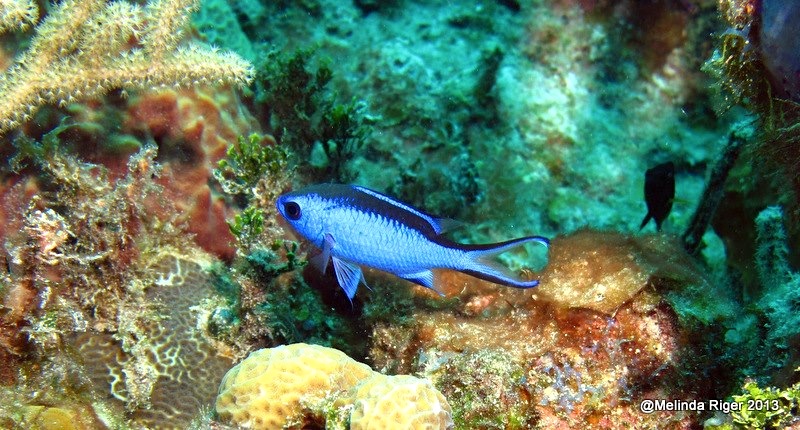
Blue Chromis & Coral ©Melinda Riger @ GB Scuba

BLUE CHROMIS: BAHAMAS REEF FISH (29)

The little blue chromis Chromis cyanea will be instantly familiar to any snorkeler or scuba diver on the coral reefs of the Bahamas. These ever-present small fish – 6 inches long at most – are remarkable for their iridescent deep blue colour that flashes as they dart in and out of the coral and anemones of the reef.

Blue Chromis ©Melinda Riger @ G B Scuba

Although at first sight  this chromis species – one of many – looks blue all over, adults have a black dorsal stripe and black edging to their fins. They make colourful additions to aquariums, though to my mind they look far more attractive nosing about the reefs foraging for the zooplankton upon which they feed (see header image for details…)

Blue Chromis ©Melinda Riger @ GB Scuba

The blue chromis was the second fish species I encountered on my first ever reef dive, at Fowl Cay Marine Preserve with Kay Politano. The first fish was the endearingly inquisitive sergeant major with its smart black and yellow stripes which came right up to my googles to eyeball me. I loved that, even though my pitiful swimming technique meant that I had plenty of other distractions, not least remembering to breathe. Air, that is, rather than water.

Blue Chromis ©Melinda Riger @ GB Scuba

Chromis_cyanea_(blue_chromis)_(San_Salvador_Island,_Bahamas)

SO JUST HOW BIG ARE THESE FISH, COMPARED, SAY, TO A BLUE TANG?

Blue Tang with blue chromis in its wakeBlue Tang with Blue Chromis © Melinda Riger @GB Scuba copy

All photos Melinda Riger of Grand Bahama Scube, except the penultimate by James St John, taken in San Salvador


Unknown's avatar

BAHAMAS MANATEES: GINA’S CALF NEEDS A NAME!


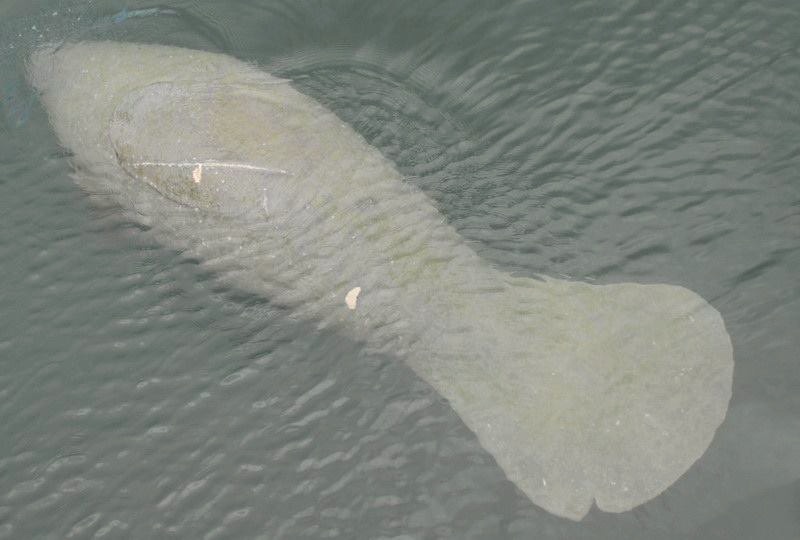
Gina the Bahamas Manatee (pregnant) Eleuthera (BMMRO)

Gina the Manatee, Eleuthera – expectant mother (BMMRO)

BAHAMAS MANATEES: GINA’S CALF NEEDS A NAME!

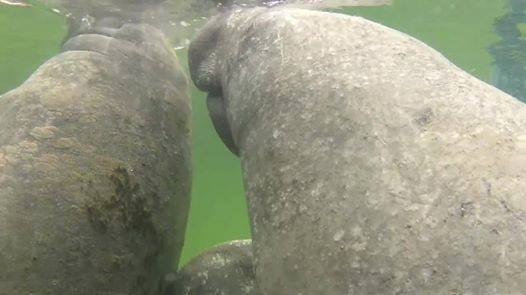
Earlier this year I posted the welcome news that Bahamas manatee Gina was beyond any doubt pregnant. You can read about it HERE. Gina has been living for some time in Eleutheran waters, under regular observation by the BMMRO. At the turn of the year, she was re-tagged in Harbour Island, Eleuthera, when her pregnancy was discovered. I promised to give an update and this is a perfect moment. Gina’s calf was safely born and is growing fast. The pair have spent a lot of time in and around Spanish Wells, Eleuthera. Recently they have begun to move further afield, and there have been several sightings with some great photos shared on FB and in particular on Felice Leanne Knowles’s terrific BAHAMAS MANATEE CLUB page, some of which are included here duly credited.

Gina the Bahamas Manatee (pregnant) Eleuthera (BMMRO)

Gina’s calf is currently just called “Gina’s calf”. Its gender is unknown, and it will take a close inspection from below to ascertain from its… I don’t have to go on with this, do I? The point being that the chosen name will need to be unisex because it may take a while until there is sufficient development of the… I don’t have to go on with this either, do I? Let’s see the nameless calf at once! Details of the competition at the end of this post…

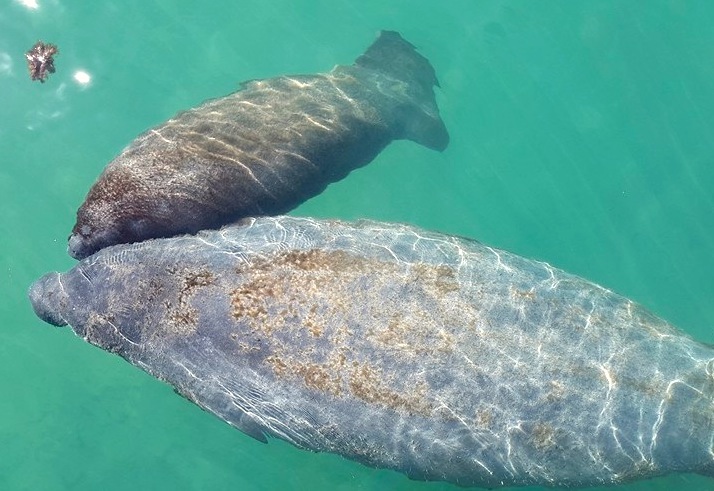
Gina with her newborn calf, July 27 (BMMRO) (note apparent prop scars on Gina)11209341_1012183408800885_310154952620912454_n

Spanish Wells, October 26 (π Junea Pinder / BMMRO) Gina the Bahamas manatee and her calf (Junea Pinder / BMMRO) Gina the Bahamas manatee and her calf (Junea Pinder / BMMRO)

Gregory Town, November 5 (Lynne Hirzel / BMMRO)12188935_10156306821645195_3509772562942760375_n 12219637_10156306821330195_1471887362053804519_n

Hatchet Bay, November 13    (π Jeffrey Louis / BMMRO)  10425501_1042928762405755_7163144254688618862_n 12108239_1042928735739091_6064773734031487371_n

November 18: Now you see it… (π Norma Roberts / BMMRO)Gina & Calf Norma Roberts 1 copy

…and now you don’t…Gina & Calf Norma Roberts 2 copy

THE COMPETITION

ATTENTION TEAM MANATEES!!! Due to a consistent influx of sighting information and photos, we would like to add Gina’s calf to our catalogue. It would be nice for it to have a NAME!! We cannot monitor these manatees without your help and it is only fitting that  YOU name the manatee. The deadline for name suggestions is November 29th, 2015 and the winning name will be revealed on November 30th, 2015. The member with the winning name suggestion will receive an official manatee club T-Shirt!!

RULES

1. The name must be submitted on the Club Page Bahamas Manatee Club as an individual post – DO NOT comment your suggestion.
2. The name must be unisex – we do not know the sex of the calf yet.
3. A meaning or description must be submitted along with the name.
4. Please do not submit any derogatory or explicit “names.”
5. If you are submitting on behalf of a child who is not on Facebook, please add their name to the post as well.

Spread the word! Tell your friends and families to join the club and help us with a name!! The name will be selected on it’s meaning or description as it relates to marine mammals OR The Bahamas. The amount of “likes” per post will also go into consideration during the selection process.

Regretful Note: I made the stupid mistake of being amongst the very first to post my suggestion, meaning that after a day or two I’d get no likes at all, as more people got involved and my offering sank slowly. But there’ve been plenty of much better ones since, so probably just as well!

Bahamas Marine Mammal Research Organization

Bahamas Manatee Club

For more information about West Indian manatees, you can visit the MANATEE PAGE. There are several links there to specific manatee stories.

Finally, here is a great manatee map that Felice has recently made, showing which of the increasing number of manatees is where at the moment. Just think, only 4 or 5 were known about four years back. Now look!

12241226_298174587019969_1571890190333376929_n

Credits: primary founts of Bahamas manatee knowledge Felice & BMMRO; Photos BMMRO, Junea Pinder, Lynne Hirzel, Jeffrey Louis, Norma Roberts

mantsw~1

Unknown's avatar

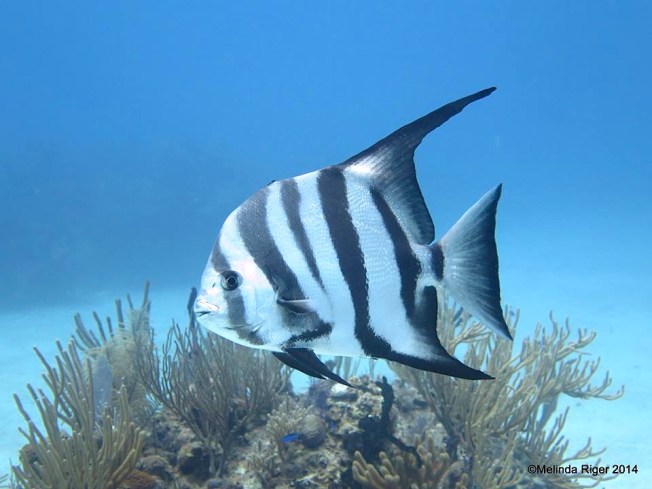
ATLANTIC SPADEFISH: BAHAMAS REEF FISH (28)


Atlantic Spadefish ©Melinda Riger @ G B Scuba copy 2

ATLANTIC SPADEFISH: BAHAMAS REEF FISH (28)

The Atlantic spadefish looks very much like an angelfish, and indeed it is called that – or ‘white angelfish’ – in some places. Actually, it has quite a collection of colloquial names of which ‘moonfish’ is the most attractive sounding. It is not a true angelfish, however, and despite appearances it has a kinship with the weird and wonderful BATFISH.

Atlantic Spadefish ©Melinda Riger @GBS

Unlike the batfish, the spadefish is demonstrably fishlike AND edible. They can grow up to 3 foot long and have become a popular gamefish for three good reasons: they are abundant; they fight hard; and they are dinner. The perfect combination.

Atlantic Spadefish ©Melinda Riger @ G B Scuba copy

All photos: Melinda Riger of Grand Bahama Scuba, with thanks

Atlantic Spadefish ©Melinda Riger @ G B Scuba

Unknown's avatar

MANGROVE DIE-BACK IN THE ABACO MARLS: THE FACTS


Mangroves, The Marls, Abaco, Bahamas (Keith Salvesen, Rolling Harbour)

MANGROVE DIE-BACK IN THE ABACO MARLS: THE FACTS

For some time now, there has been understandable concern about the increasing evidence of mangrove die-back in the Abaco Marls and elsewhere in Abaco waters. Scientific investigations are ongoing and you will find some of the survey results so far on the excellent Abaco Scientist interactive map HERE. You’ll find other relevant and authoritative mangrove material if you check out the BLOG menu of the website.
Abaco - The Marls

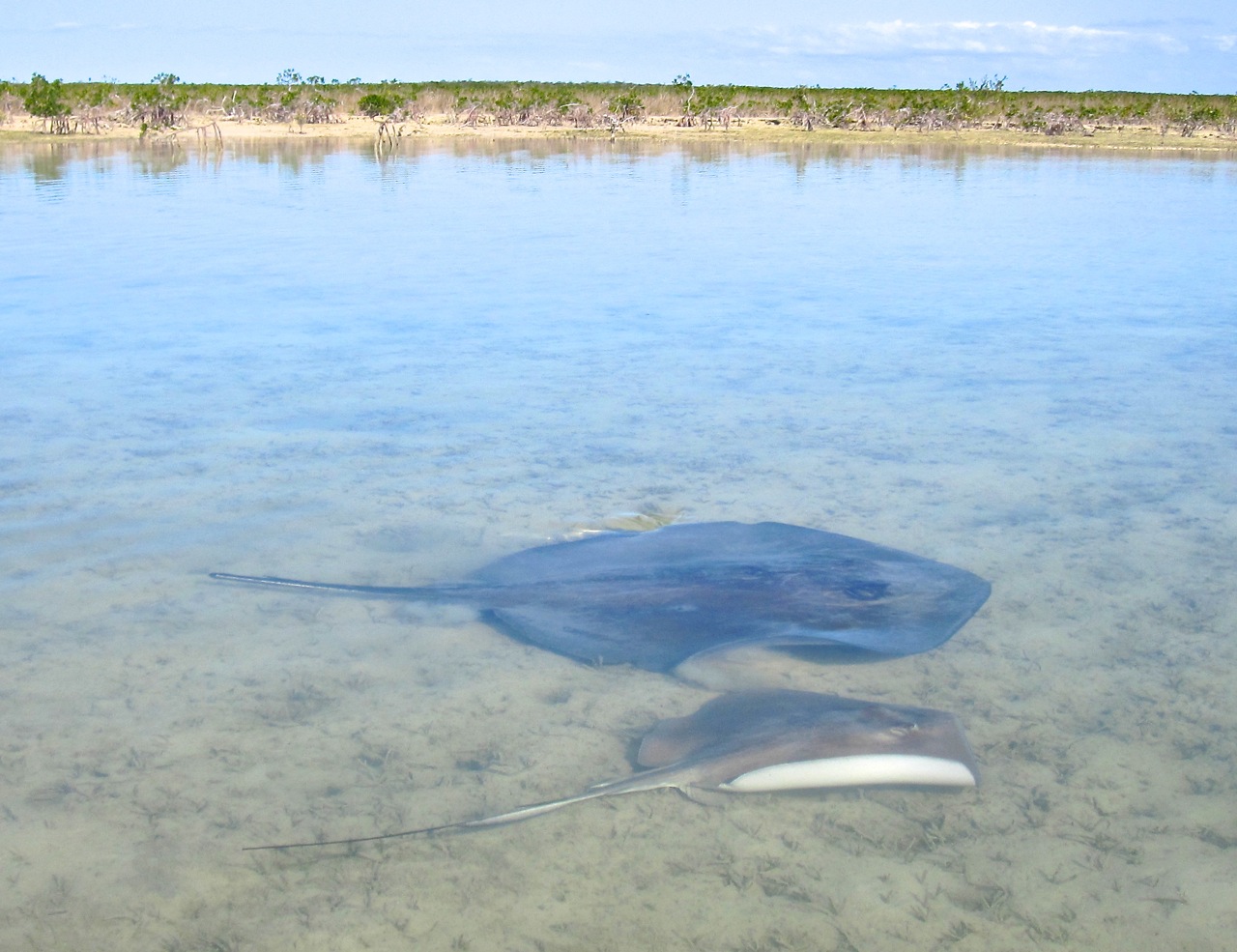
The ‘200 sq. miles’ in my map is debatable, depending what one includes. Other estimates are of 300 or even 400 sq. miles. Whichever, the Marls cover a massive area of mangroves, islets, flats, channels and wonderfully diverse wildlife. A large proportion of the many species – fish, birds, turtles etc – depend on the complex ecology of the mangroves for food, shelter and breeding. Depletion of the mangroves from whatever cause will have a direct effect on the creatures of the Marls.

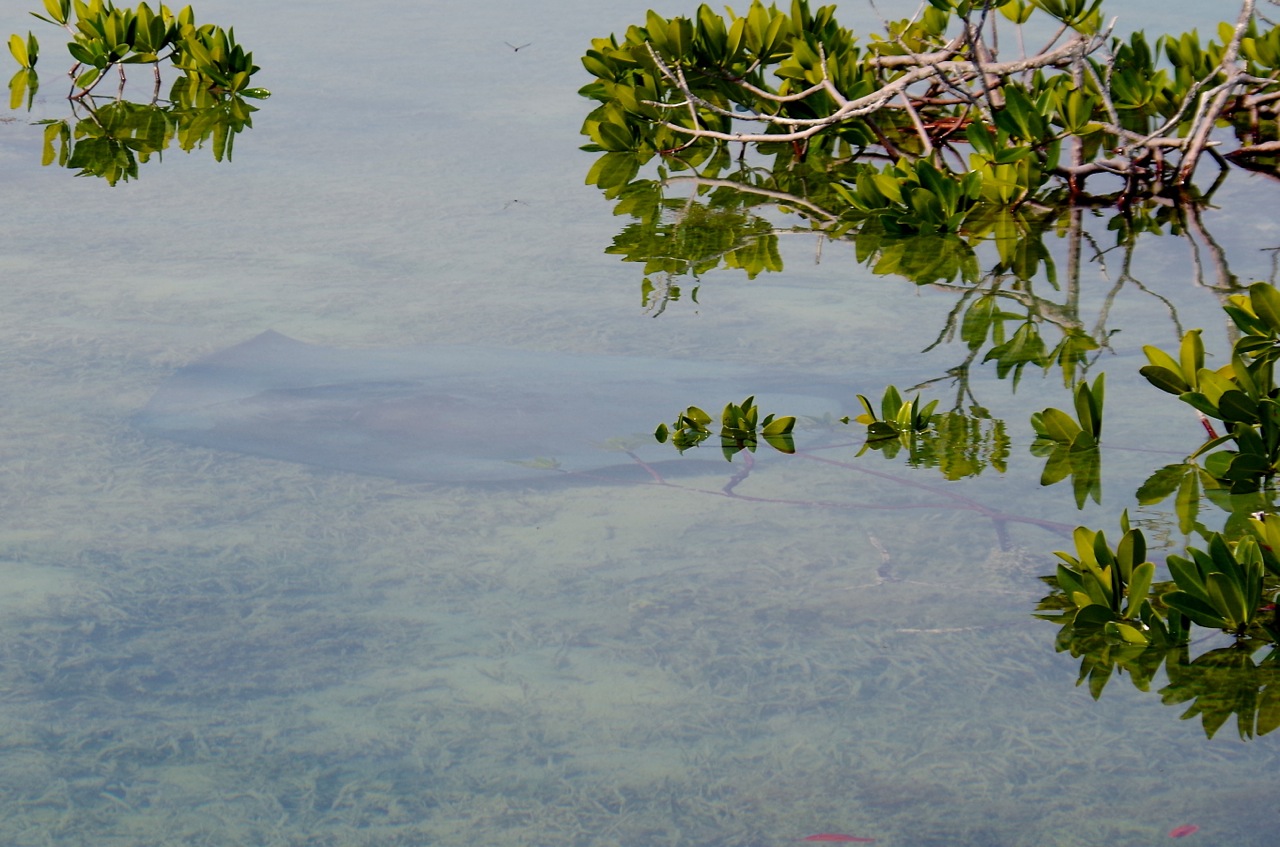
Stingrays Abaco Marls 6

Ryann Rossi, a PhD student with North Carolina State University, has been researching the worrying phenomenon of mangrove die-back in the Marls this summer. She has written an interesting and informative  account (conveniently in the RH ‘Facts about…’ style) that was published in Abaco Scientist last week. The blue links will take you to the ABSCI site for further information on each topic. I’m grateful to Ryann and ABSCI for permission to use the material.

Five Things to Know About the Mangrove Die-back in The Marls (at this point, anyway)

1. This die-back appears to be the result of multiple stressors acting together. Think of it in the sense of our own body – when our immune system is down, we are often more susceptible to getting sick. The same thing is likely happening to the mangroves.Mangrove Die-back 1 (Abaco Scientist : Ryann Rossi)

2. It appears as though a fungal disease may be taking advantage of already stressed mangroves and causing die-back. We did preliminary surveys across Abaco and found fungal lesions nearly everywhere. However, the fungus was present in different densities in different areas. In the die-back area nearly all the leaves remaining on trees have lesions. We think that this pathogen capitalized on the mangroves being weakened by other stressors such as hurricanes, which cause extensive leaf drop, change in the movement of water, change in sedimentation and erosion.

Mangrove Die-back 2 (Abaco Scientist : Ryann Rossi) jpg

3. We are still working on identifying the pathogen associated with the lesions we’ve found. We are confident that it is a fungus and are currently growing fungal cultures in the lab to examine defining morphological characteristics in addition to using DNA sequencing to identify the culprit.

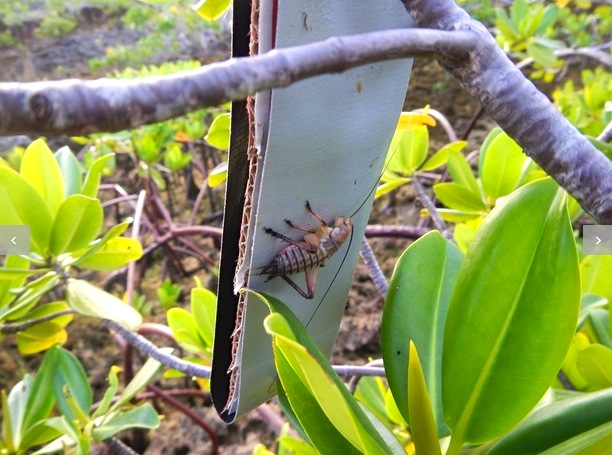
4. We have documented the presence of the Robust Bush Cricket (Tafalisca eleuthera) in the die-back areas as well as other areas with high densities of lesions. These crickets are documented to consume Red and White mangrove leaves. As such, we were concerned about their potential role in die-back. We set out a caging experiment to exclude the crickets from certain dwarf Red mangrove trees to see just how much grazing they may be doing in the die-back area. This experiment is ongoing.

Mangrove Die-back 3 (Abaco Scientist : Ryann Rossi) jpg

5. The take home: there is likely more than one causal agent of the die-back in The Marls. Many factors govern mangrove productivity and functioning: nutrient availability, salinity, sedimentation rate, herbivory, and disease are just a few of the factors that contribute to overall mangrove function making it very difficult to pin point which factors may be driving the die-off. On the bright side, we are confident that we have a lead on the causes and we are working hard in the field and laboratory to fully understand what is going on in The Marls.

By Ryann Rossi|August 26th, 2015|Disease, fungus, Insects, Mangroves and Creeks, The Marls
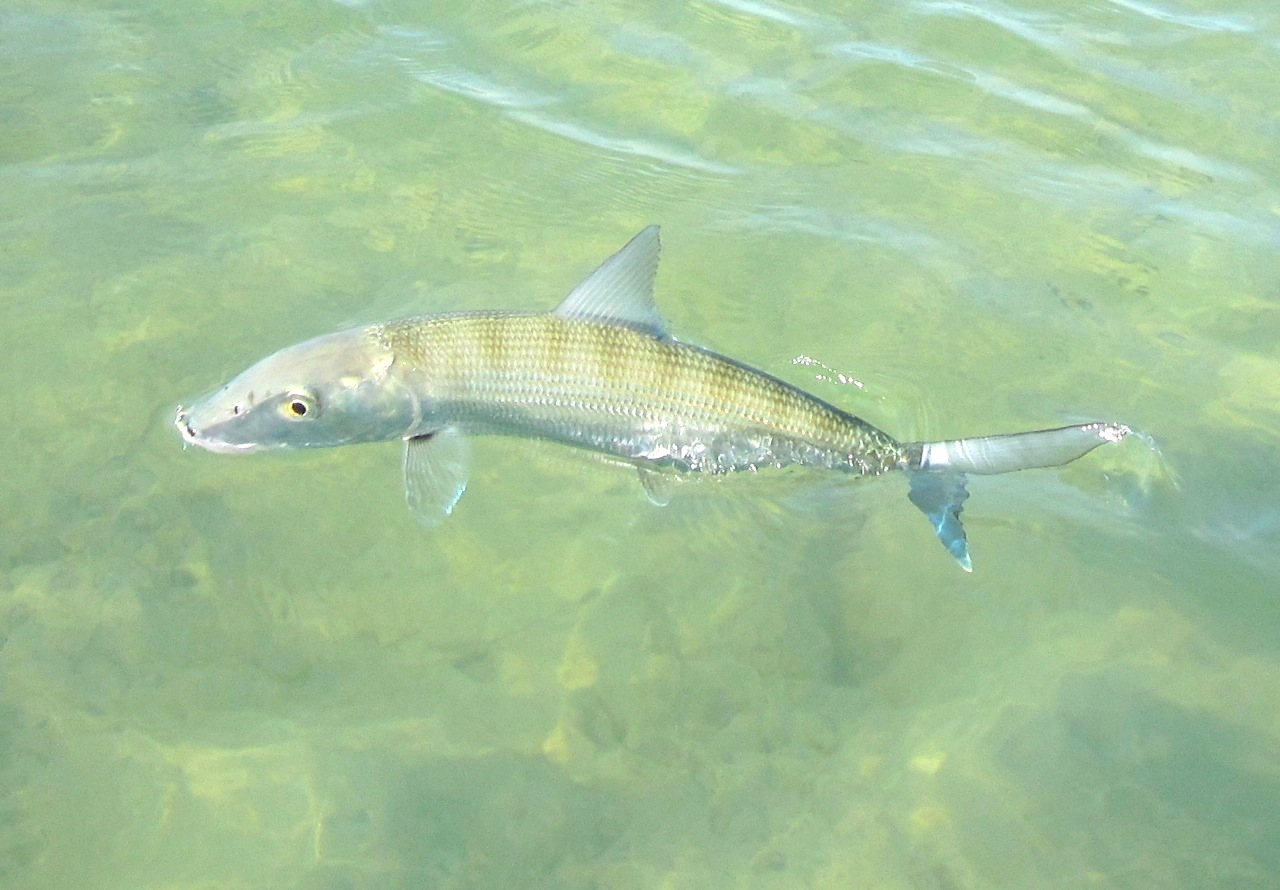
All pics below taken while fishing on the Marls except Melinda’s shark (I’ve never got a good one)
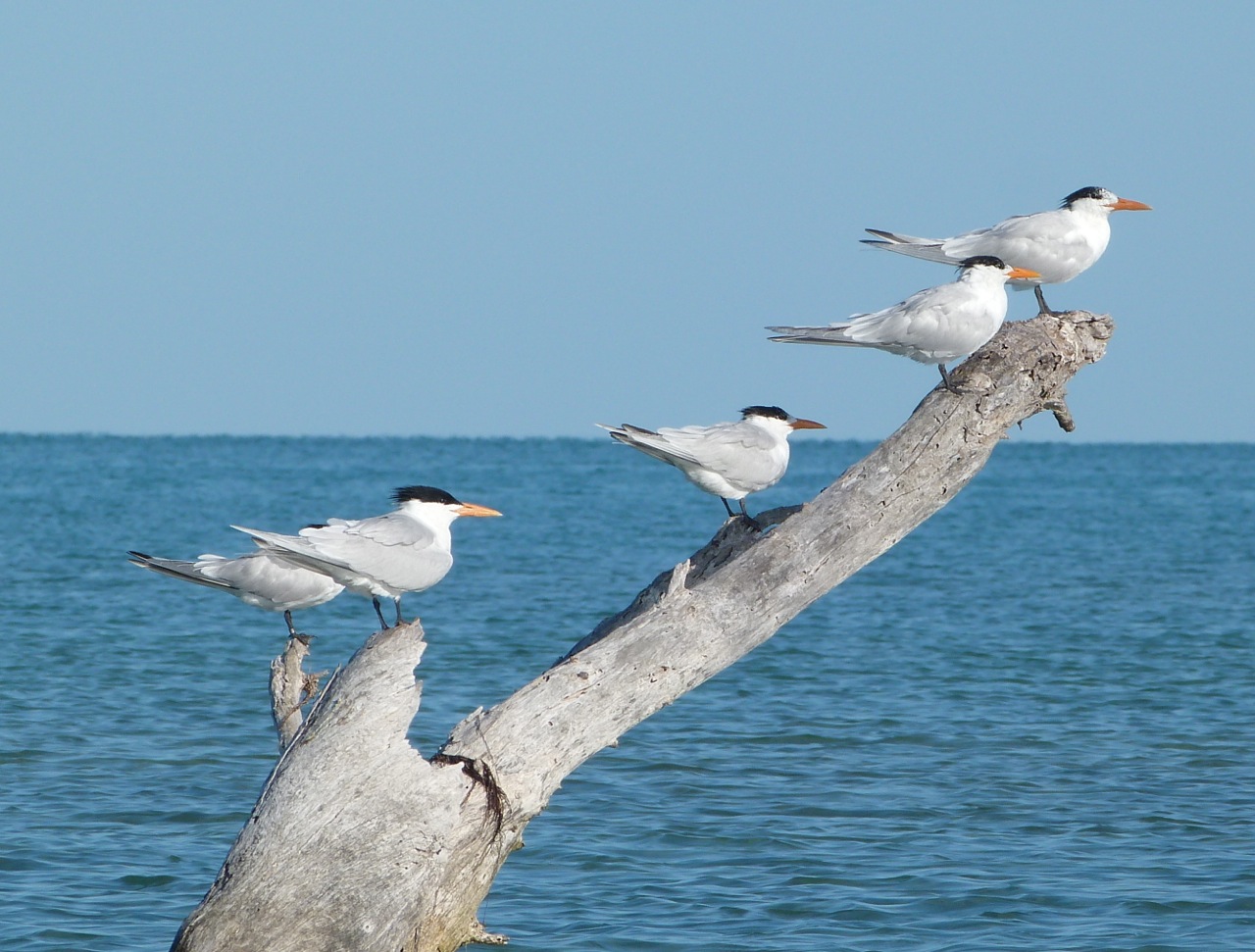
Hawksbill Turtle, Abaco Marls (Keith Salvesen)Bonefish Abaco Marls 4Shark 4 ©Melinda Riger @ G B Scuba copyOsprey - Abaco Marls 1 Reddish Egret (White Morph), Abaco MarlsRoyal Tern, Abaco, Bahamas (Marls) 3Willet, The Marls, AbacoSouthern Stingray, Abaco Marls (Keith Salvesen 4)
FRIENDS OF THE ENVIRONMENT has also included an article on die-back by Ryann in its latest Newsletter:

Mangrove Die Off on Abaco by Ryann Rossi, NCSU

This summer Stephanie Archer and I continued research efforts focused on determining the cause of the mangrove die-off in The Marls (work funded by the National Science Foundation). Our efforts were predominantly focused on the fungal pathogen we found associated with the die-off site. We created a small citizen science and outreach project to document the presence or absence of the pathogen across Abaco. This project consisted of short surveys and leaf collections. In total, 92 areas were surveyed including locations from Abaco and San Salvador. We also took this outreach project to the annual Bahamas Reef Environment Education Foundation (BREEF) teacher training conference.  There we disseminated survey packets to teachers from islands throughout The Bahamas who will help us collect more data on the presence (or absence) of this pathogen on other Islands.

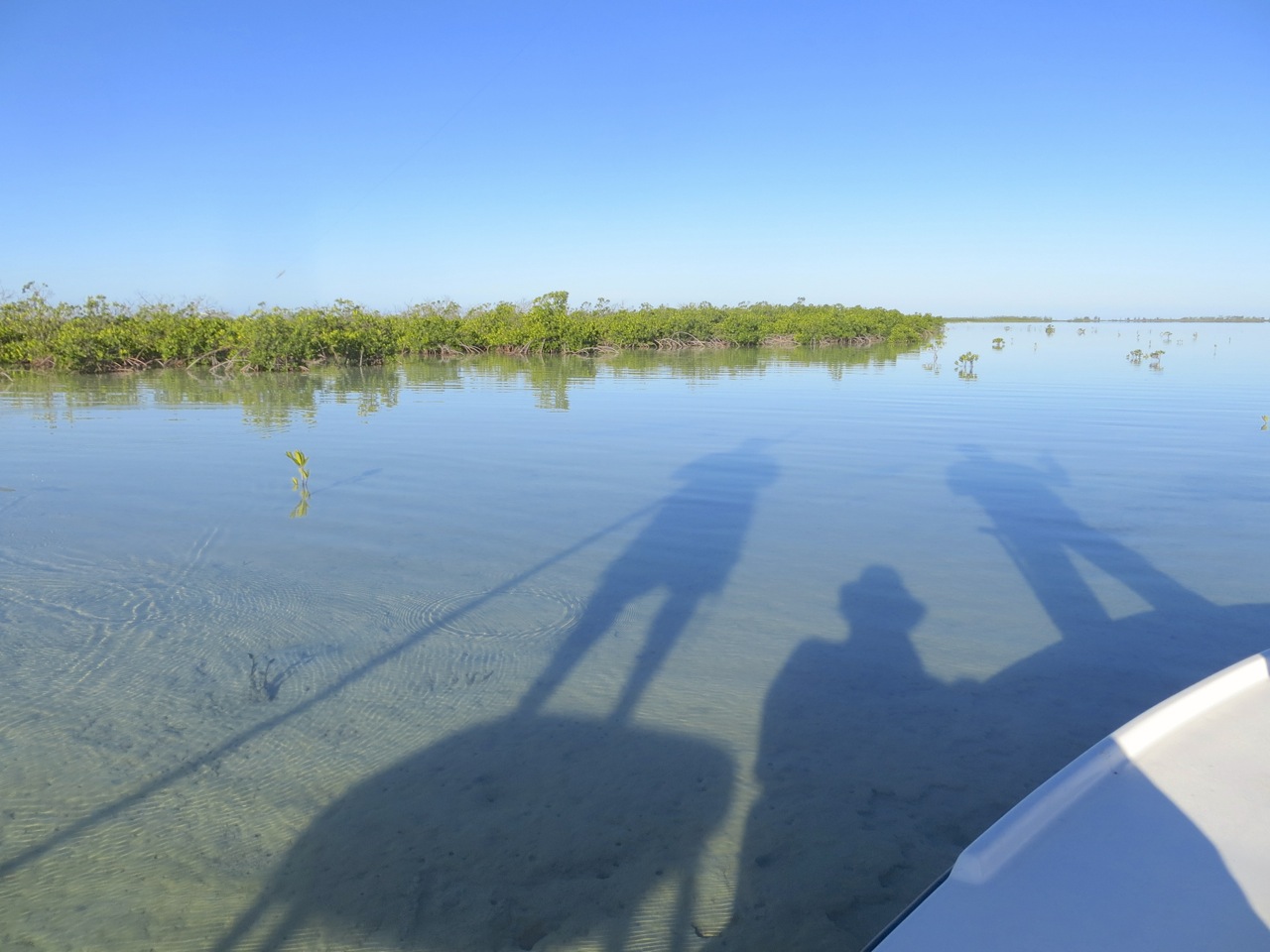
3 men on a skiff, Abaco Marls (Keith Salvesen : Rolling Harbour)

Three men on a skiff – Abaco Marls

On Abaco, we constructed an experiment to investigate the role of grazing and the presence of fungal lesions on Red mangroves. We simulated grazing using crafting scissors to cut small sections on 600 leaves in 4 different mangrove creeks. We observed the leaves for 28 days to determine if cutting leaves predisposed leaves to fungal infection. At these sites we also trapped for insects to gain an idea of what kind of grazers may be chewing on the leaves. We also did a series of disease incidence surveys that will be routinely monitored for disease progress over the next 2 years. These surveys will allow us to systematically track the progress of the disease. In addition to our field work, we spent many hours in the laboratory isolating fungi from leaves to grow in culture. These cultures were brought back to North Carolina State University and will be sequenced in order to help us identify the fungal pathogen responsible for making the lesions on the mangrove leaves.

Mangroves, Abaco Marls (Keith Salvesen)

Credits: Source material Ryann Rossi; Abaco Scientist; all photos © Keith Salvesen @ Rolling Harbour except those by Ryann / ABSCI in the main article and Melinda Riger’s cool shark

Unknown's avatar

BAHAMAS MANATEE MAGIC ON ABACO & BEYOND


Gina the Manatee & her calf (BMMRO)

Gina (adult female) and her calf – last seen August 6th, 2015 in Spanish Wells Key feature – numerous paddle cuts; white oval scar on left side of back; linear scar on posterior right side of body

BAHAMAS MANATEE MAGIC ON ABACO & BEYOND

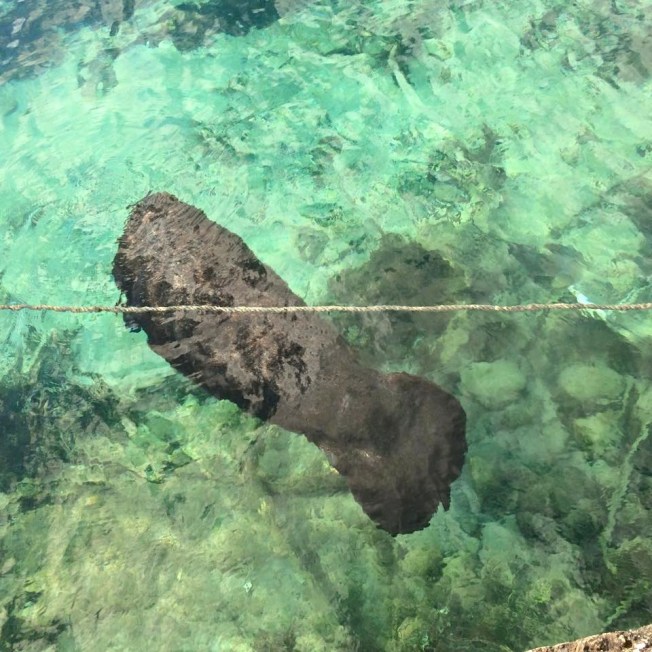
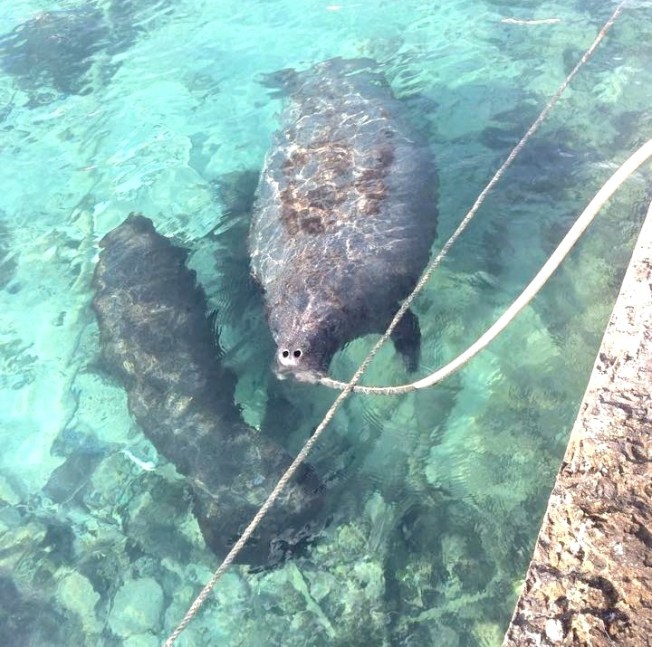
Four years ago, there were no manatees in Abaco waters. Then a couple of adventuresome sirenians made the trip over from the Berry Is. and since then, there have been at least one, sometimes two and occasionally three resident on Abaco. And for slow, gentle, animals they certainly move around, too. In the past, I wrote quite often about the manatees, charting their journeys based on satellite tracking and sightings. I reported the tantalising prospect of the young male, Randy, hooking up with young female Georgie in Cherokee Sound, only to turn back when he reached Little Harbour. You can read more about the manatees of Abaco on my manatee page HERE.

     Georgie’s epic trip (Sept 12) continued to Cherokee Sound; and Randy’s ‘pursuit’ (Sept 14)Georgie Manatee's direct route to Abaco       Randy's the Manatee's trip Berry Is. to Abaco copy

The most comprehensive source for Bahamas Manatee information is now to be found by joining the open Facebook group BAHAMA MANATEE CLUB, skilfully curated by Felice Leanne Knowles. There, you can follow the meanderings of your favourite Abaco manatee, watching as he or she moves around the island and cays. In recent months there have been sightings of single or pairs of manatees in several places, including Sandy Point, Little harbour, Marsh Harbour, Schooner Bay and Hope Town Harbour (where two are right now). Here’s an excellent example of how, just like a Beach Boy, an Abaco manatee gets around. In July, Randy moved from Sandy Point to Schooner Bay in 2 days. The big question is, did he travel round the longer top route, as he has in the past; or (more likely in the time taken) via Hole-in-the-Wall?

Randy the Abaco Manatee goes swimabout

Randy the Abaco Manatee goes swimabout

Felice has just produced a great map that shows the present locations of all the Bahamas manatees currently recorded. She has also supplied photos and information about them. Most have names and are well-known to the research team and the locals where they stay. There is one new calf – Gina’s –  this year. One or two manatees are new on the scene and have yet to be identified or named. 

Manatees Throughout The Bahamas

The map shows the last location of the named manatees. The pink dots label females, the green dots label males, and the yellow dots label unknown manatees. The number of unknown manatees has been approximated to reduce error. The photos are of the individual manatees with dates and specific locations of their most recent sighting. We do not have enough data and photos to confirm the unknowns labeled. Any help from the public would be greatly appreciated. Send sighting reports to http://www.bahamaswhales.org/sightings/index.html NB Felice points out Full body and paddle photos are very important for the identification of manatees. Facial shots do not provide enough information for a manatee to be identified”

Bahamas Manatee Location Map - Aug 2015 (Felice Leanne Knowles)

Gina the Manatee, Casuarina, Abaco (BMMRO / FLK)

Georgie (sub-adult female) Last seen in Casuarina, Abaco 9th July, 2015 Key feature – 2 pink scars on the right posterior of her body

Randy the Manatee, Hope Town, Abaco (BMMRO / FLK)

Randy (sub-adult male) Last sighted in Hope Town August 12th, 2015 Key feature – triangle cut on right side of paddle

Manatees, Hope Town, Abaco (BMMRO / FLK)

Unknown (adult, presumed female) with Randy Last seen in Hope Town August 12th, 2015 Key feature – 3 prop scars on the posterior right side of body

Gina the Manatee with her calf, Spanish Wells Bahamas (BMMRO / FLK)

Gina’s Calf Last seen August 6th, Spanish Wells Key feature – none yet, just really tiny!

Blackbeard the manatee, Lyford Cay, New Providence (BMMRO / FLK)

Blackbeard (adult male) Last seen in Lyford Cay August 13th, 2015 Key features – triangle cut on right side of paddle (similar to Randy’s); oval scar on centre of paddle; three prop scars on the back and linear scar

Kong the Bahamas Manatee, Great Harbour Cay Marina, Berry Is. (BMMRO / FLK)

Kong (adult male) Last seen in Great Harbour Cay Marina, February 25th, 2015 Key feature – triangle cut on the left side of paddle; linear scar across the back; oval scar on the back near paddle

J.J. the manatee, Great Harbour Cay Marina, Berry Islands (BMMRO / FLK)

J.J. (sub-adult female) Last seen in Great Harbour Cay Marina, Berry Islands, February 25th, 2015 Key feature – 3 small semi-circular cuts out of paddle at the very end

Rita the Manatee, Hawks Nest Marine, Cat Island (BMMRO/ FLK)

Rita (adult female) Last seen 23rd March, 2014 Hawks Nest Marine, Cat Island Key feature – Large triangle cut on right side of paddle; two small triangular cuts side by side forming a “w” on the left side of paddle

Unknown adult Manatee, West Grand Bahama (BMMRO /FLK)

Unknown adult, West Grand Bahama – Key feature: too distant!

Manatee Awareness Poster jpg

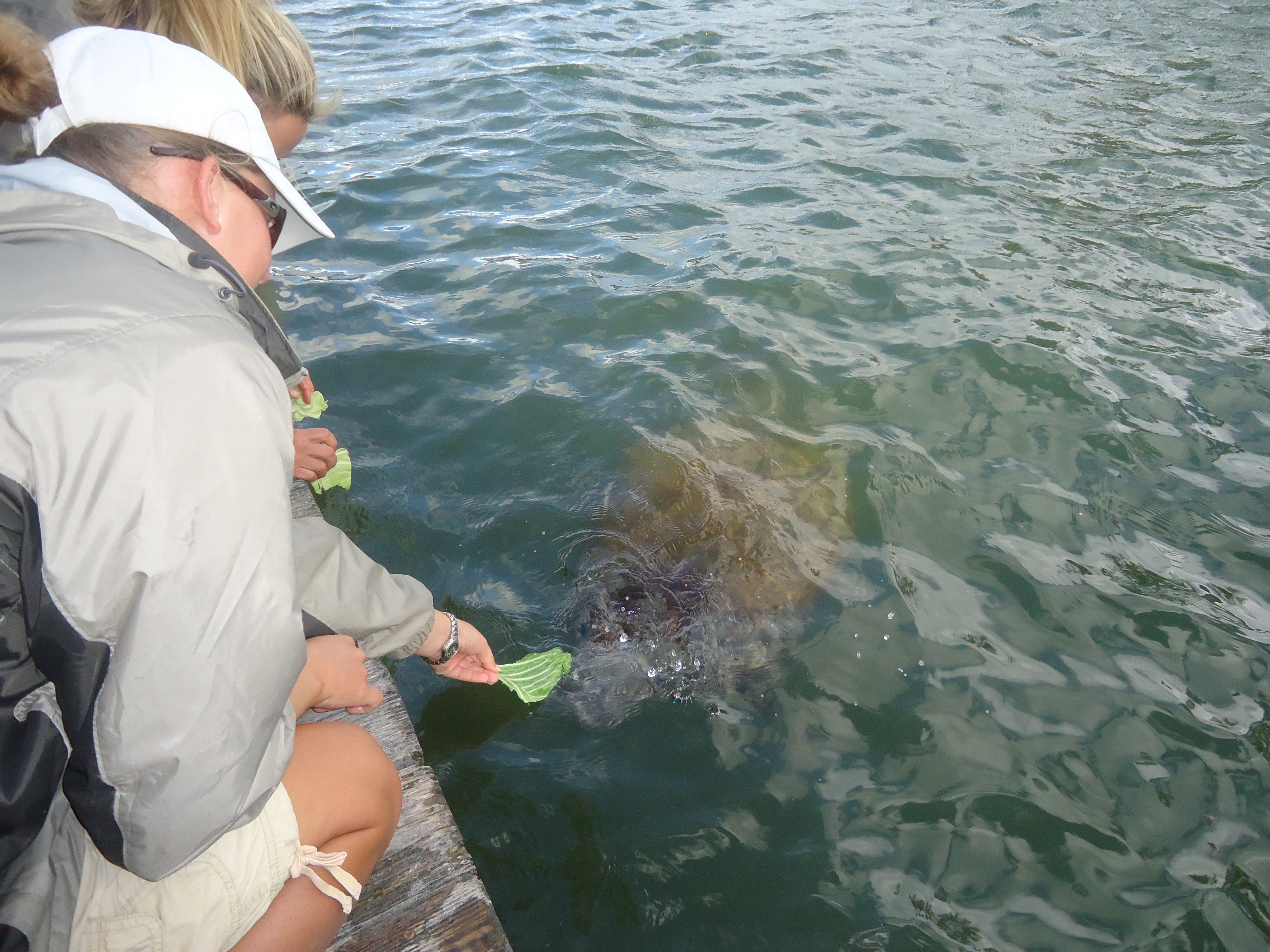
You may have noticed that several of the manatees shown carry scars attributable to prop wounds. Almost all carry injuries of some sort. Because manatees are slow, gentle, inquisitive and trusting creatures, they are especially vulnerable in harbour areas for obvious reasons. Elsewhere than the Bahamas, boat-strike is one of the main causes of manatee mortality. The BMMRO recently issued the above advisory notice because of the uncertainty about the rights and wrongs of watering manatees from docks with hoses and feeding them lettuce etc. Overall the message is that, though creatures of wonder, they are better off being admired but left to their own devices. They are adept at finding the fresh water sources they need, and their sea-grass diet is amply provided for. Dependence on humans, however well-meaning, is actually harmful.

The Travelling Mantee’s Favourite Song

RELATED LINKS

BAHAMA MANATEE CLUB

REPORT MANATEE SIGHTINGS

BMMRO

ROLLING HARBOUR MANATEES

MANATEE CONSERVATION

Credits: first and foremost, Felice Leanne Knowles; also BMMRO, Charlotte, & Diane for permission to make free with their material and photos from the get-go; any other photographers of the manatees shown and posted via BMMRO / FLK (Cha Boyce, Jessica Mullen,Otis Wilhoyte I think, maybe others…)

Manatee Logo (Savethemanatee.org)

Unknown's avatar

SAW FISH IN THE ABACO MARLS? NO SURPRISE. SAW A SAWFISH? AWESOME!


Pristis_pectinata _Georgia_Aquarium_ Diliff Wiki

SAW FISH IN THE ABACO MARLS? NO SURPRISE. SAW A SAWFISH? AWESOME!

Exactly a year ago, an extraordinary find was made out on the Abaco Marls. Almost disguised against the pale mud under the low water was the first sawfish reported for the Marls. This fish is not merely a rarity in the Northern Bahamas: all species of sawfishes worldwide are IUCN listed as Endangered or Critically Endangered.

Sawfish, Abaco Marls Feb 2014 (Photo: Jacque Cannon)

Sawfish, Abaco Marls Feb 2014 (Photo: Jacque Cannon)

Here is an account of the discovery reported by FRIENDS OF THE ENVIRONMENT: “On a recent fishing trip in the Marls with local guide Justin Sands, Sam and Jacque Cannon had an exciting encounter. As Justin was poling the flats, with Sam on the bow searching for bonefish, Jacque spotted a Sawfish! Jacque and Justin quickly forgot about Sam and his efforts to catch a bonefish and turned their focus to the Sawfish. This is a very rare sighting and one we are happy there was a camera available to document it…” A couple of weeks later I was lucky enough to sit next to Jacque at dinner at the Delphi Club, so I was able to hear at first hand the story of this amazing find. It also turned out to be the perfect time to sign an early copy of “The Birds of Abaco” for Jacque and Sam… 1900063_10152069487394482_984358031_n

Sawfish Book Plate (1884)

Sawfish Book Plate (1884)

 10 ESSENTIAL SAWFISH FACTS

  • Sawfishes are also known as Carpenter Sharks; their ‘saw’ is called a ROSTRUM
  • There are 7 species in oceans and seas worldwide, including the Mediterranean
  • All populations have declined drastically due to habitat loss, overfishing & pollution
  • The rostrum is used to feel, to dig, to slash & impale or stun its prey, and for defence
  • Sawfishes are nocturnal creatures and spend a lot of time face down on the sea floor
  • Like sharks, their skeleton is made of cartilage and not bone.
  • Some species can grow up to 7m long
  • They are generally unaggressive unless provoked but fight strongly when caught
  • Sawfishes are slow breeders, making population recovery more difficult
  • Babies are called ‘pups’. Their rostrum is flexible and sheathed until after birth
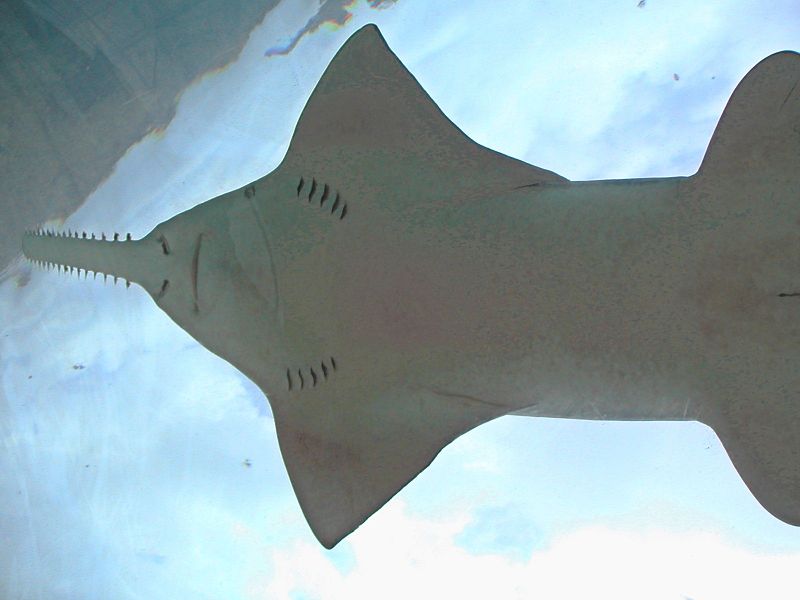
Sawfish seen from Underwater Tunnel - Atlantis, Nassau Bahamas (Fred Hsu)

Sawfish seen from below – Atlantis, Nassau, Bahamas (Fred Hsu)

Other sawfish have been seen recently in the Northern Bahamas, though not in Abaco waters. Last summer the Bahamas National Trust posted 2 great images of a Smalltooth Sawfish, saying “BNT was excited to receive these photographs of a Smalltooth Sawfish photographed in the proposed East Grand Bahama National Park – Bersus Cay Area. The sawfish was 12 to 13 feet long and was seen in water that was 2 -3 feet deep. Thank you to Buzz Cox, Island Manager at Deep water Cay for sending us these photos”. Sawfish, Grand Bahama Sawfish, Grand Bahama

CONSERVATION ISSUES

POPULATION DECLINE As noted above, Sawfish populations have declined to less than 10% of historical levels. The Smalltooth Sawfish – seen above – was once prolific in the Atlantic, Gulf of Mexico, Mediterranean, Black Sea and Indo-Pacific. Population numbers of this species are now estimated at less than 5% to perhaps as low as 1% of their historic levels.

THREAT TO SURVIVAL The threats to their existence are many: habitat loss, overfishing, accidental bycatch, rostrum souvenir hunters (good prices can be obtained), taking them for fins (as a delicacy) or oil from their liver (medicinal).

LEGAL PROTECTION Capturing a sawfish is illegal in certain countries, including the United States. The sale of smalltooth sawfish rostra is prohibited in the United States under the Endangered Species Act.  The import for sale of that of any sawfish species is also prohibited. The international trade of sawfish was banned by the CITES convention in June 2007.
For those that want to find out  a bit more detail about these issues, there’s plenty on interesting information in a scientific (but readable) paper from NOAA – click the link below

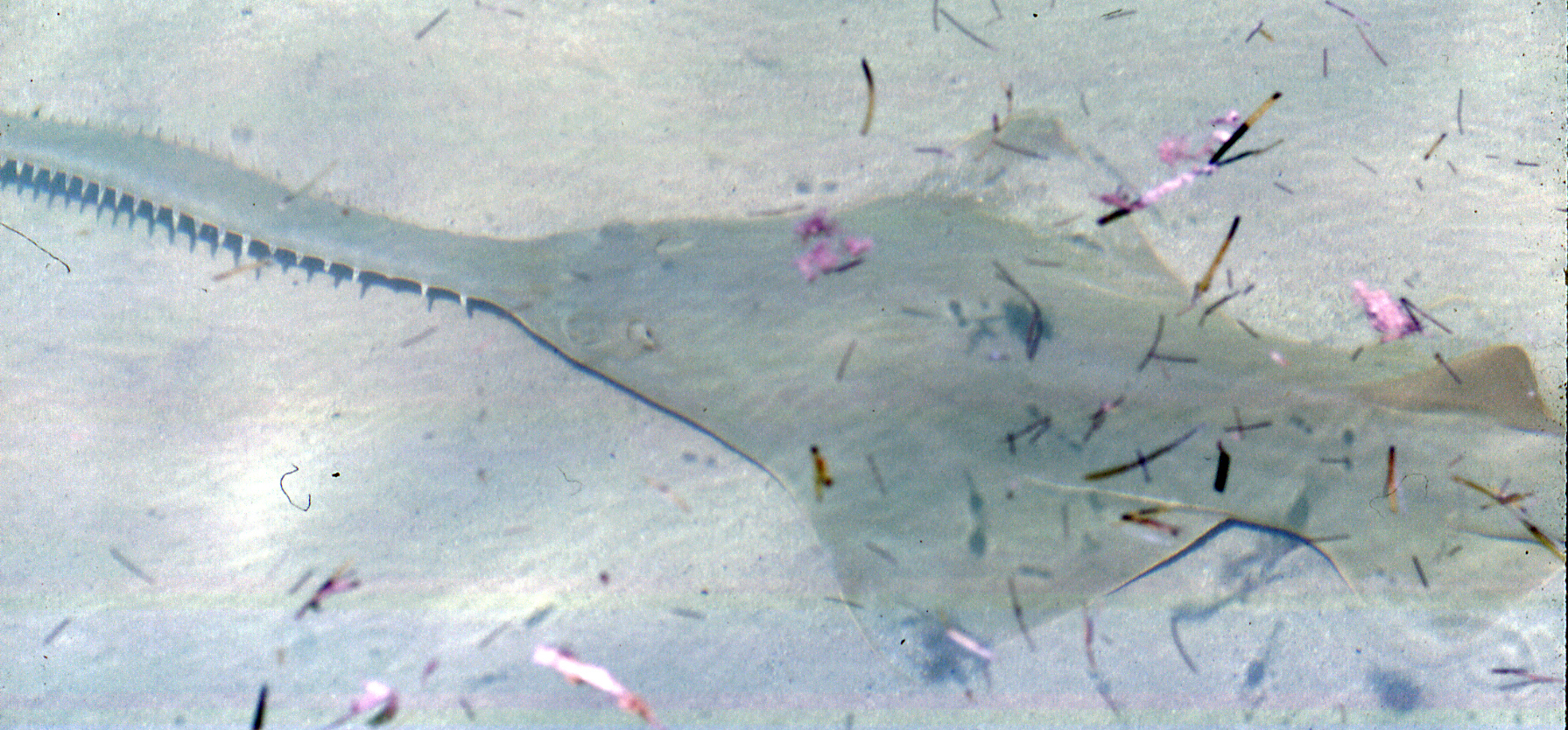
A very recent Bahamas smalltooth sawfish sighting on Bimini – Jan 2015Pristis_pectinata_(smalltooth_sawfish)_(Bimini,_western_Bahamas) Lee & Mary Ellen St John Jan 2015 Wiki

Smalltooth Sawfish (Pristis pectinata) Bimini, Bahamas – Lee & Mary Ellen St John Jan 2015

Time for some footage of these rare and wonderful creatures in the Bahamas. The first is from John Flanagan and was taken during a dive off Bimini in early 2014. He was so surprised by the sight that he nearly forgot to turn on his camera to take a short video… The second is a longer 5 min video taken off Andros by Grant Johnson of “wild footage of the critically endangered Smalltooth Sawfish (Pristis pectinata). The west side of Andros, Bahamas is one of the last places on Earth that still provides vast refuge for this incredible animal”.

Finally, you may be wondering how exactly the sawfish uses its rostrum to stun fish, as mentioned earlier. Watch this short video – see how quickly it moves, for such an apparently cumbersome and dozy creature…
Credits as shown above, with particular mention of Jacque Cannon for probably the first known sighting and anyway photo of an Abaco sawfish…; header pic in aquarium Diliff (Wiki)

Unknown's avatar

BAHAMAS MANATEES: GINA’S GOOD NEWS FOR 2015


Tm_Gina&JJWest Indian Manatee mother & calf, Bahamas - Gina & JJ

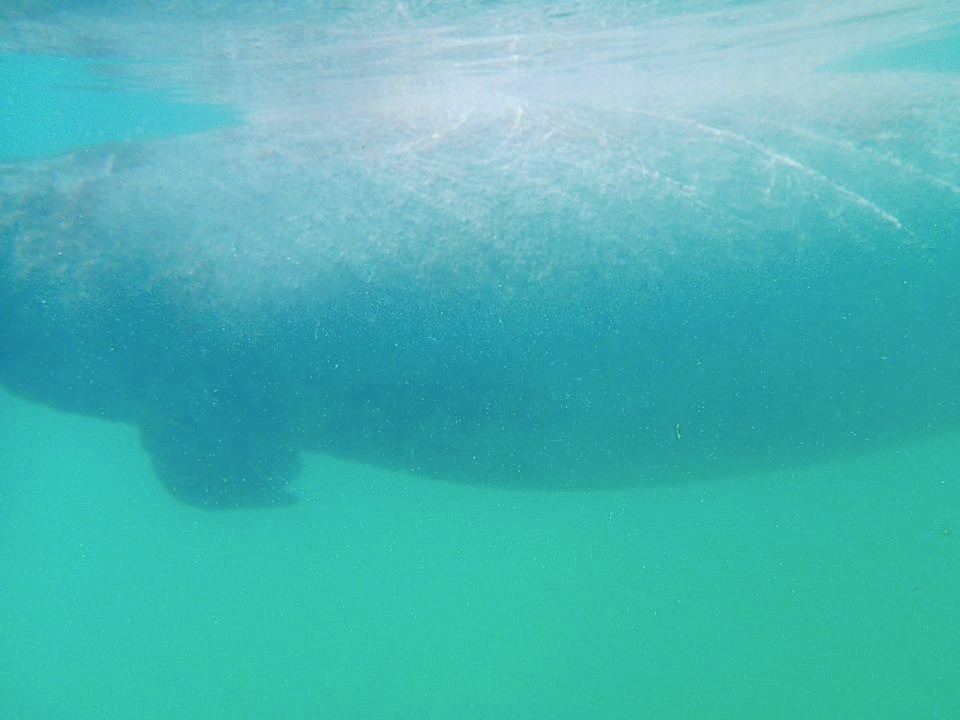
Manatee Gina with her weaned calf JJ

BAHAMAS MANATEES: GINA’S GOOD NEWS FOR 2015

Last year held hopes of a joyous reunion – and indeed union – in Abaco waters between young manatees Randy and Georgie. He had taken the trip from the Berry Is., around the top of Abaco and down the east coast as far at Little Harbour. She lives in Cherokee. Tantalisingly close. But then Randy retraced his steps as far as Gorda Cay and hopes for the production of Abaco’s first manatee calf (at least, in living / recorded memory) turned to seagrass mulch. The poignant story and some great manatee close-up photos (including a ‘selfie’ of sorts on a Go-Pro) can be found HERE

West Indian Manatee mother & calf, Bahamas - Gina & JJ - weaning

But manatees do breed elsewhere in the Bahamas, in particular the Berry Is. They also seem to favour the north end of Eleuthera, and have been seen on Andros and NP. True, the absence of significant freshwater sources in the Bahamas – an essential part of their diet –  doesn’t make for an ideal habitat, but manatees do pair off and Bahamas calves are born. In summer 2012, there were four resident West Indian Manatees (Trichechus manatus) living in Great Harbour Cay, Berry Is. The adult female, Gina, had been there for 3 years – she originated from Florida. She had reportedly had 3 or 4 calves and was caring for her latest, a female calf called JJ, born in the late winter of 2011.

Adult female manatees are sexually mature at 6-10 years of age and have a gestation period of up to 13 months. The first two years of a calf’s life is spent with its mother. During this time they are taught where to find food, fresh water, warmth and shelter. Generally, after two years the calf is weaned and separates from its mother (see header image of Gina and JJ during that process)

 Nursing a growing JJ West Indian Manatee mother & calf, Bahamas - Gina & JJ - nursing

Now there is more good news for Gina, who has been under regular observation by the BMMRO. At the turn of the year, Gina was re-tagged in Harbour Island, Eleuthera. As reported,  “she looks well, was very calm and is very pregnant… If the tag comes off and is found, please call the number on the tag to let us know – we are now monitoring her movements via the internet”.

Gina’s shows her best sideGina the Manatee 1

Coming atcher…Gina the Manatee 3

Tell-tale signs (to experts, anyway) of advanced pregnancyGina the Manatee 2

I will post any further news about Gina as it arises. Meanwhile, for more information about West Indian manatees, you can visit the MANATEE PAGE. There are several links there to specific manatee stories, especially about Rita and her adventurous daughter GEORGIE, Abaco’s current favourite (indeed, only) resident manatee… Both Links need an update, I notice –  they don’t cover Georgie’s subsequent return to Abaco and her contented settling down again in Cherokee where she seems happy as a… sirenian.

Dana & Trish greeting Georgie Manatee

Credits: All photos and primary fount of Bahamas manatee knowledge: BMMRO; Magpie Pickings

mantsw~1

Unknown's avatar

ABACO’S FOUR PROTECTED AREAS: THE PROPOSALS


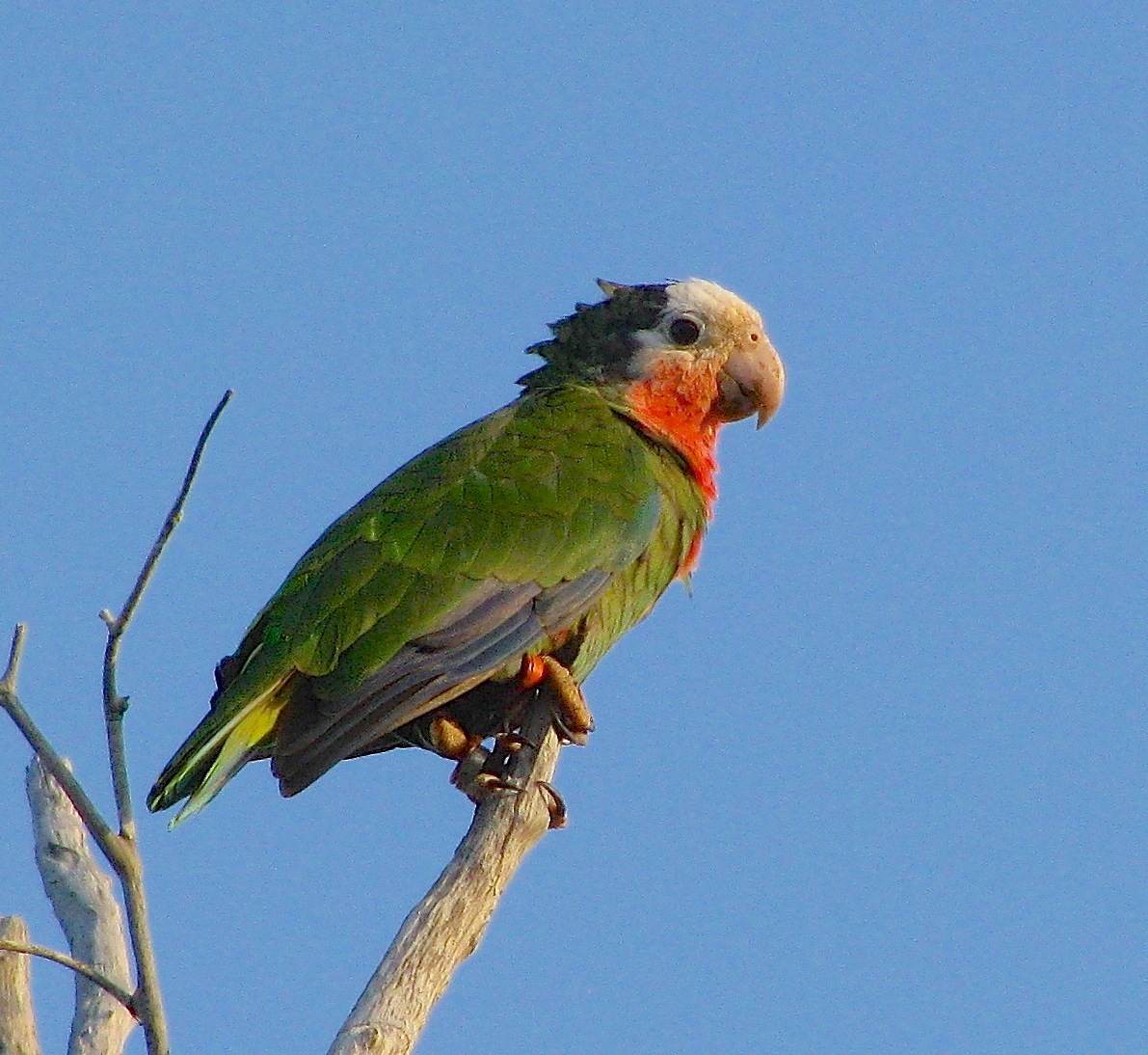
ABACO (CUBAN) PARROT (Caroline Stahala)

ABACO’S FOUR PROTECTED AREAS: THE PROPOSALS

The latest version of the 40TH ANNIVERSARY OF THE BAHAMAS PROPOSAL FOR THE EXPANSION OF THE PROTECTED AREA SYSTEM OF THE COMMONWEALTH OF THE BAHAMAS has been published. It is a joint proposal by the Bahamas Government, The Nature Conservancy and the Bahamas National Trust. The breadth of the scheme is very ambitious, affecting all the principal Bahama Islands. To understand the objectives and scope of the project, you can see the whole 34-page project by clicking BAHAMAS PROPOSED PROTECTED AREAS 2014 It is in pdf format, so you should be able to save it if you wish to.

Many people will be familiar with the proposals as they affect Abaco. However since the latest version appears to be a final draft, I thought it might be helpful to show the 4 proposed areas of protection and conservation in their present form. These are, in summary:

  1. THE ABACO MARLS NATIONAL RESERVE A vast area of nearly 200,000 acres (300 square miles) of mangrove flats, sandbanks, creeks and wetland habitat
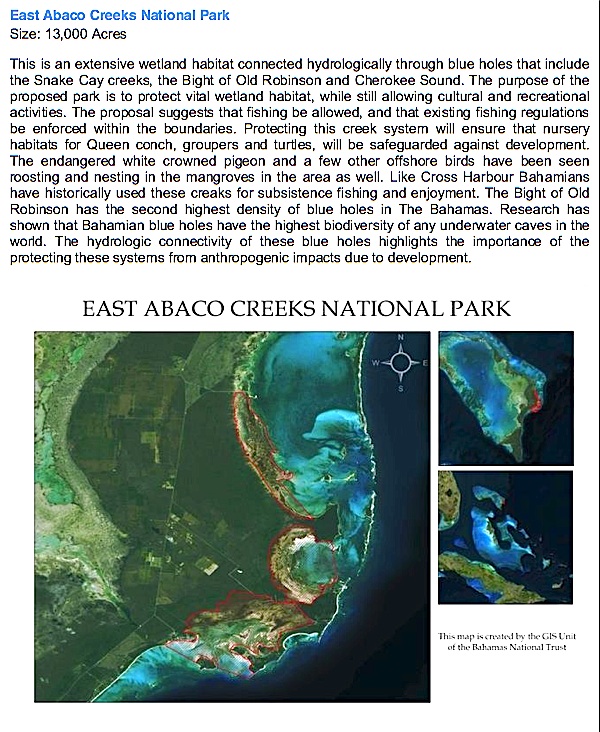
  2. EAST ABACO CREEKS NATIONAL PARK 13,000 acres (20 square miles) of wetland habitat that provides a vital wildlife nursery, and includes blue holes, creeks and a significant area for recreational activities (though Pete’s Pub at Little Harbour may be just outside the zone…)
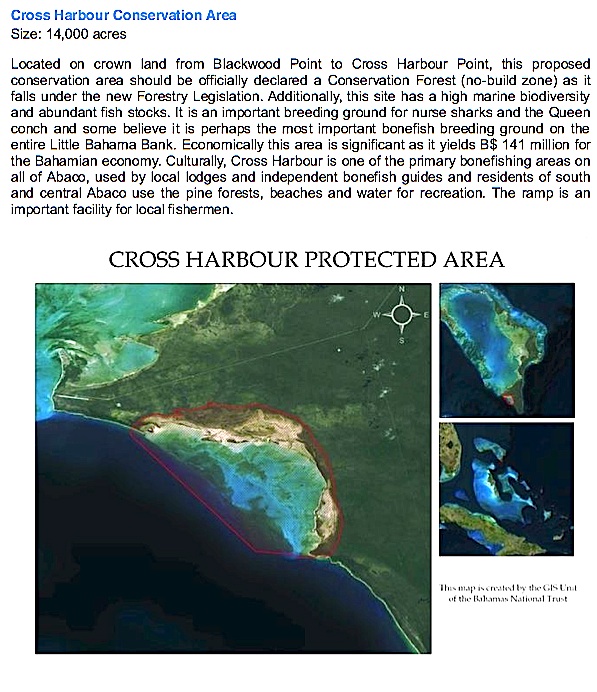
  3. CROSS HARBOUR PROTECTED AREA 14,000 acres (21 square miles) in South West Abaco, a crucial breeding area for a number of species,including bonefish
  4. SOUTH ABACO BLUE HOLES CONSERVATION AREA  A huge 34,000 acre (53 square miles) swathe of South Abaco to the west of the E D Highway, incorporating 4 inland blue holes and important cave systems, and 13 offshore blue holes. This is an area of mainly pine forest on land and low waters at sea, with an anticipated value for eco-tourism

Here are the BNT maps showing the extent of each area. Far more information will be found via the link to the report given above. 

THE ABACO PROPOSALS

Abaco Preserves 1 copy

Abaco Preserves 2 copyjpg Abaco Preserves 3 copyjpg Abaco Preserves 4 copyjpg

Credits: Parrot, (ex-)parrot protector Caroline Stahala; Maps, BNT; acres to sq m conversion, Gizmo!

Unknown's avatar

MARINE DEBRIS? NO THANKS! 10 FACTS FROM NOAA


Ten Things You Should Know About Marine Debris

monksealMonkseal being rescued from marine debris

Entangled-harbor-seal NOAA Marine Debris
Our waterways are littered with stuff that doesn’t belong in them. Plastic bags, cigarette butts, fishing nets, sunken vessels, glass bottles, abandoned crab traps…the list is endless. Some of this marine debris comes from human activity at sea, and some of it makes its way into our waterways from land.
While we know that marine debris is bad for the environment, harms wildlife, and threatens human health and navigation, there is much we don’t know. How much marine debris is in our environment? How long does it last? How harmful is it to natural resources or human health and safety? How long does it take to break down in the water? The NOAA Marine Debris Program is finding answers to these questions.

1. It doesn’t stay put

While a lot of debris sinks, much also floats. Once this marine debris enters the ocean, it moves via oceanic currents and atmospheric winds. Factors that affect currents and winds (for example, El Niño and seasonal changes) also affect the movement of marine debris in the ocean. Debris is often carried far from its origin, which makes it difficult to determine exactly where an item came from.

2. It comes in many forms

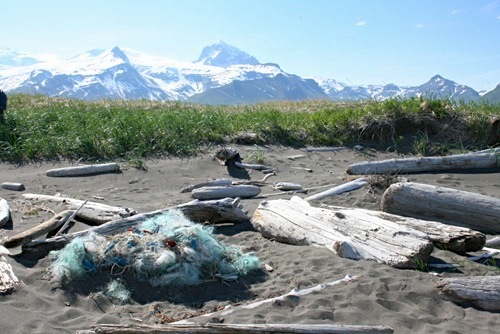
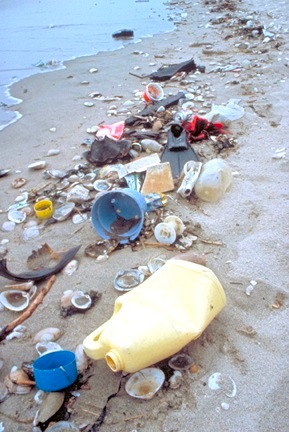
Marine debris comes in many forms, ranging from small plastic cigarette butts to 4,000-pound derelict fishing nets. Plastic bags, glass, metal, Styrofoam, tires, derelict fishing gear, and abandoned vessels are all examples of debris that often ends up in our waterways.img_0510_ss-1

3. It’s your problem, too

Marine debris is a problem for all of us. It affects everything from the environment to the economy; from fishing and navigation to human health and safety; from the tiniest coral polyps to giant blue whales.

4. NOAA is fighting this problem

The NOAA Marine Debris Program works in the U.S. and around the world to research, reduce, and prevent debris in our oceans and coastal waterways. Much of this work is done in partnership with other agencies, non-governmental organizations, academia, industry, and private businesses.The Marine Debris Research, Prevention, and Reduction Act, signed into law in 2006, formally created the Marine Debris Program. The Act directs NOAA to map, identify, measure impacts of, remove, and prevent marine debris.

img_0327

5. Some debris is being turned into energy

Abandoned and lost fishing gear is a big problem. It entangles and kills marine life and is a hazard to navigation. Based on a model program in Hawaii, the Fishing for Energy program was formed in 2008 to tackle this problem with creative new ideas. The program is a partnership between NOAA, Covanta Energy Corporation, National Fish and Wildlife Foundation, and Schnitzer Steel.This program offers the fishing community a no-cost way to dispose of old or derelict fishing gear. Once removed from the environment, the gear is transported to the nearest Covanta Energy-from-Waste facility. About one ton of derelict nets creates enough electricity to power one home for 25 days!

6. Marine debris can hurt or kill animals

Marine debris may be mistaken by some animals for food or eaten accidently. Often, larger items like nets, fishing line, and abandoned crab pots snare or trap animals. Entanglement can lead to injury, illness, suffocation, starvation, and even death. NOAA is working with many partners to tackle this problem by reducing and preventing marine debris in our oceans and waterways.

Sea turtle entangled in a ghost net

7. There’s a lot to learn about this problem

We know that marine debris is a big problem, but there’s much we need to learn. NOAA funds projects across the country and works with scientists and experts around the globe to better understand how marine debris moves, where it comes from, and how it affects the environment. This knowledge will help us find better ways to tackle the problem.

8. You can help us get the word out!

The NOAA Marine Debris Program offers a heap of creative products to get the word out about marine debris. Looking for brochures, posters, fact sheets, or guidebooks? We’ve got those. Like videos? We’ve got those, too. We even have a blog! You’ll find it all online.

9. This is a global problem.

Marine debris is a global problem that requires global solutions. NOAA experts work with scientists and organizations around the world to share lessons learned, discover what programs work best, and map out future strategies to fight this problem.

img_04761

10. Small steps lead to big results

Fighting the marine debris problem begins at home.

  • – Try to cut back on the amount of trash you produce.
  • – Opt for reusable items instead of single-use products.
  • – Recycle as much of your trash as you can.
  • – Join local efforts to pick up trash.
  • – Keep streets, sidewalks, parking lots, and storm drains free of trash—they can empty into our oceans and waterways.

marine_debris_program_noaa-1

Click to link
noaaleft
Minorly adapted from an NOAA article, with added illustrative NOAA images
Unknown's avatar

GEORGIE THE (FORMER) ABACO MANATEE RETURNS TO THE BERRY IS.


Georgie the Manatee, Hope Town, Abaco (© Stafford Patterson) 1

GEORGIE THE (FORMER) ABACO MANATEE RETURNS TO THE BERRY IS.

Last year I posted about Georgie, the young manatee that made Abaco her home for several months. Georgie was born in Spanish Wells. She and her mother Rita travelled to Nassau Harbour, where in April 2012 they were rescued from the multiple shipping hazards and  released in Great Harbour Cay, Berry Is. Both were equipped with tags to monitor their movements. In June, the newly-weaned Georgie embarked on a big solo adventure by swimming to Abaco. Her tracking device showed that she called in at the Marls, before continuing right round the top of Abaco and down the east side, calling in at various Cays on the way. In all, her journey was some 200 miles long. She eventually settled down in the Cherokee and Casuarina area, and in a modest way became a lettuce-chomping celebrity.  DANA & TRISH FEEDING GEORGIE (2)

Georgie-related posts include these:

WEST INDIAN MANATEES AND THE BAHAMAS: THE FACTS

GEORGIE THE ABACO MANATEE – CHEROKEE’S SIRENIAN VISITOR STAYS ON…

GEORGIE THE ABACO MANATEE: FAREWELL CHEROKEE, HELLO ATLANTIS

The BMMRO has recently updated Georgie’s story: “Georgie remained in Cherokee Sound throughout the fall, including during hurricane Sandy but in January she was beginning to look slightly underweight. Concern was raised about her general appearance and the decision was made… to conduct a field health assessment and relocate her to the Atlantis Marine Mammal Rescue Center. “recap1

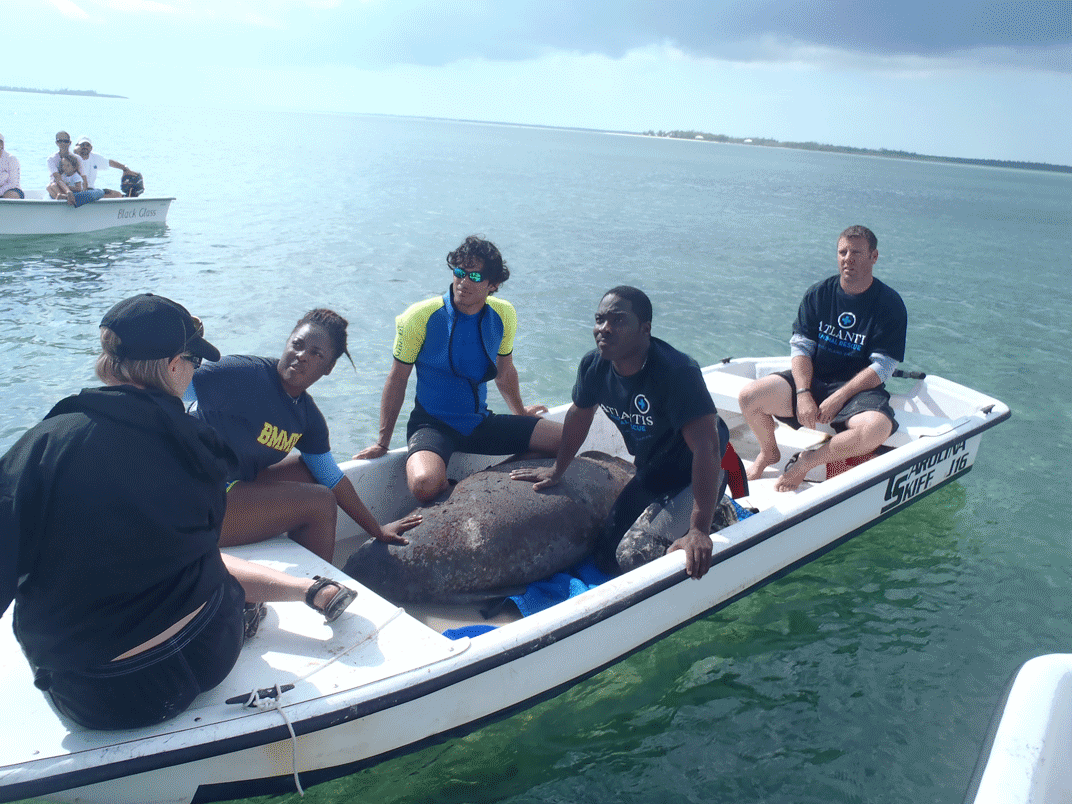
“Georgie underwent a series of general health evaluations and was fed approximately 75 pounds of lettuce each day. She gained more than 200 pounds during the course of her care and weighed 569 pounds upon her recent release”. recap4

“We are pleased to announce that Georgie has now been released once more to Great Harbour Cay in the Berry Islands after a successful rehabilitation at Atlantis’ Dolphin Cay. She was successfully released on Wednesday 14th August by the Atlantis Animal Rescue Team from the Atlantis Dolphin Cay Marine Mammal Rescue Center, with the help of the Bahamas Marine Mammal Research Organisation (BMMRO). She has a satellite tag attached to her which will help post-release monitoring, currently being conducted by representatives from BMMRO and Dolphin Cay.”

Georgie being let down from the boat, back into Great Harbour Cay (K. Ferguson)
Georgie with her tag shortly after release (K. Ferguson)

Georgie socialising with a young male manatee in Great Harbour Cay a few days later (K. Ferguson)

safe_image.php

“The first 3 weeks of Georgie’s release  showed her venturing on longer and longer journeys, with the blue circles showing her first weeks’ movements, the red her second, and finally the yellow circles her locations up to Saturday. She is doing very well and often seen with the other manatees in the area.”

1240329_651667491519147_1896477103_n

GEORGIE: THE MOVIE OF THE MOVIE

Apologies for using an iPh*ne to capture the movie – I wasn’t able to embed it directly. Updates on Georgie will be posted on BMMRO’s FACEBOOK PAGE

Credits and thanks to BMMRO and Kendria Ferguson for use of photos and the maroon text…

Unknown's avatar

POSTING POSTERS: 5 OUTSTANDING ECO-EDUCO-INFO POSTERS


LRE Logo

LOXAHATCHEE RIVER DISTRICT POSTERS

EXCELLENT ECO POSTERS FROM LRD: FOR WEBSITE CLICK HERE

TO ENLARGE (CONSIDERABLY), DOUBLE-CLICKLoxahatchee River District Coral Reef Poster

Loxahatchee River District Bonefish Poster

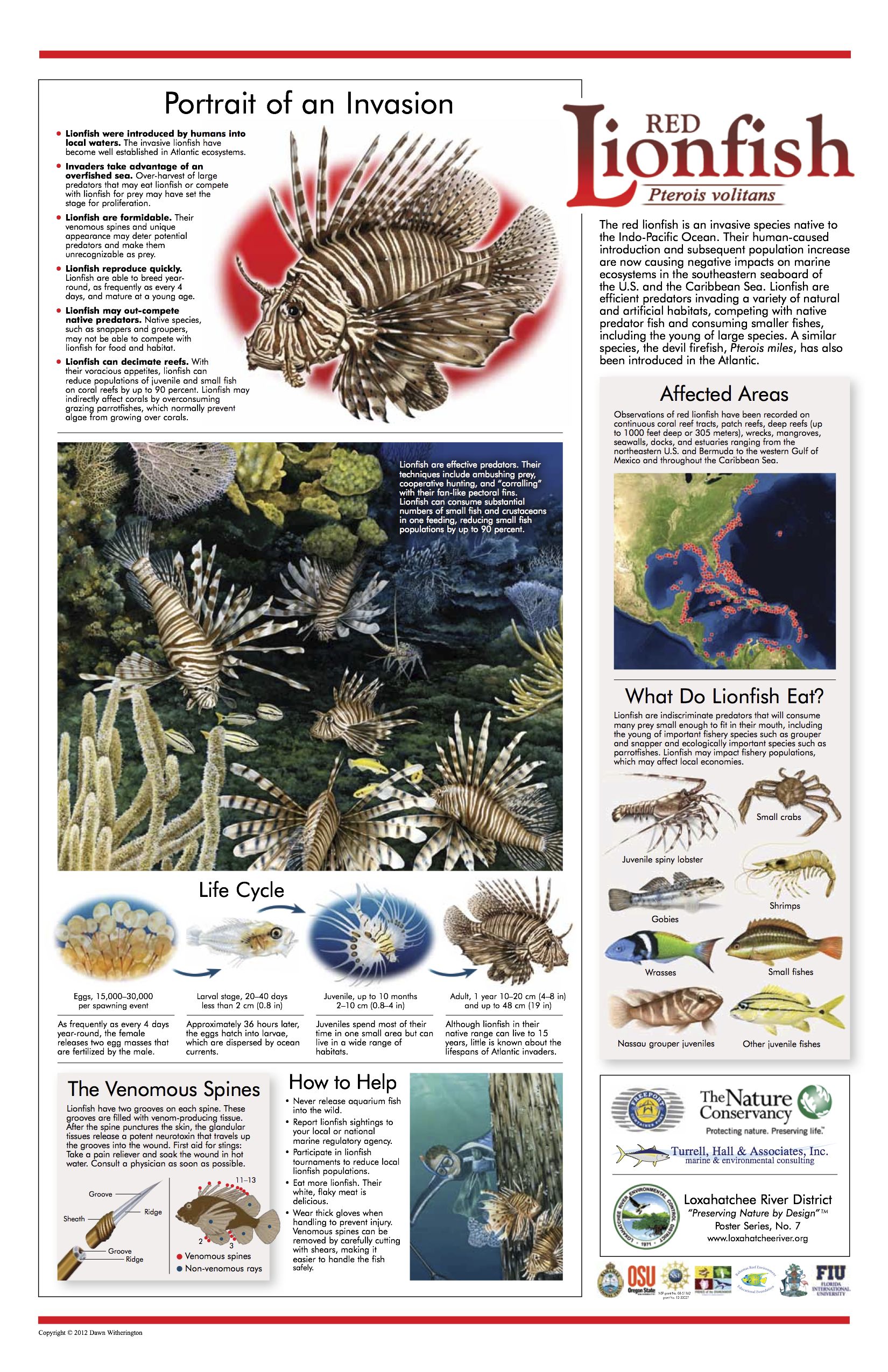
Loxahatchee River District Lionfish Poster tarponposter.inddseagrasses_poster_8.5x11

CREDIT thanks to Loxahatchee River District for use permission for this website. Please note that these posters are ©Loxahatchee River District, and may not be used without permission. Especially not for commercial purposes. Please resist any temptation to drag them out and use them without contacting LRD first (website link at top of page). RH

BTT LOGOClick me for Bonefish & Tarpon Trust

Nature Conservancy Logo

Click me for Nature Conservancy, Bahamas

Unknown's avatar

CONSERVATION PIECE: AN ABACO ECO-MISCELLANY


CONSERVATION PIECE: AN ABACO ECO-MISCELLANY

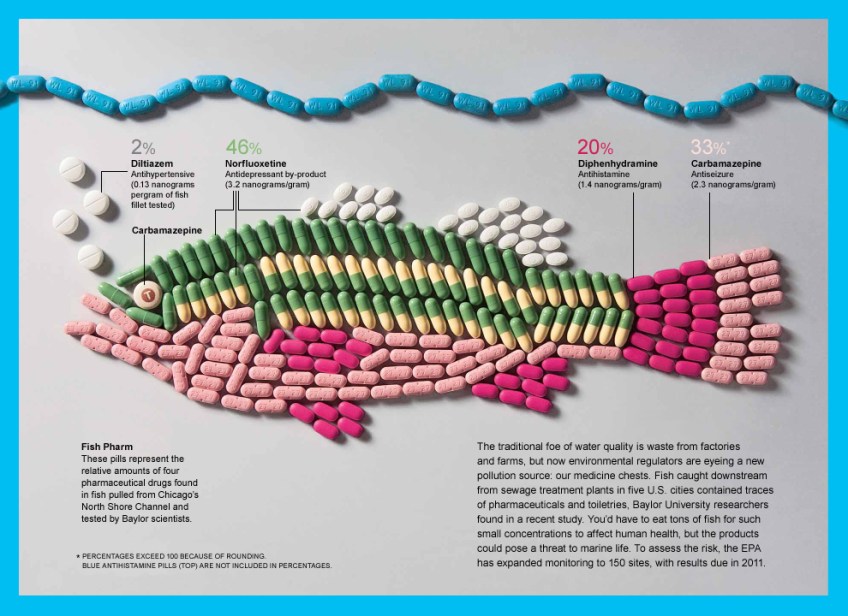
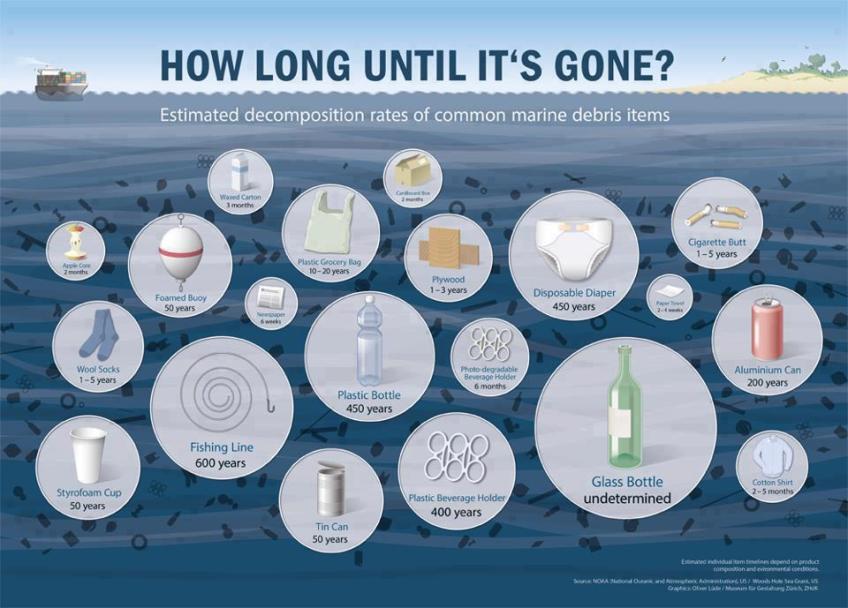
From time to time I post individual items on the CONSERVATION page. This comprises an assortment of articles, photos, videos and graphics with an eco-message relevant to Abaco and its waters. They accumulate gradually, and occasionally it is good to post a selection for consideration. What is the most frequently found item of detritus on a beach? Is it ok to eat striped bass? How many uses does a coconut have? How quickly does the invasive lionfish population spread? What is Fish Pharm? How many years does it take for an aluminium can to decompose? These and many other questions are answered below.

184790_196532023698608_1805444_aClick logo for website!

NOAA MARINE DEBRIS PROGRAM

Keepin’ the Sea Free of Debris!

ICC volunteers clean 10 million lbs of trash from our coasts
May 16, 2013 by NOAA Marine Debris Program

By: Dianna Parker

One rubber chicken, 117 mattresses, 4,159 candles, and 689,274 utensils. What do all of these things have in common?

They’re all marine debris collected last September at the Ocean Conservancy’s 2012 International Coastal Cleanup®, sponsored in part by the NOAA Marine Debris Program.The numbers are in: more than 550,000 volunteers came together to collect 10 million pounds of marine debris.  In the United States, volunteers found enough bottles that, when stacked end to end, equal the height of 1,000 Empire State Buildings. That’s a lot of trash on our beaches and in our waterways!This litter is threatening our marine environment, economy, and health, and the problem will only get worse unless we change the way we consume and dispose of products. There are solutions, and we can prevent litter from ending up in the ocean.So here’s a challenge: the next time you use a throw-away item: a bag, bottle, or utensil, answer the question, “Where it’s going?” How will you keep your items from becoming litter in our oceans, rivers, and streams? Head to Ocean Conservancy’s data release page for some neat infographics on last year’s trash haul. Here are the top 10 types volunteers found this year

top-10-items-found

THE PELAGIC OCEAN: AN INVESTIGATION INTO POLLUTION – BY KIDS

Prepare to be astounded – and horrified – by the cruel damage inflicted on sea life by humans and their prolific plastic trash. Credit: Friends of the Environment, Abaco

PROPOSED MARINE PROTECTED AREAS / EAST ABACO CREEKS VIDEOAbaco-park
coconut-uses 2Bahamas Lighthouse Pres Soc Logo

BAHAMAS LIGHTHOUSE PRESERVATION SOCIETY

BLPS NEWSLETTER JAN 2013 FINAL

LIONFISH

IMG_0383e.img_assist_custom-246x336

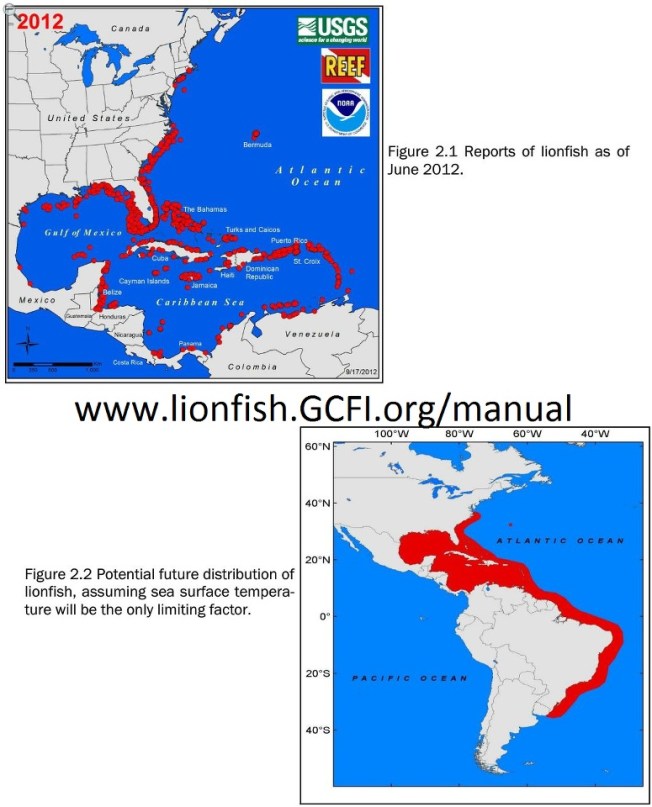
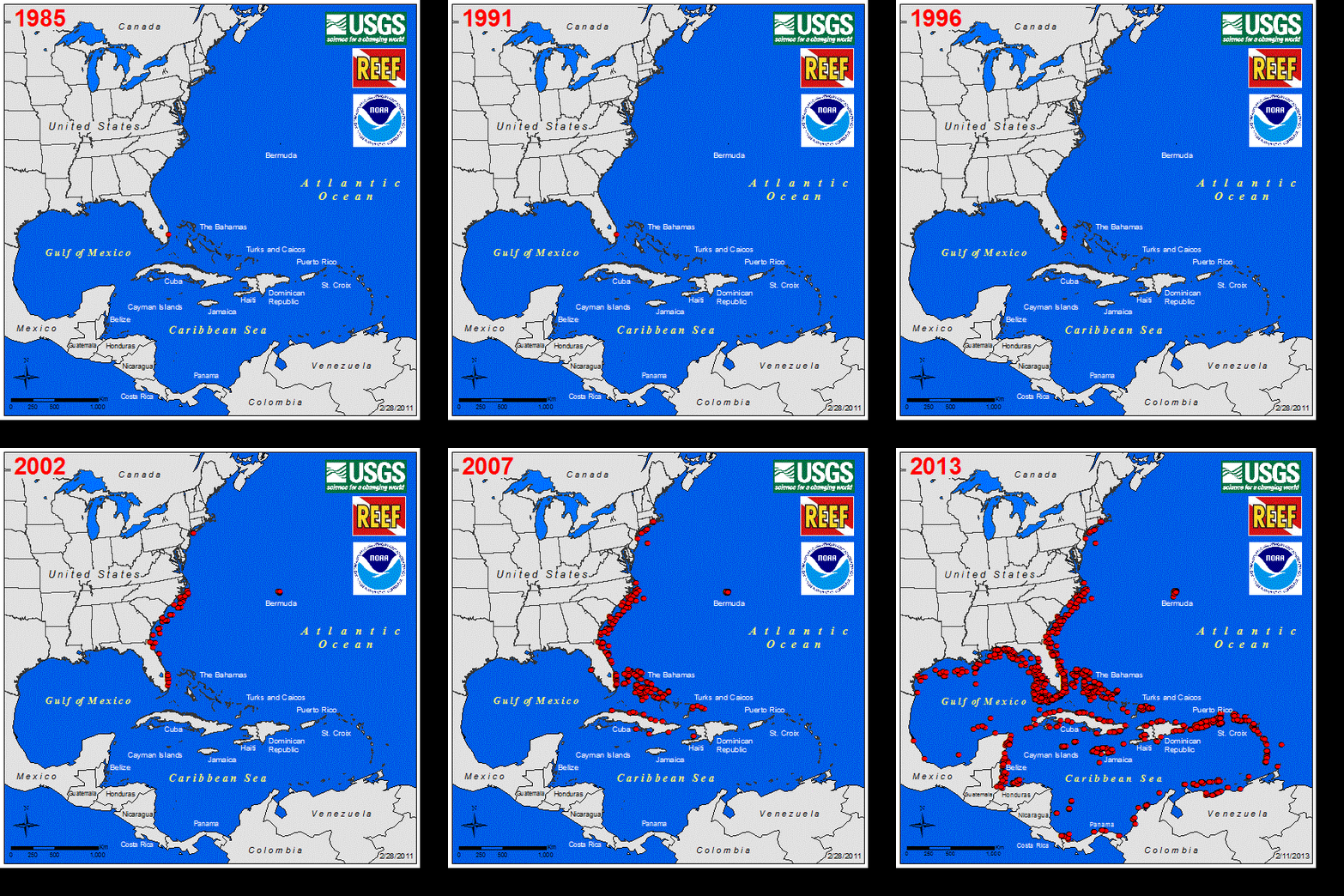
The debate about the seemingly unstoppable spread of the invasive lionfish species is well known. There are some who argue strongly that lionfish have their uses, and not merely as a food source. To see ongoing lionfish research by the organisation REEF click HERE To supplement the static projection graphic for lionfish spread (below), here is an active graphic that vividly shows how the species (love them or hate them) has expanded exponentially in numbers and range over a very short period

lionfishanimation 2013

 REEF lionfish progam graphics Conch Conservation Notice EGO -ECO graphic fishNational Geographic

Abaco Crawfish Logo

LOBSTERS – WE GOTTEM! OVERFISH THEM – WE AIN’T!

Video courtesy the fabulous CONCH SALAD TV; heads-up from ABACO SCIENTIST; campaign by SIZE MATTERS

BLPS LOGO

BAHAMAS LIGHTHOUSE PRESERVATION SOCIETY Read the Society’s 4-page January 2013 Newsletter HERE BLPS NEWSLETTER JAN 2013 

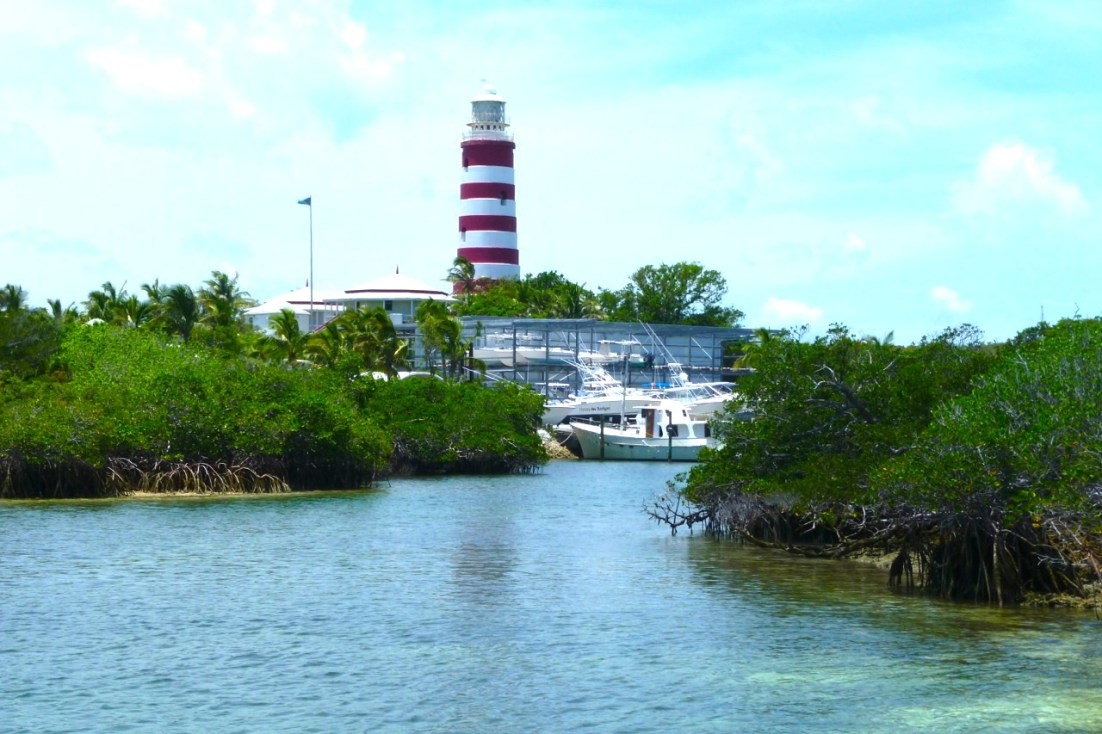
The Society was founded in 1995, and it has already achieved much to preserve and protect the lighthouses of the Bahamas. Of particular interest to Abaconians will be the news about the Hope Town lighthouse, and about the work done at Hole-in-the-Wall. If you’d like to support this hard-working not-for-profit organisation and help to preserve a part of Abaco’s maritime history, the email address is blps.bah@gmail.com  Hope Town Lighthouse
bpa_logo

A new environmental organisation has been announced: to find out more

CLICK===>>> BPFA 

IUCN CUBAN PARROT RED LIST RANGE MAP FOR AT RISK SPECIES
I have annotated this IUCN map of the Cuban Parrot population range. It’s worth noting that the Bahamian subspecies is now found only as a breeding population on Abaco and Inagua, being defunct on all other islands since the mid-c20. Of these populations, only the Abaco parrot breeds underground, a unique feature among the whole species.
I am puzzled by the suggestion of an ‘extant (resident)’ population on the Bimini Is. That would suggest that they breed there. I don’t know the date of the map, but I have checked with the Avibase bird database, and the Cuban parrot is indeed included in the list of Bimini birds. I’ve put a query on the map because I don’t know what the position is in 2012.
Click me!
FRIENDS OF THE ENVIRONMENT (ABACO)
This conservation organisation has recently completely redesigned its website (click logo above), and presents comprehensive and easily navigated information about a myriad aspects of conservation on Abaco and its fragile ecology. The fragility is mostly directly or indirectly caused by mankind (a broad statement, I know, but it’s an arguable stance), so it’s worth checking out the measures that are being undertaken to preserve the natural resources of the island and its cays. Below is a post about one feature highlighted on the FotE site that I am particularly interested in. Overall all the new website is definitely one for any Abaconian (or, like me, regular visitor) to study. If you want to contribute your support (either generally or to a specific cause) go to the FotE website (click logo) or visit the Rolling Harbour wildlife charity page HERE

THE EFFECT OF RISING SEA LEVELS IN THE CARIBBEAN

This map has been posted by the SCSCB, with the very interesting and definitely worrying text “The map shows projected impacts of a 2 meter sea level rise in the Caribbean. The orange is the impact of 2 meters, while the yellow is the 25 meter line. The last time the ice caps melted the sea rose between 18 and 25 meters. The most conservative estimates indicate a 1-meter rise by the end of the century (concurrent with a 2 degree C rise in temperature). From the position of planning, I am curious about the estimates being used by Caribbean resource managers in their long-range planning. For example, what percentage of Caribbean seabirds nest below 2 meters…”

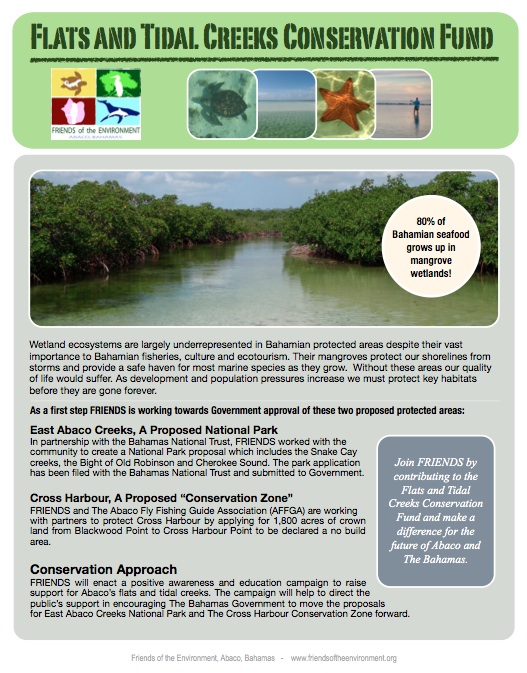
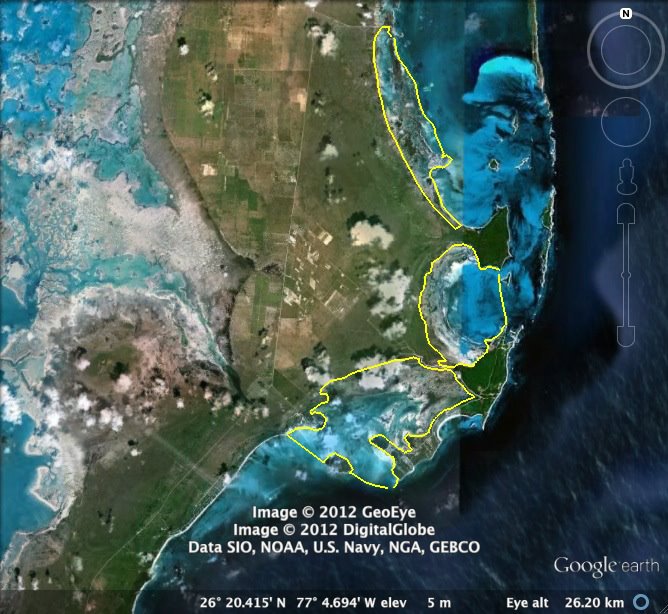
EAST ABACO CREEKS NATIONAL PARK PROPOSAL

Click on the title above to see the BNT’s proposal for this major conservation proposal for the east Abaco creeks. It’s in .pdf form and you can (probably) copy / save it if you wish. The map below shows the 3 areas concerned. You can check out more details – and photos – on Facebook at EACNP

A VISUAL TO PONDER FROM ‘SCIENCE IS AWESOME’
CONSERVATION ON ABACO AND IN THE BAHAMAS

This new page (June 2012) is intended to showcase the achievements of the various organisations and individuals involved with the protection and conservation of the fragile ecology and wildlife in a small and rapidly developing area. A number of posts and articles from other pages will gradually migrate to this page.

I have posted on Facebook a statement by the new Environment Minister which praises the environmental work carried out in the Bahamas and pledges Government support MINISTER’S STATEMENT Let’s hope it’s forthcoming…

community conch logo

CONCH CONSERVATION

The supply of conchs is not infinite. Overfish them, take them before maturity  or pollute their habitat and this valuable marine resource depletes – and conchs, as with so many marine species, will become threatened. Fortunately there is a Bahamas-wide conservation organisation with a website packed with interest.  COMMUNITY CONCH is “a nonprofit organization that aims to protect queen conchs in the Bahamas, a species of mollusk threatened by aggressive over-fishing. We promote sustainable harvest of queen conch through research, education and community-based conservation”

“Helping to sustain a way of life in the Bahamas”

Much of the research has been carried out in Berry Is, Andros and Exuma Cays. However the team has recently been based at Sandy point, Abaco CLICK===>>> ABACO EXPEDITION  The full Conch Conservation post can be found at CONCH QUEST

BAHAMAS MARINE MAMMAL RESEARCH ORGANISATION (BMMRO)

The BMMRO is featured many times in this blog, in particular in the pages WHALES & DOLPHINS and MANATEES. They now have a Facebook page with all the latest news, photos, newsletters links and cetacean / sirenian goss in one easily-digested timelined place. To reach it CLICK ===>>> BMMRO FACEBOOK PAGE

For the latest quarterly newsletter, just published, CLICK ===>>> BMMRO NEWSLETTER JULY 2012
A RECENT FLYER FOR THE ‘SIZE MATTERS’ CRAWFISH CAMPAIGN

BAHAMAS NATIONAL TRUST PRESS RELEASE JUNE 2012

ABACO PARROT POPULATION ON THE RISE
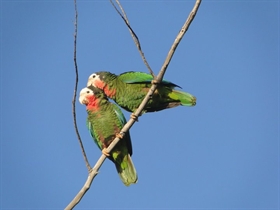
The Bahamas National Trust  in conjunction with Dr. Frank Riviera and Caroline Stahala recently conducted an intensive survey of the Bahama Parrot on Abaco Population surveys conducted in 2002 resulted in estimates of the Abaco parrot population of about 2,500 parrots with similar values in the following years. This year Dr. Frank Rivera and Caroline Stahala, who took part in the initial surveys, helped by  BNT wardens and volunteers, conducted a 10 year follow up survey to determine the change in the Abaco parrot population since management began. The results indicate that the Abaco parrot population has increased since the BNT’s management efforts were implemented with a new estimate of just over 4,000 parrots on Abaco. The BNT has been concerned about the Bahama Parrot Population since the 1980’s. Studies indicated that the major threat to the parrots were feral cats who cause serious problems to the parrots during the nesting season by entering the underground nesting cavities and killing the breeding adults and chicks. The BNT implemented an intensive predator control effort in 2009 throughout the parrot nesting area culminating in the hiring of Marcus Davis as Deputy Park whose primary responsibility is to oversee the predator control program. During the breeding seasons the BNT has seen a decrease in the number of breeding parrots killed and nest success increase. The question, though, remained whether this effort would translate into an increase in the Abaco parrot population size. Survey results indicated that predator control has led to an increase in nest success.  In addition, the Abaco parrots have weathered several hurricanes (Frances, Jean and Irene) over the last 10 years and still appear to show  a population increase. Hopefully with continued management efforts a healthy and viable  endemic parrot population on Abaco will continue to thrive. According to David Knowles, BNT Director of Parks “This gives us hope that with continued management efforts we can continue to have a healthy and viable endemic parrot population on Abaco.”