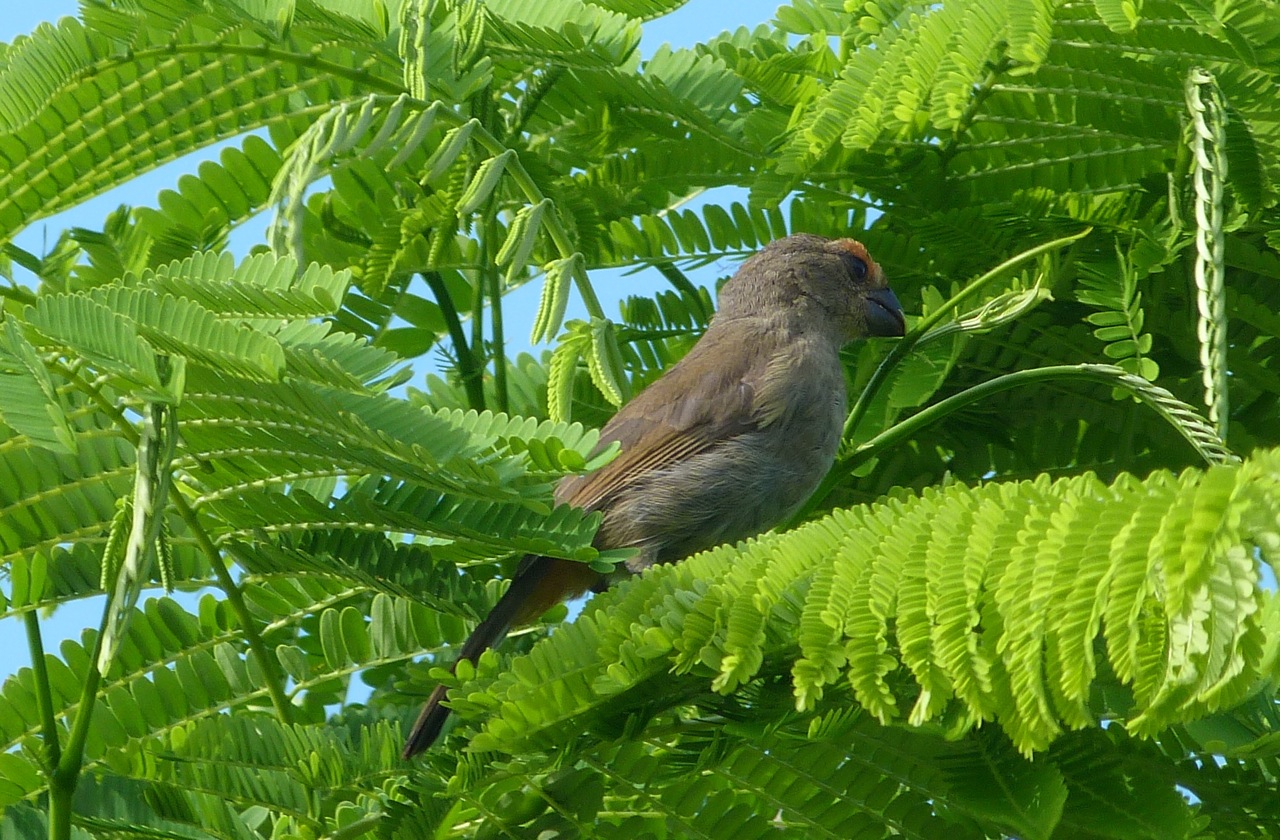
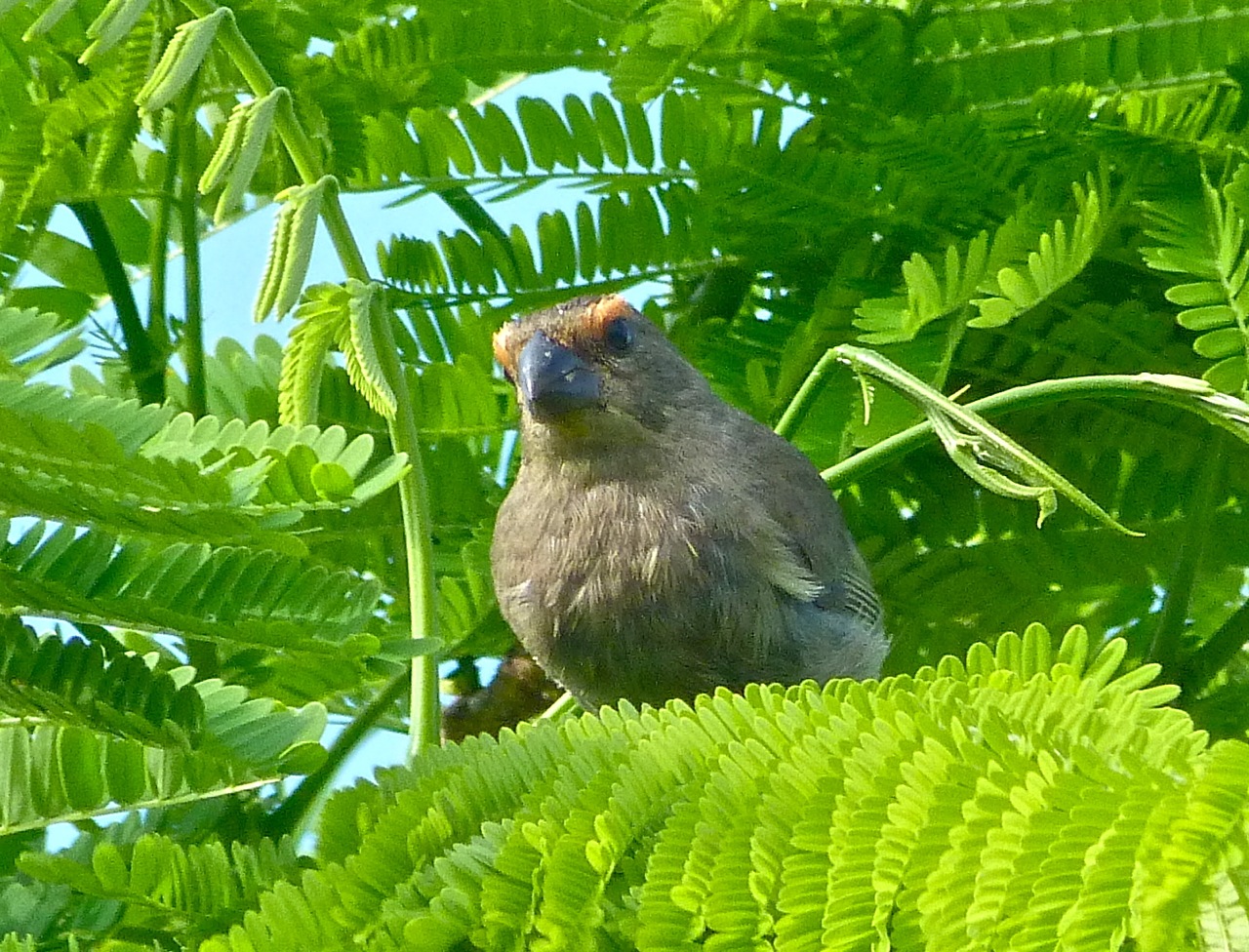
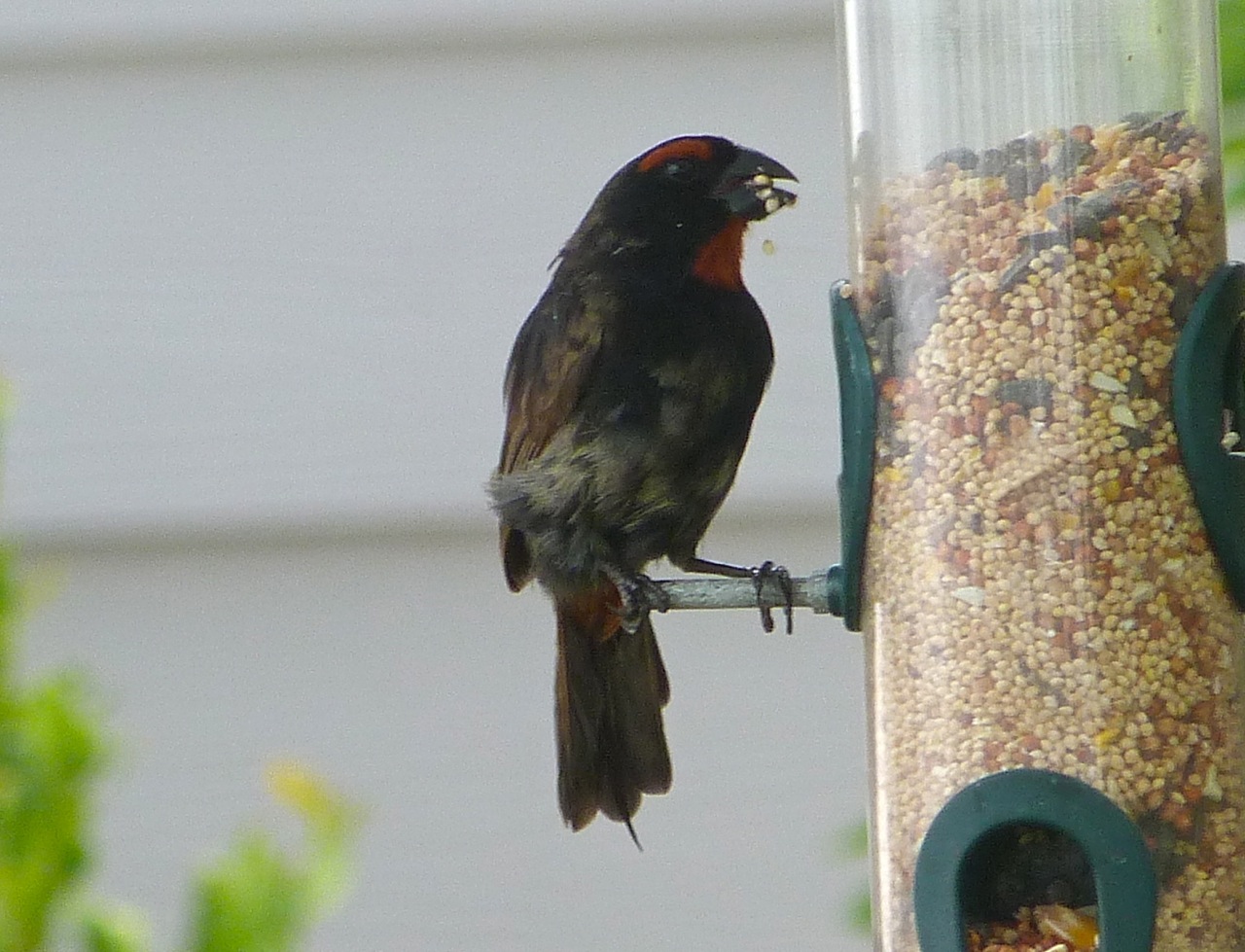
This is a well-know bird (Loxigilla violacea) that can be seen on Abaco all year round. With their scarlet bibs and eyebrows, the males are a cheerful sight in coppice or garden. The females are paler brown, with orange accessories.
While still officially rated as a species of ‘Least Concern’, a measurable fall in population in recent years has seen them nudging towards ‘Vulnerable’.
Greater Antillean Bullfinch song from Paul Driver at Xeno-Canto
Antillean Bullfinches enjoy garden feeders – and their larger size means that they are higher up in the pecking order than the black-faced grassquits and other small birds
They are one of the many popular Bahamian bird species to have featured on postage stamps – in fact they scooped the high-value $10 stamp in 1991 and the $5 stamp in 2001
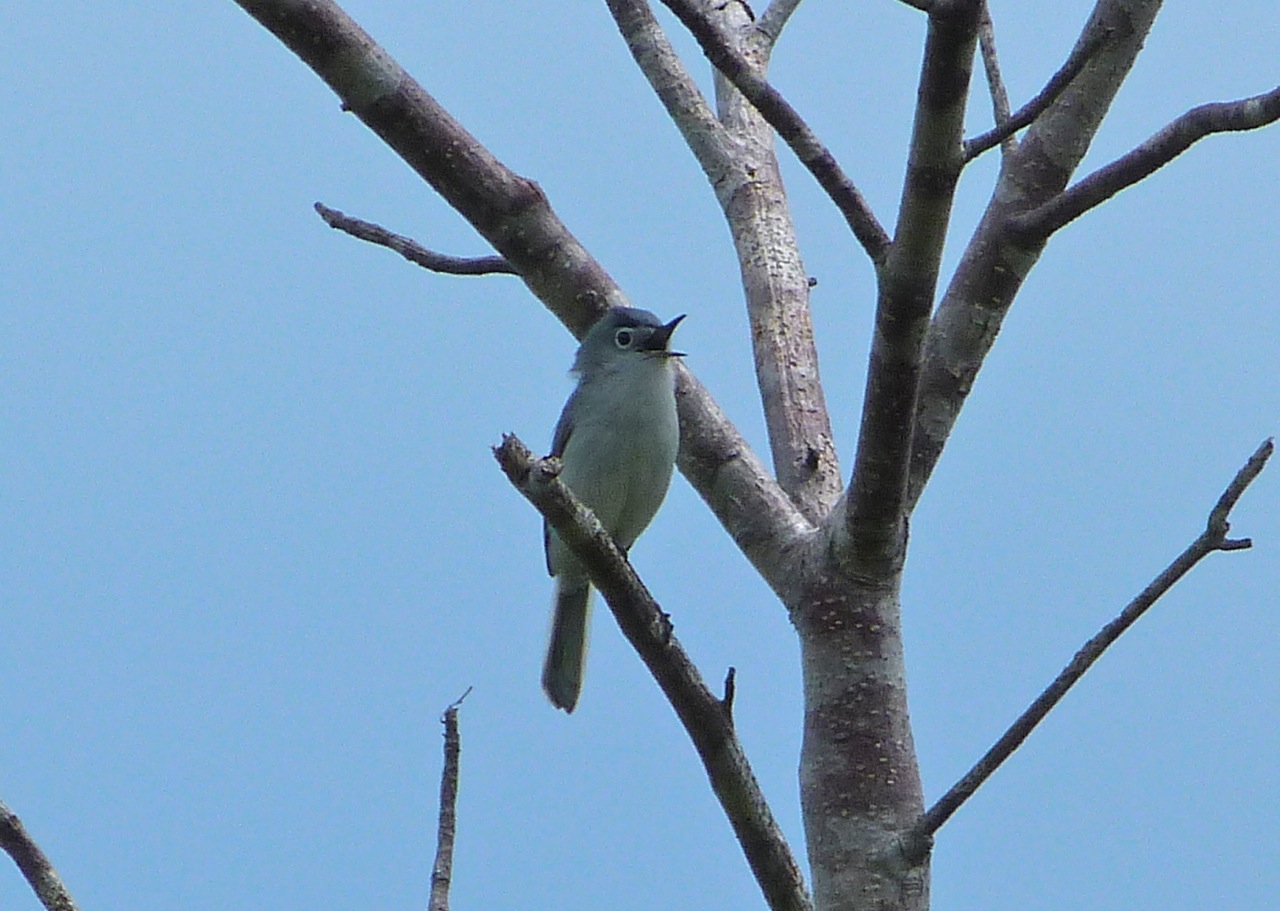
This small bird was quite far back – and high up – in the coppice on the Delphi guest drive. The photos were distance shots, so not the best quality, but they do capture the little bird in full song. BGGs have complete white eye rings; males have a dark ‘monobrow’ which can just about be seen in the photo above. In a word, ‘cute’. They sound like this (you may need to wait for the clip (credit: Cornell Lab / RH) to load – or hurry it along by clicking ‘Play’ as it loads):
They build a cup nest on a horizontal tree branch. It’s a modern family unit – both parents make the nest, tend the eggs, feed the young, and teach them manners. They may raise two broods in a season.
BGGs eat insects and spiders, feeding in trees and shrubs. They can hover very briefly, but mainly they catch insects on the wing (‘hawking’). The tail is often held upright while defending territory. Or sometimes just because they can.
All the information you could want on this species can be found at the excellent OISEAUX-BIRDS.COM
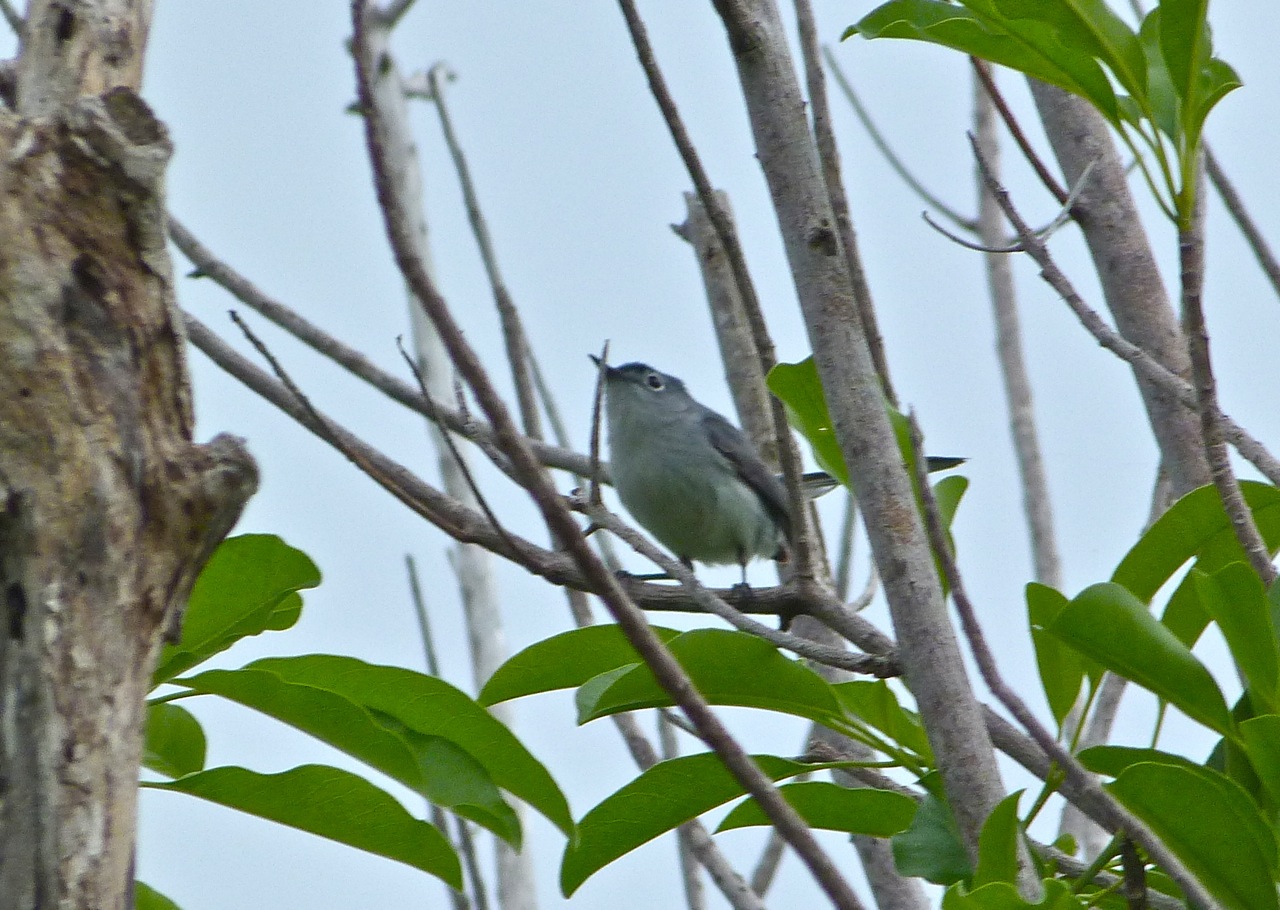
STOP PRESSchecking back through my photos, I’ve found a (slightly blurry) distance shot of a BGG. I am adding it because it shows the bird with its characteristically cocked tail, often seen when perching (the bird, I mean)
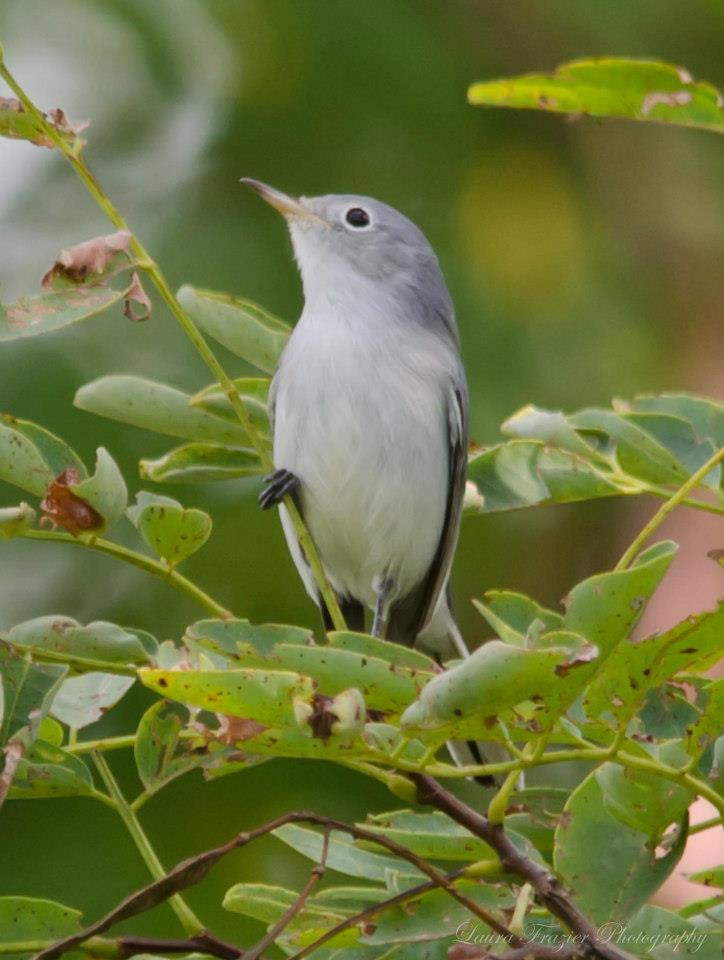
A very pretty BGG has recently been published on the superb Cornell Lab website, credited to Laura Frazier. It’s so cute – and such a clear image – that it deserves inclusion here
BONEFISH! POLING THROUGH THE MANGROVES ON THE ABACO MARLS
I recently posted a short video giving an idea what it is like on a skiff as it skims fast over the water to the bonefish feeding grounds of the Abaco MarlsSKIFF VIDEOHaving arrived among the mangroves where the bonefish are lurking, the game changes. Instead of the roar of the engine and bump of the waves, the engine is cut and in near-silence the guide poles the skiff very slowly through the low water…
There’s a regular gentle scrape of the long pole on the sea-bed, as all eyes – guide, the fisher ‘up front’, and fishing partner – scan the water and the margins of the mangroves for bonefish or signs of their feeding. There might be tell-tale grey holes in the sandy bottom – or, as below, a ‘push’ wave as one or more bonefish move on to another area
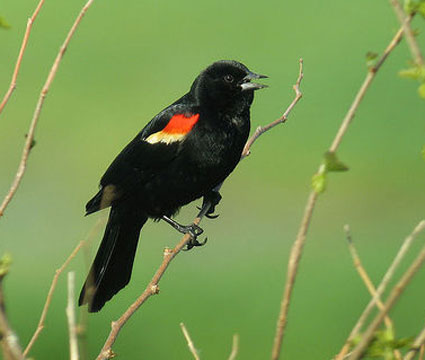
There are bird calls such as the strangely melancholic metallic double-note of the RED-WINGED BLACKBIRD sounding like a rusty door-hinge.
Otherwise, very little noise until… the urgently whispered “Hey! Bonefish 9 o’clock, 30 feet, moving right, 3 of them…” and the hunt is on
This short video shows the skiff’s slow progress across low clear water close to the edge of the mangroves, while we search for the dark shadows cast on the sand by the bonefish as they work their way through the flats hunting shrimps and small crabs… and in due course, with luck a well-placed “Delphi Daddy”
[vimeo https://vimeo.com/45498544]
Credits: Red-winged Blackbird call – Xeno-Canto; Video Music – Albert Ross (formerly of Fleetwood Mac); R-WB below – Cornell Lab of Ornithology
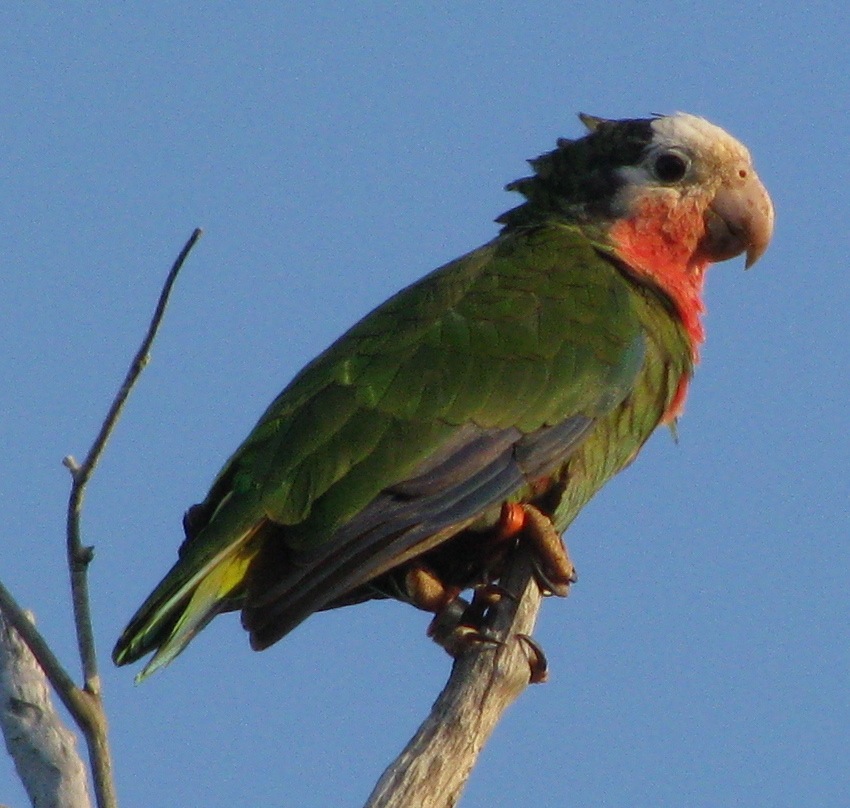
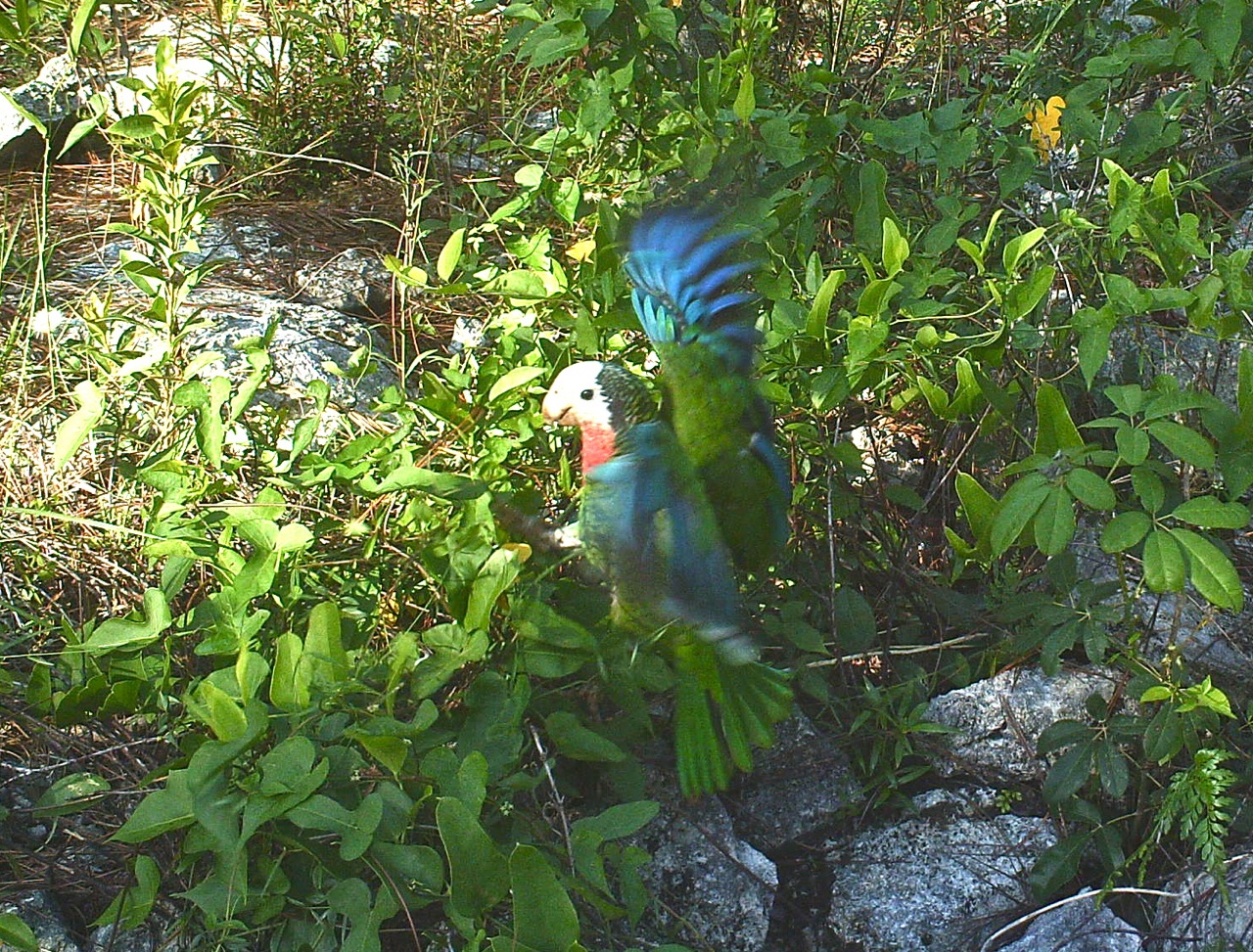
The wild parrots of Abaco are very special birds. Uniquely they nest underground in limestone holes which provides protection, not least from forest fires. Thanks to a program of intensive research over the last few years, far more is now known about these birds and their breeding habits. Investigations into predation have led to effective predator controls. The evidence this year is that the population numbers, having stabilised, are gradually rising to a sustainable level of some 4000 birds. The parrot below has been ringed as a chick as part of the continuing monitoring program.
I will soon be posting about the current breeding season – the parrots are in their limestone cavity nests now, the eggs are laid, the chicks will soon be hatching. Caroline Stahala, the Abaco parrot expert familiar to those who follow this blog (seeABACOPARROTS), will soon be reporting on this years breeding and chick-ringing program. In the meantime, here are some of Caroline’s pictures taken during the past season of the parrots in all their glory…
The parrots mainly live and breed in the pine forest of the Abaco National Park
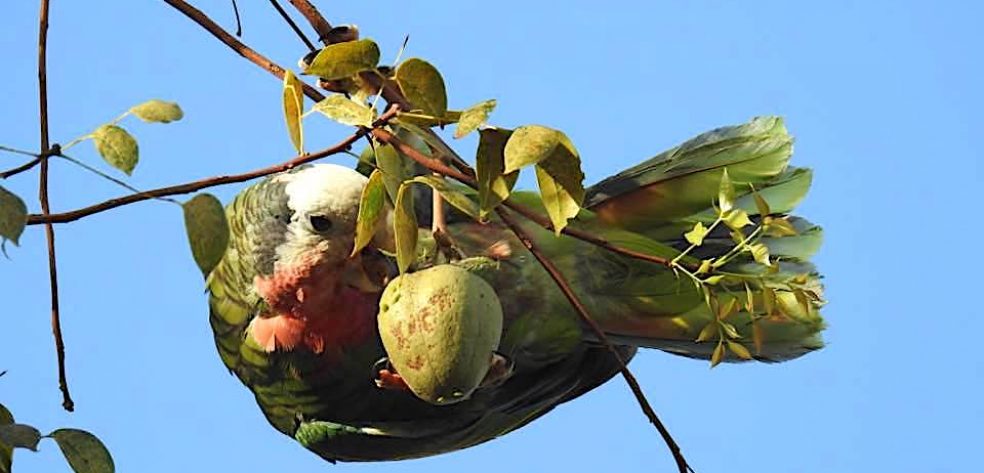
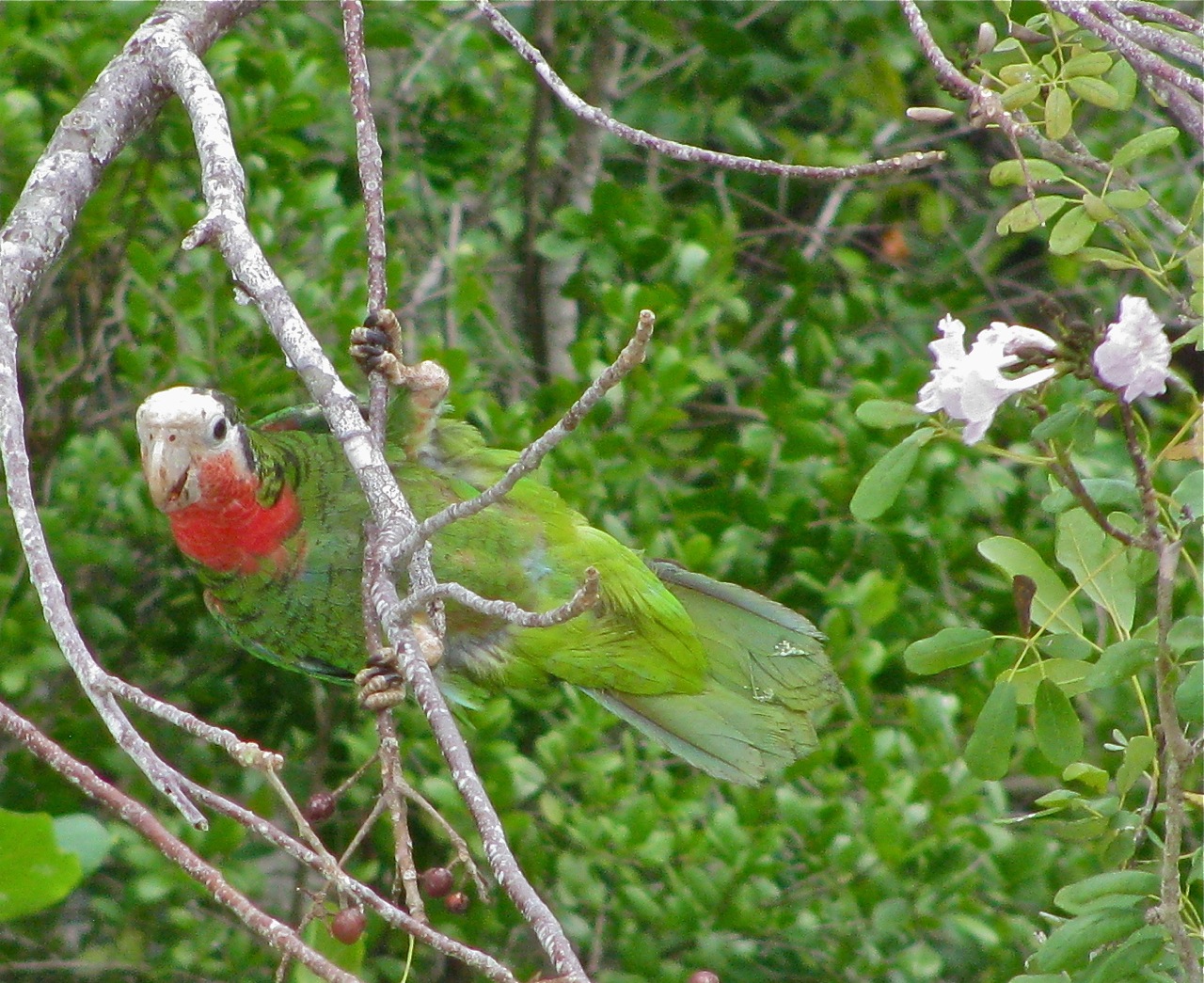
During the day they fly northwards, often in large noisy groups, where they feed. One of their favourite treats is the fruit of the Gumbo Limbo tree. This sometimes requires acrobatic skill
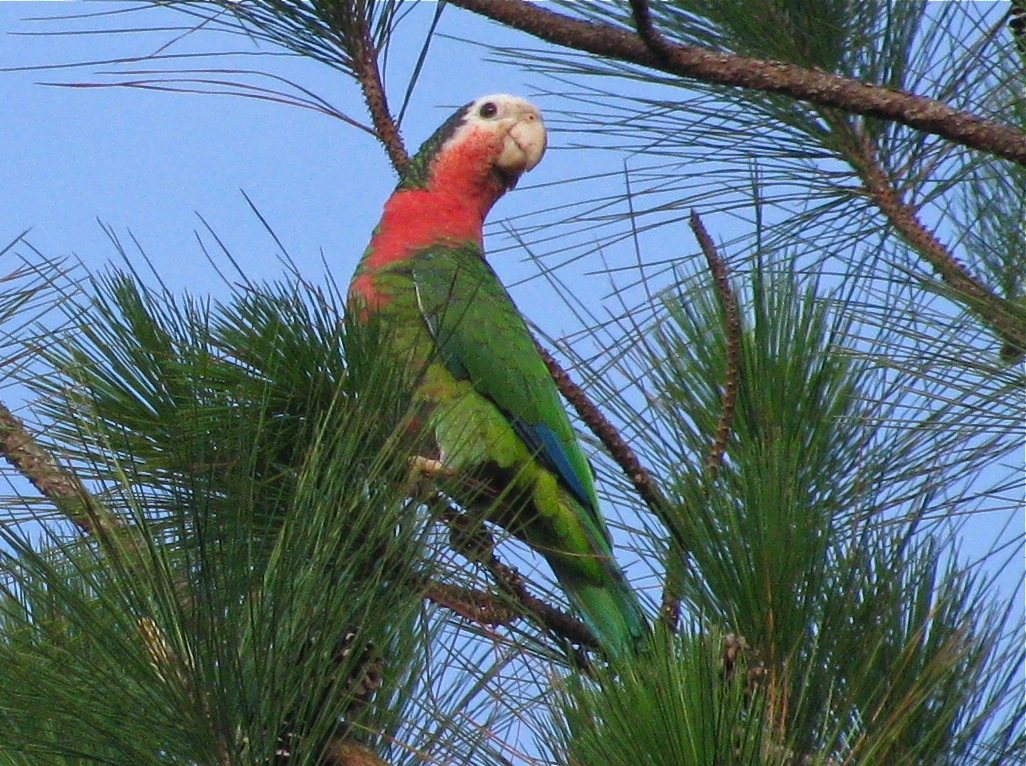
The sunshine brings out their bright colouring. When they fly, the blue on their wings is wonderful
Besides Gumbo Limbo berries, the parrots enjoy feeding on seeds
A parrot takes flight near a nest cavity. There’ll be more photos of parrot nests later this month
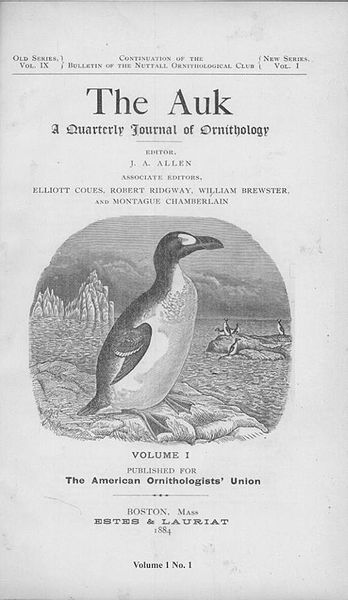
THE AUK is a quarterly journal published by the AOU specialising in promoting the scientific study of birds by means of original peer-reviewed reports. It has been in continuous publication since 1884, and can lay claim to be a (the?) foremost journal in its field. Here is the front page of the first volume of the journal
The 1905 Vol 22 No. 2 contains a 22 page study by Glover M Allen entitled SUMMER BIRDS IN THE BAHAMAS. If you aren’t a particularly dedicated birder, my advice is ‘look away now’ and move on to a page, post or other occupation that interests you more. For the remaining 2 of you, stay tuned in. I thank you both. It will be worth it…
The article was published at a time when ornithological survey of the Bahamas was in its infancy. Cory’s famous list of birds collected from the islands had been published a mere 15 years earlier. Allen details his time spent with 2 companions – much of it on Abaco – as they investigated birdlife and recorded their findings. That aspect comprises the first part of the article. The second part is equally fascinating: their list of bird species, with commentary, remarks and comparisons thrown in, together with some of the local names for the birds. Some of these are still in use, others perhaps long-forgotten. Is a Least Tern still known as a ‘Kill-’em-Polly’? Here are some highlights for busy people:
FLAMINGO / SPOONBILL Of particular interest is the recording of the apparently imminent loss of the flamingo (“fillymingo”) from the Northern Bahamas – a single colony only still surviving on the Abaco Marls by 1905. Allen and his group found only one roseate spoonbill, also on the Marls (we were also lucky enough to see a single spoonbill on the Marls in June)
BAHAMA PARROT Those who follow the fortunes of these fine birds on this blog or elsewhere will be especially interested in the following extract, which suggest that at the start of the c20, the species had all but died out on Abaco:“Amazona bahamensis (Bryant). We were interested to learn through the captain of our schooner, that a few parrots still exist on Great Abaco. He told us of having seen a flock near Marsh Harbor the year before (1903) and in previous years had some- times observed a flock in late summer at that part of the island. We learned that at Acklin’s Island about 14o miles south of Nassau, parrots still nest in numbers and the young birds are regularly taken from the nest when fledged,and bronght to Nassau to be sold as pets” I will be posting about the parrots later this month, but suffice to say here that the current estimate for Abaco parrots is now around 4000 birds, a significant increase since conservation measures and a predator control program were started some years ago.
BAHAMA WOODSTAR These endemic hummingbirds, now taking second place to the in-comer Cuban Emerald, were plainly everywhere then: “On all the islands and cays, wherever there was bush or tree growth, this humming- bird occurred”
“PARAKEETS” There seems to have been a significant population of these, known then as ‘Bahama Grassquits’. What species were – or are -these? The description doesn’t quite match the ‘quit family candidates we are familiar with today.
OTHER SPECIES Avian taxononomy, with its frequent official changes of classification, is a confusing area… but it seems that in 1905 there were then 2 distinct species of Spindalis (now, one); and 3 Mockingbird varieties (now, two). But of course there may simply have been a naming adjustment since the article was published…
For those who have stayed awake till now, your prize is the following link to the whole 22-page (small pages!) article
NO SALMON FISHING IN THE YEMEN? GO BIRDWATCHING INSTEAD…
AN ABACO / YEMEN BIRD POPULATION COMPARISON
All anglers have done it. Gone somewhere to fish on a hunch, a whim or a tentative recommendation, only to find no fish. What if you decided to take a break from Abaco bonefishing on the strength of the film title Salmon Fishing in the Yemen, only to find that there is, in fact, no migratory salmonid species in the republic. Despite the film’s dreamily optimistic outcome, it’s a piscatorial impossibility. You should have read the book first, of course – or seen the film, if only for Emily Blunt. Ok, and Ewan McGregor, if you must. Yes yes, and the fabulously over-the-top foul-mouthed cameo that is Kristin Scott-Thomas.
Set aside your disappointment. The only sensible thing is to put the fishing tackle away and check out the other Yemeni wildlife, specifically the birds. But you haven’t come prepared for this. You have no bird guide. So what species might you find in the Yemen that would be familiar to a Bahamian, specifically a South Abaconian?
South Abaco has 126 of the 196 birds species found more widely on Abaco, according to Avibase. I wondered how many of these one might find in the Yemen. And the answer is 33 (or 26%)
When I started checking this, I thought there would be very few – maybe a dozen or so – ‘mutual’ birds. As I worked my way through the seabirds, shore birds, birds of prey etc, the total slowly rose. Then I came to a sudden halt. Apart from the near-ubiquitous, adaptable rock dove, starling and sparrow, there are NO small birds in common at all. The obvious reasons are distance, habitat and climate, of course, but nevertheless I found it a slightly surprising finding.
So the lesson is, don’t be tempted to go warbler-watching in the Yemen either…
These small birds are a favourite of mine. They flicker around, cheeping cheerfully, yet are often quite hard to see in the coppice even if you think you are looking exactly where the sound is coming from.
Bananaquits are passerines, with an uncertain species designation. Over the years they have been officially reclassified three times. Some include them loosely with tanagers; others put them in their own family group; others argue that there are 3 distinct species. Basically, there is no universal consensus. There is some satisfaction, in a vastly over-classified world, in one small bird resisting man’s pigeon-holing (so to speak). It’s a tiny taxonomic enigma.
Among the islands of the West Indies there are several subspecies of bananaquit, with marked variations of appearance and size too tedious to relate. The best news is that “…the Bahamas Bananaquit with a whitish throat and upper chest may be a separate species…”.
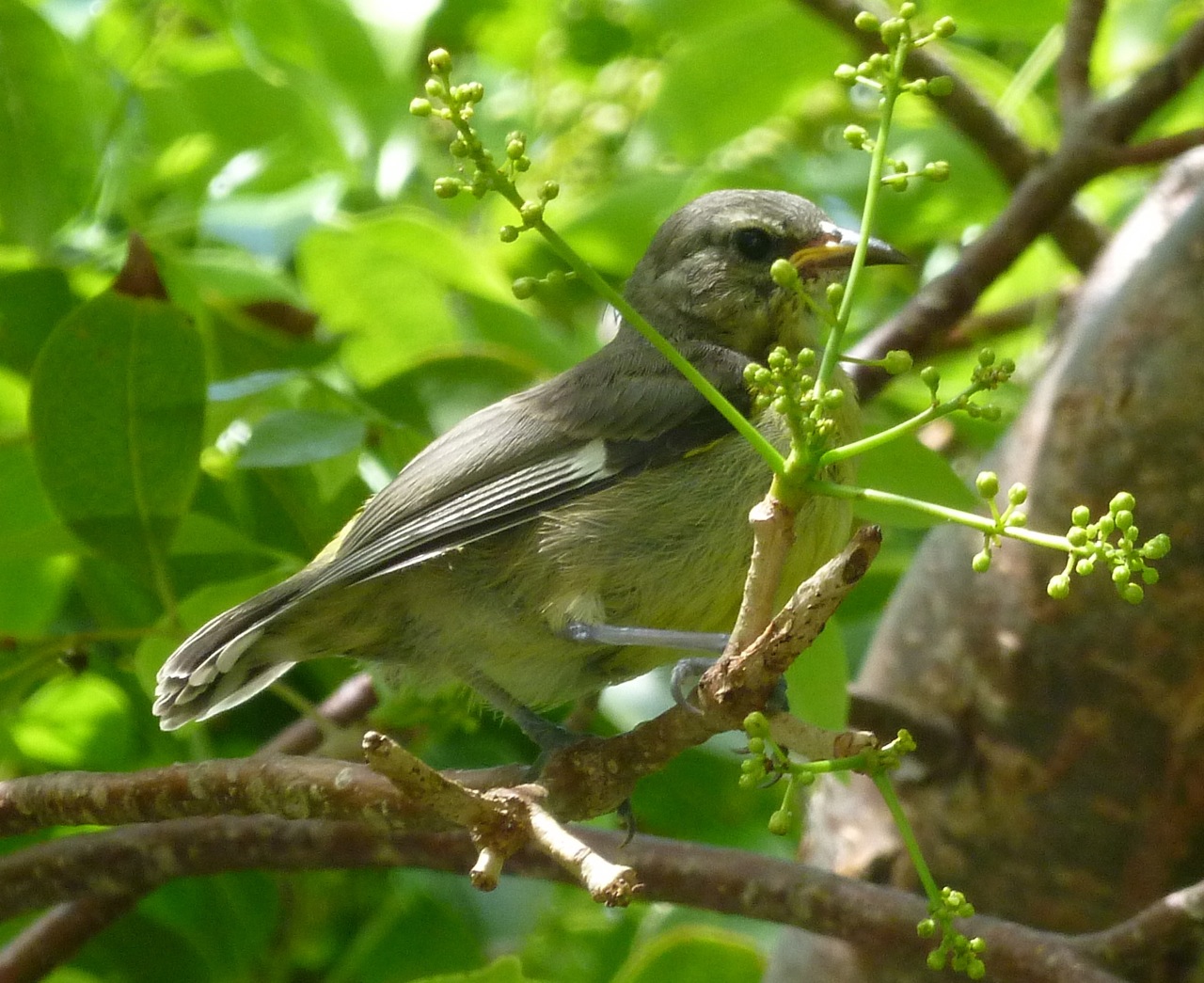
The Bananaquit’s slender, curved bill is designed for taking nectar from flowers. It can pierce flowers from the side to reach the nectar, or use its bill to puncture fruit. It also eats small insects. The birds are tame, and love feeders, especially hummingbird feeders filled with sugar-water – hence their nickname “sugar bird”. They breed all year round. This is the characteristic chirrup of the Bahamas Bananaquit (credit: Xeno-Canto)
This small juvenile was happily feeding by itself near the Delphi Club, Abaco. Its mother then flew onto a nearby branch, and I’m afraid to say that the child indulged in a shameful charade of “Hungry! Feed Me! Now!”
WARBLER IDENTIFICATION – A LIGHT-HEARTED CHALLENGE
SPECIES ID NOW SOLVED! CUT TO THE CHASE BENEATH THE PHOTOS FOR DETAILS. A LATE ENTRY NOW DISPUTES THE GENDER ID, SO THE SEX CHALLENGE IS REOPENED, SO TO SPEAK
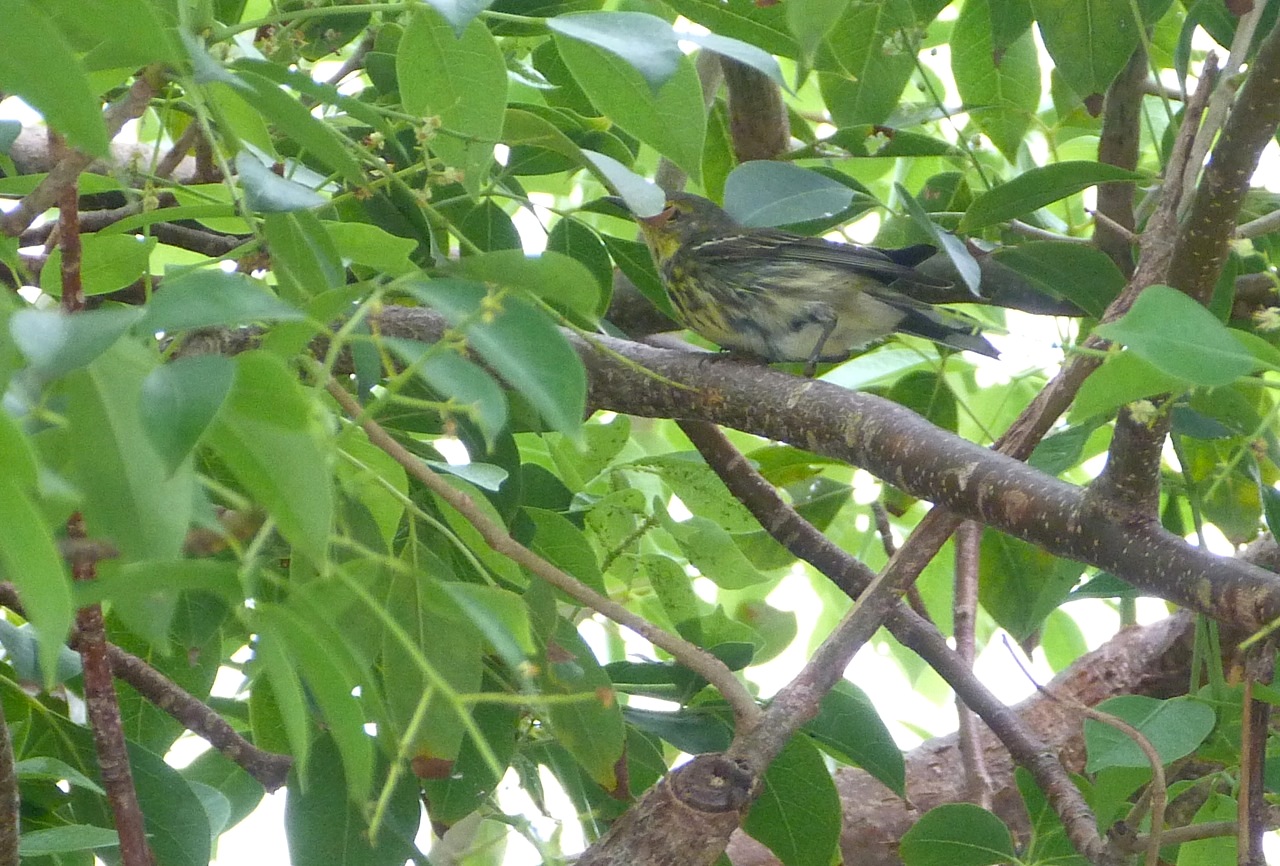
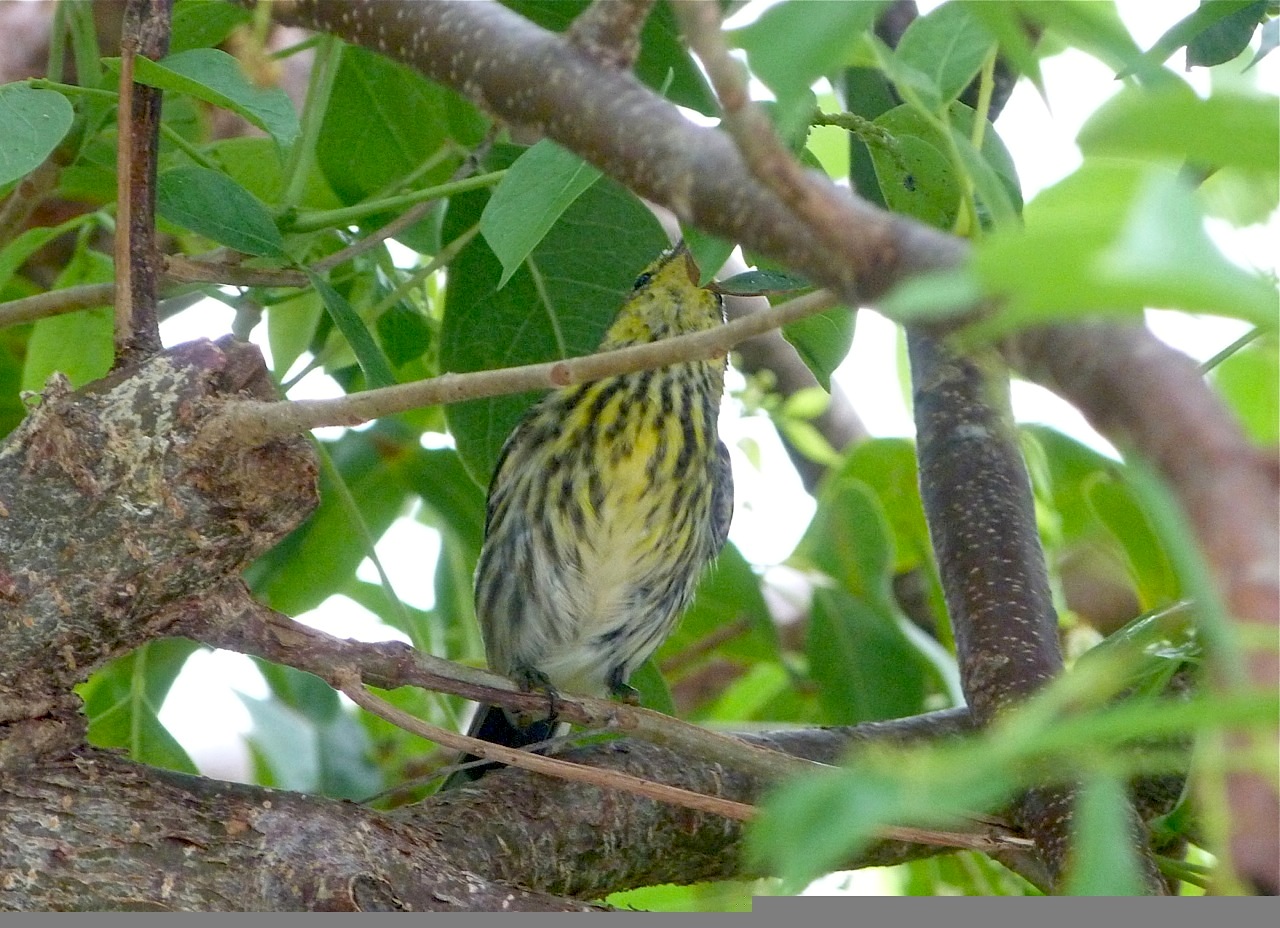
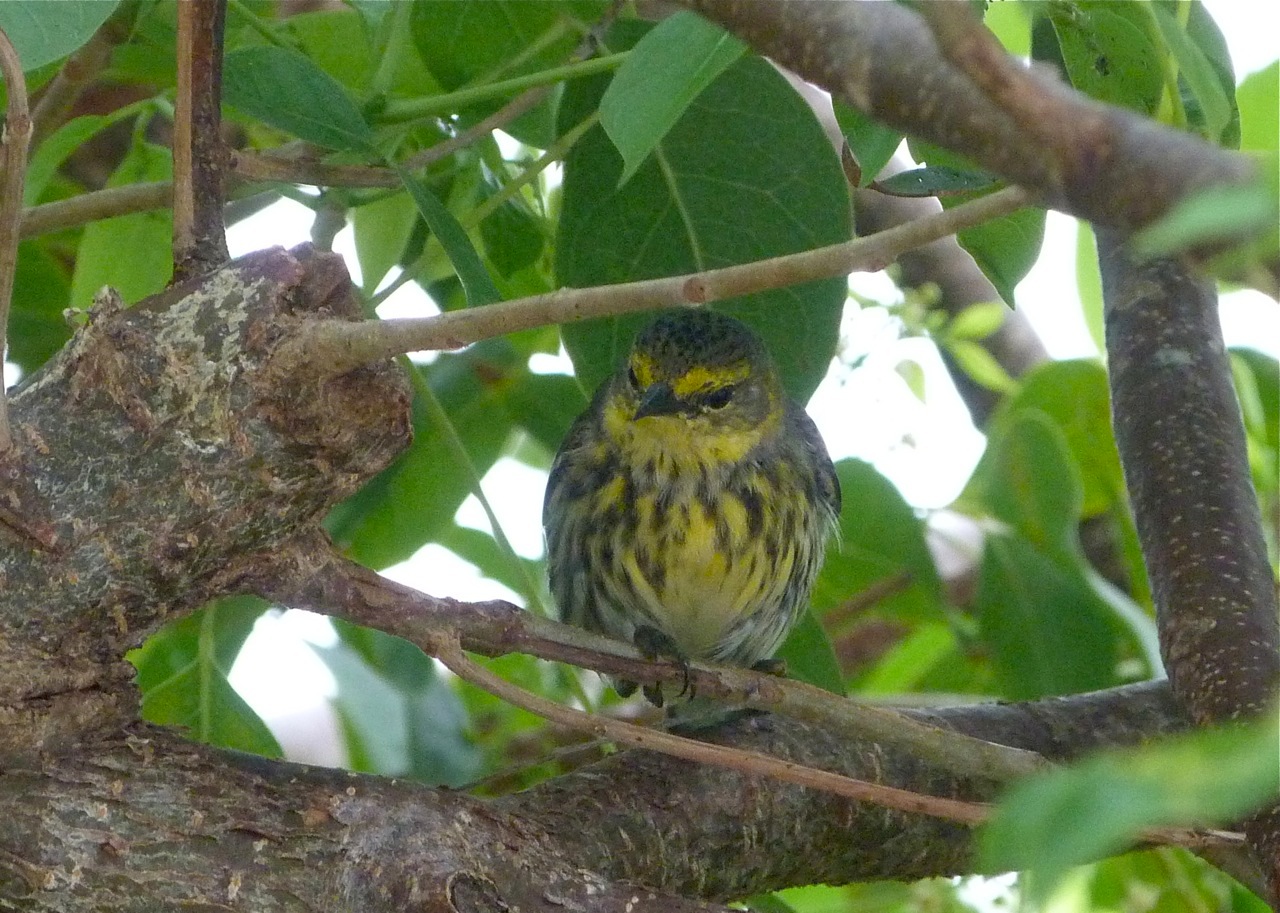
I have previously posted aids to WARBLER ID (1); WARBLER ID (2), a pitfall-fraught area that continues to baffle me despite books, online resources, futile stabs in the dark etc. For each species the male differs from the female, and both differ from juvenile / maturing birds. And this all depends to some extent on the season. Here’s a speckled warbler photographed recently at the Delphi Club, Abaco, for which there are various candidates ranging from the distinctly possible to the frankly completely-unlikely-but-astounding-if-it-turned-out-to-be-true Kirtland’s Warbler. These are seen and positively identified vanishingly rarely on Abaco – maybe one or two a year, and invariably in winter. But what if one decided to stay behind for the summer… And to those who say “Prairie, dimwit”, I reply “…but their speckles don’t cover their entire fronts”.
I’m throwing this open, because although I have a view I’d like to see what others come up with. Craig? Avian101? Avian3? Margaret H? Other birding followers? Are you out there? Leave a comment (see small-print blurb at the bottom of the post) or email me at rollingharbour.delphi@gmail.com The bird was a bit reluctant to be photographed, but I managed to get a side view, a ‘full-frontal’ and a head shot. Any ideas?
UPDATEThanks to all who came up with suggestions – it’s interesting how opinion on warbler species varies, even with quite clear close-ups to judge from. The first past the post is… Dr Elwood D Bracey (Fl), to whom many thanks. It’s a female CAPE MAY WARBLERDendroica tigrina. The runner-up is (amazingly) myself – I had it down for a Cape May juvenile, because I thought it looked a bit on the fluffy side… Also, its eye-patches (photo 3) are grey rather than brown, and I took their colouring to be a work in progress. There’ll be some more ID queries from our recent batch of Abaco photos – not just birds, but flowers & shells as well. All contributions will be welcome…
Oh no! What’s happening here? A late challenge has come in from Margaret H (see comments), who contends that the clearly shown patch on the bird’s cheek indicates that it is a male, not a female, Cape May. So the challenge was ended and the award given prematurely… The species is now definite, but the gender ID remains unresolved…
I’ve now heard from Alex Hughes, who writes “[I am] one of Caroline Stahala’s field techs on the parrot project this summer. She forwarded me the photos of the warbler taken recently on Abaco. The photos I saw are of a female Cape May Warbler, which is a great find in June! She is certainly not going to make it to her breeding grounds, unfortunately, but still fascinating to see a boreal forest bird in the Bahamas during summer.
In a follow-up, Alex adds “I’d be very surprised if this was a male bird, due to the plumage lined up with the time of year. This year’s juvenile birds are not big enough to make the flight south from breeding grounds yet, and wouldn’t anyways if they could. Therefore, it would have to be adult non-breeding plumage if it were a male, also meaning this bird already molted from alternate plumage from spring, and flew south. This seems far more unlikely to me than a female who simply didn’t make the flight, probably due to some handicap. Either way, very cool!”
So I think that wraps it up. A female Cape May, in the right place at the wrong time. How lucky to have got close to one in the off-season. It just goes to show, eager Kirtland hunters, that any of the migratory warbler species might choose to stay behind for the summer…
CORNELL LAB OF ORNITHOLOGY IMAGE & BLURB
“The Cape May Warbler breeds across the boreal forest of Canada and the northern United States, where the fortunes of its populations are largely tied to the availability of spruce budworms, its preferred food. Striking in appearance but poorly understood, the species spends its winters in the West Indies, collecting nectar with its unique curled, semitubular tongue”.
It is presumably using its ‘unique… tongue’ in Photo 2, inconveniently concealed by foliage so we will never know
(RH COMMENT My one obviously liked the Delphi Club – and its feeders – so much that it decided to stay for the summer…)
(Credit: Steve Pelikan for Xeno-Canto)
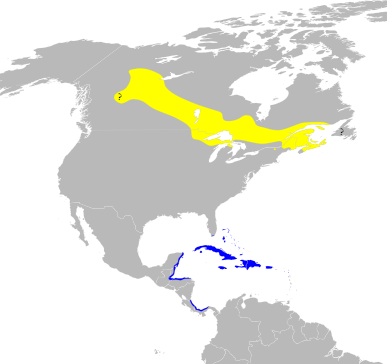
CAPE MAY WARBLER RANGE MAP (Wiki) (left)
As a warbler-muddler, I am interested to see how extremely selective this species is in its preferred summer and winter latitudes. The banding is very distinct. Are they never tempted by New York? Have they never tried Disneyland?
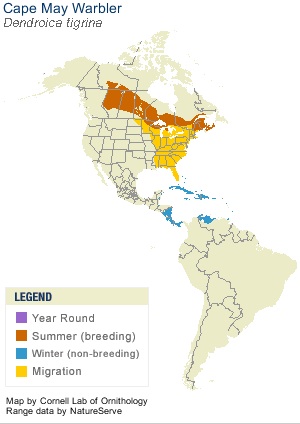
CORNELL LAB OF ORNITHOLOGY RANGE MAP(below)
The more sophisticated range map below shows the migration areas between the summer breeding and winter non-breeding areas. It looks as though a Cape May warbler on Abaco in June is an unexpected sighting.
JAMES BOND – THE ORNITHOLOGIST WHO LENT HIS NAME TO A FICTION LEGEND
Jamaica, 1952. The night was hot, too hot. Fleming cursed as he made his way up the steps to his neighbour’s verandah. He heard the clink of ice from within the house, and guessed that the rum punch was being mixed just the way he liked it. Stirred, not shaken. As he passed a low table on the verandah his eyes were drawn to a small book lying on it. Fleming paused, taking in the information, his senses suddenly alive. Bond. James Bond. A bird book about the avian species of the West Indies. Suddenly, it all made sense. Fleming knew now the direction he had to take, and with a thin smile he flicked back the insolent comma of dark hair that had fallen across his face and strode into the house towards the sound of the ice…
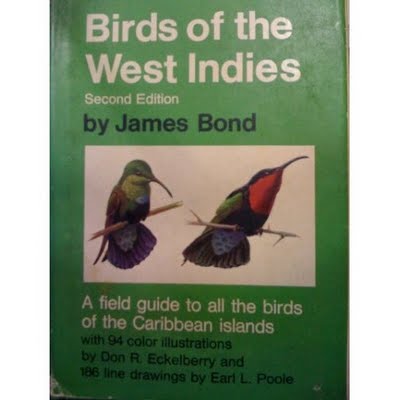
James Bond, ornithologist (1900 – 1989) was an expert on the birdlife of the Caribbean and wrote the seminal Birds of the West Indies, first published in 1936 and republished in varying formats ever since.
Ian Fleming lived in Jamaica and was a keen birdwatcher. The story goes that one evening, visiting friends, he saw ornithologist James Bond’s Birds of the West Indies on a table, and borrowed that short, punchy name for his fictional hero 007 for Casino Royale, published in 1953. He later said he wanted a name that sounded ‘as ordinary as possible’. In an interview, Fleming said “I wanted the simplest, dullest, plainest-sounding name I could find, and ‘James Bond’ was much better than something more interesting, like ‘Peregrine Carruthers.’ Exotic things would happen to and around him, but he would be a neutral figure — an anonymous, blunt instrument wielded by a government department.” Fleming wrote to the real James Bond’s wife “It struck me that this brief, unromantic, Anglo-Saxon and yet very masculine name was just what I needed, and so a second James Bond was born.” He also contacted the real James Bond about using his name in the books and Bond replied that he was “fine with it.” At some point during one of Fleming’s visits to Jamaica he met the real Bond and his wife. The meeting was recorded for a documentary.
FACT, FICTION & IN-JOKES
In Dr No Fleming referenced Bond’s work by basing a large Ornithological Sanctuary on Dr No’s island in the Bahamas. In 1964, Fleming gave Bond a first edition copy of You Only Live Twice signed “To the real James Bond, from the thief of his identity”. In the 2002 Bond film Die Another Day the fictional Bond can be seen examining Birds of the West Indies in an early scene that takes place in Havana. However the author’s name (James Bond) on the front cover is obscured. In the same film, when Bond first meets Jinx, he introduces himself as an ornithologist.
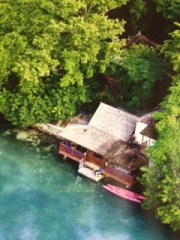
Ian Fleming Lived Here in Jamaica **
I had been planning to research the history of the various editions of Birds of the West Indies, the locus classicus for Caribbean species. Then I started to look into it and found that someone – Jack Holloway – had already done it so thoroughly that I would be wasting my time. So I contacted Jack for use permission, and I am very grateful to him for granting it by return. This next part is all thanks to him. I recommend a visit to his very good online bird resource website at AVIAN3
♠ ♣ ♥ ♦ ♠ ♣ ♥ ♦ ♠ ♣ ♥ ♦ ♠ ♣ ♥ ♦ ♠ ♣ ♥ ♦
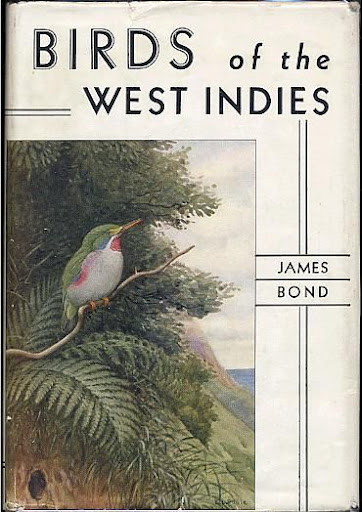
THE HISTORY OF BIRDS OF THE WEST INDIES BY JAMES BOND
1936 (The Original)
This is the alpha of the “Birds of the West Indies” books by James Bond. Its longer subtitle is “An Account with full descriptions of all the birds known to occur or to have occurred on the West Indian Islands“. Published just shy of two years after Peterson’s A Field Guide to the Birds of the West Indies, this book was the first field guide to cover all the birds of the West Indies (outside of Cory’s annotated book of 1889).
Somewhat in contrast to what is stated in the later 1961 version as the “First American Edition”, this 1936 book was published by The Academy of Natural Sciences of Philadelphia (at which Bond worked) and was printed by Waverly Press, Inc. in Baltimore, Maryland.
This book is certainly quite scarce and typically commands a price ranging from $500 – $1,500 depending on its condition and the presence of a dustjacket.
Ultimately, one may ask, “What’s the difference between this first book and the subsequent versions?” Here is the answer in the form of a table (see below)
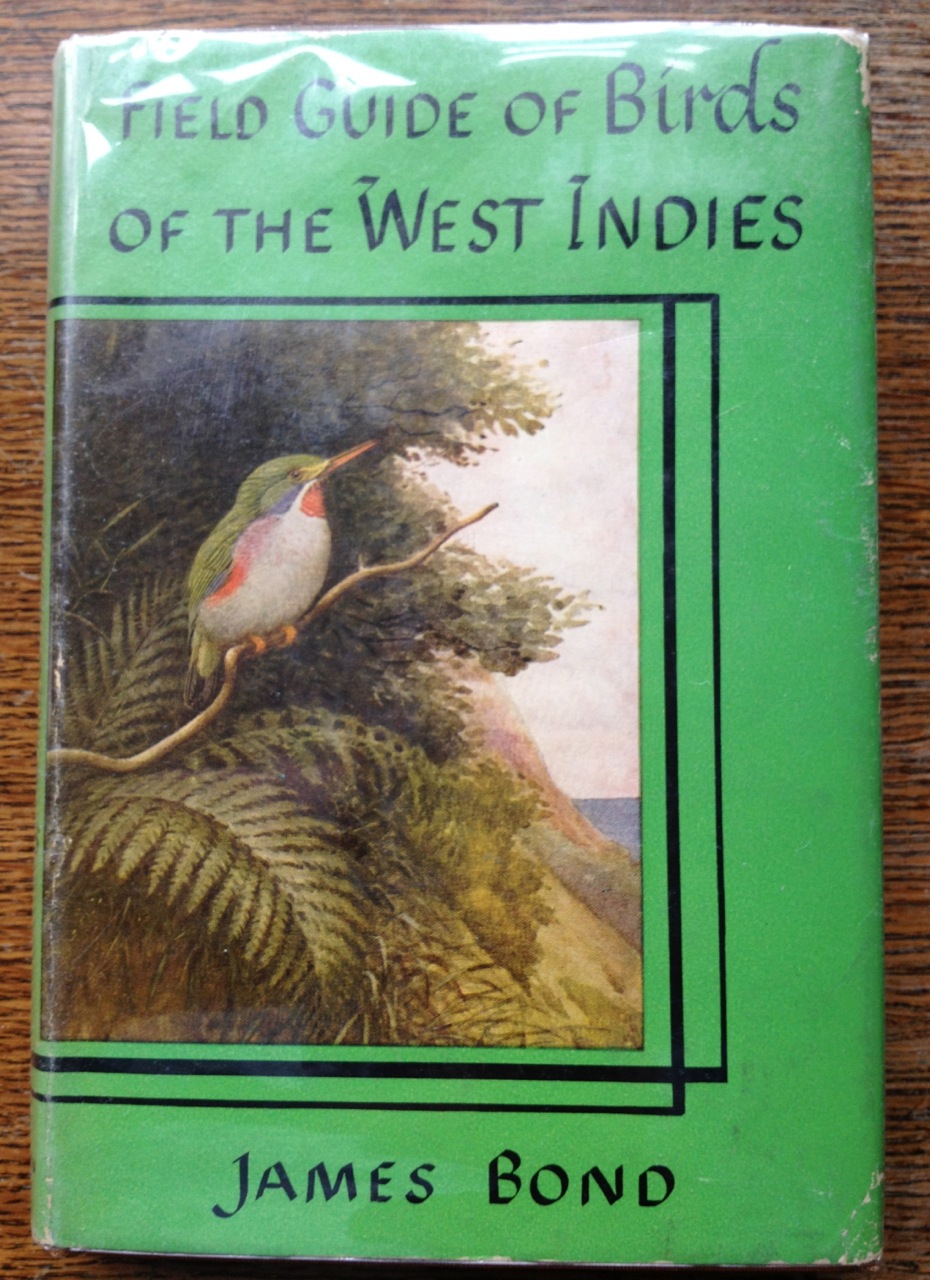
1947 (The Next Version)
This 1947 version is often advertised or assumed to be the first edition. This may be due in part to the rarity of the original 1936 edition and/or to the presence of “First Printing” printed on the backside of the Title Page in the 1947 book (see image below). This “first printing” refers only to the second book. For the true, original book, you must go back another 11 years to 1936.
Despite the notation of “First American Edition” in the 1961 version, this 1947 book was published by the MacMillan Company of New York and was printed in the United States. The 1936 edition was also US published and printed.
As an obscure note, the title of the book printed on the dustjacket does not match the title printed on the book itself. The cover reads, “Field Guide of Birds…” while the book reads, “Field Guide to Birds…”. Also, it is likely this is the version owned by Ian Fleming which inspired the naming of his charismatic spy (see below)
Depending on the condition of this book and the presence of a dustjacket, this 1947 version ranges in price between $30 and $100.
STOP PRESS As a guideline, I’ve now bought a copy of this edition on eBay for $80, in very good condition with good dust jacket. On a first edition, I beat the seller down from $2250 to $1600, but it was in poor condition and I left it at that…
1961 (“1st American Edition“)
Just as a note of interest — or irony — this 1961 version is labeled as the “First America Edition”. Keep in mind the 1936 and 1947 books were both published and printed in the US. Additionally, just beneath the statement of “First American Edition”, you will see “Printed in Great Britain”. Completing the picture, this book was published by the Houghton Mifflin Company of Boston; thus, the American connection (I guess).
1970s
1971 1971 1974
1980s
1980 1980 1985 1986 (?)
1990s (the adoption by the Peterson series)
1993 1995 1999
2000s
2002 (?)
OTHER COVERS
1960s?
ADDENDUM
1966
Needless to say, the name James Bond has a familiarity beyond just the birding world. Several myths and slight distortions have grown related to how this name has been transmogrified from ornithologist to international spy.
In 1966, Mrs. James (Mary Wickham) Bond wrote a 62-page book How 007 Got His Name that outlined the circumstances which led to the use of Mr. Bond’s name in the series of books written by Ian Fleming.
As noted on pp. 16-17, Dr. Bond first became aware of his new recognition in 1961. This was after seven spy thrillers had already been published and were just becoming popular in the US.
Mrs. Bond wrote a light-hearted letter to Mr. Fleming on February 01, 1961 to make note that he had “…brazenly taken the name of a real human being for your rascal!” (p.18). A return letter by Mr. Fleming was most gracious and apologetic.
In this reply, (contained in full in Mrs., Bond’s book), Mr. Fleming wrote, “I will confess at once that your husband has every reason to sue me in every possible position and for practically every kind of libel in the book, for I will now confess the damnable truth.” (p.21).
He then provided an explanation of how he selected his character’s name for the first book in 1953: “…I was determined that my secret agent should be as anonymous a personality as possible…At this time one of my bibles was, and still is, Birds of the West Indies by James Bond, and it struck me that this name, brief, unromantic and yet very masculine, was just what I needed and so James Bond II was born…”
Mimicking Mrs. Bond’s light-hearted approach, Mr. Fleming continued his reply with this unique offer: “In return I can only offer your James Bond unlimited use of the name Ian Fleming for any purpose he may think fit. Perhaps one day he will discover some particularly horrible species of bird which he would like to christen in an insulting fashion.” (p.22).
Mr. Fleming also offered the Bonds an open invitation to visit his residence in Jamaica and to visit the birthplace of the second James Bond.
Iam Fleming and the real James Bond met only once, which was February 5th, 1964. This was in Jamaica, six months before the death of Mr. Fleming.
This short book by Mrs. Bond is a nice, quick read. I appreciate it for the first-hand accounts of the historical beginnings of Bond vs. Bond as opposed to the hearsay and myths created over time. The book also offers entertaining stories of how James Bond dealt with his new popularity and the avid “fans” upon their discovery of his name.
Comparison Table of the Books’ Contents over theYears
**“THE FLEMING VILLA” (SHOWN ABOVE) – THE FACTS
Once rented by Noel Coward
Sting wrote “Every Breath you Take” here
Princess Margaret, while a guest, broke a toe on one of the beds (rum punch alert!)
Ian Fleming himself designed the house, and wrote all the Bond books here
It has 5 bedrooms, and was built by a former donkey track bought by Fleming in 1946
You can rent it (and its full-time staff) for £3500 (including breakfast). Per night…
It is part of the ‘Goldeneye’ Estate (and no, there isn’t a ‘Thunderball’ Estate)
THE RED-LEGGED THRUSH–A WELCOME GUEST AT THE DELPHI CLUB, ABACO
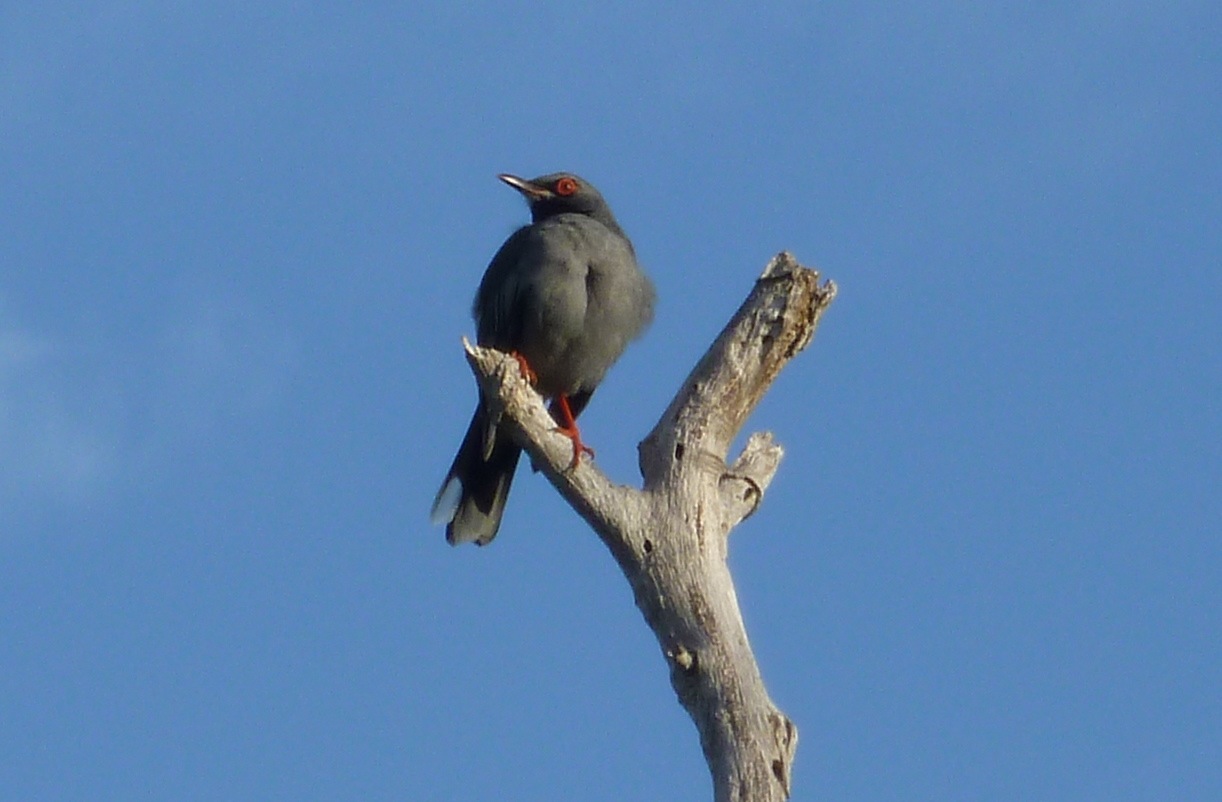
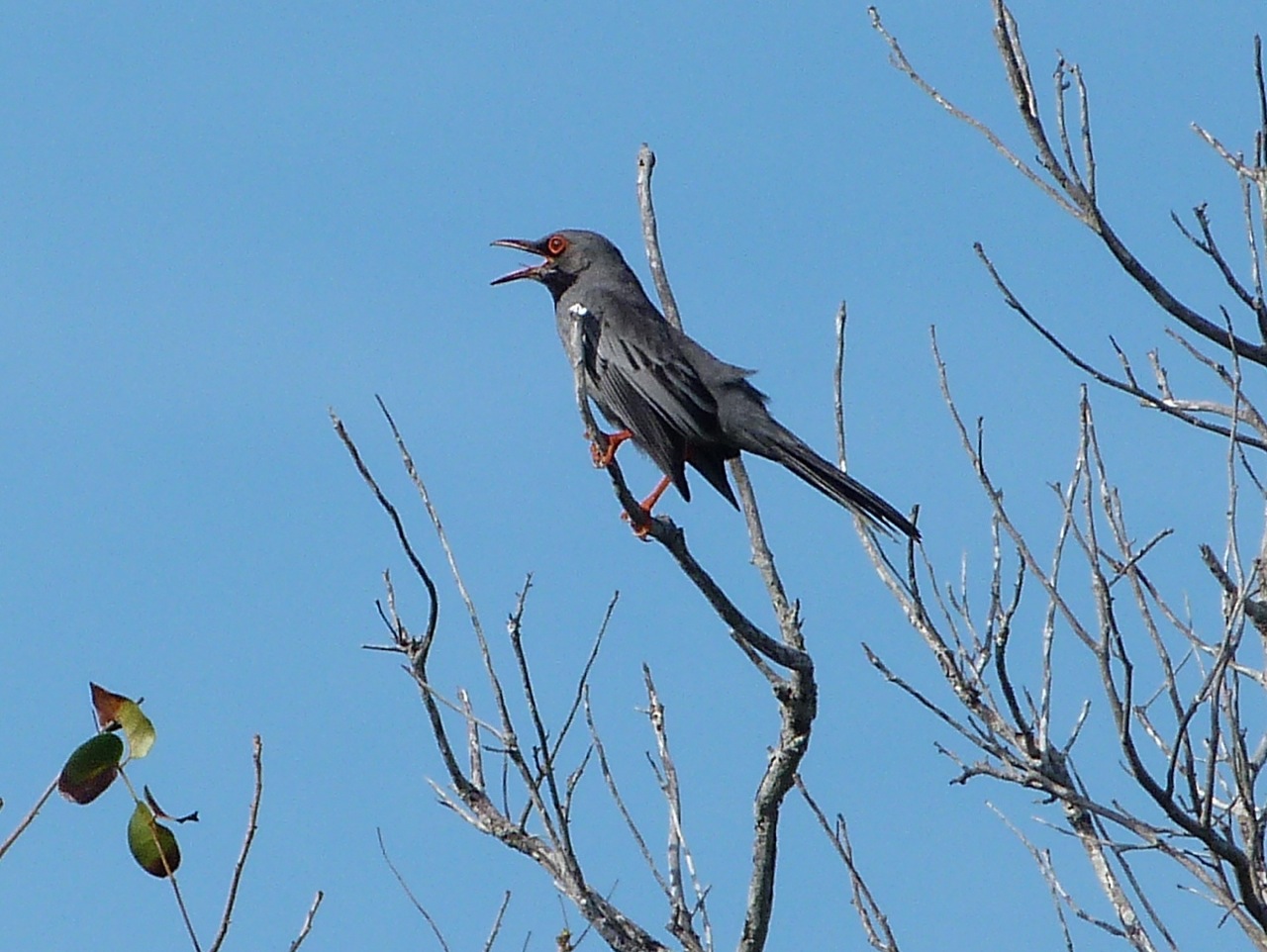
They are everywhere in May and June, with their eponymous limbs and their remarkable red eyes. In fact, ‘red-eyed thrush’ would be as apt a name, if somewhat lachrymose-sounding. This was our first Summer visit to Abaco and the difference in sightings was marked. Now, the thrushes tended to choose a high tree-perch to sing from, when not hopping around feeding on the ground. In March they seem more furtive, lurking in the coppice – presumably eyeing up the talent (or sizing up the opposition) with mating in mind.
There are 6 distinct regional variations on the species, which are found in the Bahamas, Caymans, Cuba, Dominica, Haiti and Puerto Rico. TURDUS PLUMBEUS is the subspecies specific to the Bahamas. Some view them as the Caribbean counterpart to theAMERICAN ROBIN. They eat fruit, insects and small creatures such as snails, lizards and caterpillars. Their song sounds like this (courtesy of Paul Driver at Xeno-Canto)
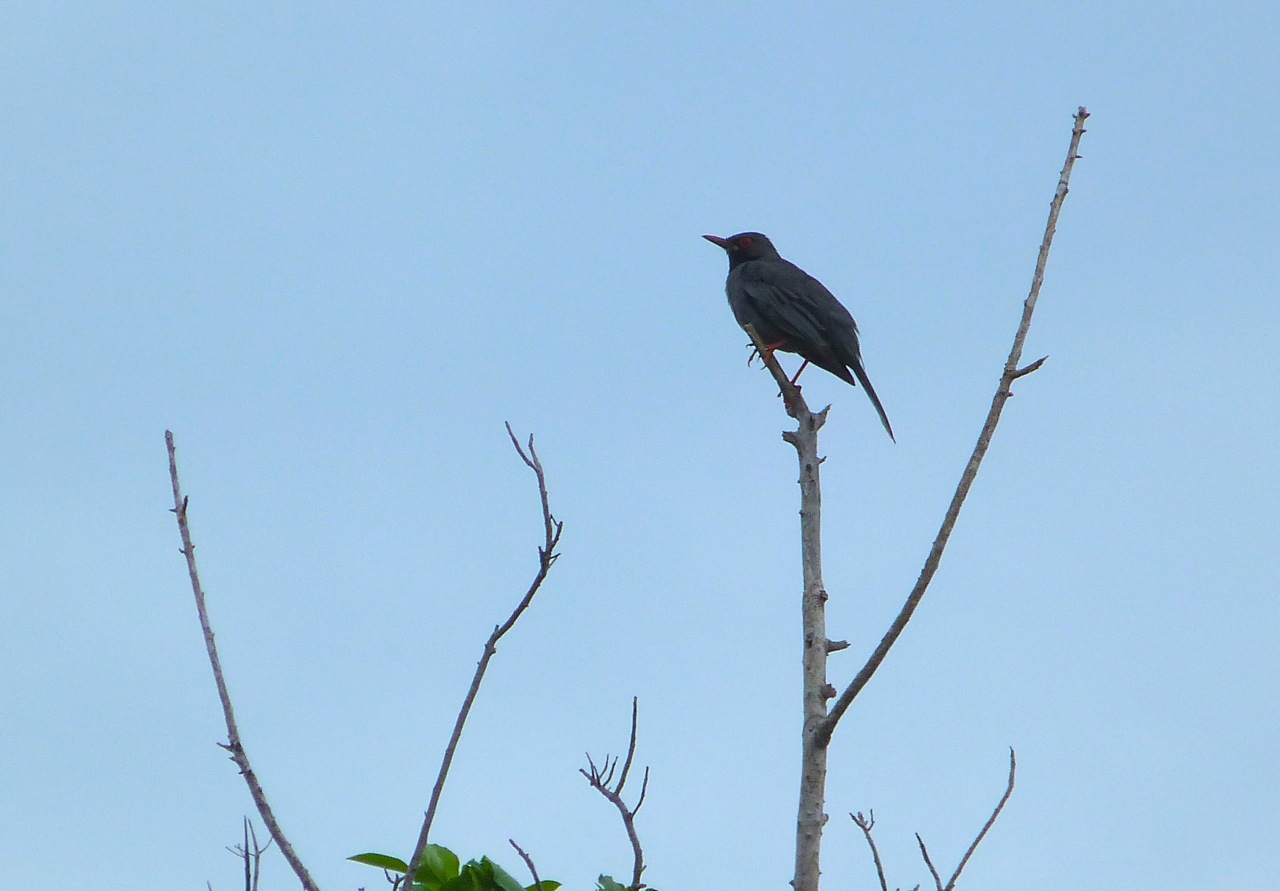
In a departure from the normal use of an ‘in-house’ logo, I’ve posted a silhouette of a Delphi RLT in the coppice close to the Club. The photo itself was dull, but I liked the pose and decided to turn it into logo-thrush
BIRDS IN THE DELPHI GOUNDS OR IN THE COPPICE NEARBY
1. This bird was at the top of a tree on the Delphi front drive close to the Club. It is singing cheerfully, and you can clearly see its tongue
2. This bird also chose a high vantage point near the front entrance gate. I managed to get gradually closer to it. Its feathers are quite fluffy and I wonder if it a juvenile / late teen?
3. Strike the pose! Two very characteristic poses by a bird on the guest drive. In the first image, you can also (just) see its tongue as it sings
4. Another high perch above the coppice alongside the drive
GROUND-FEEDING IN THE GARDEN ROUND THE POOL
Two very productive areas for thrush-fodder. The newly cut grass exposes insects, in particular ants. And the border beside the lawn has plenty of insect-life to feed on (Photo quality suspect – half-asleep by pool, grabbed camera)
A PRETTY EXAMPLE OF THE THRUSH TAKEN AT BAHAMA PALM SHORES
Checking out the precarious electricity infrastructure, Marsh Harbour, dusk
Cornell are now re-promoting ‘MERLIN’ with a free App and a video to go with it.
[youtube http://youtu.be/OkH11ZiIL9E]
has produced a new proactive bird identification gizmo calledMERLIN (CLICK for direct link). They are trying to build up a user-friendly ID ‘wizard’ using the sort of variable descriptions that people like me use to describe birds they don’t recognise. Perhaps we’ve all been there – “well, it was a medium-size greyish bird, but I think it had white under the wings. Or maybe a lighter grey. And a sort of white streak on its head. Actually the bird was more bluey-grey…”etc. Merlin seeks to iron out the variations using AI, by showing a bird and asking a number of questions to get users to describe the colouring they are looking at. I tried it with a teal, and it worked first time.
Gradually, the input of descriptions for each bird will be analysed, so that future users are more like to get a correct ID based on their description, even if others might describe the bird differently. With any luck it will also improve the chance to ID that pretty bird seen fleetingly at a distance. It’s worth trying this out even if you are a serious birder, because each ‘attempt’ adds to the picture. And anyway, there’s a very slight element of a game here – will the computer get it right?
At last I have got round to the hummingbirds. It’s quite simple. There are only two species of hummingbird on Abaco. The endemic variety is the Bahama Woodstar, one of only 3 endemic bird species on Abaco (the others are the Bahama Yellowthroat and the Bahama Swallow). The settled migrant is the Cuban Emerald.
BAHAMA WOODSTAR
Calliphlox evelynae
Male and female Bahama Woodstars (Photo Credit: Phil Brown – and VG too)
These hummingbirds are found throughout the Bahamas. They do not migrate, although are occasional vagrants in SE Florida. They breed all year round, the main season being in April. The female lays 2 elliptical white eggs, which she incubates for 15-18 days. As with humans, the female is mainly responsible for childcare while males go drinking at the nectar bar and hang out with their mates.
This BW was one of a small group at Hole-in-the-Wall. They were completely unconcerned by our presence, and we could get within arm’s length of them. Woodstars, though tame in human terms, can be aggressive and territorial. They are plentiful throughout the Bahamas except on Grand Bahama, Abaco and Andros. Significantly those are the only islands where the Cuban Emerald is found in any numbers. As with the native red and import grey squirrel problem in the UK, the migrant emerald is aggressive towards the woodstar, which is consequently rare where emeralds are abundant.
Here is their call (credit Jesse Fagan Xeno-canto)
Addition April 2012Here is a seriously cute female Woodstar photographed by Ann Capling at Bahama Palm Shores, close to Ocean Drive – a really pretty little bird
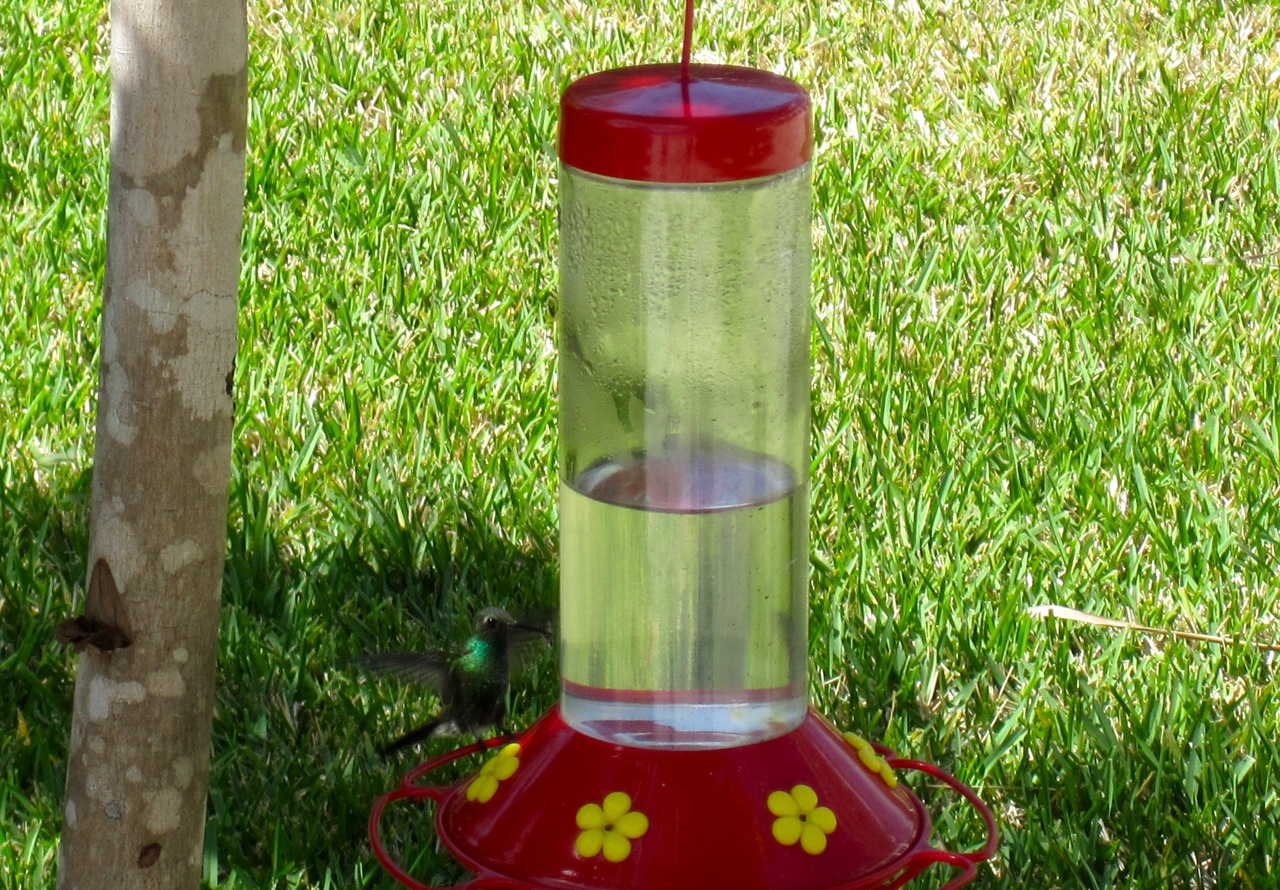
At Delphi, you’ll frequently see emeralds, especially now that feeders with sugar water have been hung up for them. The pool area is a very good place to watch them. But there are occasional woodstars to be seen as well – in the coppice on the drives for example, and even on the feeders. The vague blur to the left of the feeder below is a woodstar in the millisecond between me pointing the camera and it flying away… Don’t bother to click to enlarge it – it’s a useless photo, I know, but it is evidence even at the lowest level
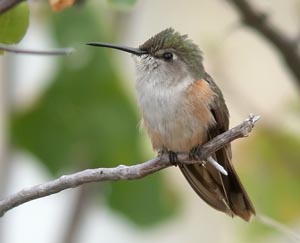
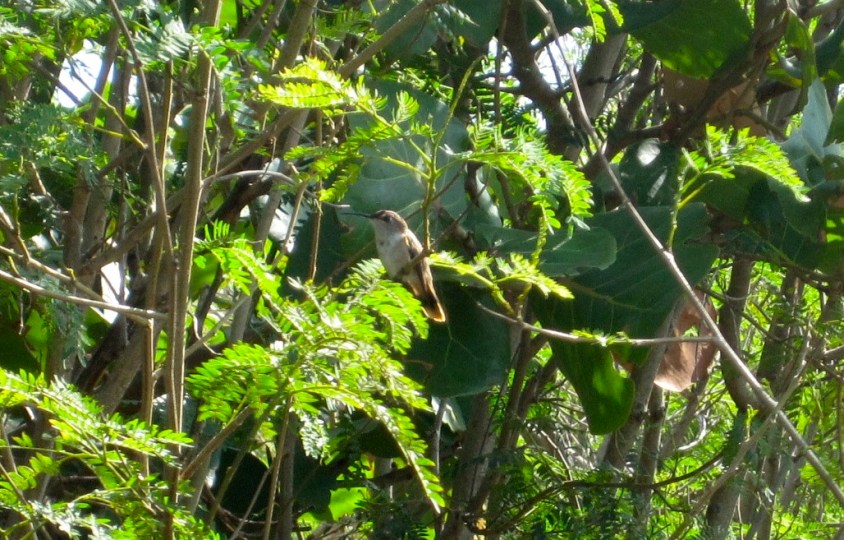
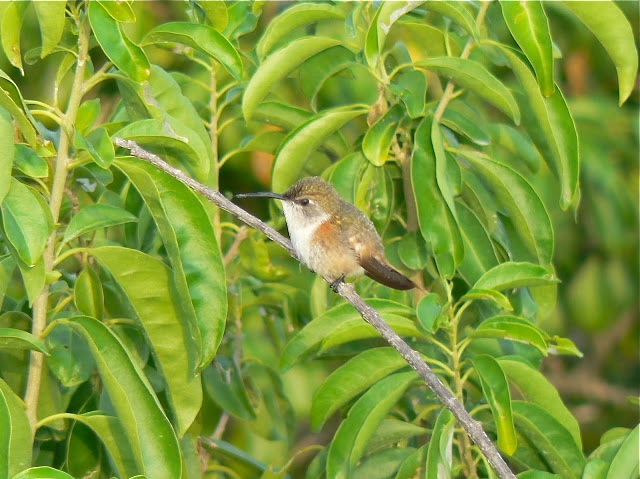
CUBAN EMERALDChlorostilbon ricordii
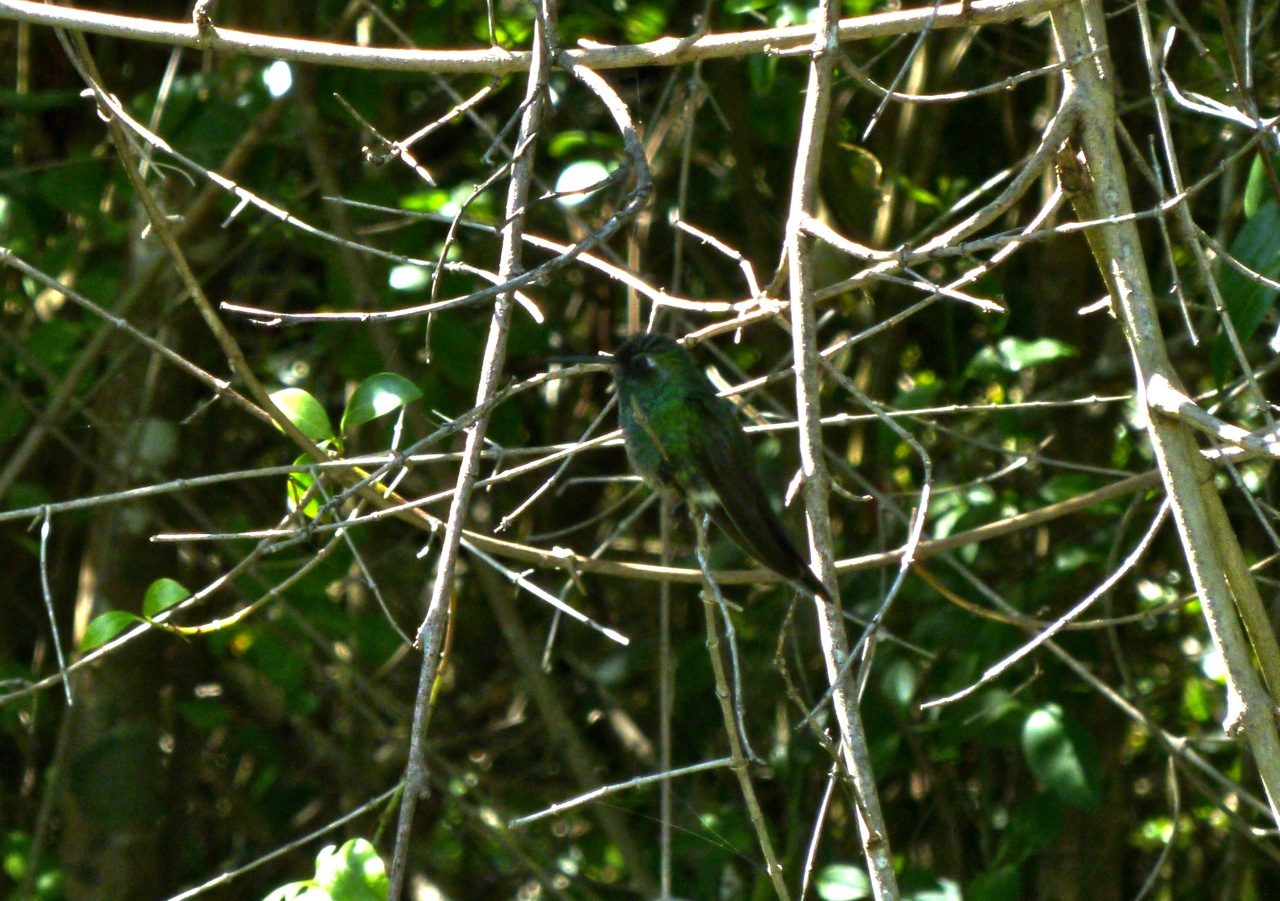
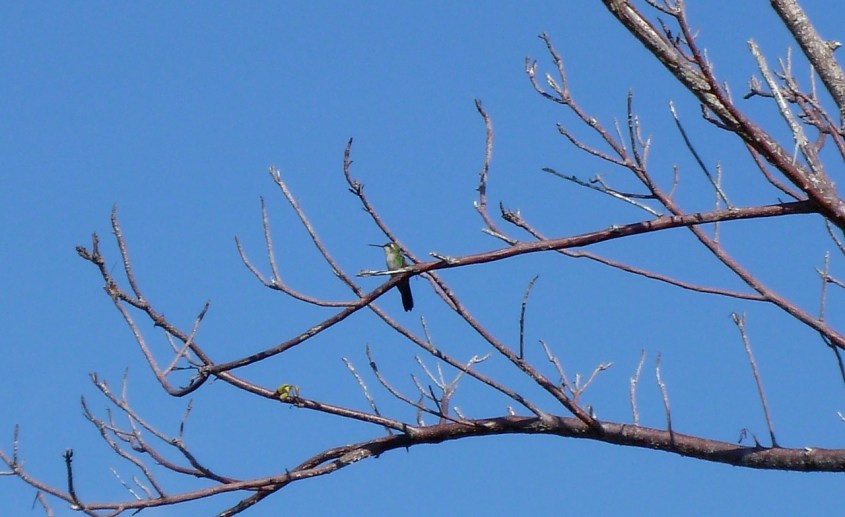
There’s probably a great deal to be written about the emeralds, but not by me. Or not now, anyway. The little you need to know from me is already covered above, and I haven’t yet discovered whether their childcare arrangements differ significantly from the woodstars. Probably not. So I’ll put in a selection of photos, and remark that it is strange how quickly they can change from sleek and slender birds to small rather cold and dispirited looking bundles of feathers. Both states are depicted below. Here’s what to listen for (credit Xeno-canto.org)
Delphi – pool feeder
Delphi – pool feeder
Delphi – pool feeder
Delphi – far side of pool
Delphi – near pool
Delphi – front drive
Delphi – front drive
All the above birds were photographed at Delphi. We saw emeralds elsewhere, of course – in the pine forest, flicking across the logging tracks; on other Cays. The best sighting was during our day trip reef-snorkelling and island-hopping with Kay Politano, when we had an excellent lunch for 14 at Cracker P’s on Lubbers Cay (see future post about this and the island-hops). There was a bird feeder by our table, to which emeralds came and went throughout the meal. Here are some photos – I wanted to get them hovering, and kind of succeeded. More or less.
Ricky is a well-known, infectiously enthusiastic, and compendiously knowledgeable Abaco nature guide (this guy gets way too much free publicity in this blog…). In this video he focusses his binoculars on piping plovers, a threatened species of tiny plover which annually makes a long migration to the Bahamas, including Abaco – and then heads all the way north again.
If this video doesn’t make you smile at some stage, I suspect a SOH bypass and / or your ‘anti-cute’ setting is jammed on. You’ll also see the differences between the piping plover and the more familiar Wilson’s plover.
PS Missed an obvious tongue-twister component out of the original title – now amended to tip a hat to Mine (and Thine) Host
During our parrot observations, we had plenty of opportunity to see other birdlife. We were especially fortunate to be able to visit a large and very beautiful private garden on the shoreline at Bahama Palm Shores which Ricky showed us round; and to meet the benevolent owner who permits this intrusion. We saw between us a wide variety of birds in or near the garden, of which these are a small sample – starting with my favourite bird of all
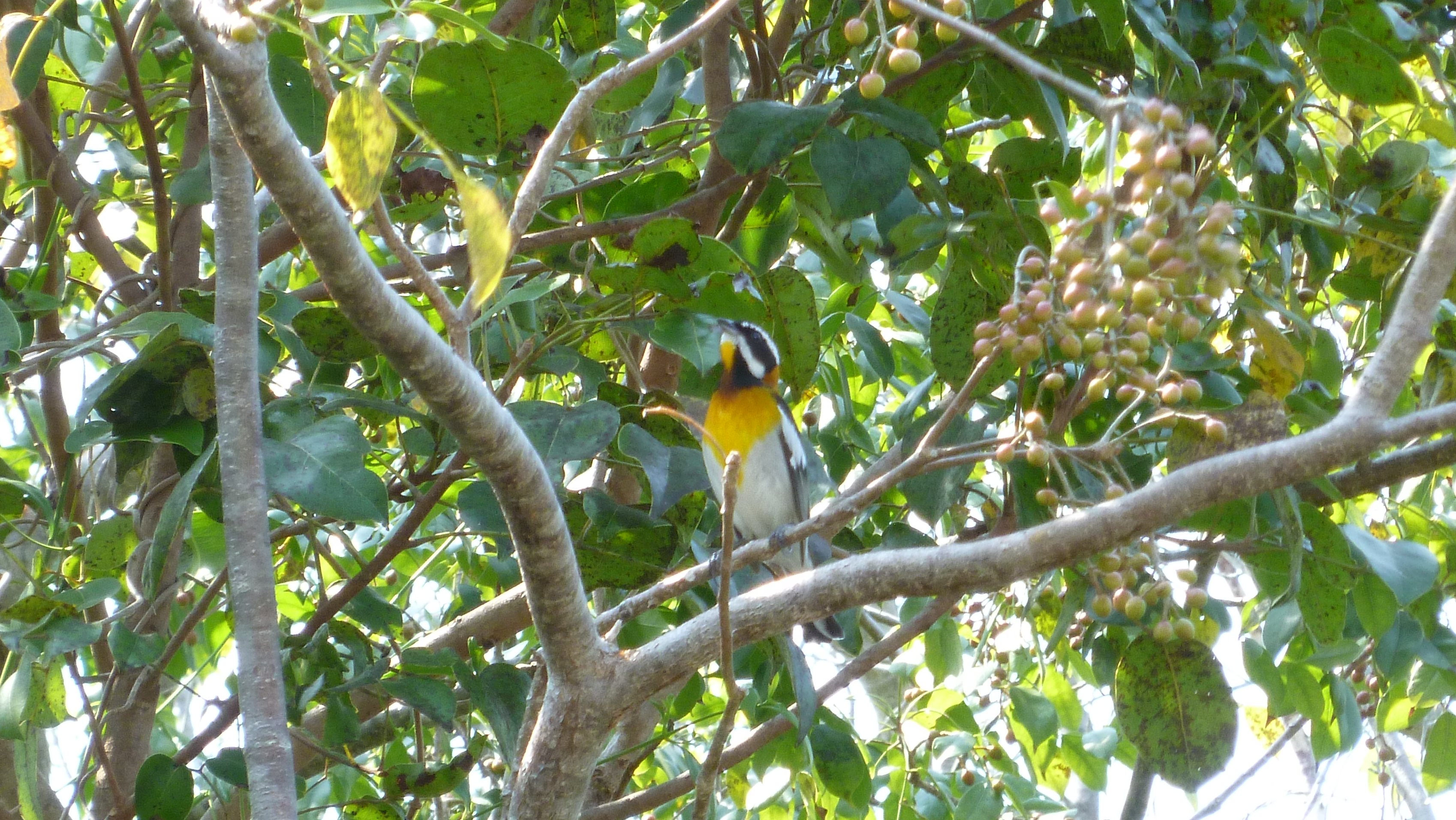
Western Spindalis / Stripe-headed Tanager
Western Spindalis / Stripe-headed Tanager
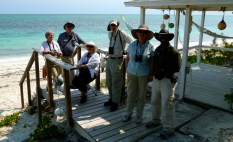
POINTING AND SHOOTING THE TEAM PHOTO
Black-faced Grassquit
Black-faced Grassquit (?juvenile)
Red-legged Thrush
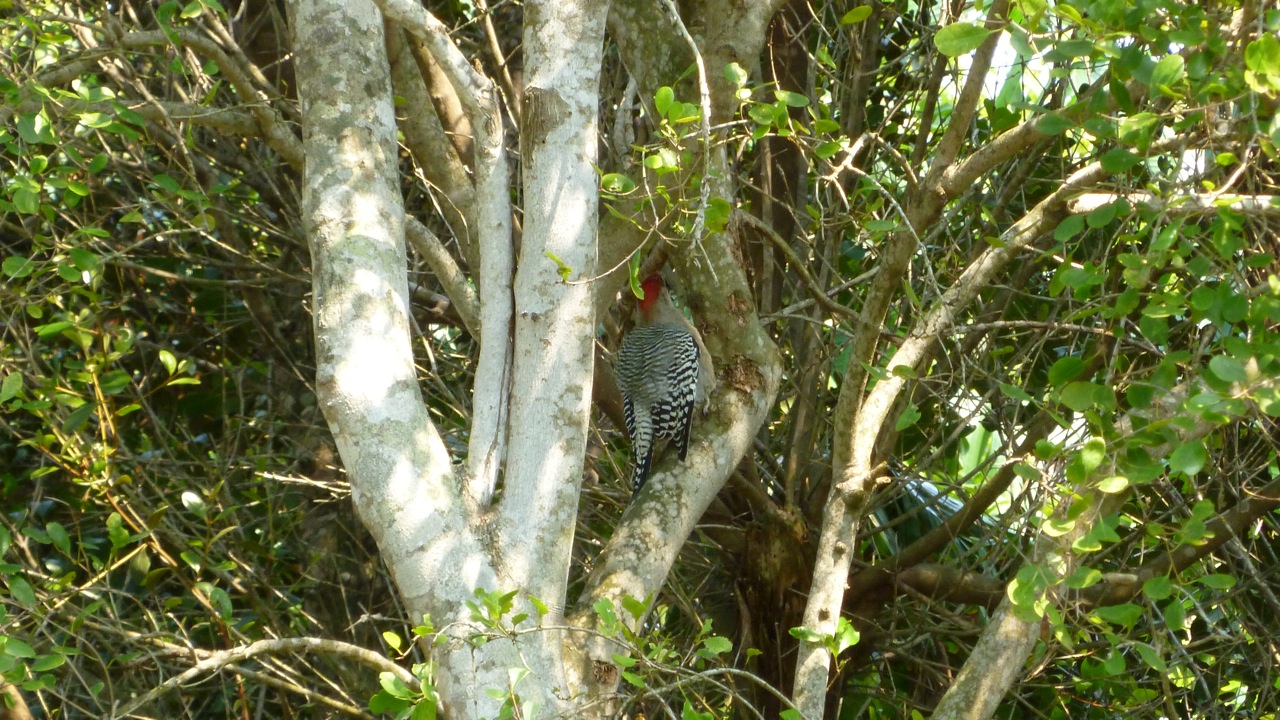
West Indian Woodpecker
I’ve no idea. Small. Dark. Finchy. Grassquit? Hard to see. Any ideas? Sorry
Ricky ushers us into his spacious, comfortable truck: 6 denizens of Delphi eager for adventure. Most have already been on a morning trip to see the Abaco Barbs (wild horses) of which more in a separate post. rollingharbour suffers from an unfortunate but mild form of equine indifference disorder, so gave it a miss.
We set off north on the highway, checking cameras, binoculars and other essential expeditionary impedimenta. Meanwhile, Ricky reveals his knowledge, experience and huge enthusiasm… this extends way, way beyond mere birds to the trees and plants, to poisons and herbal remedies, to geology and speleology, to geography and history. Soon we reach our destination, confident in Ricky’s renowned ability to know where the parrots (and many more birds besides) are to be found. We don’t have to wait very long – about two minutes after we turn off the highway, in fact… The parrots favour the Gumbo Limbo Tree (Bursera simaruba) as pictured, which invariably and most conveniently grows next to the Poisonwood tree (Metopium Toxiferum) and is its antidote. That’s the first place to look.
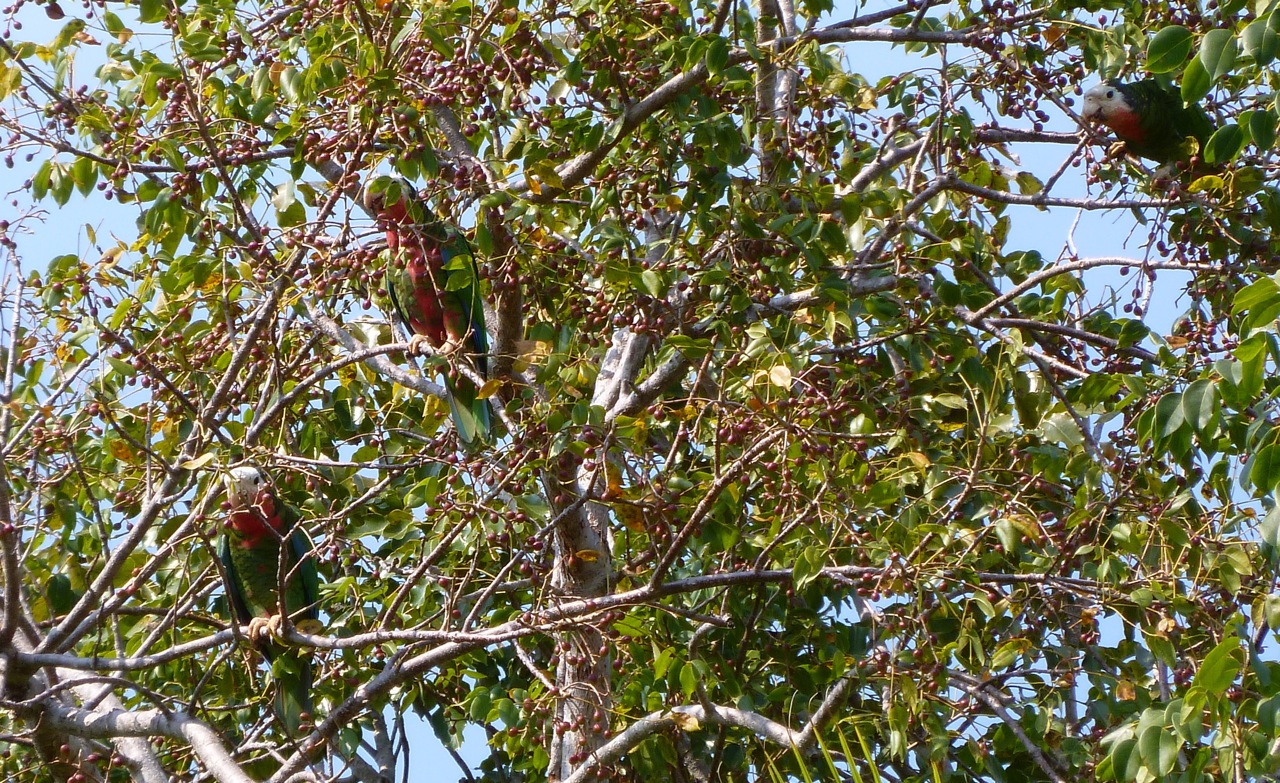
ABACO PARROTS(Amazona leucocephala bahamensis)Here is a selection of our photos of these fantastic birds. I hadn’t expected to see so many, for so long, and at such close quarters. Their colouring was extraordinarily vivid, with a slash of blue on the wings. This was especially dramatic in flight. One parrot, shown below, had red frontal markings that extended almost to its tail. Ricky hadn’t seen one like it before.
CLICK on the images to enlarge them significantly [Mrs rollingharbour reports that this is as yet a theory and may not work in practice]
CAPTION COMPETITION (NON-COMPETITIVE): 3rd image down – what did parrot (a) say to parrot (b)?
To be continued… (I’m going to do this post piecemeal – other birds, flowers etc to follow)
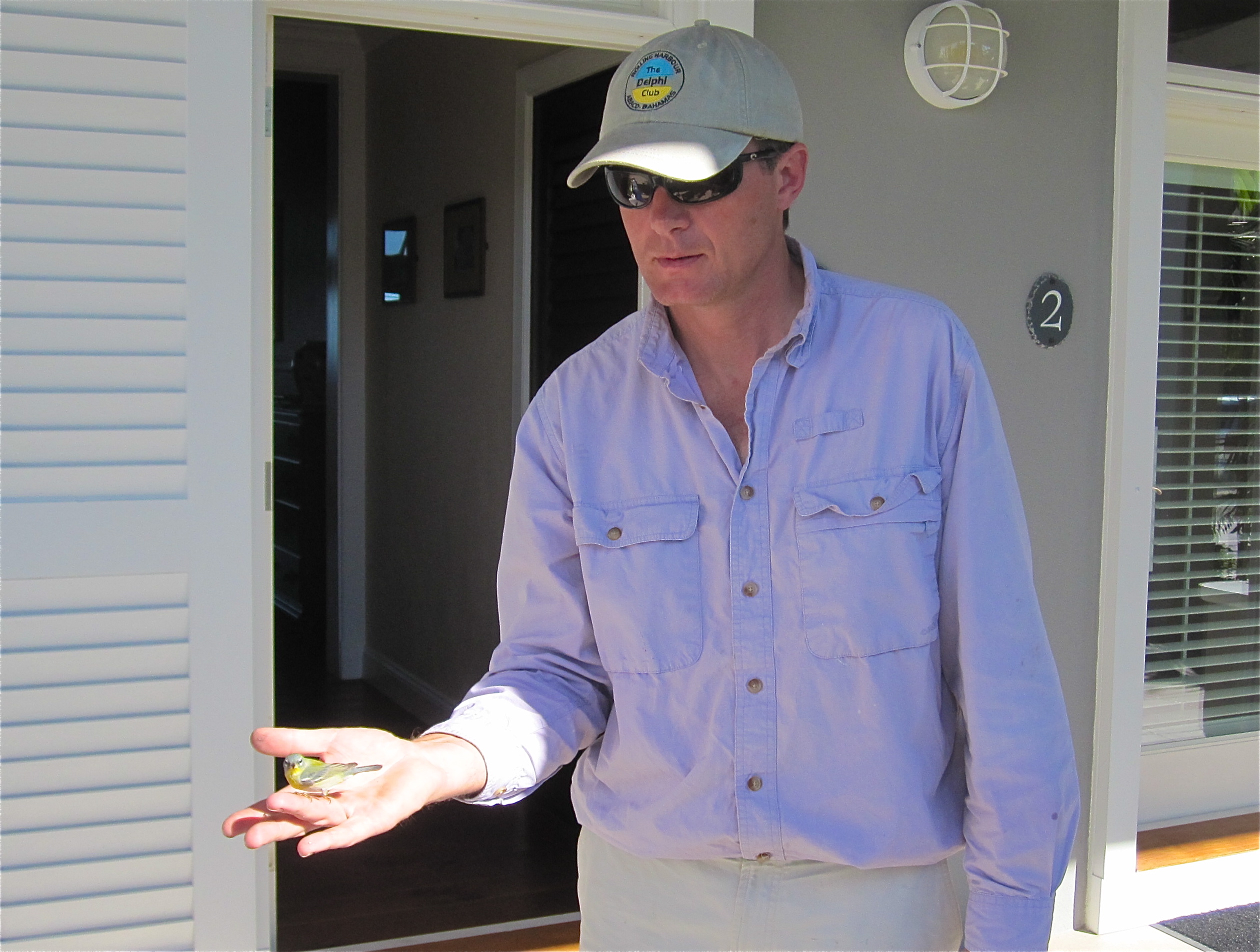
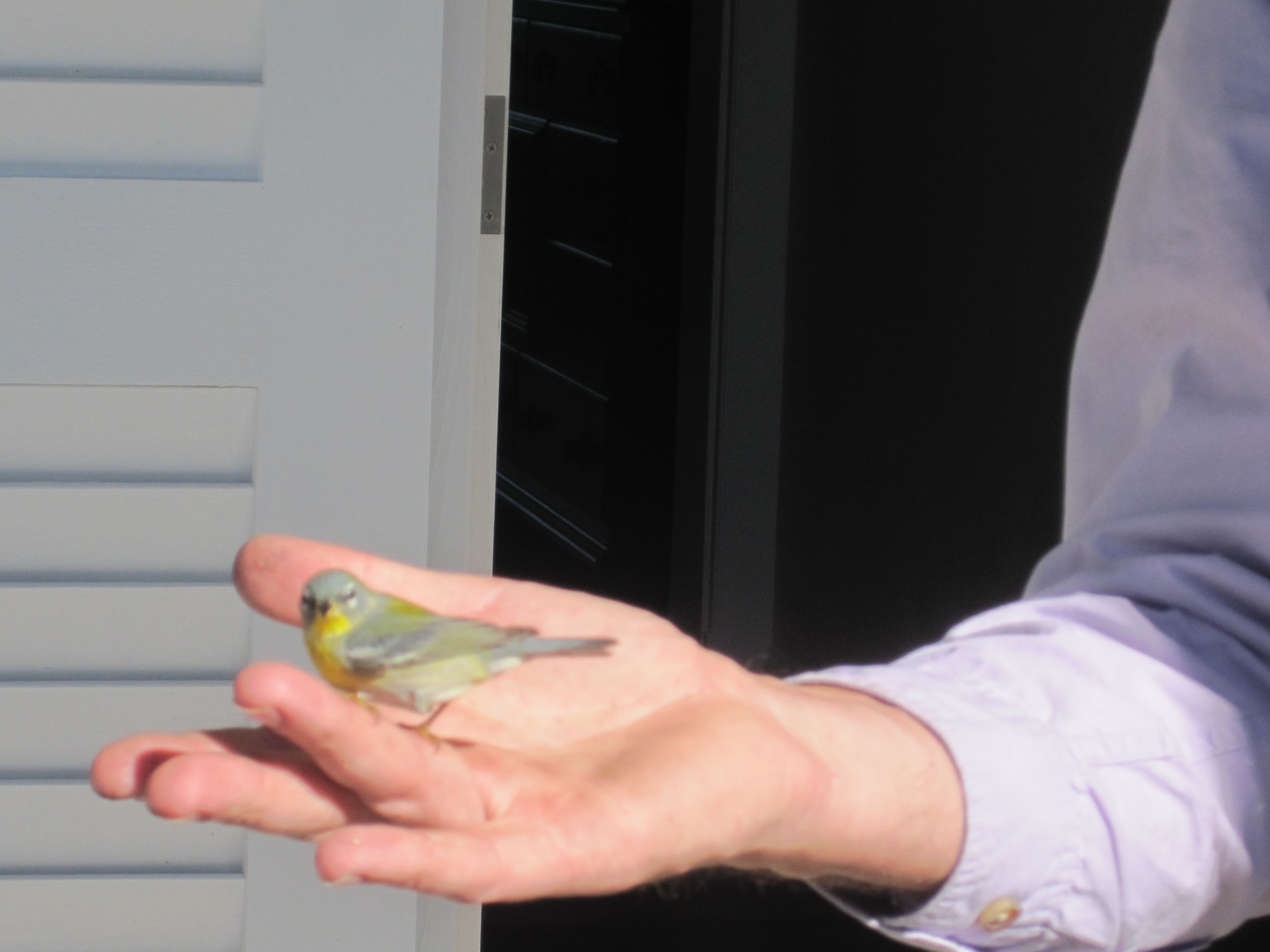
This Spring has seen a number of birds – possibly tempted by Gareth’s cuisine – flying hard into the windows / doors of the Great Room and falling stunned onto the verandah. Luckily, Sandy has sometimes been on hand to scoop them up and gently let them come to their senses before releasing them.
WESTERN SPINDALIS (Spindalis Zena) or Stripe-Headed Tanager
NORTHERN PARULA: one of a large number of yellowy warbler types around Delphi
The Parula ID was confirmed by Craig Nash (see side-barBLOGROLLfor his Delphi birding links) and he has supplied his own much better photo of one, photographed in one of the drives – seeCONTRIBUTIONS / PHOTOGRAPHS
This guide was compiled after our visit to Delphi in February 2010. It was originally intended purely for domestic consumption, as a light-hearted personal record and aide memoire. However, others suggested it might be useful for people wanting to make a quick identification of a bird they have seen around the Club or further afield. I was persuaded to put a copy on the desktop of the computer in the Club Library, and there’s now a hard copy around as well. I am currently revising it to include our 2011 visit. And now here it is in blog format. I.T. progress.
Some of the images are my own; others are from freely-available resources – due thanks are given to those too numerous to mention individually (never mind being completely unidentifiable) whose images are featured…


































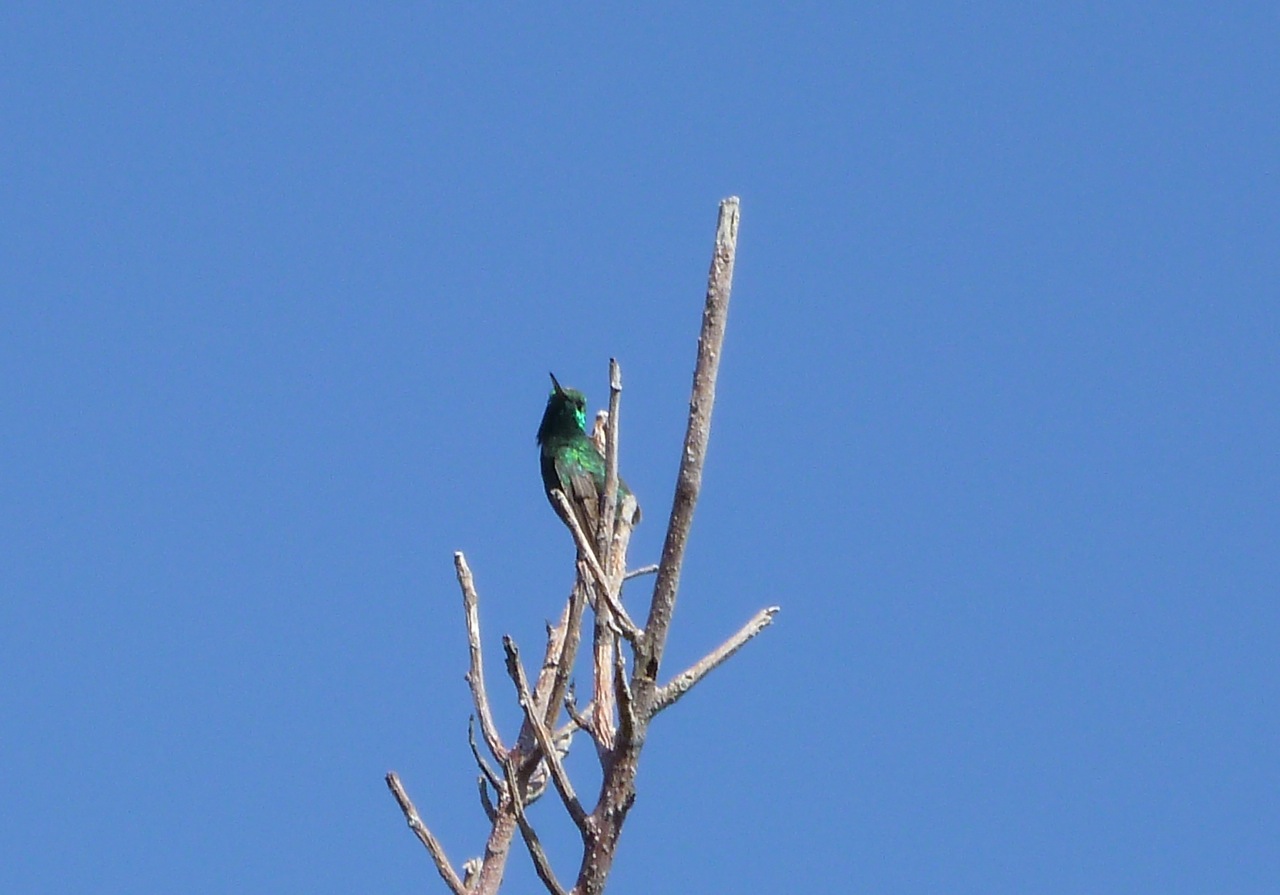
 CUBAN EMERALD







 POINTING AND SHOOTING THE TEAM PHOTO






 CAPTION COMPETITION (NON-COMPETITIVE): 3rd image down – what did parrot (a) say to parrot (b)?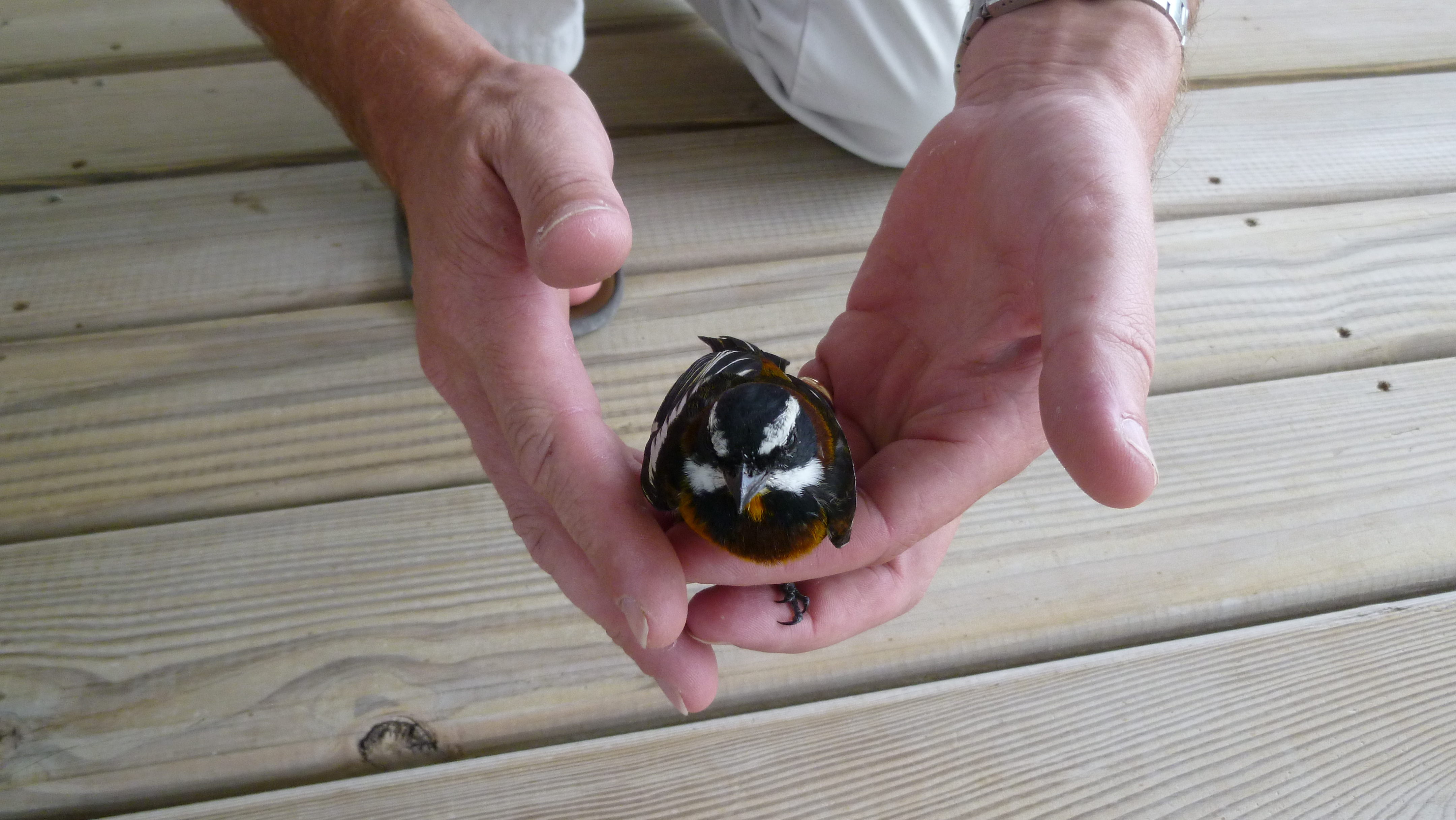

 ROLLING HARBOUR ABACO
You must be logged in to post a comment.