Unknown's avatar

‘A BIRDER’S GUIDE TO THE BAHAMA ISLANDS’: BOOK REVIEW


A BIRDER’S GUIDE TO THE BAHAMA ISLANDS (INCLUDING TURKS & CAICOS)   
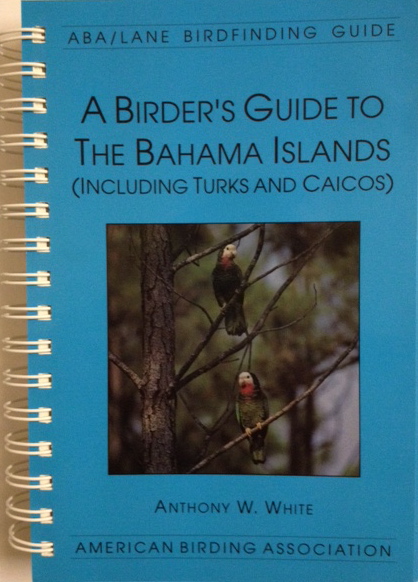
 ABA BIRDFINDING GUIDES (American Birding Association)

  Anthony W. White

  Published 1998

  302 pages

  Wire-O binding

  ISBN 1-878788-16-7

QUICK REVIEW In a rush? Scroll down for a 30-second bullet-point review. If not, hang in here for fuller details…

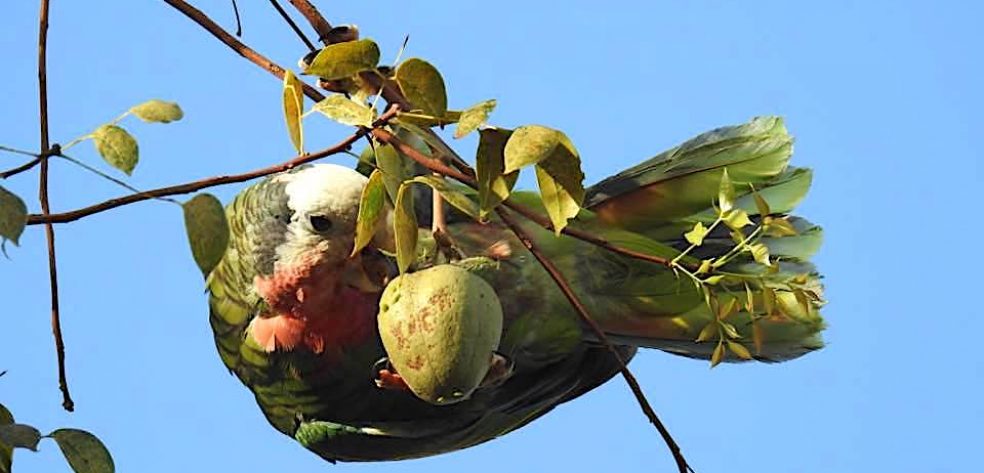
PUBLISHER’S BLURB (précis) The first comprehensive guide to finding birds on the islands of The Bahamas and TCI. The islands host an unusual mix of Caribbean and North American species, with over 300 bird species recorded. There are 3 endemic species: Bahama Woodstar, Bahama Swallow, and Bahama Yellowthroat, and a host of other specialties, including such birds as West Indian Whistling-Duck, White-cheeked Pintail, Key West Quail-Dove, Great Lizard-Cuckoo, Cuban Emerald, West Indian Woodpecker, Bahama Mockingbird, Olive-capped Warbler, Stripe-headed Tanager, Greater Antillean Bullfinch, and Black-cowled Oriole. Seabird nesting colonies [include] Audubon’s Shearwaters, White-tailed Tropicbirds, and 8 tern species. The parks and refuges of The Bahamas and TCI protect a great diversity of subtropical birds, among them the Bahama Parrot (an endemic subspecies of Cuban Parrot), and many North American wintering birds, including the endangered Kirtland’s Warbler. The New World’s largest flamingo colony nests on Great Inagua, protected by the country’s largest national park. The Guide [includes] complete descriptions by Tony White of more than 150 birding sites on the major islands and smaller cays. It also features a beautiful eight-page Photo Gallery of many of the Bahamian specialty birds, several of which show up regularly in Florida

RH VIEW This book obviously covers a far greater area than Abaco / Northern Bahamas – indeed, it is about as comprehensive of the whole Bahamas region as it could get. Where it scores highly is in taking the area island by island, cay by cay, and identifying the prime birding areas on each. I have to say that, being a 1998 book, some of the descriptions of places on Abaco that I am familiar with are not as you will find them now; and doubtless this applies across the whole region. As the Table of Contents shows, the book is split into ‘places’ chapters, with additional and useful general information chapters. Abaco is covered in just 20 pages. It’s not a lot, but the birding hotspots are well covered, and expected / hoped for bird species are given for each.

Despite the relatively little page space given to each region, there is much else to be got from this book. The final third of the book includes a detailed annotated list of the speciality bird species (also shown in photo gallery format earlier in the book). This is followed by a huge 20-page bird checklist, with every species given a numbered code for each region, ranging from 1 (easily found) to 6 (cannot be found – extinct or extirpated). So you will find, for example, that a Forster’s Tern is rated ‘4’ for Abaco – ‘extremely difficult to find’. There are short notes on other Bahamas wildlife, divided into mammals, reptiles, amphibians and insects – followed by helpful appendices (a glossary; a list of common name alternatives); a massive 22-page bibliography; and a serviceable index

The chart inside the front cover shows where the specialty Bahamas birds are to be found . At the back is a large area map showing the total coverage

——————————————-
BULLET POINT REVIEW FOR THOSE WHO ARE PRESSED FOR TIME
  • Fairly weighty 300 pages covering the entire Bahamas region
  • Short but helpful descriptions of birding hotspots on the islands and cays, with the species you may encounter
  • Excellent ancillary species and distribution checklists
  • Focus on specialty birds of the Bahamas
  • Particularly useful for anyone investigating different regions of the Bahamas, or wishing to compare them
  • 14 years since publication is a long time in the islands’ development; expect some irrelevant references for 2012
  • Overall a useful, interesting bird location book, but NB not intended as species identification field guide
Unknown's avatar

BMMRO WHALE, DOLPHIN & MANATEE SIGHTINGS MARCH 2012


BMMRO WHALE, DOLPHIN & MANATEE SIGHTINGS MARCH 2012

Hard on the heels of the BMMRO’s Fisheries Report for 2011 – see previous posts – comes the map of last month’s sightings. First, let’s hear it for the manatees, featuring for the 4th consecutive month off the Berry Is. The 2 reports of an ‘unknown large cetacean’ off Elbow Cay are the puzzles of the month. There was a sperm whale in that area in January, but presumably it would have moved away in the meantime…. I wonder what the likely candidates are for ‘large’ besides sperm and humpbacks?

Unknown's avatar

BMMRO BAHAMAS FISHERIES REPORT 2011 EXTRACTS & LINK


The BMMRO has recently published its Fisheries Report for 2011. The report is comprehensive and covers a far larger area than the waters around Abaco. Extracts are shown below (thanks as alway to Charlotte Dunn for use permission). The full report can be seen in pdf form at BMMRO FISHERIES REPORT

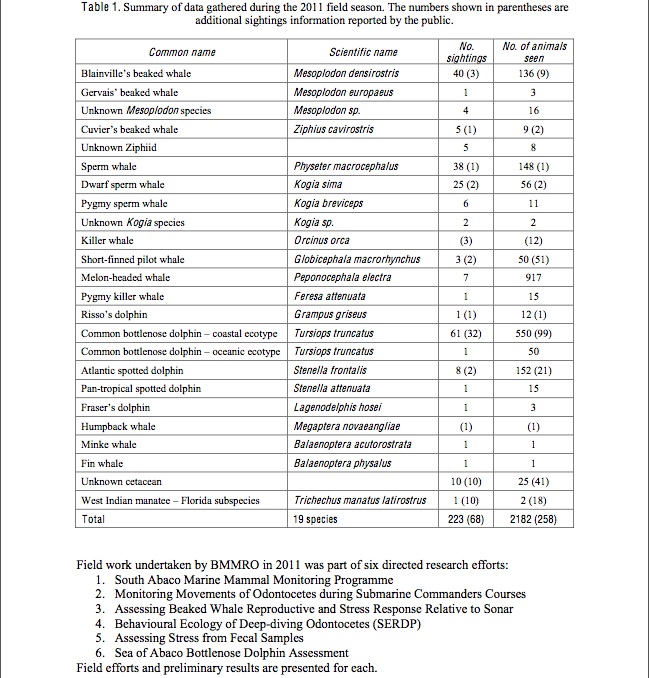
1. First, here is the table of all field data for the 2011 season, from which the incidence of the particular cetacean types can easily be seen. To a layman (me), the most significant reading on the previous year is the increase in sperm whale sightings and animal numbers, up from 14 / 69 in 2010 to 38 / 148 in 2011. I wonder why the difference?

2.  Here are results specifically relating to South Abaco, where the majority of cetacean activity is observed (see ‘green’ map). I have included a larger image of the cetacean species so that the key is easier to read

Unknown's avatar

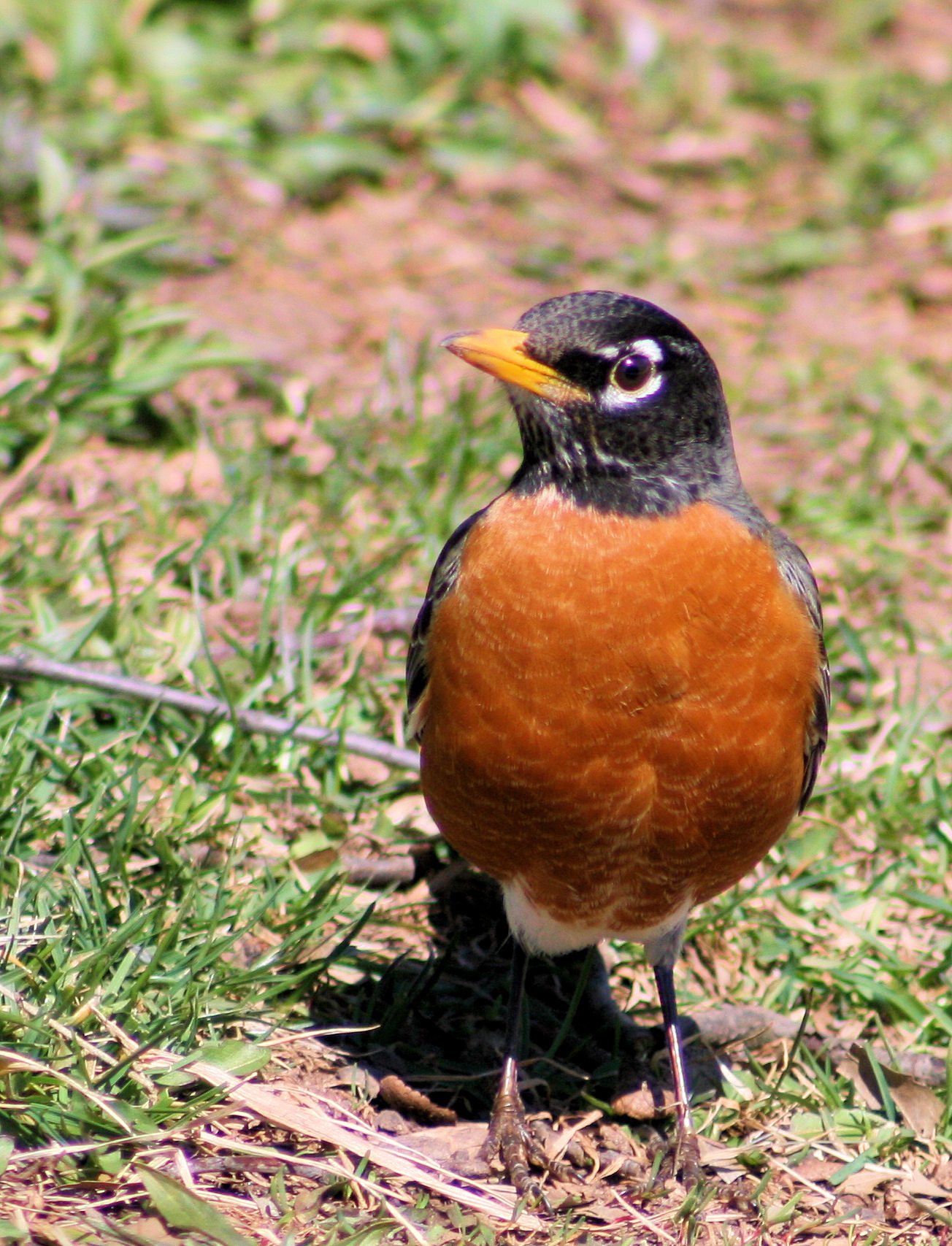
AMERICAN ROBINS ON ABACO, BAHAMAS – A RECENT AND RARE SIGHTING


I am prompted to write this post after Brigitte Carey, commenting on a photograph of mine of a European robin, commented  “We actually have reports of one single robin on Elbow Cay. We think he was blown off course by the very strong winds we had a few weeks ago. He has been sighted in separate spots on Elbow Cay in the last couple of weeks. Poor guy…he’ll have a lonely life here!”

I wondered what other evidence exists of their presence on Abaco as occasional visitors – the northern Bahamas are not within their usual migratory range – so I did a bit of research

AMERICAN ROBIN DISTRIBUTION MAP

YELLOW – summer-only range

GREEN – all year-round

BLUE – winter-only migration range

I’ve checked various online databases – Avibase, e-bird for example –  for reported sightings. The evidence is that reports are very scarce indeed. Of course that does not necessarily reflect actual sightings, which are presumably more numerous. Overall however, American Robins certainly seem rare enough on Abaco, even though their full range includes nearby Florida. Which is why the recent reports Brigitte refers to are so significant.Fortunately the spotter Michele S put her brief Elbow Cay / Hope Town sighting report onto e-bird: “After a gale, saw two on the lawn in front of the Lighthouse” This was on Sunday 4 March 2012 at 9.30 a.m, and it would seem they were blown over to Abaco during the high winds. Brigitte will be pleased to hear that there were in fact two of them, so loneliness won’t be a problem… Apart from that very recent sighting, there is a recorded sighting on Man-o-War Cay in 1983; and one on Green Turtle Cay in 2008. Avibase suggests no sightings on South Abaco [except perhaps Marsh Harbour]. The species is however included in the checklist for Little Abaco. If any reader has seen an American robin on Abaco, it would be great to know when and where (using the COMMENT box below), and I will add the details to this post.

NEW – 2012 sightings at TC! Thanks to Elwood D. Bracey MD of Treasure Cay for his comments – and please contact him (or use the COMMENT box) if you can help with his valiant quest to reach the magic 200 species seen – he’s on 170 now:  

“As a birder living on Abaco for the past 20 years I’ve seen over 20 robins here, sometimes as many as 6 in North Abaco at once. This year I had 2 in Treasure Cay and 3 in Crown Haven. They appear on average once every other year. While notable I feel they are almost annual… why some years and not others I’m not sure.

Cedar Waxwings, Dickcissels, and Ruby-crowned kinglets are similar. This year we had our first Swainson’s Hawk for the Caribbean at the organic vegetable farm in North Abaco. It’s still here as is the Canada Goose on the #11 hole at TC Golf Course. It’s nice we have these vagrants and makes for interesting birding. I’m trying for a big year in the Bahamas (no one has ever had over 200 species in 1 year and I’m at 170 so far so if anyone has any unusual sightiongs please call me at 365-8305) [RH note: with only 196 recorded Abaco species on Avibase, this may be difficult to achieve…]. There was a pair of Wood Ducks on the TC GC which I missed. I did find 3 Kirtland’s Warblers [RH note: red-listed as ‘near-threatened’, and only ‘rare / accidental’ on Abaco] near Hole-in-the- Wall in January. Clean lenses and fast focusing!”

Photo Credits for the above images to good old Wiki

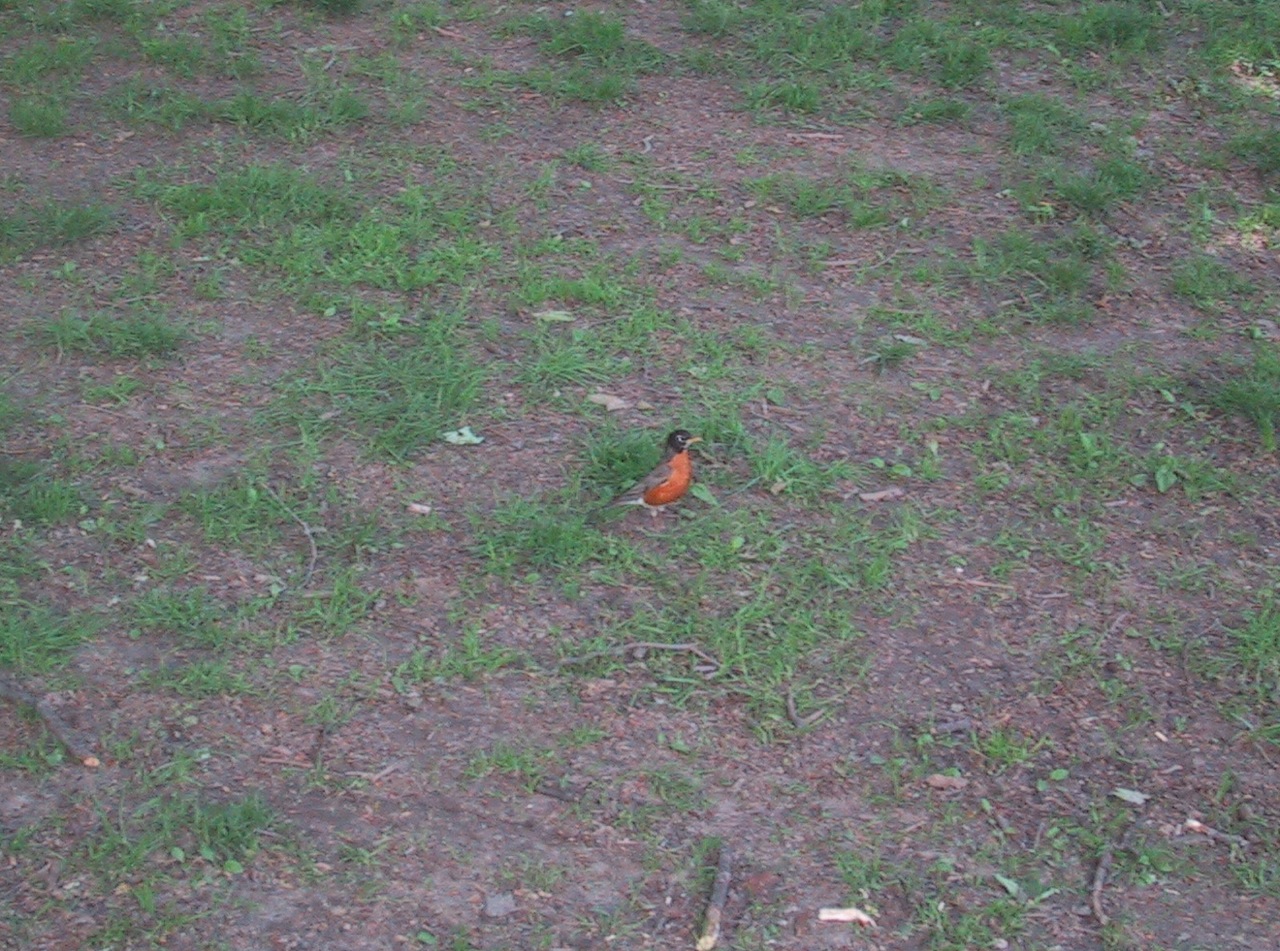
Here’s my own photo of an American Robin in Central Park NYC – I didn’t get very close…

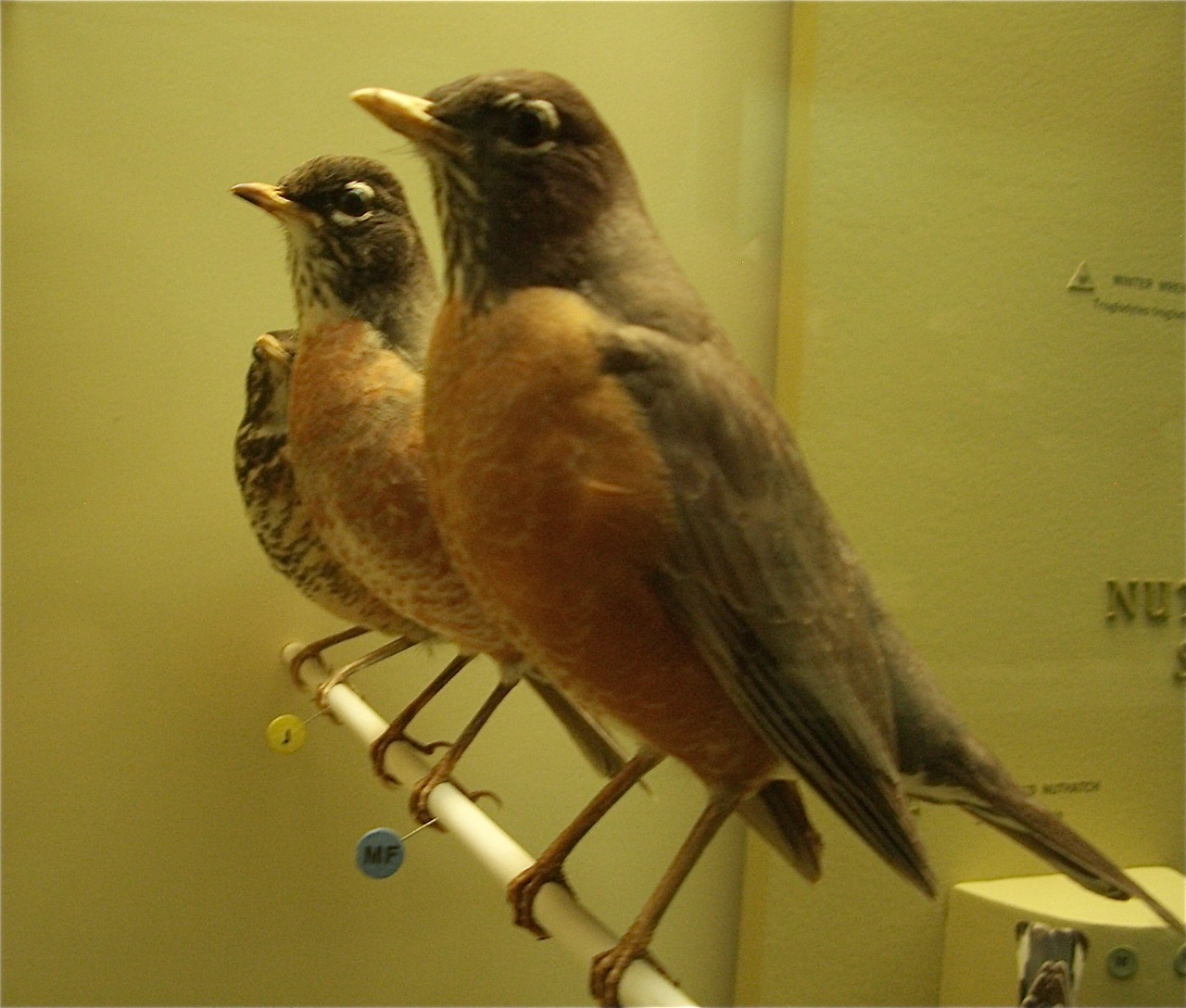
These ARs are exhibited in the Museum of Natural History, NYC

Finally, here are 2 European robins for comparison. They are far smaller than the American version, roughly the size of a vireo

This is the photograph that Brigitte commented on – a robin’s Spring song – that I took a few days ago


Unknown's avatar

ANNA HUMMINGBIRDS ON A HANDHELD FEEDER – VIDEO


ANNA HUMMINGBIRDS ON A HANDHELD FEEDER

A brilliant hi-def video by the excellent ornitho-artist blogger BIRDSPOT. A very effective combination of the visual, amazing sound, and keeping very still. I realise you are highly unlikely to encounter one of these hummers on Abaco. But you might. Although they are normally found on the west coast of North America and inland from there, they have been regularly seen well outside their usual range, for example in Alaska, New York, Newfoundland and… Florida. So it’s only a matter of time before one slips across for a quick vacation in the northern Bahamas. Best not a pair, though. They are apparently very territorial, and the poor endemic Bahama Woodstar has enough trouble fighting its corner with the migrant Cuban Emerald… (credit: BIRDSPOT with thanks for use permission)

Unknown's avatar

ABACO HUMMINGBIRDS: WOODSTAR & EMERALD SIGHTINGS MAP CHALLENGE


ABACO HUMMINGBIRDS: BAHAMA WOODSTAR & CUBAN EMERALD SIGHTINGS MAP

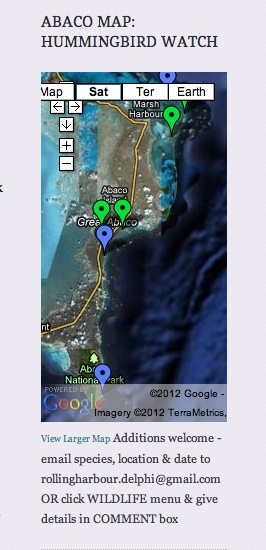
A while ago a new feature landed near the end of the right-hand sidebar. The idea was to put together an informal mapping of Woodstar and Emerald sightings on Abaco.

I put a few in as a start, hoping for more contributions, but so far it hasn’t been a popular item. Maybe it won’t work at all as a contributory feature, or maybe it just isn’t interesting if you live with the hummers. As an Abaco visitor (never having seen a hummingbird before. Except stuffed ones) they are a delight. A highlight. 

It’s worth another try, and I have revised the map slightly to make the two contribution / contact methods clearer. It can’t be made more interactive than that I’m afraid. If you go to the sidebar and click on ‘View larger map’, you’ll see the data in more detail.
The map might even test the theory that Woodstars are scarce where Emeralds are numerous.

If you’d like to add to the mapping, I just need the type of hummer; the location in reasonable detail so I can stick a pin in the map; month / year (e.g. 03/12) and I will do the rest…

Unknown's avatar

ENDEMIC BAHAMA SWALLOW: FROM ‘THREATENED’ TO ‘ENDANGERED’ RED LISTING


THE BAHAMA SWALLOW: A SMALL ENDEMIC BIRD WITH BIG SURVIVAL PROBLEMS

The IUCN (International Union for Conservation of Nature) RED LIST status of the endemic Bahama Swallow Tachycineta cyaneoviridis has been upgraded from ‘Threatened’ to ‘Endangered’ because its small declining population faces a number of threats that are likely to worsen in the future. In particular, renewed logging activity and widespread property development could result in a further decline in breeding habitat.

The excellent photo above is the ‘Wikimedia poster bird’, but was in fact taken by prolific bird photographer Craig Nash in the main driveway of the Delphi Club, Abaco in 2010. He blogs as Peregrine’s Blog – see RECOMMENDED LINKS in right sidebar

This swallow species breeds only on 4 Bahamas islands: Grand Bahama, Abaco and Andros; and on New Providence, where a few birds are seen each breeding season, suggesting a ‘relict’ population there. The map below suggests that confirmed  numbers are so few that New Providence sadly no longer counts as an ‘official’ breeding island.

The Bahama Swallow winters throughout the Bahamas and has been recorded as far as eastern Cuba, but in general the full wintering range is little known. It is a rare vagrant elsewhere during migration, including Florida. The preferred habitat is in the pine forests, where they nest in old woodpecker holes in Caribbean Pines using pine needles, Casuarina twigs, and grass to make the nest which they line with feathers. They typically lay 3 eggs. Incubation is 15 days and the fledging period is around 22 days.

[audio http://www.xeno-canto.org/sounds/uploaded/MKUJNSTVEZ/Swallow_Bahama%20(calls)_JF_Abaco%20Island_Bahamas_April%202008.mp3]

Sound credit: Jesse Fagan / Xeno-Canto

Besides loss of habitat due to human intervention, other factors in population decline are thought to relate to hurricanes and forest fires. The Red List proposals for conservation of the Bahamas Swallow state: “Survey all suitable breeding habitat and assess the status of the species and its habitat; Gather empirical evidence to clarify population trends as a priority; Assess winter distribution and habitat requirements; Study the impacts of fire suppression on the species; Maintain natural nest-sites through a pine snag management programme, and potentially fire management; Assess and monitor the success of the nest box scheme; Protect remaining forest in the Bahamas and minimise the area lost to housing development and logging; Assess the impact of starling and house sparrows on the population and develop appropriate measures to reduce the threat”

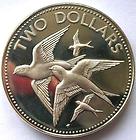
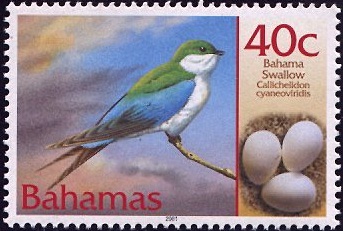
The Bahama Swallow has joined other notable bahamian wildlife species in receiving the accolade of a stamp and a coin:


Unknown's avatar

BMMRO WHALE, DOLPHIN & MANATEE SIGHTINGS FEB 2012


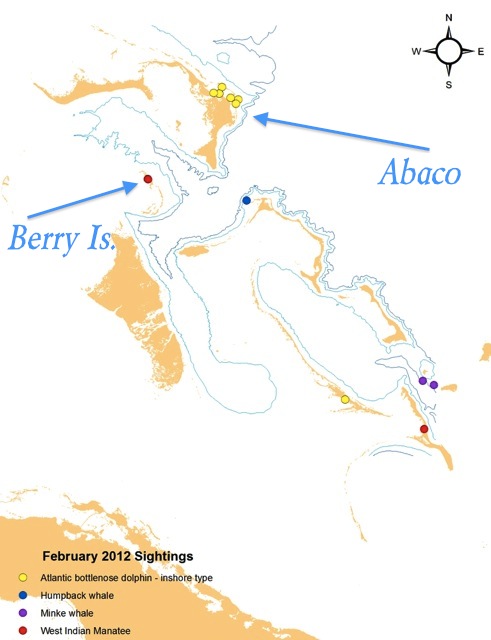
BMMRO WHALE, DOLPHIN & MANATEE SIGHTINGS ABACO / BAHAMAS FEBRUARY 2012

From an Abaconian point of view, the news is of Dolphin activity in the Marsh Harbour area / nearby Cays and northwards from there. No whale reports last month, though. Further afield, another manatee report from the Berry Is makes three consecutive monthly reports of sirenians. There was a humpback to the south but other reports are concentrated further away

Unknown's avatar

HUMPBACK WHALES IN THE BAHAMAS: TWO SIGHTINGS & AN ENTANGLEMENT


HUMPBACK WHALES – BMMRO REPORT JANUARY 2012

The BMMRO has posted recent whale news on its site – an entanglement off Elbow Cay with a happy ending, a sighting off Long Island in January, and another in February with images    (CLICK LOGO for BMMRO website)

1. An Entanglement 30.12.11  During the winter months the Bahamas occasionally get a sighting of a humpback whale migrating northward. For some reason a few of the migrating whales take a route a little closer to our islands and allow us the wonderful experience of seeing them.

On the 30th December 2011 Joseph Strickland and his crew who had been staying on the Highlander in Hope Town harbour, came across an entangled humpback whale. Due to the courage and calm response of Joe and his team, they managed to release the 40′ humpback. The whale had been entangled in a thick rope of approximately 600′ in length attached to a fishtrap. The animal was found off  Sea Spray marina in 40 feet of water off Elbow Cay, Abaco. They managed to free the animal of the fishpot which it had been dragging… as well as freeing the animal of the majority of rope, with only 20′ of line remaining on the whale. We would sincerely like to thank Mr & Mrs Strickland and their family for their extrodinary effort to free this animal, and also to report the encounter in detail.

Unfortunately as humpbacks are one of the more coastal whales, they often end up entangled in fishing gear, and come into contact with fishing pots, as well as being susceptible to vessel strikes. However, this species have made a remarkable recovery since the whaling era and in the North Atlantic abundance estimates are now approximately 12,000 humpback whales.

2. A sighting on 14.01.12  A better start to the New Year provided us with a single humpback sighting on Saturday 14th January off of Cape Santa Maria, Long Island. 

3. A sighting on 8.02.12 Finally, on Wednesday 8th February, a mother-calf humpback pair were spotted off of Dutch Bar, Spanish Wells, providing us with these beautiful pictures! Report and Image Credits BMMRO 2012


Unknown's avatar

ALL ABOUT BIRDS: IDENTIFICATION & BIRDSONG with Cornell Lab of Ornithology


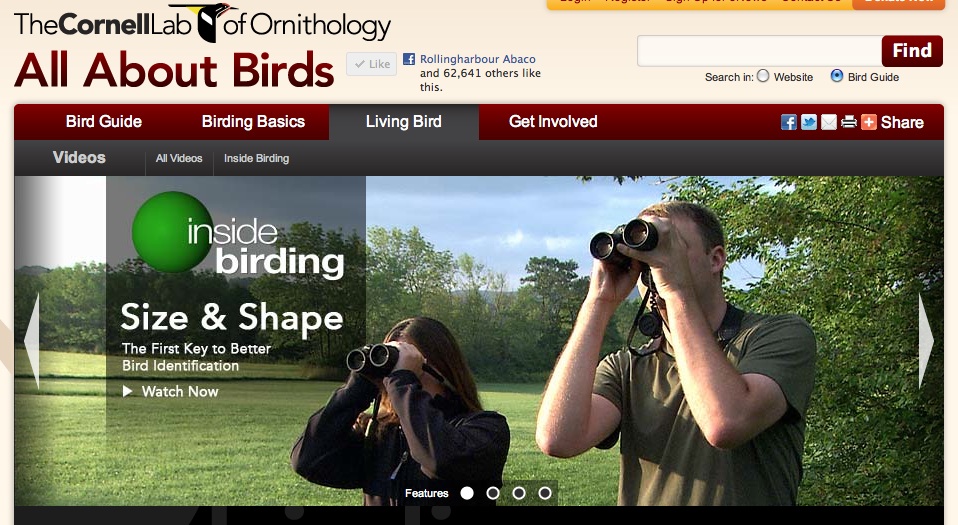
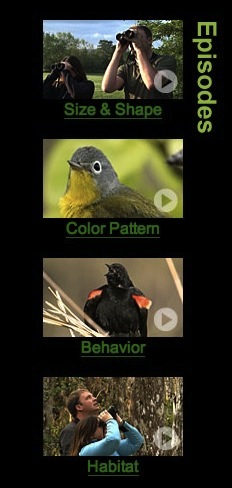
The outstanding  Cornell Laboratory of Ornithology site has a comprehensive bird ID section. I recently posted about the new ID resource MERLIN for which they are inviting user-testing to help them perfect it. There are also 4 excellent videos concentrating on the principles ways in which birds can best be ID’d: size & shape; colour pattern; behaviour; and habitat

I haven’t yet cracked embedding the 4 videos so while the backroom boffins in the cerebral cortex puzzle it out (alongside ‘The Purpose of Hornets – What & Why?”) the best thing is to give a direct link to the website feature

CLICK LOGO ===>>> 

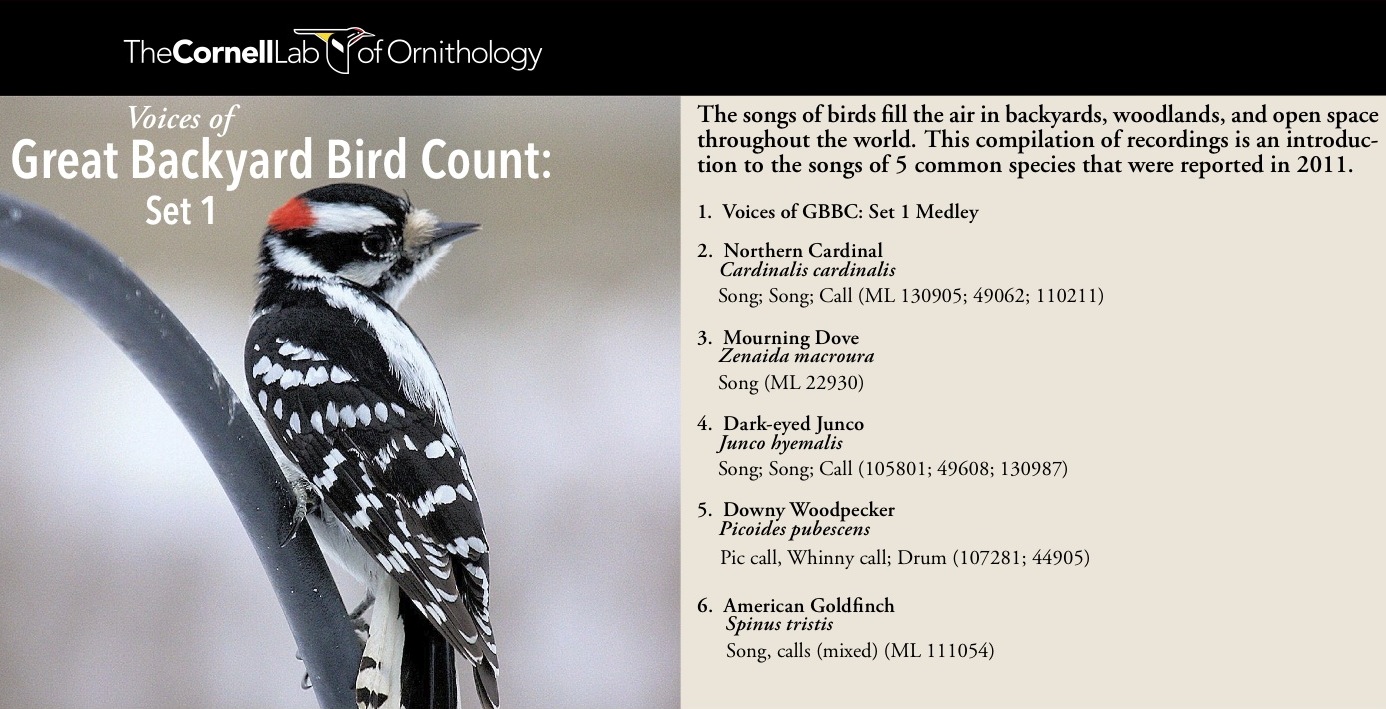
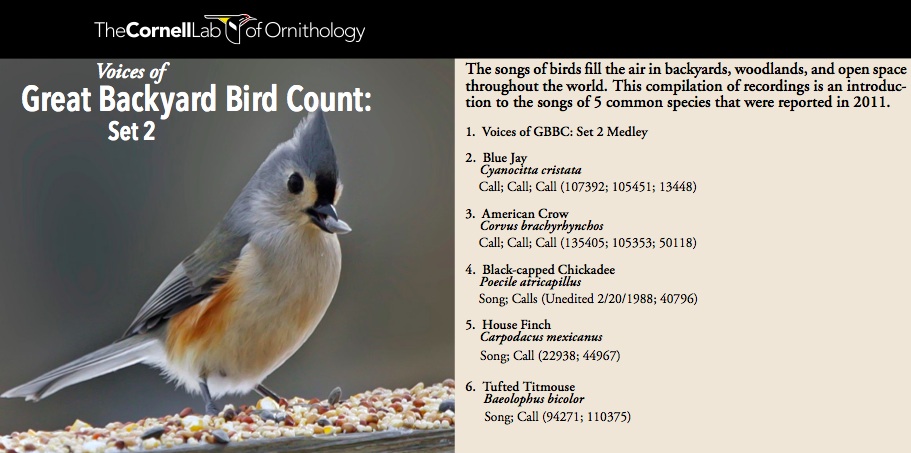
The same link will offer you the chance to download 5 bird songs – and now a second set of 5, part of the Great Backyard Bird Count currently underway – see details below. You may need to click on the images to make them legible…

Unknown's avatar

YOUR FAVOURITE ABACO BIRD: VOTE NOW FROM THE 4 NOMINEES


A NEW BIRDING DIVERSION

BAHAMA WOODSTARS LEAD VOTE NOW POLL CLOSES 29 FEBRUARY 

This could be fun. Unless no one bothers to participate. I’ve just found out how to do this, having wondered for a while what the little widget did. There may be some way for you to put your own choice, but I am a slow learner. Another time maybe. For now,  you can positively opt out of the nominated birds – your very own protest vote. Or you can all just ignore the whole thing, as I rather fear may happen… If this prototype bombs, I’ve only wasted a couple of hours, after all…

UPDATE: After a week, the order is (1) Bahama Woodstar (2) Abaco Parrot (3) Western Spindalis (4=) Banaquit and ‘Sorry…’ The poor Tropicbird got no votes and has been removed…

Unknown's avatar

ABACO WHALE, DOLPHIN & MANATEE SIGHTINGS JANUARY 2012


ABACO CETACEANS AND SIRENIANS                                        BMMRO SIGHTING REPORTS JANUARY 2012

For the second month in succession MANATEES have been seen in the area: again in the Berry Is region, and additionally off Grand Bahama. With luck they will now be a fixture on the BMMRO monthly sightings map. The main reported Abaco activity, including a sperm whale, was on the ocean side of Elbow Cay. Thanks to Charlotte Dunn / BMMRO for permission to use their material

Unknown's avatar

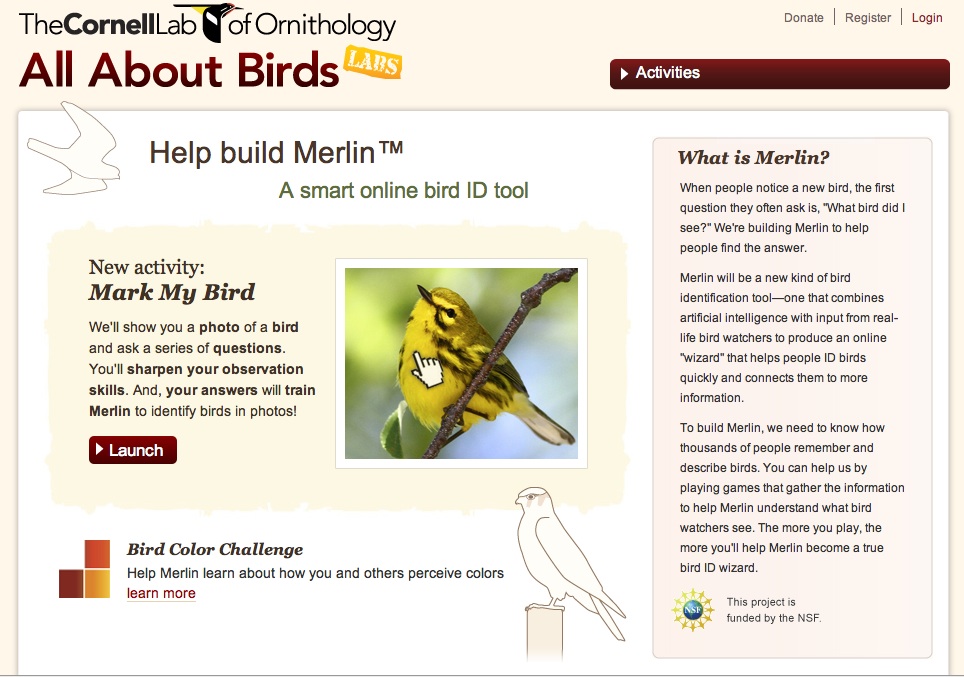
‘MERLIN’ – NEW ONLINE BIRD ID TOOL FROM CORNELL LAB FOR ORNITHOLOGY


STOP PRESS January 2014

Cornell are now re-promoting ‘MERLIN’ with a free App and a video to go with it.

[youtube http://youtu.be/OkH11ZiIL9E]

 has produced a new proactive bird identification gizmo called MERLIN (CLICK for direct link). They are trying to build up a user-friendly ID ‘wizard’ using the sort of variable descriptions that people like me use to describe birds they don’t recognise. Perhaps we’ve all been there – “well, it was a medium-size greyish bird, but I think it had white under the wings. Or maybe a lighter grey. And a sort of white streak on its head. Actually the bird was more bluey-grey…”etc. Merlin seeks to iron out the variations using AI, by showing a bird and asking a number of questions to get users to describe the colouring  they are looking at. I tried it with a teal, and it worked first time.

Gradually, the input of descriptions for each bird will be analysed, so that future users are more like to get a correct ID based on their description, even if others might describe the bird differently. With any luck it will also improve the chance to ID that pretty bird seen fleetingly at a distance. It’s worth trying this out even if you are a serious birder, because each ‘attempt’ adds to the picture. And anyway, there’s a very slight element of a game here – will the computer get it right?

Unknown's avatar

AN ABACO PARROT SAYS 3 LITTLE WORDS…


VALENTINE’S DAY IN TWO WEEKS? LEAP DAY IN A MONTH?              AN ABACO PARROT SAYS ‘I LOVE YOU’

Or it would if it could talk. Here is a win -win -win. ‘Adopt’ this miniature Abaco Parrot sculpture (ok, buy it) by Dou Dou Birds and all proceeds will go towards the conservation of the Abaco Parrot population. Then give it to someone. It’s an investment in art; a philanthropic deed; and a gift from the heart. Here’s the direct link (there are many other cute birds for sale too) To save parrots     CLICK THIS ONE===>>> 

Oh dear. Maybe someone else got there first. Never mind. How about making a donation to  PARROTS INTERNATIONAL?

This organisation allocates funding for the research into the Abaco Parrots and their conservation. You can now pay direct by Paypal or Credit Card (with gift tax benefits depending where you live). Please remember use the “Note to Seller” box to specify ‘ABACO PARROTS / CAROLINE STAHALA’

MEMBERSHIP /  DONATION PAGE   CLICK LOGO===>>> Parrots International

Then go ahead and buy that big box of chocolates you were going to get anyway…

Unknown's avatar

HUMANS’ TASTE FOR DOLPHINS & MANATEES ON RISE


 HUMANS’ TASTE FOR DOLPHINS & MANATEES ON RISE

I am reblogging (thanks to Ann Novek at http://havehest.wordpress.com/the above link to an article by Jennifer Welch of LiveScience, published in Biological Conservation. It’s of particular relevance on these pages, since I have just posted about manatees and the threats to their survival; and also because dolphins are a regular feature of this blog. A quick G**gle search reveals a number of sites with recipes for marine mammals (including manatees), many species of which are protected by law… I suspect that the slow and inquisitive manatee will always be easy meat, as one might say. NB ‘Dolphin’ here does not include the dolphinfish (dorado) commonly found on menus as ‘dolphin’, for which there are no current conservation concerns (although there are officially preferred methods of catch)

Unknown's avatar

WEST INDIAN MANATEES AND THE BAHAMAS: THE FACTS


Bahamas Manatee Gina (BMMRO)

WEST INDIAN MANATEES IN THE BAHAMAS

The appearance of a mother and calf manatee off the Berry Islands in December 2011 – see BMMRO SIGHTINGS post – led me to investigate these creatures a bit more. I added some more info and a couple of photos to that post, but really they deserve a post in their own right. So, with a wave of a flipper in the direction of Wiki and other open sources,  here’s some more about these most strange-looking mammals, just in case you ever happen to come across one…

I will expand the post when I have read the latest “What Manatee?”, “Total Manatee” and “Manatee Monthly” magazines 

MANATEES Trichechidae “Large, fully aquatic, mostly herbivorous marine mammals. There are three accepted living species of Trichechidae, representing three of the four living species in the order Sirenia. The name manatí comes from the Taíno, a pre-Columbian people of the Caribbean, meaning breast” 

10 MEMORABLE MORSELS OF MANATEE MINUTIAE

The 4 species of Sirenia are the West Indian, Amazonian and West African manatee; and the Asian / Pacific dugong. Fossil remains of Florida manatees date back 45 million years; their closest living relative is the elephant

Manatees are also known as Sea Cows. Some say sailors who’d been at sea for too long took them to be mermaids, a mistake I doubt they made twice…

They can weigh up to 1,300 lb and measure up to 13 feet. Females are larger than males. Baby manatees may weigh 65 lb. Adult intestines can reach 45 meters which would take Usain Bolt 4.31 seconds to run past (if straightened out, obviously)

Accurate population estimates seem to be impossible to obtain, varying by season and by year for no apparent reason. Overall,  the picture is of a declining population, with extinction likely without further protection (see below for the THREATS to the species)

West Indian Manatees can move freely between extremes of salinity, and may be found in warm shallow coastal waters, in estuaries, or migrated into rivers to freshwater springs (as in Florida). They cannot survive below 15°C (60°F). They have a propensity to hang around the warm-water outflows of power stations

Manatees have some intelligence and demonstrate discrimination and task-learning similar to dolphins.Their eyelids close “in a circular manner”, though I can’t quite picture this. They have only 6 teeth in each jaw, which are replaced throughout their lives

They breed every other year. Gestation lasts 12 months, and it takes a further 12 to 18 months to wean the calf. A single calf is born. Apart from mothers with a calf or males showing off to females, manatees tend to be solitary creatures

They are herbivores, eating many plant species, such as mangrove leaves, turtle grass, and types of algae. An adult manatee can eat up to 10% of its body weight per day. They have been known to eat small amounts of fish from nets

Half a manatee’s day is spent sleeping in the water. The rest of the time they graze in shallow waters. They swim at 3 to 5 mph, faster in short bursts. They may live up to 60 years (surprisingly, given their punishing daily schedule)

The oldest manatee in captivity is Snooty, at the South Florida Museum. He was born at the Miami Seaquarium on July 21, 1948 and came to the South Florida Museum in Bradenton, Florida in 1949

   PREDATION, THREATS AND CONSERVATION – A SUMMARY       The manatee is yet another creature whose worst enemy is mankind. The generalisations below apply to the West Indian manatee – elsewhere there may be different problems

Natural predators Manatees have few natural predators except, occasionally, sharks and crocodiles. Predation is not a significant survival threat. The main causes of death are human-related, such as habitat destruction and human marine objects; and natural causes such as low water temperature and disease

Hunting Historically, manatees were hunted for meat. They were easy to tempt to a canoe and then stun with a pole. Manatee hides were used – and traded – for canoes and shoes; their bones were used for ‘medicine’. Museums used to pay for hides or bones. Hunting was banned in 1893, though some poaching still occurs

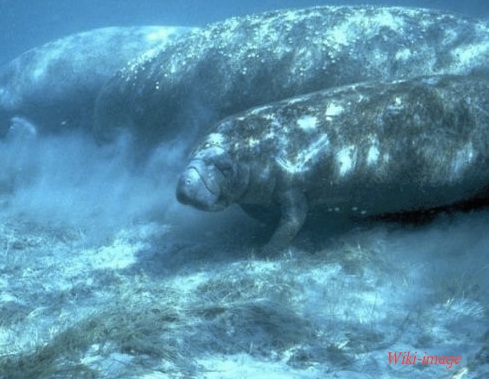
                    Manatee Group                                                        Young Manatee                            

 Ship-strike Manatees move slowly and are curious… Coastal development has led to many violent collisions with propeller-driven boats and ships, causing maiming, disfigurement, and death. Manatees are cut in half by large vessels like ships and tugs. Many others have propeller scars and they can often be identified by their scar patterns –  some bear 50 scars and disfigurements from vessel strikes. Breeding ability may be affected. Infected injuries can prove fatal. Internal injuries also come from being trapped between hulls and docks. Studies of the attrition rate from “boat mortality” alone is causing much concern for the survival of the species. In 2009, of 429 Florida manatees recorded dead, 97 (23%) were killed by commercial and recreational vessels

Red tide Another cause of manatee deaths is “red tide”, blooms of the microscopic marine algae Karenia Brevis.  This produces toxins that affect the central nervous systems of sea creatures. In 1996 an outbreak off the Florida coast killed 151 manatees

Other threats (1) Fishing gear: hooks, metal weights, and especially  mono-filament line clogging a manatee’s digestive system; entanglement in fishing lines (2) water-control structures such as navigation locks and floodgates (3) drowning in pipes and culverts (4) bizarrely, there have been numerous reports people, when allowed to swim with manatees in Florida, harassing them

CONSERVATION All three species of manatee are listed by the World Conservation Union as vulnerable to extinction. It is illegal under US federal and Florida law to injure or harm a manatee. They are classified as endangered by both the US state and the federal governments. Some vessels are now adapted to help prevent harm to manatees where they operate

Florida Sea Park Manatee

For news of forthcoming BMMRO research into the apparent recovery in the population of manatees in the Bahamas CLICK HERE

Finally, here’s the link to a website that contains more manatee information and images. You can join, adopt a manatee, donate or buy stuff. Who wouldn’t want a T-shirt – or a ‘ManaT-shirt’, even – adorned with a picture of the lady above? CLICK LINK===>>> SAVE THE MANATEE CLUB

Unknown's avatar

SOUNDS UNDER THE SURFACE: NOISE EFFECTS ON WHALES


The NOAA (National Oceanic & Atmospheric Administration) has produced a short video with the conclusions from recent research into the effects of extraneous (i.e. non-natural) noise on the habits of whales. The cooperative project involved a number of organisations including the BMMRO and Florida State University and lasted two years.

The study concentrated on beaked whales, pilot whales, and melon headed whales. Using readings from tagged whales, the scientists created animations showing the whales behavior before, during, and after being exposed to low levels of a variety of sounds; including sonar. The results showed that beaked whales, known for diving to extreme depths, were much more sensitive to sonar than other species.  Even low levels of these sounds disrupted their diving, vocal, and likely feeding behaviors.

The complete report including a VIDEO and a transcript can be found by clicking LINK==> Sounds Under the Surface | Science and Technology | Ocean Today   (I haven’t been able to embed the Video, so you’ll get the whole page)

Unknown's avatar

ABACO NEWS: ART FOR THE PARKS / BAHAMAS NATIONAL TRUST DAY


SATURDAY 28 JANUARY 2012 – A DATE FOR THE DIARY

CLICK LOGO!

The images below tell you all you need to know about this excellent festival presented by the BNT in conjunction with the Abaco Beach Resort. From this blog’s point of view, the highlights are:

PRESENTATIONS by Nancy Albury on ‘The Blue Holes of Abaco’; by Ricky ‘Blue’ Jones on Bush Medicines / teas; and by Caroline Stahala on the Breeding & Behaviour of Abaco Parrots

ART The Art. Yes, all of it. Ok?

PRODUCE Something of everything, please. 

OTHER Everything else on offer…

The very best of luck with this event and best wishes for successful fundraising from Rolling Harbour

Unknown's avatar

EXPLORING CORAL REEFS: FOWL CAY MARINE PRESERVE, ABACO


EXPLORING THE CORAL REEF AT FOWL CAY MARINE PRESERVE, ABACO

First, a warning for anyone arriving new to this blog (hi! welcome) either on purpose or accidentally: I can’t swim very well, I hadn’t snorkelled for decades until last year, and I’d never before used a camera underwater.

That said, there is probably enough in this 2:40 min video  to warrant a quick view. As with other videos from this expedition to Fowl Cay Marine Preserve (STINGRAY / BLUE TANG), best viewed small to avoid queasiness and disorientation. You can always Pause for a breather. There are some nice fish obligingly in view from time to time, and the coral is very diverse. And I’ll know what to do this year to get better results, besides trying harder with the swimming… (Music: East Wes by Eric Johnson, off Ah Via Musicom)

Unknown's avatar

BAHAMAS CURLY TAILS ON ABACO: ENCHANTING LIZARDS


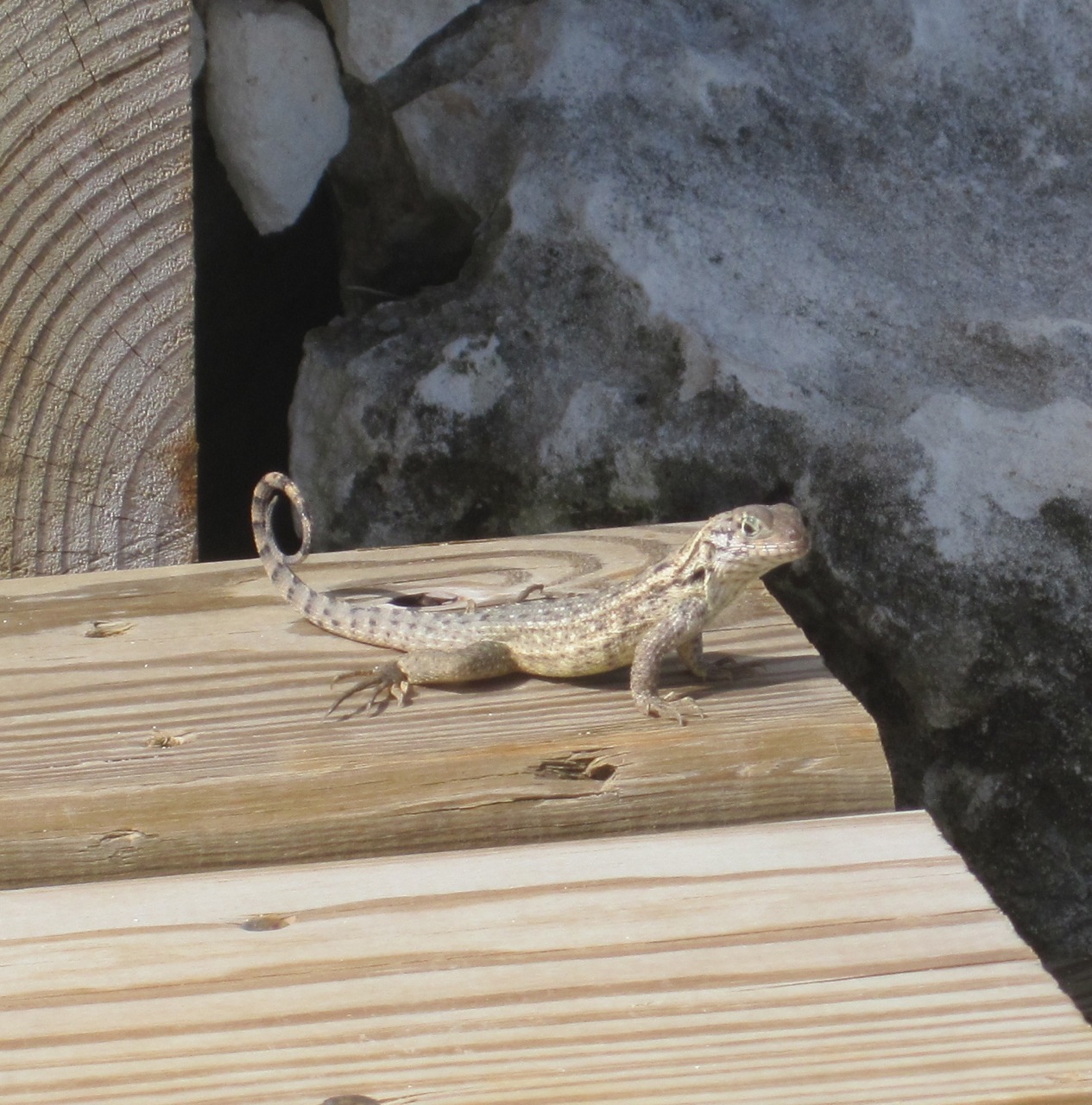
Curly Tail Lizard, Delphi, Abaco CS2

CURLY TAILS – ENCHANTING LIZARDS

This is an expanded and rejigged post based on  bits and pieces originally scattered around the MISC WILDLIFE page, written now partly because of various search queries recently – diet and so forth – which had not been covered.

First, the very dull scientific classification bit (wiki-debt): Kingdom – Animalia; Phylum – Chordata; Class – Sauropsida; Suborder – Iguania; Family – Leiocephalidae; Genus – Leiocephalus [Subspecies Carinatus?]

The ‘curly-tailed lizard’ family is widely found throughout the Caribbean but is apparently relatively unstudied (but why on earth not?). There are nearly 30 distinct varieties, many specific to individual islands. My completely uneducated guess is that the Abaco ones may be one of the several subspecies of ‘Cuban or Northern Curly-tailed Lizard’ carinatus, the ones found generally in the Bahamas. But who cares? By any standards they are totally cute! This photo was taken at the bottom of the steps down to the Delphi Club beach.

            (Photo credit: Mrs RH)

             (Photo credit: PM Himself)

NEW ADDITION April 2012 A fine Curly Tail from Brigitte Carey of Tilloo Cay 

DEPLHI CLUB: ‘OFF-DUTY’ CURLY TAIL, OR A DIFFERENT TYPE OF LIZARD?

The CT is described as an active, robust lizard that is mostly terrestrial and will retreat into a burrow or cavity when frightened. It prefers sunny areas with loose rubble and rock. Bahamas curly tails were apparently released intentionally in Palm Beach, Florida, in the 1940s in an attempt to control sugar cane pests.

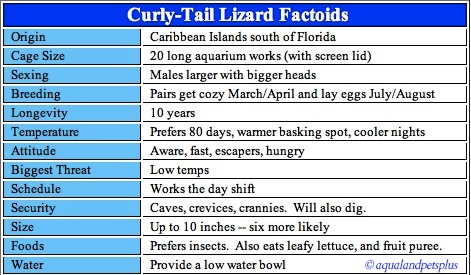
Jan 2012 update: Having had a number of hits over the last few months for ‘what do Curly Tails eat’ and other CT-related information, I checked out aqualandpetsplus.com of Des Moines, Iowa (the first Google hit, in fact). With kind permission (many thanks, Larry) here’s some more about these little lizards 

THE CURLY TAIL DIET: “Considered insectivores, curly-tails scamper right after crickets.  They’ll also learn to eat mealworms and superworms from your fingers.  You can give them other insects like wax worms which they love but tend to over-eat.  Roaches, houseflies, or any arthropods / bugs that accumulate around your porch light make a nice change of pace…OR…take a stroll down the baby food aisle.  Think twice about the bananas. Bananas are not good for some lizards.  Skip the bananas.  Anyway, apple sauce works great.  The best thing about baby food?  You can add a Calcium/Vitamin D supplement to it.  Much easier than dusting crickets (which start cleaning it off the second it gets on them).  Curly-tails will also eat bits of leafy lettuce.  Uneaten crickets in their cage  will also eat the fruits and vegetables you offer your lizards” Larry Arnold

So I can’t answer someone’s specific query ‘do they eat tomatoes?’, save to say ‘why not try tomato sauce’ (and I don’t mean a well-known proprietary brand, one of 57 varieties). Maybe have a few crickets handy in case it is politely declined

For further info on curly tails from theBahamas National Trust website CLICK LINK ===>>> http://www.bnt.bs/curlytaillizardinfo.php?catid=&subid=  where there is also a downloadable PDF version

Finally, an excellent CT photo from Gareth Reid, the Master Chef of Delphi

BIBLIOGRAPHY:  “101 Uses for a Curly Tail” Rolling Harbour Press (2011)     

(1) The gate latch                                           (2) The window latch


(NB No Curly Tails were harmed in the creation of these images)