This is the first short video from footage taken in June at Fowl Cay, 2000 acres of protected coral reef waters. This was the start of another great day out snorkelling and island-hopping with dive-diva Kay Politano ofABOVE & BELOW ABACOMarsh Harbour. In due course there will be more videos of fish and coral. There is very slight evidence that lessons have been learned since last year’s erratic novice snorkeler / underwater photographer efforts. Still a way to go of course. The production process has been hampered by a major format problem between my camera chip thingy and the Mac I now use. It told me the data was unrecognisable / corrupted / damaged etc, which was massively disappointing. Then I thought of <<techno-tip>> downloading to an old PC and transferring to the Mac on a memory stick. Problem solved.
This huge swirling mass of (tens of) thousands of small fish confronted me as I round one end of the reef. I’ve never seen anything like it before, except on TV. It was an astounding, dizzy-making spectacle. When I swam into the middle of the shoal, I expected to feel tickled all over – but despite the huge numbers of fish, their speed, and their sudden and apparently random direction changes, I wasn’t conscious of feeling them at all. I assume the commotion resulted from the presence of larger fish feeding on the small ones. Or possibly from my appearance…
Music credit: Gordon Giltrap (Hofner champion) ‘Fast Approaching’
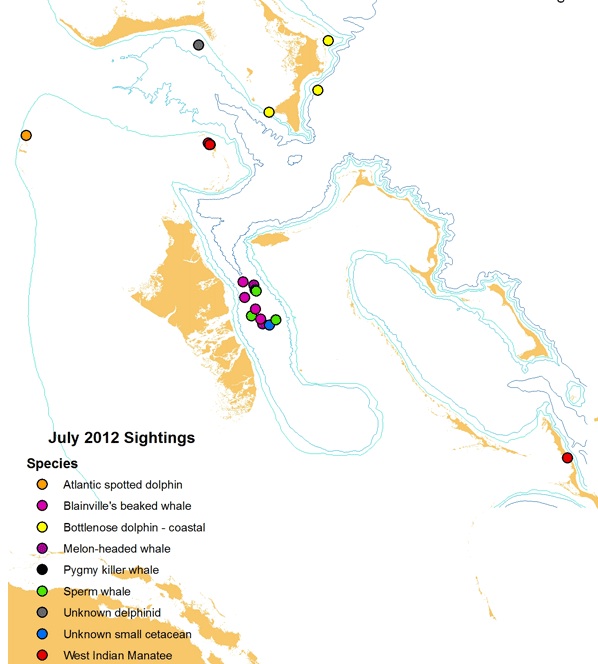
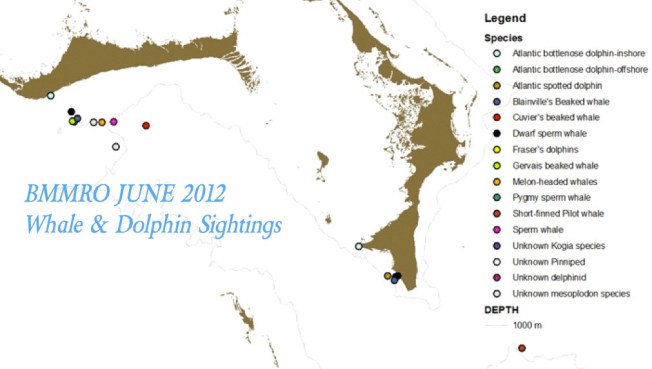
Last month there were bottlenose dolphins for Abaco; manatees for the Berry Is. [Hi, Rita & Georgie! – check out their progress on FACEBOOK BMMRO]with a first manatee sighting (I think) off the west coast of Long Island; and quite a few whale reports off the east coast of Andros. I wonder why the whales are all in that area at the moment? Maybe the reports are high for that area because that’s where the whale spotters congregated in July…
STOP PRESSGeorgie the Manatee is now weaned – for detailsCLICK===>>>HERE
STOP PRESS 21 AUGAs a sad coda to these sightings, the BMMRO has posted news of the stranding and death of pygmy sperm whale on Eleuthera
Stranding Event: August 19th, 2012 A blackfish stranded in Eleuthera:
Photos confirmed the species to be a pygmy sperm whale. The animal stranded alive but later died. Many thanks to Tom Glucksman and his wife for their efforts in providing pictures and getting a skin sample, which will allow us to get even more information about this animal
I recently posted photos of an unknown aggressive-looking INSECT that I found in the coppice on Abaco. I could only get a partial shot of it, and I wondered whether to try to reach it and get a more complete shot. Perhaps I could have stroked its dear little back… or tickled its cute feelers…I received various ID suggestions, ranging from the entomologically broad hedge-bet “big black beetle” to a more precise “black praying mantis”. I contacted the BNT to see what they thought. I’m glad I did. It turns out that this creature would be the hardest bastard insect on Planet Bastard. It is a SPIDER WASP of the Pompilidaefamily, almost certainly aTARANTULA HAWK aka PEPSIS WASP. It’s fortunate that I didn’t try to pet it or keep it in a matchbox. Note, for start, the scary eating apparatus… and it’s not nibbling leaves as I had thought, but chopping up a small insect. The leg claws and barbs are for pinning down its prey. You would not believe how unpleasant these little buddies are – and that’s before we even mention the sting…
SPIDER WASPS
These wasps (family name Pompilidae) are known in some countries as “horse-killers”. There are many species around the world, with 6 subspecies, one of which being the Tarantula Hawk or Pepsis Wasp – so-called because it hunts tarantulas and uses them in a most ingenious and cruel way…NBTheBNThave rightly pointed out that these insects are unaggressive to humans. If you leave them alone, they will spare you. I’ve also read “The tarantula hawk is relatively docile and rarely stings without provocation” Now read on to see if it’s worth provoking one
SCARY CRITTERS & LIVING LARDERS
SPIDER WASPS are ‘Solitary’ insects that feed on ground spiders/ tarantulas by stinging them to paralyse them, then eating them. The females also make use of spiders for breeding purposes. They build a nest in a burrow, find a spider, paralyse it with their sting, drag it to the nest and lay a single egg on its abdomen. Then they seal up the burrow.
When the egg hatches the larva chews a hole on the spider’s abdomen and enters a living larder. It gradually eat its host as it grows. The spider’s vital organs are left till last, so that the spider stays alive as long as possible until the larva has reached full-size. After several weeks, the larva spins a cocoon and pupates (often over winter). Finally, the wasp becomes an adult, bursts Alien-like from the spider’s abdomen, and tunnels out of the burrow…
Their hunting improves with experience – the more spiders they eat, the quicker they find, attack & kill them
Males use ‘perch territories’ to scan for receptive females from a tall plant or other vantage point, a behaviour known as HILL-TOPPING
Adult wasps also feed on a variety of plants for nectar & pollen. They may become intoxicated on fermented fruit, which affects their ability to get around (I think we’ve all been there at some time…)
The female Pepsis gets her spider in two main ways: approaching a tarantula causing it to rear up defensively on its legs, thus exposing its abdomen to the sting or
She locates a tarantula’s burrow, using her sense of smell. She tricks the spider into emerging by tweaking the web at the burrow’s entrance or ‘intruding’ (see video below)
The wasp uses her long stinger to stab her prey. The poison rapidly paralyses the spider. She then drags it to her burrow, lays her egg onto the tarantula’s abdomen, seals the burrow and leaves. Job done
The hooked claws and barbs on the wasps’ long legs are weapons for grappling with victims
The stinger of a female tarantula hawk can be up to 7 mm (1/3 inch) long – and the sting is among the most painful insect stings in the world (see below)
Only the females sting (males may pretend to) because the stinger is linked to the ovipositor (egg-laying organ)
You can distinguish females from males by the curled antennae of the female. Mine was therefore female
The Pepsis wasp has (unsurprisingly) very few predators, though roadrunners and bullfrogs may tackle them
Here is a hypnotically fascinating 3-minute video of the life-or-death struggle
SPIDER WASP –v- TARANTULA
THE STING
The sting of these wasps is among the most painful of any insect, though the most intense pain lasts on a few minutes. Entomologist Justin Schmidt bravely submitted himself to the stings of various insects and described this pain as“…immediate, excruciating pain that simply shuts down one’s ability to do anything, except, perhaps, scream. Mental discipline simply does not work in these situations.”
Schmidt produced his SCHMIDT STING PAIN INDEXThe pain scale, based on 78 species, runs from 0 to 4, with 4 given for the most intense pain. Spider Wasps of the species Pepsis – i.e. Tarantula Hawks – have a sting rating of 4.0, described as“blinding, fierce, shockingly electric. A running hair drier has been dropped into your bubble bath”Only the bite of the Bullet Ant (not found on Abaco!) is ranked higher, with a 4.0+ rating, vividly described as “pure, intense, brilliant pain. Like fire-walking over flaming charcoal with a 3-inch rusty nail in your heel”
(Thanks to Erik Carey (BNT), Shelley Cant (BNT) and Dr Paul Deluca for their ID help and interest)
LIGHT RELIEF
1. In 1989, New Mexico chose the Tarantula hawk wasp as the official state insect. The choice seems to have been left to schoolchildren and I’m guessing here (or gender-stereotyping) but I suspect it was the boys’ choice that won…
2. Tarantula Hawk is a “psychedelicprogressive metal band” from San Diego, Ca. Their short discography includes their debut Tarantula Hawk (CD/LP, 1998); Burrow (Live CD, 2000, self-released); and Untitled. I’ll just check if… OMG!! you can even get these on iTunes… and (OMG!!!) Am@z@n. The cover of their debut provides the perfect ending for this post, vividly depicting the colour and texture of the swirling fiery pain you could experience (and I don’t really mean from listening to the music…)
AN ARGUABLY PAINFUL STING
Mr Gordon Sumner
AN ENJOYABLE STING
STOP PRESS2 or 3 weeks on, I find that this entire post has been translated into Portugese! It can be seen HERE. It’s quite weird to read it, and I am tempted when I have a moment to re-use Google to translate it back into English. The two-way online translation game often leads to amusing results…
One of the first colour images from the Mars rover Curiosity – a composite panorama 9 August 2012 (NASA)
STIMULATING CURIOSITY IN ABACO
THE DELPHI CLUB’S PART OF THE MARS ROVER MISSION
One of the first images from Mars
CURIOSITY landed on Mars today. This is the best chance yet of answering Ziggy Stardust’s rhetorical question “Is there life on Mars?”, and doffing an astronaut’s helmet to space pioneer Major Tom along the way… Assiduous readers of the blog will both recall that a while ago, the Delphi Club was privileged to be involved in a small part of the ‘Curiosity’ Mars Rover project. It’s a prime example of what one might call “extreme beachcombing…”
“One small part for a space program, one giant chunk of junk for the Delphi beach…” (S Walker)
Here are the links to the 3 short illustrated reports (rockets, boys!) in this blog from early 2012
1. ABACO BEACHCOMBING: MYSTERY OBJECT FROM THE DELPHI CLUB BEACH HERE 1
The discovery by Sandy Walker of the item above on the Delphi Club beach, Abaco: 12 feet of conical mystery
2. ‘SO LONG, ARIANE’: FROM ROCKS TO ROCKETS ON THE DELPHI CLUB BEACH, ABACOHERE 2
News of a positive ID by serial number as rocket débris from the Mars Program Curiosity Rover launch
3. BEACHCOMBING ‘CURIOSITY’ ON ABACO: OUT OF THIS WORLD TO THE RED PLANETHERE 3
Confirmation of this item as part of the booster rocket fairing of the Altas V rocket used to launch Curiosity in Nov 2011
◊ ◊ ◊ ◊ ◊ ◊ ◊ ◊ ◊ ◊ ◊
The episode had a slightly bathetic ending. Initial lack of official interest in the cone, which I personally hoped could then be planted deep in the coppice or pine forest for future generations to discover and wonder about, suddenly changed. In due course a team of astro-science persons (in a large black truck and white protective suits, I’d like to believe) came and took it away. This forestalled my other idea: cutting it up into hundreds – or thousands – of small pieces and selling them on eBay (possible in aid of the Abaco Parrots). A 12 foot cone of gleaming heat-resistant secret Abaconite space material. 5000 tiny pieces @ $100 each… Hmmmmmmmmm
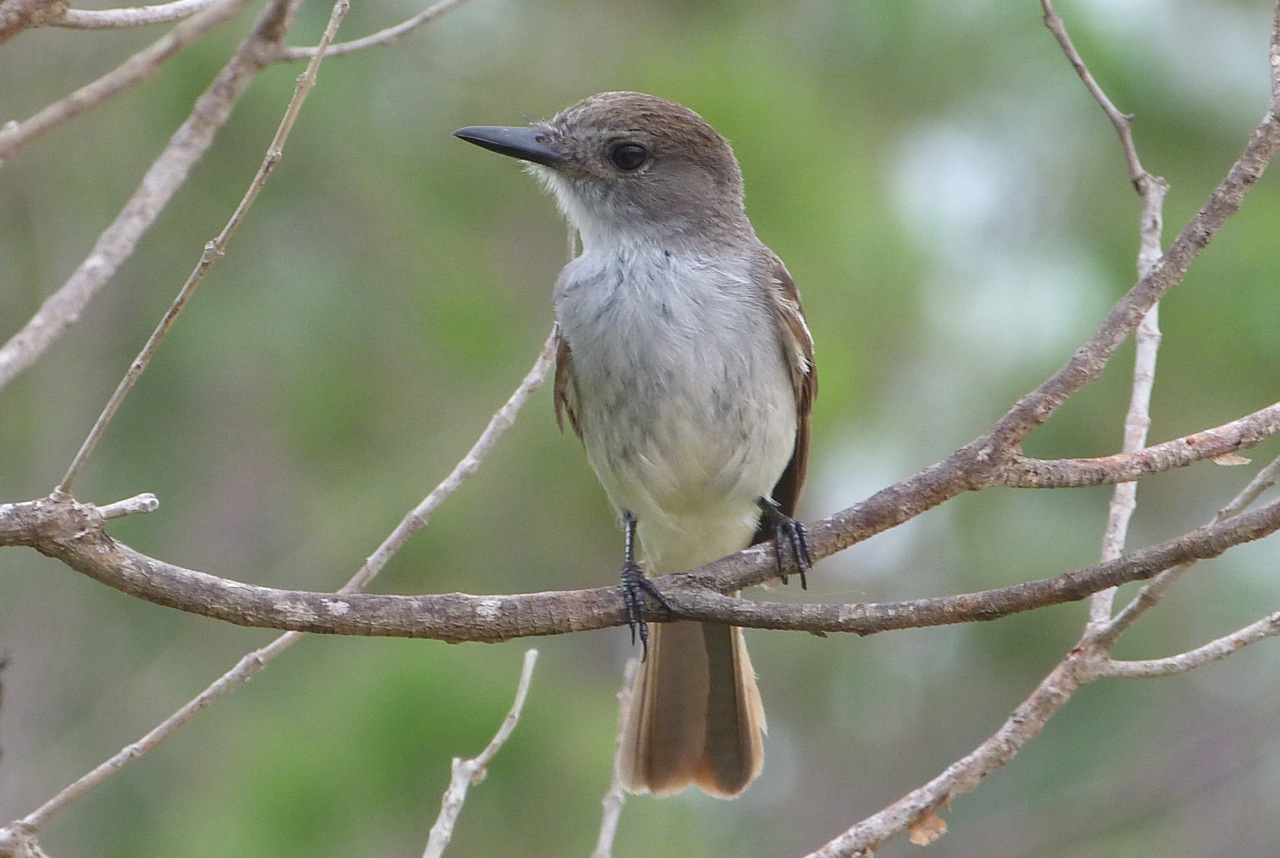
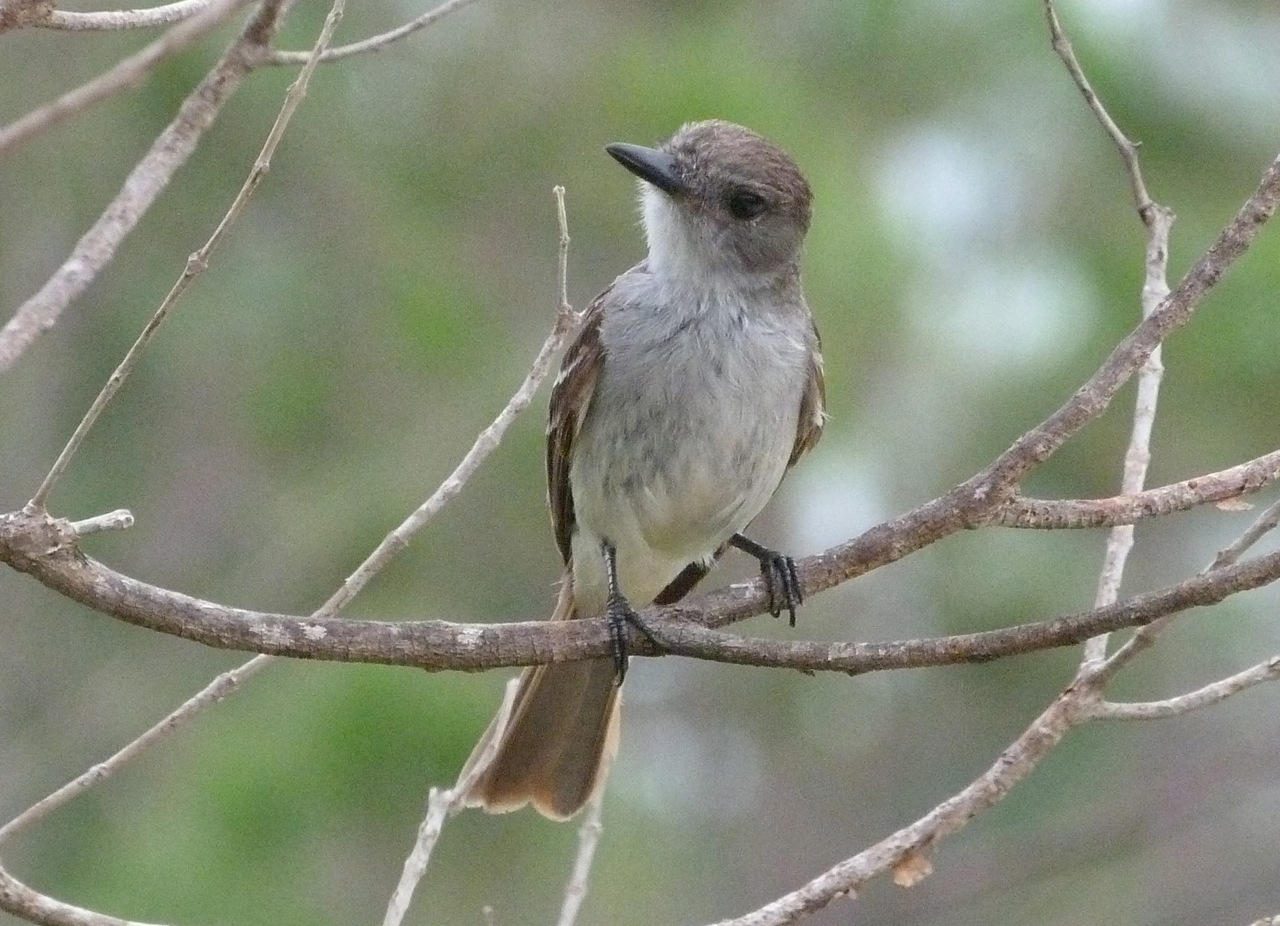
LA SAGRA’S FLYCATCHERMyiarchus sagrae is anon-migratory bird quite frequently seen in the Abaco pine forest and scrubland. It is resident throughout the year on Abaco, as elsewhere within its distribution range (see map below) – also occasionally found as a vagrant in southern Florida. It is a ‘tyrant flycatcher’, a passerine species found throughout the Americas that includes kingbirds, pewees and phoebes.
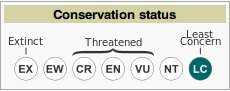
The conservation status of this flycatcher is ‘Least Concern’
The LSF’s natural habitat is subtropical forest and rough scrubland. It builds its nest in a tree cavity or similar natural hole, and usually lays a clutch of two to four eggs.
Adult La Sagra’s Flycatchers, unlike many avians, are very similar in appearance in both sexes.
As the name suggests, the species is primarily insectivore, fly-catching in the undergrowth and low scrub. However these birds also eat berries and seeds. Their call is a high pitched single or double noted sound described as ‘wink’. Here’s an example from the Bahamas by Paul Driver @ Xeno-Canto
And who or what the heck was La Sagra? The answer is: multi-talented Spanish botanist Ramón Dionisio José de la Sagra y Peris(1798–1871), who was also a writer, economist, sociologist, politician, anarchist, and founder of the world’s first anarchist journal El Porvenir (“The Future”). At one time he lived in Cuba and became director of Havana’s Botanical Garden; his name lives on arguably more significantly in ornithological than in anarchist circles (actually, an ‘anarchist circle’ must surely be a contradiction in terms…)
I note in passing that La Sagra is a provincial area in Spain, an Italian festive celebration, a chocolatier, or a small comet – all of which meanings may have to be negotiated online before you get to the flycatcher…
Ramón Dionisio José de la Sagra y PerisFinally, to continue with the recently introduced avian philatelic theme, here are stamps from the Cayman Islands and Cuba featuring the La Sagra’s Flycatcher. The Cuban stamp commemorates the death of Juan Gundlach, the man who chose La Sagra’s name to bestow on this bird
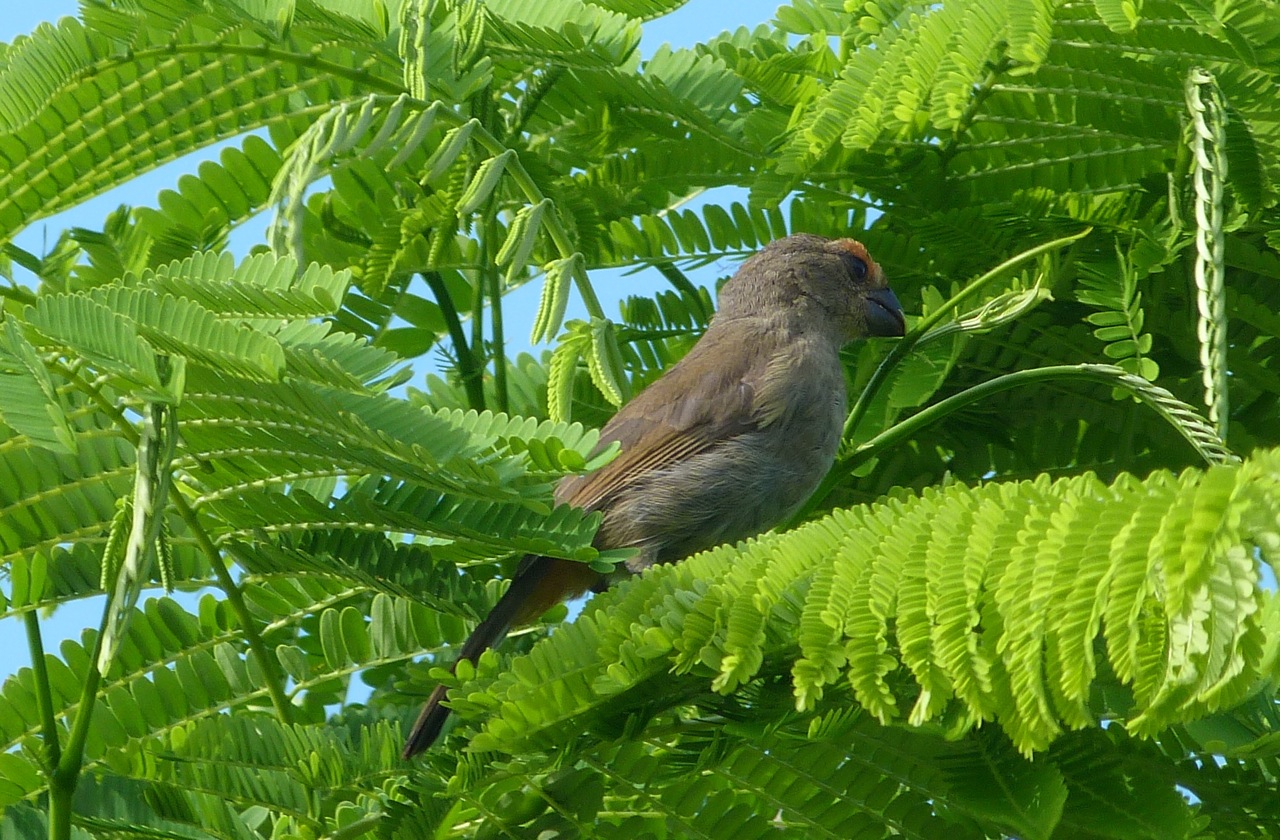
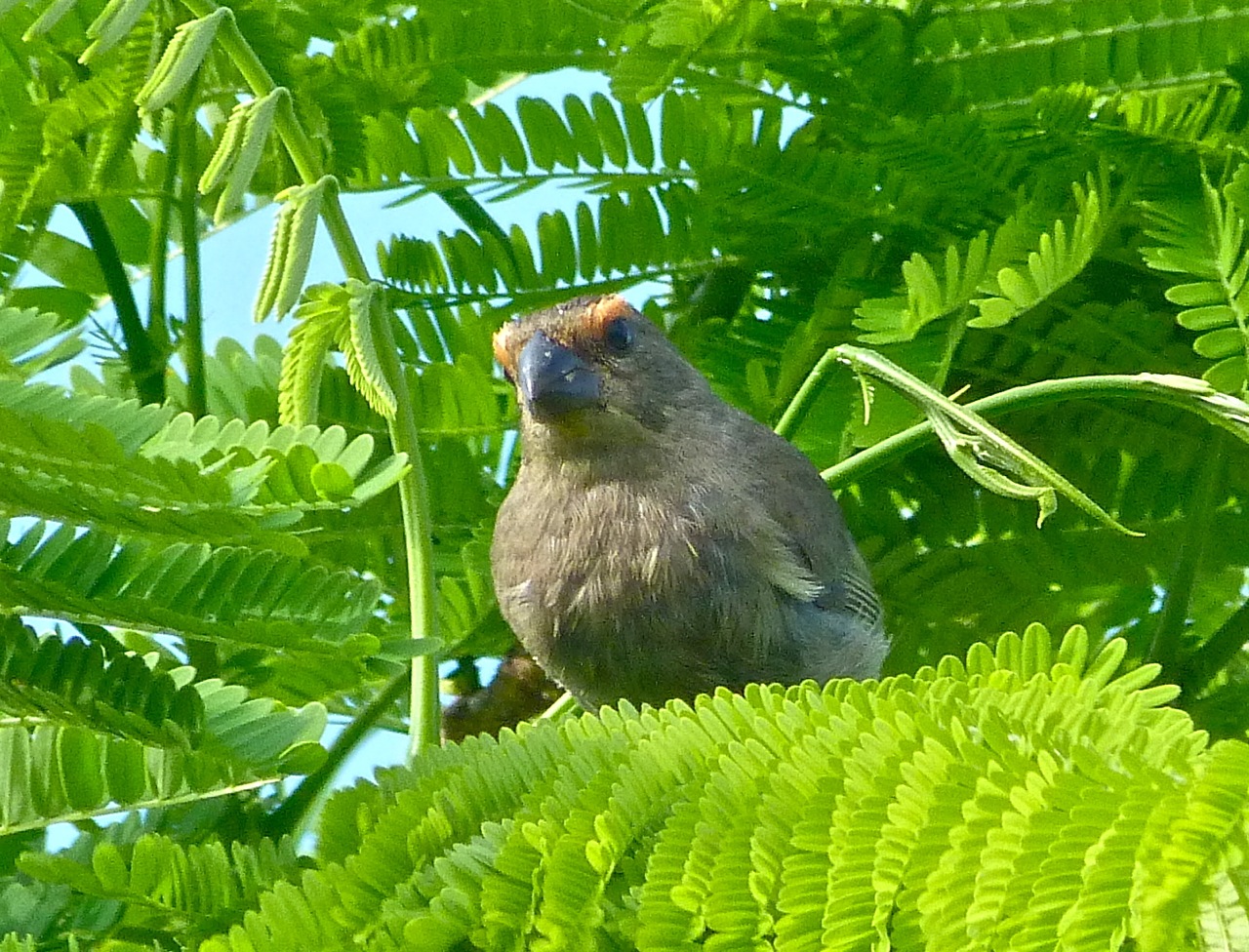
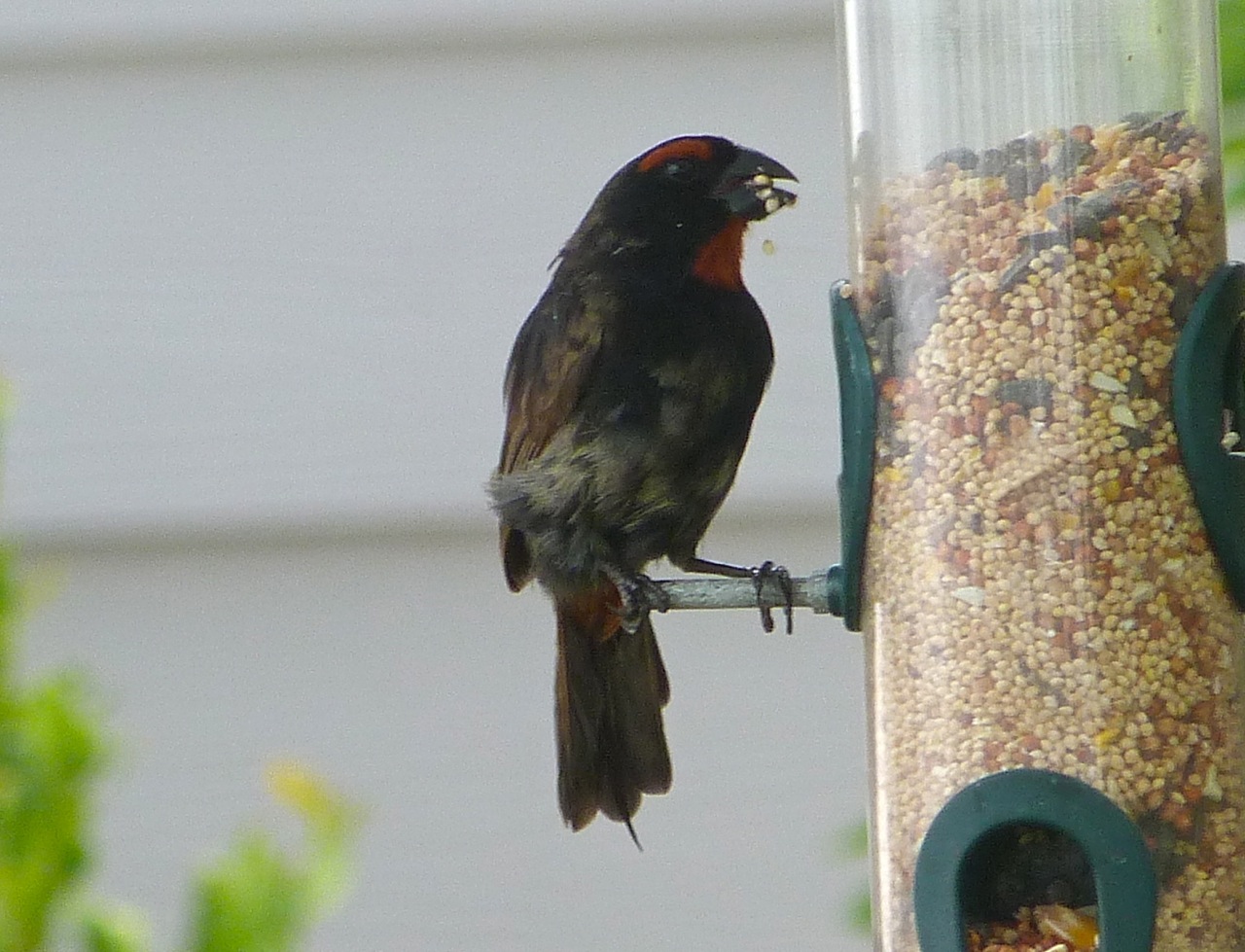
This is a well-know bird (Loxigilla violacea) that can be seen on Abaco all year round. With their scarlet bibs and eyebrows, the males are a cheerful sight in coppice or garden. The females are paler brown, with orange accessories.
While still officially rated as a species of ‘Least Concern’, a measurable fall in population in recent years has seen them nudging towards ‘Vulnerable’.
Greater Antillean Bullfinch song from Paul Driver at Xeno-Canto
Antillean Bullfinches enjoy garden feeders – and their larger size means that they are higher up in the pecking order than the black-faced grassquits and other small birds
They are one of the many popular Bahamian bird species to have featured on postage stamps – in fact they scooped the high-value $10 stamp in 1991 and the $5 stamp in 2001
This post is intended in part as a celebration of passing the 50,000 hits mark today. So much interest in the wildlife of one small island – thanks to all those who have visited during the last year or so
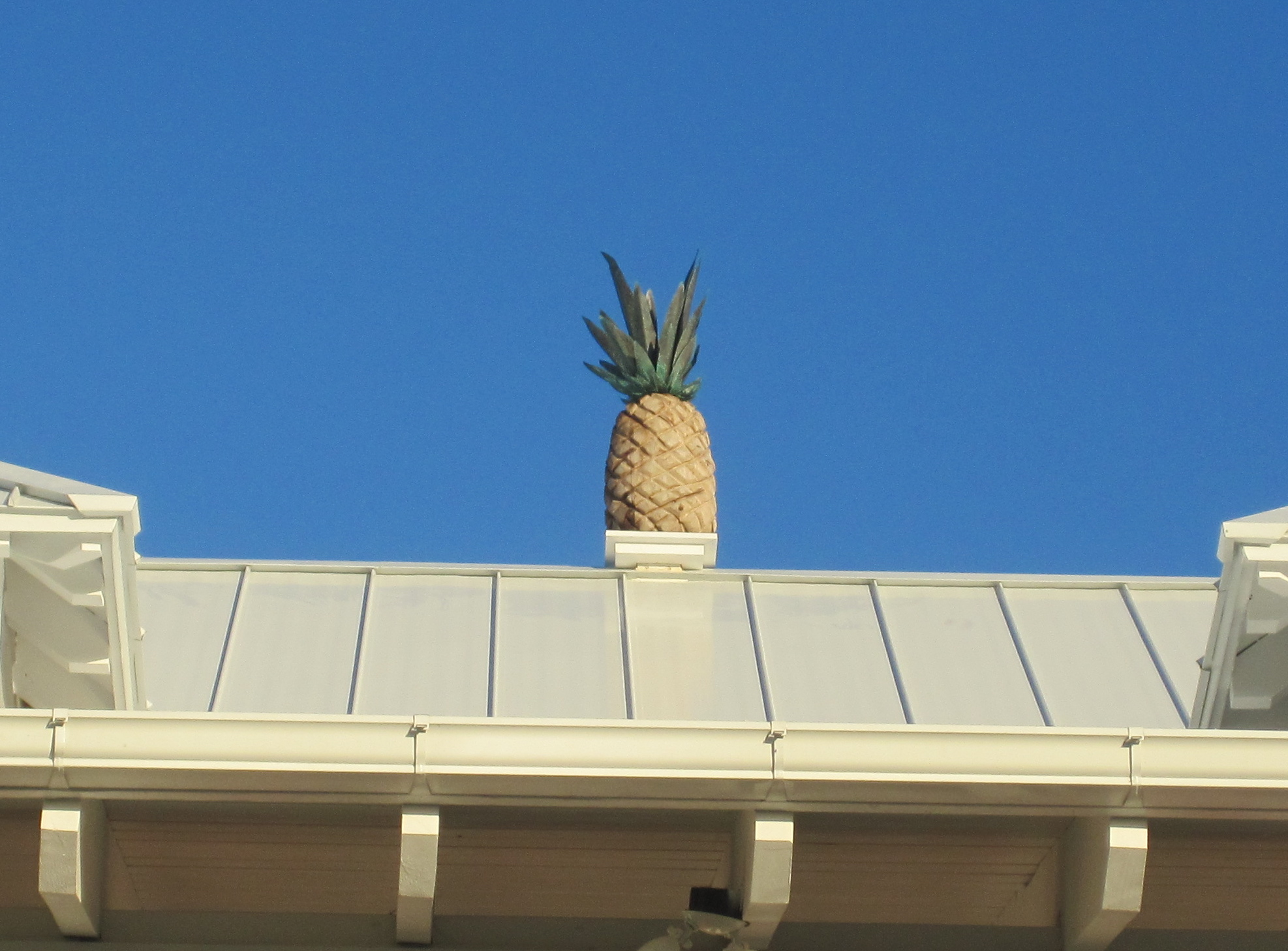
The first image below is of the handsome locally hand-carved pineapple that surmounts the roof of the Delphi Club, Abaco. The fruit lost a few leaves in Hurricane Irene last August, which scored a direct hit on the Club. As posted on theABACO FACTS page (under RANDOM main menu) “the precise Longitude & Latitude coordinates of the Pineapple [on] the Delphi Club roof are respectively –77.1787834167480 &26.20450323936187“. But why is it there? Time for a Short Voyage around the Pineapple…
PINEAPPLE FACTS TO ENLIVEN YOUR CONVERSATION
HISTORICAL & SOCIAL CONTEXT
Brought back to Europe by Christopher Columbus in 1493 on his return from his second voyage
Taken on long voyages as a protection against scurvy and because of its long life
By the c17 royalty & aristocracy grew them in hot-houses (or rather, their gardeners did). King Charles II tried one, an event so important it was recorded by the Court painter Hendrik Danckerts
By c18 considered a great delicacy and a status symbol of wealth, often the centre-piece of a feast.
If you couldn’t afford to buy one, you could rent one and return it afterwards. Someone richer than you would then buy it.
Pineapples were grown in pits of fermenting manure. In England Queen Victoria was not amused and soon put an end to that unpleasant nonsense
In the c19 pineapples were one of the most significant exports from Abaco
The Earl of Dunmore built a huge pineapple folly in Scotland in 1761, which you can stay in (We have. It’s a lot of fun)
CULTURAL SYMBOLISM
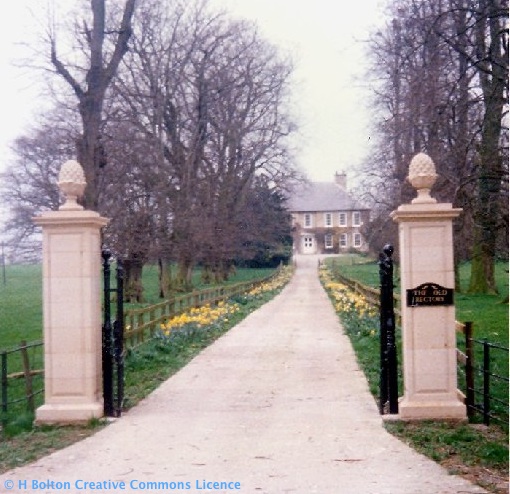
Pineapples symbolise welcome and hospitality, placed at the entrance to villages or plantations. The tradition spread to Europe where they were carved as gateposts; staircase finials; and incorporated into wooden furniture (including bedposts at the Delphi Club)
Seafarers put pineapples outside their homes on their return to show that they were back from their travels and ‘at home’ to visitors
An expensive fruit to grow & to transport; remained a luxury until the arrival of steamships
Their costliness made them status symbols / indicators of wealth and rank. Displaying or serving pineapple showed that guests were honoured
In the 1920s the grandest dinners apparently needed both “a pineapple and Lady Curzon” (I have been asked whether this is Interwar Period code for some sort of disreputable activity… I need to check)
The future Queen Elizabeth was sent 500 cases of canned pineapple as a wedding present from Australia. She asked them “Hev you come far?” Prince Phillip’s reaction was – apart from the word ‘pineapple’ – unprintable
In the play Abigail’s Party (Mike Leigh) pineapple chunks on cocktail sticks were used as a plot device to highlight the desperate social ambitions of a hellish hostess trying to impress & outclass her guests
A 1930s ad promised that by baking a pineapple pie a wife would make her man “smack his lips in real he-man enjoyment” (NB This may not work so well in the 2010s)
By Appointment to HM the Queen
ARTS & CRAFTS
Used on Wedgwood pottery designs as early as the 1760s; others soon followed suit
Became widely used decoratively as a motif for gateposts, weather vanes, door lintels, wallpaper, table linen & curtains, and incorporated into furniture
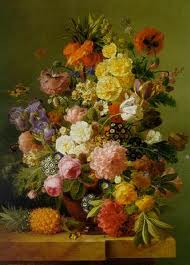
Featured in still life paintings as a crowning example of opulence
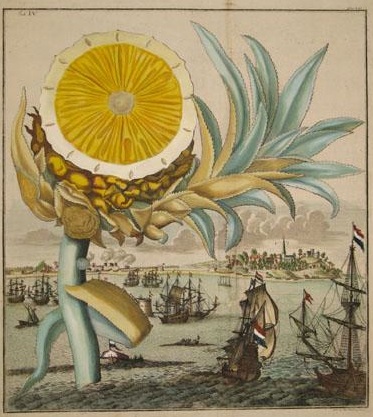
Depicted in plant and fruit studies, for example these by Johann Christoph Volckamer, very early c18
Featured in music e.g. Pineapple Rag (Scott Joplin); Pineapple Head (Crowded House); Escape – The Piña Colada Song (Rupert Holmes); Pineapple Express (Huey Lewis); Pineapple (Sparks)
Used as a motif on shutters in Marsh Harbour
The Men’s Singles Trophy at Wimbledon is a silver gilt cup with a gilded pineapple on top of the lid. These days its meaning is “Welcome back, Roger!”
10 MISCELLANEOUS PINEAPPLE CHUNKS
The cocktail Afterglow is 1 part grenadine, 4 parts orange juice & 4 parts pineapple juice on ice
Piña Colada is rum, coconut milk & crushed pineapple. Omit the rum for a Virgin Colada
It is impossible, for chemical reasons, to make jelly with fresh pineapple
“Pineapple heat” was once a standard marking on thermometers
A pineapple grows as two interlocking helixes (8 one way, 13 the other – each being aFibonaccinumber)
A pineapple will never become any riper than it was when harvested
Workers who cut up pineapples eventually have no fingerprints – a gift fact for crime writers
Pineapple stems are being tested for anti-cancer properties
Pine Apple, a small Alabama town full of pineapple symbols, was originally named “Friendship” but there turned out to be another town called that, so they changed it
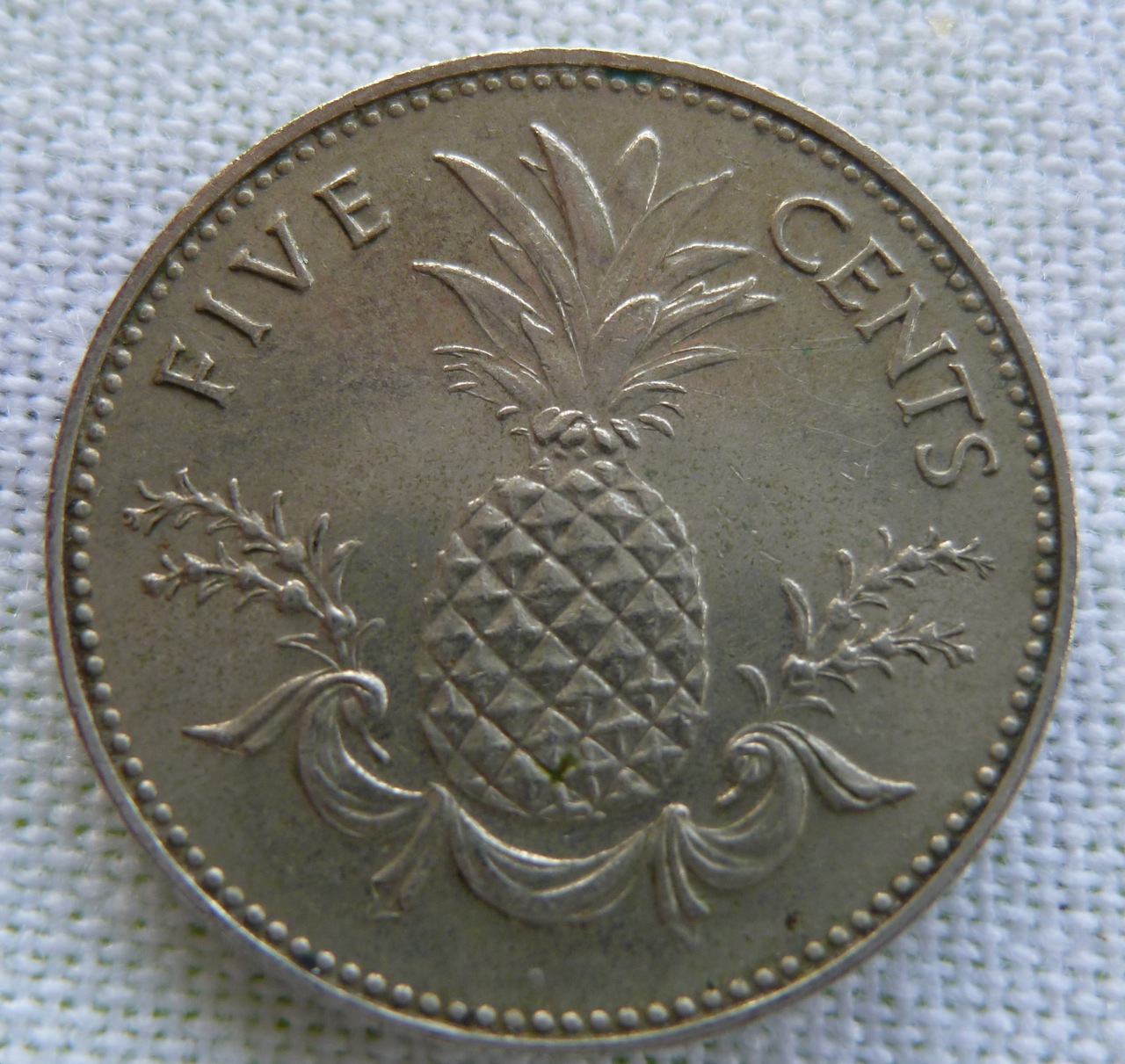
Features on the Bahamian 5 cents coin…
…and (later addition) a $1 stamp
STOP PRESSread Jim Kerr’s interesting article in ABACO LIFE on Abaco’s pineapple past HERE
FRANCESCA BEAUMAN 2006
THE PINEAPPLE – KING OF FRUITS
If you want to find out more about pineapples, their history and social significance, you should be able to pick up a copy of this book on Am@z%n, Abe or ALibris for a few dollars
“What?” I hear you cry, “you’ve managed a whole page about pineapples without mentioning modern advertising”. Shall I do so now? The man from Del Monte, he says YES
Sources: Own ideas + some magpie-thieving-borrowing from a variety of online sources, many of which contain identical info and / or quote from the above book. Hope everyone is comfortable with that…
NB Not every fact above is strictly 100% true, so expect to be challenged if you roll one out. In particular Prince Phillip is of course naturally docile and gentle-mouthed…
POST SCRIPT The first 21 Fibonacci numbers (just add 2 successive numbers to produce the next) are
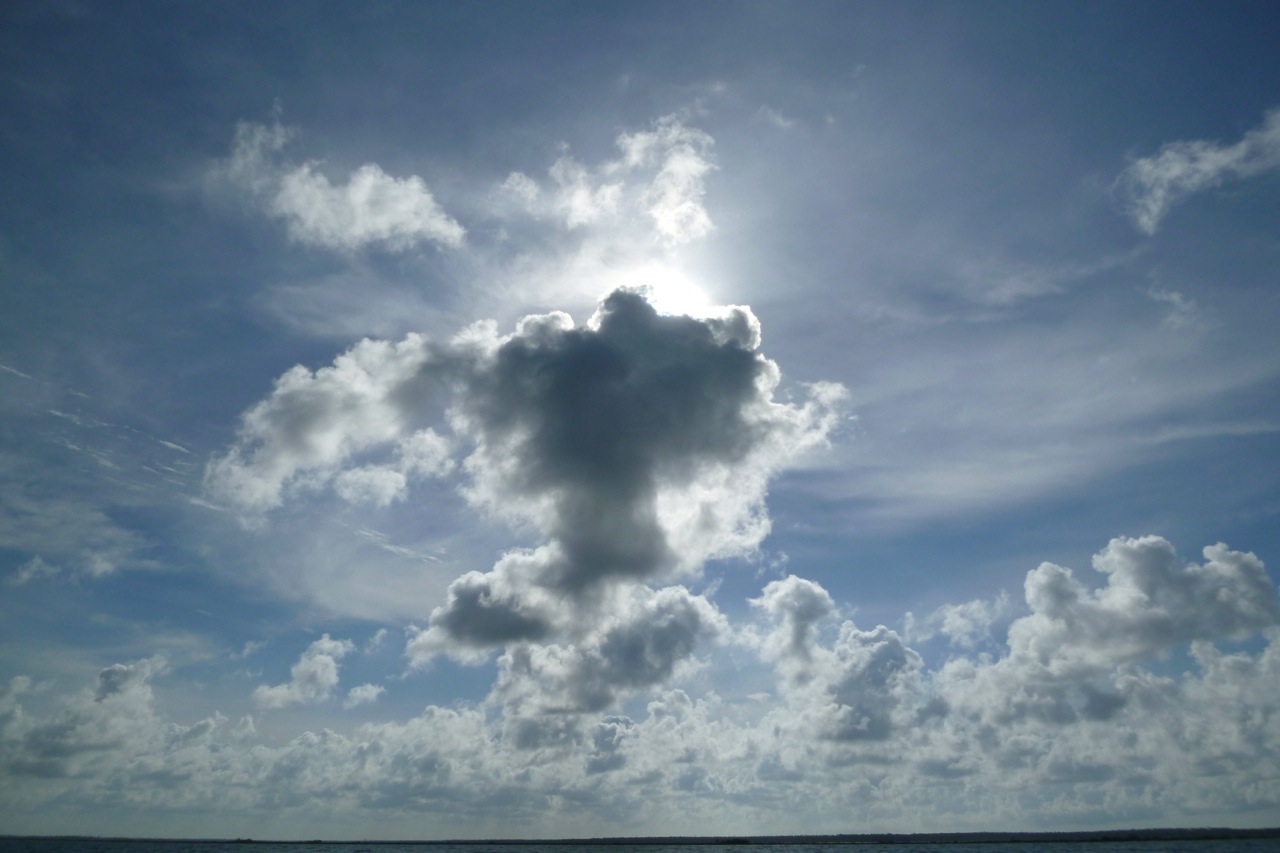
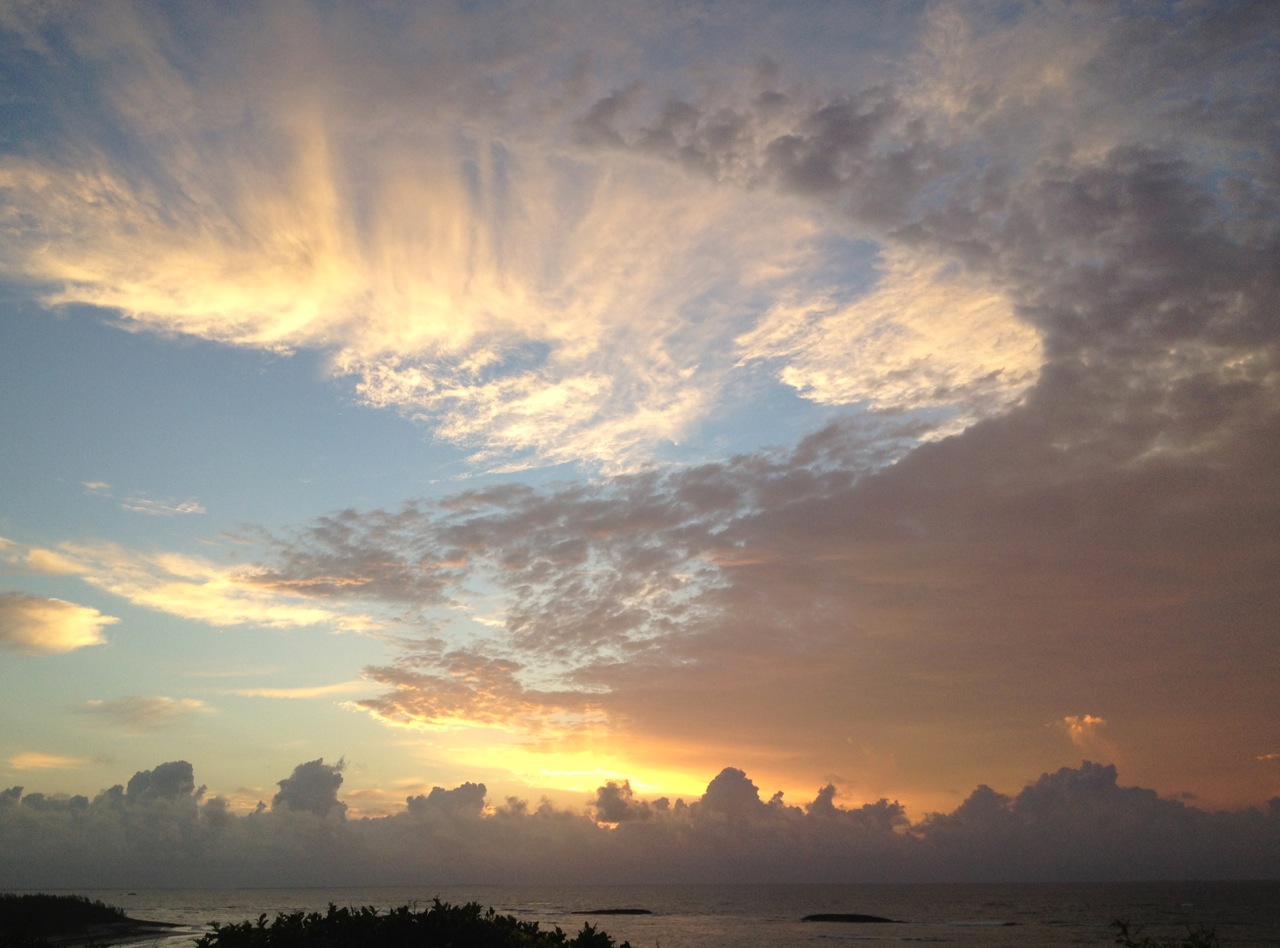
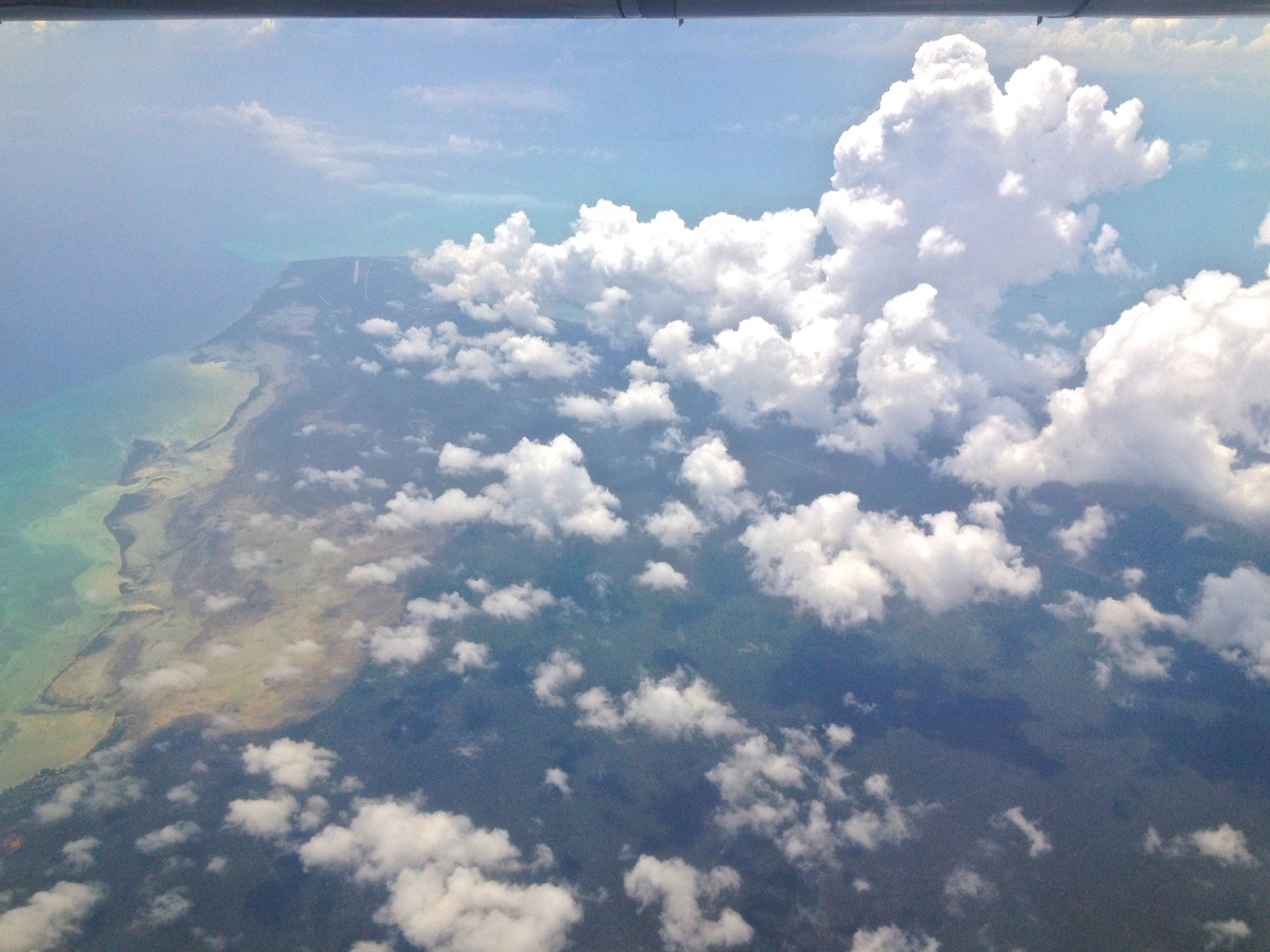
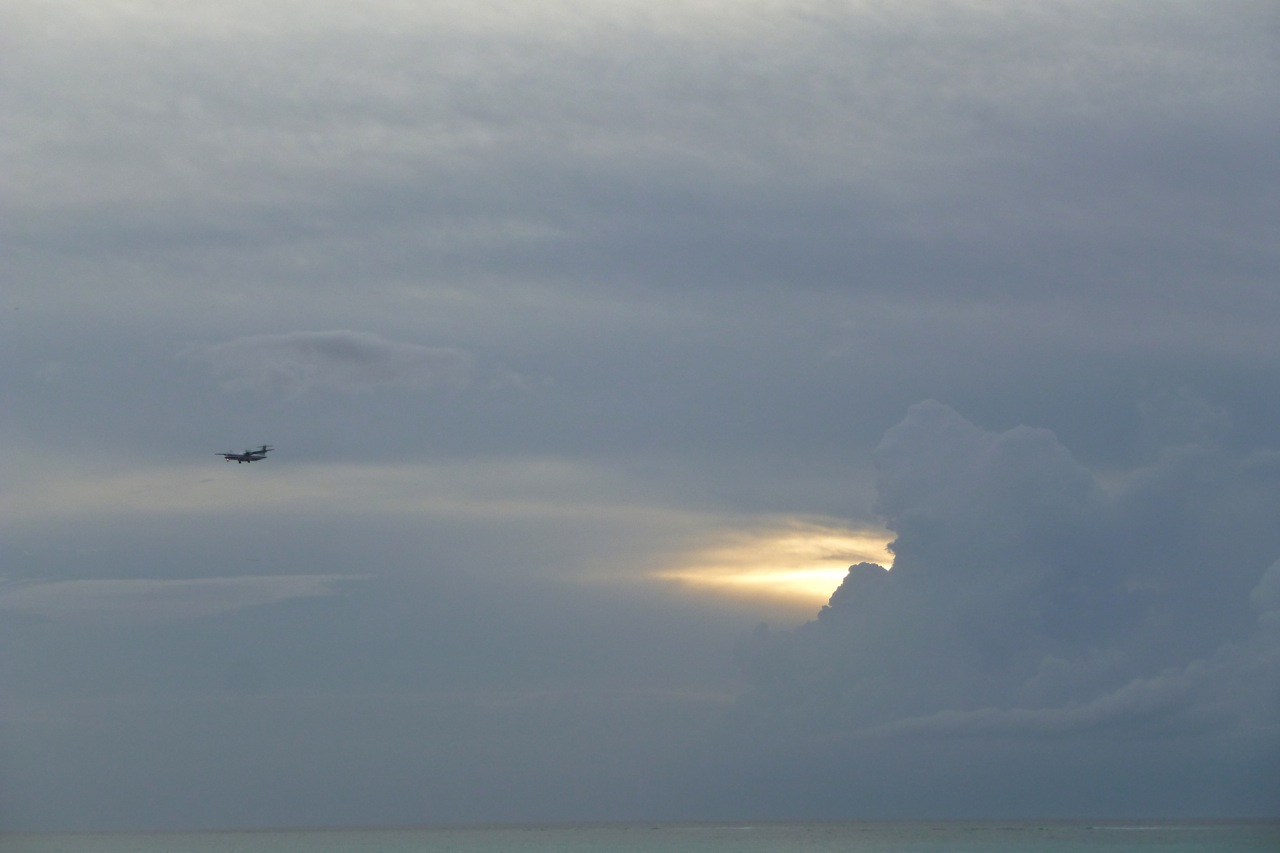
A random mix of cloud formations, fiery dawns, and storm clouds mixed with sunlight taken in June (a couple of the later ones were actually taken at Compass Point, Nassau – same storms, though…)
AN ABACO INSECT IS BUGGING ME – WHAT IS THIS CREATURE?
There I was, walking slowly along the Delphi drive trying to locate some small chirruping bird in the coppice – close at hand, chatty, but invisible among the leaves. Then I saw this creature. It’s not an insect I have ever seen before, and I haven’t been able to find out what it is. It’s probably something elementary – an ‘Abaco Black Orange-Feeler Beetle’ – that is familiar to everyone. Except me. I’d just like to know. Any help out there? A response via the Comment box below would be appreciated!
This insect has some interesting features. The feelers are segmented, with 9 joints, so that in close-up the apparent smooth curve is not a perfect one but an articulated series of ‘straights’. It has 4 toes for gripping, and leg spines. It appears to be a voracious leaf-eater. And it can scratch its head. Overall, it looks aggressive and somewhat alien. Imagine if these things were the size of a potcake. Coming at you…
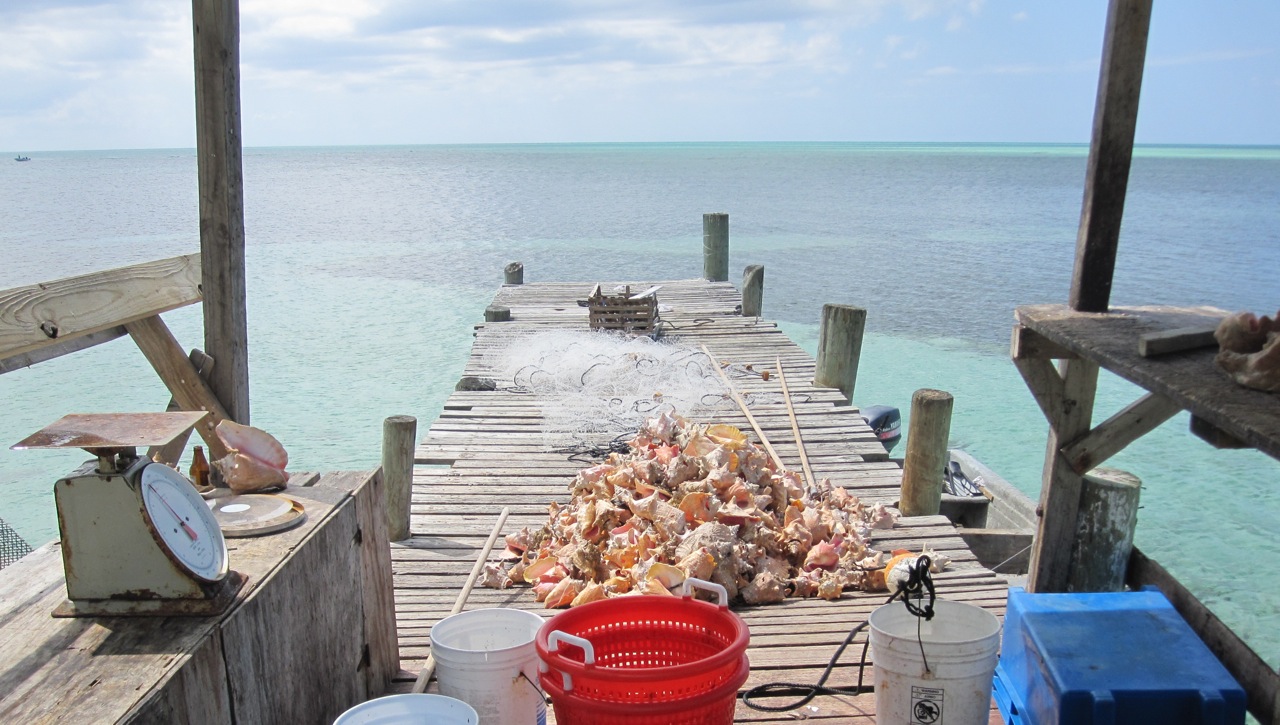
Conchs are among the most familiar of all shells. On Abaco they are everywhere: in the sea, on the beach, used ornamentally in gardens, piled up wherever conch is on the menu… (basically, anywhere serving food)
Conchs have other uses besides being a staple food. They provide sought-after pink pearls. Only about 1 conch in 10,000 has a pearl, so bear in mind that if you miss one during your search, you may have another 10,000 to wade through… Conchs can produce music, of a sort (such as when used enthusiastically by the famous ‘conch-blower’ home-team supporter during cricket Test Matches in the West Indies). They are undeniably decorative on a porch or on a shelf.
Conchs have featured in literature and film. In William Golding’s Lord of the Flies the conch represents power and order. A conch is blown to call meetings of the marooned boys. Its power is symbolised by the rule that you have to be holding it to speak at the meeting (an idea that many – all? – Parliaments could benefit from…)
Ian Fleming mentions conchs in several of the Bond books, all such references being totally eclipsed by the memory of the appearance, in the film Dr No, of Honeychile Rider emerging from the sea, conch in hand. Oh, I see. That’s just men is it? Or (good grief) just me? Anyway, may we all agree amicably that Ursula Andress was a most decorative conch carrier?
CONCH CONSERVATION
The supply of conchs is not infinite. Overfish them, take them before maturity or pollute their habitat and this valuable marine resource depletes – and conchs, as with so many marine species, will become threatened. Fortunately there is a Bahamas-wide conservation organisation with a website packed with interest.
COMMUNITY CONCH is “a nonprofit organization that aims to protect queen conchs in the Bahamas, a species of mollusk threatened by aggressive over-fishing. We promote sustainable harvest of queen conch through research, education and community-based conservation”
“Helping to sustain a way of life in the Bahamas”
Much of the research has been carried out in Berry Is, Andros and Exuma Cays. However the team has recently been based at Sandy point, Abaco. To see some of their work on AbacoCLICK LINK===>>ABACO EXPEDITION
In many past posts I have listed ’10 Essential Facts’ about the topic discussed. In that spirit I have borrowed and slightly edited CC’s conch facts; and added a CC video of a conch’s stately ‘full speed ahead’ progress. NB No zoom…
12 CONCH FACTS
The queen conch is a large edible sea snail native to the coasts of the Caribbean, the Florida Keys, the Bahamas, and Bermuda. Conchs are herbivores – they eat algae and other tiny marine plants
Main predators include nurse sharks, loggerhead turtles, other snail species, blue crabs, eagle rays, spiny lobsters, and other crustaceans
Mating aggregations may contain hundreds or even thousands of individual male and female conchs
Female conchs lay hundreds of thousands of tiny eggs in a sandy egg mass. The larvae emerge after 5 days and may drift on ocean currents for a month before settling in suitable habitat on the sea floor
In their first year conchs live under the sand during the day & come out to feed on the surface at night
A queen conch may take 5 years to reach maturity and can reproduce
They live an average of 7 years, but are known to live as long as 20 – 30 years
Conchs produce natural pearls that come in a range of hues, including white, brown, orange & pink
The conch is listed byCITESas a species which may become threatened with extinction if trade is not tightly controlled
It is now illegal to take queen conchs in the state of Florida due to severe overfishing
80% of legal internationally traded conch is consumed in the United States. The smuggling of conch meat into the U.S. is a significant challenge to conch management in The Bahamas
Queen conch are vulnerable to overfishing because they are (1) relatively slow to grow (2) late to mature (3) aggregate to mate (4) easily harvested in shallow waters
A SPEEDY CONCH
(Conch photos taken by RH / Mrs RH at Sandy Point, Abaco)
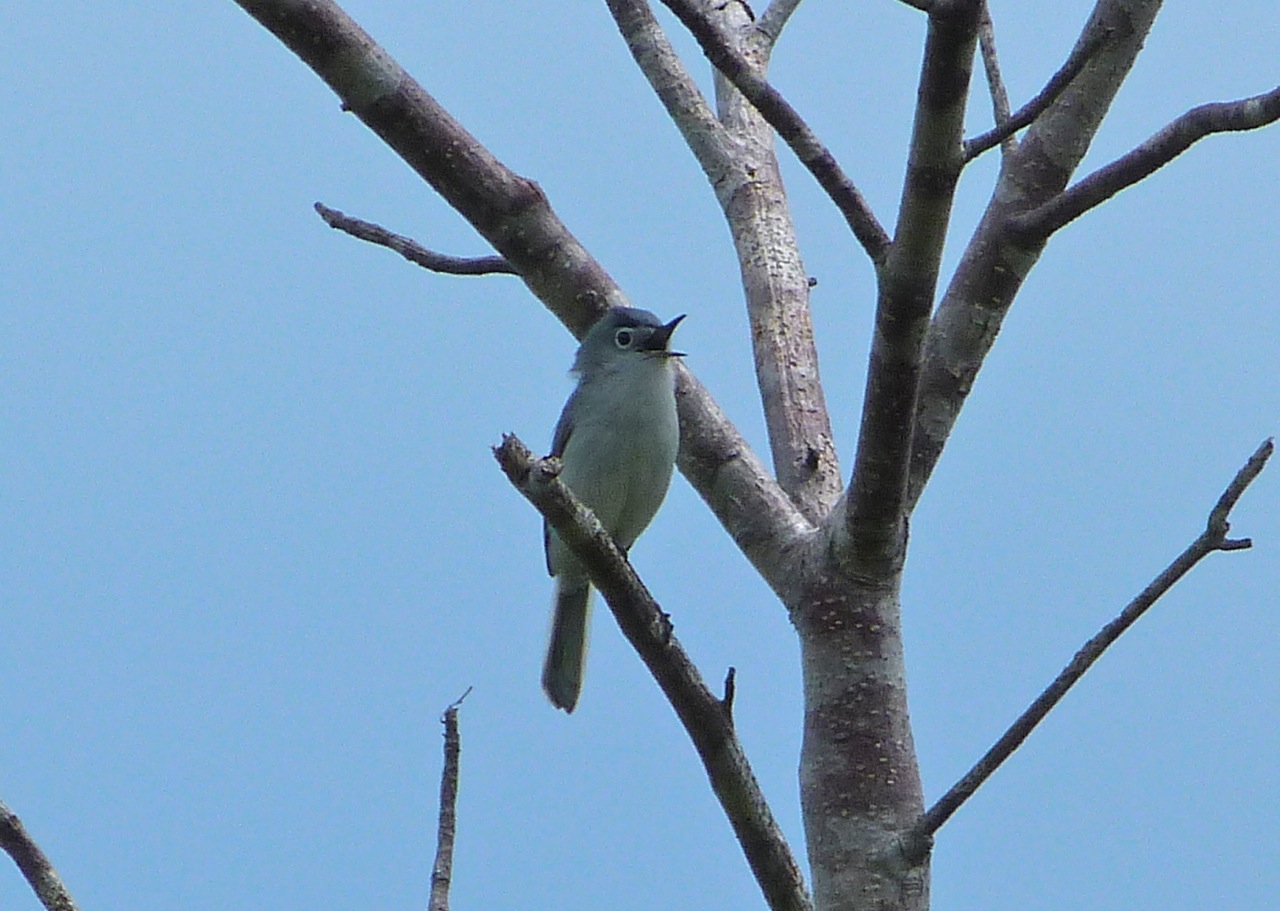
This small bird was quite far back – and high up – in the coppice on the Delphi guest drive. The photos were distance shots, so not the best quality, but they do capture the little bird in full song. BGGs have complete white eye rings; males have a dark ‘monobrow’ which can just about be seen in the photo above. In a word, ‘cute’. They sound like this (you may need to wait for the clip (credit: Cornell Lab / RH) to load – or hurry it along by clicking ‘Play’ as it loads):
They build a cup nest on a horizontal tree branch. It’s a modern family unit – both parents make the nest, tend the eggs, feed the young, and teach them manners. They may raise two broods in a season.
BGGs eat insects and spiders, feeding in trees and shrubs. They can hover very briefly, but mainly they catch insects on the wing (‘hawking’). The tail is often held upright while defending territory. Or sometimes just because they can.
All the information you could want on this species can be found at the excellent OISEAUX-BIRDS.COM
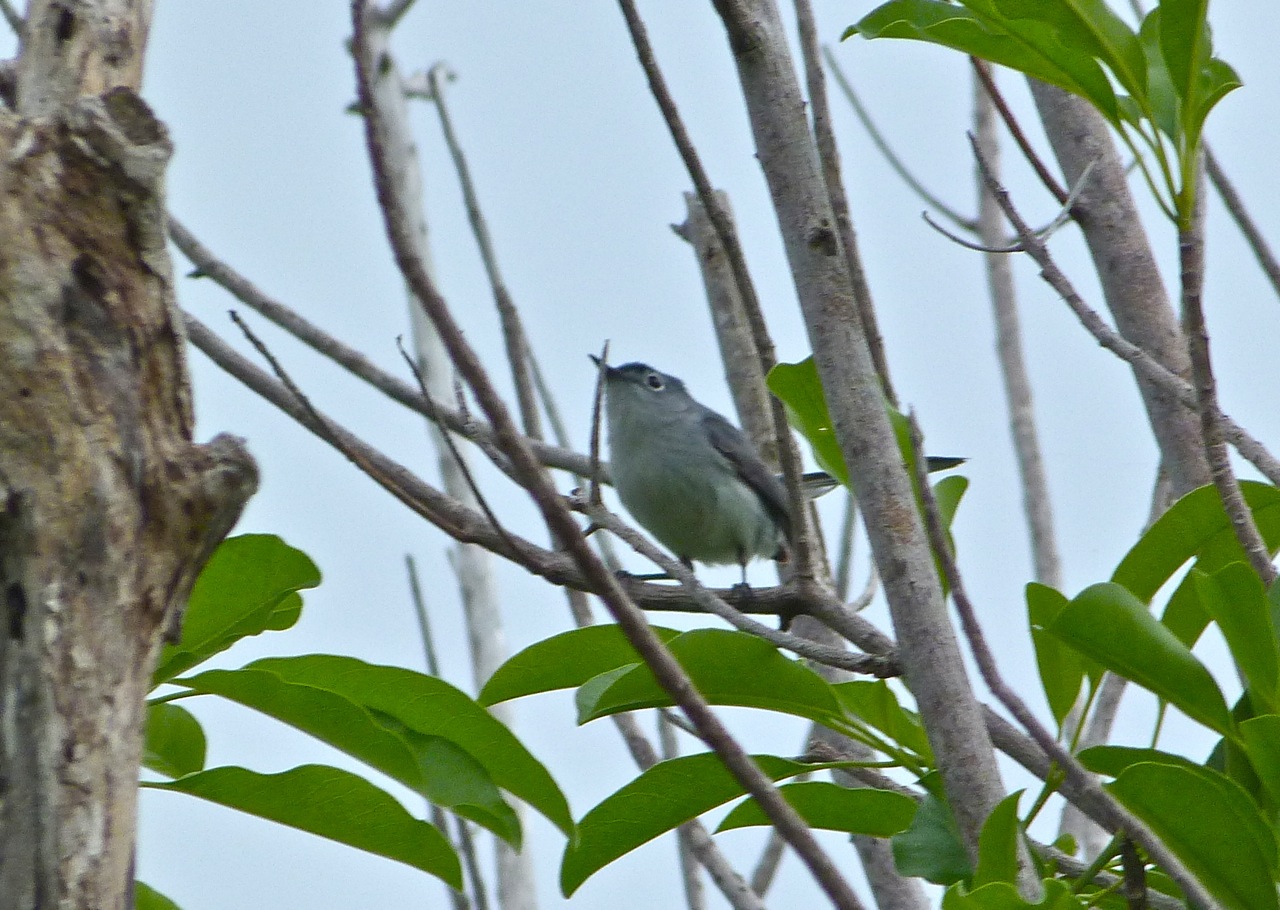
STOP PRESSchecking back through my photos, I’ve found a (slightly blurry) distance shot of a BGG. I am adding it because it shows the bird with its characteristically cocked tail, often seen when perching (the bird, I mean)
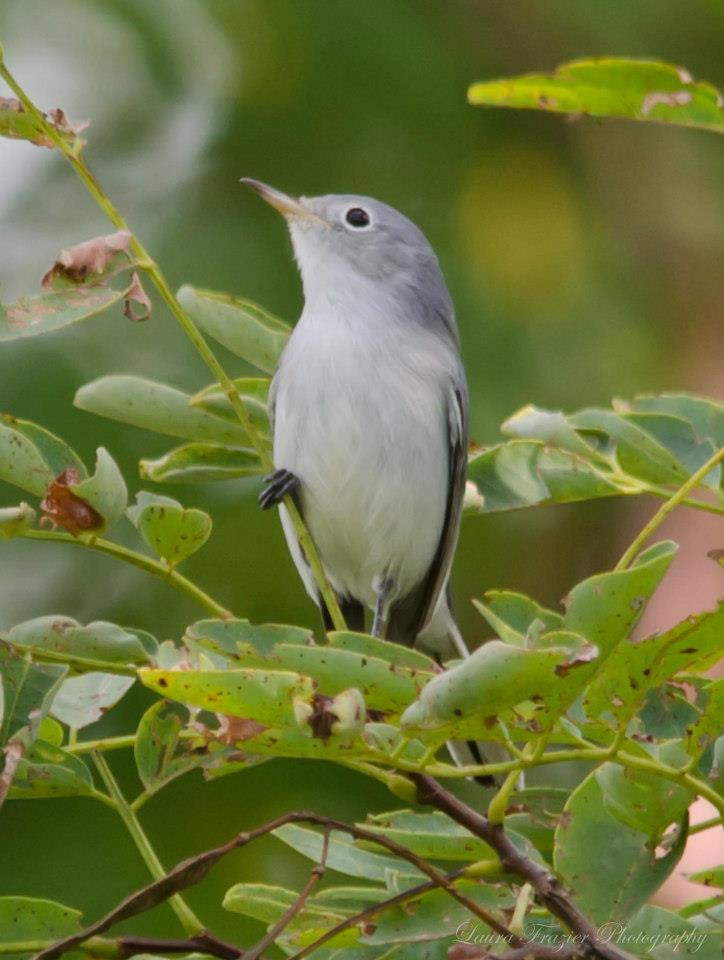
A very pretty BGG has recently been published on the superb Cornell Lab website, credited to Laura Frazier. It’s so cute – and such a clear image – that it deserves inclusion here
Actually, I say ‘Abaco’ but the most activity – and the most varied, species-wise – is off the southern coast of Grand Bahama. Abaco sightings are also confined to the south, with shows from aPIGMY SPERM WHALEand aBLAINVILLE’S BEAKED WHALEand dolphins in the arc between Rocky Point and Hole-in-the-Wall. To see recent aerial photos of this section of coast CLICK===>>>HERE
The manatees of the Berry Is. are no longer shown on this map. Their happy story (and their fame) has spread and they now have their own entries on the BMMRO FACEBOOK PAGE, like any self-respecting stars. You can reach it anytime direct from the Sidebar if you you want to keep track of the story of Rita and her calf Georgie’s rehabilitation – and the other manatees they have encountered as they get used to their freedom.
ADDEDThe latest BMMRO quarterly newsletter has just been published – highly recommended for anyone with an interest in active whale / dolphin research, or in the latest news of the manatees of Berry Is. To see itCLICK===>>> BMMRO NEWSLETTER JULY 2012
BONEFISH! POLING THROUGH THE MANGROVES ON THE ABACO MARLS
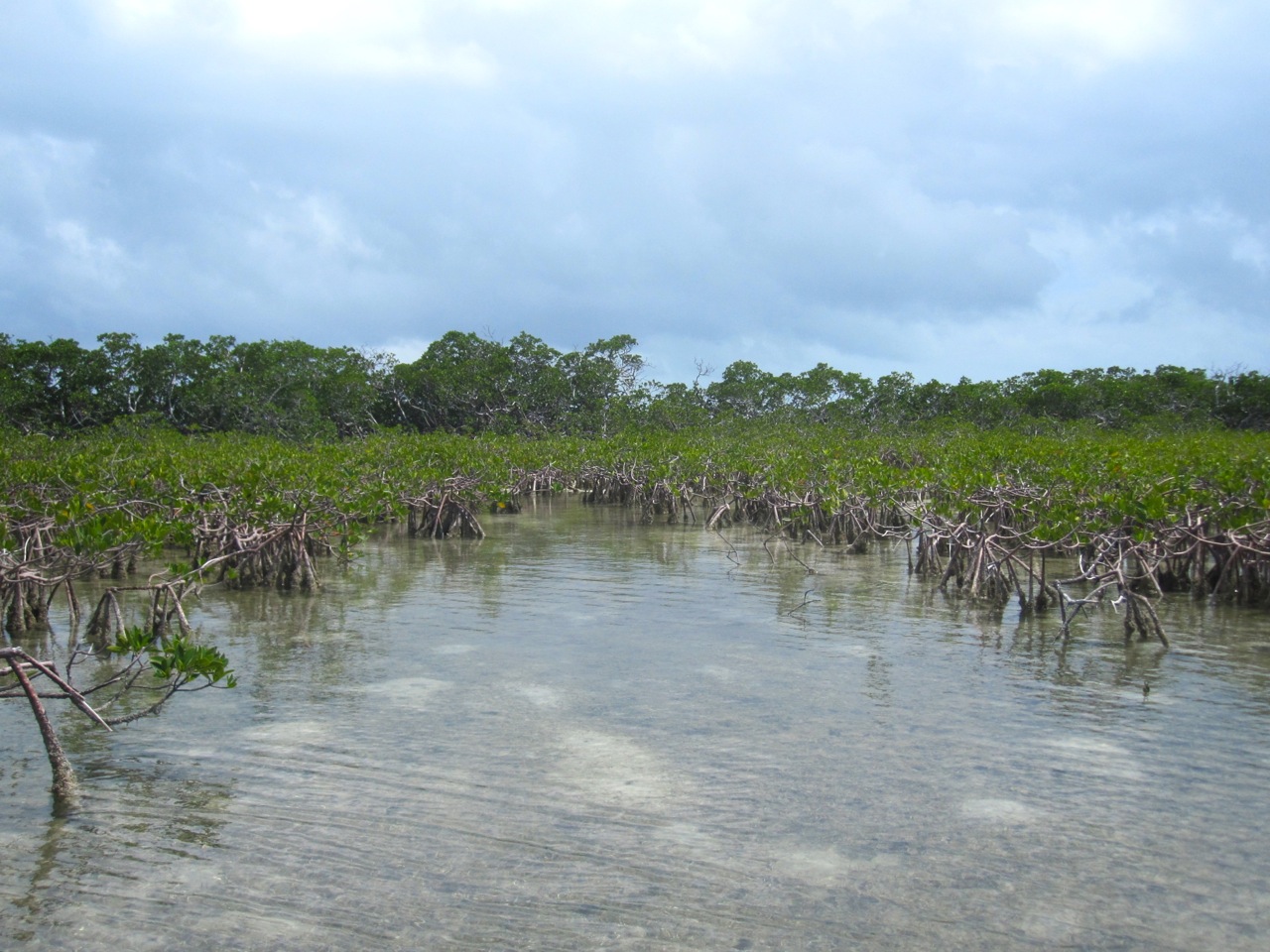
I recently posted a short video giving an idea what it is like on a skiff as it skims fast over the water to the bonefish feeding grounds of the Abaco MarlsSKIFF VIDEOHaving arrived among the mangroves where the bonefish are lurking, the game changes. Instead of the roar of the engine and bump of the waves, the engine is cut and in near-silence the guide poles the skiff very slowly through the low water…
There’s a regular gentle scrape of the long pole on the sea-bed, as all eyes – guide, the fisher ‘up front’, and fishing partner – scan the water and the margins of the mangroves for bonefish or signs of their feeding. There might be tell-tale grey holes in the sandy bottom – or, as below, a ‘push’ wave as one or more bonefish move on to another area
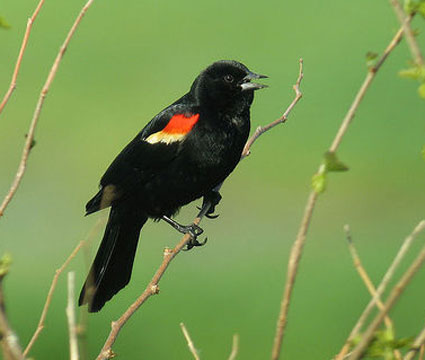
There are bird calls such as the strangely melancholic metallic double-note of the RED-WINGED BLACKBIRD sounding like a rusty door-hinge.
Otherwise, very little noise until… the urgently whispered “Hey! Bonefish 9 o’clock, 30 feet, moving right, 3 of them…” and the hunt is on
This short video shows the skiff’s slow progress across low clear water close to the edge of the mangroves, while we search for the dark shadows cast on the sand by the bonefish as they work their way through the flats hunting shrimps and small crabs… and in due course, with luck a well-placed “Delphi Daddy”
[vimeo https://vimeo.com/45498544]
Credits: Red-winged Blackbird call – Xeno-Canto; Video Music – Albert Ross (formerly of Fleetwood Mac); R-WB below – Cornell Lab of Ornithology
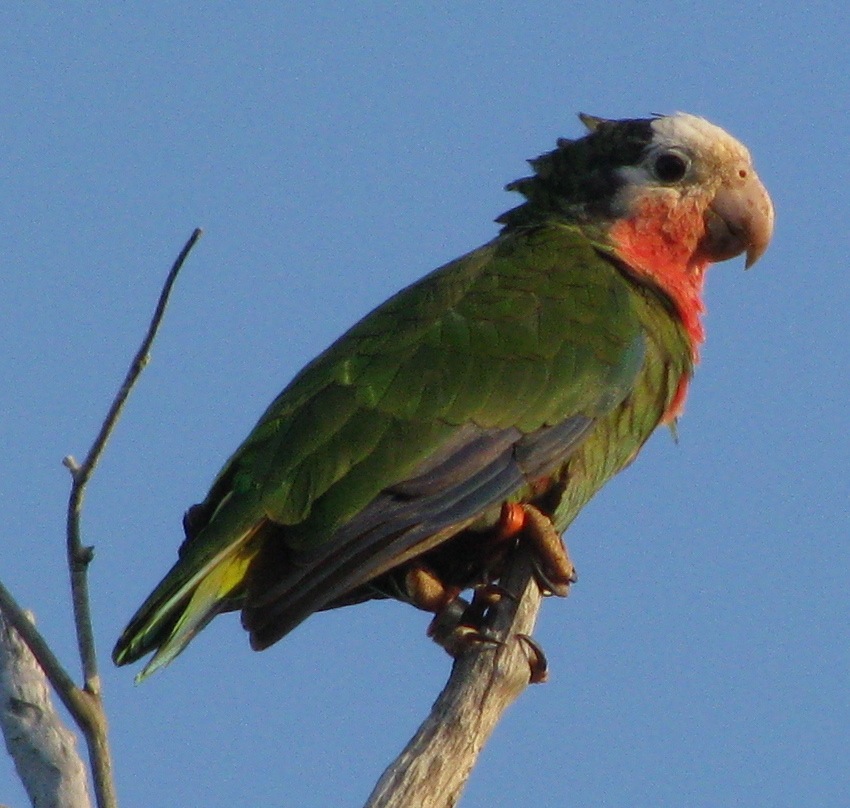
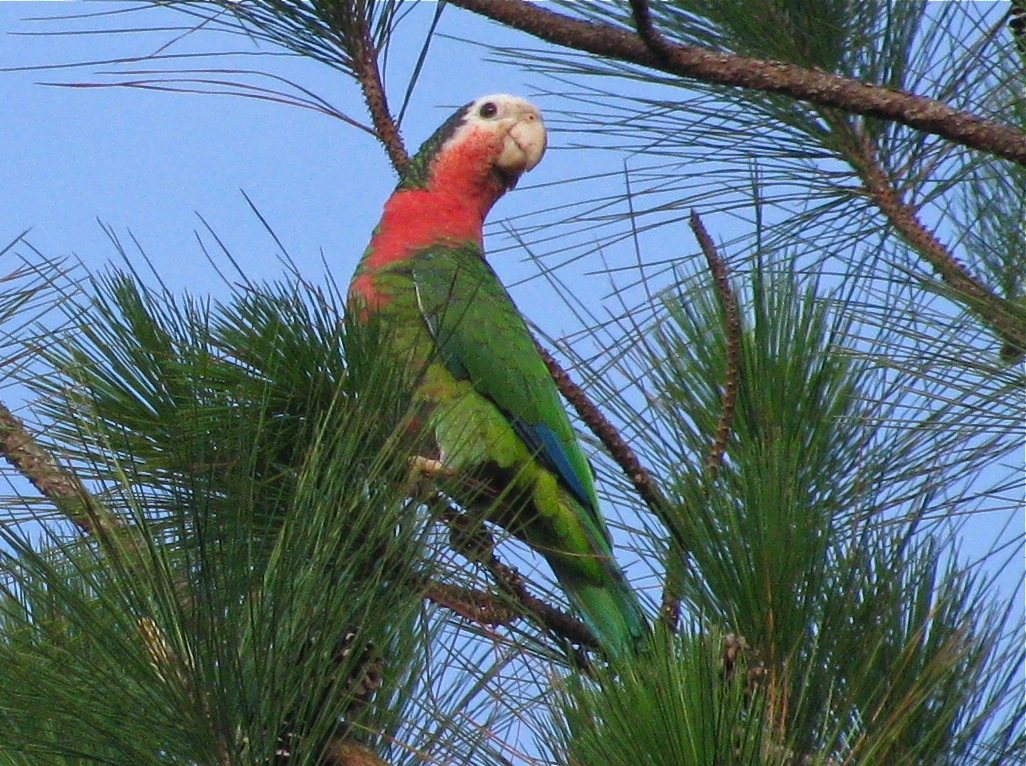
The wild parrots of Abaco are very special birds. Uniquely they nest underground in limestone holes which provides protection, not least from forest fires. Thanks to a program of intensive research over the last few years, far more is now known about these birds and their breeding habits. Investigations into predation have led to effective predator controls. The evidence this year is that the population numbers, having stabilised, are gradually rising to a sustainable level of some 4000 birds. The parrot below has been ringed as a chick as part of the continuing monitoring program.
I will soon be posting about the current breeding season – the parrots are in their limestone cavity nests now, the eggs are laid, the chicks will soon be hatching. Caroline Stahala, the Abaco parrot expert familiar to those who follow this blog (seeABACOPARROTS), will soon be reporting on this years breeding and chick-ringing program. In the meantime, here are some of Caroline’s pictures taken during the past season of the parrots in all their glory…
The parrots mainly live and breed in the pine forest of the Abaco National Park
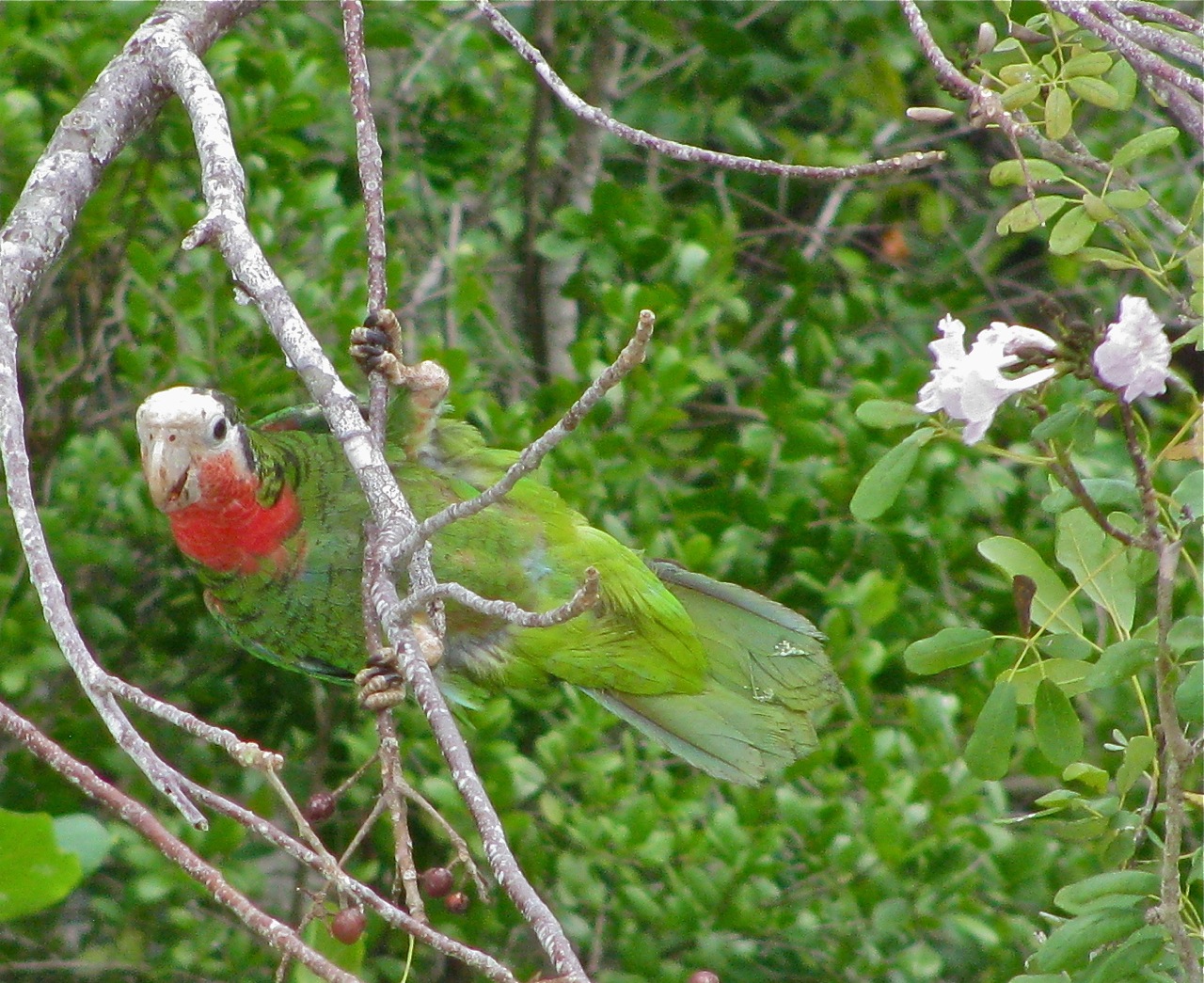
During the day they fly northwards, often in large noisy groups, where they feed. One of their favourite treats is the fruit of the Gumbo Limbo tree. This sometimes requires acrobatic skill
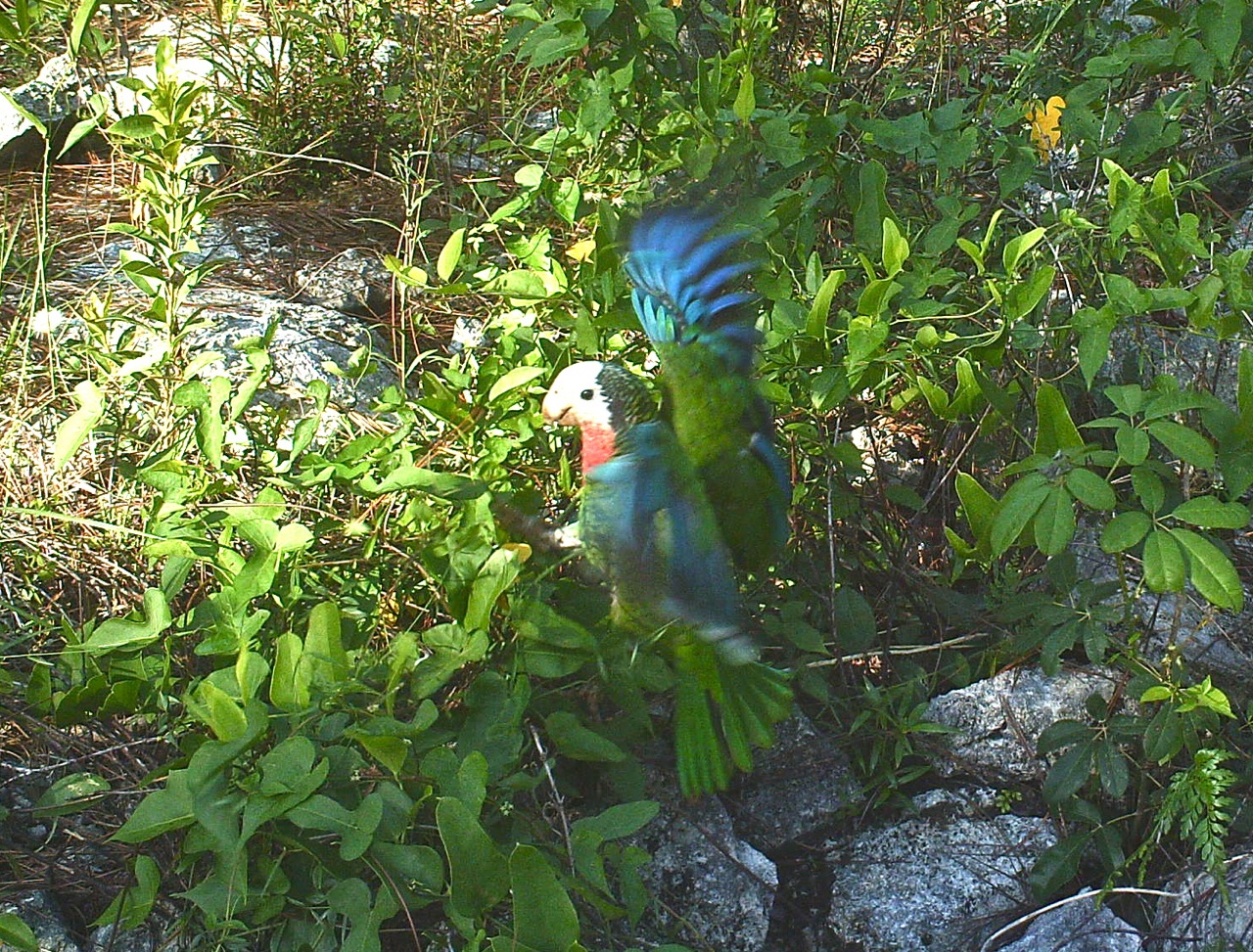
The sunshine brings out their bright colouring. When they fly, the blue on their wings is wonderful
Besides Gumbo Limbo berries, the parrots enjoy feeding on seeds
A parrot takes flight near a nest cavity. There’ll be more photos of parrot nests later this month
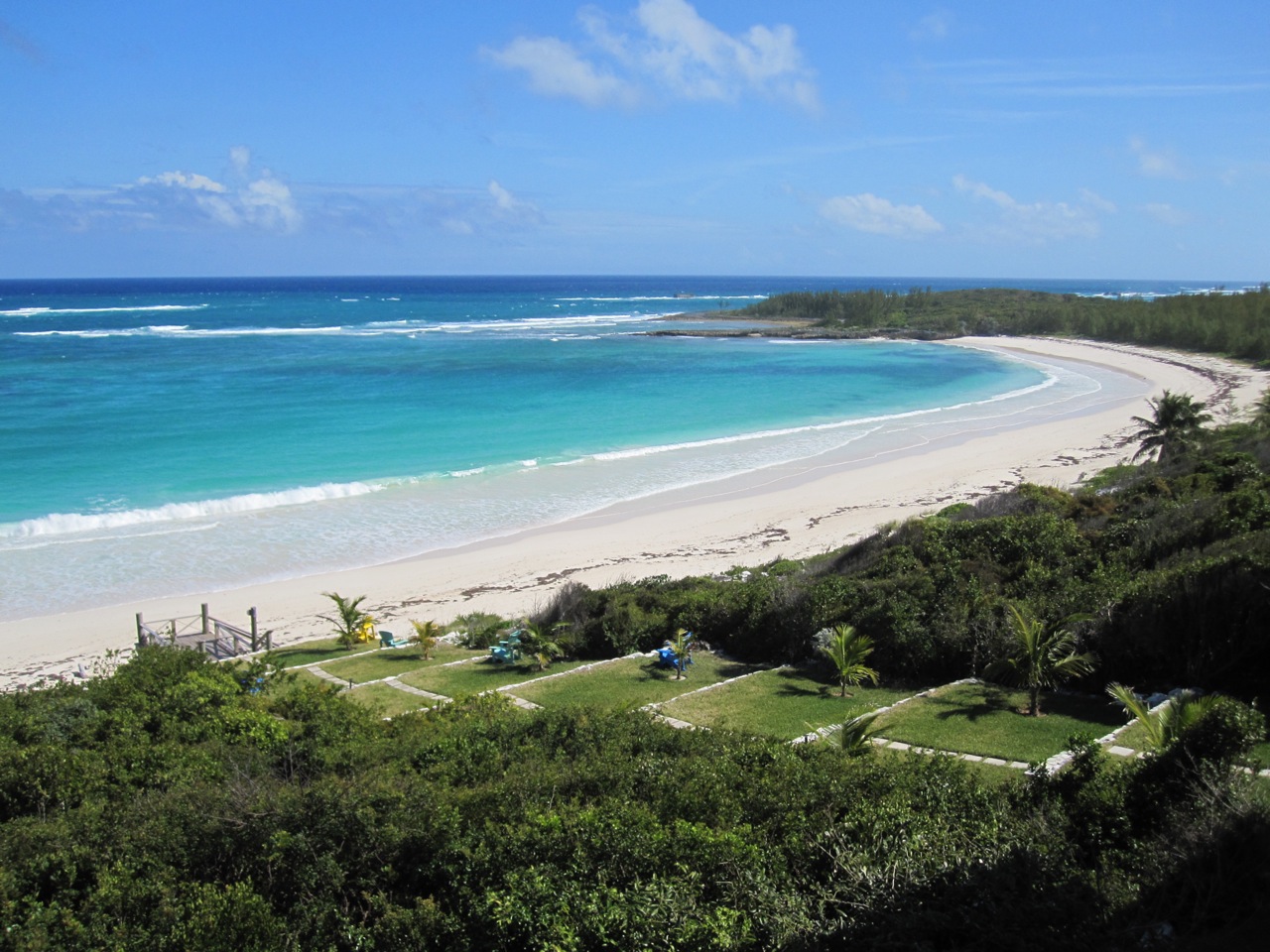
A new Header has arrived to grace the Home Page. It’s a wonderful wide-angle view of the 3/4 mile bay of white sand that is Rolling Harbour. It was taken by Michael Vaughn, a photographer and tarpon guide from Key West, and I have ‘borrowed’ it from the main DELPHI CLUBwebsite. You can immediately see the attraction of the blog name ‘Rolling Harbour’, an enterprise related to but editorially independent of HQ (though subject to benign scrutiny from Peter Mantle, who has so far resisted any temptation to behave in a ‘Murdochian’ fashion…)
The Delphi Club has just completed its third year in operation, with a record number of fish caught both out on the Marls and off the beach. There were records, too, for guest numbers; nourishment consumed in both the food and the drink categories; and for bird species spotted in the club grounds, the coppice and pine forest, and on the beach…
This aerial view shows the plantation-style club building and its minimal ‘footprint’ in the landscape
The Delphi Club from the beach
The view of the beach looking north from the Club verandahThe view of the beach looking south from the Club verandah
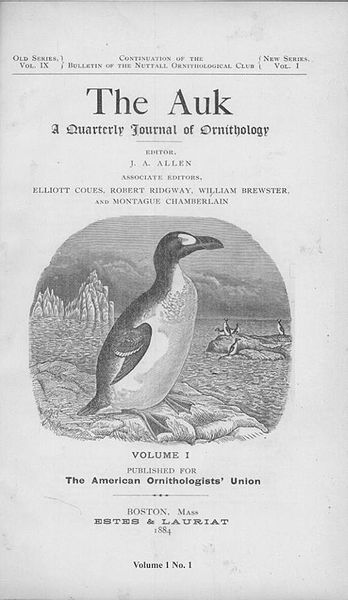
THE AUK is a quarterly journal published by the AOU specialising in promoting the scientific study of birds by means of original peer-reviewed reports. It has been in continuous publication since 1884, and can lay claim to be a (the?) foremost journal in its field. Here is the front page of the first volume of the journal
The 1905 Vol 22 No. 2 contains a 22 page study by Glover M Allen entitled SUMMER BIRDS IN THE BAHAMAS. If you aren’t a particularly dedicated birder, my advice is ‘look away now’ and move on to a page, post or other occupation that interests you more. For the remaining 2 of you, stay tuned in. I thank you both. It will be worth it…
The article was published at a time when ornithological survey of the Bahamas was in its infancy. Cory’s famous list of birds collected from the islands had been published a mere 15 years earlier. Allen details his time spent with 2 companions – much of it on Abaco – as they investigated birdlife and recorded their findings. That aspect comprises the first part of the article. The second part is equally fascinating: their list of bird species, with commentary, remarks and comparisons thrown in, together with some of the local names for the birds. Some of these are still in use, others perhaps long-forgotten. Is a Least Tern still known as a ‘Kill-’em-Polly’? Here are some highlights for busy people:
FLAMINGO / SPOONBILL Of particular interest is the recording of the apparently imminent loss of the flamingo (“fillymingo”) from the Northern Bahamas – a single colony only still surviving on the Abaco Marls by 1905. Allen and his group found only one roseate spoonbill, also on the Marls (we were also lucky enough to see a single spoonbill on the Marls in June)
BAHAMA PARROT Those who follow the fortunes of these fine birds on this blog or elsewhere will be especially interested in the following extract, which suggest that at the start of the c20, the species had all but died out on Abaco:“Amazona bahamensis (Bryant). We were interested to learn through the captain of our schooner, that a few parrots still exist on Great Abaco. He told us of having seen a flock near Marsh Harbor the year before (1903) and in previous years had some- times observed a flock in late summer at that part of the island. We learned that at Acklin’s Island about 14o miles south of Nassau, parrots still nest in numbers and the young birds are regularly taken from the nest when fledged,and bronght to Nassau to be sold as pets” I will be posting about the parrots later this month, but suffice to say here that the current estimate for Abaco parrots is now around 4000 birds, a significant increase since conservation measures and a predator control program were started some years ago.
BAHAMA WOODSTAR These endemic hummingbirds, now taking second place to the in-comer Cuban Emerald, were plainly everywhere then: “On all the islands and cays, wherever there was bush or tree growth, this humming- bird occurred”
“PARAKEETS” There seems to have been a significant population of these, known then as ‘Bahama Grassquits’. What species were – or are -these? The description doesn’t quite match the ‘quit family candidates we are familiar with today.
OTHER SPECIES Avian taxononomy, with its frequent official changes of classification, is a confusing area… but it seems that in 1905 there were then 2 distinct species of Spindalis (now, one); and 3 Mockingbird varieties (now, two). But of course there may simply have been a naming adjustment since the article was published…
For those who have stayed awake till now, your prize is the following link to the whole 22-page (small pages!) article
HERMIT CRABS: SHELL-DWELLERS & CONTESTANTS FOR WACKY RACES
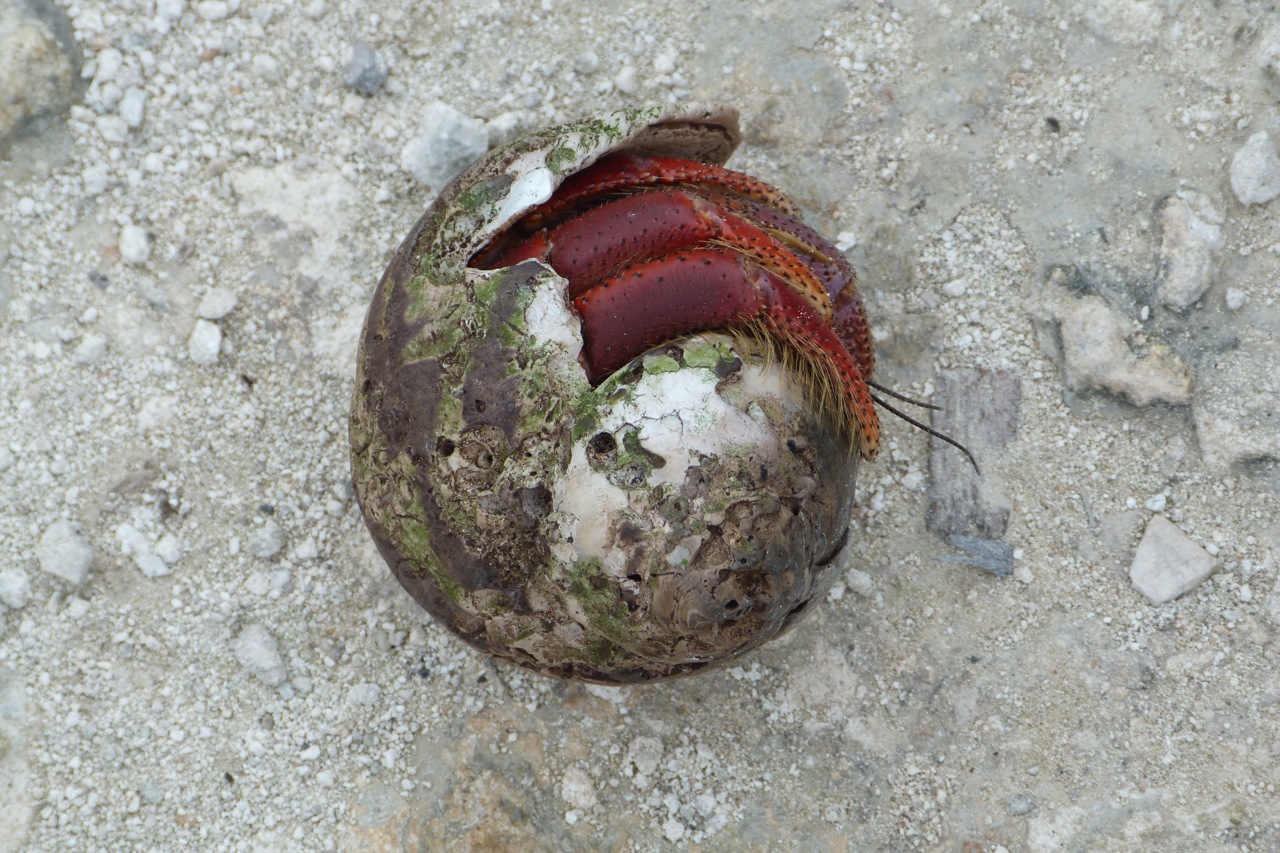
Hermit Crabs are all around – occasionally (sadly and unavoidably) underfoot. They borrow an empty shell, and as they grow they trade up to a bigger one, leaving their previous home for a smaller crab to move into. It’s a benign chain of recycling that the original gastropod occupant would no doubt approve of… The crabs are able to adapt their flexible bodies to their chosen shell. In the 1st 2 images the crab has chosen a somewhat weathered shell, into which he fits snugly
This small crab has gone for something more modern – possibly quite an awkward shape to lug about…
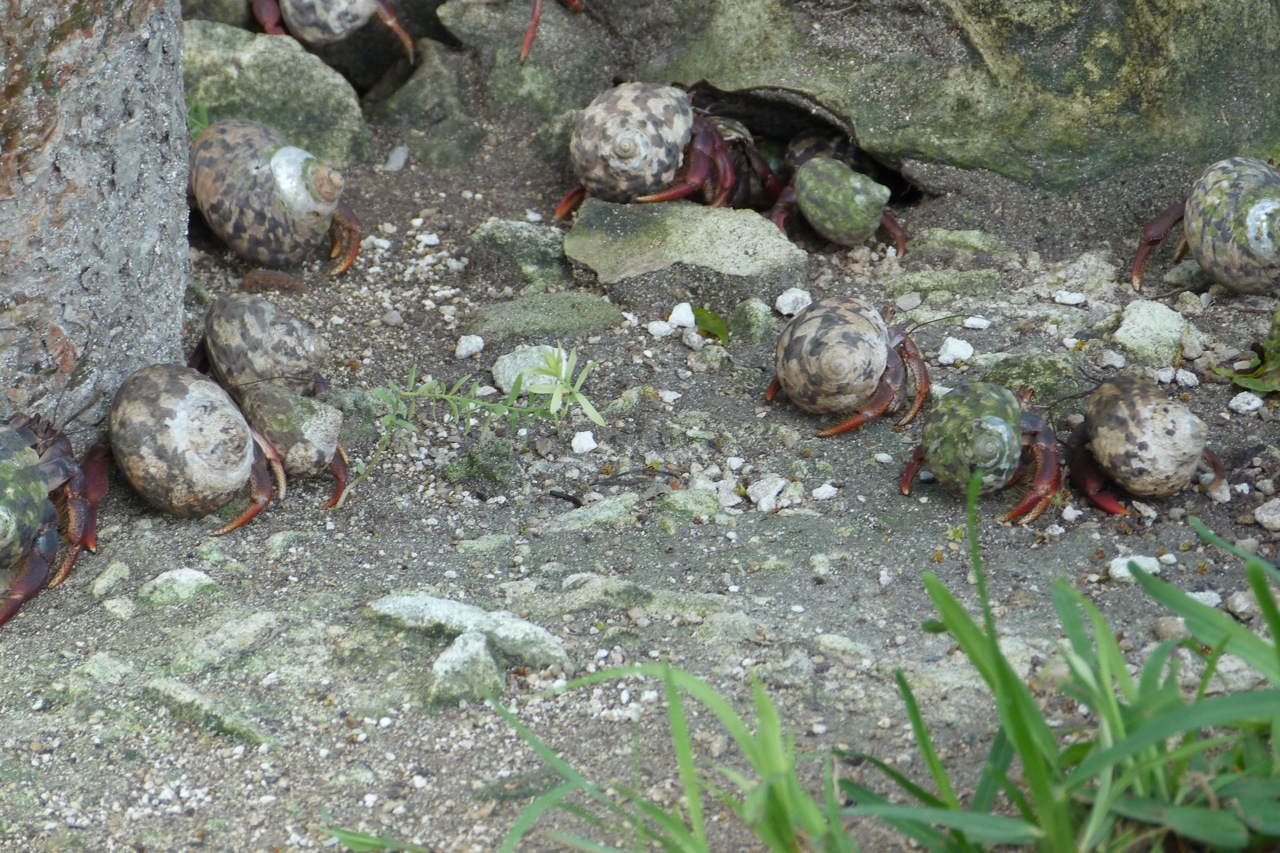
These crabs have found the Delphi Club bird feeders and taken up residence close by. They forage in the grass, many wearing West Indian top shells. One seems to want to climb the tree to get at the feeder…
They are sensitive to sound: approaching footfalls send them scurrying for shelter into the undergrowth or to holes in the limestone rock. They don’t all manage to fit into a hole so the ‘outsiders’ try to look inconspicuous by withdrawing into their shells, though from a predator’s point of view there are usually a couple of telltale legs sticking out…
Quick, everyone – hide! A human just trod on Derek…An entertaining after-dinner game (and I blame Caroline Stahala for starting this one) is hermit crab racing. Please note that no crabs are harmed in the course of these sporting proceedings, though some crabs may feel a little humiliated. The races can be played for money, of course, but the complete unpredictability and lack of any information about a crab’s previous racing form make that unwise. Far better to have a few drinks first. Then some more afterwards.
HERMIT CRAB RACING: THE OFFICIAL RULES
Dinner is to be completed and drink taken by all participants before racing can commence
Each contestant chooses a crab from the group under the bird feeders
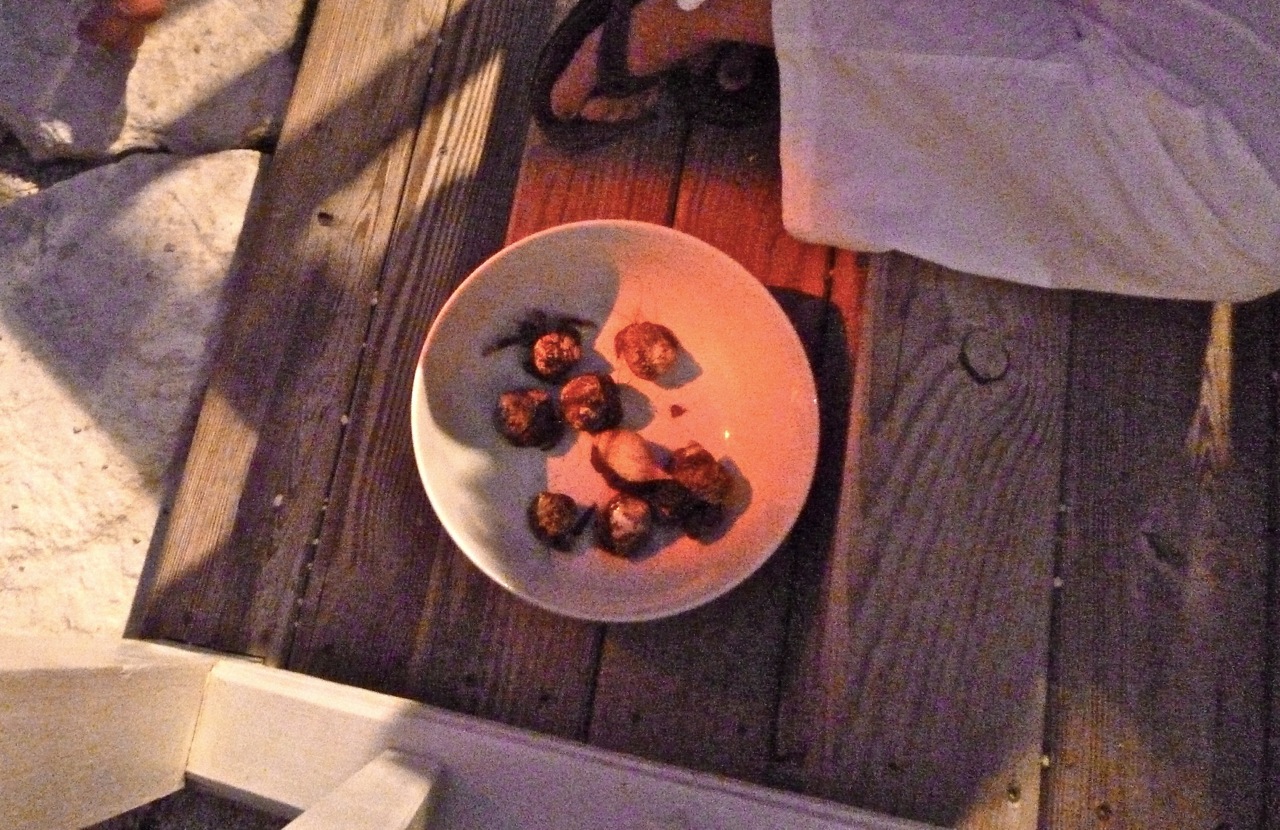
All chosen crabs are placed in a dish
Caroline (or whomsoever shall be designated) paints the shells with each contestant’s name
The crabs are lined up by hand on the verandah as straight as they will permit (so, not very)
The starter will say “Ready, Steady, GO”, and the crabs are released over a 3 meter course
The winner shall be the first crab over the finishing line. In the event of a dead-heat, the crab requiring the least foot-impetus and direction correction is declared winner
The crabs shall be returned to the collection site (those that can still be found) and all humans shall return to the Clubhouse for celebrations…
DELPHI HCR RACE REPORT 2012
This crab (the largest) was chosen by Sandy Walker, and regrettably was the only one that started by going backwards. It was never in serious contention
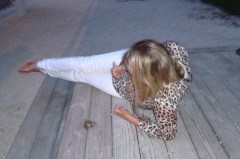
Caroline becomes very overexcited by her crab’s progress
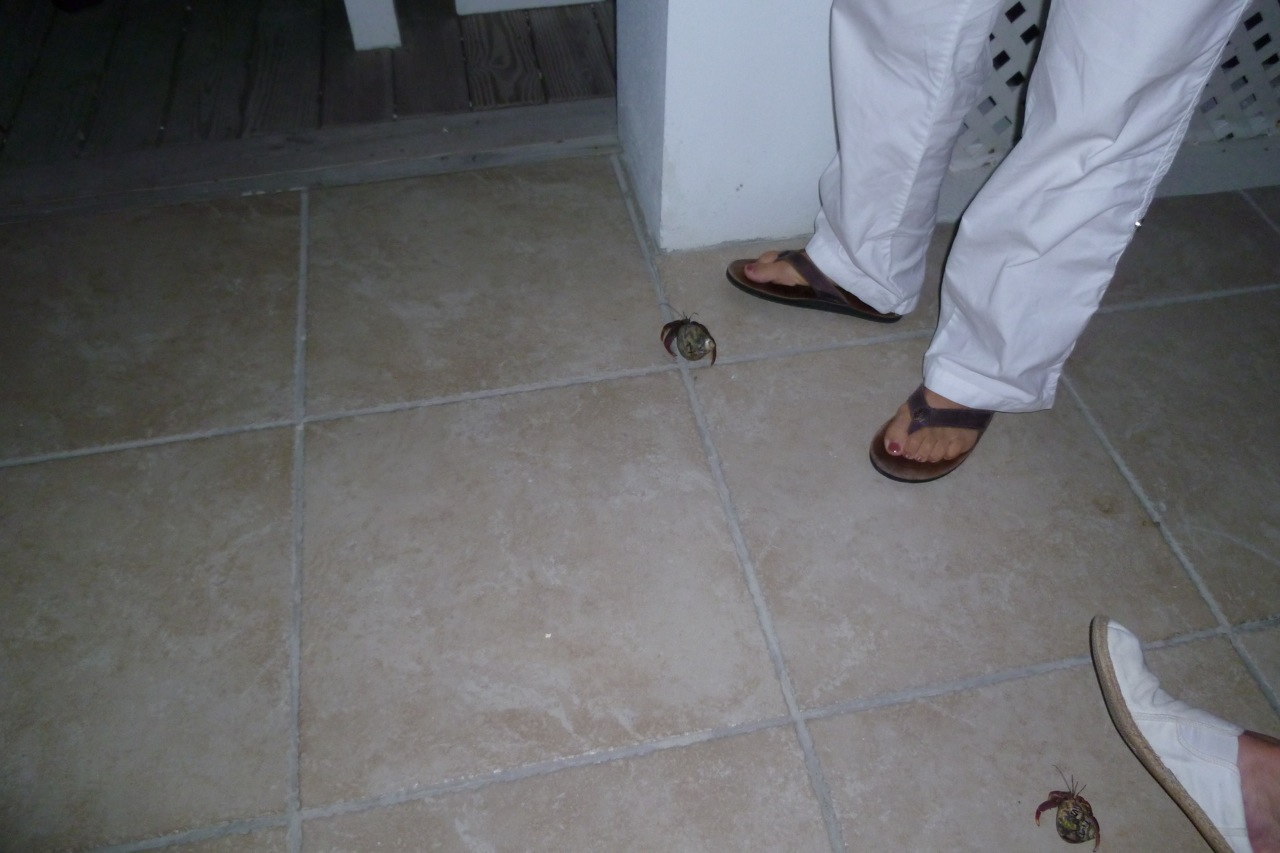
Others resort to unorthodox methods like ‘foot-persuasion’ to keep their crab on course. RH didn’t realise this was allowed at all, and watched his crab dive pathetically off the edge of the verandah into the flowerbed – an irrecoverable drop of 6 inches
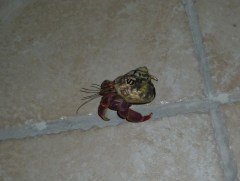
Most of the crabs went forwards as intended, though with a certain amount of lateral movement. 2 or 3 seemed to have got the general idea of the race and proceeded more or less according to plan
The impressive winner, by nearly half a minute, was the crab named ‘Emma’. A well-deserved victory, especially as the owner / trainer’s foot-directing was minimal (bare feet!)…
The one thing I would like to know about these little creatures is how they – and their shells – are to be found in large numbers 50 foot above sea-level at the top of a cliff…
LAND CRABS ON ABACO – HOW TO STALK AND WRESTLE THEM…
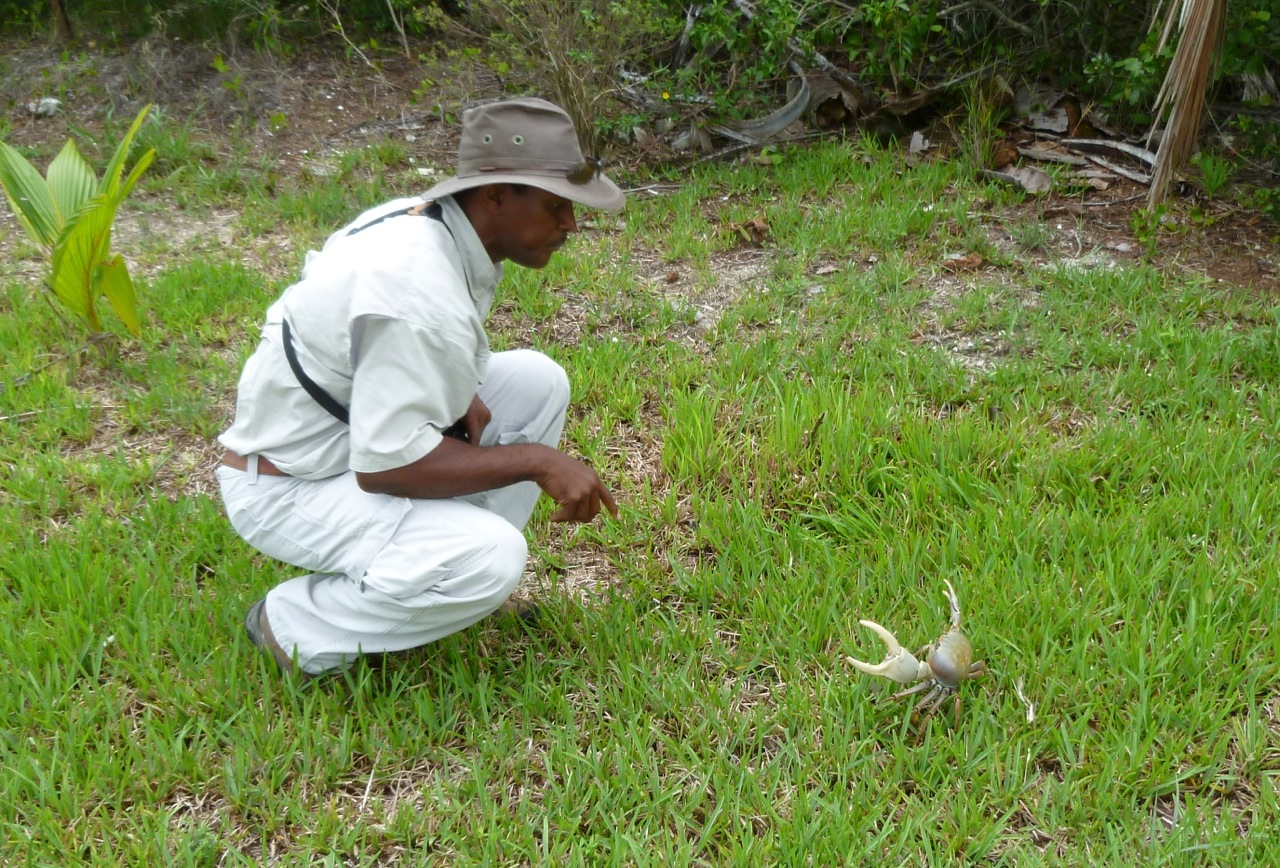
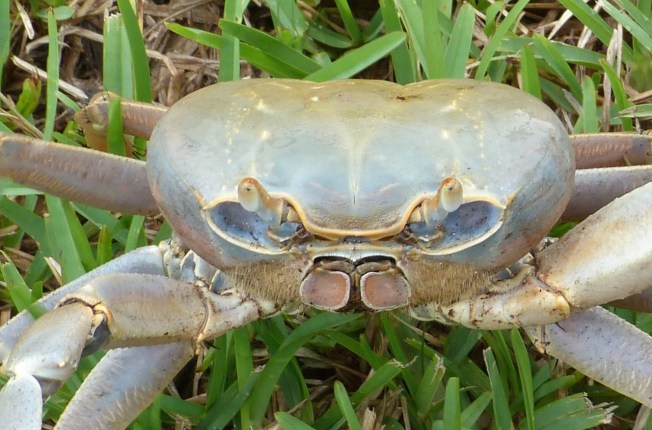
Only kidding. But the following sequence taken at Bahama Palm Shores, Abaco during a recent Eco-tour with Ricky Johnson certainly looks as if they are squaring up for a fight…LAND CRABS(also known as Terrestrial Crabs) are found throughout the world. The large claw looks like the one to avoid, but is in fact the crab’s defensive / aggressive warning to back off. It’s the smaller claw you have to watch out for…
Ricky carefully stalks his opponent, waiting for the right moment to move in
Ricky, now in the crouched fighting position, challenges his opponent by pointing at the ground
The crab accepts the challenge and prepares to engage
First the massive left claw is raised to warn Ricky to back off…
Meanwhile the right claw is poised, ready to inflict the maximum damage when Ricky makes his move
The fearsome face persuades Ricky to show us some parrots instead… SCORE: CRAB 1, RICKY 0
CATCHING LAND CRABS
I checked this out, never having tried it. I found an article by Jack Hardy atoii/netthat sets out some methods. See also Brigitte Carey’s comment on the ‘step-on-them-from-behind-wearing-sensible-shoes’ way:
“How do you catch them? Let me count the ways… Expert catchers put their left palm in front of the crab to attract its attention then scoop it up from the rear and have it in a croacker bag in an instant. Others use a stick or machete to pin the crab down then take a hold on the rear of the shell where the biters cannot reach. Sometimes the back two legs are gripped. You can use your foot to hold them in place so long as you have stout footwear. One Marsh Harbour man told me he uses two-foot long wash-house tongs to clasp the contentious crustaceans”
A SKIFF RIDE TO THE BONEFISHING GROUNDS OF THE ABACO MARLS
With a film budget of $2 (excluding travel costs to Abaco, incidental expenses at Delphi etc), RH Productions is proud to be able to bring you another movie that is arguably slightly less incompetent than the ones that have preceded it (the wretched STINGRAY; the marginally better BLUE TANGand REEF FISH & CORAL). Parts of this one are almost satisfactory. There’s a beginning, a middle and an end – in that order. And, best of all, it’s only a minute long. So sit back with your tub of popcorn and enjoy… oh, is that it already?
The skiff trip can be as much as 5 miles to reach the best places for bonefishing in the mangroves (I’ll post a video of that later on). The exact location can vary daily and depends on a variety of factors including the state of the tide, the wind strength / direction, and cloud cover. On this day the sea was glassy still; mostly it’s quite a choppy trip across open ocean; and when the wind has whipped up some waves, it is (a) exhilarating and (b) a constant reminder of the thin cushioning on the seats… I mention in passing that apart from topping and tailing the clip, muting the noise of the engine / wind, and adding music, this scene is just as it was live. There’s been no subtle blurring of the horizon or other work done – my editing techniques are far too rudimentary (i.e. non-existent). Best viewed full-screen, if you can find the gizmo (bottom right small square thing)
Music credit to the erstwhile litigious Joe Satriani
NO SALMON FISHING IN THE YEMEN? GO BIRDWATCHING INSTEAD…
AN ABACO / YEMEN BIRD POPULATION COMPARISON
All anglers have done it. Gone somewhere to fish on a hunch, a whim or a tentative recommendation, only to find no fish. What if you decided to take a break from Abaco bonefishing on the strength of the film title Salmon Fishing in the Yemen, only to find that there is, in fact, no migratory salmonid species in the republic. Despite the film’s dreamily optimistic outcome, it’s a piscatorial impossibility. You should have read the book first, of course – or seen the film, if only for Emily Blunt. Ok, and Ewan McGregor, if you must. Yes yes, and the fabulously over-the-top foul-mouthed cameo that is Kristin Scott-Thomas.
Set aside your disappointment. The only sensible thing is to put the fishing tackle away and check out the other Yemeni wildlife, specifically the birds. But you haven’t come prepared for this. You have no bird guide. So what species might you find in the Yemen that would be familiar to a Bahamian, specifically a South Abaconian?
South Abaco has 126 of the 196 birds species found more widely on Abaco, according to Avibase. I wondered how many of these one might find in the Yemen. And the answer is 33 (or 26%)
When I started checking this, I thought there would be very few – maybe a dozen or so – ‘mutual’ birds. As I worked my way through the seabirds, shore birds, birds of prey etc, the total slowly rose. Then I came to a sudden halt. Apart from the near-ubiquitous, adaptable rock dove, starling and sparrow, there are NO small birds in common at all. The obvious reasons are distance, habitat and climate, of course, but nevertheless I found it a slightly surprising finding.
So the lesson is, don’t be tempted to go warbler-watching in the Yemen either…




 LIGHT RELIEF
















 FRANCESCA BEAUMAN 2006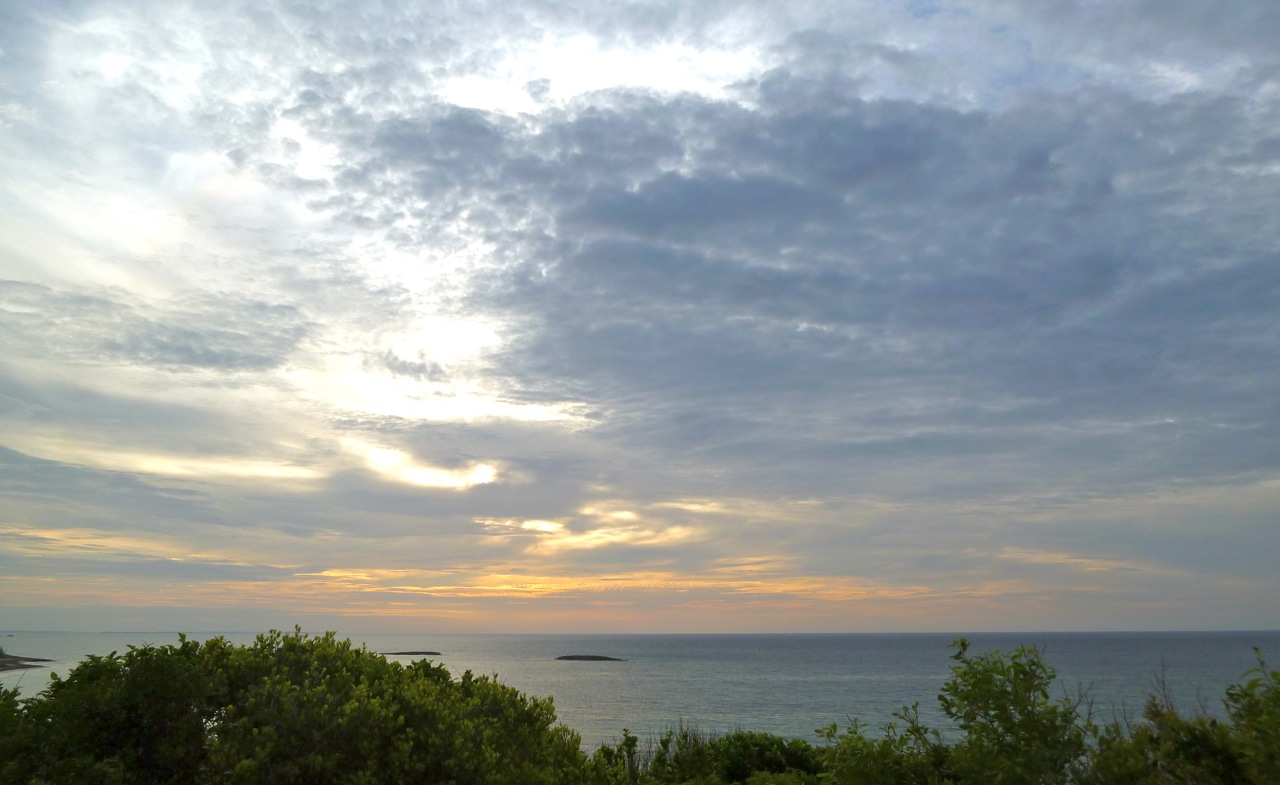

























 Most of the crabs went forwards as intended, though with a certain amount of lateral movement. 2 or 3 seemed to have got the general idea of the race and proceeded more or less according to plan
 The impressive winner, by nearly half a minute, was the crab named ‘Emma’. A well-deserved victory, especially as the owner / trainer’s foot-directing was minimal (bare feet!)…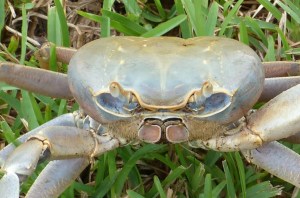





You must be logged in to post a comment.