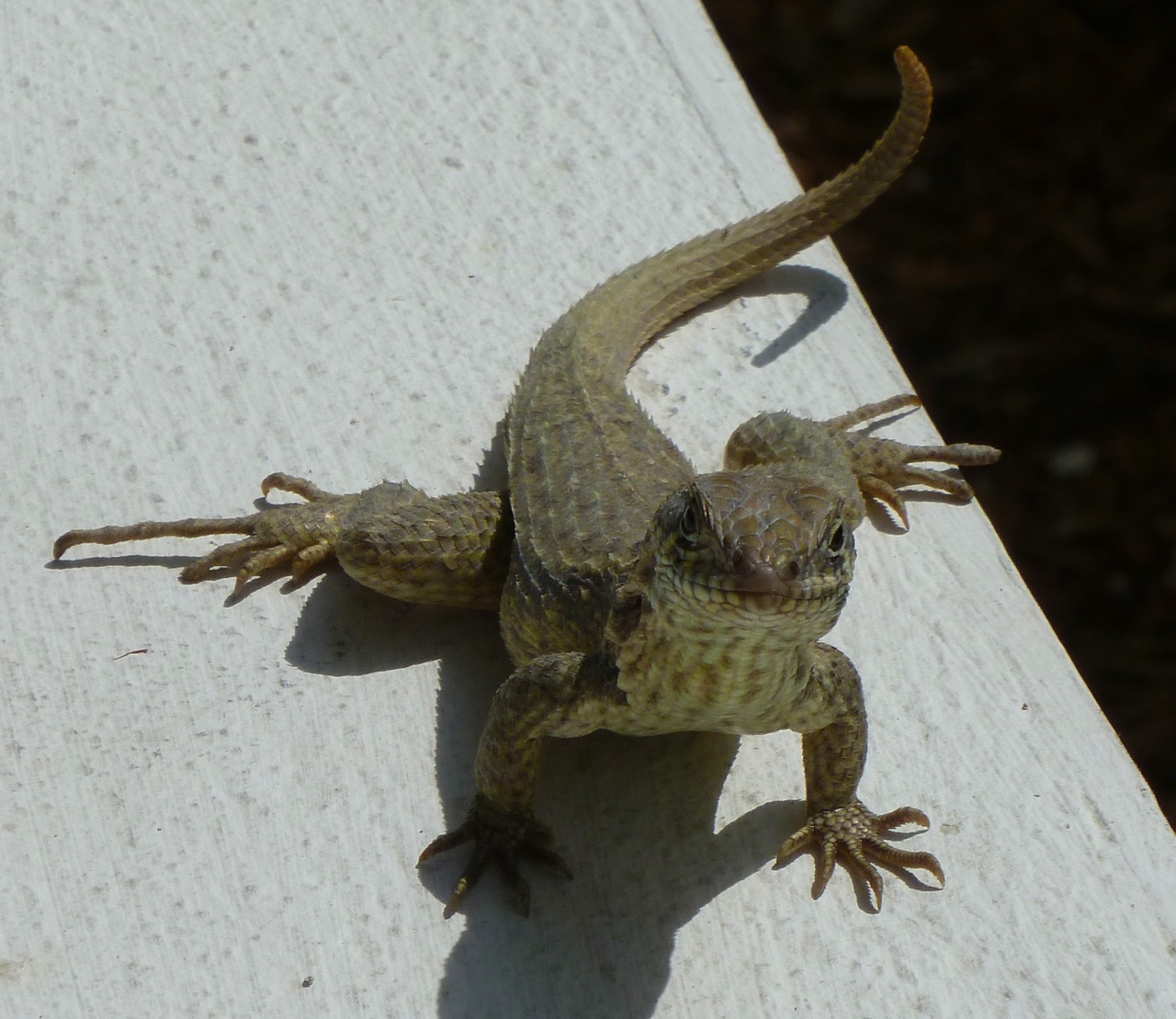
I have previously posted about these cute creatures that lie sunning themselves and occasionally blinking; or scuttle away when they see you. SeeCURLY TAILS for photos and details about these lizards and their habits. Here are a few more recent images. The first three were taken at the Delphi Club, where they seem to enjoy the pool area in particular. The top one has one extraordinarily long finger. It’s worth clicking on these 2x to enlarge them to see the structure of their skin / overlapping scales
An impressive “complete double curly”
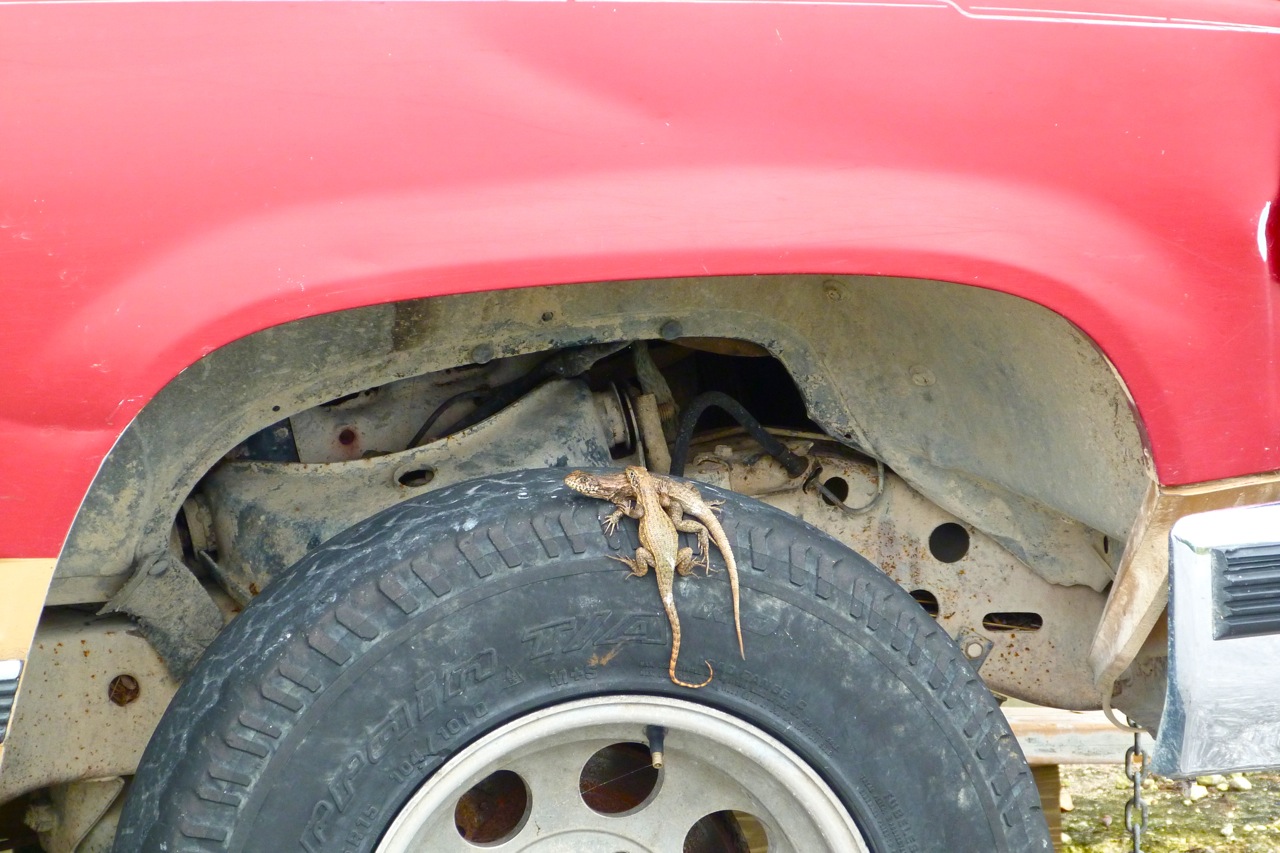
This pair of curly tails was at Crossing Rocks, where we were trying to locate Bahama Woodstar hummingbirds in the scrubland. We rather felt that we might be interrupting something… They look endearingly affectionate.
BMMRO MAY 2012 REPORT / THE BEAKED WHALES’ FEEDING GROUND
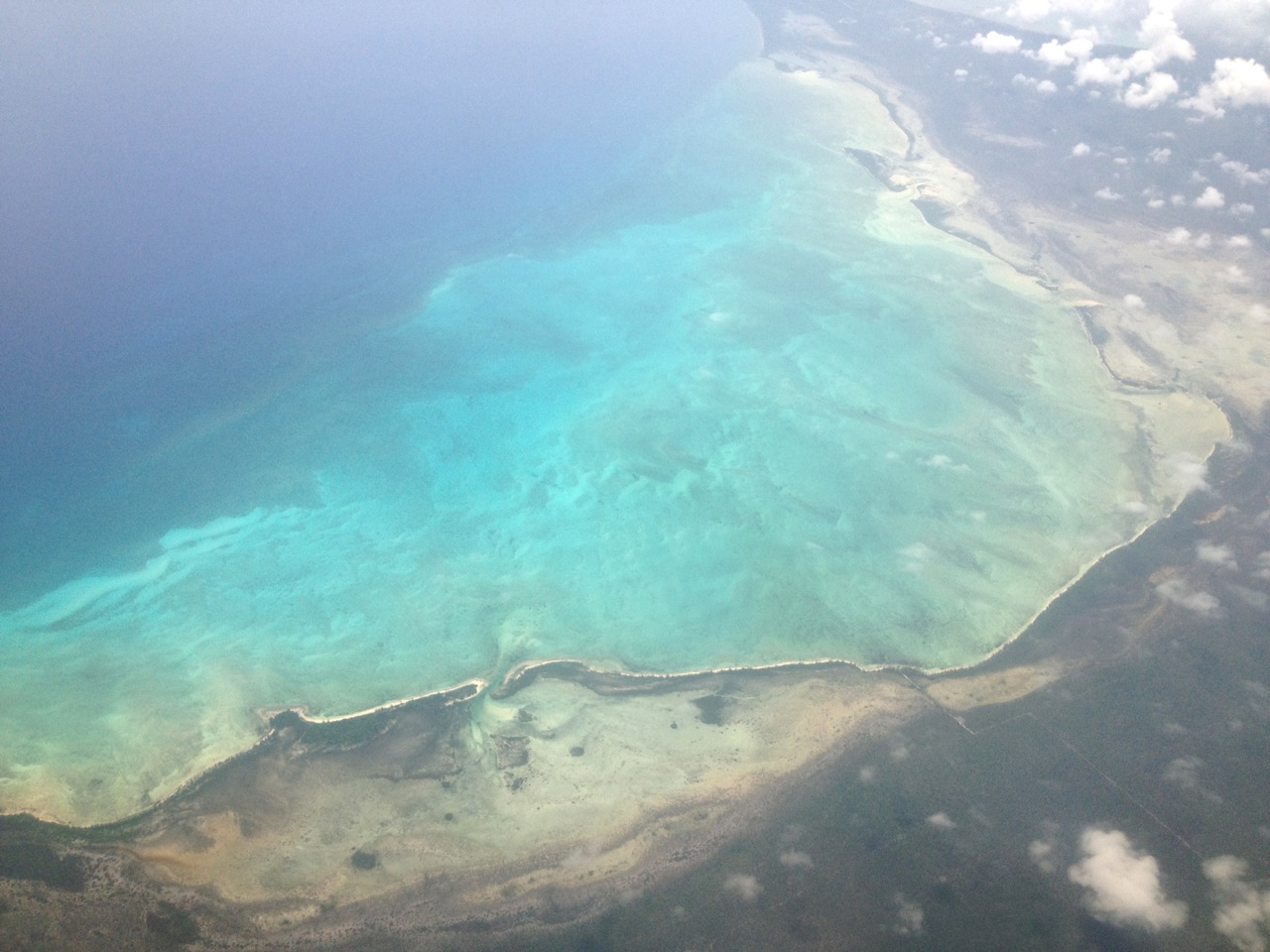
The BMMRO report for May 2012 has just been published. It’s quite short so I am posting it ‘as is’. While I am about it, Charlotte Dunn has just emailed me about an aerial shot we took on a flight from MH to Nassau of the southern stretch of Abaco coast between Hole-in-the-Wall and Rocky Point. She writes “that stretch of dark water is the North West Providence channel and where we often see our infamous beaked whales. They dive down to get their food, diving to 2000m in some cases!” In the top photo, the plane is roughly over Hole-in-the-Wall. Sandy Point Airport is just visible (top centre). The second close-up photo clearly shows how the shallow coastal water quickly gives way to the deeper water of the channel.
BMMRO NEWS MAY 2012
May fieldworkProject: Monitoring beaked whale responses to sonar tests at the Atlantic Undersea Test and Evaluation Centre (AUTEC)
A collaborative effort to deploy satellite tags on odontocete cetaceans on and around the US Navy’s Atlantic Undersea Test and Evaluation Center (AUTEC) in the northern Bahamas took place for the seventh time during April – May 2012. This project aims to monitor the movements of beaked whales and other odontocetes in relation to active sonar exercises, and particularly tests around multi-ship sonar exercises, on the AUTEC weapons range. This is a collaboration between the Bahamas Marine Mammal Research Organisation, the Protected Resources Division of the NOAA Southwest Fisheries Science Center (http://swfsc.noaa.gov/prd.aspx) and the US Naval Undersea Warfare Center (NUWC, http://www.nuwc.navy.mil/), with funding provided by the Chief of Naval Operations Energy and Environmental Readiness Division – N45. Secondary objectives include obtaining photo-identification data and biopsy samples.Below a picture is showing a satellite LIMPET tag being deployed on a Blainville’s beaked whale at AUTEC. These small low-profile tags are attached using a crossbow to deploy the tag on a projectile bolt; on contact with whale this bolt falls away (as shown), leaving only the transmitter tag attached to the animal. Two of these tags were deployed in early May 2012, transmitting dive depth data and location signals for 18 and 28 days.
The field team worked in co-ordination with NUWC’s Marine Mammal Monitoring on Navy Ranges (M3R) team based at Site 1, AUTEC. M3R vectored the vessel to acoustic detections of cetaceans on the range.
Sightings were made of 3 species: Blainville’s beaked whales (Mesoplodon densirostris), sperm whales (Physeter macrocephalus), and melon-headed whales (Peponocephala electra). There were 7 satellite tag deployments, 4 on sperm whales, 1 on a melon-headed whale and 2 on beaked whales. Both of the tags deployed on the beaked whales have provided movement and depth data prior to, during and after the multi-ship sonar exercise at AUTEC.
To read more about this project, go to the NOAA website to see their report. Project: Assessing beaked whale reproduciton and stress response relative to sonar activity at the Atlantic Undersea Test and Evaluation Centre (AUTEC)
Fieldwork took place in south Abaco with the field team based at BMMRO’s research centre in Sandy Point. The effort lasted two weeks and 22 biopsy samples were collected from 23 of the Blainville’s beaked whales sighted during the period, the 23rd animal was a calf and too small to biopsy.
These samples will be used to look at reproductive and stress hormone levels, and will be compared to samples taken from whales residing on the AUTEC range in Andros, during a project scheduled to take place in July this year. This project is funded with a research grant from the Office of Naval Research.
These small birds are a favourite of mine. They flicker around, cheeping cheerfully, yet are often quite hard to see in the coppice even if you think you are looking exactly where the sound is coming from.
Bananaquits are passerines, with an uncertain species designation. Over the years they have been officially reclassified three times. Some include them loosely with tanagers; others put them in their own family group; others argue that there are 3 distinct species. Basically, there is no universal consensus. There is some satisfaction, in a vastly over-classified world, in one small bird resisting man’s pigeon-holing (so to speak). It’s a tiny taxonomic enigma.
Among the islands of the West Indies there are several subspecies of bananaquit, with marked variations of appearance and size too tedious to relate. The best news is that “…the Bahamas Bananaquit with a whitish throat and upper chest may be a separate species…”.
The Bananaquit’s slender, curved bill is designed for taking nectar from flowers. It can pierce flowers from the side to reach the nectar, or use its bill to puncture fruit. It also eats small insects. The birds are tame, and love feeders, especially hummingbird feeders filled with sugar-water – hence their nickname “sugar bird”. They breed all year round. This is the characteristic chirrup of the Bahamas Bananaquit (credit: Xeno-Canto)
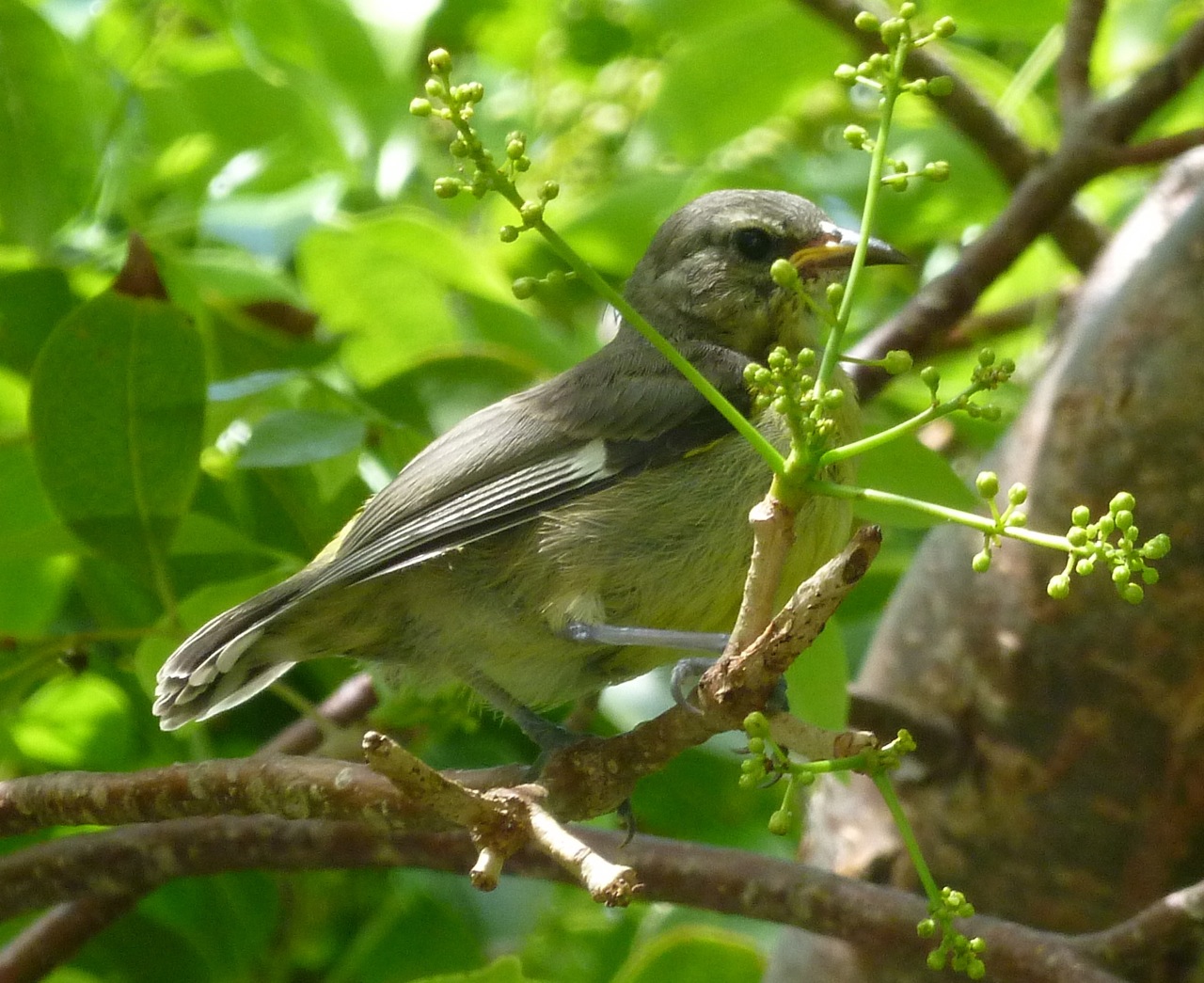
This small juvenile was happily feeding by itself near the Delphi Club, Abaco. Its mother then flew onto a nearby branch, and I’m afraid to say that the child indulged in a shameful charade of “Hungry! Feed Me! Now!”
WARBLER IDENTIFICATION – A LIGHT-HEARTED CHALLENGE
SPECIES ID NOW SOLVED! CUT TO THE CHASE BENEATH THE PHOTOS FOR DETAILS. A LATE ENTRY NOW DISPUTES THE GENDER ID, SO THE SEX CHALLENGE IS REOPENED, SO TO SPEAK
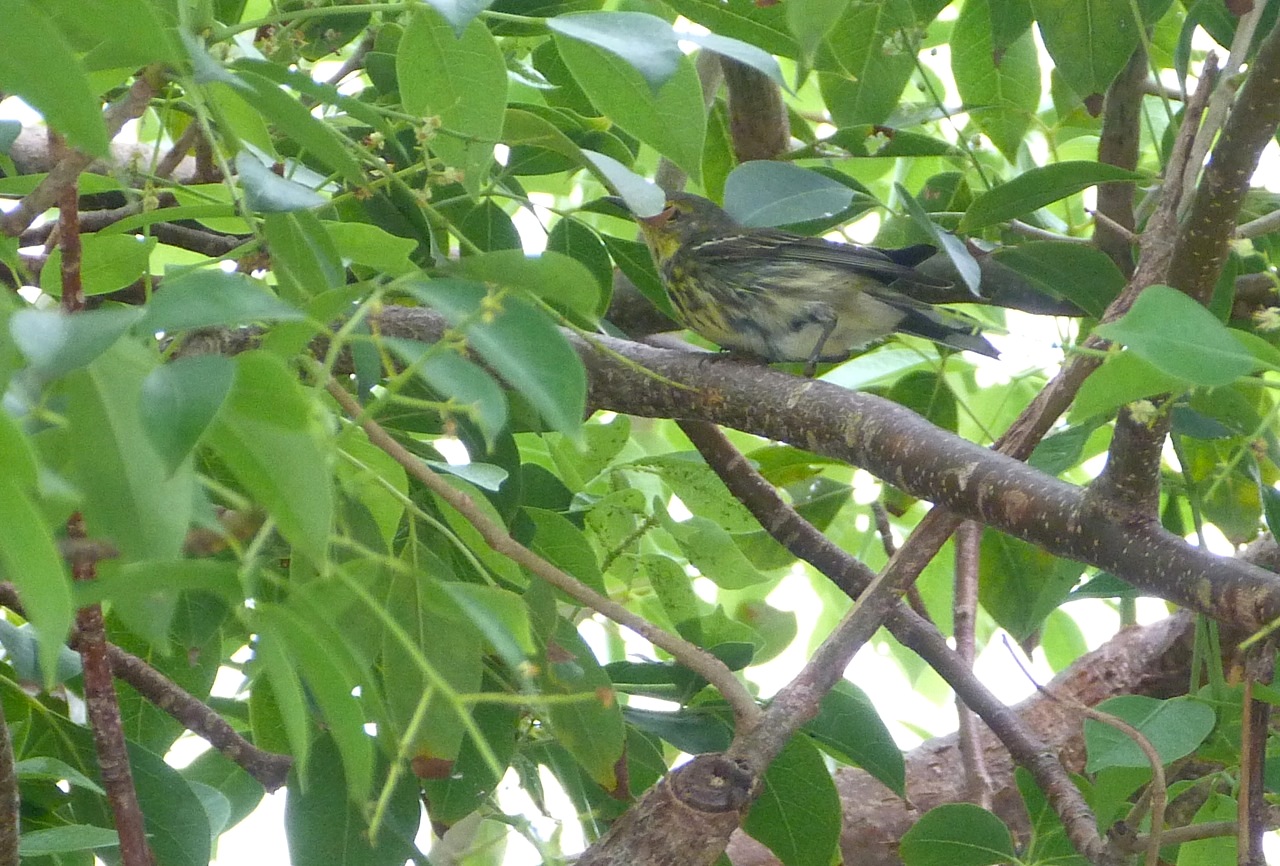
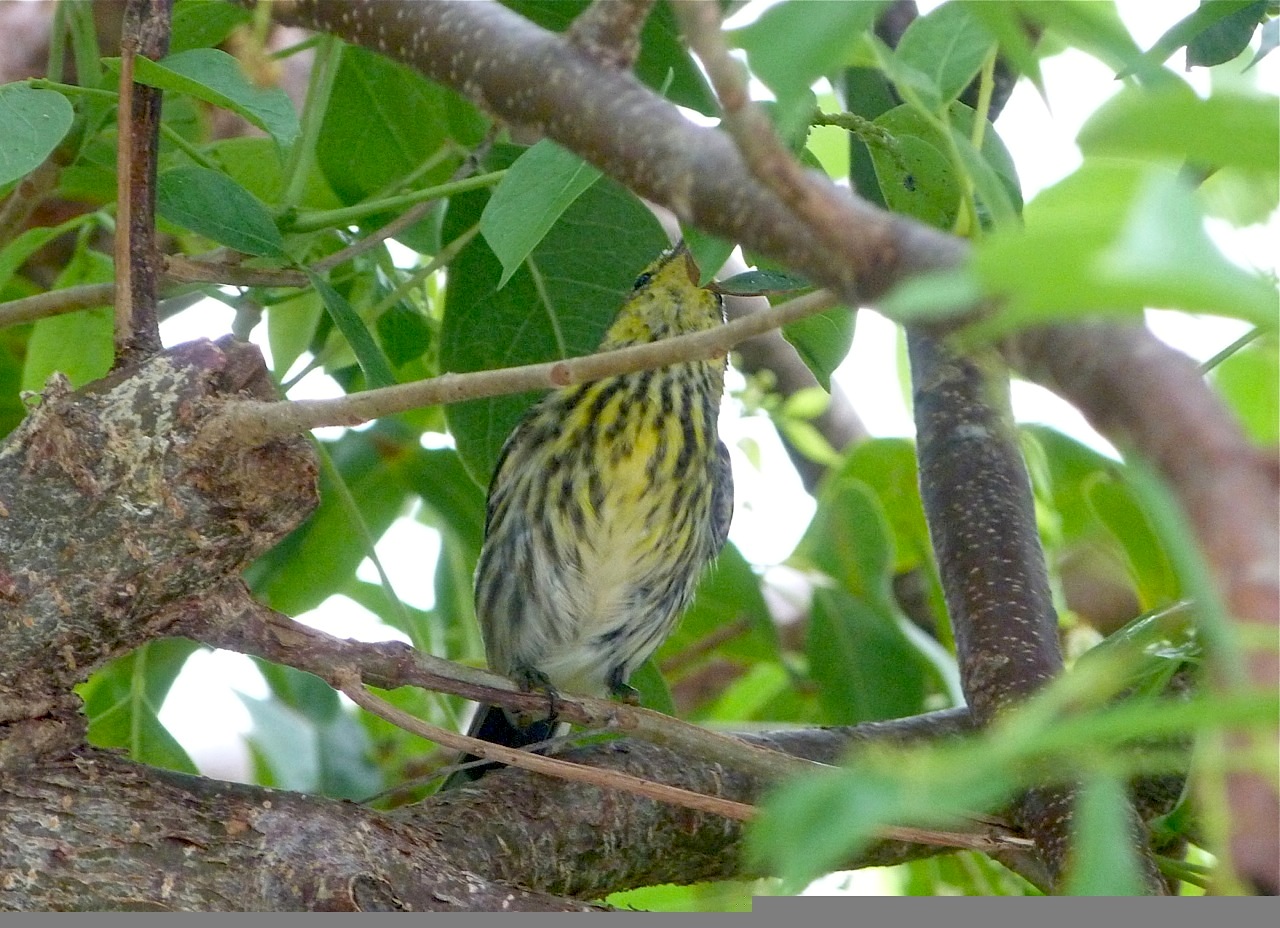
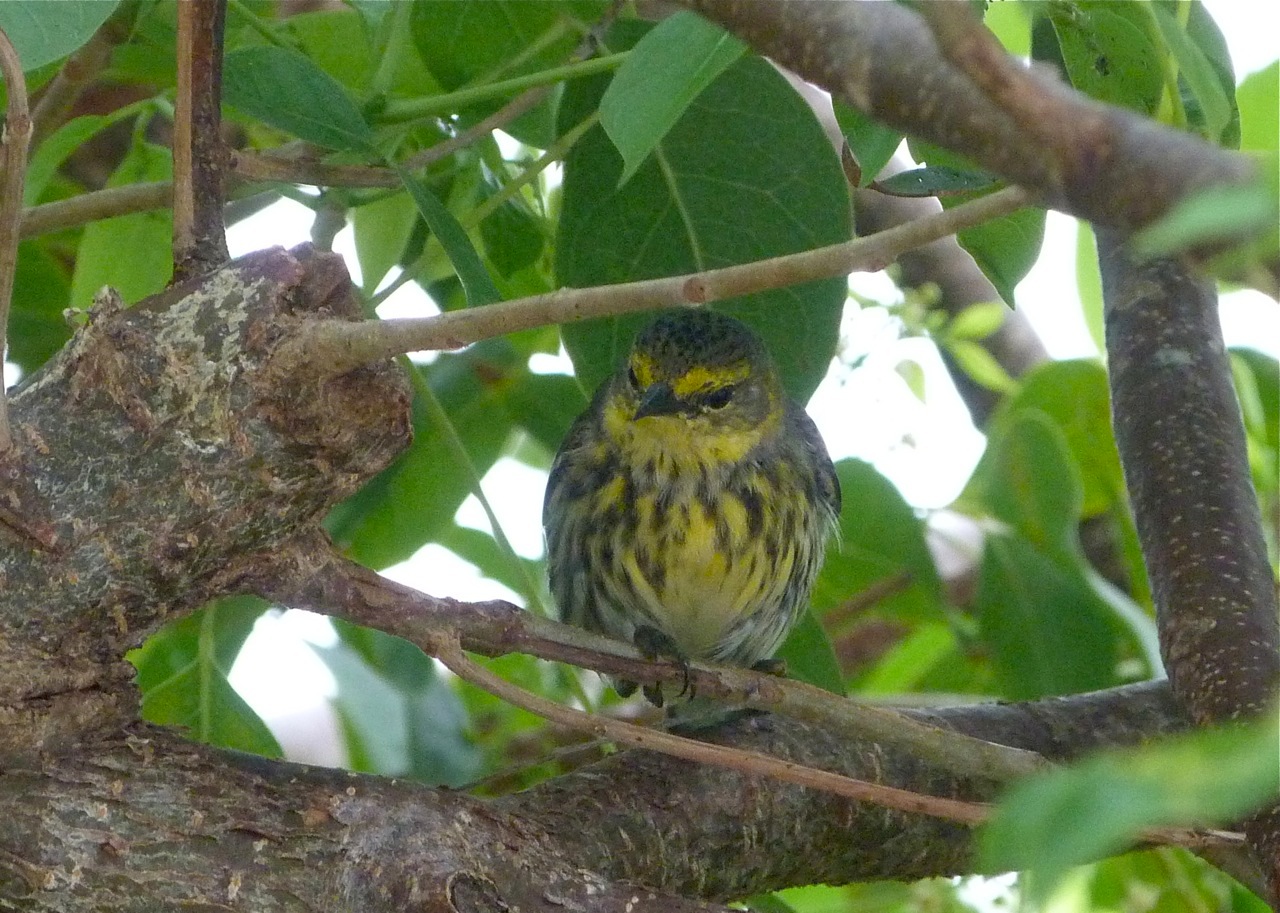
I have previously posted aids to WARBLER ID (1); WARBLER ID (2), a pitfall-fraught area that continues to baffle me despite books, online resources, futile stabs in the dark etc. For each species the male differs from the female, and both differ from juvenile / maturing birds. And this all depends to some extent on the season. Here’s a speckled warbler photographed recently at the Delphi Club, Abaco, for which there are various candidates ranging from the distinctly possible to the frankly completely-unlikely-but-astounding-if-it-turned-out-to-be-true Kirtland’s Warbler. These are seen and positively identified vanishingly rarely on Abaco – maybe one or two a year, and invariably in winter. But what if one decided to stay behind for the summer… And to those who say “Prairie, dimwit”, I reply “…but their speckles don’t cover their entire fronts”.
I’m throwing this open, because although I have a view I’d like to see what others come up with. Craig? Avian101? Avian3? Margaret H? Other birding followers? Are you out there? Leave a comment (see small-print blurb at the bottom of the post) or email me at rollingharbour.delphi@gmail.com The bird was a bit reluctant to be photographed, but I managed to get a side view, a ‘full-frontal’ and a head shot. Any ideas?
UPDATEThanks to all who came up with suggestions – it’s interesting how opinion on warbler species varies, even with quite clear close-ups to judge from. The first past the post is… Dr Elwood D Bracey (Fl), to whom many thanks. It’s a female CAPE MAY WARBLERDendroica tigrina. The runner-up is (amazingly) myself – I had it down for a Cape May juvenile, because I thought it looked a bit on the fluffy side… Also, its eye-patches (photo 3) are grey rather than brown, and I took their colouring to be a work in progress. There’ll be some more ID queries from our recent batch of Abaco photos – not just birds, but flowers & shells as well. All contributions will be welcome…
Oh no! What’s happening here? A late challenge has come in from Margaret H (see comments), who contends that the clearly shown patch on the bird’s cheek indicates that it is a male, not a female, Cape May. So the challenge was ended and the award given prematurely… The species is now definite, but the gender ID remains unresolved…
I’ve now heard from Alex Hughes, who writes “[I am] one of Caroline Stahala’s field techs on the parrot project this summer. She forwarded me the photos of the warbler taken recently on Abaco. The photos I saw are of a female Cape May Warbler, which is a great find in June! She is certainly not going to make it to her breeding grounds, unfortunately, but still fascinating to see a boreal forest bird in the Bahamas during summer.
In a follow-up, Alex adds “I’d be very surprised if this was a male bird, due to the plumage lined up with the time of year. This year’s juvenile birds are not big enough to make the flight south from breeding grounds yet, and wouldn’t anyways if they could. Therefore, it would have to be adult non-breeding plumage if it were a male, also meaning this bird already molted from alternate plumage from spring, and flew south. This seems far more unlikely to me than a female who simply didn’t make the flight, probably due to some handicap. Either way, very cool!”
So I think that wraps it up. A female Cape May, in the right place at the wrong time. How lucky to have got close to one in the off-season. It just goes to show, eager Kirtland hunters, that any of the migratory warbler species might choose to stay behind for the summer…
CORNELL LAB OF ORNITHOLOGY IMAGE & BLURB
“The Cape May Warbler breeds across the boreal forest of Canada and the northern United States, where the fortunes of its populations are largely tied to the availability of spruce budworms, its preferred food. Striking in appearance but poorly understood, the species spends its winters in the West Indies, collecting nectar with its unique curled, semitubular tongue”.
It is presumably using its ‘unique… tongue’ in Photo 2, inconveniently concealed by foliage so we will never know
(RH COMMENT My one obviously liked the Delphi Club – and its feeders – so much that it decided to stay for the summer…)
(Credit: Steve Pelikan for Xeno-Canto)
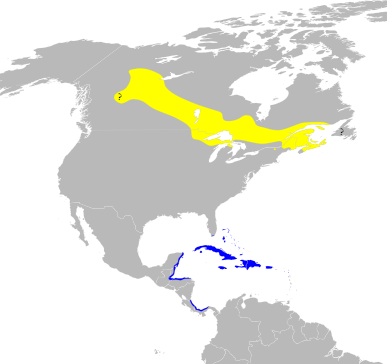
CAPE MAY WARBLER RANGE MAP (Wiki) (left)
As a warbler-muddler, I am interested to see how extremely selective this species is in its preferred summer and winter latitudes. The banding is very distinct. Are they never tempted by New York? Have they never tried Disneyland?
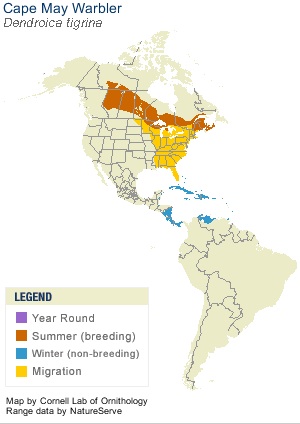
CORNELL LAB OF ORNITHOLOGY RANGE MAP(below)
The more sophisticated range map below shows the migration areas between the summer breeding and winter non-breeding areas. It looks as though a Cape May warbler on Abaco in June is an unexpected sighting.
JAMES BOND – THE ORNITHOLOGIST WHO LENT HIS NAME TO A FICTION LEGEND
Jamaica, 1952. The night was hot, too hot. Fleming cursed as he made his way up the steps to his neighbour’s verandah. He heard the clink of ice from within the house, and guessed that the rum punch was being mixed just the way he liked it. Stirred, not shaken. As he passed a low table on the verandah his eyes were drawn to a small book lying on it. Fleming paused, taking in the information, his senses suddenly alive. Bond. James Bond. A bird book about the avian species of the West Indies. Suddenly, it all made sense. Fleming knew now the direction he had to take, and with a thin smile he flicked back the insolent comma of dark hair that had fallen across his face and strode into the house towards the sound of the ice…
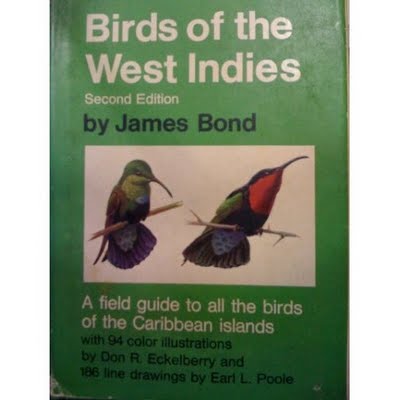
James Bond, ornithologist (1900 – 1989) was an expert on the birdlife of the Caribbean and wrote the seminal Birds of the West Indies, first published in 1936 and republished in varying formats ever since.
Ian Fleming lived in Jamaica and was a keen birdwatcher. The story goes that one evening, visiting friends, he saw ornithologist James Bond’s Birds of the West Indies on a table, and borrowed that short, punchy name for his fictional hero 007 for Casino Royale, published in 1953. He later said he wanted a name that sounded ‘as ordinary as possible’. In an interview, Fleming said “I wanted the simplest, dullest, plainest-sounding name I could find, and ‘James Bond’ was much better than something more interesting, like ‘Peregrine Carruthers.’ Exotic things would happen to and around him, but he would be a neutral figure — an anonymous, blunt instrument wielded by a government department.” Fleming wrote to the real James Bond’s wife “It struck me that this brief, unromantic, Anglo-Saxon and yet very masculine name was just what I needed, and so a second James Bond was born.” He also contacted the real James Bond about using his name in the books and Bond replied that he was “fine with it.” At some point during one of Fleming’s visits to Jamaica he met the real Bond and his wife. The meeting was recorded for a documentary.
FACT, FICTION & IN-JOKES
In Dr No Fleming referenced Bond’s work by basing a large Ornithological Sanctuary on Dr No’s island in the Bahamas. In 1964, Fleming gave Bond a first edition copy of You Only Live Twice signed “To the real James Bond, from the thief of his identity”. In the 2002 Bond film Die Another Day the fictional Bond can be seen examining Birds of the West Indies in an early scene that takes place in Havana. However the author’s name (James Bond) on the front cover is obscured. In the same film, when Bond first meets Jinx, he introduces himself as an ornithologist.
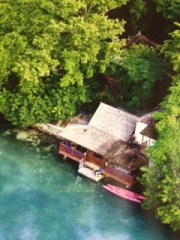
Ian Fleming Lived Here in Jamaica **
I had been planning to research the history of the various editions of Birds of the West Indies, the locus classicus for Caribbean species. Then I started to look into it and found that someone – Jack Holloway – had already done it so thoroughly that I would be wasting my time. So I contacted Jack for use permission, and I am very grateful to him for granting it by return. This next part is all thanks to him. I recommend a visit to his very good online bird resource website at AVIAN3
♠ ♣ ♥ ♦ ♠ ♣ ♥ ♦ ♠ ♣ ♥ ♦ ♠ ♣ ♥ ♦ ♠ ♣ ♥ ♦
THE HISTORY OF BIRDS OF THE WEST INDIES BY JAMES BOND
1936 (The Original)
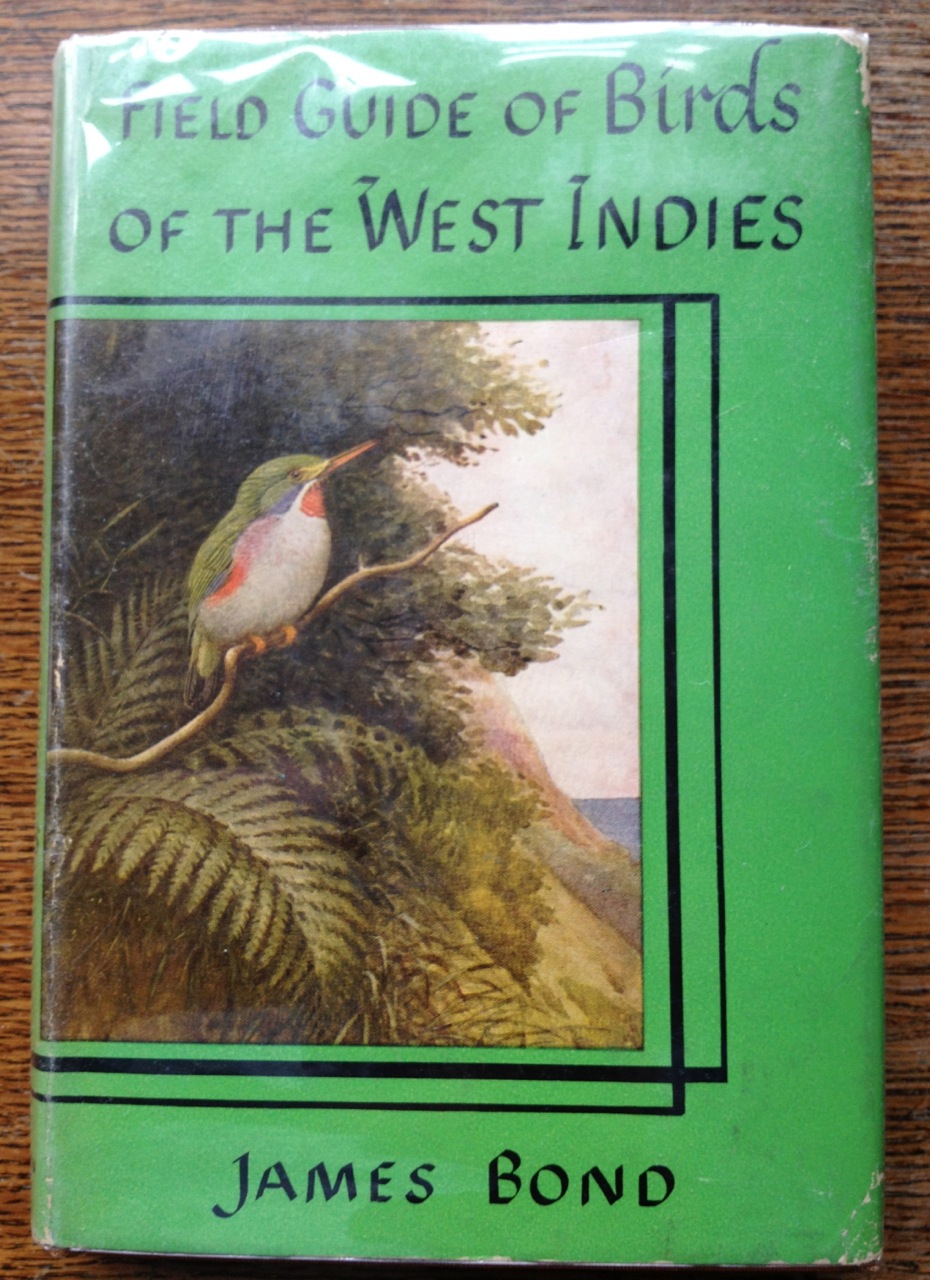
This is the alpha of the “Birds of the West Indies” books by James Bond. Its longer subtitle is “An Account with full descriptions of all the birds known to occur or to have occurred on the West Indian Islands“. Published just shy of two years after Peterson’s A Field Guide to the Birds of the West Indies, this book was the first field guide to cover all the birds of the West Indies (outside of Cory’s annotated book of 1889).
Somewhat in contrast to what is stated in the later 1961 version as the “First American Edition”, this 1936 book was published by The Academy of Natural Sciences of Philadelphia (at which Bond worked) and was printed by Waverly Press, Inc. in Baltimore, Maryland.
This book is certainly quite scarce and typically commands a price ranging from $500 – $1,500 depending on its condition and the presence of a dustjacket.
Ultimately, one may ask, “What’s the difference between this first book and the subsequent versions?” Here is the answer in the form of a table (see below)
1947 (The Next Version)
This 1947 version is often advertised or assumed to be the first edition. This may be due in part to the rarity of the original 1936 edition and/or to the presence of “First Printing” printed on the backside of the Title Page in the 1947 book (see image below). This “first printing” refers only to the second book. For the true, original book, you must go back another 11 years to 1936.
Despite the notation of “First American Edition” in the 1961 version, this 1947 book was published by the MacMillan Company of New York and was printed in the United States. The 1936 edition was also US published and printed.
As an obscure note, the title of the book printed on the dustjacket does not match the title printed on the book itself. The cover reads, “Field Guide of Birds…” while the book reads, “Field Guide to Birds…”. Also, it is likely this is the version owned by Ian Fleming which inspired the naming of his charismatic spy (see below)
Depending on the condition of this book and the presence of a dustjacket, this 1947 version ranges in price between $30 and $100.
STOP PRESS As a guideline, I’ve now bought a copy of this edition on eBay for $80, in very good condition with good dust jacket. On a first edition, I beat the seller down from $2250 to $1600, but it was in poor condition and I left it at that…
1961 (“1st American Edition“)
Just as a note of interest — or irony — this 1961 version is labeled as the “First America Edition”. Keep in mind the 1936 and 1947 books were both published and printed in the US. Additionally, just beneath the statement of “First American Edition”, you will see “Printed in Great Britain”. Completing the picture, this book was published by the Houghton Mifflin Company of Boston; thus, the American connection (I guess).
1970s
1971 1971 1974
1980s
1980 1980 1985 1986 (?)
1990s (the adoption by the Peterson series)
1993 1995 1999
2000s
2002 (?)
OTHER COVERS
1960s?
ADDENDUM
1966
Needless to say, the name James Bond has a familiarity beyond just the birding world. Several myths and slight distortions have grown related to how this name has been transmogrified from ornithologist to international spy.
In 1966, Mrs. James (Mary Wickham) Bond wrote a 62-page book How 007 Got His Name that outlined the circumstances which led to the use of Mr. Bond’s name in the series of books written by Ian Fleming.
As noted on pp. 16-17, Dr. Bond first became aware of his new recognition in 1961. This was after seven spy thrillers had already been published and were just becoming popular in the US.
Mrs. Bond wrote a light-hearted letter to Mr. Fleming on February 01, 1961 to make note that he had “…brazenly taken the name of a real human being for your rascal!” (p.18). A return letter by Mr. Fleming was most gracious and apologetic.
In this reply, (contained in full in Mrs., Bond’s book), Mr. Fleming wrote, “I will confess at once that your husband has every reason to sue me in every possible position and for practically every kind of libel in the book, for I will now confess the damnable truth.” (p.21).
He then provided an explanation of how he selected his character’s name for the first book in 1953: “…I was determined that my secret agent should be as anonymous a personality as possible…At this time one of my bibles was, and still is, Birds of the West Indies by James Bond, and it struck me that this name, brief, unromantic and yet very masculine, was just what I needed and so James Bond II was born…”
Mimicking Mrs. Bond’s light-hearted approach, Mr. Fleming continued his reply with this unique offer: “In return I can only offer your James Bond unlimited use of the name Ian Fleming for any purpose he may think fit. Perhaps one day he will discover some particularly horrible species of bird which he would like to christen in an insulting fashion.” (p.22).
Mr. Fleming also offered the Bonds an open invitation to visit his residence in Jamaica and to visit the birthplace of the second James Bond.
Iam Fleming and the real James Bond met only once, which was February 5th, 1964. This was in Jamaica, six months before the death of Mr. Fleming.
This short book by Mrs. Bond is a nice, quick read. I appreciate it for the first-hand accounts of the historical beginnings of Bond vs. Bond as opposed to the hearsay and myths created over time. The book also offers entertaining stories of how James Bond dealt with his new popularity and the avid “fans” upon their discovery of his name.
Comparison Table of the Books’ Contents over theYears
**“THE FLEMING VILLA” (SHOWN ABOVE) – THE FACTS
Once rented by Noel Coward
Sting wrote “Every Breath you Take” here
Princess Margaret, while a guest, broke a toe on one of the beds (rum punch alert!)
Ian Fleming himself designed the house, and wrote all the Bond books here
It has 5 bedrooms, and was built by a former donkey track bought by Fleming in 1946
You can rent it (and its full-time staff) for £3500 (including breakfast). Per night…
It is part of the ‘Goldeneye’ Estate (and no, there isn’t a ‘Thunderball’ Estate)
THE RED-LEGGED THRUSH–A WELCOME GUEST AT THE DELPHI CLUB, ABACO
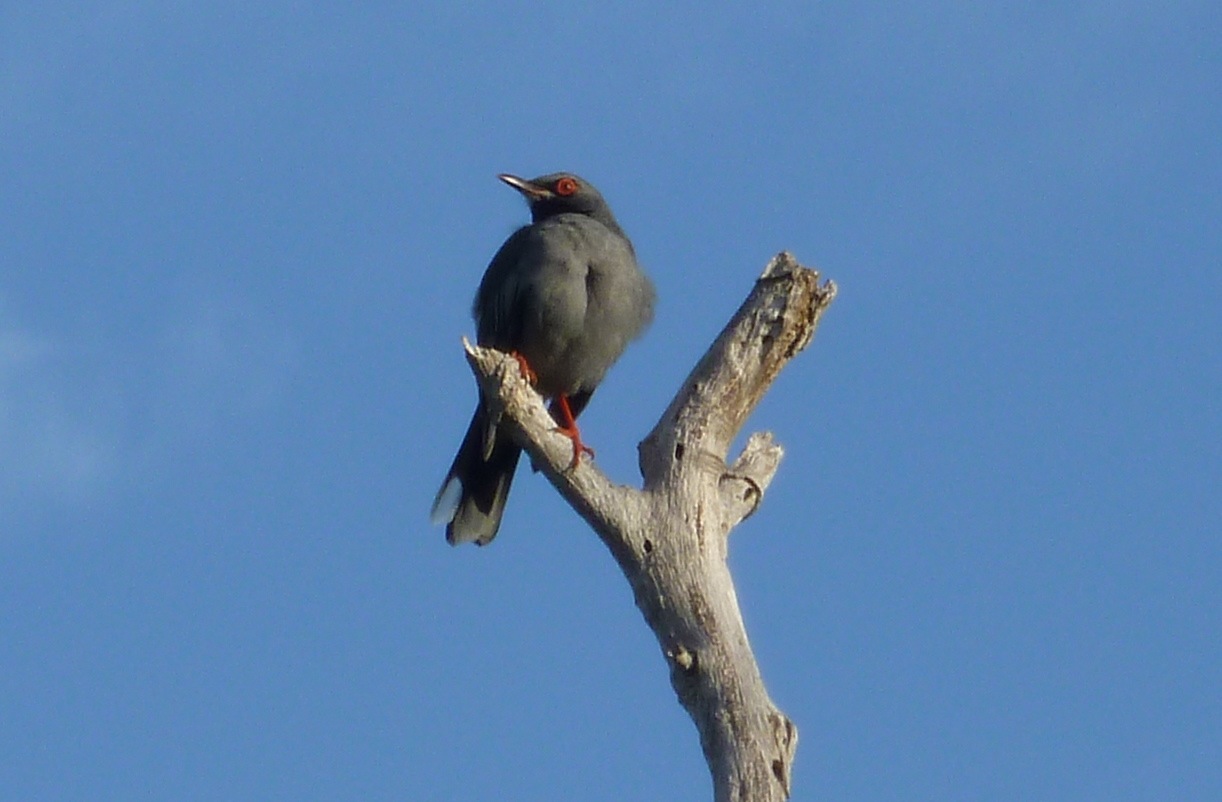
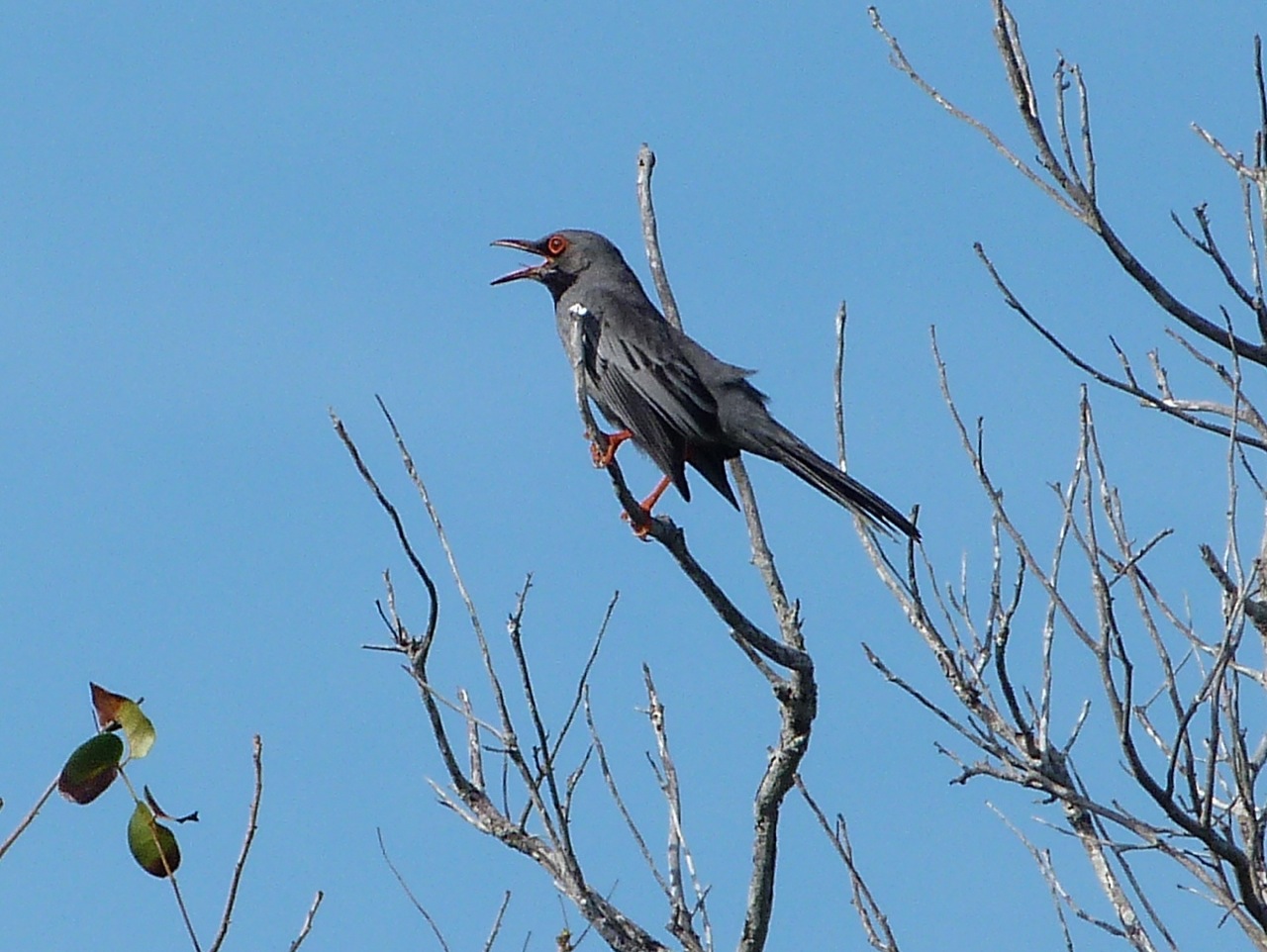
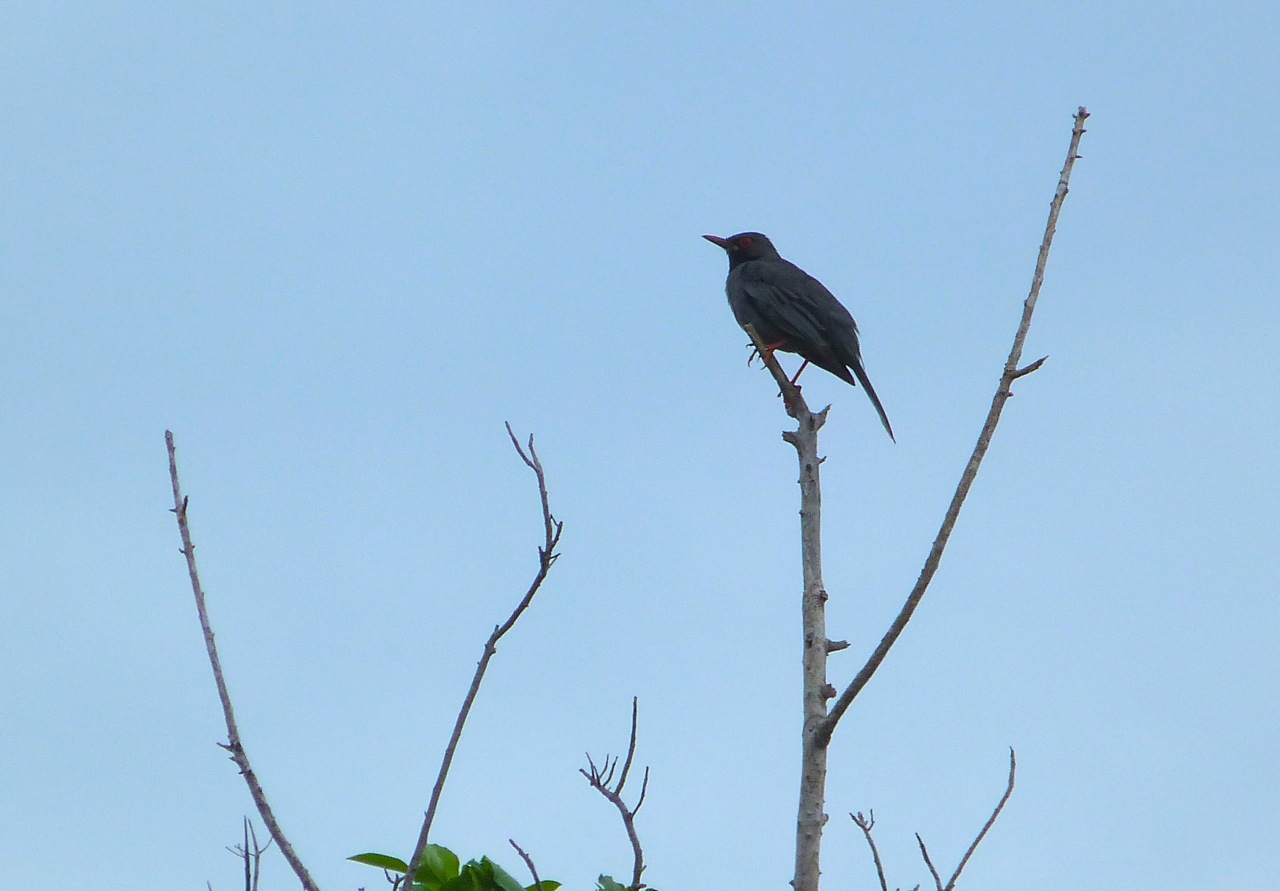
They are everywhere in May and June, with their eponymous limbs and their remarkable red eyes. In fact, ‘red-eyed thrush’ would be as apt a name, if somewhat lachrymose-sounding. This was our first Summer visit to Abaco and the difference in sightings was marked. Now, the thrushes tended to choose a high tree-perch to sing from, when not hopping around feeding on the ground. In March they seem more furtive, lurking in the coppice – presumably eyeing up the talent (or sizing up the opposition) with mating in mind.
There are 6 distinct regional variations on the species, which are found in the Bahamas, Caymans, Cuba, Dominica, Haiti and Puerto Rico. TURDUS PLUMBEUS is the subspecies specific to the Bahamas. Some view them as the Caribbean counterpart to theAMERICAN ROBIN. They eat fruit, insects and small creatures such as snails, lizards and caterpillars. Their song sounds like this (courtesy of Paul Driver at Xeno-Canto)
In a departure from the normal use of an ‘in-house’ logo, I’ve posted a silhouette of a Delphi RLT in the coppice close to the Club. The photo itself was dull, but I liked the pose and decided to turn it into logo-thrush
BIRDS IN THE DELPHI GOUNDS OR IN THE COPPICE NEARBY
1. This bird was at the top of a tree on the Delphi front drive close to the Club. It is singing cheerfully, and you can clearly see its tongue
2. This bird also chose a high vantage point near the front entrance gate. I managed to get gradually closer to it. Its feathers are quite fluffy and I wonder if it a juvenile / late teen?
3. Strike the pose! Two very characteristic poses by a bird on the guest drive. In the first image, you can also (just) see its tongue as it sings
4. Another high perch above the coppice alongside the drive
GROUND-FEEDING IN THE GARDEN ROUND THE POOL
Two very productive areas for thrush-fodder. The newly cut grass exposes insects, in particular ants. And the border beside the lawn has plenty of insect-life to feed on (Photo quality suspect – half-asleep by pool, grabbed camera)
A PRETTY EXAMPLE OF THE THRUSH TAKEN AT BAHAMA PALM SHORES
Checking out the precarious electricity infrastructure, Marsh Harbour, dusk
ART & CRAFT SHOW ♦ SATURDAY 16 JUNE ♦ WHITE SOUND, ELBOW CAY
15 artists and artisans will be displaying their work, including ‘Abaco Island Artist’ Brigitte Bowyer Carey whose paintings adorn the main flyer above, and alternative flyers that have been produced (see cheerful Hope Town logo above and the delicious image below)
BONEFISH CATCH & RELEASE: 5 COUNSELS OF PERFECTION*
1. FISH BARBLESS (OR FLATTEN THAT BARB)
2. WET YOUR HANDS BEFORE TOUCHING THE FISH
3. KEEP THE FISH IN THE WATER AS MUCH AS POSSIBLE
4. MINIMAL TOUCHING OF THE FISH – ITS PROTECTIVE COATING IS EASILY REMOVED
5. DO IT ALL AS QUICKLY AS POSSIBLE
This post follows on from my recent oneBONEFISH RESEARCH: THE IMPACT OF HOOK RETENTIONHere’s an example of swift C&R by my boat partner Martin of a small bonefish caught on the Abaco Marls. I say ‘small’ because it was his fish, not mine, so I can! Release is achieved, barely touching the fish, by twisting and loosening the barbless hook while the fish is in the water, and quickly flicking it off the hook without touching the fish’s sides. This preserves its protective coating, which if removed makes it vulnerable to predation and disease. He has in fact omitted Counsel 2 (above), because he has needed no significant contact with the fish. Apologies for the inevitable accompaniments to using Youtube – ads, 20 other vids on offer etc [Later: Mrs RH has spotted that my reef fish Blue Tang movie is amongst them. So have a look. It’s a bit iffy, frankly, but the music is nice, and helps drown out my snorkel-wheezing]
* I have avoided the dread words ‘GOLDEN RULES’ in recognition of the fact that the lofty ideals don’t always work out in practice. The fish itself can dictate the proceedings…
(And apologies for yet another ‘premature release’ (a bit like much of my fishing) of a nearly blank document. I’ve got the ‘Save’ and ‘Publish’ buttons yips)
A short time ago I posted in some detail about the poisonousLIONFISH. I included material about the rapid increase of this Pacific species in Caribbean and Floridian waters following accidental / deliberate releases in recent years. I also included videos from Grand Bahama scuba-expert FRED RIGER to balance the anti-lionfish orthodoxy, showing that the fish in fact do some good on the reefs. The post provoked a few comments, and had a surprising number of hits. Here is some further research courtesy of the excellent SEA MONSTERwhich adds a dimension to the debate and concludes with a very good point… Incidentally, in a recent morning snorkelling at Fowl Cay Marine Preserve, Abaco, I did not encounter a single one of these creatures (Mrs RH was unluckily stung by a jellyfish, though…). But I guess the Preserve is well policed against such intrusive species, which are otherwise found in large numbers in the area.
Why are lionfish populations exploding across the Caribbean?
Author: John Bruno on June 6, 2012
Lionfish are an exotic fish now found throughout the Greater Caribbean and eastern Atlantic that have become incredibly abundant on many reefs, especially in the Bahamas and off North Carolina. Lionfish are piscivores (fish that eat other fish) and were introduced from the Indo-Pacific by the aquarium trade in the late 1990s off Florida. Mostly likely, someone got tired of their fish and released them purposefully.
One hypothesis explaining their great success is the absence of natural enemies; predators, parasites and competitors. This is probably compounded by the fact that few Caribbean reefs have any predators left that could eat them (thanks to overfishing).
Another – and I think much more likely explanation – is because there is so much to eat in the Caribbean! Not because there are more fish, but because it is so much easier to catch them. Unlike fish in the Indo-Pacific, native Caribbean fishes do not appear to recognize lionfish as a potential threat. So the lionfish gobble them up, grow faster, make more babies, spread to new islands, etc.
Case in point: My lab group was working in Belize last week on the lionfish invasion. One of the things we were doing was collecting the otoliths and gonads from lionfish that we speared on a number of reefs to compare their fitness across the Caribbean (e.g., on reefs with and without native predators, etc). We also looked at stomach contents and many of them had parrotfishes in their tummies or still in their throats! The photo above is of the eggs from one lionfish we caught near Glovers Reef Atoll and the partial contents of it’s stomach (a juvenile striped parrotfish)!
Lionfish appear to be little more than machines that convert parrotfishes to baby lionfishes. Which is pretty much the purpose of all animals (consuming others and transforming them into your own genotype and species). But jeez, couldn’t those aquarium hobbyists have released a herbivore that could be converting macroalgae to fish biomass? That would have been much more useful.
Back safely in Blighty at last, and 17 cups of coffee down the line it’s time to take caffeine-trembling hands to the computer. A quick skim through the new batch of Abaco wildlife photos has shown that at least 3 out of (say) 987 have came out adequately, so new material will now be appearing – parrots and other birds, reef fish, plants, bonefishing, and a lot more (including some videos). I’ll make a start with an Atala Hairstreak, a small but unmistakable butterfly that is a creature of delicacy and beauty. It is the one that features in the RH logo above. Here is a live specimen taken deep in the pine forest a few days ago at the Blue Hole known as Sawmill Sink. The colouring is just as it is in real life – there’s been no ‘work’ done on this image. Its little curly tongue shows that it is busy feeding. Click on it to enlarge it.
We rebooked our storm-tossed flights. We spent an extra night at Delphi and one in Marsh Harbour. We went to check in online. Zilch. Nada. Niente. No trace of Mr & Mrs Harbour. One hour on the phone and it’s sorted, and with an upgrade to World International Club Class Traveller Special Plus or similar ( = more leg room? An extra bacon roll? We’ll see…)
More importantly, though, today is WORLD OCEANS DAY
You can find 100 Ocean-related quotes to sprinkle into your conversation if you tune in to the excellent BEACH CHAIR SCIENTISTfrom whom I have ‘borrowed’ this sea-loving image
Quote 33 is slightly disturbing…
Apologies for premature publication omitting title and later tweaks. Posting on an iPhone is a fiddly business.
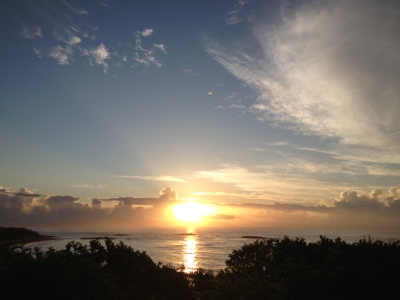
Well hello again! We should have landed at Heathrow a few hours ago. However a massive but localised storm yesterday left us stranded on the island. And here we remain for two somewhat “limbo” days, all packed up awaiting our rebooked flights. In the meantime, here is another fine sunrise to be going on with… see you in 4250 miles’ time
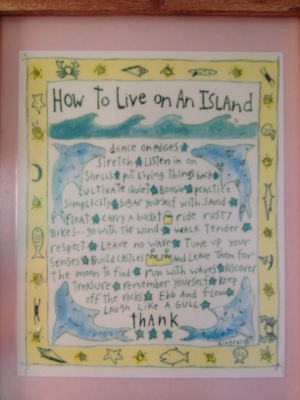
Oh! I’ve just found this. I can’t decide if it is philosophically profound, an aid to serenity, a cute item or faintly annoying. But I like the drawings anyway – just about my skill level
Good Morning at dawn. Looking good for bonefishing after a variable day yesterday. This is what dawn is looking like here. Bird life is busy so there’ll be some new species to add. RH
NORMAL SERVICE WILL BE RESUMED IN TWO WEEKS, IF YOU CAN EVER CALL IT ‘NORMAL’
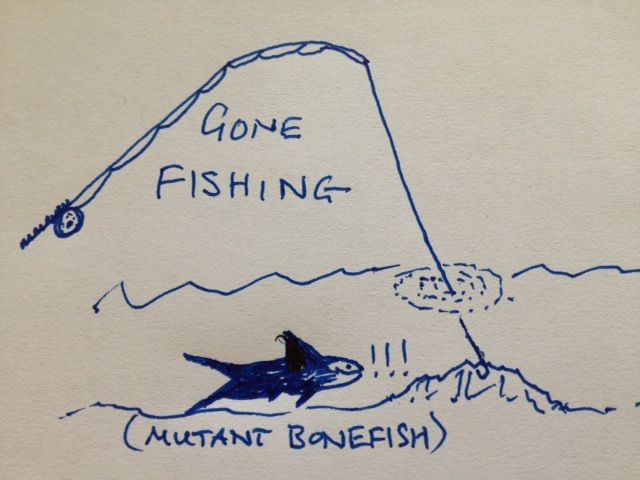
Actually, apologies for the drawing. No, really. At one time in this blog, I did say that I struggle to draw a stickman. And ain’t that the truth. Click on the Soundcloud thing below for suitable vacation music, composed and played by me (tip of the hat to an iPhone app). Oh good grief. It’s just as feeble as my drawing. Just as well I’m off to Abaco for R & R… Meanwhile, here’s what a bonefish really looks like – the weight / strength ratio makes it one of the world’s most powerful fishes. Hook one and prepare to have your reel stripped to the backing. All caught bones are quickly released to ensure stocks are not depleted.
Why thank you, nice Lubbers Quarters sign, I do believe we are…
Here is an excellent resource from the laid-back BEACH CHAIR SCIENTIST with extremely useful comparisons between sea birds, shore birds and wading birds. The ‘top tens’ format is always a helpful way to get factual info across without blocks of text. Say goodbye to ‘Is that a stilt or a rail?’ misery now.
Here is a general overview of 10 characteristics of seabirds (birds that spend most of their life out at sea), shorebirds (migratory birds that scurry along the shore looking for food), and wading birds (taller birds that wade in wetlands for their food).
10 characteristics of seabirds (Examples include albatross, auk, booby, frigatebird, fulmar, gannet, murre, penguin, petrel, puffin, shearwater, and tropicbirds)
1. Seabirds are pelagic, spending most of their lives far out at sea.
2. Seabirds move toward to coastal areas to breed or raise young for a minimal amount of time.
3. Seabirds are light on their undersides and dark on top (an adaptation known as countershading).
4. Seabirds have more feathers than other types of birds for more insulation and waterproofing.
5. Seabirds have flexible webbed feet to help gain traction as they take off for flight from the sea. 6. Some seabirds have unusually…
HOLE-IN-THE-WALL, ABACO: A HISTORIC DESCRIPTION & AQUATINT FROM 1803
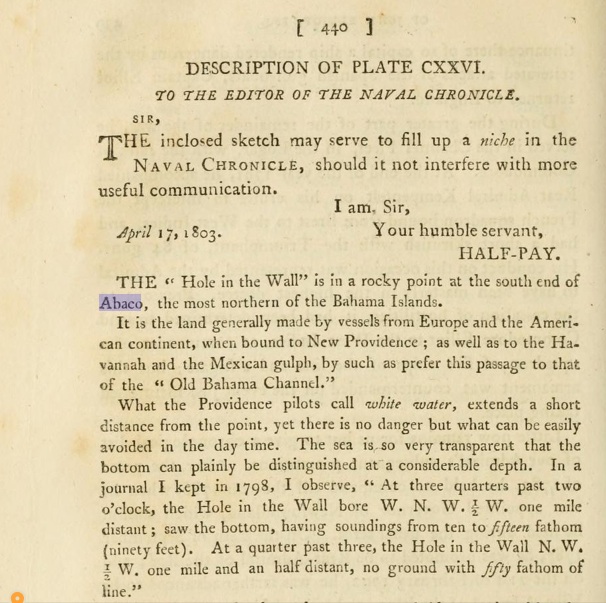
I recently traced the history of Hole-in-the-Wall, Abaco through maps from the 16th century onwards – its significance, the name changes, and so on. To see that post CLICK HERE . I have just come across some historical material about HITW that is so fascinating that I have awarded the accolade of a separate post, rather than lumping it in with the earlier one. The extract below is from THE NAVAL CHRONICLE (Vol 9) * for January – July 1803. It gives a short but detailed description of the Hole in the Wall in the context of a remarkable sketch (reproduced as a Plate in the book) submitted by the contributor, who signed himself ‘Half-Pay’. That was the name traditionally used in both Navy and Army to refer to the pay or allowance an officer received when in retirement or not in actual service – or, metonomously, to the officer receiving the reduced pay. I greatly like the charming deference with which the contribution is offered.
The whole book is well worth examining for the light it sheds on Naval matters at the very start of the c19. The comprehensive personnel and other lists hold plenty of interest. This was an era of almost continuous major military and naval campaigns on both sides of the Atlantic. The Battle of Trafalgar was still 2 years away when this book was published. If you want to see the downloadable online version CLICK HERE[I had to zoom the page and clip it in two to make it easily readable – hence the gap. And apologies for the purple highlight – it was my place-mark…]
Here is the amazing aquatint by J. Wells of Half-Pay’s sketch, published in the 1803 Naval Chronicle by founder J.Gold of Shoe Lane, London. It’s quite small, measuring 5½” x 9″. You may even be looking at a screen clip of a scan of the book plate of the earliest surviving depiction of Hole-in-the Wall. If anyone knows of an older one, please get in touch. And can anyone identify what kind of sailing vessels these are (I wouldn’t know a brigantine from a clipper…)?
To answer queries arising from my earlier post, I added a map and photos showing exactly where the actual Hole at HITW is, and how to get there (if you are wearing the right shoes). It’s worth revisiting the topic. People are always fascinated by the extremities of land – ‘Land’s End’, ‘Finisterre’, ‘Finistère’ and so on – especially where they are remote and relatively inaccessible. I think HITW qualifies. As far as I am aware, apart from the lighthouse its abandoned outbuildings at the southeast corner of the first map below, there is no other building in the area covered by this map. The nearest road is 15 miles up the inhospitable track to the north of the lighthouse.
Here is the map showing the location of the actual Hole in the Wall, and below that, a distance shot taken at sea
* According to The Philadelphia Print Shop “Between 1799 and 1818, The Naval Chronicle, was the pre-eminent maritime journal reporting news about the British navy. Issued twice a year, it was published during a period in which the British navy fought the Napoleonic Wars and the War of 1812, and came to “rule the waves.” This wonderful journal included action reports, intelligence on various matters related to the British and other navies, and biographies of naval officers. Many of the reports were accounts by officers directly involved, such as Lord Horatio Nelson. Included with the articles were portraits, images of naval action, and views of the many ports in which the navy called. These are important, first-hand images of this turbulent period”
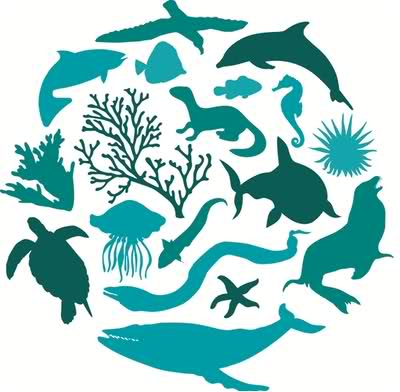
Yesterday was an important day in the marine conservation and research calendar. Me neither! I had a heads up from the redoubtable SEAMONSTER late last night. So at least I found out on the right day. I am posting the excellent logo to help to raise awareness retrospectively… I ‘get’ everything depicted in this clever sea creature globe – except for the tiny dinosaur… or is it a sea otter?
CLICK this large logo to link the the relevant website, where there are articles catering for every conceivable marine interest
It’s Week 4 since mother and calf were released. Since then, they have made some manatee friends and gradually increased their range of exploration as their confidence continues to grow. The week’s big news is that in five days, Rita and Georgie travelled over 70 miles around Great Harbour Cay, extending their interest further south than ever before. Here are the other mother and calf pair from the area, Gina & JJ
The logo at the top is clickable straight through to the excellent BMMRO weekly reports of the lives of these gentle creatures, where you will find all the details of their progress. I have also add a click-thru’ logo near the top of the sidebar so that manatee-watchers can go straight there from this blog at any time.
So may I encourage all you nice followers out there to keep an eye on the developing story; and remind you in a subtle – oh, ok then, rather direct way – that this kind of vital conservation research in our oceans can only be carried out with support. That could include direct support for the BMMRO’s work… and / or maybe even adopting a manatee (details on the Manatee blog)
I recently put some lionfish details and images on my MARINE LIFE page. I wrote: “…their existence and rapid increase in the waters of the Bahamas is a cause of great concern, and they are keenly hunted. Last year’s inaugural Lionfish Derby on Green Turtle Cay brought in more than 1400 of these creatures in the day, ranging in size from a 57mm juvenile to a 349mm fish. Here, fromTHE ABACO SCIENTISTis where in the world the 2 species of Lionfish ought by rights to be. Well away from the Caribbean, that’s where!
Photo credit: Brigitte Carey of Tilloo Cay
Two great lionfish photos from GRAND BAHAMA SCUBA (thanks to Fred & Melinda Riger )
———————————————————
LIONFISHPterois
1o UNCOMFORTABLE LIONFISH FACTS
A genus of spiny venomous fish indigenous to the Indo-Pacific area, of which there are 9 species
In the mid 1990s 2 species were introduced to the US Atlantic coast and Caribbean (see below)
Unaccountably popular as aquarium fish; cooked and eaten by people (though not by me)
An adult can weigh 1/2 kilo and may live up to 15 years
They have ‘complex courtship and mating behaviour’, presumably to avoid each other’s spines
Females release two egg cluster bombs every month containing up to fifteen thousand eggs…
Lionfish prey voraciously on small fish, invertebrates and molluscs which they gooble up in one gulp
They have bilateral swim-bladder muscles to alter their centre of gravity to attack their prey better
Apart from a tendency to species cannibalism, they have very few predators. The spines work well…
Sharks are not affected by the venom, and attempts have been made to train them to feed on lionfish
LIONFISH STINGS are painful and can take several days to resolve. Tests on frogs, clams and rabbits… well, you don’t want to hear about those. In humans the venom causes systemic symptoms ranging from nausea, vomiting, fever, breathing difficulties and dizziness to convulsions and paralysis. For the very young, the elderly, the allergic or those with immune system weakness the sting can be fatal. TREATMENT: If stung it is recommended that you remove the spine(s) if possible and immerse the wound in hot water for at least 15 minutes… and seek medical treatment as soon as possible
THE CARIBBEAN INVASION supposedly started in the mid-1990s, perhaps following hurricane damage to an aquarium in southern Florida. A few earlier sightings had been recorded, possibly the result of deliberate aquarium releases. Two of the 9 species are involved: the red lionfish P. volitans (93%) and the common lionfish P. miles (7%). It’s a measure of their rapid breeding, habitat adaptability and near-immunity from predation that the first recorded lionfish in the Bahamas was as recent as 2004. A mere 8 years later they’ve spread throughout the region.
POPULATION INCREASE AND CONTROL The population is increasing exponentially despite efforts at control. Their voraciousness and territorial aggression must certainly be affecting the indigenous populations of reef marine life. The problem is already extreme. It is now unlikely that lionfish can ever be eradicated. Even to confine the population to its current level would require more than a quarter of the adult population to be killed monthly. Lionfish are able to reproduce throughout the year, so there is no seasonal respite. In this conservation-minded era, official encouragement of organised hunting bucks the trend towards creature protection. Lionfish do have food value, if natural human reluctance to eat a venomous species can be overcome, and there are now many lionfish recipes. Whether killing lionfish for sport or for food, humans are their only effective predators. Below is an example, from Oceans Watch, of the sort of campaign that will surely become commonplace throughout the region. Time to reach for the speargun…
THE COUNTER-ARGUMENT
The above is the orthodox view, widely held throughout the region. Some will ask whether the arrival of the lionfish in the Caribbean has any positives; whether they actually make a contribution to the ecology of the area; whether there is a convincing case to put forward in favour of the species; whether there is evidence to back it up. So to redress the balance I commend these 4 short videos from the enormously experienced Grand Bahama diver Fred Riger, in which he cogently demonstrates the value of this imported species. In short, the videos reveal that the adverse effect on endemic fish populations is not merely overstated but wrong; that the spreading menace to the coral reefs of choking algal growth is actually reversed by lionfish; and that important grazing crab species are thriving as a result.
I posted the bad lionfish stuff last night; by this morning Fred had rightly taken me to task for only giving one side of the story: “Far from being a pest, lionfish are solving a huge problem created by the mother of all invasive species HUMANS, who have over fished the ocean, wiped numerous species out of existence, killed most of the world’s coral, the very stuff we in the Bahamas live on. Targeting lionfish sets conservation efforts back thirty years or more and contributes to the decline of the coral reef”. So here are the videos giving the case in favour of lionfish, and they certainly provide a fresh perspective and plenty of food for thought…
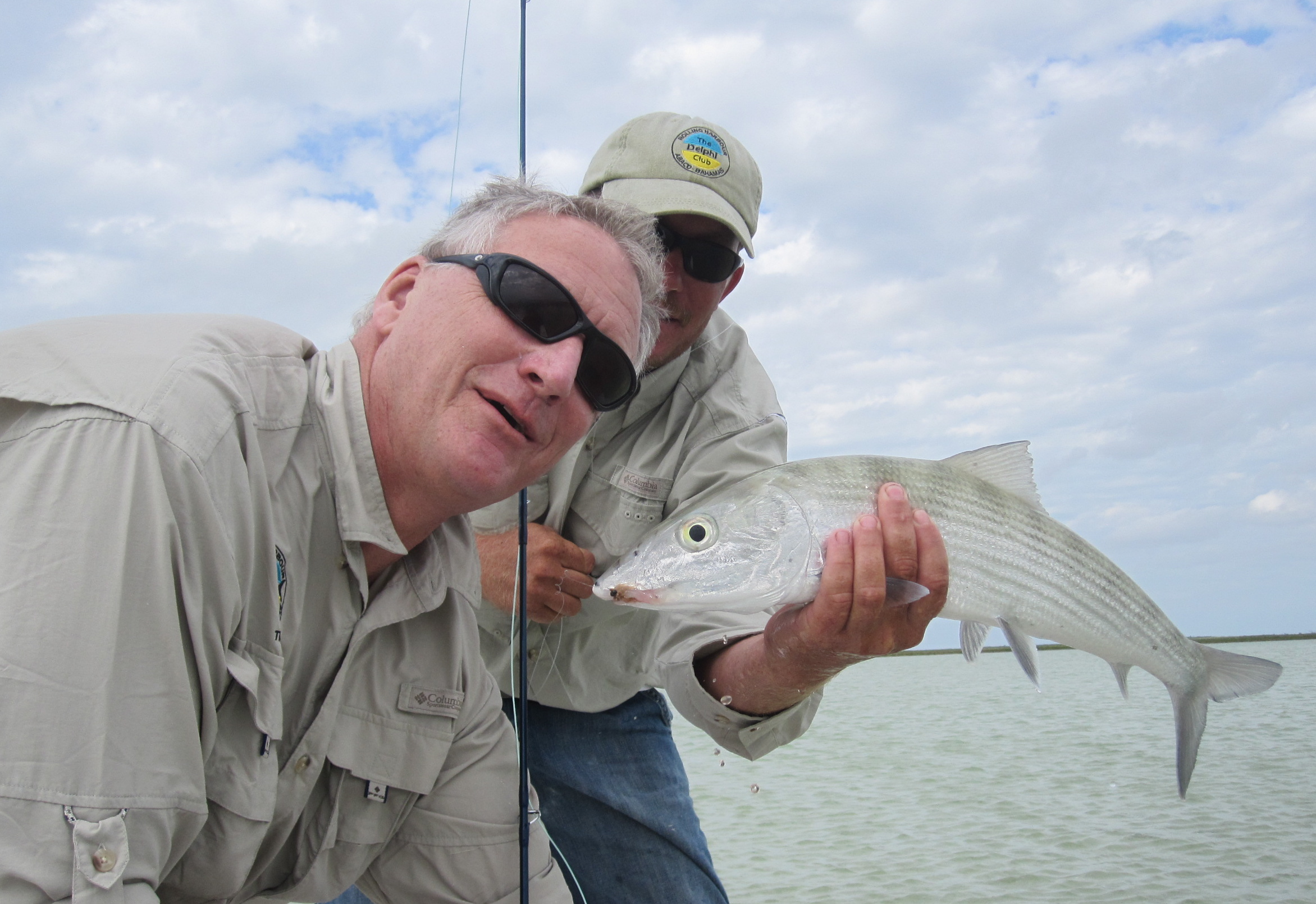
BONEFISHING! We will soon be back at the Delphi Club at last and out on the Marls in 10 days time. The slow-poled movement through the shallow waters. Keen eyes searching for moving shadows on the sand. The urgent half-whispered directions as bones are sighted. The swift confident raise of the arm and flick forward of the cast… and the tangled mass that lands 15 feet short and well behind the vanishing fish. I love it! The guides don’t, of course, but they are generally kind enough to keep their muttered imprecations barely audible. And occasionally there is a fortuitous hook-up. If exceedingly lucky, the obstacle of playing and bringing in the fish without it self-releasing prematurely is surmounted, and RH eventually boats a bone (see above).
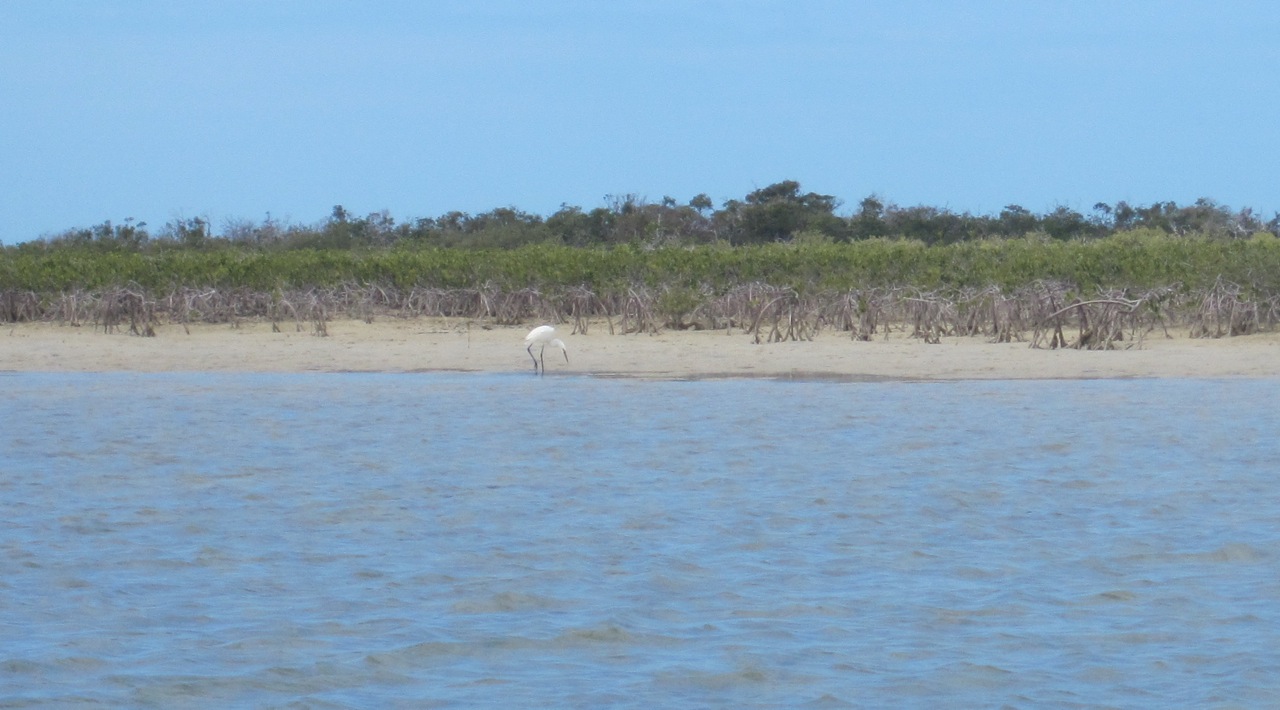
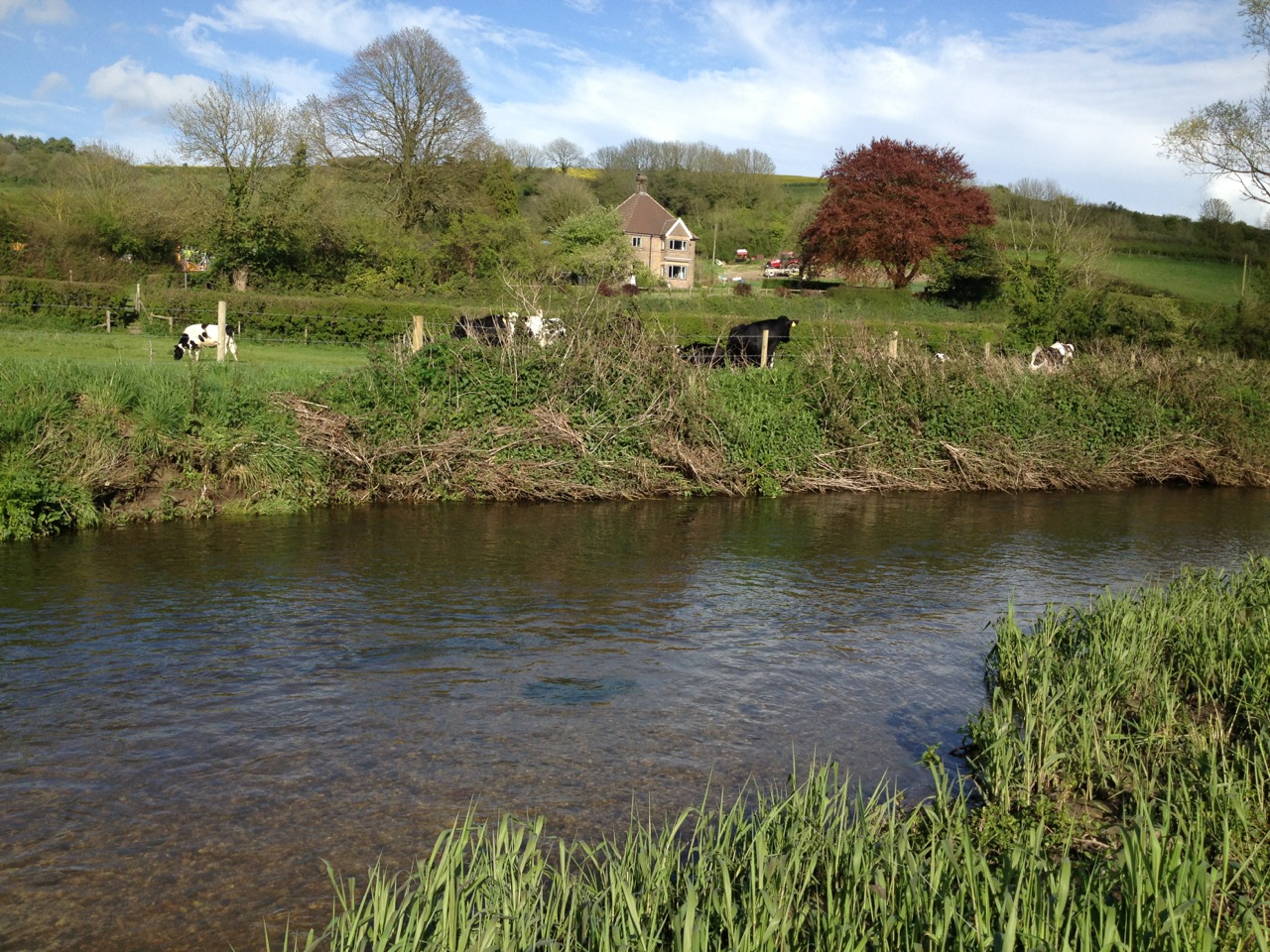
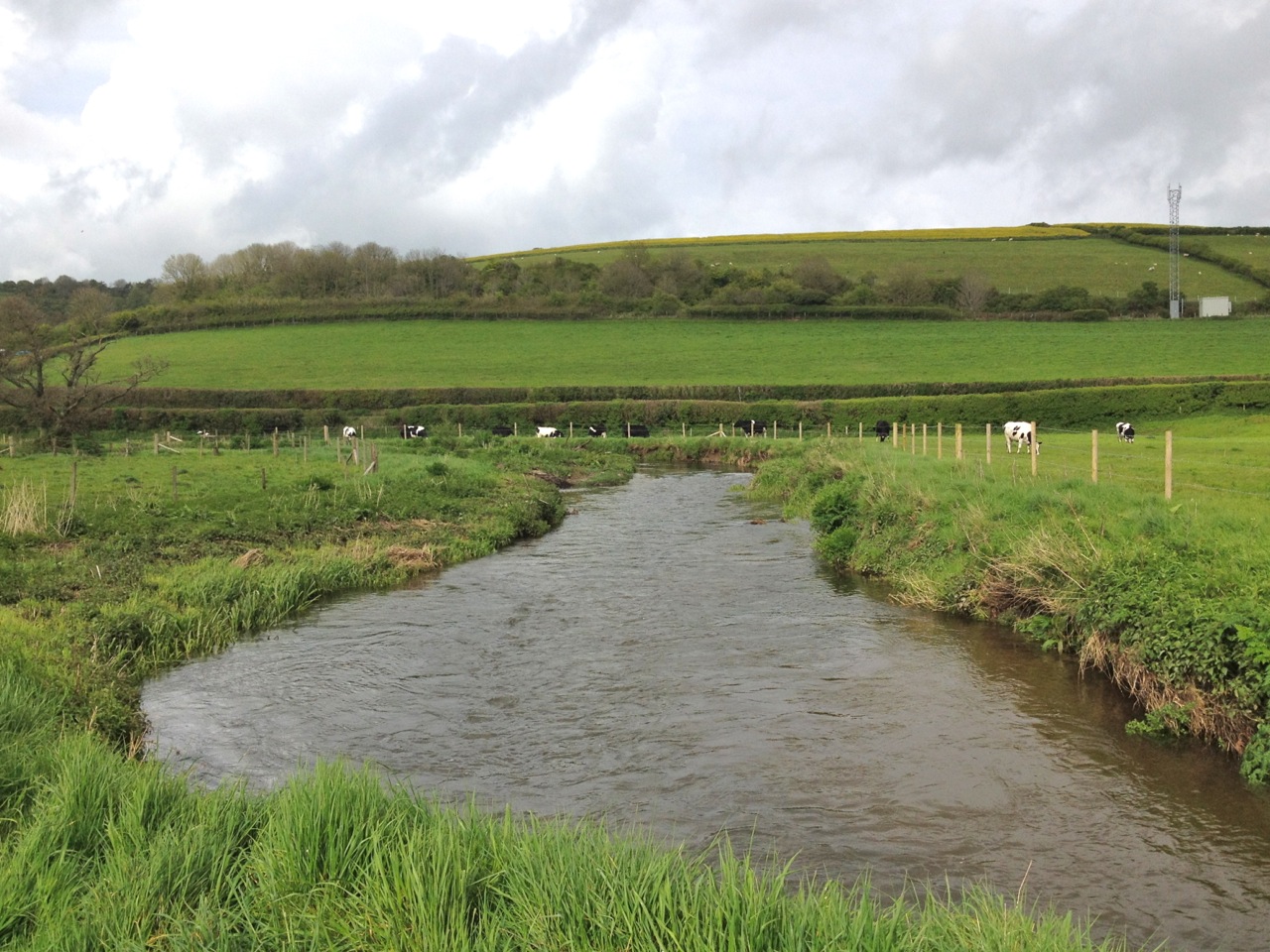
TROUTFISHING! At the moment I am sporadically fishing on the River Frome, the westernmost of the southern English chalk rivers. I’m after small wild brown trout, though the river also has sea trout and salmon. The weather has been cold, wet (hail!) and windy, and I have had roughly the same rate of success as with the bones. There have been experimental tugs at the fly. Times when, as I watch swallows skimming the water surface, a fish takes the fly and has spat it out by the time I have turned round to glimpse it dive below. And, as happened yesterday, it’s ‘Fish On’ – until it leaps clear of the water, effortlessly shakes out the (barbless) hook, and fins me a rude gesture as it plunges back. Plainly I need a brand new rod. And reel. And line. And jacket. And… It can’t possibly be operator error, can it? Anyway, this is all a world away (4,250 miles, in fact) from the Marls. It is pastoral fishing at its finest, even if the fish come out on top. Practice makes perfect, as they say… out with the willows, bring on the mangroves
(All exaggerations are strictly for comic effect. Except, tragically, there aren’t really any…)




































You must be logged in to post a comment.