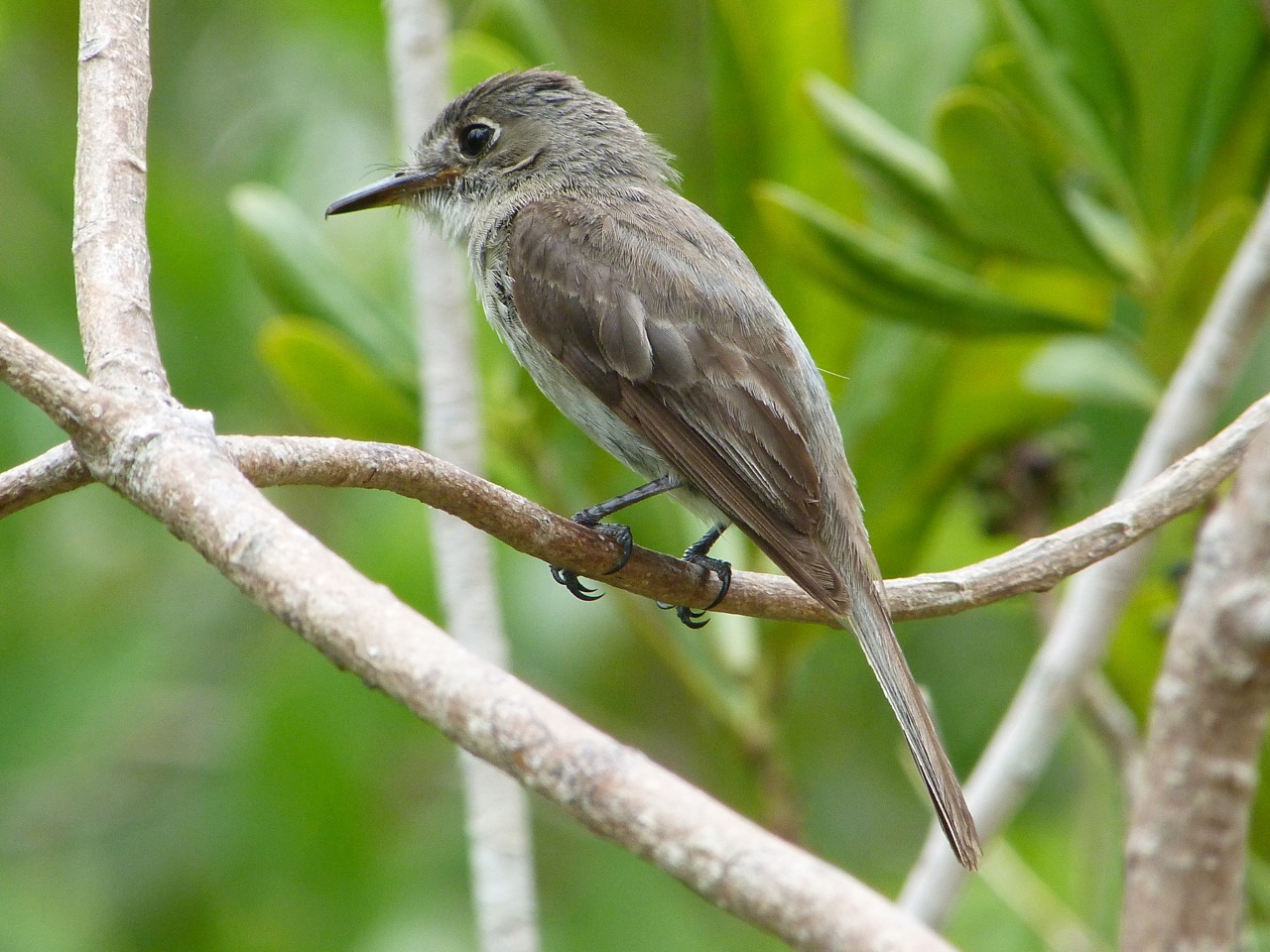
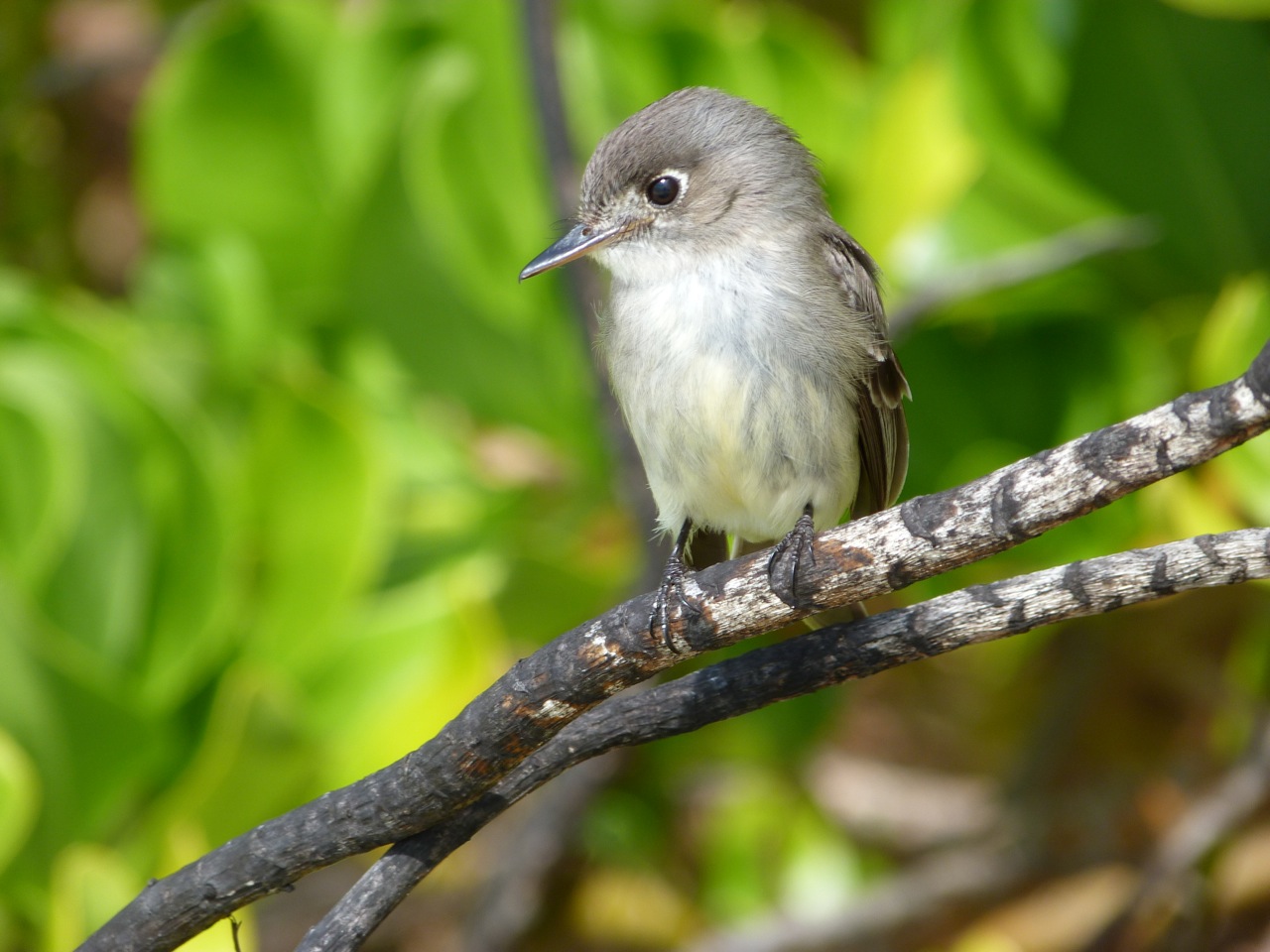
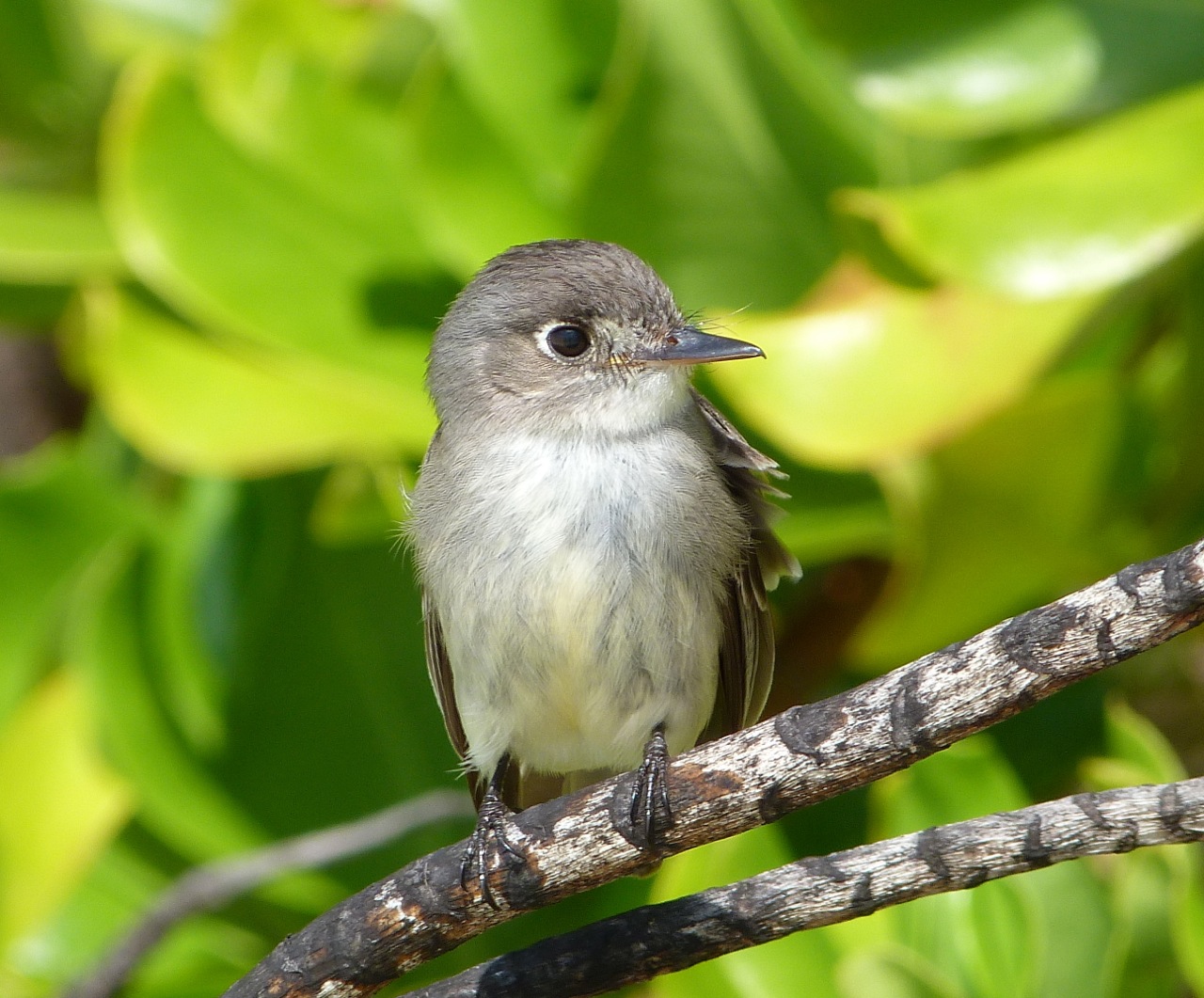
One of the prettiest small birds to photograph on Abaco is the Crescent-eyed, or Cuban, Pewee Contopus caribaeus. These small flycatchers are as interested in your struggles with your camera settings and your ‘stealthy’ (yet clumsy) approach, as you are in their cute poses. It’s a symbiotic relationship – you may get nice pictures, they have a benign laugh at your efforts.
This bird was one of a pair we found at a magical corner of scrubland at a crossroad of tracks between the edge of the pine forest and a backcountry of derelict and overgrown sugar cane fields – the perfect habitat for a wide variety of species. The pewees had a nest hidden deep in the undergrowth, but were tame enough to be untroubled by our presence. They kept calm and carried on as usual.
These little birds are resident in Cuba and the Northern Bahamas. I have previously posted photos of them, taken by the beach at Casuarina, HERE. They are the smallest flycatchers – tyrannidae – on Abaco, a family that includes LA SAGRA’S FLYCATCHER, and the larger Loggerhead & Gray Kingbirds. Here’s a recording of cuban pewees made on Abaco (credit: Jesse Fagan / Xeno-Canto)
They often have a charmingly quizzical or watchful expression
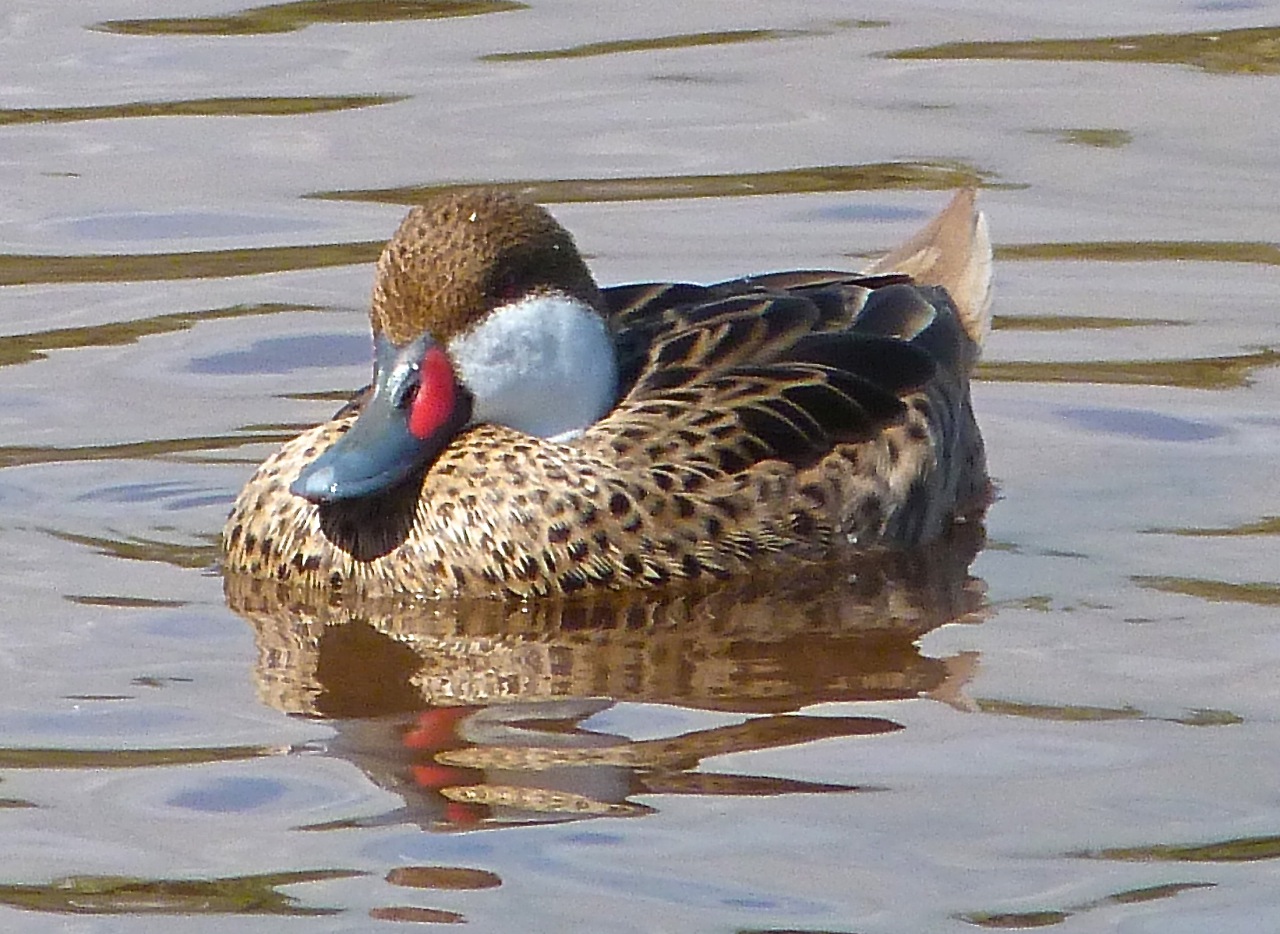
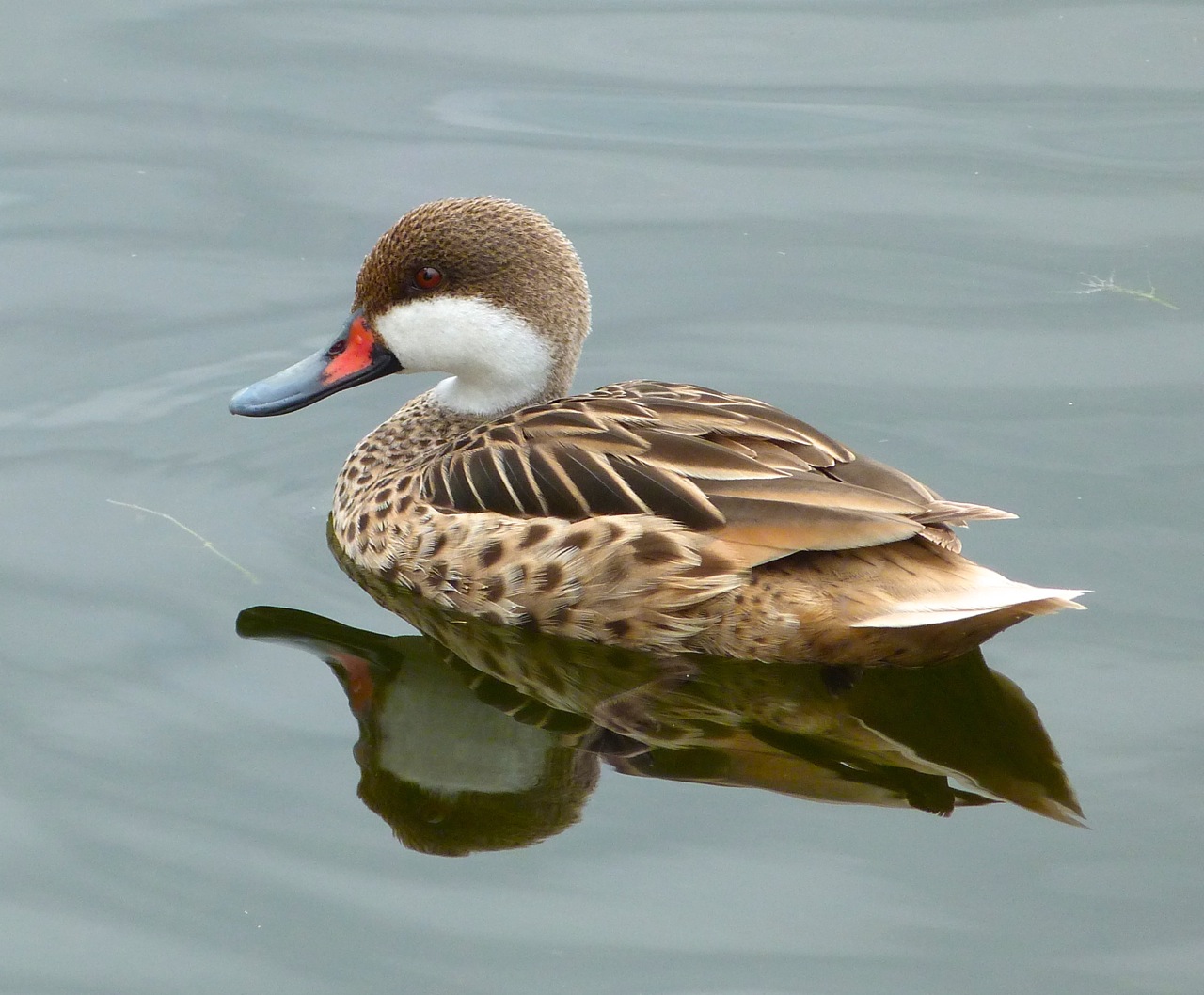
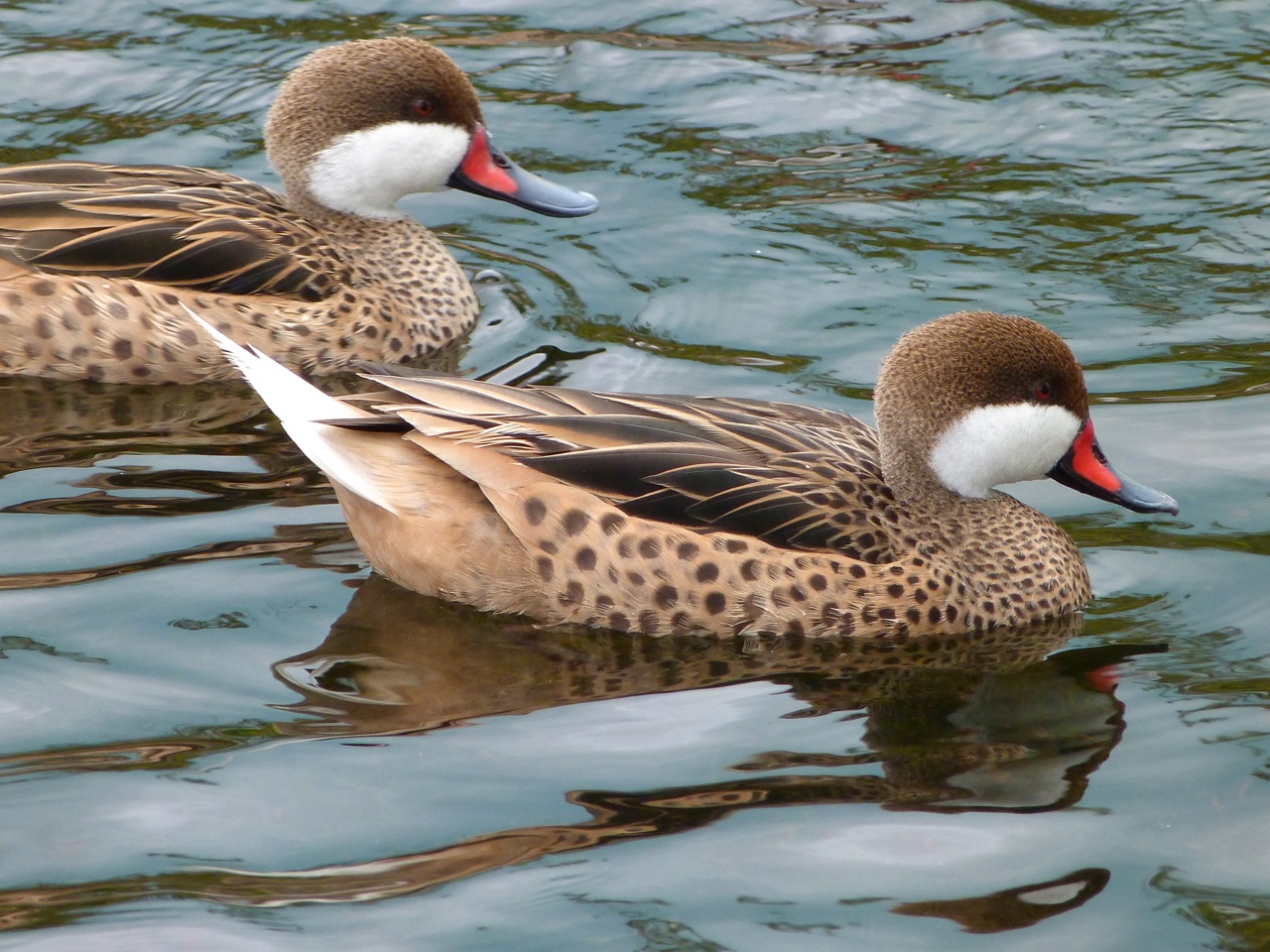
OUT FOR A DUCK: FINDING WHITE-CHEEKED (BAHAMA) PINTAILS ON ABACO
Hunt them. Then when you have found them, shoot them. But only with a camera, obviously… These attractive dabbling ducks are far too pretty for anything more controversial than watching and enjoying. Many moons ago I posted about them HERE, but I’m a bit cannier since then, and even have my own photos now…
NOTEWithin hours of posting this, I was alerted (thanks, Tony W) to the inadvisability of (a) using the word ‘hunting’ in the title; and (b) the opening 2 sentences. (a) has been changed to the neutrally vanilla ‘finding’. (b) remain but with this warning: “It is illegal to shoot white-cheeked pintail in the Bahamas“. While I don’t imagine the readers of a blog like this will already have rushed to the gun cabinet, packed up a cartridge bag, added a couple of Kaliks and headed off with extreme pintail population decrease in mind, I expect a g**gle search for ‘hunting & shooting sweet small ducks’ could indeed provoke the odd (to very odd) person to assume it is open season for pintails.It isn’t. It never is.
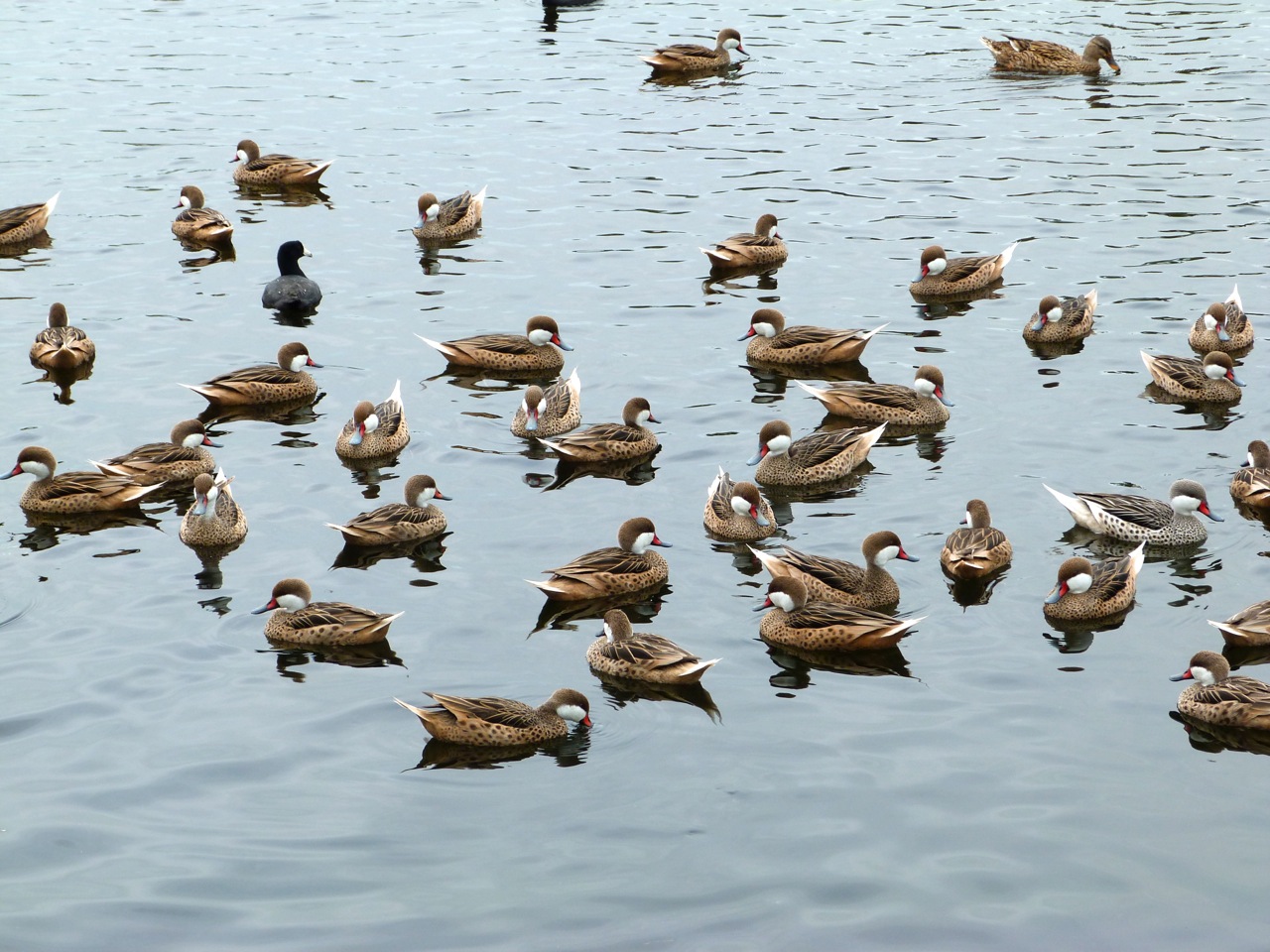
The white-cheeked pintail Anas Bahamensis is also known as the Bahama Pintail. It is a gregarious species, often found in large numbers on lakes and ponds. An excellent place to see them on Abaco is at the pond by Hole 11 at Treasure Cay golf course. Don’t all rush at once – and if you do follow up the hint, check in at the Clubhouse to get permission – there may be a competition in progress… You’ll see many other waterbird species there, and I will do a follow-up post about them. Do mind your head – if someone yells ‘fore’ they will probably not be counting duck species.
The male and female of the species are very similar. However, in the image below there’s one bird that stands out from the others… and I don’t mean the American Coot. Near the bottom right is aLEUCISTICvariant of the Bahama Duck, a genetic condition similar to albinism.
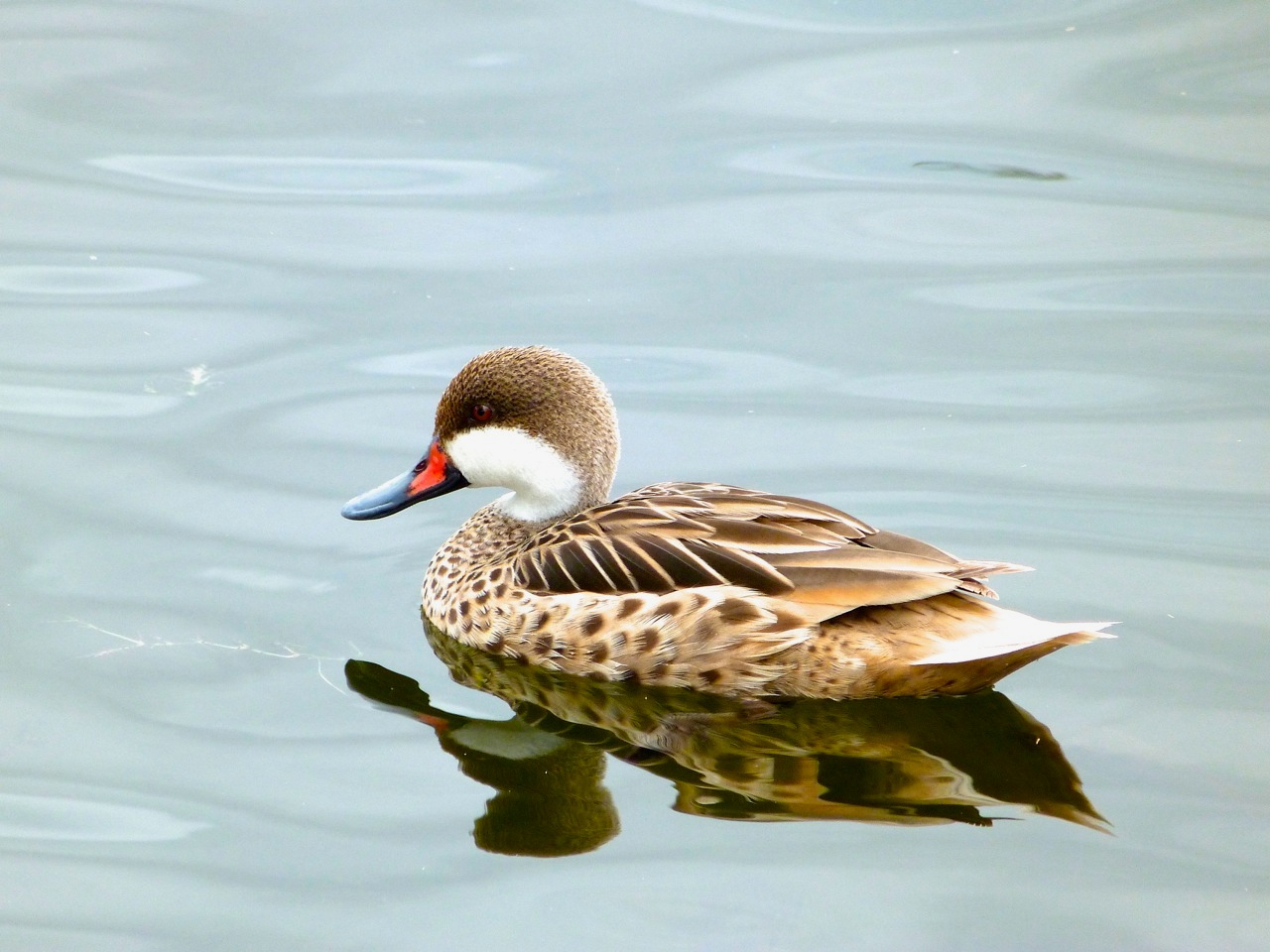
Here is a close-up of the same duck on dry land. These variants are known as Silver Bahama Pintails. They are worth more than the standard version. You can see some good comparative pictures and find out more atMALLARD LANE FARMS
Here is a more extreme wiki-example of a silver bahama pintail
Another excellent place for pintails is in the Crossing Rocks area of South Abaco. Strictly, it is on private land. And legally too, for that matter. So I won’t pinpoint these pintails publicly. There is a wonderful variety of waterbird life there. I have seen great egrets, little blue herons, yellow-crowned night herons, belted kingfishers and elegantBLACK-NECKED STILTSthere, besides several duck species. I have also seen a sora there (twice), a small, furtive rail that skulks in the reeds and foliage at the edge of the water, profoundly hoping that you won’t notice it… If you are birding on Abaco from Delphi, ask Peter or Sandy for the location. Or else contact me.
“ELEGANT COOT CABARETS” (6,6,2,5 anag.): CATTLE EGRETS ON ABACO
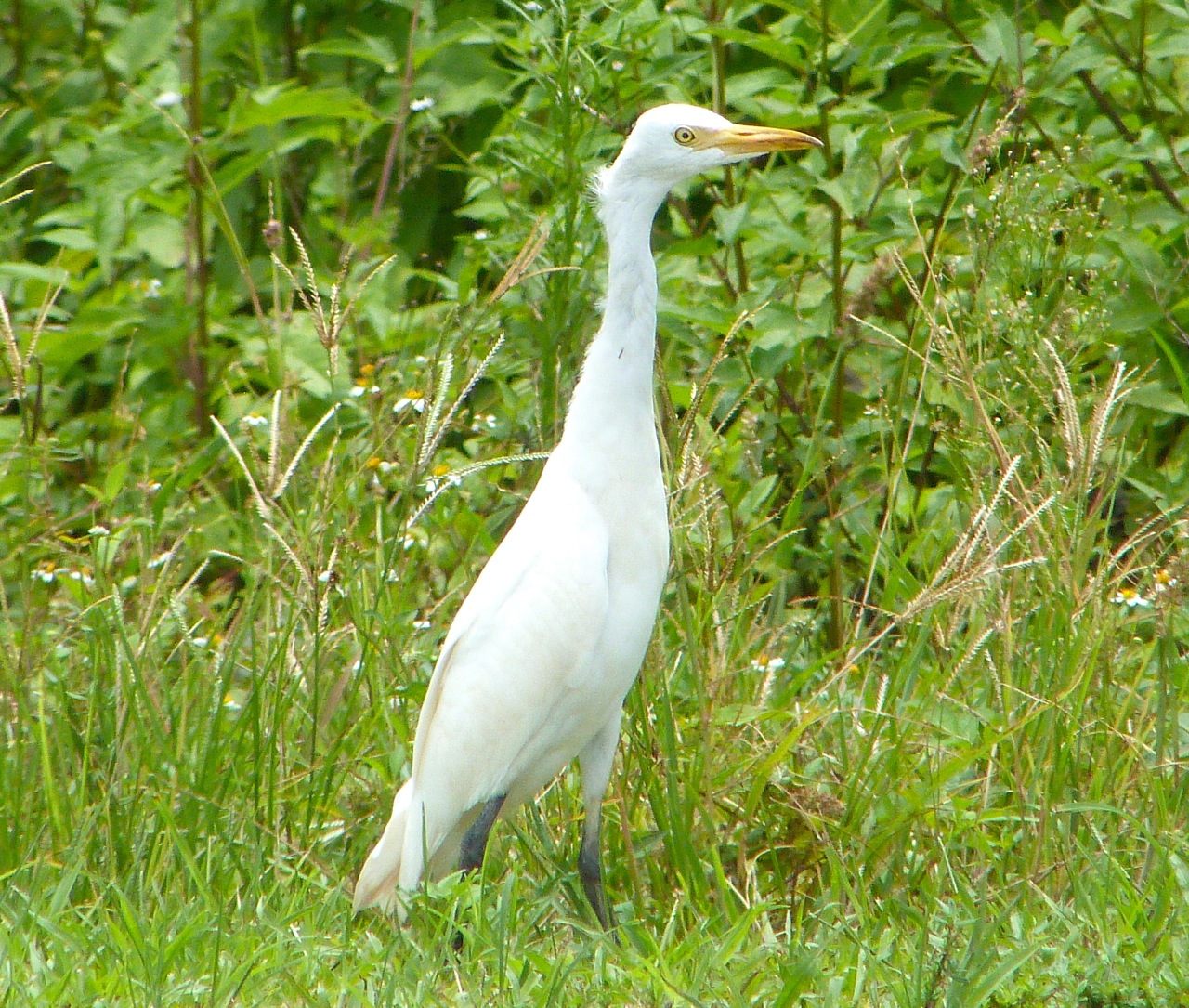
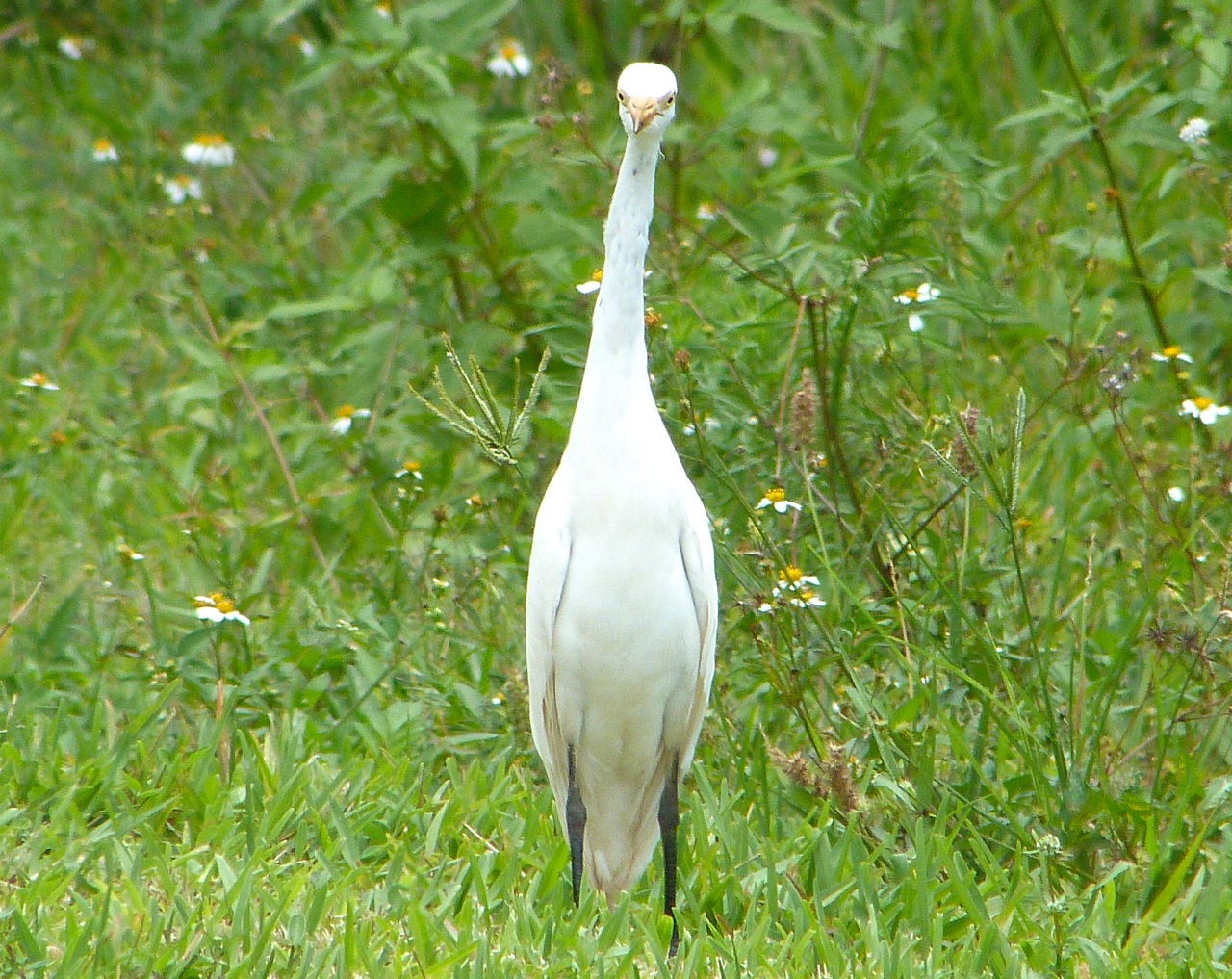
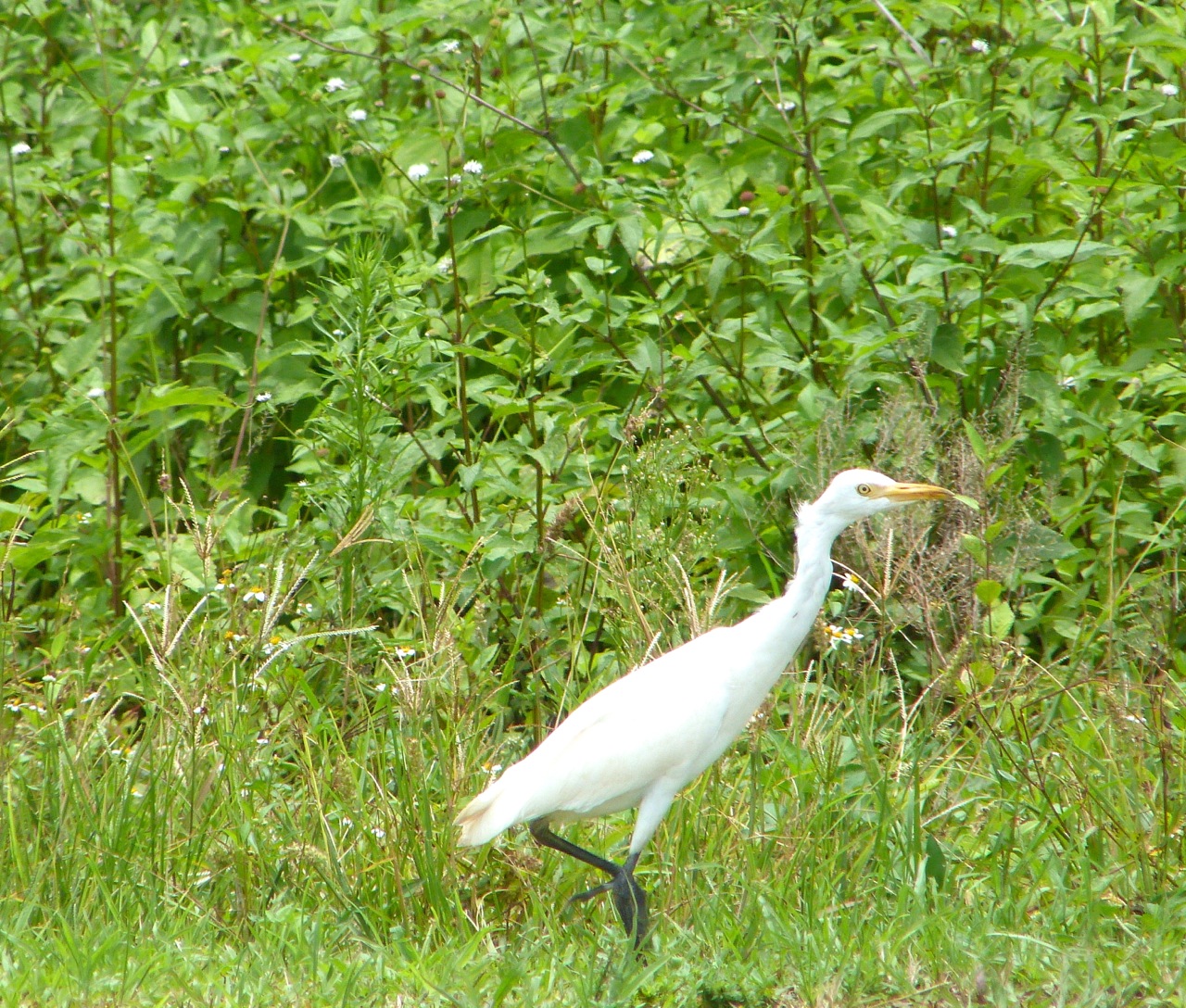
The CATTLE EGRET Bubulcus ibis is a species of heron with an affinity with cattle and other grazing animals. It’s a two-way thing – they relieve a cow of its ticks and flies, and get a ready meal return. Their name is the latin for ‘herdsman’.
Originating in Africa, these birds have proved to be one of the most successful and resilient bird species at expanding their breeding populations around the globe.
The first sightings in North America were in 1941, then assumed to be escapees. Far from it. They flew in and multiplied. By 1953 they were breeding in Florida; in Canada in 1962; and in the Bahamas in the 1960s. Now they are everywhere – though (depending, like, how old you are) your grandparents might never have seen one… Here’s a helpful wiki-graphic
Range expansion in the Americas
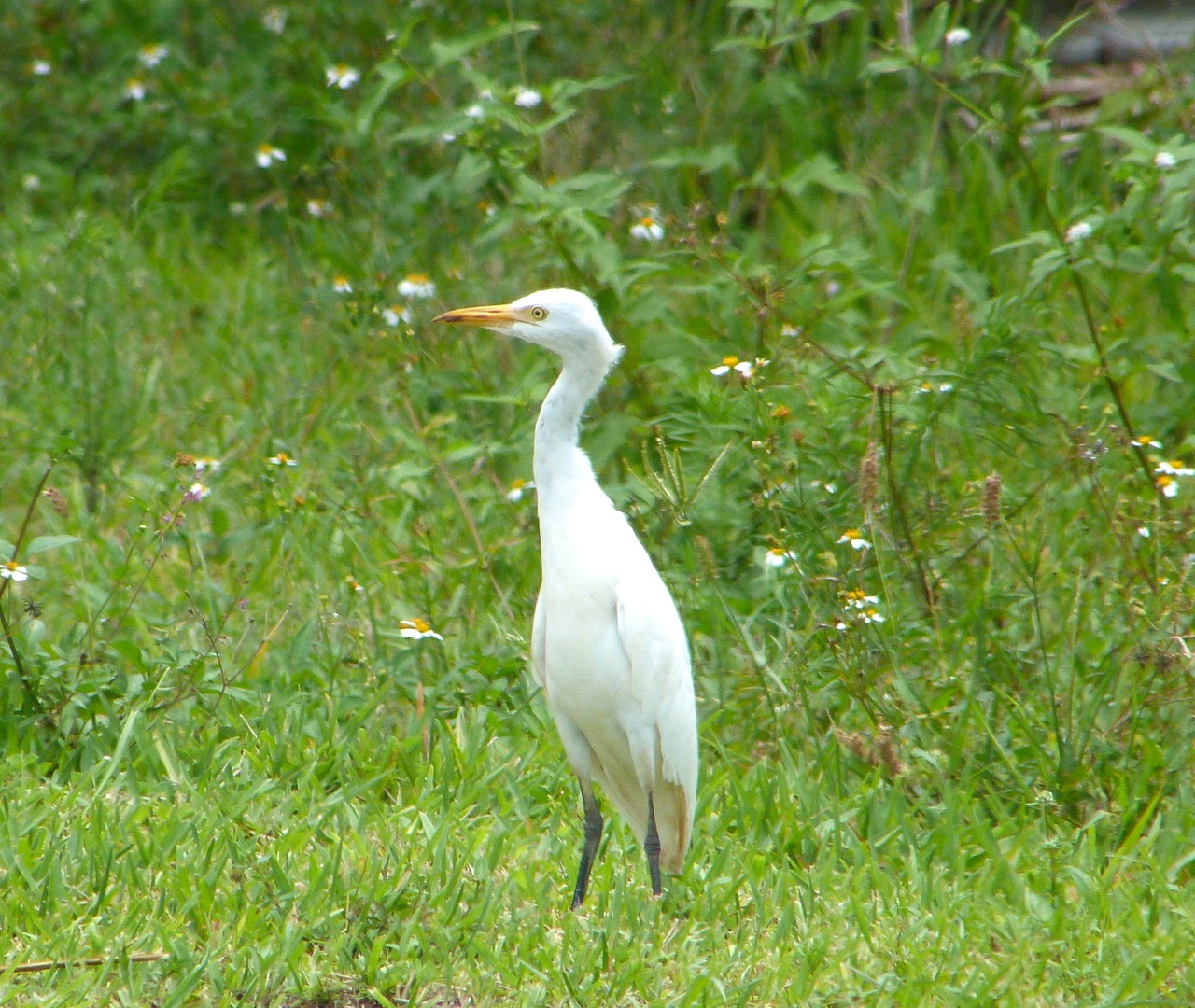
In the breeding season, cattle egrets develop pinkish-buff patches on their front, back and crown, and grow matching head-plumes
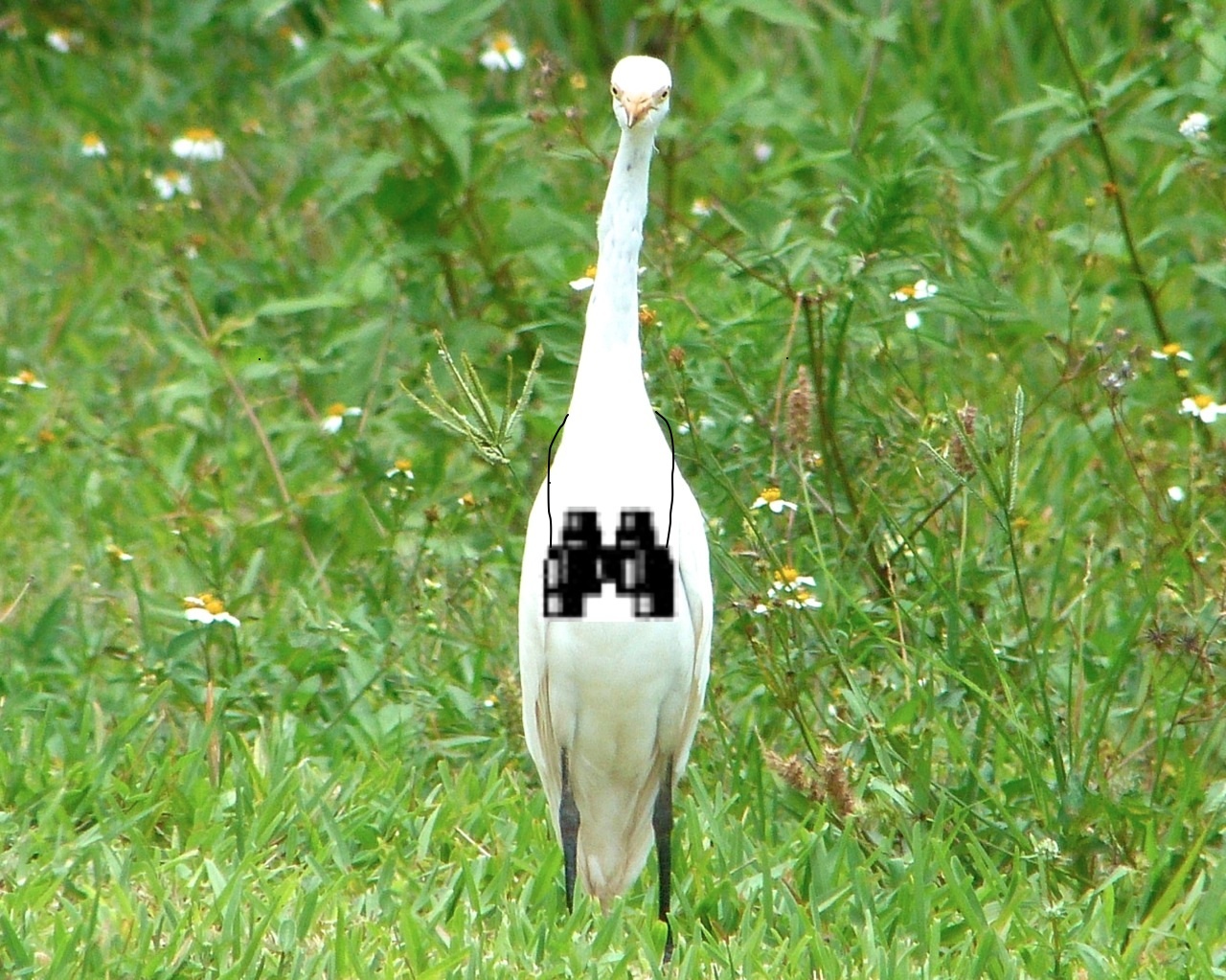
Recently we saw one at Sandy Point when photographing kestrels. It’s no longer in full breeding plumage, but traces of a pinkish tinge can still be seen.The cattle egret’s eyes are positioned so that while they are feeding they have binocular vision. I’m not quite sure why that would be advantageous; you might think they’d prefer one eye on their food, and one on the look out for predators
When on the move the egrets may adopt a stooping, creeping stance
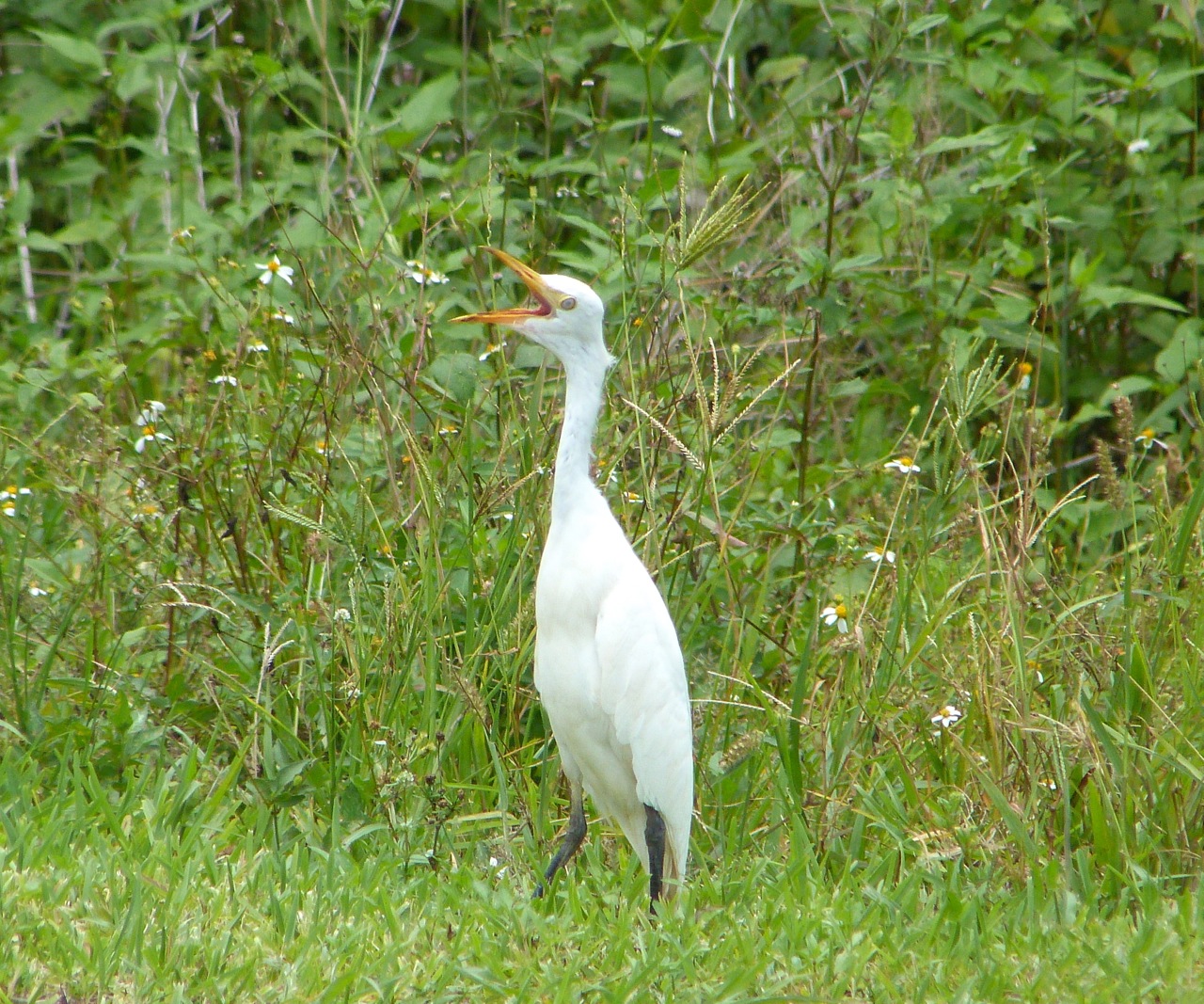
These birds have capacious mouths, which enable them to vary their diet from small maggoty things to larger insects, then through snails to small frogs and the like
Although the neck generally looks slim, they appear to have an expandable gullet which no doubt helps with larger food items
ADDENDUM The redoubtable dou dou, creator of tiny and cute handmade bird models, has been inspired by these fine creatures to make a handsome pair. Check out her site with the link above… and you can even buy your very own cattle egrets there
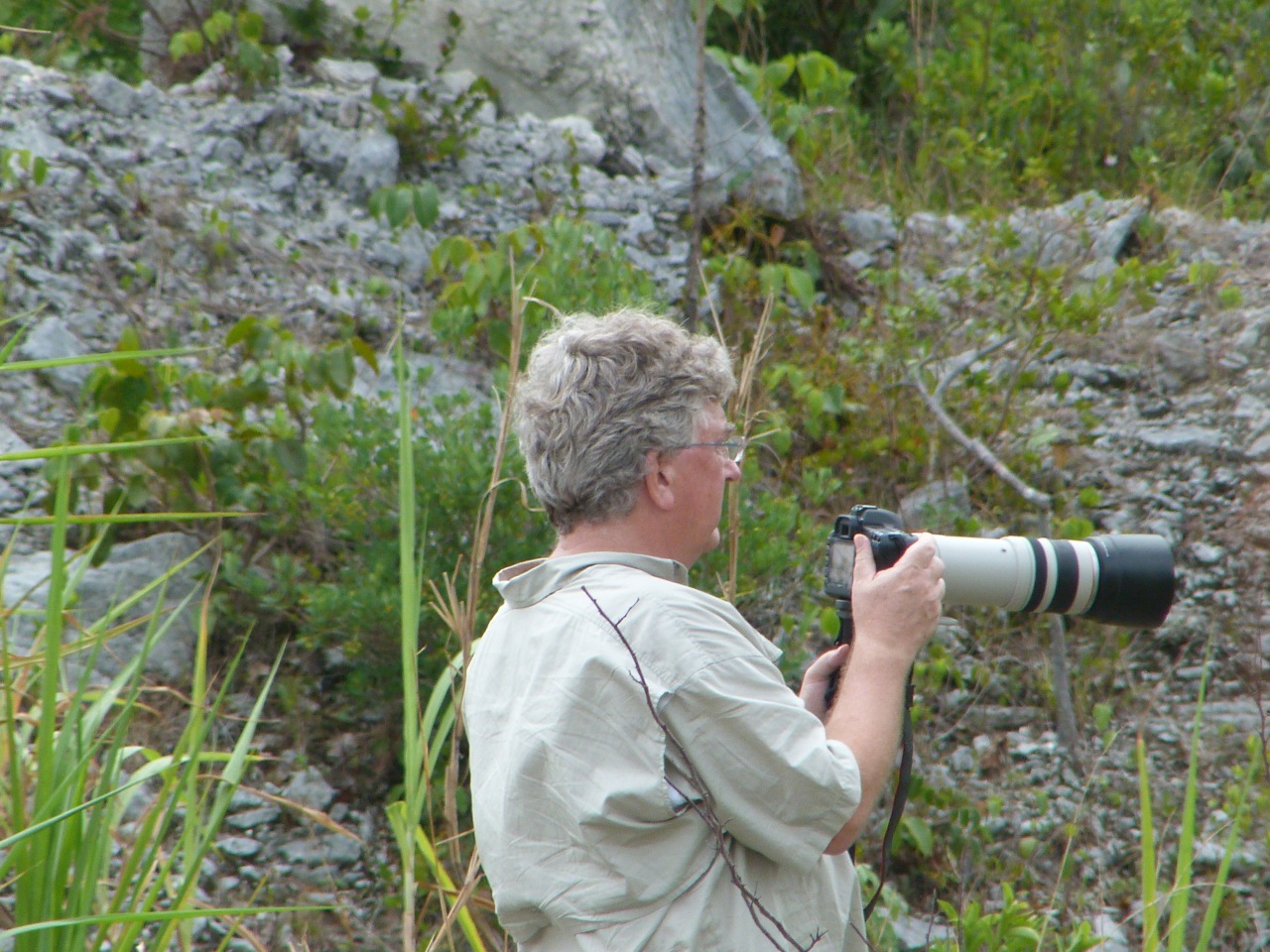
Who indeed does photograph the people who take the photographs? Here is a small gallery of photographers on Abaco caught in the act of shooting wildlife, so to speak. And if anyone has ever seen – or been – a photographer photographing photographers photographing other photographers, trust me, that is one stage beyond weird.
RH on a nature trek with Ricky Johnson
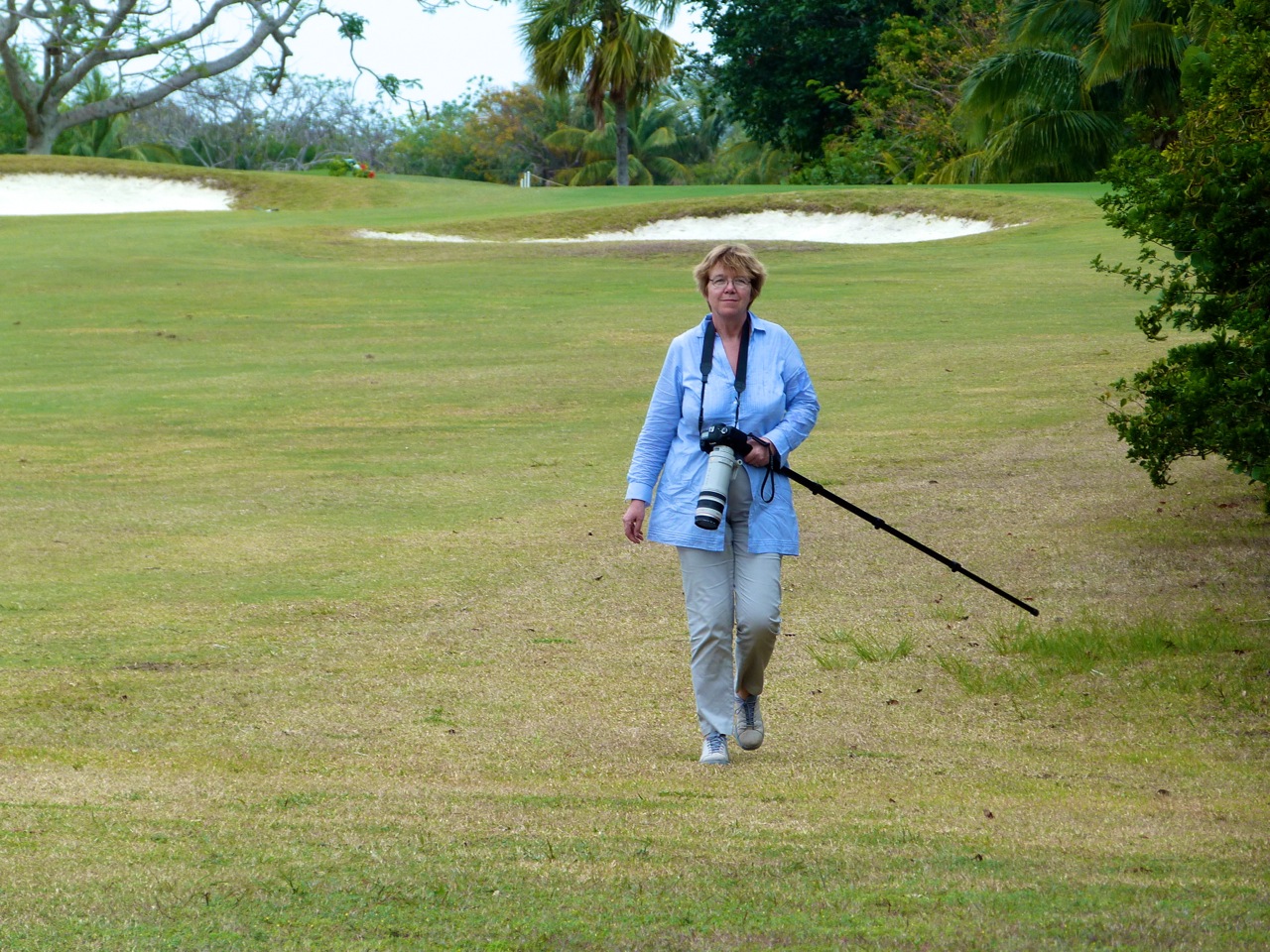
Mrs RH goes right off-piste & ends up on the golf course at TC [good birding there in fact]
RH (who uses a stick – or ‘cane’, if that isn’t too ’50 shades’) takes a collapsible wading stick on these occasions. Since he, too, is collapsible it is sometimes helpful to have a seat while photographing. Not elegant, though, and not especially comfortable. Cheers, Clare, for capturing the indignity…
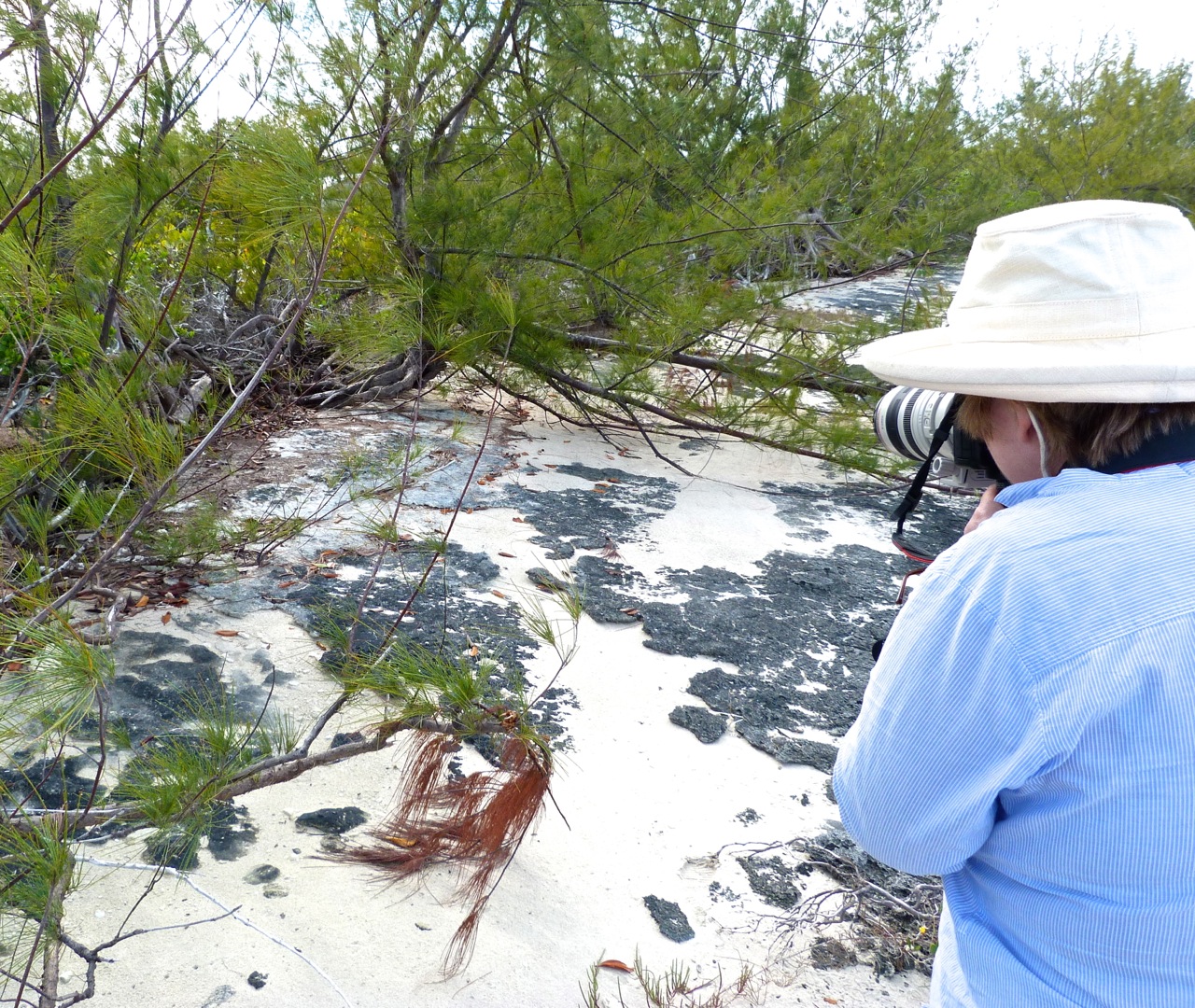
Mrs RH zooms in on a possibly rare bird… as it turned out, a female grassquit!
RH sort of looks the part but the backpack is crammed full of food & drink, not equipment, and he is looking for shade for a picnic at Casuarina
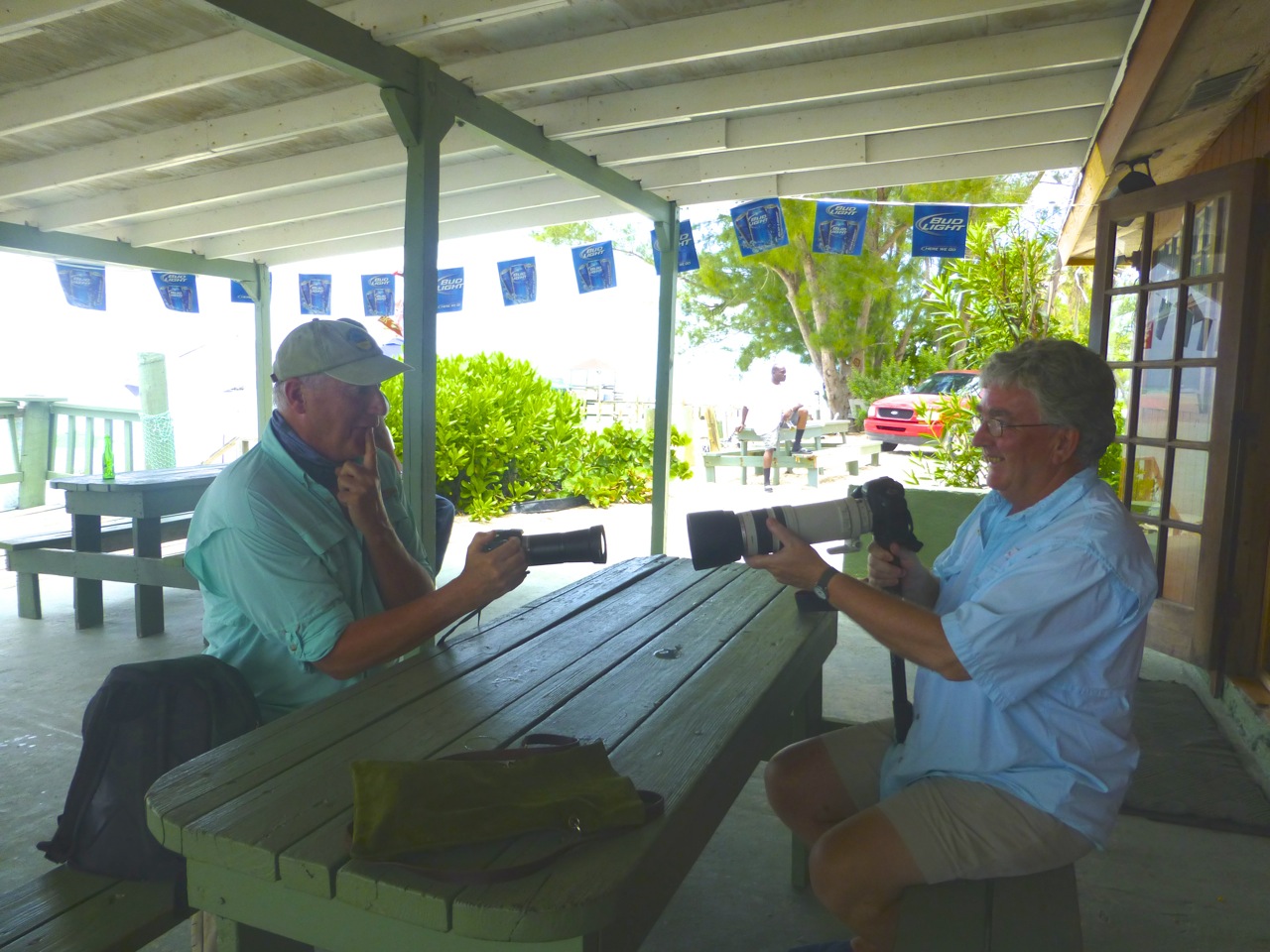
PM challenges RH to a ‘camera-off’ duel at Nancy’s, Sandy Point, and proves that his is the biggest…
Ace birder and photographer from Ohio, Tom, arrives at Delphi and puts PM’s puny equipment to shame – and with Camo for extra cool. Even the tripod legs.
Sandy Walker, General Manager of Delphi and man of many parts, turns out to own a snappy Nikon
PM & RH engaged in a ridiculous challenge to photograph various items on the beach. Both lost, even though they had devised the rules…
The professionals Tom and Woody (‘Birdman of Abaco’) Bracey get serious with Bahama Mockingbirds in the pine forest. The red bandana is to attract the endemic Bahama Woodstar hummingbirds.
However at Sandy Point they seem to have forgotten their cameras…
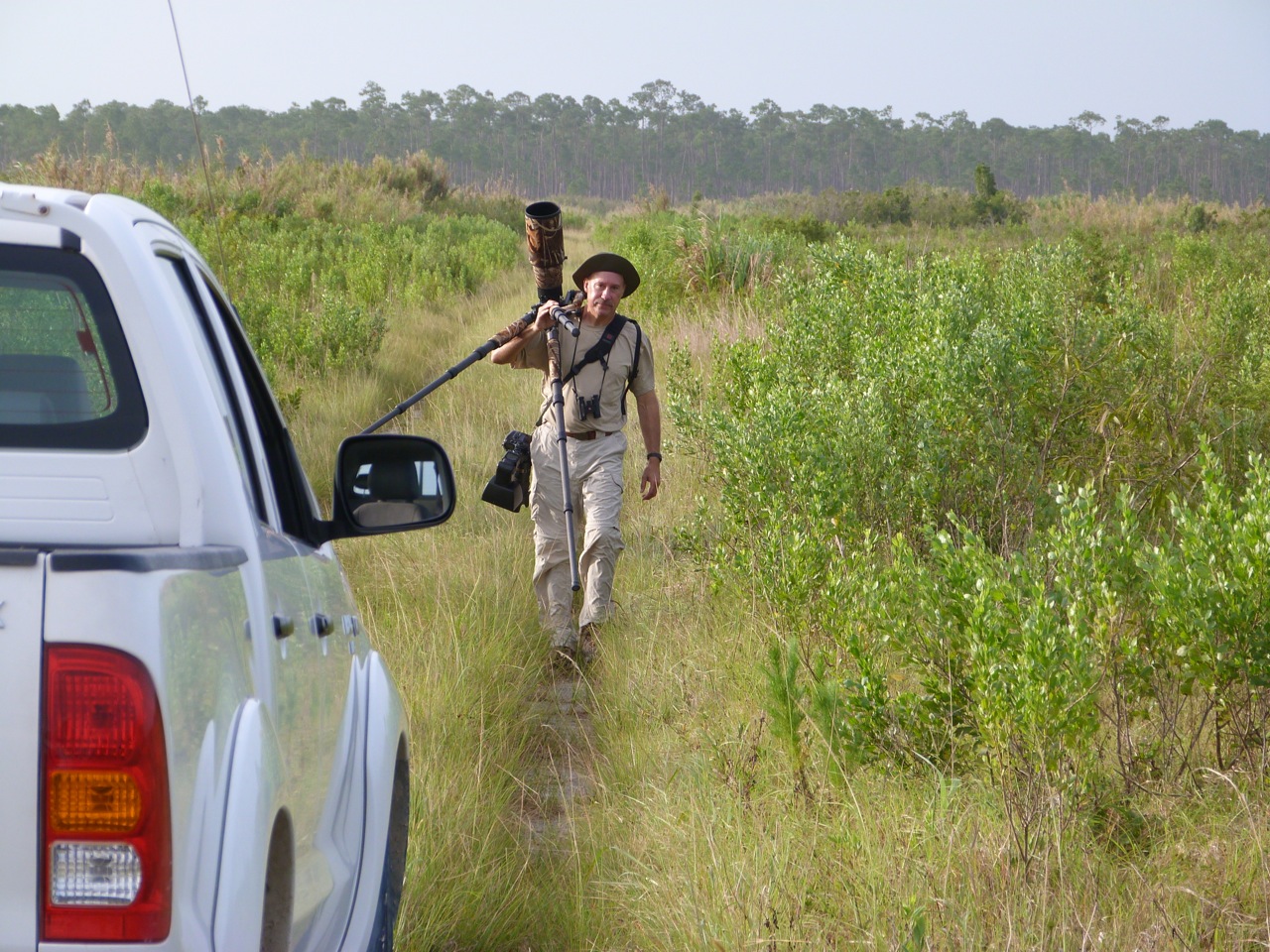
Tom returning to the truck after filming an evening festival of dozens of nighthawks on the wing
Out in the field… or scrubland – with 2 cameras
PM takes aim…
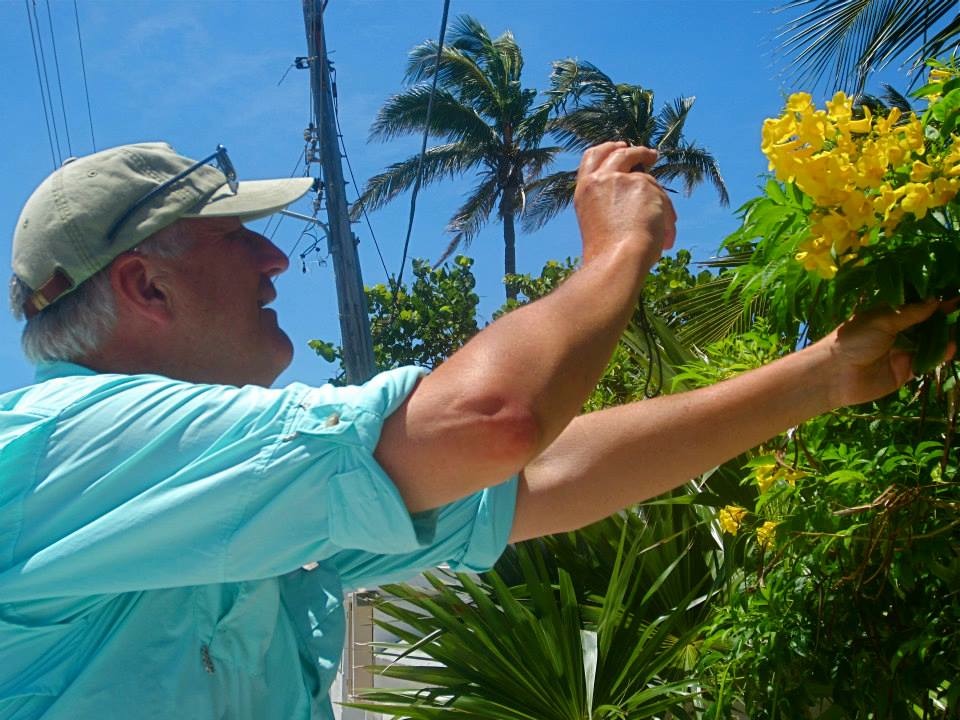
RH subdues an unruly Yellow Elder (Bahamas national flower) for a close-up
*This titular nod to the phrase ‘quis custodiet ipsos custodes’ (‘who is guarding the guardians’) is open to objection on the ground of illogicality. It’s a Latin tag with a greek-derived verb and noun forms jocularly inserted. A ‘photograph’ is, literally, ‘light writing’ in Greek. So ‘quis lux-scribit ipsos lucis-scriptores’ is the best solution I can offer… Let’s have that Elder flower to end on a light note
DRAMATIS PERSONAE
Photographees: Peter Mantle, Sandy Walker, Tom Sheley, Woody Bracey, Mrs RH, RH
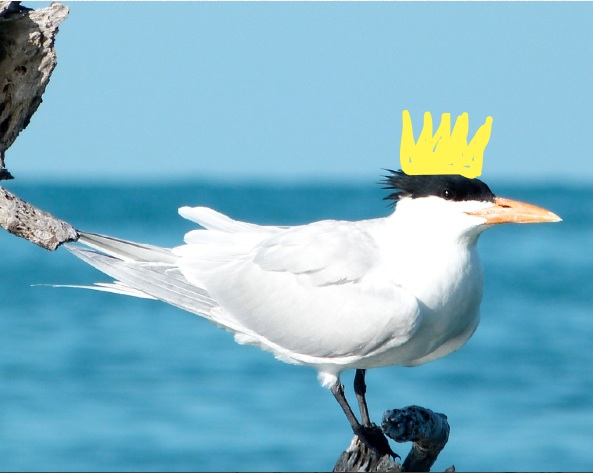
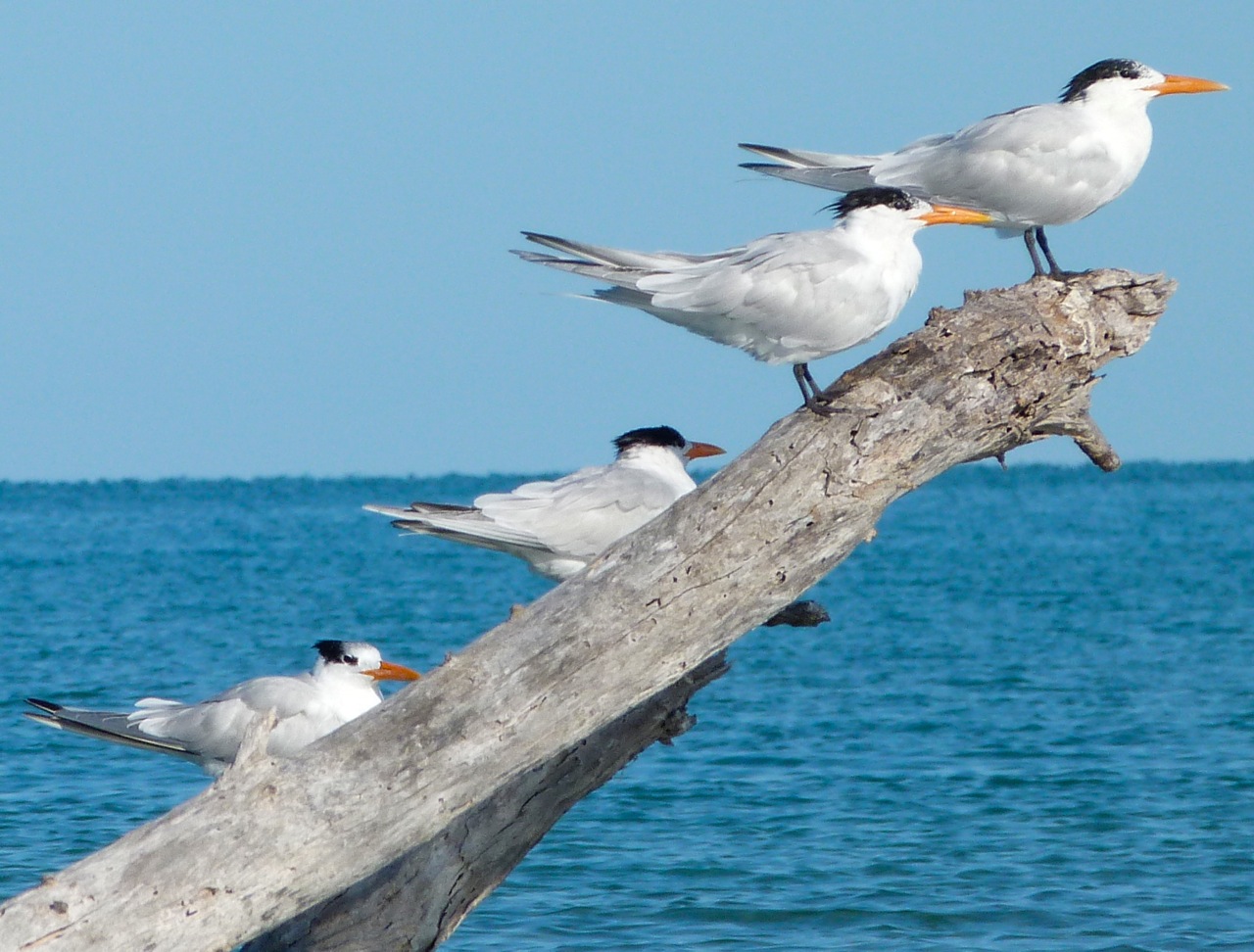
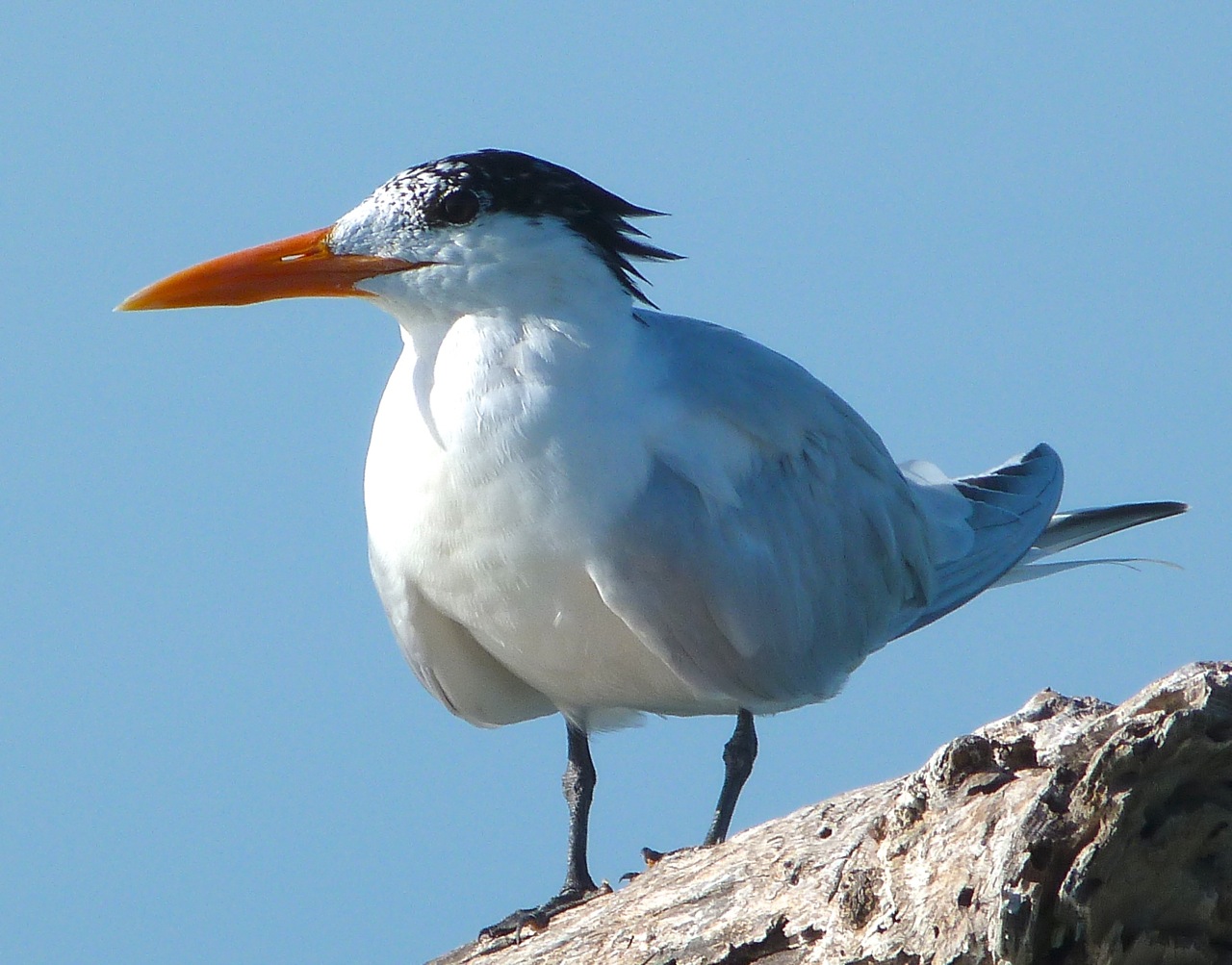
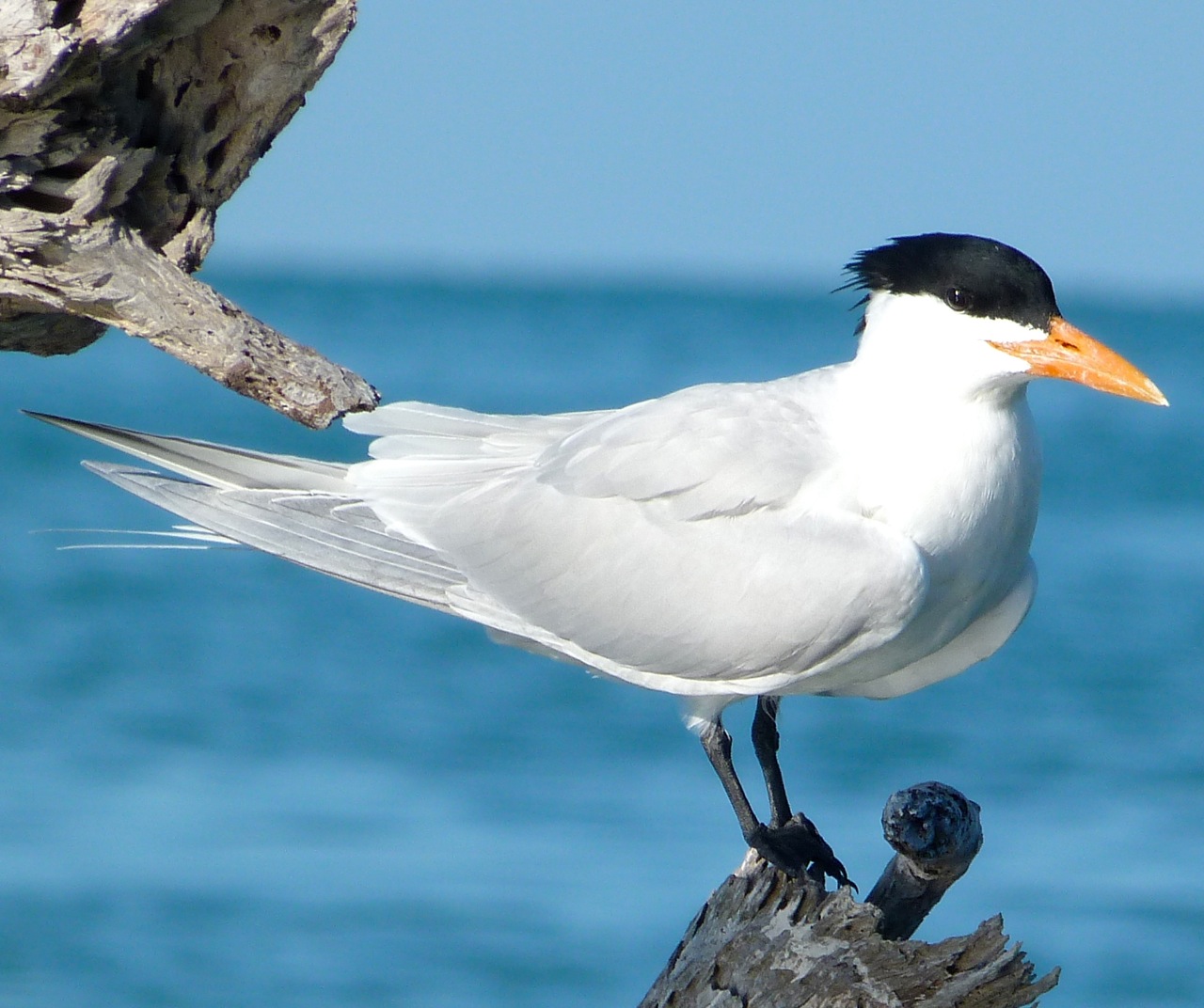
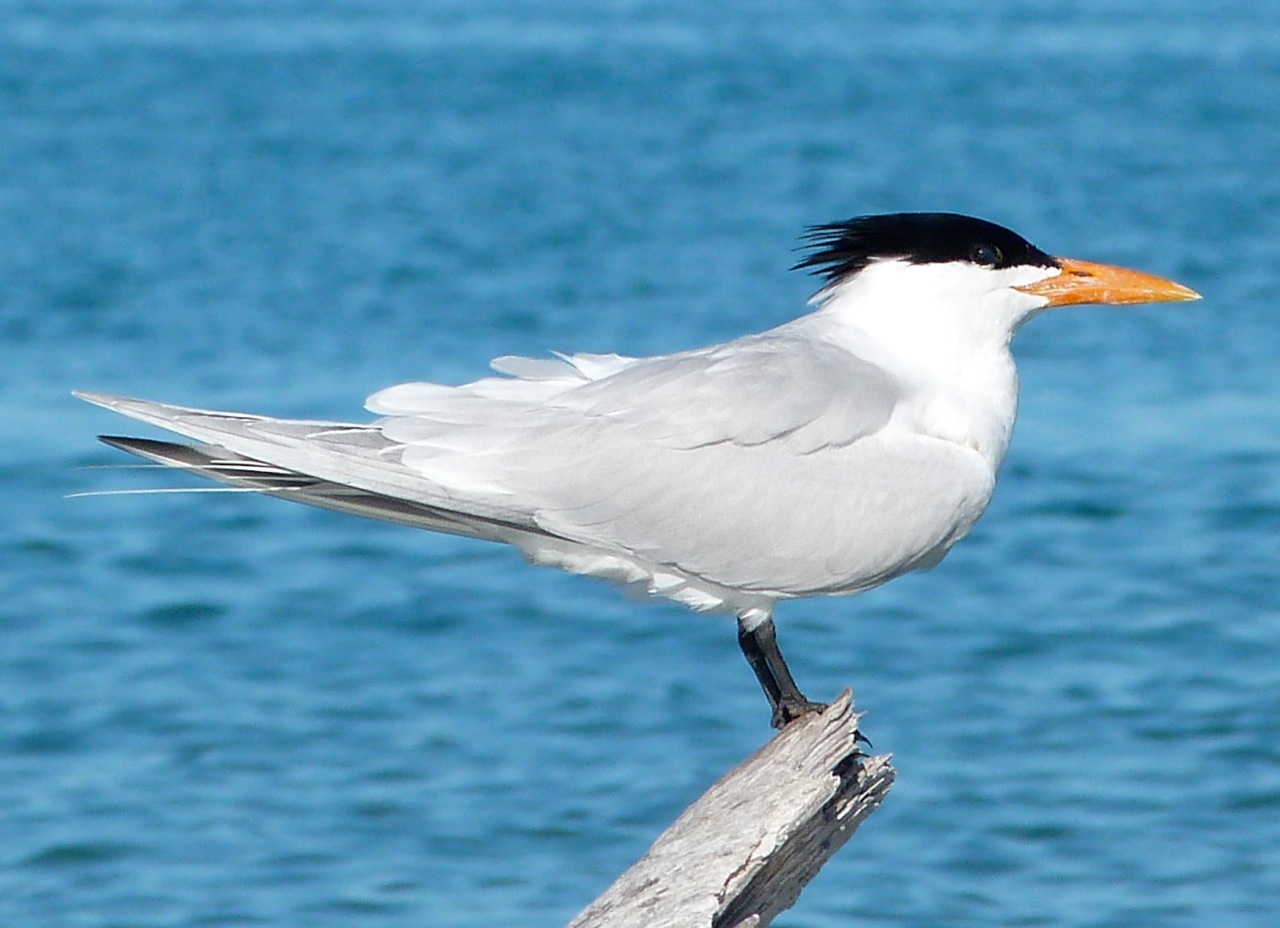
I posted briefly about ROYAL TERNS (Thalasseus maximus) on the Abaco Marls earlier this year HERE. Yesterday’s news from the Lindo Wing (anti-Monarchists look away now) surely justifies a few more photos of these fine and noble seabirds. Everyone else is using the event to sell newspapers / magazines / products (‘Royal’ Baby Lotion – so gentle, so soft – fit for a future King’s delicate…’ etc etc). If there’s a cheerful bandwagon passing, why not just hop on? I’ll skip the info about the range and nesting arrangements of these birds and show some them in all their glory, posing in the sunshine on a dead tree way out in the Abaco Marls.
PS No terns were hurt trying to get the yellow crown to fit one of them. In fact, they rather enjoyed it…
The LEAST TERN (Sternula antillarum, as it is now designated) is a small tern of the Americas and Caribbean, a very pretty, delicate little bird. It is a rare a vagrant to Europe, with a single example recorded in Great Britain. It is quick and manoeuvrable in flight, slightly hunched and ready to assume the position shown below after hovering over a likely spot for small fish. This image shows the bird coming out of its hover, and at the very start of its rapid plunge to the water. It’s here for illustrative purposes only – I realise it is somewhat inept as a photograph, but frankly you can never be sure when the dive is going to happen. Unless you have lightning reactions, a refrangible apex lens and a zircon-encrusted focal-zone flange, you’ll be lucky to do much better. Oh, and steady hands.
I had a lucky break on the Delphi beach one day, when I was taking photos of Wilson’s plovers and their new chicks (soon to feature here). A least tern appeared from nowhere and landed at the water’s edge within a few yards of me. I had no time to rethink my settings – a perennial problem at the best of times – and I simply aimed the camera and managed to squeeze off 3 shots before the bird took off again. One was a blurry fail, one is the header picture… and the 3rd captured the bird as it turned its head. You can see that, even though this is a small and light bird, its feet have sunk right into the soft, damp white sand.
Another day on the beach produced a more measured opportunity. A least tern landed quite close to me, and was so preoccupied with its preening routine that it let me creep closer, all the while keeping a beady black eye on me. In the top shot, it has just become aware of me behind it. I was lucky it chose to stay and let me watch.
TURKEY VULTURES (Cathartes aura) are a familiar sight, wheeling effortlessly overhead on thermals or gliding with the wind in singles, pairs or flocks. Statistically, 83% of all photographs of turkey vultures are taken from below and look like this
Of those, 57% are taken in unhelpful light, and look like the one below. On the positive side, this picture show the extreme delicacy of the wing-tip feathering that enables these birds to adjust their direction and speed (this is not the bird above; it was taken by someone else at a different time. But 100% of TV in-flight photos are indistinguishable).
TVs have a wide range in the Americas and the Caribbean, and can prosper in almost any type of habitat. This is probably because these large birds are almost exclusively carrion feeders, and carrion is everywhere. They spend their days scavenging, or thinking about scavenging. They do not kill live creatures.
The word ‘vulture’ derives from the latin word ‘vulturus’ meaning ‘ripper’, ‘shredder’, or ‘very loud Metallica song’. TVs have very good eyesight, and an acute sense of smell that enables them to detect the scent of decay from some distance. A breeding pair will raise two chicks which revoltingly are fed by the regurgitation of all the rank… excuse me a moment while I… I feel a little bit…
When they are not flying, feeding, breeding or feeding young, TVs like best to perch on a vantage point – a utility post is ideal. But unusually for a bird, you won’t ever hear them sing or call. They lack aSYRINX(the avian equivalent of a larynx), and their vocalisation is confined to grunting or hissing sounds. Here’s a hiss (at 10 / 15 secs).
These vultures are often seen in a spread-winged stance, which is believed to serve multiple functions: drying the wings, warming the body, and baking bacteria.
They are equally happy to spread their wings on the ground, the shoreline being ideal
10 SCAVENGED TURKEY VULTURE FACTS FOR YOU TO PICK OVER
One local name for TVs is ‘John Crow’
An adult has a wingspan of up to 6 feet
Sexes are identical in appearance, although the female is slightly larger
The eye has a single row of eyelashes on the upper lid and two on the lower lid
TVs live about 20 years. One named Nero had a confirmed age of 37
LEUCISTIC (pale, often mistakenly called “albino”) variants are sometimes seen
The Turkey Vulture is gregarious and roosts in large community groups
The Turkey Vulture has few natural predators
Though elegant in flight, they are ungainly on the ground and in take-off
The nostrils are not divided by a septum, but are perforated; from the side one can see through the beak [some humans also suffer from MSS (missing septum syndrome). They tend to sniff a lot]
REVOLTING CORNER / TOO MUCH INFORMATION
SQUEAMISH? LOOK AWAY NOW
UNATTRACTIVE HABITS The Turkey Vulture“often defecates on its own legs, using the evaporation of the water in the feces and/or urine to cool itself, a process known asUROHIDROSIS.This cools the blood vessels in the unfeathered tarsi and feet, and causes white uric acid to streak the legs”. The droppings produced by Turkey Vultures can harm or kill trees and other vegetation.
HORRIBLE DEFENCES The main form of defence is“regurgitating semi-digested meat, a foul-smelling substance which deters most creatures intent on raiding a vulture nest. It will also sting if the predator is close enough to get the vomit in its face or eyes. In some cases, the vulture must rid its crop of a heavy, undigested meal in order to take flight to flee from a potential predator”
DIETARY NOTESTVs tend to prefer recently dead creatures, avoiding carcasses that have reached the point of putrefaction. They will occasionally resort to vegetable matter – plants and fruit (you could view this as their salad). They rarely, if ever, kill prey – vehicles do this for them, and you’ll see them on roadsides feeding on roadkill. They also hang around water, feeding on dead fish or fish stranded in shallow water.
ECO-USES If you did not have birds like this, your world would be a smellier and less pleasant place, with higher chance of diseases from polluted water and bacterial spread.
FORAGING TVs forage by smell, which is uncommon in birds. They fly low to the ground to pick up the scent of ethyl mercaptan, a gas produced by the beginnings of decay in dead animals. Their olfactory lobe in the brain is particularly large compared to that of other animals.
SEX TIPS Courtship rituals of the Turkey Vulture involve several individuals gathering in a circle, where they perform hopping movements around the perimeter of the circle with wings partially spread. In humans, similar occasions are called ‘Dances’. In the air, one bird closely follows another while flapping & diving.
For more about Turkey Vultures, including cool videos, visitDEAR KITTY
It’s possible you may enjoy a visit to max-out-cute Birdorable. Click TV below for link
And if you’d prefer something TV but less cute, depressingnature.com has the thing for you…
Credits: Photos mainly RH, 2 by Clare L, small ones Wiki; Info – cheers Wiki & random pickings
Oh. Ok. Here’s the Metallica thing referenced above. Sweaty. Not my taste these days.
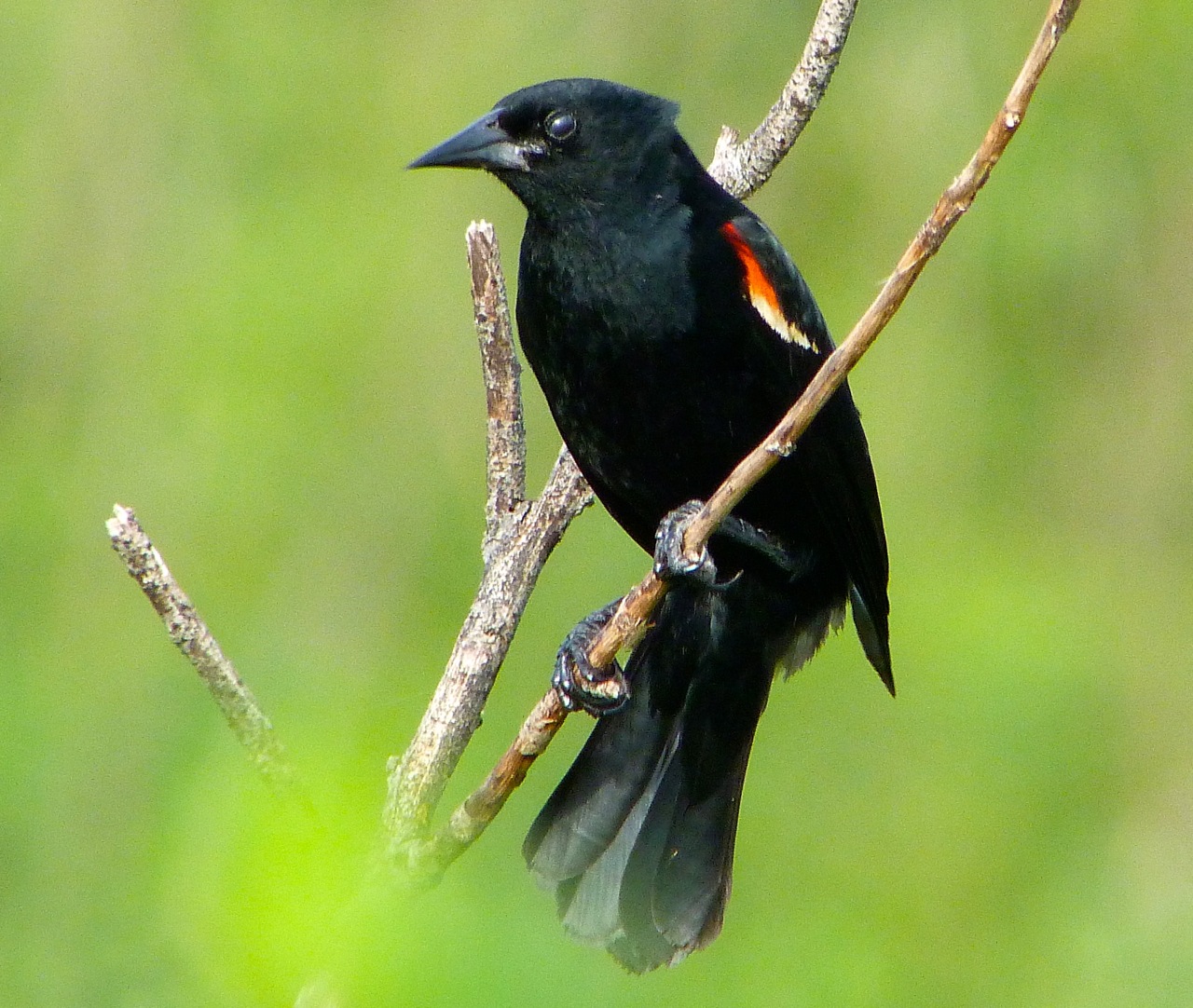
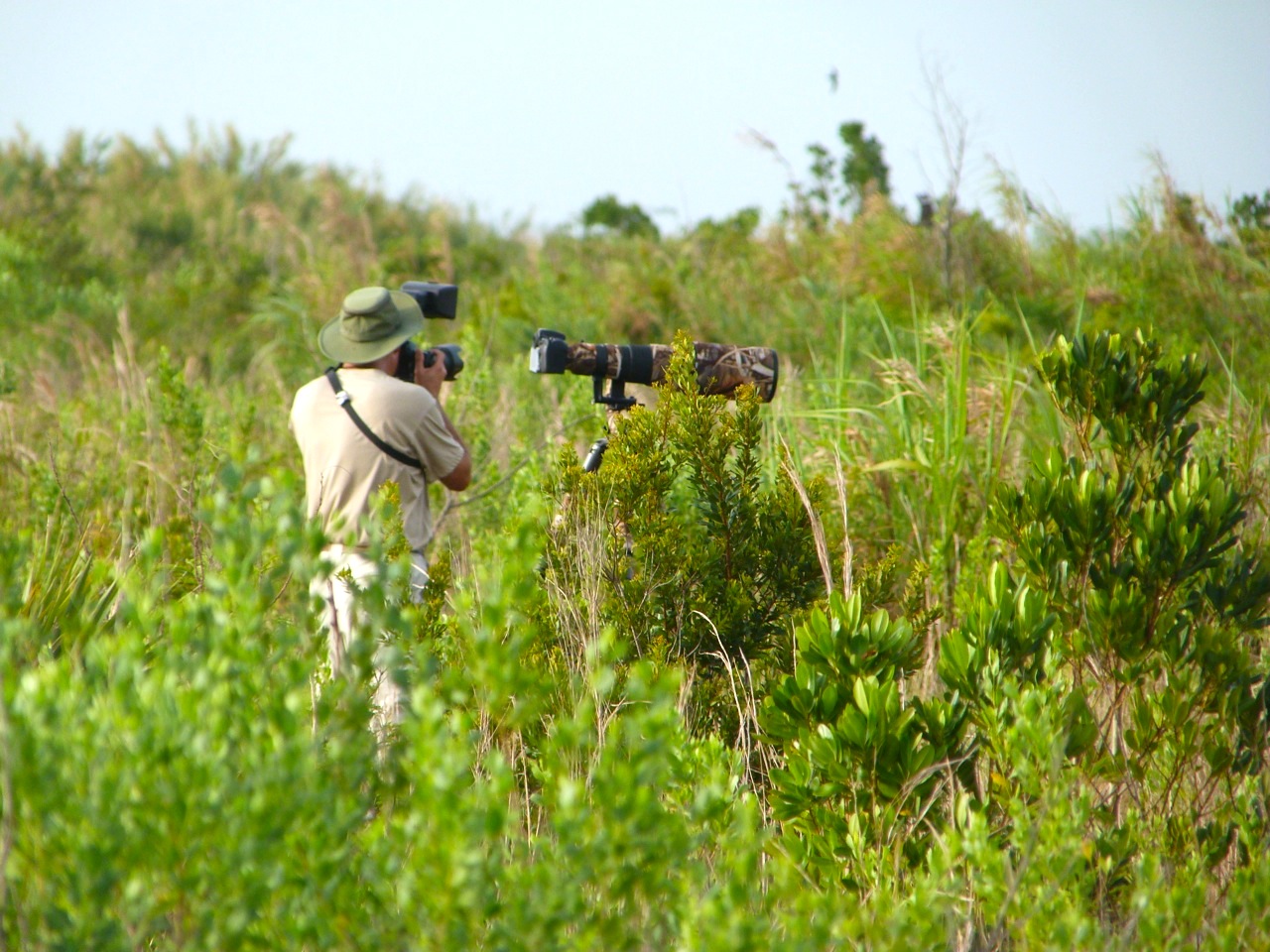
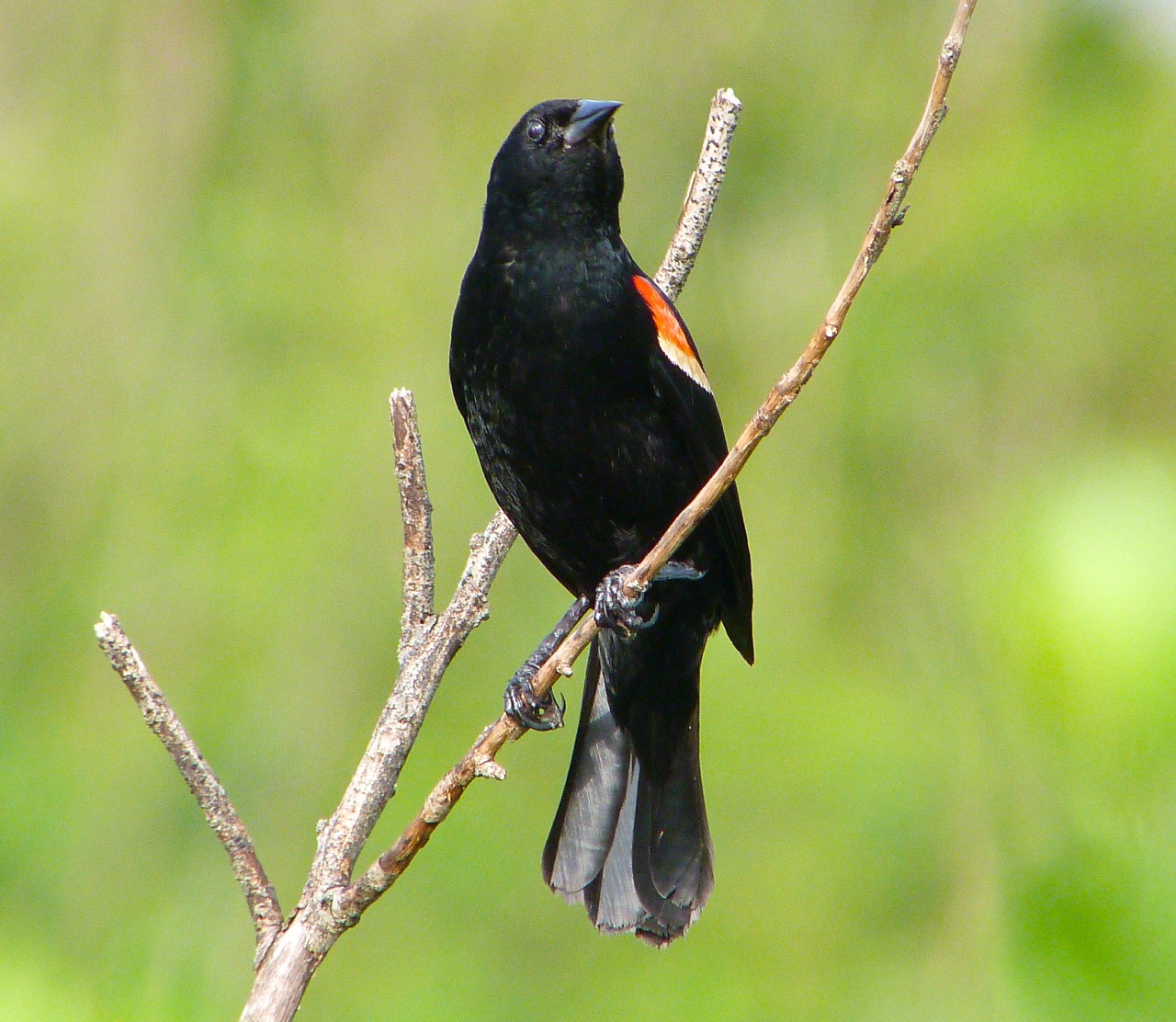
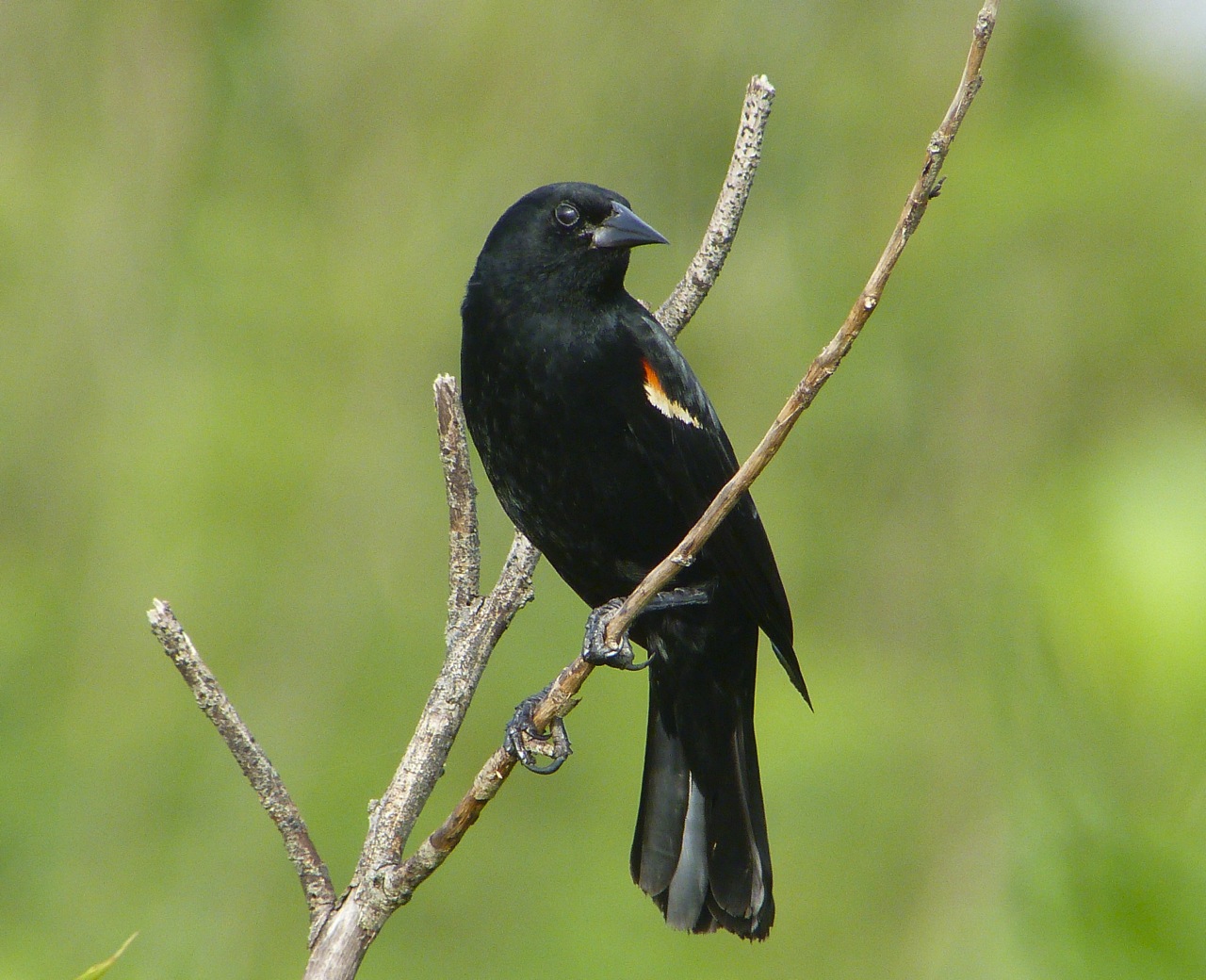
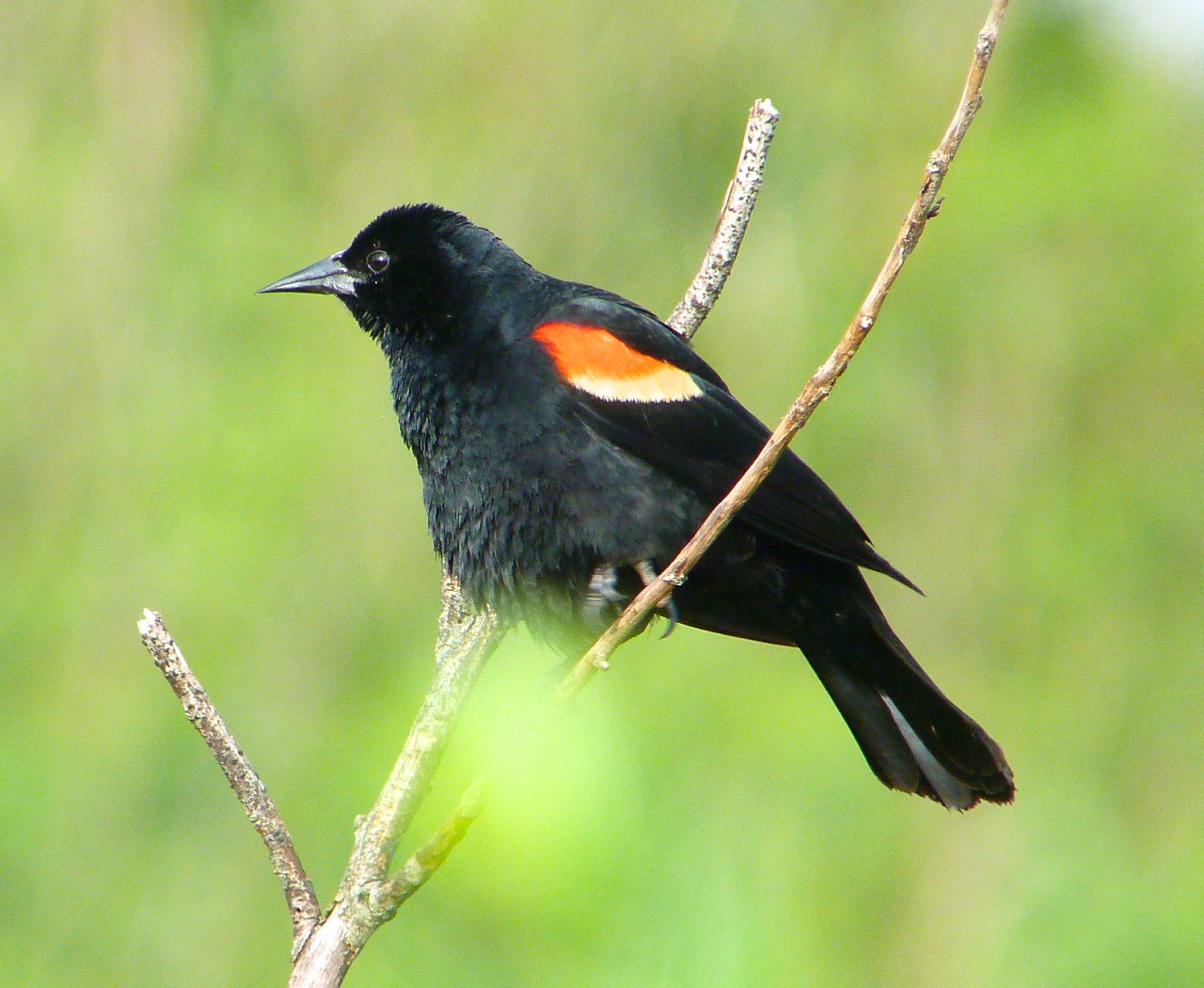
The red-winged blackbird (Agelaius phoeniceus) has previously hopped around these pages in the context of a (my!) simple way to RECORD BIRDS using a smart-phone, trim the result and convert it into an mp3 (or even a ring-tone – I have a great Abaco parrot one to startle friends, family and indeed complete strangers). Now we move on to a more important topic, namely courtship and so forth. And boy, don’t male RWBs fancy themselves when trying to impress the laydeez…We had taken a truck into backcountry between the pine forest and the Marls, with Tom and his impressive camo-camera with its 10 foot lens.
We found formerly cultivated fields – evidence of the defunct sugar cane industry – and then we came unexpectedly to a large expanse of open scrubland, with the track straggling through the middle.
And there, on carefully chosen vantage points, was an array of RWBs.
This bird was within range of my comparatively puny camera, and I watched as it arranged itself into various elegant poses in the late afternoon sun. All around were their ‘rusty door hinge’ calls, of which this is an example (in fact a female, recorded at Casaurina, hence the background sound of lapping waves).
These acres of open land were not far inland, and there was a slight breeze to ease the heat. This caused the occasional ruffling of feathers, and the need to spruce up…
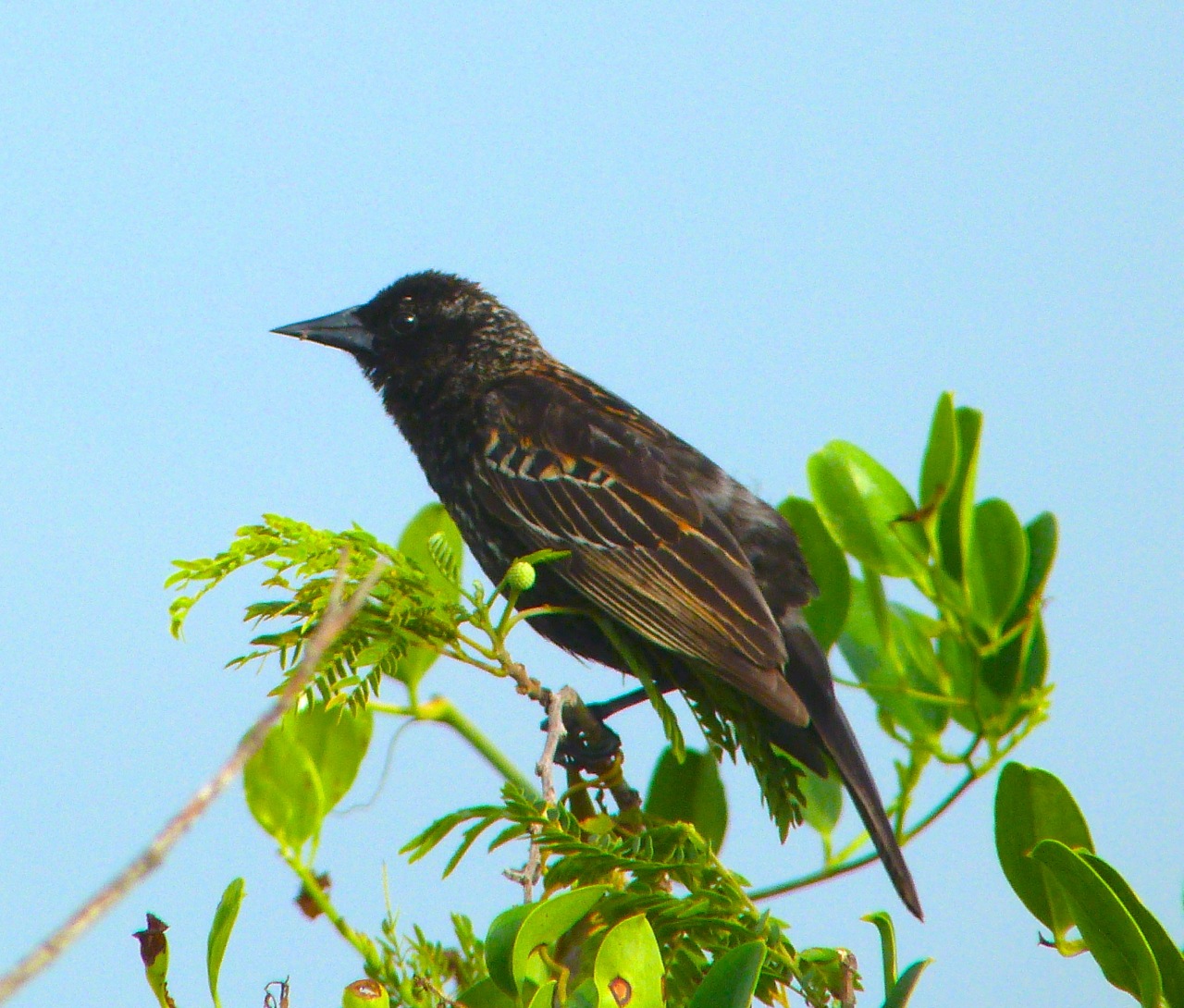
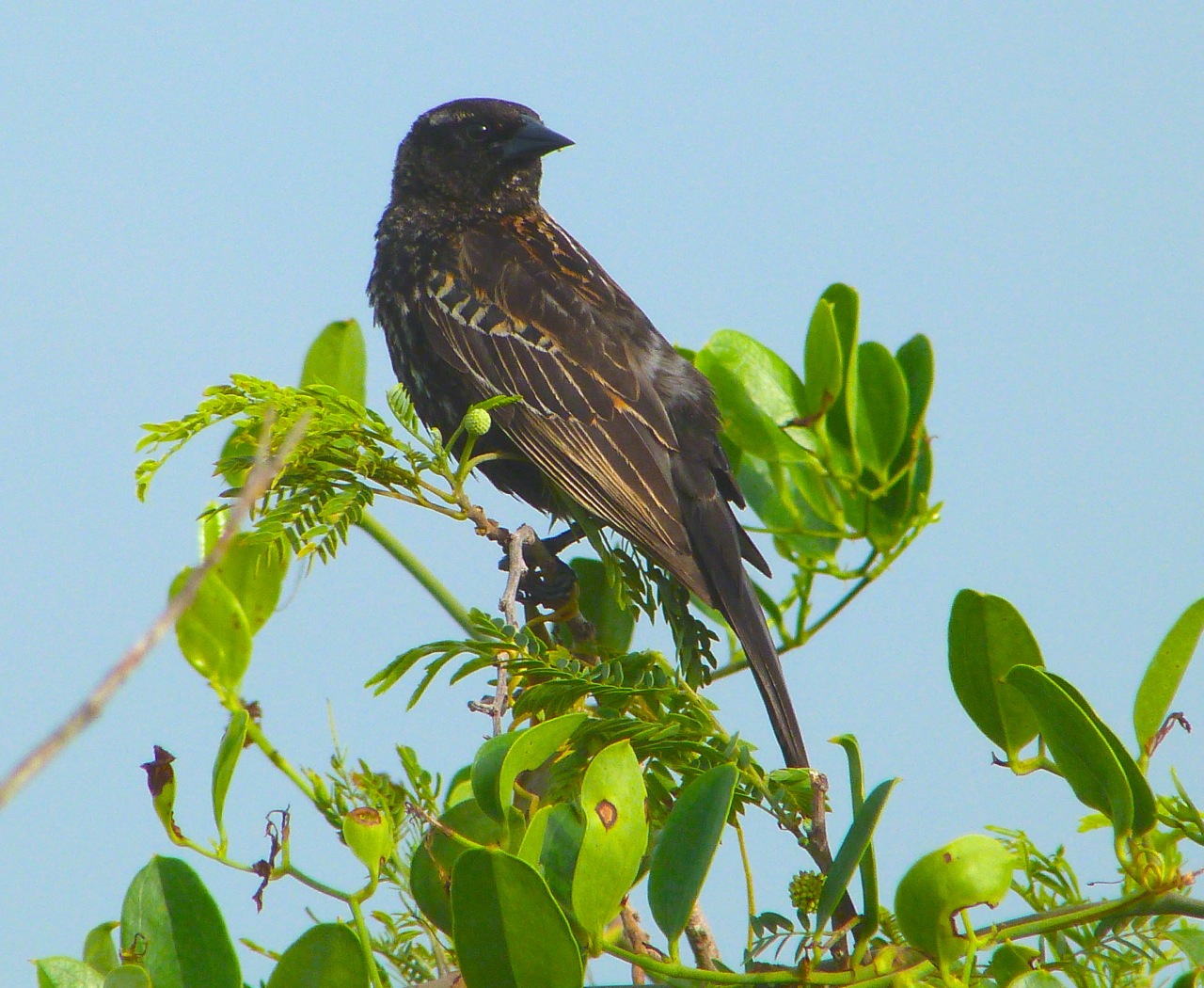
The purpose of all this was of course to impress the opposite sex (behaviour not confined to bird species). There were plenty of females around, also similarly perching on vantage points for similar display-with-view-to-dating-maybe-more reasons.
I didn’t see the phase in which the males may get quite worked-up, but luckily Y**T*b* has perfect example of a male RWB in full song. Credits as shown on the video.
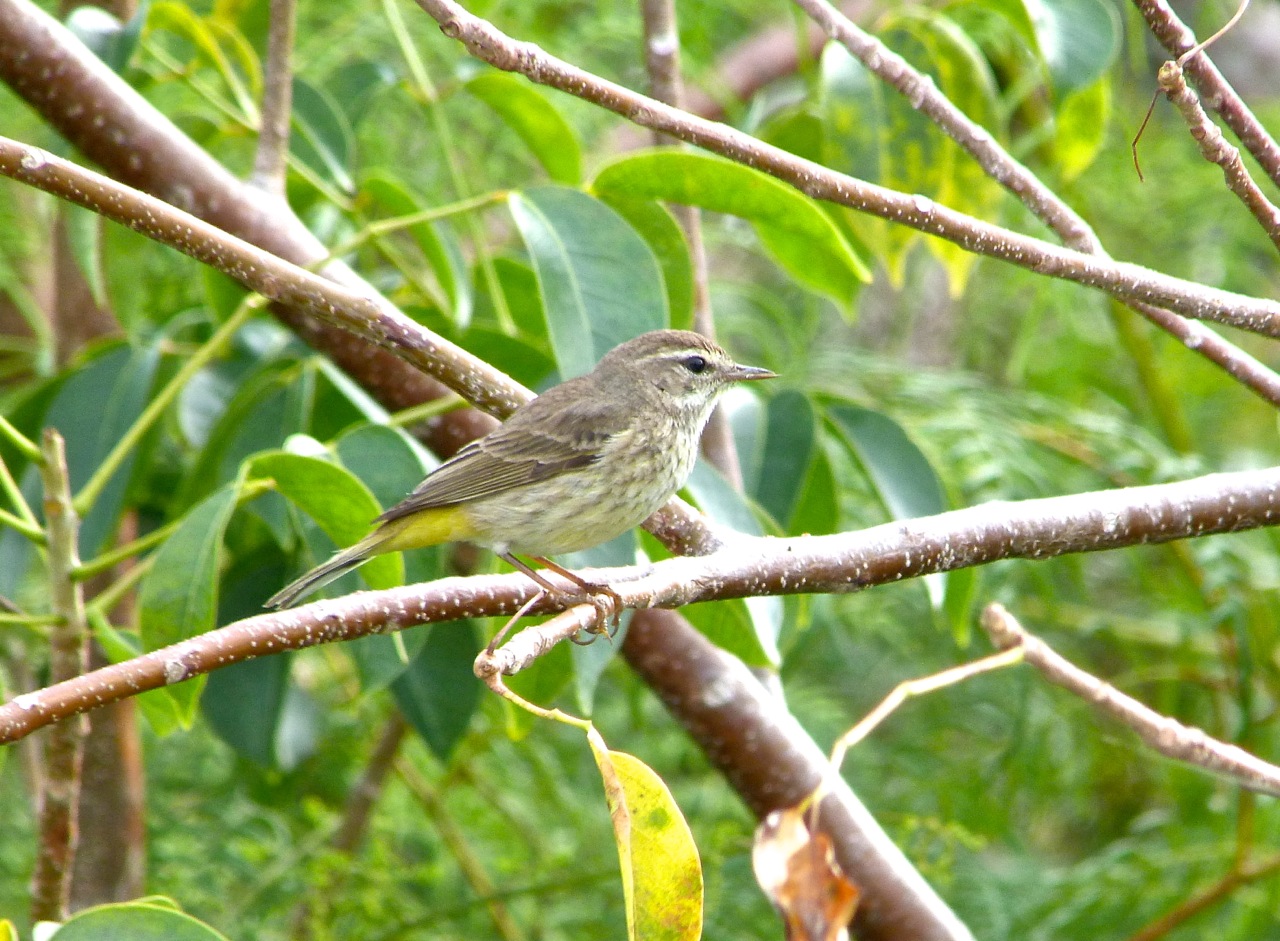
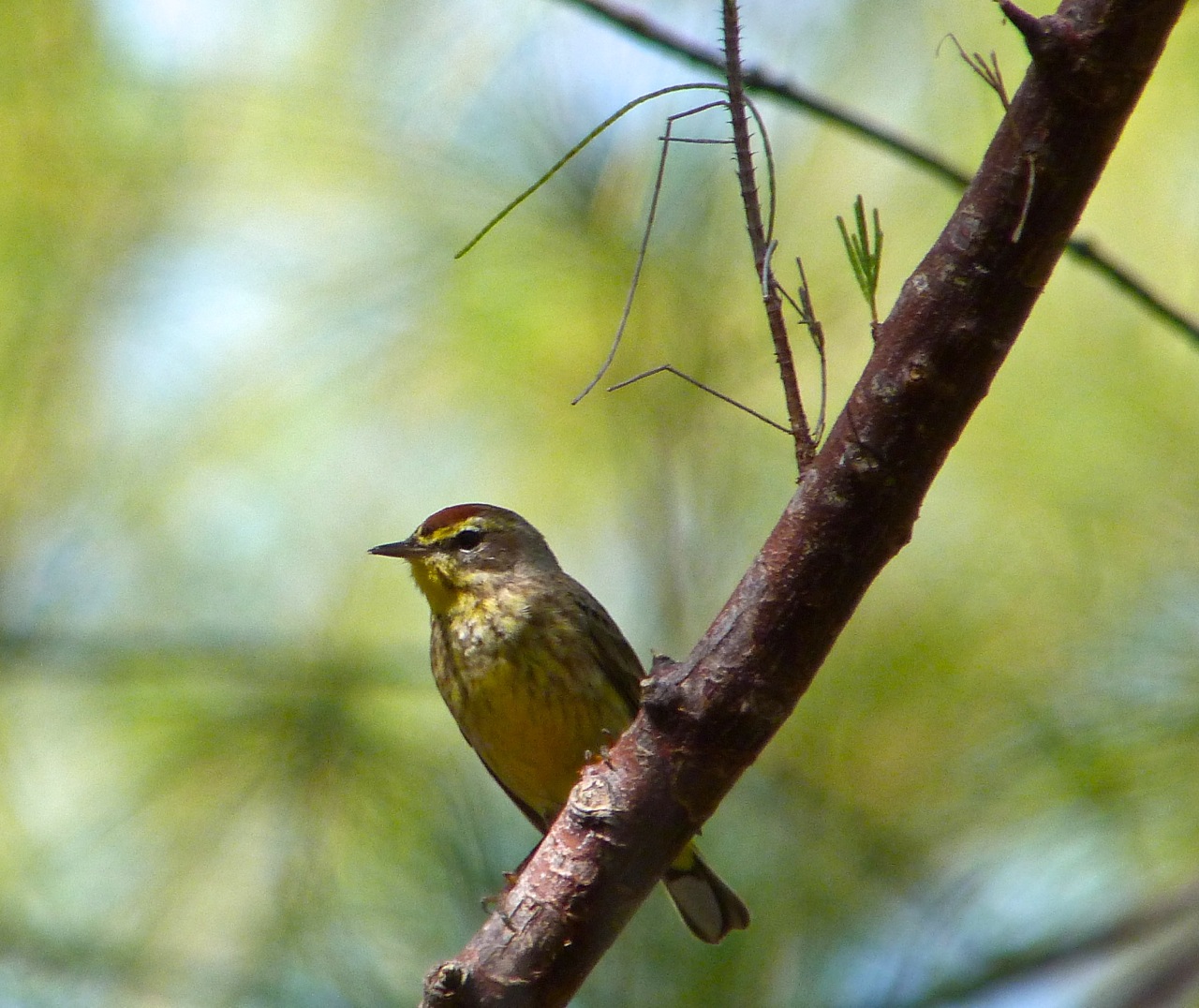
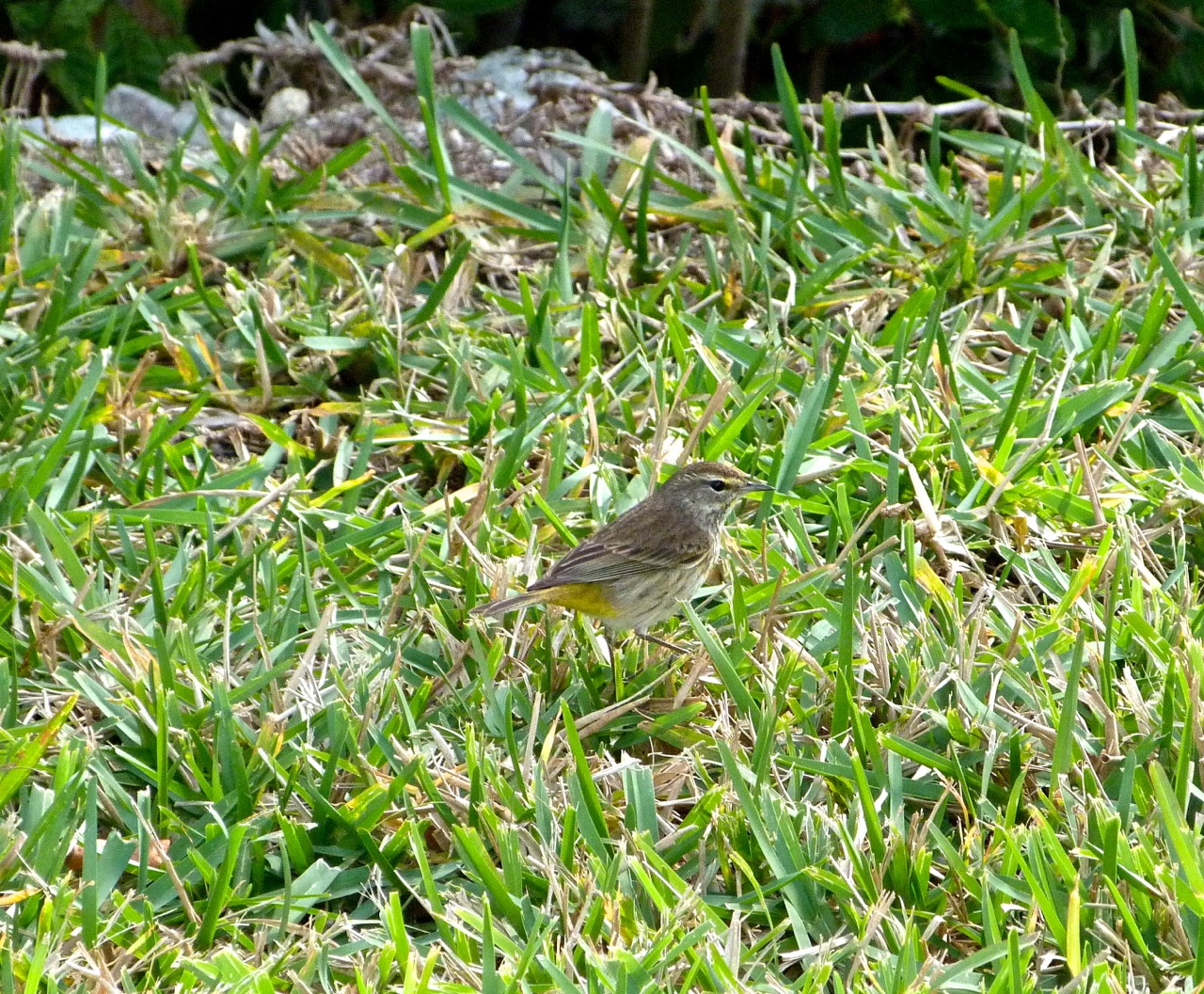
Palm Warblers Setophaga palmarum are cheerful little birds. Keen feeders, foraging around on the ground, in the coppice, or where there are pines. They are one of only 3 warbler species that bobs its tail, not just when it’s happy but much of the time. Maybe it is happy much of the time. The other 2 species are the relatively familiar Prairie Warbler; and the vanishingly rare – on Abaco, at least – Kirtland’s Warbler, the avian Holy Grail for birdwatchers on the island.
The male palm warbler in breeding plumage has a smart chestnut cap and what might be described as a ‘buttery’ BTM, to use a polite text-abbrev. The females are paler and have less yellow on them. The photos below were taken in March this year, mostly by Mrs RH (I can’t now recall who took what so I’ll give a general credit until she claims her ones). You’ll see the wide variety of types of place you might encounter one of these little birds. The last picture isn’t great as a photograph… but it’s a classic bit of acrobatic personal grooming.
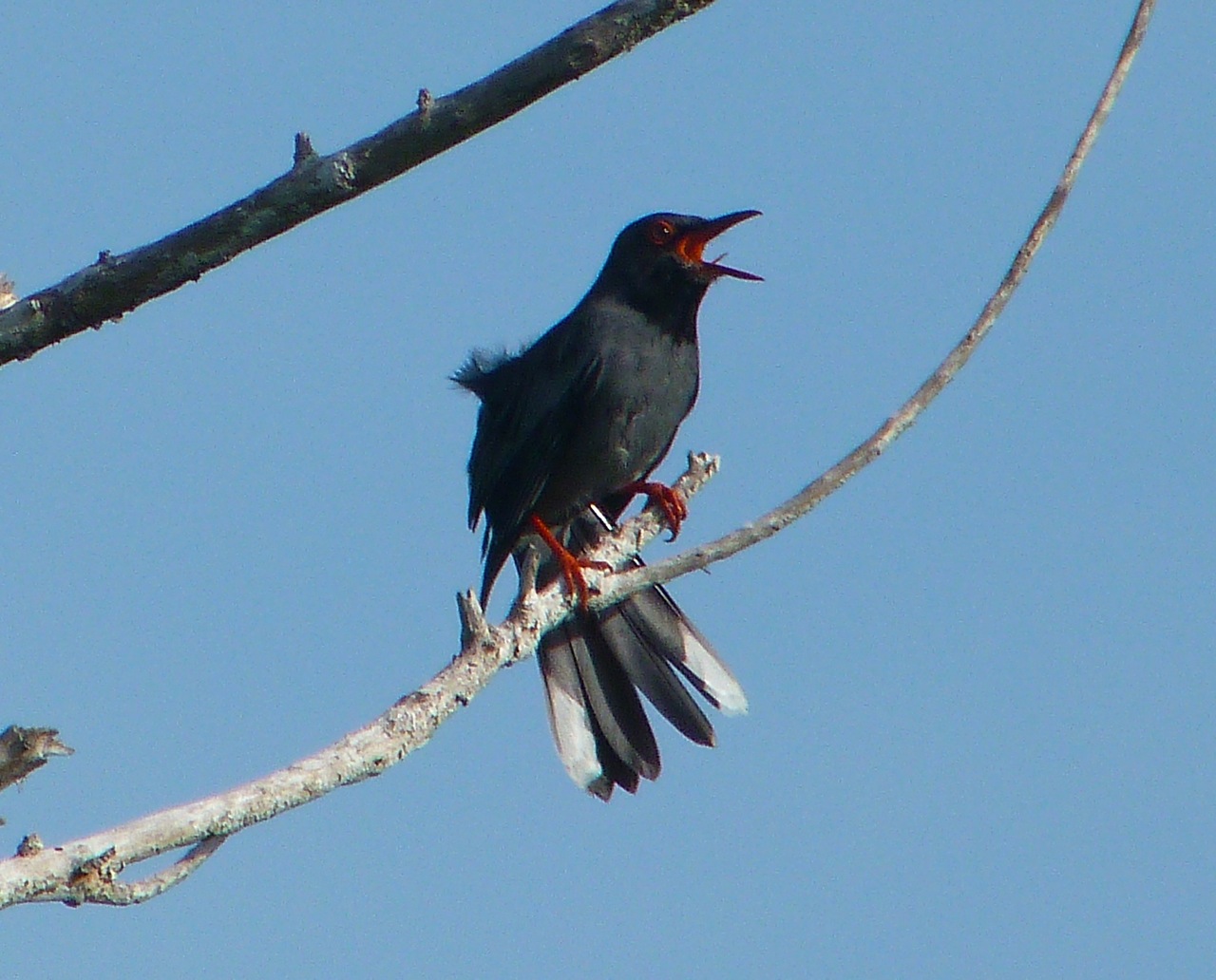
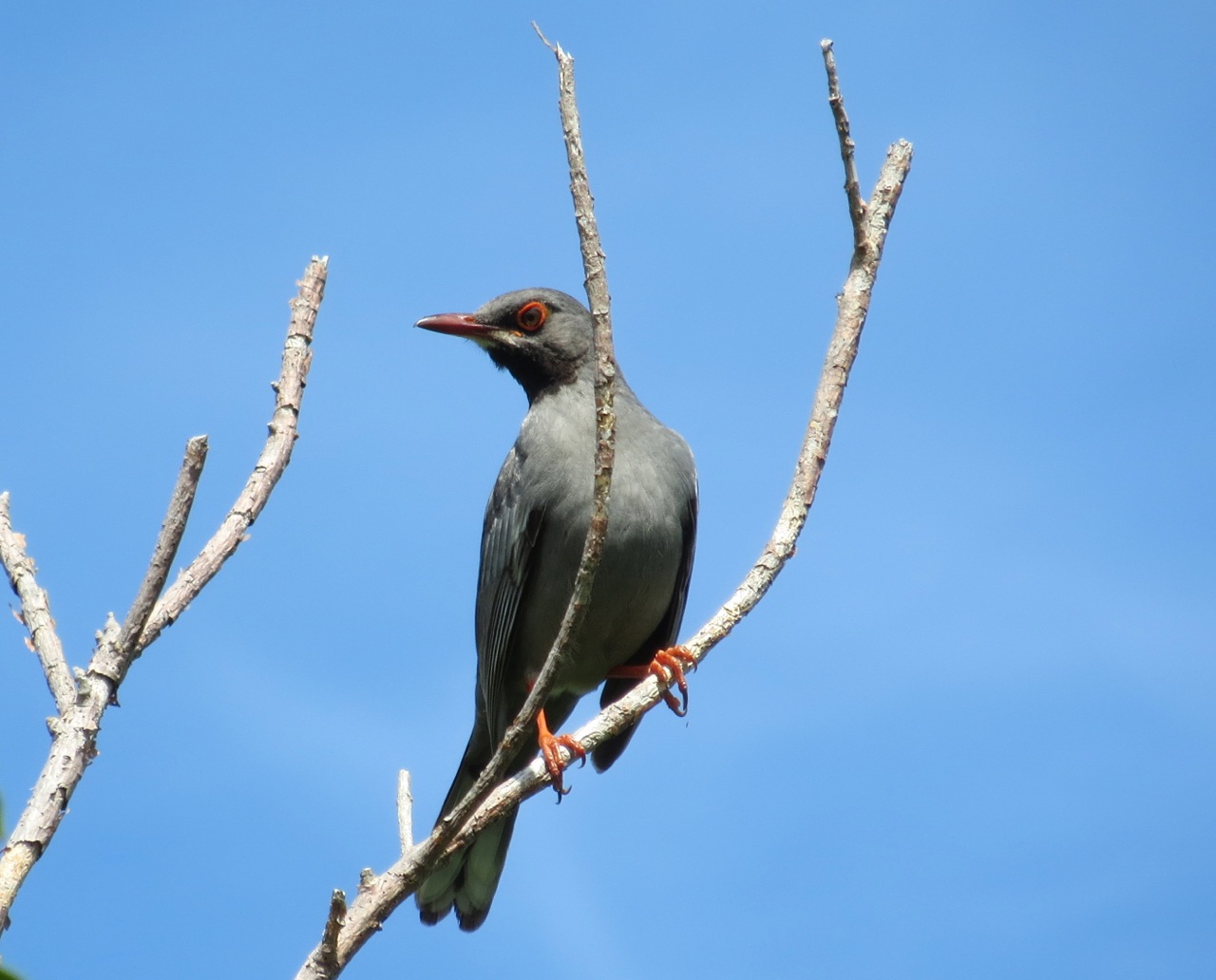
OL’ RED EYES IS BACK: A RED-LEGGED THRUSH SINGS THE… REDS?
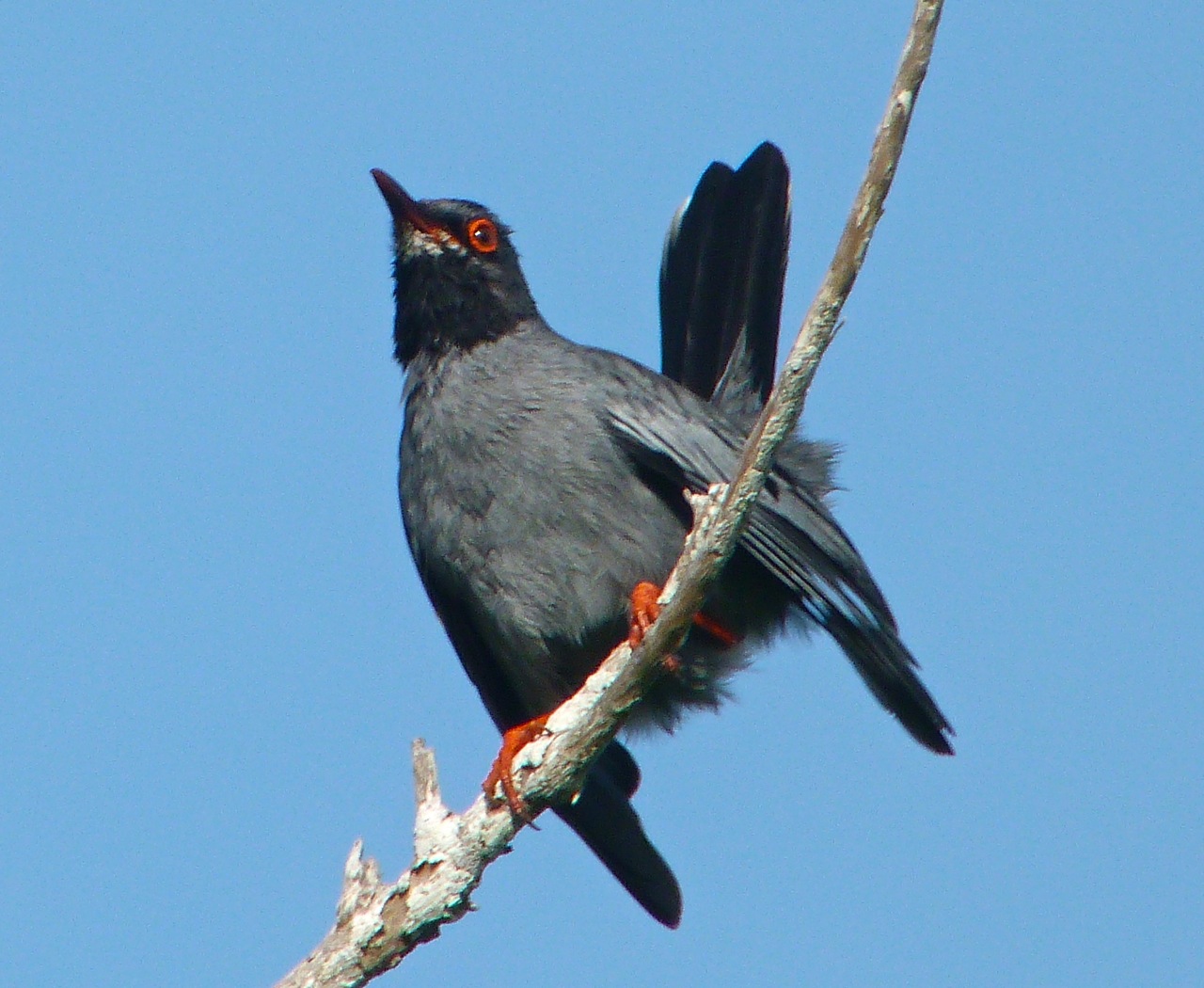
The Red-legged Thrush (Turdus plumbeus) is often said to be the Caribbean equivalent of the American Robin. Its main range is from the northern Bahamas down to the Caymans, Hispaniola, Dominica and Cuba. Although Abaco is less than 200 miles from the Florida coast, reports of RLTs in Florida are rare. Similarly, the robin rarely crosses over to Abaco – and most reported sightings are on the Cays rather than the main island.
I’ve always been slightly surprised by the RLT’s name. You don’t get birds called ‘the brown-feathered tobaccoquit’ and so on. Brown-feathers are not a particular signifier. Thus, there are plenty of bird species with red legs. But few with eyes that glow with the startling intensity of an angry ember*.
The RLT on Abaco is ubiquitous – familiar in gardens, coppice and pine forest. They have a broad diet, eating mainly fruits and insects of all types. They will also eat snails, lizards and even birds’ eggs. Because of this range of diet, you’ll often see these birds foraging on the ground, as well as in the understorey and higher up in the bushes and trees of the coppice.
In the mornings and evenings, RLTs like to sing. They will fly up to a high perch, often the topmost dead branch of a tree, and perform loudly and elegantly. They have a variety of characteristic poses that they like to strike. These photos were taken with a small camera from ground to tree top in the coppice, so they aren’t as sharp as I’d like. But you can still see the bird’s tiny ululating tongue
This bird was in the Delphi drive at around 6.00 pm. I recorded it for about 30 seconds as a video, but the camera-shake is so… well, I’m sparing you the movie, ok? Instead I’ve converted the song to an mp3 file, which has worked quite well. Turn your volume up a bit – the bird was not very close. Note the smart matching red inside of the mouth – hence, singing the reds…
One disadvantage of posing on a high perch is the risk of ruffled feathers & dignity
MAKIN’ COOL MUSIC
YET SECONDS LATER… WARDROBE MALFUNCTION
Finally, another (and more professional) example of an RLT’s song from Xeno-Canto, also recorded in the Bahamas
Credits: All photos RH except the greyer one on the ground, Mrs RH. Range map birdlife.org
AFTERWORD
1. John Bethell has commented “In Long Island they call them Rain Crows, because they were always seen right after a rain storm!”. So I checked my James Bond (1947), the best resource for historic local names. Generically, ‘Blue Thrasher’, and specifically for the Bahamas, ‘Blue Jane’ are given.
NEW (JUNE 2014)‘John’ comments “Rain bird or rain crow refer to both the mangrove cuckoo and the lizard cuckoo in the Bahamas”.
2. *To the friend who rightly points out that, strictly speaking, embers cannot be ‘angry’, I point to my right to use PATHETIC FALLACY if I choose, the imputation of human emotions to objects or, [perhaps] creatures. Or to employ, like, creative simile. Now beg to go back on my Xmas card list, buddy.
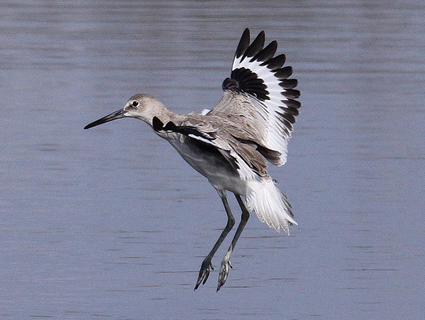
Willets (Tringa semipalmata) are large sandpipers, familiar as shore birds, foragers on sand bars and mudflats, or out in the mangrove swamps. Some might describe them as quite solid and plain to look at. Until they take flight, when their gorgeous wing patterns are revealed.
Willets are ground-nesting birds, often breeding in colonies. They use their stout bills to forage on mudflats or in shallow water for insects, crustaceans, marine worms and occasionally plant-life. They tend to keep their distance, and in the past I have only managed this sort of unimpressive snapshot, not least because I normally only take a small basic camera out on the water in case it – or I – should fall in.
However, we recently fished from the prow of a skiff parked on a sandy spit on the Abaco Marls, as bonefish came past on the tide. It was a productive hour for my boat-partner, though frankly less so for his boat-partner… As we fished, and to our surprise, a willet landed of the point of the spit to feed, and gradually worked its way towards us seemingly unconcerned by the skiff, by us or by the fish action. It started off about 30 feet away, and at close quarters it was far less drab and notably more elegant than expected.
It foraged slowly towards us, keeping a beady inky-black eye on us
At one time it came within a very few feet of us, then decided it had come close enough. We watched it stepping delicately away on its semi-palmated feet. The shot isn’t clear enough to show the slight webbing between the toes. However, you can clearly see the barred tail.
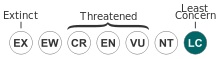
In the c19 and early c20 there was a sharp population decline of these fine birds due to hunting. I’m not sure if it was for feathers, food or fun. All three, probably. Their population has recovered and their IUCN status is currently ‘Least Concern’, but like so many similar species they remain at risk, especially through continued habitat loss.
The Willet call and song are very distinctive, and are reproduced here via the great bird-noise resource Xeno-Canto
CALL
SONG
All images RH except header (Wikimedia) & in-flight image (Greg Page @ Cornell Lab for Ornithology)
(PS if you think the traditional RH puntastic title is laboured, be grateful I didn’t proceed with the initial idea of working ‘Bruce Willets’ into this post. It didn’t work, on any level…)
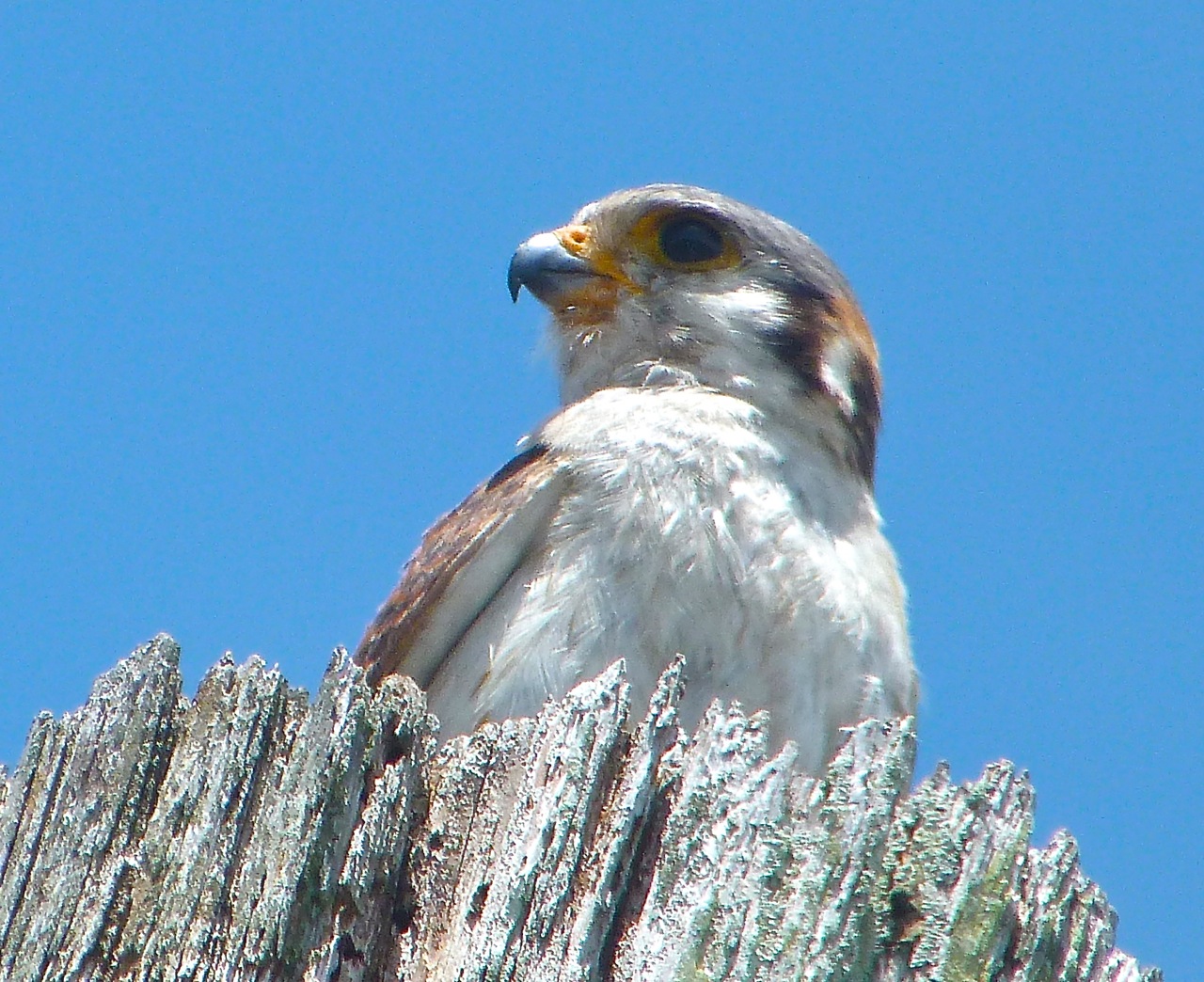
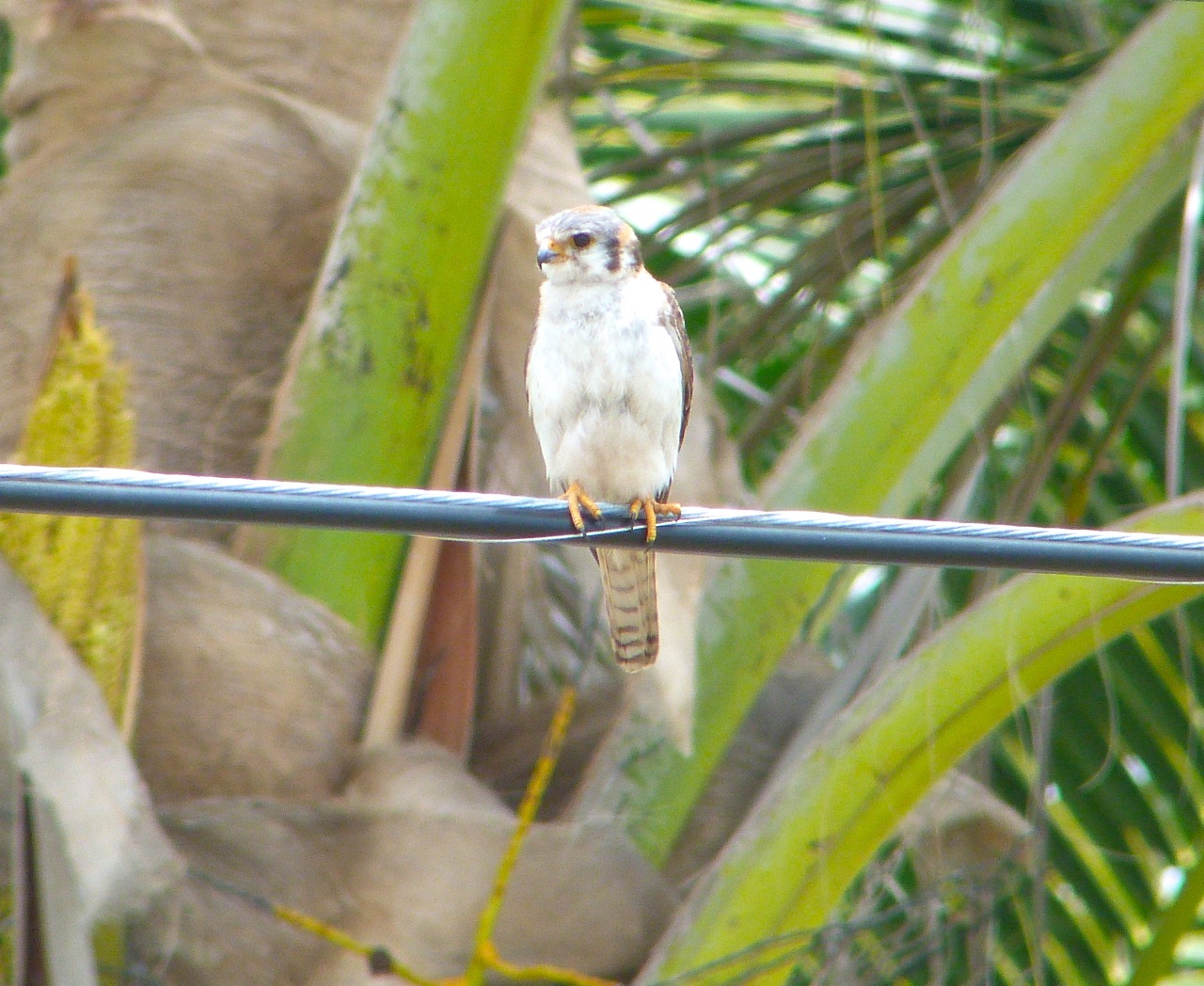
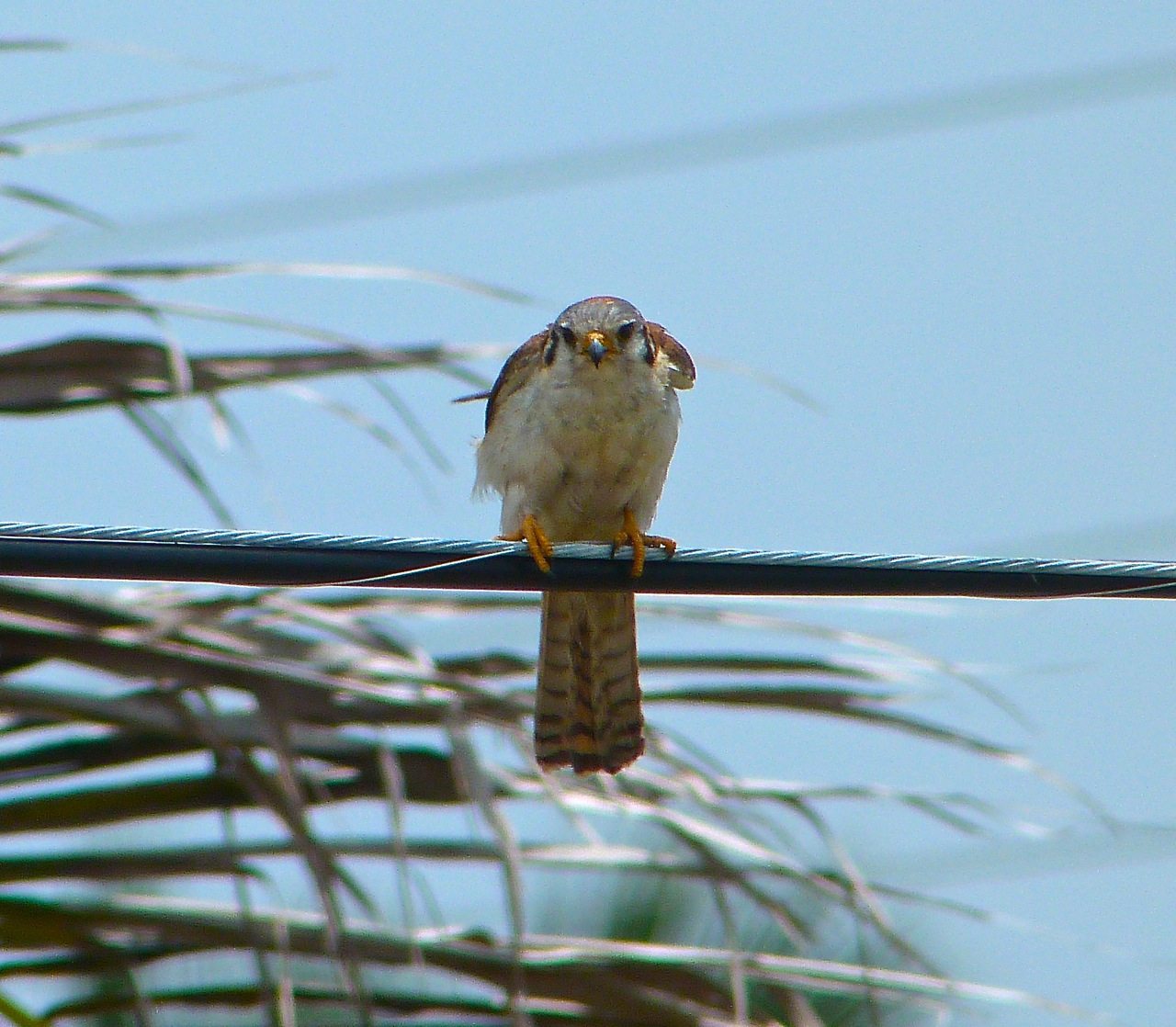
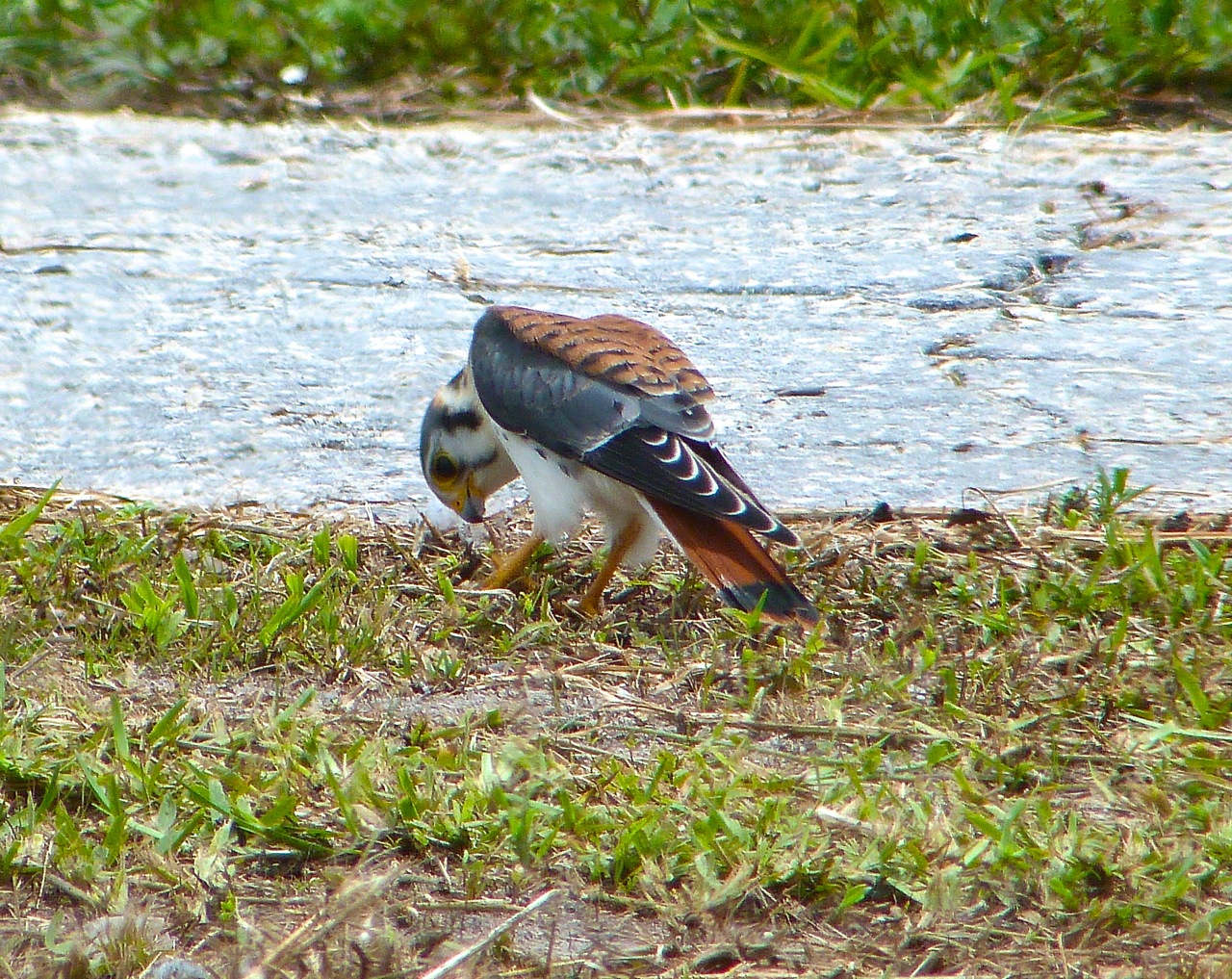
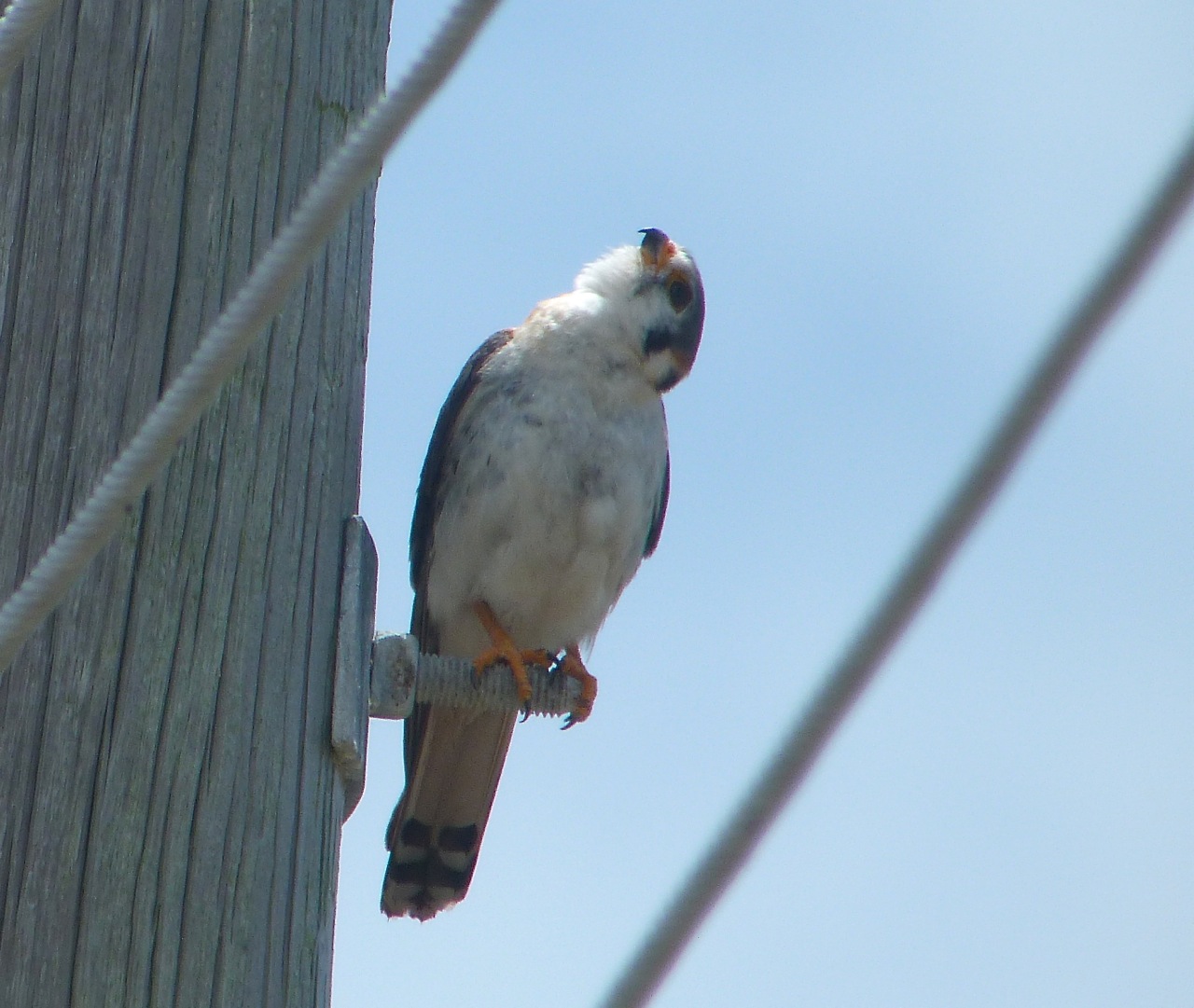
American kestrels Falco sparverius are well known birds in the Americas and Caribbean, and I can’t usefully add anything to the photographs below, all taken at Sandy Point, Abaco a few days ago. Well, perhaps just that they are said to “chitter” when they copulate – but they can’t be alone in that, surely… There were several kestrels around the settlement, including juveniles. Mostly they stayed on the utility posts and lines, from which they dropped occasionally to collect some titbit from the ground below. There was a wonderfully rich-coloured male in a palm tree, but he declined to turn round to be photographed, and I have refrained from including his rather magnificent rear view in the gallery below, out of respect for a fine bird of the species.
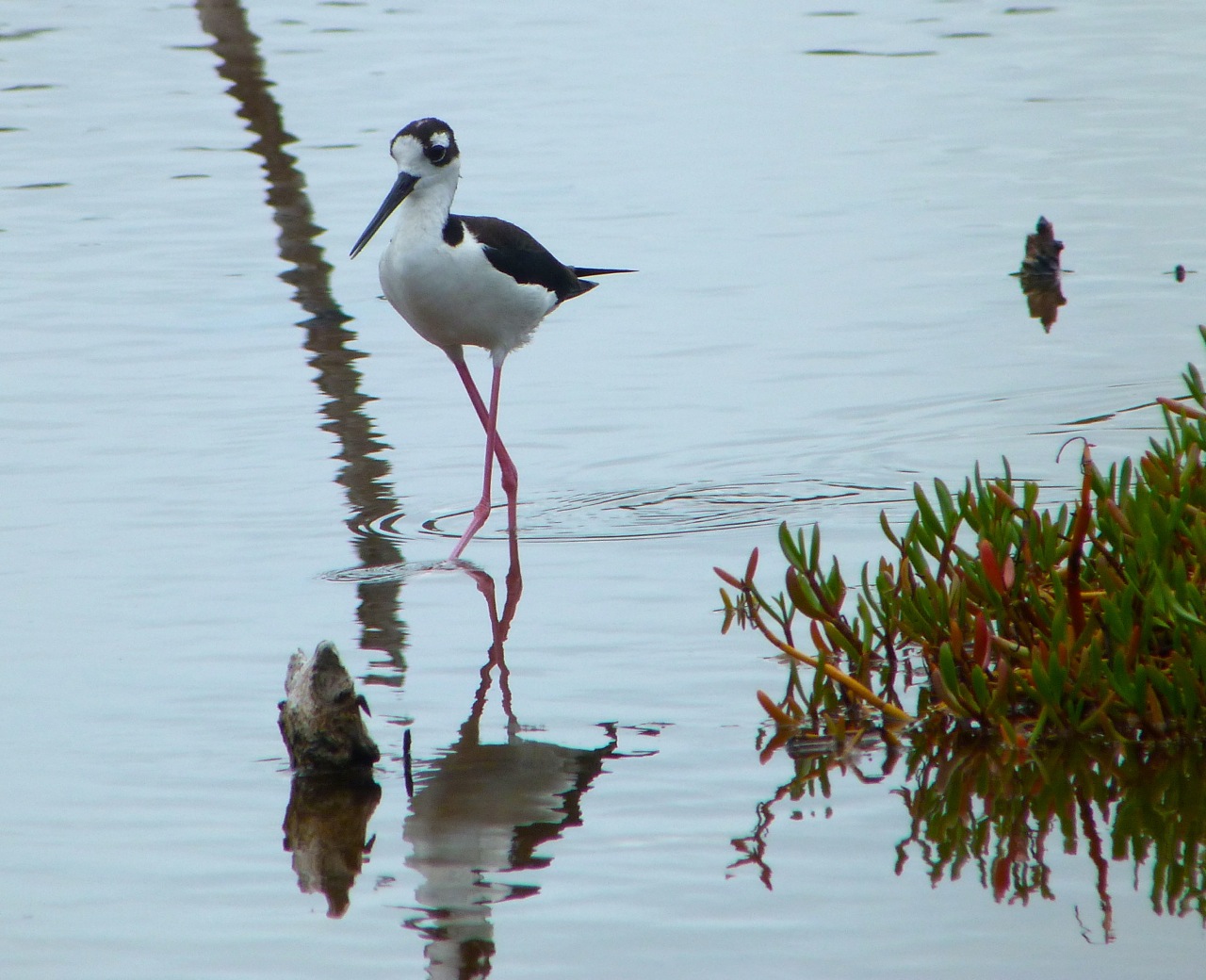
This elegant stilt Himantopus mexicanus was one of a pair nesting in the scrub by a small brackish lake near Crossing Rocks. We had gone there for heron and egret reasons, but for once there were none. Just dozens ofBAHAMA (WHITE-CHEEKED) PINTAILS. I had walked to one end of the lake, when suddenly this bird rose from the undergrowth and flew, shrieking, straight at me. It veered off, landing agitatedly in the water, and proceeded to stalk towards me on a zig-zag route, scolding me belligerently.
In the end, it stood facing me squarely, then flew at me before veering away again back to the bushes, where it continued to protest. Presumably close by was a well-concealed nest with the female and her eggs or chicks. Of course I wouldn’t have had any idea about it but for this peevish display of aggression. However, this is such a handsome bird, and the protective display was so effective that I considered myself well warned, and moved away from the area…
“PISHING IN THE WIND”: BIRDING IN A BREEZE AT DELPHI
The Bahamas weather has been uncharacteristically dire. Rain and cloud for the past week, and a poor forecast for the next week (see above). I arrived on Abaco yesterday, with the short internal flight from Nassau last night nearly cancelled due to a humungous downpour. Instead, people were boarded in bare feet, having had to wade through 3 inches of water to get to the small plane floating on the undrained concrete. Yet today, there was sunshine at Delphi this morning (though cloud to both north and south). A stiff breeze was keeping the clouds off-shore. The weather is fickle and very local.
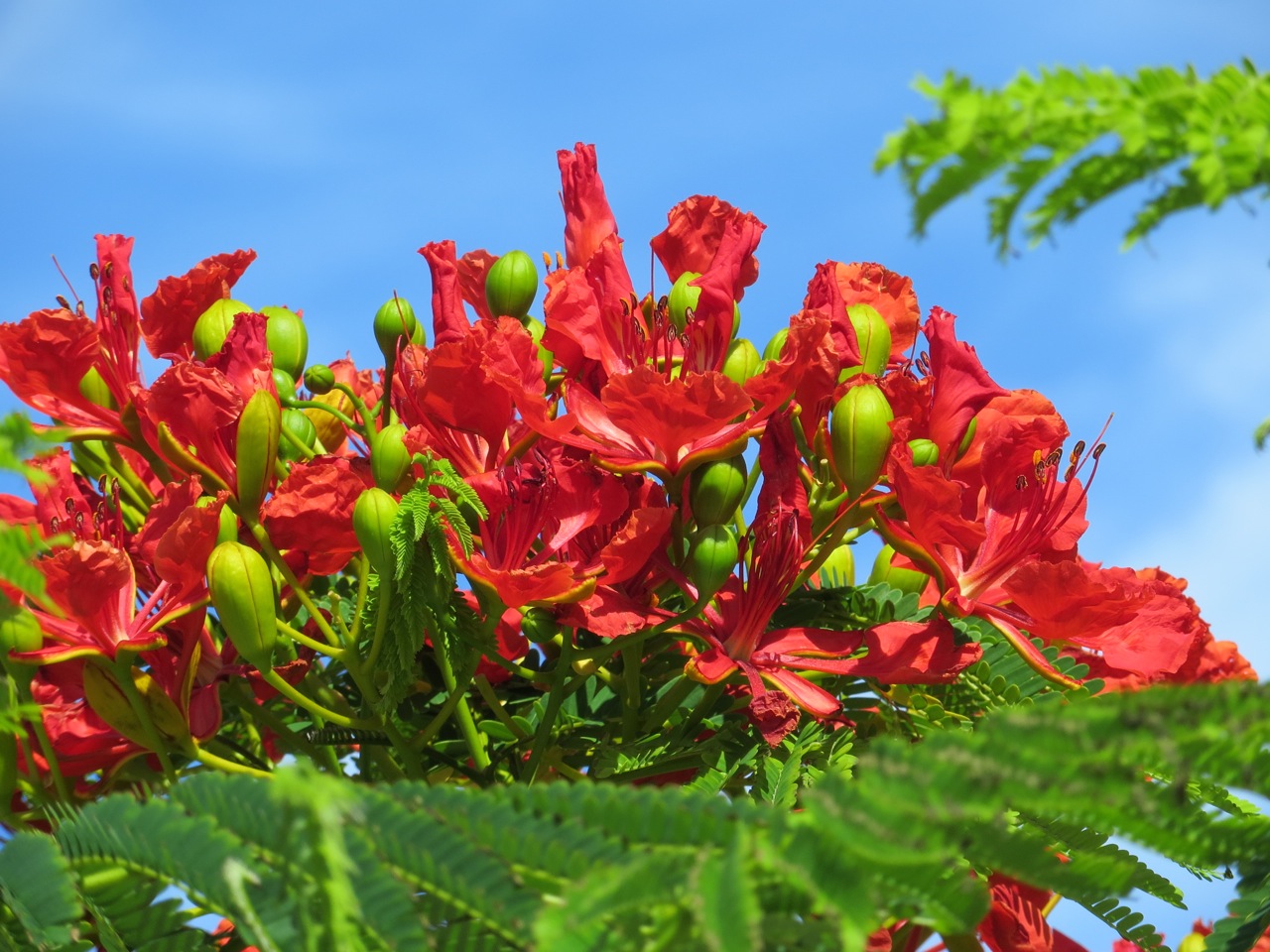
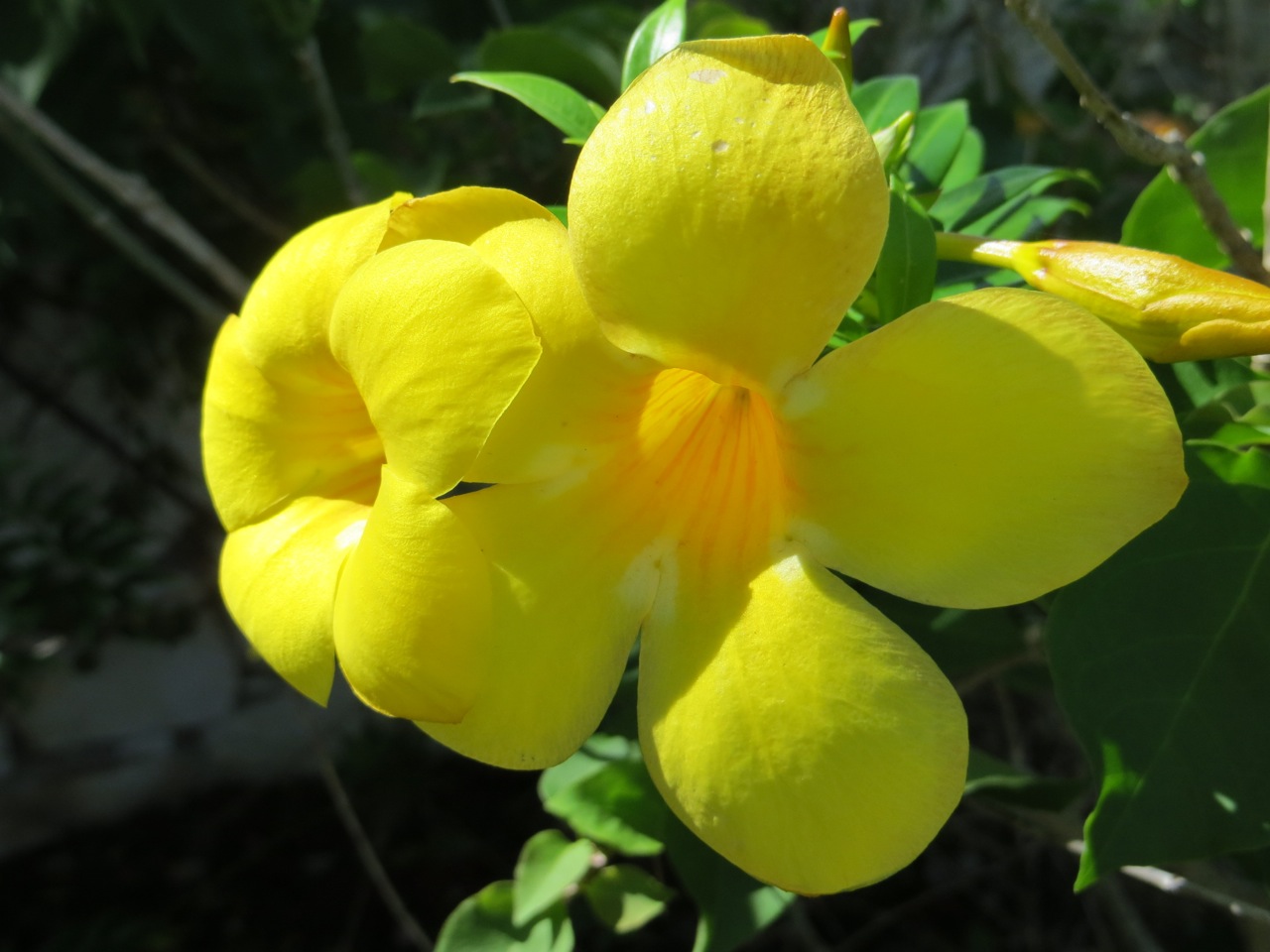
ROYAL POINCIANA
I took a small camera and strolled for half and hour for about 200 yards along the Delphi drive and back (for those that know it, to the first corner of the guest drive) to see what the first of June had to offer in the way of wildlife. The birds were clearly enjoying some unaccustomed sunshine, and I have listed those I saw below. Not all were photogenically posed, and many were flicking around the coppice too quickly to capture.
RED-LEGGED THRUSH
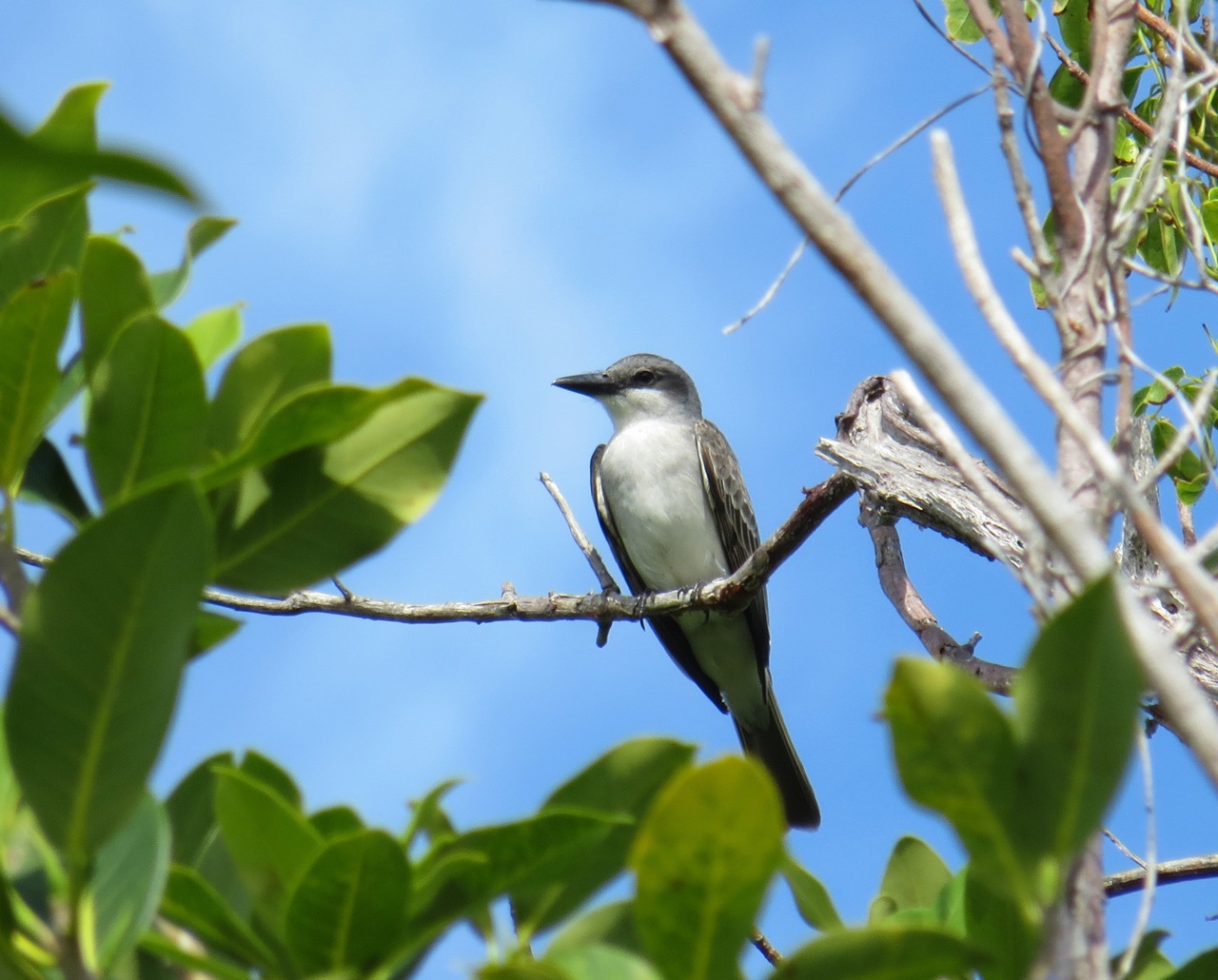
GRAY KINGBIRD
The smaller birds were unusually responsive to ‘pishing’, the unattractive but effective noise that can bring a bird to the front of woodland or scrub to investigate. A black-whiskered vireo was interested, but flew off just as I pressed the button. He was immediately replaced on the branch by a
BLUE-GRAY GNATCATCHER
A pair of Western Spindalises (see recent post HERE) joined it in the adjacent tree
DELPHI 30 MINUTE STROLL BIRD LIST 1.06.13
Red-legged Thrush 3
Western Spindalis 3
West Indian Woodpecker 2
Black-whiskered Vireo 2
Cuban Emerald 2
Turkey Vulture 2
Bahama Swallow 1
Gray Kingbird 1
Loggerhead Kingbird 1
Greater Antillean Bullfinch 1
Blue-gray Gnatcatcher 1
Bananaquit 1
{Heard only} Abaco Parrots 2
The flowers were also enjoying some sunshine after the rainA couple of other things caught my eye, including a cute baby lizard, before I headed for some rest
HELLO, HANDSOME! WESTERN SPINDALIS IN THE MOOD FOR LURVE…
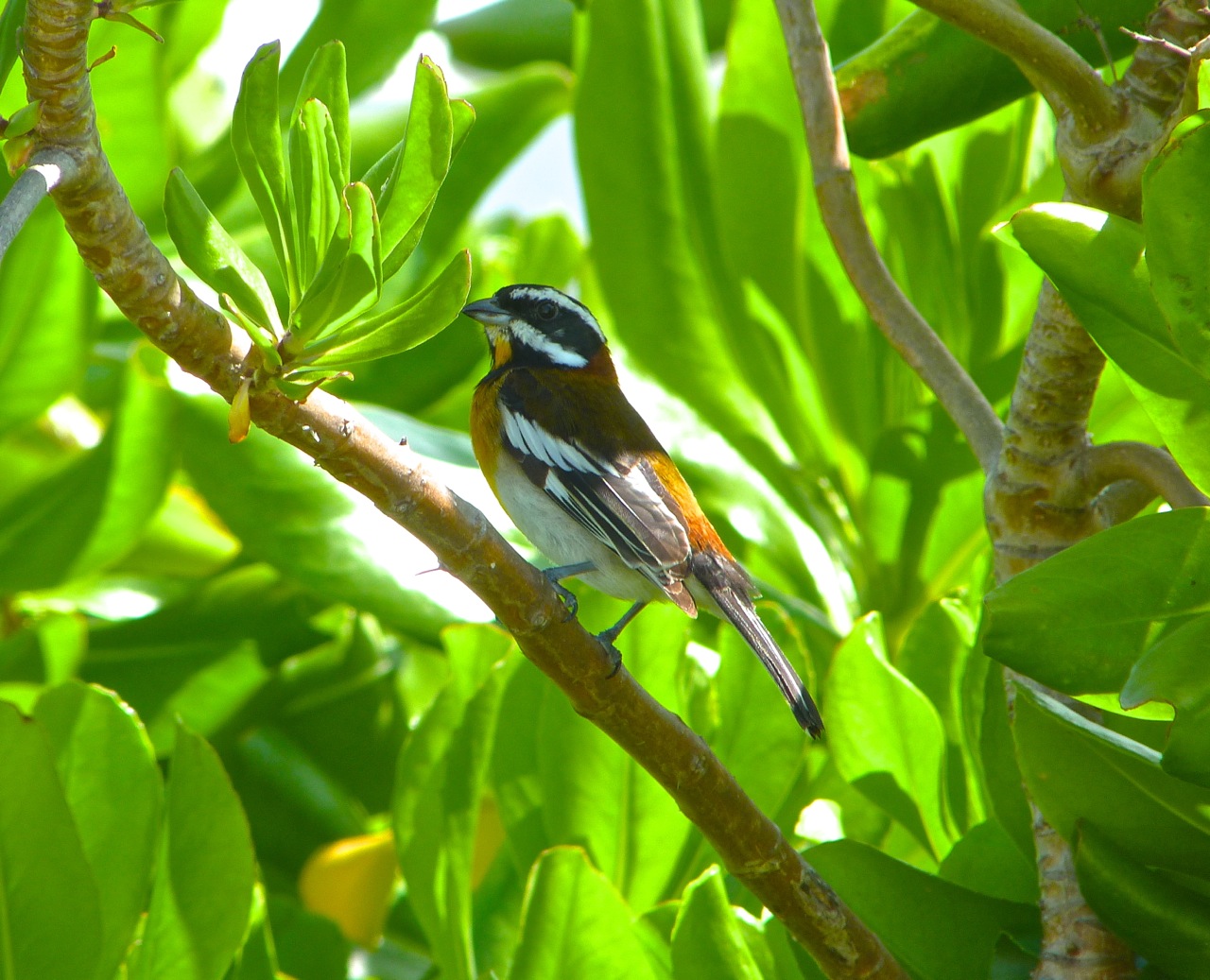
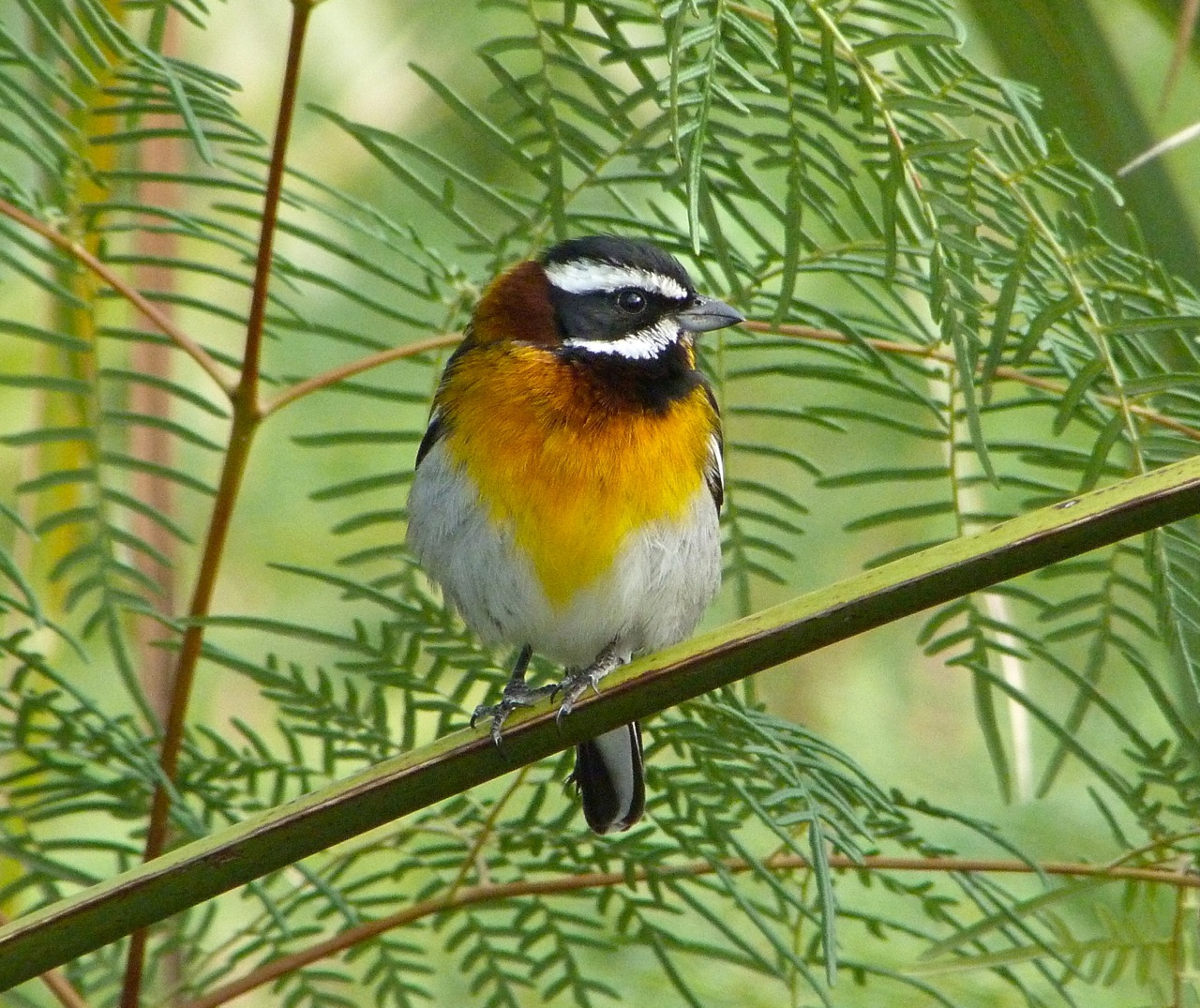
Nearly two years ago, when this blog was still in its mewling infancy, I posted about one of my favourite small birds on Abaco, the WESTERN SPINDALIS (Spindalis zena, formerly known as the Stripe-headed Tanager). It is a strikingly handsome creature by any standards, often seen posing ‘tall’ on a branch looking splendid in its orange, black and white livery.
Perching proudly…… or dining elegantly…
The spindalis is one of the birds to look out for if you are walking along one of the drives at Delphi, or (*recommended 1/2 hour stroll*) walking the drive circuit. You’ll see them in the coppice or in the undergrowth alongside the drives in the pine forest area, almost certainly a little way in from the front. We spotted one quite close to the Highway, looking most decorative in the greenery. This one had an uncharacteristic hunched look about him, and we soon discovered why – he was courting. Not the black-faced grassquit near the bottom of the photo, but a female spindalis well-hidden low down and further back in the undergrowth to the left. So we edged nearer to get a better look.
You’ll see that this male bird’s hunched posture has produced a rather impressive neck ruff, an adornment presumably irresistible to female spindalises. Both birds were ‘chucking’ softly to each other, and the male turned his head regularly to show off his glories from all angles. I can’t unfortunately reveal the outcome of this encounter. We never saw the female, and we had probably got too close for her to feel comfortable about breaking cover. The male, however, was too absorbed refining his pulling techniques to be greatly bothered by our presence, though he did keep a beady black eye on us. Is this male preoccupation when courting found in other animal species, I wonder? Reader, we made our excuses and left…
YOU WILL NEED: an iPh@ne or similar smartphone with a voice memo facility; patience; minimal non-natural background noises (traffic, yelling people, barking dogs, heavy machinery); a steady-ish hand; one or more birds nearby
RECORDING
Use the Voice Memo app on an iPh@ne (I presume most other smart phones have a similar app).
Once you have it onscreen, turn the phone round 180 deg and the image will swivel round too. Now you can point the microphone at the sound and have the controls the right way up facing you.
Turn the volume up to max before you record.
Handle the phone carefully so it doesn’t record you touching it as well. It probably won’t pick up pressing ‘record’, but it may when you press ‘stop’. But you can trim the end of the saved file on the file very simply.
The recording saves in m4p format, and you can email it to your computer direct from the app (or to anywhere or anyone else).
Drag / save the file onto your desktop from the email. When you open it, it will (a) play and (b) appear in your iTunes library (or whatever music storage system you use).
CONVERTING RECORDINGS TO MP3
Having opened the recording, to convert the file to an mp3 (generally the preferred version for uploading elsewhere) in iTunes, go to Songsin your iTunes library and search for Memo. There it is!
You can rename it at this stage if you wish.
Then go toFile on the top bar, and in the drop-down menu, near the bottom, go to Create new version. It will offer you mp3.
Clickmp3 and a second recording file will appear in your library. That’s your mp3.
Drag it onto your desktop and do what you want with it.
Apologies if this is all blindingly obvious and written in the elementary computer language ‘eggy-peggy’. It took me a while to get it sorted out, and I hope the details above will help the lo-tek computer user to record birds and use the results painlessly.
FIELD NOTES
I recommend recording for about 20 – 30 seconds max. The iPh@ne allows easy trimming at the start and end of the saved file, but there’s no easy way to edit the middle to take out the barking dog.
Several short recordings of each bird will give a better choice of results than one or 2 long recordings.
The iPh@ne mic is surprisingly sensitive. It will pick up all nearby sounds – someone whispering at you “is it recording yet?”, for example. So ideally this is best done in the pine forest or coppice, away from the Highway. And maybe the loud whisperer.
Wind can be a problem. Not just for humans. The mic will pick up gusts of wind, or wind blowing across it if you change the direction you are pointing the phone as you record. So this is best done on a calm day.
Here are two practice recordings I made in March. The first is the female red-winged blackbird above (and header) at Casuarina beach. The distinctive call is rather like a rusty hinge on a swinging gate, often heard far out in the mangrove swamps of the Marls. You’ll hear background noises from collared doves and also the sea lapping on the shore.
The second is thick-billed vireo in the coppice at Delphi. You’ll hear an answering vireo – and also some wind noise. I find these little birds frustratingly hard to see – they always seem to be lurking further back in the bushes than I think. I’ve never managed to take a good photo of one, so I’ll upload an illustrative poor one to be going on with. I am back on Abaco in a week, and a better TBV photo is on my avian hit list.
Finally, you’ll find a longer recording I made of Abaco parrots squabbling noisily at Bahama Palm Shores near the end of a recent post HERE. I made an mp3 using the method described above, and uploaded it to the excellent Xeno-Canto bird sounds website, which is well worth exploring. You can find my recordings of the parrots and the birds in this post, plus sonograms, on my XC page, such as it is, HERE
But if you just want to hear the parrots, here they are. Like schoolkids, only louder.
Why do I do that annoying ‘iPh@ne’ thing? It’s a statistical fact that I have just made up that 373,597 people a minute world-wide g@@gle the correct word. Imagine the meta-crawlers and spam-splurgers that lock onto that word. I don’t want to cyber-meet them. I also use the form Am@z@n but for different reasons relating to their ingenious tax arrangements (alleged, obviously). Thus with G@@gle as well (again, merely alleged – as Dusty Springfield memorable sang, “Nothing is proved…)
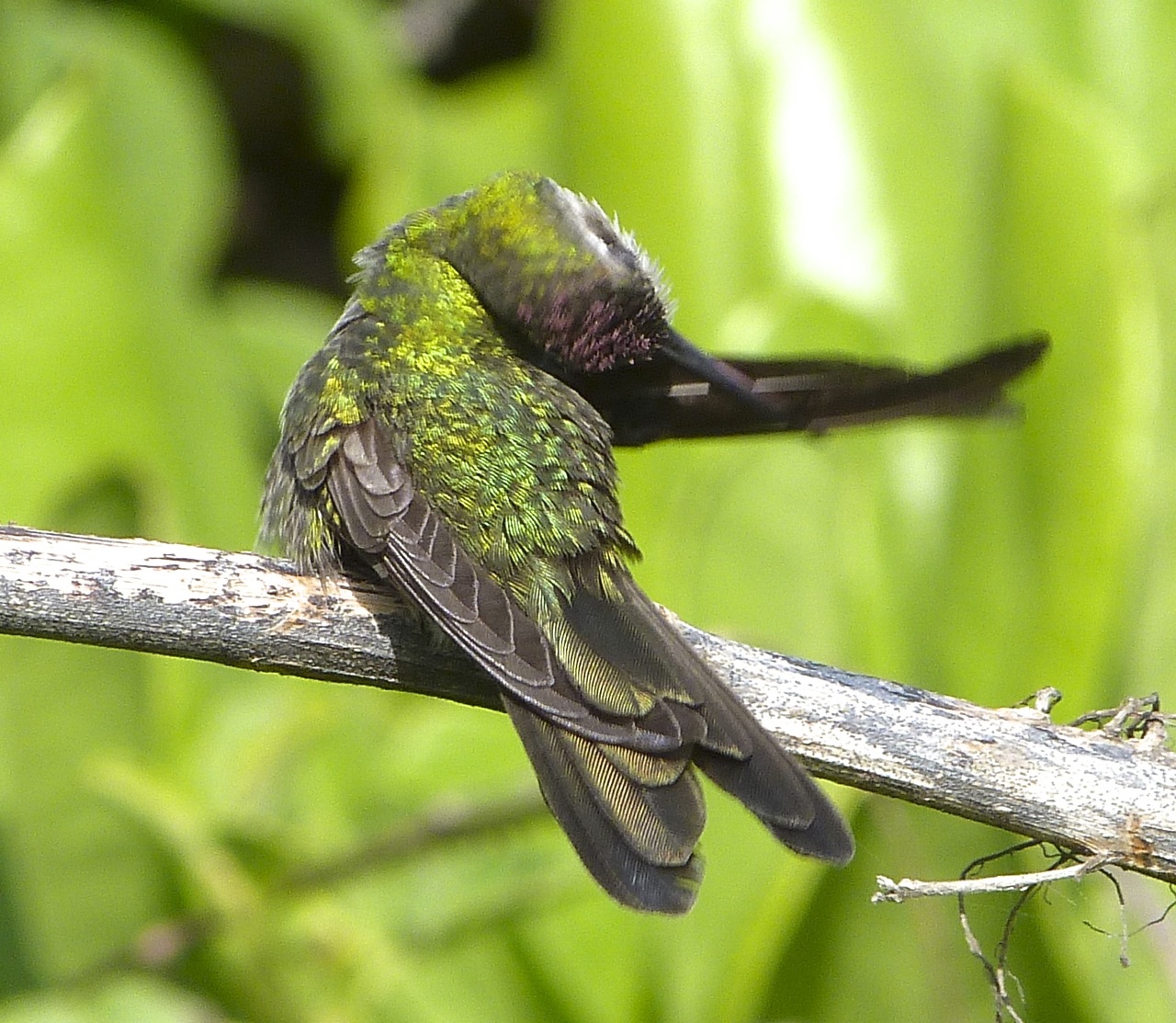
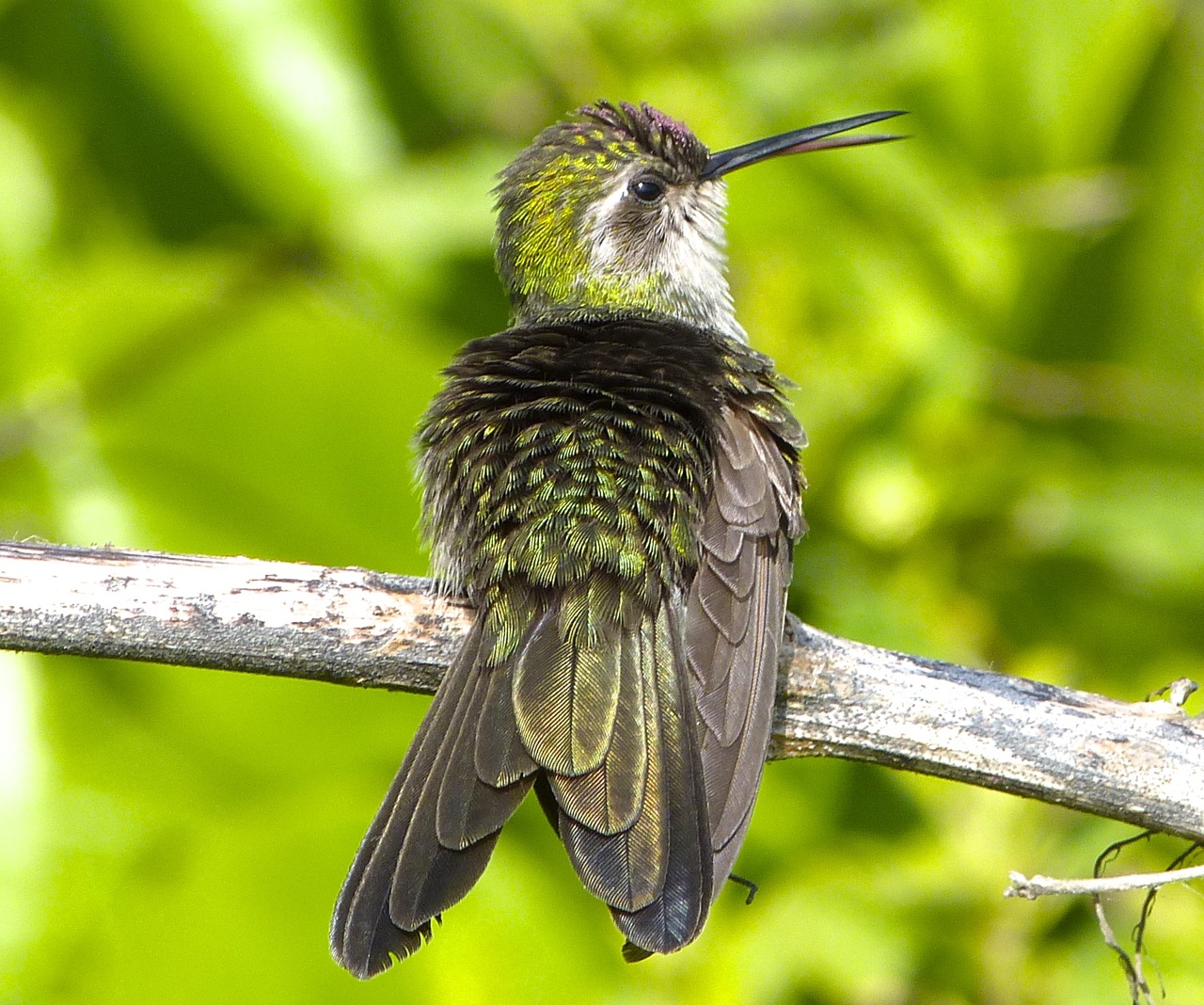
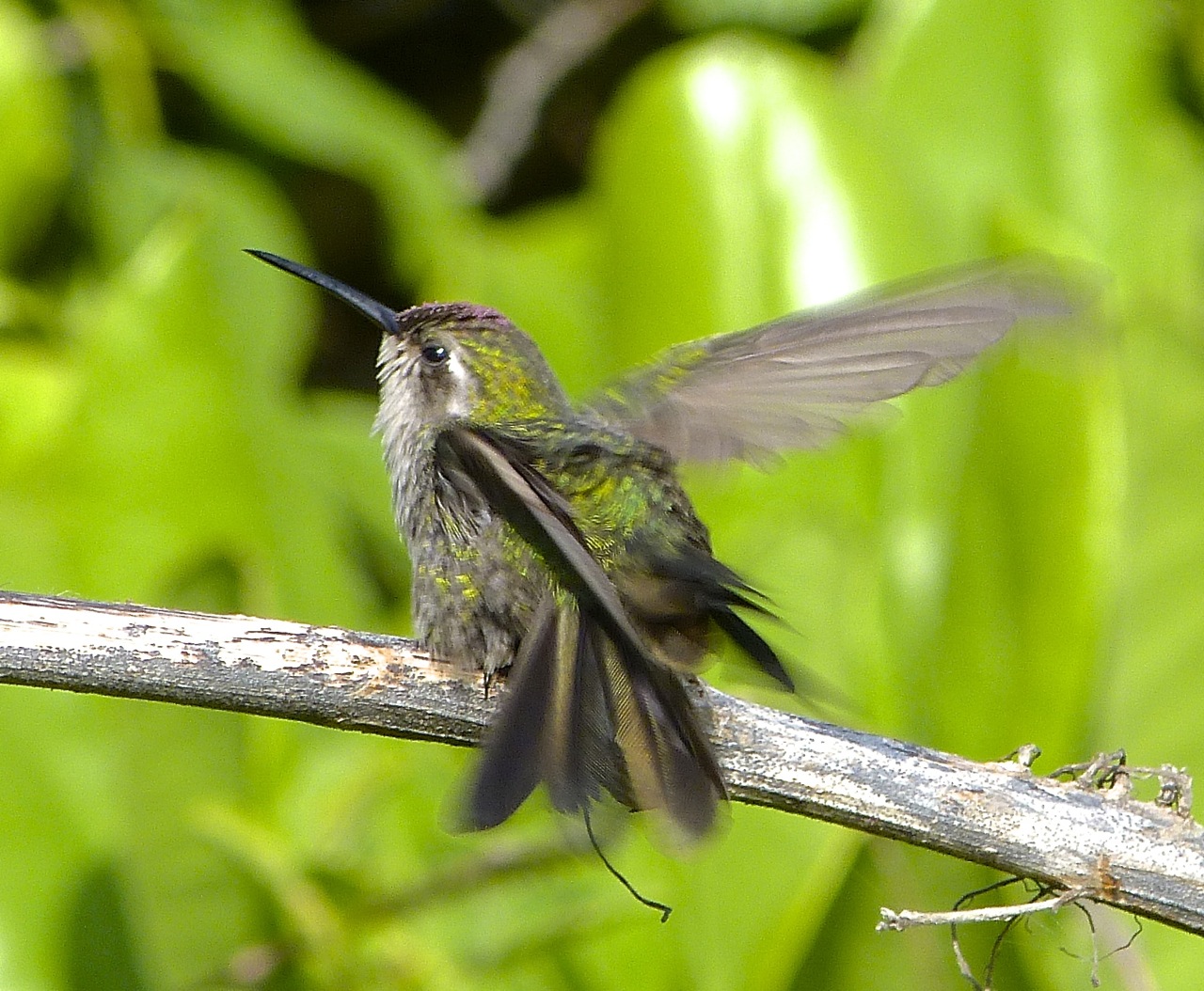
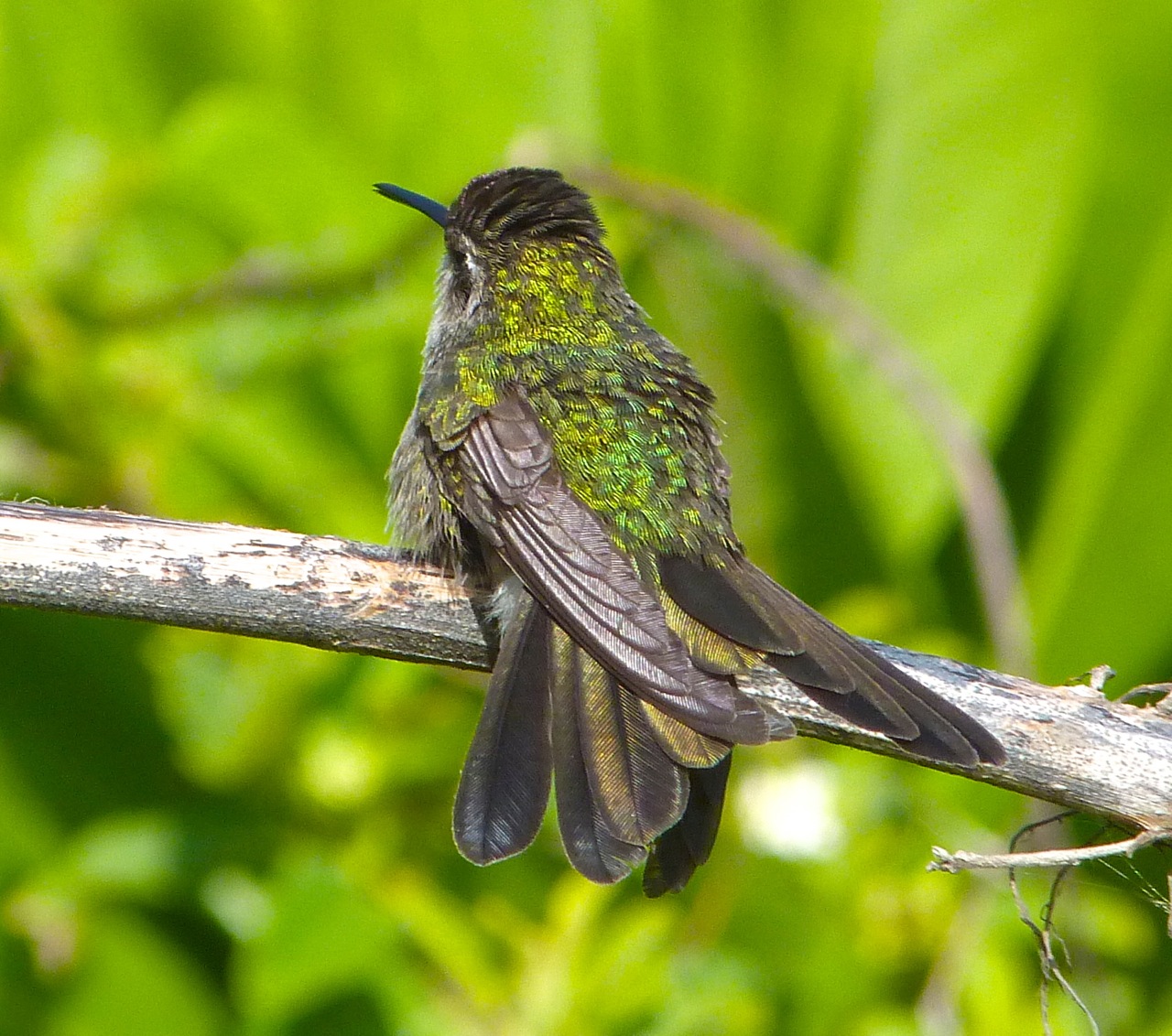
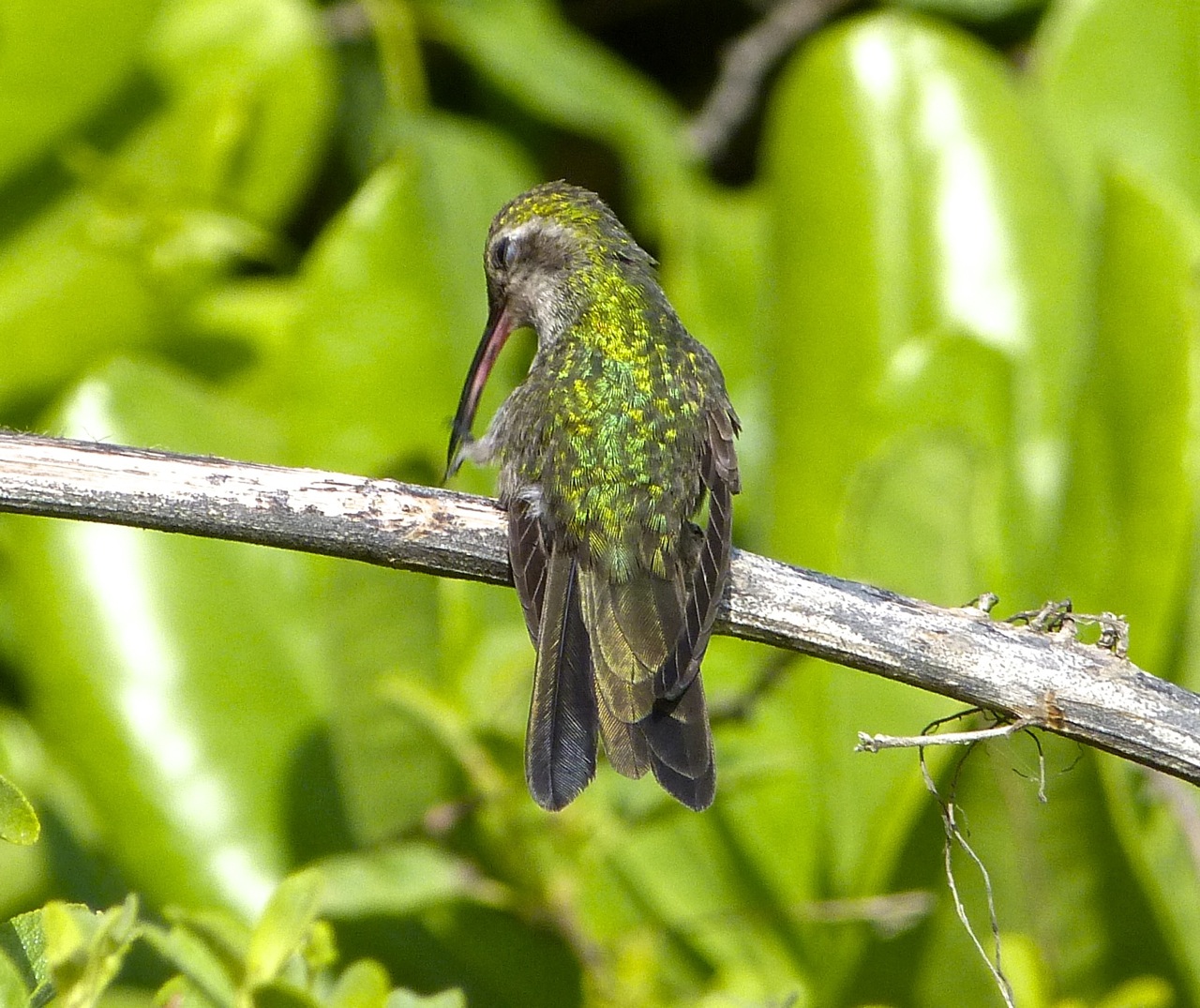
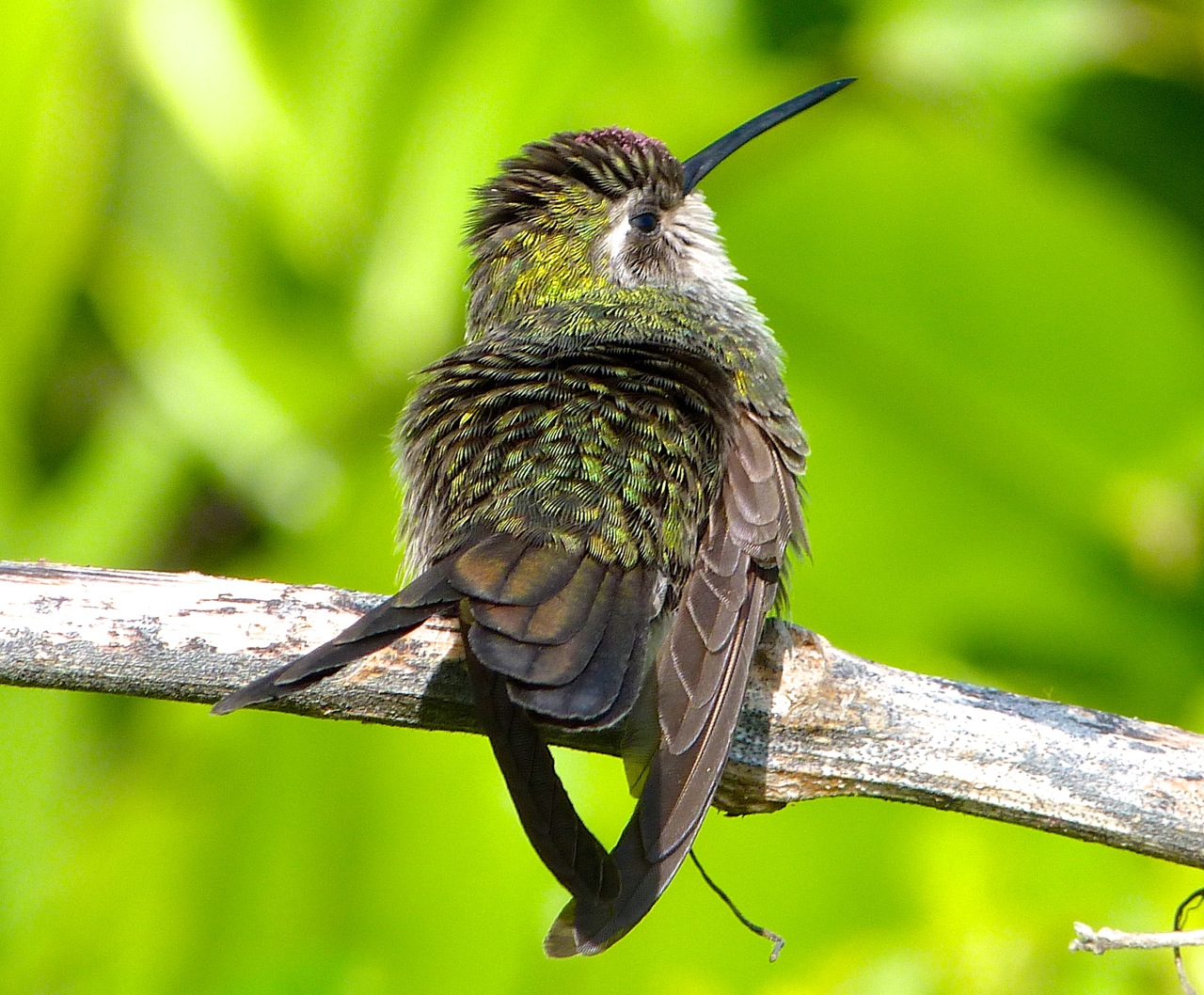
This tiny bird was in the Abaco coppice, well off the beaten track. Nearly two miles down a notably unbeaten track, in fact, that later was to lead to a puncture-and-@$%^&*-I-forgot-my-cellphone drama. Trauma, even. The hummer knew perfectly well that I had crept up behind it, but it had presumably seen few bipeds. It would not have known of their urge to bulldoze wild habitat and turn it into massive unsold developments, as has happened a short way up the coast… So it just carried on with what a bird has to do to keep itself looking presentable, while I, feeling rather rude and intrusive, took some quick pictures before leaving it in peace. Rather than sell these intimate studies to Hello!, OK!, Chirpy! or Tweet!, I am displaying them free for your enjoyment.
In addition to the Cuban Emerald, the Bahamas has its own endemic hummingbird, the Bahama Woodstar. In the faltering early days of this blog, I posted about them both atBAHAMA WOODSTARS & CUBAN EMERALDS: THE HUMMINGBIRDS OF ABACOAt that time, I was not really a ‘birder’ at all, and had only a very basic camera, so my own pictures were… very basic. But you may be interested in some of the info in the post about these two species, so I mention it in passing.
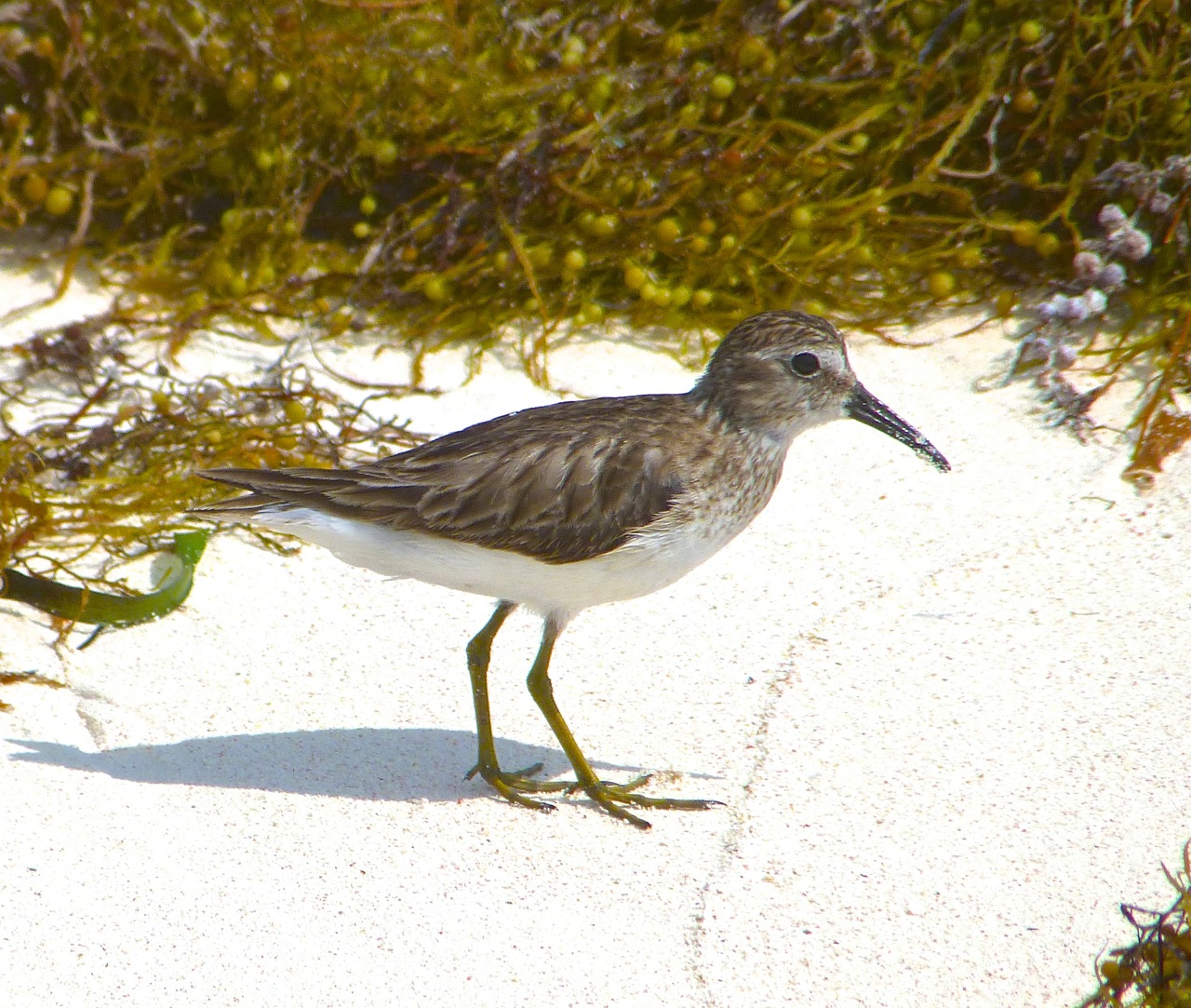
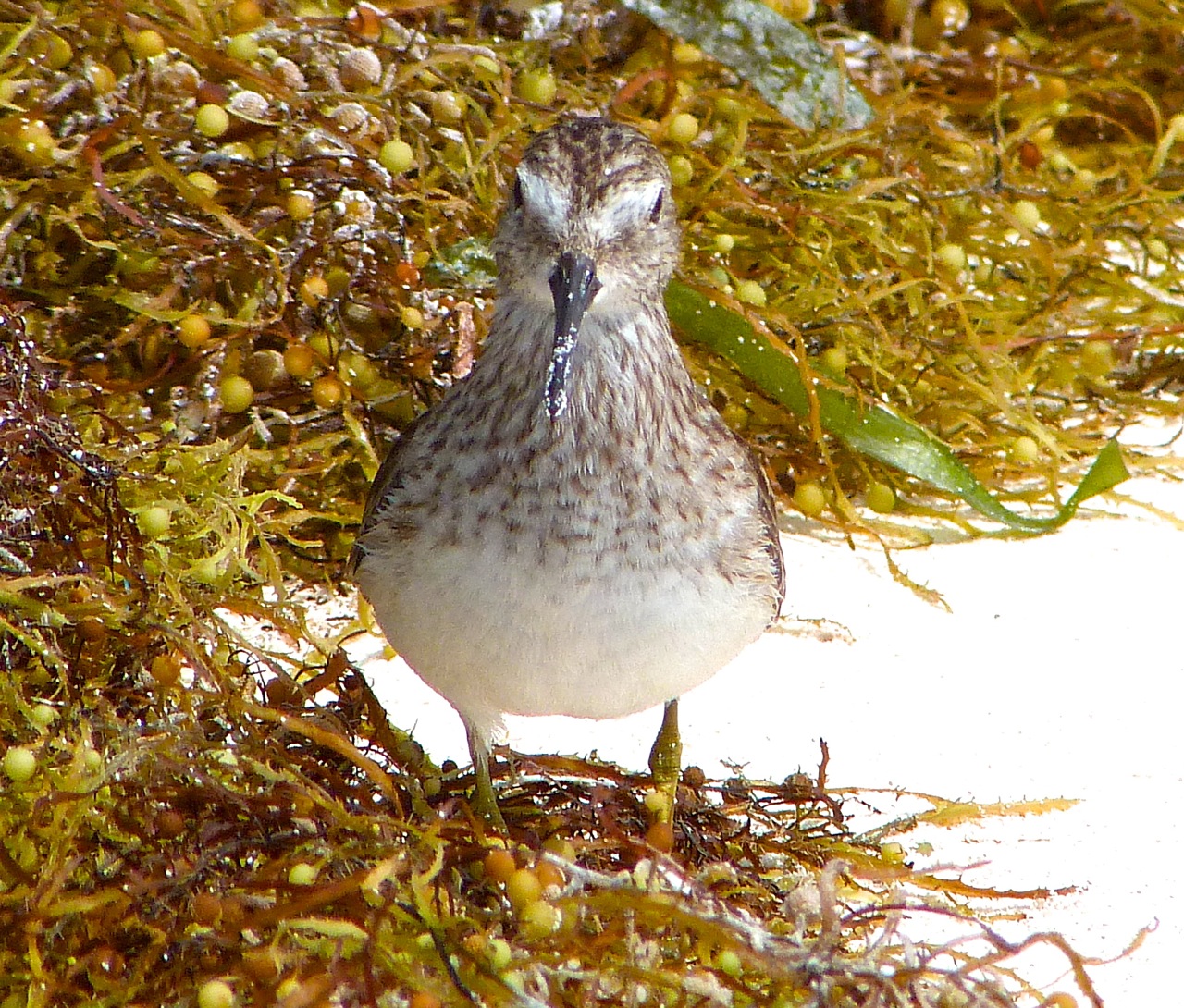
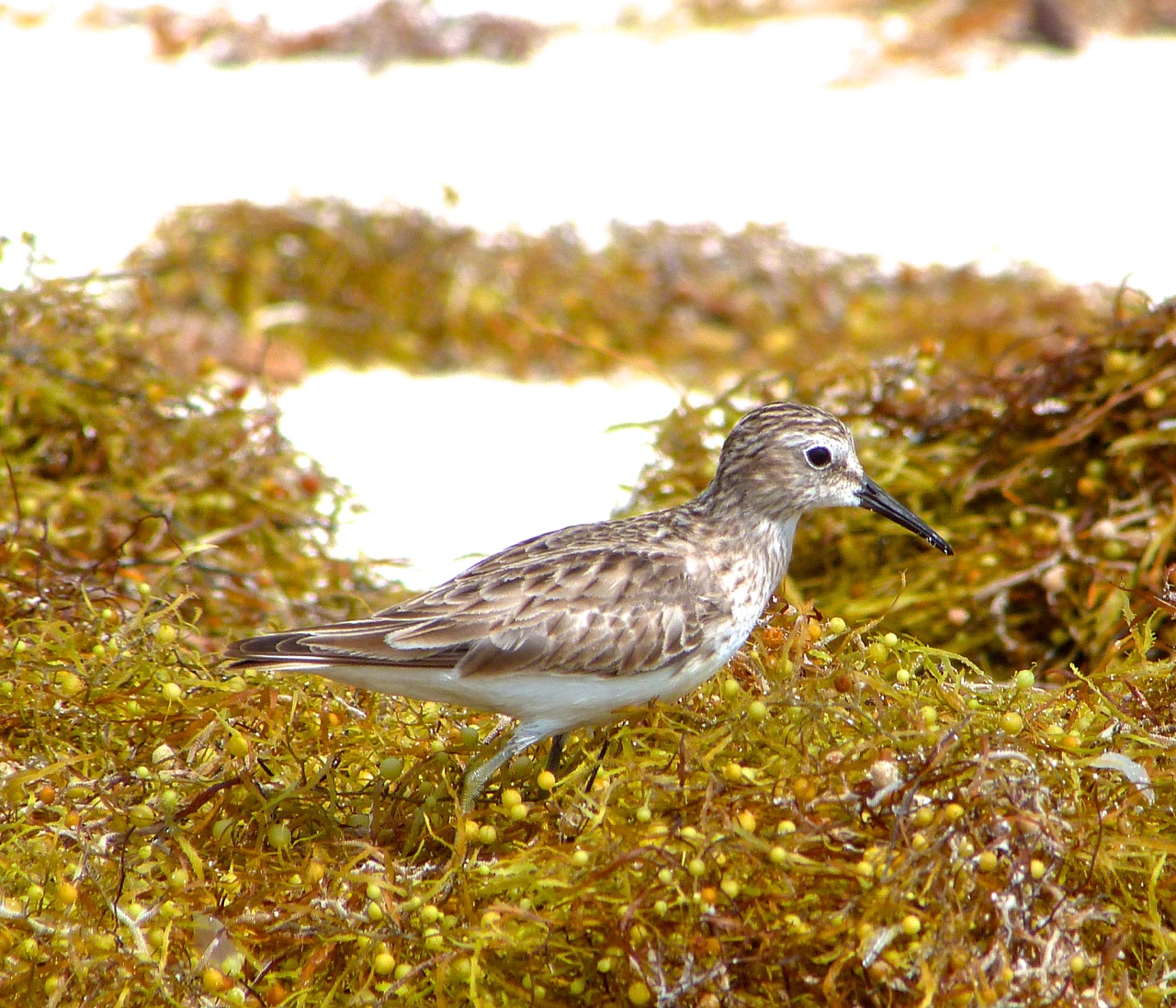
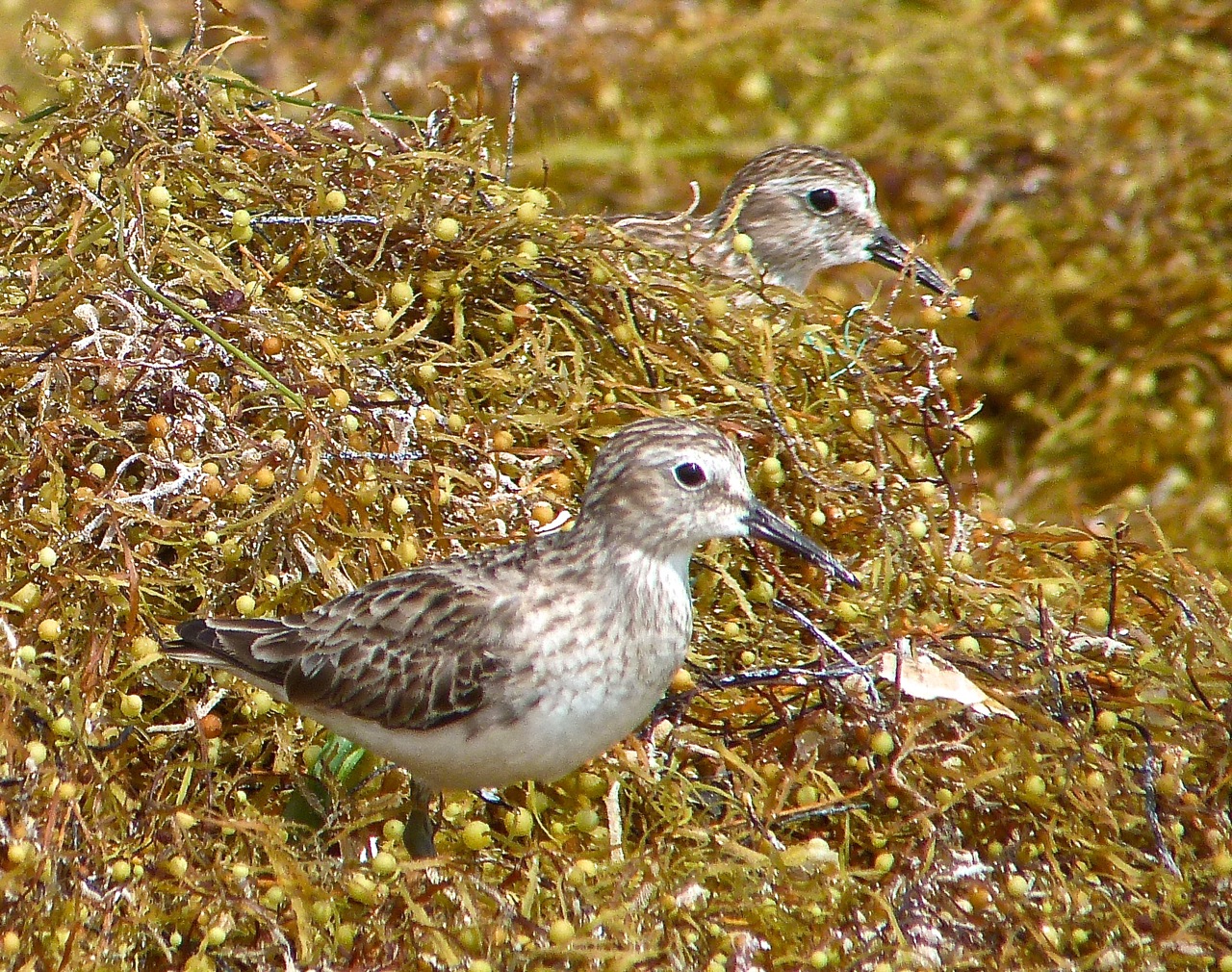
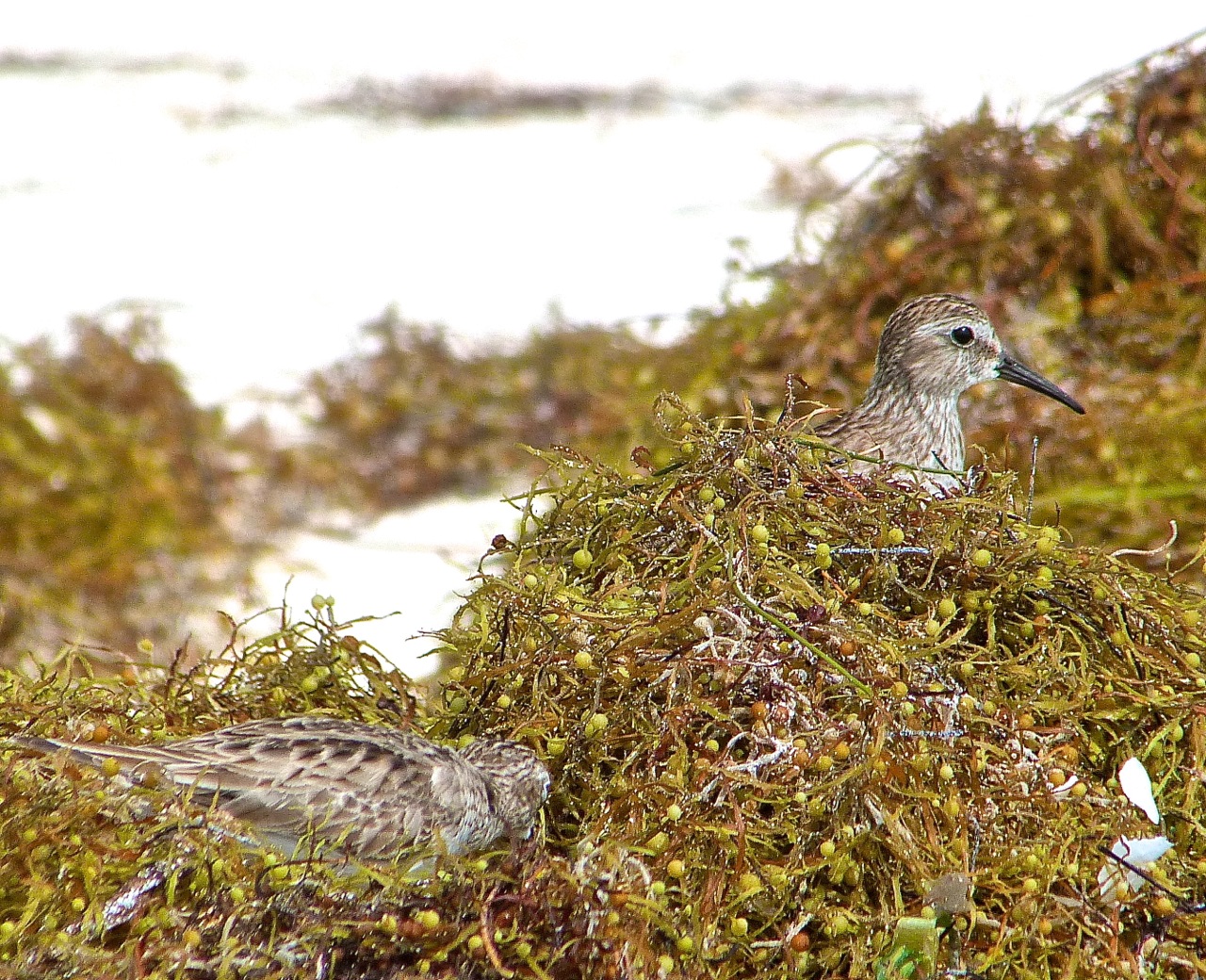
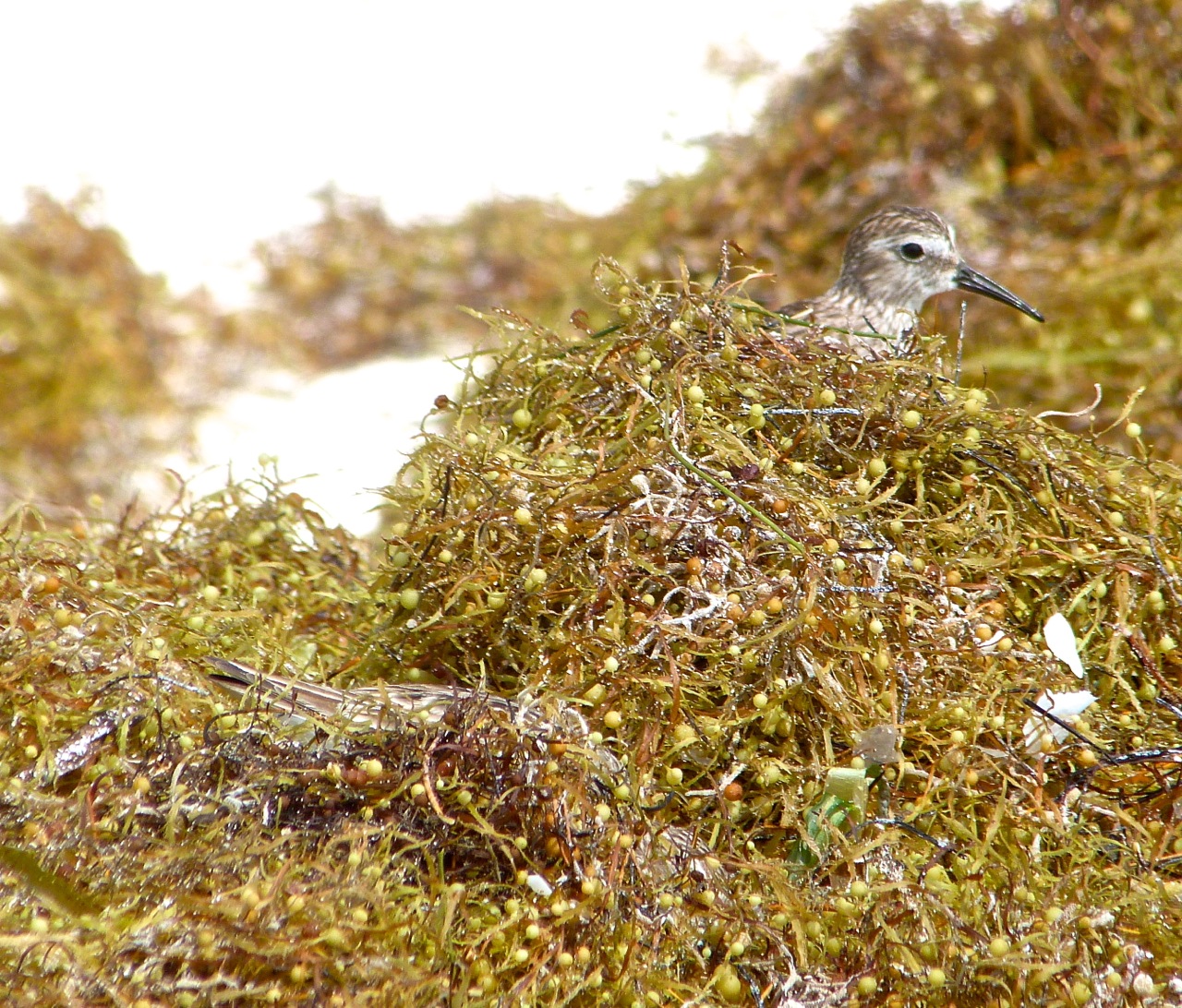
The LEAST SANDPIPER (Calidris minutilla) is the smallest shorebird, the definitive “peep”. An adult is only about 6″ long. They are to be found in pairs or groups, busily foraging in the sand and seaweed. Often they will mix in with other shorebirds. These birds nest in scrapes close to the water, with both parents involved in incubating the eggs. The female will usually leave the nest before the young birds fledge – perhaps (bizarrely?) sometimes even before the eggs hatch. Deal with it, male Least Sandpipers. Fortunately the hatchlings can feed themselves very soon, and are able to fly within two weeks of birth.
The “peep” call will no doubt be instantly familiar, although how to differentiate between the various types of sandpiper may be more of a problem… Here’s a short recording via Xeno-Canto (credit: Mike Nelson)
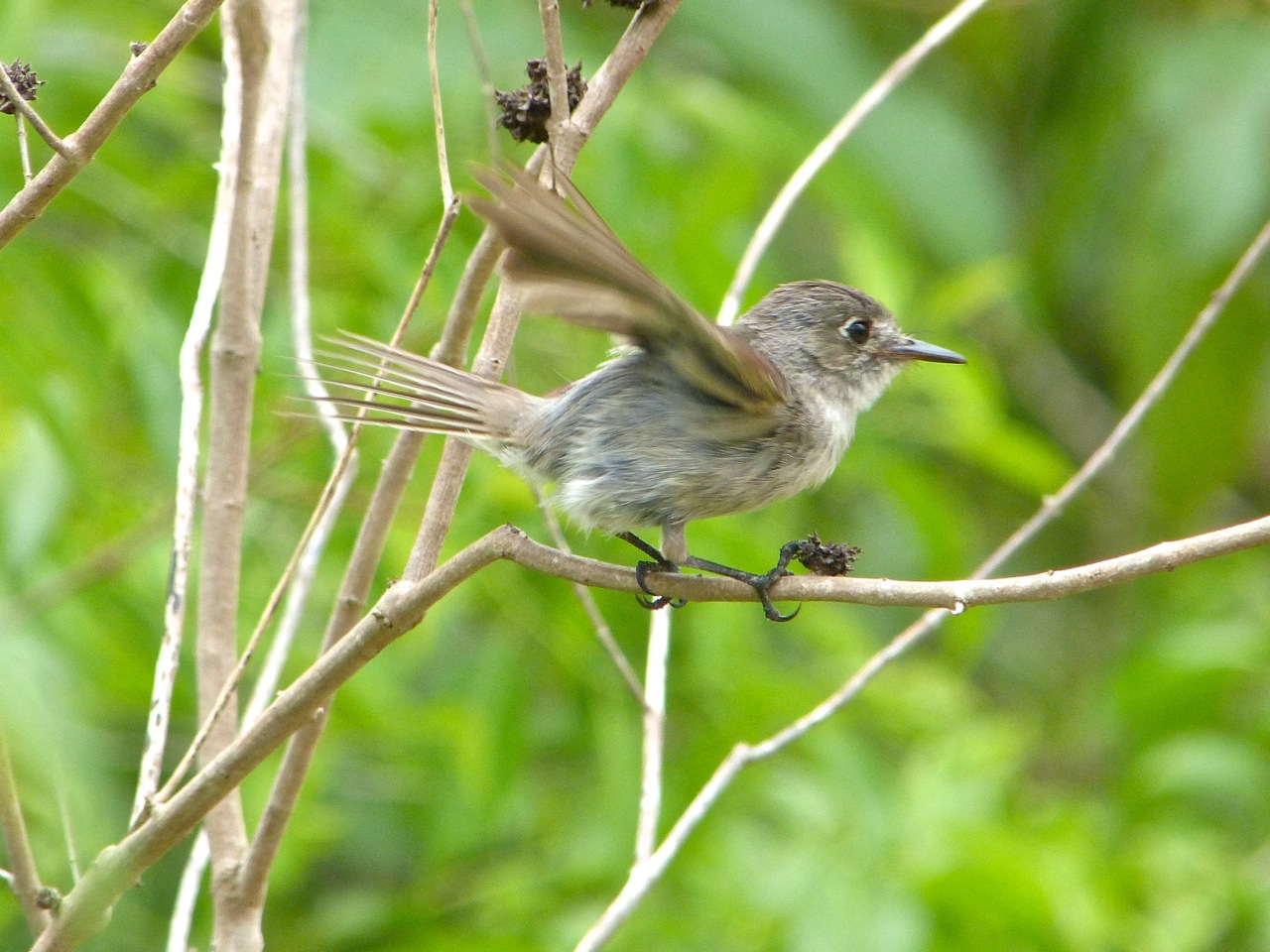
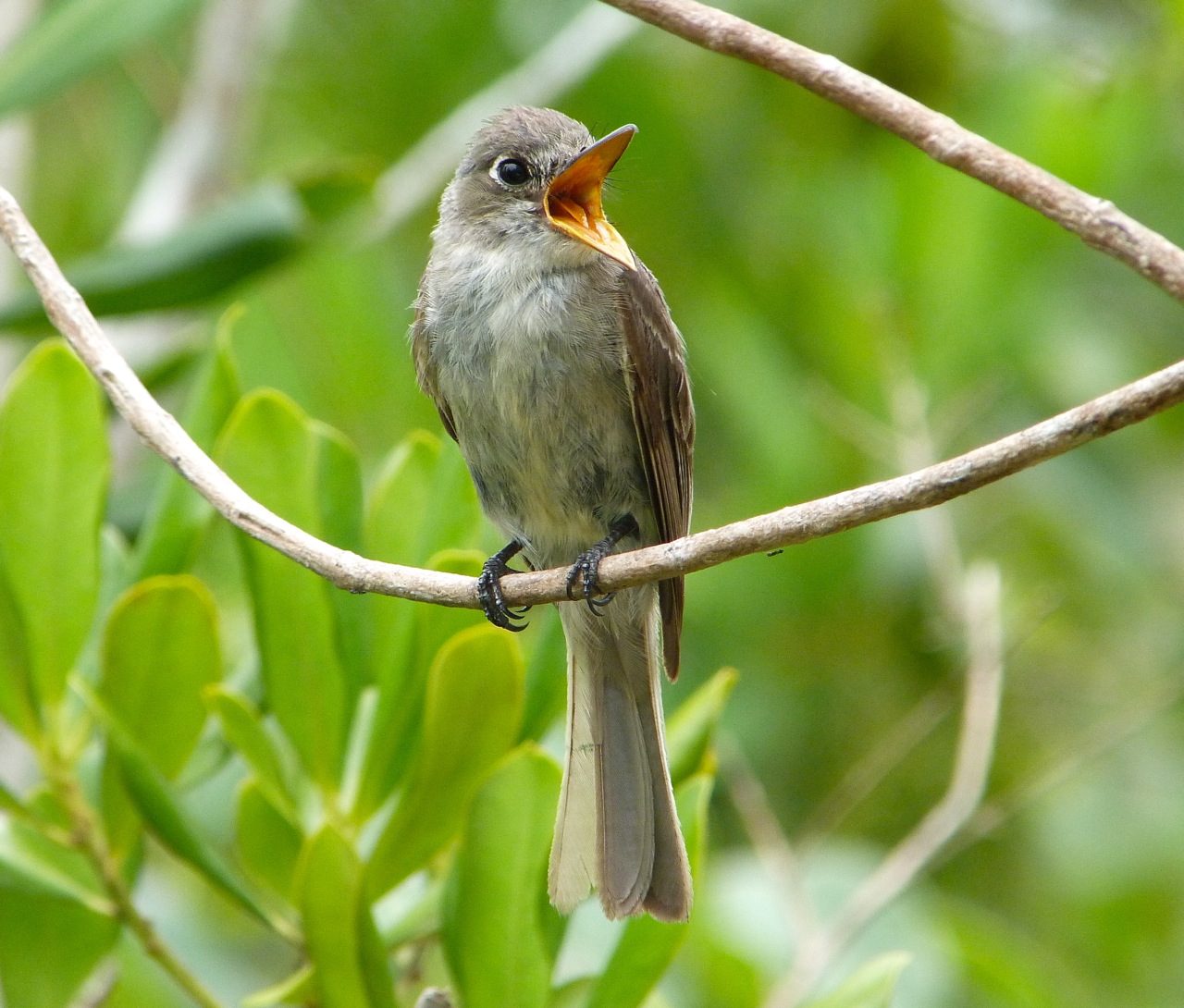
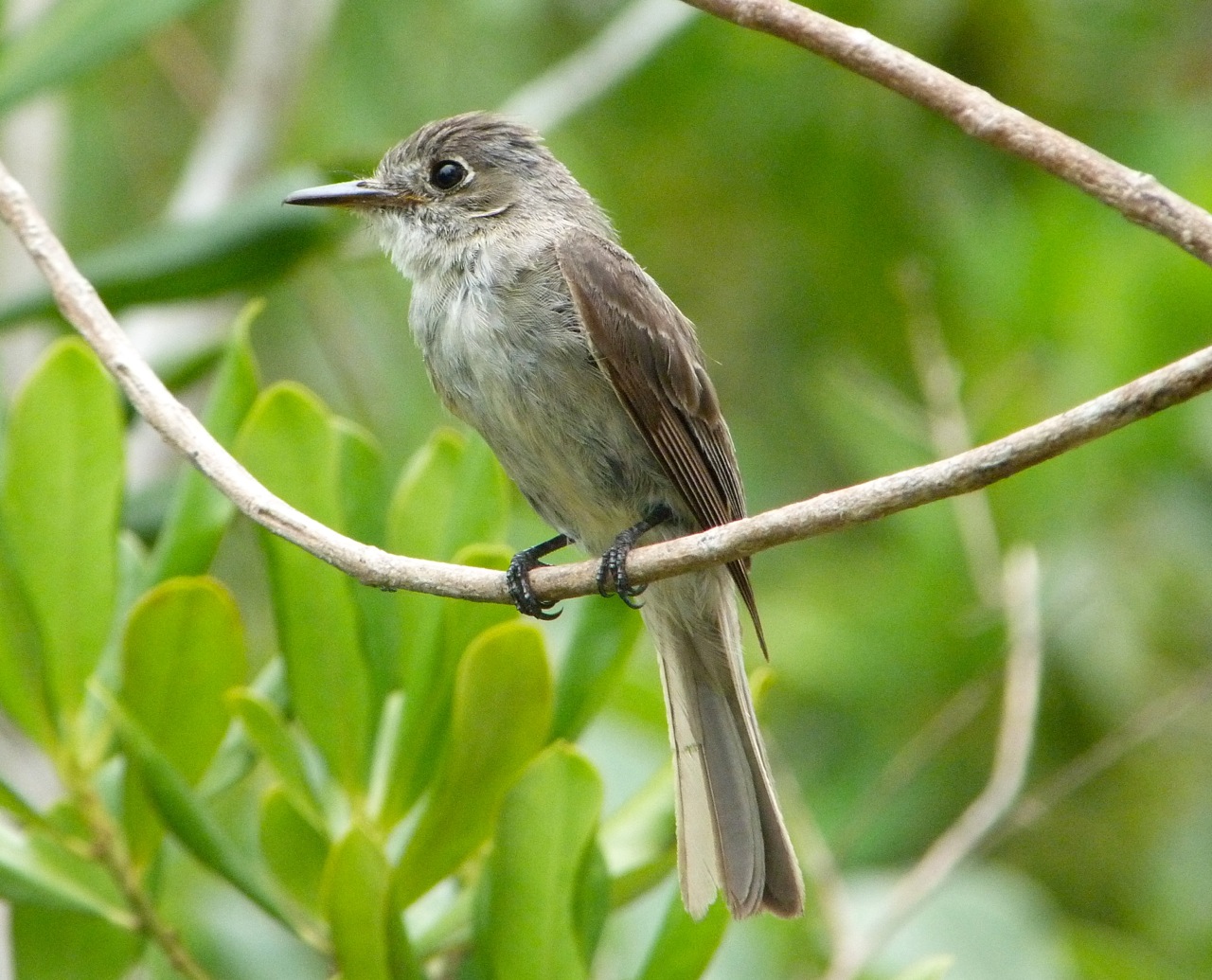
The CUBAN PEWEE Contopus caribaeus bahamensis, also known as the Crescent-eyed Pewee (see photos for details), is a tyrant. At 6″ long , the smallest tyrant you are likely to encounter in the Bahamas, but undoubtedly a member of the family Tyrranidae. These are the flycatchers, and include the larger LA SAGRA’S FLYCATCHER and the still larger Loggerhead and Gray Kingbirds. The Cuban Pewee is permanently resident on Abaco, and can be found in both pine woods and coppice. When returning to its perch after a flycatching sortie, this bird gives a characteristic flick of the tail.
The little bird below was in the edge of the coppice bordering the long sandy beach at Casuarina. Bruce Hallett, in his essential book ‘Birds of the West Indies…’ notes that Cuban Pewees are ‘usually approachable’, so I decided to test this out. I was about 20 feet from the bird when I first saw it. By sliding one foot forward in the sand and pausing before moving the other foot, I got to within 5 feet of the bird, while it watched my approach with apparent indifference. Unlike some creatures, it did not seem discomfited by eye-contact. It responded when I made a faint clicking sound by rather sweetly putting its head on one side. Then it began to fidget slightly – possibly feeling camera-shy. So I shuffled slowly back so as not to disturb it in its own territory.
The close-ups at the end clearly show the tiny hooked tip at the end of the upper beak – I imagine this somehow relates to the business of catching flies. Like other flycatchers, the Cuban Pewee has very distinctive whiskers around the base of the beak – again I presume this assists with feeding in some way, perhaps helping to sense the approach of an insect. Any expert views welcome via the comment box.
It’s occasionally tempting to anthropomorphise such close encounters in terms of imputed human / creature empathy. Much best to resist that. But as I withdrew, leaving this little bird undisturbed on its branch, I did experience a strange feeling of… [I must interrupt myself here. I’m a lawyer, so that’s quite enough of that sort of nonsense]
BFGs. Birds of the coppice, garden, feeder… and beach (see below). I posted some images last year HERE and now I have a few more, taken recently. Although their name is promising at first glance, the Title pun-value of these little birds is low, so I’ve left it… While the males are indeed black-faced, and often -chested too, the females are a drab brown. Until you look closely. Then you’ll see the olive shades, and the pretty yellow streaks on the wings.
A YOUNG FEMALE BFG ENJOYING THE BEACH AT TREASURE CAY



























































 ROLLING HARBOUR ABACO
You must be logged in to post a comment.