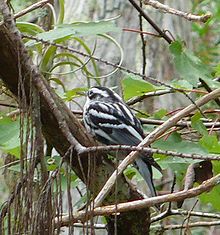
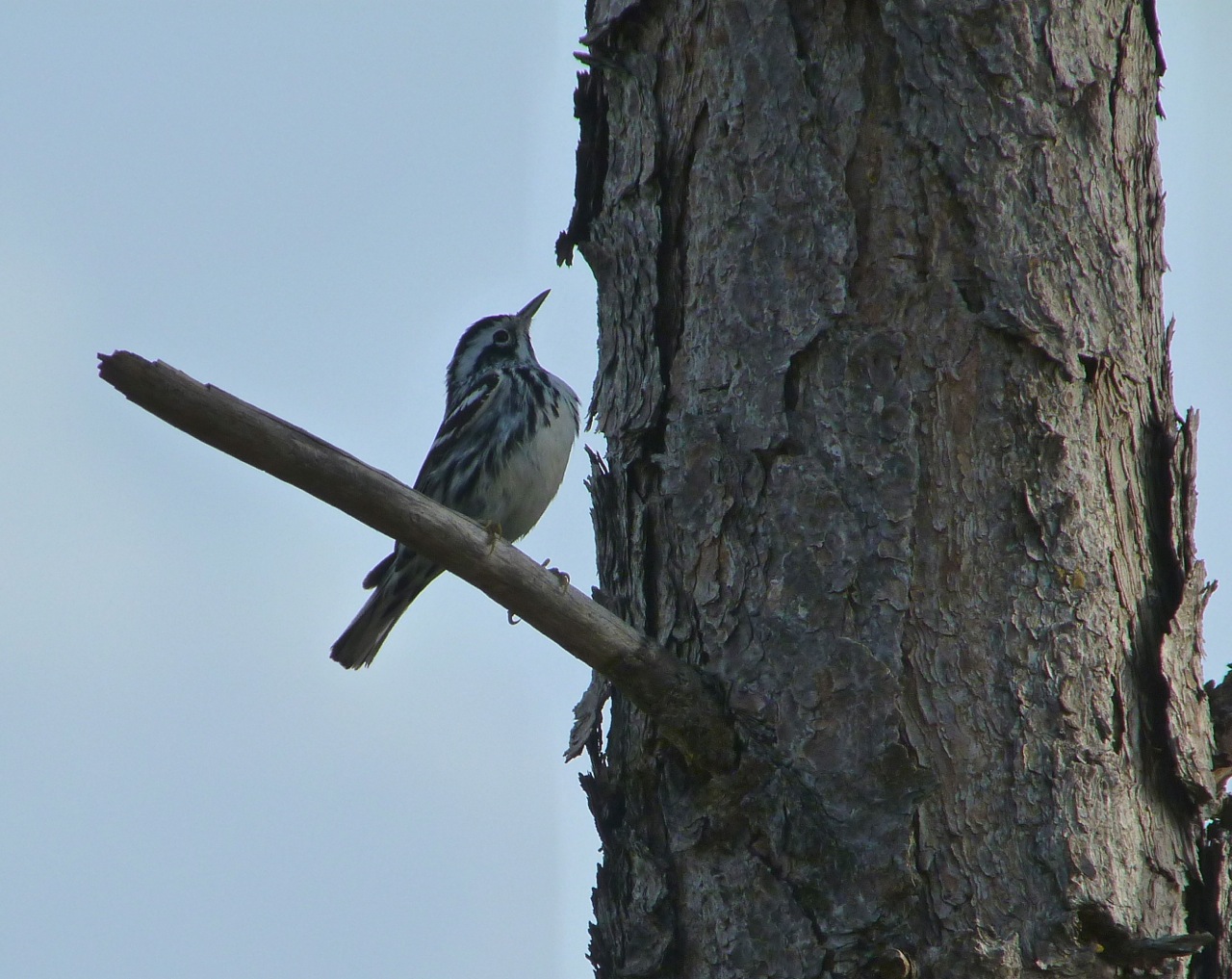
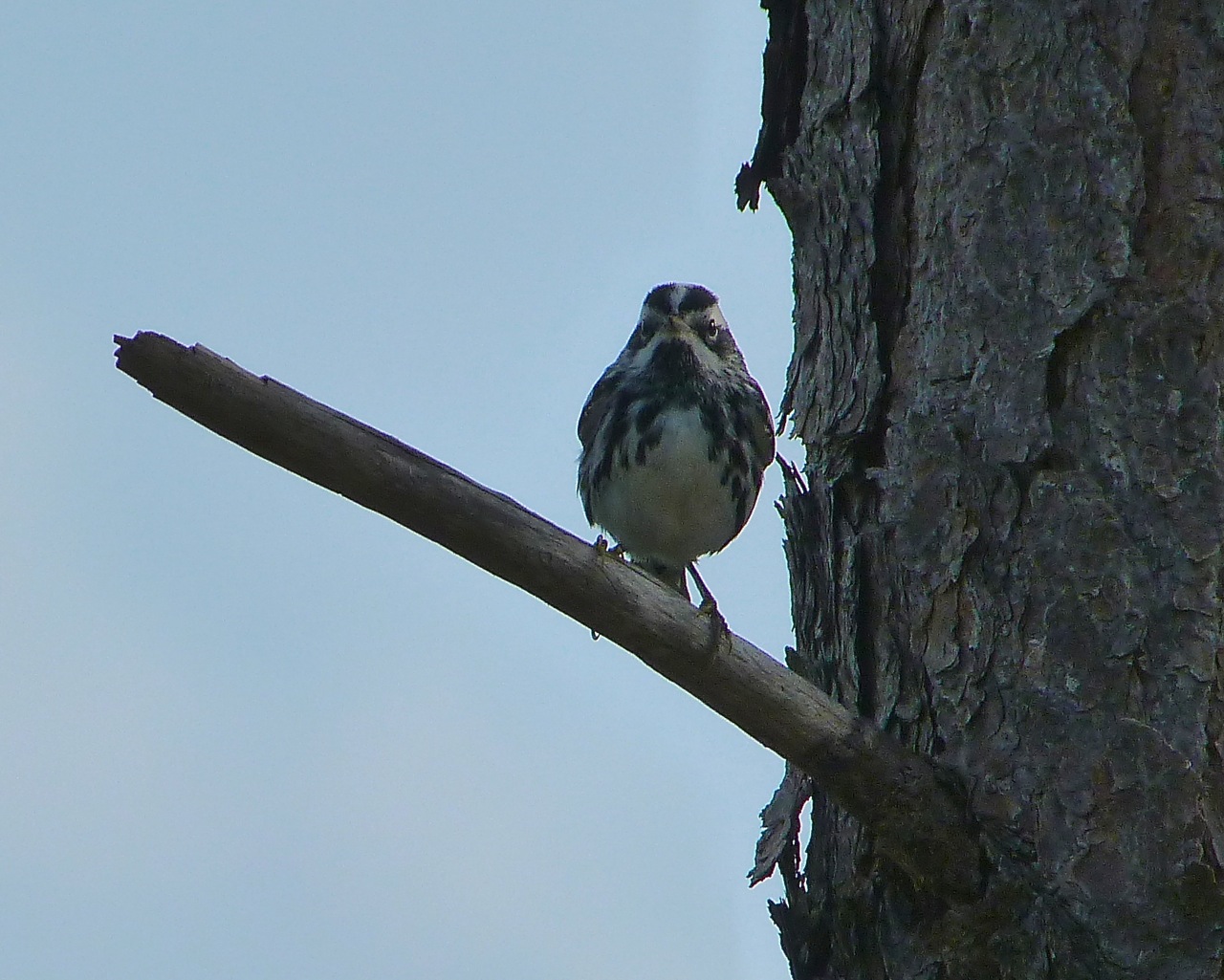
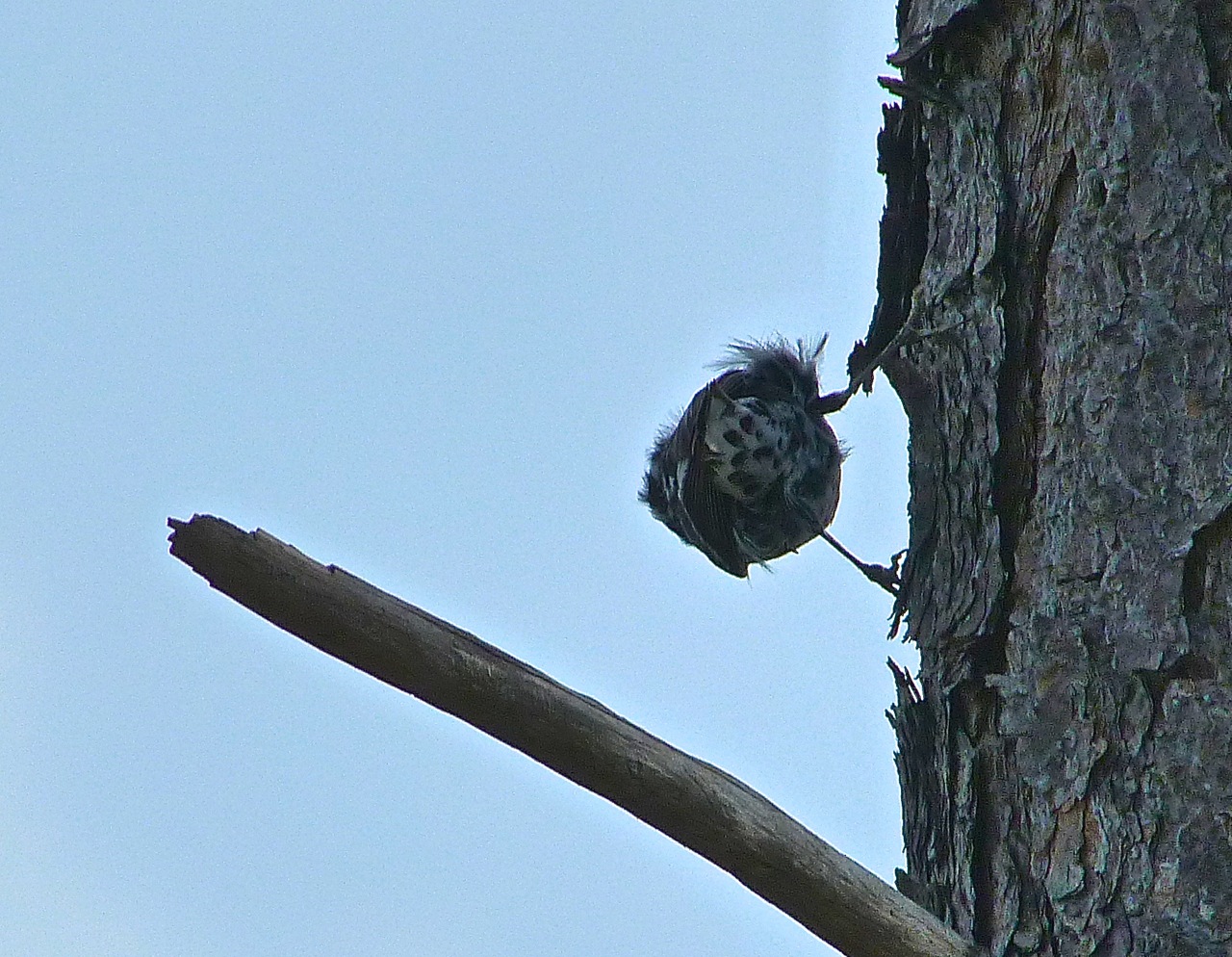
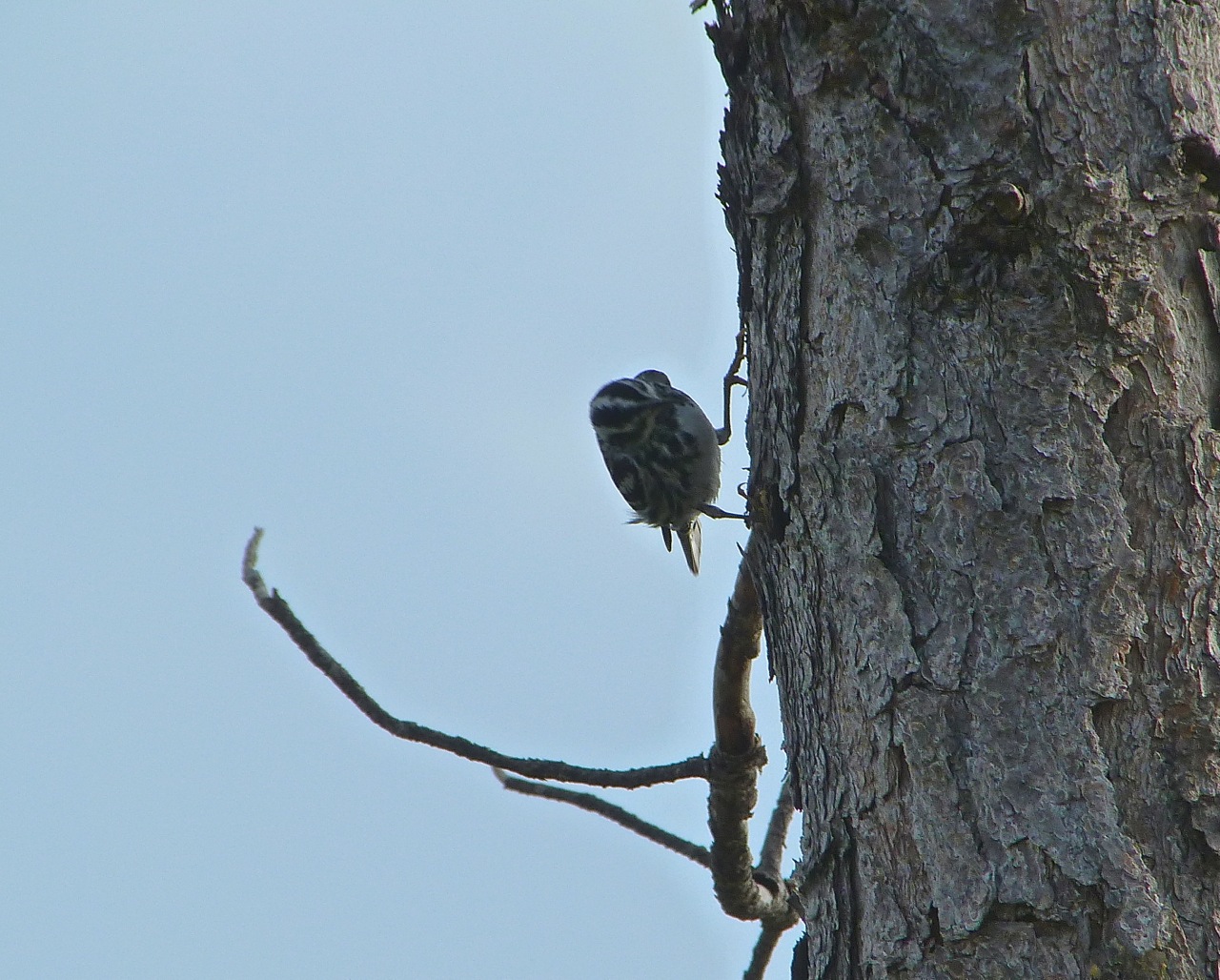
By no stretch of the imagination are the images below very impressive. Sorry about that. The wonder is that we noticed this little bird at all – also, that it stayed still for long enough for me to get a bead on it. I credit the sharp eyes of Mrs RH (from whom little is hid) for spotting a fleeting movement on a pine trunk along the Delphi drive. Unlike any other warbler, these small birds feed in the manner of nuthatches or tree / brown creepers. They run rapidly up and down tree trunks and branches foraging on insects in the bark with their sharp little beaks.
Summer & Winter Ranges
IUCN status
The next 2 photos (yes, I agree, they’re not very good, nor taken – the top one, anyway – from an elegant angle) are included to demonstrate the remarkable length and dexterity of the bird’s legs. During the minute we watched it before it flew off, we noted this characteristic legs-splayed ‘pausing pose’ several times.
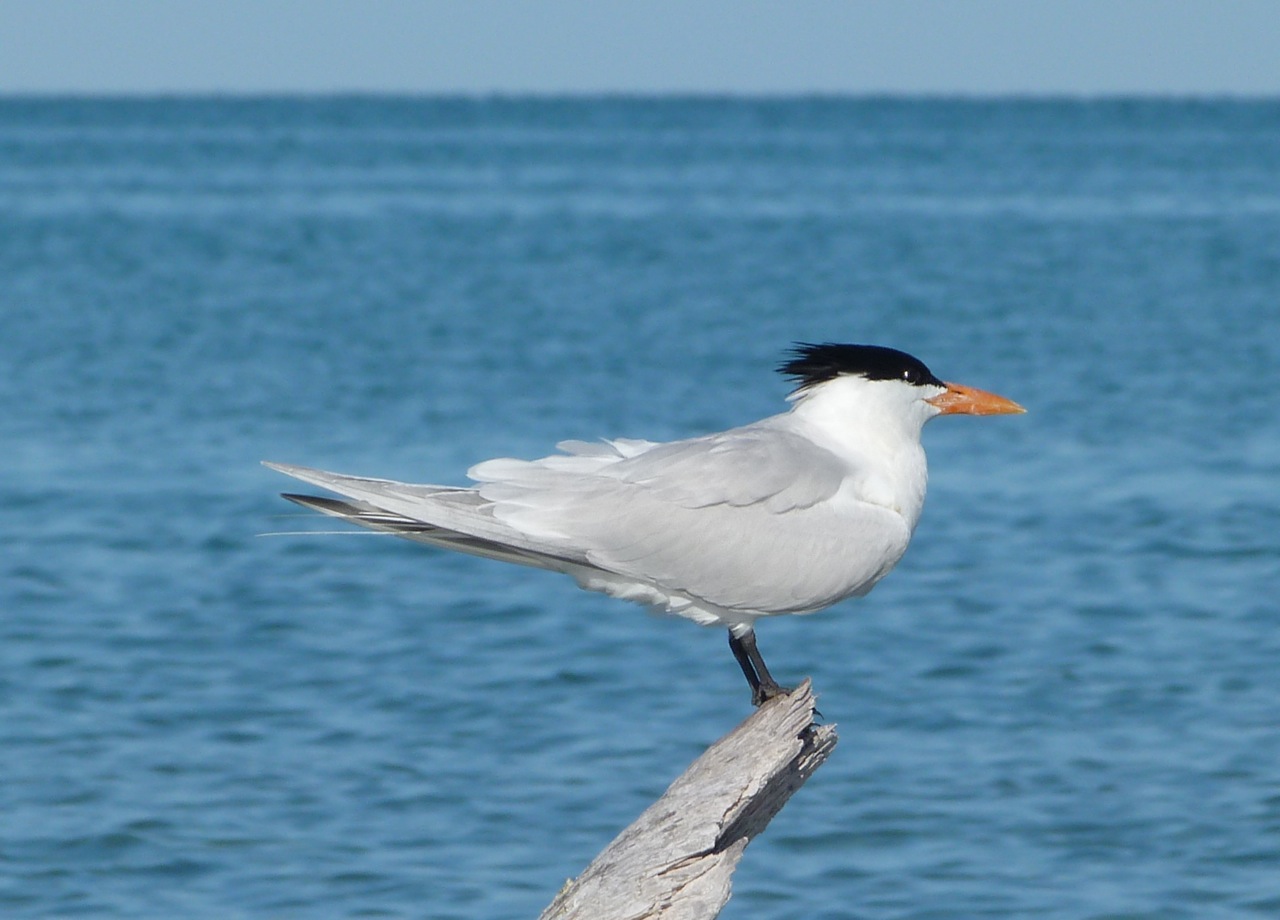
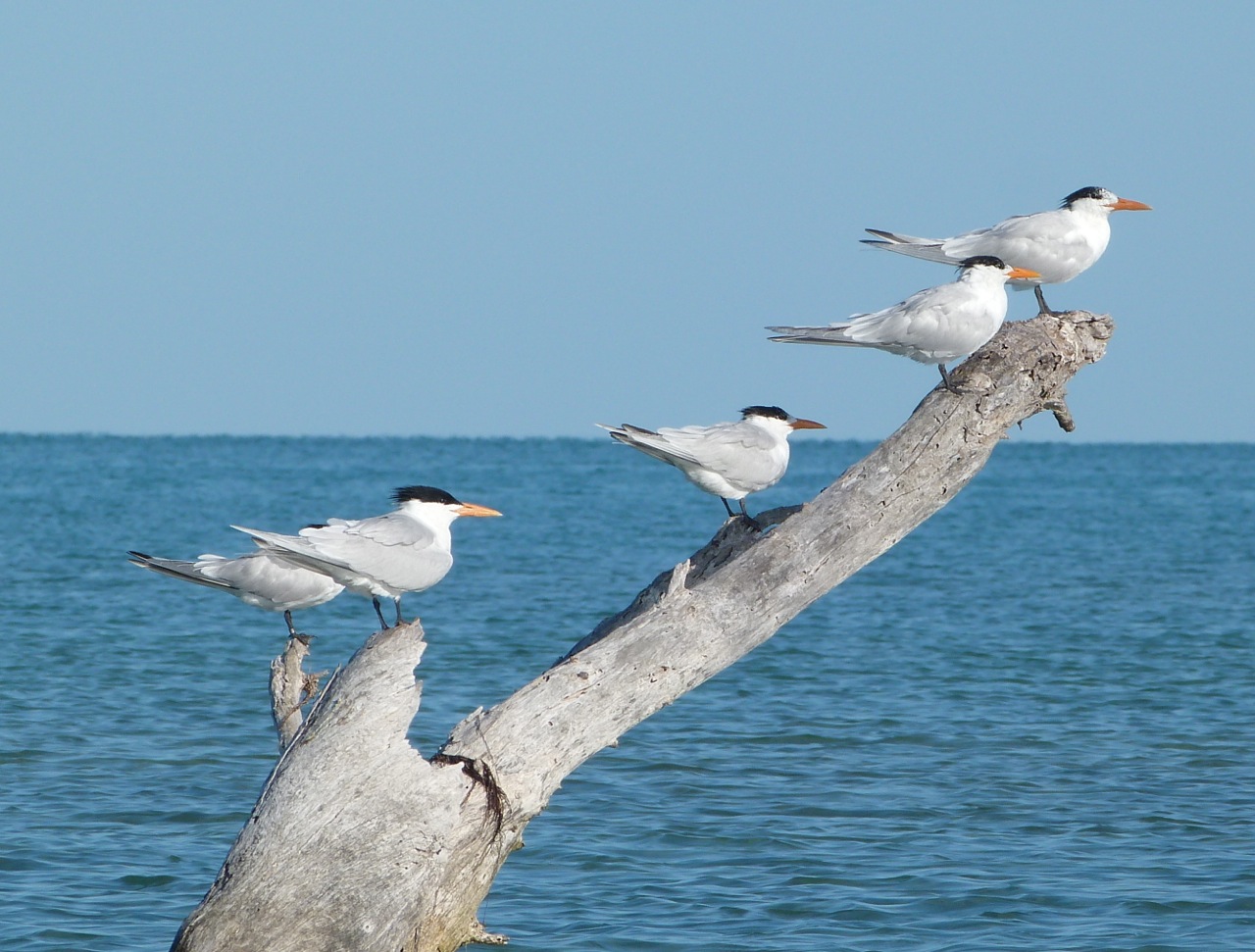
We passed these fine Royal Terns during the boat ride ride out to the bonefishing grounds of the Abaco Marls. The single dead tree lay alone in a vast expanse of open water near the mangrove swamps, providing a perfect perch and vantage point for the birds. Their positioning on the tree suggested a distinct “pecking order”, which turned out to be literally true. The terns were unembarrassed by our presence, but at one stage they all took off and circled lazily round once before settling back on the tree. Those that tried to take a higher perch were aggressively treated by the original occupant. In the end, things settled down much as before. However, one disappointed claimant to promotion was dispossessed of the main trunk entirely. He ended up, uncomfortable and huffy, on a small stump facing the opposite way to the rest of the birds – perhaps from wounded dignity, or to make his feelings known through body language….
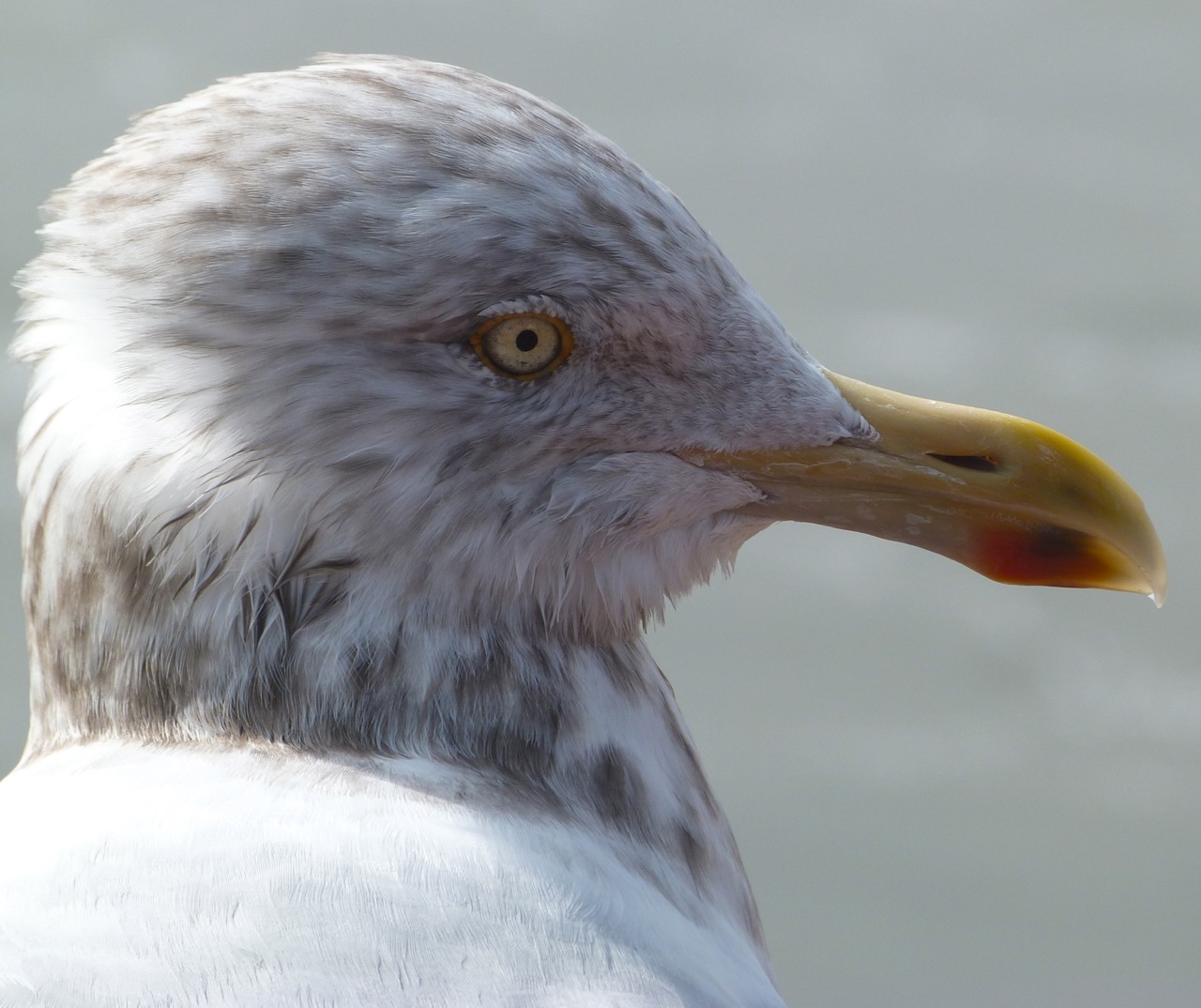
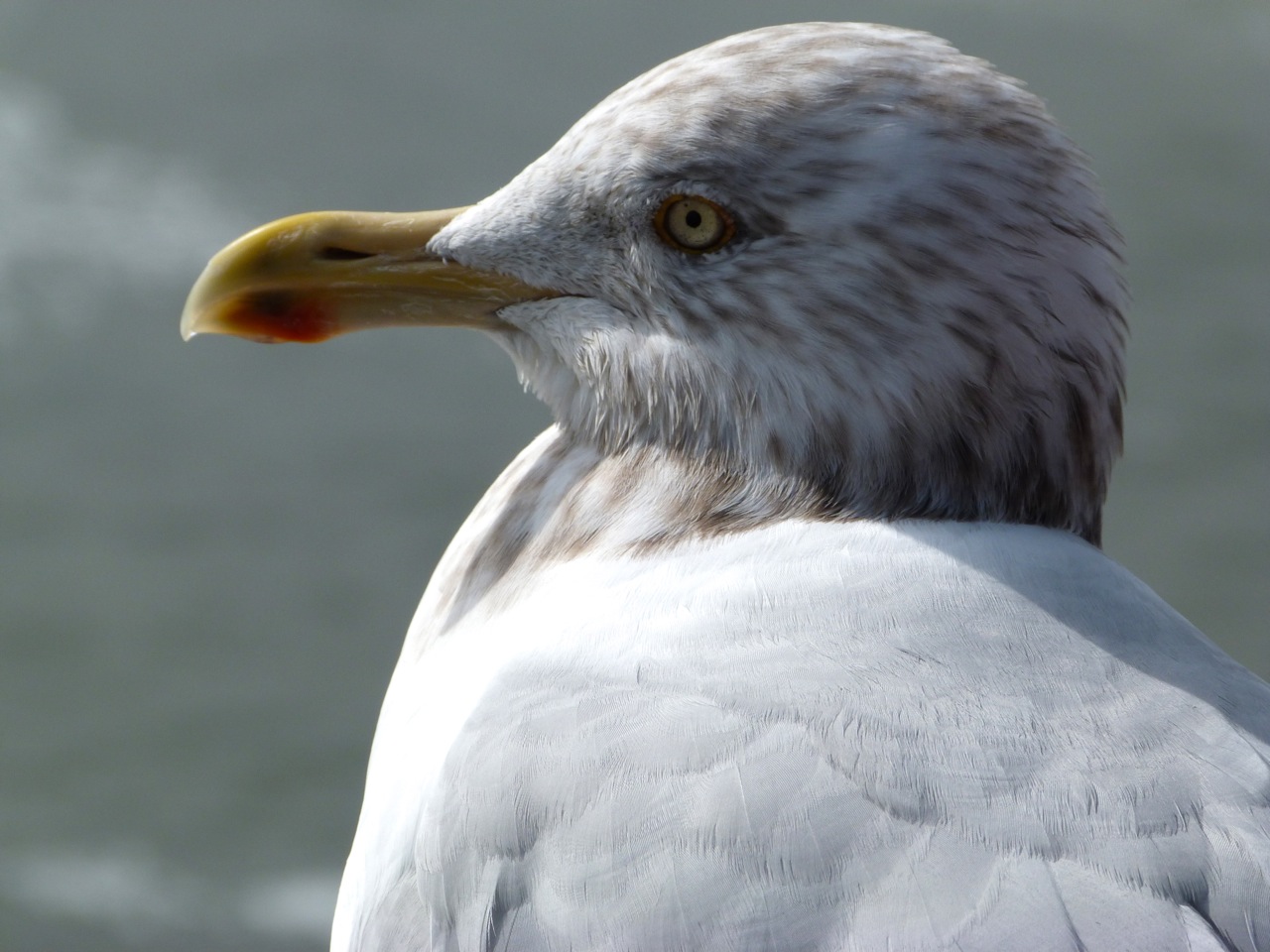
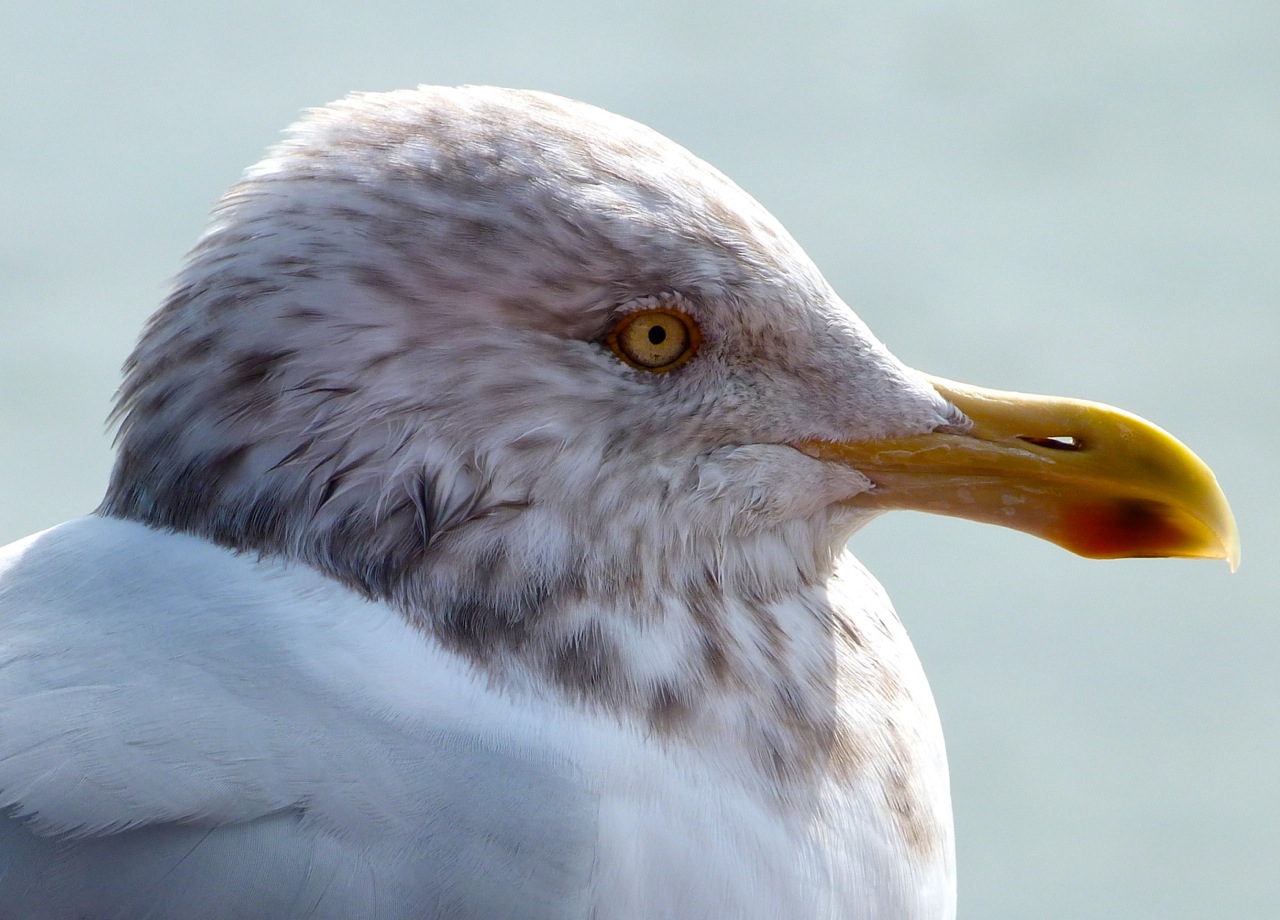
The Herring Gull needs no introduction. So I won’t give it one. Instead, here are some close-ups of one that obligingly stayed still long enough, and at close enough range, to enable me to focus. The final two are possibly worth single- or double-clicking on to see the finer details. I prefer cooperative birds like this…
HERRING GULL IN FAMILIAR ‘BOAT POSE’Note the characteristic crossing of the black-and-white wing-tip feathers
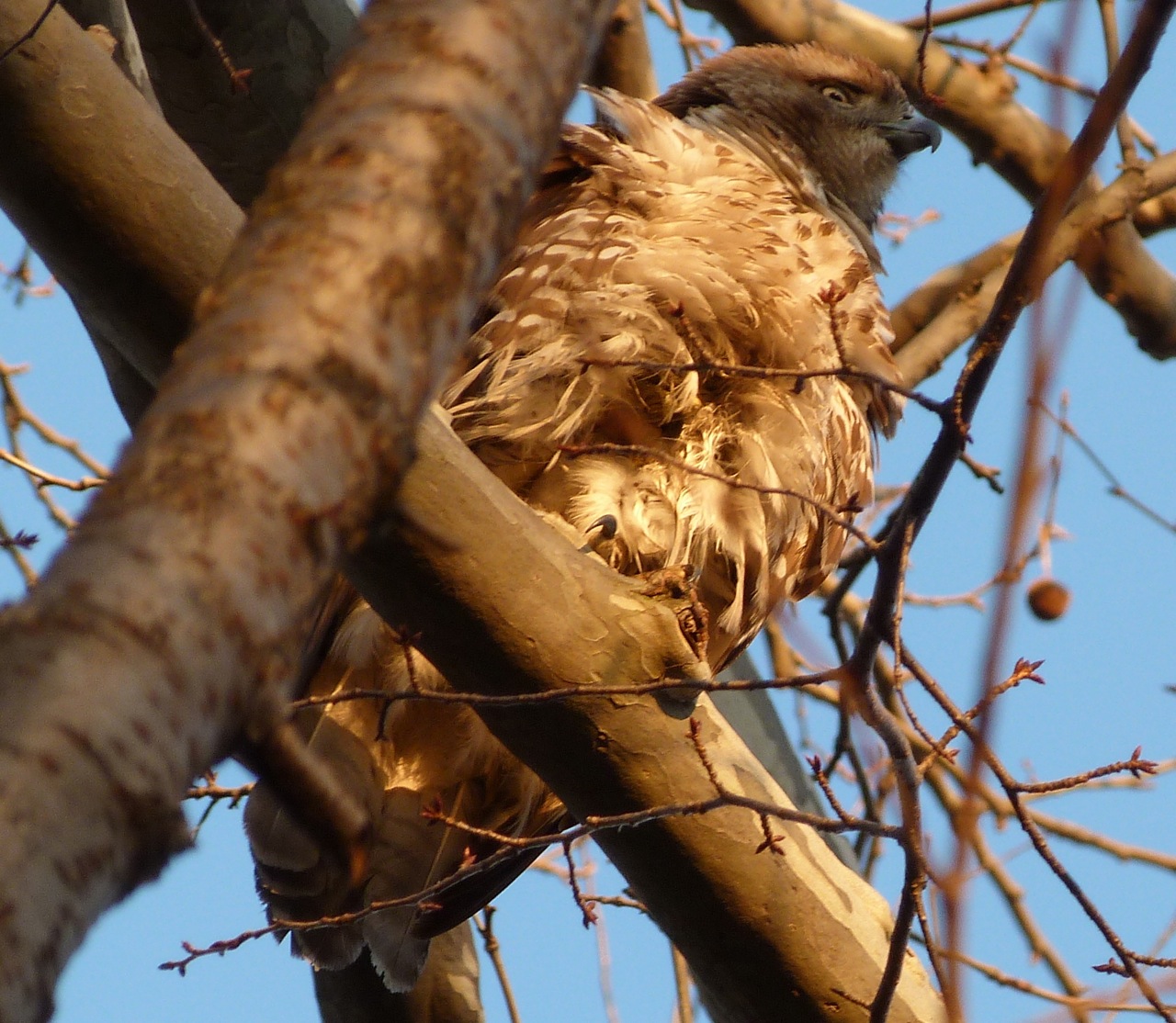
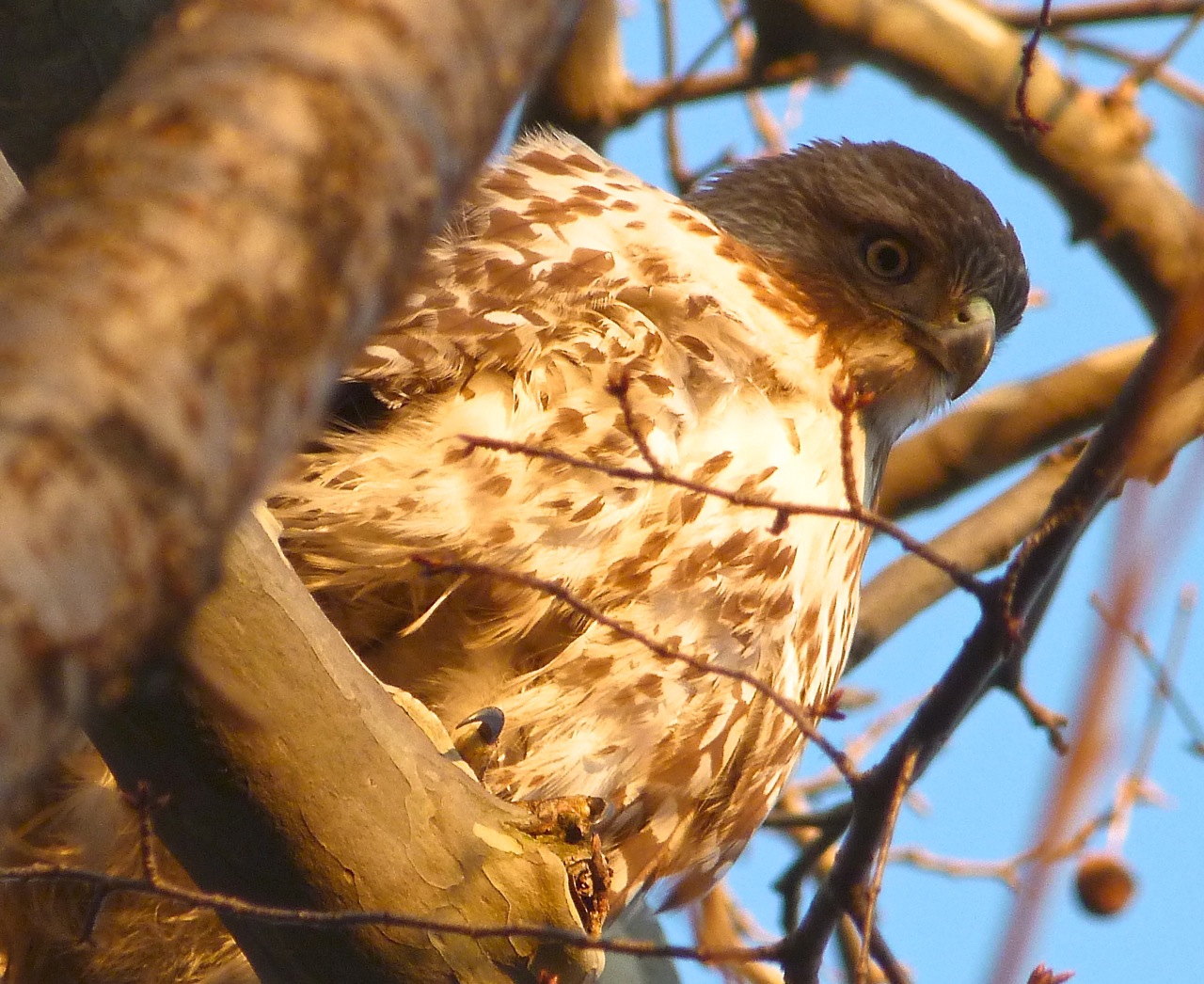
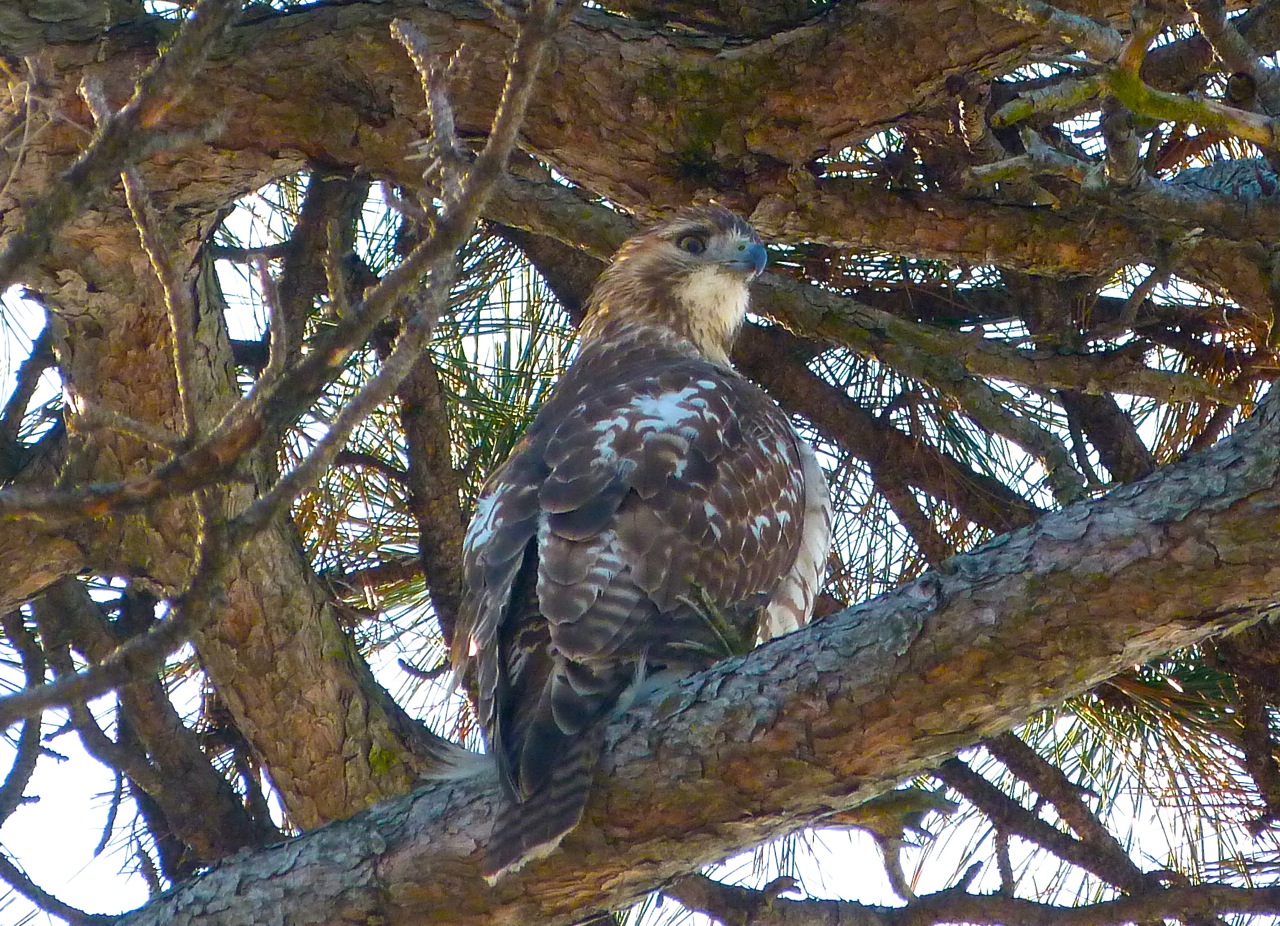
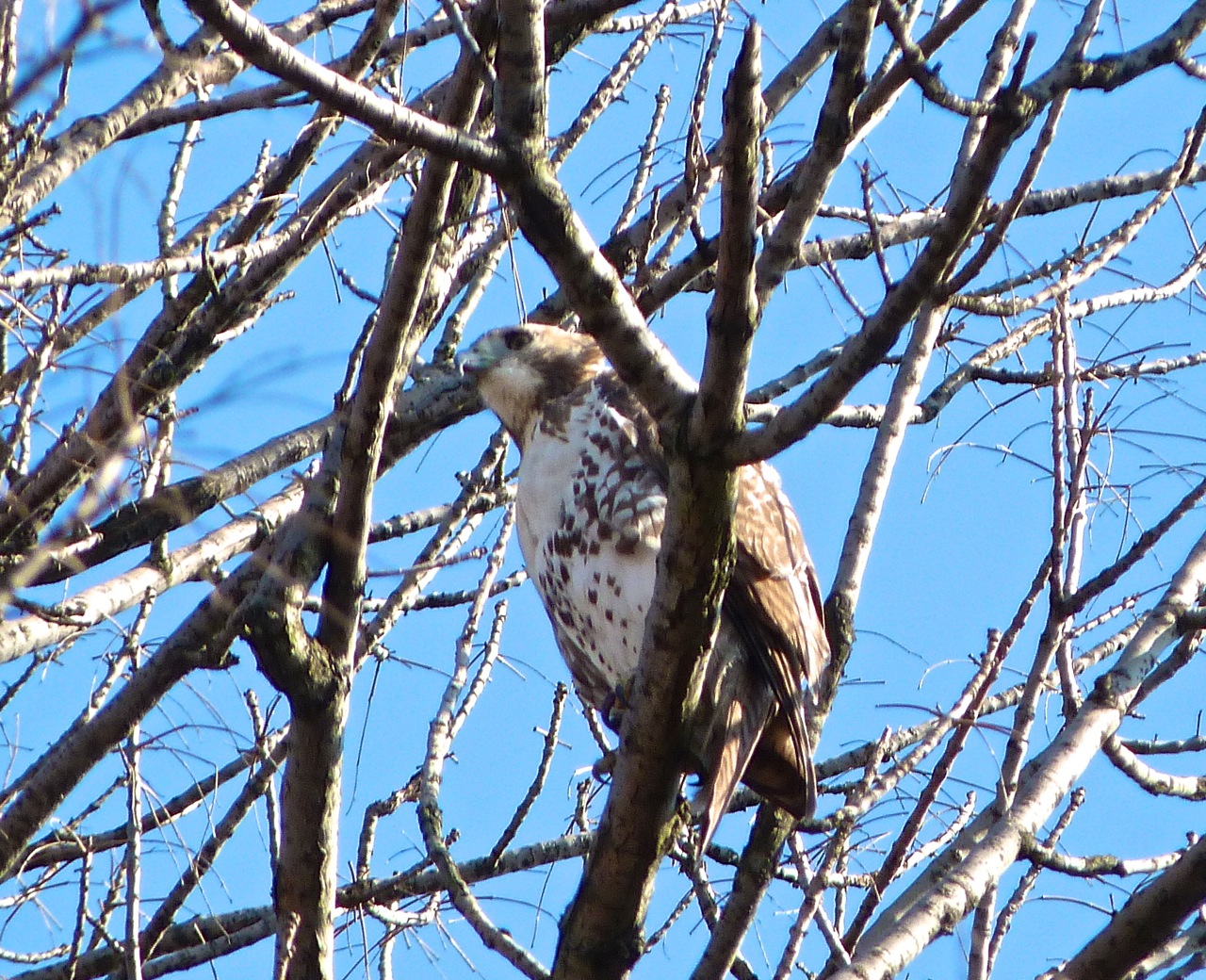
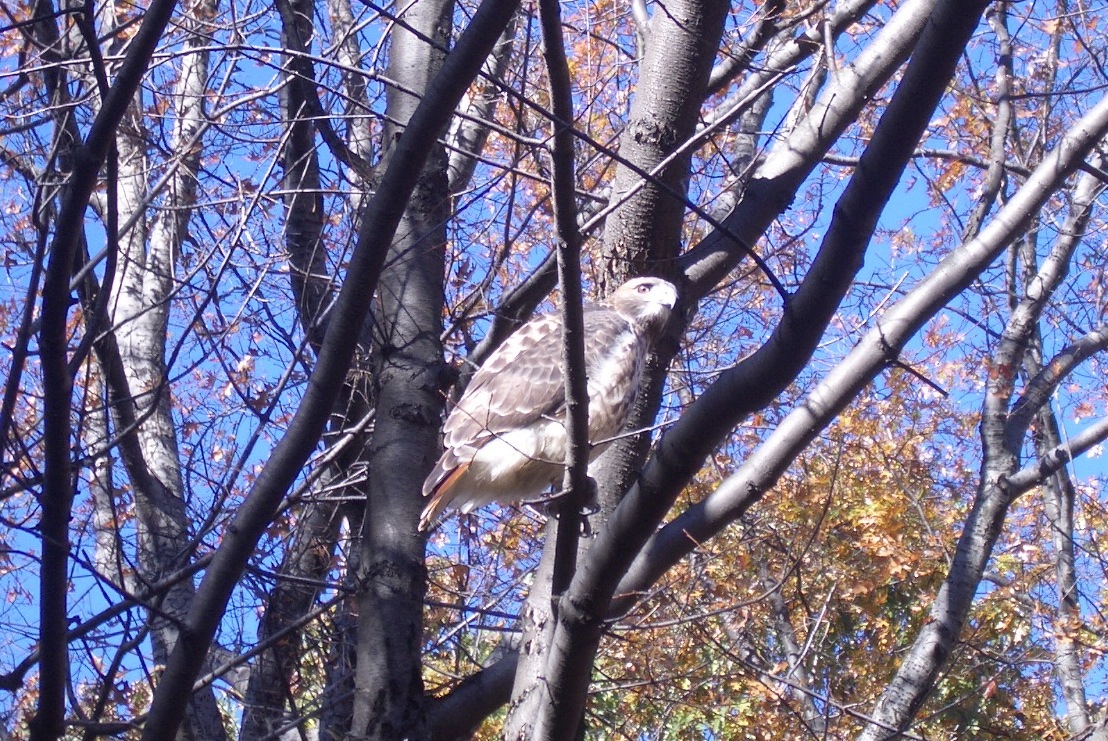
Red-tailed hawks are one of the commonest and largest BUTEO speciesin North America, the Caribbean and further afield. There are fourteen widely-distributed subspecies. Their omni-habitat flexibility helps to maintain their prolific populations. They are equally at home in forests, grassland, open country, desert and even cities, at most altitudes.
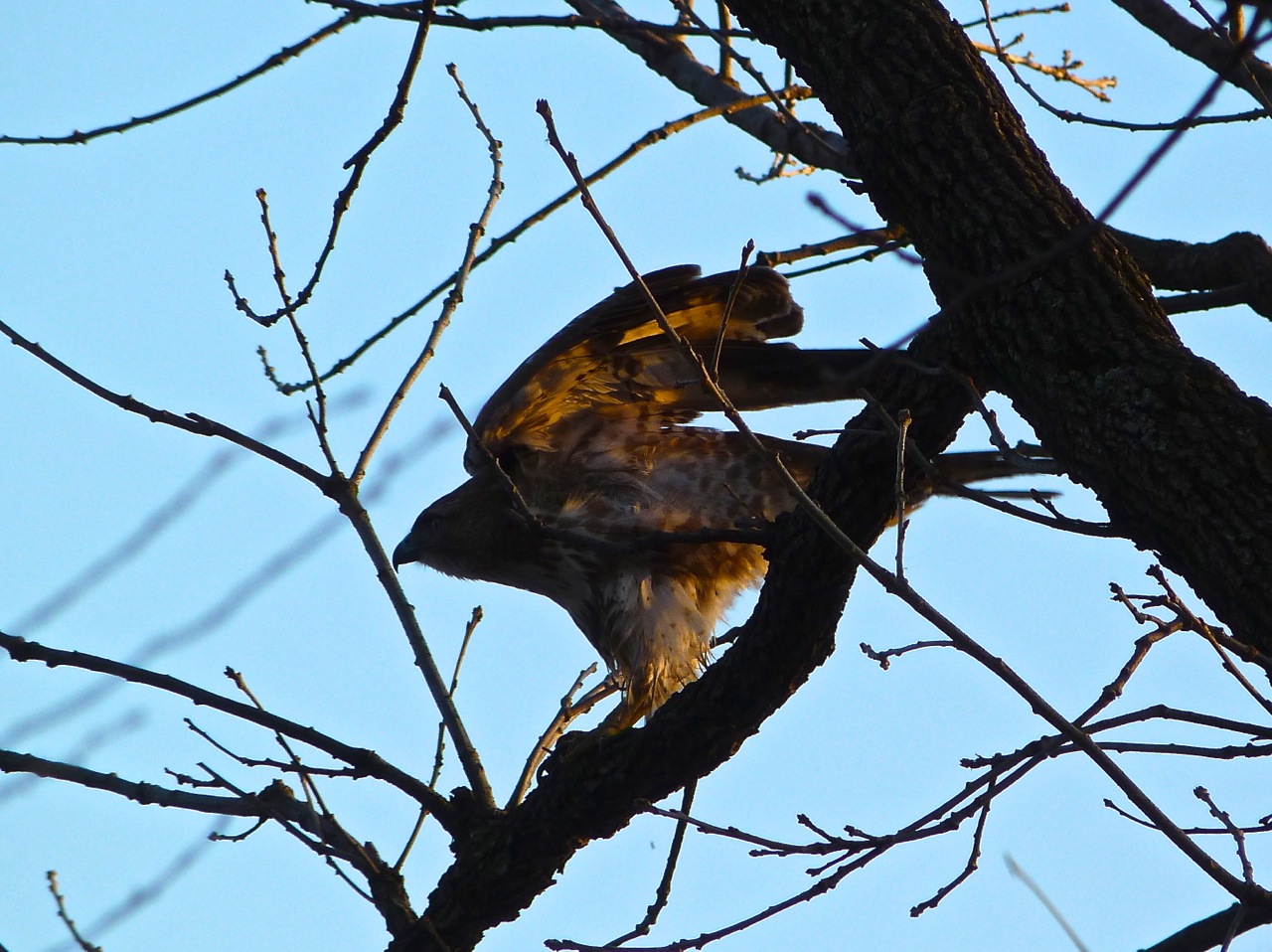
This red-tail is preparing for flight. It had been sitting upright (see above), scanning for prey. Suddenly it hunched forwards, poised for take-off, the light of late afternoon sun catching its leg feathers. Moments later it raised its wings and was gone in an instant – the next photo an unusable blur of feathery speed.
6 RED-TAILED HAWK FACTS TO STARTLE YOUR AUNT WITH
1. The RTH displaysSEXUAL DIMORPHISMin size – females average 25% heavier than males
2. Immature birds have yellowish irises. As the bird matures the iris darkens to a reddish-brown hue
3. They are easily trained to hunt: most hawks used for (tightly regulated) falconry in the US are Red-tails
4. They use tall trees, high rocks, utility poles or buildings as perch sites to scan large areas for prey
5. City hawks helpfully prey on rock pigeons and rats. ROSIE lives in Washington Sq NYC & has a web-cam
6. One urban RTH, known as PALE MALE, became famous as the first Red-tail in decades to successfully nest and raise young in Manhattan. He was immortalised by MARIE WINNin her bookRed -Tails in Love: A Wildlife Drama in Central Park [RH Note: Good read]
6 RED-TAILED HAWK FACTS TO SURPRISE YOUR UNCLE WITH
1. The fierce, screaming cry of the RTH is often used as a generic raptor sound effect in TV shows & films
2. Eggs are incubated primarily by the female. The male helps out when the female leaves to hunt or stretch her wings. The male brings food to the female while she incubates
3. RTH young are known as eyasses (“EYE-ess-ez”), a falconry term for a raptor still in its downy stage
4. About 6 / 7 weeks after fledging RTH young begin to capture their own prey. They reach breeding maturity around 3 years of age
5. Red-tailed Hawks can live for more than 2o years – the oldest recorded was 29
6. RTH feathers are considered sacred to many American indigenous people. The feathers of the RTH are regulated by the “Eagle Feather Law” which governs possession of feathers and parts of migratory birdsAFTERWORD These photos were all taken recently in New York, in Central Park (The Ramble, a birding hotspot) and in Prospect Park, Brooklyn. They are therefore a bit of a cheat in a website based mainly on Abaco. But I have never managed to photograph a RTH on the island, so these pics are illustrative of what I might have photographed had I (a) seen a RTH (b) had my wits about me (c) for long enough to find my camera (d) to photograph it before it flew away (e) and sufficiently well to be able to use the result[Header and due credit to Wiki]
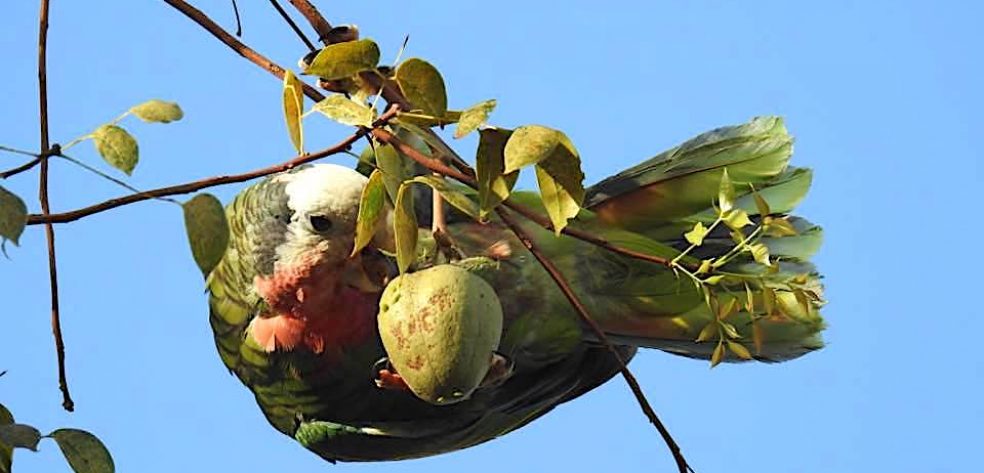
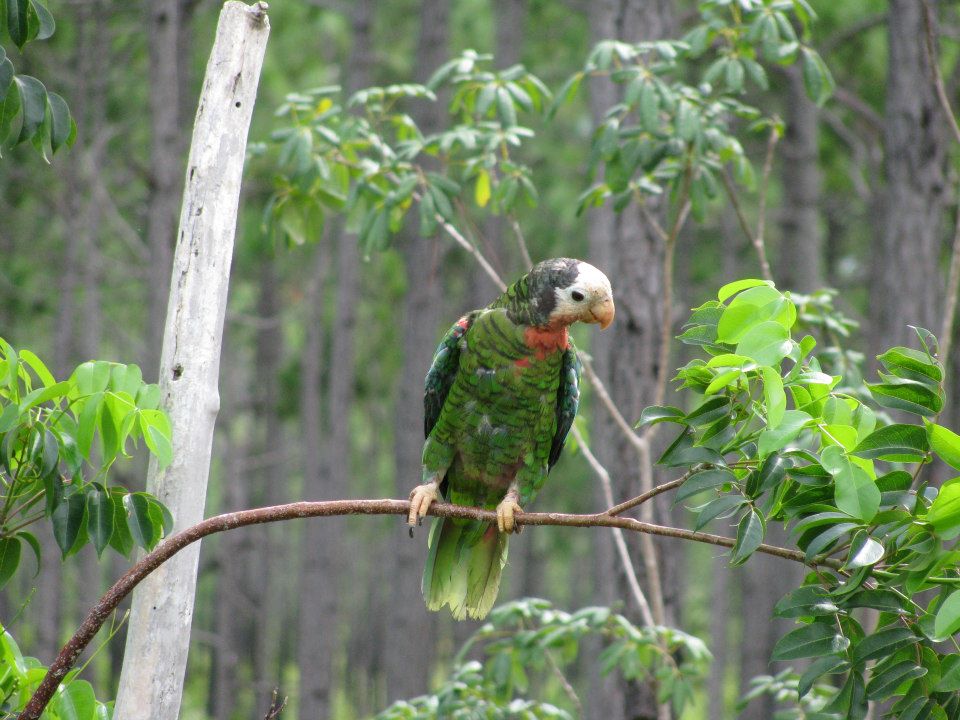
I have just posted a gallery of bird art by Artmagenta, showing varous species from his global ‘Bird of the Day’ series that can be found on Abaco. He asked for further suggestions, so naturally I suggested the avian symbol of the Abacos. A few days later, it has flown in, in all its glory, with his description below it. So I’ll step back and let the bird do the talking.
“The Cuban Amazon (Amazona leucocephala) also known as Cuban Parrot or the Rose-throated Parrot, is a medium-sized mainly green parrot found in woodlands and dry forests of Cuba, the Bahamas and Cayman Islands in the Caribbean. The Cuban Amazon lives in different habitats on different islands. It was once found throughout Cuba, but it is now mainly confined to the forested areas of the main island and Isla de la Juventud. On the Cayman Islands the parrot lives in dry forest and on agricultural land. Cuban Amazons nest in tree cavities throughout most of its range, the only exception being that the parrots living on the Abaco Islands nest underground in limestone solution holes, where they are protected from pineyard wildfires.”
BIRDS OF ABACO (BAHAMAS) IN NEW YORK CITY (& VICE VERSA)
Many moons ago, I wrote about the bird species that a New Yorker might recognise during a trip to South Abaco. It would depend, of course, on the time of year and migration patterns. And whether a resident of the Big was remotely interested in going to Abaco to look at birds. As if! As it happens, Mrs RH is about to go to NYC, and tolerantly offered to take me as ‘trailing spouse’. Naturally, I said no at once [only joking]. So I am resurrecting the earlier material and polishing it up a bit for 2013. There is much good birding to be done in and around the City (Central Park ~ Riverside and Inwood Parks~Prospect Park Brooklyn ~ Jamaica Bay Wildlife Refuge ~ Staten Island~ shorelines generally) though I shan’t be spending all my time doing that. Or even much of it. But I will see what species I can casually bag in a week.
This photo is of a ring-billed gull, taken a while back in a freezing february (-15°) on the northern end of Roosevelt Island* in the East River. The whole front of the vessel in the background was thickly coated in frozen sea-ice, which covered the entire foredeck. However, you might just as easily catch one of these gulls on a perfect sunny day on the shores of Abaco… [*Optional tourist note: it’s a great ride there on the aerial tramway. Visit the quaint clapboard Blackwell Farmhouse, built in 1796 and recently restored – it’s the oldest surviving building in the City, nestling shyly amidst a forest of new apartment blocks]
If you happen to live in New York, you may quite possibly spend some spare time birding in Central Park, or checking out the red-tailed hawks of Washington Square. And if you are planning a trip to Abaco, you might suddenly wonder just how different the bird life will be there. Will there be any familiar species at all?
New York City has nearly 200 regularly recorded bird species, most of which will be found in Central Park at some time of the year, if not all through it. South Abaco has around 126 species, excluding extreme rarities and accidentals. Is there much overlap, I wondered? And the answer is that there is plenty, rather more than I expected. 61 species in common, by my reckoning, including the Great Egret below. The the most notable feature is the almost complete coincidence of warblers.
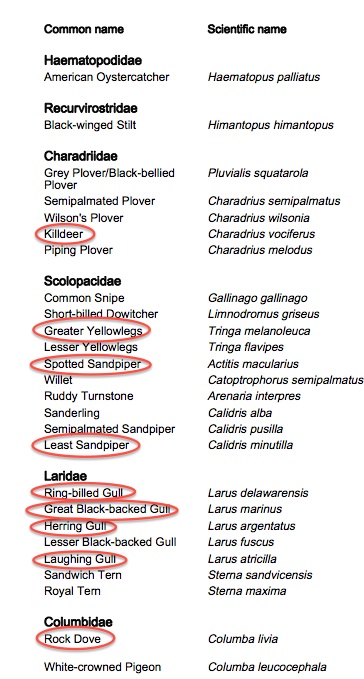
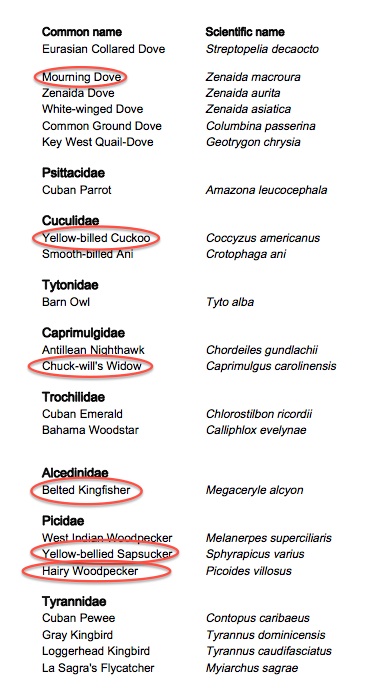
I used the excellent (but not exhaustive)AVIBASEchecklist for South Abaco, now featured on the Delphi Club site in the newBIRDING section, and worked through a comparative list of the NYC species (see the birding website links for NYC / Central Park above). The result is below: a New Yorker using the South Abaco checklist may see any of the birds ringed in red. And it would work vice versa, of course. Why New York? It’s the only other place outside Europe that I have ever ‘birded’ (only extremely casually – no book, no notes, no pishing, a few photos – just for enjoyment). Peaceful bird time in the Ramble in Central Park is time well used… Before we get to the list, here’s a bit of local NYC colour that you won’t find on Abaco – a male Northern Cardinal in the snow in February
NYC BIRD SPECIES THAT APPEAR ON THE SOUTH ABACO BIRDS CHECKLIST
I photographed this red-tailed hawk in Central Park. We’ve seen one on Abaco in the National Park, close enough to get a really good photo of. Typically, it flew off before I could get my camera out of the truck. There’s a lesson there somewhere…
Editorial note (not necessarily a shared opinion): Abaco is so good, they only needed to name it once…
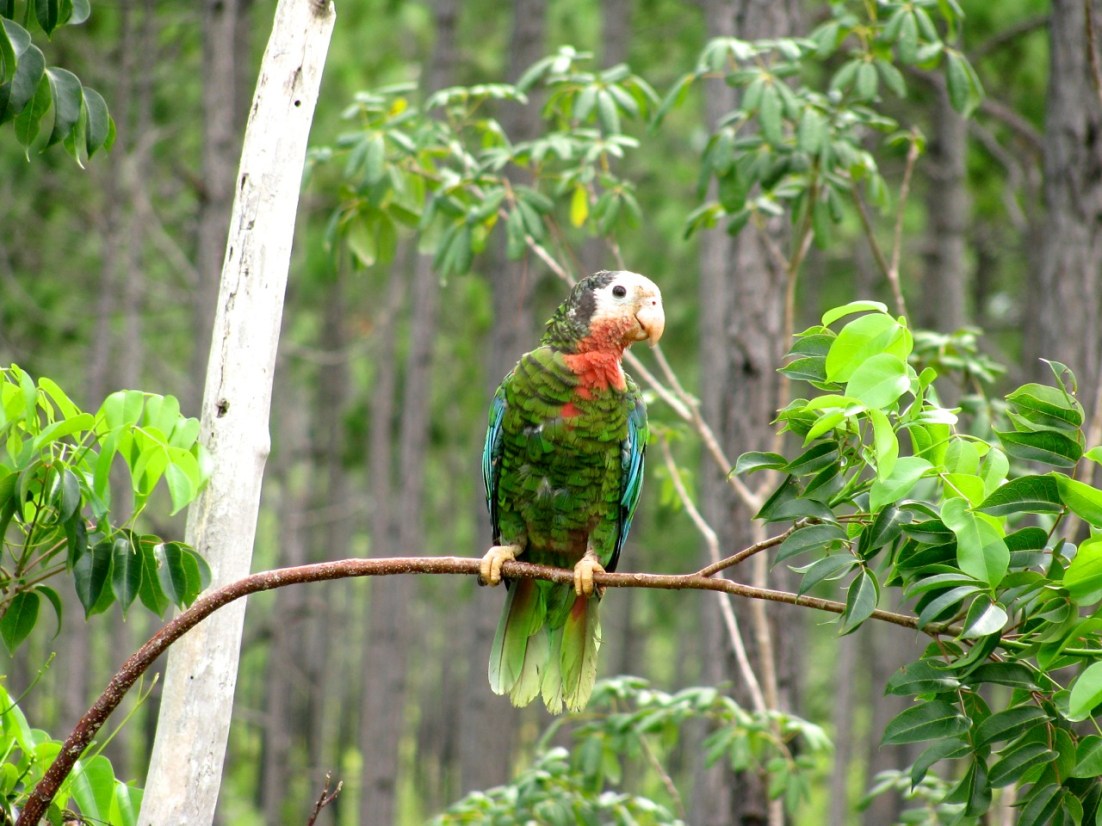
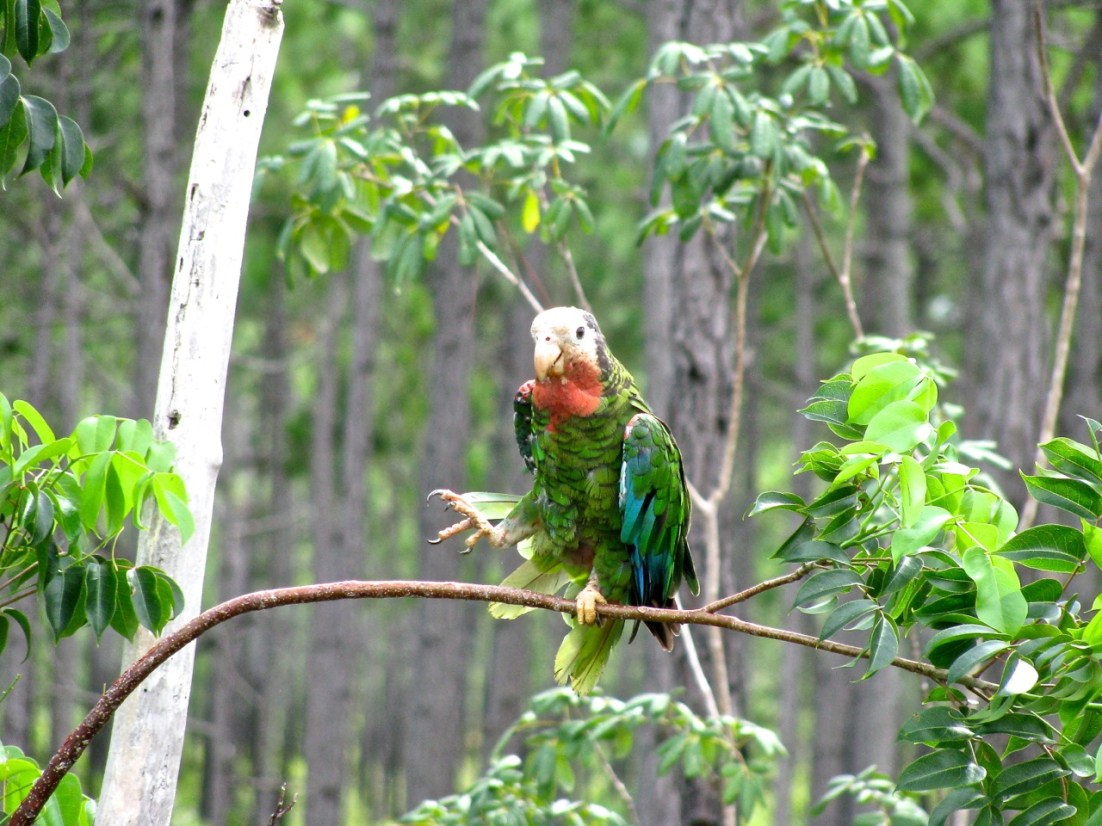
Time to write some more about Abaco’s most famous bird, the unique ground-nesting Amazon / Cuban parrot sub-species that makes Abaco its home, and breeds in the pine forests of the Abaco National Park in the south of the island. You’ll find lots of information and photos on the dedicated page ABACO PARROTS.
This post covers the 2012 breeding season, and highlights the success of scientist Caroline Stahala and her team in helping to secure the future of these rare endangered birds. The population had shrunk to around 2500 (or fewer) some years ago. More recently it had risen to 3000. An intensive conservation program, including anti-predation measures, has proved effective; and a systematic ringing program has enabled the team to keep a close eye on recovering parrot numbers. Caroline says that the population is now in the region of 4000, confirming an encouraging reversal of a dismal decline towards extinction for these beautiful birds.
ABACO PARROTS IN THE PINE FOREST
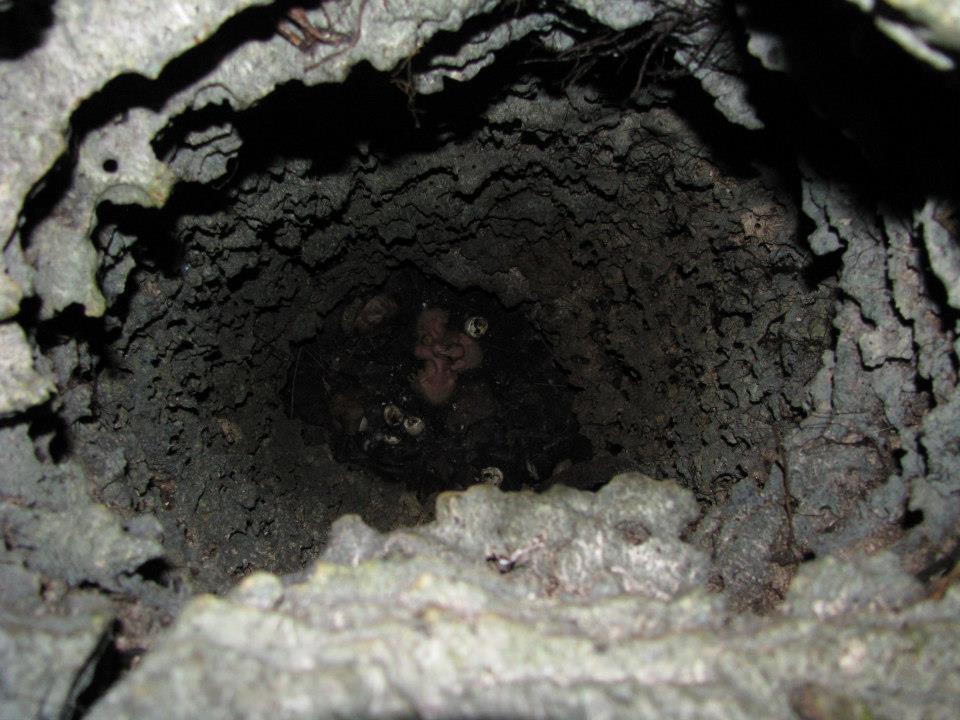
The parrots breed only in the pine forest, where they nest in quite deep holes in the limestone rock. This makes the nests and the areas round them vulnerable to predation from feral cats and rodents etc; but conversely it offers protection from the forest fires that would destroy tree nests.
The holes are often well concealed in the undergrowth and take some searching for…
Both parents are involved in the nesting and later chick care. The female lays 2 – 4 eggs.
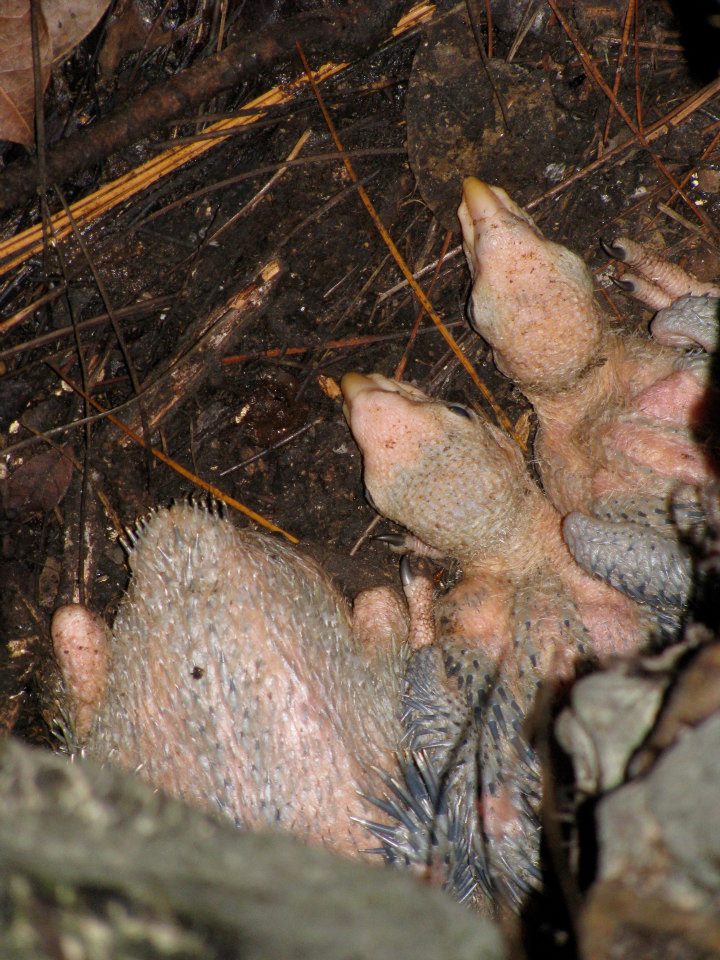
The chicks hatch after an incubation period of around 26 days
Some of the nest holes are remarkably deep: the parent parrots clamber up and down the sides
The chicks grow the beginnings of feathers, remaining quite unattractive except to their parents
The parent parrots share feeding and care duties
The chicks / fledglings stage are ringed so they can be identified – see ABACO PARROT CHICKS
By coincidence, as I was producing the post above, Craig Layman at THE ABACO SCIENTIST was also ruminating on the topic of Abaco parrot breeding. He posted the comments below, which raise the very interesting question whether the Abaco parrots, with their increased population, may be starting to breed outside the National park. Caroline can probably answer this (see COMMENTS), but does anyone have any direct evidence to suggest a wider breeding habitat? I guess there would need to be a suitably pitted rock structure for the nests, and an absence of the usual cat- and rat-type predators that one might find nearer human populations. Answers welcomed via the comment box…
(Sort of) A Bahama Parrot Study
Posted by laymanc 26 Nov 2012
It isn’t really much of a study, but the only “science” I have been able to do over the last week with the continued turbidity of nearshore waters.
The Bahama parrot (more informationHERE andHERE)is one of the iconic Bahamas animals, and the main factor behind the establishment of theABACO NATIONAL PARKin southern Abaco. But my study has been conducted instead from my desk in Little Harbour. My main finding is simple: the range of the parrot has clearly expanded; it has now been a full calendar in which parrots have been in the area. Just a few days ago two dozen were squawking around the harbour. The key will be whether they begin nesting here as well – I havent heard reports of that yet. But if they do, the expanding nesting range will substantially increase long term viability of the parrot on Abaco. That ends my first ever Bahama parrot study (I really need more time in the water when I come back).
Not the feeblest punning title on this blog, but going hard for the avian-related booby prize. As it were. And you might with reason point out that, strictly speaking, ‘peeps’ are not plovers at all, but small squeaky sandpiper species. Many months ago I did a short post about these tiny plovers, and had begun to update it. Then I found that both the BNTand theABACO SCIENTIST are onto them too. Thanks to them, I have some excellent added material further down the page… But first, here’s a quick cut out ‘n’ keep summary
SIZECharadrius melodusis a Very Small Shorebird
HABITAT Rocky shores / sandy beaches; nesting in higher, drier areas of the shoreline where there is cover
RANGE From Canada (summer) down to the Gulf of Mexico (winter). They head south in August and return in March
Credit: Xeno-Canto / Google
CALLA thin whistled peep peeping, whether standing or flying, and a two-note alarm call [There are surprisingly few Piping Plover call samples online. Many sites – Audubon, eNature, Birdwatchers Digest – all seem to have the same one. So I’ll credit them all and the originator Lang Elliot and hope I’ve covered my back…]
BREEDING The male digs out several scrapes on the high shoreline. The female contemplates these efforts, and (if any meet her ideal domestic criteria) chooses her preferred one, which she then decorates (grass, weed, shells etc). Meanwhile, Mr Peep tries to impress her by chucking pebbles around, dive-bombing her, and strutting around her importantly and “fluffed up” [none of these tactics work in human courtship, in my experience]. If Mrs Peep (a) likes the home she has chosen and furnished and (b) has recovered from her fit of the giggles at all that performance, she permits mating to proceed
NESTING First nests normally have 4 eggs; later ones fewer. Both share incubation and subsequent parental ‘brooding’ duties
DEFENCE Plovers have a defensive “broken wing display” used to distract predators and draw attention away from the nest
THREATS Larger birds, cats, raccoons etc. Human disturbance. Plovers and chicks are vulnerable to storms & abnormal high tides
ZOOM…! Capable of running at astonishing speed over short distances. When they stop, they often snap the head back and forward.
STATUS Depending on area, treated either as Threatened or Endangered; IUCN listing NT
CONSERVATION Historically PP feathers were used as decoration in wealthy women’s hats – no longer a problem. Shoreline development and alterations to natural coastline are now the leading cause of population decline. This has been reversed through field and legislative protection programs, especially at nesting sites; public education; anti-predation measures; and restricting human access in vulnerable areas – including off-roading…
STOP PRESS Nov 18Sean has just posted a professional / scientific article about piping plovers, with some very useful information specific to Abaco and some helpful links, over at theABACO SCIENTIST. Clicking through is highly recommended if you want to know more about these little birds
This is the characteristic ‘pigeon-toed’ stance – they run that way too…
RICARDO JOHNSON’S 6 MINUTE VIDEO ‘PIPING PLOVERS’
Ricky is a well-known, infectiously enthusiastic, and compendiously knowledgeable Abaco nature guide (this guy gets way too much free publicity in this blog…). As I wrote when I originally posted it “In this video he focusses his binoculars on piping plovers, a threatened species of tiny plover which annually makes a long migration to the Bahamas, including Abaco – and then heads all the way north again.”
If this video doesn’t make you smile at some stage, I suspect a SOH bypass and / or your ‘anti-cute’ setting is jammed on. Even so you’ll see the differences between the piping plover and the more familiar Wilson’s plover.
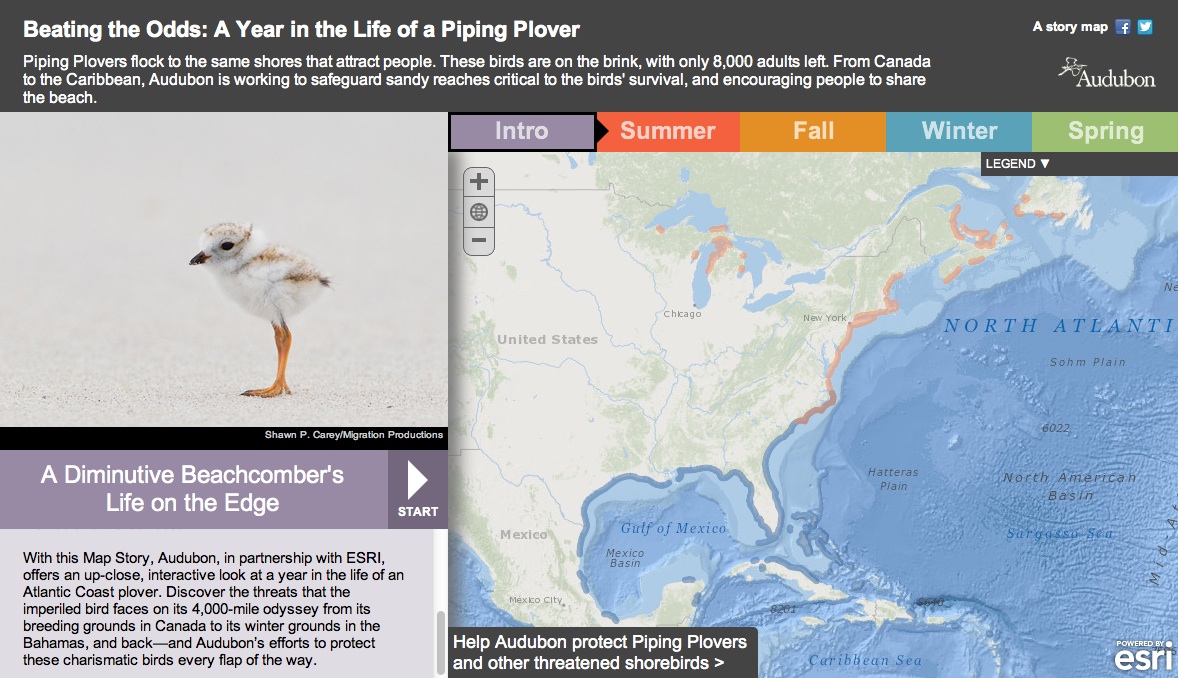
The BNT / ABSCI material originates from the Audubon Society. If you want to know about the annual journeys of these little birds and where they are in each season, it’s all here. The item was made in conjunction with theESRI mapping project. I’ve put a screenshot below to give a general idea of what’s involved [click to enlarge] and you can reach the interactive Audubon page if you CLICKPIPING PLOVER
Credits:Wiki (images), Audubon Soc, Xeno-Canto, Lang Elliot & partners, Ricky Johnson
BLACK-FACED GRASSQUITS ON ABACO – PRETTY FAMILIAR BIRDS
Both pretty and familiar, in fact. Birds of the pine-woods, coppice, garden… and feeder. They are an unremarkable species, they don’t have off-beat avian habits, they aren’t scarce… but if they weren’t there, you’d probably miss them. Males and females have notably different colouring, with the female having a bright eye-ring. They tend to hang out in pairs or small groups. These little birds are abundant in the north Bahamas, but like many species found there, they are only very rarely found in south Florida.
MALE BFG IN THE COPPICE NEAR THE DELPHI CLUB
A MALE BFG DEEP IN THE PINE FOREST NEAR THE SAWMILL SINK BLUE HOLE
No two books describe their call in the same way. I’m not venturing into the vexed field of avian phonetics of the ‘chip chip chip kerrrrr–ching’ variety… so here’s a very clear recording of the song of Tiaris bicolor from the excellent Xeno-Canto (Paul Driver)
FEMALE BFGs EAGERLY SNACKING ON THE FEEDERS AT THE DELPHI CLUBTHESE TWO PHOTOS SHOW THE DISTINCTIVE EYE RING OF THE FEMALE BFG
This post is a slight, alright huge, cheat. It’s been a Hurricane Sandy-dominated week. I have been posting / updating daily about the storm: the before, during and after for Abaco. Weather predictions. Trackers. Pics. Views from space. Several thousand hits later, and I realise that, as for Irene last year, the world is thirsty for information about cyclones and the communities affected by extreme weather. The power and communication problems faced by Abaco (as elsewhere) at these times increases the global concern. There have been emails asking for information about damage at Green Turtle Cay; if I know how uncle Fred on Elbow Cay is faring; and what of Saucy Sue in Marsh Harbour (the boat, not the person)…
Now that the storm has passed, power and comms are mostly restored, and the clean-up underway on Abaco it’s thankfully back to wildlife. Some interesting birds are called for to spread some cheer.These two species will be familiar but not in the setting shown…
PINK FLAMINGOS (Phoenicopterus)
Cheat 1: These birds were photographed… in captivity. Not quite the same as the real wild thing, I agree. To see wild ones on Inagua during the past breeding season, check out my earlier post with wonderful photographs by Melissa Maura CLICKHERE
Cheat 2: They are not in fact the Bahamas / Caribbean species, now I come to think of it. But they are undeniably pretty and cheering.
WHITE PELICANS (Pelicanus)
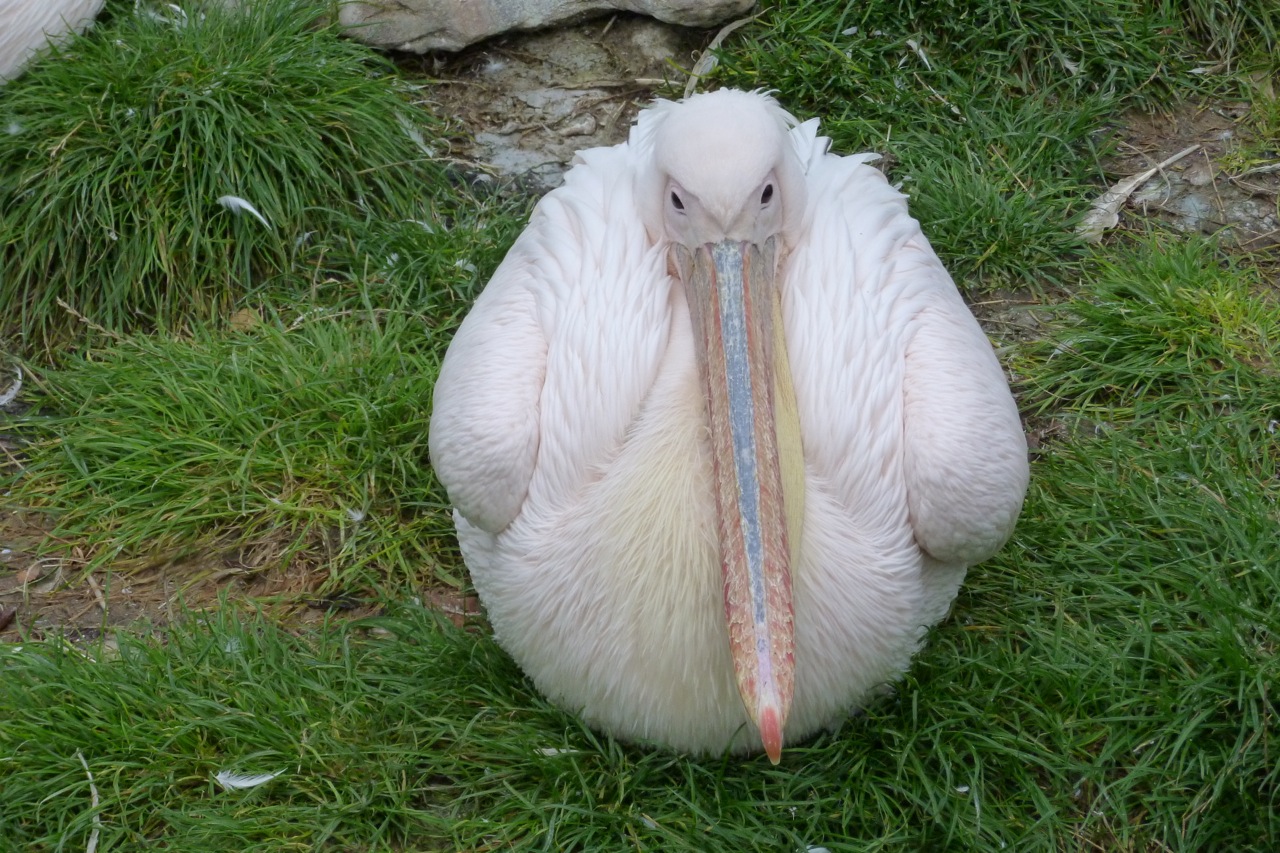
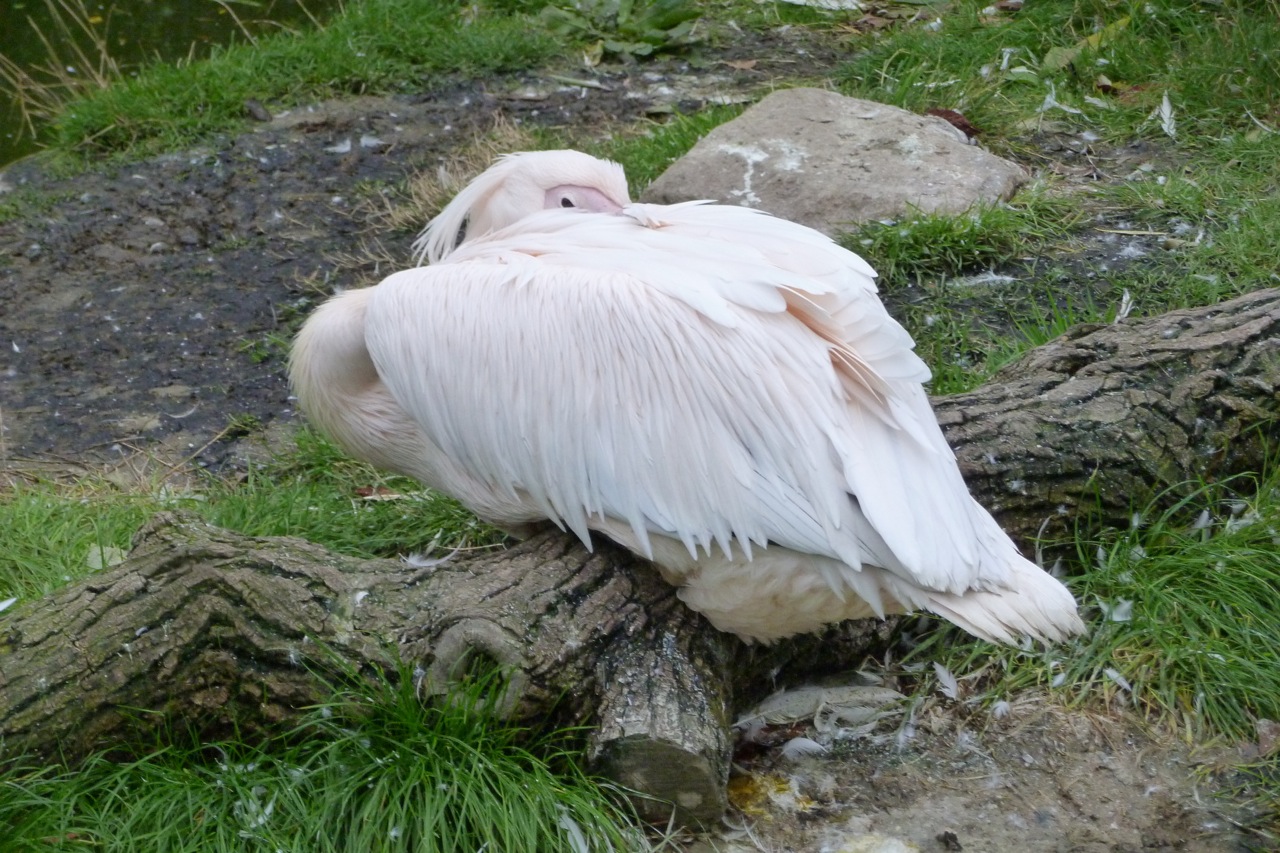
The birds below are American White Pelicans, not the Brown Caribbean Pelican familiar in the Bahamas. This isn’t a real cheat, however, since these birds are listed (in some sources at least) as ‘accidentals’ in the Bahamas. These’s always the chance that you might see a stray one. And if anyone has – especially if they have a photo – I’d be most interested to know.
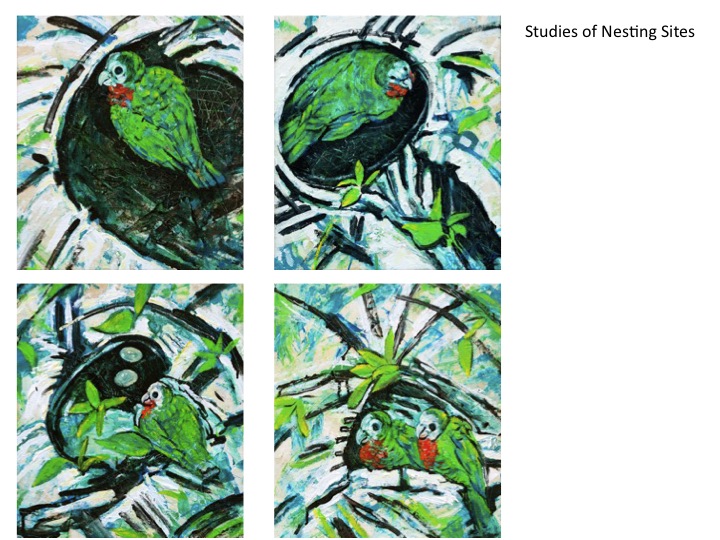
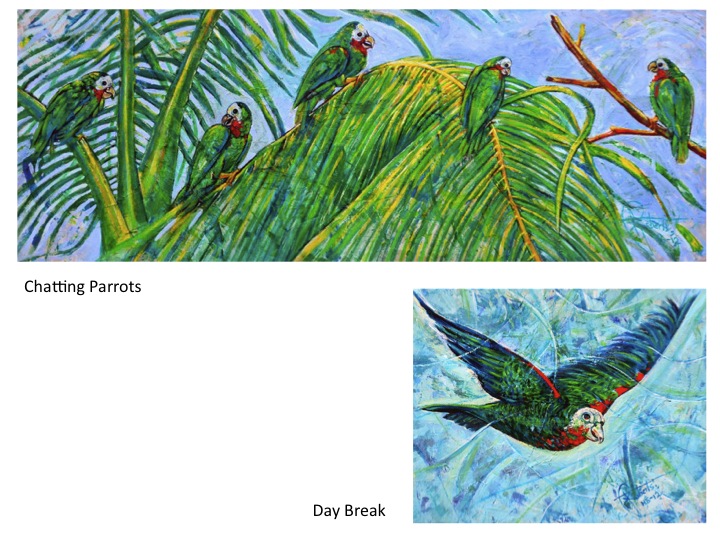
A SERIES OF ABACO PARROT PAINTINGS BY ANTONIUS ROBERTS
The wonderful parrots of Abaco are often featured hereabouts, and with good reason. They are the only subspecies of cuban parrot to nest underground, a unique species adaptation that protects them from fires in the pine forest of the ABACO NATIONAL PARK where they breed. However this in turn makes them vulnerable to predation. An intensive long-term conservation and predation-reduction program headed by scientist Caroline Stahala has reversed the decline of this iconic bird. Numbers have increased from fewer than 2500 some years ago to an estimated 4000.
There are places on Abaco – south Abaco in particular – where the parrots congregate in noisy groups during the day. Many people manage to take photographs of them. Good photographers with a decent lens can get outstanding results. Even the camera-incompetent (I hear my name!) can manage the occasional first-class photo, given time and plenty of spare space on the camera card… But very few can do justice to these colourful birds in paint.
A recent reception was held in Nassau to showcase this series of paintings. You will find more about them by clicking the link to open a pdf of the reception brochureABACO PARROT PAINTINGSCaroline Stahala contributed an excellent one-page article about the Abaco Parrots and their conservation – click on it to enlarge to legible size
Contact Antonius via email to hillsidehousebs@gmail.comor check out his website by clicking the parrot
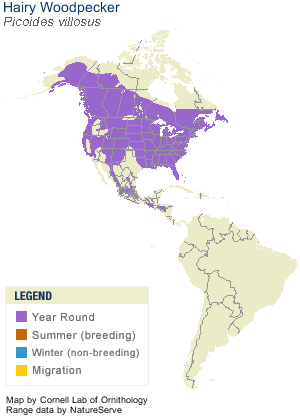
The hairy woodpecker (Picoides villosus) inhabits forest, woodland or coppice over a wide area of the North American continent and the islands to the east, including the Bahamas. They are mostly permanent residents, though there is a degree of migration within their territorial area.
They are a very familiar sight on Abaco, along with their larger cousins the West Indian Woodpecker. These birds forage on trees for insects, turning over bark or excavating deeper. They also feed on fruits, berries and nuts. It’s not unusual for them to attack the woodwork on houses in a search for bugs…
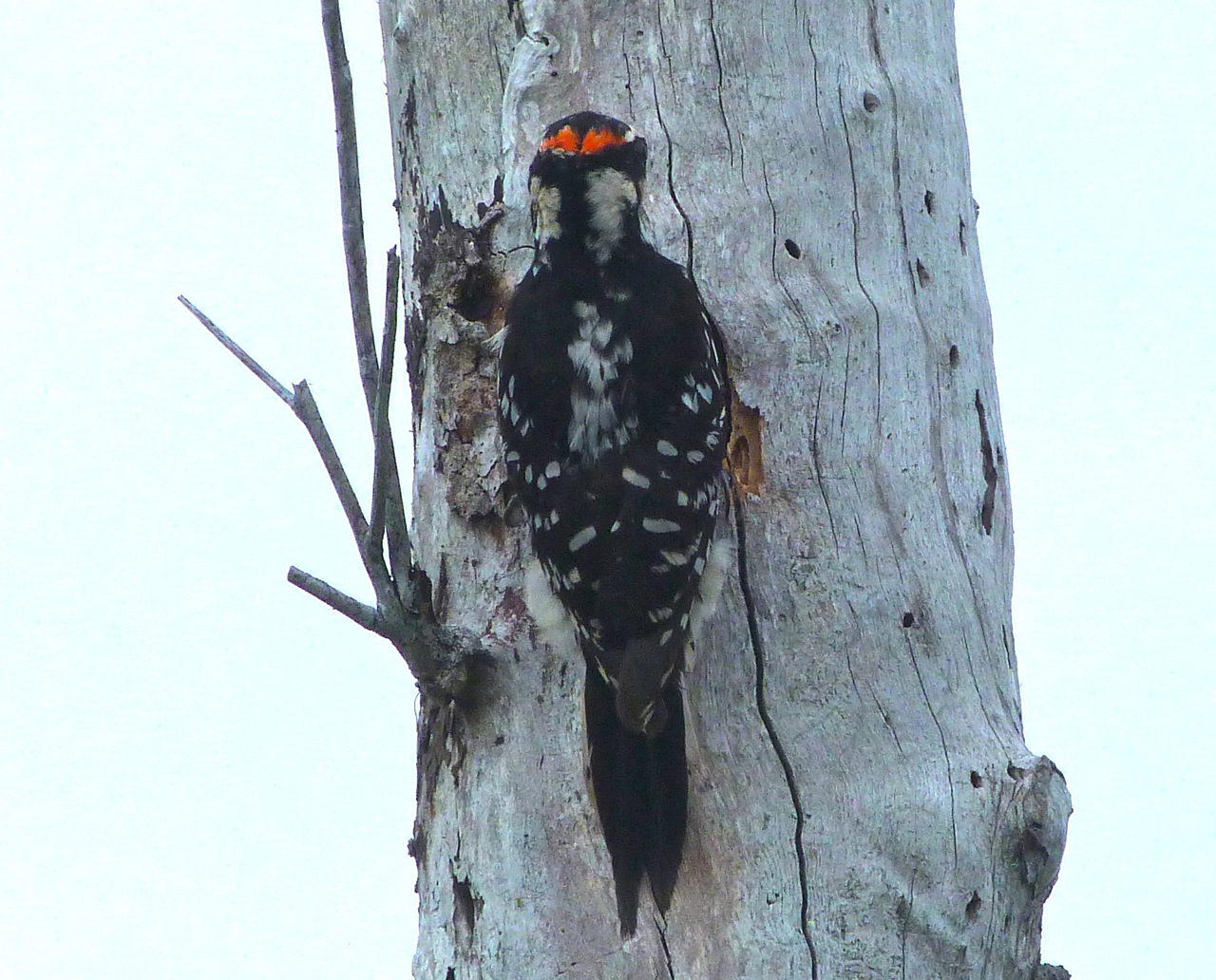
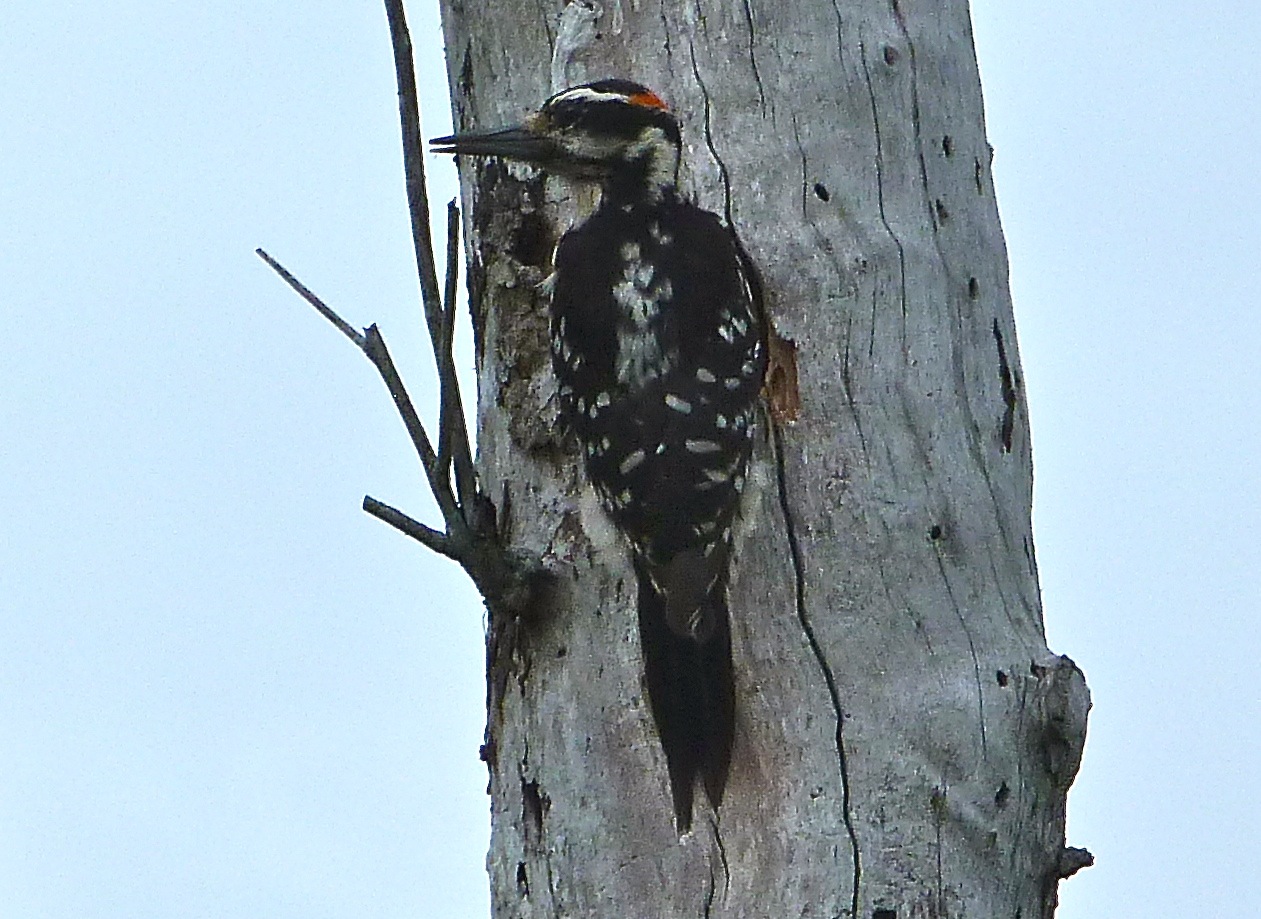
This male hairy woodpecker is prospecting a promising hole near the Delphi Club guest driveThe marks at the bottom of the hole suggest this may be a nesting hole – past, present or futureIt’s certainly deemed worth further investigation… if only he had someone to share it with
He may be in luck! This female hairy woodpecker was in the coppice not far away… A female HW is smaller than the male and lacks the male’s distinctive red head marking. They nest in a tree hole like the one above, where the female usually produces four white eggs.
BEDRAGGLED ABACO PARROTS, & AN AMERICAN KESTREL TAKES OFF…
It’s a fine June day. Perfect for a morning out with Ricky Johnson, the omniscient leader of ABACO NATURE TOURS. Want parrots? He’ll take you to them. Want a Bahama Woodstar ‘pished’ from its deep cover into the open? He’s your man. And as for wrassling land crabs – see LANDCRAB andLANDCRAB: THE SEQUELWe set off from the Delphi Club in sunshine and hope…
Sure enough, we found the parrots at Bahama Palm Shores, so often a good bet. This was (Ricky said) a non-breeding flock, the breeders all being otherwise detained in the National Park with their nests and eggs. Out of nowhere, a sudden short, sharp downpour arrived, and 5 minutes later, everything – everyone – was soaked. And so, of course, were the parrots. At first I discounted the resulting photos for use. These lovely, rare birds are made to be seen in their bright cheerful livery of green, red and blue. These wet ones looked… black. I usually try to avoid doing much (or any) ‘work’ on my photos, but for these I tried changing the contrast a bit and realised that they looked rather appealing with their dark, damp feathers and unkempt appearance. So I’ve decided to use a few images. Here they are, then: some sodden parrots!
While we were damply watching the parrots, Ricky spotted an American Kestrel near the top of a tree. Heads swivelled. It was some way away, but we could see it looking a bit dejected, huddled in the palm fronds. Then suddenly, just as I pressed the camera button, the kestrel stretched itself upright, raised its wings, and launched itself into the sky. The two photos below are frankly of marginal quality (on a high “blur setting”, as you might say) but the second one has caught the rain-drenched kestrel’s take-off about as well as a point ‘n’ shoot at that distance could…
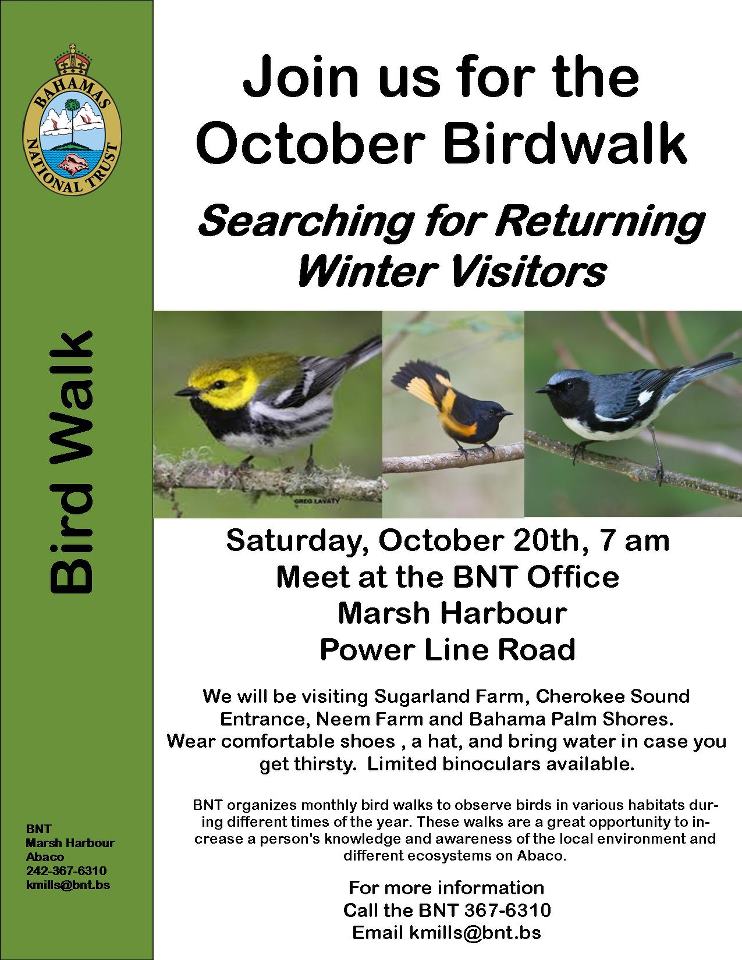
ABACO BIRDWALK WITH THE BAHAMAS NATIONAL TRUST – OCTOBER 20th
This sounds a lot of fun, and I wish I could be taking part. I’ve never been on Abaco in the autumn when the winter migrants start to arrive as the weather cools in their summer breeding grounds. It must be exciting to see the various species gradually reappear after their summer break, presumably with all the young birds born this year that will see Abaco (and the feeders!) for the first time. If any blog-follower goes on the expedition and happens to keeps a birding record, I would love to know which species you have seen . And if anyone gets some good pics, likewise…
ABACO BIRD ID CHALLENGE (FOR NON-EXPERTS ONLY): THE SOLUTION
This small bird (Oh. I’ve given away the size already) was photographed in June. I was looking through a batch of downloaded photos recently. When I saw it again, I knew at once which bird species it belonged to – but not the specific make. I did some research and came up with the answer. I’d nailed the ID – or thought I had. The photo was a long shot which I had to enlarge to see the markings more clearly, hence a lower overall quality. I sent the jpeg to an officially avian-knowledgeable person for confirmation (hi, Alex!). The reply was swift. No, not the bird ‘swift’, I mean it was quick. It turns out that I was, as so often, completely wrong. Barking up the wrong tree. Chirping in the wrong nest. Perched on the wrong branch…
I’d say there are two definitely plausible candidates, and you may even think of others. So what bird is it? You can click on it to enlarge it. Please join in and give your answer using ‘leave a comment’ (tiny letters at the end of this post) or email rollingharbour.delphi@gmail.com Or, if you are seeing this on Facebook, please reply on that.
UPDATE Thanks for emails. Opinion is divided, but one of the 2 candidates is definitely ahead… I’ll leave this over the weekend
SOLUTION Of the few replies, most were right. One or 2 were (wrongly) with me – I reckoned it was a SWAINSON’S WARBLER. No one suggested turkey vulture. The correct ID, and the reasons for it, were provided by Alex Hughes, to whom thanks: “The first bird is aBLACK-WHISKERED VIREO. The black supercilium going through the eye and the heavy bill are good marks, which can resemble a Swainson’s Warbler, but a clinching mark here is the yellow wash underneath the tail at the rear of the bird”.
While I am dealing with mystery birds, I posted photos of a very sweet littleJUVENILE BANANAQUIT about a month ago. At the end I added a photo, which again has since been positively identified (thanks again, Alex)
“Finally, this bird was a distance shot. At the time, it looked larger than a bananaquit – more Loggerhead Kingbird-sized. Before I had downloaded the image and could see it clearly [rather than on the screen on the back of the camera], I’d wondered about a mangrove cuckoo. Then I saw at once that it didn’t tick the right boxes. So I decided it must just be a huge bananaquit with an orange rather than yellow front. If it’s anything else (a rare hybrid spindalisquit?), please say so!” It is a indeed bananaquit, but in my limited experience I have never seen one with a spindalis-orange front. Can anyone say if that is a common colouring on Abaco, or unusual?
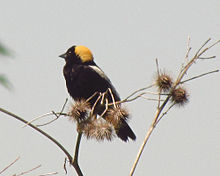
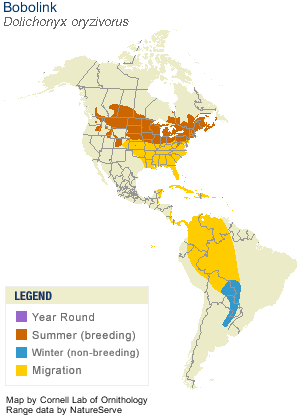
BOBOLINKS: MIGRATORY SONGBIRDS OF ABACO & THE BAHAMAS
Occasionally vacation plans disrupt the flow in the smoothest of operations. A smear of suntan cream in the well-oiled machinery of a blog. Or a well-oiled operator over-sampling the local produce – wine, in these parts. So it pays to follow the Blue Peter principle of ‘Here’s one I prepared earlier’. Except regrettably I didn’t do it properly and have been struggling to unpick some html on an iPhone. Don’t ever try it. Luckily the ever-resourceful Mrs RH brought an iPad along. Much less fiddly. So I am now able to feature the BOBOLINK (Dolichonyx oryzivorus), a small New World blackbird
14 ESSENTIAL BOBOLINK FACTS TO ENTERTAIN YOUR FAMILY & FRIENDS
Adults weigh about 1 ounce (28 g)
The collective name for a group of Bobolinks is a ‘chain’
One bird was tracked flying 12,000 miles (19,000 km) in one year
A bobolink has been tracked covering 1,100 miles (1,800 km) in one day
The birds migrate in flocks, feeding on cultivated grains and rice, which may annoy farmers
Despite their flying stamina Bobolinks have rarely been sighted in Europe
In South American they are known as “ricebirds”
In Jamaica they are sometimes eaten and are called “butterbirds”
Bobolinks forage on or near the ground eating seeds and insects.
Their breeding habitats are open grassy fields across North America
Males are often polygynous, and take their vows shamefully lightly
Females lay 5 to 6 eggs in a cup-shaped nest on the ground, hidden in dense vegetation
Both parents feed the young, except when the male has some important singing to do (often)
Although currently rated “of least concern” their numbers are declining due to loss of habitat
WAYS IN WHICH THE BOBOLINK HAS INSPIRED ARTISTS (despite its unpromising name)
Emily Dickinson wrote several poems about the bird, including “The nicest bird, I always think / Is the tiny Bobolink / To me, it never had occurred / Thus to name a songstrel bird”*
The Bobolink is also mentioned in a song called Evelina, from a musical called “Bloomer Girl” (me neither): “Evelina, won’t ya ever take a shine to that moon? / Evelina, ain’t ya bothered by the Bobolink’s tune?”**
The Bobolink is name-checked by Nabokov; in a poem by Sophia Jewett, An Exile’s Garden (1910); and it has a fly-on part in a film “The Mouse on the Moon”
Finally, a wonderful video showcasing the bubbling song of the bobolink(Credit: Themusicofnature)
* and ** I can’t be sure which of these is made up. Maybe neither. Or both.
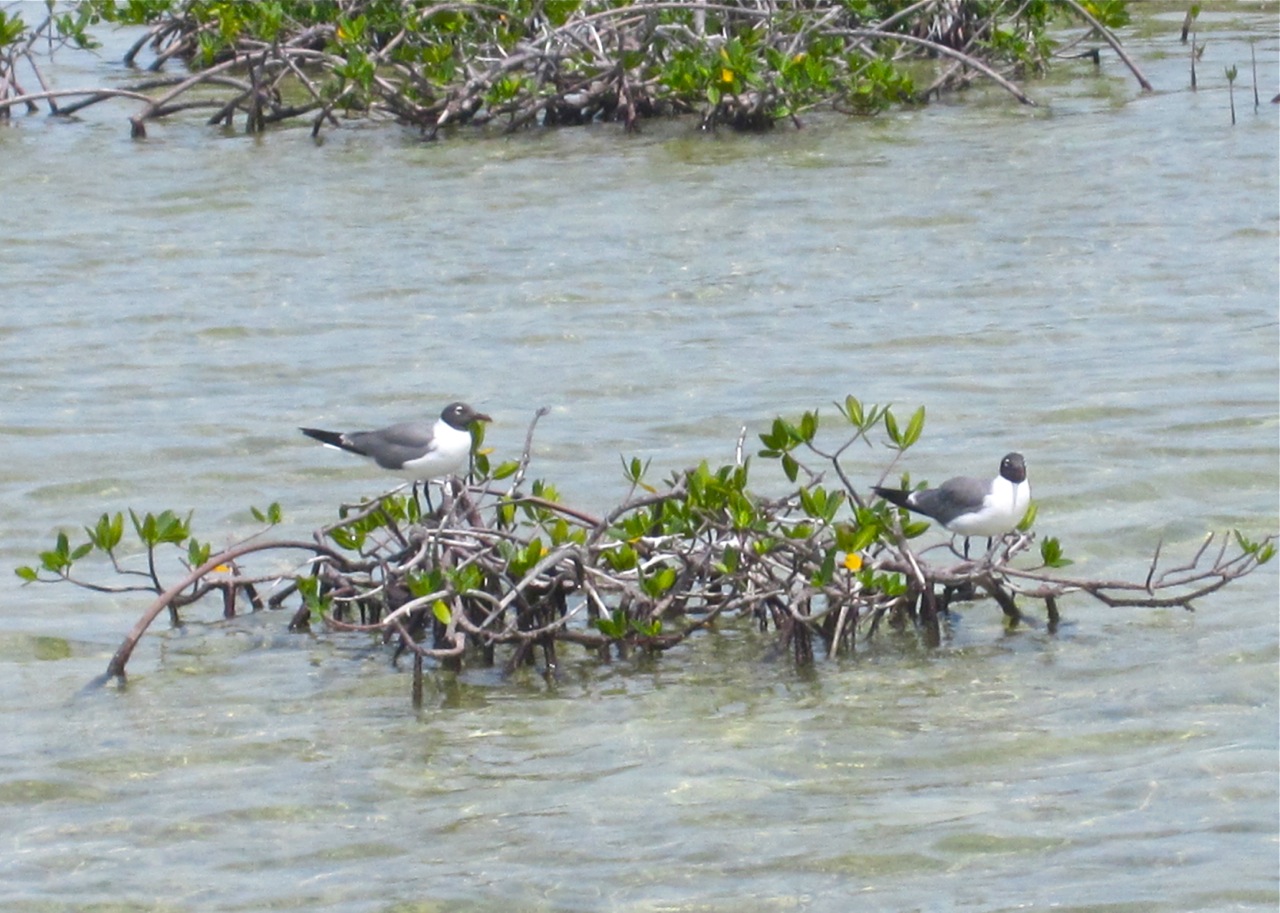
Laughing gulls. Amusingly raucous and raucously amusing. Unless, maybe, you are living right next to a breeding colony during a collective fit of hysterics. These gulls, Leucophaeus atricilla, will be familiar to anyone on the Atlantic coast of North America; in the Caribbean; and further south to the northern coastal areas of South America. In winter, their migration pattern simply involves relocating to the southern parts of their range. They are easily recognisable in the breeding season by their smart black caps, though this fades in winter. And by their unmistakeable call, of course. Immature birds tend to be darker than adults. They breed in large colonies, each female laying 3 – 4 eggs. And like most (all?) gulls, they’ll eat pretty much anything.
Laughing Gull Conservation Status
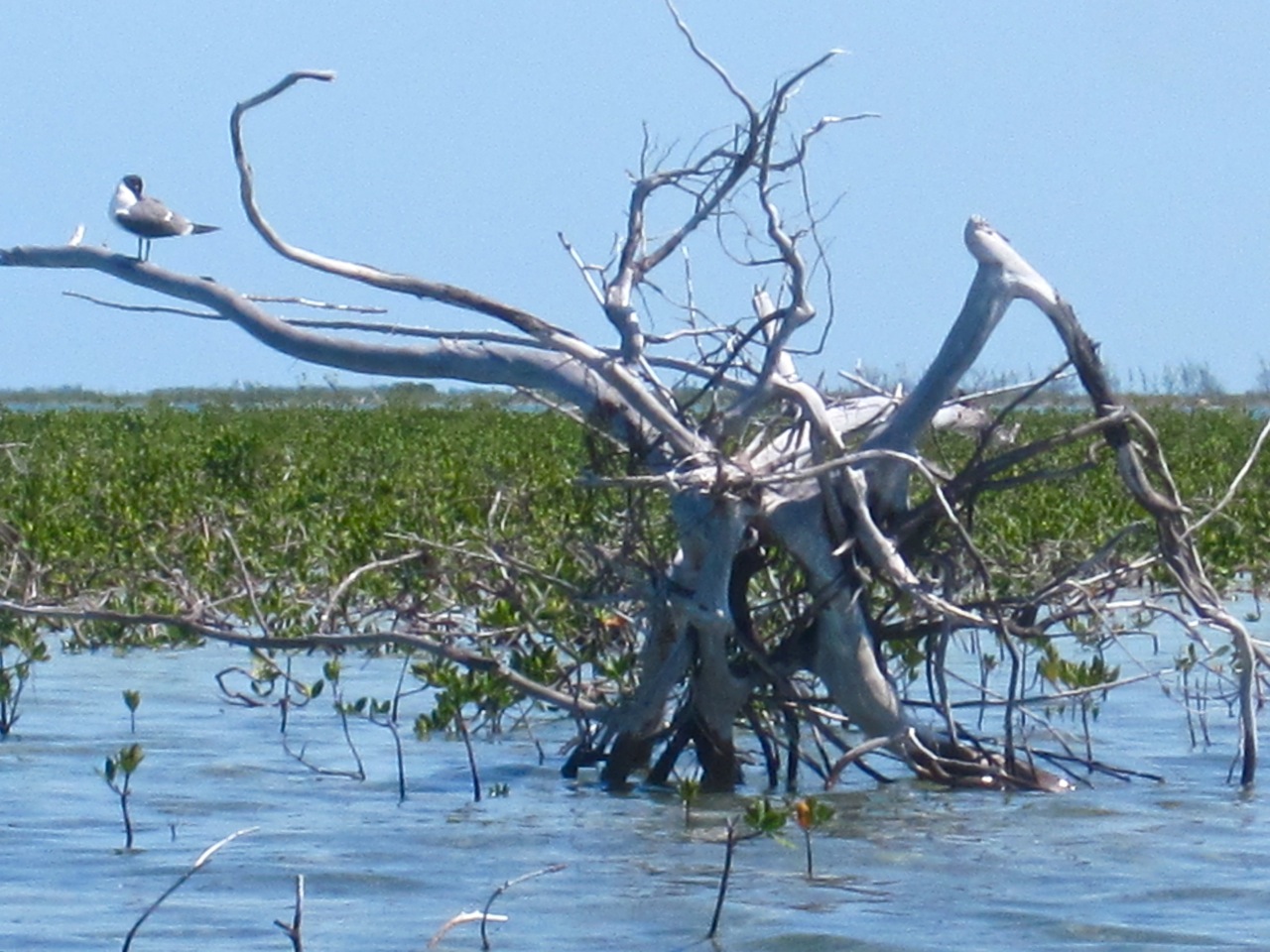
We saw – and heard – plenty while bonefishing on the Abaco Marls in June. I took some rather grainy distance shots, as they tended to fly off as the skiff was slowly poled towards them. This gull has found a good vantage point for some quality preening among the mangroves.
The pair below stayed put, and watched our gradual approach with suspicion that turned into noisy protest as we poled past them. I presume they were defending their territory – probably a nest site nearby.
I took a very short video just before they flew off as we drifted by. Apologies for the sound of the breeze – I’ve no idea if it’s possible to reduce the background noise while retaining the bird call. Listening to online bird sound clips (e.g. on the excellent Xeno-Canto) I think not. Or not without expensive editing equipment of a complexity I can’t face…
[vimeo https://vimeo.com/48076405]
And here (thanks, Don Jones @Xeno-Canto) is what laughing gulls sound like when one of them has told the one about the bonefish and the shrimp…
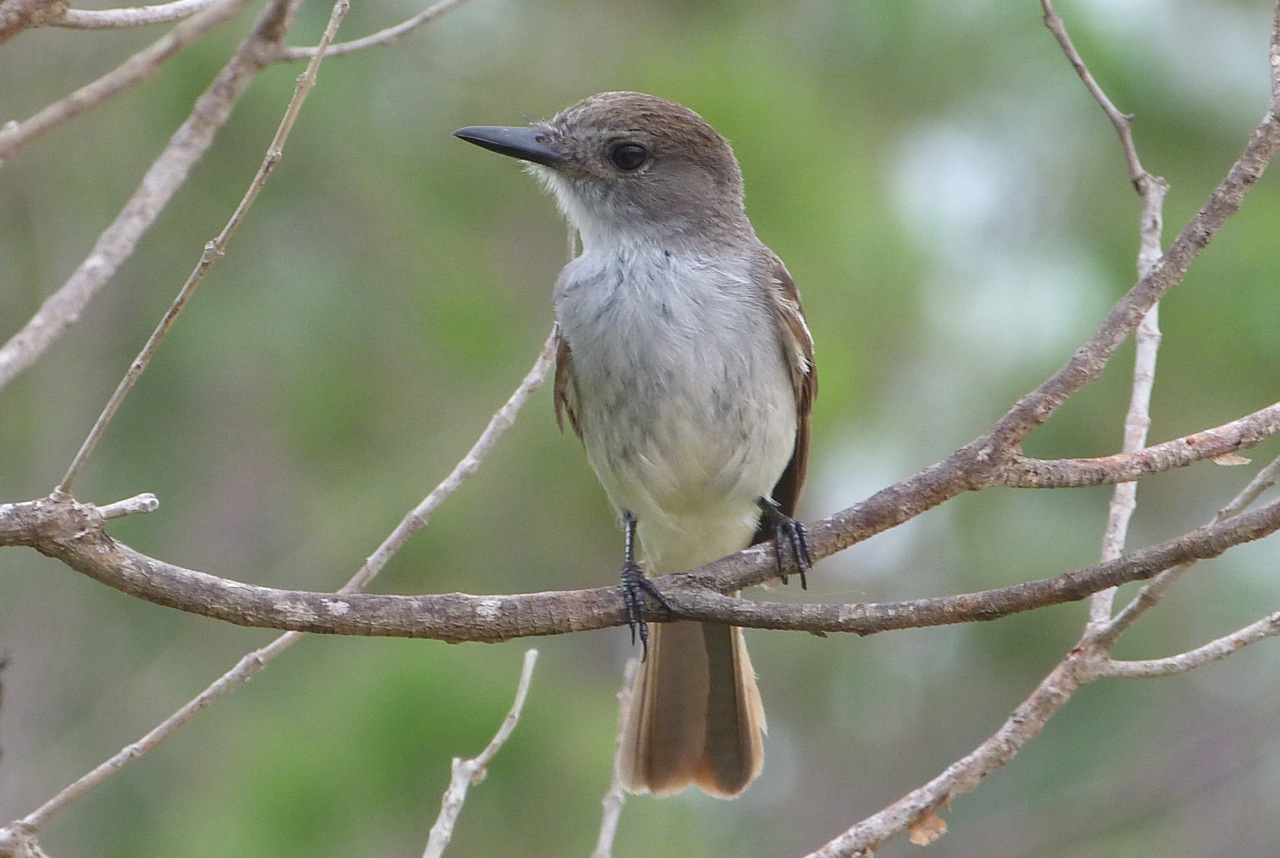
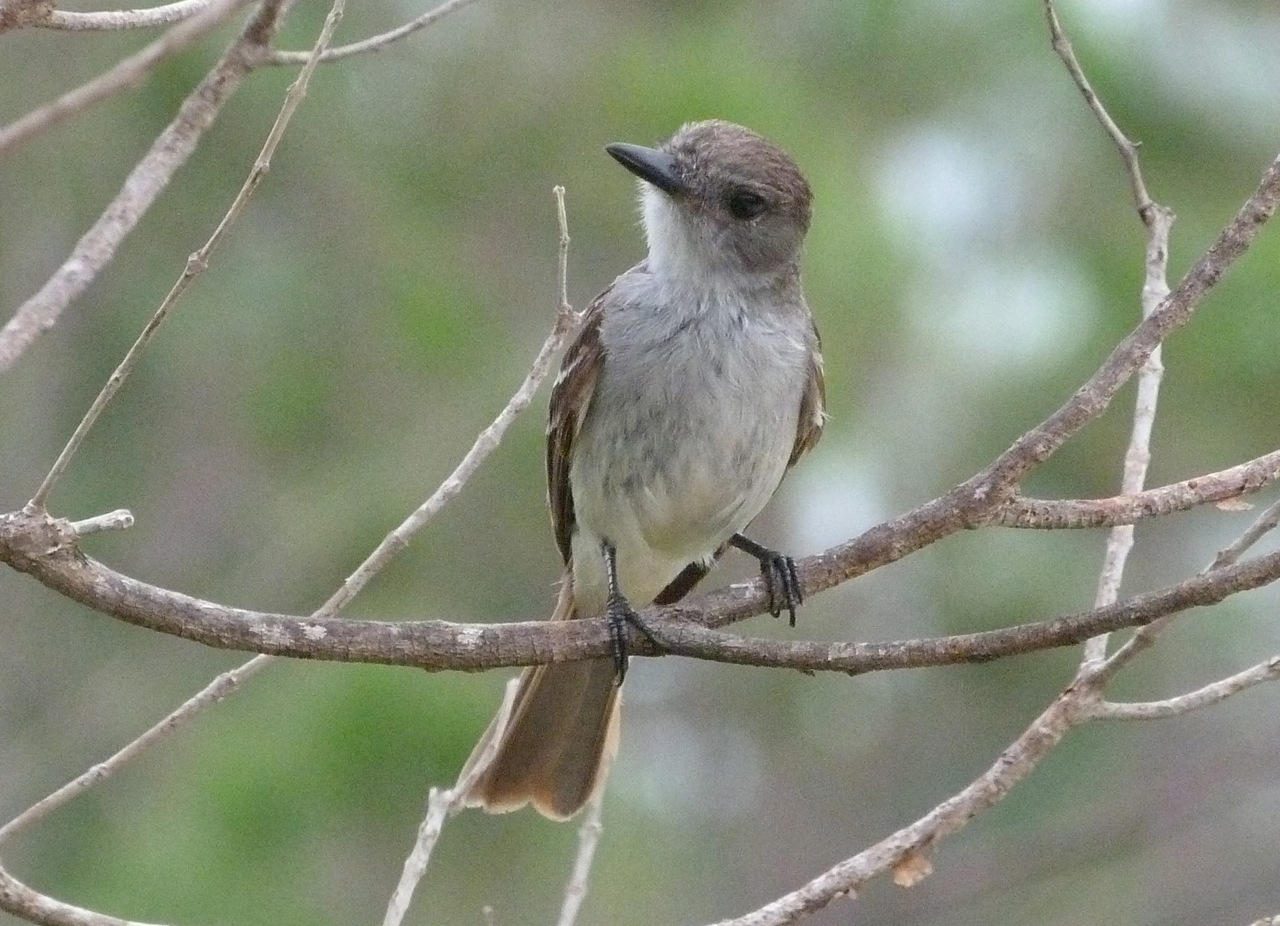
LA SAGRA’S FLYCATCHERMyiarchus sagrae is anon-migratory bird quite frequently seen in the Abaco pine forest and scrubland. It is resident throughout the year on Abaco, as elsewhere within its distribution range (see map below) – also occasionally found as a vagrant in southern Florida. It is a ‘tyrant flycatcher’, a passerine species found throughout the Americas that includes kingbirds, pewees and phoebes.
The conservation status of this flycatcher is ‘Least Concern’
The LSF’s natural habitat is subtropical forest and rough scrubland. It builds its nest in a tree cavity or similar natural hole, and usually lays a clutch of two to four eggs.
Adult La Sagra’s Flycatchers, unlike many avians, are very similar in appearance in both sexes.
As the name suggests, the species is primarily insectivore, fly-catching in the undergrowth and low scrub. However these birds also eat berries and seeds. Their call is a high pitched single or double noted sound described as ‘wink’. Here’s an example from the Bahamas by Paul Driver @ Xeno-Canto
And who or what the heck was La Sagra? The answer is: multi-talented Spanish botanist Ramón Dionisio José de la Sagra y Peris(1798–1871), who was also a writer, economist, sociologist, politician, anarchist, and founder of the world’s first anarchist journal El Porvenir (“The Future”). At one time he lived in Cuba and became director of Havana’s Botanical Garden; his name lives on arguably more significantly in ornithological than in anarchist circles (actually, an ‘anarchist circle’ must surely be a contradiction in terms…)
I note in passing that La Sagra is a provincial area in Spain, an Italian festive celebration, a chocolatier, or a small comet – all of which meanings may have to be negotiated online before you get to the flycatcher…
Ramón Dionisio José de la Sagra y PerisFinally, to continue with the recently introduced avian philatelic theme, here are stamps from the Cayman Islands and Cuba featuring the La Sagra’s Flycatcher. The Cuban stamp commemorates the death of Juan Gundlach, the man who chose La Sagra’s name to bestow on this bird
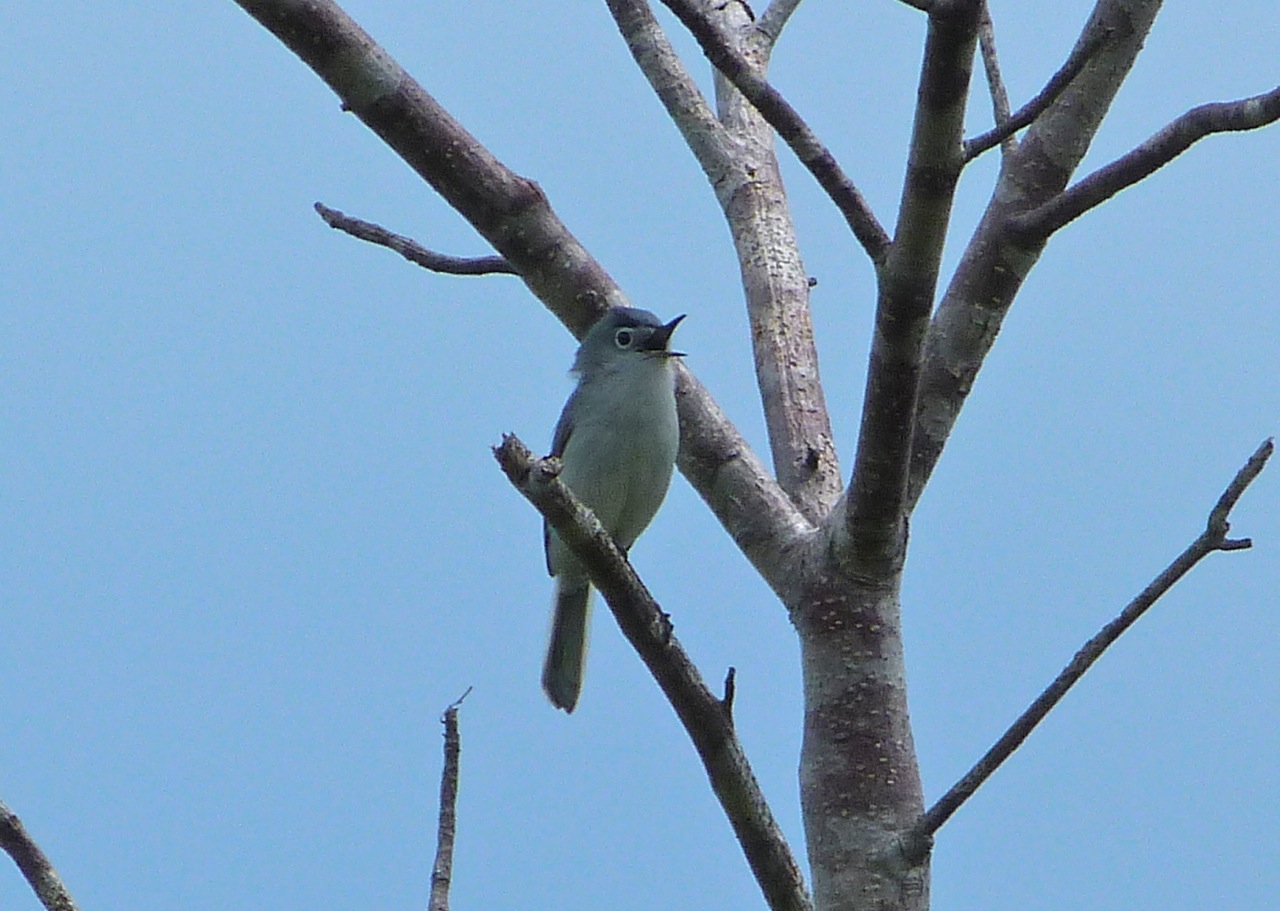
This small bird was quite far back – and high up – in the coppice on the Delphi guest drive. The photos were distance shots, so not the best quality, but they do capture the little bird in full song. BGGs have complete white eye rings; males have a dark ‘monobrow’ which can just about be seen in the photo above. In a word, ‘cute’. They sound like this (you may need to wait for the clip (credit: Cornell Lab / RH) to load – or hurry it along by clicking ‘Play’ as it loads):
They build a cup nest on a horizontal tree branch. It’s a modern family unit – both parents make the nest, tend the eggs, feed the young, and teach them manners. They may raise two broods in a season.
BGGs eat insects and spiders, feeding in trees and shrubs. They can hover very briefly, but mainly they catch insects on the wing (‘hawking’). The tail is often held upright while defending territory. Or sometimes just because they can.
All the information you could want on this species can be found at the excellent OISEAUX-BIRDS.COM
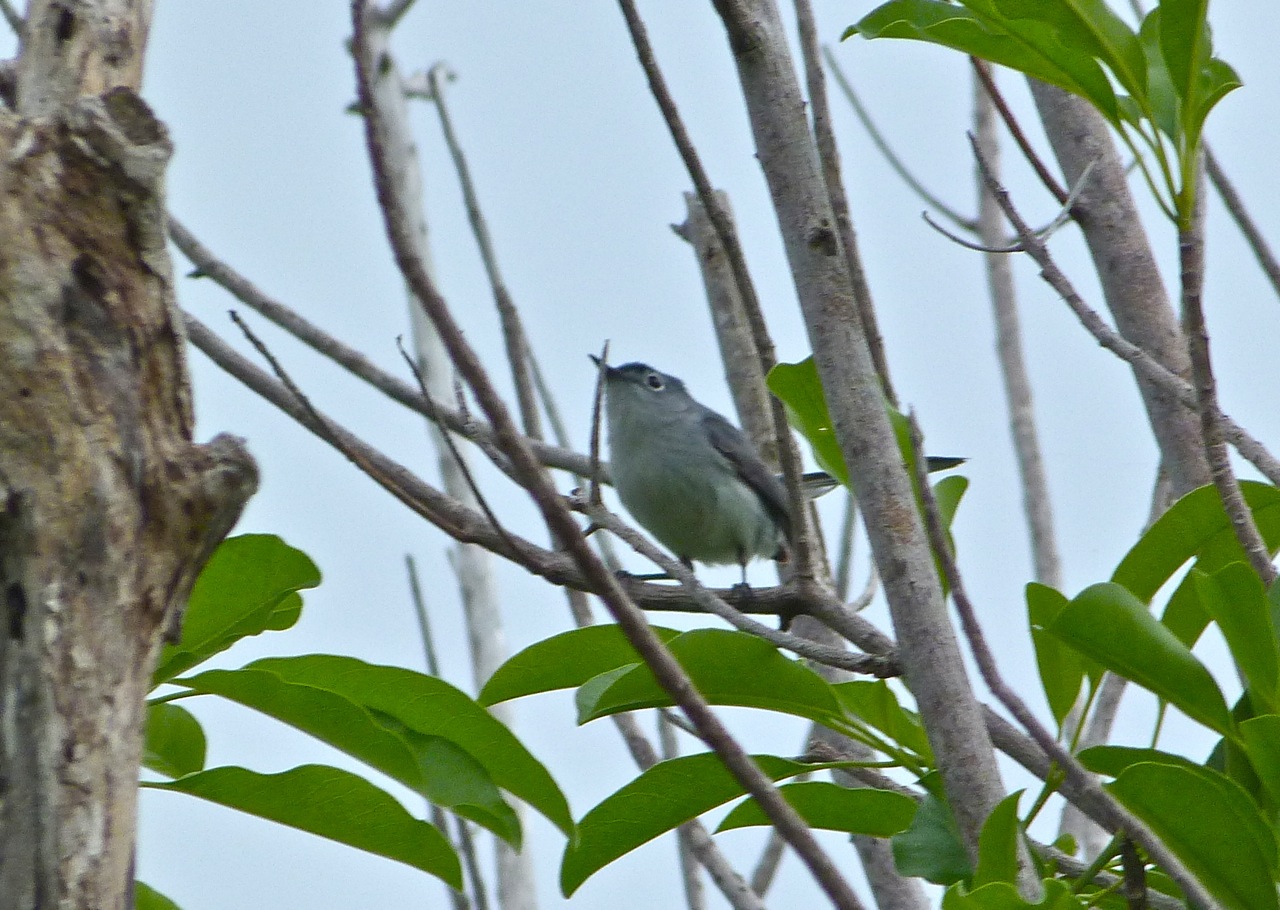
STOP PRESSchecking back through my photos, I’ve found a (slightly blurry) distance shot of a BGG. I am adding it because it shows the bird with its characteristically cocked tail, often seen when perching (the bird, I mean)
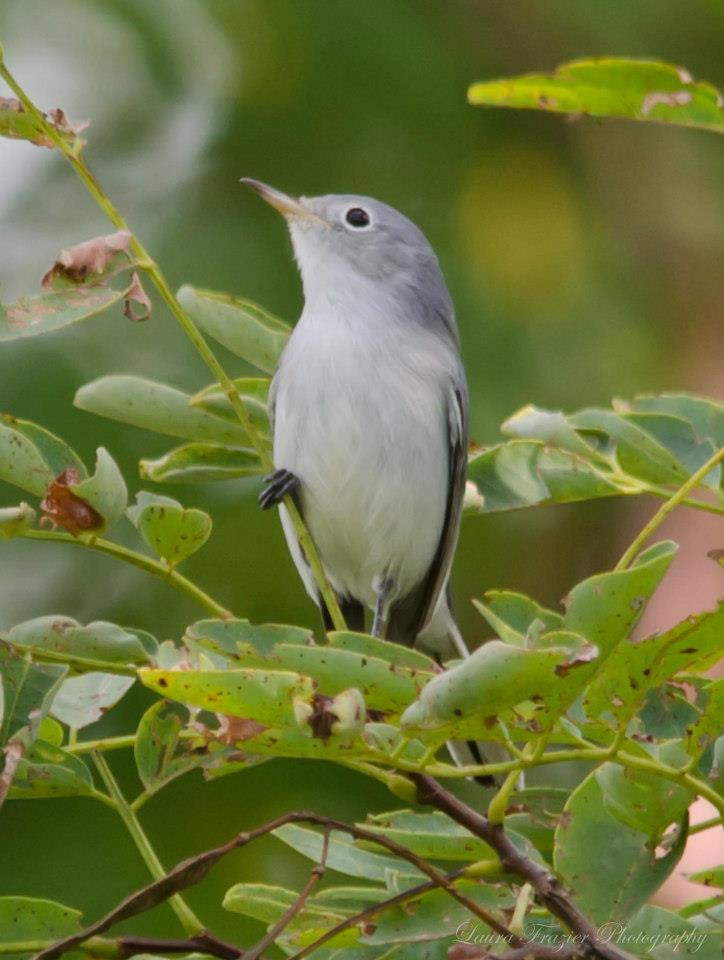
A very pretty BGG has recently been published on the superb Cornell Lab website, credited to Laura Frazier. It’s so cute – and such a clear image – that it deserves inclusion here

 Summer & Winter Ranges











































 ROLLING HARBOUR ABACO
You must be logged in to post a comment.