Unknown's avatar

BAHAMAS MANATEES: GINA’S CALF NEEDS A NAME!

Gina the Bahamas Manatee (pregnant) Eleuthera (BMMRO)

Gina the Manatee, Eleuthera – expectant mother (BMMRO)

BAHAMAS MANATEES: GINA’S CALF NEEDS A NAME!

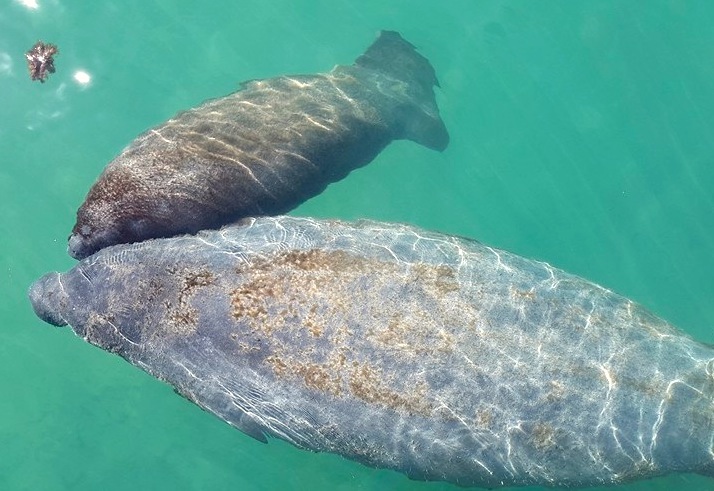
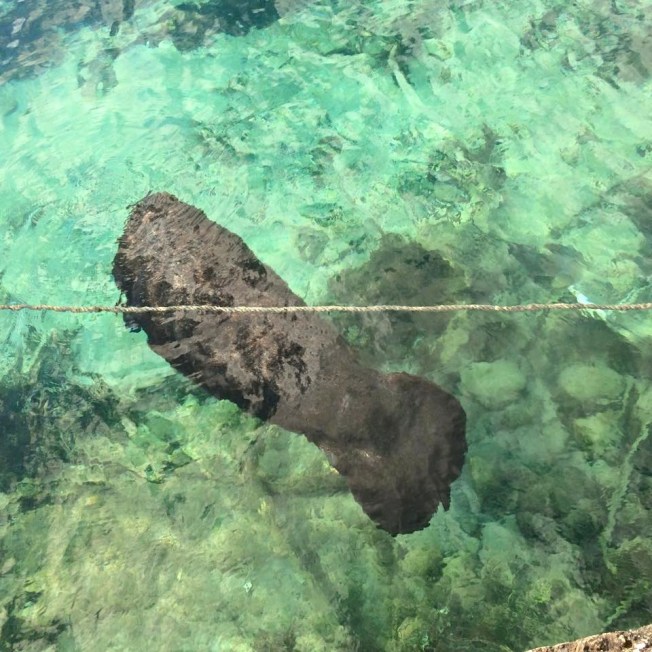
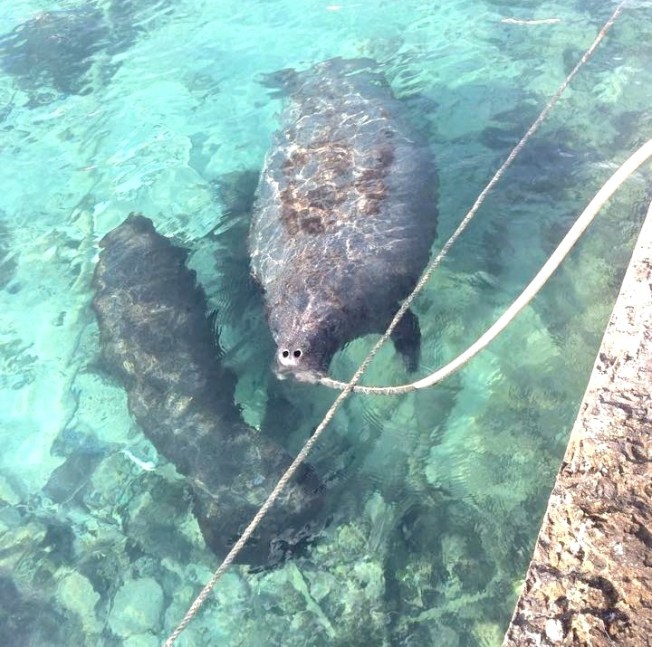
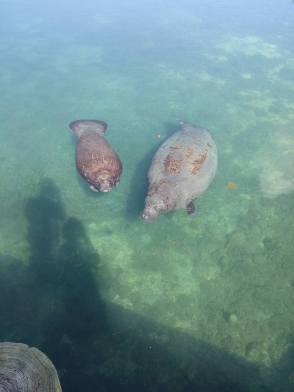
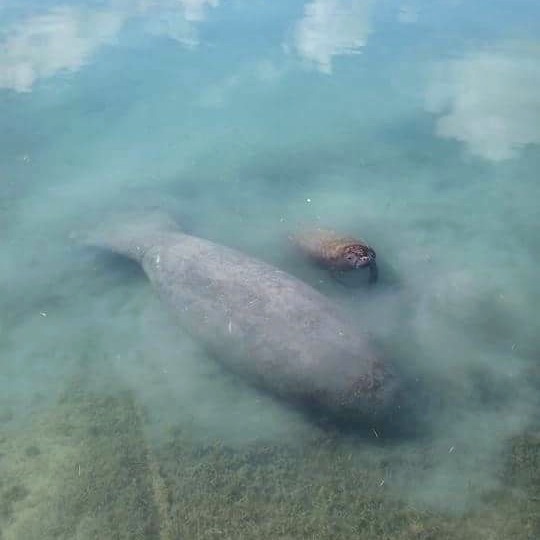
Earlier this year I posted the welcome news that Bahamas manatee Gina was beyond any doubt pregnant. You can read about it HERE. Gina has been living for some time in Eleutheran waters, under regular observation by the BMMRO. At the turn of the year, she was re-tagged in Harbour Island, Eleuthera, when her pregnancy was discovered. I promised to give an update and this is a perfect moment. Gina’s calf was safely born and is growing fast. The pair have spent a lot of time in and around Spanish Wells, Eleuthera. Recently they have begun to move further afield, and there have been several sightings with some great photos shared on FB and in particular on Felice Leanne Knowles’s terrific BAHAMAS MANATEE CLUB page, some of which are included here duly credited.

Gina the Bahamas Manatee (pregnant) Eleuthera (BMMRO)

Gina’s calf is currently just called “Gina’s calf”. Its gender is unknown, and it will take a close inspection from below to ascertain from its… I don’t have to go on with this, do I? The point being that the chosen name will need to be unisex because it may take a while until there is sufficient development of the… I don’t have to go on with this either, do I? Let’s see the nameless calf at once! Details of the competition at the end of this post…

Gina with her newborn calf, July 27 (BMMRO) (note apparent prop scars on Gina)11209341_1012183408800885_310154952620912454_n

Spanish Wells, October 26 (π Junea Pinder / BMMRO) Gina the Bahamas manatee and her calf (Junea Pinder / BMMRO) Gina the Bahamas manatee and her calf (Junea Pinder / BMMRO)

Gregory Town, November 5 (Lynne Hirzel / BMMRO)12188935_10156306821645195_3509772562942760375_n 12219637_10156306821330195_1471887362053804519_n

Hatchet Bay, November 13    (π Jeffrey Louis / BMMRO)  10425501_1042928762405755_7163144254688618862_n 12108239_1042928735739091_6064773734031487371_n

November 18: Now you see it… (π Norma Roberts / BMMRO)Gina & Calf Norma Roberts 1 copy

…and now you don’t…Gina & Calf Norma Roberts 2 copy

THE COMPETITION

ATTENTION TEAM MANATEES!!! Due to a consistent influx of sighting information and photos, we would like to add Gina’s calf to our catalogue. It would be nice for it to have a NAME!! We cannot monitor these manatees without your help and it is only fitting that  YOU name the manatee. The deadline for name suggestions is November 29th, 2015 and the winning name will be revealed on November 30th, 2015. The member with the winning name suggestion will receive an official manatee club T-Shirt!!

RULES

1. The name must be submitted on the Club Page Bahamas Manatee Club as an individual post – DO NOT comment your suggestion.
2. The name must be unisex – we do not know the sex of the calf yet.
3. A meaning or description must be submitted along with the name.
4. Please do not submit any derogatory or explicit “names.”
5. If you are submitting on behalf of a child who is not on Facebook, please add their name to the post as well.

Spread the word! Tell your friends and families to join the club and help us with a name!! The name will be selected on it’s meaning or description as it relates to marine mammals OR The Bahamas. The amount of “likes” per post will also go into consideration during the selection process.

Regretful Note: I made the stupid mistake of being amongst the very first to post my suggestion, meaning that after a day or two I’d get no likes at all, as more people got involved and my offering sank slowly. But there’ve been plenty of much better ones since, so probably just as well!

Bahamas Marine Mammal Research Organization

Bahamas Manatee Club

For more information about West Indian manatees, you can visit the MANATEE PAGE. There are several links there to specific manatee stories.

Finally, here is a great manatee map that Felice has recently made, showing which of the increasing number of manatees is where at the moment. Just think, only 4 or 5 were known about four years back. Now look!

12241226_298174587019969_1571890190333376929_n

Credits: primary founts of Bahamas manatee knowledge Felice & BMMRO; Photos BMMRO, Junea Pinder, Lynne Hirzel, Jeffrey Louis, Norma Roberts

mantsw~1

Unknown's avatar

A WILD-GOOSE CHASE: IN PURSUIT OF FOUR SPECIES ON ABACO

Canada Goose, Abaco (Peter Mantle)

A WILD-GOOSE CHASE: IN PURSUIT OF FOUR SPECIES ON ABACO

In normal parlance a ‘wild-goose chase’ is of course a futile search or a useless pursuit**. However, I bring you news of a successful chase after wild geese on Abaco – indeed the bagging of all four of the goose species recorded for Abaco. All are classed as winter residents, with rarity rated from ‘uncommon’ to ‘good grief, that’s a first’.  So I present them in the order of relative excitingness…

GREATER WHITE-FRONTED GOOSE

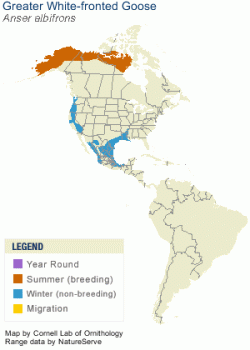
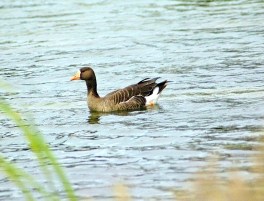
Greater White-fronted goose Abaco (Erik Gauger) smThis fine bird caused a bit of a stir. Not only was it a first for Abaco, the species had never before been recorded in the Bahamas. In February 2012, the goose was found at the pond at hole #11 on the Treasure Cay golf course, presumably having been blown off its normal migration route. This range map shows just how far. 

anse_albi_AllAm_map

Erik Gauger managed to get the close shot above; Uli Nowlan got a few from further away, including a swimming view. I know of no other photographers of the bird (though Woody Bracey published a report about it). If there are any, I’d be pleased to hear about their photos – indeed to add them!

   White-fronted Goose, Abaco 2 (Uli Nowlan  White-fronted Goose, Abaco 1 (Uli Nowlan)

ROSS’S GOOSE

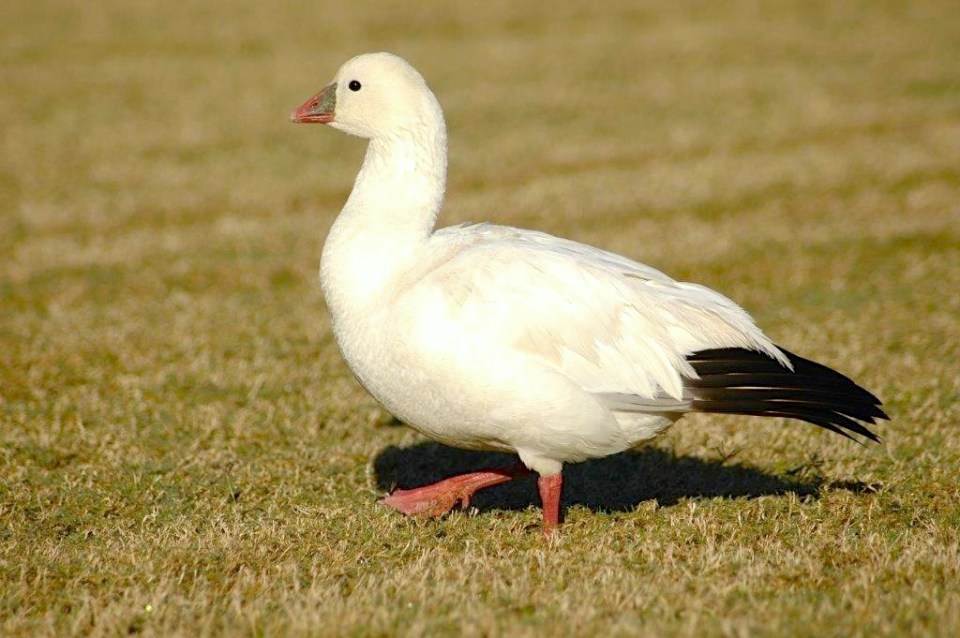
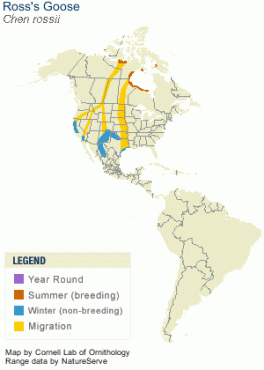
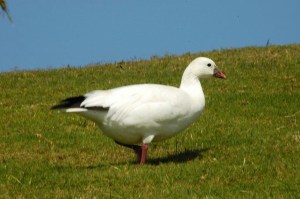
Equally rare on Abaco is the Ross’s Goose. Far to the east of its normal migration route,  one found its way to the Goose Magnet of Treasure Cay. The range map shows the very clear routes this species chooses for its migration.Ross's Goose, Abaco 1 (Uli Nowlan) Ross's Goose, Abaco 4 (Uli Nowlan)ross_goose_migration_map Ross's Goose, Abaco 2 (Uli Nowlan)

CANADA GOOSE

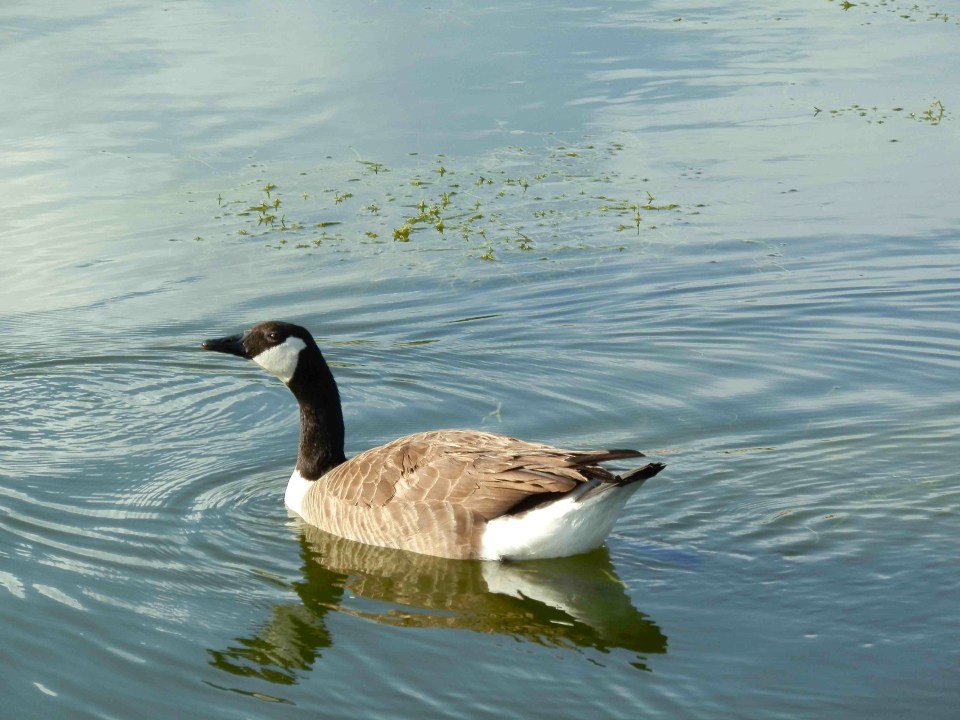
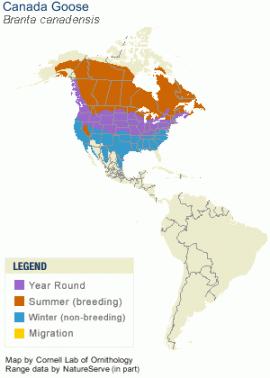
Another anserine visitor to Abaco – slightly more frequent than the two species above – is the Canada Goose. Again, Treasure Cay golf course exerted its powerful pull to drag this one from its usual route, where it happily took up residence. As you can see from the range map below, these geese have a widespread habitat and spend at least some of the year not that far from northern Bahamas, so it is less surprising that they turn up on Abaco from time to time.

CANADA GOOSE, Abaco (Kasia Reid)

Canada Goose, Abaco (Bruce Hallett)bran_cana_AllAm_map_new

SNOW GOOSE 

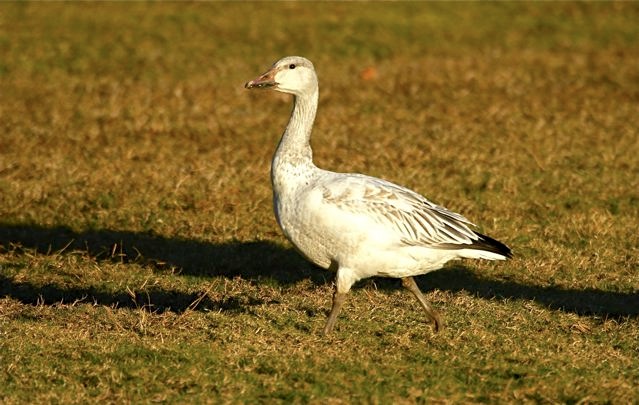
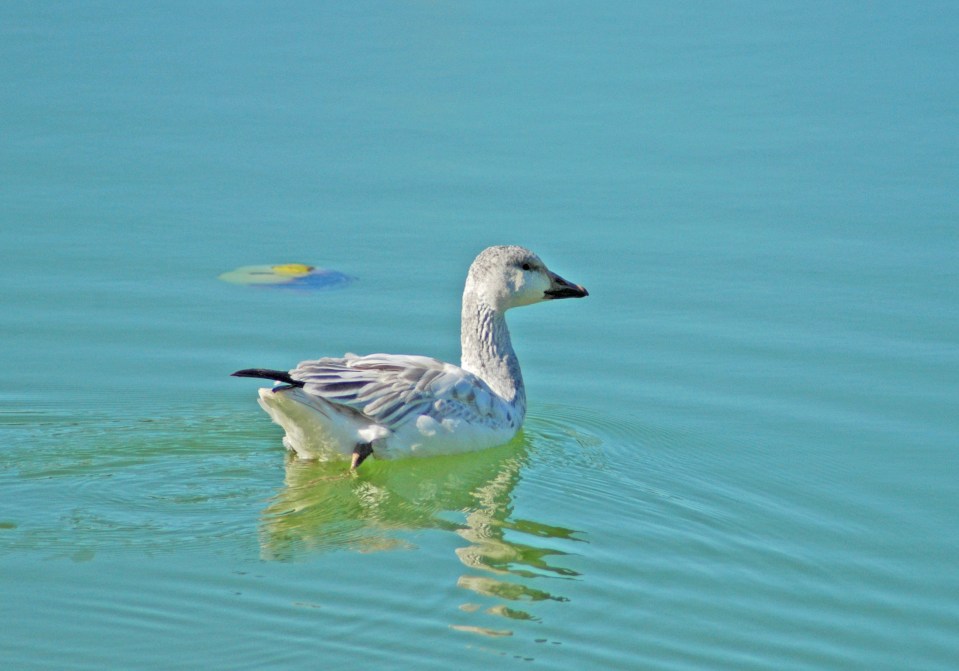
Although a relatively unusual winter visitor to Abaco, and a good ‘get’ for any birder’s checklist, I was surprised to find that the snow goose is classed as more common than the Canada goose. Its usual habitat is further away; and its summer breeding territory is very far north. Again, when a snow goose drifts eastwards, Treasure Cay is its spiritual home… 

Snow Goose (imm), Abaco (Bruce Hallett) Snow Goose, Abaco (Tony Hepburn) sm2 Snow Goose, Treasure Cay, Abaco (Uli Nowlan)chen_caer_AllAm_map

Why geese are not found elsewhere on Abaco other than Treasure Cay is a mystery. The TC golf course water is presumably fresh, whereas other locations – Gilpin Pond on South Abaco for example, or the neglected ponds of the defunct ‘Different of Abaco’ – are distinctly brackish. Perhaps that makes all the difference.

Abaco’s Four Geese SpeciesAbaco's 4 goose species jpg

**WILD-GOOSE CHASE The etymology of the phrase is medieval, referring to a horse race in which pursuers try to follow an erratic ‘wild goose’ leader. Shakespeare used the term in Romeo and Juliet, with Mercutio saying “Nay, if our wits run the wild-goose chase, I am done; for thou hast more of the wild goose in one of thy wits than, I am sure, I have in my whole five.” Which was quite a good, if cumbersome, insult.

Credits: Photos – Peter Mantle, Erik Gauger, Uli Nowlan, Kasia Reid, Bruce Hallett, Tony Hepburn; Range maps – Cornell Lab for Ornithology

Unknown's avatar

GREATER YELLOWLEGS: LARGER THAN THE LESSER. PROBABLY.

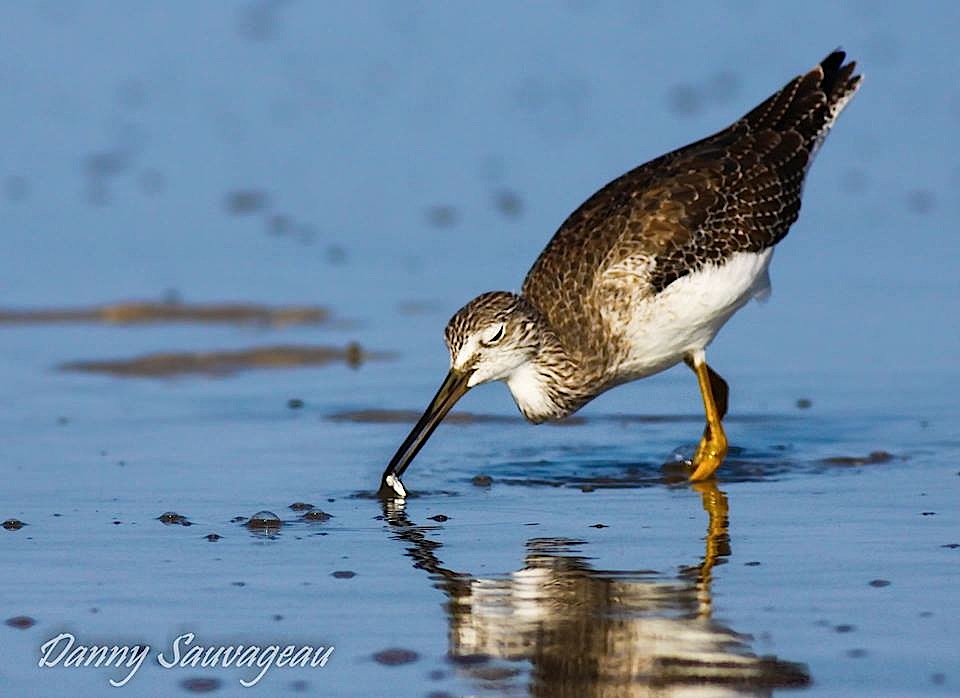
Greater Yellowlegs, FL (©Danny Sauvageau)

GREATER YELLOWLEGS: LARGER THAN THE LESSER. PROBABLY.

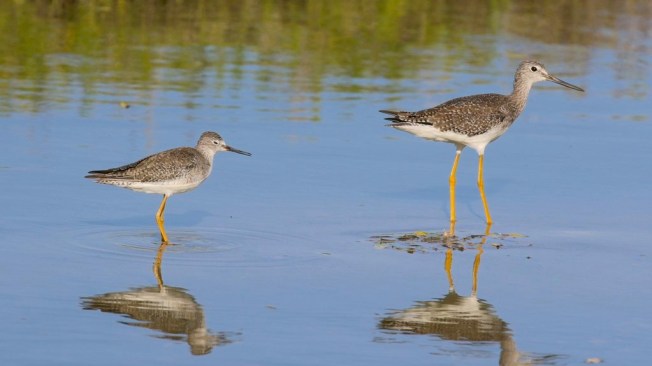
I’ve shied away from the whole ‘yellowlegs dimension question’ for long enough. Now that I have some brilliant photos for you, I feel I am obliged to address the issue. I was last forced into this slightly uncomfortable position while writing the captions for THE BIRD OF ABACO. We had GY photos. We had LY photos. We had none of the 2 species together, or at comparable distances from the camera. Frankly unless you are very knowledgeable and / or a regular birder where both species hang out, they are very hard to tell apart. 

Both yellowlegs species are winter residents on Abaco, and neither is particularly common (though Gilpin Pond is always a good place to check for LYs). Both are very similar in almost all respects. The broad principle is that the GY is the larger, heavier bird, while the LY is more delicate and with a shorter bill in proportion to its head size.

In a more refined version, Cornell suggests: “GY’s bill appears slightly upturned and blunt-tipped, while LY’s bill is straight and sharp-pointed. LY’s bill is always dark, while GY’s bill is grayish at the base in non-breeding season. Voice is best distinguishing character: GY gives three or four piercing notes, LY two rapid, softer short whistles (sometimes three)”. But even this help depends on (a) light conditions (b) season and (c) whether the bird you are looking at is ‘vocalising’ or not…

TWO TYPES OF YELLOWLEGS ON ABACO – BUT WHICH IS WHICH?Greater Yellowlegs LR. Abaco Bahamas.Tom Sheley.2.12 copy 2Lesser Yellowlegs.Marls.Abaco Bahamas.2.13.Tom Sheley small 3

If you saw the two birds above on separate days in different places at different distances, could you say with confidence which is which? Or maybe they are the same? Experts will probably know at once that the top bird is a GY in a ‘slimline’ stance; and the other is a LY in a ‘plump’ stance. But going simply on the ‘larger heavier bird’ and ‘bill-length principle’, I’d have said the opposite. And I’d be wrong. As usual. I suspect that the only way an amateur (e.g. me) can hope to be confident in distinguishing the two species is by seeing them frequently and preferably together.

Which takes us from Abaco, where the above birds were photographed by Tom Sheley, to Pinellas County, FL and the wonderful photos of Danny Sauvageau, an expert with the birds and also the camera. Here are some of his recent Greater Yellowlegs photographs that show the bird at its absolute best. They also demonstrate the ‘plump’ and the ‘slim’ looks of the same bird.

If anyone has any other reliable method for telling the species apart, please post a comment and I will gladly incorporate it as a STOP PRESS…

Greater Yellowlegs, FL (©Danny Sauvageau)Greater Yellowlegs, FL (©Danny Sauvageau) Greater Yellowlegs, FL (©Danny Sauvageau) Greater Yellowlegs, FL (©Danny Sauvageau) Greater Yellowlegs, FL (©Danny Sauvageau) Greater Yellowlegs, FL (©Danny Sauvageau) Greater Yellowlegs, FL (©Danny Sauvageau)

STOP PRESS 1 My thanks to blogging friend DEAR KITTY for reminding me of a video she posted that very conveniently shows a GY and a LY together, in circumstances where it is impossible not to notice that one bird is larger than the other. It’s an all-round helpful video, so thanks for this, DK.

[youtube https://youtu.be/1BFMAYUDnmg]

STOP PRESS 2 Thanks again to DK for drawing my attention to a great photo by Matt Scott posted on twitter. Here are both types of yellowlegs together, in similar poses and the same distance from the camera – and the behold the difference. The very illustrative image I had been looking for, handed to me on a plate…Yellowlegs G & L, Aruba - Matt Scott @matttockington

Credits: GY and LY on Abaco, Tom Sheley; all other photos Danny Sauvageau. Thanks to both for use permission. Also, Cornell Lab of Ornithology… And Matt Scott

Unknown's avatar

BUTTERFLIES ON ABACO (6): FOCUS ON SWALLOWTAILS

Bahama Swallowtail, Treasure Cay, Abaco (Uli Nowlan) copy

BUTTERFLIES ON ABACO (6): FOCUS ON SWALLOWTAILS

I’ve mentioned the swallowtail butterflies of Abaco before, but I have never shown the 3 main species together. They are such handsome creatures that’s it time to give them a place in the sun. These are my favourite butterflies. Ah yes – equally with the wonderful ATALA HAIRSTREAK

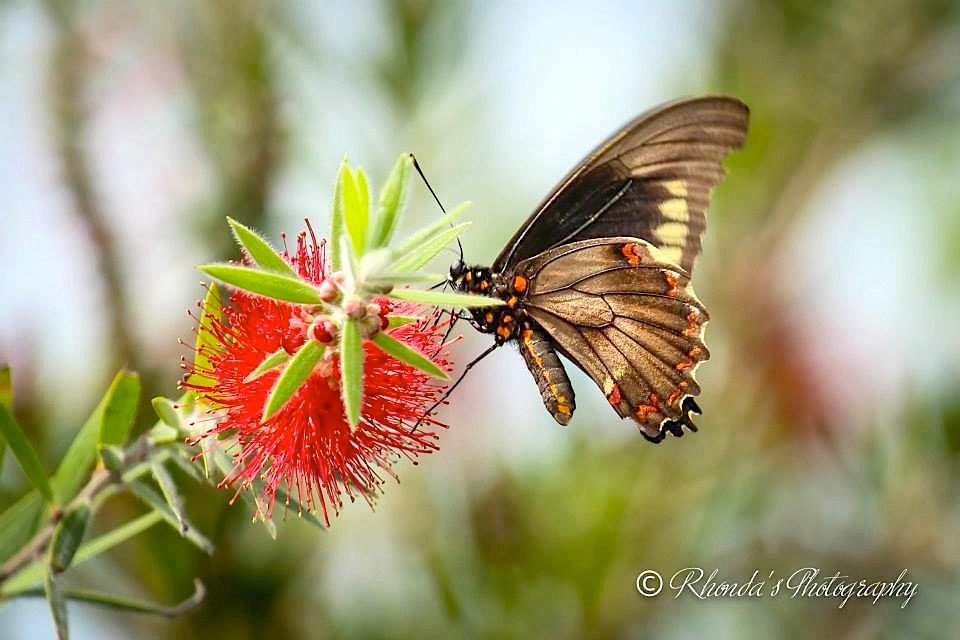
Bahama Swallowtail, Abaco (Rhonda Pearce) 2 copy

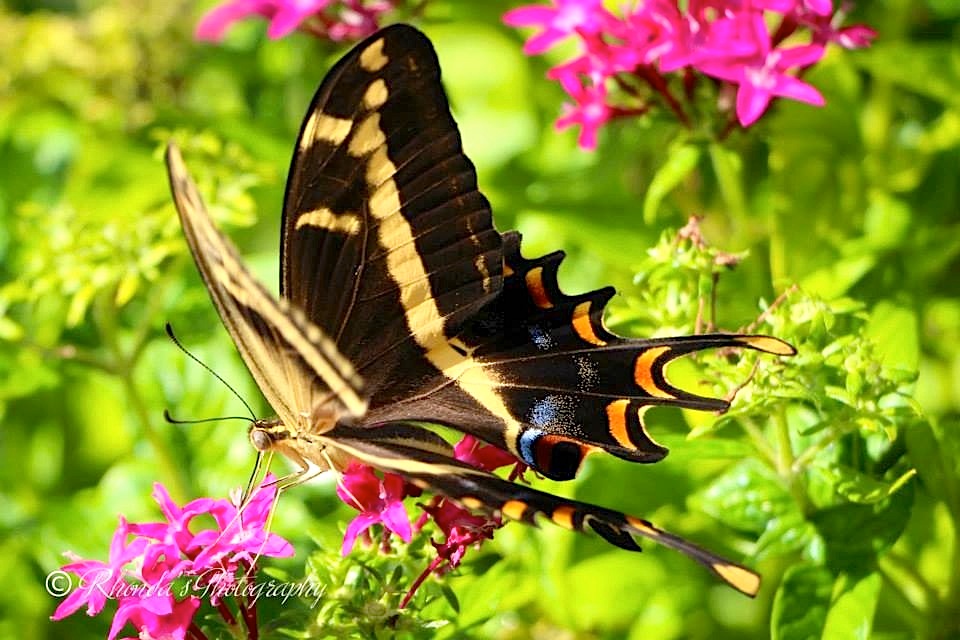
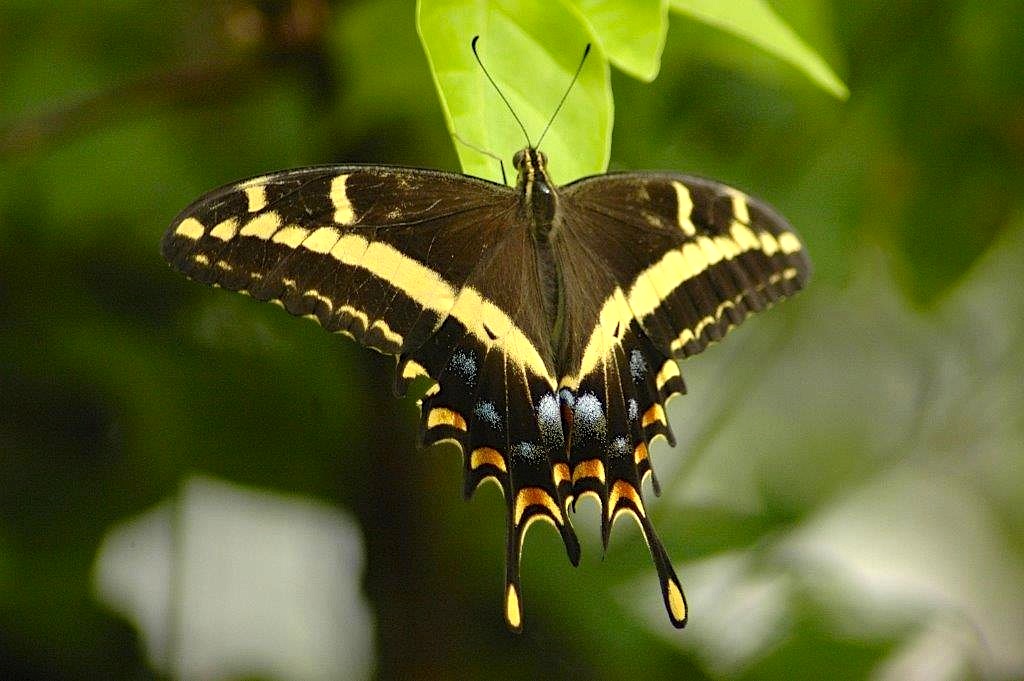
BAHAMA (BAHAMIAN) SWALLOWTAIL

This fine swallowtail Papilio andraemon has a range beyond the islands of the Bahamas. It is also found on Cuba and Jamaica. Occasionally they are found as strays on the Florida Keys or on the mainland in the Miami region. 

Bahama Swallowtail, Abaco (Rhonda Pearce) 1 copyBahama Swallowtail, Abaco (Uli Nowlan)

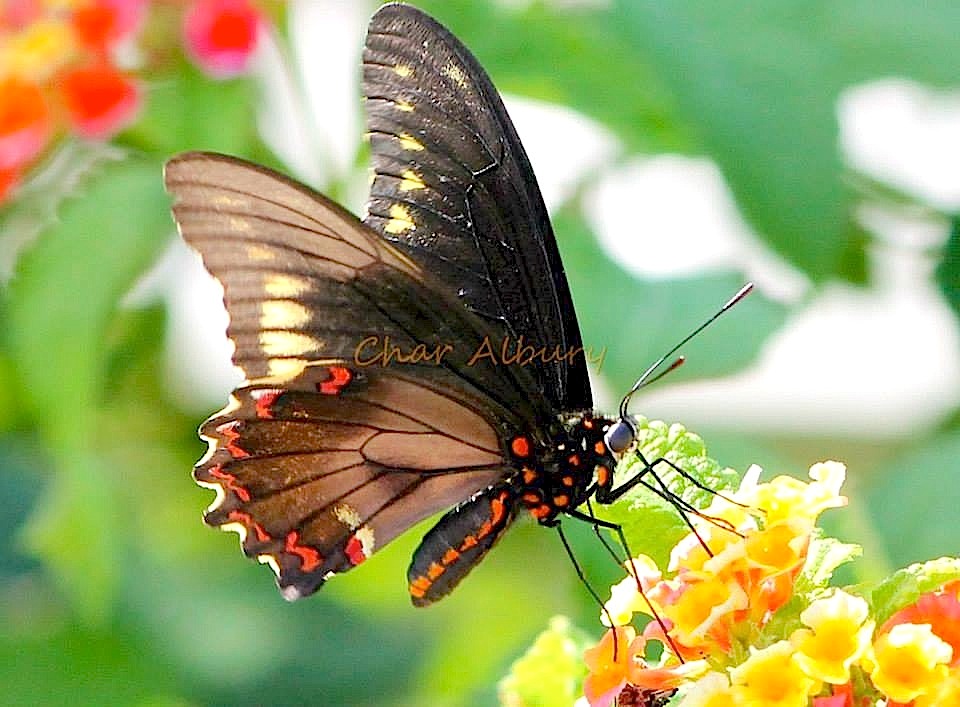
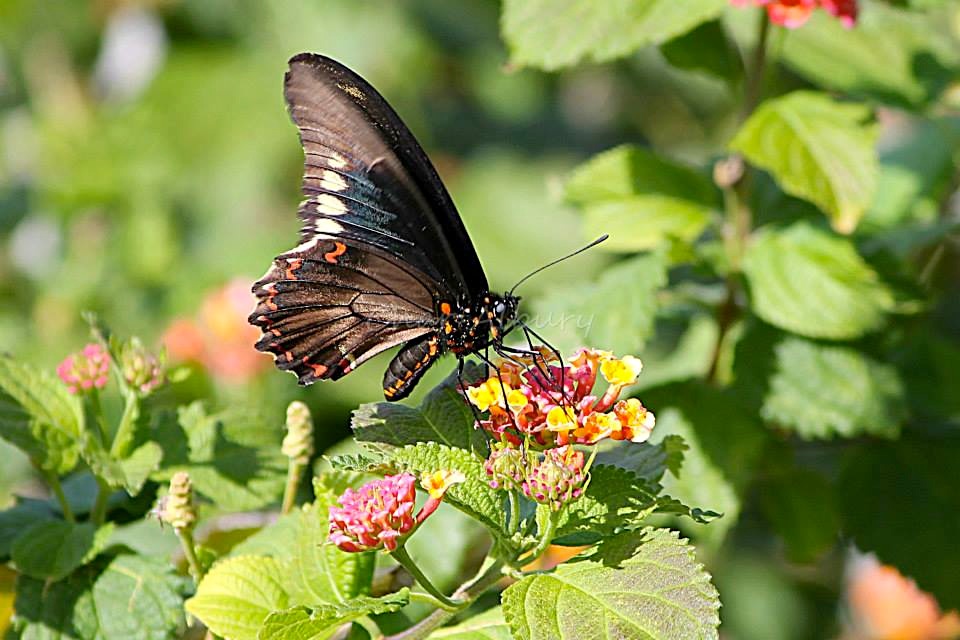
POLYDAMUS (‘GOLD-RIM’) SWALLOWTAIL

This is the species you are most likely to encounter as they cruise rapidly from flower to flower, constantly on the move, with wings fluttering even as they feed. Hard to get good photos of them, therefore. But some (though sadly not me) manage it somehow… Polydamus Swallowtail, Abaco (Nina Henry)Polydamus Swallowtail, Abaco (Char Albury) Polydamus Swallowtail, Abaco (Rhonda Pearce) copy

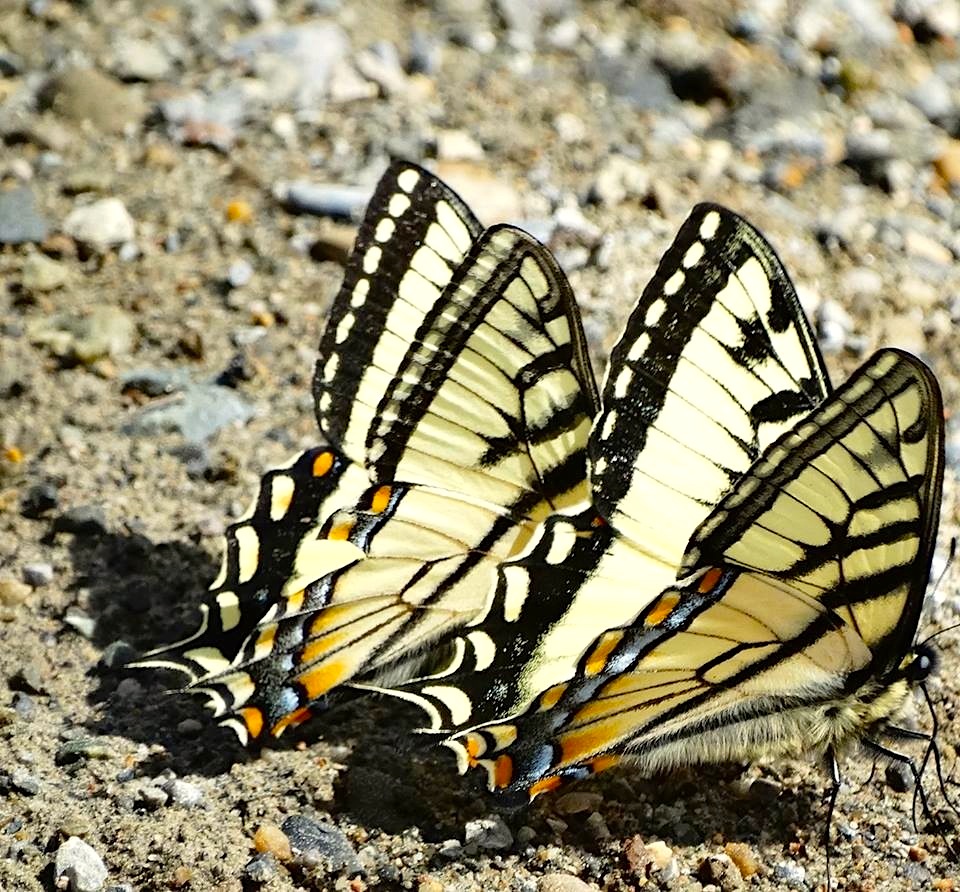
TIGER SWALLOWTAIL

I suspect this species – common in the eastern USA – is quite rare on Abaco. I have never seen one, and these ones photographed by Uli Nowlan at Treasure Cay are the only pictures I have seen. And what lovely creatures they are. Tiger Swallowtail, Abaco (Uli Nowlan) Tiger Swallowtail, Abaco (Uli Nowlan)2

DISQUALIFIED ENTRIES

RIGHT SPECIES, WRONG CONTINENT – EUROPEAN SWALLOWTAILSwallowtail Butterfly (France)

RIGHT COUNTRY, WRONG CREATURE – BAHAMA SWALLOW TAIL, ABACO BS BH IMG_8038

WRONG CREATURE, WRONG CONTINENT – EUROPEAN SWALLOW TAILSwallow Dorset

RIGHT EVERYTHING, HOPELESS PHOTO (how they usually behave for me…)Polydamus (Gold Rim) Swallowtail Butterfly, Abaco (but6)

RELATED POSTS

COMMON BUCKEYE

ZEBRA HELICONIAN

GULF FRITILLARY

DRYAS JULIA

MARTIAL SCRUB-HAIRSTREAK

Polydamus Swallowtail abaco (Char Albury)

Credits: Uli Nowlan, Rhonda Pearce, Nina Henry, Charmaine Albury, plus disappointments for RH

Unknown's avatar

THREE “HALLOWEEN-COLOURED” BIRDS ON ABACO

6292695150_32bb41d043

THREE “HALLOWEEN-COLOURED” BIRDS ON ABACO

Black and orange seem to have become – perhaps always have been – the colours most associated with Halloween (“Holy Evening” at one time in its history). Black, I suppose, for witches and their cats; orange for pumpkins and fire. In nature, surprisingly few creatures and plants have an exclusively black and orange livery. Some birds. A salamander of two. A few fish and butterflies. The odd flower. 

I decided for no reason at all to spend (waste?) a small amount of time discovering which birds found on Abaco are true Halloween species. I had to allow for some white markings, on the spurious basis that white is not a colour but rather an absence of colour… That left 3 species (and even then some troublemakers might argue that the precise borderline between yellow and orange is debatable…). 

AMERICAN REDSTART

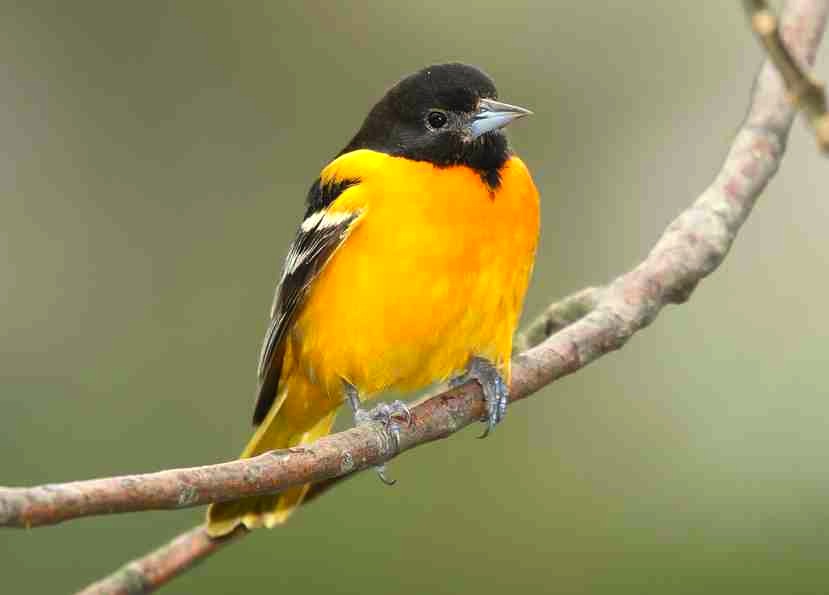
The Redstart Setophaga ruticilla is a species of warbler and a common winter resident on Abaco. They are mostly seen in the coppice and in gardens. The male is black with orange markings; the female has yellow markings instead of orange.

American Redstart (m) Abaco (Craig Nash) American Redstart (m) Abaco (Gerlinde Taurer) American Redstart (m) Abaco (Tom Sheley)

BALTIMORE ORIOLE

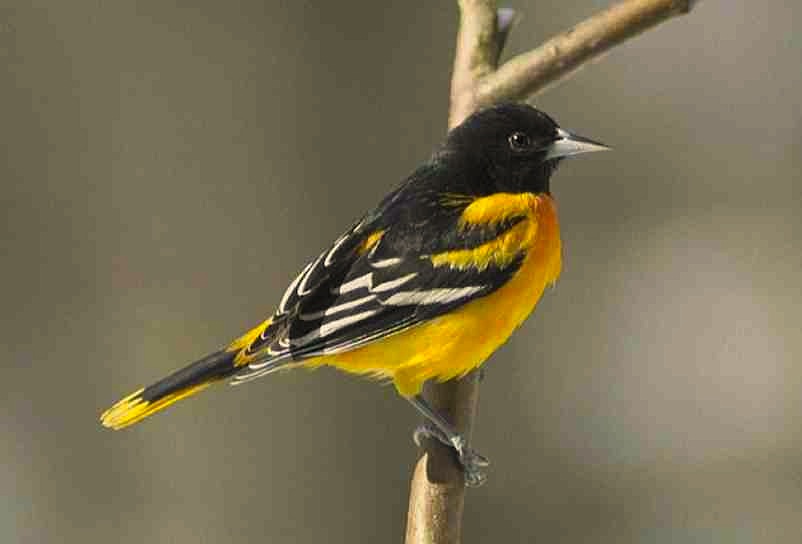
These Orioles Icterus galbula are rather less common winter visitors. Many are completely black and orange apart from white wing bars. However, there’s no doubt that others are more of a yellowy-orange.

Baltimore Oriole (pinterest) copyBaltimore Oriole (mdf-wiki)Baltimore Oriole (Brezinski-wiki)

WESTERN SPINDALIS

The handsome, colourful Spindalis zena is one of my favourite birds. The Spindalis is a common permanent resident, and I am determined to make it qualify as a Halloween bird even though (arguably) plenty of its surface area is neither black not orange. Apologies to purists.

Western Spindalis, Delphi, Abaco (Keith Salvesen)Western Spindalis (m) Abaco (Craig Nash) Western Spindalis (m) Abaco (Gerlinde Taurer)

Credits: Craig Nash, Gerlinde Taurer, Tom Sheley, Keith Salvesen, pinterest, wiki & an unknown Angry Bird pumpkin carver

Unknown's avatar

“I GET AROUND”: PIPING PLOVER TUNA’S GUEST POST (3)
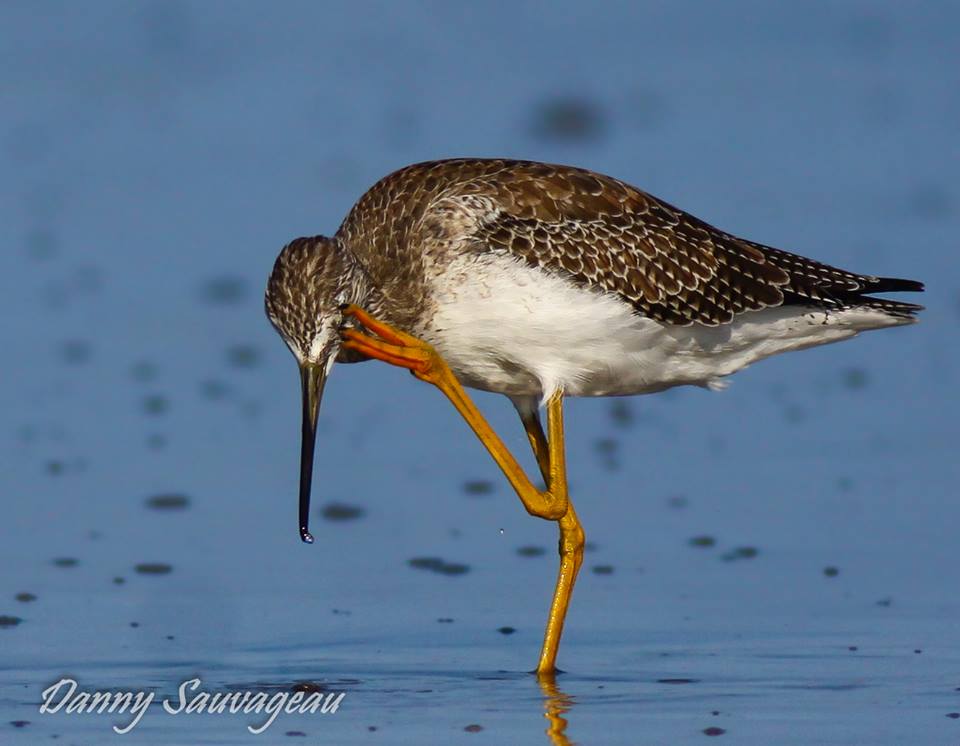
Piping Plover Tuna. Abaco. Oct 10. Rhonda Pearce

“I GET AROUND”: PIPING PLOVER TUNA’S GUEST POST (3)

Hi again, readers of Mr Harbour’s blog. Tuna here. This is part 3 of my diary.  I’m 4½ months old now, and getting on famously here on Abaco. Especially now the big wind and waves have gone away [Hurricane Joaquin – ed]. Someone called me ‘Abaco’s favourite plover’, which really fluffed up my feathers. I’ve started to explore a bit and meet more birds just like me*. Turns out they are all Travellers from the North too – what are the chances? [100% – ed]

Piping Plover Tuna. Abaco. Rhonda Pearce 1

*How do I know what I look like? Well it’s easy. When I am chomping meat strings in the sunshine on the edge of the water, there’s a picture of me in the water doing the exactly same thing at the same time only upside down. Like these two friends of mine here.

PiPl 5x WB 23.10.15 min

I do a lot of running about on the beach. Back and forth. Up and down. Into the water and out again. It’s a busy life. And I’ve only got little legs. In case anyone worries that Michelle’s 4 smart rings hurt me or get in the way, I never feel them. They are just a part of who I have always been since she picked me up the day after I cracked out. Piping Plover Tuna. Abaco. Rhonda Pearce 2

I’ve met lots of birds that are different from me, too. Some live here all the time, others are Travellers from the North too. I’m relying on Mr H here to show you some of the guys I hang out with these days. We all kind of mix up and if you don’t try to find meat strings where the bigger birds want to find them, it’s very friendly. Actually they are all bigger than me!

Sandpiper, Semipalmated Plover, Ruddy Turnstone, Wilson’s Plover (all on Abaco)Sanderling, Abaco (Craig Nash) Semi-palmated Plover, Abaco (Tony Hepburn) Ruddy Turnstones at Delphi, Abaco (Keith Salvesen)  Wilson's Plover, Abaco (Keith Salvesen)
I’ve made my first trip to a different beach. I decided to fly round and explore, and I saw lots more sand so I flew there and stayed a couple of days. Like a little holiday. A nice man [Keith Kemp] saw me there and told Mr H about my coloured bands. That’s how he knew I’d moved and he told my watcher Rhonda so she didn’t go looking for me on my home beach and get worried that I wasn’t there. Then I flew back there after a couple of days and Rhonda found me there again yesterday.

Tuna on his vacation from Watching Bay to Winding Bay. Note meat string in #1PiPl l band wb 22.10.15 b - V2 copy PiPl r band wb 22.10.15 b V2 copyWatching Bay : Winding Bay Map

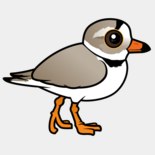
                                                     piping-plover                   piping-plover                  piping-plover

I’ve got a new game I’ve been playing when Rhonda comes to see me. She sits down on the beach and puts shells all round her in the sand. So I come over and have a look at them (once I pecked the cloth thing she sits on. Urrch! It wasn’t food). Then she uses that thing that makes a plover noise [the focus sound on her camera – ed] and I put my head on one side to listen. Piping Plover Tuna. Abaco. Rhonda PearcePiping Plover Tuna. Abaco. Rhonda Pearce 1Piping Plover Tuna. Abaco. Rhonda Pearce 1

There’s another reason I put my head on one side. Sometimes really really big birds fly over the beach. Huge dark ones. I like to keep an eye on them. I think they may be trouble. So I put my head on one side so I know exactly where they are in the sky until I feel safe.

This is me back on my beach after my trip. Green on Blue (L); Black on Grey (R) = TUNAPiping Plover Tuna. Abaco. Rhonda Pearce 1

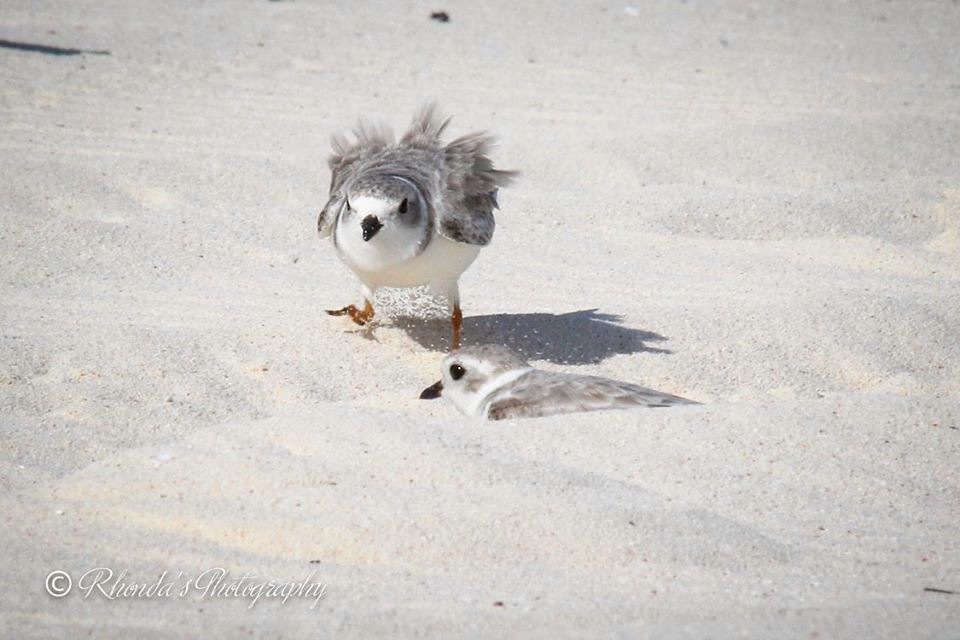
This is a New Friend on my beach, one of 3. They don’t have any bands but they are Travellers from the North like me. In this game I lie low in a hole in the sand and my NF rushes at me kicking sand up like a crazy bird. Fun, huh?Piping Plover Tuna. Abaco. Rhonda Pearce 1

More news from me soon. Cheeps from Tuna.

Watching Bay, Cherokee, Abaco jpg

TUNA’S FIRST 4½ MONTHS

  • JUN 10        Hatched Edwin B. Forsythe NWR (Holgate Center), New Jersey
  • JUN 11         Banded & measured by Michelle Stantial
  • JUL 05         Fledged
  • AUG 28       First sighted on Abaco – preliminary ID
  • SEP 16         Seen again on the same beach – ID confirmed
  • SEP 22         Last sighting before Hurricane Joaquin
  • SEP 28         Paula (Tuna’s mother) re-sighted on Joulter Cays, Andros
  • OCT 03        Tuna safely back on the beach again after Hurricane Joaquin
  • OCT 20-23  Expedition to Winding Bay (ID there on Oct 22)
  • OCT 24        Found back on Watching Bay beach

PIPL Watching Bay, Cherokee, Abaco. 1 bird. Banded. Rhonda Pearce 2 copy copy

NOTE If you ever wondered why birds are banded and what on earth use it is, the answer is in this story. Banding & tagging enables detailed research at both ends of the migration which in turn enables protection of the species and conservation of threatened habitats. There are only 8000 PIPL left. Degradation of the breeding grounds or the overwintering grounds – let alone both – may result in extinction. This seems to have been a good summer for the piping plover; let’s hope the winter treats them well so that this summer’s chicks like Tuna will be able to breed safely next year.

This Diary extract shows how an individual banded bird’s movements can be monitored within its chosen area, so that a picture can be formed of its habitat choices and range.

For details of all this season’s PIPL sightings, check out ABACO PIPING PLOVER WATCH 

TUNA’S DIARY (1)

TUNA’S DIARY 2

EDWIN B FORSYTHE NWR

CONSERVE WILDLIFE FOUNDATION of NJ

Credits: photos Rhonda Pearce, Keith Kemp, Craig Nash, Tony Hallett, Keith Salvesen; thanks to bander Michelle Stantial, birder & ‘Tuna Watcher’ Rhonda Pearce, CWFNJ & cohorts, Matt Jeffery and all other providers of info snippets; Birdorable for the cartoon; and Xeno-Canto for the recording

Unknown's avatar

“EMERALD EYES”: NEOTROPIC CORMORANTS ON ABACO

Neotropic Cormorant, Treasure Cay, Abaco 1 (Tom Sheley)

“EMERALD EYES”: NEOTROPIC CORMORANTS ON ABACO

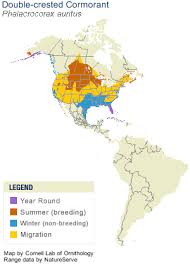
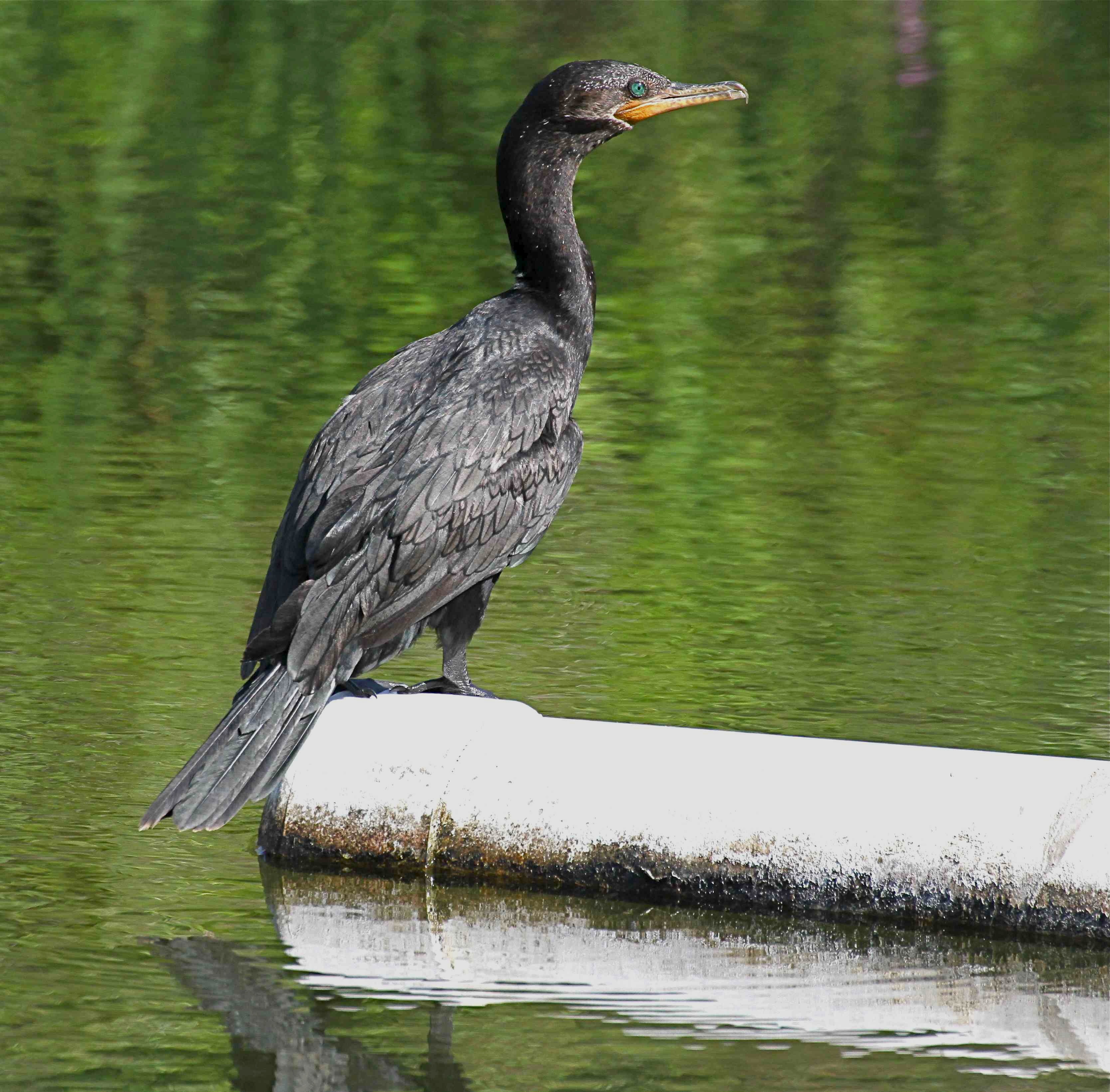
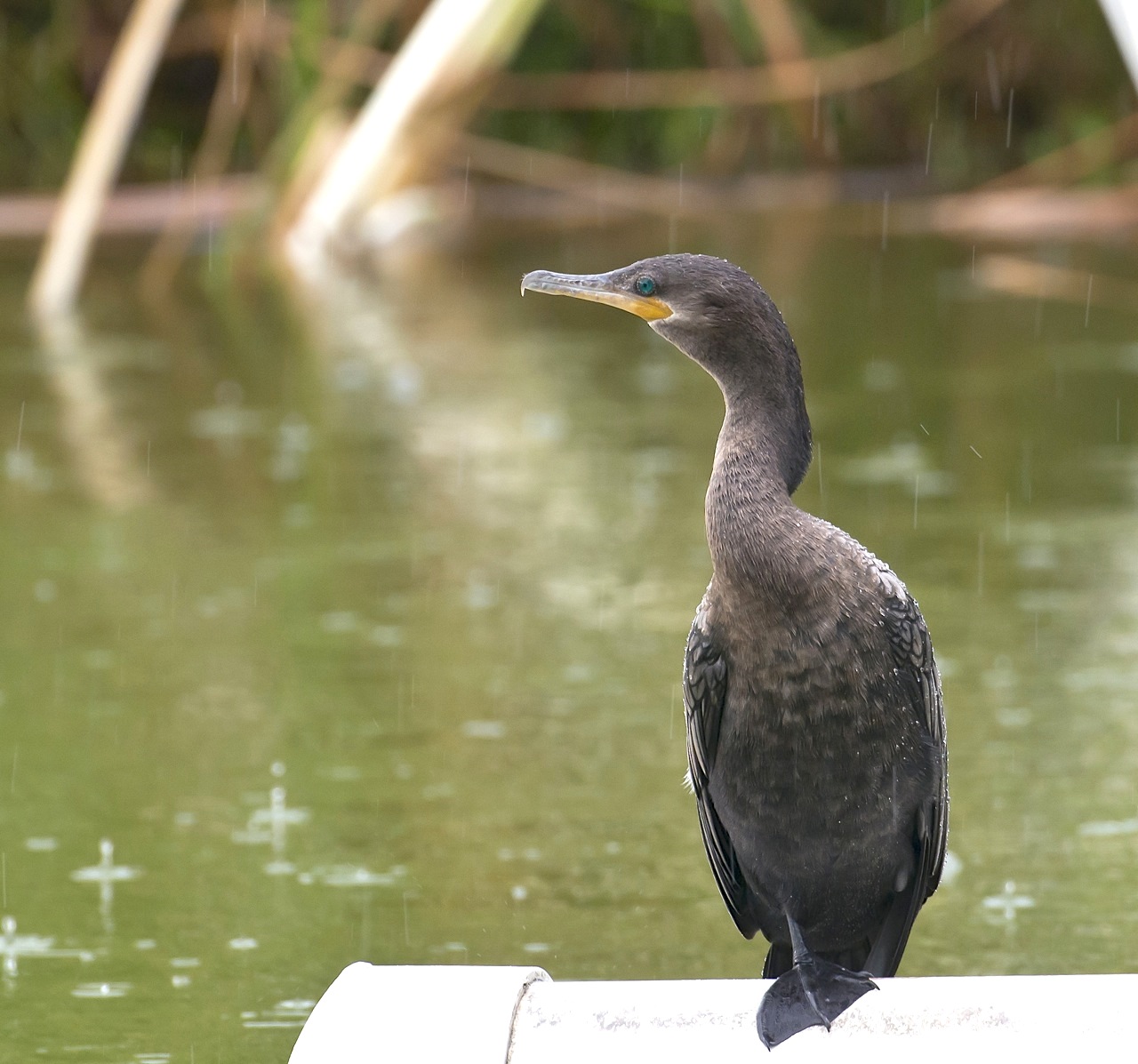
Neotropic or Olivaceous Cormorants Phalacrocorax brasilianus. Smaller cousins of the familiar double-crested cormorant, and occupying a quite different range. In the northern Bahamas they are considered to be uncommon summer residents whereas the big guys are common year-round residents. However the neotropics’ range has spread in the last decade and they may become more noticeable on Abaco. Right now, Abaco is pretty much the northern boundary.

images        images-1

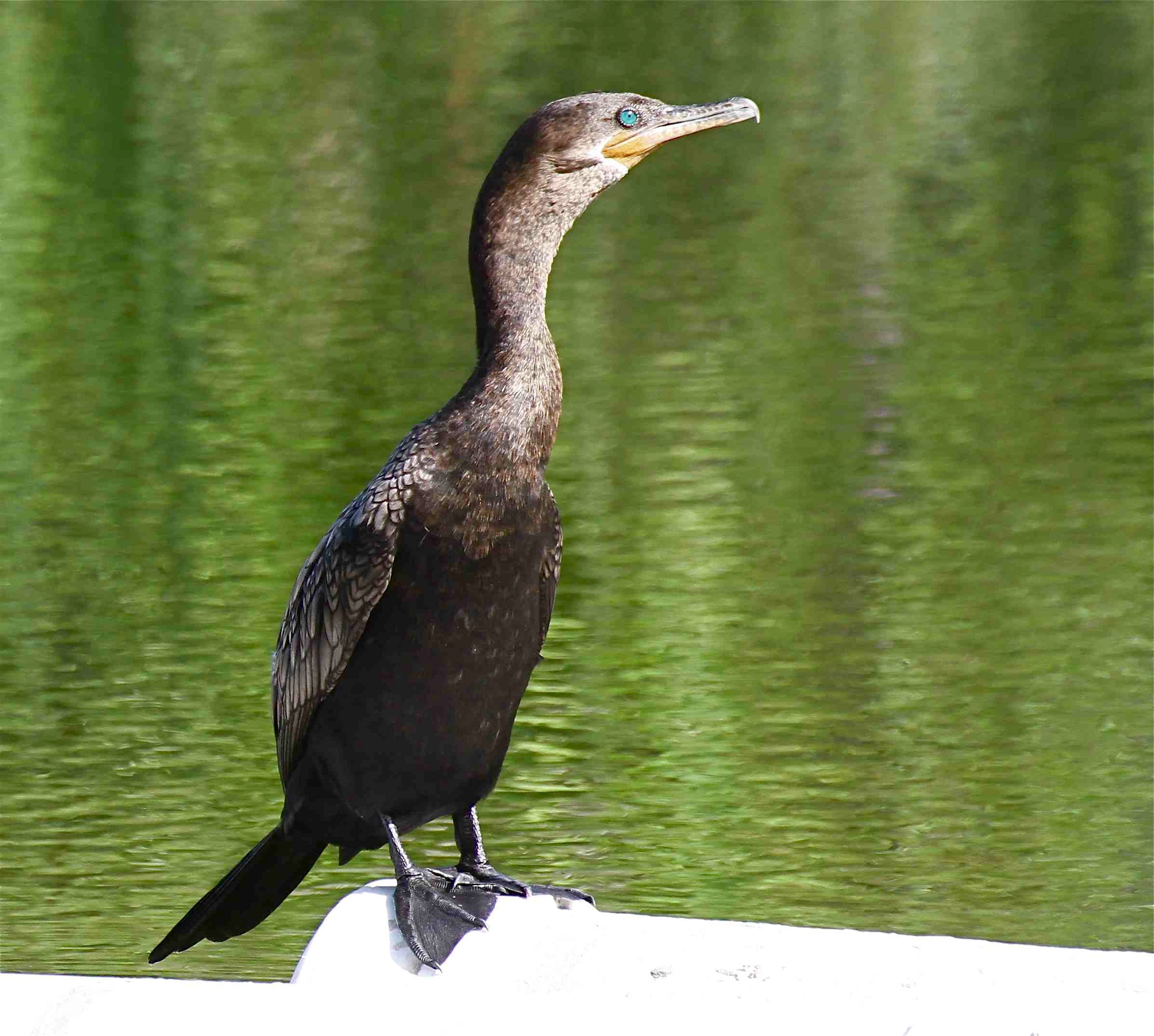
In many ways, cormorants are taken rather for granted – ubiquitous black guardians of the coastal margins. But seen close-to, they have their glamour. This is especially true of the slimmer neotropics, with precious jewels for eyes and intricate plumage patterns that a mere fly-past cannot reveal.

Male and female neotropic cormorants: a caption contest in the making…Neotropic Cormorant, Abaco 3 (Bruce Hallett)

Neotropic Cormorant, Abaco 2 (Bruce Hallett)
Comingsbirds
Besides being smaller and lighter than the double-cresteds, these cormorants have longer tails. They are mainly fish-eaters both at sea, and inshore where ponds are to be found. They make brief dives to find food; in groups they may combine to beat the water with their wings to drive fish into the shallows where they can be picked off more easily.
Neotropic Cormorant, Abaco 1 (Bruce Hallett)
Neotropic cormorants are monogamous and breed in colonies. They build a platform of sticks a few metres above the ground or water in bushes or trees, where the eggs are laid. They produce one clutch (if that’s the right term for cormorants – maybe it’s just hens?) for the season. Here’s a fabulous photo of a double-crested cormorant nest, a similar structural arrangement, with 3 growing chicks. It was taken by JIM TODD, who uses a kayak to reach birds in less accessible places.
Double-crested cormorant nest with 3 chicks, Abaco (Jim Todd)
The eagle-eyed may have noticed that in some photos the birds seem to be standing on some kind of white pipe, as indeed they are. That is because a good bet for finding one in the summer is on the golf course pond in Treasure Cay, a most productive location for spotting water birds of many species. The pipes are to do with the watering arrangements. I think.Neotropic Cormorant, Treasure Cay, Abaco 2 (Tom Sheley)
As I have written elsewhere, “Call in at the Clubhouse for permission first. And if you hear a loud yell of ‘Fore’, it’s not someone counting birds. It’s time to duck…”
Raining? What, me worry?
Neotropic Cormorant, Treasure Cay, Abaco 1 (Tom Sheley)Neotropic Cormorant, Treasure Cay, Abaco 3 (Tom Sheley)

OPTIONAL MUSIC DIGRESSION

‘Emerald Eyes’ may ring a bell with some – and not just Eric Johnson followers either. It was the title of track #1 on the under-rated (largely ignored?) 1973 Fleetwood Mac album ‘Mystery for Me’, in many ways a turning point of a group already in rapid transition.This was their last UK-produced album, cut as the complications of a rich mixture of liquids, substances and other people’s spouses were becoming acute. Bob Welch managed to pen this rather nice song. You’ll need to turn up the volume a bit. Memory lane beckons…

Credits: Photos – Bruce Hallett, Tom Sheley, Jim Todd, Lycaon; Infographics – Allaboutbirds, Comingsbirds

SONY DSC

Unknown's avatar

“CRABACO?”: CRABBING ON ABACO, BAHAMAS

Ghost Crab in surf.Delphi Club.Abaco Bahamas.Tom Sheley

“CRABACO?”: CRABBING ON ABACO, BAHAMAS

It’s been a while since I was in a crabby mood, but autumn is here and there’s a sharp nip in the early morning air… What better time to visit a selection of the many crab species found on Abaco. 

GHOST CRAB

I thought I had some good photos of these cute little guys with their ‘Carson the Downton Abbey Butler’ white gloves. However, Tom Sheley (header and below) has perfectly caught the  tide-hanging that they enjoy, sometimes disappearing completely or perhaps leaving just their twin periscopes showing.Ghost Crabin surf.Delphi Club.Abaco bahamas.Tom Sheley

HERMIT CRAB

Many people’s favourite small crab, with their endearing house-moving habits as they grow. Excellent for racing, too (see HERE). Here’s one taking its mobile home up a tree; and another tucked safely into a nerite [Capt Rick Guest amends] Magpie Shell, Cittarium pica, (used to be Livona pica), the living animal of which is the 3rd most consumed animal behind Lobster & Conch in the Caribbean. They are Littoral around Shorelines and are also used as bait.Hermit Tree Crab.Abaco Bahamas.6.13.Tom Sheley copy Hermit Crab in a nerite shell, Delphi Abaco (Keith Salvesen)

BLACK-BACKED LAND CRAB Black-backed land crab, Abaco 1 (Charles Skinner) Black-backed Land Crab, Abaco 2 (Charles Skinner)

Faithful guardians of my rod (there are 2 there)!Black-backed Land Crab, Delphi, Abaco (Keith Salvesen)

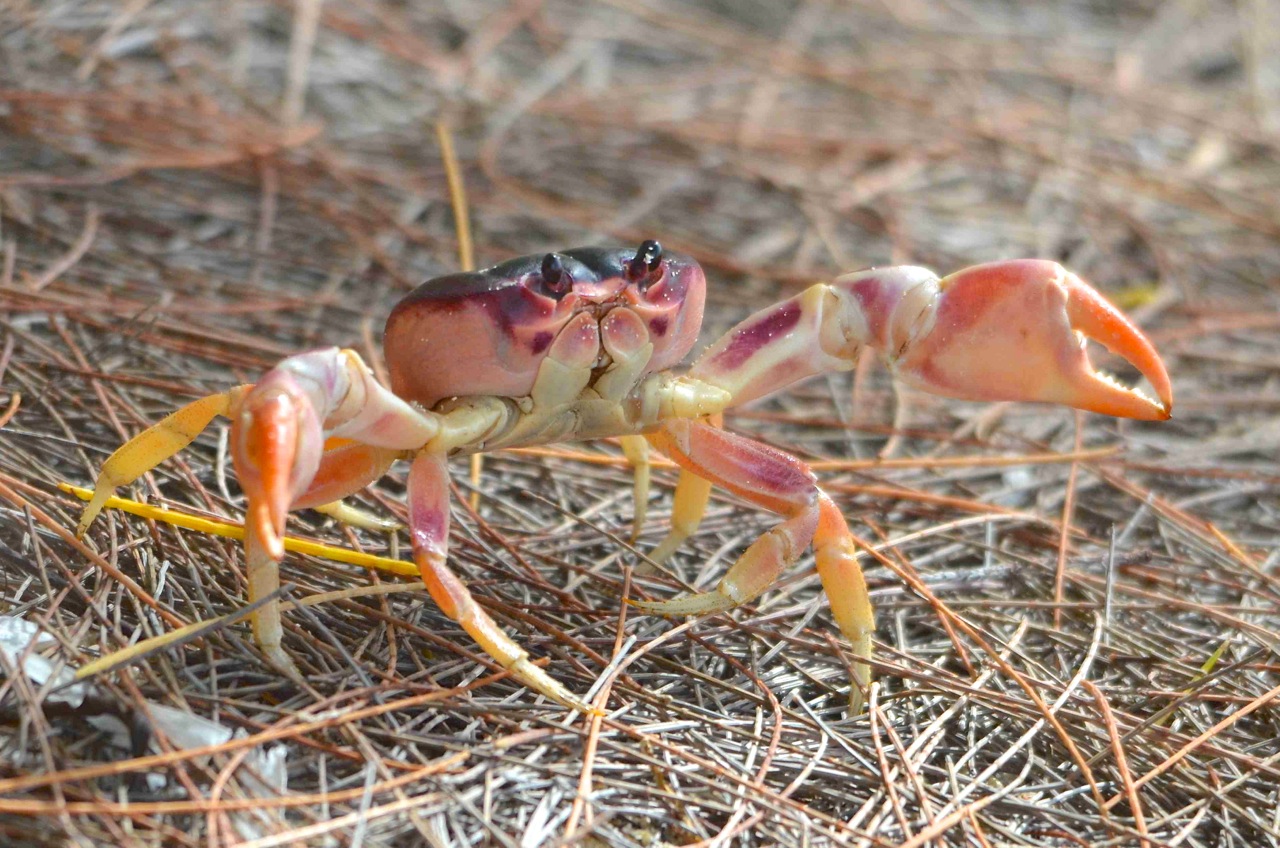
LAND CRAB Land Crab, Bahamas Palm Shores Abaco (Keith Salvesen)Land Crab, Bahamas Palm Shores Abaco 2 (Keith Salvesen)

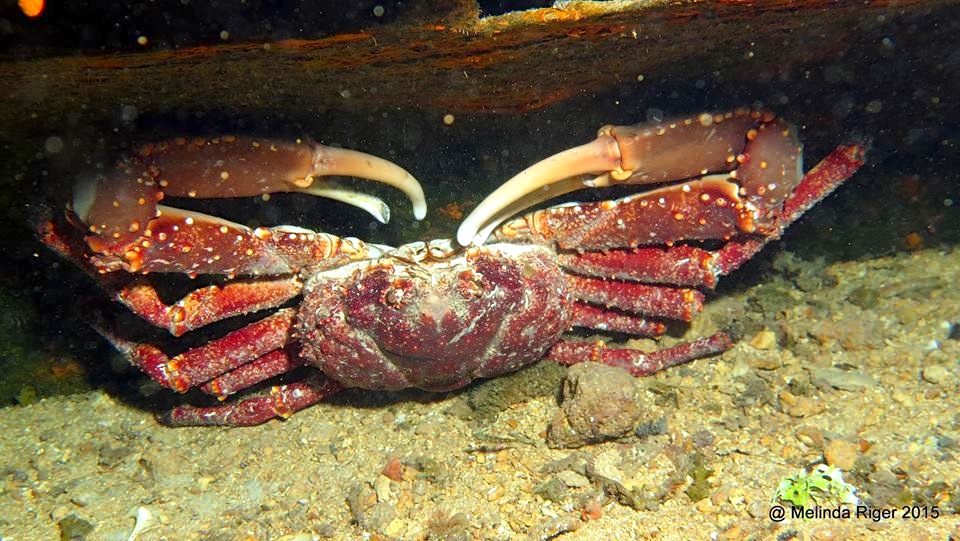
STONE CRABStone Crab ©Melinda Riger @ G B Scuba

ARROW CRAB Arrow Crab ©Melinda Riger @ GB Scuba copy

CLINGING CRAB Clinging Crab © Melinda Riger @ G B ScubaClinging Crab ©Melinda Riger @ G B Scuba copy

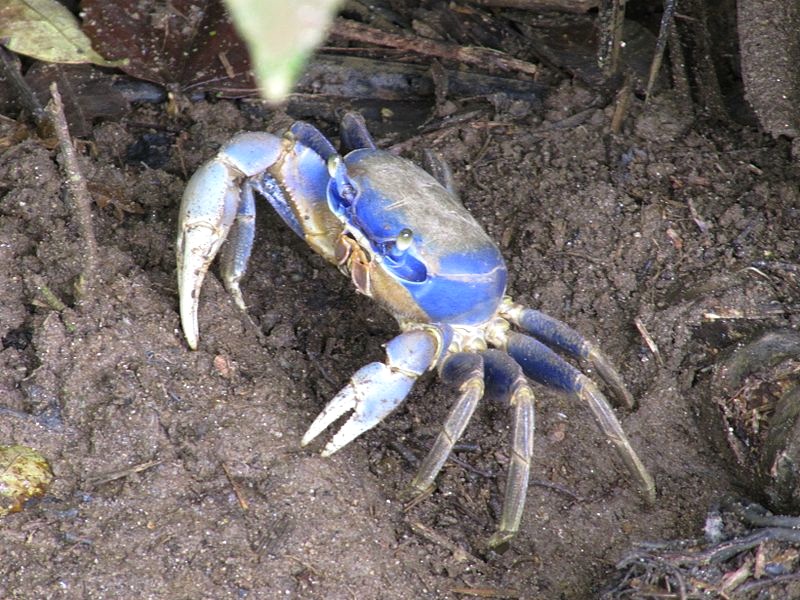
BLUE CRAB Blue crab (Atlantic) - Leoadec Wiki

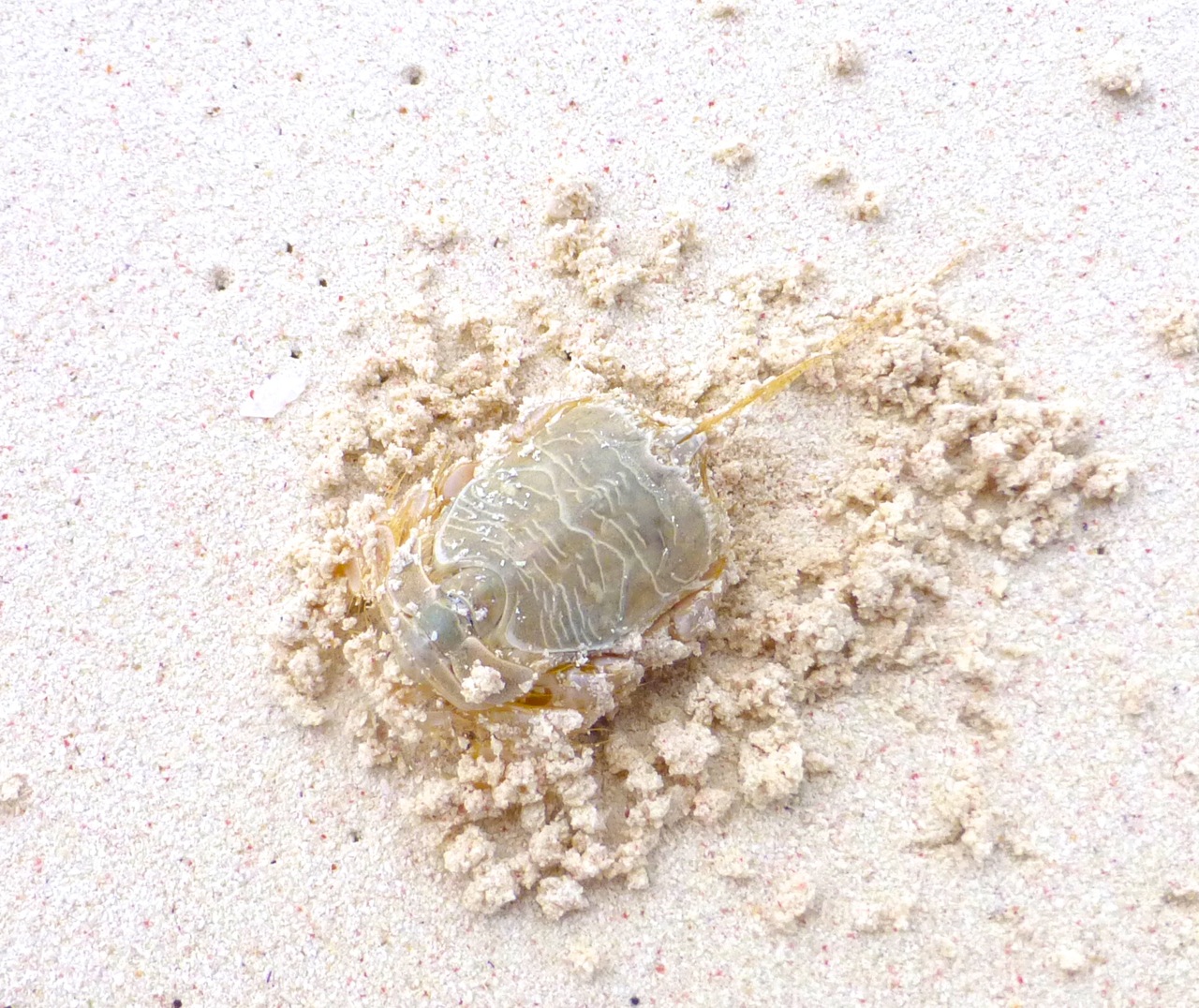
HORSESHOE CRAB (LIMULUS)Horseshoe Crab (Limulus), Delphi Beach, Abaco Bahamas (Keith Salvesen)


Credits: Tom Sheley (1, 2, 3); Keith Salvesen (4,7,8,9,15); Charlie Skinner (5,6); Melinda Riger (10,11,12,13); Leodec (14)

Unknown's avatar

“THEY FOUND MY MUM ON ANDROS”: PIPING PLOVER TUNA’S GUEST POST (2)

Piping Plover Tuna, banded in NJ, on Abaco 1 (Rhonda Pearce)

“THEY FOUND MY MUM ON ANDROS”: PIPING PLOVER TUNA’S GUEST POST (2)

Hello again, readers of Mr Harbour’s blog. My name is Tuna. This is the second part of my diary. Last time HERE he called it an ‘autobiography’, but that was a bit pompous of him, I think. It’s 4 months now since I cracked out and after my long trip from that place [the Holgate Unit of the Edwin B Forsythe National Wildlife Refuge, New Jersey – ed.], I’m having a good time on Abaco – see my picture above. Michelle, who put my 4 cool rings on, would be proud of me I think.

Since my last post (which was also my first post! Ha!) some things have been happening to me. There I was, safely on my nice beach [Winding Bay, Cherokee Sound – map below] when the wind started to get scary and the sea kept coming further up the beach. And a whole lot more splashy. So I just hid at the back of the beach until it got better again. I knew if that nice lady came back to see me it would mean I could come out again. And she did. So I did. I showed her my bands so she’d know it was me. Green on blue; black on gray. That’s me and no other bird.

Piping Plover Tuna, banded in NJ, on Abaco 2 (Rhonda Pearce)

Showing Rhonda my bands so she knows mePiping Plover Tuna, banded in NJ, on Abaco 3 (Rhonda Pearce)

Mr Harbour wrote and told people about how I was ok after a big storm. He said:

“TUNA THE PIPL: UNRUFFLED BY HURRICANE JOAQUIN” Oct 3. Despite big seas & high winds reaching N Baha on the fringes of the hurricane, Tuna has returned safely to Watching Bay. Photos clearly showing bands. π Rhonda Pearce”

A lot of people [c2000] read about this and Michelle said “yay!!! go tuna!!!”, so maybe people had been a bit worried about me. People passed the story round. What ever a ‘Chorlito Valiente’ is, it sounds good and I’m glad to be one. I’m doing just fine, thank you… 

IMG_5013 copy

                                                       piping-plover                     piping-plover                    piping-plover

Since then I had THE BEST NEWS. My mum Paula has been found! She’s gone to a different beach that’s not very close to here [Joulter Cays, Andros]. She got a different leg thing called a “UR Green Flag PE2” and somebody saw her! I’m so excited (and I hope my dad Ross is safe too). She was in a crowd of 32 other birds just like her, and a lot of other birds friends too. 

Joulter Cays, Andros, Sep 28. Thousands of shorebirds including over 100 PIPL. Including Paula.Piping Plovers & other shorebirds, Joulter Cays Andros

Tuna’s mum Paula, one of a group of 32 piping plovers on Joulter CaysPaula

“UR Green Flag PE2”12124591_10156120828430564_2098794849_o - Version 2

Joulter Cays, pinpointing Paula’s exact position 25.304095; -78.126642Joulter Cays, Andros (PIPL Paula)

I hope if I get that feeling again that I need to fly a long way, my mum gets it too. And my dad. Then we might all end up on the same beach where I cracked out! But I’m planning to stay on my own beach for now. More news from me soon. Cheeps from Tuna.

Watching Bay, Cherokee, Abaco jpg

TUNA’S FIRST FOUR MONTHS

  • JUN 10      Hatched
  • JUN 11      Banded & measured
  • JUL 05       Fledged
  • AUG 28     First sighted on Abaco – preliminary ID
  • SEP 16       Seen again on the same beach – ID confirmed
  • SEP 22       Last sighting before Hurricane Joaquin
  • SEP 28       Paula re-sighted on Joulter Cays, Andros
  • OCT 03      Tuna safely back on the beach again after Hurricane Joaquin

PIPL Watching Bay, Cherokee, Abaco. 1 bird. Banded. Rhonda Pearce 2 copy copy

NOTE If you ever wondered why birds are banded and what on earth use it is, the answer is in this story. Banding & tagging enables detailed research at both ends of the migration which in turn enables protection of the species and conservation of threatened habitats. There are only 8000 PIPL left. Degradation of the breeding grounds or the overwintering grounds – let alone both – may result in extinction. This seems to have been a good summer for the piping plover; let’s hope the winter treats them well so that this summer’s chicks like Tuna will be able to breed safely next year.

This Diary extract shows that not only can an individual banded bird’s migration movements be monitored, but also (with a bit of luck) a parent or sibling – even though they may chose to overwinter in quite different places. It is of particular significance if they then return to the same area in summer for breeding.

For details of all this season’s PIPL sightings, check out ABACO PIPING PLOVER WATCH 

TUNA’S DIARY (1)

EDWIN B FORSYTHE NWR

CONSERVE WILDLIFE FOUNDATION of NJ

Credits: thanks to bander Michelle Stantial, birder Rhonda Pearce, CWFNJ & cohorts, Matt Jeffery and all other providers of info snippets; Birdorable for the cartoon; and as ever Xeno-Canto for the recording

Unknown's avatar

A RARE SPOONBILL VISITS GILPIN POND, ABACO

Roseate Spoonbill, Gilpin Pond, Abaco (Keith Kemp)4

A RARE SPOONBILL VISITS GILPIN POND, ABACO

In past posts I have mentioned what an excellent birding place Gilpin Point has become. There’s the large pond; and right beside it, dunes, the other side of which is a fine secluded beach and the ocean. The place is a magnet for birds of all shapes and sizes, from brown pelicans down to the tiny endemic Bahama woodstars. There are water birds, wading birds, shorebirds and coppice birds. It has become a place where Abaco parrots regularly congregate. You can reach the Gilpin FB page HERE.

A while back, there was a rare visitor, a Flamingo that stayed a few months then disappeared again. It was in some ways a sad reminder of past flamingo glory days, when they were commonly found on Abaco. Now they are confined to Inagua apart from the occasional vagrant. For more on the the topic, with wonderful photos by Melissa Maura of the breeding season on Inagua, click HERE. Another rare vagrant – formerly quite plentiful on Abaco – was recently found at Gilpin by Keith Kemp, who skilfully managed to get photos of it from some distance away: a Roseate Spoonbill.

Roseate Spoonbill, Gilpin Pond, Abaco (Keith Kemp)2

I have featured spoonbills before in a post IN THE PINK, but the photos were taken on New Providence by Woody Bracey. I had no Abaco spoonbill photos. To be fair, we did once see one while we were bonefishing far out on the Marls. It was on the edge of the mangroves a good distance away, and the pale pink tinge caught my eye. My photo with an iPhone 4 (the one with the risibly cr@p camera – remember?) was so utterly pathetic that I dumped it (the photo, I mean, but the phone soon followed). But we knew what we had seen, and that was enough.

roseate-spoonbill                roseate-spoonbill               roseate-spoonbill

STOP PRESS 1 I should add that a friended visited the pond after the side-effects of Hurricane Joaquin had receded, and the spoonbill had gone. So the spoonbill alone would not make the journey worthwhile!

STOP PRESS 2 A check of eBird reveals that a handful of spoonbills have been reported in Northern Bahamas this year, about 6 in all. Almost none before that. I have the impression that birding intensity in The Bahamas, coupled with the ease of uploading reports to eBird, will increasingly make a difference to the incidence of sightings of uncommon and rare species, cf the recent WHIMBRELS of Grand Bahama.

Spoonbill, Gilpin Pond, Abaco (Keith Kemp)3

GILPIN POINT LOCATION

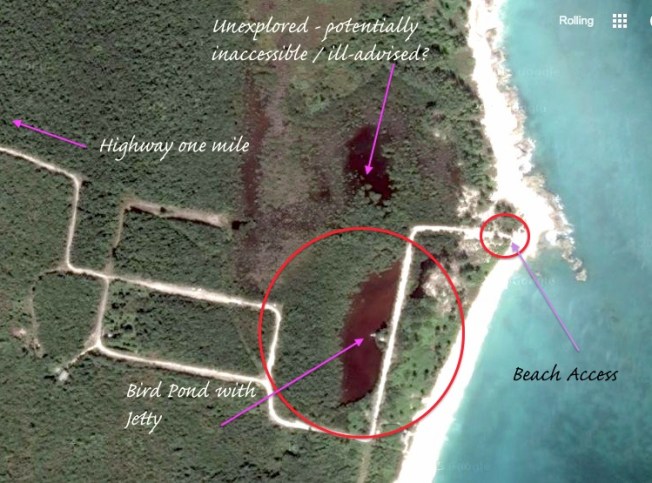
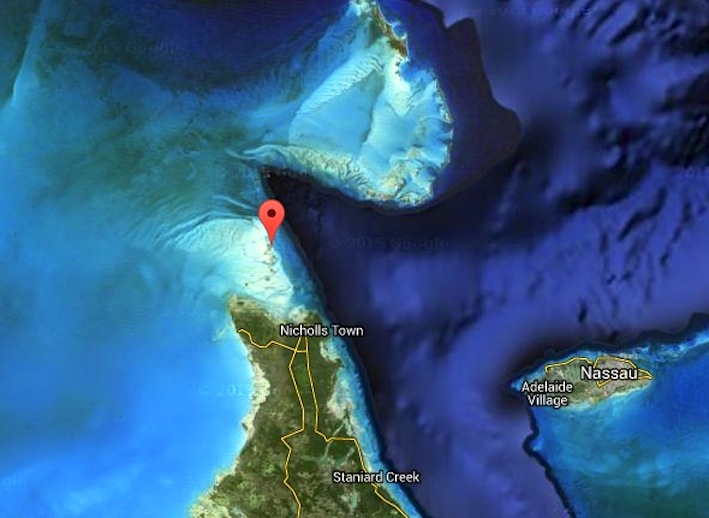
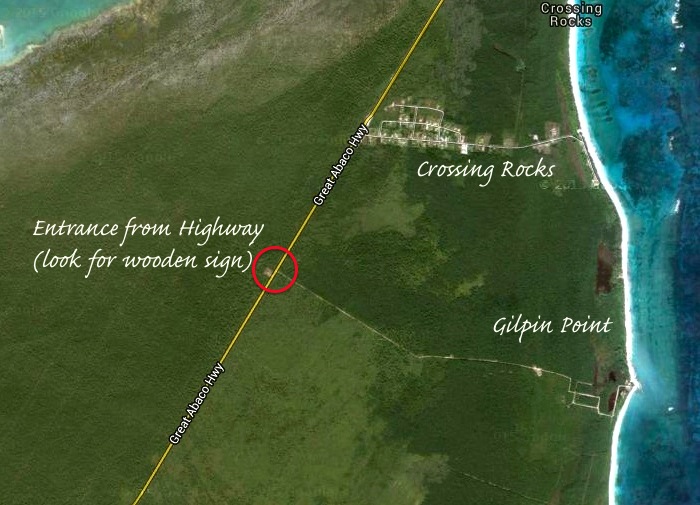
Gilpin Point is just south of Crossing Rocks. The brackish pond – sometimes an alarming reddish colour that I assume is algal – is just inland from the shoreline and provides a wonderful haven for birds. It’s a long mile from the highway. There is no vehicle nor even human traffic apart from occasional birders and walkers. Please note that the drive and the property are private. However Perry Maillis is always welcoming to tidy birders who (as I have written elsewhere) bring only enthusiasm and take only photographs (though a picnic on the beach is worth considering. And maybe a swim…). 

Helpful location mapsGilpin Map 1 Gilpin Map 2 Gilpin Map 3

WHAT SPECIES MIGHT BE FOUND AT GILPIN?

A brief list includes regular visits from parrots. It’s the only place we have found a furtive little sora skulking in the reedy margins. It’s a reliable spot for herons and egrets of every kind, white-cheeked (Bahama) pintails by the score, black-necked stilts and lesser yellowlegs. Occasionally a northern pintail, ruddy duck or merganser. Turkey vultures. Limpkins. We’ve seen belted kingfishers, Bahama woodstars, cuban emeralds, american kestrels, Bahama swallows, doves, pigeons, western spindalis and many more coppice birds besides. One flamingo. One spoonbill. Pelicans have been seen on the rocks on the beach. Shorebirds include turnstones, sundry plovers & sandpipers, and oystercatchers. You may well see tropicbirds and frigate birds off-shore, and assorted gulls and terns. I can’t personally be more species-specific  because I have never ‘shorebirded’ properly there, but I have noticed an impressive mix…

When we launched THE BIRDS OF ABACO at the Delphi Club, we were delighted that Pericles was able to come to the party. He took a few photos and I’m sure he won’t mind my including a small gallery to end with, featuring a couple of the Gilpin entries in his signed copy.

10153160_10152104925423929_44675888_n 1926631_10152104925178929_80294246_n11856_10152104921903929_1879699722_n 1525102_10152104925648929_1614125758_n

Bahamas birding nobility: Tony White with Caroline Stahala; Woody Bracey & Bruce Hallett
1911624_10152104926303929_1596185906_n

Credits: Keith Kemp for the great spoonbill photos; Perry for the Delphi photos

Unknown's avatar

HOODED MERGANSERS: RARE BAHAMAS WINTER RESIDENTS

Hooded Merganser - male (Keith Salvesen WWT)

HOODED MERGANSERS: RARE BAHAMAS WINTER RESIDENTS

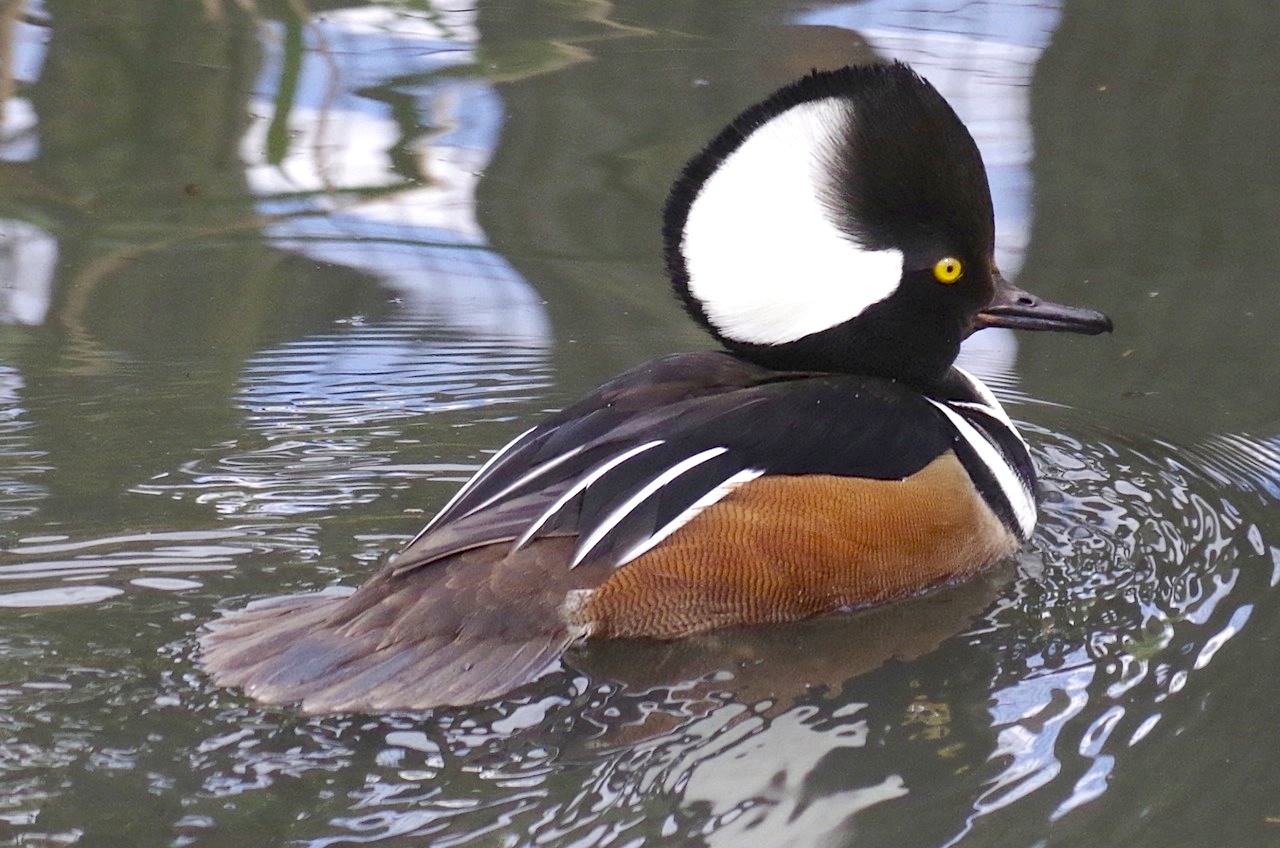
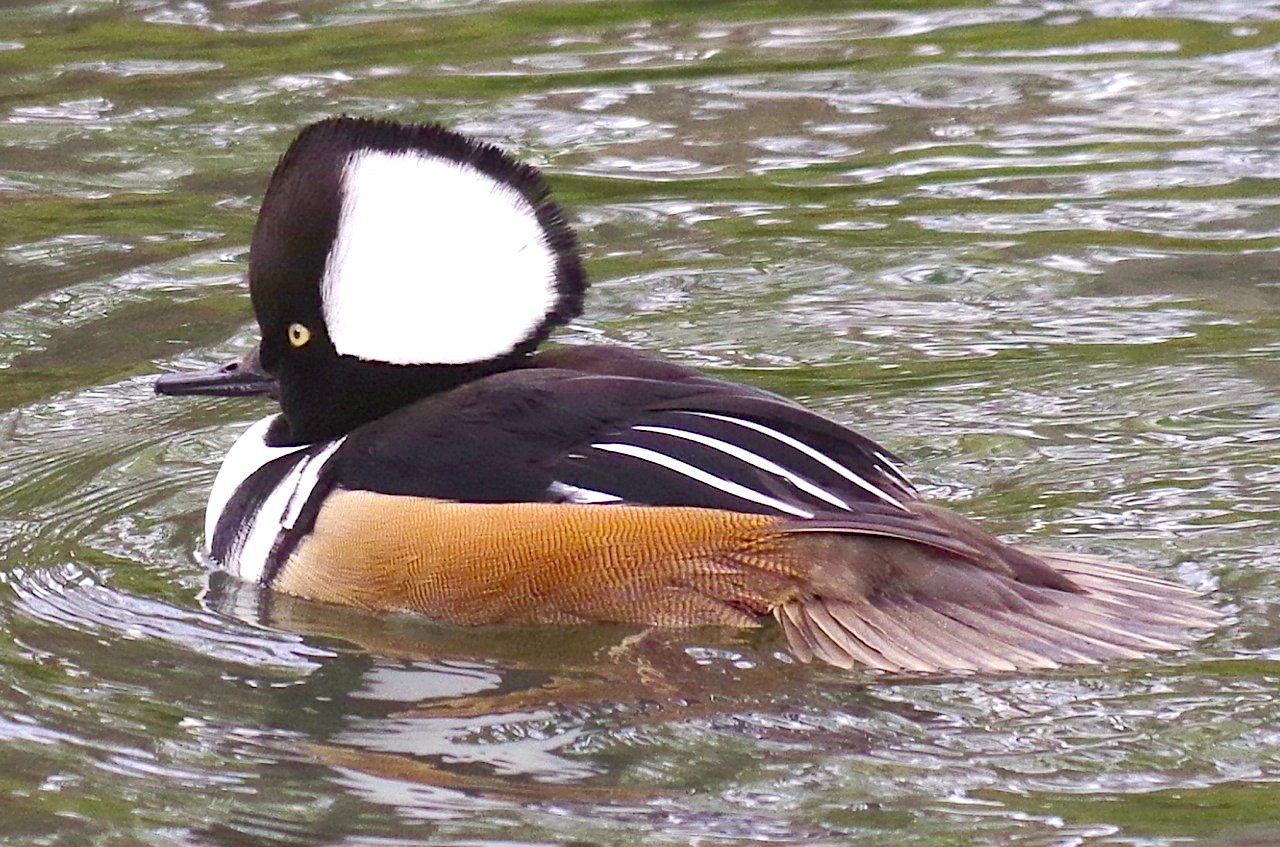
On the whole, I’d advise against undertaking a special trip to the Bahamas to search for mergansers, either hooded or red-breasted. Both species are classified as rare winter residents. Over the last 10 years they have occasionally found in the northern Bahamas, including on Abaco. I’ve seen a female red-breasted merganser at Gilpin Pond. Although the bird photos I post are generally taken on Abaco, I admit that I have no hooded merganser photos taken there. Or in the Bahamas for that matter. So bear with me – these that I took elsewhere will have serve as illustrations of what you might see on Abaco if you were in the right place at the right time. As if…

Hooded Merganser - male (Keith Salvesen WWT)Hooded Merganser - male (Keith Salvesen WWT)Hooded Merganser - female (Keith Salvesen WWT)Hooded Merganser - female (Keith Salvesen WWT)Hooded Merganser - male (Keith Salvesen WWT)Hooded Merganser - male (Keith Salvesen WWT) Hooded Merganser - female (Keith Salvesen WWT) Hooded Merganser - male (Keith Salvesen WWT) Hooded Merganser pair (Keith Salvesen WWT)

All photos: RH

Unknown's avatar

BLACK-NECKED STILT, ABACO: A FRIDAY SPECIAL

Black-necked Stilt, Abaco (Tom Sheley)

It’s Friday already. A day I normally write a post. Well I’ve run out of time this week. So I have rummaged in the RH archive and chosen one stonking image to end the week with. This beautiful black-necked stilt was taken by Tom Sheley at Gilpin Pond, Abaco – a place where these birds may reliably be found (they are permanent breeding residents on Abaco). Indeed it is a great place to find many bird species at any time – and the adjacent shoreline can be equally productive. Have a great weekend!

Unknown's avatar

“I’M WITH THE BAND…” PIPING PLOVER TUNA’S GUEST POST

 Tuna the Piping Plover: from New Jersey to Abaco (Rhonda Pearce)

“I’M WITH THE BAND…” PIPING PLOVER TUNA’S GUEST POST

Hello, readers of Mr Harbour’s blog. My name is Tuna. This is the first part of my autobiography, and I’m only just 3 months old. I’ve already made a 1000-mile journey to Abaco for reasons I don’t quite understand. Maybe because it’s nice and warm here. This is my story so far.

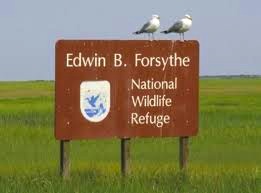
I was born on June 10th in the Holgate Unit of the Edwin B Forsythe National Wildlife Refuge, New Jersey. If I’d known then what  ‘beautiful’ was, this would have been it.

StationPhoto2

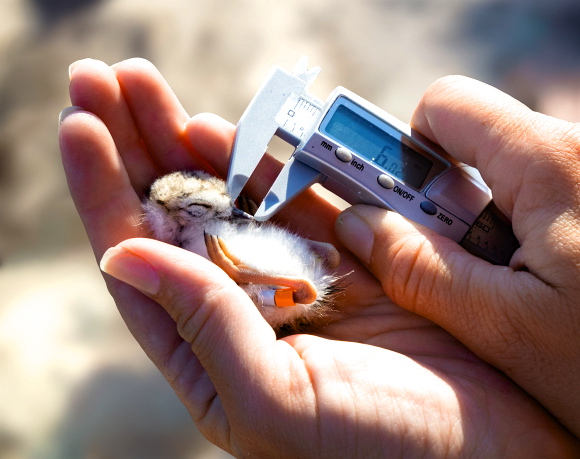
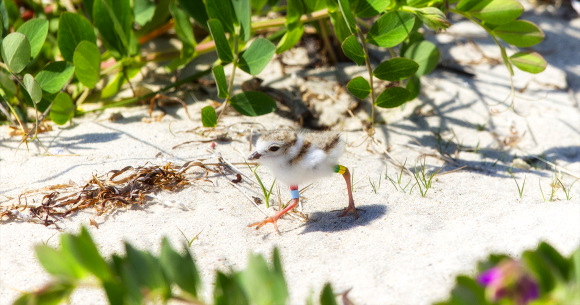
My dad is called Ross. My mum is called Paula. I had a brother but suddenly he stopped being there. We didn’t see him again, I never knew why. Anyway, the day after I was born a very kind lady called Michelle (Stantial, CWF-NJ) picked me up and sort of cuddled me in her fingers. I was weighed and measured. She also put coloured rings on my top bits of leg. I had blue & green on one leg and black & gray on the other. Very smart. A chic chick. It was very quick and it didn’t hurt at all. After that I never really thought about them again, they just were part of me. As I grew bigger they sort of grew with me.

It made for an exciting first full day of my life, June 11. Here are some pictures of Michelle doing this with other chicks from the same region so you can see how gentle she was. The chicks’ names were Meg, Joe and Nod. Mr Northside Jim watched them every day and took photos of them to record how they grew up. You can read about us and the other shorebirds, Ospreys and Peregrine Falcons  of LBI NJ HERE

Meg being picked up for measuring and bandingpicking-up-piping-plover chick1 π Northside Jim LBI NJ

Banding Meg with a unique colour combo for IDpiping-plover-chick-banding-lbi π Northside Jim LBI NJ

Beak and leg measuringpiping-plover-chick-measurement π Northside Jim LBI NJ

I grew very quickly and my mum and dad showed me how to get food for myself. They looked after me in the nest and kept an eye on me when I went for a wander. Soon I was trying out my wings to see what would happen. Nothing. 

This isn’t me but was taken quite near my bit of beach. Can you see the other chick?Piping Plovers Conserve Wildlife Foundation NJ

It’s fun exploring the big world but it’s dangerous for little birds. I lost several friends along the way. That’s how my brother disappeared I think. As you grow bigger the world seems to get smaller. Which is weird.piping-plover-sit-in-dune π Northside Jim LBI NJmeg-beach-pea PIPL chick π Northside Jim LBI NJ

I got good at finding my own food, going further away from the nest and trying out the water. My wings seemed to be starting to work a bit. Quite soon I felt nearly ready to have a go at flying.Piping Plover (juv) CT (Danny Sauvageau)

On July 5 I managed to fly. Yup, I fledged and I flew. That was only 25 days after I cracked out. Mum and Dad had been talking about making a journey, a long one, and wondering when I would be ready for it. This was puzzling. I liked it where we were. But something was telling me I needed to fly somewhere else for some reason. Then one day I just took off and headed south…

_Piping_Plover_on_the_Fly (USFWS Mountain-Prairie wiki)

After several days of flying and landing in new places to rest and flying again, I reached a place that I knew was exactly right. I don’t know how, but something told me that it would be a good place to stay until I needed to move again. So I landed on a beach called Watching Bay on Abaco. I’d travelled 1000 miles from where I cracked out, and I wasn’t even 3 months old. Cool, huh?

EBF NWR to Cherokee Map jpg

There were some other birds on the beach, including one just like me except she didn’t have any coloured rings. Ha! There were very few humans apart from a few taking a walk. On Aug 28 one lady stopped and pointed something at me. I wonder why? She kept her distance so I wasn’t scared.

August 28 Watching Bay, Cherokee, Abaco. Rhonda Pearce’s photos led to provisional ID of Tuna
#10 Aug 28. Watching Bay, Cherokee Abaco. 1 bird. Banded. Rhonda Pearce 2#10 Aug 28. Watching Bay, Cherokee, Abaco. 1 bird. Banded. Rhonda Pearce 1

There was plenty to eat on the beach, and it was quite sheltered from the wind. It seemed safe. I liked it a lot and decided to stay there

Watching Bay, Cherokee, Abaco jpg

On Sep 16 I saw the same lady again, and she saw me. She was very careful not to get me worried, and she pointed that thing at me again. Then she walked away. I hope she comes back. She seems nice.

Sept 16 Watching Bay, Cherokee, Abaco. Rhonda’s new photos led to confirmed ID of TunaTuna the Piping Plover: from New Jersey to Abaco (Rhonda Pearce)      Tuna the Piping Plover: from New Jersey to Abaco (Rhonda Pearce)Tuna the Piping Plover: from New Jersey to Abaco (Rhonda Pearce)  #19 PIPL Bands close-up jpg

I’m planning to stay on this beach for now. More news from me soon. Cheeps from Tuna.

PIPL Watching Bay, Cherokee, Abaco. 1 bird. Banded. Rhonda Pearce 2 copy copy

TUNA’S FIRST THREE MONTHS

  • JUN 10      Hatched
  • JUN 11      Banded & measured
  • JUL 05       Fledged
  • AUG 28     First sighted on Abaco – preliminary ID
  • SEP 16       Seen again on the same beach – ID confirmed
  • SEP 22       Last sighting before Hurricane Joaquin
  • OCT 03       Back on the beach again after Hurricane Joaquin

STOP PRESS Tuna’s mother Paula was re-sighted on Sep 28 on Joulter Cays, Andros

NOTE If you ever wondered why birds are banded and what on earth use it is, the answer is in this story. Banding & tagging enables detailed research at both ends of the migration which in turn enables protection of the species and conservation of threatened habitats. There are only 8000 PIPL left. Degradation of the breeding grounds or the overwintering grounds – let alone both – may result in extinction. This seems to have been a good summer for the piping plover; let’s hope the winter treats them well so that this summer’s chicks like Tuna will be able to breed safely next year.

For details of all this season’s PIPL sightings, check out ABACO PIPING PLOVER WATCH 

EDWIN B FORSYTHE NWR

CONSERVE WILDLIFE FOUNDATION of NJ

Credits: huge thanks for info and fab photos to Michelle Stantial, Northside Jim, Danny Sauvageau and Rhonda Pearce for the strands to weave this (slightly creative) tale; to USFWS Mountain-Prairie for the PIPL in flight; as always Xeno-Canto for bird sound recordings non pareil; oh, and Meg, Joe & Nod

images

Edwin B Forsythe NWR map

Unknown's avatar

WADING TO MAKE A COMEBACK: WHIMBRELS RETURN TO BAHAMAS

Whimbrel (Lip Kee wiki)

WADING TO MAKE A COMEBACK: WHIMBRELS RETURN TO BAHAMAS

It’s been many long years. Many checklists show the whimbrel Numenius phaeopus as a recorded bird for most of the Bahamas islands. On Abaco it is rated as a ‘TR4’ in Tony White’s magisterial checklist, which is to say a transient species in migration that is ‘casual, reported irregularly’. Elsewhere it is described as ‘rare / accidental’. This is only one step better than ‘vanishingly rare’. Prior to this year, the last documented sighting report I have found for Abaco was in 2000. Woody Bracey, renowned and persistent birder, last saw one there in 2002. We found no photos to use for “THE BIRDS OF ABACO”, not even as a snapshot in the supplement.

Frankly it was beginning to look as though the Bahamas whimbrel might be going… might already have gone… the way of the specimen below that I found last year in the Museum of Natural History in Dublin (it’s 109 years old). And the lovely whimbrel header picture is from elsewhere in the world. But suddenly…

Whimbrel (Dublin Natural History Museum) - Keith Salvesen

On August 20th this year, Keith Kemp, a regular birder on Abaco, encountered a whimbrel in the Cherokee Sound area. On the eBird map clip below, it is shown with the red marker, meaning a recent sighting. The blue marker is the 2000 sighting at Crossing Rocks. Keith didn’t get a photo, but he got the kudos of seeing the first Abaco whimbrel for 15 years!Whimbrel sightings Abaco

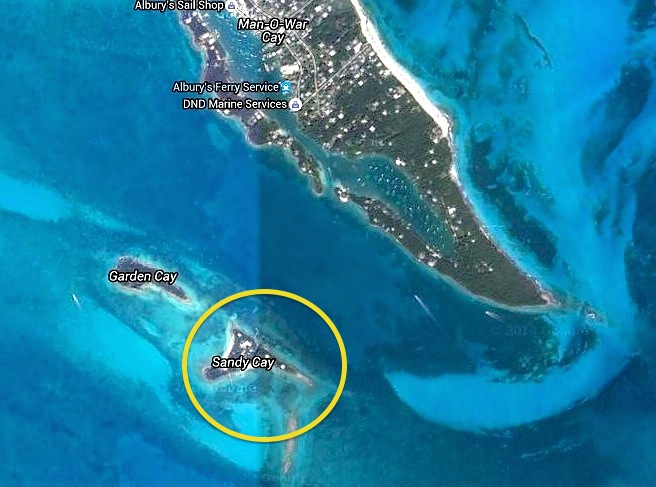
That was in August. On September 14th, Charmaine Albury went one better – she had her camera with her! Sandy Cay is a small islet to the southwest of Man-o-War Cay. There, in all it’s glory, was another whimbrel. She promptly shot it, luckily not in a Winsconsin dentist / Cecil the lion sense. She even managed to get a good in-flight shot.

Whimbrel, Sandy Cays, Abaco (Charmaine Albury) 2Whimbrel in flight, Abaco (Charmaine Albury)Sandy Cay Abaco jpg

And that might have been that for the Northern Bahamas for another 15 years. Except that the following day at West End, Grand Bahama, Linda Barry-Cooper went one better – she found 2 whimbrels together. Goodness knows how many decades have passed since the last sighting of a pair. Here they are.

Whimbrel, West End, Grand Bahama 1 Sep 2015 (Linda Barry Cooper) Whimbrel, West End, Grand Bahama 2 Sep 2015 (Linda Barry Cooper)     Whimbrel, West End, Grand Bahama 3 Sep 2015 (Linda Barry Cooper)

So that’s a massive influx of 4 whimbrels in the Northern Bahamas within one month. And who knows, maybe more to come. As for other Bahamas islands, a quick check on eBird for the last 10 years shows 3 on GB apart from Linda’s; a handful in the TCI; a couple on Inagua. And that’s it. Matt Jeffery says that on Andros one or two are seen every year as they pass through. And Eleuthera had a famous Whimbrel in 2011 called Chinquapin that had been fitted with a tracking device. It started its migration south, only to run slap into Hurricane Irene. After a doubtless severe buffeting it found safety on Eleuthera, where it was recaptured and cared for.  I think this goes beyond the usual concept of  ‘transient’ though it was undoubtedly ‘accidental’…

“…a shorebird, tracked using a satellite transmitter, flew through Hurricane Irene and survived. The bird, a whimbrel, left Southampton Island in northern Canada and reached the outer band of the huge storm as hurricane-force winds began pounding the Bahamas. The next day the whimbrel, nicknamed Chinquapin, migrated into the eye of the hurricane and landed on Eleuthera Island in the Bahamas” (π Repeating Islands). You can read more about Chinquapin’s epic adventure HERE

chinquapin_t607

If you are wandering on your favourite stretch of sand, idly beachcombing and keeping an eye out for Piping Plovers, here are the sounds that should make you stop in your tracks: the song and the extraordinary call of the new wave (hopefully) of whimbrels in the Bahamas…

SONG π Guillermo Funes Xeno-Canto

CALL π Stein Ø. Nilsen Xeno-Canto

Finally, having nothing to contribute personally to the great whimbrel comeback by way of Bahamas-made photos or sound recordings, I find I have actually photographed one in the UK. It was probably by mistake. The bird is certainly retreating rapidly. This is the only chance I shall ever have to fit it into a relevant post, so I claim writer’s prerogative to show it…

Whimbrel Pensthorpe 2010 copy

Credits: Charmaine Albury, Linda Barry-Cooper, Lip Kee (header), Lisa Paravisini (Chinquapin) and RH (the other pics); Xeno-Canto (recordings)

Unknown's avatar

FEEDER BIRDS AT THE DELPHI CLUB, ABACO

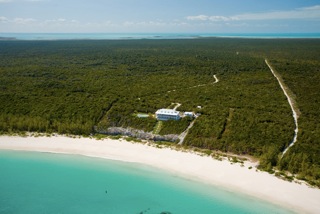
Delphi Club, Rolling Harbour, Abaco aerial

FEEDER BIRDS AT THE DELPHI CLUB, ABACO

The compilation of The Delphi Club Guide to THE BIRDS OF ABACO involved making a few rules and sticking to them. For example, the avian images in the book – and there are a great many –  had to be of birds actually photographed on Abaco or in Abaco waters. Gorgeous pictures from Grand Bahama or New Providence were ruthlessly excluded, however painful it was to do. Some wonderful spoonbill photos taken in Nassau stayed in the ‘Not Use’ folder. The temptation to slip in an non-Abaco whimbrel to fill a whimbrel-shaped space among the shorebirds had to be resisted – even though at the time the last recorded sighting of one on Abaco (no photo) was in 2000…

Bananaquit 2, Delphi, Abaco (Keith Salvesen)

Another important restriction was the stipulation that we would only use birds that had been photographed in their natural surroundings, defined as being a place where a particular species might naturally be found. Coppice and shoreline, obviously, but this included utility wires, posts and docks etc for species that habitually use them to perch on or hunt from. However, the rule meant a complete embargo on feeder photos, however winsome a hummingbird might look as it sips sugar water. We extended the principle to include a ban on luring birds into camera-shot with seed or corn trails; and similar ruses beyond the simple whistles and pishes that anyone might use to tempt a bird out of deep cover.

Cuban Emerald coming in to land… and feedingCuban Emerald, Delphi, Abaco (Peter Mantle) 1 Cuban Emerald, Delphi, Abaco (Peter Mantle) 2

The Delphi club is the perfect location for an enviably varied number of species. Its remoteness down a one-mile drive from the Highway, with pine forest giving way to luxuriant coppice, ensures minimal disturbance for the birds including a number of rarer species.  Delphi Club Rolling Harbour Abaco Aerial view

The one-mile white sand curve of the beach sees many shorebirds and seabirds in all seasons. The gardens attract both the usual suspects and less common birds. The building, too, has its resident West Indian Woodpeckers in two nesting boxes under the eaves, thoughtfully provided to discourage the Club’s woodwork from exploratory drilling.

Mr and Mrs Black-faced GrassquitBlack-faced Grassquit (m) Delphi, Abaco (Keith Salvesen) Black-faced Grassquit (f) Delphi, Abaco (Keith Salvesen)

There are a number of seed and sugar water feeders around the place, and bird baths too. It’s a long time since I featured a collection of ‘tame’ birds. This post shows a few of the species that have made Delphi their home.

Mr and Mrs Greater Antillean BullfinchGreater Antillean Bullfinch (m), Delphi, Abaco (Keith Salvesen)Great Antillean Bullfinch. Delphi, Abaco (Keith Salvesen)

Mr and Mrs Painted BuntingPainted Bunting, Delphi, Abaco (Keith Salvesen)

Bananaquit: the curved beak makes it easy to use the hummer feeder (see above)Bananaquit (f) Delphi, Abaco (Keith Salvesen)

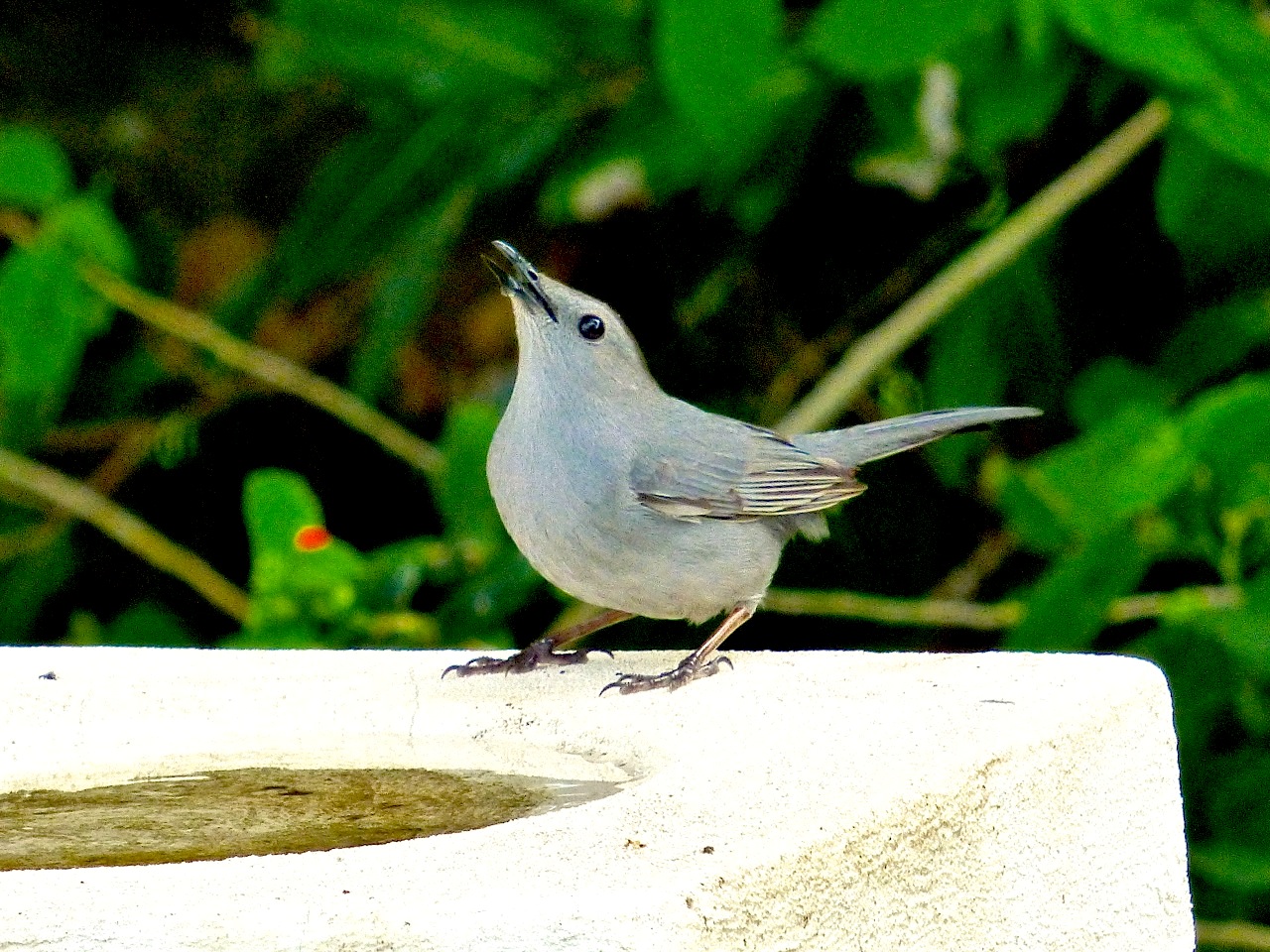
A Gray Catbird takes a drink… and a bathGray Catbird, Delphi, Abaco (Keith Salvesen)Gray Catbird, Delphi, Abaco (Keith Salvesen)

Adaptive behaviour from a W I Woodpecker – that long tongue is perfect for the jobWest Indian Woodpecker, Delphi, Abaco (Keith Salvesen)

The turkey vulture takes priority over all smaller birds…Turkey Vulture, Delphi, Abaco (Keith Salvesen)

A red-legged thrush enjoys picking up the seed shrapnel off the ground…Red-legged Thrush Abaco 7

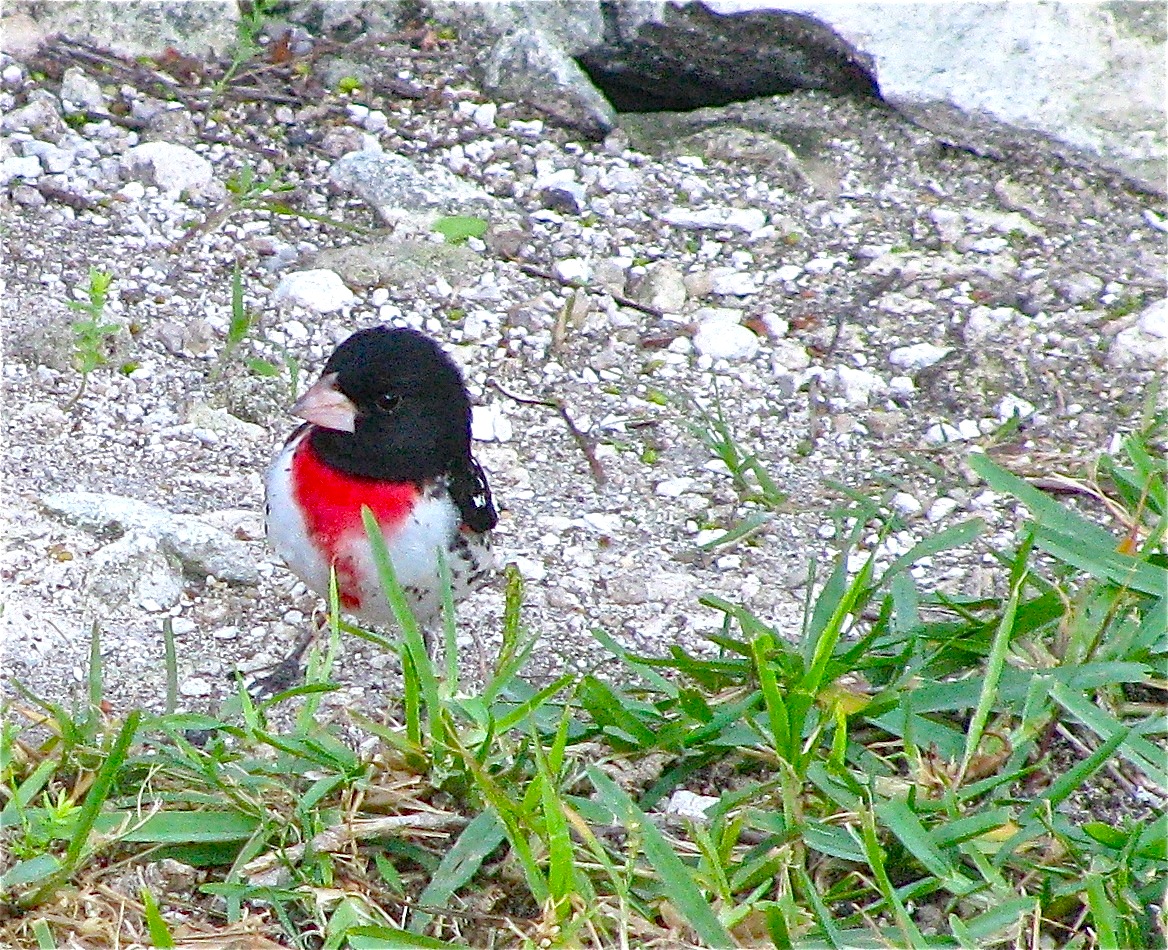
As do rose-breasted grosbeaks and indigo buntingsIndigo Bunting & Grosbeaks, Delphi, Abaco ©C StahalaRose-breasted Grosbeak

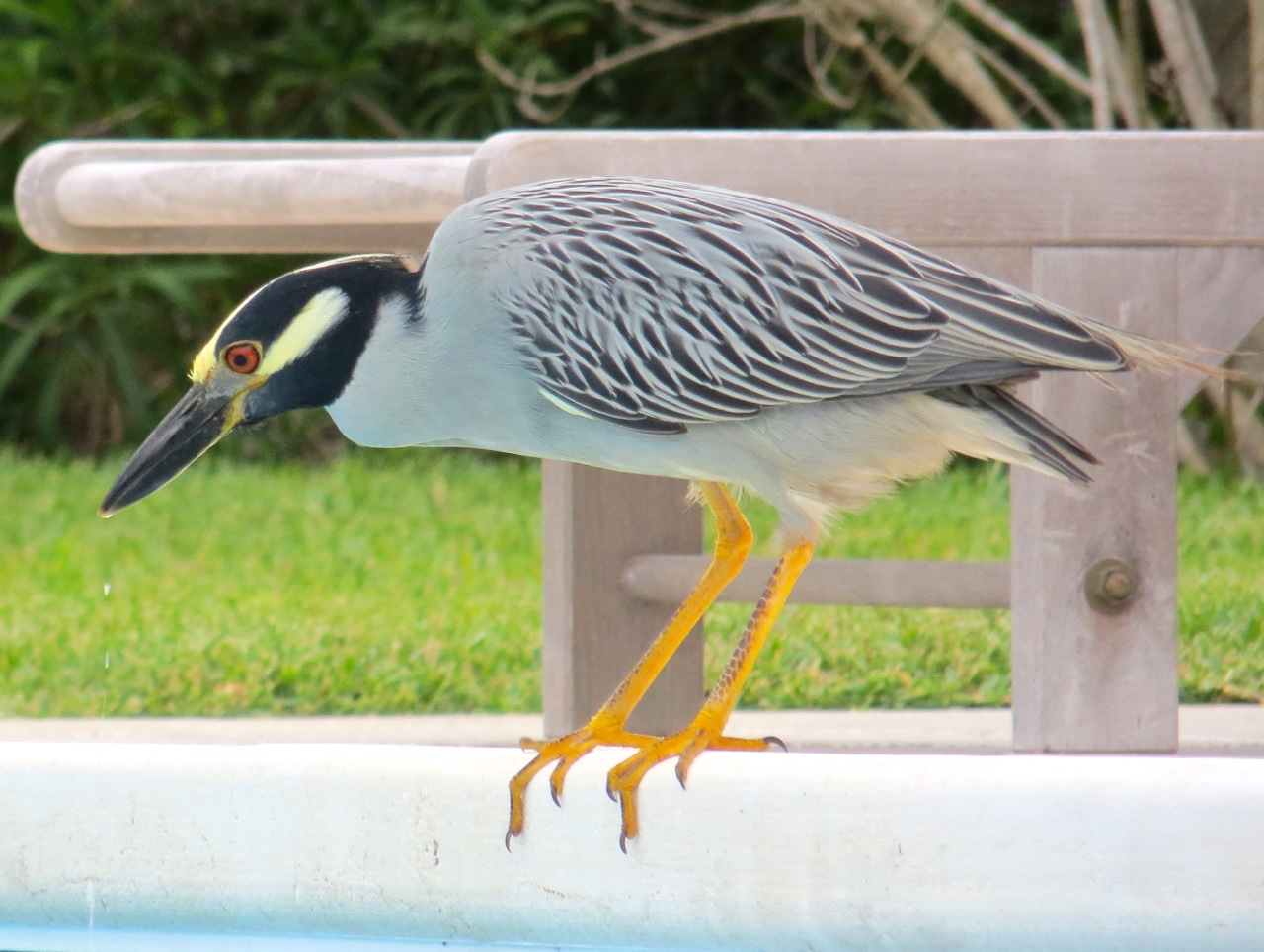
Meanwhile, a yellow-crowned night heron takes a drink from the poolYellow-crowned Night Heron, Abaco 9

Credits: all photos RH except aerial shot of Delphi, Peter Brown; the hummers, Peter Mantle; and the buntings / grosbeaks, PM and Caroline Stahala…

dcbg2ba-jacket-grab-for-pm-v2-copy

Unknown's avatar

CREOLE WRASSE: SHADES OF DEEP PURPLE…

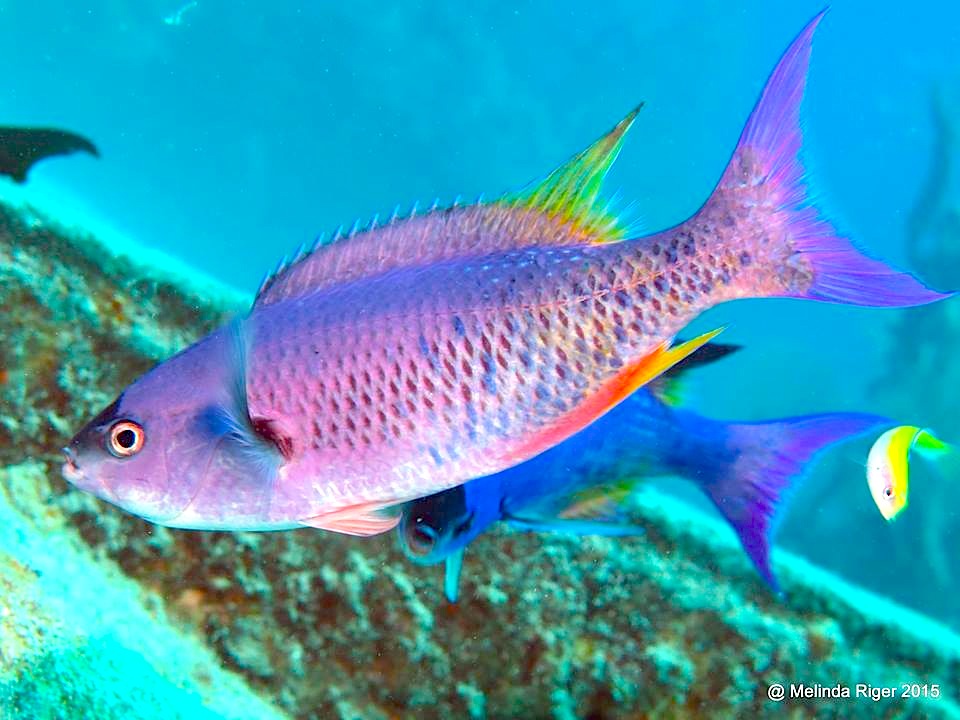
Creole Wrasse ©Melinda Riger @ G B Scuba copy 4

CREOLE WRASSE: SHADES OF DEEP PURPLE…

The creole wrasse is a small wrasse species, with adult males reaching about 12 inches long. During its life, a creole wrasse changes colour significantly.  A juvenile is almost completely violet-purple. As it matures, it develops patches of yellow on the rear part of its body.

Creole Wrasse ©Melinda Riger @ G B Scuba copy 7

Creole wrasse are found throughout the tropical and subtropical waters of the western Atlantic from Florida south to Brazil. The habitat includes Bermuda, the Caribbean Sea, and the Gulf of Mexico.

Creole Wrasse ©Melinda Riger @ G B Scuba copy 5Creole Wrasse ©Melinda Riger @ G B Scuba copy 6

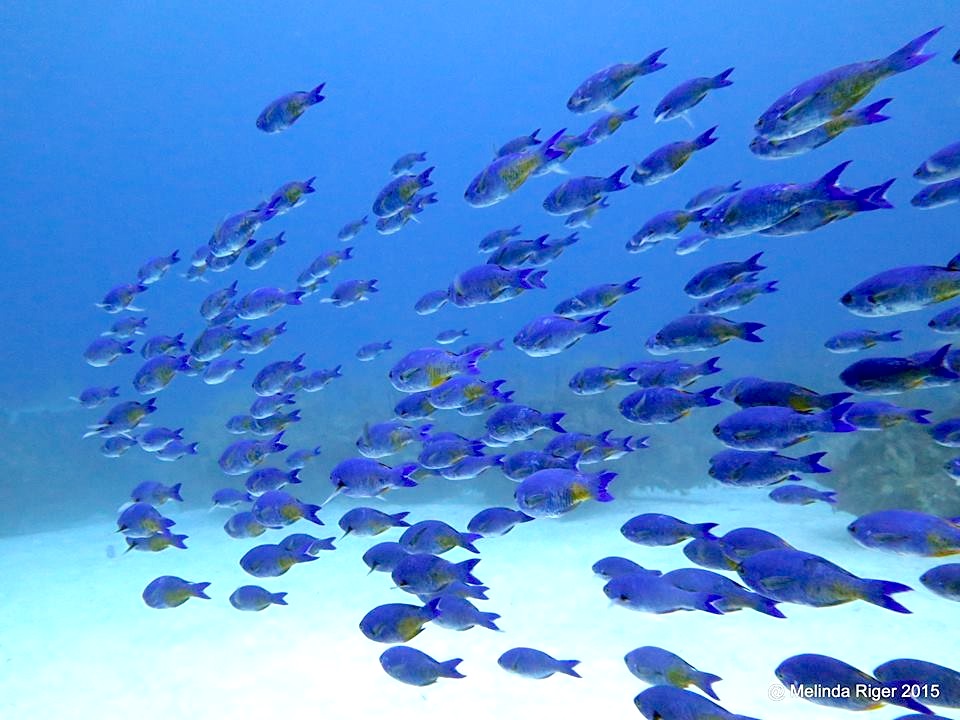
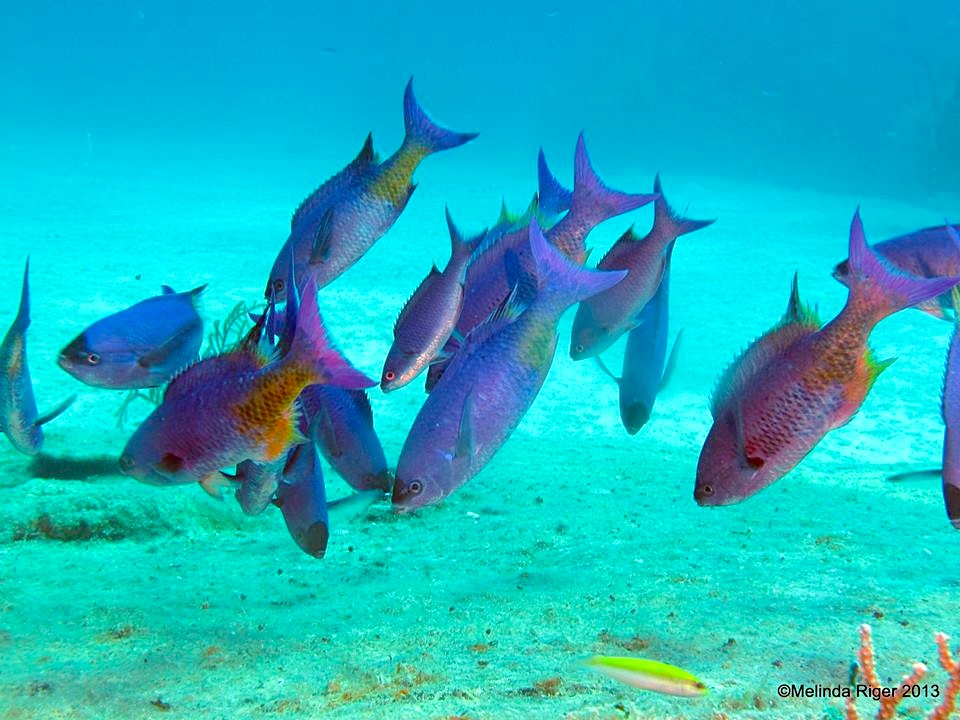
Creole wrasse are social fish that live in groups around coral reefs. They are found in shallow water, but may also be seen as deep as 100m. 

Creole Wrasse at a cleaning station ©Melinda Riger @ G B Scuba copy

The groups of wrasse feed on plankton, small jellyfish, pelagic TUNICATES, and invertebrate larvae. These fish are active in groups by day. At night each fish finds its own safe crevice in the reef to sleep.

Creole Wrasse School ©Melinda Riger @G B Scuba copy

ANYTHING ELSE WE NEED TO KNOW?

Yes indeed. Their intriguing breeding regime – how unlike our own dear species. The creole wrasse is a protogynous hermaphrodite.  The largest fish in a group is a dominant breeding male, while smaller fish remain female. If the dominant male dies, the largest female changes sex. The mature males congregate at leks to breed, at which they display and are approached by females before mating with them. [note: these leks are reminiscent of certain clubs in the less reputable parts of some towns and cities. Or so I am told]

Creole Wrasse Melinda Riger @ G B Scuba copy

It’s been a while since the last Rolling Harbour musical diversion, but the colour of this wrasse nudged my memory back to 1968 and DP’s first album (line-up Mk 1 of several hundred, or so it seems). Hence the post title. Anyone who remembers this ‘wasn’t there’. Anyone who doesn’t obviously wasn’t there either…

818A6udpP9L._SL1500_

I don’t think this guy thinks much of that. And quite right tooCreole Wrasse ©Melinda Riger @GBS copy

All phish photos by Melinda; DP cover borrowed from Am@z@n; MP3 moi

Unknown's avatar

HIP! HIP! HIPPOCAMPUS: LET’S CELEBRATE SEAHORSES

Seahorse (Bahamas) 4 ©Melinda Riger @G B Scuba

HIP! HIP! HIPPOCAMPUS: LET’S CELEBRATE SEAHORSES

Melinda Riger, doyenne of the deep and photographer to the stars (brittle stars, basket stars, starfish etc), undertook her 5000th dive a few days ago. She swims with sharks almost daily, and points her lens at the varied reef life she encounters along the way. Her gold prize for the dive turned out to be one of the smallest creatures she encountered: the seahorse. Hippocampus (Ancient Greek: Ἵππος, horse and Κάμπος, sea monster) is a unique fish, deriving from the pipefish, with more than 50 species known worldwide. I can feel a Rolling Harbour fact list coming on…

Seahorse (Bahamas) 3 ©Melinda Riger @G B Scuba

10 SEAHORSE FACTS TO DAZZLE YOUR FRIENDS WITH

  • Only seahorses and razorfish swim upright / vertically all the time
  • Their tails are prehensile and enable them to moor on coral, seagrass etc
  • They have no scales, but skin stretched over bony plates arranged in rings
  • The ‘coronet’ on a seahorse’s head is unique to the individual
  • Seahorses are pathetic swimmers: the slowest have a top speed of 5′ per hour
  • They feed by ambush, rotating the head and sucking prey in with their snout
  • A seahorse’s eyes can move independently of each other, like a chameleon 
  • The Bahamas is home to H. erectus and the dwarf seahorse H. zosterae
  • Despite rumours, they don’t mate for life. Some may stay together for a season
  • The smallest seahorse in the world – the pygmy – is a maximum of 15mm long

Seahorse (Bahamas) 2 ©Melinda Riger @G B Scuba

MAKING BABY SEAHORSES: A MOST UNUSUAL ARRANGEMENT

There’s no getting round it: seahorse courtship and reproduction is highly unusual. Here is a summary of how it goes (there’s a lot more to it, but life is short):

  1. COURTING This may last for many days. They may change colour; they swim together; they entwine tails; they attach themselves to the same strand of coral or seagrass and turn slowly round it in unison (a so-called ‘pre-dawn’ dance). The final courtship dance may last several hours while the male & female prepare for the next stage.
  2. EGG TRANSFER When the time is right the female transfers her eggs – hundreds of them – via her ovipositor  to the male, in the process of which they are fertilised. Handily, he has inflated a special egg pouch located on his abdomen. She then buggers off.
  3. GESTATION The fertilised eggs grow inside the egg pouch of the male and develop into baby seahorses. This process may take from 10 days to a few weeks. During this time, the female will visit for a short ‘morning greeting’ and some intertwining action.
  4. ‘BIRTH’ In due course the male ejects the baby seahorses from his pouch using muscular contractions. These may number from five to (get this!) 2,500 at a time; on average 100–1000. Job done. Then the tiny seahorse babies are on on their own…

Seahorse (Bahamas) 1 ©Melinda Riger @G B Scuba

THREATS TO SEAHORSES

The attrition rate of baby seahorses through predation is high (as for most fish species), but the prolific breeding rate reduces the effect on the overall populations.  As so often, there are human-related threats, not least habitat destruction, overfishing and pollution. There’s a less expected problem: the importance of seahorses in Chinese medicine.  Their presumed healing qualities are used to treat impotence, wheezing, enuresis, pain and to assist labour. For these purposes, some 20 million seahorses a year are caught and sold. Increasingly they are reduced to pill or capsule form. 

Seahorse values depend on the species, but weight for weight dried seahorses retail for *unbelieving face* more than the price of silver and almost that of gold in Asia, from US$600 to $3000 per kilogram. Ours not to reason why.

anagram

USELESS SEAHORSE FACTS

  • Seahorse is an anagram of seashore
  • The Seahorses were an English rock band, formed in 1996 by guitarist John  Squire following his departure from The Stone Roses. They split in 1999
  • Devendra Banhart’s song ‘Seahorse’ contains these inspiring lyrics:
    I wanna be a little seahorse
    I wanna be a little seahorse
    A little seahorse
    I wanna be a little seahorse
    I wanna be a little seahorse
    I wanna be a little seahorse
    I wanna be a little seahorse
  • I’m losing the will to live. Let’s meet Otis.

Introducing Otis, Melinda’s seahorse that lives under her dockSeahorse (Otis), Bahamas ©Melinda Riger @ G B Scuba

SEAHORSE MATING DANCE (4 MINS)

MALE SEAHORSE GIVING BIRTH

All photos: many thanks to Melinda Riger of Grand Bahama Scuba; sources, many and manifold including Wiki which is pretty good on this kind of thing! Fab seahorse gif by Alex Konahin 

Seahorse by Alex Konahin copy

Unknown's avatar

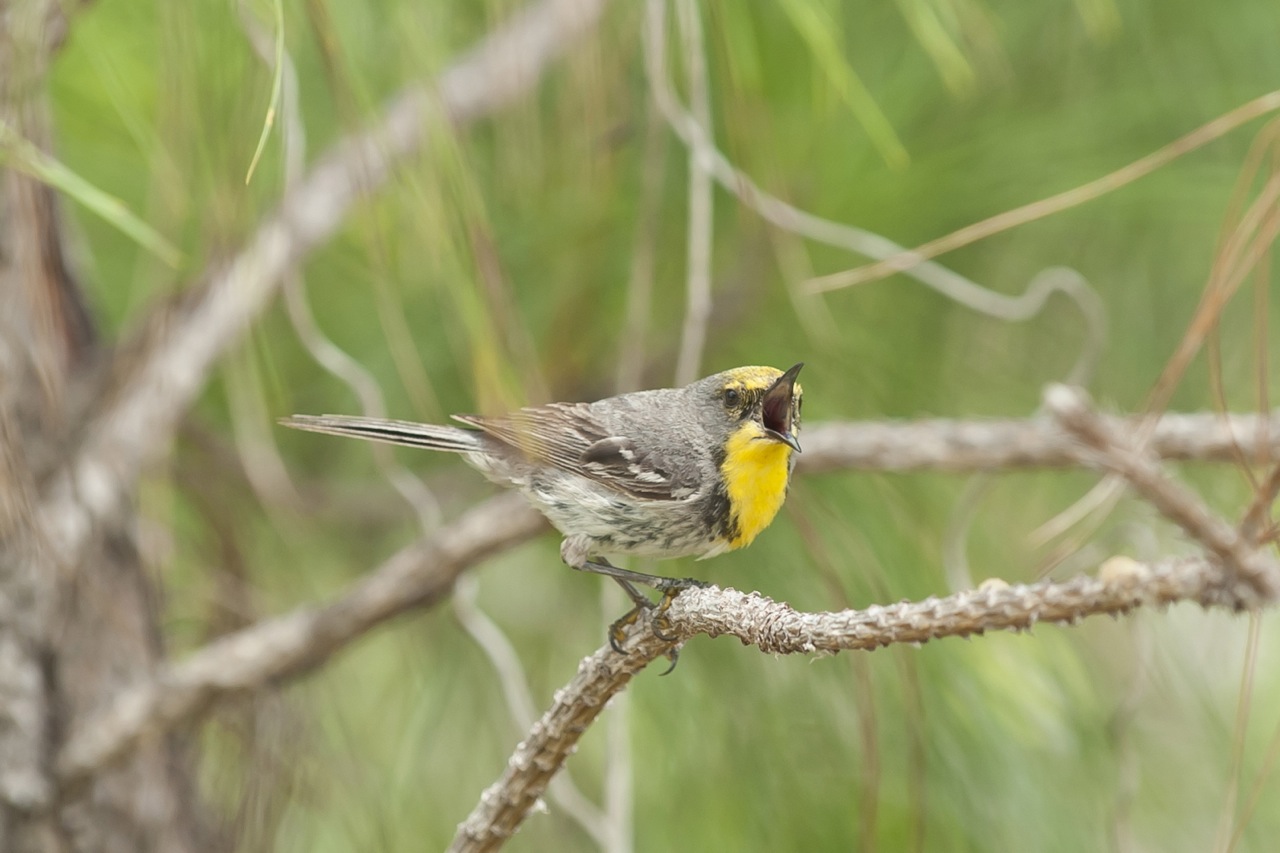
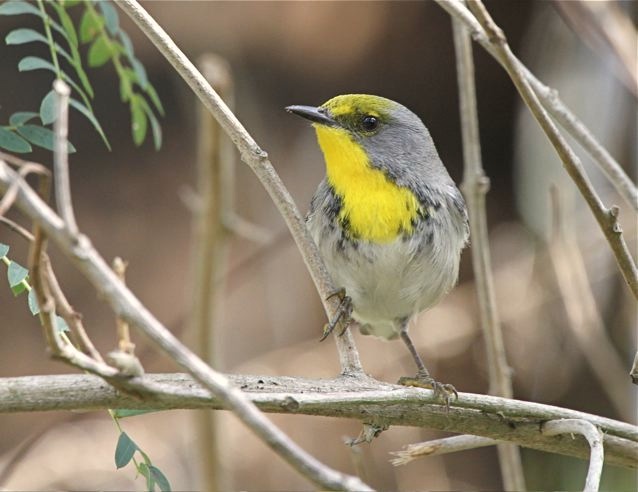
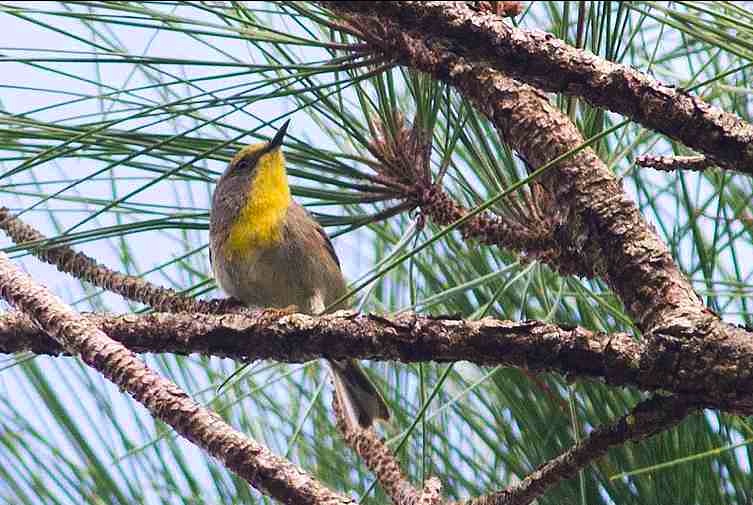
OLIVE-CAPPED WARBLERS ON ABACO

Olive-capped Warbler 3.Abaco Bahamas.6.13.Tom Sheley

OLIVE-CAPPED WARBLERS ON ABACO

Abaco has a recorded 37 warbler species. Of these, most are winter residents and some are rarer migratory transients. Only 5 are permanently resident on Abaco: the Bahama Warbler, Bahama Yellowthroat, Olive-capped Warbler, Pine Warbler and Yellow Warbler. You can read about all 5 HERE 

Olive-capped Warbler, Abaco (Bruce Hallett)Olive-capped Warbler, Abaco (Bruce Hallett)

I realise that I haven’t posted about OCWs in their own right; and that as a species they have been unfairly lumped in (by me) with more general warbler posts. Time to put that right by showing some exclusively OCW photos.

Olive-capped Warbler.Abaco Bahamas.6.13.Tom Sheley

OCWs have an unusually restricted range, despite which they remain IUCN-listed ‘Least Concern’. These pretty birds are native only to the western and eastern ends of Cuba, Grand Bahama, and Abaco. Their natural habitat is pine forests and to a lesser extent in mixed forest and coppice areas.

Olive-capped Warbler 6.Abaco Bahamas.6.13.Tom Sheley

If you are lucky enough to see an OCW on Abaco, it’s worth thinking about the rich and unspoilt habitat that ensures its survival there. These little birds, along with other important bird species, enjoy a safe haven in the vast acres of pine forest.Olive-capped Warbler, Abaco (Bruce Hallett)

Olive-capped Warbler, Abaco (Tom Reed)

Photo credits: Bruce Hallett (1, 2, 3, 6); Tom Sheley (4, 5); Tom Reed (7)

Unknown's avatar

ABACO’S BIRDING HOTSPOTS (42 OF THE BAHAMAS TOP 100)

Black-necked Stilt, Abaco (Tom Sheley)

ABACO’S BIRDING HOTSPOTS (42 OF THE BAHAMAS TOP 100)

Right now, I’m doing daily checks on the indispensable EBIRD CARIBBEAN in relation to the ABACO PIPING PLOVER WATCH project (and incidentally if you encounter one or more on a beach near you, details would be very welcome – below is what to look out for!).

Piping Plover, Abaco - Bruce Hallett

It occurred to me to check out the contention that Abaco is Numero Uno birding destination in the Bahamas (though sadly lacking the flamingoes, except for vagrants; and the Bahama oriole, now extirpated and confined to select areas of Andros). Sure enough, Abaco has 42 out of the top 100 birding hotspots. In the map below, gray pointers indicate a few observations, blue means 50+ and green represents 100+. Nowhere has yet achieved the flame-red pointer – the ultimate hotspot accolade…

Abaco Birding Hotspots Map (eBird)

People often ask where best to go for quality birding on Abaco. The answer depends of course on the season and on what they are after – for example shorebirds or warblers; parrots or absence of parrots and so on. The Abaco 42 are listed below. There are a couple points to make about the hotspot list:

  • There is a degree of duplication, eg Gorda Cay / Castaway Cay being shown as separate entries, as is Angelfish Point / Angel Fish Point
  • Also, the data gathered by eBird is entirely dependent on regular uploads of checklists. Inevitably the birders will mostly be regulars, with their own preferred beats or perhaps with an interest limited to the area where they live. Some records show long gaps – sometimes a couple of years – between reports. So the eBird data can only give an overview, not a precise record of actual observations or birding effort and success. 

Bahama Woodstar male 3.1.Abaco Bahamas.2.12.Tom Sheley copy

In very general terms, and assuming a broad birding interest, I would recommend the Treasure Cay area; in and around Marsh Harbour; the stretch east of the Highway that takes in Bahama Palm Shores, the Abaco Neem Farm, Delphi, Crossing Rocks & Gilpin Point; the National Park; and Sandy Point. I’m sure there will be other views, but I am thinking primarily of the visitor who has but a single day to spare from a packed schedule of fishing, swimming, sunbathing, eating and drinking… [nb as a soi-disant photographer I’m not so keen on the dumps and landfill. Yes, the birding can be good. No, I don’t want to feature rubbish in my already rubbish photos…]

American Oystercatcher4.1.Delphi Club.Abaco Bahamas.6.13.Tom Sheley RH 2

Here’s the eBird list, omitting all the non-Abaconian hotspots. Clicking on the links will take you straight to the relevant location’s latest reports and show some of the species seen there. I haven’t checked every link, but spot-checks suggest they work ok…

3 Treasure Cay GC

4 Abacos–Citrus Farm near Treasure Cay

5 Abaco–Sandy Point

8 Angel Fish Point

10 Marsh Harbour

12 Abaco–Crossing Rocks

13 Abacos–Treasure Cay Dump

14 Abacos–Treasure Cay West Side

18 Abaco Cays IBA–Great Guana Cays

20 Abacos–Treasure Cay Sunset Ridge and vicinity

22 Robert’s nursery, ponds and marls overlook

23 Abaco–Bahama Palm Shores

28 Abaco Cays IBA–Green Turtle Cay

32 Gilpin Point

35 Hope Town, Elbow Cay

37 Big Bird

38 Castaway Cay

41 Man-o-war Cay

44 Abaco National Park IBA

45 Marsh Harbour–Landfill

52 Island Homes–Beach

57 Abaco Beach Resort

60 North Atlantic Abaco Cays IBA

62 North dump (Abaco)

65 Marsh Harbour

69 Cherokee Sound

70 Great Guana Cay

72 Green Turtle Cay Sand Spit

73 Angelfish Point

81 Green Turtle Cay

82 Track north of Hwy

86 Southern Abaco IBA

87 Abaco Neem farm

88 Marsh Harbor Airport

89 Abaco–Crown Haven

91 Little Abaco IBA

92 Abaco–Hole-in-the-Wall

93 Camp Abaco

94 Little Harbour

96 Castaway Cay

97 Cooper’s Town

98 Crossing Rock / Island Homes

Bahamas-Great Abaco_4846_Bahama Yellowthroat_Gerlinde Taurer copy

RELATED POSTS

AUDUBON’S ‘PRIORITY BIRDS’ ON ABACO

ABACO BIRDS FOUND IN NYC (& VICE VERSA)

THE BIRDS OF ABACO”

Reddish Egret, Crossing Rocks, Abaco (Keith Salvesen)11

Credits: Tom Sheley, Bruce Hallett, Gerlinde Taurer, RH

Unknown's avatar

ABACO BUTTERFLIES feat. FLUTTERY PHILATELY

Red-spotted Purple Butterfly, Abaco (Selah Vie)

ABACO BUTTERFLIES feat. FLUTTERY PHILATELY

I’ve been distracted from my intended scribble by a lovely butterfly posted by ‘Selah Vie’, one I’ve never seen before. It’s one of those lepidots that have a topside surprisingly and excitingly different from the underwings (see header image). Imagine having this beauty turning up on your patio…

RED-SPOTTED PURPLE BUTTERFLYRed-spotted Purple Butterfly (Selah Vie)

This reminded me that I have some butterfly images waiting in the wings (ha!), so now is the time to encourage a few out of their virtual chrysalis for wider appreciation. 

BAHAMAS SWALLOWTAILBahama Swallowtail? Palamedes Swallowtail?Bahama Swallowtail, Abaco (Rhonda Pearce) 2Bahama Swallowtail, Abaco (Rhonda Pearce) 1

POLYDAMUS SWALLOWTAILPolydamus Swallowtail, Abaco (Rhonda Pearce)Hibiscus / Polydamus Swallowtail, Delphi Abaco (Keith Salvesen)

MONARCH BUTTERFLYMonarch Butterfly, Abaco (Charmaine Albury) 2 Monarch Butterfly, Abaco (Charmaine Albury) 1

MONK (?) SKIPPER

Skipper Butterfly, Abaco (Rhonda Pearce)

FRITILLARY (make unknown)Fritillary, Abaco (Rhonda Pearce)

tigertail

FLUTTERY PHILATELY

The Bahamas has an excellent record for producing colourful stamp issues showcasing the wildlife of the islands – birds, reef fish and of course butterflies. I’ve posted about these several time, and they are more or less collected together on a dedicated stamp page HERE. As for the butterflies, they get a new issue every decade or so. Here are the last four.

1975

Bahamas Butterfly Stamps 1974

1983

$_1-1

1994

$_1-1 copy

2008

baha08002

tigertail          imgres          tigertail

Credits: Selah Vie (1, 2); Uli Nowlan (3); Rhonda Pearce (4, 5, 6, 10, 11); RH (7); Charmaine Albury (8, 9); open source / ads etc (all stamps)