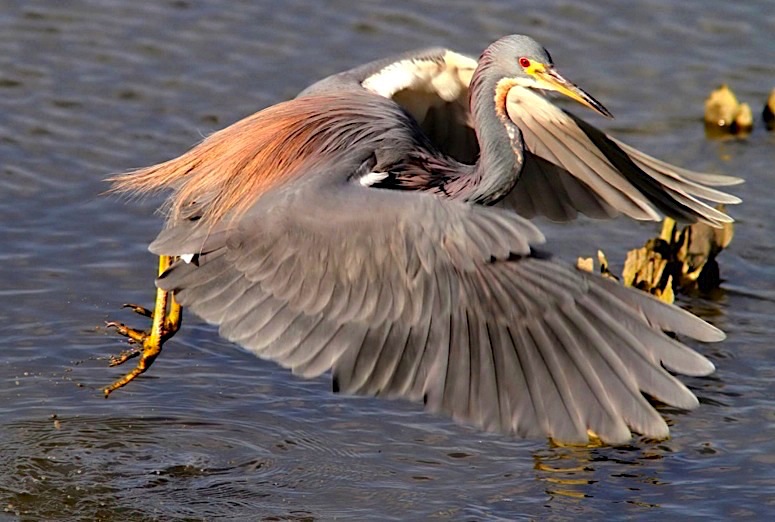
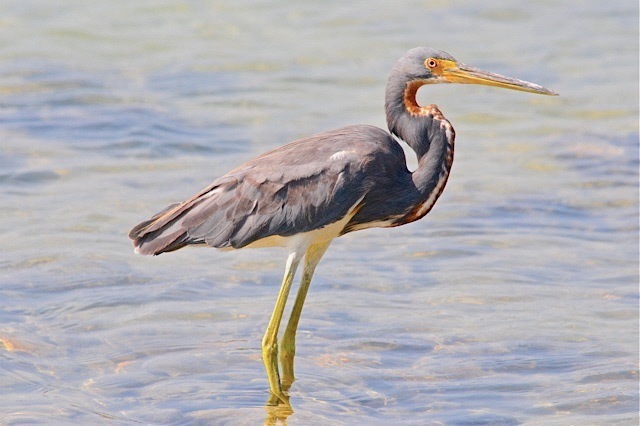
The Tricolored Heron Egretta tricolor is one of 6 heron species found on Abaco, and is a permanent breeding resident. To which can be added 4 sorts of egret to complete a line up of expert fishers, all equally at home hunting in the water or from the shore, or surveying the scene from nearby vantage points like bushes and trees.
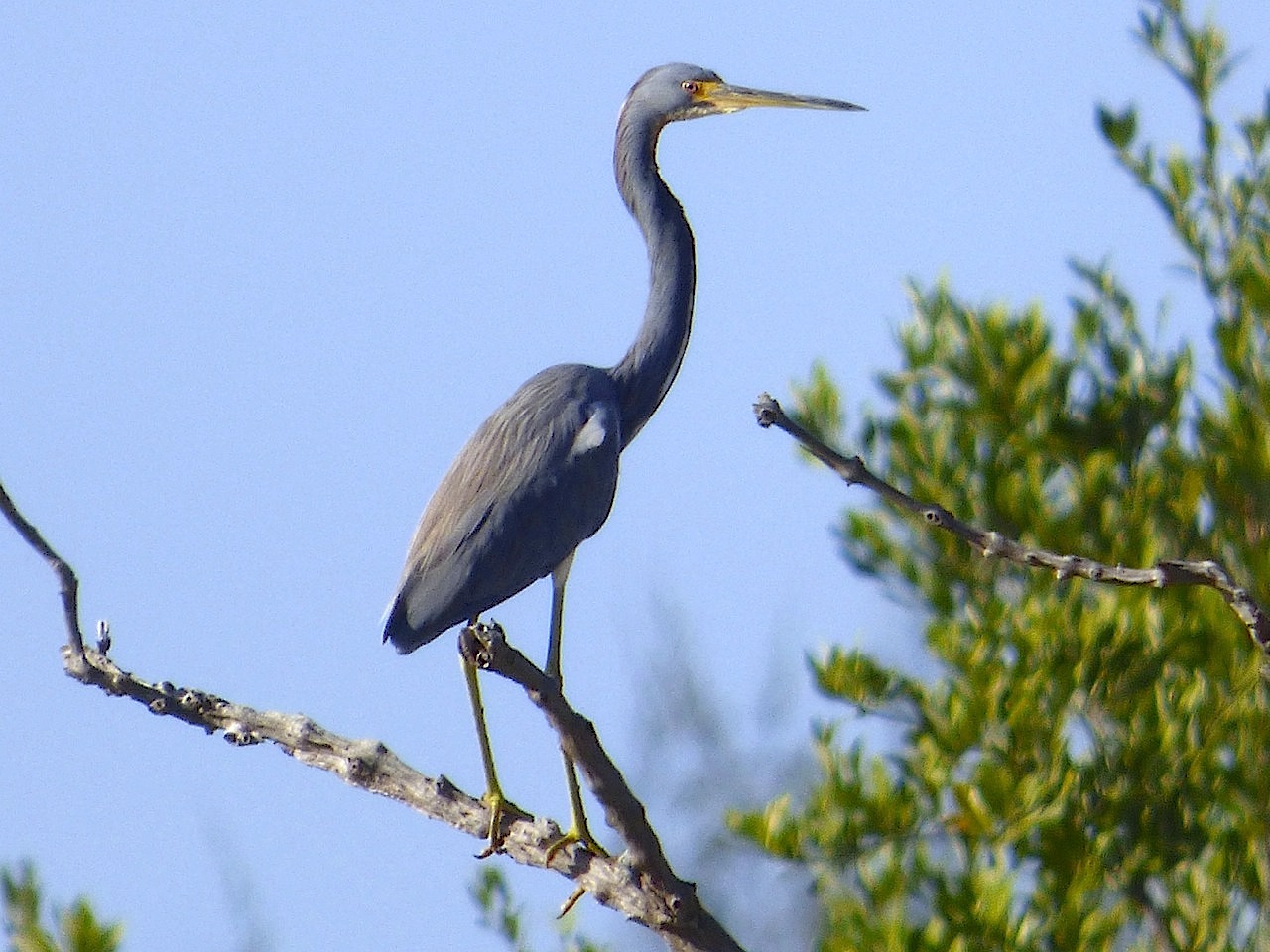
A distance shot… and it was 20′ up, above the pond
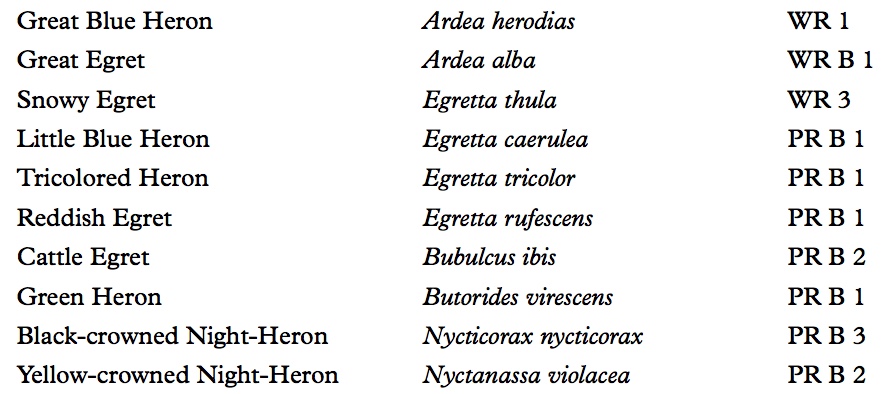
The heron and egret species of Abaco
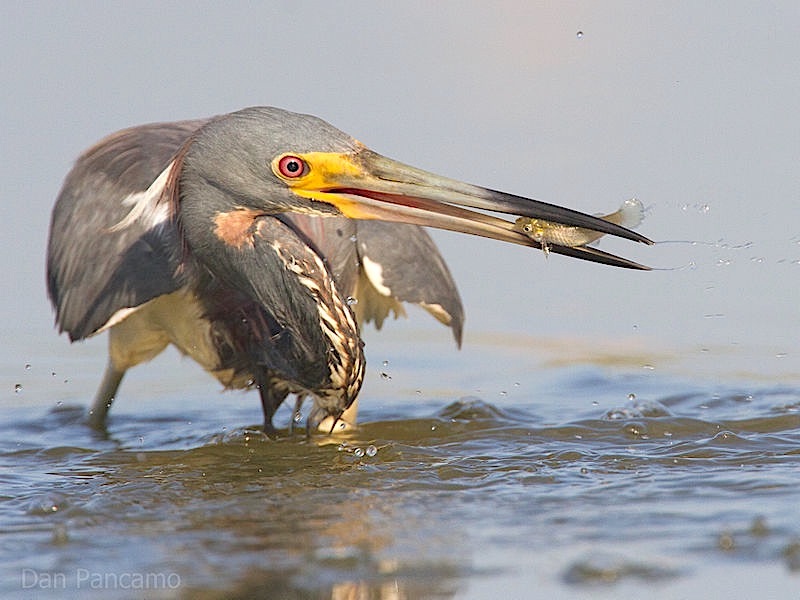
A long neck, a long bill and long legs make this heron species ideally adapted for wading. Like other herons and egrets, it will stand stock-still waiting for the perfect fish to swim into range. However they are also active hunters, and will stalk prey or chase it by striding quickly through the water in pursuit. They eat fish, crustaceans, reptiles, and insects.
On a mission…
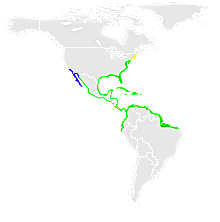
The tricolor has a wide resident breeding range, shown in green on the map
Coming in to land…
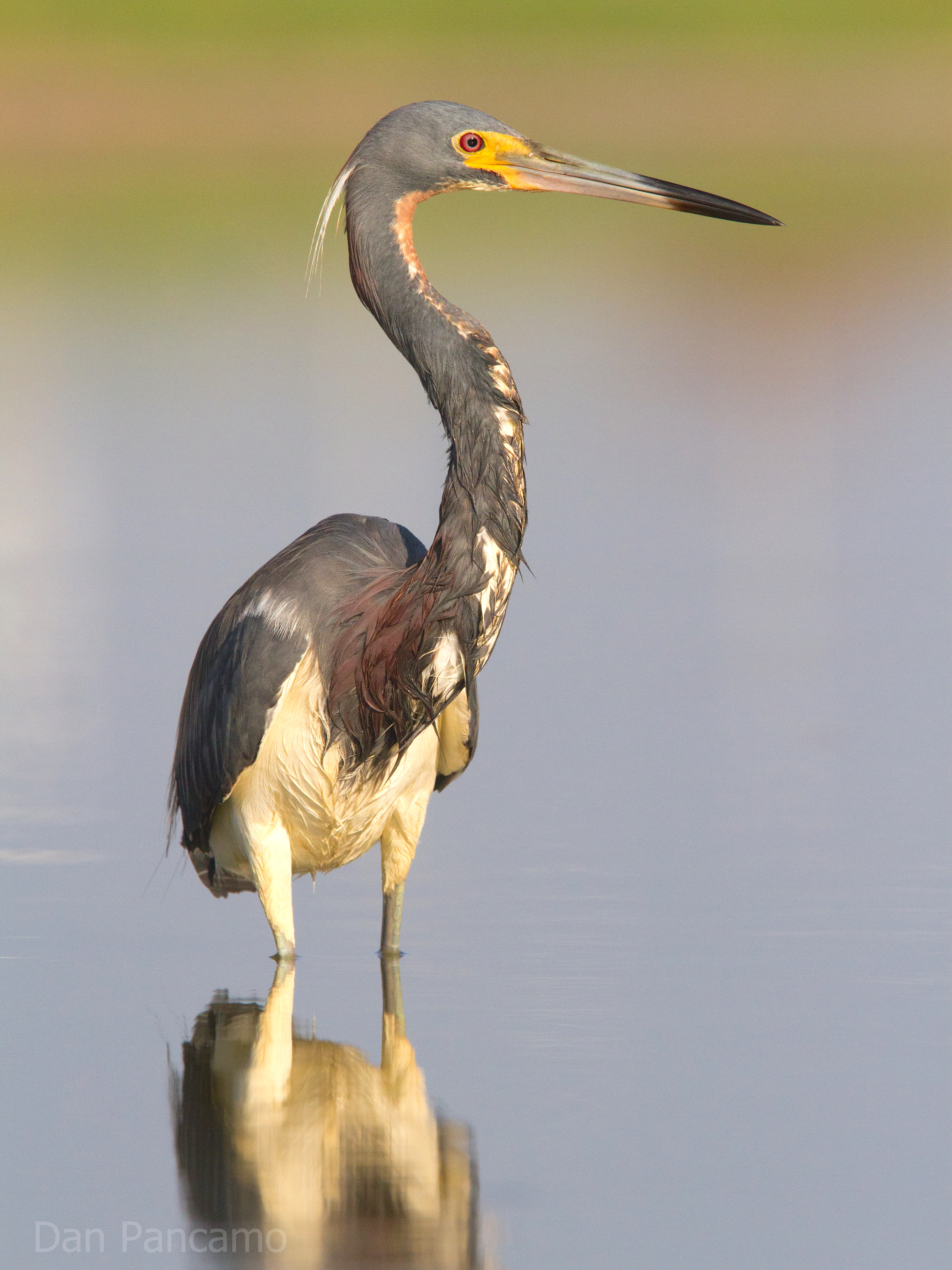
Breeding plumage: smart blue bill and a fish to put in it
In a box in the corner over there – no, there – are my last 6 copies of ‘The Birds of Abaco’. Peter Mantle probably has a few over here in the UK too. And there are definitely some remaining at Delphi HQ in a cupboard just a few lurches away from the surprisingly popular ‘honesty bar’. But there aren’t a great many left now, so forgive me for drawing attention to the fact that the Season of Goodwill is upon us. And… ahem… there are only 24 more ‘sleeps’ until Christmas.
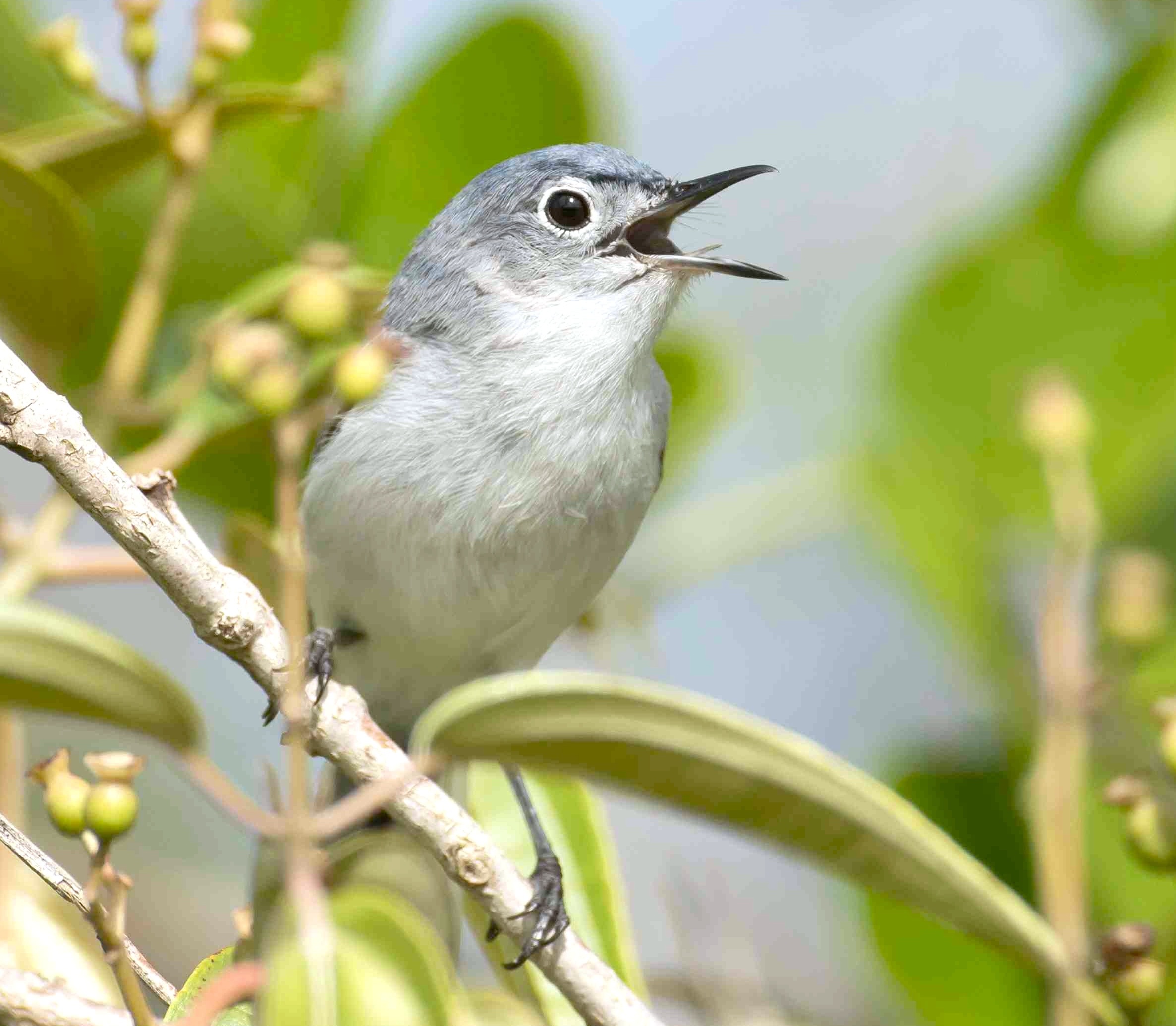
Blue-gray Gnatcatcher Tom Sheley
“The Delphi Club Guide to THE BIRDS OF ABACO” was published in March 2014. To say “I wrote it” would be a gross distortion of the truth: it was an entirely collaborative project. The originator of the idea – as with the entire Delphi Club project – was Peter Mantle, the publisher. The work of 30 photographers is included. There was huge input from the very experienced project manager and from Bahamas bird experts. So although my name is on the cover, it is as a participant representing the contributions, camera skills and brainpower of many people.
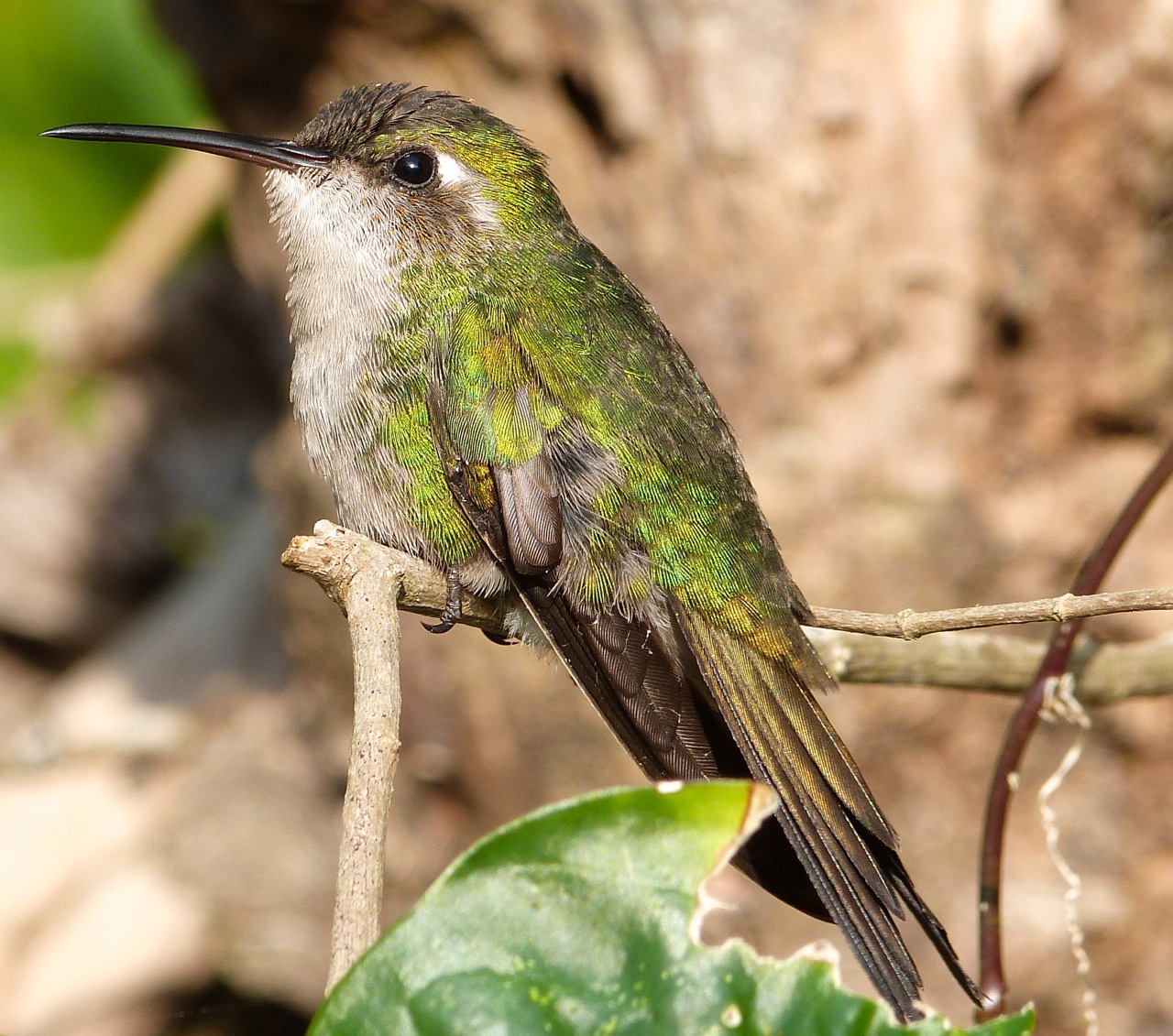
Cuban Emerald (f) Keith Salvesen
The book launched to generous enthusiasm and support both on Abaco and beyond, which has continued ever since. We have been astonished by the positive responses to this unique publication for the Bahamas. There is a wider purpose to the book than as a photographic showcase for Abaco birds. All Abaco schools, colleges, libraries and local wildlife organisations have been given free copies for educational purposes. And a percentage of the profits is set aside for local wildlife causes.
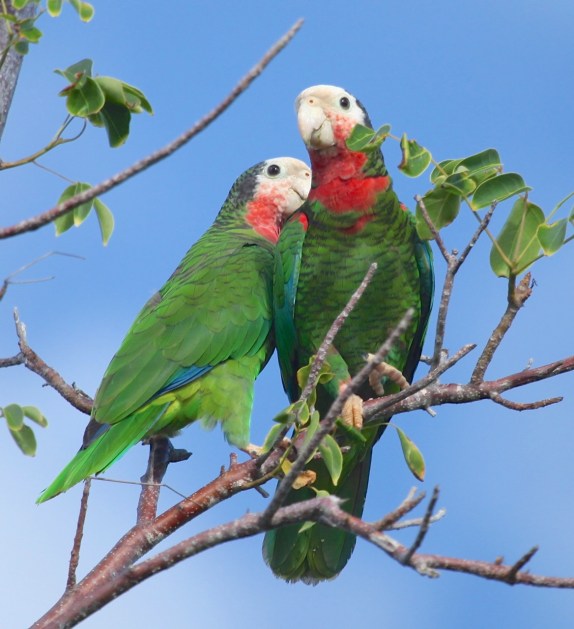
Abaco (Cuban) Parrots Peter Mantle
Below are some facts and stats. Some people may well have seen these set out elsewhere, but a lot of new people have kindly tuned in to Rolling Harbour in the last 12 months or so, so I will repeat some of the details.
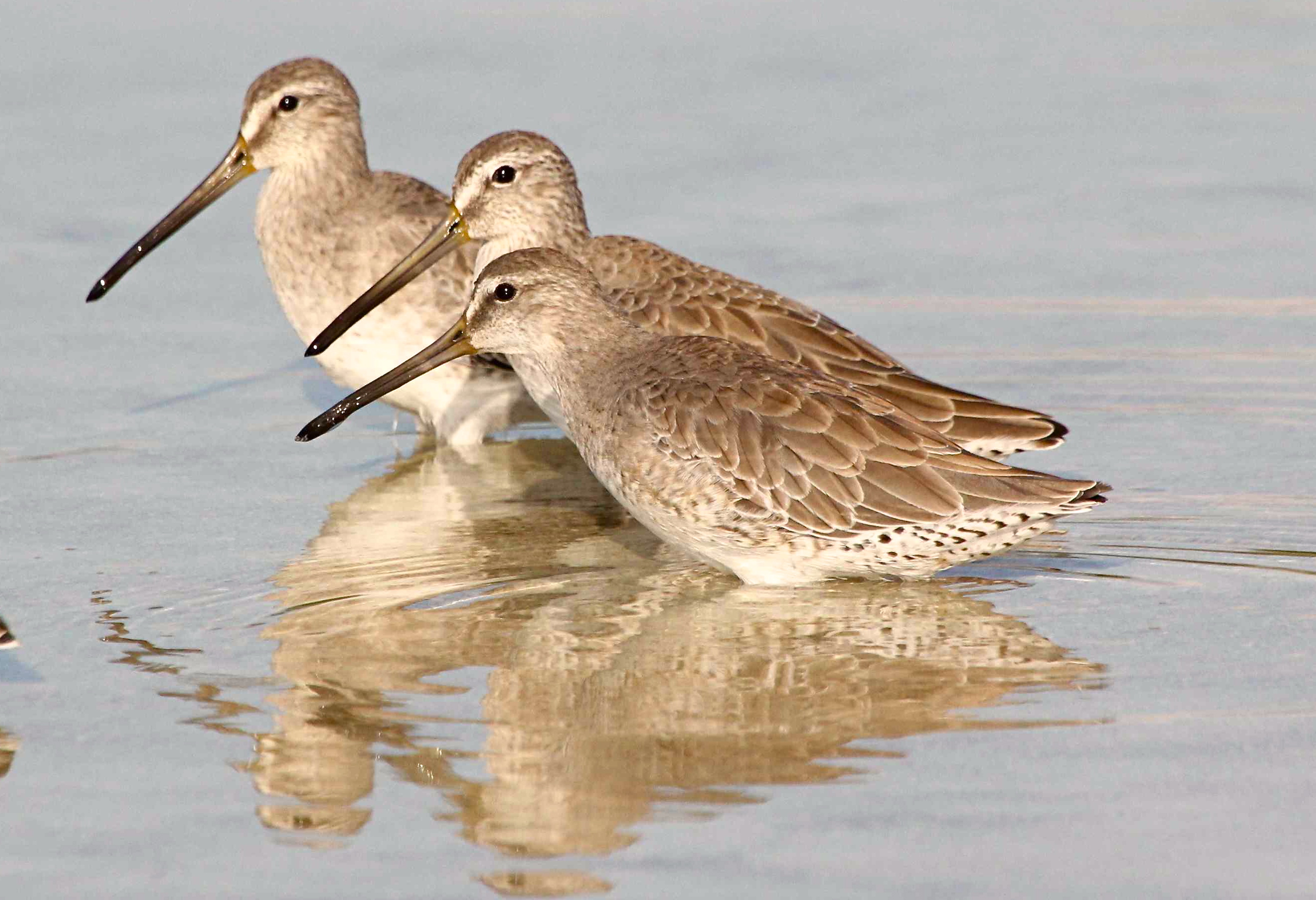
Short-billed dowitchers Bruce Hallett
The Guide showcases the rich and varied bird life of Abaco, Bahamas and features both resident and migratory species including endemics rarities and unusual sightings.
The main features are as follows:
272 pages with more than 350 photographs
163 species shown in vivid colour – nearly two-thirds of all the bird species ever recorded for Abaco
Every single photograph was taken on Abaco or in Abaco waters
All birds are shown in their natural surroundings – no feeders or trails of seed were used
Several birds featured are the first ones ever recorded for Abaco or even for the entire Bahamas
Clapper Rail Tom Sheley
A total of 30 photographers, both experienced and local amateurs, contributed to the project
The book had the generous support of many well-known names of Abaco and Bahamas birding
A complete checklist of every bird recorded for Abaco since 1950 up to the date of publication was compiled specially for the book (6 new species have been recorded since then…)
A code was devised to show at a glance when you may see a particular bird, and the likelihood of doing so. Birds found at Delphi are also marked
Specially commissioned cartographer’s Map of Abaco showing places named in the book
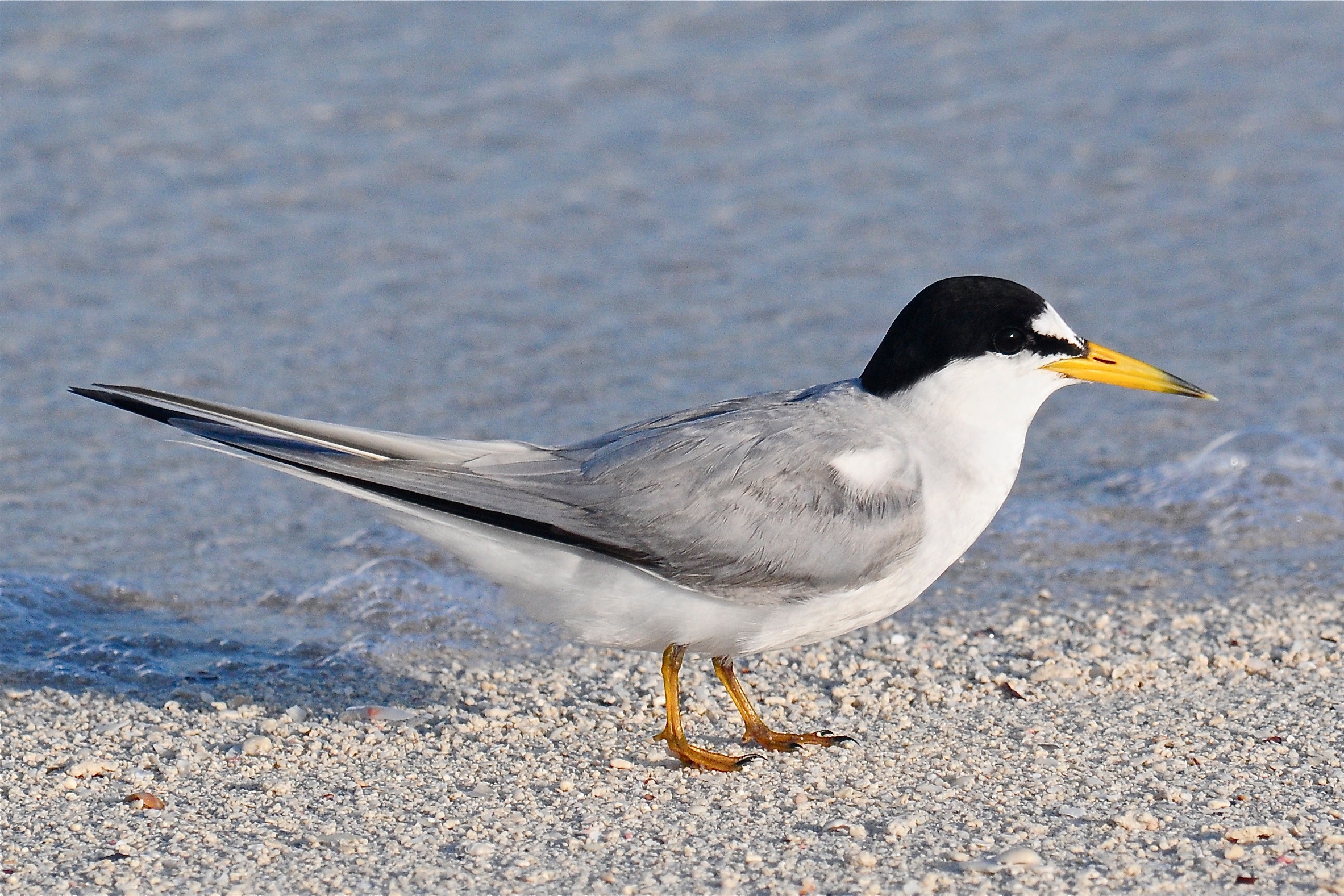
Least Tern Tony Hepburn
Informative captions intentionally depart from the standard field guide approach…
…as does the listing of the birds in alphabetical rather than scientific order
Say goodbye to ’37 warbler species on consecutive pages’ misery
Say hello to astonishing and unexpected juxtapositions of species
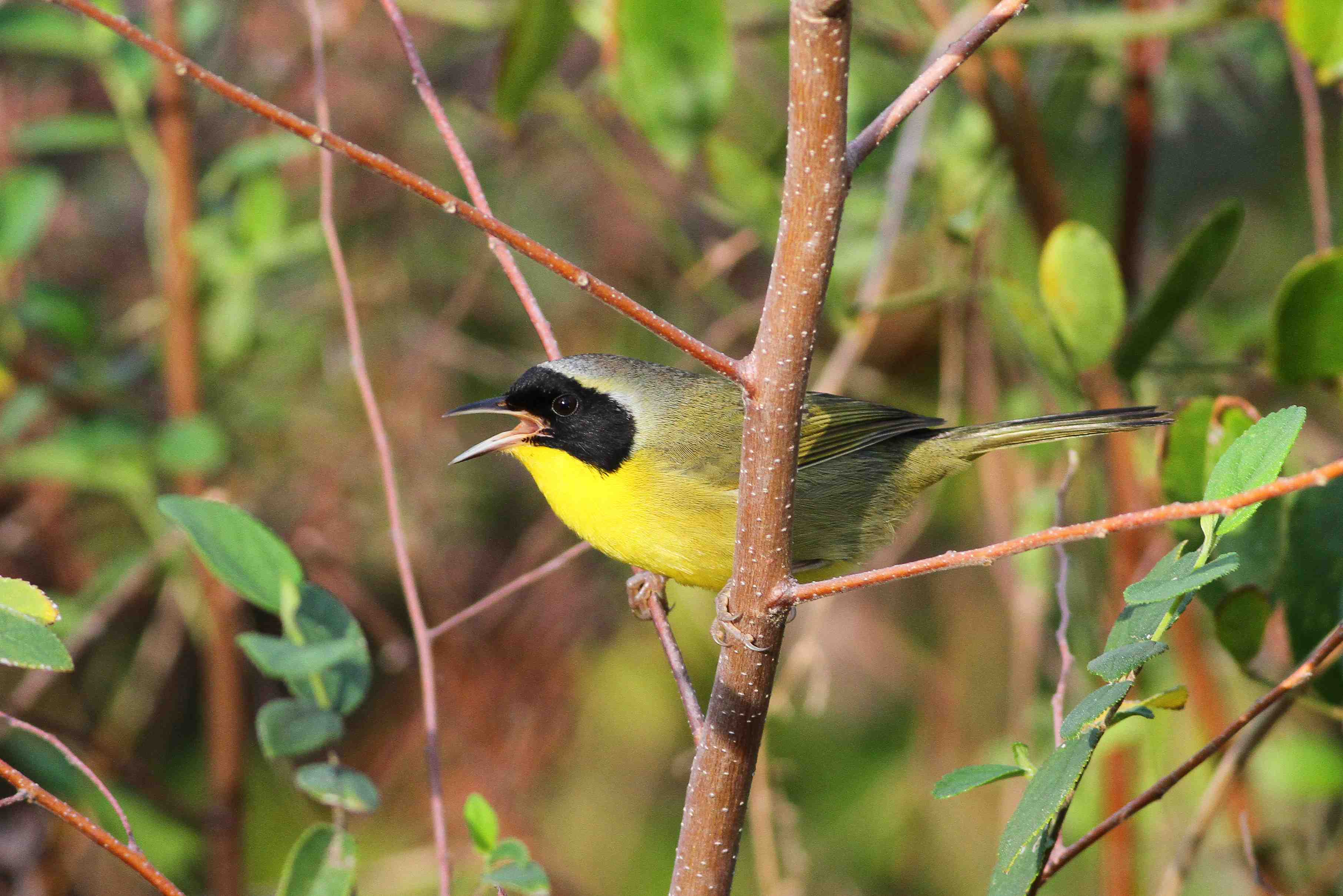
Bahama Yellowthroat Gerlinde Taurer
The book was printed in Florence, Italy by specialist printers on Grade-1 quality paper
Printing took pairs of printers working in 6 hour shifts 33 hours over 3 days to complete
The project manager and the author personally oversaw the printing
Smooth-billed Anis Gerlinde Taurer
The book is dedicated to the wildlife organisations of Abaco
A percentage of the profits is put by for the support of local wildlife organisations
A copy of the book has been presented to every school, college and library on Abaco
Piping Plover Bruce Hallett
The book is published by the Delphi Club (contact details below). The project was managed by a publishing specialist in art books. The author is the wildlife blogger more widely known on Abaco and (possibly) beyond as ‘Rolling Harbour’. Oh! So that would in fact be Mrs Harbour and myself. Well well! What were the chances?
Painted Bunting Tom Sheley
The Delphi Club at Rolling Harbour
PO Box AB-20006, Marsh Harbour, Abaco, Bahamas
Tel: +1-242-366-2222
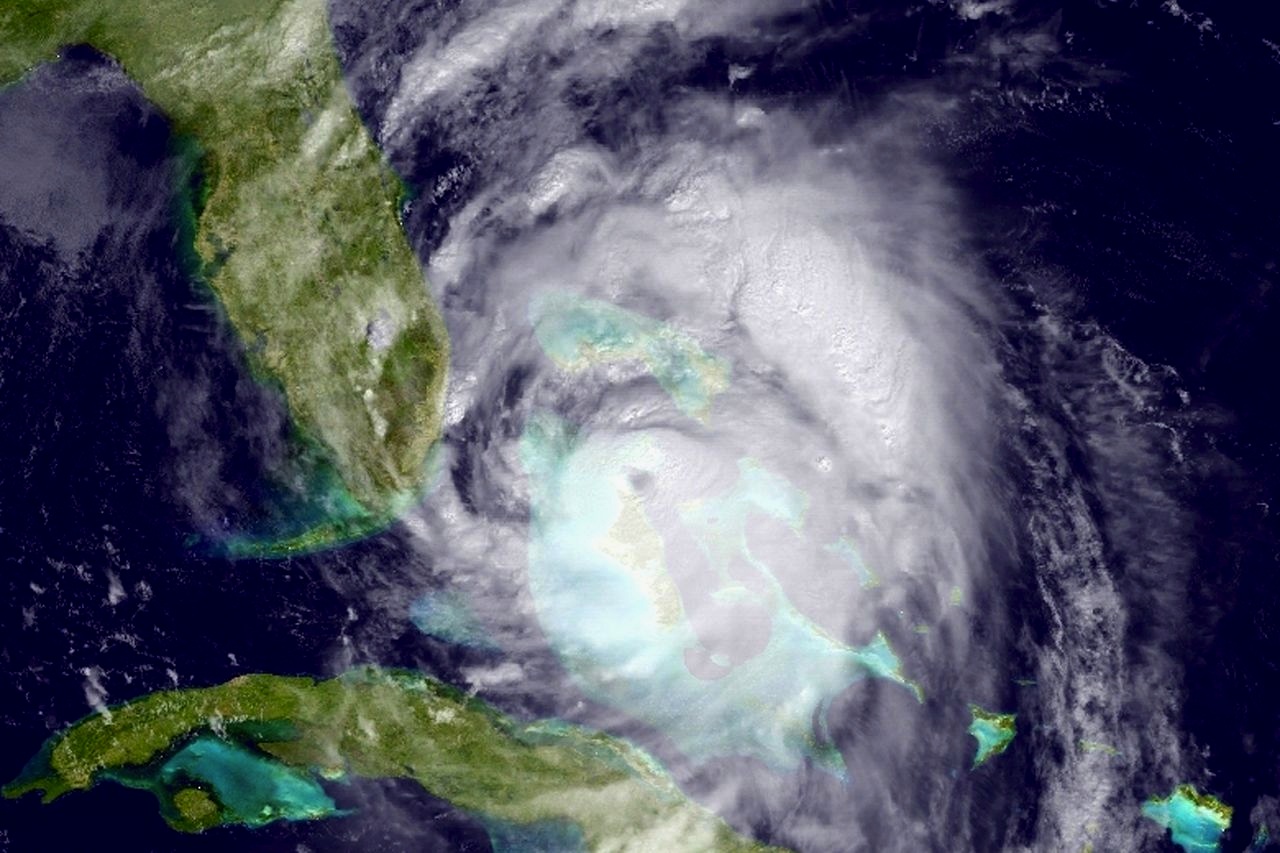
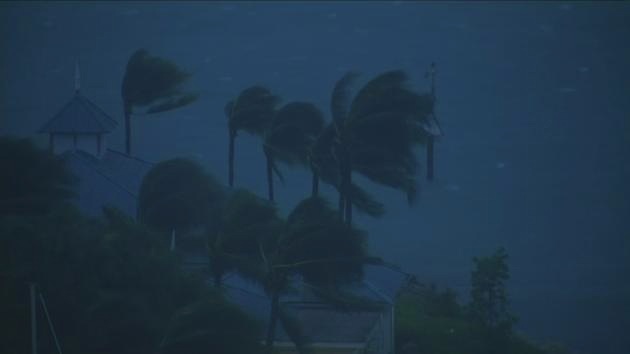
Early reports and post-hurricane news for Abaco is fortunately encouraging, though I appreciate that the Island’s good fortune at the eleventh hour swerve by Matthew only meant that others came into the direct firing line. Plenty of environmental damage, of course, but in human terms the harm seems mercifully light.
It’s too early to determine the impact on the wildlife of Abaco. The migratory winter birds must be wondering why they bothered this year. Land birds are obviously put at risk by the trashing of their habitat in the violent winds. Shore birds, too, are vulnerable: some beaches on Abaco are open to big tidal surges in high winds. Massive waves have smashed their way up the beach at Delphi. Long Beach, where the largest concentrations of piping plovers congregate at certain times, is also very exposed to surges.
Time will tell how the birds have fared. Meanwhile, here are some cheerful pictures – some of my favourite species – to relieve the gloom.
OPTIONAL MUSICAL DIGRESSION
‘BRYTER LAYTER’ was the second album by a ‘troubled genius’, the supremely talented but sadly doomed Nick Drake. Released in 1971, it failed to convert the ripples caused by his debut ‘Five Leaves Left’ (1969) into a deserved wave of popularity, not least because Drake was already starting his gradual retreat from live performance, from social contact, and indeed from life. Here’s the title track, a pastoral instrumental with orchestral embellishments, and (unusually) without Drake’s distinctive, wistful voice.
Credits: NASA / ISS, News open sources, Peter Mantle, Keith Salvesen, Bruce Hallett, Tom Shelley
In the past I have occasionally offered a Kalik™ (half in jest) for a ‘right answer’ or a nugget of info. Anyone who didn’t get their beer can still claim it, of course [no, no, not all at once please…]. But now I’m getting serious. World Shorebird day is on September 6th, and this weekend sees a global shorebird count in which, it is hoped, large numbers of people will scan their shorelines and post the results on the great and good resource that is eBird.
But you don’t need to go to those lengths. Here’s the deal. Is there a bit of beach near you (hint: on Abaco you’ll never be far from a beach or shoreline except in the National Park)? If the answer is yes, then can you spare an hour (or two?) to take a walk on the beach over the weekend? Or Monday and Tuesday? If so, can you look for a particular rare bird that makes its home on Abaco for the winter? Great. You’re in the competition, then. And there’ll even be a PIPL-related prize…
THE (SOMEWHAT FLEXIBLE) RULES
go for a beach walk, taking a notebook, pen, a camera or even just a phone. Binoculars would be good.
look for tiny shorebirds that look like the birds in this post
count how many you see at a time (watch out, they move quite fast). Maybe 1 or 2. A dozen is the likely max.
check their legs for coloured flags or bands and if possible note the colours and any numbers / letters
if possible, take photos of the bird(s), showing legs if banded. Don’t worry too much about quality – enhancement is possible
tell me about what you found and send me any photos (see below)
HOW WILL I KNOW WHAT TO LOOK FOR?
Size – very small (6″ – 7″) and usually busy
Legs – orange
Beak – black, possibly with a hint of orange at the base
Eyes – black and beady, with a streak of white above
Front – white / very pale
Underside – ditto
Back – greyish / brownish-tinged
Head – ditto
Tail – darker feathers at the end
Neck ring – a greyish hint of a partial one (they are black in summer)
WHERE WILL I FIND ONE?
On a beach or maybe a rocky shoreline
Out in the open on the sand, anywhere from back of the beach to the shoreline
Foraging in the tide margins
Rushing round in a seemingly random way
Taking a dip in a sea-pool (see above)
On a rock near the sea
WHAT DO YOU WANT TO KNOW?
In an ideal world, all the details below. But I’d be really pleased just to find that you had seen a piping plover on your chosen beach. Even the knowledge that a particular part of the shoreline is favoured by the birds is valuable for their conservation. The most useful info is:
Date, name of beach, approx location (‘north end’). Time would be good too, and whether tide high, mid or low
Number of piping plovers seen (if any) and how many banded / flagged (if any).
Impression of bands if unclear: ‘I think it was… a green flag / an orange ring / a metal ring’ or if visible…
‘One was green flag 2AN on it’ / ‘one had bands – left leg upper leg orange, right upper leg light blue…’
Take a photo. This will help eliminate other species of shorebird from the ID, and enable a close-up look
WHAT’S THE POINT OF BANDING & TRACKING THEM?
Marking a plover with coloured bands or flags (or a combo) gives a unique ID to each bird. Usually it will be done on the beach where they hatched, within a day or two. These adornments weigh nothing, do not impede the birds in foraging or in flight (or when mating…) and expand as they grow. The scientists who carry out the banding will have weighed and measured the hatchling and made a detailed record of the data collected. They need to get as much information as possible about the habits of each bird to help with conservation initiatives at both ends of the migrations.
Each fall the plovers travel south between 1000 and 2000 miles south from their summer breeding grounds. Tracking individual birds to where they overwinter enables scientists to build up a picture of the type and location of fragile habitat that these little birds prefer, and to compare the annual data for each banded bird. For example
A particular beach does not seem to attract piping plovers at all (there may be several good reasons for this)
A particular beach has single or small groups of piping plovers who come and go but don’t settle there
A particular beach usually has at least one or a few birds on it who show ‘beach fidelity’, eg Winding Bay
If birds are found in groups – more than 10, say – in a particular location, it means the beach suits the breed especially well. It is sheltered, has plenty of scope for good foraging, few predators, and has not been spoilt by humans. Long Beach (Island Homes) is a good example. Last December, groups of more than 60 were found there. It’s a *hotspot*!
GIVE US AN EXAMPLE, PLEASE
Last season a bird called Tuna (see photo above) arrived at Watching Bay (Cherokee) in at the end of August. He moved from time to time to the Cherokee mud flats and Winding Bay, but mostly he remained at Watching Bay until April. His unique banding colours and their positioning led to the following information
The precise coordinates of location of the nest where he hatched in New Jersey
The date of hatching, banding, fledging and the last date he was seen there before migrating to Abaco
The name of the banders, plus his weight and the length of his body, wings, legs and beak
Even the names of Tuna’s parents. In fact, mother Paula headed to the Bahamas too – she was resighted on Joulter Cays, Andros last winter.
Tuna was not reported over this summer – he didn’t return to his ‘birth beach’ – but we believe Tuna is now back at Watching Bay The distant photos were not clear enough to make a positive and definite ID. On the next visit we may know for sure, and all because of the bands. And we’ll know that he likes Abaco enough to fly back 1200+ miles to the same beach as last year. We can conclude that Watching Bay provides a suitable and safe habitat for Piping Plovers.
WHAT’S IN IT FOR ME?
Potential ‘fun for all the family (nb best leave the dog at home for this adventure…)
Exercise in a lovely beach setting
Seeing a rare and vulnerable bird in its natural setting
Wonderment that such a tiny bird should fly many miles & choose Abaco to overwinter
Assisting in logging the beach presence of the birds so that researchers know where to look
Helping count the birds so that year-on-year comparisons of the population can be monitored
Getting appreciation and thanks
Being described as a ‘Citizen Scientist’
Winning a prize if your are the most successful finder of banded birds, as verified by photos
I’ll post details of sightings onABACO PIPING PLOVER WATCHwith credited photos. Later I’ll follow up with aROLLING HARBOURpost summarising the results, listing the participants and their scores of both unbanded and banded birds, and naming the winner of the PIPL-themed prize to mark their glory…
Contact me via APPW, DM me on my FB page, or email me at rollingharbour.delphi [at] gmail.com
GOOD LUCK!
Credits: Danny Sauvageau, Charmaine Albury, Bruce Hallett, Keith Salvesen, Rhonda Pearce, Linda Barry-Cooper, Gyorgy Szimuly (WSD logo)
SANDWICH TERNS: NO LINK TO BREAD SLICES, SAY SCIENTISTS
Have you noticed how newspapers and periodicals increasingly seize every opportunity for a headline ending “…say Scientists”. It lends a spurious authority to any tenuous assertion, like “astronauts unlikely to find cheese on moon, say Scientists” (suggesting at least the faint possibility of some mature cheddar lodged in a crater). Or “Frooty-pops cereal may protect against ingrown toenails, say Scientists”. To which the proper response is: “research reference please”. But it seems 37.9% of people are actually prepared to believe this tendencious stuff… say Scientists.
But I digress. To the business in hand. The Sandwich Tern (Thalasseus sandvicensis) is a smart-looking medium-sized tern. Its clearest ID signifier among terns is a sharp black beak with a yellow tip. Also, its black legs helpfully distinguish it from other tern species that have orange legs.
The origin of the name for this species is an unexpected one. The Thaleasseus (formerly Sterna) simply refers to the sea (Gk). The Sandwich part is more complicated. It’s certainly nothing to do with a tasty filling for a sliced bread snack **. Other bird species such as Branta sandvicensis, an endemic Hawaiian goose, have the name because Hawaii was historically known as the Sandwich Islands. But Sandwich terns are not found there. In fact, the name comes from the town name of Sandwich, Kent UK (sand wic OE – ‘trading post by the sea’). The ornithologist who first described the bird in 1787, John Latham, just happened to live there. (And how fortunate for ornithology that he did not come from Pratts Bottom, also in Kent).
Sandwich terns have a wide range around the world. As the range map below show, the most significant breeding area is Great Britain and northern Europe. On Abaco, the birds are uncommon summer residents. Both images above were taken on the main island, the top one at Sandy Point on the jetty (an excellent place for birdwatching, incidentally).
Like all the Thalasseus terns, the Sandwich tern plunge-dives for fish. I love the sight of diving terns. They hang high in the air as they scope out the water for fish, only to break free from the sky and smash down into the sea, often emerging with a silver prize. Here’s a wonderful photo of one that missed its meal – and one that succeeded.
An endearing characteristic of these terns can be seen during their courtship display. The male will catch a fish, then offer it to the female. Her acceptance of the gift signals her readiness to approve the male as a suitable mate.
Of the 12 tern species recorded for Abaco most are summer residents, some of which breed on Abaco. The royals are the only permanent residents; and the Forster’s are the only winter residents. The other 4 species are transient in migration, or vagrant (arctic tern).
As I have mentioned before, a very good source for easy ID to distinguish between different birds of the same family is to head off to BIRDORABLE. The drawings (cartoons!) may not be scientific, but they do highlight the most notable distinctions. Invaluable as a last resort. Or first resort, even! For similar-looking birds, compare the beaks and the legs. The composite below shows how simple it is.
Noisy neighbours? Put this short recording of a sandwich tern colony in the breeding season on a continous loop, and you have the makings of a powerful retaliatory weapon. They’ll be out within a fortnight…
Alex Lees / Xeno-Canto
** The food we call a sandwich was named after the 4th Earl of Sandwich. He found eating while playing cards inconvenient, so asked his valet for two slices of bread, requesting “and squash a tern between them, if you’d be so very kind…” The Sandwich Islands were also named after his Lordship by Captain James Cook, as a compliment for financially supporting an expedition there, say Historians…
Credits: Danny Sauvageau (1, 4, 5); Bruce Hallet (2); Woody Bracey (3); Ken Billington (6); Alex Lees @ Xeno-Canto, Birdorable, wiki for range map & info, other magpie pickings of glistening facts
Abaco is spoilt for birds. What other island in the word has its very own population of ground-nesting parrots? (Clue: none). How many others provide a secluded winter home for the rare Kirtland’s Warbler? Or a safe habitat for piping plovers – more than 300 individual birds recorded last year, nearly 4% of the total population? Or host 32 warbler species in the winter to supplement the 5 resident species? Or record a visit from a black-browed albatross? Or enjoy 4 out of 5 of the Bahamian endemic species (no longer the Bahama Oriole sadly, now confined to specific areas of Andros).
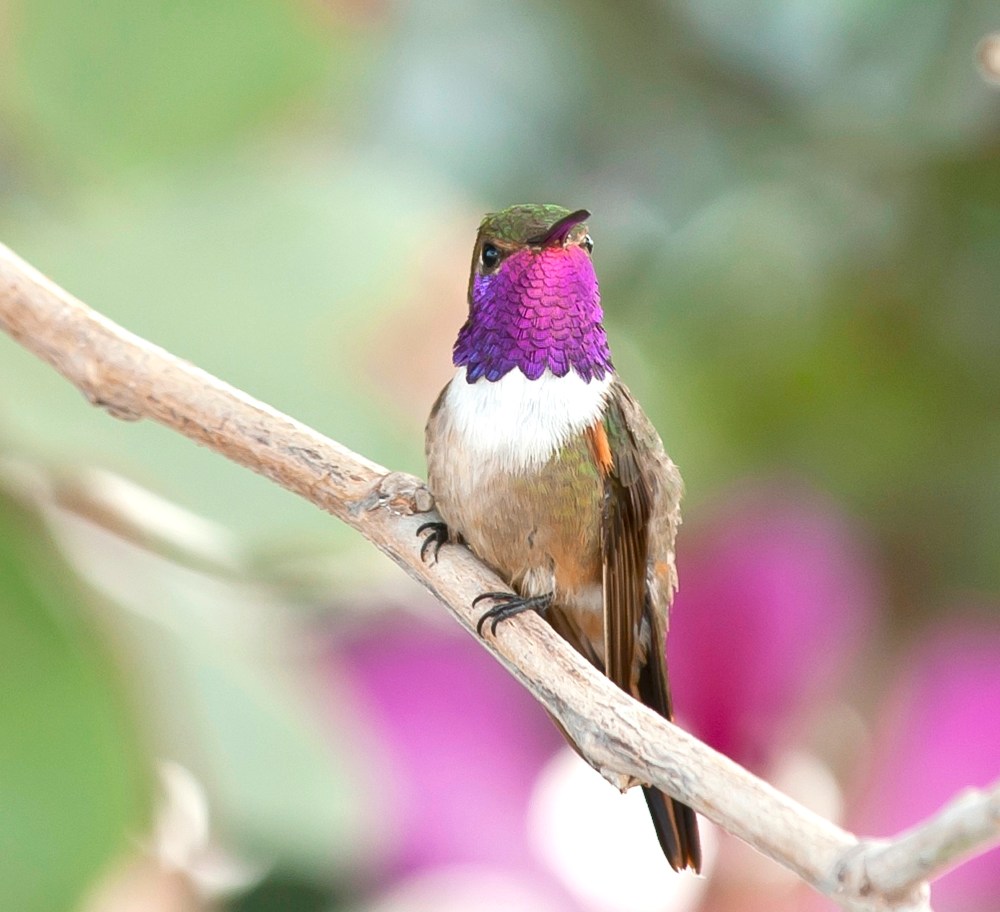
A while back I held a poll for Abaco’s favourite bird, with about 10 contenders. Some were quick to point out that their own personal favourite was not an option, but I had to take a fairly broad brush approach. On the podium, gold went to the Bahama Woodstar; silver to the parrot; and bronze to the western spindalis. I’m in a genial mood today, having caught a fair-sized wild brown trout on my third (part) day of stalking it (over 2 weeks), on the smallest fly in my box (size 18). I put it straight back of course. Respect! So in a spirit of cordiality, here are some epic shots of Abaco’s democratically elected favourite bird… at least according to the poll.
The two images above were taken by the legendary Bruce Hallett, author of the go-to field guide for the Bahamas, which no birder should be without. Many of his wonderful photos appear in THE BIRDS OF ABACO, and he was a steady guiding hand during the preparation of the book.
This brilliant photo of a female woodstar was taken by Tara Lavallee of Bahama Palm Shores, and for composition, clarity, colour and sheer charm it was a must for inclusion in the book.
Another major photographic contributor was Tom Sheley. I had the pleasure of spending time on Abaco with Tom during expeditions deep into backcountry to find and photograph birds. He had two cameras, one with a long lens. The other had a very long lens. The results he obtained – showcased in the book – were outstanding. His woodstar graces the front cover.
Tom also took a delicate little study of a female woodstar feeding, one of my favourite photos
Monday was International Pigeon Appreciation Day 2016, apparently. I’m not a huge fan of limitless species being accorded their own special day each year: “Celebrate International Plankton Day – Be Kind to your Favourite Protozoa!” or “Global Millipede Day: Take an Arthropod for a Walk!”.
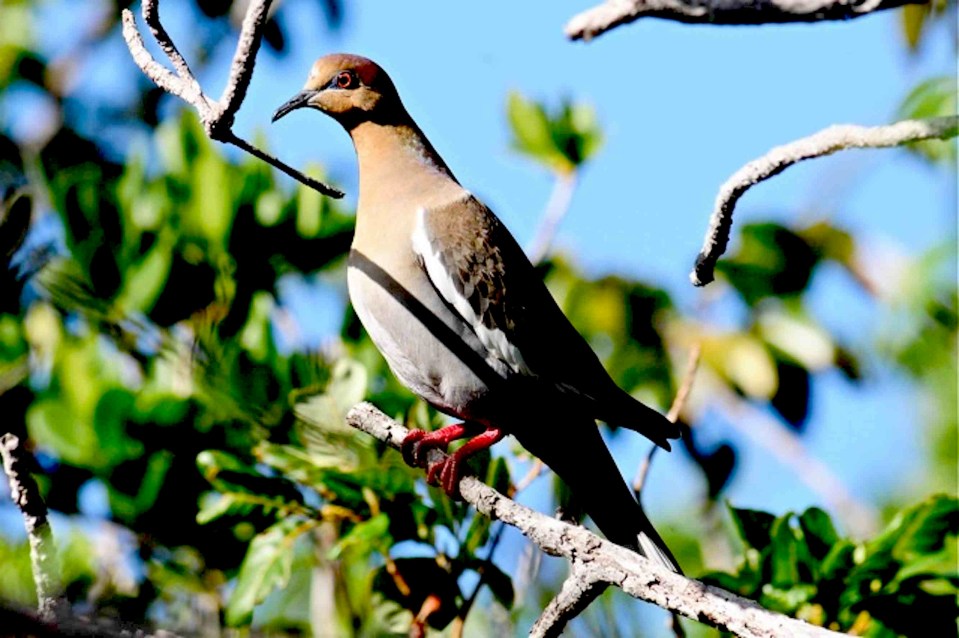
White-crowned Pigeon (& header image)
I’m not sure where pigeons come in all this. In many cities feral pigeons are considered vermin – yet people love to feed them, even the ones with rotted feet and one eye. Especially those ones. Pigeons may be pests in crop fields, yetHEROESin wartime. They may be decorative, yet are, regrettably, good sport and delicious.
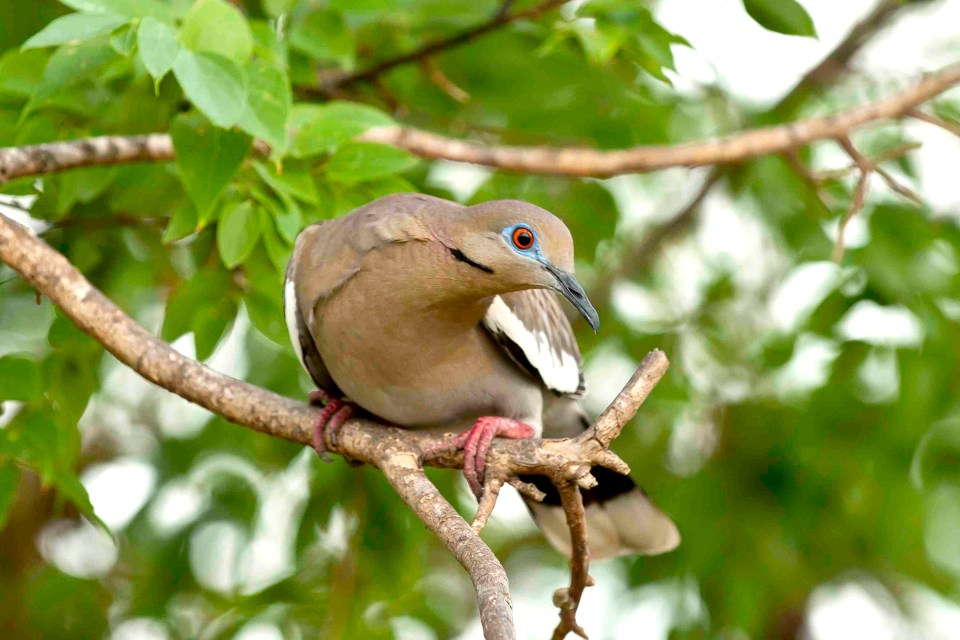
White-winged dove
I’ve decided to take a broad view with pigeons and doves (there’s no significant difference), and not to be sniffy about Columba and their special day. They are pretty birds and they deserve it. So I’m featuring some Abaco pigeons and doves to enjoy, representing every species found on Abaco – and a bonus dove from New Providence at the end.
Eurasian Collared Dove
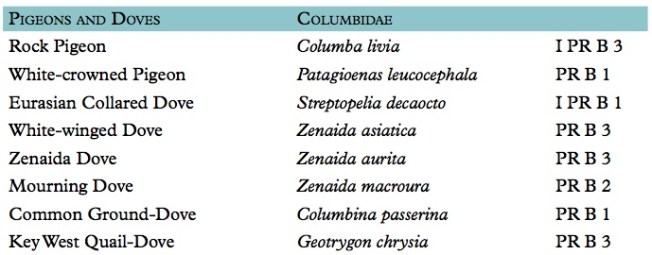
The Columbidae of Abaco: all permanent breeding residents
Common Ground Dove (Tobacco Dove)
SPORT REPORT
PROTECTED SPECIES From a sporting and culinary point of view, the following pigeons and doves are protected by law at all times: Common Ground (Tobacco) Dove; Keywest Quail-Dove
SHOOTING IN SEASON The following have open season from roughly mid-September until March: Zenaida Dove; White-crowned Pigeon; Eurasian Collared Dove; Mourning Dove
UNPROTECTED – NO DESIGNATED CLOSED SEASON White-winged Dove (but why? they are fairly uncommon on Abaco); Rock Pigeon.
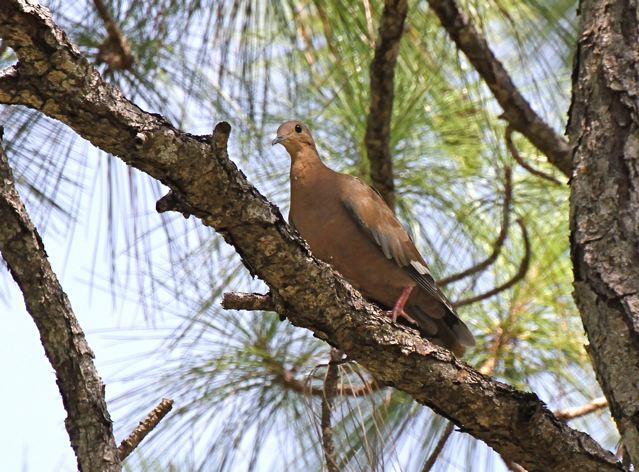
Zenaida Dove
Key West Quail-Dove
The second bird of this pair was recently photographed by Milton Harris at the north end of Elbow Cay. More details HERE
Rock Pigeon
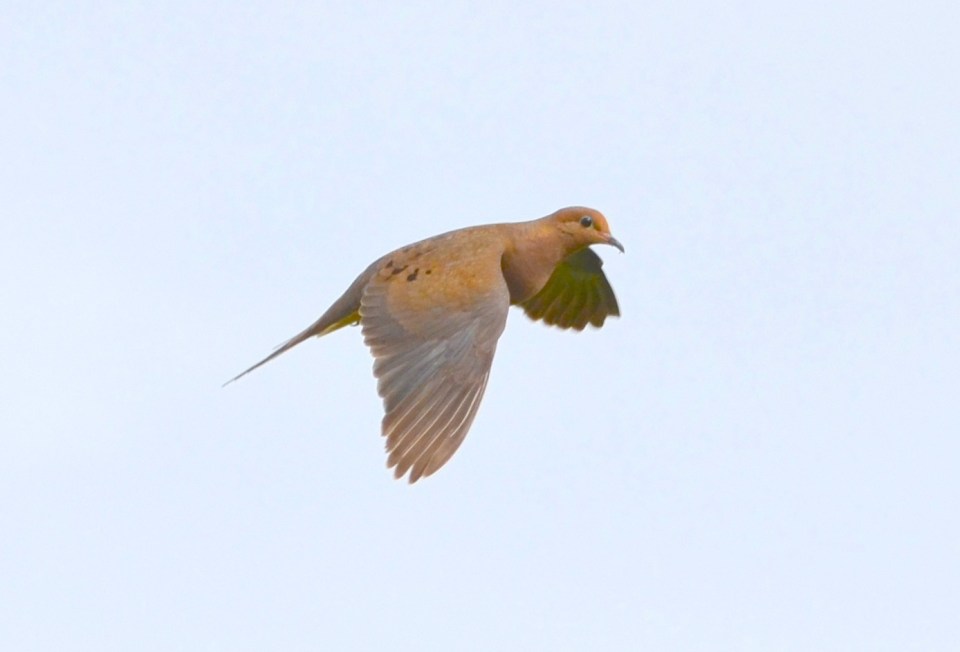
Mourning Dove
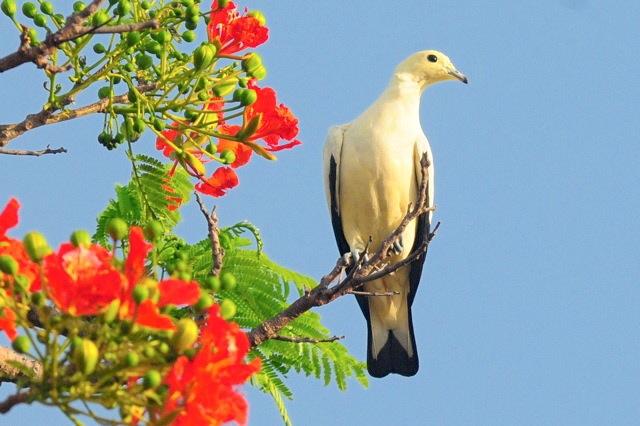
The birds shown above represent the 8 species found on Abaco. However, not far away in New Providence, there is a beautiful pigeon that has not yet made its way over to Abaco and has yet to be introduced there. I am ambivalent about the deliberate introduction of alien species, because of the frequently very real risks to native species in terms of territory, habitat, food sources and so forth. But where there is no detectable threat to the local species, perhaps there is no great harm. I’d certainly like to see these lovely birds flying around – if possible, as a protected species…
Pied Imperial Pigeon (Nassau)
Photo credits: Gerlinde Taurer (1); Alex Hughes (2); Tom Sheley (3, 7, 13); Tony Hepburn (4); Keith Salvesen (5, 8, 14); Bruce Hallett (6, 9, 10); Woody Bracey (11, 16, 17); Milton Harris (12); Charles Skinner (15)
Tony White, Keith Salvesen, Bruce Hallett & Woody Bracey
TONY WHITE: CHAMPION OF BAHAMAS BIRDS
Tony White passed away 2 days ago. The sad news has spread rapidly through the birding community and far beyond it. It is not my place to write a detailed appreciation of Tony’s life and achievements; others who have been his long-term friends, associates and birding companions are in a far better position to do so than I. However, I do have direct experience of Tony’s kindness, enthusiasm and pragmatism in connection with the compilation of The Delphi Club Book of the BIRDS OF ABACO.
Tony with Caroline Stahala Walker, erstwhile parrot supremo of Abaco
It took 16 months or so from the initial idea of the project to the finished 30-contributor book and a launch party at the Delphi Club in March 2014. During that time I had amazing support from the birding elite of the Bahamas. The proposed book might well have been treated as misconceived fantasy by amateur hicks from out of town. Instead, we received nothing but courtesy, kindness, cooperation, and a willingness that the project should succeed.
Tony with Bruce Hallett (author of Birds of the Bahamas and TCI)
Tony was one of the invaluable experts on whom I knew I could rely. His emails were invariably cordial, helpful and to the point. When I asked if he would undertake a complete revision of the checklist for Abaco that appears in his indispensable book for Bahamas birders (see link below), he agreed without hesitation. In due course, and in conjunction with Woody Bracey, a new checklist for all birds recorded for Abaco – however rare – from 1950 until the day of publication was completed.
Tony in the field (Lynne Gape, BNT)
When the book was launched Tony was there of course, his startlingly blue eyes bright with excitement. His friends Bruce Hallett and Woody Bracey, without whose help the book would never have been the avian showcase that it is, were also present. The contributions of all three were indispensable .
Tony after a Grand Bahama bird count (Erika Gates)
I have included some photos of Tony as we would all like to remember him, with thanks to Lynn Gape of the Bahamas National Trust and to Erika Gates, Grand Bahama.
Tony White, Bruce Hallett & Woody Bracey at “Birds of Abaco” launch; author aka RH (seated)
To read my original review of Tony’s magisterial book clickHERE
To see Tony and Woody’s complete Abaco bird checklist, up to date as at March 2014, clickCHECKLIST FV 06 table sun2Since then, 5 new species have been recorded on Abaco.
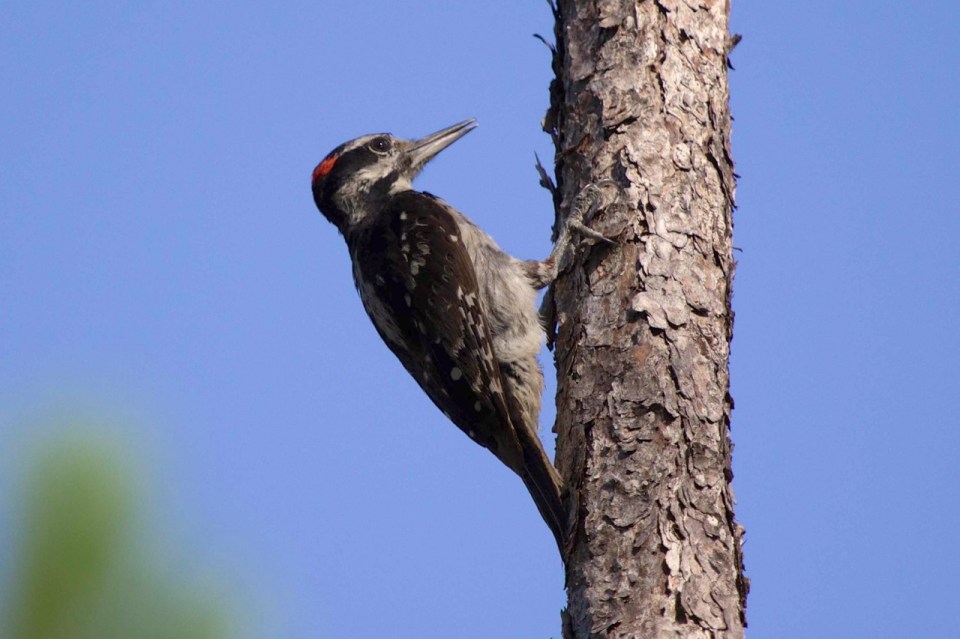
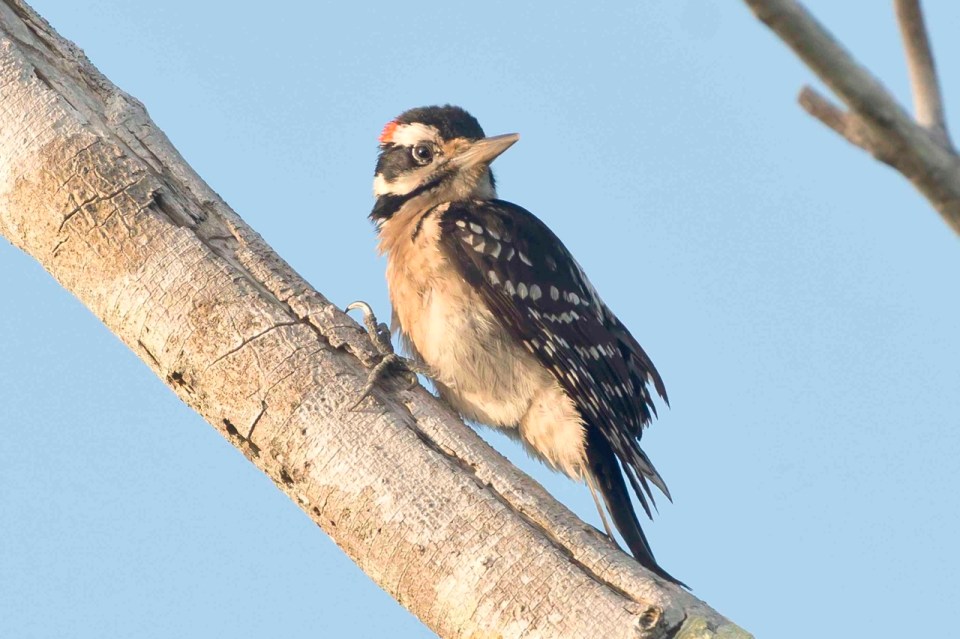
Delphi is an excellent place for woodpeckers. The Lodge itself has its own resident WEST INDIAN WOODPECKERS, who generally raise two broods a year in the nest boxes under the eaves. The coppice and pinewoods along the one-mile drives are home to the smaller Hairy Woodpeckers Picoides villosus, where they too nest annually. There’s a particular tall dead tree on the guest drive that is used every year, and from early March it is the first place I check for signs of occupation. If evident, I take it as a sign of good luck (and hope it extends to my fishing).
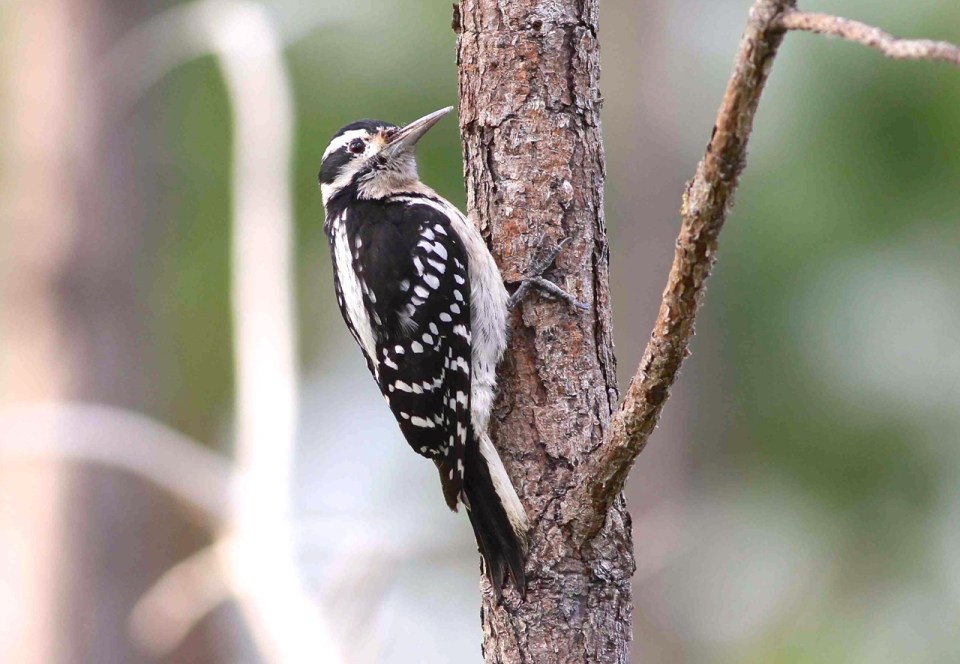
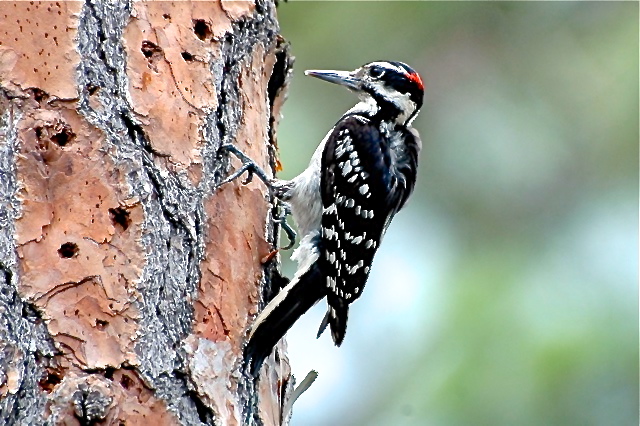
I can’t believe I haven’t featured a hairy woodpecker for more than 2 years. As we prepare for our forthcoming trip to Abaco HQ and the consequent plethora of photos (95% of which will be deleted), here is a small gallery of males (red caps) and females, some of them taken at Delphi. Check out those huge claws of the one below at her nest on the dead tree mentioned above.
I photographed this female last year in a tree near the swimming pool. I watched it for some time, but it must have been camera shy, because although quite unconcerned by my presence, it never came right out into the open.
MUSICAL DIGRESSION (OPTIONAL)
“Knock on Wood”, the 1966 hit for Eddie Floyd, was co-written with the amazing Steve Cropper (‘house guitarist’ for Stax). It has been much-covered over the years, none more unexpectedly than by David Bowie on his 1974 Live album (also released as a single). Here is the originator, in a live performance.
Credits: Gerlinde Taurer (1, 7), Alex Hughes, Bruce Hallett, Peter Mantle, Tom Sheley (5, 6), Tony Hepburn, Keith Salvesen
THE ‘THRUSH’ THAT ISN’T: NORTHERN WATERTHRUSH ON ABACO
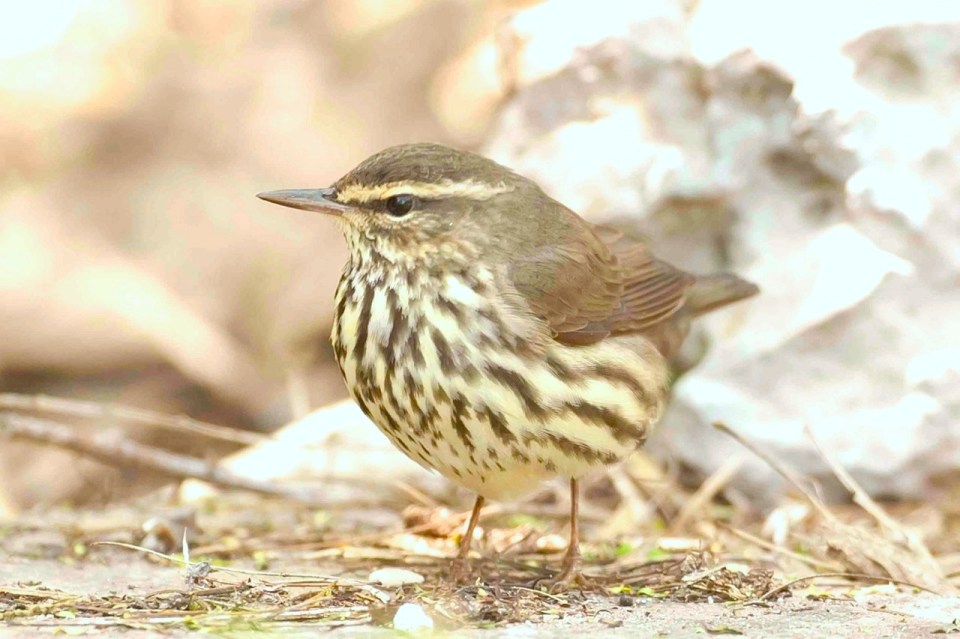
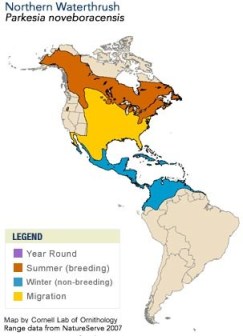
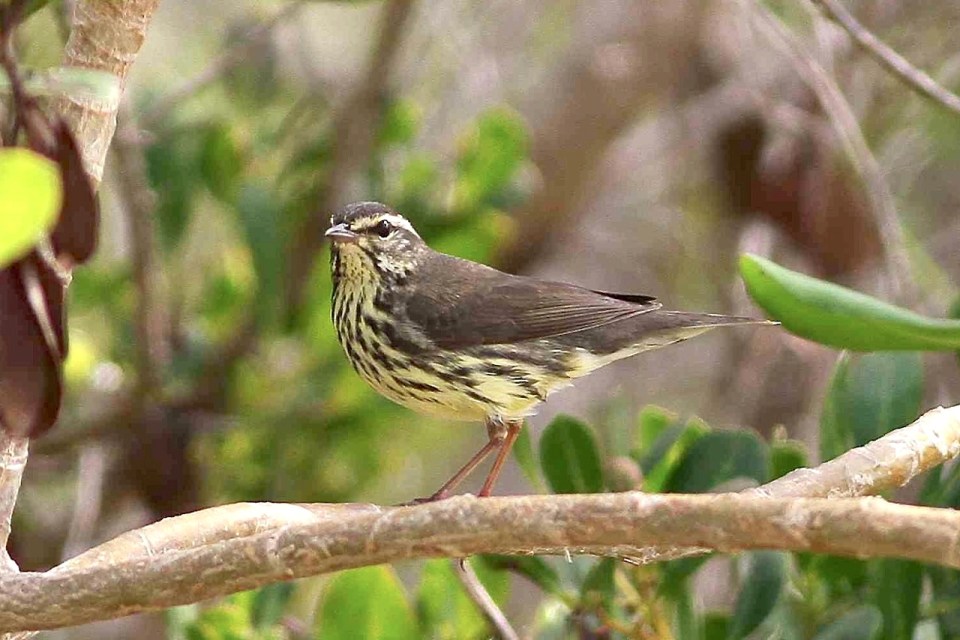
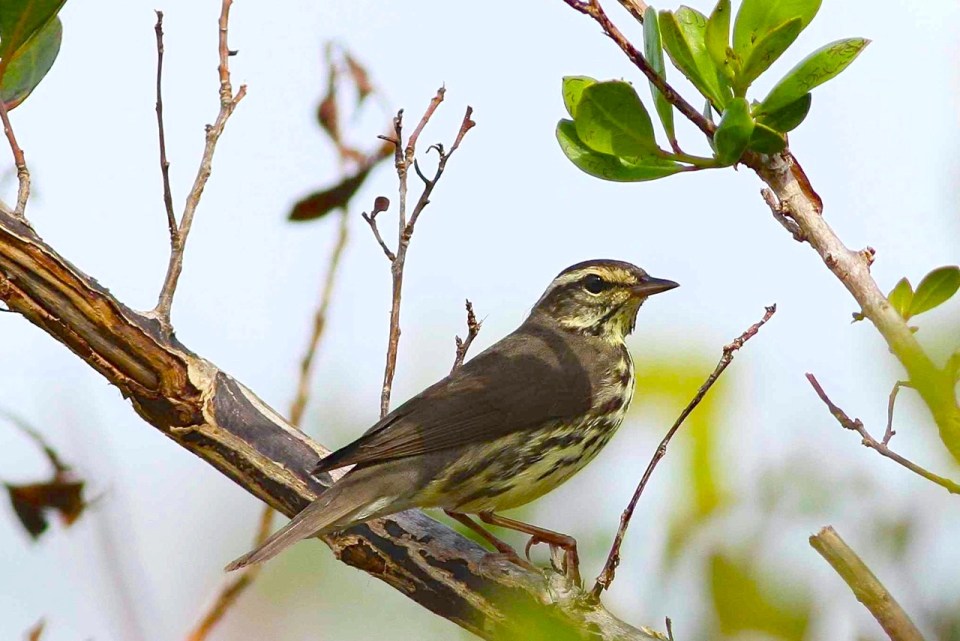
The pretty thrush-like warbler Northern Waterthrush Parkesia noveboracensis is a common winter resident on Abaco. Despite the name it’s not a real thrush, but it is larger than most of the compact winter warblers that heed the the migratory instinct that “It’s Better in the Bahamas” and make Abaco their overwintering habitat.
HOW CAN YOU TELL SIMILAR PLUMAGED THRUSHES FROM THESE GUYS?
The simplest rule of thumb is that true thrushes have spotted or speckled chests; whereas waterthrushes have streaked chests. That, and the fact that similar thrush species are generally larger. A number of true thrushes are recorded for Abaco, many quite similar to the waterthrush; but the speckled vs spotted distinction should be your guide. If a sighting is momentary or in bad light, it’s anyone’s guess…
APART FROM THRUSHES, ANY OTHER BIRDS I MIGHT CONFUSE IT WITH?
There’s another far less commonly found waterthrush that also overwinters on Abaco – the closely-related Louisiana waterthrush Parkesia motacilla. I have no Abaco photos of one – it really is quite rare – so I’ve had to borrow an open source one. The Cornell Lab explains the differences between the two waterthrushes thus: “Northern usually has stripes on throat, a slightly smaller bill, a thinner and off-white or cream eyestripe that does not extend as far onto the nape, less pink legs, and a more yellowish wash on the underparts”. Maybe one can generalise that the northern is overall a yellower bird, and its legs are more brown than pink.
Lousiana waterthrush – rarer on Abaco than the northern but a potential source of confusion
WHAT’S THAT POSH TAXONOMIC NAME ALL ABOUT, THEN?
The Mr Parkes in question was Kenneth Carroll Parkes (1922 – 2007), an American ornithologist and Chief Curator at the Carnegie Museum of Natural History, Pittsburgh. The noveboracencis part simply means ‘from New York’ in Latin (novum – new; Eboracum – York); and the -ensis is a common suffix meaning ‘from’. Mr Parkes’s bird from New York.
Kenneth Carrol Parkes
Both species have similar habits. For example, on the ground, they tend to walk rather than hop, ‘bobbing’ their butts (technical term) as they go. They forage on the ground for insects, snails and small mollusks etc.
I’m not a huge fan of attempts at phonetic renditions of bird calls – the ‘Did you have a nice day today dear?’ and the ‘I’d like a very big Kalik please’ and so on. But for what it is worth, the song of the northern waterthrush has been interpreted as “a loud swee swee chit chit weedleoo”. This is what is sounds like in real life. Go figure.
Credits: Tom Sheley (1, 2, 8); Becky Marvil (3); Magnus Manske (4); Bruce Hallett (5); Gerlinde Taurer (6, 7); Richard E Webster at Xeno-Canto for the song clip
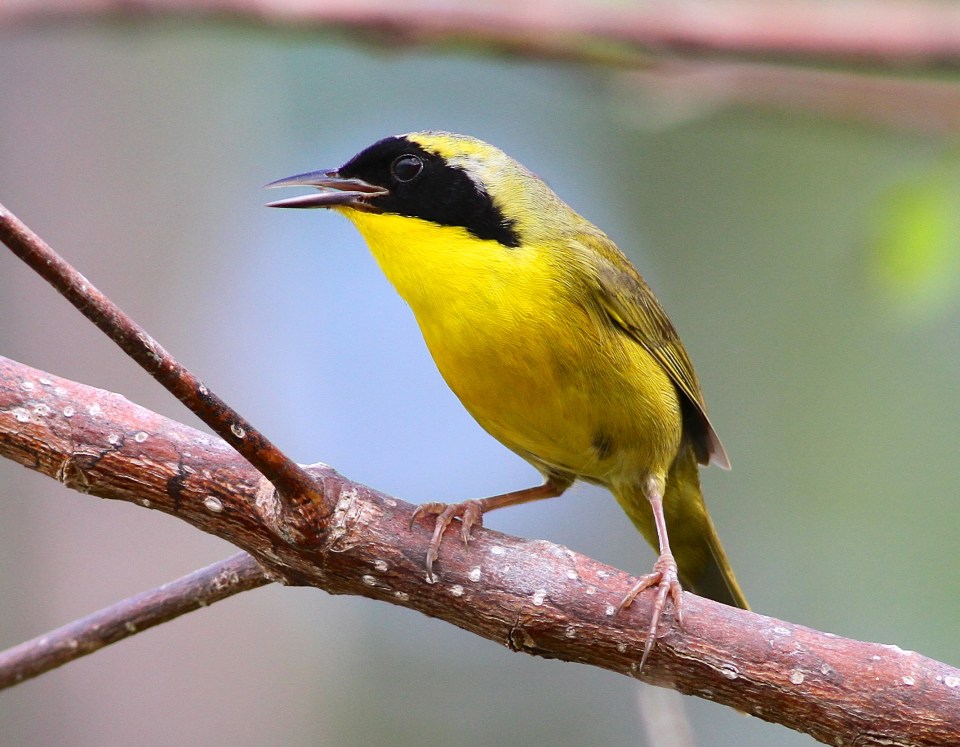
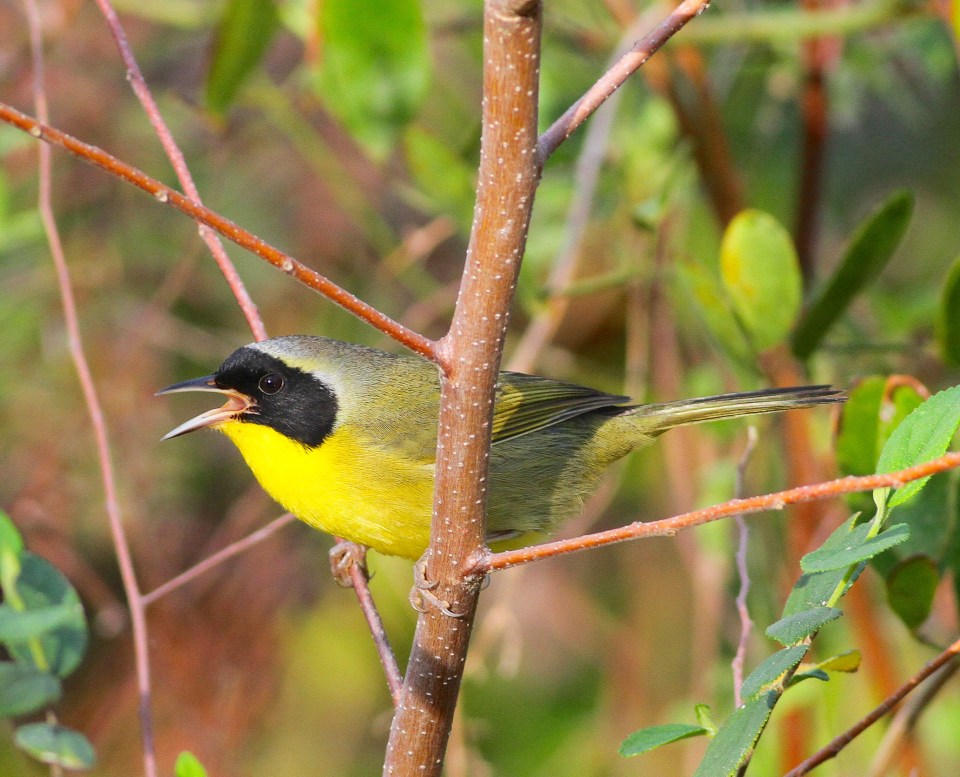
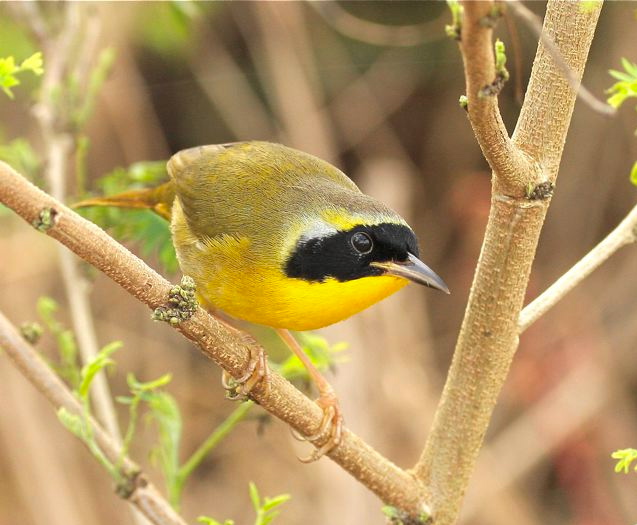
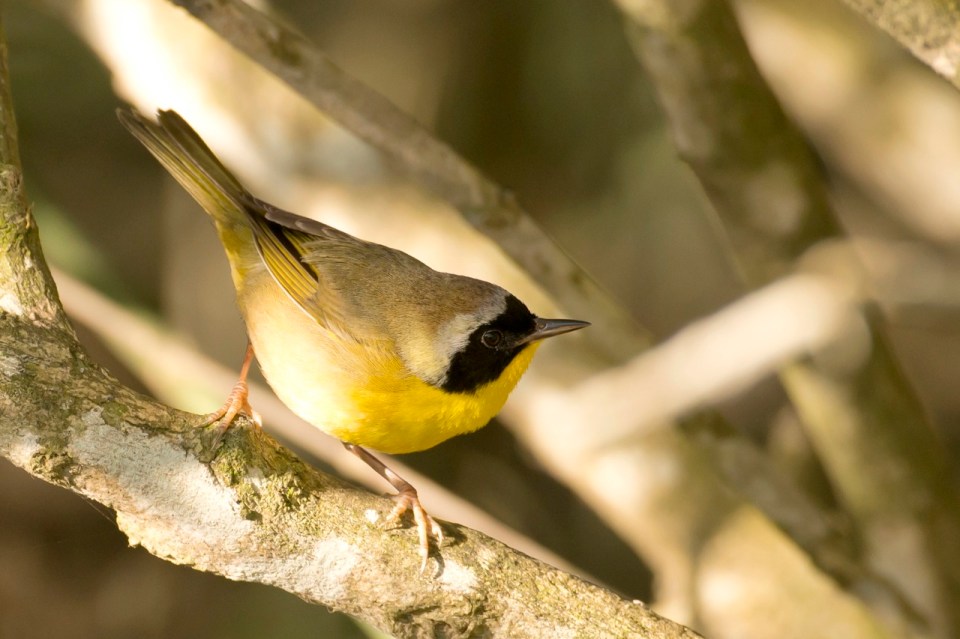
Red. Green. A splash of blue. The shimmer of gold and silver. Those Christmas colours are so passé. OVAH! So ‘last year’ (or very nearly). In the hope and expectation that people are not too bilious from Xmas Xcess, or too jaundiced by seasonal overload, I feel it’s time to change the colour scheme. Let’s go for bright yellow. Specifically, a mix of endemic Bahama Yellowthroats and Common Yellowthroats. I love these cheerful little birds, and the challenge of trying to lure them into the open with my rather unconvincing approximations of their ‘wichity’ call. Such sunny little creatures, and always such a joy to watch.
ALL ABOVE – BAHAMA YELLOWTHROATS; ALL BELOW – COMMON YELLOWTHROATS
Credits: Gerlinde Taurer (1,2); Bruce Hallett (3, 6); Tom Reed (4); Tom Sheley (5, 7); Erik Gauger (8)
ABACO PARROTS: BRIGHT GREEN, RED & BLUE = HAPPY CHRISTMAS TO YOU
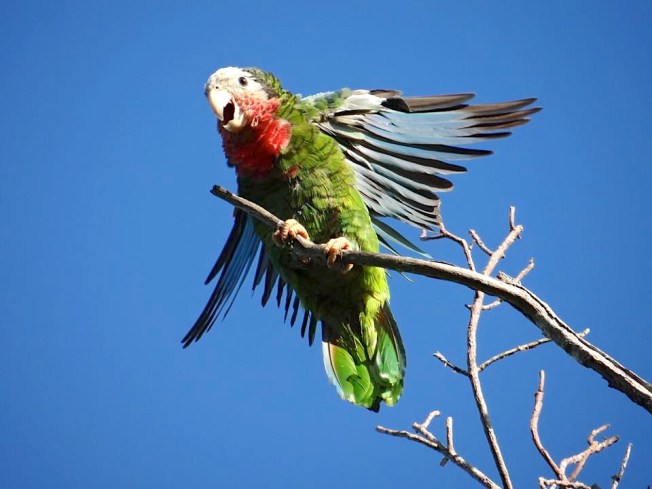
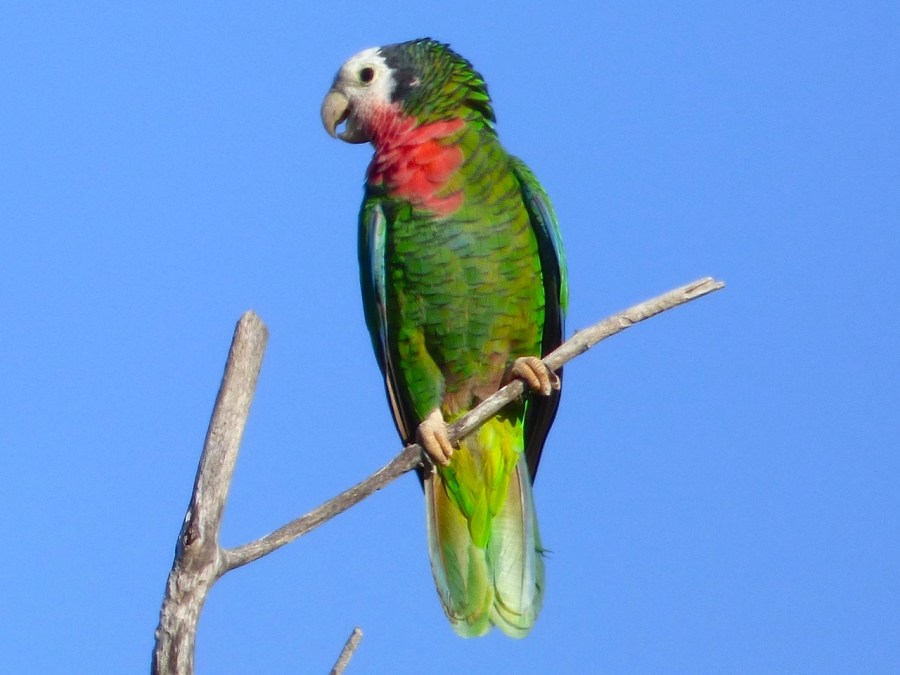
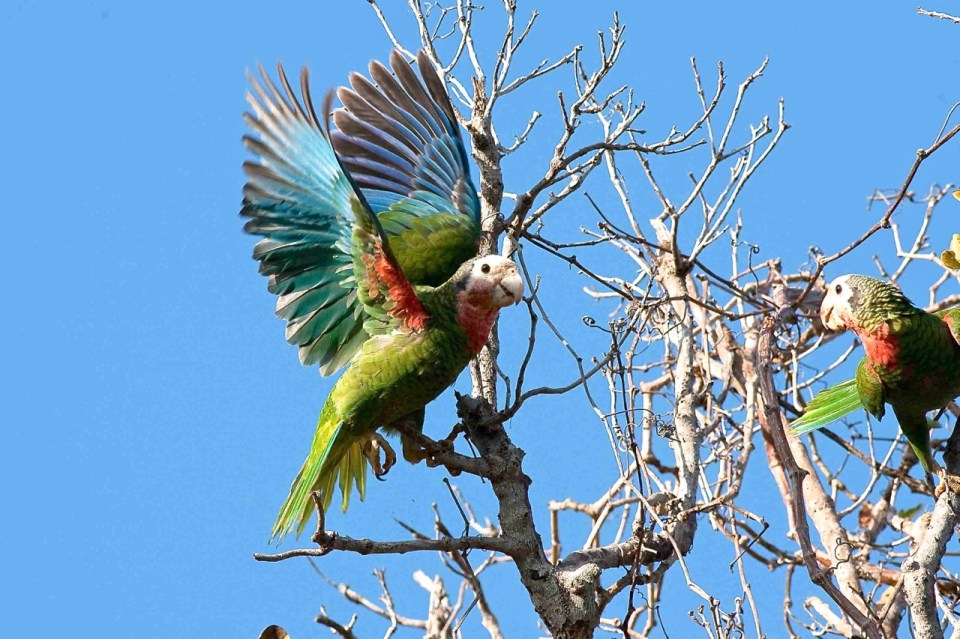
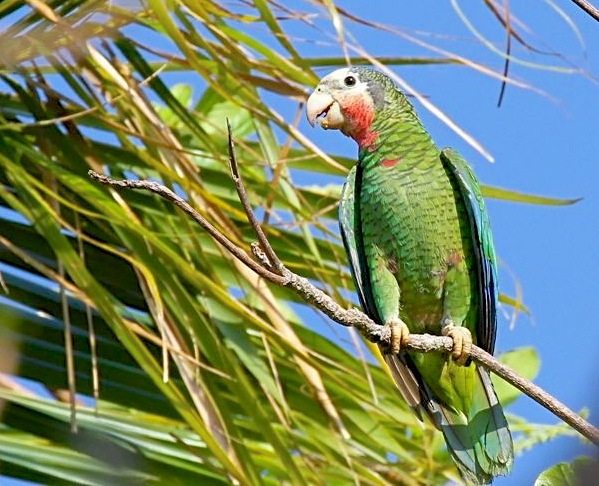
Painted buntings in the last post. And now some Abaco parrots. To adopt the joyous strangled yell of Noddy Holder (Slade, 1973, “Merry Christmas Everybody”)** “It’s….. CHRISTMASSSSSSS“. Abaco’s famous and unique ground-nesting parrots are about as seasonally festive as you could wish for. Bright, colourful, noisy and impossible to ignore. The run-up to Christmas is the perfect moment for a gallery of these fine birds that are making a very promising recovery from near-extinction thanks to intensive conservation measures over the last few years. There’s a caption competition at the end, too. Post your idea as a comment and there even may be something it it for the winner…
INTERMISSION
CAPTION COMPETITION
It’s Christmas. Season of Good Will. But what on earth is going on here…?
Credits: Melissa Maura (1, 2, 9), Peter Mantle (3), Keith Salvesen / RH (4, 8), Craig Nash (5), Bruce Hallett (6), Tom Sheley (7); Audio recorded by RH & Mrs RH at Bahamas Palm Shores
Writing a bird book involves defining parameters at an early stage. Best to avoid working them out 6 months into the project; or (worse) letting them evolve gradually as each obstacle along the stony track to the printers is encountered. Far better to decide the general rules of engagement at the outset, and be able to tweak them later if need be.
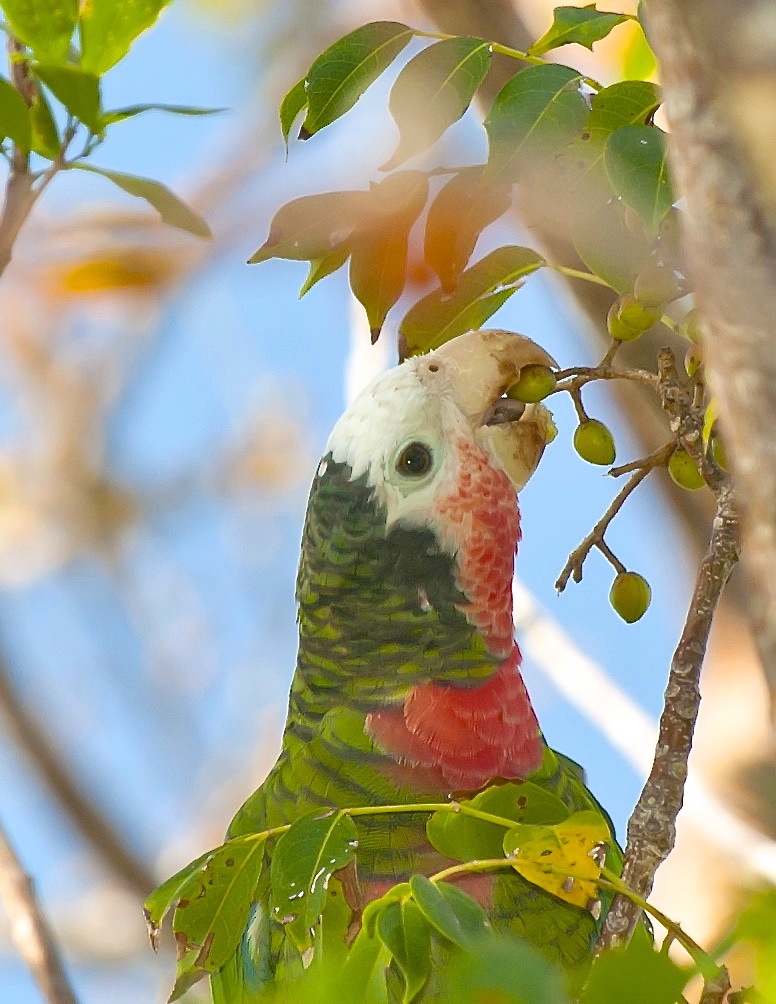
Brown Booby on its nest, San Salvador
And so it was that we stayed for a convivial weekend with Peter and Jane Mantle to discuss the pros and the cons, the whys and the wherefores, the format and the style of a book to showcase the birds of Abaco. And how on earth to get started on the project…
Pied Imperial Pigeon, Nassau
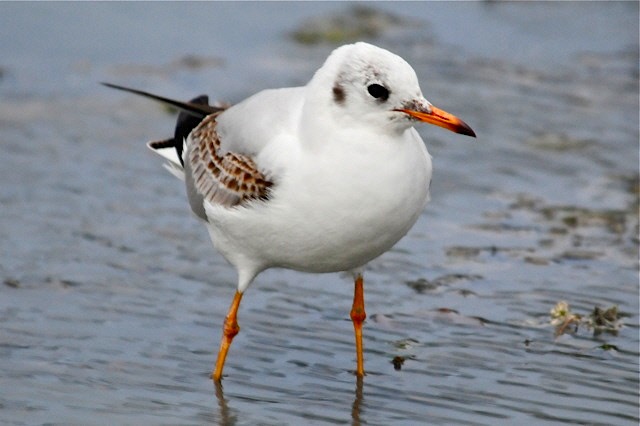
Black-headed Gull (immature), New Providence
One thing was clear at the outset. It was essential that every photograph in the book would have to be taken on Abaco. It wasn’t to be ‘The Birds of Abaco including Birds from Grand Bahama, New Providence, Eleuthera and Inagua that You Might also Find on Abaco’. Or ‘The Birds of Abaco, Mostly’. And there was to be no cheating.
Burrowing owl, Great Inagua
The project involved the work of some 30 photographers in all, from the prolific to a couple of people who offered a single excellent photo. I amassed a large archive, though only a percentage could be used. For example many fine photos fell by the wayside because resolution was inadequate for high-quality print purposes.
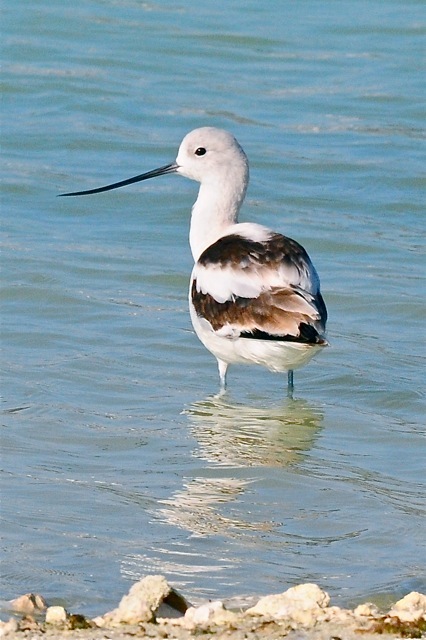
American Avocet, Nassau
I also collected plenty of folders containing images of birds we desperately wanted to include, that were not all taken on Abaco but were part of a wider field trip. These were ruthlessly (but painfully) excluded from consideration. In fact, to stick within the (self-imposed) guidelines, I set aside all photos that I was not certain had been taken on Abaco. Where there was doubt, they were out.
Key West Quail-Dove, Nassau
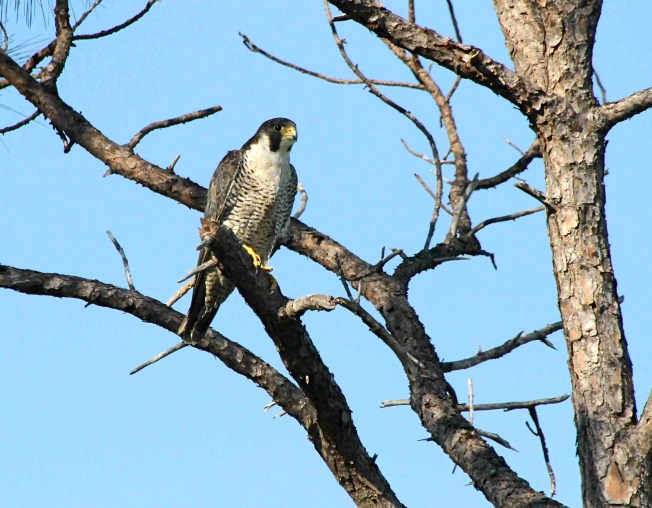
This post contains a selection of photos from the Aviary des Refusés. We would have loved to have included the peregrine falcon and burrowing owl, for example, but had no Abaco images to use then. Other bird species were in any event disqualified for being unknown on Abaco. A Pearly-eyed Thrasher recently found its way to Treasure Cay, this first recorded for Abaco; yet could be found elsewhere in the Bahamas two years ago.
Peregrine Falcon, New Providence
Pearly-eyed Thrasher, San Salvador
Horned Lark, Nassau
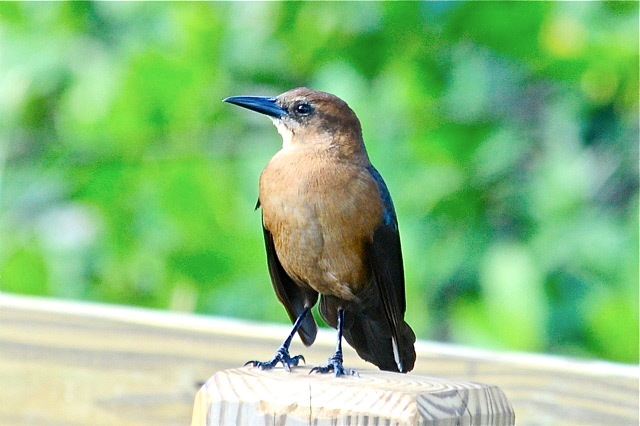
Boat-tailed Grackle (f), Nassau
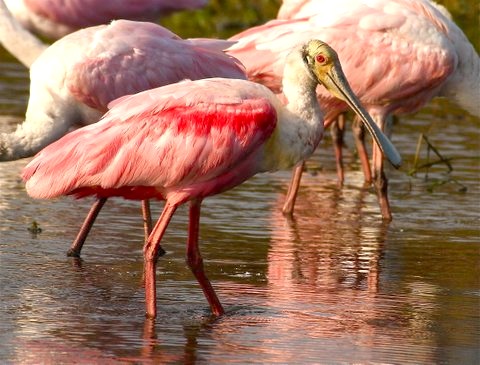
Roseate Spoonbill, Great Inagua
Cuban Grassquit, Nassau
Brown-headed Nuthatch, Grand Bahama
American Avocet, San Salvador
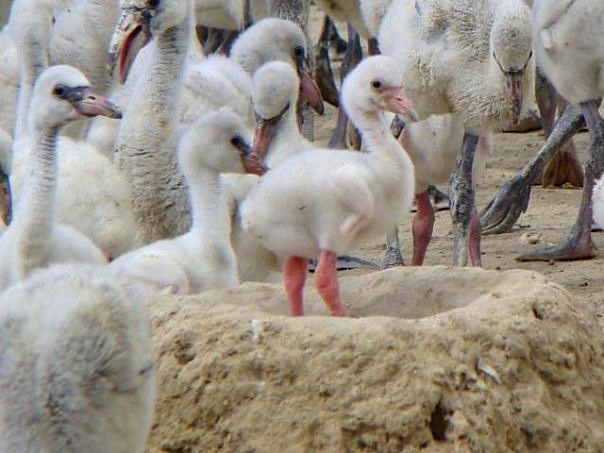
Flamingo Chicks, Inagua
Credits: Woody Bracey for taking / supplying a most of these great images, with Tony Hepburn, Bruce Hallett, Melissa Maura (the wonderful Flamingos) and all those involved in the joint field trips from which some of these photos originate. And Peter Mantle for having the idea for the book and for being wholeheartedly supportive through thick and thin…
A WILD-GOOSE CHASE: IN PURSUIT OF FOUR SPECIES ON ABACO
In normal parlance a ‘wild-goose chase’ is of course a futile search or a useless pursuit**. However, I bring you news of a successful chase after wild geese on Abaco – indeed the bagging of all four of the goose species recorded for Abaco. All are classed as winter residents, with rarity rated from ‘uncommon’ to ‘good grief, that’s a first’. So I present them in the order of relative excitingness…
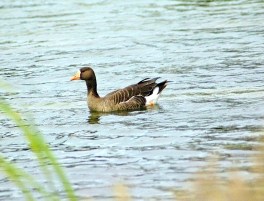
GREATER WHITE-FRONTED GOOSE
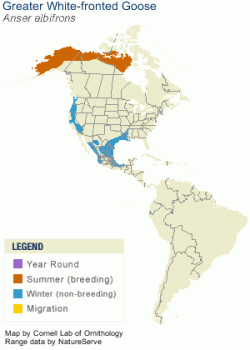
This fine bird caused a bit of a stir. Not only was it a first for Abaco, the species had never before been recorded in the Bahamas. In February 2012, the goose was found at the pond at hole #11 on the Treasure Cay golf course, presumably having been blown off its normal migration route. This range map shows just how far.
Erik Gauger managed to get the close shot above; Uli Nowlan got a few from further away, including a swimming view. I know of no other photographers of the bird (though Woody Bracey published a report about it). If there are any, I’d be pleased to hear about their photos – indeed to add them!
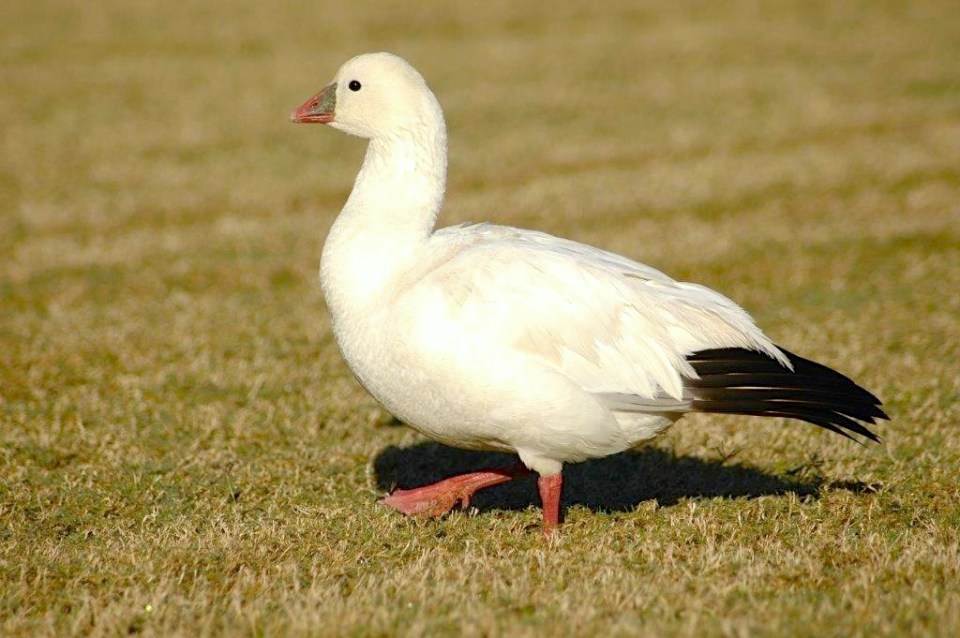
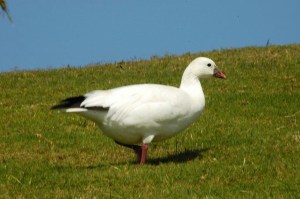
ROSS’S GOOSE
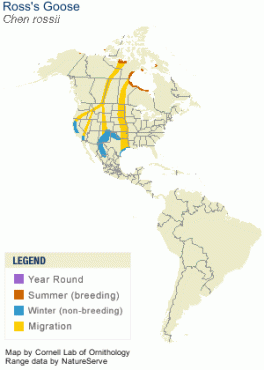
Equally rare on Abaco is the Ross’s Goose. Far to the east of its normal migration route, one found its way to the Goose Magnet of Treasure Cay. The range map shows the very clear routes this species chooses for its migration.
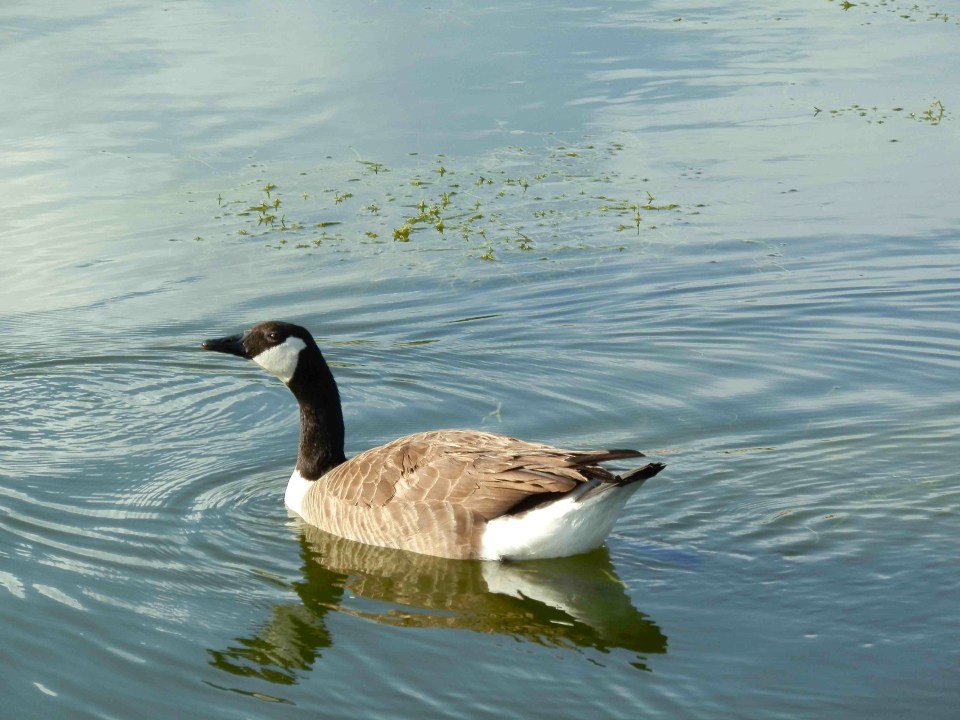
CANADA GOOSE
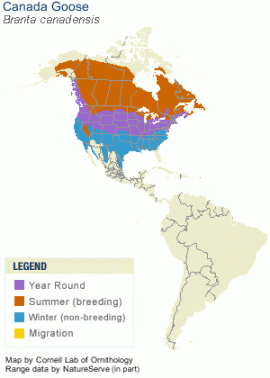
Another anserine visitor to Abaco – slightly more frequent than the two species above – is the Canada Goose. Again, Treasure Cay golf course exerted its powerful pull to drag this one from its usual route, where it happily took up residence. As you can see from the range map below, these geese have a widespread habitat and spend at least some of the year not that far from northern Bahamas, so it is less surprising that they turn up on Abaco from time to time.
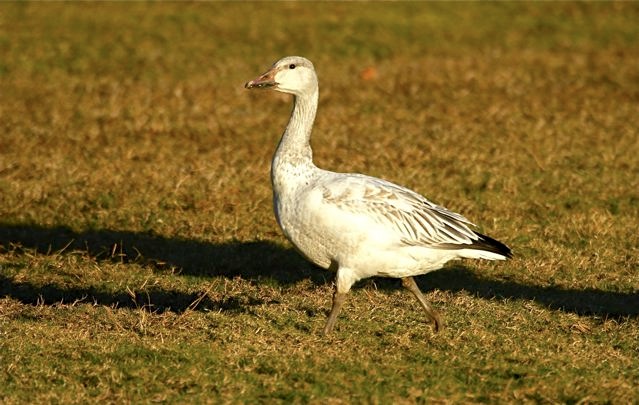
SNOW GOOSE
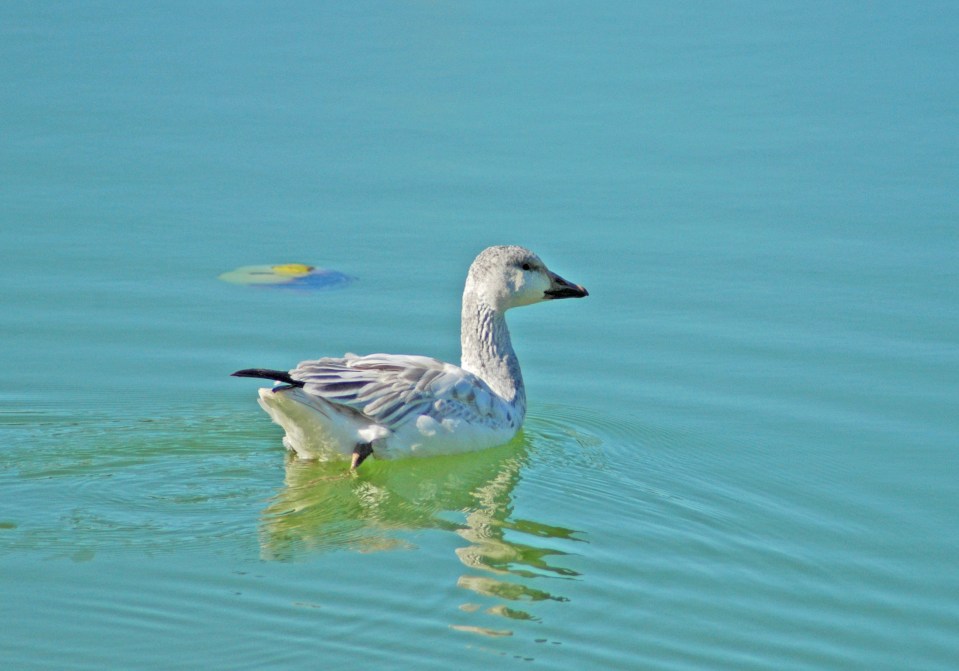
Although a relatively unusual winter visitor to Abaco, and a good ‘get’ for any birder’s checklist, I was surprised to find that the snow goose is classed as more common than the Canada goose. Its usual habitat is further away; and its summer breeding territory is very far north. Again, when a snow goose drifts eastwards, Treasure Cay is its spiritual home…
Why geese are not found elsewhere on Abaco other than Treasure Cay is a mystery. The TC golf course water is presumably fresh, whereas other locations – Gilpin Pond on South Abaco for example, or the neglected ponds of the defunct ‘Different of Abaco’ – are distinctly brackish. Perhaps that makes all the difference.
Abaco’s Four Geese Species
**WILD-GOOSE CHASE The etymology of the phrase is medieval, referring to a horse race in which pursuers try to follow an erratic ‘wild goose’ leader. Shakespeare used the term in Romeo and Juliet, with Mercutio saying “Nay, if our wits run the wild-goose chase, I am done; for thou hast more of the wild goose in one of thy wits than, I am sure, I have in my whole five.” Which was quite a good, if cumbersome, insult.
Credits: Photos – Peter Mantle, Erik Gauger, Uli Nowlan, Kasia Reid, Bruce Hallett, Tony Hepburn; Range maps – Cornell Lab for Ornithology
A new season – the seventh – of the Delphi Club is now underway. There are fish to be caught, poolside inactivities to relish, chef-prepared meals to eat and a capacious wine cellar to be explored. To which, add birds to be spotted. Delphi has turned out to be a superb place for birding – not a feature given prominence in the original prospectus… The Club’s remoteness and its rich mix of pine forest, coppice, gardens and a pristine one-mile beach ensure the prefect protected habitat for a vast number of bird species common, uncommon and rare.
Eighteen months ago, “The Delphi Club Guide to THE BIRDS OF ABACO“was published. The originator of the idea – as with the entire Delphi project – was of course Peter Mantle, the publisher. The book took 16 months from conception to the arrival of three pallets of printed books on the dockside in Marsh Harbour, having travelled by a tortuous route from specialist printers in Italy.
The book was launched at the Delphi Club in March 2014, to generous enthusiasm and support both on Abaco and beyond. 75% of the edition has been sold already. In addition, Abaco schools, libraries and wildlife organisations have been given copies for educational purposes. A percentage of profits is to be given to local wildlife causes. We couldn’t be more pleased with the response to this lavish book, a unique publication in the Bahamas.
The incremental growth of social media is rapid. Blogs gain readers. Facebook and Twitter pages gain new friends and followers. The start of this new Delphi season is therefore a good moment to post a reminder about the book, illustrated with a few of the wonderful bird species featured. And… ahem… there are only 57 more ‘sleeps’ until Christmas.
The Guide showcases the rich and varied bird life of Abaco, Bahamas and features both resident and migratory species including rarities and unusual sightings. The main features are as follows:
272 pages with more than 350 photographs
163 species shown in vivid colour – nearly two-thirds of all the bird species ever recorded for Abaco
Every single photograph was taken on Abaco or in Abaco waters
All birds are shown in their natural surroundings – no feeders or trails of seed were used
Several birds featured are the first ones ever recorded for Abaco or even for the entire Bahamas
A total of 30 photographers, both experienced and amateur, contributed to the project
The book has had the generous support of many well-known names of Abaco and Bahamas birding
A complete checklist of every bird recorded for Abaco since 1950 up to the date of publication was compiled specially for the book.
A neat code was devised to show at a glance when you may see a particular bird, and the likelihood of doing so. Birds found at Delphi are also marked.
Specially commissioned cartographer’s Map of Abaco showing places named in the book
Informative captions intentionally depart from the standard field guide approach…
…as does the listing of the birds in alphabetical rather than scientific order
Say goodbye to ’37 warbler species on consecutive pages’ misery
Say hello to astonishing and unexpected juxtapositions of species
The book was printed in Florence, Italy by specialist printers on Grade-1 quality paper
Printing took pairs of printers working in 6 hour shifts 33 hours over 3 days to complete
The project manager and the author personally oversaw the printing
The book is dedicated to the wildlife organisations of Abaco
A percentage of the proceeds of sale will be donated for the support of local wildlife organisations
A copy of the book has been presented to every school and library on Abaco
The book is published by the Delphi Club (contact details below). The project was managed by a publishing specialist in art books. The author is the wildlife blogger more widely known on Abaco and (possibly) beyond as ‘Rolling Harbour’. Oh! So that would in fact be Mrs Harbour and myself. Well well! What are the chances?
The Delphi Club at Rolling Harbour
PO Box AB-20006, Marsh Harbour, Abaco, Bahamas
Tel: +1-242-366-2222
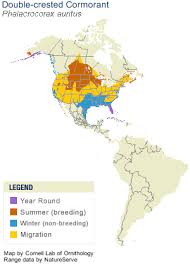
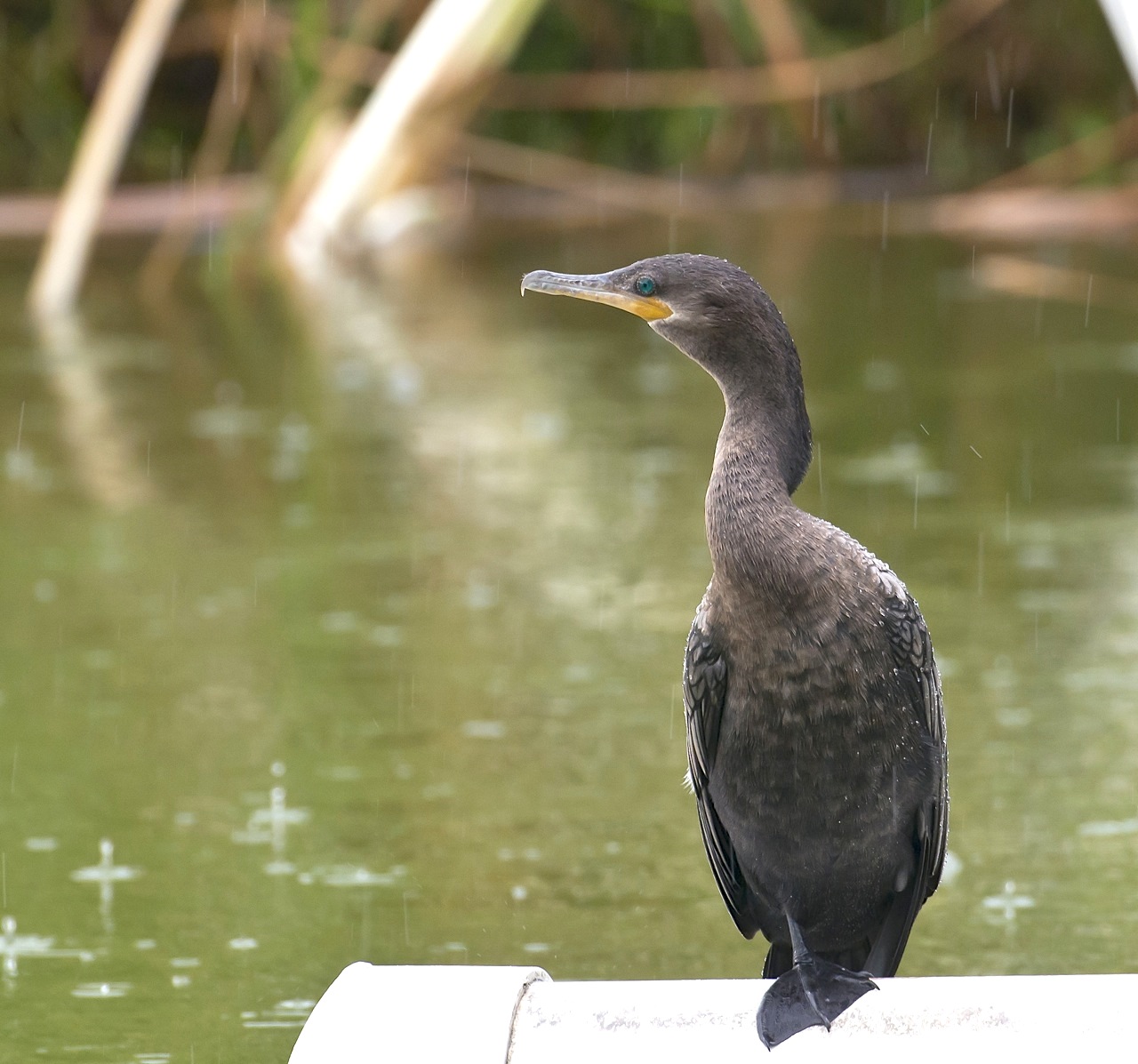
Neotropic or Olivaceous Cormorants Phalacrocorax brasilianus. Smaller cousins of the familiar double-crested cormorant, and occupying a quite different range. In the northern Bahamas they are considered to be uncommon summer residents whereas the big guys are common year-round residents. However the neotropics’ range has spread in the last decade and they may become more noticeable on Abaco. Right now, Abaco is pretty much the northern boundary.
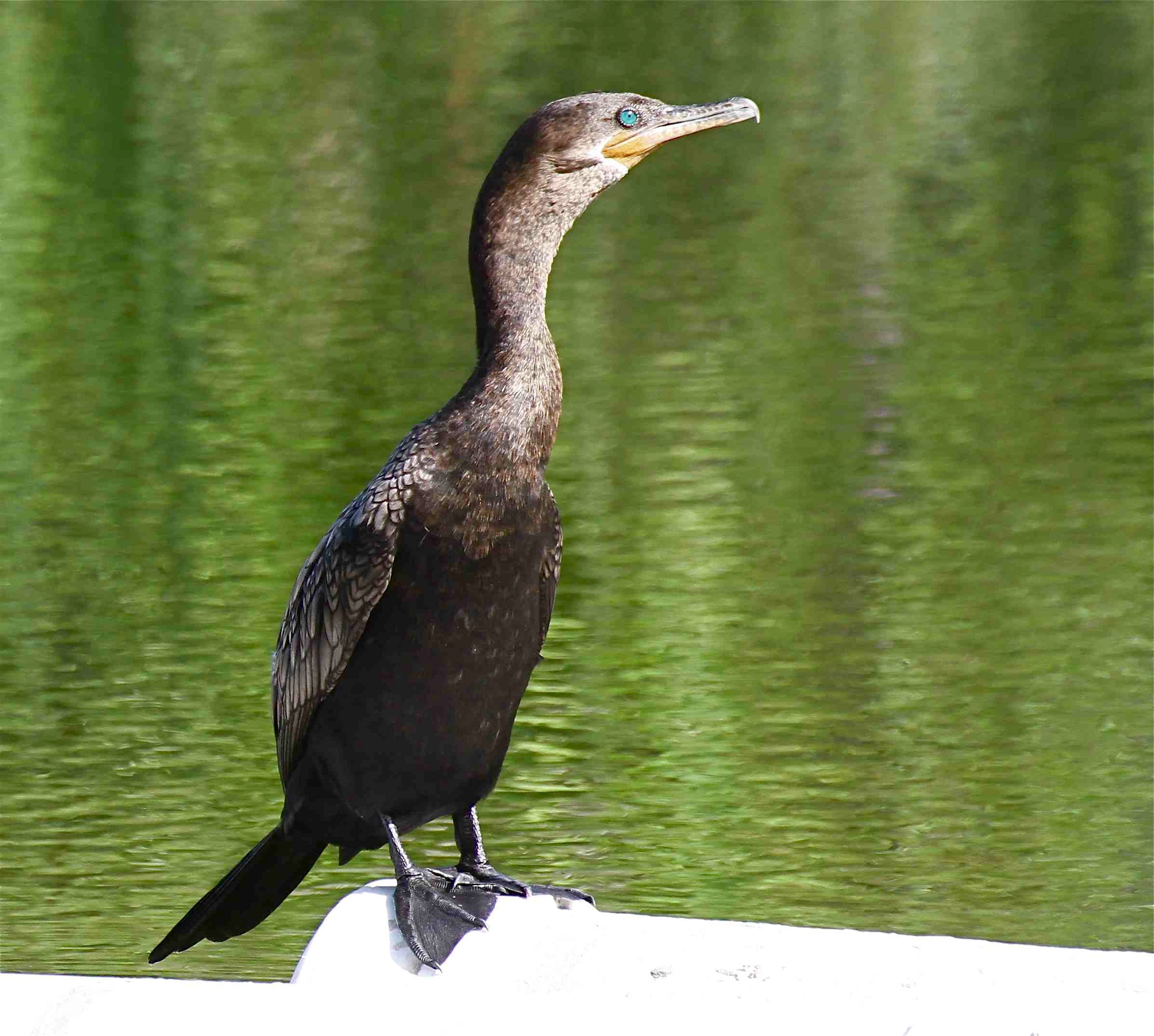
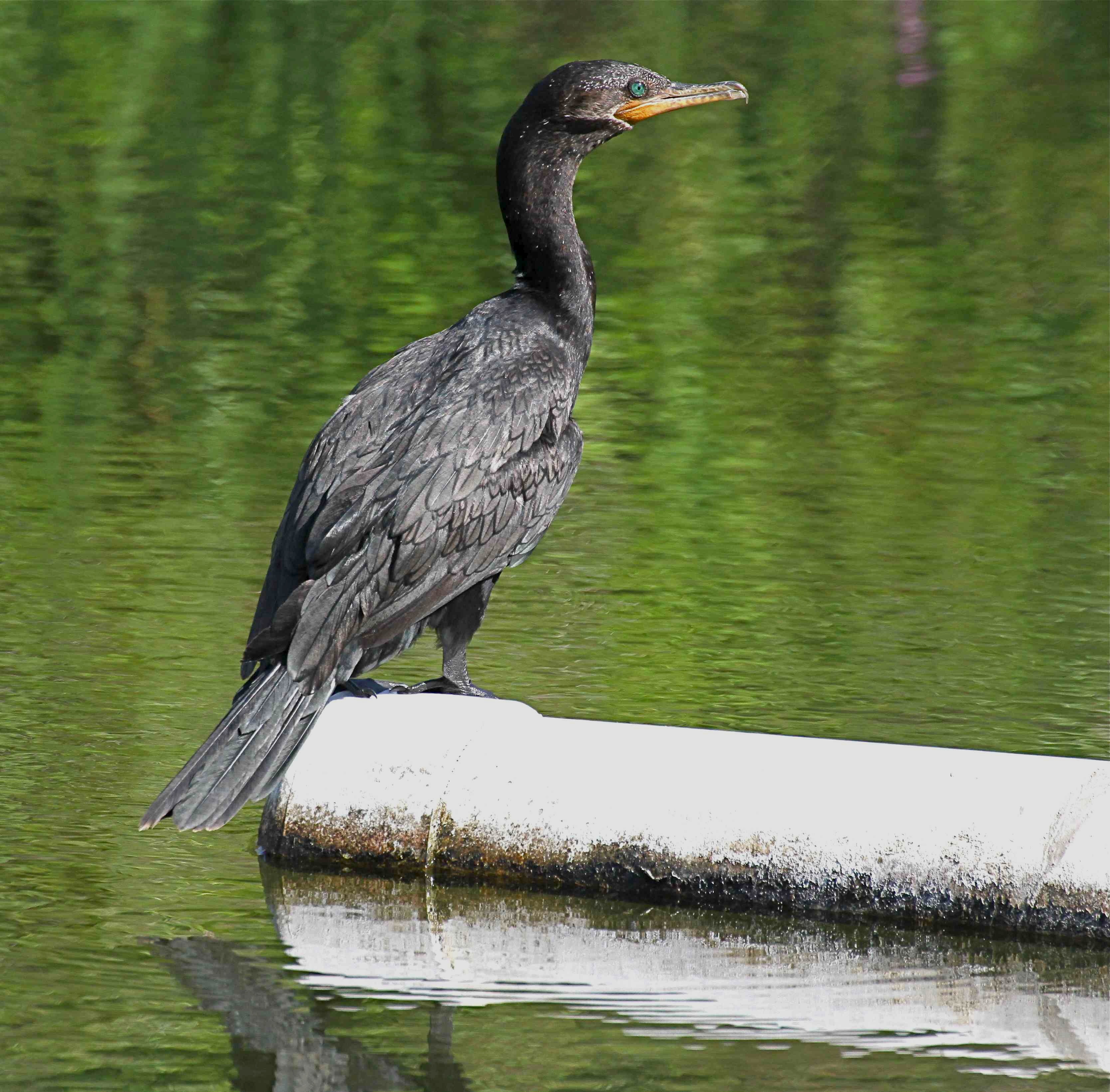
In many ways, cormorants are taken rather for granted – ubiquitous black guardians of the coastal margins. But seen close-to, they have their glamour. This is especially true of the slimmer neotropics, with precious jewels for eyes and intricate plumage patterns that a mere fly-past cannot reveal.
Male and female neotropic cormorants: a caption contest in the making…
Besides being smaller and lighter than the double-cresteds, these cormorants have longer tails. They are mainly fish-eaters both at sea, and inshore where ponds are to be found. They make brief dives to find food; in groups they may combine to beat the water with their wings to drive fish into the shallows where they can be picked off more easily.
Neotropic cormorants are monogamous and breed in colonies. They build a platform of sticks a few metres above the ground or water in bushes or trees, where the eggs are laid. They produce one clutch (if that’s the right term for cormorants – maybe it’s just hens?) for the season. Here’s a fabulous photo of a double-crested cormorant nest, a similar structural arrangement, with 3 growing chicks. It was taken by JIM TODD, who uses a kayak to reach birds in less accessible places.
The eagle-eyed may have noticed that in some photos the birds seem to be standing on some kind of white pipe, as indeed they are. That is because a good bet for finding one in the summer is on the golf course pond in Treasure Cay, a most productive location for spotting water birds of many species. The pipes are to do with the watering arrangements. I think.
As I have written elsewhere, “Call in at the Clubhouse for permission first. And if you hear a loud yell of ‘Fore’, it’s not someone counting birds. It’s time to duck…”
Raining? What, me worry?
OPTIONAL MUSIC DIGRESSION
‘Emerald Eyes’ may ring a bell with some – and not just Eric Johnson followers either. It was the title of track #1 on the under-rated (largely ignored?) 1973 Fleetwood Mac album ‘Mystery for Me’, in many ways a turning point of a group already in rapid transition.This was their last UK-produced album, cut as the complications of a rich mixture of liquids, substances and other people’s spouses were becoming acute. Bob Welch managed to pen this rather nice song. You’ll need to turn up the volume a bit. Memory lane beckons…
Credits: Photos – Bruce Hallett, Tom Sheley, Jim Todd, Lycaon; Infographics – Allaboutbirds, Comingsbirds
In past posts I have mentioned what an excellent birding place Gilpin Point has become. There’s the large pond; and right beside it, dunes, the other side of which is a fine secluded beach and the ocean. The place is a magnet for birds of all shapes and sizes, from brown pelicans down to the tiny endemic Bahama woodstars. There are water birds, wading birds, shorebirds and coppice birds. It has become a place where Abaco parrots regularly congregate. You can reach the Gilpin FB page HERE.
A while back, there was a rare visitor, a Flamingo that stayed a few months then disappeared again. It was in some ways a sad reminder of past flamingo glory days, when they were commonly found on Abaco. Now they are confined to Inagua apart from the occasional vagrant. For more on the the topic, with wonderful photos by Melissa Maura of the breeding season on Inagua, click HERE. Another rare vagrant – formerly quite plentiful on Abaco – was recently found at Gilpin by Keith Kemp, who skilfully managed to get photos of it from some distance away: a Roseate Spoonbill.
I have featured spoonbills before in a post IN THE PINK, but the photos were taken on New Providence by Woody Bracey. I had no Abaco spoonbill photos. To be fair, we did once see one while we were bonefishing far out on the Marls. It was on the edge of the mangroves a good distance away, and the pale pink tinge caught my eye. My photo with an iPhone 4 (the one with the risibly cr@p camera – remember?) was so utterly pathetic that I dumped it (the photo, I mean, but the phone soon followed). But we knew what we had seen, and that was enough.
STOP PRESS 1I should add that a friended visited the pond after the side-effects of Hurricane Joaquin had receded, and the spoonbill had gone. So the spoonbill alone would not make the journey worthwhile!
STOP PRESS 2A check of eBird reveals that a handful of spoonbills have been reported in Northern Bahamas this year, about 6 in all. Almost none before that. I have the impression that birding intensity in The Bahamas, coupled with the ease of uploading reports to eBird, will increasingly make a difference to the incidence of sightings of uncommon and rare species, cf the recentWHIMBRELSof Grand Bahama.
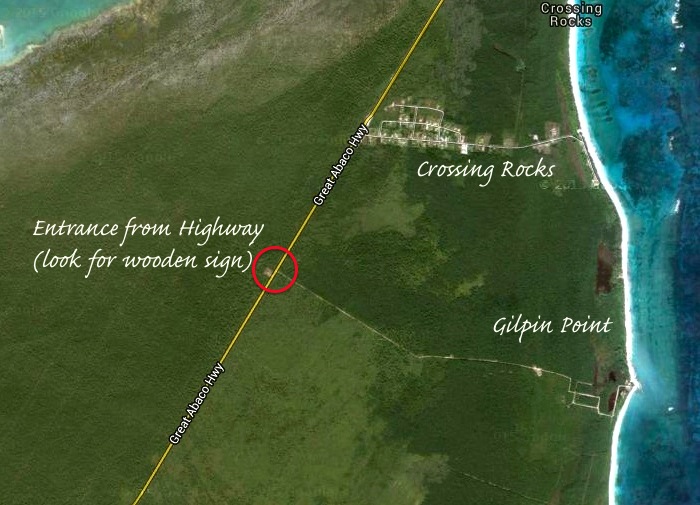
GILPIN POINT LOCATION
Gilpin Point is just south of Crossing Rocks. The brackish pond – sometimes an alarming reddish colour that I assume is algal – is just inland from the shoreline and provides a wonderful haven for birds. It’s a long mile from the highway. There is no vehicle nor even human traffic apart from occasional birders and walkers. Please note that the drive and the property are private. However Perry Maillis is always welcoming to tidy birders who (as I have written elsewhere) bring only enthusiasm and take only photographs (though a picnic on the beach is worth considering. And maybe a swim…).
Helpful location maps
WHAT SPECIES MIGHT BE FOUND AT GILPIN?
A brief list includes regular visits from parrots. It’s the only place we have found a furtive little sora skulking in the reedy margins. It’s a reliable spot for herons and egrets of every kind, white-cheeked (Bahama) pintails by the score, black-necked stilts and lesser yellowlegs. Occasionally a northern pintail, ruddy duck or merganser. Turkey vultures. Limpkins. We’ve seen belted kingfishers, Bahama woodstars, cuban emeralds, american kestrels, Bahama swallows, doves, pigeons, western spindalis and many more coppice birds besides. One flamingo. One spoonbill. Pelicans have been seen on the rocks on the beach. Shorebirds include turnstones, sundry plovers & sandpipers, and oystercatchers. You may well see tropicbirds and frigate birds off-shore, and assorted gulls and terns. I can’t personally be more species-specific because I have never ‘shorebirded’ properly there, but I have noticed an impressive mix…
When we launched THE BIRDS OF ABACO at the Delphi Club, we were delighted that Pericles was able to come to the party. He took a few photos and I’m sure he won’t mind my including a small gallery to end with, featuring a couple of the Gilpin entries in his signed copy.
Bahamas birding nobility: Tony White with Caroline Stahala; Woody Bracey & Bruce Hallett
Credits: Keith Kemp for the great spoonbill photos; Perry for the Delphi photos
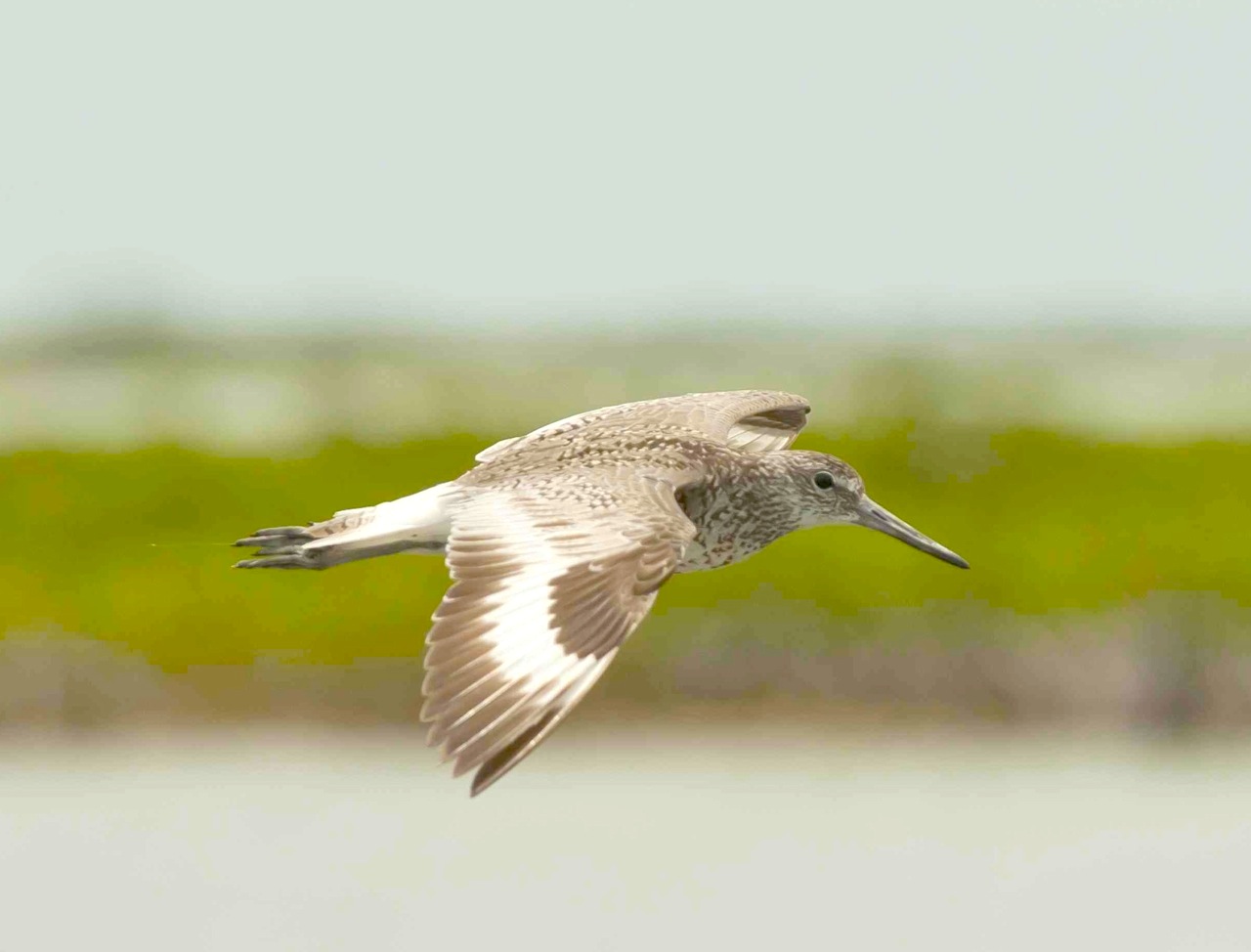
Abaco is home to 33 shorebird species. For a few, the islands are a permanent residence; for many others they are winter quarters; and some species are visitors transient in their migrations, or rare vagrants. Last year I produced 3 posts with plenty of photos showcasing 26 of the species, the remaining 7 all being transients or vagrants.
I divided the species into 3 categories: sandpipers & kin; plovers; and a catch-all ‘large shorebird’ group that included one or two sandpipers. Of the 26 birds featured and shown in the main checklist below, 23 are ones you might reasonably hope or expect to encounter on Abaco, though some only if you are lucky or your field-craft is excellent. The others are the long-billed dowitcher, American avocet and Wilson’s phalarope (of which only one has ever been seen on Abaco, with a photo to prove it)
The codes tell you, for any particular bird, when you may see it (P = permanent, WR = winter resident, TR = transient, V = vagrant); whether it breeds (B) on Abaco; and your chance of seeing it, graded from easy (1) to vanishingly unlikely (5).
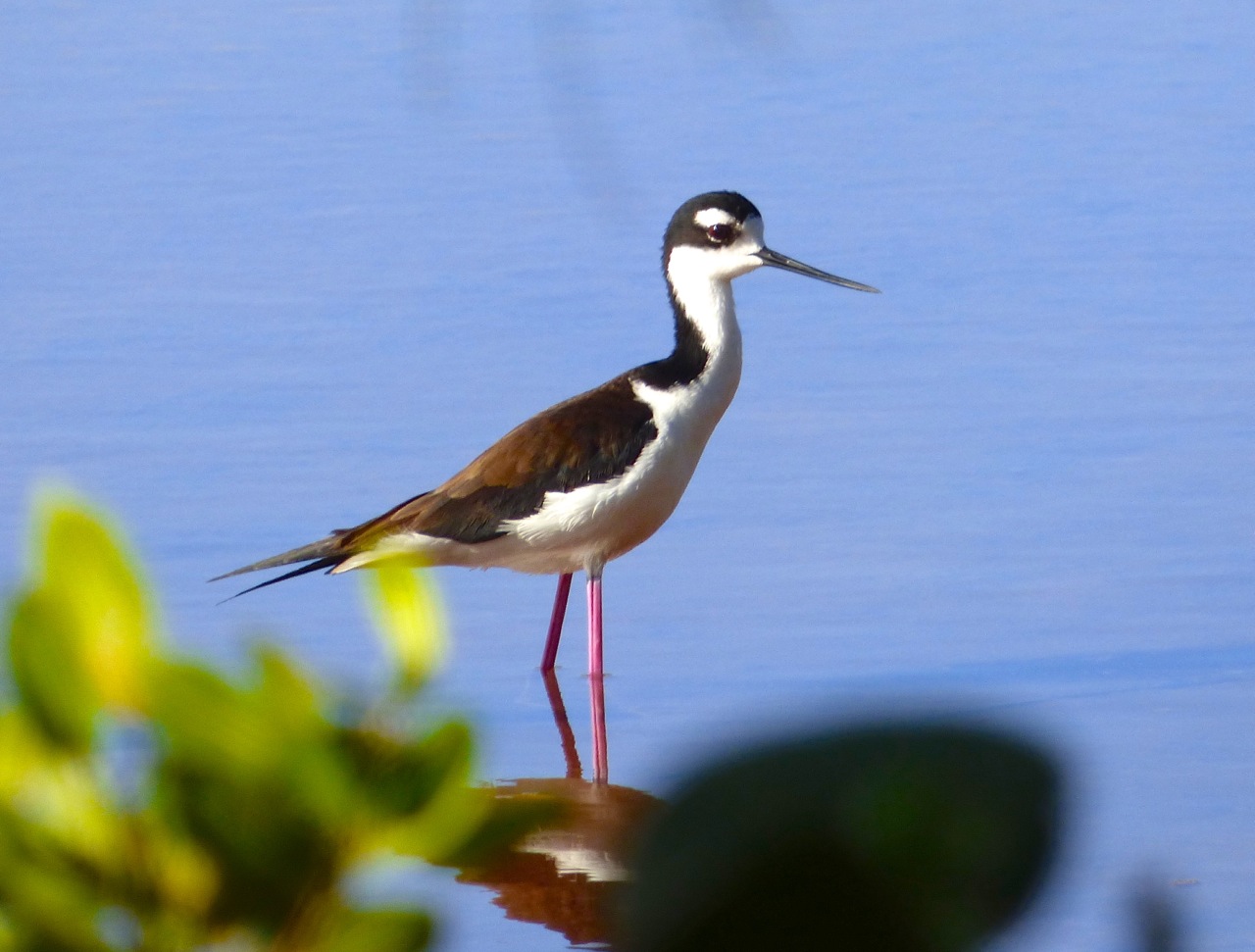
Black-necked Stilt Himantopus mexicanus PR B 3
American Avocet Recurvirostra americana WR 4
American Oystercatcher Haematopus palliatus PR B 2
Majestic. Soaring. Graceful. Revolting. That’s the Turkey Vulture. It’s quite a while since I posted about them: you can read all about them and their disgusting habits in the post CARRION SCAVENGING. You’ll discover 10 essential facts, their unpleasant little ways with urine and puke, the sound they make, some sex-tips and a Metallica video.
Are you unaware of vultures? Well, today is their day. These dedicated bird days come thick and fast at certain times of year. Tomorrow we celebrate World Shorebirds Day, so I’m giving the vultures their time in the sun today. On Abaco you could hardly fail to be aware of the ubiquitous TVs, and I have chosen a selection of photos, all taken on Abaco, to make a gallery for their day.
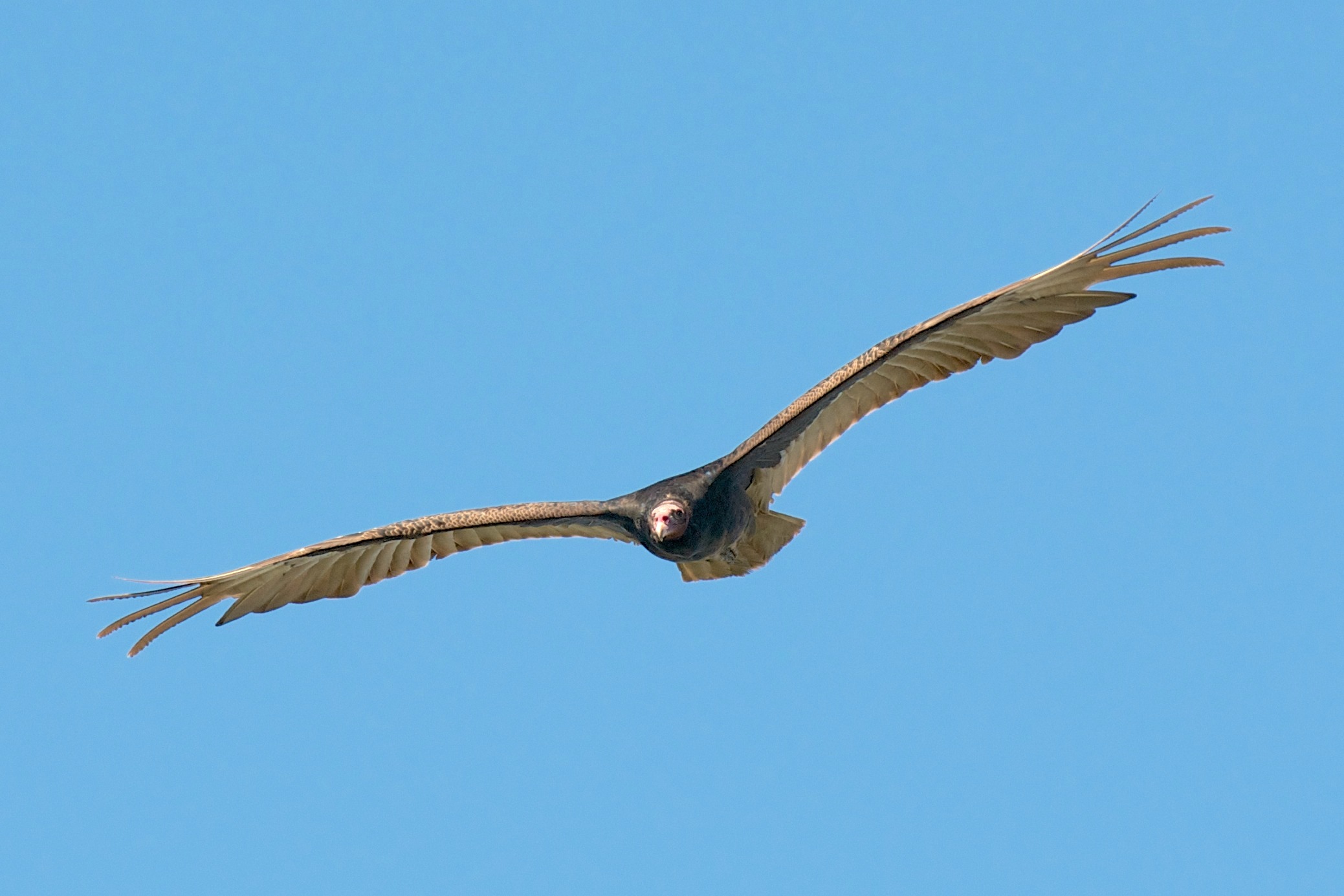
Let’s start with some of the more glamourous ‘in-flight’ shots. This is when TVs look their best, as they wheel round floating and swooping on the thermals – singly, in pairs or in flocks.
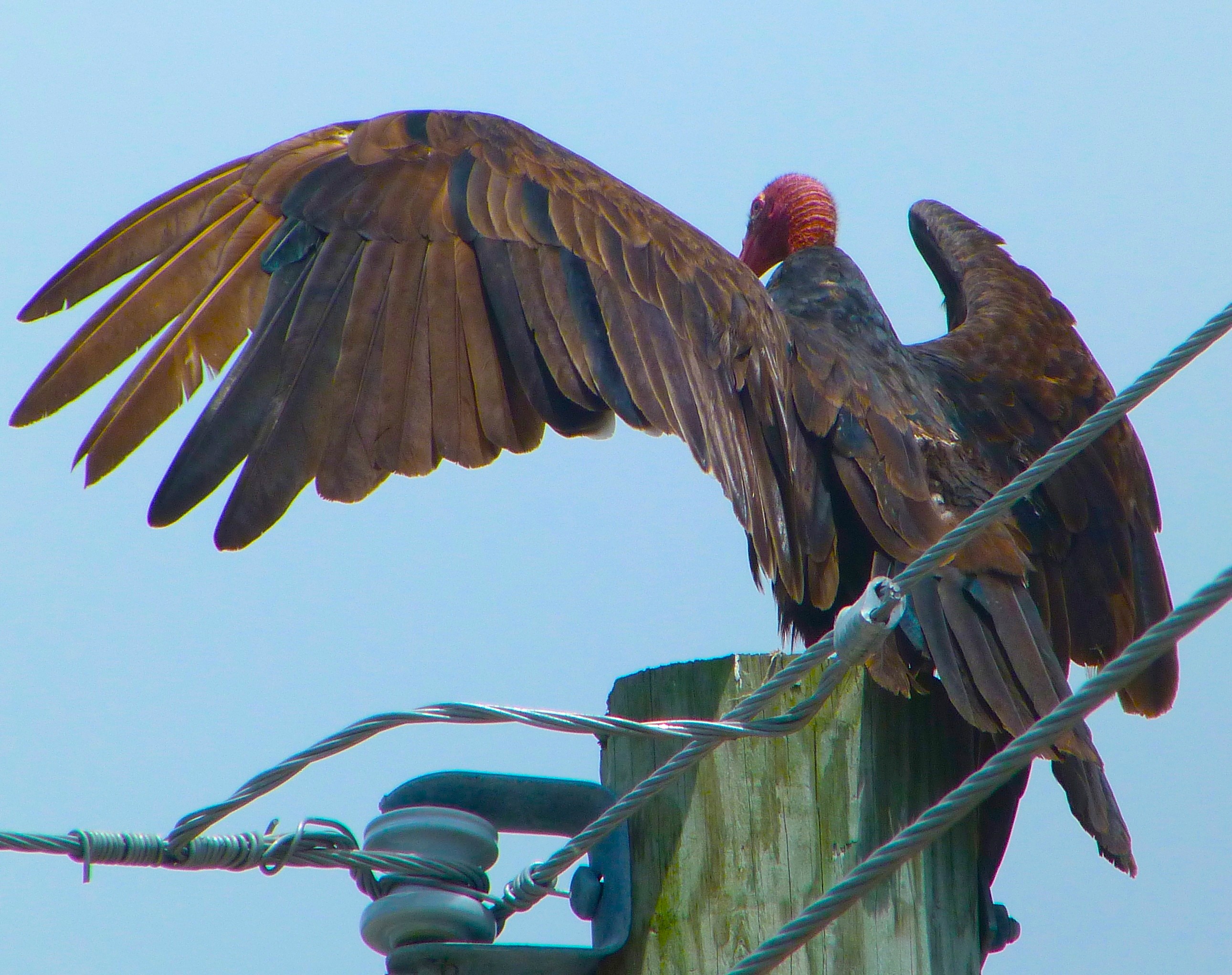
At closer quarters TVs are till impressive, though arguably less attractive… TVs often use utility wires (header image) or posts to perch on, scope out the territory, or simply to dry their wings
TVs will never be truly adorable. The final image (by Irish photographer Craig Nash) is truly ‘warts and all’… Ah, but look at the sweet little hairs on its head!
Talking of adorable, this is the perfect place for a shout-out for the wonderfulBIRDORABLEsite. For this special day they have put all their vultures together in one helpful chart. They have a load of fun at Birdorable HQ. You can download birds for children to colour in. Or even get a T-shirt with your favourite bird on it (mine’s a PIPL).
Credits: Craig Nash (1, 7); Nina Henry (2, 3); Bruce Hallett (4); Charlie Skinner (5); Keith Salvesen (6); the incomparable Birdorable
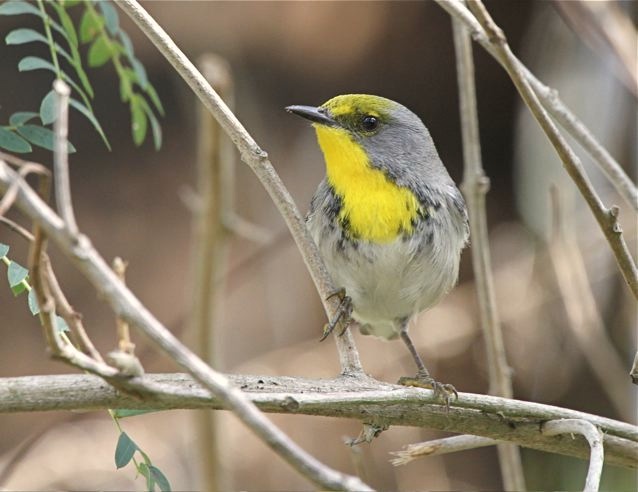
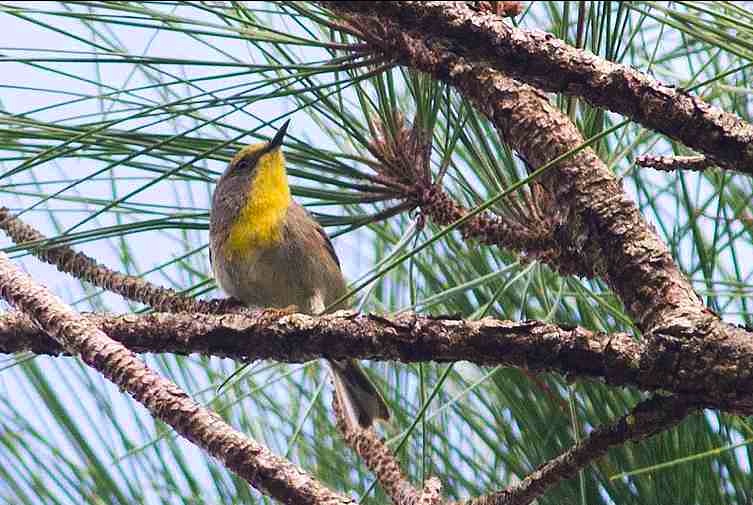
Abaco has a recorded 37 warbler species. Of these, most are winter residents and some are rarer migratory transients. Only 5 are permanently resident on Abaco: the Bahama Warbler, Bahama Yellowthroat, Olive-capped Warbler, Pine Warbler and Yellow Warbler. You can read about all 5 HERE
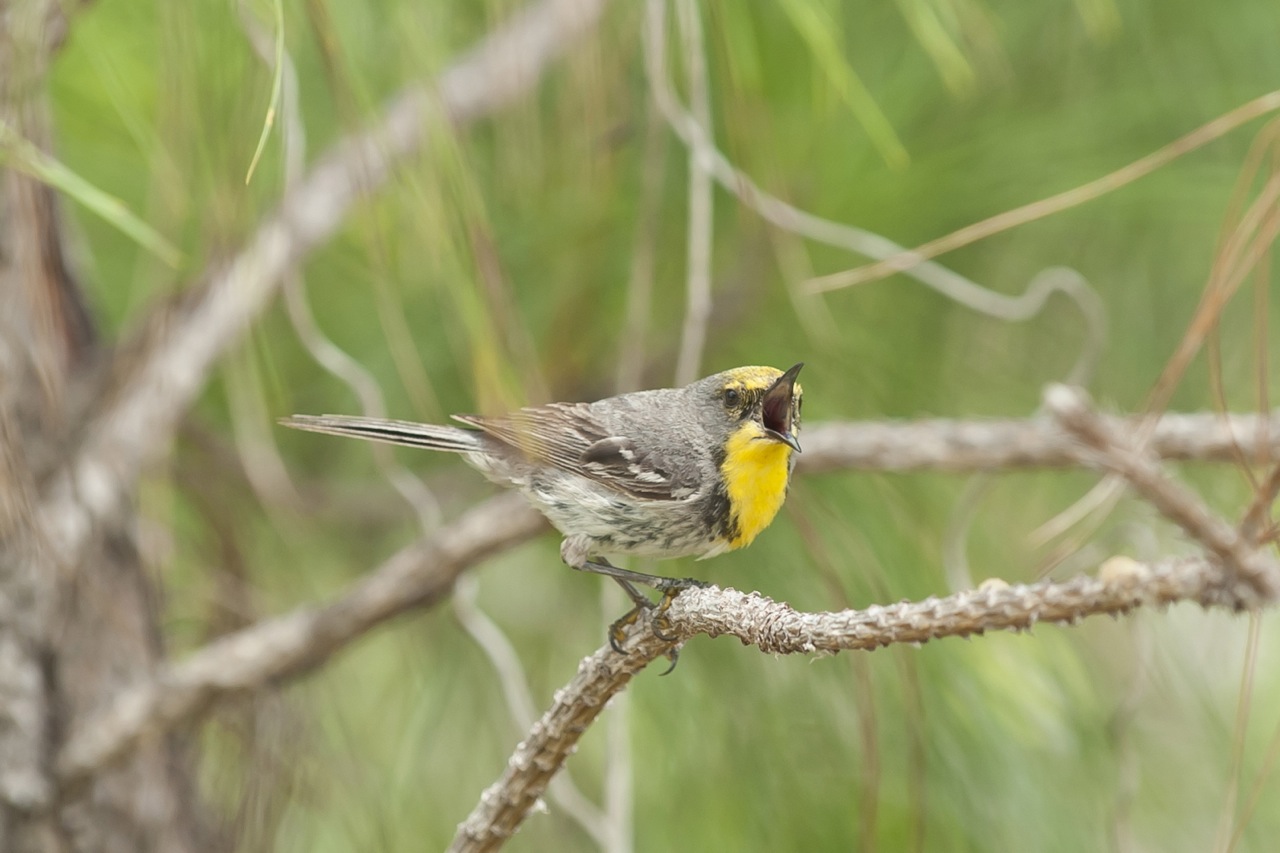
I realise that I haven’t posted about OCWs in their own right; and that as a species they have been unfairly lumped in (by me) with more general warbler posts. Time to put that right by showing some exclusively OCW photos.
OCWs have an unusually restricted range, despite which they remain IUCN-listed ‘Least Concern’. These pretty birds are native only to the western and eastern ends of Cuba, Grand Bahama, and Abaco. Their natural habitat is pine forests and to a lesser extent in mixed forest and coppice areas.
If you are lucky enough to see an OCW on Abaco, it’s worth thinking about the rich and unspoilt habitat that ensures its survival there. These little birds, along with other important bird species, enjoy a safe haven in the vast acres of pine forest.
Photo credits: Bruce Hallett (1, 2, 3, 6); Tom Sheley (4, 5); Tom Reed (7)







































































 ROLLING HARBOUR ABACO
You must be logged in to post a comment.