Unknown's avatar

“ONE IS CALLED LUCY…”: SWIMMING WITH BAHAMAS SHARKS


Shark, Blacktip ©Melinda Riger @ G B Scuba copy 2

“ONE IS CALLED LUCY…”: SWIMMING WITH SHARKS

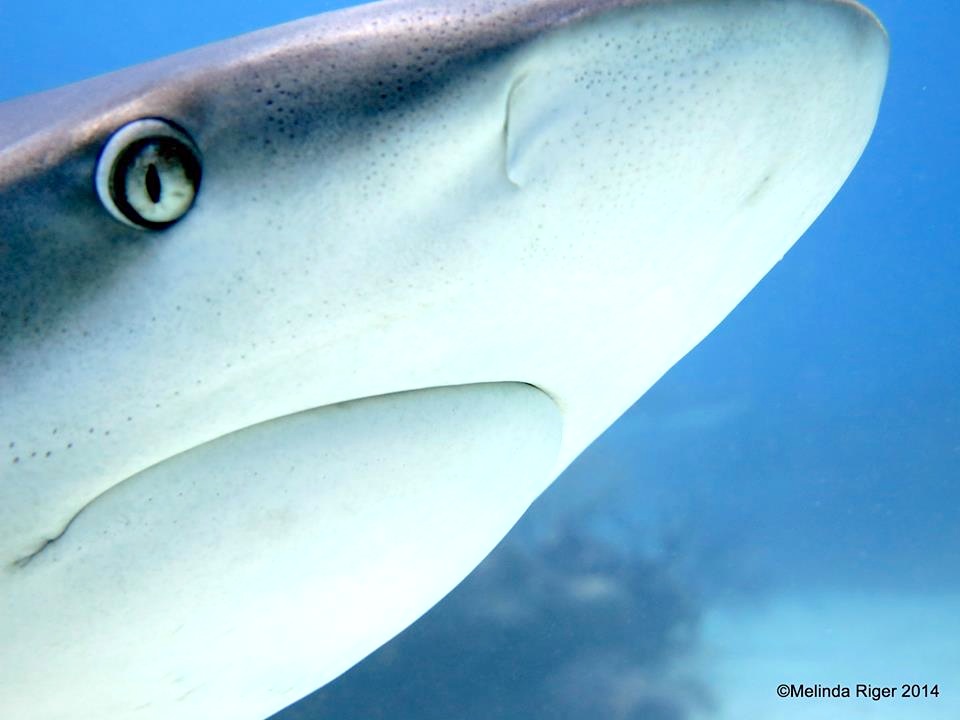
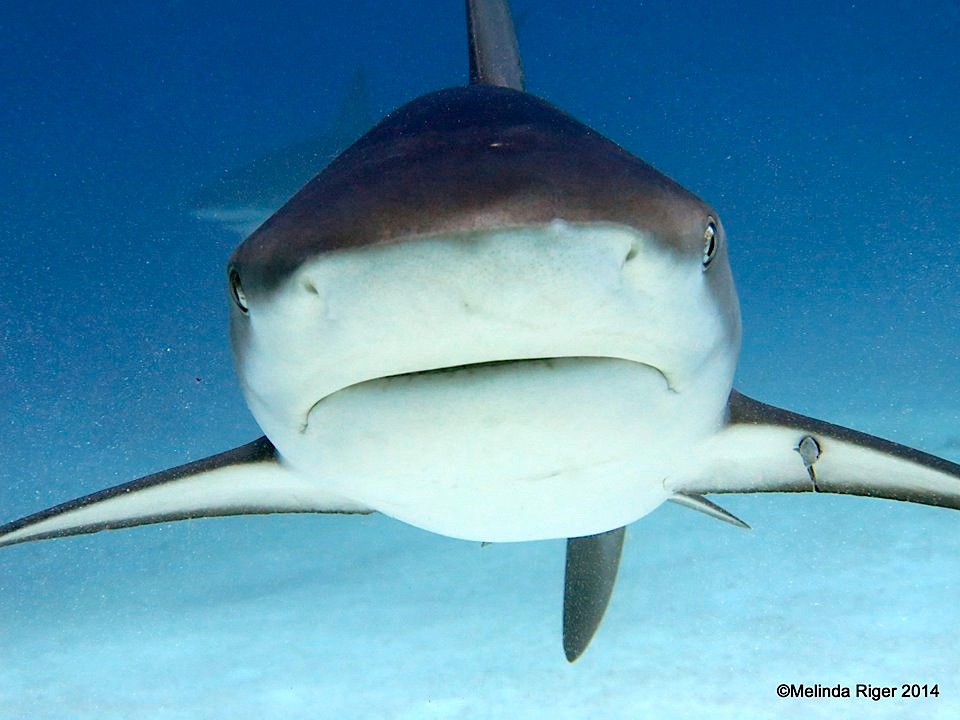
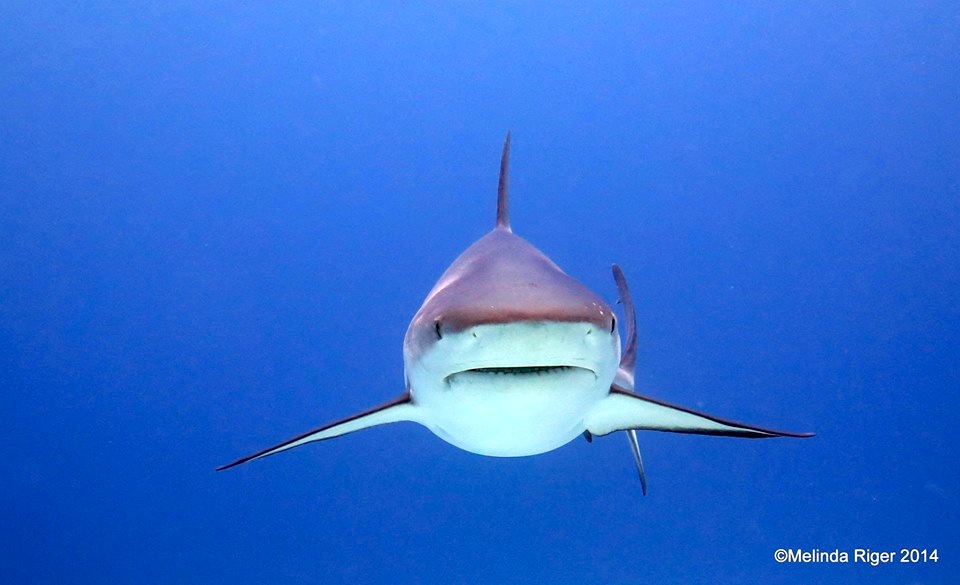
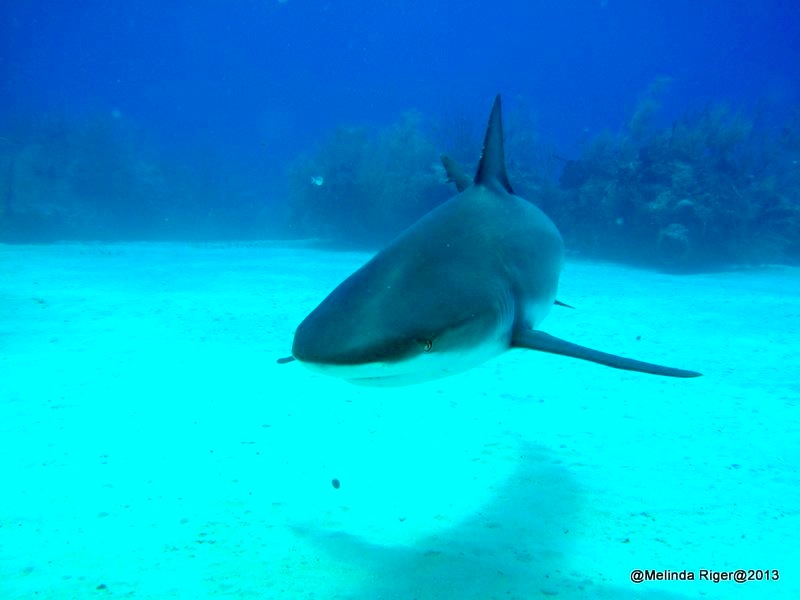
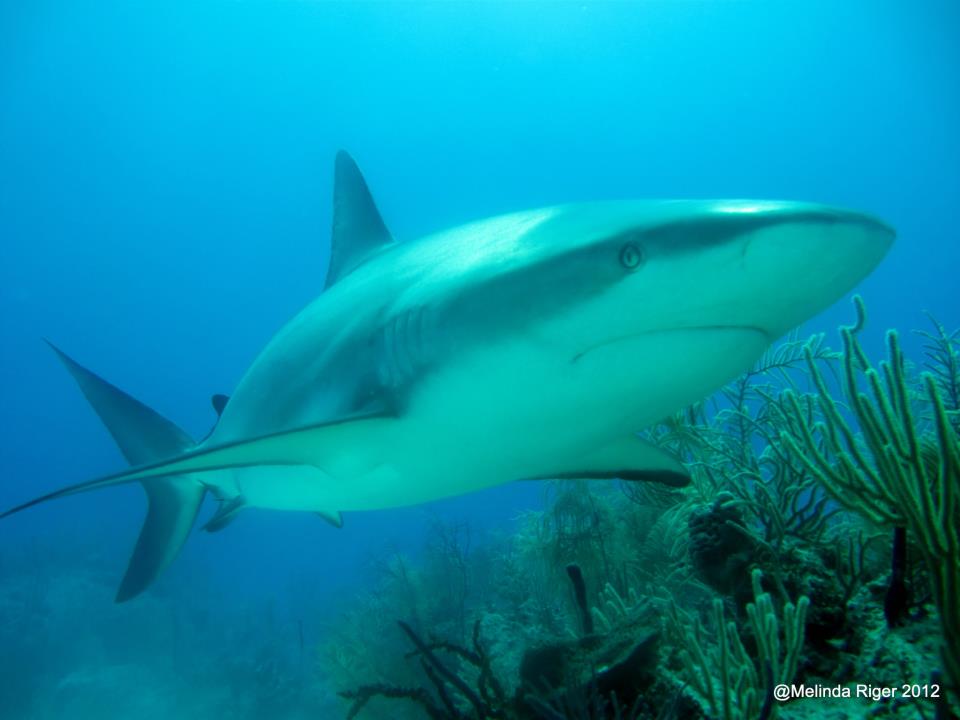
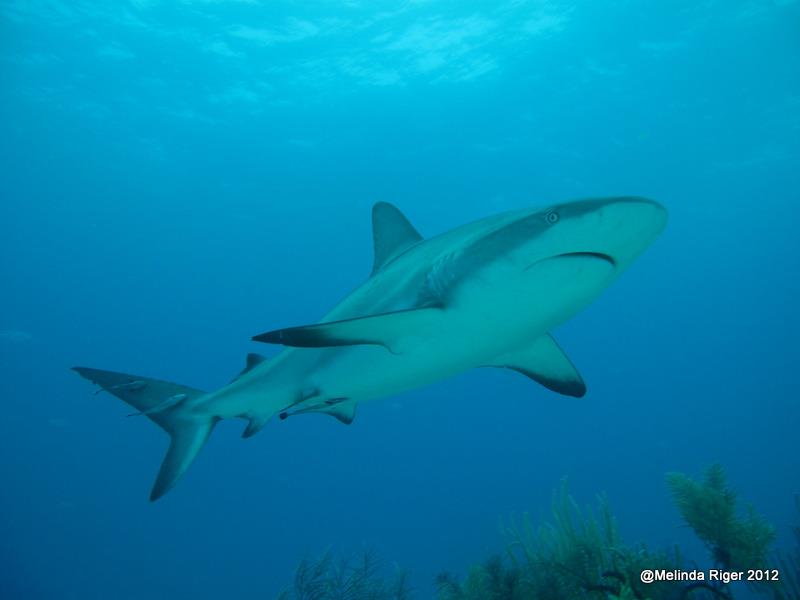
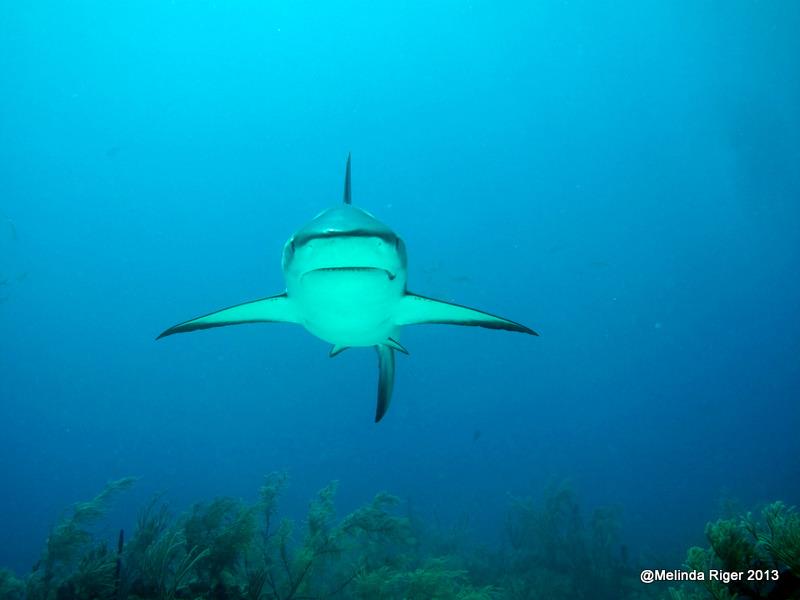
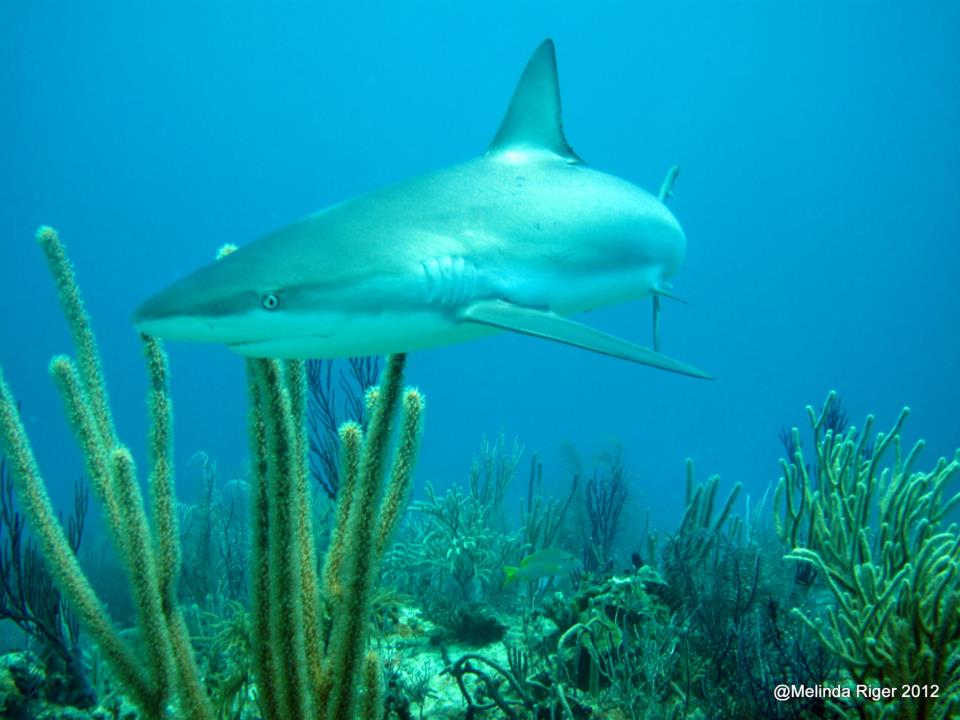
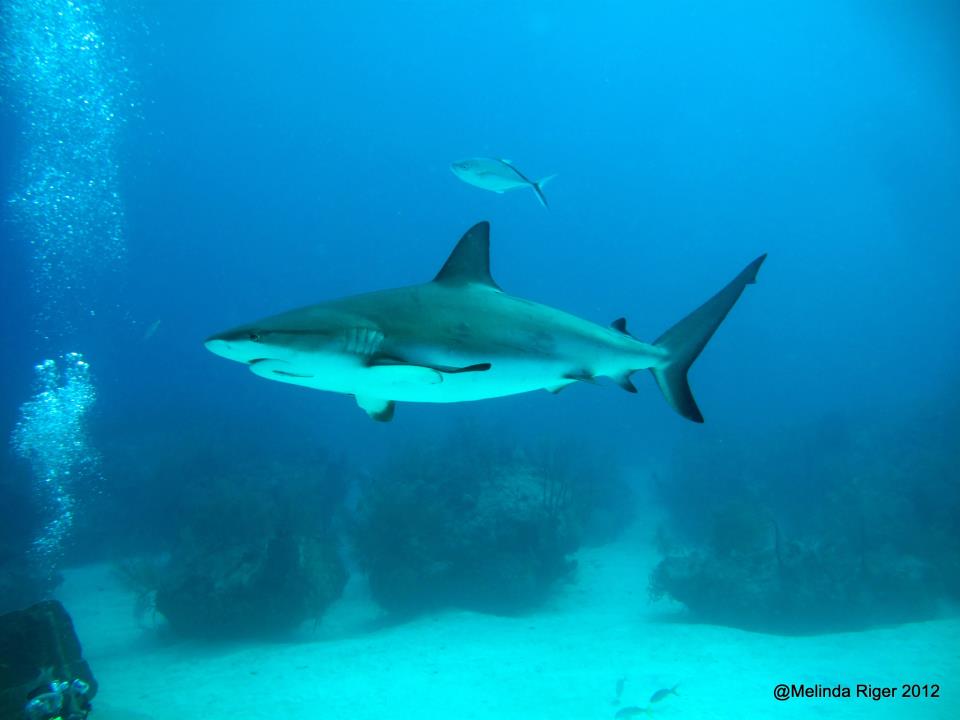
From time to time I wonder about the naming of animals. I know about the problems that can arise when people name their chickens Henny, Penny, Denny & Lenny, and the time comes to (please look away now). And how a slavering dog coming towards you (not on a lead) that the owner calls ‘Tyson’ or ‘Killer’ is possibly one to cross the street for. And that the owner of a cat called ‘The Reverend Wenceslas Muff’ (Sir Roy Strong, in fact) may not take kindly to you referring to it facetiously as ‘Puddy-tat’. But does it make things any better to know that the shark that is eyeballing you is called Lucy? I don’t know the names of the others, but I am sure they would all like to be introduced… Shark close-up ©Melinda Riger @ G B Scuba copyShark with remora ©Melinda Riger @ G B Scuba copyShark © Melinda Riger @ G B Scuba copy 2Shark ©Melinda Riger @ GB Scuba copy 2Shark Head ©Melinda Riger @ GB Scuba copy 2Shark 2 ©Melinda Riger @ G B Scuba copy 2Shark 4 ©Melinda Riger @ G B Scuba copyShark (pregant female) ©Melinda Riger @G B Scuba copy

REMORAS Some of the photos show a strange creature attached to the underside of the shark. For more info about these weird shark passengers, and some great images, click HERE

All the fabulous photographs above were taken by Melinda Riger and Virginia Cooper of Grand Bahama Scuba, on whom I rely entirely for subaqueous material, being a pathetic swimmer, a gnarly ancient, and a certified scaredy-cat (‘highly commended’). My thanks as always to them for use permission

Unknown's avatar

BAHAMAS REEF FISH (22): BLACK GROUPER


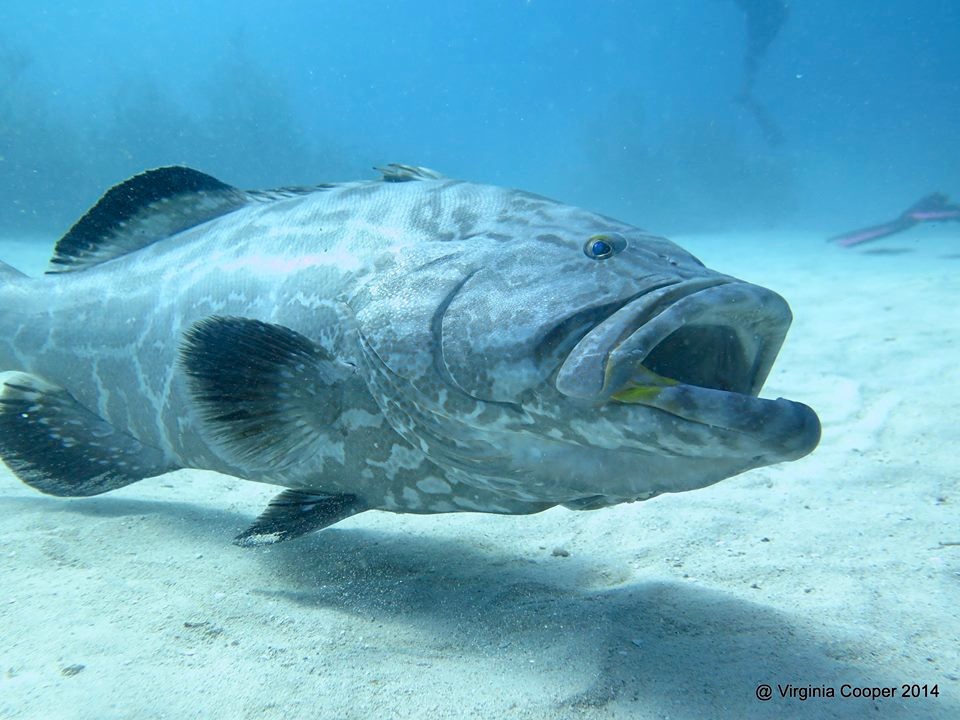
Black Grouper ed ©Virginia Cooper @ G B Scuba 2

BAHAMAS REEF FISH (22): BLACK GROUPER

The Black Grouper is a large fish of the reefs found in the western Atlantic, particularly in the waters of Florida, Bahamas, Caribbean and the Gulf of Mexico. It is a solitary species that mostly prefers the shallow waters around coral reefs.

Black Grouper ©Virginia Cooper @ G B Scuba

Formerly plentiful, these groupers (like other grouper species) have moved from an IUCN listing of ‘Least Concern’ to ‘Near-Threatened’. They have the twin disadvantages of being fished for sport and fished for food. As demand for grouper on the menu rises, so does its vulnerability. The species is described as a ‘slow breeder’, so a depleting population has less chance of sustaining numbers. 

Black Grouper ©Melinda Riger @ G B Scuba copy

An adult black grouper’s diet consists of small fish and squid. Juveniles feed primarily on crustaceans. However, certain tiny reef fish are important to the species as ‘cleaners’. You can read about their significance by clicking CLEANING STATIONS Here are examples of two black groupers receiving attention at the same cleaning station. Both also seem to be giving a ride to REMORAS.

Grouper at cleaning station ©Melinda Riger @ G B Scuba copy

Note that this fish has an embedded hook and is trailing a line – one that ‘got away’Grouper, Black, at cleaning station (+ hook) ©Melinda Riger @ GB Scuba copy

Despite the name, black groupers are not all black. They have many shades from dark to olive-coloured to pale. I believe the two photos below are of a grouper known as Arthur, a favourite with divers and definitely off the menu… Black Grouper  ©Melinda Riger @ G B ScubaBlack Grouper 2 ©Melinda Riger @ G B Scuba

The tiny bright blue fish in the photo above are Blue Chromis, a regular accompaniment on any snorkel or dive on a reef. I like the colourful little Fairy Basslet in the next photoBlack Grouper © Melinda Riger @ G B Scuba copy

Now that the NASSAU GROUPER has been awarded a closed season to help maintain numbers, it will be interesting to see if the winter fishing ban is extended to the Black Grouper…

Black Grouper (Arthur) ©Virginia Cooper @ G B Scuba

RELATED POSTS

TIGER GROUPER

NASSAU GROUPER

Credits: all photos Virginia Cooper and Melinda Riger of Grand Bahama Scuba 

Unknown's avatar

PEACOCK FLOUNDER: BAHAMAS REEF FISH (21)


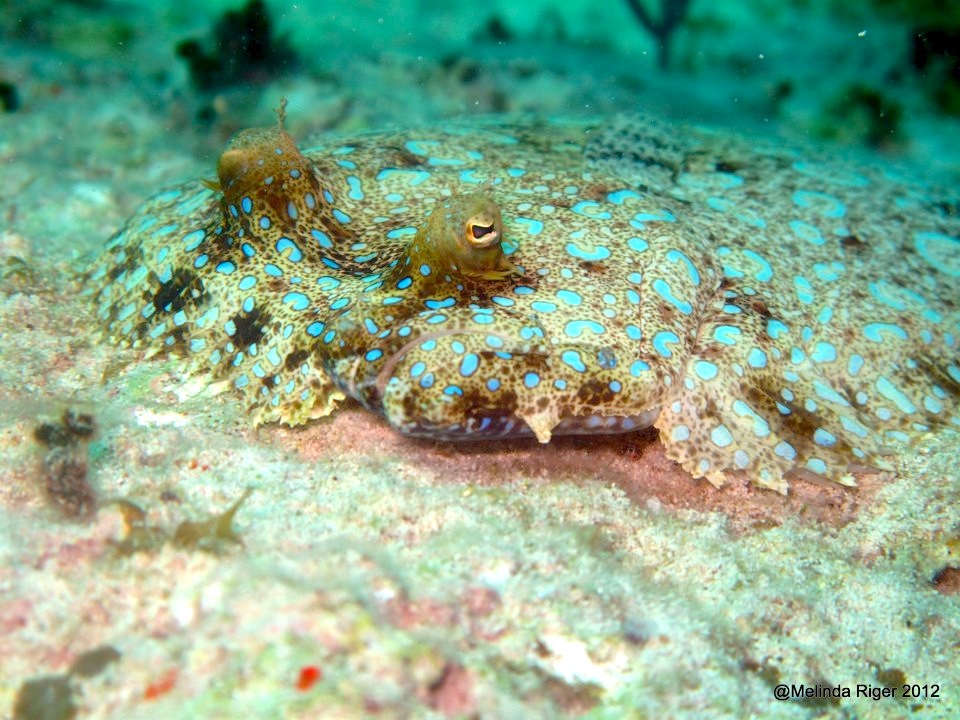
  Peacock Flounder ©Melinda Riger @ GB Scuba

PEACOCK FLOUNDER: BAHAMAS REEF FISH (21)

PEACOCK FLOUNDER or PLATE FISH Bothus lunatus

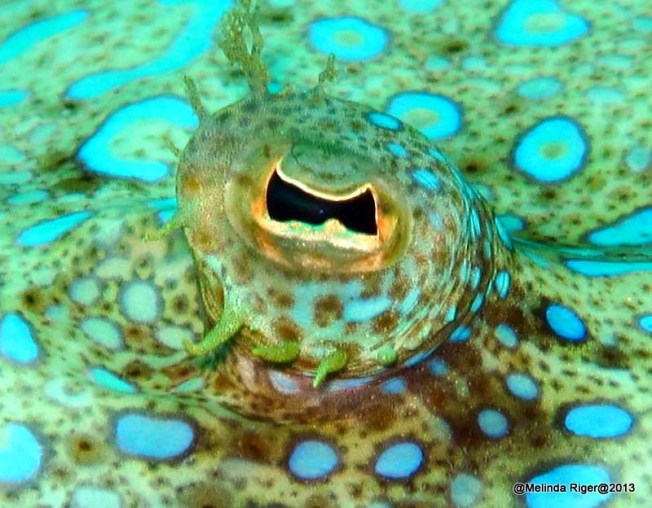
I have briefly featured this fish before in the context of its extraordinary camouflage abilities; and also its interesting ocular arrangements. Time to give it another swim around, I think, with some additional photos that I have collected.

Peacock Flounder

Bothus lunatus is the Atlantic / Caribbean version of a species also found in the Pacific and Indian oceans. Adults may grow up to 18 inches long. The species is a ‘lefteye’ flounder, with both eyes on its left (top) side & its right side underneath.  However a baby flounder looks & swims like normal fish, with bilateral eyes. As it grows, the right eye gradually ‘moves’ round to the topside, and it becomes a flatfish.

Peacock Flounder

A flounder’s eyes can move independently of each other. One may look forwards, the other backwardsPeacock Flounder Eye ©Melinda Riger @ G B Scuba

‘NOW YOU SEE IT…’ CAMO-FISH

The Peacock Flounder has extraordinary  colour-changing powers, and can rapidly vary its background colour to make it closely resemble that of its surroundings. This enables it camouflage itself as it lies on the seabed. It can change coloration completely in between two to eight seconds.  

Four frames of the same fish taken a few minutes apart showing the ability of flounders to change colors to match the surroundings (Wiki)Peacock Flounder Brocken Inaglory

Check out these imitative patterns in Bahamas waters…Peacock Flounder (f) ©Melinda Riger @ Grand Bahama Scuba

Flower_flounder_in_Kona_wiki

There are two advantages to the ability to camouflage (‘cryptic coloration). One is obviously to avoid detection by predators. The other is to enable the flounder to ambush its meals. They feed primarily on small fishes, crabs and shrimps, lying concealed on the seabed and grabbing any unwary prey that ventures too close. They will even partially bury themselves in the sand, leaving just their eye-stalks keeping watch…Peacock Flounder ©Melinda Riger @ Grand Bahama Scuba

HOW CAN THEY POSSIBLY CHANGE COLOUR SO QUICKLY?

Scientists are still puzzling this out. In a conch shell, it seems the flounder can coordinate its amazing all-round vision with its hormones, instantly releasing certain pigments to its skin cells and suppressing other pigments to make the colour match. Not convinced? Then watch this short video and prepare to be impressed. 

Fred Riger of Grand Bahama Scuba, who kindly keeps a benign eye on my reef fish posts (he’s the expert), adds a third excellent reason for coloration changes: sex… “the male peacock flounder can, and does greatly intensify his colors, presumably to declare territory and attract females to his person. When doing this the males will also signal with the left pectoral fin, sticking it straight up and waving it around.” Maybe that is what is going on in the photo below – intensified, non-camouflage colours, and a raised fin…Peacock Flounder ©Melinda Riger@ G B Scuba

Peacock Flounder on a plate – Kim Rody Art983829_10154948988290716_6633206689277673329_n

Credits: Melinda Riger of Grand Bahama Scuba for almost all photos; wiki for 2 illustrative images

Unknown's avatar

TURTLEY AMAZING: HAWKSBILL TURTLES IN THE BAHAMAS


Hawksbill Turtle © Melinda Riger @ G B Scuba

TURTLEY AMAZING: HAWKSBILL TURTLES IN THE BAHAMAS

The Bahamas has breeding populations of 5 of the world’s 7 sea turtle species – Green, Loggerhead, Hawksbill, Leatherback and Kemp’s Ridley turtles (the other two are Olive Ridley – occasionally found in the Bahamas – and Flatback turtles). All are endangered. There’s no getting away from the fact that Man and Man’s activities are now the primary threats. The IUCN ratings below make for sad reading. To see some of the problems, check out THREATS TO SEA TURTLES

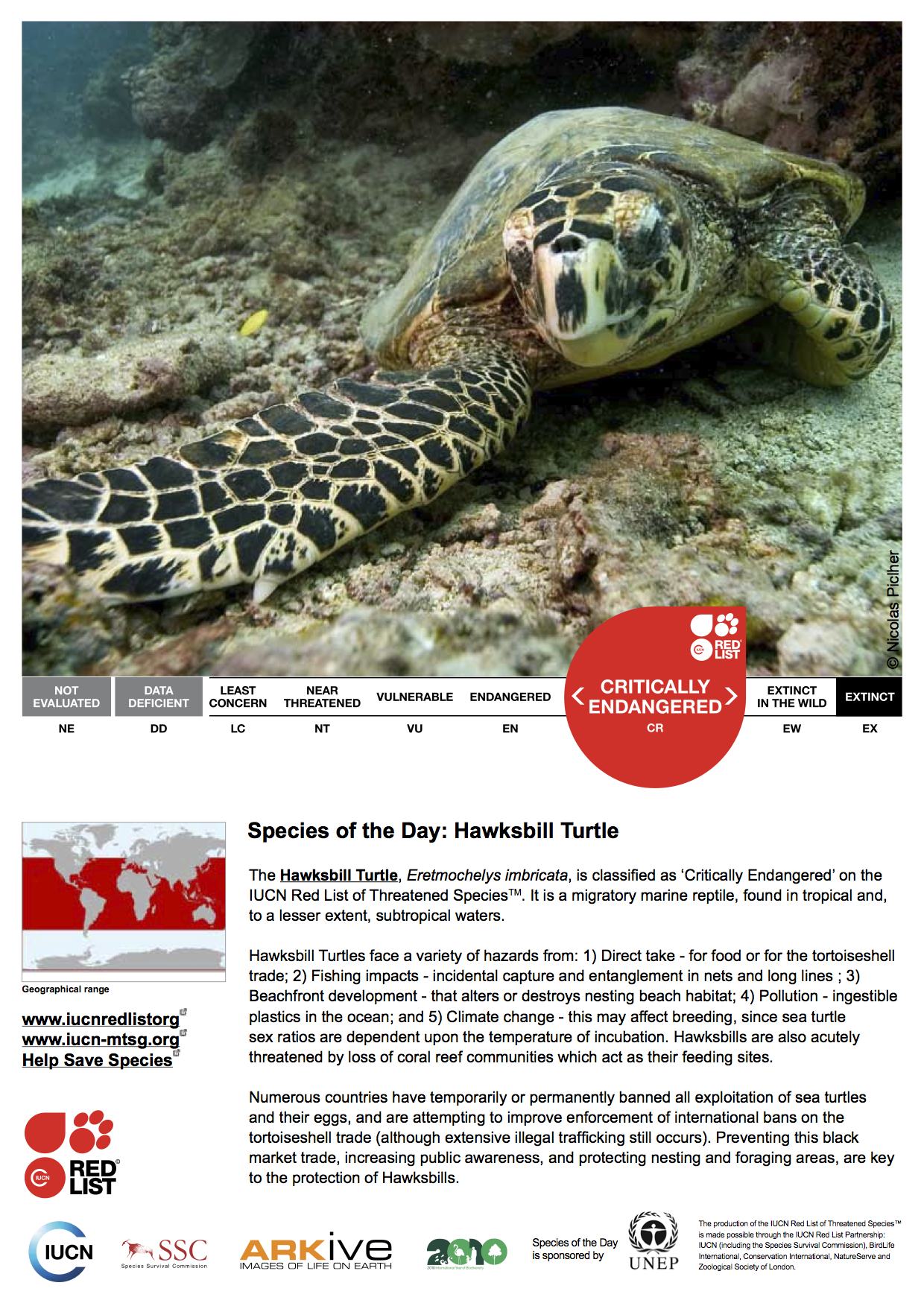
Admire the photos here of Hawksbill Turtles Eretmochelys imbricata while you can – the species is IUCN red-listed and I can’t improve on this explanatory display…Hawksbill Turtle Eretmochelys imbricata (IUCN Red List)

HAWKSBILL TURTLE GALLERY

(thanks as ever to Melinda Riger of Grand Bahama Scuba, but for whom etc)Hawksbill Turtle ©Melinda Riger @ G B Scuba Hawksbill Turtle ©Melinda Riger @ G B Scuba copy Hawksbill  Turtle ©Melinda Riger @ Grand Bahama Scuba copyHawksbill Turtle ©Melinda Riger @ GB Scuba copy

I did ask myself whether including this shot might show a lack of sensitivity for the essential dignity of a fine species, infringing its Testudinal rights. But overall, I feel the public interest is best  served by showing it. Anyway, it has plainly discovered something very tasty to get stuck into, so it won’t be unduly bothered. The pair of French Angelfish aren’t going to get a look-in…Hawksbill Turtle ©Melinda Riger @ G B Scuba copy 3

 The SEA TURTLE CONSERVANCY has produced an outstanding series of posters similar to the LOXAHATCHEE posters about corals, conchs, sea grass, bonefish etc. Here is their Hawksbill one, with illustrations by artist DAWN WITHERINGTON. Click the link to reach her website and see her excellent scientific drawings and a lot more besides. This excellent poster contains pretty much all the details you need to hold your own in any hawksbill-related conversation. You can enlarge it by doing that thing with 2 fingers on your track pad thingy.

HawksbillLifeHistoryPoster-STC-DWitherington

I rather like this video from Andros, with the turtle’s gentle tolerance while being approached by a photographer until at last  it decides to move slowly off. The music’s a bit annoying though – it doesn’t really fit the scene IMO. 

Credits: IUCN, Melinda for the fab photos, Sea Turtle Conservancy

Unknown's avatar

WTF? (WHAT’S THAT FISH?) 2: STRANGE BAHAMAS REEF FISH


Scorpionfish Close-up ©Melinda Riger @GBS copy

WTF? (WHAT’S THAT FISH?) 2: STRANGE BAHAMAS REEF FISH

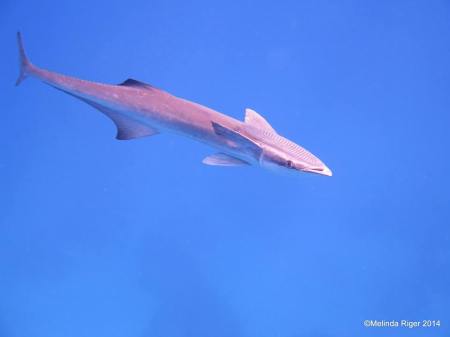
WTF 1 concerned the REMORA, the upside-down looking fish with the trainer-sole sucker on its head with which it attaches itself to sharks and other large undersea creatures. If you’ve ever seen a picture of a shark with one or more grey passengers hitching a ride, those are these.

Remora ©Melinda Riger @ GB Scuba

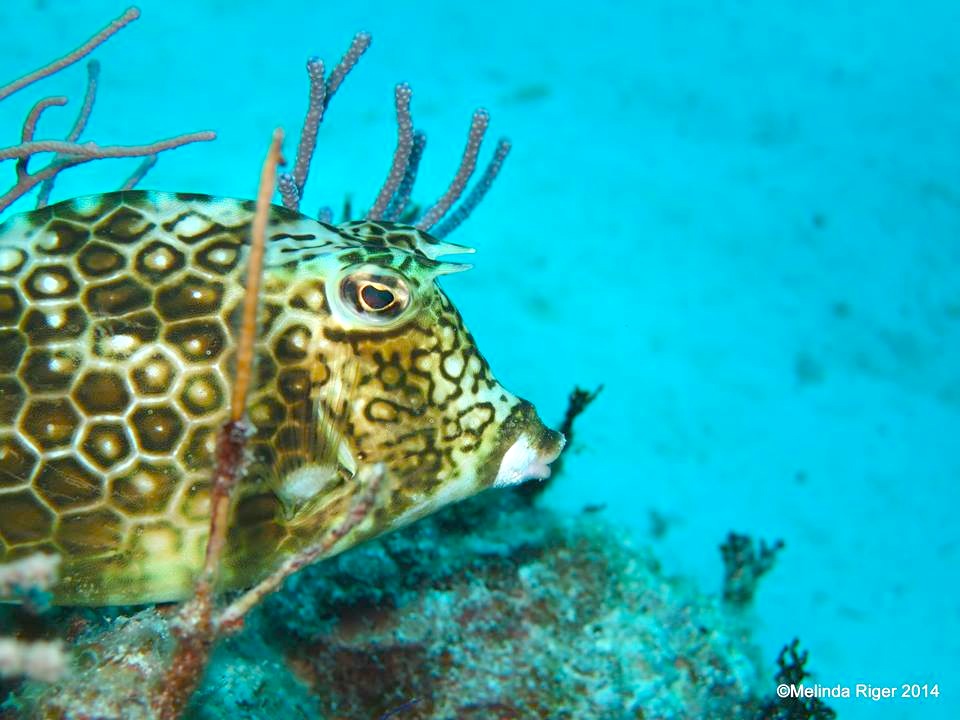
WTF 2 features some creatures found in the reef waters of the Bahamas that make you wonder just how and why they are as they are. They look unnecessarily complicated, and the design is somewhat outlandish. See what you think of these…

BURRFISH

Burrfish ©Melinda Riger @ G B Scuba

SLIPPER LOBSTER

Slipper Lobster ©Melinda Riger @ GB Scub.

SCORPIONFISH (& header image) camouflaged against coralScorpionfish camouflaged against coral ©Melinda Riger copy

COWFISH

Cowfish ©Melinda Riger @ GB Scuba   Cowfish 2 ©Melinda Riger @ Grand Bahama Scuba copy

TRUNKFISH

Trunkfish ©Melinda Riger @GBS copy 3

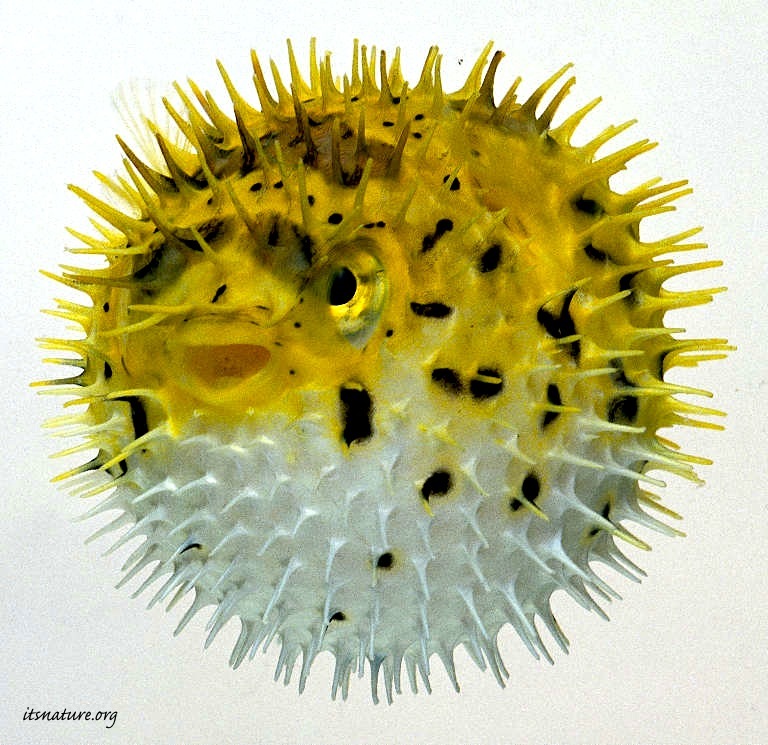
PORCUPINE FISH 

“Watch this…”Porcupine Fish (Virginia Cooper via G B Suba)

“Ta Daaaaaa”porcupine-fish

 AIRPLANEFISH*

Airplane remains ©Melinda Riger @ GB Scuba

*Well, it’s really airplane wreckage. Besides a few other planes and a variety of ships that can be explored underwater, there are also two locomotives in Abaco waters that “fell off” a ship while being transported. Now recreate in your mind the subsequent conversation with an insurance company…

APOLOGIES Header image repeated to sort out FB visuals problem that’s driving me nutsScorpionfish Close-up ©Melinda Riger @GBS copy

Credits: Melinda Riger, Grand Bahama Scuba;Virginia Cooper;  itsnature.org

Unknown's avatar

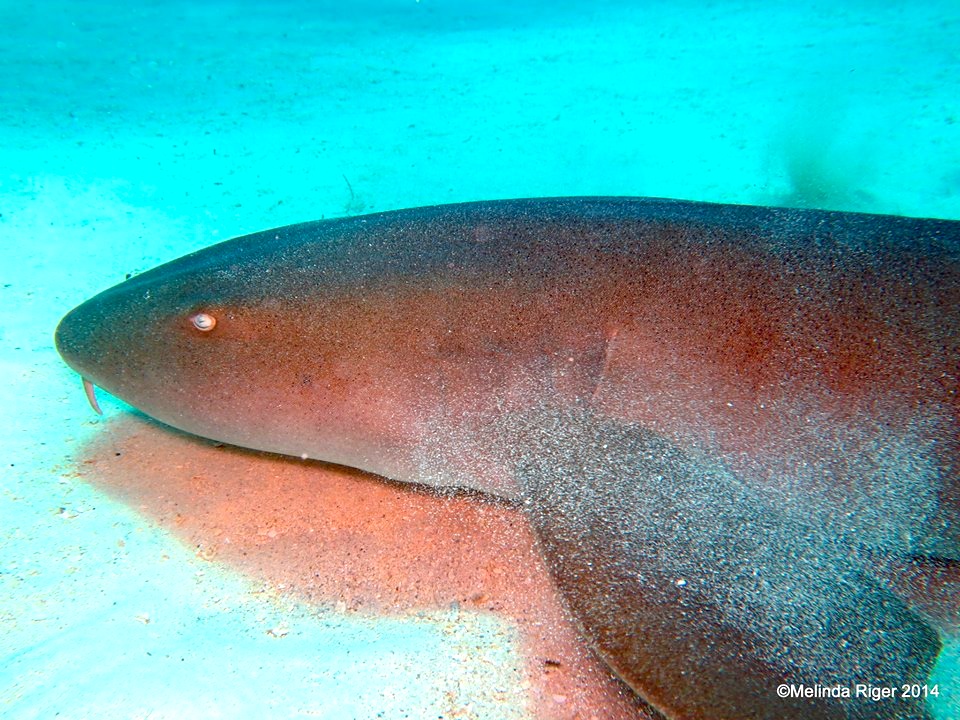
‘TREAT WITH PATIENCE…’ – NURSE SHARKS IN THE BAHAMAS


Nurse Shark ©Melinda Riger @ GB Scuba

‘TREAT WITH PATIENCE…’ – NURSE SHARKS IN THE BAHAMAS

The scientific name for the nurse shark sounds like something Bilbo Baggins might have said to summon elves to his rescue: Ginglymostoma cirratum. Actually the name is a mix of Greek and Latin and means “curled, hinged mouth” to describe this shark’s somewhat puckered appearance. The origin of the name “nurse shark” is unclear. It may come from the sucking sound they make when hunting for prey in the sand, which vaguely resembles that of a nursing baby. Or it may derive from an archaic word, nusse, meaning cat shark. The most likely theory though is that the name comes from the Old English word for sea-floor shark: hurse.

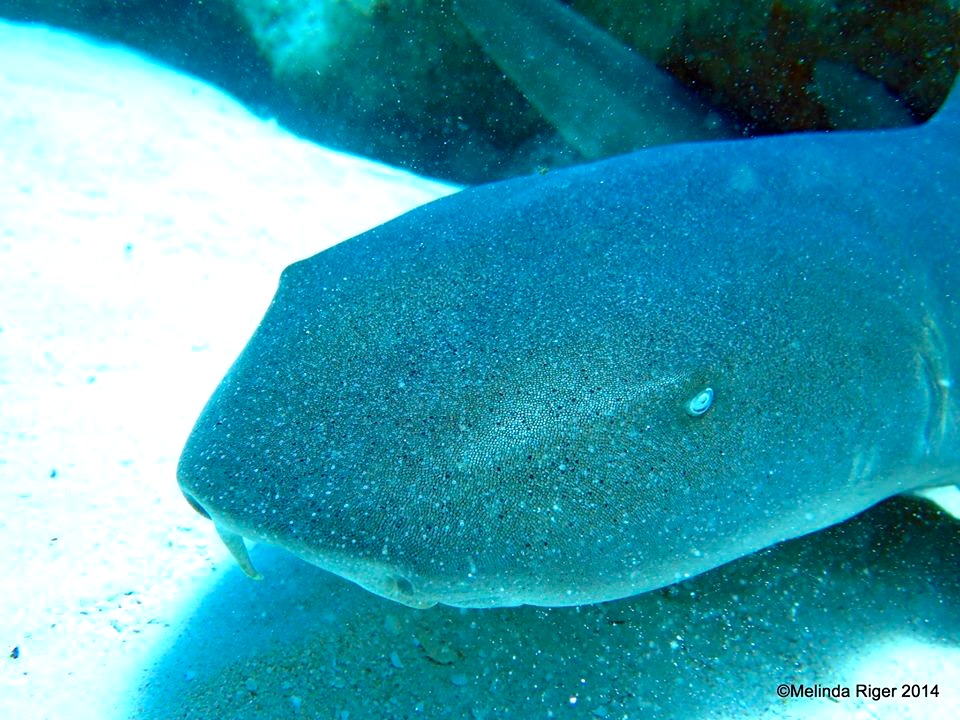
Shark ©Melinda Riger @ GB Scuba

Nurse sharks are slow-moving bottom-dwellers and are, for the most part, harmless to humans. However, they can be huge—up to 14 feet (4.3 meters)—and have very strong jaws filled with thousands of tiny, serrated teeth, and will bite defensively if stepped on or bothered by divers who assume they’re docile. [There are recorded instances of injuries caused to divers who have tried to pull nurse sharks by the tail. And serve them right, I say. Treat them with patience – and respect!] 

Nurse_shark_with_remoras Duncan Wright (Sabine's Sunbird)

Notice that the nurse shark in the above photo, and in the header image, is being attended by REMORAS. Click the link to find out more about the strange relationship these ‘weird suckers’ have with larger marine creatures.

Nurse Shark ©Melinda Riger @ G B Scuba

They use their strong jaws to crush and eat shellfish and even coral, but prefer to dine on fish, shrimp, and squid. [And also stingrays, apparently. They have been observed resting on the bottom with their bodies supported on their fins, possibly providing a false shelter for crustaceans which they then ambush and eat.] They are gray-brown and have distinctive tail fins that can be up to one-fourth their total length. Unlike most other sharks, nurses are smooth to the touch. 

Nurse Shark ©Melinda Riger @ Grand Bahama Scuba

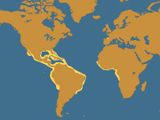
Nurse sharks are found in the warm, shallow waters of the western Atlantic and eastern Pacific oceans. They are abundant throughout their range and have no special conservation status, although the closeness of their habit to human activities is putting pressure on the species.

map-nurse-shark-160-20135-cb1321035858

Nurse sharks are nocturnal and will often rest on the sea floor during the day in groups of up to 40 sharks, sometimes piled on top of each other.

Shark, Nurse (young) ©Melinda Riger @ GB Scuba

FAST FACTS

  • Type: Fish 
  • Diet:  Carnivore
  • Size: 7.5 to 9.75 ft (2.2 to 3 m)
  • Weight: 200 to 330 lbs (90 to 150 kg)
  • Size relative to a 6-ft (2-m) man:
Illustration: Shark compared with adult manNurse Shark ©Melinda Riger @ G B Scuba copy

Credits: All photos Melinda Riger, Grand Bahama Scuba; range map and text mostly  NATIONAL GEOGRAPHIC  filled out with other pickings

Unknown's avatar

RED REEF RESIDENTS: A RUFOUS ROUND-UP IN THE BAHAMAS


Squirrelfish (Elvis) ©Melinda Riger @ Grand Bahama Scuba copy

Elvis the Squirrelfish

RED REEF RESIDENTS: A RUFOUS ROUND-UP IN THE BAHAMAS

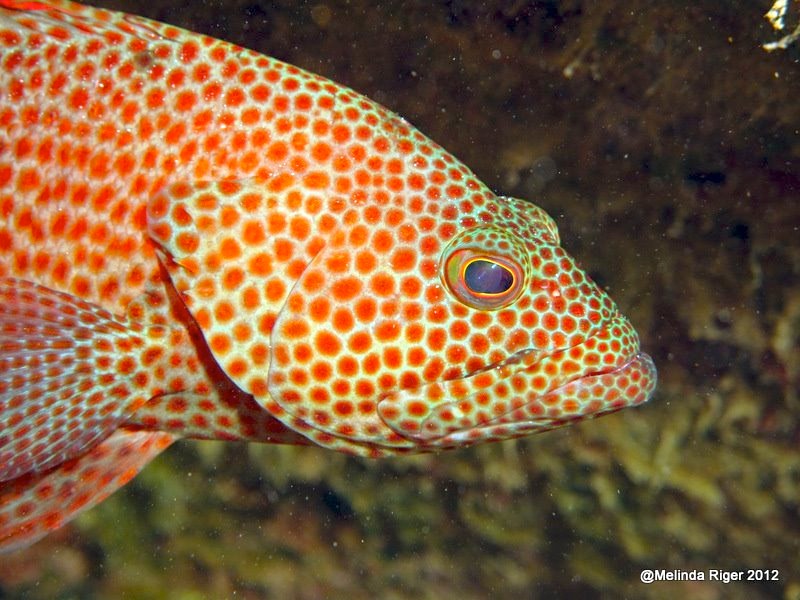
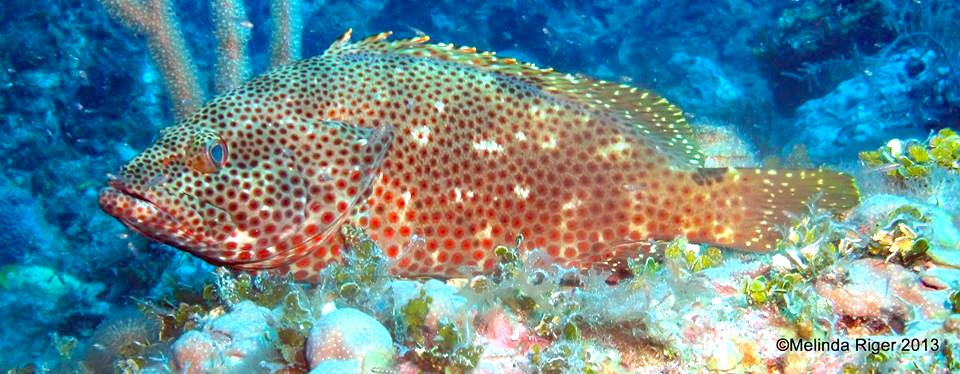
It’s sunny and very hot. Time to take another dive with Melinda to see what is going on under water around the reefs. Here are some residents, a somewhat loose description since some of the denizens featured are not especially active. But they are alive, so they qualify by my wide rules. And please may we not get into a discussion about where precisely red and orange overlap. It’s a grey area. And it’s too hot to argue about it… Let’s start with three types of GROUPER that may be spotted in the northern Bahamas. In fact, they are always spotted. One of my favourite pictures is the Graysby – it’s such a great expression, and he really rocks the spots!

GRAYSBY
Graysby © Melinda Riger @ Grand Bahama Scuba copy

TIGER GROUPER AT A CLEANING STATION with Peterson Cleaning Shrimps & a GobyGrouper, Tiger with cleaning shrimps and goby ©Melinda Riger @ G B Scuba copyRED HINDRed Hind Grouper Melinda Riger @ G B Scuba copy

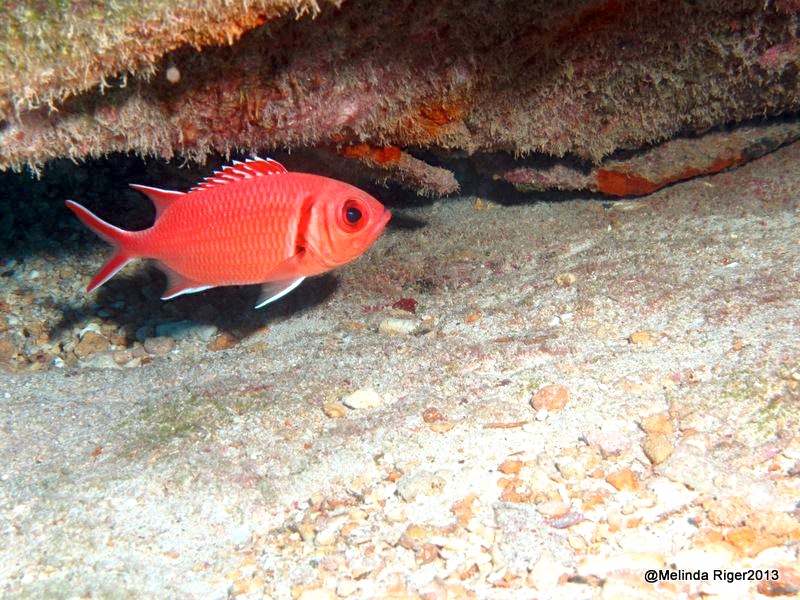
BLACKBAR SOLDIERFISHBlackbar Soldierfish ©Melinda Riger @ G B Scuba copy

HOGFISHHogfish ©Melinda Riger @ GB Scuba copy 2

SQUIRRELFISHSquirrelfish 2 copy

But red fish are not the only red reef residents. Here are some  that won’t swim away from you as you swim towards them to admire them…

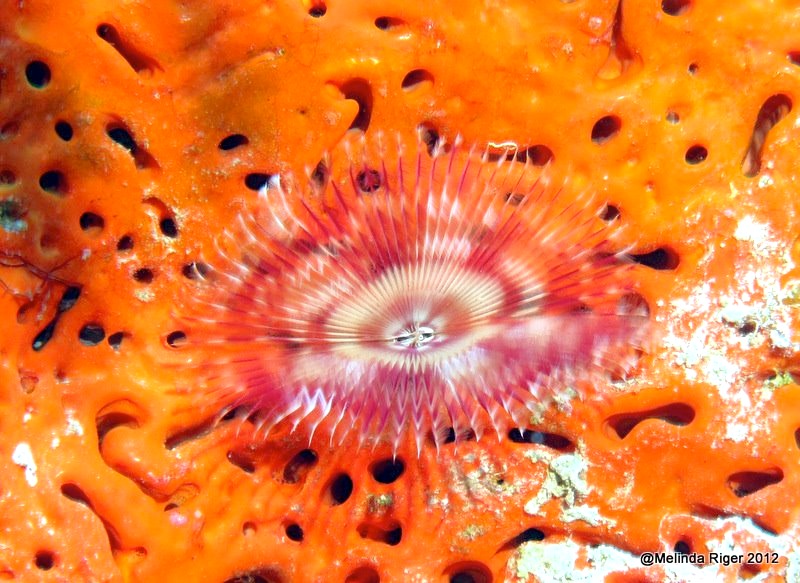
A FEATHER DUSTER ON A SPONGEFeather Duster in a Sponge ©Melinda Riger @ Grand Bahama Scuba copy

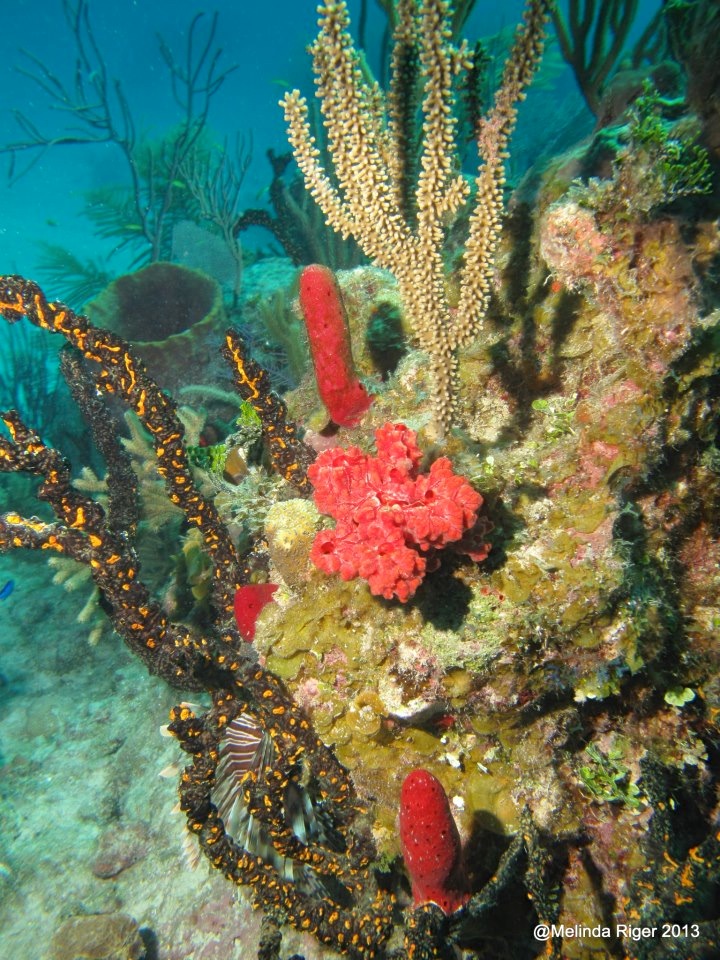
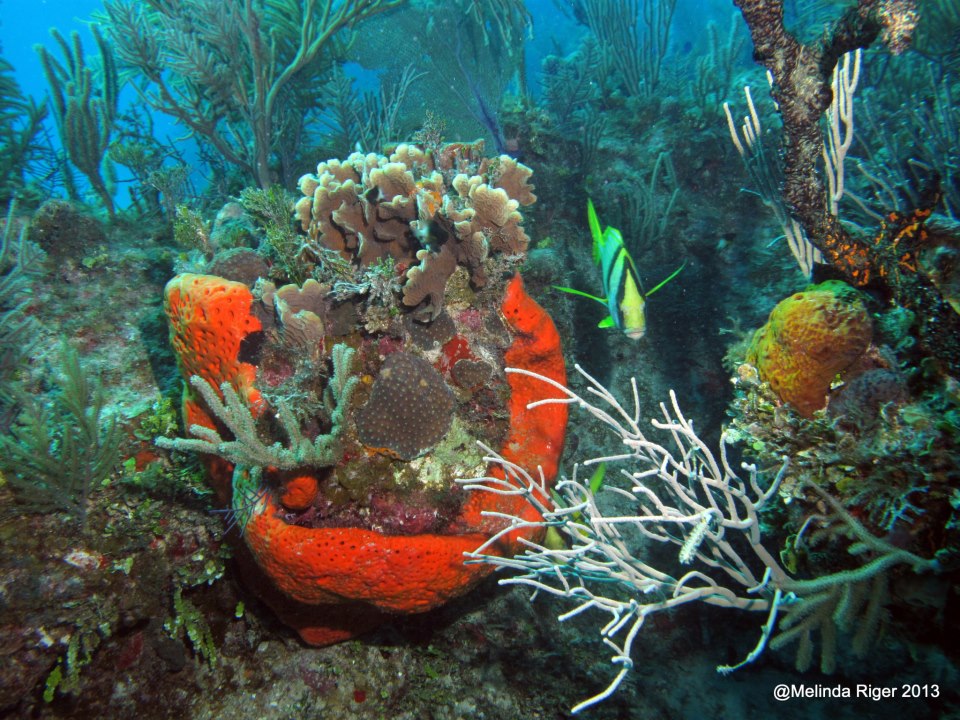
RED SPONGERed Sponge ©Melinda Riger @ GB Scuba copyUNDERWATER GARDEN GROWING IN A RED CONTAINERCoral ©Melinda Riger @ G B Scuba 2 copy

ANOTHER VARIED REEF GARDENReef Garden ©Melinda Riger@ G B Scuba copy

CORALS WITH (I have just noticed) A LURKING LIONFISH Coral ©Melinda Riger @ G B Scuba 1 copy

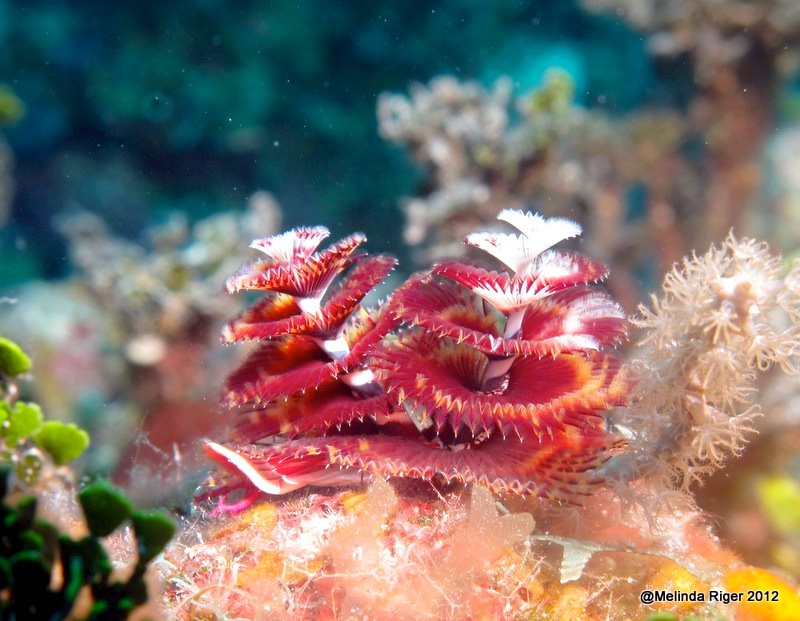
CHRISTMAS TREE WORMS (see more of these amazing creatures HERE)Christmas Tree Worms ©Melinda Riger @ G B Scuba copy

All photos: Melinda Riger @ Grand Bahama Scuba

Unknown's avatar

QUEEN ANGELFISH: COLOURFUL CORAL ROYALTY: BAHAMAS REEF FISH (13)


Holacanthus ciliaris (Wiki)QUEEN ANGELFISH: COLOURFUL CORAL ROYALTY – BAHAMAS REEF FISH (13)

One of the earliest posts in the Bahamas Reef Fish series was about Queen Angelfish Holacanthus ciliaris, and you can see it HERE. I make no apology for returning with some more recent photos from Melinda Riger – these fish deserve plenty of attention for their wonderful bright presence that stands out even amongst the colourful corals of the reef.

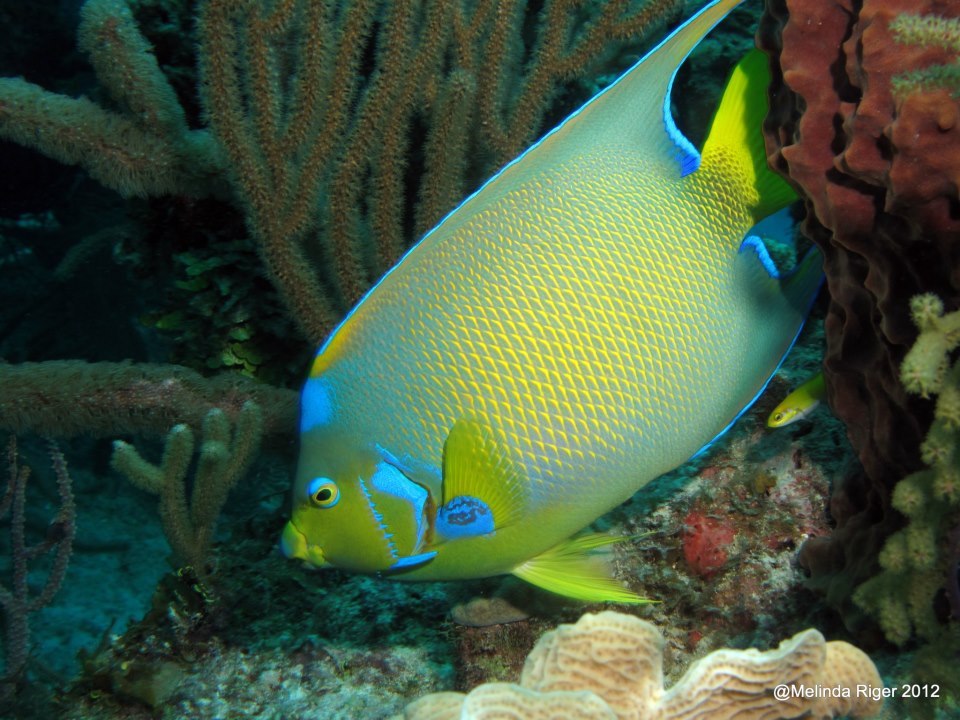
This first image is remarkable for its clarity and composition. What, I wonder, is the fish saying to Melinda as she presses the camera button? All caption suggestions welcome…Queen Angelfish © Melinda Riger @ G B Scuba

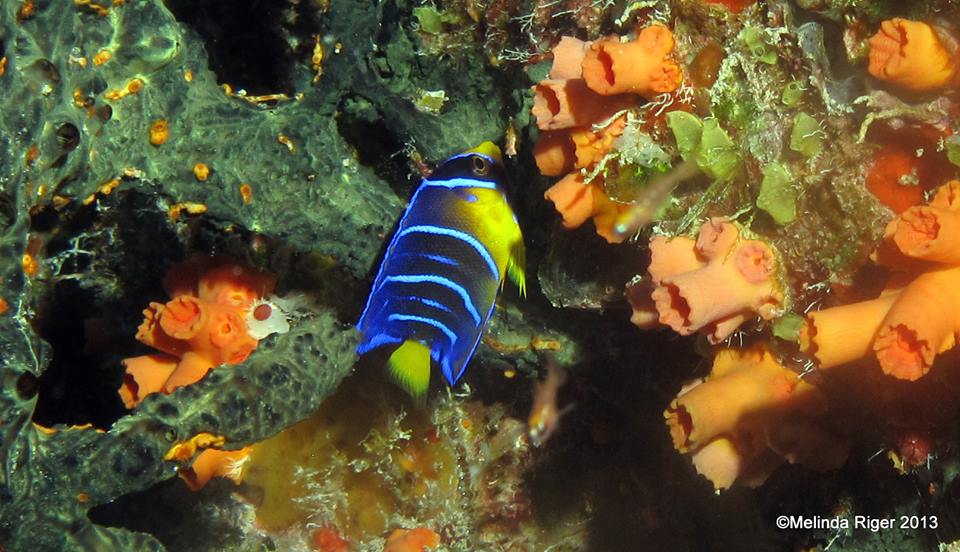
Angelfish are quite happy  to swim round either way upQueen Angelfish (Juv) ©Melinda Riger @ GB ScubaQueen Angelfish (juv) ©Melinda Riger @ G B Scuba

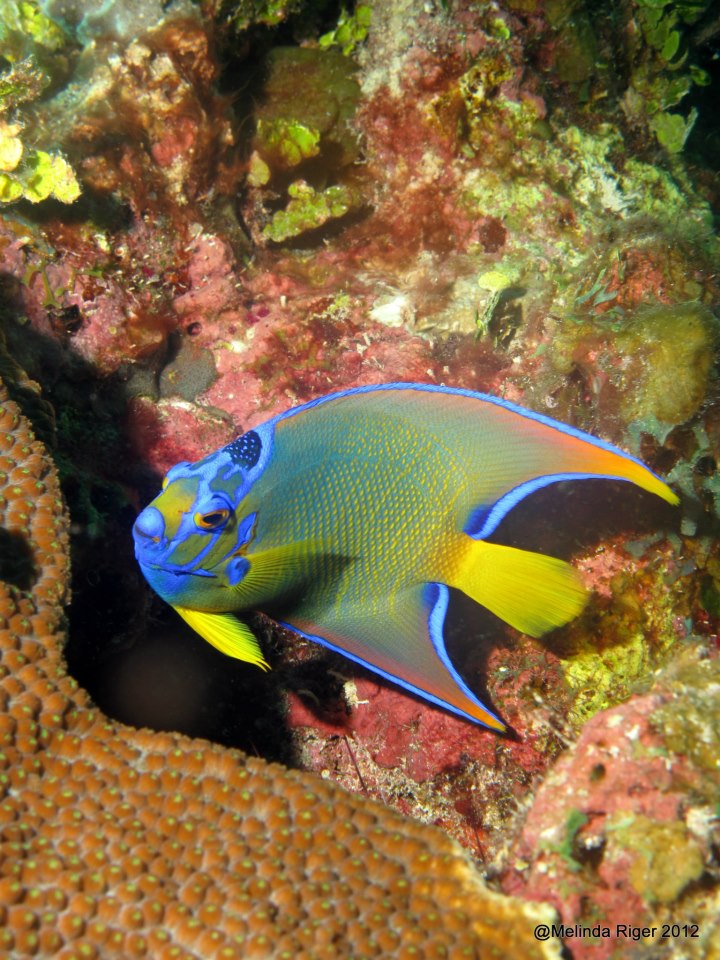
The juvenile of the species, nosing around the coral for tasty morsels,  is equally colourfulQueen Angelfish (juv) Melinda Riger @ G B ScubaQueen Angelfish Melinda Riger @ G B Scuba

Unknown's avatar

UNDERWATER BAHAMAS: REEF GARDENS (3)


450px-Feather_duster_worm

UNDERWATER BAHAMAS: REEF GARDENS (3)

We are back in the realm of ‘animal, vegetable or mineral?’. Dive down a few feet – inches, even – to the reef, and… is this thing waving about here a plant or a creature? And is that colourful lump over there a bit of inanimate rock or a living thing?

1. FEATHER DUSTERS 

Not in fact pretty frilly-fringed plants, but worms among the coral. The tiny electric blue fish are Blue Chromis, ubiquitous around the reefs.Feather Duster © Melinda Riger @ Grand Bahama Scuba

Here the feather dusters have attached themselves to a sea fan, a ‘gorgonian’ coralFeather Dusters & Sea Fan © Melinda Riger @ Grand Bahama Scuba

Moored on part of an old wreckFeatherdusters ©Melida Riger @ G B  Scub

A different form of duster with remarkable feathered tentaclesFeather Duster ©Melinda Riger @ G B Scuba

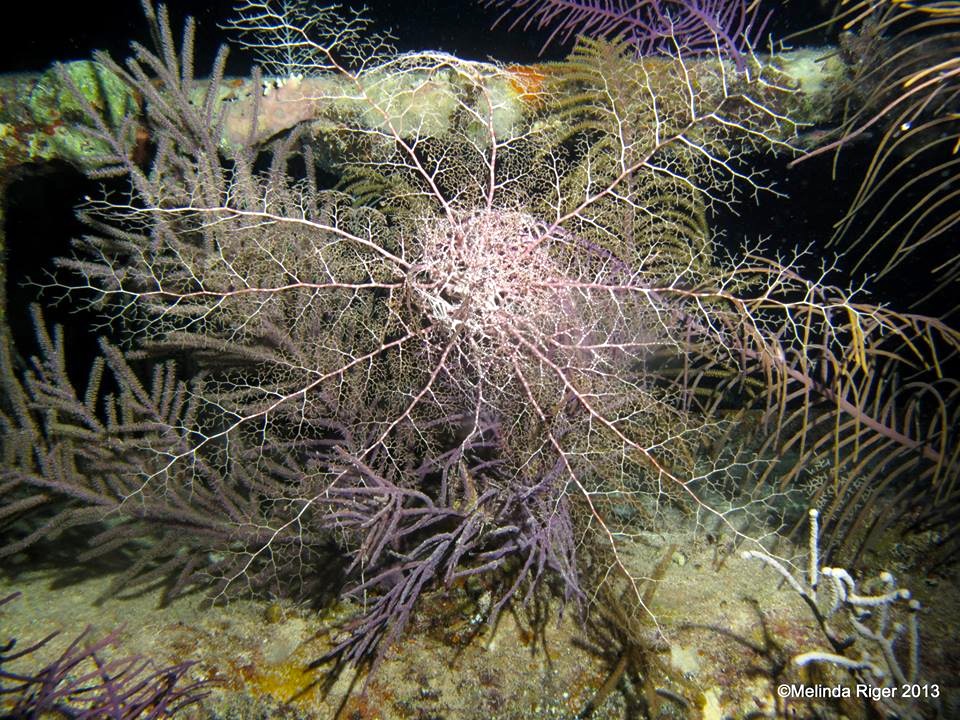
2. BASKET STARS Creatures in the same family group as brittle stars. Take a close look at the remarkable transformation in the two photographs. The top image is taken in daylight. The star is off duty and enjoying some downtime. However the second image is the same view at night, with the star fully open and waiting to harvest whatever micro-morsels come its way. The star has truly ‘come out at night’.

Basket Star (day) ©Melinda Riger @ GB Scuba Basket Star (night) ©Melinda Riger @ GB Scuba

3. CORKY SEA FINGER Another form of gorgonian coral, sometimes known as dead man’s fingers… **

Corky Sea Finger (Polyps extended) ©Melinda Riger @ G B Scuba

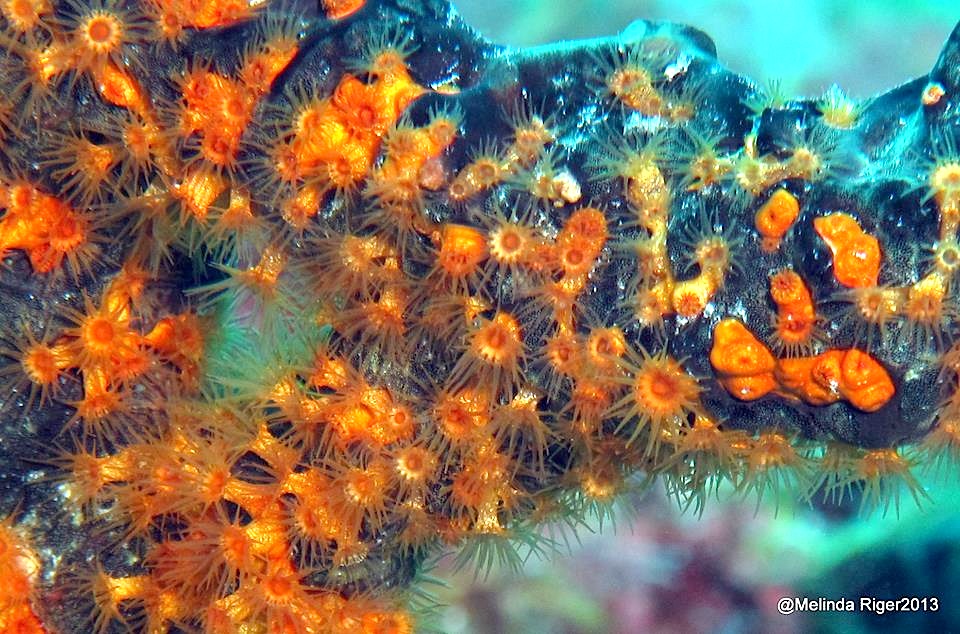
4. GOLDEN ZOANTHIDS Coral forms living on a Green Rope Sponge. Some zoanthids contain a deadly poisin called palytoxin, which may do unspeakable things to your heart. Like stop it. Luckily, none so unpleasant live in the Bahamas (or so the Bahamian Tourist Board would no doubt wish me to make clear).

Golden Zoanthids on green rope sponge ©Melinda Riger @ G B ScubaI realise that calling this occasional series ‘Reef Gardens’ is a bit of a misnomer. They are in fact Reef Zoos. The previous posts are as follows:

REEF GARDENS 1 Anemones, Basket Stars & Christmas Trees

REEF GARDENS 2 (Corals)

Image credits, with thanks: Melinda Riger @ Grand Bahama Scuba

** I knew this image reminded me of something… or someone. And (superannuated British rockers out there), is it not exactly like the hairdo of one of the guys in Mott the Hoople, a band lifted from relative obscurity to fame by being gifted a song by David Bowie? Guitarist. Ian Hunter. Take a look at him now… and just imagine then

ian_hunter_of_mott_the_hoople_performing_at_the_hammersmith_apollo_as_part_of_the_band's_40th_anniversary_reunion_tour_5363650

Unknown's avatar

JUST WHEN YOU THOUGHT IT WAS SAFE… DER DE DER DE…


81aD9363voL._SL1500_

…TO GO BACK IN THE WATER… DER DE DER DE…

Shark! ©Melinda Riger @ GB Scuba

…along came some friendly sharks to swim with… and to photographShark May 2 ©Melinda Riger @ G B Scuba538989_462771037077624_1266061052_n

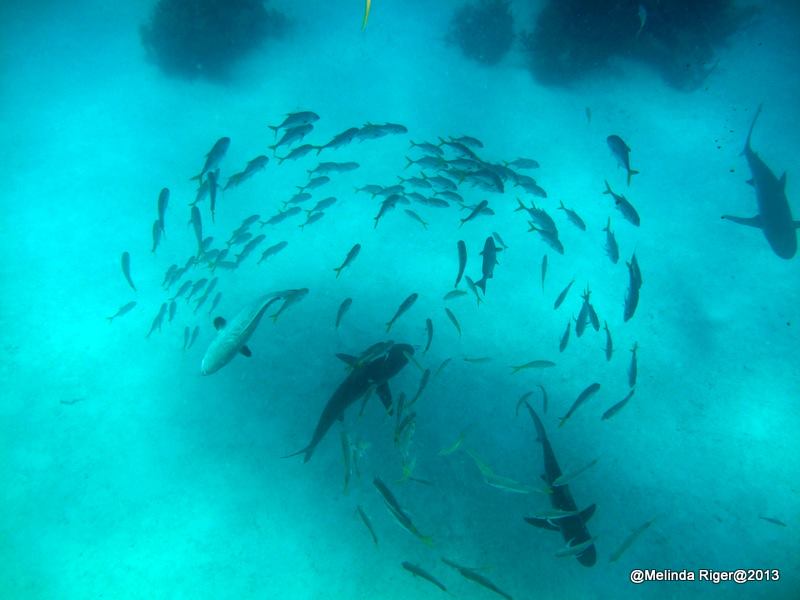
There’s no escaping… the fact that there are sharks in the BahamasShark Swirl ©Melinda Riger @ GB ScubaShark ©Melinda Riger @ GB Scuba

Take comfort from the fact that no fatalities and only half a dozen injuries from shark attacks have been recorded in Abaco waters for over 250 years (since 1749). Risk assessors and the nervous, take note.562948_451267911561270_623113740_n555792_536784029676324_391849202_n

By way of comparison, in the last 150 years there have been 36 recorded shark attacks in the Mediterranean, of which 18 have been fatal…427529_456773757677352_433374920_n

Since 1845 there have been a number of shark attacks in British waters, with one fatality.  There were two more fatalities in an incident in 1956 , but this was an ‘own-goal’ arising from an attempt to blow up a shark with dynamite. It can hardly be blamed on the shark.392552_465306553490739_673110738_n

WEIRD NON-SHARK RELATED STATISTIC: Amazingly, in the 3 years 2007 – 09 in England and Wales, 42 people died from being bitten by animals, only a few of which were dogs.

CONCLUSION You are statistically far safer to spend 250 years swimming off Abaco than spending 3 years stroking a cat in Manchester. Or Swansea.

383586_510314062323321_1002533913_n

LEAVE SHARKS ALONE AND THEY’LL LEAVE YOU ALONE306092_500604003294327_1470960886_n

All fantastic images by Melinda Riger of Grand Bahama Scuba who swims with sharks all the time!

Unknown's avatar

UNDERWATER BAHAMAS: REEF GARDENS (2) – CORALS


Purple Seafan Coral ©Melinda Riger @GBS

UNDERWATER REEF GARDENS IN THE BAHAMAS (2): CORALS

This is part 2 of a series that started out HERE with a selection of anemones, basket stars and Christmas tree worms. The images below show a wide variety of corals. In among them are also sponges and anemones. These photos are evidence of a healthy reef environment in the waters of the northern Bahamas. Abaco’s coral reef is the third largest barrier reef in the world (yes, I hear you – the Great Barrier… And the second is???), providing wonderful and accessible diving / snorkelling opportunities. However, monitoring shows that the incidence of coral bleaching and disease is increasing in the Bahamas, as elsewhere in the world.  It’s a sobering thought that your grandchildren may never swim in an environment with any of the living corals shown below…

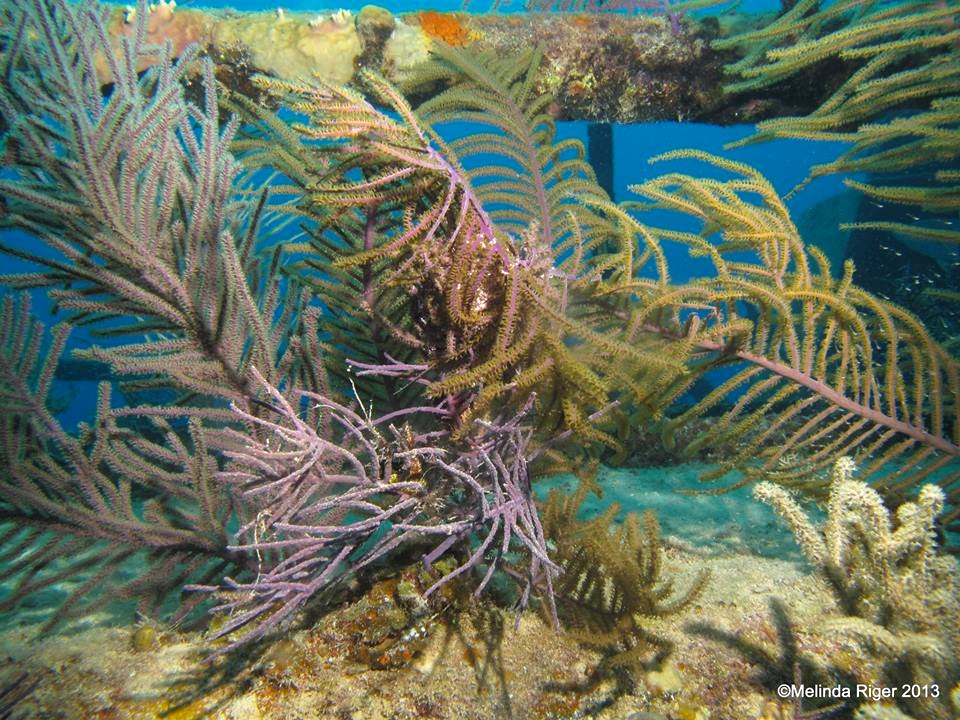
Corals ©Melinda Riger @ G B ScubaCoral ©Melida Riger @ G B  ScubaCoral ©Melinda Riger @ G B Scuba 1Coral ©Melinda Riger @ G B Scuba 2Coral ©Melinda Riger @GBSImage Credits: ©Melinda Riger @ Grand Bahama Scuba

Unknown's avatar

SOUTHERN STINGRAYS: KEEPING AN EYE ON YOU


Stingray Eye ©Melinda Riger @GBS

SOUTHERN STINGRAYS: KEEPING AN EYE ON YOU

The SOUTHERN STINGRAY Dasyatis americana is a ‘whiptail stingray’ found in the Western Atlantic Ocean. Their habitat and personal habits – feeding and mating – are similar to those of the YELLOW STINGRAY. They live on the seabed, where they feed on small crustaceans, molluscs and fish. They expose their prey by flapping their ‘wings’ (= pectoral fins) to disturb the sand

Southern Stingray ©Melinda Riger @ GB Scuba

You want to avoid treading on one of these if possible. Their tails have a serrated barb covered in venomous mucous, used for self-defence. These spines are not fatal to humans, but if you step on one it may be an experience in extreme pain to tell your grandchildren about. Southern Stingray

Luckily they are likely to see you long before you notice them, and to swim away from your approachSouthern Stingray ©Melinda Riga @ GB Scuba

IUCN LISTING: ‘DATA DEFICIENT’

Surprisingly, the ‘at risk’ status of the Southern Stingray is not known. However, as with other marine species that humans like to befriend in the wild for the perceived benefit of both parties, there are parts of the Caribbean where stingray swims involve rather more than merely swimming with and enjoying the rays in their own environment. There is organised hand-feeding with cut-up fish, even general fondling and cuddling, that can make these wild creatures seem ‘tame’. There is growing concern that such close dependent interactions with humans is not a good thing, at least for the stingrays. 

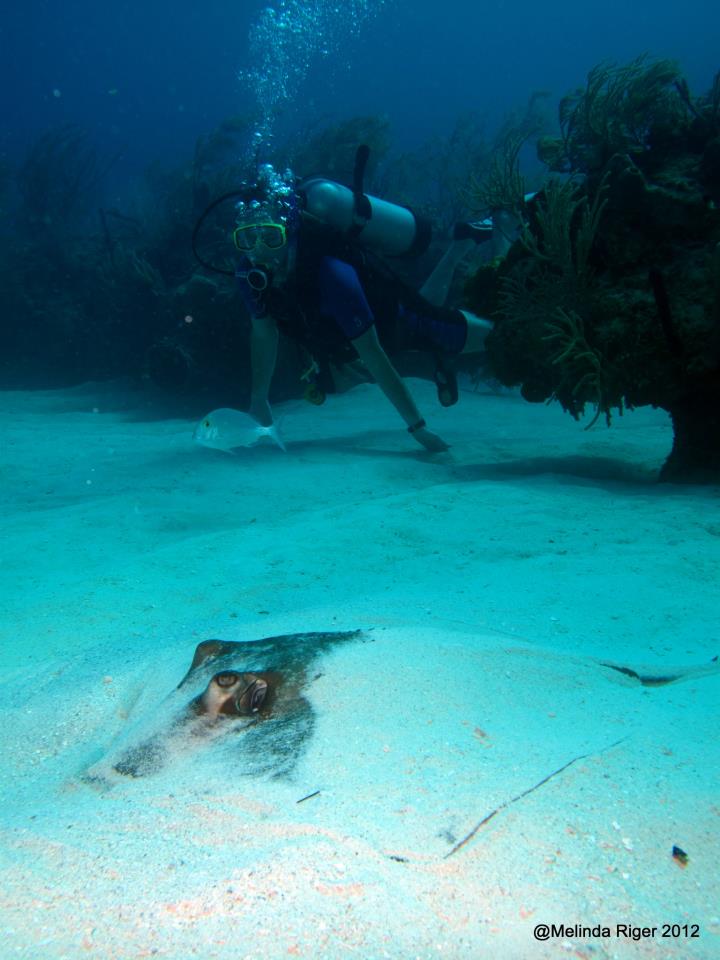
A diver admiring a ray while keeping a respectful distanceSouthern Stingray 2

If you watch out for them… they’ll keep an eye out for youSouthern Stingray copy

Credits: Melinda Riger of Grand Bahama Scuba; Wiki for thumbs /  material; selected online trawlings

My incompetent first ever underwater video at Fowl Cay Marine Preserve, Abaco. I hadn’t snorkelled for X decades, and frankly had some breathing-and-swimming-simultaneously issues, let alone trying to hold a tiny camera steady. Still, here it is (with a proper diver’s video below)
                                            Dasyatis americana .jpg

Music credit on my vid to the fairly litigious Joe Satriani – see JS v Coldplay ‘If I could Fly’ / ‘Viva La Vida’ plagiarism case (settled, to no one’s great advantage). Hey, Joe, what you doin’ with that writ in your hand? For anyone the slightest bit interested in the alleged similarities, here is a mash-up reward for reading about stingrays. Or penalty.

Unknown's avatar

BEAUTIFUL DAMSELS: BAHAMAS REEF FISH (9)


Cocoa_damselfish

BEAUTIFUL DAMSELS: BAHAMAS REEF FISH (9)

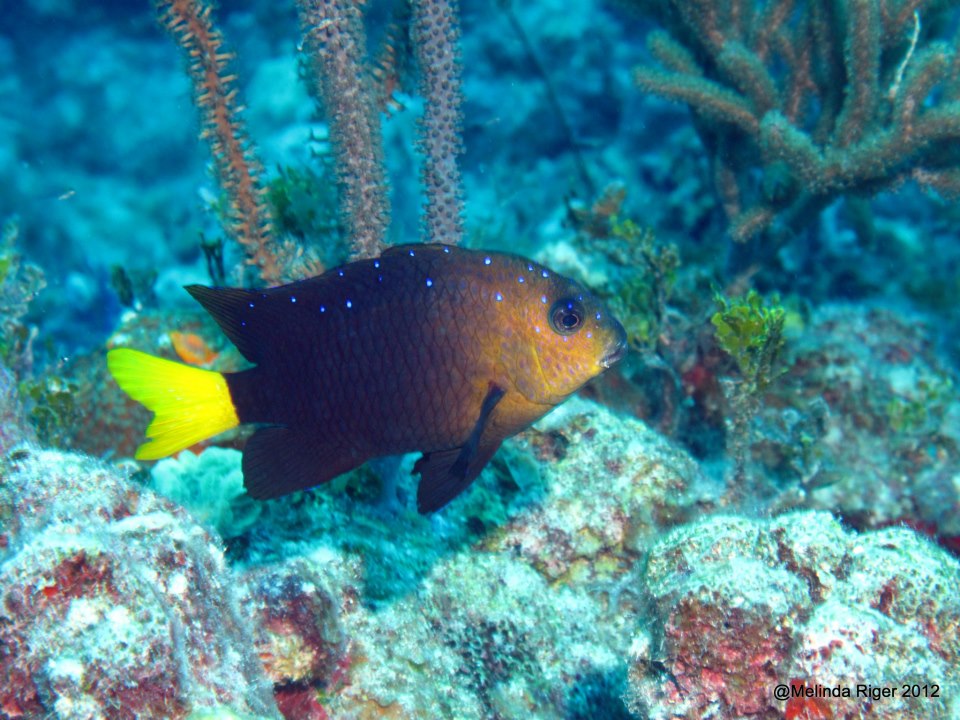
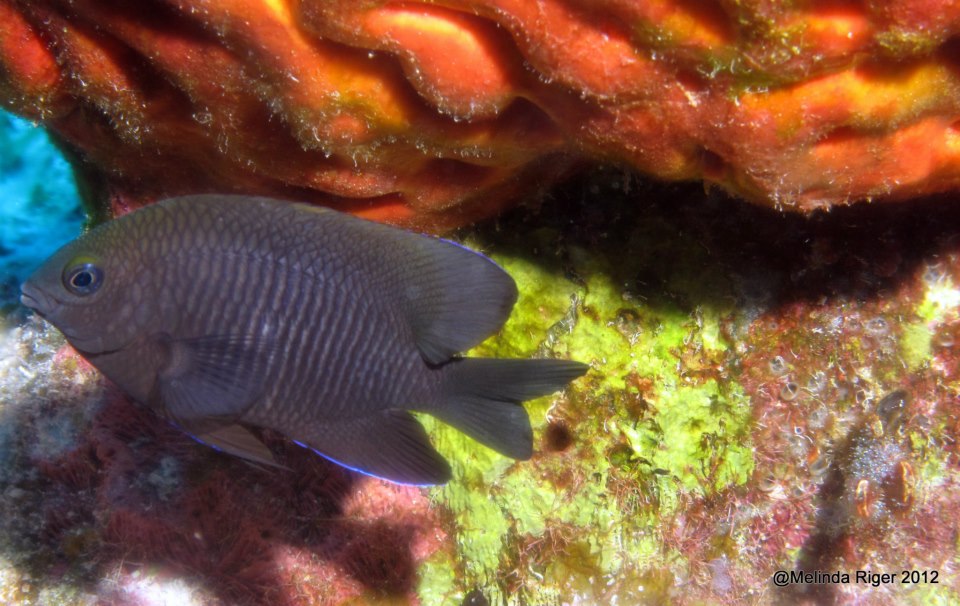
YELLOWTAIL DAMSELFISHBICOLOR DAMSELFISHBicolor Damsel ©Melinda Riger @ G B ScubaCOCOA DAMSELFISHJuvenile Cocoa DamelfishTHREE-SPOT DAMSELFISH (JUV)

THREE-SPOT DAMSELFISHPhoto credits: Melinda Riger @ Grand Bahama Scuba (except header image – Wiki-cheers)

Unknown's avatar

YELLOW STINGRAY Uboritas jamaicensis: BAHAMAS REEF FISH (4)


240px-Yellow_Stingray,_Belize,_2007-09

BAHAMAS REEF FISH (4) – YELLOW STINGRAY Uboritas jamaicensis

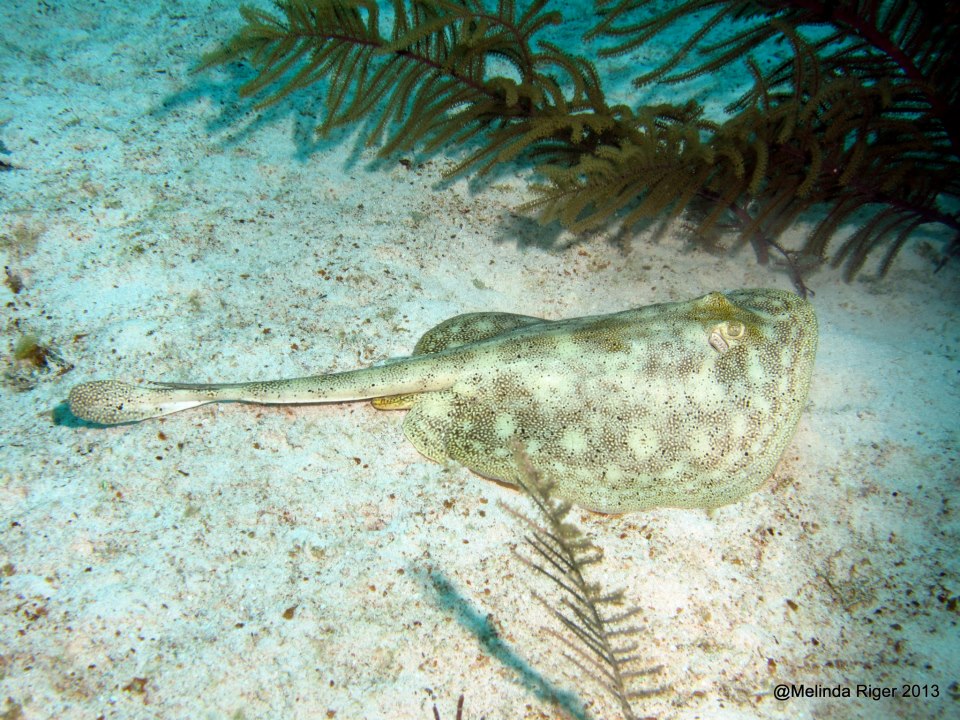
The YELLOW STINGRAY (Uboratis jamaicensis) is one of several ray species found in the tropical western Atlantic ocean. They live  in shallow water on sandy or seagrass bottoms, and are commonly found near coral reefs. Their light and dark splotchy colouring can rapidly change according to the surroundings and the need for camouflage. Look at the photos below with half-closed eyes and (apart from knowing perfectly well that there’s a ray there), the blending in is remarkable.

The yellow stingray feeds on small invertebrates and fishes. It can use its ‘wings’ to uncover buried / hiding prey by disturbing the sand. It also has a subtle ‘passive’ method of hunting by using its mantle to form a lethal ‘cave’ that attracts shelter- or shade-seeking prey.Yellow Stingray ©Melinda Riger GB Scuba Bahamas

Yellow stingrays breed in seagrass. They are quite prolific, breeding year round and usually having two litters a year of up to 7 young. This species is ‘aplacental viviparous’: the developing embryos are sustained initially by yolk and later by uterine milk. To find out more about viviparity, you’ll find a section at the bottom of this post where the inquiring may opt in… Not everyone’s sac of yolk, I quite understand.

The yellow stingray is innocuous towards humans, but can inflict a painful injury with its venomous tail spine. The threats to the species are (1) taking as bycatch by commercial fisheries;  (2) collection for the aquarium trade; (3) negative impact from habitat degradation, both of reef areas and seagrass breeding grounds. For now, it remains common and widespread and retains its IUCN LISTING of ‘Least Concern’.Yellow Stingray

REPRODUCTIVE STRATEGIES (Marine Biodiversity, Canada)

As with all elasmobranchs, skate and rays are internal fertilizers.  Internal fertilization is beneficial because it increases the likelihood and efficiency of fertilization by reducing sperm wastage.  In addition, it ensures that the energy-rich eggs produced by the female are not consumed by predators, and that all the energy allocated to reproduction is passed to the embryos and not lost to the environment.  This is especially the case for species that retain their embryos until the embryos have completely developed, a reproductive mode termed viviparity.  Elasmobranches that practice viviparity are called viviparous (or live-bearing).  There are many types of viviparity, which can be divided into two broad categories: aplacental and placental viviparity. Placental viviparity is the most advanced mode of reproduction, during which the embryos are initially dependent on stored yolk but are later nourished directly by the mother through a placental connection.  This type of reproduction is not exhibited by any type of batoid.  Ovoviviparity (or aplacental viviparity), on the other hand, is the only mode of reproduction employed by rays.  In rays, the embryos rely on the substantial yolk within the ovulated egg only during the initial stages of development. After the nutrients stored in the egg have been consumed, the embryo ingests or absorbs an organically rich histotroph (or “uterine milk”) produced by the mother and secreted into uterus.  The most highly developed of these strategies occurs in some rays in which the lining of the uterus forms tiny, finger-like projections (termed trophonemata) that increase the surface area for histotroph secretion.  This form of nutrient supply (or maternal investment) results in very large offspring, which is characteristic of most species of ray.

For those now fluent in viviparity, the treat of one of Melinda Riger’s fabulous aquatic close-up photos –  keeping a close eye on you…Up close of the eye of a yellow stingrayCredits: Melinda Riger of Grand Bahama Scuba, with thanks; Wiki for other images / source material; selected online pickings

Unknown's avatar

QUEEN ANGELFISH (Holacanthus ciliaris) – BAHAMAS REEF FISH (2)


Queen Angelfish Holacanthus ciliaris

QUEEN ANGELFISH (Holacanthus ciliaris)  – BAHAMAS REEF FISH (2)

The Queen Angel is one of several reef fish species where the difference in colouring between juveniles and adults is marked.  They are commonly found in the waters of Florida and the Bahamas, with a range extending to the Gulf of Mexico. Adults can grow to 3.5 lbs (to mix metric with avoirdupois) and they can live up to 15 years. Like all Angelfish, they rely on their pectoral fins for propulsion as they forage on the reefs for their mixed diet of sponges, coral, plankton, algae, and even jellyfish. As the photo below shows, they have no problem swimming upside down…

QUEEN ANGELFISH (JUVENILE) Juvenile Queen Angel ©Melinda Riger GB Scuba

Evidence suggests that adult Queen Angels may form ‘monogamous’ pairings. Brief research in the factosphere suggests that the proposition is somewhat tenuous. Maybe pairs just like hanging out – possibly to gain some territorial advantage – and anthropomorphising that into lifelong partnership terms may be overstating the relationship… Whether wed for life or not, the actual mating process is remarkably efficient. The pair snuggle up close, simultaneously releasing large quantities of sperm and tens of thousands of eggs. The fertilised eggs hatch within a day. Respect!

QUEEN ANGELFISH (ADULT)Queen Angel fish ©Melinda Riger GB ScubaQueen Angelfish ©Melinda Riger / Grand Bahama ScubaQueen Angelfish (juv) ©Melinda Riger @GBS

Photo Credits for the amazing main images: ©Melinda Riger (Grand Bahama Scuba), with thanks; header image WikiPic

Unknown's avatar

SPOTTED DRUM FISH – BAHAMAS REEF FISH (1)


SPOTTED DRUM FISH Equetus punctatus BAHAMAS REEF FISH (1)

This post is the first of a planned series on Bahamian reef fish. Those who follow this blog (I thank you both) may recall with horror (or worse, pity) my own efforts with reef fish, using a tiny cellphone-sized video camera.  Misty stills culled from video footage. Enthusiastically wobbly movies as I struggle to swim and breathe simultaneously in an alien element. I am more underwater CLOUSEAU than COUSTEAU. However, thanks to Melinda Riger, who with husband Fred runs GRAND BAHAMA SCUBA, I have kind permission to borrow and display images from her stock of wonderful reef fish photographs.

The spotted drum fish (related to two other Caribbean drumfish, the High-Hat and the Jack-knife fish) belongs to a large worldwide family, the Sciaenidae. Besides other drum varieties, the family includes ‘croakers’. These species are all named for the repetitive throbbing or drumming sounds they make. This involves the fish beating its abdominal muscles against its swim bladder. If I find out the reason for this (Species communication? Food call? Alarm? Warning? A piscine ‘advance’? Happiness?) I will add it here in due course. Here an example of an atlantic croaker from the excellent DOSITS site (Discovery of Sounds in the Sea)

[audio http://www.dosits.org/files/dosits/croaker48.mp3]

The spotted drum is one of the few fish of the species to inhabit coral reefs – most are bottom-dwellers (often in estuaries), avoiding clear water. These fish tend to be nocturnal feeders, feeding on small crabs, shrimp and small invertebrates. As far as I can make out they are solely (or primarily) carnivore, and do not graze on algae of other reef plant life.

Drumfish

Drumfish

The photos above are of adult spotted drums. The ones below are of juveniles, and show the remarkable growth-pattern of these fish, from the fragile slender creature in the top image, through the intermediate phase of the one below it (with the amazing brain coral), to the striking adult versions above. People like to keep these pretty fish in aquariums; fine, I’m sure there are plenty to go round, but these ones look pretty happy to me in their natural reef environment…

Juvenile Drum Fish (pre-school)Juvenile Drumfish 2 ©Melinda Riger GB Scuba

Juvenile drum fish (school-age)

Juvenile Drumfish ©Melinda Riger GB Scuba(Header image credit: Wiki-Cheers)

Finally, I’ve just come across this short video from a “Florida Aquarium”, showing how these fish swim. It rather looks as though it has been fin-clipped for some reason… or just damaged, maybe

[youtube http://www.youtube.com/watch?v=dqEWqfLeqOw]

Unknown's avatar

THE PLURAL OF ‘OCTOPUS’ & RELATED CEPHALOPOD MYSTERIES…


Octopus (Melinda Riger / G B Scuba)

THE PLURAL OF ‘OCTOPUS’ & RELATED CEPHALOPOD MYSTERIES…

The correct plural of ‘octopus’ is a singular mystery wrapped in tentacles and hidden beneath a rock. Shall we have the grammatical discourse first, or save it for later? Let’s have some octopi  octopuses octopodes to look at first… [oh, and it’s definitely not ‘octopussies’, not even for 007] 

 Melinda Riger GRAND BAHAMA SCUBAOctopus 2 ©Melinda Riger GB Scuba

12 TASTY OCTOPUS FACTS TO ASTOUND YOUR FAMILY & FRIENDS

  • Their 8 ‘arms’ come in pairs ( the back two act more like legs) and they are bilaterally symmetric
  • Their beak is hard, but they have no internal or external skeleton (so they can squeeze into tight crannies)
  • They paralyse their prospective meals with saliva from their beak; or drill holes in molluscs, stun them with venom and rip them out
  • They defend themselves with squirted ink, jet propulsion, camouflage or venom
  • All species are venomous; only one species is deadly to humans (not found in the Bahamas)
  • They are able to detach an arm (autotomy) to distract predators with the wriggling shed limb
  • The male’s 3rd right arm is the one used for reproduction… (stop giggling at the back)
  • Well, you asked: 1. special hidden extra arm 2. packets of sperm 3. into the female’s ‘mantle cavity’
  • No, I don’t know any more than that – ask your father.
  • Oh, and the males tend to die within months of mating, deftly using death to sidestep parenting 8-limbed offspring
  • They are unlikely to make a good pet for your family. Those who try, fail
  • They are eaten throughout the world, sometimes alive (e.g. Korea)

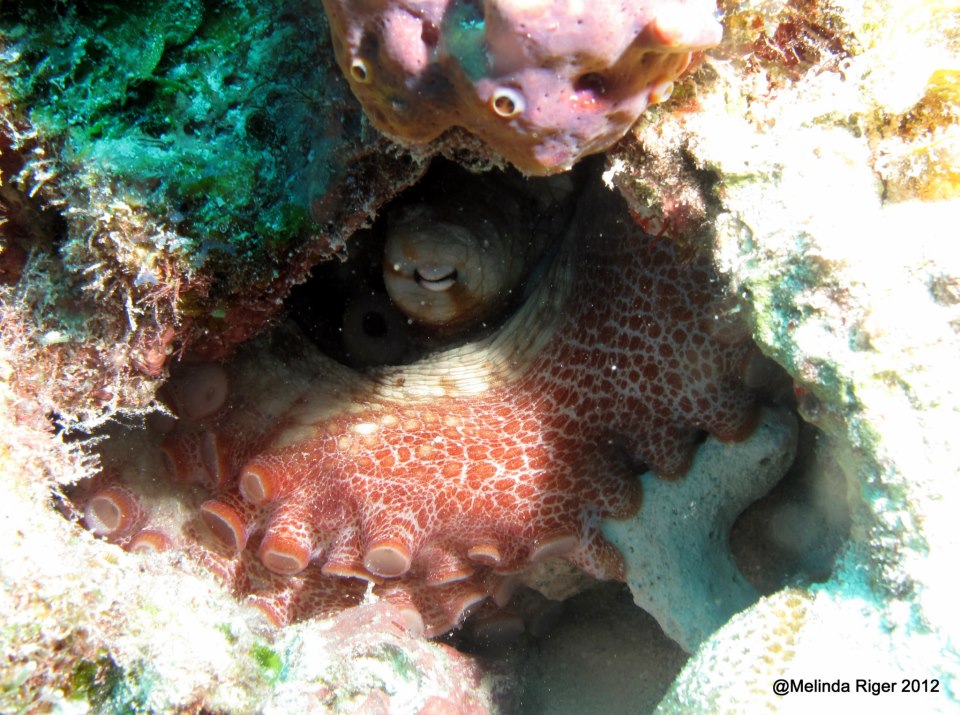
Another photo of Melinda’s, showing how an octopus can tuck itself away inside a small gap in the rocks.  It can still keep an eye on you, thoughOctopus ©Melinda Riger GB Scuba

THE CORRECT PLURAL OF ‘OCTOPUS’

There’s much debate about this comparatively unimportant question. Not even an octopus would care. The viable candidates are: octopuses; octopodes; and octopi.  Since all are in common usage, none is ‘wrong’, though some are more correct than others…

1. OCTOPUSES An anglicised grammatical progression of a latin-sounding word to a logical plural, similar to ‘virus’ and viruses’. Only an extreme pedant would want to argue for ‘viri’ or ‘virii’. Similarly with bonus: “We all got boni for Christmas”. No, you didn’t. They were bonuses.

2. OCTOPODES the origin of ‘octopus’ is a Greek word ὀκτάπους, later latinised. The correct plural in Athens would have been ‘octopodes’. It is not derived from a 2nd declension latin noun, as often assumed, in which case the plural might indeed be ‘octopi’ (cf annus / anni; year / years). Using this etymologically accurate form in conversation might lead to a lonely life as people begin to move away from you. But you would still be in the right, if that matters to you so much…

3. OCTOPI see above. In a picky world, this is the least correct of the 3, being a pluralisation based on the wrong root origin (i.e. on latin, not greek), and therefore etymologically unsound. In practice, it’s quick and easy, and everyone knows what you mean, which is largely the point of language, I guess. Personally, I’d use octopuses if I ever used the word.

SUMMARY: 2 is the most technically correct, and also the most likely to get you chucked off the side of the boat. Fully clothed. 1 is a logically correct anglicisation. 3 is a technically incorrect form, but long usage has made it acceptable to all but verbal Luddites. Push them off the boat too.

If you bothered to plough through that, you deserve some quality recreation. Even if you gave up in despair, you deserve these 2 videos (both taken in the Bahamas), which show the incredible way that these creatures move. Those who have never seen a live octopus will be amazed at their bodily transformations. If you only have time for one, see the top one – professionally done, and shorter. The lower one is a good amateur video, with a certain amount of diver  heavy breathing and gurgling.

[youtube http://www.youtube.com/watch?v=cKAIzFEo75M]

[vimeo https://vimeo.com/13280607]

ADDENDUM This was never going to be easy! What about ‘cactus / cacti’, do I hear? Yes, cactus was known to Greeks as κάκτος (kaktos); but it was equally known to the Romans as ‘cactus’, not as a word that had to be imported by them from the Greeks and adapted. So the word’s root is as much latin as greek. No doubt that explains similar latin-origin ‘i’ plurals such as alumnus / alumni and stimulus / stimuli.

While fact-checking – a rare pleasure for me – I discovered a cheerful ‘Merriam-Webster’ video dealing authoritatively with the vexed ‘octopus plural’ debate (best skip the terrible ad)

[youtube http://www.youtube.com/watch?v=wFyY2mK8pxk]

Octopus (Adam Rees)