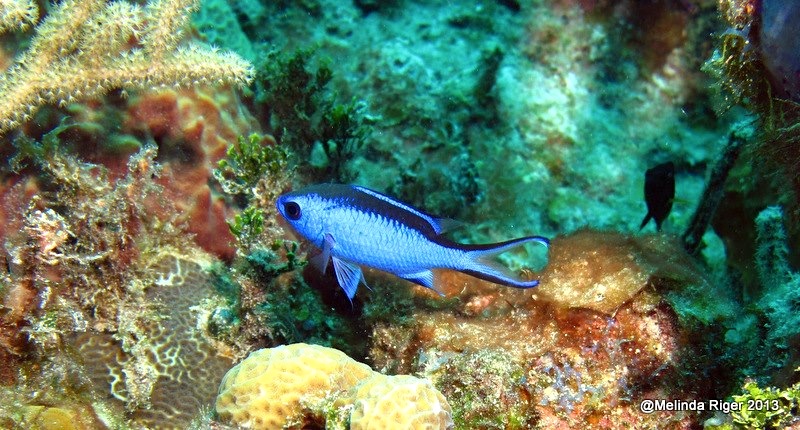
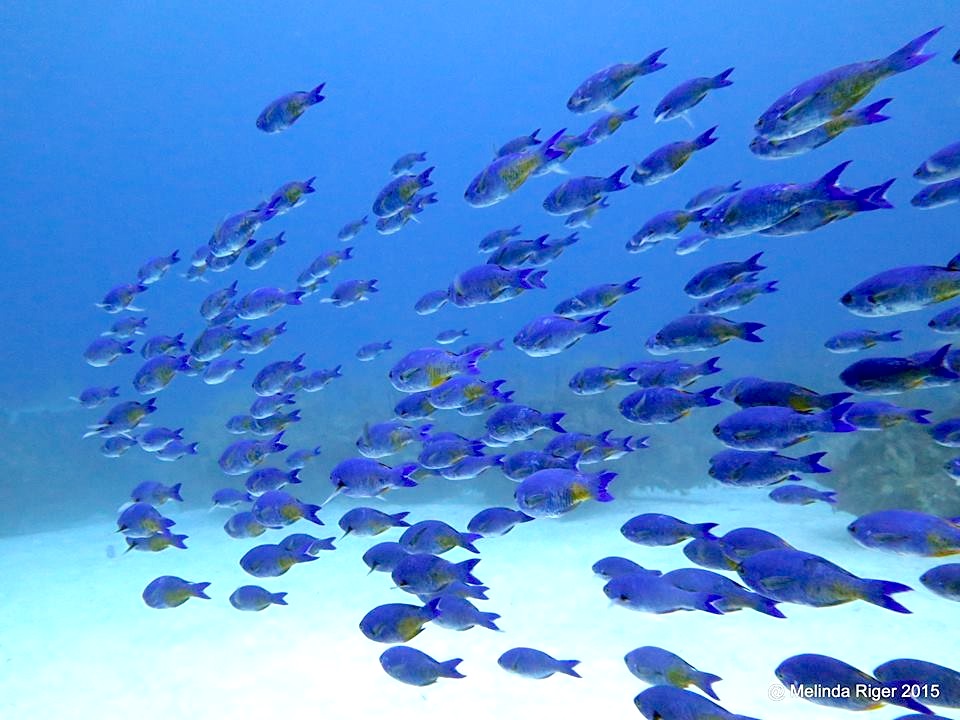
The little blue chromis Chromis cyanea will be instantly familiar to any snorkeler or scuba diver on the coral reefs of the Bahamas. These ever-present small fish – 6 inches long at most – are remarkable for their iridescent deep blue colour that flashes as they dart in and out of the coral and anemones of the reef.
Although at first sight this chromis species – one of many – looks blue all over, adults have a black dorsal stripe and black edging to their fins. They make colourful additions to aquariums, though to my mind they look far more attractive nosing about the reefs foraging for the zooplankton upon which they feed (see header image for details…)
The blue chromis was the second fish species I encountered on my first ever reef dive, at Fowl Cay Marine Preserve with Kay Politano. The first fish was the endearingly inquisitive sergeant major with its smart black and yellow stripes which came right up to my googles to eyeball me. I loved that, even though my pitiful swimming technique meant that I had plenty of other distractions, not least remembering to breathe. Air, that is, rather than water.
SO JUST HOW BIG ARE THESE FISH, COMPARED, SAY, TO A BLUE TANG?
Blue Tang with blue chromis in its wake
All photos Melinda Riger of Grand Bahama Scube, except the penultimate by James St John, taken in San Salvador
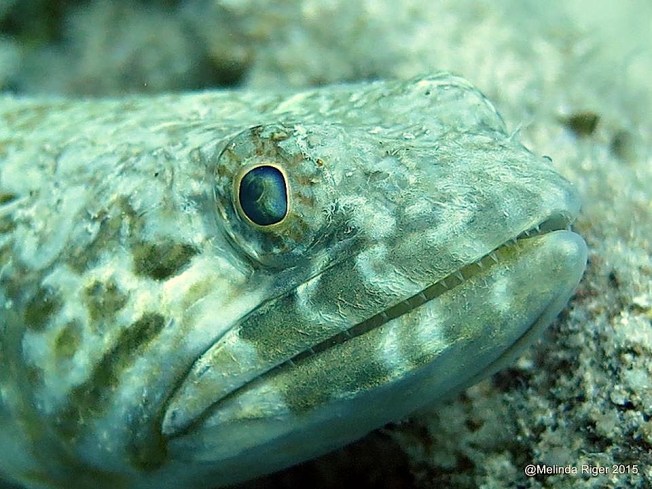
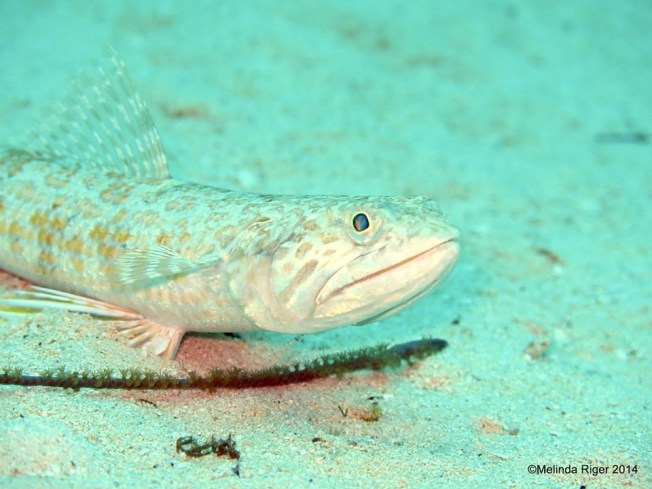
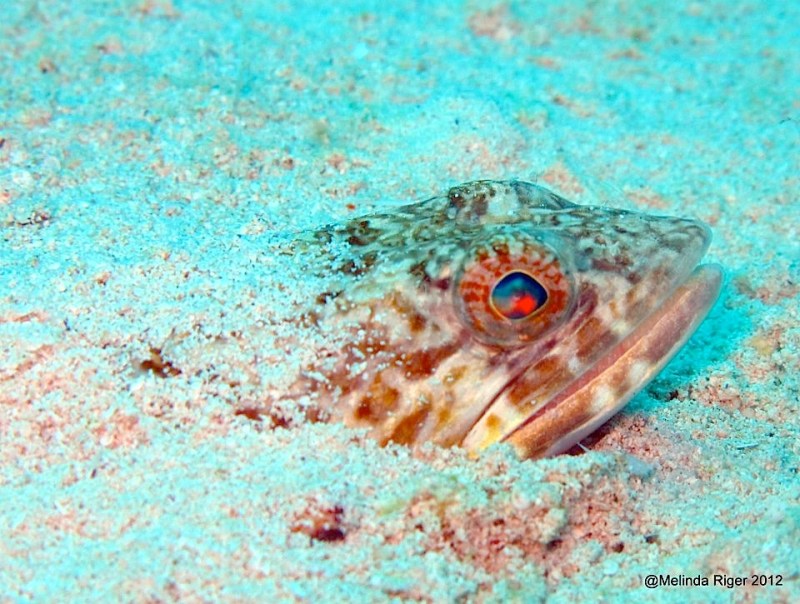
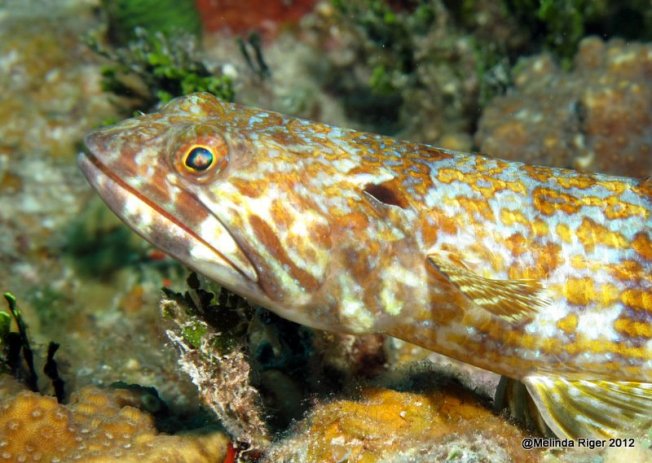
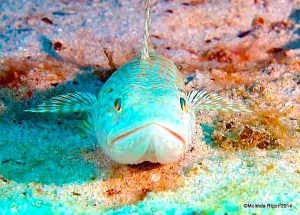
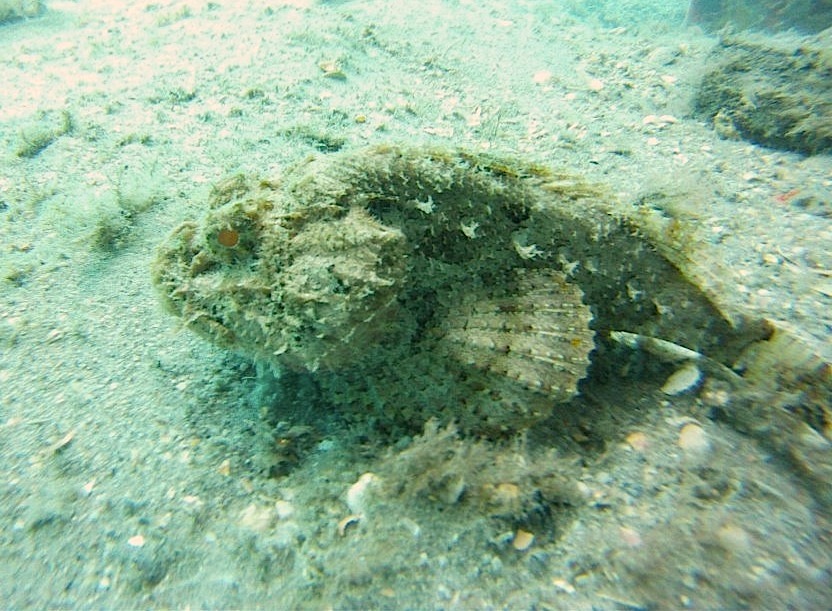
Time for another in the WTF? series, featuring weird (begging their pardons) or not very fish-like fish. The Sand Diver Synodus intermedius is a type of lizardfish found in subtropical waters and often around coral reefs. They can grow up to about 18 inches long and a prime specimen might weigh a couple of pounds. The markings are quite variable but one common characteristic seems to be a tendency to look somewhat down in the mouth; and to possess jaws full of tiny sharp teeth.
Sand divers have two rows of teeth on their upper jaw and three rows on their lower jaw. Not content with that, they also have rows of teeth on the palate and tongue. Were they 50 times the size, they would be truly awesome.
The rather primitive appearance of the sand diver is explicable from fossils, which show that their forbears were active in the Jurassic / Cretacean periods.
HOW DO THEY GET THEIR NAME?
Sand divers often bury themselves in the sand with only their head showing. They are so-called ‘ambush predators’, and burial is one method they use. Another is simply to lie on the sandy bottom, or on reef surfaces and wait for passing prey. Their colouring provides very good camouflage.
WHAT’S ON A SAND DIVER MENU?
A good mix of small reef fishes. Bar jacks, blue chromis, wrasses, fairy basslets, small grunts and so forth. At their own level they are quite fearsome predators.
ARE THEY ON THE HUMAN MENU?
Well, I knew someone would ask that, so I carried out a search. The answer seems to be no. I have found nothing to suggest that they are edible, or that anyone has tried (or if they have, survived to tell the tale). Incidentally, the best way to find out if something is edible by humans is to search for a recipe. There are no sand diver recipes.
STOP PRESSJason Knight has drawn my attention to a comment in WhatsThatFish.com(no relation) by one ‘Jenny’, who commends Sand Divers as food (“they cook up just as good as hogfish!”). So yes, they are edible and there is one recipe…
Gina the Manatee, Eleuthera – expectant mother (BMMRO)
BAHAMAS MANATEES: GINA’S CALF NEEDS A NAME!
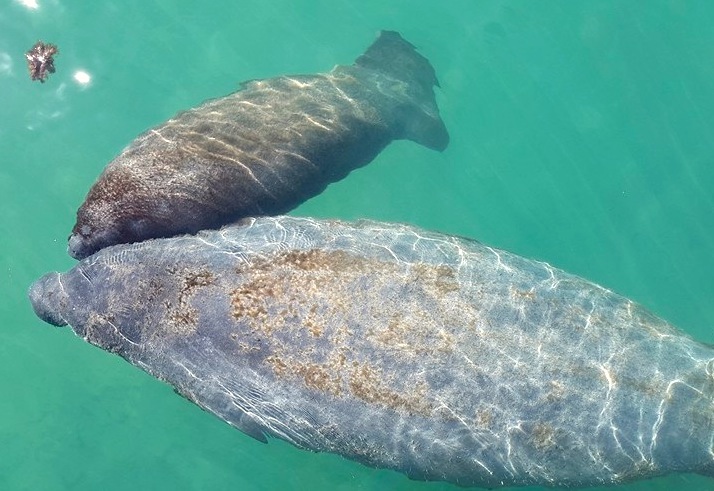
Earlier this year I posted the welcome news that Bahamas manatee Gina was beyond any doubt pregnant. You can read about it HERE. Gina has been living for some time in Eleutheran waters, under regular observation by the BMMRO. At the turn of the year, she was re-tagged in Harbour Island, Eleuthera, when her pregnancy was discovered. I promised to give an update and this is a perfect moment. Gina’s calf was safely born and is growing fast. The pair have spent a lot of time in and around Spanish Wells, Eleuthera. Recently they have begun to move further afield, and there have been several sightings with some great photos shared on FB and in particular on Felice Leanne Knowles’s terrific BAHAMAS MANATEE CLUB page, some of which are included here duly credited.
Gina’s calf is currently just called “Gina’s calf”. Its gender is unknown, and it will take a close inspection from below to ascertain from its… I don’t have to go on with this, do I? The point being that the chosen name will need to be unisex because it may take a while until there is sufficient development of the… I don’t have to go on with this either, do I? Let’s see the nameless calf at once! Details of the competition at the end of this post…
Gina with her newborn calf, July 27 (BMMRO) (note apparent prop scars on Gina)
Spanish Wells, October 26 (π Junea Pinder / BMMRO)
Gregory Town, November 5 (Lynne Hirzel / BMMRO)
Hatchet Bay, November 13 (π Jeffrey Louis / BMMRO)
November 18: Now you see it… (π Norma Roberts / BMMRO)
…and now you don’t…
THE COMPETITION
ATTENTION TEAM MANATEES!!! Due to a consistent influx of sighting information and photos, we would like to add Gina’s calf to our catalogue. It would be nice for it to have a NAME!! We cannot monitor these manatees without your help and it is only fitting that YOU name the manatee. The deadline for name suggestions is November 29th, 2015 and the winning name will be revealed on November 30th, 2015. The member with the winning name suggestion will receive an official manatee club T-Shirt!!
RULES
1. The name must be submitted on the Club PageBahamas Manatee Clubas an individual post – DO NOT comment your suggestion. 2. The name must be unisex – we do not know the sex of the calf yet. 3. A meaning or description must be submitted along with the name. 4. Please do not submit any derogatory or explicit “names.” 5. If you are submitting on behalf of a child who is not on Facebook, please add their name to the post as well.
Spread the word! Tell your friends and families to join the club and help us with a name!! The name will be selected on it’s meaning or description as it relates to marine mammals OR The Bahamas. The amount of “likes” per post will also go into consideration during the selection process.
Regretful Note: I made the stupid mistake of being amongst the very first to post my suggestion, meaning that after a day or two I’d get no likes at all, as more people got involved and my offering sank slowly. But there’ve been plenty of much better ones since, so probably just as well!
For more information about West Indian manatees, you can visit the MANATEE PAGE. There are several links there to specific manatee stories.
Finally, here is a great manatee map that Felice has recently made, showing which of the increasing number of manatees is where at the moment. Just think, only 4 or 5 were known about four years back. Now look!
Credits: primary founts of Bahamas manatee knowledge Felice & BMMRO; Photos BMMRO, Junea Pinder, Lynne Hirzel, Jeffrey Louis, Norma Roberts
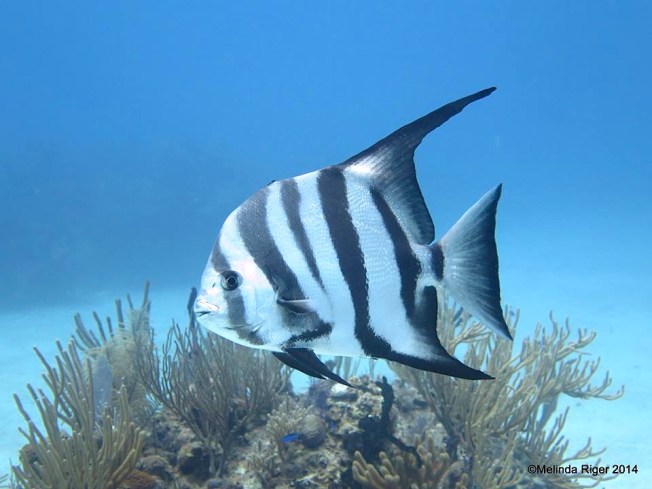
The Atlantic spadefish looks very much like an angelfish, and indeed it is called that – or ‘white angelfish’ – in some places. Actually, it has quite a collection of colloquial names of which ‘moonfish’ is the most attractive sounding. It is not a true angelfish, however, and despite appearances it has a kinship with the weird and wonderful BATFISH.
Unlike the batfish, the spadefish is demonstrably fishlike AND edible. They can grow up to 3 foot long and have become a popular gamefish for three good reasons: they are abundant; they fight hard; and they are dinner. The perfect combination.
All photos: Melinda Riger of Grand Bahama Scuba, with thanks
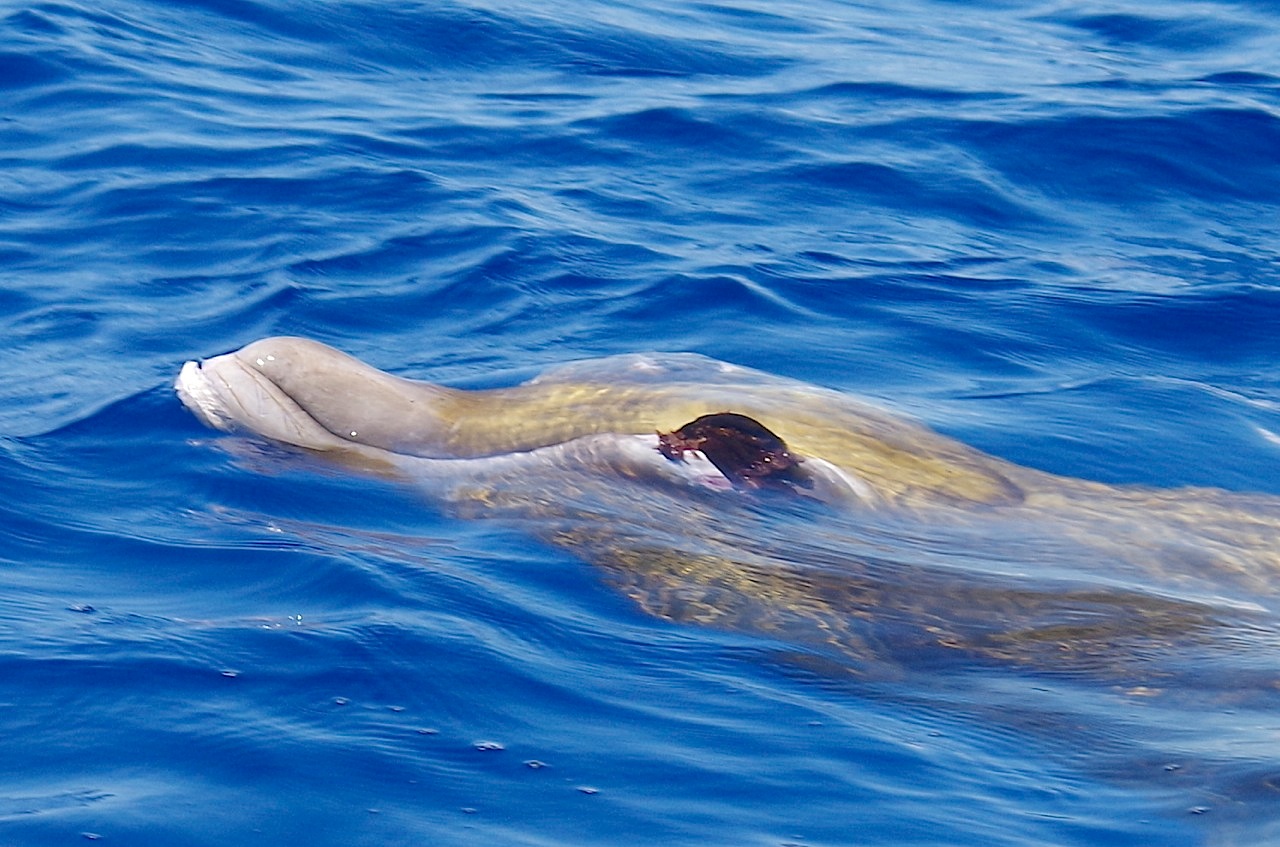
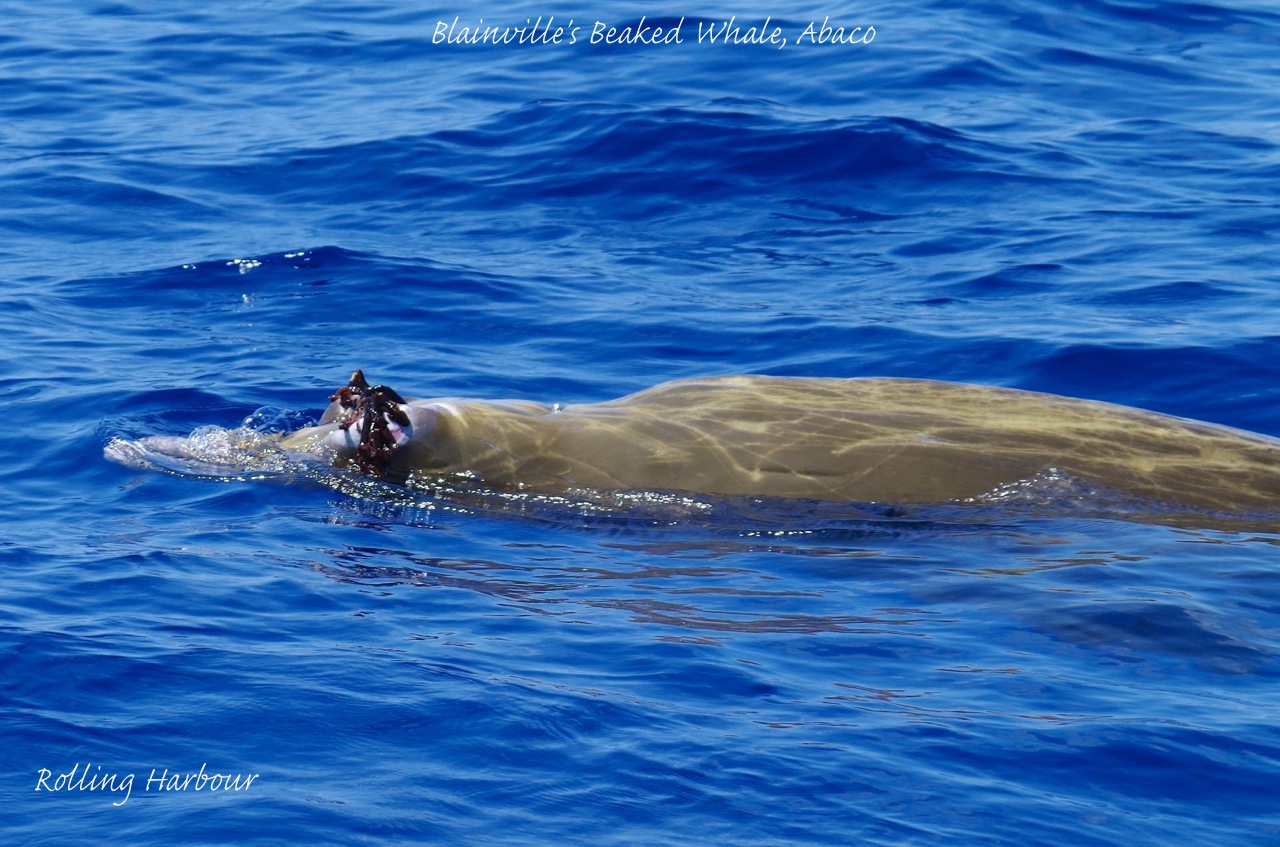
Adult male Blainville’s Beaked Whale with barnacle-encrusted teeth protruding from its lower jaw
WHALE TALES FROM ABACO (2): MALE BLAINVILLE’S BEAKED WHALE
This second post about the Blainville’s Beaked Whales of Abaco, Bahamas, relates to a prolonged encounter with a group of mothers, calves and a male. This was our second BBW sighting on the same day in March: the first is described HERE. Click the link to find out more details about these wonderful creatures, with plenty of close-up photos.
We had been invited by Charlotte and Diane of the Bahamas Marine Mammal Research Organisation BMMRO to spend a day with them on the research boat. This was our first chance to get close to whales, a chance made far more likely by (a) being with experts and (b) their specialist equipment…
Our first sighting was a short distance south of Rocky Point, as we moved into the deeper, darker ocean waters of the Bahama canyon, with the shoreline still clearly visible. We then visited HOLE-IN-THE-WALL in the RHIB and took a close look from the sea at the damage and destruction of the famous Hole caused by HURRICANE SANDY.
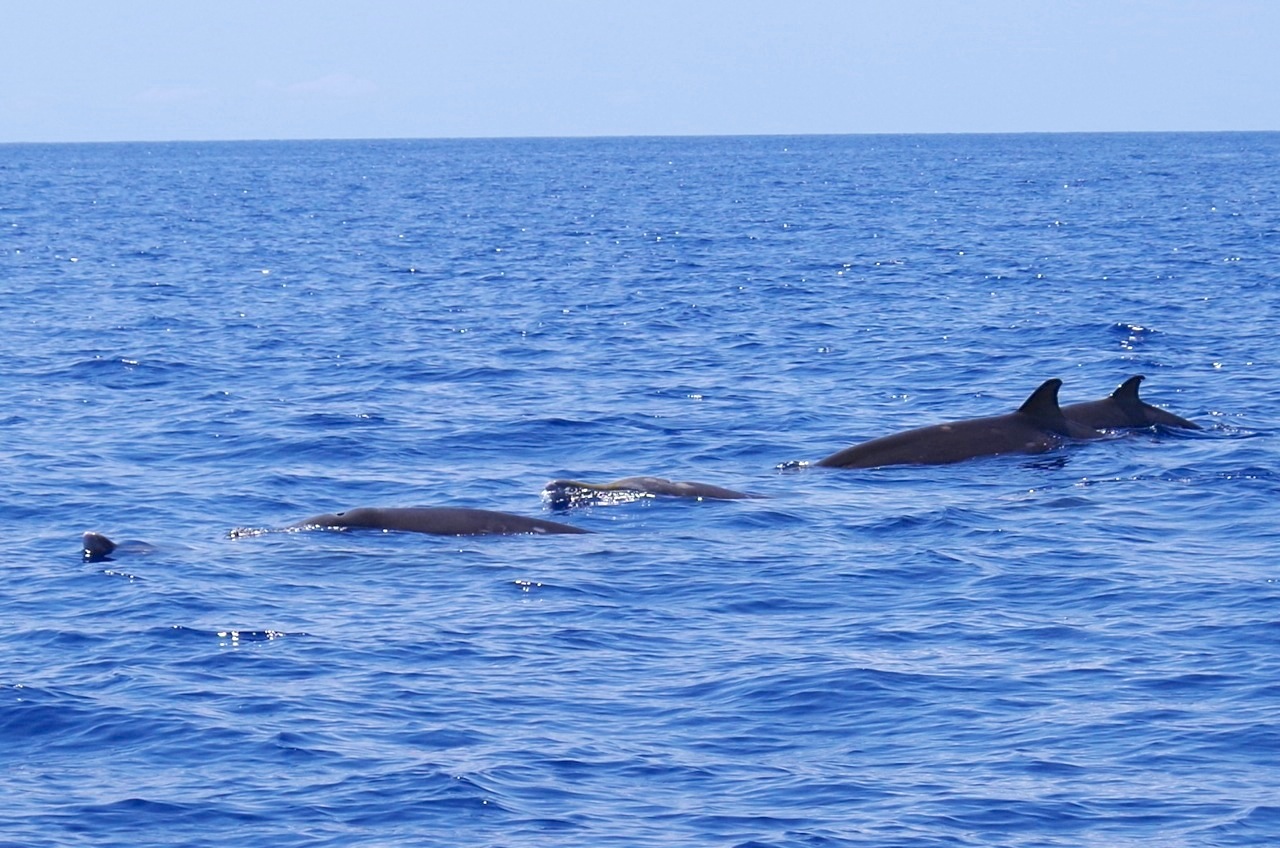
On the way back we paused as we got to the same area where we had seen the group earlier in the day. Within minutes, several whales came straight towards us. This photo shows 3 adults and, almost submerged, a calf.
For the next hour or so, they played around the boat like very large dolphins moving in slow motion. Usually these whales make a deep dive every 20 minutes or so and stay underwater for about the same time before resurfacing. These ones stayed with us throughout.
3 adults with 2 calves
Mostly they stayed quite – or very – close to the boat. Sometimes they swam across the bow or even under the boat. From time to time, they would move off some distance. Each time we thought they were moving on, and each time they soon returned. After a while the females and calves were joined by another whale – the less common sighting of a male replete with barnacle-encrusted teeth protruding upwards from his lower jaw.
The male initially stayed slightly further away from the boat than the others, perhaps assessing the threat to the group. Then he too joined in, passing and repassing the boat, swimming away and returning, remaining on the surface and offering a wonderful view of his noble head (see header image and below).
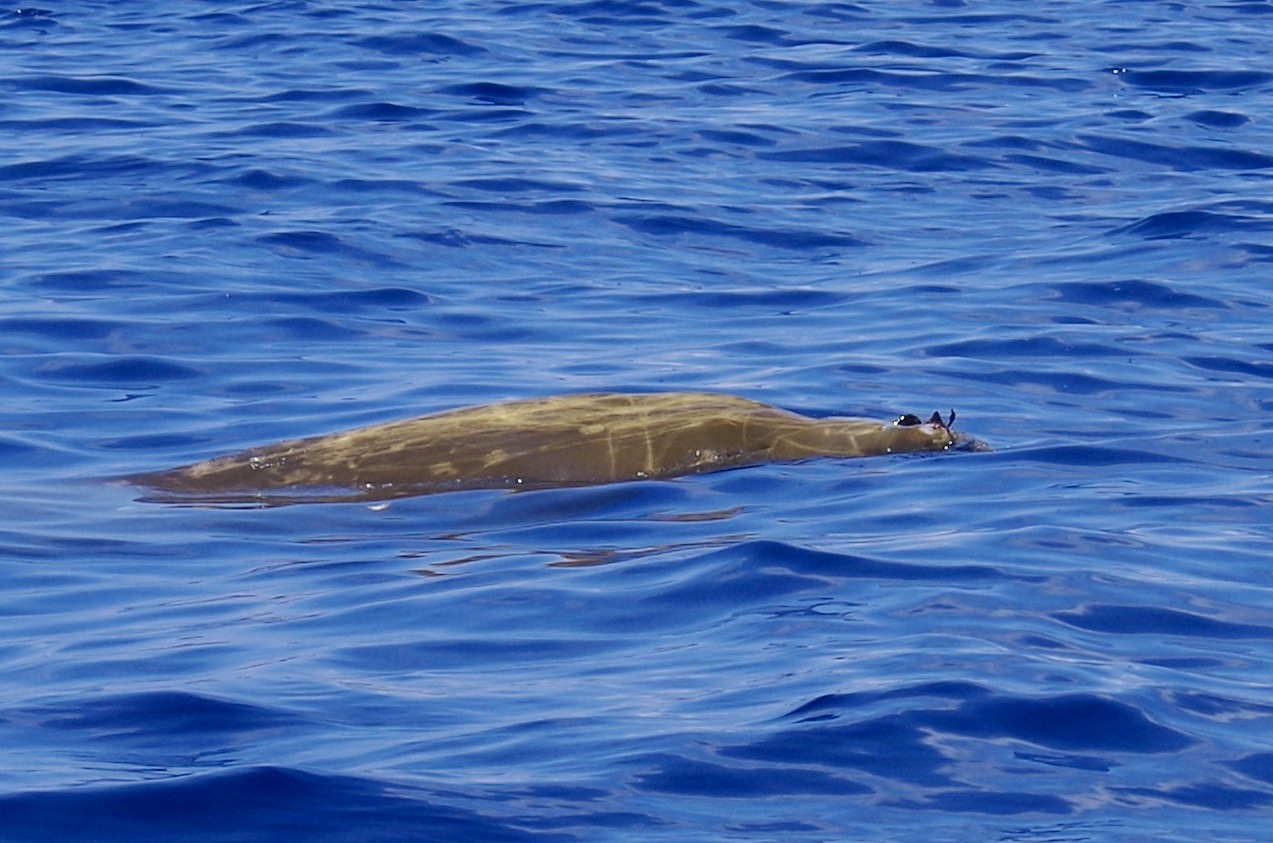
Looking at my photos later, I realised that a second male must have joined the group for a short time. The image below shows a male with far fewer barnacles – certainly not the male we had been watching.
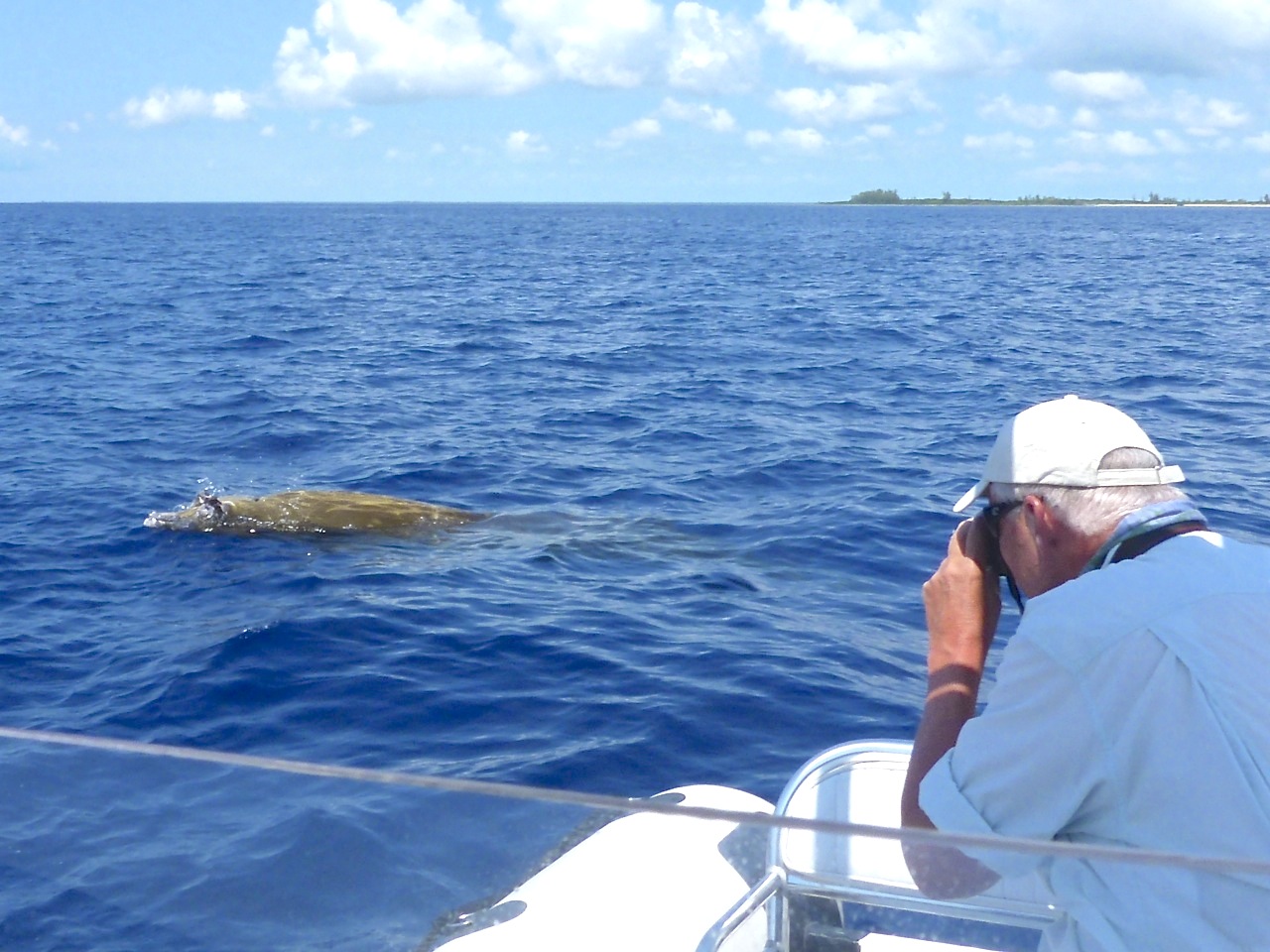
It was remarkable to see these huge creatures behaving in much the same way as dolphins, swimming playfully around and under a boat, moving away, then returning for more. These whales are some 15 feet long and weigh about 2000 pounds. They were inquisitive, unafraid (even with calves in the group) and gentle. Maybe they sensed that they have been to subject of years of intricate research by Diane and Charlotte that will materially assist with the preservation their species. More likely, the group were simply enjoying themselves in the sun with a peaceful intruder in their territory.
You don’t have to go miles offshore to see whales in Abaco waters
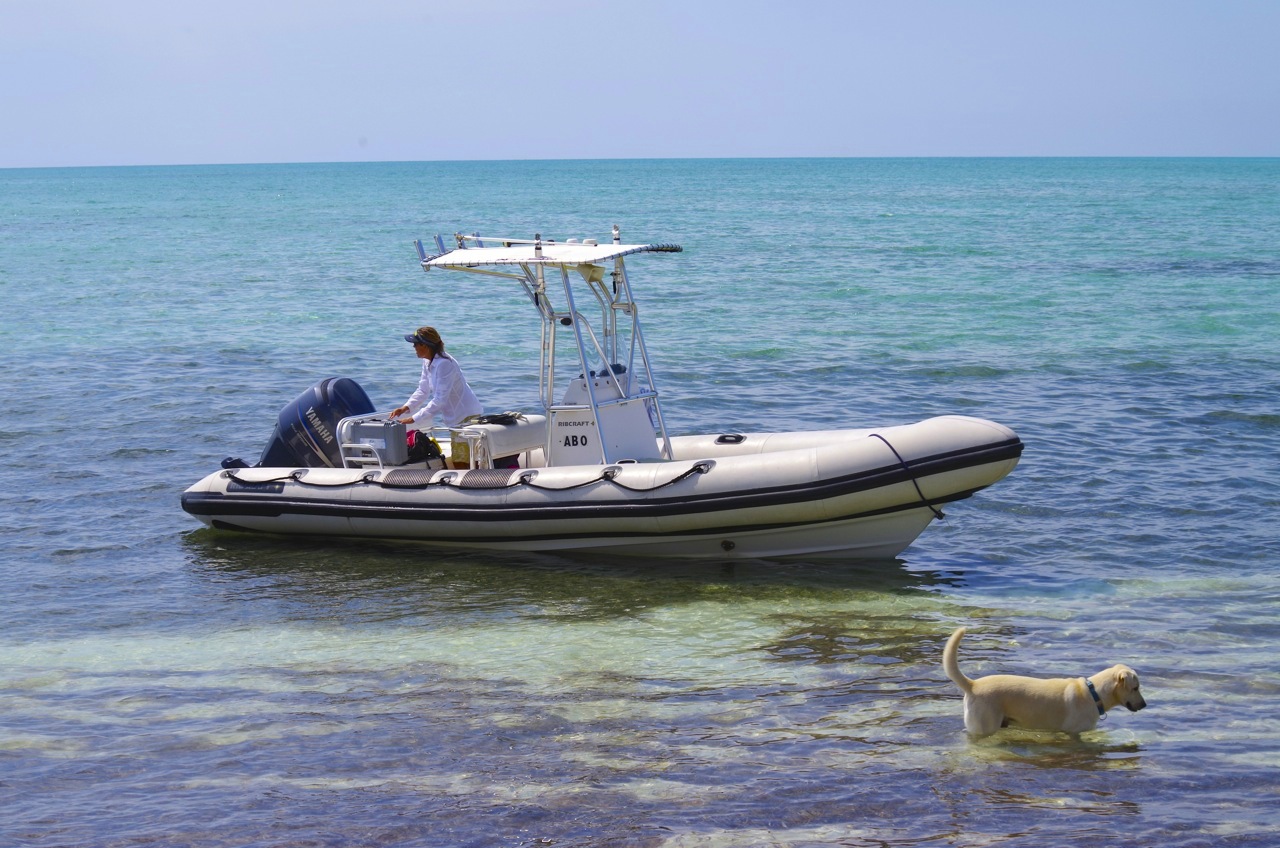
BMMRO research RHIB with Diane BMMRO HQ, Sandy Point, Abaco
Credits: All photos RH except one; Charlotte & Diane for a brilliant day out; Mr Blainville for a brilliant whale; Mrs RH for snapping me snapping the whale – a photograph that was featured in a competition in the Guardian Newspaper.
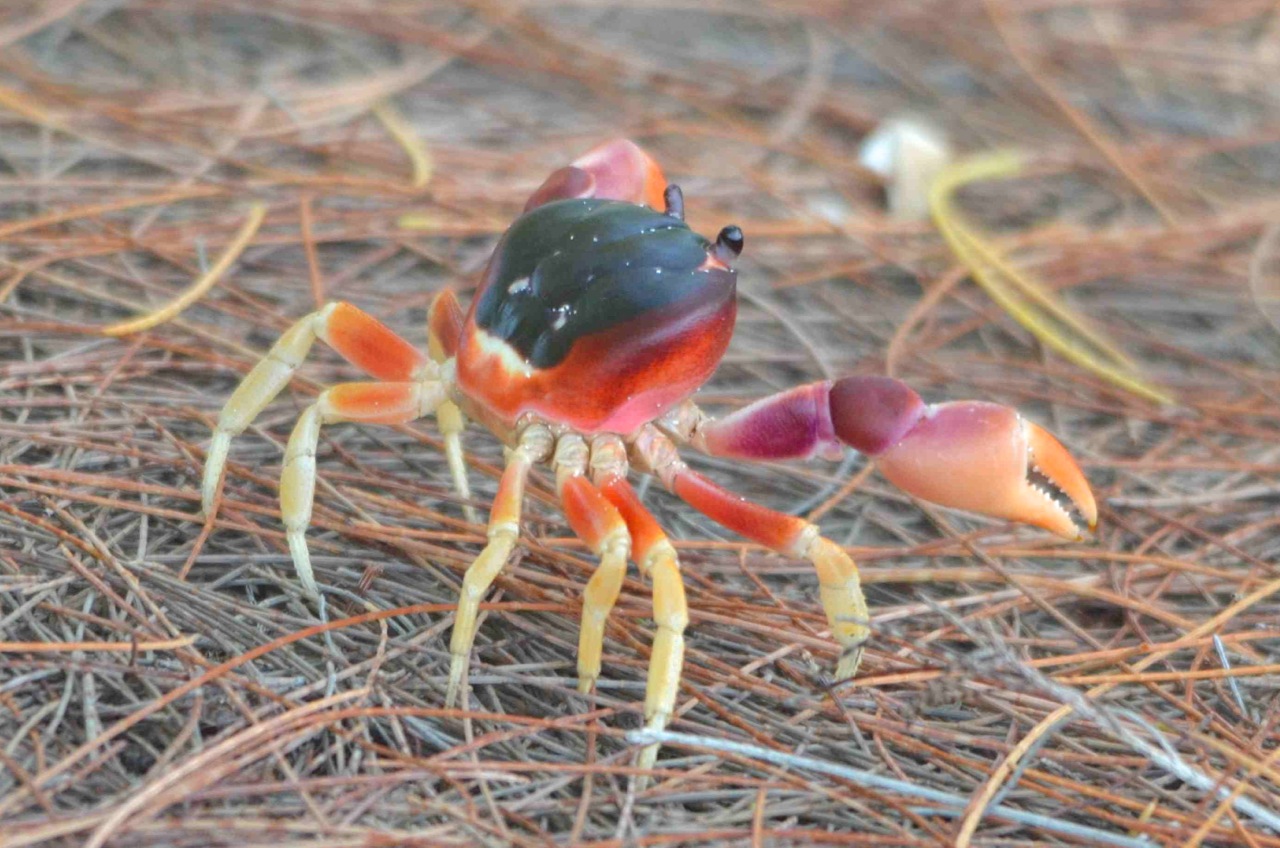
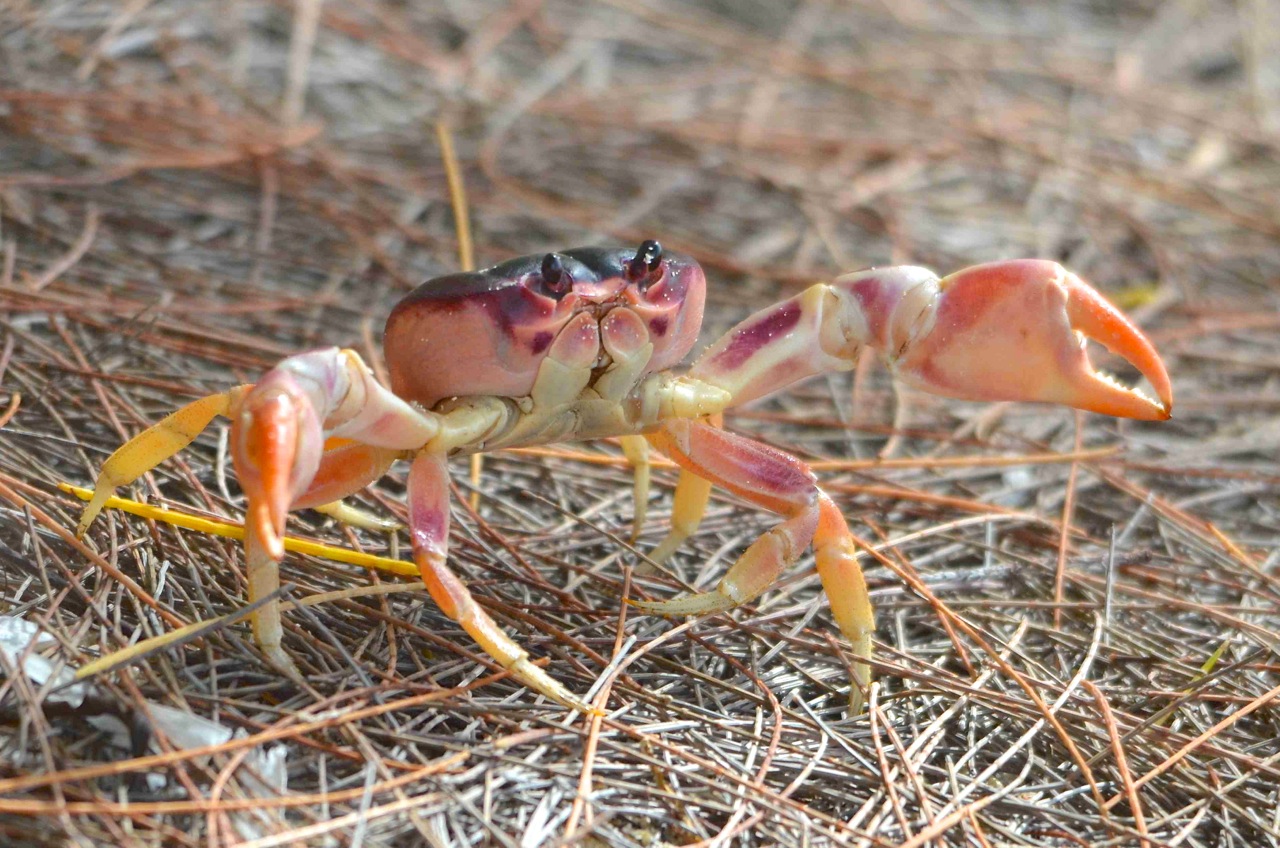
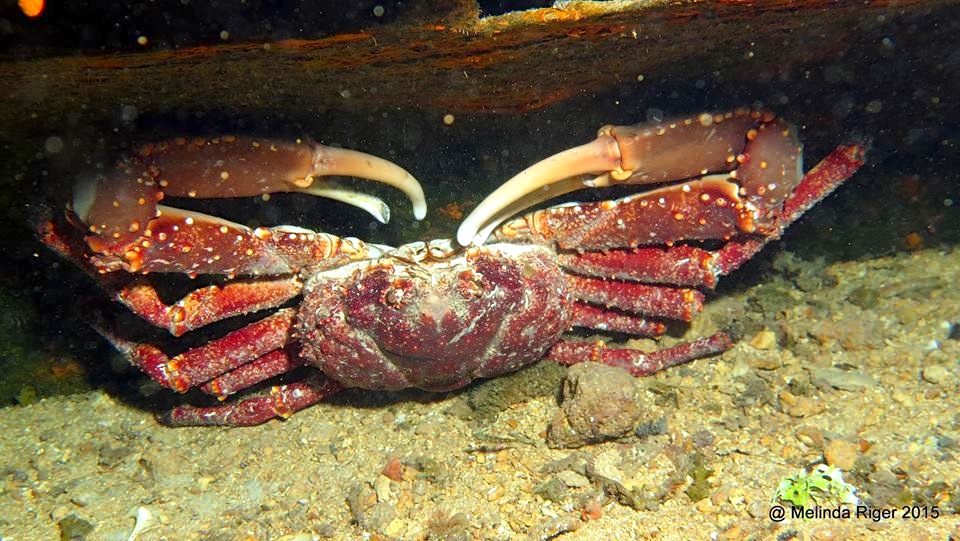
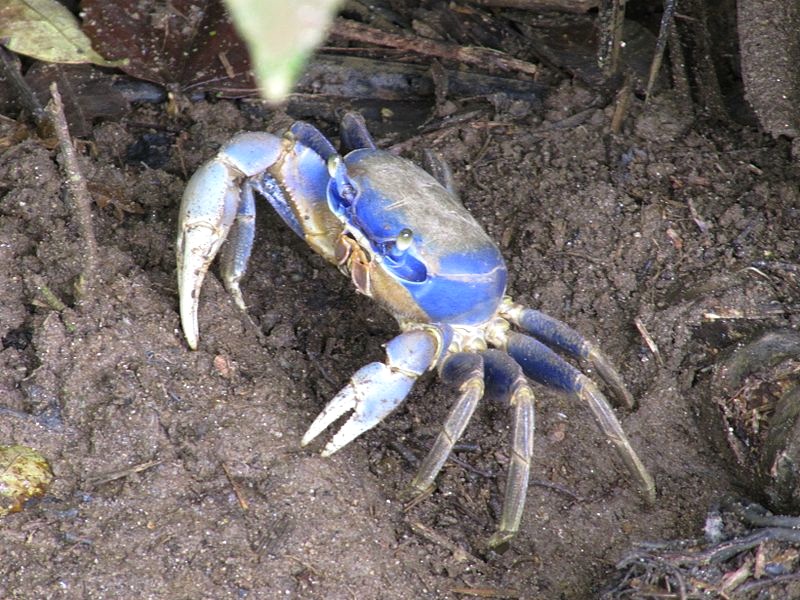
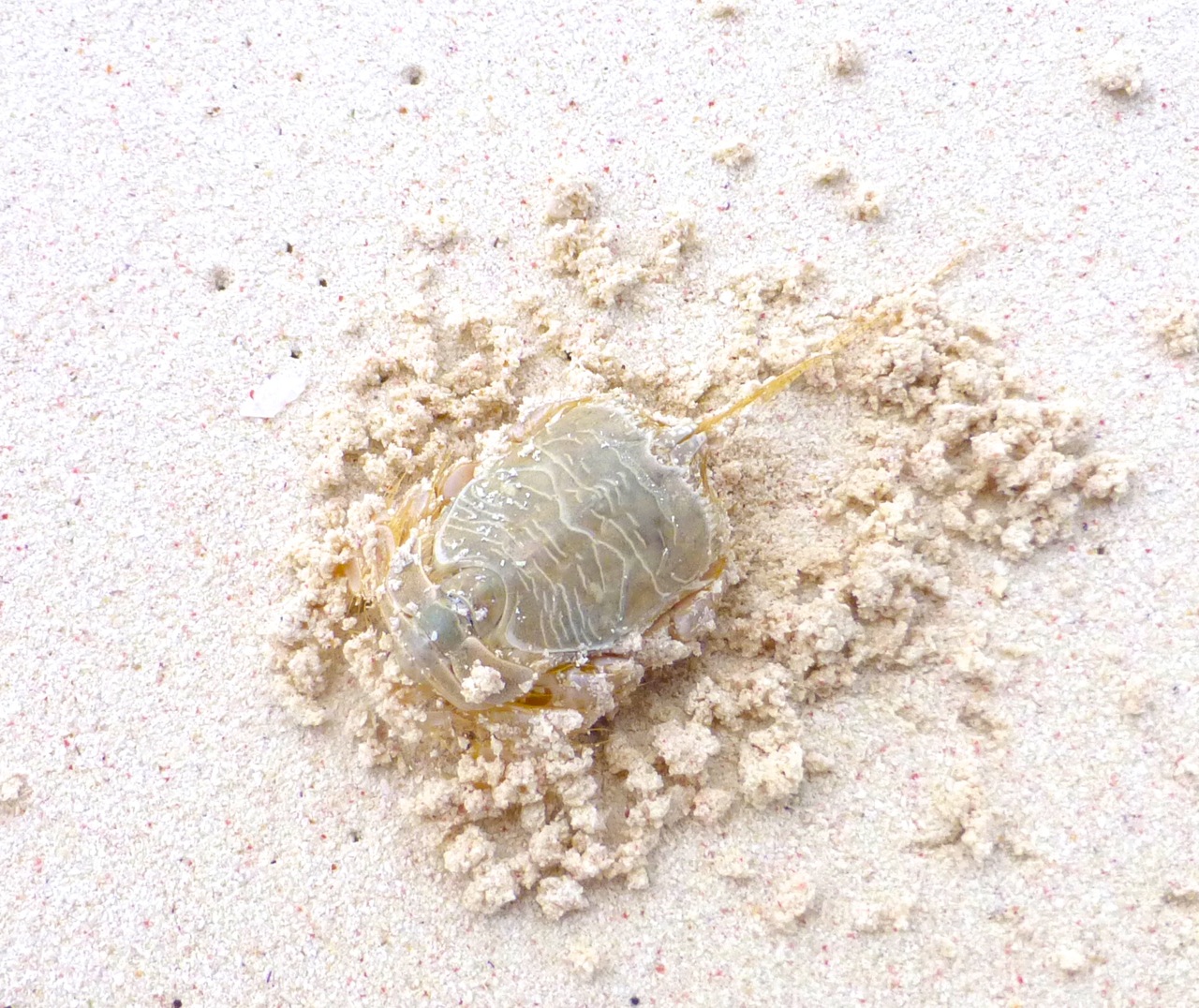
It’s been a while since I was in a crabby mood, but autumn is here and there’s a sharp nip in the early morning air… What better time to visit a selection of the many crab species found on Abaco.
GHOST CRAB
I thought I had some good photos of these cute little guys with their ‘Carson the Downton Abbey Butler’ white gloves. However, Tom Sheley (header and below) has perfectly caught the tide-hanging that they enjoy, sometimes disappearing completely or perhaps leaving just their twin periscopes showing.
HERMIT CRAB
Many people’s favourite small crab, with their endearing house-moving habits as they grow. Excellent for racing, too (see HERE). Here’s one taking its mobile home up a tree; and another tucked safely into a nerite[Capt Rick Guest amends]Magpie Shell, Cittarium pica, (used to be Livona pica), the living animal of which is the 3rd most consumed animal behind Lobster & Conch in the Caribbean. They are Littoral around Shorelines and are also used as bait.
BLACK-BACKED LAND CRAB
Faithful guardians of my rod (there are 2 there)!
LAND CRAB
STONE CRAB
ARROW CRAB
CLINGING CRAB
BLUE CRAB
HORSESHOE CRAB (LIMULUS)
Credits: Tom Sheley (1, 2, 3); Keith Salvesen (4,7,8,9,15); Charlie Skinner (5,6); Melinda Riger (10,11,12,13); Leodec (14)
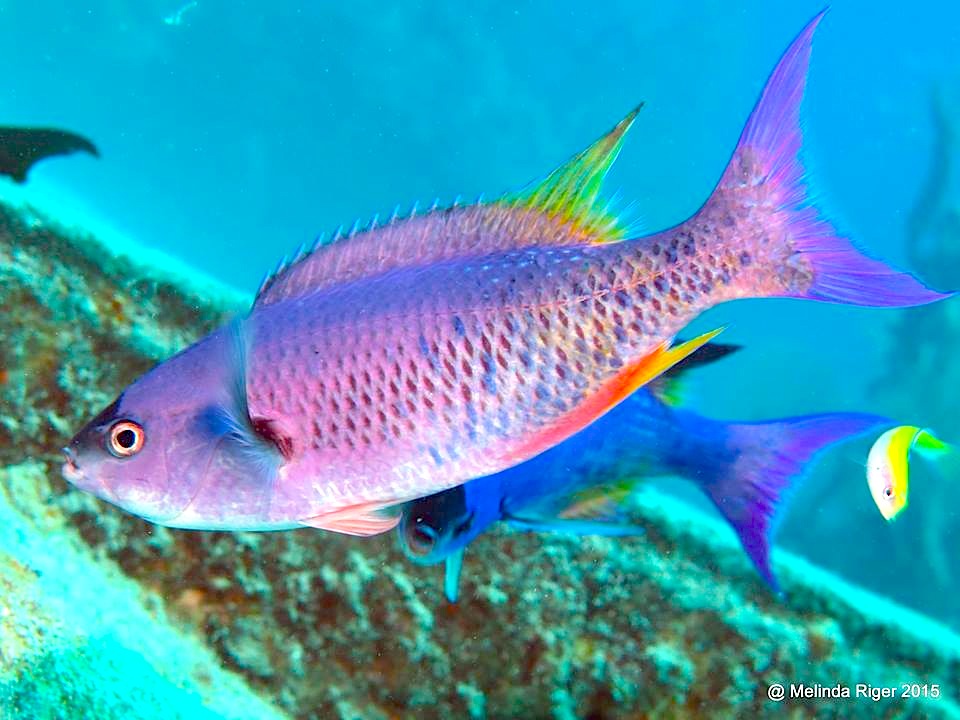
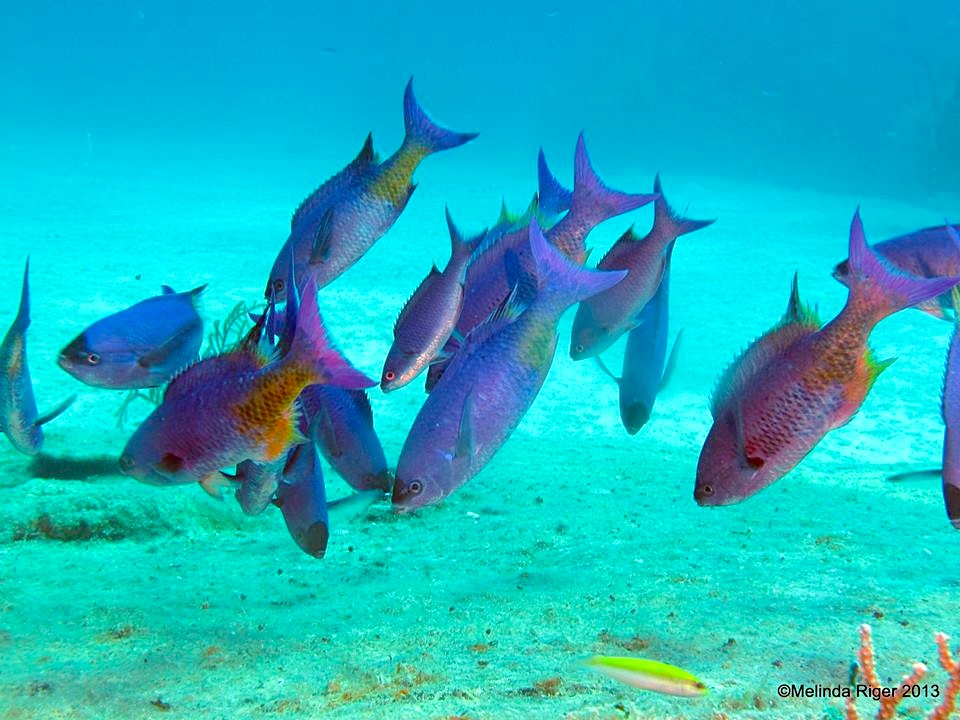
The creole wrasse is a small wrasse species, with adult males reaching about 12 inches long. During its life, a creole wrasse changes colour significantly. A juvenile is almost completely violet-purple. As it matures, it develops patches of yellow on the rear part of its body.
Creole wrasse are found throughout the tropical and subtropical waters of the western Atlantic from Florida south to Brazil. The habitat includes Bermuda, the Caribbean Sea, and the Gulf of Mexico.
Creole wrasse are social fish that live in groups around coral reefs. They are found in shallow water, but may also be seen as deep as 100m.
The groups of wrasse feed on plankton, small jellyfish, pelagicTUNICATES, and invertebrate larvae. These fish are active in groups by day. At night each fish finds its own safe crevice in the reef to sleep.
ANYTHING ELSE WE NEED TO KNOW?
Yes indeed. Their intriguing breeding regime – how unlike our own dear species. The creole wrasse is aprotogynous hermaphrodite. The largest fish in a group is a dominant breeding male, while smaller fish remain female. If the dominant male dies, the largest female changes sex. The mature males congregate atleksto breed, at which they display and are approached by females before mating with them. [note: these leks are reminiscent of certain clubs in the less reputable parts of some towns and cities. Or so I am told]
It’s been a while since the last Rolling Harbour musical diversion, but the colour of this wrasse nudged my memory back to 1968 and DP’s first album (line-up Mk 1 of several hundred, or so it seems). Hence the post title. Anyone who remembers this ‘wasn’t there’. Anyone who doesn’t obviously wasn’t there either…
I don’t think this guy thinks much of that. And quite right too
All phish photos by Melinda; DP cover borrowed from Am@z@n; MP3 moi
For some time now, there has been understandable concern about the increasing evidence of mangrove die-back in the Abaco Marls and elsewhere in Abaco waters. Scientific investigations are ongoing and you will find some of the survey results so far on the excellent Abaco Scientist interactive mapHERE. You’ll find other relevant and authoritative mangrove material if you check out theBLOGmenu of the website.
The ‘200 sq. miles’ in my map is debatable, depending what one includes. Other estimates are of 300 or even 400 sq. miles. Whichever, the Marls cover a massive area of mangroves, islets, flats, channels and wonderfully diverse wildlife. A large proportion of the many species – fish, birds, turtles etc – depend on the complex ecology of the mangroves for food, shelter and breeding. Depletion of the mangroves from whatever cause will have a direct effect on the creatures of the Marls.
Ryann Rossi, a PhD student with North Carolina State University, has been researching the worrying phenomenon of mangrove die-back in the Marls this summer. She has written an interesting and informative account (conveniently in the RH ‘Facts about…’ style) that was published in Abaco Scientist last week. The blue links will take you to the ABSCI site for further information on each topic. I’m grateful to Ryann and ABSCI for permission to use the material.
Five Things to Know About the Mangrove Die-back in The Marls (at this point, anyway)
1. This die-back appears to be the result of multiple stressors acting together. Think of it in the sense of our own body – when our immune system is down, we are often more susceptible to getting sick. The same thing is likely happening to the mangroves.
2. It appears as though a fungal disease may be taking advantage of already stressed mangroves and causing die-back. We did preliminary surveys across Abaco and found fungal lesionsnearly everywhere. However, the fungus was present in different densities in different areas. In the die-back area nearly all the leaves remaining on trees have lesions. We think that this pathogen capitalized on the mangroves being weakened by other stressors such as hurricanes, which cause extensive leaf drop, change in the movement of water, change in sedimentation and erosion.
3. We are still working on identifying the pathogen associated with the lesions we’ve found. We are confident that it is a fungus and are currently growing fungal cultures in the lab to examine defining morphological characteristics in addition to using DNA sequencing to identify the culprit.
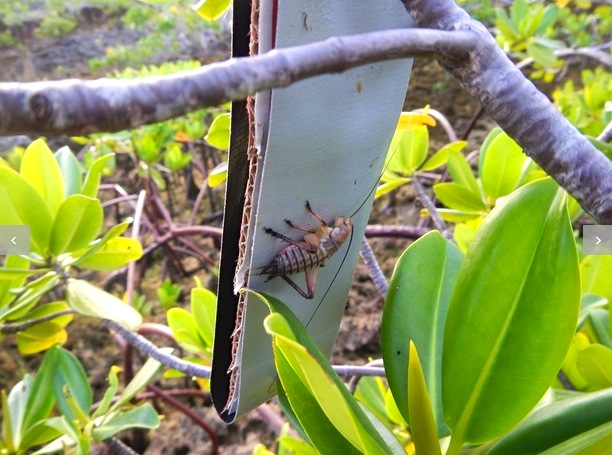
4. We have documented the presence of the Robust Bush Cricket (Tafalisca eleuthera) in the die-back areas as well as other areas with high densities of lesions. These crickets are documented to consume Red and White mangrove leaves. As such, we were concerned about their potential role in die-back. We set out a caging experiment to exclude the crickets from certain dwarf Red mangrove trees to see just how much grazing they may be doing in the die-back area. This experiment is ongoing.
5. The take home: there is likely more than one causal agent of the die-back in The Marls. Many factors govern mangrove productivity and functioning: nutrient availability, salinity, sedimentation rate, herbivory, and disease are just a few of the factors that contribute to overall mangrove function making it very difficult to pin point which factors may be driving the die-off. On the bright side, we are confident that we have a lead on the causes and we are working hard in the field and laboratory to fully understand what is going on in The Marls.
This summer Stephanie Archer and I continued research efforts focused on determining the cause of the mangrove die-off in The Marls (work funded by the National Science Foundation). Our efforts were predominantly focused on the fungal pathogen we found associated with the die-off site. We created a small citizen science and outreach project to document the presence or absence of the pathogen across Abaco. This project consisted of short surveys and leaf collections. In total, 92 areas were surveyed including locations from Abaco and San Salvador. We also took this outreach project to the annual Bahamas Reef Environment Education Foundation (BREEF) teacher training conference. There we disseminated survey packets to teachers from islands throughout The Bahamas who will help us collect more data on the presence (or absence) of this pathogen on other Islands.
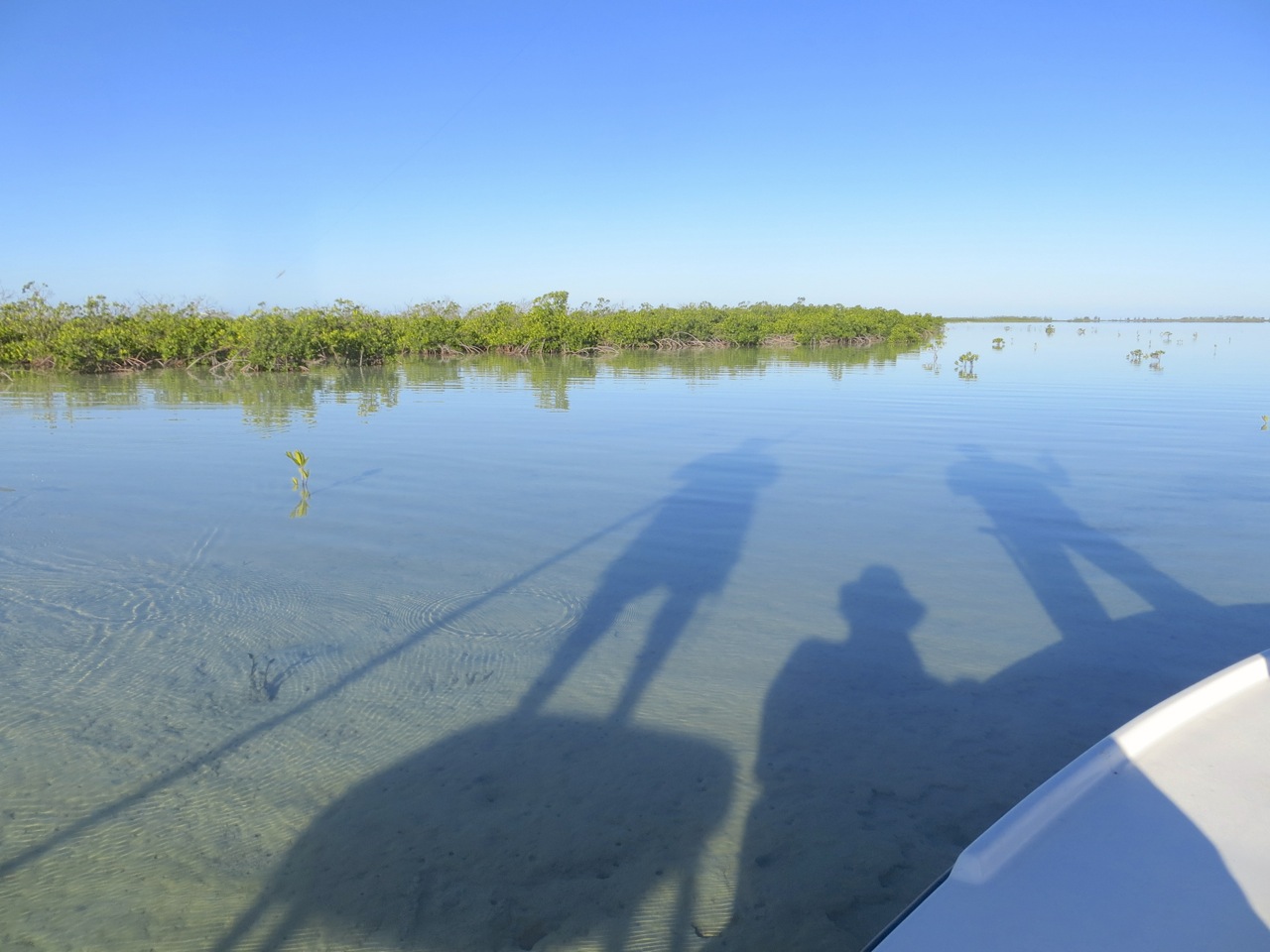
Three men on a skiff – Abaco Marls
On Abaco, we constructed an experiment to investigate the role of grazing and the presence of fungal lesions on Red mangroves. We simulated grazing using crafting scissors to cut small sections on 600 leaves in 4 different mangrove creeks. We observed the leaves for 28 days to determine if cutting leaves predisposed leaves to fungal infection. At these sites we also trapped for insects to gain an idea of what kind of grazers may be chewing on the leaves. We also did a series of disease incidence surveys that will be routinely monitored for disease progress over the next 2 years. These surveys will allow us to systematically track the progress of the disease. In addition to our field work, we spent many hours in the laboratory isolating fungi from leaves to grow in culture. These cultures were brought back to North Carolina State University and will be sequenced in order to help us identify the fungal pathogen responsible for making the lesions on the mangrove leaves.
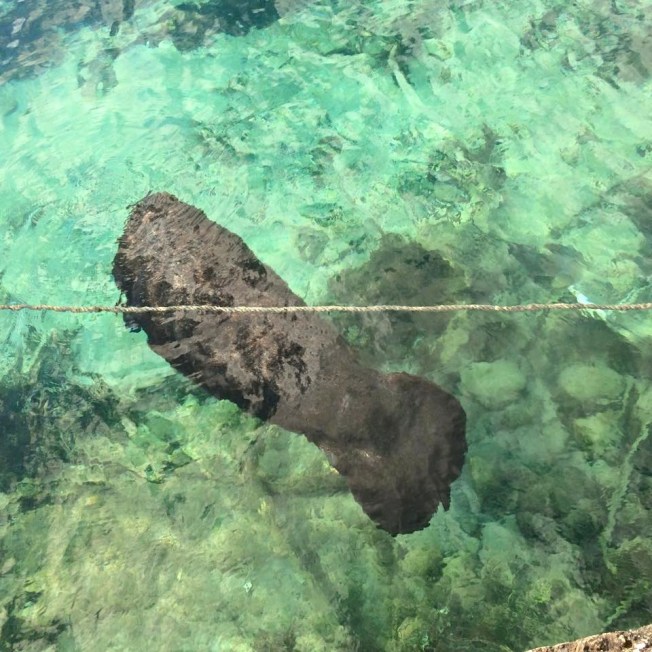
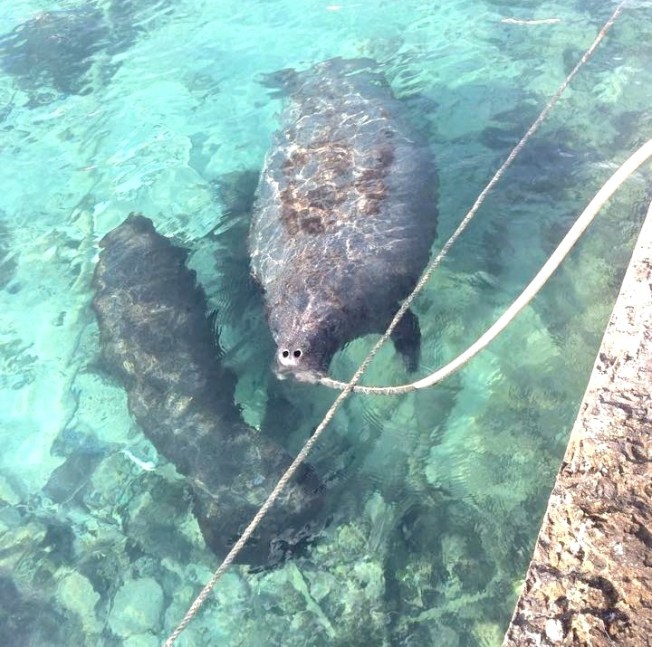
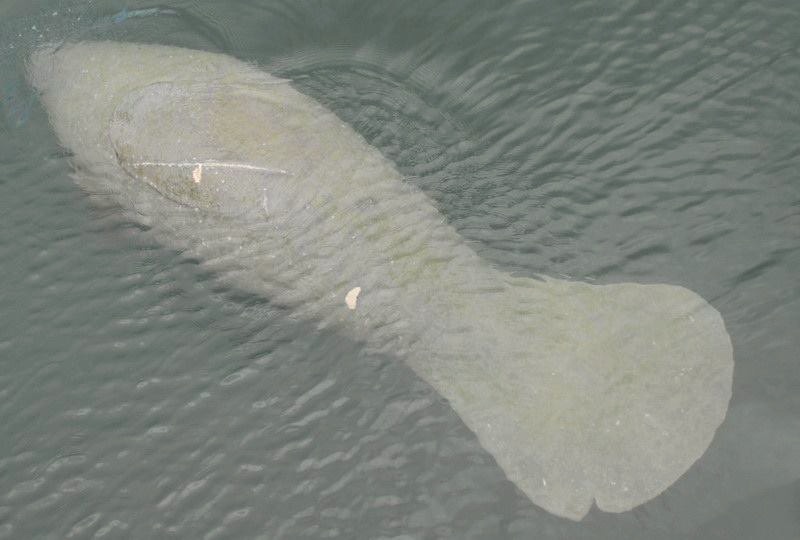
Gina (adult female) and her calf – last seen August 6th, 2015 in Spanish Wells Key feature – numerous paddle cuts; white oval scar on left side of back; linear scar on posterior right side of body
BAHAMAS MANATEE MAGIC ON ABACO & BEYOND
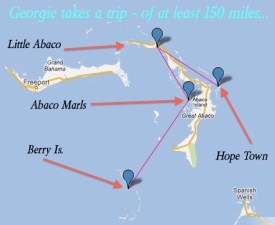
Four years ago, there were no manatees in Abaco waters. Then a couple of adventuresome sirenians made the trip over from the Berry Is. and since then, there have been at least one, sometimes two and occasionally three resident on Abaco. And for slow, gentle, animals they certainly move around, too. In the past, I wrote quite often about the manatees, charting their journeys based on satellite tracking and sightings. I reported the tantalising prospect of the young male, Randy, hooking up with young female Georgie in Cherokee Sound, only to turn back when he reached Little Harbour. You can read more about the manatees of Abaco on my manatee pageHERE.
Georgie’s epic trip (Sept 12) continued to Cherokee Sound; and Randy’s ‘pursuit’ (Sept 14)
The most comprehensive source for Bahamas Manatee information is now to be found by joining the open Facebook group BAHAMA MANATEE CLUB, skilfully curated by Felice Leanne Knowles. There, you can follow the meanderings of your favourite Abaco manatee, watching as he or she moves around the island and cays. In recent months there have been sightings of single or pairs of manatees in several places, including Sandy Point, Little harbour, Marsh Harbour, Schooner Bay and Hope Town Harbour (where two are right now). Here’s an excellent example of how, just like a Beach Boy, an Abaco manatee gets around. In July, Randy moved from Sandy Point to Schooner Bay in 2 days. The big question is, did he travel round the longer top route, as he has in the past; or (more likely in the time taken) via Hole-in-the-Wall?
Randy the Abaco Manatee goes swimabout
Felice has just produced a great map that shows the present locations of all the Bahamas manatees currently recorded. She has also supplied photos and information about them. Most have names and are well-known to the research team and the locals where they stay. There is one new calf – Gina’s – this year. One or two manatees are new on the scene and have yet to be identified or named.
Manatees Throughout The Bahamas
The map shows the last location of the named manatees. The pink dots label females, the green dots label males, and the yellow dots label unknown manatees. The number of unknown manatees has been approximated to reduce error. The photos are of the individual manatees with dates and specific locations of their most recent sighting. We do not have enough data and photos to confirm the unknowns labeled. Any help from the public would be greatly appreciated. Send sighting reports tohttp://www.bahamaswhales.org/sightings/index.htmlNB Felice points out“Full body and paddle photos are very important for the identification of manatees. Facial shots do not provide enough information for a manatee to be identified”
Georgie (sub-adult female) Last seen in Casuarina, Abaco 9th July, 2015 Key feature – 2 pink scars on the right posterior of her body
Randy (sub-adult male) Last sighted in Hope Town August 12th, 2015 Key feature – triangle cut on right side of paddle
Unknown (adult, presumed female) with Randy Last seen in Hope Town August 12th, 2015 Key feature – 3 prop scars on the posterior right side of body
Gina’s Calf Last seen August 6th, Spanish Wells Key feature – none yet, just really tiny!
Blackbeard (adult male) Last seen in Lyford Cay August 13th, 2015 Key features – triangle cut on right side of paddle (similar to Randy’s); oval scar on centre of paddle; three prop scars on the back and linear scar
Kong (adult male) Last seen in Great Harbour Cay Marina, February 25th, 2015 Key feature – triangle cut on the left side of paddle; linear scar across the back; oval scar on the back near paddle
J.J. (sub-adult female) Last seen in Great Harbour Cay Marina, Berry Islands, February 25th, 2015 Key feature – 3 small semi-circular cuts out of paddle at the very end
Rita (adult female) Last seen 23rd March, 2014 Hawks Nest Marine, Cat Island Key feature – Large triangle cut on right side of paddle; two small triangular cuts side by side forming a “w” on the left side of paddle
Unknown adult, West Grand Bahama – Key feature: too distant!
You may have noticed that several of the manatees shown carry scars attributable to prop wounds. Almost all carry injuries of some sort. Because manatees are slow, gentle, inquisitive and trusting creatures, they are especially vulnerable in harbour areas for obvious reasons. Elsewhere than the Bahamas, boat-strike is one of the main causes of manatee mortality. The BMMRO recently issued the above advisory notice because of the uncertainty about the rights and wrongs of watering manatees from docks with hoses and feeding them lettuce etc. Overall the message is that, though creatures of wonder, they are better off being admired but left to their own devices. They are adept at finding the fresh water sources they need, and their sea-grass diet is amply provided for. Dependence on humans, however well-meaning, is actually harmful.
Credits: first and foremost, Felice Leanne Knowles; also BMMRO, Charlotte, & Diane for permission to make free with their material and photos from the get-go; any other photographers of the manatees shown and posted via BMMRO / FLK (Cha Boyce, Jessica Mullen,Otis Wilhoyte I think, maybe others…)
WHALE TALES FROM ABACO (1): BLAINVILLE’S BEAKED WHALES
Back in March we were invited by Charlotte and Diane of the Bahamas Marine Mammal Research Organisation BMMRO to spend a day out with them on the research boat, a chance we jumped at. I had been writing on and off about the organisation’s whale, dolphin and manatee research since the very early days of this blog. We’d seen bottlenose dolphins in Abaco waters, but never whales. This was the big day…
Our first sighting was a short distance south of Rocky Point, as we moved beyond the turquoise water of the low sandbanks into the deeper, darker ocean waters of the Bahama canyon beyond. Whale territory. The shoreline was plainly in view to the east; and to the north, on the horizon, was the massive bulk of the ‘fun ship’ parked at Castaway (Gorda) cay.
Beaked whale or fun ship for a day out? You decide…
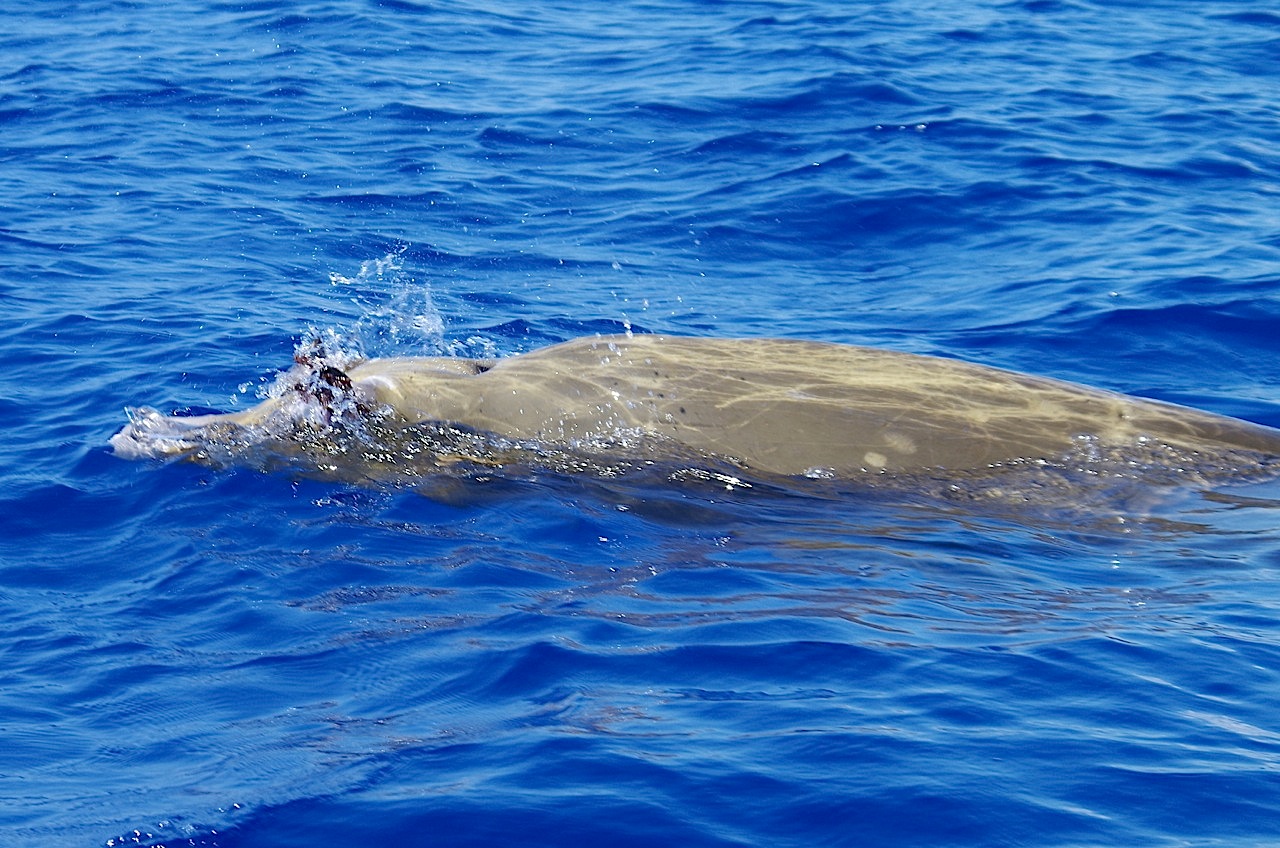
A Blainville’s beaked whale noses towards the research vessel
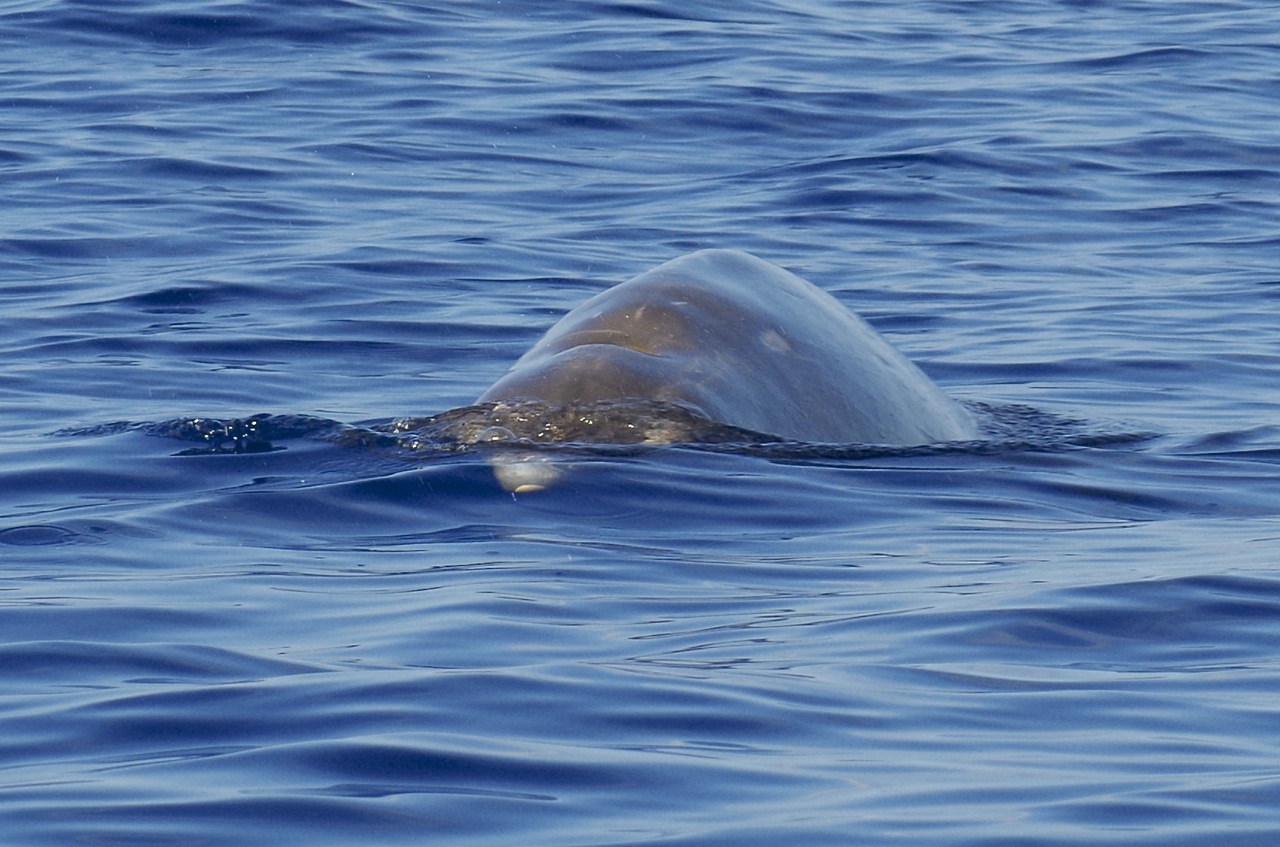
The Blainville’s beaked whale (Mesoplodon densirostris) is also known slightly less politely as the dense-beaked whale. It is named forthe French zoologist Henri de Blainville who first described the species in 1817 based on his examinations of a piece of jaw or ‘rostrum’ — the heaviest bone he had ever come across — which resulted in the name densirostris (Latin for “dense beak”).
The beak breaks the surface
The BMMRO has carried out intensive research on the species for a number of years in the northern Bahamas, with detailed documentation of sightings and photo identification of individual animals. More recently, these whales have been the subject of incredibly detailed research into their species intercommunication through vocalisations – mainly clicks and click patterns. To view Charlotte’s PhD thesis for St Andrew’s University click HERE (and many congratulations, Dr Dunn…). Just reading the contents table will give a good idea of the scope and complexity of the research.
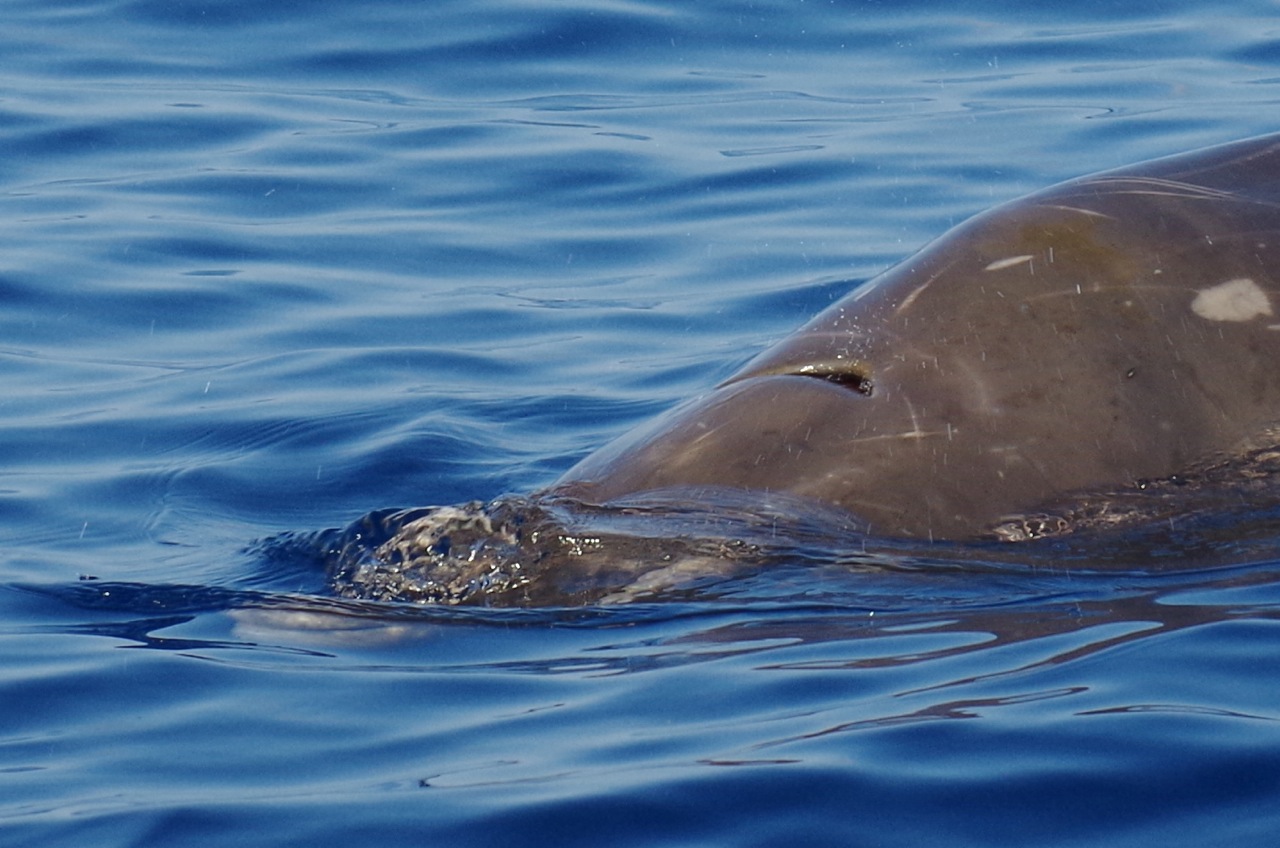
The blowhole, used for breathing, in close-up. You can hear this in the video below.
Our amazing first encounter with 6 whales lasted nearly an hour. Usually, they stay near the surface for 20 minutes or so, then they do a deep dive lasting roughly 20 minutes before resurfacing. But on this occasion they behaved more like huge dolphins, swimming towards the boat, around it, under it, then drifting away again before returning.
Given their length of some 15 feet and weight of about 2000 pounds, it was a extraordinary experience to see them at such close quarters.
The Blainville’s range is extensive and in general terms they may be found in tropical and sub-tropical waters worldwide. They are by no means uncommon, but apart from the data collected by the BMMRO it seems that comparatively little is known about them. Their diet is thought to consist mainly of squid found at depth. They are protected by a variety of Agreements, Memoranda of Understanding, Protocols and so forth throughout the worldwide range.
The research boat is equipped with sonar the can pick up the click and whistles of whales and dolphins from a considerable distance. It was remarkable to watch a group of cetaceans and to be able to hear them loudly and animatedly communicating with each other..
Another vital aspect of the research is poop scooping. As soon as the whales had gathered round the boat, Charlotte slid into the water with her scoop net… the cloudy poop yields a mass of information about an individual creature. I wrote about this interesting job, often tasked to interns (who practice with coffee grounds) in‘FAMILIAR FECES’.
Charlotte expertly wields the poop scoop
Then, all too soon, it was deep dive time. The whales moved off from the boat and slowly, without show or splash, disappeared. And we went to investigate HOLE-IN-THE-WALL at close quarters. The next post will feature an adult male Blainville’s beaked whale, with his massive barnacle-encrusted teeth protruding upwards from his lower jaw.
The remains of a neat and undramatic deep dive
In this very short video of two whales right by the boat: you can actually hear their breathing.
BMMRO research RHIB with Diane BMMRO HQ, Sandy Point, Abaco
Credits: All photos RH; Charlotte & Diane for a brilliant day out; Mr Blainville for a brilliant whale
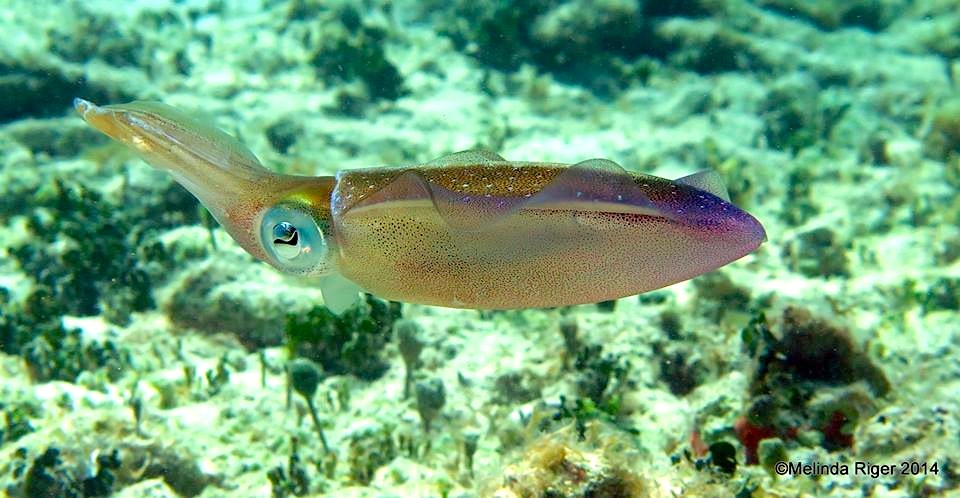
CARIBBEAN REEF SQUID: SUPERPOWERS & SEX LIVES REVEALED
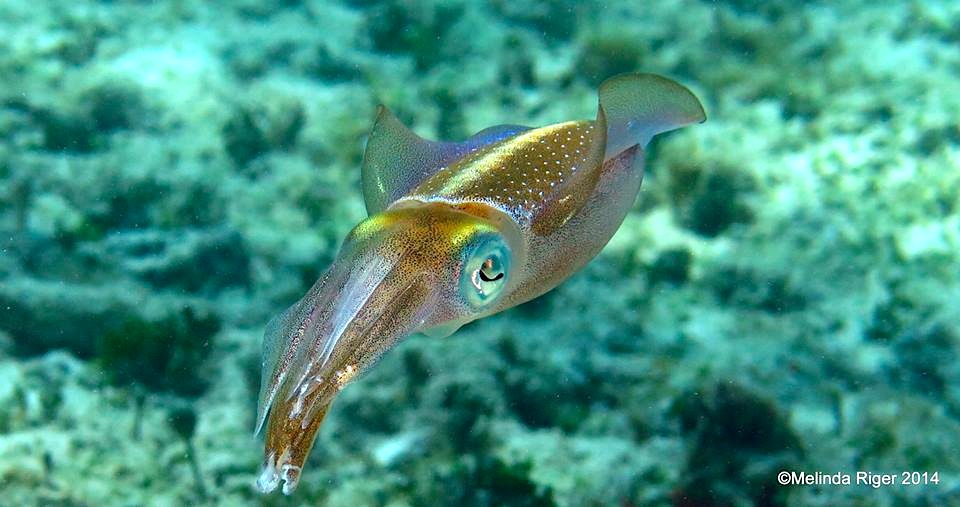
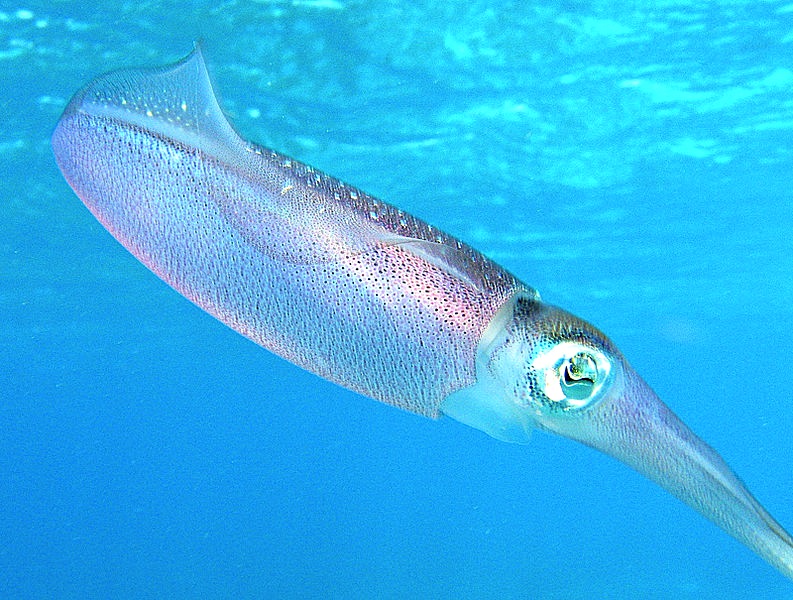
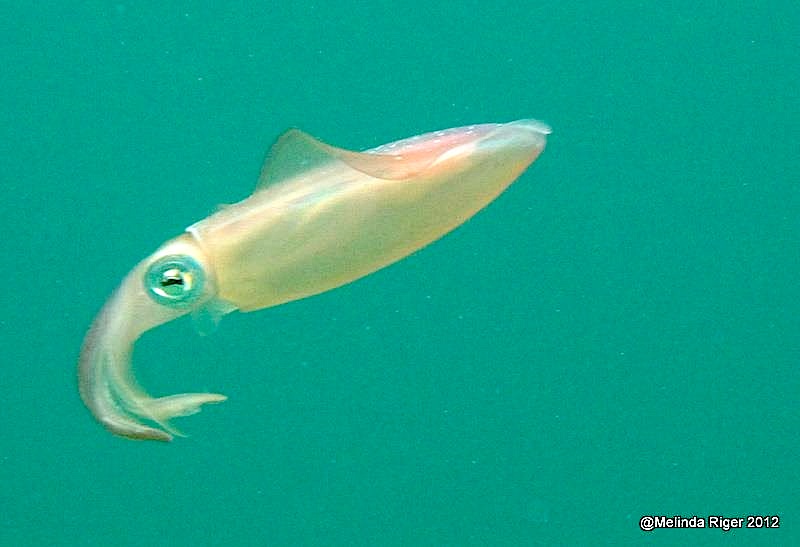
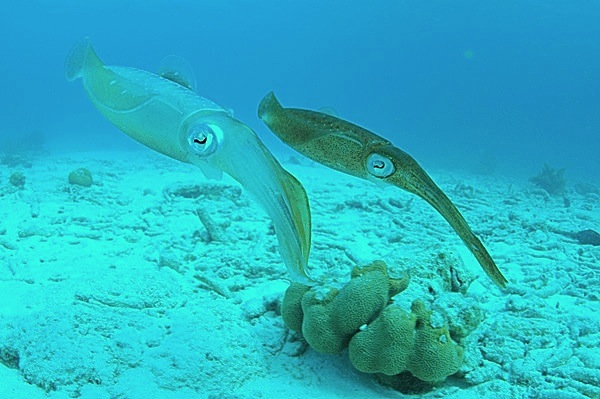
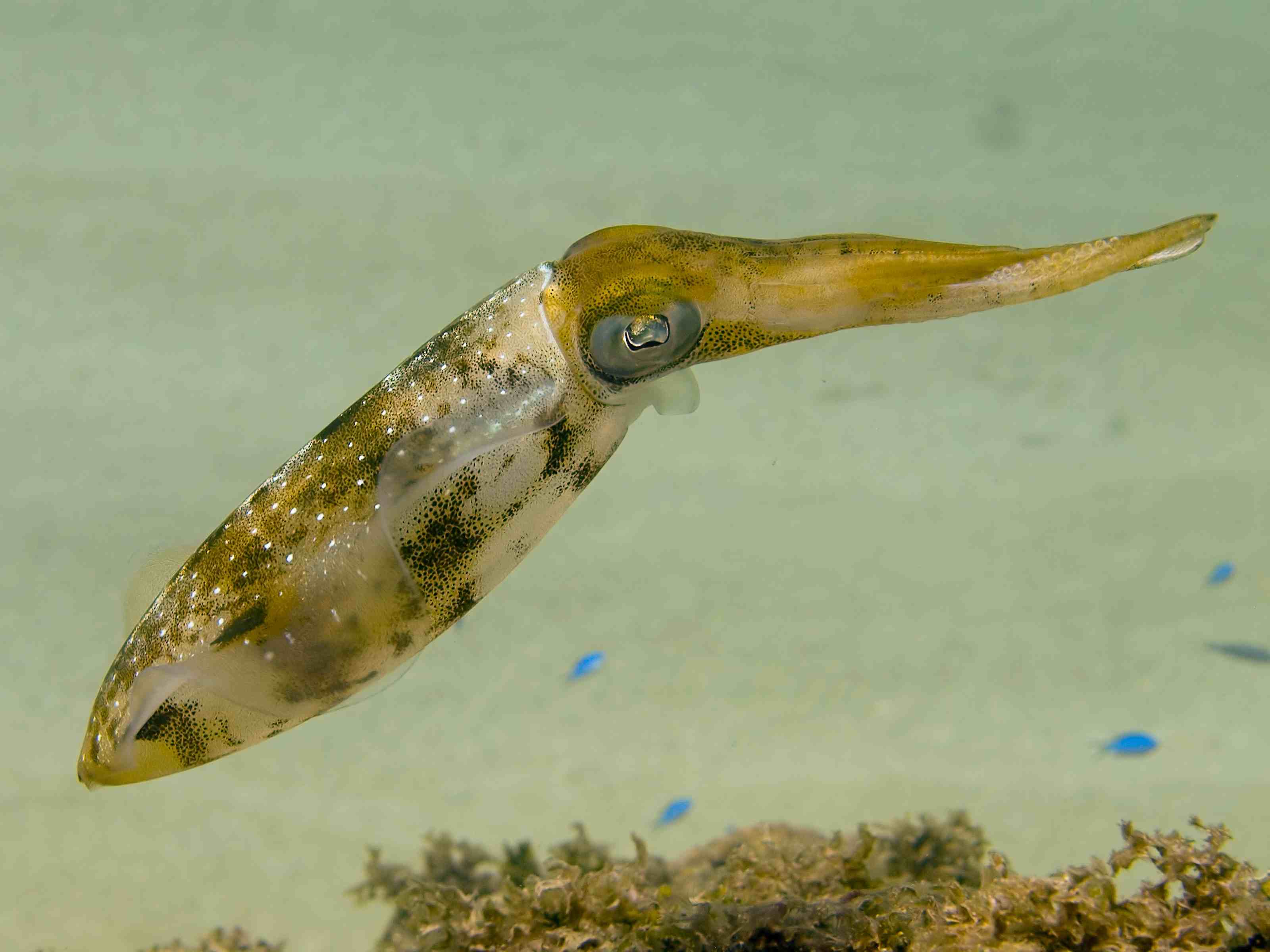
The Caribbean reef squid Sepioteuthis sepioidea is a small squid species of the Caribbean Sea and the Floridian coast. Its fins extend nearly the whole length of the body and undulate rapidly as it swims. Recently, it has been discovered that this squid is capable of brief flight out of the water.
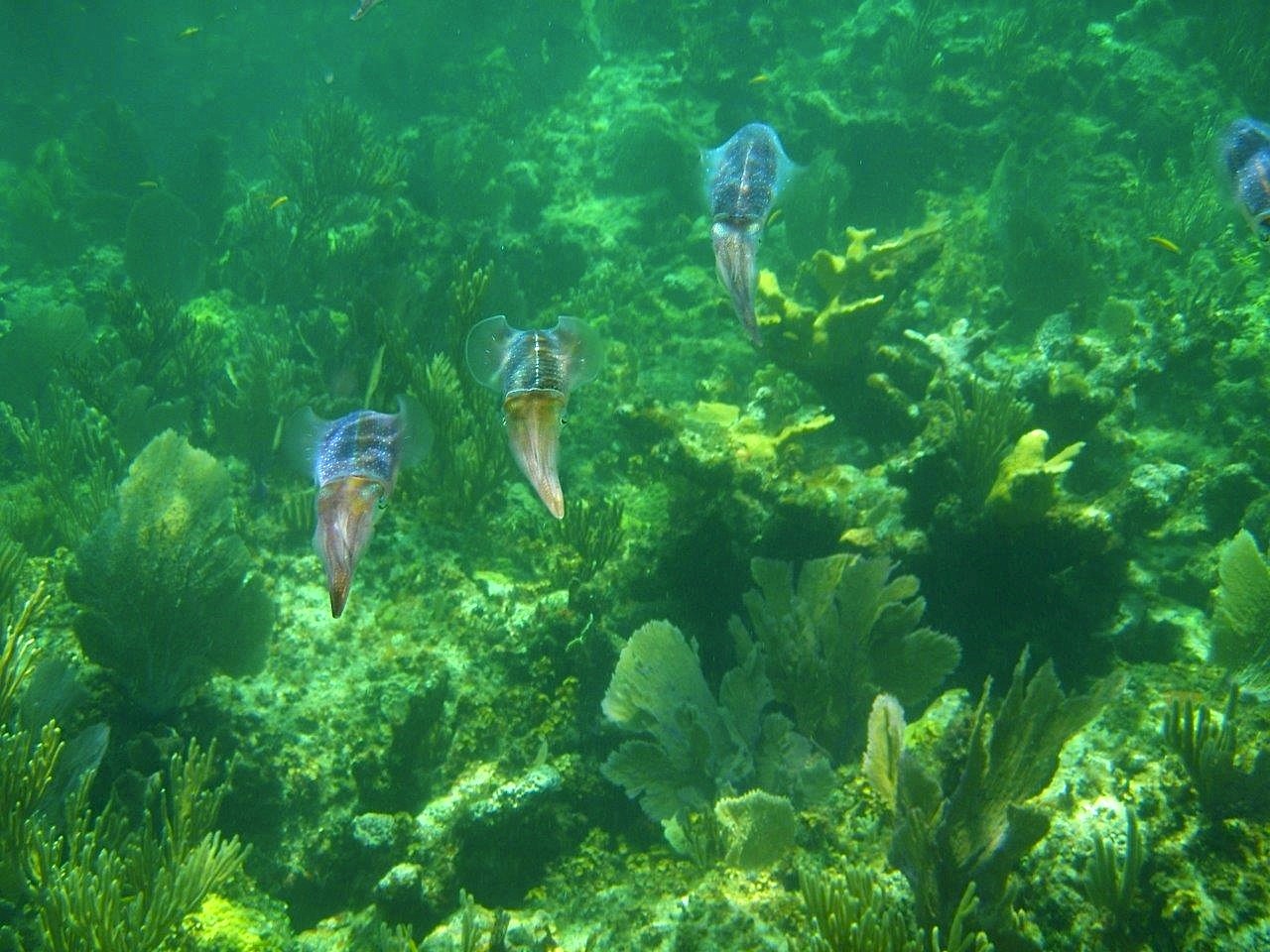
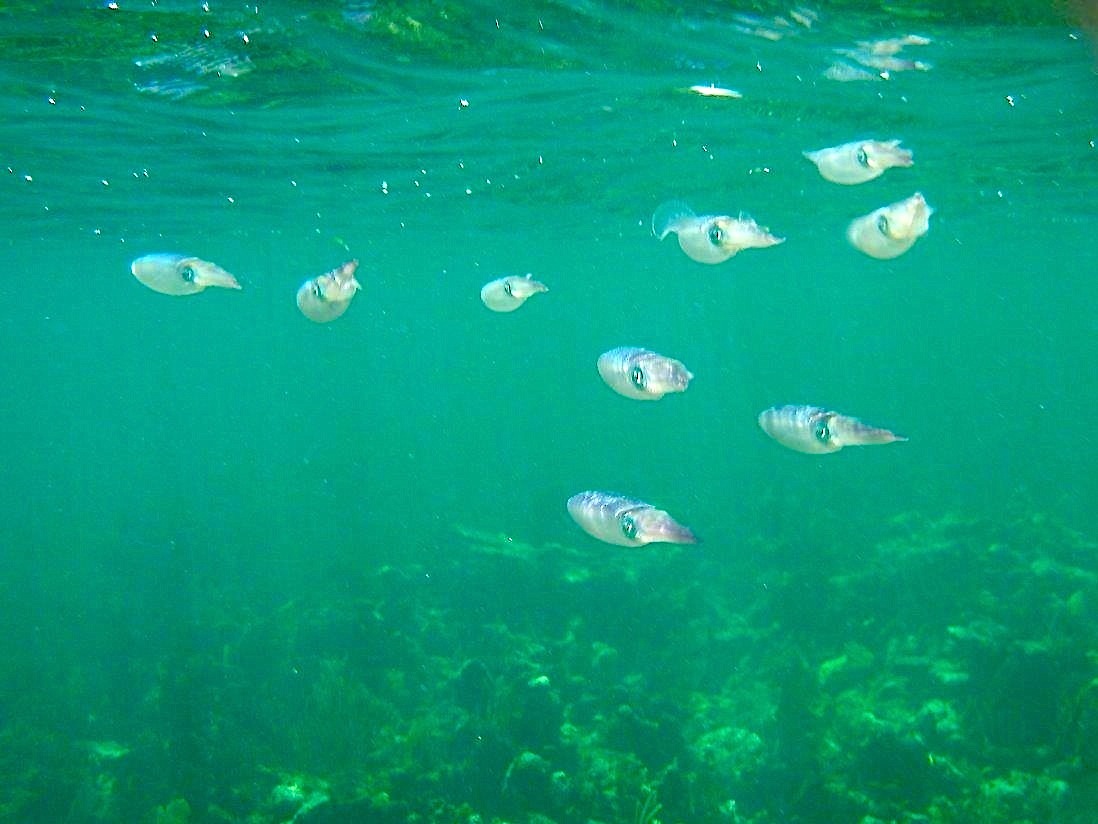
Reef squid tend to form small shoals in and around reefs. It is by far the most common squid species in its range, and can be sighted both close to the shore and quite near the surface (although that increases the risk of predation by seabirds).
A silvery squid swimming just below the surface
Squid are voracious eaters, dragging their prey to their mouths and using a beak to cut it up. Their target species are small fish, molluscs and crustaceans. They have a ‘raspy tongue’ known as a radula which further breaks up the food for easy consumption.
Squid at Fowl Cay Marine Preserve, Abaco
SQUID SUPERPOWERS (SUPERCOOL)
Squid can change colour, texture and shape
This enviable power is used defensively as camouflage or to appear larger if threatened
It is also used in courtship rituals, something that humans would find most disconcerting
Colour patterns are also used for routine squid-to-squid communication AND GET THIS:
A squid can send a message to another on one side, and a different one to a squid on the other
SQUID SEX (1) “ROMANCING THE SQUID”
A male will gently stroke a female with his tentacles
The female will (most likely) flash an ‘alarm’ pattern
The male soothes her (don’t try this at home, guys) by blowing and jetting water at her
If he’s not getting on well, he’ll move off and repeat the routine until she sees his good points
However this on / off courtship can last for hours until at last he succeeds by…
…attaching a sticky packet of sperm onto the female’s body (romance is not dead)
She reaches for it and moves it to her “seminal receptacle”
Meanwhile he stays close, emitting a pulsing pattern, as well he might after all that
She then finds a safe place to lay her eggs. Job done.
SQUID SEX (2) IT ALL ENDS BADLY
As soon the female squid has laid her eggs, she dies at once
The male squid live a bit longer, and may have other packets to stick – then he dies too
It’s all horribly reminiscent of Romeo and Juliet. Without the balcony scene.
USES OF SQUID ON ABACO
Squid are prolific in the seas around Abaco, which is fortunate because they form a large part of the diet of some whale species, particularly the Blainville’s Beaked Whales that are commonly found in Abaco waters. I have a post on these magnificent creatures in preparation right now, and am in the process of sorting out suitable photos from a large number taken during a research expedition in March.
More Squid at Fowl Cay Marine Preserve, Abaco
Credits: As ever (for underwater pics) Melinda Riger of Grand Bahama Scuba; also Ellen Sokol of Kiskeedee Sailing Charters, who kindly sent me the Fowl Cay photos; also Ed Brown, Clark Anderson and Nick Hobgood for ‘open-sourcing’ their great images
Well here’s a rum do. About four years ago, this somewhat minority interest blog emerged ‘mewling and puking’¹ into the world, guided by an incompetent male midwife whose basic training had been about 4 weeks of exposure to Abaco, its fishing, its wildlife, its geography and its history. ‘Bananaquit’ might as well have meant taking up a plantain-free diet. ‘Grassquit’ might have been the local word for ‘keep off the lawn’. And that’s before all the flowers. And the reef fish. And everything else that turned up during the storm-wracked voyage of discovery via polydamus swallowtails, manatees, spider wasps and batfish that led slowly to the calmer waters of ‘rather better informed (if no wiser)’.
Anyway, at midnight last night some unknown person kindly made the 250,000th visit to the blog, a target that once seemed inconceivable. In the past month, the 1000th person also signed up as a follower, another source of amazement. The reality is that despite Abaco being a sparsely-populated microdot island in a huge world, there are a great many people on the island or associated with it who are passionate about it and its extraordinarily diverse natural history. That knowledge makes curating this blog both easy and pleasurable.
I checked my stats for the last year to find out where hits from the top 10 countries – and for fun the bottom 1o – came from. Here’s the answer. Rather shamefully there was also a country I had never knowingly heard of, Palau (Micronesia). There follows a selection of a few photographs that have been popular over the years, mostly my own but the underwater ones are from Melinda Riger and Virginia Cooper of Grand Bahama Scuba.
Top 10 Bottom 10
SEARCH TERMS
The most popular searches – omitting posts about hurricanes, which always generate a lot of traffic – have concerned Abaco Parrots, Lignum Vitae, Sea Glass, the Loxahatchee poster series, Tarantula Hawk Wasps, Sea Biscuits / Urchins, Yellow Elder, Parrotfish, Shipwrecks, Hutias, Hole-in-the-Wall, Lionfish, Remora, and Abaco Maps. The most leftfield search of all was‘How dispose of dead bodies?’, by someone who had clearly strayed into the wrong category of website…
It would be strange to end this little celebration without a tip of the hat to Peter Mantle, old friend and genial doyen of the Delphi Club, for his wholehearted encouragement and support for the production and publication of THE DELPHI CLUB GUIDE TO THE BIRDS OF ABACO. This hefty tome, published in March 2014, showcases the wonderful and varied avian life on Abaco and has proved very popular – indeed well beyond our expectations. Although I appear nominally as author on the cover, it is in fact an extraordinary collaborative effort by some 30 people. The book’s success further demonstrates the commitment of Abaconians and other who love the island to Abaco’s rich natural heritage in an age of rapid change; and provides another good incentive for me to continue with the blog. Next stop: 500,000!
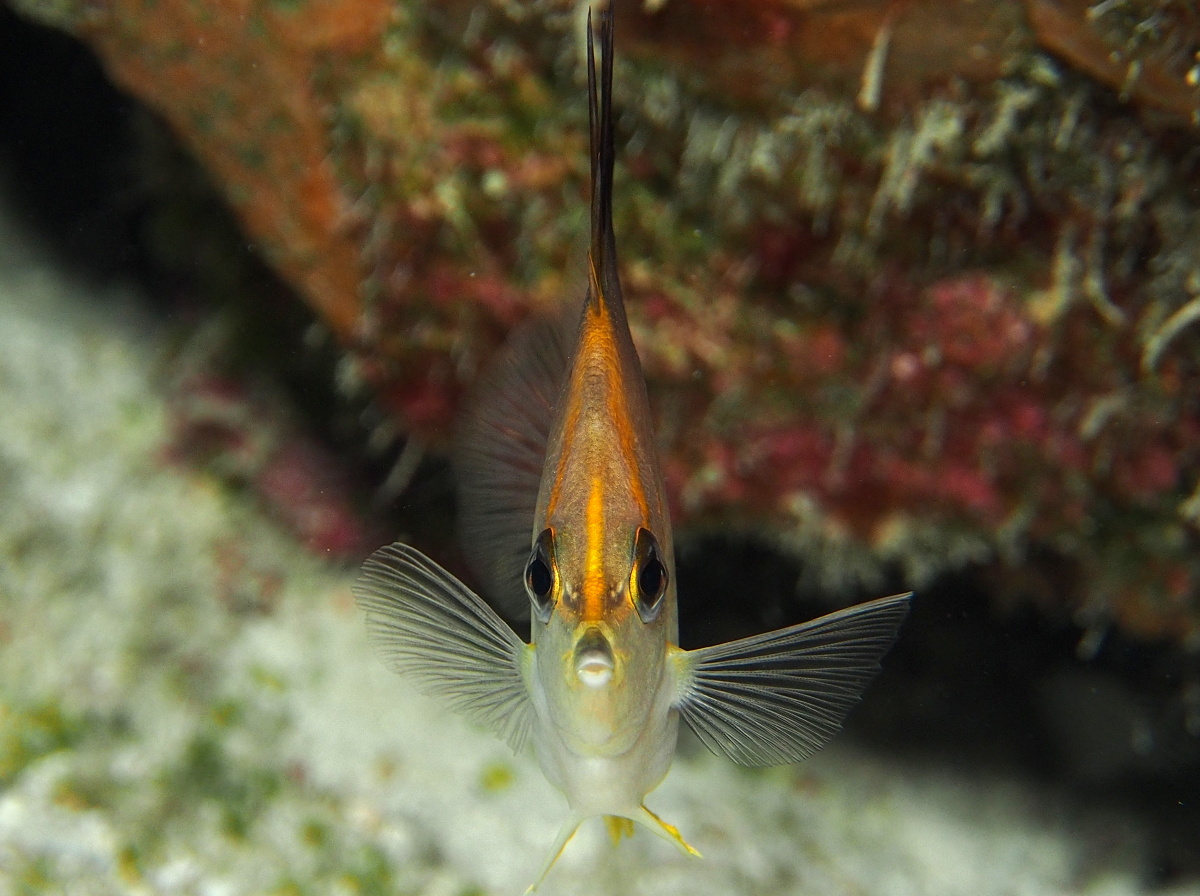
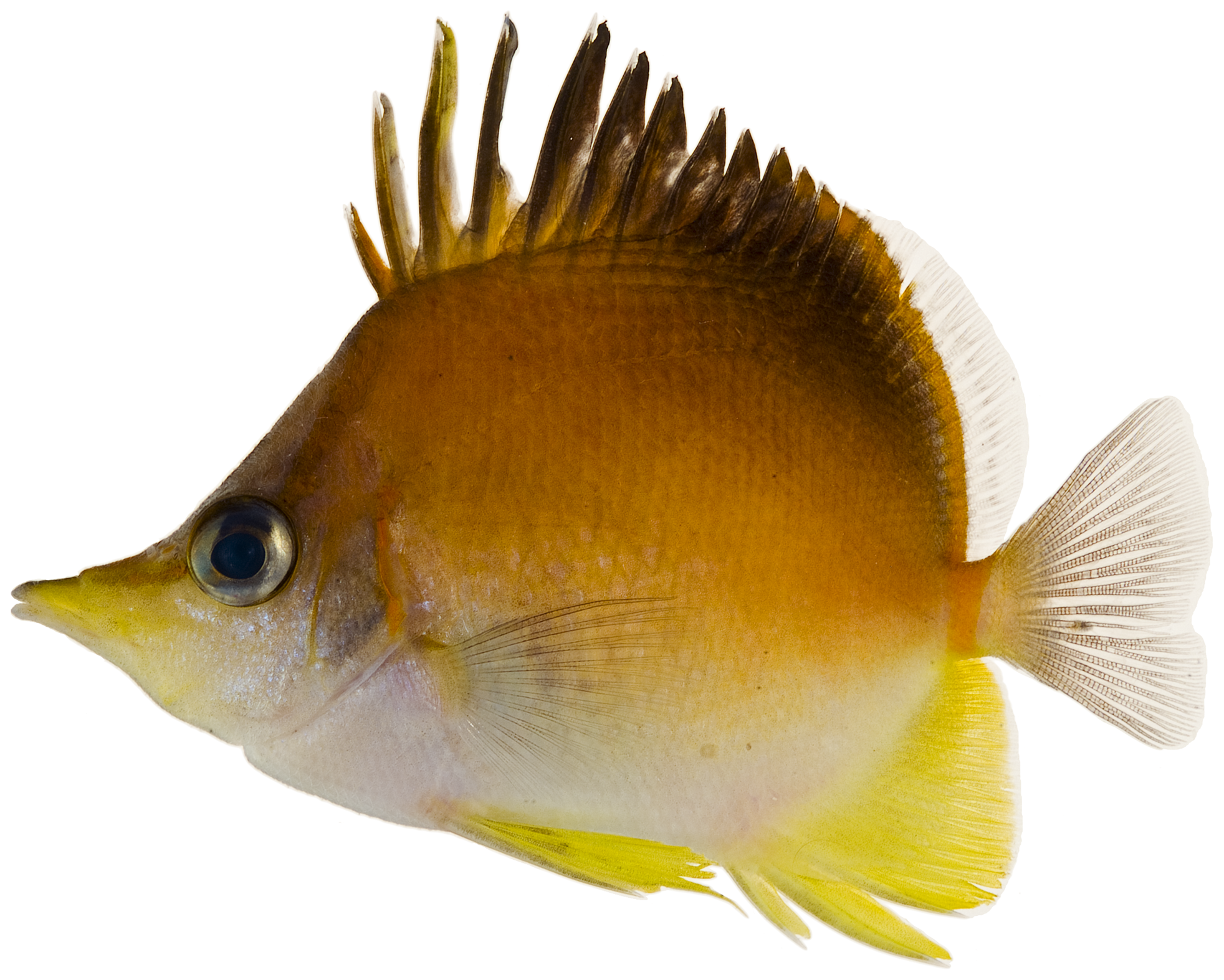
The Atlantic/ Caribbean Longsnout Butterflyfish Prognathodes aculeatus is sometimes known locally as the Longnose (not to be confused with the bright yellow Indo-Pacific Longnose Butterflyfish). The affectionate name for it is ‘Butterbun’. A more scientific name is ‘Poey’s Butterflyfish’, named for the man who first identified the species in 1841.
Mr Felipe Poey
These little fish, 2 0r 3 inches long, are commonly found on reefs from Florida down to Venezuela. Unlike most butterflyfishes, they prefer deeper water and have been found at 200 ft; and they tend to be solitary rather than gregarious.
BUTTERBUN. THAT SUGGESTS THEY ARE PLUMP?
NOPE!
RELATED LINKS
BUTTERFLYFISHES(RH guide to reef, banded, four-eyed & spotfin)
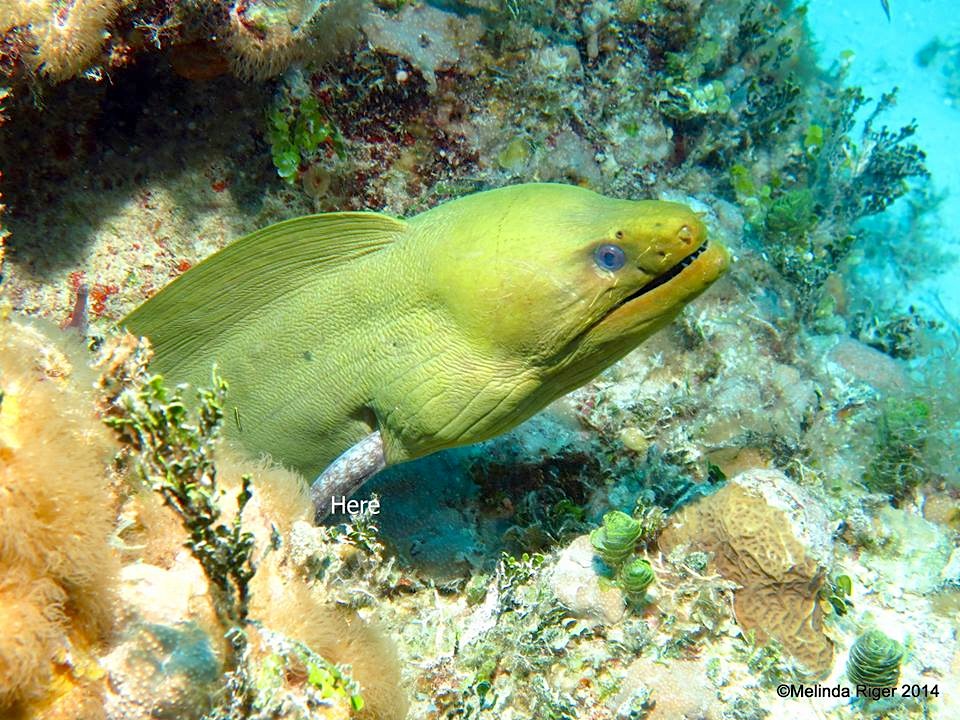
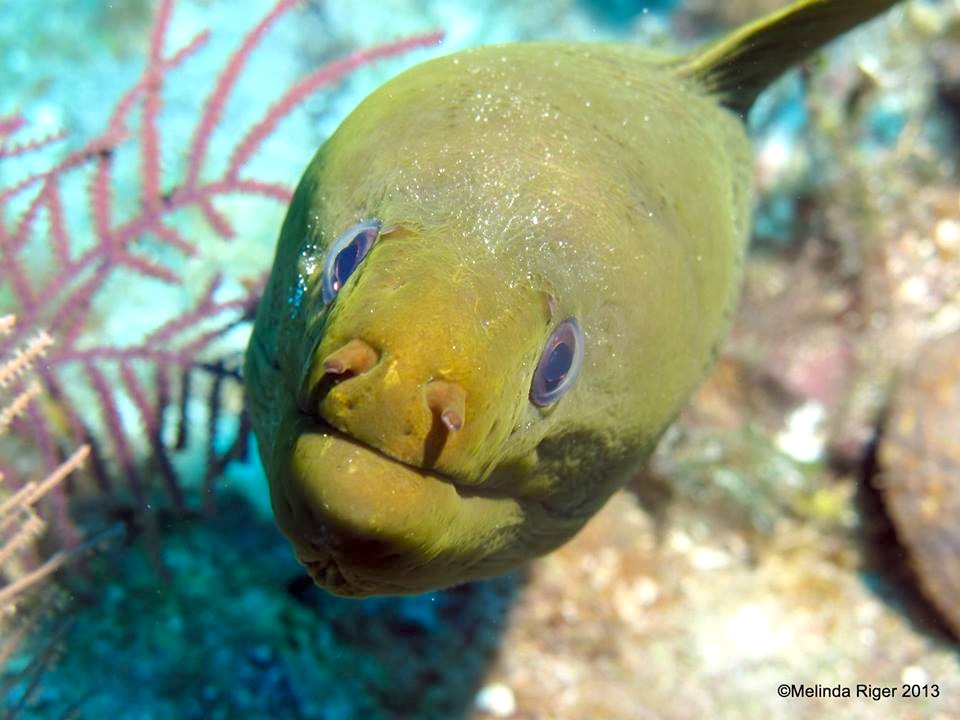
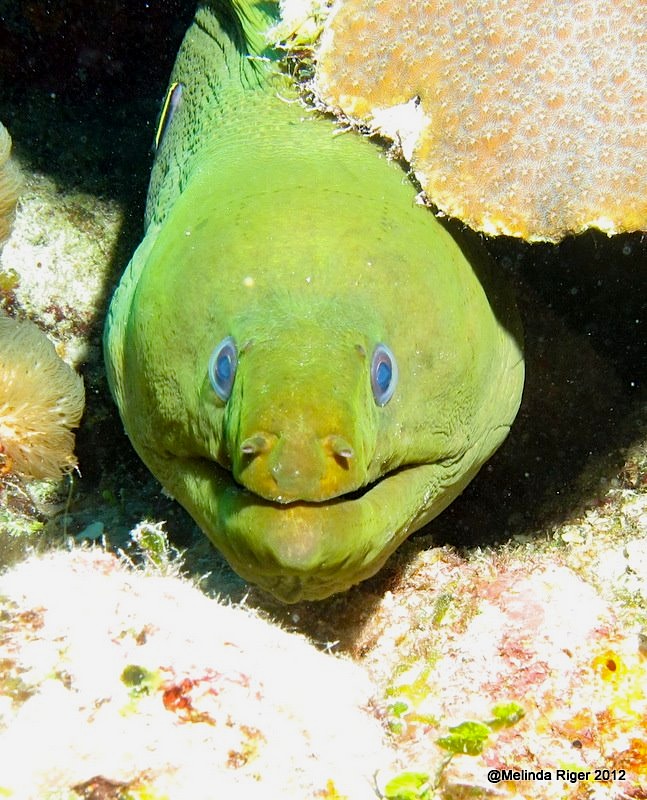
A short while back I posted aboutSPOTTED MORAYS, which people seem to enjoy. It generated requests for more forays, specifically with green morays. I gotcha – here they are, as promised… All the eels shown below, familiar to the divers who regularly encounter them and given names such as “Judy’ and “Wasabi” (my favourite), were photographed by Scuba expert Melinda Riger, whose skills with a camera are well-known. Let’s go Green…
Like all moray species, Greens like to lurk in convenient hiding places to watch the underwater world – and possible prey – go by. Here are some typical ‘lurking’ shots.
Green morays also have the unusual breathing apparatus that resemble nasal plugs
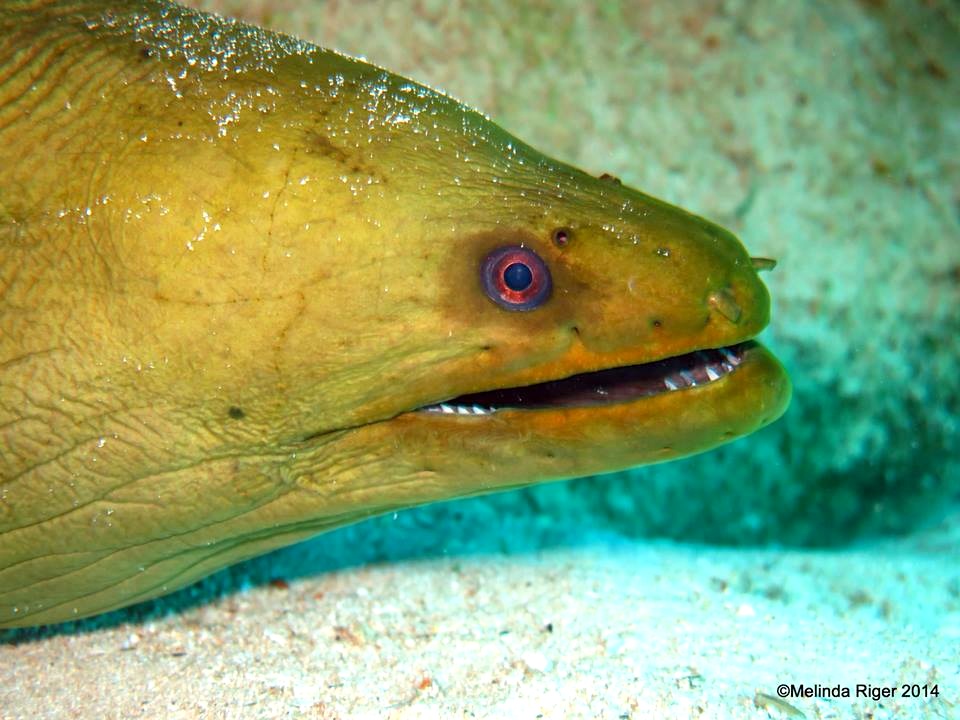
Those who recall the spotted moray post and their singular dentition arrangements that included a long sharp tooth sticking down from the upper jaw will no doubt be thinking, “are we going be shown any dental close-ups?” But of course… why would I not?
Note the cluster of teeth in the upper jaw, differing from the spotted moray
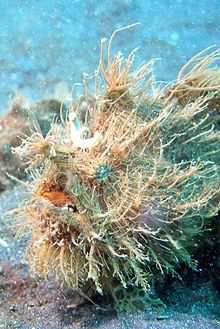
This ‘WTF?’ series started with a relatively conventional species, the REMORA. It has been getting progressively more bizarre. We moved onto an omnium gatherum of WEIRDO FISHES, then the remarkable LETTUCE SEA SLUG, and most recently the BATFISH. Time to ramp up the stakes: with many thanks to scuba expert Adam Rees for use permission for his terrific photos, I present… the FROGFISH.
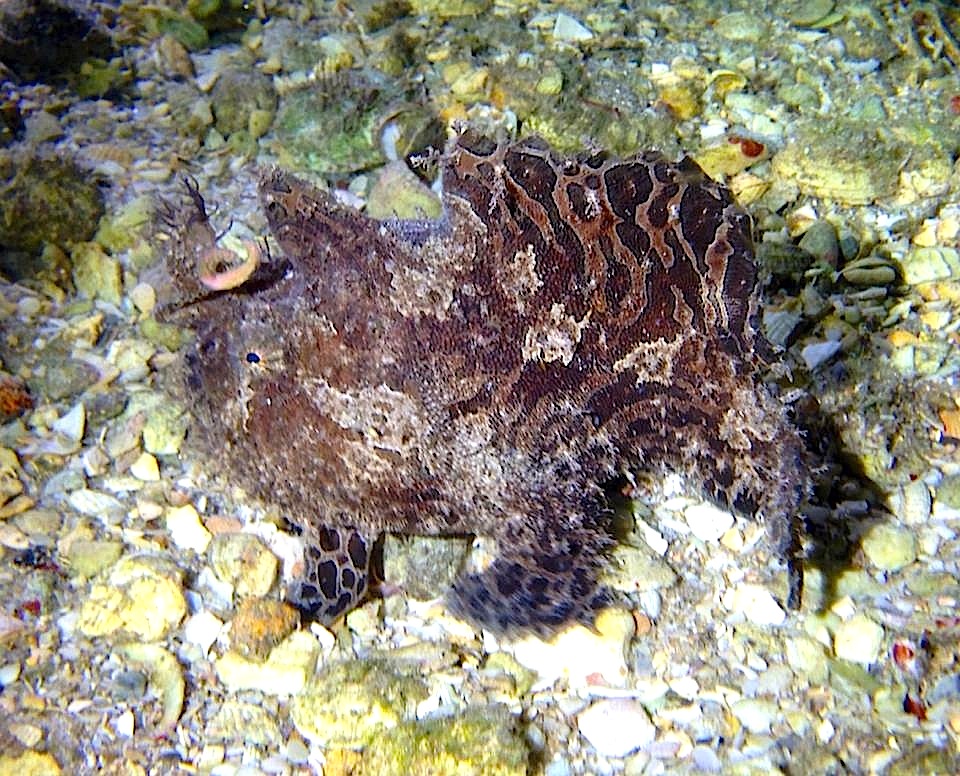
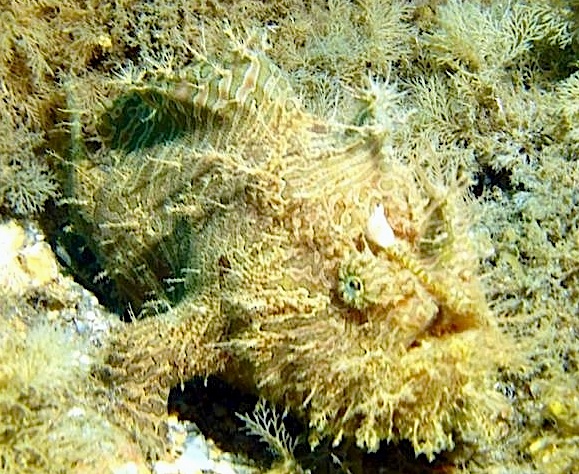
The frogfish is a kind of anglerfish found in almost all tropical and subtropical oceans and seas. There are about 50 different species worldwide, covering an astonishing range of strange appearances. They generally live on the sea floor around coral or rock reefs. In size they vary from tiny to about 15 inches long – although ‘long’ is a flexible concept because they are to an extent shape-changers in height and width.
FROGFISH SUPERPOWERS YOU MAY WISH TO HAVE
INVISIBILITY CLOAK . Frogfish are masters of disguise and camouflage. This enables them to catch their prey with minimal effort and also to avoid predators. Their camouflage methods – broadly known as ‘aggressive mimicry’ – include
Ability to change colour for days or even weeks to mimic their surroundings
Getting covered in algae and other organic matter that matches their habitat or
Looking inherently like a plump rock or in some cases, plant
Fear for the life of the spider crab…
IRRESISTIBLE ATTRACTION (just like that nice Mr Grey)
A sort of frontal dorsal fin called an illicium to which is attached a
Lure called an esca which may mimic a worm, shrimp or small fish etc and which is
Retractable in many species and
Regenerates if it gets mislaid
The ‘dollop of cream’ thing is the esca. Note the characteristic large mouth
Spot the esca…
BUOYANCY CONTROL & SHAPE-SHIFTING
Most frogfish have a ‘gas bladder’ to control their buoyancy.
Some species can change shape or even inflate themselves by sucking in quantities of water in a so-called defensive ‘threat display’.
HOW DO FROGFISH REPRODUCE?
Although not conventionally attractive creatures, frogfish clearly manage to reproduce. Little is known about the techniques in the wild, but one is probably ‘with care’, especially for a male frogfish who may not survive for long if he hangs around after fertilisation has taken place. It has been noted that females tend to select far smaller males to fertilise their huge numbers of eggs, perhaps for that very reason.
FROGFISH FEEDING SKILLS – GOOD OR BAD?
When deploying the lure, potential prey that comes too close to that wide mouth stands no chance. A frogfish will strike in a fraction of a second. Frogfishes have voracious appetites for crustaceans, other fish, and even each other. I can do no better than borrow this vivid description of a feeding frogfish:
“When potential prey is first spotted, the frogfish follows it with its eyes. Then, when it approaches within roughly seven body-lengths, the frogfish begins to move its illicium in such a way that the esca mimics the motions of the animal it resembles. As the prey approaches, the frogfish slowly moves to prepare for its attack; sometimes this involves approaching the prey or “stalking” while sometimes it is simply adjusting its mouth angle. The catch itself is made by the sudden opening of the jaws, which enlarges the volume of the mouth cavity up to twelve-fold, pulling the prey into the mouth along with water. The attack can be as fast as 6 milliseconds. The water flows out through the gills, while the prey is swallowed and the oesophagus closed with a special muscle to keep the victim from escaping. In addition to expanding their mouths, frogfish can also expand their stomachs to swallow animals up to twice their size.“
HOW DO FROGFISHES GET AROUND? SWIM? WALK? CRAWL?
Frogfishes do not in fact move around a great deal. Using their camo advantages, they prefer to lie on the sea floor and wait for prey to come to them. As mentioned in the quote above, they may slowly approach prey using their pectoral and pelvic fins to “walk” along the sea bottom. They can swim using their tail fin (or in some species by simple ‘jet propulsion’ by forcing water out of their gills) but rarely do so – they don’t feed on the move, and they are adapted to the sea floor environment where they food is readily available. However their “walking” ability is limited to short distances.
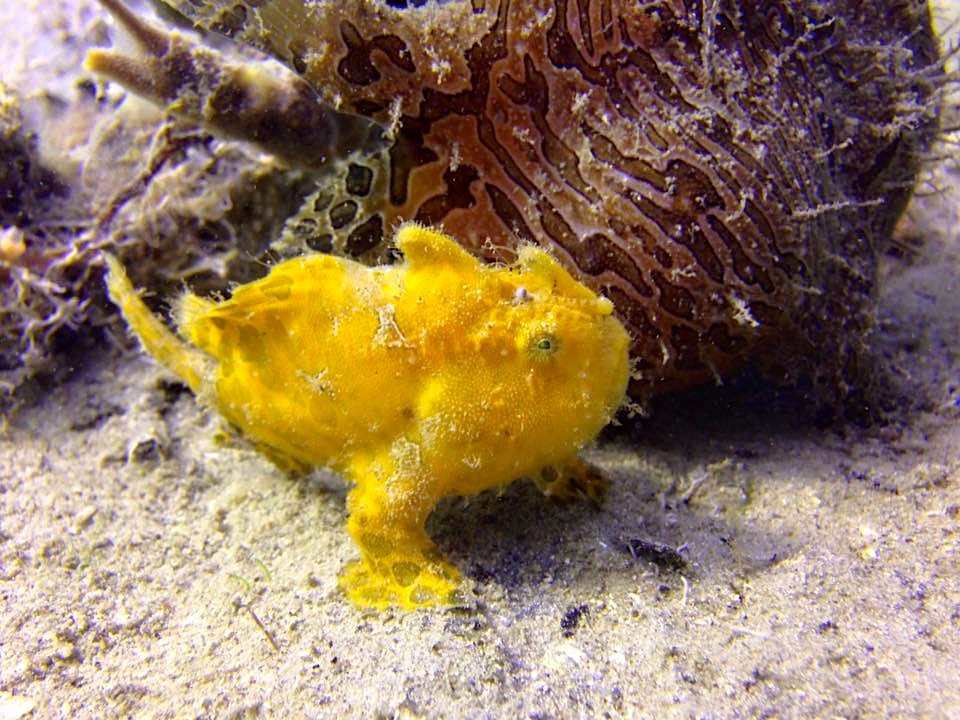
DO FROGFISH HAVE OTHER COLOUR SCHEMES?
Indeed they do. In stark contrast to the camo species, some frogfishes are highlighter bright. Here are two of my favourite photos by Adam that show this clearly. I’ve no idea if these are a male and female. I suspect they are different species. I think the brown one is a striated frogfish and the other is… a yellow frogfish. Some people keep these creatures in aquaria, but apparently it is impossible to sex them, and they have to be kept on their own for everyone’s peace of mind…
FROGFISH INFOGRAPHICS
FROGFISH VIDEOS
These two videos, from Lester Knutsen and Daan Van Wijk respectively, show some of the characteristics I have written about above. Both are short and both are fascinating.
To read more about frogfishes and for some fabulous photos I highly recommend the websiteFROGFISH.CHYou can reach the main page(s) but the link seem to be broken so I have not been able to contact Teresa Zubi, whose site it is. She clearly has a sense of humour and uses a neat pair of gifs which I hope she won’t mind my using…
Credits: All main photos, Adam Rees of Scuba Works with many thanks; wiki for ‘spot the esca’, red quote & basic info; videos Lester Knutsen & Daan Van Wijk; Teresa Zubi for website & gifs; infographics, authors u/k
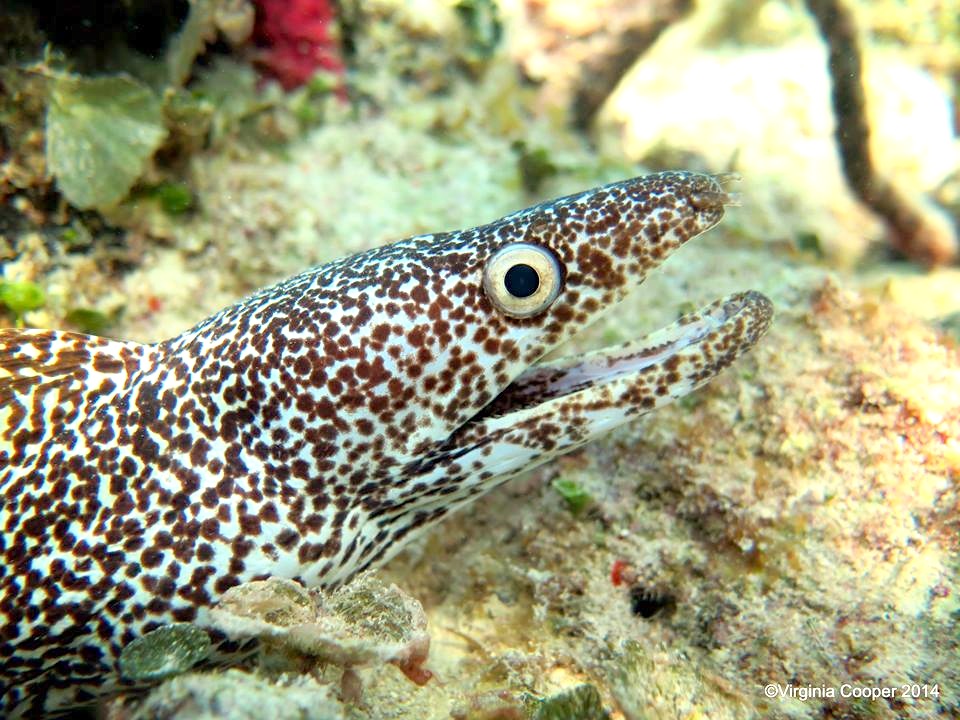
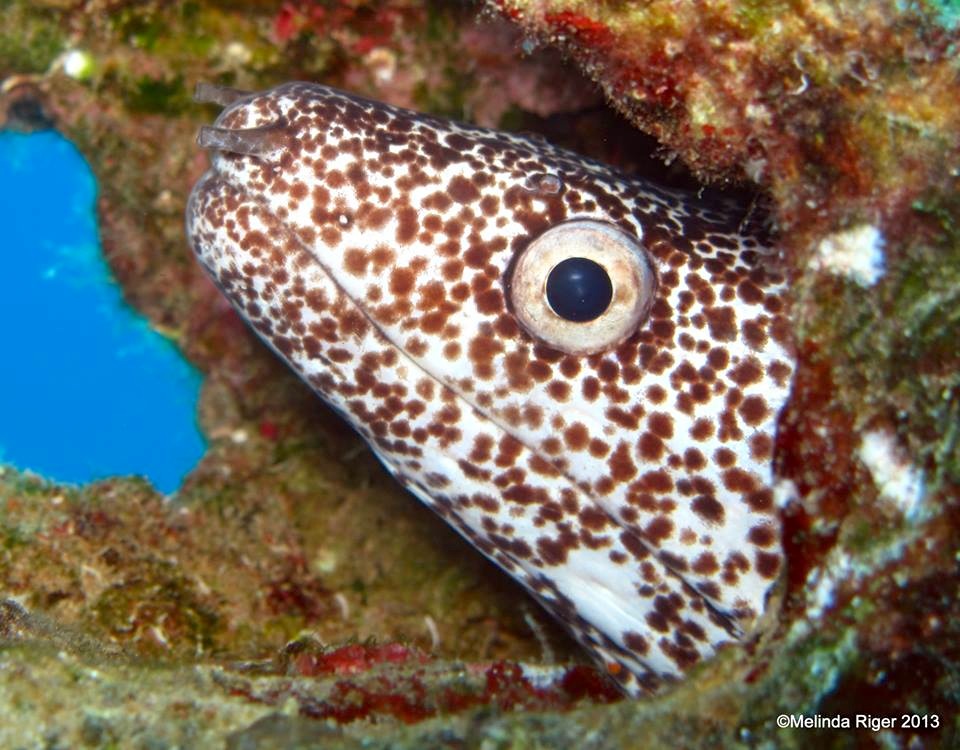
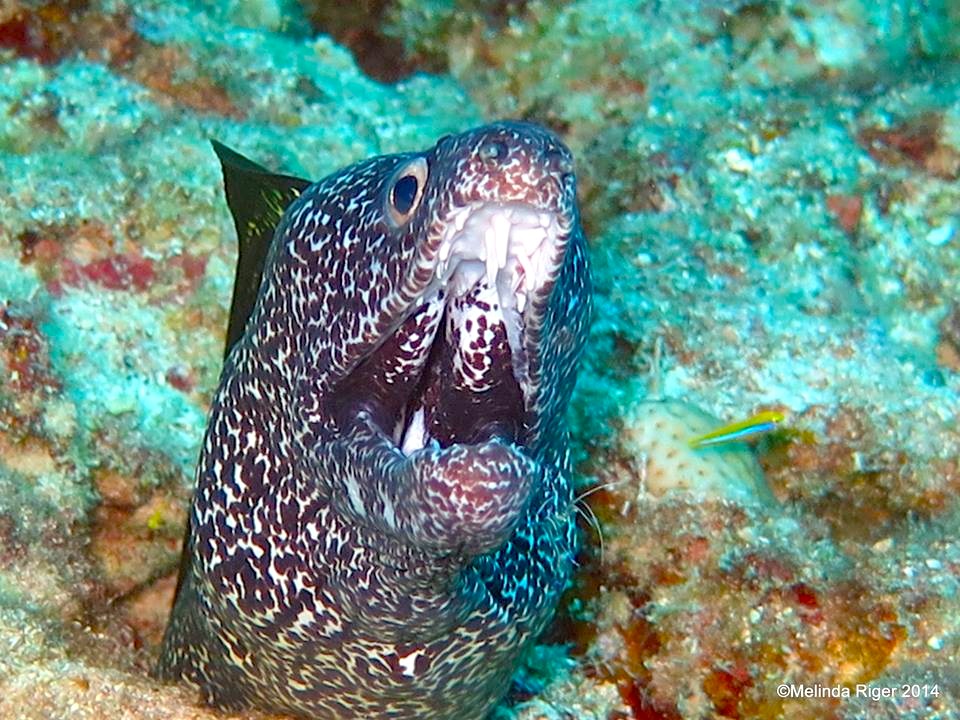
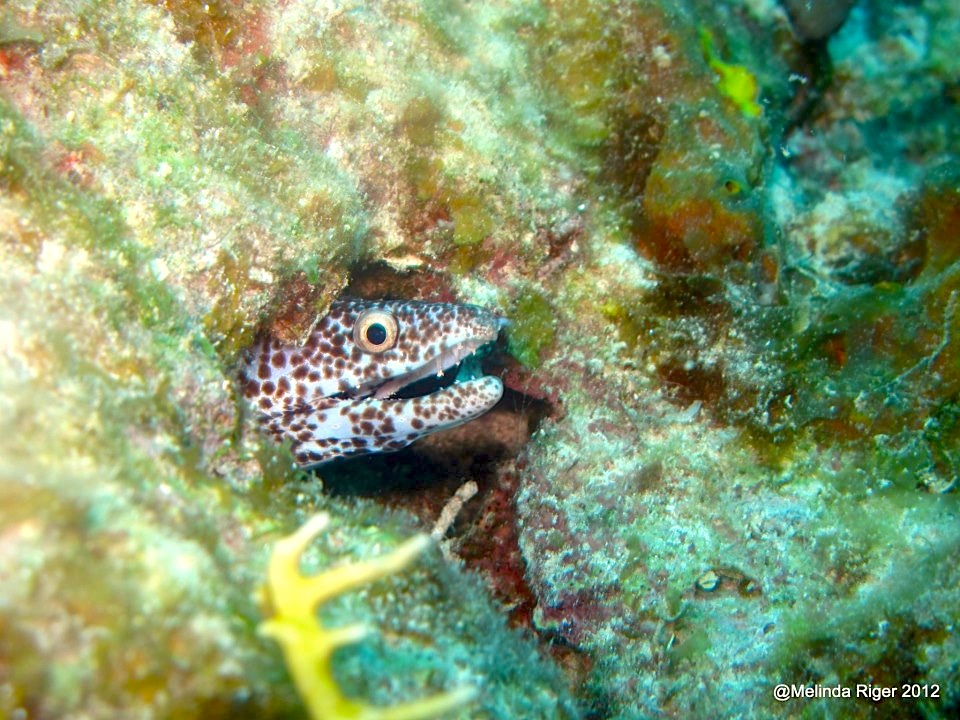
I’ve been neglecting the moray eels. It’s ages since I did a post about them, and it’s time to put that right. Specifically, time to take a look at Spotted Morays Gymnothorax moringa. These eels can grow up to 2 meters, and live mainly in the sub-tropical waters of the Atlantic. They are solitary creatures, most often seen with just their heads protruding from holes and fissures reefs and r0cks. They have interesting dental arrangements (see below) and their bite is one that, all things being equal, is probably best avoided… Here’s what to look for.
ADULT SPOTTED MORAYS
TOOTHSOME CRITTERS (FANGS FOR THE MEMORY…)
WICKLE BABY MORAY. MORAYKIN?
Photo credits: all amazing photos courtesy of Melinda Riger of Grand Bahama Scuba; Props to ‘Earl the Eel’ who appears in some of them!
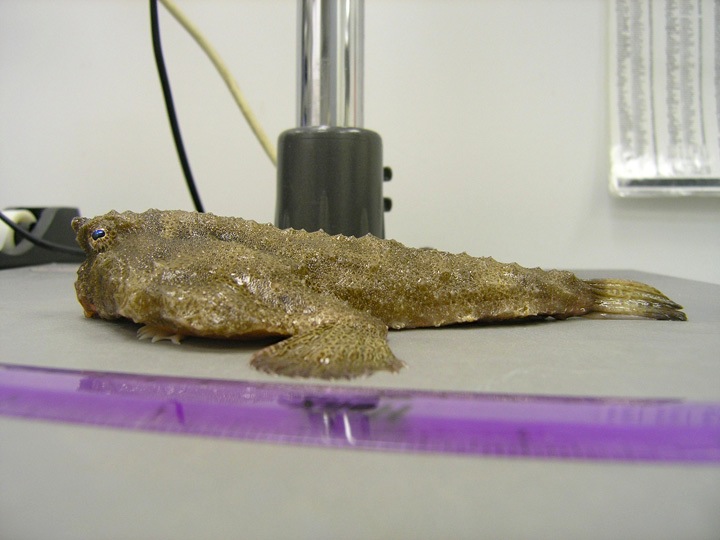
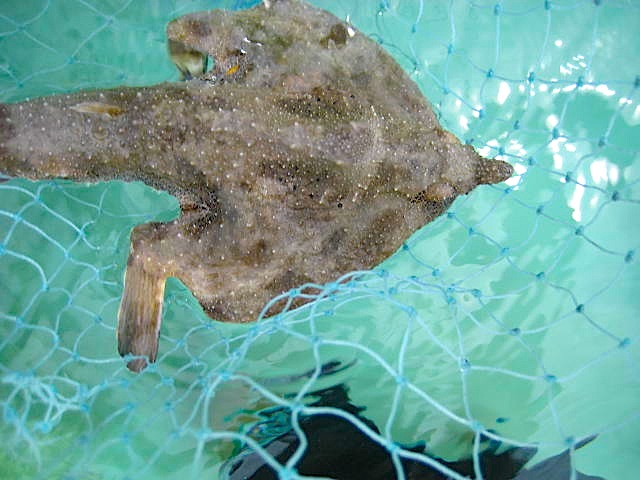
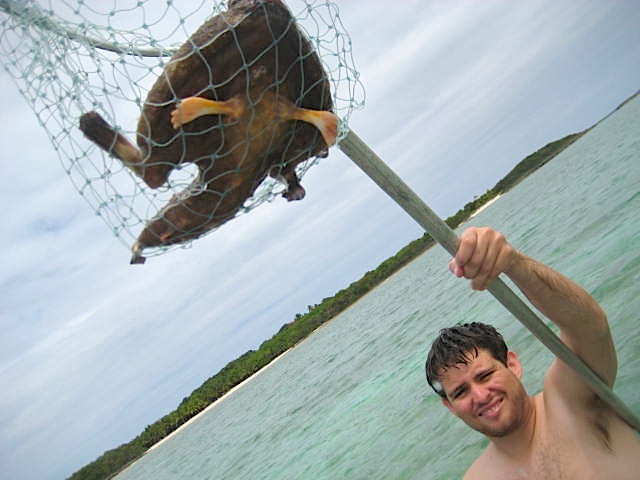
That’s ‘Batfish’ (or strictly, Batfishes, for there are some 60 species worldwide), as in one of the weirdest, most alien underwater creatures you may ever encounter. As opposed to ‘Bait Fish’, those little silvery specimens that are so attractive to predator fish higher up the food chain – the ones fishermen might be interested in… And the Batfish has no connection at all with Bruce Wayne of Wayne Manor, Gotham City nor with his sidekick Robin.I mention this bizarre-looking and -acting creature because two have recently been seen and photographed in Abaco waters and although I’d heard of the batfish and even knew vaguely what one looked like, I was quite unprepared for the real thing. Ellen Sokol is a Captain forKiskeedee Sailing Charters which during the summer is based in the Abacos and which amongst other things gives youngsters the opportunity to snorkel and to learn about undersea life. Ellen says: “I was snorkelling when I saw this thing on the bottom. At first, I thought it was a dead bird! It wasn’t moving at all even when I touched it with my flipper. Later when I read about this fish I learned that it sits motionless and uses the long nose to attract prey. I suppose that is exactly what it was doing when I rudely interrupted it! I later researched, and found it to be a spotted batfish”. Because they had no underwater camera on board, Ellen’s son gently scooped it up in a net so they could take a quick photo of the fish before returning it. Quick thinking!The other recent sighting was posted with a photo on FB within the last 3 weeks by the excellentCRUISE ABACO.
10 OGCOCEPHALIDAE (BATFISH) FACTS TO TREASURE
There are some 60 species of batfishes worldwide
They live in warm and temperate seas, including the waters of the Bahamas
An adult batfish is 12″ – 14″ in length
Their bodies are generally lumpy, with some hard spines
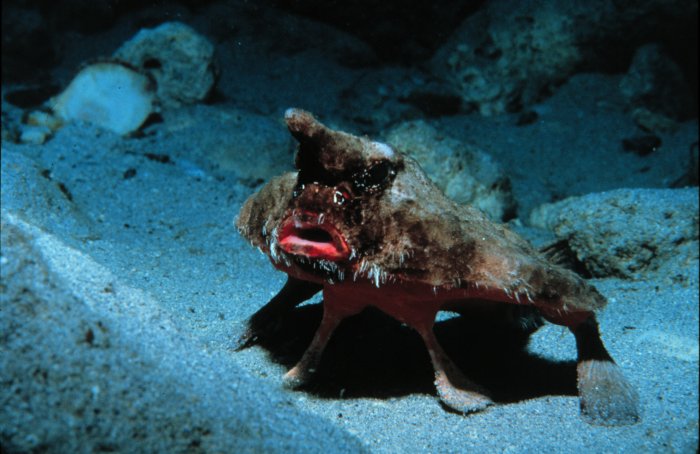
Some have a long, upturned snout. Others have bright red ‘lipstick lips’
They are rubbish swimmers, and often ‘walk’ on their limb-like pectoral and pelvic fins
Most species are deep sea denizens but some (short nose, spotted) inhabit shallower water
The fleshy snout above the mouth lures prey close enough to its jaws to eat
The batfish is becoming increasingly rare worldwide, and is considered to be endangered
Only the word ‘Logcock’ (pileated woodpecker) contains the initial 4 letters of Ogcocephalidae
CAN YOU SHOW ME SOME MORE EXAMPLES OF THIS INTRIGUING FISH?
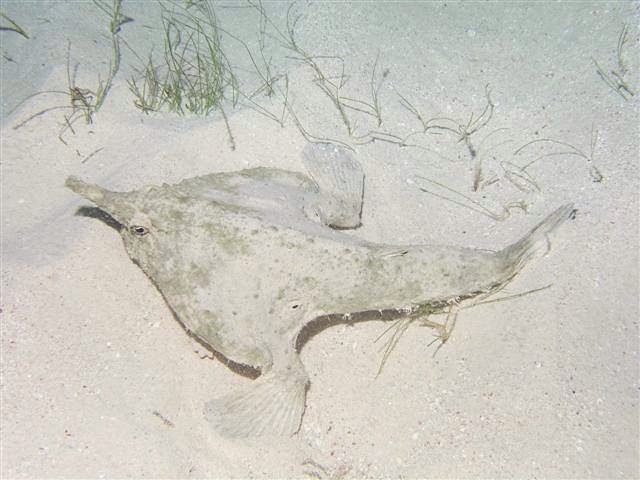
By all means. Here are some images of other batfish species – red-lipped, long nosed, short nosed – each peculiar in its own way. You’ll see their preferred, most unfishlike method for getting around.
Q. PLEASE MAY I SEE A VIDEO OF A BATFISH? A. YES. TWO.
“Heather Ashcraft found this very rare short-nosed bat fish on Eleuthera, Bahamas Sept 17 2013. It is a very strange (almost alien) looking combination of bat, frog, bird, and fish. The pelvic fins are used for walking on the ocean floor… Above the bat face is a horn (or beak)…”
“Taken at Coco Cay, Bahamas, April 29, 2014. At first we had no Idea what we were looking at… one of the weirdest things we had ever seen. Apparently they are rare. Even some of the locals had no idea what we were describing”
Batfish, Man-o-War Cay Abaco (Cheryl Marx MacKee)
Batfish, Abaco (Bob Williams August 2015)
Credits: Header image courtesy Texas Parks and Wildlife Department (Brenda Bowling); Ellen Sokol and Kiskeedee Sailing Charters; Cruise Abaco; Wiki, Barry Peters, NURP, Eric Reisch; Youtubers x 2; Petersen, Arkive, Cheryl Marx MacKee, Bob Williams and sundry magpie pickings…
‘BONEFISH CHASE’: A SKIFF RIDE FROM CROSSING ROCKS
Does any ‘fun’ (toxic concept) ever happen around Rolling Harbour? All that detailed business about our little winged friends. All that earnest historic stuff with, like, maps and things. All those fish that are basically just… fish. Ditto the flowers. The prints of Whales (geddit?). But does Rolling Harbour ever truly come alive?
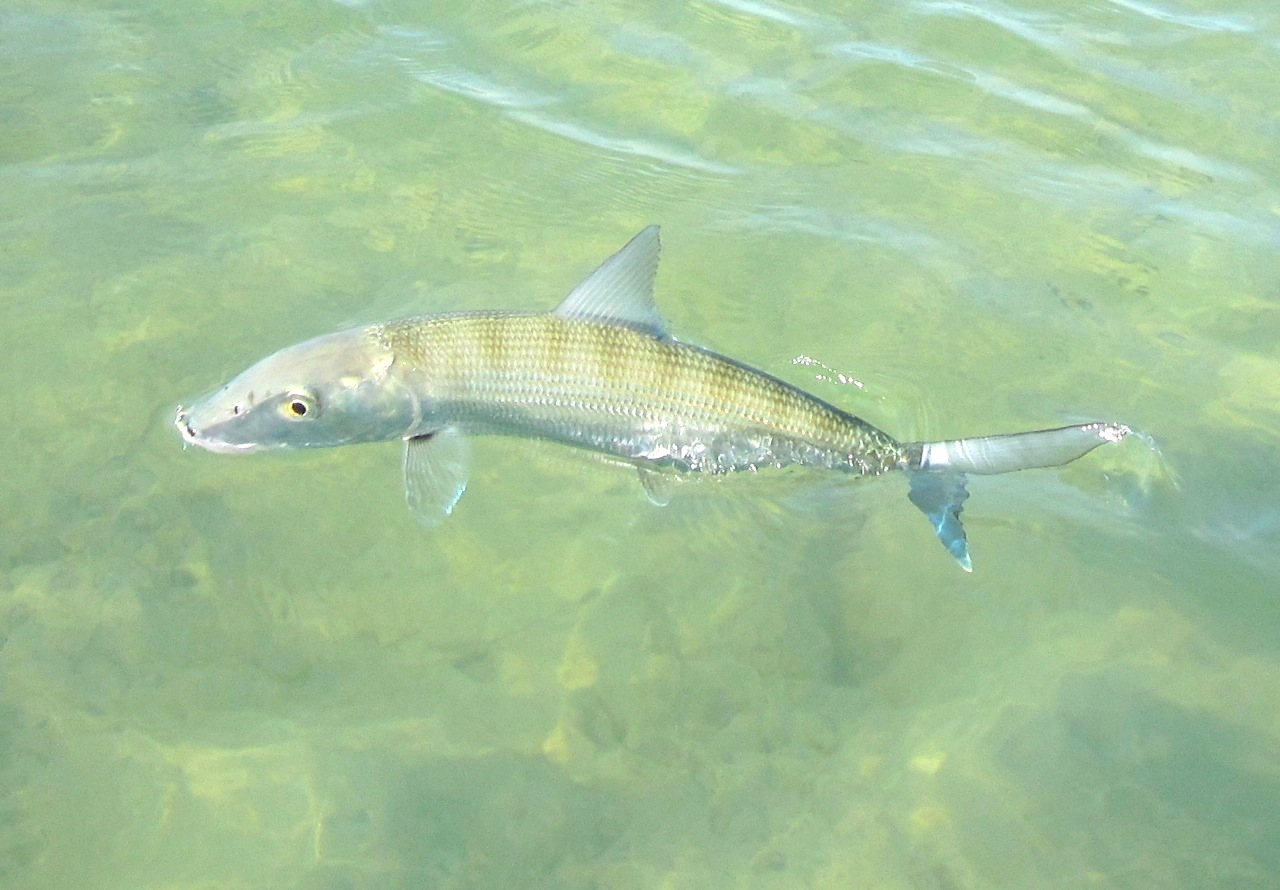
Well here’s a little brief entertainment in a skiff setting off from Crossing Rocks for a day of bonefishing, throwing some shapes along the twisty channel between the jetty and the flats beyond. Anyone who has enjoyed the sometimes exhilarating / sometimes painful (in choppy waves) skiff trips on Abaco to get out to the bonefish grounds will relate to this. You get 2 versions: high definition, with some pretentious music to match the mood. According to me.
Here’s a smaller version with a more familiar theme (also to be found on the Sidebar of this blog) for those who are allergic to pretentious music… it’s more ‘fun’, in fact.
Dreadits: all stuff, RH; music by Preston Reed and Commander Bond
BAHAMAS WHALES & DOLPHINS IN ABACO & ANDROS WATERS
The Bahamas Marine Mammal Research Organisation (BMMRO) has its HQ at Sandy Point, Abaco. We recently went out in their research boat, a RHIB, to spend an unforgettable day with Blainville’s beaked whales and bottlenose dolphins. I posted some of the dolphins HERE; and a two-part beaked whale post is a work in progress.
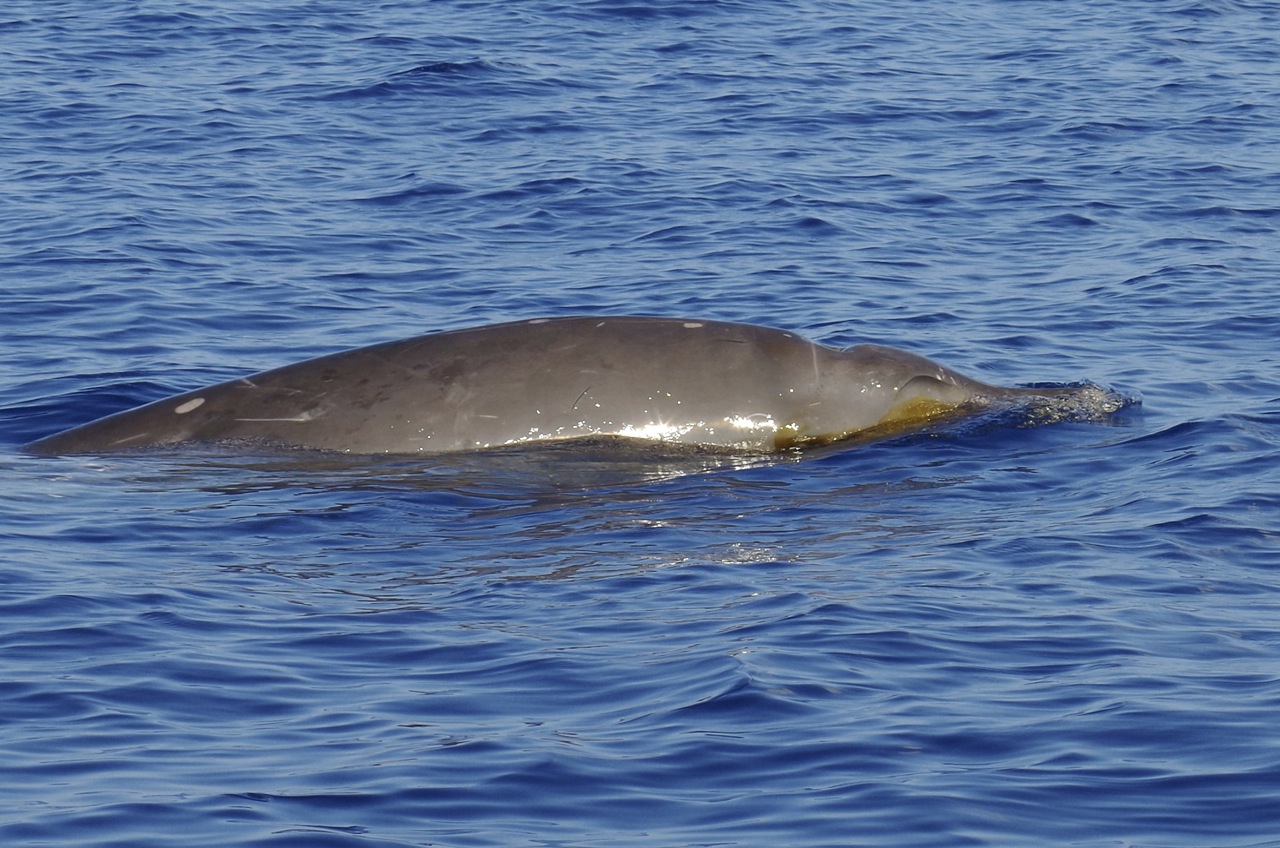
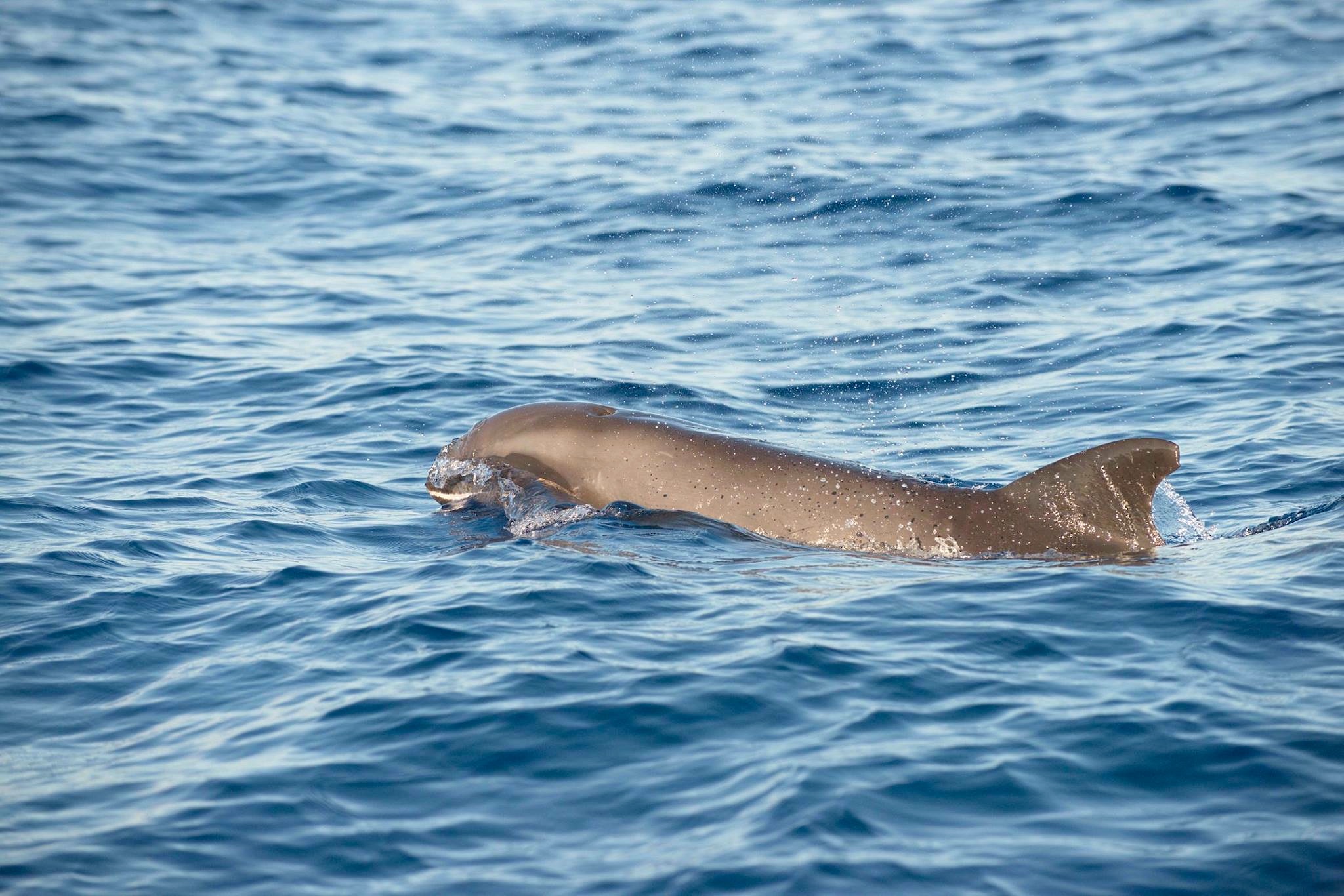
Male Blainville’s beaked whale with its extraordinary barnacle-encrusted teeth that protrude upwards from its lower jaw. The prominent beak is plainly visible. Sighted off the south-west point of Abaco during our second encounter with a group of these whales – the only male we saw that day
Abaco waters are ideal for marine mammals, especially off the southern shores where the walls of the Great Bahama Canyon drop vertiginously down from the shallow coastal waters to depths of up to 3 miles below. This is one of the deepest ocean canyons in the world. The area provides a rich source of food and nutrients for the whales and dolphins and many different species are regularly sighted there, from huge sperm whales to small pilot whales (including plenty of species I had never heard of before).
As the name suggests, the BMMRO’s remit extends far beyond Abaco. The researchers often spend time exploring and recording cetaceans in other Bahamian waters. For the last few weeks the team have been off Andros and have encountered quite a few target species. I have included a selection below taken within the last month to illustrate the importance of the area for a remarkable assortment of wonderful whales and dolphins.
BLAINVILLE’S BEAKED WHALE
DWARF SPERM WHALES
PANTROPICAL SPOTTED DOLPHINS
On board the research vessel, every sighting is recorded in detail – where possible by species, numbers, ages, sexes, and individual identifying characteristics. Thus ‘SW34’ may have a damaged fluke, whereas ‘RD49’ may have a long scar on its back.
PILOT WHALES
The research boat is equipped with sound devices which, when the microphone is immersed, are capable of picking up whale or dolphin sounds from a considerable distance. It’s astounding to be able to listen in ‘live’ to the wide assortment of clicks and whistles produced as the creatures communicate with each other. The recorded sound patterns are studied and can often be matched to enable an individual animal to be identified.
MELON-HEADED WHALES
RISSO’S DOLPHIN
Other work, including photography, is done underwater. Perhaps the most intriguing aspect is the collection of poop specimens, from which a great deal can be ascertained about the diet and health of an individual animal. I wrote about this task and the methods used a while ago in ‘FAMILIAR FECES‘.
I’ll be writing more about whales soon. Meanwhile, here’s a short BMMRO video of a large group of melon-headed males. At the start, you can clearly hear communication sounds between them.
Credits: Charlotte & Diane of the BMMRO for taking us out with them and for all the photos except the male Blainville’s beaked whale (mine, for once!)
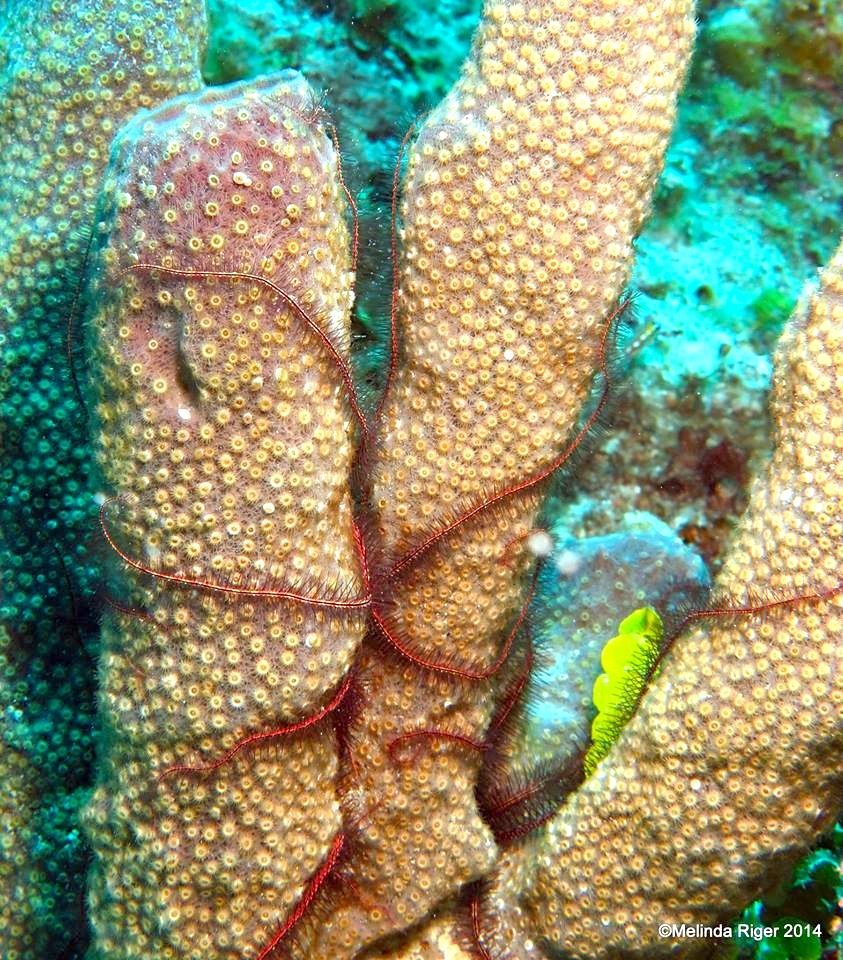
BRITTLE STARS are closely related to starfish, and in particular to Basket Stars. They are commonly known as “serpent stars”, having 5 long, thin arms that may grow as long as 2 feet long. There are lots of different types of brittle star – at least 2000 – and they are found in every ocean on earth from the poles to the tropics. In Bahamian waters they a commonly found living on reefs.
Although these creatures look primitive, their structure, nervous systems, respiratory systems, digestive systems, sex lives and transportation methods are incredibly complex. Take it from me – I’ve just read about it all. So I’ve decided to pick a few aspects of these creatures to highlight rather than discuss the minutiae of their ossicles (tiny bones), madroporites (a sort of water filter / pressure balancer) and viscera.
You are most likely to see Brittle Stars clinging to coral or sponges
A DOZEN BRITTLE STAR FACTS TO PLAY WITH
The star has no eyes and no sense organs as we know them, but can detect light chemically; and (why would they need this?) sense smell through their ‘feet’… [Not a superpower I would prize, but still]
The mouth is on the underside of the central disc (‘body’) of 5 segments, each with a toothed jaw
The mouth is used both for ingestion and, putting it delicately, egestion. [Nor that superpower]
Stars eat tiny organisms suspended in the water or mini-worms, gathering them with their arms
If I have understood this, they breathe through their armpits, and can excrete from here also
The arms fit the main part with ball and socket joints, and are flexible in all directions
The genitals seem to be located in or between the armpits (lucky we are not descended from stars)
Stars readily regenerate lost arms until they lose the 5th – then they are in real trouble
This enables them to shed an arm in a predator attack, like a lizard its tail
Trials indicate that a jettisoned arm cannot regenerate from itself
They use only 4 arms to move along, with the fifth ‘steering’ out in front or trailing behind
Brittle Stars are inedible but non-toxic
Often, brittle stars will cling on inside a sponge
Here is a great video from Neptune Canada of a brittle star fight on the ocean floor over the remains of a shrimp. If you watch the ones joining the fight, you will clearly see the locomotion method described above, with one limb pathfinding and the other four ‘walking’.
I’m not renowned for extreme sensitivity, so I feel no shame in showing mating brittle stars, courtesy of Channel Banks. It’s not exactly Lady Chatterley and Mellors, but the entwined arms are rather romantic, no?
Credits: all wonderful photos by Melinda Riger of Grand Bahama Scuba; BS infographic and viddys as credited






















































































 ROLLING HARBOUR ABACO
You must be logged in to post a comment.