Unknown's avatar

BOTTLENOSE DOLPHINS IN ABACO WATERS (PART 1)


Bottlenose Dolphins, Rocky Point, Abaco (Keith Salvesen : BMMRO) 7

BOTTLENOSE DOLPHINS IN ABACO WATERS (PART 1)

DCB GBG Cover Logo dolphin

This seems to be a excellent early Spring for dolphin and whale sightings in Abaco waters. I’ve noticed that people have been posting dolphin sightings on FB recently. In our brief window of opportunity each March, I usually reckon to see 2 or 3 dolphins at most – maybe crossing over to Hope Town on the ferry, or more probably on a fishing trip. This year we saw 2 groups of about 6 off Cherokee while fishing, including calves. On another day, 4 adults made a leisurely progress the whole length of Rolling Harbour while we watched from the balcony of the Delphi Club. I don’t think they have ever been so close to the shore there before. The best was to come.Bottlenose Dolphins, Rocky Point, Abaco (Keith Salvesen : BMMRO) 3

Near the end of our trip Charlotte Dunn and Diane Claridge invited us to go out with them on the BMMRO research boat. This is equipped with a hydrophonic system that can detect the bleeps, whistles and clicks of cetaceans, and record them for comparison with previous data. This enables particular animals to be identified from their vocalisations. The other method is to note particular features of an animal – damage to a fin, markings on the flank and so on. During the day C & D happily conversed in code: “Is that 132 over there?” “No, it’s got a nick in the fluke, it must be 127…”BMMRO Research Boat, Sandy Point, Abaco

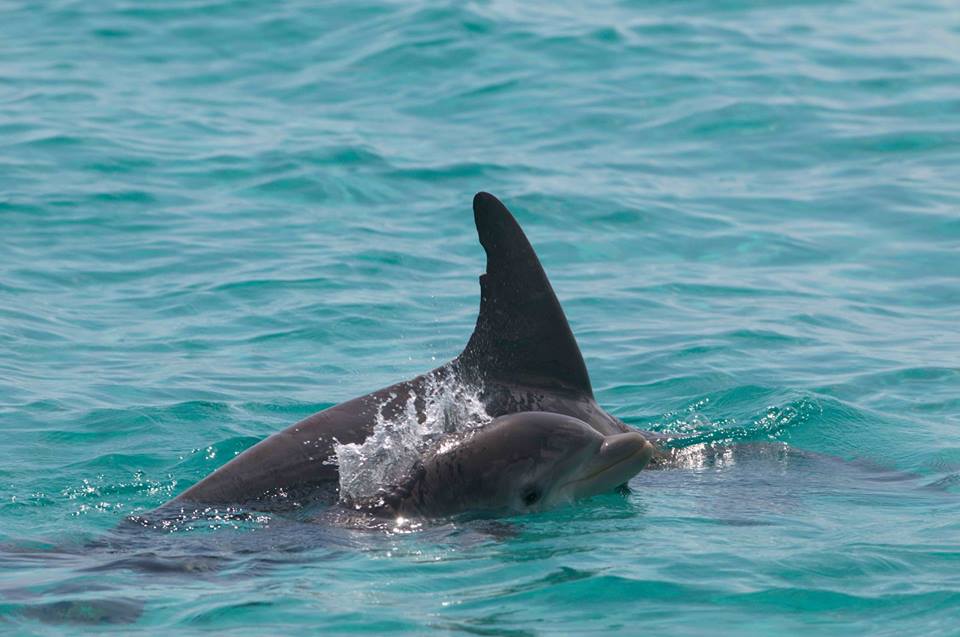
As we returned in the RHIB from an amazing day spent at close quarters with beaked whales [more on these soon], we moved from deep dark blue ocean to sandy turquoise shallows. There, just off Rocky Point (near BMMRO HQ at Sandy Point) were half a dozen bottlenose dolphins, including a mother and calf. This post contains a small batch of photos of adults – there’ll be another post shortly featuring the calf… Bottlenose Dolphins, Rocky Point, Abaco (Keith Salvesen : BMMRO) 4Bottlenose Dolphins, Rocky Point, Abaco (Keith Salvesen : BMMRO) 1Bottlenose Dolphins, Rocky Point, Abaco (Keith Salvesen : BMMRO) 5

Here’s a taster for the next post – the calf, just visible close alongside its mother, was being given leaping practice. Watch this blog…

Bottlenose Dolphins, Rocky Point, Abaco (Keith Salvesen : BMMRO) 6

All photos RH. Huge thanks to Charlotte, Diane and Bahamas Marine Mammal Research Organisation BMMRO for a truly wonderful day (and for my cool sweatshirt!) photo 2

bmmro_logo

Unknown's avatar

“PELICAN BRIEF”: BROWN PELICANS AT SANDY POINT, ABACO


Brown Pelicans, Sandy Point, Abaco 12

 “PELICAN BRIEF”: BROWN PELICANS AT SANDY POINT, ABACO

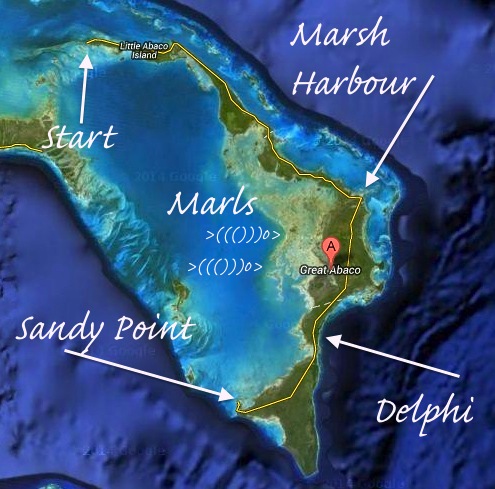
The Brief today is to write about Brown Pelicans at Sandy Point. And to shoehorn in the traditional titular pun somehow (job done!). For those unfamiliar with Abaco, SP is the end of the road. Literally. The island has one highway 120 miles long, mostly straight, from north to nearly south where it curves abruptly west for a while, past the airfield, and when it reaches the ocean at Rocky Point there’s a 90º turn. For a couple of miles, you travel north again into Sandy Point… then stop when you see the sea ahead of you. Dead end. Time to park and explore… 

Abaco Road Map

Brown Pelicans, Sandy Point, Abaco 4

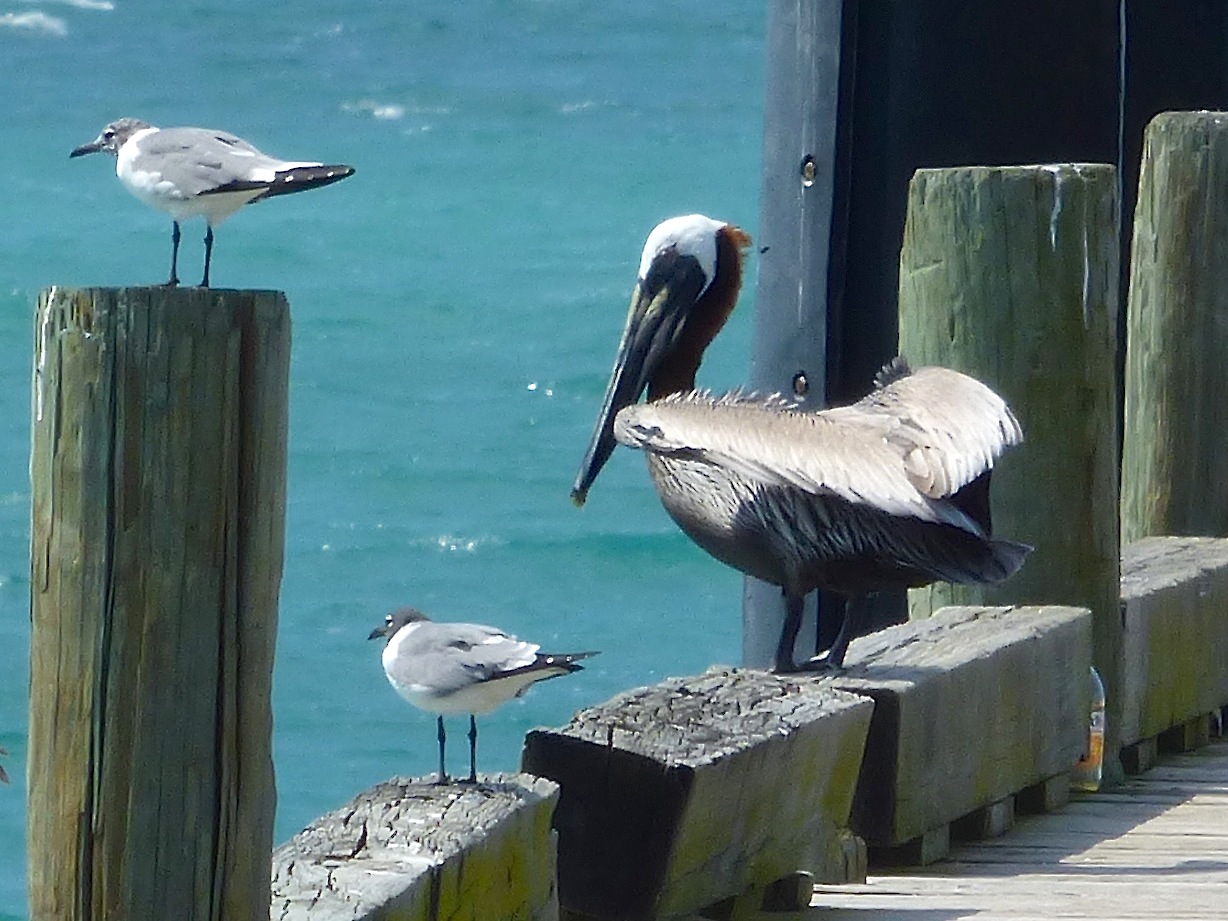
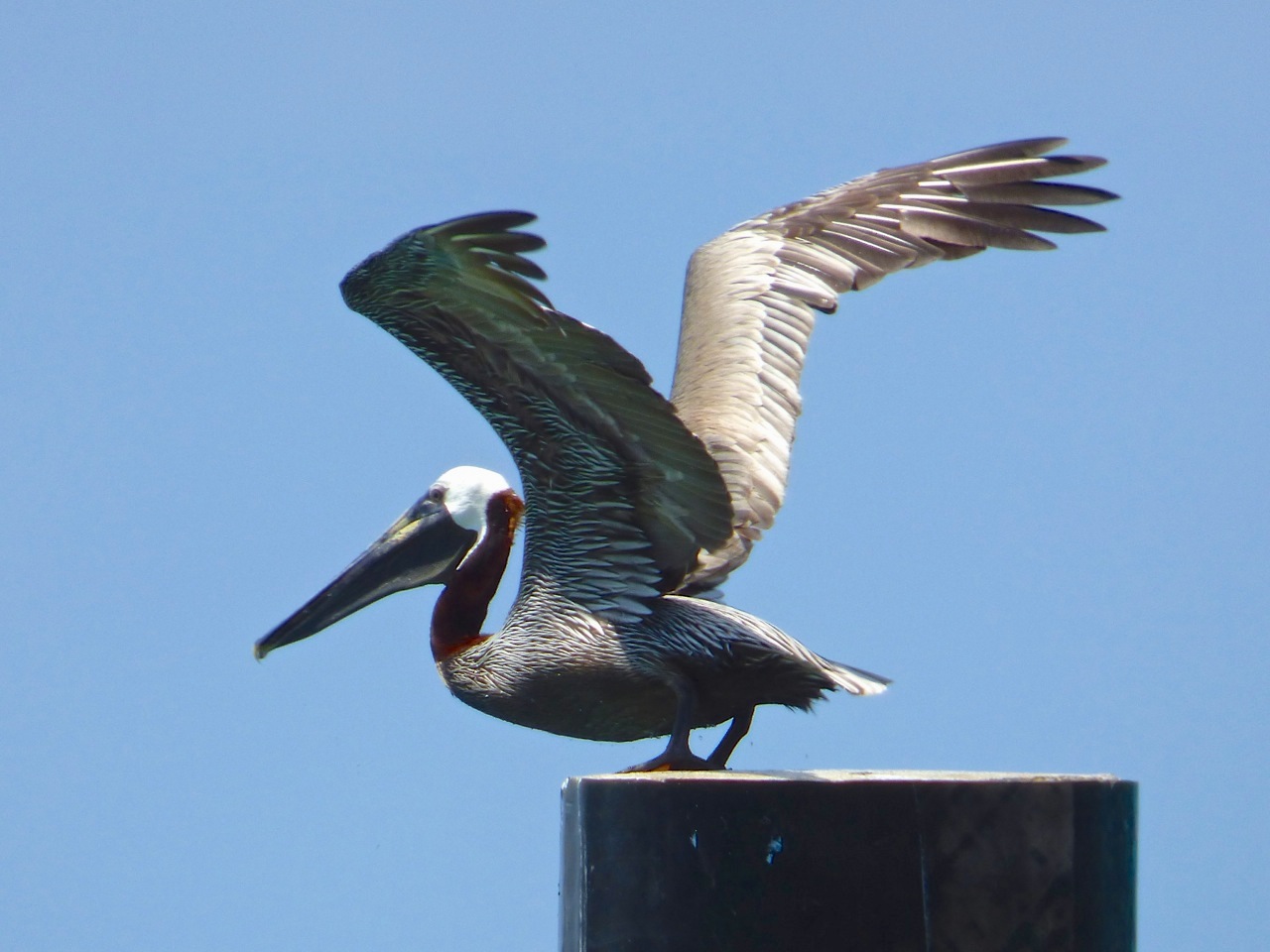
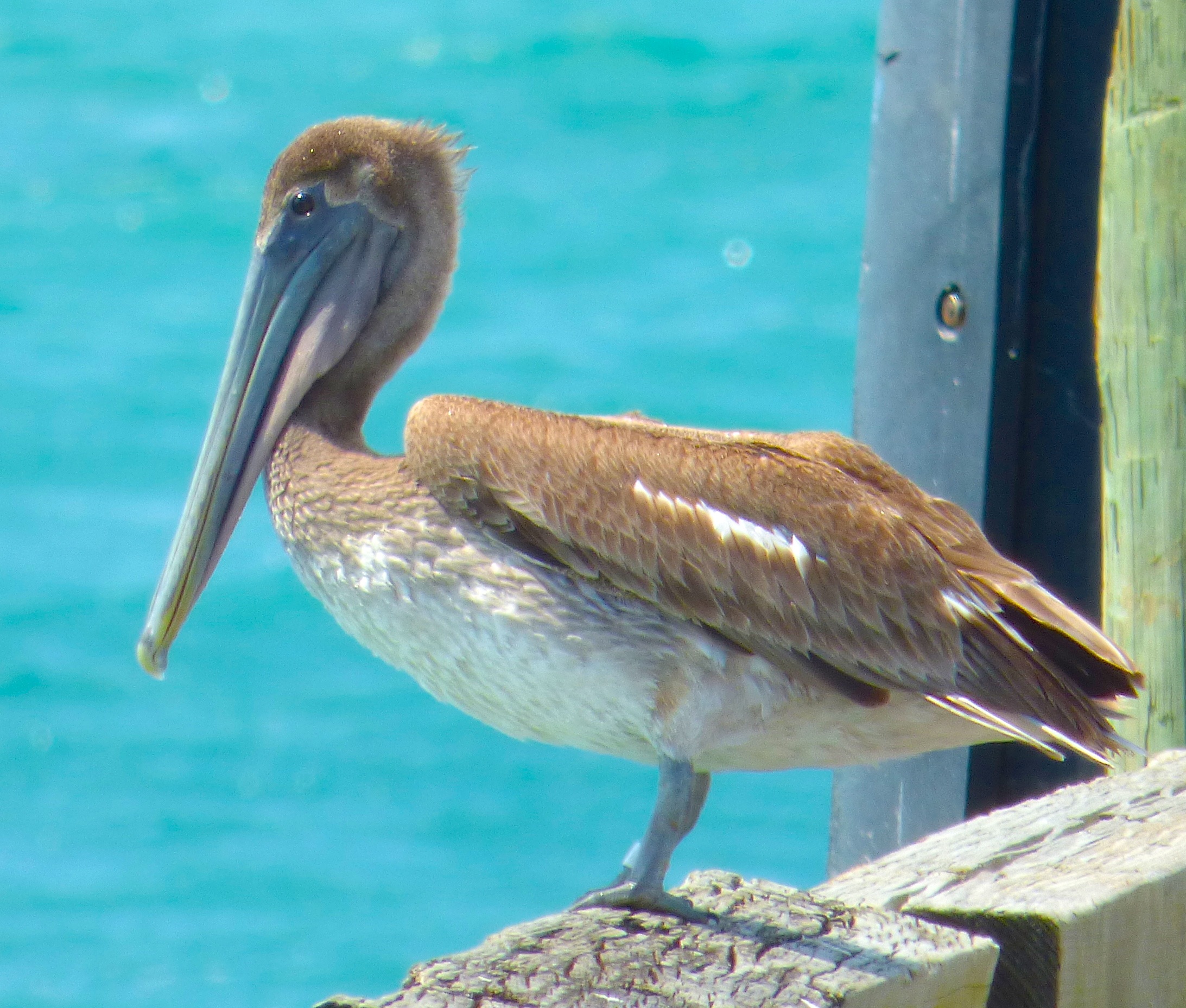
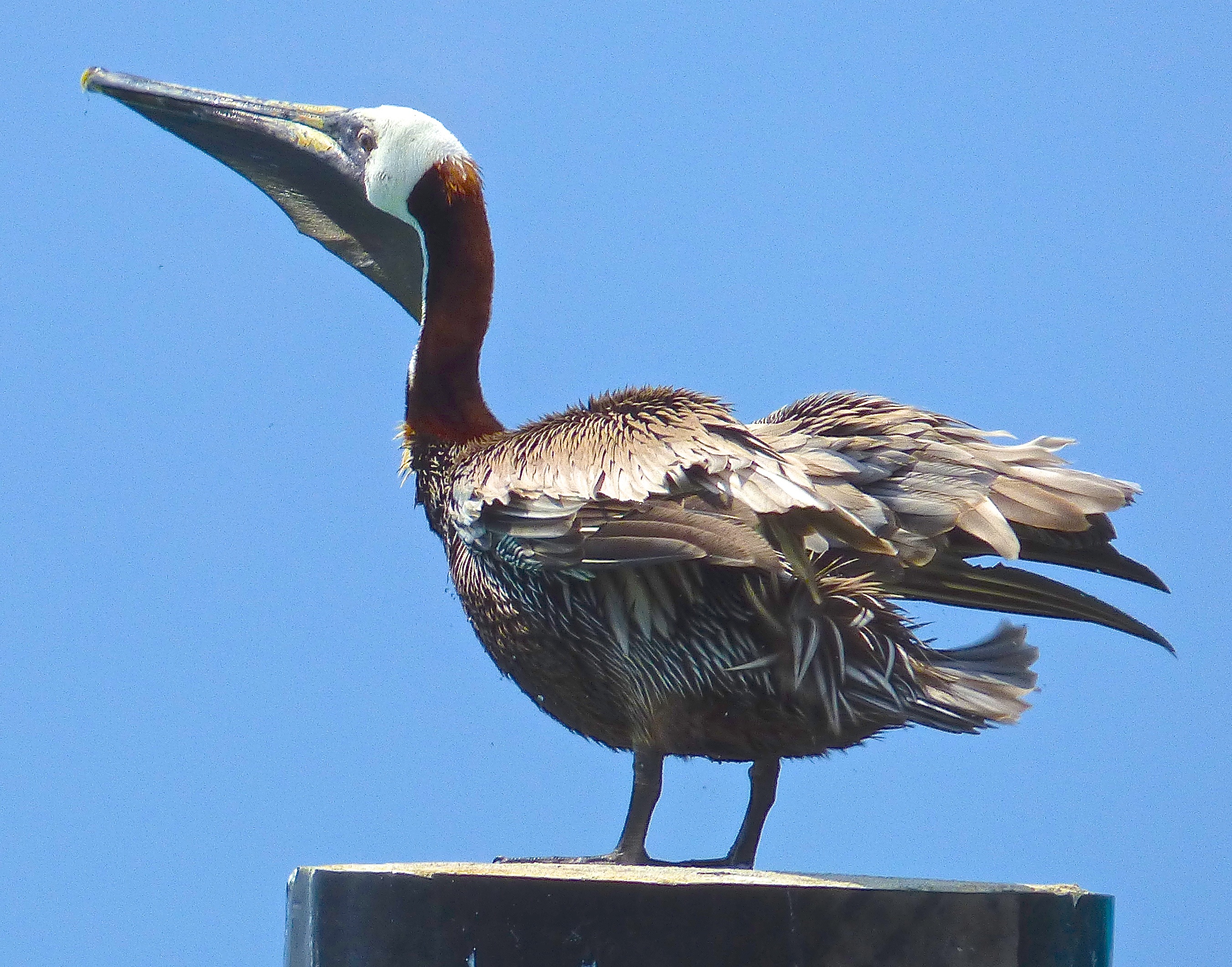
The birding at SP can be very rewarding. Depending on the time of year, you may see ospreys, tropicbirds, heron and egrets of various sorts, kestrels, anis and plenty of shorebirds. The last are found on the narrow beaches and at low tide on the sandbars close to the shore. On the more distant sandbars in Spring, you may see a colony of Magnificent Frigatebirds (or Man-0-War birds), the males with their amazing ‘look-at-me’ bright red throat-balloons (‘gular pouches’) inflated to enhance their wooing prospects. This is exactly the time you’ll realise you haven’t brought your binoculars with you…  Brown Pelicans, Sandy Point, Abaco 9 We’d gone to a (very) informal lunch party at the legendary Nancy’s, but there was activity on the nearby dock that caught my eye. A pair of pelicans were fishing from it, then drying in the sun, then having a little fly around. I only had a rather underwhelming camera with me, so I did what I could in a short time before returning to the matter in hand. Brown Pelicans, Sandy Point, Abaco 8Brown Pelicans, Sandy Point, Abaco 6Brown Pelicans, Sandy Point, Abaco 7 Although I watched the birds diving off the dock a few times, I never actually saw them catch anything. Maybe they had already swallowed some hapless little fish before returning to the dock. I was reminded of a poem by a poet called James Montgomery. Here’s his vivid and perhaps overwrought description of pelican feeding habits: Nimbly they seized and secreted their prey, Alive and wriggling in the elastic net, Which Nature hung beneath their grasping beaks; Till, swoln, with captures, the unwieldy burden Clogg’d their slow flight, as heavily to land, These mighty hunters of the deep return’d. There on the cragged cliffs they perch’d at ease, Gorging their hapless victims one by one; Then full and weary, side by side, they slept, Till evening roused them to the chase again. James Montgomery (4 November 1771 – 30 April 1854): Pelican Island, 1828 (canto IV, l. 141)

Watching the water intentlyBrown Pelicans, Sandy Point, Abaco 10

Check out that ‘gular pouch’… Pelicans, like frigatebirds, have them – cormorants too.Brown Pelicans, Sandy Point, Abaco 14

After each sortie a certain amount of shaking down, feather fluffing & general drying-off took placeBrown Pelicans, Sandy Point, Abaco 13

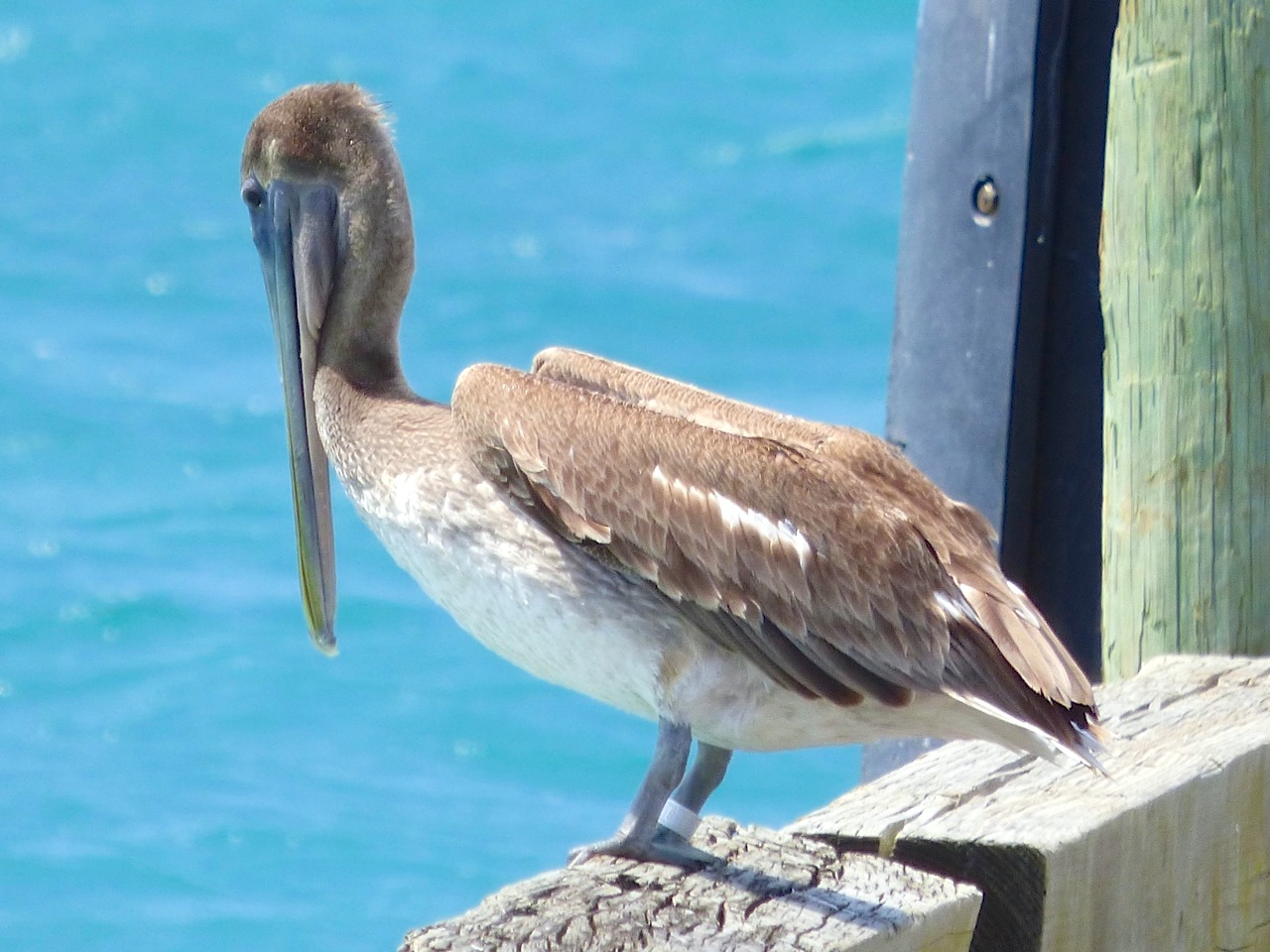
Although these pelicans look generally rather clumsy and ponderous both in flight and on land, they are surprisingly quick and agile in the dive. Occasionally, however, the take-off was a bit ragged… Brown Pelicans, Sandy Point, Abaco 16 Usually the male took the tallest post from which to survey the scene, but occasionally the female beat him to a good vantage point.Brown Pelicans, Sandy Point, Abaco 17 I’d never seen pelicans so close-to before. At Delphi they can be seen flying lazily past over the bay, quite high. I’ve seen one in Hope Town, but some distance away. So it was a huge thrill to be able to watch these two birds from the dock itself. You’ll see that the female was ringed (banded), but the male was not. Very soon we’ll be back on Abaco. I’m hoping the pelicans will be at Sandy Point again. And the ospreys. And the Frigatebirds.  And that I’ll have remembered the binoculars. And that the Kaliks at Nancy’s will be ice-cold…  All photos, RH

It’s a poor photo, but it illustrates the huge wingspan compared to body length…Brown Pelicans, Sandy Point, Abaco 15

Unknown's avatar

MAKING A SPLASH: SPERM WHALES & MANATEES IN ABACO WATERS


Sperm Whale, Abaco Bahamas (BMMRO)

MAKING A SPLASH: SPERM WHALES & MANATEES IN ABACO WATERS

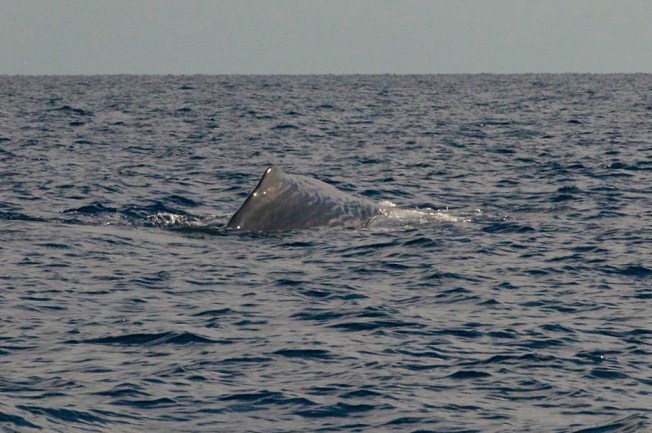
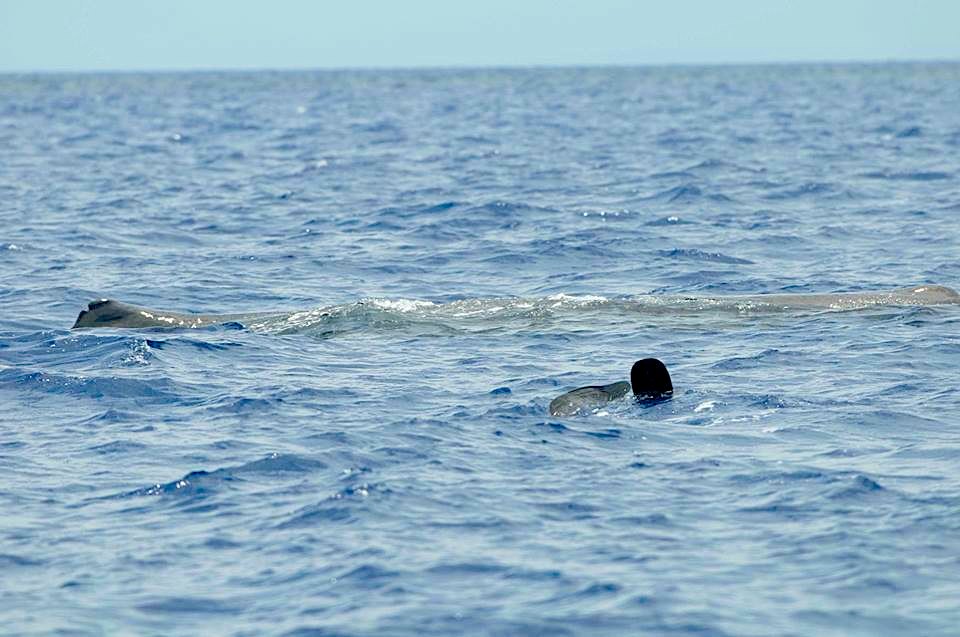
After a quiet spell on the cetacean and sirenian front, there is exciting news to report. First, the BMMRO encountered two sperm whales just off Sandy Point.  I don’t know how close to the shore they actually were, but it was very friendly of them to come so near to the BMMRO HQ.Sperm Whale, Sandy Point, Abaco BMMRO3

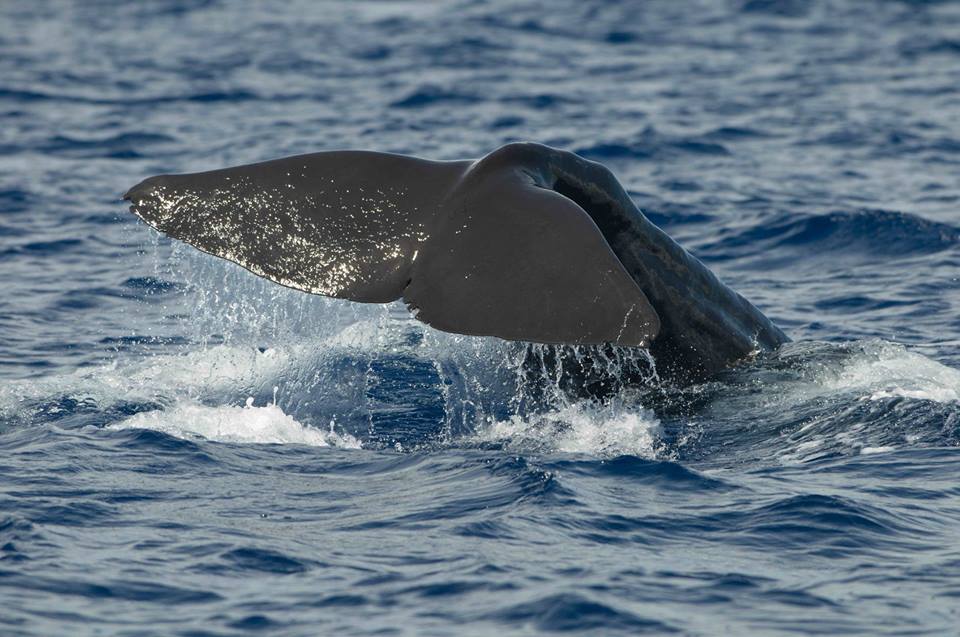
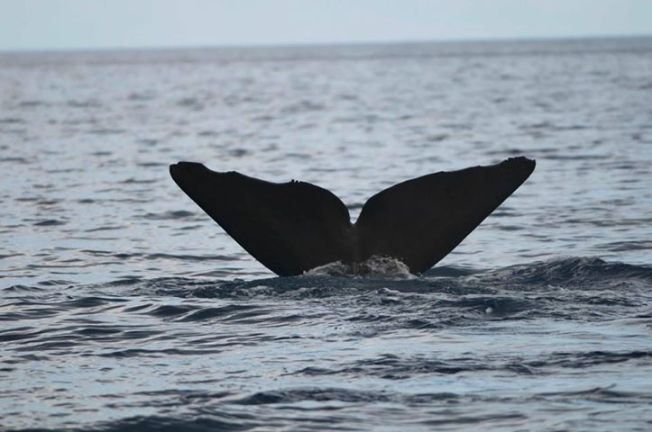
When whales are sighted from the research vessel, one of the tasks is to collect feces. This job is often undertaken by interns, and is a good way to learn that serious research may well involve unattractive work… They practise with… er… coffee grounds and a net. For more on this important yet unappealing aspect of whale research, CLICK NICE TO SEE FAMILIAR FECES. Another essential part of any sighting is to take fluke photos to enable ID.  Every whale has different and distinctive patterning to the fluke, including general wear and tear. As a photo archive is built up, the researchers are able to recognise a particular whale and cross-reference it with previous sightings.

Sperm Whale, Sandy Point, Abaco BMMRO2Sperm Whale, Sandy Point, Abaco BMMRO1

The third task of a sighting is to record clicks made by an individual whale. This enables an estimate of the whale’s size to be made, and again a sound archive is gradually built up from which comparisons can be made.

Sperm Whale, Sandy Point, Abaco BMMRO4

A NEW MANATEE VISITS MARSH HABOUR

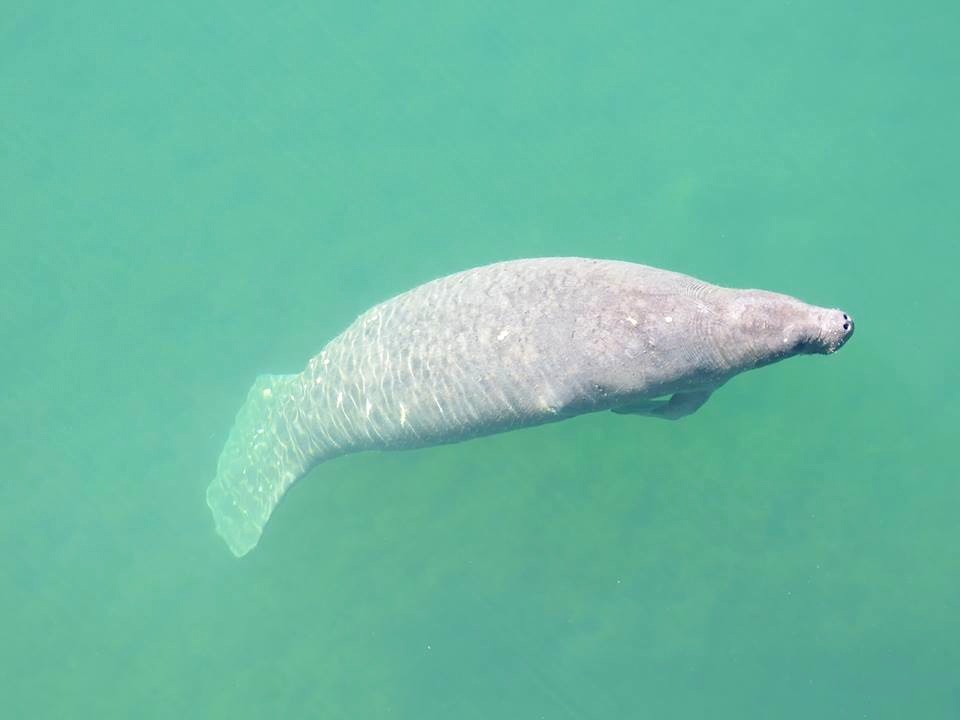
FRIENDS OF THE ENVIRONMENT has just reported the sighting of a new manatee at the head of Marsh Harbour harbour. I’m not aware of any other sightings in the last couple of days, but as they say,  “Please keep your eyes out and drive carefully! Contact Bahamas Marine Mammal Research Organization with any further sighting reports by calling 357-6666. You can also share photos with them on Facebook. Also, please do not feed the manatee. They are able to find their own food and anything else may make them unhealthy”.

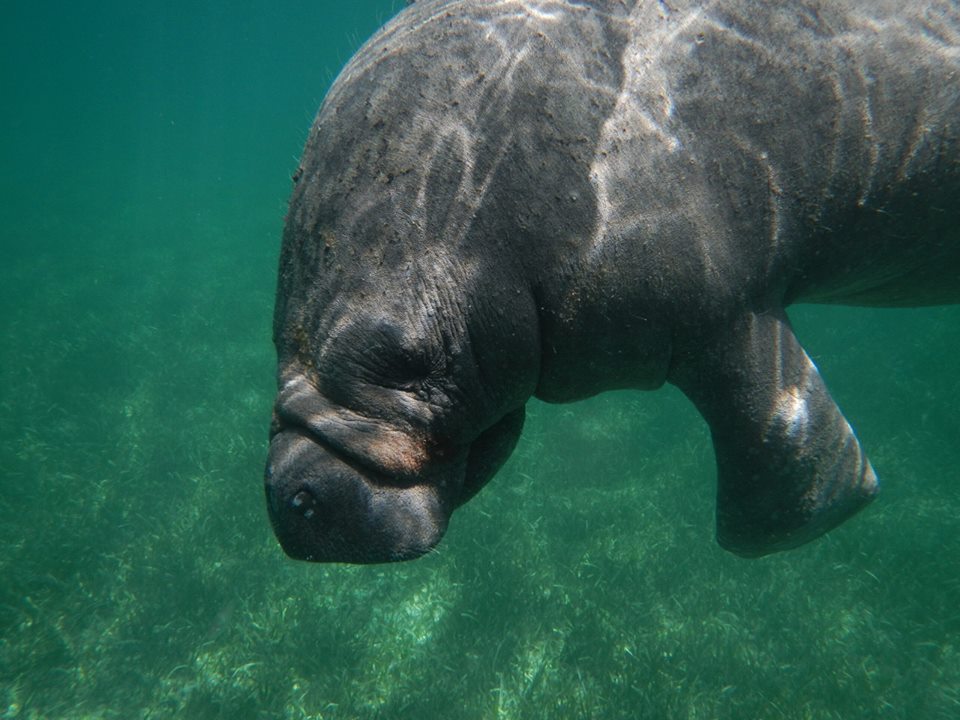
This is Abaco’s third recent manatee. First there was GEORGIE, who as far as I know is still comfortably settled in the Cherokee area. Then RANDY arrived earlier this and got to within about a few miles of Georgie… High hopes of a meeting – and ‘friendship, maybe more’ – were dashed when Randy turned round and headed back to Castaway Cay. Let’s hope this newcomer stays around. I wonder what he – or she – will be named? My suggestion is Abby or Abi, which I think is unisex…

10846213_10152589661493178_5080839733543438859_n10849995_10152589661598178_1824081022417510310_n

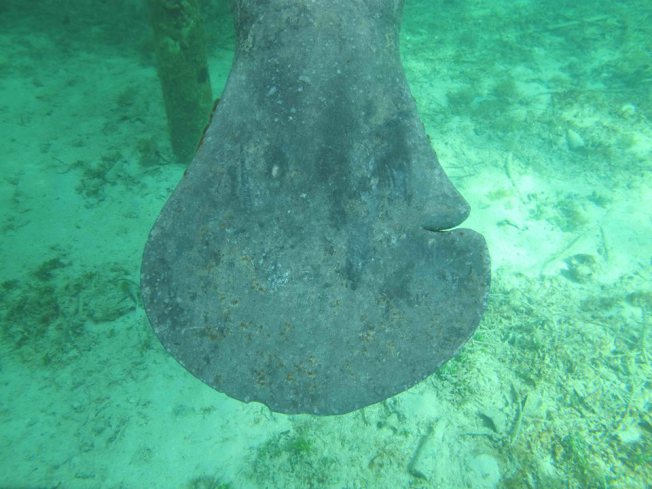
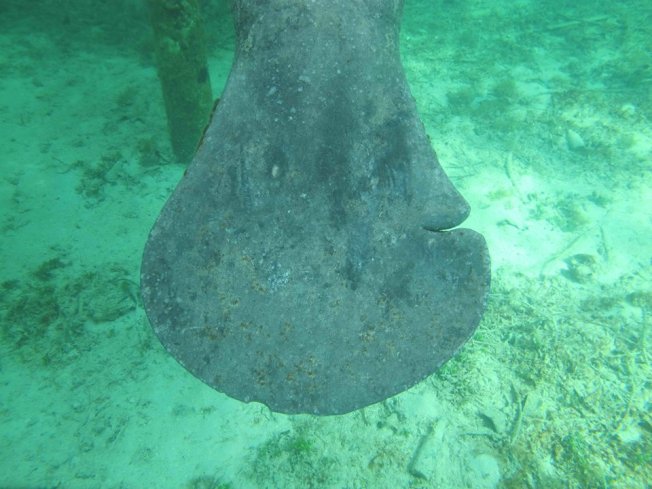
Just as with the whale flukes, the tail of a manatee is an important means of identification. The new manatee’s tail has its own distinctive edge pattern, which will enable its future recognition. Here is an image of Randy’s tail, with its unique notch. 

Randy the Abaco Manatee - tail notch

Credits: BMMRO & FOTE with thanks as ever for use permissions

mantsw~1

Unknown's avatar

“ABACO’S GOT TALONS”: THE OSPREY


Osprey, Abaco (Jim Todd 2)

“ABACO’S GOT TALONS”: THE OSPREY

The magnificent Osprey Pandion haliaetus is one of the world’s most successful raptors and can be found on every continent except Antarctica.

220px-Pandion_haliaetus_global_range.svg

Osprey, Abaco Bahamas (Tom Sheley)

On Abaco the Osprey is a permanent breeding resident, and while certainly not an ‘every day bird’, the chances of seeing one are reasonable. They are fairly often seen flying over the bay at Delphi, or out on the Marls. A pair recently nested at Sandy Point close to Nancy’s restaurant.

Ospreys, Abaco (Jim Todd)

There are few more exhilarating sights in the world of birds than an osprey swooping from a great height into the sea, emerging with a large fish held characteristically ‘fore and aft’ in its talons, and flying into the distance with heavy wing-beats. This wonderful close-up by wildlife photographer PHIL LANOUE shows an osprey that has actually managed to grab dinner for two…

osprey-flight-with-two-fish-03

This bird looks as if it is poised to dive onto some hapless fishOsprey in flight (Lake Wylie, S Carolina) - Gareth Rasberry

 10 PANDION POINTS TO PONDER

  • Ospreys are also known as sea hawks, fish hawks or fish eagles. They are almost exclusively fish-eating
  • A mature adult’s wingspan may reach 6 feet
  • They are the only members of their taxonomic family, genus and species
  • Ospreys & owls are the only raptors with reversible outer toes to grasp prey firmly
  • They can carry fish weighing more than 4 lbs
  • They dive into water feet first to grab its prey; their nostrils can close up to keep out water
  • Osprey-watch.org is a global site for mapping osprey nest locations / logging nesting observations
  • A New Jersey group has designed the optimum artificial nest platform, now an accepted standard
  • Ospreys usually mate for life
  • Osprey populations in many areas have been affected by pesticides and by egg trophy-hunters

PUTTING THE ‘PREY’ INTO ‘OSPREY’
Osprey, Florida (Danny Sauvageau)

A utility post makes a perfect perch for a bonefish snackOsprey, Abaco (Woody Bracey) copy

CHECK OUT THE TALON…Osprey (Danny Sauvageau)

The impressive wingspan of an Abaco ospreyOsprey, Abaco (Craig Nash) copy

An osprey far out on the Marls. I managed to get some distance shots of it despite having a fishing rod in my hand…Osprey - Abaco Marls 4 Osprey - Abaco Marls 1Osprey - Abaco Marls 2Osprey - Abaco Marls 3

Osprey, by John James AudubonOsprey - John James Audubon

The Osprey is a prolific symbol in national, cultural and sporting themes, and has been depicted on Bahamas stamps. And quite right too.

Bahamas Wildlife Stamp Osprey copy

Wm Shakespeare Coriolanus

I think he [Coriolanus] will be to Rome
As is the osprey to the fish, who takes it
By sovereignty of nature… 

Credits: Jim Todd (1, 3), Tom Sheley (2), Phil Lanoue (4), Gareth Rasberry / Wiki (5), Danny Sauvageau (6, 8), Woody Bracey (7), Craig Nash (9), RH (Marls pics) – thanks for all image use permissions

Unknown's avatar

STANDIN’ ON THE DOCK OF THE BAY: GREAT BLUE HERON ON ABACO


Great Blue Heron, Sandy Point, Abaco - Keith Salvesen 2

STANDIN’ ON THE DOCK OF THE BAY: GREAT BLUE HERON ON ABACO

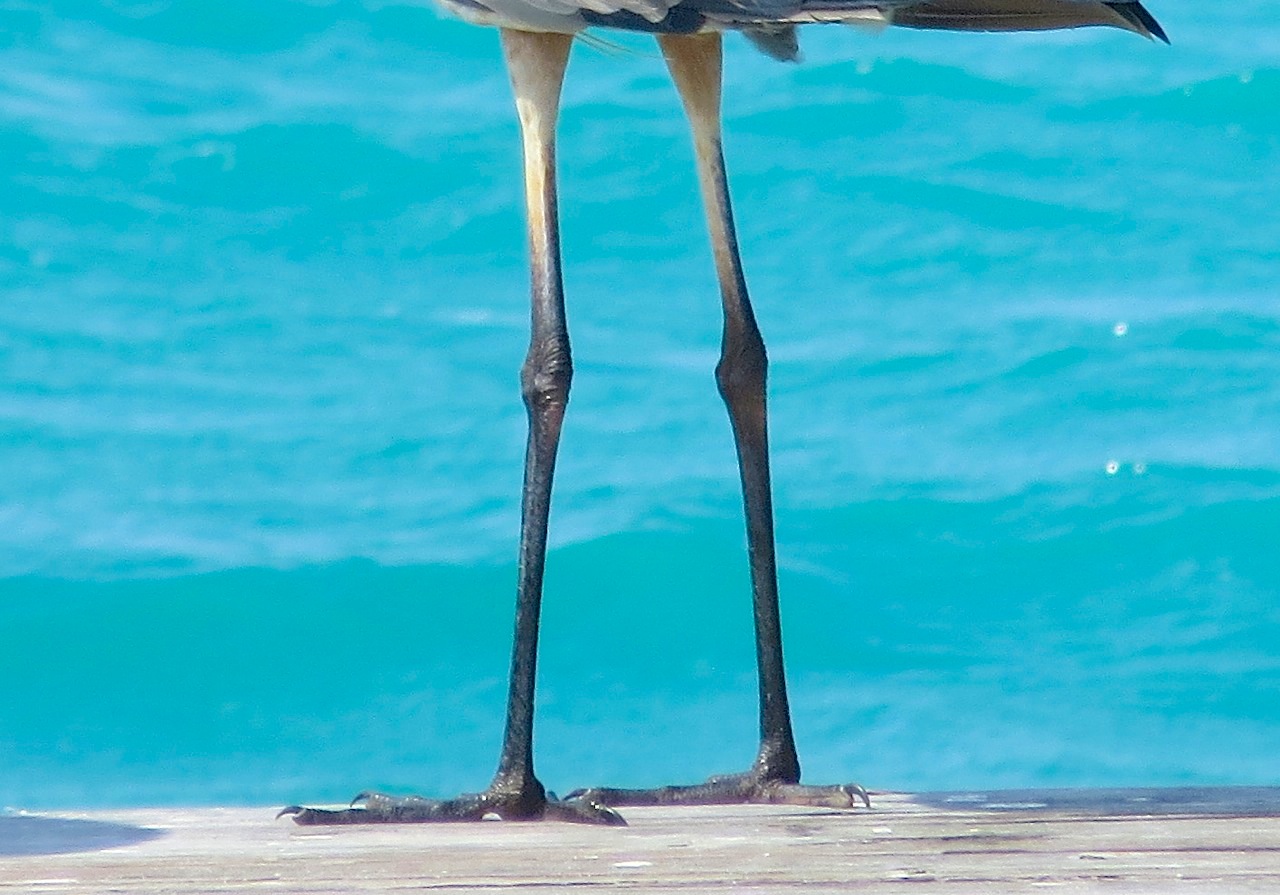
The occasion: a trip to Sandy Point for a lunch party at the legendary Nancy’s in honour of  Sandy Walker at the end of his 5 years as manager of the Delphi Club. A pair of brown pelicans on the nearby dock were clumsily flying around, diving, perching, drying their feathers, then repeating the cycle. In a quiet moment I slipped away to watch them – and a Great Blue Heron landed quite close by me. So as well as taking photos of the pelicans, I pointed the camera at the heron from time to time. My favourite view is of it standing proudly on the edge of the dock, with the truly azure sea behind it (header and final image).

Great Blue Heron, Sandy Point, Abaco - Keith Salvesen 6

THE PERILS OF A CAMERA UPGRADE

[PHOTOGRAPHIC INTERLUDE – SKIP IF EASILY BORED BY SUCH THINGS]

I don’t have a fancy camera. I would never get the settings right before the bird had flown. Or died, even. So I had been using a Panasonic Lumix FZ45 kindly given to me by Mrs RH in a benign moment, possibly Christmas. Then I made a classic error of upgrading to an FZ72 with an alleged massive 60X zoom. Brilliant, I thought. Big mistake. My old camera has a Leica lens. Used with care and a lens extension (zeugma score!), it is / I am occasionally capable of taking pin-sharp photos. The upgrade camera’s lens turned out not to be a Leica. Almost all the shots I took were ‘soft’, the more so using the zoom. A soft photo taken with a less good lens, zoomed 60X, will never be a better photo. Just an even softer one. I wish I’d had Old Faithful with me instead. When we got home, I immediately dug out OF and sold 60X disappointment. OF is now reinstated as my BF.  

The shots of this heron mostly turned out fairly well, largely because it stayed quite close to me. It flew off a couple of times, then returned to the edge of the dock. Here are a few close-up views of the heron selected from the various pics I took, showing some of the details of this fine bird. Great Blue Heron, Sandy Point, Abaco - Keith Salvesen 3 Great Blue Heron, Sandy Point, Abaco - Keith Salvesen 4 Great Blue Heron, Sandy Point, Abaco - Keith Salvesen 5Great Blue Heron, Sandy Point, Abaco - Keith Salvesen 7Great Blue Heron, Sandy Point, Abaco - Keith Salvesen 10 Then I remembered why I was meant to be at Sandy Point, and went back to Nancy’s for conch fritters and a Kalik or two well OK make that three… Great Blue Heron, Sandy Point, Abaco - Keith Salvesen 11

ROLLING HARBOUR MUSICAL DIGRESSION

Otis Redding recorded ‘Sittin’ on the Dock of the Bay’, arguably his greatest moment, in 1967 a matter of days before he died in a plane crash. The record became the first ever posthumous US Chart #1 (#3 in UK). I’ve dug out a video compo by the excellent Rhino outfit that disinters or at least recycles gems from our musical heritage. It’s not just the voice of Otis Redding that makes this song so poignant and so good – Steve Cropper’s guitar is outstanding too.

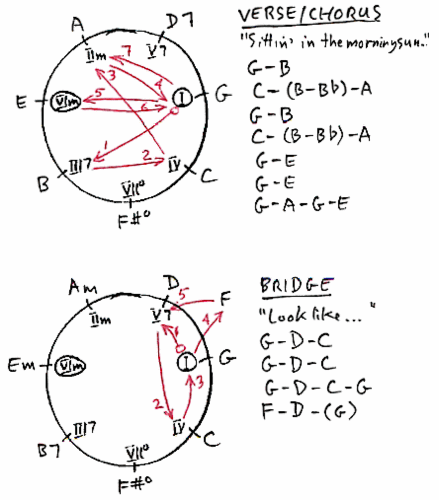
Guitarists out there – you want a ‘Chase Chart’, don’t you?

Ch_6_Fig_114http://www.howmusicreallyworks.com

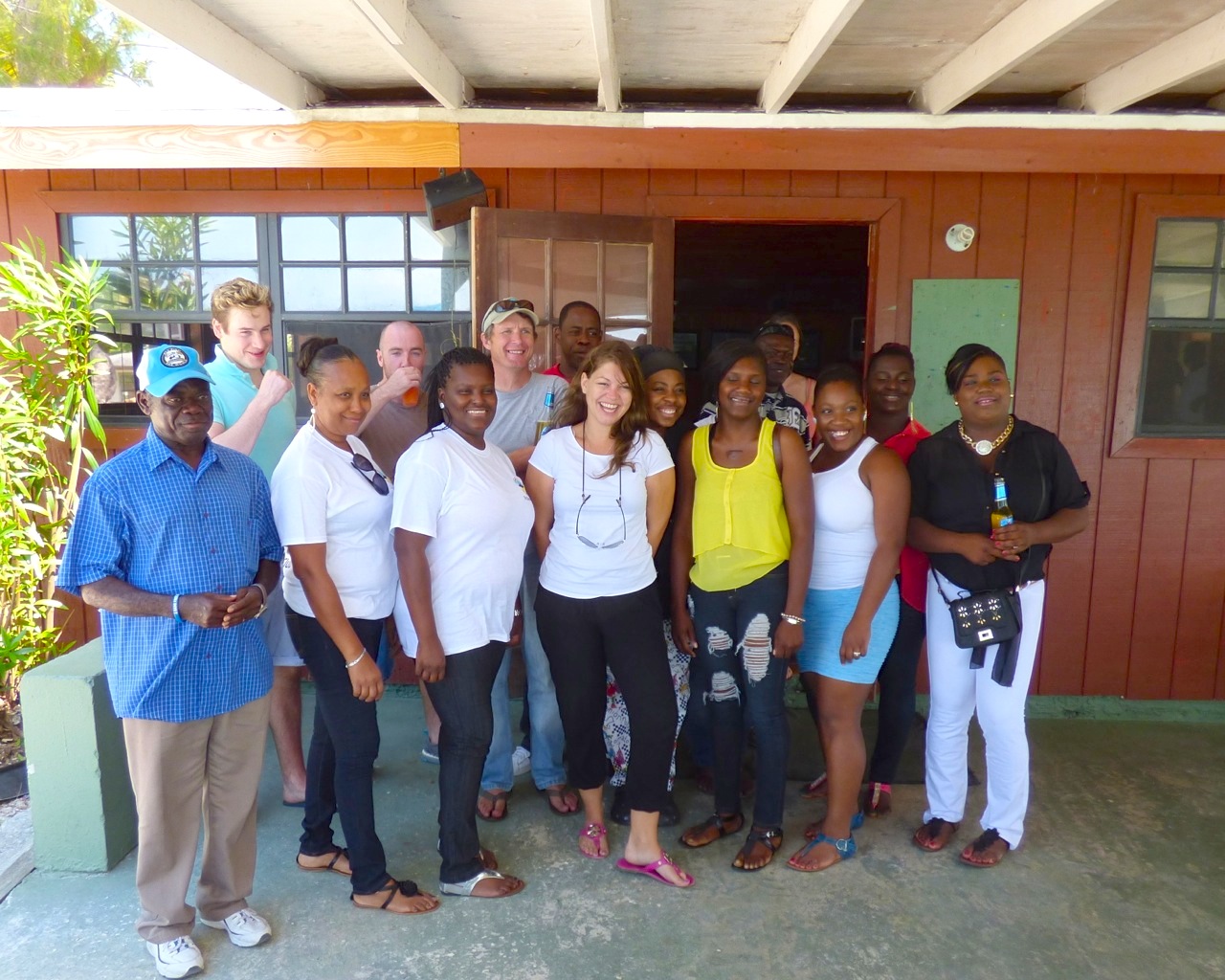
A rare photo of Sandy (centre back row, sunnies on cap) smilingSandy at Sandy Point

Photo Credits: RH, er… that it…

Unknown's avatar

RANDY: LOOKING FOR MANATEE LOVE IN ABACO?


Randy the Manatee, Abaco (BMMRO)

RANDY: LOOKING FOR MANATEE LOVE IN ABACO?

Strangely, the opportunistic title of this post may not be as contrived or daft as it looks. The facts are these.

THE FEMALE In 2012 GEORGIE, a young female manatee, left her mum in the Berry Islands and braved the crossing to Abaco. She reached the Marls; went right round top and down the east side; and eventually settled in the Cherokee / Casuarina area. She managed to hole up there safely during hurricane Sandy but became sick and was removed to Atlantis for medical treatment and rehab, before being released back to the Berry Is. This spring she set of again for Abaco and seems to have made straight for Cherokee, where she has now been resident for several months. 

Georgie the Manatee as a calf in 2012, checking out the BMMRO boatGeorgie the Manatee Calf checks out the BMMRO Boat

THE MALE Randy also originates from the Berry Is, where he was born. He too set off on an expedition to Abaco in the spring, presumably following Georgie. He was seen at Gorda Cay in mid-August and then fetched up at Sandy Point. After spending the summer there, he too took a trip right round the top of Abaco and down the east side. By early September he had got as far as Little Harbour. However, the big question is whether he can, in some way, tell that a lady manatee is a shortish swim away. And if so, will he make the short trip down the coast? And might that lead to baby manatees on Abaco…? Here are some of the photos of Randy’s sightings along the way

RANDY AT SANDY POINT 

Sirenians and cetaceans are generally recognised from particular patterns to flukes or fins. The second image shows the notch in Randy’s tail that confirms IDRandy the West Indian Manatee, Sandy Point, Abaco, BahamasRandy the West Indian Manatee (tail), Sandy Point, Abaco, Bahamas

RANDY IN THE LITTLE HARBOUR AREA

Randy’s notched tail is clearly visible in the first pictureRandy the Manatee, Little Harbour, Abaco (BMMRO)Randy the Manatee, Little Harbour, Abaco (BMMRO)

This could be everyone’s favourite picture – almost like a ‘Randy Selfie’ with a GoPro…Randy the Manatee, Little Harbour, Abaco (BMMRO)

RANDY’S JOURNEY & THE DISTANCE BETWEEN HIM AND LOVE…

Excuse me while I anthropomorphise excessively here. Randy may only be appearing to follow Georgie; the route and the area may happen to suit manatees who may be a short distance apart yet completely ignorant of the presence of the other. Or else… Anyway, more news as (if) it breaks. Here are a couple of maps, of the sort that the red-top press might put together to go with the headline “Lovelorn Randy – A Man Manatee Seeks His Sirenian Siren”. Pictures, page 8, 9, 10 and in sports section.

Randy's the Manatee's trip Berry Is. to Abaco copy Page_1 copy 3

STOP PRESS SEPT 21

Oh dear. The course of love is rarely straightforward. Randy has retraced his route and returned to Castaway Cay. Meanwhile Georgie remains happily at Cherokee.

RELATED POSTS

GEORGIE at Cherokee, 2012

GEORGIE” the manatee movie (on location, Cherokee)

GEORGIE taken to Atlantis for medical treatment

GEORGIE Is she related to an elephant?

Credits: BMMRO + Heather Albury, Andrew Lowe & Richard Appaldo for pictures & reports, Loggerhead Productions, Abaco Scientist 

mantsw~1

Unknown's avatar

AMAZING WHALE, DOLPHIN & MANATEE PHOTOS FROM ABACO


Whale Fluke (BMMRO Abaco Bahamas)AMAZING WHALE, DOLPHIN & MANATEE PHOTOS FROM ABACO

The BMMRO (Bahamas Marine Mammal Research Organisation) had a great June for sightings of cetaceans and sirenians. Here is a sample of their wonderful photos from recent research expeditions (with thanks as ever for use permission).

RANDY THE WEST INDIAN MANATEE

After the recent excitement of Abaco’s manatee GEORGIE having returned to Cherokee after another of her epic journeys, another West Indian manatee has arrived at Sandy Point (conveniently the location of the BMMRO HQ). Sirenians and cetaceans are generally recognised from particular patterns to flukes or fins. The second image shows the notch in Randy’s tail that confirms ID.

Randy the West Indian Manatee, Sandy Point, Abaco, Bahamas Randy the West Indian Manatee (tail), Sandy Point, Abaco, Bahamas

BOTTLENOSE DOLPHINSBottlenose Dolphins - BMMRO, Abaco, BahamasBottlenose Dolphins - BMMRO, Abaco, BahamasBottlenose Dolphins Abaco BMMRO FV

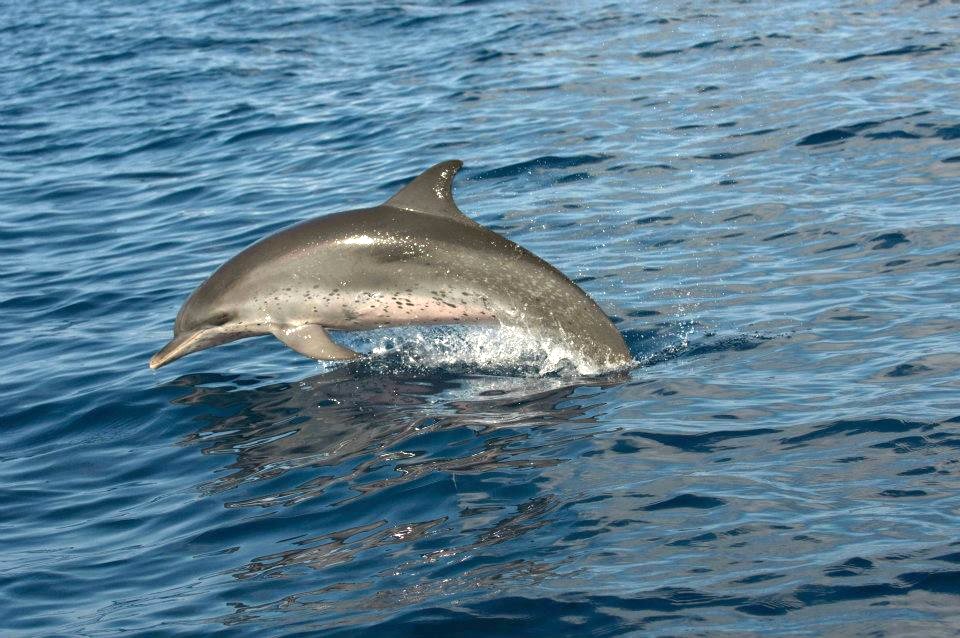
SPOTTED DOLPHINSSpotted Dolphins, BMMRO Abaco, Bahamas

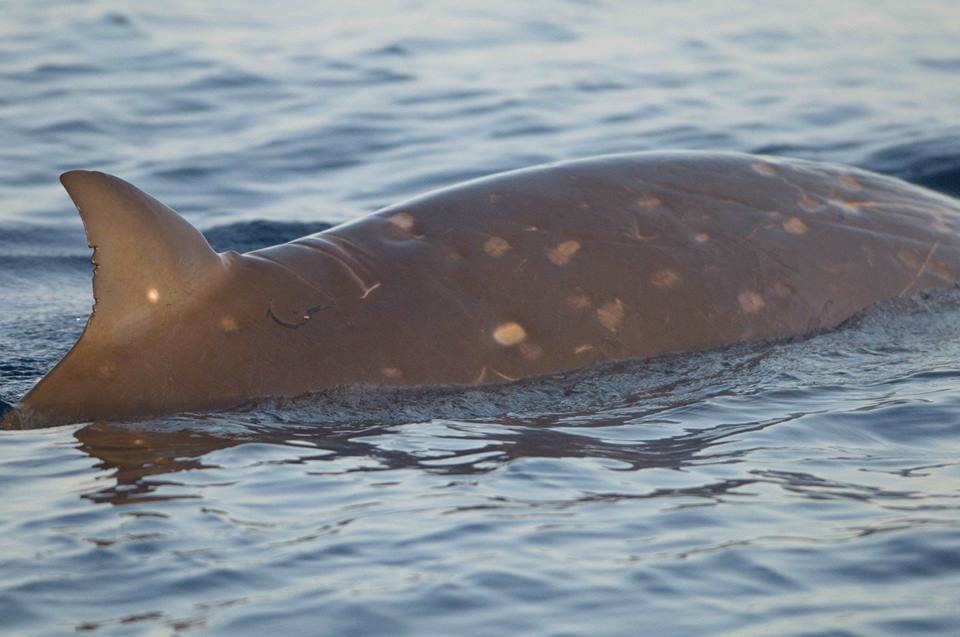
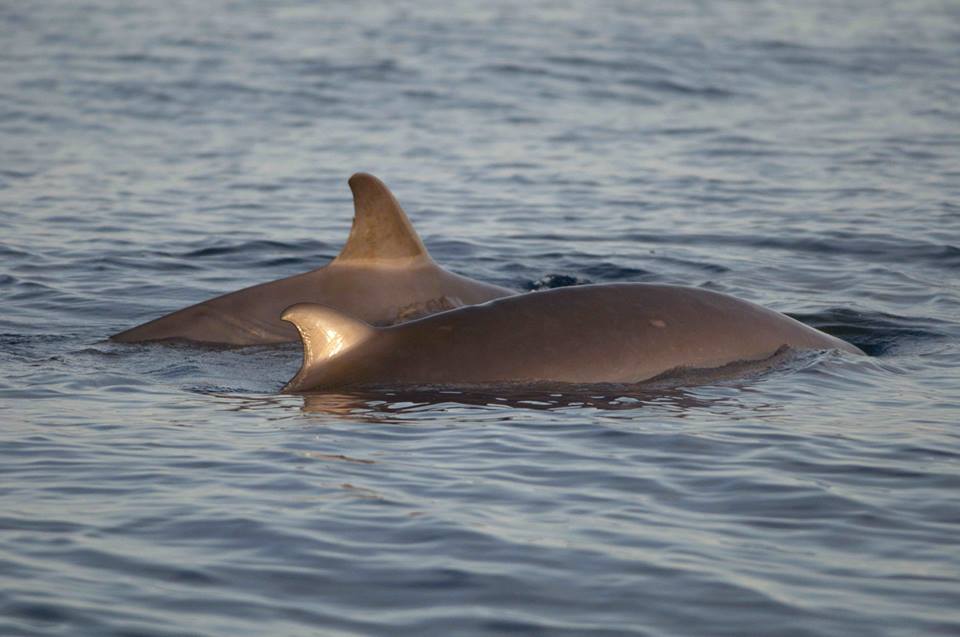
BLAINVILLE’S BEAKED WHALESBlainville's Beaked Whales BMMRO Abaco, BahamasBlainville's Beaked Whales BMMRO Abaco, BahamasBlainville's Beaked Whales BMMRO Abaco, Bahamas

TWO COMPLETE FLUKES (THIS IMAGE & HEADER)

(note minor damage to the edges, from which ID of an individual can be made)Whale Fluke (BMMRO Abaco Bahamas)

SPERM WHALE & DIVER

Compare the diver’s fins in the foreground with the (partial) length of a huge sperm whale… Sperm Whale and Diver

RELATED LINKS:

DOLPHINS

WHALES

MANATEES

Unknown's avatar

DOLPHINS OF ABACO: WONDERFUL PHOTOS FROM THE BMMRO


Dolphin, Abaco - BMMRO

DOLPHINS OF ABACO: WONDERFUL PHOTOS FROM THE BMMRO

The BMMRO (Bahamas Marine Research Organisation) is based at Sandy Point, Abaco. It is dedicated to researching, monitoring, and protecting the marine mammals of a very large area. Not just cetaceans – the dolphins and whales. Recently, a small number of West Indian manatees (sirenians) have been making the northern Bahamas their home. I’ve written plenty about Georgie the adventurous manatee in the past – and in April she returned to her favourite place, Cherokee, after a bit of time away from Abaco.

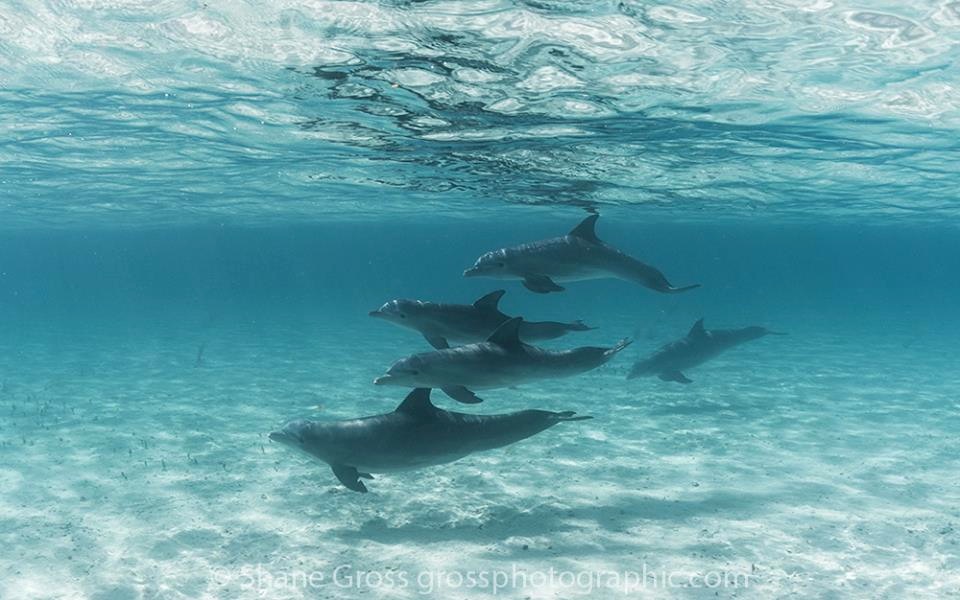
Recently, photographer Shane Gross spent some time with the BMMRO and took stunning photos of dolphins. It’s impossible to say, or think, anything unpleasant about these lovely, intelligent, playful creatures. Say you ‘don’t much care for dolphins’, and you’d be more than halfway to having a down on kittens. Here are some magnificent images that deserve a wide audience.

Dolphins, Abaco, Bahamas (BMMRO) - Shane GrossDolphins, Abaco, Bahamas (BMMRO) - Shane GrossDolphins, Abaco, Bahamas (BMMRO) - Shane GrossDolphins, Abaco, Bahamas (BMMRO) - Shane GrossDolphins, Abaco, Bahamas (BMMRO) - Shane Gross

WHALES & DOLPHINS  PAGE

MANATEES PAGE

BMMRO WEBSITE

BMMRO FACEBOOK

SHANE GROSS PHOTOGRAPHIC

Thanks as ever to Charlotte & Diane at the BMMRO for ongoing use permission of material including the header pic; and to Shane for his outstanding photos

Unknown's avatar

THE CONCH QUEST OF ABACO…


Conch ©Melinda Riger @G B Scuba

THE CONCH QUEST OF ABACO…

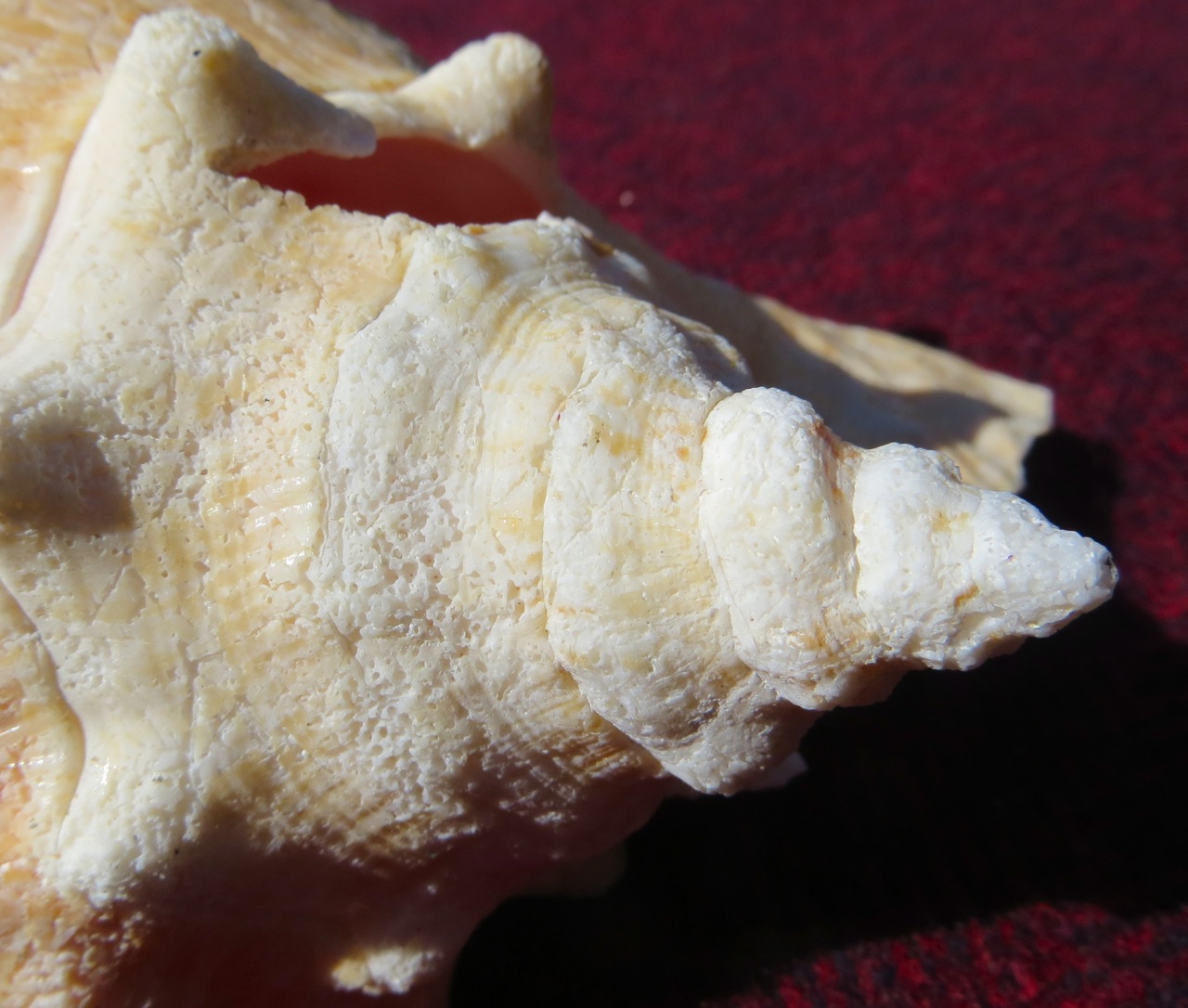
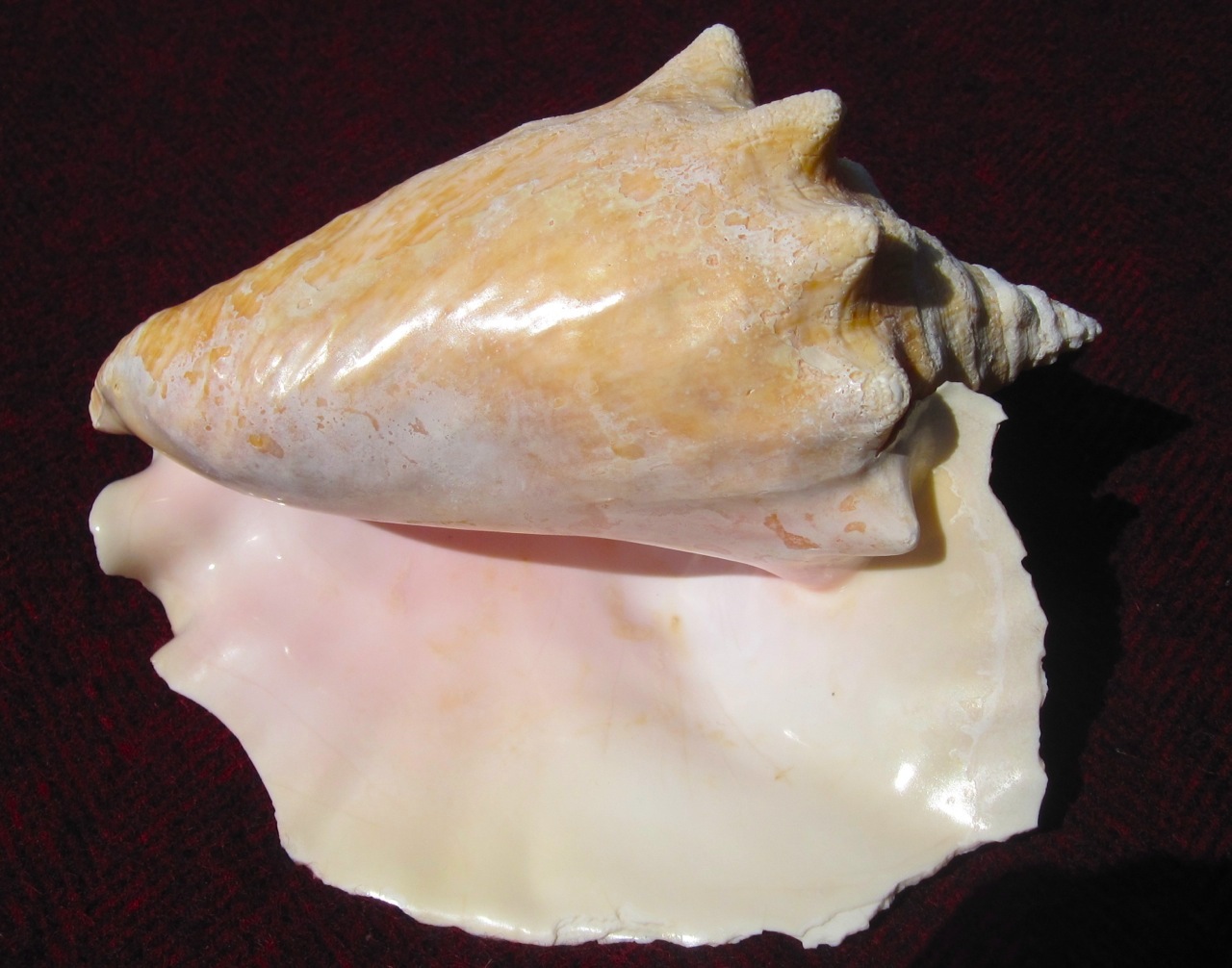
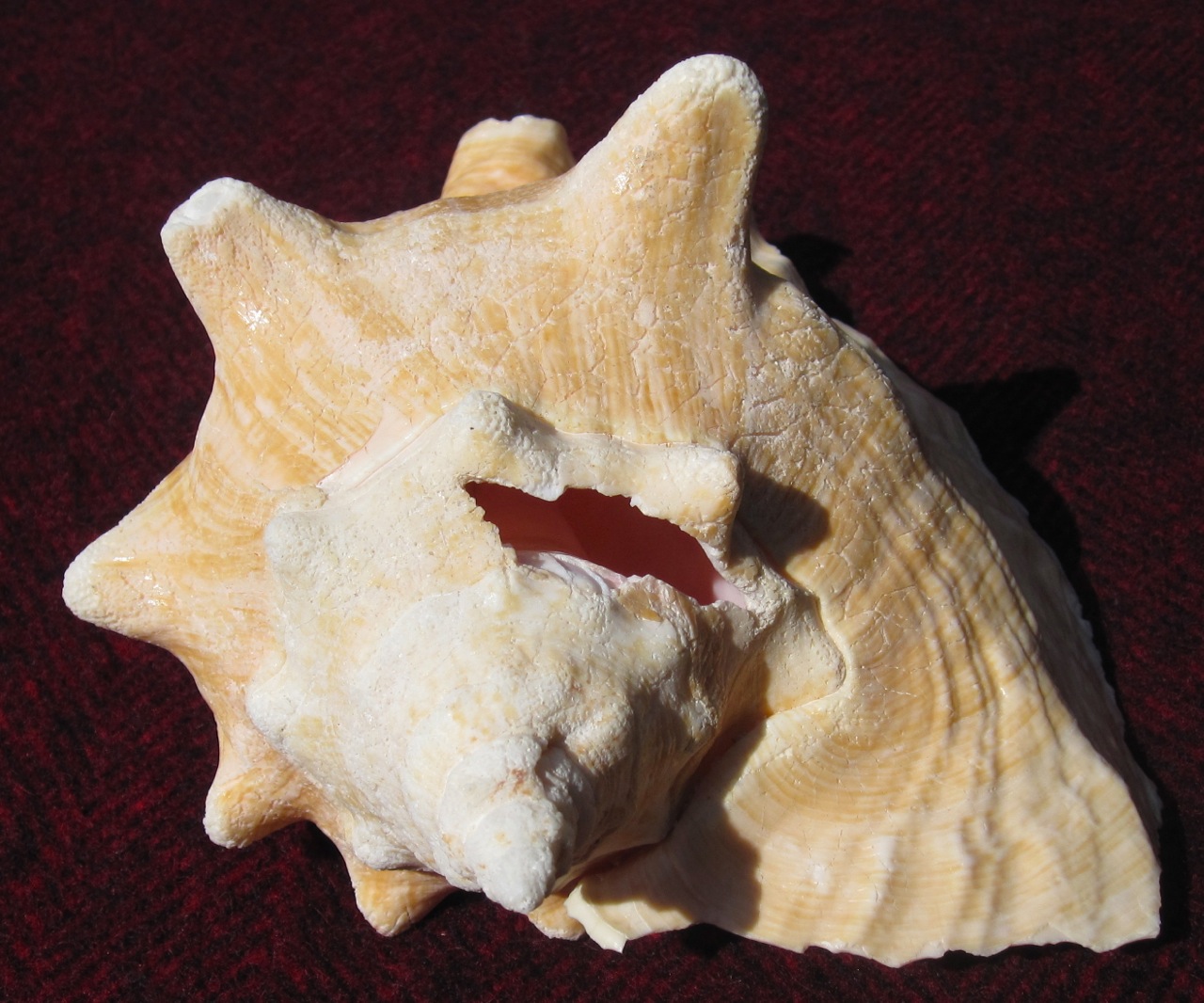
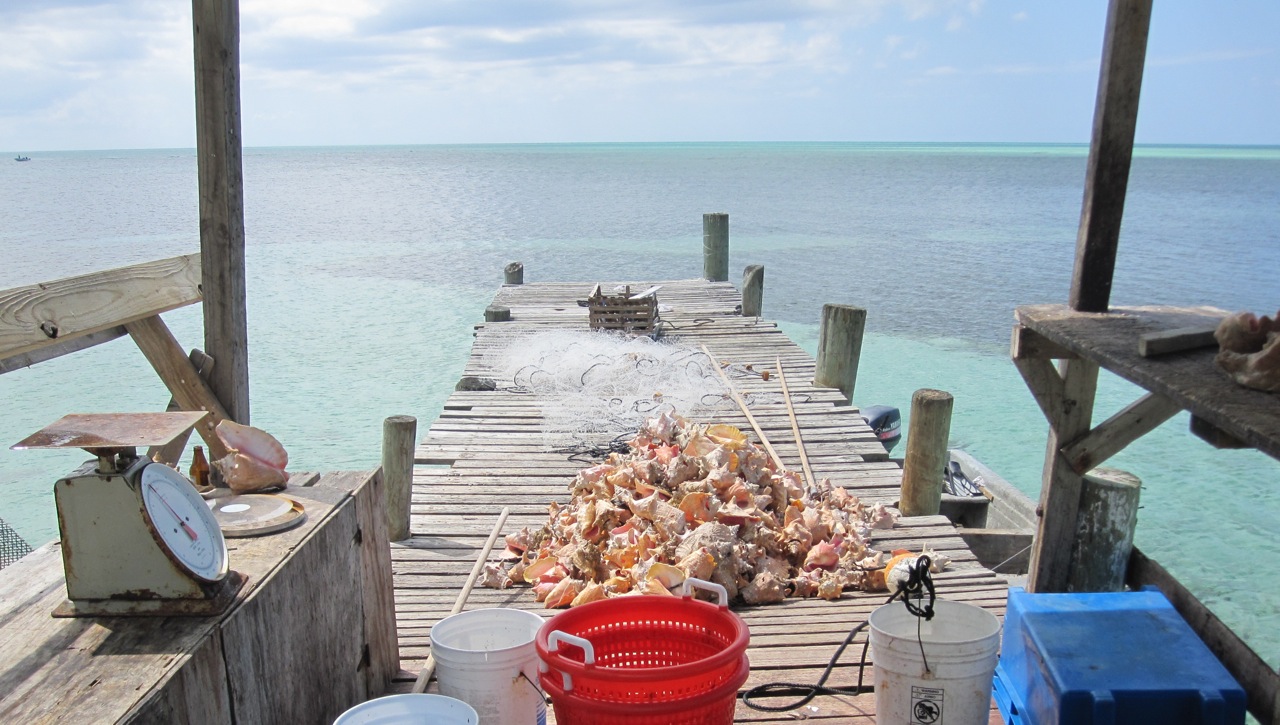
Conchs are gastropods. They are food. They are decoration (anyway, the shells are). For some, they are a living. And on Abaco they are everywhere – alive in the waters, and as shells scattered on  beaches or piled up outside restaurants. So the quest for conch is an easy one. There are fears of overfishing, however, and an active organisation The Bahamas National Conchservation Campaign exists to protect them. Another similar Bahamas organisation is Community Conch.conchs-at-sandy-point-1 We found a nice half-buried conch shell at Sandy Point. It was full of sand grains and tiny shells – mini gastropods and bivalves – that took some time to wash out of the spiralling internal structure. Here are some studies of the shell. IMG_2438IMG_2442IMG_2444IMG_2445IMG_2448IMG_5279IMG_5278 The damage to the shell above is the place where it has been bashed in to enable removal of the occupant. In order to do so, it is necessary to break the strong vacuum that would prevent extraction if you tried by the conventional route. Effectively the conch anchors itself to its shell and must be cut out. The best way to make the hole is with the spiral tip of another conch. This breaks the suction and enables you to prise out the occupant…

935327_499742893413409_191944192_n                                                               CC_logo2

Finally, you can usually rely on me to go off-piste. So here is a video of how to make a conch horn to annoy your friends and neighbours with…

[youtube https://www.youtube.com/watch?v=ebzN79oNTJg]

Unknown's avatar

CAN A PELICAN? THE HELICAN!


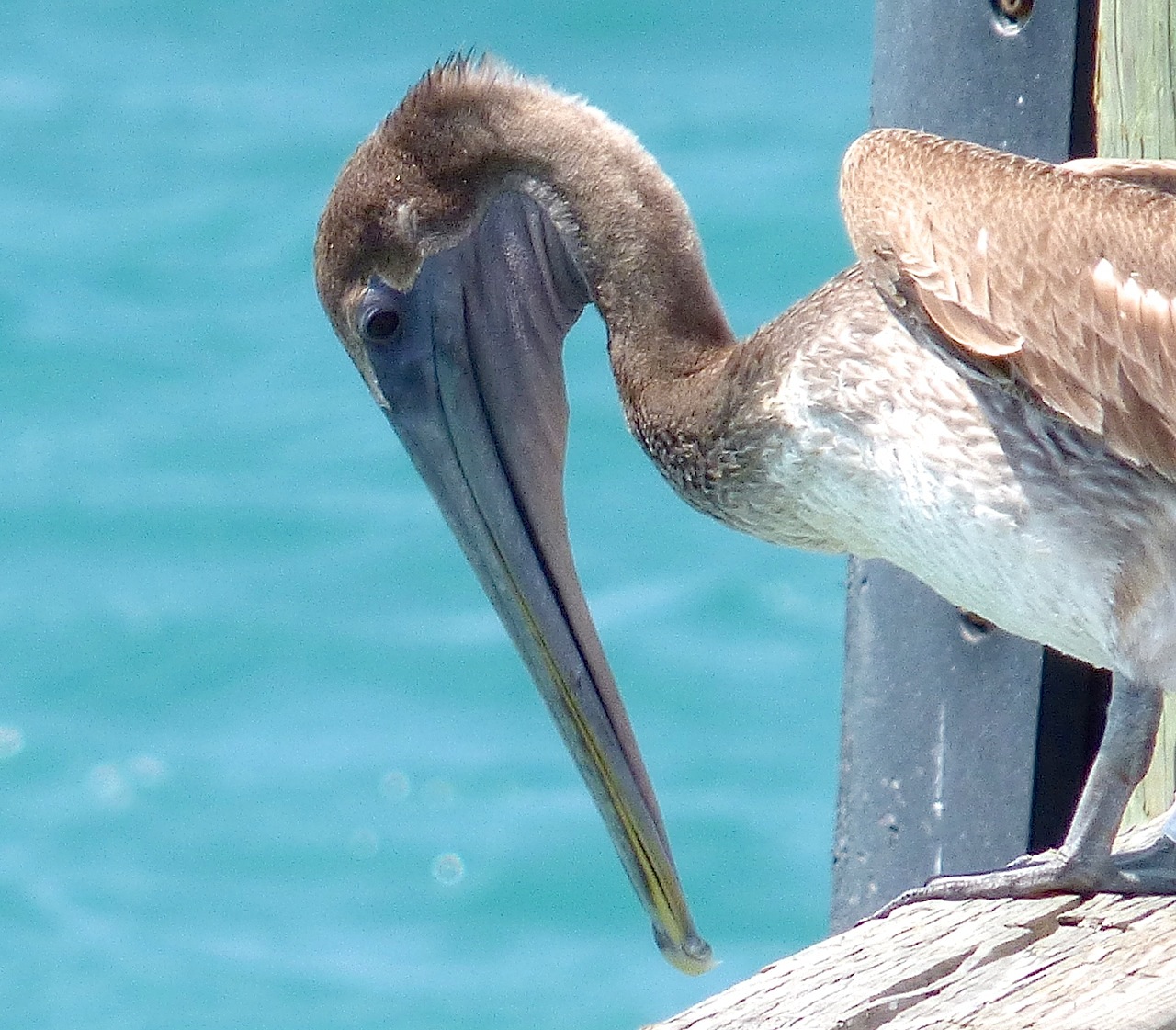
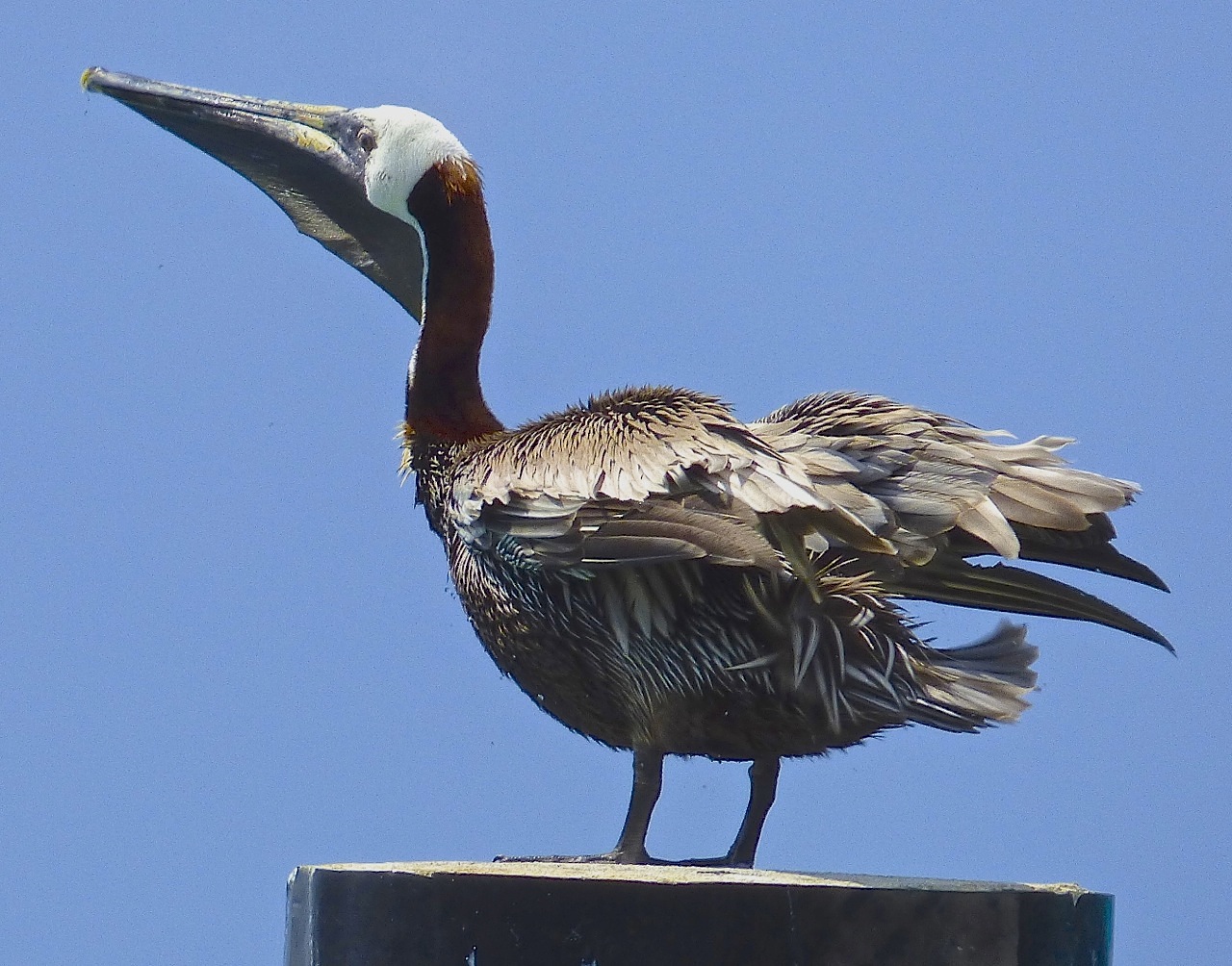
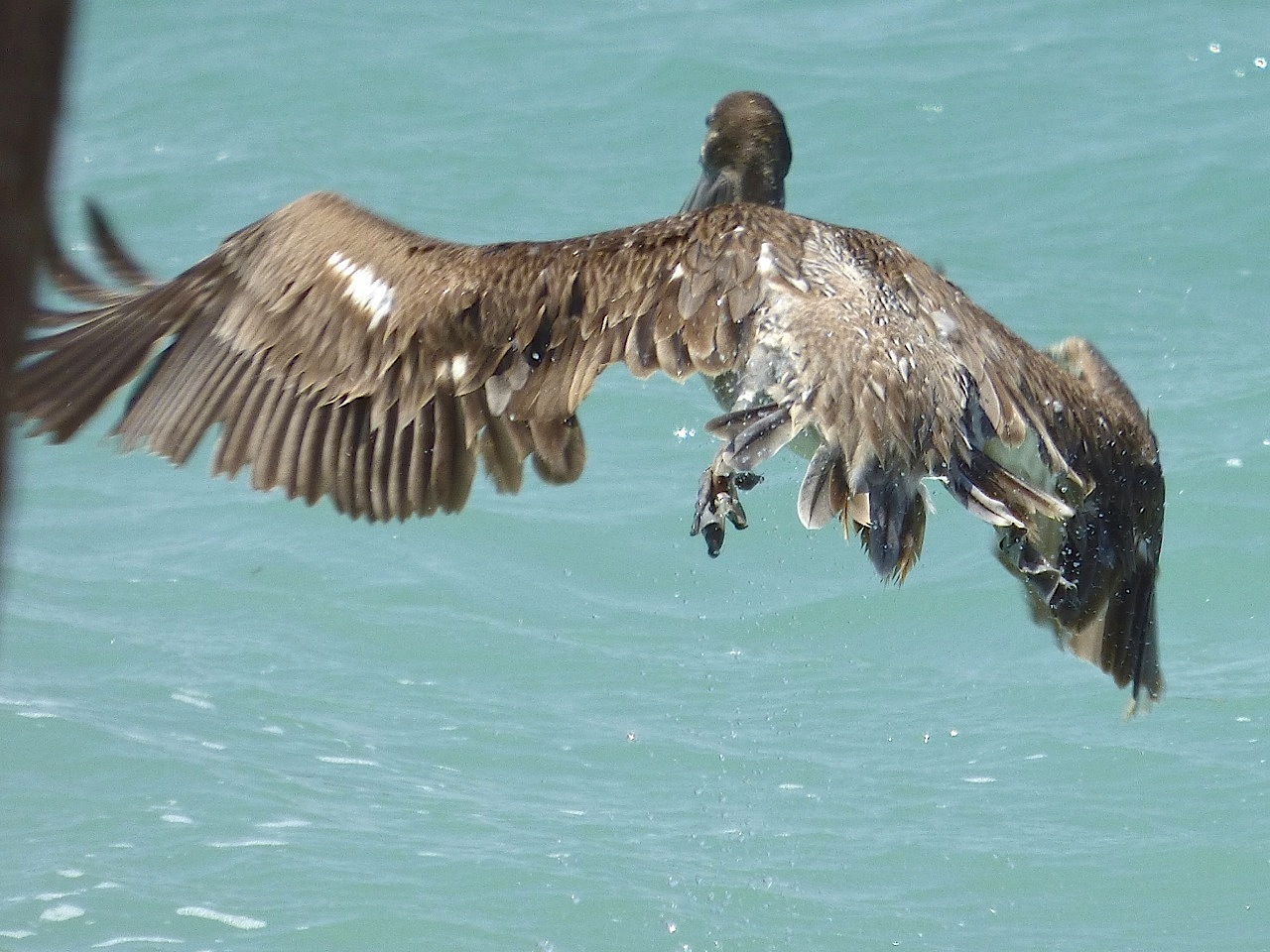
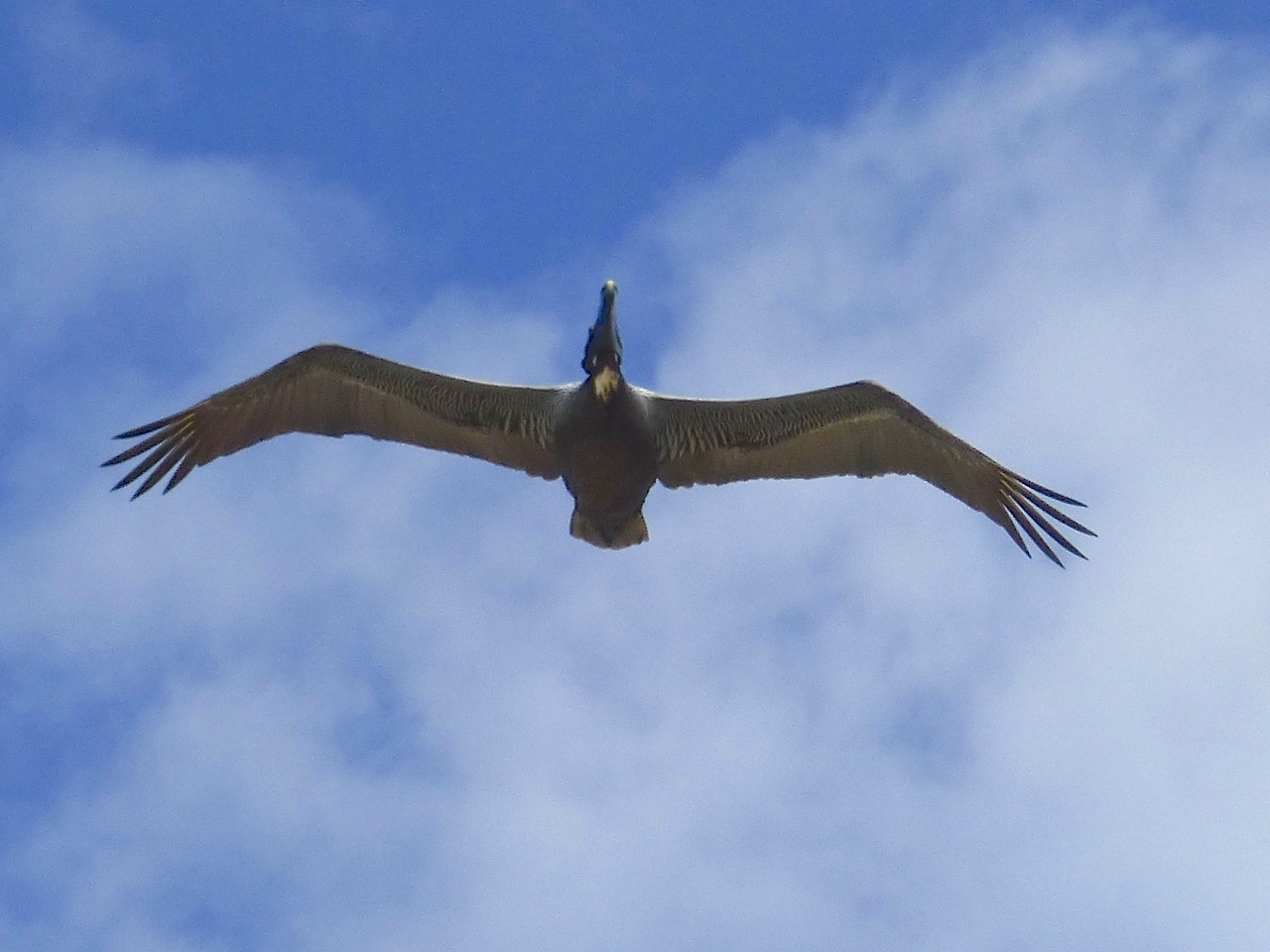
A taster for a future post about Brown Pelicans when I have a more reliable internet connection than Abaco’s rather intermittent service… These two birds were taken a few days ago on the jetty at Sandy Point, Abaco. In due course there’ll be more about these astonishing birds, which were plunge-diving off the jetty for fish.Pelican Sandy Point AbacoPelican Sandy Point Abaco 3Pelican Sandy Point Abaco 2

Unknown's avatar

A GREAT BLUE HERON AT SANDY POINT, ABACO


When I get a better internet connection I have some great bird posts planned. Until then it has to be single images on my iph@ne. Here’s one from a couple of days back … NEW! Originally mis-ID – there was some general confusion about that. Thanks, Brigitte on Tilloo for ringing the alarm bell. My bad! Internet has temporarily improved, here’s the full-size rather than iph@ne image, with more to follow soon…Great Blue Heron Close-up, Sandy Point Abaco

Unknown's avatar

3 MONTHS ON ABACO WITH THE BMMRO: AN INTERN’S STORY


BMMRO whale pic

The Bahamas Marine Mammal Research Organisation LogoClick logo for website

BMMRO Bahamas Marine Mammal Research Organisation Banner

3 MONTHS ON ABACO WITH THE BMMRO: AN INTERN’S STORY

My name is Jack Lucas and I am Marine Biology Student at Plymouth University in the UK. I came to the Bahamas Marine Mammal Research Organisation on Abaco in July 2013 for a 3 month internship, which has been an amazing experience from start to finish. Heres a summary of my summer spent at BMMRO.

Sperm Whale Fluking

I arrived at the start of July and was fortunate enough with my timing to be part of an assembled crew of scientists from all over the world coming together to start work on what was to be this summers main project; collecting faecal samples from Blainville’s beaked whales to assess stress hormones produced. This team included Dr Roz Rolland and Dr Scott Kraus from New England Aquarium, who are collaborating with BMMRO for the work, and the samples will be analysed back at their lab in the US. Also along for the ride was Roxy Corbett; a whale observer and field researcher from the US, and Dr Stephanie King; a acoustician from the Sea Mammal Research Unit in Scotland. The first day after arriving it was straight out on the boat to search for these elusive creatures and the beginning of a crash course in how to collect and store the faecal samples when we found them. For the first week the work was a mix of boat work when the weather permitted and practicing poop collection using custom-made fine-mesh nets and coffee grounds (as close to the real thing as we were willing to try!), as well as clearing out BMMRO’s garage and, under the direction of foreman Scott, the construction from scratch of a lab to prepare samples for storage.

An example of the use of coffee grounds to practise whale poop-scoop technique269RH note: NOT Jack’s arms / snappy diving suit…

Unfortunately, despite days of poop collection practice and endless hours searching for the whales at sea, the original poop team never got a chance to employ these by now highly developed skills or to see the lab being used, as the weather was so windy we barely encountered the animals let alone spent long enough with them to collect any samples. 

Despite the lack of beaked whales, we did encounter loads of marine mammals in the first few weeks, from sperm whales to three different species of dolphin; including the little-seen and even less-studied rough-toothed dolphin.

Rough-toothed Dolphin

After discussion with Charlotte and Di about a possible project for me to complete during my stay, it was to be this species that I would focus on and in between the usual office jobs it was my task to sort through the photos from 20 rough toothed encounters in the Bahamas since 1995 and create a catalogue of individuals. This initial task consisted of careful inspection, comparison and sorting of what turned out to be over 5000 photos, into an organised catalogue of 167 separate and distinctive individuals. Despite the hours of endless staring at fins, it was very rewarding as there were 13 resighted individuals found (we were not necessarily expecting any!) which suggests long-term site fidelity and association of these animals, in addition to year round use of the Grand Bahama Canyon. Even more rewarding; the results of this work have recently been submitted for a poster display at an Odontocete workshop in New Zealand this December and I am also writing up the results in a formal scientific paper, with the hopeful goal of publishing a note in a peer-review journal. 

 Scott, Jack, Stephanie and Di in the new lab at Sandy Point

Around a month in I was lucky enough to be sent by Di and Charlotte to Great Harbour Cay on the nearby Berry Islands to work with the manatees there, in particular Georgie; a recently released juvenile whose status is being carefully monitored after her rehabilitation at Atlantis’ Dolphin Cay following health problems. The work here for a week under the guidance of Kendria; a Bahamian contracted by BMMRO to monitor the manatees on the Berry Islands, consisted of tracking Georgie using a satellite tag attached to a belt around her tail. Once located, we logged her position and made any notes on her health and behaviour aswell as the other manatees that were often found with her (there are currently 6 located on Great Harbour Cay). Two days in her tag was found unattached at a locals dock (it has a weak-link incase of entanglement) and we had to locate her using underwater hydrophones to detect her belt. Once found, I had the rare opportunity of entering the water with her in order to re-attach a new tag to her belt; it was amazing and one of the best encounters I have had with any animal! It is impossible not to love these amiable and gentle creatures, especially when you observe their infamous ‘hugs’ in person! 

Georgie the Manatee

For more about Georgie’s re-release in the Berry Is. after her earlier shenanigans on Abaco, see HERE

After returning from the Berry Islands (and incidentally missing the first two poop collections of the season made by Charlotte!) it was back to hunting for the elusive beaked whales around South Abaco. During my time I had the chance to work with several interns coming to BMMRO including local marine-enthusiasts Tristan and AJ, and Courtney Cox from Florida. Oscar Ward from the UK also joined the team as Charlotte left for Scotland to complete her PhD, and was on hand during the poop-collection and other little excursions. In wasn’t until the last month of my time here that we managed to get close enough to the whales for me to get in the water and be towed alongside in the hope of seeing one defecate. One amazing morning two whales surfaced right off the bow of the boat and what resulted was again, one of the most amazing moments; swimming just a couple of feet away from an animal only a handful of people in the world have seen underwater. After nearly two months with no samples, the two weeks that followed were a flurry of boat days, poop-collection and whale watching; with a total of 7 samples collecting from beaked whales (5 in one day!!) and another 3 from sperm whales. This was the best possible end to my time here and I finally got a chance to use the much-practiced poop collection techniques. The samples included a number of squid beaks, and in one very deep dive collection a mass of parasitic worms and a weird cephalopod-type animal! We also got a chance in the last few weeks to test-run a new addition to the fleet, that included a dive compressor.

Ready to collect some poop…

Finally my time in the Bahamas had to come to an end, and I had to return home. The last 3 months has flown by and has been one of the most enjoyable and most importantly educational periods of my life and I cannot thank Di and Charlotte enough for making it all possible. The day-to-day boat runs, office work, equipment maintenance and station chores has given me a good insight into all aspects of field research. It was my first taste of life as a marine mammal scientist, and it has made me even more determined to pursue a career in this field; a perfect stepping stone from which to move forward. In addition my work with BMMRO (and what must of been a brilliant reference from the girls!) made it possible to secure a highly competitive internship in the Farallon Islands this winter tagging elephant seals amongst other work! I cannot wait to continue working in this field and finish writing up the results of my project here, and hope I have the chance to come to Abaco again to work with these amazing people and animals!Sperm Whale supplier of poop BMMRO
BMMRO would like to thank Jack for all his help during the summer, and all our interns for their assistance! To our sponsors, Friends of the Environment, Disney Animal Programs and Environmental Initiatives and Rotary of Abaco, we thank you for your continued support.

To read more about the work of Interns on Abaco with the BMMRO at Sandy Point and Friends of the Environment in Marsh Harbour, check out Oscar Ward’s excellent blog SEVENTYPERCENTBLUE. There are articles on Life in the Mangroves, the Bahamas Climate, Whale Poop Collection, and most intriguing how he and co-intern Jack both came very close to being Black Tip  Fodder… real live Chums!

The Author researching underwater creatures
Unknown's avatar

CONCH SHELLS & CONCHUPISCENCE ON ABACO


Conchs at Sandy Point a1

CONCH SHELLS & CONCHUPISCENCE ON ABACO

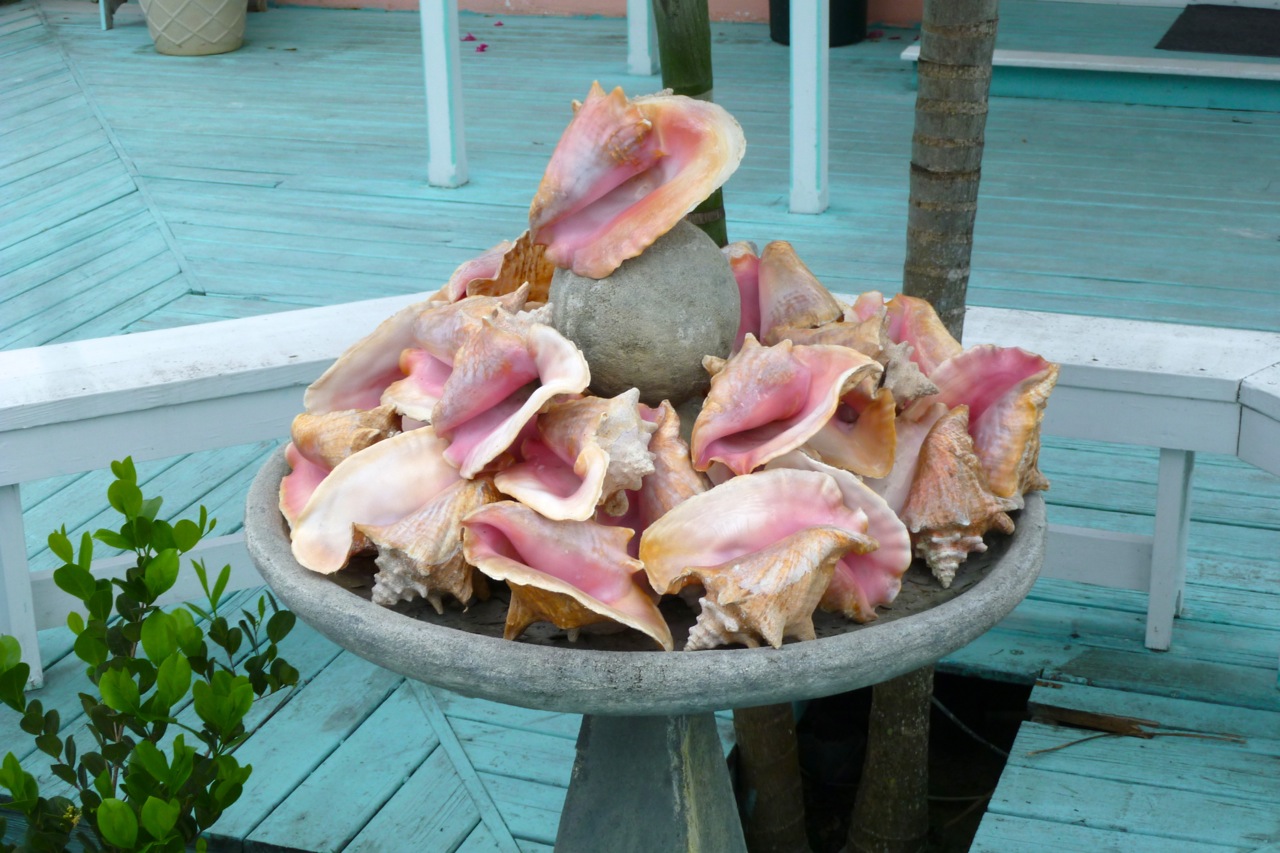
Most conchs encountered in daily life are lying peacefully on the beach; or are artfully displayed; or are found in conch heaps (often in the vicinity of restaurants) like the ones below at Sandy Point. Conchs at Sandy Point Abaco 2Conchs at Sandy Point Abaco 4

These shells at Sandy Point are so plentiful that they form a small spit of ‘land’ into the seaConch at Sandy Point (Clare)

An attractive display of conch shells in Marsh HarbourConchs Marsh Harbour Abaco

A less formal arrangement along the jetty at Man o’ War Cay (after a storm)Conch Man 'o War Cay jetty Abaco

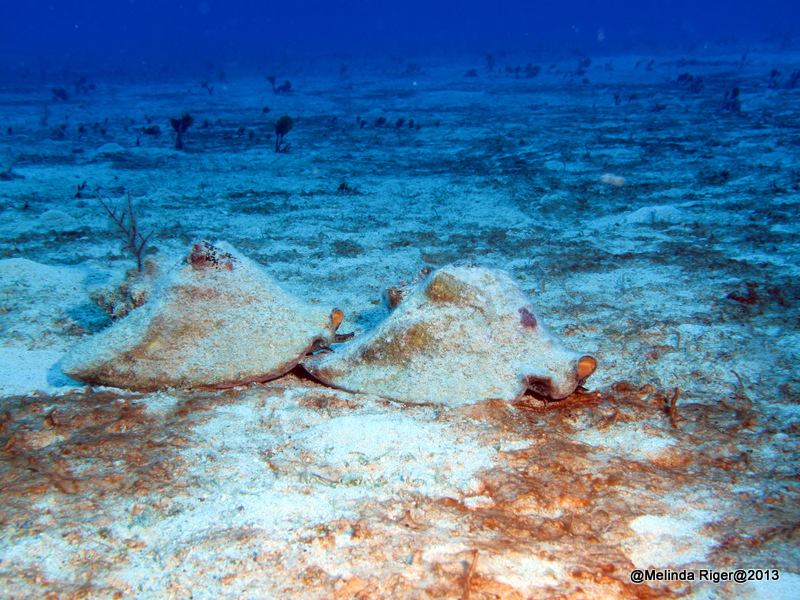
It’s easy to forget that these shells are more than just a garden adornment, or pretty containers for a ubiquitous Caribbean food. Under the sea, and not very far at that, are living creatures going about their daily lives.Conch ©Melinda Riger @G B ScubaConch ©Melinda Riger @ GB Scuba
And that includes reproducing. This sounds as if it might be a cumbersome process, but (like porcupines) they seem to manage. Here is a pair preparing to mate. The male behind is presumably about to… well never mind. I’ve never seen the process, so it’s a case of using imagination. Or just accepting that, whatever it is that they do, it works. [I haven’t located a video online – I’ll post one if I do]Conch preparing to mate ©Melinda Riger @ GB Scuba

You’ll find some more about Conchs in a previous post HERE, including 12 Unputdownable Conch Facts, notes on conservation matters and… a photo of Honeychile Rider, arguably the most famous conch-carrier ever. Oh, she was fictional, you say? But I always though she… How very disappointing.

And if you want to know how to clean a conch, a dude will  show you in a video on this page HERE 

Finally, check out the very informative website COMMUNITY CONCH, a charitable conservation organisation community conch logo

Photo credits: Melinda, Clare, RH

Unknown's avatar

MAKING A GOOD IMPRESSION: BAHAMA MOCKINGBIRDS ON ABACO


MAKING A GOOD IMPRESSION: BAHAMA MOCKINGBIRDS ON ABACOBahama Mockingbird, Abaco 1

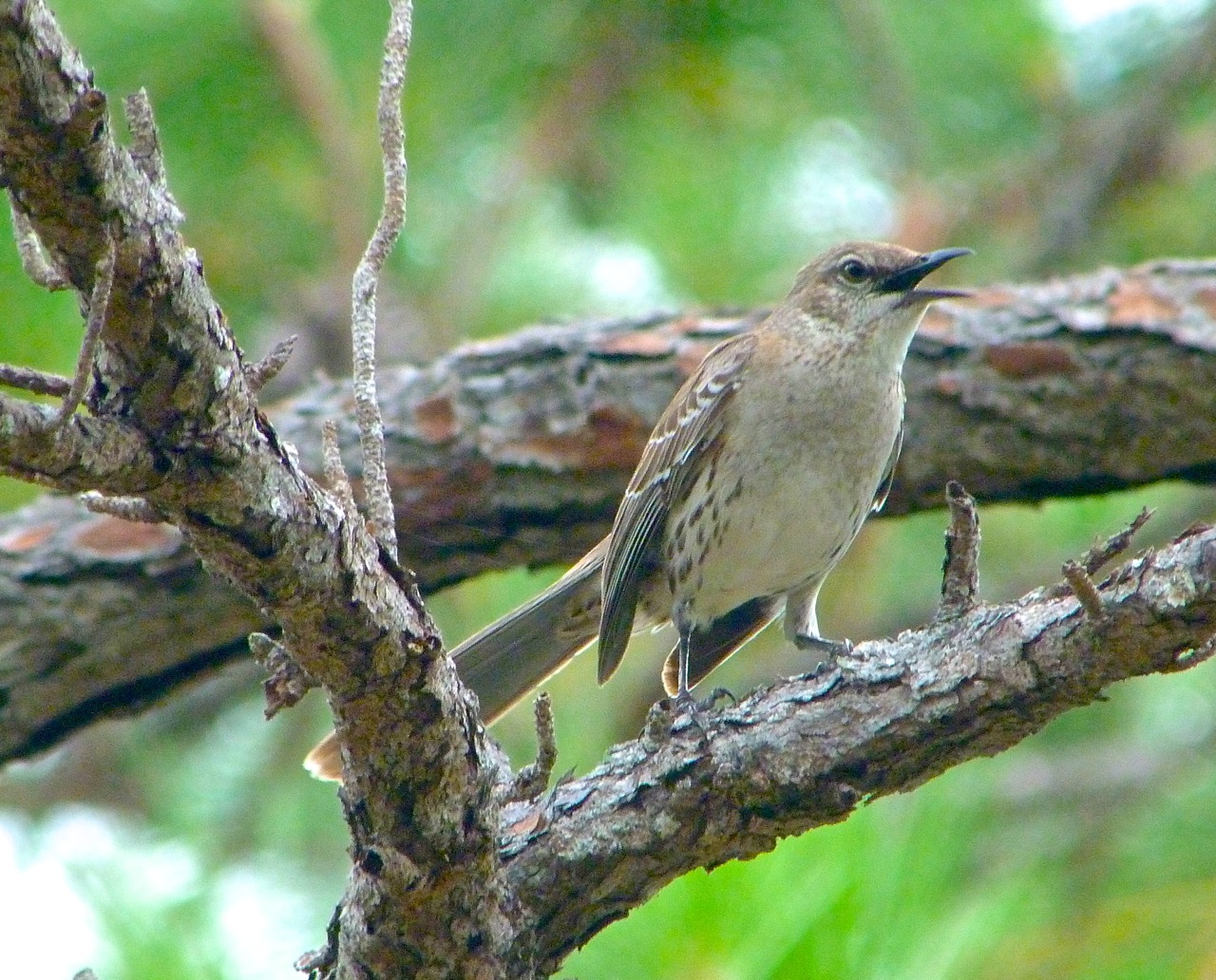
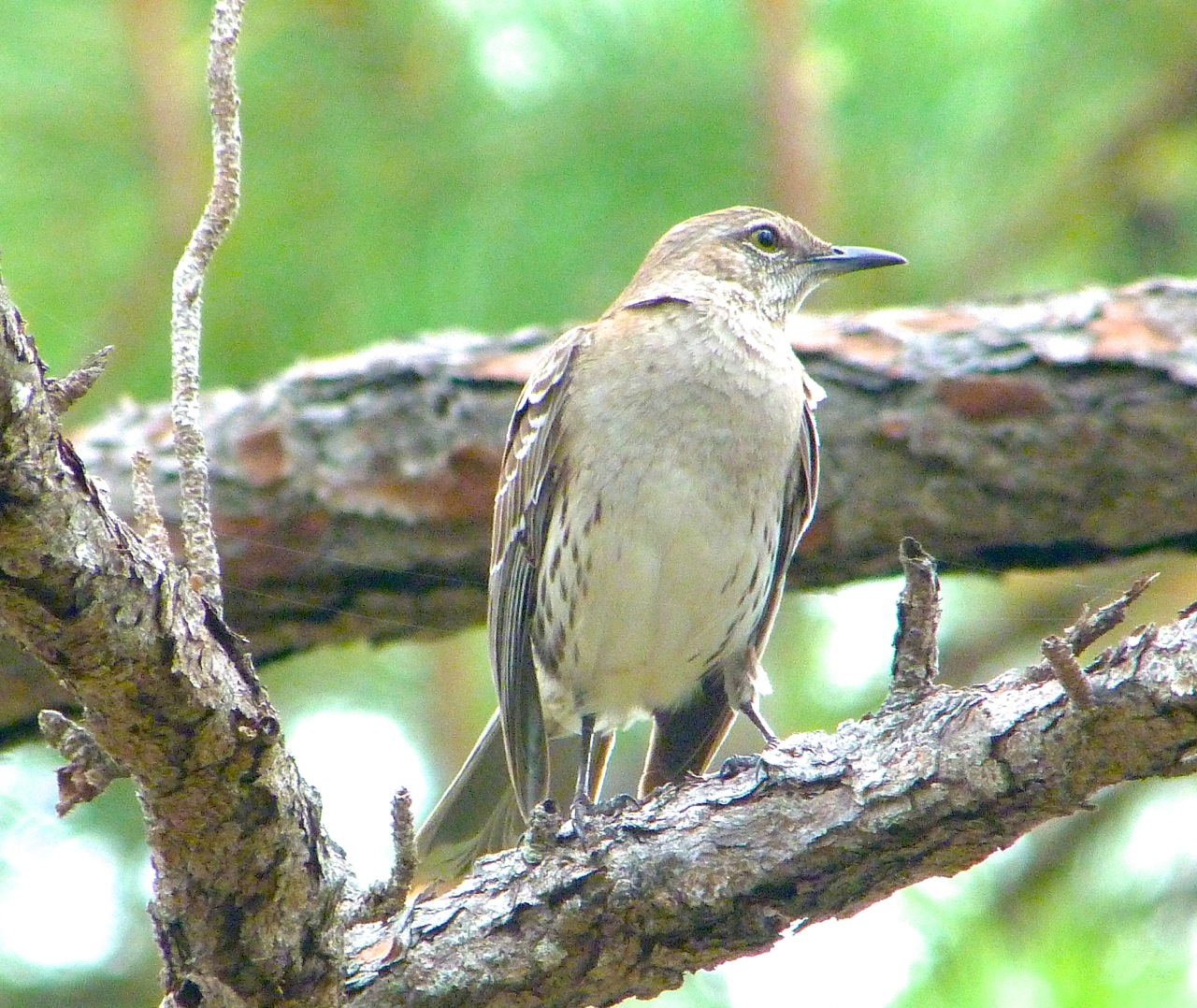
The Bahama Mockingbird Mimus gundlachii is similar to its slightly smaller cousin, the widespread Northern Mockingbird Mimus polyglottis. The range of Bahama Mockingbirds is slightly wider than the Bahamas themselves, and includes areas of  Cuba, Jamaica and TCI.  It is also a vagrant to the United States, especially southeastern Florida.

Bahama MockingbirdBahama Mockingbird, Abaco 4

The Bahama Mockingbird is browner than the Northern Mockingbird, and has distinctive streaking and spotting to its breast and undercarriage.Bahama Mockingbird, Abaco 6

Both species are found on Abaco. The NMs are ubiquitous in towns, settlements, gardens, coppice and pine forest, whereas BMs are shyer and tend to be found in the pine forest and well away from humans and their operations.Bahama Mockingbird 5We took a truck into the pine forest south of Delphi with well-known Abaco birder Woody Bracey and Ohio bird photographer Tom Sheley. They were quick to locate a bird, in part because one was sitting prettily on a branch singing lustily. It was well within range of Tom’s massive lens; more of a struggle for my modest Lumix (as you may detect). I was astounded by the beauty and variety of the song. It consisted of very varied notes and phrases, each repeated 3 or 4 times before moving on to the next sounds in the repertoire. Here is a short 18 second example I recorded, using my unpatented iPhone method, for which see HERE.

Bahama Mockingbird, Abaco 3

For those with interest in birdsong, here is a longer 1:13 minute song from the same bird, with largely different sounds from the first recording made minutes earlier. There’s even a decent stab at imitation of a 1960s Trimphone™. Had we not had to move on to Sandy Point for an appointment with some cattle egrets and American kestrels, I could have stayed listening for far longer.

Bahama Mockingbird, Abaco 2

Finally, the Northern Mockingbird below was photographed in a garden at Casuarina – far tamer and clearly very different from its cousin. The range map  shows the stark contrast with the very limited range of the Bahama Mockingbird.Northern Mockingbird, Abaco 1220px-Northern_Mockingbird-rangemap

Unknown's avatar

ABACO’S RAREST VISITOR: MEET ALBERT ROSS… THE ALBATROSS


ABACO’S RAREST VISITOR: MEET ALBERT ROSS… THE ALBATROSS

I can find no record for the sighting of an albatross in the waters around Abaco. Nor for anywhere else in the Bahamas for that matter. It must have come as some surprise to the BMMRO team out at sea on their research vessel off Sandy Point to see a large and unusual seabird bobbing tranquilly on the water. A black-browed albatross Thalassarche melanophrys. Diane Claridge managed to get a great shot of it and I’m really pleased to be able to use it here.

Black-browed Albatross, Abaco © DC BMMROBlack-browed albatross off Sandy Point, Abaco, Bahamas. Photographed by Diane Claridge.

© Bahamas Marine Mammal Research Organisation 2013

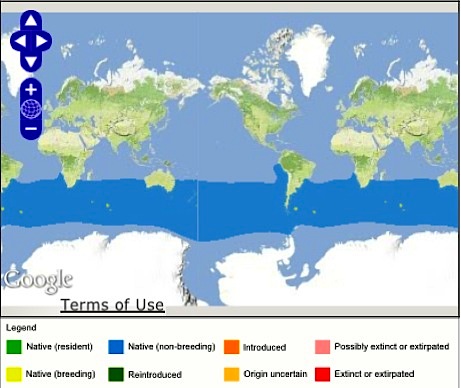
This bird was way out of the normal range for the species. They are birds of the southern oceans, breeding in colonies on such islands as the Falklands, South Georgia and Macquarie Island. As far as I can make out, they have no business to be north of the equator at all.

Black-browed Albatross Range Map BirdLife Int

SIGHTING A BLACK-BROWED ALBATROSS: A REPORT

During a three-hour survey for whales off Sandy Point, Abaco on Sunday, July 21st scientists from the Bahamas Marine Mammal Research Organisation had an exceptional sighting. Dr Diane Claridge, the group’s Executive Director recalls details of the sighting:

“We were drifting waiting for a beaked whale to resurface when our intern Tristan Albury pointed towards a white object floating in the distance and asked what it was. We decided that it was a piece of trash, unfortunately a common sighting, and continued to focus our search for the whale. A half hour later, we still had not re-sighted the whale and believed that it may have gone down on one of its one-hour long feeding dives. So with time to kill and the “trash” still in sight, we had another look with binoculars. We realised immediately that it was a very large bird and slowly motored towards it for a closer look. I began taking photographs of it because we already knew it was unusual and we wanted to be sure to identify the species. As we got closer, Roxy Corbett, a visiting scientist and avid birder exclaimed that it was an albatross! I couldn’t believe it. We were able to approach within 100 feet at which point it swam towards us providing an opportunity for us to document its body condition; it appeared healthy with no obvious signs of distress.

Later when back ashore, we compared our photographs with those available online and learned that it was a juvenile Black-browed albatross, an endangered bird with a 7-foot wing span known from subtropical to polar regions of the southern hemisphere! As far as I know this species has never been recorded previously in the tropical North Atlantic. I have seen albatross during whale surveys in Alaska but never dreamed that I’d ever see one in The Bahamas. Although we are thrilled by the rarity of this sighting, the outcome for a bird so far out of its normal range is not usually good. However, there are two Black-browed albatross that strayed into the North Atlantic previously that have taken up long-term residence in Scotland and the Faroe Islands so who knows where this one may end up. Sunday afternoon was indeed exceptional: in addition to this remarkable sighting, we also saw 4 different species of whales and dolphins, all within 5 miles of Sandy Point.”

These are huge strong birds, with a massive wingspan. I wondered what they might sound like – it’s like this… (Credit: Xeno-Canto & recordist Sofia Wasylyk)

For more information on the normal range and status of the Black-browed albatross, the BMMRO recommended links are:

Link to Birdlife International’s site:
http://www.birdlife.org/datazone/speciesfactsheet.php?id=3959

Link to IUCN’s species red list:
http://www.iucnredlist.org/details/106003959/0

Unknown's avatar

ELEGANT COOT CABARETS (6,6,2,5 anag.): CATTLE EGRETS ON ABACO


“ELEGANT COOT CABARETS” (6,6,2,5 anag.): CATTLE EGRETS ON ABACO

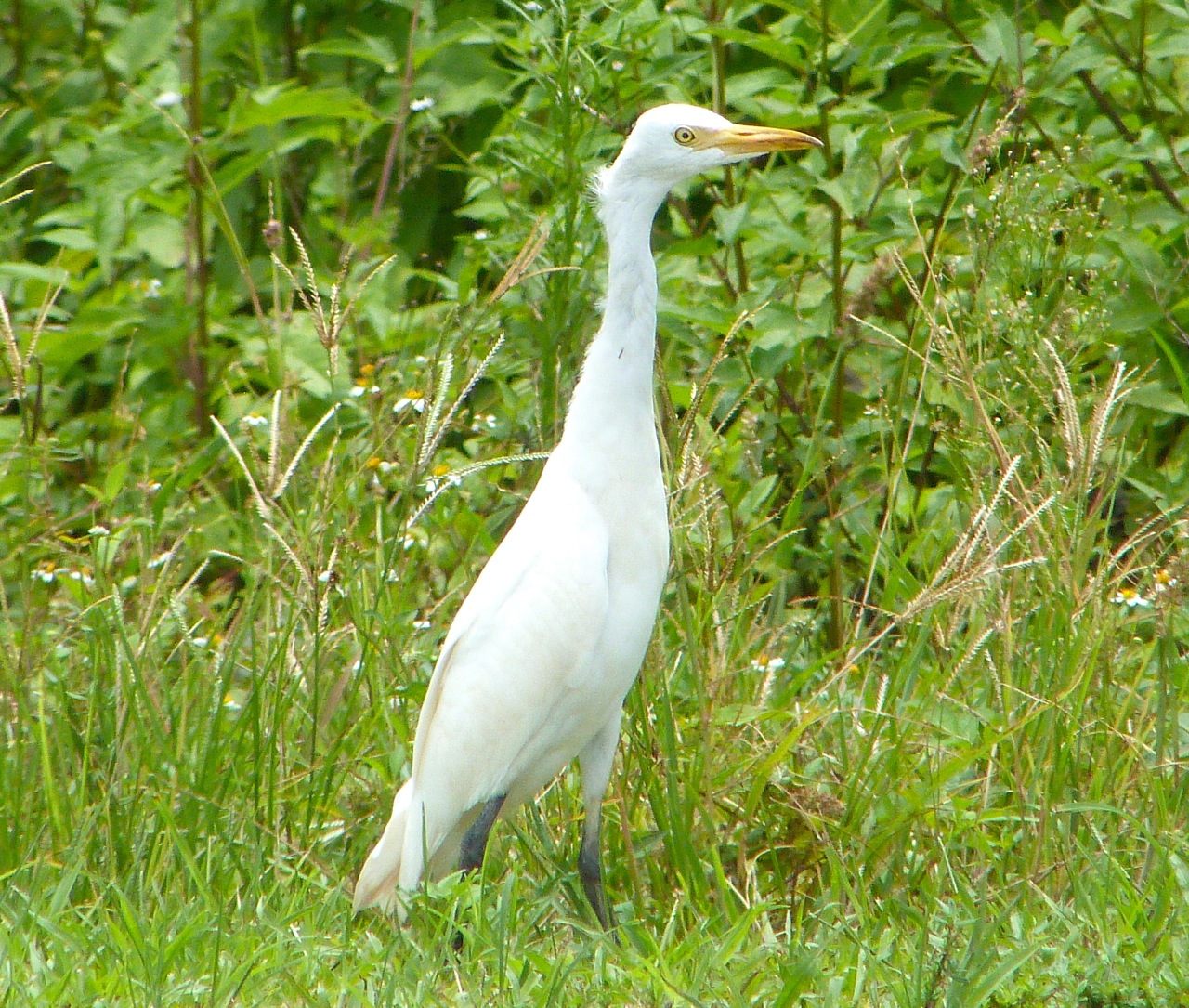
The CATTLE EGRET Bubulcus ibis is a species of heron with an affinity with cattle and other grazing animals. It’s a two-way thing – they relieve a cow of its ticks and flies, and get a ready meal return. Their name is the latin for ‘herdsman’.

Originating in Africa, these birds have proved to be one of the most successful and resilient bird species at expanding their breeding populations around the globe.

Range map – yellow: breeding – green: year-round –  blue: non-breeding                     

The first sightings in North America were in 1941, then assumed to be escapees. Far from it. They flew in and multiplied. By 1953 they were breeding in Florida; in Canada in 1962; and in the Bahamas in the 1960s. Now they are everywhere – though (depending, like, how old you are) your grandparents might never have seen one… Here’s a helpful wiki-graphic 

Range expansion in the Americas

In the breeding season, cattle egrets develop pinkish-buff patches on their front, back and crown, and grow matching head-plumes

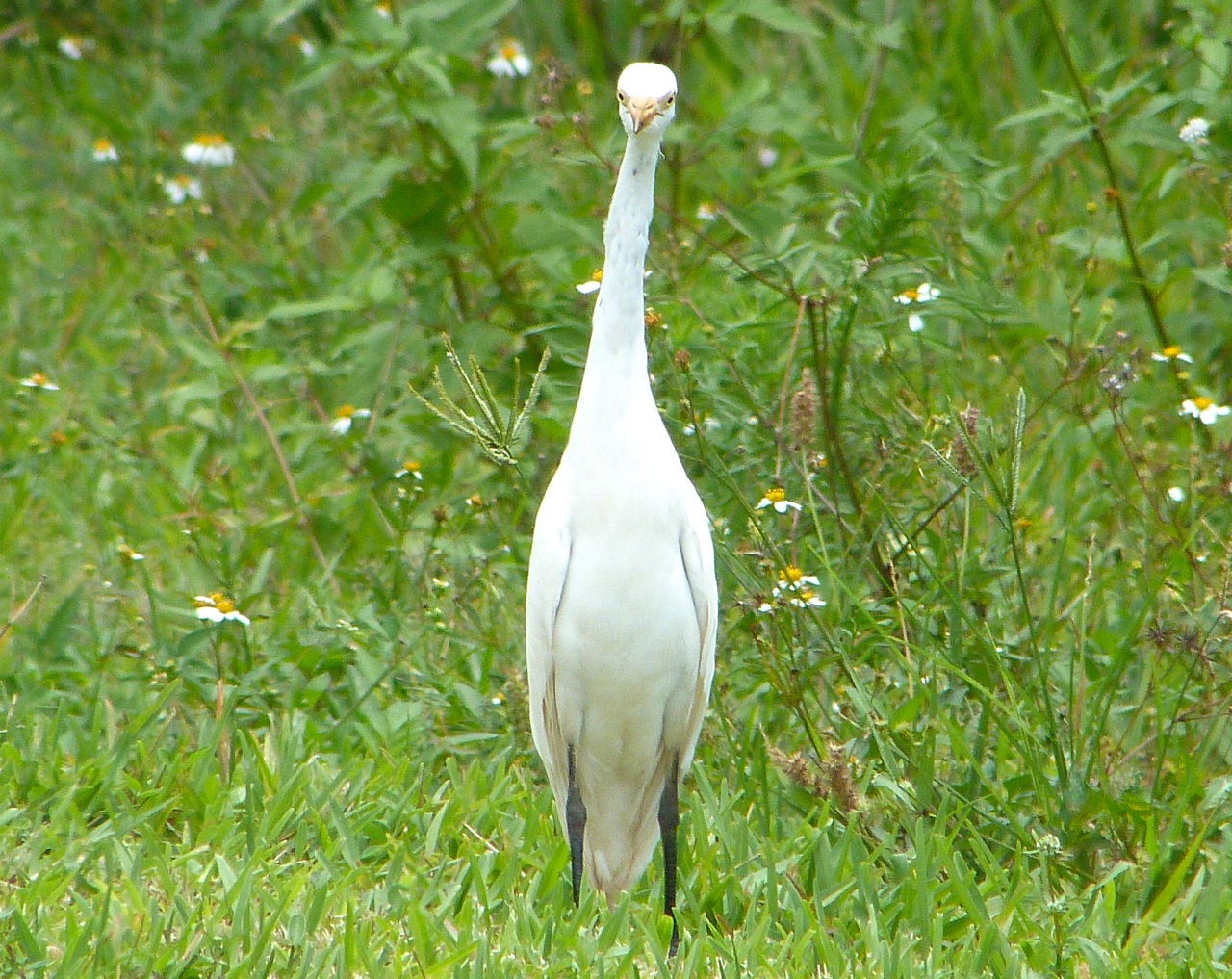
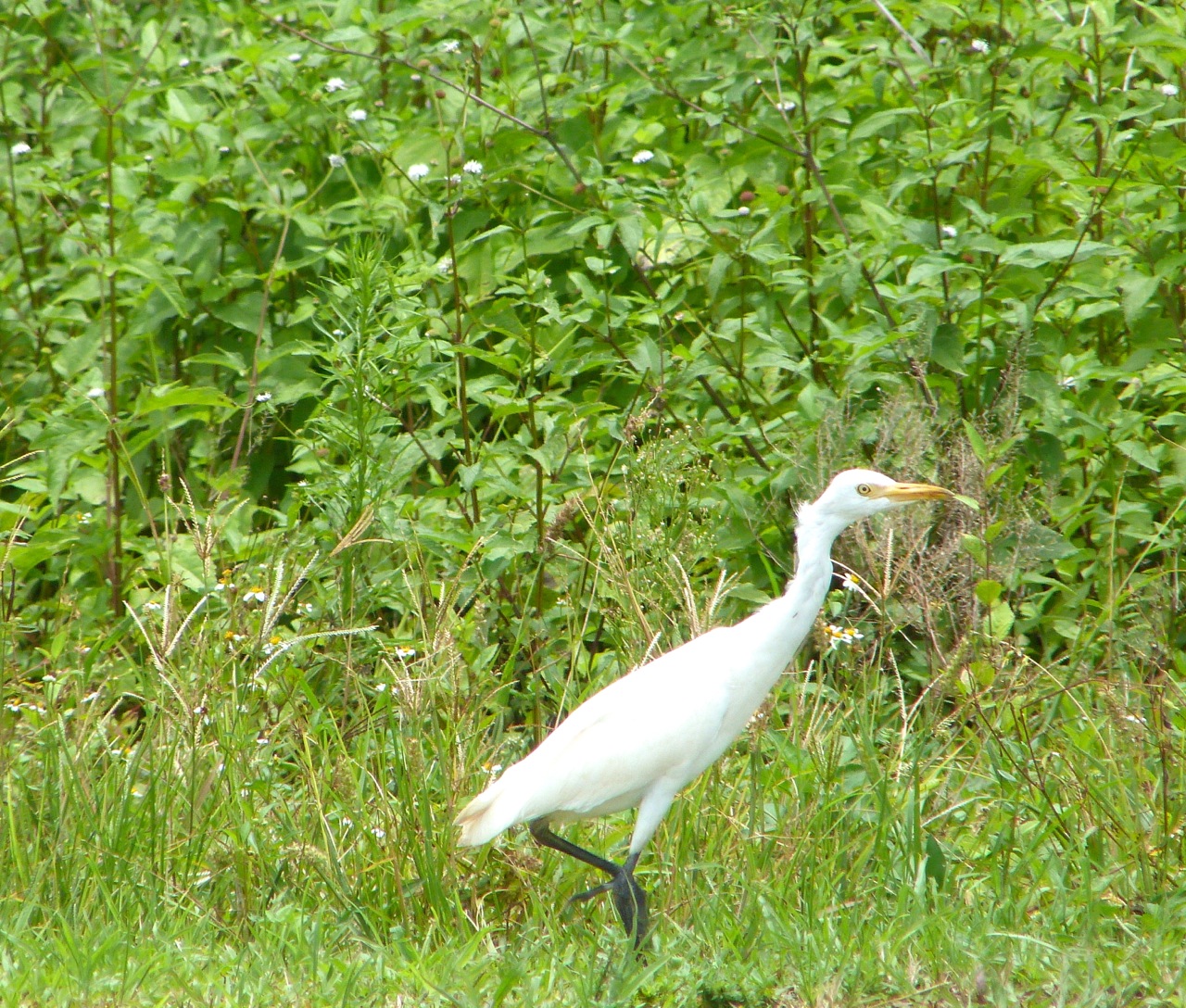
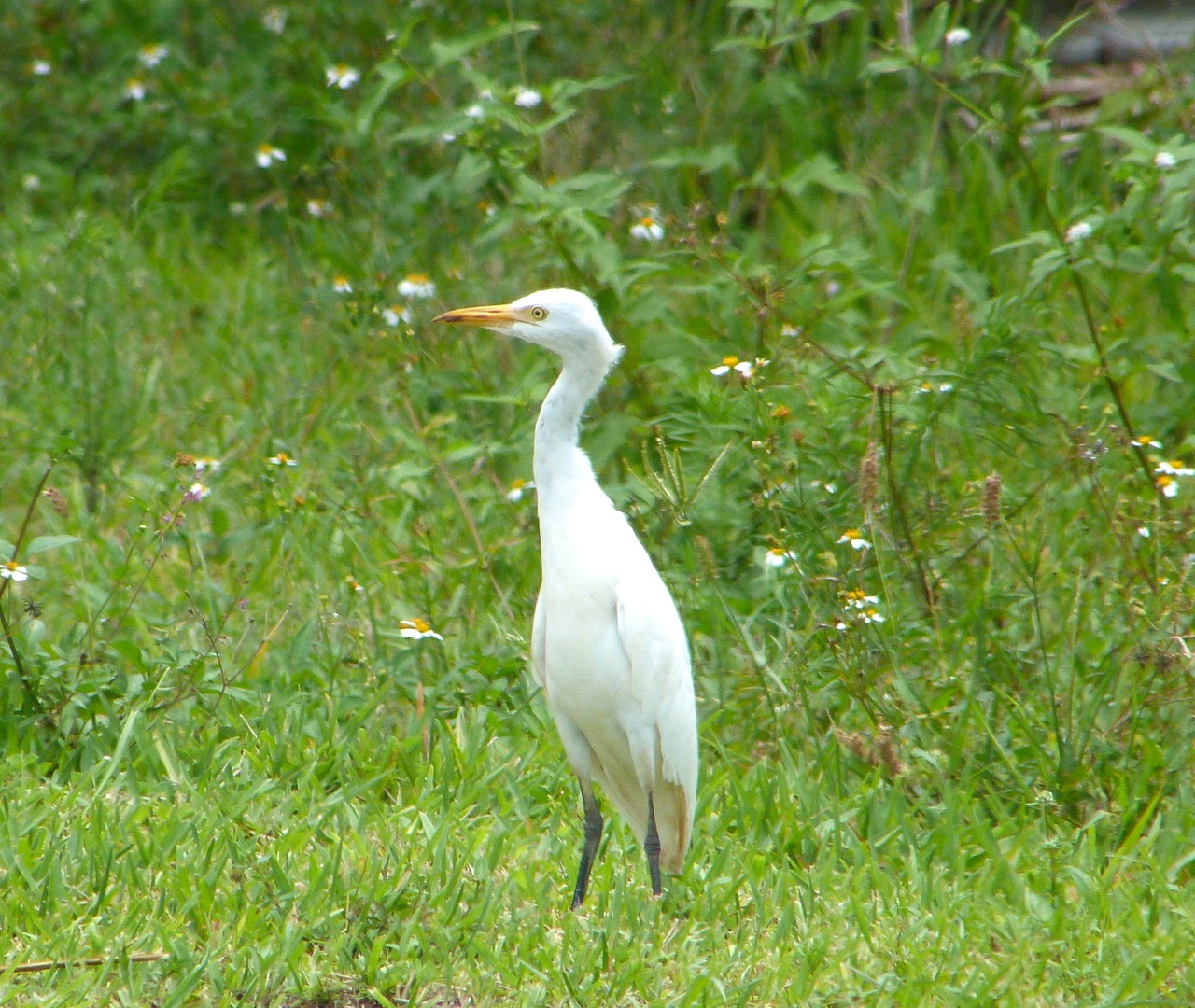
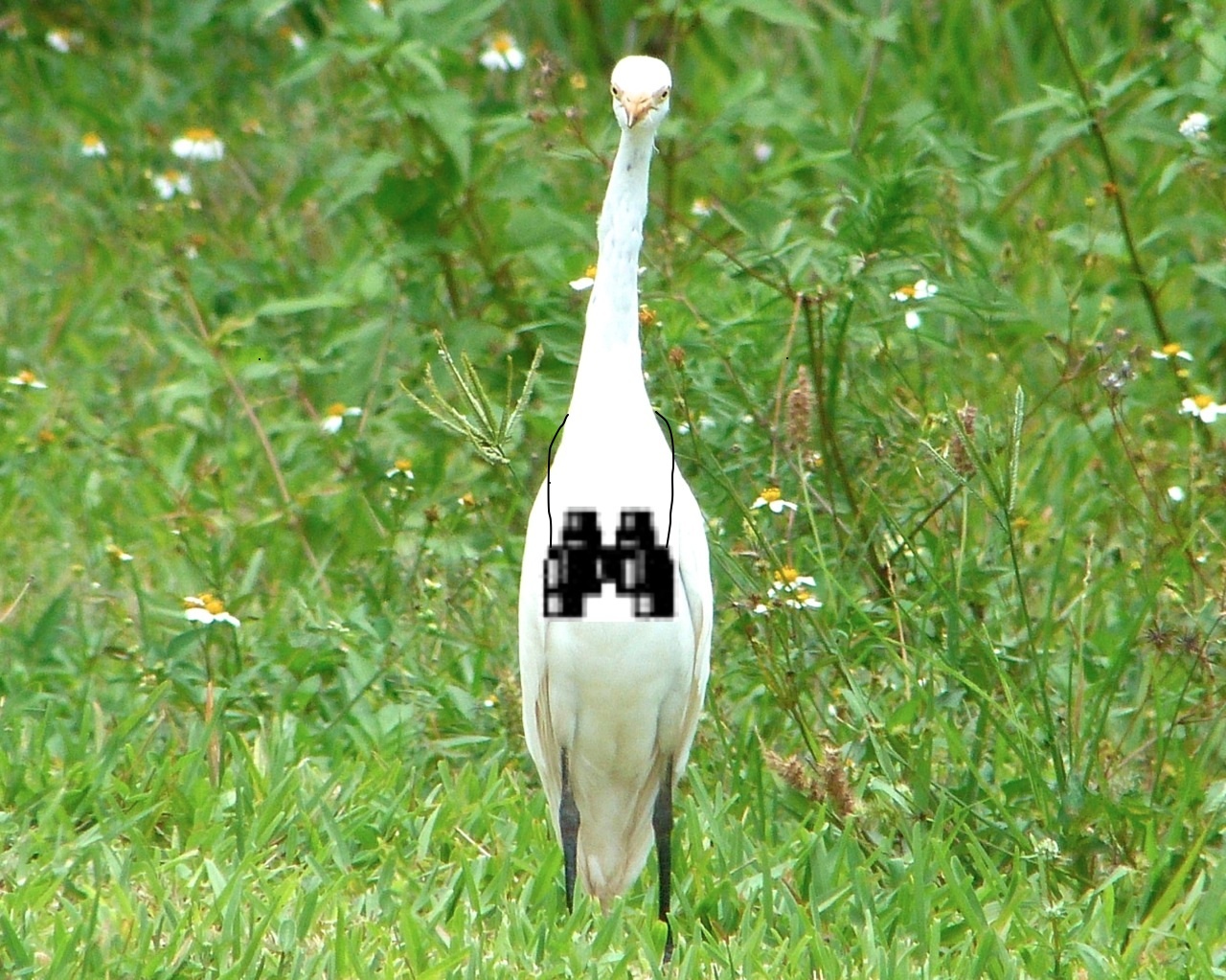
Recently we saw one at Sandy Point when photographing kestrels. It’s no longer in full breeding plumage, but traces of a pinkish tinge can still be seen.Cattle Egret Abaco 8The cattle egret’s eyes are positioned so that while they are feeding they have binocular vision. I’m not quite sure why that would be advantageous; you might think they’d prefer one eye on their food, and one on the look out for predatorsCattle Egret Sandy Point Abaco 12

When on the move the egrets may adopt a stooping, creeping stanceCattle Egret Abaco 7

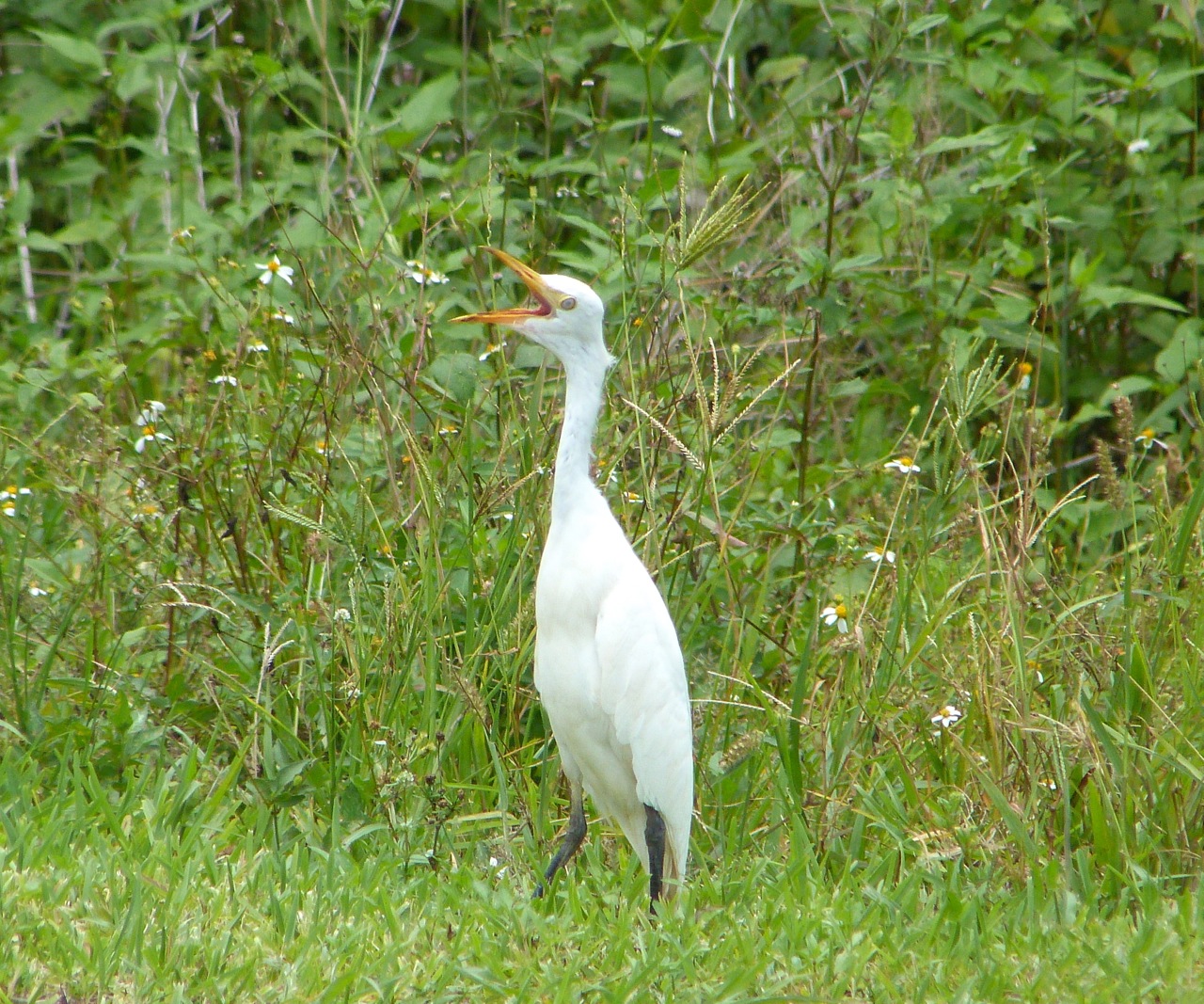
These birds have capacious mouths, which enable them to vary their diet from small maggoty things to larger insects, then through snails to small frogs and the likeCattle Egret Abaco 5

Although the neck generally looks slim, they appear to have an expandable gullet which no doubt helps with larger food itemsCattle Egret Abaco 4

Now. Time to get back to the Crossword…Cattle Egret Abaco 2

BINOCULAR VISIONce_sp1Graphics, breeding plumage & header: redoubtable wiki; other images RH

ADDENDUM The redoubtable dou dou, creator of tiny and cute handmade bird models, has been inspired by these fine creatures to make a handsome pair. Check out her site with the link above… and you can even buy your very own cattle egrets there

cattle-egret-birds

Unknown's avatar

QUIS PHOTOGRAPHIET IPSOS PHOTOGRAPHERES? [INSULA ABACO]


RH vig

QUIS PHOTOGRAPHIET IPSOS PHOTOGRAPHERES? [INSULA ABACO]*

Who indeed does photograph the people who take the photographs? Here is a small gallery of photographers on Abaco caught in the act of shooting wildlife, so to speak. And if anyone has ever seen – or been – a photographer photographing photographers photographing other photographers, trust me, that is one stage beyond weird.

RH on a nature trek with Ricky JohnsonWildlife Photography on Abaco 1

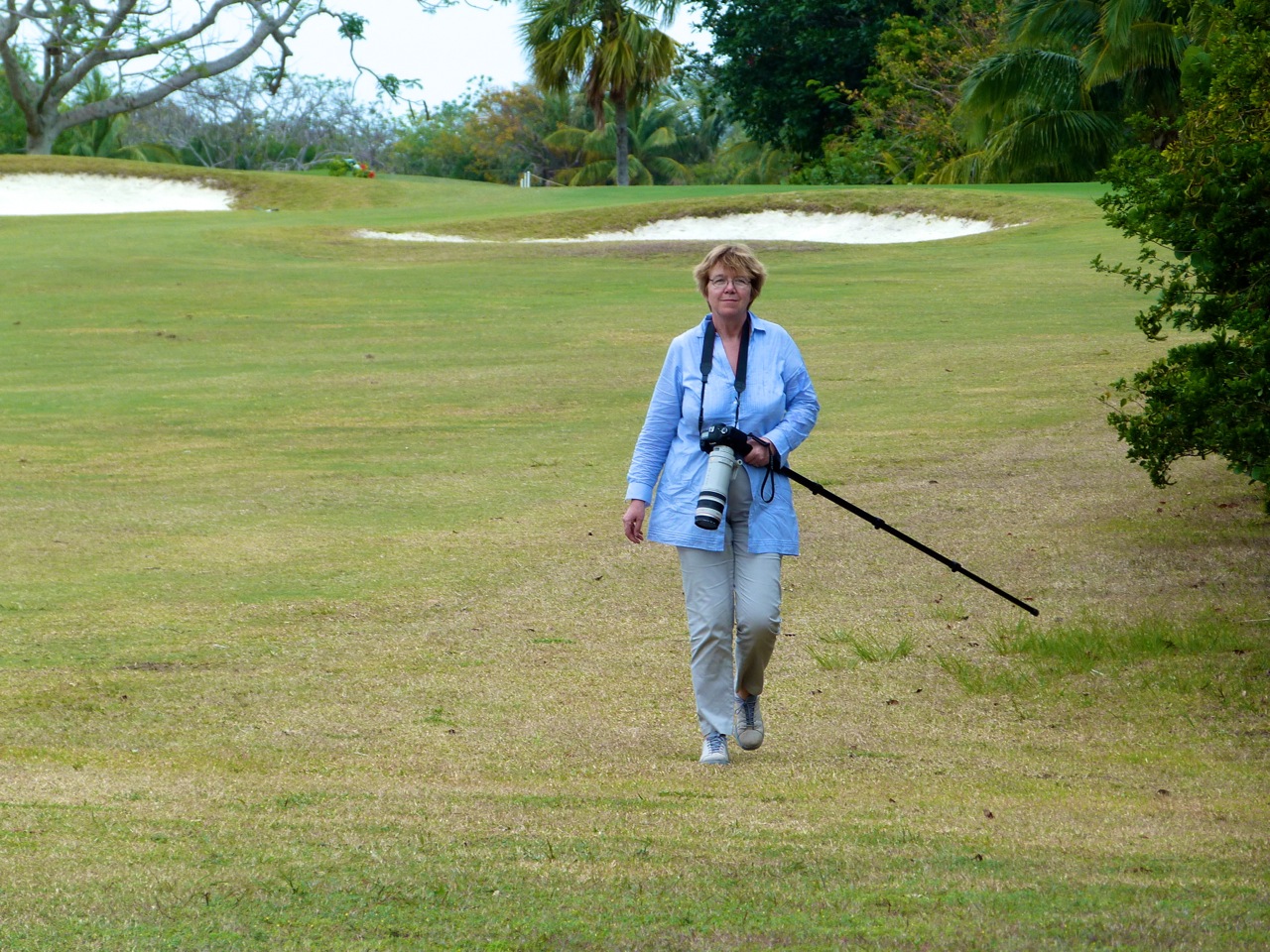
Mrs RH goes right off-piste & ends up on the golf course at TC  [good birding there in fact]Wildlife Photography on Abaco 3

RH (who uses a stick – or ‘cane’, if that isn’t too ’50 shades’) takes a collapsible wading stick on these occasions. Since he, too, is collapsible it is sometimes helpful to have a seat while photographing. Not elegant, though, and not especially comfortable. Cheers, Clare, for capturing the indignity…Wildlife Photography on Abaco 8

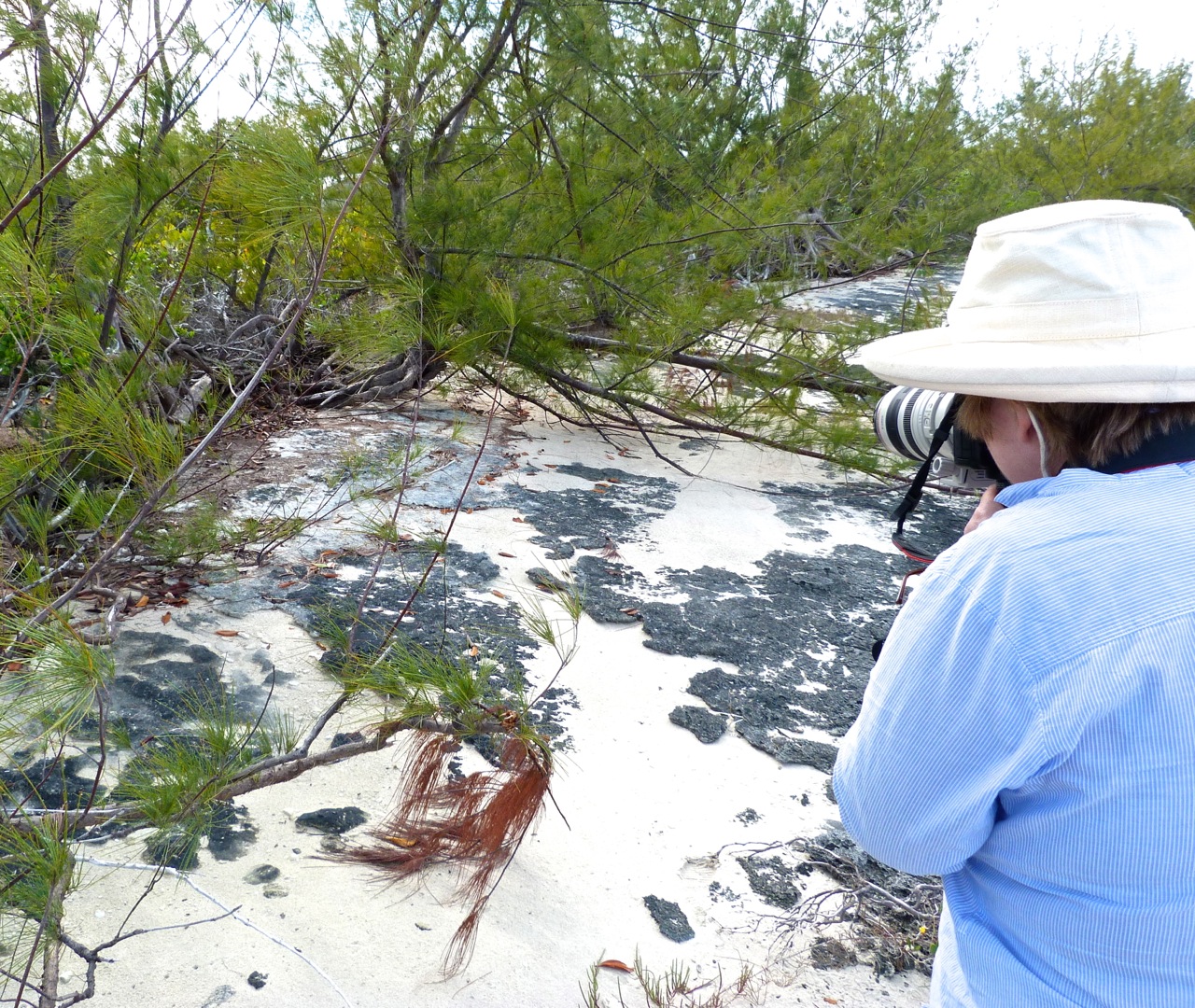
Mrs RH zooms in on a possibly rare bird… as it turned out, a female grassquit!Wildlife Photography on Abaco 4

RH sort of looks the part but the backpack is crammed full of food & drink, not equipment, and he is looking for shade for a picnic at CasuarinaWildlife Photography on Abaco 6

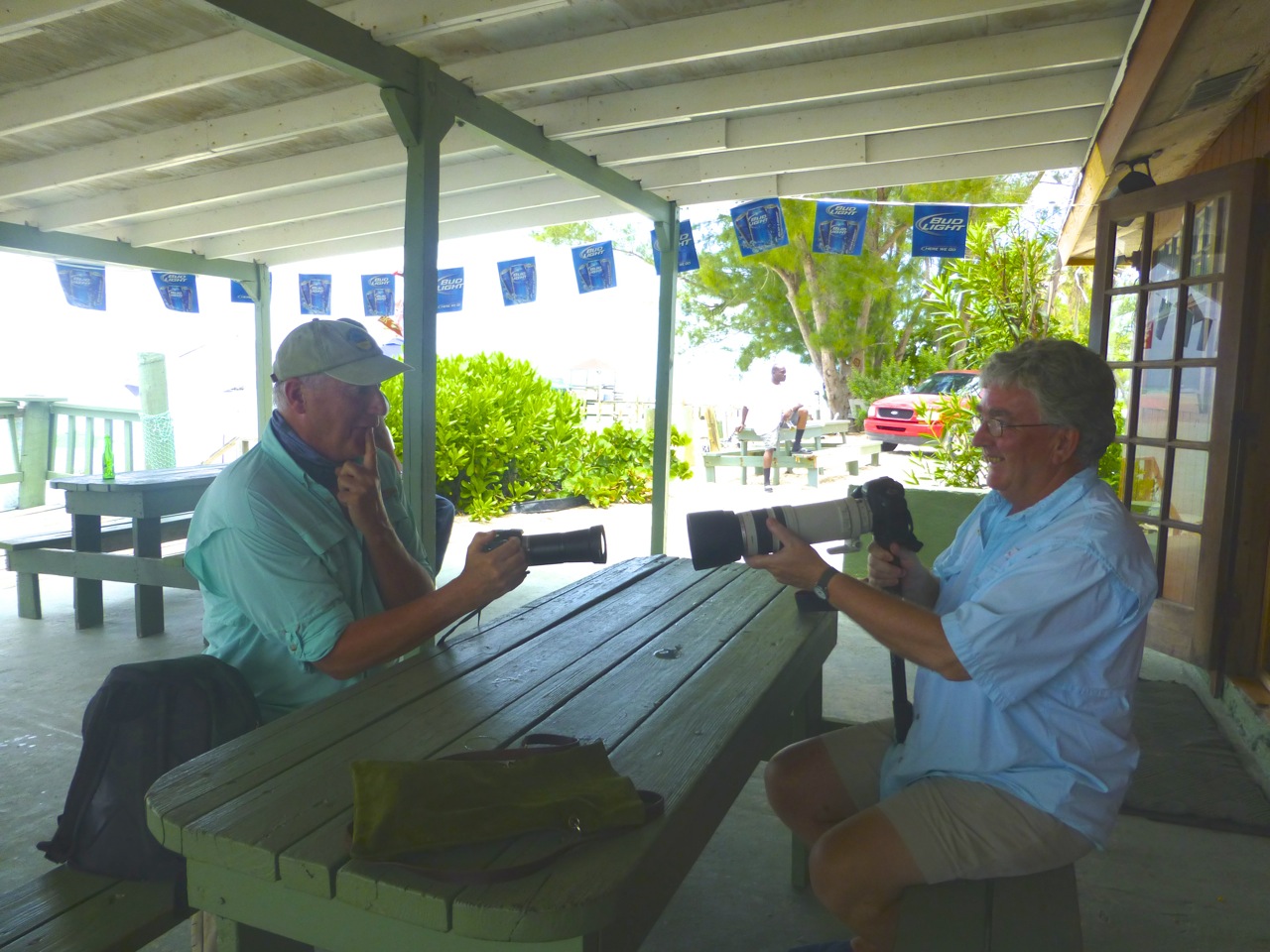
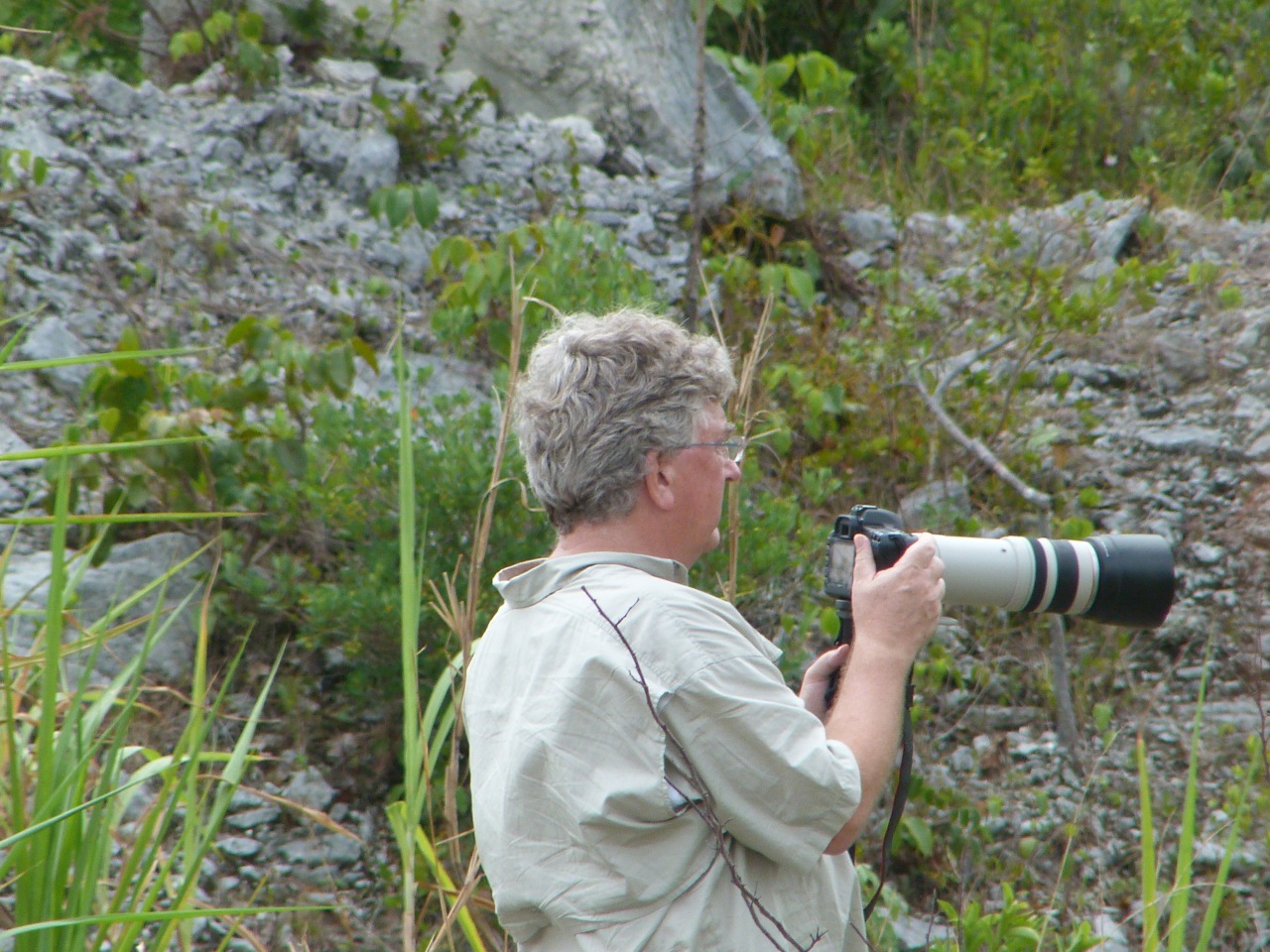
PM challenges RH to a ‘camera-off’ duel at Nancy’s, Sandy Point, and proves that his is the biggest…Wildlife Photography on Abaco 7

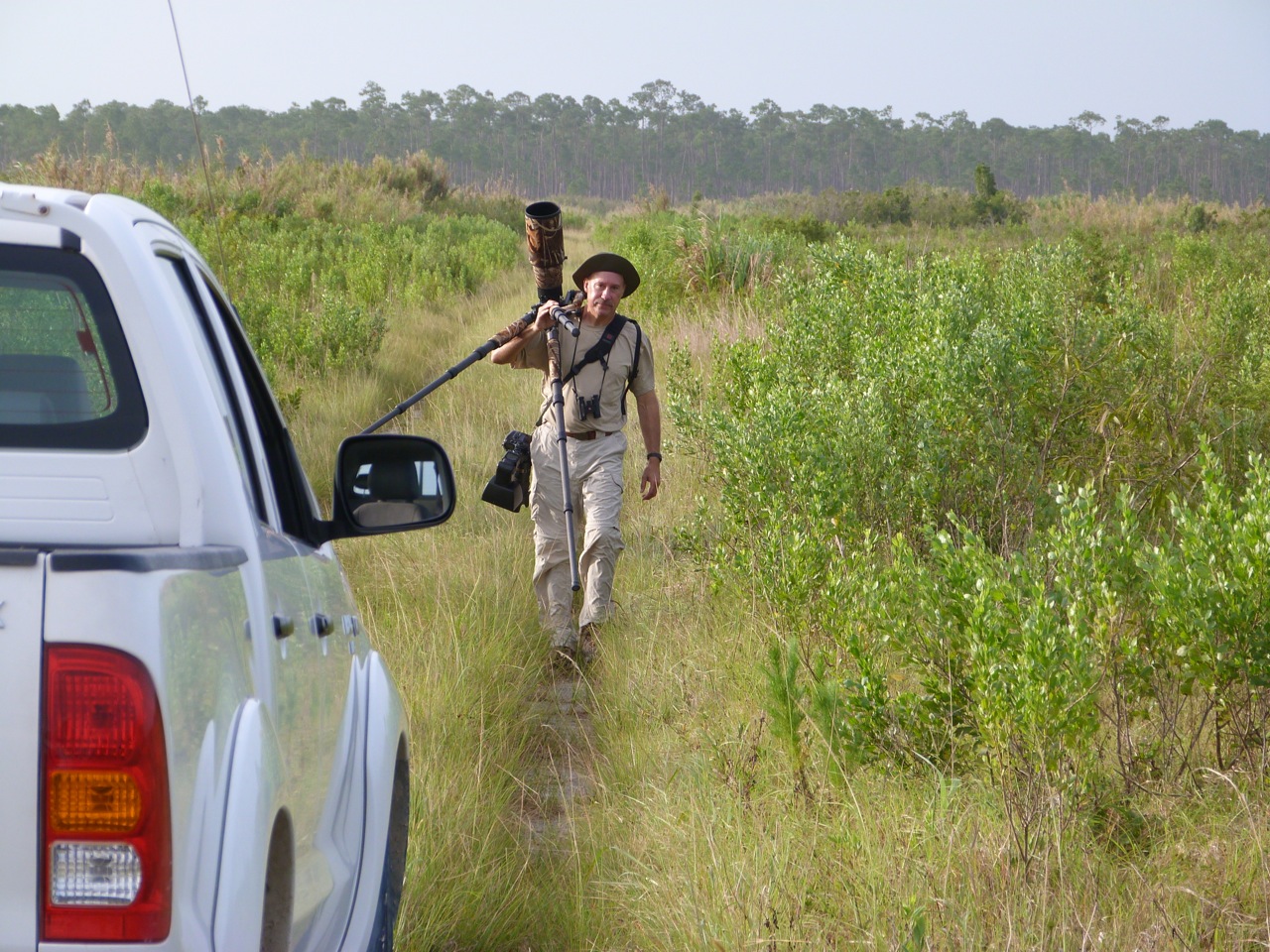
Ace birder and photographer from Ohio, Tom, arrives at Delphi and puts PM’s puny equipment to shame – and with Camo for extra cool. Even the tripod legs.Wildlife Photography on Abaco 11

Sandy Walker, General Manager of Delphi and man of many parts, turns out to own a snappy NikonWildlife Photography on Abaco 12

PM & RH engaged in a ridiculous challenge to photograph various items on the beach. Both lost, even though they had devised the rules…Wildlife Photography on Abaco 10

The professionals Tom and Woody (‘Birdman of Abaco’) Bracey get serious with Bahama Mockingbirds in the pine forest. The red bandana is to attract the endemic Bahama Woodstar hummingbirds.Wildlife Photography on Abaco 13

However at Sandy Point they seem to have forgotten their cameras…Wildlife Photography on Abaco 14

Tom returning to the truck after filming an evening festival of dozens of nighthawks on the wingWildlife Photography on Abaco 15

Out in the field… or scrubland – with 2 camerasWildlife Photography on Abaco 21

PM takes aim…Wildlife Photography on Abaco 20

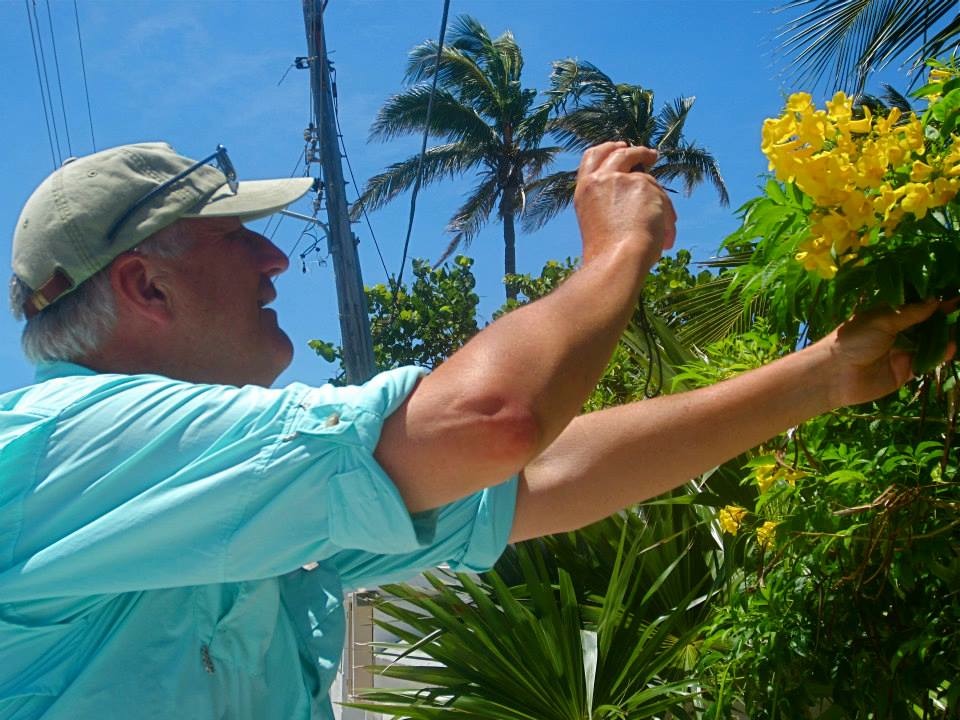
RH subdues an unruly Yellow Elder (Bahamas national flower) for a close-upWildlife Photography on Abaco 18

*This titular nod to the phrase ‘quis custodiet ipsos custodes’ (‘who is guarding the guardians’) is open to objection on the ground of illogicality. It’s a Latin tag with a greek-derived verb and noun forms jocularly inserted. A ‘photograph’ is, literally, ‘light writing’ in Greek. So ‘quis lux-scribit ipsos lucis-scriptores’ is the best solution I can offer… Let’s have that Elder flower to end on a light note Yellow Elder Hope Town, Abaco 2

DRAMATIS PERSONAE

Photographees: Peter Mantle, Sandy Walker, Tom Sheley, Woody Bracey, Mrs RH, RH

Photographers: Clare Latimer, Brigitte Bowyer, Mrs RH, RH

Photographers of photographers photographing photographers: none that we were aware of

Unknown's avatar

AMERICAN KESTRELS IN SANDY POINT, ABACO, BAHAMAS


 AMERICAN KESTRELS ON ABACO 8

AMERICAN KESTRELS IN SANDY POINT, ABACO, BAHAMAS

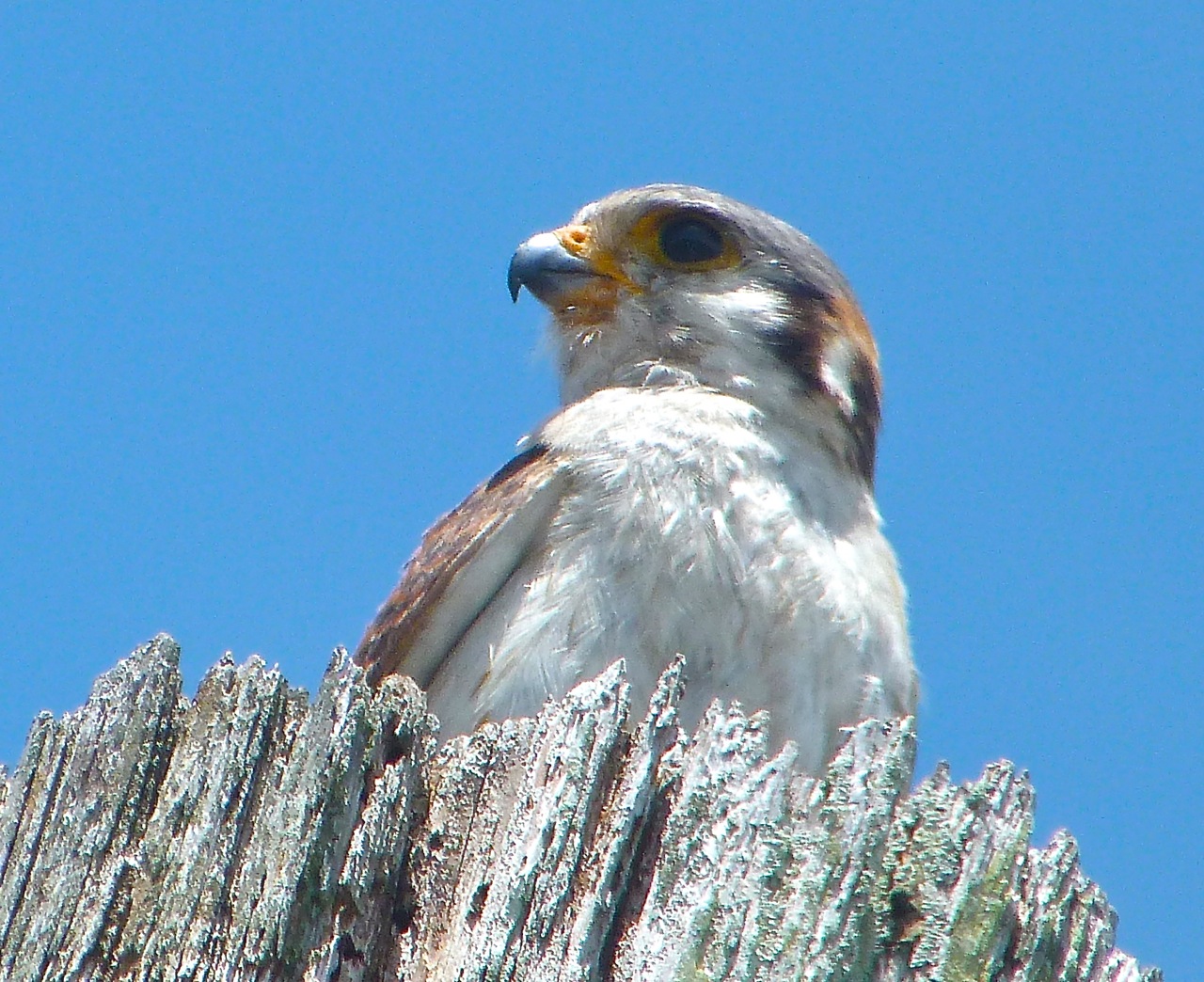
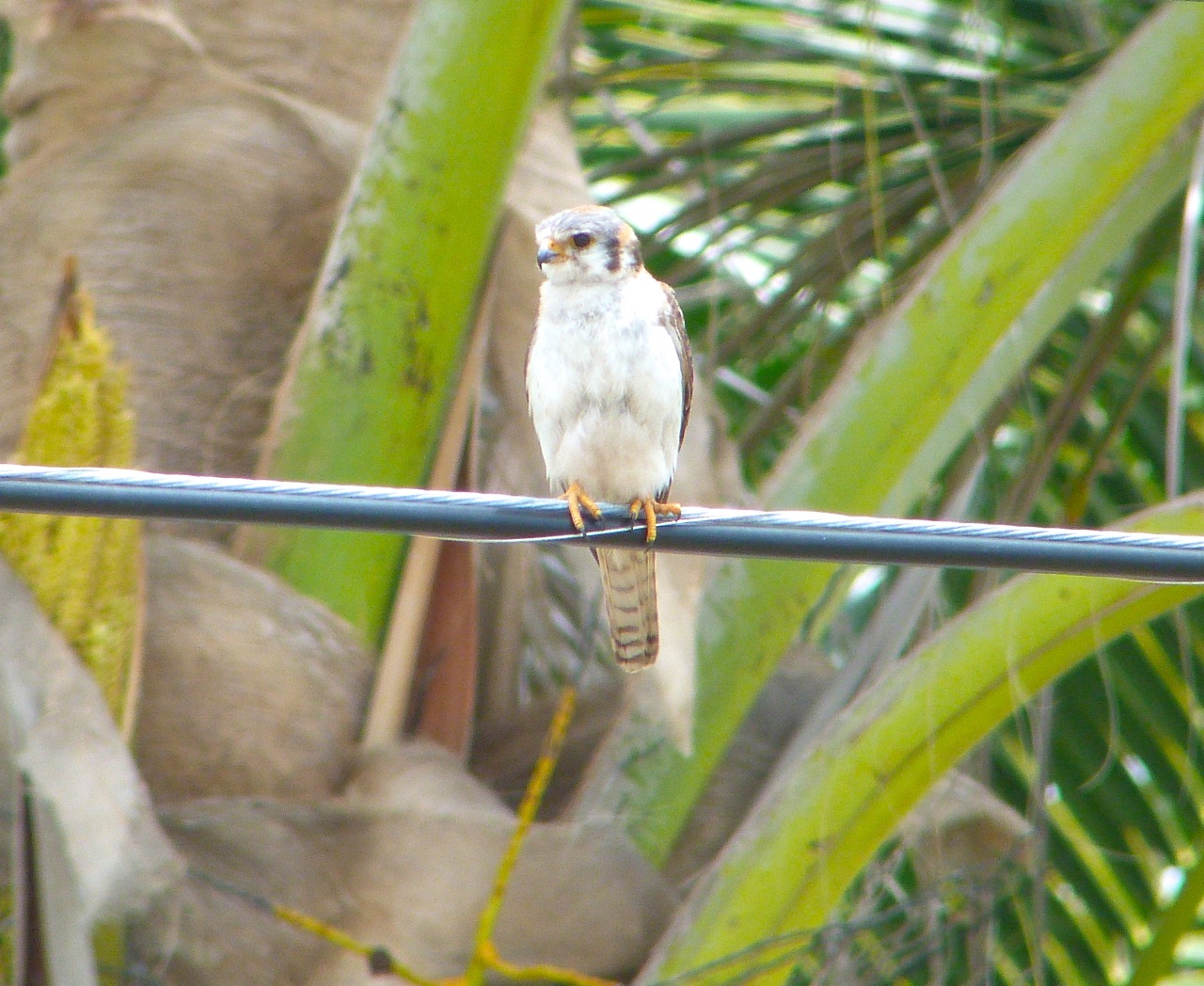
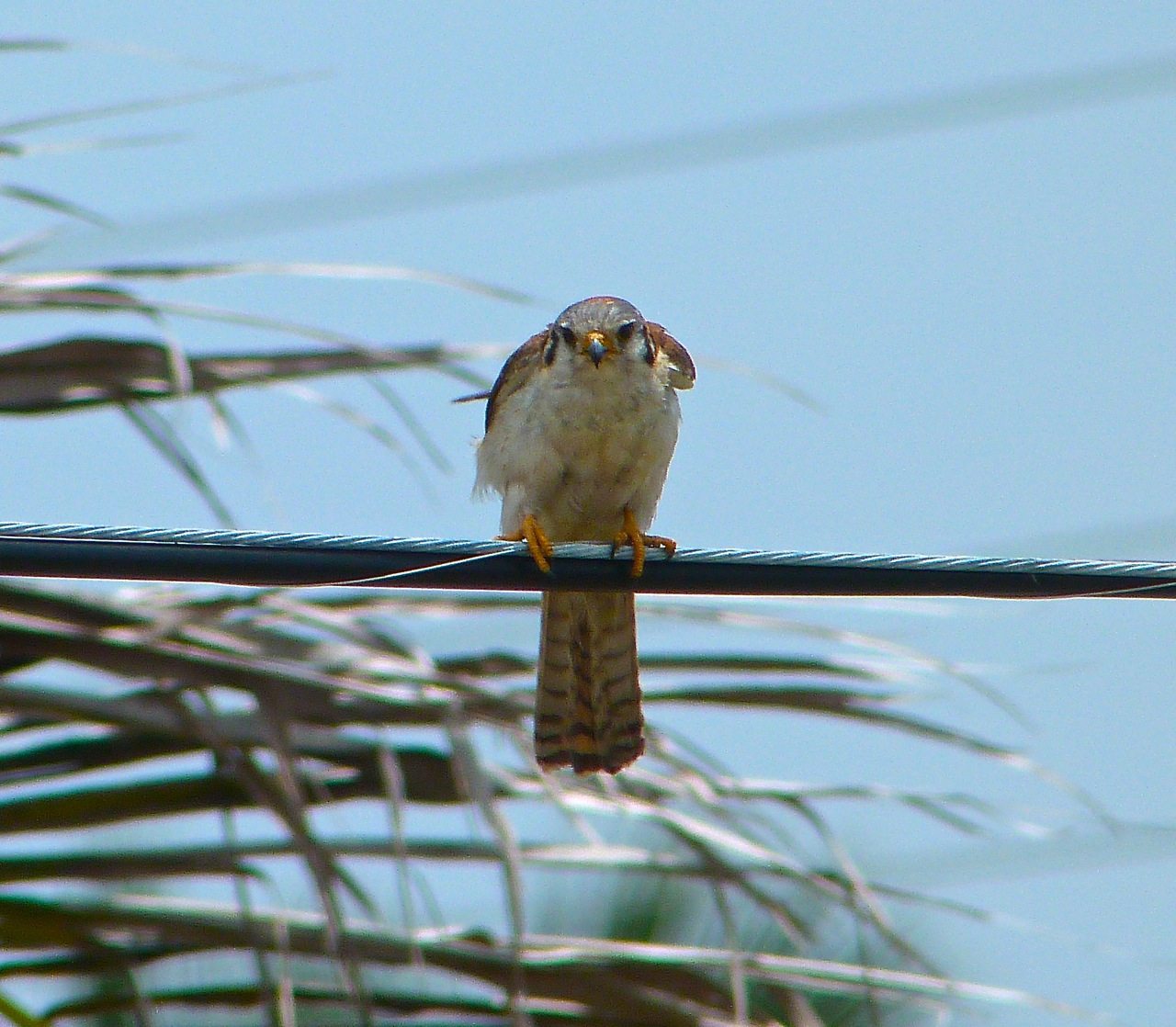
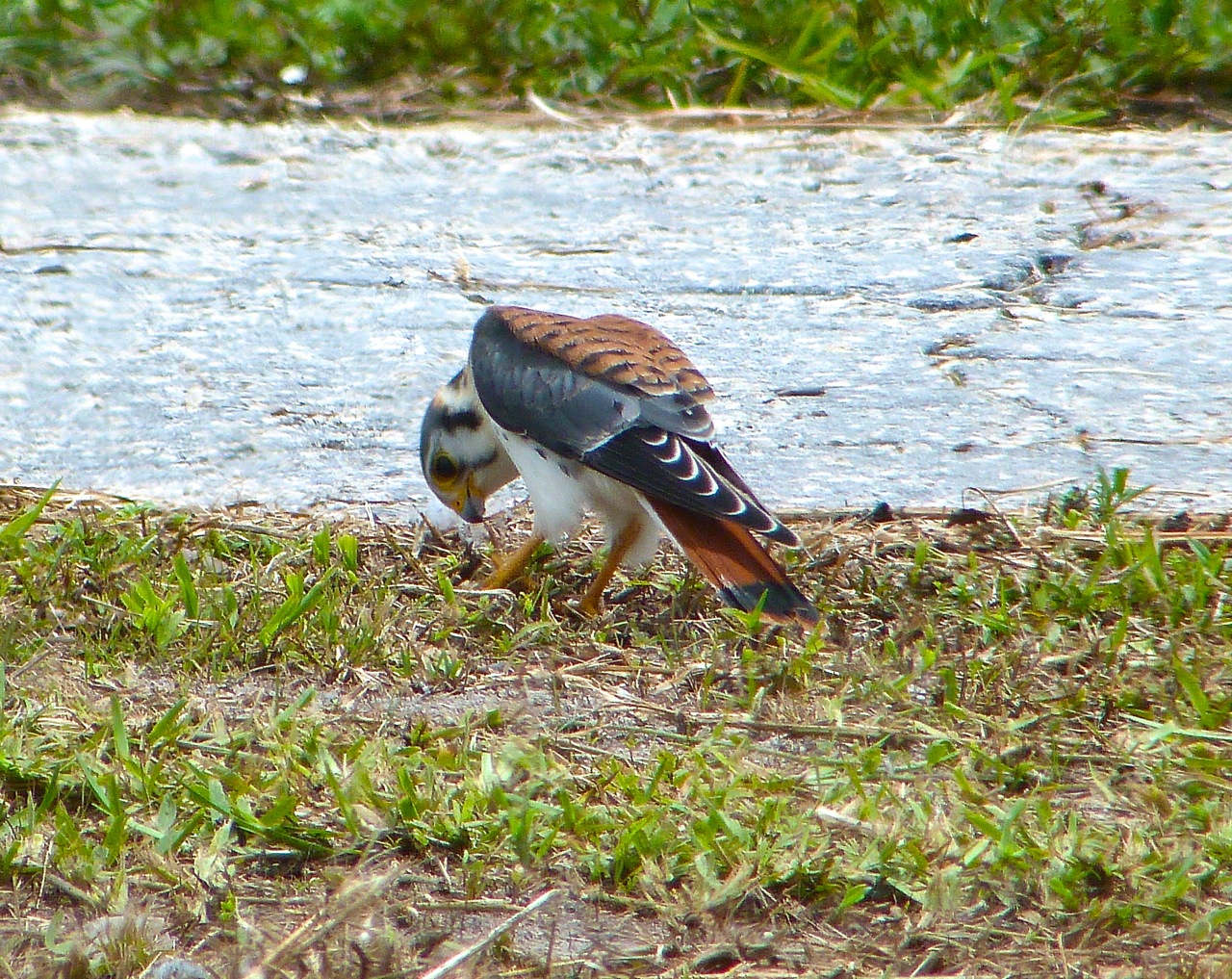
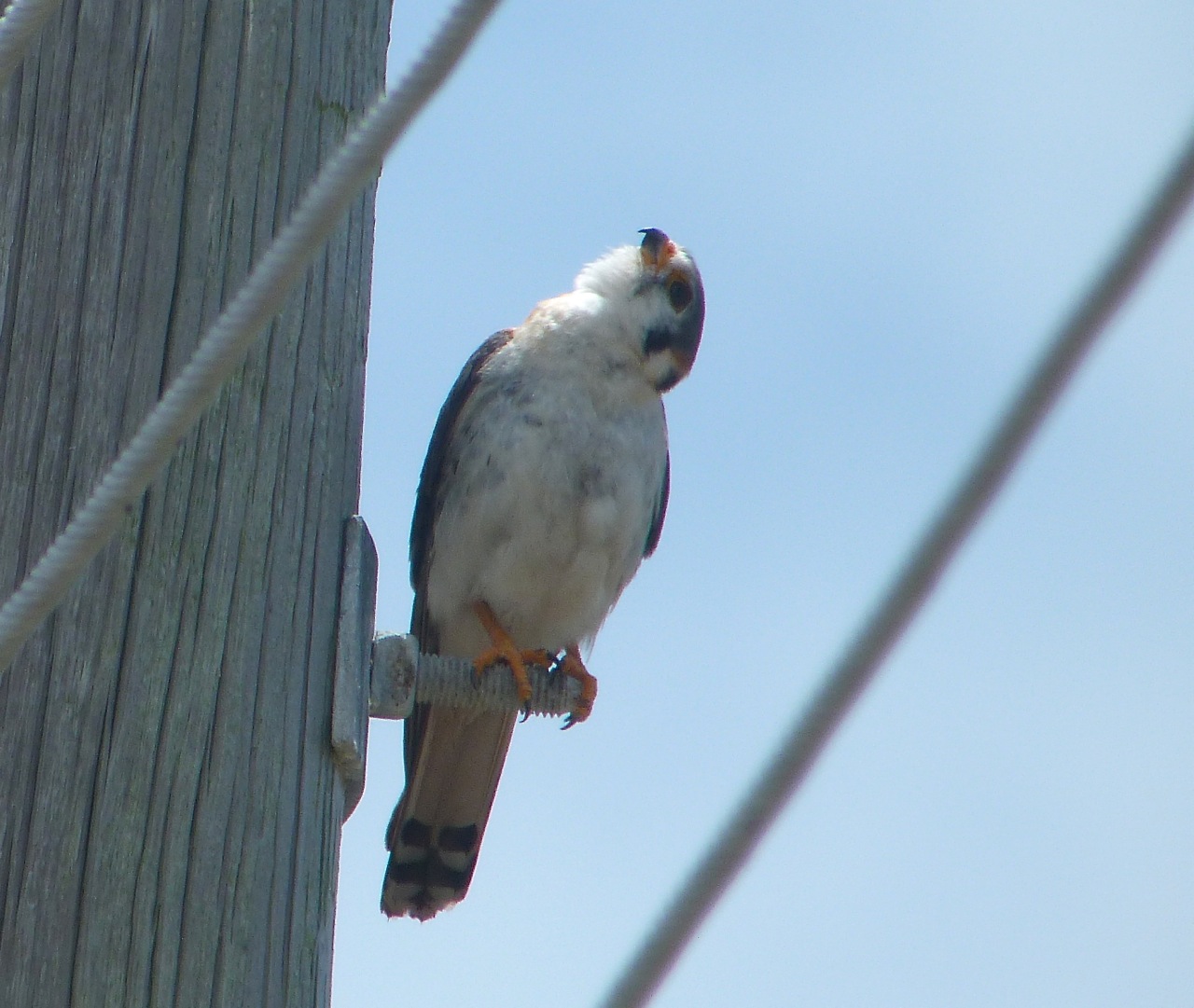
American kestrels Falco sparverius are well known birds in the Americas and Caribbean, and I can’t usefully add anything to the photographs below, all taken at Sandy Point, Abaco a few days ago. Well, perhaps just that they are said to “chitter” when they copulate – but they can’t be alone in that, surely… There were several kestrels around the settlement, including juveniles. Mostly they stayed on the utility posts and lines, from which they dropped occasionally to collect some titbit from the ground below. There was a wonderfully rich-coloured male in a palm tree, but he declined to turn round to be photographed, and I have refrained from including his rather magnificent rear view in the gallery below, out of respect for a fine bird of the species.

AMERICAN KESTRELS ON ABACO 8American Kestrel Abaco 5American Kestrel Abaco 1JUVENILEAmerican Kestrel Abaco 2American Kestrel Abaco 4American Kestrel Abaco 3

AMERICAN KESTRELS ON ABACO 7American Kestrel Abaco 6

Unknown's avatar

BAHAMAS CONCH QUEST – GASTROPODS, SHELLS & CONSERVATION


Conch ©Melinda Riger @G B Scuba

BAHAMAS CONCH QUEST – GASTROPODS, SHELLS & CONSERVATION

Conchs are among the most familiar of all shells. On Abaco they are everywhere: in the sea, on the beach, used ornamentally in gardens, piled up wherever conch is on the menu… (basically, anywhere serving food)

Conchs have other uses besides being a staple food. They provide sought-after pink pearls.  Only about 1 conch in 10,000 has a pearl, so bear in mind that if you miss one during your search, you may have another 10,000 to wade through… Conchs can produce music, of a sort (such as when used enthusiastically by the famous ‘conch-blower’ home-team supporter during cricket Test Matches in the West Indies). They are undeniably decorative on a porch or on a shelf.

Conchs have featured in literature and film. In William Golding’s Lord of the Flies the conch represents power and order. A conch is blown to call meetings of the marooned boys. Its power is symbolised by the rule that you have to be holding it to speak at the meeting (an idea that many – all? – Parliaments could benefit from…)

Ian Fleming mentions conchs in several of the Bond books, all such references being totally eclipsed by the memory of the appearance, in the film Dr No, of Honeychile Rider emerging from the sea, conch in hand. Oh, I see. That’s just men is it? Or (good grief) just me? Anyway, may we all agree amicably that Ursula Andress was a most decorative conch carrier?

CONCH CONSERVATION

The supply of conchs is not infinite. Overfish them, take them before maturity  or pollute their habitat and this valuable marine resource depletes – and conchs, as with so many marine species, will become threatened. Fortunately there is a Bahamas-wide conservation organisation with a website packed with interest. 

COMMUNITY CONCH is “a nonprofit organization that aims to protect queen conchs in the Bahamas, a species of mollusk threatened by aggressive over-fishing. We promote sustainable harvest of queen conch through research, education and community-based conservation”

community conch logo

“Helping to sustain a way of life in the Bahamas”

Much of the research has been carried out in Berry Is, Andros and Exuma Cays. However the team has recently been based at Sandy point, Abaco. To see some of their work on Abaco CLICK LINK===>> ABACO EXPEDITION   

In many past posts I have listed ’10 Essential Facts’ about the topic discussed. In that spirit I have borrowed and slightly edited CC’s conch facts; and added a CC video of a conch’s stately ‘full speed ahead’ progress. NB No zoom… 

12 CONCH FACTS

  • The queen conch is a large edible sea snail native to the coasts of the Caribbean, the Florida Keys, the Bahamas, and Bermuda. Conchs are herbivores – they eat algae and other tiny marine plants
  • Main predators include nurse sharks, loggerhead turtles, other snail species, blue crabs, eagle rays, spiny lobsters, and other crustaceans
  • Mating aggregations may contain hundreds or even thousands of individual male and female conchs
  • Female conchs lay hundreds of thousands of tiny eggs in a sandy egg mass. The larvae emerge after 5 days and may drift on ocean currents for a month before settling in suitable habitat on the sea floor
  • In their first year conchs live under the sand during the day & come out to feed on the surface at night
  • A queen conch may take 5 years to reach maturity and can reproduce
  • They live an average of 7 years, but are known to live as long as 20 – 30 years
  • Conchs produce natural pearls that come in a range of hues, including white, brown, orange & pink
  • The conch is listed by CITES as a species which may become threatened with extinction if trade is not tightly controlled
  • It is now illegal to take queen conchs in the state of Florida due to severe overfishing
  • 80% of legal internationally traded conch is consumed in the United States. The smuggling of conch meat into the U.S. is a significant challenge to conch management in The Bahamas
  • Queen conch are vulnerable to overfishing because they are (1) relatively slow to grow (2) late to mature (3) aggregate to mate (4) easily harvested in shallow waters

A SPEEDY CONCH

(Conch photos taken by RH / Mrs RH at Sandy Point, Abaco)
Unknown's avatar

BMMRO BAHAMAS FISHERIES REPORT 2011 EXTRACTS & LINK


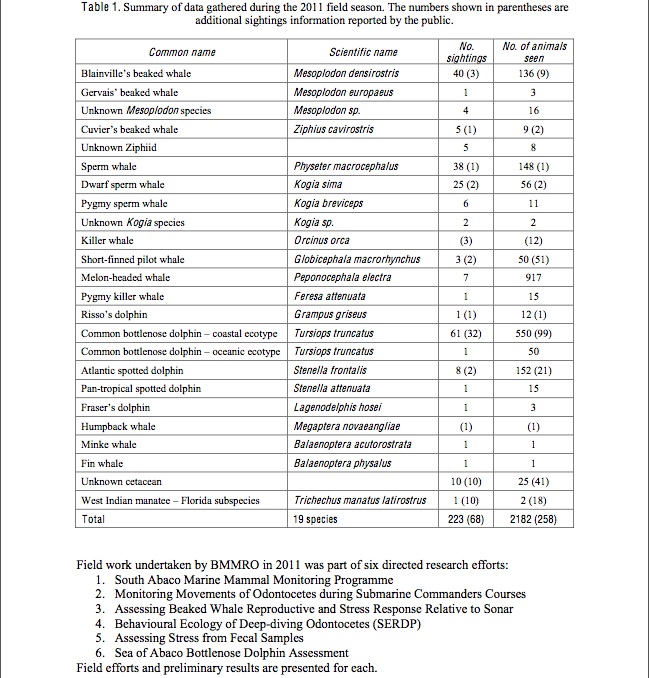
The BMMRO has recently published its Fisheries Report for 2011. The report is comprehensive and covers a far larger area than the waters around Abaco. Extracts are shown below (thanks as alway to Charlotte Dunn for use permission). The full report can be seen in pdf form at BMMRO FISHERIES REPORT

1. First, here is the table of all field data for the 2011 season, from which the incidence of the particular cetacean types can easily be seen. To a layman (me), the most significant reading on the previous year is the increase in sperm whale sightings and animal numbers, up from 14 / 69 in 2010 to 38 / 148 in 2011. I wonder why the difference?
2.  Here are results specifically relating to South Abaco, where the majority of cetacean activity is observed (see ‘green’ map). I have included a larger image of the cetacean species so that the key is easier to read