Author Archives: Rolling Harbour
WEST INDIAN WOODPECKER (Melanerpes supercilliaris)
TREE HUGGER
West Indian Woodpecker Melanerpes supercilliaris

In January I will be returning to Abaco for a few happy days, for the BMMRO biennial Retreat. I haven’t been back since before Dorian and Covid. I am pretty excited by the prospect, having really missed the island, the friendships, the birdlife, and a whole lot more. During the long interval I have kept in close touch – most days, it seems – and continued with this blog.
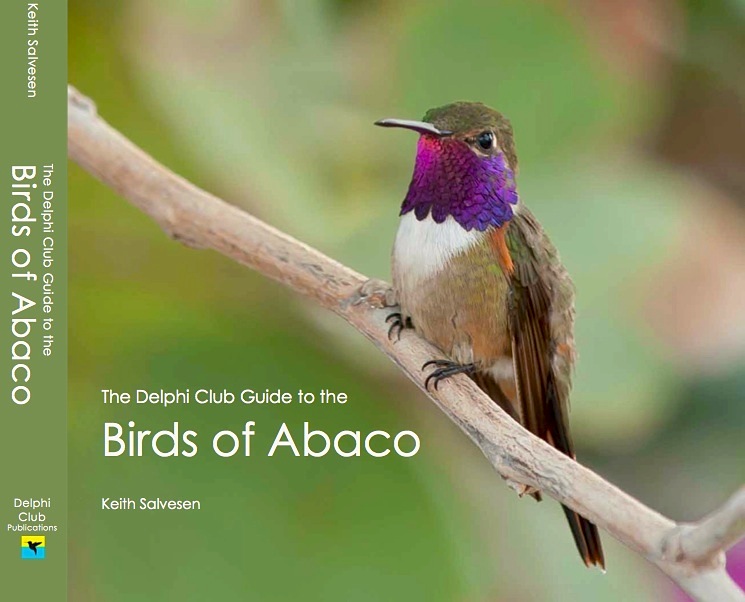
Birds and marine mammals have always been the main theme, but there’s a great deal more to investigate in the MENUS. Between now and my visit, I plan to post some wonderful bird photos from my book BIRDS OF ABACO. Mostly they will by contributors; a few may by me.
BIRDS OF ABACO: THE DOWNLOAD
The whole edition was sold out ages ago, so unfortunately I wasn’t even able to replace lost / damaged copies. However I recently compressed the entire book into an 18mb file. Do pass it round; please don’t monetize it!
1

SAWMILL SINK, ABACO: INDUSTRIAL ARCHAEOLOGY IN A POST-APOCALYPTIC LANDSCAPE
SAWMILL SINK, ABACO
INDUSTRIAL ARCHAEOLOGY IN A POST-APOCALYPTIC LANDSCAPE
This article was written quite some time ago but I reckoned that, several years on, it might still be of interest. I haven’t changed much because it is what it was, so please ignore the time-slip. This was by chance a fire-fuelled opportunity to uncover a relic of Abaco’s industrial past.
The Blue Holes of Abaco are geological wonders about which much has been written. Sawmill Sink is one of the best-known inland ones. These are deep chasms in the limestone rock, some leading to extensive and complex cave systems under the island. Divers exploring Sawmill Sink have found many prehistoric fossils, including those of an extinct giant tortoise, and land crocodiles. The sink area was also a location for such finds.
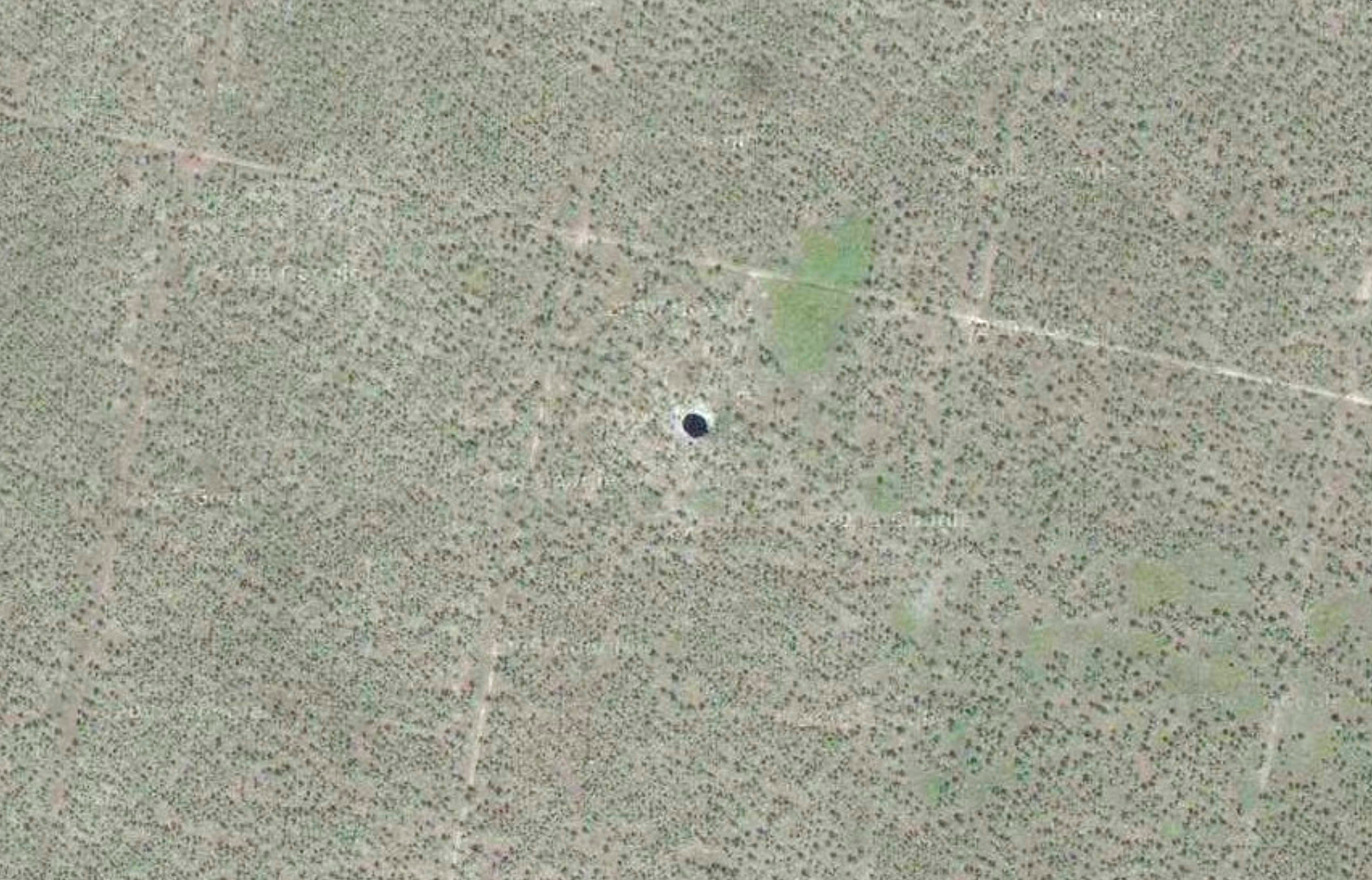
AERIAL VIEW OF SAWMILL SINK DEEP IN THE PINE FOREST

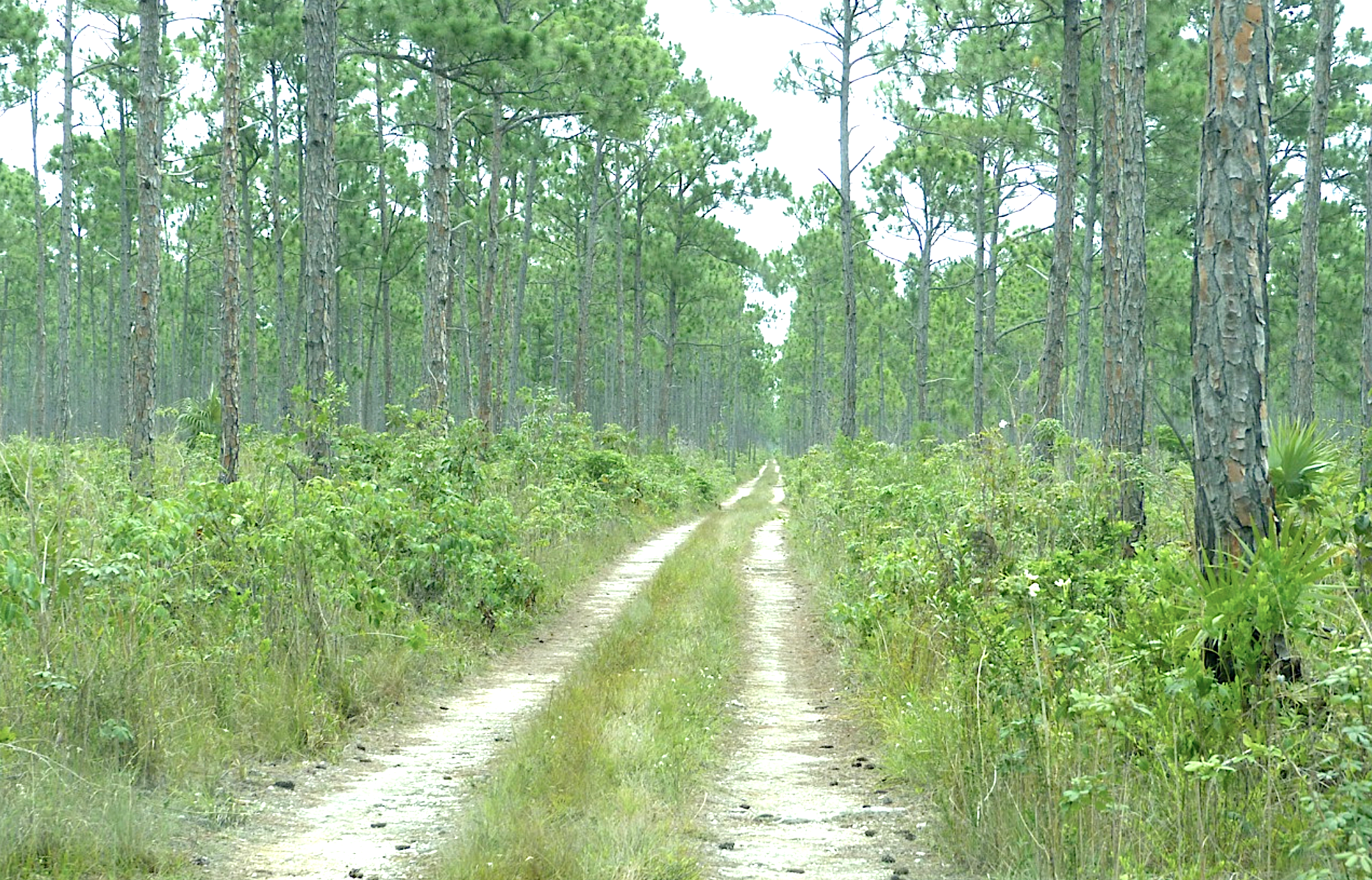
LOGGING TRACK TO SAWMILL SINK BLUE HOLE

LOGGING HISTORY
South Abaco – defined loosely as the area south of Marsh Harbour – is dominated by pine forest. There are a few settlements and individual residences, all by the coast. The forested swathes are criss-crossed by an extensive system of logging tracks, many now all but impassable. They are reminders of Abaco’s historic importance as a source of wood deriving from the ubiquitous tall, slim pines. One use to which they were put was as mine pit props in the collieries of Wales.
TRACKING RAILS
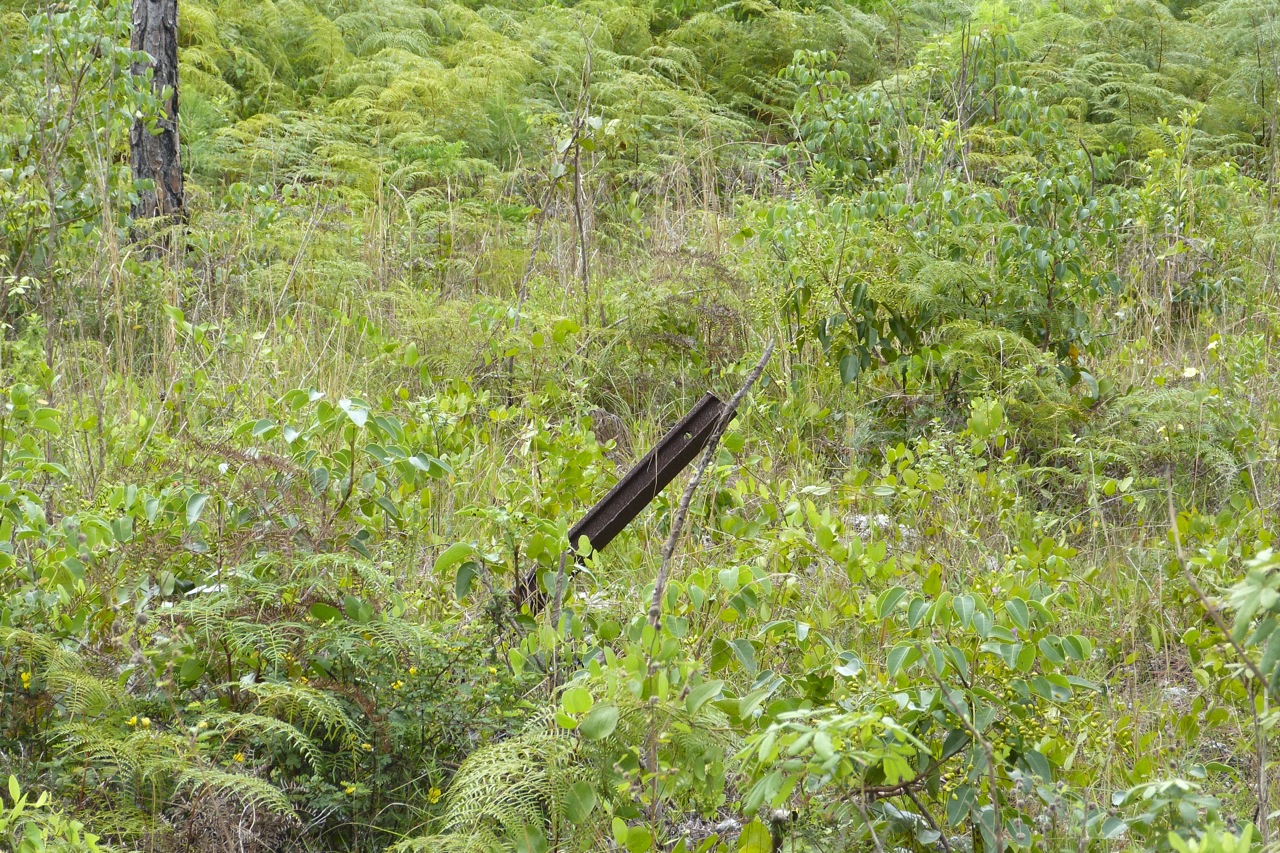
During a walk to Sawmill Sink, we noticed a rusty rail sticking up from the undergrowth. This was a remnant of the light railway tracks that had been laid through the forest to carry felled timber to the highway. From there it was transported to the coast to be loaded onto ships.
Later, we went back to Sawmill Sink at a time when the south part of the island was enduring the annual outbreak of forest fires, some natural and some set to clear undergrowth. While the occasional natural fire is actually good for regeneration of a forest (cf burning moorland), a fire out of control and fuelled by wind can very quickly damage a vast area. Thick palls of smoke drift across the island and out to sea. Even while we were fishing far out on the Marls, flames were visible as tall pines burned, with the acrid smell of the blaze was carried on the wind.
REMEMBERED EMBERS
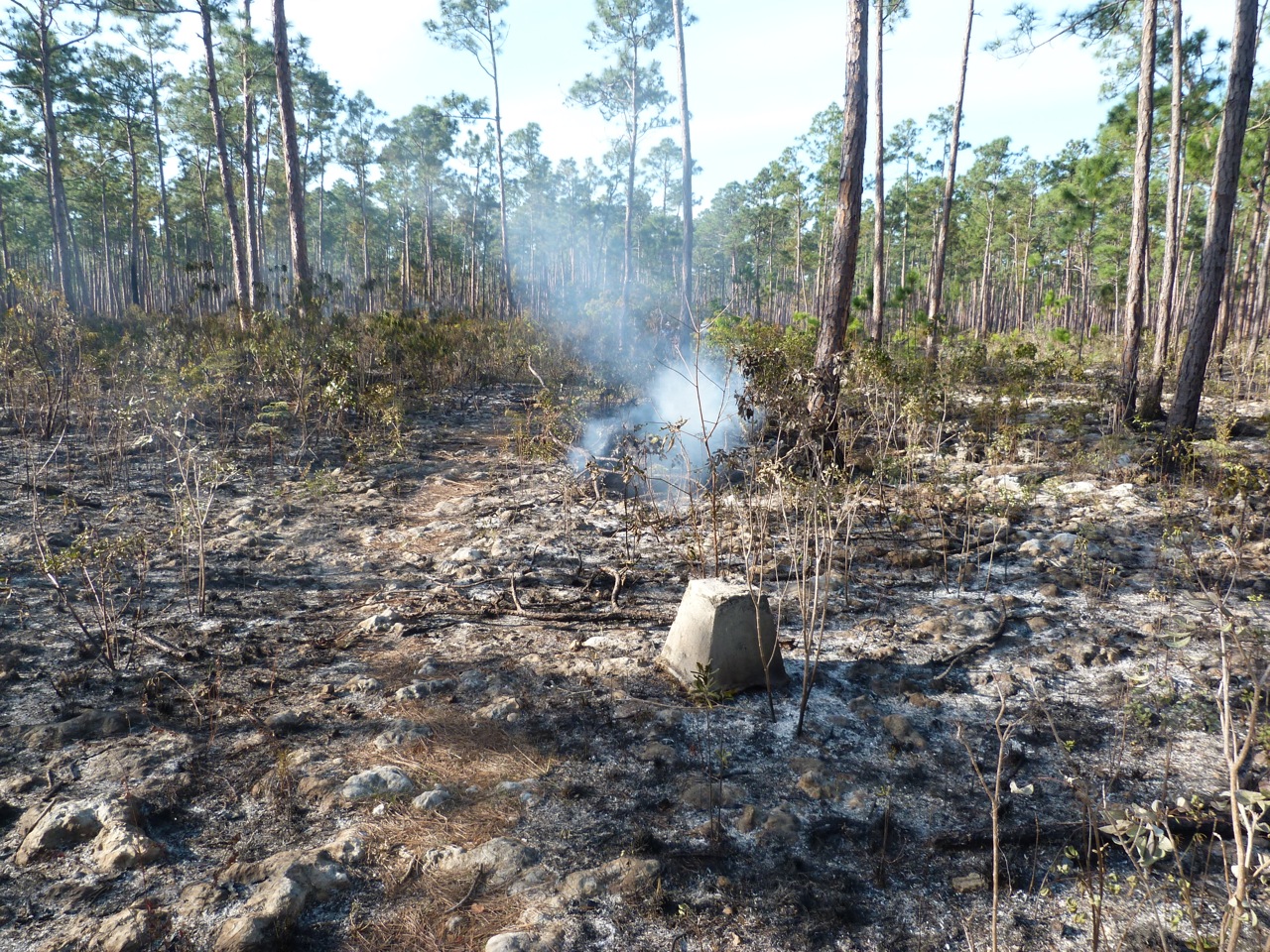
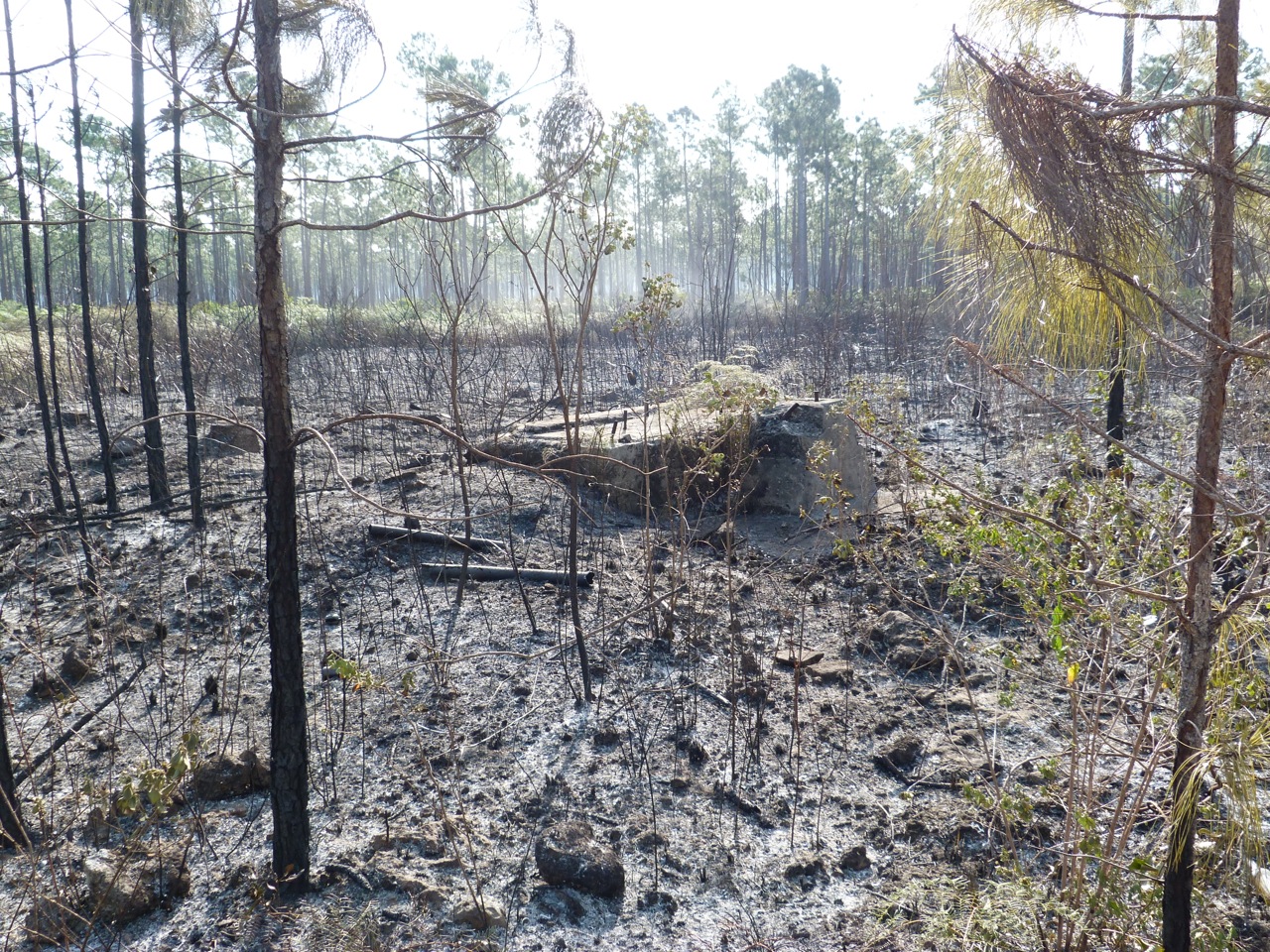
The photos that follow show the area round Sawmill Sink immediately after a fire had swept through the area, revealing the past. Trees were still smouldering and in places the ground was still hot to the touch. The evidence of the former usage had been laid bare. Some images below show the paved path that leads from the logging track to the Sink. I never found out if these were the first detailed images of so many visible remains of the logging trade revealed by the burnt-off undergrowth.
PREHISTORY
We found this rock close to the Sink. Are those plant fossils? Bearing in mind that in prehistory the ocean covered this area entirely (the highest point on Abaco is a mere 134 feet ASL), might these be anemones or sponge fossils of some sort? As I said then, ‘comments from fossilologists welcome’, and a kind follower FOSSIL LADY (aka Kathi) reponded: Those don’t look like plant fossils to me, they remind me of stromatolites, a sponge like creature that first dominated the earth billions of years ago. Some varieties still survive today. It would be worth it to have a geologist have a look see. ps the sinkhole is awesome!
Photo credits: all RH except pit props (Scottish Mining Museum); aerial view (Gmaps)
CLEANING UP IN THE BAHAMAS: PEDERSON SHRIMPS
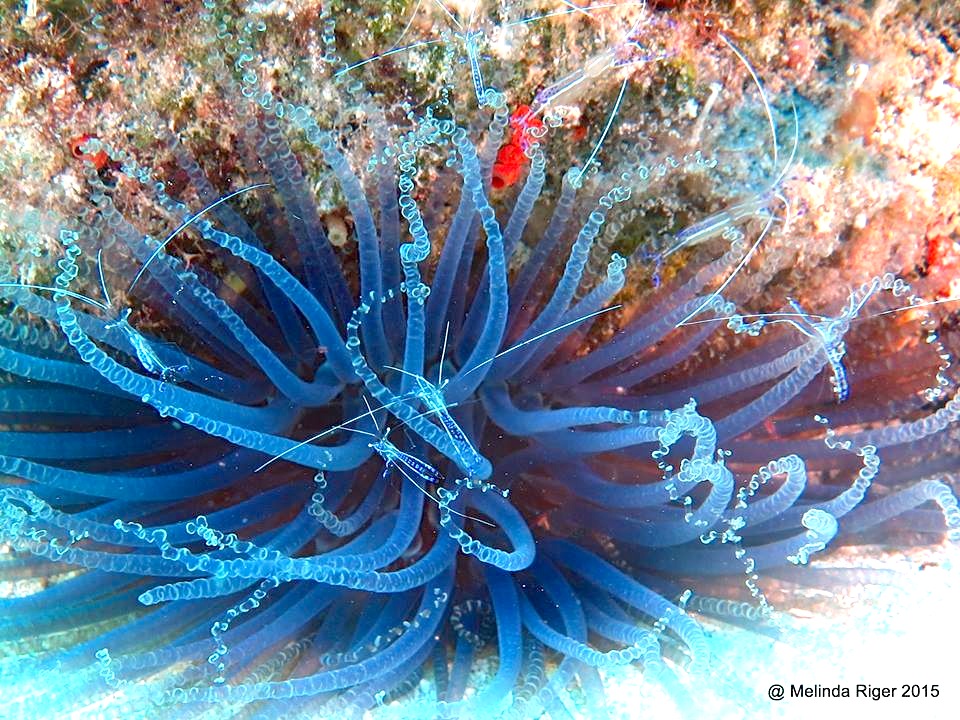
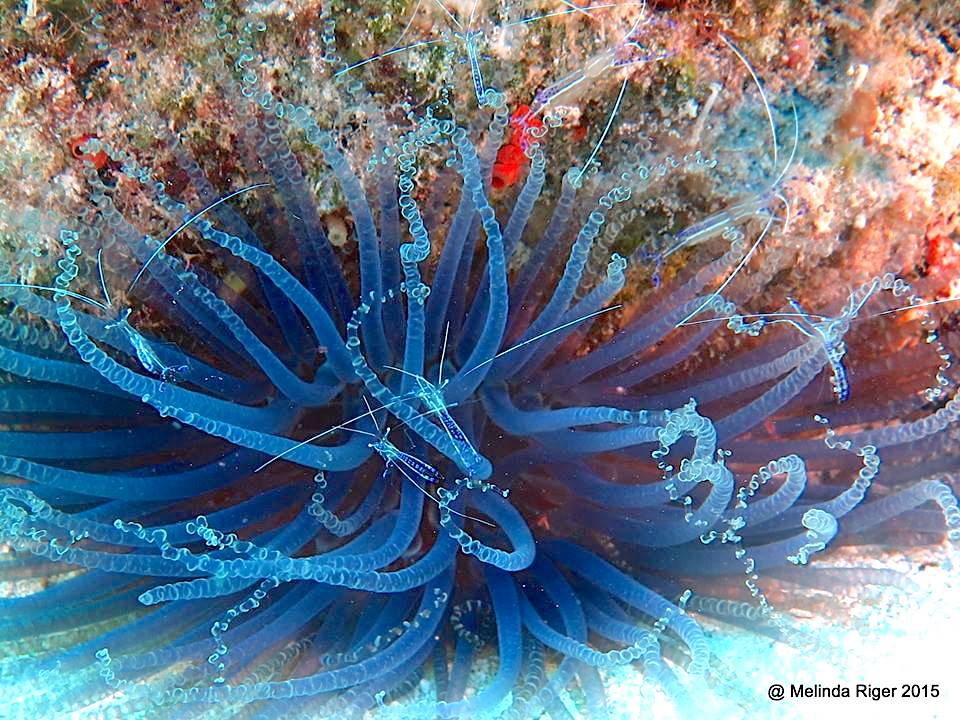
Pederson’s Shrimps Ancylomenes pedersoni (also known locally as Peterson’s shrimps), are one of several species of cleaner shrimp found in The Bahamas, and more generally in the Caribbean seas. The species was named in 1958 by a multifaceted medico-oceanologist-zoologist Fenner A. Chace. He seems to have specialised in shrimps, finding distinct and differing species and naming them (not unreasonably) after himself (chacei); or colleagues and people he knew / admired; and in one case his wife. Mr Pederson was among the lucky ones.
This tiny transparent creature with its vivid blue / purple markings and straggling pale antennae is unmistakeable, and helpfully cannot be confused with any other locally found shrimp species. Here’s an idea of its size, compared with a human finger and a blue parrotfish (on its flank).
WHERE DO THESE SHRIMPS LIVE?
Their preferred home is… and it’s certainly a left field choice among sea creatures… in amongst the stinging tentacles of certain sea anemones. Not only do they not get stung, but of course they are well-protected by the defensive pain that their hosts can inflict on intruders. They are usually found singly or in pairs, but sometimes a whole colony may inhabit the same anemone.
SO EXPLAIN HOW THEY DON’T GET STUNG
Ok. The shrimps gradually build up a kind of resistance by pressing their bodies and antennae against the tentacles of the host anemone for increasing lengths of time, until they become immune. It’s like one of those kids’ electric buzzer / rheostat machines. Or a TENS machine (for those who know about backache).
IS THERE A DOWNSIDE TO ALL THIS?
Yes indeed. If a shrimp moves away from its host for a few days, it has to start the process of immunisation all over again. So presumably they tend to stay home-lovin’.
Home sweet home for the Pederson shrimps
SOMETHING ABOUT THE CLEANING, PLEASE
These shrimps offer ‘cleaning services’ to passing fish. When on duty, as it were, they wave their antennae vigorously to attract attention. A fish being cleaned will remain stationary and passive while external parasites and dead skin are removed. Many fish will open their mouths and gill covers for internal cleaning, with the tacit agreement that the cleaner will not become a snack. Shrimps often work in conjunction with small cleaner fish such as some species of goby and wrasse – see the links below for more on this topic, with copious images…
RELATED POSTS
Credits: all photos by Melinda Riger / Grand Bahama Scuba
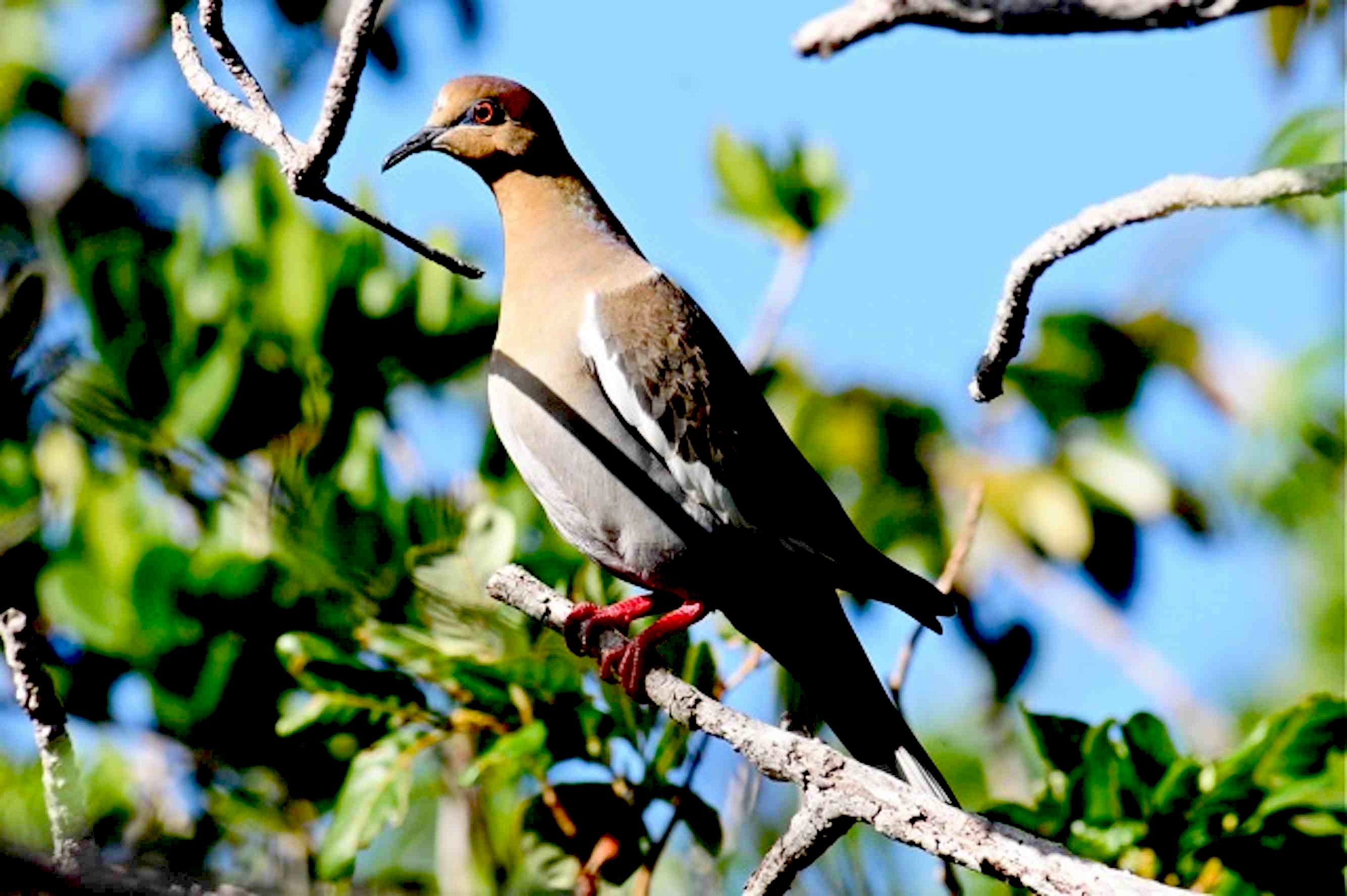
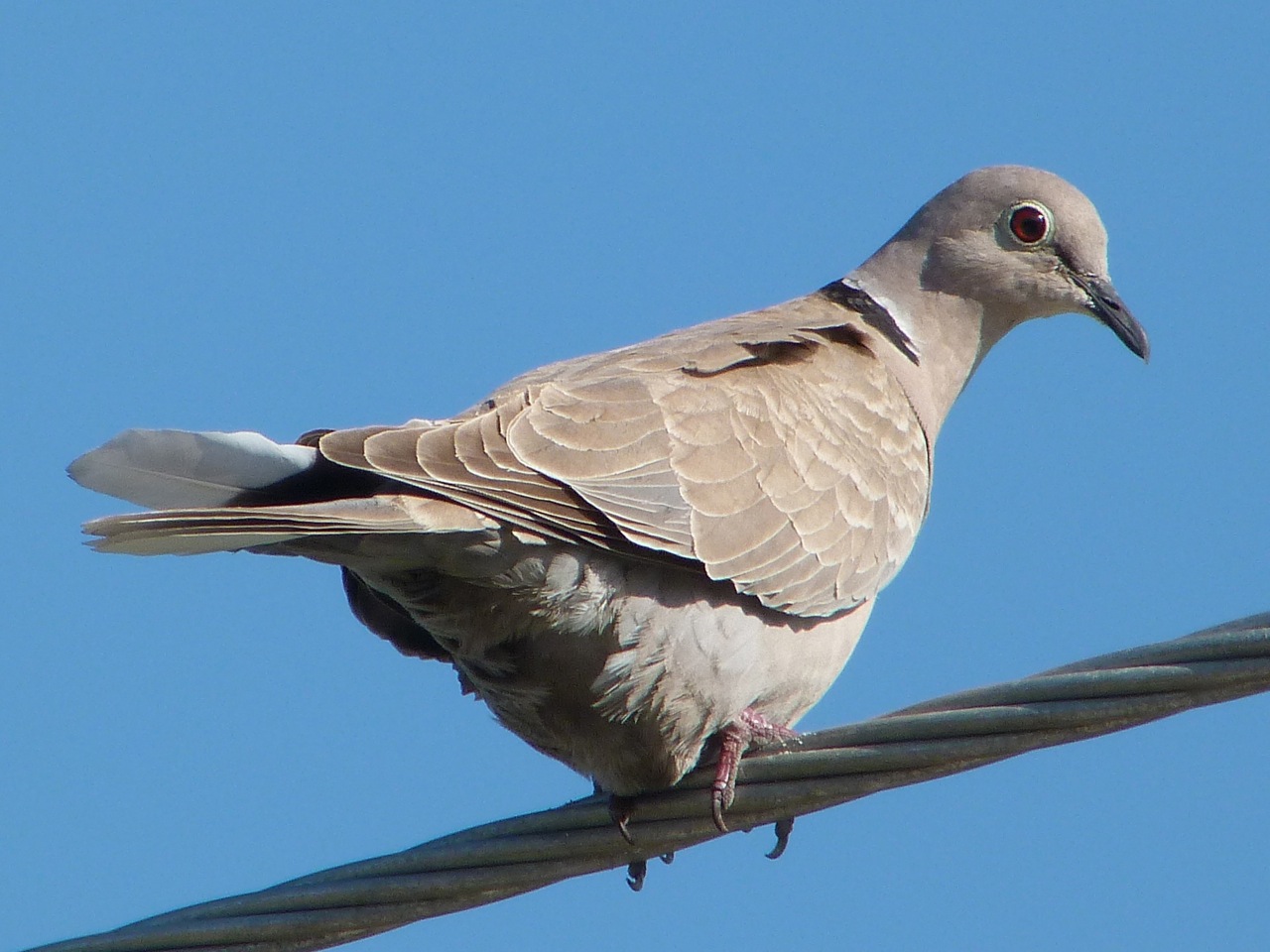
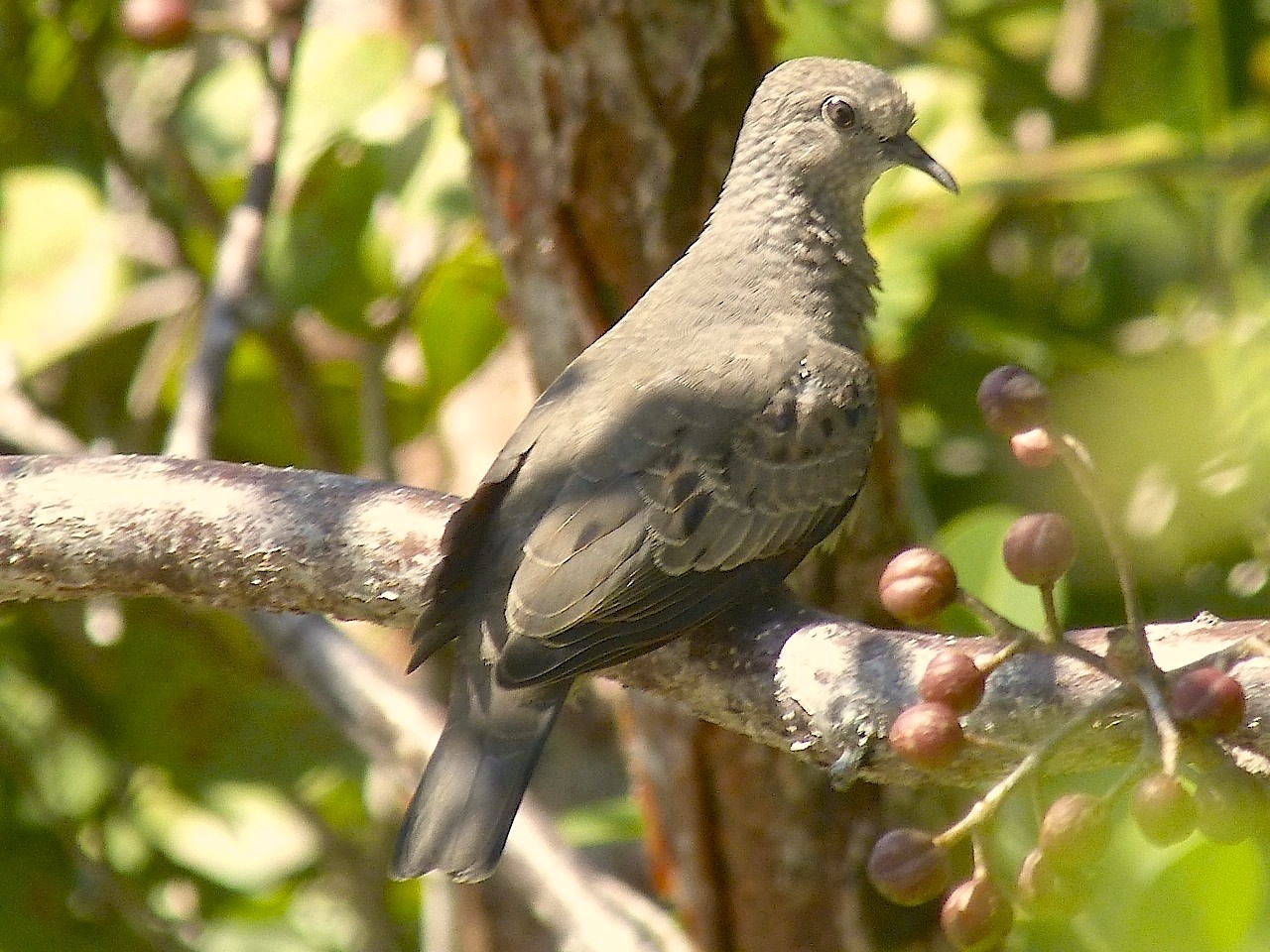
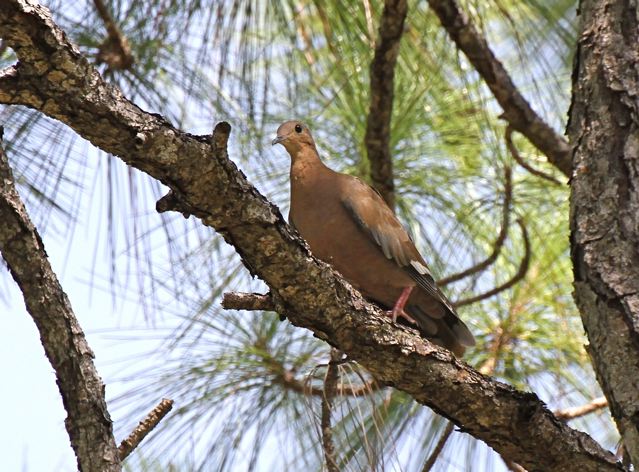
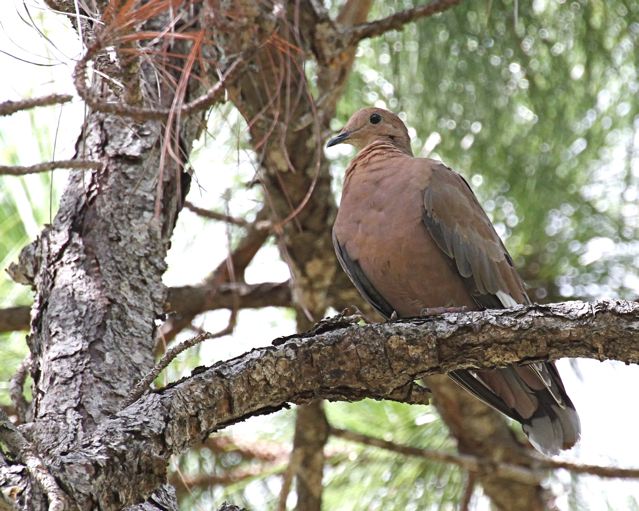
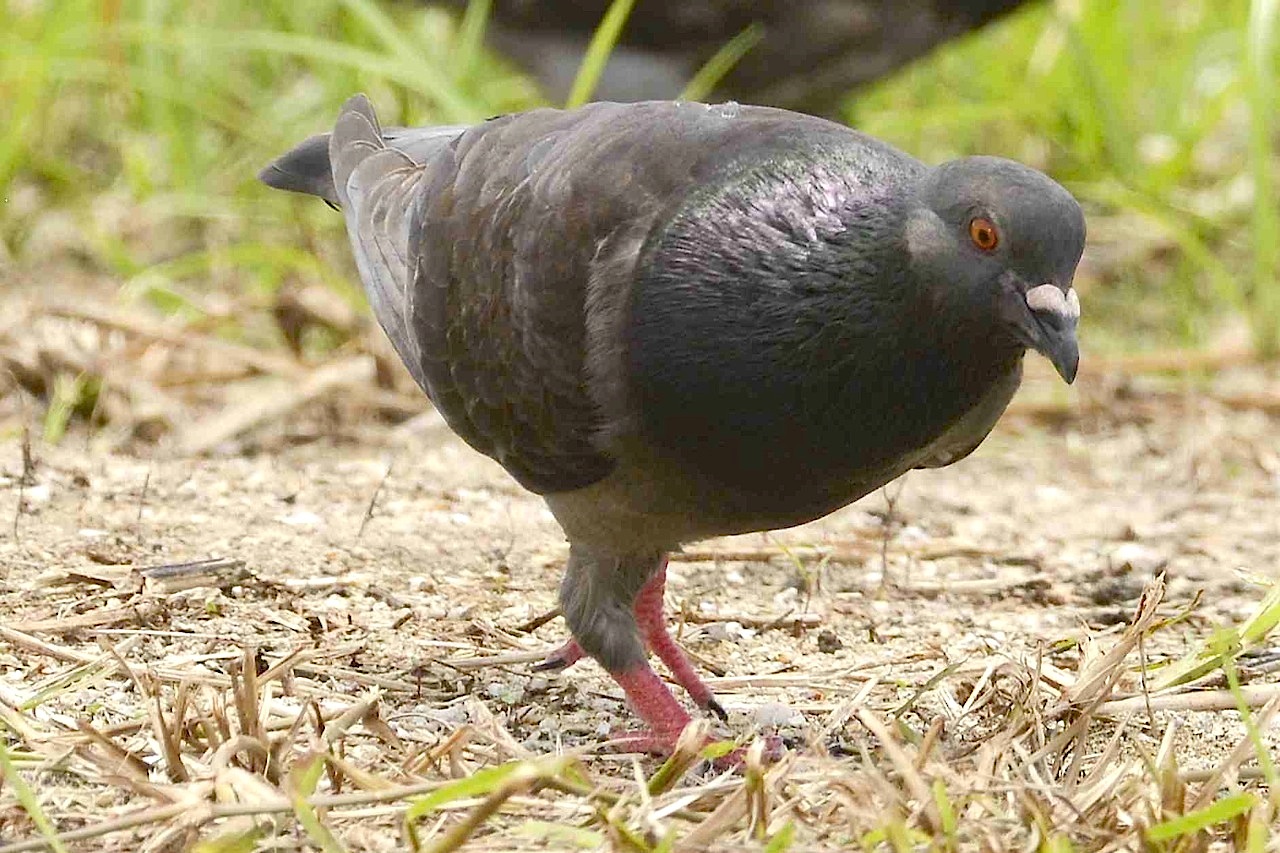
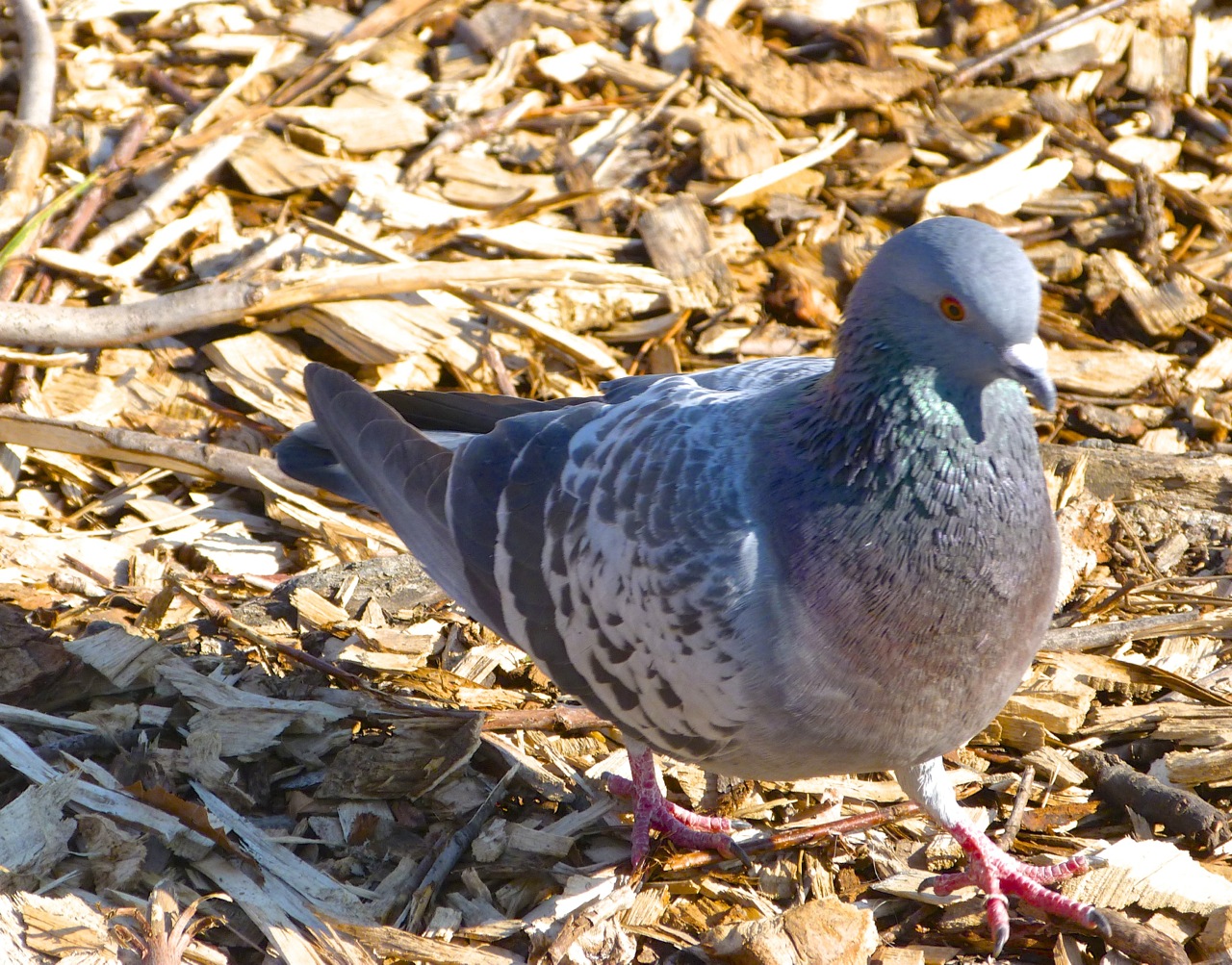
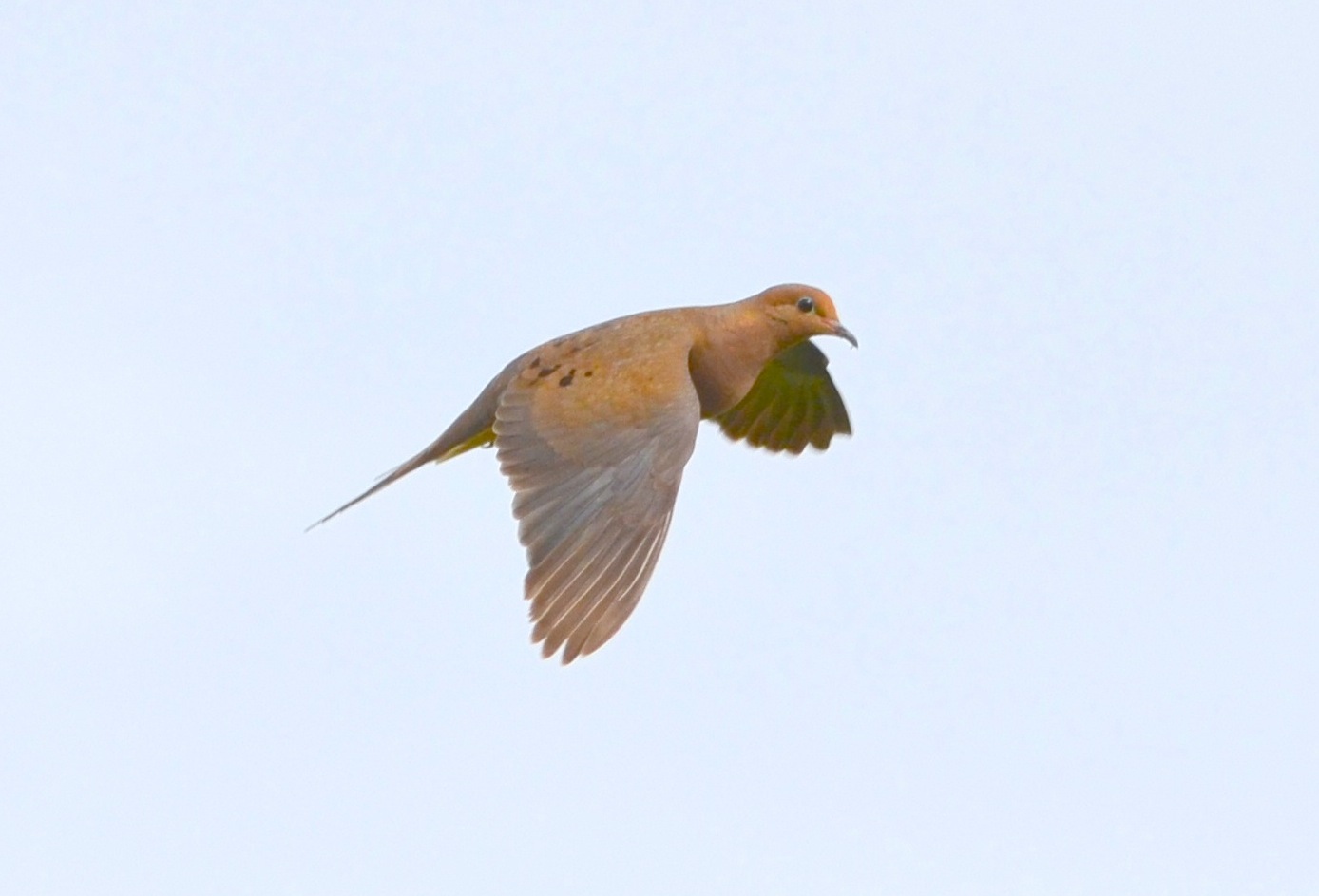
DOVE & PIGEON SPECIES OF ABACO

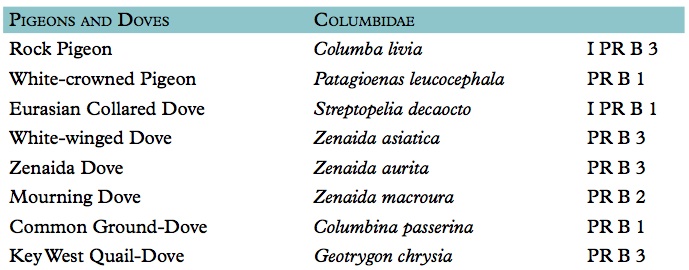
COLUMBIDAE OF ABACO
ALL ARE PERMANANT BREEDING SPECIES*
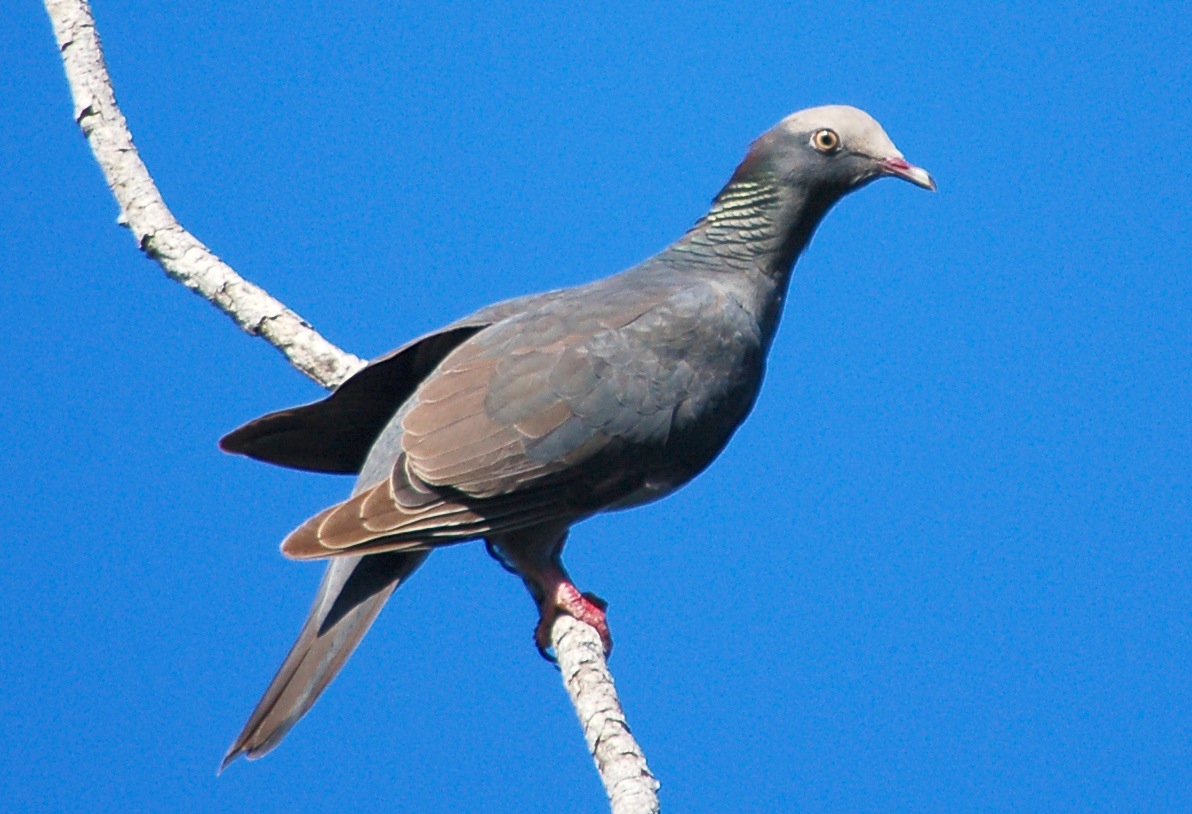
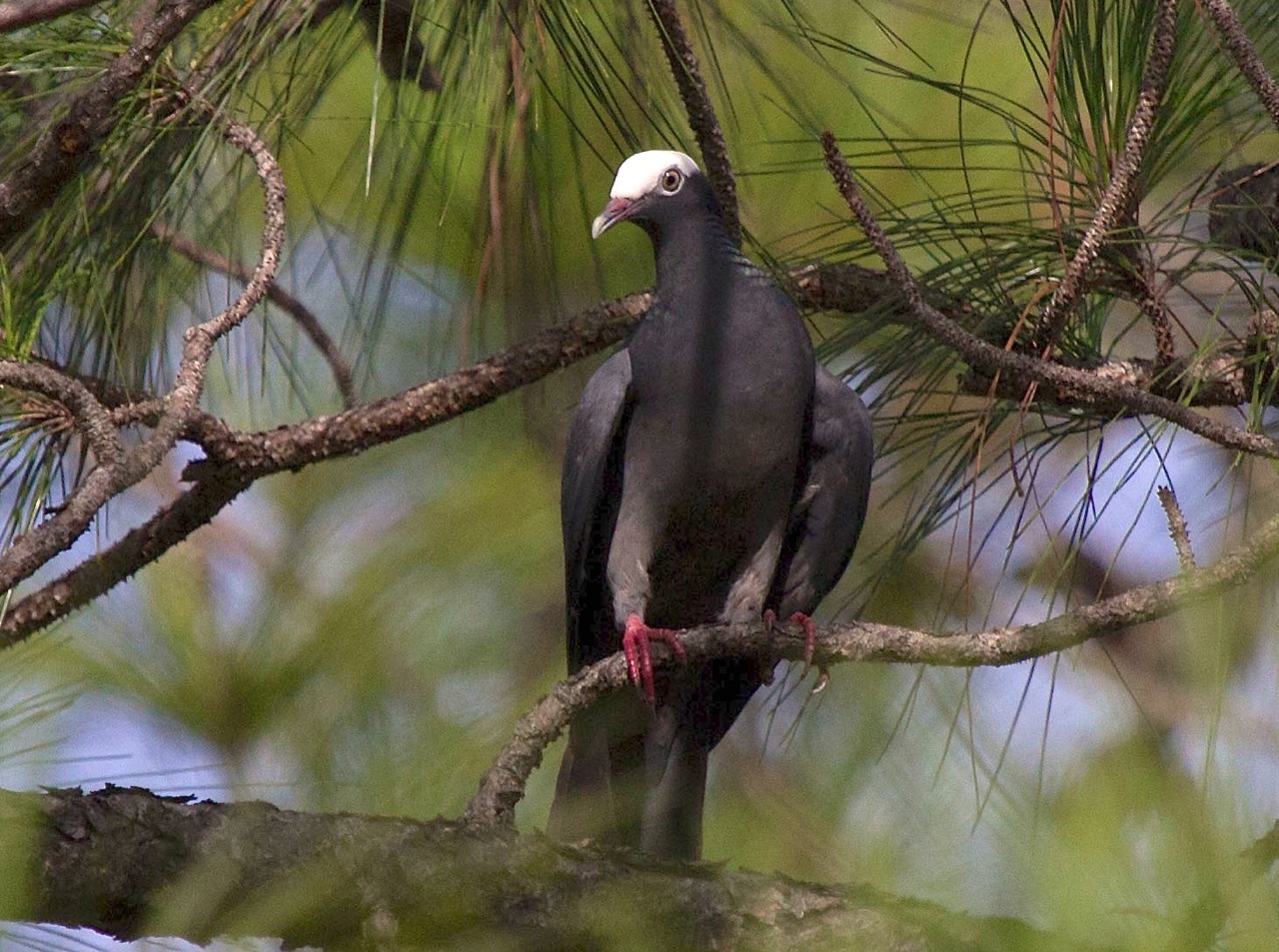
White-crowned Pigeon

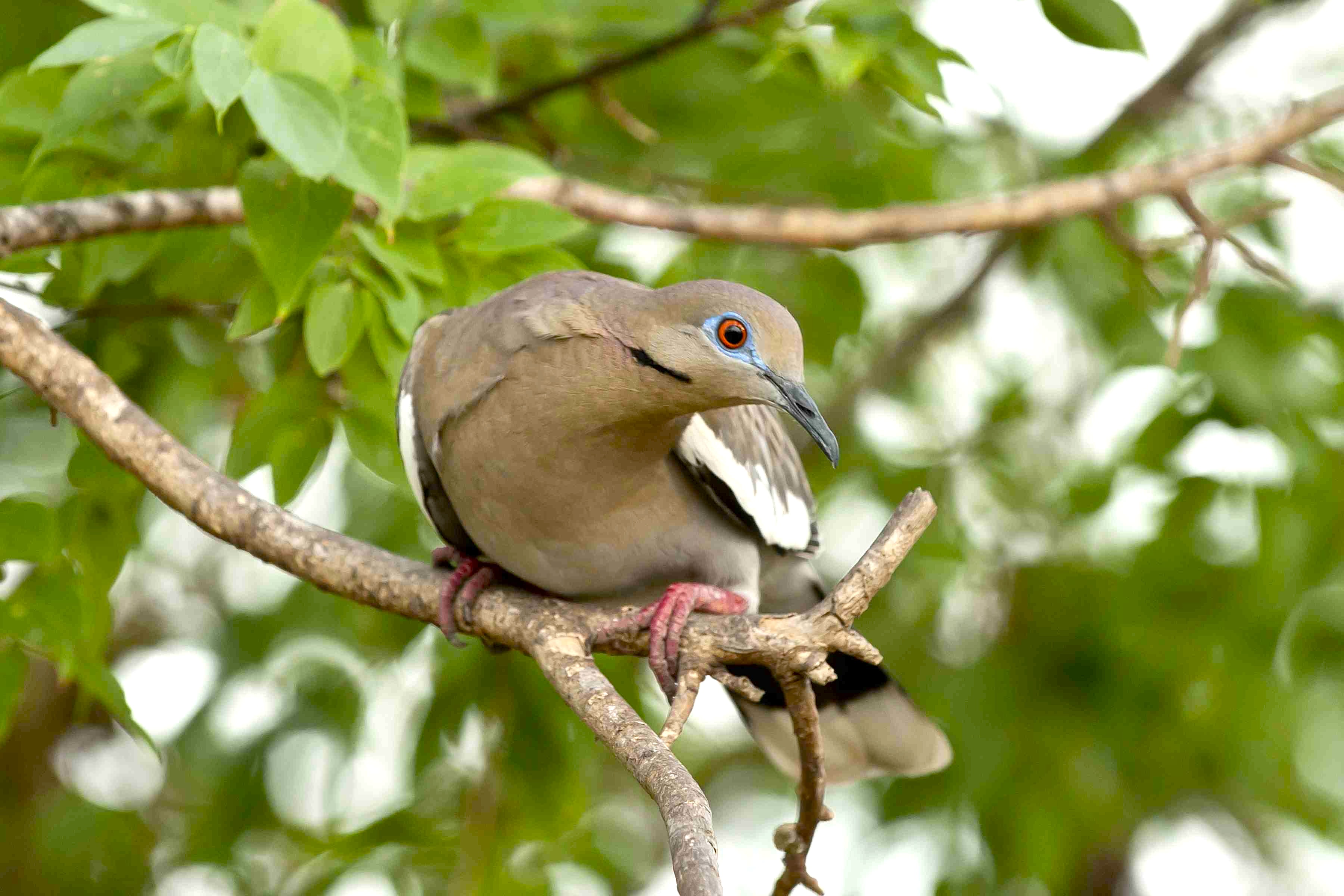
White-winged dove

Eurasian Collared Dove

Common Ground Dove (Tobacco Dove)

Zenaida Dove

Key West Quail-Dove
Rock Pigeon

Mourning Dove
The birds shown above represent the 8 species found on Abaco. However, in New Providence, there is a beautiful pigeon that, as of a few years ago, had not made its way over to Abaco and had yet to be introduced there. Possibly the situation is different nowadays. Info would be welcome.
Pied Imperial Pigeon (Nassau)


Species checklist taken from the complete checklist in ‘Birds of Abaco by Keith Salvesen’ (aka Rolling Harbour
*For some, there is a shooting season
Photo credits: Gerlinde Taurer (1); Alex Hughes (2); Tom Sheley (3, 7, 13); Tony Hepburn (4); Keith Salvesen (5, 8, 14); Bruce Hallett (6, 9, 10); Woody Bracey (11, 16, 17); Milton Harris (12); Charles Skinner (15)
IS THIS THE REAL LIFE? IS THIS JUST FANS AT SEA?
A GALLERY OF GORGEOUS GORGONIANS
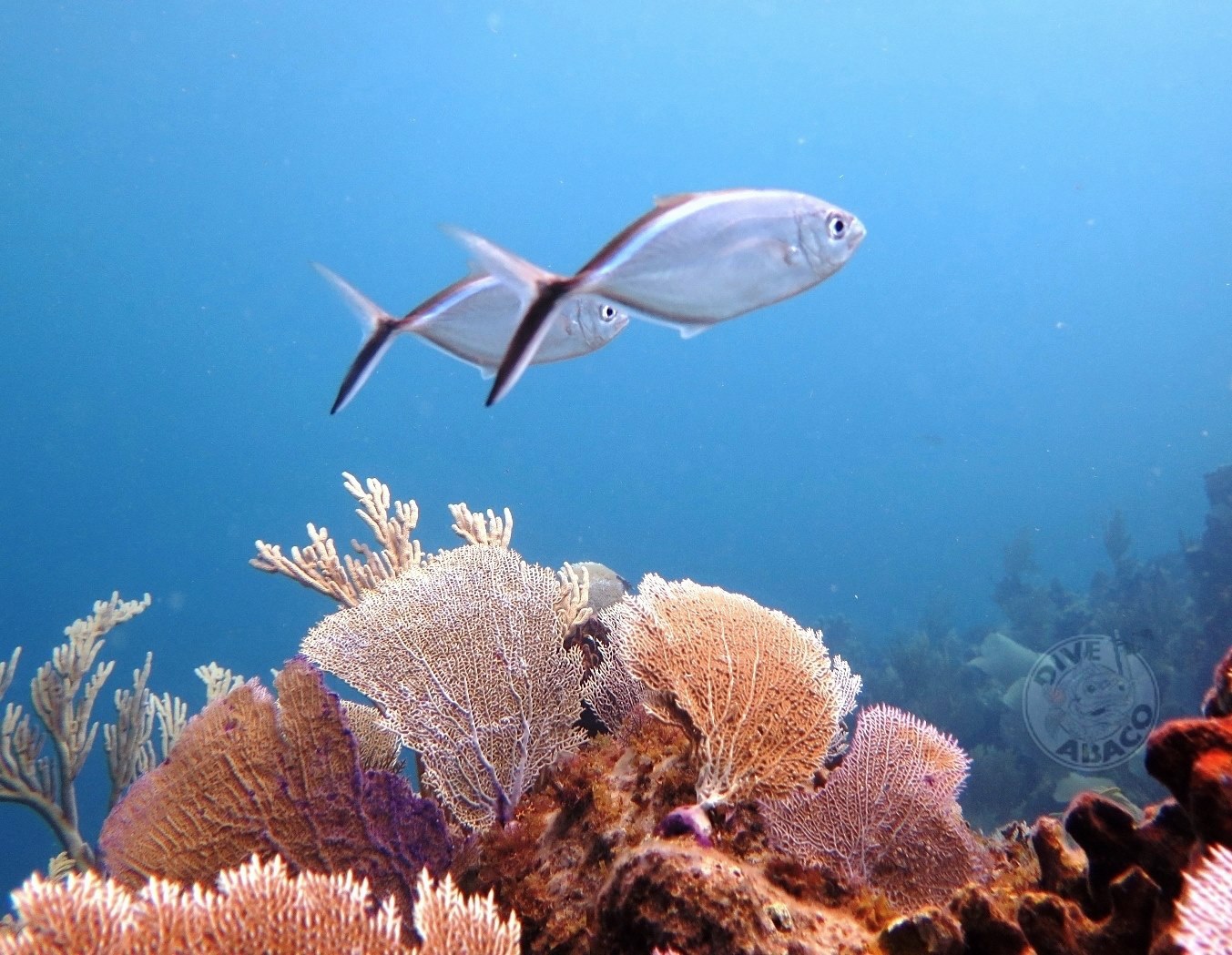
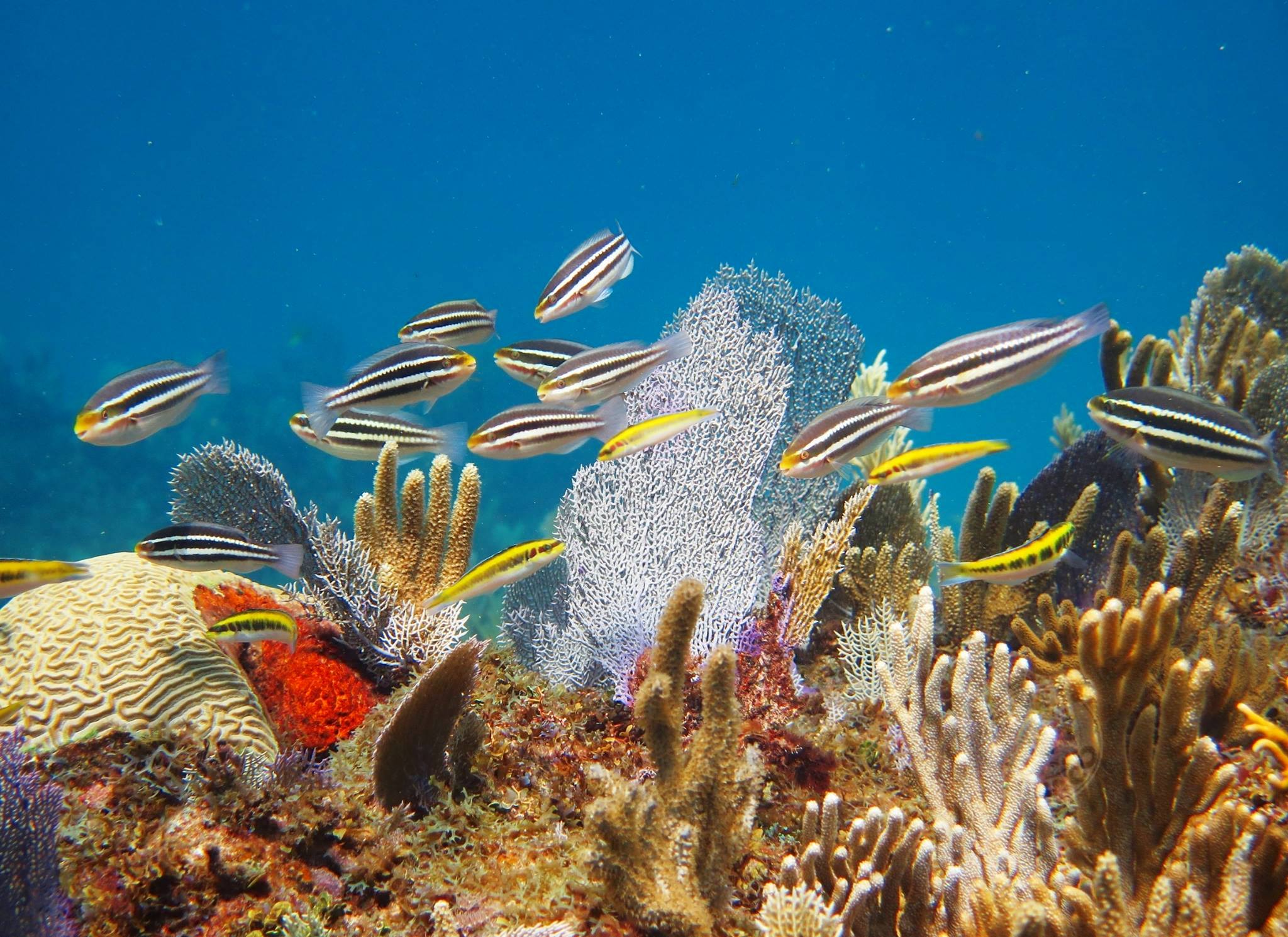
The waters of Abaco teem with myriads of fish that depend on the coral reefs for shelter and safety, for breeding, for growing up in, and for nourishment. Sea fans (or gorgonians, to use the technical name) are animals too. They may look like plants and stay rooted to the spot, but like anemones these ‘soft corals’ are creatures of the reef and essential indicators of its health.
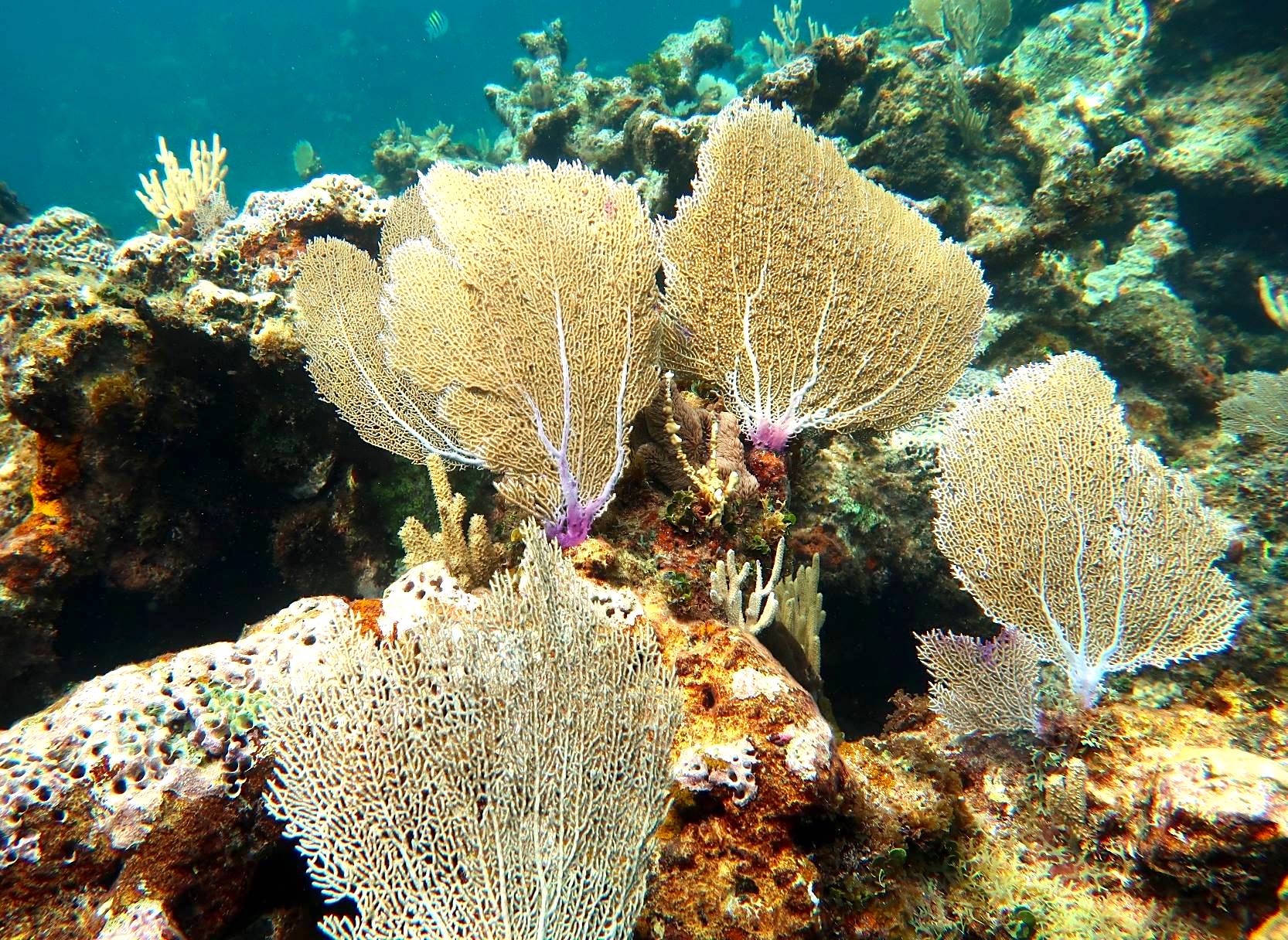
The purple sea fan Gorgonia ventalina (classified by Linnaeus in 1785) is one of the most common species of sea fan, and a spectacular one at that. The main branches are linked by a lattice of smaller branches. Below the ‘skin’ is a skeleton made of calcite compounded with a form of collagen.
Sea fans are filter-feeders, and have polyps with eight tiny tentacles that catch plankton as it drifts past. They develop so that their orientation is across the prevailing current. This maximises the water passing by and consequently the supply of food as the fans gently wave in the flow.
Gorgonians have a chemical defence mechanism that protects against potential troublemakers. The main effect is to make themselves unpleasant to nibble or uproot.
One species impervious to this deterrent is the fascinating FLAMINGO TONGUE SNAIL. Other ‘safe’ species include the fireworm and BUTTERFLYFISHES.
One benefit of sea fans to mankind is that their defensive chemicals have been discovered to provide the basis for drug research and development, specifically in the field of anti-inflammatories. Another benefit, of course, is that they are very beautiful to look at. Thank you, Fans
Credits: these wonderful photos were taken by Melinda & Keith Rodgers / Dive Abaco, Marsh Harbour; and Melinda & Fred Riger / Grand Bahama Scuba. Huge thanks to them all for allowing me to freely use their skilful underwater photography in this blog for the best part of a decade.
A SPECIAL FAN FOR A HAPPY AND HOPEFUL TURN OF THE YEAR
CURLY-TAILED LIZARDS ON ABACO, BAHAMAS
WORLD REPTILE AWARENESS DAY Oct 21
These days few creatures go without an Annual Day: Awareness / Appreciation / Protection / Support / and so on. These are obviously important and to be encouraged. In human terms the creatures tend to have a positive image. There’s little call for a Fire Ant Welfare Day. I am slightly concerned about World Earthworm day, also on Oct 21. Aren’t they food for some of the reptiles that share the day?
The northern curly-tailed lizard Leiocephalus carinatus, to give it its full name, resembles a tiny dragon with a twist in the tail. These little critters bask in the sun, or scuttle away into holes and crevices as you approach them. I suspect that even a confirmed herpophobic would find some charm in them. They are, of course, completely harmless to humans.
Surprisingly, the Bahamas is home not just to one but five different curly-tail species, and nine sub-species. Broadly-speaking, the variants are found on different and specific islands and have discrete local markings. Mostly they are brownish, but they may also be grey or with a greenish tinge like this one I recently photographed.
Curly-tail males, being territorial, turn somewhat aggressive around breeding time, which is basically most the the year, from February to October. Behaviours indicative of their territorial claims include tail curling / uncurling (of course), head-bobbing, strutting about in an agitated way and inflating the sides of their necks in a threatening kind of way. The tiny-tails, 2″ long when born, are known as ‘hatchlings’.
An impressive poolside ‘double curly’
THREATS TO CURLY TAILS
According to the Bahamas National Trust BNT, the main dangers to the curly-tails of the Bahamas are:
- Dogs, cats, rats and introduced predators such as raccoons
- Collection for the pet trade – curly tails are unprotected by CITES listing (also cute)
- Collection of the rarer endemics by reptile enthusiasts seeking ‘exotics’
- Development and habitat destruction (though it is noted that curly tails seem to adjust quite well in developed areas)
A curly tails sloughs its skin as it grows, as with snakes and other reptiles
WHY THE CURLY TAIL?
- As mentioned above, for use in territorial posturing
- In courtship displays by males to attract females (luckily a method not available to humans)
- As a response to predators, confusing an attacker with movement at both ends
- As a last resort, to detach to aid escape (the tail re-grows)
- For fun and just because they can grow one and you cannot
Credits: all photos, Keith Salvesen except #2 & #6, Charles Skinner; BNT
BREADFRUIT: NATURE’S BOUNTY WITH ADDED MUTINY
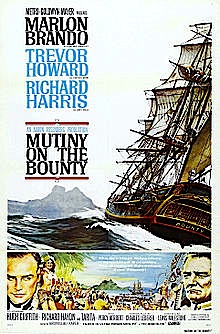
Capt. William Bligh achieved fame for all the wrong reasons. Despite a distinguished and wide-ranging seafaring career he is widely remembered for just two things: (1) The Bounty and (2) Mutiny On. In 1787, he was dispatched to Tahiti to collect specimens of BREADFRUIT (a fruit of the Pacific islands, in particular Polynesia) to help provide food for the British colonies in the West Indies. The breadfruit was intended to be a basic and cheap staple food not just for settlers but also for the indigenous population.
‘BLIGH’S BLIGHT’ – MUTINY!
Capt. Bligh’s Bounty crew unfortunately mutinied – possibly to do with the amount of water the breadfruit required in transit, compared to their own meagre rations. So they threw overboard the hundreds of breadfruit plants that were in transit. Then they set adrift Bligh with his loyal officers and crew. He was later court-martialled but cleared of culpability for provoking a mutiny by his conduct (from a strictly legal viewpoint and on the bare facts, not a surprising ruling you might think).
This isn’t the place for a disquisition on the Mutiny. You can read all about it HERE. Or better still, watch one of the rollicking all-star-cast films based loosely on the episode for a careful and accurate historical record of the events that will buckle your swash…
Following that skirmish, and indeed blemish, on his record, in 1793 Capt. Bligh was yet again charged with the task of shipping breadfruit trees from their origin to the Caribbean. His heart must have sunk at the prospect, yet finally he succeeded. However, he completed his journey only for those on the consumption end to express considerable distaste for such a bland, starchy fruit. It took a long time to catch on, and even longer for its culinary versatility to become appreciated.
The most famous breadfruit tree in all Abaco is to be found in Hope Town, on Elbow Cay. I can do no better than display the notice that proudly proclaims the historic significance of the tree and its eponymous fruit.
Unusually for a fruit plant, a true breadfruit Artocarpus altilis does not produce seeds. It is propagated by removing the suckers that grow at at the base of the tree.
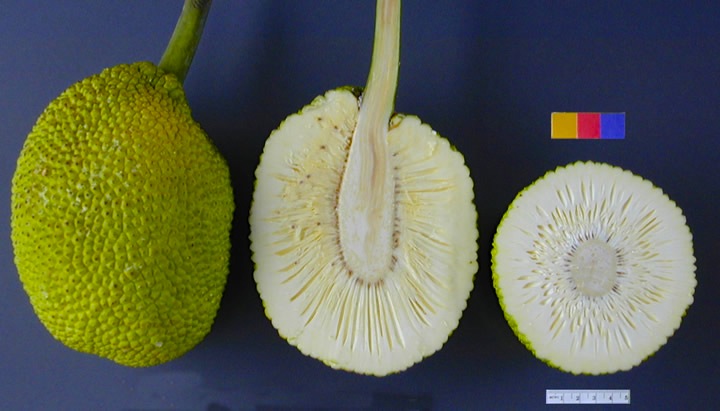
For those unfamiliar with the fruit and its interior, here it is in both slice and cross-section
BREADFRUIT IN ART
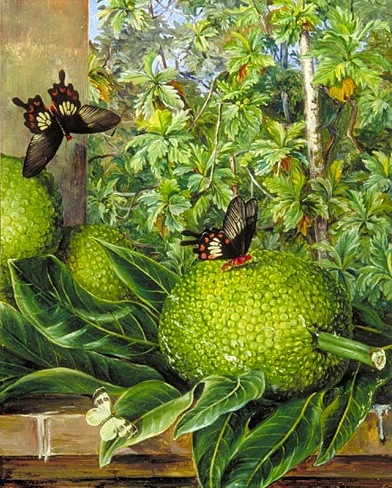
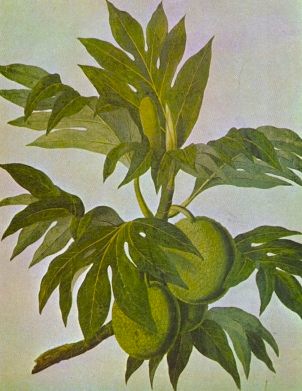
Breadfruit has (somewhat surprisingly?) received some artistic recognition over the years. Here are a few examples. The first, very jolly, includes early representations of the Polydamus Swallowtail butterfly; the second is quite dull; the third is instructional (oddly equating breadfruit with tea, coffee and chocolate); and the fourth is not at all appetising to look at… nor, in the days of adhesive stamps, to lick.
Breadfruit with butterflies (Royal Botanic Garden, Kew)
Breadfruit (John Frederick Miller) 
Breadfruit & related plants used as food (William Rhind (1841) 
SO WHERE DOES BREADFRUIT GROW NOW?
Breadfruit will flourish only within a certain latitude range where the rainfall and temperature suit it, as this map shows. I include this information in case you ever find yourself in the awkward position of being socially stranded with someone whose conversation has become soporific. Be armed with some useful worldwide breadfruit stats for just such an occasion – the fact that Madagascar is a suitable yet not a very good location, for example (not enough rainfall). You will soon find yourself alone…
A CULINARY TREAT
Breadfruit is sometimes thought to be a dull and un-tasty, at least compared with many other fruits. I thought I’d include a recipe or two that rather appealed to me – the second because even I could do that… it’s within my shamefully limited culinary skill-set.
BAKED BREADFRUIT
Large, ripe breadfruit 1 cup water Butter 1 lime or lemon
Heat oven to 350 degrees F. Put the water in a shallow pan and place the whole breadfruit in the water. Bake in oven for three hours. Remove from oven, allow to cool slightly, peel, removing the large core and stem. Cut the fruit into sections and place in a serving dish. Cover with butter and a squeeze of lime or lemon juice.
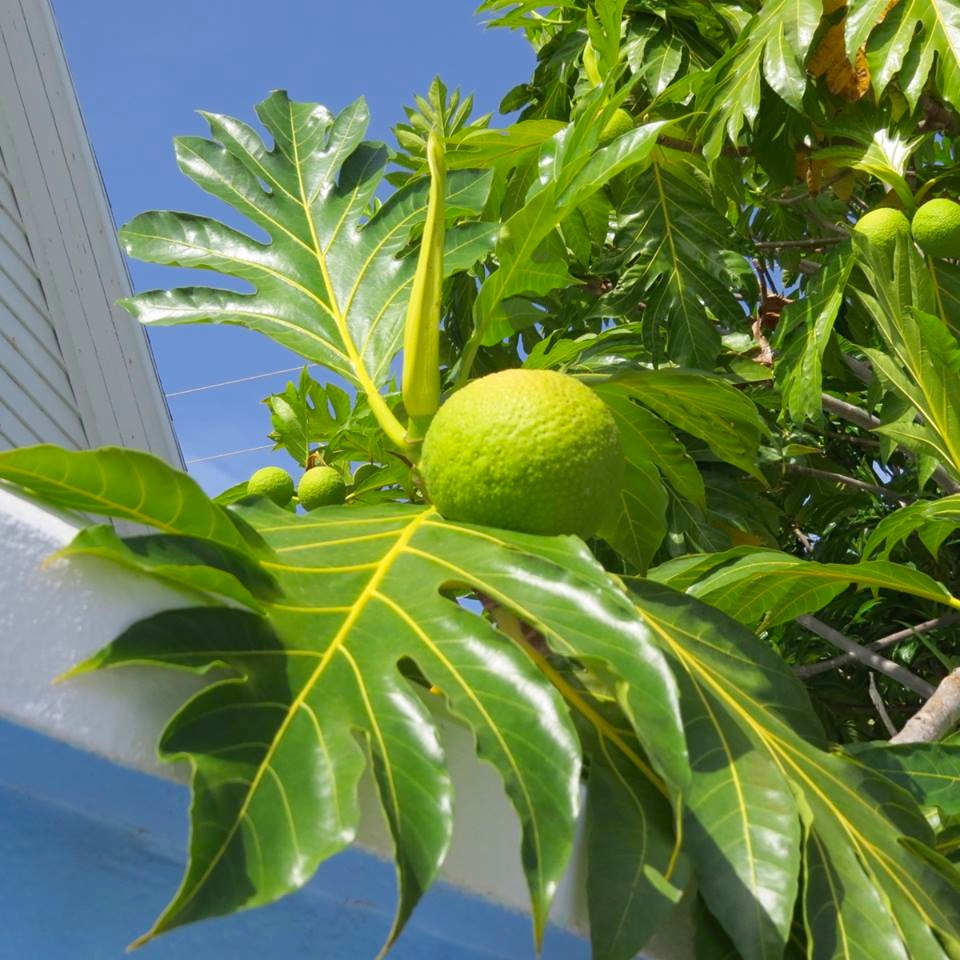
A PERFECT HOPE TOWN BREADFRUIT
BLIGH’S END
Capt. Bligh managed to put his breadfruit adventures and the mutiny behind him. He continued a distinguished naval career with successive command of an impressive number of ships. He ended up as a Vice-Admiral, and (on his death in 1817) in a grave in Lambeth, London.
This post was originally published a while back, inspired by an article on breadfruit and the Hope Town tree by local historian Deb ‘DP’ Patterson. I’m grateful to her for permission to use her idea and indeed some of her material, in particular her photos of the tree and its notice.
HMS BOUNTY II (Full Sails). A 1960 reconstruction (Dan Kasberger)
Credits: First and foremost, Deb Patterson; Magpie Pickings including Hans Hillewaert, US Pacific Basin Agricultural Research Center, Royal Botanic Garden Kew, myrecipefriends, M Kwek, whatsonbahamas, Wyannie Malone Historical Museum, ‘Geograph’, Dan Kasberger, Wiki; and anyone else I have omitted…
A LIGHT EXTINGUISHED: LITTLE HARBOUR LIGHTHOUSE REVISITED
This article was written before Dorian and I don’t know the state of this lighthouse now. If some of it still exists, this is its previous state. If not, this is a record of what has been and is now gone.
The words ‘Abaco Lighthouse’ are near-synonymous with the splendid striped edifice in Hope Town, Elbow Cay. This beloved building is truly iconic, in the modern sense of the word (see HERE). But it would not do to forget the other principal lighthouse of Abaco at Hole-in-the-Wall, also with its original Fresnel lenses (see HERE for a post written ages ago).
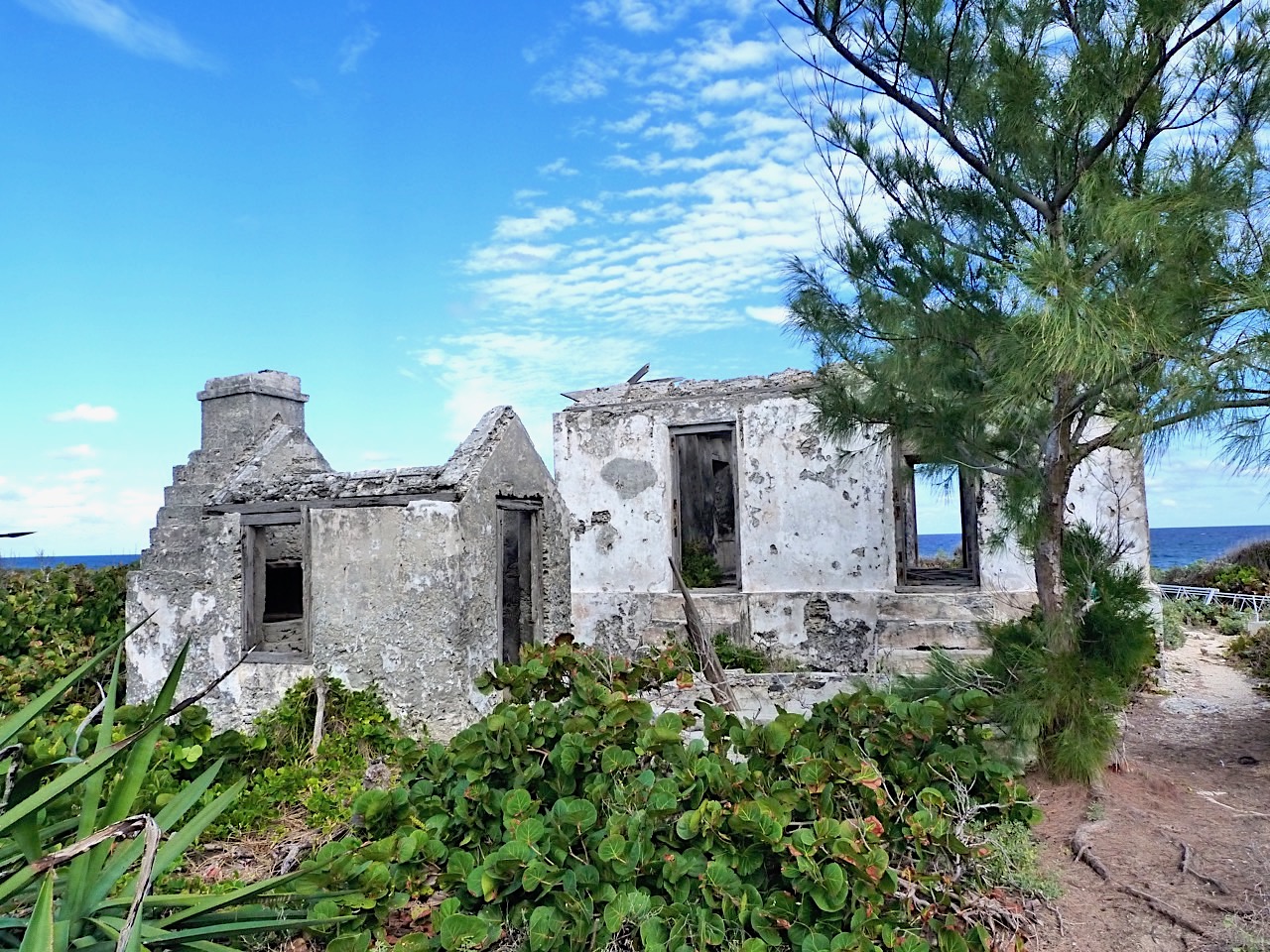
However, there’s a third lighthouse on Abaco. The small light at Little Harbour is, in contrast to the other two beacons, relatively unknown, unvisited, and unloved. Derelict, in fact, and a sad relic on its lonely promontory. Recently we prised ourselves away from the delights of Pete’s Pub and found the start of the overgrown track to the light. There’s a wooden sign that helps to locate the path.
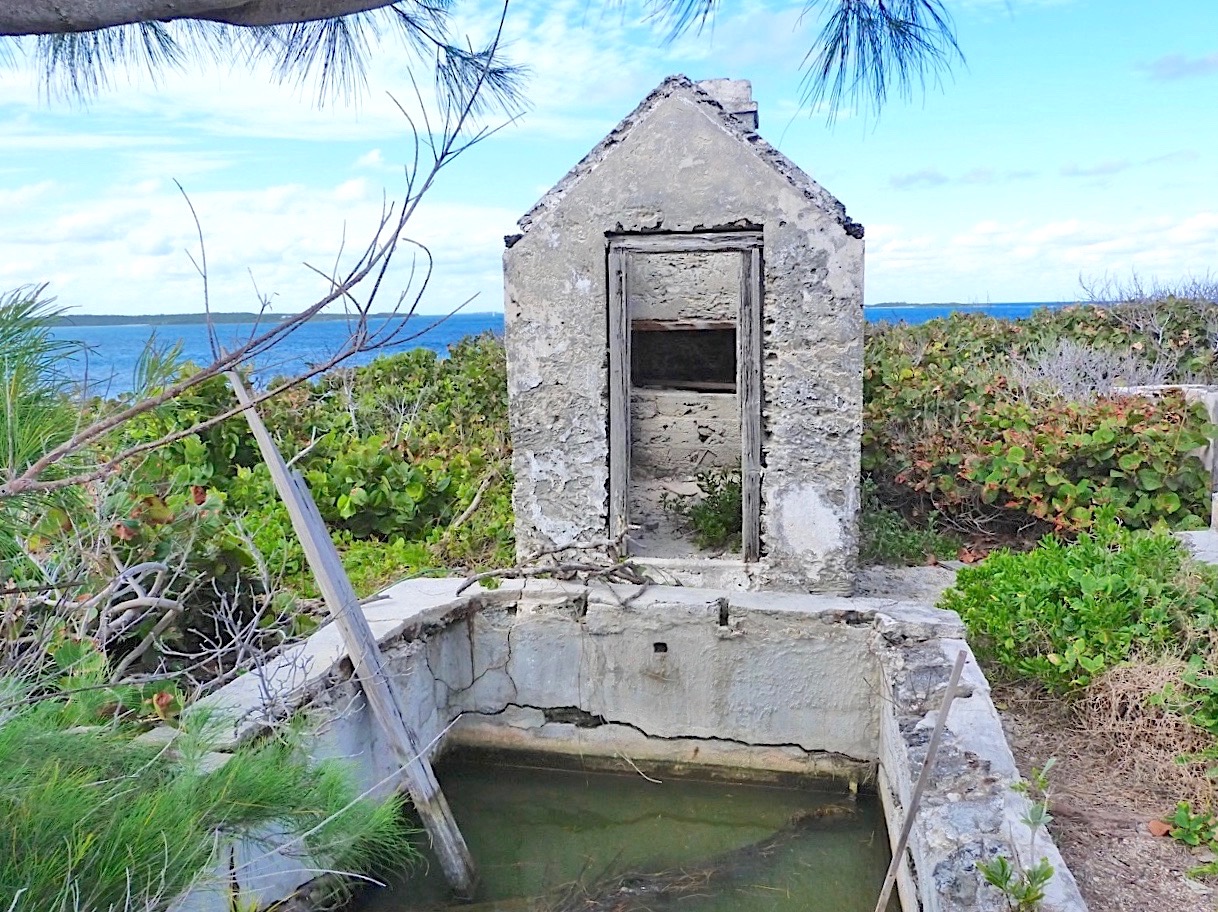
This small lighthouse station – “The Old Lighthouse” – was established in 1889 close to the entrance to Little Harbour. Originally, it was manned, with the first lighthouse keeper and his wife being the only inhabitants of that part of Little Harbour. The light presumably served to guide shipping to the channel leading to the secluded and safe harbour.
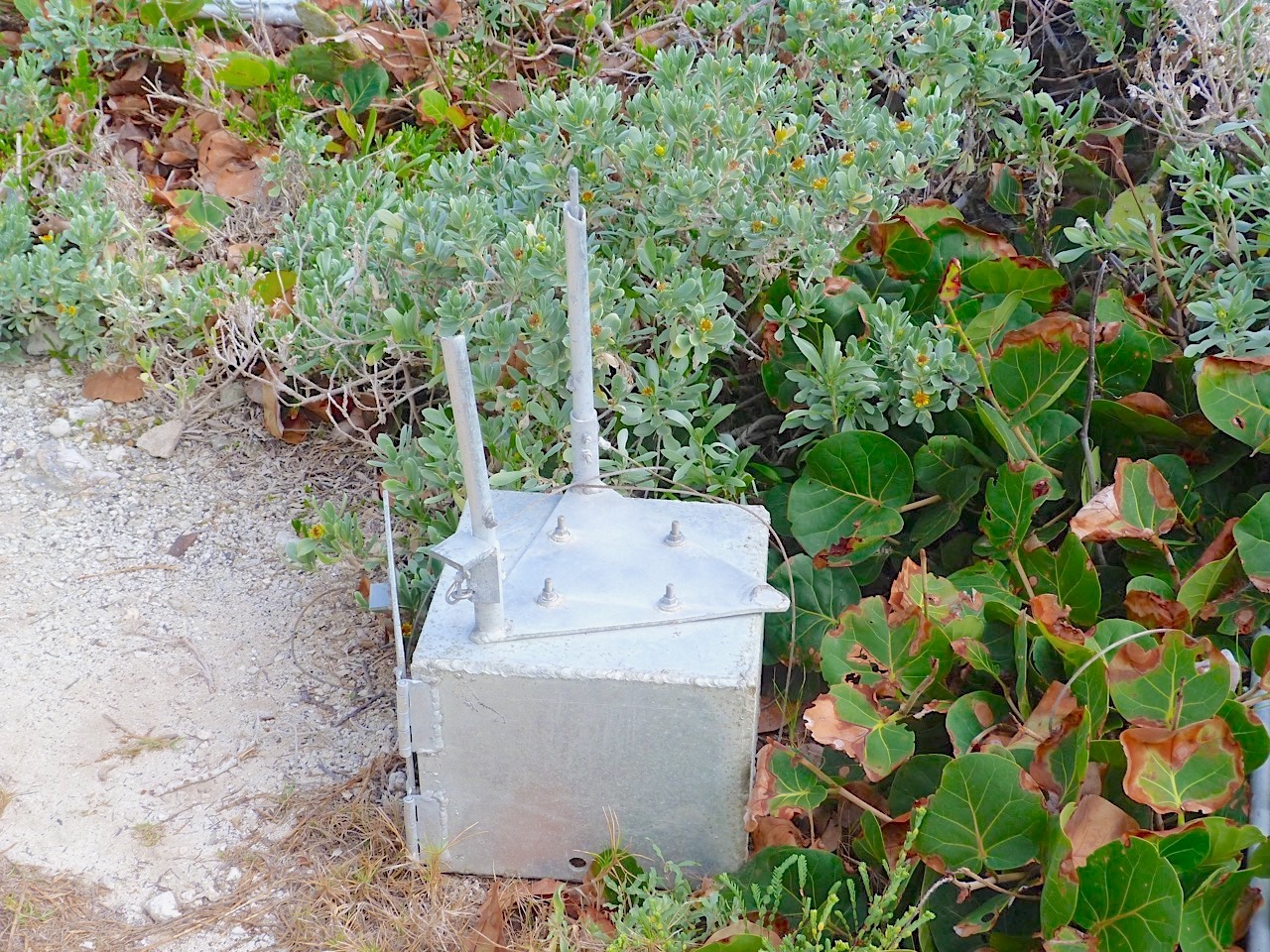
In due course the living quarters fell into dereliction and the existing beacon fixed on a small tower, later converted to a solar-powered light. This arrangement did not survive the devastation of Hurricane Floyd in 1999. The replacement was a modern steel framework tower that carried an active light until eventually it was blown over by Hurricane Sandy in October 2012. Sandy was also the hurricane that destroyed forever the rock ‘hole’ – an important navigation mark for centuries – that gave Hole-in-the-Wall its distinctive name (see HERE and links).
The views from the elevated position of the ruin are spectacular, both from the outside and from inside. In good weather, anyway… It remains to be seen whether the lonely light is now considered completely redundant, or whether another automatic light will in the end be positioned here when funds or willpower permit. I’m not aware of any groundswell of opinion suggesting that, in the absence of a beacon at Little Harbour, there is a potential safety issue.
The view north from the light to the tip of the promontory
The view roughly south past the fallen tower towards Cherokee
Over time, I have been contacted by people with family associations to previous keepers; and with personal experiences of life there. One or two Americans have wanted to track newly discovered family connections to the light, and even possible relatives. I have the makings of ‘Lighthouse Family’ tree. When I originally wrote about the light, Chuck Rickey contacted me with his story, which gives a wonderful insight into the history of the light and its hardy occupants:
“My grandmother’s first cousin, Curtis Lowe, was lighthouse keeper here for many years and along with his wife, Bessie, raised children Hartley, Maitland, Lois and Robert, obtaining staples buy walking a tract road or sailing to Cherokee Sound. Later on, they were able to motor to Snake Cay, to get provisions from Owens Illinois’ company store aboard the “Robert Fulton”, an old side-wheel steamer, permanently moored there. I was fortunate to spend much fun time there during school vacations growing up”.
WHEREABOUTS IN LITTLE HARBOUR IS WAS THE LIGHTHOUSE
RELATED POSTS
ELBOW REEF LIGHTHOUSE: A BEACON ICON
HOLE-IN-THE-WALL: HISTORY, SHIPS AND MAPS
Credits: all photos Keith Salvesen except the last, Darlene Chisholm. Also, with many thanks to Sandy Estabrook.
Logo of the World Lighthouse Society
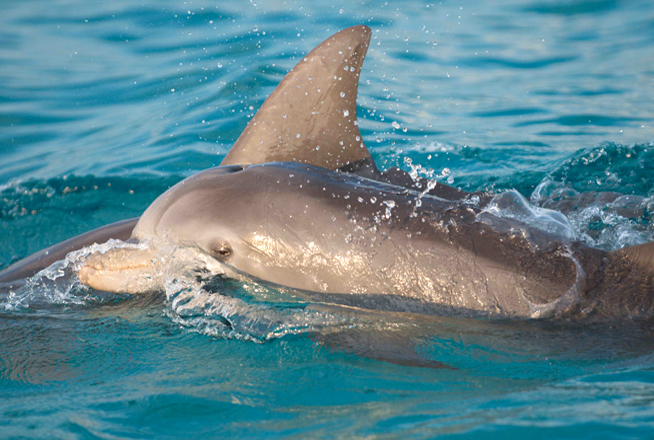
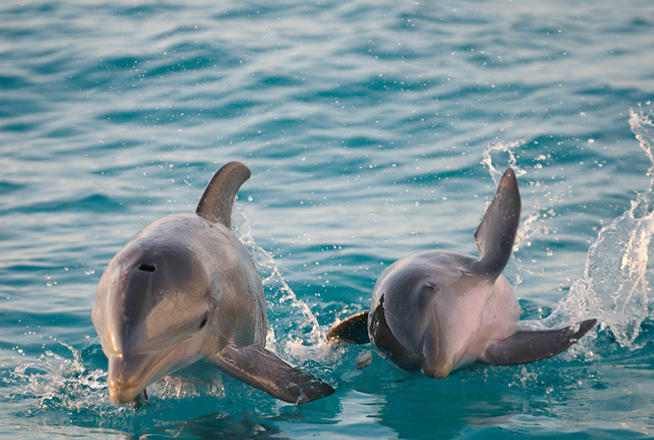
WORLD DOLPHIN DAY 2024

September 12th is the day chosen by Sea Shepherd to raise awareness and promote the conservation of dolphins. It was established on the one-year anniversary of the killing of 1,428 Atlantic white-sided dolphins in the Faroe Islands, which was the largest single slaughter of cetaceans in history.
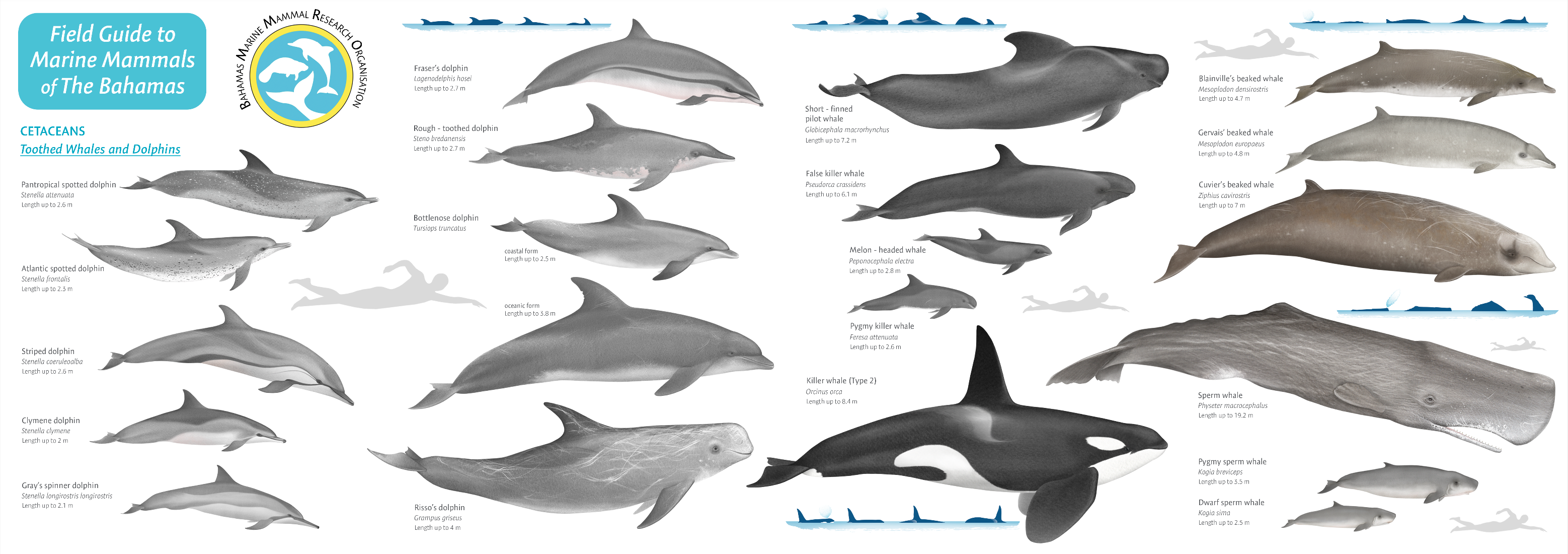
As many will know, the marine mammals of the Bahamas – whales, dolphins and manatees – are researched and protected by the Bahamas Marine Mammal Research Organisation. This was established more than 20 years ago by Diane Claridge and Charlotte Dunn.
You can find out more about the nature and scope of the work carried out by BMMRO HERE Please consider making a donation to support the work of BMMRO, or (for those elsewhere in the world), to the marine mammal organisation in your area. Dolphins increasingly need protection from mankind and human activities. A donation would greatly help provide it.


All Photos: BMMRO
MANATEES: ENJOY THEIR INTERNATIONAL DAY
MANATEES : BAHAMAS? WE GOTTEM!
Manatees are apex ‘gorgeous marine mammals’. Gentle, inquisitive, brave, long-distance-but-rather-slow-swimming, grass-grazing miracle ur-elephant descendants. They never made it out of the sea in the Miocene epoch.
Incongruous in a world of fast sharks, snappy ‘cudas, large whales and leaping dolphins, they contentedly mooch around the seagrass beds. No one in the world has ever objected to or dissed a manatee. They bring only delight to the sea-world, and offer only charm to mankind. They thoroughly deserve a special day.
I’ve written before about the manatees that inhabit the turquoise inner waters of the Bahamas. They are carefully recorded with individual identifying features – usually nicks in the paddle, or scarring. They are named and, where possible, fitted with a tracker. Their friendships and amorous hook-ups are noted. Despite a 16-month birth cycle, manatee calves are born.
IS THERE A DOWNSIDE FOR THESE APPARENTLY BLISSFUL AND PEACEFUL CREATURES?
Yes indeed. It’s mankind, I’m afraid. Among the threats to the survival of these unusual, endearing, and legally protected creatures are, in no particular order:
- Pollution of inshore waters and canals
- Degradation of the (formerly limitless) sea-grass beds where they feed
- Reduction or tainting of the fresh water sources that they need to survive
- Understandable over-enthusiasm by admirers – especially in harbours – in dousing them with water from hoses and feeding them lettuce…
- …and similar behaviours that may lead to a trusting dependance on humans
- Unthinking or speed-selfish boat behaviour in or near harbours resulting in collisions
- Simply not caring at all and carving them up, leaving prop-scars, often deep. Few manatees escape at least a few of these. Some do not survive.
- Probably I don’t need to mention man-caused Global Warming, but I just have.

Let’s celebrate the special day for manatees. Let’s hope that they can survive and prosper in these increasingly difficult and dangerous times for almost all species. Look at any of these photos… can we agree that these wonderful animals deserve care and protection.
All photos: Charlotte Dunn / BMMRO and research contributors; final image ‘Save the Manatee’
PLEASE SUPPORT BMMRO RESEARCH OF MARINE MAMMALS

SHOREBIRDS, WADERS & SEABIRDS: 30 WAYS TO DISTINGUISH THEM
SHOREBIRDS WADERS & SEABIRDS: 30 WAYS TO DISTINGUISH THEM
Today, September 6th, is World Shorebirds Day. Every year I look forward to scrolling back through the archives of ‘Birds of Abaco‘ for the occasion. It reminds me of the wonderful and plentiful varieties of birds that lead semi-aquatic or aquatic lives on and around the shores of Abaco. Some are permanent, others are migratory visitors.
.They can be broadly categorised as shorebirds, wading birds, and seabirds. With some bird species there may be doubt as to which category applies. In different parts of the world, the categories themselves may be named differently.
There is the strict Linnaean ordering of course, but in practice there is a degree of informal category overlap and some variation in the various bird guides. This is especially so between shorebirds and the smaller wading birds. Shorebirds may wade, and wading birds may be found on shores. Even if you have no problem distinguishing birds in the 3 categories, there are avian characteristics within each list that are interesting observations in themselves.
10 CHARACTERISTICS OF SHOREBIRDS
(Examples include avocet, black skimmer, oystercatcher, plover, sandpiper, and stilt)
1. Shorebirds have long legs, pointed beaks, and long pointed wings.
2. Most are migratory. Some shorebirds fly non-stop for 3-4 days to reach base.
3. Shorebirds are small to medium size birds. The shoreline is their main foraging ground.
4. They often feed close to the waterline and poke their bills into the ground in search of food.
5. Shorebirds also frequent wetlands and marshes and are biological indicators of these environmentally sensitive lands.
6. They are of the order Charadriiformes.
7. Shorebirds are very well camouflaged for their environment and their appearance may vary from place to place as plumage (feather colors) are gained or lost during breeding.
8. Shorebirds typically range in weight from 0.06 to 4.4 pounds.
9. Oystercatchers have a unique triangular bill that is a cross between a knife and a chisel.
10. The black skimmer is the only native bird in North America with its lower mandible larger than the upper mandible, which helps the bird gather fish as it skims the ocean surface.
10 CHARACTERISTICS OF WADING BIRDS
(Examples include crane, egret, flamingo, herons, ibis, rail, spoonbill, and stork)
1. Wading birds are found in freshwater or saltwater on every continent except Antarctica.
2. They have long, skinny legs and toes which help them keep their balance in wet areas where water currents may be present or muddy ground is unstable. Also, longer legs make it easier for them to search for food (forage) in deeper waters.
3. Wading birds have long bills with pointed or rounded tips (depending on what is more efficient for the types of food the bird consumes).
4. Wading birds have long, flexible necks that can change shape drastically in seconds, an adaptation for proficient hunting.
5. Herons have sophisticated and beautiful plumes during the breeding season, while smaller waders such as rails are much more camouflaged.
6. Wading birds may stand motionless for long periods of time waiting for prey to come within reach.
7. When moving, their steps may be slow and deliberate to not scare prey, and freeze postures are common when these birds feel threatened.
8. Adult wading birds are quiet as an essential tool for hunting. Wading birds may be vocal while nestling or while in flocks together.
9. Many wading birds form communal roosts and breeding rookeries, even mixing flocks of different species of wading birds or waterfowl.
10. Wading birds fully extend their legs to the rear when flying. The neck may be extended or not while in flight, depending on the species.
10 CHARACTERISTICS OF SEABIRDS
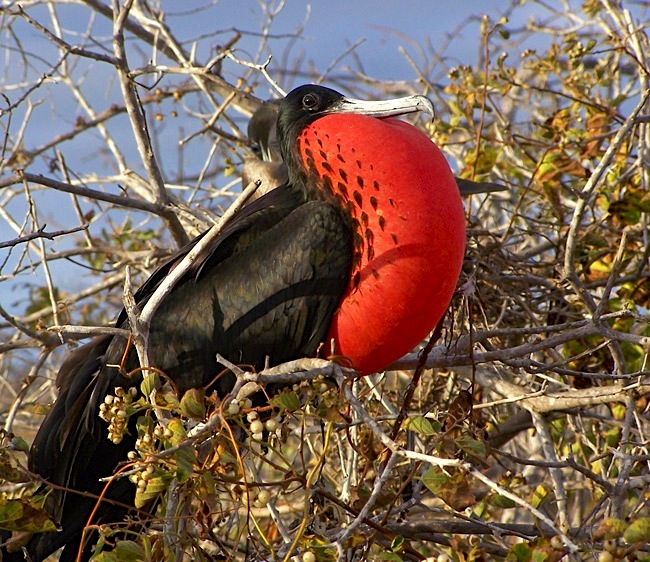
(Examples include albatross, auk, booby, frigatebird, fulmar, gannet, petrel, shearwater, and tropicbirds)
1. Seabirds are pelagic, spending most of their lives far out at sea.
2. Seabirds move toward to coastal areas to breed or raise young for a minimal amount of time.
3. Seabirds are light on their undersides and dark on top (an adaptation known as countershading).
4. Seabirds have more feathers than other types of birds for more insulation and waterproofing.
5. Seabirds have flexible webbed feet to help gain traction as they take off for flight from the sea.
6. Some seabirds have unusually sharp claws used to help grasp fish under the water.
7. Some larger seabirds (e.g. albatross) have long, slim wings allowing them to soar for long distances without getting tired.
8. Some smaller seabirds have short wings for maneuvering at the surface of the water.
9. Seabirds have specialised glands to be able to drink the saltwater and excrete salts.
10. Some seabirds (e.g. gannets) have a head shape that is usually tapered for more efficiency in plunge diving.
These lists were put together in useful chart form by the excellent Beach Chair Scientist
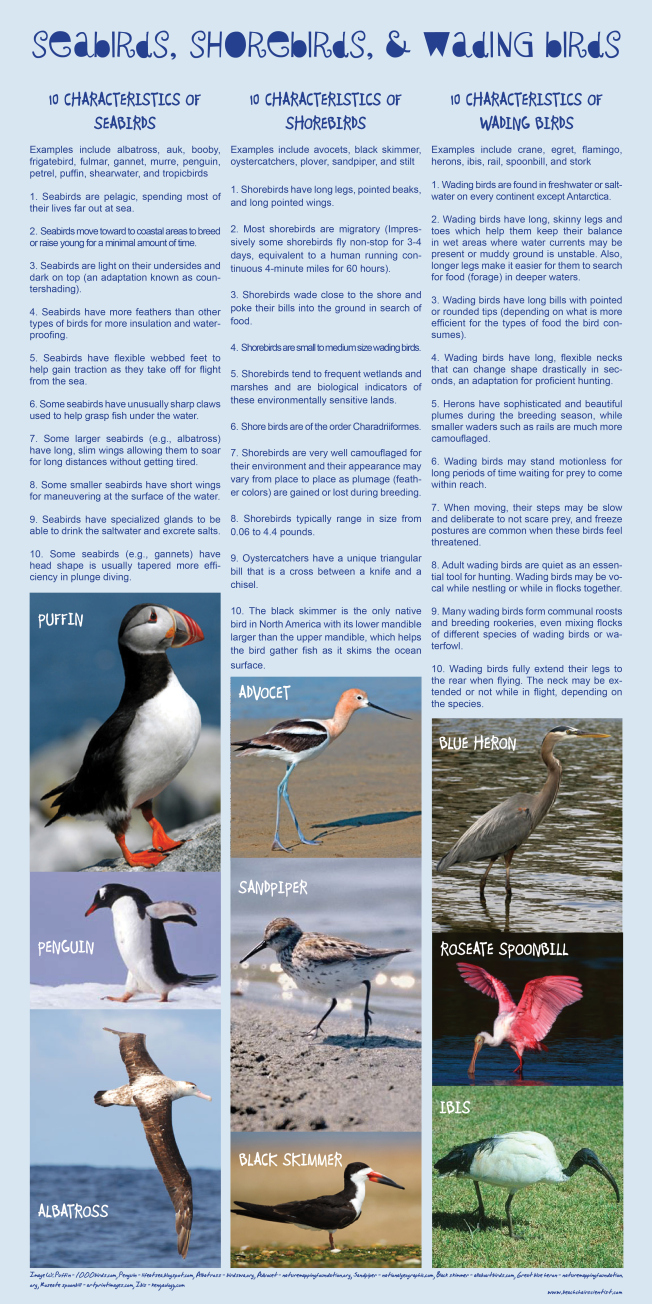
Table ©Beach Chair Scientist, with thanks for use permission;
Image Credits: Keith Salvesen, Michael Vaughn, Tom Sheley
BUTTERFLIES ON ABACO (3): COMMON BUCKEYE
BUTTERFLIES ON ABACO : COMMON BUCKEYE
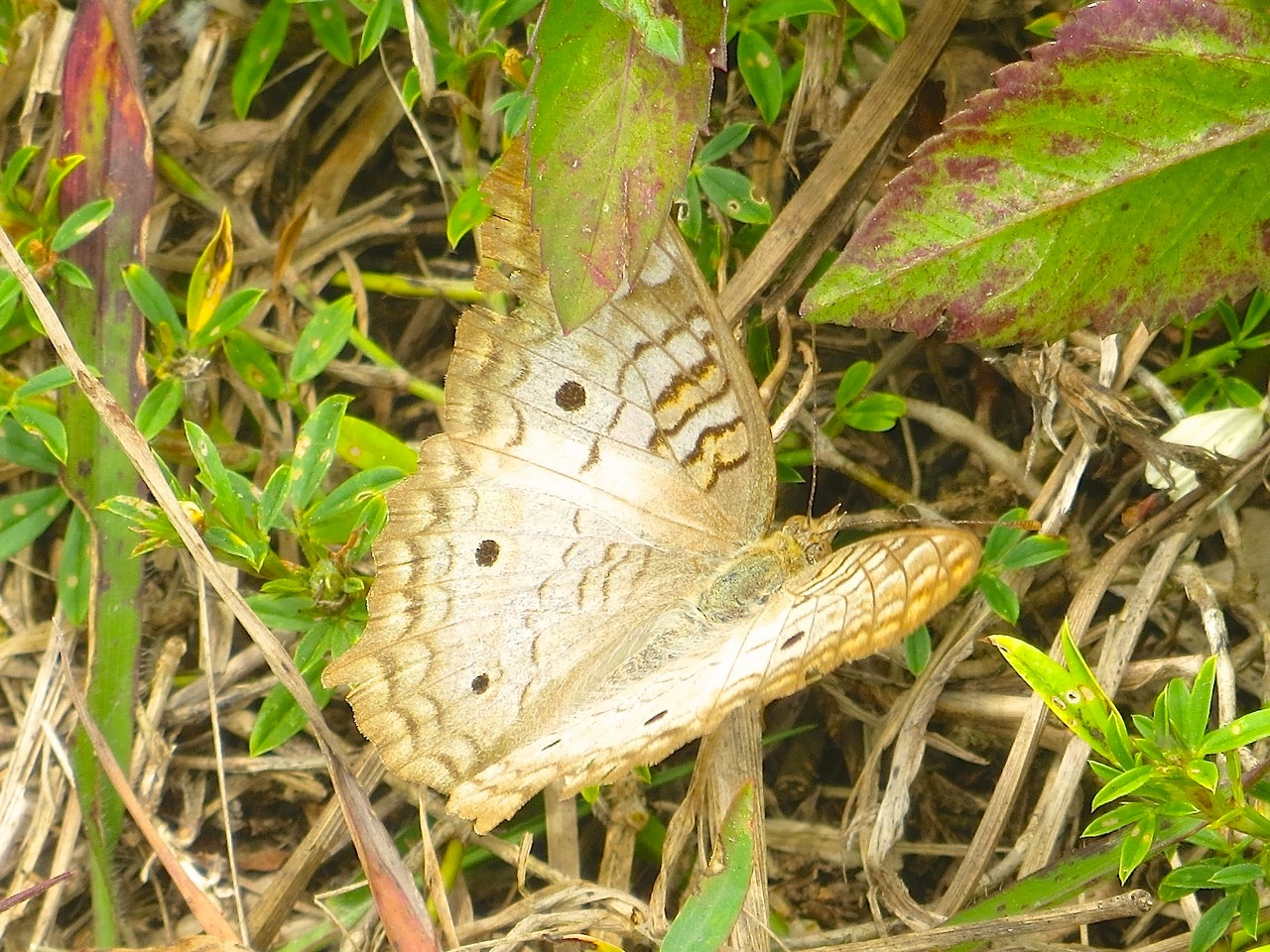
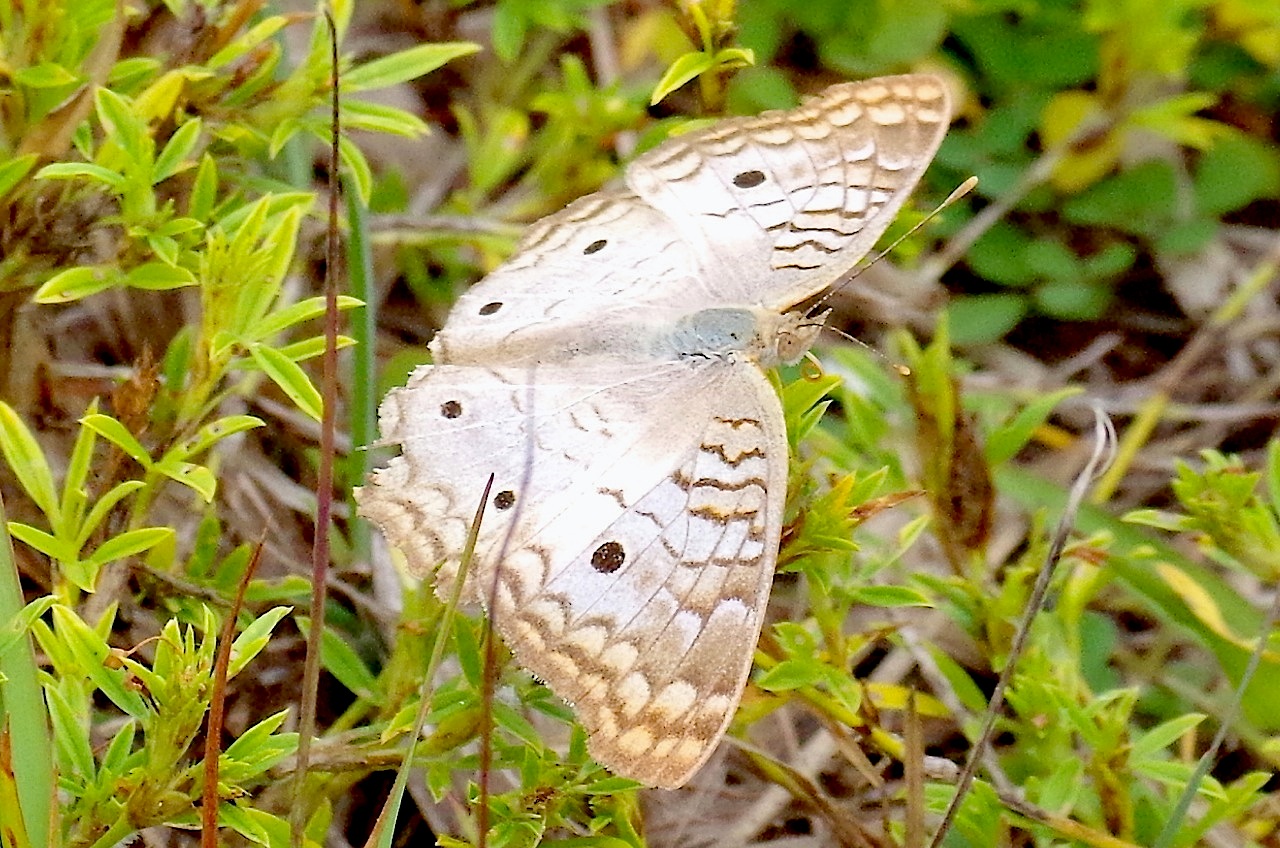
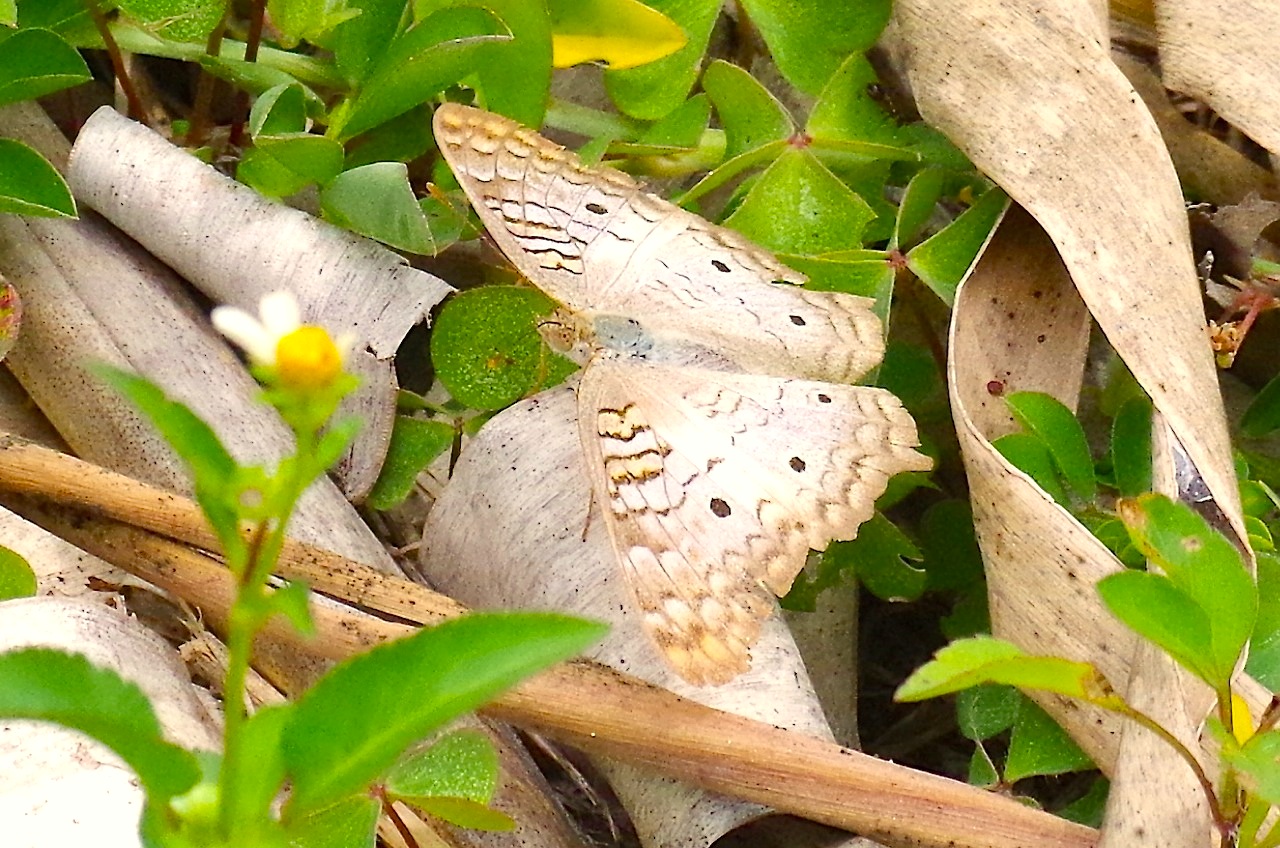
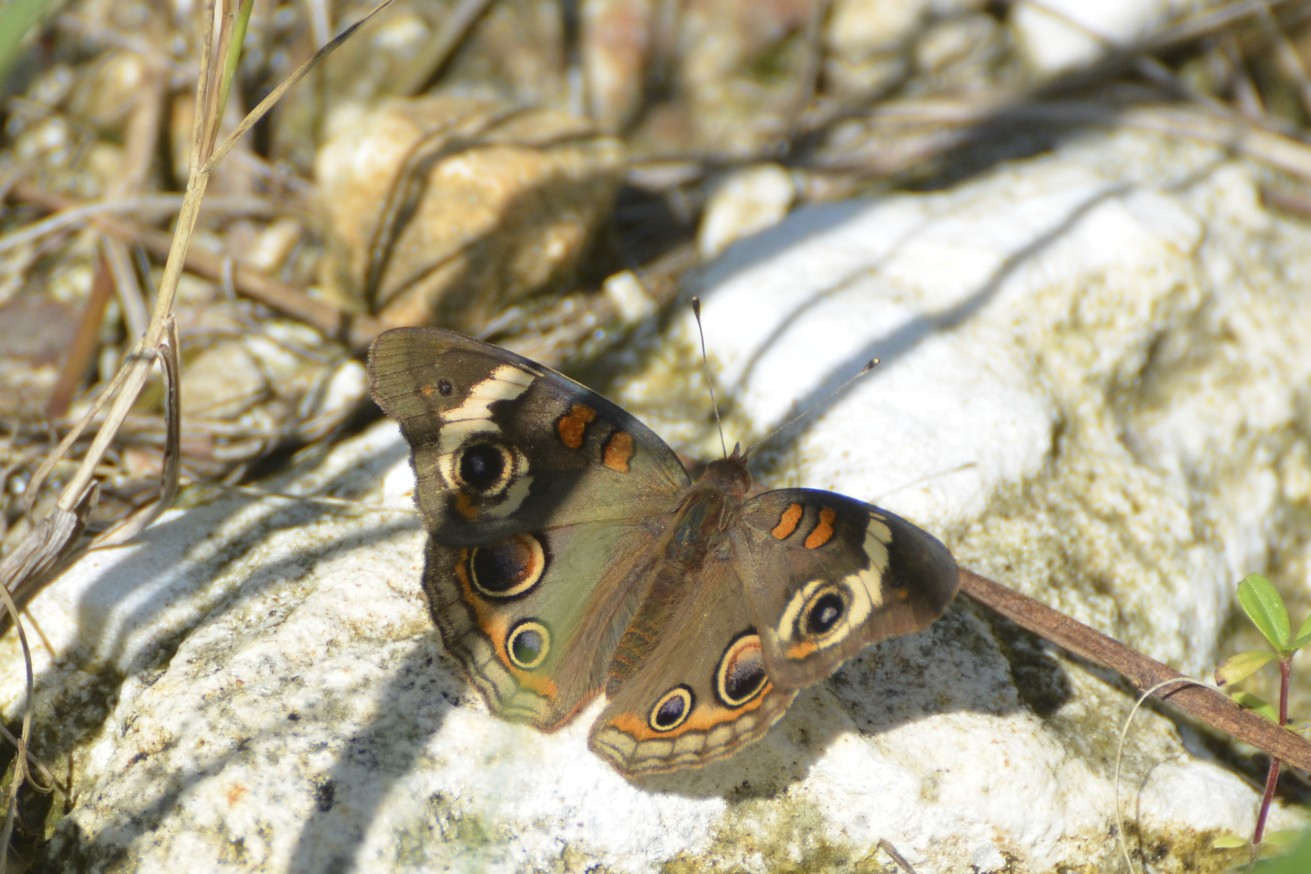
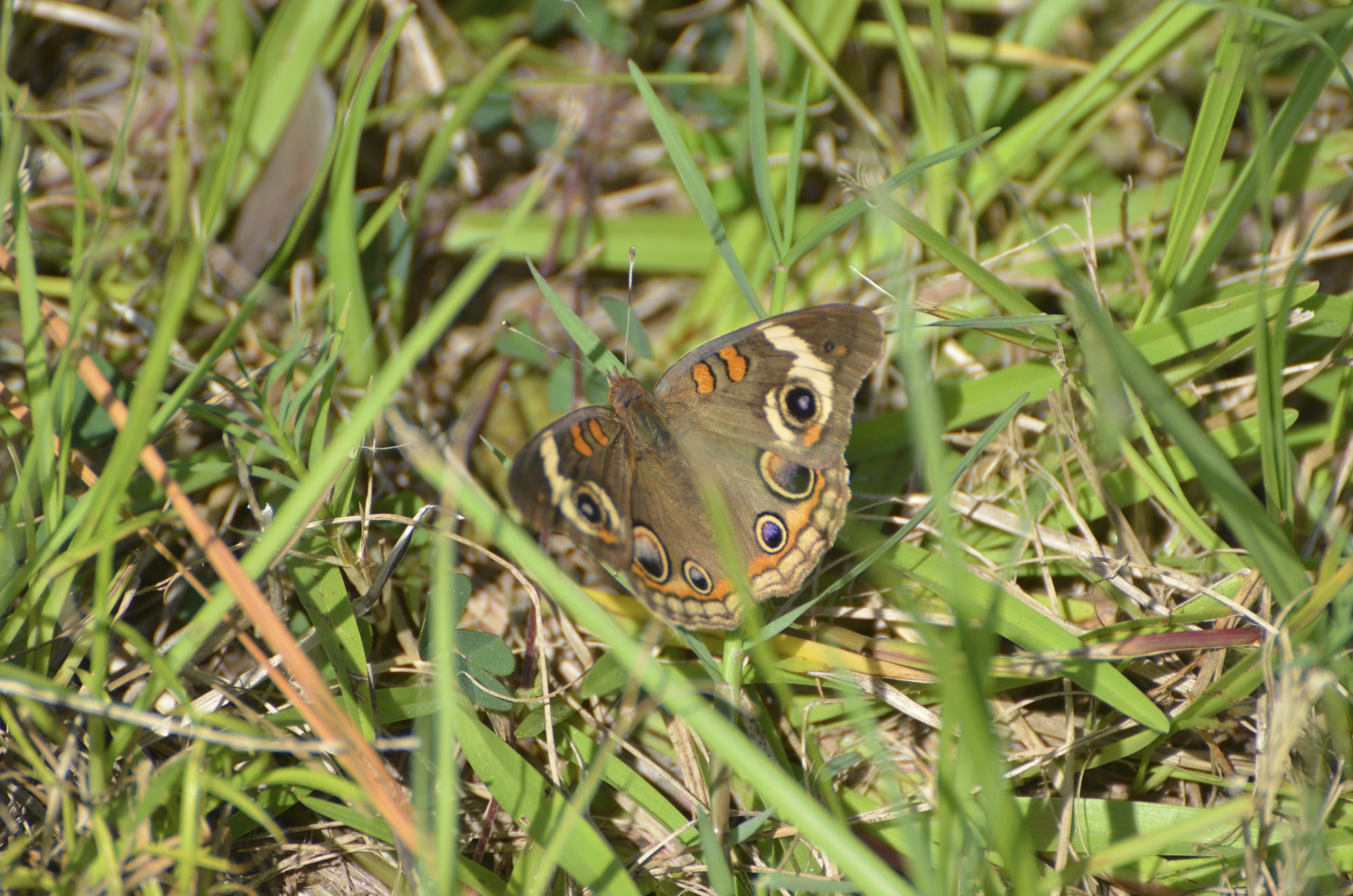
At first glance the Common Buckeye Butterfly Junonia coenia looks unpromisingly drab. However, like many butterfly species, the outside appearance is only one side of the story, a facade to enable it to blend in with the scenery. As the header image suggests, this creature has a more more flamboyant and colourful side to it – a feature not confined to butterflies, and extending even to humans…
SEQUENCE OF SLOWLY OPENING WINGS
As it feeds, or as the sun warms its wings, the buckeye will start to reveal itself 


The bright eye-spots of the buckeye, for which it is named, are designed to deter predators, as much as for decorative purposes. Birds, in particular, will be put off by a creature apparently possessing 3 pairs of eyes. This feature is known as aposematism: coloration or prominent markings that signal a warning to potential predators.
The caterpillars and chrysalis of this species look like this

This rather charming illustration of the buckeye species is by Jacob Hübner from his Sammlung exotischer Schmetterlinge Vol. 2 ([1819] – [1827] (Plate32)![Jacob Hübner Sammlung exotischer Schmetterlinge Vol. 2 ([1819] - [1827] Plate32 442px-Hubner1821SammlExotSchmett2Plate32](https://rollingharbour.com/wp-content/uploads/2013/12/442px-hubner1821sammlexotschmett2plate32.jpg)
Photo Credits: Butterflies by Charlie Skinner (except header, Wiki); Caterpillars & Chrysalis by Megan McCarty via Common Licence
OUT STANDING IN THE WATER: YELLOWLEGS (LESSER) ON ABACO
YELLOWLEGS (LESSER) ON ABACO: OUT STANDING IN THE WATER
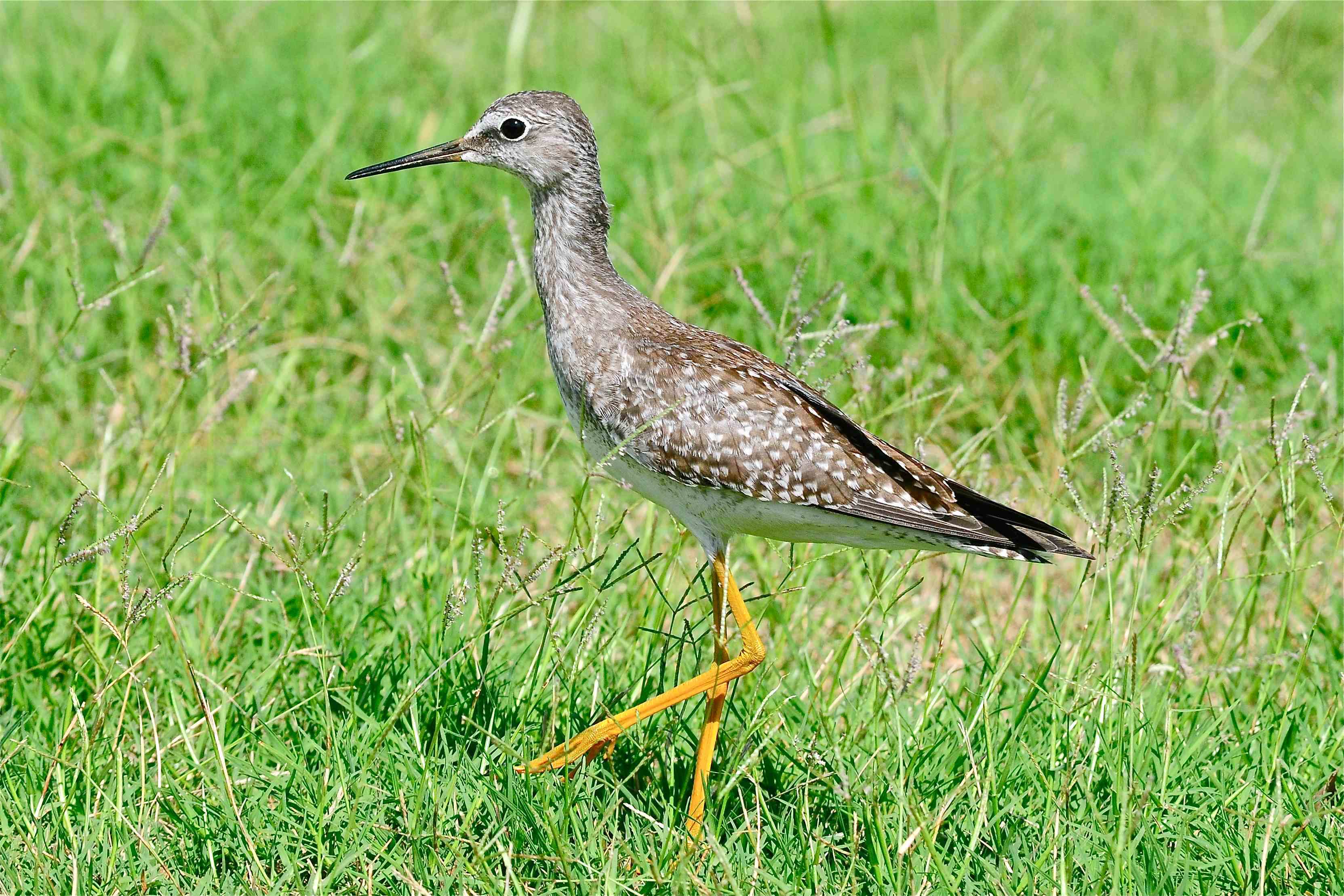
It’s always helpful when a bird ends up with a descriptive name (after translation from the Latin binomial) that actually matches the creature. Burrowing owl, Roseate Spoonbill, White-crowned pigeon, Red-legged Thrush, Black-and-white Warbler – you know where you are at once. So it is with the Yellowlegs.
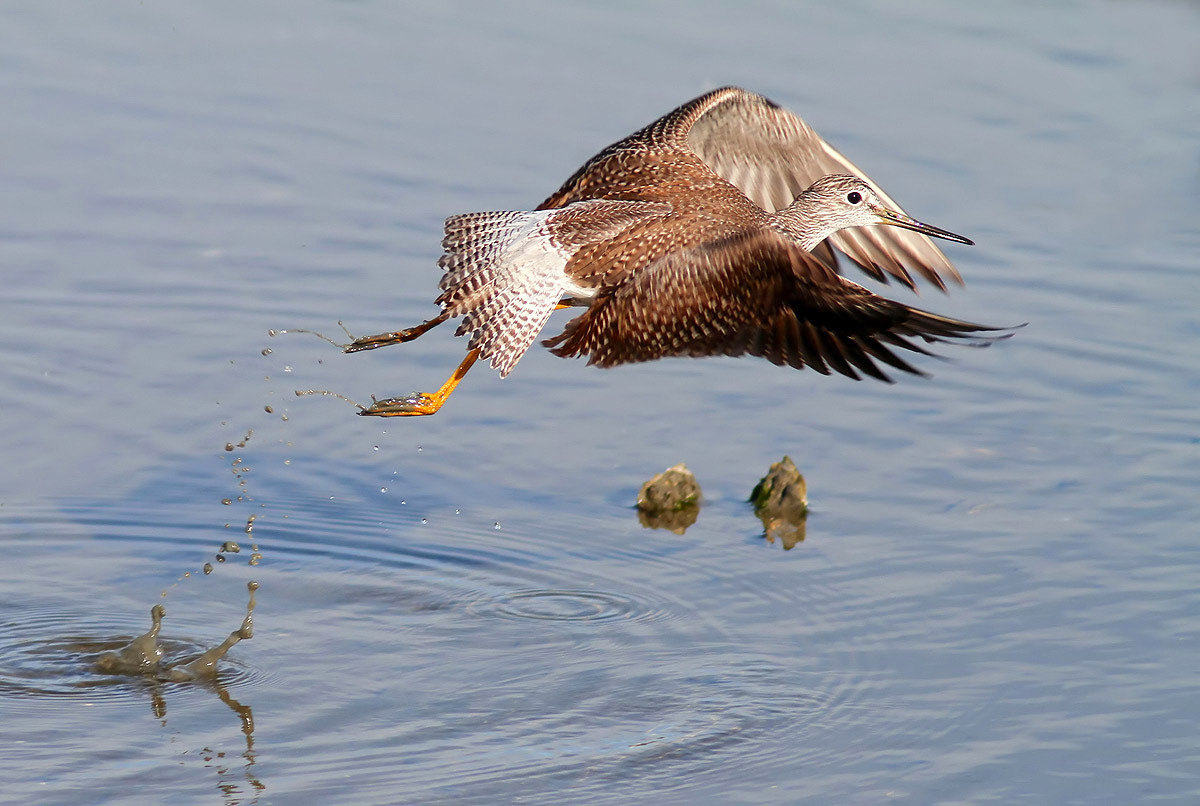
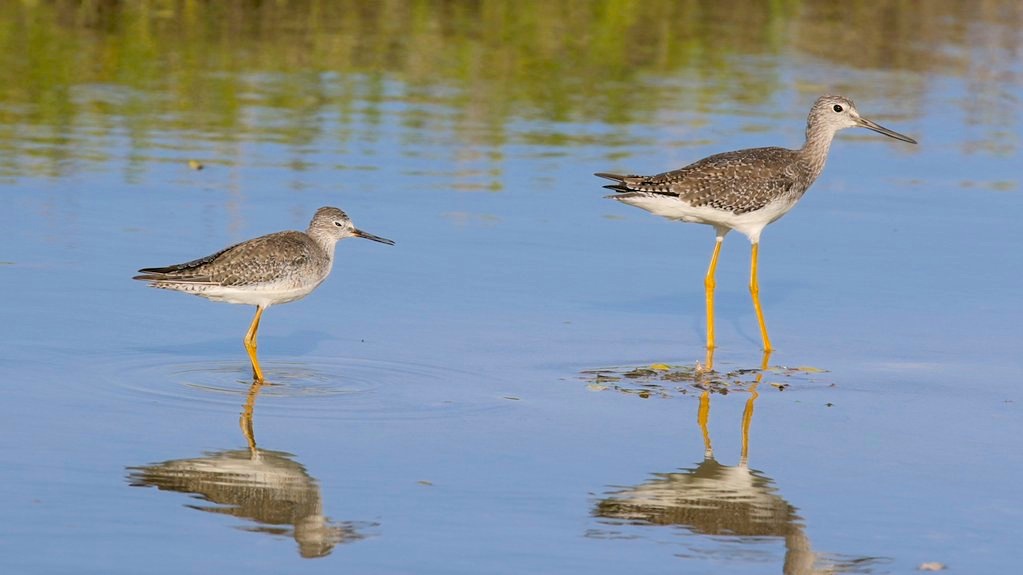
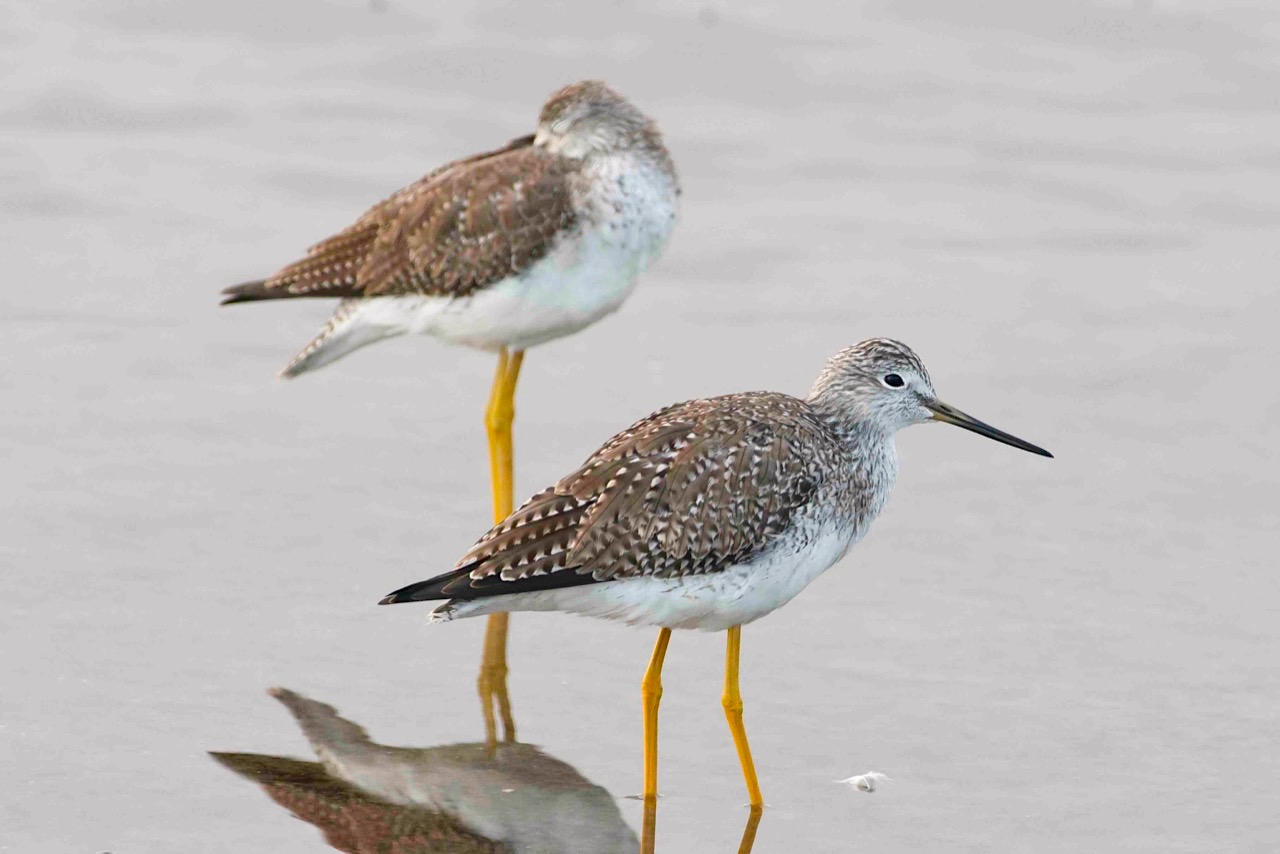
The only question is whether the Yellowlegs you are looking at is ‘greater’ (Tringa melanoleuca) or ‘lesser’ (Tringa flavipes). Both are winter visitors on Abaco, and a single bird on its own – with no size comparison – can be a potential source of confusion.
Taking flight… we have lift-off
Apart from size, the greater and lesser yellowlegs have some not-necessarily-very-noticeable differences in bill length (in comparison with head-size), plumage and vocalisation. Here is an excellent example of the yellowlegs cousins together, to give you a comparison.
Little and Large
DO THESE SHOREBIRDS EVER GO ON LAND?
*ALERT* AMATEUR PHOTOGRAPHY CORNER *ALERT*
DO YOU HAPPEN TO HAVE A PHOTO OF THE LEYE WING UNDERSIDES?
Yup. This bird was at Gilpin Pond. There aren’t many ‘wing underside’ photos out there. They are delicately complex and very pretty. (Will this do?)
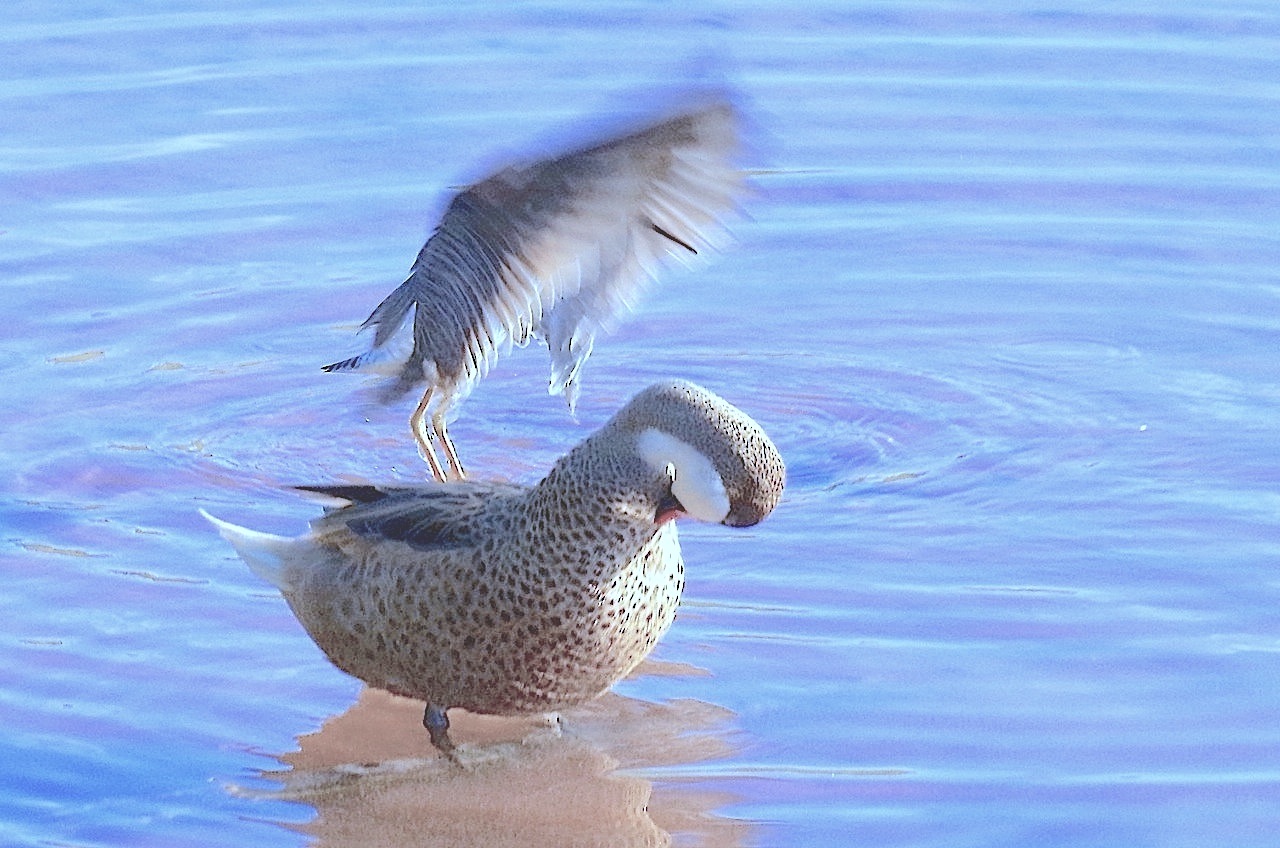
Q: DO THEY EVER DO PHOTOBOMBS?
A: INDEED! (BOMBING A BAHAMA DUCK)
Weird blue tint due to radical colour correction for the bad red algal bloom on the pond
Credits: Tom Sheley (1, 2, 9); Phil Lanoue (3); Matt Scott (4); Tony Hepburn (6); ID concealed to protect me the bad photographer (7, 8)
YELLOWTAIL PARROTFISH: BAHAMAS REEF FISH (54)
YELLOWTAIL (REDFIN) PARROTFISH: BAHAMAS REEF FISH (54)
The yellowtail parrotfish (sometimes known as a redfin) is one of around half-a-dozen kinds of parrotfish found among the coral reefs of the Bahamas, and sometimes in seagrass areas. There are many other related species worldwide (about 80). Parrotfish are among the most important fishes on the reef because they play a major role in BIOEROSION , a vital process for the health of the reef.
A. FEEDING & BEACH BUILDING
- Their dental arrangements – a mouthful of meshing teeth – form the characteristic ‘beak’
- Primarily herbivores but also snack on small creatures, organisms, or even molluscs
- As they feed on their favourite algae, their teeth grind up the coral which they ingest
- They digest the coral & excrete it as sand, becoming a component of your favourite beach
- The teeth grow continuously, replacing ones worn away by grinding coral as they graze
- They are a vital species in preventing algae from choking coral: essential reef cleaners
B. PARROTFISH: PERSONAL INFORMATION
- Some secrete a protective mucous cocoon to sleep in or as concealment from predators
- Mucous also helps to heal damage, repel parasites, & protect them from UV light
- As they develop from the juvenile stage, most species change colour significantly
- In some species, juveniles change colour temporarily for protective purposes
- These are “sequential hermaphrodites”, turning from female to male (‘protogyny’)
- Single males tend to have several lady friends, and aggressively defend their love rights
- Parrotfish are PELAGIC SPAWNERS. Females release many tiny buoyant eggs into the water
- The eggs float freely then eventually sink to the coral until they hatch
- Unlike almost all other fishes, they use their pectoral fins to propel themselves
- Feeding behaviour / dietary requirements make them (thankfully) unsuitable for aquariums (or aquaria, if you prefer)
WHAT WAS THAT ABOUT CHANGING SEX?
- Parrotfish may undergo sex reversal in which developing female fish become males
- Parrotfish born male remain male throughout their lives (“primary males”)
- Female-born fish may change sex & colour to become male (“secondary males”)
- Secondary males are fertile and generally mate with a single female
- Females that stay female live in harems protected by a dominant “supermale” BUT…
- …if the supermale dies, the largest female in the group changes sex to become male…
- …AND amazingly adopts the coloration of the supermale (best ‘astounding fact’ of all)
ARE PARROTFISH EDIBLE? JUST ASKING…
- Parrotfish skin is very tough but their flesh is soft and degenerates quickly
- Some species (eg blue parrotfish) carry ciguatera toxins – to be avoided
- They are not considered a fishing target in Bahamas, nor a food-fish
- Parrotfish are eaten elsewhere in the world however, for example Jamaica (cooked)
- In Hawaii they are eaten raw – at one time they were reserved for royalty
VIDEO LINK: PARROTFISH POOP
Credits: Melinda Rogers / Dive Abaco for her great illustrative images. All photographs were taken on the reefs of Abaco; Florida Museum to cross-check facts; VIDEO – Angari Foundation
‘CASTING ABOUT’: A TRICOLORED HERON HUNTING
‘Casting’ is one of those words with multiple meanings, some archaic but most in use today. You can probably think of half-a-dozen straight off. Metallurgy, for example, or even a type of couch. ‘Casting about’ is one of the specific usages and derives from hunting, eg hounds casting about for a scent. By extension, it has come to mean something like searching intently or thoroughly for something you need, or want, or are having difficulty in finding. Which is where this tricolored heron comes into the picture.
It’s always entertaining to watch a heron or egret fishing. Their methods range from standing stock still and suddenly stabbing downwards to slowly wading to the crazy dash that reddish egrets sometimes do on the edge of the mangroves. This one is hooding its wings, sometimes called ‘canopy feeding‘. The theory is that this attracts small fish by providing shade. I also wonder if this method is used to reduce glare from the surface of the water.
The bird in this sequence is a juvenile, and not yet the lethal hunter that it will soon become. It has seen a fish moving but has temporarily lost it (fishermen will be familiar with the mild feeling of annoyance when this happens). So it is casting about, slowly zig-zagging through the water, looking from a height, crouching down, trying to get a good view of its elusive snack. This little episode didn’t end in success. Sometimes, the fish you sight and then lose has gone for good. But as fishermen often say when they lose one (and by extension the phrase is now applied to other areas of human life), there are always plenty more fish in the sea.
Photo credit: Phil Lanoue, a photographer who specialises in patiently taking wonderful sequences of bird activity, with many thanks for use permission
FLUTTER BY, BUTTERFLY: ATALA ENCHANTING
It’s hard to miss the fly-past of an Atala Hairstreak Butterfly Eumaeus Atala . Once seen, never forgotten. They are small wonders, with their plump orange abdomens and their striking blue-dotted motif; obvious candidates for a signature Rolling Harbour logo for insect posts.

It is rare to see the inside of an Atala’s wings. In flight they tend just to look black; then they land with precision and immediately close their wings.
This close-up shows clearly that the vivid blue markings are not confined to the Atala’s wings. They are also on the body, the head, and surprisingly on the legs as well.
In sunshine the spots of the feeding Atala shine out like small LEDs. When they do open their wings, they reveal the velvety blue upper sides.
Once, I was watching a single Atala when a second one arrived and almost immediately ‘jumped’ the first. By which I mean that, for a few seconds, the new arrival ‘covered’ the feeding Atala in every sense of the word. Mere moments later, it was all over. I made my excuses and left.
Finally, you may want to get a sense of size for this butterfly – crops and zooms can sometimes give a distorted impression. So here is a normal snap of the butterfly feeding.
CREOLE WRASSE: SHADES OF DEEP PURPLE
The creole wrasse Clepticus parrae is a small wrasse species, with adult males reaching about 12 inches long. During its life, the fish will change colour significantly. A juvenile is almost completely violet-purple. As it matures, it becomes paler and develops patches of yellow on the rear part of its body.
Creole wrasse are found throughout the tropical and subtropical waters of the western Atlantic, from Florida south to Brazil. The habitat includes Bermuda, the Caribbean Sea, and the Gulf of Mexico. Their conservation status is LC Least Concern.
These are social fish that live in groups around coral reefs. They are usually found in shallow water, but – perhaps surprisingly for such small creatures – they have also been found as deep as 100m.
The groups of wrasse feed on plankton, small jellyfish, pelagic TUNICATES, and invertebrate larvae. They are active in groups by day, but at night they separate and each fish finds its own safe crevice in the reef to sleep.
ANYTHING ELSE WE NEED TO KNOW?
Yes indeed. Their intriguing breeding regime – how unlike our own dear species. The creole wrasse is a protogynous hermaphrodite. The largest fish in a group is a dominant breeding male, while smaller fish remain female. If the dominant male dies, the largest female changes sex. Mature males congregate at leks to breed, at which they display and are approached by females before mating with them. These leks are reminiscent of certain clubs and bars in the less reputable parts of some towns and cities. Or so I am told.
It’s been a while since I included a Rolling Harbour musical diversion. However, the colour of this small fish nudged my memory back to 1968 and DP’s debut album (line-up Mk 1 of several hundred, or so it seems now). Hence the post title. Anyone who remembers this ‘wasn’t there’. Anyone who doesn’t remember it obviously wasn’t there either…
FUN FACT: an early appraisal of the Purp’s music includes the description “a slow and pompous din, somewhere between bad Tchaikovsky and a B-52 taking off on a bombing run”
I don’t think this guy thinks much of that. And quite right too
All wrasse photos from Melinda’s archive; DP cover borrowed from Am@z@n; MP3 moi
COOKIECUTTER SHARKS: BEASTLY LITTLE SUCKERS
COOKIECUTTER SHARKS
BEASTLY LITTLE SUCKERS
The Cookiecutter shark Isistius brasiliensis (aka the less scary, more genial sounding Cigar Shark), might be an ideal candidate for a Room 101 nemesis.** These little beasts – a species of dogfish shark – are found in several mainly island-based areas dotted around the globe, including in Bahamas waters.
HORRIFYING COOKIECUTTER FACTS
- Live in the depths, rise vertically in the day & dive back down at dusk
- Undersides have light-emitting ‘photophores’ which emphasise…
- …the dark collar which acts as a lure, resembling a small innocent fish
- Bioluminescence lures prey & confuses predators (more on this below)
- The glow is so strong it may last for some time after removal from water

- Their lips are ‘suctorial’ = they attach tightly to their target
- The jaws then gouge out the victim’s flesh in a remarkably neat circle
- Omni-vicious: any medium to large ocean creature is vulnerable to attack
- There are even occasional reports of humans being targeted

WHERE IS YOUR EVIDENCE?
Here are two Blainville’s beaked whales that I photographed from the BMMRO research vessel. The top whale has a number of circular healed attack marks and a recent one. You can see how deep the gouged hole is. The other has plenty of well-healed scars.
WHAT CUTTING EQUIPMENT ARE THEY BLESSED WITH?
- Multi-toothed: top rows of small teeth, rows of larger teeth on the bottom
- The lower teeth are the cutters, acting like a saw when locked on
![]()

ARE THESE SHARKS ‘PARASITES’, WOULD YOU SAY?
The behaviour of these sharks is an example of a symbiotic relationship between two species that is parasitic. This means essentially that one gains and the other suffers (eg humans & no-see-ums). This is distinct from commensalistic symbiosis, where one species gains and the other is unaffected (e.g. cattle egrets with cattle); and mutualistic symbiosis, where both gain (e.g. cleaner fish & groupers). So, in a word, yes.

AMBUSH PREDATOR
- These little sharks ‘hover’ in the water column waiting for their opportunities
-
They are capable of rapid movement to catch up & latch onto prey
-
They will eat a passing small fish, crustacean or even squid as a snack
- Sometimes they operate in schools; there is safety in numbers
- The schools are thought to increase the ‘lure’ effect of the dark collar
A beached whale that’s been heavily targeted
FUN FACT TO COUNTERACT THE BAD STUFF
In the late c20, more than 30 U.S. Navy submarines were forced back to base to repair damage caused by cookiecutter shark bites, either to the neoprene footings of sonar domes or to rubber-sheathed cables. The problems were solved by using fibreglass. Oceanographic equipment and telecommunications cables are also recorded as being damaged by these sharks.
Cookiecutter Shark – the real deal 
MONSTERS OF THE DEEP
These great cards from the weirdly spelled WIERD ‘N’ WILD CREATURES provide excellent factual info. Their CCS card is no exception. You’ll find more details here about the effect of the bioluminescence and so on, written as clearly as I might hope to.
** “The worst thing in the world varies from individual to individual. It may be burial alive or death by fire, or by drowning, or by impalement, or fifty other deaths. There are cases where it is some quite trivial thing, not even fatal.” (George Orwell, 1984). Being in a tank with some cookiecutters might count.
Alright now… the wounds eventually heal
Credits: BMMRO – header image; beaked whale photos – Keith Salvesen / BMMRO; Te Ara NZ for the main jaw image; all small images with thanks to Wiki and respective photographers who took the time to upload them for all to enjoy & learn from; ‘wierdnwonderful creatures’ for the monster card; range map from Wiki
‘TERN, TERN, TERN’: THE UN-NOTORIOUS BIRD COUSINS
There are twelve species of tern – ‘swallows of the sea’ – that to a greater or lesser extent may be found on Abaco. Whether they will actually be visible at any given time is less certain, though. For a start, the only resident species is the lovely Royal Tern, available at many locations on Abaco and the cays throughout the year. The rest are migratory or just passing through.
PERMANENT RESIDENTS
ROYAL TERNS Thalasseus maximus PR1
MIGRATORY TERNS: SUMMER
In the slightly less commonly-found category are the summer migrant terns that, by definition, are only in residence for around half the year. Four of these are fairly common in certain areas, and actually breed on Abaco; these include arguably the prettiest of all, the bridled tern. The other two tern species (gull-billed and sandwich) are more rare and as far as I can make out do not breed locally; or perhaps only rarely.
LEAST TERN Sternula antillarum SR B 1
BRIDLED TERN Onychoprion anaethetus SR B 2
ROSEATE TERN Sterna Dougallii SR B 2
SOOTY TERN Onychoprion anaethetus SR B 2
GULL-BILLED TERN Gelochelidon nilotica SR 3
SANDWICH TERN Thalasseus sandvicensis SR 4
MIGRATORY TERNS: WINTER
There is one very rare winter resident migratory tern species, with few records of sightings for Bahamas and until early 2019, no photographic record for Abaco until Sally Chisholm saw one at Treasure Cay and managed to capture it for posterity.
FORSTER’S TERN Sterna forsteri WR 4
OCCASIONAL & RARE VISITORS
A further four tern species are very much occasionals that drop by. Three of them pass over the Bahamas on their longer migration, but may make a pit-stop around Abaco to take on fuel. Likelihood of sighting one? Slender but not impossible… the Caspian tern below was photographed on Abaco. The fourth, the Arctic Tern, is a very rare vagrant, a bird well away from its usual home or migration route as the result of storms or faulty satnav or sheer happenstance. Don’t travel to the Bahamas intent on seeing one.
CASPIAN TERN Hydroprogne caspia TR 4
The remaining species are the transient black tern and common tern; and the vanishingly rare vagrant Arctic tern. No photos of any of these I’m afraid. Here’s a handy checklist of all the tern species.
ELECTIVE MUSICAL DIGRESSION
Written by Pete Seeger, Turn x 3 was released in 1965, the title track on the second album by The Byrds. At a rather febrile time in US history (Vietnam, draft riots, civil rightists v cops and so on), this unusually palliative and thoughtful song with its religious connotations to some extent stood for peace and hope in a time of turmoil.
PS the somewhat laboured title of this post shoehorns in the name of another Byrds album, ‘The Notorious Byrd Brothers’
Photo credits: Keith Salvesen (1, 2, 3, 5, 18); Tony Hepburn (4); Alex Hughes (10, 11); Bruce Hallett (6, 7, 12); Woody Bracey (8, 13, 16); Duncan Wright (9); Dick Daniels (14); Sally Chisholm (15); Keith Kemp (17)



















You must be logged in to post a comment.