Unknown's avatar

“SO THIS IS CHRISTMAS…” ABACO WILDLIFE APPEALS TO EVERYONE!


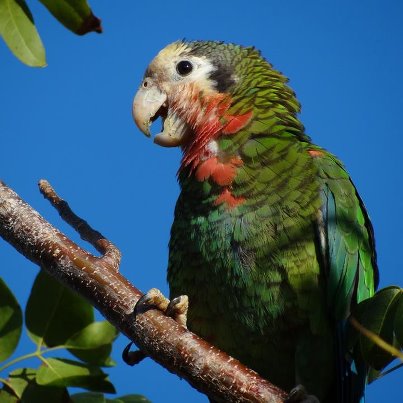
“SO THIS IS CHRISTMAS…” Abaco (Cuban) ParrotImage: ©RH

Christmas time. Holidays. Festive season. Yuletide. ġéohol*. Noel. Winterval. However you describe it, there’s a reassuring ritual each year. To many, the familiar religious carols and rites. To all, the cheerful sound of jingling tills. The exchange of presents happily bought and excitedly received. The groaning table weighted with victuals. Light and laughter. Glasses generously filled and refilled.  Sudden growing dizziness and a strange lack of coordination. Wondering what others are saying. Wondering what you are saying. Drowsiness. Overwhelming sleepiness. The passage of time. The groaning hangover as seven West Indian woodpeckers attack your skull with hammer-drills… Time for a soothing image.

BMMRO Dolphin Image copyImage ©BMMRO

Where was I? Oh yes. This is a very good time to draw attention to the various wildlife organisations based on Abaco and in the wider Bahamas. During the year they look after the birds, the marine mammals and so forth that help make Abaco such a very special place to be. I am simply going take the opportunity to post the link to my updated page for ABACO WILDLIFE CHARITIES. Oh. I just have. Well, is there one that appeals to you, I wonder? Just asking… Meanwhile, here’s the music of the heading to get you in the mood

Delphi Xmas + lights* Old English / Anglo-Saxon origin of “Yule”

Unknown's avatar

“AIMING AT THE MOON” – A LUCKY SHOT!


“AIMING AT THE MOON” – A LUCKY SHOT!

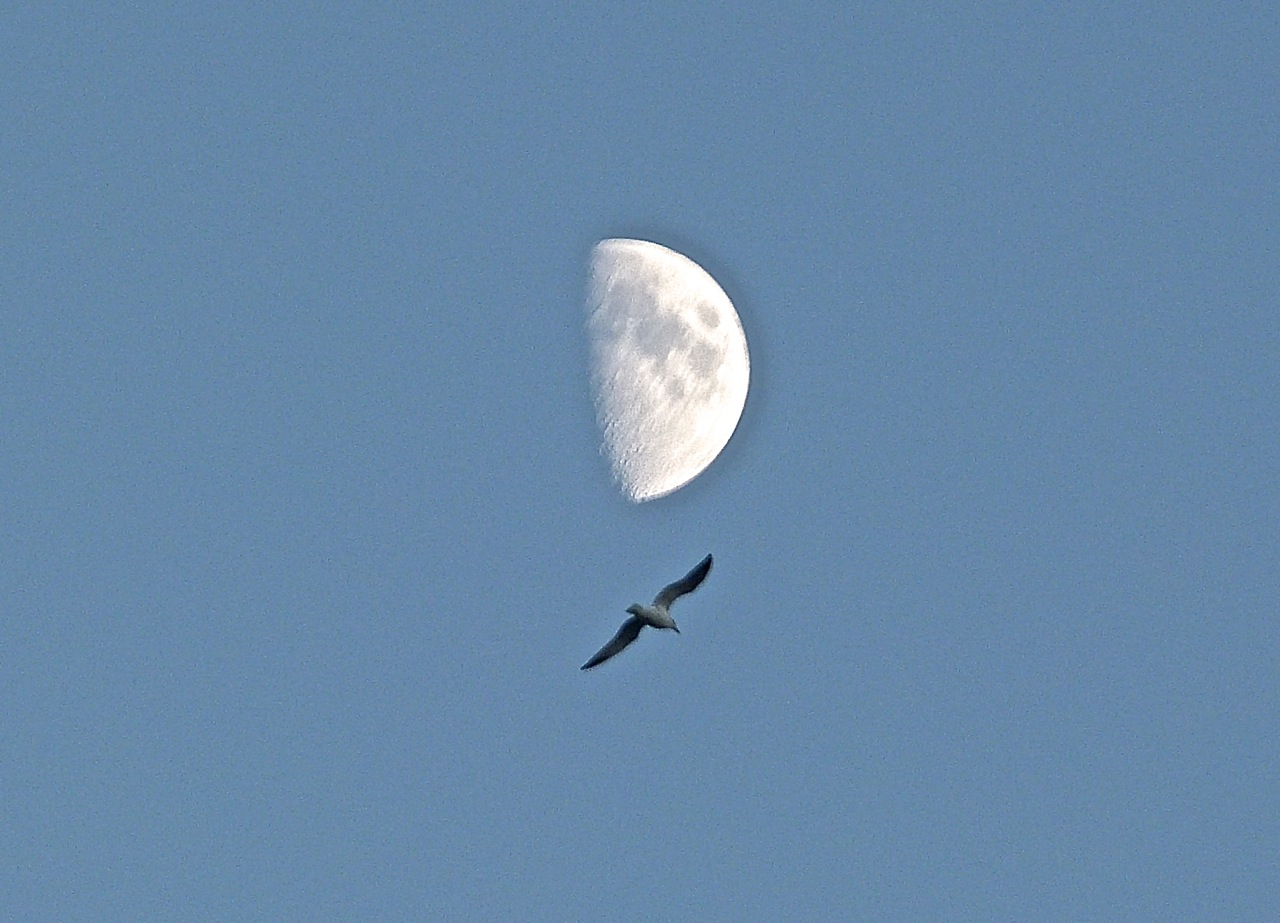
I took this in the late evening because I noticed the gull flying directly towards the moon. I had a point and shoot camera, and very little time to fire it up and take aim. I was hoping the bird would actually cross the face of the moon (“Homage to E.T.”) as I clicked… In many respects it’s a bad picture – unsharp in the fading light – and yet… there are the craters, the seas, the mountains of the moon clearly visible. And one blurry seagull on its way home. So I am going to inflict it on you. Think of it as a misguidedly poetic offering from an essentially prosaic person…

Unknown's avatar

ABACO PARROTS & CHICKS – A 2012 BREEDING SEASON PICTURE GALLERY


Limestone Holes & Abaco Parrots 09

DCB GBG Cover Logo

ABACO PARROTS & CHICKS

A 2012 BREEDING SEASON PICTURE GALLERY

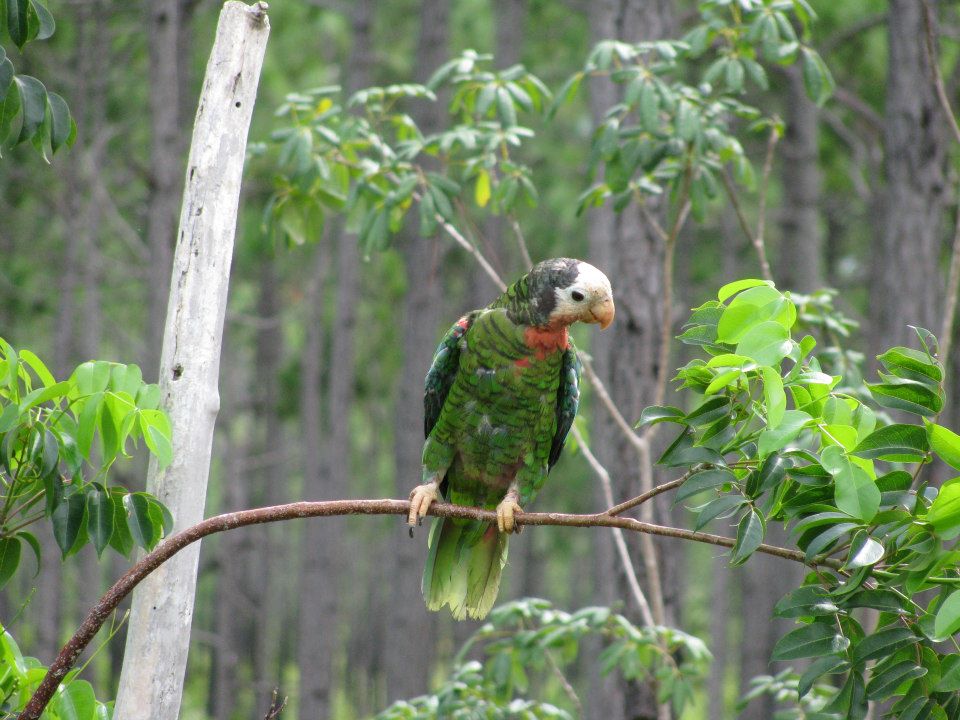
Time to write some more about Abaco’s most famous bird, the unique ground-nesting Amazon / Cuban parrot sub-species that makes Abaco its home, and breeds in the pine forests of the Abaco National Park in the south of the island. You’ll find lots of information and photos on the dedicated page ABACO PARROTS.

This post covers the 2012 breeding season, and highlights the success of scientist Caroline Stahala and her team in helping to secure the future of these rare endangered birds. The population had shrunk to around 2500 (or fewer) some years ago. More recently it had risen to 3000. An intensive conservation program, including anti-predation measures, has proved effective; and a systematic ringing program has enabled the team to keep a close eye on recovering parrot numbers. Caroline says that the population is now in the region of 4000, confirming an encouraging reversal of a dismal decline towards extinction for these beautiful birds.

ABACO PARROTS IN THE PINE FOREST

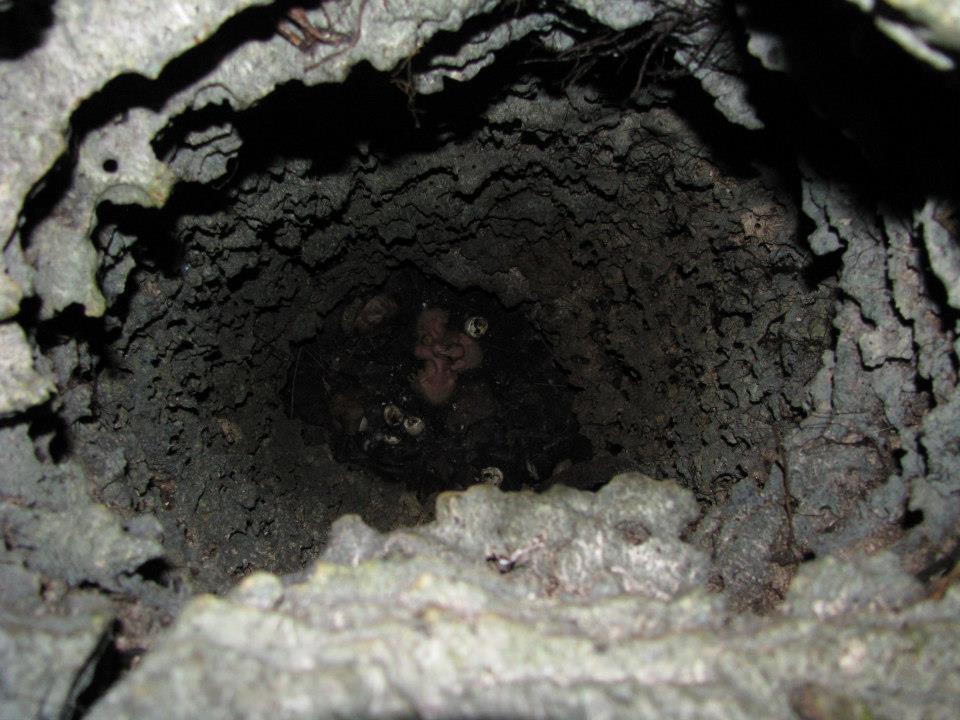
The parrots breed only in the pine forest, where they nest in quite deep holes in the limestone rock. This makes the nests and the areas round them vulnerable to predation from feral cats and rodents etc; but conversely it offers protection from the forest fires that would destroy tree nests. 

The holes are often well concealed in the undergrowth and take some searching for…

Both parents are involved in the nesting and later chick care. The female lays 2 – 4 eggs.

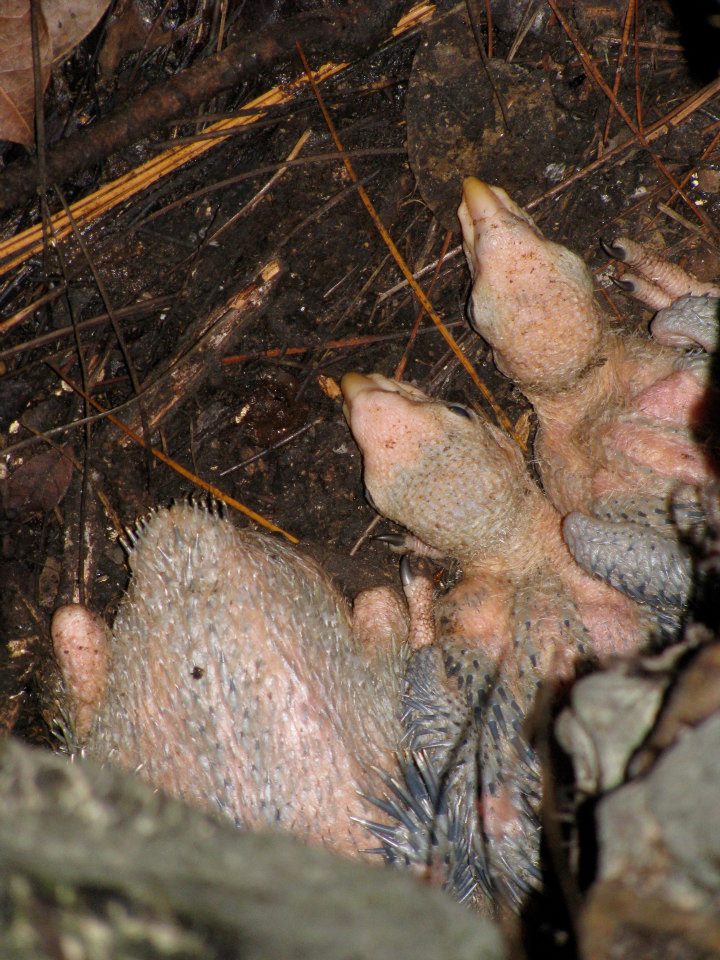
The chicks hatch after an incubation period of around 26 days

Some of the nest holes are remarkably deep: the parent parrots clamber up and down the sides

The chicks grow the beginnings of feathers, remaining quite unattractive except to their parents

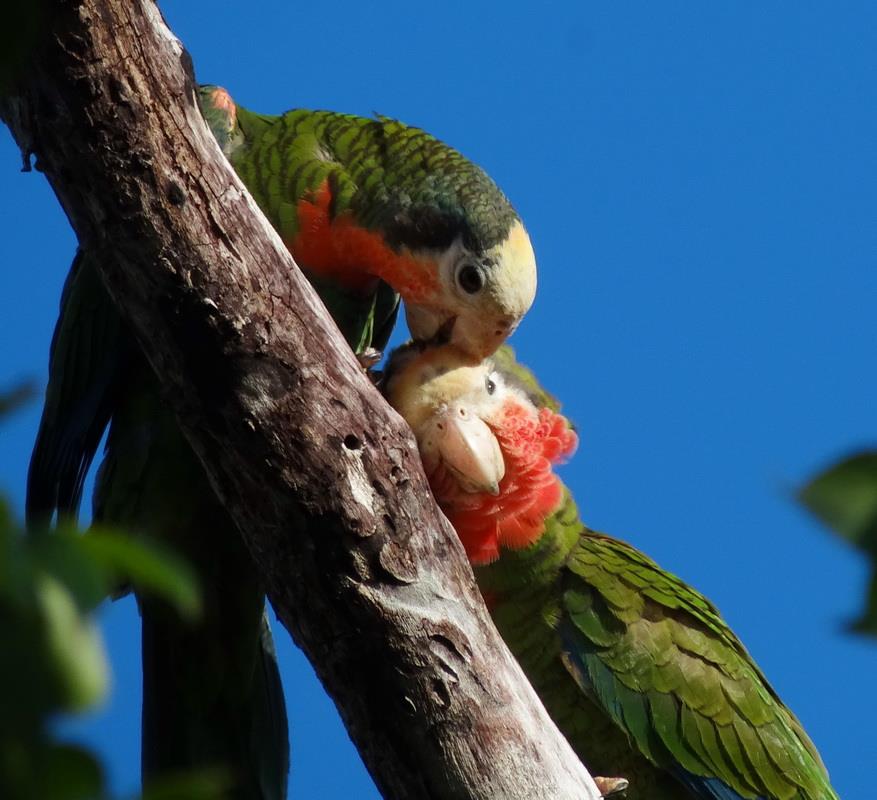
The parent parrots share feeding and care duties

The chicks / fledglings stage are ringed so they can be identified – see ABACO PARROT CHICKS

By coincidence, as I was producing the post above, Craig Layman at THE ABACO SCIENTIST was also ruminating on the topic of Abaco parrot breeding. He posted the comments below, which raise the very interesting question whether the Abaco parrots, with their increased population, may be starting to breed outside the National park. Caroline can probably answer this (see COMMENTS), but does anyone have any direct evidence to suggest a wider breeding habitat? I guess there would need to be a suitably pitted rock structure for the nests, and an absence of the usual cat- and rat-type predators that one might find nearer human populations. Answers welcomed via the comment box…

(Sort of) A Bahama Parrot Study

Posted by laymanc 26 Nov 2012

It isn’t really much of a study, but the only “science” I have been able to do over the last week with the continued turbidity of  nearshore waters.

The Bahama parrot (more information HERE and HERE) is one of the iconic Bahamas animals, and the main factor behind the establishment of the ABACO NATIONAL PARK in southern Abaco.  But my study has been conducted instead from my desk in Little Harbour.  My main finding is simple: the range of the parrot has clearly expanded; it has now been a full calendar in which parrots have been in the area.  Just a few days ago two dozen were squawking around the harbour.  The key will be whether they begin nesting here as well – I havent heard reports of that yet.  But if they do, the expanding nesting range will substantially increase long term viability of the parrot on Abaco.  That ends my first ever Bahama parrot study (I really need more time in the water when I come back).

Unknown's avatar

“GIVE PEEPS A CHANCE”: THREATENED PIPING PLOVERS, ABACO BAHAMAS


“GIVE PEEPS A CHANCE”: THREATENED PIPING PLOVERS

Not the feeblest punning title on this blog, but going hard for the avian-related booby prize. As it were. And you might with reason point out that, strictly speaking, ‘peeps’ are not plovers at all, but small squeaky sandpiper species. Many months ago I did a short post about these tiny plovers, and had begun to update it. Then I found that both the BNT and the ABACO SCIENTIST are onto them too. Thanks to them, I have some excellent added material further down the page… But first, here’s a quick cut out ‘n’ keep summary

SIZE               Charadrius melodus is a Very Small Shorebird

HABITAT     Rocky shores / sandy beaches; nesting in higher, drier areas of the shoreline where there is cover 

Photo courtesy of Caribbean Birds SCSCB

RANGE          From Canada (summer) down to the Gulf of Mexico (winter). They head south in August and return in March 

Credit: Xeno-Canto / Google

CALL              A thin whistled peep peeping, whether standing or flying, and a two-note alarm call [There are surprisingly few Piping Plover call samples online. Many sites – Audubon, eNature, Birdwatchers Digest – all seem to have the same one. So I’ll credit them all and the originator Lang Elliot and hope I’ve covered my back…]

BREEDING   The male digs out several scrapes on the high shoreline. The female contemplates these efforts, and (if any meet her ideal domestic criteria) chooses her preferred one, which she then decorates (grass, weed, shells etc). Meanwhile, Mr Peep tries to impress her by chucking pebbles around, dive-bombing her, and strutting around her importantly and “fluffed up” [none of these tactics work in human courtship, in my experience]. If Mrs Peep (a) likes the home she has chosen and furnished and (b) has recovered from her fit of the giggles at all that performance, she permits mating to proceed

NESTING     First nests normally have 4 eggs; later ones fewer. Both share incubation and subsequent parental ‘brooding’ duties

DEFENCE    Plovers have a defensive “broken wing display” used to distract predators and draw attention away from the nest

THREATS    Larger birds, cats, raccoons etc. Human disturbance. Plovers and chicks are vulnerable to storms & abnormal high tides 

ZOOM…!     Capable of running at astonishing speed over short distances. When they stop, they often snap the head back and forward.

STATUS       Depending on area, treated either as Threatened or Endangered; IUCN listing NT

CONSERVATION Historically PP feathers were used as decoration in wealthy women’s hats – no longer a problem. Shoreline development and alterations to natural coastline are now the leading cause of population decline. This has been reversed through field and legislative protection programs, especially at nesting sites; public education; anti-predation measures; and restricting human access in vulnerable areas – including off-roading…

STOP PRESS Nov 18 Sean has just posted a professional / scientific article about piping plovers, with some very useful information specific to Abaco and some helpful links, over at the ABACO SCIENTIST. Clicking through is highly recommended if you want to know more about these little birds

This is the characteristic ‘pigeon-toed’ stance – they run that way too…

RICARDO JOHNSON’S 6 MINUTE VIDEO ‘PIPING PLOVERS’ 

Ricky is a well-known, infectiously enthusiastic, and compendiously knowledgeable Abaco nature guide  (this guy gets way too much free publicity in this blog…). As I wrote when I originally posted  it “In this video he focusses his binoculars on piping plovers, a threatened species of tiny plover which annually makes a long migration to the Bahamas, including Abaco – and then heads all the way north again.”

If this video doesn’t make you smile at some stage, I suspect a SOH bypass and / or your ‘anti-cute’ setting is jammed on. Even so you’ll see the differences between the piping plover and the more familiar Wilson’s plover.

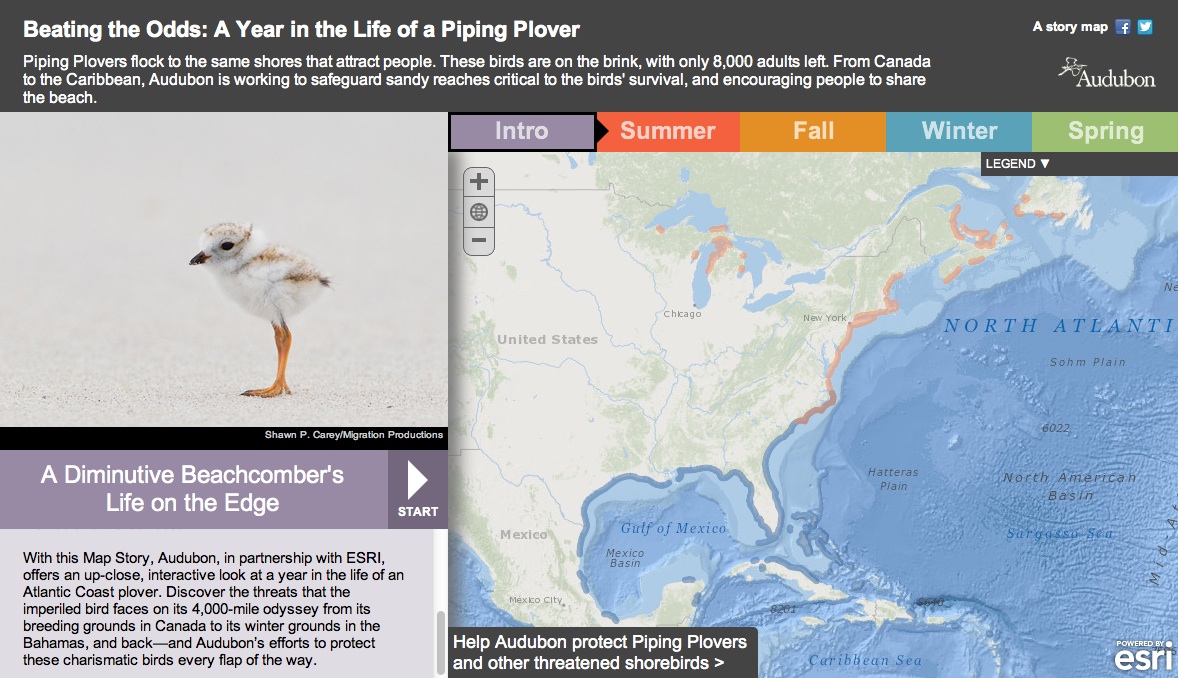
The BNT / ABSCI material originates from the Audubon Society. If you want to know about the annual journeys of these little birds and where they are in each season, it’s all here. The item was made in conjunction with the ESRI mapping project. I’ve put a screenshot below to give a general idea of what’s involved [click to enlarge] and you can reach the interactive Audubon page if you CLICK PIPING PLOVER

Credits:Wiki (images), Audubon Soc, Xeno-Canto, Lang Elliot & partners, Ricky Johnson

Unknown's avatar

BLACK-FACED GRASSQUITS ON ABACO – PRETTY FAMILIAR BIRDS


BLACK-FACED GRASSQUITS ON ABACO – PRETTY FAMILIAR BIRDS

Both pretty and familiar, in fact. Birds of the pine-woods, coppice, garden… and feeder. They are an unremarkable species, they don’t have off-beat avian habits, they aren’t scarce… but if they weren’t there, you’d probably miss them. Males and females have notably different colouring, with the female having a bright eye-ring. They tend to hang out in pairs or small groups. These little birds are abundant in the north Bahamas, but like many species found there, they are only very rarely found in south Florida.

MALE BFG IN THE COPPICE NEAR THE DELPHI CLUB

A MALE BFG DEEP IN THE PINE FOREST NEAR THE SAWMILL SINK BLUE HOLE

No two books describe their call in the same way. I’m not venturing into the vexed field of avian phonetics of the ‘chip chip chip kerrrrr–ching’ variety… so here’s a very clear recording of the song of Tiaris bicolor from the excellent Xeno-Canto (Paul Driver)

FEMALE BFGs EAGERLY SNACKING ON THE FEEDERS AT THE DELPHI CLUBTHESE TWO PHOTOS SHOW THE DISTINCTIVE EYE RING OF THE FEMALE BFG

Unknown's avatar

FLAMINGOS & PELICANS: BIRDS OF ABACO… YET NOT IN ABACO


PINK FLAMINGOS & WHITE PELICANS

BIRDS OF ABACO… YET NOT IN ABACO

This post is a slight, alright huge, cheat. It’s been a Hurricane Sandy-dominated week. I have been posting / updating daily about the storm: the before, during and after for Abaco. Weather predictions. Trackers. Pics. Views from space. Several thousand hits later, and I realise that, as for Irene last year, the world is thirsty for information about cyclones and the communities affected by extreme weather. The power and communication problems faced by Abaco (as elsewhere) at these times increases the global concern. There have been emails asking for information about damage at Green Turtle Cay; if I know how uncle Fred on Elbow Cay is faring; and what of Saucy Sue in Marsh Harbour (the boat, not the person)…

Now that the storm has passed, power and comms are mostly restored, and the clean-up underway on Abaco it’s thankfully back to wildlife. Some interesting birds are called for to spread some cheer.These two species will be familiar but not in the setting shown…

PINK FLAMINGOS (Phoenicopterus)

Cheat 1: These birds were photographed… in captivity. Not quite the same as the real wild thing, I agree. To see wild ones on Inagua during the past breeding season, check out my earlier post with wonderful photographs by Melissa Maura CLICK HERE

Cheat 2: They are not in fact the Bahamas / Caribbean species, now I come to think of it. But they are undeniably pretty and cheering.

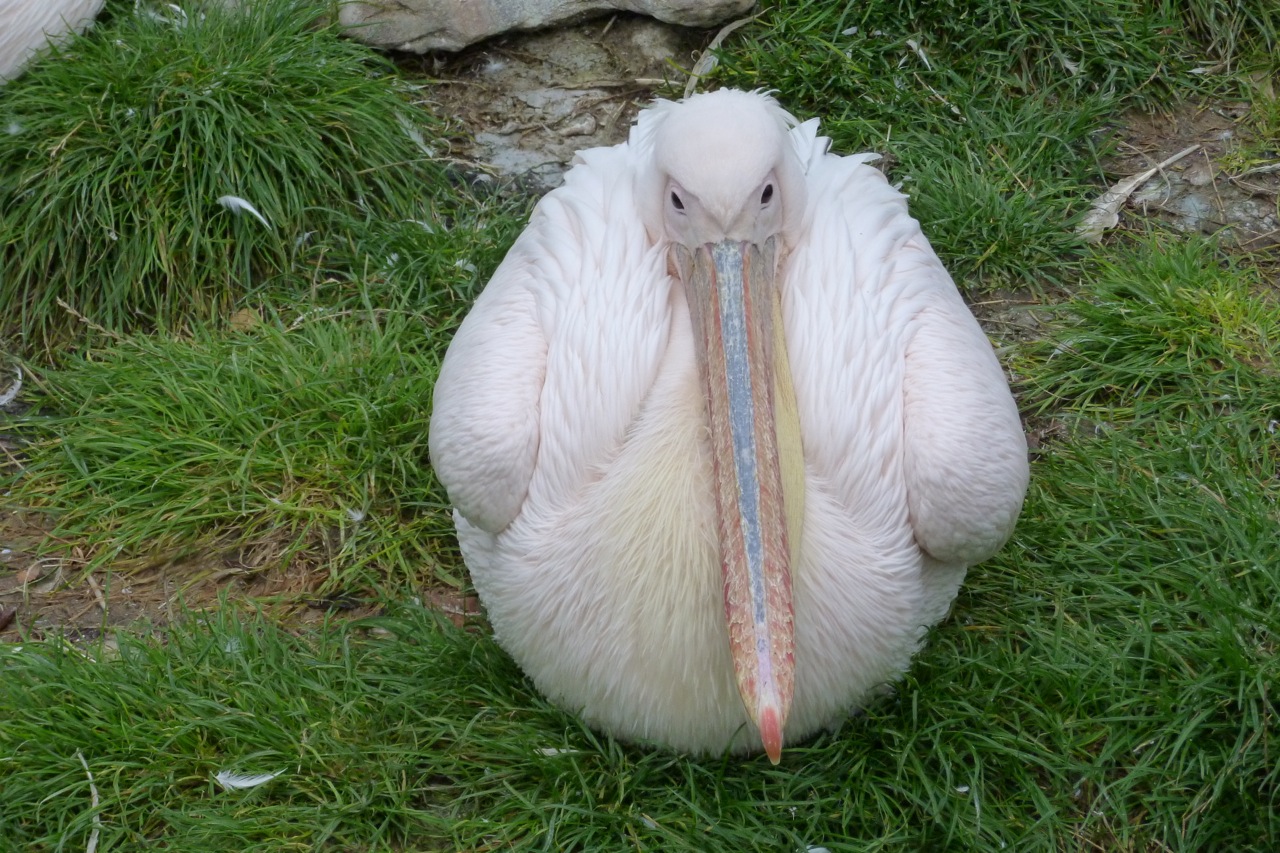
WHITE PELICANS (Pelicanus)

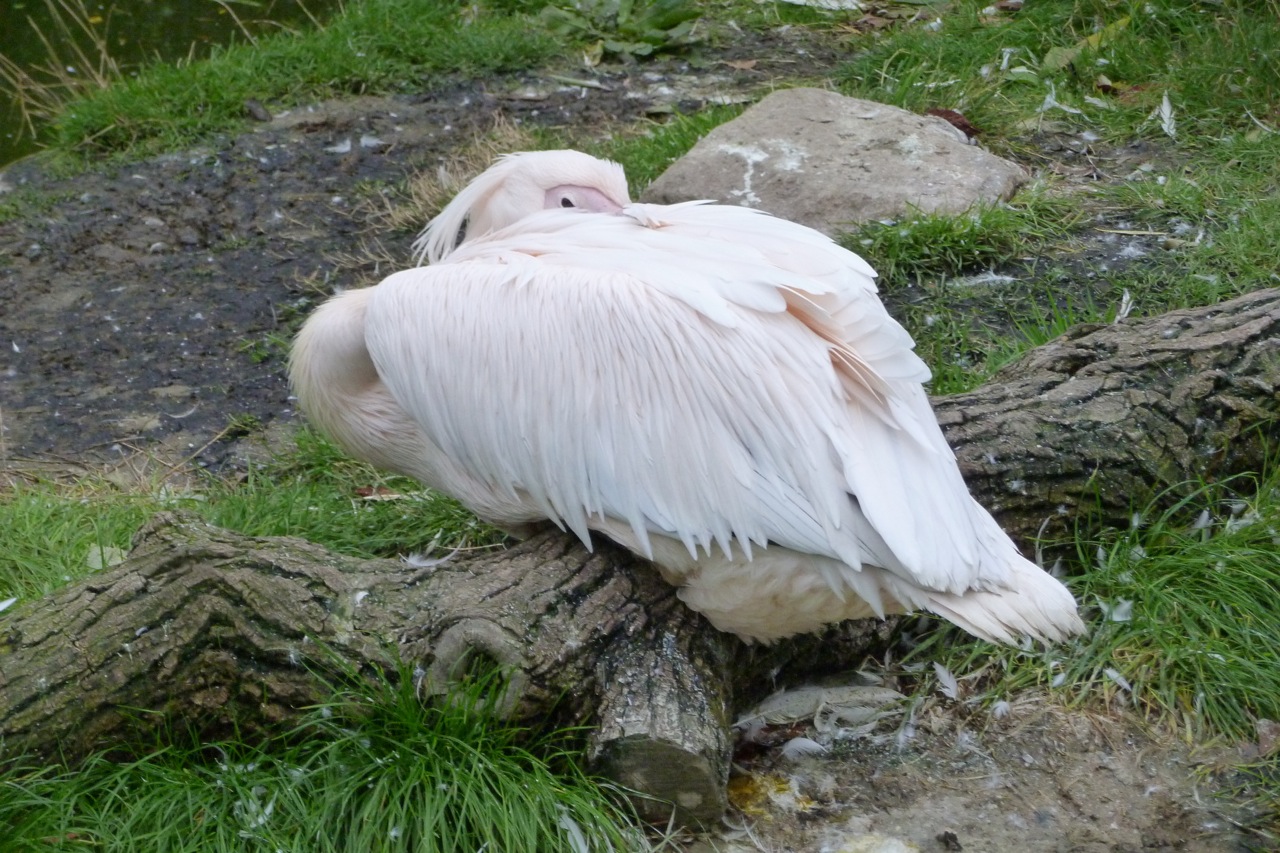
The birds below are American White Pelicans, not the Brown Caribbean Pelican familiar in the Bahamas. This isn’t a real cheat, however, since these birds are listed (in some sources at least) as ‘accidentals’ in the Bahamas. These’s always the chance that you might see a stray one. And if anyone has – especially if they have a photo – I’d be most interested to know.

Unknown's avatar

‘PARROTS OF THE BAHAMAS’: ABACO PARROT PAINTINGS BY ANTONIUS ROBERTS


‘PARROTS OF THE BAHAMAS’

A SERIES OF ABACO PARROT PAINTINGS BY ANTONIUS ROBERTS

The wonderful parrots of Abaco are often featured hereabouts, and with good reason. They are the only subspecies of cuban parrot to nest underground, a unique species adaptation that protects them from fires in the pine forest of the ABACO NATIONAL PARK where they breed. However this in turn makes them vulnerable to predation. An intensive long-term conservation and predation-reduction program headed by scientist Caroline Stahala has reversed the decline of this iconic bird. Numbers have increased from fewer than 2500 some years ago to an estimated 4000. 

There are places on Abaco – south Abaco in particular – where the parrots congregate in noisy groups during the day. Many people manage to take photographs of them. Good photographers with a decent lens can get outstanding results. Even the camera-incompetent (I hear my name!) can manage the occasional first-class photo, given time and plenty of spare space on the camera card… But very few can do justice to these colourful birds in paint.

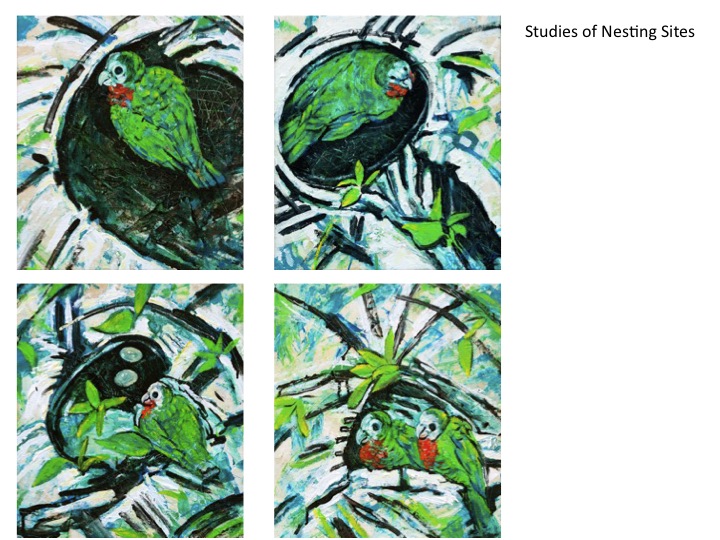
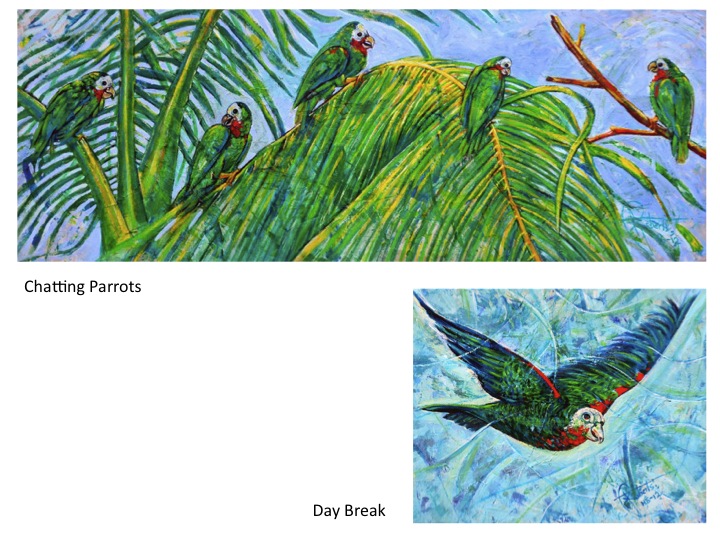
The spectacular series of paintings below are by well-known Bahamian artist and sculptor Antonius Roberts. Caroline has already posted about these on the ABACO PARROT RESEARCH F/B page. The originals of these paintings have (unsurprisingly) been sold, but they are available as limited-edition prints. Antonius will generously be donating proceeds of sale from the series to support the on-going parrot research. The images are ©Antonius Roberts – thanks to him and to Caroline for use permission

A recent reception was held in Nassau to showcase this series of paintings. You will find more about them by clicking the link to open a pdf of the reception brochure ABACO PARROT PAINTINGS Caroline Stahala contributed an excellent one-page article about the Abaco Parrots and their conservation – click on it to enlarge to legible size

Contact Antonius via email to hillsidehousebs@gmail.com or check out his website by clicking the parrot

Unknown's avatar

HAIRY WOODPECKERS IN THE ABACO COPPICE


HAIRY WOODPECKERS IN THE ABACO COPPICE

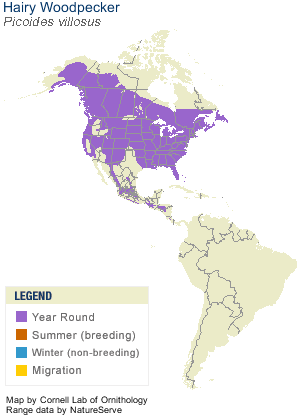
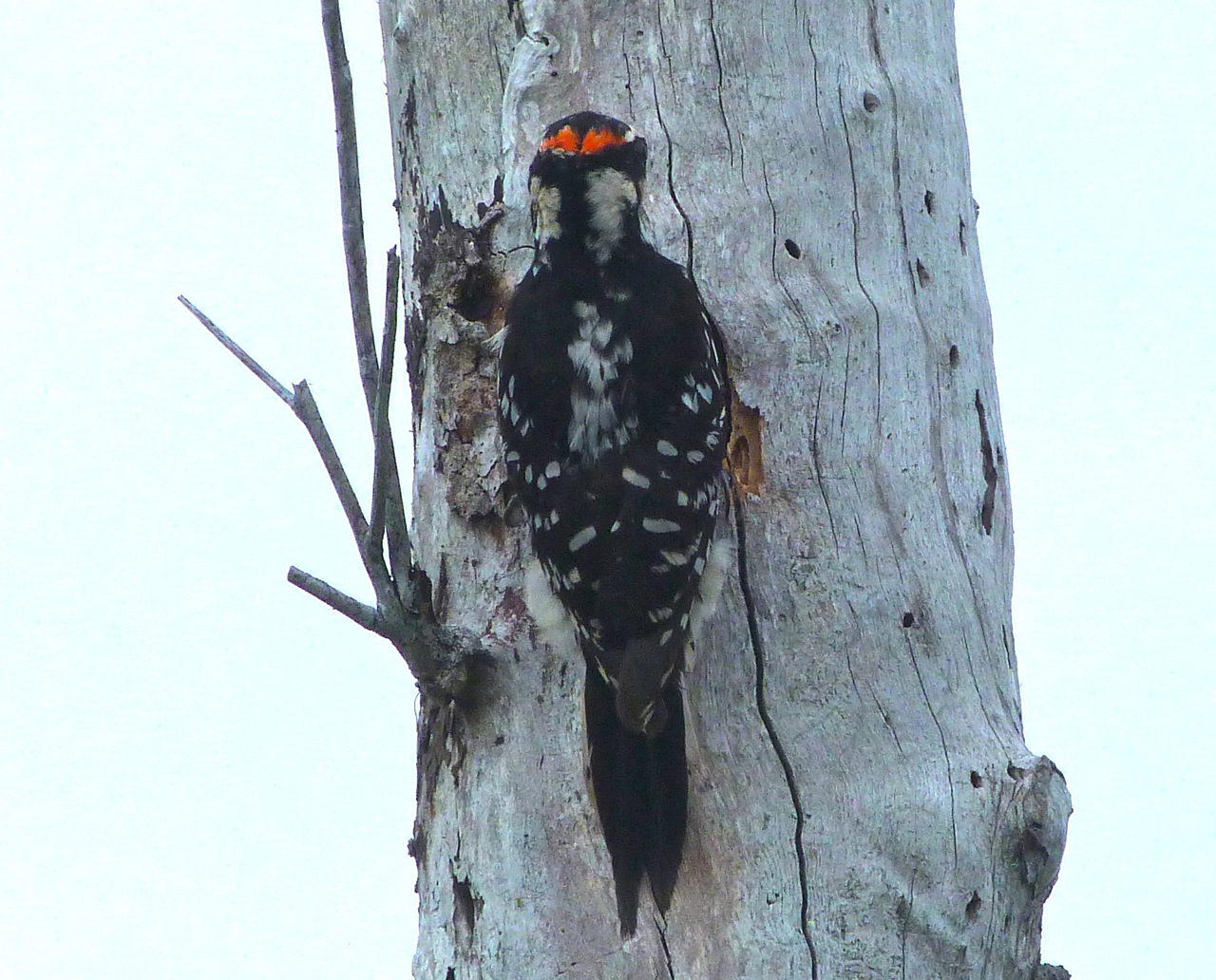
The hairy woodpecker (Picoides villosus) inhabits forest, woodland or coppice over a wide area of the North American continent and the islands to the east, including the Bahamas. They are mostly permanent residents, though there is a degree of migration within their territorial area.

They are a very familiar sight on Abaco, along with their larger cousins the West Indian Woodpecker. These birds forage on trees for insects, turning over bark or excavating deeper. They also feed on fruits, berries and nuts. It’s not unusual for them  to attack the woodwork on houses in a search for bugs…

This male hairy woodpecker is prospecting a promising hole near the Delphi Club guest driveThe marks at the bottom of the hole suggest this may be a nesting hole – past, present or futureIt’s certainly deemed worth further investigation… if only he had someone to share it with

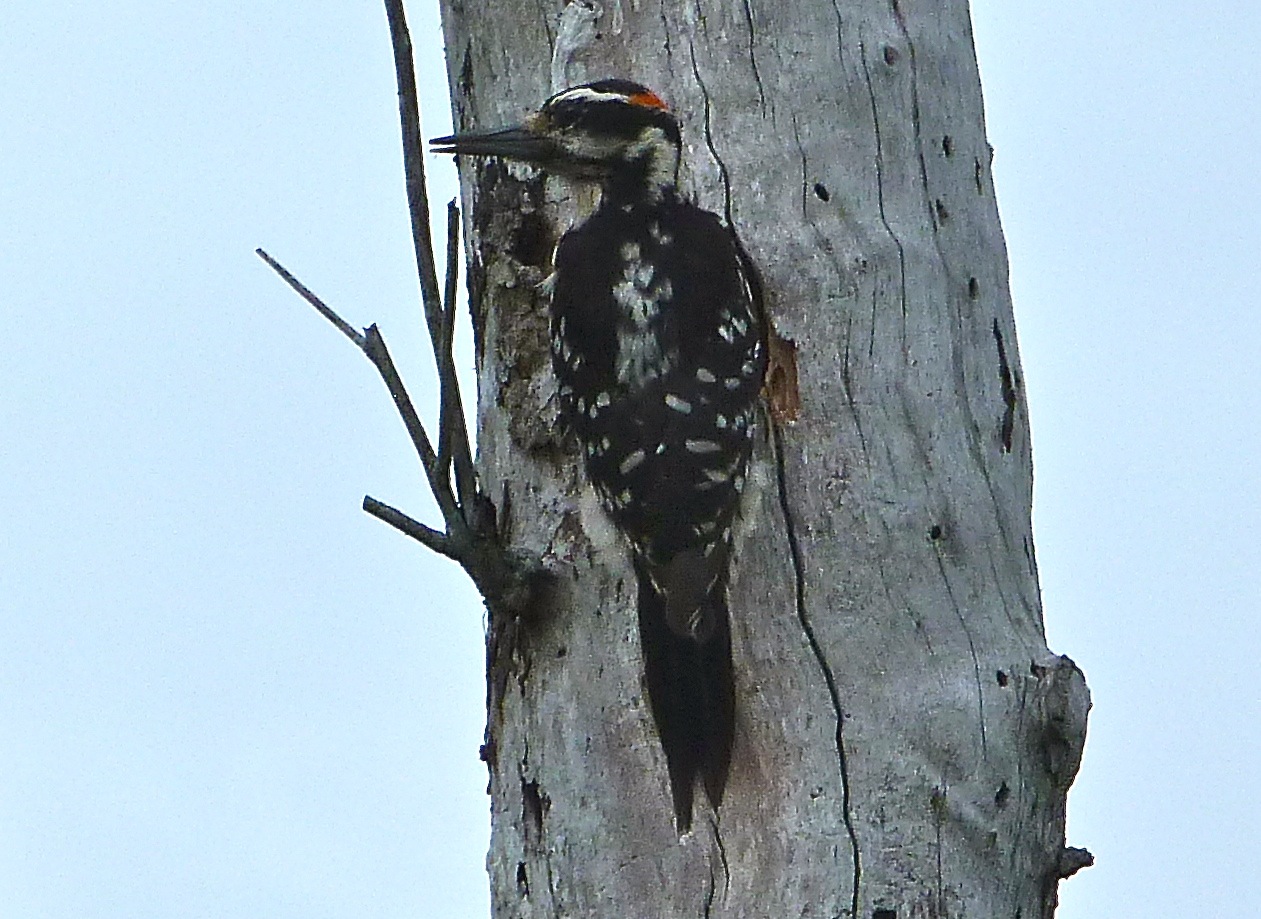
He may be in luck! This female hairy woodpecker was in the coppice not far away… A female HW is smaller than the male and lacks the male’s distinctive red head marking. They nest in a tree hole like the one above, where the female usually produces four white eggs. 

Unknown's avatar

BEDRAGGLED ABACO PARROTS, & AN AMERICAN KESTREL TAKES OFF…


BEDRAGGLED ABACO PARROTS, & AN AMERICAN KESTREL TAKES OFF…

It’s a fine June day. Perfect for a morning out with Ricky Johnson, the omniscient leader of  ABACO NATURE TOURS. Want parrots? He’ll take you to them. Want a Bahama Woodstar ‘pished’ from its deep cover into the open? He’s your man. And as for wrassling land crabs – see LANDCRAB and LANDCRAB: THE SEQUEL We set off from the Delphi Club in sunshine and hope…

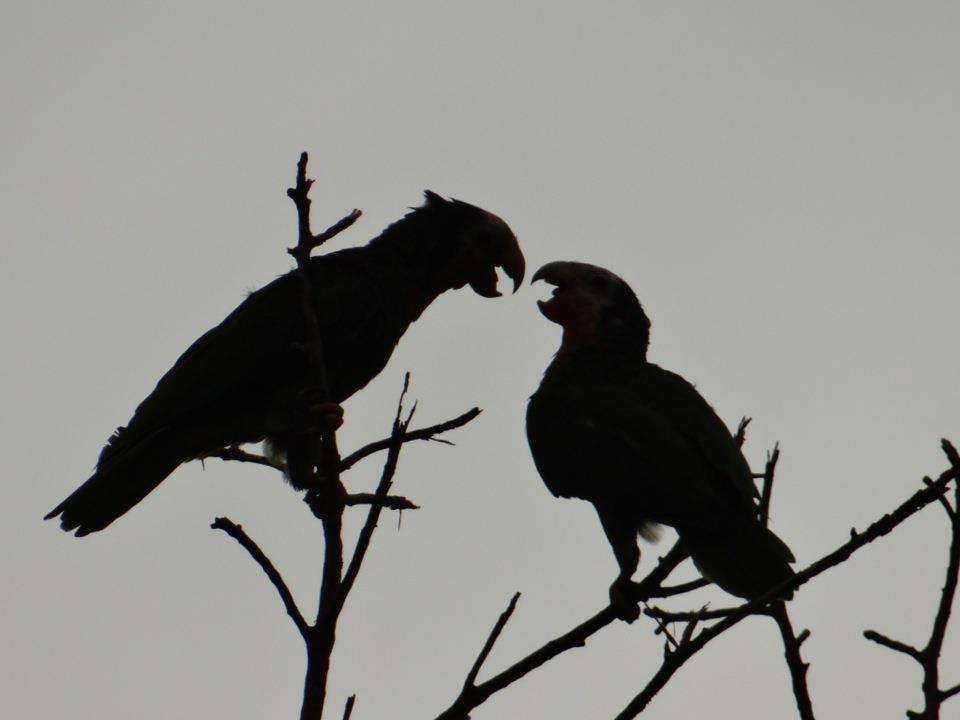
Sure enough, we found the parrots at Bahama Palm Shores, so often a good bet. This was (Ricky said) a non-breeding flock, the breeders all being otherwise detained in the National Park with their nests and eggs. Out of nowhere, a sudden short, sharp downpour arrived, and 5 minutes later, everything – everyone – was soaked. And so, of course, were the parrots. At first I discounted the resulting photos for use. These lovely, rare birds are made to be seen in their bright cheerful livery of green, red and blue. These wet ones looked… black. I usually try to avoid doing much (or any) ‘work’ on my photos, but for these I tried changing the contrast a bit and realised that they looked rather appealing with their dark, damp feathers and unkempt appearance. So I’ve decided to use a few images. Here they are, then: some sodden parrots!

While we were damply watching the parrots, Ricky spotted an American Kestrel near the top of a tree. Heads swivelled. It was some way away, but we could see it looking a bit dejected, huddled in the palm fronds. Then suddenly, just as I pressed the camera button, the kestrel stretched itself upright, raised its wings, and launched itself into the sky. The two photos below are frankly of marginal quality (on a high “blur setting”, as you might say) but the second one has caught the rain-drenched kestrel’s take-off about as well as a point ‘n’ shoot at that distance could… 

Unknown's avatar

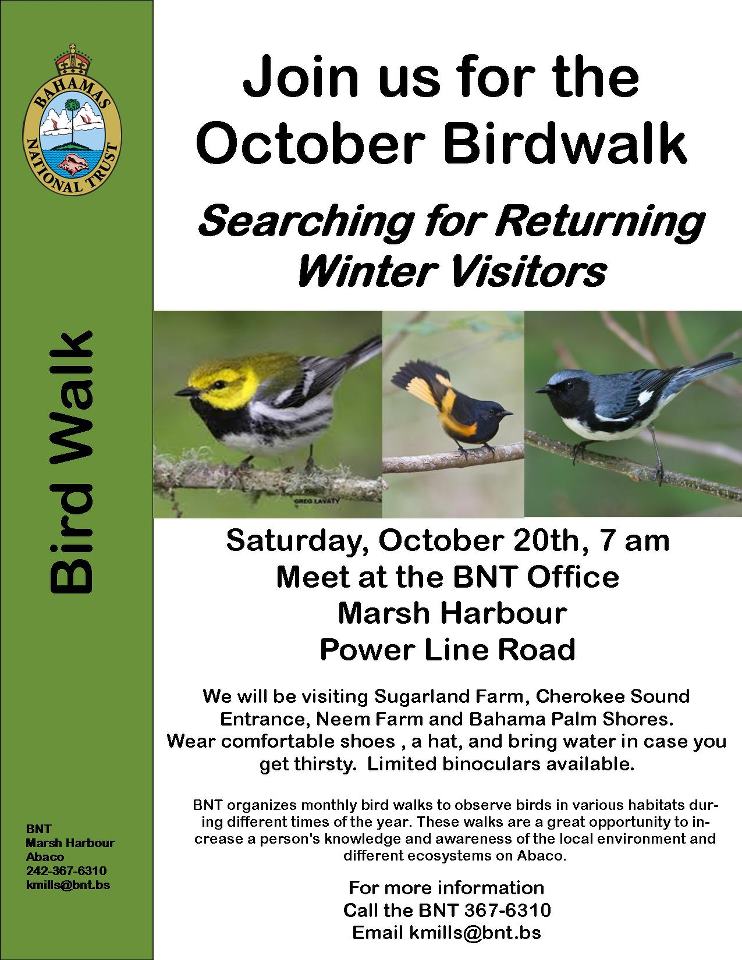
ABACO BIRDWALK WITH THE BAHAMAS NATIONAL TRUST – OCTOBER 20th


ABACO BIRDWALK WITH THE BAHAMAS NATIONAL TRUST – OCTOBER 20th

This sounds a lot of fun, and I wish I could be taking part. I’ve never been on Abaco in the autumn when the winter migrants start to arrive as the weather cools in their summer breeding grounds. It must be exciting to see the various species gradually reappear after their summer break, presumably with all the young birds born this year that will see Abaco (and the feeders!) for the first time. If any blog-follower goes on the expedition and happens to keeps a birding record, I would love to know which species you have seen . And if anyone gets some good pics, likewise…

Unknown's avatar

ABACO BIRD ID CHALLENGE (FOR NON-EXPERTS): THE SOLUTION


ABACO BIRD ID CHALLENGE (FOR NON-EXPERTS ONLY): THE SOLUTION

This small bird (Oh. I’ve given away the size already) was photographed in June. I was looking through a batch of downloaded photos recently. When I saw it again, I knew at once which bird species it belonged to – but not the specific make. I did some research and came up with the answer. I’d nailed the ID – or thought I had. The photo was a long shot which I had to enlarge to see the markings more clearly, hence a lower overall quality. I sent the jpeg to an officially  avian-knowledgeable person for confirmation (hi, Alex!). The reply was swift. No, not the bird ‘swift’, I mean it was quick. It turns out that I was, as so often, completely wrong. Barking up the wrong tree. Chirping in the wrong nest. Perched on the wrong branch…

I’d say there are two definitely plausible candidates, and you may even think of others. So what bird is it? You can click on it to enlarge it. Please join in and give your answer using ‘leave a comment’ (tiny letters at the end of this post) or email rollingharbour.delphi@gmail.com  Or, if you are seeing this on Facebook, please reply on that.

UPDATE Thanks for emails. Opinion is divided, but one of the 2 candidates is definitely ahead… I’ll leave this over the weekend

SOLUTION Of the few replies, most were right. One or 2 were (wrongly) with me – I reckoned it was a SWAINSON’S WARBLER. No one suggested turkey vulture. The correct ID, and the reasons for it, were provided by Alex Hughes, to whom thanks: “The first bird is a BLACK-WHISKERED VIREO.  The black supercilium going through the eye and the heavy bill are good marks, which can resemble a Swainson’s Warbler, but a clinching mark here is the yellow wash underneath the tail at the rear of the bird”.

While I am dealing with mystery birds, I posted photos of a very sweet little JUVENILE  BANANAQUIT about a month ago. At the end I added a photo, which again has since been positively identified (thanks again, Alex)

“Finally, this bird was a distance shot. At the time, it looked larger than a bananaquit – more Loggerhead Kingbird-sized. Before I had downloaded the image and could see it clearly [rather than on the screen on the back of the camera], I’d wondered about a mangrove cuckoo. Then I saw at once that it didn’t tick the right boxes. So I decided it must just be a huge bananaquit with an orange rather than yellow front. If it’s anything else (a rare hybrid spindalisquit?), please say so!” It is a indeed bananaquit, but in my limited experience I have never seen one with a spindalis-orange front. Can anyone say if that is a common colouring on Abaco, or unusual?

Unknown's avatar

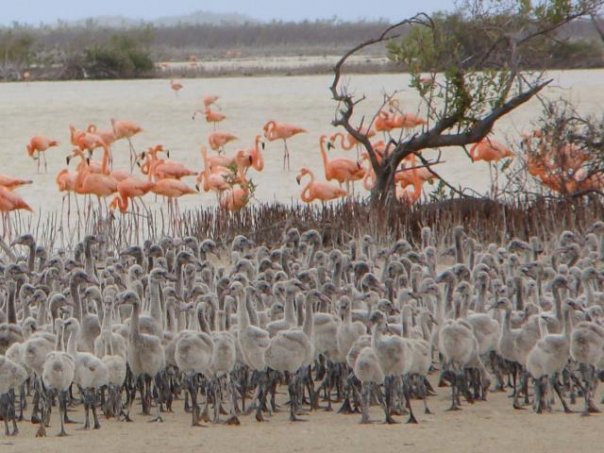
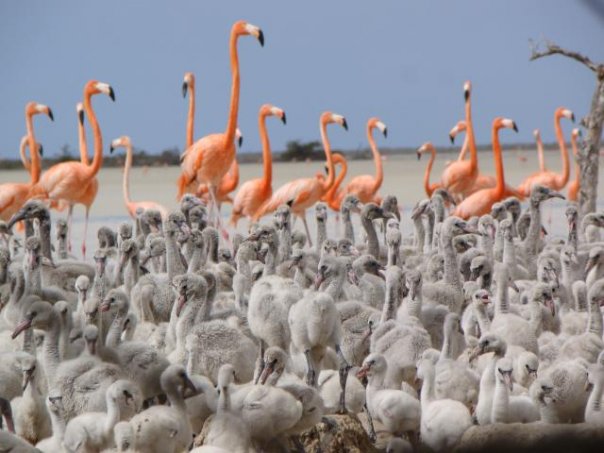
FLAMINGO BREEDING SEASON ON INAGUA, BAHAMAS with MELISSA MAURA


FLAMINGO BREEDING SEASON ON INAGUA, BAHAMAS with MELISSA MAURA

Flamingos. The national bird of the Bahamas, featured in the nation’s Coat of Arms. But sadly no longer available to view on Abaco**, despite sporadic attempts to reintroduce them as breeding birds on the island (the last, I believe, about 15 years ago). By the end of the c19, numbers were already small. During his field trip in 1886, naturalist F.H.Herrick noted “The rare flamingo is now reduced to a colony of a few hundred on Abaco, where, as I was informed by an old settler, they numbered thousands several years ago, and similarly the beautiful tropic bird, which is hunted chiefly for food, is being gradually exterminated”.

Ornithologist Charles Cory noted none on his visit to Abaco in 1891 (though he does seem to have been concentrating on smaller birds). In 1905, naturalist Glover M. Allen reported his Abaco findings in THE AUK Magazine, which I have summarised elsewhere: Of particular interest is… the apparently imminent loss of the flamingo (“fillymingo”) from the Northern Bahamas – a single colony only still surviving on the Abaco Marls by 1905″. There remained a breeding population on the Abaco Marls until the mid-c20, but they then appear simply to have died out there (and more generally in the northern Bahamas). 

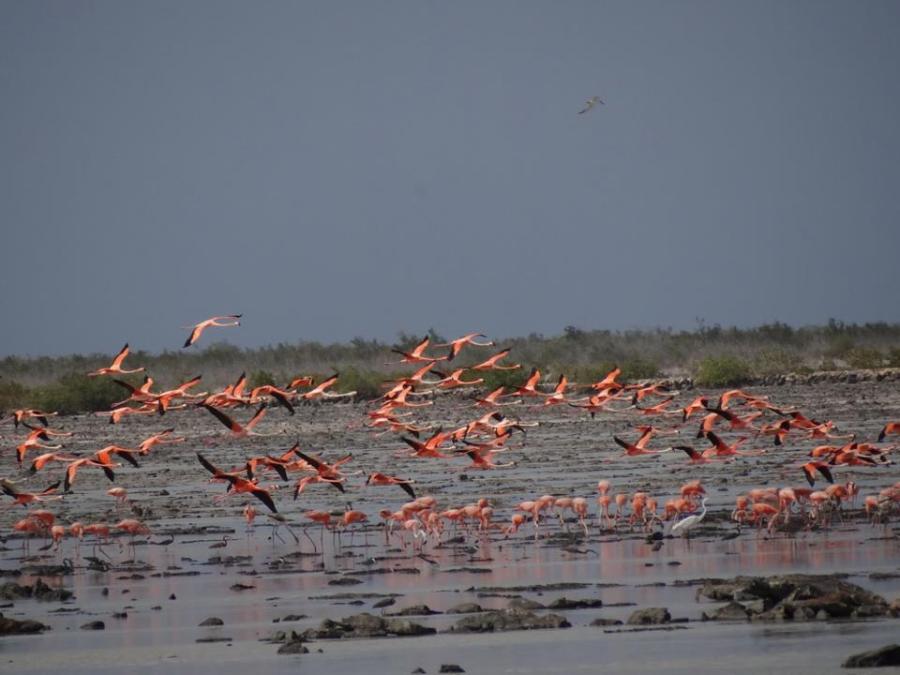
So to see these gorgeous birds, you will have to go elsewhere. Inagua, to be precise, where in the INAGUA NATIONAL PARK you will find the world’s largest West Indian flamingo colony (around 50,000 of them). Melissa Maura, whose superb photos of ABACO PARROTS I recently featured, visited Inagua during the 2012 breeding season, and took some wonderful photographs that she has kindly allowed me to use. They certainly deserve wider publicity. The collection below (©Melissa) shows adults in flight; adults standing around; the remarkable cup nests; and this year’s chicks… overall, a gallery of 50 shades of pink and grey…

** For the second time this week, nature has outshone mere bloggery. First, I wondered when a manatee might visit Abaco. Answer: right now! Georgie has taken her first long trip from her new home on the Berry Is to visit Abaco – see HERE. And now Sean Giery has responded to a link to this flamingo post on the excellent ABACO SCIENTIST website to say “I just saw my first flamingo last week flying over the beach at Crossing Rocks. It would be great to see them make a comeback on Abaco”. That’s a wonderful prospect.
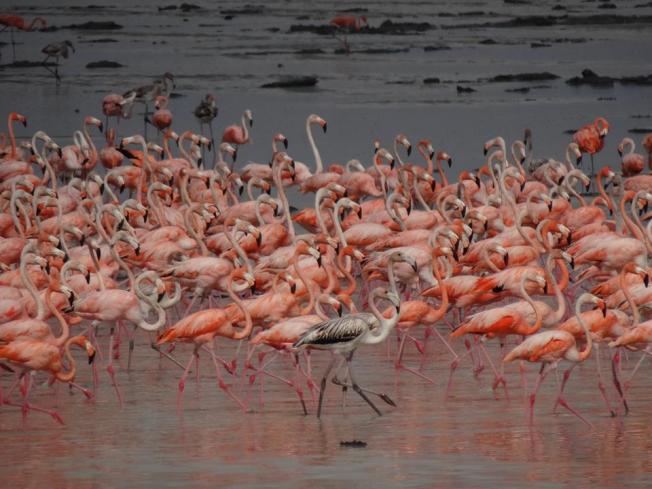
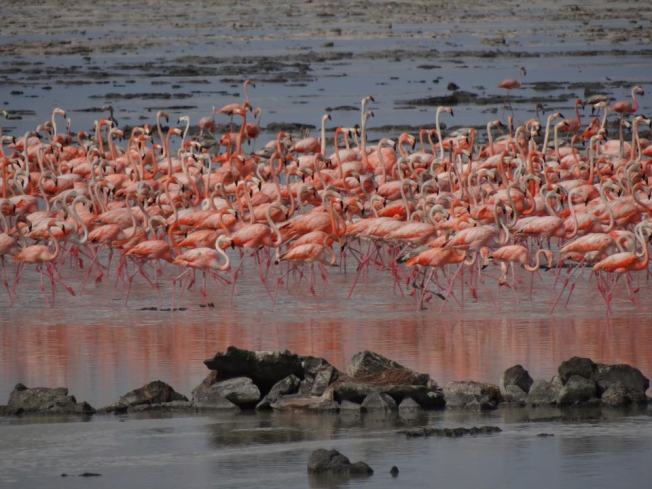
A brief clip of the sound of Caribbean Flamingos

[audio http://www.birdforum.net/opus/images/b/b8/Phoenicopterus_ruber_%28song%29.mp3]
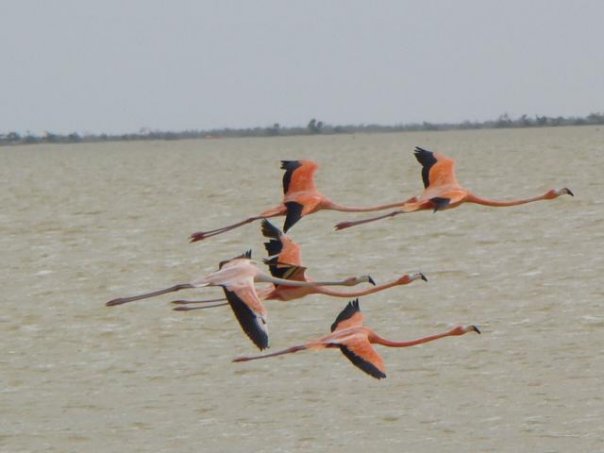
Please note: these photos are © Melissa Maura; please contact me if you want to use any of them…
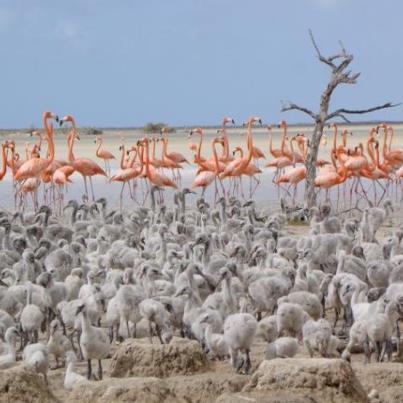
WEST INDIAN FLAMINGO Phoenicopterus ruber (BNT Article)

DESCRIPTION

The West Indian Flamingo is hardly one to get confused with other birds. Its long legs, long neck and characteristic pink colour make these birds like no other. The West Indian Flamingo has a large, heavy, down curved bill that is most often described by the layperson as “strange”. Adults can reach up to five feet in height.

HABITAT

Even though the Flamingo is a strong flier, it is really quite shy and prefers to live in remote and lonely places. Usually these are rather desert-like spots, dry islands and shorelines where salt is made, and where few other creatures can survive. The island of Great Inagua fits that portfolio perfectly. This is where the majority of West Indian Flamingos are found in The Bahamas. The flock breeds around Lake Windsor (Rosa) which lies within the boundaries of Inagua National Park.

DISTRIBUTION

The West Indian Flamingo which once roamed the entire neo-tropical region (tropical Americas) was hunted to a near extinction. Today the West Indian Flamingo is mostly found on the island of Great Inagua in the Bahamas but has also recolonized islands in the Bahamas such as Mayaguana, Crooked and Acklin islands, Exumas, Long Island and Andros.The West Indian Flamingo has also recolonized other countries such as Aruba; Brazil; Colombia; Cuba; Dominican Republic; Ecuador; French Guiana; Guyana; Haiti; Jamaica; Mexico; Netherlands Antilles; Suriname; Trinidad and Tobago; Turks and Caicos Islands; United States and Venezuela.

DIET

Flamingos are filter feeders and feed on the microscopic plants and animals found in ponds and mud. The larvae of the salt marsh fly is one of the major constituents of the diet of West Indian Flamingos. They also eat brine shrimp, small snails as well as other forms of animal and vegetable life so small that they can scarcely be seen without the aid of a microscope! Although small in size, this food is rich in a protein called beta-carotene which gives Flamingos their characteristic colour. Flamingos stir up their food from shallow water and separate it from the mud and water by pumping and straining it through their bill. They are the only birds which feed with their bill upside down!

REPRODUCTION

Flamingo breeding activity usually begins in early March when huge flocks gather and engage in elaborate and loud courtship displays. This is almost like a very large dance – the massed birds parade together shoulder to shoulder, preforming head flagging (waving the head from side to side), wing salutes (opening the wings to expose the black flight feathers) and the twist preen (twisting the neck over the back and pretending to preen itself whilst stretching out on of its wings. The chorus of courting birds can be heard miles away. This synchronized courtship dance stimulates the birds to breed at the same time, ensuring that the chicks are hatched around the same time.

When the courtship displays are all over the pairs are formed and the building of the nest mounds begins usually around April. Nests are built on the ground out of mud and are baked hard by the sun. The nest which resembles small volcanoes, can be from a few inches high to sometimes over two feet high a shallow crater at the top. This is where the single egg is deposited. Flamingos lay one white egg that is about twice the size of a hen’s egg. Both parents share in incubation which takes exactly 28 days to hatch.

Flamingo chicks look nothing like their parents. They are covered with a thick coat of white down and have pink bills and feet. Both parents feed the chick a secretion from the crop gland in the neck known as “flamingo milk” or “crop milk”. This “milk” is a concentration of fats and proteins (similar to mammals milk) and has a very high amount of beta-carotene making it a bright red colour. When they are about 30 days old the chicks have changed to a dark gray down and start to feed themselves but still eat from their parents if they can. By three months the chicks are fully grown and become a bright pink colour signalling that they are sexually mature to the rest of the colony.

STATUS

In the 1950’s it was thought that was hunted down to a small population of about 5,000 only on the island of Inagua, Bahamas. With the help of the National Audubon Society in the United States, the creation of the Bahamas National Trust and the appointment of park wardens, the Inagua population grew to approximately 60,000 – a true conservation success story. It also became illegal to harm or capture this bird under the Bahamas Wild Bird (Protection) Act. The IUCN redlist of threatened species lists the West Indian Flamingo as a species of Least Concern due to the fact that the population is currently expanding and increasing its range. However, The Convention on the International Trade of Endangered Species (CITES) lists the West Indian Flamingo in Appendix II which limits the exportation of the species as it can cause the species to become endangered.

THREATS

Natural threats: Building nests directly on the ground make Flamingos vulnerable to a number of predators. The eggs can be trampled by wild donkeys and boar that roam freely in the same area where Flamingos live and nest.

Hunting: As flamingos only bare one chick a year, it makes them vulnerable to over exploitation. Although Flamingo meat is eaten in other Caribbean countries, it is illegal to harm, capture or kill the Flamingo in The Bahamas.

Historical Threats: The Flamingo was hunted for its big, pink feathers that were used to decorate hats and other nonessential items. Low flying planes of World War II over Andros wreaked havoc on the Flamingo population. This noisy disturbance drove these shy birds away- so much so that their return was doubtful.

INTERESTING FACTS

The Flamingo is the national bird of The Bahamas.
The West Indian Flamingo is also refered to as the American, Caribbean or Rosey Flamingo.
There are a total of 6 species of flamingos in the world. The other species are Andean Flamingo (Phoenicoparrus andinus), Chilean Flamingo (Phoenicopterus chilensis), Greater Flamingo (Phoenicopterus roseus), Lesser Flamingo (Phoeniconaias minor), Puna (James’s) Flamingo (Phoenicoparrus jamesi).
The Greater Flamingo is closest related to the West Indian Flamingo. Despite the Greater Flamingo being a larger size and considerably less brightly coloured, some authorities consider them the same species but different sub-species.


Unknown's avatar

BOBOLINKS: MIGRATORY SONGBIRDS OF ABACO & THE BAHAMAS


BOBOLINKS: MIGRATORY SONGBIRDS OF ABACO & THE BAHAMAS

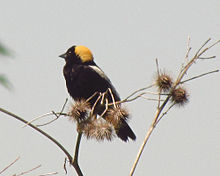
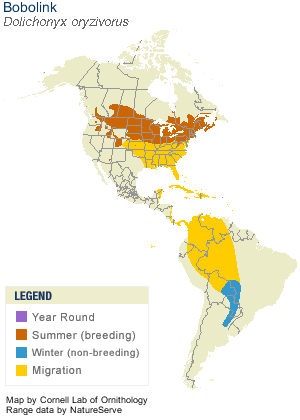
Occasionally vacation plans disrupt the flow in the smoothest of operations. A smear of suntan cream in the well-oiled machinery of a blog. Or a well-oiled operator over-sampling the local produce – wine, in these parts. So it pays to follow the Blue Peter principle of ‘Here’s one I prepared earlier’. Except regrettably I didn’t do it properly and have been struggling to unpick some html on an iPhone. Don’t ever try it. Luckily the ever-resourceful Mrs RH brought an iPad along. Much less fiddly. So I am now able to feature the BOBOLINK (Dolichonyx oryzivorus), a small New World blackbird

14 ESSENTIAL BOBOLINK FACTS TO ENTERTAIN YOUR FAMILY & FRIENDS

  • Adults weigh about 1 ounce (28 g)
  • The collective name for a group of Bobolinks is a ‘chain’
  • One bird was tracked flying 12,000 miles (19,000 km) in one year
  • A bobolink has been tracked covering 1,100 miles (1,800 km) in one day
  • The birds migrate in flocks, feeding on cultivated grains and rice, which may annoy farmers
  • Despite their flying stamina Bobolinks have rarely been sighted in Europe

  • In South American they are known as “ricebirds”
  • In Jamaica they are sometimes eaten and are called “butterbirds”
  • Bobolinks forage on or near the ground eating seeds and insects.
  • Their breeding habitats are open grassy fields across North America
  • Males are often polygynous, and take their vows shamefully lightly
  • Females lay 5 to 6 eggs in a cup-shaped nest on the ground, hidden in dense vegetation
  • Both parents feed the young, except when the male has some important singing to do (often)
  • Although currently rated “of least concern” their numbers are declining due to loss of habitat

WAYS IN WHICH THE BOBOLINK HAS INSPIRED ARTISTS (despite its unpromising name)

Emily Dickinson wrote several poems about the bird, including “The nicest bird, I always think / Is the tiny Bobolink / To me, it never had occurred / Thus to name a songstrel bird” *

The Bobolink is also mentioned in a song called Evelina, from a musical called “Bloomer Girl” (me neither): “Evelina, won’t ya ever take a shine to that moon? / Evelina, ain’t ya bothered by the Bobolink’s tune?”**

The Bobolink is name-checked by Nabokov; in a poem by Sophia Jewett, An Exile’s Garden (1910); and it has a fly-on part in a film “The Mouse on the Moon”

Finally, a wonderful video showcasing the bubbling song of the bobolink (Credit: Themusicofnature)

* and ** I can’t be sure which of these is made up. Maybe neither. Or both.

Unknown's avatar

ABACO PARROTS: A FLAMBOYANT PHOTO GALLERY BY MELISSA MAURA


ABACO PARROTS: A FLAMBOYANT PHOTO GALLERY

BY MELISSA MAURA

I have been planning a Parrot Post for a while, but I’d like to be able to include a report on the breeding season – the eggs, the chicks, the fledging, the ringing, and the overall picture. It will be interesting to see if the recent trend of improvement in the population of these rare ground-nesting parrots has continued this year. Parrot expert Caroline Stahala, who leads the research and field work, is completing the season’s review, so there will be news, photos and perhaps short videos soon.

In the meantime, I have had a request from the US for news of the parrots. This has fortunately coincided with my discovery of some wonderful parrot photos taken by Melissa Maura [©] of Nassau. Most were taken on Abaco at Bahama Palm Shores; some at Winding Bay. So here is a gallery of Melissa’s work, which needs no other comment from me than… superb pictures! Oh, and many thanks for use permission, of course. The next photo is worthy of a caption competition – all suggestions welcome via the ‘Comment’ link below…

OVER THE MOON…

Unknown's avatar

“GLIMPSES OF LIFE ALONG A CORAL REEF” A c19 NATURALIST VISITS ABACO


GLIMPSES OF LIFE ALONG A CORAL REEF by F. H. HERRICK

This post is aimed at those with a particular interest in the flora and fauna – especially avifauna – of Abaco and its Cays. It is a naturalist’s account from 1886 of an expedition to Abaco, interspersed with a few line drawings. It’s an easy read if you are interested in Abaco, its history, and the state of natural life on the islands 125 years ago. Those who have come to this site for the photos and / or even the occasional jest are warned to expect neither. However, to tempt waverers I’ll highlight below (by way of a quiz) some intriguing aspects of the 9-page article. I have had to edit it to correct the many ‘literals’ in the open-source material; however the c19 spellings are retained. I’ve also added coloured subject-matter codes as follows: PLACE NAMES; BIRDS; PLANTS; FISH; CREATURES

In 1886, Herrick visited Abaco with a party of naturalists. This trip predated by 3 years the publication of Charles Cory’s groundbreaking ‘Birds of the West Indies‘. There would have been scant readily-available published material about the natural history of the Bahamas, let alone of Abaco itself. Herrick and a friend left the main party and went on their own wider explorations of Abaco with two local guides. Herrick recorded their findings, which were subsequently published in ‘Popular Science Monthly‘ in 1888. In Herrick’s wide-ranging account of the adventure you will find the answers to the following 15 questions. If any one of them whets your appetite to read this historic account, press the link below the quiz!

  • What fruit might you have found growing in fields on Abaco in 1886?
  • What was the local name for the perforated rock at Hole-in-the-Wall?
  • What is an “egg-bird”?
  • What was causing “the gradual extermination” of flamingos?
  • What were “shanks” and “strikers”?
  • To what human use were Wilson’s Terns put?
  • How many eggs does a tropic-bird lay?
  • What law prevented the shooting of tropic-birds, and indeed any other bird, by naturalists?
  • What sort of creature is a “sennet”?
  • Which was rated the better for eating – grouper or ‘barracouta’ (sic)?
  • Who or what is or are “grains”?
  • What common creature had a burning touch like a sharp needle?
  • What bird was reckoned to have the call ‘loarhle-ee’ ?
  • What – or indeed who – was described as a “pilepedick”?
  • What creature laid 139 eggs?

ABACO NATURAL HISTORY Popular Science Monthly Volume 32 January 1888

Unknown's avatar

ABACO BANANAQUITS – MORE DISPATCHES FROM ‘CUTE BIRD’ CENTRAL


A couple of months back I posted about Bananaquits on Abaco – specifically, at the Delphi Club. I featured images of a recently fledged bird, still with its ‘too big for my face’ orange-based beak. You’ll find other bananaquit information there, including audio of their call. I won’t repeat it all here – to see that post CLICK BANANAQUIT 

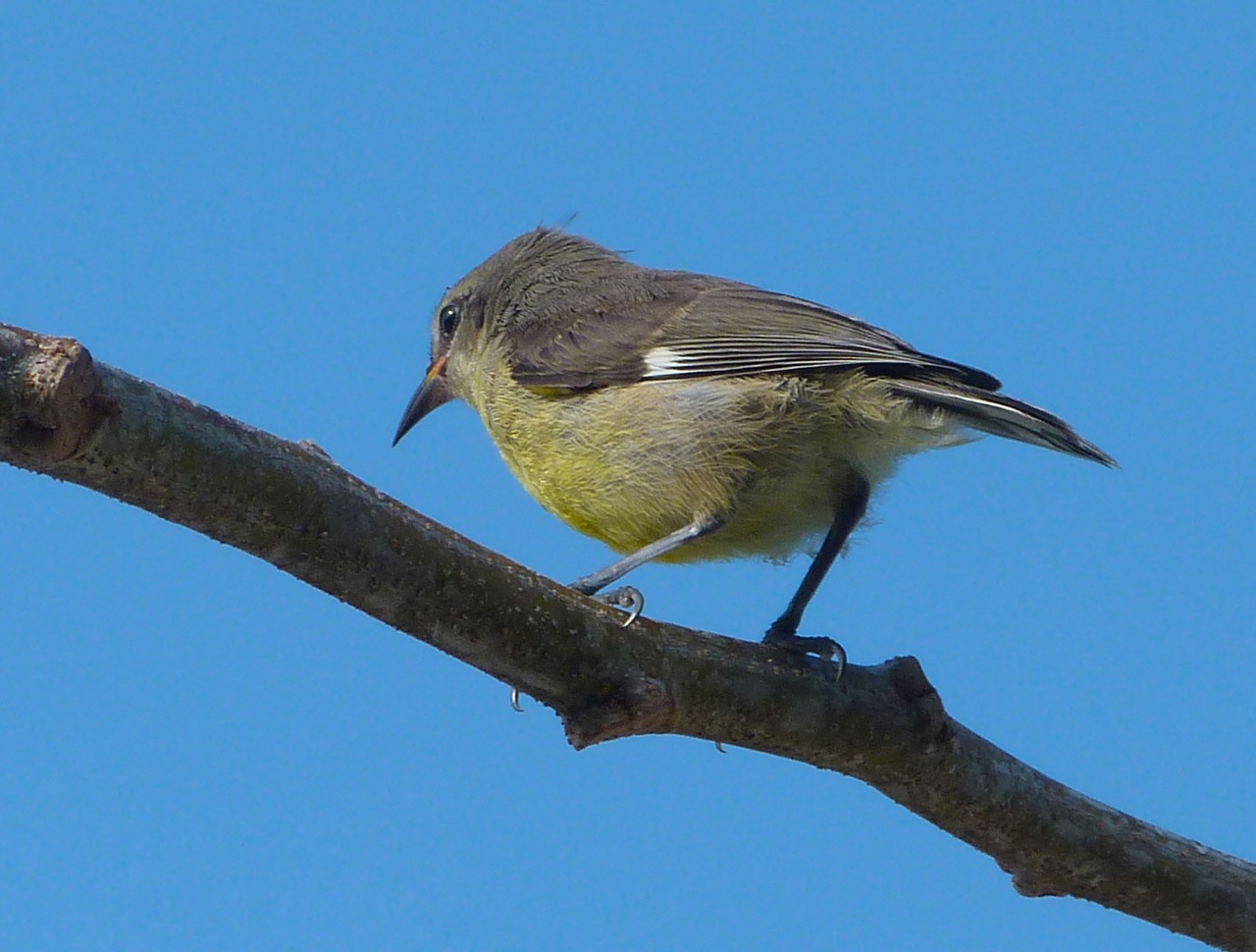
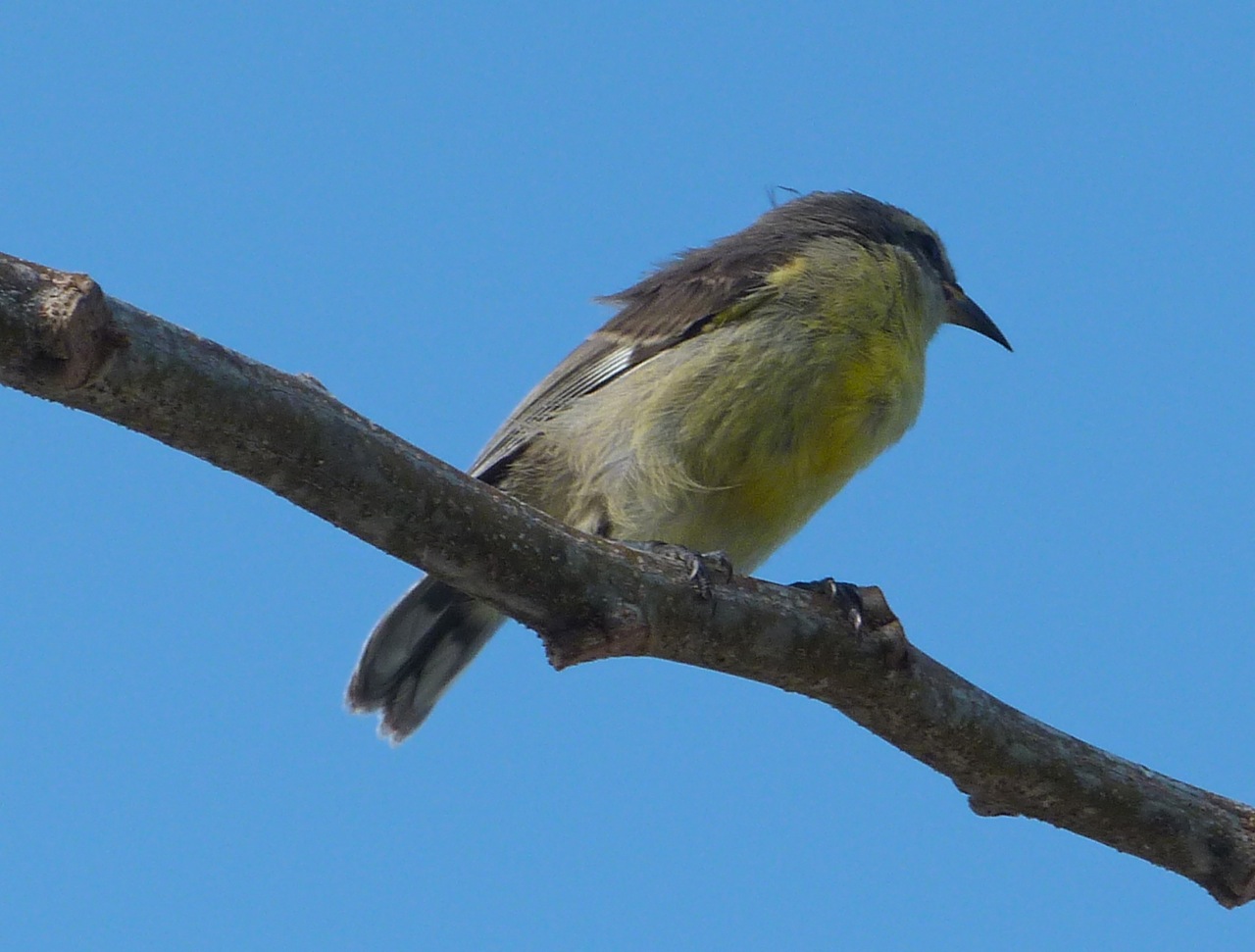
The small bird below looks like a slightly older juvenile – an early teen, let’s say, before the troublesome stage. There’s something very sweet about its feathers. It’s still more like fluff. This one is growing into its beak, which has also lost the very bright orange at the base.

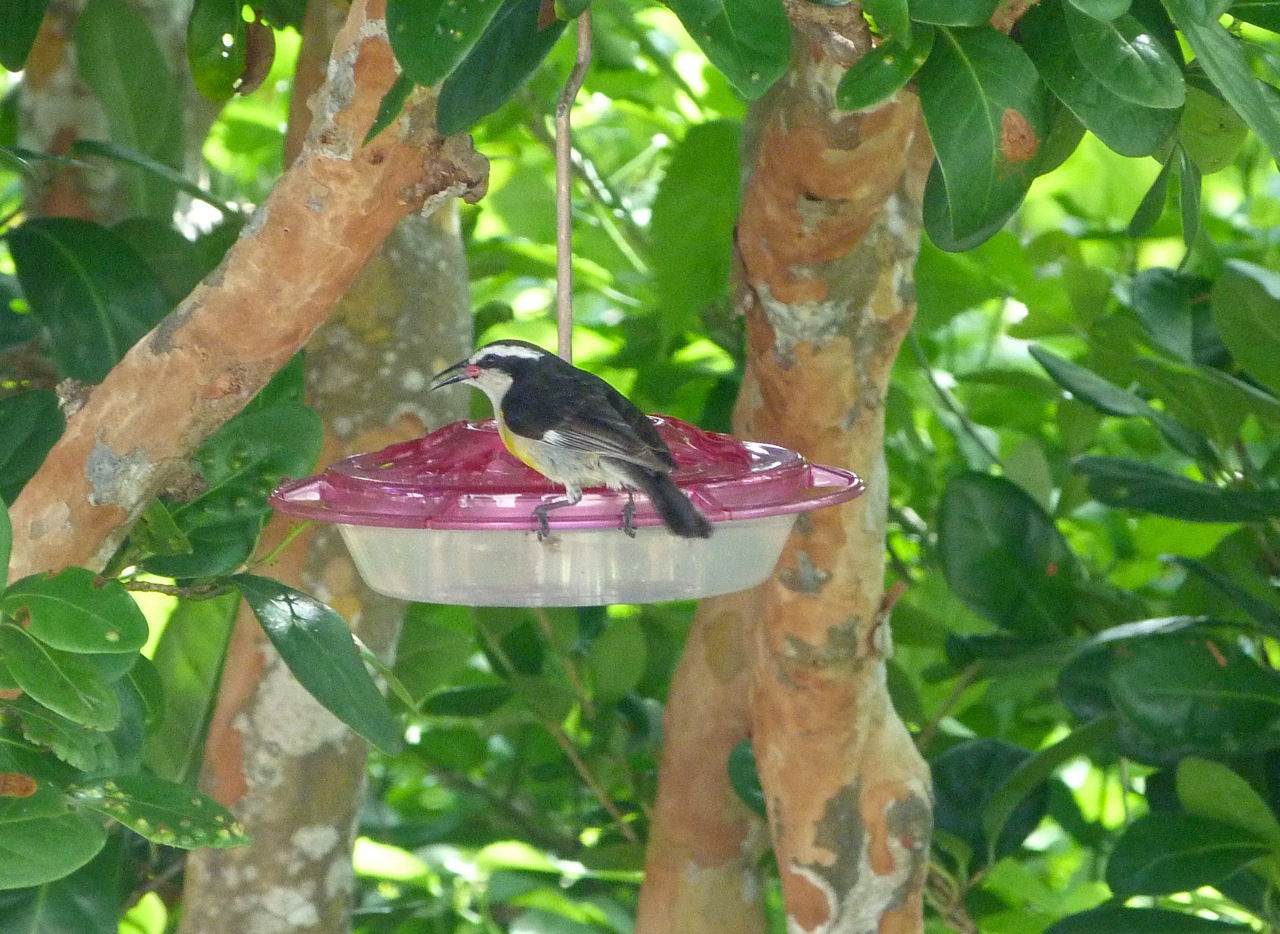
This handsome adult was a regular at one of the feeders at Delphi. The base of its beak is red as opposed to orange (I don’t know the technical term  for this bird part. Is ‘mouth’ too simple? Someone tell me, by all means, via the comment  box). Bananaquits enjoy the hummingbird feeders, which their narrow curved beaks seem to manage. There, they are not pestered by the (very greedy) black-faced grassquits and the larger Greater Antillean Bullfinches who enjoy the other types of feeder available and take priority in the pecking order.

Finally, this bird was a distance shot. At the time, it looked  larger than a bananaquit – more Loggerhead Kingbird-sized. Before I had downloaded the image and could see it clearly, I’d wondered about a mangrove cuckoo. Then I saw at once that it didn’t tick the right boxes. So I decided it must just be a huge bananaquit with an orange rather than yellow front. If it’s anything else (a rare hybrid spindalisquit?), please say so!

Unknown's avatar

LAUGHING GULLS ON THE ABACO MARLS


LAUGHING GULLS ON THE ABACO MARLS

Laughing gulls. Amusingly raucous and raucously amusing. Unless, maybe, you are living right next to a breeding colony during a collective fit of hysterics. These gulls, Leucophaeus atricilla, will be familiar to anyone on the Atlantic coast of North America; in the Caribbean; and further south to the northern coastal areas of South America. In winter, their migration pattern simply involves relocating to the southern parts of their range. They are easily recognisable in the breeding season by their smart black caps, though this fades in winter. And by their unmistakeable call, of course. Immature birds tend to be darker than adults. They breed in large colonies, each female laying 3 – 4 eggs. And like most (all?) gulls, they’ll eat pretty much anything.

Laughing Gull Conservation Status

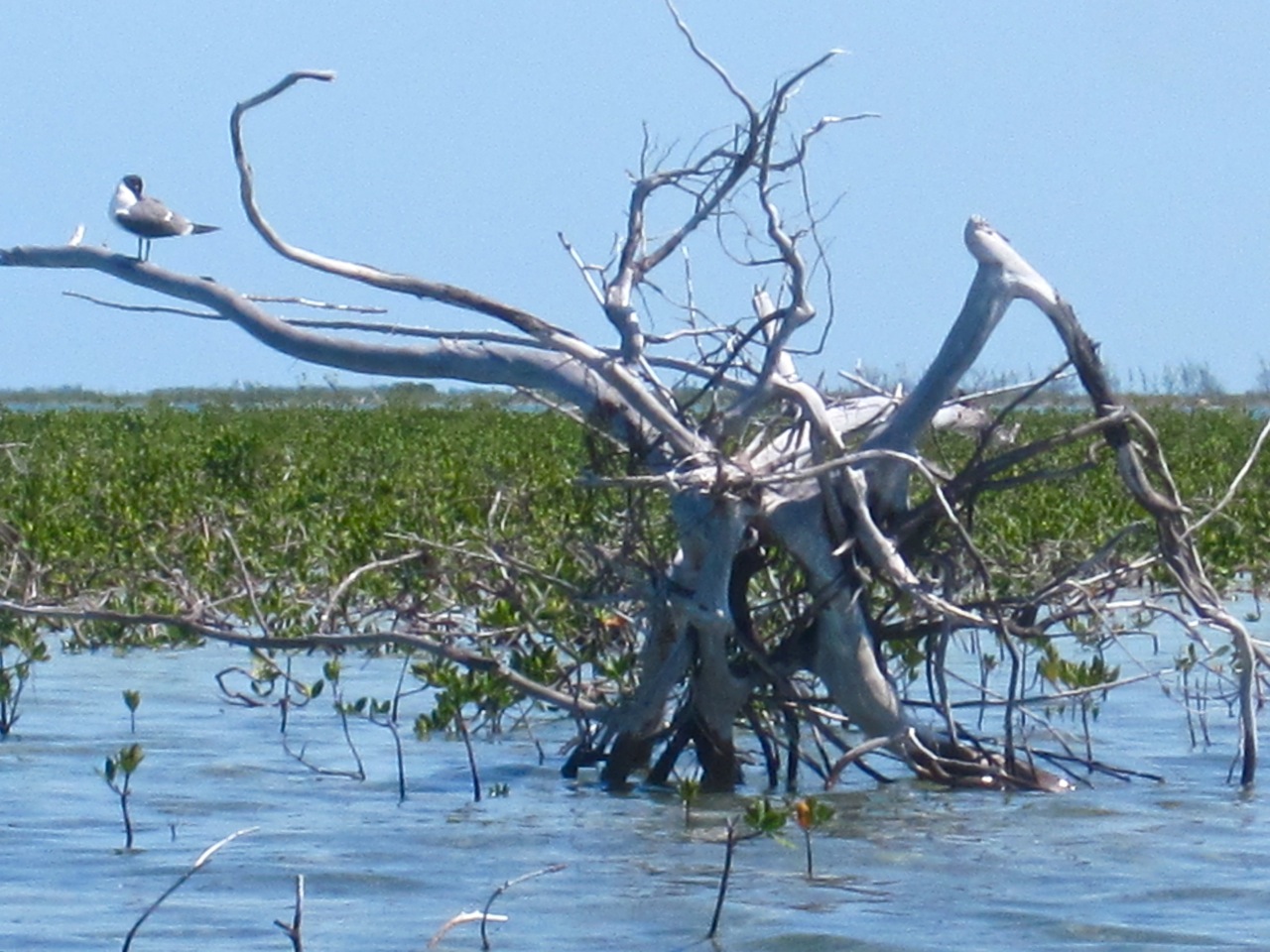
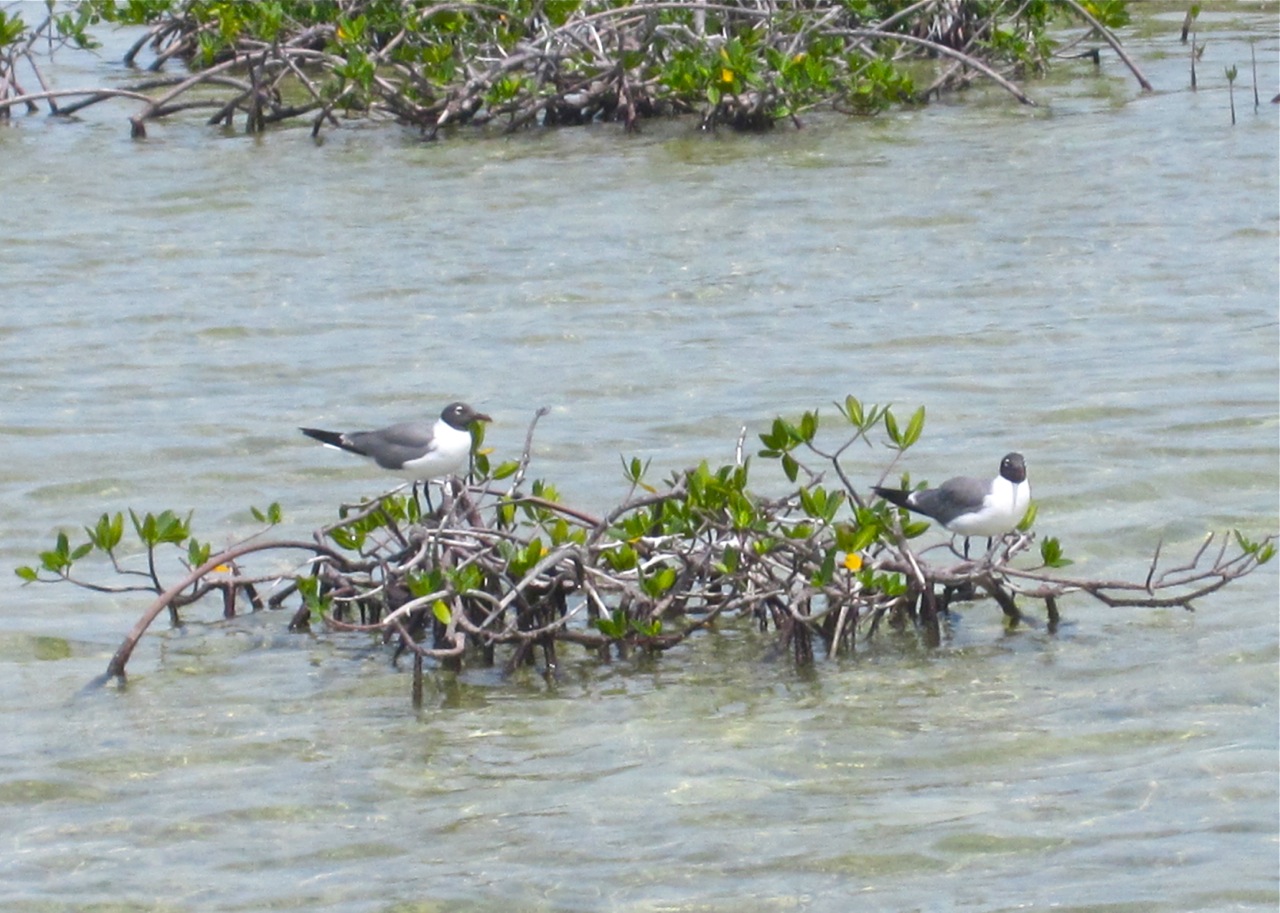
We saw – and heard – plenty while bonefishing on the Abaco Marls in June. I took some rather grainy distance shots, as they tended to fly off as the skiff was slowly poled towards them. This gull has found a good vantage point for some quality preening among the mangroves.

The pair below stayed put, and watched our gradual approach with suspicion that turned into noisy protest as we poled past them. I presume they were defending their territory – probably a nest site nearby.

I took a very short video just before they flew off as we drifted by. Apologies for the sound of the breeze – I’ve no idea if it’s possible to reduce the background noise while retaining the bird call. Listening to online bird sound clips (e.g. on the excellent Xeno-Canto) I think not. Or not without expensive editing equipment of a complexity I can’t face…

[vimeo https://vimeo.com/48076405]

And here (thanks, Don Jones @Xeno-Canto) is what laughing gulls sound like when one of them has told the one about the bonefish and the shrimp…

[audio http://www.xeno-canto.org/sounds/uploaded/BCWZQTGMSO/bird109.mp3]

Unknown's avatar

LA SAGRA’S FLYCATCHER: A SMALL TYRANT ON ABACO


LA SAGRA’S FLYCATCHER: A SMALL TYRANT ON ABACO

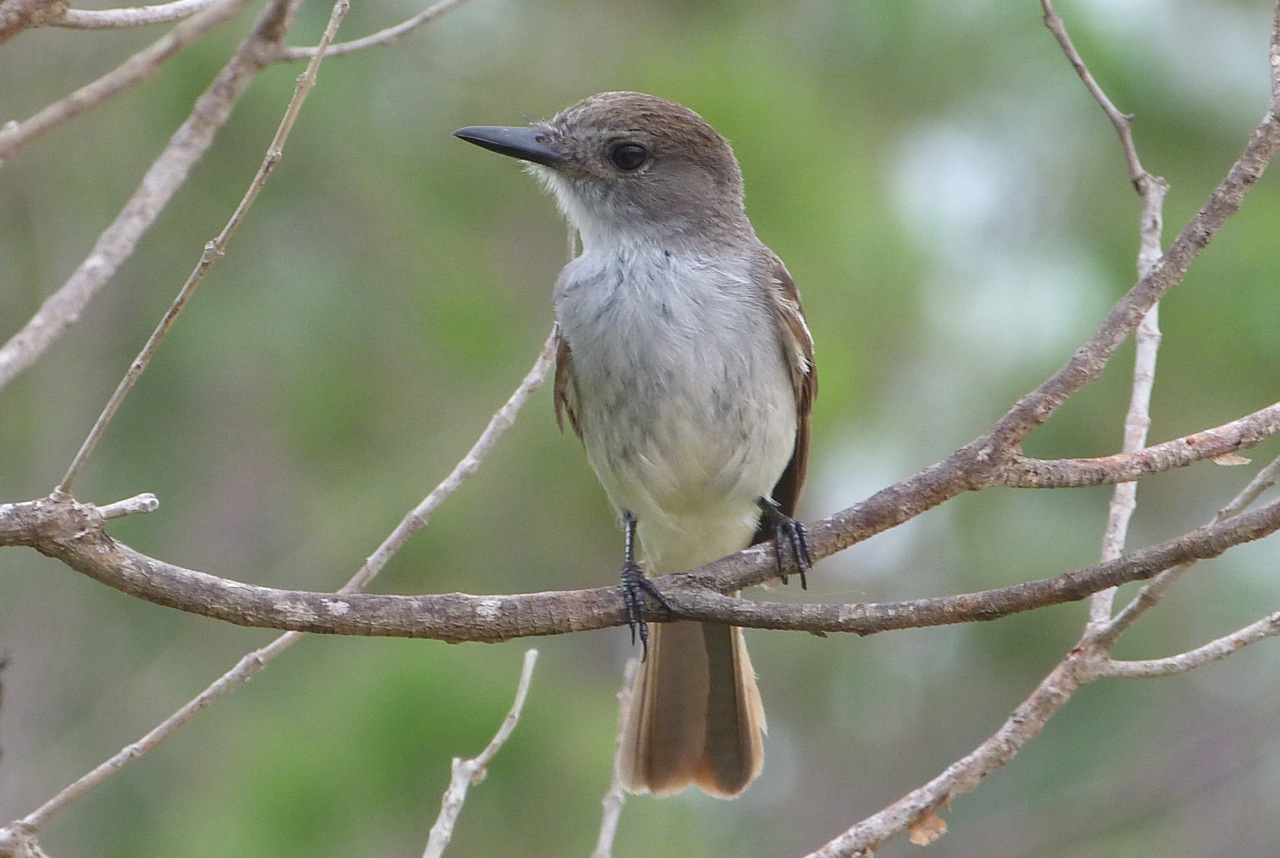
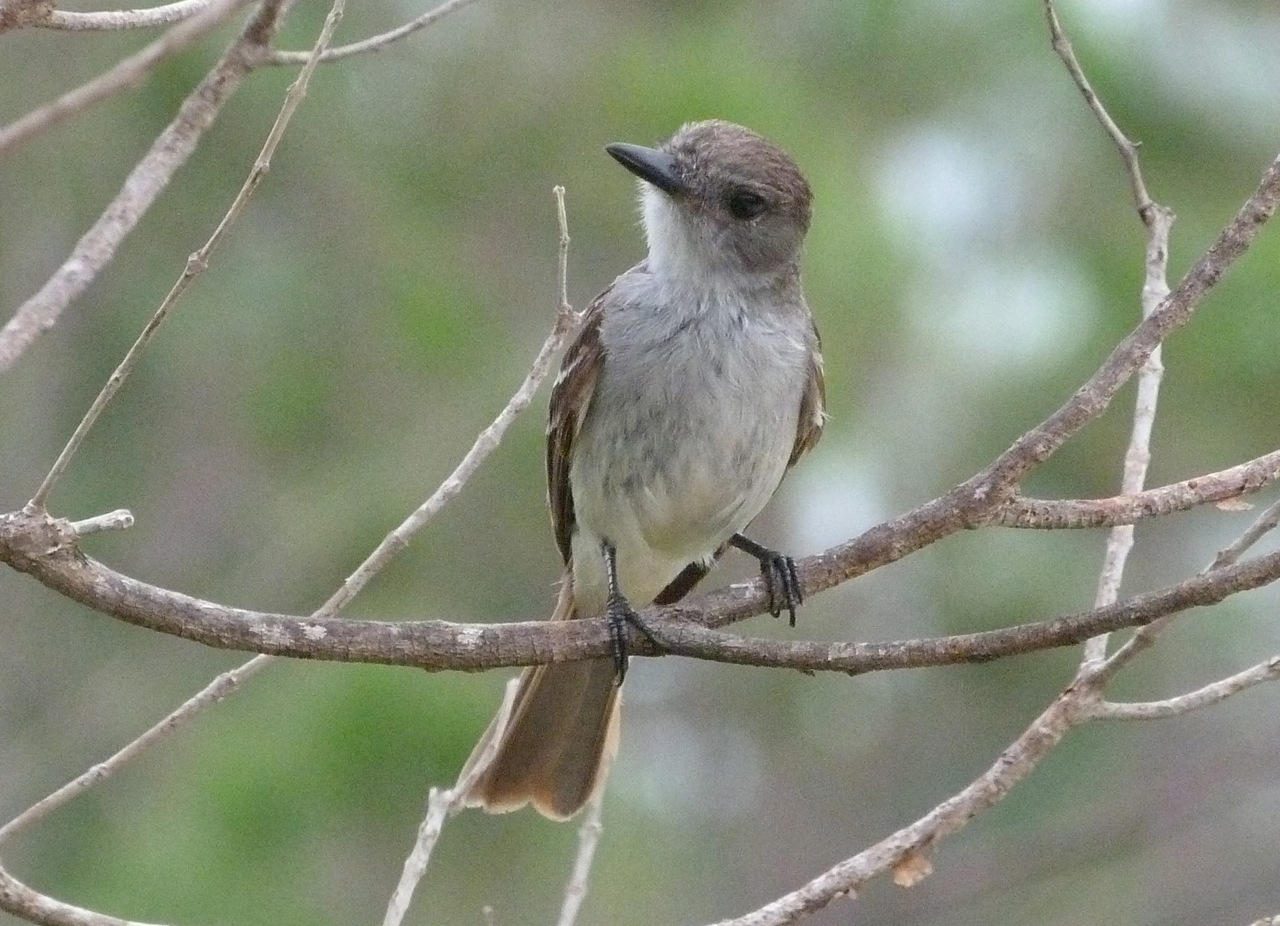
LA SAGRA’S FLYCATCHER Myiarchus sagrae is a non-migratory bird quite frequently seen in the Abaco pine forest and scrubland. It  is resident throughout the year on Abaco, as elsewhere within its distribution range (see map below) – also occasionally found as a vagrant in southern Florida. It is a ‘tyrant flycatcher’, a passerine species found throughout the Americas that includes kingbirds, pewees and phoebes.

The conservation status of this flycatcher is ‘Least Concern’

The LSF’s natural habitat is subtropical forest and rough scrubland. It builds its nest in a tree cavity or similar natural hole, and usually lays a clutch of two to four eggs. 

Adult La Sagra’s Flycatchers, unlike many avians, are very similar in appearance in both sexes.

As the name suggests, the species is primarily insectivore, fly-catching in the undergrowth and low scrub. However these birds also eat berries and seeds. Their call is a high pitched single or double noted sound described as ‘wink’. Here’s an example from the Bahamas by Paul Driver @ Xeno-Canto

[audio http://www.xeno-canto.org/sounds/uploaded/FSCGENVPXK/LA%20SAGRAS%20FLYCATCHER%20whit%20and%20wheep%20Andros%2042710.mp3]

And who or what the heck was La Sagra? The answer is: multi-talented Spanish botanist Ramón Dionisio José de la Sagra y Peris (1798–1871), who was also a writer, economist, sociologist, politician, anarchist, and founder of the world’s first anarchist journal El Porvenir (“The Future”). At one time he lived in Cuba and became director of Havana’s Botanical Garden; his name lives on arguably more significantly in ornithological than in anarchist circles (actually, an ‘anarchist circle’ must surely be a contradiction in terms…)

I note in passing that La Sagra is a provincial area in Spain, an Italian festive celebration, a chocolatier, or a small comet – all of which meanings may have to be negotiated online before you get to the flycatcher…

Ramón Dionisio José de la Sagra y PerisFinally, to continue with the recently introduced avian philatelic theme, here are stamps from the Cayman Islands and Cuba featuring the La Sagra’s Flycatcher. The Cuban stamp commemorates the death of Juan Gundlach, the man who chose La Sagra’s name to bestow on this bird

Unknown's avatar

THE GREATER ANTILLEAN BULLFINCH ON ABACO


THE GREATER ANTILLEAN BULLFINCH ON ABACO

This is a well-know bird (Loxigilla violacea) that can be seen on Abaco all year round. With their scarlet bibs and eyebrows, the males are a cheerful sight in coppice or garden. The females are paler brown, with orange accessories.

While still officially rated as a species of ‘Least Concern’, a measurable fall in population in recent years has seen them nudging towards ‘Vulnerable’. 


[audio http://www.xeno-canto.org/sounds/uploaded/FSCGENVPXK/GREATER%20ANTILLEAN%20BULLFINCH%201%20Andros%2042910.mp3]

Greater Antillean Bullfinch song from Paul Driver at Xeno-Canto

Antillean Bullfinches enjoy garden feeders – and their larger size means that they are higher up in the pecking order than the black-faced grassquits and other small birds 

They are one of the many popular Bahamian bird species to have featured on postage stamps – in fact they scooped the high-value $10 stamp in 1991 and the $5 stamp in 2001