Unknown's avatar

WORLD SHOREBIRDS DAY? YAY! AN ABACO COMPETITION!


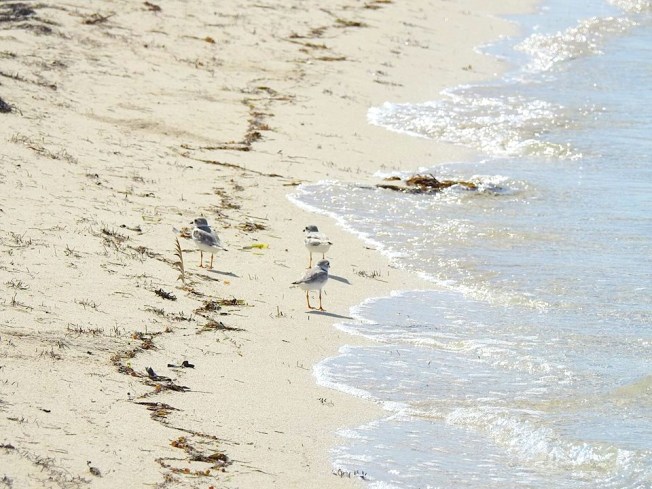
Piping Plover (Danny Sauvageau) 7

WORLD SHOREBIRDS DAY? YAY! AN ABACO COMPETITION!

In the past I have occasionally offered a Kalik™ (half in jest) for a ‘right answer’ or a nugget of info. Anyone who didn’t get their beer can still claim it, of course [no, no, not all at once please…]. But now I’m getting serious. World Shorebird day is on September 6th, and this weekend sees a global shorebird count in which, it is hoped, large numbers of people will scan their shorelines and post the results on the great and good resource that is eBird

13873031_859587794145299_7383541518099186659_n

But you don’t need to go to those lengths. Here’s the deal. Is there a bit of beach near you (hint: on Abaco you’ll never be far from a beach or shoreline except in the National Park)? If the answer is yes, then can you spare an hour (or two?) to take a walk on the beach over the weekend?  Or Monday and Tuesday? If so, can you look for a particular rare bird that makes its home on Abaco for the winter? Great. You’re in the competition, then. And there’ll even be a PIPL-related prize…

Piping Plover (Danny Sauvageau) 1

THE (SOMEWHAT FLEXIBLE) RULES

  • go for a beach walk, taking a notebook, pen, a camera or even just a phone. Binoculars would be good.
  • look for tiny shorebirds that look like the birds in this post
  • count how many you see at a time (watch out, they move quite fast). Maybe 1 or 2. A dozen is the likely max.
  • check their legs for coloured flags or bands and if possible note the colours and any numbers / letters
  • if possible, take photos of the bird(s), showing legs if banded. Don’t worry too much about quality – enhancement is possible
  • tell me about what you found and send me any photos (see below)

Piping Plover, Abaco - Charmaine Albury

HOW WILL I KNOW WHAT TO LOOK FOR?

  • Size – very small (6″ – 7″) and usually busy
  • Legs – orange
  • Beak – black, possibly with a hint of orange at the base
  • Eyes – black and beady, with a streak of white above
  • Front – white / very pale
  • Underside – ditto
  • Back – greyish / brownish-tinged
  • Head – ditto
  • Tail – darker feathers at the end
  • Neck ring – a greyish hint of a partial one (they are black in summer)

Piping Plover (Danny Sauvageau) 8

WHERE WILL I FIND ONE?

  • On a beach or maybe a rocky shoreline
  • Out in the open on the sand, anywhere from back of the beach to the shoreline
  • Foraging in the tide margins
  • Rushing round in a seemingly random way
  • Taking a dip in a sea-pool (see above)
  • On a rock near the sea

Piping Plover (nb), Abaco (Bruce Hallett)

WHAT DO YOU WANT TO KNOW?

In an ideal world, all the details below. But I’d be really pleased just to find that you had seen a piping plover on your chosen beach. Even the knowledge that a particular part of the shoreline is favoured by the birds is valuable for their conservation. The most useful info is:

  • Date, name of beach, approx location (‘north end’).  Time would be good too, and whether tide high, mid or low
  • Number of piping plovers seen (if any) and how many banded / flagged (if any).
  • Impression of bands if unclear: ‘I think it was… a green flag / an orange ring / a metal ring’ or if visible…
  • ‘One was green flag 2AN on it’ / ‘one had bands – left leg upper leg orange, right upper leg light blue…’
  • Take a photo. This will help eliminate other species of shorebird from the ID, and enable a close-up look

Piping Plovers, Delphi, Abaco A (Keith Salvesen)6

WHAT’S THE POINT OF BANDING & TRACKING THEM?

Marking a plover with coloured bands or flags (or a combo) gives a unique ID to each bird. Usually it will be done on the beach where they hatched, within a day or two. These adornments weigh nothing, do not impede the birds in foraging or in flight (or when mating…) and expand as they grow. The scientists who carry out the banding will have weighed and measured the hatchling and made a detailed record of the data collected. They need to get as much information as possible about the habits of each bird to help with conservation initiatives at both ends of the migrations.

piping-plover

Each fall the plovers travel south between 1000 and 2000 miles south from their summer breeding grounds. Tracking individual birds to where they overwinter enables scientists to build up a picture of the type and location of fragile habitat that these little birds prefer, and to compare the annual data for each banded bird. For example

  • A particular beach does not seem to attract piping plovers at all (there may be several good reasons for this)
  • A particular beach has single or small groups of piping plovers who come and go but don’t settle there
  • A particular beach usually has at least one or a few birds on it who show ‘beach fidelity’, eg Winding Bay
  • If birds are found in groups – more than 10, say – in a particular location, it means the beach suits the breed especially well. It is sheltered, has plenty of scope for good foraging, few predators, and has not been spoilt by humans. Long Beach (Island Homes) is a good example. Last December, groups of more than 60 were found there. It’s a *hotspot*!

Piping Plover Tuna. Abaco. Oct 10. Rhonda Pearce

GIVE US AN EXAMPLE, PLEASE

Last season a bird called Tuna (see photo above) arrived at Watching Bay (Cherokee) in at the end of August. He moved from time to time to the Cherokee mud flats and Winding Bay, but mostly he remained at Watching Bay until April. His unique banding colours and their positioning led to the following information

  • The precise coordinates of location of the nest where he hatched in New Jersey
  • The date of hatching, banding, fledging and the last date he was seen there before migrating to Abaco
  • The name of the banders, plus his weight and the length of his body, wings, legs and beak
  • Even the names of Tuna’s parents. In fact, mother Paula headed to the Bahamas too –  she was resighted on Joulter Cays, Andros last winter.

Tuna was not reported over this summer – he didn’t return to his ‘birth beach’ – but we believe Tuna is now back at Watching Bay The distant photos were not clear enough to make a positive and definite ID. On the next visit we may know for sure, and all because of the bands. And we’ll know that he likes Abaco enough to fly back 1200+ miles to the same beach as last year. We can conclude that Watching Bay provides a suitable and safe habitat for Piping Plovers.

Piping Plover 1, West End Grand Bahama (Linda Barry-Cooper)

WHAT’S IN IT FOR ME?

  • Potential ‘fun for all the family (nb best leave the dog at home for this adventure…)
  • Exercise in a lovely beach setting
  • Seeing a rare and vulnerable bird in its natural setting
  • Wonderment that such a tiny bird should fly many miles & choose Abaco to overwinter
  • Assisting in logging the beach presence of the birds so that researchers know where to look
  • Helping count the birds so that year-on-year comparisons of the population can be monitored
  • Getting appreciation and thanks
  • Being described as a ‘Citizen Scientist’
  • Winning a prize if your are the most successful finder of banded birds, as verified by photos

Piping Plover pair, Delphi Beach, Abaco (Keith Salvesen)

I’ll post details of sightings on ABACO PIPING PLOVER WATCH with credited photos. Later I’ll follow up with a ROLLING HARBOUR post summarising the results, listing the participants and their scores of both unbanded and banded birds, and naming the winner of the PIPL-themed prize to mark their glory…

Contact me via APPW, DM me on my FB page, or email me at rollingharbour.delphi [at] gmail.com

GOOD LUCK!

13873031_859587794145299_7383541518099186659_n

Credits: Danny Sauvageau, Charmaine Albury, Bruce Hallett, Keith Salvesen, Rhonda Pearce, Linda Barry-Cooper, Gyorgy Szimuly (WSD logo)

Unknown's avatar

HUNGRY MOUTHS TO FEED: W.I. WOODPECKER CHICKS (PT 2)


West Indian Woodpecker & Chicks, Abaco (Rhonda Pearce)

HUNGRY MOUTHS TO FEED: W.I. WOODPECKER CHICKS (PT 2)

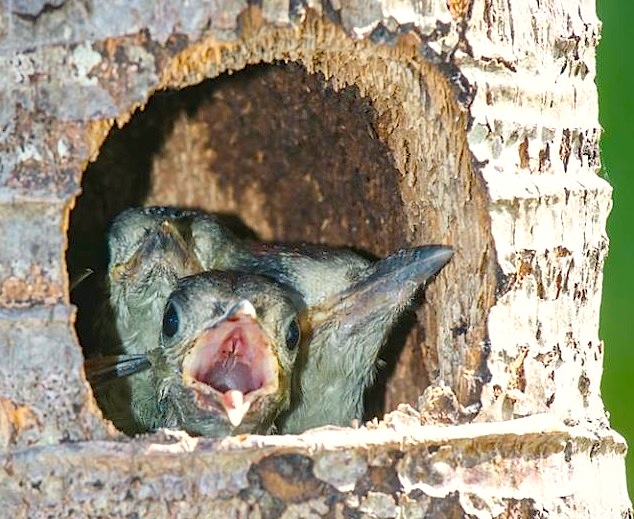
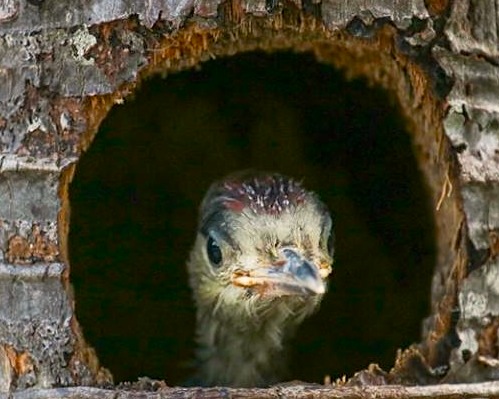
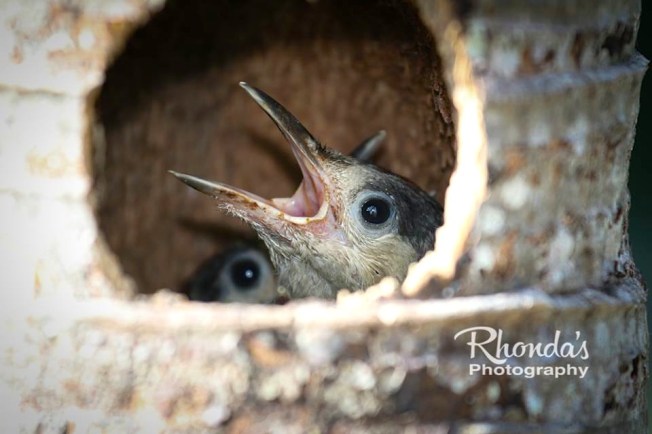
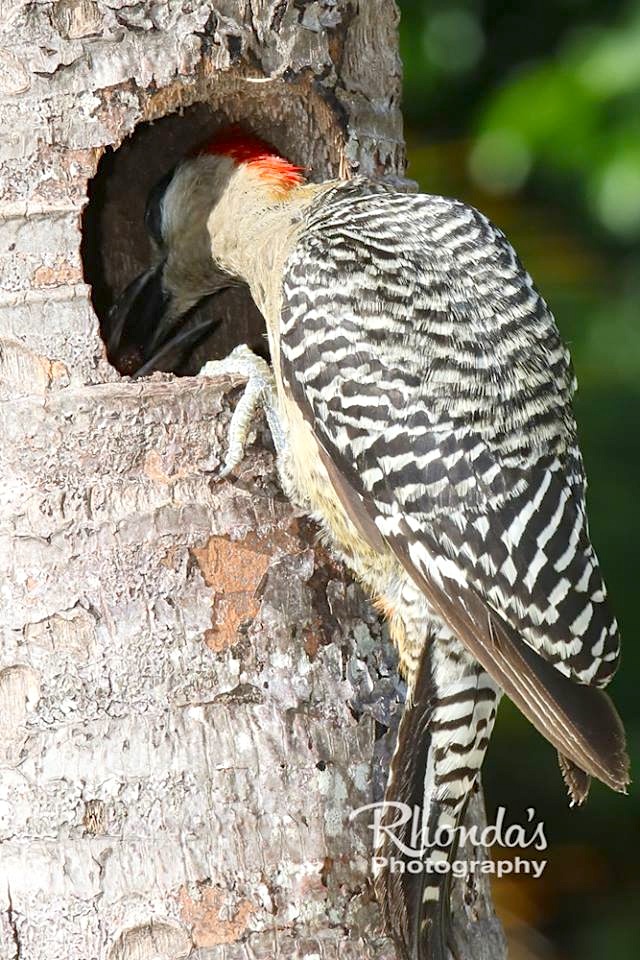
In just a few days, the West Indian WOODPECKER CHICKS have become bigger, noisier and much hungrier. Their heads are now tinged with red. They have started to compete for food: the first chick to push its way to the entrance hole gets the most food. Often there will be a smaller or weaker chick that gets rather left out in the frantic rush for grub (make that ‘grubs’ – see header image). But I suspect quite a lot of food shrapnel gets dropped and spread around inside the nest, so that in the end all the chicks are well sustained.

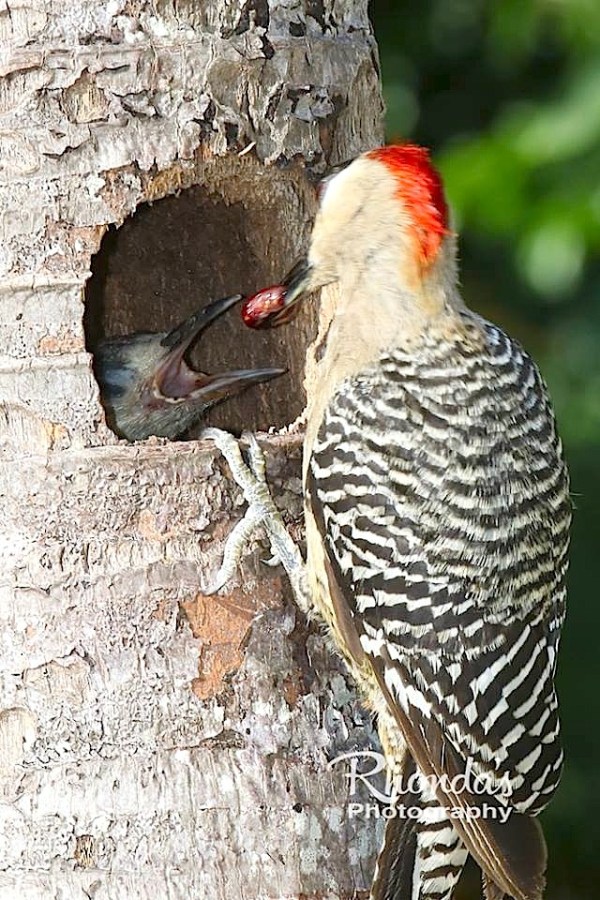
Rhonda Pearce has been taking photos of this growing family over the last few days, and if you saw my post last week, you will notice that the size of the chicks and the size of the food morsels jammed down their eager gullets has increased considerably…

A lizard hangs on tightly to the parent’s beak… but sadly it is doomed to be dinner…West Indian Woodpecker & Chicks, Abaco (Rhonda Pearce)

Mmmmmmm. It’s so tasty, little one…. and even if it isn’t, it’s going inWest Indian Woodpecker & Chicks, Abaco (Rhonda Pearce)

Hey, kids, who wants a bug with wriggly legs and feelers?West Indian Woodpecker & Chicks, Abaco (Rhonda Pearce)

What do we want? Food! When do we want it? Now!West Indian Woodpecker & Chicks, Abaco (Rhonda Pearce)West Indian Woodpecker & Chicks, Abaco (Rhonda Pearce)

“Wishin’ and hopin’…”West Indian Woodpecker & Chicks, Abaco (Rhonda Pearce)

“Is there any left for me…?”West Indian Woodpecker & Chicks, Abaco (Rhonda Pearce)

RELATED POSTS

HUNGRY WIW CHICKS (PT 1)

WEST INDIAN WOODPECKERS

WIWs AT DELPHI

Credits: all photos, Rhonda Pearce

Unknown's avatar

HUNGRY MOUTHS TO FEED: WEST INDIAN WOODPECKER CHICKS


West Indian Woodpeckers & Chicks (Rhonda Pearce)

HUNGRY MOUTHS TO FEED: WEST INDIAN WOODPECKER CHICKS

West Indian Woodpeckers are special. So special that Abaco even has its own subspecies  Melanerpes superciliaris blakei. They are joyful and noisy. They noisily share parenting duties in an admirably modern way. And did I mention they are noisy?

West Indian Woodpeckers & Chicks (Rhonda Pearce)

The parents set up home together, with both partners taking their turns to choose the furnishings and fit out the nest. They share duties on the nest once the eggs have hatched. And they take turns to feed the nestlings as they grow into increasingly hungry and raucous fledglings. 

West Indian Woodpeckers & Chicks (Rhonda Pearce)

This feeding sequence was taken by Rhonda Pearce whose ravenous chick in the header photo is one of the best I have come across. I have never managed to get such a clear shot of desperate chick hunger…  

Here’s how a nest can sound when the chicks are young – a weird sort of insistent purring sound. As the chicks get larger – and more competitive – so the volume level increases.

Get this down your throat, you pesky little rascal…West Indian Woodpeckers & Chicks (Rhonda Pearce)

RELATED POSTS

WEST INDIAN WOODPECKERS

WIWs AT DELPHI

Credits: all photos, Rhonda Pearce; audio recording RH @ Delphi Club nesting boxes

Unknown's avatar

HOGFISH: BAHAMAS REEF FISH (31)


Hogfish at cleaning station ©Melinda Riger @GB Scuba

HOGFISH: BAHAMAS REEF FISH (31)

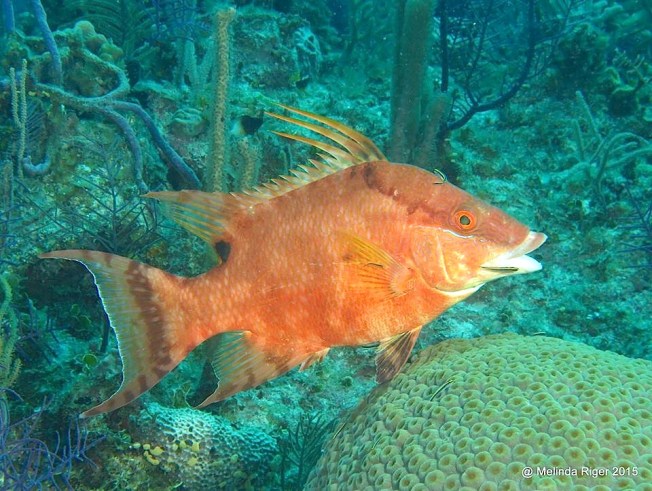
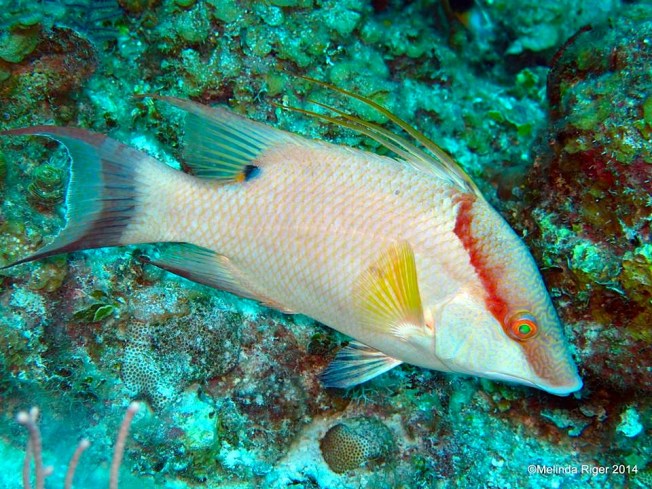
Hogfish. Fisherman’s delight… getting ‘high on the hog’. This wrasse species Lachnolaimus maximus is a reef denizen, especially where gorgonians are found. It has the distinction of being the only known member of its genus, and because it is IUCN listed as vulnerable, there are strict regulations governing bag, size, and gear limits to protect the species from overfishing.

Hogfish ©Melinda Riger @ G B Scuba

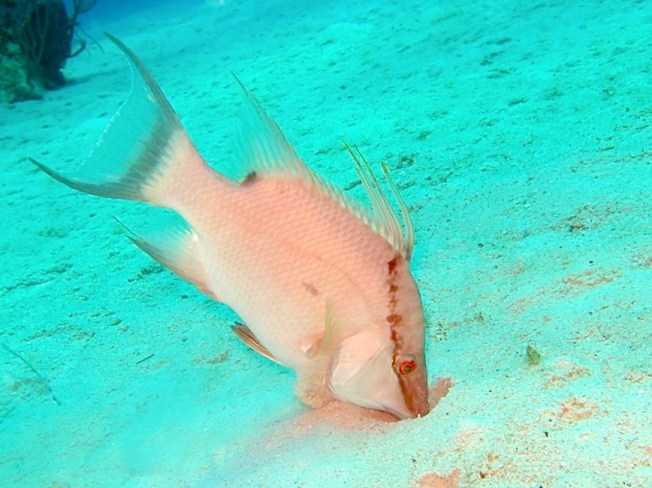
The hogfish gets its name from its long ‘pig-like’ snout, coupled with its rootling behaviour on the sea floor for crustacean prey.

Hogfish ©Melinda Riger @ GB Scuba copy ed Hogfish foraging ©Melinda Riger @ GB Scuba

GENDER STUDIES: IT’S COMPLICATED

The hogfish is a sequential hermaphrodite, meaning it changes sex during different life stages. Juvenile hogfish are female, but mature into males at around 3 years old.

Hogfish ©Melinda Riger @ G B ScubaHogfish ©Melinda Riger @ G B Scuba copy

Hogfish social groups are organized into harems, where one male will protect a group of females in his territory and mate with them.

Hogfish ©Melinda Riger @ GB Scuba Hogfish with isopods ©Melinda Riger @ GB Scuba

CAUTIONARY NOTE Capt. Rick, a loyal follower, has made another of his pertinent comments: “A bit of caution is necessary here! There is some history in the Bahamas of mild to severe Ciguatera poisoning from Hogs. Our M.O. was to only eat Hogs no larger than 5 or 6 lbs. Temporary or permanent blindness, paralysis, and even death is possible with bigger Hogs”. Ciguatera is also a problem with, for example, ‘cuda on Abaco. Those caught on the Marls (west) side are ok to eat; those from the east side have to be treated with circumspection…

Hogfish (with isopod above eye) ©Melinda Riger @ GB Scuba

Credits: all fantastic fish fotos – Melinda Riger at Grand Bahama Scuba

Unknown's avatar

SANDWICH TERNS: NO LINK TO BREAD SLICES, SAY SCIENTISTS


Sandwich Tern (Danny Sauvageau)

SANDWICH TERNS: NO LINK TO BREAD SLICES, SAY SCIENTISTS

Have you noticed how newspapers and periodicals increasingly seize every opportunity for a headline ending “…say Scientists”. It lends a spurious authority to any tenuous assertion, like “astronauts unlikely to find cheese on moon, say Scientists” (suggesting at least the faint possibility of some mature cheddar lodged in a crater). Or “Frooty-pops cereal may protect against ingrown toenails, say Scientists”.  To which the proper response is: “research reference please”. But it seems 37.9% of people are actually prepared to believe this tendencious stuff… say Scientists.

But I digress. To the business in hand. The Sandwich Tern (Thalasseus sandvicensis) is a smart-looking medium-sized tern. Its clearest ID signifier among terns is a sharp black beak with a yellow tip. Also, its black legs helpfully distinguish it from other tern species that have orange legs.Sandwich Tern (Sandy Point), Abaco - Bruce Hallett

The origin of the name for this species is an unexpected one. The Thaleasseus (formerly Sterna) simply refers to the sea (Gk). The Sandwich part is more complicated. It’s certainly nothing to do with a tasty filling for a sliced bread snack **. Other bird species such as Branta sandvicensis, an endemic Hawaiian goose, have the name because Hawaii was historically known as the Sandwich Islands. But Sandwich terns are not found there. In fact, the name comes from the town name of Sandwich, Kent UK (sand wic OE – ‘trading post by the sea’). The ornithologist who first described the bird in 1787, John Latham, just happened to live there. (And how fortunate for ornithology that he did not come from Pratts Bottom, also in Kent).

Sandwich Tern, Abaco (Woody Bracey)

Sandwich terns have a wide range around the world. As the range map below show, the most significant breeding area is Great Britain and northern Europe. On Abaco, the birds are uncommon summer residents. Both images above were taken on the main island, the top one at Sandy Point on the jetty (an excellent place for birdwatching, incidentally).Thalasseus_acuflavidus_and_Thalasseus_sandvicensis_map-location-2.svgSarnie Tern range

Like all the Thalasseus terns, the Sandwich tern plunge-dives for fish. I love the sight of diving terns. They hang high in the air as they scope out the water for fish, only to break free from the sky and smash down into the sea, often emerging with a silver prize. Here’s a wonderful photo of one that missed its meal – and one that succeeded.

Sandwich Tern (Danny Sauvageau)Sandwich Tern (Danny Sauvageau) An endearing characteristic of these terns can be seen during their courtship display. The male will catch a fish, then offer it to the female. Her acceptance of the gift signals her readiness to approve the male as a suitable mate. 

Of the  12 tern species recorded for Abaco most are summer residents, some of which breed on Abaco. The royals are the only permanent residents; and the Forster’s are the only winter residents. The other 4 species are transient in migration, or vagrant (arctic tern).

Tern Species on Abaco

As I have mentioned before, a very good source for easy ID to distinguish between different birds of the same family is to head off to BIRDORABLE. The drawings (cartoons!) may not be scientific, but they do highlight the most notable distinctions. Invaluable as a last resort. Or first resort, even! For similar-looking birds, compare the beaks and the legs. The composite below shows how simple it is.

91b5e2a19a20fb1eeace596efbac5a57

Noisy neighbours? Put this short recording of a sandwich tern colony in the breeding season on a continous loop, and you have the makings of a powerful retaliatory weapon. They’ll be out within a fortnight…

Alex Lees / Xeno-Canto

** The food we call a sandwich was named after the 4th Earl of Sandwich. He found eating while playing cards inconvenient, so asked his valet for two slices of bread, requesting “and squash a tern between them, if you’d be so very kind…” The Sandwich Islands were also named after his Lordship by Captain James Cook, as a compliment for financially supporting an expedition there, say Historians…

Sandwich_Tern_(Sterna_sandvicensis)_(Ken Billington)

Credits: Danny Sauvageau (1, 4, 5); Bruce Hallet (2); Woody Bracey (3); Ken Billington (6); Alex Lees @ Xeno-Canto, Birdorable, wiki for range map & info, other magpie pickings of glistening facts

Unknown's avatar

GETTING THE MEASURE OF TURTLES ON ABACO


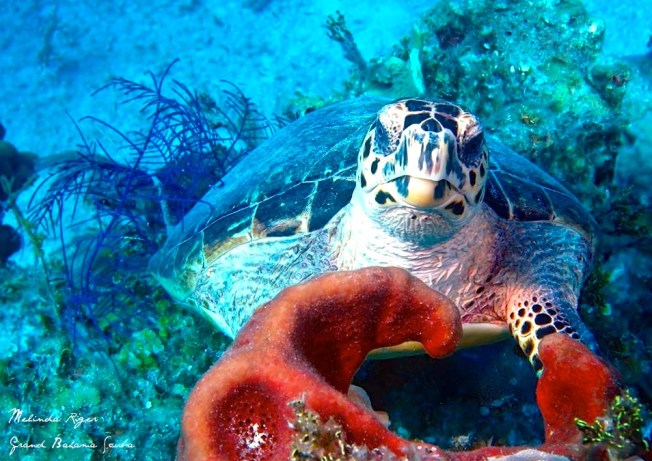
Hawksbill Turtle ©Melinda Riger @ G B Scub 4

GETTING THE MEASURE OF TURTLES ON ABACO

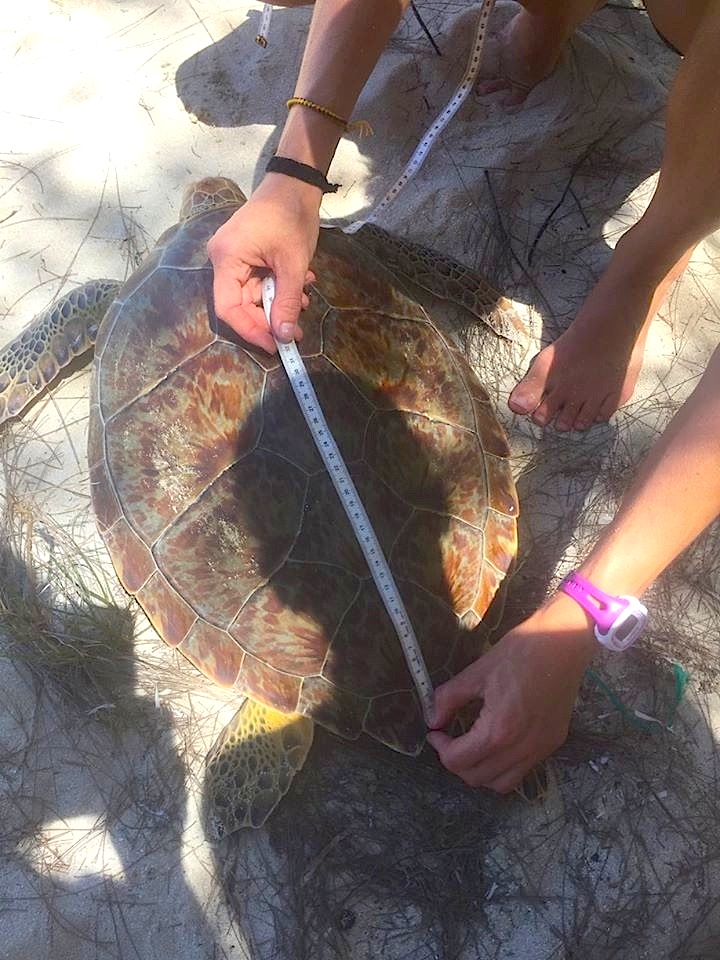
A recent summer course on Abaco was held in partnership between Elizabeth Whitman (Florida International University) and Friends of the Environment/Frank Kenyon Centre. Participants learned about sea turtle biology and ecology, and discussed potential threats to the vulnerable population. After a classroom session, the team headed out to Snake Cay Creek to carry out a field survey. The turtles caught were measured, weighed, tagged (if not already), and given a general health assessment. Each turtle was then released.

The data captured by such courses is invaluable in the continuing assessment of the health of the local turtle population. In addition, such projects provide a valuable opportunity for people to become involved in a fascinating and rewarding local conservation project – with a literally hands-on experience.

Turtle measuring project, AbacoTurtle measuring project, AbacoTurtle measuring project, AbacoTurtle measuring project, AbacoTurtle measuring project, AbacoTurtle measuring project, Abaco

Credits: Beth Whitman, Friends of the Environment, Jacque Cannon, Maureen Collins, Melinda Riger

Unknown's avatar

SEAHORSES: PREHENSILE TALES FROM THE REEF


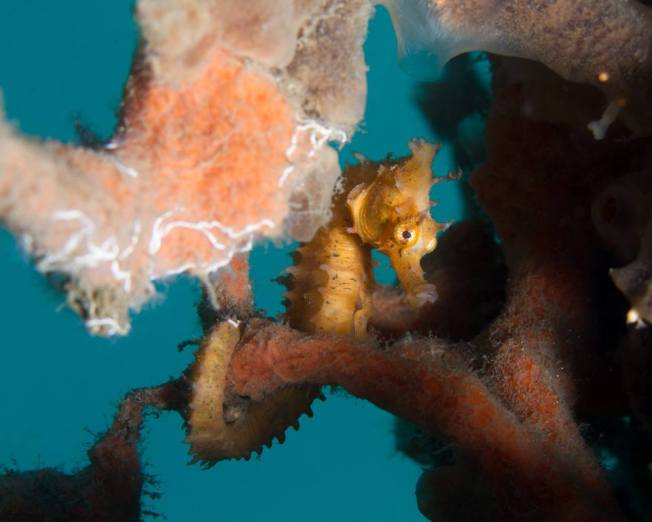
Seahorse (Adam Rees / Scuba Works)

SEAHORSES: PREHENSILE TALES FROM THE REEF

It’s a year since I last posted about these amazing little creatures, seahorses. I featured a number of photos by Melinda Riger, a couple of videos, some useful facts about them, and for some reason some useless facts that I came across in researching the post. You can chase it down here: SEAHORSES 1

Adam Rees of SCUBA WORKS is another diver, like Melinda, who combines great underwater experience with wonderful photographic skills. This posts showcases some of Adam’s seahorse photography, and if it doesn’t want to make you explore the reefs, I can’t think what will…

Seahorse (Adam Rees / Scuba Works)Seahorse (Adam Rees / Scuba Works)

Seahorse Range MapMap: Seahorse range (Nat Geo)

Seahorse (Adam Rees / Scuba Works)Seahorse (Adam Rees / Scuba Works)

shlifecycle-e1313548153493

Seahorse (Adam Rees / Scuba Works)Seahorse (Adam Rees / Scuba Works)Seahorse (Adam Rees / Scuba Works)
Seahorse (Adam Rees / Scuba Works)

Seahorse by Alex Konahin

All phantastic photos: Adam Rees / Scuba Works; Range Map, Nat Geo; Lifecycle diagram, Seahorserun; Seahorse GIF, Alex Konahin

Unknown's avatar

ABACO’S 37 WARBLER SPECIES: AN ILLUSTRATED GUIDE


Bahama Warbler, Abaco (Bruce Hallett) z2

ABACO’S 37 WARBLER SPECIES: AN ILLUSTRATED GUIDE

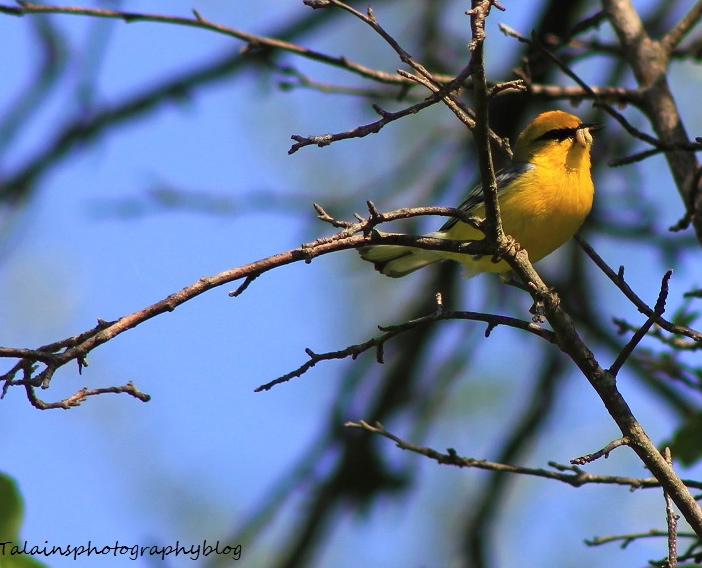
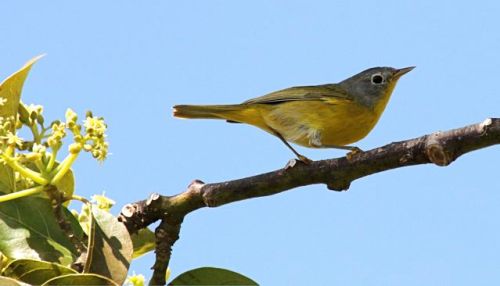
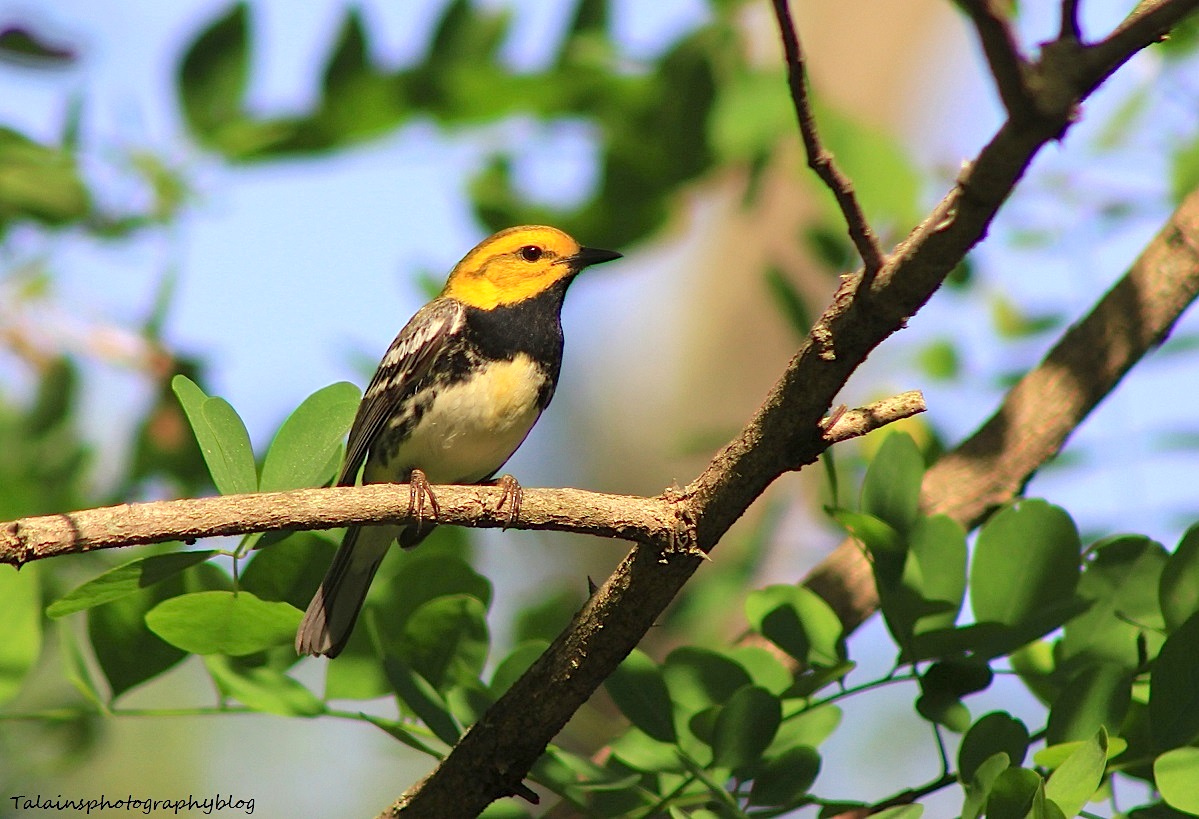
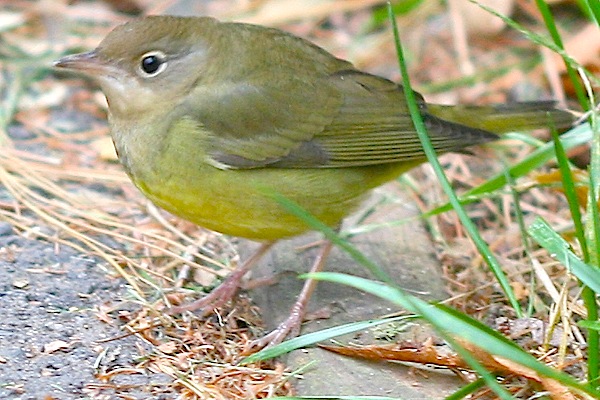
Any day now – if not already – winter warblers will be arriving on Abaco. There are 37 warbler species recorded for the main island and the cays. They fall into 3 categories: 5 permanent residents (PR) that breed on Abaco (B), of which two are endemics; 21 winter residents (WR) ranging from ‘everyday’ species to rarities such as the Kirtland’s Warbler; and 11 transients, most of which you will be lucky to encounter. The codes given for each bird show the residence status and also the likelihood of seeing each species in its season, rated from 1 (very likely) to 5 (extreme rarities, maybe only recorded once or twice).

Yellow Warbler at sunrise.Abaco Bahamas.6.13.Tom Sheley copy copy

The photos that follow show an example of each warbler, where possible (1) male and (2) taken on Abaco. Where I had no Abaco images – especially with the transients – I have used other mainstream birding resources and Wiki. All due credits at the foot of the post.

This is a slightly revised version of a guide I posted a couple of years ago. Afterwards, I compressed the guide into a pdf which, in theory at least, is downloadable. You could even send it to your phone and add it to your home screen, so that you will never be without a basic guide to the warblers around you. But it’s not as enthralling as Pokemon Go!, I do quite understand…

AN ILLUSTRATED GUIDE TO ABACO’S WARBLERS

Yellow Warbler at sunrise.Abaco Bahamas.6.13.Tom Sheley copy copy

PERMANENT RESIDENTS

BAHAMA YELLOWTHROAT Geothlypis rostrata PR B 1  ENDEMIC

Bahama Yellowthroat, Abaco - Tom Reed

YELLOW WARBLER Setophaga petechia PR B 1 

YELLOW WARBLER ©Cornell Lab

OLIVE-CAPPED WARBLER Setophaga pityophila PR B 1 

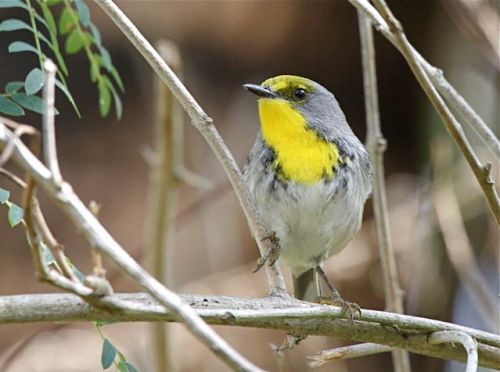
Olive-capped Warbler, Abaco (Bruce Hallett)

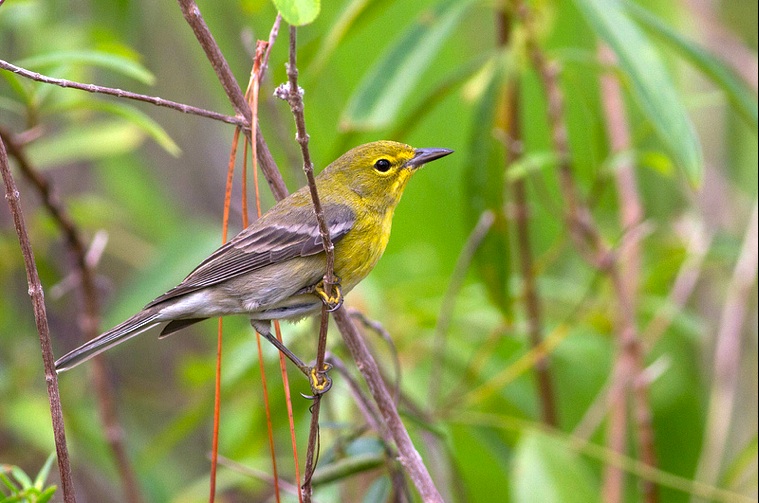
PINE WARBLER Setophaga pinus PR B 1 

Pine Warbler, Abaco - Tom Reed

BAHAMA WARBLER Setophaga flavescens PR B 1 ENDEMIC

Bahama Warbler, Abaco - Alex Hughes

Yellow Warbler at sunrise.Abaco Bahamas.6.13.Tom Sheley copy copy

WINTER RESIDENTS  (COMMON)

OVENBIRD Seiurus aurocapilla WR 1 

OVENBIRD_Bahamas-Great Abaco_6639_Ovenbird_Gerlinde Taurer 2

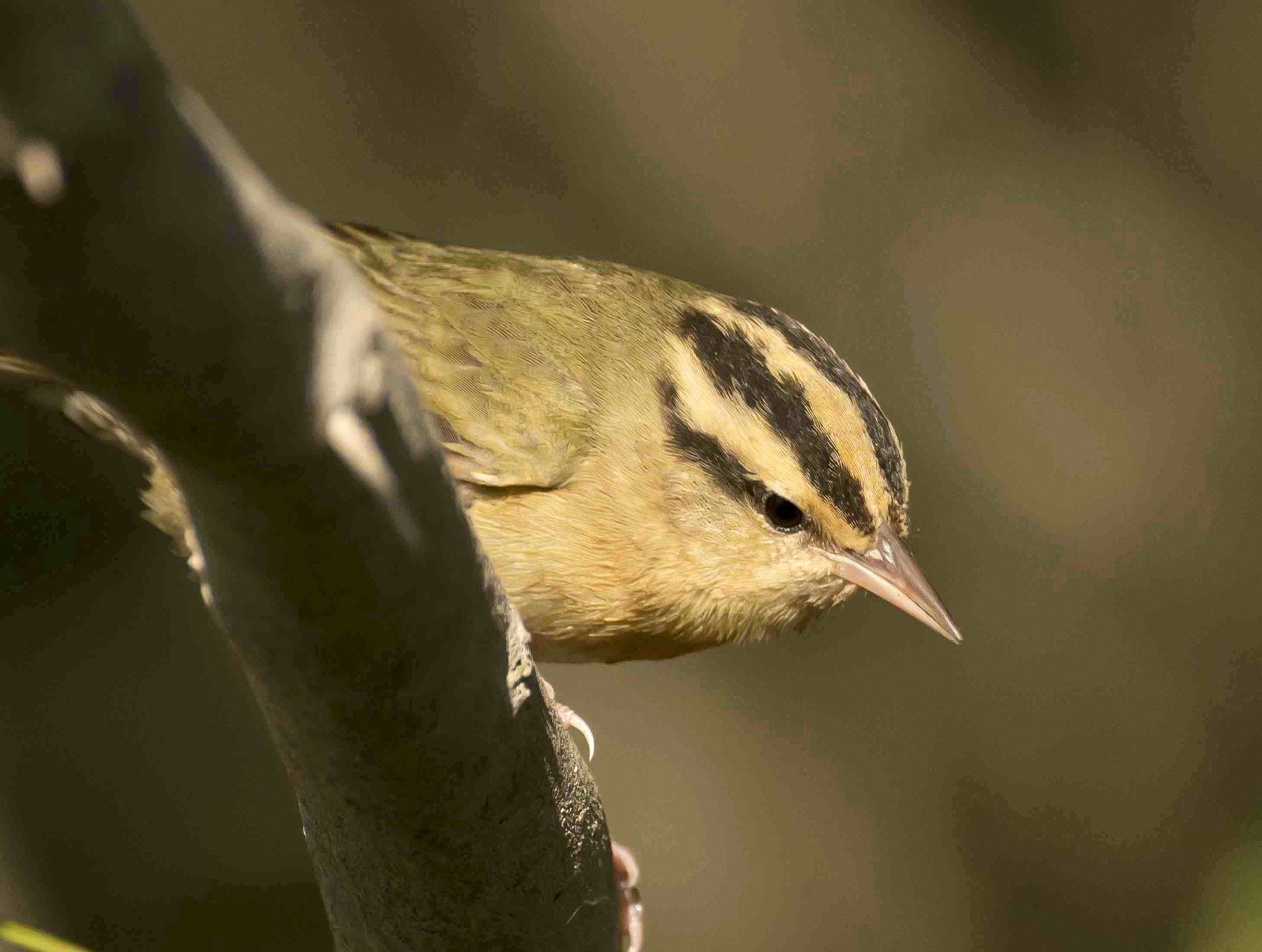
WORM-EATING WARBLER Helmitheros vermivorum WR 2 

Worm-eating Warbler.Bahama Palm Shores.Abaco Bahamas.Tom Sheley

NORTHERN WATERTHRUSH  Parkesia noveboracensis WR 1 

BAHAMAS - Northern Waterthrush - Oct 2010 Becky Marvil

BLACK-AND-WHITE WARBLER Mniotilta varia WR 2 

Black & White Warbler, Abaco - Bruce Hallett

COMMON YELLOWTHROAT Geothlypis trichas WR 1 

Common Yellowthroat.Gilpin Pond.Abaco Bahamas.Tom Sheley copy

AMERICAN REDSTART  Setophaga ruticilla WR 1 

Bahamas-Great Abaco_6334_American Redstart_Gerlinde Taurer copy

CAPE MAY WARBLER Setophaga tigrina WR 1 

Cape May Warbler (m), Abaco - Bruce Hallett

NORTHERN PARULA Setophaga americana WR 1 

Northern Parula, Abaco - Woody Bracey

BLACK-THROATED BLUE WARBLER Setophaga caerulescens WR 2 

Black-throated Blue Warbler (m), Abaco - Bruce Hallett

PALM WARBLER  Setophaga palmarum WR 1 

Palm Warbler, Abaco - Peter Mantle

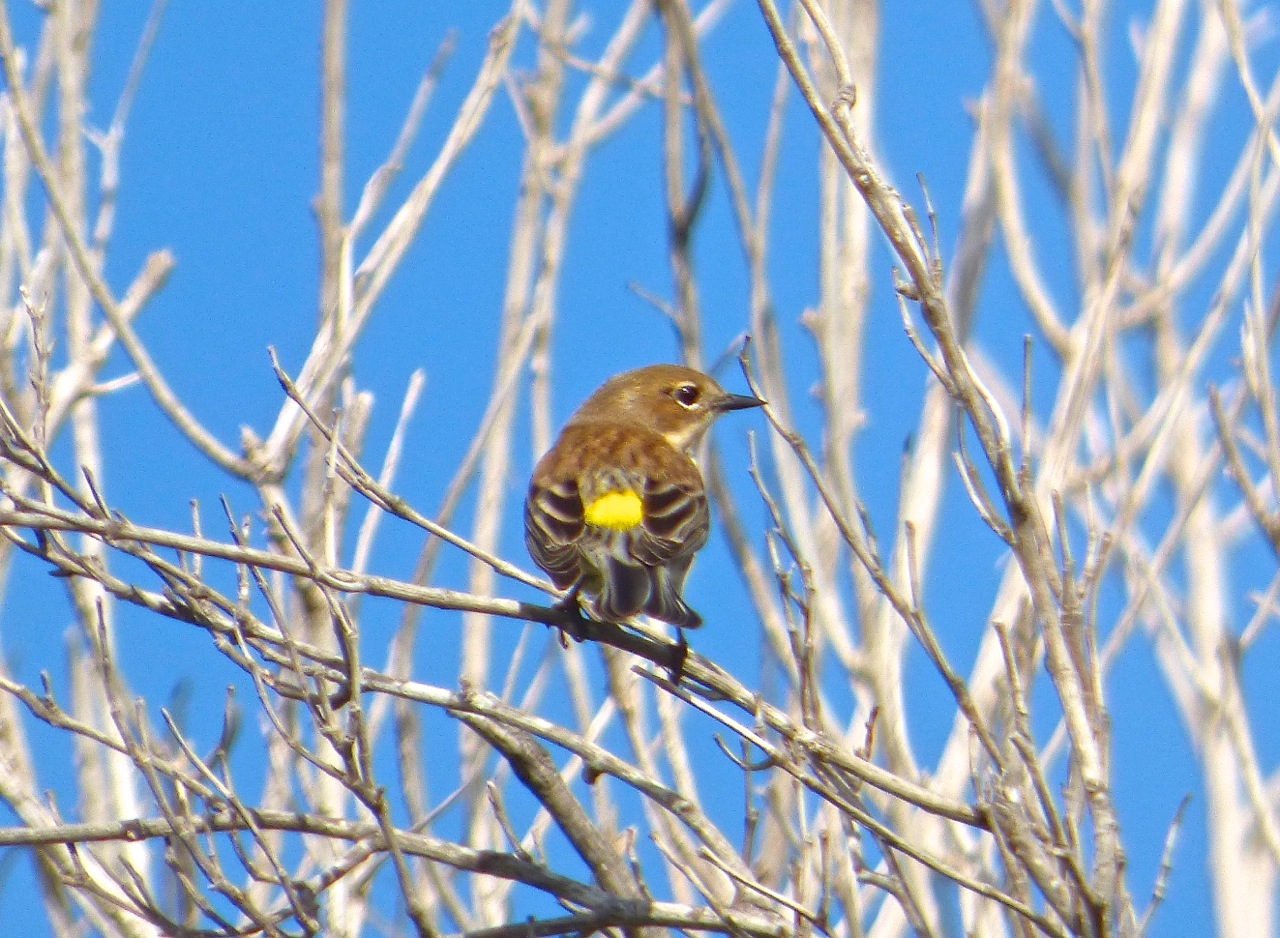
YELLOW-RUMPED WARBLER Setophaga coronata WR 2 

Yellow-rumped Warbler, Abaco - Keith Salvesen (RH)

YELLOW-THROATED WARBLER Setophaga dominica WR 1 

Yellow-throated Warbler, Abaco - Bruce Hallett

PRAIRIE WARBLER Setophaga discolor WR 1 

Bahamas-Great Abaco_6609_Prairie Warbler_Gerlinde Taurer copy 2

Yellow Warbler at sunrise.Abaco Bahamas.6.13.Tom Sheley copy copy

 WINTER RESIDENTS  (UNCOMMON TO RARE)

LOUISIANA WATERTHRUSH Parkesia motacilla WR 3 

Louisiana waterthrush William H. Majoros WIKI

BLUE-WINGED WARBLER Vermivora cyanoptera WR 3

Blue-winged Warbler, Abaco (Becky Marvil)

Blue-winged Warbler. talainsphotographyblog

SWAINSON’S WARBLER  Limnothlypis swainsonii WR 4 

Swainson's Warbler, Abaco - Bruce Hallett

NASHVILLE WARBLER Oreothlypis ruficapilla WR 4 

Nashville Warbler, Abaco - Bruce Hallett

HOODED WARBLER Setophaga citrina WR 3 

Hooded Warbler, Abaco (Charmaine Albury)

KIRTLAND’S WARBLER Setophaga kirtlandii WR 4 

Kirtland's Warbler (m), Abaco - Woody Bracey

MAGNOLIA WARBLER Setophaga magnolia WR 3 

Magnolia warbler, Abaco - Craig Nash

BLACK-THROATED GREEN WARBLER Setophaga virens WR 3 

Black-throated Green Warbler - talainsphotographyblog

Yellow Warbler at sunrise.Abaco Bahamas.6.13.Tom Sheley copy copy

TRANSIENTS

PROTHONOTARY WARBLER Protonotaria citrea TR 3 

Prothonotary Warbler, Abaco - Ann Capling

TENNESSEE WARBLER Oreothlypis peregrina TR 4 

Tennessee Warbler Jerry Oldenettel Wiki

ORANGE-CROWNED WARBLER  Oreothlypis celata TR 4 

Orange-crowned Warbler dominic sherony wiki

CONNECTICUT WARBLER Oporonis agilis TR 4 

Connecticut Warbler Central Park NYC 10000birds.com

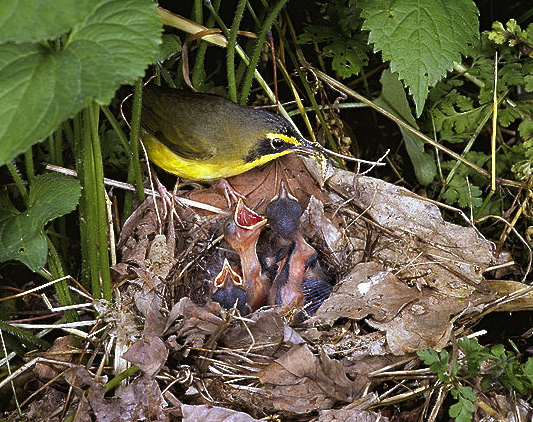
KENTUCKY WARBLER Geothlypis formosa TR 4 

Kentucky_Warbler Steve Maslowski wiki - Version 2

BAY-BREASTED WARBLER Setophaga castanea TR 4 

Bay-breated warbler MDF Wiki

BLACKBURNIAN WARBLER Setophaga fusca TR 4

Blackburnian Warbler Mdf wiki

CHESTNUT-SIDED WARBLER Setophaga pensylvanica TR 4

Chestnut-sided Warbler talainsphotographyblog - Version 2

BLACKPOLL WARBLER Setophaga striata TR 3 

Blackpoll Warbler avibirds.com

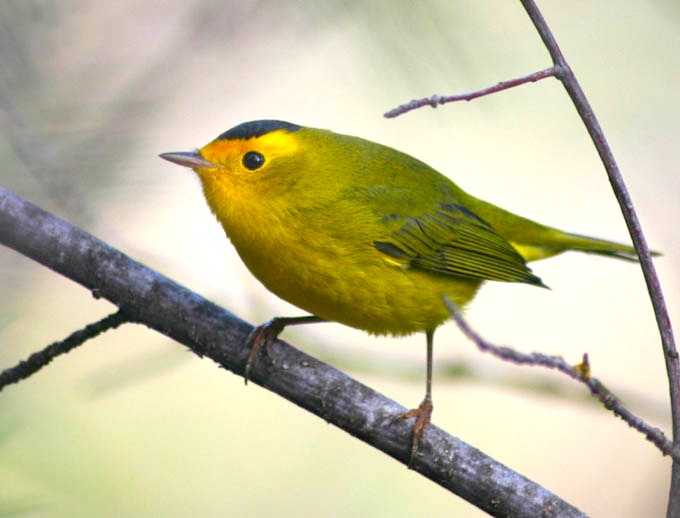
WILSON’S WARBLER Cardellina pusilla TR 4 

Wilson's Warbler Michael Woodruff wiki

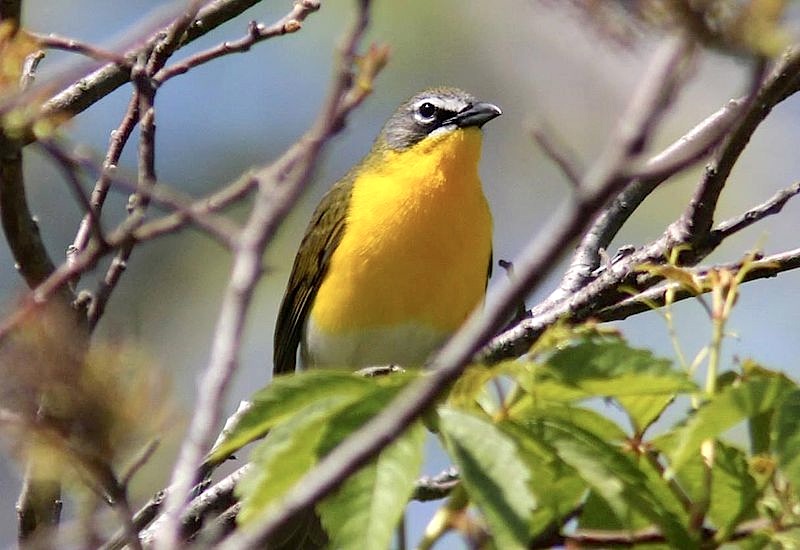
YELLOW-BREASTED CHAT Icteria virens TR 4 

Yellow-breasted Chat Emily Willoughby wiki

PHOTO CREDITS (1 – 37) Bruce Hallett (Header, 3, 9, 12, 14, 17, 21, 22); Tom Reed (1, 4); Cornell Lab (2); Tom Sheley (7, 10); Alex Hughes (5); Gerlinde Taurer (6, 11, 18);  Becky Marvil (8, 20a); Woody Bracey (13, 24); Peter Mantle (15); RH (16); William H. Majoros wiki (19); talainsphotographyblog (20b, 26, 34); Charmaine Albury (23); Craig Nash (25); Ann Capling (27); Jerry Oldenettel wiki (28); Dominic Sherony wiki (29); 10000birds (30); Steve Maslowski wiki (31);  MDF wiki (32, 33); Avibirds (35); Michael Woodruff wiki (36); Emily Willoughby wiki (37)

CHECKLIST based on the complete checklist and codes for Abaco devised by Tony White with Woody Bracey for “THE DELPHI CLUB GUIDE TO THE BIRDS OF ABACO” by Keith Salvesen

Unknown's avatar

BUTTERFLIES ON ABACO (9): GULF FRITILLARIES


Gulf Fritillary, Abaco (Charles Skinner)

BUTTERFLIES ON ABACO (9): GULF FRITILLARIES

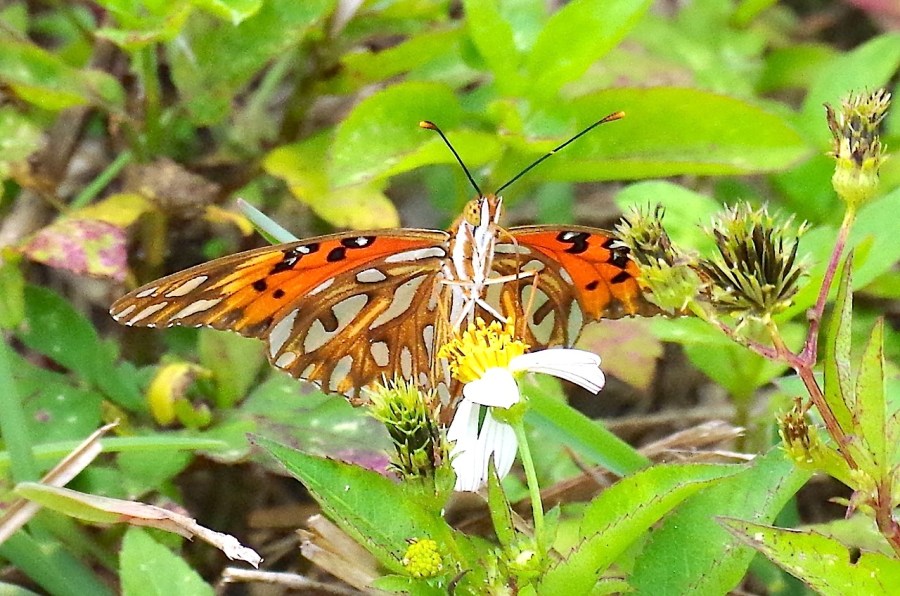
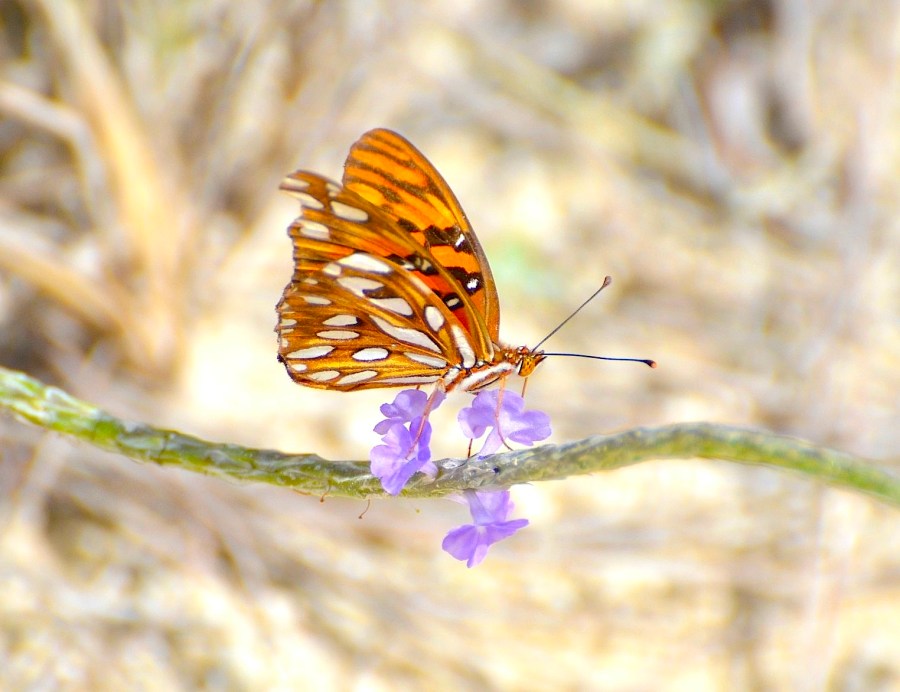
It’s been a while since any papilionidae made an appearance on these pages – and much longer since a Gulf fritillary  Agraulis vanillae flew in. These very pretty butterflies are far from rare, but like the ATALA hairstreak, they are always a pleasure to see. Here are a few to enjoy.

Gulf Fritillary, Abaco (Charles Skinner)Gulf Fritillary, Neem Farm, Abaco (Keith Salvesen)5Gulf Fritillary, Neem Farm, Abaco (Keith Salvesen)2Gulf Fritillary, Neem Farm, Abaco (Keith Salvesen)1Gulf Fritillary, Abaco (Charles Skinner)10386393_10152656788408720_3995568288186763659_nGulf Fritillary, Abaco (Charles Skinner)

Credits: Charles Skinner (1, 2, 6, 8), Rhonda Pearce (7), Keith Salvesen (3, 4, 5)

Unknown's avatar

THE MYSTERIOUS ‘ABACO PARROTS’ OF NASSAU


Nassau Parrots (1) Melissa Maura

THE MYSTERIOUS ‘ABACO PARROTS’ OF NASSAU

Where did they come from, and when did they arrive on New Providence? And how? The conventional wisdom is that the Cuban Amazon or rose-throated parrots (Amazona leucocephala) exist in the Bahamas only on South Abaco (from Marsh Harbour down to the National Park) and Inagua. The species is arguably (but not as yet officially) divisible into two subspecies. On Inagua, the parrots behave as you’d expect, including in their breeding and tree-nesting habits. Conversely, the parrots of Abaco nest underground in limestone holes and crevices in the National Park at the southern end of the island. This very distinctive habit makes them vulnerable to predators of course. On the other hand, there is good protection from the forest fires that pass rapidly and harmlessly  through the scrub above them, yet which would make tree-nesting extremely hazardous. It would be interesting to know if the parrots of Abaco have always done this; or whether they were originally tree nesters who adapted their behaviour to meet changed conditions in their habitat.

Nassau Parrots (2 of 5) Melissa Maura

WHEN DID THE PARROTS ARRIVE IN NASSAU?

The BAHAMA PARROTS OF NASSAU LOCATOR group was set up on Facebook in early 2012 by Shelley Cant-Woodside. Lynn Gape of the Bahamas National Trust (BNT) was also involved from that early stage. The stated purpose of the group was “to help locate the increasing reports of parrot sightings on NP in general and Nassau in particular”. This suggests an increased awareness of an existing intrusion of the colourful and noisy Cuban parrots, a species hard to mistake or ignore. At the other end of the time-scale for their arrival on NP, when omniscient and much-missed ornithologist Tony White published his comprehensive checklist for each Bahama island in his Birder’s Guide to the Bahama Islands (inc. TCI) in 1998, no record existed of a sighting of a Bahamas parrot on NP. Abaco and Inagua, yes. But nowhere else. So that gives less than a 14-year window for a parrot influx.

Nassau Parrots - Lynn Gape

SO HOW DID THEY GET TO NP?

There are realistically two possibilities. Either two or more captive parrots on NP (including a male and a female!) escaped or were released on NP; or were brought to NP and freed. Alternatively, says another theory, a flock of parrots in the Abaco National Park were caught up in a hurricane, and involuntarily relocated to the nearest land in the confusion. It could of course be both (Helpful Reader: “…or neither?”). Shelley tells me: I know that ARDASTRA GARDENS (Nassau Zoo) positively identified Bahama Parrots on New Providence as early as 2004, which is when I worked there. We were told at the time that some folks had purposely released them. I doubt that it is related to hurricanes”.

Nassau Parrots (Sandy Cunningham)

RELEASED BIRDS

This theory is by far the most likely one, and is supported by anecdotal evidence. Even so, it is not entirely straightforward. I don’t know what protection was afforded the parrots in the Bahamas in the early 2000s, but certainly there were captive birds; and indeed there was and is a market for this species of Amazona further afield – Cuba for example, and (to my huge surprise) the UK, where a single bird may be had for £380 ($500). But even assuming the existence of a few males and females, they would have needed to breed. And there are few, if any, contemporary reports of parrot nests in trees; or of chicks or juveniles. If these bright, noisy birds were new to Nassau around 2004, they must surely have attracted some attention if they were breeding and spreading from then on.

Nassau Parrots (3) Melissa Maura

HURRICANE MAELSTROM

I have taken a look at several Bahamas hurricanes and tropical storms between 2004 (the Ardastra ID) and 2012 (Locator page founded). Tracking and intensity information rules out most of them. It’s fair to say that the paths of the storms are almost invariably from the south / east veering west / northwards. You might think that a parrot flock could not be carried by hurricane 50 miles in the opposite direction, from the south of Abaco to New Providence. But perhaps disorientation and self-preservation play their parts – a psittacine instinct to fly away from the danger, in the opposite direction from its path, towards where the weather is calmer.

Hurricane Irene tracking pathHurricane Irene_2011_track

WHAT’S THE ANSWER, THEN?

To check the rival theories, I asked well-known scientist and parrot expert Caroline Stahala for her views. This authoritative opinion leads to the conclusion that the Parrots of Nassau result from escape, or release from captivity, perhaps supplemented by later importation.

“I know people like the ‘hurricane’ theory but there isn’t much support for it, especially since we did get reports through-the-grapevine that someone had released these birds. They did show up after a serious hurricane season Frances/Jeanne etc [2004] but thats probably because their housing in Nassau was damaged or the person who had them couldn’t take care of them properly. During hurricanes, parrots don’t fly away, they hunker down and ride out the storm. Amazon parrots absolutely do not like flying over large bodies of water, their wings are designed to be super manoeuverable in forests, not for distance flights, so the chance that they would fly over water during a hurricane is very very slim.  Not to mention a whole group of them (6-12)”. 

On the other hand, it’s not that simple. Lynn Gape (BNT) comments: “I heard the hurricane theory differently. I was told that someone thought that the parrots flew to Nassau with a flock of White Crowned Pigeons after one of the hurricanes. The thought being that although they do not like to fly over water, they were really in need of food and felt there would be strength in numbers for the flight”.

Nassau Parrots 3 (Neill Pritchard)

WHERE CAN I FIND THEM?

Almost all reported sightings have been in East Nassau. Occasional sightings have been reported outside that area but the overwhelming majority are within the RED oval on the map below, with the hotspot area within the ORANGE oval. I base this both on the Locator page and also the somewhat sporadic eBird reports.

Nassau Map 2 v2 jpg

SO THE NASSAU PARROTS MUST BE BREEDING, RIGHT?

Parrot sighting reports are increasing but that fact, as I have discovered on Abaco, does not necessarily suggest an increasing population. Increased citizen enthusiasm and awareness is also linked to increased bird reporting, as is the advent of simple reporting systems such as social media posts, eBird and so forth. However the impression I get from reading the Locator posts is that, while evidence of actual population growth is unclear, numbers may be being maintained despite an inevitable attrition rate. The Locator has sad images of 2 known casualties, causes of death unknown.

Nassau Parrots (Lynn Gape)

WHERE ARE THEY NESTING, THEN?

It seems that, unlike Abaco, there is no secluded forested area on NP with suitable limestone terrain to provide underground caves. Therefore the parrots must be finding other suitable cavities, the most obvious being in trees. As far as I can make out, there have been very few – if any – reports of juvenile parrots being seen. For that matter, there have been none of nesting behaviour either – a pair of parrots in a tree preparing a nest, taking turns on the eggs, foraging for food for the chicks, or squawking flying instructions at the fledglings**. So perhaps there is an unfrequented area of coppice on NP, some distance from the bustle of Nassau, where all this takes place in midsummer. By the time they put in an appearance in the town, they have already grown to young adulthood.

**COMMENT On the question of evidence of  nesting behaviour, Lynn Gape says: “I have seen four parrots in my garden, and they exhibited behaviour similar to what I have seen with adult and juvenile parrots on Inagua – calling for food, and adults feeding them. So possibly there may have been some successful breeding”. 

This recent photo (below) by Ian Coerbell shows the sort of tree cavity that according to Caroline Stahala might be a possible nesting site. She says:

“I did document a nesting pair of Abaco parrots in Nassau. The nest was in a tree cavity. However, as long as the birds have been there, the numbers do not seem to have increased. For some reason they aren’t very successful on NP. Melissa Maura rehabbed a young Abaco parrot that was found malnourished & dehydrated in Nassau. She ended up releasing it but we don’t know what happened to it.” 

Nassau Parrots : ?Nesting site (Ian Coerbell)

Cat Binks has commented that she believes there is a nesting location in an overgrown lot adjacent within the ‘hotspot’ area. She sees them most evenings, sometimes as many as six. Cat also confirms that “enthusiasm and awareness has increased… I’m getting daily feedback about fly-overs [in the hotspot area]”.

A parrot and chick in a limestone cave nest on AbacoLimestone Holes & Abaco Parrots 09

HOW MANY OF THEM ARE THERE?

The BNT gave this estimate of numbers a few years ago: “There is a very small population (less than ten individuals) on the island of New Providence”. I suspect it is difficult to make a reliable estimate of numbers now. The birds are unbanded, and there is a considerable risk of double-counting when the sightings are of 2 or 3 at a time, in different locations over a very small area. I think it’s probable that the number has reached double figures, and that in any event it is not diminishing despite some casualties. 

STOP PRESS On 6 October 2016 New Providence was in the direct path of Hurricane Matthew. Despite the power of the storm, by the following day there was a report of a sighting in Nassau. Today, 9 October, comes a report of a group of 15 – as far as I am aware the highest number sighted together. Maybe they all came together for solidarity… In any event, the sighting confirms that, at least as far as the parrots are concerned, the hurricane has not caused any problems.

Caroline points out that there is a good chance of interbreeding between feral Amazon species in Nassau that ‘hang out’ with the so-called Abaco parrots: “That would basically make the Bahama parrot population a hybrid and not of much conservation use. Having said that, I still think its really neat that the birds are there and I hope everyone enjoys seeing them in a natural setting. Hopefully we can find out more about them in the next few years”.   

Lynn comments: “With regards to the interbreeding with feral parrots that does not seem to be a problem at this time – we did at one time see them with a Yellow Nape Amazon but that bird has disappeared; and according to Caroline Stahala they will not breed with the Black-headed Parakeet. We thought that the birds did nest in a large tree right on Parliament Street. Caroline Stahala and Predensa Moore investigated but did not find conclusive proof. However the timing would correspond with the time when Melissa found and took care of the young parrot”.

Nassau Parrots 2 (Neill Pritchard

WHAT ARE THE HAZARDS FOR THE PARROTS?

Numerous, as you’d imagine, especially in an urban setting, though the birds may have adapted their behaviour to an extent to avoid some of the obvious dangers. There is evidence that some birds are already adapting to urban life, as this recent photo shows. Two parrots have teamed up with a black-hooded parakeet (presumably escaped or released from captivity) to investigate a vehicle and maybe play with the windshield wipers… Nassau Parrots *(with black-hooded parakeet) Tim Colclough

STOP PRESS Parrot in a Gumelemi tree, Skyline Heights, Nassau. A great shot by Linda J Clews, with thanks. The parrots have sadly stopped coming to her property since the clearance of coppice to make way for the golf course of the Baha Mar development – an example of the effects of habitat loss on wildlife.Cuban Amazon Parrot, Nassau (Linda J Clews)

ARE THEY PROTECTED, OR CAN WE CAGE THEM OR SHOOT THEM?

Yes, and no, and definitely not. According to the Bahamas National Trust “Bahama Parrots are protected under the Wild Birds (Protection) Act. It is illegal to harm or capture or offer this bird for sale. The Convention for the International Trade of Endangered Species (CITES) list the Bahama Parrot in Appendix 1 meaning that it is a species which is near extinction or very endangered”.

If anyone would like to know what a flock of these wonderful but uninhibitedly raucous birds sounds like, this is a short recording I made at Bahama Palm Shores, Abaco (an excellent hotspot for them incidentally). 

USEFUL LINKS

NASSAU PARROT LOCATOR

BNT PARROT FACT SHEET

ABACO PARROTS

A true Abaco Parrot at Bahama Palm Shores…
Abaco (Cuban) Parrot (Keith Salvesen)

Credits: Shelley Cant-Woodside and Caroline Stahala for information and advice; Locator page members for active or tacit use permissions; photos by Melissa Maura (1, 2, 5); Lynn Gape (3, 7); Sandy Cunningham (4); Neill Pritchard (6, 10); Ian Coerbell (8); Caroline Stahala (9); Tim Colclough (11); Linda Clews (12); Keith Salvesen (13)

Unknown's avatar

“PIPER” (THE SANDERLING?) – THE ULTIMATE CHICK FLICK?


piper-pixar-640x425

“PIPER” (THE SANDERLING?) – THE ULTIMATE CHICK FLICK?

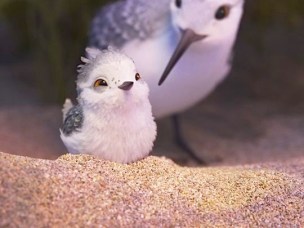
Yes, yes, I realise that Pixar / Disney’s latest candidate shoo-in for the Oscar in the ‘Totes Adorbz Animatid Tweetie Pie’ category isn’t actually real. [Oh! Did I really need to put a *spoiler alert* before that first sentence, I wonder? If so, sorreeeeeeee!] Piper, the awesomely cute chick star of the already famous ‘short’, is clearly a shorebird of some sort. She’s obviously not a piping plover named ‘Piper’ – indeed, judging by the appearance of her mom, she is obviously based on one of the small sandpiper species. In fact, she most resembles a SANDERLING (Calidris Alba) who is, not unreasonably, called ‘Piper’. 

According to an article in THE VERGE, the film-makers spent a great deal of time with shorebirds, especially sanderlings, studying all their little ways for verisimilitude in the film. Not just in appearance, of course, but in movement and behaviour (see viddy below).

A real (as opposed to CGI / cartoon) sanderling strutting its stuff on the Delphi beachSanderling, Delphi Beach, Abaco (Keith Salvesen)

“KEEP CLAM AND OPEN IT”636005803745806295-Piper-1.pub16.1-RGB

PIPER the film is described thus: “This wordless short follows a young bird who’s forced by her mother to start collecting her own clams. Her first attempt is a disaster. A crashing wave leaves the little bird soaked and terrified… She isn’t too eager to return to the shoreline, but, with the help of a tiny hermit crab, Piper musters the courage to try again and even starts to enjoy the hunt”. 

Sanderlings love water. They run along the tideline. They run towards the retreating tide to forage in the soft sand. They run away from the next wave as it rolls in. They run everywhere. Sometimes they bathe in rock pools or TIDE POOLS. Here’s a short video I took on the Delphi beach that demonstrates the crazy realtime scuttling that goes on.

And this is the very excellent BIRD & MOON take on Sanderling:

IMG_3834 - Version 2 copy

SOME CUTE CLIPS from “PIPER”

636005801449598138-piper-s200-107cs.sel16.577-RGB1030108-pixar-piper-0211345463piper-pixar-short

There’s no one in the world who’s going to have a word to say against this charming film, so not even having seen it I am going to cut to the chase with an immediate review:

ROLLING HARBOUR MOVIE RATING  images-2 images-2 images-2 images-2 images-2 wickle tiny fluffballs

THE OFFICIAL PREVIEW

Please note: as yet I have not faced the question of forthcoming animated animal films, but no doubt I’ll get round to a post, provisionally entitled “Close Encounters of the Furred Kind”.

Credits: Pixar / Disney, The Verge, Birdorable, Bird & Moon, open source material and self for the real bird on the beach + video clip. Also, Conserve Wildlife Foundation NJ and Wader Quest who posted similar jocular ornithological comparisons.

Unknown's avatar

SPONGES ON THE REEF: A COLOURFUL MISCELLANY


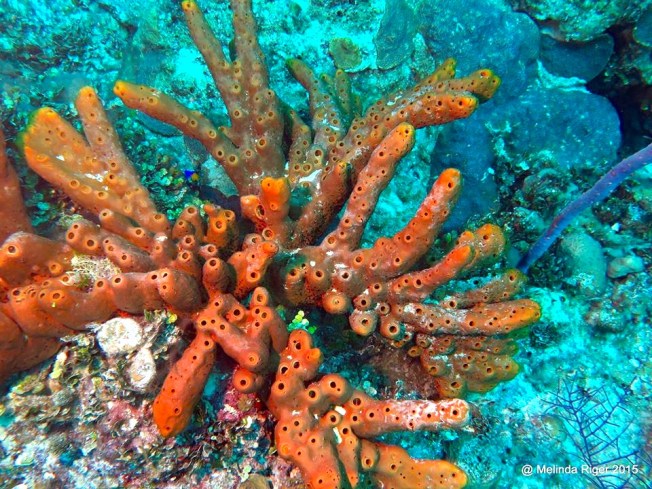
Brown Tube Sponge ©Melinda Riger @ G B Scuba

SPONGES ON THE REEF: A COLOURFUL MISCELLANY

It’s time to take an up-close look at some of the sponges you may find as you snorkel or scuba round the reefs of the Bahamas. I am always amazed by how bright and colourful they are, and by their many different shapes and sizes. Even the unpromising sounding (slightly medical, even?) BROWN TUBE SPONGE turns out to be fascinating to examine closely. Here are some more sponge species. 

CANDELABRA SPONGECandelabra Sponge ©Melinda Riger @ G B Scuba copy

STOVE PIPE SPONGEStove Pipe Sponge ©Melinda Riger @ G B Scuba

PURPLE VASE SPONGEVase Sponge, purple ©Melinda Riger @ G B Scuba

BRANCHING TUBE SPONGE WITH ROPE SPONGESponges - Branching Tube Sponge with rope sponge ©Melinda Riger @ GB Scuba

PURPLE TUBE SPONGEPurple Tube Sponge ©Melinda Riger @ GB Scuba

PURPLE SPONGE WITH GIANT ANEMONEPurple Sponge : Giant Anemone ©Melinda Riger @ G B Scuba

VASE SPONGEVase Sponge ©Melinda Riger @ G B Scuba

The above sponges represent a fraction of the sponge varieties found on Bahamas reefs. I’ll post some more quite soon. All this has made me want to go for a snorkel. But right now I am 30 miles from the sea. And I have no gear…

HANG ON A MOMENT! WHAT IS A SPONGE WHEN IT’S AT HOME?

It’s really very simple: if you are ever asked the question, just reply “a sponge is a primitive sedentary aquatic invertebrate with a soft porous body that is typically supported by a framework of fibres or calcareous or glassy spicules. Sponges draw in a current of water to extract nutrients and oxygen”.

AND WHAT, PRAY, IS A SPICULE?

You’re having a laugh… if you seriously want to know, read the abbreviated version about them HERE. And admire this microscopic collage of ‘demospongiae spicule diversity’ made available by the wonders of Wiki and the research of about 20 credited scientists.

Demospongiae_spicule_diversity

All photos: Melinda Riger, Grand Bahama Scuba. Tip of the hat to Wiki and scientists

Unknown's avatar

“ON THEIR WAY”: THE PIPING PLOVER MIGRATION HAS BEGUN…


PIPL adult & chick (Jordan Rutter)

“ON THEIR WAY”: THE PIPING PLOVER MIGRATION HAS BEGUN…

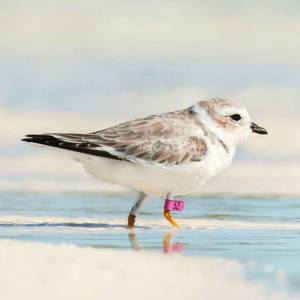
The last piping plover known to have left Abaco for the summer breeding grounds was the renowned ‘Tuna’, in early April. We can’t say where he ended up – there are no reported sighting of him this summer from the NJ beach where he was born, raised and banded – or from anywhere else. The unbanded Delphi contingent had left the beach by the end of March.

TunaPiping Plover Tuna. Abaco. Oct 10. Rhonda Pearce

Besides Tuna, of the named banded birds resighted on Abaco beaches last season (e.g. Harry Potter, Hermione Granger, Jonesy, Bahama Mama, Benny, Bess), only the most distant visitor Bahama Mama returned to her original beach in Muskegon State Park. Her mate from last year (‘Little Guy’) had already shacked up with another bird, so BM did likewise. Carol Cooper reports that all birds had left the beach by July 23.

Bahamas Pink Band 52PIPL Pink Band 52, Abaco (Walker Golder)

As for Bahamas ‘Pink Bands’ – winter-banded birds – the BAHAMAS SHOREBIRD CONSERVATION INITIATIVE has posted a wonderful interactive map produced by Audubon which shows the astonishing extent of the migration undertaken by these little birds. Unfortunately none of last winter’s Abaco ‘pink numbers’ are shown as resighted. You can reach this great resource by clicking the image below. This will take you to the original – I am trying to work out how best to embed the map in my sidebar.

Click me!Pink band PIPL map (Audubon : BSCI)

Reports of migrating PIPL are beginning to come in and will accelerate over the next few weeks. First with a Bahamas report is Linda Barry-Cooper (West End Ecology Tours), who spotted 3 at Sandy Cay, West End, Grand Bahama on July 21 (‘10.00 a.m., high water’). With a modest fanfare of greeting, here are those first Bahamas birds of the season.

Piping plovers, West End, Grand Bahama (Linda Barry-Cooper)Piping plovers, West End, Grand Bahama (Linda Barry-Cooper)Piping plovers, West End, Grand Bahama (Linda Barry-Cooper)

ABACO PIPING PLOVER WATCH

Last season was an important one for having a bird count on Abaco, with the four-yearly census taking place in January. I started The Watch rather nonchalantly, but it quickly picked up enthusiasm and momentum and in the end it was of significant use for the official bird count. Here are the compressed stats for the from the end of July 2105 to January 2016. You will see – possibly with some surprise – that in only 5 months 3.83% of the total presumed piping plover population in the world was found on Abaco. And of course that’s only a total from sightings on certain beaches, mostly easily accessible, by a relatively small number of monitors. How many more were there on the all the unexplored expanses of beach, or indeed out on the Marls?

12645249_238060709872861_4615782903299666904_n

The question is whether to continue the watch this coming season. If so, best to get it sorted before the first birds arrive any day now. I have decided  to carry on, but – since it isn’t a census year –  with a lighter touch this time (it’s a time-consuming process and there’s other stuff going on in my life.) Accordingly I would welcome reports of all Abaco sightings. If you are in doubt whether what you are seeing is a piping plover or some other shorebird, a photo or even a phone pic for ID would be great. The most helpful information to give is:

  • Date and time
  • Single bird or number of birds (if countable) or an estimate
  • Whether banded or not
  • If so, details of the banding: band or flag, colours, visible numbers etc
  • If at all possible, photos of the bird and its legs… I am able to enhance apparently dim or fuzzy pictures to some extent, so don’t worry if you don’t get a perfect shot.
  • If possible, state of tide – high, low, half-way, coming in, going out
  • Also, what the bird is doing – foraging, sleeping, rushing round in circles etc
  • Finally, location as accurately as possible. Area, name of beach, whereabouts (middle, east end, south end etc)

Piping Plover (juv) CT (Danny Sauvageau)

If you are one of the volunteer beach monitors from last year, I will be emailing you. If you’d like to monitor your own or a favourite beach, I’d love to hear from you.

CONTACT

Piping Plover, Abaco - Charmaine Albury

Photo Credits: Jordan Rutter, Rhonda Pearce, Linda Barry-Cooper x 3, Danny Sauvageau, Charmaine Albury


Unknown's avatar

HAWKSBILL TURTLES: A RARE FIND & SWIMMING WITH ANGELS


Hawksbill turtle (juv), West End Grand Bahama

HAWKSBILL TURTLES: A RARE FIND & SWIMMING WITH ANGELS

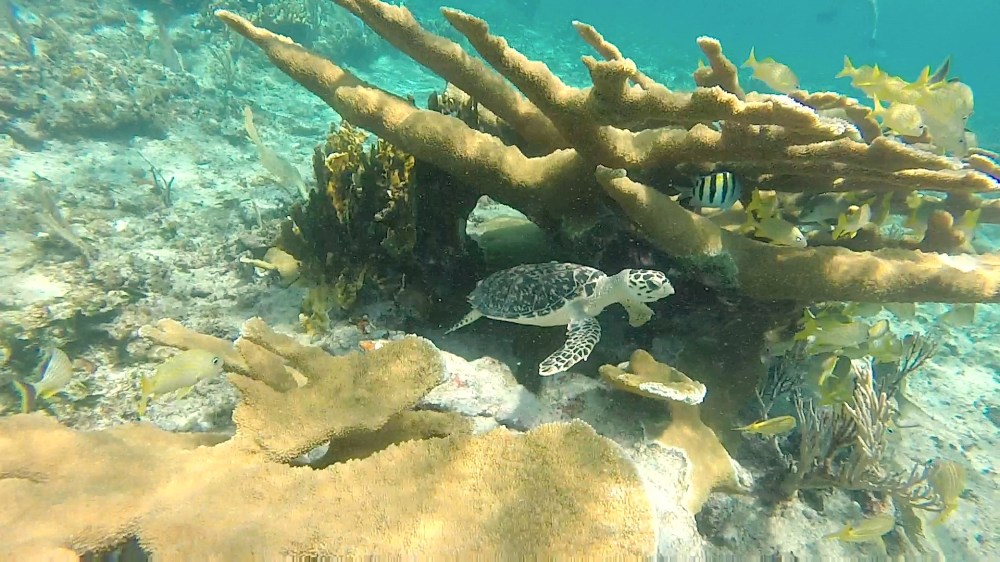
There is something unusual about this juvenile hawksbill turtle peacefully noodling round some impressive elkhorn coral with the grunts and sergeant majors. He’s a rarity. He was found at West End, Grand Bahama (just 67 miles swim from West Palm Beach Fl.), a place where hawksbills are very scarce. Loggerheads, they have. And there are plenty of hawksbills elsewhere in Grand Bahama waters. But not at the western tip. So finding this little guy and getting some good photos was a particular pleasure for Linda Cooper. And maybe the presence of a juvenile is a sign that hawksbills may begin to populate the reefs of West End, as perhaps they did historically.Hawksbill turtle (juv), West End Grand Bahama

Linda and her husband Keith run West End Ecology Tours. They have a comprehensive website HERE and a Facebook page HERE. Check it out to see how much there is to explore at West End. The birds, the corals and reef life, the starfish – and a speciality, swimming with rays. To which can now be added the chance of seeing a hawksbill turtle…Hawksbill turtle (juv), West End Grand Bahama

A DOZEN HAWKSBILL FACTS TO CHEW OVER

  • All sea turtles are classed as reptiles (something that always surprises me, somehow)
  • The top shell (carapace) consists of scales that overlap like roof shingles
  • The yellowish bottom shell is called the plastron
  • Adult hawksbills weigh around 100 pounds
  • Sea turtles sleep at night, and can stay underwater for a hours without breathing
  • Hawksbills are omnivorous, eating algae and seagrass but also sponges, urchins and small fish
  • Females lay about 100 eggs like ping-pong balls, and then at once return to the sea for good
  • The sex of baby turtles is determined by relative nest warmth – females from the top eggs
  • Baby turtles hatch almost simultaneously: all must work to dig their way out.
  • They tend to hatch at night and head straight for the sea’s phosphorescence…
  • …except that artificial lights confuse them & lead them away from the sea to likely death
  • Threats: predation, coastal development & habitat destruction, pollution, & illegal collection

SWIMMING WITH ANGELS

As I was writing this, another fact about hawksbills popped into my head. I checked through my archive – mainly Melinda Riger’s wonderful shots from elsewhere on GB – and yes, it is true. There seems to be some sort of symbiotic relationship between the turtles and angelfish. They are often found feeding together. A bit of research confirms this general observation, without giving a clear cause for it. Maybe it is simply that they eat some of the same food; and that there is plenty of it on healthy reefs so there is no cause for aggression on either side. It’s fine for a hawksbill to share with an angel.

10245Green Turtle, Gray Angelfish ©Melinda Riger @GB Scuba copyTurtle with Gray Angelfish ©Melinda Riger @ G B Scuba copyHawksbill Turtles, French Angelfish eat sponge ©Melinda Riger @ GB Scuba copyHawksbill Turtle eats sponge ©Melinda Riger @ GB Scuba copy

NOTE The Hawksbill is listed as Critically Endangered by the IUCN red list of Threatened species as its populations have declined dramatically throughout the world and especially in the Caribbean region. It is listed in Appendix I of the Convention on the InternatIonal Trade of Endangered SpecIes (CITES) meaning that Hawksbills are near extinction or very endangered. All marine turtles are now protected under Bahamian law, as is the taking of eggs.

Credits: West End Ecology Tours / Linda & Keith Cooper (photos 1, 2, 3); Melinda Riger / Grand Bahama Scuba, all other images; BAHAMAS NATIONAL TRUST  for their very useful fact-sheet (one of many) which I have adopted and adapted; Aquoflite for the vid.

Unknown's avatar

BAHAMA WOODSTARS: JEWELS IN ABACO’S CROWN


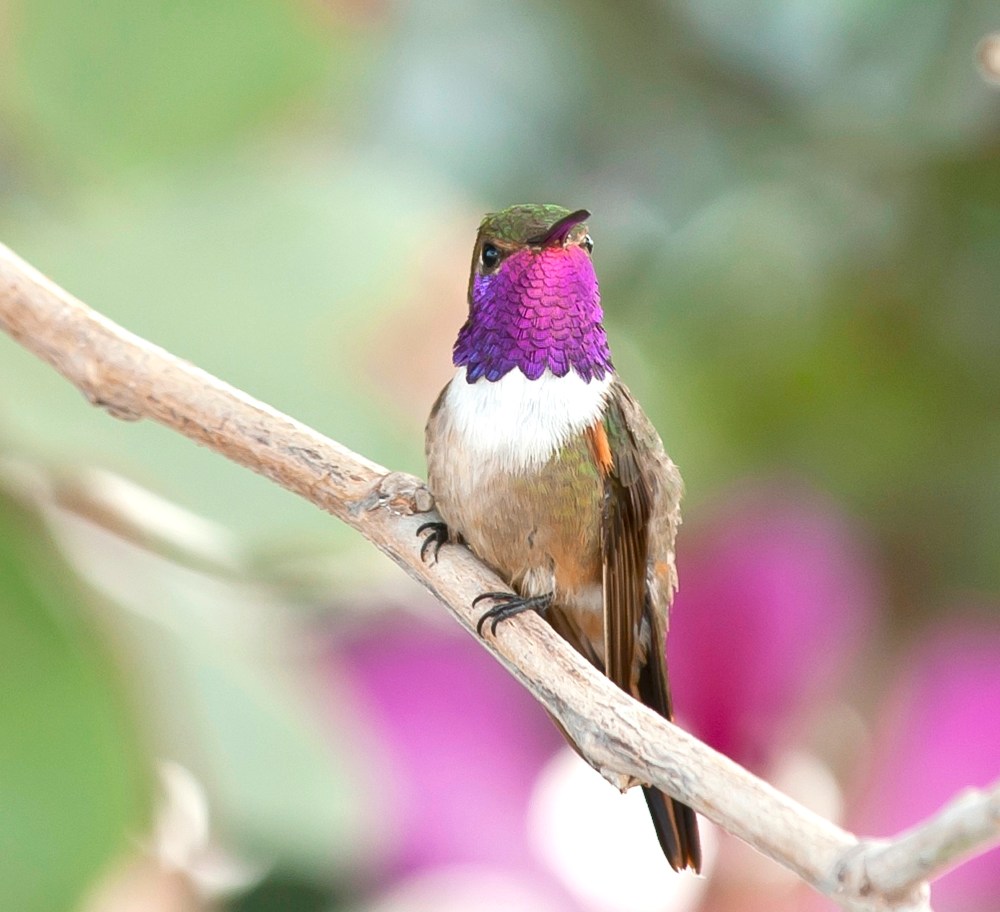
Bahama Woodstar Hummingbird, Abaco (Bruce Hallett)

BAHAMA WOODSTARS: JEWELS IN ABACO’S CROWN

Abaco is spoilt for birds. What other island in the word has its very own population of ground-nesting parrots? (Clue: none). How many others provide a secluded winter home for the rare Kirtland’s Warbler? Or a safe habitat for piping plovers – more than 300 individual birds recorded last year, nearly 4% of the total population? Or host 32 warbler species in the winter to supplement the 5 resident species? Or record a visit from a black-browed albatross? Or enjoy 4 out of 5 of the Bahamian endemic species (no longer the Bahama Oriole sadly, now confined to specific areas of Andros). 

Bahama Woodstar Hummingbird, Abaco (Bruce Hallett)

A while back I held a poll for Abaco’s favourite bird, with about 10 contenders. Some were quick to point out that their own personal favourite was not an option, but I had to take a fairly broad brush approach. On the podium, gold went to the Bahama Woodstar; silver to the parrot; and bronze to the western spindalis. I’m in a genial mood today, having caught a fair-sized wild brown trout on my third (part) day of stalking it (over 2 weeks), on the smallest fly in my box (size 18). I put it straight back of course. Respect! So in a spirit of cordiality, here are some epic shots of Abaco’s democratically elected favourite bird… at least according to the poll.

BIRD POLL FV2

The two images above were taken by the legendary Bruce Hallett, author of the go-to field guide for the Bahamas, which no birder should be without. Many of his wonderful photos  appear in THE BIRDS OF ABACO, and he was a steady guiding hand during the preparation of the book. 

This brilliant photo of a female woodstar was taken by Tara Lavallee of Bahama Palm Shores, and for composition, clarity, colour and sheer charm it was a must for inclusion in the book.

Bahama Woodstar, Abaco (Tara Lavallee)

Another major photographic contributor was Tom Sheley. I had the pleasure of spending time on Abaco with Tom during expeditions deep into backcountry to find and photograph birds. He had two cameras, one with a long lens. The other had a very long lens. The results he obtained – showcased in the book – were outstanding. His woodstar graces the front cover.

Bahama Woodstar male, Abaco, Bahamas (Tom Sheley)Bahama Woodstar male, Abaco, Bahamas (Tom Sheley)

Tom also took a delicate little study of a female woodstar feeding, one of my favourite photosBahama Woodstar female, Abaco, Bahamas (Tom Sheley)

Credits: Bruce Hallett, Tara Lavallee, Tom Sheley


Unknown's avatar

JACKKNIFE FISH: BAHAMAS REEF FISH (30)


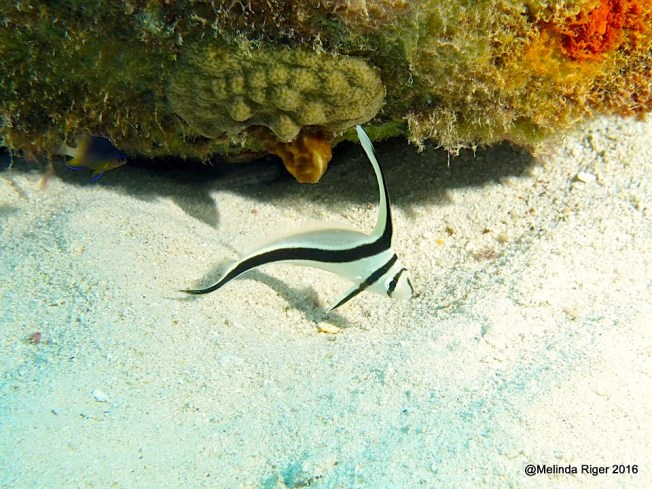
Jackknife Fish ©Melinda Riger @ GB Scuba

JACKKNIFE FISH: BAHAMAS REEF FISH 30

The rather uncomfortably ‘double-k’  Jackknife fish is one of 3 types of similar drumfish subspecies of Equetus found in Bahamas waters. The others are the High Hat and the SPOTTED DRUMFISH – the first fish featured in this series. Each of these drumfish species has juveniles that are elegant and delicate, becoming more conventionally fishlike as they grow to adulthood, as the final image shows.

Jackknife fish (juv) ©Melinda Riger @ G B Scuba copy

I always want to stick a hyphen in to separate each k: jack-knife fish. I think it’s an English thing. I have seen, at the other extreme, ‘jack-knifefish’, which looks most weird of all. Checking online, jackknife fish wins by a distance as the correct spelling. 

Jackknife Fish (juv) ©Melinda Riger @GB Scuba

These little fish, typically between 6 and 9 inches, inhabit the coral reefs of the Caribbean, the Gulf of Mexico, Florida and the Bahamas. Juveniles eat plankton and similar organism, graduating to small crabs and shrimps as adults.

Jackknife Fish ©Melinda Riger @ G B Scuba

A FULLY GROWN JACKKNIFE FISH (NOAA)Jackknife fish adult_NOAA_Photo_Library

Like other drumfishes, the jackknife can produce ‘croaking’ or ‘drumming sounds. This involves the fish beating its abdominal muscles against its swim bladder. There’s a lot more to it than my rather simplistic summary, but it’s probably as much as anyone needs or wants to know… The primary reason is believed to relate to mating. Other reasons include ‘low-level aggression’, and keeping in touch with each other in turbid waters.  I prefer the unscientific theory that sheer happiness makes them croak. Here’s a short video of a happy juvenile Jack knife fish (that’s yet another spelling variant…)

RELATED POSTS

Credits: Melinda Riger / GrandBahama Scuba; NOAA

Unknown's avatar

THE BAHAMAS: A STAMPING GROUND FOR DOLPHINS


Dolphin leaping, Abaco (BMMRO)

THE BAHAMAS: A STAMPING GROUND FOR DOLPHINS

I have commented before on the excellent wildlife stamps produced by the Bahamas Philatelic Bureau, and there is a fairly comprehensive page featuring many of the special issues HERE. Recently, dolphins were treated to their own set of stamps, in conjunction with the BMMRO (Bahamas Marine Mammal Research Organisation).  Four dolphin species are showcased, with a fifth species (Risso’s Dolphin) shown on the commemorative Official First Day Cover (replete with the BMMRO logo). The release date was 31 March 2016.

Bahamas Dolphin Stamps 2016

l_bmmro 25th ann_20160304134635-1

The stamps are available as sets of 4 or of course individually. In a newsletter earlier this year, the BMMRO included some fascinating information about their valuable work – in particular with whales – and about the individual dolphin species featured in this very special philatelic issue. This was also published by the stamp producers, Pobjoy Mint Stamp Division.

BMMRO is a Bahamian non-profit organisation whose mission is to promote the conservation of marine mammals in The Bahamas through scientific research and educational outreach. Since 1991, BMMRO has been conducting small vessel surveys primarily around Abaco Island to document the occurrence, distribution and abundance of marine mammals in The Bahamas.

imgres-3

BOTTLENOSE DOLPHINS Tursiops truncatus

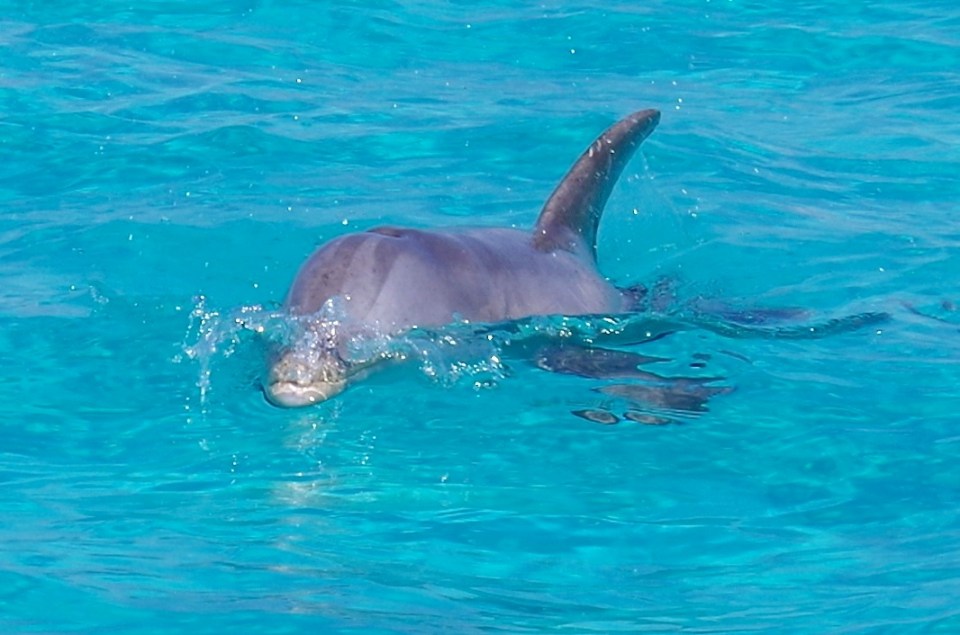
These are the most common marine mammals seen on the Bahama banks. It should be noted, however, that there are at least two distinct “breeding populations” or “ecotypes” of this species: coastal bottlenose dolphins that inhabit the shallow waters of the banks; and oceanic bottlenose dolphins found in pelagic waters. These populations diverged genetically several hundred thousand years ago and have since developed different physiological adaptations to their respective marine environments. The coastal ecotype is smaller in length reaching just over 8 feet and has a relatively larger dorsal fin and pectoral fins which helps them to maneuver more readily around rocks and reefs to catch fish, and to regulate their internal body temperature (the temperature of the shallow Bank waters fluctuates much more than the deeper Atlantic Ocean). The coastal dolphins do not travel much beyond the bank edge and live in small resident communities. The deeper diving oceanic ecotype can reach 10 feet or more in length, are usually seen in larger groups and appear to have a more extensive range with movements documented between Abaco, Bimini and Exuma Sound.

imgres-4

ATLANTIC SPOTTED DOLPHINS Stenella frontalis

These dolphins are not born with spots, but actually accumulate them as they mature, becoming quite mottled-looking as adults. Hence, young spotted dolphins are often confused with bottlenose dolphins, and sometimes the two species will interact, which adds to the confusion. Although they can reach almost the same length as bottlenose dolphins, they have a smaller girth and thus body weight. Atlantic spotted dolphins are a year-round resident species in The Bahamas. Individuals photo-identified 20 years ago in Abaco can still be seen in the same areas today. They are commonly seen in groups of 20-50 dolphins in the oceanic waters where they feed on flying fish and squid, and rarely venture on to the bank. However, along the western edges of Little and Great Bahama Banks this species can regularly be found on the bank during the daytime where they come to rest and socialise.

imgres-5

PANTROPICAL SPOTTED DOLPHINS Stenella attenuata

This species is more slender in body shape than Atlantic spotted dolphins, and also have a distinctive dark dorsal cape, which sweeps from their rostrum to behind their dorsal fin. Like Atlantic spotted dolphins, they accumulate their spots with age, which allows researchers to readily document age-classes within groups. This species is strictly oceanic in its distribution. Pantropical spotted dolphins are not as frequently sighted as Atlantic spotted dolphins in The Bahamas. They occur in groups of 50-100 dolphins and are often seen engaging in acrobatics, such as making high leaps out of the water, and bow-riding.

imgres-6

ROUGH-TOOTHED DOLPHINS Steno bredanensis

These dolphins are dark grey in colour with a long beak and prominent white lips. Their lower jaw and belly can sometimes be a pinkish colour. They reach just over 8 feet in length. They are an oceanic species and although appear to be rare in some parts of The Bahamas, can be regularly seen in the Tongue of the Ocean where they occur year round. Some individuals have been re-sighted in this area over the past ten years. They are typically found in groups of about 20 animals, but are sometimes in larger mixed-species aggregations of several hundred dolphins.

Risso's Dolphin - BMMRONot on a stamp but shown on the First Day Cover

RISSO’S DOLPHIN Grampus griseus

These are large light grey dolphins that can reach over 13 feet in length, and have a relatively tall, dark dorsal fin. Adults are typically covered with overlapping white scars caused by the teeth of their con-specifics making them look quite battered. They have a rounded head, lacking a beak, but have a deep vertical crease down the center of the forehead. As they mature, their forehead becomes prominently white, and as such they are one of the easiest species to recognize at sea. Risso’s dolphins are commonly seen in oceanic waters in the northern Bahamas each winter and spring, primarily on the Atlantic side of the islands. It is unknown where these groups range the rest of the year, but some individuals have been seen off Abaco repeatedly over the years.

RELATED POSTS

BAHAMAS WILDLIFE STAMPS PAGE

PHILATELY WILL GET YOU…

ABACO BIRD STAMPS

Bottlenose Dolphins, Rocky Point, Abaco (Keith Salvesen : BMMRO) 7

Credits: BMMRO for relevant text & images except last (RH), Pobjoy Mint, Bahamas Philatelic Bureau

Unknown's avatar

INDEPENDENCE DAY… FOR TINY FUZZY FLUFF BALLS


Piping Plover chick in the hand for banding (CWFNJ)

INDEPENDENCE DAY… FOR TINY PIPING FLUFF BALLS

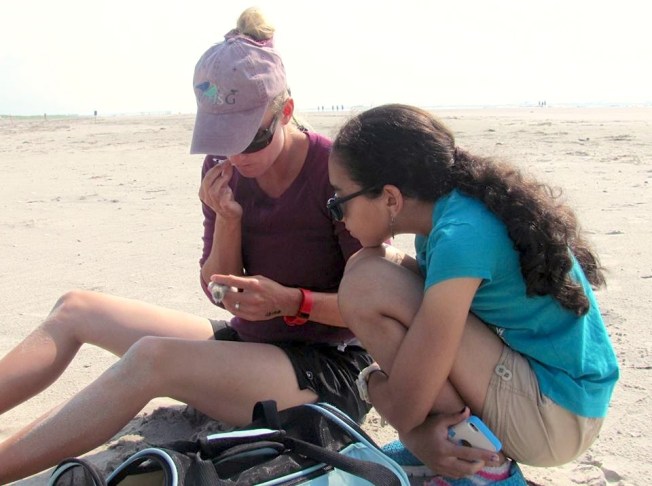
piping-ploverHappy July 4th to all those for whom the date has special significance (aside from it being plenty of people’s birthday). I’m celebrating the occasion by exercising my personal independence with a post that wrote itself. Mary Lenahan has done all the hard graft. Her photos and captions of a day in the field with her student Alex, in the company of CONSERVE WILDLIFE FOUNDATION NJ savants Todd Pover and Michelle Stantial merely needed to be arranged in traditional Rolling Harbour format, with a few additional comments.
    BIRDS IN THE HAND

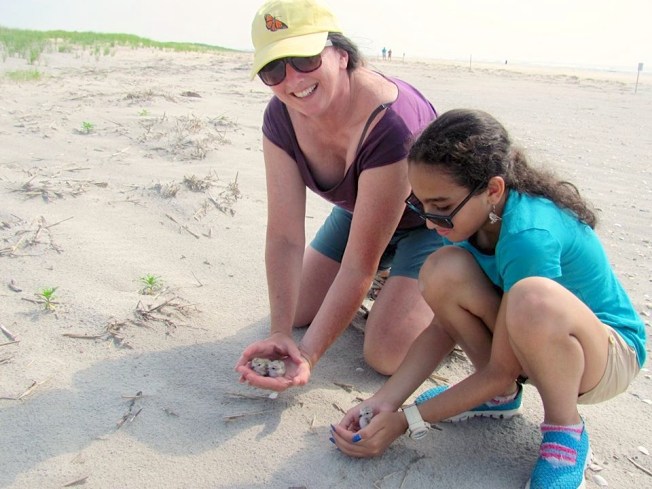
piping-plover“My student Alex and I were invited by Todd Pover (Conserve Wildlife of NJ Beach Nesting Bird Project Manager) to help out with some piping plover work in Avalon the other morning. We were lucky to observe the plover family from afar and close up as Michelle Stantial (Wildlife Biologist from SUNY College of Environmental Science and Forestry) and her technicians collected data on the week old plover chicks. What a thrill when we were able to release the fluffy chicks back to their parents in the Avalon dunes! Alex even took the time to help Todd take down a plover predator exclosure and to retrieve a balloon from the beach. What a fantastic and life changing experience for a budding scientist and her bird-nerd teacher. It is my hope that these endangered plovers overcome the many threats and obstacles they face and survive to migrate to their wintering grounds in the Bahamas”.

RH NOTE: 5 of the identified banded piping plovers that overwintered on Abaco were from NJ preserves. 2 of them (including the famous ‘Tuna’) were actually banded by Michelle herself last summer, with Emily Heiser.

Alex and Michelle Stantial discuss the bands on a piping plover chickPiping Plover chick in the hand for banding (CWFNJ)

Alex cradles a 1 week old chick before releasing him/her back to its parentsAlex and Michelle Stantial discuss the bands on the piping plover chick

Piping Plover chick in the hand for banding (CWFNJ)

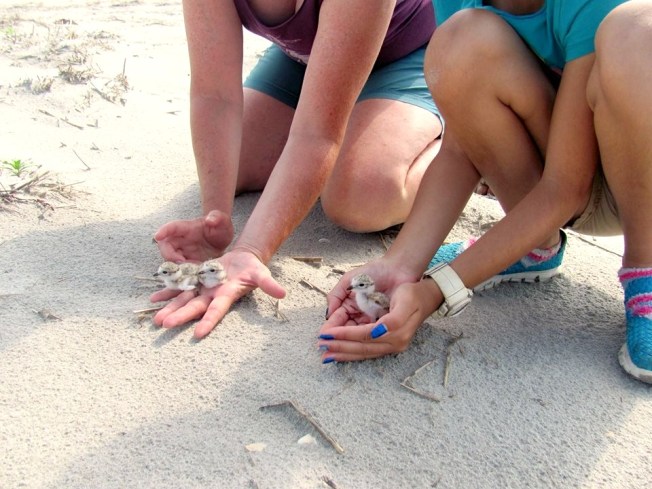
Michelle Stantial places two fuzzy fluff balls into Mary’s hands for release!Piping Plover chick in the hand for banding (CWFNJ)

Fuzzy babiez!Piping Plover chick in the hand for banding (CWFNJ) Piping Plover chick in the hand for banding (CWFNJ)

Go find your parents! Piping Plover chick in the hand for banding (CWFNJ)

piping-ploverThese tiny birds, weighing a couple of grams maybe, were one week old. Already, they were nearing their own independence: still learning the arts of life from their parents, but fast becoming mini autonomous units too. To give you an idea how fast they develop, the first “fall” PIPL found on Abaco last year were spotted by Woody Bracey on July 31 on Green Turtle Cay mudflats – 6 birds in a group. Tuna, born in June, was first seen on Abaco in August, having undertaken a journey of well over 1000 miles.

ANSWERS the answers to the questions are as follows: ‘no’; ‘no’; and ‘not in the slightest’.

QUESTIONS the questions are: ‘don’t the parents reject a chick that has been handled during weighing, measuring and banding’?; ‘aren’t the chicks terrified and traumatised by the whole process’?; and ‘don’t the bands hamper their foraging / flying abilities or otherwise cause lifelong alarm and despondency’? 

The field work on the beach involves more than measuring and banding the chicks. Exclosures erected to exclude predators from the nest areas need to be regularly checked, and removed when the time is right (below)

Piping Plover nest exclosure, New Jersey (CWFNJ)

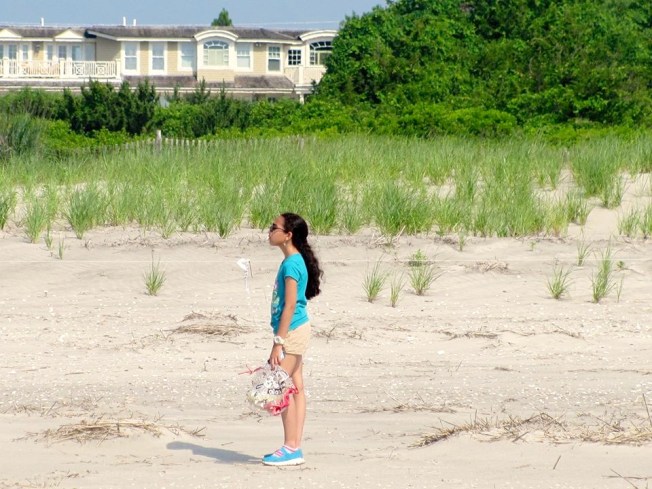
Alex finds a stray balloon very close to plover nest. BALLOONS BLOW and should never be released into the environment! This balloon could have been mistaken as food by a turtle or a whale, becoming trapped in the animal’s stomach, causing it to become very ill and die. The strings of balloons have been found tangled around the necks, bodies and legs of birds, causing pain, injury and death. Don’t release balloons or better yet, don’t buy them! Alex finds a deflated balloon on a plover beach

RELATED LINKS

ABACO PIPING PLOVER WATCH

CONSERVE WILDLIFE FOUNDATION NJ

BALLOONS BLOW

Many thanks to Mary Lenahan, Michelle Stantial, Todd Pover and of course Alex for being happy to share their experiences! And Birdorable for the little guys…

Unknown's avatar

BIRDS: BIG MOUTHFULS, VARIED DIETS & PLAYING WITH FOOD…


Anhinga eating fish (Phil Lanoue)

BIRDS: BIG MOUTHFULS, VARIED DIETS & PLAYING WITH FOOD…

Anhingas are so-called ‘darters’. You won’t have seen one on Abaco. Or else, if you have, you’ve had a rare avian treat. These cormorant-like birds are far from unusual in Florida, all round the Gulf of Mexico, on Cuba and generally in the West Indies, and throughout the northern parts of South America. But somehow they have only very rarely bothered to wing their way across the relatively short expanse of water that separates their usual stamping ground in Florida and the northern Bahamas. I very rarely post about non-Abaco birds, unless for comparison. However, on the slender basis that one or two anhinga sightings have been made on Abaco since 1950 (they are classified as V5, i.e. vanishingly rare vagrants) , I am including PHIL LANOUE’S wonderful photo of one trying to get a gob-stoppingly large spiny fish down its throat. And making that an excuse to show more of his wonderful bird photos, including one of his renowned sequences.

BIG MOUTHFULS

By way of contrast to the anhinga above, this brown pelican has opened wide, but has disappointingly little to show for his huge gulp. Just a tiddler, and it really doesn’t look like it will manage to jump out of that capacious gullet…

Brown Pelican fishing (Phil Lanoue)

Here’s a better meal: a great egret has got hold of a massive shrimp. It won’t have any trouble getting it down…Great Egret eating fish (Phil Lanoue)

VARIED DIETS

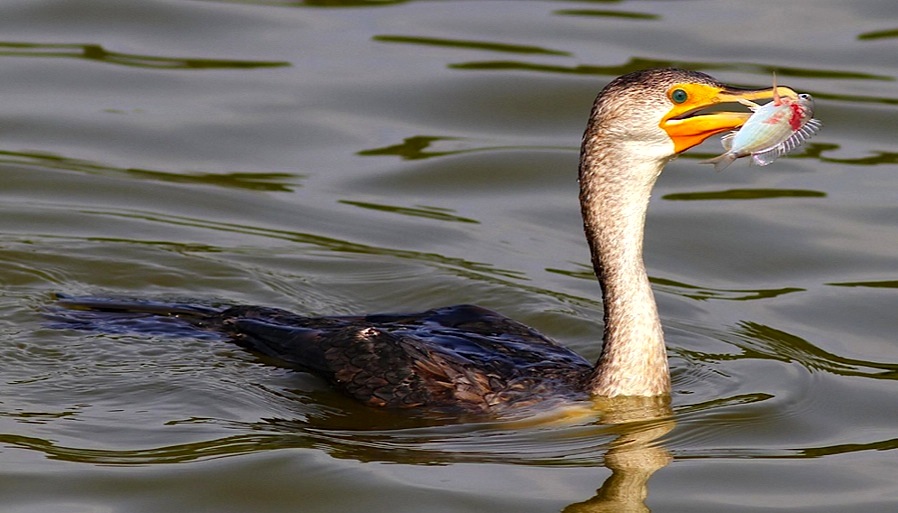
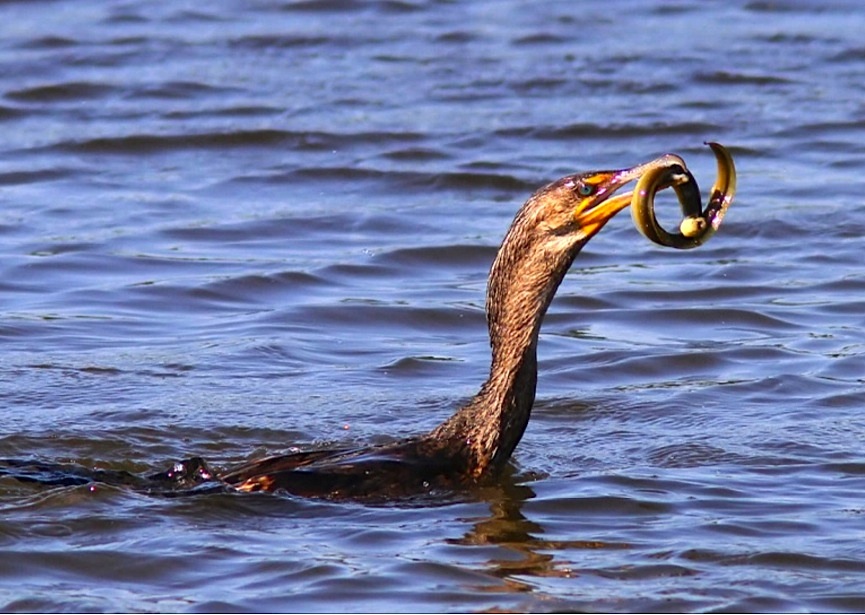
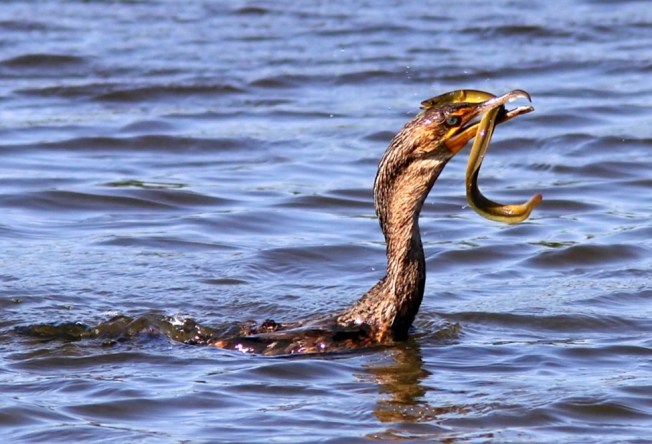
As the great egret above demonstrates, fish are not the only prey species for the ‘fish-eating’ birds. These cormorants are happily mixing up their diet.Cormorant - varied diet 1 (Phil Lanoue)Cormorant - varied diet 3 (Phil Lanoue)

I’ll take a side-order of salad with that…Cormorant feeding (Phil Lanoue)Cormorant - varied diet 5 (Phil Lanoue)

PLAYING WITH FOOD

Regrettably, the cormorant with the eel, above, decided to play with its food before eventually swallowing it. Here are three more images from Phil’s sequence of the Eel Meal.

Chucking my dinner around a bitCormorant - varied diet 4 (Phil Lanoue)

Wearing my food as a hatCormorant eating eel (Phil Lanoue)

My whole meal seems to have gone to my head…Cormorant - varied diet 6 (Phil Lanoue)

All phantastic photos by Phil. Check out his website https://phillanoue.com

Unknown's avatar

BANANAQUITS ON ABACO (GUEST PHOTOS)


Bananaquit, Abaco (Char Albury)

BANANAQUITS ON ABACO (GUEST PHOTOS)

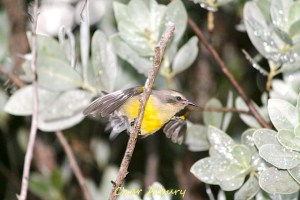
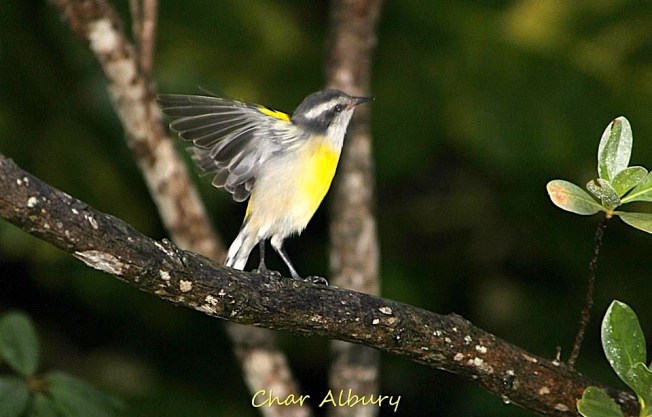
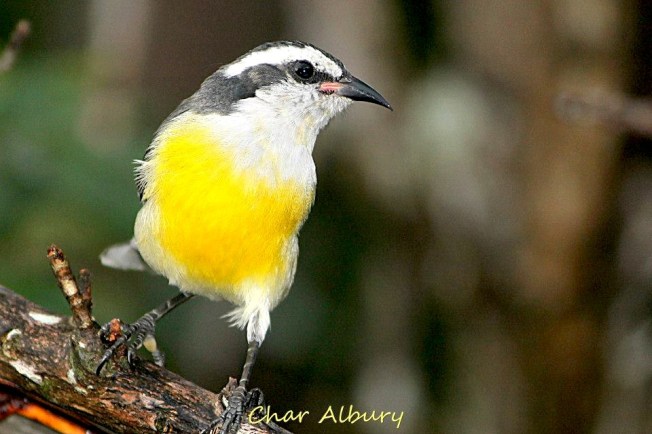
This is the best job in the world (#it’snotajob #it’sapastime #duh!yougetpaidinajob). I get to choose what to write about and what photos to use. And it’s all enjoyable, interesting, and totally new (to me) within the last 10 years. Bananaquits are another favourite small bird of mine. Charmaine Albury takes great Abaco wildlife photos – birds, butterflies, insects, shells and more – on Man-o-War Cay and beyond. It’s time to showcase some of her bananaquit photos. Let’s go!

Bananaquit, Abaco (Char Albury)Bananaquit, Abaco (Char Albury)Bananaquit, Abaco (Char Albury)

Juvenile bananaquits have their own totally adorbz qualities, as I have observed BEFORE.

Bananaquit juvenile, Abaco (Char Albury) Bananaquit juvenile, Abaco (Char Albury) Bananaquit juvenile, Abaco (Char Albury) Bananaquit juvenile, Abaco (Char Albury)

Bananaquit juvenile, Abaco (Char Albury)

As the juveniles grow, their colouring becomes stronger until eventually they are hardly distinguishable from their parentsBananaquit juvenile, Abaco (Char Albury)Bananaquit, Abaco (Char Albury)Bananaquit, Abaco (Char Albury)

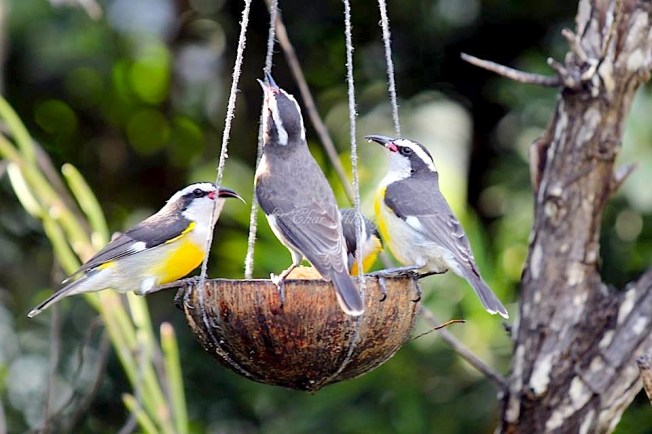
Bananaquits are readily attracted to gardens. They can used their sharp curved beaks to drink from hummingbird feeders. Or why not try Charmaine’s idea for a free-to-make bananaquit bar – look how successful it is!

Bananaquit, Abaco (Char Albury)

You’ll find several posts about bananaquits, none particularly recent. For an ‘in-house’ gallery of these bright little birds, click HERE

All photos Charmaine Albury, with thanks for use permission. You’ll notice that the images are watermarked or named, which is because Char’s images are available for sale. Let me know if you are interested in any of the photos featured here…