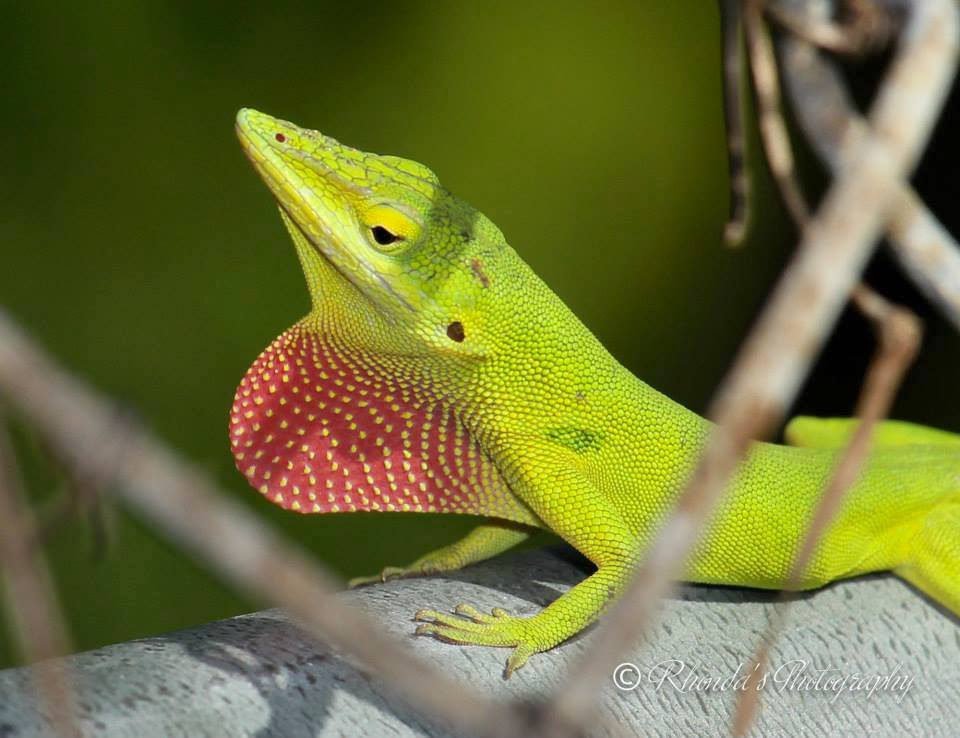
Yesterday was World Lizard Appreciation Day (or something similar), and it is only right to acknowledge the occasion. Everyone knows about CURLY TAIL LIZARDS. Everyone loves them and their little ways. But there are other lizards that may be found on Abaco and in the wider Bahamas. ANOLES, green and brown, should not be overlooked in the global celebration. They don’t have curly tails, but they do have a special power, the ability to display a DEWLAP. These are essentially folds of neck skin that are seen in many creatures – even large ones like the moose – and which in some species are inflatable / retractable.
A while back, Abaconian Rhonda Pearce took an outstanding sequence of photos of anoles. To begin, here are some impressive dewlaps to admire.
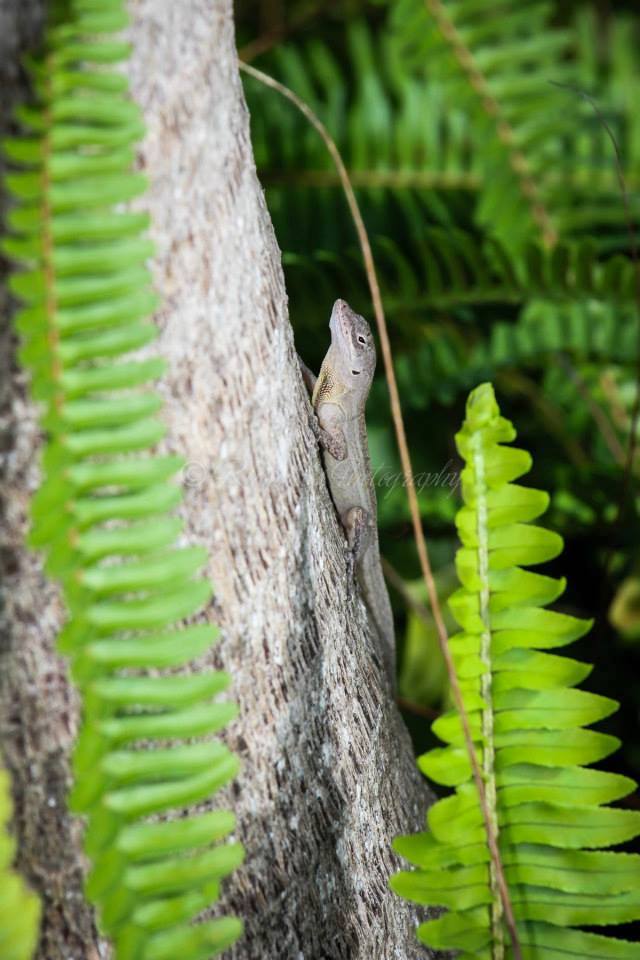
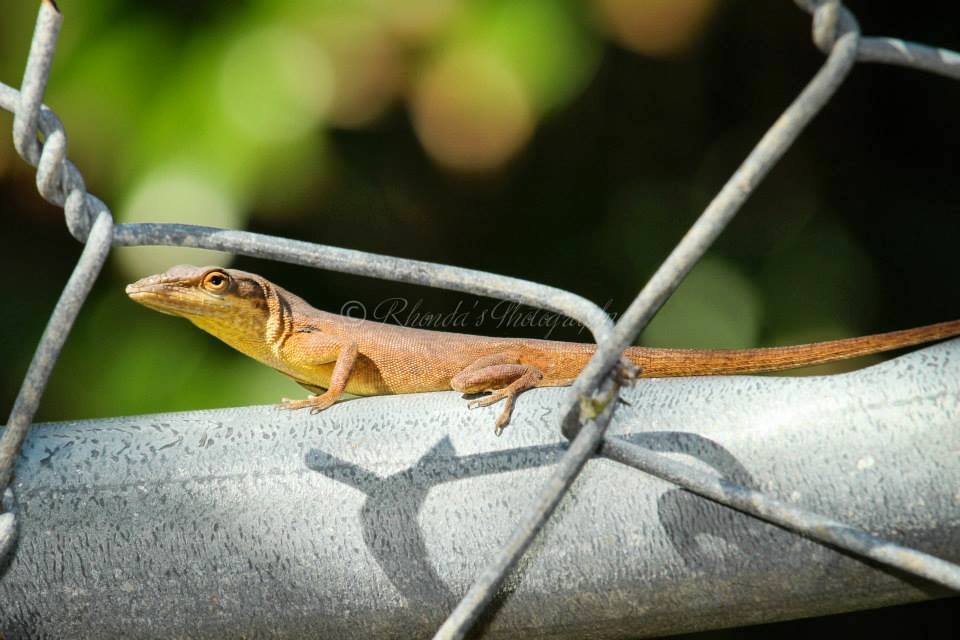
And here are a few green and brown anoles hanging out on trees and leaves in an anoley-type way. In a couple of these images, you can see the dewlap in its non-display mode. They are all just… lizards. Non-scary, non-venomous, non-poisonous little guys that are probably a peripheral part of everyone’s experience, but which really deserve a closer look.
You can read more about anoles, including their interesting sex lives, in the excellent Wiki article HERE. Usually, this is where I put a list of the various anole-related mating rituals, but actually the Wiki entry is more comprehensive (but you don’t get free jokes).
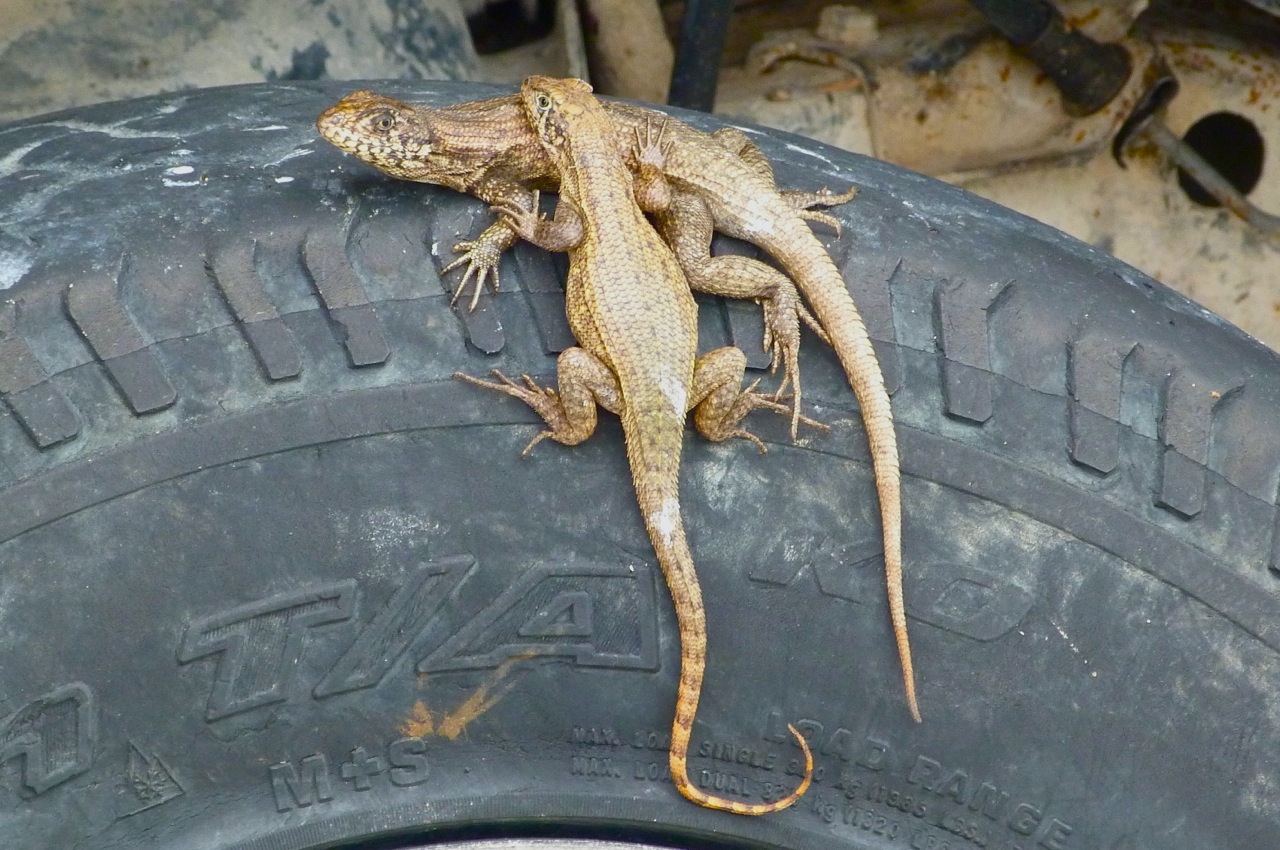
ADDENDUM: On this topic, at Crossing Rocks I did once photograph 2 curly tails in amorous conjunction on a lorry tyre / tire.
OPTIONAL MUSICAL DIGRESSION
The first time I heard the word ‘dewlap’ (misheard by the young me as ‘dewlat’) was in the mid-60s, in Georgie Fame’s excellent Ballad of Bonnie & Clyde. This song – and doubtless the film – was number 1 in the UK and maybe also the States.
I assumed then that a ‘dewlat’ was some sort of valuable gold coin – like a gold sovereign – that bank robbers put into a specially designed ‘dewlat bag’ to carry them away… Ah! The naivety of youth.
Bonnie and Clyde advanced their reputation
And made the graduation into the banking business
“Reach for the sky,” sweet-talking Clyde would holler
As Bonnie loaded dollars in the dewlap bag
Credits: all fantastic photos, Rhonda Pearce with thanks as ever; Vogue
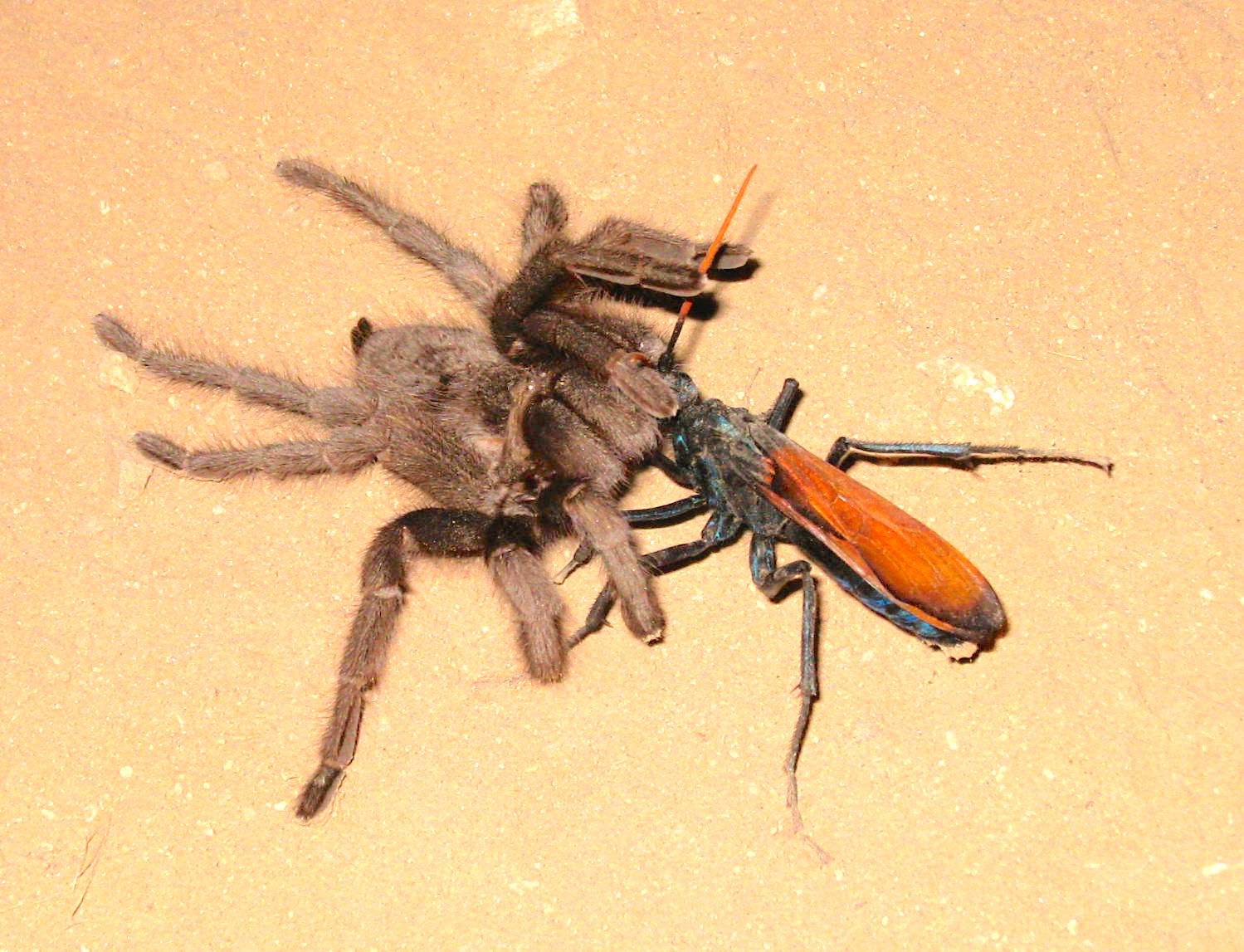
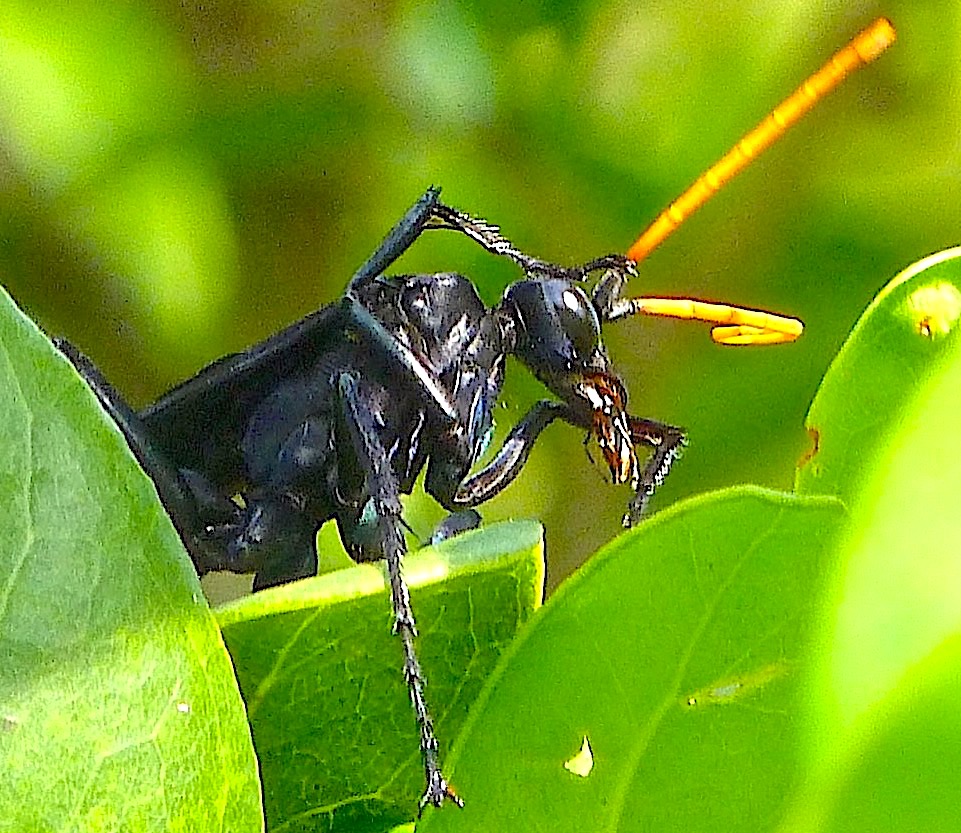
A few years ago I was wandering along a track in South Abaco looking for birds in the coppice, when I came across this aggressive-looking creature. I could only get a partial shot of the insect, and I wondered whether to try to reach towards it to get a more complete shot. Perhaps I could have, but extremely fortunately for me (as I later discovered) I didn’t touch it.
I’ve just been reading an article about these critters, which has prompted me to re-examine their place in nature’s ‘scary’ heap. A: of the world’s most agonising stings, it is No. 3.
The creature turned out to be a Spider Wasp (aka Pepsis Wasp), of the Pompilidae family. The insect is familiarly known as a Tarantula Hawk, for reasons given in unsparing detail below. For it turns out that this creature would be the hardest bastard insect on Planet Bastard in the Galaxy Bastardion.
It’s lucky that I didn’t try to collect it to keep in a small box as a pet. Note, for start, the complex eating apparatus… and it’s not for nibbling leaves as I had thought, but chopping up small insects. The leg claws and barbs are for pinning down its prey. You would not believe how unpleasant these little buddies are – and that’s before we even mention the sting…
SPIDER WASPS IN ACTION
These wasps are known in some countries as “horse-killers”. The Pepsis wasp is a sub-species, and is called Tarantula Hawk because it hunts tarantulas and uses them in a most ingenious and cruel way… Some claim that these insects are unaggressive to humans – if you leave them alone, they will spare you. I’ve also read that“The tarantula hawk is relatively docile and rarely stings without provocation”Now read on to see if it might be sensible to provoke one or not.
SCARY CRITTERS & LIVING LARDERS
(Trigger Warning: this is really rather gross)
SPIDER WASPS are ‘solitary’ insects that feed on ground spiders / tarantulas by stinging them to paralyse them, then eating them. In the most sinister way, the females also make use of them for breeding purposes. Hear this! They build a nest in a burrow, find a spider (a tarantula for choice), paralyse it with their sting, drag it to the nest and lay a single egg on its abdomen. Then they seal up the burrow.
If of a nervous disposition, look away now
When the egg hatches, the larva chews a hole on the spider’s abdomen and enters a living larder. It gradually eat its host as it grows. The spider’s vital organs are left till last, so that the spider stays alive as long as possible until the larva has reached full-size. After several weeks, the larva spins a cocoon and pupates (often over winter). Finally, the wasp becomes an adult, bursts Alien-like from the spider’s abdomen (deftly evading Ripley), and tunnels out of the burrow…
Do NOT try this at home or more than 10 yards from a medical centre
SPIDER WASPS: MORE FEARFUL FACTS
Their hunting improves with experience – the more spiders they eat, the quicker they find, attack & kill them
Males use ‘perch territories’ to scan for receptive females from a tall plant or other vantage point, a behaviour known as HILL-TOPPING
Adult wasps also feed on a variety of plants for nectar & pollen. They may become intoxicated on fermented fruit, which affects their ability to get around (I think we’ve all been there at some time…)
The female Pepsis gets her spider in two main ways: approaching a tarantula causing it to rear up defensively on its legs, thus exposing its abdomen to the sting or
She locates a tarantula’s burrow, using her sense of smell. She tricks the spider into emerging by tweaking the web at the burrow’s entrance or ‘intruding’ (see video below)
The wasp uses her long stinger to stab her prey. The poison rapidly paralyses the spider. She then drags it to her burrow, lays her egg onto the tarantula’s abdomen, seals the burrow and leaves. Job done
The hooked claws and barbs on the wasps’ long legs are weapons for grappling with victims
The stinger of a female tarantula hawk can be up to 7 mm (1/3 inch) long – and the sting is among the most painful insect stings in the world (see below)
Only the females sting (males may pretend to) because the stinger is linked to the ovipositor (egg-laying organ)
You can distinguish females from males by the curled antennae of the female. Mine was therefore female
The Pepsis wasp has (unsurprisingly) very few predators, though apparently roadrunners and bullfrogs may tackle them
Here is a hypnotically fascinating 3-minute video of the life-or-death struggle
SPIDER WASP –v- TARANTULA
THE STING
The sting of these wasps is among the most painful of any insect, though the most intense pain lasts on a few minutes. Entomologist Justin Schmidt bravely submitted himself to the stings of various insects and described this pain as“…immediate, excruciating pain that simply shuts down one’s ability to do anything, except, perhaps, scream. Mental discipline simply does not work in these situations.”
Schmidt produced his SCHMIDT STING PAIN INDEXThe pain scale, based on 78 species, runs from 0 to 4, with 4 awarded for the most intense pain. Spider Wasps of the species Pepsis – i.e. Tarantula Hawks – have a sting rating of 4.0, described as“blinding, fierce, shockingly electric. A running hair drier has been dropped into your bubble bath”Only the bite of the Bullet Ant – and the sting of the Warrior Wasp – is ranked higher, with a 4.0+ rating, vividly described as“pure, intense, brilliant pain. Like fire-walking over flaming charcoal with a 3-inch rusty nail in your heel”
LIGHT RELIEF AFTER THE PAIN
1. In 1989, New Mexico chose the Tarantula hawk wasp as the official state insect. The choice seems to have been left to schoolchildren and I’m guessing here (or gender-stereotyping) but I suspect it was the boys’ choice that won…
2. Tarantula Hawk is a “psychedelic progressive metal band” from San Diego, Ca. Their short discography includes their debut Tarantula Hawk (CD/LP, 1998); Burrow (Live CD, 2000, self-released); and Untitled. The cover of their debut provides the perfect ending for this post, vividly depicting the colour and texture of the swirling fiery pain you could experience (and I don’t really mean from listening to the music…)
Quite a while back (in the Pre-Covid Era), Black-faced Grassquits Tiaris bicolor were honoured by the American Ornithological Union with a classification change from emberizid to tanager. For the reasons that follow, the species regarded this both as scientific promotion and as merited status elevation. I invited an authoritative Spokesquit to explain why.
*******************
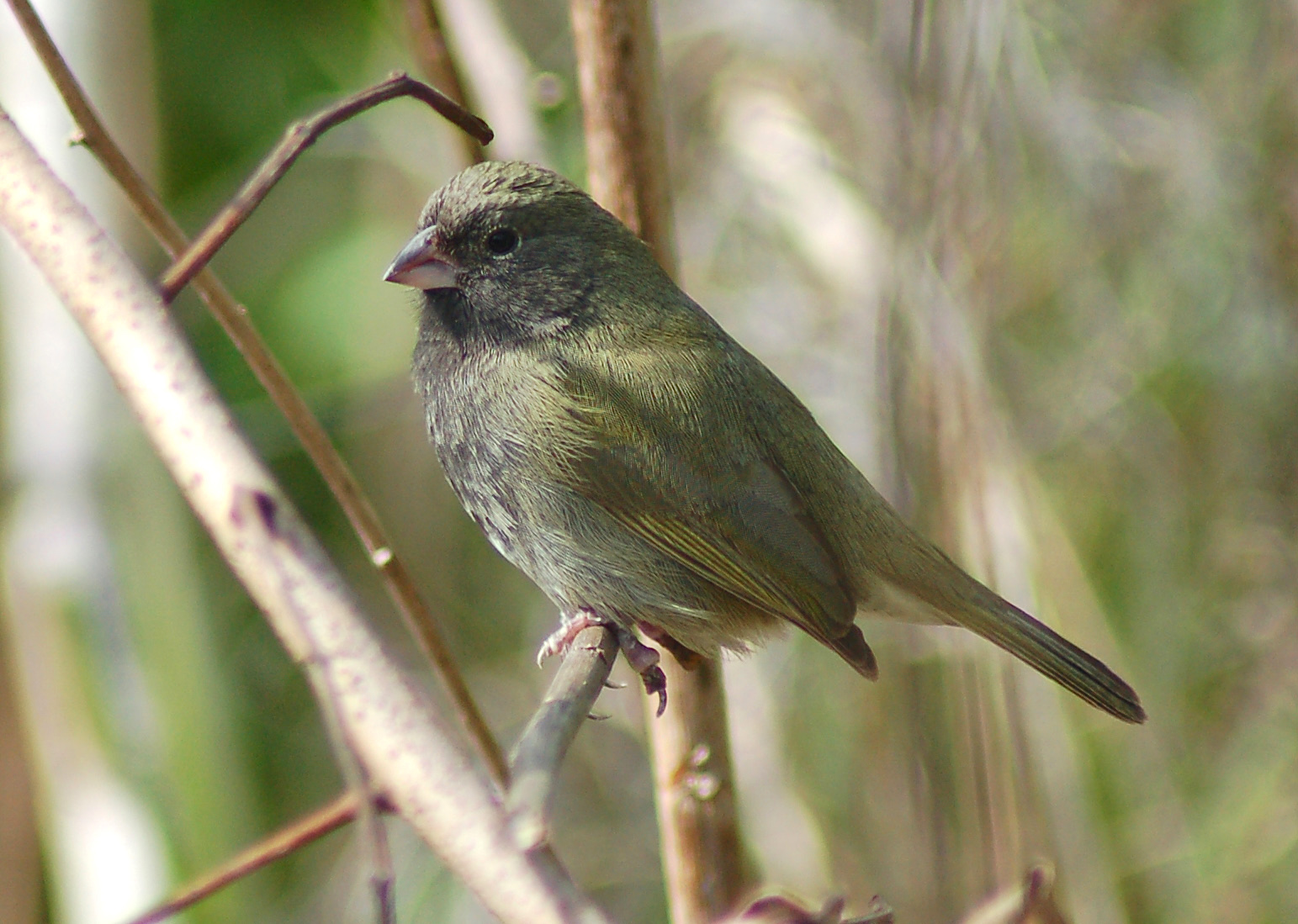
Hi, human friends, I’m a black-faced grassquit and I have a couple of observations to make on behalf of BFGs, if I may. First, we seem to be universally described by you as ‘common’, whereas we are actually quite refined in our behaviour. Secondly, the words most used to portray us are ‘dull’ and ‘drab’. And ‘stubby’. Well, excuse me… I – we – ask you to give us a second look. Maybe check out these images for a start.
Unsurprisingly we were very excited when the perceptive classifications committee of the American Ornithological Union gave us an upgrade. That’s the way we saw it anyway. For many years we were classified under the heading emberizidae.
We kept company with some buddies like the handsome Greater Antillean Bullfinches, but also with a lot of New World sparrows. Frankly, we never felt entirely comfortable with them. Annoyingly chirpy, for a start. And in truth, more drab than us (I’m told).
And so we officially became a type of tanager. Scientists even reckon (rather late in the day, in my view) that we are closely related toDarwin’s finches. Posh relations suddenly. And now we get to be with other birds that are dome-nesters like us. And how about this – we are now in the same category as some really cool birds…
How’s this for a colourful gang to be joining: scarlet tanager, summer tanager, rose-breasted grosbeak, indigo bunting, painted bunting – these are our new cousins. It’s like being related to an avian rainbow that can fly. BFGs “dull” and “drab”? I don’t think so.
6 UNDULL FACTS ABOUT BFGS
Make grassy dome-nests (like Bananaquits) and line them with soft grasses
Both sexes build the nest together
Both share egg-sitting duties and later chick-feeding & maintenance
Though quite gregarious by day, for some reason they tend to roost alone
They have a short ‘display’ flight with vibrating wings and a strange buzzing call
Otherwise, their flight is ‘weak, bouncy & fluttering’ (Whatbird assessment)
THE EVERYDAY TWITTERING SONG
THE DISPLAY BUZZING SONG
Photo Credits: Alex Hughes (1, 10); Tom Sheley (2, 3); Bruce Hallett (4, 9); Tom Reed (5, 11); Becky Marvil (6); Peter Mantle (7); Gerlinde Taurer (8); Keith Salvesen (12); Larry Towning (13). Other Credits: ABA, AOU, Whatbird? (sound files)
The WTF? series is dedicated to the wilder, less conventionally fish-shaped side of reef life – those creatures that you may come across, blink into your face-mask, and silently mouth the words ‘What’s That Fish?’ (that’s what it looks like you are saying, anyway).
Let’s meet some Arrow Crabs Stenorhynchus seticornis, one of the very few creatures surely to have a triangular body plus a huge pointy nose (rostrum), supported on long skinny legs. To which add, they wear tiny blue gloves on their two front claws.
These crabs are coral reef dwellers and mostly stay concealed during the day. Their body is protected by a carapace, and the rostrum has serrated edges like a tiny rasp or file. I haven’t found a definitive reason for this gadget, but I suspect it is more for probing than for piercing or fighting.
There’s a considerable colour variation among these crabs, as these images show. The body may even have blue iridescent lines (#2, above). And those claws may be any of 50 shades of blue…
Arrow crabs are most active at night. They eat feather-duster worms (illus.) and similar invertebrates such as bristle worms.
Like certain types of shrimp, they also have a symbiotic relationship with anemones, whereby they make use of an anemone to benefit from the food it captures – and possibly for cover too. They are protected from anemone stings, whereas some of their predators are not.
This was the place where I was going to tell you about the arrow crab’s private life, but, well… “it’s complicated”. Briefly it is: male passes sperm-filled capsule to female; she uses it in some way whereby it fertilises her eggs; she then ‘broods’ the eggs in one of her ‘swimming legs’; the eggs hatch into larvae and swim off to eat plankton; each one then grows & moults, repeating the process until it has reached adult form. On balance, humans have arguably perfected a preferable method.
Arrow Crabs are apparently popular aquarium creatures, although they sound to me rather a disagreeable challenge. They can move quickly on those long legs, and it seems as if they inclined to be aggressive to other inhabitants of the tank. As far as I can make out, it’s best not to put 2 of them together: they certainly won’t be doing the sperm capsule thing described earlier…
Master of Disguise
Photo credits: Melinda Riger / G B Scuba (1, 3, 4, 5, 6); Adam Rees / Scuba Works (2, 8, 9); Nick Hopgood,Wiki (7); Chuck Elliot – video
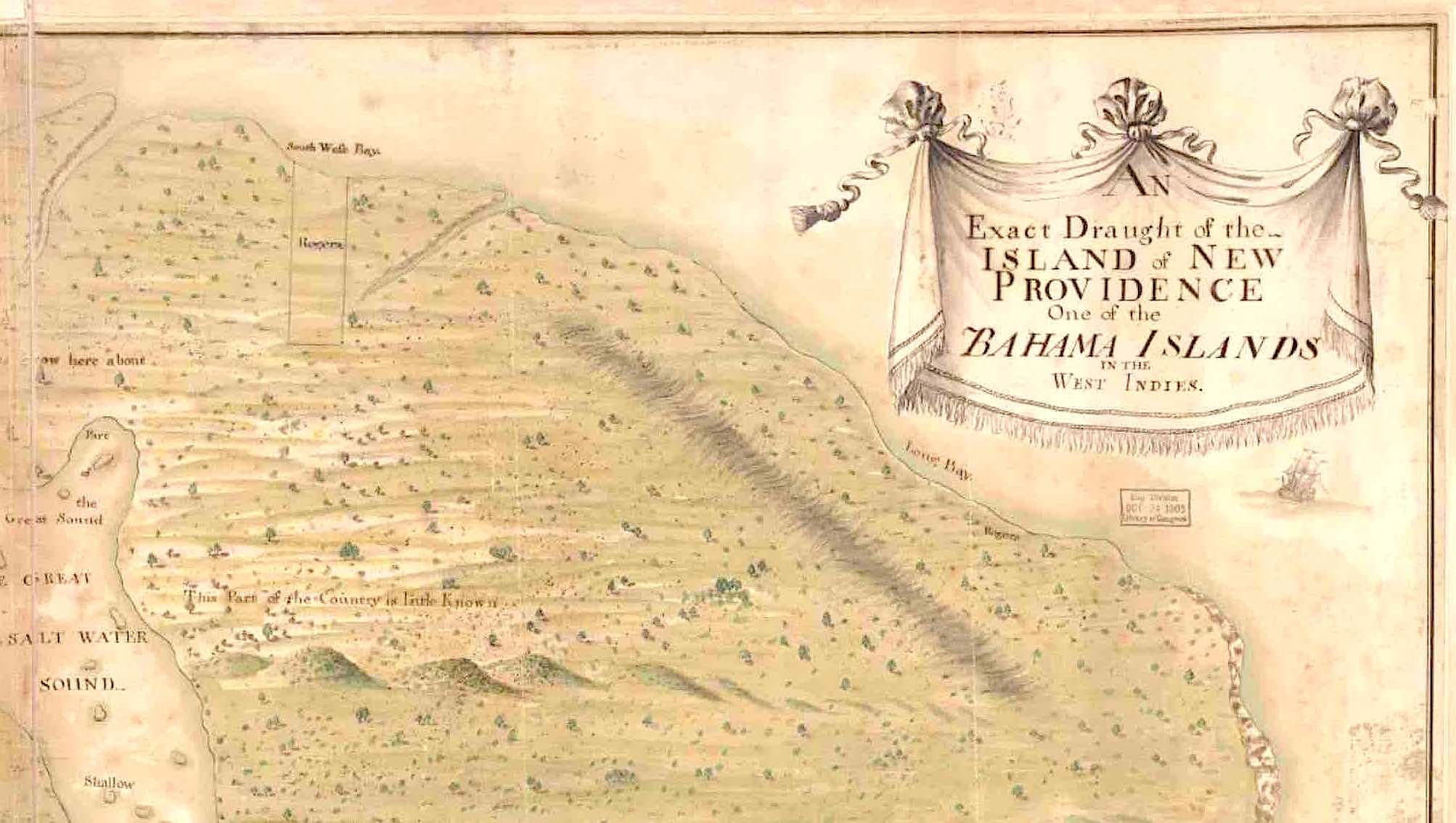
WHEN NEW PROVIDENCE WAS OLD: MAPPING BAHAMAS HISTORY
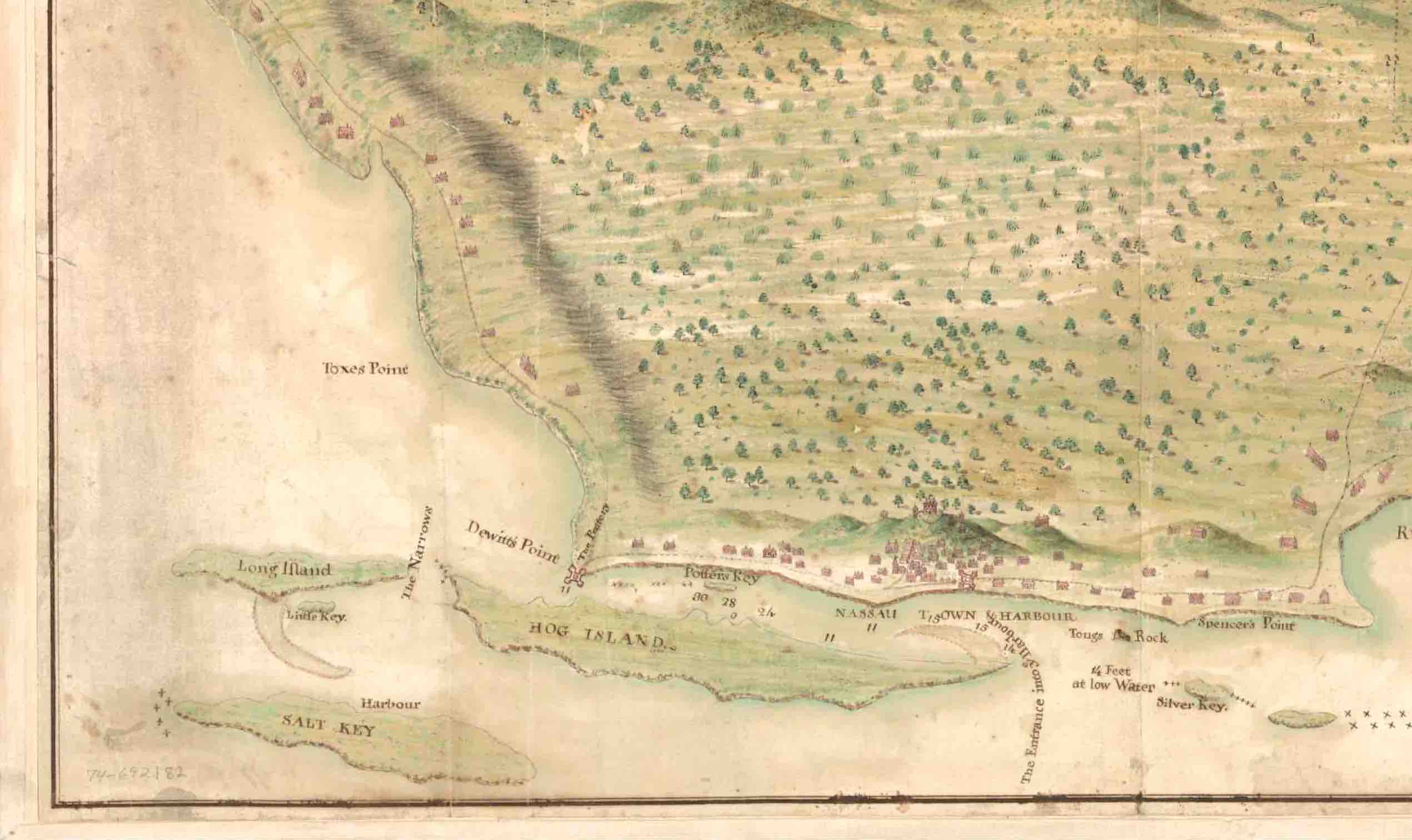
‘Exact Draught of the Island of New Providence
One of the Bahama Islands in the West Indies’
ORIENTATION
Lateral thinking is one thing; topsy-turvy thinking is in another league. The map that graces the top of this page is of New Providence and Nassau in the the early c18. By today’s exacting mapping conventions, which historically were less rigorously observed, it is upside-down, with Nassau on what we would call the south-west corner. However the convention that maps were orientated to the North was not generally accepted before C19. And in the middle ages maps were mostly orientated to the East (whence the term ‘orientating’). With advancing survey techniques from C17 on, maps were mostly orientated to the South like this map of New Providence.
DATE
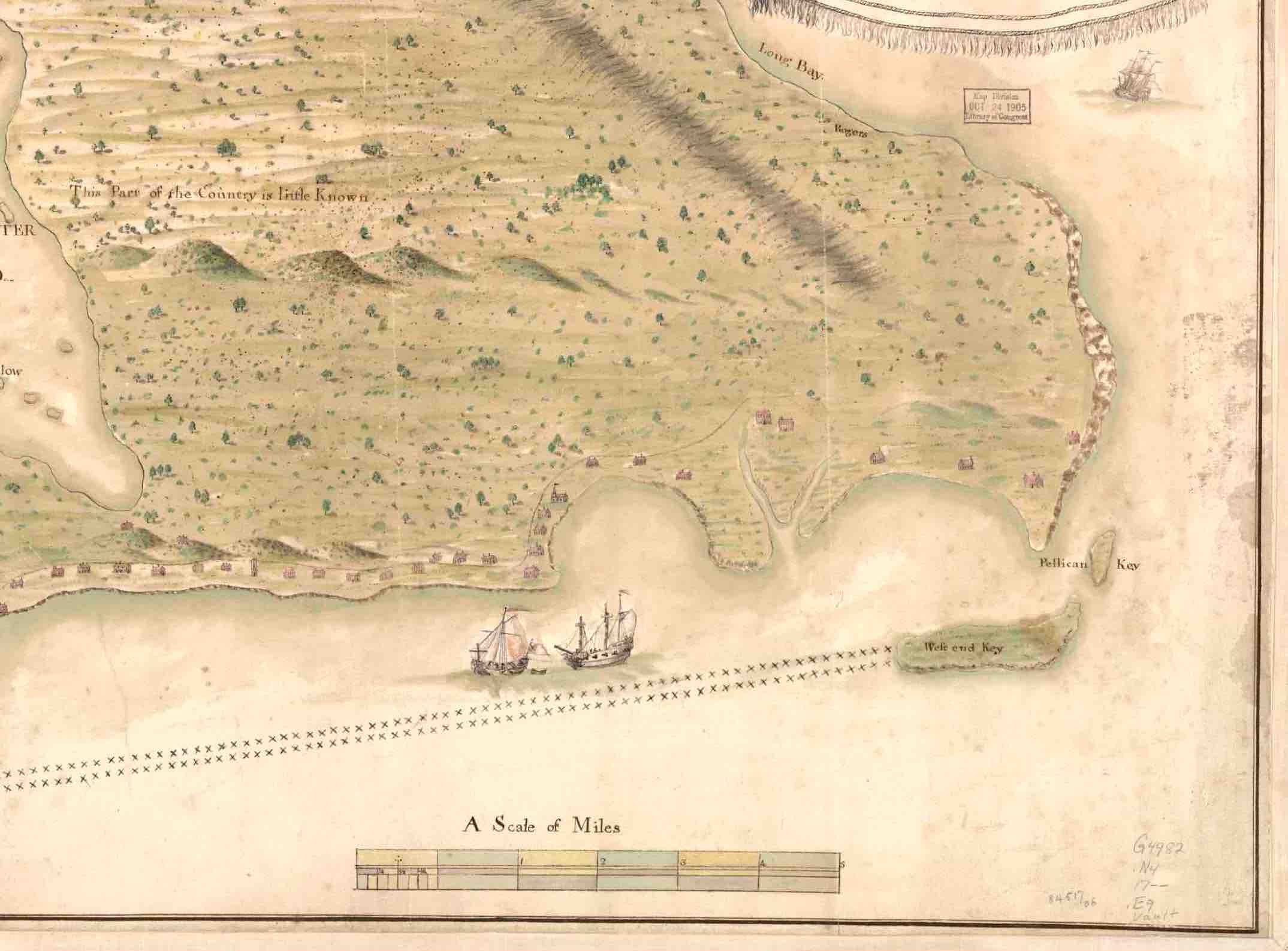
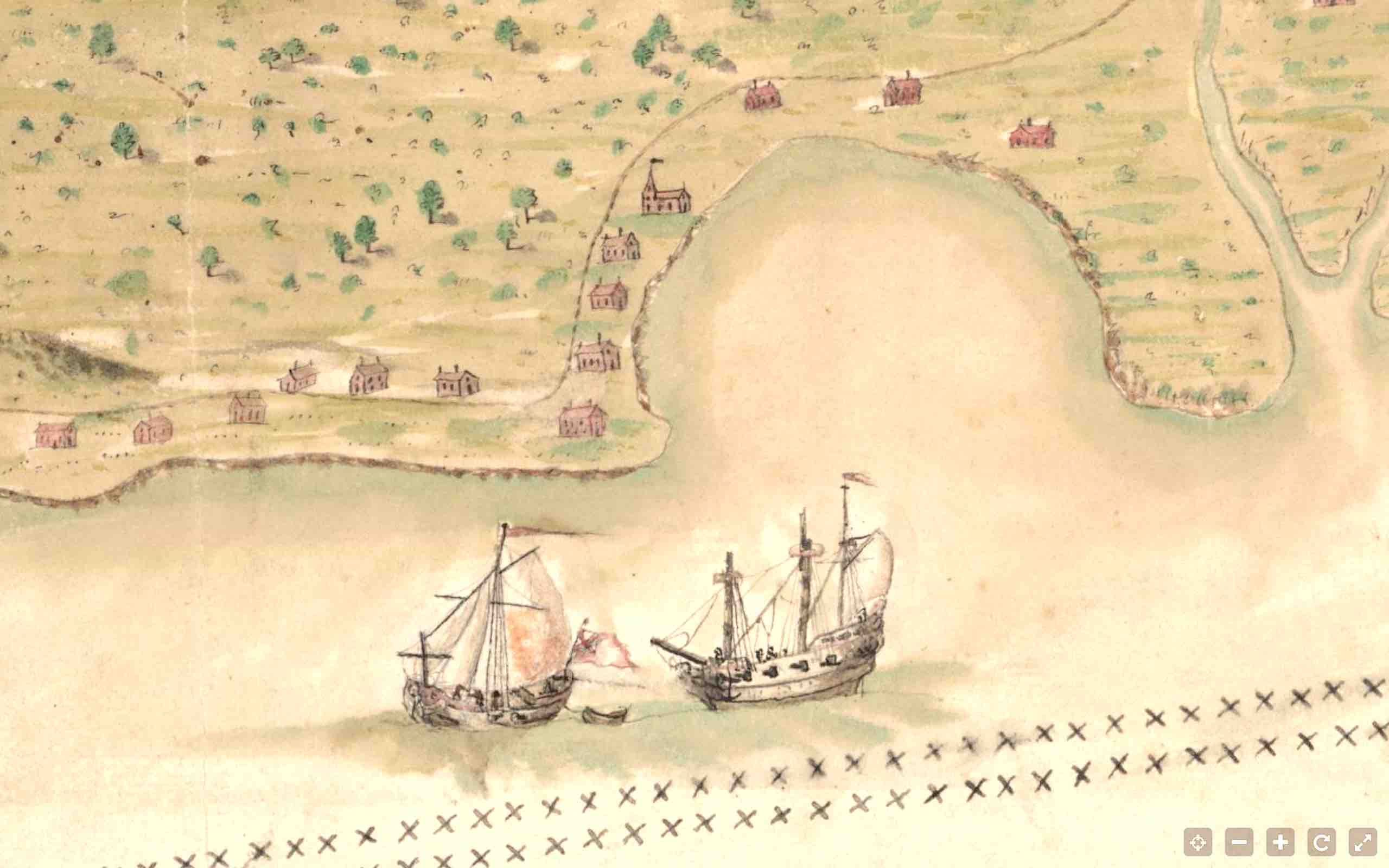
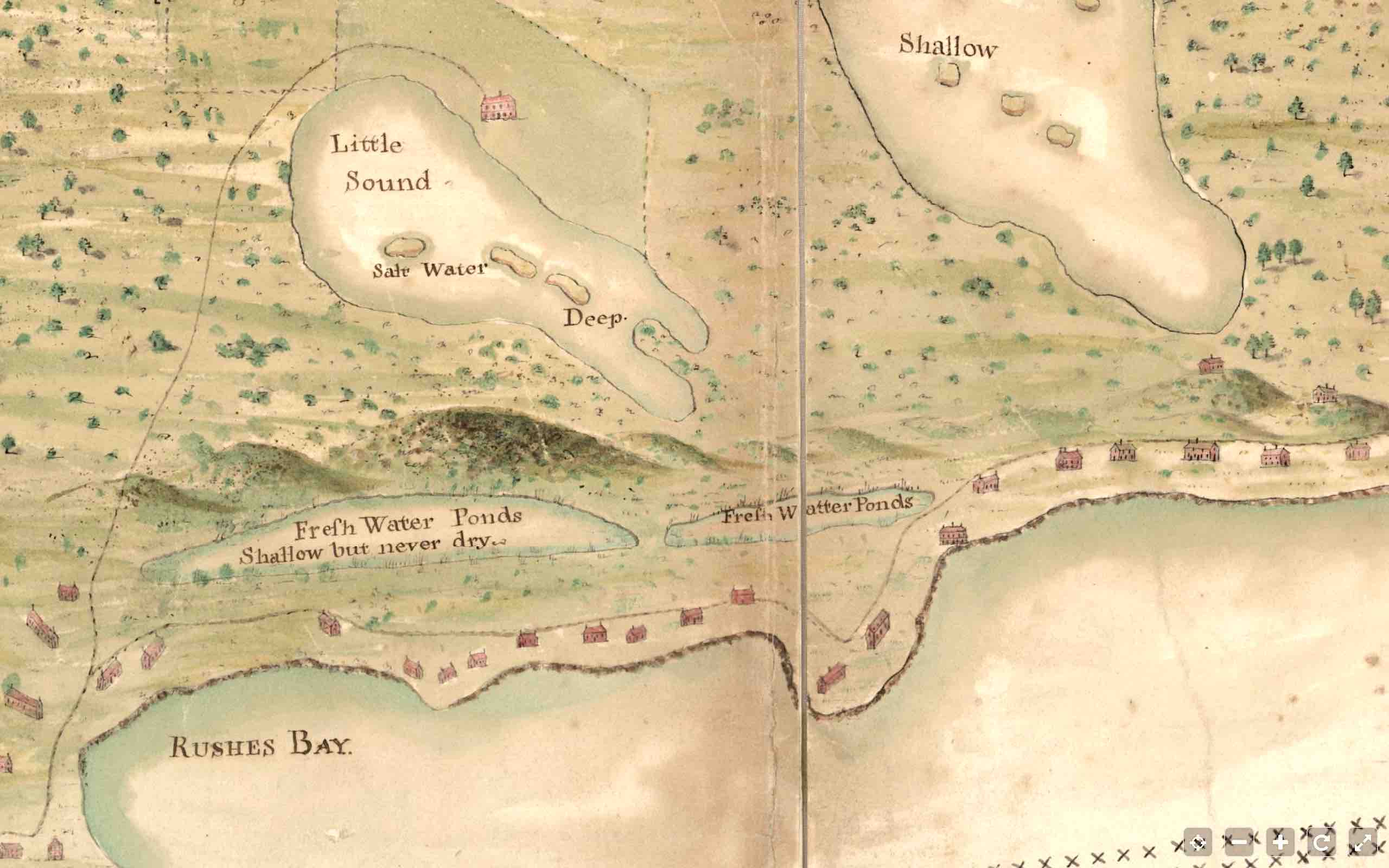
The map is undated on the face of it, and I have found attributed dates of both 1700 and 1750 (see below). It could be anywhere in-between. At the time this map was made, New Providence was sparsely populated except for Nassau itself; and little was known about the island’s interior. Contemporary accounts describe a haven for pirates operating around the coastline. Not for nothing was Nassau protected by a battery and a fort. I’ve divided to map into sections to make it easier to take a closer look at each area. You can click each to enlarge.
1. TOP LEFT CORNER(the south-east of NP in actuality), with the compass pointing downwards to the north. A smattering of houses dot the ‘west’ coast. There is one significant property above Little Sound, standing in what looks like a cleared or even cultivated area. I’ll look at that in more detail below. Note the words above The Great Salt Water Sound: “Very High Pines Grow Here Aboue (sic)”, evidence that forests of tall pines familiar even today on Abaco were found on NP 300 years ago. The island is otherwise mostly marked as if the landscape was fairly open.
2.TOP RIGHT CORNER (south-west & west), with the confident title in a cartouche proclaiming exactness. This was not uncommon in historic map-making – the cartographical equivalent of today’s boastful product slogans – ‘simply the best’ and so on**. The caption next to the Great Sound, This Part of the Country is little Known, suggests an unexplored and perhaps hostile environment – possibly one of marshes and bogs. This sector of the island appears to have been uninhabited, or at least to having no population centres worth recording.
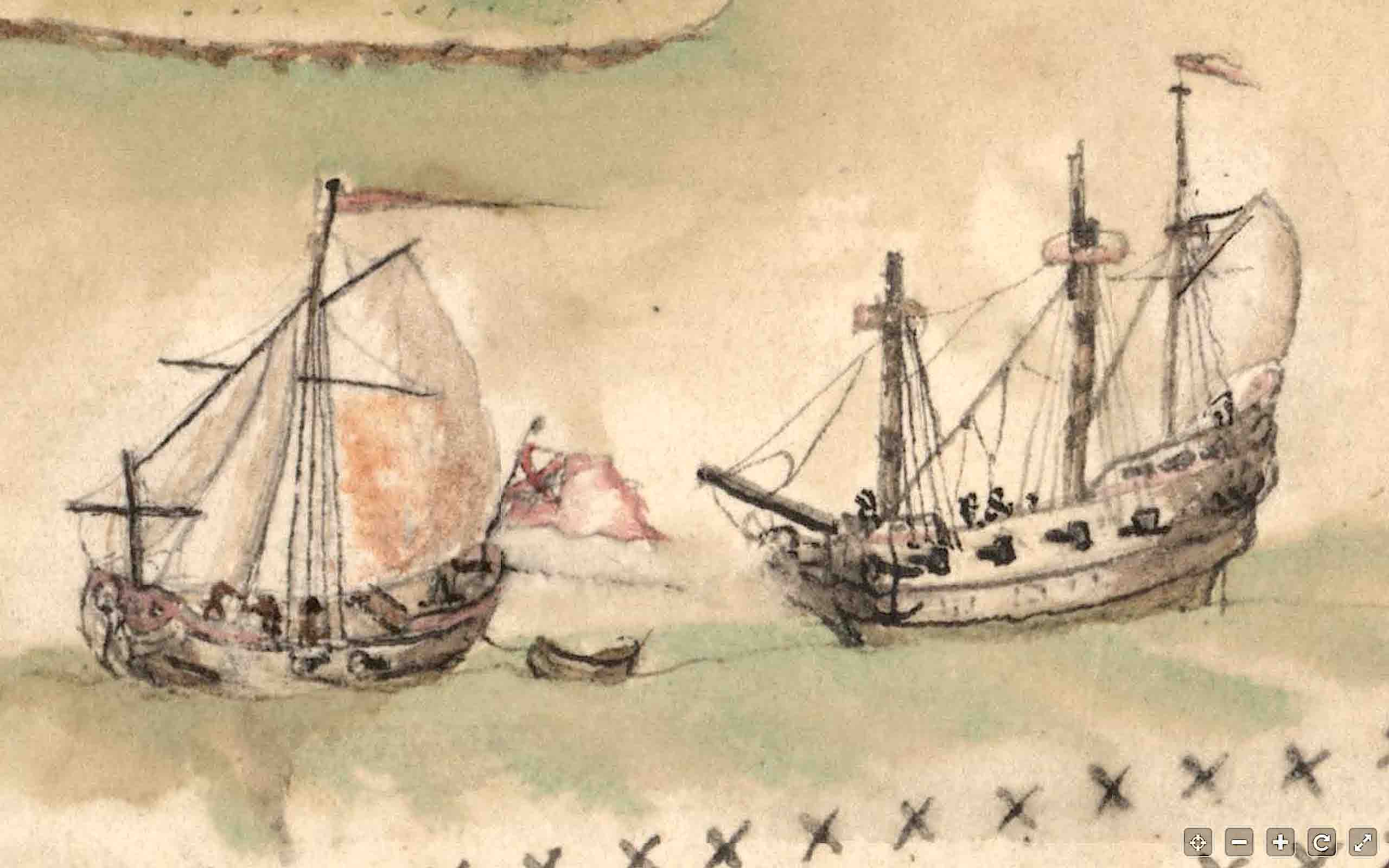
3. BOTTOM RIGHT CORNER (north-west). At last there is more evidence habitation, with a string of dwellings along the coastline. The 2 cays shown have names, West End and ‘Pellican’. And it looks as though the two ships have set out from port. On the left side of the bay above them, a church can be seen. Initially I thought the double row of crosses might indicate an area close to the shoreline that might be safe – or at least safer – from pirate attack. The leading ship – as the detailed crop shows clearly – is a warship. No harm in romantically speculating that it is escorting a trading vessel… More recently an online friend Klausbernd told me that the double crosses on map are in fact a navigational aid indicating cross bearings.
4.BOTTOM MIDDLE SECTION As we move towards the main – indeed only – town on the island, it is clear that the northern coast was the most desirable place to live. The scattering of houses along the coast continues; and the captions for the ponds show a possible reason why: fresh water, on an island where other areas of water are actually marked as ‘salt’ or which might have been unpleasantly brackish. And now we can see more of the posh establishment I referred to above. Not only did it lie in open (or perhaps cultivated) country, but it was plainly of some importance. It is notably larger that other buildings depicted, for a start; and it has its own very long track that forks off the coastal track.
5. BOTTOM LEFT CORNER: NASSAU We have reached the big city, the centre of the population, and the port – with the harbour entrance handily marked. It bore the same name then as now; though the other names marked (as far as I can make out) have mostly if not all changed over 3 centuries. The Baha Mar development and its attendant travails seem light years away from this map. The double line of crosses ends here (bottom right at the first cay). If they marked a safe zone for vessels passing back and forth into Nassau harbour, they did not need to extend further because of the town fortifications (see detailed crop). There is a fort right on the shore; and at the far end of the harbour sound is a battery at Drewitt’s Point. The town is watched over by a substantial building – presumably a Governor’s residence – that is surrounded by a stockade . In the early c18 Nassau put on a show of strength to deter invaders and pirates.
DO WE KNOW THE EXACT DRAUGHT’S EXACT DATE?
The map itself is undated. The Library of Congress, whose map I have chopped up for this post, simply dates it as 17– and notes:
Manuscript, pen-and-ink and watercolor; Has watermark; Oriented with north to the bottom; Relief shown pictorially and by shading; Depths shown by soundings.
The excellent David Rumsey Historical Map Collection chooses the year 1750, the maker unknown. Another source puts the date at 1700.
Whichever, a clue to establish the map in the first half of the c18 is that the publisher is believed to be ‘William Innys [et al.]’, London. Innys and his brother John (the ‘et al’ presumably) were active at that time. In 1726, for example, they published an edition of Newton’s Philosophiae naturalis principia mathematica (first published in 1687), indicating that they must already have been well-established.
WHAT ABOUT THE PIRATES?
The “Deposition of Capt. Matthew Musson” made on 5 Jul 1717 in London, contains some excellent contemporary pirate-based material. The middle passage in particular gives an indication how well organised and extremely well-armed the pirates were. And it is clear that piracy was actually driving inhabitants away from New Providence.
“On March last he was cast away on the Bahamas. At Harbour Island he found about 30 families, with severall pirates, which frequently are comeing and goeing to purchase provissons for the piratts vessells at Providence. There were there two ships of 90 tons which sold provissons to the said pirates, the sailors of which said they belong’d to Boston”.
“At Habakoe one of the Bahamas he found Capt. Thomas Walker and others who had left Providence by reason of the rudeness of the pirates and settled there. They advis’d him that five pirates made ye harbour of Providence their place of rendevous vizt. [Benjamin] Horngold, a sloop with 10 guns and about 80 men; [Henry] Jennings, a sloop with 10 guns and 100 men; [Josiah(s)] Burgiss, a sloop with 8 guns and about 80 men; [Henry?] White, in a small vessell with 30 men and small armes; [Edward] Thatch, a sloop 6 gunns and about 70 men. All took and destroyd ships of all nations except Jennings who took no English; they had taken a Spanish ship of 32 gunns, which they kept in the harbour for a guardship”.
“Ye greatest part of the inhabitants of Providence are. already gone into other adjacent islands to secure themselves from ye pirates, who frequently plunder them. Most of the ships and vessells taken by them they burn and destroy when brought into the harbour and oblidge the menn to take on with them. The inhabitants of those Isles are in a miserable condition at present, but were in great hopes that H.M. would be graciously pleas’d to take such measures, which would speedily enable them to return to Providence their former settlement, there are severall more pirates than he can now give an accot. of that are both to windward and to leward of Providence that may ere this be expected to rendevous there he being apprehensive that unless the Governmt. fortify this place the pirates will to protect themselves”. Signed, Mathew Musson. Endorsed, Read 5th July, 1717. 1½ pp. [C.O. 5, 1265. No. 73.]
CAN I BUY THIS MAP FOR MY WALL?
You certainly can. Well, not an original obviously. But you can find prints of it on eBay and elsewhere – just google the map title. You can get a modern copy for around $20 + shipping
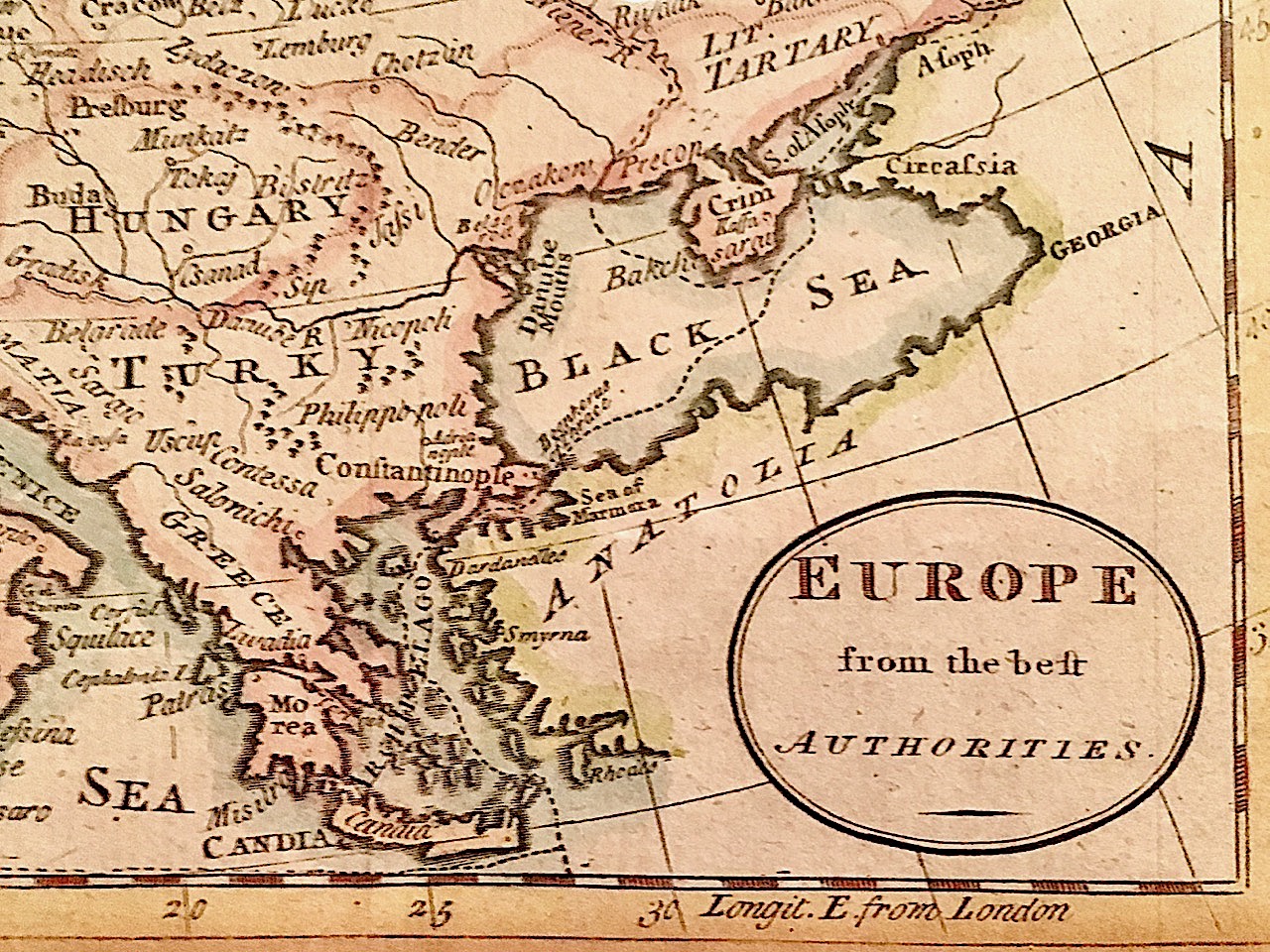
**I have an enjoyable example of this tendency on a William Guthrie map of Europe dated c1800 that I own. A map from “the beft authorities” could surely have no serious rival!
Credits: Library of Congress Online Catalog (Geography and Map Division); David Rumsey Historical Map Collection; Baylus C Brooks, Professional Research & Maritime Historian, Author, & Conservator / “America and West Indies: July 1717, 1-15,” in Calendar of State Papers Colonial, America and West Indies: Volume 29, 1716-1717, ed. Cecil Headlam (London: His Majesty’s Stationery Office, 1930), 336-344; Bonhams (Auctioneers). Thanks to Klaubernd for his advice on map orientations.
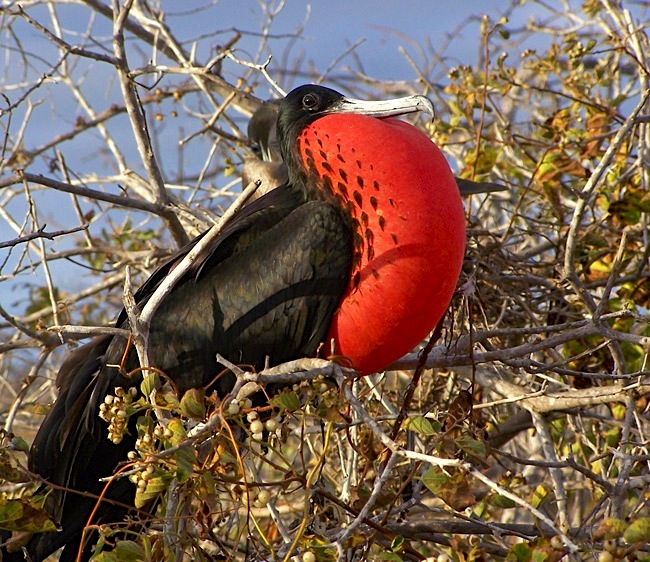
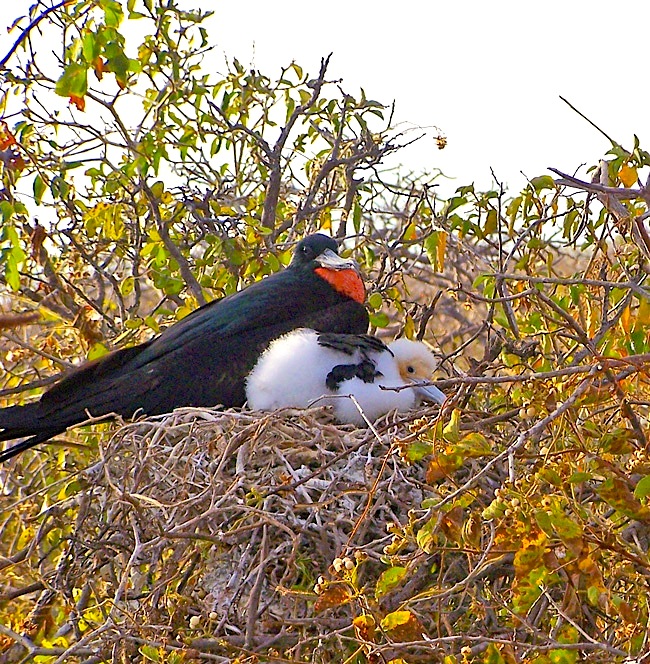
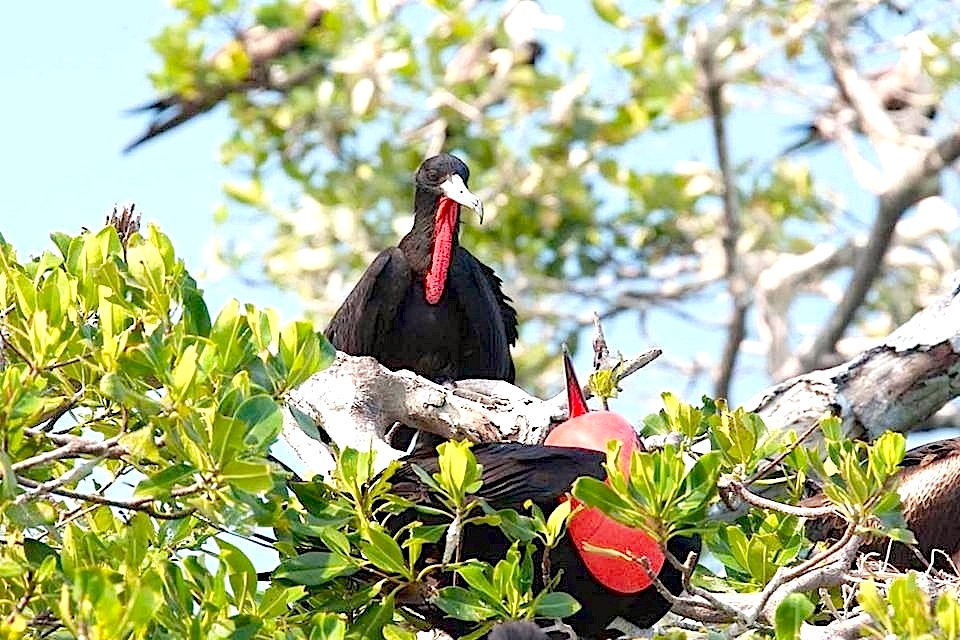
This is a male frigatebird (Fregata magnificens) in the breeding season, with his extraordinary inflatableGULAR POUCHfully blown up. He is at his most chest-burstingly dashing, at least to female frigatebirds, and this great capture by photographer Athena Alexander from the excellent blog of JET ELIOT, shows one of the wonders of the bird world. A glimpse of his mate can be seen just behind his head, but frankly he has made the story his own! And just look at the size of his wings. If a bird can steal limelight, he has effortlessly done so.
COURTSHIP DISPLAY
The image below shows the male enacting his courtship display. Jet Eliot describes it thus: “During courtship display this balloon-like sac takes about 20 minutes to fully inflate. It is featherless, scarlet red, and tight as a drum. It’s so big it distorts him. When he’s ready and has a suitable audience of females flying overhead, he points his face skyward and rapidly beats his wings against the balloon, creating a low, booming sound”. The male’s pouch is not entirely inflated. A female is nestled under the his protective wing. Presumably she has been won over and mating will soon occur once the performance ends. Or maybe she’s bored with the whole routine – she looks rather as though she has seen it all before…
NESTING
Even on the nest, males are keen to be in the picture. Not for them the ‘absentee father’ role, out fishing the entire day. Instead, they share chick-care duties, looking after the single enormous, fluffy chick. An adult pair stays together for the year, forsaking all other. Chick care takes a long time from egg to fledging and beyond – so much so that frigatebirds only breed every other year, and always produce a single egg. For this reason, habitat destruction of breeding grounds has a far greater effect on population numbers than for birds that breed annually.
10 MAGNIFICENT FACTS ABOUT FRIGATEBIRDS
Magnificent Frigatebirds are the largest of several frigatebird species around the world
They are found in tropical and subtropical waters
Females have white fronts that make them easily distinguishable in flight
An adult’s wingspan is 7+ feet, with the largest wing-area / bodyweight ratio of any bird
Frigatebirds can remain in flight and far out to sea for many days
They are KLEPTOPARASITESand will rob other seabirds of their food
Their diet is mainly fish & squid snatched from the water’s surface; also seabird chicks
They nest in colonies, producing a single egg every other season
They don’t actually land on water, as they don’t float; and they are feeble at walking on land
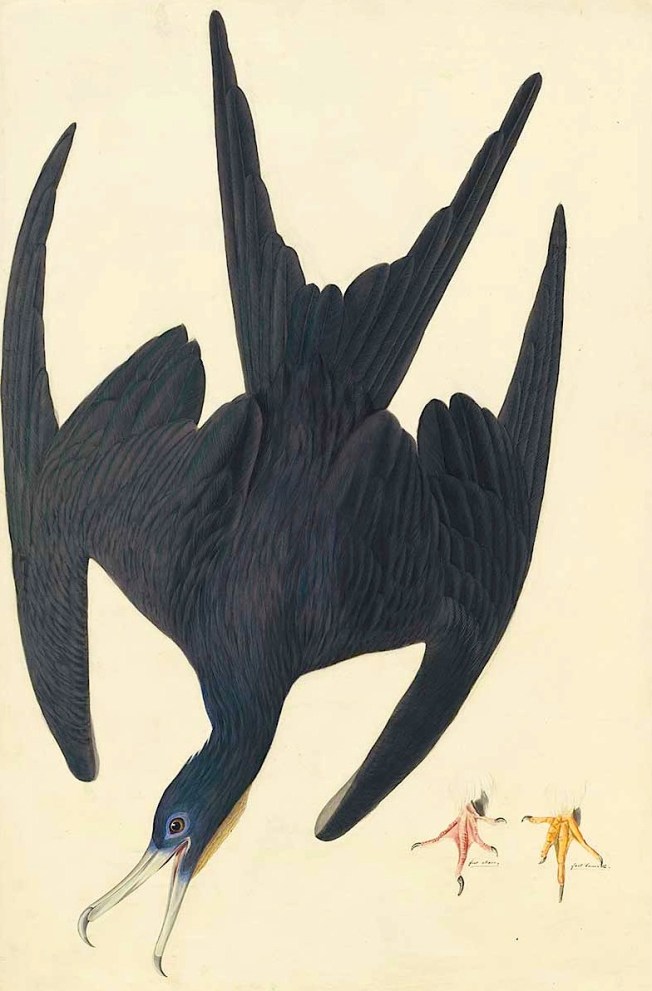
One of the earliest depictions of a frigatebird is by Eleazar Albin in 1737. He was a naturalist contemporary ofMARK CATESBYand pre-dated AUDUBON
NAMING THE FRIGATEBIRD: A POTTED HISTORY
Columbus encountered them on his first voyage in 1492, but knew them by their Spanish name rabiforçado or ‘fork-tail’.
The use of the name ‘frigatebird’ was first recorded in 1667 and referenced the frigate warship, a powerful sea-vessel
‘Man-o-War Bird’ was the name given to the bird by English mariners in the Caribbean, being the colloquial name given by sailors to a frigate.
A MAN-O-WAR GALLERY
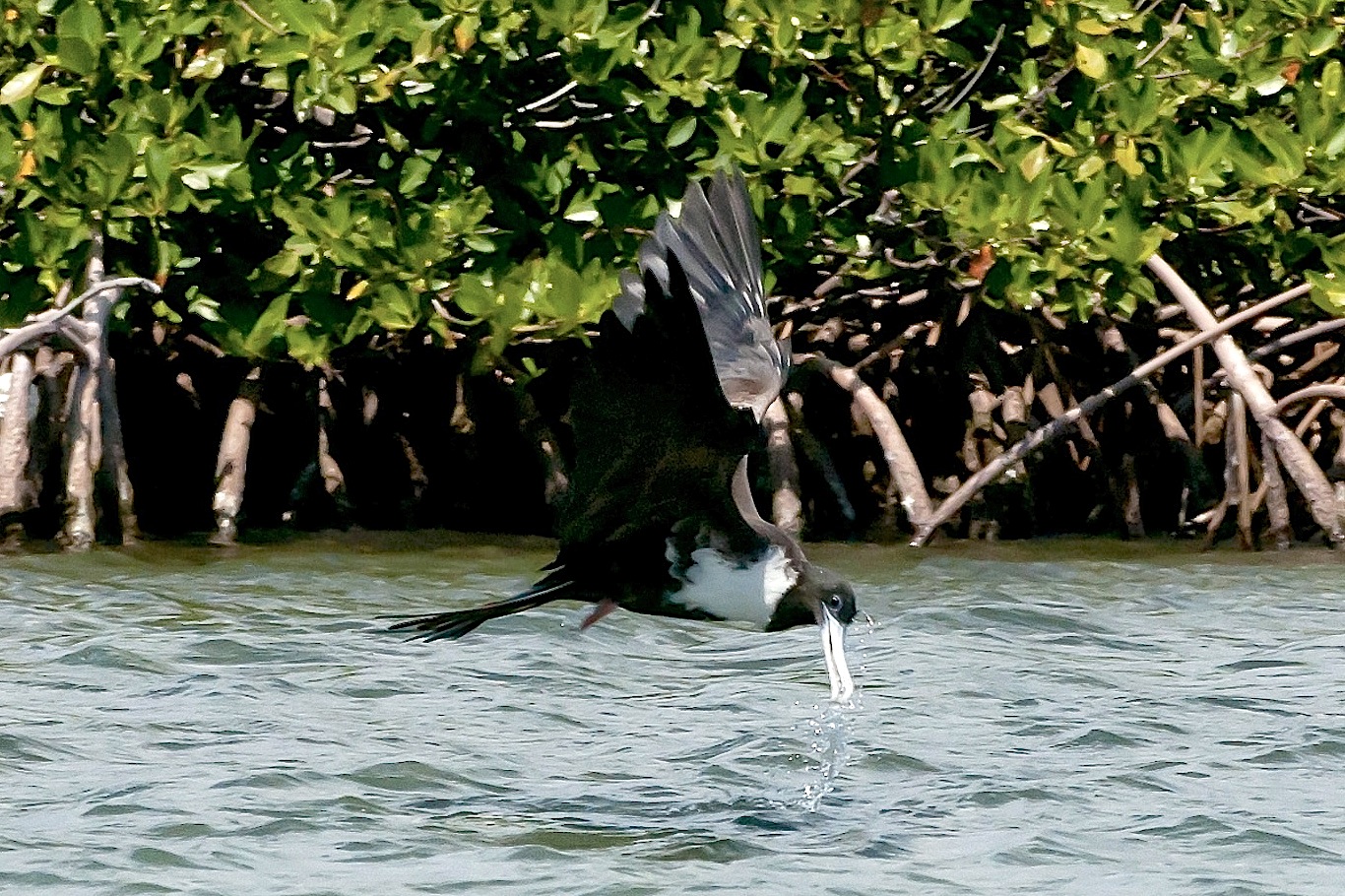
A female frigatebird hunts for food among the mangroves on Abaco
A female frigatebird soars high over Marsh Harbour
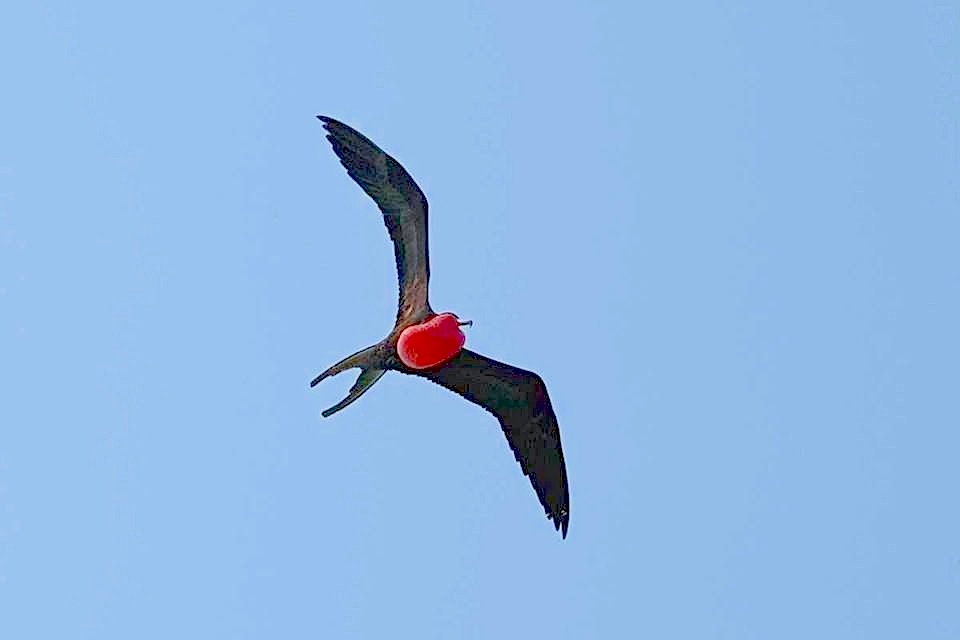
This male has taken off before his gular pouch has had time to deflate fully
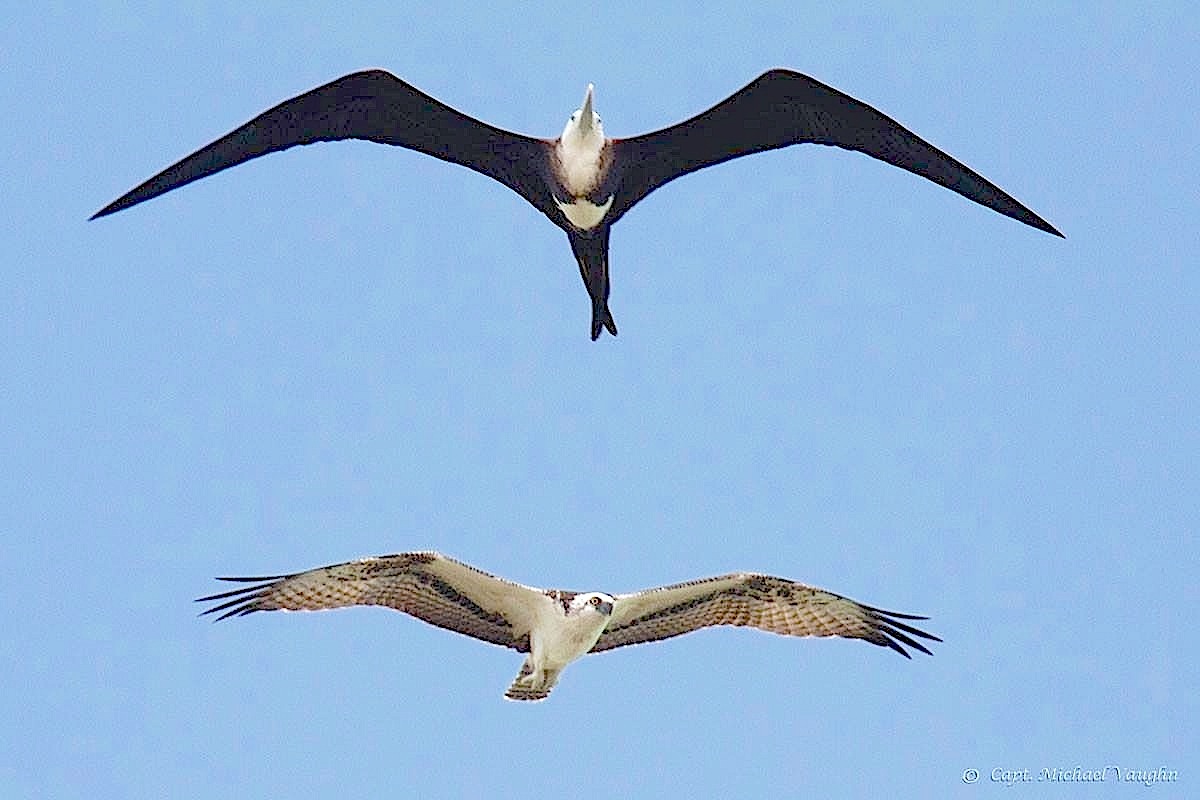
An osprey escorts a female frigatebird from his territory to a different bit of sky…
Juvenile frigatebird
A fully-inflated male with a droopy one who needs to get started quick if he’s going to get a mate
ARE FRIGATEBIRDS ANY USE TO MAN OR BEAST?
Yes, emphatically so, to man anyway. Mariners through the ages have used frigatebirds as indicators of nearby land – not necessarily visible, but within sailing distance. And fishermen through the ditto have used them as reliable indicators of where fish are to be found. As an example from personal experience on Abaco, going fishing out of Casuarina into the deep waters of the open sea, the sight of high-flying frigatebirds signals ‘get ready to fish’. They are scouting around for fish, and so are you. But they know where the fish are. Follow them and you will may be rewarded. Because where there are fish for seabird predators, there are fish for the large fish predators – mahi mahi, tuna and wahoo, for example. This is not my main type of fishing, but each time we have been out in those waters – with the Delphi Club often a still-visible speck on the horizon – the frigatebirds have led us to good catches of mahi mahi (= dorado or ‘dolphin’). Last year, under the watchful gaze of the frigatebirds, in a heart-stopping moment I jumped a wahoo. If that sounds slightly rude, it isn’t – and I didn’t catch it anyway. It just leapt vertically right out of the water without taking the goodies…
STOP PRESS Cheryl Wile Ferguson sent me a great photo of a female MF being sociable with humans in the Galapagos. She hitched a ride for 2 hours during a sea crossing…
Audubon’s Magnificent Frigatebird
Credits: first and foremost to Athena Alexander and Jet Eliot for use permission for images 1 – 3 (taken on Galapagos) and much invaluable info; as ever to Tom Sheley (4), Tom Reed (5) and Michael Vaughn (6,7,8,9) for their photos; Cartoon from Birdorable; other images open source; magpie pickings for facts and figures; and some limited personal experience (regrettably but unsurprisingly all my photos of frigatebirds flying, diving, triumphantly catching fish etc are too crap to use)
Imagine that you are swimming along resplendent in your snorkelling gear (me) – or in scuba gear for the advanced swimmer (you). There, below you, camouflaged against the sea bottom is a fish. A strange-shaped brown sort of creature with odd side fins. As it progresses over the gravelly sand, your immediate reaction is ‘what the…?’ Its fins seem to be turning into… wings. Like this:
Yes, it’s a flying gurnard. Unlike flying fish, it can’t actually fly through the air. But once its wings are fully spread, it certainly looks as though it could.
WHAT’S THE POINT OF THE WINGS IF THE THING CAN’T FLY?
This gurnard species usually gets around using its ventral fins as ‘legs’, with the pectoral fins (‘wings’) close to the body. There seem to be several possible reasons for possessing the ‘sudden-deployment-of-flashy-wings’ superpower.
It surprises and deters predators by movement, turning prospective prey into an apparently different creature
Bright or lurid colouring may be a deterrent warning of a foul-tasting or poisonous species (APOSEMATISM)
A creature may actually be harmless and even tasty (as here) but may appear to be unpalateable or poisonous(BATESIAN MIMICRY)
In any event, the wings enable the fish to take off from the sea bottom and travel faster by ‘flying’ thought the water to escape a predator
Here’s a short video of a flying gurnard on the move, from ‘Sia Big Fish’
Credits: All main images Adam Rees / Scuba Works with many thanks, except final one ‘cralize wiki’; Hyperallergic for the historic image; Sia Big Fish for the video
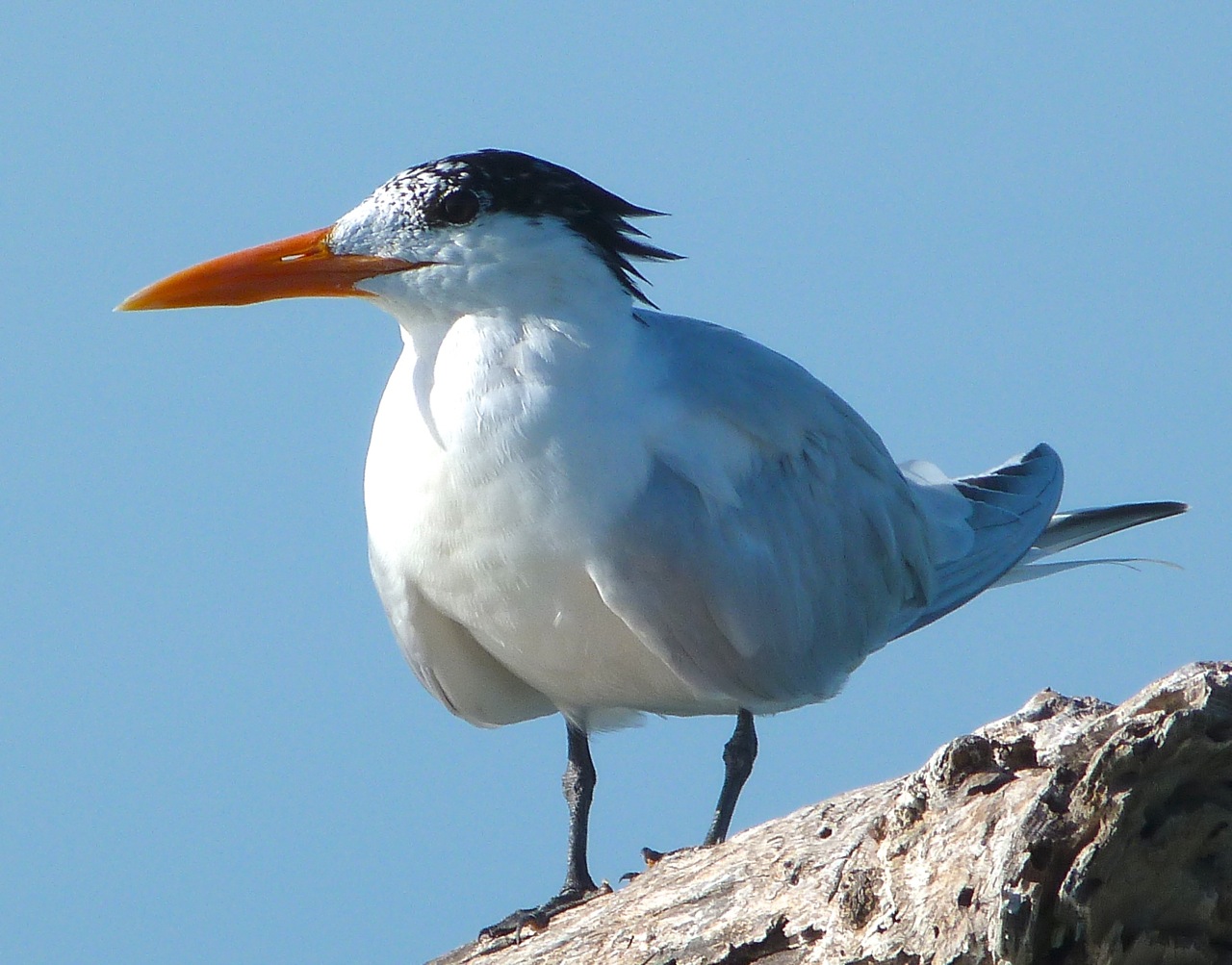
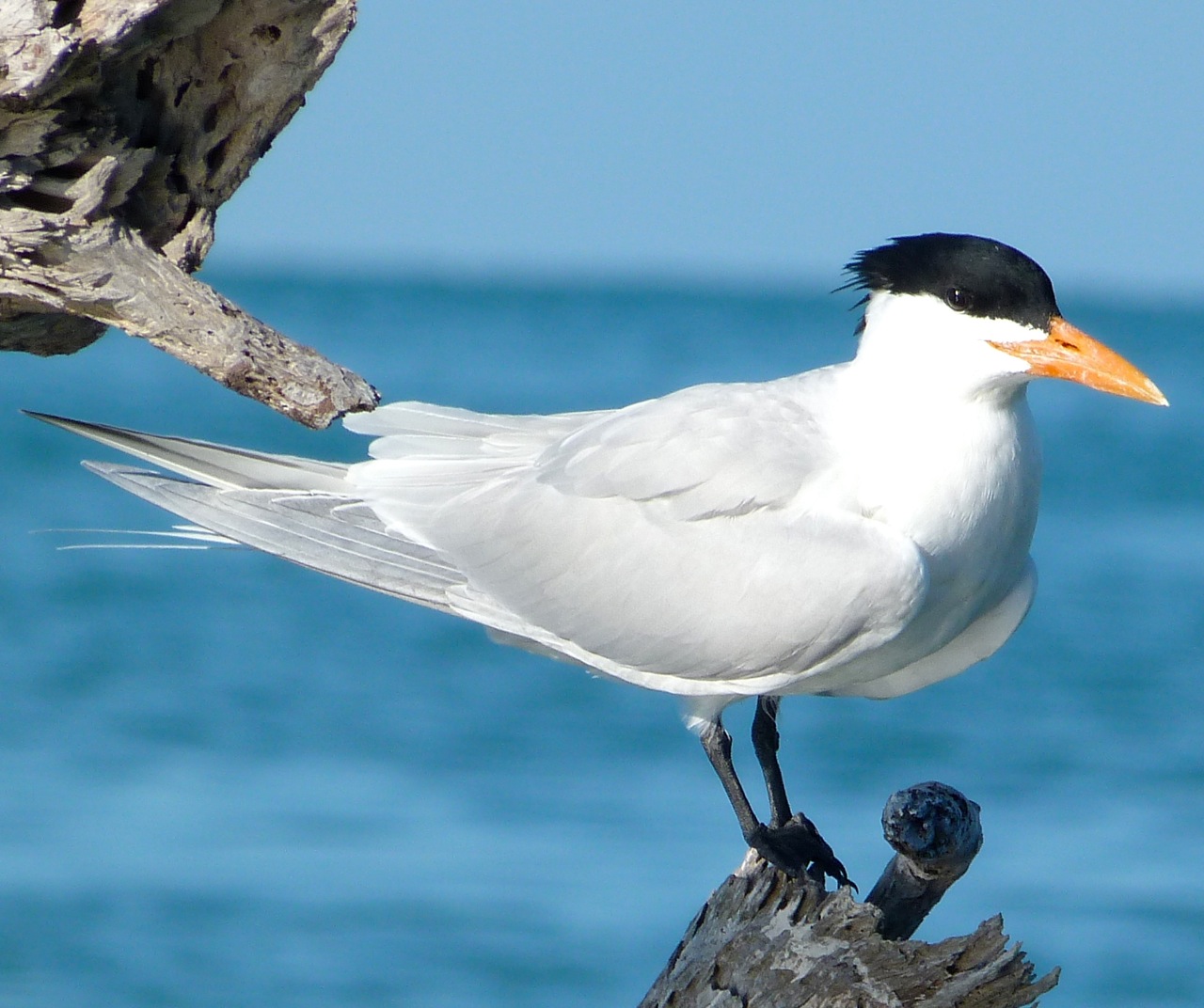
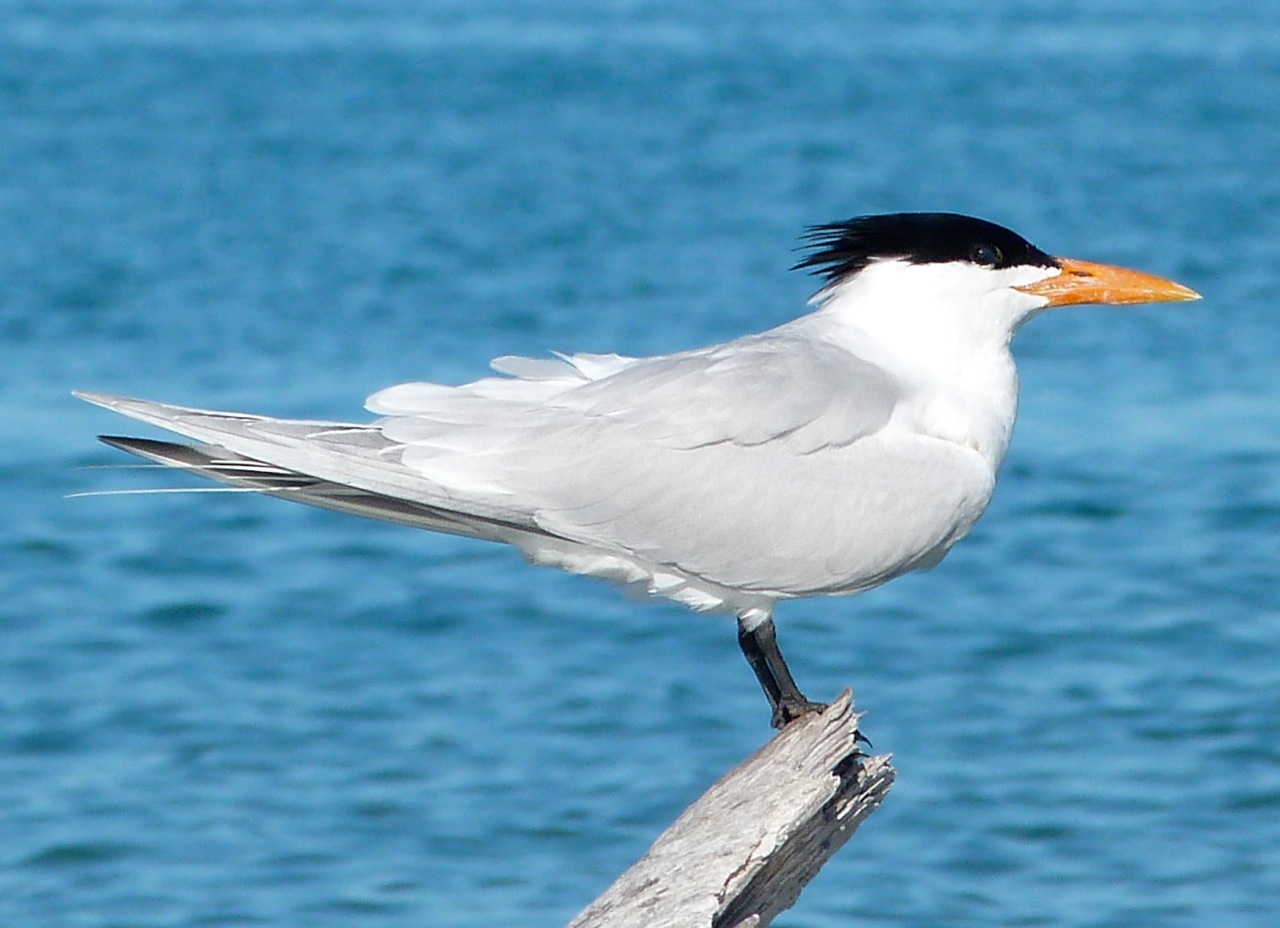
I wrote this post about Royal Terns Thalasseus maximus* quite some time ago, in the early days of Delphi (and indeed Rolling Harbour™ ® ). Bonefishing was a completely new experience and my skills were embryonic. As they continued to be for the duration. By then the amazing birdlife of Abaco had reeled me in and BIRDS OF ABACO was in the planning stage.
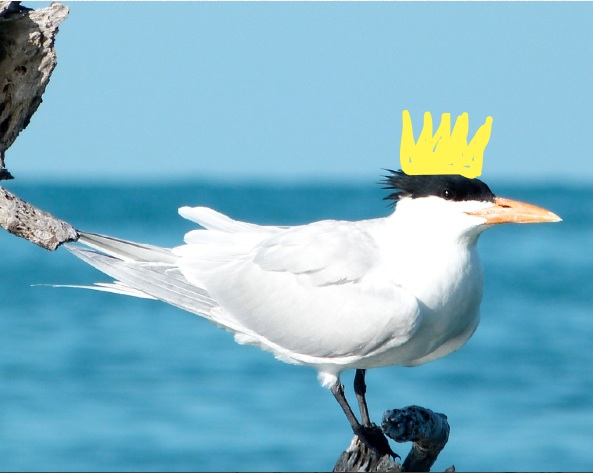
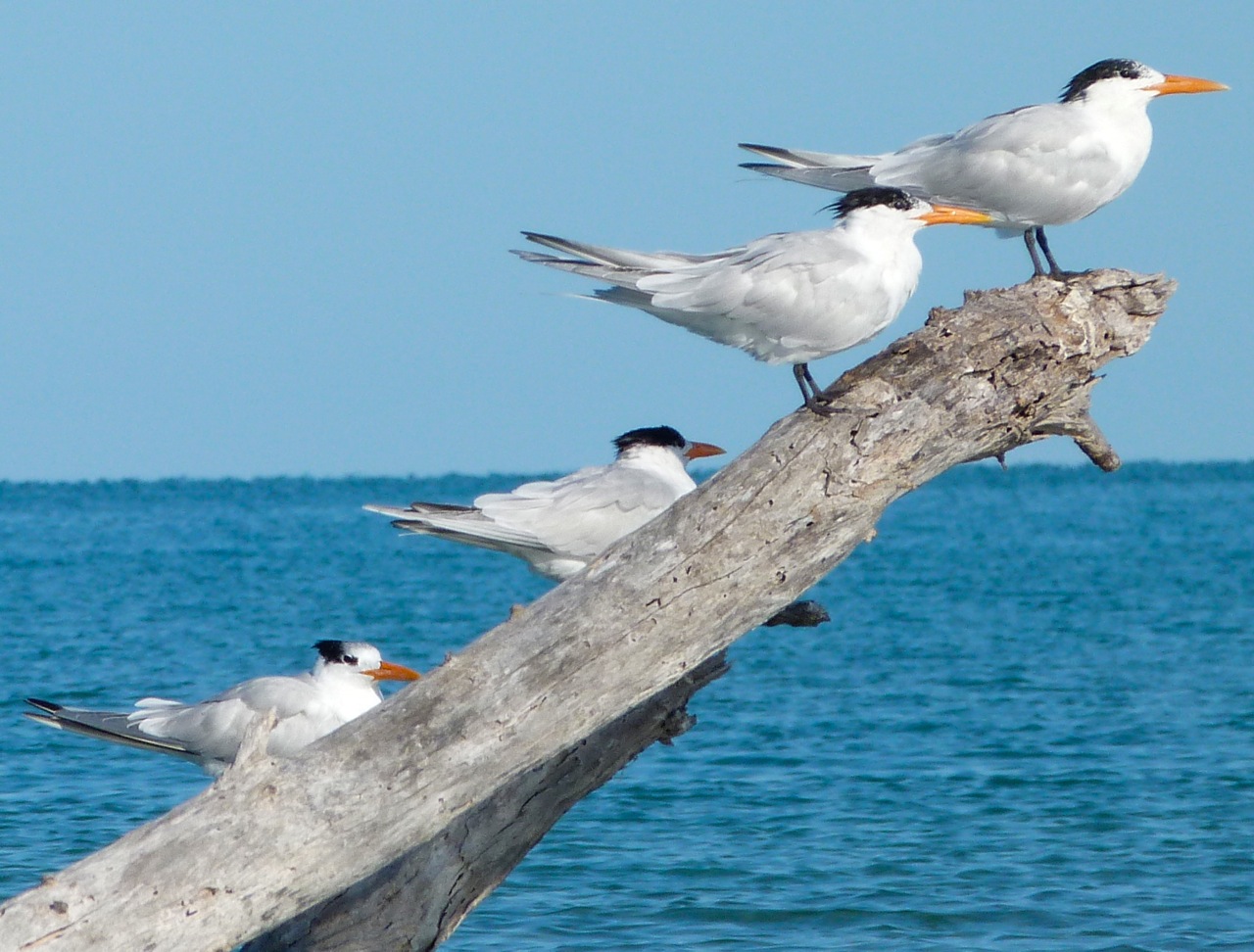
If there’s a magnificent golden bandwagon drawn by 8 horses passing by, why not just hop on? I’ve skipped the info about the range and nesting arrangements of these birds. Here are a few, in all their regal glory, posing in the sunshine on a dead tree way out on the Abaco Marls. The header image was taken on Cherokee Long Dock, long pre-Dorian and its magnificent replacement.
** Now to be renamed Thalasseus carolus rex magnificans. Not worldwide, obviously.
PS No terns were injured in trying to get the yellow crown to fit one of them
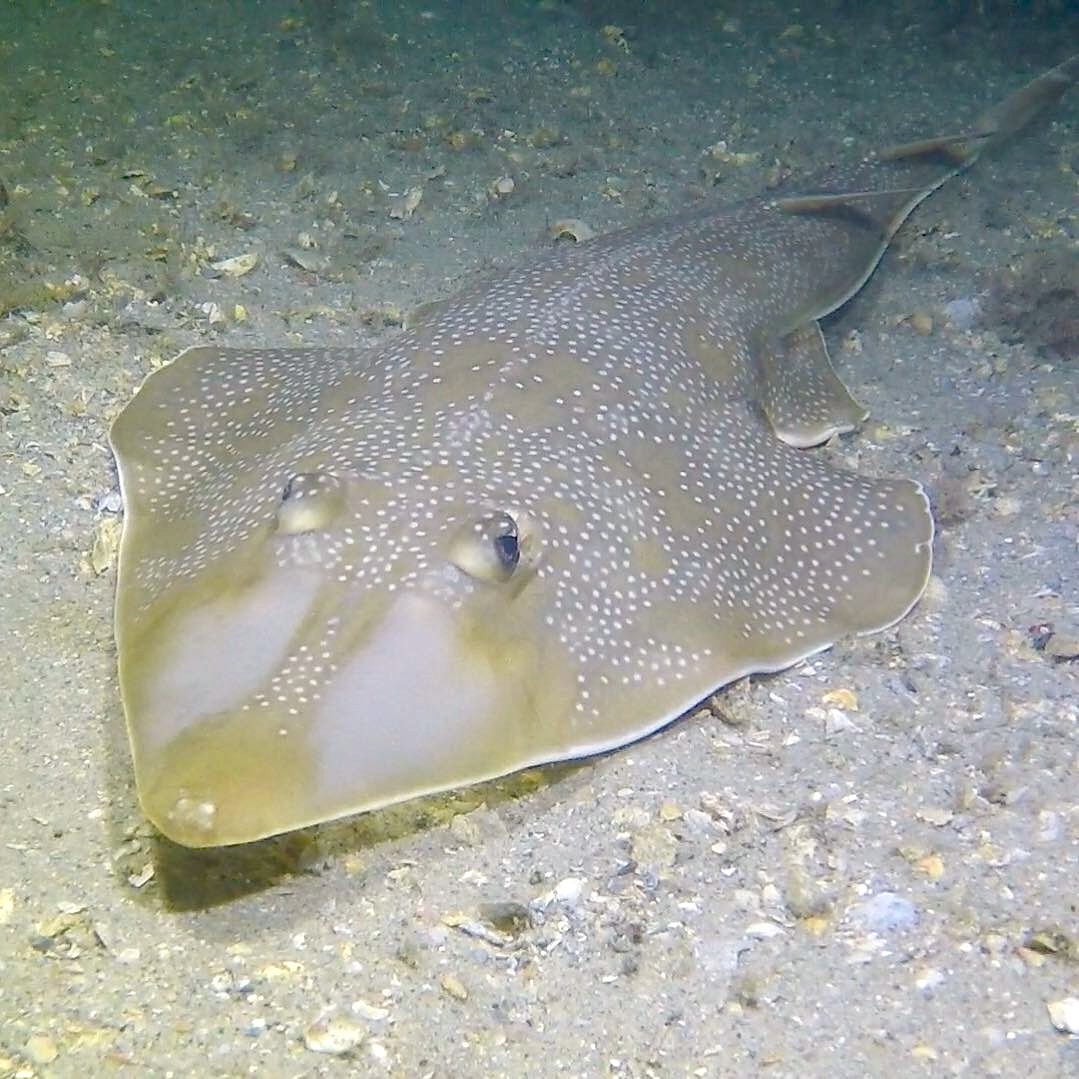
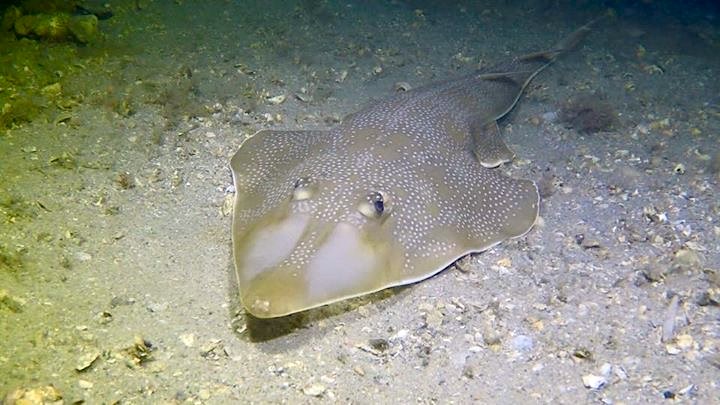
A spectacular entry in my WTF? series came courtesy of Adam Rees and a night dive in Florida waters: the guitarfish, (Gr: rhinos – nose; batis – ray) . Until I saw Adam’s photos, this creature was unknown to me. It sounded so improbable, and conjured up some nightmare piscine-based modification of a Strat, an instrument whose classic looks should not be meddled with without consequent loss of liberty.
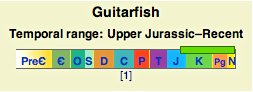
The guitarfish belongs to a family of rays, Rhinobatidae, of which there are many species worldwide. In some ways the fish looks like a crossover with a shark. Although they have a ‘ray face’ and small wings, there is also a sharklike appearance with its fins and a sharklike swimming action (see video, below). If you think there is a primitive or prehistoric look to the guitarfish, you’d be right. According to the temporal range chart they date from the late Jurassic era.
I have been trying to nail the exact model of Adam’s finny Strat-ray. I am putting my money on the Atlantic guitarfish Rhinobatos lentiginosus, which may (or may not) be the same as the spotted or freckled; and is similar to the more widely photographed shovelnose guitarfish with its cute face. Not that I am very bothered: it’s the overall unusualness of Adam’s creature that really counts.
The strange thing is that although the guitarfish is a denizen of, for example, floridian, caribbean and mexican gulf waters, it is said to be unrecorded for the Bahamas. These bottom-feeding creatures inhabit shallower waters near coastlines and estuaries. They eat crabs, shellfish and worms – all in plentiful supply in Bahamas waters – so I can’t see a reason why they should not be found there. Perhaps they are seen but unreported. I have in mind the recent reports of SAWFISH and BATFISH. So kudos awaits the person who reports – with photo – the ‘first’ Bahamas guitarfish. Maybe there’s scope for a song about it!
GUITARFISH ‘LIVE’
Usually caught by mistake by anglers, or as bycatch by fishing vessels
Inedible (unless someone knows better…)
Non-aggressive and harmless to humans despite having a mouthful of small teeth
Swims like a shark – the tail has no spinal structure
Has a cute face (unlike a a shark)
Adults are about 30 inches long
They may bury themselves in sand or mud to ambush prey
They are viviparous, giving birth to live young that are born fully developed
As a postscript, it’s worth mentioning that on the same night dive, Adam also came across the uncommon batfish, a seriously prickly-looking starfish, and a spotted eagle ray. Worth losing sleep for.
. .
A similar kind of guitarfish, showing the very sharklike movements in the water
Credits: Adam Rees, with many thanks; Greg Hume; Johan Fredriksson wiki; magpie pickings, in particular Florida Museum of Natural History / Taylor Sullivan and the truthful parts of various Wiki articles
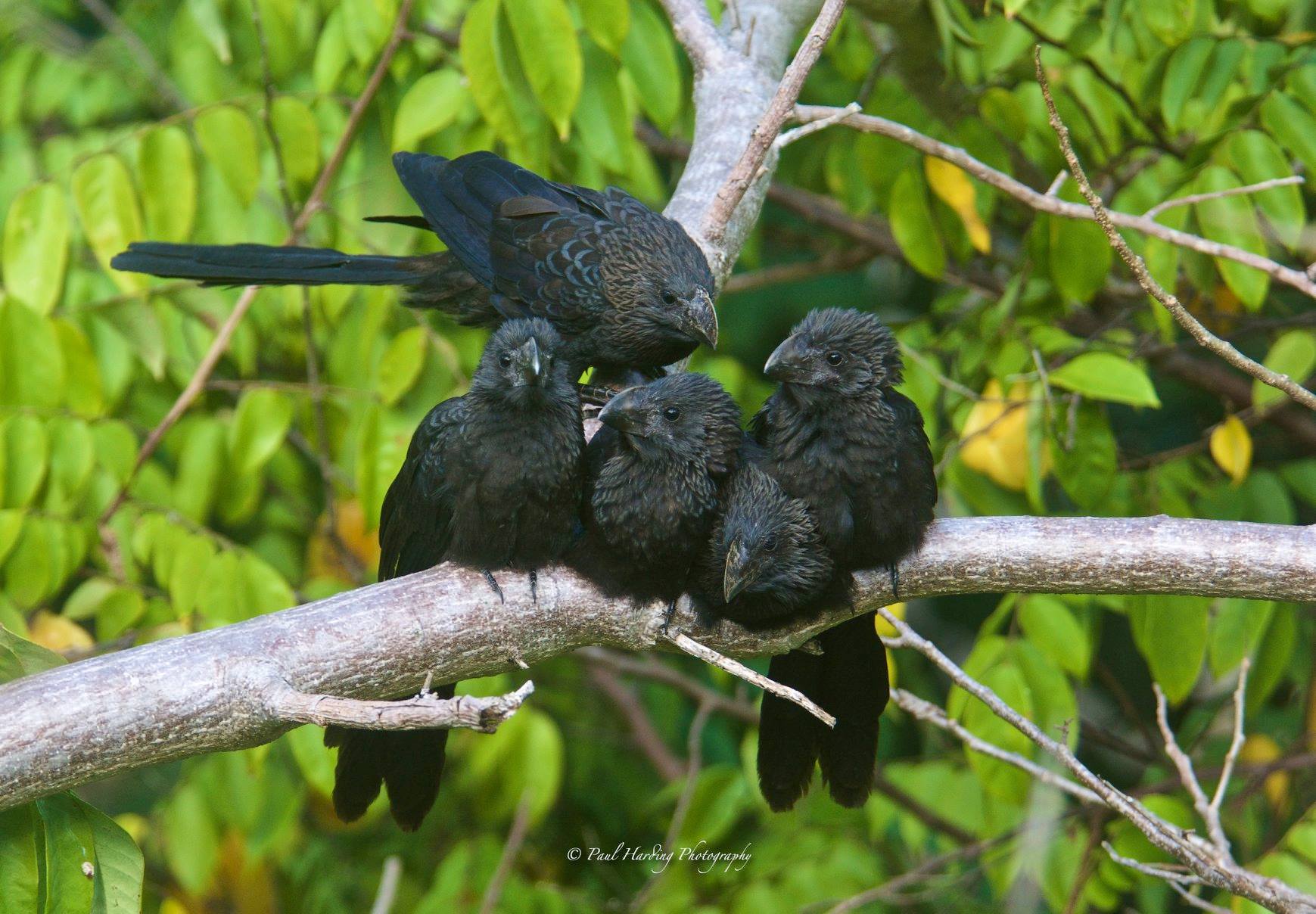
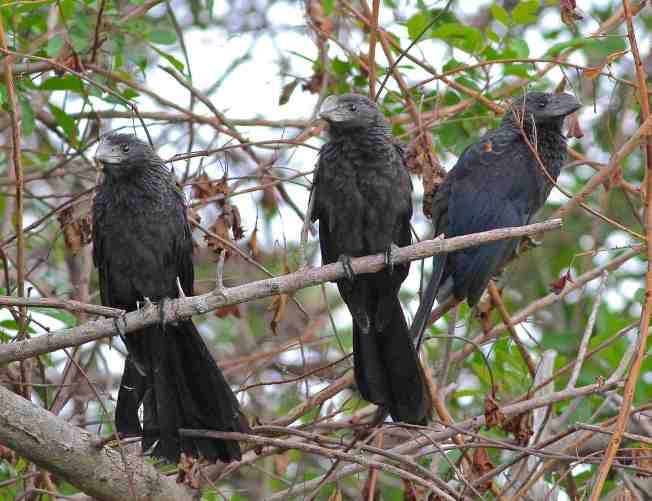
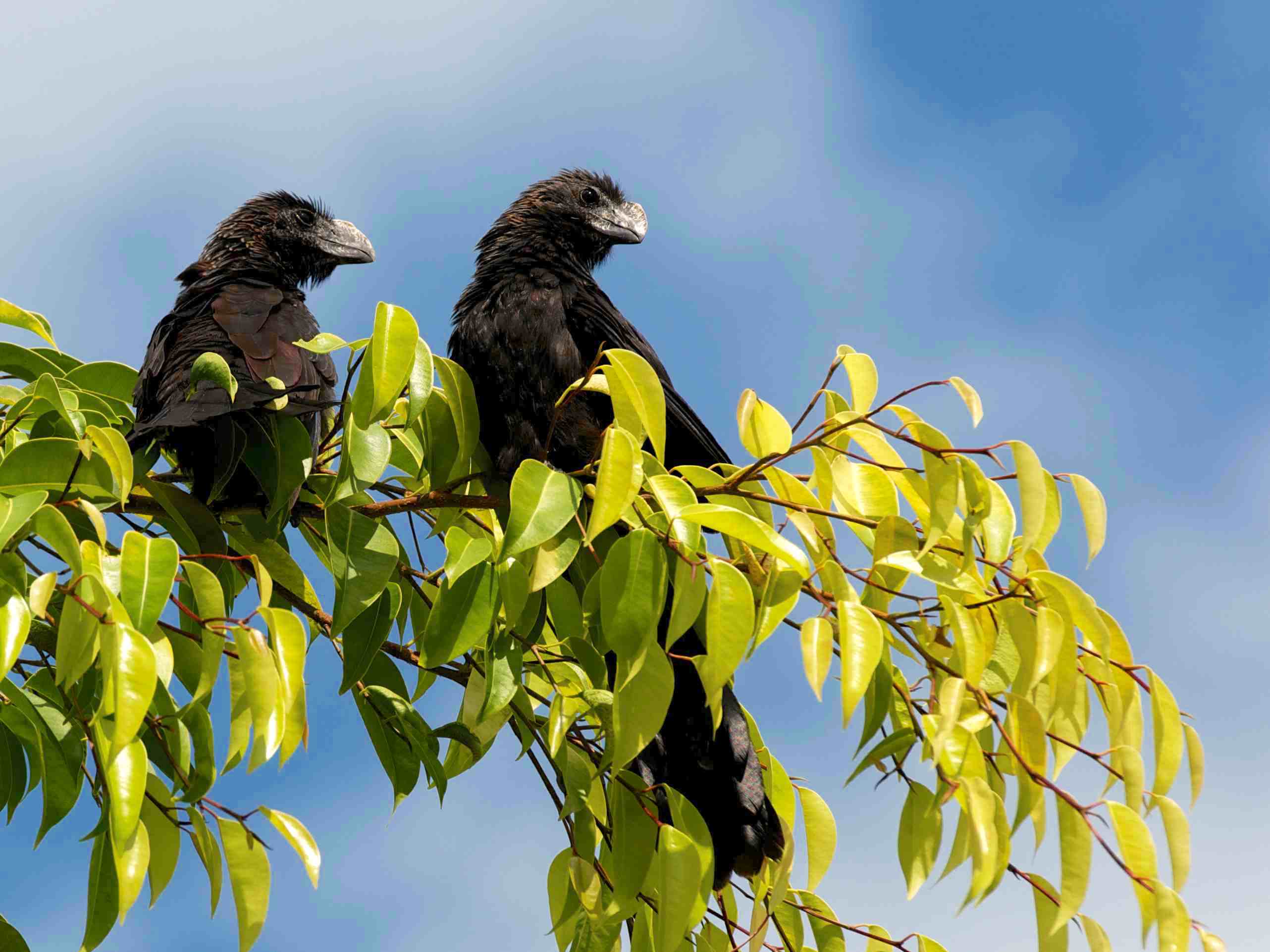
The Smooth-billed Ani (Crotophaga ani) is one of three members of the cuckoo family found on Abaco, the others being theMANGROVE CUCKOO and theYELLOW-BILLED CUCKOO. Anis range from Florida and the Bahamas in the north down through the Caribbean to South America, where they are widespread.
Unlike their shy and retiring cuckoo cousins, anis are extrovert shouty birds that like to hang out in noisy gangs and family groups. They can often be found in low scrub, bickering, squawking, and generally fluttering around in a disorderly way. You’ll probably hear them from some way off, sounding like this:
Anis have advanced social, parenting and chick-rearing skills. They build a communal nest for the group, and all share in egg incubation and chick-feeding duties They may raise up to three broods in a season, which keeps the numbers up. Rather touchingly, the young of earlier broods help to feed more recent chicks.
It follows from this that unlike many other cuckoo species, the ani is not a brood parasite. So the species does not lay its eggs in the nests of other, smaller birds which then unwittingly rear the interloper(s), who in turn push the legitimate hatchlings out of the nest and get all the food and attention.
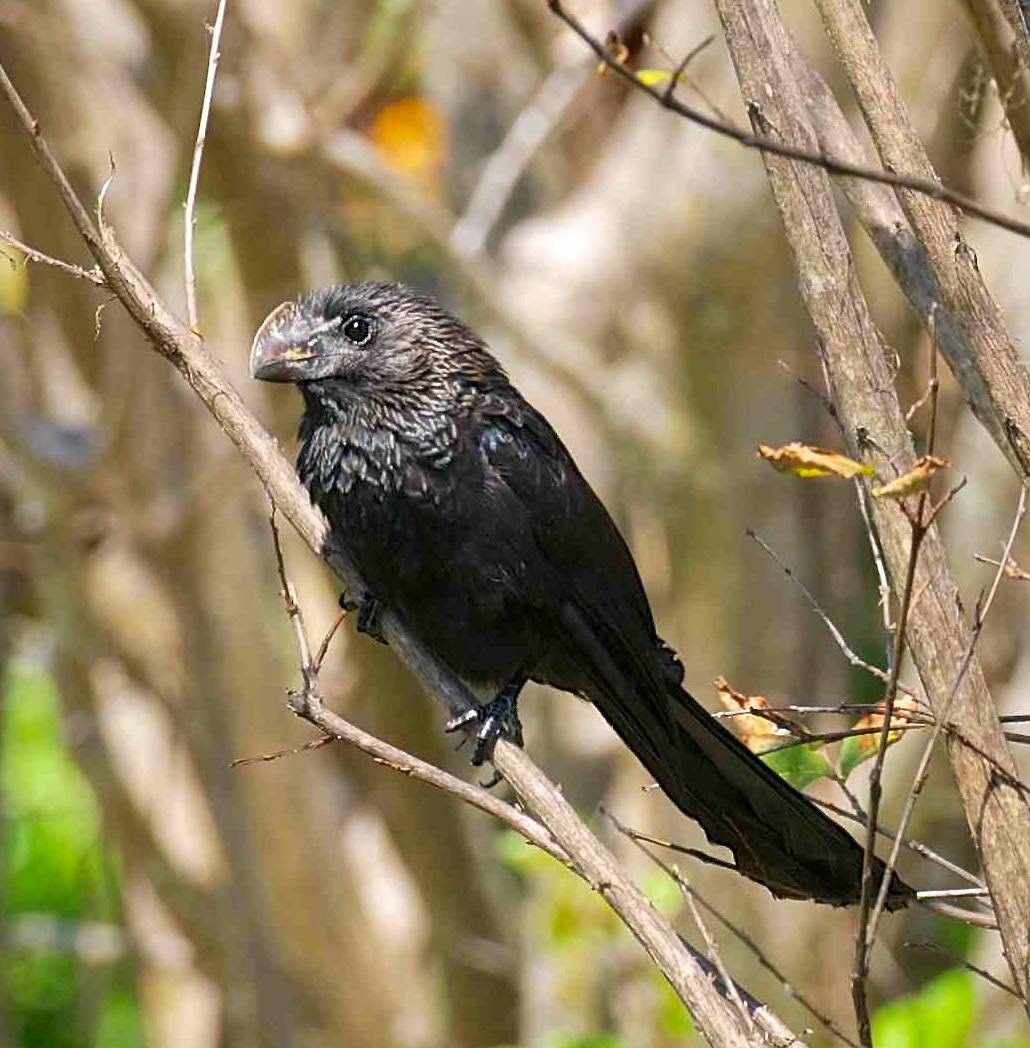
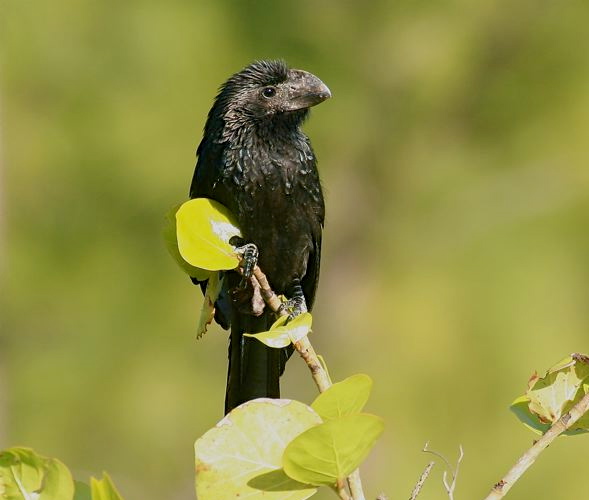
I have tried to discover why an ani’s beak is as it is, without much success. Very often beak shape relates directly to the feeding habits and preferences of a species, but it is hard to see how a diet consisting mainly of insects and small reptiles such as lizards would account for such a prominently protuberant proboscis. Here is a close-up of the item in question.
On Abaco (and indeed elsewhere) Anis are sometimes known as ‘Cemetery Birds’, no doubt because of their all-black appearance (though their raucous tendencies would be quite inappropriate for a graveyard). However although at a distance these birds may look completely black, catch one in the sun at the right angle, and you’ll find that the plumage is far more varied, and with some intricate patterning.
Look for Anis in low scrubland and coppice, cultivated areas, perched in unsteady noisy rows on utility lines, or foraging on the ground.
The appearance and flying abilities of Anis are wonders to behold. As I wrote in The Birds of Abaco, “Their curious heavy beaks, their clumsy flight and their untidy take-off and landing routines suggest a design fault”.
AIMEE MANN INTERLUDE **
“One… is the loneliest number…” Oh, hang on a moment…
…”two of us…standing solo in the sun…”
The Philatelic Bureau of the Bahamas Postal Service is commendably committed to featuring the natural history of the Bahamas. Although probably not in the top-ten of anyone’s bird list, the ani nevertheless got its own stamp in a 1991 bird issue.
As far as I know, there is not yet a collective noun for a group of anis. There should be. I put forward “A Commotion of Anis”
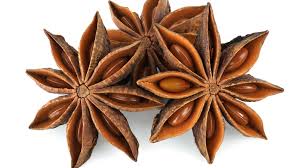
DO NOT CONFUSE WITH STAR ANISE
Credits (all photos taken on Abaco): Becky Marvil, Nina Henry, Paul Harding, Gerlinde Taurer, Roselyn Pierce, Tom Sheley, Bruce Hallett, Keith Salvesen; sound files from Xeno Canto and FMNH; range map from IUCN; hat tip to the always excellent Aimee Mann. ** yes yes I know these aren’t her original songs but I like the AM versions as much
I have featured bird comparatives from time to time, not least because scope for confusion meant that I needed to investigate for my own peace of mind. These included the tyrant flycatchers; a number of superficially similar warbler species (mostly with yellow bits); varied vireos; all those heron-y / egret-y types and their disconcerting morphs (hello, white reddish egret).
And so to the magnificent osprey Pandion haliaetus. This time, the comparison is between two subspecies, broadly the North American P. h. carolinensis and the Caribbean P.h. ridgwayi. There is some overlap in Florida, and some evidence of interbreeding. In the northern Bahamas in particular there is also an overlap, so an osprey seen on Abaco could be either variety. You’ll probably be too excited watching it to care much which type it is, but this article will help you if you do…
The two ospreys shown below were photographed at Spanish Wells, Eleuthera by Barbara Crouchley. This is a ‘bingo’ photographic scoop, because each type of bird was found in the same region; now we can check out the differences between the two birds.
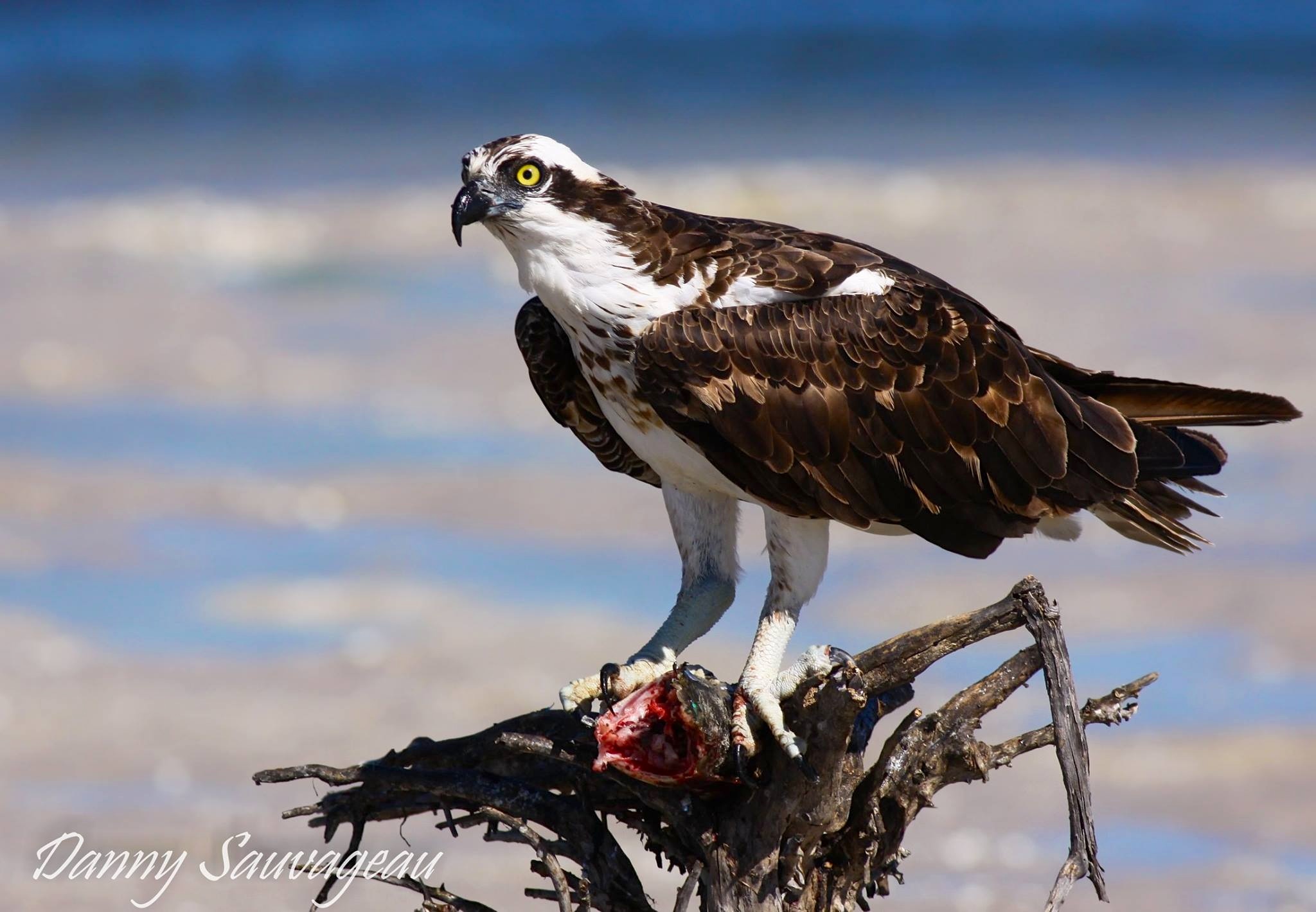
The first is a North American bird. Note in particular its distinctive eye mask, and the clearly marked upper breast – more so in the female than the male (which may even be white). The overall impression of the upper-parts is dark brown. They are slightly larger than their cousins in the south.
Osprey P.h. carolinensis
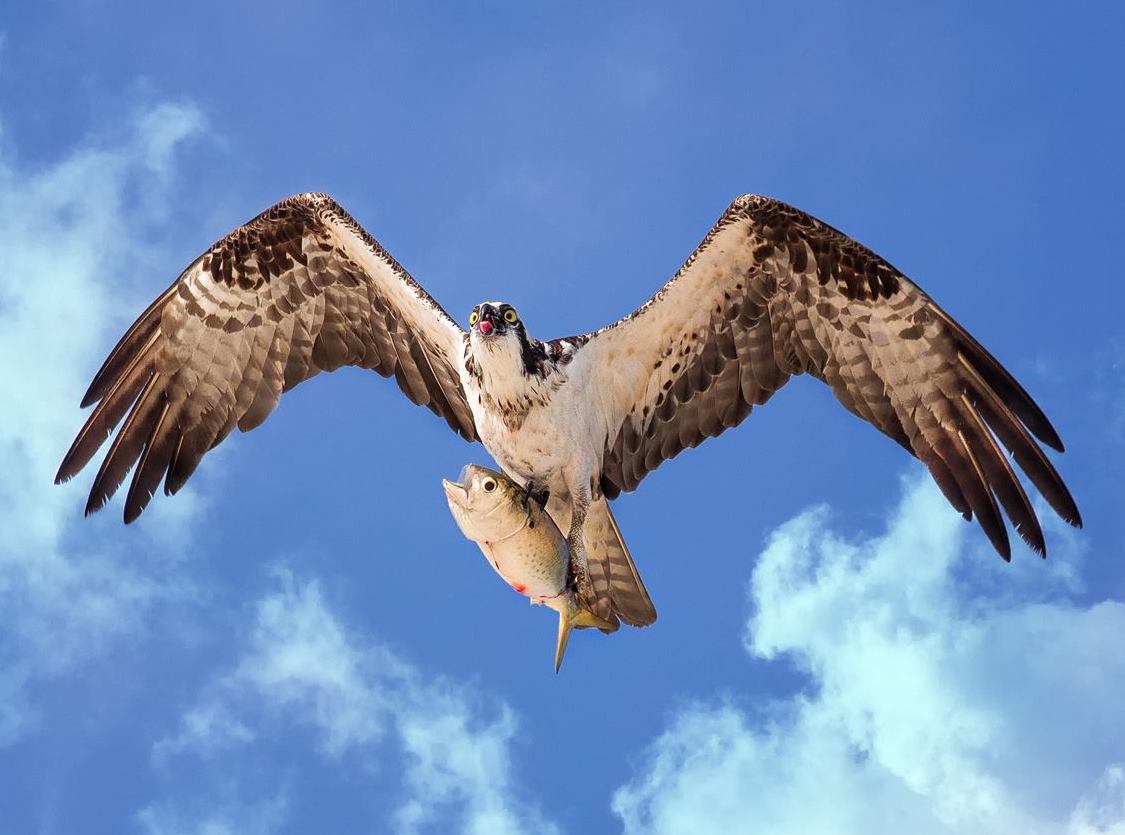
In this Caribbean bird, below, with its trophy fish, the eye-mask is absent and the facial / nape markings are less pronounced. Furthermore, the breast and under-parts are white in both sexes (though slight marking may be apparent in some birds). And the impression is of lighter upper-parts, even allowing for variable lighting and distance when the photos were taken. Conveniently, there’s not much detectable difference between male and females in the respective populations.
Osprey P.h. ridgwayi
EXAMPLES OF P. h. carolinensis
EXAMPLES OF P. h. ridgwayi
THE EYES HAVE IT?
After I had looked into the noted distinctions I wrote “I’m going to stick my neck out here – I’ve not seen this mentioned anywhere, and I need to do some more comparative research”. When I saw Barbara’s pair of photos, I noticed that the eyes of the P.h.r were much paler compared with the bright orangey-yellow of P.h.c. This distinction is found in all the comparative photos above. The P.h.cs were photographed in Florida and further north and have the strikingly vivid eyes. The P.h.rs were photographed on Abaco and Grand Bahama at different times by different people. All have noticeably paler irises, more a light greeny-yellow.
I haven’t seen this commented on since my original piece, but if anyone has a view it would be welcome.
UNDERWING DIFFERENCES
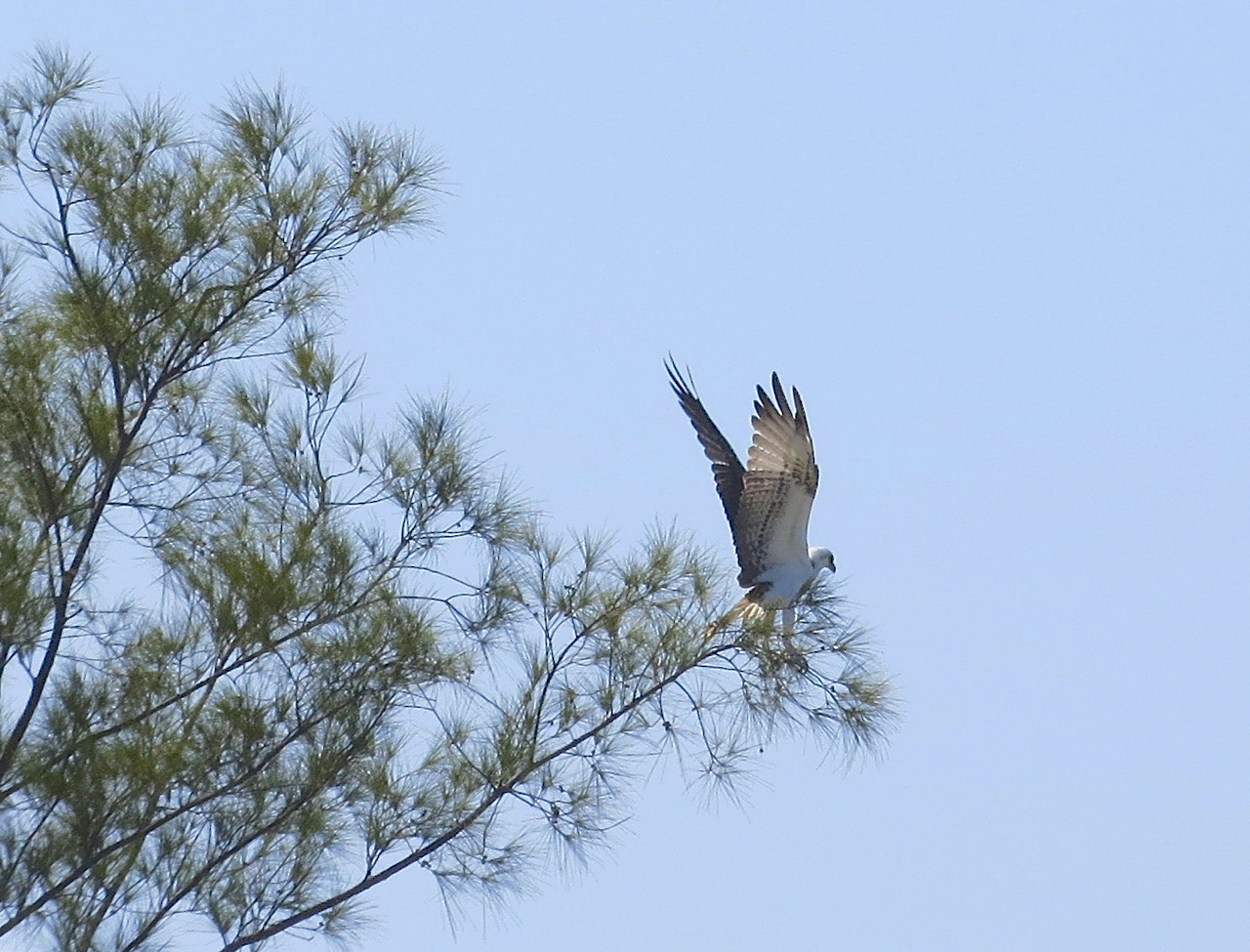
There’s a further comparison that can be made with the two subspecies in flight. Without going into technical and linguistic detail, the underwings of the P.h.cs are much darker than the Bahamas birds, whereas P.h.rs are notably paler and in some cases mostly white. As an example, below is a distance shot I took when bonefishing out on the Abaco Marls, with a small pocket camera in one hand and a rod in the other. This is definitely a local bird! Compare with the dramatic image below it, where the strong darker markings are all too evident. It’s a great shot with which to bring the lesson to an end.
ADDENDUM: Thanks to LSulikM for pointing out that female carolinensis (besides being larger than males) have frontal freckling, sometimes called a necklace, that is a prominent ID marker (see bottom image). Males may also have freckling but it is much less conspicuous. For ridgwayi the freckling is absent or (see the bird on the utility pole above) very sparse.
Photo credits: Tom Sheley (1); CWFNJ (2); Barbara Crouchley (3, 4); Danny Sauvageau (5, 6, 7); Jim Todd (8); Linda Barry Cooper (9); Woody Bracey (10); Keith Salvesen (11); the inimitable Northside Jim (12). Thanks for all use permissions – also to Steve Connett for the idea! Original post in 2020.
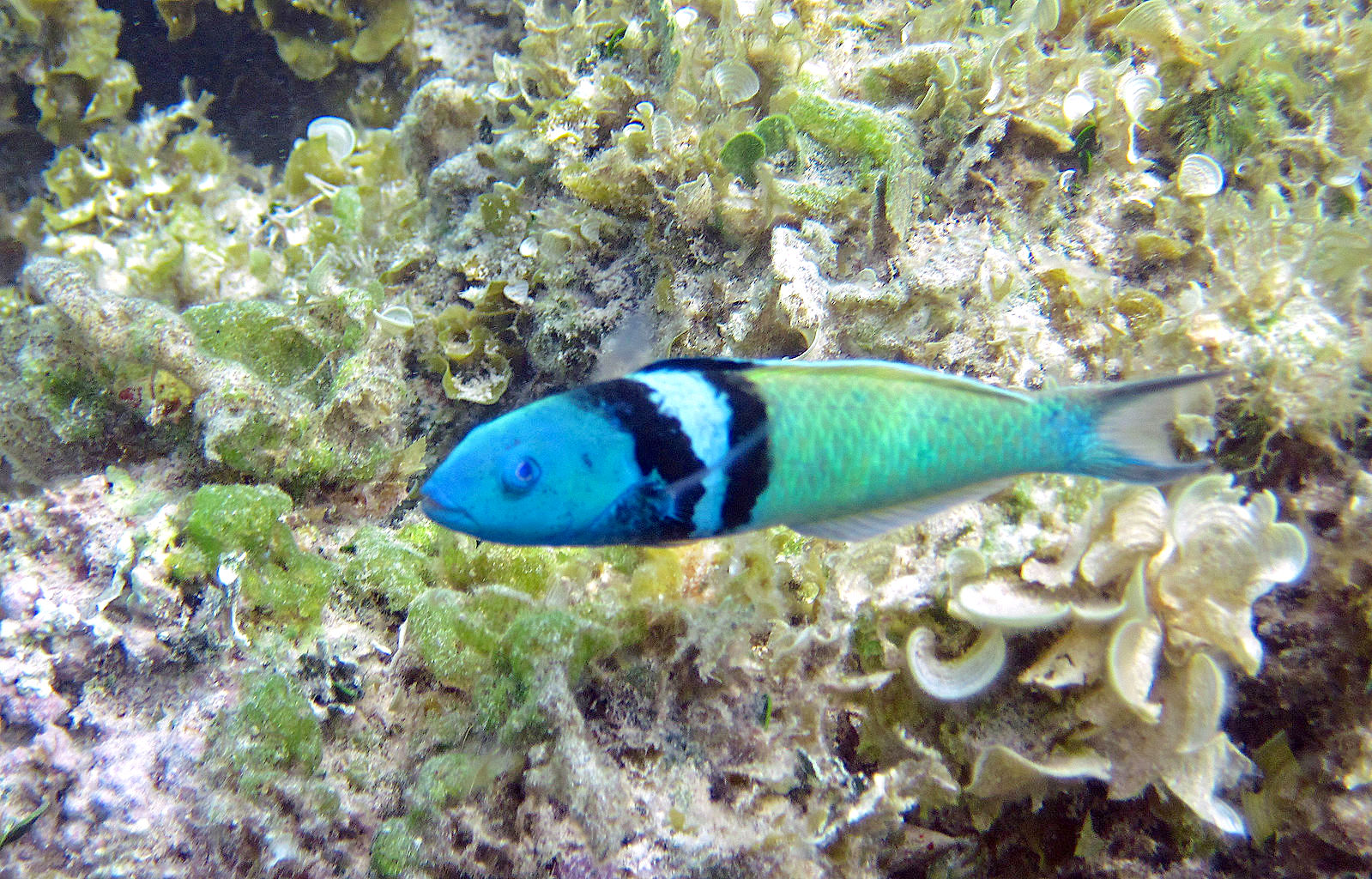
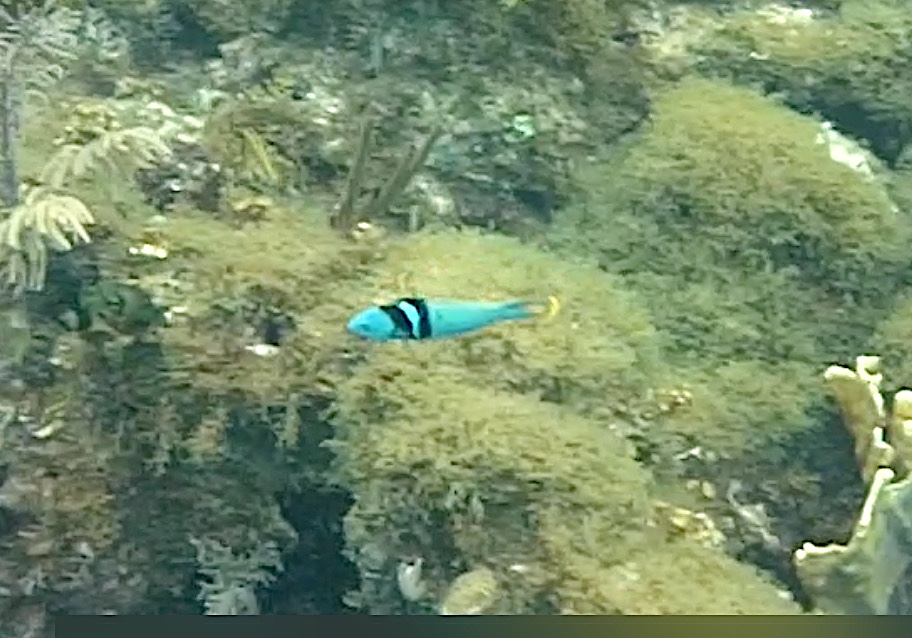
The bluehead wrasse (or blue-headed wrasse) Thalassoma bifasciatum is a denizen of the coral reefs in the tropical waters of the western Atlantic Ocean. This bright little 4-inch fish is… a wrasse with a blue head. No more and no less. Unless it’s a juvenile. Then it is mainly bright yellow. It’s similar to BLUE TANG (aka ‘the Disney Dory’), which starts life bright yellow and grows up to be blue.
The species may be found singly, in pairs or small groups, or in schools. They have an important role to play in the life of the reef. They are CLEANER FISH, vital to the health and wellbeing of the larger species they attend to, and thus of the reef itself. This is ‘cleaning symbiosis’, a relationship of mutual benefit. The big fish get cleaned; the little fish have a useful function and – importantly for them – therefore don’t get eaten.
Having said that, blueheads are of course fair game as a snack for species that aren’t in the market for their cleaning services. Rather unfairly, some species that are quite content to let cleaner gobies pick around their gills and mouths are not so considerate of the wrasse (some types of grouper and moray eel, for example).
TELL US EXACTLY SEVEN BLUEHEAD WRASSE FACTS
Juveniles can alter the intensity of their colour, stripes & bars
The bluehead wrasse is a ‘protogynous sequential hermaphrodite’
All are born female**. Some change sex to male during maturation (see below)
Food includes zooplankton, small molluscs and small crustaceans…
…and parasites / other juicy bits (fungal growths, anyone?) from bigger fish
Main threats to the species are coral reef degradation / destruction and pollution
The bright colours invite aquarium use, but the trade in this species is not critical.
** Some sources suggest some are born male and remain male.
A juvenile bluehead – mostly yellow, with a pale underside
THE REMARKABLE SEX LIFE OF THE BLUEHEAD WRASSE
This is an unavoidable topic, I’m afraid. The bluehead’s sex life is the most interesting thing about them, and this is no time to be prudish. It has been the subject of extensive scientific research. As with many human relationships, “it’s complicated” but in a conch shell it boils down to this:
To recap, BWs are born female and as they mature, some become male.
Males reach an ‘initial phase’ when they can breed in groups with females
Some males grow larger & reach full colouration. This is the ‘terminal phase’
These large males aggressively chase away smaller ones & seek females to pair with
Their state of readiness is signalled by colour changes BUT the females know…
…that the smaller males have a sperm count higher than dominant males.
As the excellent organisation OCEANA puts it: Bluehead Wrasses may reproduce in four different ways throughout their lifetime: 1) as a female in a group spawning event; 2) as a female in a pair spawning event within the territory of a large male; 3) as a small male in a group spawning event; and 4) as a dominant, terminal male in a pair spawning event within its own territory.
A cropped still from a video I took at Fowl Cay marine reserve. I’ve looked at dozens of images online and not found one that was all blue with a yellow end to its tail fin. Perhaps it is just an all-blue alpha male.
Credits & Sources: Melinda Riger; Adam Rees; James St John; Oregon State edu / Pinterest; Wiki images; self; Oceana; IUCN; magpie pickings
Manatees are apex ‘gorgeous marine mammals’. Gentle, inquisitive, brave, long-distance-but-rather-slow-swimming, grass-grazing miracle ur-elephant descendants. They never made it out of the sea in the Miocene epoch.
Incongruous in a world of fast sharks, snappy ‘cudas, large whales and leaping dolphins, they contentedly mooch around the seagrass beds. No one in the world has ever objected to or dissed a manatee. They bring only delight to the sea-world, and offer only charm to mankind.
In the past, I’ve written about the small number of manatees that inhabit the turquoise inner waters of the Bahamas. They were carefully recorded with individual identifying features – usually nicks in the paddle, or scarring. Usually they were named and, where possible, fitted with a tracker. Their friendships and amorous hook-ups were noted. Despite a 16-month birth cycle, manatee-lets were born. Then Dorian struck, and the situation for manatees (as with many other creatures) became unclear. The good news is that they are now increasingly sighted, with photos taken and soc med posts to admire.
Gina and Calf, Bahamas (BMMRO)
IS THERE A DOWNSIDE FOR THESE APPARENTLY BLISSFUL AND PEACEFUL CREATURES?
Yes indeed. It’s mankind, I’m afraid. Among the threats to the survival of these unusual, endearing, and legally protected creatures are, in no particular order:
Pollution of inshore waters and canals
Degradation of the (formerly limitless) sea-grass beds where they feed
Reduction or tainting of the fresh water sources that they need to survive
Understandable over-enthusiasm by admirers – especially in harbours – in dousing them with water from hoses and feeding them lettuce…
…and similar behaviours that may lead to a trusting dependance on humans
Unthinking or speed-selfish boat behaviour in or near harbours resulting in collisions
Simply not caring at all and carving them up, leaving often deep prop-scars. Few manatees escape at least a few of these. Some do not survive.
Probably I don’t need to mention man-caused Global Warming, but I just have.
Let’s celebrate this special month for manatees. Let’s hope that they can survive and prosper in these increasingly difficult and dangerous times for almost all species. Look at any of these photos… can we agree that these wonderful animals deserve care and protection.
All photos: Charlotte Dunn / BMMRO and research contributors; final image ‘Save the Manatee’
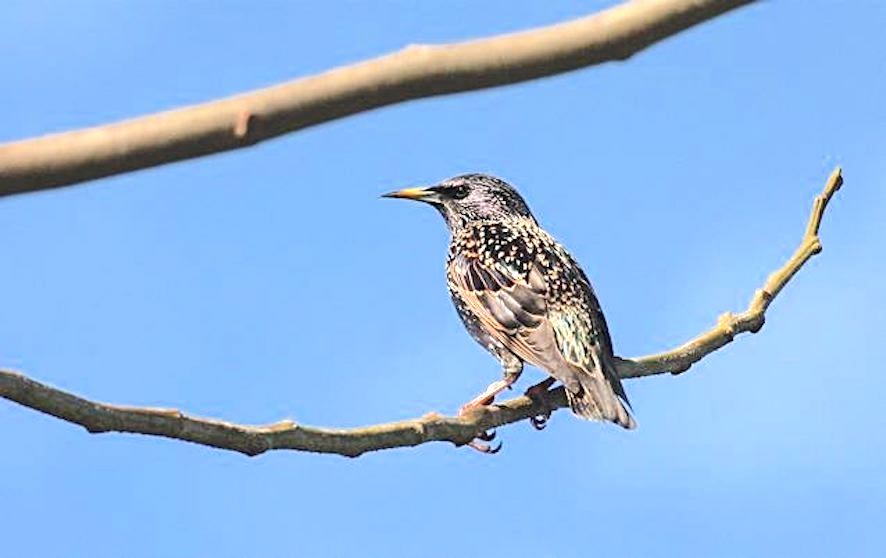
European Starling Sturnus vulgaris – High Line NYC – RH
We are all familiar with some of the collective nouns for birds – flocks, flights, broods, maybe companies (parrots) and so on. There are plenty of lesser known terms for specific birds, of which quite a few seem rather remarkable: a wisdom of owls, a murder of crows, a lamentation of swans, an unkindness of ravens, an exaltation of larks. Most of these refer to perceived characteristics of a particular species (the swan pining for a lost mate – they pair for life). Some date from medieval times.
MURMURATIONS OF STARLINGS
In the UK in late autumn, starlings start to gather in huge flocks in trees and open fields. Twitchers begin to gather too, in their all-weather plumage, ready to watch the sensational avian displays of thousands and thousands of starlings as they take to the air almost simultaneously. They swirl in densely packed random formation, drawing complex patterns across the sky. The group will constantly change direction and height, sometimes splitting into subgroups and reforming. They may suddenly drop to the ground in a teeming raucous mass, before taking off again to continue the display.
It is sometimes possible to sense when the flight is about to begin, In a huge packed group on the ground, there is a hint of restlessness. There is movement. A few birds seem to jump slightly. Then in a flash they are away into the sky.
A brief encounter with a small murmuration last week
Murmuration, early evening, Maiden Castle, Dorset (an iron-age hill fort) – iPhone
Starlings Sturnus vulgaris are a European species. They are now common in North America, less so in the Bahamas. The non-European distribution happened this way: All the European Starlings in North America are descended from 100 birds set loose in New York’s Central Park in the early 1890s. The birds were intentionally released by a group who wanted America to have all the birds that Shakespeare ever mentioned.* In return, gray squirrels were introduced into Europe at about the same time, with the population increasing exponentially and displacing the indigenous red squirrel..
* All About Birds – Cornell Lab
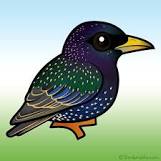
Photos: Keith Salvesen, Bruce Hallett, Wiki Commons; Video Clip Keith Salvesen; Cartoon by the very excellent Birdorable
There are 3 cuckoo species recorded for Abaco, all permanent residents. Two are relatively scarce; the third is the much-loved gregarious and raucous Ani. Recently I was contacted about a cuckoo seen on Man-O-War Cay. The photo revealed more of a glimpse than a sighting… but it clearly was not an all-black Ani. So here are the 3 species to admire in all their glory – and in the case of the first 2, to highlight the differences between them.
YELLOW-BILLED CUCKOO (and header image)
MANGROVE CUCKOO
SMOOTH-BILLED ANI
Photo Credits: Tom Sheley, Tony Hepburn, Alex Hughes, Gerlinde Taurer, Nina Henry
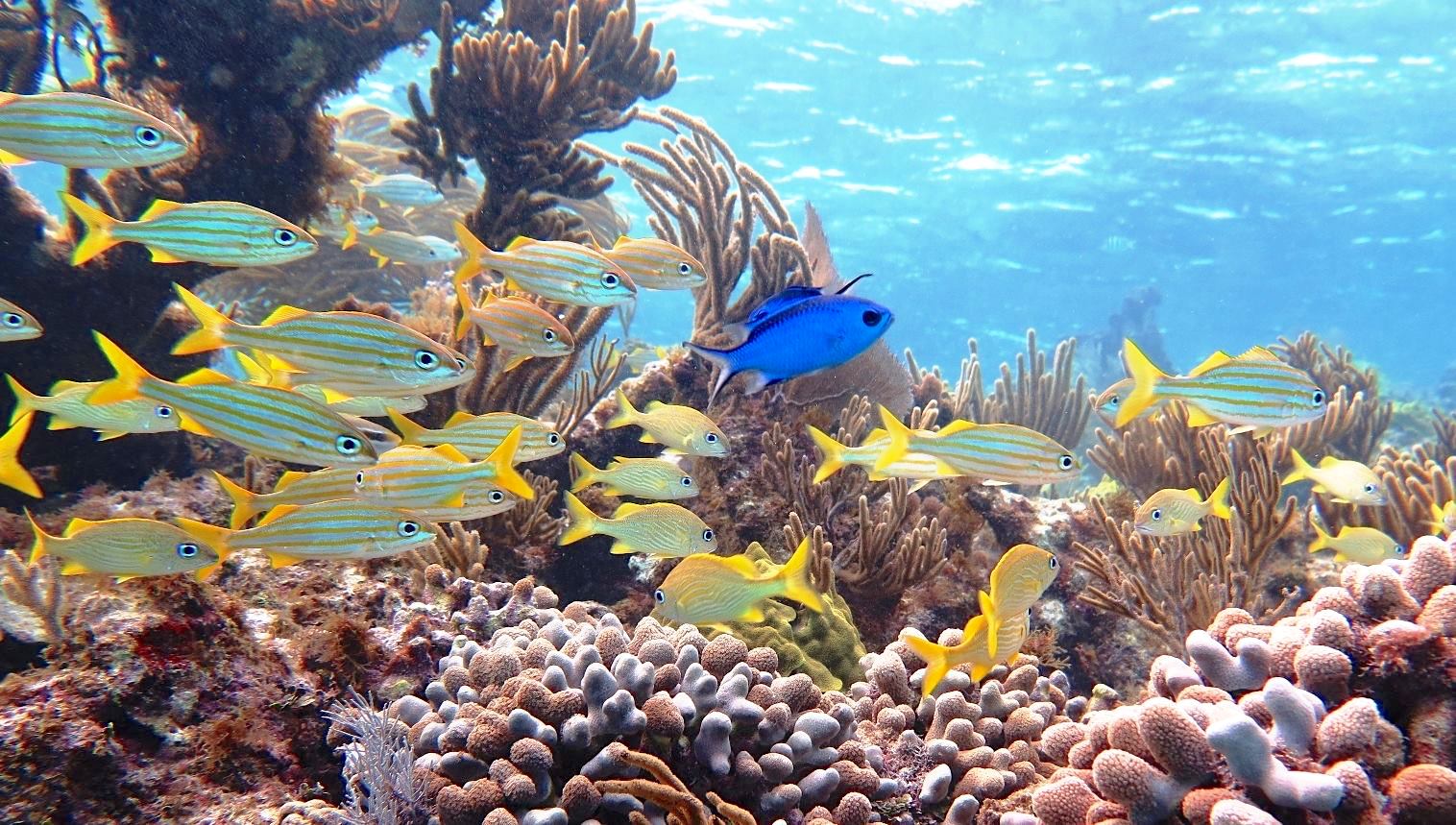
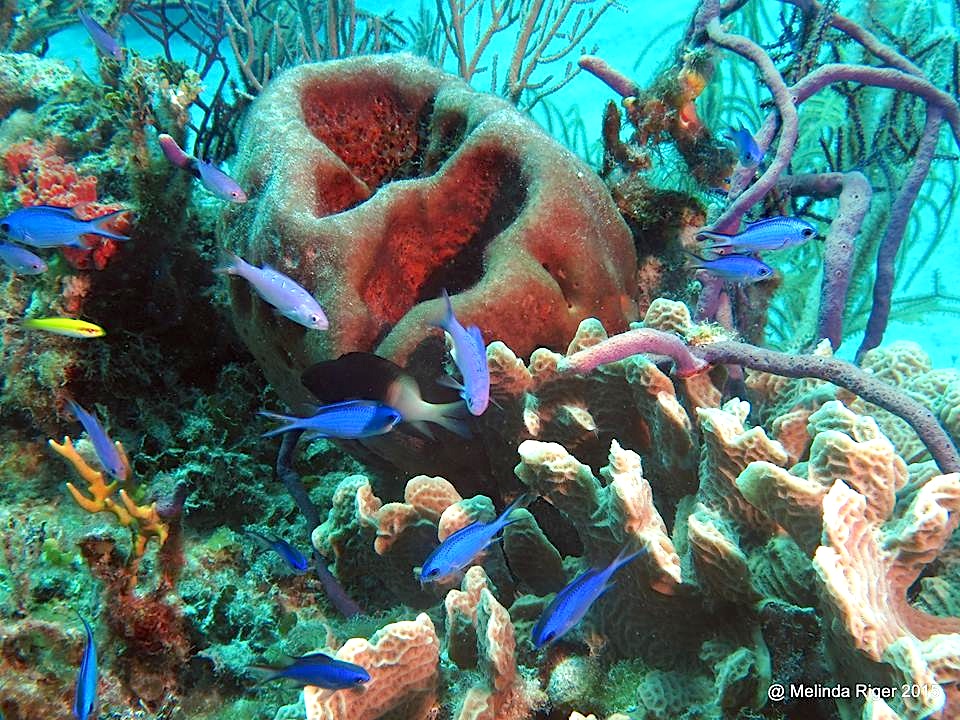
Larger reef fish tend to get more attention than the tiddlers, for obvious reasons. Yet a reef would not properly exist without the small fish that drift and wriggle round the corals. Blue chromis (Chromis cyaneus) are among the first reef fish species I ever met when snorkelling at Fowl Cays.*
Blue chromis belong to the same group as damselfishes. These unmistakeable, bright reef denizens are very visible despite their tiny size. These fish are shoalers, so out on the reef you can enjoy them flickering around you as you swim along or hang in the water to admire the corals.
Like many a pretty and easily captured small fish that can be monetised once removed from its natural home environment, the blue chromis is popular for aquariums. Humans like to keep them in their own home environments safely away from oceans and reefs, unselfishly feeding the little things concocted food to keep their little lives going till the cat gets them. [Sorry, I don’t know what came over me there]
Blue chromis are adaptable and sociable, and will happily swim with other small reef fishes (as above). My own favourite combo is chromis mixed in with sergeant majors. But a shoal of them (mostly) alone is pretty special too….
I cynically mentioned ‘concocted’ food earlier. Here is one online care instruction for looking after them: “They are omnivores, meaning that they eat both meaty and plant based foods. They are not difficult to feed and will eat a variety of regular aquarium fare, frozen, live, and sometimes even dry food. Feeding them a variety of foods will help them retain their color in captivity. They sometimes feed on the algae in the tank”. So I think it’s ok to suggest that leaving the fish out on the reef might suit them better.
If tempted to ‘rescue’ some from their reef habitat, rest assured that they have been known to spawn in captivity. Blue chromis can usually be obtained for about $10-15. And don’t hold back on the frozen food (though maybe warm it up a bit before feeding time). I rest my case.
*I say ‘snorkelling’ rather than anything more impressive because I am a pathetic swimmer and I know my limitations…
Credits: Melinda Rodgers / Dive Abaco; Melinda Riger / G B Scuba
The northern curly-tailed lizard Leiocephalus carinatus, to give it its full name, resembles a tiny dragon with a twist in the tail. These little critters bask in the sun, or scuttle away into holes and crevices as you approach them. I suspect that even a confirmed herpophobic would find some charm in them. They are, of course, completely harmless to humans.
Surprisingly, the Bahamas is home not just to one but five different curly-tail species, and nine sub-species. Broadly-speaking, the variants are found on different and specific islands and have discrete local markings. Mostly they are brownish, but they may also be grey or with a greenish tinge like this one I recently photographed.
Curly-tail males, being territorial, turn somewhat aggressive around breeding time, which is basically most the the year, from February to October. Behaviours indicative of their territorial claims include tail curling / uncurling (of course), head-bobbing, strutting about in an agitated way and inflating the sides of their necks in a threatening kind of way. The tiny-tails, 2″ long when born, are known as ‘hatchlings’.
An impressive poolside ‘double curly’
THREATS TO CURLY TAILS
According to the Bahamas National Trust BNT, the main dangers to the curly-tails of the Bahamas are:
Dogs, cats, rats and introduced predators such as raccoons
Collection for the pet trade – curly tails are unprotected by CITES listing (also cute)
Collection of the rarer endemics by reptile enthusiasts seeking ‘exotics’
Development and habitat destruction (though it is noted that curly tails seem to adjust quite well in developed areas)
A curly tails sloughs its skin as it grows, as with snakes and other reptiles
WHY THE CURLY TAIL?
As mentioned above, for use in territorial posturing
In courtship displays by males to attract females (luckily a method not available to humans)
As a response to predators, confusing an attacker with movement at both ends
As a last resort, to detach to aid escape (the tail re-grows)
For fun and just because they can grow one and you cannot
Credits: all photos, Keith Salvesen except #2 & #6, Charles Skinner; BNT
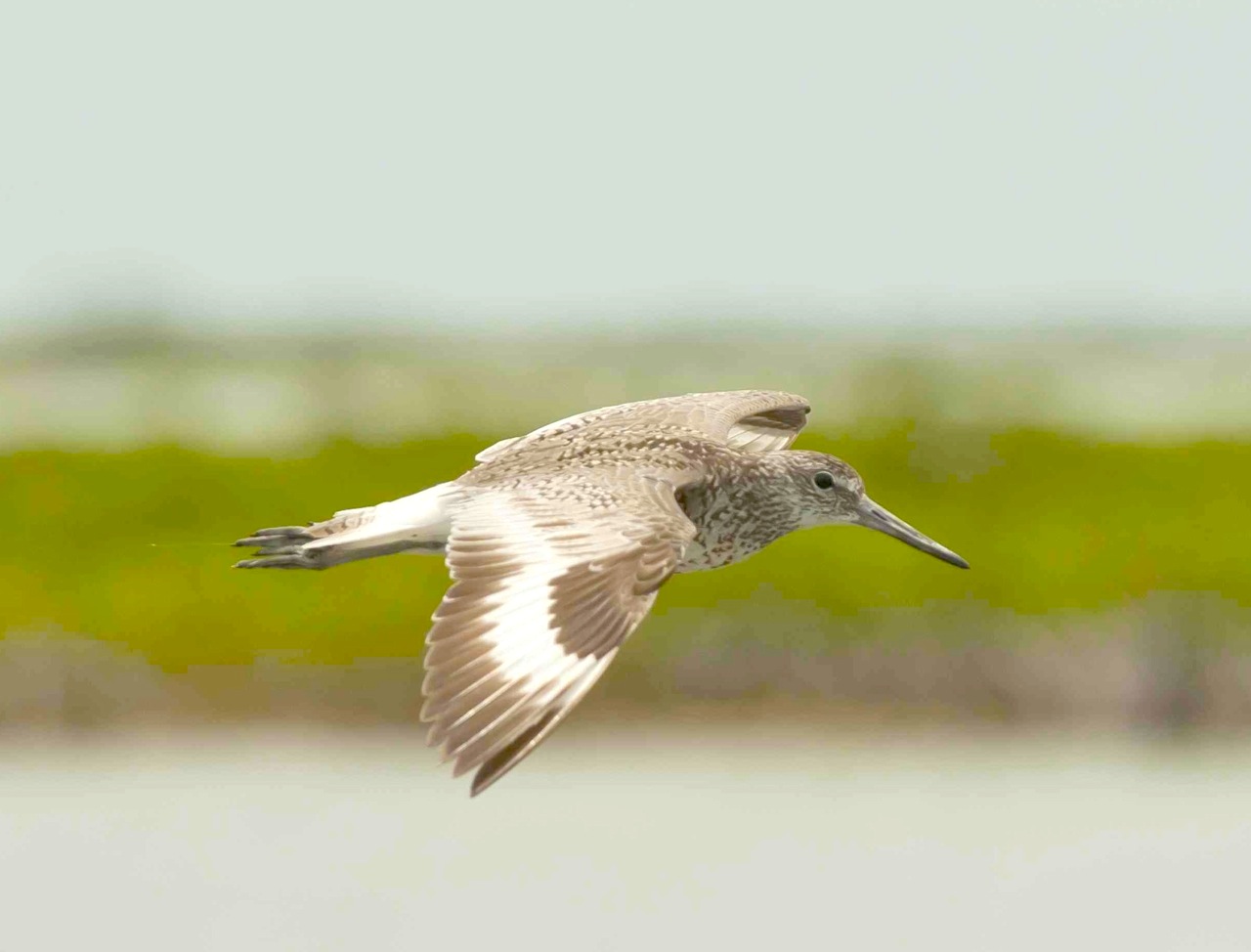
Abaco’s birding records compiled for over 20 years include 33 shorebird species. For a few, the islands and cays are a permanent residence; for many others they are winter quarters; some species are visitors transient in their migrations; a few are rare vagrants. The complete checklist of Abaco’s shorebirds is below, along with 3 links to specific posts.
I have divided the species into 3 categories: sandpipers & kin; plovers; and a catch-all ‘large shorebird’ group that includes one or two sandpipers. Of the 26 birds featured and shown in the main checklist below, 23 are ones you might reasonably hope or expect to encounter on Abaco, though some only if you are lucky or your field-craft is excellent. The others are the long-billed dowitcher, American avocet and Wilson’s phalarope (of which only one has ever been seen on Abaco, with a photo to prove it). Many of these are showcased in my book The Birds of Abaco.
The codes tell you, for any particular bird, when you may see it (P = permanent, WR = winter resident, TR = transient, V = vagrant); whether it breeds (B) on Abaco; and your chance of seeing it, graded from easy (1) to vanishingly unlikely (5).
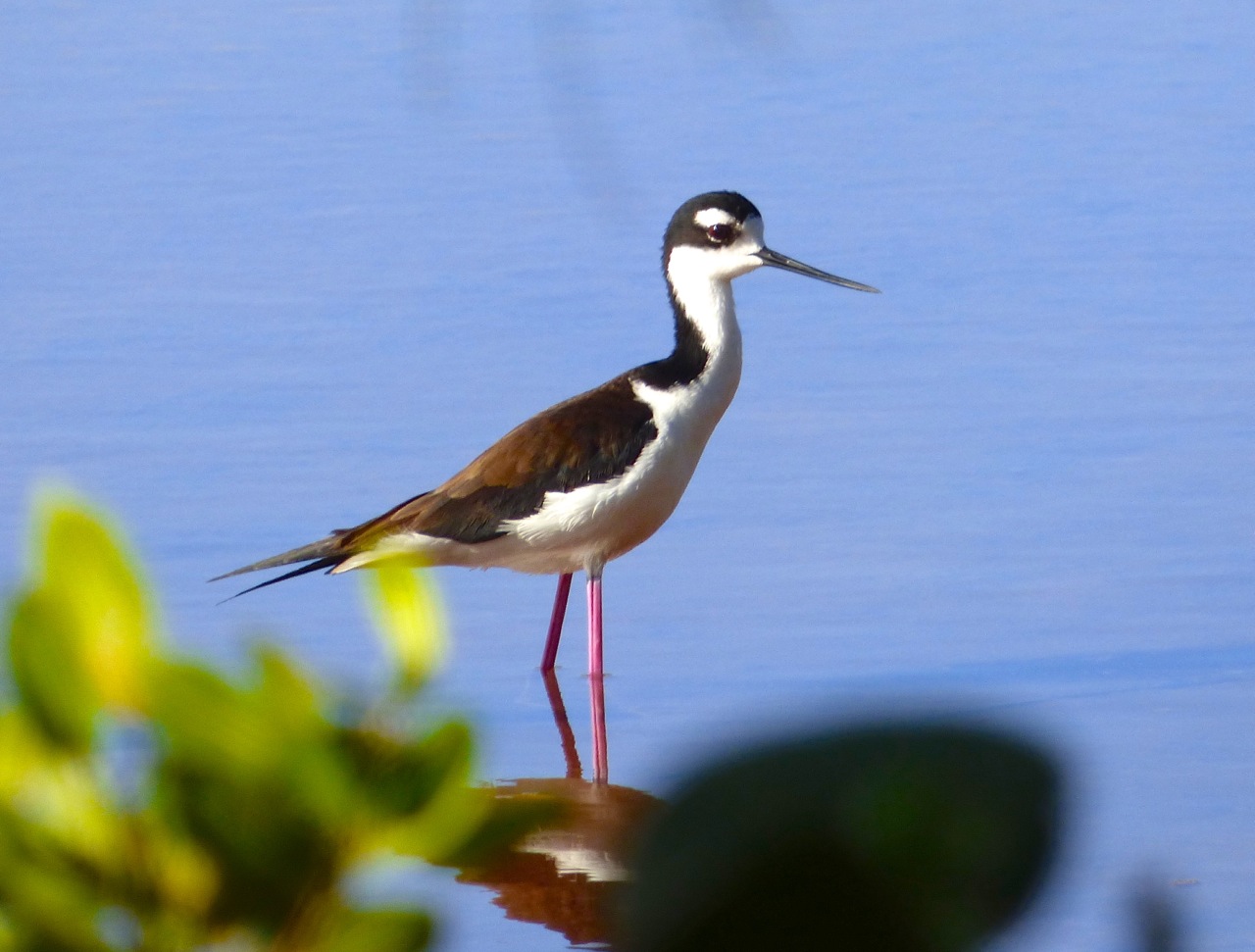
Black-necked Stilt Himantopus mexicanus PR B 3
American Avocet Recurvirostra americana WR 4
American Oystercatcher Haematopus palliatus PR B 2
And not just the tail*. Other parts of a bird. Sometimes most of a bird. More rarely, an entire bird. Whichever, a bird affected by leucism stands out from the crowd – out of the ordinary and therefore startling to the eye. I’d be very surprised if the fine turkey vulture in the header image didn’t make you look twice – maybe even to check if some devious photoshop trickery had been at work. Yet it’s just a normal TUVU in the Florida Keys, living a normal vulturine life.
LEUCISTIC DISCOVERY ON ABACO
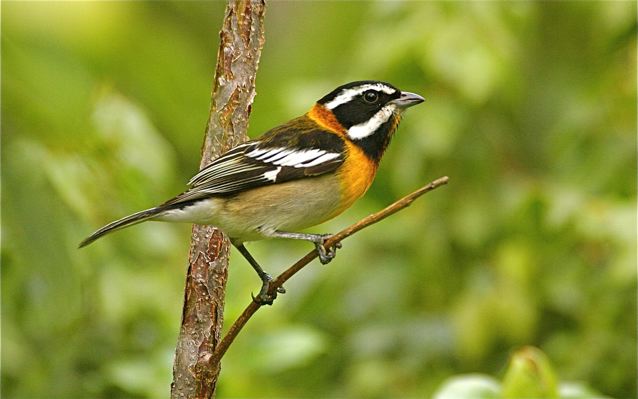
A leucistic Western Spindalis discovered on Abaco by birder Keith Kemp
For comparison – the real deal
LEUCISM? EXCUSE ME, AND THAT IS?
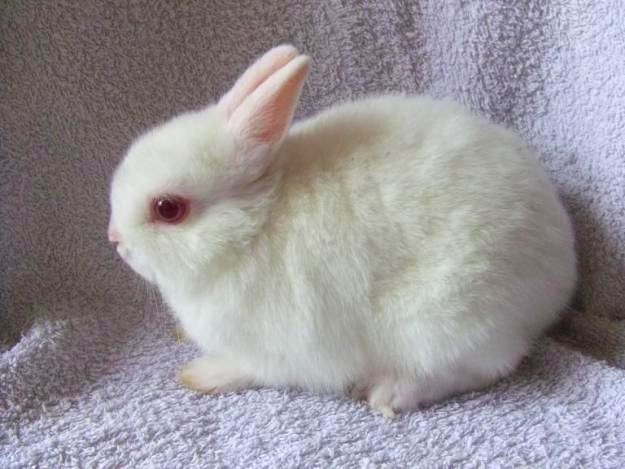
First, what it is not. It is not albinism, which results from diminished or lost melanin production that affects pigmentation. One characteristic of the condition is the tendency to pink eyes, which of course is seen in humans as well as animals and birds. Meet the perfect example…
WELL, WHAT IS IT THEN?
Put simply, melanin is only one of many ingredients of pigmentation. Leucism is caused through pigment loss involving many types of pigment, not just melanin. In birds this results in unnaturally light or white colouring of feathers that may be partial or entire. The eyes of a bird with leucism are unaffected. At one extreme, if all pigment cells fail, a white bird will result; at the other extreme, pigment defects cause patches and blotches of pale or white on the bird, often called a ‘pied’ effect. The condition can be inherited.
A mallard on Abaco. The species is known for its wide colour variations in both sexes. Sometimes the variations go beyond the usual range: this is a leucistic bird
A leucistic common gallinule (moorhen) on Abaco
Leucistic rock pigeon
BAHAMA (WHITE-CHEEKED) PINTAIL: A PIGMENT PUZZLE
I have found more examples of leucism in the ‘Bahama Duck’ than any other local species on Abaco. But there is also scope for confusion. First, here’s a pintail that is undoubtedly leucistic – note that the eyes and beak are unaffected by pigmentation deficiency:
But not all pale variants can be so confidently labelled. In the first picture, bottom right, there is an obviously an ‘odd’ pintail, silvery rather than ruddy brown like the rest of them (and yes, I do see the coot in the pack as well…). The second photo shows the same bird on dry land.
This is known as a ‘silver pintail’. These are said to be a leuchistic variant, and they are stocked by poultry dealers as ornamental ducks at a higher price than the much-loved standard brown version. However this bird clearly retains the essential markings of a normal pintail that you might expect to be absent (at least in patches) in the ‘true’ leucistic bird. I’ve seen it described as a ‘gray morph’. I wonder where the line is drawn between a noticeable colour variant or morph in a bird; and an obviously pigment-abnormal, leucistic bird where the incidence and extent of the condition seems to be random.
A fine example of a ‘pied’ American Robin, an occasional visiting species on Abaco
Leucistic American Robin (Amy Evenstad, PoweredByBirds.com)
PIPING PLOVERS CAN BE LEUCISTIC TOO
PIPL are one of my bird species preoccupations, but until I checked them out I hadn’t imagined what a leucistic one would look like, or whether they had ever been recorded. I now have the answer…
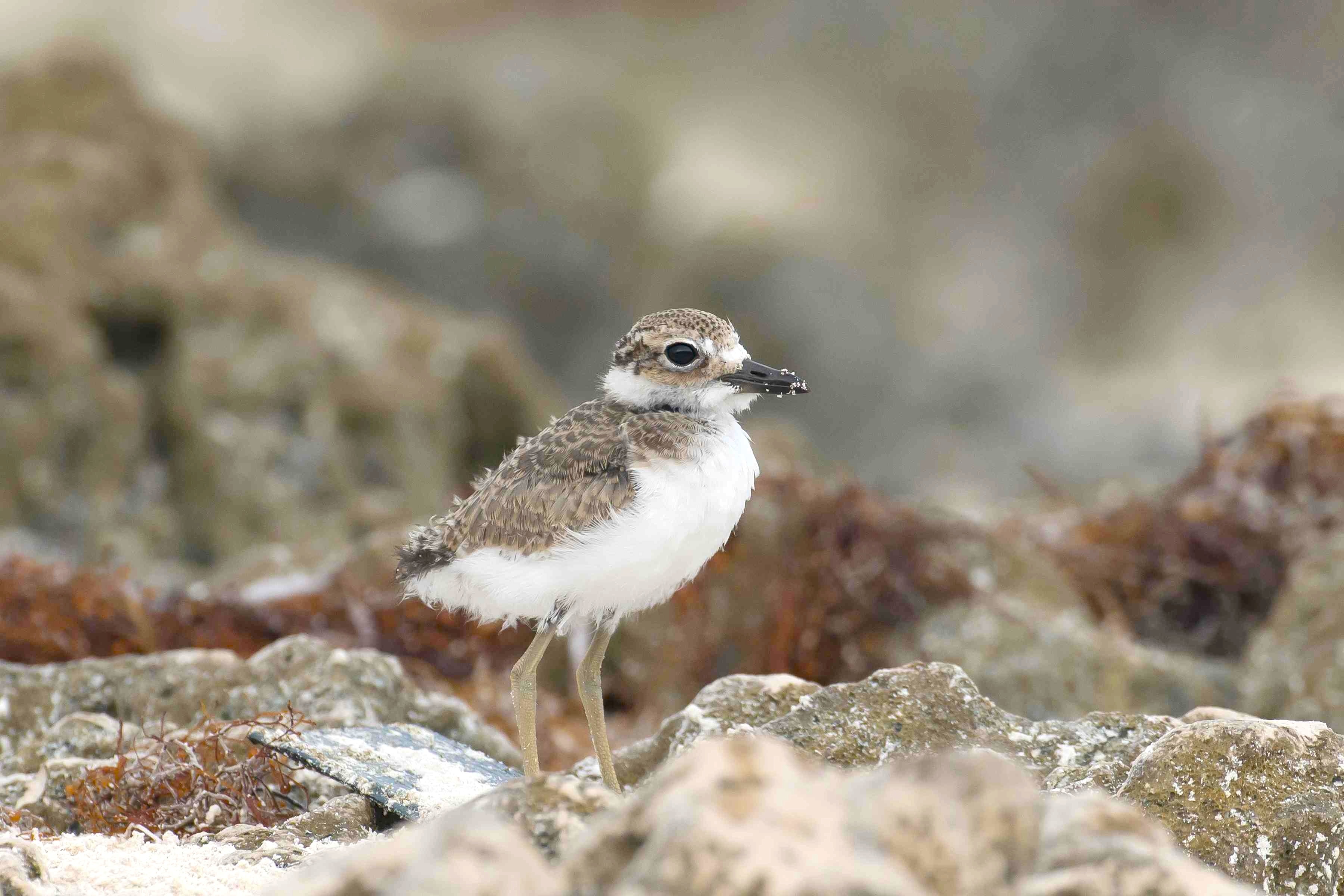
These photos of a leucistic female were featured by Audubon Alliance for Coastal Waterbirds, Audubon Connecticut. They were taken by Jim Panaccione, a Biological Science Technician at Parker River National Wildlife Refuge, Newburyport, Massachusetts. I hope he won’t mind their illustrative use here… Despite the theory that leucistic birds may find it hard to find a mate – and might even be attacked by its own species – this pair successfully nested.
OPTIONAL MUSICAL & CULTURAL DIGRESSION
A WHITER SHADE OF PALE
*Obviously, it had to be ‘tail’ in the title to justify one of my clunky ‘jokes’ and an accompanying musical diversion. That’s just the way it is, I’m afraid. Bach’s well-known descending chord sequence of was of course shamelessly ripped off by ingeniously adapted by Procol Harum for ‘A Whiter Shade of Pale’, their first single in 1967. Relive a Summer of Love right here and now.
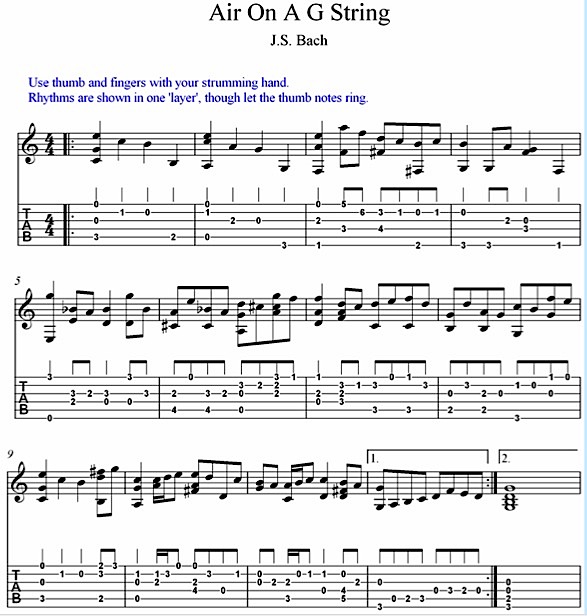
Any fret-tweakers might like to see the sheet music of Bach’s Air for guitar – you could even play it on Air Guitar – which is relatively easy, being in C major.
‘BACH IN A MINUET’
The best known commercial use of the tune was in the famed series of adverts that equated a mild cigar called Hamlet with happiness, accompanied by an excerpt from a jazzy version of Bach’s ‘Air on the G String’. Here is one of the best – and possibly the only advert to my knowledge to feature not one, but two excellent Sir Walter Raleigh jokes.
Credits: thanks to Amy Evenstad (PoweredByBirds.com) for use permission for her wonderful TUVU & AMRO photos; other photos by Keith Kemp & Bruce Hallett (Spindalis); Pinterest (rabbit); Nina Henry (mallard); Tony Hepburn (moorhen); Wiki (pigeon); Jim Edmonson (leucistic pintail); Keith Salvesen (silver pintail); Jim Panaccione / Audubon (piping plovers); Procol Harum, esp. Robin Trower for building a great career round being ‘reminiscent of Jimi Hendrix’; J.S. Bach for a nagging tune; Hamlet cigars for ingenuity & making me laugh
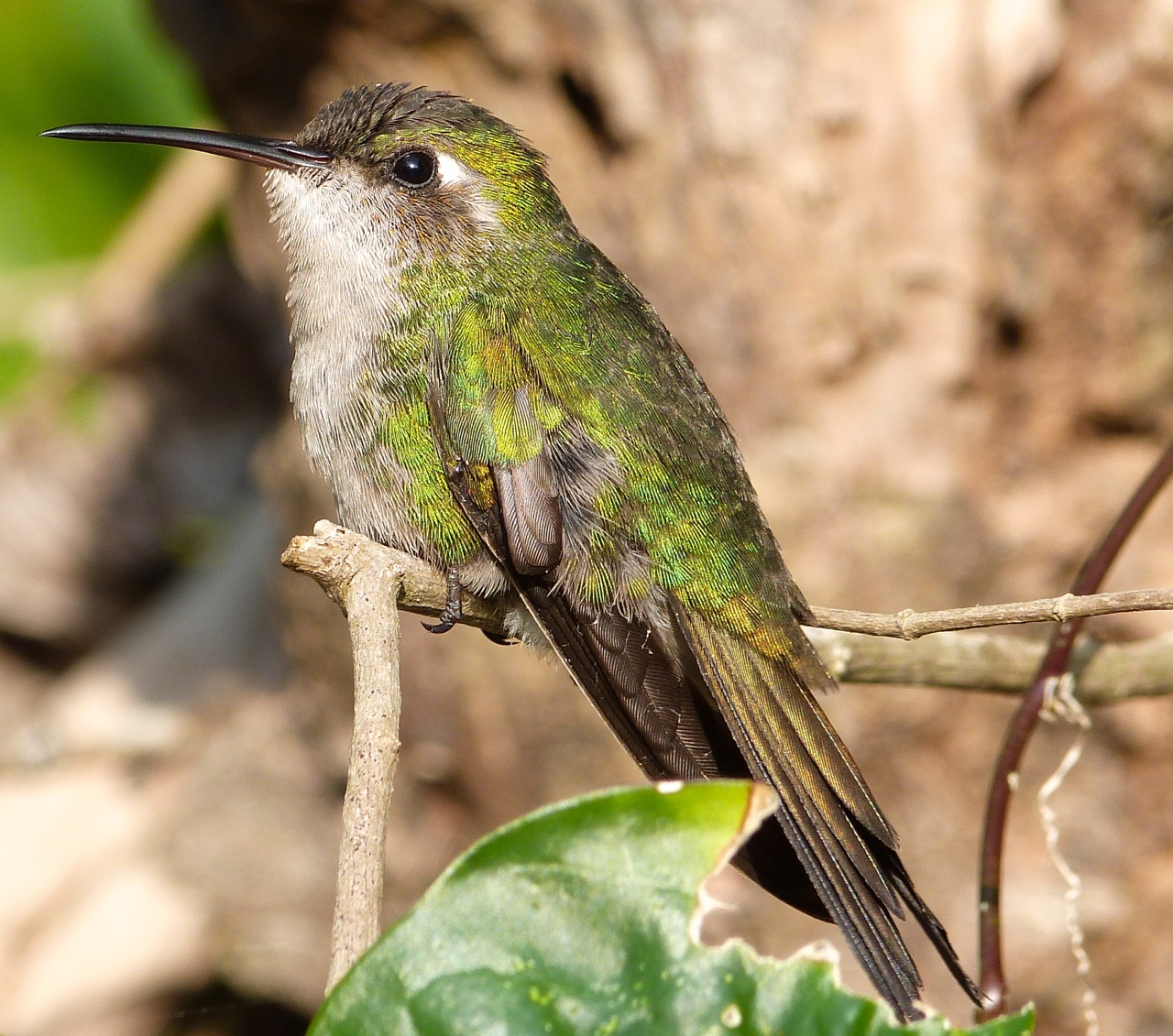
Cuban Emerald (f) . Abaco . Bahamas – Keith Salvesen
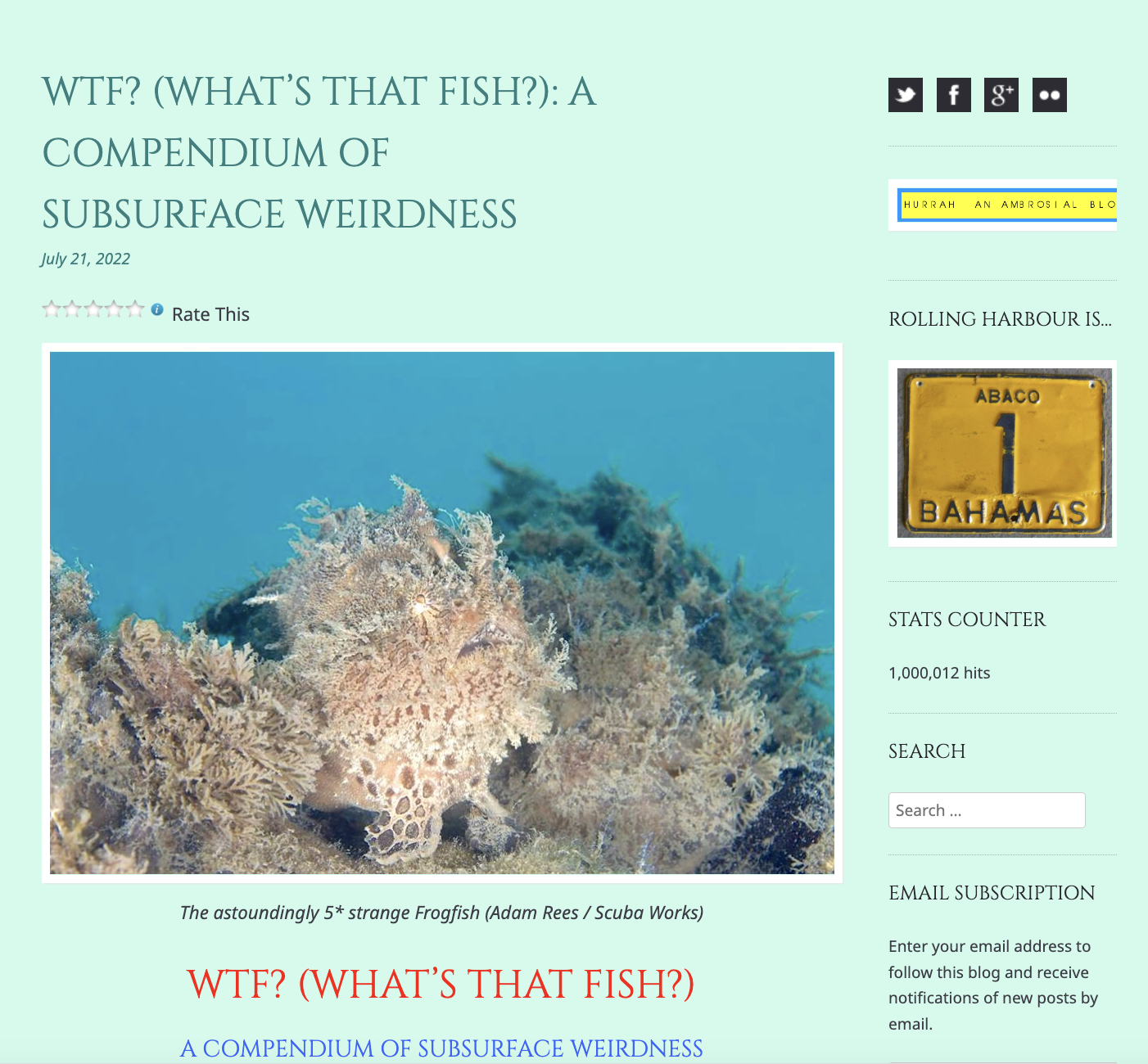
ONE MILLION HITS ON THE STATS COUNTER (+ BONUS FROGFISH)
HAPPY DAYS AND HAPPY YEARS
A decade has passed since I sat down and tried to find out how on earth WordPress worked. The plan was to start a simple blog about Abaco, based on our very limited experiences as UK members of the Delphi Club fishing lodge perched on the cliff above a wonderful white sand bay known as Rolling Harbour.
Delphi Club Abaco
By then, I’d become fascinated with the wildlife of the island, and in particular the birds. Most were species that I had never seen before, nor in many cases heard of. I only had a tiny pocket camera back then, but I was quite proud of my rubbish photos of distant birds that only I could identify. I fell for the cheerful call of the Thick-billed Vireos, the flash of the Hummingbirds, and the charm of the Bananaquits. Then I encountered the unique underground-nestingParrots, found only on Abaco.
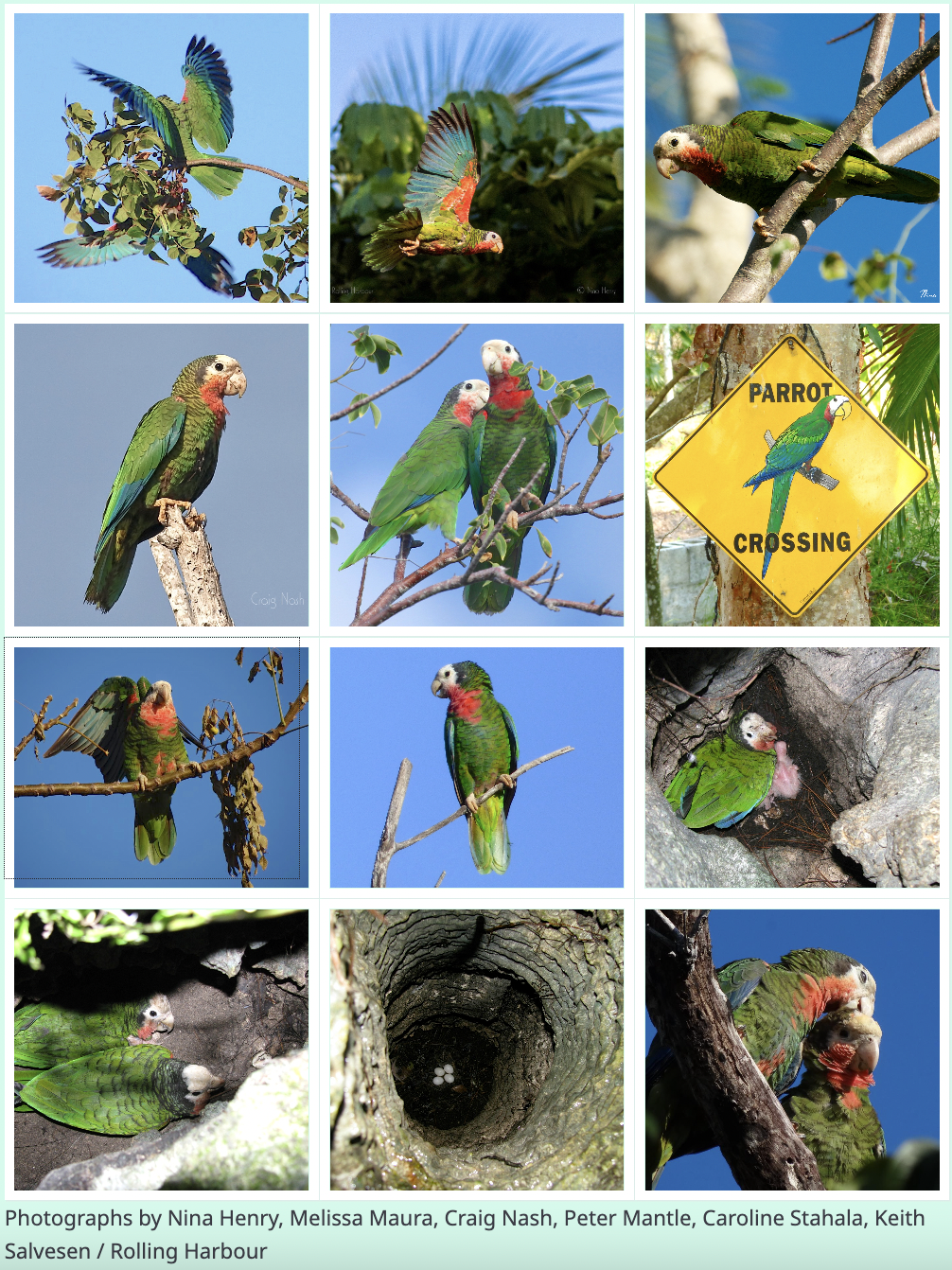
A FESTIVAL OF ABACO PARROTS
Having to some extent conquered the complexities of blog set-up, I started unpromisingly with a few practice posts and no clear development plan. THE FIRST POSTwas… see what we are dealing with here in terms of sophistication?
Gradually the site expanded: I learned more, the ideas formed, the content improved, and I upgraded the camera. Background research became easier as online information on related topics gradually improved. Hits started to come in, then people I knew began to sign up. Then people I didn’t know joined in. Then word got around. Within a year, there was something worthwhile that people seemed to like, even beyond the Bahamas.
Western Spindalis . Abaco . Bahamas – Keith Salvesen
At that time, social media activity on Abaco (and beyond) was far less. Fewer communication methods mainly confined to Facebook & Twitter: basic / unreliable wifi: simpler iphones (model #3); generally far less interest in all the stuff we now wade through. The daily traffic for Abaco on Facebook tended to be local and brief. Meanwhile the blog happily coasted along, gradually expanding, heedless of hashtags and the like that I was too idle to learn to use.
Atala Hairstreak Eumaeus atala . Abaco . Bahamas – Keith Salvesen
HURRICANE SANDY
Then in October 2012, the awesome power ofHurricane Sandy began to curve towards the northern Bahamas. I started to post Hurricane information using NOAA and similar resources. Trackers (static and interactive), path and intensity predictions, NASA satellite hotspot maps, advisories and so on. I watched, amazed, as my hits changed from a handful daily to every few seconds. The counter clicked over continuously. On one day there were 2,200+ hits. Comms were mostly down and island information was hard to come by. I started to get emails and messages from beyond Abaco with concerns about families, locations (eg Little Harbour), properties, boats etc. In some cases I was able to make contact directly or indirectly with someone who could help. Overall, there were 15,000+ hits over 10 days or so. From such scary and sad circumstances, I simply note that the blog’s following grew rapidly.
Cuban Pewee . Abaco . Bahamas – Keith Salvesen
THE BIRDS OF ABACO
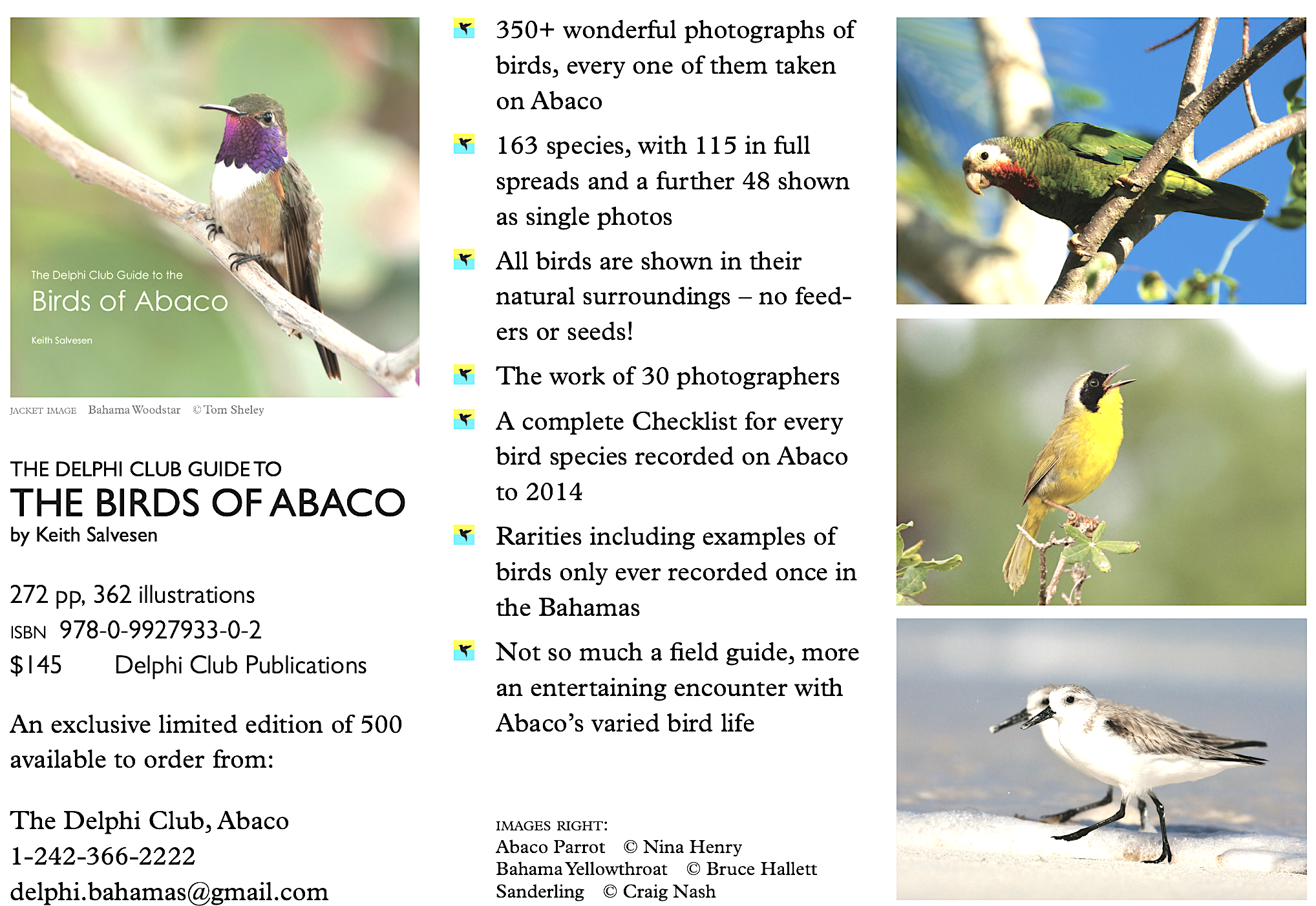
In 2013, Peter Mantle began to contemplate a new project, besides having recently masterminded the Delphi Club. He suggested producing a spectacular book showcasing the wonderful bird life of Abaco (and by extension other parts of the Bahamas). My wife Sally, a publisher, would carry out the professional work as production manager, designer, and editor. Research, picture-sourcing and writing were to be my pigeon. 16 months laterTHE DELPHI CLUB GUIDE TO THE BIRDS OF ABACO had been printed in Florence and shipped to Nassau.
This is a good time to recall the extraordinarily positive response from all those who became involved in the project. The professionals guiding an amateur throughout the process; the 30 photographers whose pictures light up the book; and many others on Abaco and beyond who assisted with advice and encouragement. And the people who bought the book. And the people who didn’t but saw a copy and enjoyed it anyway.
A FLYER!
Over the years ROLLING HARBOUR ABACO increased massively in scope, for example with Marine Mammals (BMMRO), Reef Fish, Corals, and so on. Also bonefishing, history, maps, lighthouses, museums and a whole lot else besides. As I learned more, the more rewarding the research and writing became. Here are a few themed highlights from the last decade.
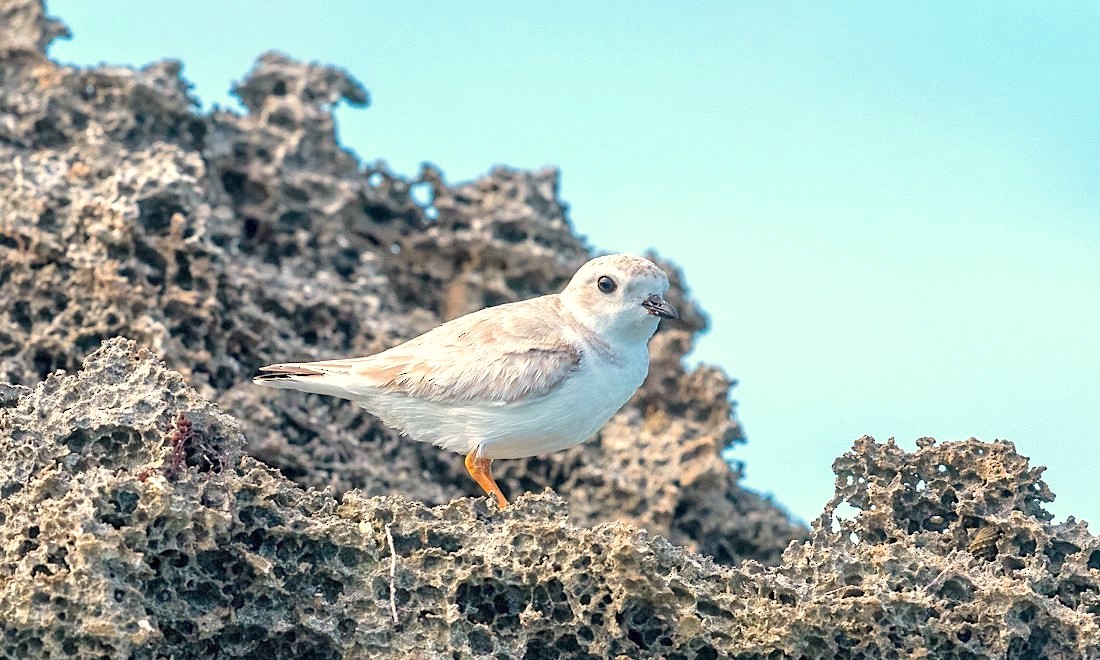
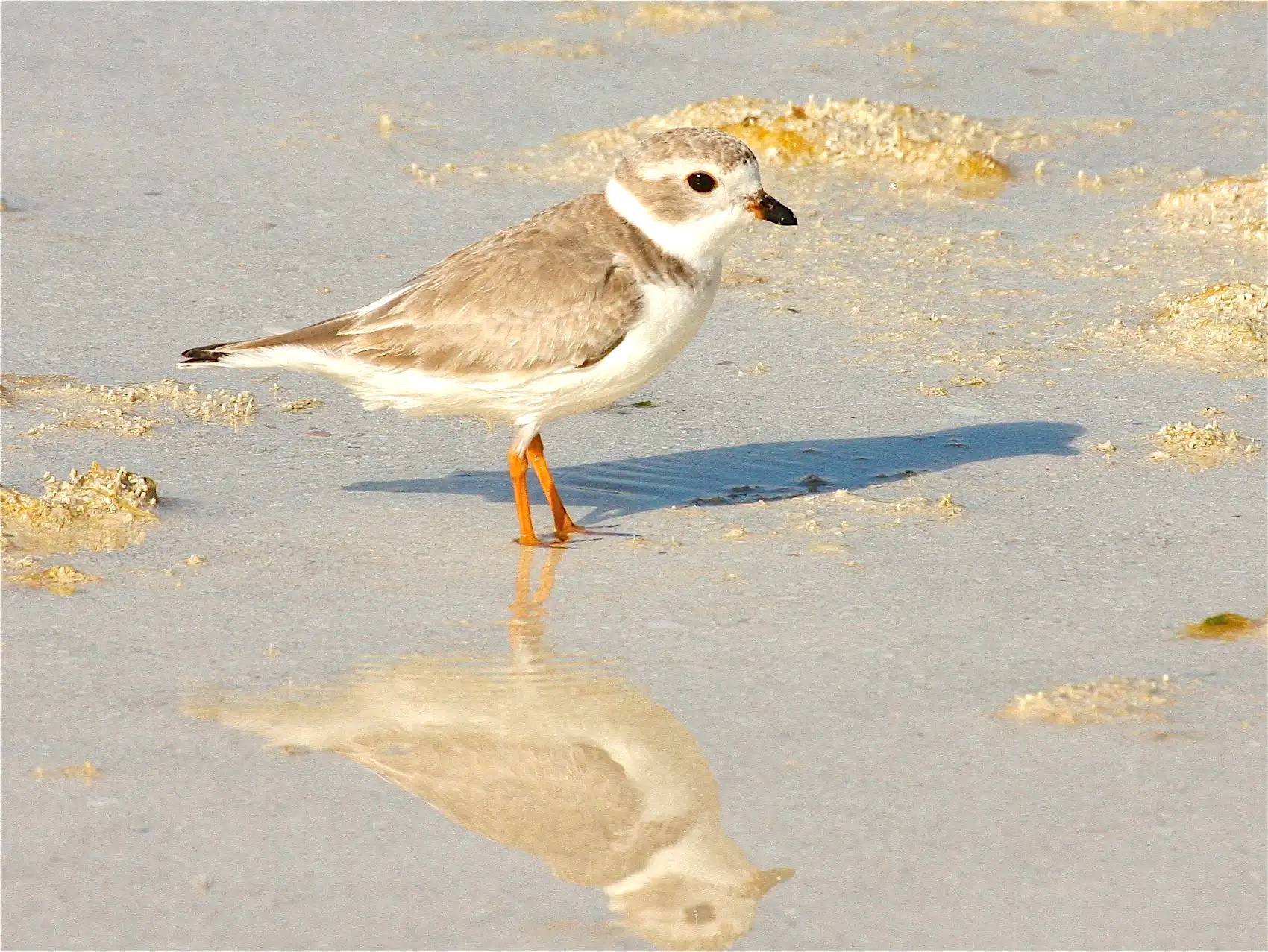
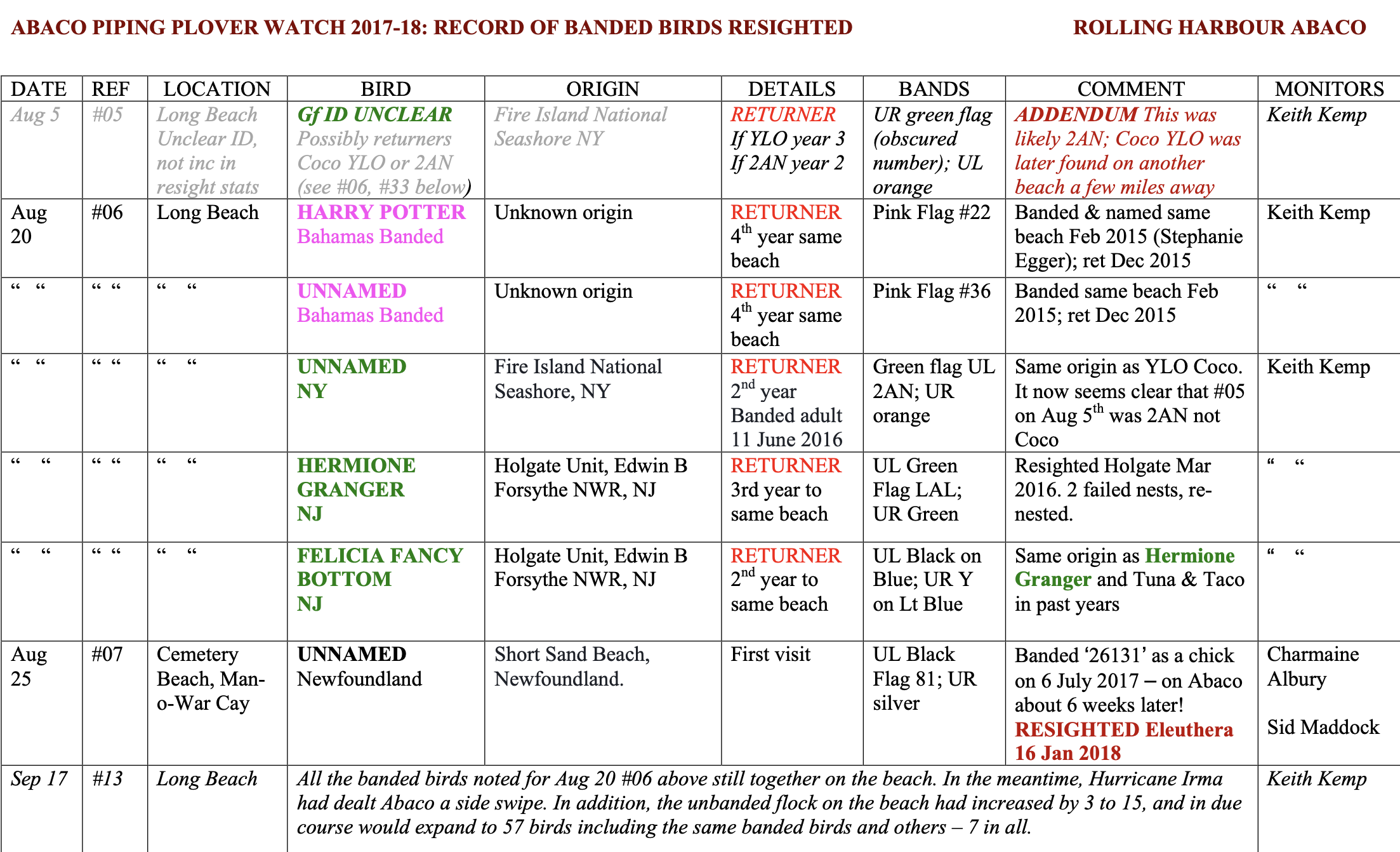
From 2014 on, I became involved in the research of the migration of PIPING PLOVERSfrom their breeding grounds in North America to overwinter in the Bahamas. These enchanting 2oz little birds make the journey of over 1000 miles from late July… and then back again in Spring. Many are banded in the breeding grounds, enabling individual birds to be identified and data recorded. This Citizen Scientist project involved people reporting sightings, collecting winter data for the summer Specialists.
The project spanned almost 5 years, cut short by the devastation of Abaco by Hurricane Dorian in 2019. Here are a few enchanting PIPL; and an example page from the record.
Keith the piping plover
APPRECIATION
Over the decade, there have been 100s of people who have contributed to this little enterprise in some way: looking at posts; liking them; signing up for updates; providing information, ideas and encouragement; generously giving use permission for fantastic photos; commenting thoughtfully; correcting kindly; allowing me to join and even contribute to conservation, research and general natural history organisations; making the book a success; supporting and enabling APPW to provide valuable data; scores of people being friendly even though we never met. Thanks to everyone who has kept Rolling Harbour rolling along for so long, and – between you all – for 1m hits.
ODDEST SEARCH TERM: How to dispose of dead bodies?
































 .
.  .
. 















































 ROLLING HARBOUR ABACO
You must be logged in to post a comment.