Unknown's avatar

ABACO NEWS: ART FOR THE PARKS / BAHAMAS NATIONAL TRUST DAY


SATURDAY 28 JANUARY 2012 – A DATE FOR THE DIARY

CLICK LOGO!

The images below tell you all you need to know about this excellent festival presented by the BNT in conjunction with the Abaco Beach Resort. From this blog’s point of view, the highlights are:

PRESENTATIONS by Nancy Albury on ‘The Blue Holes of Abaco’; by Ricky ‘Blue’ Jones on Bush Medicines / teas; and by Caroline Stahala on the Breeding & Behaviour of Abaco Parrots

ART The Art. Yes, all of it. Ok?

PRODUCE Something of everything, please. 

OTHER Everything else on offer…

The very best of luck with this event and best wishes for successful fundraising from Rolling Harbour

Unknown's avatar

EXPLORING CORAL REEFS: FOWL CAY MARINE PRESERVE, ABACO


EXPLORING THE CORAL REEF AT FOWL CAY MARINE PRESERVE, ABACO

First, a warning for anyone arriving new to this blog (hi! welcome) either on purpose or accidentally: I can’t swim very well, I hadn’t snorkelled for decades until last year, and I’d never before used a camera underwater.

That said, there is probably enough in this 2:40 min video  to warrant a quick view. As with other videos from this expedition to Fowl Cay Marine Preserve (STINGRAY / BLUE TANG), best viewed small to avoid queasiness and disorientation. You can always Pause for a breather. There are some nice fish obligingly in view from time to time, and the coral is very diverse. And I’ll know what to do this year to get better results, besides trying harder with the swimming… (Music: East Wes by Eric Johnson, off Ah Via Musicom)

Unknown's avatar

BAHAMAS CURLY TAILS ON ABACO: ENCHANTING LIZARDS


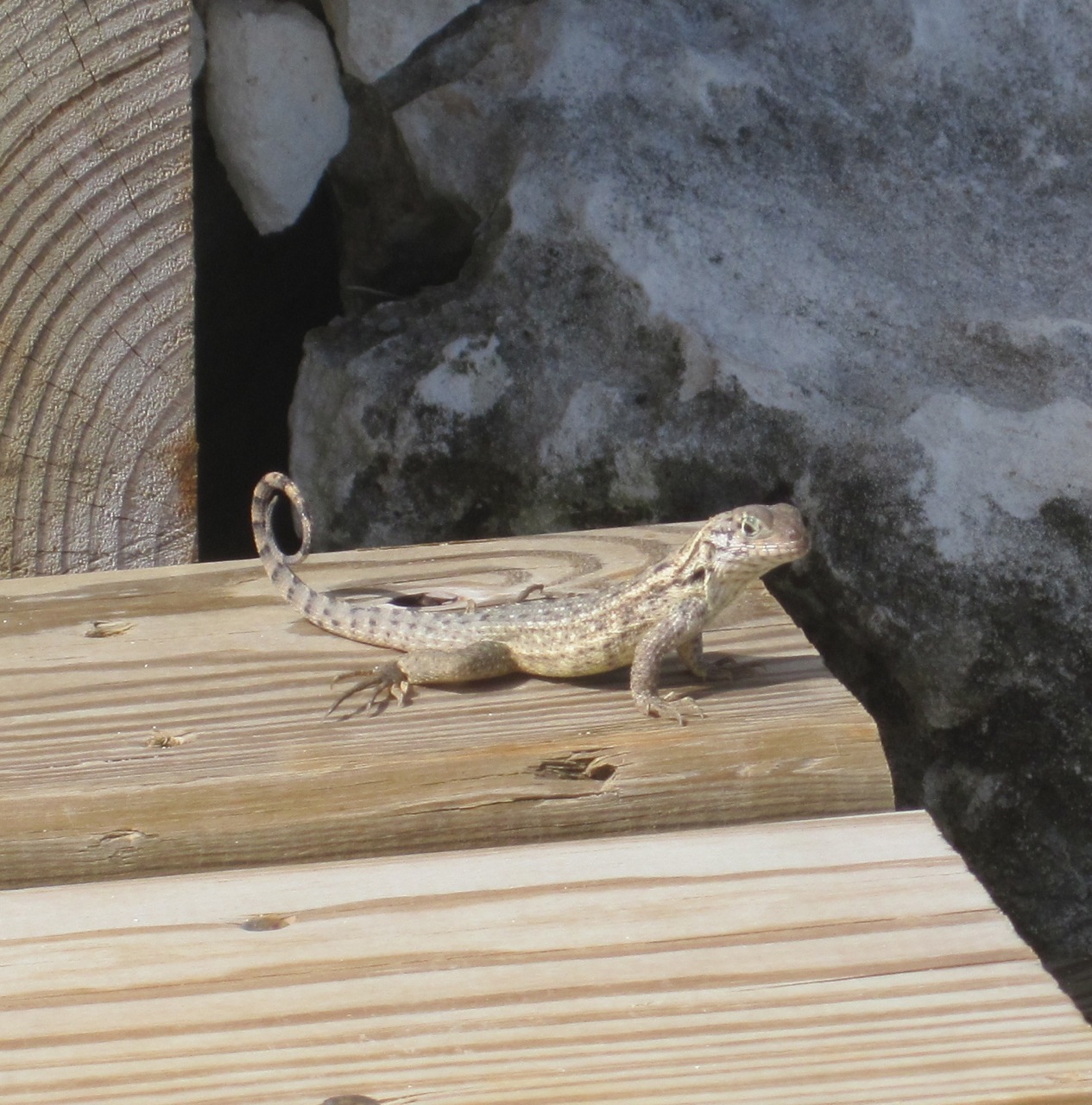
Curly Tail Lizard, Delphi, Abaco CS2

CURLY TAILS – ENCHANTING LIZARDS

This is an expanded and rejigged post based on  bits and pieces originally scattered around the MISC WILDLIFE page, written now partly because of various search queries recently – diet and so forth – which had not been covered.

First, the very dull scientific classification bit (wiki-debt): Kingdom – Animalia; Phylum – Chordata; Class – Sauropsida; Suborder – Iguania; Family – Leiocephalidae; Genus – Leiocephalus [Subspecies Carinatus?]

The ‘curly-tailed lizard’ family is widely found throughout the Caribbean but is apparently relatively unstudied (but why on earth not?). There are nearly 30 distinct varieties, many specific to individual islands. My completely uneducated guess is that the Abaco ones may be one of the several subspecies of ‘Cuban or Northern Curly-tailed Lizard’ carinatus, the ones found generally in the Bahamas. But who cares? By any standards they are totally cute! This photo was taken at the bottom of the steps down to the Delphi Club beach.

            (Photo credit: Mrs RH)

             (Photo credit: PM Himself)

NEW ADDITION April 2012 A fine Curly Tail from Brigitte Carey of Tilloo Cay 

DEPLHI CLUB: ‘OFF-DUTY’ CURLY TAIL, OR A DIFFERENT TYPE OF LIZARD?

The CT is described as an active, robust lizard that is mostly terrestrial and will retreat into a burrow or cavity when frightened. It prefers sunny areas with loose rubble and rock. Bahamas curly tails were apparently released intentionally in Palm Beach, Florida, in the 1940s in an attempt to control sugar cane pests.

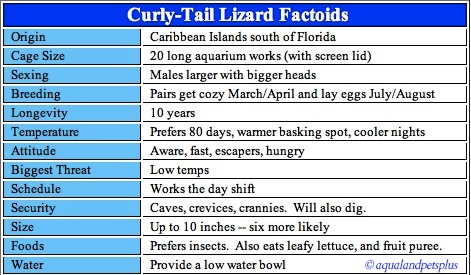
Jan 2012 update: Having had a number of hits over the last few months for ‘what do Curly Tails eat’ and other CT-related information, I checked out aqualandpetsplus.com of Des Moines, Iowa (the first Google hit, in fact). With kind permission (many thanks, Larry) here’s some more about these little lizards 

THE CURLY TAIL DIET: “Considered insectivores, curly-tails scamper right after crickets.  They’ll also learn to eat mealworms and superworms from your fingers.  You can give them other insects like wax worms which they love but tend to over-eat.  Roaches, houseflies, or any arthropods / bugs that accumulate around your porch light make a nice change of pace…OR…take a stroll down the baby food aisle.  Think twice about the bananas. Bananas are not good for some lizards.  Skip the bananas.  Anyway, apple sauce works great.  The best thing about baby food?  You can add a Calcium/Vitamin D supplement to it.  Much easier than dusting crickets (which start cleaning it off the second it gets on them).  Curly-tails will also eat bits of leafy lettuce.  Uneaten crickets in their cage  will also eat the fruits and vegetables you offer your lizards” Larry Arnold

So I can’t answer someone’s specific query ‘do they eat tomatoes?’, save to say ‘why not try tomato sauce’ (and I don’t mean a well-known proprietary brand, one of 57 varieties). Maybe have a few crickets handy in case it is politely declined

For further info on curly tails from theBahamas National Trust website CLICK LINK ===>>> http://www.bnt.bs/curlytaillizardinfo.php?catid=&subid=  where there is also a downloadable PDF version

Finally, an excellent CT photo from Gareth Reid, the Master Chef of Delphi

BIBLIOGRAPHY:  “101 Uses for a Curly Tail” Rolling Harbour Press (2011)     

(1) The gate latch                                           (2) The window latch


(NB No Curly Tails were harmed in the creation of these images)

Unknown's avatar

BAHAMA PARROTS: BAHAMAS NATIONAL TRUST DOCUMENTARY


BNT ABACO / INAGUA PARROT DOCUMENTARY

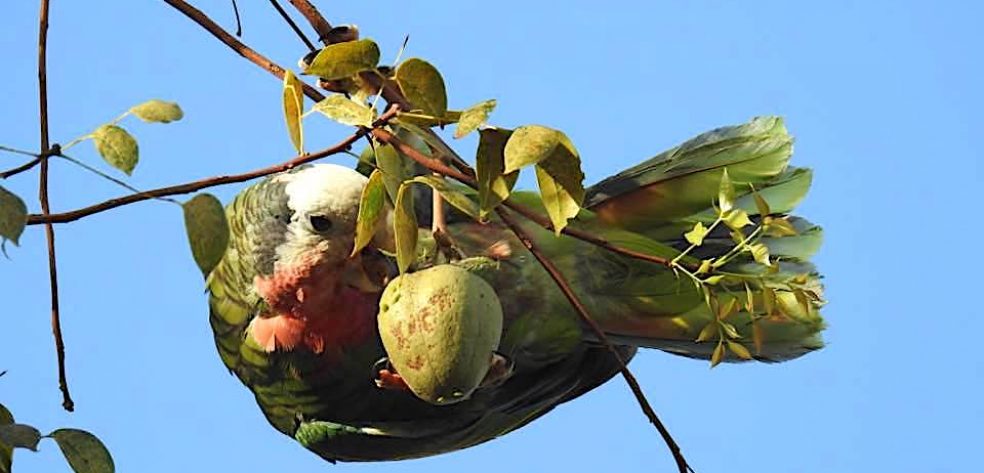
In August 2011 the Bahamas National Trust published a documentary about the resident Abaco and Inagua populations of this Cuban Parrot subspecies. It features research scientist Caroline Stahala, and contains plenty of information about these birds, their nesting and breeding habits, and the problems they face from predation. In places, some of the devastation caused by the extensive forest fires in March 2011 is still evident (see images in earlier POST). If you want to know more about these attractive (but noisy) birds, the documentary video below covers a great deal in 8 minutes…

Unknown's avatar

BMMRO WHALE, DOLPHIN & MANATEE SIGHTINGS / WINTER REPORT


BMMRO WHALE, DOLPHIN & MANATEE SIGHTINGS AND WINTER REPORT DECEMBER 2011

This was an interesting month. For a start, a humpback whale was reported off Elbow Cay, and a sperm whale further out to sea to the east. There were several cetacean reports between Sandy Point and Hole-in-the-Wall. Perhaps best of all, West Indian manatees – mother and calf – were reported in the area at the end of December, just off the Berry Islands – photo below, and further details in the BMMRO Winter Newsletter via the blue link.

THE WINTER NEWSLETTER contains much of cetacean interest, as always. It features articles on the effects of climate change of the declining Sea of Abaco bottlenose dolphin population; manatees in the Bahamas; ‘Life after Death’ – the importance of whale carcasses on the deep sea eco-system; sonic body-length measurement of sperm whales; the false killer whale stranding on Guana Cay (see POST); educational news update; and much more besides

BMMRO NEWSLETTER WINTER 2011/12

Courtesy of NAHRVALUR and her excellent wildlife blog, here is a cute view of a manatee in a Florida Reserve, where a webcam has been installed 

Manatees (family Trichechidae, genus Trichechus) are large, fully aquatic, mostly herbivorous marine mammals sometimes known as sea cows. There are three accepted living species of Trichechidae, representing three of the four living species in the order Sirenia: the Amazonian manatee (Trichechus inunguis), the West Indian manatee (Trichechus manatus), and the West African manatee (Trichechus senegalensis). They measure up to 13 feet (4.0 m) long, weigh as much as 1,300 pounds (590 kg), and have paddle-like flippers. The name manatí comes from the Taíno, a pre-Columbian people of the Caribbean, meaning “breast”
I’ll write a separate post about these creatures later, and cross-refer from here. rh
NOW CLICK LINK===>>>       MANATEES: THE FACTS
Unknown's avatar

SOUTHEAST COAST & GULF OF MEXICO MARINE / COASTAL FIELD GUIDE: 5* YALE BOOK REVIEW


BOOK REVIEW

This is a superlative field guide: comprehensive, clear and approachable. The illustrations are excellent, and include helpful examples of birds in flight, different views of marine creatures (basking shark side view and head on), whale fluke comparisons and dolphin profiles. The 11 Chapters comprise marine and coastal plants and habitats; invertebrates; sharks; rays; fish; sea turtles; crocodiles and alligators; marine and coastal birds; baleen whales; toothed whales and dolphins; and finally seals and manatee

Yale University Press 386pp, £20 / $24  ISBN 978 0300 11328 0

rollingharbour rating: a rare and coveted 5*****

Obviously this isn’t the guide for land-based birds – you’ll still need Hallett  or Arlott to help with all those warblers, for example. But for all aspects of marine and coastal wildlife it is as thorough as you could ever wish for in a book that is readily portable. While slightly too large (8″ x 6″) and heavy for a pocket, it would be perfect for a day-bag. Convention dictates that the most enthusiastic reviews should include a couple of tiny niggles to prove a book has been read… so,  the shell section is very brief at 2 pages; and the coral section also, with some types (Mustard Hill, for example) omitted. But such an ambitious yet compact book couldn’t possibly be exhaustive. In practical terms, it has everything you could want from a Field Guide when exploring or researching this area.

Publisher’s Summary [added here to indicate the scope & depth of the book]

  • Entries on 619 coastal and ocean species including seabirds, cetaceans, fish, turtles, invertebrates, and plants
  • More than 1,100 color illustrations & 121 colour photographs
  • 452 up-to-date range maps
  • Overviews of key ecological communities, including mangroves, salt marshes, beaches, sand dunes, and coral reefs
  • Special attention to threatened and endangered species
  • Discussions of environmental issues, including such catastrophic events as Hurricane Katrina and the Deepwater Horizon blowout
  • Glossary
  • Excellent organizational aids for locating information quickly
To which I would add:
  • Clear text alerts for endangered / red list species
  • 12-page index (which works very well)
  • Handy front and back flaps place-markers
  • Colour-coded section divisions

To see the publisher’s UK or US webpages for the book CLICK LINK===>>>  YUP UK   or   YUP US – it can also be obtained from the other  conventional sources already mentioned in the book section of this site

Finally, a declaration of interest: Mrs rh works in the London office of YUP, so I have been consciously avoiding partiality. However this just happens to be an excellent book by any standards, so fortunately the frosty domestic fall-out from a bad crit has been easily avoided…
Unknown's avatar

THE INTRIGUING PARROTS OF GREAT ABACO ISLAND – PODCAST


A 5 minute PODCAST from ABC Radio’s ‘The Science Show’ featuring Caroline Stahala, research scientist and Abaco Parrot expert, and David Knowles of the Bahamas National Trust, Chief Park Warden for Abaco

The online report is headed by this: Holiday homes and resorts are replacing the forests in which the Bahamian parrot of Great Abaco Island breeds. When Christopher Columbus discovered the beautiful Bahamian islands in 1492, he wrote in his journal ‘the flocks of parrots obscure the sun’. Now the Bahamian parrot is confined to just two islands and they’re a protected species. On Great Abaco Island Bahamian parrots breed in the pine forests of the south and, as Pauline Newman discovered, their nesting behaviour is quite extraordinary”

CLICK HERE==>> ABACO PARROTS PODCAST – THE ABC SCIENCE SHOW

For the relevant web page and a transcript of the talk CLICK LOGO===>>> 

Thanks to the ABC Science Show for use approval – click name for more Podcasts

Abaco Parrot
Unknown's avatar

ROLLING HARBOUR ABACO – SEEN IN A GOOD LIGHT


Many thanks to Nassau-based  WEBLOG BAHAMAS for giving such a positive recommendation on its eclectic site. Much appreciated. The site, by a small collective of independent bloggers, covers a multitude of mainly Bahamas-related topics including books, current affairs, economy, eduction, environment, food & drink, government, health, media, music, politics, religion and society, sport, and travel. An excellent place to spend some online exploration time…

To reach the rollingharbour review CLICK===>>> REVIEW                                 To reach the Home Page CLICK===>>> WEBLOG BAHAMAS 

Unknown's avatar

SUPPORT ABACO PARROTS – NEW YEAR WRITING CONTEST!


ABACO PARROT SUPPORTER ‘DOU DOU BIRDS’ runs a monthly bird-centric writing contest. Not content with sculpting a cute miniature clay ABACO PARROT with all proceeds of sale going to the parrots, she has now showcased the AP for her New Year writing competition. To see her Post, & indeed if you want to take part                                                                                                                     CLICK LOGO==>> & to see the AP in her shop window             CLICK LOGO==>> 

Unknown's avatar

ESSENTIAL SOUTH ABACO BIRD CHECKLIST FROM AVIBASE


The superb AVIBASE is a massive world-wide bird database – an essential reference point for birders, even the occasional enthusiast. Checklists, range maps, bird links, photos, bird sounds,  and even the facility to make your own contribution, all in one place. AVIBASE has been a work in progress for 20 years and now contains over 5 million records of about 10,000 species and 22,000 subspecies of birds, including distribution information, taxonomy, synonyms in several languages, and much more

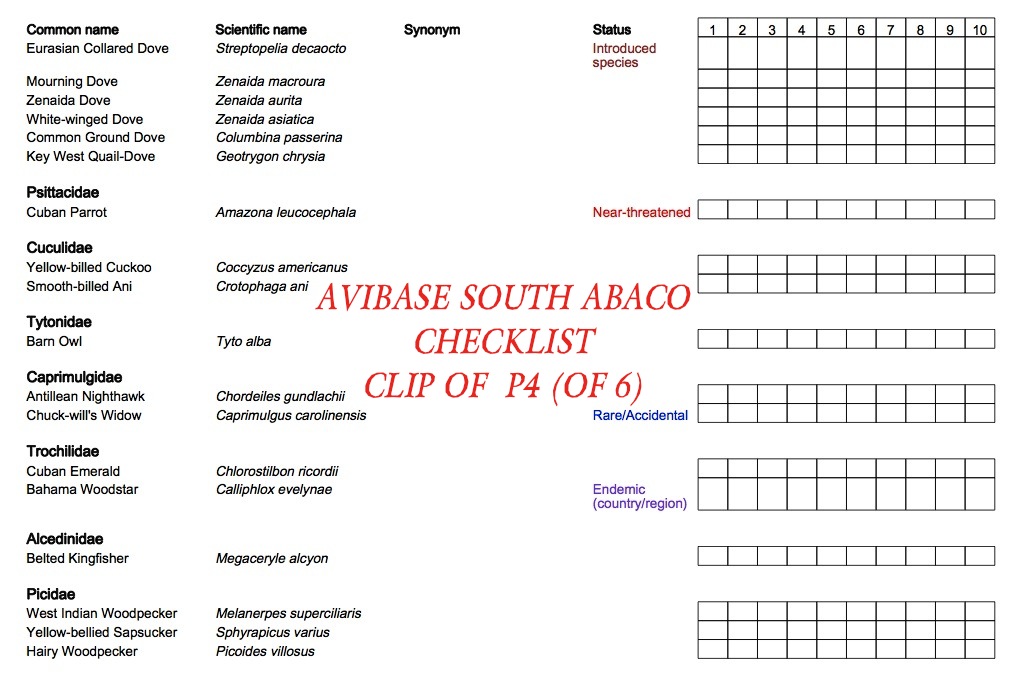
Here is the CHECKLIST FOR SOUTH ABACO, the area that I am most familiar with. It probably holds good for the whole of Abaco and the Cays. If you are staying at the Delphi Club, Rolling Harbour, you need this – and especially if you are planning a birding adventure with Ricky Johnson… Be prepared! The plan is that you can download it or print it out from here

SOUTH ABACO BIRD CHECKLIST  click to open!

Here is an illustrative clip of one of the 6 pages 

If you have a problem printing it from here – or for access to photos of a great many of the birds listed, with clips of their calls and songs –  use this direct link  CLICK LOGO===>>>

CREDITS: The Avibase website is managed by Denis Lepage and hosted by Bird Studies Canada, Canadian copartner of Birdlife International
Unknown's avatar

“ROSETTA STONE FOR WARBLERS” – Cornell Lab of Ornithology Research


RESEARCH INTO THE FLIGHT CALLS OF MIGRATING WARBLERS

  has found a way to investigate the nocturnal migrations of warblers using spectrograms. Many of the warblers featured in the project are found on Abaco and will be familiar to the more discerning birder – though I admit that ID of  members of this large family of little yellowy birds, even in broad daylight, remains a blind spot for me (and I suspect I am not the only one). Click the chart below for a clearer view. A downloadable / printable version is available via the link given below. It is also worth visiting  the page to compare the brief audio cheeps of the Northern Parula, Magnolia Warbler and Black-throated Green Warbler and their respective spectrograms

“These spectrograms are a visual representation of the very brief flight calls made by North American warblers during their nocturnal migrations. Some of these call notes sound almost identical to our ears, but spectrograms show minute differences between them. Scientists can compare spectrograms of night recordings to spectrograms of known species to identify nocturnal migrants in total darkness. Andrew Farnsworth, a scientist in the Cornell Lab’s Conservation Science program, developed this “Rosetta Stone” in 2006 in collaboration with Michael Lanzone, Cellular Tracking Technologies, William R. Evans, and Michael O’Brien. It covers all 48 warbler species of the U.S. and Canada (including Grace’s and Red-faced warblers, not shown), and is a major tool in our Acoustic Monitoring Project”

Click chart to enlarge

Putting Sound to Work for Conservation: “Our staff will use results from the Rosetta Stone… to “train” computers to identify the sounds of warblers and other nocturnally migrating birds, as well as other species including whales and forest elephants”

Working Toward a Bird Migration Forecast: “A new grant from the National Science Foundation will fund BirdCast, a project that will combine bird observations (both sightings and sound recordings) with weather models and terrain data to forecast migrations. The results of the predictions will help scientists understand migratory behavior and may aid decisions about wind turbine placement and other questions about environmental hazards to birds”

To see the complete article CLICK LOGO===>>> 

To learn more about BirdCast and the Acoustic Monitoring Project from the original article CLICK LINK===>>>  Cornell Chronicle 

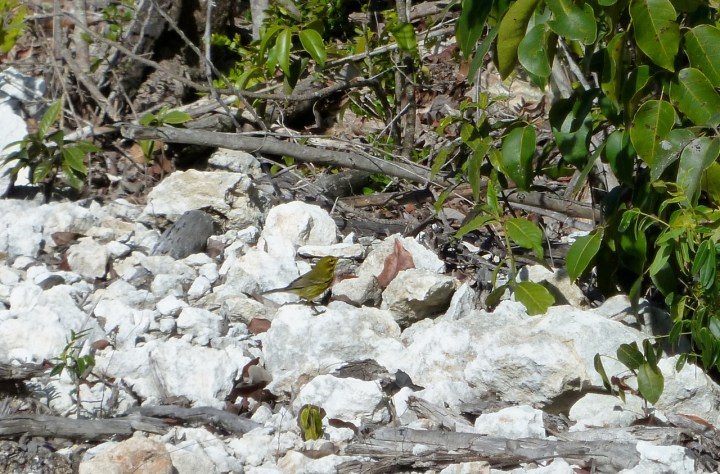
Prairie Warbler on the Delphi Club guest drive, Abaco

Unknown's avatar

FAREWELL 2011, WELCOME 2012 & A NEW YEAR FOR ABACO WILDLIFE


Out with the Old, in with the New with the fine collection of logos craftily adapted by Mrs rh during the year from the official Delphi Club bonefish logo. By a strange coincidence the 5 logos almost make up an Olympic rings design, especially fitting for 2012… The rh household failed to get a single ticket for any of the events we applied for in the so-called ballot. But as long as all the mid-ranking management from struggling midlands football clubs, and all subordinate temporary assistant under-secretaries in obscure non-participant consulates got their quotas, that’s the main thing. I am not a bitter person. That left a very generous 783 tickets for the entire Great British Public to share. And there’s even one left still for the men’s freestyle subaquatic triathlon (javelin, 100 metre hurdles and graeco-roman wrestling).

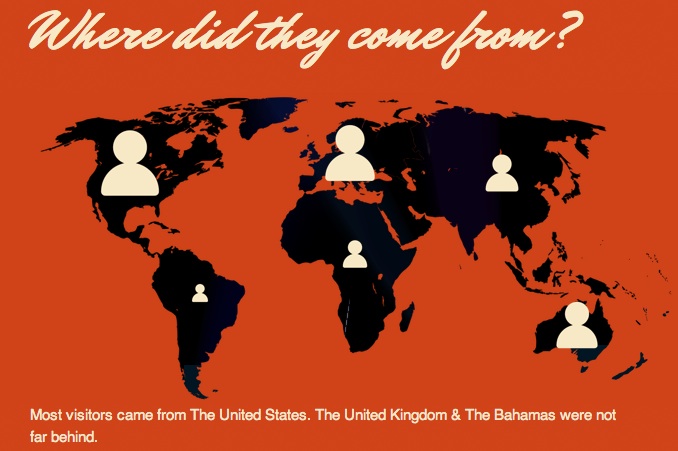
A very Happy New Year to all you kind followers since the first tentative blog-steps last April – and equally to those who got here through a Google input error… Here’s where you all came from (with a special mention of the surprising number from Tunisia, Japan and Fiji) 

Unknown's avatar

HELP SAVE ABACO PARROTS – DOU DOU’S ART INITIATIVE


WELCOME BACK! Normal service is resumed after the family festivities of Christmas, with only the precious gift of a fractured wrist for rh to spoil an otherwise lovely few days. Immediately, I can report excellent parrot news…               DOU DOU, an avid birder and sculptor of most engaging miniature birds, has taken up the cause of the Abaco Parrot. We have been corresponding for a while about this, and I now reproduce her latest post, with the link to her site below

BIRD SCULPTURE – ABACO PARROT

“Help, the cats are eating my babies!” said the parrot. And it’s true. These parrots are endangered – only 1000 of them left. A woman named Caroline is trying to save them from the feral cats that have invaded their island in the Bahamas. Let’s help her out! All proceeds from the sale of this parrot are going to Parrots International, which supports Caroline’s work. 

This little parrot measures 3.5 x 1.5 x 1.5 inches. You can buy it HERE from me and I will send the money to Parrots International or you can use “Other” to check out, send me proof you donated at least $30 to Parrot’s International, and I will send you a code that gives you $30 discount on this parrot so you will just pay for shipping – I will verify that a donation was made.

We can save these parrots! Let’s do it!!!!!

Read about Caroline’s work to save the parrots: ABACO PARROT RESCUE

doudou      CLICK LOGO to visit website ===>>>      

More about this exciting development in due course – other ideas are afoot… Abaco Parrot conservation is strongly supported by the Delphi Club, Abaco; and the research scientist heading the project, Caroline Stahala, is delighted with dou dou’s initiative in helping to raise the profile of her conservation work and in contributing to the funding received through PARROTS INTERNATIONAL

This organisation allocates funding for the research into the Abaco Parrots and their conservation. You can now pay direct by Paypal or Credit Card (with gift tax benefits depending where you live). Please remember use the “Note to Seller” box to specify ‘ABACO PARROTS / CAROLINE STAHALA’

Membership and Donation page   CLICK LOGO===>>>       Parrots International

Unknown's avatar

SOUTH ABACO CHRISTMAS BIRD COUNT 2011


Here is a clip taken from the excellent website THE ABACO SCIENTIST, with the kind permission of Dr Craig Layman of FIU. The brief summary of the South Abaco Bird Count 2011 by Elwood D. Bracey is of great interest, not least for the Delphi Club, from where guided Nature Tours take place and where there is a lot of enthusiasm for the birdlife of the island. 75 separate species were recorded this year, including all the known Abaconian endemics.

It is also a very fine photo of a male Bahama Woodstar courtesy of BIRD FORUM

Unknown's avatar

“ABACO CHRISTMAS & A DELPHI NEW YEAR”


HAVE YOURSELVES A MERRY ABACO CHRISTMAS

As Reality Show contestants say, it’s been a roller-coaster of emotions. An incredible journey. Living the dream. Nine months ago I knew little about blogs; less about computer techniques and problem-solving; and nothing whatsoever about hutias, murex shells, tecoma stans, or hurricane technicalities. Thanks for the many contributions, advice, helpful criticism**, encouragement and general enthusiasm for the project. Thanks to Peter Mantle for permitting & promoting this rather ill-disciplined sibling of Delphi. And thanks to everyone who has contributed to an accumulation of nearly 25,000 site hits – or perhaps to the one strange person somewhere out there with repetitive strain injury from 24,588 repeat visits. **Mrs rh scores highly here for her kind but firm restraints: “No! You can’t put that!”

FOR THE RH CHRISTMAS MESSAGE CLICK DELPHI     

Special thanks to Sandy Estabrook of the estimable ABACO ESCAPE  and PETER GEHRIG  (for the snow) for permission to use the above festive link

Unknown's avatar

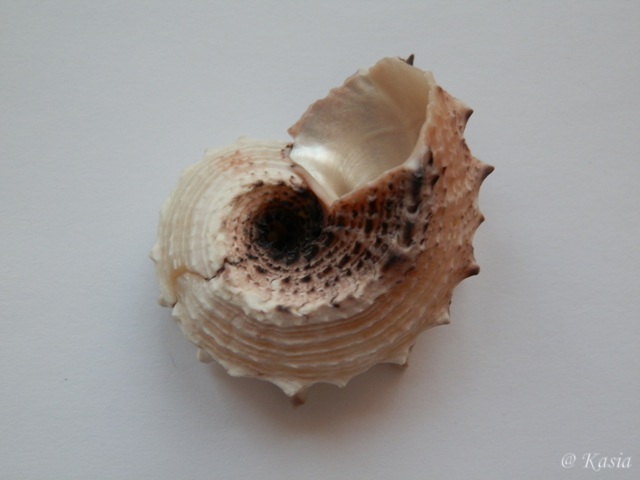
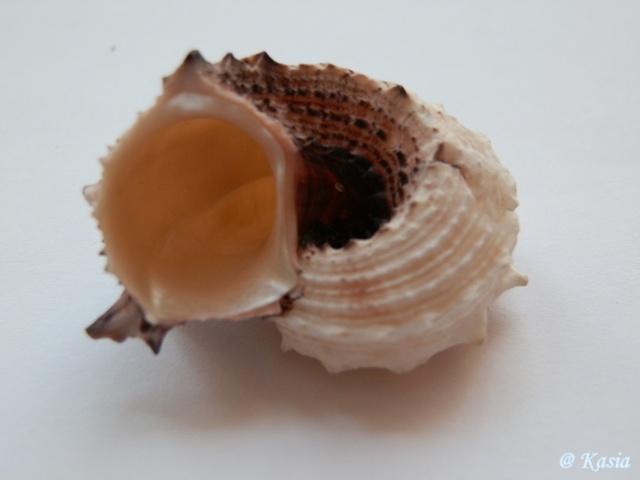
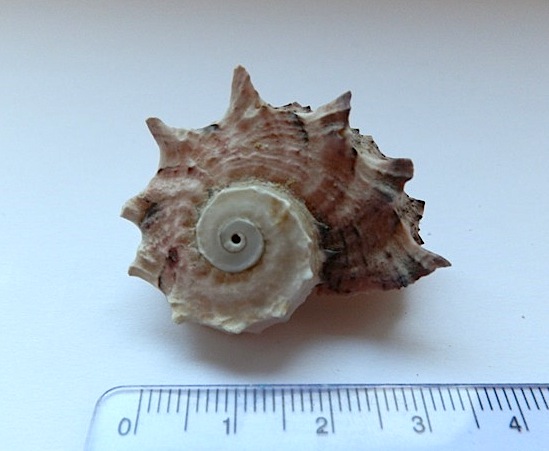
KASIA’S MYSTERY ABACO SHELL: A PUZZLE FOR XMAS


KASIA’S MYSTERY ABACO SHELL: A PUZZLE FOR XMAS

Kasia’s beachcombing exploits have produced some lovely seashells that have already featured here. Precise identification has sometimes been difficult for an amateur, because of the many varieties of a particular type of shell or close resemblance to other shell families. This one has got me stumped. I have trawled the  internet. I have studied field guides. I’m still baffled. It hasn’t quite matched any other shell…

XMAS PRIZE the first person to ID this shell correctly will enjoy a bottle of ice-cold Kalik being drunk on the Delphi balcony swing in February 2012. By me. Suggestions to rollingharbour.delphi@gmail.com welcome

STOP PRESS: NOW SOLVED – SEE UNDER IMAGES
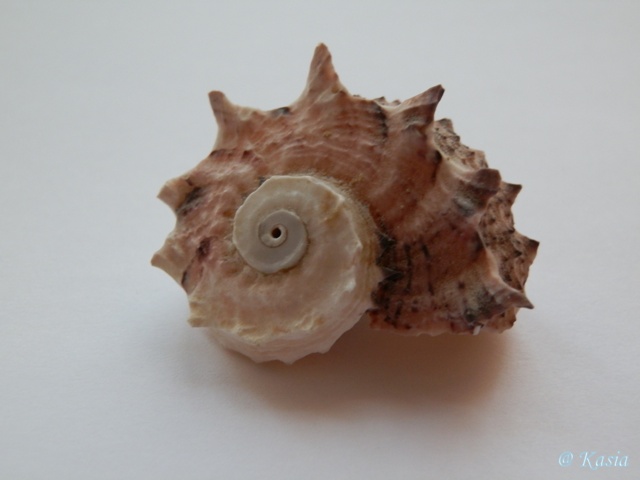
Helpful thoughts: I’ve considered a  form of King’s Crown (but I’ve not found a close enough match) or a Ram’s Horn Snail (but they don’t seem to have spines)

First entry by Kasia (potentially disqualified as the shell’s owner): Angaria, a form of Turban shell. However these seem to be confined to Pacific areas…

The Solution:  And the winner (within 24 hours) is… Kasia!

I sent the link to the post to Bahamian seashell expert Colin Redfern at http://www.bahamianseashells.com, author of ‘Bahamian Seashells: 1000 Species from Abaco, Bahamas’. He confirms Kasia’s ID as an ANGARIA SHELL , one of a large number of species of turban shells TURBINIDAE found throughout the world. It is indeed a Pacific shell, probably from the Philippines. So what on earth was it doing on a beach on the east coast of Abaco? Colin has encountered this sort of anomaly before, and gives various possible explanations:

1. Homeowners’ shell collections come from areas other than the Bahamas & are sometimes thrown out onto a beach. They may be washed up along the coast

2. Shops sell packets of shells, including Pacific shells, which may become dispersed

3. In Fl. it is not unknown for resorts to “seed the beach” with Pacific shells, which are cheaper & more easily bulk-bought than Atlantic shells

4. Rare Pacific & Indian Ocean shells washed up on a beach were once traced to the owner, whose beach house had been lost in a hurricane some years before

Many thanks, Colin, for your help with this puzzle; and congratulations Kasia – I’ll claim my Kalik in February please. Oh I see, I’ve got to buy you one, have I?
Unknown's avatar

BLUE TANG: THE MOVIE (REEF SNORKELLING, FOWL CAY, ABACO)


BLUE TANG: THE MOVIE

RECIPE: Take one incompetent swimmer who hasn’t snorkelled in, oh, nearly 40 years. Place him over a coral reef for his first time ever. Add a small underwater camera totally alien to him. Immerse for 30 minutes in warm briny water.

Lessons have been learnt for next time. Mainly, don’t keep waving the camera about; let the fish move round you rather than vice versa; and most important of all, remember to keep breathing or else…

Here for the first time on public release is BLUE TANG: THE MOVIE (music by Adrian Legg), 45 secs of advanced camera-shake with some beautiful fish more or less in shot for most of the time. If you are prone to sea-sickness, do not enlarge the video. If you are allergic to poor photography… well, thanks for visiting.

[vimeo https://vimeo.com/44794952]
Unknown's avatar

PETERSON CONCISE GUIDE TO SHELLS OF NORTH AMERICA: REVIEW


PETERSON CONCISE GUIDE TO THE SHELLS OF NORTH AMERICA

This pocket guide is part of the well-known Peterson series of natural history guides. It’s called a ‘First Guide’ to denote its ‘beginner’ / condensed status, and to distinguish it from the serious business of the excellent and comprehensive Peterson Field Guides (I shall review 2 of these in due course. When I have read them. In 2012).                                  rh rating **

SUMMARY: this 128pp ‘concise field guide to 224 common shells of North America’ is a simple pocket guide, with quite basic descriptions, and colour drawings rather than photos. All the main gastropod and bivalve species are represented, each with a few variants. The vast majority of these will be found on Abaco and more generally in the northern Bahamas. For the used price I paid for a 1989 edition with a creased front cover (1 pence + P&P on Amazon UK!) I have actually found it quite useful for comparing or confirming IDs, or for snippets of additional information. However, it’s not the one to rely on entirely to identify your beachcombing finds or to get species details. Apart from anything else the illustration colouring is often somewhat approximate. At best, I’d say it’s a useful preliminary tool for ID on the beach if you don’t want to lug a much larger field guide around with you. Don’t use it for your doctoral thesis. Overall, some use, but not a great deal. There are better books: see FISH & SHELL BOOKS

Unknown's avatar

MANGROVE FLATS & BONEFISHING: CAST IN THE RIGHT PLACE [VIDEO]


BONEFISHING ON MANGROVE FLATS

The rollingharbour wildlife enterprise doesn’t normally mix with the technical side the bonefishing on Abaco in general or at the Delphi Club in particular. rh is personally adept at failing to boat fish even where he is lucky enough to hook up; and in turning genial, amiable guides into scowling cursing wrecks in a day.

This is an exception: an excellent 4.5 minute video from Dr Aaron Adams (marine biologist and Bonefish & Tarpon Trust Operations Director) on how to maximise your chances on the mangrove flats by not spending hours flogging the water pointlessly in obviously unproductive areas. Clearly if you have a guide, this is unlikely to happen – but what if you are wading or otherwise going solo? 

The reason to post this informative video here is for the insight into the structure of mangrove swamps, with clear underwater photography and commentary as a skiff glides the flats over ‘dead’, & productive, areas. What is a mangrove swamp? Where do the fish favour? Why? This video will help your understanding.

Unknown's avatar

DELPHI CLUB ABACO & ARIST RICHARD BRAMBLE: BONEFISH, CRAWFISH & PERMIT ART


Well-known artist Richard Bramble already features in his own page here under the CONTRIBUTIONS drop-down menu. For the previous post of RB hard at work on new designs at the Delphi Club CLICK EXAMPLE PHOTO BELOW

RB and Crawfish model posing (both)

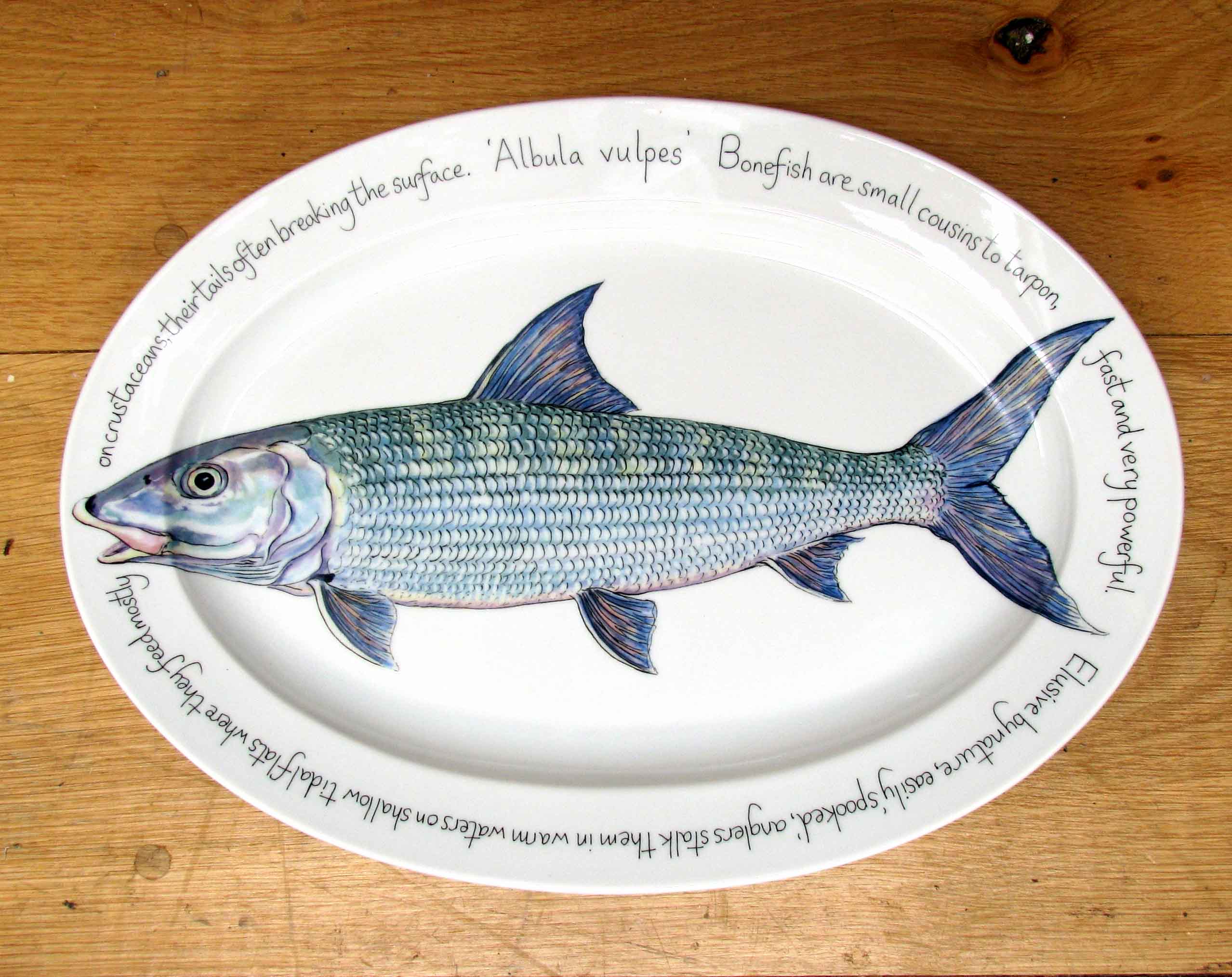
Richard has broadened his already considerable range of paintings and ceramics to include the Abaco marine life he painted while at Delphi. In addition to his very elegant Bonefish, there are now Permit and Crawfish plates (with the original ‘life model’ pictured above). Some weeks later I was at Richard’s studio in Dorset as he prepared to transfer these designs to ceramics, with crawfish cut-outs artfully strewn around the floor. Here are his new items, with his characteristic captions:

 (I have an oval bonefish plate to remind me of the ones I… I…’let go’ by mistake)

Richard’s comprehensive website featuring his entire oeuvre is to be found at the sign of the Crawfish   together with an elementary purchase method to take advantage  of the excellent online shopping opportunities (he might be too modest to say). I write this with Christmas-tide a mere 2 weeks away. You’ll find sea water and fresh water fish / creatures, shells, all manner of game birds and farmyards animals, on every conceivable type of ceramic platter, utensil and kitchen gizmo. 

(With apologies that this site seems t0 be turning into a cross between an online Mall and an advertising agency… Nature Tours. Boat Expeditions. Arts & Crafts. Kitchenware. Books. Cameras. Yup, ticked them all. But there’s plenty of other stuff to look at in these pages)