Unknown's avatar

“BEAUTIFUL BAHAMA BIRDS”: NEW BAHAMAS BIRD BOOK REVIEW


ABACO PARROTS MM 2

“Over the Moon” (Abaco Parrot / Melissa Maura)

“BEAUTIFUL BAHAMA BIRDS”: NEW BOOK REVIEW

Published 2014 ~ 128pp ~ $20, available from the BNT

A fine new book on the birds of the Bahamas has recently been published by the BAHAMAS NATIONAL TRUST and BIRDSCARIBBEAN. Compiled and edited by well-known Bahamas bird guide CAROLYN WARDLE  with the BNT’s Lynn Gape and Predensa Moore, this slim book is packed with valuable information. It doesn’t set out to be an exhaustive field guide, a task already fully covered by Bruce Hallett’s indispensable Birds of the Bahamas and the TCI. Nor is it anything like my own photographic tome ‘Birds of Abaco’, differing in scope and intention, and weighing a mere 225 gms as opposed to 2 kilos! Beautiful Bahama Birds is eminently a book for the pocket, day bag or backback, to be carried along with your Hallett.

I have illustrated this review with photos of sample pages of the book, invariably the best way to give a clear impression of this kind of publication. Apologies that some of my images are a bit wonky, my copy being new and individual pages being hard to keep flat…

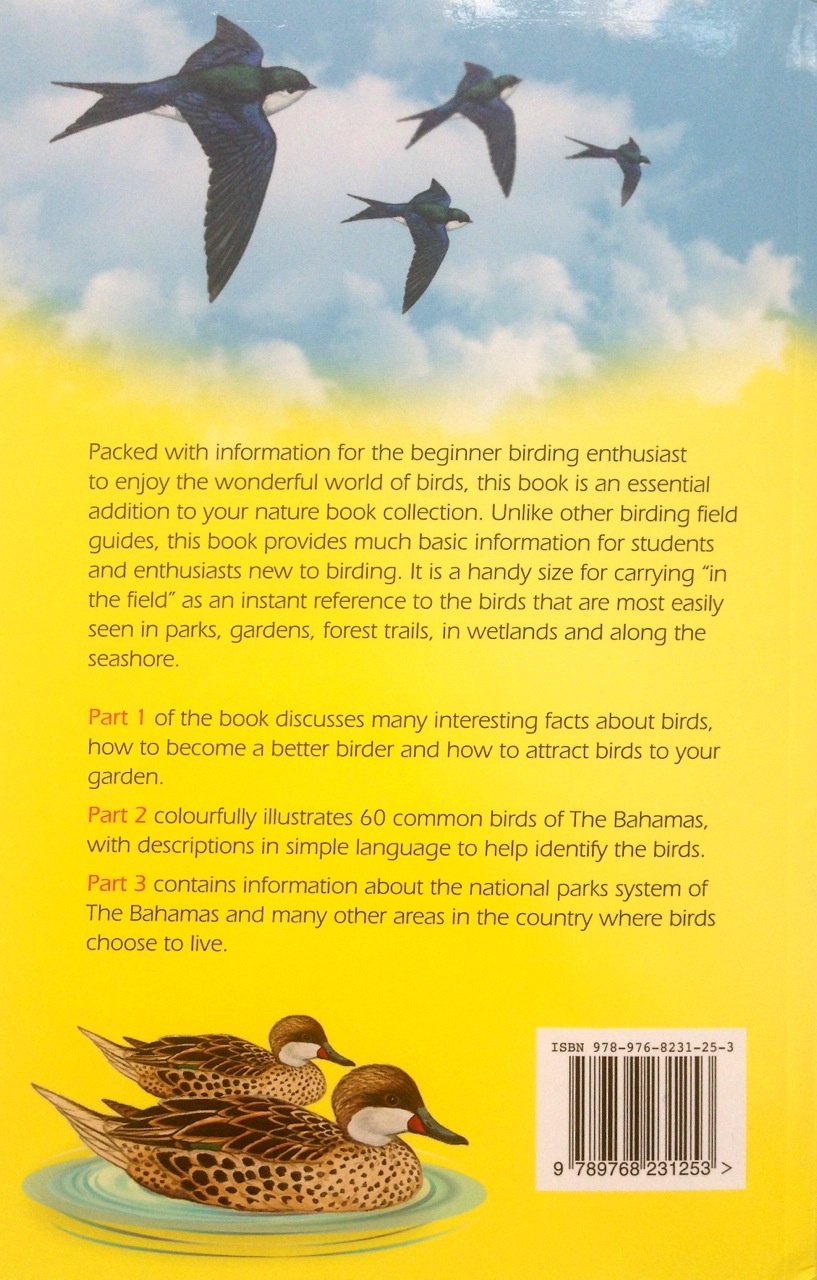
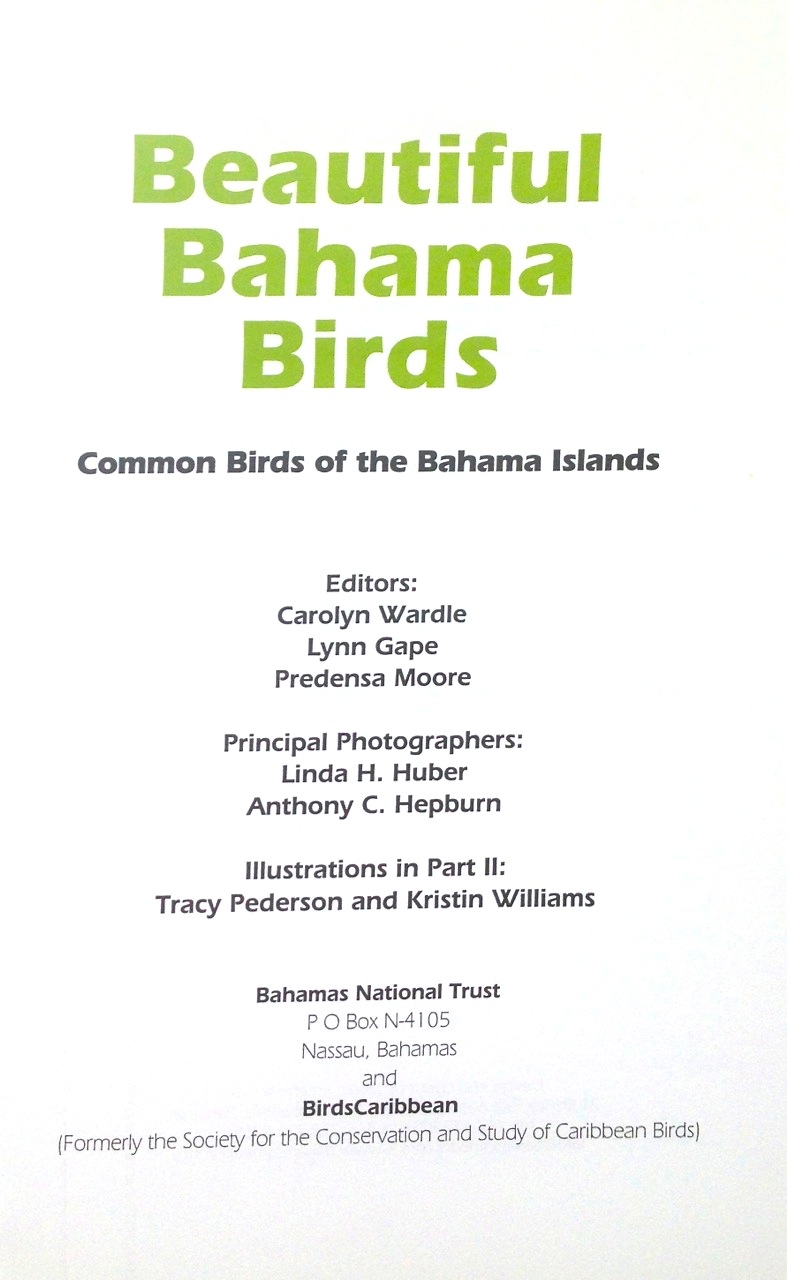
Beautiful Bahama Birds 1 Beautiful Bahama Birds 2

The photographs throughout the book are mainly the work of Linda Huber and the late Tony Hepburn. I was fortunate enough to be able to use some of Tony’s photographs for my own book, given with unreserved generosity; it is a fitting tribute to him that his images have now been published in Beautiful Bahama Birds, and that it  is dedicated to him.Beautiful Bahama Birds 3

An idea of the broad scope and of the book and its usefulness to the birder can be gained from the contents pages, which I reproduce here. Click to enlarge them. The book is arranged in 3 parts: Let’s Go Birding; Field Guide to 60 Common Birds; and Conservation Now.

Beautiful Bahama Birds 4Beautiful Bahama Birds 5b

PART 1 offers plenty of useful information and practical advice about birding in general (I wish I could have read this before I started my own book!). Anyone who loves birds will benefit from this whole section, even if they would not call themselves a birder – especially Chapter 3 ‘Getting Closer to Bird Life’.

Beautiful Bahama Birds 6  Beautiful Bahama Birds 7

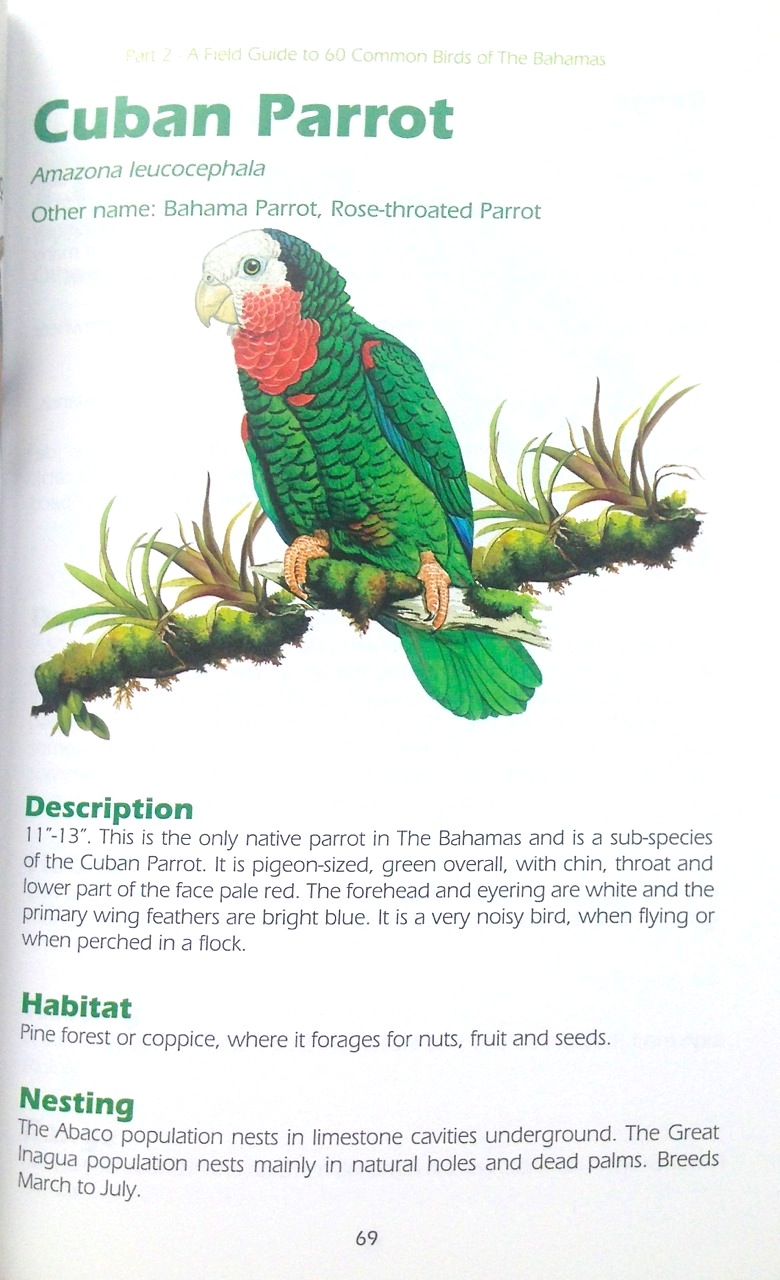
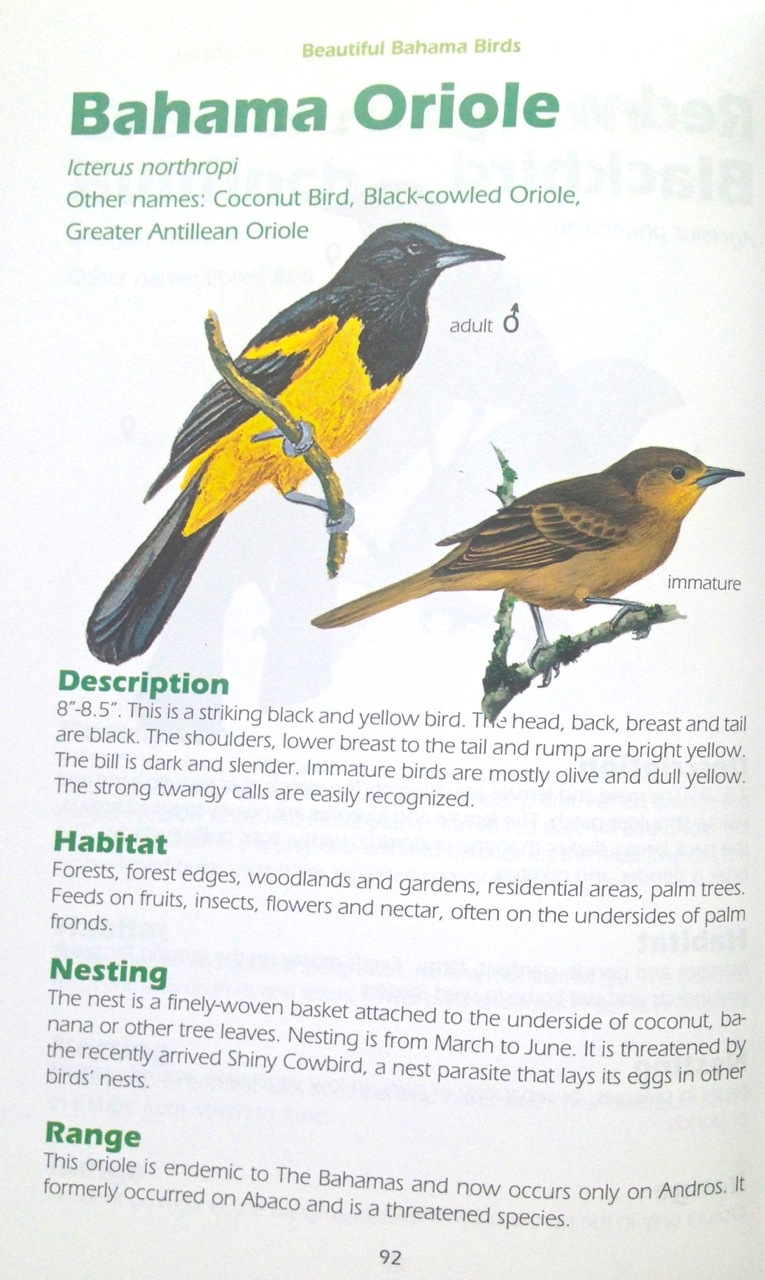
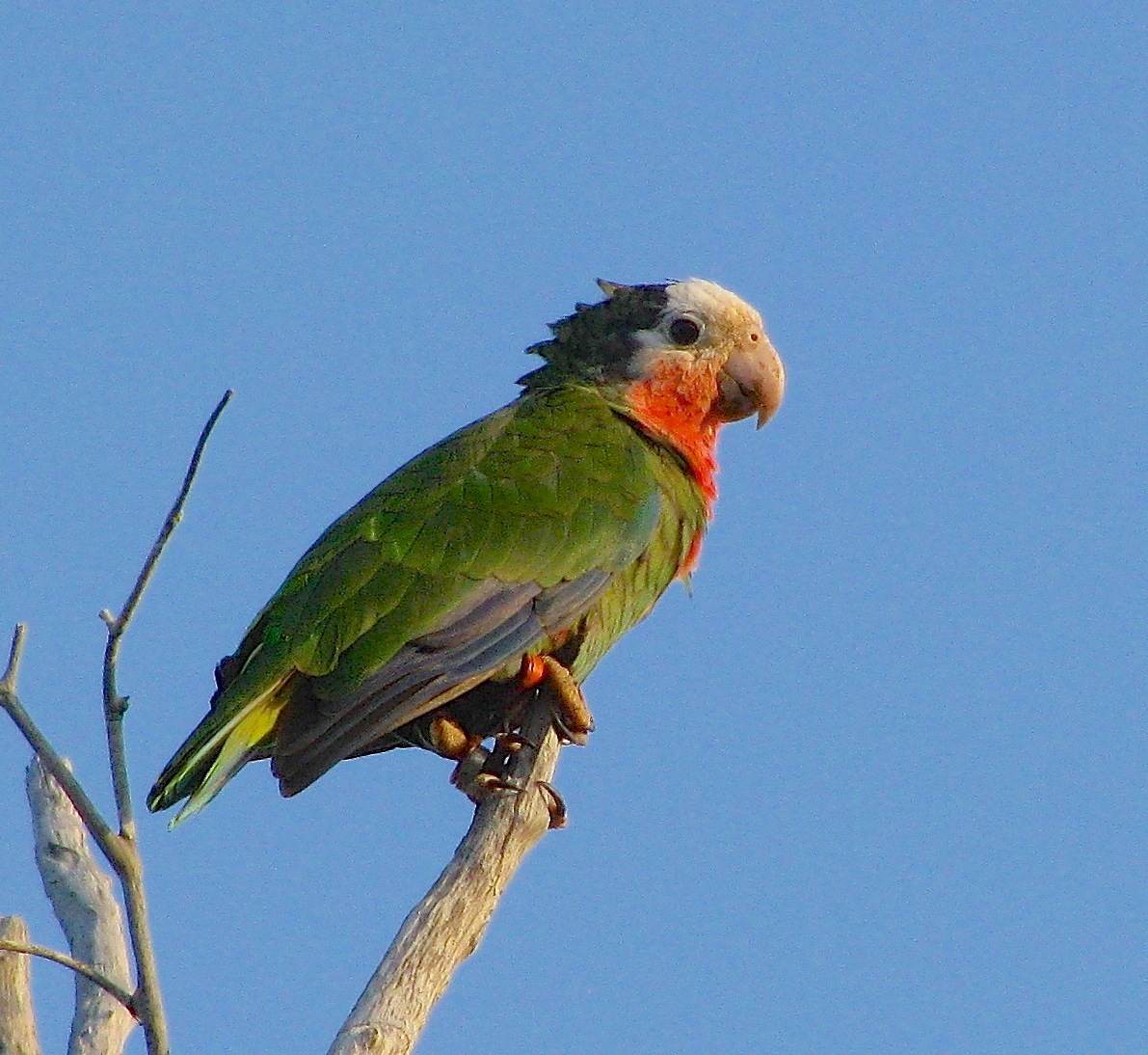
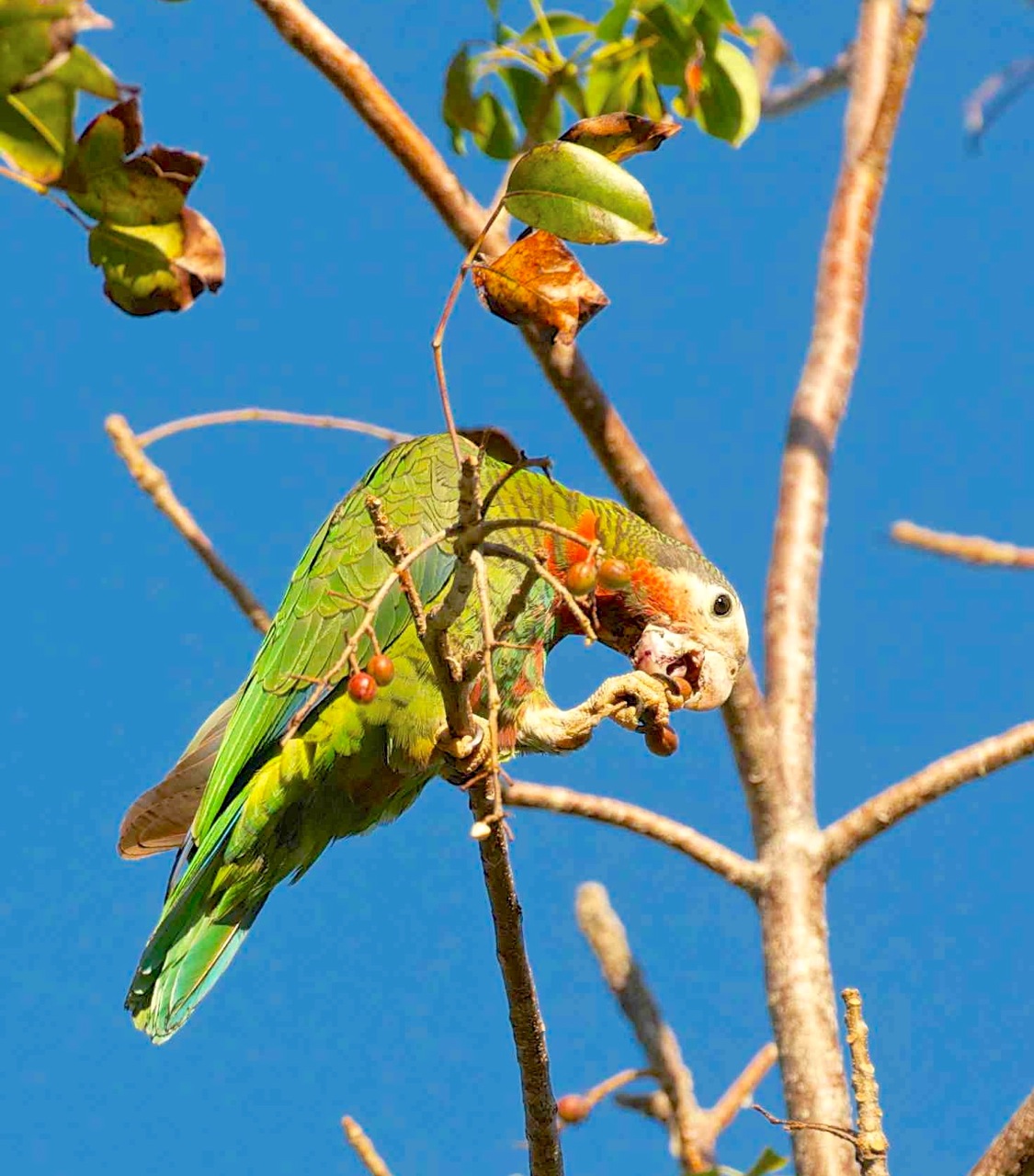
PART 2 All 5 Bahama endemics are featured in the main section, which is handily divided  very broadly into ‘waterbirds’ and ‘land birds’. Some birds are commonly found on most islands; some have more limited range: for example the Bahama Oriole is now found only on Andros; and breeding populations of the Cuban Parrot are found only on Abaco and Inagua (the increasing number of sightings on New Providence give some hope for a breeding population there too). I’ve chosen the parrot because the underground-nesting subspecies on Abaco is so special; and the Flamingo and Bahama Oriole, both very sadly extirpated from Abaco in recent memory.

The illustrations by Tracy Pederson and Kristin Willams are clear and highlight well the identifiers for each species. Where necessary, species variations are shown, for example between sexes, breeding / non-breeding plumage and adult / immature. This can be a confusing and even fraught area (as I constantly find), which this book usefully addresses.  Some birds in flight are also shown to aid ID.

   Beautiful Bahama Birds 8 Beautiful Bahama Birds 9

Beautiful Bahama Birds 10

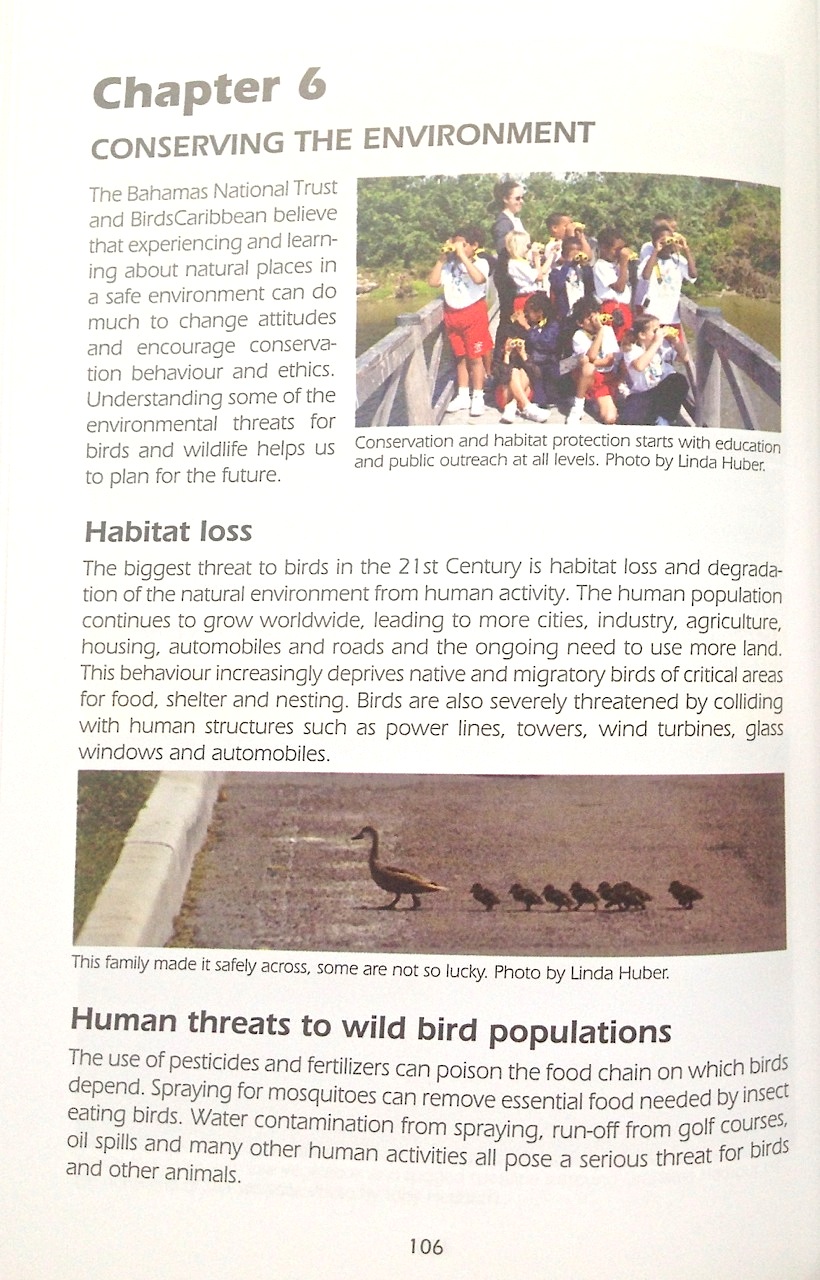
PART 3 covers the National Parks, important birding areas of the Bahamas, conservation matters, and a charming section on birds in Bahamian culture. Appendices include lists of Bahamas native plants and their importance for wildlife; National Parks and Protected Areas; important birding areas of the Bahamas; a Checklist; a Bibliography; and a user-friendly Index (not all are…).

 Beautiful Bahama Birds 13 Beautiful Bahama Birds 12

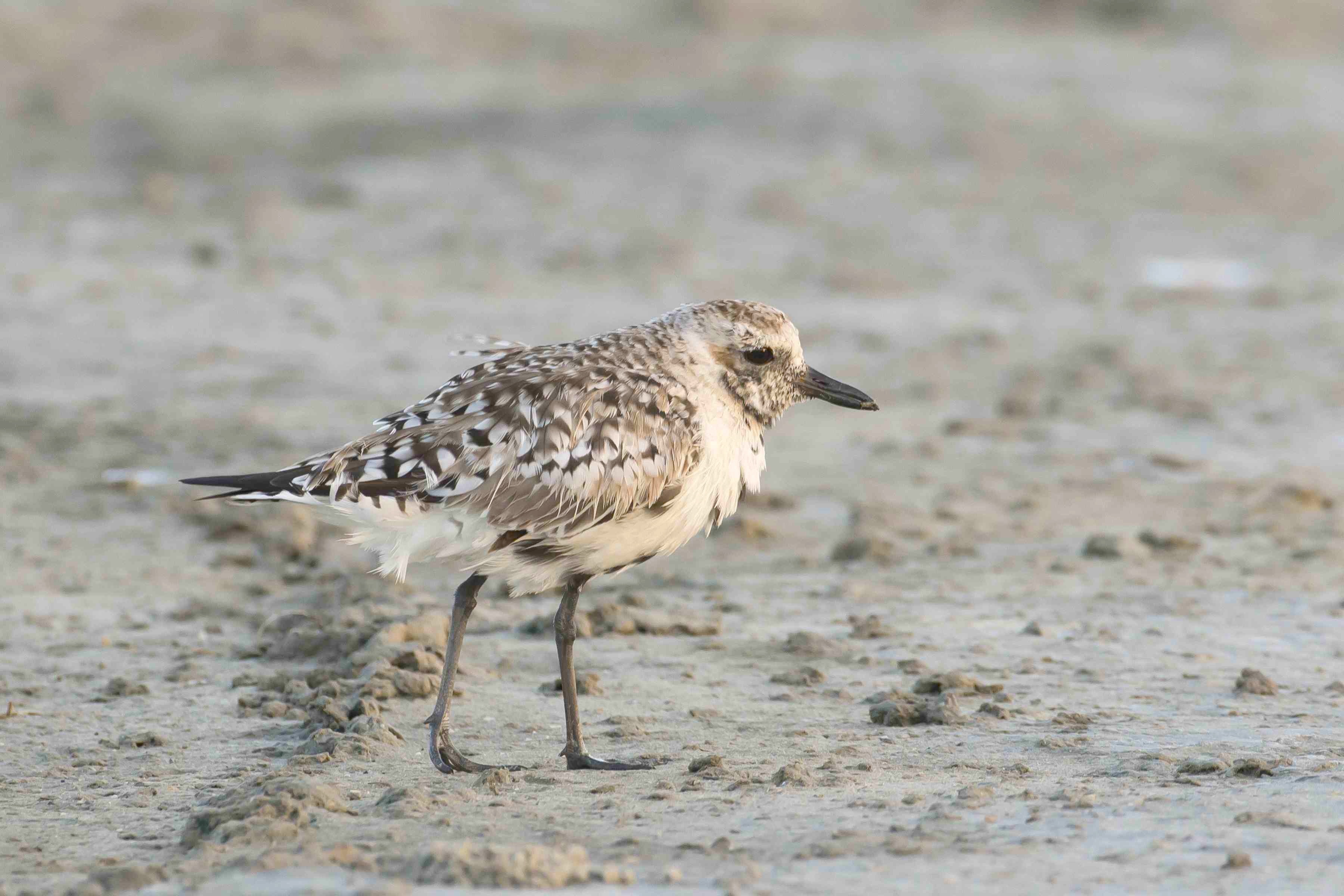
A good Checklist is a vital ingredient for any birder, whether visitor or local. Here, all the species occurring on the islands are shown on the left and their residential status and range throughout the islands across the top. Thus at a glance you can tell whether a given species is found on a particular island and when it may be found there. You would know not to look for Turkey Vultures on Eleuthera at any time; and that the black-bellied plover is a winter resident throughout the region and not to be seen during your trip in June…  I also like the tick-boxes on the left for species collectors.

Beautiful Bahama Birds 11

Overall I have thoroughly enjoyed this small book and unreservedly recommend it. It does not replace Hallett, but it complements it. Furthermore, I’m sure the straightforward style and presentation will appeal to bird-loving non-birders and also to younger birders – it may even encourage some out into the field! On p.20 the recommended reading list includes books that would appeal to young readers and links to appropriate websites, a thoughtful touch. I have learnt, or been reminded of, much from reading this book a couple of times. It is a welcome addition to the relatively sparse avian literature for the Bahamas, a prime birding region that is home to an astonishingly wide variety of birds including rare, threatened and vulnerable species like the Parrots, the Kirtland’s Warbler and the Piping Plover.

BOOK LINKS

RH BOOK REVIEW PAGE

BIRDER’S GUIDE TO THE BAHAMA ISLANDS (Tony White)

JAMES BOND (LICENSED TO WATCH BIRDS…)

SAN SALVADOR BIRDS

DELPHI CLUB GUIDE TO THE BIRDS OF ABACO

Unknown's avatar

RING-BILLED GULLS ON ABACO


Ring-billed Gull ACH DSC_0451 copy

RING-BILLED GULLS ON ABACO

The Ring-billed Gull Larus delawarensis is a common winter gull, familiar to all in its adult form because of its… er… ringed bill that distinguishes it from all the other gull species found in the northern Bahamas. There are other differences, obviously, but this beak-related signifier provides the easiest method of ID. To be honest, you may find one anywhere – out to sea, on the shore, inland, or perhaps hanging out at one of the dumps that they are attracted to. This last preference is one shared with many species, but while the dumps may provide good birding venues, the photographic backgrounds and general ambience may be somewhat unattractive… Here are 3 great photos by Nina Henry of these gulls where they look best, near the shoreline.

STOP PRESS Nov 18 Woody Bracey reports from Treasure Cay “I had my first for the fall here in Treasure cay yesterday – one adult and 1 immature. It’s nice to have them back”. So keep an eye out – the ring-billeds are back on Abaco…

Ring-Billed Gull, Abaco (Nina Henry)Ring-Billed Gull, Abaco (Nina Henry)Ring-Billed Gull, Abaco (Nina Henry)

The Latin name of these gulls refers to the Delaware River, Pennsylvania, which is on their migration route. But there must have been dozens of other towns along the route with equal claim to have a bird named after them. Why Delaware took the honours, I cannot explain… and thinking about it has inserted the old song in my brain “What did Delaware, boys? What did Delaware? She wore a brand New Jersey…” etc etc**. So I’ll get on and show some more RBGs to get it out of my head. Here are 3 stages of development from Bruce Hallett.

JuvenileRing-billed Gull (juv), Abaco (Bruce Hallett)

First winterRing-billed Gull (1st winter), Abaco (Bruce Hallett)

AdultRing-billed Gull, Abaco (Bruce Hallett)

Laughing Gulls are gregarious creatures, and are quite often found in a group with some other seabird in the middle of the crowd – often a larger one. Here is a ring-billed gull standing proudly in the throng, while the laughing gulls snooze in the sun on the jetty. Ring-billed Gull + Laughing Gulls, Abaco (Peter Mantle)

Photo Credits: Tony Hepburn (1), Nina Henry (2,3,4), Bruce Hallett (5,6,7), Peter Mantle (8)

** If you want to remind yourself – or inflict on yourself for the first time – the entire US-State-related pun-encrusted jingle CLICK DELAWARE DITTY

Unknown's avatar

VIREOS ON ABACO (2): THE PHILADELPHIA VIREO


Vireo_philadelphicus Brian Mcclure (wiki) CROP

VIREOS ON ABACO (2): THE PHILADELPHIA VIREO

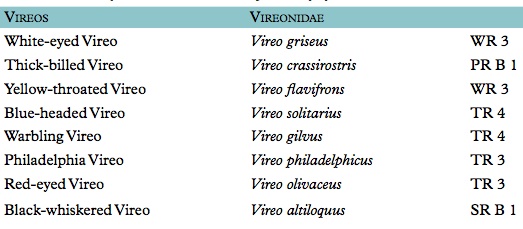
Vireos haven’t had as much attention as they deserve hereabouts. I have posted about the BLACK-WHISKERED VIREO, but the 7 other vireo species found on Abaco haven’t had much of a look in. It’s a wrong that I shall right at once by featuring the rather shy Philadelphia Vireo Vireo philadelphicus. Here is the full list of the vireos recorded for Abaco, from which you will see that only the Thick-billed Vireo is a common permanent resident. The Black-whiskered vireo is a common summer breeding resident; there are 2 uncommon winter residents; and the other 4 are transients that chose Abaco as a resting place on their migrations.

Taken from ‘The Birds of Abaco’ checklist by Tony White with Woody BraceyVIREO CHECKLIST

SONY DSC

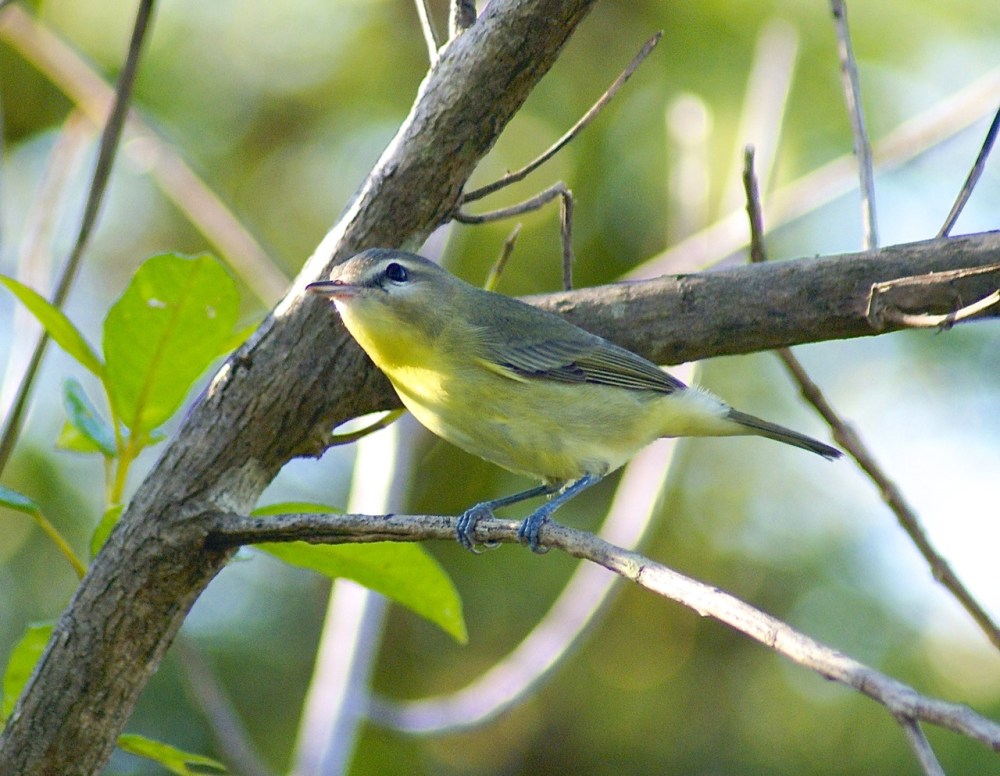
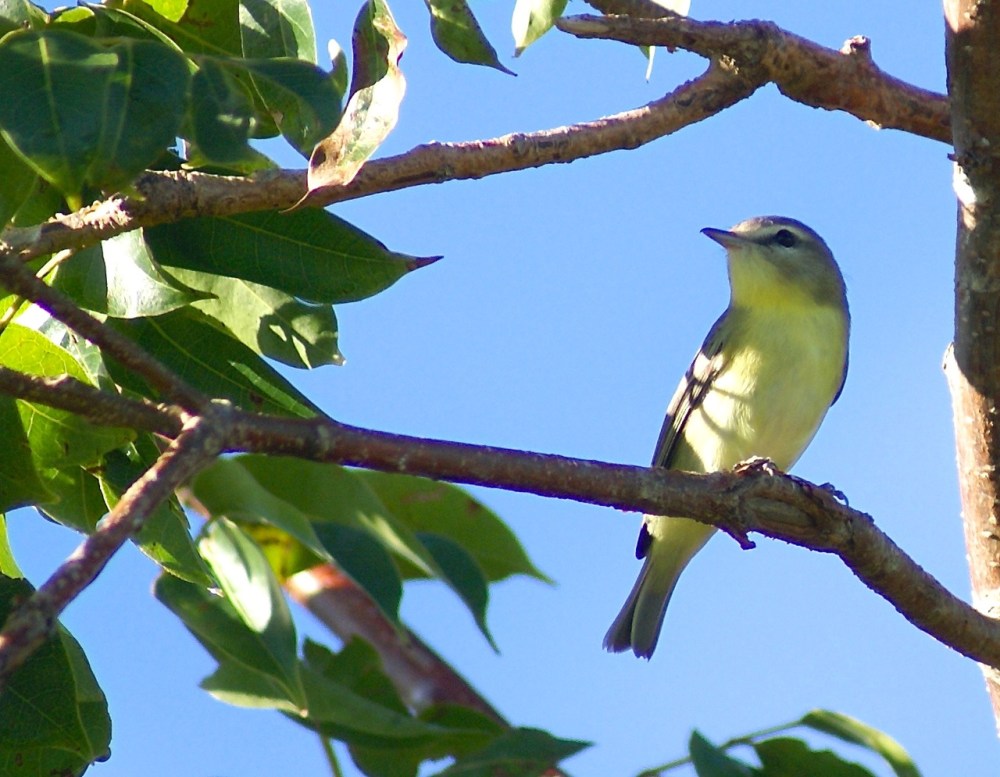
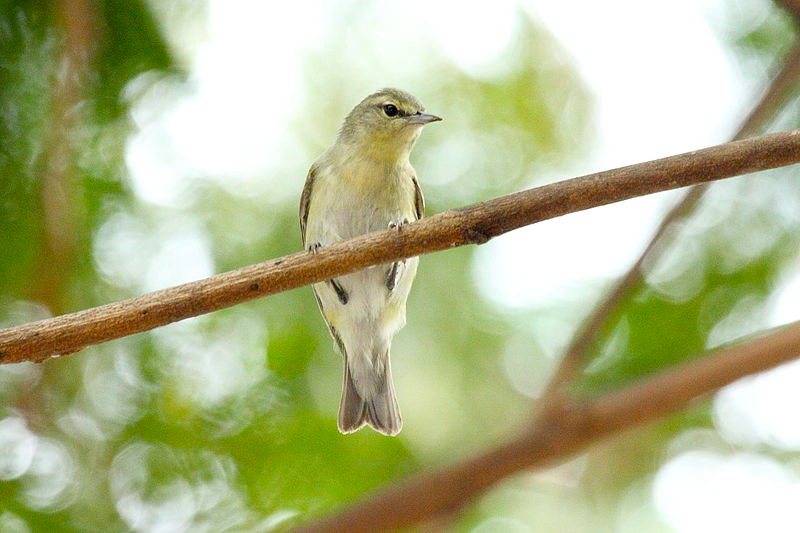
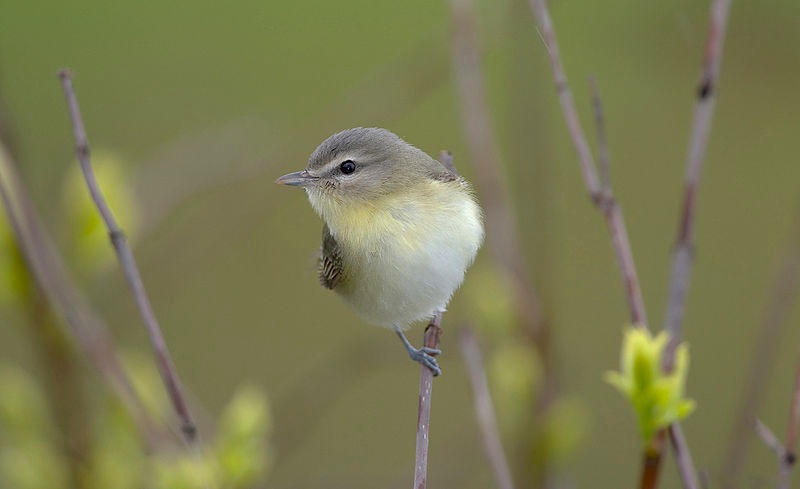
This little bird tends  to be described with such unkind adjectives as ‘drab’, ‘dull’ and ‘plain’, but  like many under-appreciated species it has its own charm. The header image and the one above give excellent close-up views. The signifiers include the dark eyes, white eyebrows, the dark line through the eyes, the yellow underparts, and in the negative sense the complete absence of eye rings, wing bars or tail markings. And the thick bill is one quick way to distinguish it from similar-looking warbler species, with their generally smaller, pointy beaks. SONY DSC

The Philadelphia Vireo has a wide range, from its summer breeding grounds as far north as Canada down to its winter quarters in Mexico and South America. They have even, very rarely, been seen in Europe. The connection with Philadelphia is somewhat tenuous and arises because the bird was first identified in 1842 from a specimen collected near Philadelphia. However their visits there are brief, since at best it is only a stopover on their migration route…vire_phil_AllAm_map

Philadelphia Vireo (Vireo philadelphicus Dominic Sherony wiki

Here is the song comparison between (in order) the Philly, the familiar TBV whose song accompanies everyday life on Abaco, and the Black-whiskered vireo. My TBV recording is rather quieter than the other 2.

 Andrew Spencer / Xeno Canto

RH at Delphi

 Brian Cox / Xeno-Canto

Philadelphia Vireo William H. Majoros wiki If you want to know how to record birdsong easily using an iPhone or equivalent CLICK HERE 

Credits: Woody Bracey (2, 3); Brian McClure, Dominic Sherony, William H. Majoros, Xeno Canto, Wiki, Cornell Lab

Unknown's avatar

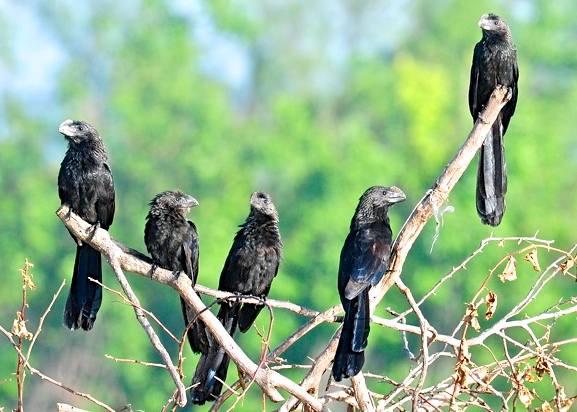
“STAR ANIS”: ENTERTAININGLY GREGARIOUS CUCKOOS ON ABACO


Smooth-billed Ani, TCGC Hole 11 - Becky Marvil

“STAR ANIS”: ENTERTAININGLY GREGARIOUS CUCKOOS ON ABACO 

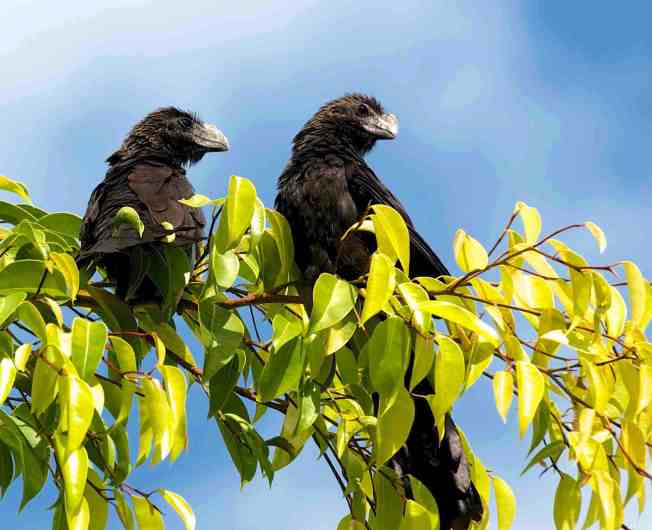
The Smooth-billed Ani (Crotophaga ani) is the third member of the cuckoo family found on Abaco, the others being the MANGROVE CUCKOO and the YELLOW-BILLED CUCKOO. Anis range from Florida and the Bahamas in the north, down through the Caribbean to South America, where they are widespread.

Ani Range Map (Xeno-Canto) jpg

Smooth Billed Ani, Abaco - Nina Henry 2a

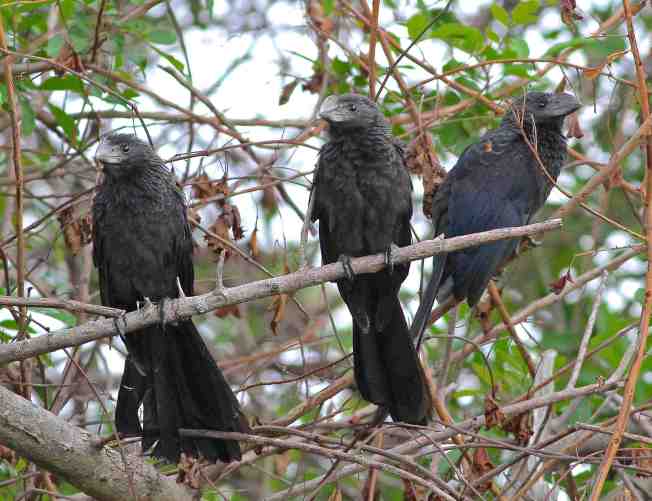
Unlike their shy and retiring cuckoo cousins, anis are extrovert shouty birds that like to hang out in noisy gangs. Large groups can quite often be found in the low scrub at the Highway end of the Delphi drive; and you may well find a posse of them in settlements such as Sandy Point. You’ll probably hear them from some way off, sounding like this:

Leonardo Ordóñez-Delgado / Xeno Canto

Smooth-billed Anis_Abaco - Tony Hepburn

Anis have advanced parenting and chick-rearing skills, sharing not only communal nesting sites but also egg incubation and feeding the chicks. They are also what my mother might have called ‘fast’, raising up to three broods in a season. Rather touchingly, the young of earlier broods help to feed more recent chicks.

Smooth-billed Anis Abaco - Gerlinde Taurer d

I have tried to discover why an ani’s beak is as it is, without much success. Very often beak shape relates directly to the feeding habits and preferences of a species, but it is hard to see how a diet consisting mainly of insects and small reptiles such as lizards would account for such a prominent proboscis. Here is a close-up of the item in question (thanks, Roselyn Pierce).
On Abaco (and indeed elsewhere) Anis are sometimes known as ‘Cemetery Birds’, no doubt because of their all-black appearance (their raucous tendencies would be quite inappropriate for a graveyard…). [Nicolette Russell has contacted me to say that she has always known them as Rain Crows] However although at a distance these birds may look completely black, catch one in the sun at the right angle, and you’ll find that the plumage is far more varied, and with some intricate patterning.

Smooth-billed Ani. Abaco Bahamas Tom Sheley

Look for Anis in low scrubland and coppice, cultivated areas, perched in unsteady bickering rows on utility lines… and on the ground.

Smooth-billed Ani, Abaco. Gerlinde Taurer c

The appearance and flying abilities of Anis are wonders to behold. As I wrote in The Birds of Abaco, “Their curious heavy beaks, their clumsy flight and their untidy take-off and landing routines suggest a design fault”.

Smooth Billed Ani, Abaco - Nina Henry 1a

“One… is the loneliest number…” oh, hang on a moment…Smooth-billed Ani Abaco - Gerlinde Taurer a

…”two of us…standing solo in the sun…”Smooth-billed Ani, Abaco (Gerlinde Taurer) b

As far as I know, there is not yet a collective noun for a group of anis. There should be. Any suggestions welcome via the comment box. Meanwhile I put forward A Commotion of Anis”

Smooth-biled Ani, Abaco - Bruce Hallett

Credits: Becky Marvil, Nina Henry, Tony Hepburn, Gerlinde Taurer, Roselyn Pierce, Tom Shelley, Bruce Hallett; Xeno Canto for range map & sound file; Hat tip to Aimee Mann.

“Star Anis” – do not confuse with Star Anise. One can fly, the other cannotStar Anise Spice (Tesco)

Unknown's avatar

CORMORANTS: RAPACIOUS PESCATARIAN SEA-RAVENS


Cormorant WWT 12

CORMORANTS: RAPACIOUS PESCATARIAN SEA-RAVENS

Cormorants are strange creatures. Strange to look at. Strange in their relationship with humans – love / hate in fishing terms and good / evil in mythology. Strangely useless for poetry, since – like the words ‘purple’ and ‘orange’ – there is no pure rhyme for the word cormorant. But they are undeniably striking, and a cormorant on the Abaco Marls effortlessly gliding inches above the water is an impressive sight.

Cormorant WWT 1Cormorant WWT 5

The cormorant’s name originates from the Latin name ‘Corvus Marinus’, the Sea Raven. Cormorants belong to the ‘Pelican’ order of birds known as the pelecaniformes that also encompasses tropicbirds, frigatebirds and anhingas. Worldwide, there are around 40 different species of cormorant. In many parts of the world, this seabird has established itself inland. Angling communities are increasingly concerned by the spread of this bird along productive fishing rivers, often far from the sea shore. In the UK as elsewhere they are very bad news for prime fishing rivers.

Cormorant WWT 8

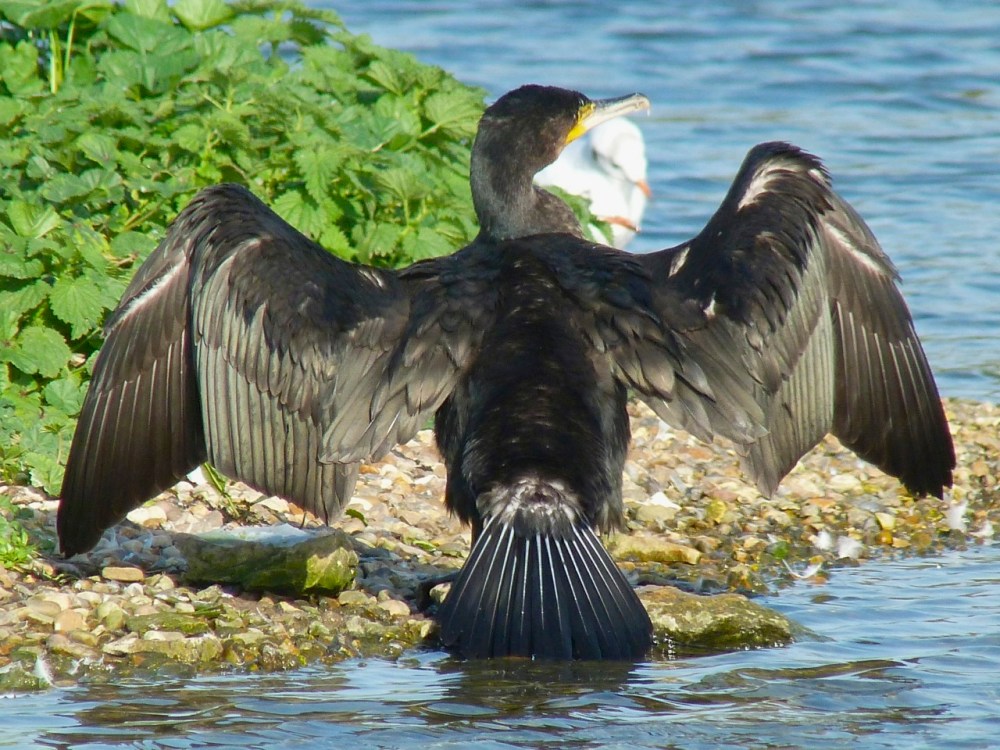
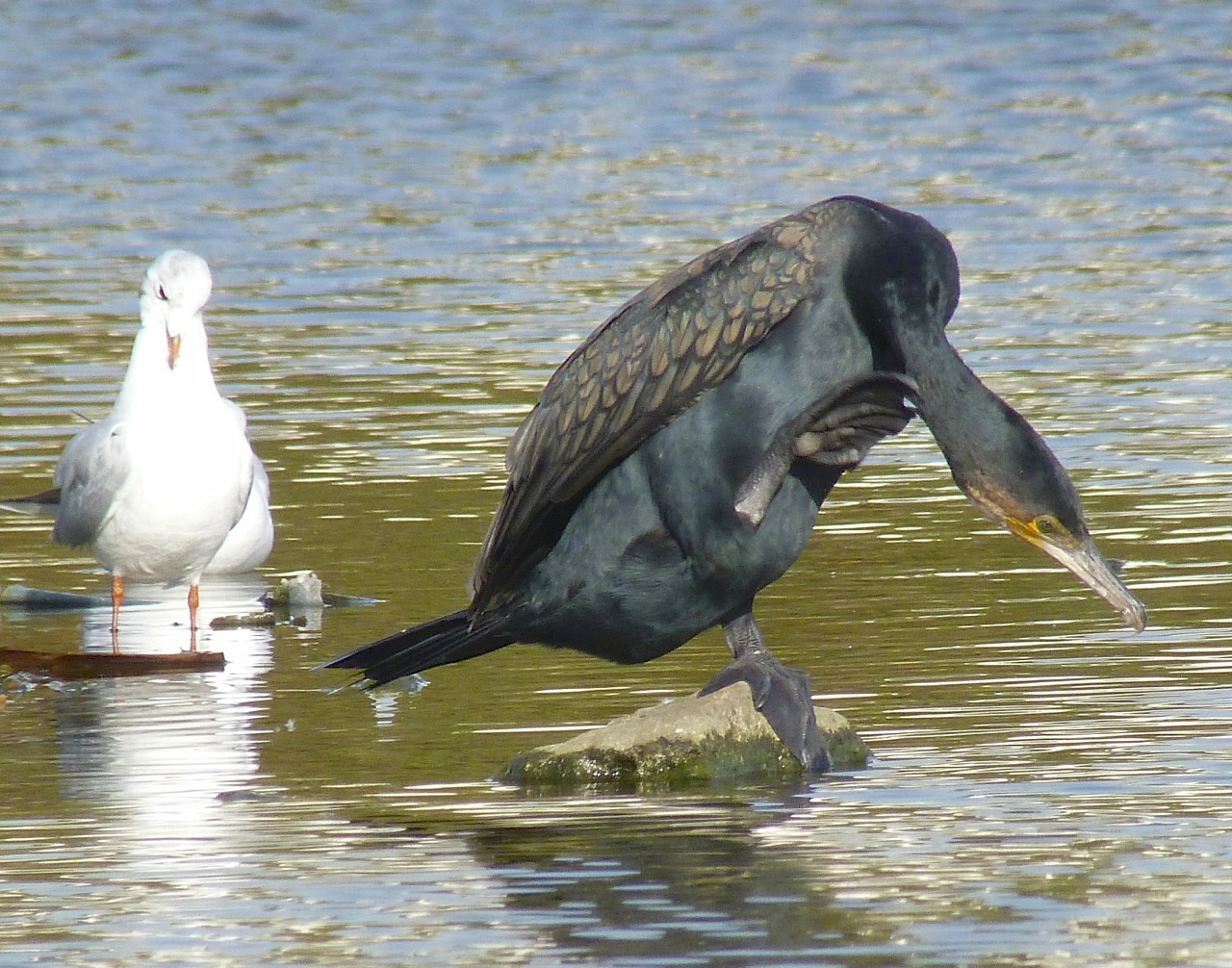
Splosh! Gull Photobomb! It wasn’t there when I decided to press the trigger…Cormorant WWT 4 (gull photobomb)Itchy neck? You just have to scratch it…Cormorant WWT 6Relaxed now, thanks…Cormorant WWT 7

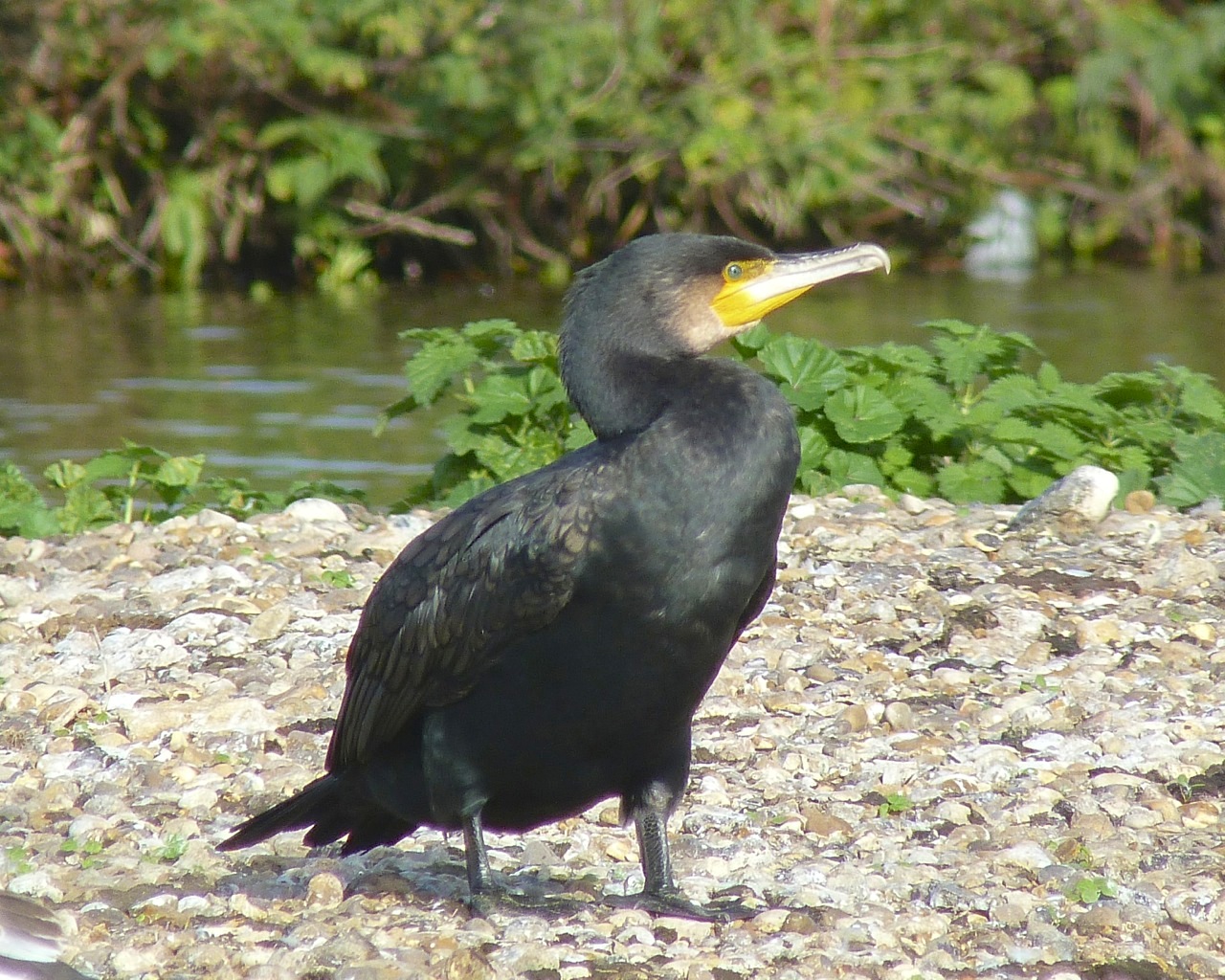
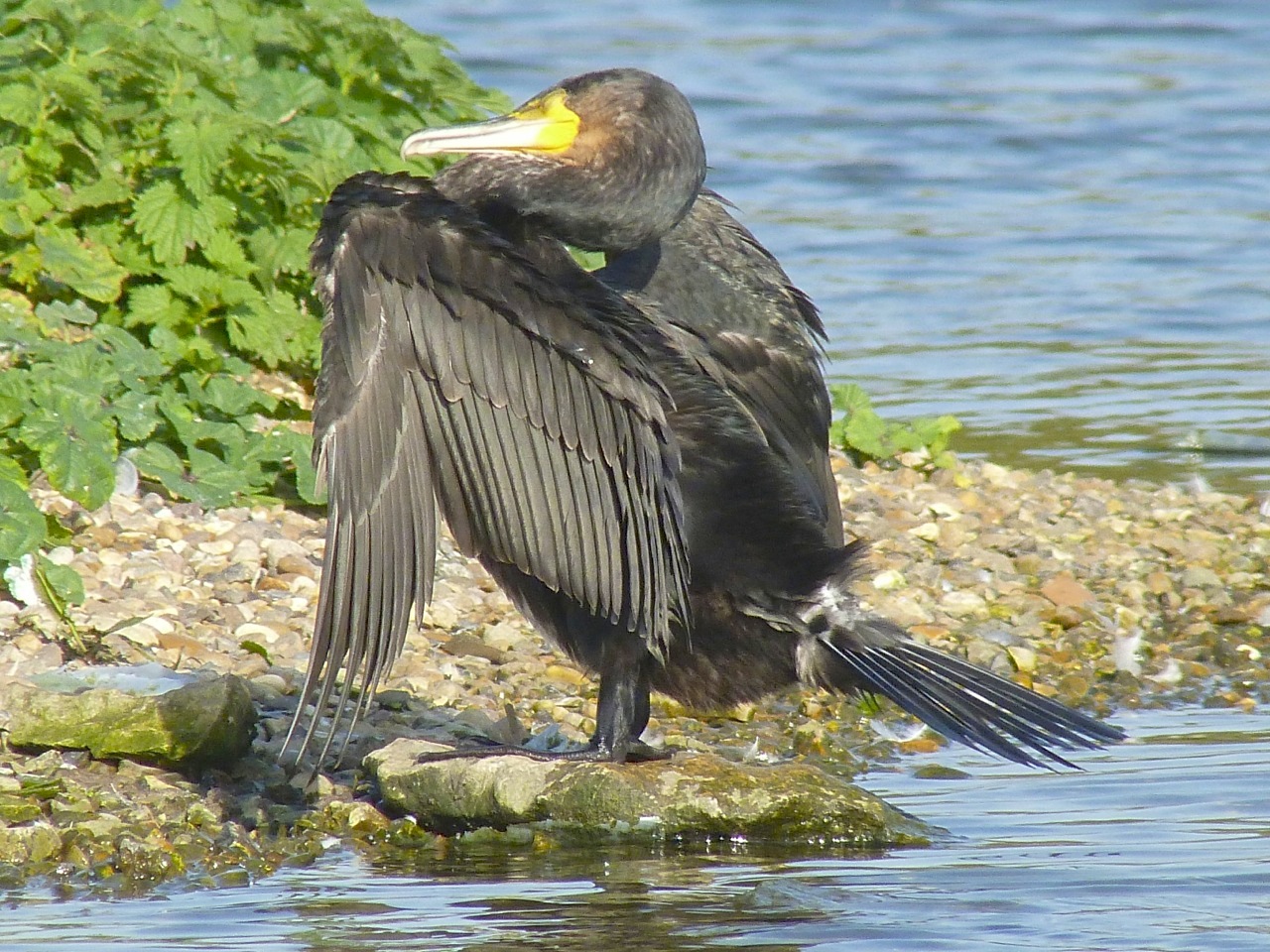
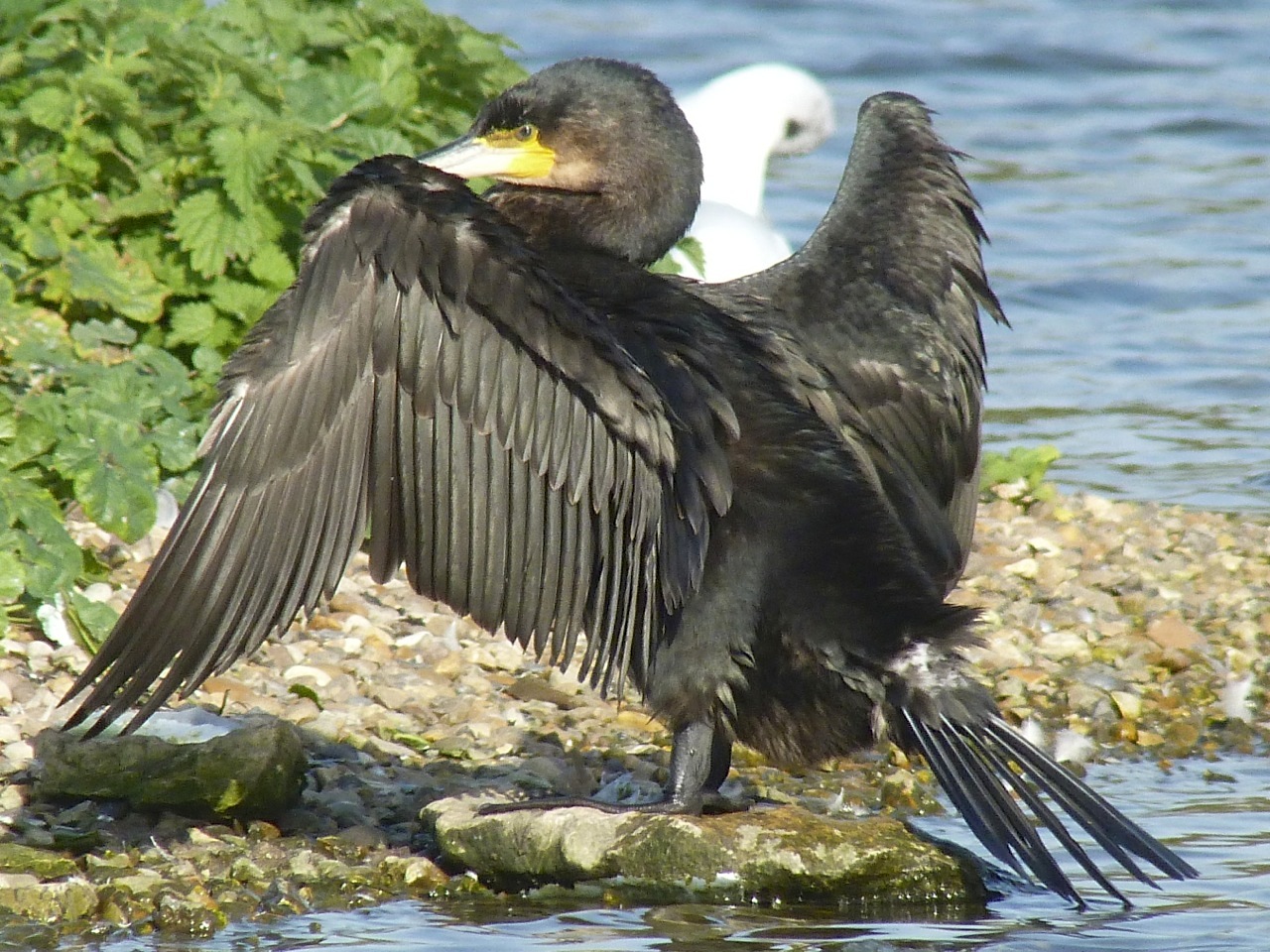
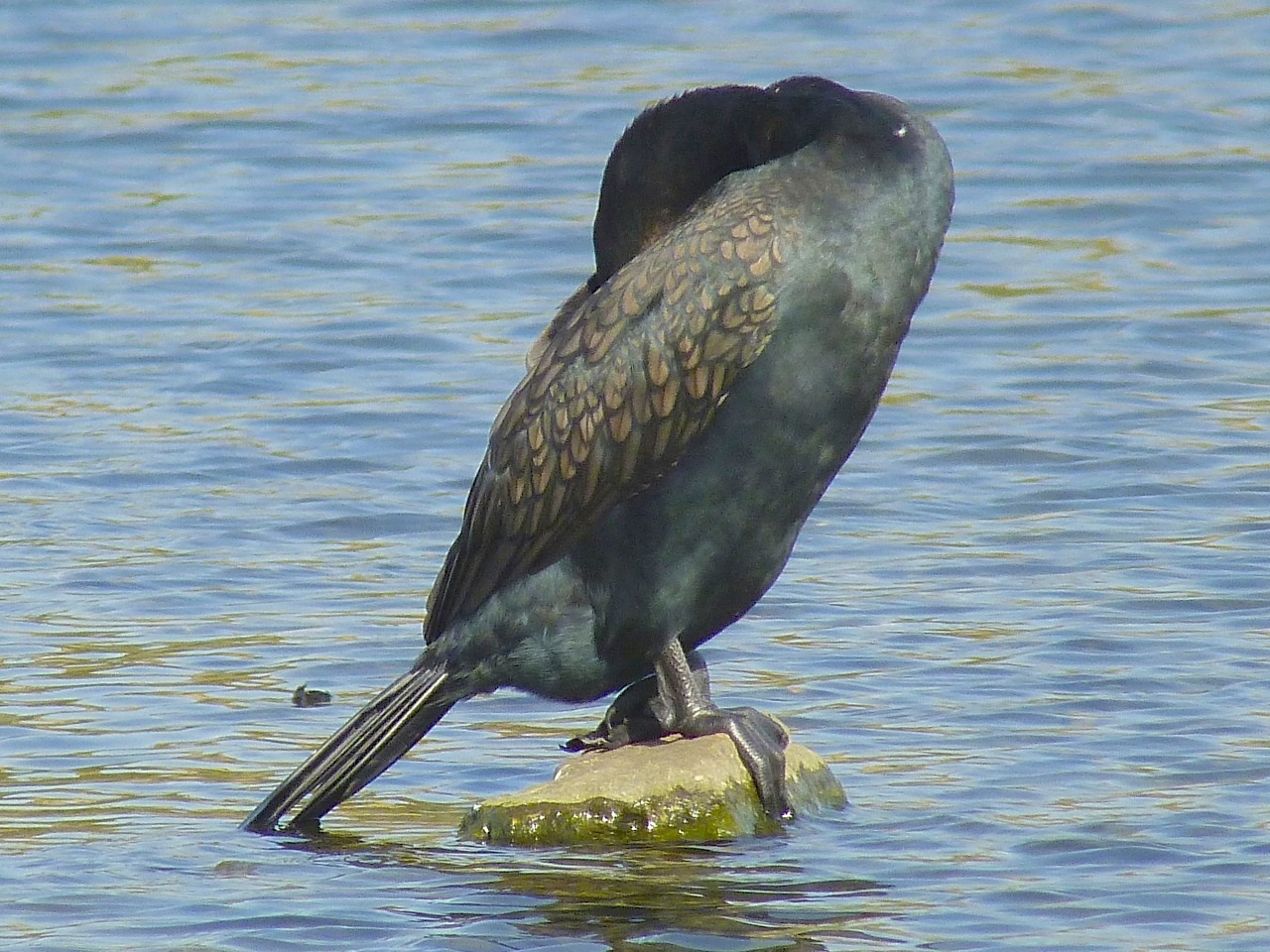
The birds here were photographed in the UK on Halloween. While the world was preparing to immerse up to its neck in blood, guts, gore and spider webs, I was out armed only with a camera in unseasonably warm sunshine. So these are Great Cormorants Phalacrocorax carbo, the species found in the UK. They a remarkably similar to the Double-crested Cormorants Phalacrocorax auritus found on Abaco but larger and with a pale cheek and upper neck. This was a perfect day for the cormorants to enjoy their preening and wing-drying routines.

Cormorant WWT 9 Cormorant WWT 10 Cormorant WWT 11  Cormorant WWT 13

Last sight of the one on the small rock: “Hey, photographer, for !@£$%&* sake leave me alone, ok?”Cormorant WWT 14

I will be writing about Neotopic Cormorants Phalacrocorax brasilianus on Abaco in detail soon, but for comparative purposes here is one from Bruce Hallett taken on Teasure Cay Golf Course, where the ponds are usually a productive birding resource (check in at the clubhouse for permission first).

Neotropic Cormorant, Treasure Cay, Abaco - Bruce Hallett

And as for the very familiar double-crested cormorant, here is a great photo taken on Abaco by Jim Todd of three chicks growing up fast in their unusual double-decker nest…OLYMPUS DIGITAL CAMERA

Credits: All photos RH except the last 2, Bruce Hallett and Jim Todd

Unknown's avatar

PLOVER LOVER? PIPING PLOVERS ON ABACO (3)


Piping Plover (Danny Sauvageau) 4

PLOVER LOVER? PIPING PLOVERS ON ABACO (3)

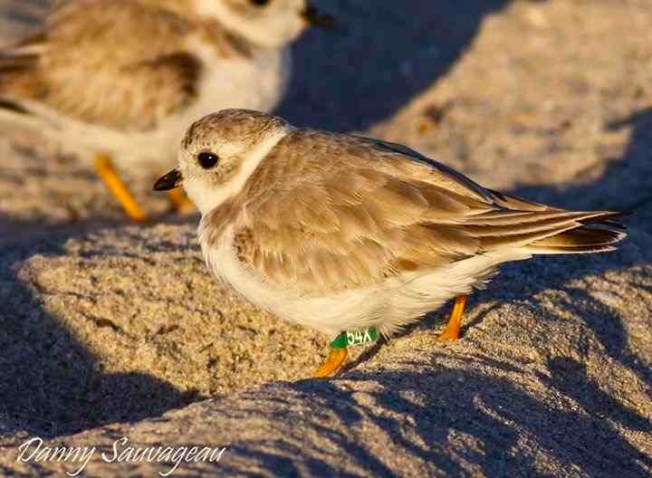
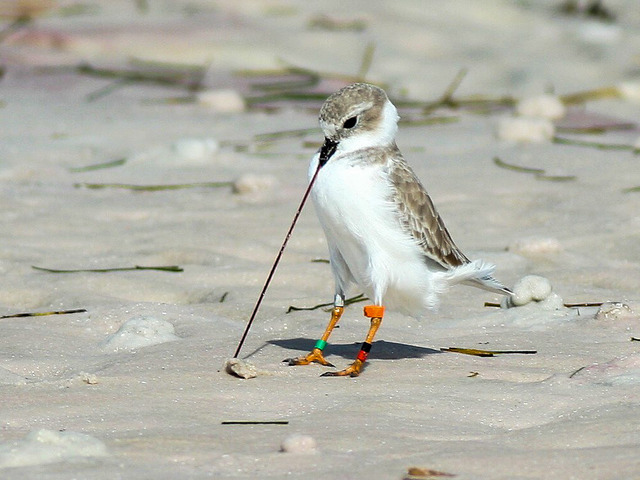
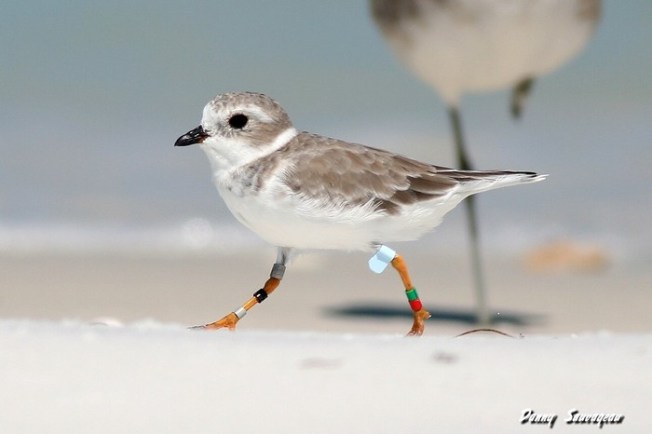
So much to post about – what to choose? Well, the fall migration is still in full swing, with warblers hurtling across land and sea to Abaco in large numbers for their overwintering. Palm warblers are currently arriving. However I’m going to stick with shorebirds for now, and one of the rarer winter visitors, the Piping Plover. I have some more great photos from Danny Sauvageau in Florida, who tirelessly patrols the plover resting areas to record the banded ones so that their origin can be determined. This research assists with vital habitat conservation programs at each end of the migration. There are only 8000 of these little birds left in the world and without protection there’ll be none before you can say “oh dear, very pretty, they’re gone, what a pity…”

PIPING PLOVERS IN THE EARLY MORNING SUNPiping Plover (Danny Sauvageau) 6Piping Plover (Danny Sauvageau) 5Piping Plover (Danny Sauvageau) 3

RING BLING & FLAG TAGS

The postions, colours and numbering of the rings and tags on these plovers identify individual birds, the location of their summer breeding grounds and so on. Dispersal and migration patterns of each bird can be recorded and specific facts – age for example – can be monitored.Piping Plover (Danny Sauvageau) 2

Piping Plover (Danny Sauvageau) 7Piping Plover (Danny Sauvageau) 8Piping Plover (Danny Sauvageau) 9Piping Plover (Danny Sauvageau) 1

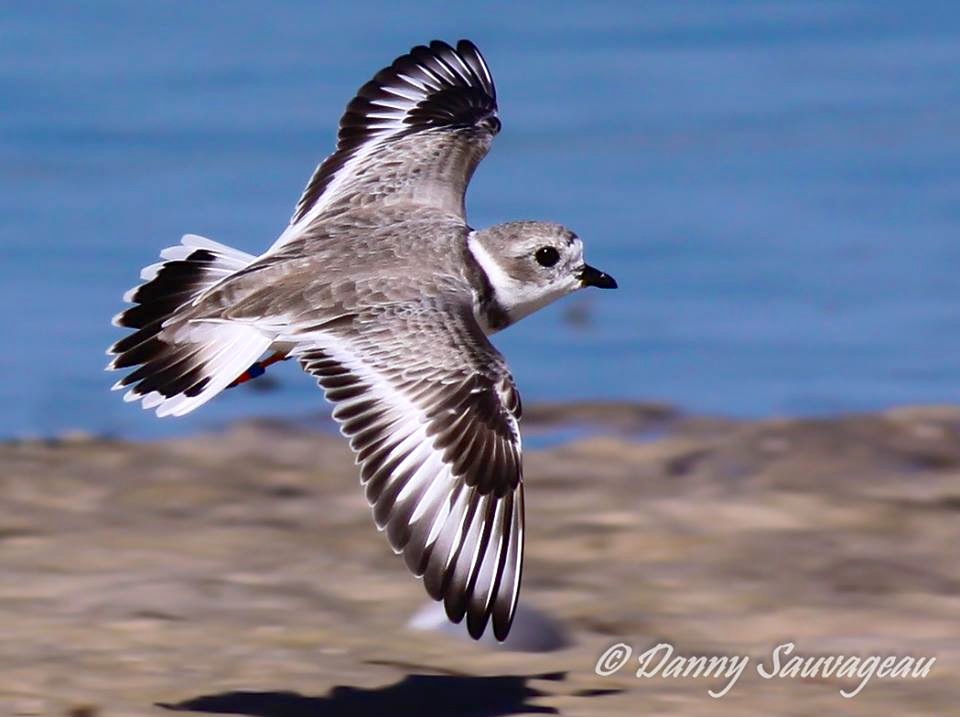
PIPL IN FLIGHT – AN AMAZING IMAGE

On the very day I was about to press the ‘publish’ button on this post, look what just flew in from Danny’s beach in Fl.! This is an outstanding photo of a PIPL in flight – you can even see its shadow on the sand. I have a few shots of these birds flying in groups over the sea but apart from a general impression of PIPL-ness, they could really be any small shorebirds travelling fast on the wing. This one is special. Piping Plover in flight (Fl., Danny Sauvageau)

ABACO PIPL NEWS

Piping plovers have already arrived on Abaco. Casuarina beach is a promising place to look. Rhonda Pearce sent me this nice photo taken on the point (see my map). This pretty bird looks as though it has a black tag. However Todd Pover of CONSERVE WILDLIFE NEW JERSEY who also monitors the Abaco end of the migration thinks it may just be a piece of wrack – black tags are not usually used.

If anyone sees a piping plover and has a camera handy, I’d be very pleased to receive any photos, especially showing rings if possible – or indeed ringless legs, which is also informative to the monitors. If it turns out to be a Wilson’s Plover, no matter: they are fine birds in their own right!

PIPL Casuarina Oct 14 Rhonda Pearce via RHCasuarina Map jpg

Finally a quick reminder about Danny’s Kickstarter project “Saving Endangered Piping Plovers through Photography” and his presentation explaining how his photography in PIPL resting areas during their migrations can help to map and complete the picture of this vulnerable species to enable their protection.

You can reach Danny’s film by clicking the link DANNY’S FILM and you will see some fabulous footage of these little birds scuttling around on the beach, looking enchanting; and the commentary will explain the importance of the the birds and the research into their conservation.

RELATED POSTS

RARE GEMS: PIPL ON ABACO 1

50 WAYS TO PLEASE YOUR PLOVER

And finally – what are the good people of Massachusetts doing to help? (great plover skitterings on the shoreline here!)

[youtube https://www.youtube.com/watch?v=tWxema5pef4&app=desktop]

Credits: All photos, Danny Sauvageau except the last, Rhonda Pearce

Piping-Plover Artmagenta          Piping-Plover Artmagenta          Piping-Plover Artmagenta          Piping-Plover Artmagenta          Piping-Plover Artmagenta          Piping-Plover Artmagenta        Piping-Plover Artmagenta

Unknown's avatar

STANDIN’ ON THE DOCK OF THE BAY: GREAT BLUE HERON ON ABACO


Great Blue Heron, Sandy Point, Abaco - Keith Salvesen 2

STANDIN’ ON THE DOCK OF THE BAY: GREAT BLUE HERON ON ABACO

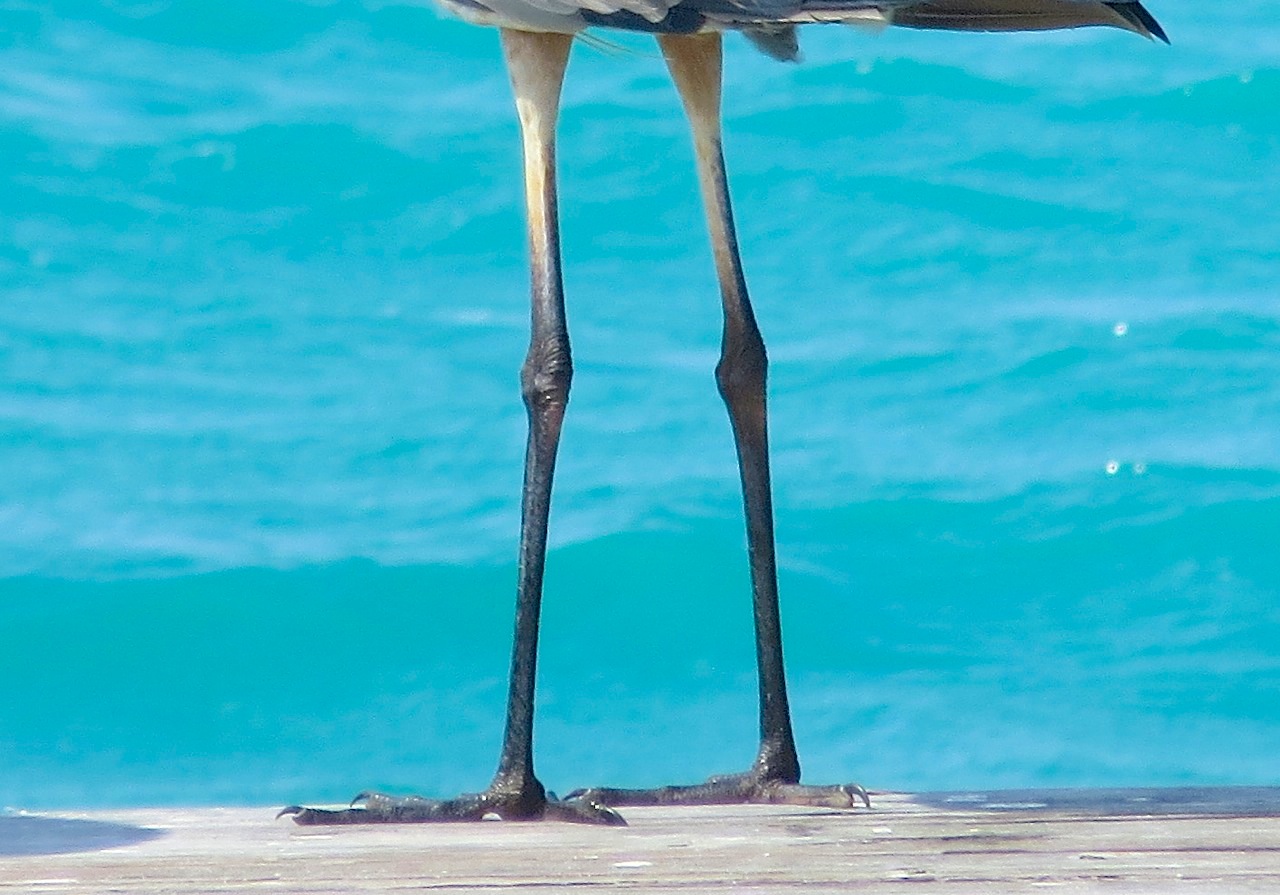
The occasion: a trip to Sandy Point for a lunch party at the legendary Nancy’s in honour of  Sandy Walker at the end of his 5 years as manager of the Delphi Club. A pair of brown pelicans on the nearby dock were clumsily flying around, diving, perching, drying their feathers, then repeating the cycle. In a quiet moment I slipped away to watch them – and a Great Blue Heron landed quite close by me. So as well as taking photos of the pelicans, I pointed the camera at the heron from time to time. My favourite view is of it standing proudly on the edge of the dock, with the truly azure sea behind it (header and final image).

Great Blue Heron, Sandy Point, Abaco - Keith Salvesen 6

THE PERILS OF A CAMERA UPGRADE

[PHOTOGRAPHIC INTERLUDE – SKIP IF EASILY BORED BY SUCH THINGS]

I don’t have a fancy camera. I would never get the settings right before the bird had flown. Or died, even. So I had been using a Panasonic Lumix FZ45 kindly given to me by Mrs RH in a benign moment, possibly Christmas. Then I made a classic error of upgrading to an FZ72 with an alleged massive 60X zoom. Brilliant, I thought. Big mistake. My old camera has a Leica lens. Used with care and a lens extension (zeugma score!), it is / I am occasionally capable of taking pin-sharp photos. The upgrade camera’s lens turned out not to be a Leica. Almost all the shots I took were ‘soft’, the more so using the zoom. A soft photo taken with a less good lens, zoomed 60X, will never be a better photo. Just an even softer one. I wish I’d had Old Faithful with me instead. When we got home, I immediately dug out OF and sold 60X disappointment. OF is now reinstated as my BF.  

The shots of this heron mostly turned out fairly well, largely because it stayed quite close to me. It flew off a couple of times, then returned to the edge of the dock. Here are a few close-up views of the heron selected from the various pics I took, showing some of the details of this fine bird. Great Blue Heron, Sandy Point, Abaco - Keith Salvesen 3 Great Blue Heron, Sandy Point, Abaco - Keith Salvesen 4 Great Blue Heron, Sandy Point, Abaco - Keith Salvesen 5Great Blue Heron, Sandy Point, Abaco - Keith Salvesen 7Great Blue Heron, Sandy Point, Abaco - Keith Salvesen 10 Then I remembered why I was meant to be at Sandy Point, and went back to Nancy’s for conch fritters and a Kalik or two well OK make that three… Great Blue Heron, Sandy Point, Abaco - Keith Salvesen 11

ROLLING HARBOUR MUSICAL DIGRESSION

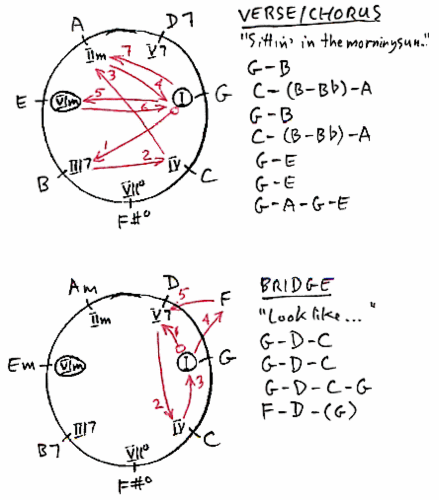
Otis Redding recorded ‘Sittin’ on the Dock of the Bay’, arguably his greatest moment, in 1967 a matter of days before he died in a plane crash. The record became the first ever posthumous US Chart #1 (#3 in UK). I’ve dug out a video compo by the excellent Rhino outfit that disinters or at least recycles gems from our musical heritage. It’s not just the voice of Otis Redding that makes this song so poignant and so good – Steve Cropper’s guitar is outstanding too.

Guitarists out there – you want a ‘Chase Chart’, don’t you?

Ch_6_Fig_114http://www.howmusicreallyworks.com

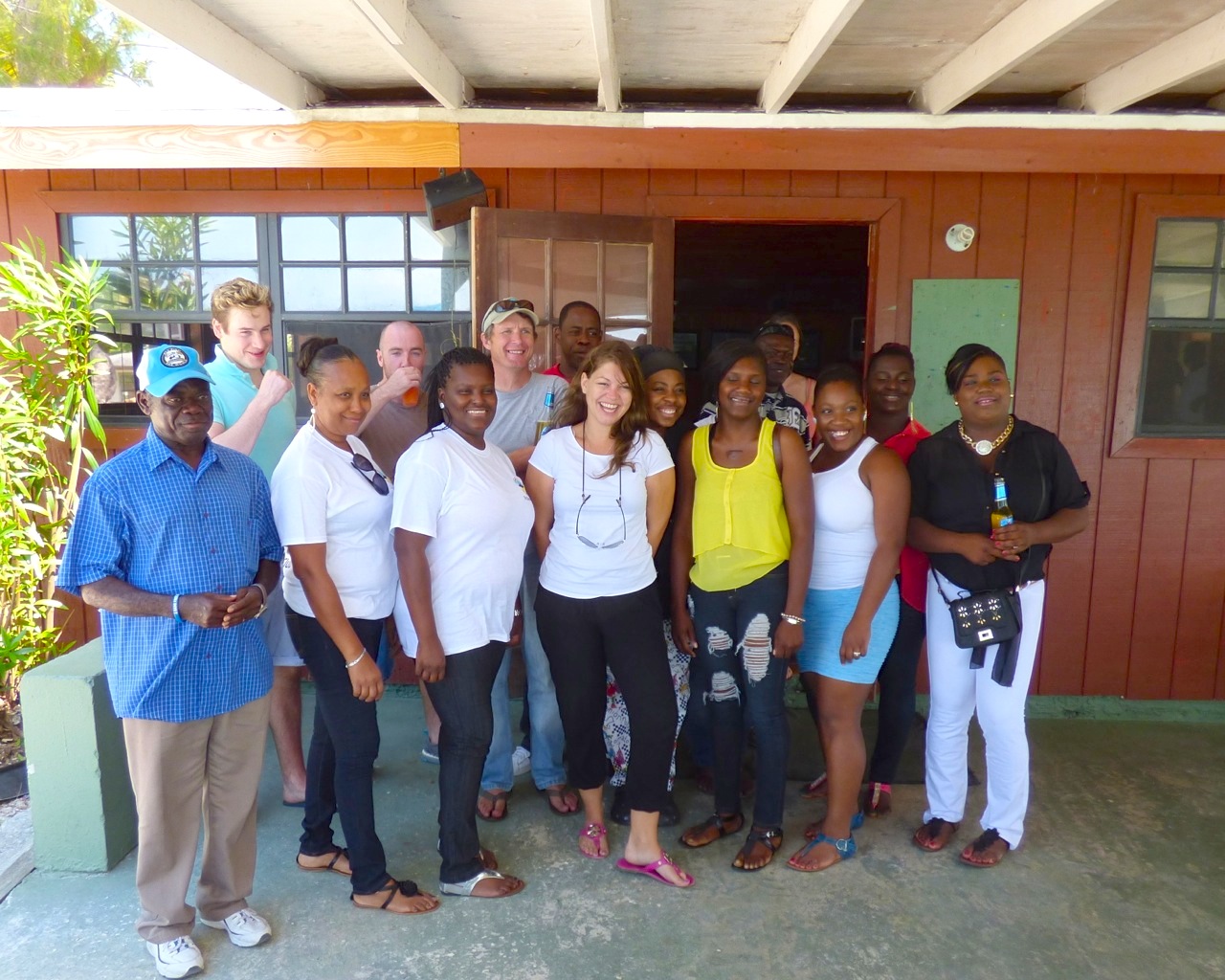
A rare photo of Sandy (centre back row, sunnies on cap) smilingSandy at Sandy Point

Photo Credits: RH, er… that it…

Unknown's avatar

“OL’ BLUE EYES”: WHITE-WINGED DOVES ON ABACO


1024px-Ala_Blanca

“OL’ BLUE EYES”: WHITE-WINGED DOVES ON ABACO

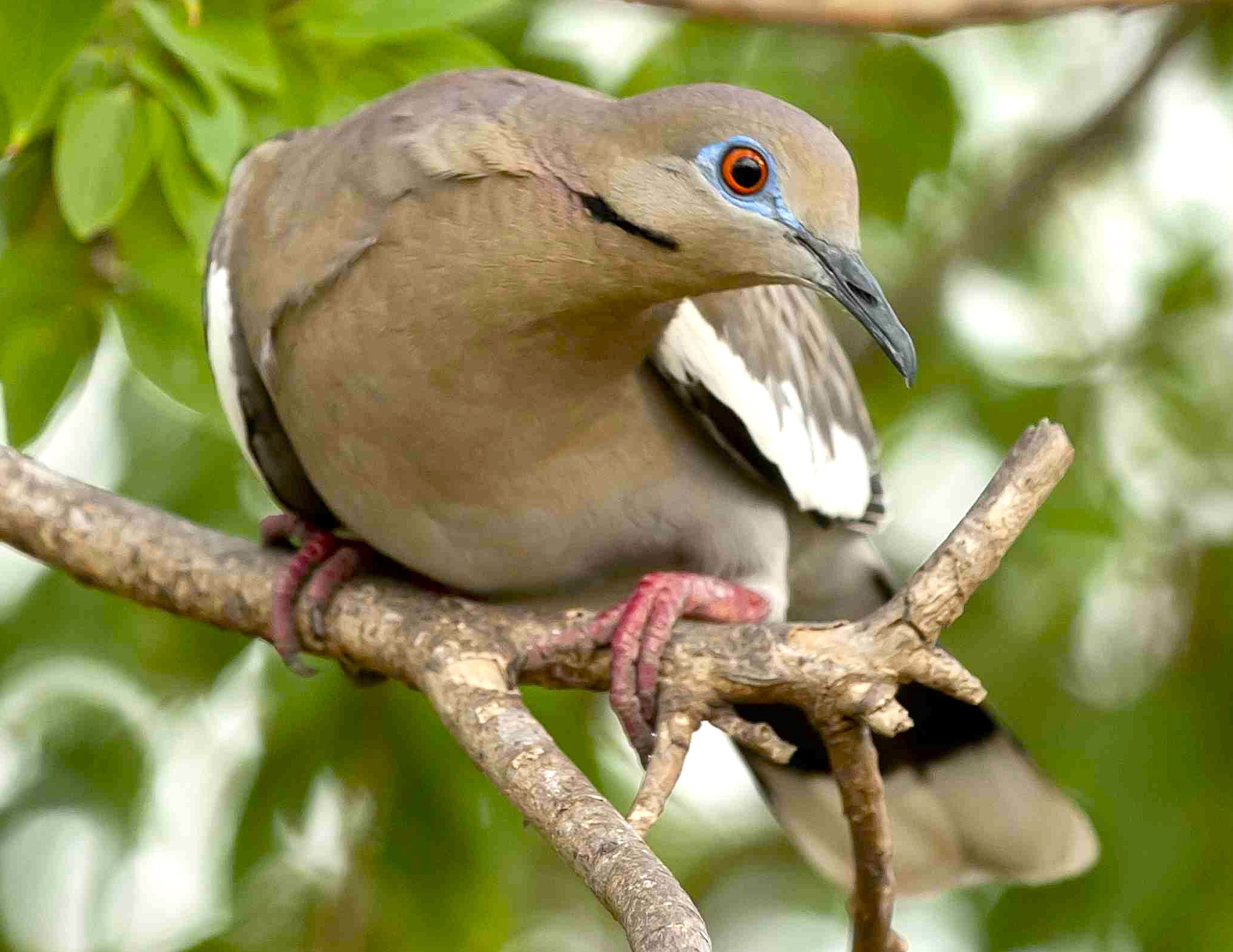
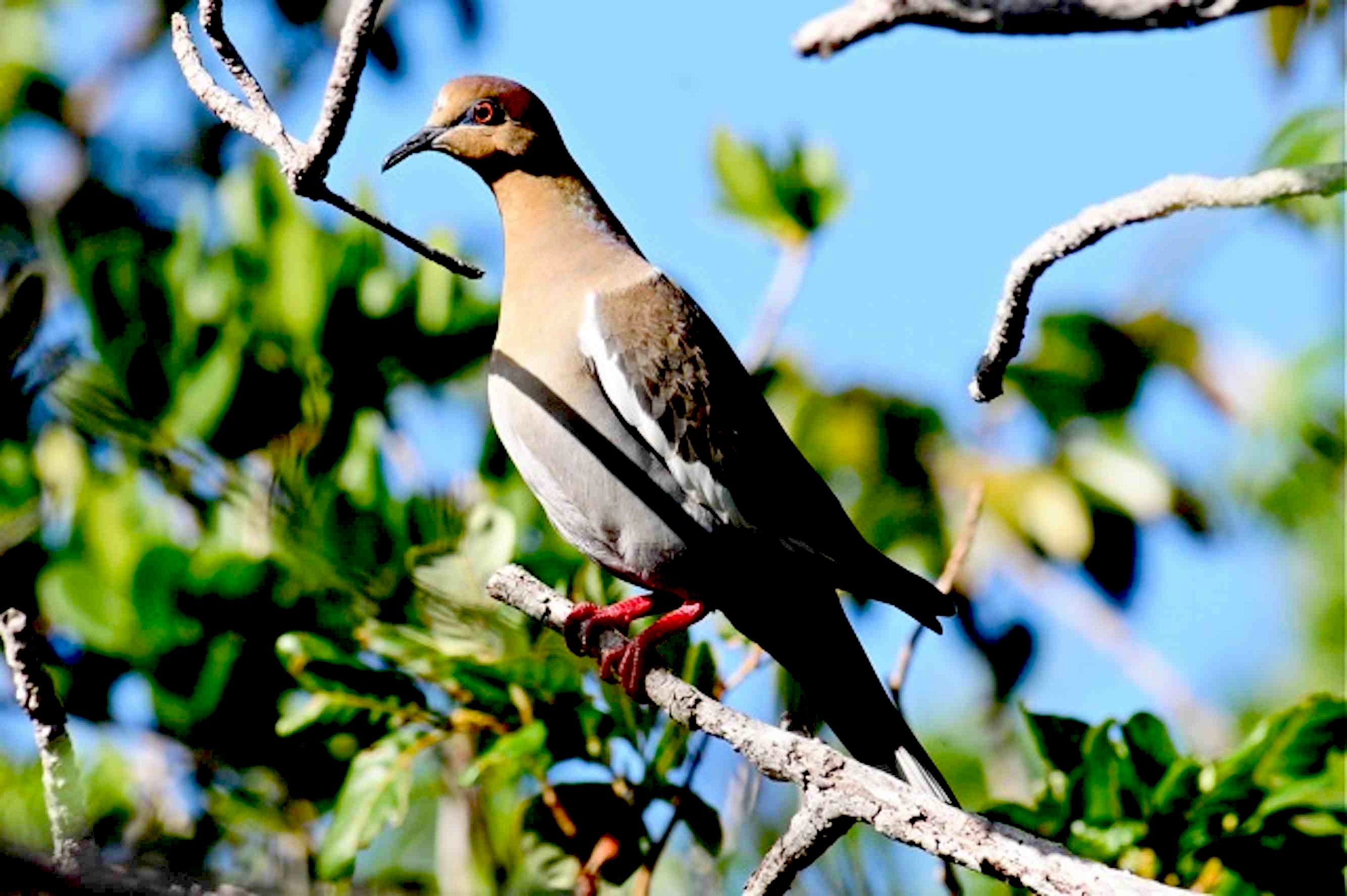
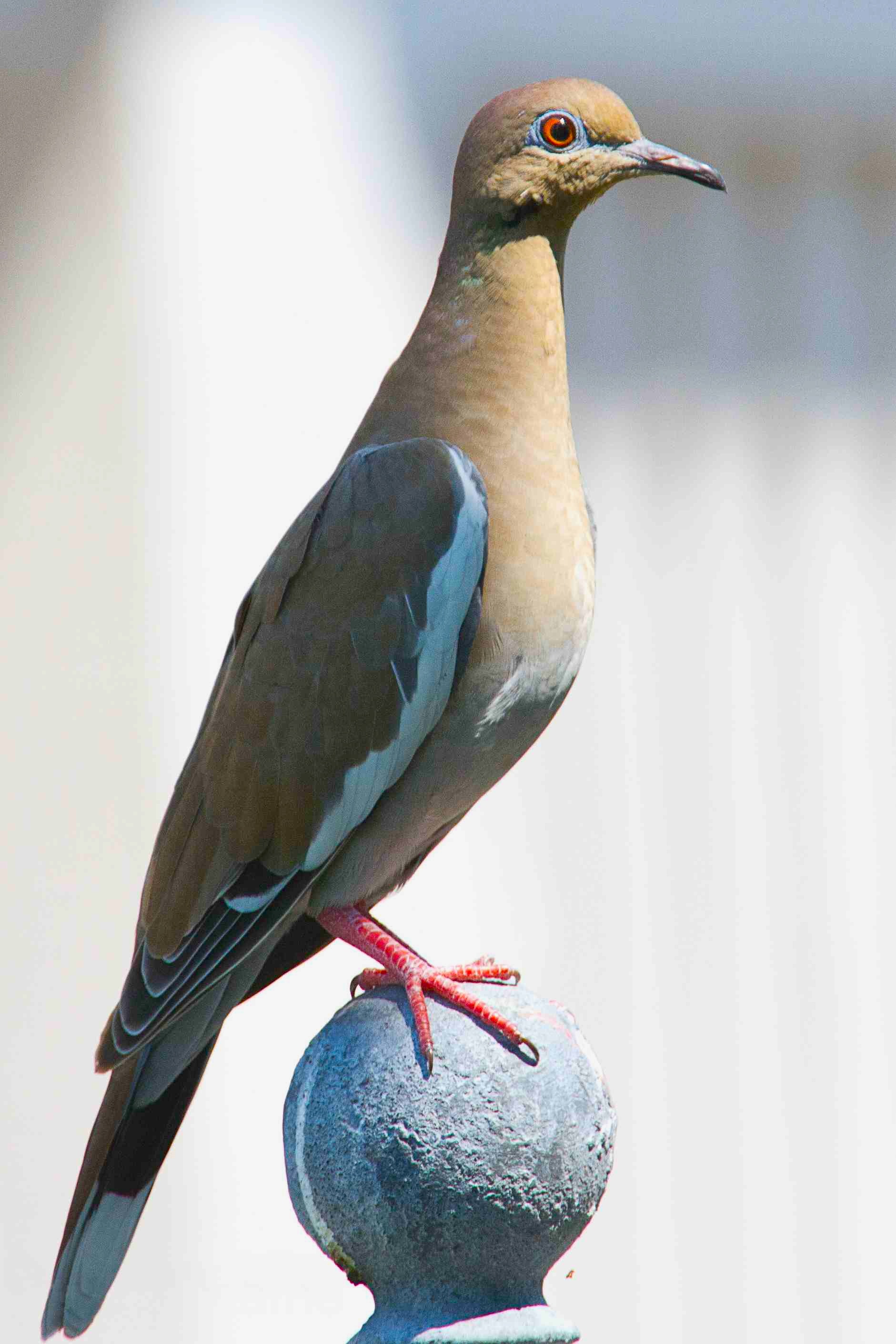
The White-winged Dove Zenaida asiatica  is an easily recognised dove species, being the only one on Abaco with conspicuous white wing markings. The prominent blue eye-rings are another unusual feature of this bird. The blue is skin and not feather colouring. Another identifier is the dark line on the upper neck.

Although the birds are permanent residents on Abaco, they are relatively uncommon. They are not a protected species, and yet unlike some other pigeon and dove species (Mourning Dove, Ring Necked Dove, White-crowned Pigeon, Zenaida Dove) they are not listed among the game birds that have a shooting season. Unlike many species whose range is decreasing for all the usual human-related reasons, this bird appears to be expanding its range – or is possibly being introduced in new areas. Urban development seems not to be not such a deterrent as for other birds, and feeders are also thought to contribute to the spread.

White-winged Dove Range - Xeno Canto

White-winged Dove, Abaco Bahamas - Tom Sheley crop - Version 2

This short audio clip of a White-winged Dove has other background bird sounds, mostly identifiably a red-winged blackbird making its ‘rusty gate hinge’ call

Mike Nelson / Xeno Canto

White-winged Dove, Abaco - Tony Hepburn

FANCY THAT!

STEVIE NICKS name-checks the White-winged Dove and its call in her 1981 hit “Edge of Seventeen” from her Bella Donna album. If your interest is piqued as the Mac again discuss putting behind them their various differences and prodigious substance sampling to re-form (Glastonbury 2015?), see below. However, rehearing this again (having hidden Bella Donna in a locked drawer 30 years ago) the music has not worn well and her voice – sometimes so exciting – is somewhat fingernails on blackboard. 

This final image is by Dan Pancamo who generously uploaded it to Wiki. It is several cuts above the usual generic illustrative images in both quality and style.

White-winged_Dove_by_Dan_Pancamo

Credits: Wiki / Dan Pancamo, Tom Sheley, Tony Hepburn, Xeno Canto

Unknown's avatar

WINTER WARBLERS ON ABACO: NORTHERN PARULA


Northern Parula,  Abaco Craig Nash

WINTER WARBLERS ON ABACO: NORTHERN PARULA 

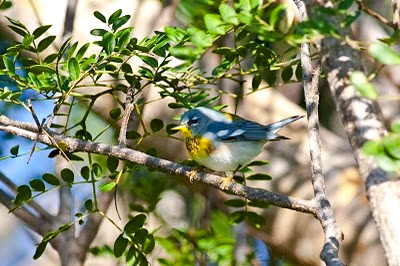
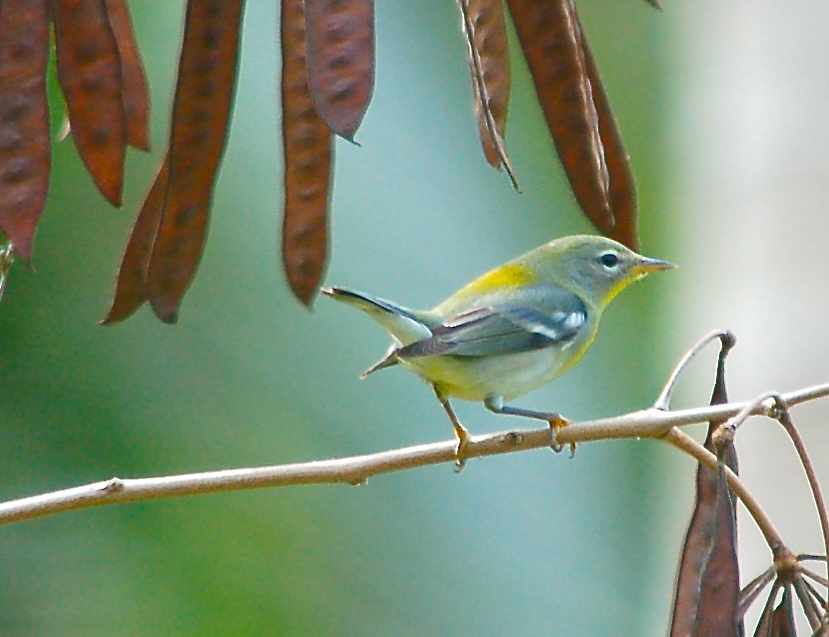
The NORTHERN PARULA Setophaga americana is a stumpy little migratory warbler with white arcs above and below the eyes, and with a slate-coloured back distinctively smudged with an olive patch in both sexes. These birds are winter residents on Abaco, and are common throughout the island and cays. They are arriving right now, including juveniles making their first trip to Abaco. Wonder what they’ll make of it?

This photo shows the distinctive colour difference between feet (orangey) and legs (grey-brown)Northern Parula, Abaco - Bruce Hallett (adult male)

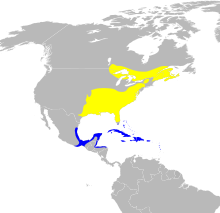
Range Map: Summer (Yellow) & Winter (Blue)220px-Parula_americana_map.svg

Parulas are primarily insect eaters, with a preference for caterpillars and spiders. They sometimes dart from a perch to snatch insect prey in mid-air. In winter they vary their diet with berries and fruit. You are most likely to see one foraging busily in bushes and low trees – maybe coming up for air by poking its head above the foliage…

Northern Parula, Abaco (Craig Nash)

TAXONOMY DOMINÉ

WHAT THE HECK IS  A “PARULA”? Originally, Linnaeus classified this little bird at a Tit, or Parus. For some reason, “as taxonomy developed the genus name was modified first to Parulus and then the current form” (Wiki Hat-tip). But although none of the other 37 Abaco warbler species is a Parus, Parulus or Parula, they all come under the family name Parulidae. The august institutions that deal with these things have classified the Parula as a ‘Setophaga’, along with many other warblers.

This photo shows the distinctive upper chest band of the adult bird very clearlyBAHAMAS - Northern Parula Warbler, Abaco -  Becky Marvil

The CORNELL LAB list of adult Parula identifiers is shown below, with adult females being similar ‘but with greener backs’. These specifics are pretty much borne out by the birds shown here (except for the last bird, an immature female just beginning to develop the Parula characteristics). The next photo by Woody Bracey, is a perfect example of what to look out for. 

  • Small songbird.
  • Blue-gray hood and wings.
  • Yellow chest with black and reddish band across it.
  • White crescents above and below eyes.
  • Green back.
  • Two white wingbars.

Northern Parula, Abaco (Woody Bracey)

Parulas produce different sounds to listen out for – a ‘chip’ call that could be any number of birds (IMO); a song; and a trill. Here are examples of each from the essential bird call site Xeno Canto.

CHIP CALL Paul Marvin / Xeno Canto

SONG Paul Marvin / Xeno Canto

TRILL Jelmer Poelstra / Xeno Canto

ABACO BAHAMAS - Northern Parula 2, 1-22-12, Nursery copy 2

This is an immature female parula, a ‘first fall’ bird, and therefore on its first visit to AbacoNorthern Parula, Abaco - Bruce Hallett (imm. - 1st fall female)

I’ll end with an excellent 2:18 mins-worth of Parula-based video from Wild Bird Video Productions

[youtube https://www.youtube.com/watch?v=fn8uzlYnt50]

RELATED POSTS

WARBLER GALLERY – ABACO’S 37 SPECIES

PERMANENT RESIDENT WARBLERS  – THE ABACO 5 

ENDEMIC BIRDS – ABACO’S 4, inc. 2 WARBLERS

CREDITS: Photos – Craig Nash, Bruce Hallett, Becky Marvil, Gerlinde Taurer; Audio – Xeno Canto; Video -Wild Bird Video Productions; Cornell Lab; a smidge of Wiki

Unknown's avatar

“50 WAYS TO PLEASE YOUR PLOVER”: PIPING PLOVERS ON ABACO (2)


Piping Plover - Danny Sauvageau

 “50 WAYS TO PLEASE YOUR PLOVER”: PIPING PLOVERS ON ABACO (2)

There must be 50 ways at least, most of them amounting to leaving Piping Plovers alone and respecting their habitat. So, in many cases simply NOT doing things . Refraining from driving your  SUV around on the beaches exactly where they are resting (with other shorebirds) during migration (yes, this very scenario is captured on film). Discouraging your canine friends from investigating their scrapes, eggs and chicks. Not building a concrete block on their favourite beach. Avoiding dumping quantities of oil in their vicinity. That kind of thing. Make a new plan, Stan! Watch where you drive, Clive! Find a new place, Grace! Safeguard your oil, Doyle! And leave the birds free…

Piping Plover - Danny Sauvageau

MIGRATION & CONSERVATION I’m returning to Piping Plovers at a time when concerns for their diminished population has led to intensive research and protection programs at both ends of their migration routes. For a long time, their winter destination was a mystery. Recent investigations have helped to pinpoint the wintering grounds, which include Abaco. Ringing programs in the summer breeding areas mean that birds can be identified in winter and traced back to their origin. So if you are out and about and see one of these little guys – let’s say, on the beach at Casuarina – and you happen to have a camera with you, can I repeat the request to please take a photo, if possible showing the leg bling, and let one of the island birders (or me) know…

You can see how the PIPLs live through the seasons and their migrations in an excellent Audubon interactive presentation I have featured previously entitled “Beating the Odds: A Year in the Life of a Piping Plover”. CLICK BEATING THE ODDS

Piping Plover - Danny Sauvageau

PIPL ON ABACO I shared this wonderful video from the reliably excellent CONCH SALAD TV on my FB page, but it’s such a great 15 minutes worth of Piping Plover information that I am including it in this post, not least because many of the the subscribers are different. The Bahamas in general and Abaco in particular are favoured by these delightful but rare and vulnerable birds for their winter habitat (sensible creatures). If you can spare 15 minutes and are interested in the importance of Abaco as a vital component in the conservation of migratory birds, do watch the video. Presenters include Todd Pover and Stephanie Egger of CONSERVE WILDLIFE NEW JERSEY, David Knowles of the BNT and Olivia Patterson of FOTE (Friends of the Environment, Abaco). One of the most heartening features is to see the responses of  the young children who were encouraged to participate in the project, and who take to it with huge enthusiasm.  

Piping Plover - Danny Sauvageau

A while back, well-known and much missed Abaco naturalist Ricky Johnson made his own Piping Plover film incorporating his own trademark style and sense of humour. My original post about it can be seen HERE, but far better to go straight to Ricky’s video. It’s good to recall his infectious enthusiasm for the wildlife of Abaco. Impossible to watch without smiling…

Piping Plover - Danny Sauvageau

Piping Plover - Danny Sauvageau

The PIPL in this post all have two things in common. The wonderful photos are all taken by Danny Sauvageau; and all of the birds are differently ringed, reflecting their various summer habitats. So this brings me to Danny’s Kickstarter project “Saving Endangered Piping Plovers through Photography”. He has put together a superb presentation explaining his project, and how his photography in prime PIPL resting areas during their migrations back and forth can help to map and complete the picture of this vulnerable species to enable their protection.

You can reach Danny’s film by clicking the link DANNY’S FILM (there’s no obligation to go further and contribute) and you will see some fabulous footage of these little birds scuttling around on the beach, looking enchanting; and the commentary will explain the importance of the the birds and the research into their conservation.

RELATED POSTS

RARE GEMS: PIPL ON ABACO 1

“GIVE PEEPS A CHANCE ” (I know, I know…)

Credits: All photos, Danny Sauvageau; Videos – Audbon, Conch Salad TV, Ricky Johnson, Danny Sauvageau; Tip of the Hat, Paul Simon

Piping-Plover Artmagenta          Piping-Plover Artmagenta          Piping-Plover Artmagenta          Piping-Plover Artmagenta          Piping-Plover Artmagenta          Piping-Plover Artmagenta

Unknown's avatar

FORK-TAILED FLYCATCHER: ANOTHER NEW SPECIES FOR ABACO


Rogier Klappe Wiki Tyrannus_savana_-Colombia-8

FORK-TAILED FLYCATCHER: ANOTHER NEW SPECIES FOR ABACO

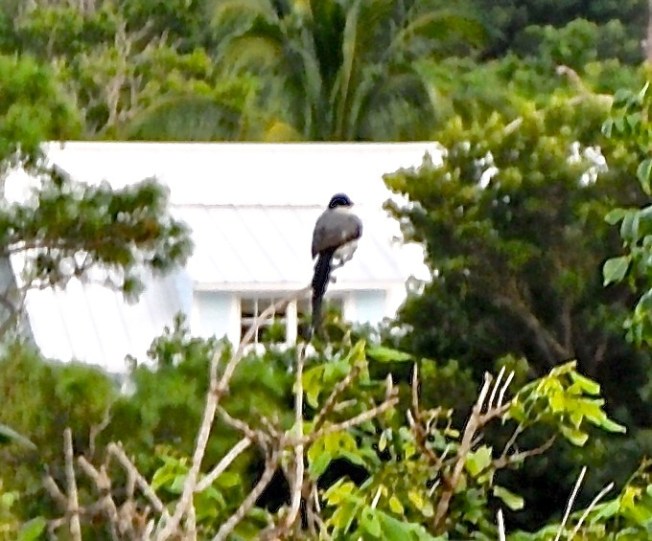
Following the flurry of reports and photos in June of Black-bellied Whistling Ducks on Abaco – a species never recorded here before – comes a new ‘first bird’: the Fork-Tailed Flycatcher Tyrannus savant. On September 24 Shirley Cartwright saw an unusual bird with a long dark tail and managed to get a photo of it of sufficient quality for a certain identification to be made. Never mind the photo detail, the fact that Shirley saw the bird and was able to obtain photographic confirmation is the thing. So here is the first-ever Fork-tailed Flycatcher for Abaco – and only the third for the Bahamas  (previous ones seen on New Providence and Great Inagua).

Fork-Tailed Flycatcher Tyrannus savant, Abaco (Shirley Cartwright)

I did a little brightening and clarifying of the original image, and also tried a cropFork-tailed Flycatcher, Abaco (Shirley Cartwright)

Tony White, the well-known authority on Bahamas birds, sent me the image with some information about this bird’s usual range:

“This is an interesting species as the race found in eastern US is South American and highly migratory. It breeds in Chile and Argentina. It is a frequent vagrant to USA, well over 100 records, and has appeared as far north as Nunavut, Canada. In the Austral fall (our spring) it migrates north and winters in Northern South America. Birds that appear in the USA at that time are considered overshoots. Birds that appear in our fall (Austral spring) are believed to be mostly first year birds that winter in northern South America and then fly a mirror image from the proper direction heading north instead of south. Unfortunately, the photos of the Abaco bird are not close enough to tell whether it was a young one or not. Field guides say young birds have shorter tails, but in fact there is considerable overlap in tail lengths between females and young. I strongly recommend a paper by McCaskie and Patton on this species in Western Birds 1994 Vol 25, No 3, pp 113=127. It can be found on SORA (Searchable Ornithological Research Archives).”

Treading carefully through a copyright minefield, I have dug out some illustrative images of this flycatcher, shown below. It belongs to the group known as tyrant flycatchers, which includes the kingbirds that are familiar on Abaco.

Fork-tailed flycatcher(Reynaldo wiki) Tesourinha_REFON

This first range map (Cornell Neotropical) shows the FTFs’ typical, largely subequatorial rangeRange Map Cornell (Neotropical) jpg

However this ‘overshoot’ range map (Audubon) reflects the fact that overshoots occur almost annually in the eastern United States seaboard and even as far north as Canada. To see these birds photographed in Connecticut (10000birds.com), click HEREGiven that the whole Florida coast is included, it’s perhaps not surprising that sooner or later the odd bird would misdirect to the northern Bahamas.fork-tailed flycatcher

This example of the species is taken from the Crossley ID Guide to Eastern Birds (open source) . The bird in the centre with the long tail is clearly a male; I imagine the mature-looking one on the left is a female; and the one on the right with the comparatively stumpy tail, a juvenile.

Fork_Tailed_Flycatcher_From_The_Crossley_ID_Guide_Eastern_Birds

It’s sometimes instructive to discover how John James Audubon saw a particular bird, so here is his FWF. While the bird is undeniably beautiful, I am not too certain of its proportion in relation to the size of the blossom. But then again, it seems to me that he didn’t always struggle for exactitude, preferring a broader, more relaxed approach to depict the birds as he saw them – and not afraid to exaggerate a characteristic for effect.

NEW INFO Woody Bracey has contacted me to point out that the male in the image above “is actually a pale mantled manachus subspecies from Central America, not the darker savana nominate subspecies from South America which Shirley photographed”. Which explains the colour difference.

640px-168_Fork-tailed_Flycatcher

ESSENTIAL FUN FACT

The fork-tailed flycatcher has the longest tail relative to body size of any bird on earth (trails.com)

As the name suggests, this species feeds mainly on insects, although in winter it may also eat berries and the like. They will often perch on wires of fence posts. I’ve no idea if they ‘hawk’ for flies on the wing, but if so the sight of a male feeding must be wonderful. Here is an example of their song

[audio http://www.xeno-canto.org/sounds/uploaded/DGVLLRYDXS/TYRSAV06.mp3] Jeremy Minns / Xeno-Canto

        Tyrannus_savanna-Fork-tailed_Flycatcher Hector Bottai wikimedia

To see a gallery of FWF photos on the excellent birding resource Oiseaux.net, click on the logo oiseaux

 RELATED POSTS
BLACK-BELLIED WHISTLING DUCK A new species for Abaco (June 2014)
BLACK-BROWED ALBATROSS New species, June 2013
Credits: Shirley Cartwright, Rogier Klappe, Tony White, ‘Reynaldo’, Cornell, Audubon, Crossley, Xeno-Canto,  Hector Bottai
Unknown's avatar

ABACO WARBLERS: A COMPLETE PDF GUIDE FOR TABLET & PHONE


Black & White Warbler, Abaco - Bruce Hallett

ABACO WARBLERS: A COMPLETE PDF GUIDE

Yesterday I posted a complete guide to Abaco’s 37 warblers. A few people said nice things about it. Two people spotted a mistake (my bad!), now corrected. It has now occurred to me that it might be helpful to reduce the contents to a shorter PDF so as to make the guide more handy – plus you will be able to print it out. If you click the link below, you can save the 1.6 mb ‘booklet’ onto your computer desktop / iPad / tablet / etc. You can email it to your phone and save it there. For an iPhone, you have the option to have a ‘quick check’. I you want to keep it, you can ‘cloud’ it, or save it in various ways on the phone, for example to iBook or Kindle if you have the App. I expect other cellphone  types are much the same. I have road-tested the system, and it works! So if one sunny day you suspect you are looking at a Bay-breasted Warbler (highly unlikely, but possible) in that small bush over there… yes look, near the top on the left… no, on the long twig lower down… you can check it out. 

AN ILLUSTRATED GUIDE TO ABACO’S WARBLERS

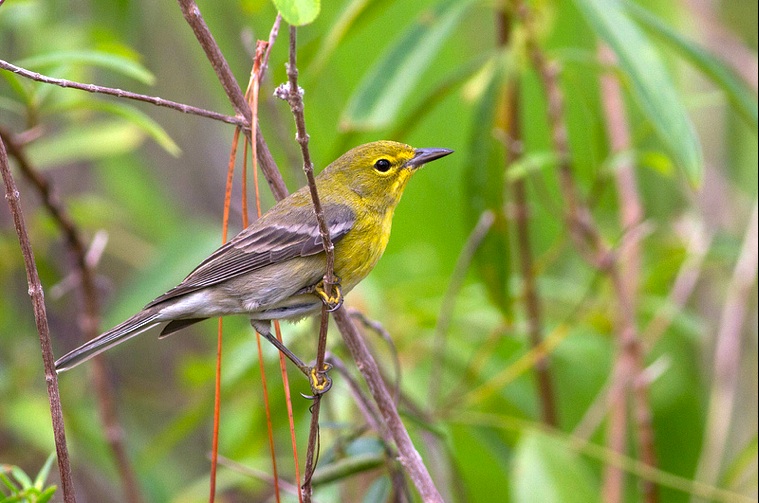
Bahamas-Great Abaco_Prairie Warbler_Gerlinde Taurer

And here’s the thing. You have a camera in your hand to record the encounter. And if the little rascal is happily singing away, you can use you phone to record it, using a simple technique I have previously described – check out the link. 

HOW TO RECORD BIRDS ON A PHONE 

Prothonotary Warbler, Abaco - Craig Nash

Photos: Black & White Warbler, Bruce Hallett; Prairie Warbler, Gerlinde Taurer; Female Prothonotary Warbler, Craig Nash

Unknown's avatar

AN ILLUSTRATED GUIDE TO ABACO’S 37 WARBLER SPECIES


Yellow-throated Warbler, Abaco - Bruce Hallett

Yellow-throated Warbler, Abaco

AN ILLUSTRATED GUIDE TO ABACO’S 37 WARBLER SPECIES

The winter warblers are arriving on Abaco right now, and a couple of people have already sent me ID queries. Until a couple of years ago, I lazily believed all of the warblers were near identical, differing only in their extent of yellowness. Not so. I know better now. Their arrival now has prompted me to devise a general guide to all the various warblers, so that the great diversity can be appreciated. The photos that follow show an example of each warbler, where possible (1) male (2) in breeding plumage and (3) taken on Abaco. Where I had no Abaco images – especially with the transients – I have used other mainstream birding resources and Wiki. All due credits at the foot of the post.

Abaco has 37 warbler species recorded for the main island and cays. They fall into 3 categories: 5 permanent residents (PR) that breed on Abaco (B), of which two are endemics; 21 winter residents (WR) ranging from ‘everyday’ species to rarities such as the Kirtland’s Warbler; and 11 transients, most of which you will be lucky to encounter. The codes given for each bird show the residence status and also the likelihood of seeing each species in its season, rated from 1 (very likely) to 5 (extreme rarities, maybe only recorded once or twice).

Yellow Warbler at sunrise.Abaco Bahamas.6.13.Tom Sheley copy copy

PERMANENT RESIDENTS

BAHAMA YELLOWTHROAT Geothlypis rostrata PR B 1  ENDEMIC

Bahama Yellowthroat, Abaco - Tom Reed

YELLOW WARBLER Setophaga petechia PR B 1 

Yellow Warbler, Abaco Bahamas.6.13.Tom Sheley

OLIVE-CAPPED WARBLER Setophaga pityophila PR B 1 

Olive-capped Warbler, Abaco - Bruce Hallett

PINE WARBLER Setophaga pinus PR B 1 

Pine Warbler, Abaco - Tom Reed

BAHAMA WARBLER Setophaga flavescens PR B 1 ENDEMIC

Bahama Warbler, Abaco - Alex Hughes

Yellow Warbler at sunrise.Abaco Bahamas.6.13.Tom Sheley copy copy

WINTER RESIDENTS  (COMMON)

OVENBIRD Seiurus aurocapilla WR 1 

OVENBIRD_Bahamas-Great Abaco_6639_Ovenbird_Gerlinde Taurer 2

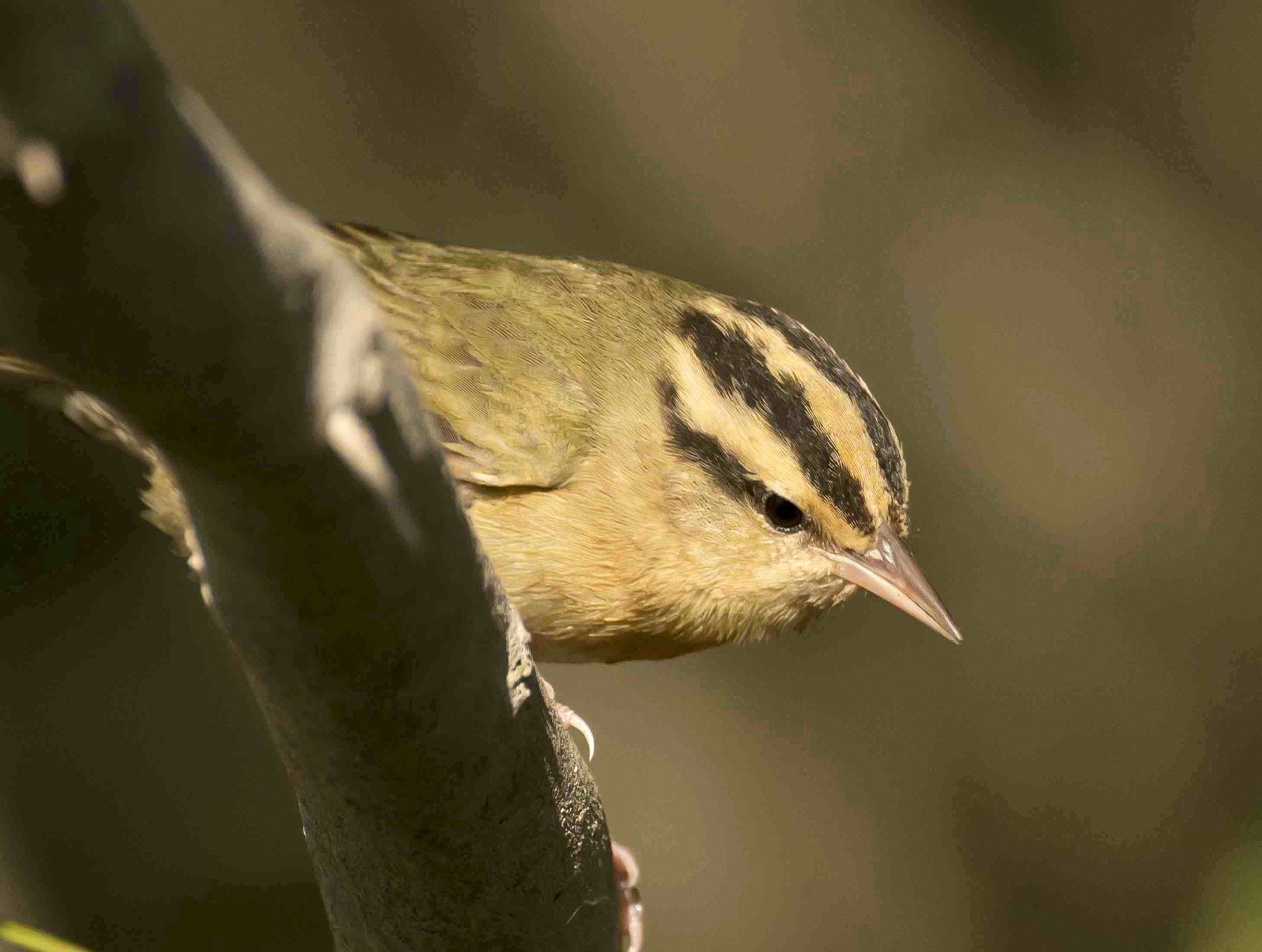
WORM-EATING WARBLER Helmitheros vermivorum WR 2 

Worm-eating Warbler.Bahama Palm Shores.Abaco Bahamas.Tom Sheley

NORTHERN WATERTHRUSH  Parkesia noveboracensis WR 1 

BAHAMAS - Northern Waterthrush - Oct 2010 Becky Marvil

BLACK-AND-WHITE WARBLER Mniotilta varia WR 2 

Black & White Warbler, Abaco - Bruce Hallett

COMMON YELLOWTHROAT Geothlypis trichas WR 1 

Common Yellowthroat.Gilpin Pond.Abaco Bahamas.Tom Sheley copy

AMERICAN REDSTART  Setophaga ruticilla WR 1 

Bahamas-Great Abaco_6334_American Redstart_Gerlinde Taurer copy

CAPE MAY WARBLER Setophaga tigrina WR 1 

Cape May Warbler (m), Abaco - Bruce Hallett

NORTHERN PARULA Setophaga americana WR 1 

Northern Parula, Abaco - Woody Bracey

BLACK-THROATED BLUE WARBLER Setophaga caerulescens WR 2 

Black-throated Blue Warbler (m), Abaco - Bruce Hallett

PALM WARBLER  Setophaga palmarum WR 1 

Palm Warbler, Abaco - Peter Mantle

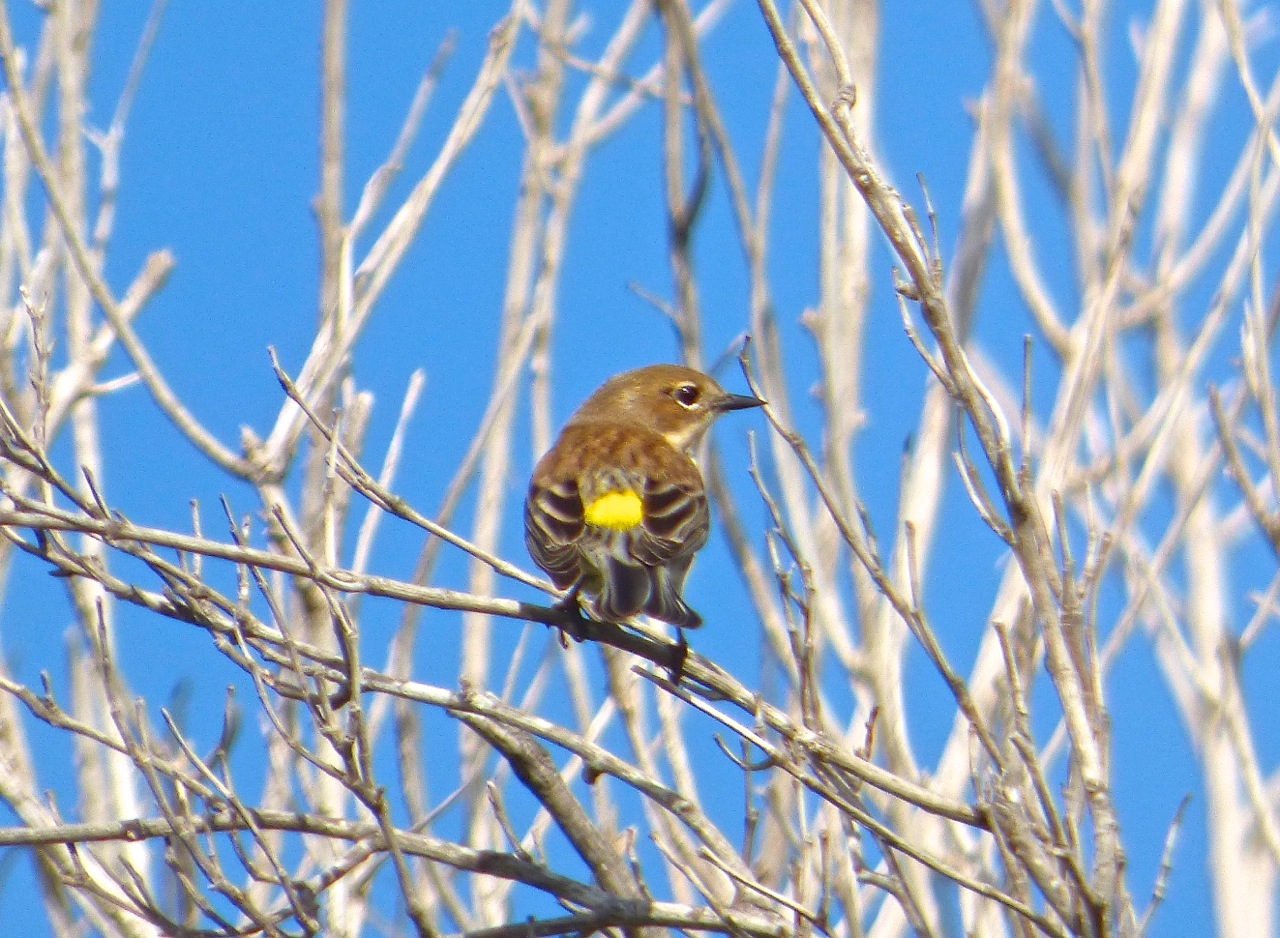
YELLOW-RUMPED WARBLER Setophaga coronata WR 2 

Yellow-rumped Warbler, Abaco - Keith Salvesen (RH)

YELLOW-THROATED WARBLER Setophaga dominica WR 1 

Yellow-throated Warbler, Abaco - Bruce Hallett

PRAIRIE WARBLER Setophaga discolor WR 1 

Bahamas-Great Abaco_6609_Prairie Warbler_Gerlinde Taurer copy 2

Yellow Warbler at sunrise.Abaco Bahamas.6.13.Tom Sheley copy copy

 WINTER RESIDENTS  (UNCOMMON TO RARE)

LOUISIANA WATERTHRUSH Parkesia motacilla WR 3 

Louisiana waterthrush William H. Majoros WIKI

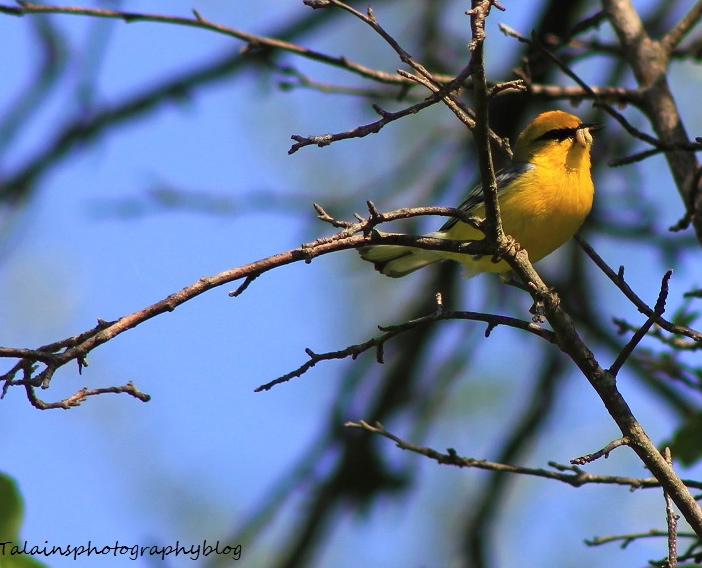
BLUE-WINGED WARBLER Vermivora cyanoptera WR 3

Blue-winged Warbler, Abaco (Becky Marvil)

Blue-winged Warbler. talainsphotographyblog

SWAINSON’S WARBLER  Limnothlypis swainsonii WR 4 

Swainson's Warbler, Abaco - Bruce Hallett

NASHVILLE WARBLER Oreothlypis ruficapilla WR 4 

Nashville Warbler, Abaco - Bruce Hallett

HOODED WARBLER Setophaga citrina WR 3 

Hooded Warbler, Abaco (Charmaine Albury)

KIRTLAND’S WARBLER Setophaga kirtlandii WR 4 

Kirtland's Warbler (m), Abaco - Woody Bracey

MAGNOLIA WARBLER Setophaga magnolia WR 3 

Magnolia warbler, Abaco - Craig Nash

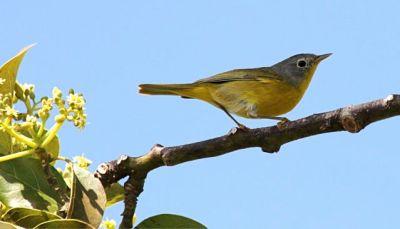
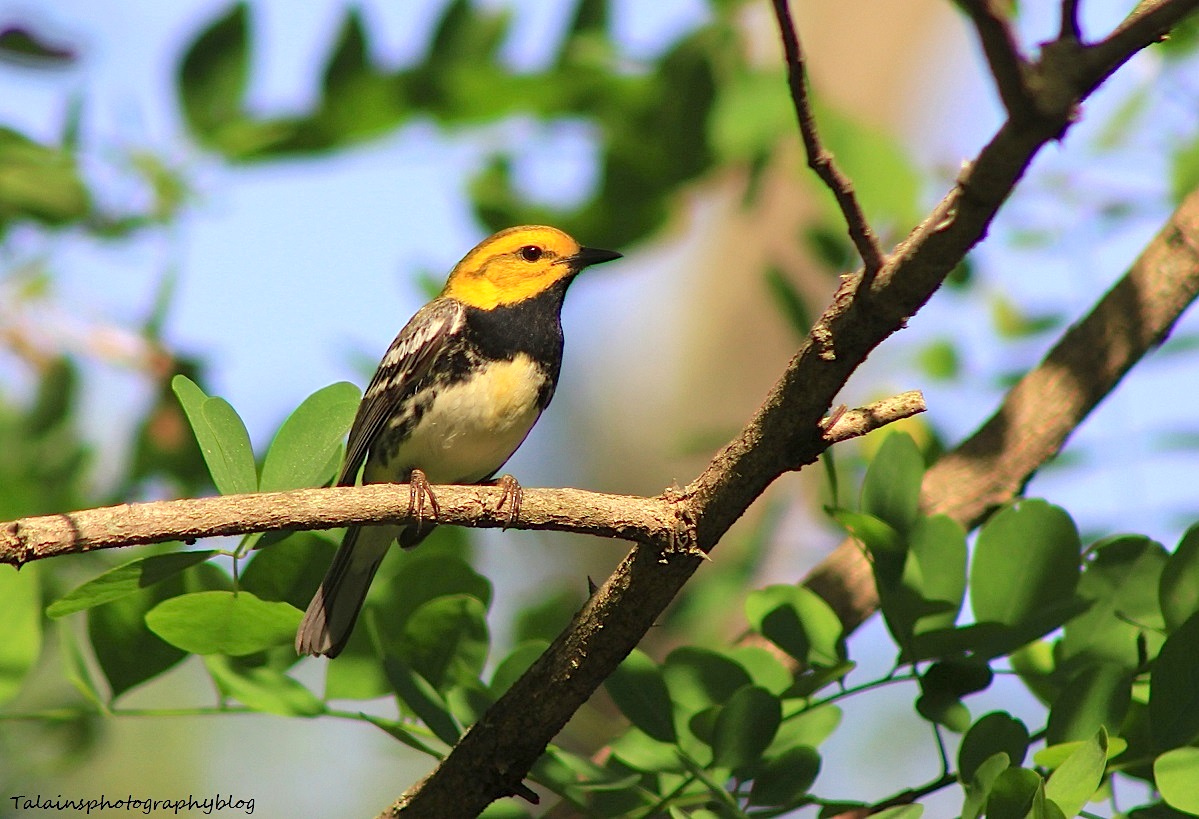
BLACK-THROATED GREEN WARBLER Setophaga virens WR 3 

Black-throated Green Warbler - talainsphotographyblog

Yellow Warbler at sunrise.Abaco Bahamas.6.13.Tom Sheley copy copy

TRANSIENTS

PROTHONOTARY WARBLER Protonotaria citrea TR 3 

Prothonotary Warbler, Abaco - Ann Capling

TENNESSEE WARBLER Oreothlypis peregrina TR 4 

Tennessee Warbler Jerry Oldenettel Wiki

ORANGE-CROWNED WARBLER  Oreothlypis celata TR 4 

Orange-crowned Warbler dominic sherony wiki

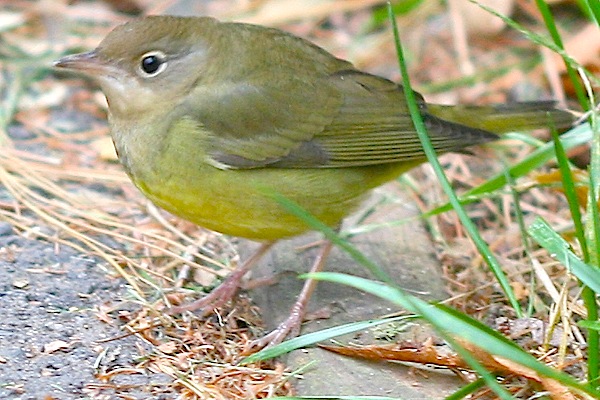
CONNECTICUT WARBLER Oporonis agilis TR 4 

Connecticut Warbler Central Park NYC 10000birds.com

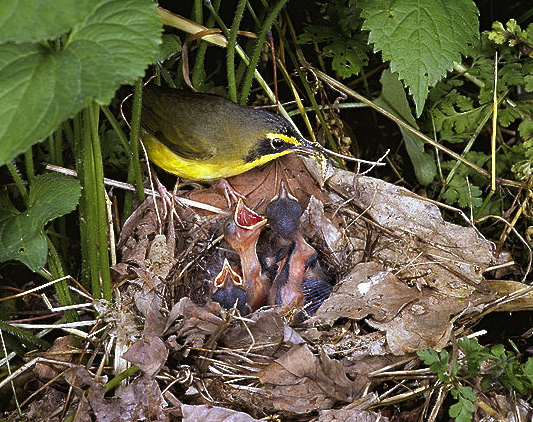
KENTUCKY WARBLER Geothlypis formosa TR 4 

Kentucky_Warbler Steve Maslowski wiki - Version 2

BAY-BREASTED WARBLER Setophaga castanea TR 4 

Bay-breated warbler MDF Wiki

BLACKBURNIAN WARBLER Setophaga fusca TR 4

Blackburnian Warbler Mdf wiki

CHESTNUT-SIDED WARBLER Setophaga pensylvanica TR 4

Chestnut-sided Warbler talainsphotographyblog - Version 2

BLACKPOLL WARBLER Setophaga striata TR 3 

Blackpoll Warbler avibirds.com

WILSON’S WARBLER Cardellina pusilla TR 4 

Wilson's Warbler Michael Woodruff wiki

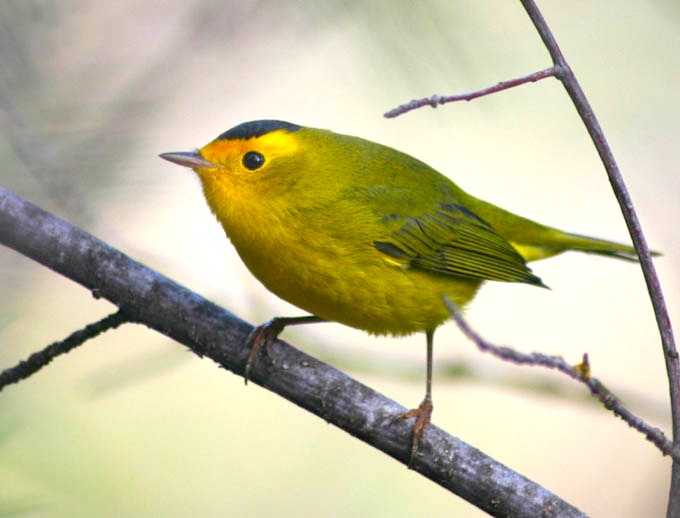
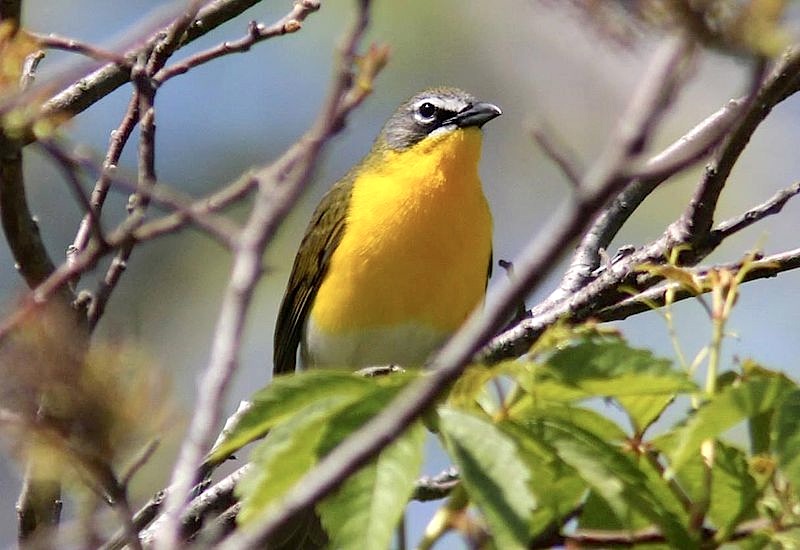
YELLOW-BREASTED CHAT Icteria virens TR 4 

Yellow-breasted Chat Emily Willoughby wiki

PHOTO CREDITS (1 – 37) Bruce Hallett (Header, 3, 9, 12, 14, 17, 21, 22); Tom Reed (1, 4); Tom Sheley (2, 7, 10); Alex Hughes (5); Gerlinde Taurer (6, 11, 18);  Becky Marvil (8, 20a); Woody Bracey (13, 24); Peter Mantle (15); RH (16); William H. Majoros wiki (19); talainsphotographyblog (20b, 26, 34); Charmaine Albury (23); Craig Nash (25); Ann Capling (27); Jerry Oldenettel wiki (28); Dominic Sherony wiki (29); 10000birds (30); Steve Maslowski wiki (31);  MDF wiki (32, 33); Avibirds (35); Michael Woodruff wiki (36); Emily Willoughby wiki (37)

CHECKLIST based on the complete checklist and codes for Abaco devised by Tony White with Woody Bracey for “THE DELPHI CLUB GUIDE TO THE BIRDS OF ABACO” by Keith Salvesen

Unknown's avatar

BANANAQUITS ON ABACO: CHEERY VANQUISHERS OF GLOOM


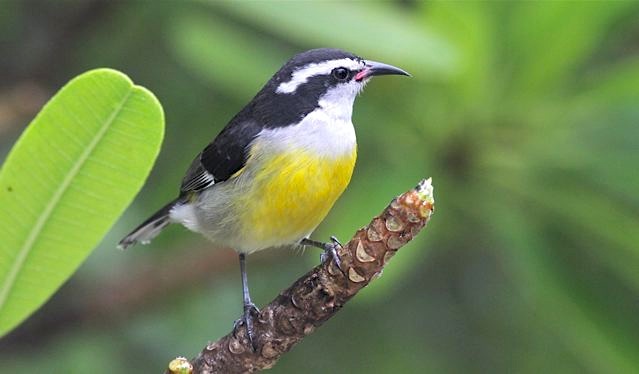
Bananaquit, Abaco - Bruce Hallett

BANANAQUITS ON ABACO: CHEERY VANQUISHERS OF GLOOM

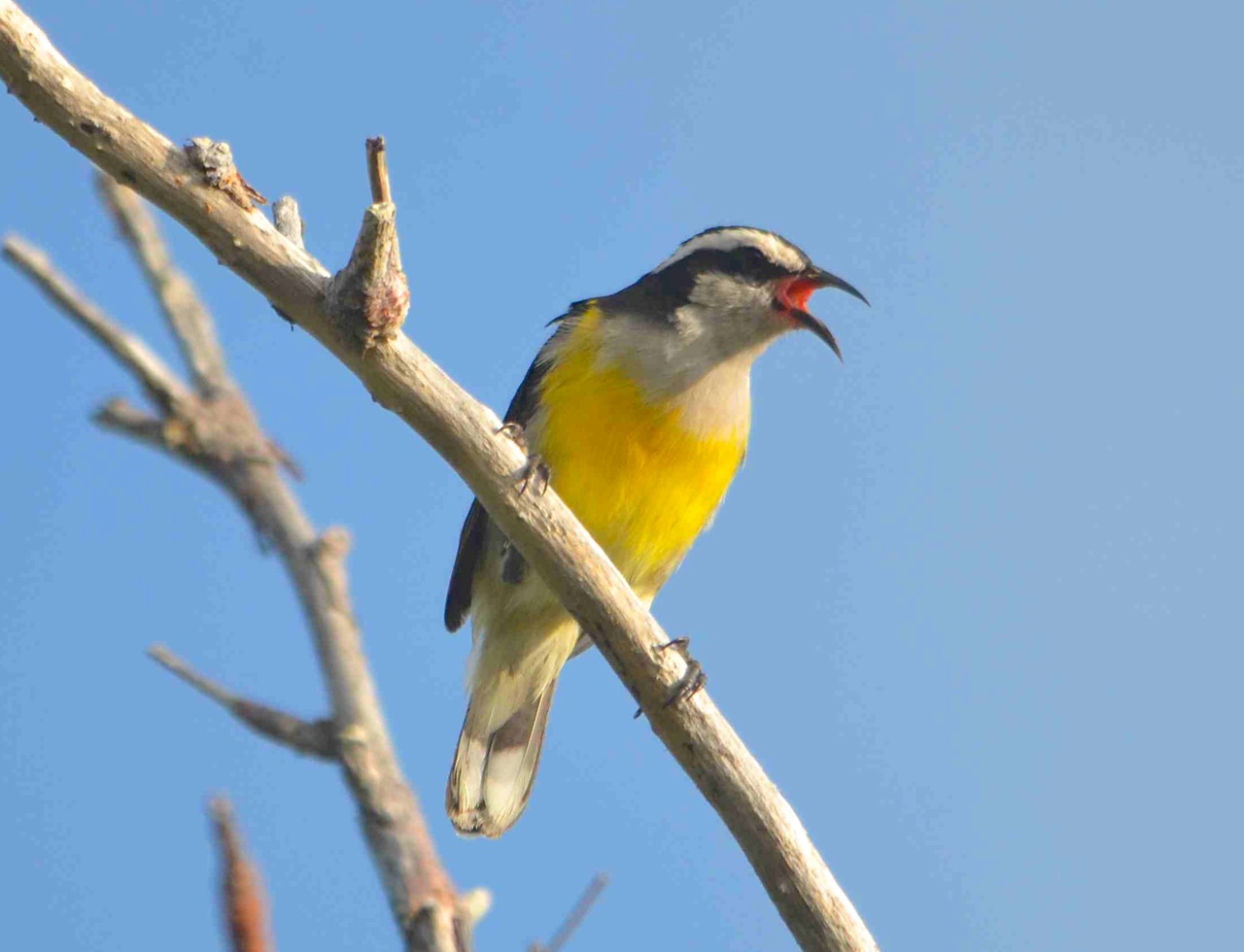
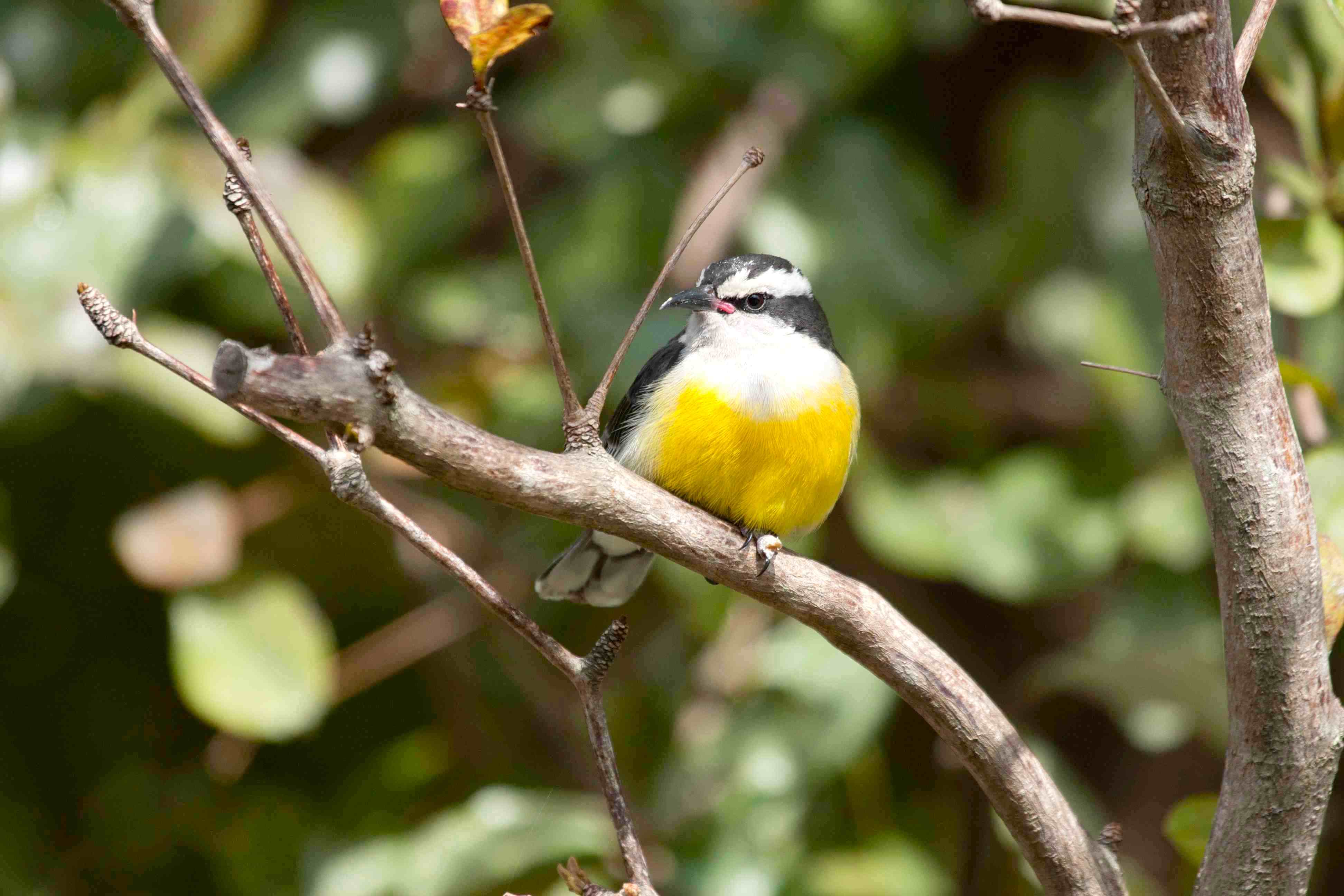
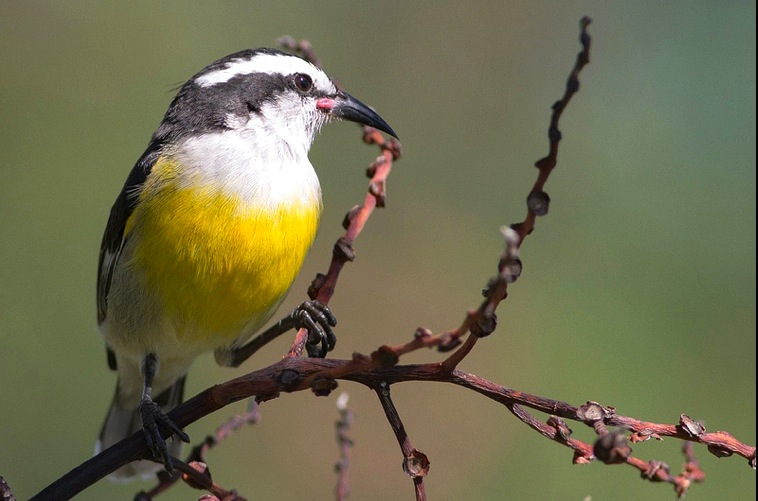
I’d been planning a post about marine debris and its dire effects on the natural world. Some images I proposed to use are distressing, and some simply suggest how futile it is to try to prevent mankind chucking harmful and semi-permanent rubbish into the sea. Depressing. A gyre of upset. Add in new military interventions without limitation and suddenly I longed for something more cheerful. Checking through a folder of photos of Bananaquits helped to stave of the gloom, so I picked out a few images of this lovely small bird taken by 9 photographers. 

Bananaquit, Abaco - Craig NashBananaquit & palm, Delphi, Abaco, Bahamas 2 (Keith Salvesen)Bananaquit, Treasure Cay, Abaco - Becky MarvilBananaquit, Bahamas, Great Abaco - Gerlinde TaurerBananaquit, Abaco - Bruce HallettBananaquit, Abaco - Charlie Skinner Bananaquit, Abaco - Erik Gauger Bananaquit, Abaco - Tom Reed Bananaquit, Abaco - Peter Mantle

Credits: Bruce Hallett, Craig Nash, Keith Salvesen, Becky Marvil, Gerlinde Taurer, Charlie Skinner, Erik Gauger, Tom Reed, Peter Mantle

Unknown's avatar

OWLS OF ABACO (2): BURROWING OWLS – RARE VISITORS


Burrowing Owl 1

OWLS OF ABACO (2): BURROWING OWLS – RARE VISITORS

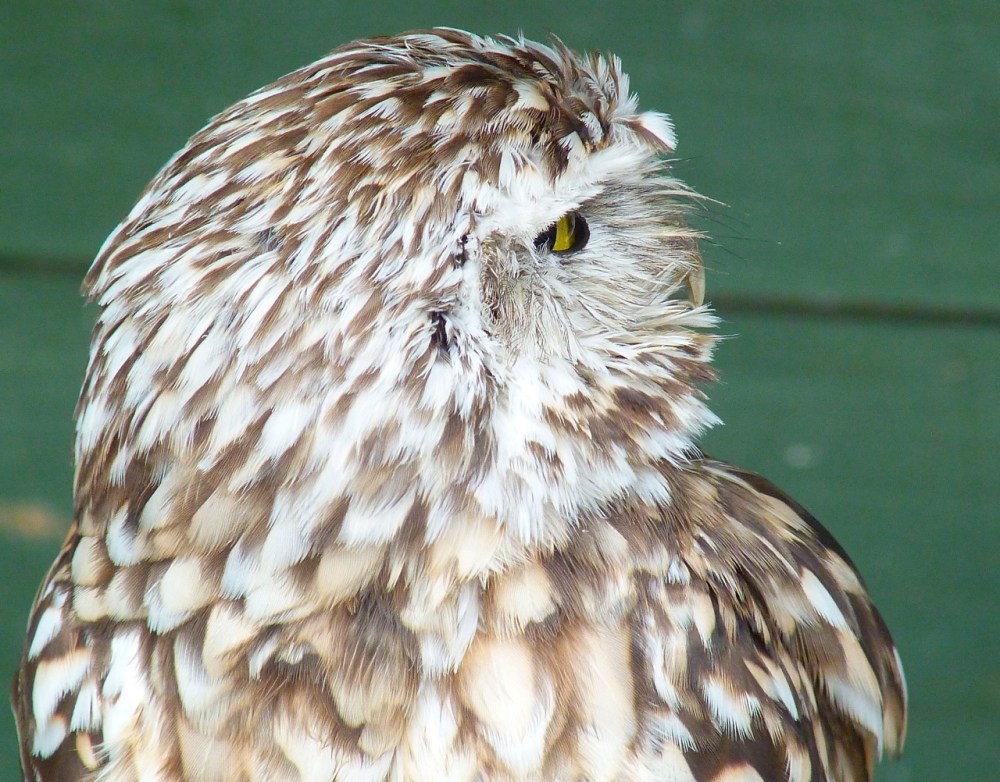
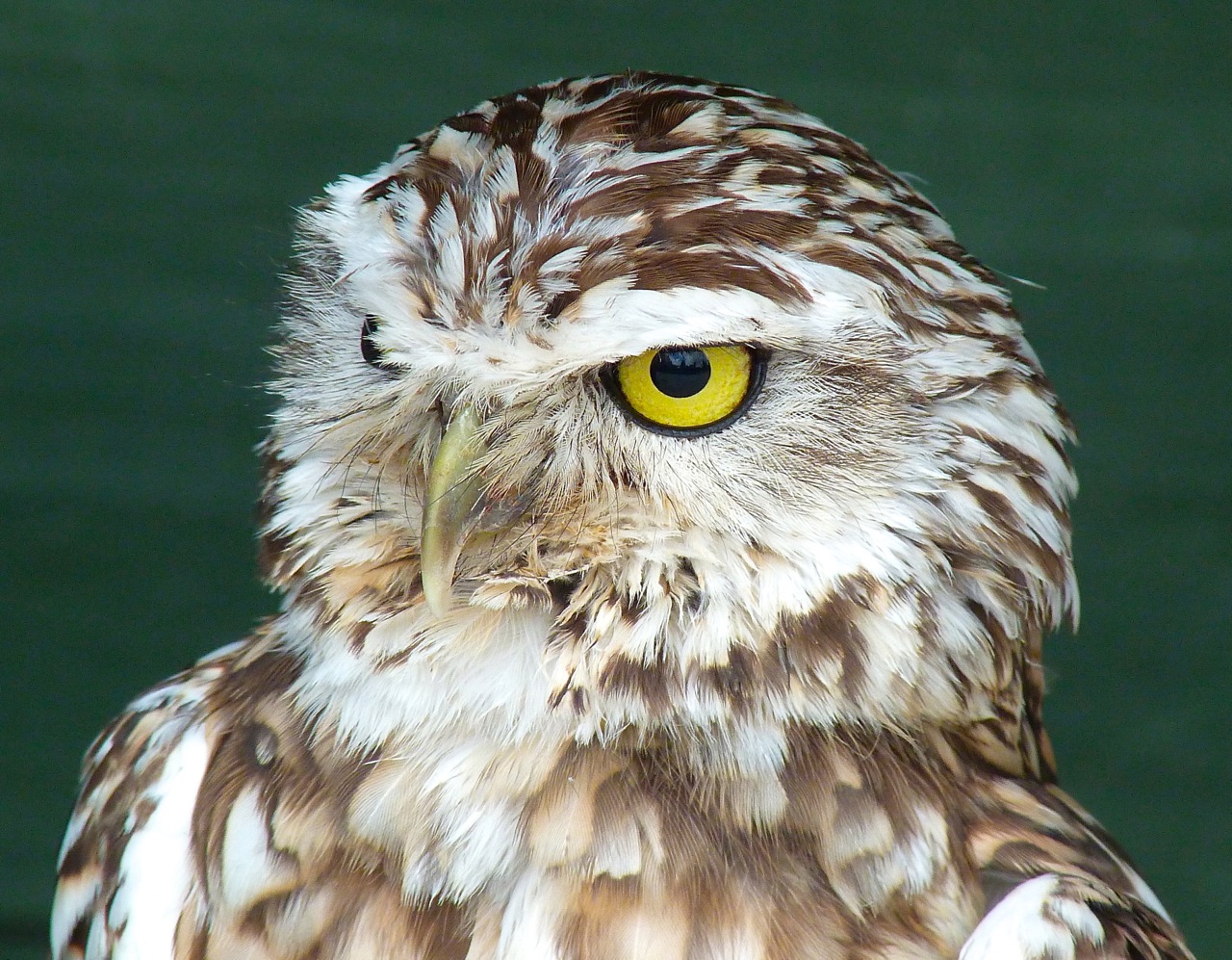
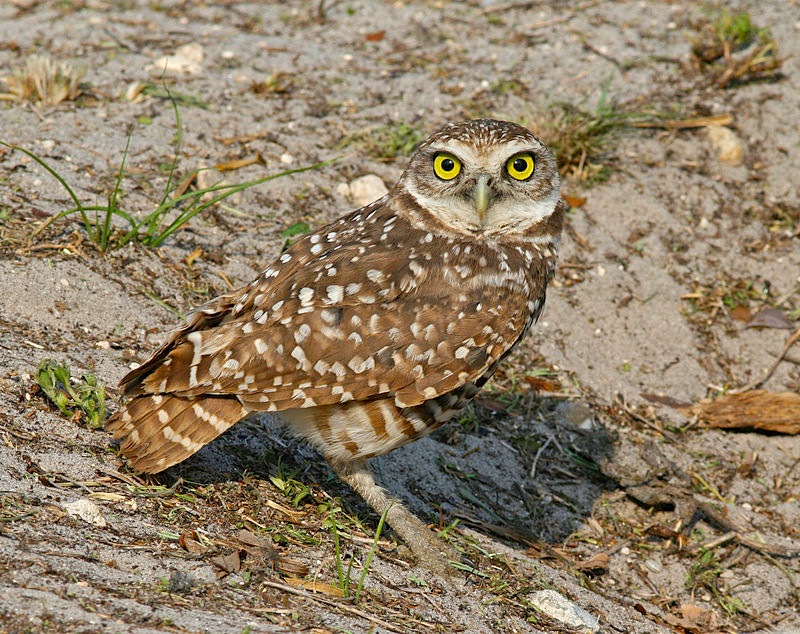
The Burrowing Owl Athene cunicularia is a small owl found in the open landscapes of North and South America. Their natural habitat is in grasslands, agricultural areas, and other open dry areas with low vegetation – even deserts. They nest and roost in burrows. Unlike most owls, Burrowing Owls are often active during the day, though they do most of their hunting from dusk until dawn when they can make use of their excellent night vision and acute hearing. 

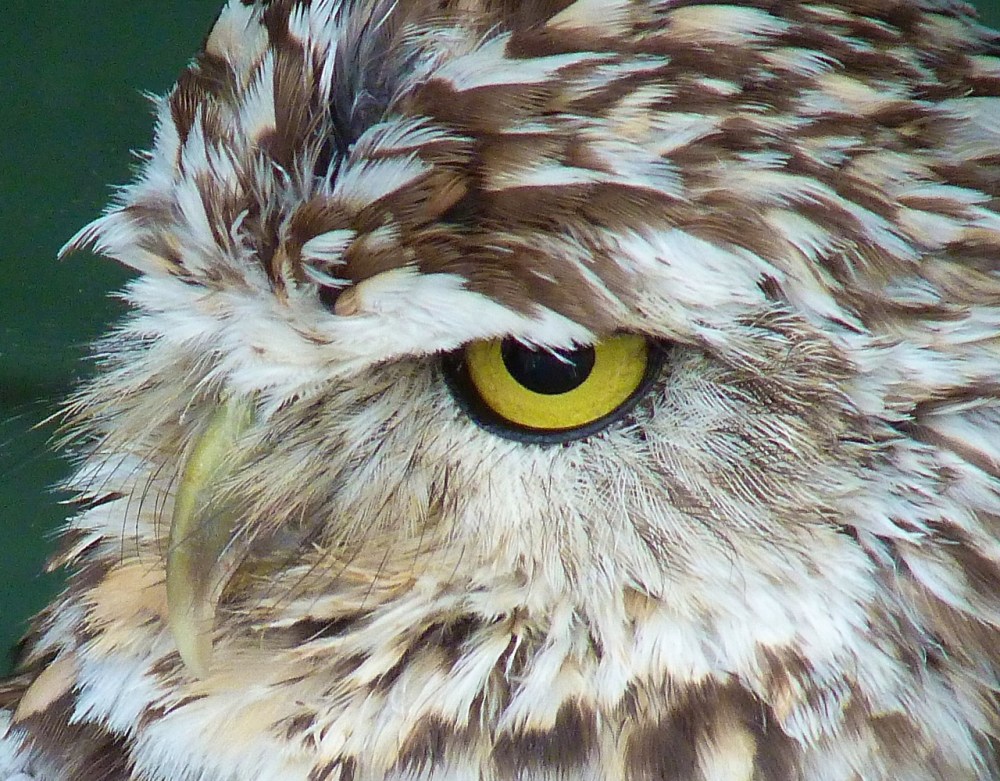
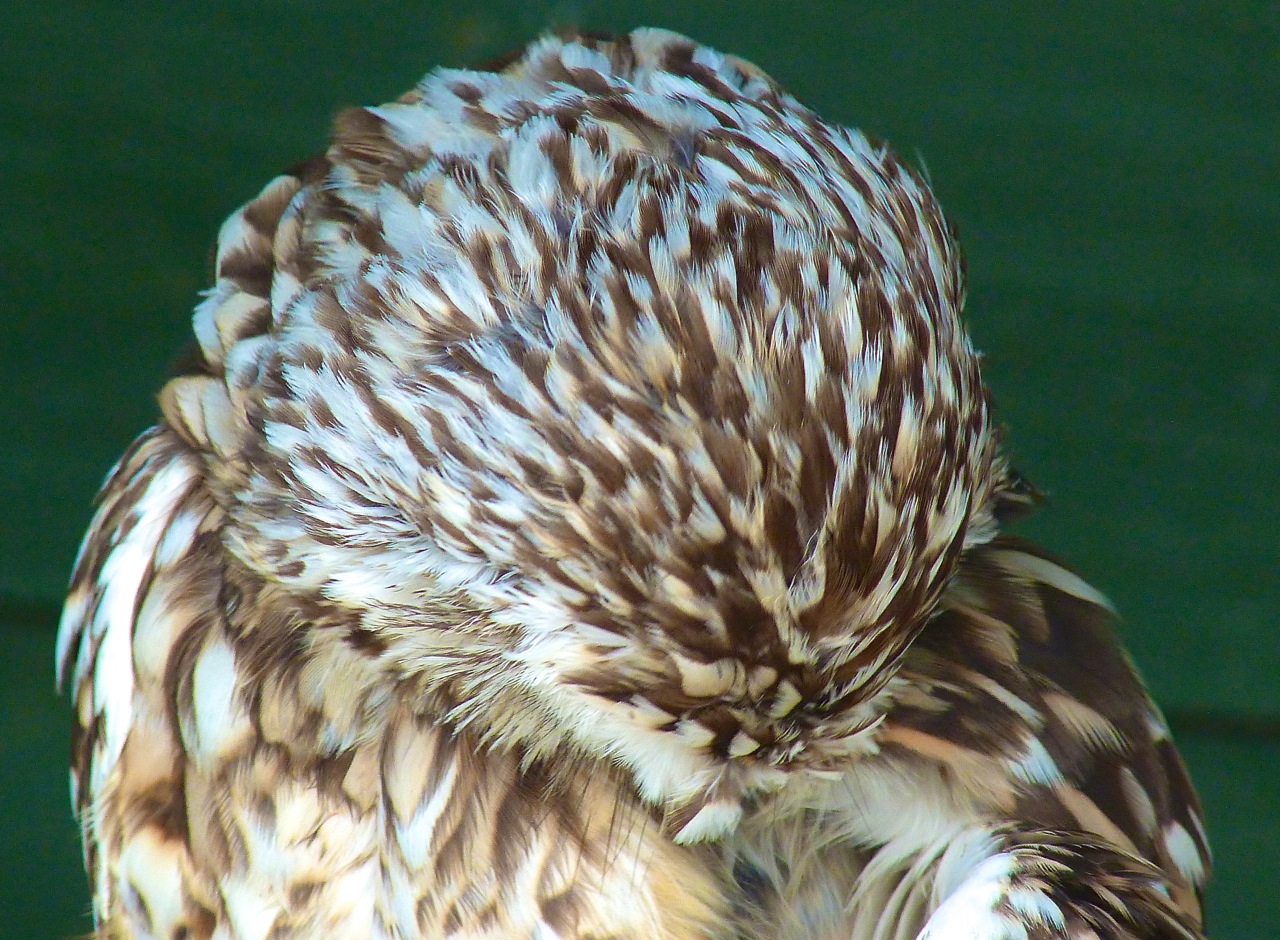
On Abaco, this little owl is a rare vagrant, presumably visiting from Florida which has the nearest resident population. There have been few reported sightings; and for ‘The Birds of Abaco’ we were unable to locate a photo taken on Abaco. The main images featured here were taken by me of a rescue bird that is used in wonderful free-flying displays. As you can see, it is in prime condition. 

ABACO SIGHTINGS REPORTED SINCE THIS POST

STOP PRESS Sept 27 Alison Ball from Little Harbour, Abaco has kindly contacted me to say “I saw a burrowing owl sometime during the first week of October last year here in Little Harbour.  I was watching some parrots eating the berries in the top of a large ficus tree by the edge of the road, and suddenly realized that the owl was sitting on a lower branch of the same tree, right at my eye level and only about 8 feet away.  We stared at each other for at least a minute – plenty long enough to get a definite identification – then he flapped off into the woods.  It was about 8 a.m.” Any other reports of sightings would be very welcome.

STOP PRESS Nov 5 Keith Kemp, with his sharp-eyed daughter Emily (11), saw one at the side of the road near Cherokee after dusk – possibly the Little Harbour one? It was Emily – already a promising birder, I gather – who first said ‘…it’s a little owl – he’s so cute’. Spot-on, too, Emily. The only other candidate for Abaco, the Barn Owl, could not be described as ‘little’. 

STOP PRESS 2016 NEW POST Burrowing Owls on Elbow Cay HERE

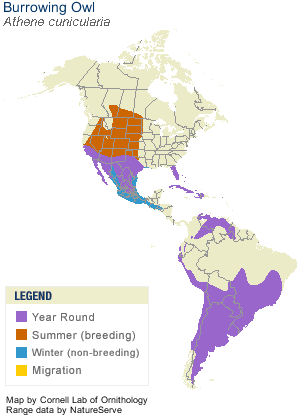
RANGE MAP

athe_cuni_AllAm_map

Burrowing Owl 1a

In the next photos you can see the bulging eye lensesBurrowing Owl 5Burrowing Owl 2

A DOZEN QUICK BURROWING OWL FACTS FOR SHORT ATTENTION SPANS

  • They have spectacular eyebrows above their piercing yellow eyes
  • When hunting, they use a perch to spot prey, then swoop down on it; or ‘hawk’ for insects in flight
  • Their long legs enable them to chase prey on the ground when hunting in open terrain
  • Burrowing owls mainly eat large insects and small rodents and reptiles
  • Unlike other owls, they also eat fruits and seeds
  • When agitated or excited, they bob their heads
  • They are one of the few avian species that benefit from deforestation
  • The owls often return to the same burrow nest each year
  • A major cause of mortality is vehicle-strike as they cross roads
  • Prehistoric fossil remains have been found in the Bahamas, showing they were once resident
  • There are many subspecies including a Floridian one, where they are ‘of special concern’
  • Florida Atlantic University campus is a National Audubon Society designated burrowing owl sanctuary
Show us, I hear you ask, a burrowing owl in a typical burrow for which it is namedBurrowing Owl Alan Vernon Wikimedia

Burrowing Owls may get quickly fed up with being photographed…Burrowing Owl 6

“Oh, do stop. I’ve had enough of you”Burrowing Owl 8 Burrowing Owl 9

“Right. I can’t see you anymore. You are sooooo gone”Burrowing Owl 3

The Burrowing Owl featured in a 1991 Bahamas bird stamp seriesBurrowing Owl - Bahamas - Animal Vista

I rather like this woodcut by Andrea RichBurrowing Owls woodcut 1987 andrea rich.com

Burrowing_Owl_Florida (Tom Friedel Wiki)

If anyone has seen one of these little guys anywhere on Abaco, I’d love to know when and where… [Now see the 2 stop press sightings near the start of this post]

RELATED POSTS

Credits: RH, Alan Vernon & Tom Friedel Wiki, Andrea Rich, Cornell Lab, Defenders.org

Unknown's avatar

ABACO PARROTS: A GALLERY OF GORGEOUS


'Over the Moon'

‘Over the Moon’

ABACO PARROTS: A GALLERY OF GORGEOUS

It’s been a while since the parrots of Abaco got a look-in hereabouts. Time to put that right. At the end of this gallery I will add some links to posts about the unique ground-nesting parrots of Abaco. Newcomers to this blog (I thank you both) may be interested to know that intensive conservation measures have brought this subspecies of the Cuban Parrot back from the brink of extinction – fewer than 1000 – to a sustainable and expanding population of around 4000.

For an overview of these lovely birds, I’ve made a slideshow presentation of a small booklet I put together in conjunction with scientist Caroline Stahala, who devoted several years to the research and protection of the parrots. Contents: parrots, nests, eggs, cute chicks, info, Sandy Walker with a fledgling on his lap.

Bahamas-Great Abaco_6419_Rose-throated Parrot_Cuban Parrot_Gerlinde Taurer Abaco Parrot Craig Nash.Cuban Parrot Abaco Abaco Parrot eating Gumbo Limbo fruit. Abaco Bahamas 2.12 copy

Here is the noise of a flock of parrots at Bahama Palm Shores, an excellent place to find them. It’s one of the less raucous recordings that I have made! We normally go to the main (north) turning, drive straight down to the end, cut the engine and listen. I’ve usually been lucky in that immediate area around 5.00 p.m., though others may have discovered other good times of day.

Abaco Parrot, Peter Mantle Abaco Parrot Keith Salvesen.Rolling Harbour Abaco
Bahama Parrot 1-Nina Henry sm Cuban Parrot Bruce Hallett IMG_7681ABACO (CUBAN) PARROT Abaco (Cuban) Parrot -  Charlie SkinnerAbaco (Cuban) Parrot -  Charlie SkinnerABACO PARROTS Unique parrots in pictures, video & sound

ABACO PARROTS Rare nesting footage

ABACO PARROTS Conservation & anti-predation programs 

Credits: Melissa Maura (brilliant header!), Gerlinde Taurer, Craig Nash, Tom Sheley, Peter Mantle, RH, Nina Henry, Bruce Hallett, Charlie Skinner, and Caroline Stahala

Unknown's avatar

SWAINSON’S HAWK: A UNIQUE VISITOR TO ABACO, BAHAMAS


Swainson's Hawk (imm), Abaco - Bruce Hallett

SWAINSON’S HAWK: A UNIQUE VISITOR TO ABACO, BAHAMAS

Abaco has 6 accipiter species (hawks, eagles and kites) recorded:  Swallow-tailed Kite TR 4, Bald Eagle V4, Northern Harrier WR 3, Sharp-shinned Hawk WR 4, Red-tailed Hawk PR B 1 and Swainson’s Hawk Buteo swainsoni V5. The Red-tail is a familiar permanent resident; the Harrier and Sharp-shinned hawk are uncommonly recorded winter residents; the Kites are occasionally seen passing through on their migratory path; the Bald Eagle has been reported on only a handful of occasions; and the Swainson’s Hawk has been seen (or anyway recognised) precisely once. One glance at its migration route shows why… 

Swainson's_hawk_migration_route

This fine raptor is definitely not worth travelling to Abaco in the hope of encountering. Managing to find one, identify it and photograph it, is a considerable achievement. Well-known Bahamas bird authority Bruce Hallett not only did so, but got great pictures of this juvenile bird both in flight and perched. No other sighting is recorded for Abaco; and few if any have ever been seen in the Bahamas generally.

Swainson's Hawk (imm), Abaco - Bruce Hallett

Swainson's Hawk (imm), Abaco - Bruce Hallett

WHO WAS MR SWAINSON?

Swainson was one of the early ornithologists  – along with men such as Wilson, Cory, Kirtland and La Sagra – whose name is now inextricably bound to the birds they became associated with. Swainson is the  ‘owner’ of 3 bird species recorded for Abaco: a hawk, a thrush and a warbler. I have previously written about him and these birds, so to find out more about him click SWAINSON.

WHAT DO THESE BIRDS SOUND LIKE?  

WHAT DO THEY LOOK LIKE IN FLIGHT?

A ringed Swainson’s Hawk in its more familiar territory – ColoradoButeo swainsoni (Pharoah Hound Wiki)

Credits: Photos, Bruce Hallett, Wiki (last); Migration Map, open source; videos, as shown

Unknown's avatar

WORLD SHOREBIRDS DAY – ABACO’S 33 SHORE SPECIES (3): PLOVERS


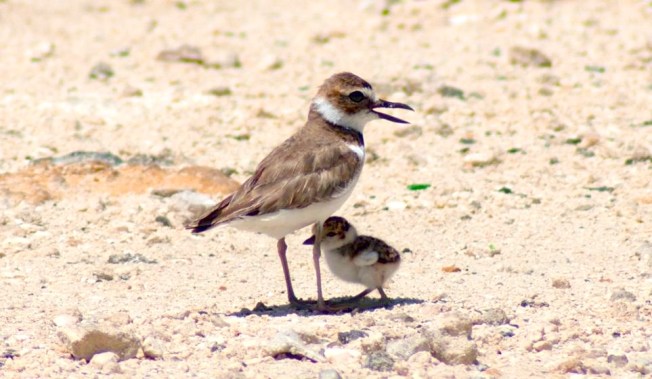
Wilson's Plover & Chick, Delphi Beach, Abaco - Sandy Walker

Wilson’s Plover & Chick, Delphi Club Beach, Abaco (Sandy Walker)

 WORLD SHOREBIRDS DAY – ABACO’S 33 SHORE SPECIES (3): PLOVERS

Over the last 2 days, 20 of Abaco’s 33 shorebird species have been featured, LARGER SHOREBIRDS followed by SANDPIPERS. The third part of the series concentrates on the 6 plover species found on Abaco. First, I’ve repeated the main Abaco shorebird checklist of 26 species (birds previously featured in bold), with each bird’s ‘availability’ code. I am disregarding the 7 species listed under the checklist because (1) they are transients or vagrants and your chances of encountering one are slim to remote; and (2) because in 16 months I was unable to obtain photos of any of them taken on Abaco, which can’t simply be because they are not photogenic. I still haven’t managed to deal with the shonky formatting, so I’ve given up on that…

The codes will tell you, for any particular bird, when you may see it (P = permanent, WR = winter resident, TR = transient, V = vagrant); whether it breeds (B) on Abaco; and your chance of seeing it, graded from easy (1) to vanishingly unlikely (5).

  • Black-necked Stilt                         Himantopus mexicanus              PR B 3
  • American Avocet                           Recurvirostra americana           WR 4
  • American Oystercatcher          Haematopus palliatus                 PR B 2
  • Black-bellied Plover                          Pluvialis squatarola                      WR 1
  • American Golden Plover                 Pluvialis dominica                         TR 4
  • Wilson’s Plover                                  Ochthodromus wilsonia              PR B 2
  • Semipalmated Plover                        Charadrius semipalmatus          WR 2
  • Piping Plover                                      Charadrius melodus                      WR 3
  • Killdeer                                                 Charadrius vociferus                    WR 2
  • Spotted Sandpiper                      Actitis macularius                         WR 1
  • Solitary Sandpiper                       Tringa solitaria                            WR 2
  • Greater Yellowlegs                       Tringa melanoleuca                      WR 2
  • Willet                                                   Tringa semipalmata                    PR B 2
  • Lesser Yellowlegs                          Tringa flavipes                              WR 3
  • Ruddy Turnstone                          Arenaria interpres                      PR 2
  • Red Knot                                            Calidris canutus                           WR 3
  • Sanderling                                        Calidris alba                                  WR 1
  • Dunlin                                                 Calidris alpina                              WR 2
  • Least Sandpiper                            Calidris minutilla                         WR 2
  • White-rumped Sandpiper       Calidris fuscicollis                        TR 3
  • Semipalmated Sandpiper         Calidris pusilla                              TR 2
  • Western Sandpiper                      Calidris Mauri                                TR 2
  • Short-billed Dowitcher               Limnodromus griseus                  WR 1
  • Long-billed Dowitcher                Limnodromus scolopaceus         WR 4
  • Wilson’s Snipe                                 Gallinago delicata                         WR 3
  • Wilson’s Phalarope                      Phalaropus tricolor                        V 4

The other 7 species of shorebird recorded for Abaco – all transients or vagrants – are: Upland Sandpiper TR 4, Whimbrel  TR 4, Hudsonian Godwit V5, Marbled Godwit V5, Buff-breasted Sandpiper V5, Pectoral Sandpiper  TR 3, Stilt Sandpiper TR 3

PLOVERS ON ABACO

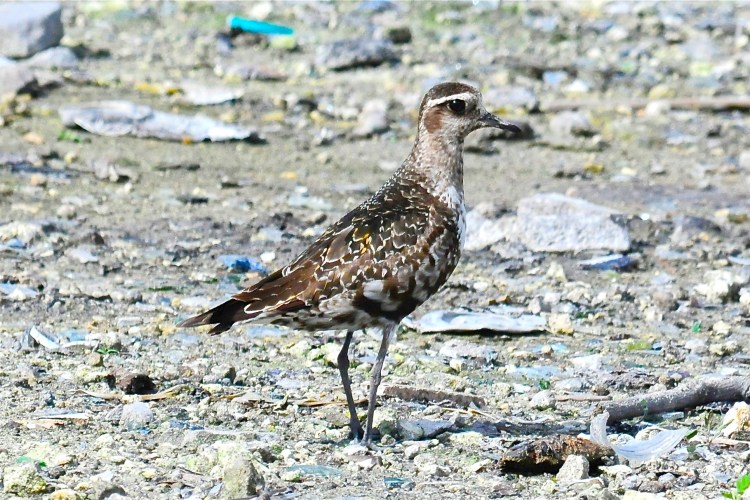
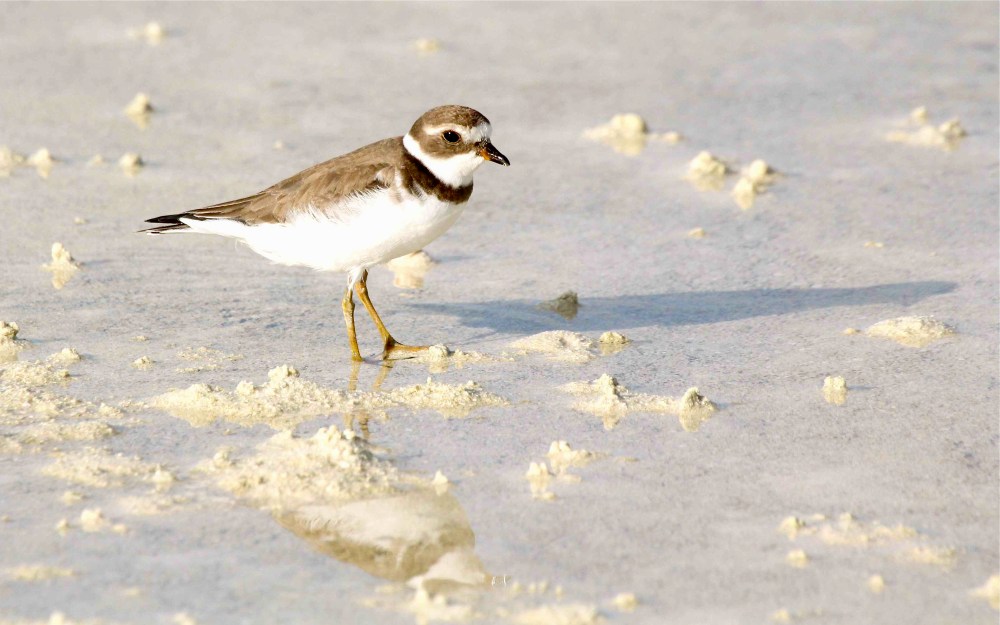
The best-known of the 6 Abaco plover species is the Wilson’s Plover, because it is the only permanent resident. The American Golden Plover is a rare transient, but we luckily have one taken on on Abaco. All the others are winter residents and easy to middling hard to find. All except the American Golden Plover may be found on the beach at Delphi or the rocks at either end. The Piping Plover is the most interesting species, with a mere 8000 left in the world and a vigorous conservation program to protect them and their habitat. Their summer breeding range is in Canada, central US and the eastern seaboard. In winter they migrate south, and Abaco is one of their homes. At Delphi we are very fortunate that every year some choose the beach for their winter retreat.

BLACK-BELLIED PLOVER  Pluvialis squatarola   WR 1Black-bellied Plover intermediate plumage.Marls.Abaco Bahamas.3.12.Tom Sheley edit

You  may well wonder why a bird with such a very specific belly-related colour designation has a white one in the photo. It’s because this is the non-breeding plumage (in fact, intermediate), so I have borrowed from Audubon Magazine (‘tip of the hat’) to show a non-Abaco bird in its breeding plumage. Black- Bellied Plover (Audubon Magazine)

AMERICAN GOLDEN PLOVER  Pluvialis dominica  TR 4American Golden Plover, Abaco - Tony Hepburn
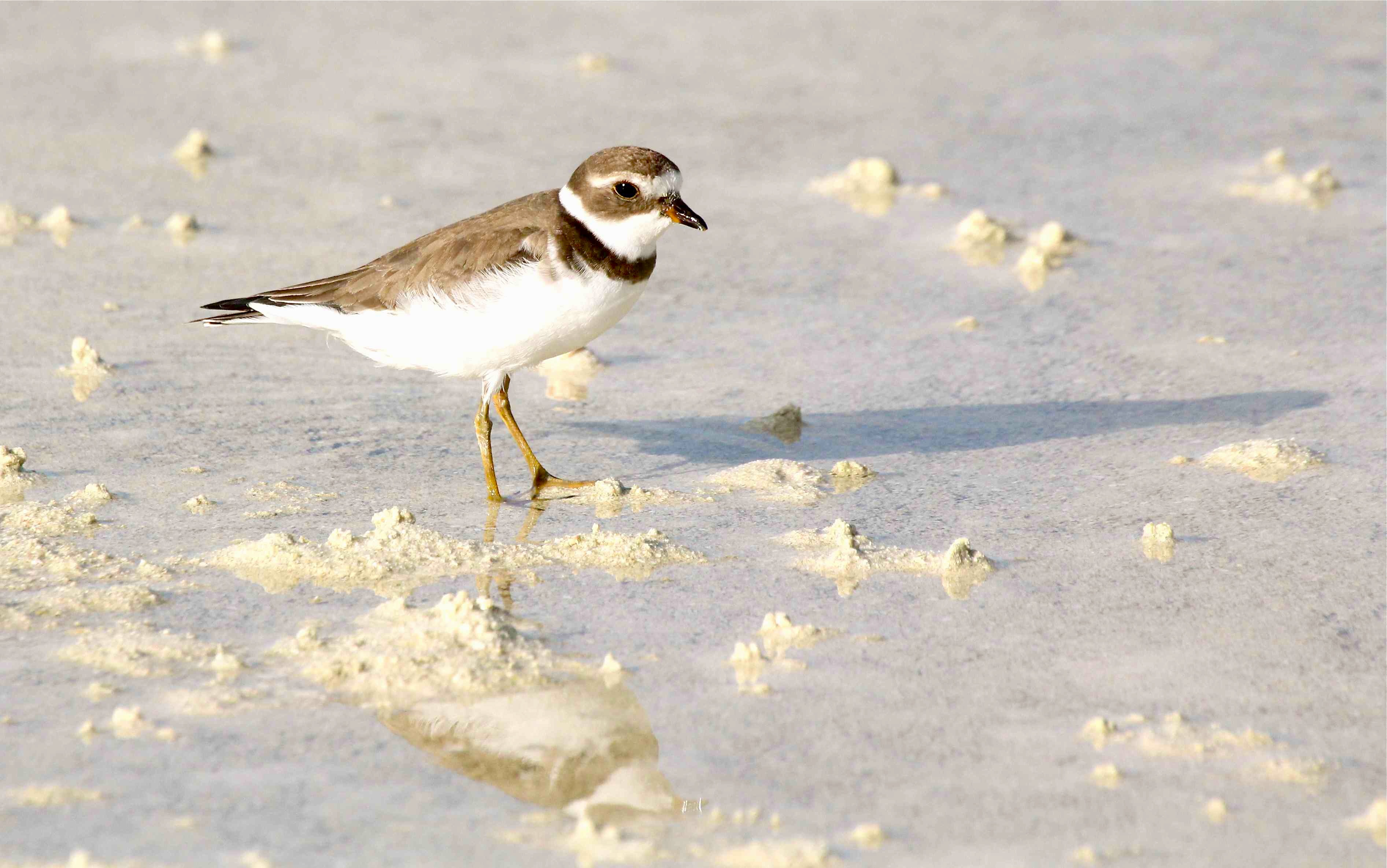
 SEMIPALMATED PLOVER Charadrius semipalmatus WR 2Semipalmated Plover (f nb), Abaco - Bruce Hallett
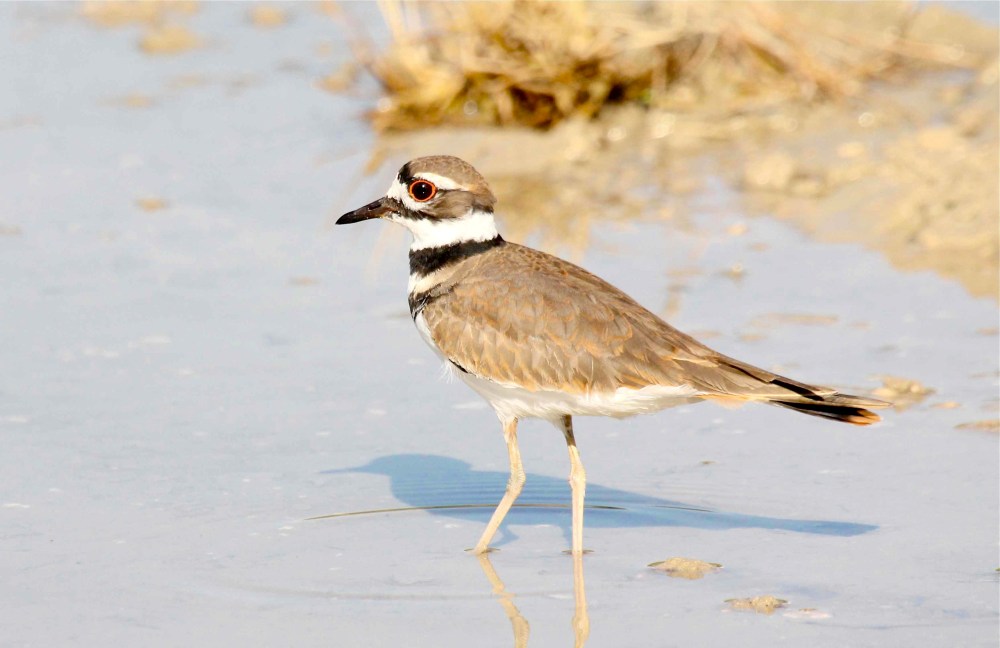
KILLDEER Charadrius vociferus WR 2Kildeer, Abaco - Bruce Hallett

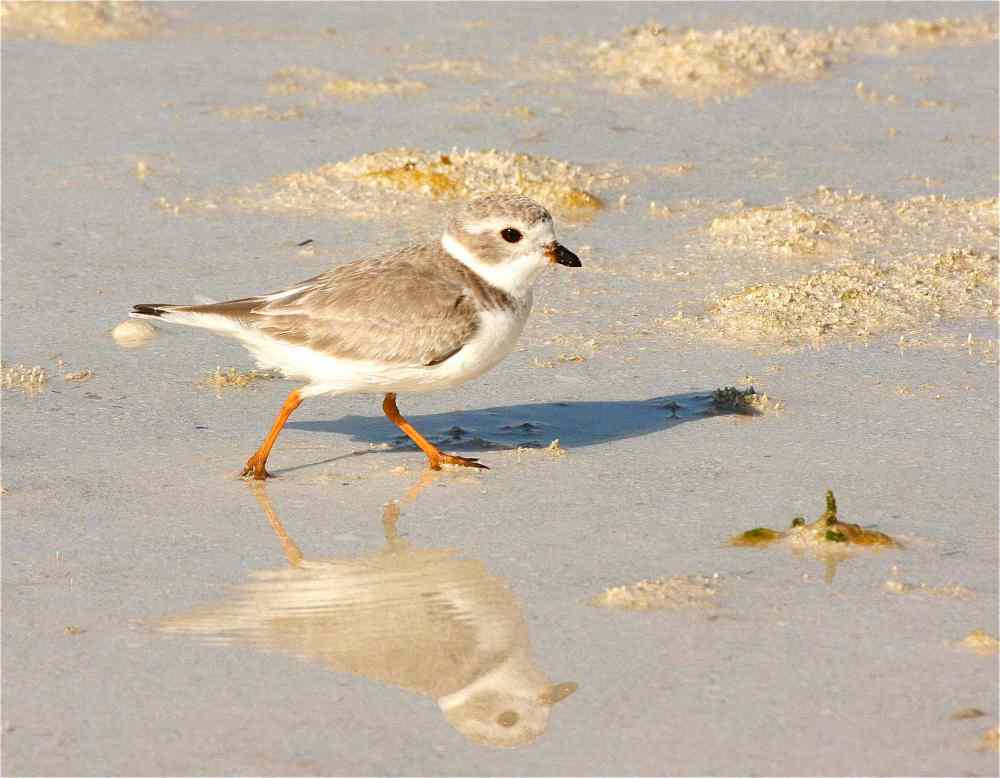
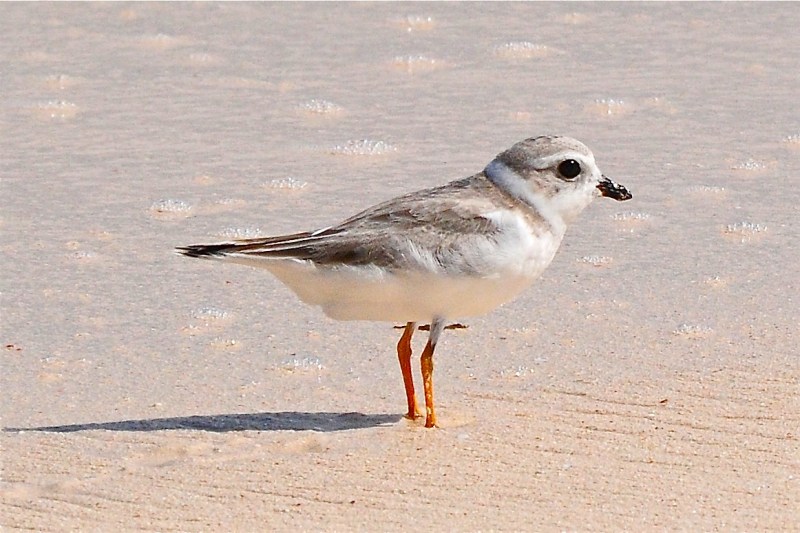
PIPING PLOVER  Charadrius melodus WR 3Piping Plover, Abaco - Bruce HallettPiping Plover, Abaco - Tony HepburnPiping Plover, Abaco  - Tom Reed

WILSON’S PLOVER Ochthodromus wilsonia  PR B 2

This permanent resident plover is a year-round presence on the Delphi Club beach, where in summer they nest and raise their tiny fluffball chicks (see Sandy Walker’s wonderful header image). I’m posting in some detail about these because it’s a while since I featured them. Links to other relevant posts are given below. All the following photos bar 1 were taken on the beach at Delphi.Wilson's Plover, Delphi Club Beach, Abaco - Craig Nash

The photo below was taken by Tom Sheley at Nettie’s Point, the skiff launching point for the day’s bonefishing on the Marls. The plover pair had made a scrape and nested there. They chose a tricky place to do so –  it was just where the trucks are turned after off-loading the skiffs. So the guides built a protective driftwood enclosure to protect the nest and prevent tragedy. The plovers, unfazed by the human proximity and activity, raised their family safely. I mostly saw the female on the nest within the square wooden pen, with the male usually close by, standing guard protectively. 
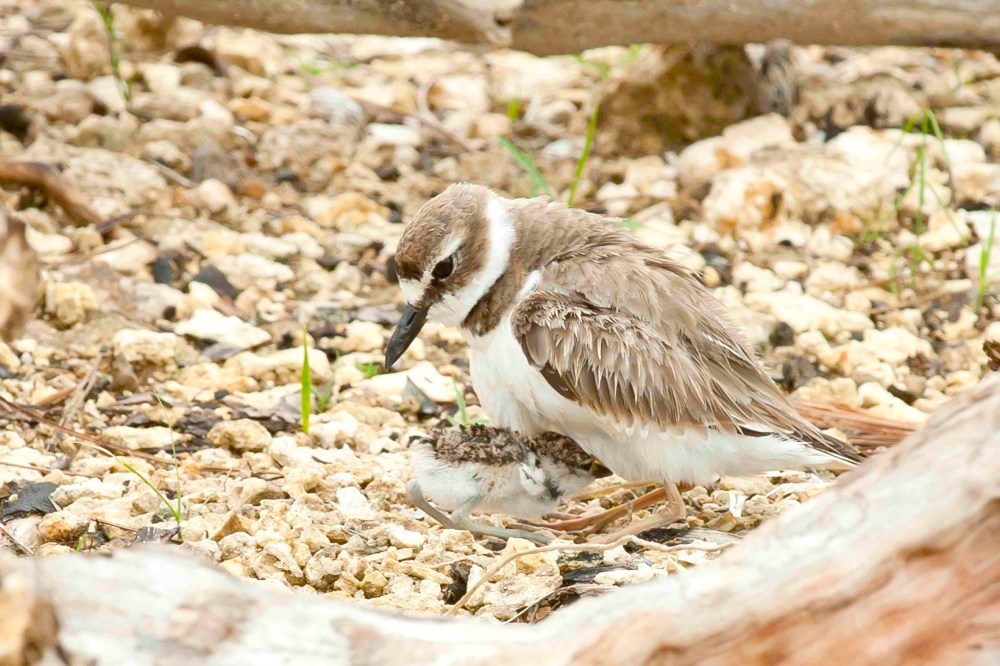
Wilson's Plover, Abaco Bahamas - Tom Sheley

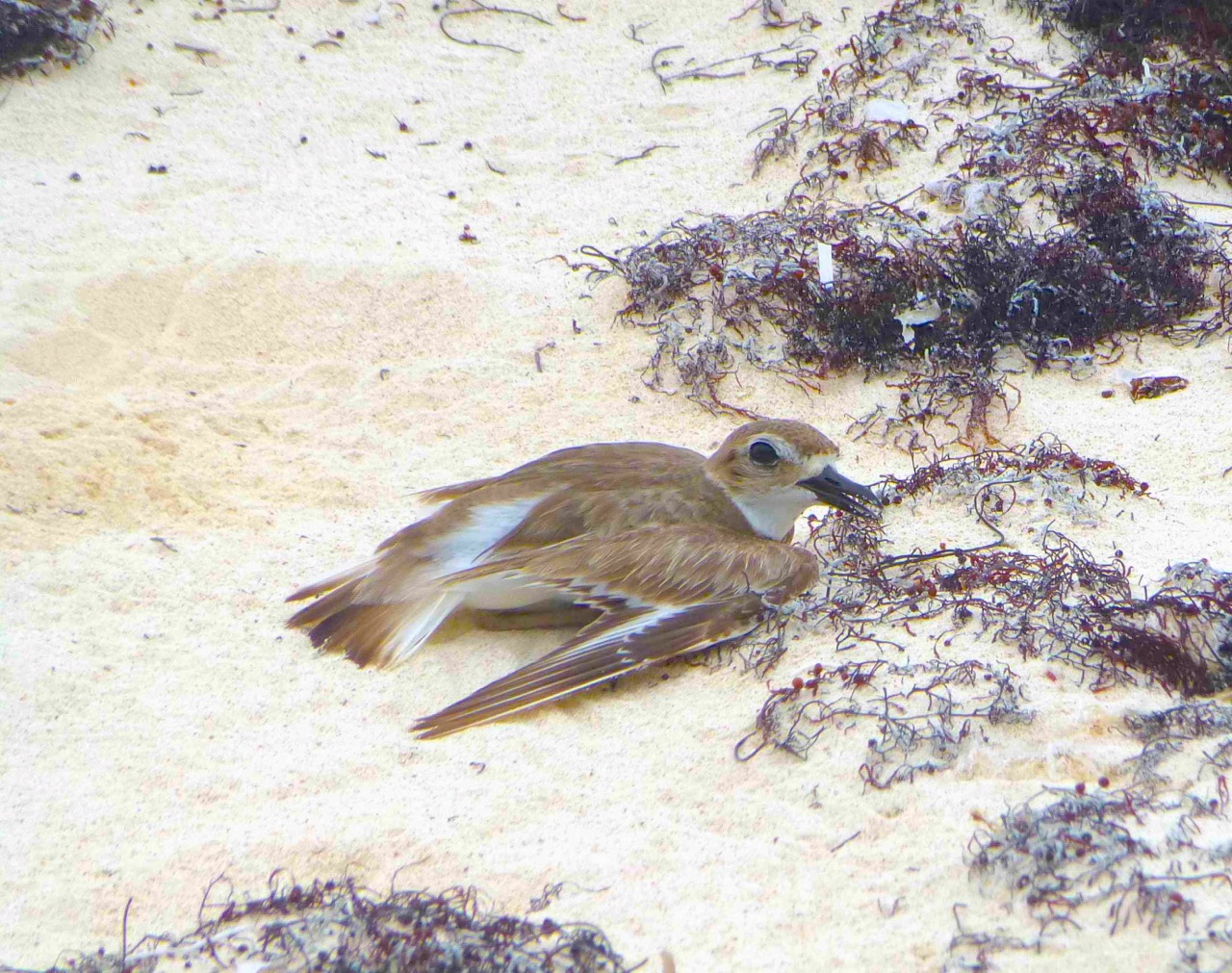
This plover, photographed on the Delphi beach, is performing a typical ‘broken wing’ display, a tactic used to draw predators away from a nest site. The bird makes itself appear to be wounded and vulnerable, and flaps pathetically about on the ground… gradually getting further from the nest. If the going gets tough and the predator gets too close for comfort,  the plover gets going by unexpectedly flying off. Wilson's Plover, Abaco (broken wing display) Clare Latimer - Version 2

TWO MORE FROM THE DELPHI BEACHWilson's Plover, Abaco 12 Wilson's Plover, Abaco 11

RELATED POSTS

PIPING PLOVERS

WILSON’S PLOVERS (1) ‘Dream Plover’

 WILSON’S PLOVERS (2) Nest Protection

 WILSON’S PLOVERS (3) Scrapes, Chicks & Broken Wings

Photo credits: Sandy Walker, Tom Sheley, Audubon, Tony Hepburn, Bruce Hallett, Tom Reed, Craig Nash, Clare Latimer, RH

Unknown's avatar

WORLD SHOREBIRDS DAY – ABACO’S 33 SHOREBIRD SPECIES (2) – SANDPIPERS


Ruddy Turnstone winter plumage.Abaco Bahamas.2.13.Tom Sheley e
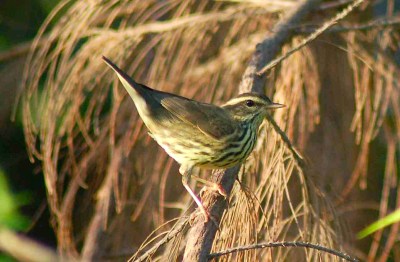
WORLD SHOREBIRDS DAY: ABACO’S 33 SHOREBIRD SPECIES (2)

Yesterday I featured 8 of the larger, longer-billed species among Abaco’s 33 shorebirds. Plus one cute Wilson’s Plover chick as page-bait! A number of those are classified as sandpipers. To see them, click HERE. Today it’s the turn of the smaller sandpiper species, little birds with long beaks for their size that in general help differentiate them from the stubby-beaked plover species. To recap, here is  the main Abaco shorebird checklist of 26 species (birds previously featured in bold):

The codes will tell you, for any particular bird, when you may see it (P = permanent, WR = winter resident, TR = transient, V = vagrant); whether it breeds (B) on Abaco; and your chance of seeing it, graded from easy (1) to vanishingly unlikely (5).

  • Black-necked Stilt                         Himantopus mexicanus              PR B 3
  • American Avocet                           Recurvirostra americana           WR 4
  • American Oystercatcher          Haematopus palliatus                 PR B 2
  • Black-bellied Plover                          Pluvialis squatarola                     WR 1
  • American Golden-Plover                 Pluvialis dominica                        TR 4
  • Wilson’s Plover                                  Ochthodromus wilsonia              PR B 2
  • Semipalmated Plover                        Charadrius semipalmatus         WR 2
  • Piping Plover                                      Charadrius melodus                      WR 3
  • Killdeer                                                 Charadrius vociferus                    WR 2
  • Spotted Sandpiper                              Actitis macularius                         WR 1
  • Solitary Sandpiper                             Tringa solitaria                              WR 2
  • Greater Yellowlegs                       Tringa melanoleuca                     WR 2
  • Willet                                                   Tringa semipalmata                     PR B 2
  • Lesser Yellowlegs                          Tringa flavipes                               WR 3
  • Ruddy Turnstone                                Arenaria interpres                        PR 2
  • Red Knot                                               Calidris canutus                              WR 3
  • Sanderling                                            Calidris alba                                     WR 1
  • Dunlin                                                 Calidris alpina                                 WR 2
  • Least Sandpiper                                  Calidris minutilla                           WR 2
  • White-rumped Sandpiper                 Calidris fuscicollis                          TR 3
  • Semipalmated Sandpiper                  Calidris pusilla                                TR 2
  • Western Sandpiper                             Calidris Mauri                                 TR 2
  • Short-billed Dowitcher               Limnodromus griseus                   WR 1
  • Long-billed Dowitcher                Limnodromus scolopaceus         WR 4
  • Wilson’s Snipe                                 Gallinago delicata                         WR 3
  • Wilson’s Phalarope                            Phalaropus tricolor                        V 4

The other 7 species of shorebird recorded for Abaco – all transients or vagrants – are: Upland Sandpiper TR 4, Whimbrel  TR 4, Hudsonian Godwit V5, Marbled Godwit V5, Buff-breasted Sandpiper V5, Pectoral Sandpiper  TR 3, Stilt Sandpiper TR 3

SANDPIPERS

Of the sandpiper species shown below, 9 of the 10 are ones that, at the right time and in the right place, you may see on Abaco. The tenth, the Wilson’s Phalarope, is the first specimen ever recorded for Abaco and as far as is known this is the only photo of it (props to Woody Bracey for this accomplished ‘get’). Again, some of the birds shown below were photographed on the Delphi Club beach.

SPOTTED SANDPIPER Actitis macularius   WR 1Spotted Sandpiper.Abaco Bahamas - Tom Sheley

SOLITARY SANDPIPER Tringa solitaria  WR 2Solitary Sandpiper, Petrie Island D G E Robertson Wiki

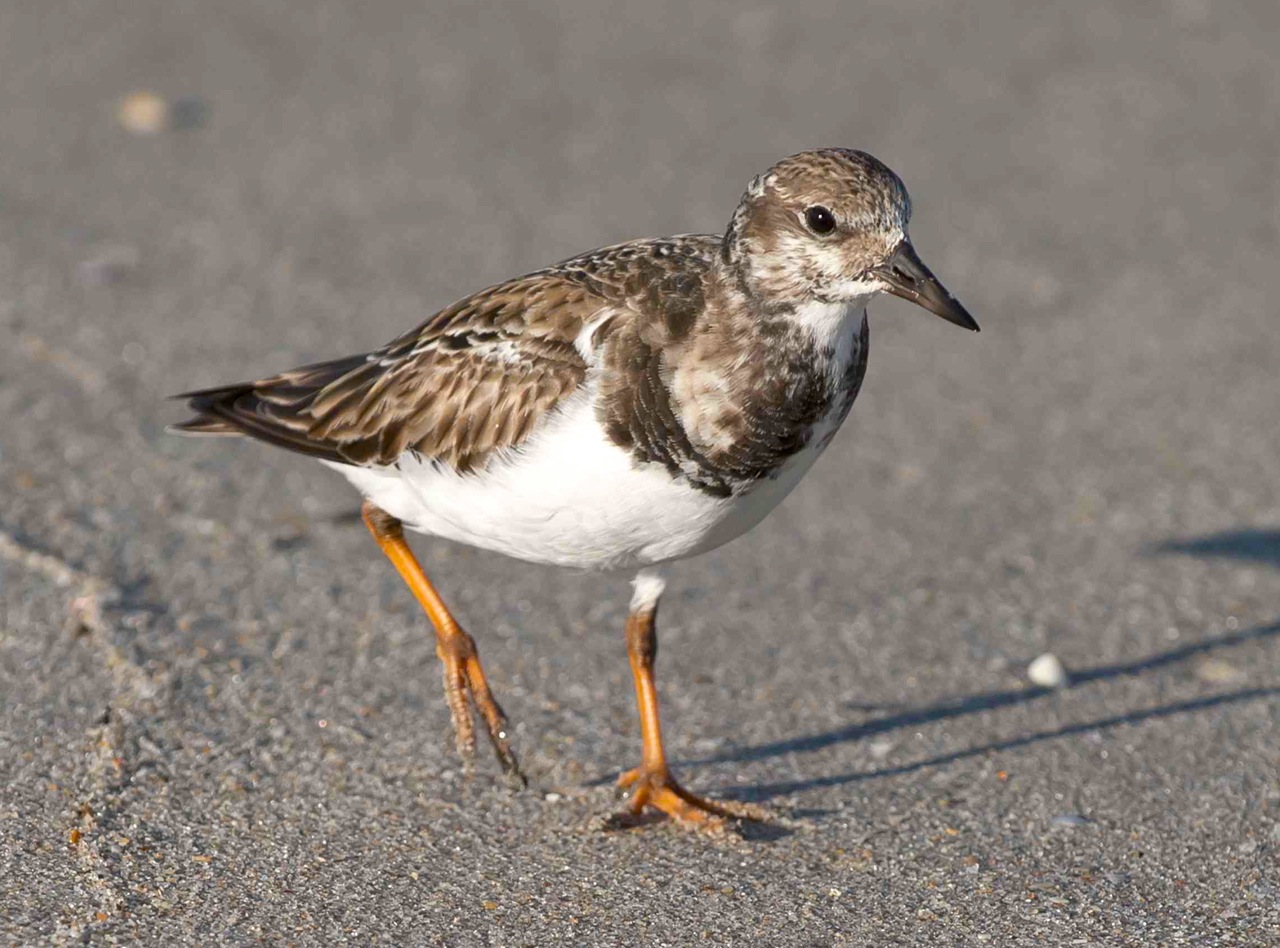
RUDDY TURNSTONE  Arenaria interpres  PR 2Ruddy Turnstone Abaco Bahamas. 2.12.Tom Sheley copy 2

RED KNOT Calidris canutus (non-breeding plumage)  WR 3Red Knot,  Green Turtle Cay, Abaco - Becky Marvil

SANDERLING  Calidris alba  WR 1Sanderling, Abaco -  Craig Nash

LEAST SANDPIPER  Calidris minutilla  WR 2Least Sandpiper, Delphi Club Beach, Abaco - Keith Salvesen

WHITE-RUMPED SANDPIPER  Calidris fuscicollis  TR 3White-rumped Sandpiper, Abaco - Tony Hepburn

SEMIPALMATED SANDPIPER   Calidris pusilla  TR 2Semipalmated Sandpiper, Abaco (juv) Bruce Hallett

WESTERN SANDPIPER  Calidris Mauri  TR 2Western Sandpiper, Abaco (Bruce Hallett)

WILSON’S PHALAROPE Phalaropus tricolor  V 4 Wilson's Phalarope, Abaco - Woody Bracey

RELATED POSTS

RUDDY TURNSTONES

LEAST SANDPIPERS

Photo Credits: Tom Sheley, D Robertson, Becky Marvil, Craig Nash, RH, Tony Hepburn, Bruce Hallett, Woody Bracey

Unknown's avatar

WORLD SHOREBIRDS DAY – ABACO’S 33 SHORE SPECIES (1) LARGE BIRDS


Wilson's Plover chick 5.Delphi Club.Abaco Bahamas.6.13.Tom Sheley copy small

Wilson’s Plover chick, Delphi Club Beach, Abaco (Tom Sheley)

WORLD SHOREBIRDS DAY: ABACO’S 33 SHORE SPECIES (1)

Abaco is home to 33 shorebird species. Like the human residents of the main island and cays, some are permanent; some are winter visitors arriving to enjoy a warmer climate; and some a transients (e.g. Delphi Club members). To celebrate today being World Shorebirds Day, I am going to feature Abaco’s quota of the world’s shorebirds in 3 posts over the next few days. I’ll start with the definitive checklist of Abaco’s shorebirds compiled by Bahamas Birding author and authority Tony White  with Woody Bracey especially for the BIRDS OF ABACO. I have kept to the conventional / official species order. I’ve let the formatting run wild, though… problematic in WordPress. I may try to sort it. Or perhaps not…

AMERICAN AVOCET Recurvirostra americana   WR 4
American Avocet, New Providence - Tony Hepburn

The codes will tell you, for any particular bird, when you may see it (P = permanent, WR = winter resident, TR = transient, V = vagrant); whether it breeds (B) on Abaco; and your chance of seeing it, graded from easy (1) to vanishingly unlikely (5).

  • Black-necked Stilt                             Himantopus mexicanus              PR B 3
  • American Avocet                               Recurvirostra americana             WR 4
  • American Oystercatcher                  Haematopus palliatus                   PR B 2
  • Black-bellied Plover                          Pluvialis squatarola                      WR 1
  • American Golden-Plover                 Pluvialis dominica                          TR 4
  • Wilson’s Plover                                  Ochthodromus wilsonia               PR B 2
  • Semipalmated Plover                        Charadrius semipalmatus             WR 2
  • Piping Plover                                      Charadrius melodus                     WR 3
  • Killdeer                                                 Charadrius vociferus                  WR 2
  • Spotted Sandpiper                              Actitis macularius                       WR 1
  • Solitary Sandpiper                             Tringa solitaria                              WR 2
  • Greater Yellowlegs                             Tringa melanoleuca                      WR 2
  • Willet                                                     Tringa semipalmata                   PR B 2
  • Lesser Yellowlegs                               Tringa flavipes                              WR 3
  • Ruddy Turnstone                                 Arenaria interpres                        PR 2
  • Red Knot                                                Calidris canutus                         WR 3
  • Sanderling                                             Calidris alba                                WR 1
  • Dunlin                                                    Calidris alpina                             WR 2
  • Least Sandpiper                                   Calidris minutilla                          WR 2
  • White-rumped Sandpiper                  Calidris fuscicollis                           TR 3
  • Semipalmated Sandpiper                  Calidris pusilla                                TR 2
  • Western Sandpiper                             Calidris Mauri                                TR 2
  • Short-billed Dowitcher                      Limnodromus griseus                     WR 1
  • Long-billed Dowitcher                      Limnodromus scolopaceus             WR 4
  • Wilson’s Snipe                                     Gallinago delicata                         WR 3
  • Wilson’s Phalarope                            Phalaropus tricolor                          V 4

Of these 26 birds, 23 are ones you might encounter, though some only if you are lucky or your field-craft is excellent. If you happen upon a Long-billed Dowitcher or an American Avocet, tell someone! And the photo I will be posting of a Wilson’s Phalarope is of the first specimen ever recorded for Abaco. And it so happens that I can illustrate them with photographs, mostly from the book archive… What a coincidence. All except 3 were photographed on Abaco; and I have purposely chosen many that were photographed on the lovely 1-mile curve of white sand watched over by the Delphi Club and historically named ‘Rolling Harbour’.

For the sake of completeness, the other 7 species of shorebird recorded for Abaco – all transients or vagrants – are:

  • Upland Sandpiper                     Bartramia longicauda             TR 4
  • Whimbrel                                    Numenius phaeopus                 TR 4
  • Hudsonian Godwit                   Limosa haemastica                   V5
  • Marbled Godwit                         Limosa fedoa                               V5
  • Buff-breasted Sandpiper          Tryngites subruficollis            V5
  • Pectoral Sandpiper                   Calidris melanotos                    TR 3
  • Stilt Sandpiper                           Calidris himantopus                 TR 3

photo

OK let’s see some of the birds. I’ll post one shot of each of the 26 birds to show them at their best in their perfect environment – wild coastline. Some of these species haven’t yet featured in the blog at all, or else not for a while. Let’s go with some of the larger and / or long-beaked species, including a couple of matching pairs.

GREATER YELLOWLEGS  Tringa melanoleuca   WR 2Greater Yellowlegs LR. Abaco Bahamas.Tom Sheley.2.12 copy 2

LESSER YELLOWLEGS  Tringa flavipes  WR 3Lesser Yellowlegs.Evening on the Marls.Abaco Bahamas.2.13.Tom Sheley small2

SHORT-BILLED DOWITCHER  Limnodromus griseus  WR 1Short-billed Dowitcher (NB), Abaco - Bruce Hallett 

LONG-BILLED DOWITCHER  Limnodromus scolopaceus   WR 4Long-billed Dowitcher Mike Baird Wiki

WILLETT  Tringa semipalmata  PR B 2Willet.Abaco Bahamas.2.13.Tom Sheley small

WILSON’S SNIPE  Gallinago delicata   WR 3Wilson's Snipe, Abaco - Woody Bracey

BLACK-NECKED STILT  Himantopus mexicanus  PR B 3Black-necked Stilt, Abaco - Tom Sheley

I’m adding a free  bonus stilt in flight, because it’s such a great shot…Black-necked stilt, Abaco - Alex Hughes

AMERICAN OYSTERCATCHER  Haematopus palliatus PR B 2American Oystercatcher, Abaco 5.1 Tom Sheley

Part 2 will be about the Plovers. Or maybe the Sandpipers

RELATED POSTS

WILLET

BLACK-NECKED STILT

AMERICAN OYSTERCATCHER

 Photo Credits: Tom Sheley, Bruce Hallett, Tony Hepburn, Mike Baird, Woody Bracey, Alex Hughes

photo                 photo              photo