Unknown's avatar

“PISHING IN THE WIND”: BIRDING IN A BREEZE AT DELPHI


Abaco Cloud Map 5:29

“PISHING IN THE WIND”: BIRDING IN A BREEZE AT DELPHI

The Bahamas weather has been uncharacteristically dire. Rain and cloud for the past week, and a poor forecast for the next week (see above). I arrived on Abaco yesterday, with the short internal flight from Nassau last night nearly cancelled due to a humungous downpour. Instead, people were boarded in bare feet, having had to wade through 3 inches of water to get to the small plane floating on the undrained concrete. Yet today, there was sunshine at Delphi this morning (though cloud to both north and south). A stiff breeze was keeping the clouds off-shore. The weather is fickle and very local.

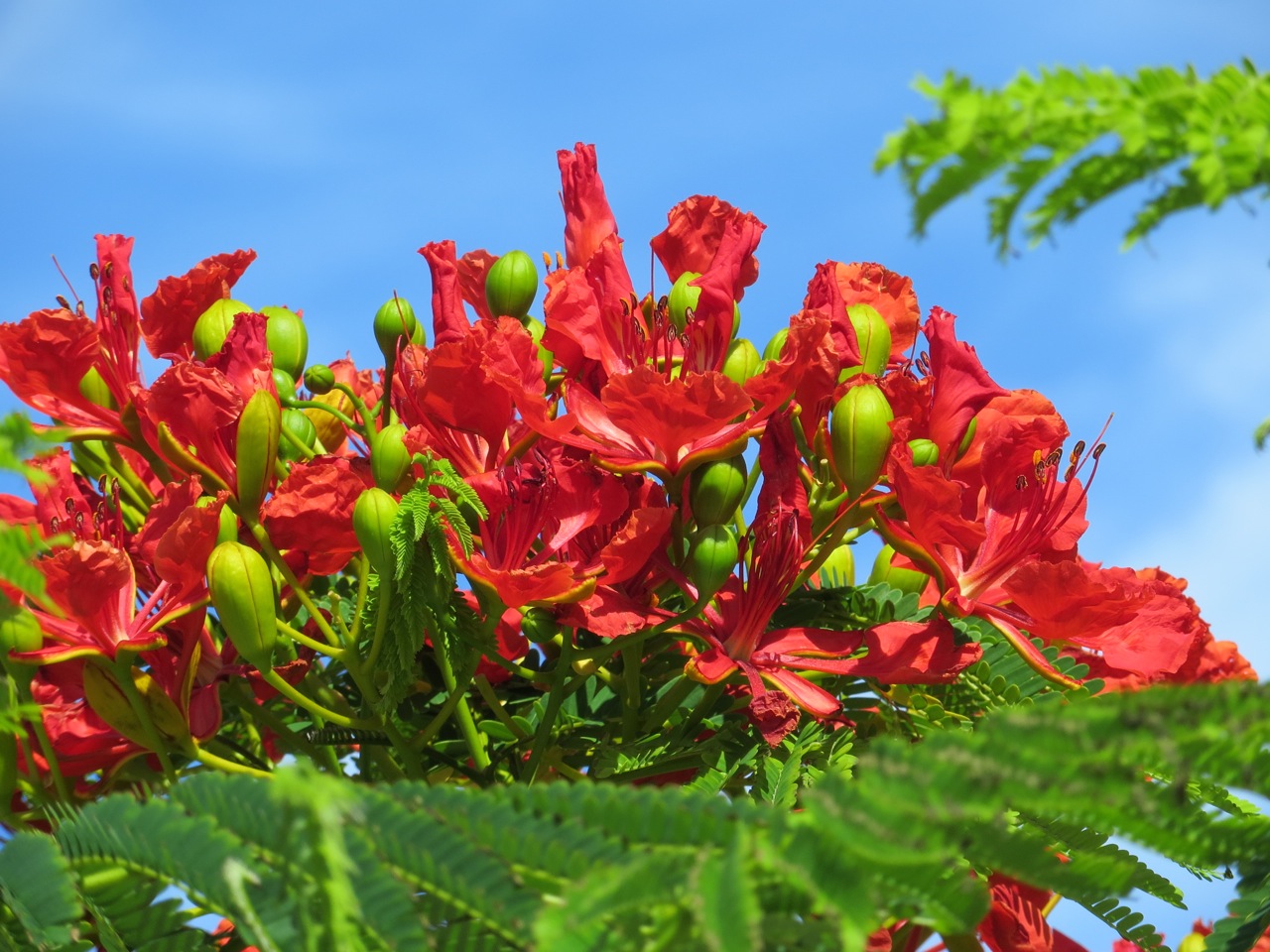
ROYAL POINCIANADCB 1.10

I took a small camera and strolled for half and hour for about 200 yards along the Delphi drive and back (for those that know it, to the first corner of the guest drive) to see what the first of June had to offer in the way of wildlife. The birds were clearly enjoying some unaccustomed sunshine, and I have listed those I saw below. Not all were photogenically posed, and many were flicking around the coppice too quickly to capture.

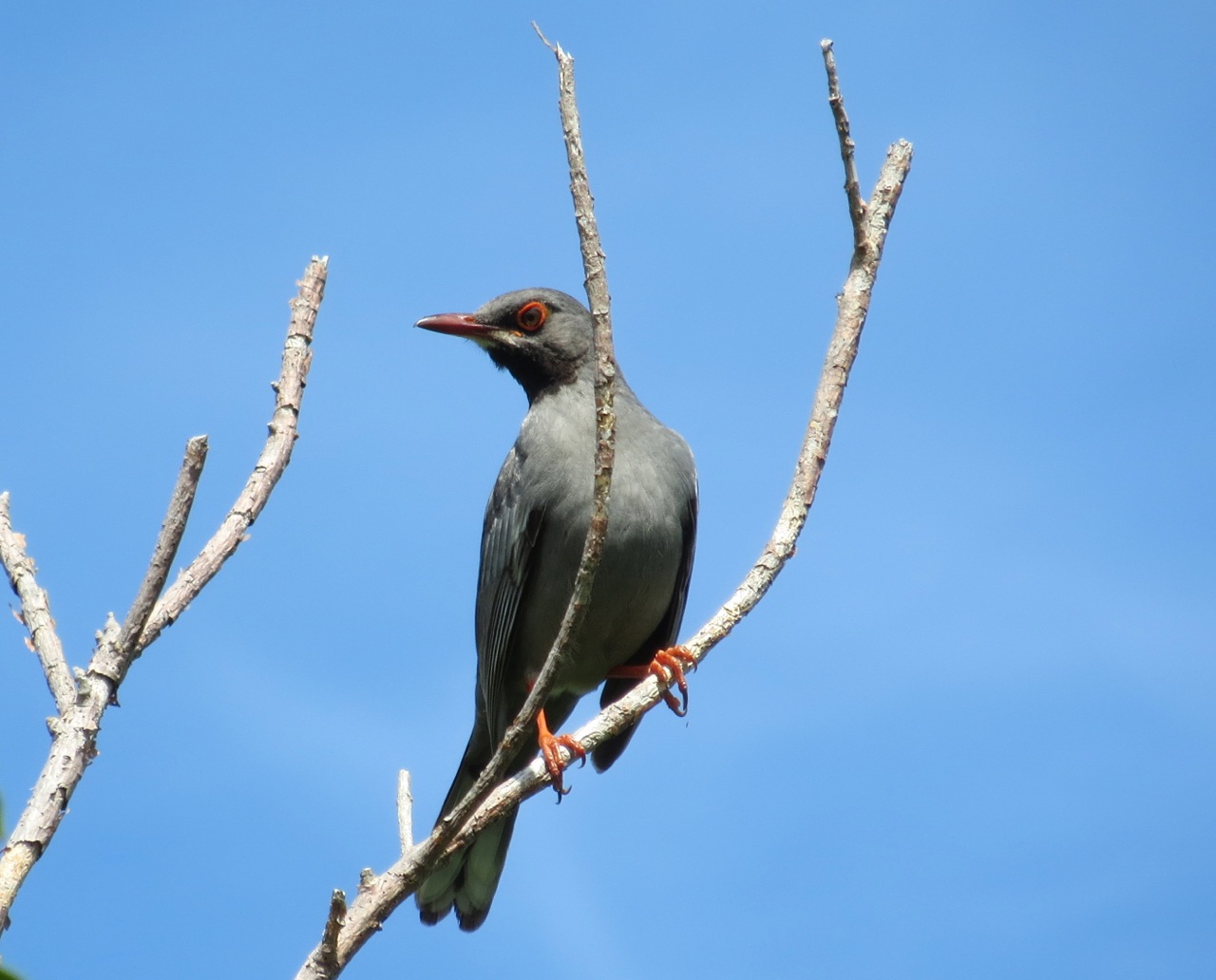
RED-LEGGED THRUSHDCB 1.2

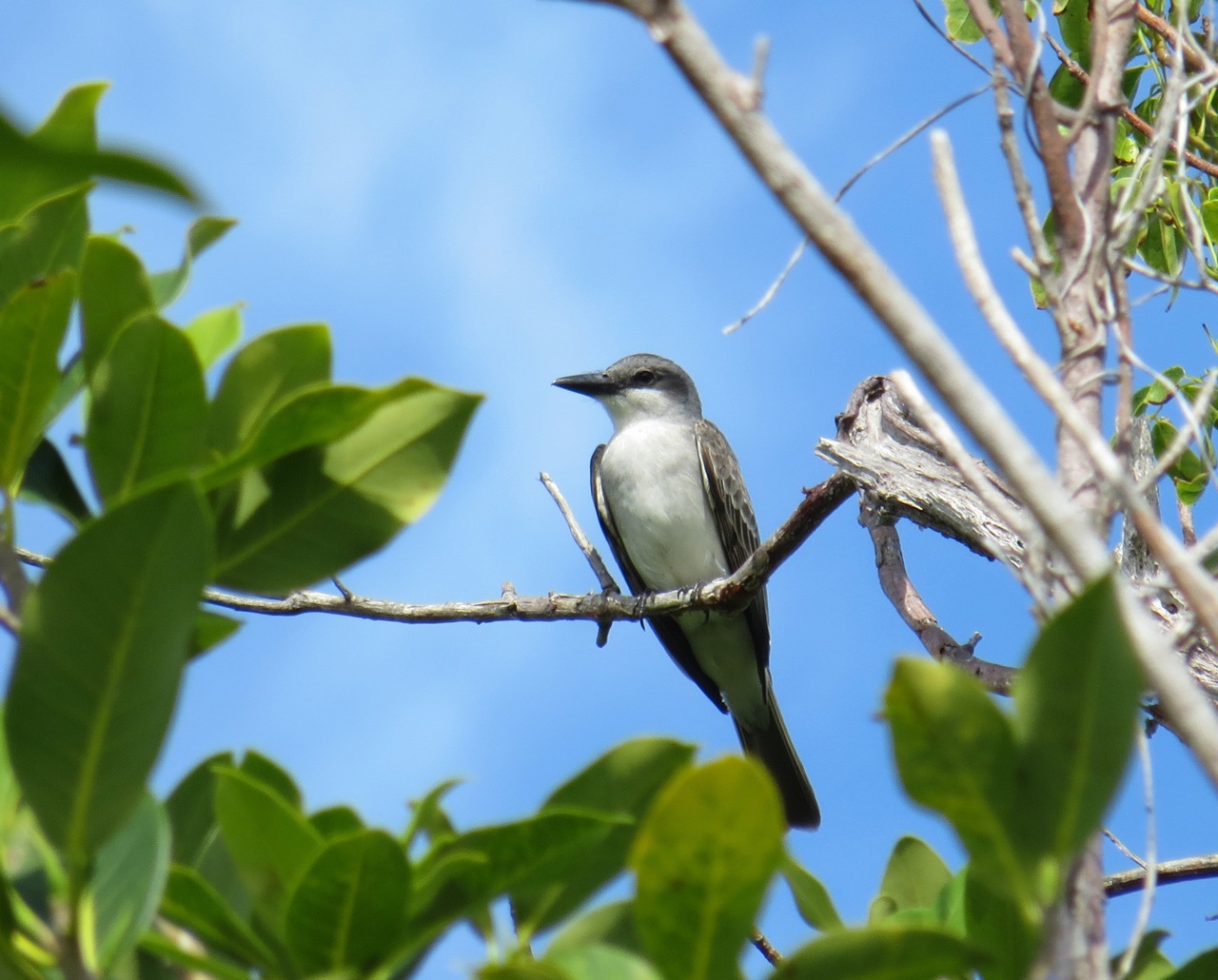
GRAY KINGBIRDDCB 1 3

The smaller birds were unusually responsive to ‘pishing’, the unattractive but effective noise that can bring a bird to the front of woodland or scrub to investigate. A black-whiskered vireo was interested, but flew off just as I pressed the button. He was immediately replaced on the branch by a

BLUE-GRAY GNATCATCHERDCB 1 5

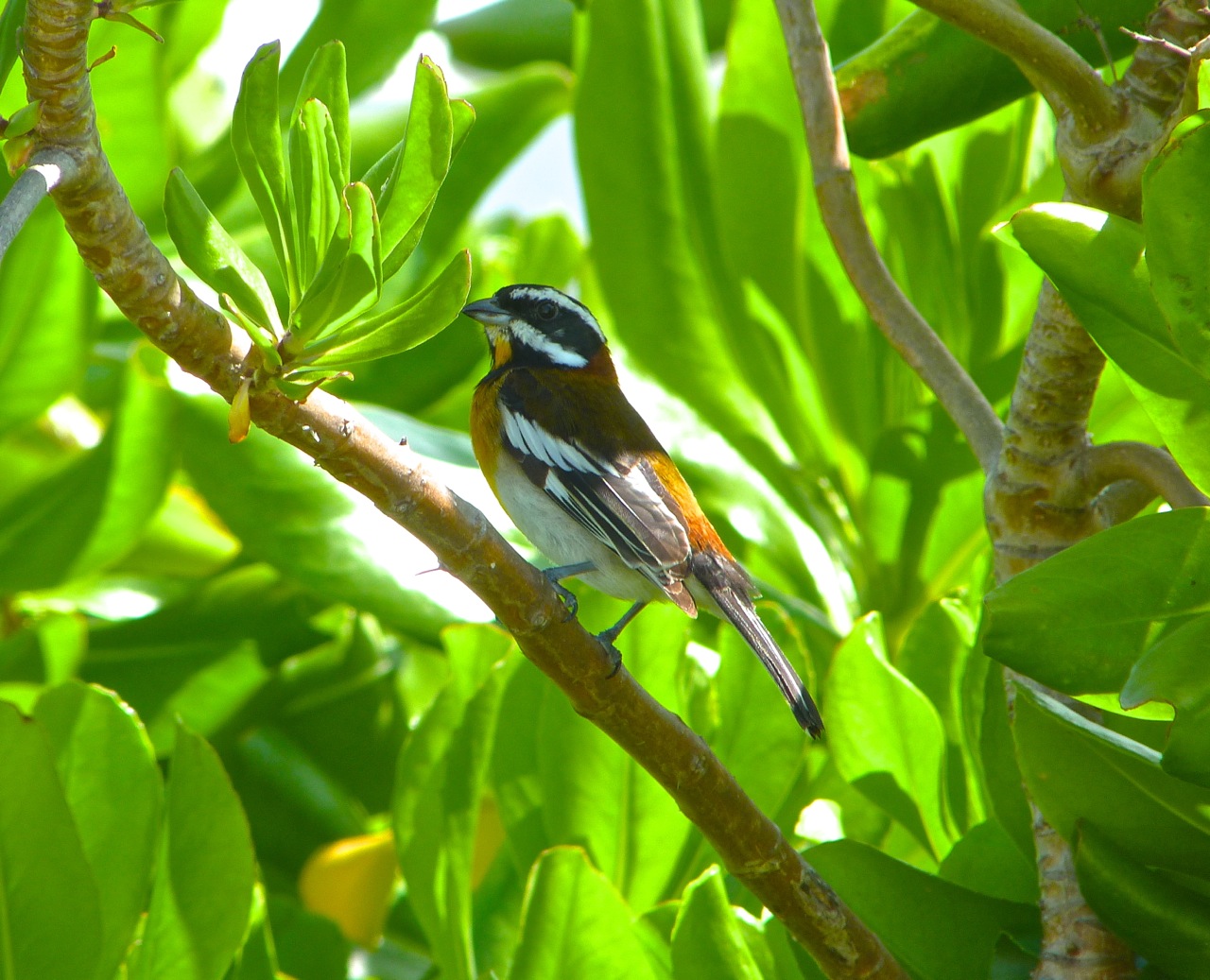
A pair of Western Spindalises (see recent post HERE) joined it in the adjacent treeDCB 1.4

DELPHI 30 MINUTE STROLL BIRD LIST 1.06.13

  • Red-legged Thrush 3
  • Western Spindalis  3
  • West Indian Woodpecker 2
  • Black-whiskered Vireo 2
  • Cuban Emerald 2
  • Turkey Vulture 2
  • Bahama Swallow 1
  • Gray Kingbird 1
  • Loggerhead Kingbird 1
  • Greater Antillean Bullfinch 1
  • Blue-gray Gnatcatcher 1
  • Bananaquit 1
  • {Heard only} Abaco Parrots 2

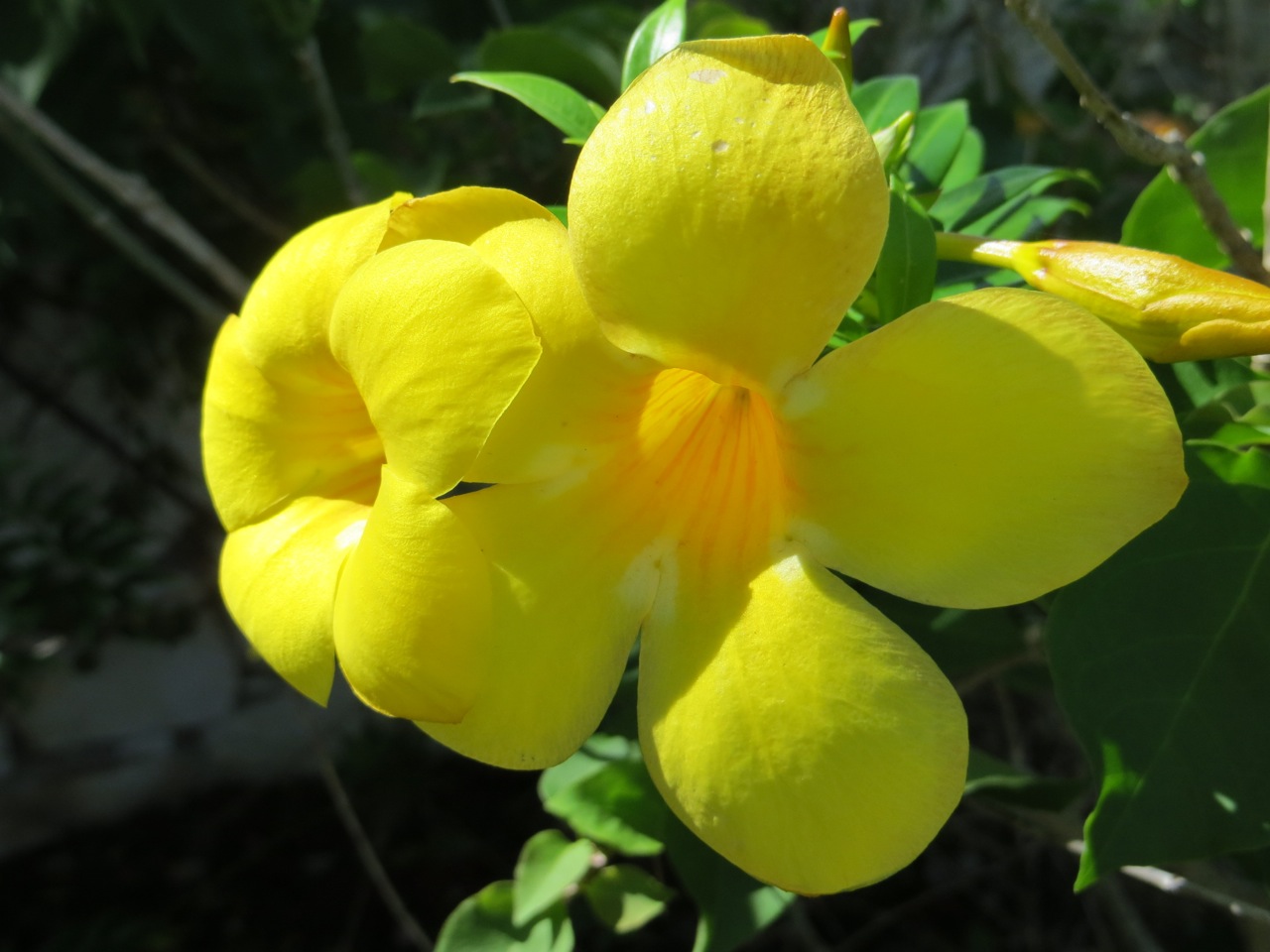
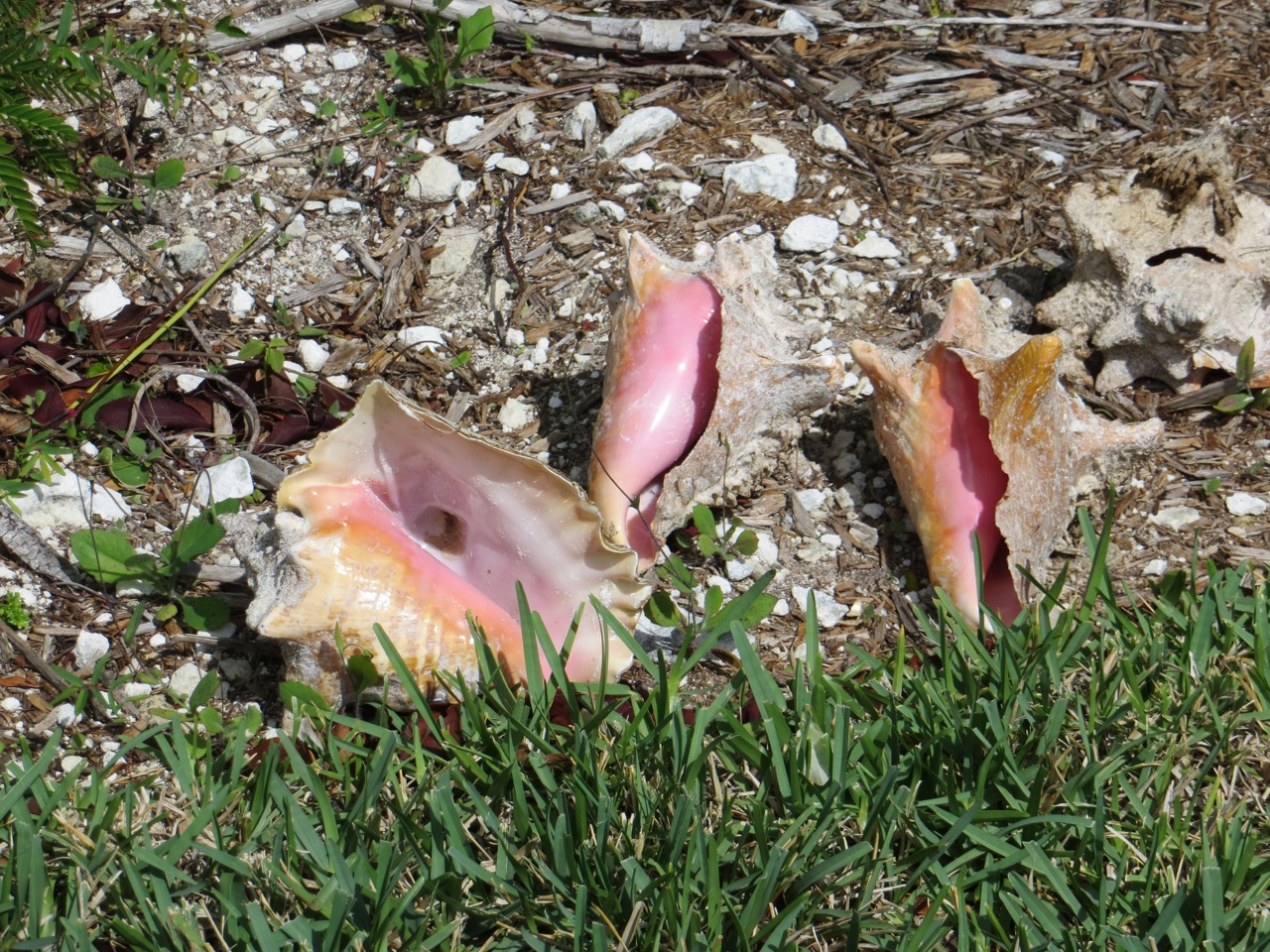
The flowers were also enjoying some sunshine after the rainDCB 1.8DCB 1.9DCB 1.12DCB 1.11A couple of other things caught my eye, including a cute baby lizard, before I headed for some restDCB 1.7DCB 1.6DCB 1.1

Unknown's avatar

HELLO, HANDSOME! WESTERN SPINDALIS IN THE MOOD FOR LURVE…


Western Spindalis Abaco 4

HELLO, HANDSOME! WESTERN SPINDALIS IN THE MOOD FOR LURVE…

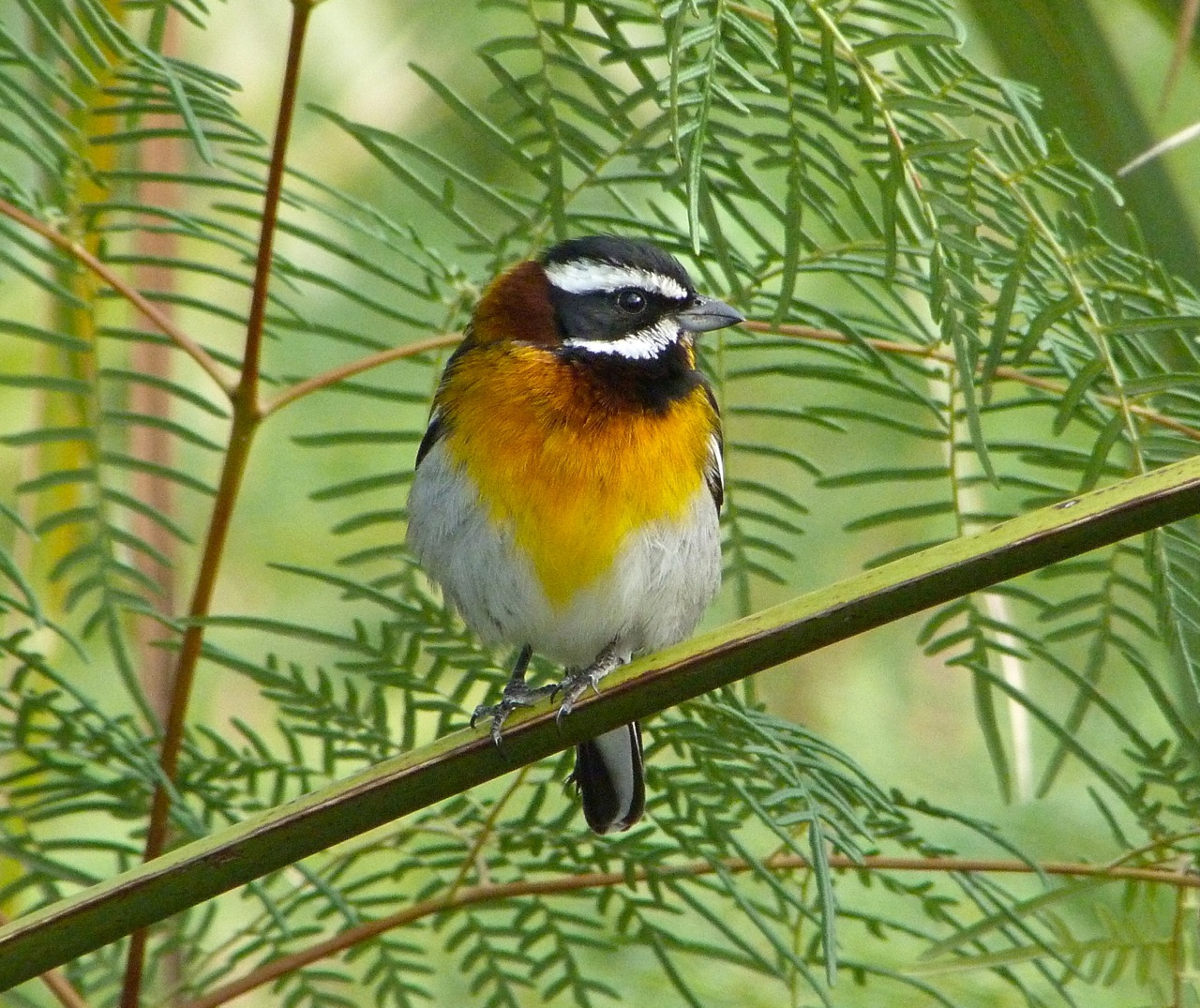
Nearly two years ago, when this blog was still in its mewling infancy, I posted about one of my favourite small birds on Abaco, the WESTERN SPINDALIS (Spindalis zena, formerly known as the Stripe-headed Tanager). It is a strikingly handsome creature by any standards, often seen posing ‘tall’ on a branch looking splendid in its orange, black and white livery.

Perching proudly…Western Spindalis Abaco 1… or dining elegantly…Western Spindalis Abaco 2

The  spindalis is one of the birds to look out for if you are walking along one of the drives at Delphi, or (*recommended 1/2 hour stroll*) walking the drive circuit. You’ll see them in the coppice or in the undergrowth alongside the drives in the pine forest area, almost certainly a little way in from the front. We spotted one quite close to the Highway, looking most decorative in the greenery. This one had an uncharacteristic hunched look about him, and we soon discovered why – he was courting. Not the black-faced grassquit near the bottom of the photo, but a female spindalis well-hidden low down and further back in the undergrowth to the left. So we edged nearer to get a better look.Western Spindalis Abaco 7

You’ll see that this male bird’s hunched posture has produced a rather impressive neck ruff, an adornment presumably irresistible to female spindalises. Both birds were ‘chucking’ softly to each other, and the male turned his head regularly to show off his glories from all angles. Western Spindalis Abaco 6Western Spindalis Abaco 8I can’t unfortunately reveal the outcome of this encounter. We never saw the female, and we had probably got too close for her to feel comfortable about breaking cover. The male, however, was too absorbed refining his pulling techniques to be greatly bothered by our presence, though he did keep a beady black eye on us. Is this male preoccupation when courting found in other animal species, I wonder? Reader, we made our excuses and left…

Unknown's avatar

HOW TO RECORD BIRDS EASILY ON ABACO (OR ANYWHERE ELSE…)


Red-winged Blackbird Abaco 3

RECORDING BIRDS: A LAYMAN’S GUIDE

YOU WILL NEED: an iPh@ne or similar  smartphone with a voice memo facility; patience; minimal non-natural background noises (traffic, yelling people, barking dogs, heavy machinery); a steady-ish hand; one or more birds nearby

RECORDING

  • Use the Voice Memo app on an iPh@ne (I presume most other smart phones have a similar app).
  • Once you have it onscreen, turn the phone round 180 deg and the image will swivel round too. Now you can point the microphone at the sound and have the controls the right way up facing you.
  • Turn the volume up to max before you record.
  • Handle the phone carefully so it doesn’t record you touching it as well. It probably won’t pick up pressing ‘record’, but it may when you press ‘stop’. But you can trim the end of the saved file on the file very simply.
  • The recording saves in m4p format, and you can email it to your computer direct from the app (or to anywhere or anyone else).
  • Drag / save the file onto your desktop from the email. When you open it, it will (a) play and (b) appear in your iTunes library (or whatever music storage system you use).

CONVERTING RECORDINGS TO MP3

  • Having opened the recording, to convert the file to an mp3 (generally the preferred version for uploading elsewhere) in iTunes, go to Songs in your iTunes library and search for Memo. There it is!
  • You can rename it at this stage if you wish.
  • Then go to File on the top bar, and in the drop-down menu, near the bottom, go to Create new version. It will offer you mp3.
  • Click mp3 and a second recording file will appear in your library. That’s your mp3.
  • Drag it onto your desktop and do what you want with it.

Apologies if this is all blindingly obvious and written in the elementary computer language ‘eggy-peggy’. It took me a while to get it sorted out, and I hope the details above will help the lo-tek computer user to record birds and use the results painlessly.

FIELD NOTES

  • I recommend recording for about 20 – 30 seconds max. The iPh@ne  allows easy trimming at the start and end of the saved file, but there’s no easy way to edit the middle to take out the barking dog.
  • Several short recordings of each bird will give a better choice of results than one or 2 long recordings.
  • The iPh@ne mic is surprisingly sensitive. It will pick up all nearby sounds – someone whispering at you “is it recording yet?”, for example. So ideally this is best done in the pine forest or coppice, away from the Highway. And maybe the loud whisperer.
  • Wind can be a problem. Not just for humans. The mic will pick up gusts of wind, or wind blowing across it if you change the direction you are pointing the phone as you record. So this is best done on a calm day.

Red-winged Blackbird Abaco 1

Here are two practice recordings I made in March. The first is the female red-winged blackbird above (and header) at Casuarina beach. The distinctive call is rather like a rusty hinge on a swinging gate, often heard far out in the mangrove swamps of the Marls. You’ll hear background noises from collared doves and also the sea lapping on the shore.

The second is thick-billed vireo in the coppice at Delphi. You’ll hear an answering vireo – and also some wind noise. I find these little birds frustratingly hard to see – they always seem to be lurking further back in the bushes than I think. I’ve never managed to take a good photo of one, so I’ll upload an illustrative poor one to be going on with. I am back on Abaco in a week, and a better TBV photo is on my avian hit list.

Thick-billed Vireo, AbacoFinally, you’ll find a longer recording I made of Abaco parrots squabbling noisily at Bahama Palm Shores near the end of a recent post HERE. I made an mp3 using the method described above, and uploaded it to the excellent Xeno-Canto bird sounds website, which is well worth exploring. You can find my recordings of the parrots and the birds in this post, plus sonograms, on my XC page, such as it is, HERE 

But if you just want to hear the parrots, here they are. Like schoolkids, only louder.

Abaco (Cuban) Parrot 2013 13Why do I do that annoying ‘iPh@ne’ thing? It’s a statistical fact that I have just made up that 373,597 people a minute world-wide g@@gle the correct word. Imagine the meta-crawlers and spam-splurgers that lock onto that word. I don’t want to cyber-meet them. I also use the form Am@z@n but for different reasons relating to their ingenious tax arrangements (alleged, obviously). Thus  with G@@gle as well (again, merely alleged – as Dusty Springfield memorable sang, “Nothing is proved…)

Unknown's avatar

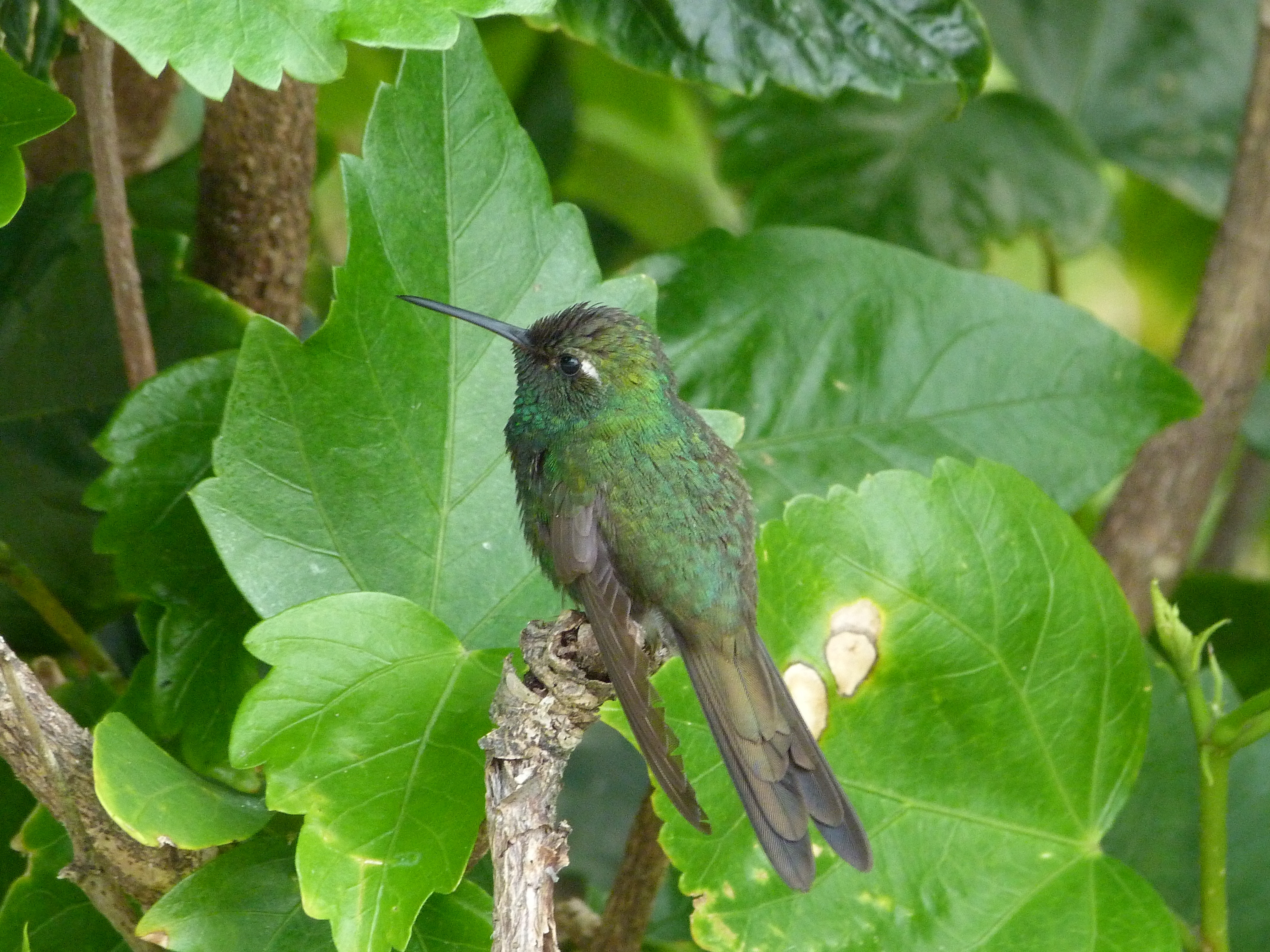
GREEN PREEN: CUBAN EMERALD HUMMINGBIRD, ABACO


Cuban Emerald Hummingbird preening, Abaco 8

GREEN PREEN: CUBAN EMERALD HUMMINGBIRD, ABACO 

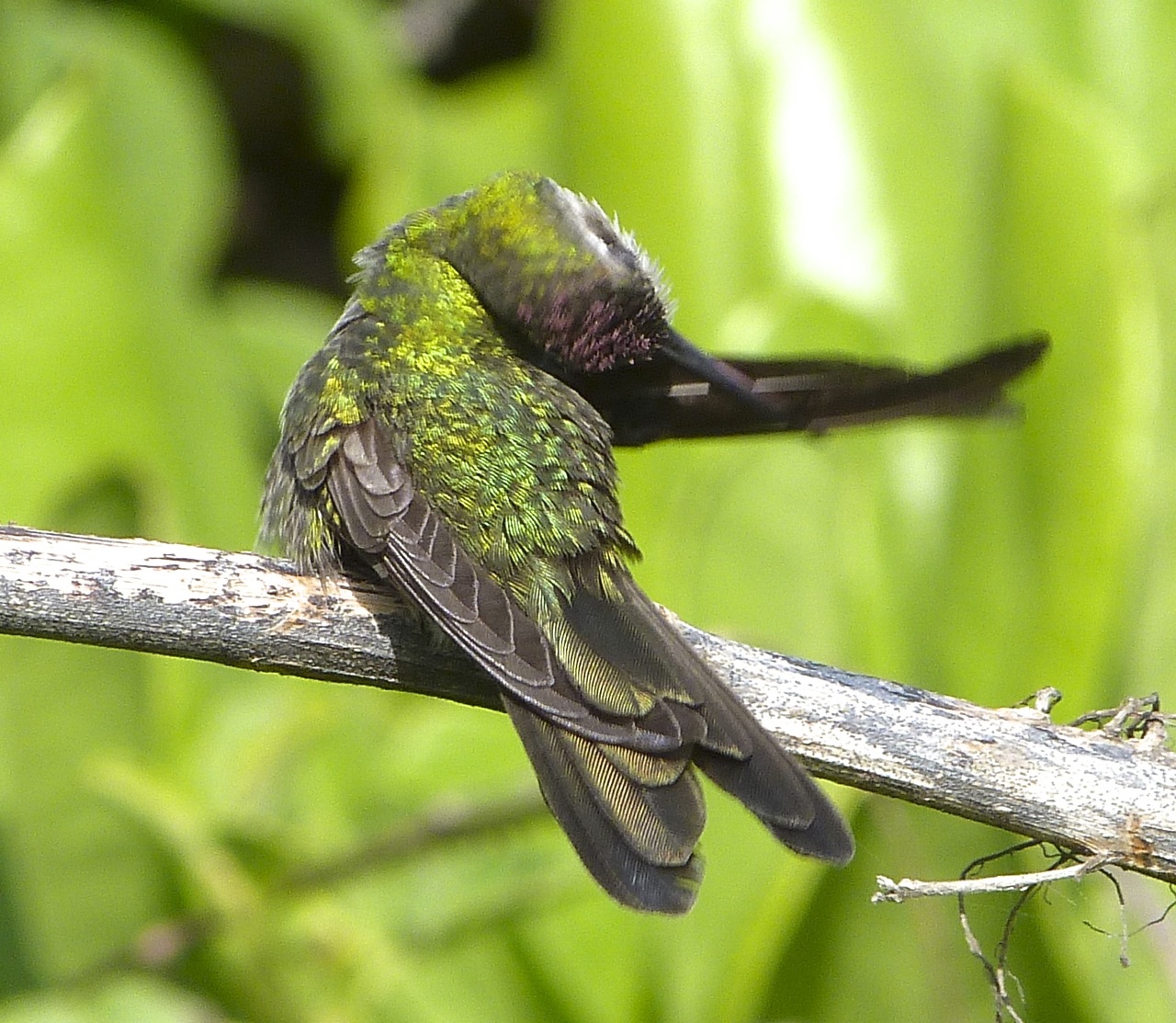
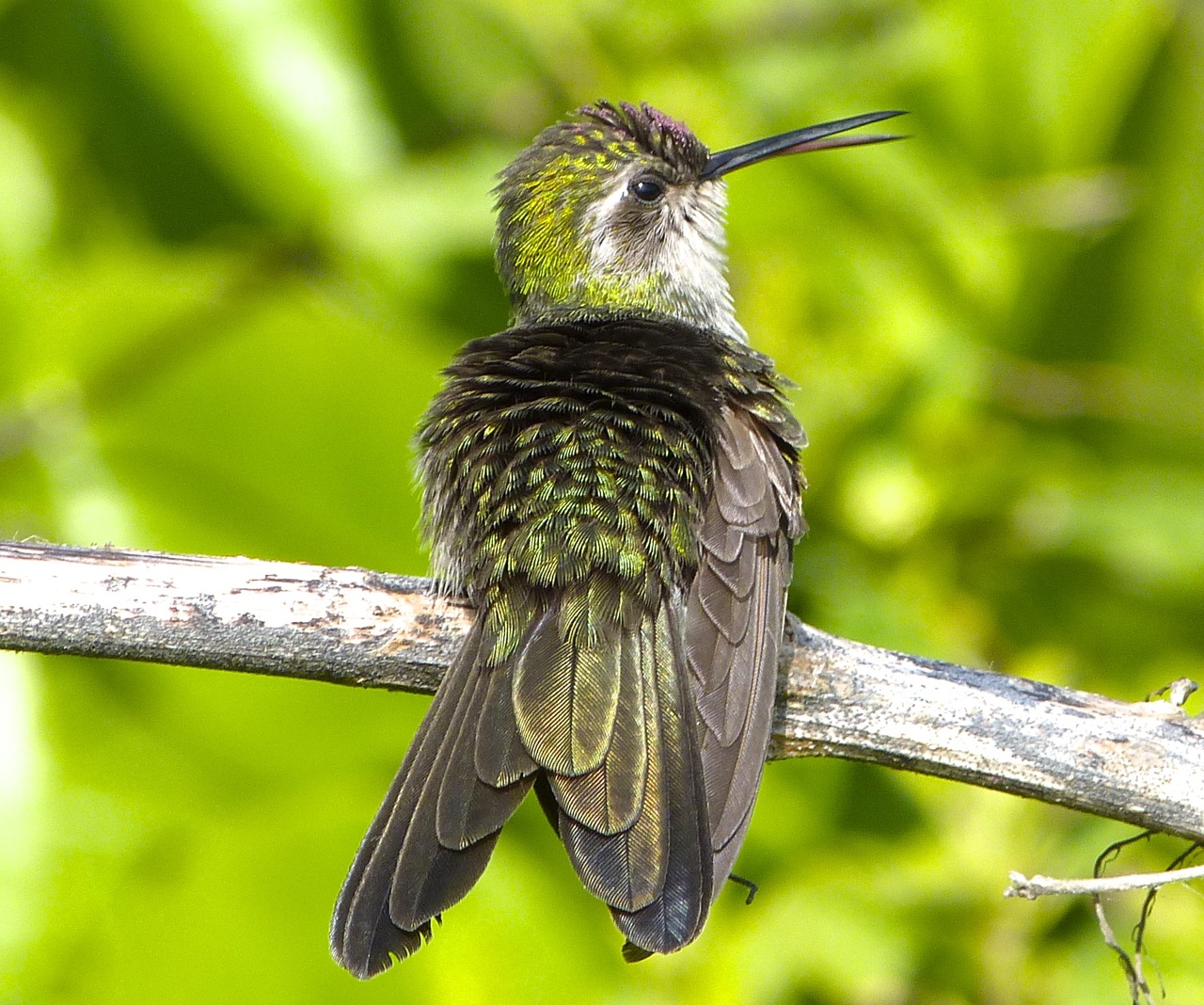
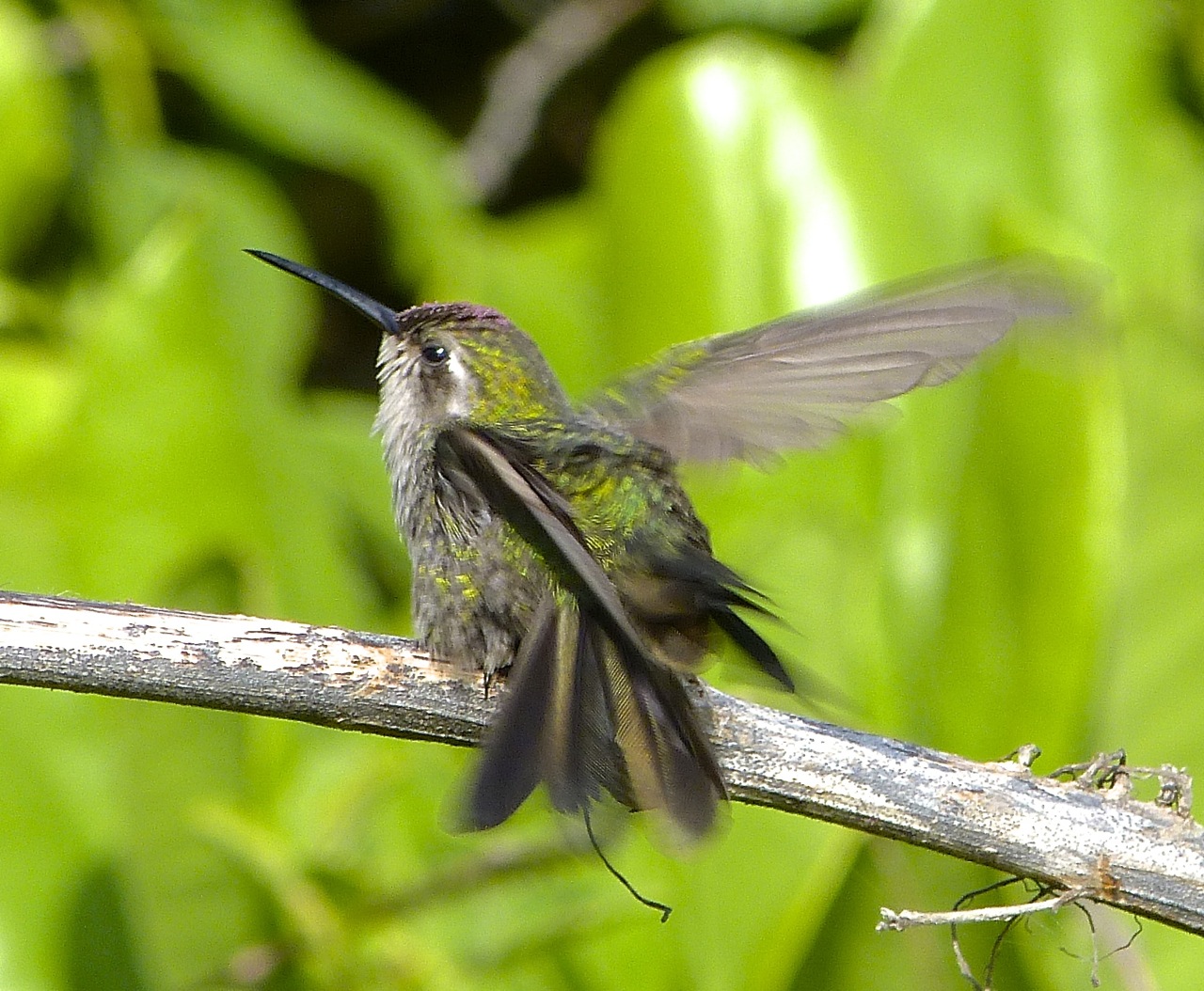
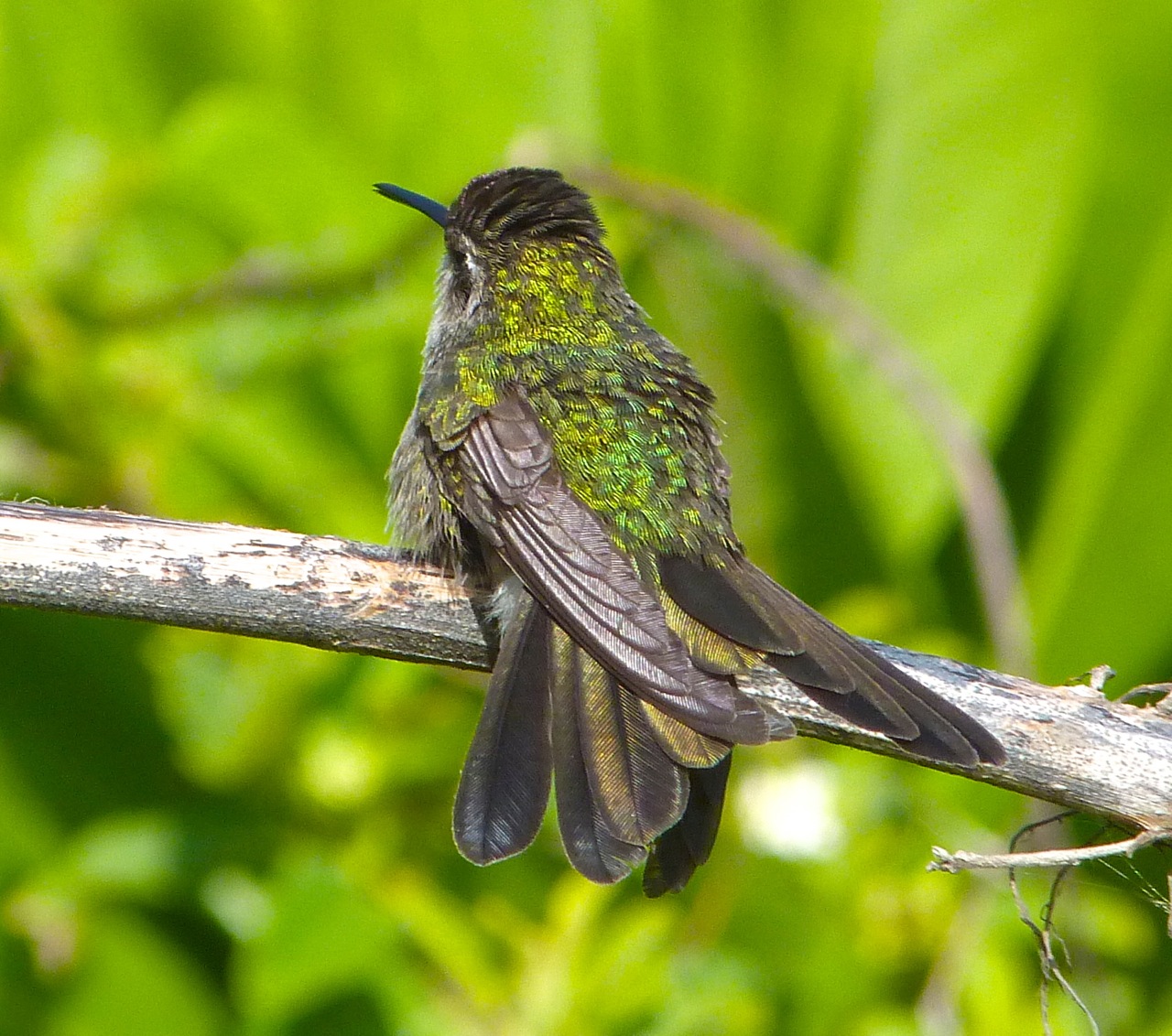
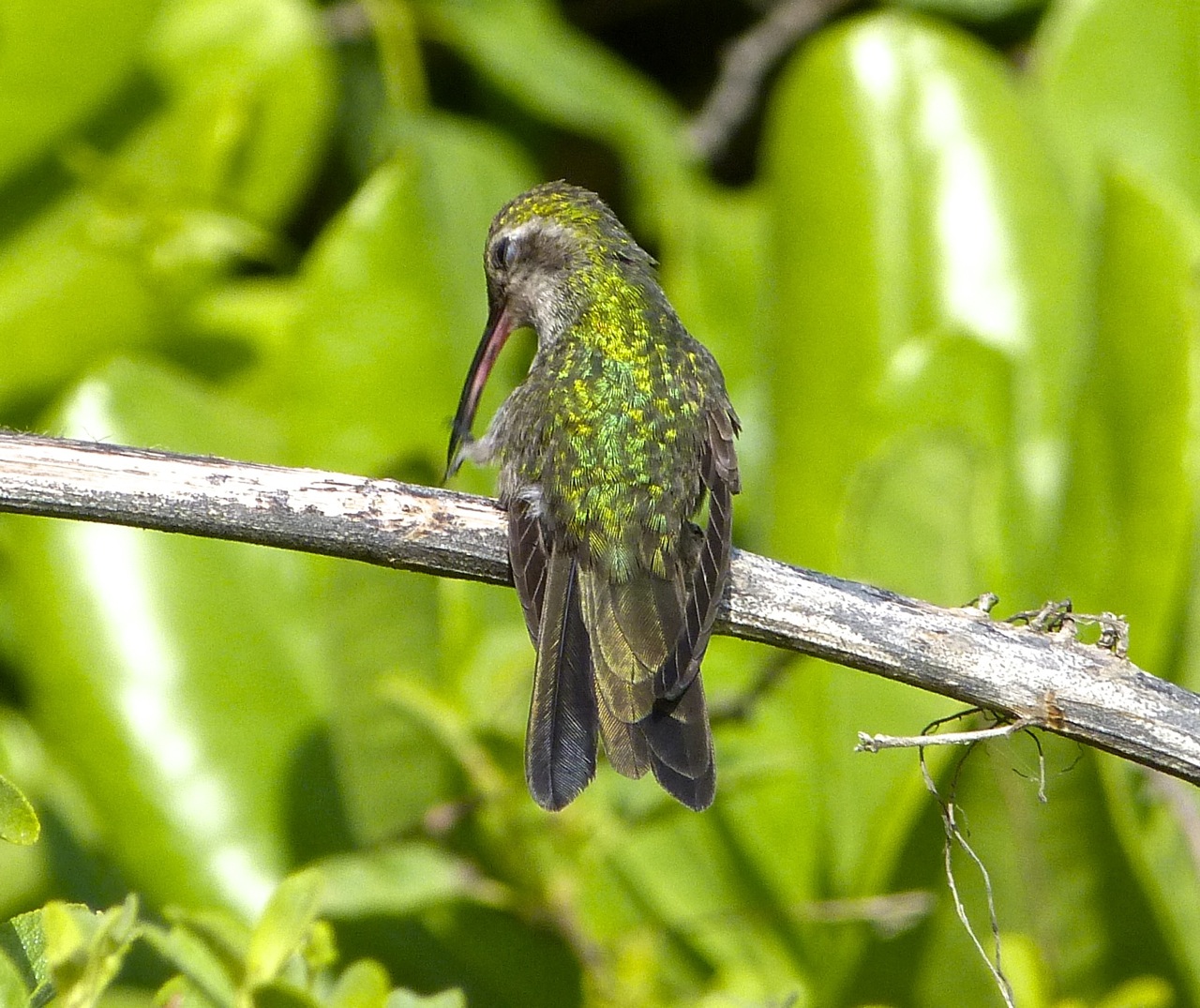
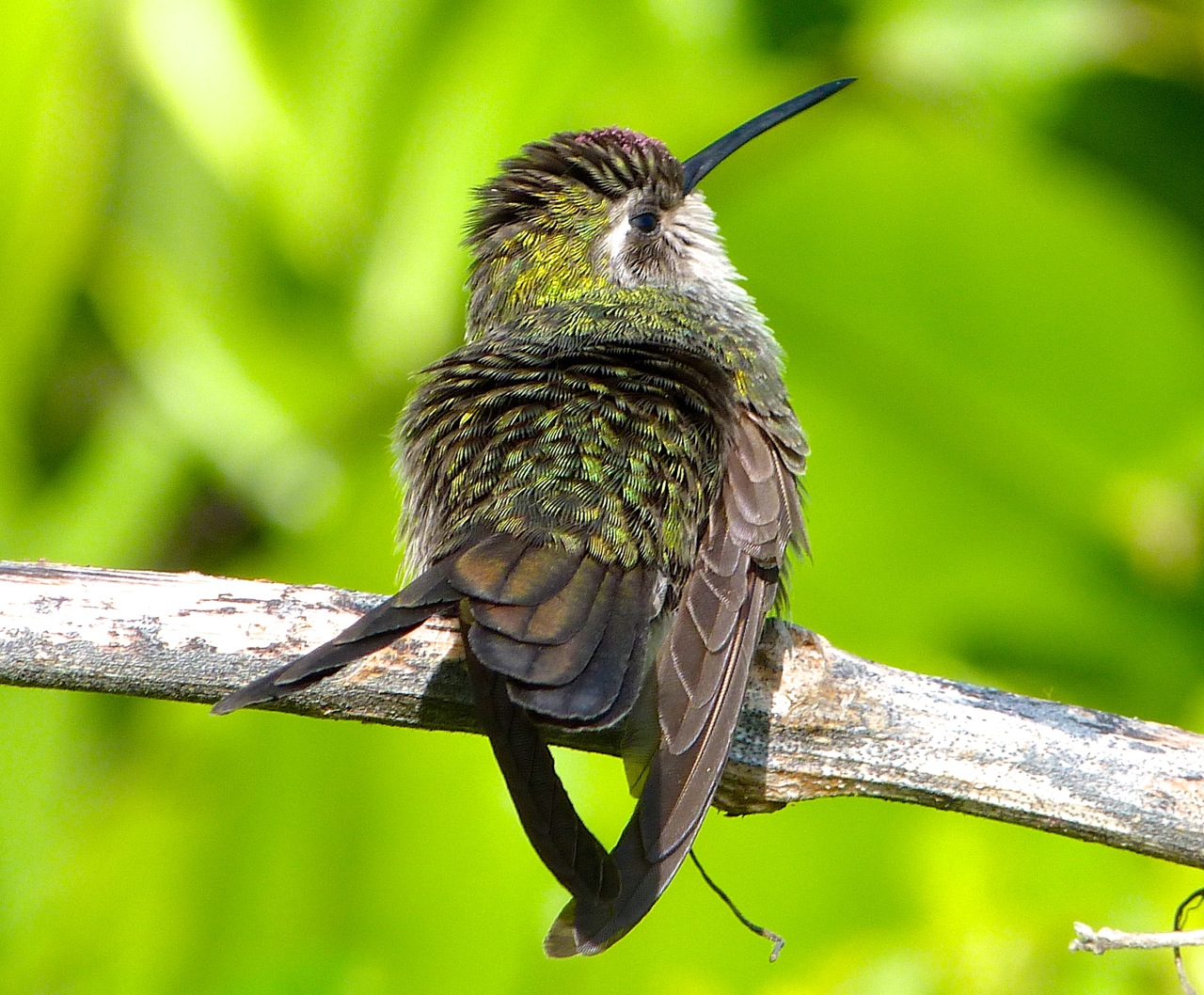
This tiny bird was in the Abaco coppice, well off the beaten track. Nearly two miles down a notably unbeaten track, in fact, that later was to lead to a puncture-and-@$%^&*-I-forgot-my-cellphone drama. Trauma, even. The hummer knew perfectly well that I had crept up behind it, but it had presumably seen few bipeds. It would not have known of their urge to bulldoze wild habitat and turn it into massive unsold developments, as has happened a short way up the coast… So it just carried on with what a bird has to do to keep itself looking presentable, while I, feeling rather rude and intrusive, took some quick pictures before leaving it in peace. Rather than sell these intimate studies to Hello!, OK!, Chirpy! or Tweet!, I am displaying them free for your enjoyment.Cuban Emerald Hummingbird preening, Abaco 1Cuban Emerald Hummingbird preening, Abaco 4Cuban Emerald Hummingbird preening, Abaco 6Cuban Emerald Hummingbird preening, AbacoCuban Emerald Hummingbird preening, Abaco 5Cuban Emerald Hummingbird preening, Abaco 2Cuban Emerald Hummingbird preening, Abaco 7a

In addition to the Cuban Emerald, the Bahamas has its own endemic hummingbird, the Bahama Woodstar. In the faltering early days of this blog, I posted about them both at BAHAMA WOODSTARS & CUBAN EMERALDS: THE HUMMINGBIRDS OF ABACO At that time, I was not really a ‘birder’ at all, and had only a very basic camera, so my own pictures were… very basic. But you may be interested in some of the info in the post about these two species, so I mention it in passing.

Unknown's avatar

LEAST, BUT NOT LAST: THE SMALLEST SANDPIPER


Least Sandpiper Abaco 5

LEAST, BUT NOT LAST: THE SMALLEST SANDPIPER

220px-Status_iucn3.1_LC.svg

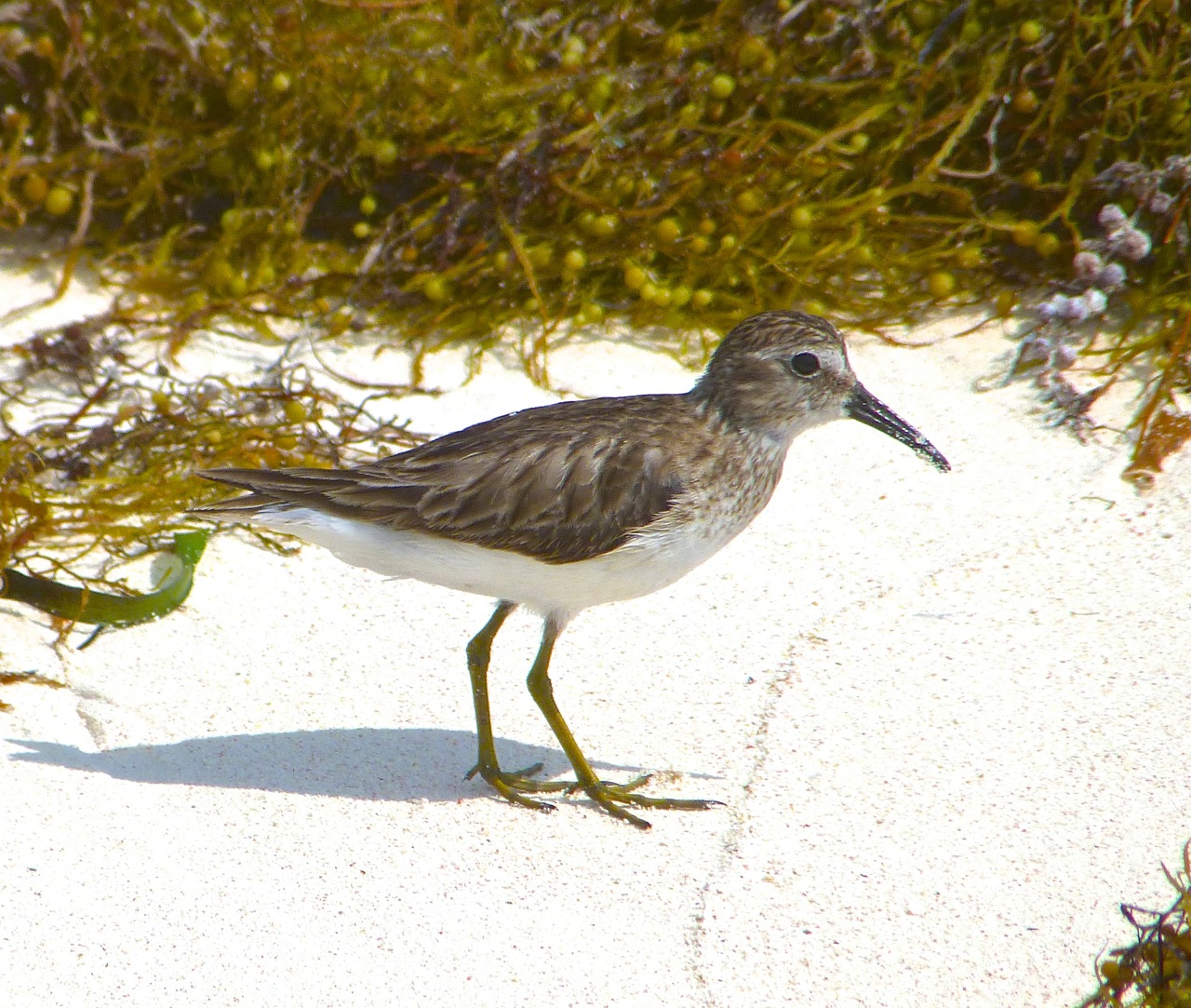
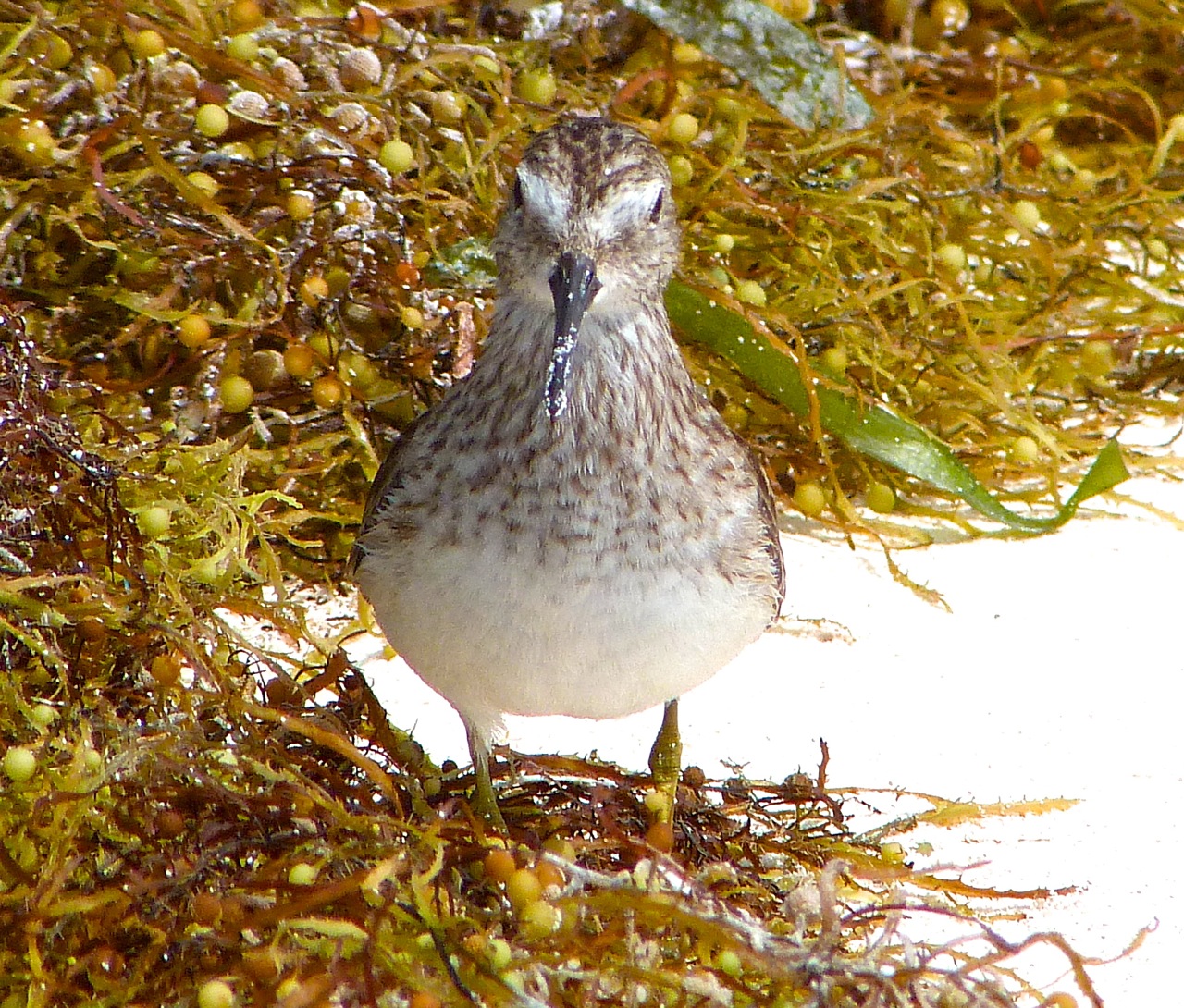
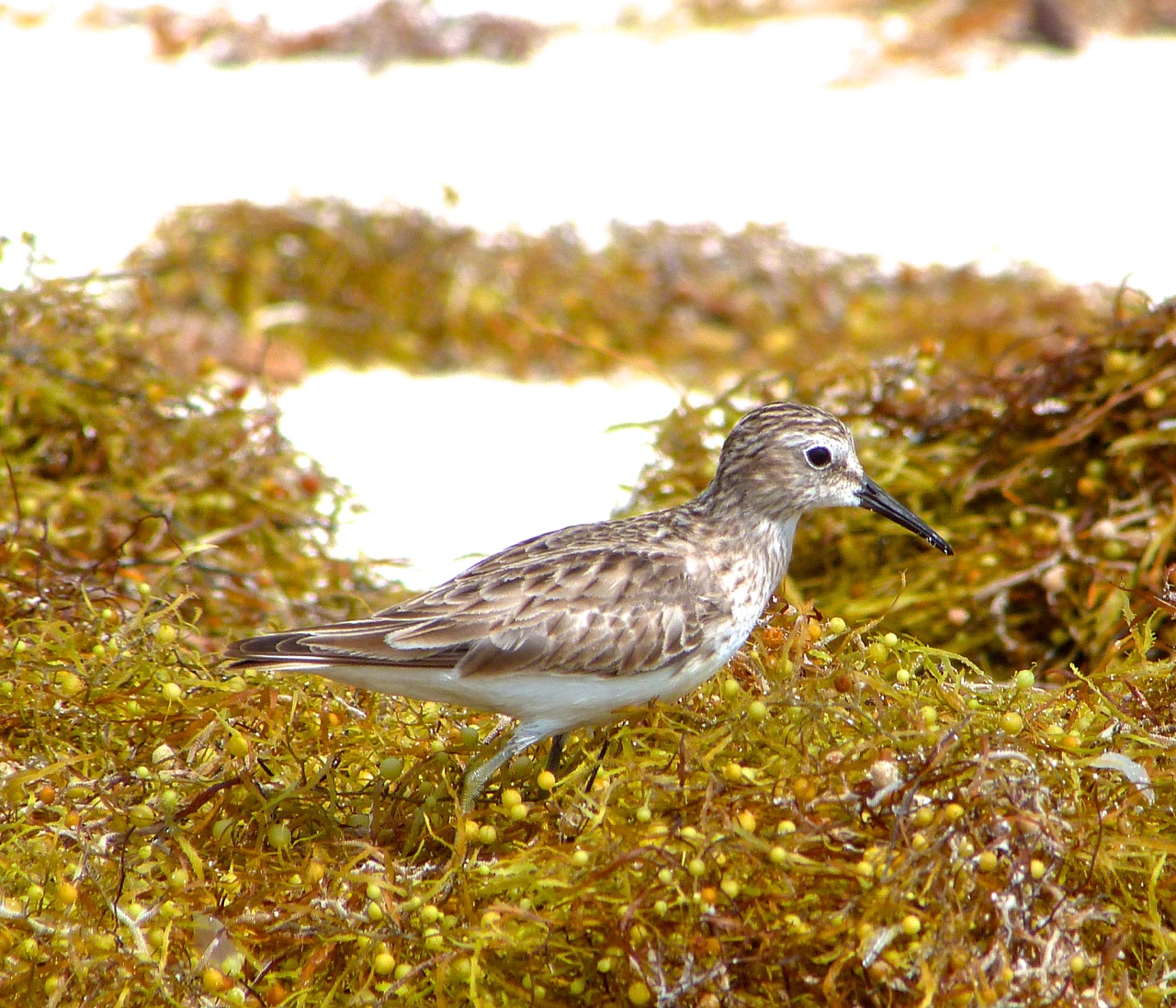
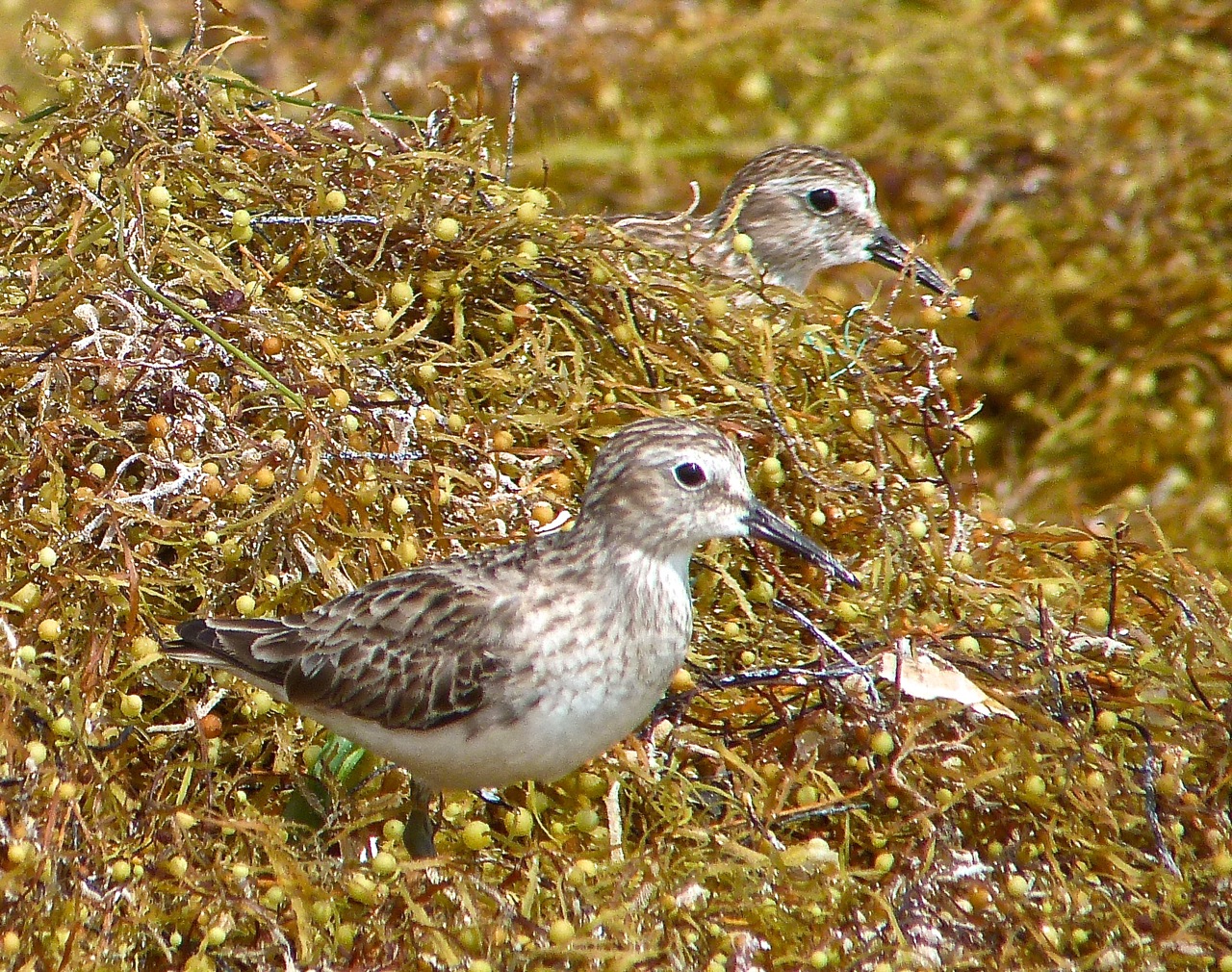
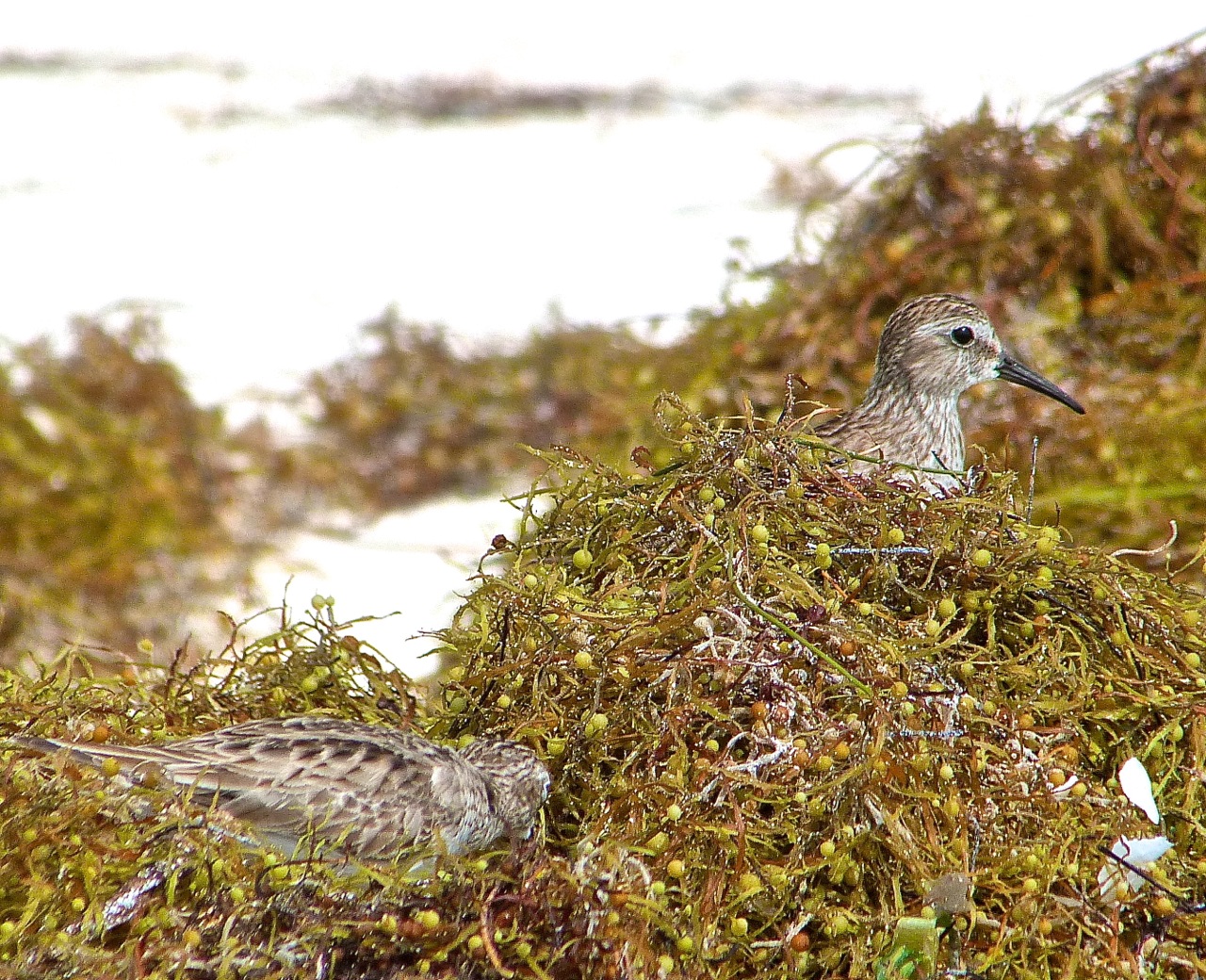
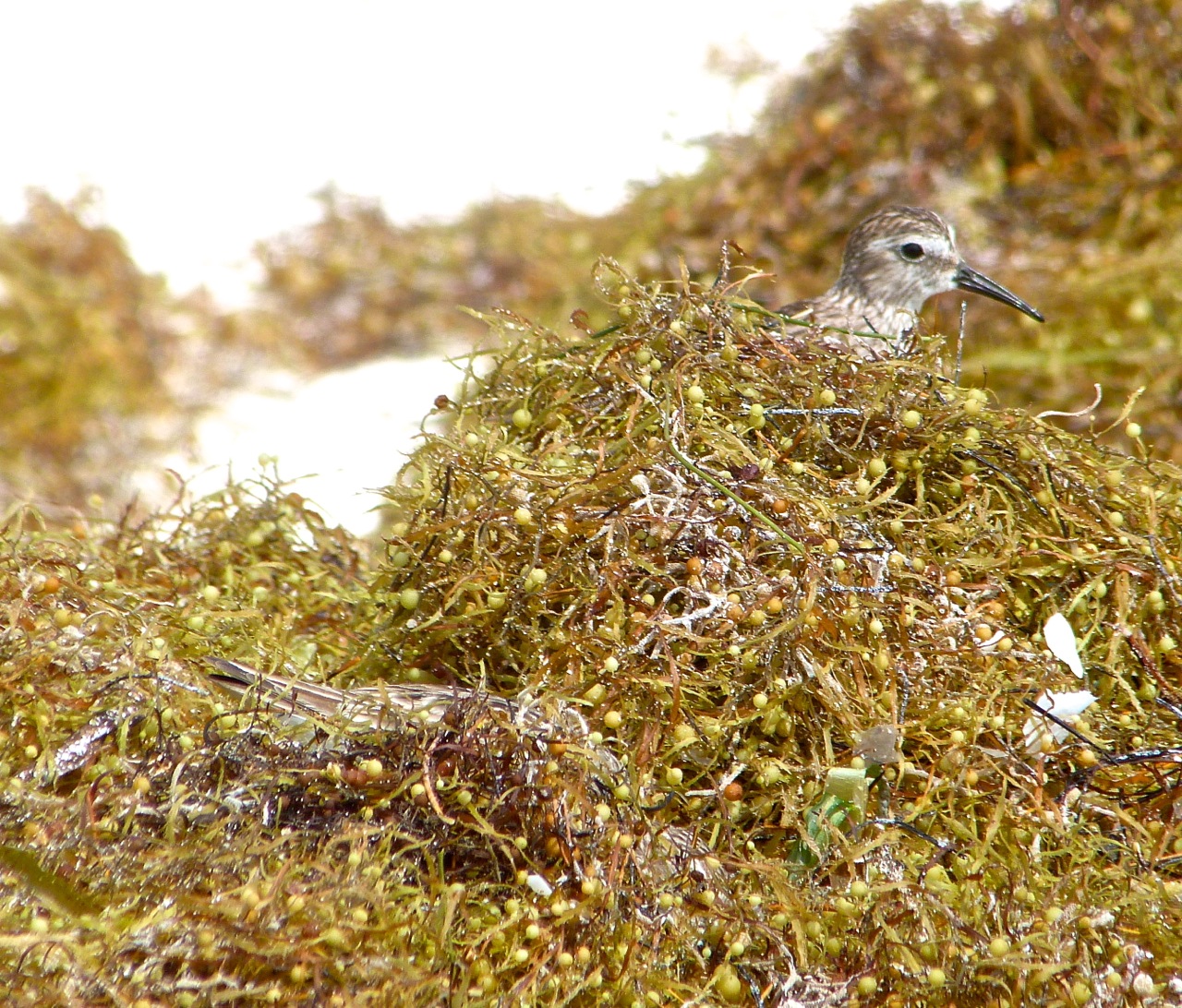
The LEAST SANDPIPER (Calidris minutilla) is the smallest shorebird, the definitive “peep”. An adult is only about 6″ long. They are to be found in pairs or groups, busily foraging in the sand and seaweed. Often they will mix in with other shorebirds. These birds nest in scrapes close to the water, with both parents involved in incubating the eggs. The female will usually leave the nest before the young birds fledge – perhaps (bizarrely?) sometimes even before the eggs hatch. Deal with it, male Least Sandpipers. Fortunately the hatchlings can feed themselves very soon, and are able to fly within two weeks of birth.

Least Sandpiper Abaco 10 Least Sandpiper Abaco 9 Least Sandpiper Abaco 8 Least Sandpiper Abaco 7The “peep” call will no doubt be instantly familiar, although how to differentiate between the various types of sandpiper may be more of a problem… Here’s a short recording via Xeno-Canto (credit: Mike Nelson) 

[audio http://www.xeno-canto.org/sounds/uploaded/PWDLINYMKL/LeastSandpiper7.mp3]


Least Sandpiper Abaco 6 Least Sandpiper Abaco 4

Least Sandpiper Abaco 3

They may burrow deep into the seaweed near the shoreline to reach an especially good feeding patchLeast Sandpiper Abaco 1Least Sandpiper Abaco 2

Photos: Keith Salvesen, Delphi Beach, Abaco

Unknown's avatar

CUBAN PEWEE: NATURE’S LEAST SCARY TYRANT


Cuban Pewee Abaco 8

CUBAN PEWEE: NATURE’S LEAST SCARY TYRANT

Pasted Graphic
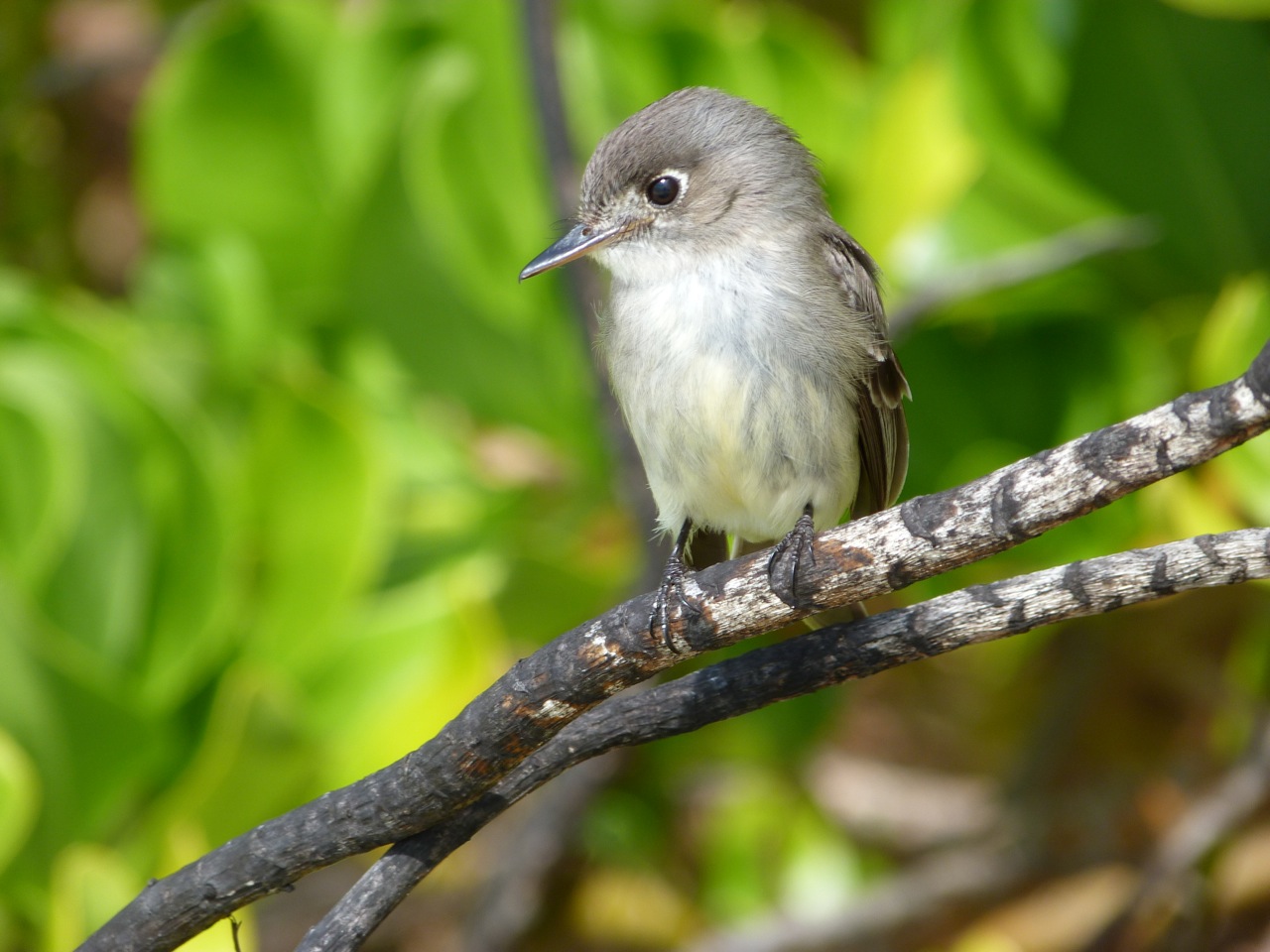
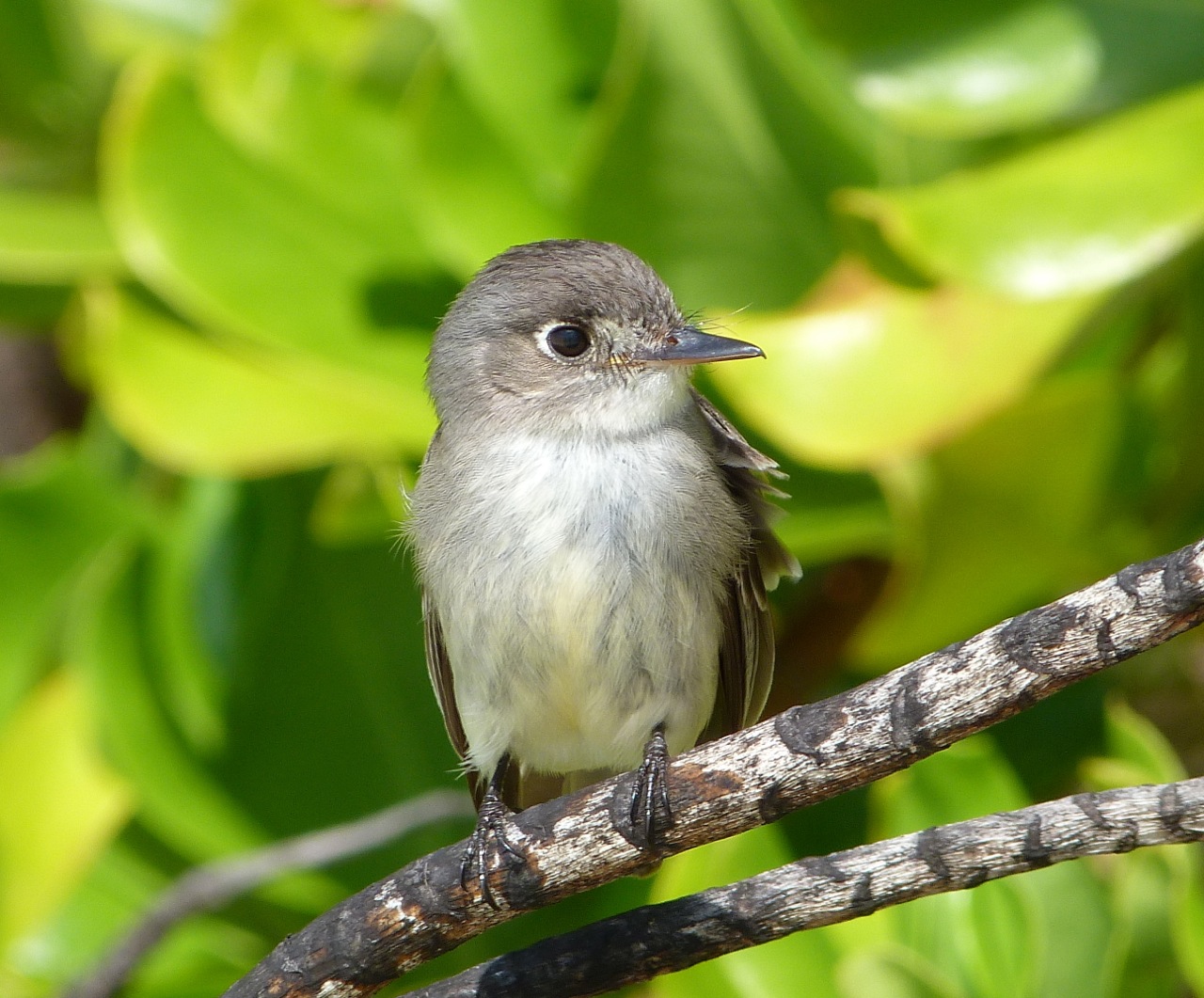
image.aspxThe CUBAN PEWEE Contopus caribaeus bahamensis, also known as the Crescent-eyed Pewee (see photos for details), is a tyrant. At 6″ long , the smallest tyrant you are likely to encounter in the Bahamas, but undoubtedly a member of the family Tyrranidae. These are the flycatchers, and include the larger LA SAGRA’S FLYCATCHER and the still larger Loggerhead and Gray Kingbirds. The Cuban Pewee is permanently resident on Abaco, and can be found in both pine woods and coppice. When returning to its perch after a flycatching sortie, this bird gives a characteristic flick of the tail.

The little bird below was in the edge of the coppice bordering the long sandy beach at Casuarina. Bruce Hallett, in his essential book  ‘Birds of the West Indies…’ notes that Cuban Pewees are ‘usually approachable’, so I decided to test this out. I was about 20 feet from the bird when I first saw it. By sliding one foot forward in the sand and pausing before moving the other foot, I got to within 5 feet of the bird, while it watched my approach with apparent indifference. Unlike some creatures, it did not seem discomfited by eye-contact. It responded when I made a faint clicking sound by rather sweetly putting its head on one side.  Then it began to fidget slightly – possibly feeling camera-shy. So I shuffled slowly back so as not to disturb it in its own territory.

The close-ups at the end clearly show the tiny hooked tip at the end of the upper beak – I imagine this somehow relates to the business of catching flies. Like other flycatchers, the Cuban Pewee has very distinctive whiskers around the base of the beak – again I presume this assists with feeding in some way, perhaps helping to sense the approach of an insect. Any expert views welcome via the comment box.

Cuban Pewee Abaco 1Cuban Pewee Abaco 7Cuban Pewee Abaco 6 Cuban Pewee Abaco 5 Cuban Pewee Abaco 4Cuban Pewee Abaco 9 Cuban Pewee Abaco 10It’s occasionally tempting to anthropomorphise such close encounters in terms of imputed human / creature empathy. Much best to resist that. But as I withdrew, leaving this little  bird undisturbed on its branch, I did experience a strange feeling of… [I must interrupt myself here. I’m a lawyer, so that’s quite enough of that sort of nonsense]

Unknown's avatar

ABACO’S UNIQUE PARROTS IN PICTURES, VIDEO & SOUND


Abaco (Cuban) Parrot 2013 4a

ABACO’S UNIQUE PARROTS IN PICTURES, VIDEO & SOUND

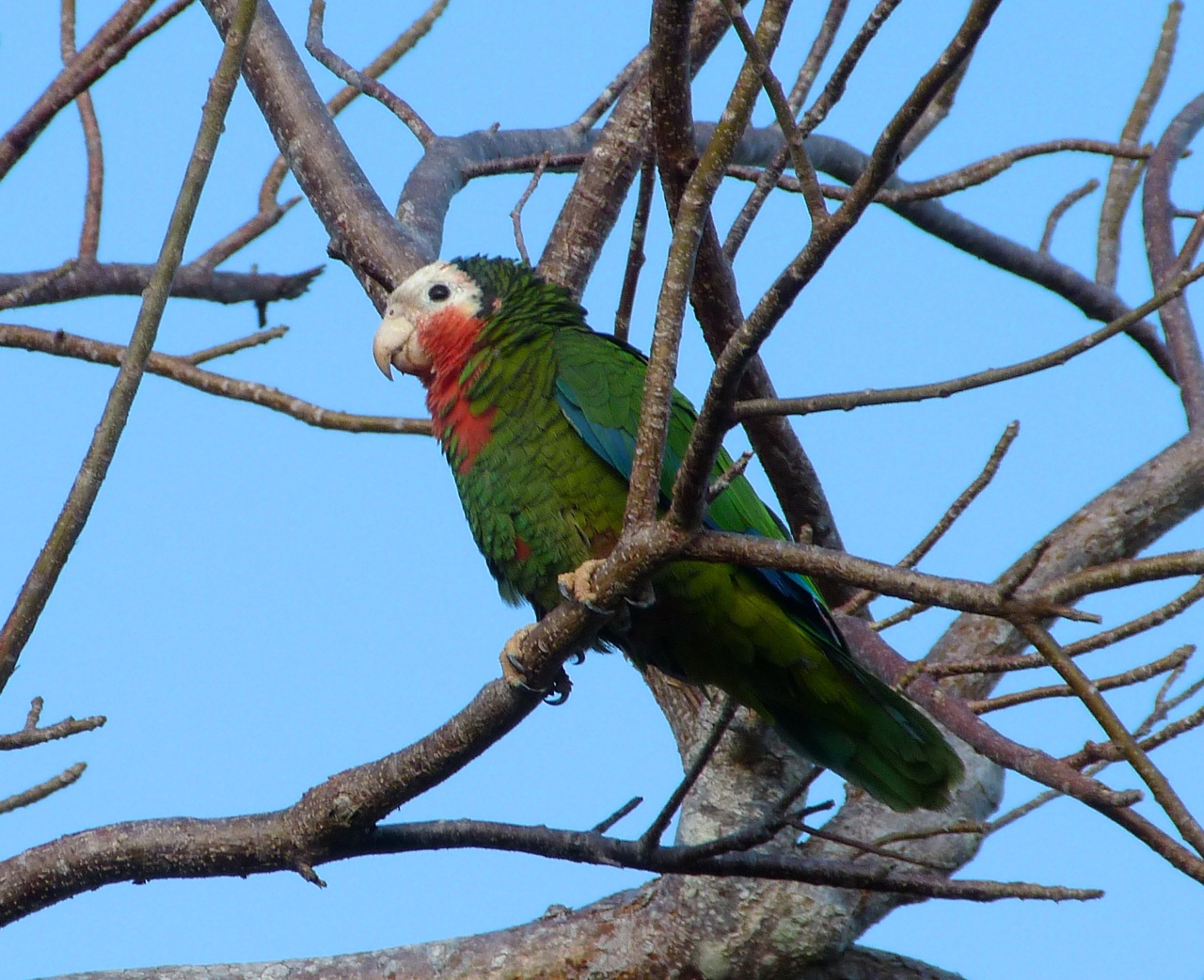
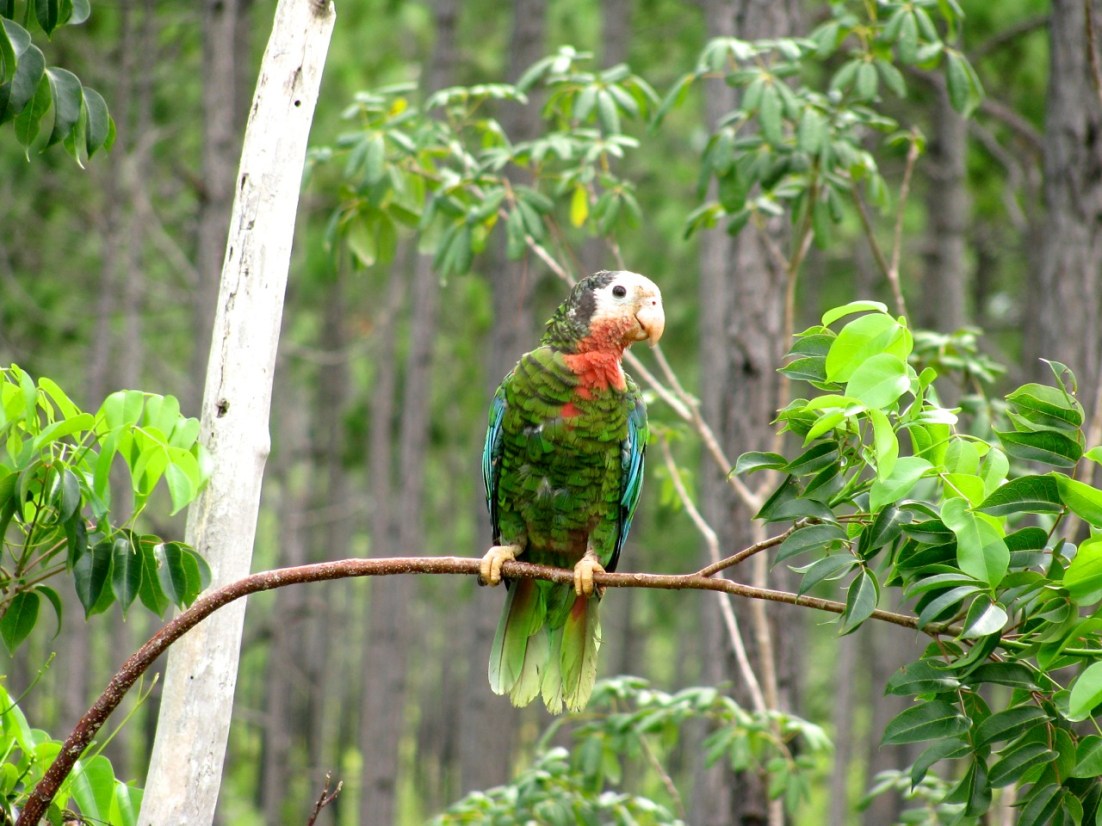
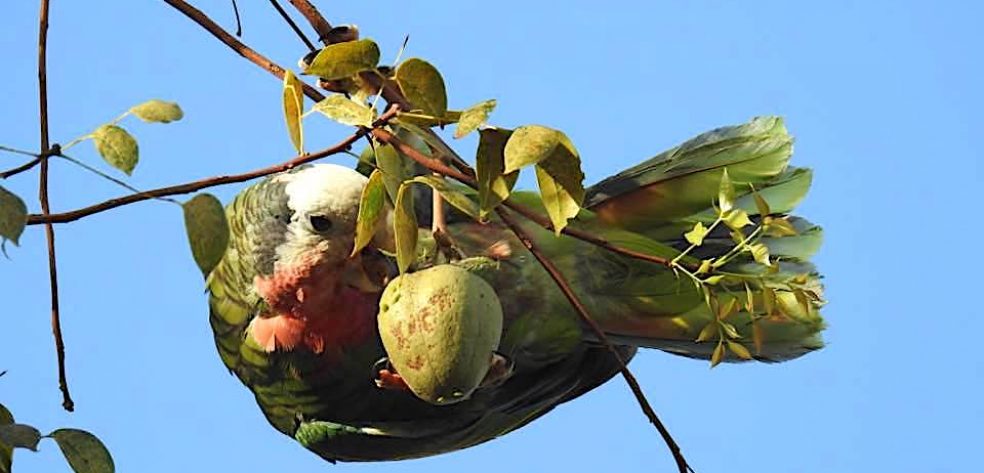
Abaco parrots. The only ground-nesting parrot species in the Bahamas. In the world, in fact. I’ve posted quite often about them – indeed they have their own page HERE – because, frankly, they are special and their story is one of encouraging success for intensive research and conservation programs. In 1492, Christopher Columbus was amazed by the vast number of parrots he saw in the Bahamas (not that the islands were called that then). In his journal he noted: “flocks of parrots darken the sun…”  Not many years ago, parrot numbers on Abaco had dwindled to fewer than 1000 – below the critical point for sustaining a viable population. Extinction of the Abaco parrot loomed, accelerated by increasing habitat change, predation, and (*euphemistically*) ‘human intervention’.  Thanks to the campaign of conservation, habitat preservation, anti-predation measures and vigilance, numbers have been restored to a sustainable level, perhaps as many as 4000. They are now a fairly common sight – and sound – in South Abaco. But not everyone who looks for them finds them, or even hears them. Especially not if they take pot luck in the vast areas of pine forest in the National Park, where they breed…

I’ve covered much of this ground before, but there is a slightly wider audience these days, so a few newcomers may be interested to learn about these lovely birds. The best thing is to have a look. All photos were taken by me during two early evenings in March.

Abaco (Cuban) Parrot 2013 1Abaco (Cuban) Parrot 2013 2 Abaco (Cuban) Parrot 2013 4aAbaco (Cuban) Parrot 2013 5

The parrots are extremely agile, and have very strong feet and claws that enable them to move around in the tree-tops – or to hang upside down if they choose to. The next photo is a close-up a foot; below that is short video showing a parrot manoeuvring itself in a tree. You’ll also see how the birds use their beaks as an extra limb, so to speak. The uninspiring title shown is only because I forgot to label it ‘Abaco Parrot’ in the first place, and can’t find how to edit it…Abaco (Cuban) Parrot 2013 6

In this image you can clearly see how their ‘opposable’ claws wrap round a branchAbaco (Cuban) Parrot 2013 8

If you suspect that this one has had some ‘work’ done, you’d be right. I normally leave my photos largely alone, apart from cropping and maybe basic light balancing where needed. Sometimes an image is nearly there, but needs a bit of extra cosmetic business – but one can usually tell. The left wing? Hmmmmm (users of ‘noise reduction’ will know what I am talking about!).Abaco (Cuban) Parrot 2013 9 Abaco (Cuban) Parrot 2013 10 Abaco (Cuban) Parrot 2013 11 Abaco (Cuban) Parrot 2013 12

The flocks of parrots are incredibly noisy. Sometimes they split into two or three groups, close together, and seem to compete in raucousness. Around 5.00 pm seemed to be the noisiest time. I took recordings of the racket, using the voice memo app on an iPh*ne, simply holding the phone with the speaker / mike end towards the parrots. Some come out pretty well – good enough to post on the excellent XENO-CANTO bird sound site. Here is a recording, with the first few seconds transcribed into a sonogram. I made a ring tone from this recording for Caroline Stahala, the scientist who, with her team, looks after the birds. She’s been too polite to say whether she uses it or (more likely) not!

Abaco (Cuban) Parrot 2013 13Abaco (Cuban) Parrot 2013 14Abaco (Cuban) Parrot 2013 15I find the parrots very hard to nail in flight (see above), possibly because of a shutter-speed issue (mine, not the camera’s). I nearly junked the picture below, but I liked the clash of the parrot colours with the purple bougainvillea, so I spared it.Abaco (Cuban) Parrot 2013 16B

If anyone is interested in making a small contribution towards the continuing research into and protection of these birds, please have a look at my ABACO WILDLIFE CHARITIES  page, where the relevant link to Parrots International can be found. Or visit doudoubirds, where you will find endearing Abaco Parrot prints by dou dou herself for sale in aid of the parrots. Or contact me at rollingharbour.delphi@gmail.comAbaco (Cuban) Parrot 2013 7

If anyone had a problem with the Xeno-Canto sound file above, here is a simplified version of the recording

Unknown's avatar

BLACK-FACED GRASSQUITS ON ABACO, BAHAMAS


Black-faced Grassquit Abaco 7

BLACK-FACED GRASSQUITS ON ABACO, BAHAMAS

BFGs. Birds of the coppice, garden, feeder… and beach (see below). I posted some images last year HERE and now I have a few more, taken recently. Although their name is promising at first glance, the Title pun-value of these little birds is low, so I’ve left it… While the males are indeed black-faced, and often -chested too, the females are a drab brown. Until you look closely. Then you’ll see the olive shades, and the pretty yellow streaks on the wings.

A YOUNG FEMALE BFG ENJOYING THE BEACH AT TREASURE CAYBlack-faced Grassquit Abaco 4Black-faced Grassquit Abaco 3

BFGs AT DELPHIBlack-faced Grassquit Abaco 1Black-faced Grassquit Abaco 2

A MALE BFG AT BAHAMA PALM SHORESBlack-faced Grassquit Abaco 6 Black-faced Grassquit Abaco 5

Unknown's avatar

A CUBAN EMERALD HUMMINGBIRD ON ABACO, BAHAMAS


DCB GBG Cover Logo

A CUBAN EMERALD HUMMINGBIRD ON ABACO, BAHAMAS

I took photos of this tiny bird at BPS last month. They were ‘chance’ pics taken when we were photographing parrots in the tree tops. The hummer suddenly appeared some way ahead of me, so I swivelled the camera at it without changing any settings. Frankly, I didn’t expect the results to show more than a small green blur, but they have turned out slightly better than anticipated. I put these images on my subsidiary ‘Gallery’ site and people seem to like them so I’ve decided to add them here too. After all, it’s their true home, I suppose, with the other Abaco wildlife. Apologies to those who have seen these already on the other site. The images are exactly as taken – no colour tweaking, no sharpening, no photoshop  – and may not stand enlargement or close scrutiny, because I was several yards away. On the other hand they give a good idea of how this bird feeds. The body postures are very characteristic, and besides, the plants are pretty… Cuban Emerald Hummingbird in flight, Abaco Bahamas 1Cuban Emerald Hummingbird in flight, Abaco Bahamas 2Cuban Emerald Hummingbird in flight, Abaco Bahamas 3Cuban Emerald Hummingbird in flight, Abaco Bahamas 4Cuban Emerald Hummingbird in flight, Abaco Bahamas 5

Unknown's avatar

BLACK & WHITE WARBLERS: WINTER VISITORS TO ABACO


Black & White Warbler (Wiki)

BLACK & WHITE WARBLERS (Mniotilta varia)

WINTER VISITORS TO ABACO

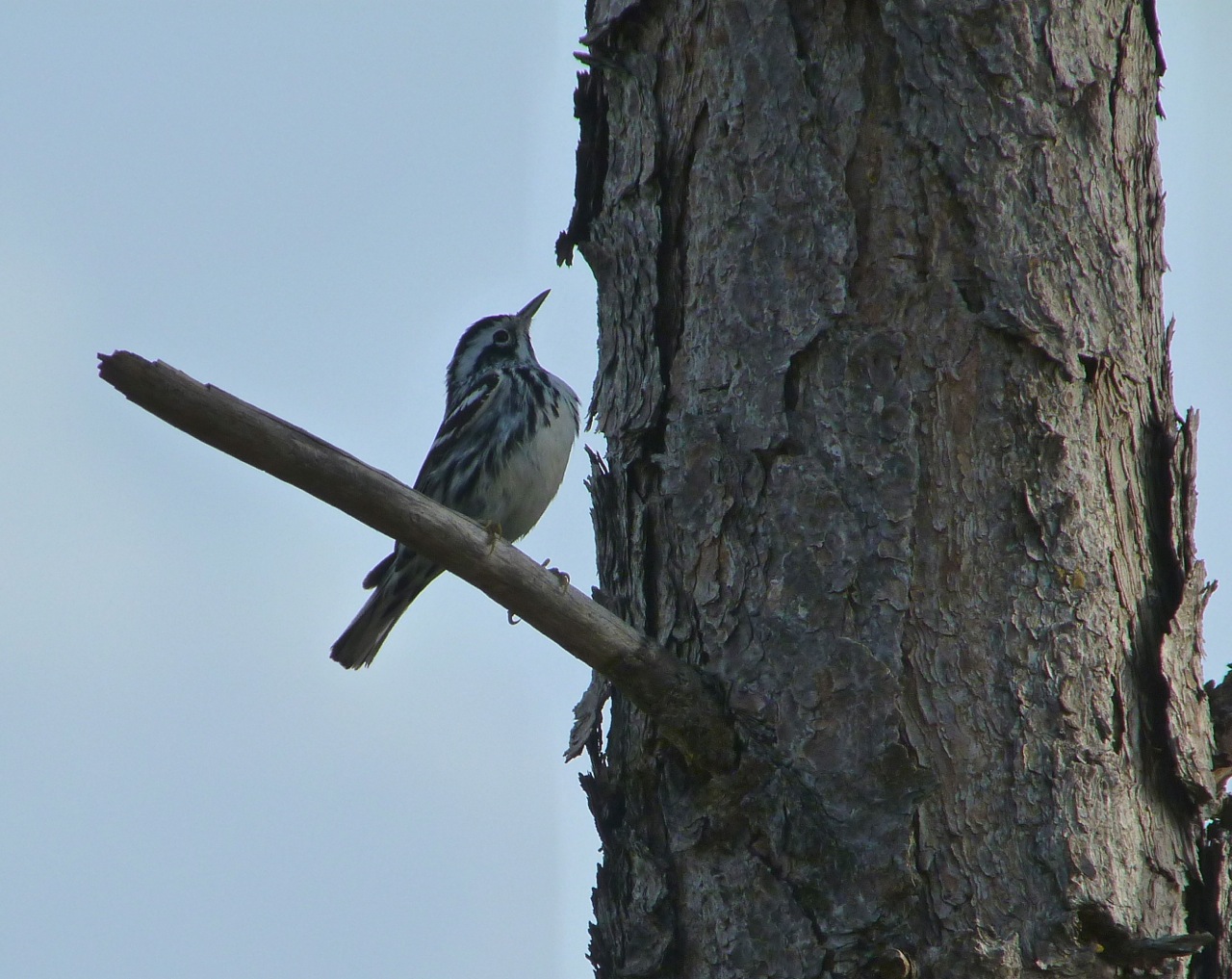
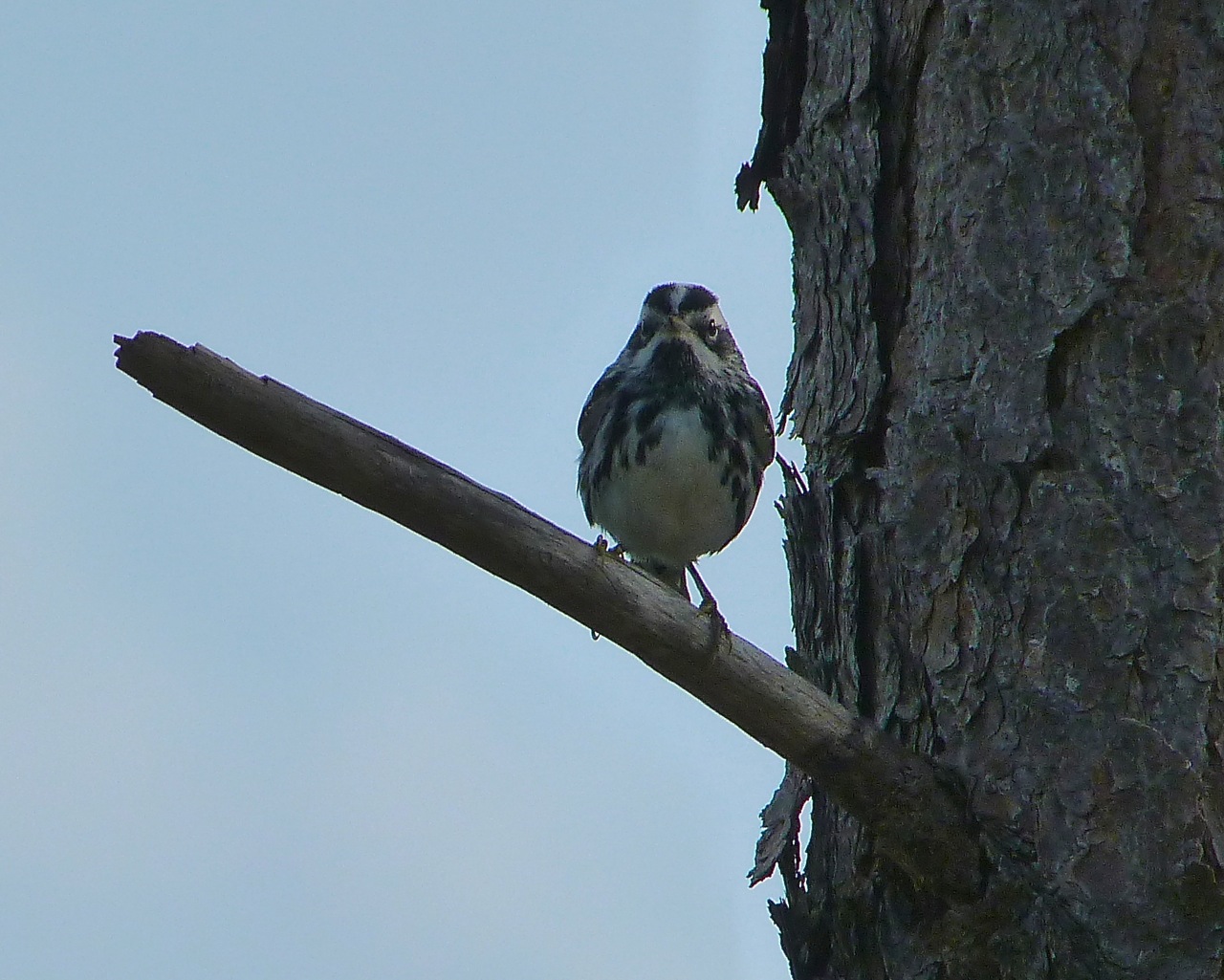
By no stretch of the imagination are the images below very impressive. Sorry about that. The wonder is that we noticed this little bird at all – also, that it stayed still for long enough for me to get a bead on it. I credit the sharp eyes of Mrs RH (from whom little is hid) for spotting a fleeting movement on a pine trunk along the Delphi drive. Unlike any other warbler, these small birds feed in the manner of nuthatches or tree / brown creepers. They run rapidly up and down tree trunks and branches foraging on insects in the bark with their sharp little beaks. 

Black & White Warbler, Abaco, Bahamas 1Summer & Winter Ranges

Black & White Warbler, Abaco, Bahamas 2

IUCN status

Black & White Warbler, Abaco, Bahamas 3

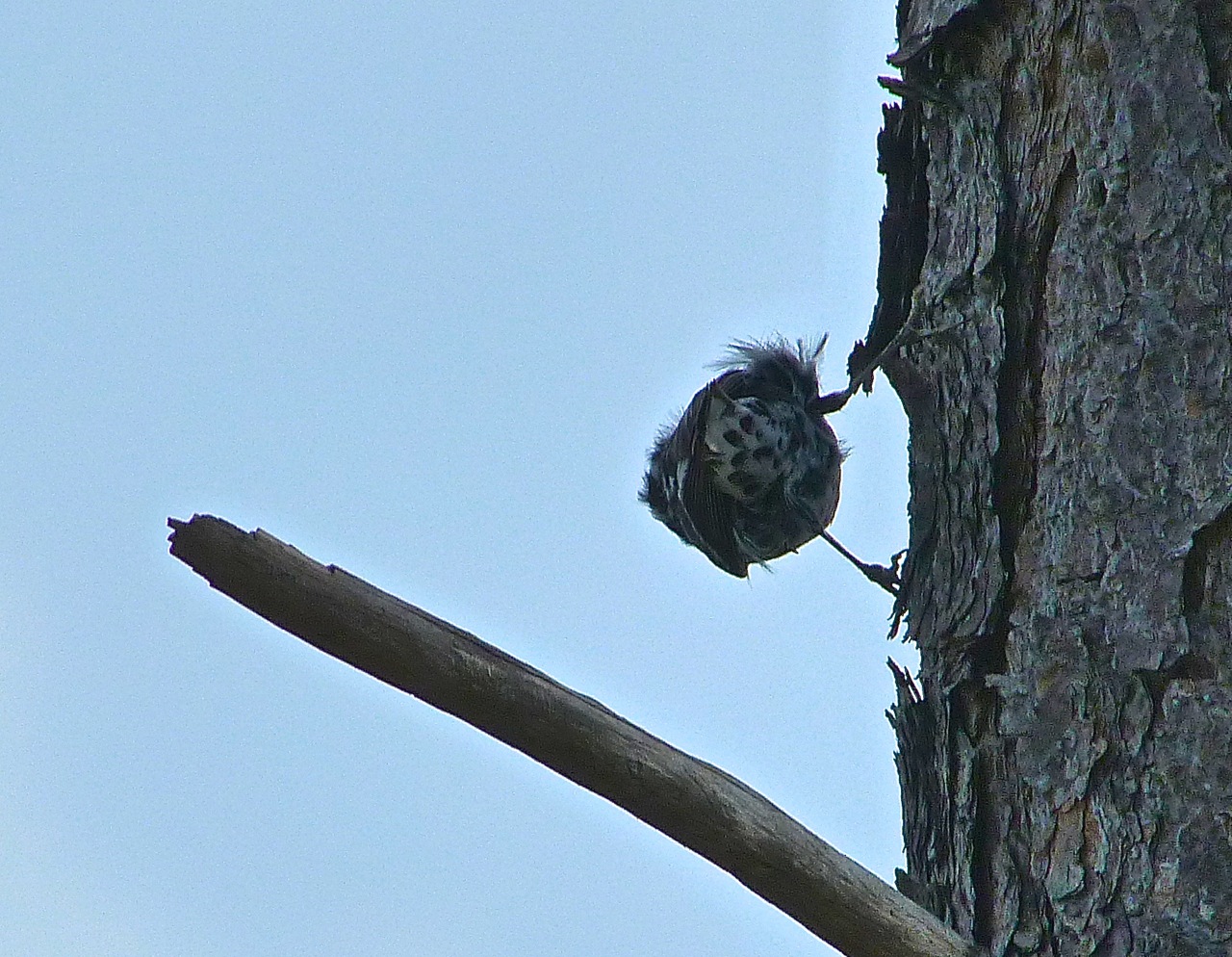
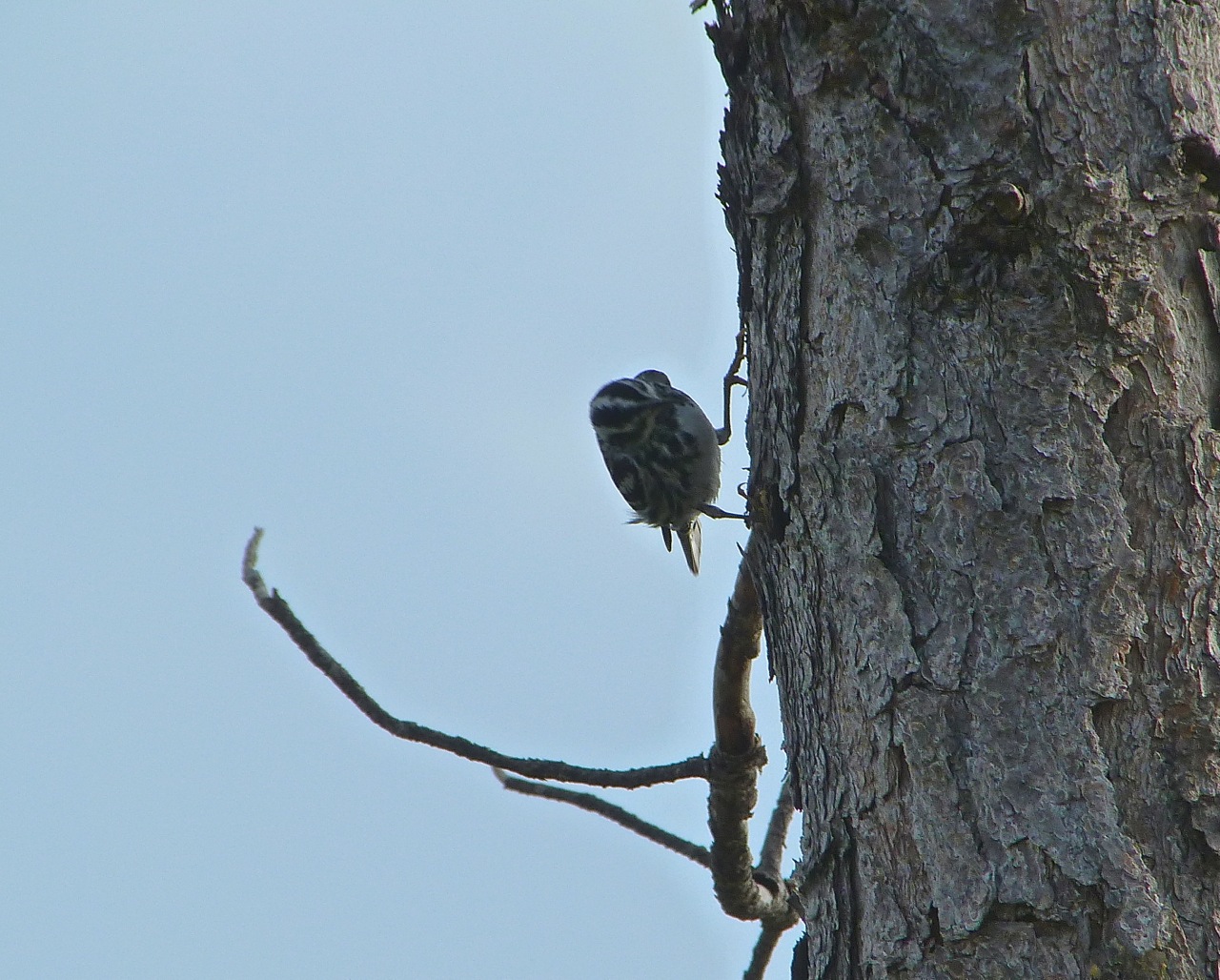
The next 2 photos (yes, I agree, they’re not very good, nor taken – the top one, anyway – from an elegant angle) are included to demonstrate the remarkable length and dexterity of the bird’s legs. During the minute we watched it before it flew off, we noted this characteristic legs-splayed ‘pausing pose’ several times.

Black & White Warbler, Abaco, Bahamas  4Black & White Warbler KS P1050385 - Version 2

Unknown's avatar

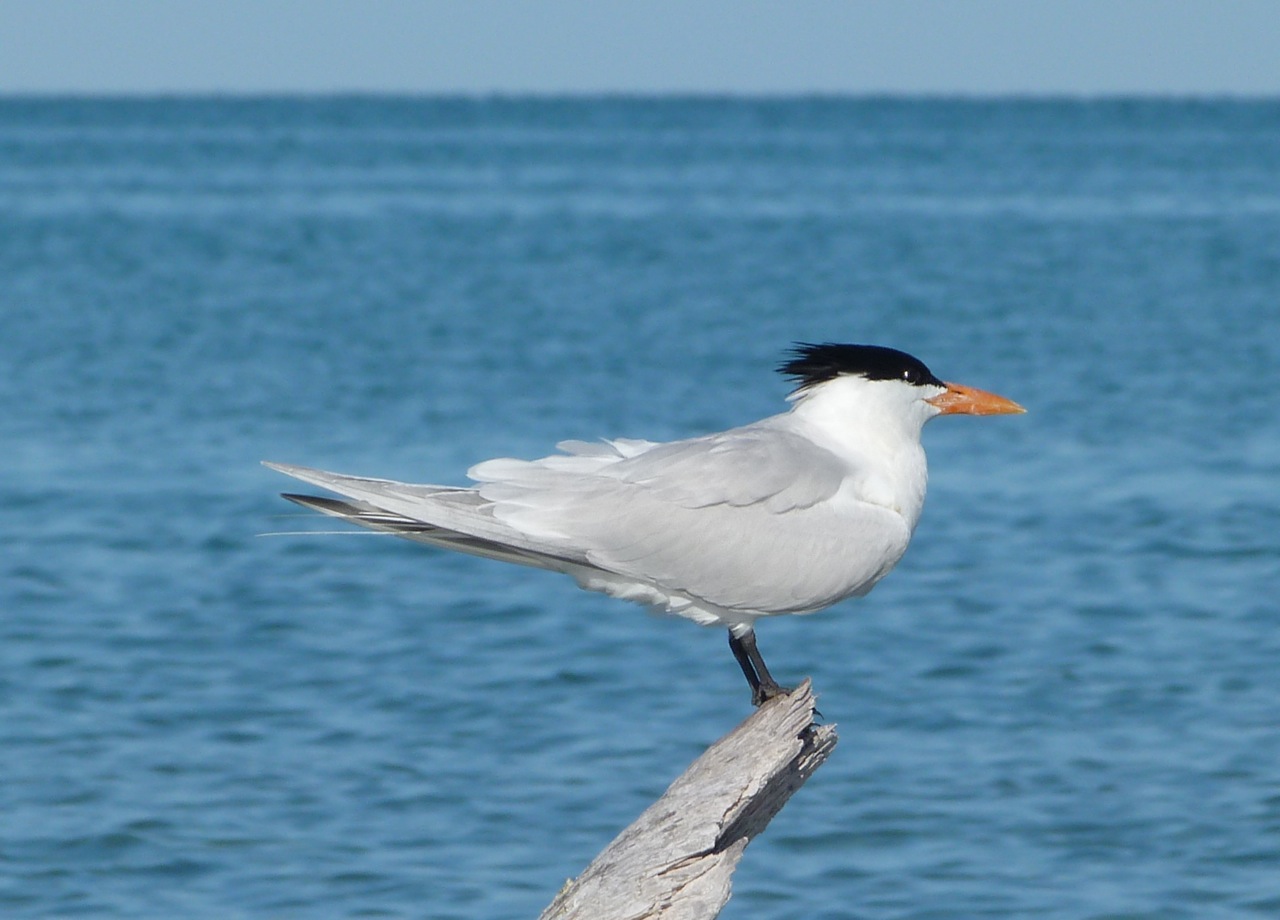
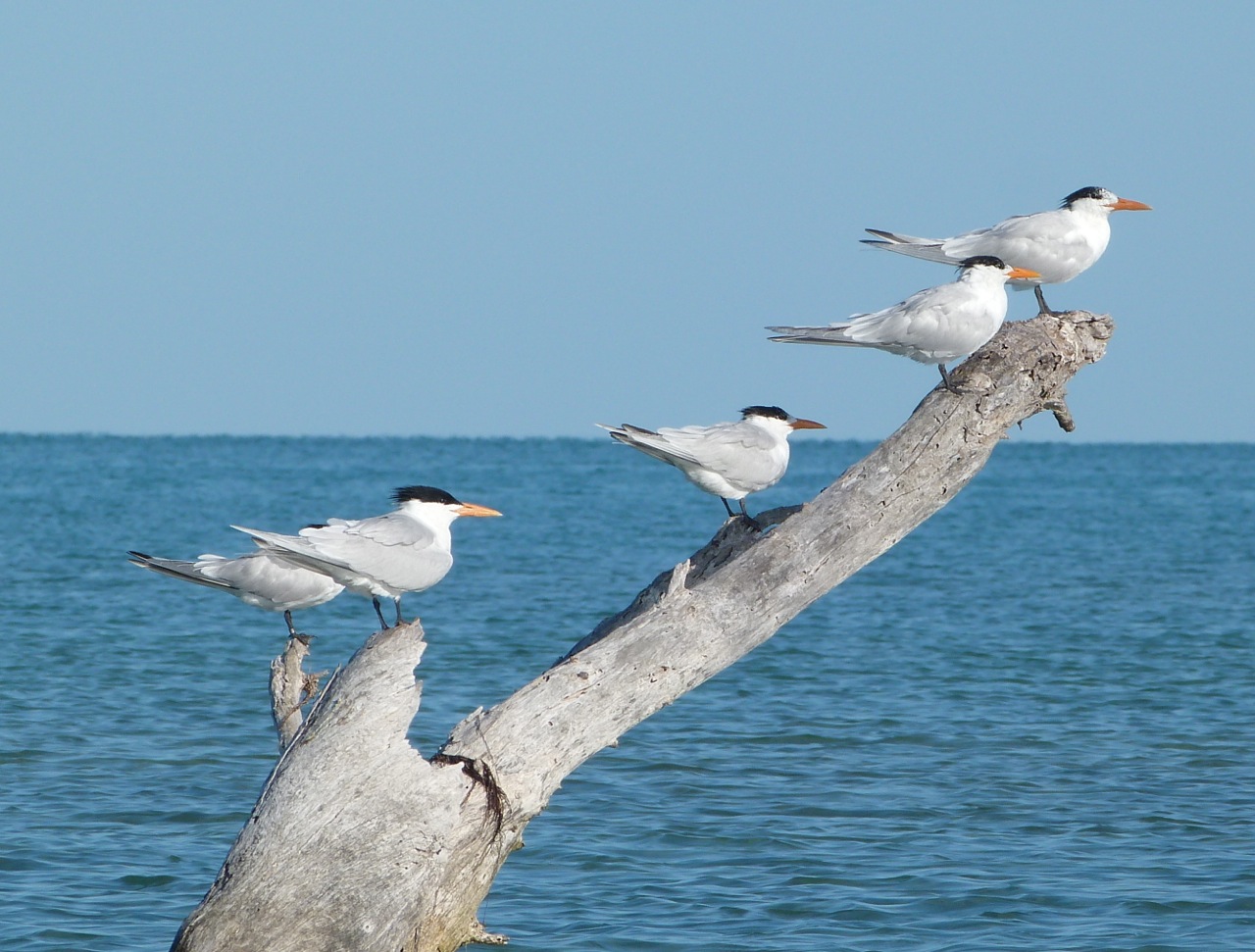
ONE GOOD (ROYAL) TERN ON THE ABACO MARLS…


ONE GOOD TERN ON THE ABACO MARLS…4

ONE GOOD (ROYAL) TERN ON THE ABACO MARLS…

Royal Tern, Abaco, Bahamas (Marls) 1…deserves another…Royal Tern, Abaco, Bahamas (Marls) 2…and a few more besides…Royal Tern, Abaco, Bahamas (Marls) 3

We passed these fine Royal Terns during the boat ride ride out to the bonefishing grounds of the Abaco Marls. The single dead tree lay alone in a vast expanse of open water near the mangrove swamps, providing a perfect perch and vantage point for the birds. Their positioning on the tree suggested a distinct “pecking order”, which turned out to be literally true. The terns were unembarrassed by our presence, but at one stage they all took off and circled lazily round once before settling back on the tree. Those that tried to take a higher perch were aggressively treated by the original occupant. In the end, things settled down much as before. However, one disappointed claimant to promotion was dispossessed of the main trunk entirely. He ended up, uncomfortable and huffy, on a small stump facing the opposite way to the rest of the birds – perhaps from wounded dignity, or to make his feelings known through body language….Royal Tern (Sterna maxima), Abaco Marls, Bahamas 5

220px-Status_iucn3.1_LC.svg 

Unknown's avatar

HUMMINGBIRDS OF ABACO SPARKLING IN THE SUN


KS Hummer 4

This is a ‘holding’ post while I am actually on Abaco, to be rejigged in due course. The weather is a bit variable, my fishing is somewhat variable (as usual – more miss than hit, though my biggest bone yet a couple of days ago), the birds are fantastic. Abaco has two hummingbird species, the endemic Bahama Woodstar and the Cuban Emerald. The Woodstars are rather pushed around by the Emeralds, and tend to be scarcer where there are plenty of Emeralds. We are lucky at Delphi that both species coexist in relative harmony, although this may be largely due to the sugar-water feeders and the hummer-friendly planting around the Lodge. Here are a few irridescent images I’ve taken in the last few days. Things are a bit slow here (the internet connections, not me), so the image order, formatting and sizing may need attention later on…

KS Hummer 6KS Hummer 1KS Hummer 3KS Hummer 5Oh. Is that the time? I need a Kalik and lie down. I’ll add a couple pics more later!

NB these photos are posted exactly as taken. No photoshop, no iFiddling, no cropping. That’s how close you can get to these tiny birds…

ADDENDUM A few shots of a hummer in flight feeding on plants can now be seen on my subsidiary website HERE

Unknown's avatar

A RARE ABACO PARROT DISPLAYS A RARE TALENT…


DCB GBG Cover Logo

A RARE ABACO PARROT DISPLAYS A RARE TALENT…

WOULD YOU LIKE TO SEE MY LITTLE TRICK?ABACO PARROT CS 13-3

I’M A BIT CAMERA-SHY – I’LL JUST TURN ROUNDABACO PARROT CS 13-4

THAT’S BETTER. ARE YOU SURE YOU ARE READY FOR THIS?ABACO PARROT CS 13-2

TA DAAAAAAAAAAAAAAAAAAAABACO PARROT CS 13-1

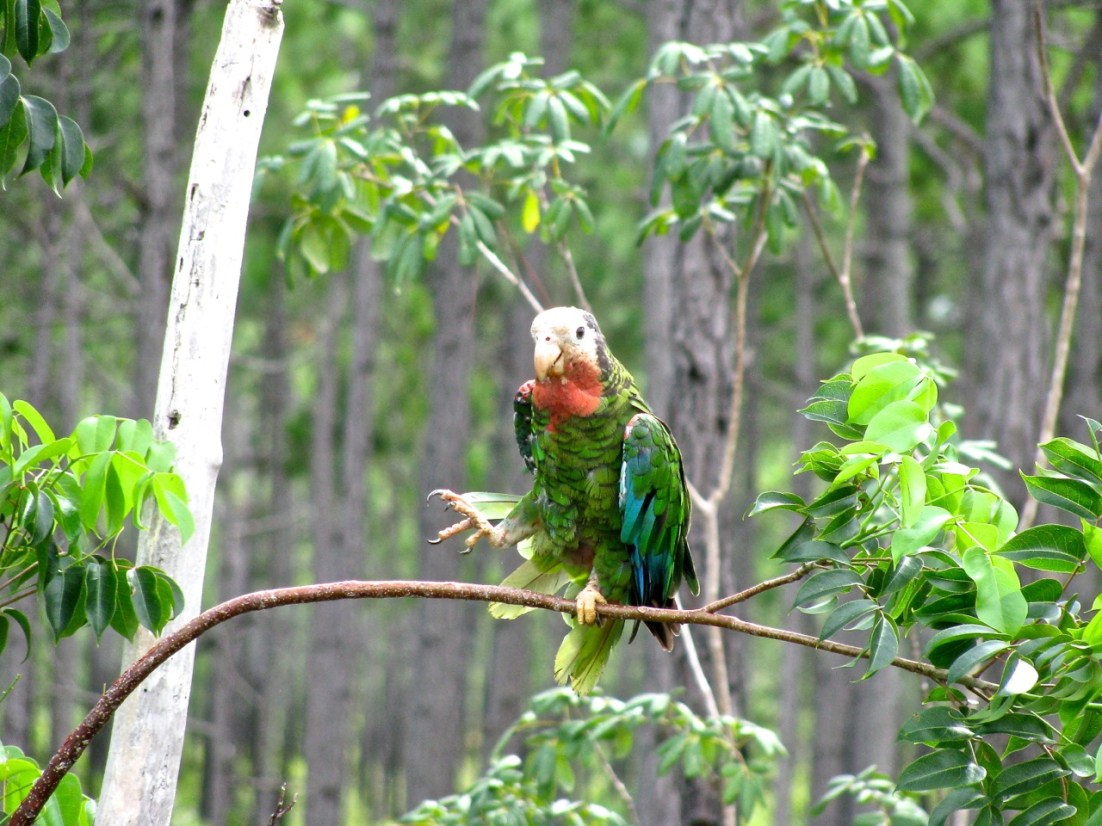
The Abaco Parrot is a unique subspecies of Cuban Parrot found on only Abaco. They are the only parrot to nest underground, in limestone caves in the pine forest. Their numbers have increased from near extinction to a sustainable population as the result of an intensive program of conservation and anti-predation. They get plenty of publicity hereabouts, and have their own page HERE. We normally avoid too much whimsy in these parts, but I am in parrot territory right now, so I have given myself permission to break my own rule. Photos: ©Caroline Stahala (who looks after them)

Unknown's avatar

HERRING GULLS (Larus smithsonianus) CLOSE ENCOUNTERS OF A PREFERRED KIND


Herring Gull Header

HERRING GULL Larus smithsonianus

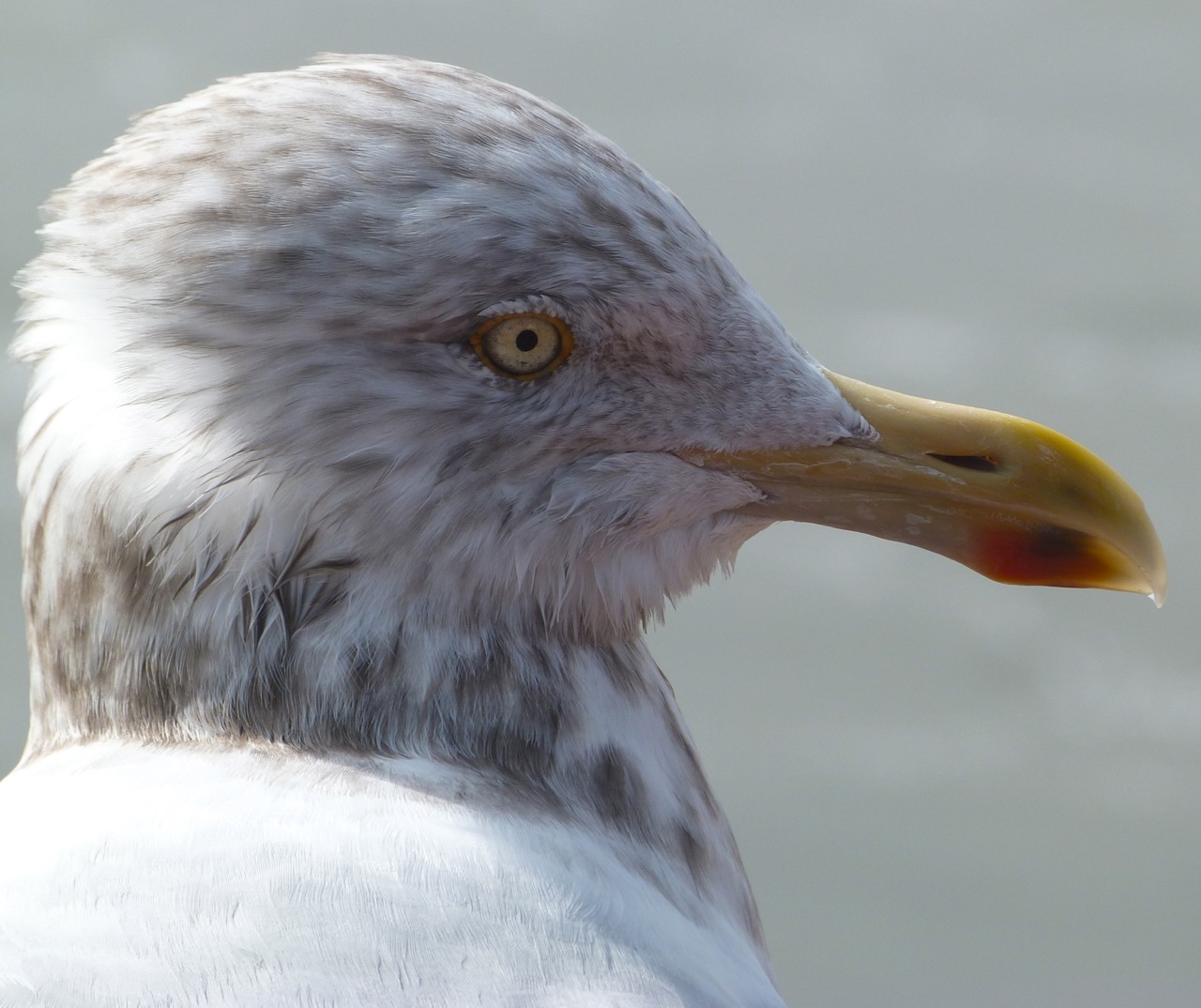
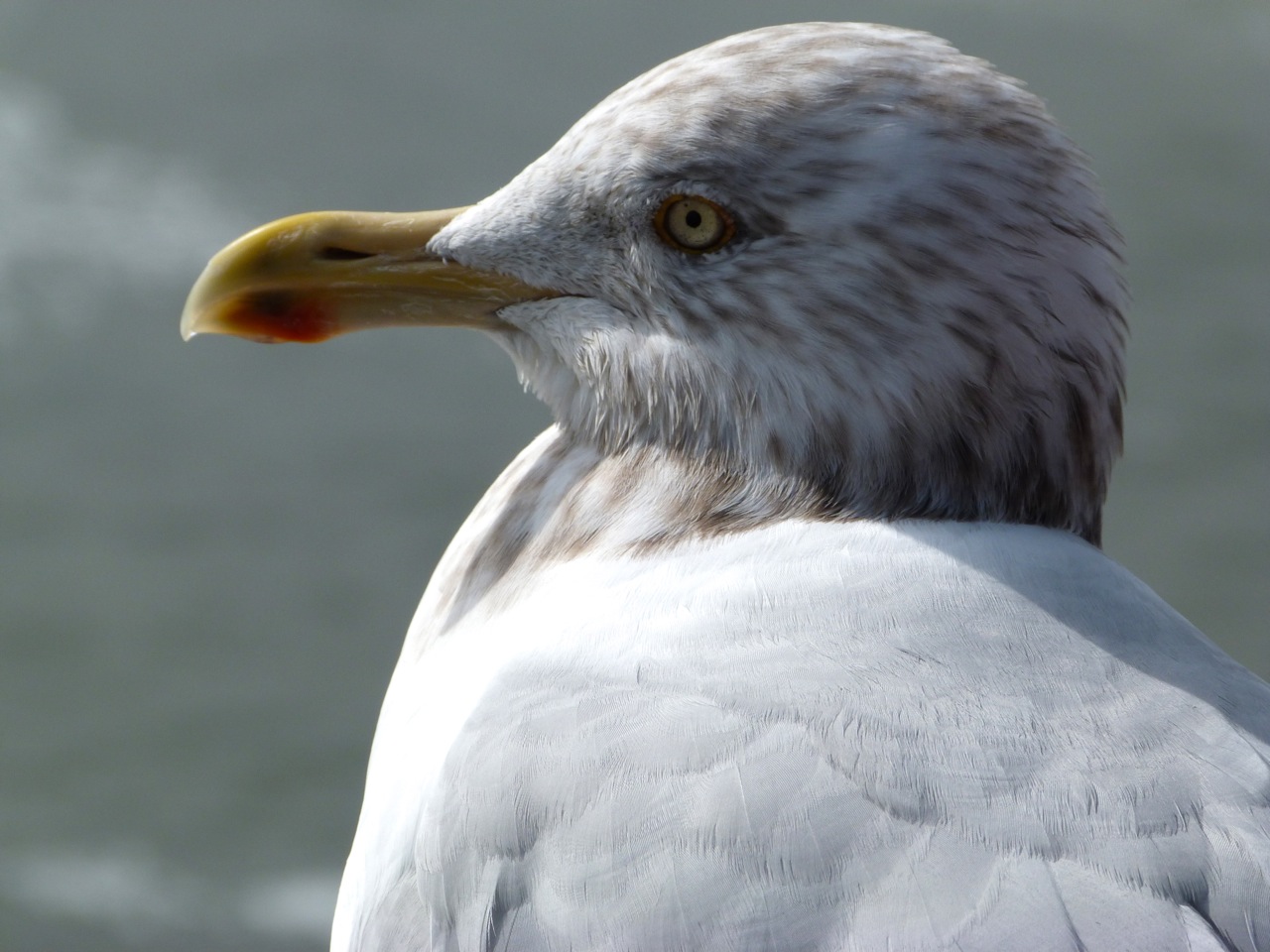
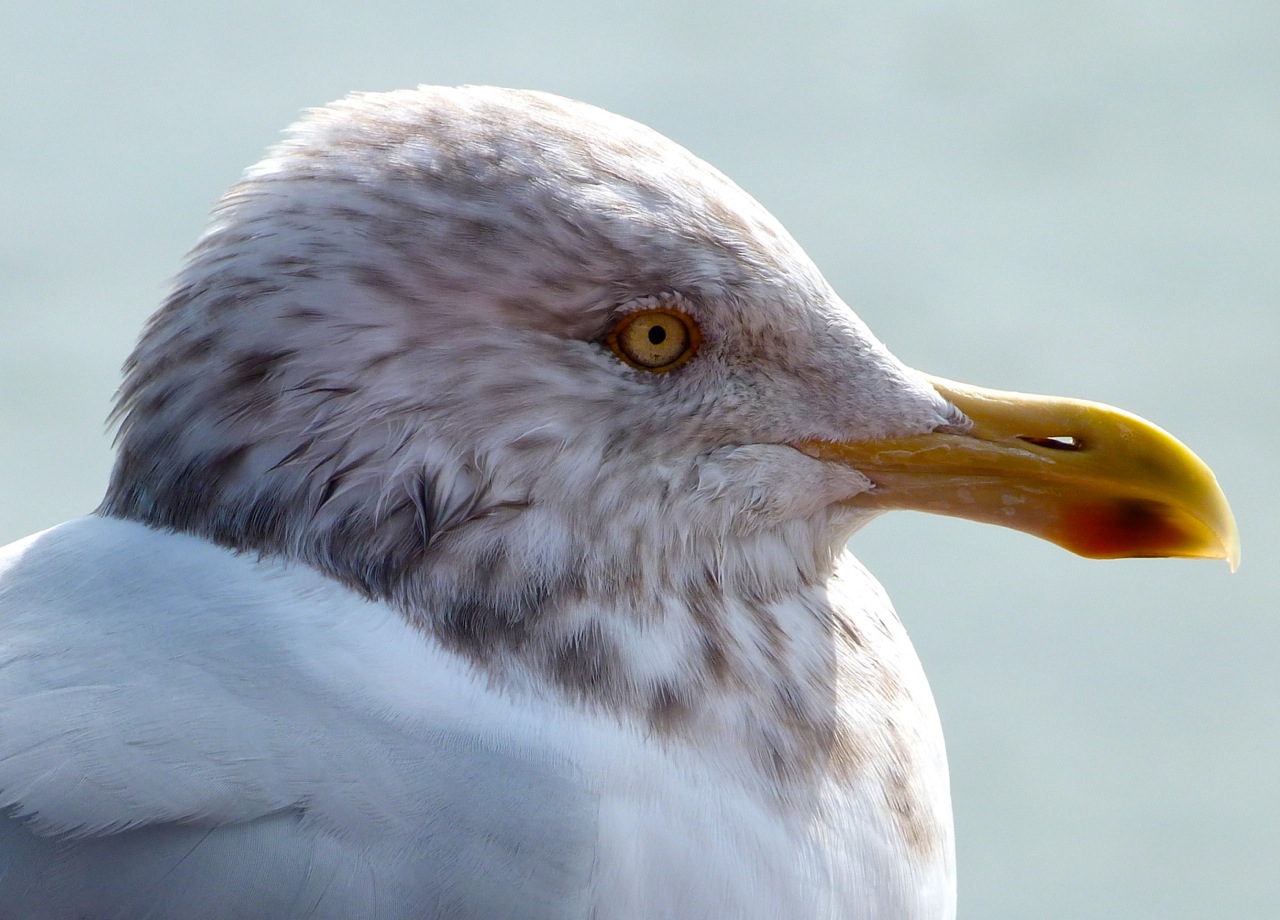
The Herring Gull needs no introduction. So I won’t give it one. Instead, here are some close-ups of one that obligingly stayed still long enough, and at close enough range, to enable me to focus. The final two are possibly worth single- or double-clicking on to see the finer details. I prefer cooperative birds like this…

HERRING GULL IN FAMILIAR ‘BOAT POSE’Herring Gull 2Herring Gull 4Herring Gull 3Note the characteristic crossing of the black-and-white wing-tip feathers

HERRING GULL HEAD SHOTSHerring Gull 1Herring Gull 5All images ©RH; audio clip from the wonderful Xeno-canto archives

Unknown's avatar

RED-TAILED HAWKS (Buteo jamaicensis) RAPTOR RAPTURE


 RED-TAILED HAWKS: RAPTOR RAPTURE

220px-Status_iucn3.1_LC.svg

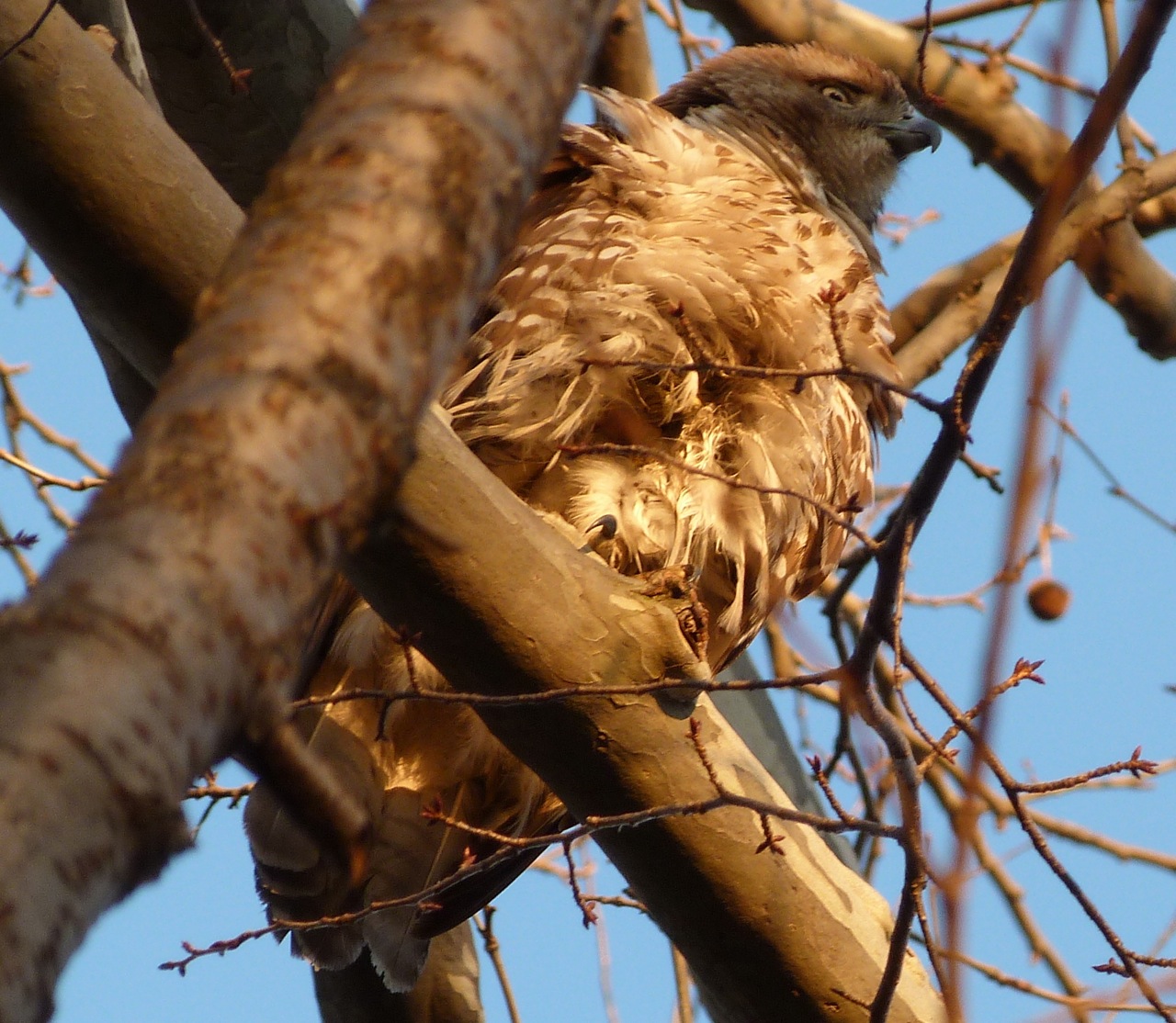
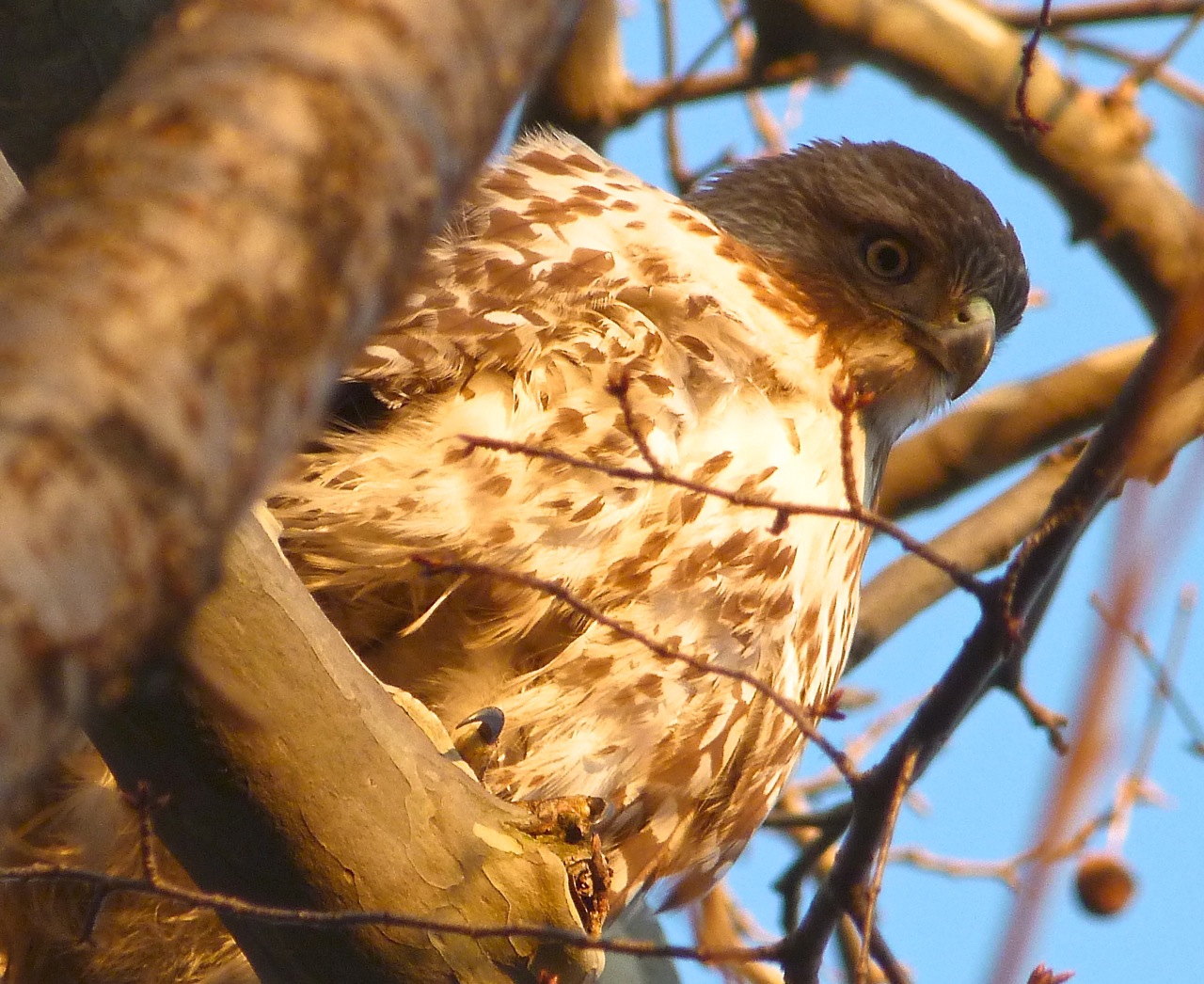
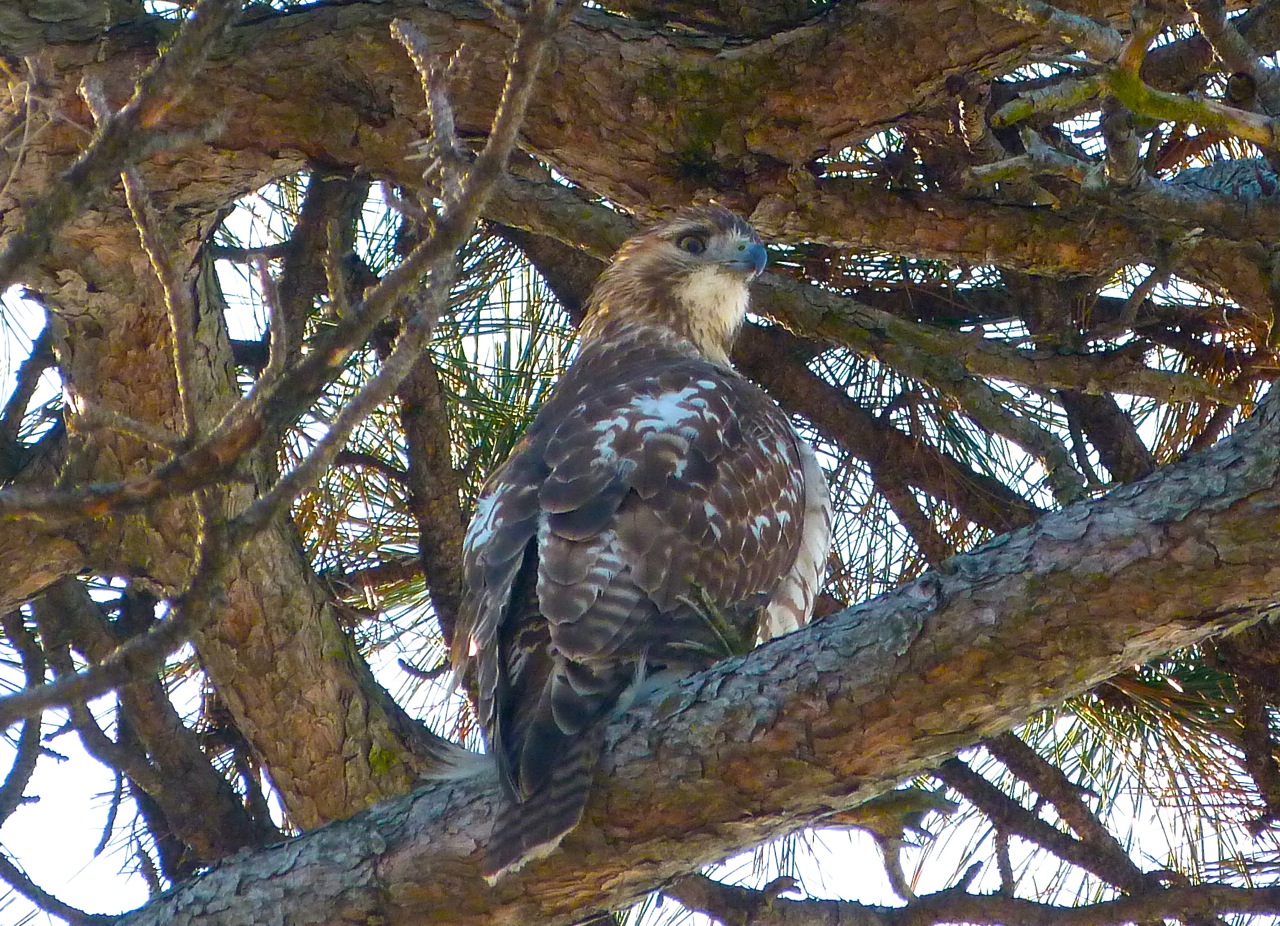
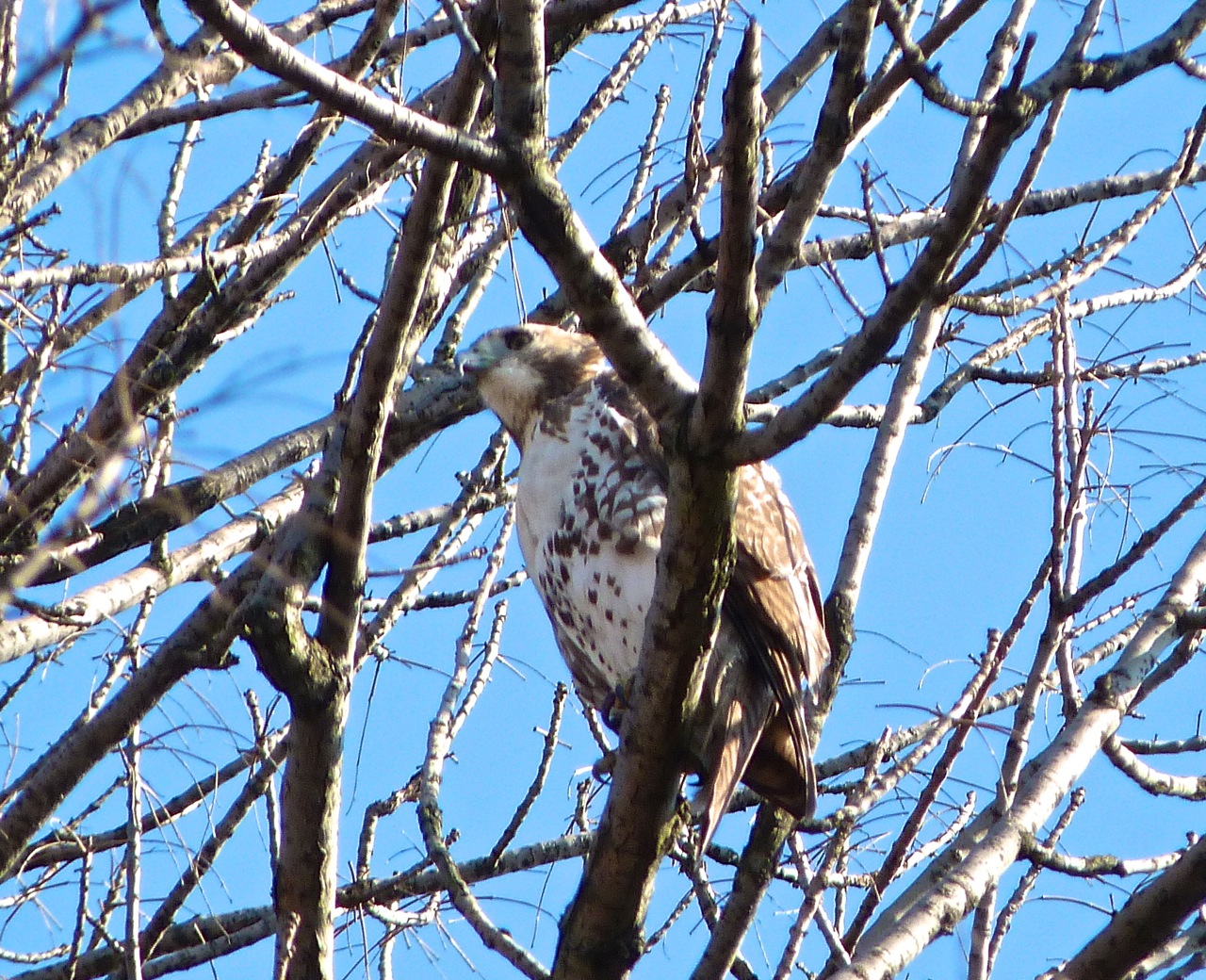
Red-tailed hawks are one of the commonest and largest  BUTEO species in North America, the Caribbean and further afield. There are fourteen widely-distributed subspecies. Their omni-habitat flexibility helps to maintain their prolific populations. They are equally at home in forests, grassland, open country, desert and even cities, at most altitudes. Red-tailed Hawk CP 7Red-tailed Hawk CP 1

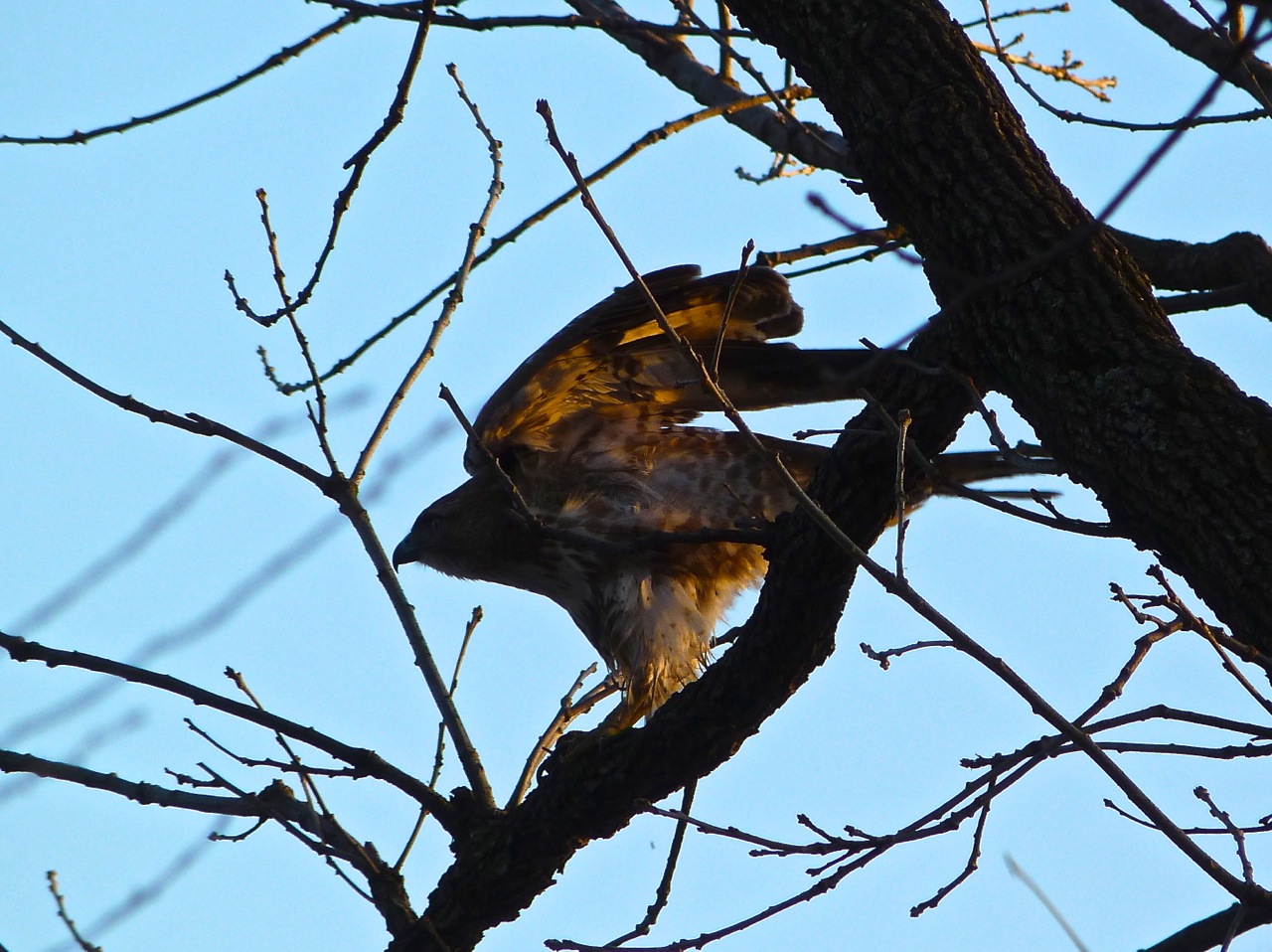
This red-tail is preparing for flight. It had been sitting upright (see above), scanning for prey. Suddenly it hunched forwards, poised for take-off, the light of late afternoon sun catching its leg feathers. Moments later it raised its wings and was gone in an instant – the next photo an unusable blur of feathery speed.Red-tailed Hawk CP 6Red-tailed Hawk CP 3

6 RED-TAILED HAWK FACTS TO STARTLE YOUR AUNT WITH

1. The RTH displays SEXUAL DIMORPHISM in size – females average 25% heavier than males

2. Immature birds have yellowish irises. As the bird matures the iris darkens to a reddish-brown hue

3. They are easily trained to hunt: most hawks used for (tightly regulated) falconry in the US are Red-tails

4. They use tall trees, high rocks, utility poles or buildings as perch sites to scan large areas for prey

5. City hawks helpfully prey on rock pigeons and rats. ROSIE lives in Washington Sq NYC & has a web-cam

6. One urban RTH, known as PALE MALE, became famous as the first Red-tail in decades to successfully nest and raise young in Manhattan. He was immortalised by MARIE WINN in her book Red -Tails in Love: A Wildlife Drama in Central Park [RH Note: Good read]

Red-tailed Hawk CP 4Red-tailed Hawk CP 5

6 RED-TAILED HAWK FACTS TO SURPRISE YOUR UNCLE WITH

1. The fierce, screaming cry of the RTH is often used as a generic raptor sound effect in TV shows & films

2. Eggs are incubated primarily by the female. The male helps out when the female leaves to hunt or stretch her wings. The male brings food to the female while she incubates

3. RTH young are known as eyasses (“EYE-ess-ez”), a falconry term for a raptor still in its downy stage

4. About 6 / 7 weeks after fledging RTH young begin to capture their own prey. They reach breeding maturity around 3 years of age

5. Red-tailed Hawks can live for more than 2o years – the oldest recorded was 29

6. RTH feathers are considered sacred to many American indigenous people. The feathers of the RTH are regulated by the “Eagle Feather Law” which governs possession of feathers and parts of migratory birdsRed-tailed Hawk PPB 6Red-tailed Hawk PPB 5Red-tailed Hawk PPB 1AFTERWORD These photos were all taken recently in New York, in Central Park (The Ramble, a birding hotspot) and in Prospect Park, Brooklyn. They are therefore a bit of a cheat in a website based mainly on Abaco. But I have never managed to photograph a RTH on the island, so these pics are illustrative of what I might have photographed had I (a) seen a RTH (b) had my wits about me (c) for long enough to find my camera (d) to photograph it before it flew away (e) and sufficiently well to be able to use the result [Header and due credit to Wiki]

See also NICOLEs excellent birding website at http://www.oiseaux-birds.com/card-red-tailed-hawk.html

(PS apologies to those who have neither aunts nor uncles. I have no wish to be amitist or avunculist. Have you a cousin you can try?)

Unknown's avatar

THE CUBAN AMAZON PARROT: A WORK OF ART & NATURE


THE CUBAN AMAZON PARROT: A WORK OF ART & NATURE

FEATURED BY ‘ARTMAGENTA

I have just posted a gallery of bird art by Artmagenta, showing varous species from his global ‘Bird of the Day’ series that can be found on Abaco. He asked for further suggestions, so naturally I suggested the avian symbol of the Abacos. A few days later, it has flown in, in all its glory, with his description below it. So I’ll step back and let the bird do the talking.Abaco-Parrot

“The Cuban Amazon (Amazona leucocephala) also known as Cuban Parrot or the Rose-throated Parrot, is a medium-sized mainly green parrot found in woodlands and dry forests of Cuba, the Bahamas and Cayman Islands in the Caribbean. The Cuban Amazon lives in different habitats on different islands. It was once found throughout Cuba, but it is now mainly confined to the forested areas of the main island and Isla de la Juventud. On the Cayman Islands the parrot lives in dry forest and on agricultural land. Cuban Amazons nest in tree cavities throughout most of its range, the only exception being that the parrots living on the Abaco Islands nest underground in limestone solution holes, where they are protected from pineyard wildfires.”

Unknown's avatar

BIRDS OF ABACO: WILDLIFE ART FROM ARTMAGENTA (1) – THE REAL DEAL


Jack-Snipe

BIRDS OF ABACO: WILDLIFE ART FROM ARTMAGENTA (1)

Sound of jet engines. “Back in the UK…” (as Macca so nearly sang), and I have the chance to amend the epic fail – or comic fail, anyway, that was the original of this post. And the truth is, Dear , that apart from simple captioned photos, an iPhone does not cut it for more complex posts involving formatting and so on. Or maybe I can’t use it properly (far more likely). Whichever, here is what should have appeared in the first place as a prepared, ‘press-the-go-button’ post for while we were away… 

◊ ◊ ◊ ◊ ◊ ◊ ◊ ◊ ◊ ◊ ◊ ◊ ◊ ◊ ◊ ◊ ◊ ◊ ◊ ◊ ◊ ◊ ◊ ◊ ◊ ◊

At Rolling Harbour, we are occasionally bold enough to investigate the interstices between wildlife and art. If that’s what one does to an interstice. ArtMagenta is the cyber-name (“ethernym”? Yes, I like it…) of Ulf, a prolific artist whose website ARTMAGENTA provides an enjoyably eclectic selection of pictures. Birds from around the world. Caricatures. Sketches. ‘Gesture Drawings’. And more. From time to time I will post a small gallery of Ulf’s enjoyable depictions of the birds that may be found on Abaco.

BLACK SKIMMER 

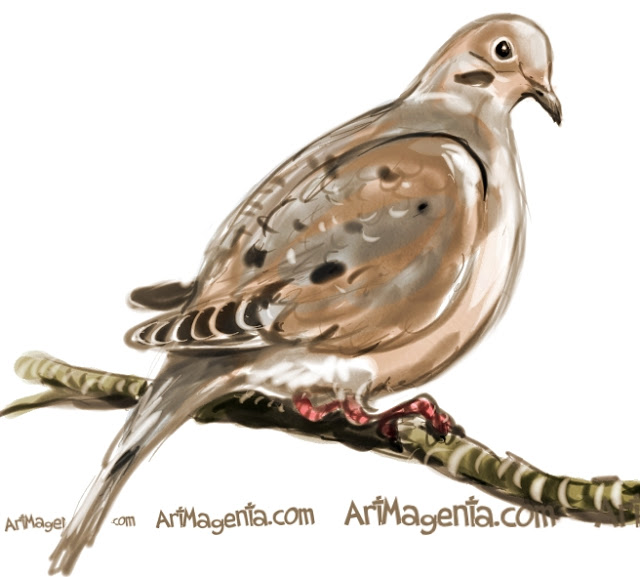
Black-Skimmer MOURNING DOVE

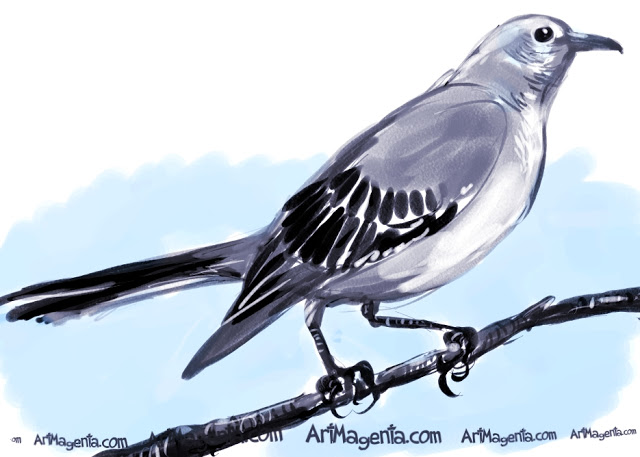
Mourning-DoveNORTHERN MOCKINGBIRD

Northern-Mockingbird

PIPING PLOVER

Piping-Plover

RED-WINGED BLACKBIRD

red-winged-blackbird

RED-TAILED HAWK

Redtailed-HawkJPG

LEAST TERN

Least-Tern

AMERICAN OYSTERCATCHER

American-Oystercatcher

Unknown's avatar

BIRDS OF ABACO (BAHAMAS) IN NEW YORK CITY (& VICE VERSA)


Brooklyn Gulls

BIRDS OF ABACO (BAHAMAS) IN NEW YORK CITY (& VICE VERSA)

Many moons ago, I wrote about the bird species that a New Yorker might recognise during a trip to South Abaco. It would depend, of course, on the time of year and migration patterns. And whether a resident of  the Big  was remotely interested in going to Abaco to look at birds. As if! As it happens, Mrs RH is about to go to NYC, and tolerantly offered to take me as ‘trailing spouse’. Naturally, I said no at once [only joking]. So I am resurrecting the earlier material and polishing it up a bit for 2013. There is much good birding to be done in and around the City (Central Park ~ Riverside and Inwood Parks ~ Prospect Park Brooklyn ~ Jamaica Bay Wildlife Refuge ~ Staten Island ~ shorelines generally) though I shan’t be spending all my time doing that. Or even much of it. But I will see what species I can casually bag in a week.  

This photo is of a ring-billed gull, taken a while back in a freezing february (-15°) on the northern end of Roosevelt Island* in the East River. The whole front of the vessel in the background was thickly coated in frozen sea-ice, which covered the entire foredeck. However, you might just as easily catch one of these gulls on a perfect sunny day on the shores of Abaco…  [*Optional tourist note: it’s a great ride there on the aerial tramway. Visit the quaint clapboard Blackwell Farmhouse, built in 1796 and recently restored – it’s the oldest surviving building in the City, nestling shyly amidst a forest of new apartment blocks]Ring-billed Gull NYC

 If you happen to live in New York, you may quite possibly spend some spare time birding in Central Park, or checking out the red-tailed hawks of Washington Square. And if you are planning a trip to Abaco, you might suddenly wonder just how different the bird life will be there. Will there be any familiar species at all?

 New York City has nearly 200 regularly recorded bird species, most of which will be found in Central Park at some time of the year, if not all through it. South Abaco has around 126 species, excluding extreme rarities and accidentals. Is there much overlap, I wondered? And the answer is that there is plenty, rather more than I expected. 61 species in common, by my reckoning, including the Great Egret below. The the most notable feature is the almost complete coincidence of warblers.

Great Egret Abaco BC 1Photo credit © Brigitte Carey, Abaco

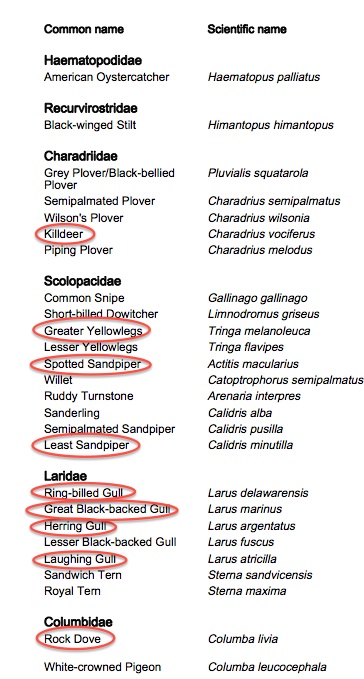
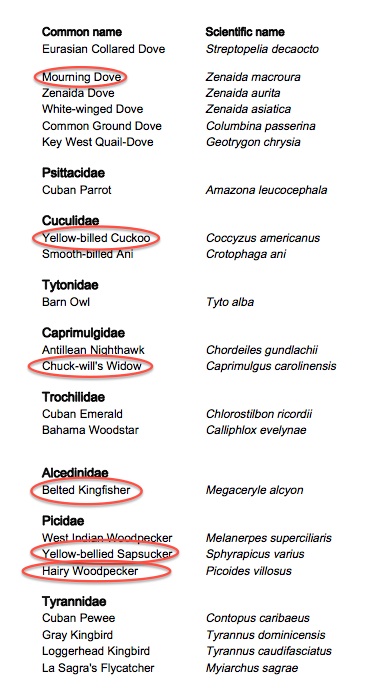
 I used the excellent (but not exhaustive) AVIBASE checklist for South Abaco, now featured on the Delphi Club site in the new BIRDING  section, and worked through a comparative list of the NYC species (see the birding website links for NYC / Central Park above). The result is below: a New Yorker using the South Abaco checklist may see any of the birds ringed in red. And it would work vice versa, of course. Why New York? It’s the only other place outside Europe that I have ever ‘birded’ (only extremely casually – no book, no notes, no pishing, a few photos – just for enjoyment). Peaceful bird time in the Ramble in Central Park is time well used… Before we get to the list, here’s a bit of local NYC colour that you won’t find on Abaco – a male Northern Cardinal in the snow in FebruaryCardinal NYC CP

NYC BIRD SPECIES THAT APPEAR ON THE SOUTH ABACO BIRDS CHECKLIST

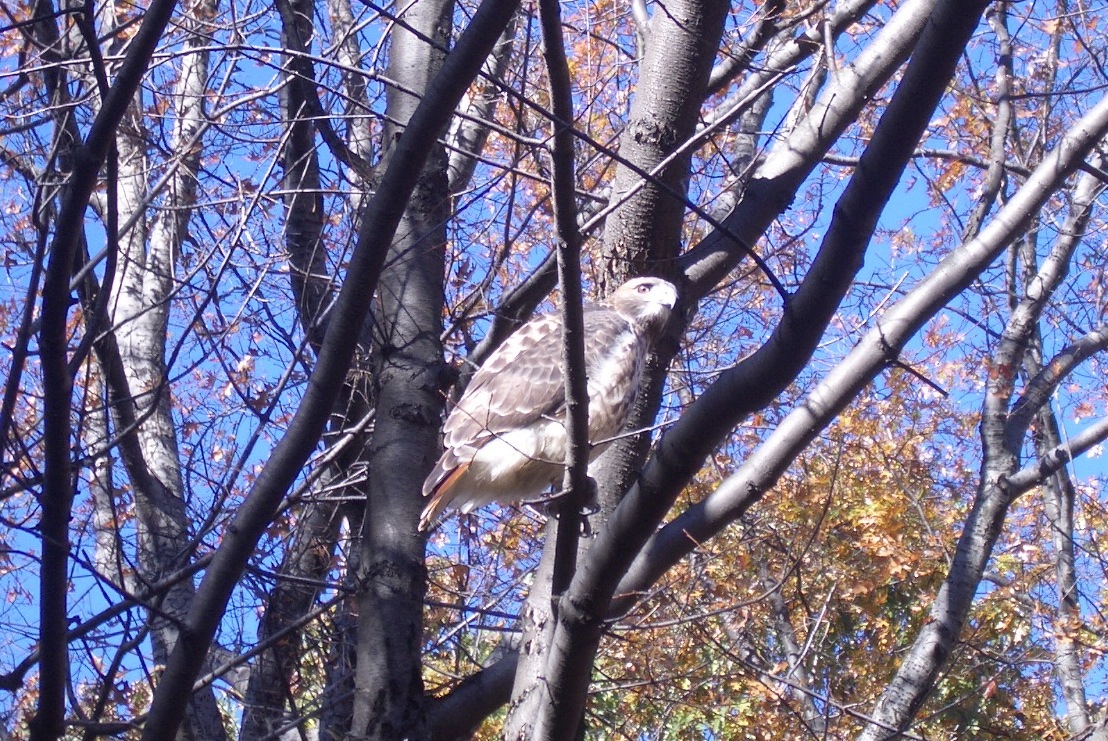
 I photographed this red-tailed hawk in Central Park. We’ve seen one on Abaco in the National Park, close enough to get a really good photo of. Typically, it flew off before I could get my camera out of the truck. There’s a lesson there somewhere…

Editorial note (not necessarily a shared opinion): Abaco is so good, they only needed to name it once…

Unknown's avatar

SEABIRDS, SHOREBIRDS & WADERS: 30 WAYS TO DISTINGUISH THEM


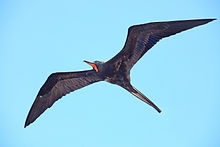
Magnificent Frigate male Wikipics
Magnificent Frigatebird

SEABIRDS, SHOREBIRDS & WADERS: 30 WAYS TO DISTINGUISH THEM 

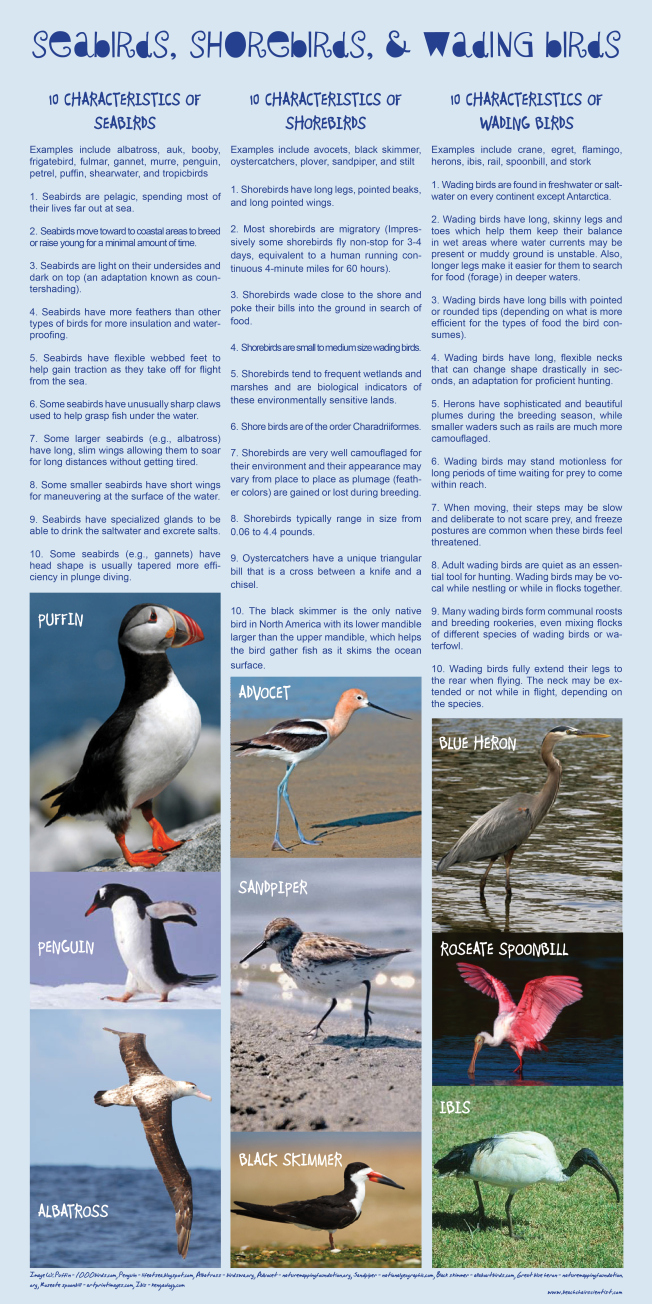
I have recently been looking at hundreds of photos of birds, many with aquatic or semi-aquatic lives. These can be broadly categorised as seabirds, shorebirds or wading birds. But with some bird breeds, there can be doubt as to which category applies. There is the strict Linnaean ordering of course, but in practice there is a degree of informal category overlap and some variation in the various bird guides. This is especially so between shorebirds and the smaller, less exotic wading birds. Shorebirds may wade, and wading birds may be found on shores. Then I remembered a past blog post by the estimable BEACH CHAIR SCIENTIST that I thought deserved an outing here. I re-blogged the chart from BCS early last year. In the meantime site followers and site hits have surprisingly increased considerably, but I suspect only the dedicated make time to sift through any blog’s archives…  Even if you have no problem distinguishing birds in the 3 categories, there are avian characteristics within each list that are interesting observations in themselves. 

10 CHARACTERISTICS OF SEABIRDS 

Whitetailed Tropicbird WikiPicWhite-tailed Tropicbird

(Examples include albatross, auk, booby, frigatebird, fulmar, gannet, penguin, petrel, puffin, shearwater, and tropicbirds)

1. Seabirds are pelagic, spending most of their lives far out at sea.
2. Seabirds move toward to coastal areas to breed or raise young for a minimal amount of time.
3. Seabirds are light on their undersides and dark on top (an adaptation known as countershading).
4. Seabirds have more feathers than other types of birds for more insulation and waterproofing.
5. Seabirds have flexible webbed feet to help gain traction as they take off for flight from the sea.
6. Some seabirds have unusually sharp claws used to help grasp fish under the water.
7. Some larger seabirds (e.g. albatross) have long, slim wings allowing them to soar for long distances without getting tired.
8. Some smaller seabirds have short wings for maneuvering at the surface of the water.
9. Seabirds have specialized glands to be able to drink the saltwater and excrete salts.
10. Some seabirds (e.g. gannets) have a head shape that is usually tapered for more efficiency in plunge diving.

10 CHARACTERISTICS OF SHOREBIRDS 
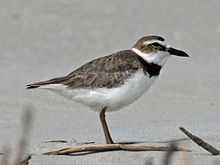
Wilson' Plover male Wikipic

Wilson’s Plover

(Examples include avocets, black skimmer, oystercatchers, plover, sandpiper, and stilt)

1. Shorebirds have long legs, pointed beaks, and long pointed wings.
2. Most shorebirds are migratory (Impressively some shorebirds fly non-stop for 3-4 days, equivalent to a human running continuous 4-minute miles for 60 hours).
3. Shorebirds wade close to the shore and poke their bills into the ground in search of food.
4. Shorebirds are small to medium size wading birds.
5. Shorebirds tend to frequent wetlands and marshes and are biological indicators of these environmentally sensitive lands.
6. Shore birds are of the order Charadriiformes.
7. Shorebirds are very well camouflaged for their environment and their appearance may vary from place to place as plumage (feather colors) are gained or lost during breeding.
8. Shorebirds typically range in size from 0.06 to 4.4 pounds.
9. Oystercatchers have a unique triangular bill that is a cross between a knife and a chisel.
10. The black skimmer is the only native bird in North America with its lower mandible larger than the upper mandible, which helps the bird gather fish as it skims the ocean surface.

10 CHARACTERISTICS OF WADING BIRDS 

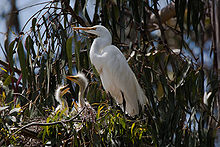
Great Egret Wikipic
Great Egret

(Examples include crane, egret, flamingo, herons, ibis, rail, spoonbill, and stork)

1. Wading birds are found in freshwater or saltwater on every continent except Antarctica.
2. Wading birds have long, skinny legs and toes which help them keep their balance in wet areas where water currents may be present or muddy ground is unstable. Also, longer legs make it easier for them to search for food (forage) in deeper waters.
3. Wading birds have long bills with pointed or rounded tips (depending on what is more efficient for the types of food the bird consumes).
4. Wading birds have long, flexible necks that can change shape drastically in seconds, an adaptation for proficient hunting.
5. Herons have sophisticated and beautiful plumes during the breeding season, while smaller waders such as rails are much more camouflaged.
6. Wading birds may stand motionless for long periods of time waiting for prey to come within reach.
7. When moving, their steps may be slow and deliberate to not scare prey, and freeze postures are common when these birds feel threatened.
8. Adult wading birds are quiet as an essential tool for hunting. Wading birds may be vocal while nestling or while in flocks together.
9. Many wading birds form communal roosts and breeding rookeries, even mixing flocks of different species of wading birds or waterfowl.
10. Wading birds fully extend their legs to the rear when flying. The neck may be extended or not while in flight, depending on the species.

These lists were put together in useful chart form. Please check with BCS (link above) if you want to ‘borrow’ itseabird shorebird wading bird chart ©beachchairscientistImage Credits: Table – ©Beach Chair Scientist; Pics – good old wiki
Unknown's avatar

RICKY JOHNSON, ABACO NATURE GUIDE & ENTHUSIAST 1964-2013


Ricky Johnson, Abaco, Bahamas

FOR RICKY JOHNSON, ABACO NATURE GUIDE & ENTHUSIAST 1964-2013 

Ricky Johnson Bahama Palm Shores 1

No one who knew Ricky, or even merely met him, could doubt his charisma, his infectious enthusiasm for life, and for Abaco and its natural history. His Abaco Nature Tours were legendary. As non-islanders, we knew that a day out in Ricky’s company would be a hectic and memorable one. He knew where all the birds were to be found – and enticed the shy ones out of the coppice with his trademark calls. He was all-seeing and all-knowing – information about Abaco’s natural history, social history, geology, poisonous plants and bush medicine would stream from him irrepressibly throughout the day. Ask him a question? He’d know the answer. He seemed never so happy as when he spotted something and pulled the truck over, leaping out with the door open so all could hear his running commentary as he explained the properties of some small plant that most would have failed to notice. Accompanied, of course, by a gag and THAT laugh.


Ricky Johnson Bahama Palm Shores 3

In many ways, it is impertinent for occasional blow-ins to become involved in what is the island’s grief over Ricky’s tragically young passing. However in the short time we knew him – far too short – we both came to feel we had known him for many years. That was the Ricky effect. He was a joy to know, and we will remember him with joy as well as with sadness.

Ricky Johnson Pishing Woodstars Crossing Rocks Abaco

Land Crab : Ricky Johnson 2