Today, September 6th, is World Shorebirds Day. Every year, a Shorebird of the Yearis selected by the organisers of this global event, and this year they have gone ‘large’. Perhaps in response to the declining populations of curlew species, they have chosen a fine representative – the whimbrel. Inconveniently – and although the whimbrel is a worldwide species – it is extremely rare on Abaco. In the definitive Abaco Checklist (see below), it is coded a TR4, i.e. a very uncommon transient with a handful of sporadic reports. Until last year, sightings were very few and far between. Then suddenly last autumn, they made a small migratory comeback. You can read about it HERE.
BLACK-NECKED STILT Himantopus mexicanus PR B 3
Abaco is home to 33 shorebird species. Like the human residents of the main island and cays, some are permanent; some are winter residents arriving from the north to enjoy a warmer climate; and some are transients – visitors that pass through a couple of times a year on their way from and to their nesting habitats.
CHECKLIST OF ALL 33 SHOREBIRDS
The definitive checklist of Abaco’s birds was compiled especially for the BIRDS OF ABACO by Bahamas Birding author and authority, the late and much missed Tony White, with Abaco’s bird expert Elwood Bracey. Below is the shorebird list, with a photographic selection of the larger and/or longer-billed shorebirds in checklist order. Yes, including an Abaco whimbrel.
The codes will tell you, for any particular bird, when you may see it (P = permanent, WR = winter resident, TR = transient, V = vagrant); whether it breeds (B) on Abaco; and your chance of seeing it, graded from easy (1) to vanishingly unlikely (5).
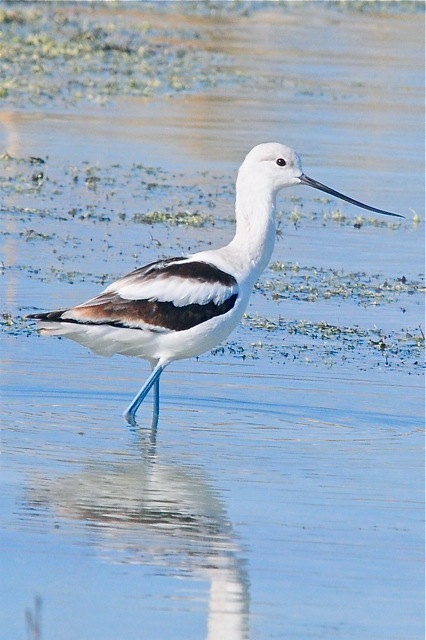
AMERICAN AVOCET Recurvirostra americana WR 4
AMERICAN OYSTERCATCHER Haematopus palliatus PR B 2
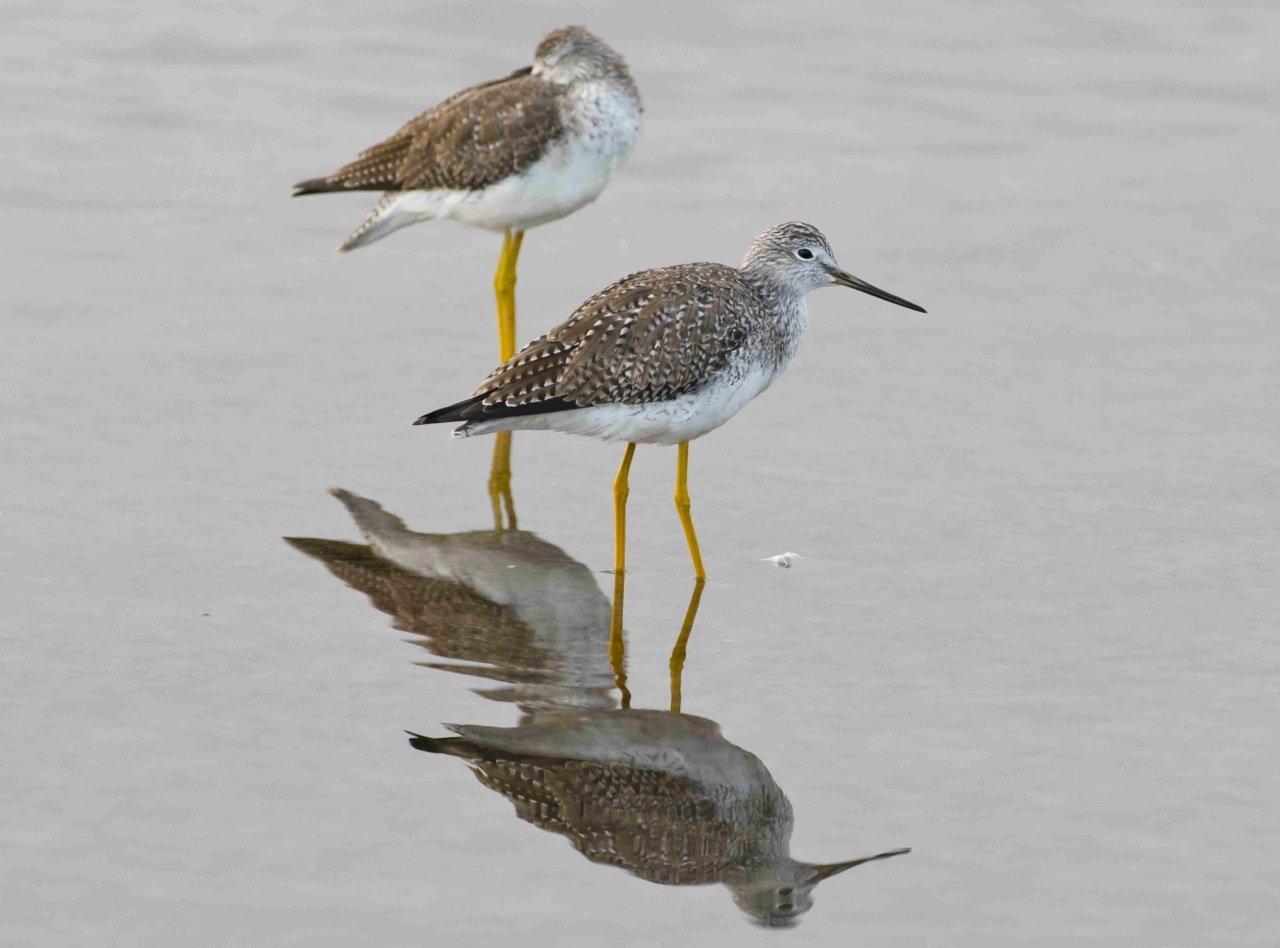
GREATER YELLOWLEGS Tringa melanoleuca WR 2
LESSER YELLOWLEGS Tringa flavipes WR 3
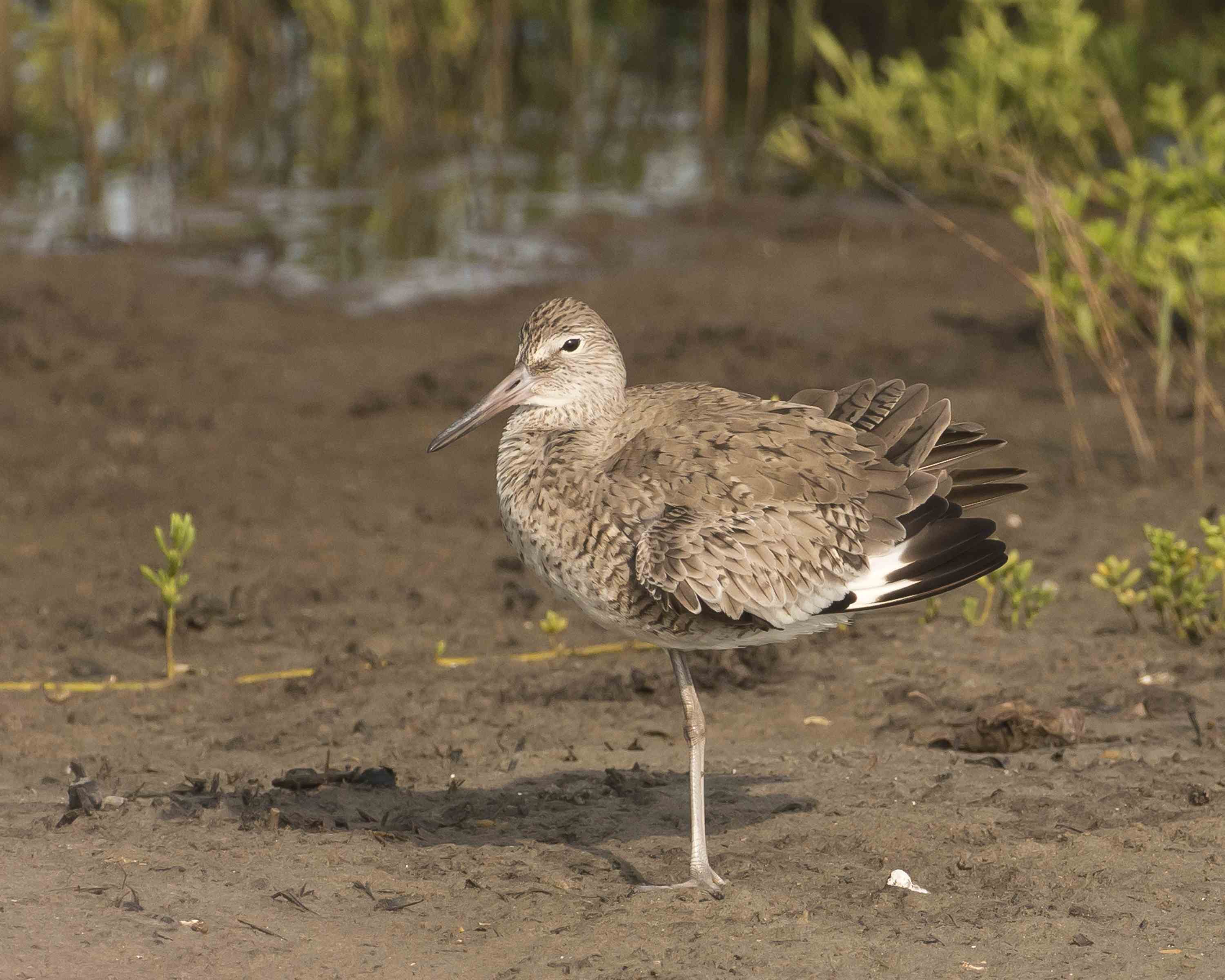
WHIMBREL Numenius phaeopus TR4 (an Abaco one)
HUDSONIAN GODWIT Limosa haemastica [V5]
Like the whimbrel, this bird is another special bird to be able to include. Until last October, it was categorised as a V5, meaning that one or perhaps 2 vagrants had ever been seen on Abaco. Then one appeared on a pond and was spotted by Woody Bracey and, a few days later, by Keith Kemp – who even took confirmatory photos. You can read the storyHERE.
Photo Credits: Andreas Trepte / Wiki (1);Tom Sheley (2, 5, 6, 7, 13); Alex Hughes (3);Tony Hepburn (4); Charmaine Albury (8, 9); Stewart Neilson / Wiki (10); Bruce Hallett (11); Mike Baird / Wiki (12); Woody Bracey (14)
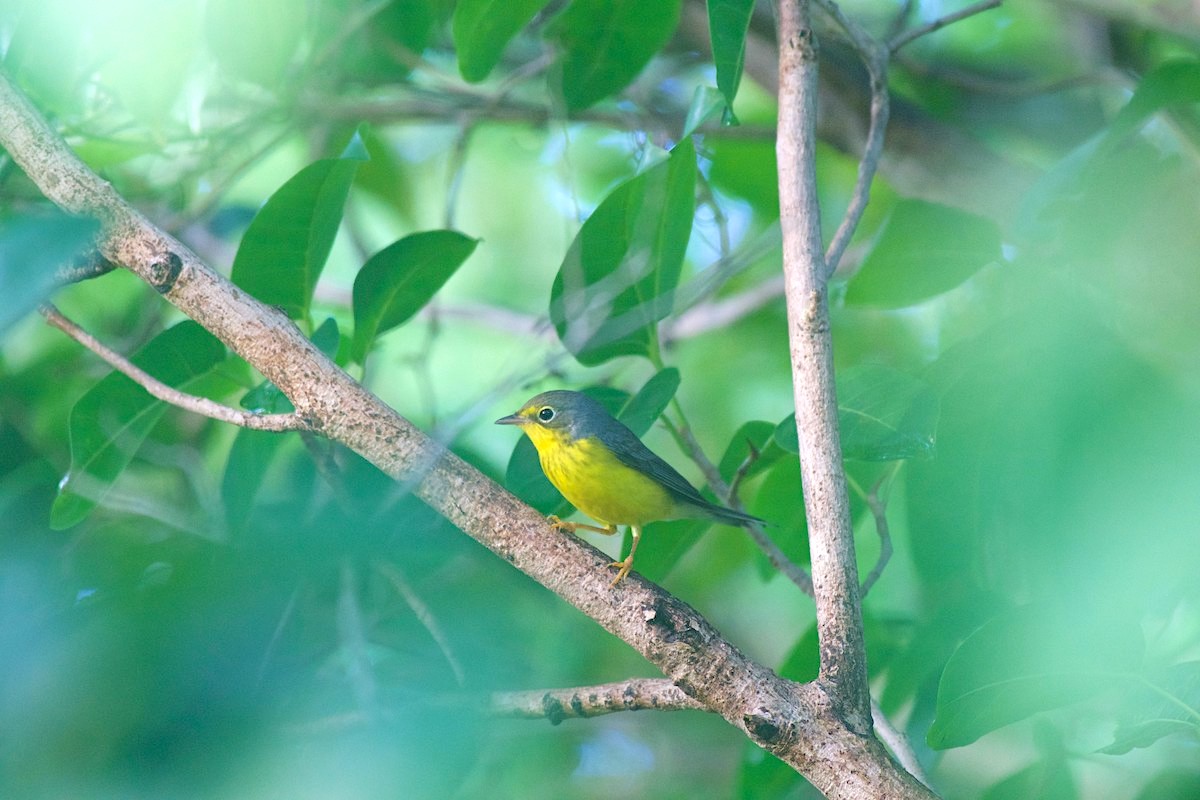
The first Canada Warbler recorded for Abaco AND Bahamas (Christopher Johnson)
CANADA WARBLER: A NEW BIRD FOR ABACO & BAHAMAS
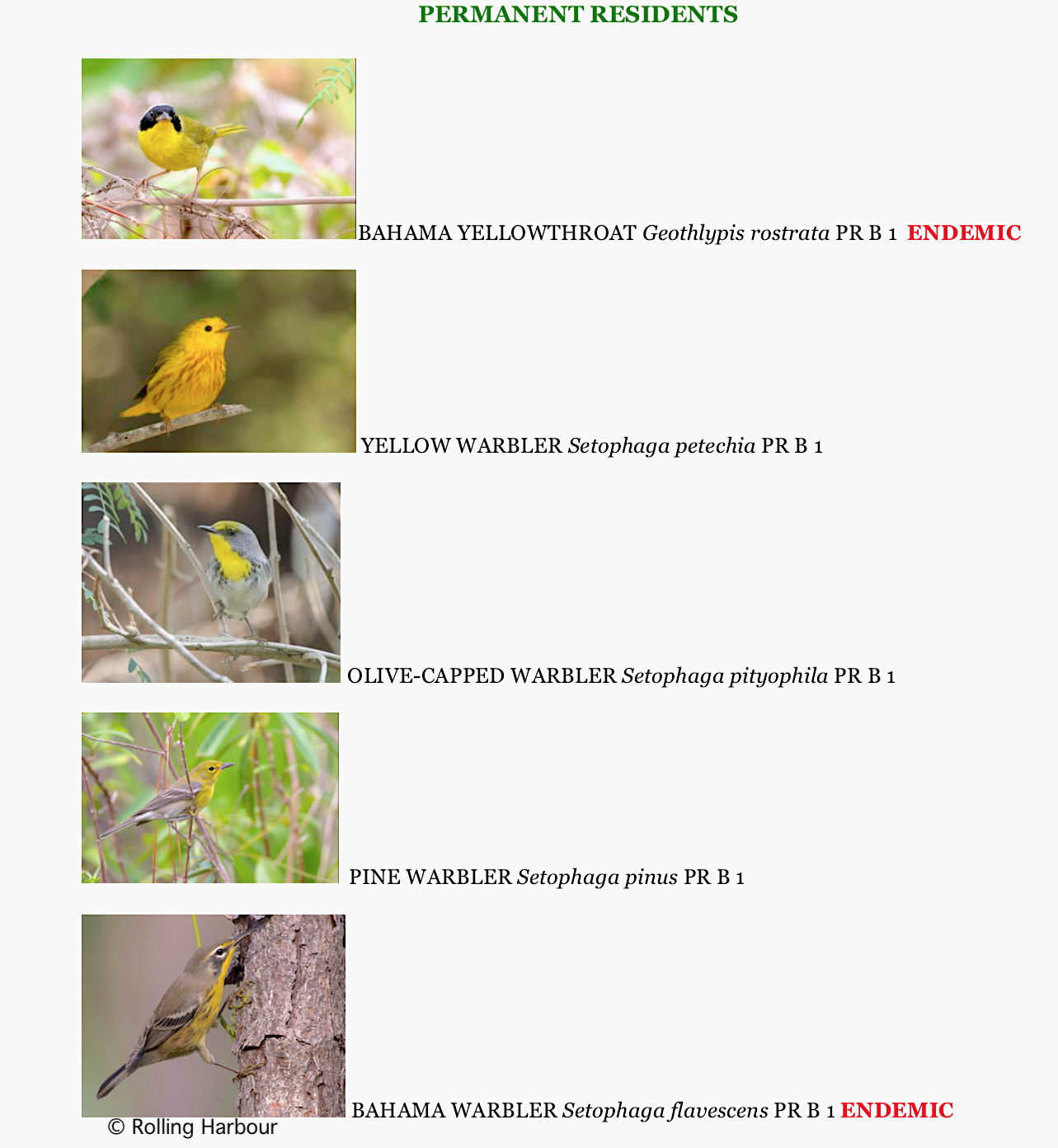
As reliable as seasonal clockwork, the migratory warblers are swarming south from their summer breeding grounds to warmer climes for the winter. In the case of Abaco, this amounts to 32 warbler species to add to the 5 resident breeding species (Bahama Yellowthroat, Yellow Warbler, Olive-capped Warbler, Pine Warbler & Bahama Warbler. 37 warblers in total.
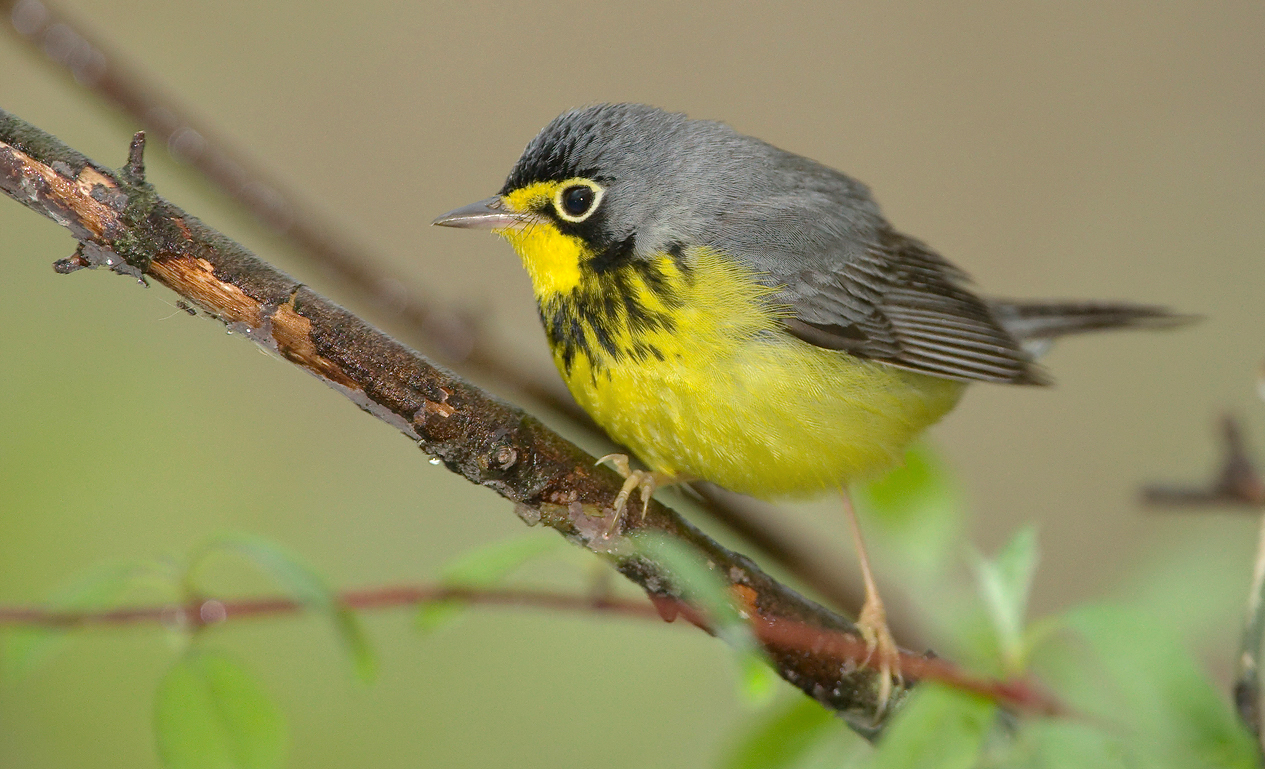
Well, now make that 38. On August 28th, young birder Christopher Johnson was out with well-known birding sage Woody Bracey when he saw something small and yellow hopping about in the coppice. On closer examination – and he took the photos to prove it – it was not just one of the many familiar yellowy winter warblers, but a completely new species recorded for Abaco and (more significantly) the entire Bahamas. It was a Canada Warbler, Cardellina canadensis (Linn. 1766) aka Wilsonia canadensis.
The photo above is one of 3 that Christopher managed to take. In many respects it is typical of a field photograph: a small bird, at a distance, zero’d into focus through a small gap in the leaves and branches of thick coppice. Sharp bird, blurry surroundings. The trick is not to end up with a wonderful clear shot of a green leaf on its twig, with a small yellow blur in the background. (I perfected this ill-advised technique with my only photo of a Kirtland’s warbler).
WHERE WAS THIS BIRD DISCOVERED?
One of the features of the excellent birding to be found on Abaco is that some of it can be carried out in unexpected places. Town dumps are a classic example, though photos have to be taken with care to avoid unsightly rubbish-based settings. The Abaco Big Bird Poultry Farm area is another. This little bird was found there.
SO WHERE WOULD IT NORMALLY BE FOUND?
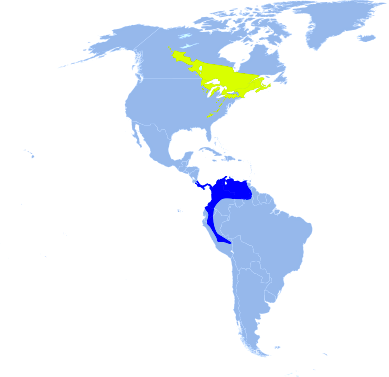
In summer, roughly 80% of CAWAs live and breed in Canada; 20% in the northern US. They spend a relatively short summer there. In the early Fall they fly down to South America. From the range map below, it looks as though their flight path would naturally take them right over the Bahamas to get to their destination. In fact, their journey is quite different. Following the central ‘bend’ of the Americas, they fly at night along a southwesterly route to the Texas coast, then on to southern Mexico and beyond.
I suspect that, as with many migratory birds, the occasional specimen takes a wrong turn on its route south, or is blown off-course by a storm. Maybe a few such vagrants pass through further east – even over the Bahamas perhaps – each year, as ‘vagrants’. But in reality their tiny size in the dense foliage of the land masses means that only a fluke sighting could result. So Christopher’s sighting will be recorded as a V5 – a vanishingly rare vagrant with only a single sighting (cf Abaco’s BLACK-BROWED ALBATROSS).
Q. DO MALES & FEMALES LOOK MUCH THE SAME? A. NO
Based on the Macaulay Library pictures below, the Abaco CAWA must be a female or an immature male. In comparing photos of this species (which I had never come across before) I have noticed one thing. The yellow lore (the area between the base of the beak and the eye) extends to include the top of the bird’s otherwise white eye-ring. This is found in both the male and the female. Now I need to check other eye-ringed species to see if this feature is a unique identifier or not…
WHAT DO I LISTEN FOR (JUST IN CASE…)?
The two sounds to listen for are the chirpy scrap of song and the ‘chip’ call.
WHAT IS THE CAWA’S CONSERVATION STATUS?
The CAWA is IUCN-listed as being of ‘least concern’. That of course is very far from saying it is of no concern at all. Surveys are already showing a gradual population decline in the breeding grounds. The Committee on the Status of Endangered Wildlife in Canada has assessed the CAWA as ‘threatened’. Dull as it is to keep repeating the point, this species like most others faces all the usual threats to its existence, mostly man-made and during my lifetime…
Deforestation, habitat destruction and intrusion, development etc etc
Problems arising from acid rain and pollution
The uncontrolled spread of the tree-destroying woolly adelgid, an import from Asia
Oh, and all those damn deer browsing the understory a bit. Blame them!
ARE THERE ANY FUN FACTS ABOUT THIS BIRD?
Well, confusion about its name, maybe, though that’s more ‘interesting’ than ‘fun’, I think. In 1760, a French zoologist named Brisson gave a name to a warbler specimen from Canada. It was “Le gobe-mouche cendré de Canada”, ie ‘The Canadian Ash-gray Flycatcher’. Because he needed a conventional Latin name for the bird, he put together the name Muscicapa Canadensis Cinerea. This did not fit in with the binomial system of taxonomy (nor was it a very good description of the bird), and the name was accordingly rejected by the wonderfully named International Commission on Zoological Nomenclature. Linnaeus (to cut a longer story short) sorted it all out in his next edition of Systema Naturae in 1766, with the binomial name Muscicapa canadensis. In due course the genus Muscicapa was changed to Cardellina.
THAT WASN’T A WHOLE LOT OF FUN. IS THERE MORE?
Well, there were more naming shenanigans when John James Audubon illustrated a female Canada warbler in Birds of America nearly a century later. Plate 73 (below) was entitled “Bonaparte’s Flycatching-Warbler—Muscicapa bonapartii.” He’d slipped in the name of ornithologist (and nephew of the more famous Emperor) CHARLES BONAPARTE,he of the BONAPARTE’S GULL. This version did not stick. However the CAWA acquired another ‘tribute’ name, an alternative that is still in use: Wilsonia canadensis. This tip of the hat is to another ornithologist ALEXANDER WILSON, of Wilson’s Plover fame.
Photo Credits: Christopher Johnson (1, 2, 3); Emmet Hume / Wiki (4); Male / Female CAWAs, David Turgeon & Bob Edelen, Macaulay Library; Audubon Plate 73, OS; William H Majoros / Wiki. Sound Files, Ian Davies & Andrew Spencer / Xeno-Canto; Abaco Resident Warbler Chart, Keith Salvesen;, Cartoon by Birdorable; Range Map, Cornell U.
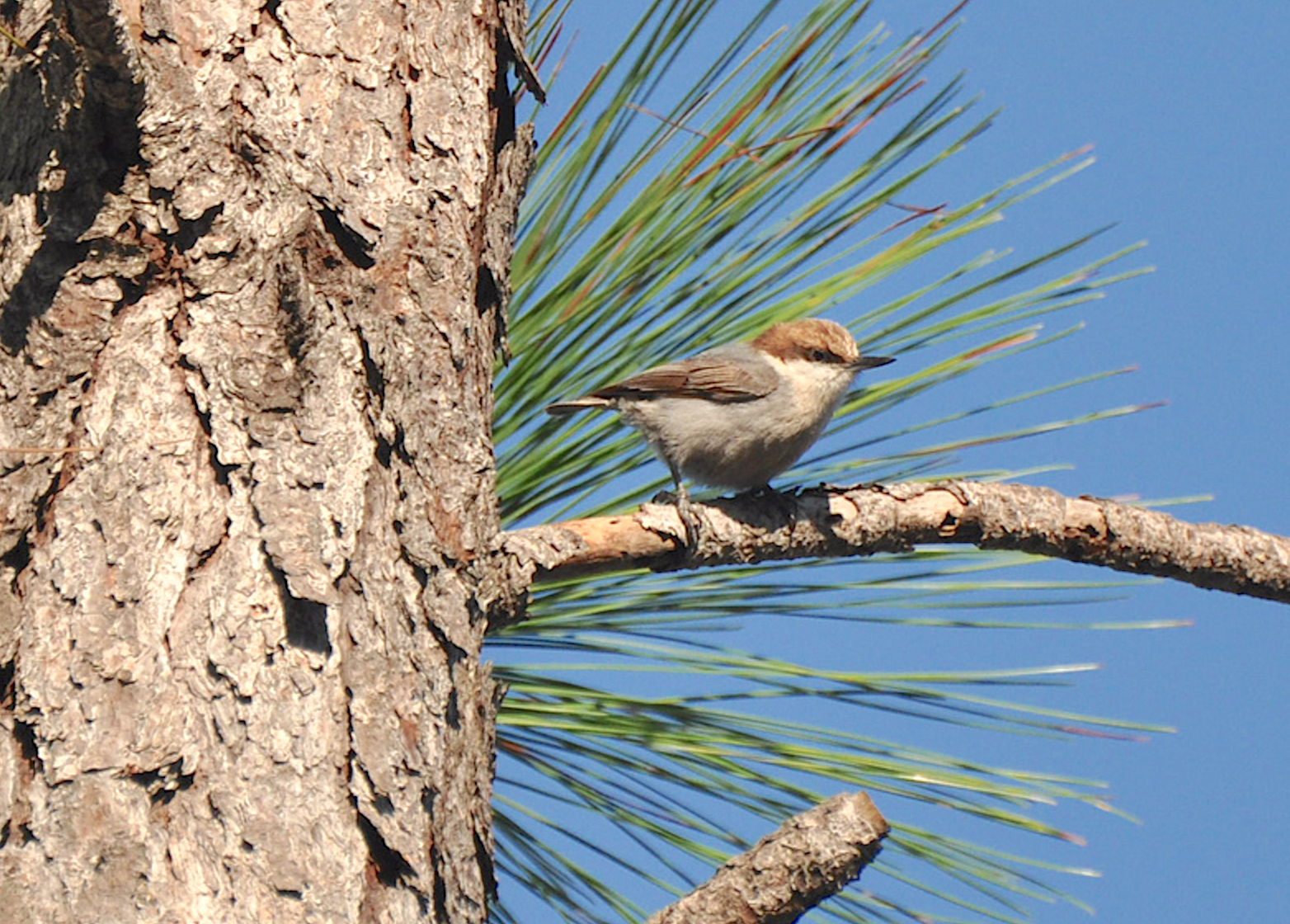
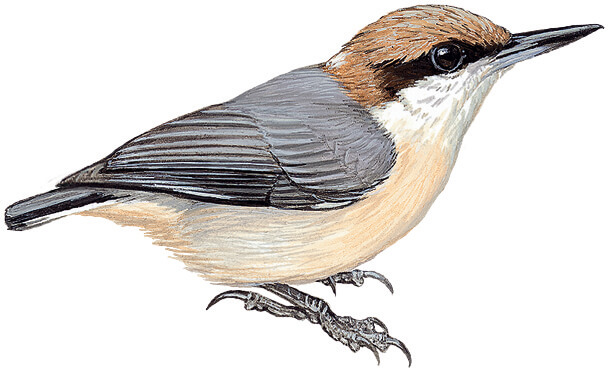
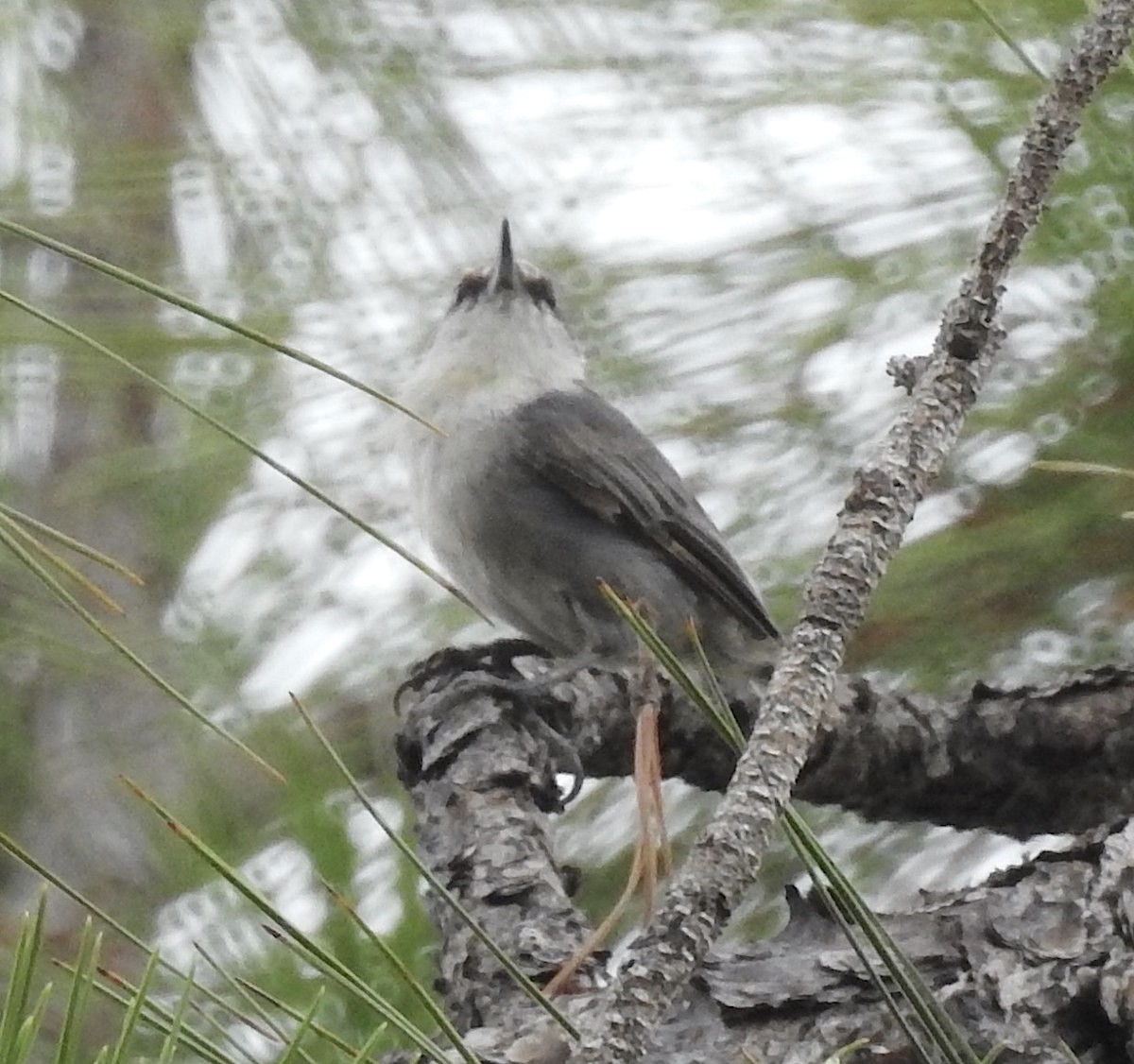
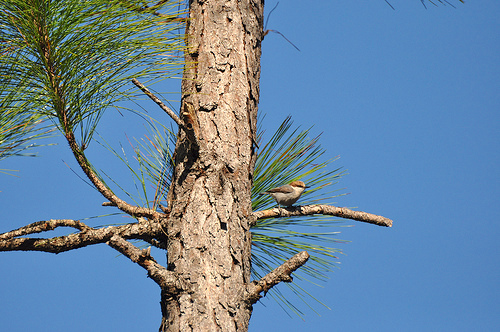
It’s quite a while since I posted about the Bahama Nuthatch (Sitta pusilla insularis) and the separation of its status from its cousin the Brown-headed Nuthatch HERE. I started by saying that it was one of the rarest birds in the Bahamas (or indeed anywhere), with a tiny population living only on Grand Bahama. It’s extraordinary to think that until the 1960s, these birds were common on the island. Then, for all the usual reasons, the population began to decline “precipitously” (Tony White). By the 2000s, the most optimistic estimates suggested that about 1000 – 1200 mature birds might inhabit the pine forests. Other surveys showed far lower numbers. By now, the species had become highly vulnerable. Reports dwindled annually, and in some years only a handful sightings were recorded.
Then in October 2016, Grand Bahama received a direct hit from Hurricane Matthew. It was as destructive as you might expect a violent Cat 5 storm could be. Without in any way seeking to diminish the far-reaching and devastating impact of the hurricane on the island (and elsewhere), I have to stick to the matter in hand here. The fact is that for nearly 2 years after Matthew and its trashing of the habitat, not a single BANU was sighted – this, despite many efforts to track one down in the known hotspot areas. It began to seem likely that the little bird had simply been wiped out of existence. Since it is known nowhere else – not even on nearby Abaco – the Bahama Nuthatch had very probably become extinct.
Fast forward nearly two years and suddenly there is the first hint of a glimmer on the horizon for these little birds. Finding one is already a needle-in-a-haystack quest. The target is shy and tiny – about 4 ins long and 10 grams; and the search area is vast – more than 30,000 hectares. Yet this summer, amazingly, some Bahama Nuthatches have been found and photographed, a most happy – and perhaps optimistic – outcome, and a deserved return for some serious survey work. Excited publicity has spread well beyond the usual online birding resources and into the mainstream press.
THE KEY SIGHTINGS
JUNE 2016
The last recorded sighting of the Bahama Nuthatch (2 birds) before Hurricane Matthew was made in June 2016 by well-known Grand Bahama bird expert and guide, Erika Gates.
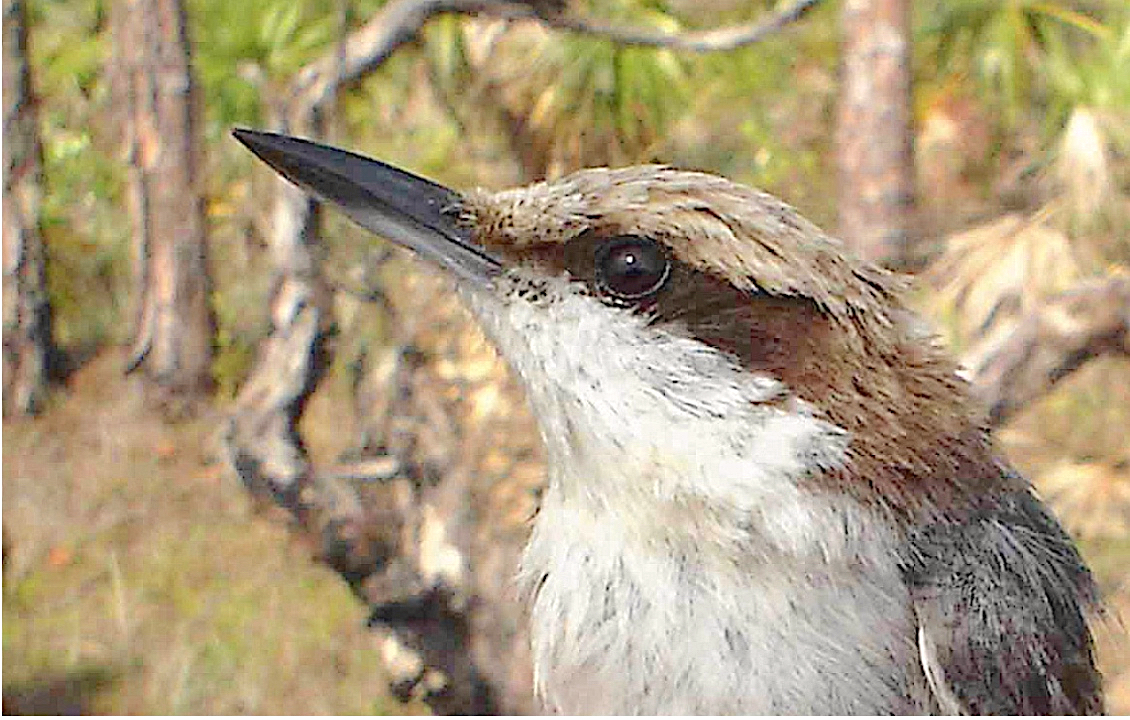
The first team eventually made a sighting in May 2018, and the elusive bird was captured by Matthew Garner of UEA on camera. They also obtained brief and tantalising video footage (below). In all, the UEA team made six nuthatch sightings, and Bahamian team independently made five sightings (including seeing what appeared to be two together).
JULY 2018
Erika Gates, with Martha Cartwright and Zeko McKenzie, again managed to locate a single nuthatch to add to the earlier 2018 sightings. She too managed to get some photos of the bird.
WHAT OF THE FUTURE?
Among the May birds – however many there were in total – one was a juvenile. Combined with 2 adults seen at one time, that makes 3 birds. The extent of the period of study and search area of the May sightings (11 in all) make it likely that more than 3 birds were seen overall. Erika’s July bird, in a slightly different location, suggests another. Perhaps no more can be said than that there may be half-a-dozen Bahama Nuthatches extant in the world. It’s some comfort.
However, as the May operation noted, ‘We also don’t know the sex of the birds. In many cases when birds dwindle to such small numbers, any remaining birds are usually male.’The consensus of the articles I have read is that the handful of birds seen this summer, while a thrilling discovery, should not be seen as any guarantee against extinction. Further habitat degradation, more development, another hurricane, any one of these could be fatal to the species. The recent sightings are cause for some optimism but these little, highly vulnerable birds remain on the very brink of extinction. Those few people who have seen one in the wild have had a precious experience.
THREATS TO THE SPECIES
Habitat loss / degradation from development, logging, forest fires & hurricanes
Invasive / introduced / feral species such as corn snakes, raccoons & cats
Competition from other more prolific species in a limited habitat
The Bahamas National Trust has produced an excellent video account of the whole story from Shelley Cant-Woodside HERE
Photo credits: Bruce Purdy (1, 11); Gary Slater / Birdlife.org (2); Erika Gates / Bahamas Weekly (3); Erika Gates (4, 5, 7, 8, 9, 10); Matthew Gardner (6); Birdlife International (drawing); UEA & team (video)
Research credits include: Birdlife International / Birdlife.org; Lisa Sorenson; Tony White; Research Gate; IUCN; Bahamas National Trust; The Bahamas Weekly / Erika Gates; eBird; Loma Linda U; Science News; Sundry online publications; American Birding Association (and a bonus point for its brown-headed nuthatch behaviour article wittily entitled “Sex in the Sitta”)
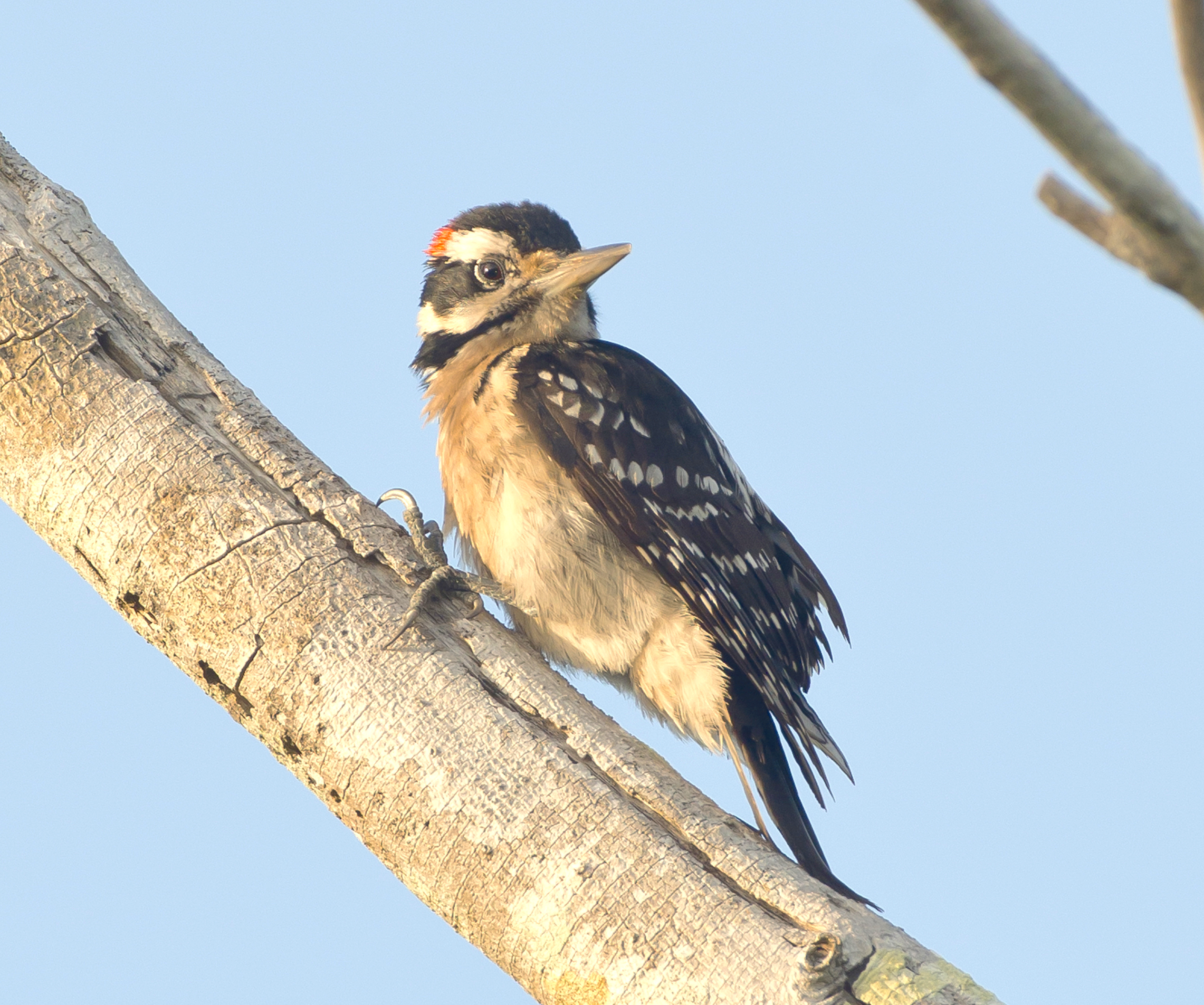
It’s Friday. I’ve just nixed for wild brown trout on the River Frome in the rain. I need a beer and I’ve run out of week. You can read more about the attractive little Hairy Woodpecker – Abaco’s small counterpart to the larger and noisier West-Indian Woodpecker –HERE. Have a good weekend!
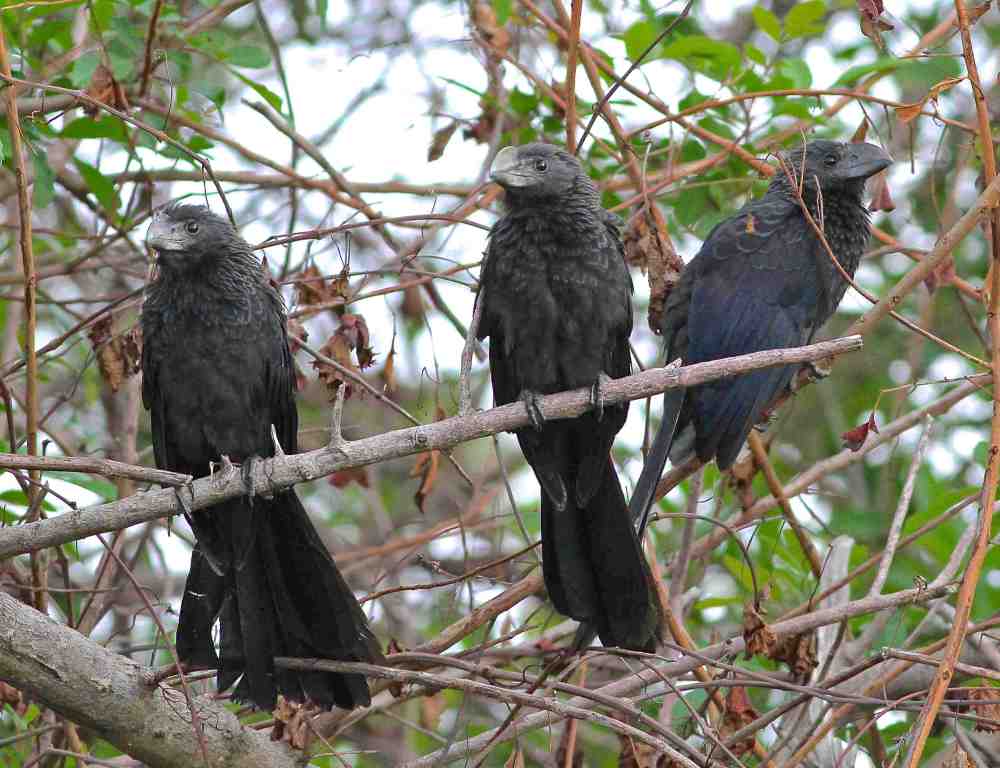
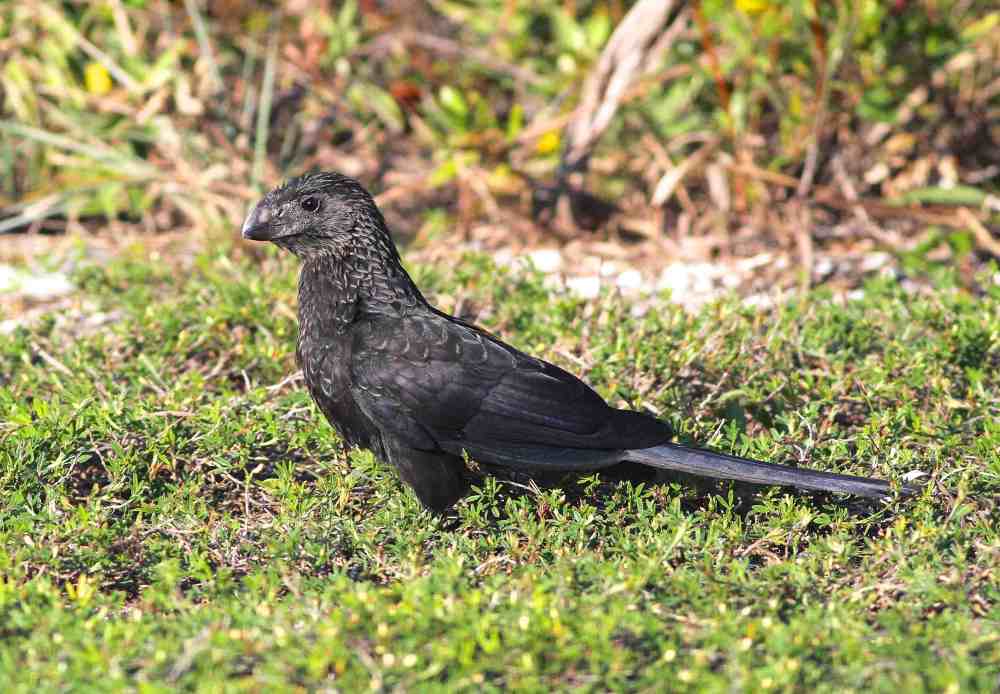
The Smooth-billed Ani (Crotophaga ani) is the third member of the cuckoo family found on Abaco, the others being theMANGROVE CUCKOOand theYELLOW-BILLED CUCKOO. Anis range from Florida and the Bahamas in the north, down through the Caribbean to South America, where they are widespread.
Unlike their shy and retiring cuckoo cousins, anis are extrovert shouty birds that like to hang out in noisy gangs and family groups. They can often be found in low scrub, bickering and squawking, and fluttering around. You’ll probably hear them from some way off, sounding like this:
Anis have advanced social, parenting and chick-rearing skills. They build a communal nest for the group, and all share in egg incubation and chick-feeding duties They may raise up to three broods in a season, which keeps the numbers up. Rather touchingly, the young of earlier broods help to feed more recent chicks.
It follows from this that unlike many other cuckoo species, the ani is not a brood parasite. So the species does not lay its eggs in the nests of other, smaller birds which then unwittingly rear the interloper(s), who in turn push the legitimate hatchlings out of the nest and get all the food and attention.
I have tried to discover why an ani’s beak is as it is, without much success. Very often beak shape relates directly to the feeding habits and preferences of a species, but it is hard to see how a diet consisting mainly of insects and small reptiles such as lizards would account for such a prominently protuberant proboscis. Here is a close-up of the item in question.
On Abaco (and indeed elsewhere) Anis are sometimes known as ‘Cemetery Birds’, no doubt because of their all-black appearance (though their raucous tendencies would be quite inappropriate for a graveyard). However although at a distance these birds may look completely black, catch one in the sun at the right angle, and you’ll find that the plumage is far more varied, and with some intricate patterning.
Look for Anis in low scrubland and coppice, cultivated areas, perched in unsteady noisy rows on utility lines, or foraging on the ground.
The appearance and flying abilities of Anis are wonders to behold. As I wrote in The Birds of Abaco, “Their curious heavy beaks, their clumsy flight and their untidy take-off and landing routines suggest a design fault”.
“One… is the loneliest number…” Oh, hang on a moment…
…”two of us…standing solo in the sun…”
The Philatelic Bureau of the Bahamas Postal Service is commendably committed to featuring the natural history of the Bahamas. Although probably not in the top-ten of anyone’s bird list, the ani nevertheless got its own stamp in a 1991 bird issue.
As far as I know, there is not yet a collective noun for a group of anis. There should be. Any suggestions welcome. Meanwhile I put forward “A Commotion of Anis”
Credits (all photos taken on Abaco): Becky Marvil, Nina Henry, Tony Hepburn, Gerlinde Taurer, Roselyn Pierce, Tom Sheley, Bruce Hallett, Keith Salvesen; sound files from Xeno Canto and FMNH; range map from IUCN; hat tip to the always excellent Aimee Mann.
This post is a revised, corrected and expanded version of one I wrote nearly 4 years ago.
The Northern Parula is one of 37 warbler species recorded for Abaco. The vast majority of these species are migratory, arriving in the Fall and leaving in the Spring to fly north to the breeding grounds. When I’m back at HQ from my computer-free break, I’ll be writing more about these little birds. Meanwhile, this post is a reminder that the influx will begin very soon. The Northern Parula, with the distinctive green patch on its back, is sure to be among them.
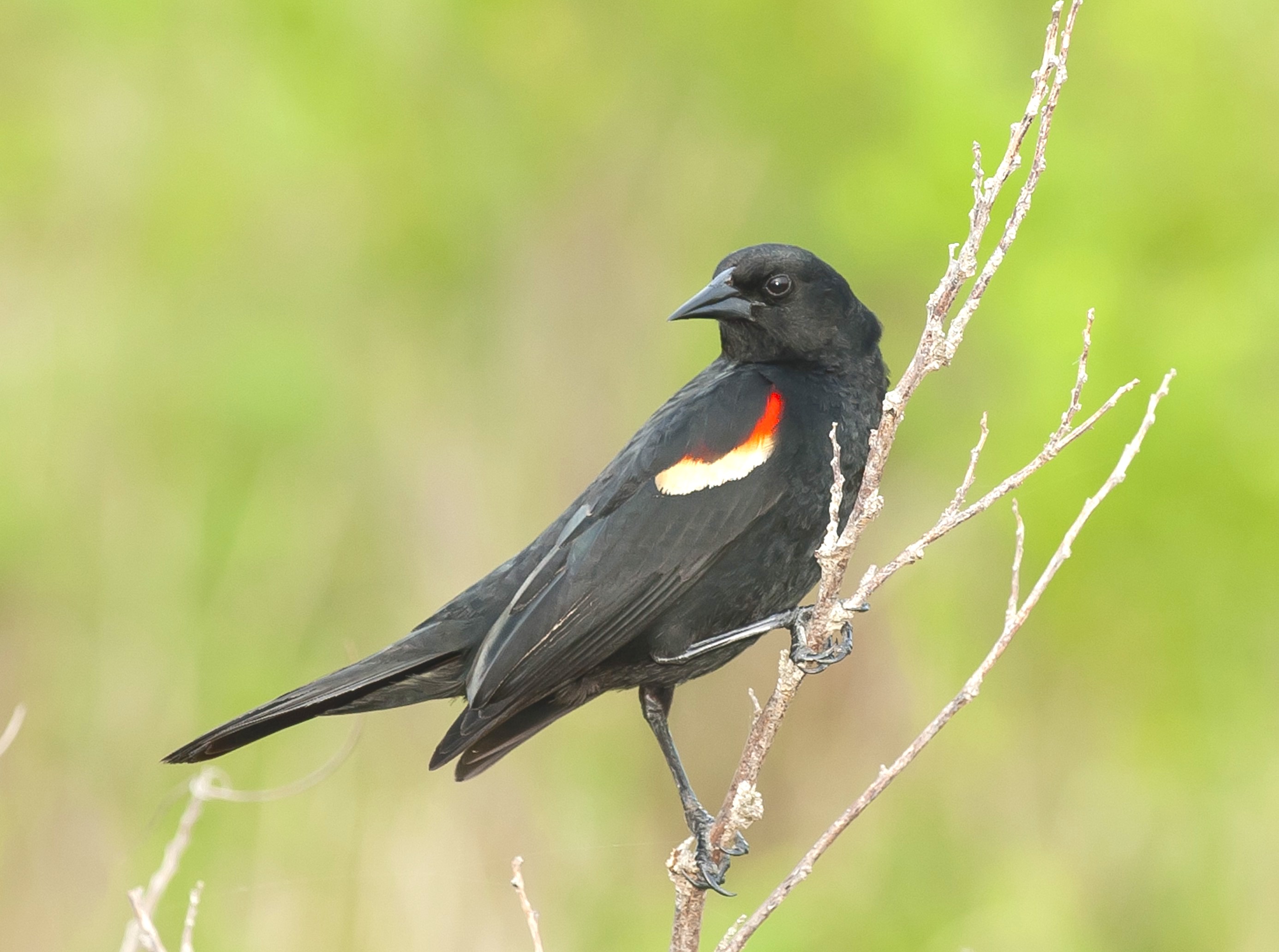
I’m away for a few days on the Emerald Isle, leaving my trusty computer many miles away (on purpose, I mean). I’ve just got my iPhone, but writing posts and inserting images on such a small screen / keyboard is a fool’s errand. So I’ve pre-loaded a couple of beautiful bird images to post this week. Here is a wonderful red-winged blackbird male taken by photographer Tom Sheley while we were getting together some images forThe Birds of Abacodeep in Abaco backcountry.
‘Casting’ is one of those words with multiple meanings, some archaic but most in use today. You can probably think of half-a-dozen straight off *. ‘Casting about’ is one of the specific usages and derives from hunting, eg hounds casting about for a scent. By extension, it has come to mean something like searching intently or thoroughly for something you need, or want, or are having difficulty in finding. Which is where this tricolored heron comes into the picture.
It’s always entertaining to watch a heron or egret fishing. Their methods range from standing stock still and suddenly stabbing downwards to slowly wading to the crazy dash that reddish egrets sometimes do on the edge of the mangroves. This one is hooding its wings, sometimes called ‘canopy feeding’. The theory is that this attracts small fish by providing shade. I also wonder if this method is used to reduce glare from the surface of the water.
The bird in this sequence is a juvenile, and not yet the lethal hunter that it will soon become. It has seen a fish moving but has temporarily lost it (fishermen will be familiar with the mild feeling of annoyance when this happens). So it is casting about, slowly zig-zagging through the water, looking from a height, crouching down, trying to get a good view of its elusive snack. I can’t say that this little episode ended in success. Sometimes, the fish you sight and then lose has gone for good. But as fishermen often say when they lose one (and by extension the phrase is now applied to other areas of human life), there are always plenty more fish in the sea.
* Even without considering Mr Weinstein and his allegedly unusual casting methods
Photo credit: Phil Lanoue, a photographer who specialises in patiently taking sequences of bird activity
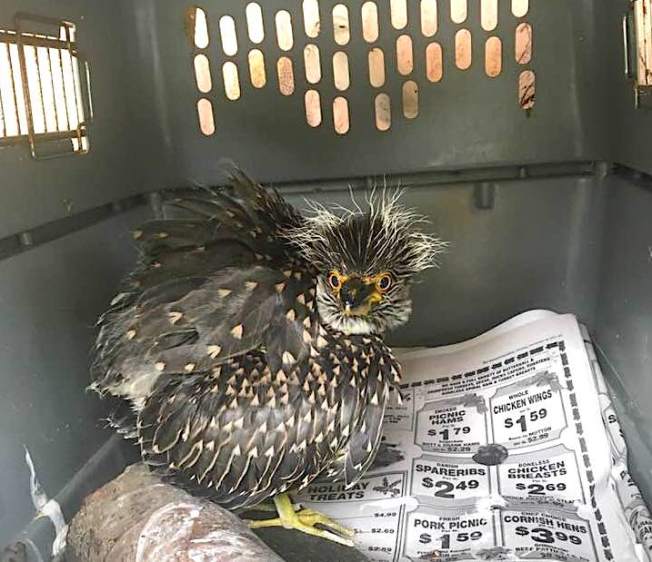
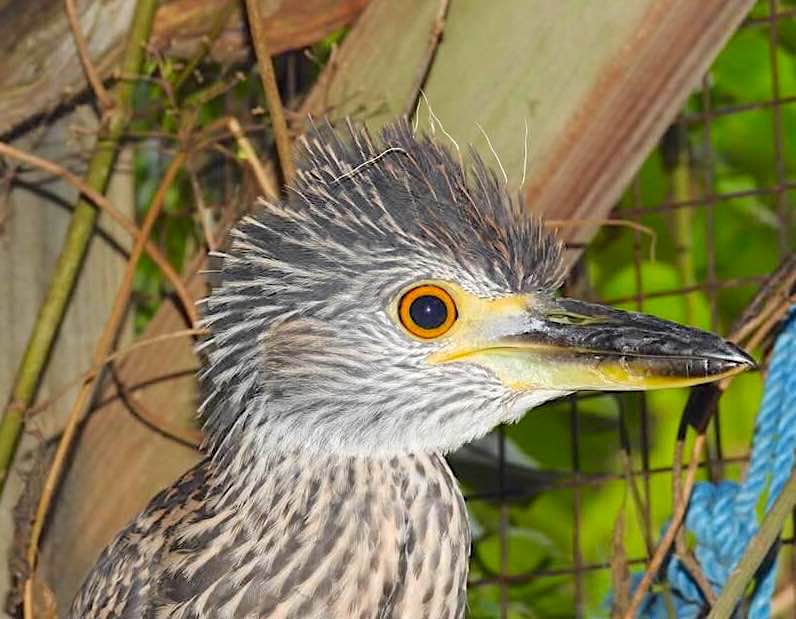
Admiring birds, photographing them, and counting them for surveys – all these are excellent pastimes. But for a real and meaningful interaction, there can surely be nothing more rewarding than animal rescue. Melissa Maura, known I’m sure to many readers of this blog, is an expert at caring for damaged or orphaned creatures. And at the beginning of June, she took a small dishevelled YELLOW-CROWNED NIGHT HERON into her care for rehabilitation. He was named Big Bird.
June 4 Big Bird has arrived…. For some rehab and perhaps a salon appointment…
To start with, Big Bird was little enough to fit into a smallish space while the process of feeding and nurturing commenced. He was clearly quite a character.
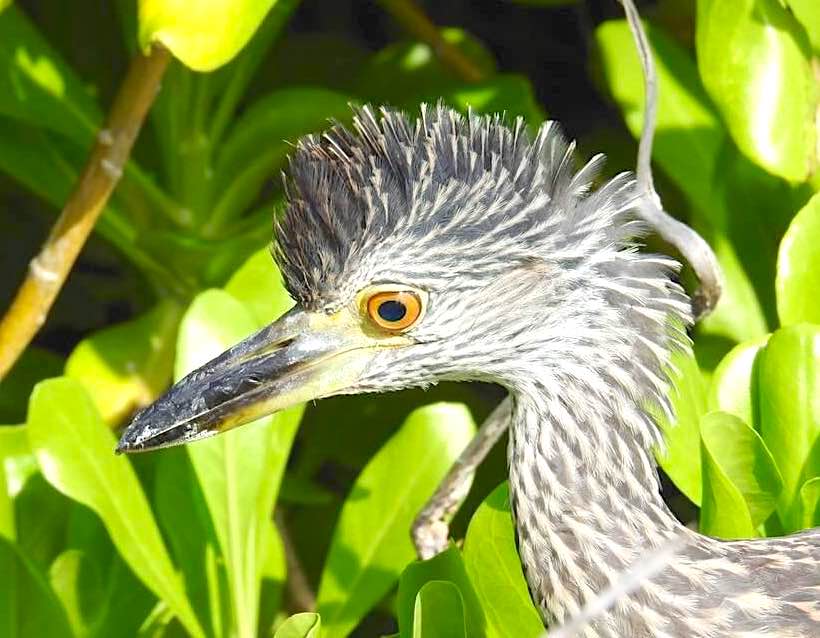
Very soon, Big Bird was becoming less straggly and more herony – even his startling hairstyle started to grow out. By this stage, he was eating almost a bag a day of bait shrimp.
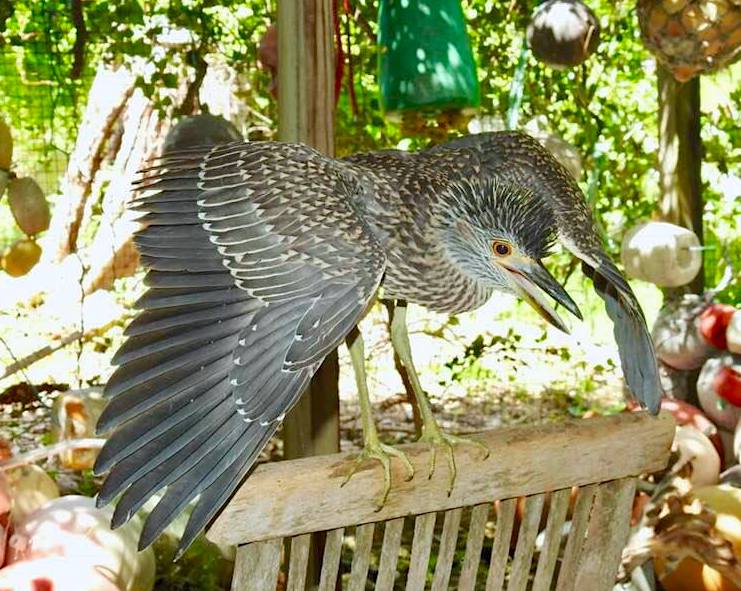
The next step in the rehab process came with the move from a small indoor cage and promotion to a big outside cage. This provided more room for Big Bird, and helped him learn to stretch his growing wings and learn to be independent.
Big Bird’s wings became increasingly strong, and his early crazy hairstyle settled into something rather more crown-like.
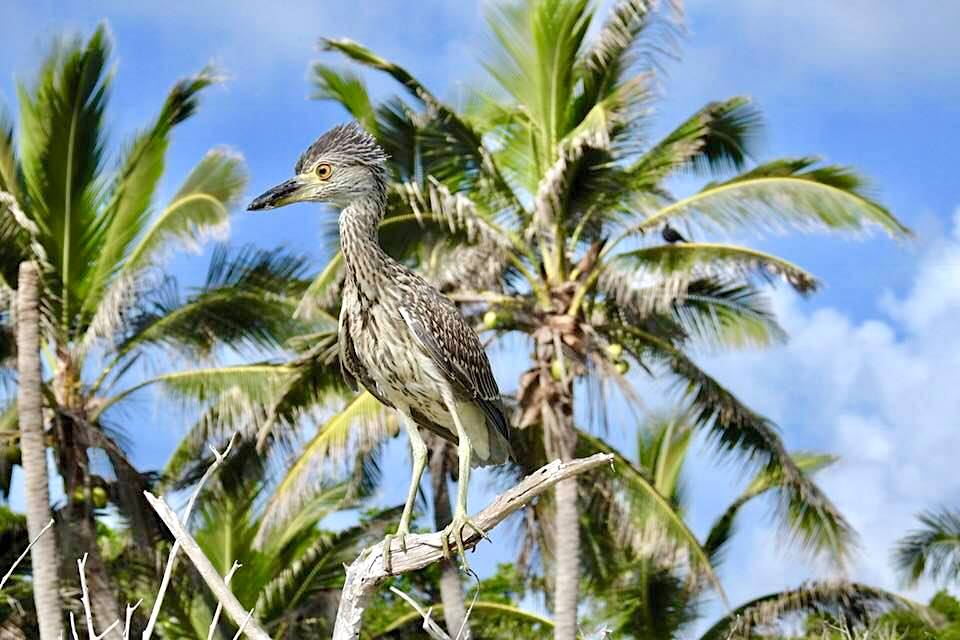
A mere 6 weeks or so after Melissa started to look after Big Bird, he was nearly ready for the final stage of rehab – freedom. The specially selected location was an area where there were already a number of juvenile herons, companions for Big Bird to grow up with.
Big Boy (foreground)
As Melissa wrote: “It comes down to this moment, after all those hours of feeding, caging and keeping a watchful eye to then see that flight to freedom!”
Preparing to fly free
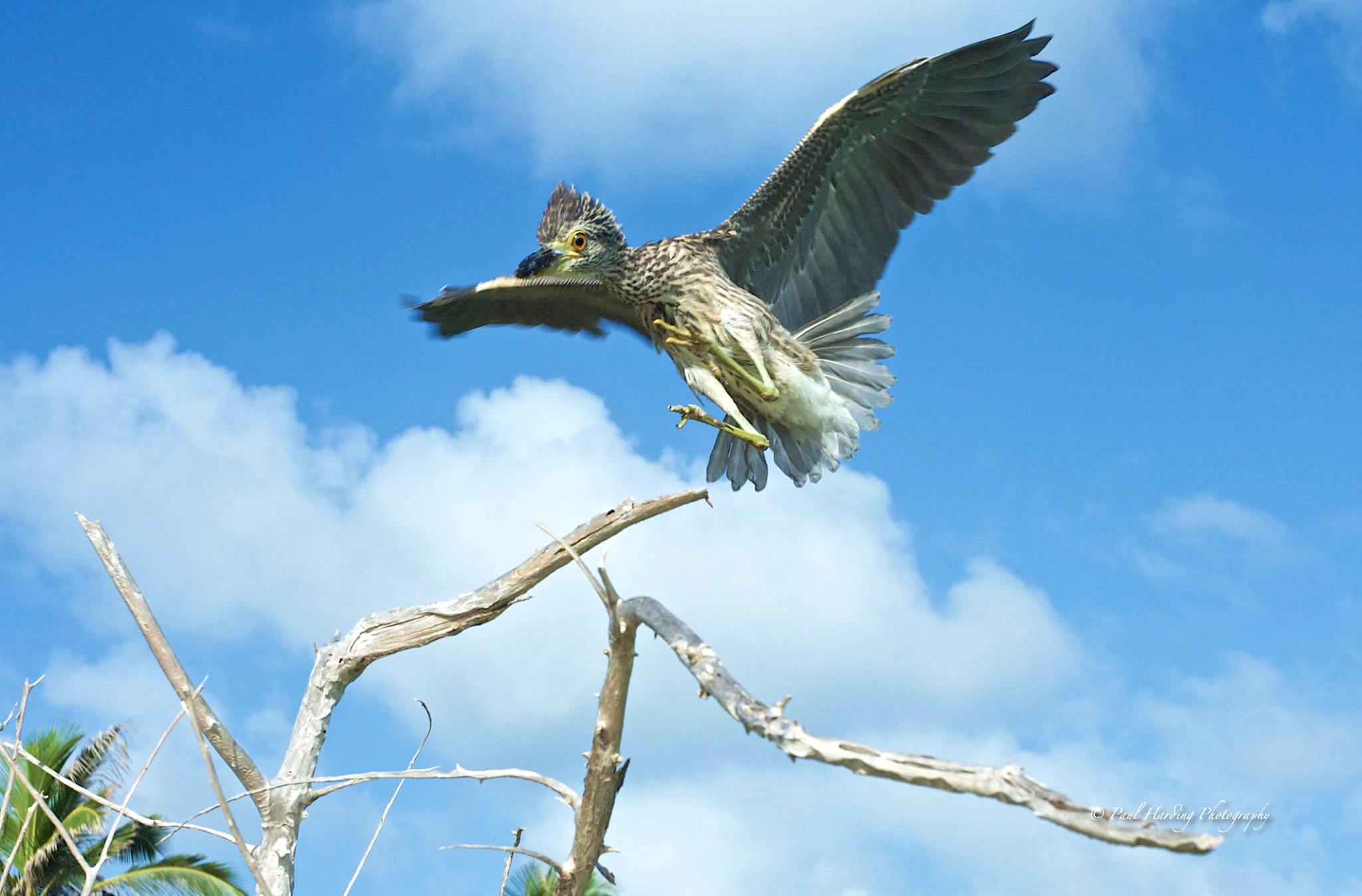
And then, suddenly, the heart-stopping moment of the launch… Inelegant, but inevitable
Melissa’s posts about Big Bird unsurprisingly inspired many fans (including me, of course) who followed the story over the weeks of Big Bird’s rehab. As Melissa wrote online of the release:
“Yesterday morning Big Bird was placed lovingly into his custom-made box and transported by ferry to his new residence – the wilds of Blue Lagoon Island where upon arrival at a chosen spot, we were met by no less than 13 other juvenile Night Herons exactly his age! They all gathered nearby as we released our baby and watched him take his first steps in sand and tackle longer flights. It was such a relief to see him appear so comfy in his new home and he blended into his surrounds perfectly, sporting his best hair-do. Heartfelt thanks to Kelly Meister, John McSweeney and the island crew for helping us put Big Bird in the best possible wild situation…”
And so it goes – another bird rescued, cared for, released, and set free to live and to breed in the wild. In a turbulent world of dissent and discord, I hope people will find a grain of joy and optimism in the tale of Big Bird the Heron.
Credits: All photos by Melissa, quotes as shown in maroon. Go safely, Big Bird…
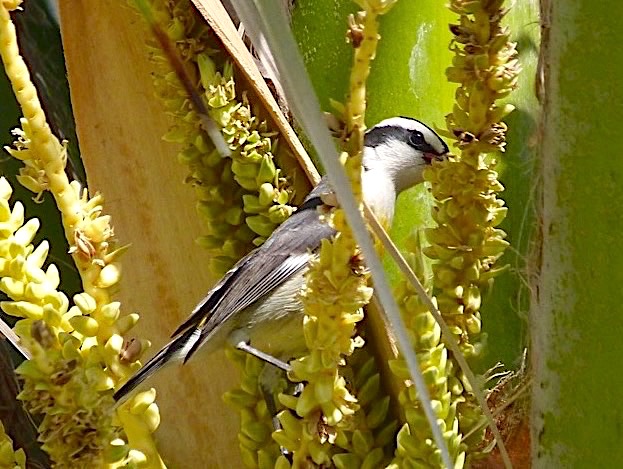
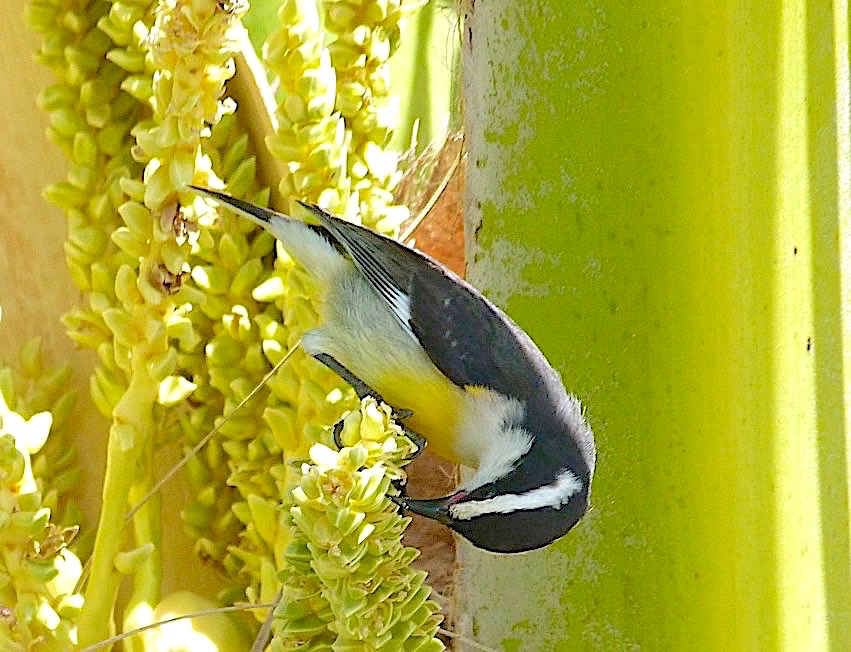
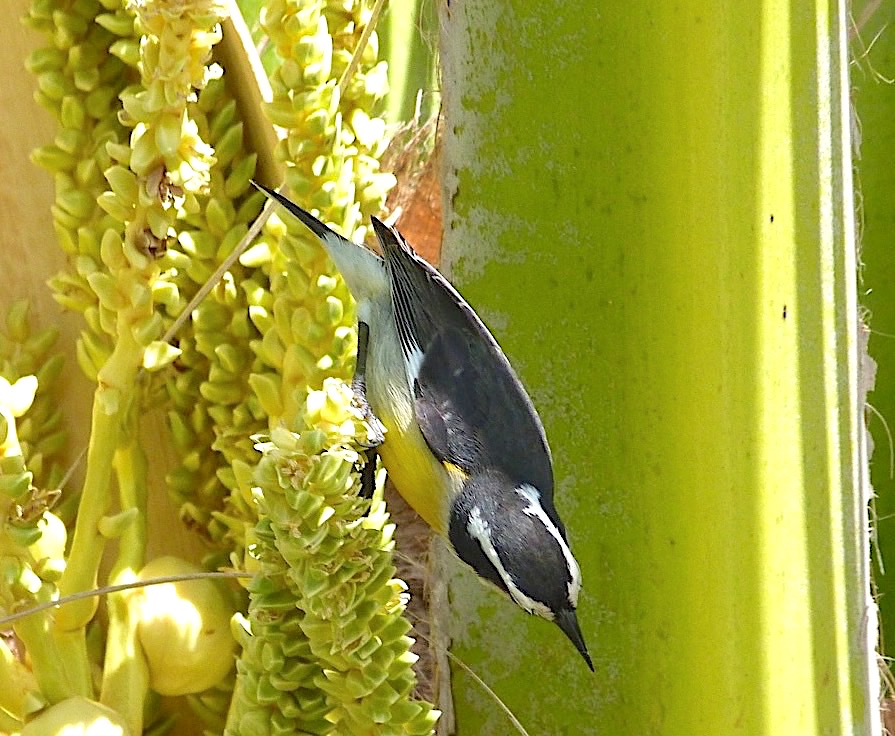
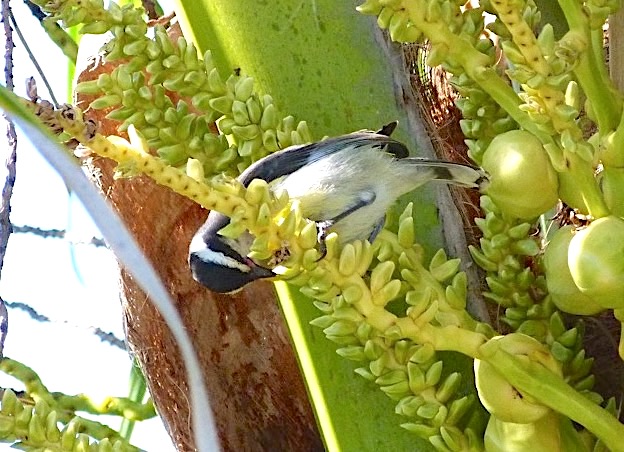
Bananaquits are smart. They look smart, of course, and they act smart too. Their diet consists mainly of nectar and fruit, so you’ll find them where there are flowering or fruiting trees and shrubs. Their sharp little beak curves slightly, enabling them to get right into where the good things are, as shown in this sequence of not-especially-good-so-I’ll-call-them-illustrative photos. And that beak gives then another method of reaching nectar – they can pierce the base of a flower and use the beak as a sort of probe to get at the nectar that way. And soft fruit? Easy!
All photos: Header, Craig Nash; the rest, Keith Salvesen – all at Delphi, Abaco Bahamas
The bird in the header image is the presciently named Bahama Mama in Muskegon State Park, Michigan – so, one of the rare Great lakes piping plovers. She originally hatched and was banded as a chick in 2014 at Tawas MI, some distance away from Muskegon. When later named in 2015 by Muskegon monitor Carol Cooper, no one could possibly have known then where she would chose to overwinter. The Bahamas, as it turned out – the avian equivalent of nominative determinism.
This little bird is the perfect example to demonstrate the success of (a) an organised monitoring and recording system in the breeding grounds of these rare birds; (b) the use of easily identified coded banding and (c) the deployment of ‘citizen scientists’ to back up the professionals in the overwintering grounds such a Abaco.
A combination of the three factors leads over time to the compilation of a life story. Invariably there will be gaps, but let’s take a look at what we know about Bahama Mama, in her own dedicated timeline. Note two things: her beach fidelity; and the evidence of mate infidelity…
2014 Born Muskegon State Park, MI
2015 Nested with Little Guy and raised chicks. Winter location unknown
2016 Returned to Muskegon and again successfully nested with a new male, Bear, from Sleeping Bear Dunes Park MI. (Little Guy went off with another female on the same beach…)
2016 Resighted in October on Long Beach Abaco and stayed for several months
2017 Back at Muskegon and raised chicks again with Little Guy
2017 Again resighted in October on Long Beach Abaco and overwintered
2018 Back at Muskegon, initially back with Little Guy, eventually nested with Enforcer
The official record of the latest union – evidence of fickleness
This summer 4 chicks were hatched. Sadly, one of them (Ringo, 2 pics below) was lost, presumed predated, leaving 3 to fledge.
Bahama Mama with one of her chicks
Little Ringo RIP
Another of the chicks
These are rare and threatened birds, vulnerable at both ends of their migration for all the usual reasons. The studies undertaken at both ends of the migration have revealed astonishing beach loyalty in these little birds that travel up to 1500 miles (sometimes more) every Spring and every Fall to be somewhere safe to nest and breed; and then to overwinter. In Michigan, Carol Cooper is Bahama Mama’s mama, watching over her, recording the details, checking when she has left the beach, and anxiously watching each Spring for her arrival home.
On Abaco, these duties – pleasures, even – are undertaken by ABACO PIPING PLOVER WATCHand the team of citizen scientists who keep an eye on the beaches, count the birds, note the banded birds and photograph them for ID, and pass the info on to HQ (which happens to be me). The data from all sightings is collated and then the season’s stats are compiled and provided to the scientists involved. Here’s a summary of stats for last season:
Bahama Mama, first sighting on Long Beach Abaco Oct 2017
Photo Credits: Carol Cooper (1, 3, 4, 5, 6); MDF (2); Keith Kemp (7). Special thanks to Carol Cooper, monitor in Michigan; and to Keith Kemp, primary monitor on Abaco. Also to Todd Pover CWFNJ and all the other real scientists involved for the last 3 years
POLITE REQUEST
If you live on Abaco or its cays anytime between August and March and might be interested in helping with piping plover research by becoming a monitor, please get in touch with me. It’s very simple and undemanding. A beach stroll from time to time – even as little as once a month – with a notebook, pencil, binoculars, a chocolate bar and (preferably for accurate ID of banded birds) a camera. Not a dog, though. Not on this walk anyway! Every report, even of a single bird, adds to the picture. Last season there was more than one ‘citizen scientist’ sighting of a plover where none had been seen before.
There’s something wrong in the picture above (no, I don’t mean about the photograph itself). Count up how many pink legs you can see. No, not including the reflections. Give up? It’s three. Between two birds. I assumed of course that ‘Oner’ had a perfectly good serviceable leg tucked up into its undercarriage. I admired the balancing skills involved in resting one leg while nonchalantly standing on the other.
We were watching this pair of black-necked stilts Himantopus mexicanus at the pond at Gilpin Point, which at certain times can be ‘Stilt Central’. These birds are permanent breeders on Abaco and are without a doubt the most beautiful of all the waders (avocets, being extremely uncommon winter visitors, are disqualified from consideration for lack of presence).
It gradually dawned on me that Oner really did only have one stilt to stand on. After 10 minutes observing them and the other birds around them, there was no question about it – the right leg was completely and utterly missing. This unipedal deficit had no obvious ill-effects on the bird – nor on its ability to throw a good pose (above). Or to preen (below).
I’m in danger of losing sight of Twoer here, a bipedal bird that deserves its own place in the story, not just a wade-on part in Oner’s story.
Twoer as Ringmaster…
BNSs are territorial and in particular can become ‘proactive’ (ie aggressive) in protecting the area near a nest. I once mistakenly got close to a nest, not even knowing it was there. I soon learnt – a parent BNS came wading towards me, zigzagging in the water, shouting and carrying on in a way that immediately said ‘my nest is nearby’. And when I meanly stood my ground it suddenly took off and flew straight at my head…
A shouty stilt
BLACK-NECKED STILT ALARM CALL
Jim Holmes / Xeno Canto
On reflection…
All photos: Keith Salvesen / Rolling Harbour Abaco(and, if anyone noticed, sorry about some formatting issues which I can’t get rid of…); Audio file Jim Holmes / Xeno Canto
The narrowest point on Abaco is just north of Crossing Rocks. The 120-mile long highway that splits the Island down the middle passes over a narrow strip of land. On the west side, there are mangrove swamps, an inlet of sea, and a small jetty used by bonefishers to reach the productive waters further out. On the east side? Well, there’s more mangrove swamp, giving way to thick jungly coppice before reching the top end of Crossing Rocks beach – and not much else. Except for a long thin brackish pond by the road, that is.
If you are interested in birds – maybe on your way to the pond at Gilpin Point for Bahama Duck and waders, or returning from a Bahama mockingbird hunt in the National Park – it’s worth pulling over at the pond. Or preferably on the other side of the road so you can approach it stealthily. There’s plenty of roadside cover for birder discretion. Chances are, you’ll encounter one or more of the several heron or egret species found on Abaco – and that they’ll be fishing.
You can see how clear the water can be. It’s no wonder that this reddish egret has ‘hunched up’ to get that cruel beak closer to the surface to stab down on a small silver snack. In the short time we watched, he had no success (hence ‘Where’s the Catch?’ – there was none). But I’ve seen reddish egrets including the white morph successfully snacking at the pond; and a tricolored heron. A couple of years ago we had a great scoop in late March – a male reddish egret fishing in his wonderful breeding colours. Compare the ‘routine’ plumage of the bird above with this gorgeous creature.
And to show I am not making up the fishing part, a shot of this bird actually making a catch…
Goodness, is it the end of the month already? So much going on, 3 half-written posts but running short of time. So here’s something (even) more interesting than the stuff I write – actual photos of actual birds with no words. Great photos (not mine) of Abaco’s 3 cuckoo species to compare and contrast. Until next month… when there’ll be stilts, hutias and a whole lot more.
YELLOW-BILLED CUCKOO (and header image)
MANGROVE CUCKOO
SMOOTH-BILLED ANI
Photo Credits: Tom Sheley, Tony Hepburn, Alex Hughes, Gerlinde Taurer, Nina Henry
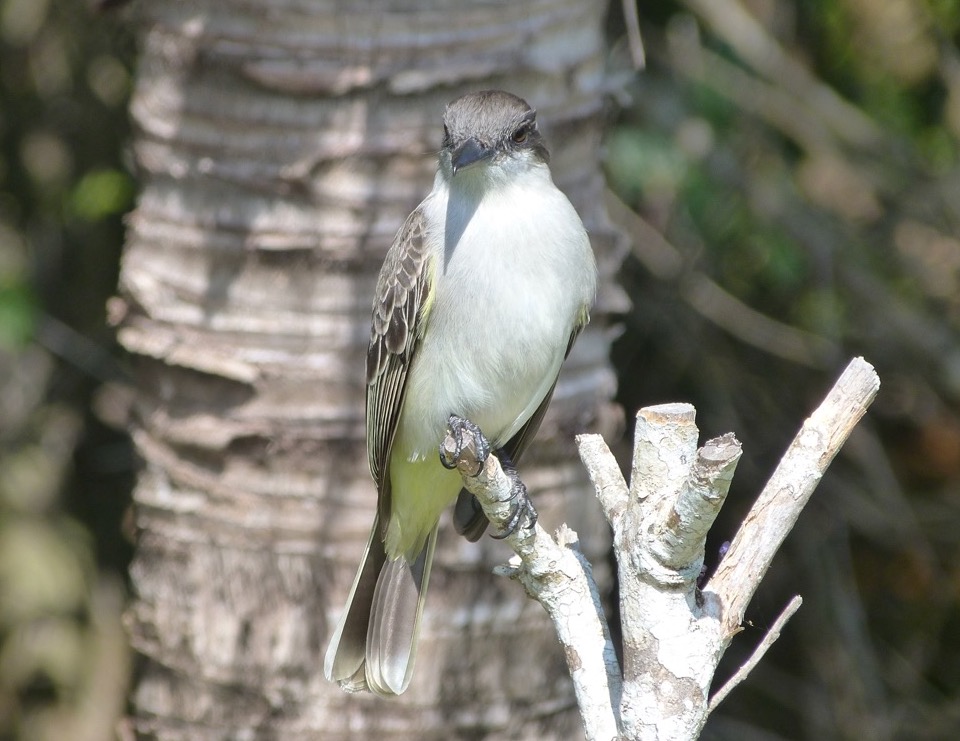
Abaco is home to 4 main so-called tyrant flycatchers (Tyrannidae): the loggerhead kingbird, the gray kingbird, the La Sagra’s flycatcher and the Cuban pewee. All are common permanent residents except the gray kingbird, which is a summer resident only. Several other flycatcher species are found on Abaco, but they are very uncommon winter residents, rare transients, or vagrants.
The loggerhead featured here in several poses is a watchful sentinel at Delphi. His preferred perches are in the edge of the coppice round the pool or at the edge of the main drive. From time to time he will leave his perch to catch a passing insect by ‘hawking’, returning to the same place to eat it.
Loggerhead and gray kingbirds can be quite easy to confuse. A couple of years ago I wrote about how to distinguish them, and with gray kingbirds in residence now this is probably a good time to set out the distinctions again.
LOGGERHEAD Tyrannus caudifasciatus vs GRAY Tyrannus dominicensis
DIFFERENCES and SIMILARITIES
TOP TIPANY KINGBIRD SEEN IN WINTER WILL BE A LOGGERHEAD
Kingbirds seen between (say) October & March are Loggerheads. Grays are strictly summer visitors
Both are medium size birds and roughly the same size as adults (around 23 cms)
Loggerheads have dark brown to near-black heads, grays have lighter, slate-coloured heads
Loggerheads have a ‘squared’ tip to the tail; grays have a notched tip
Loggerheads may have a whitish fringe at the tip of the tail; grays not so
Loggerheads have yellowish tinges to their white undersides & forewings; grays less so or not at all
Grays have a dark or black ‘mask’ through the eyes, often clear but not always easy to see
Loggerheads allegedly have inconspicuous orange head crests; grays are red. I’ve never seen either!
[*RH personal opinion alert*] Grays have larger, heavier beaks than loggerheads
Grays are territorially aggressive; when they turn up, the loggerheads tend to retreat to the forest
Here is how David Sibley shows the differences
Illustrations: David Allen Sibley
GRAY KINGBIRD FOR COMPARISON
MEMORABLE FACT TO DEPLOY IN CONVERSATION
The collective names for a group of kingbirds are: a Court, a Coronation, or a Tyranny
Photo Credits: All loggerheads, Keith Salvesen at Delphi; gray kingbird by Dick Daniels; Illustrations David Sibley
“Nidification” was one of the new words I learned from the wonderful book Birds of the West Indies by James Bond (a different one – for the full story behind the name click HERE). It means, essentially, the nesting process of a bird. It sounds pleasingly technical for a straightforward concept: nest-building.
Soft furnishings being added
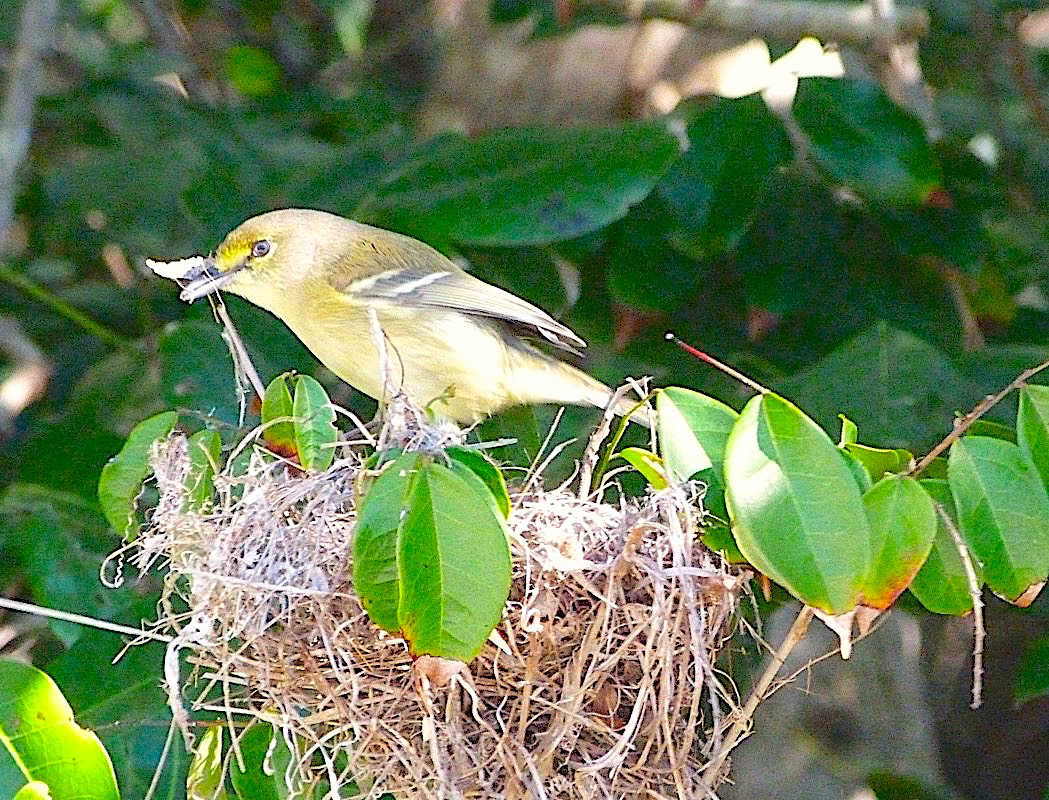
I spotted this TBV making its nest on the edge of the drive at Delphi. I usually think of these cheerful chirpy birds as ‘lurkers’, hanging back in the coppice and not making themselves easily visible. But this nest was right out in the open – possibly not the wisest place for nidification.
If you look up TBV’s in bird books, you may find a reference to nest building in the fork of shrubs or bushes – exactly what was going on here. It quite a messy nest, but then again it looks comfortable and firmly wedged in.
Although I only saw one of the pair actively engaged in the building, another TBV was ‘vocalising’ (there’s another technical term, = singing) nearby, presumably the mate. In a way that humans have been slow to adopt, both birds will be actively involved in raising their family, from incubating the eggs to chick care – feeding, cleaning out the nest and so on.
WHAT DO THEY SOUND LIKE WHEN THEY VOCALISE?
Let’s hope for a successful outcome to the nidification…
All photos Keith Salvesen, also the sound recording (made at Delphi)
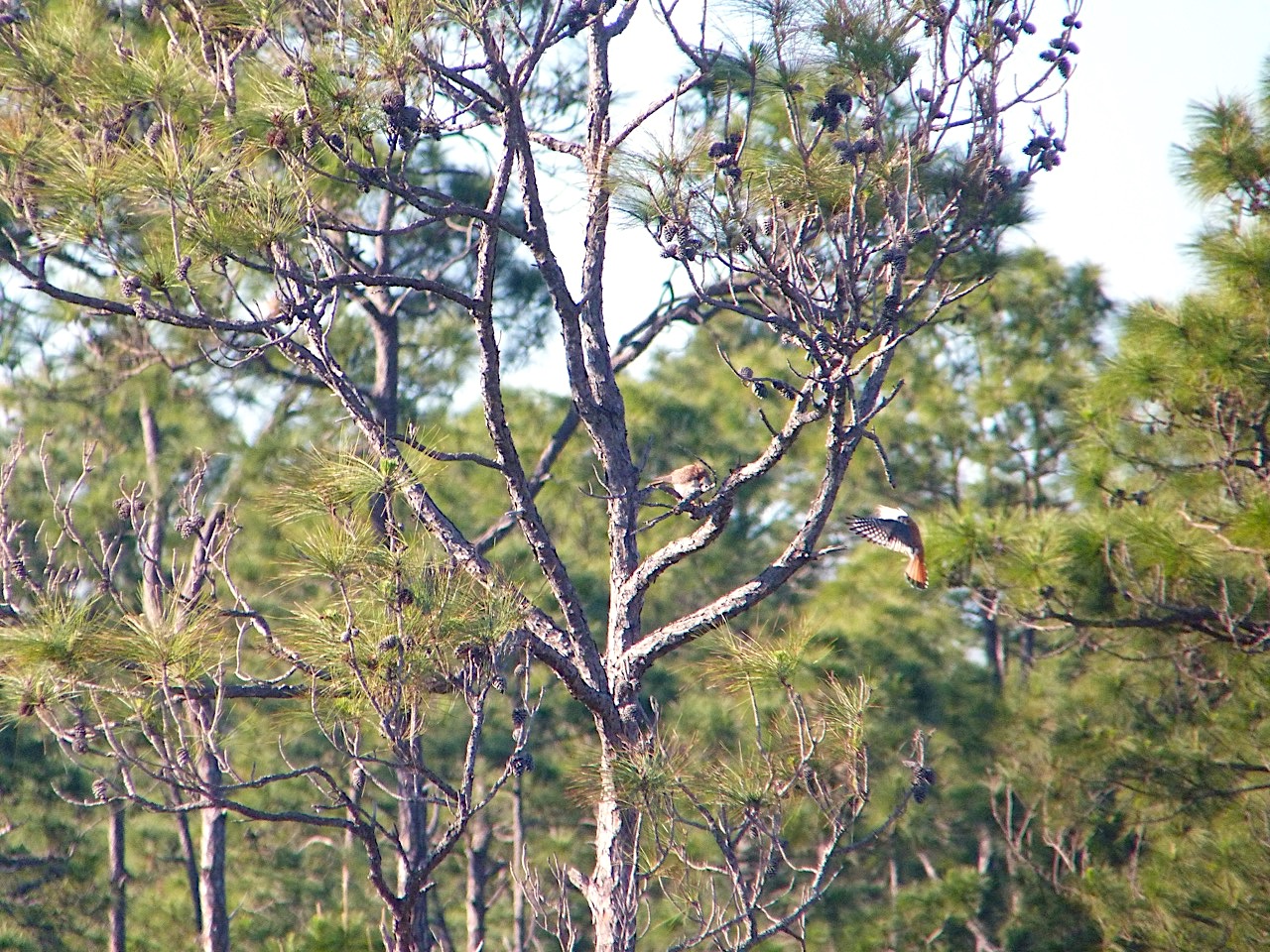
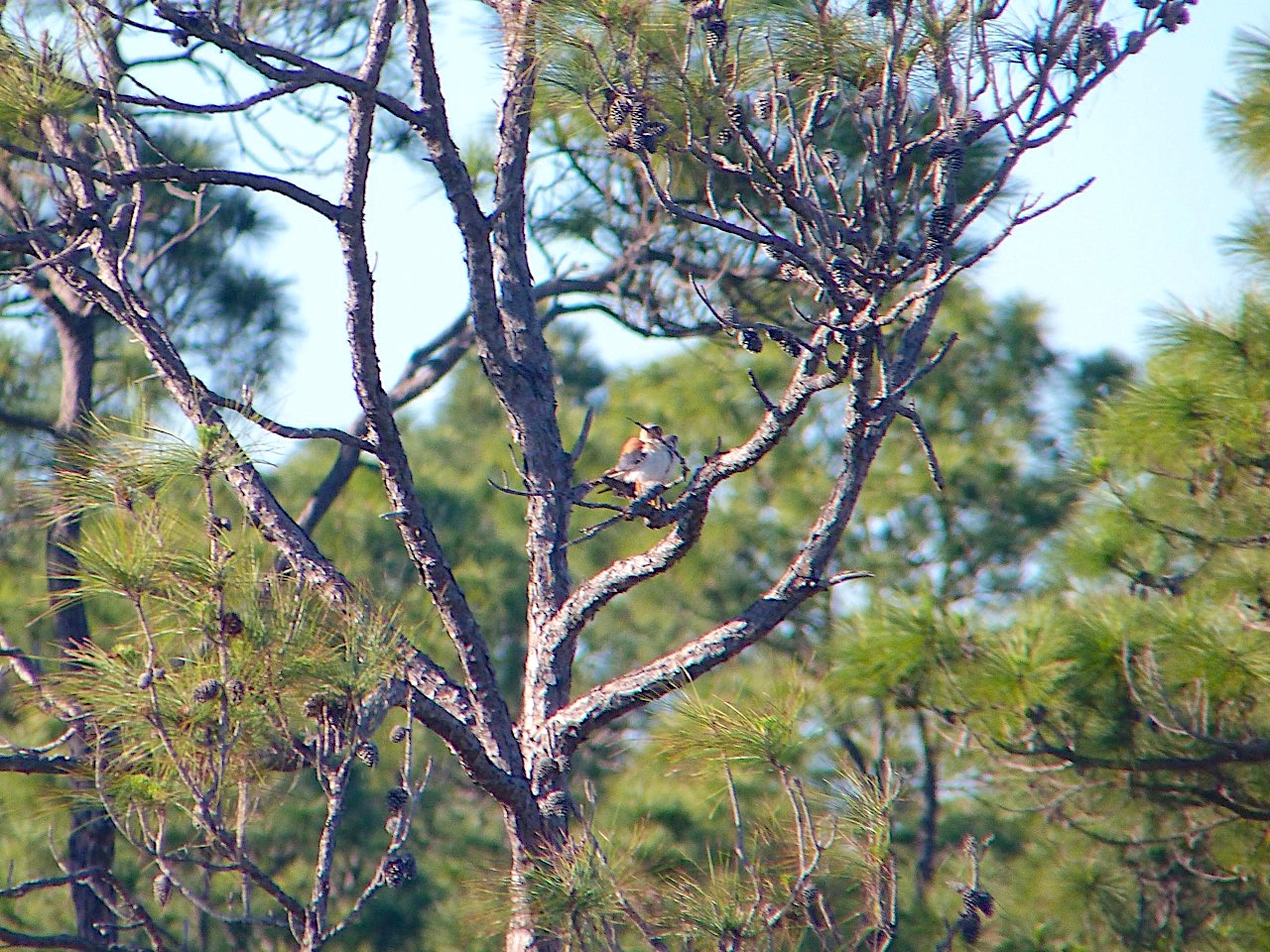
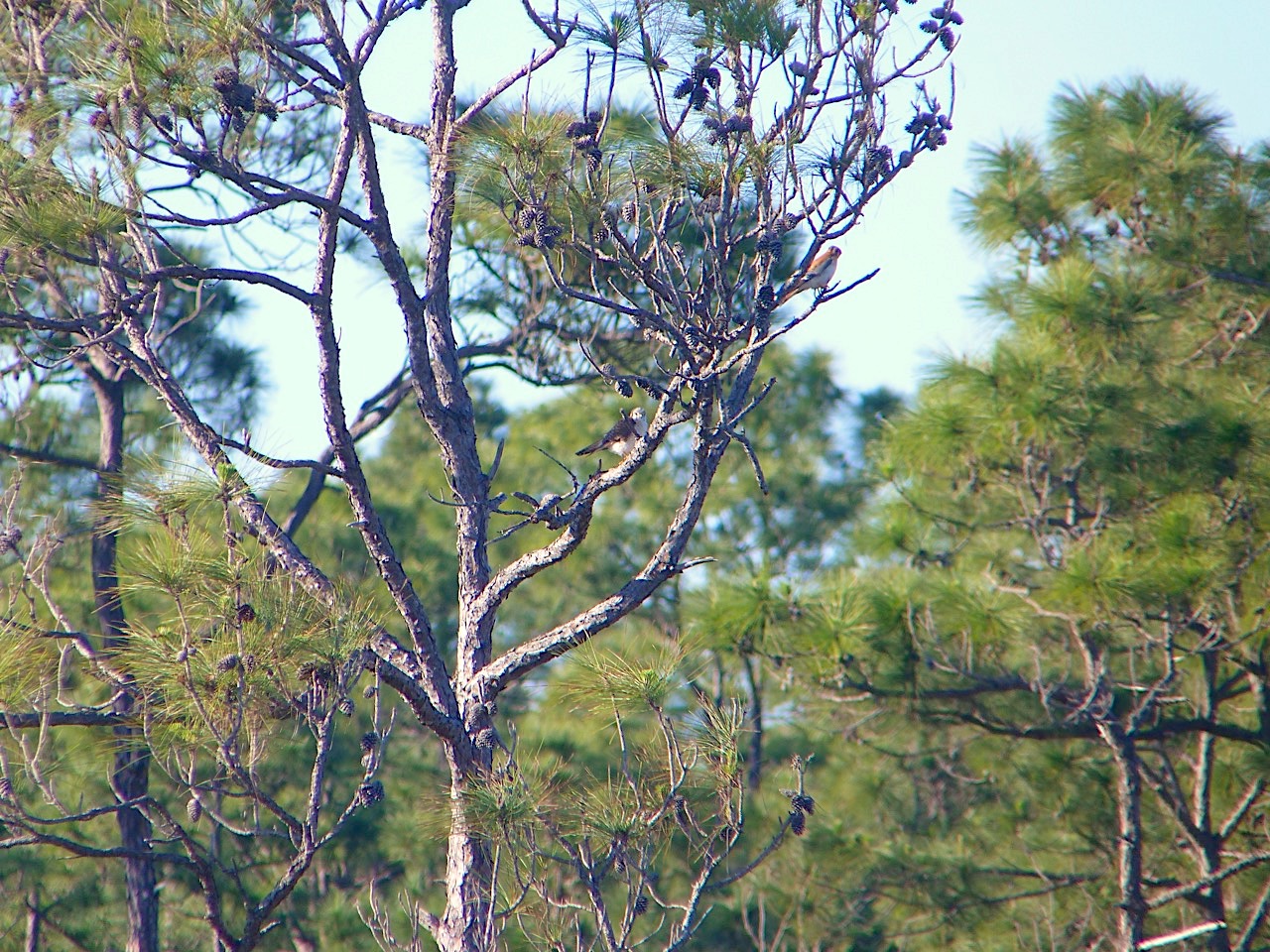
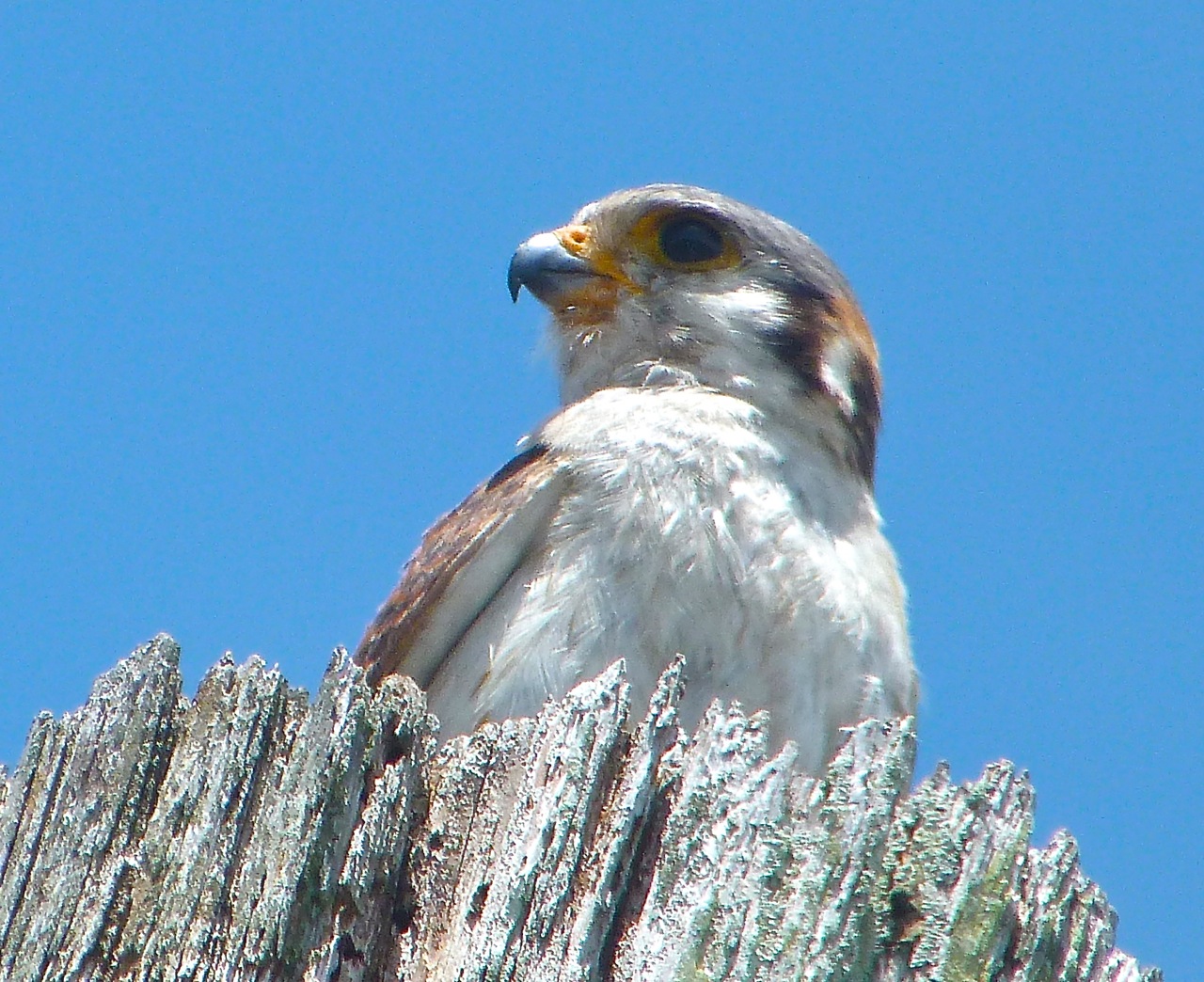
I don’t usually hold back from using (my) bad photos if there’s a reasonable excuse to do so. There’s a reason here. So here are a few bad photos. This sequence of mating kestrels was taken at a considerable distance, after I’d seen a bird fly into a pine tree out of the corner of my eye**. I couldn’t make out what species it was with the naked eye or through the viewfinder, so I took an ‘ID shot’ to enlarge later on. The image below is it – and a clear enough blur to say AMKE. Then I carried on taking pictures.
The header image came next as I realised there was another bird flying in from the right. Then the sequence below: the male mating with the female at once, dispensing with preliminaries; the male moving off along the branch; the female following a short way up the branch; then the male eventually flying away.
And that was that: all over in no time at all; all captured on camera; all finding its way onto the internet before you can say K@rd@shi@n tape. Let hope some good comes of it. Some baby kestrels would be good…
These photos were taken at Bahama Palm Shores, one of the go-to hotspots on Abaco for great birding including the gorgeous parrots. A new local initiative has seen the building of a tall platform overlooking a secluded lake that offers birders a great view of the birdlife there. But that’s a topic for another day.
All photos: Keith Salvesen
**This is badly written, I do realise – no, it didn’t literally fly out of the corner of my eye, that’s just how I happened to see it.
This is a challenging topic that I have been (shamefully) putting off. My task is a full-scale facing-up to an extremely rare, very small, and rather adorable adversary, the Kirtland’s Warbler (Setophaga kirtlandii). There are probably more dedicated KIWA experts out there than there are birds of this scarce species. Estimates of bird numbers vary wildly, but if I take a consensus of the mean of an approximate average of the median as ± 5000 individuals, I’d probably be in the ballpark named “Current Thinking“.
THAT SOUNDS QUITE RARE, RIGHT?
Around 50 years ago, the species was all but extinct – perhaps fewer than 500 birds in total, a barely sustainable population. In 1975, Brudenell-Bruce estimated 1000. I’ll mention some of the reasons later. In the 1970s, the Kirtland’s Warbler Recovery Plan was instituted with the twin objectives of protecting the vulnerable breeding habitat – basically large areas of jack pine; and of monitoring and management aimed at encouraging an increase in numbers. Around that time, they became IUCN listed as vulnerable, but more recently, population growth has resulted in a recategorisation to the more optimistic near-threatened category.
AND THEY LIVE WHERE, EXACTLY?
In spring and summer almost the entire KIWA population lives and breeds in very specific areas of Michigan and Ontario, where jack pines are found. There are signs that the range has expanded slightly in Michigan and more widely into Wisconsin and Ohio as the numbers have increased.
A Kirtland’s Warbler in the jack pines of Michigan (Vince Cavalieri)
In the fall and winter the population migrates to the Bahamas & TCI, where they tend to choose remote scrub and coppice areas to live until the spring when they return north in April. This range map shows the extremely specialist habitat choices of these migratory birds.
A Kirtland’s Warbler in Ohio
SO THEY ARE REALLY FOUND ON ABACO?
Yes – but they are notoriously hard to find. To give you an idea, I checked the eBird stats for Abaco sightings over the last 10 years: 9 successful trips reported, with 18 birds seen in all**. There were 3 groups comprising 6, 4, and 2 birds; and the rest were single birds. Abaco ornithologist and guide Woody Bracey is the go-to man for finding these little birds. Two years ago we were in his party that saw 4 in the space of a couple of hours. I was supposedly the photographer, but unaccountably found myself in completely the wrong place for the first 3. The 4th flew off a branch and straight at my head as I raised the camera… I felt the wind as it passed on its way deep into the coppice. I’m not proud of my effort; the fuzzy lemon item beyond the twigs and leaves is a KIWA (you’ll have to take my word for it…).
HAVE ANY BEEN SEEN ON ABACO THIS YEAR?
Last week, Woody took another party to the main hotspot in the Abaco National Park, a protected area at the southern end of the island. The park is huge, covering more than 20,000 acres of (mostly) pine forest. These birds are tiny, about 14 cms long and weighing 14 gms. Despite which they found a female and then a male KIWA in their favoured habitat beyond the pine forest. Those are the only 2 I’ve heard about this winter season.
Kirtland’s Warbler, Abaco Bahamas, 12 April 2018
WHAT DO I LOOK OUT FOR?
Gray head with a blueish tinge, gray-brown back
Yellow throat & underside, with some dark streaking
Females are paler and more streaked
Split eye rings – white crescents above and below eyes
Frequent tail pumping and bobbing (‘tail-wagging’ J. Bond)
WHAT DO THEY SOUND LIKE?
Some would say ‘chip-chip-chip-too-too-weet-weet’. Elsewhere I have found they produce ‘a loud tchip, song an emphatic flip lip lip-lip-lip-tip-tip CHIDIP‘ (Arnott). You be the judge!
Ross Gallardy / Xeno-Canto
WHAT ARE THE MAIN THREATS TO THE SPECIES?
Mankind is the primary threat. The breeding areas are particularly vulnerable from deforestation and clearance of the jack pines that are essential for successful nesting and breeding – and therefore the survival of the species.
Encroachment of development is another threat, as with so many species.
There is a further threat of nest parasitism by brown-headed cowbirds, to which KIWAs are especially vulnerable.
In the winter grounds where the habitat is mostly remote or in protected areas, there is rather less of a problem from these factors – for now at least.
Overall, habitat degradation at one end of the migration – in particular the breeding grounds – poses a serious risk; at both ends, extinction could loom again.
WHO WAS MR KIRTLAND?
Jared Potter Kirtland (1793-1877)
Jared P. Kirtland (1793 – 1877) was an Ohio scholar, doctor, judge, politician and amateur naturalist. He was a man of many and varied interests and talents, not-untypical of his time. In the field of natural history, Kirtland’s name lives on in his warbler; and also in a couple of snake species.
The Bahamas Postal Service is commendably active in producing wildlife stamps
**I realise eBird is not the be-all and end-all for sighting reports. It hasn’t been in existence for as long as 10 years, and not everyone uses it anyway. And awareness of the Bahamas as the winter home for KIWAs is a surprisingly recent development (as with piping plovers). As awareness increases, so do birder interest, habitat knowledge, and consequently reports of sightings.
Another example of the ‘twigs in the way’ problem for photographers
Credits: Bruce Hallett (1, 2, 3); Vince Cavalieri (4); Tom Sheley (5); Unattributable (me, in fact) 6; Woody Bracey (7, 9); Tony Hepburn (8); Lionel Levene (10); Birds of North America (range map); Ross Gallardy / Xeno-Canto (audio file); Birdorable (cartoon); BPS (KIWA stamp). Special thanks for all use permissions for images of this rare bird.
My favourite bird book, in a fairly large collection, is my treasured 1947 ‘first printing’ edition of James Bond’s Field Guide of Birds of the West Indies. It is not especially rare, and one can still be had for under $200. The price is rising – about 5 years ago mine cost $80, in excellent condition, with intact dust jacket and protective cover.
This renowned reference book has since had many subsequent incarnations – if you are interested, you can find the whole story including how Ian Fleming chose to name his Double-O hero after an ornithologist HERE. I have several later versions, including 1960 and 1985, where the source material forms the basis. However the latest book of the same name, by Norman Arlott published in 2010, is a completely new offering with a wealth of useful detail. It is good – but it isn’t Bond!
The 1947 Bond is commonly described as the First Edition, and sold as such. But as some will know, it is in truth the second edition of Bond’s famous book, which was originally published in 1936. This was made clear in the copyright info to the 1947 edition; but seems to be rather less prominent in later editions.
A true first edition – very rarely on the market – now comes in well north of $2000, unless in poor condition and without the all-important dust jacket (with rare books, the “DJ” seems to be almost as important as the book itself, especially if in “VGC”).
My edition of Bond’s book has a strange quirk in the title. It’s not exactly a misprint, more of a variation that was probably unintentional. The jacket proclaims it to be a field guide of birds of the West Indies, as does the book’s front cover and frontispiece. However the book’s spine and the page preceding the Introduction state that it is a field guide to birds of the West Indies.
One of the great charms of ‘Bond’, besides the elegance of his writing, is that he includes the Caribbean-wide local names for the birds he features. Thus the mangrove cuckoo is variously known as a rain bird, rain crow, four o’clock bird, and coffin bird. The black-faced grassquit might be a blue-black, a see-see, or a johnny-jump-up. And a flamingo could be a flamenco, a flamant – or a fillymingo.
These reflections on one of the great bird books of the 20th century were prompted by a request I received from someone wanting a good image of a Bahamas flamingo Phoenicopterus ruber (the National Bird)to illustrate what is effectively a research paper about Bahamas natural history. Often with such inquiries – I get quite a few – I can supply images from my own archive. Other times I am able to source images from generous people who give use permission (non-commercial) in return for a credit.
For the flamingos, I only had images of a single vagrant bird that turned up at Gilpin Pond, Abaco a few years ago (Birds of Abaco p25). It looks rather sad and lonesome in the photos; within a matter of weeks it was gone.
None has been reported on Abaco since, though once they were plentiful. Before this lone specimen, there was an attempt to reintroduce the species on the brackish ponds at the fishing lodge ‘Different of Abaco’, Casuarina. The lodge is long-since defunct, as are the flamingos (thePEACOCKSare flourishing however).
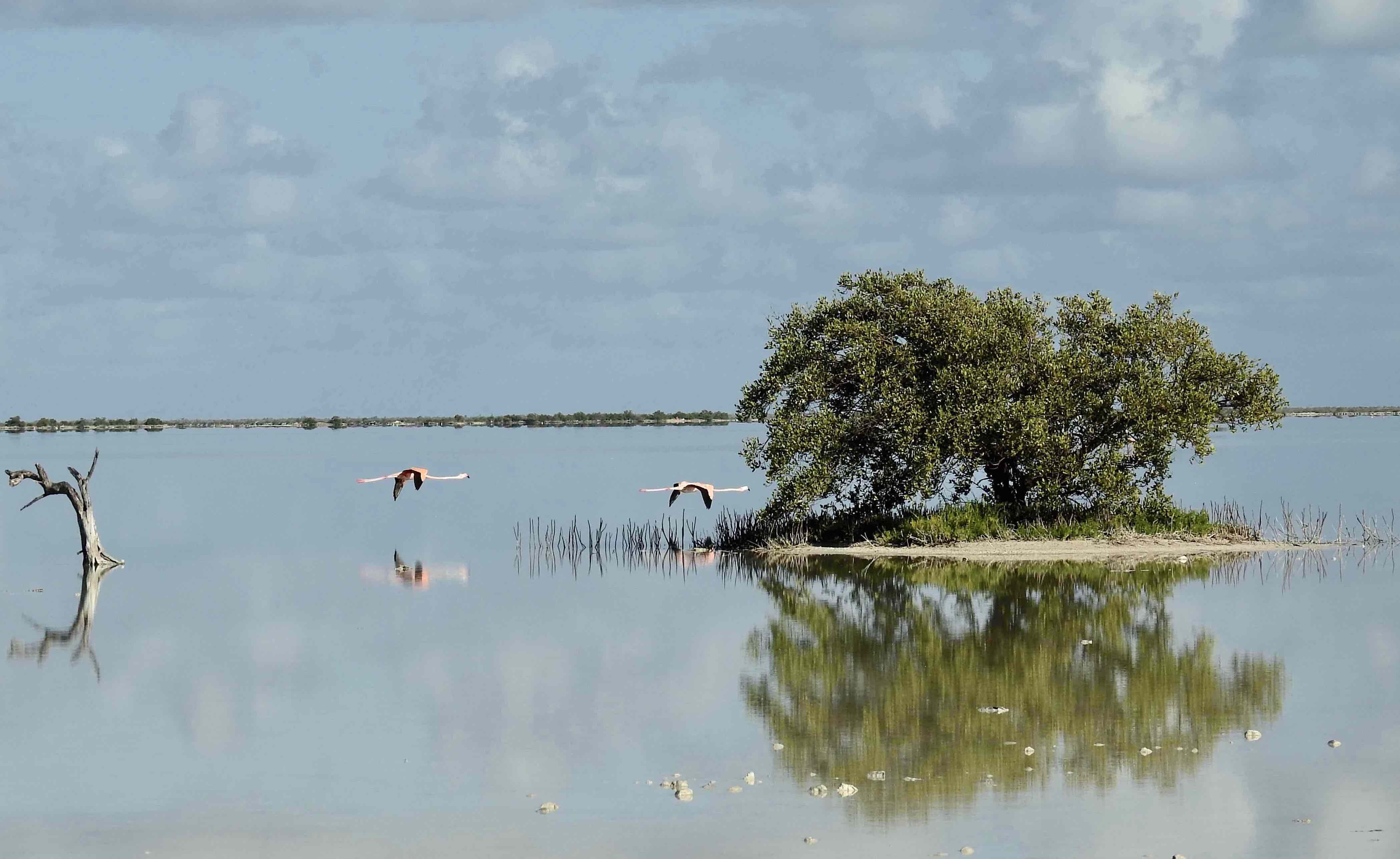
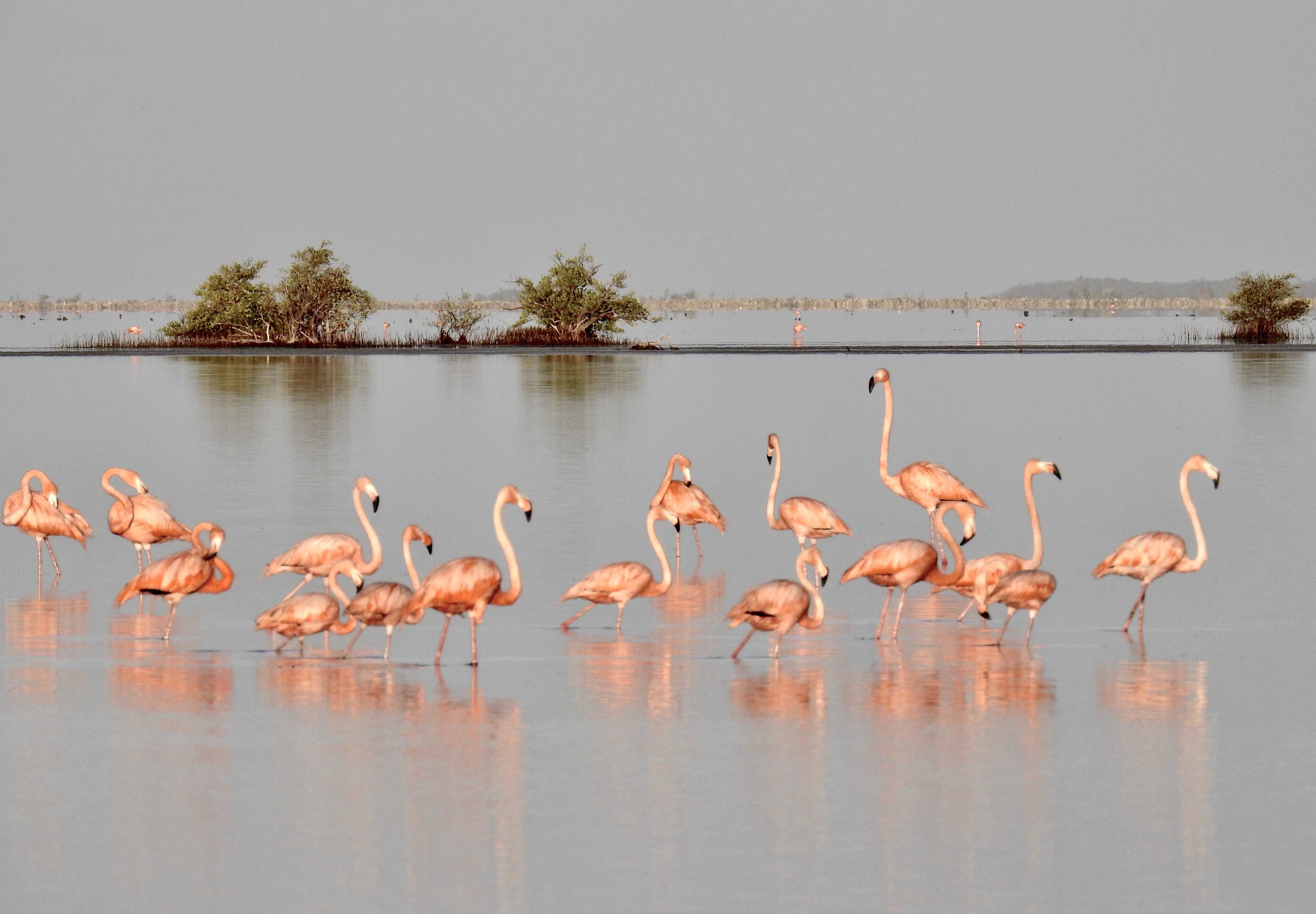
Luckily I knew who to turn to for flamingo pictures: Nassau resident Melissa Maura, a person deeply involved with the wildlife of the Bahamas and far beyond. Melissa has spent time with the flamingos of Inagua which has one of the world’s largest breeding colonies – well over 50,000 – of these gorgeous birds in its National Park, overseen by the Bahamas National Trust.
The flamingos of Inagua now thankfully receive the protection that was sadly lacking in c19 Bahamas, when their vast numbers were radically reduced by mankind, leading to extirpation on many islands where they had been plentiful. Hunted for meat and for ornamental feathers; taken for trading, for collections, for zoos: there were no limits. CHARLES CORYnoted at the end of c19 that masses of chicks were being killed before they even fledged; and that large numbers were sold to passing ships, on which they were simply left to die.
Melissa has been fortunate enough to be on Inagua during the breeding season when banding takes place. So besides the adult birds in their orange-pink finery, she has been able to photograph the strange ‘mini-volcano’ nests (above) and the sweet, awkward-looking grey chicks. And with her kind permission, Melissa’s superb ‘fillymingo’ photos adorn this article. I believe the real James Bond would have been delighted to admire them; I hope that goes for you too.
All great photos courtesy of Melissa Maura, with many thanks
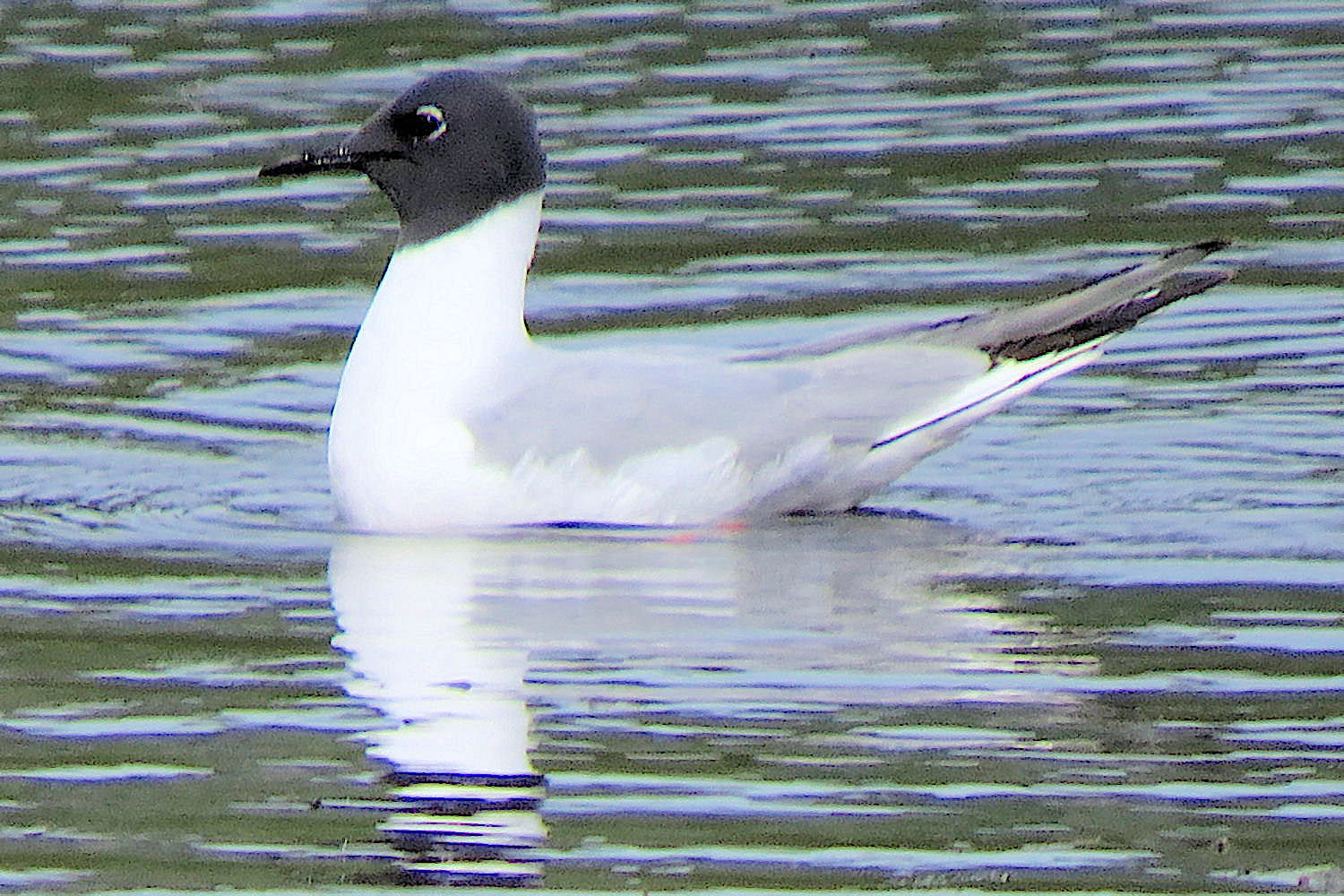
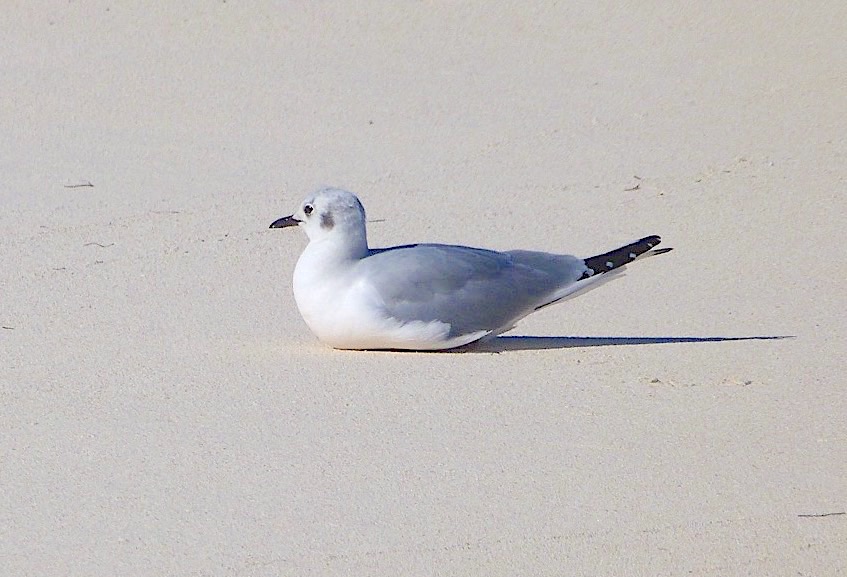
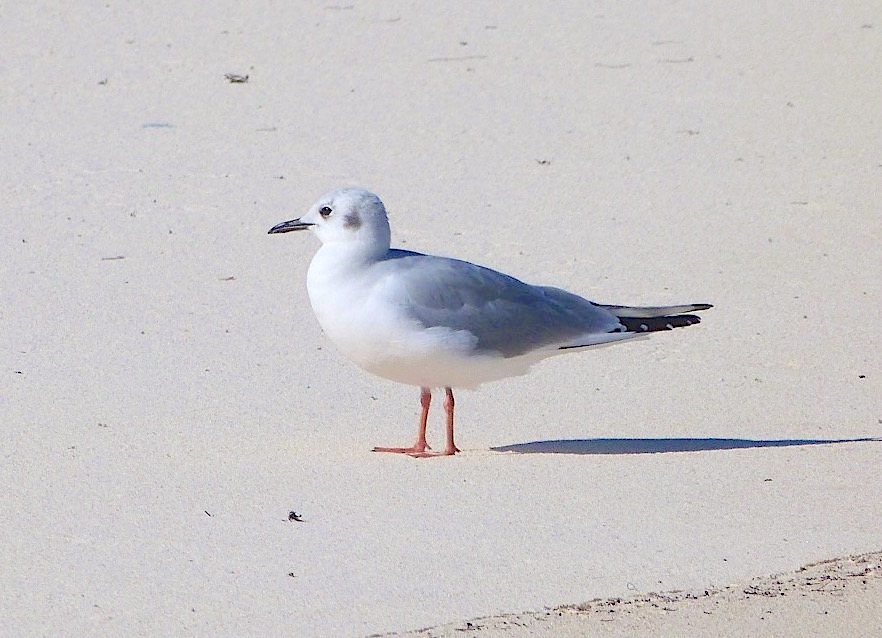
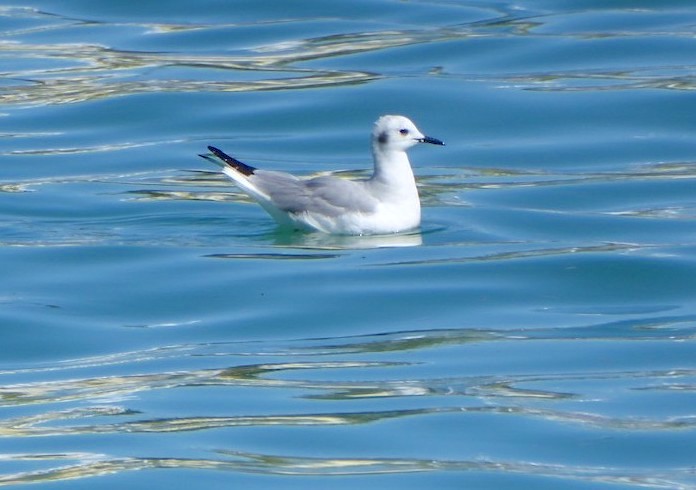
The Bonaparte’s gull Chroicocephalus philadelphia is one of the smallest gulls, and is found mainly in Canada and northern United States, though vagrants sometimes end up as far away as Europe. And Abaco. These birds are considered very uncommon winter residents on Abaco (categorised WR4). Yet within the last couple of months Elwood Bracey saw an amazing 4 in Treasure Cay harbour… Milton Harris reported seeing one at Hope Town harbour… Keith Kemp saw a couple on South Abaco (2 locations)… Eugene Hunn reported 1 on the Sandy Point dock… then suddenly there were 3 on the beach at Delphi. They have hung around there, too – let’s hope that all these birds find their way back to their breeding grounds safely. They have quite a journey ahead of them.
The species is named for Charles Lucien Bonaparte, a French ornithologist and nephew to the French emperor (see below for more about him). The philadelphia part of its Latin designation oddly results from the location from which the original ‘type specimen’ was collected (see below for the reason). This is not unlike the Cape May warbler, so named for the location of the original specimen, yet not recorded there again for more than a century (and still quite rare)…
The gulls shown here are in their winter plumage, with the characteristic dark blotch behind the eye. In the breeding season, they acquire smart slate-black hoods:
10 BONAPARTE’S GULL FACTS TO TELL YOUR GRANDCHILDREN
Graceful in flight, resembling terns as much as gulls
Monotypic: the sole representative of its taxonomic subgroup
Males and females have very much the same colouring
Believed to be monogamous
Showy breeders, with much display, swooping, diving, yelling at each other etc
Typically (and ungull-like) they nest in trees, preferring conifers eg jack pine
Share nest-building and parenting duties
Capable of considerable aggression to protect their nests / chicks
Have been known to live 18 years
The only bird species with an Emperor’s name (prove me wrong!**)
We saw these birds on the beach most days, usually just 2 of the 3 at any one time. They were quite shy and hard to get close to, however subtly. And they kept on the move – except when they decided to have a rest.
TELL US MORE ABOUT PRINCE BONAPARTEBonaparte’s gull, Zenaida dove
Charles Lucien Bonaparte, 2nd Prince of Canino & Musignano 1803 – 1853
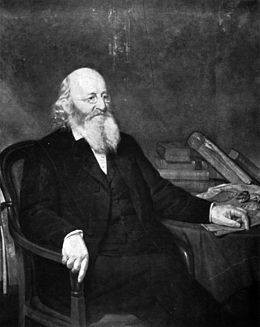
Bonaparte was a French biologist and ornithologist, and the nephew of the Emperor Napoleon. He married his cousin Zenaïde, by whom he had twelve children. They moved from Italy to Philadelphia, by which time Bonaparte had already developed a keen interest in ornithology. He collected specimens of a new storm-petrel, later named after the Scottish ornithologist Alexander Wilson. And presumably that’s where he found his specimen gull.
Bonaparte studied the ornithology of the United States, and updated Wilson’s work American Ornithology. His revised edition was published between 1825 and 1833. He was a keen supporter of a (then unknown) ornithologist John James Audubon. Rather sweetly, he created the genus Zenaida, after his wife, applying it to the White-winged Dove Zenaida asiatica, Zenaida Dove Zenaida aurita and Mourning Dove Zenaida macroura. He himself was later honoured in the name ‘Bonaparte’s Gull’.

































































 ROLLING HARBOUR ABACO
You must be logged in to post a comment.