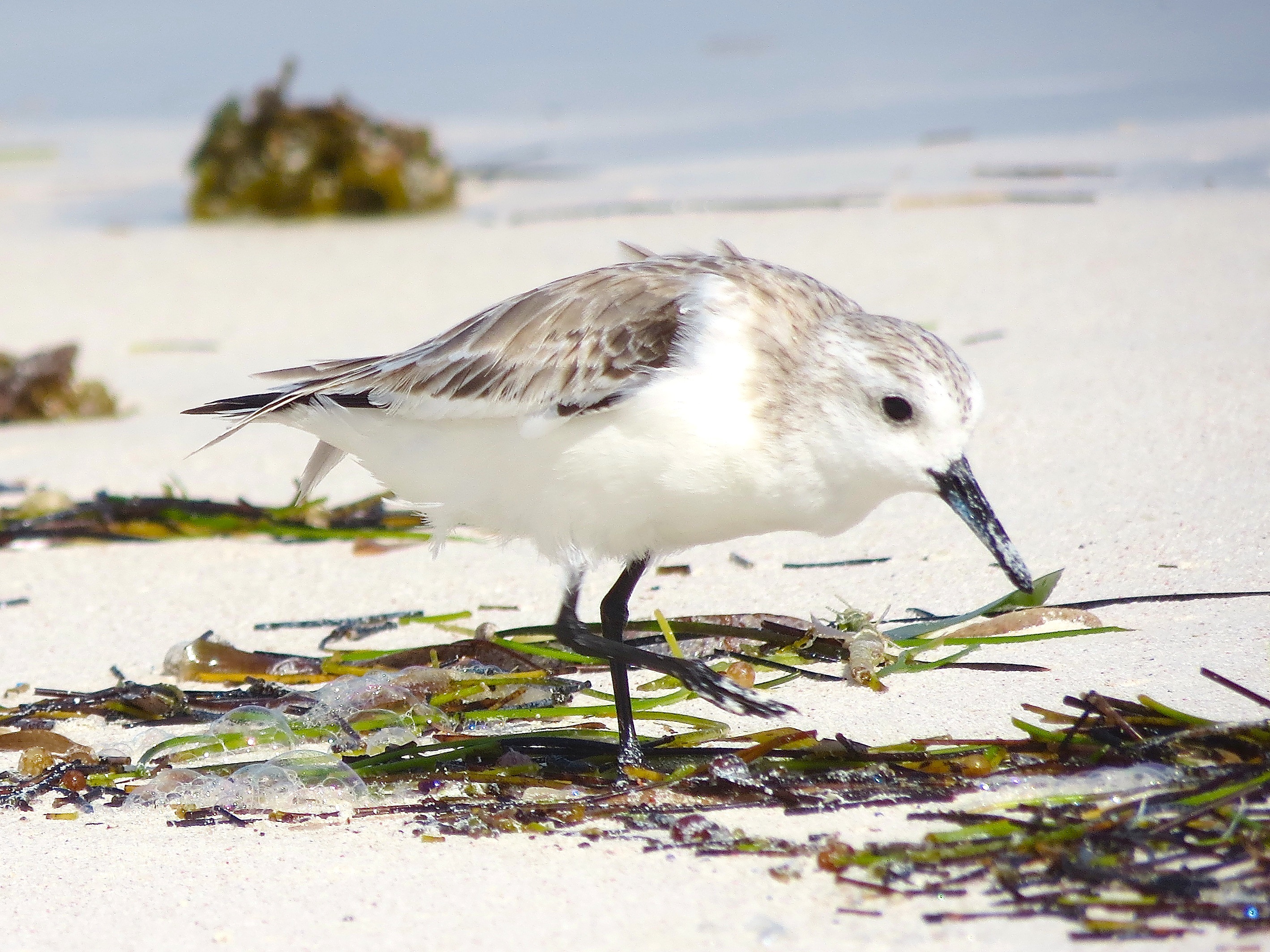
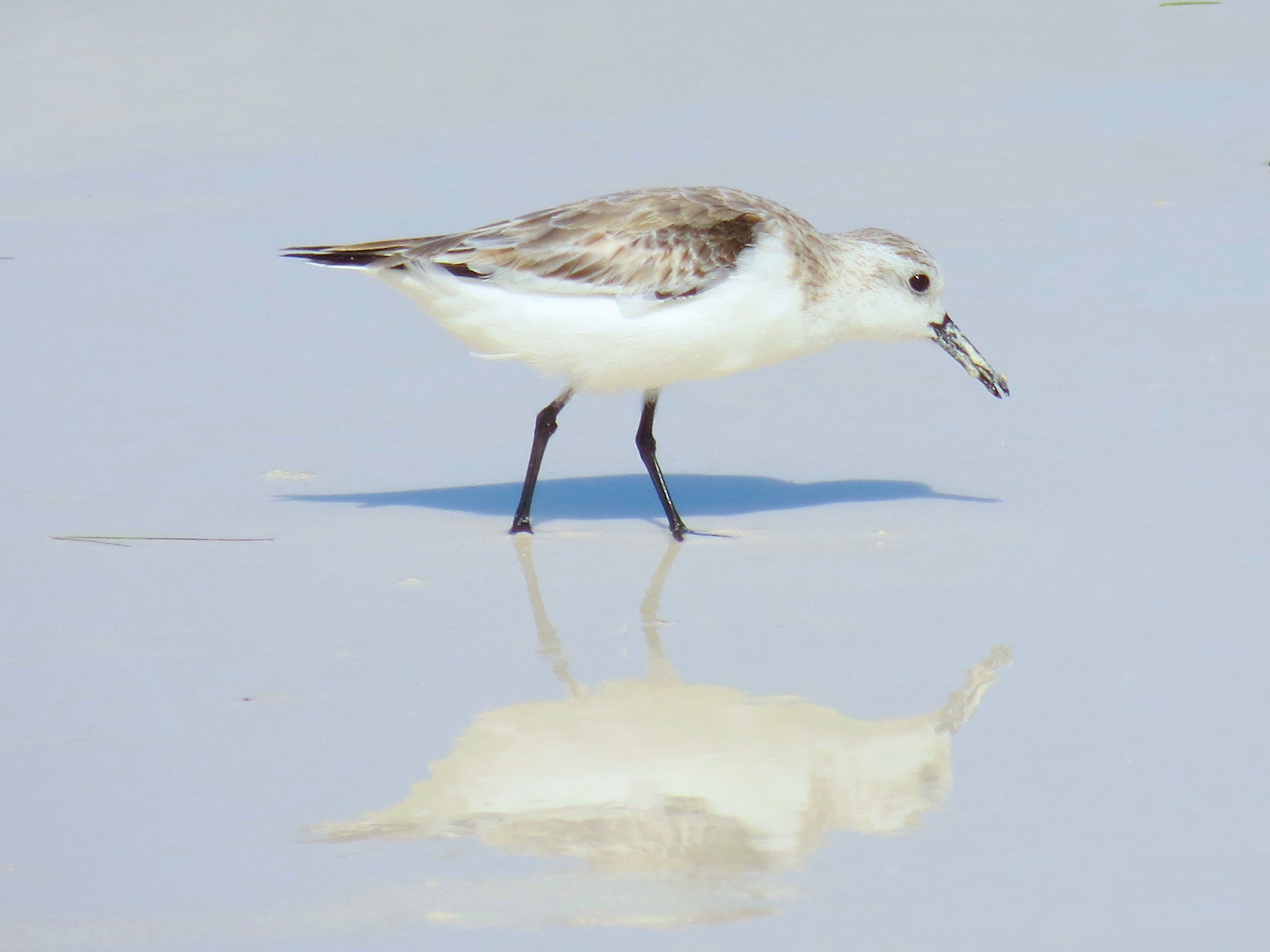
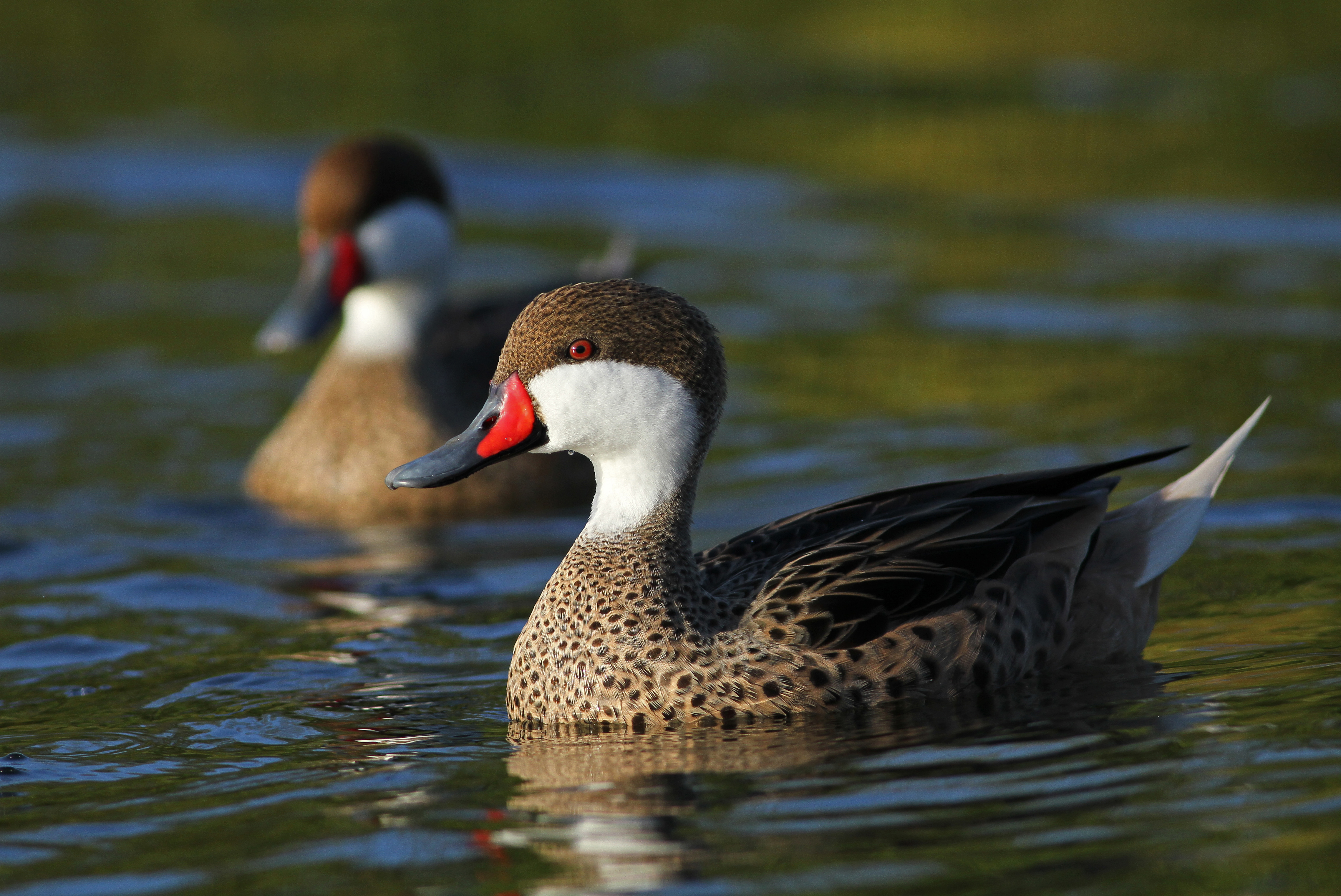
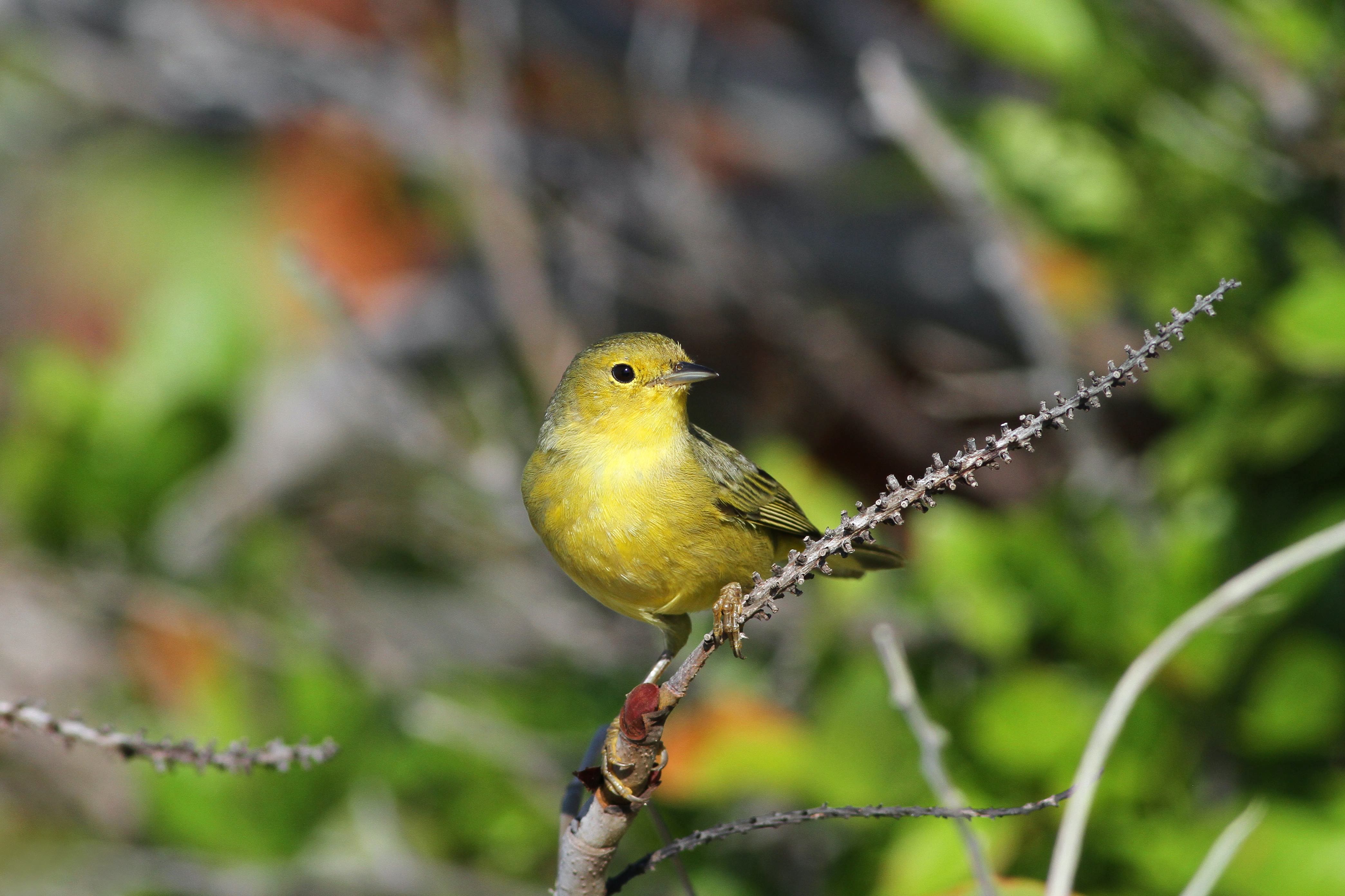
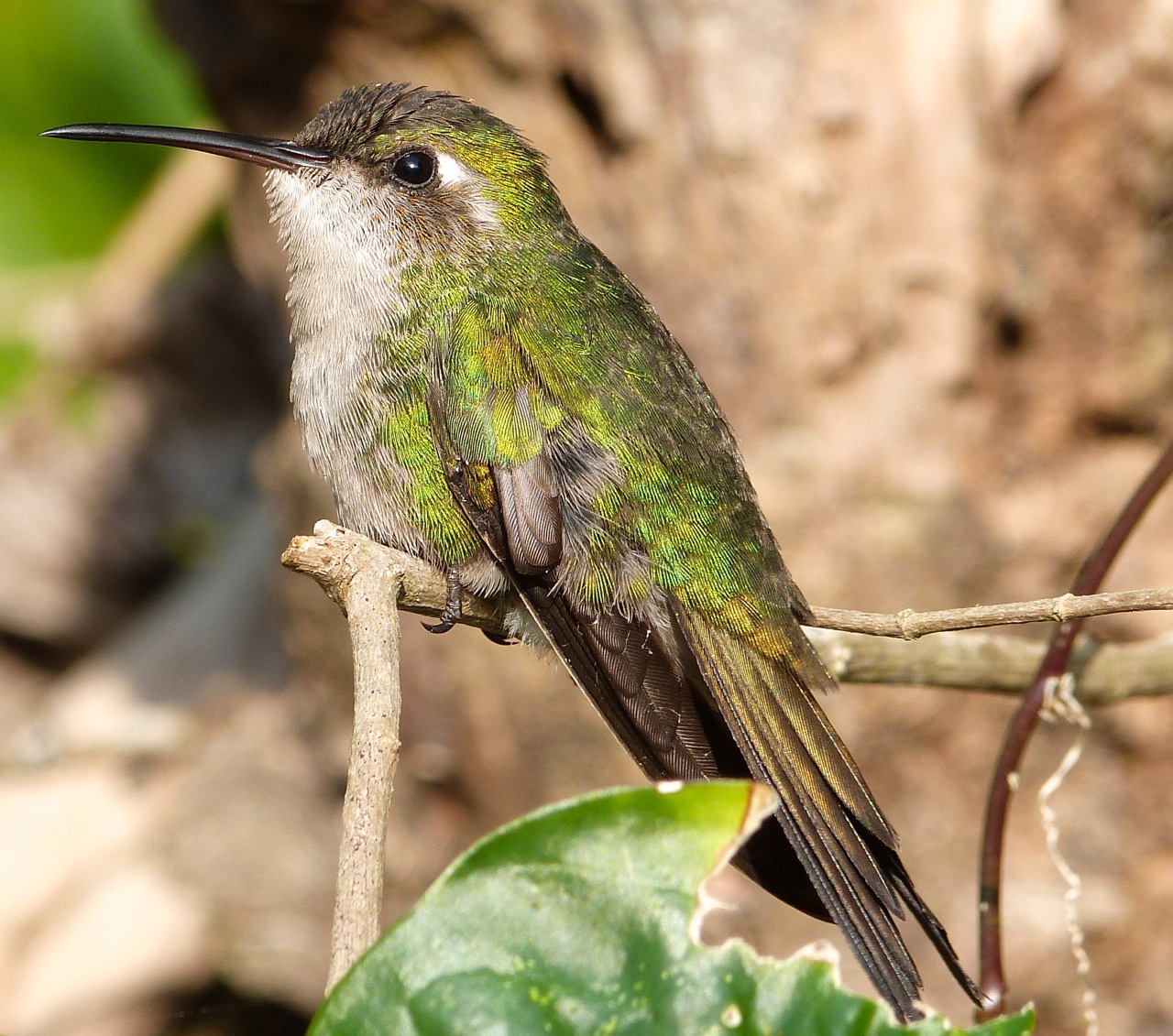
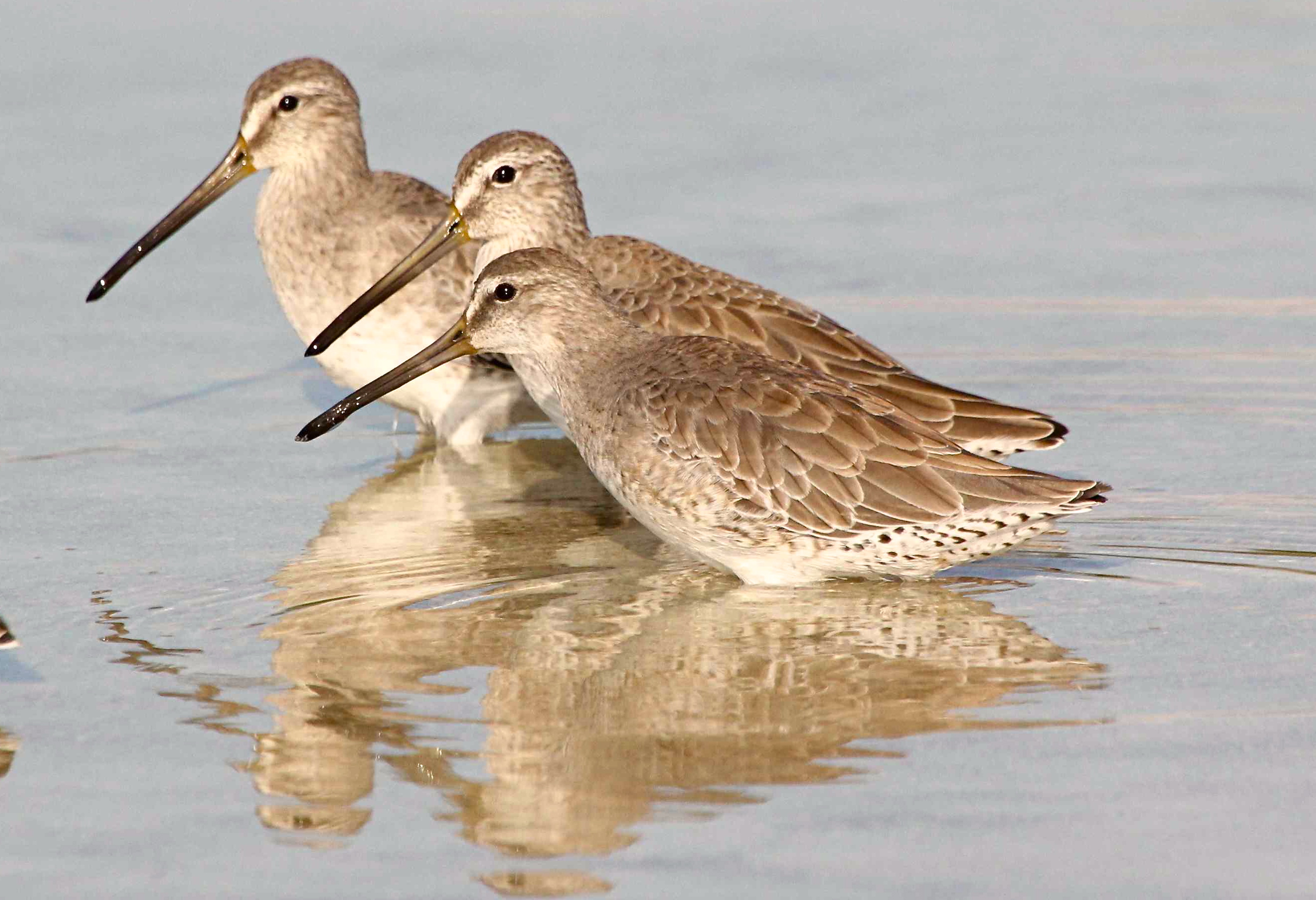
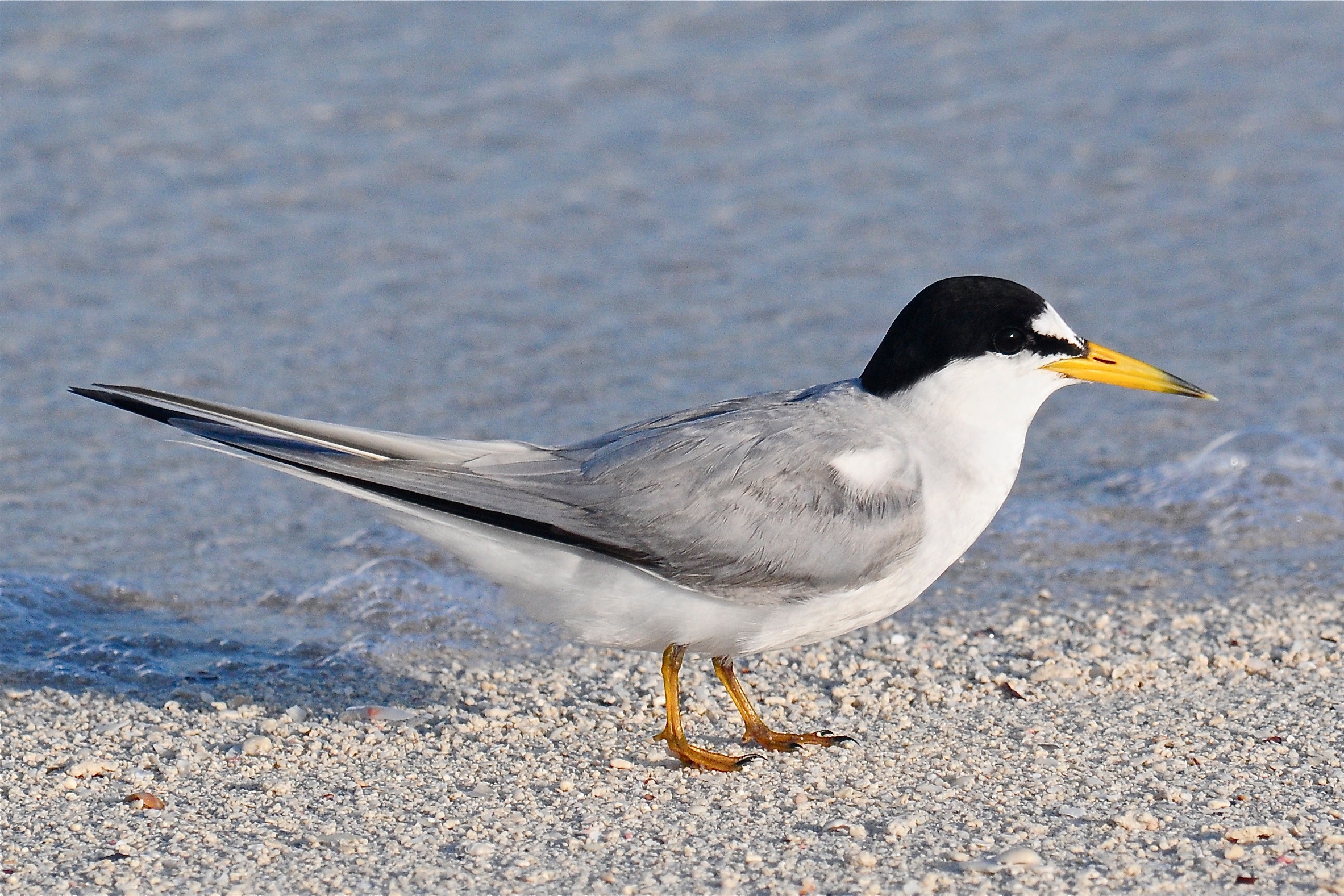
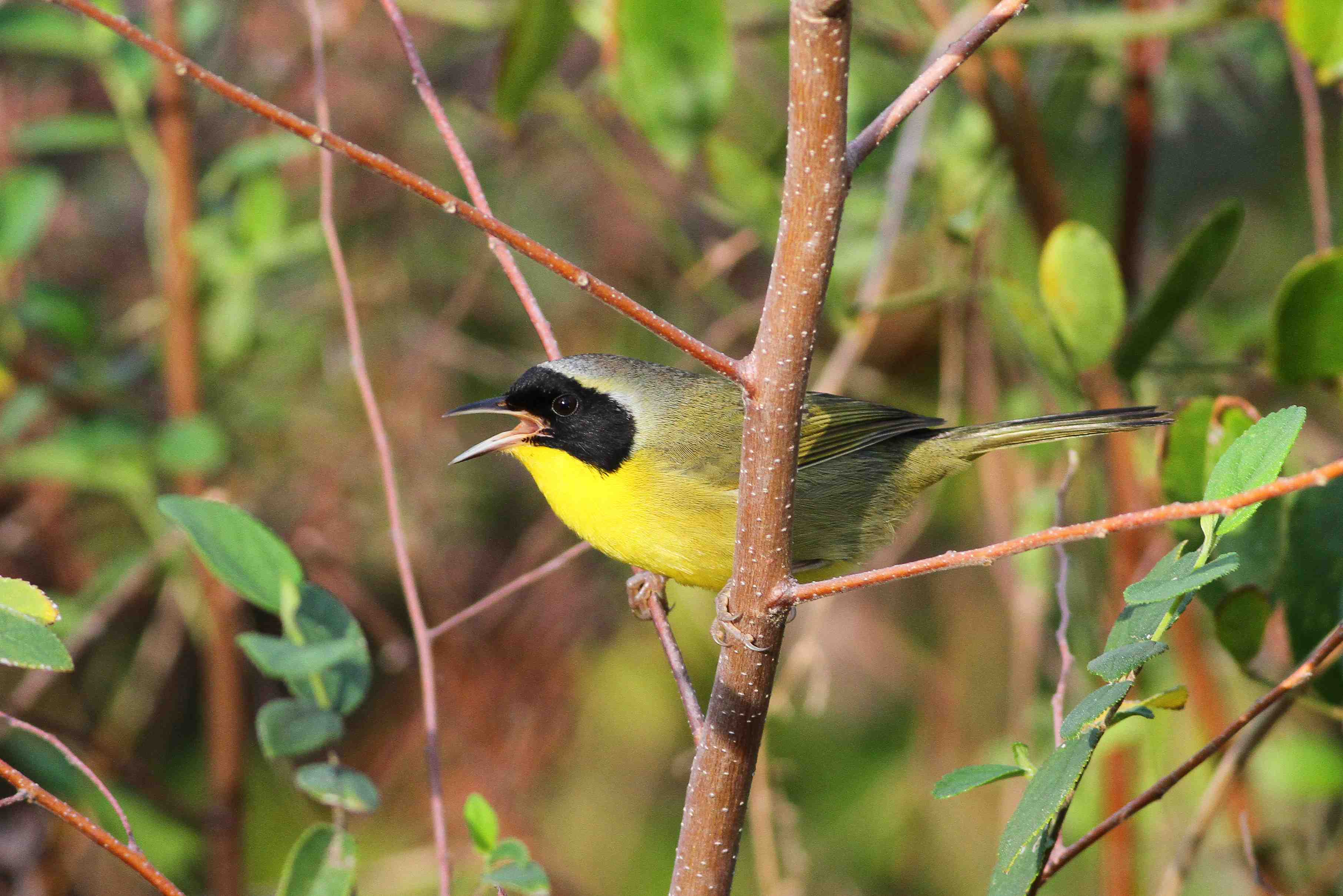
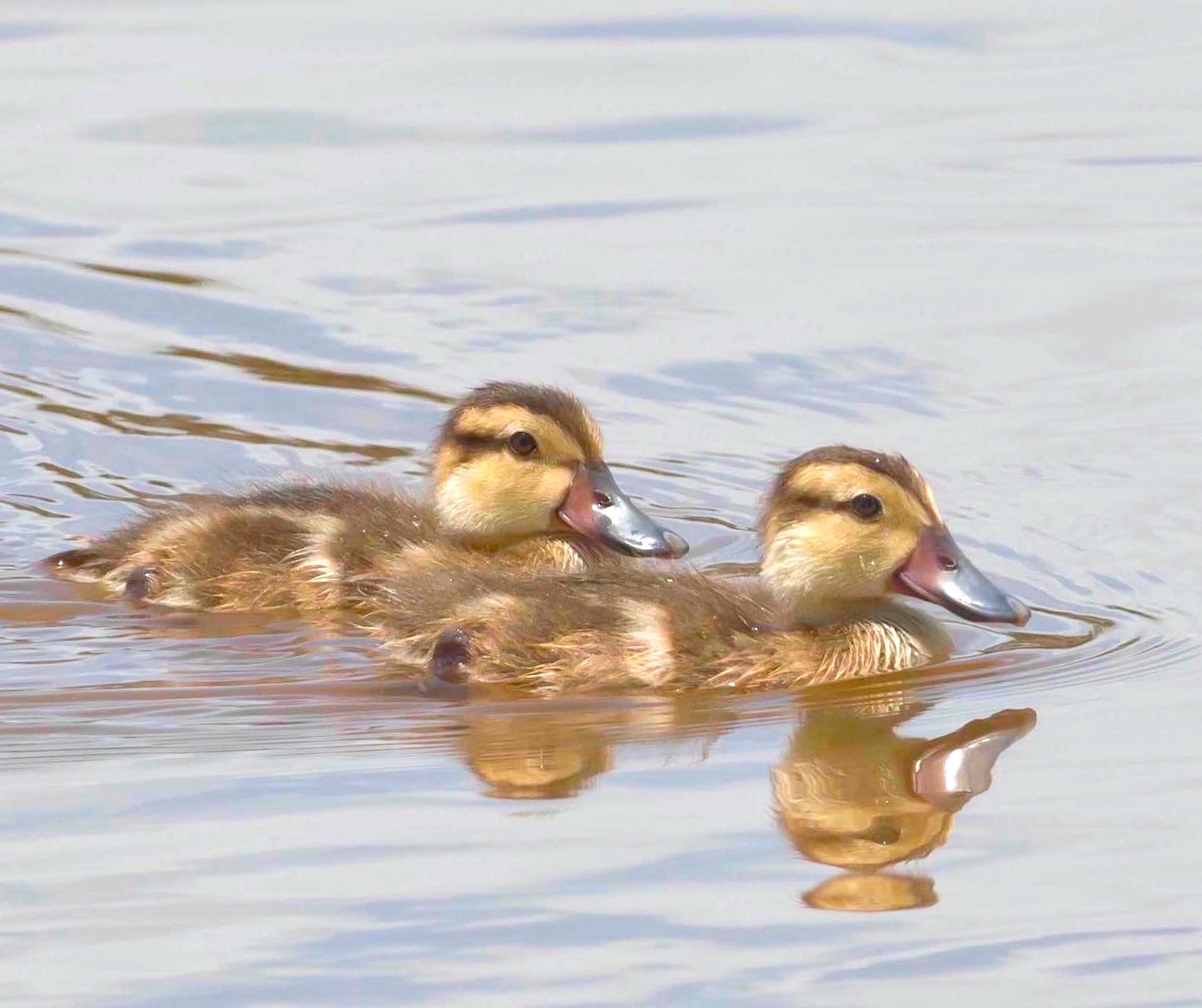
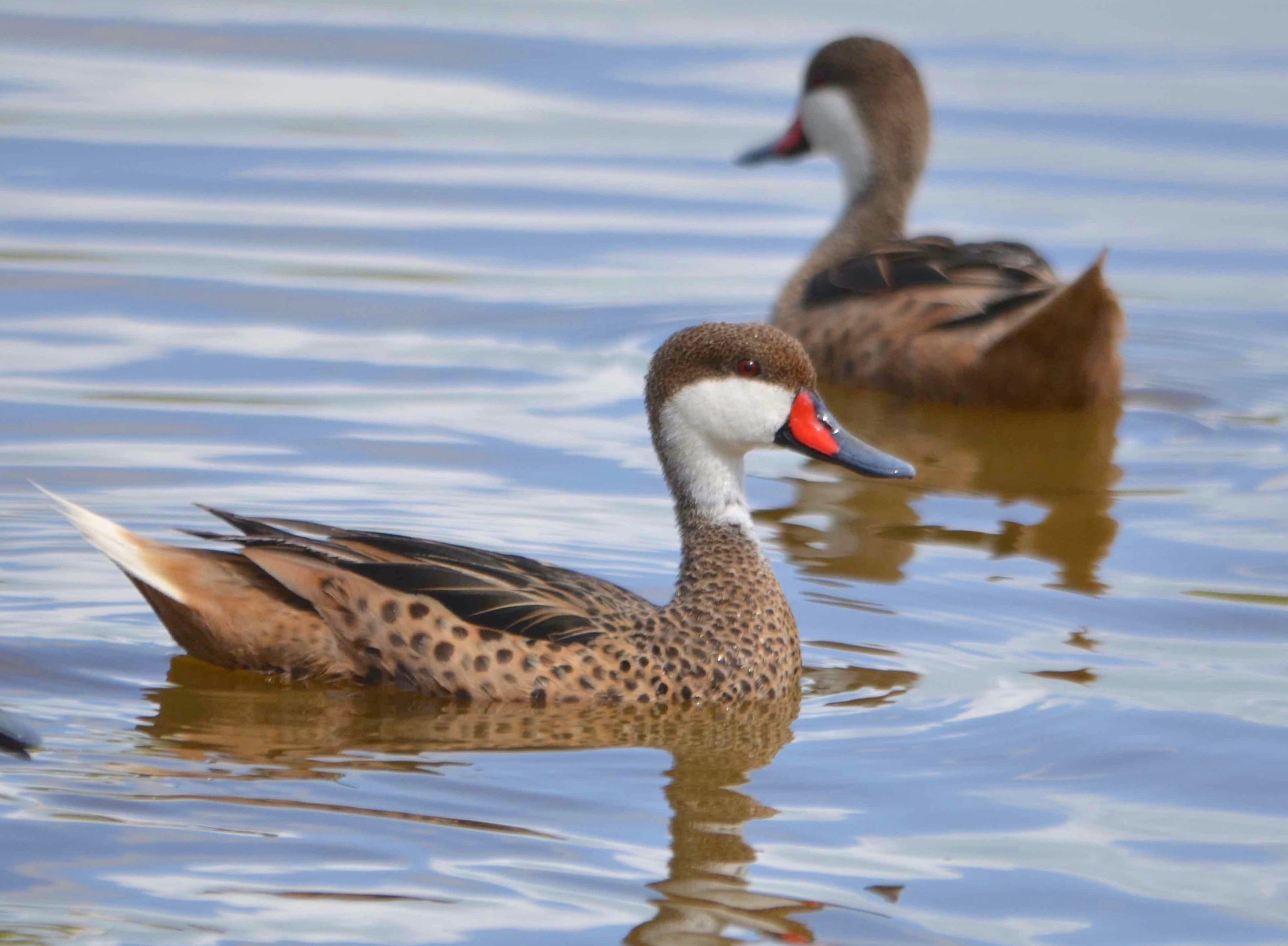
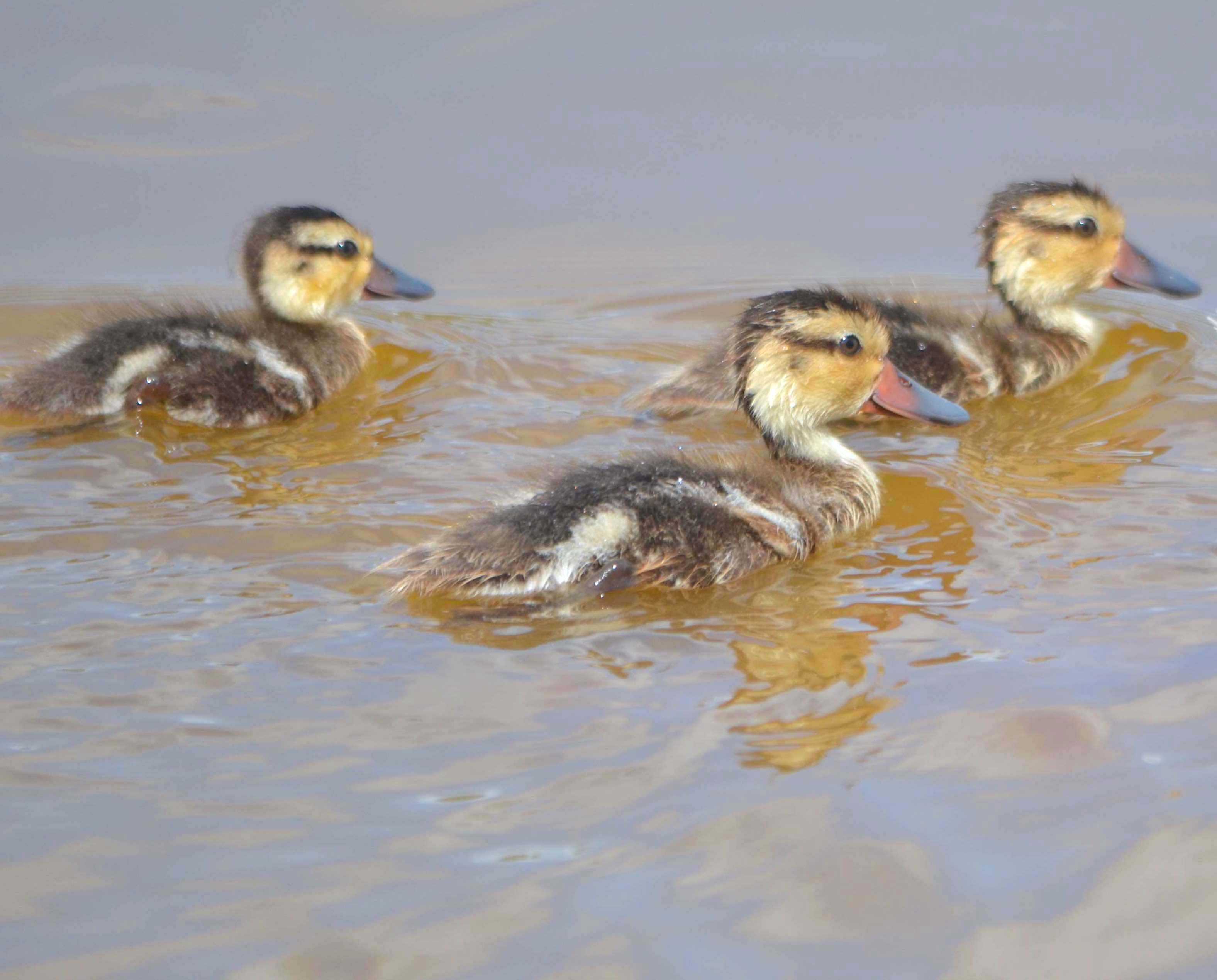
‘BAHAMA DUCK‘ Anas bahamensis


Photos taken on Abaco by Gerlinde Taurer, a major contributor to “Birds of Abaco”

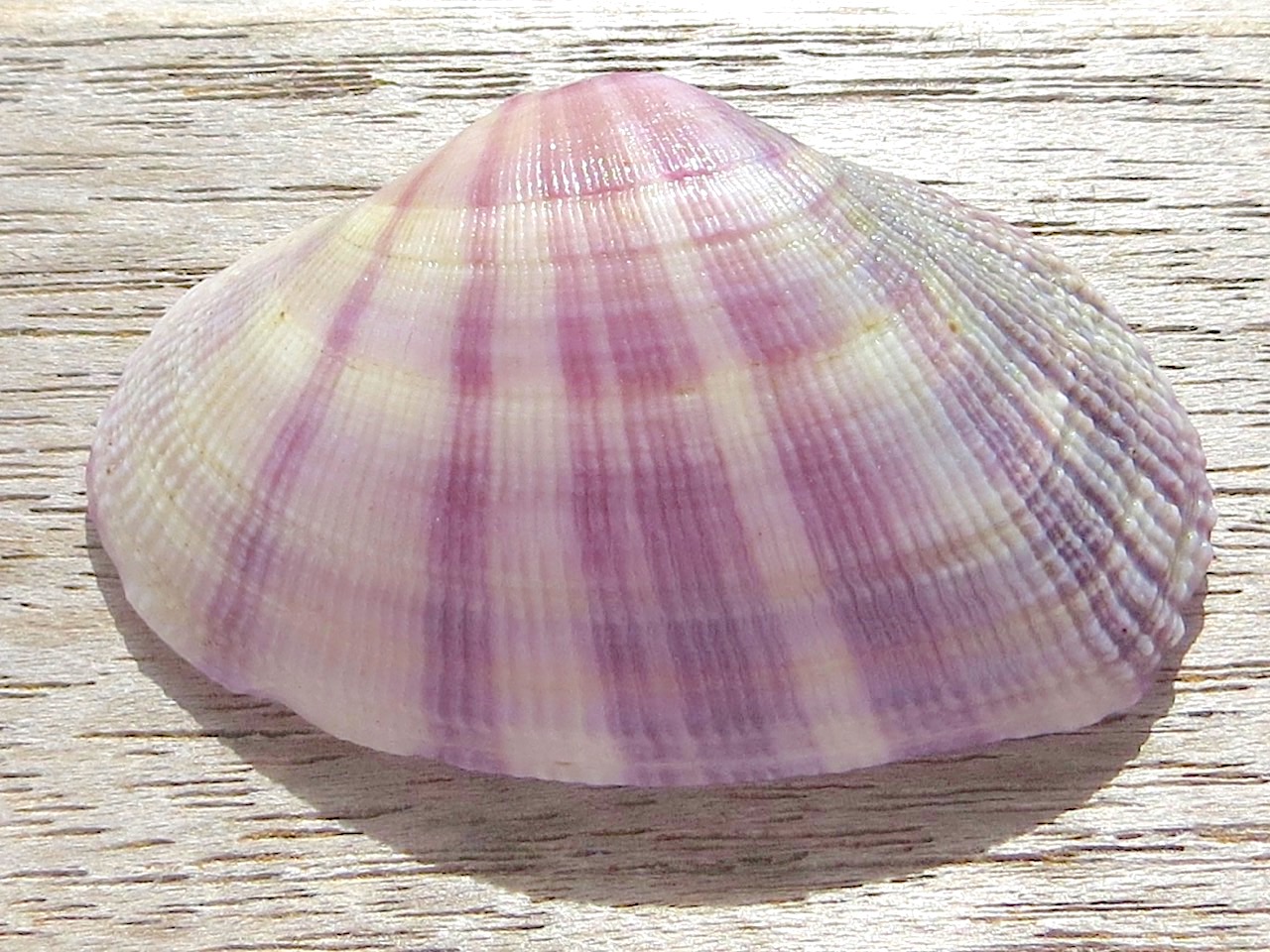
These very pretty shells, with their striking pink radials, are sometimes known as ‘rose-petal shells’. They are always tempting to pick up from the sand. The ‘hinges’ (muscles) are very delicate, however, and with many of these shells that wash up on the beach the two halves have separated naturally.

Sunrise tellins are not uncommon, and make good beachcombing trophies They can grow up to about 7 cms / 2.75 inches, and the colouring is very varied, both outside and inside.

The occupant of these nice shells is a type of very small clam. They live on the sea-floor, often buried in the sand and with the lid (mostly) shut. When they die (or their shells are bored into by a predator and they are eaten) the shells eventually wash up empty on the beach. There’s not much more to say about them – they perform no tricks and are believed to have vanilla sex lives. Other small clams are quite inventive, doing backflips and copulating with enthusiasm.
Inside Story… not much to tell except (a) very pretty & (b) possible predator bore-hole top right
WHAT ELSE IS THERE TO KNOW ABOUT THEM?
TELLIN LAW
You know those lovely tellins you collected during your holiday and took back home to your loved ones? You did take them, didn’t you? You may have committed a crime! In the Bahamas there is no specific prohibition on the removal of tellin shells, certainly not for personal use… but the general rule – law, even – seems to be “in most countries it is illegal to bring back these shells from holidays”.
Linnaean Examples
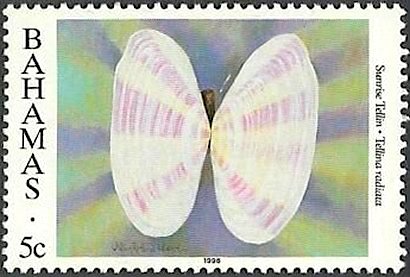
As ever, the very excellent Bahamas Philatelic Bureau has covered seashells along with all the other wildlife / natural history stamp sets they have produced regularly over the years. The sunrise tellin was featured in 1995. You can find more – much more – on my PHILATELY page.

All photos Keith Salvesen / Rolling Harbour; Rhonda Pearce, O/S Linnean Poster, O/S BPB stamp

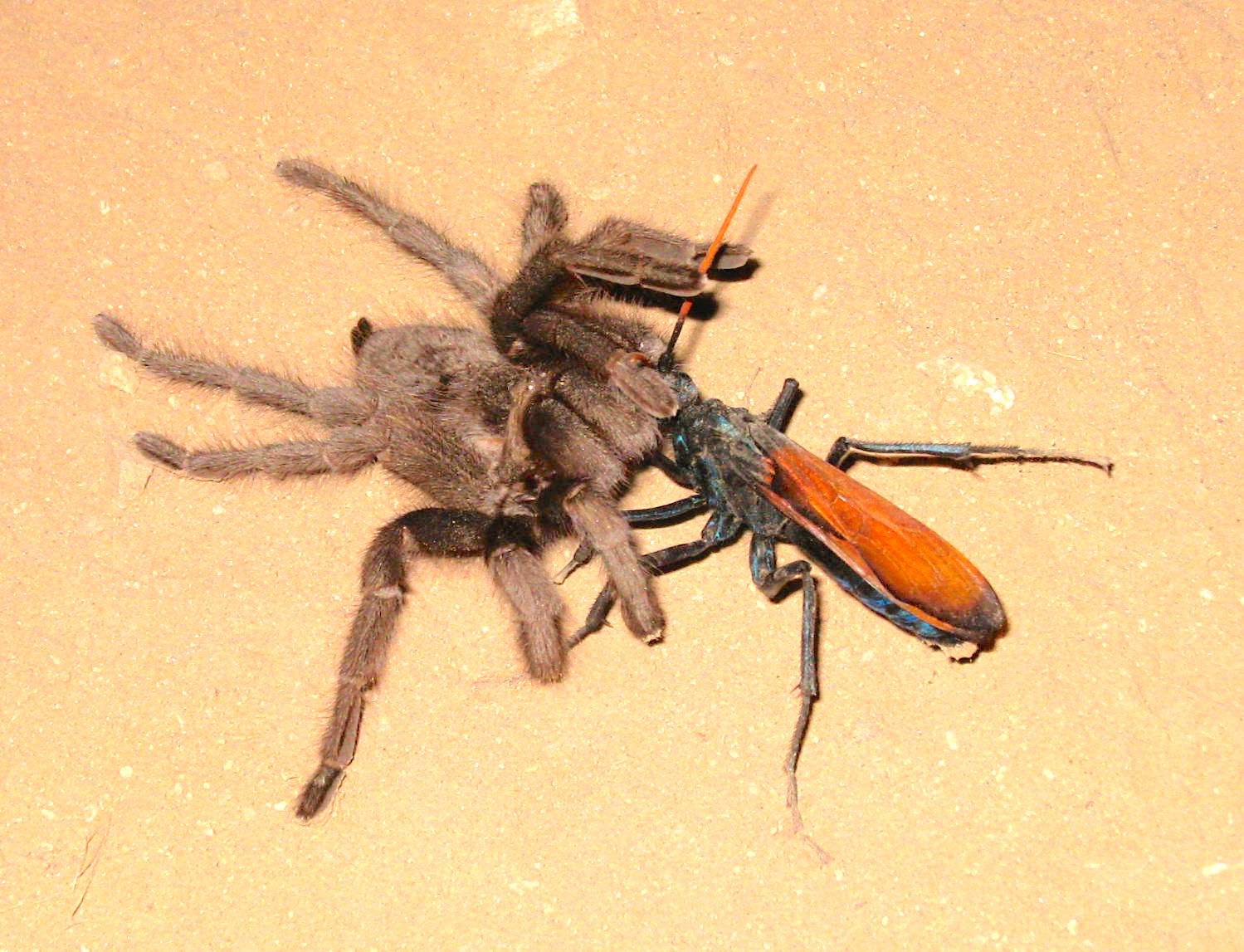
I learn today that this week is Insect Week (or, as it may prefer, The International Week for Insect Appreciation and Protection). I’m all for it. There are annual Days for almost any creature you can think of – Warthogs; Fruit Bats; Porcupine Fish, and so on. There are few whole Weeks devoted to an entire taxonomic class. Here is an insect I wrote about several years ago. It’s an aggressive-looking creature that I found in the coppice on South Abaco. I could only get a partial shot of the insect, and I wondered whether to try to reach it and get a more complete shot. Perhaps I could have, but very fortunately for for me (as I later found out) I didn’t touch it.
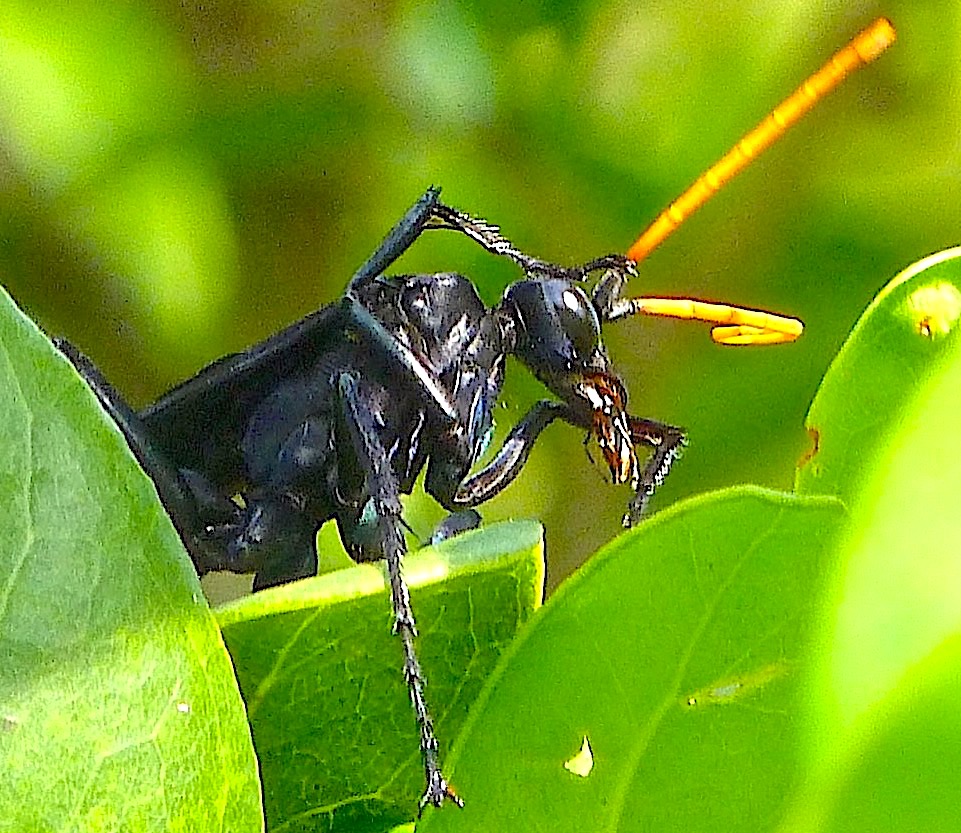
This creature turned out to be a Spider Wasp (aka Pepsis Wasp), of the Pompilidae family. The insect is familiarly known as a Tarantula Hawk, for reasons given in unsparing detail below. For it turns out that this creature would be the hardest bastard insect on Planet Bastard in the Galaxy Bastardium.
It’s lucky that I didn’t try to try to collect it to keep in a small box as a pet. Note, for start, the scary eating apparatus… and it’s not for nibbling leaves as I had thought, but chopping up small insects. The leg claws and barbs are for pinning down its prey. You would not believe how unpleasant these little buddies are – and that’s before we even mention the sting…
These wasps are known in some countries as “horse-killers”. The Pepsis wasp is a sub-species, and is called Tarantula Hawk because it hunts tarantulas and uses them in a most ingenious and cruel way… NB the BNT have rightly pointed out that these insects are unaggressive to humans. If you leave them alone, they will spare you. I’ve also read that “The tarantula hawk is relatively docile and rarely stings without provocation” Now read on to see if it might be sensible to provoke one or not.
(Trigger Warning: this is really rather gross)
SPIDER WASPS are ‘solitary’ insects that feed on ground spiders / tarantulas by stinging them to paralyse them, then eating them. In the most sinister way, the females also make use of spiders for breeding purposes. Hear this! They build a nest in a burrow, find a spider (a tarantula for choice), paralyse it with their sting, drag it to the nest and lay a single egg on its abdomen. Then they seal up the burrow.
When the egg hatches, the larva chews a hole on the spider’s abdomen and enters a living larder. It gradually eat its host as it grows. The spider’s vital organs are left till last, so that the spider stays alive as long as possible until the larva has reached full-size. After several weeks, the larva spins a cocoon and pupates (often over winter). Finally, the wasp becomes an adult, bursts Alien-like from the spider’s abdomen (deftly evading Ripley), and tunnels out of the burrow…
Do NOT try this at home or more than 10 yards from a medical centre
Here is a hypnotically fascinating 3-minute video of the life-or-death struggle
SPIDER WASP –v- TARANTULA
The sting of these wasps is among the most painful of any insect, though the most intense pain lasts on a few minutes. Entomologist Justin Schmidt bravely submitted himself to the stings of various insects and described this pain as “…immediate, excruciating pain that simply shuts down one’s ability to do anything, except, perhaps, scream. Mental discipline simply does not work in these situations.”
Schmidt produced his SCHMIDT STING PAIN INDEX The pain scale, based on 78 species, runs from 0 to 4, with 4 awarded for the most intense pain. Spider Wasps of the species Pepsis – i.e. Tarantula Hawks – have a sting rating of 4.0, described as “blinding, fierce, shockingly electric. A running hair drier has been dropped into your bubble bath” Only the bite of the Bullet Ant – and the sting of the Warrior Wasp – is ranked higher, with a 4.0+ rating, vividly described as “pure, intense, brilliant pain. Like fire-walking over flaming charcoal with a 3-inch rusty nail in your heel”
1. In 1989, New Mexico chose the Tarantula hawk wasp as the official state insect. The choice seems to have been left to schoolchildren and I’m guessing here (or gender-stereotyping) but I suspect it was the boys’ choice that won…
2. Tarantula Hawk is a “psychedelic progressive metal band” from San Diego, Ca. Their short discography includes their debut Tarantula Hawk (CD/LP, 1998); Burrow (Live CD, 2000, self-released); and Untitled. The cover of their debut provides the perfect ending for this post, vividly depicting the colour and texture of the swirling fiery pain you could experience (and I don’t really mean from listening to the music…)
UNDOUBTEDLY PAINFUL EXPERIENCE
ARGUABLY PAINFUL STING
Mr Gordon Sumner

Credits: Keith Salvesen / Rolling Harbour (1, 2, 7); TheCrotalusfreak (video clip) (3); astrobradley (4); mshandro (5); Paul Nylander (6)
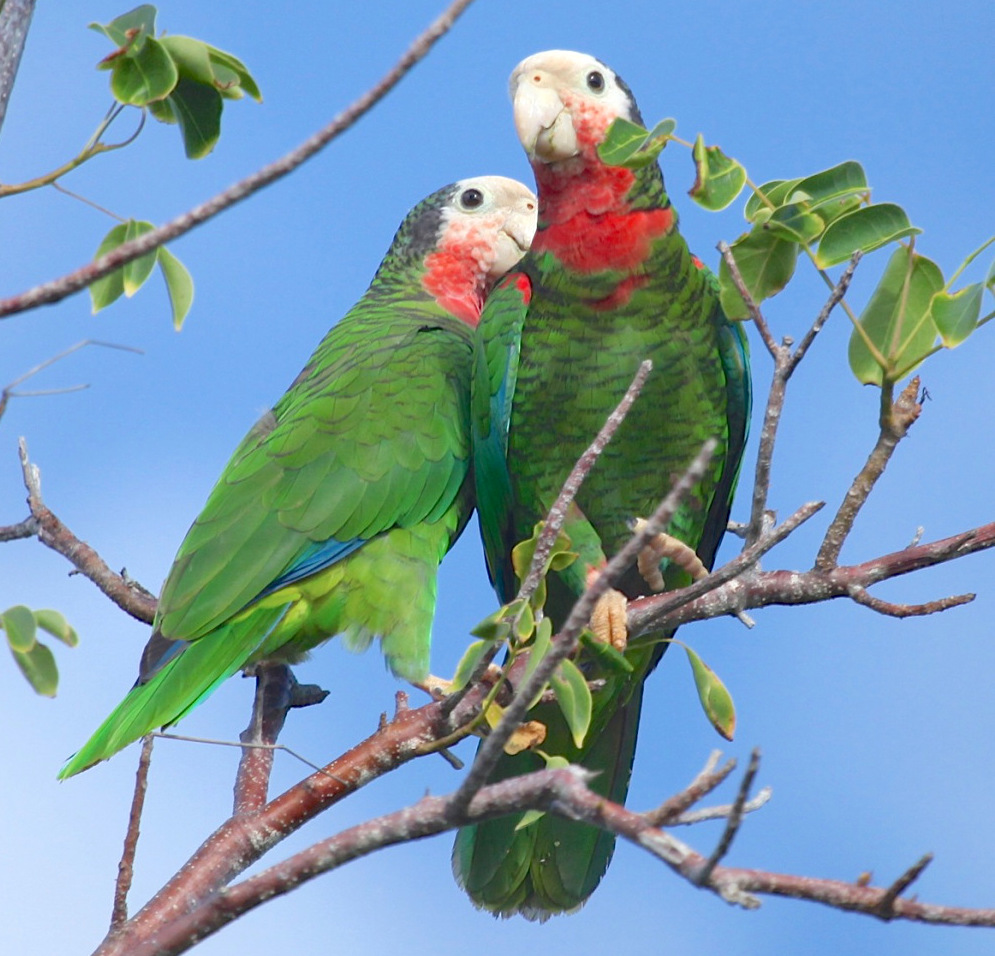
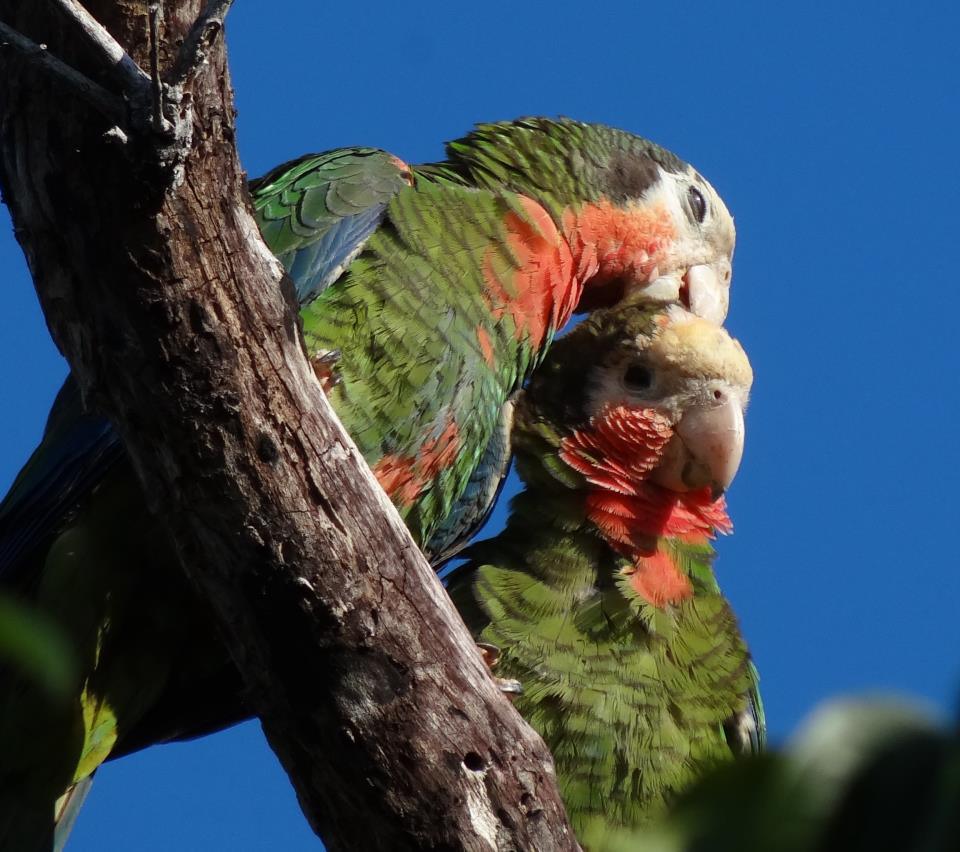
A small tribute, in gallery form, to the unique ground-nesting Abaco Parrots. Brought back from the brink of extinction through care, skill and patience. Surviving forest fires, hurricanes, predators, incautious humans. Sweeping across the sky in raucous flocks. Squawking deafeningly in the gumbo limbo trees. Lighting up the sky with flashing green, red and blue. Noisy ambassadors for Abaco wildlife. Generally being fabulous creatures loved by everyone.
An additional treat is the inclusion of a few of parrot scientist Caroline Stahala’s wonderful photos of parrot nests in the limestone caves deep in the Abaco National Park, taken while she was researching and protecting them. In the past, I felt very privileged to be able to use them and it’s been a while since I featured any. Very few people will have seen anything like this, so today is a very good occasion to show nests, eggs and chicks.
Photographs by Nina Henry, Melissa Maura, Craig Nash, Peter Mantle, Caroline Stahala, Keith Salvesen / Rolling Harbour
The originator of the idea for the book – as with the entire Delphi Club project – was Peter Mantle, the publisher. He took a risk based on my (then) quite feeble Rolling Harbour blog about the birds and other attractions of the island. The 2kg book took 16 months from conception to the arrival of three pallets of printed books on the dockside in Marsh Harbour, having travelled by a tortuous route from specialist printers in Italy.
As part of the project, Abaco schools, libraries and wildlife organisations were given copies for educational purposes. A percentage of profits was given to local wildlife causes. We quickly sold a great many copies, and couldn’t have been more pleased with the response to the book, a unique publication for the Bahamas. The captions (below) about the book and content were written much nearer the time, so I’ll leave them as they are. I hope you enjoy the photos even if you don’t want a copy!
The Guide showcases the rich and varied bird life of Abaco, Bahamas and features both resident and migratory species including rarities and unusual sightings. The main features are as follows:
The book is published by the Delphi Club. The project was managed by a publishing specialist in art and architecture books. The author is the wildlife blogger more widely known on Abaco and (possibly) beyond as ‘Rolling Harbour’. Oh! So that would in fact be Mrs Harbour and myself. Well well! What were the chances?
BOOK LAUNCH BAHAMAS BIRDING ROYALTY (Tony White, Bruce Hallett, Woody Bracey), A COMMONER… & AN EMBARRASSING AMOUNT OF REFRESHMENT
Photos: Tom Sheley (3,4,9,10), Bruce Hallett (6,8), Gerlinde Taurer (1,7), Tony Hepburn (5), Keith Salvesen (2,11)
THE ORIGINAL FLYER

FLAMINGO TONGUE SNAILS Cyphoma gibbous are small marine gastropod molluscs related to cowries. The living animal is brightly coloured and strikingly patterned, but that colour only exists in the ‘live’ parts – the so-called ‘mantle’. The shell itself is usually pale, and characterised by a thick ridge round the middle. These snails live in the tropical waters of the Caribbean and the wider western Atlantic. Whether alive or dead, they are gratifyingly easy to identify.

THE IMPORTANCE OF CORAL
Flamingo tongue snails feed by browsing on soft corals. Often, they will leave tracks behind them on the coral stems as they forage (see image below). But corals are not only food – they provide the ideal sites for the creature’s breeding cycle.
Adult females attach eggs to coral which they have recently fed upon. About 10 days later, the larvae hatch. They eventually settle onto other gorgonian corals such as Sea Fans. Juveniles tend to live on the underside of coral branches, while adults are far more visible and mobile. Where the snail leaves a feeding scar, the corals can regrow the polyps, and therefore the snail’s feeding preference is generally not harmful to the coral.
The principal purpose of the patterned mantle of tissue over the shell is to act as the creature’s breathing apparatus. The tissue absorbs oxygen and releases carbon dioxide. As it has been (unkindly?) described, the mantle is “basically their lungs, stretched out over their rather boring-looking shell”.
THREATS AND DEFENCE
The species, once common, is becoming rarer. The natural predators include hogfish, pufferfish and spiny lobsters, though the spotted mantle provides some defence by being rather unpalatable. Gorgonian corals contain natural toxins, and instead of secreting these after feeding, the snail stores them. This supplements the defence provided by its APOSEMATIC COLORATION, the vivid colour and /or pattern warning sign to predators found in many animal species.

MANKIND’S CONTRIBUTION
It comes as little surprise to learn that man is now considered to be the greatest menace to these little creatures, and the reason for their significant decline in numbers. The threat comes from snorkelers and divers who mistakenly / ignorantly think that the colour of the mantle is the actual shell of the animal, collect up a whole bunch from the reef, and in due course are left with… dead snails and “boring-looking shells” (see photos below). Don’t be a collector; be a protector…
The photos below are of nude flamingo tongue shells from the Delphi Club Collection. Until I read the ‘boring-looking shell’ comment, I believed everyone thought they were rather lovely… I did, anyway. You decide!
Image Credits: Melinda Rogers / Dive Abaco; Keith Salvesen / Rolling Harbour

The white-cheeked (‘Bahama’) pintail Anas bahamensis (aka ‘Bahama duck’) is everyone’s favourite dabbling duck. Or at least it ought to be. And when there are ducklings swimming with the adults, there is no emoticon yet devised that will convey the extremes of cuteness achieved.


Credits: all absolutely adorbs photos are by Tom Sheley & Charles Skinner


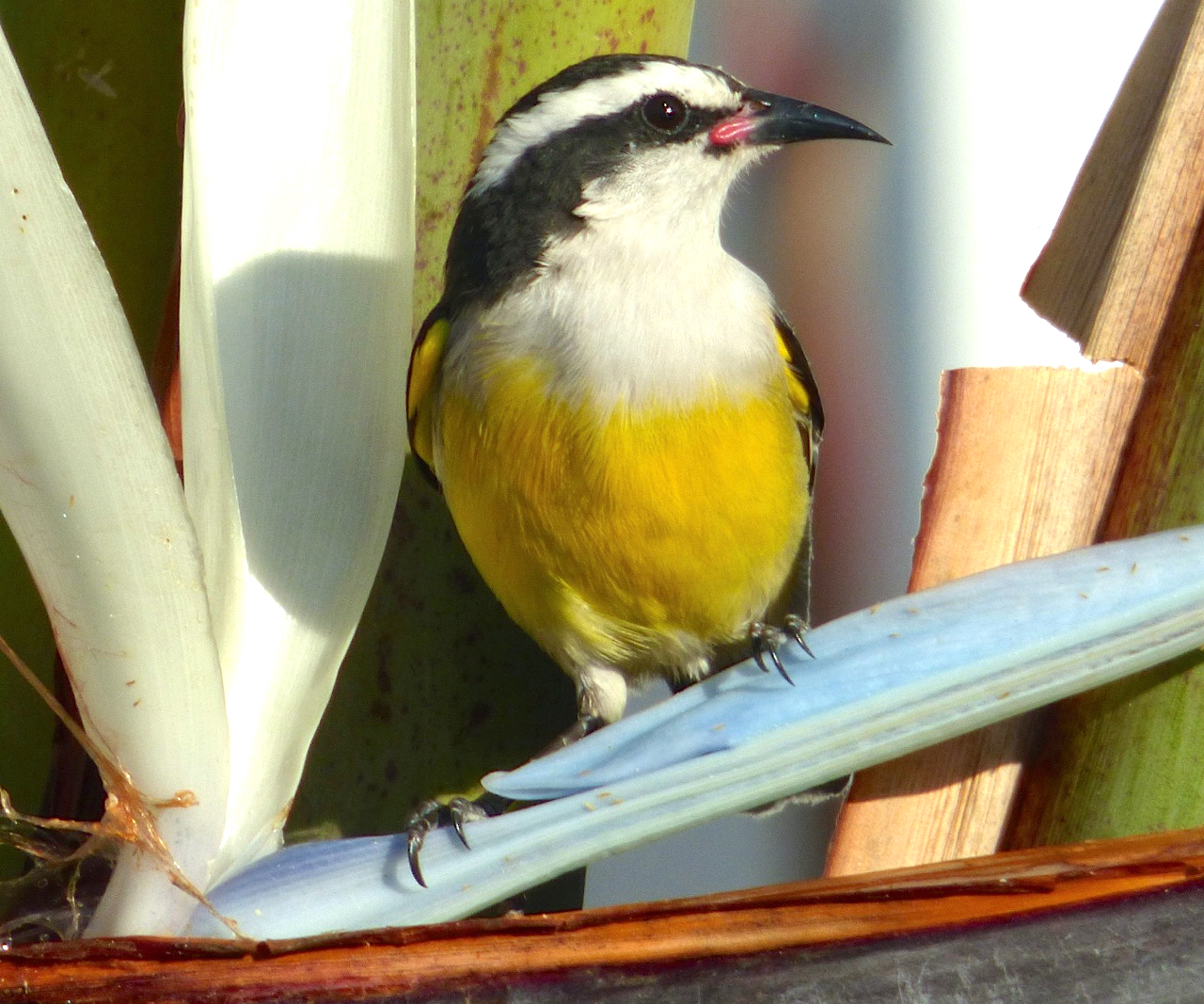
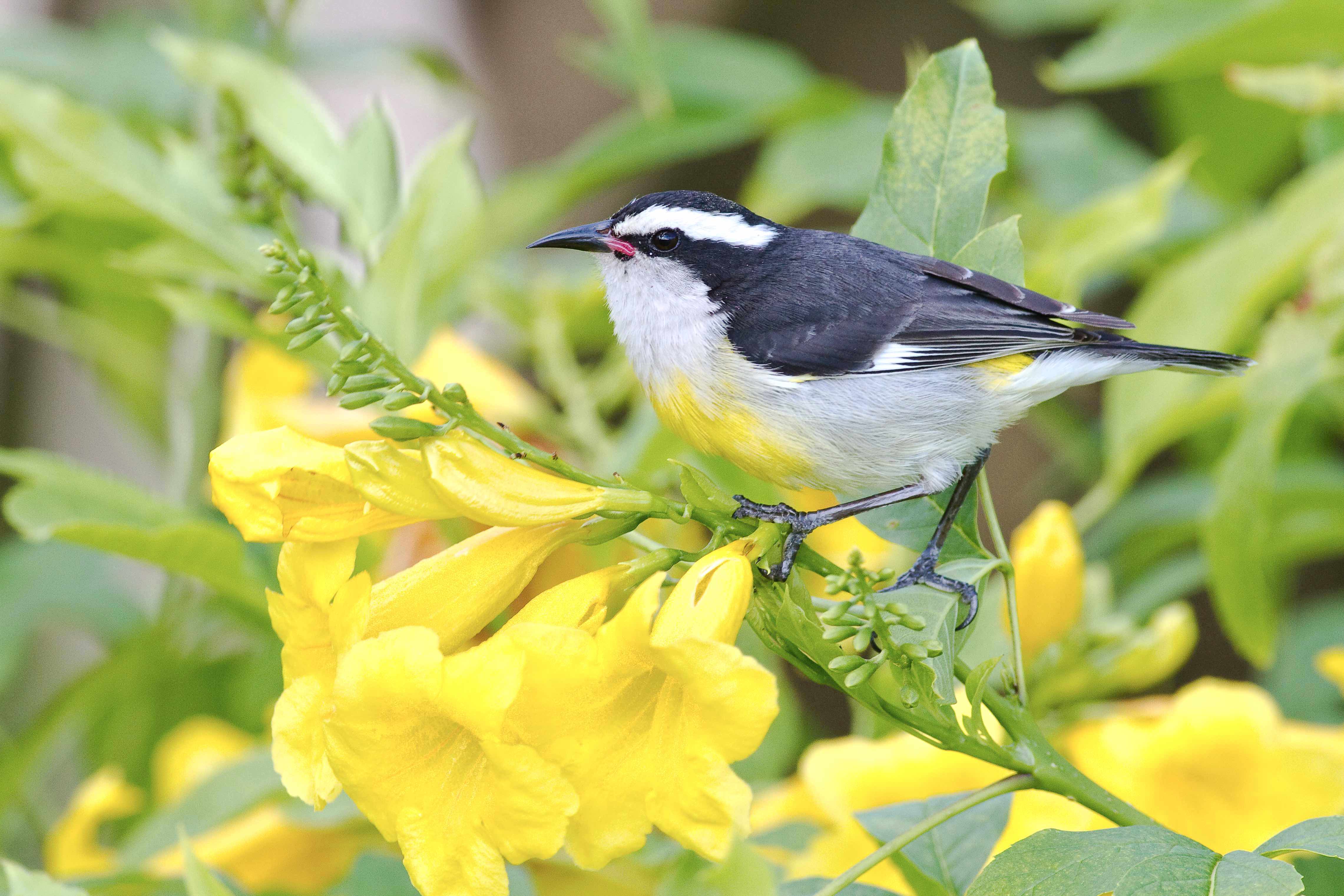
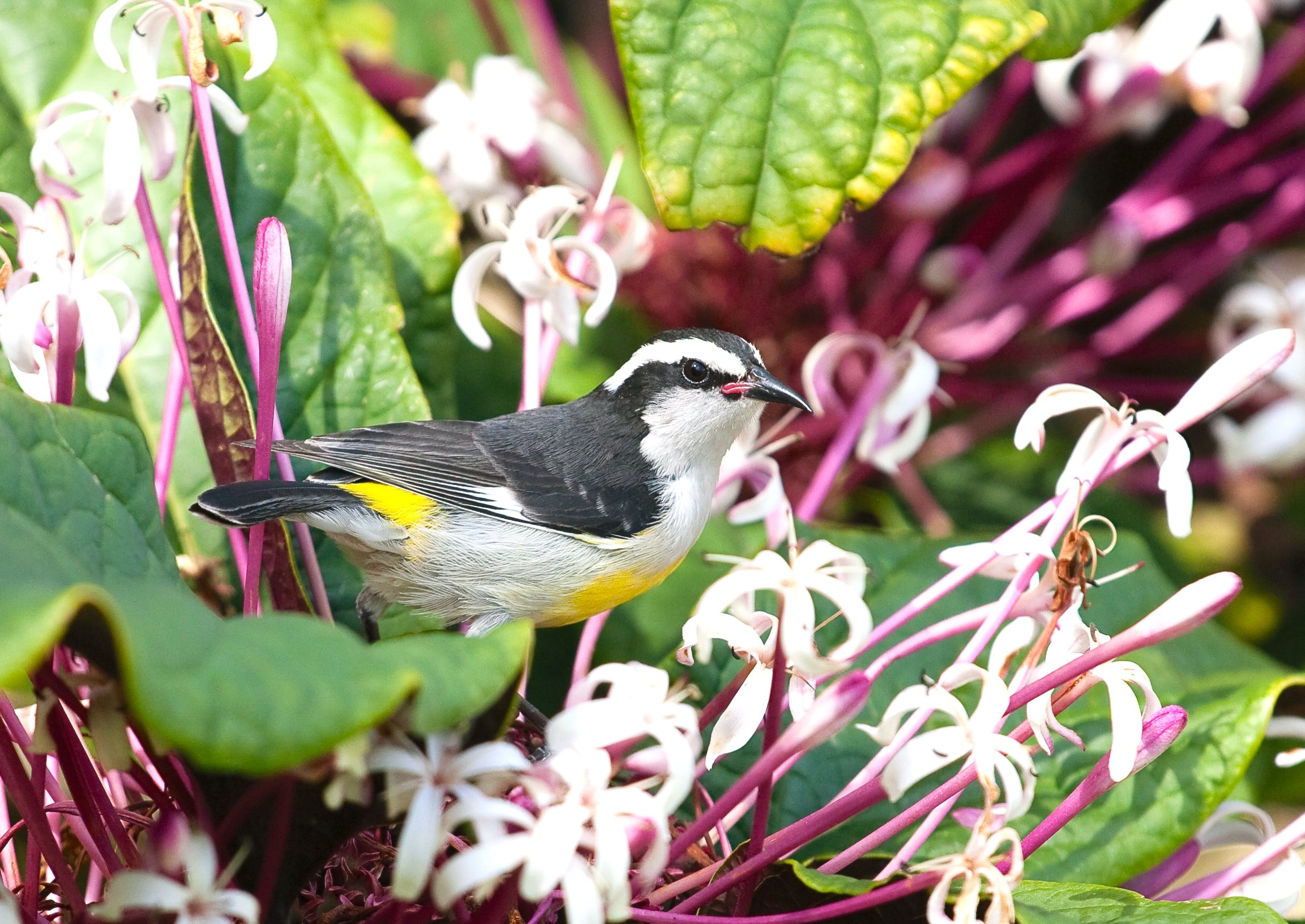
Bananaquits (Coereba flaveola) are small, colourful, and delightful birds of the coppice and garden. They have also managed to generate one of the most complicated taxonomic conundrums in the whole of bird land. I’ll spare you the varied classification details, which include warbler, bunting, tanager, monotype (unique), and the uncomfortably vague incertae sedis (= ‘uncertain group‘).

Luckily, they are oblivious to all this controversy. Whatever their family background, Bananaquits will always be one of the most appealing small birds you’ll ever encounter. They are certainly high in the rankings of my own generalised designation ‘pretty little bird’ (Avis bellusparvus)
Photos: 1. Keith Salvesen / Rolling Harbour; 2 & 3 Craig Nash

ATLANTIC SPOTTED DOLPHINS – ABACO, BAHAMAS
There’s never ever a wrong time for dolphins to have some fun in the water. It’s what they expect. It’s what we (if we are lucky enough to see them) expect. It’s what they expect that we expect if we are out in a boat – hence the joyful bow-riding, the rapid crossing back and forth. From time to time there’s a single dolphin in a group that takes the opportunity to show off. In the deeper water off the southern tip of Abaco, in sight of the lighthouse, this is a good example of such carefree behaviour.
There’s more excitement to be found in this group. If you look carefully at #3 in the gallery, you’ll see a very small dorsal fin. There’s a calf in the group, being guided and watched over by two adults. Imagine being out there in a boat and encountering this group. That would in itself be something to show off about…
All photos © Charlotte Dunn / Bahamas Marine Mammal Research Organisation (BMMRO). Please support the work of this specialist Bahamas marine mammal research team and help to preserve these increasingly vulnerable creatures LINK
The Bahama warbler Setophaga flavescens is a significant species in the Bahamas, not least because of their very confined range. These are speciality birds on Abaco, taking their place alongside just 4 other year-round resident warblers. In contrast, there are 33 recorded migratory or transient warbler species which begin to arrive in early spring and are mostly gone by October.

SPECIAL STATUS

Credits: Alex Hughes (1, 4); Bruce Hallett (2, 3); Range Map, Cornell
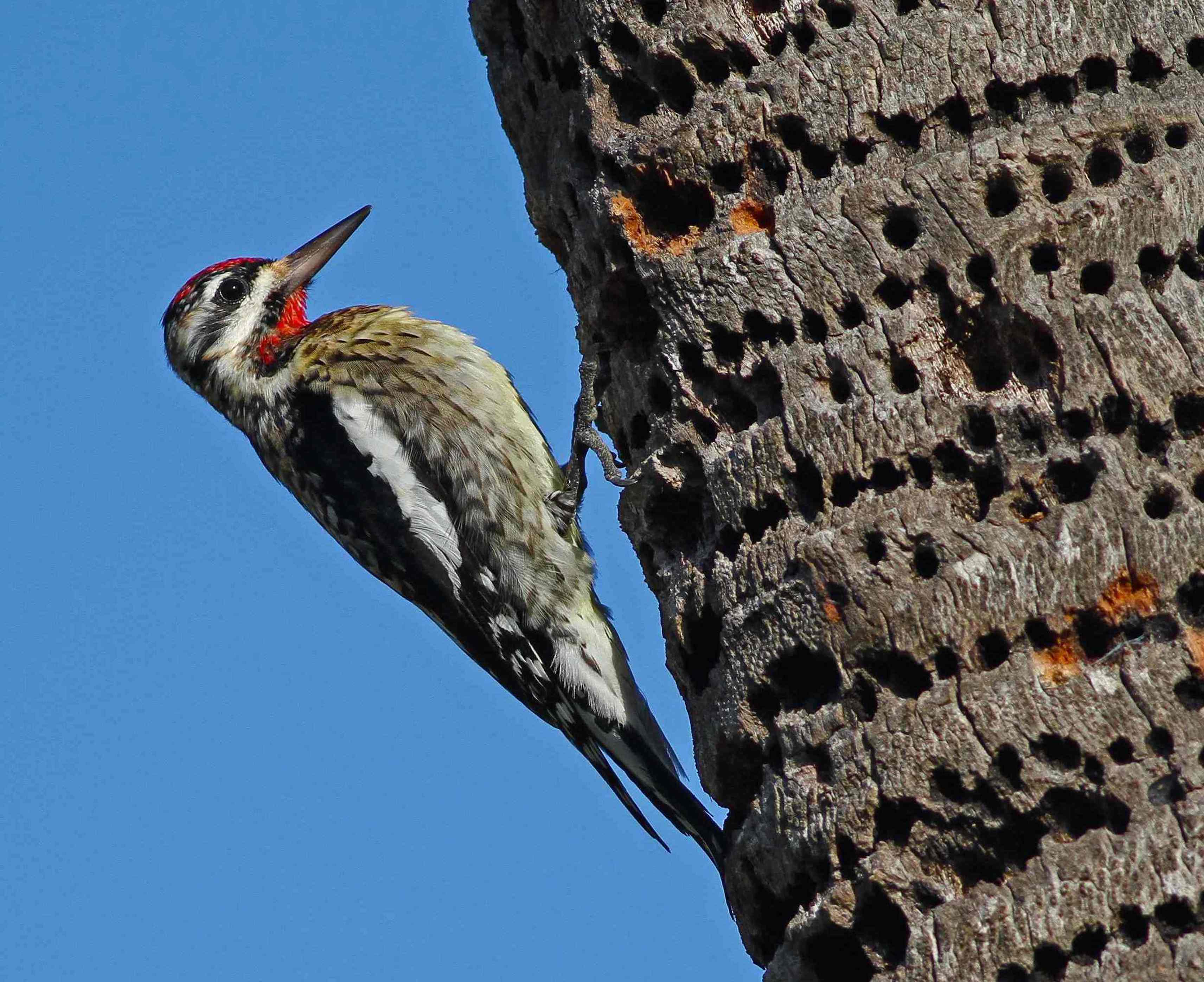
I have just been asked about image rights for a Yellow-bellied sapsucker Sphyrapicus varius featured in BIRDS OF ABACO so I have gone back to the archive. The photograph below was taken by Gerlinde Taurer, a significant contributor to the book. On Abaco the sapsucker is the only migratory woodpecker species, a fairly common winter resident. The two other woodpecker species – West Indian and Hairy – are year-round residents. Like its woodpecker cousins, the sapsucker drills holes in trees. The dual purpose is to release the sap (which it eats); and so to attract insects (which it also eats). A two-course meal, if you like. They’ll also eat insects on an undrilled tree, and even ‘hawk’ for them in flight. They sensibly balance their diet with fruit and berries. This is without doubt the best image of a YBS I have come across.

Credit: Gerlinde Taurer for Birds of Abaco

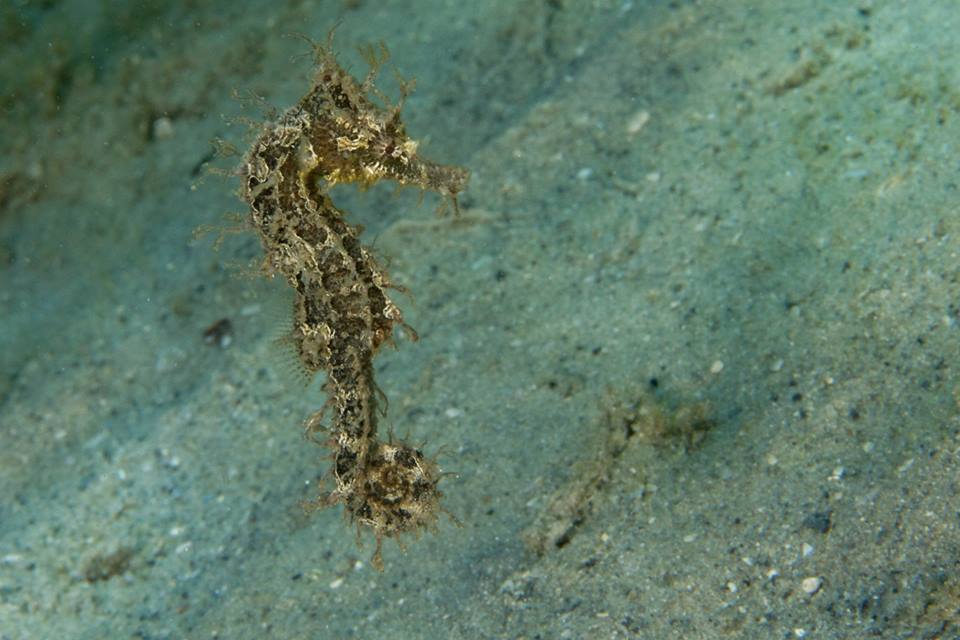
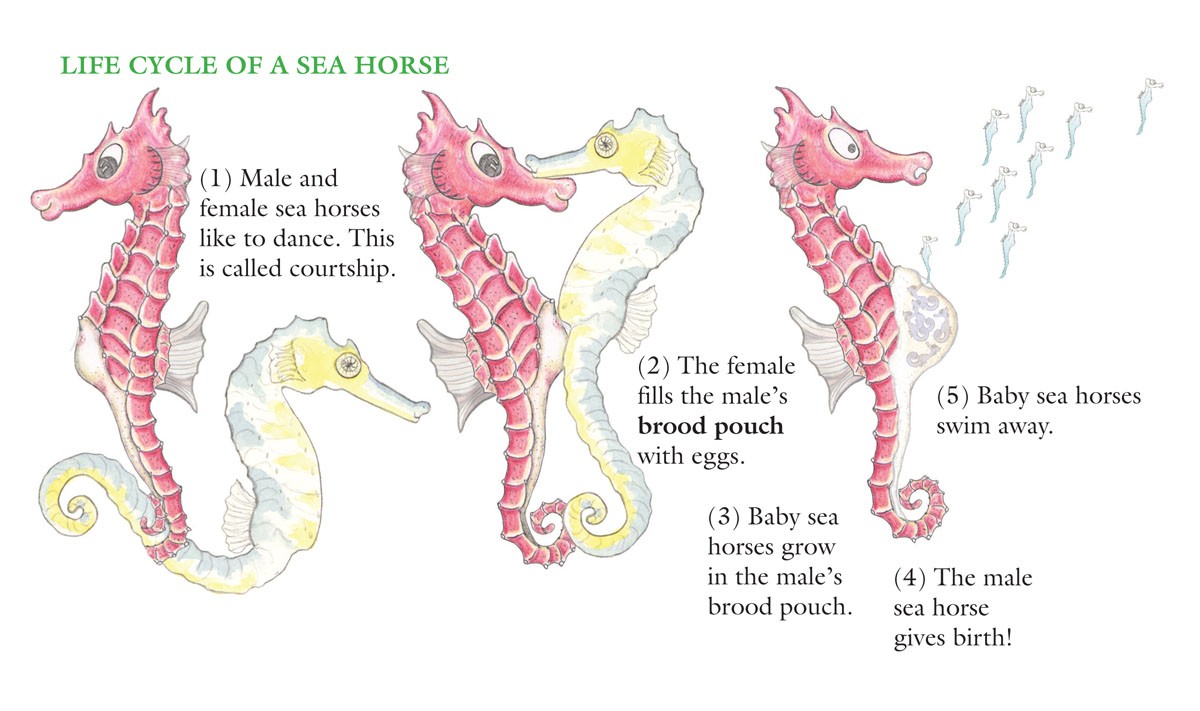
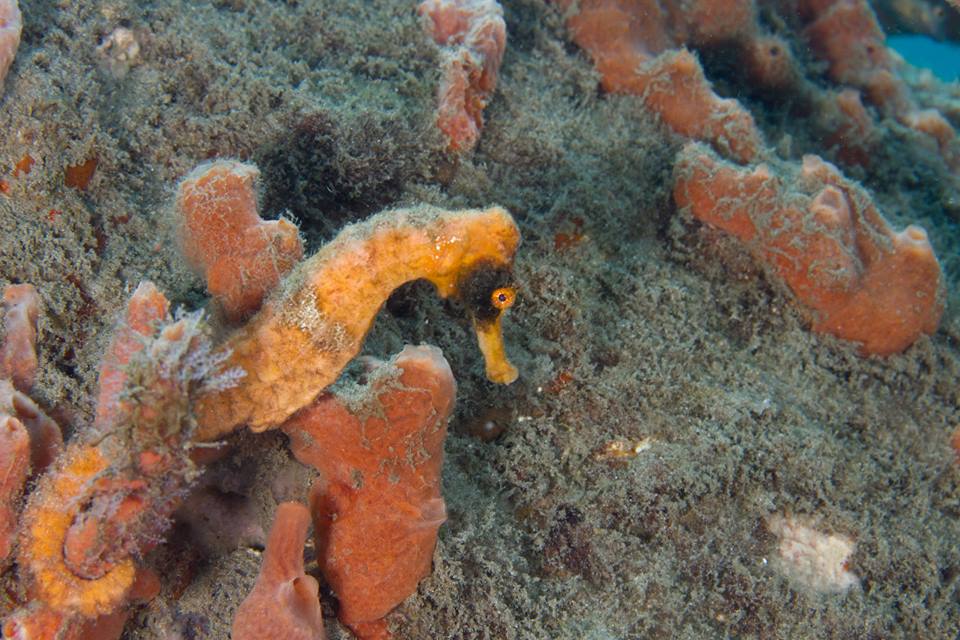
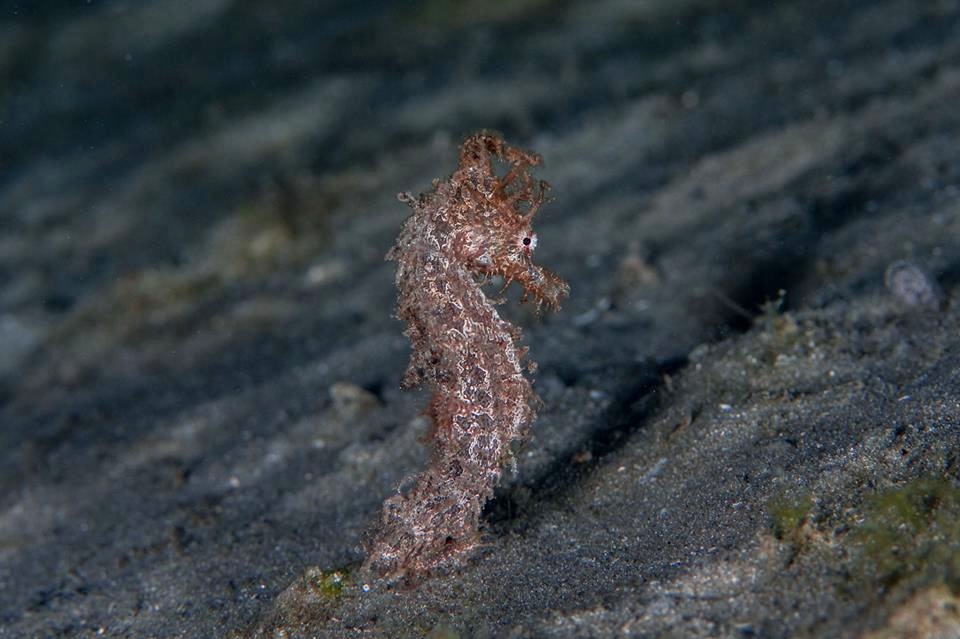
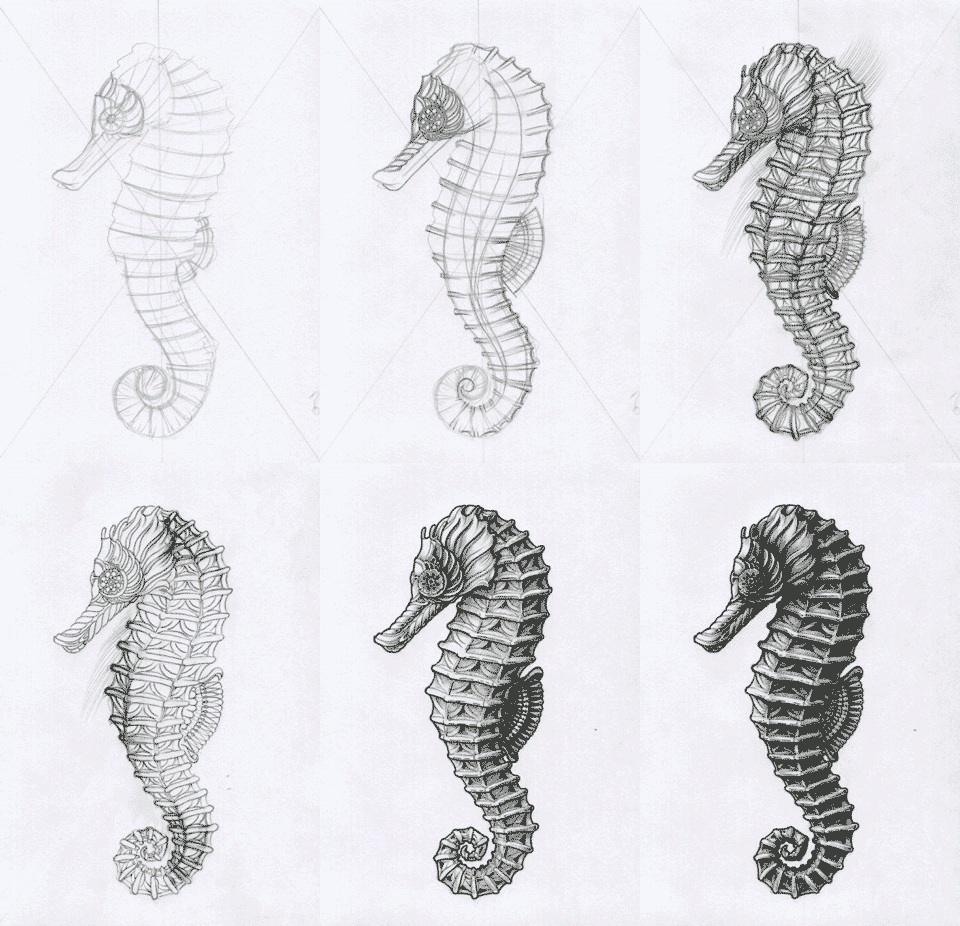
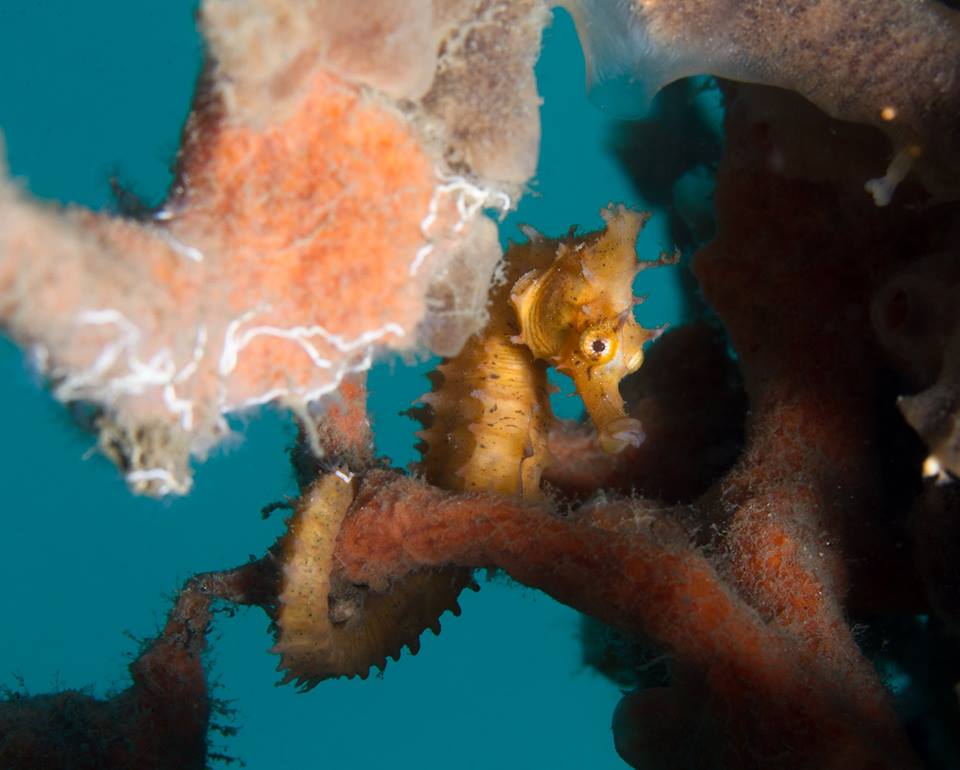
It’s a while since I showcased these astonishing little creatures. Adam Rees of SCUBA WORKS is a diver who combines great underwater experience with wonderful photographic skills. Here is a showcase for some of Adam’s seahorse photography and the amazing detail he captures. If these images don’t make you want to get your head underwater and explore the reefs, I can’t think what will…


All fantastic photos: Adam Rees / Scuba Works; Range Map, Nat Geo; Lifecycle diagram, Seahorserun; Seahorse GIF, Alex Konahin

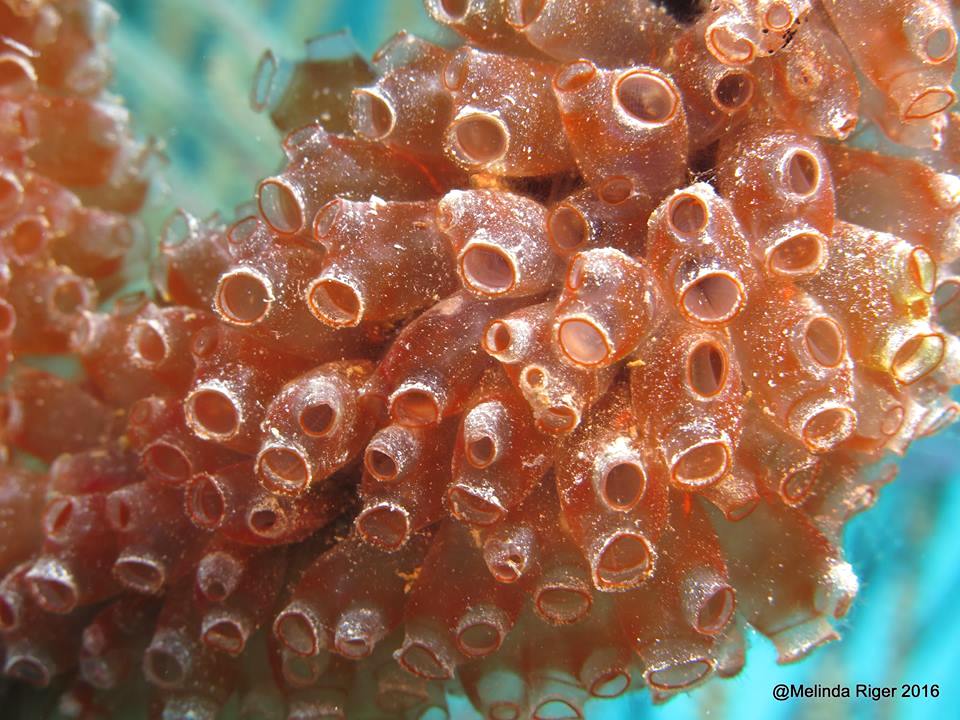
Painted Tunicates Clavina picta are one of several species of tunicate ‘sea-squirts’ found in Bahamas and Caribbean waters. These creatures with their translucent bodies are usually found clustered together, sometimes in very large groups. One reason for this is that they are ‘sessile’, unable to move from where they have taken root on the coral.
HOW DO THEY FEED?
Like most if not all sea squirts, tunicates are filter feeders. Their structure is simple, and enables them to draw water into their body cavity. In fact they have 2 openings, an ‘oral siphon’ to suck in water; and an exit called the ‘atrial siphon’. Tiny particles of food (e.g. plankton) are separated internally from the water by means of a tiny organ (‘branchial basket’) like a sieve. The water is then expelled.

WHAT DOES ‘TUNICATE’ MEAN?
The creatures have a flexible protective covering referred to as a ‘tunic’. ‘Coveringcates’ didn’t really work as a name, so the tunic aspect became the name.
IF THEY CAN’T MOVE, HOW DO THEY… (erm…) REPRODUCE?
Tunicates are broadly speaking asexual. Once a colony has become attached to corals or sponges, they are able to ‘bud’, ie to produce clones to join the colony. These are like tiny tadpoles and their first task is to settle and attach themselves to something suitable – for life – using a sticky secretion. Apparently they do this head first, then in effect turn themselves upside down as they develop the internal bits and pieces they need for adult life. The colony grows because (*speculation alert*) the most obvious place for the ‘tadpoles’ to take root is presumably in the immediate area they were formed.
APART FROM BEING STATIONARY & ASEXUAL, ANY OTHER ATTRIBUTES?
Some types of tunicate contain particular chemicals that are related to those used to combat some forms of cancer and a number of viruses. So they have a potential use in medical treatments, in particular in helping to repair tissue damage.
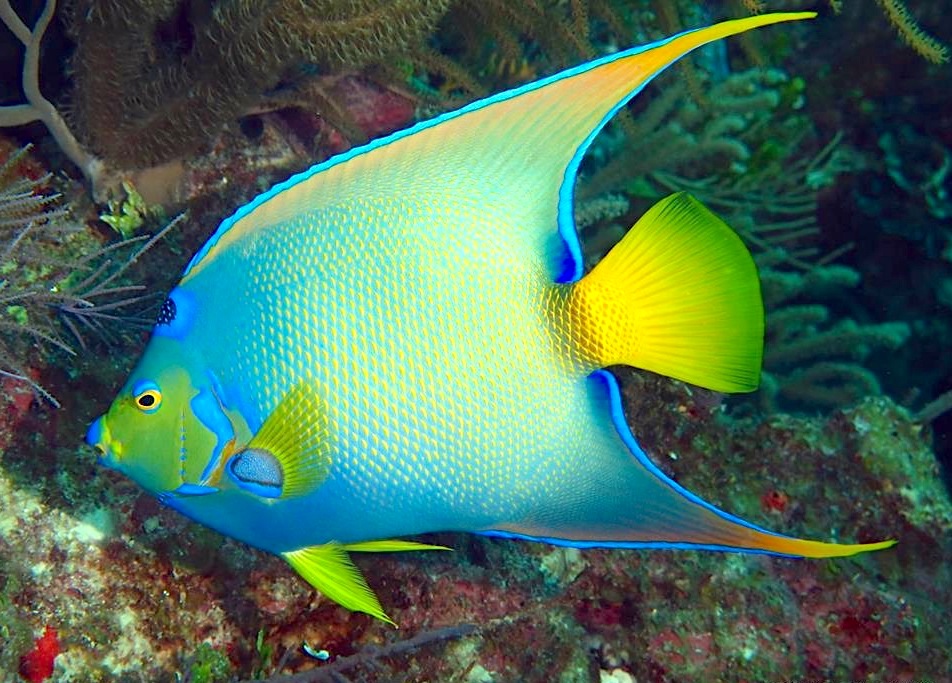
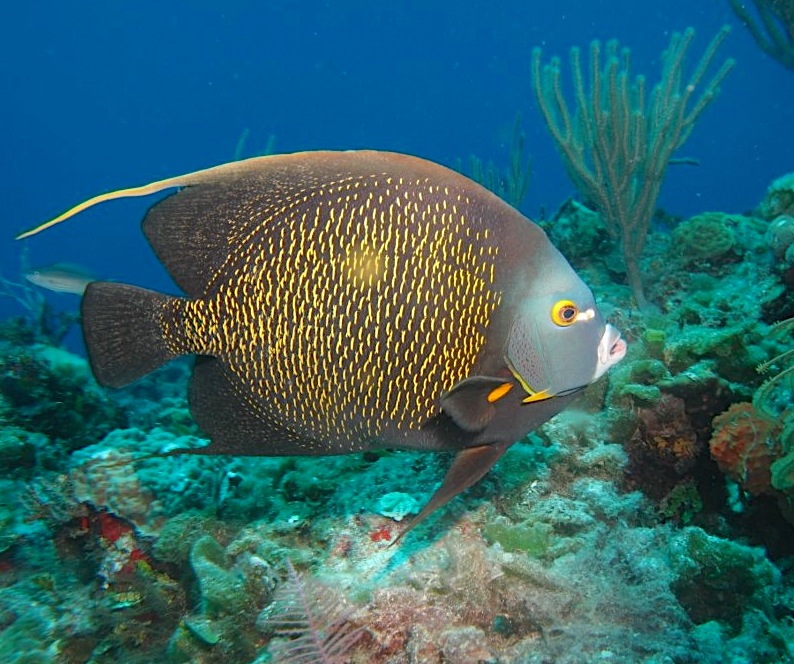
The images below show the three species of angelfish commonly found among the coral reefs of the Bahamas. These were photographed by diver Melinda Riger in the waters round Grand Bahama. The Queen, French and Gray Angels are shown in both adult and juvenile forms.


All photos: Melinda Riger / Grand Bahama Scuba

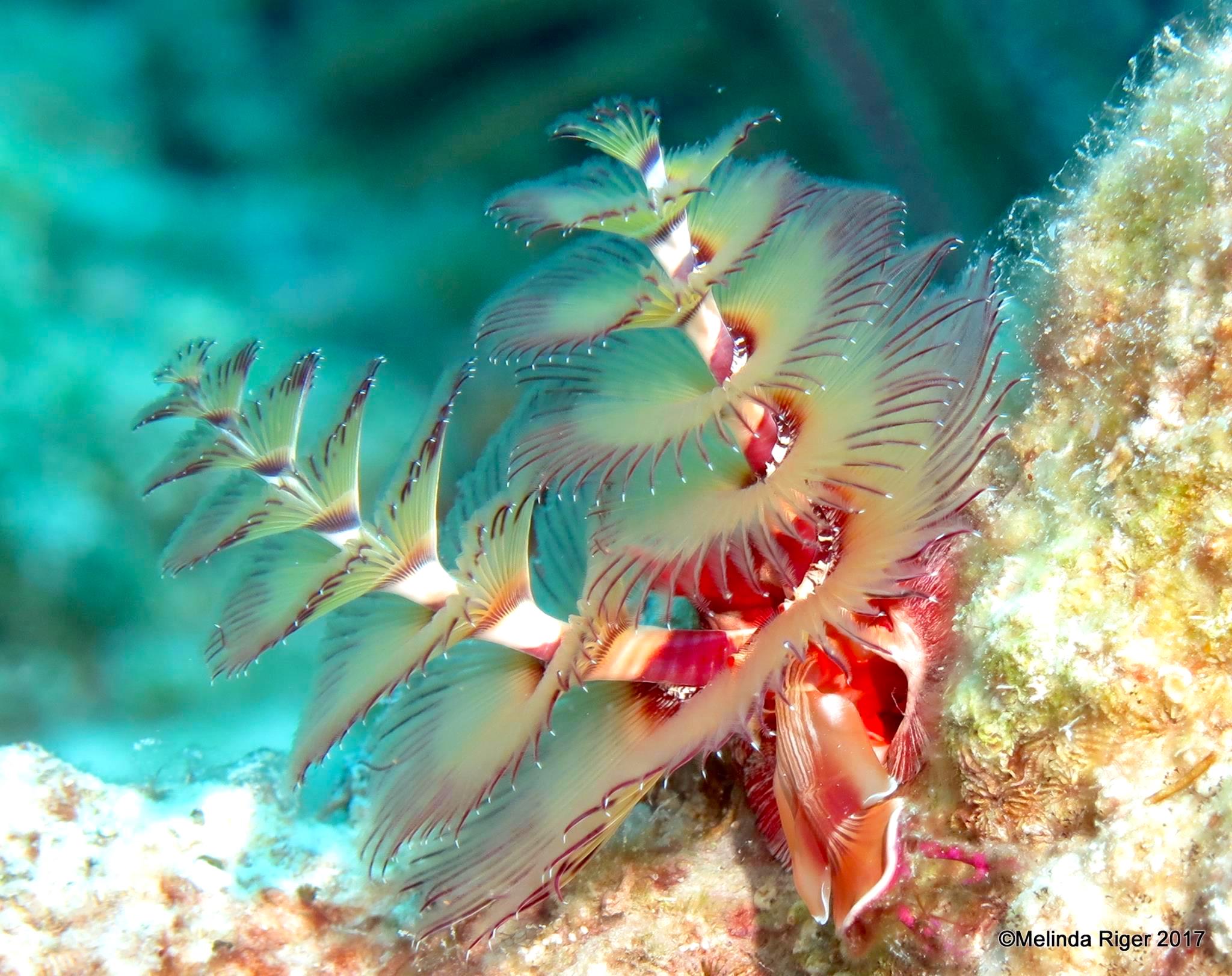
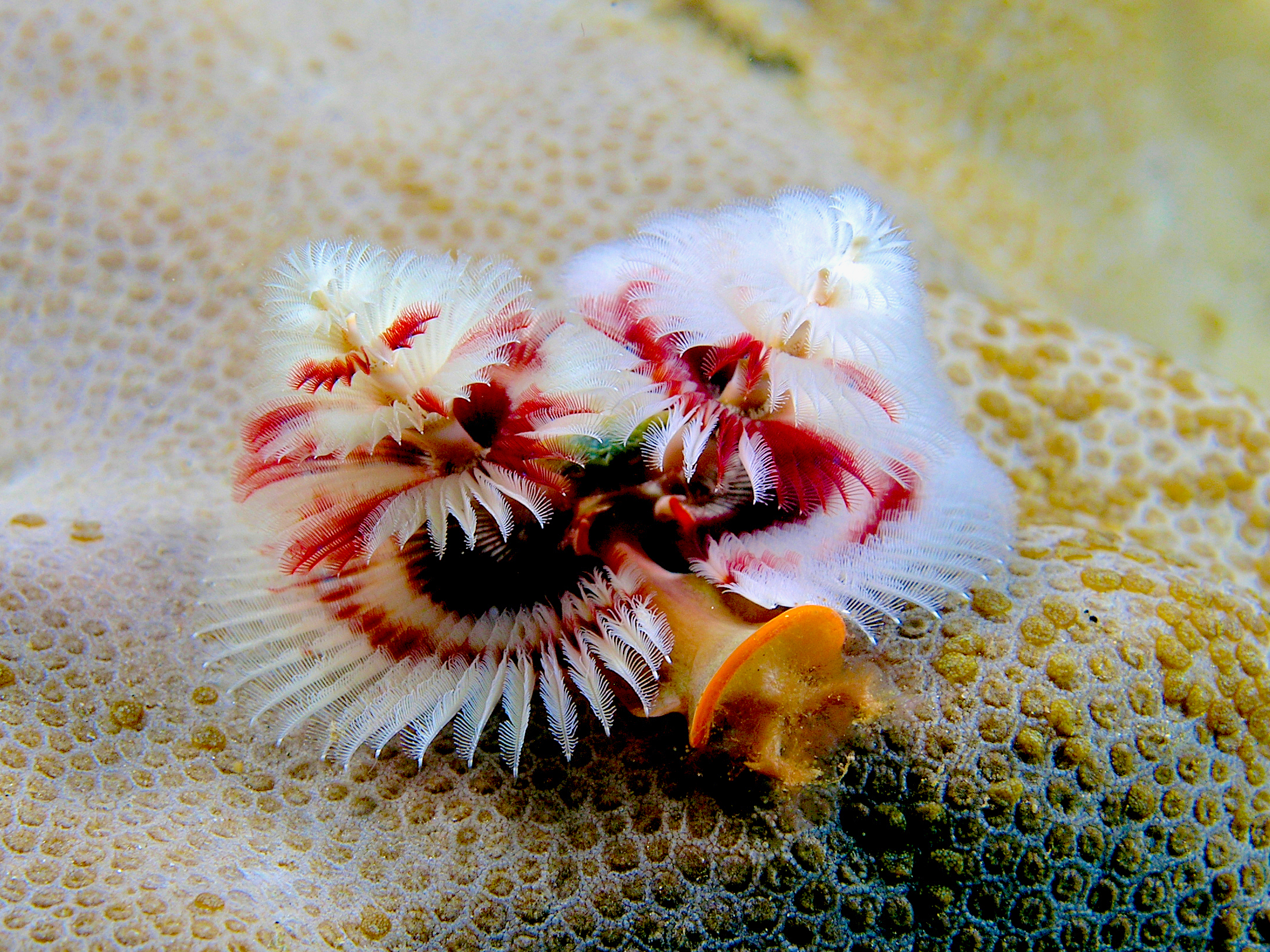
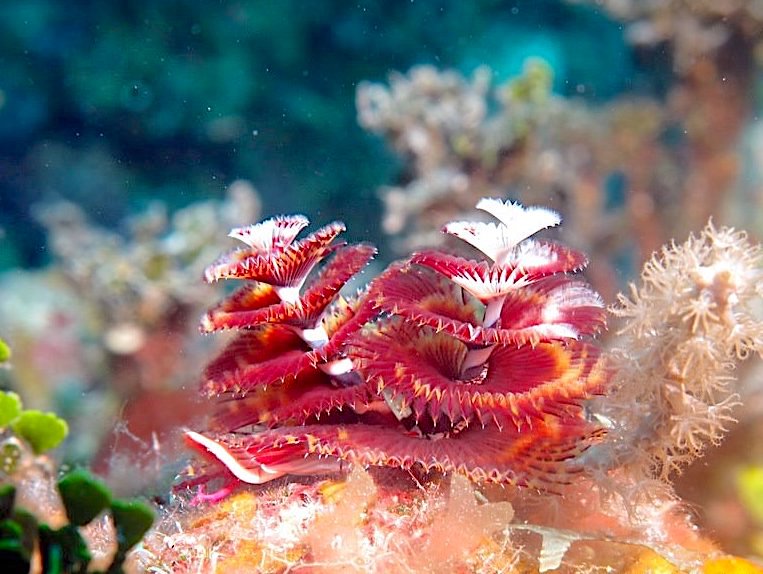
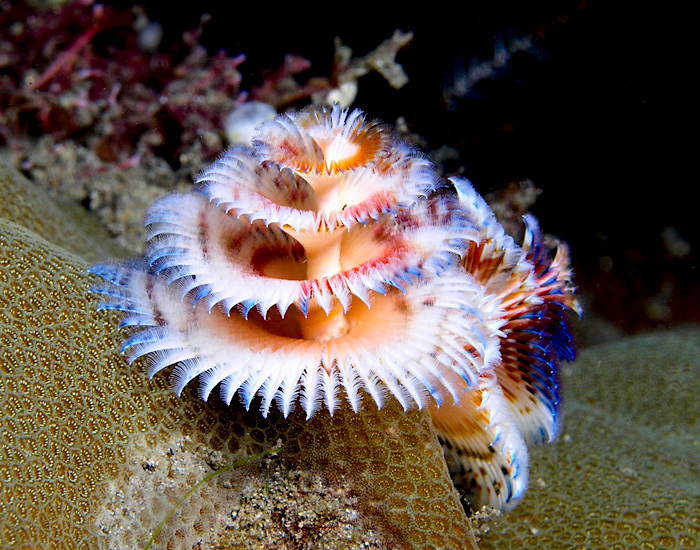
“Deck the Reefs with Worms Like Christmas Trees… Fal-La-La-etc-etc ” is a traditional Carol familiar to all. Well, most. Ok, some, then. Oh right – maybe with different words? Anyway, now is the perfect time to take a look at these remarkable subsurface symbols of seasonal good cheer (nb they are wonderful animals not gorgeous plants).
10 CHRISTMAS TREE WORM FACTS TO PONDER
HOW DO THE WORMS… YOU KNOW… ERM… REPRODUCE?
This is a delicate area. They are very discreet, but as far as I can make out they eject gametes from their what-I-said-above. There are mummy and daddy worms, and their respective gametes (eggs and spermatozoa) drift in the current and into each other to complete the union. The fertilised eggs develop into larvae, which settle onto coral and burrow into it as their parents did, build their protective tubes, and the process begins again.
YOU DON’T REALLY UNDERSTAND THESE CREATURES, DO YOU?
I won’t lie. I found it hard to work out how the CTWs function in practice. There are plenty of resources showing them in their full glory, but that only takes one so far. Then I came across a short video that shows it all brilliantly simply (except for the reproduction part).
The worms, in their coral burrows, hoist their pairs of ‘trees’. You can easily see small particles – zooplankton – drifting in the water, and the radioles swaying to catch potential food. Suddenly it all makes sense (except the repro bit – I haven’t found footage of that). Next: the New Year Worm (there is no Easter worm).
A WHOLE FESTIVAL OF CHRISTMAS TREE WORMS
Credits: Melinda Riger (Grand Bahama Scuba); Nick Hobgood; Betty Wills; Video by ‘Super Sea Monkey’; Reef Collage by RH; MarineBio; Wikibits & Magpie Pickings
Happy Christmas to all those who put up with RH with such fortitude over the years


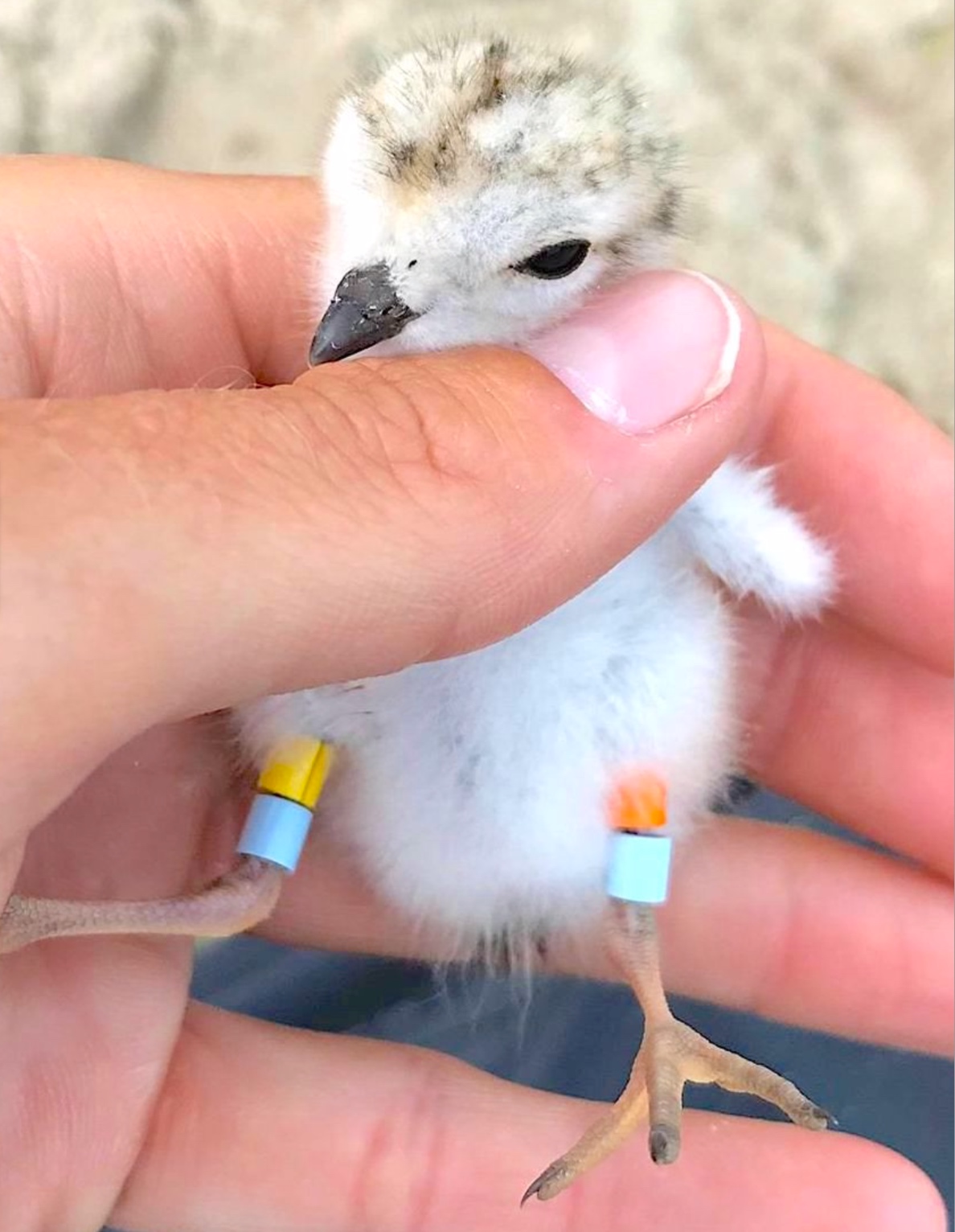
ABACO PIPING PLOVER WATCH was an amateur ‘citizen science’ conservation program to help investigate the winter season migrations of a tiny shore bird. It started in August 2015 and ended with Hurricane Dorian Sept 1st 2019. TUNA was the first banded bird we found, a summer chick that had completed a 1000+ mile flight when aged about 3 months. During the season, Tuna’s life on Abaco was monitored, in particular by Rhonda Pearce who bonded with the little bird and took lots of photos. Tuna asked, in a whimsical way, if I would make space for a Guest Post. I recently re-posted the first HERE . This is the third instalment.
Hi again, readers of Mr Harbour’s blog. Tuna still here. This is part 3 of my diary. I’m 4½ months old now, and getting on famously here on Abaco. Especially now the big wind and waves have gone away [Hurricane Joaquin – ed]. Someone called me ‘Abaco’s favourite plover’, which really fluffed up my feathers. I’ve started to explore a bit and meet more birds just like me*. Turns out they are all Travellers from the North too – what are the chances? [in winter, 100% – ed]
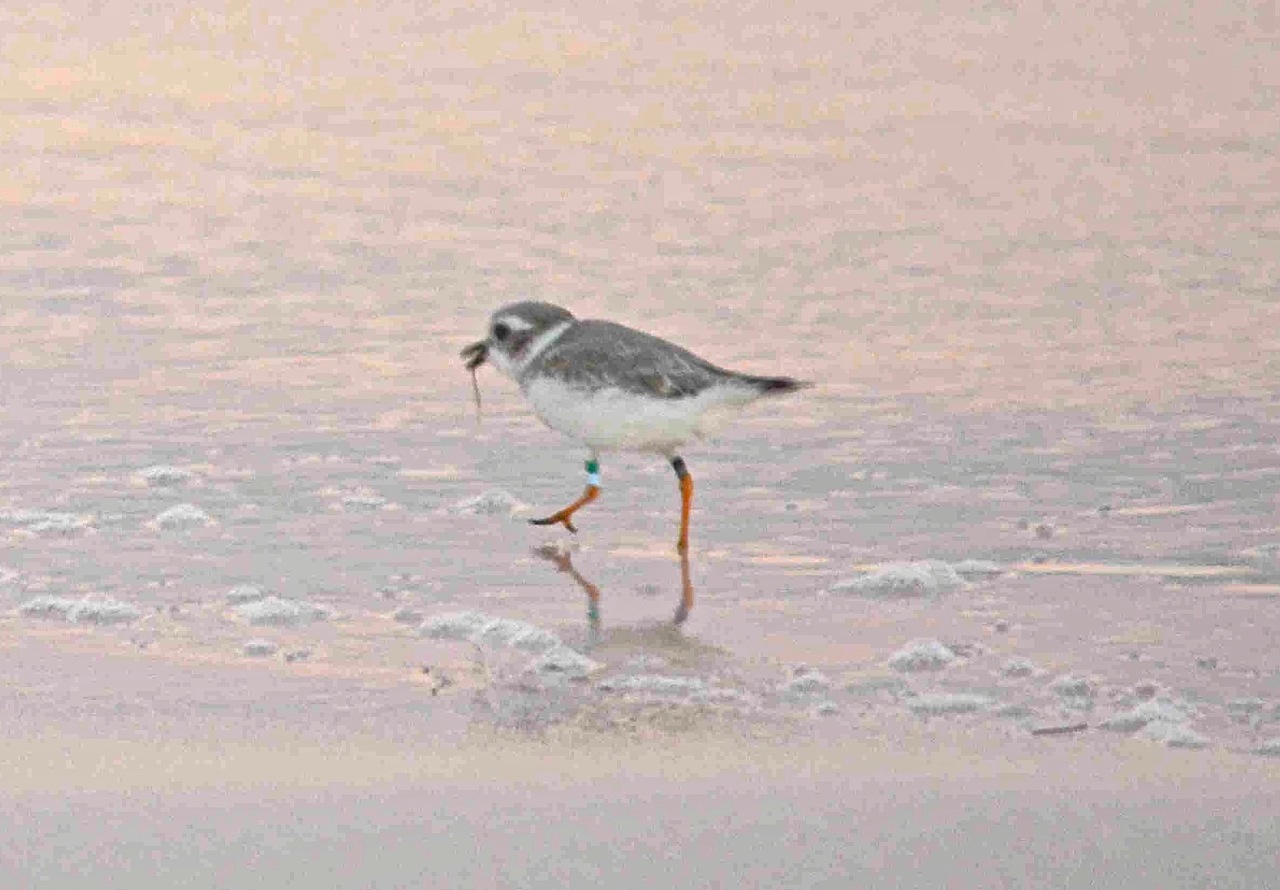
*How do I know what I look like? Well it’s easy. When I am chomping meat strings in the sunshine on the edge of the water, there’s a picture of me in the water doing the exactly same thing at the same time only upside down. Like these two friends of mine here.
I do a lot of running about on the beach. Back and forth. Up and down. Into the water and out again. It’s a busy life. And I’ve only got little legs. In case anyone worries that Michelle’s 4 smart rings hurt me or get in the way, I never feel them. They are just a part of who I have always been since she picked me up the day after I cracked out and added the bird-bling.
I’ve met lots of birds that are different from me, too. Some live here all the time, others are Travellers from the North as well. I’m relying on Mr RH here to show you some of the guys I hang out with these days. We all kind of mix up and if you don’t try to find meat strings where the bigger birds want to find them, it’s very friendly. Actually they are all bigger than me!
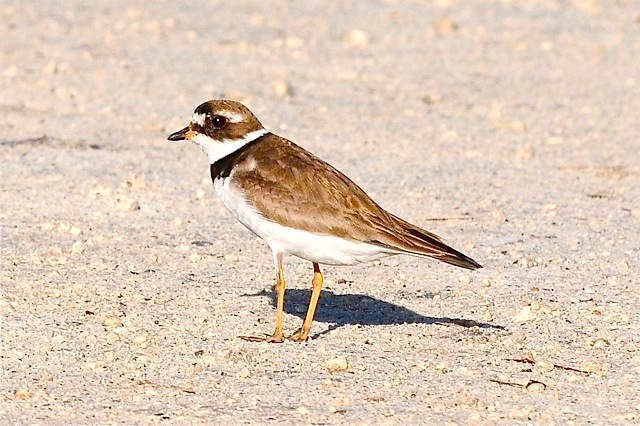
Sandpiper, Semipalmated Plover, Ruddy Turnstone, Wilson’s Plover (all on Abaco)

I’ve made my first trip to a different beach. I decided to fly round and explore, and I saw lots more sand so I flew there and stayed a couple of days. Like a little holiday. A nice man [monitor Keith Kemp] saw me there and told Mr RH about my coloured bands. That’s how he knew I’d moved and he told my friend Rhonda so she didn’t go looking for me on my home beach and get worried that I wasn’t there. Then I flew back there after a couple of days and Rhonda found me there again yesterday.
Tuna on his vacation from Watching Bay to Winding Bay. Note meat string in #1
I’ve got a new game I’ve been playing when Rhonda comes to see me. She sits down on the beach and puts shells all round her in the sand. So I come over and have a look at them (once I pecked the cloth thing she sits on. Urrch! It wasn’t food). Then she uses that thing that makes a plover noise [the focus sound on her camera – ed] and I put my head on one side to listen. 


There’s another reason I put my head on one side. Sometimes really really big birds fly over the beach. Huge dark ones. I like to keep an eye on them. I think they may be trouble. So I put my head on one side so I know exactly where they are in the sky until I feel safe.
This is me back on my beach after my trip. Green on Blue (L); Black on Grey (R) = TUNA
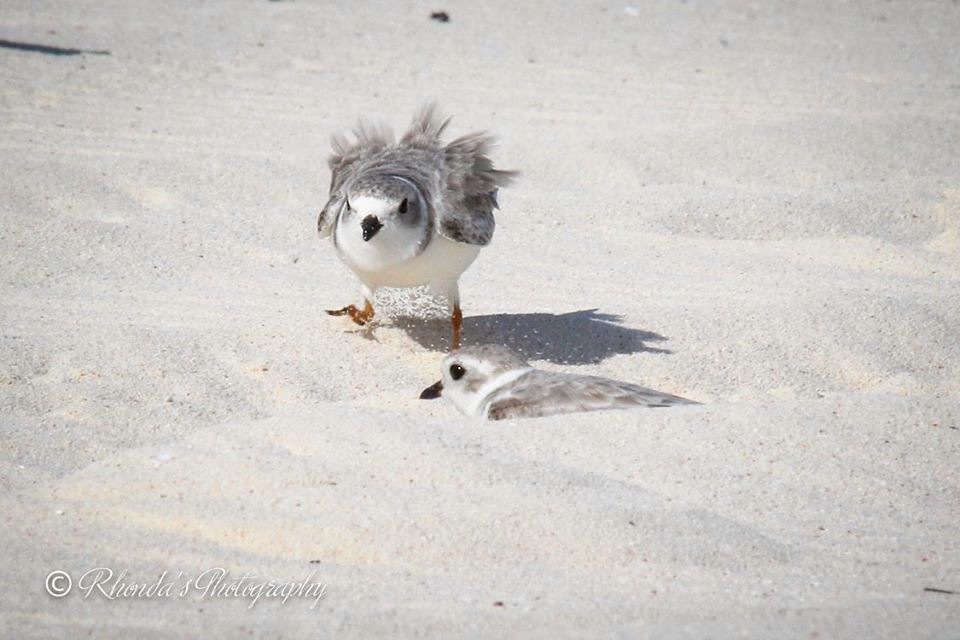
This is a New Friend on my beach, one of 3. They don’t have smart legs but they are Travellers from the North like me. In this game I lie low in a hole in the sand and my NF rushes at me kicking sand up like a crazy bird. Fun, huh?
More news from me soon. Cheeps from Tuna.
TUNA’S FIRST 4½ MONTHS

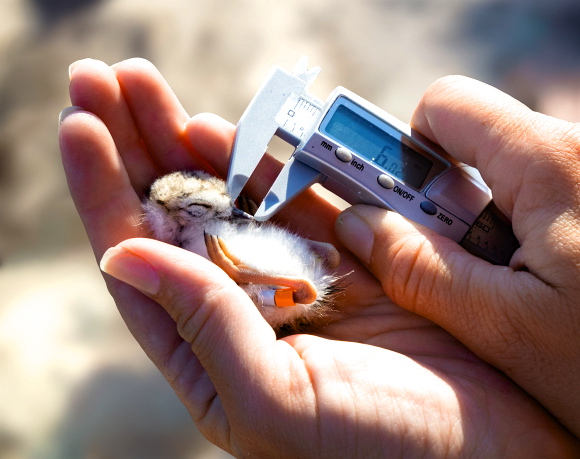
NOTE If you ever wondered why birds are banded and what on earth use it is, the answer is in this story. Banding & tagging enables detailed research at both ends of the migration which in turn enables protection of the species and conservation of threatened habitats. There are only 8000 PIPL left. Degradation of the breeding grounds or the overwintering grounds – let alone both – may result in extinction. This seems to have been a good summer for the piping plover; let’s hope the winter treats them well so that this summer’s chicks like Tuna will be able to breed safely next year.
This Diary extract shows how an individual banded bird’s movements can be monitored within its chosen area, so that a picture can be formed of its habitat choices, location changes, and range.
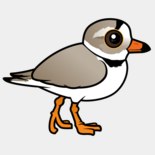
Credits: photos Rhonda Pearce, Keith Kemp, Craig Nash, Tony Hallett, Keith Salvesen; thanks to bander Michelle Stantial, birder & ‘Tuna Watcher’ Rhonda Pearce, CWFNJ & cohorts, Matt Jeffery and all other providers of info snippets; Birdorable for the cartoon; and Xeno-Canto for the recording

It’s December 2020, and Caribbean endemic birds are, deservedly, being given more time in the sun. Right now they are being featured by BNT (Bahamas National Trust); BirdsCaribbean; and (in an excellent Zoom presentation today) the august Linnean Society in Burlington House, London. So I am chiming in with slightly updated post on the topic, a reminder both of the beauty of the endemics and of their struggle for survival.
ABACO is fortunate to be home to 4 of the 5 endemic Bahamas species. The fifth, the beautiful BAHAMA ORIOLE Icterus northropi, was found on both Abaco and Andros until the 1990s, when it sadly became extirpated from Abaco. Now found only on Andros, until quite recently there were thought to be fewer than 300 Orioles left – a barely sustainable number. The species is unsurprisingly IUCN listed as critically endangered. However, there are signs that an intensive conservation program is working, with an increase in individuals and some new local populations found. Here’s a picture of one as a reminder of what Abaco is now missing…
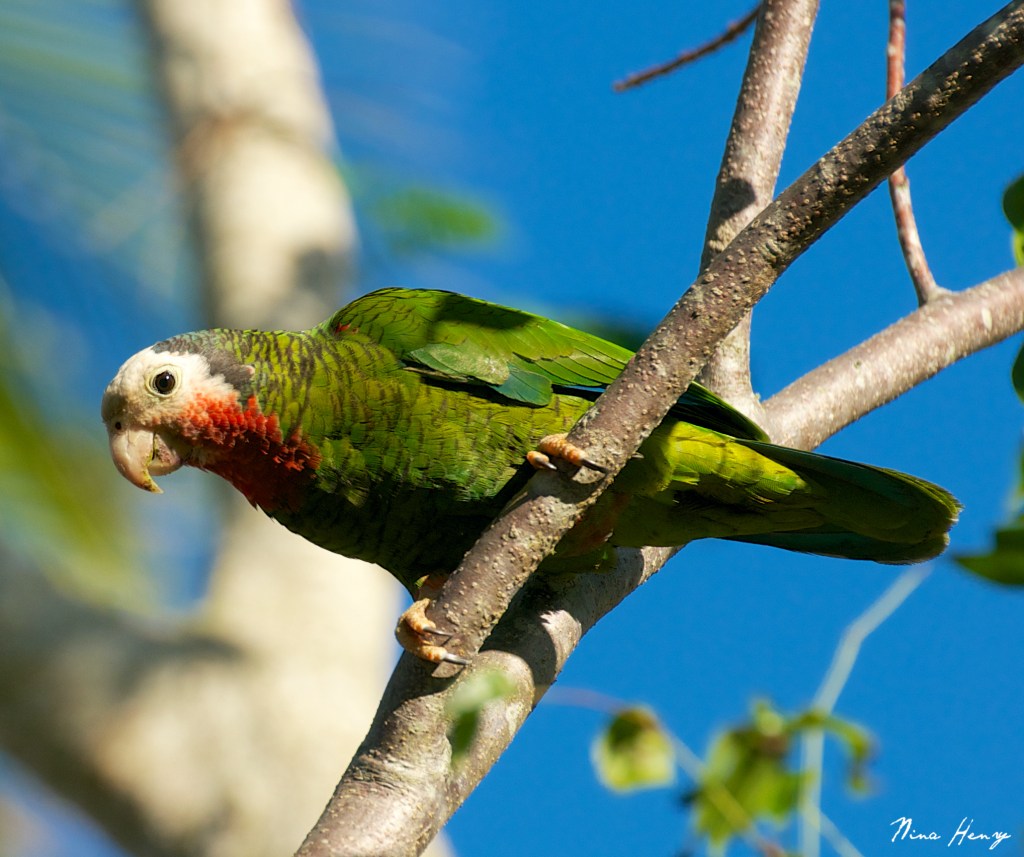
Abaco’s four endemic species are the tiny Bahama Woodstar hummingbird, the Bahama Yellowthroat, the Bahama Warbler (since 2011), and the Bahama Swallow. All are of course permanent breeding residents on Abaco and its outer Cays. None is exclusive to Abaco; all are relatively plentiful. The Woodstar is perhaps the hardest to find, not least because it competes territorially with the Cuban Emerald hummingbird. Here are some striking images of these four endemic bird species taken from the archives for (and starring in) ‘The Birds of Abaco’ published in 2014
BAHAMA WOODSTAR Calliphlox evelynae
BAHAMA YELLOWTHROAT Geothlypis rostrata
BAHAMA WARBLER Setophaga flavescens
BAHAMA SWALLOW Tachycineta cyaneoviridis
‘The Delphi Club Guide to the Birds of Abaco’ was published as limited edition, with additional copies donated to every school and relevant education department on Abaco, and to the conservation organisations. This tied in with the excellent policy of teaching children from a very early age the value of the natural world around them, the importance of its ecology, and the need for its conservation. The cover bird for the book was easy to choose – it just had to be a male Woodstar in all his glory with his splendid purple ‘gorget’.
Image credits as shown; otherwise, ‘cover bird’ by Tom Sheley, Bahama Oriole, Daniel Belasco; CEBF flyer from the Bahamas National Trust
It’s December 2020, and Caribbean endemic birds are, deservedly, being given more time in the sun. Right now they are being featured by BNT (Bahamas National Trust); BirdsCaribbean; and (in an excellent Zoom presentation today) the august Linnean Society in Burlington House, London. So I am chiming in with slightly updated post on the topic, a reminder both of the beauty of the endemics and of their struggle for survival.
ABACO is fortunate to be home to 4 of the 5 endemic Bahamas species. The fifth, the beautiful BAHAMA ORIOLE Icterus northropi, was found on both Abaco and Andros until the 1990s, when it sadly became extirpated from Abaco. Now found only on Andros, until quite recently there were thought to be fewer than 300 Orioles left – a barely sustainable number. The species is unsurprisingly IUCN listed as critically endangered. However, there are signs that an intensive conservation program is working, with an increase in individuals and some new local populations found. Here’s a picture of one as a reminder of what Abaco is now missing…
Abaco’s four endemic species are the tiny Bahama Woodstar hummingbird, the Bahama Yellowthroat, the Bahama Warbler (since 2011), and the Bahama Swallow. All are of course permanent breeding residents on Abaco and its outer Cays. None is exclusive to Abaco; all are relatively plentiful. The Woodstar is perhaps the hardest to find, not least because it competes territorially with the Cuban Emerald hummingbird. Here are some striking images of these four endemic bird species taken from the archives for “The Birds of Abaco”, published last month.
BAHAMA WOODSTAR Calliphlox evelynae
BAHAMA YELLOWTHROAT Geothlypis rostrata
BAHAMA WARBLER Setophaga flavescens
BAHAMA SWALLOW Tachycineta cyaneoviridis
“The Delphi Club Guide to the Birds of Abaco” was published as limited edition of 500 and has only been for sale for 8 weeks or so exclusively through the Delphi Club. Yesterday, we passed a happy milestone in that short time as the 250th copy was sold. Complimentary copies have also been donated to every school and relevant education department on Abaco to tie in with the excellent policy of teaching children from an early age the value of the natural world around them, the importance of its ecology, and the need for its conservation. The cover bird for the book was easy to choose – it just had to be a male Woodstar in all his glory with his splendid purple ‘gorget’.
Image credits as shown; otherwise, ‘cover bird’ by Tom Sheley, Bahama Oriole, Daniel Belasco; CEBF flyer from the Bahamas National Trust

ABACO PIPING PLOVER WATCH was an amateur ‘citizen science’ conservation program to help investigate the winter season migrations of a tiny shore bird. It started in August 2015 and ended with Hurricane Dorian Sept 1st 2019. TUNA was the first banded bird we found, a summer chick that had completed a 1000+ mile flight when aged about 3 months. During the season, Tuna’s life on Abaco was monitored, in particular by Rhonda Pearce who bonded with the little bird and took lots of photos. Tuna asked, in a whimsical way, if I would make space for a Guest Post. I recently re-posted the first HERE . This is the second instalment.
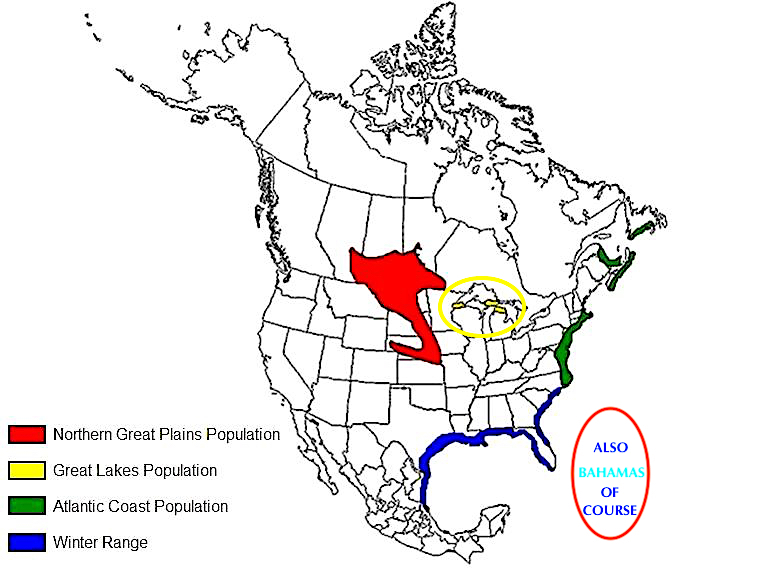
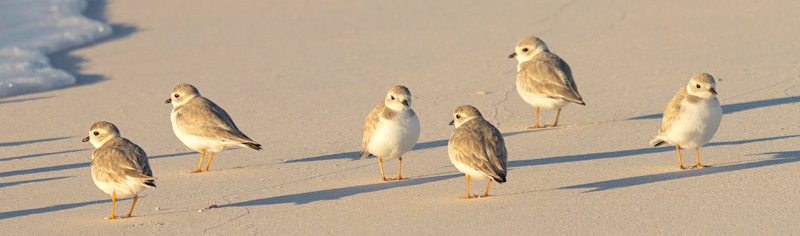
Hello again, readers of Mr Harbour’s blog. My name is Tuna. This is the second part of my diary. Last time he called it an ‘autobiography’, but that was a bit pompous of him, I think. It’s 4 months now since I cracked out and after my long trip from that place [the Holgate Unit of the Edwin B Forsythe National Wildlife Refuge, New Jersey – ed.], I’m having a good time on Abaco – see my picture above. Michelle, who put my 4 cool rings on when I was one day old, would be proud of me I think.
Since my last post some things have been happening to me. There I was, safely on my nice beach [Watching Bay, Cherokee Sound – map below] when the wind started to get scary and the sea kept coming further up the beach. And a whole lot more splashy [it was Hurricane Joaquin – ed.]. So I just hid at the back of the beach until it got better again. I knew if that nice lady came back to see me it would mean I could come out again. And she did. So I did. I showed her my bands so she’d know it was me. Green on blue; black on gray. That’s me and no other bird.
Showing Rhonda my bands so she knows me
Mr Harbour wrote and told people about how I was ok after a big storm. He said:
“TUNA THE PIPL: UNRUFFLED BY HURRICANE JOAQUIN” Oct 3. Despite big seas & high winds reaching N Baha on the fringes of the hurricane, Tuna has returned safely to Watching Bay. Photos clearly showing bands. π Rhonda Pearce”
A lot of people [c2000] read about this and Michelle said “yay!!! go tuna!!!”, so maybe people had been a bit worried about me. People passed the story round. What ever a ‘Chorlito Valiente’ is, it sounds good and I’m glad to be one. I’m doing just fine, thank you…
Since then I had THE BEST NEWS. My mum Paula has been found! She’s gone to a different beach that’s not very close to here [Joulter Cays, Andros – 100 miles]. She’s got a different leg thing called a “UR Green Flag PE2” and somebody saw her! I’m so excited (and I hope my dad Ross is safe too). She was in a crowd of 32 other birds just like her, and a lot of other birds friends too.
Joulter Cays, Andros, Sep 28. Thousands of shorebirds including over 100 PIPL. Including Paula.
Tuna’s mum Paula, one of a group of 32 piping plovers on Joulter Cays
UR Green Flag PE2 aka Paula
Joulter Cays, pinpointing Paula’s exact position 25.304095; -78.126642
I hope if I get that feeling again that I need to fly a long way, my mum gets it too. And my dad. Then we might all end up on the same beach where I cracked out! But I’m planning to stay on my own beach for now. More news from me soon. Cheeps from Tuna.
TUNA’S FIRST FOUR MONTHS

NOTE If you ever wondered why birds are banded and what on earth use it is, the answer is in this story. Banding & tagging enables detailed research at both ends of the migration which in turn enables protection of the species and conservation of threatened habitats. There are only 8000 PIPL left. Degradation of the breeding grounds or the overwintering grounds – let alone both – may result in extinction. This seems to have been a good summer for the piping plover; let’s hope the winter treats them well so that this summer’s chicks like Tuna will be able to breed safely next year.
This Diary extract shows that not only can an individual banded bird’s migration movements be monitored, but also (with a bit of luck) a parent or sibling – even though they may chose to overwinter in quite different places. It is of particular significance if they then return to the same area in summer for breeding.
For details of all this season’s PIPL sightings, check out ABACO PIPING PLOVER WATCH
CONSERVE WILDLIFE FOUNDATION of NJ
Credits: thanks to bander Michelle Stantial, birder Rhonda Pearce, CWFNJ & cohorts, Matt Jeffery and all other providers of info snippets; Birdorable for the cartoon; and as ever Xeno-Canto for the recording
You must be logged in to post a comment.