Unknown's avatar

KILLDEER: PICTURE PERFECT ON ABACO (2)

KILLDEER: PICTURE PERFECT ON ABACO (2)

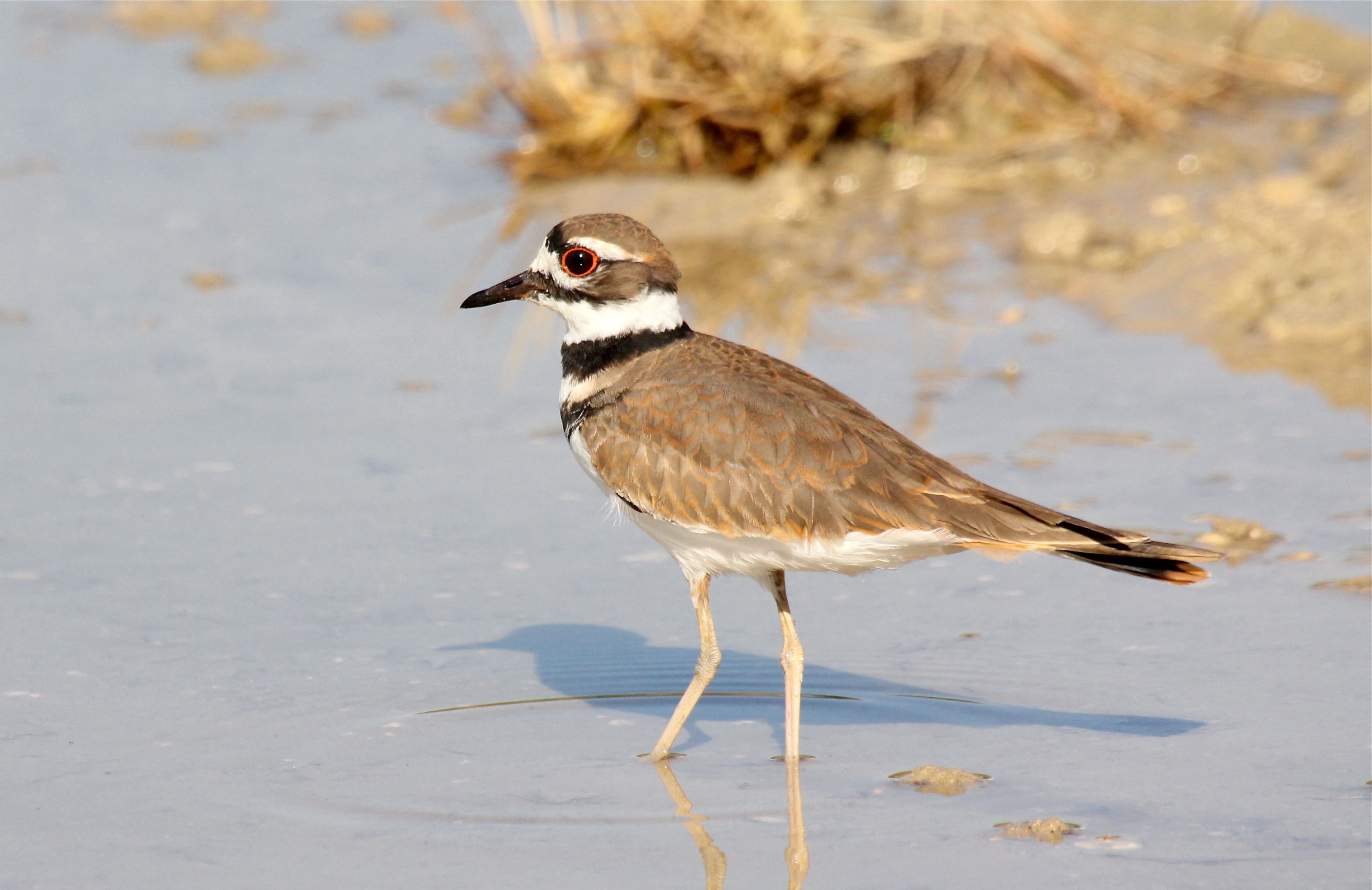
Killdeer, Abaco Bahamas (Bruce Hallett / Birds of Abaco)

For the time being, while things are a bit crazy, I’ll be posting single / pairs of images that in my view are so excellent that they stand alone without needing any comment from me, annoying wordplay, or musical digressions. All have been taken on Abaco Bahamas. Only some will be my own – the bar is set at a DSLR height that exceeds my camera skills. 

Credit: Bruce Hallett

Unknown's avatar

RUDDY TURNSTONES: PICTURE PERFECT ON ABACO (1)

RUDDY TURNSTONES: PICTURE PERFECT ON ABACO (1)

Ruddy Turnstone, the Marls, Abaco, Bahamas (Tom Sheley)

I very rarely – almost never –  publish single or pairs of images, not least because I enjoy the bits of research and writing that cover a topic more thoroughly. However, today I was going through the photographic archive from my book BIRDS OF ABACO and came across these RUTUs photographed on the Marls by contributor Tom Sheley.

TBH turnstones are among the easiest shorebirds to photograph. They are pleasingly tame, so you can get quite close to them without ruffling their feathers. They aren’t tiny and they are pretty and quite colourful. And they are fairly abundant and so not hard to locate… but they make it hard to get a really good bright, clear photo. Or is that just me…? Anyway, Tom definitely has the camera skills required.

Ruddy Turnstone, Abaco, Bahamas (Tom Sheley)

Unknown's avatar

ON THE WING: BLACK-NECKED STILTS, ABACO, BAHAMAS

Black-necked Stilt in flight, Abaco Bahamas (Alex Hughes)

ON THE WING: BLACK-NECKED STILTS, ABACO, BAHAMAS

Black-necked stilts Himantopus mexicanus may be the most elegant shorebirds you will ever see. They are permanent residents on Abaco and not uncommon where they are found. It could be on a beach; more likely it will be in or around brackish ponds. It won’t be in the pine forest or coppice.

Black-necked Stilt in flight, Abaco Bahamas (Alex Hughes)

The rather disorganised stilt flying in the header image rather undercuts my claim for elegance, I realise. The image above of the bird at full stretch against a background of waves gives a much better idea of the beauty of this species. 

Black-necked Stilt in flight, Abaco Bahamas (Alex Hughes)

Gilpin Pond is a good place to see stilts, and in summer they nest around the perimeter. A word of warning: they may be aggressive in the breeding season. I got too near a nest once and the female shouted at me then flew straight at my head. I hadn’t even realised there was a nest there until this happened, so her actions rather give the game away.

Black-necked Stilt in flight, Abaco Bahamas (Alex Hughes)

In common with some smaller shorebird species – for example, plovers and killdeer – the stilts have another defensive method to protect their young, a so-called ‘distraction display’. When their nest is under threat,  one of the adults will pretend to have a damaged or broken wing and so be unable to fly. It will flutter feebly along the ground, moving further and further away from the nest, diverting attention from it. It’s an amazing sight to watch the tactic in action. Check out this video to see examples of this behaviour.

Credits: all photos by Alex Hughes, one of the photographic contributors to The Birds of Abaco; video Nat Bel

Unknown's avatar

‘EGYPTIAN MUMMY’ (aka MOTHER GOOSE) & HER BROOD

Egyptian Goose Alopochen aegyptiaca (Keith Salvesen / Rolling Harbour)

‘EGYPTIAN MUMMY’ (aka MOTHER GOOSE) & HER BROOD

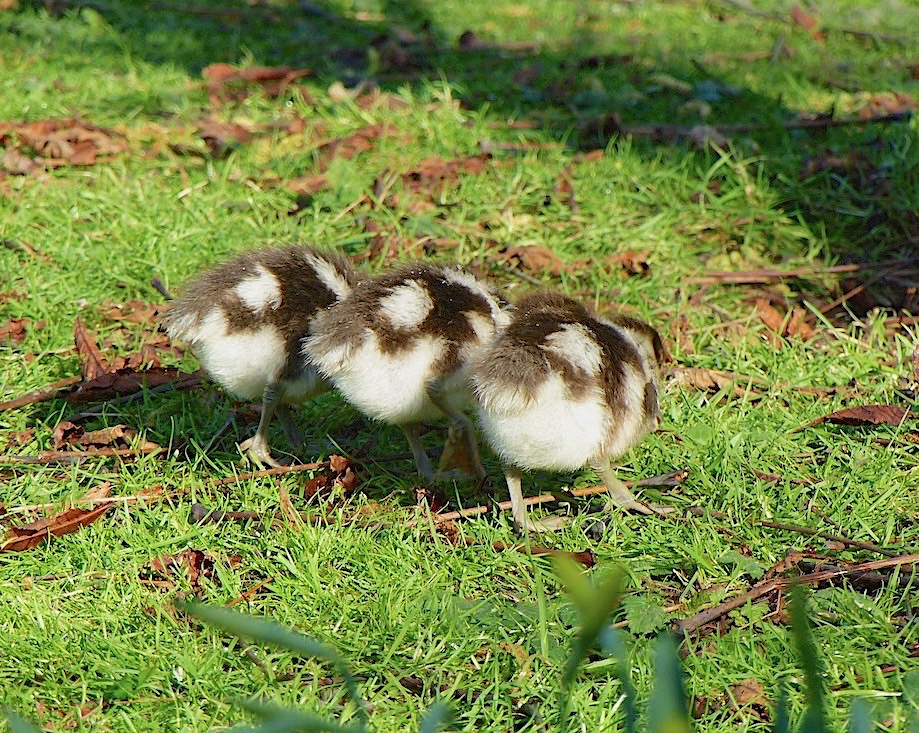
This post has little to do with Abaco, and only a tenuous connection with the Bahamas. It is about birds, though, so I’ll justify it that way. This is today’s news and these are photos I took this morning in a park that is less than 10 minutes walk from our house. The reason? I’d heard that goslings had been seen at the small lake there, remarkably early in the year for any bird.

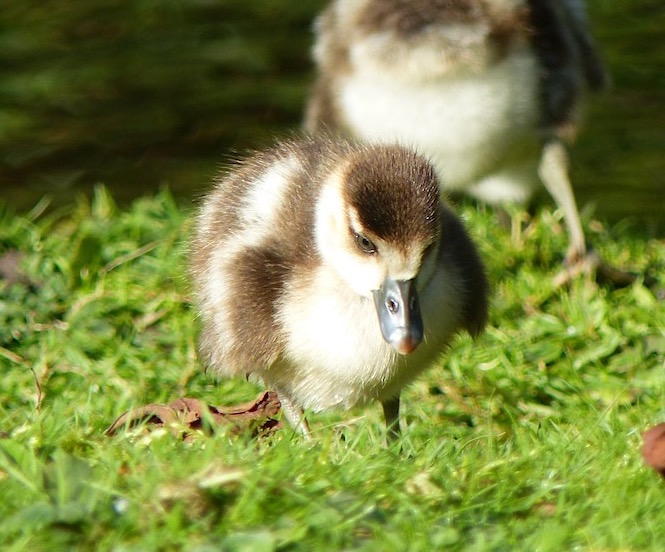
Egyptian Goose Alopochen aegyptiaca Gosling (Keith Salvesen / Rolling Harbour)

I had expected that this rumour related to the Canada geese that lord it over the smaller waterfowl (moorhens, coots, mallards, tufted ducks and so on). What I saw, as I got close to the lake, was a pair of Egyptian geese Alopochen aegyptiaca. And, true to the report, they had goslings with them. There were 10 in all and they were jointly and severally (as we lawyers say) totally adorbs and charmsy.

Egyptian Goose Alopochen aegyptiaca (Keith Salvesen / Rolling Harbour)

These are birds of Africa, but – like Canada geese – have spread far and wide mainly as the result of introduction by man. The Egyptians considered them sacred and featured them in hieroglyphs. Modern man has deemed them ornamental (cf peafowl) and removed them from their home to pastures new. Geese are robust, so they adapted in their new environment with relative ease. 

Egyptian Goose Alopochen aegyptiaca (Keith Salvesen / Rolling Harbour)

As with many other transferred species, birds inevitably escaped from their ‘owners’ and feral populations soon became established. In Abaco terms, this is exactly what happened with the peafowl that were brought to the ‘Different of Abaco’ fishing lodge. The birds survived its demise, lived and bred in the increasingly wild grounds, and are now many generations on.

Egyptian Goose Alopochen aegyptiaca (Keith Salvesen / Rolling Harbour)

At some stage, the Egyptian goose was introduced in Florida, where it thrived. Nowadays it is not a particularly unusual bird there.  It remains one of the birds of south-east US that has never made the relatively short journey to Abaco. There are however a handful of reports from Grand Bahama, New Providence and Eleuthera, so northern Bahamas is in range.

Egyptian Goose Alopochen aegyptiaca (Keith Salvesen / Rolling Harbour)

It’s probably only a matter of time before these geese turn up on Abaco. Five years ago, the first BLACK-BELLIED WHISTLING DUCKS were found, a flock of 6 seen several times as they progressed from Crossing Rocks north to the airport. There are still the occasional sightings of these ducks, the last about 2 weeks ago north of Marsh Harbour. The Egyptian goose is a fine bird and part of me (the part that doesn’t disapprove of avian introductions) hopes that they do occasionally undertake the journey from the flocks in Florida. 

Egyptian Goose Alopochen aegyptiaca (Keith Salvesen / Rolling Harbour)

All photos: Keith Salvesen / Rolling Harbour Abaco

That’s all, folksEgyptian Goose Alopochen aegyptiaca (Keith Salvesen / Rolling Harbour)

Unknown's avatar

PIPING PLOVERS: ABACO’S RARE WINTER RESIDENTS

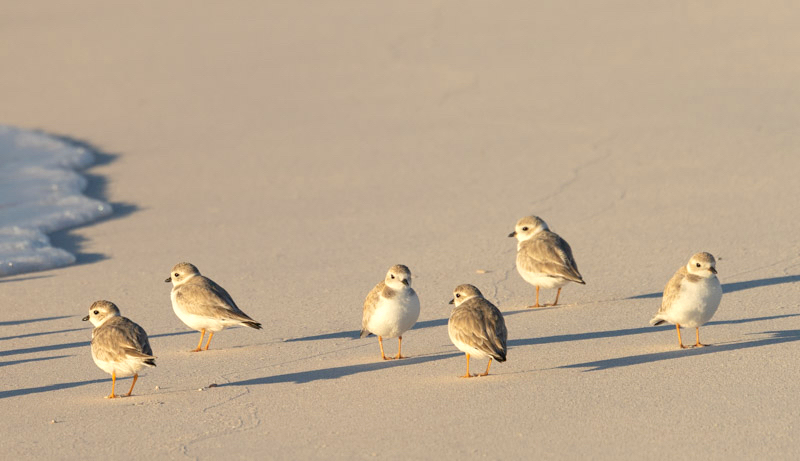
Piping Plovers, Winding Bay, Abaco, Bahamas (Lisa Davies)

PIPING PLOVERS: ABACO’S RARE WINTER RESIDENTS

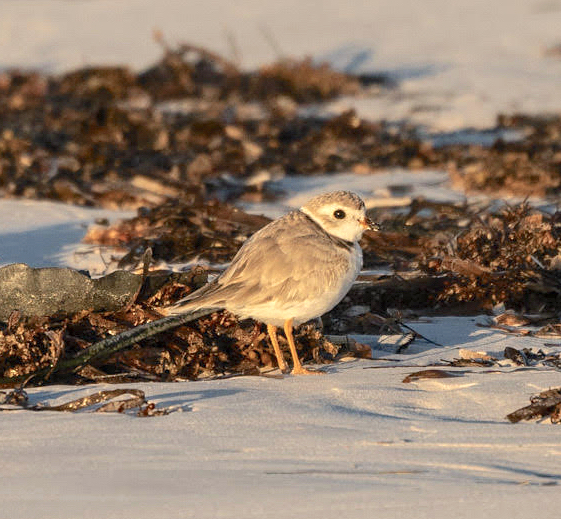
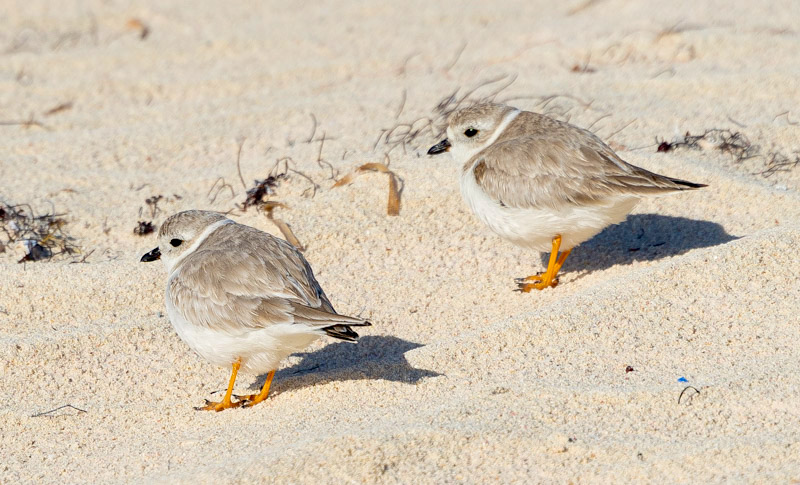
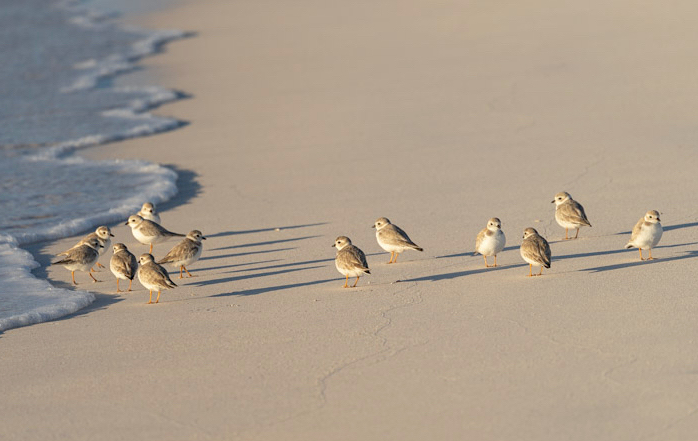
PIPING PLOVERS Charadrius melodus are specialist shorebirds on Abaco. For a start, they are very rare – the IUCN listing suggests a population of only 8000 mature birds in the world. They are both scarce numerically and limited geographically.

These tiny plovers breed only in a few defined areas of North America – areas that are rapidly reducing mostly for all the usual depressing human-derived causes, for example the exercise of man’s alienable right from time immemorial to drive vehicles all over the nesting sites in the breeding season. The birds are unsurprisingly IUCN listed as ‘near-threatened’. 

Piping Plovers, Winding Bay, Abaco, Bahamas (Lisa Davies)

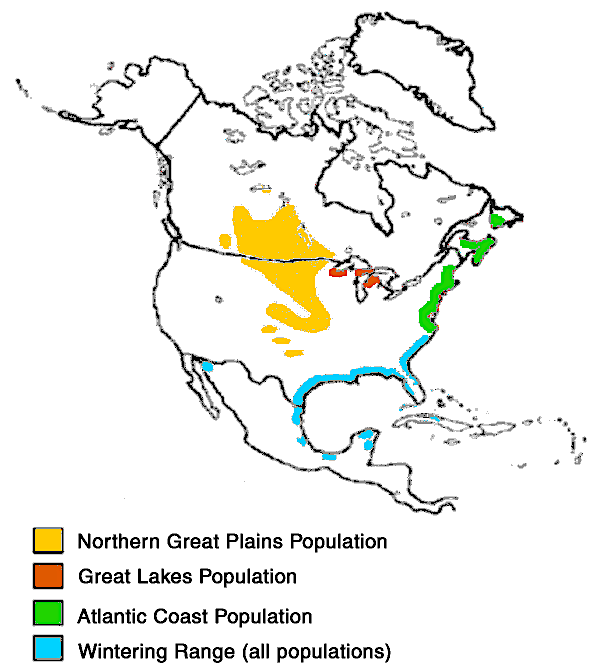
Piping Plovers breed and nest in the north and produce their chicks. The chicks soon learn to be independent and to fly. From about mid-July, those adults and chicks that have avoided the wheels of the SUVs, the unleashed  dogs in the areas set aside for nesting, and the more natural dangers from gulls, start to get the urge to fly south for the winter. The range of their winter grounds is shown in blue on the range map above. It includes the Bahamas in general and Abaco in particular.

Piping Plovers, Winding Bay, Abaco, Bahamas (Lisa Davies)

Q. WHY ARE THEY CALLED PIPING PLOVERS? A. BECAUSE OF THIS!

Paul Turgeon

I will return soon to the significance of the safe, clean beaches of Abaco and the healthy habitat for the survival of this remarkable little bird. For now, I’ll simply say that loss of habitat, and an increase in the nature and / or extent of environmental threats at either end of the migration, may seriously damage the survival of the species. It follows that habitat degradation at both ends of the migration could see the IUCN listing progress rapidly to vulnerable, endangered, critically endangered and… well, the next category is ‘extinct in the wild’. 

Piping Plovers, Winding Bay, Abaco, Bahamas (Lisa Davies)

If you are interested in shorebirds, in bird migration, in research into bird movements, and in the reason migratory birds are banded, you can find out more at ABACO PIPING PLOVER WATCH. This is the only season-long research project in the Bahamas, and involves Citizen Scientists on Abaco in the south working with partner Proper Scientists in the breeding grounds in the north. Early next month I will write a follow-up post on these topics. 

Piping Plovers, Winding Bay, Abaco, Bahamas (Lisa Davies)

The photographs in this post were taken a few days ago on the long crescent of beach at Winding Bay, Abaco by Lisa Davies. Her contribution is precious because the APPW project mentioned above was for many reasons in danger of stalling as the result of the devastating effects of Hurricane Dorian on almost every aspect of island life. Lisa’s discovery of a small flock of a dozen plovers in the sunshine has given impetus to the project – and has resulted in some superb photos.

Piping Plovers, Winding Bay, Abaco, Bahamas (Lisa Davies)

Credits: All photos by Lisa Davies; audio call, Paul Turgeon / Xeno-Canto; range map from WIKI

Piping Plovers, Winding Bay, Abaco, Bahamas (Lisa Davies)

Unknown's avatar

WHITE-CHEEKED PINTAILS and BAHAMA DUCKLINGS

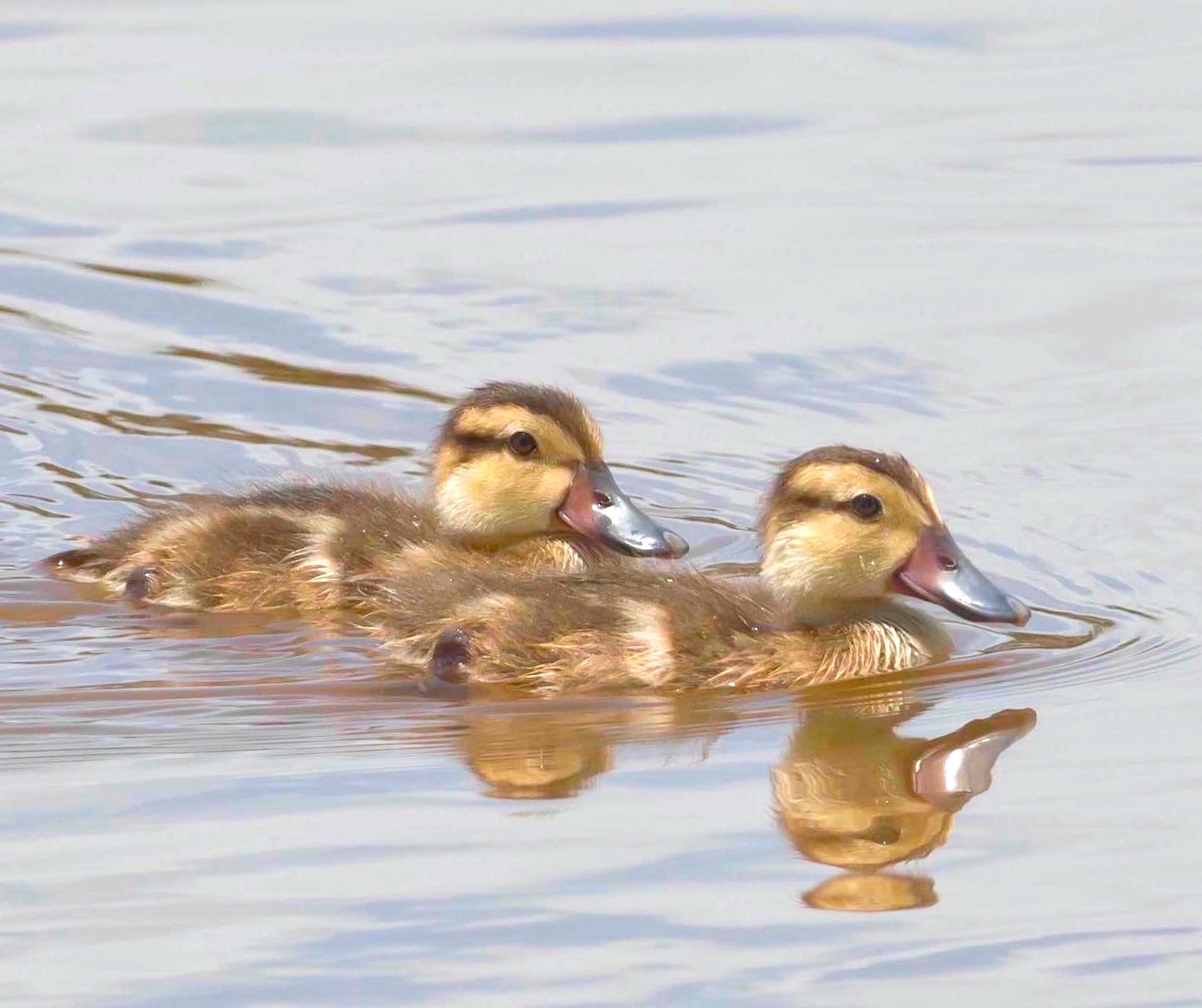
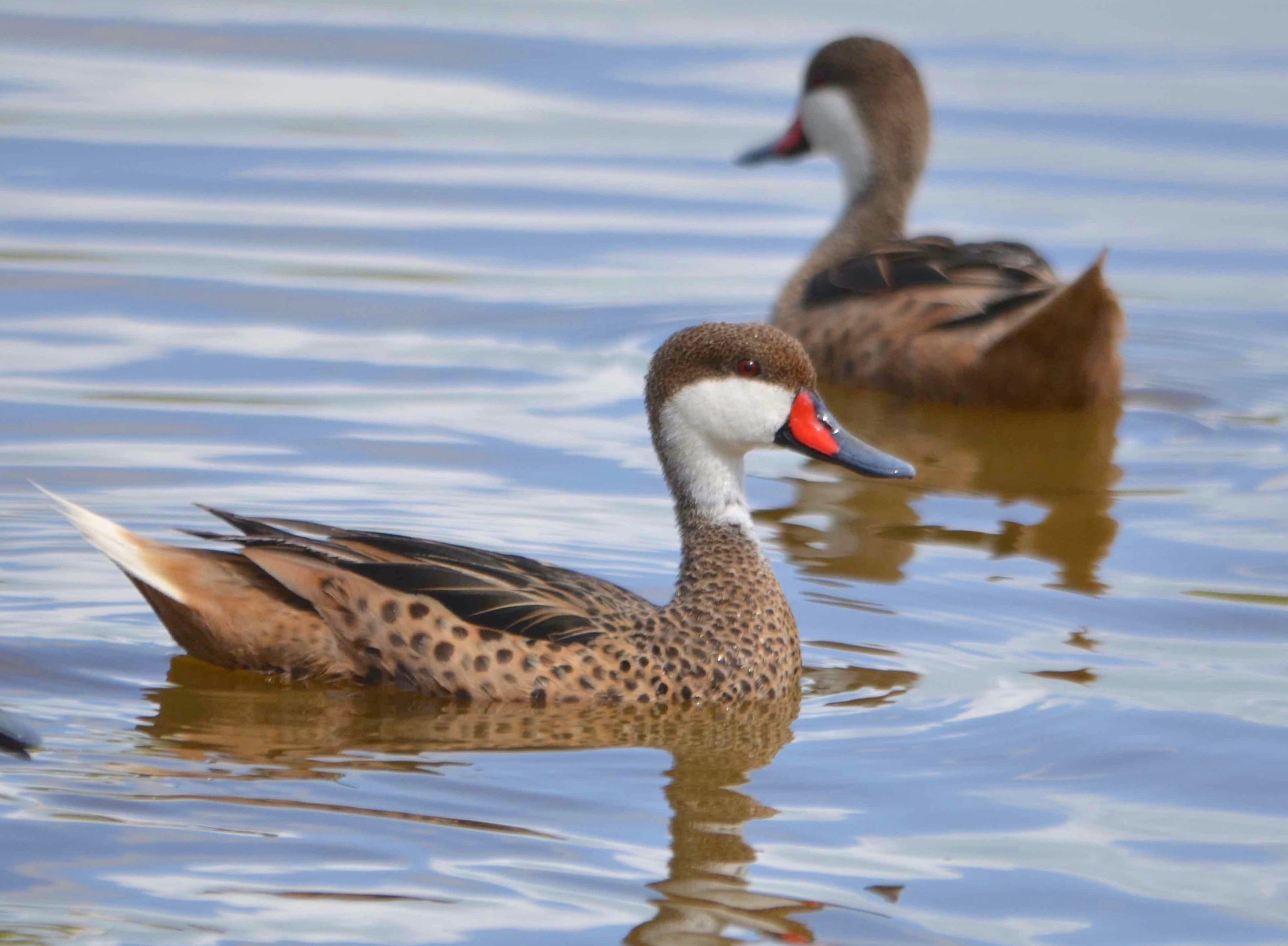
White-cheeked Pintail / Bahama Pintail Ducklings (Tom Sheley)

WHITE-CHEEKED PINTAILS and BAHAMA DUCKLINGS

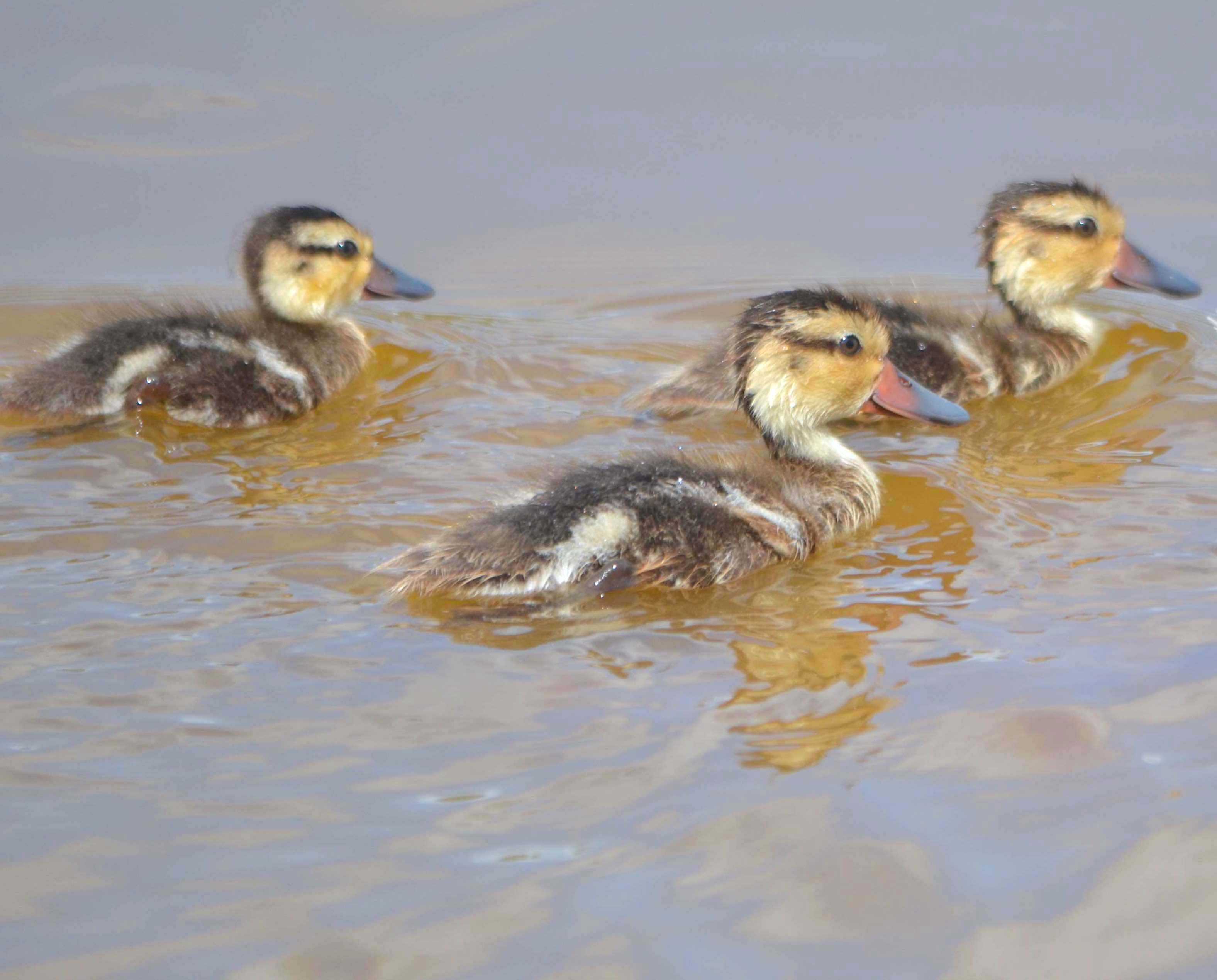
The white-cheeked (‘Bahama’) pintail Anas bahamensis (aka ‘Bahama duck’) is everyone’s favourite dabbling duck. Or at least it ought to be. And when there are ducklings swimming with the adults, there is no emoticon yet devised that will convey the extremes of cuteness achieved.

White-cheeked Pintail / Bahama Pintail Ducklings (Charles Skinner)      White-cheeked Pintail / Bahama Pintail Ducklings (Charles Skinner)White-cheeked Pintail / Bahama Pintail Ducklings (Charles Skinner)

White-cheeked Pintail / Bahama Pintail Ducklings (Tom Sheley) White-cheeked Pintail / Bahama Pintail Ducklings (Charles Skinner) White-cheeked Pintail / Bahama Pintail Ducklings (Tom Sheley)  White-cheeked Pintail / Bahama Pintail Ducklings (Charles Skinner)

Credits: all absolutely adorbs  photos are by Tom Sheley & Charles Skinner

White-cheeked Pintail / Bahama Pintail Ducklings (Charles Skinner)

Unknown's avatar

CHRISTMAS-COLOURED BIRDS 2: ABACO PARROT

CHRISTMAS-COLOURED BIRDS 2: ABACO PARROT

A VERY HAPPY TO ALL FOLLOWERS OF ROLLING HARBOUR…

…AND TO EACH AND EVERY RANDOM DROP-BY TOO!

SEE YOU NEXT DECADE!

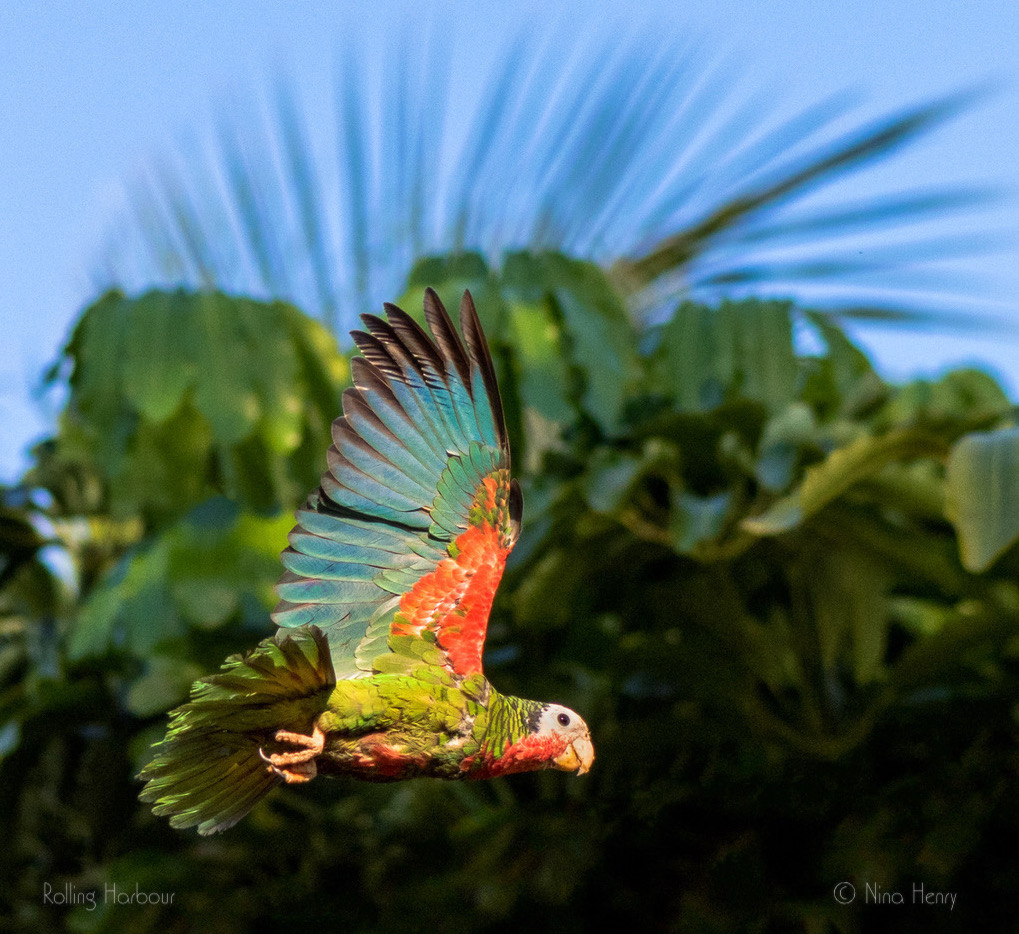
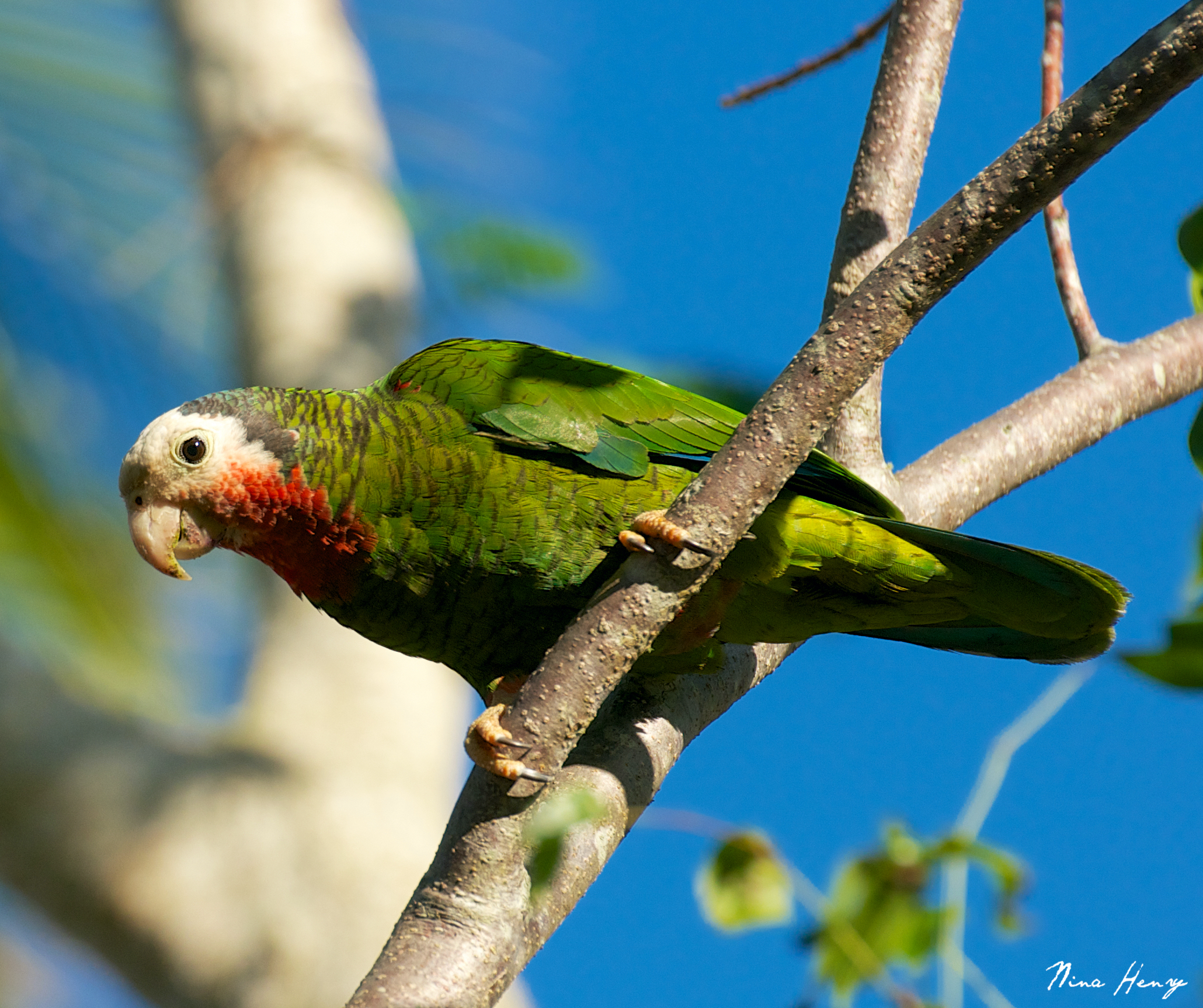
Abaco Parrot, Bahamas (Nina Henry)

Credit: Nina Henry, photographed on Abaco, Bahamas for “The Birds of Abaco”


Unknown's avatar

BAHAMA WARBLER: ABACO’S NEWEST ENDEMIC RESIDENT

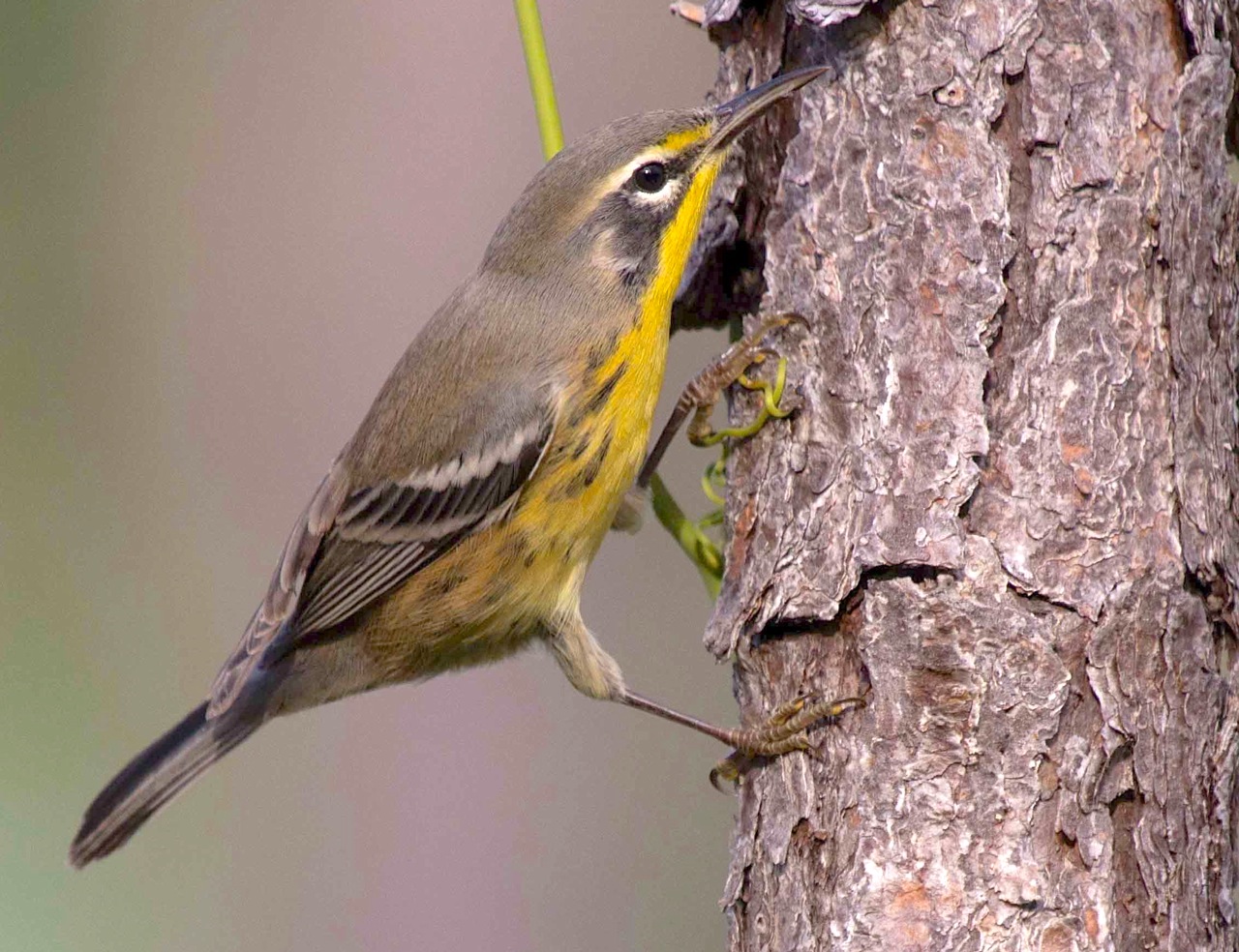
Bahama Warbler, Abaco Bahamas (Alex Hughes) BAHAMA WARBLER: ABACO’S NEWEST ENDEMIC RESIDENT

I was looking at the list of the dozens of Abaco bird species I have featured over the years, when I was struck by the complete omission of one of Abaco’s most significant small birds – the Bahama Warbler Setophaga flavescens. This warbler species is of the most important in the Bahamas for several reasons, any one of which should have prompted me to showcase this lovely bird before now.

Bahama Warbler, Abaco Bahamas (Bruce Hallett)

A SPECIALITY BIRD

The Bahama warbler is a significant species with a near-unique status in the Bahamas:

  • Found only on Abaco and Grand Bahama
  • One of only 5 bird species endemic to the Bahamas
  • One of only 2 endemic warbler species on Abaco (with the BAHAMA YELLOWTHROAT)
  • One of only 5 permanent year-round resident warblers (33 others are migratory), the other 3 being the OLIVE-CAPPED, YELLOW, and PINE warblers.

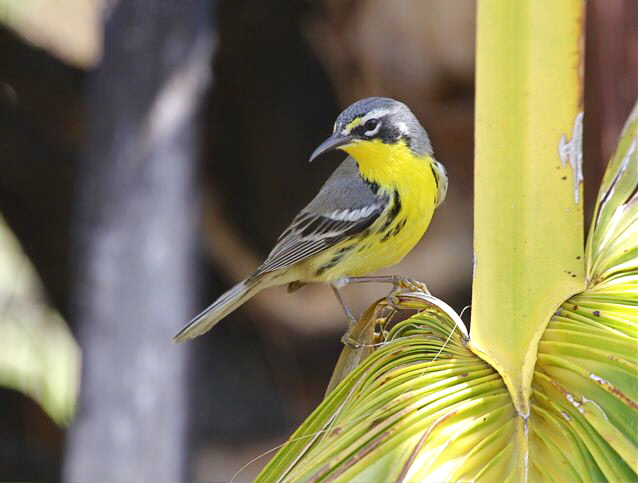
Bahama Warbler Abaco (Woody Bracey)

Until 2011, the BAWA was classified as a subspecies of the YELLOW-THROATED WARBLER. The ornithological powers-that-be then recognised that the two species were distinct in both appearance and in vocalisation, and split them into separate species (this splitting / amalgamating process occurs annually and plays havoc with the precious ‘Life Lists’ kept with such rigour by ardent birders**.

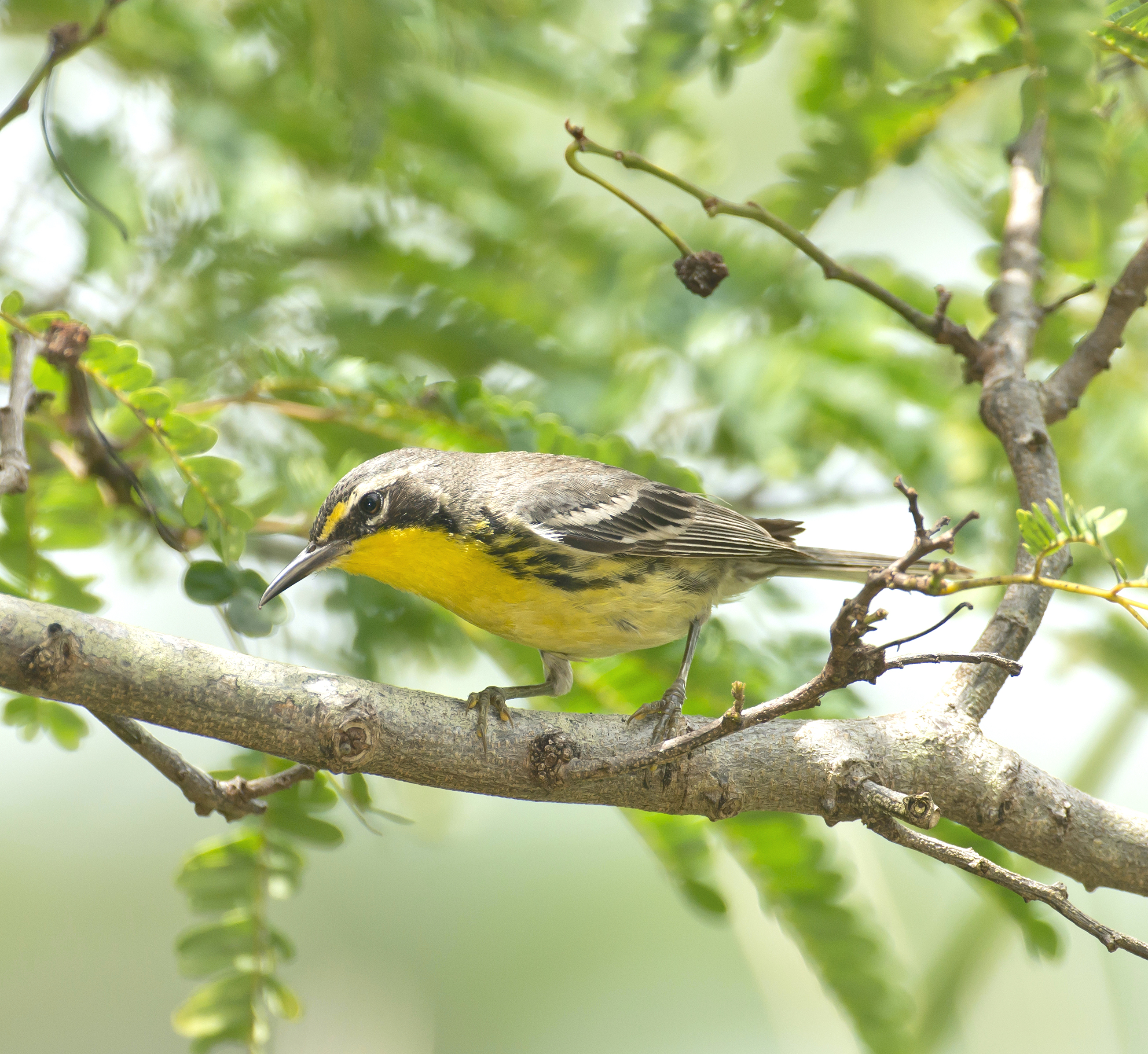
Bahama Warbler, Abaco Bahamas (Alex Hughes)

The BAWA has such a confined range that even the extensive reach of the wonderful Cornell Lab of Ornithology has not got as far as this bird. The info sections of the otherwise comprehensive website for Neotropical Birds are blank and waiting for someone to upload some details. Here are a few facts in one of a very good series of info-graphics produced by the BAHAMAS NATIONAL TRUST.

BNT infographic Bahama Warbler

** I have never even started a Life List, which demonstrates just how lightweight I am as a bird person

Bahama Warbler, Abaco Bahamas (Tom Sheley)

Credits: Alex Hughes (1, 4); Bruce Hallett (2, 6); Woody Bracey (3); Tom Sheley (5); Range Map, Cornell; Info G, BNT

Bahama Warbler, Abaco Bahamas (Bruce Hallett)

Unknown's avatar

ABACO HUMMINGBIRDS: WHAT’S THE NEWS?

BAHAMA WOODSTAR (F) ABACO - TARA LAVALLEE

ABACO HUMMINGBIRDS: WHAT’S THE NEWS?

SIGHTINGS POST-DORIAN

Since the hurricane struck nearly 3 months ago, order is slowly being imposed on the chaos. Debris is being removed in vast quantities, building repairs are in progress, shops and some businesses are starting to open – and even (only last week) a bank. 

BAHAMA WOODSTAR (M) ABACO - BRUCE HALLETT

Specific bird news from Abaco post-Dorian is sporadic, with people having plenty of other concerns at the moment and for some time yet. The wellbeing of the parrots has been checked during a scientific survey last month. There is infrequent but positive news of the shorebirds, especially of the piping plovers that are counted each winter season. There have been some reports of the warblers (of which there are an astonishing 38 species recorded for the Island and its cays).

CUBAN EMERALD (M) ABACO BAHAMAS (KEITH SALVESEN / ROLLING HARBOUR)

As yet, I have seen no recent mentions at all in SocMed about the hummingbirds – the endemic Bahama Woodstar (#1 F; #2 M); and the Cuban Emerald (#3 F; #4 M). Are they around? Is anyone seeing them darting about like jinking bullets or feeding on flowers on the hover? I’m not on-island, so I’d be very pleased to know: are the hummers still humming?

CUBAN EMERALD (F) ABACO BAHAMAS (KEITH SALVESEN / ROLLING HARBOUR)

Photos: Tara Lavallee (1); Bruce Hallett (2); Keith Salvesen / Rolling Harbour Abaco (3), (4)

Unknown's avatar

‘LIKE’ THE CLAPPERS: ON THE RAILS IN ABACO

Clapper Rail preening, Abaco Bahamas (Tom Sheley)

‘LIKE’ THE CLAPPERS: ON THE RAILS IN ABACO

CLAPPER RAILS Rallus crepitans are elusive birds of mangrove swamp and marsh, more frequently heard than seen. They tend to lurk around in foliage and are easy to overlook. They are creatures of the margins rather than open ground. You may come across one foraging secretively, beak-deep in the mud.

Clapper Rail stretching.Abaco Bahamas - Tom Sheley ("The Birds of Abaco" by Keith Salvesen, p80)

Tom Sheley’s wonderful photos featured here of a preening clapper rail were taken during our backcountry explorations to locate and photograph species for BIRDS OF ABACO.  By being  both patient and an early riser, Tom managed to capture this fine bird engaging in some quality grooming. The one below is ‘vocalising’ – known in rails as ‘rousing’ – in mid-preen.

Clapper Rail rousing.Abaco Bahamas.Tom Sheley

Clapper rails are capable of swimming and even of flying if they choose to. However the most likely activities you are likely to observe will be skulking,  picking their way through marginal  vegetation, or (if you are lucky) doing some beak-deep foraging in the mud. Occasionally they run, a process that looks endearingly comical and which possibly gives rise to their name. 

Clapper Rail running, Abaco Bahamas (Erik Gauger))

Clapper Rail running, Abaco Bahamas (Sandy Walker)

It almost goes without saying nowadays, but the biggest threat to these rather charming inoffensive birds is habitat loss. Which is to say, mankind either directly or indirectly. Drive the bulldozers through the mangroves and marshland of sub-tropical coastal areas, chuck down a few acres of concrete… and the clappers will very soon become clapped out. As they will if the climate we are unarguably changing ruins their unobtrusive lives.

COMPULSORY LINGUISTIC STUDY

When I last wrote about this species its binomial name was Rallus longirostris ie simply ‘long-beaked rail’. Since then the increasingly frenetic annual turmoil of official AOU shuffling species about and messing with their names has resulted in the clapper rail being re-designated Rallus crepitans or ‘rattling / rustling rail’, I assume from the call. There are other rail-name innovations that, reading about them just now, made me crack open a beer instead of wanting to tell you about them.

OPTIONAL LINGUISTIC DIVERSION

“TO RUN LIKE THE CLAPPERS”. This phrase seems to be fairly recent, most likely originating as military (?Air Force) slang early in WW2 or possibly from earlier conflicts. Some suggest it is a rhyming slang bowdlerisation of ‘run like hell’ with ‘clapper(s)’ standing for ‘bell’, along the lines of the Cockney “I bought a brand new whistle” (whistle and flute = suit). Almost all plausible explanations relate to bells, and some argue that it simply reflects the rapid speed of the clapper of a vigorously rung handbell. This derivation as a link to the bird seems tenuous at best.

Photo credits:Tom Sheley, Sandy Walker, Erik Gauger, University of Amsterdam (print).

Clapper Rail preening.Abaco Bahamas.3.12.Tom Sheley copy

Unknown's avatar

SOME NICE PICS OF BAHAMAS WILDLIFE… WHILE TECHIES LABOUR

Ring-billed Gull, Abaco Bahamas (Nina Henry)

SOME NICE PICS OF BAHAMAS WILDLIFE…

WHILE TECHIES LABOUR

Western Spindalis, Abaco Bahamas (Keith Salvesen)

I’m never quite sure how far it’s permissible to go beyond ‘really pissed off’ about a tech problem. Anything much stronger seems a bit indulgent both in itself and especially when measured against the far-reaching despair experienced by many in far more important areas of life.

Northern Parula Warbler, Abaco Bahamas (Bruce Hallett)

I am just having a huge “Grrrrrrrrr” moment because my complex blog menu, with 3 rows of headings and carefully curated nests of drop-downs under each, has been scrubbed by persons or AI unknown. It’s several years of cumulative and (mostly) pleasurable organisational work up the spout.

As a Brit, may I be permitted to say ‘bother’. Or maybe ‘Dash it all?’ Or declare that I’m a mite cheesed orf? To which a fair response would be “it’s just a trivial inconvenience, get over it…”

Abaco Parrot (Craig Nash)

For the moment, here are some nice pics to enjoy, all taken on Abaco. I’m happy to say that right now, 7 weeks since Dorian, there are promising signs that in some areas of Abaco, the birds are starting to show themselves – including a few winter warblers. See you the other side of rethinking my Menu…

Conch shell, Schooner Bay Abaco Bahamas (Keith Salvesen)Western Spindalis, Abaco Bahamas (Keith Salvesen)

Credits: Nina Henry, Bruce Hallett, Mary Kay Beach, Craig Nash, Keith Salvesen / Rolling Harbour, Charlotte Dunn / BMMRO (western spindalis badge, moi)

Humpback Whale tailing, Abaco Bahamas (Charlotte Dunn / BMMRO)

Unknown's avatar

“THE BIRDS OF ABACO”: BOOKMAKERS (& GAMBLERS?)

Delphi Club Guide to the Birds of Abaco (Jacket)

“THE BIRDS OF ABACO”: BOOKMAKERS (& GAMBLERS?)

THE DELPHI CLUB GUIDE TO THE BIRDS OF ABACO

163 SPECIES, 350+ PHOTOS, 30 PHOTOGRAPHERS, 272 PAGES

Black-necked Stilt, Abaco Bahamas (Alex Hughes)

Black-necked Stilt – Alex Hughes

THE POST DORIAN PLANS

It is a truth universally acknowledged that, until 1 September 2019 when Dorian struck, Abaco was a prime birding location in the Bahamas archipelago, an island chain that stretches from the lower reaches of the temperate zone to the more exotic sub-tropical region. The judgement for ‘best birding location’ is both objective and subjective, and the criteria are flexible. However on any view Abaco scores highly in all avian categories: resident species, endemics, migratory birds, speciality species, vulnerable species, and extreme rarities.

We’ll have to wait some time before it is possible to tell what effects the devastating storm has had on the wildlife of the island and on its birding credentials…

Blue-gray Gnatcatcher vocalizing. Abaco Bahamas (Tom Sheley)

Blue-gray Gnatcatcher – Tom Sheley

BOOKMAKING

The Delphi Club Guide to THE BIRDS OF ABACO was published in March 2014. To say “I wrote it” would be a gross distortion of the truth: it was an entirely collaborative project. The originator of the idea – as with the entire Delphi Club project (now in new & expert hands) – was Peter Mantle. The book showcases the work of 30 photographers, including some outstanding contributions by islanders. There was huge input from the very experienced project manager (= Mrs RH, then of YUP) and from the top Bahamas bird experts – Woody Bracey, Tony White, Bruce Hallett, and Tony Hepburn, to name but 4. So although my name is on the cover, it is as a participant representing the contributions, camera skills and brainpower of many people.

Cuban Emerald (f) Gilpin, Abaco Bahamas (Keith Salvesen)

Cuban Emerald (f) – Keith Salvesen

GAMBLERS?

The book project was something of a gamble. When planning began, social media – and the facility to reach a wide audience – was significantly less active than it was soon to become. The book was launched at Delphi to generous enthusiasm and support both on Abaco and beyond, but the extent of the interest (and sales) that might be generated more widely was unknown. We predicted it might be a slow-grower, so we were astonished by the immediate positive response to the guide. Perhaps it helped that there was a wider purpose to the book than as a photographic showcase for Abaco’s rich birdlife – we donated copies to all Abaco schools, colleges, libraries and local wildlife organisations for educational purposes. A significant percentage of the profits was set aside for local wildlife causes and duly distributed. 

Moving on just 5 years to this summer, the limited edition of 500 had all but sold out; and around 100 free copies had been donated – or deposited (as required by UK Law) in specified institutions: British Library; National Library of Scotland; National Library of Wales; Bodleian Library, Oxford; University Library, Cambridge; and Library of Trinity College, Dublin.

Brown Pelican, Abaco Bahamas (Tom Sheley)

Brown Pelican – Tom Sheley

PRESENT FOR THE FUTURE?

Six weeks after Dorian, a semblance of normality is returning to the stricken island. Daily snippets of optimism are of great significance: a lost pet found after many days; a trashed plant defiantly putting out a flower; a pair of parrots screeching past; a boat recovered; a building slightly less damaged than feared. Recovered possessions from flooded houses have brought mixed emotions – heart-rending losses of precious items, yet also the unexpected recovery of possessions believed lost or destroyed. And in that context but far less emotionally, I have now had quite a few requests for replacement copies of “Birds of Abaco”.

Short-billed Dowitcher, Abaco (Bruce Hallett)

Short-billed dowitchers – Bruce Hallett

SO, ARE THERE ANY REPLACEMENT BIRD BOOKS LEFT?

The position in a conch-shell is this:

  • There are now no copies still available on Abaco. Former HQ (and book storage / fulfilment facility) The Delphi Cub changed hands a year ago, and no longer carries a stock of the books. 
  • In the UK, Peter Mantle and I have about a dozen between us that are, in one way or another, ring-fenced.
  • That’s it, I’m afraid.
Bridled Tern, Abaco Bahamas (Bruce Hallett)

Bridled Tern – Bruce Hallett

ARE YOU PLANNING TO REPRINT?

For several reasons, no – it’s not a viable proposition. Specifically:

  • the size & print-costs of such a large heavy (2 kgs) book
  • the specialist printing (eg in Italy) needed to retain the quality; and the associated shipping costs
  • the lack of any viable storage and / or fulfilment facilities on Abaco, or anywhere else suitable
  • the lack of a prominent ornithologically-minded literary-leaning benefactor with a kind smile & deep pockets
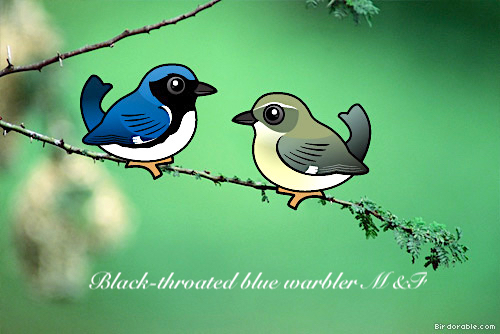
Black-throated blue warbler (Gerlinde Taurer)

Black-throated blue warbler – Gerlinde Taurer

CAN I STILL GET THE BOOK IN SOME OTHER FORM?

Yes! I hope. We are kicking around the following ideas in a general and inchoate way:

  • first, avoiding any system requiring storage or fulfilment (so, not a physical reprint)
  • using existing production material to create a Print-on-Demand book
  • turning the guide into an eBook (may be difficult / impossible with non-standard format)
  • most likely producing a full PDF (or similar) version for download and possibly printing
  • selecting sections – eg the definitive checklist – as individual downloads
  • considering other suggestions!

At the moment this is in the basket marked ‘non-urgent’, but the alternatives will be under active consideration.

Clapper Rail Abaco Bahamas Tom Sheley

Clapper Rail – Tom Sheley

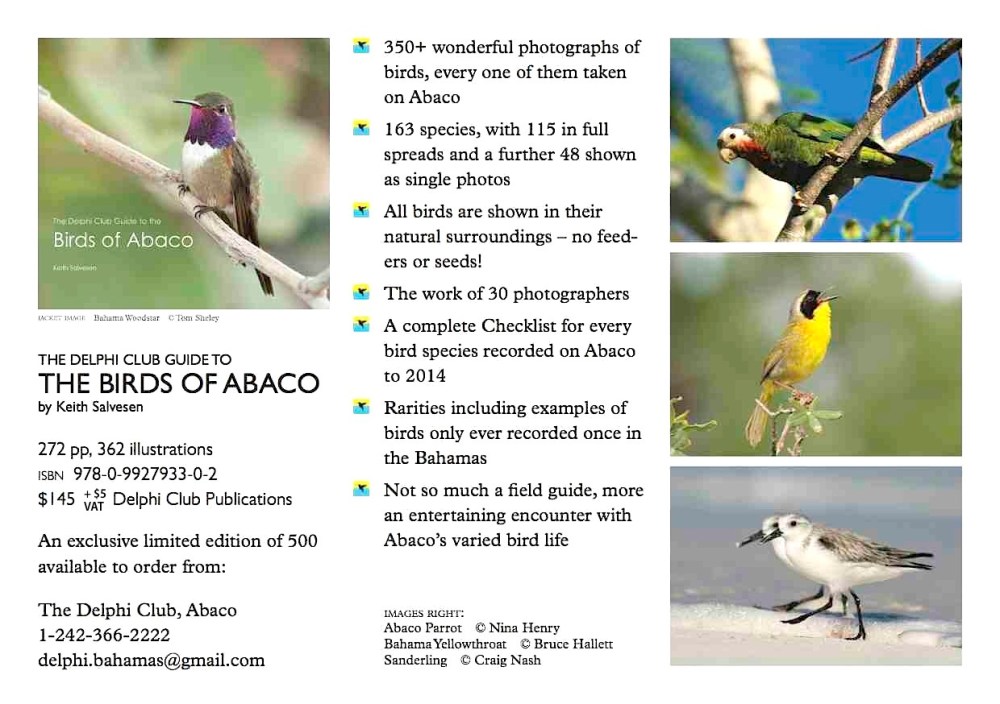
The original flyer for the book"Birds of Abaco" flyer

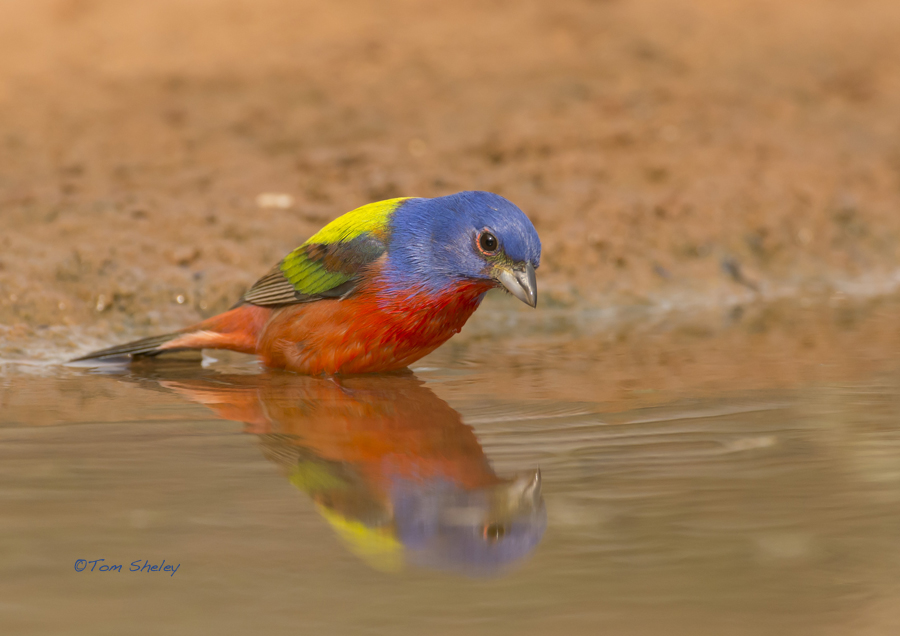
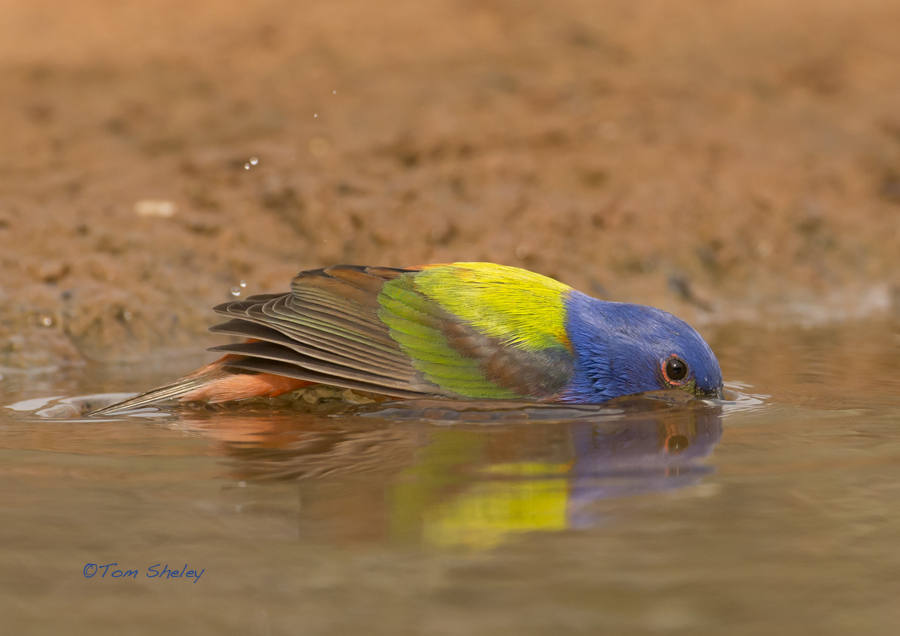
Painted Bunting male.Abaco Bahamas.Tom SheleyPainted Bunting Tom Sheley

Photos: Alex Hughes (1); Tom Sheley (2, 4, 9, 10); Keith Salvesen (3, 11); Bruce Hallett (5, 7); Gerlinde Taurer (8);  Charmaine Albury, para-breakers 

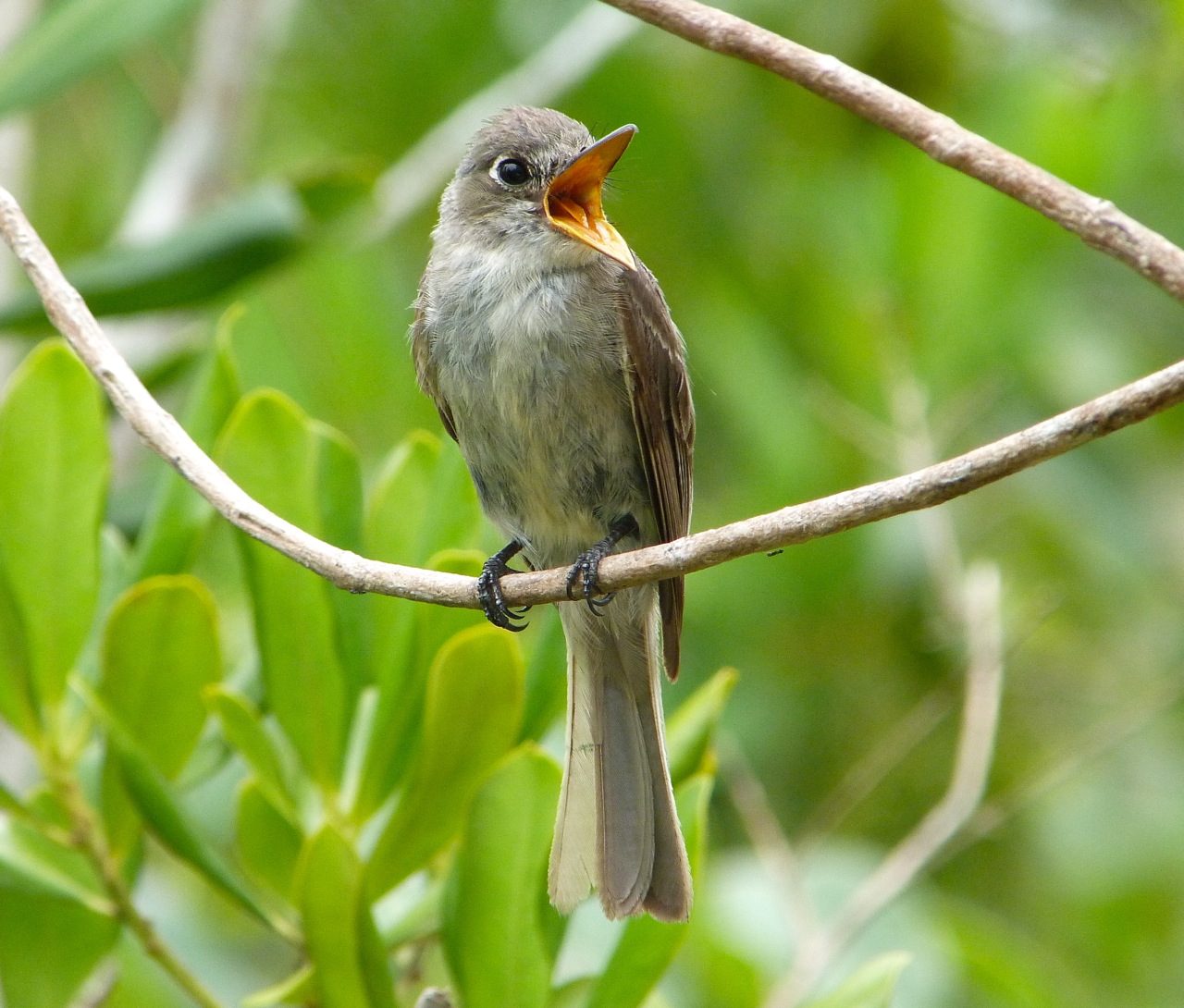
Cuban (Crescent-eyed) Pewee, Delphi, Abaco (Keith Salvesen)Cuban Pewee Keith Salvesen

Unknown's avatar

STICKING TOGETHER: BIRDS OF A FEATHER ON ABACO

Smooth-billed Ani Pair, Abaco Bahamas (Gerlinde Taurer / Birds of Abaco)

Smooth-billed Anis, Abaco – Gerlinde Taurer

STICKING TOGETHER: BIRDS OF A FEATHER

In times of trouble, of grief and of despair, humans have an instinct to rally round for the greater good. Right now, I am very conscious that on Abaco – and indeed Grand Bahama – there is little or no time or mental space for overmuch concern about the wildlife. I am safely distanced from the tragedies and dire misfortunes of the countless individuals, families and communities affected by Hurricane Dorian. In this post I simply offer some images of birds – all photographed on Abaco – that are bonded together as adults or adult and chick, as symbolic of the huge combined human efforts on Abaco to comfort, restore, and rebuild a shattered island.

Northern Bobwhite pair, Abaco Bahamas (Tom Sheley)

Northern Bobwhites, Abaco backcountry – Tom Sheley

Piping Plovers, Delphi Beach, Abaco Bahamas (Keith Salvesen / Rolling Harbour)

Piping Plover, Delphi Beach Abaco – Keith Salvesen

Abaco (Bahama) Parrots, Bahamas - Peter Mantle

Abaco Parrots – Peter Mantle

Neotropic Cormorants, Treasure Cay, Abaco Bahamas - Bruce Hallett

Neotropic Cormorants, Treasure Cay, Abaco – Bruce Hallett

Common Gallinule Adult & Chick, Abaco Bahamas - Tom Sheley

Common Gallinule adult & chick, Abaco – Tom Sheley

Wilson's Plover adult & chick, Abaco Bahamas - Sandy Walker

Wilson’s Plover adult & chick, Abaco Bahamas – Sandy Walker

American Oystercatcher pair, Abaco Bahamas - Tom Sheley

American Oystercatchers, Abaco Bahamas – Tom Sheley

CREDITS: Gerlinde Taurer (1); Tom Sheley (2, 6, 8); Keith Salvesen (3, 8); Peter Mantle (4); Bruce Hallett (5); Sandy Walker (7)

Sanderlings, Delphi Beach, Abaco Bahamas (Keith Salvesen / Rolling Harbour)

Sanderlings, Delphi Beach, Abaco Bahamas – Keith Salvesen

Unknown's avatar

‘THE BIRDS OF ABACO’: HURRICANE DORIAN RELIEF

Abaco (Bahama) Parrot - Melissa Maura

‘THE BIRDS OF ABACO’: HURRICANE DORIAN RELIEF

ABACO, BAHAMAS has been all but destroyed by Hurricane Dorian. The horrendous scale of the disaster in human terms alone is only now becoming clear as the days pass and new tragedies are revealed. Many established relief funds – international, national and local – are being very generously supported for the benefit of those who have suffered so grievously. I am adding to the number through my specific link to Abaco and its wildlife.

Black-necked Stilt, Abaco Bahamas (Alex Hughes)

GO FUND ME BIRDS

For obvious reasons, the GFM page (in edited form here) has a rather more formal , explicatory tone than I would usually use.

Sally and I were founder members of the Delphi Club, Abaco and retain strong connections with the island and the community. I run a conservation program for rare migratory plovers that overwinter on Abaco; and I am involved with BMMRO & its marine mammal research.


‘THE BIRDS OF ABACO’, of which I am the author, was published in 2014. The book was designed by Sally and published by Peter Mantle / The Delphi club. By the end of last year the edition had sold out, and all planned educational donations to schools, libraries and relevant organisations had been completed. 

Olive-capped Warbler, Abaco Bahamas (Tom Sheley)
However, I have a couple of dozen books left in the UK.  Through this fundraiser, I am offering a copy of the book in exchange for a donation of $150 (or the equivalent). The resulting fund (minus the cost of fulfilment from the UK) will be added to the funds achieved by the Delphi Club through their DORIAN RELIEF FUND .

A higher donation is of course encouraged; and please note, it is not compulsory to receive a bird book.  Smaller donations are extremely welcome too, and for those of $50+ I will offer the donors a high-res PDF of a bird of their choice from a selection of several significant species found on Abaco; or a PDF of the complete bird species checklist for Abaco. That’s voluntary too.

Cuban Pewee, Abaco Bahamas (Keith Salvesen / Rolling Harbour)


The original price of this large photographic book was $145. It showcases the wonderful birds of Abaco with contributions from 30 photographers. Almost all are either residents of Abaco, or have strong connections with – and affection for – the island and its cays. 

The books can be sent to Bahamas, USA, Canada and Europe. For any other destination, please contact me before you make a donation. Books will not be dispatched before October.

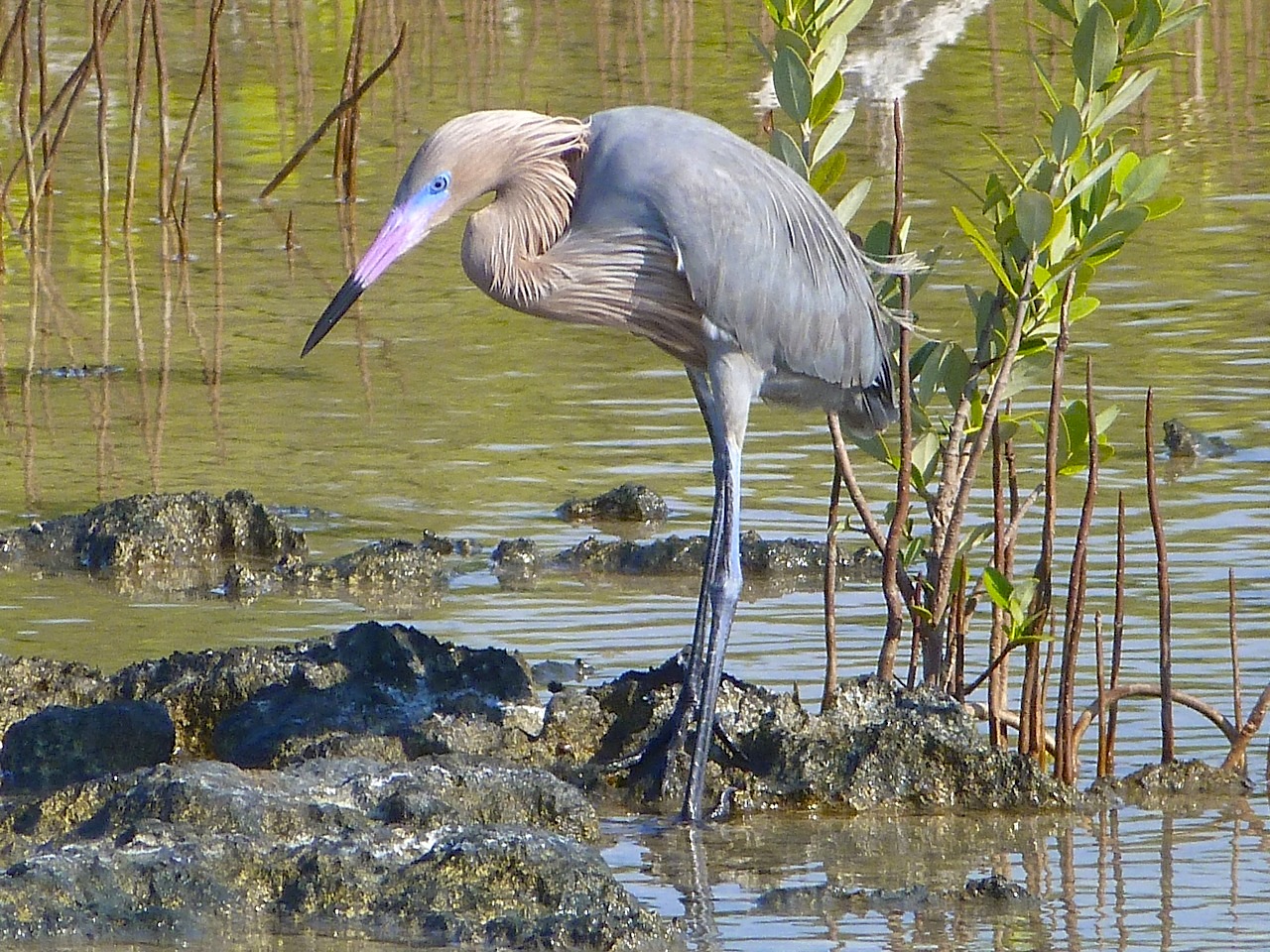
Reddish Egret, breeding colours - Abaco Bahamas (Keith Salvesen / Rolling Harbour)
Please note that the Delphi Club does not have a stock of books and is not directly involved with this fundraiser. Please contact me with any inquiries, even though the Club details are shown on the pre-publication flyer below.

Keith Salvesen

Rolling Harbour Abaco

Photo Credits: Melissa Maura – Abaco Parrot (1); Alex Hughes – Black-necked Stilt (2); Sally Salvesen – book jacket (3); Tom Sheley – Olive-capped Warbler (4); Keith Salvesen – Cuban Pewee; Reddish Egret in breeding plumage (5, 6)

Unknown's avatar

ABACO’S 38 WARBLERS: AN ILLUSTRATED ID GUIDE (Pt 1)

Olive-capped Warbler, Abaco Bahamas (©Tom Sheley)

Olive-capped Warbler (resident species), Abaco Bahamas (©Tom Sheley)

ABACO’S 38 WARBLERS: AN ILLUSTRATED ID GUIDE (Pt 1)

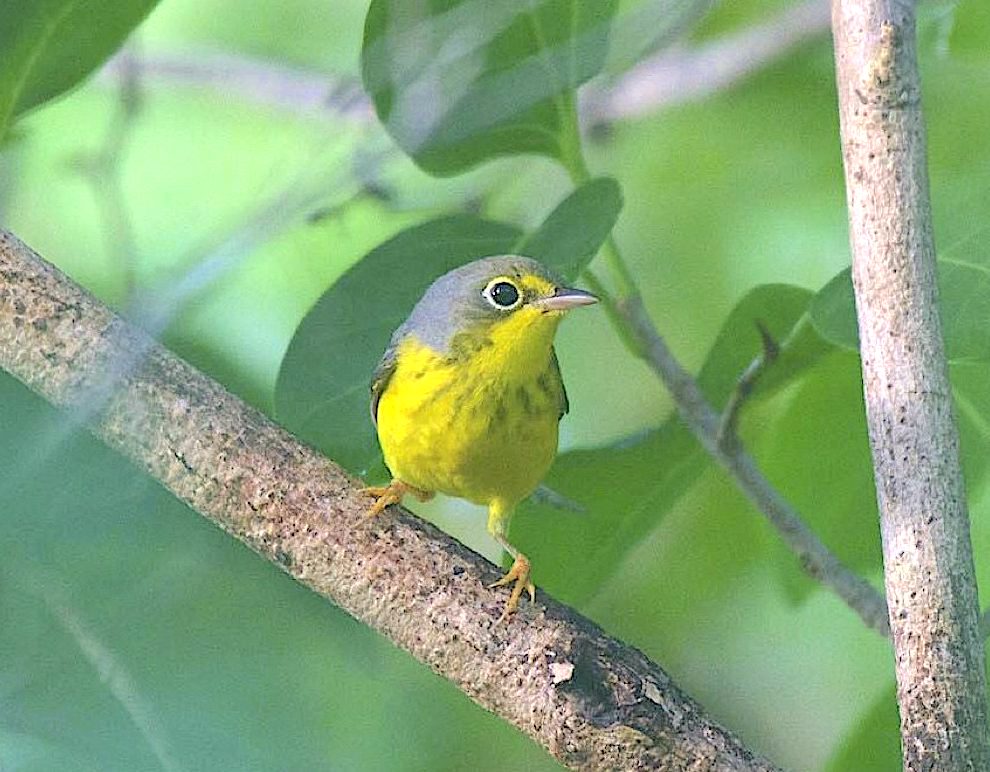
IT’S STARTED The great winter migration of warblers and their imminent arrival in The Bahamas is underway. Any day now – if not already – the ‘winter’ / ‘Fall’ (late summer & early spring as well) warblers will be arriving on Abaco. There are 38 warbler species recorded for the main island and the cays. For years, it was just 37. Exactly a year ago, a CANADA WARBLER was seen and photographed by well-known birder Chris Johnson. It was a first for Abaco – and the first-ever report for the Bahamas as well. You’ll find the story HERE.

First-ever Canada Warbler for Abaco & the entire Bahamas: Aug 2018 (Chris Johnson)

Canada Warbler, Abaco Bahamas (1st record) (Chris Johnson)

Canada Warbler, Abaco Bahamas (1st record) (Chris Johnson)

This post is the first of 3 warbler posts for the Fall. A while back I compiled a basic (in retrospect) guide to Abaco’s warbler species. I’ll give a link and pdf in due course once I have rechecked (improved? rewritten?) it. [Note: of no value on eBay, @m@z@n or anywhere else]. Many of the warblers are far from easy to distinguish from each other. For example, many males have yellow or yellow-and-black plumage. The females are invariably less colourful – often brownish or olive – than the males (as are juveniles), and that can lead to confusion – and not only by me, I think.

Hooded Warbler, Abaco Bahamas (Chris Johnson)

Hooded Warbler, Abaco Bahamas (Chris Johnson)

The guide divides the original 37 species into categories, with a code for each bird to show. You’ll see below the codes relating to each of the 5 resident species:

  • Resident status – permanent / breeding, migratory or transient
  • Frequency – likelihood of seeing each species in its season, rated from 1 (very likely) to 5 (extreme rarities, maybe recorded once or twice since c1950
Bahama Warbler (endemic), Abaco Bahamas (Alex Hughes)

Bahama Warbler (endemic), Abaco Bahamas (Alex Hughes)

Numerically, the division of the 38 breaks down into 3 categories:

  • 5 permanent residents (PR) that breed on Abaco (B), of which two are ENDEMIC
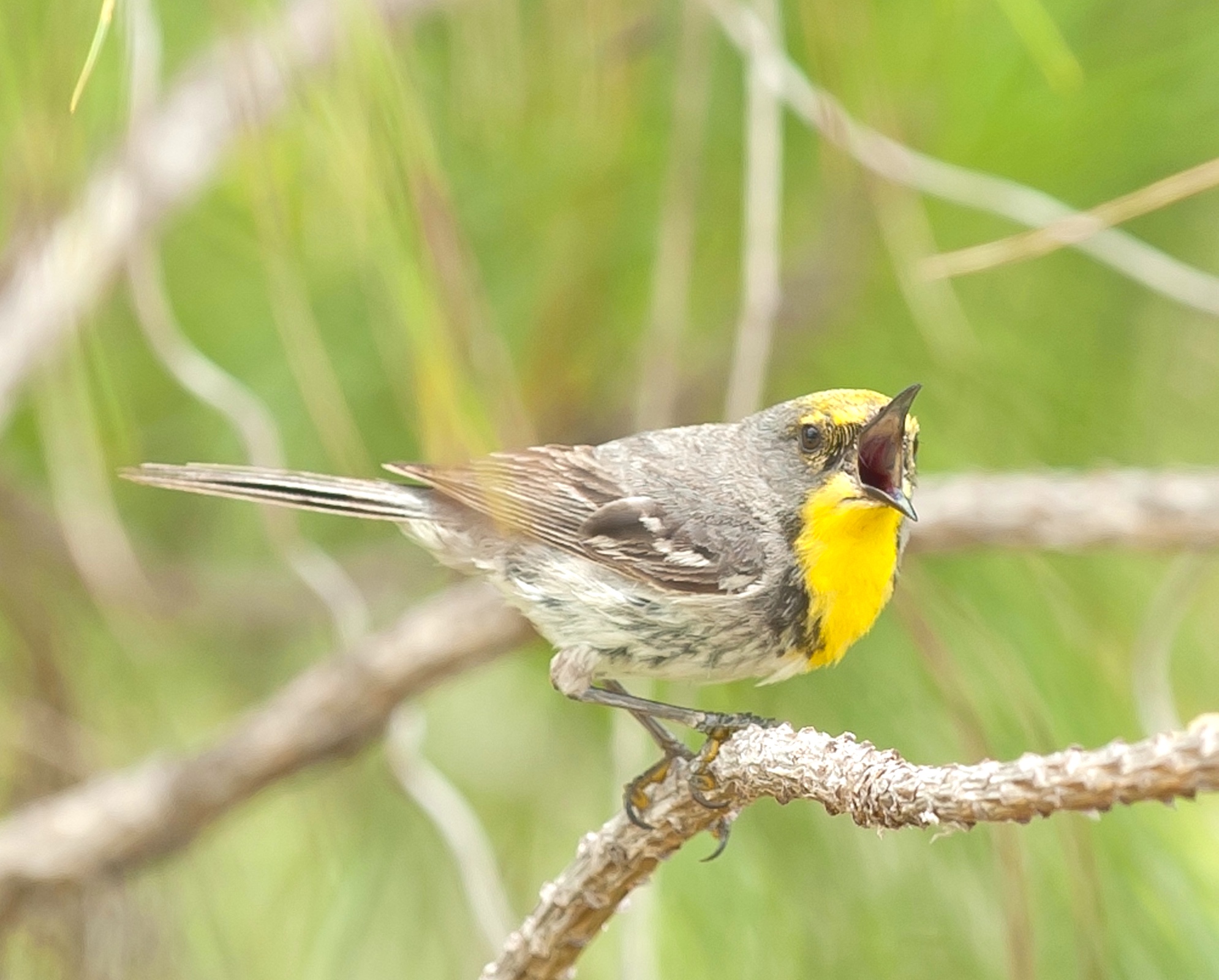
  • 21 winter residents (WR) ranging from ‘everyday’ species to rarities like the rare, vulnerable Kirtland’s Warbler (now under threat from proposed development)
  • 12 transients, most of which you will be very lucky to encounter
Palm Warbler, Abaco Bahamas (Nina Henry)

Palm Warbler, Abaco Bahamas (Nina Henry)

The photos used in this series were almost all taken on Abaco / the Cays. There’ll be examples of the male of each warbler species, with some females for contrast. Where I have no Abaco / Baha images – especially with the transients – I have used other mainstream birding resources and Wiki. All due credits will be given at the foot of each post.

Bahama Yellowthroat, Abaco Bahamas (Gerlinde Taurer)

Bahama Yellowthroat, Abaco Bahamas (Gerlinde Taurer)

The warblers shown above are a mix of warbler species on Abaco: resident / endemic, winter migrants, and transient / vagrant. Time to take a look at the first category, the Bahamas-loving resident species that live and breed on Abaco

5 PERMANENT RESIDENTS

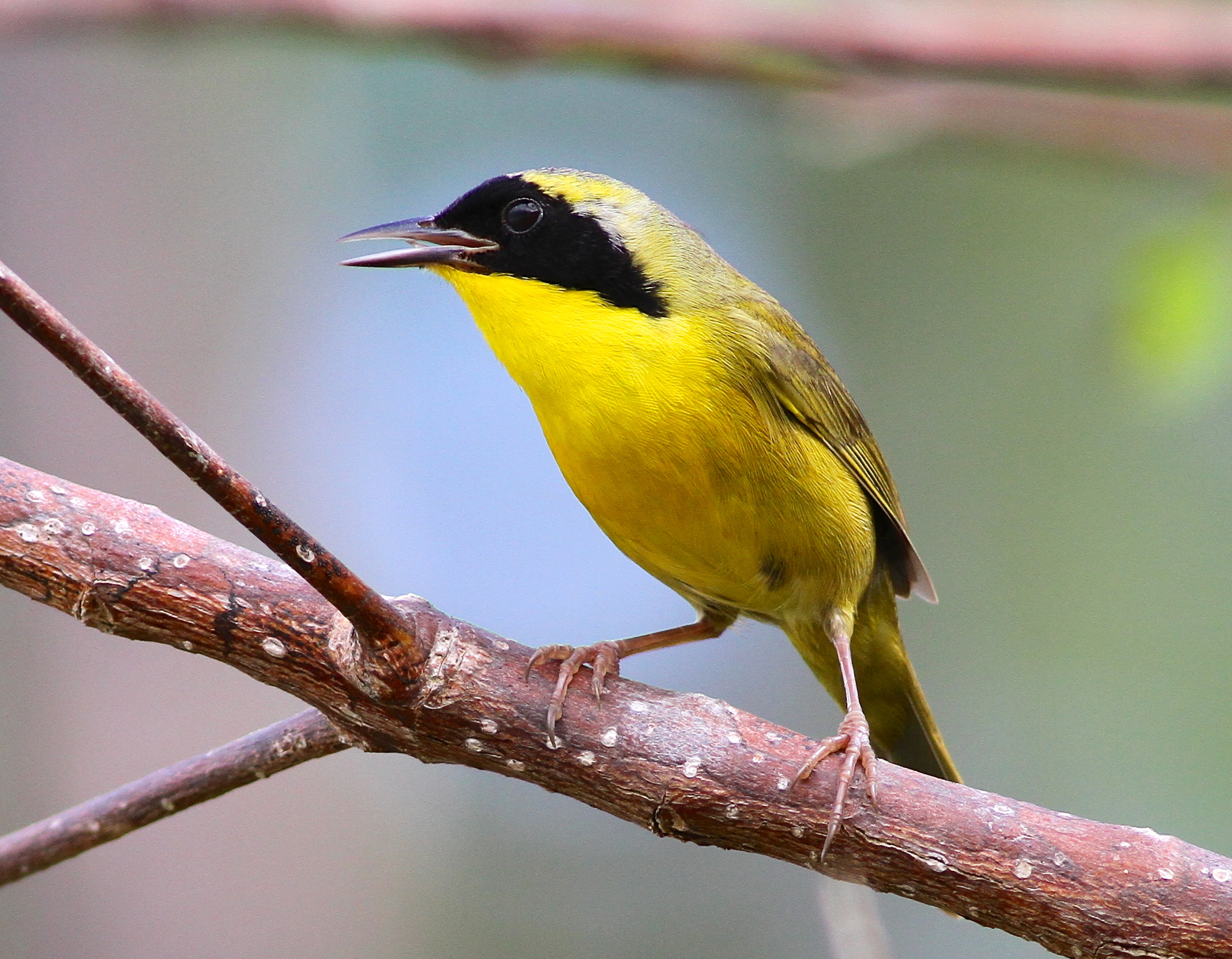
BAHAMA YELLOWTHROAT Geothlypis rostrata PR B 1  ENDEMIC

Bahama Yellowthroat (endemic), Abaco Bahamas (Gerlinde Taurer)

Bahama Yellowthroat (endemic), Abaco Bahamas (Gerlinde Taurer)

BAHAMA WARBLER Setophaga flavescens PR B 1 ENDEMIC

Bahama Warbler (endemic), Abaco Bahamas (Bruce Hallett)

Bahama Warbler (endemic), Abaco Bahamas (Bruce Hallett)

YELLOW WARBLER Setophaga petechia PR B 1 

Yellow Warbler, sunrise, Abaco Bahamas (Tom Sheley)

Yellow Warbler, sunrise, Abaco Bahamas (Tom Sheley)

OLIVE-CAPPED WARBLER Setophaga pityophila PR B 1 

Olive-capped Warbler, Abaco Bahamas (Bruce Hallett)

Olive-capped Warbler, Abaco Bahamas (Bruce Hallett)

PINE WARBLER Setophaga pinus PR B 1 

Pine Warbler, Abaco Bahamas (Tom Sheley)

Pine Warbler, Abaco Bahamas (Tom Sheley)

In Part 2: Winter migrants from common to rare

PHOTO CREDITS Tom Sheley (1, 9, 11); Chris Johnson (2, 3); Alex Hughes (4); Nina Henry (5); Gerlinde Taurer (6, 7); Bruce Hallett (8, 10); Photos mainly from the archive collected for“THE DELPHI CLUB GUIDE TO THE BIRDS OF ABACO” by Keith Salvesen

Unknown's avatar

HERRING GULL STUDIES: EYE CONTACT

Herring Gull Studies (Ireland) - Keith Salvesen / Rolling Harbour

HERRING GULL STUDIES: EYE CONTACT

Getting close to a herring gull is not a particularly heroic act, and yet… they look quite intimidating. The glint in the eye is somewhat evil. And they can be fairly aggressive when the mood takes them. I once had my scalp raked by a herring gull when I got too near a breeding area on a small island in Scotland. It got me from behind. There was blood. Plenty of it. It was my own stupid fault, and a lesson learned.

 Herring Gull Studies (Ireland) - Keith Salvesen / Rolling Harbour

Behold a fine herring gull stepping ashore with its beady eye fixed on me. Behold it starting to advance towards me in a purposeful way… Then it noticed the camera and decided to pose instead of attack.

Herring Gull Studies (Ireland) - Keith Salvesen / Rolling Harbour

One complication for amateur birders is that these (and other) gulls take 4 years to reach maturity and the full adult plumage shown here . We’ve all seen those huge browny-gray-speckled babies crying pitifully to be fed, when they are nearly the same size as the food-providing parent. Over those few first years the plumage goes through several stages, and other colour changes – eyes and feet, for example – take place. Eventually they get to look as handsome as this one.

Herring Gull Studies (Ireland) - Keith Salvesen / Rolling Harbour

I photographed the bird featured here only last week, on the south coast of Ireland, which is a bit of a cheat. Strictly, you are looking at a European herring gull, although the differences from the American ‘Smithsonian’ herring gull is relatively small. I’ll say ‘negligible’ for present purposes.

Herring Gull Studies (Ireland) - Keith Salvesen / Rolling Harbour

WHAT’S THE PURPOSE OF THE RED BLOB ON THE UNDER-BEAK?

Good question, and one that historically was the subject of hot debate in ornithological circles. The short answer is that scientific investigation and experimentation led to the conclusion that the red blob is a kind of feeding cue for chicks, a target area for them to aim for food or to peck to say they are hungry. Some other gull species also have this clever beak feature.

Herring Gull Studies (Ireland) - Keith Salvesen / Rolling Harbour

“HAPPY FEET”

As we all know, there are gull species with yellow legs (not least the apty-named yellow-legged gull in Europe). Herring gulls have decidedly pink legs and feet, and interestingly constructed ones at that. This isn’t the moment for a lot of technical blurb about it – just take a look at these 2 images. Extraordinary, huh?

Herring Gull FEET Studies (Ireland) - Keith Salvesen / Rolling HarbourHerring Gull FEET Studies (Ireland) - Keith Salvesen / Rolling Harbour

RELATED POSTS

LAUGHING GULL 

BONAPARTE’S GULL

RING-BILLED GULL

All photos: Keith Salvesen / Rolling Harbour

Herring Gull Studies (Ireland) - Keith Salvesen / Rolling Harbour


Unknown's avatar

WAVE CHASERS: SANDERLING POOL TIME ON ABACO

Sanderling, Delphi Beach Abaco Bahamas (Keith Salvesen / Rolling Harbour)

WAVE CHASERS: SANDERLING POOL TIME ON ABACO

It’s often a hard decision whether to include a short piece of video footage in a post. By short, I mean less than a minute. On the one hand, there is usually a good reason for inclusion, even if only aesthetic. On the other, it simply takes up more time for busy people who may prefer to flick through an article and enjoy some nice images along the way. Today, you can have the best of both worlds.

Sanderling, Delphi Beach Abaco Bahamas (Keith Salvesen / Rolling Harbour)

Sanderlings are definitively ‘peeps’, a group name that embraces the smallest and squeakiest sandpiper species. They are the wave chasers, the tiny birds that scuttle along the beach, into the retreating tide for a snack from the sand, and back to the beach again as the waves creep in. Their little legs and feet move in a blur, and many people immediately think of wind-up clockwork toys as they watch the birds in action.

Sanderling, Delphi Beach Abaco Bahamas (Keith Salvesen / Rolling Harbour)

One of the joys of being a sanderling is that rock pools fill and empty diurnally. At some time during daylight, there’s the certainty of a quick dip. I was lying on the beach when I took this short video, so that I didn’t spook the birds. I was equipped with a smallish camera (I drowned it the following day. By mistake I mean) but I kept my distance rather than try to get closer and spoil their joyful bathing.

I caught these little birds at a critical moment. You can tell that the tide is coming in fast. The peeps are becoming edgy, and weighing up the joys of immersion in a pool with the less enjoyable prospect of being washed out of the pool by the next wave. Within a minute or so, they had all flocked down the shoreline for a foraging session.

Waves and incoming tide getting a little too close for comfort on the edge of the pool…Sanderling, Delphi Beach Abaco Bahamas (Keith Salvesen / Rolling Harbour)

Next to the migratory PIPING PLOVERS that favour Abaco as their winter home, the wave chasers are my favourite shorebirds. My keenness on them killed my camera. I went out into the incoming waves to get shots back at the beach with the sun behind me. Great idea until I lost my balance with, as they say, hilarious consequences. Lesson learnt – never turn your back on waves.

Sanderling, Delphi Beach Abaco Bahamas (Keith Salvesen / Rolling Harbour)

All photos © Keith Salvesen / Rolling Harbour taken on the beach at Delphi, Abaco, Bahamas

Sanderling, Delphi Beach Abaco Bahamas (Keith Salvesen / Rolling Harbour)

Unknown's avatar

ABACO’S RARE PIPING PLOVERS: CITIZEN SCIENTISTS WANTED FOR YEAR 5

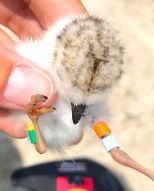
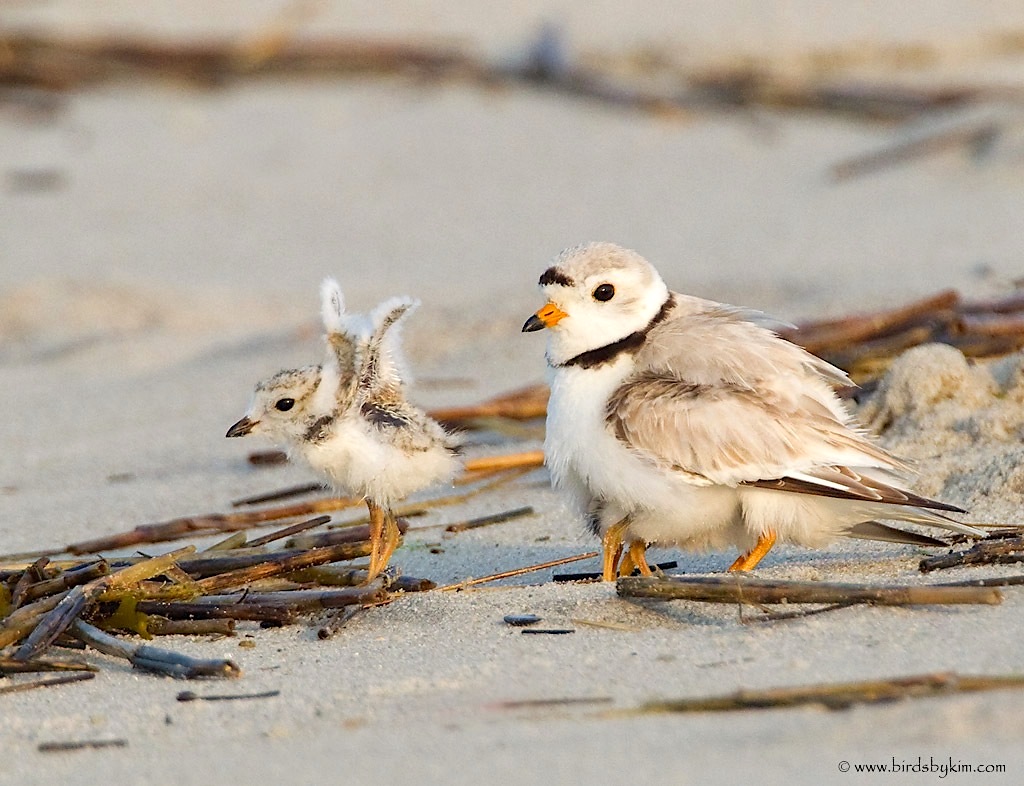
Piping plover adult & chick (Conserve Wildlife Foundation NJ / birdsbyKim)

ABACO’S RARE PIPING PLOVERS: CITIZEN SCIENTISTS WANTED FOR YEAR 5

  • BE A BEACH MONITOR IN THE CAUSE OF RESEARCH AND CONSERVATION OF A TINY RARE BIRD THAT CHOOSES ABACO FOR ITS WINTER HOME
  • NO EXPERIENCE NECESSARY; MINIMAL EQUIPMENT (pen, paper, binox & a ‘normal’ camera)
  • ABILITY TO COUNT TINY BIRDS IN (USUALLY) SMALL NUMBERS AN ADVANTAGE
  • SIMPLE AS TAKING A NATURE WALK ON YOUR FAVOURITE BEACH (but sorry, not with a dog)
  • COMMITMENT UP TO YOU – ONCE A WEEK, ONCE A MONTH, JUST THE ONCE
  • EVERY SIGHTING IS LOGGED – BANDED BIRDS ARE TRACKED BACK TO THEIR ORIGINS
  • EVERY BIRD IS A STAT THAT ADDS TO THE OVERALL PICTURE FOR RESEARCHERS
  • THE BIRDS MAY BE FOUND ON THE MAINLAND AND THE CAYS – EVEN THE MARLS
  • WE WORK IN PARTNERSHIP WITH THE SCIENTISTS  IN THE BREEDING GROUNDS
  • ABACO IS THE ONLY BAHAMAS ISLAND WITH AN ANNUAL WINTER-LONG WATCH

At the end of July – my guess is the 28th, on past form – the first piping plover of the winter season will be resighted on Abaco. It will weigh less than 2oz, and will have travelled at least 1000 miles (direct route). In practice it will be much further, because the journey will be broken by coastal stopovers en route.

‘SQUID’ from the Holgate Unit of the Edwin B Forsythe NWR, NJ, overwintering on Abaco (year 2)Piping Plover Squid from NJ - on Abaco Bahamas (Keith Kemp)

My bet is that the first bird will touch down in the Cherokee Sound area. There’s a fair chance it will be called ‘Squid’  from New Jersey (for the 3rd year) or ‘Black Flag 2J’ from Prince Edward Island, Canada (for the 2nd year). At once, ABACO PIPING PLOVER WATCH will switch from summer indolence to red alert and piping hot… for the next 7 months. The last winter visitor will leave on ± March 15 2020 to return to its breeding grounds in the North (specific parts of northern US / Canada).

Piping Plover on Man-o-War Cay, Abaco Bahamas (Charmaine Albury)Piping Plover on Abaco Bahamas (Charmaine Albury)
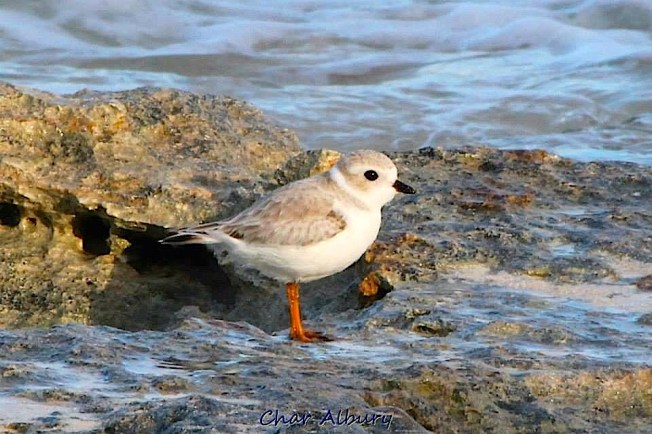
HOW ON EARTH CAN YOU PREDICT THIS?

Since the 2015-16 season, we have been monitoring Abaco’s beaches, shorelines, and flats (there are specific locations that are preferred by the birds) throughout the winter season. Each year adds to the data from previous years and as the annual information is analysed, the knowledge of the behaviours of this little plover significantly increases.

‘TUNA’ – a legendary regular from past years (Rhonda Pearce)Piping Plover on Abaco Bahamas (Rhonda Pearce)
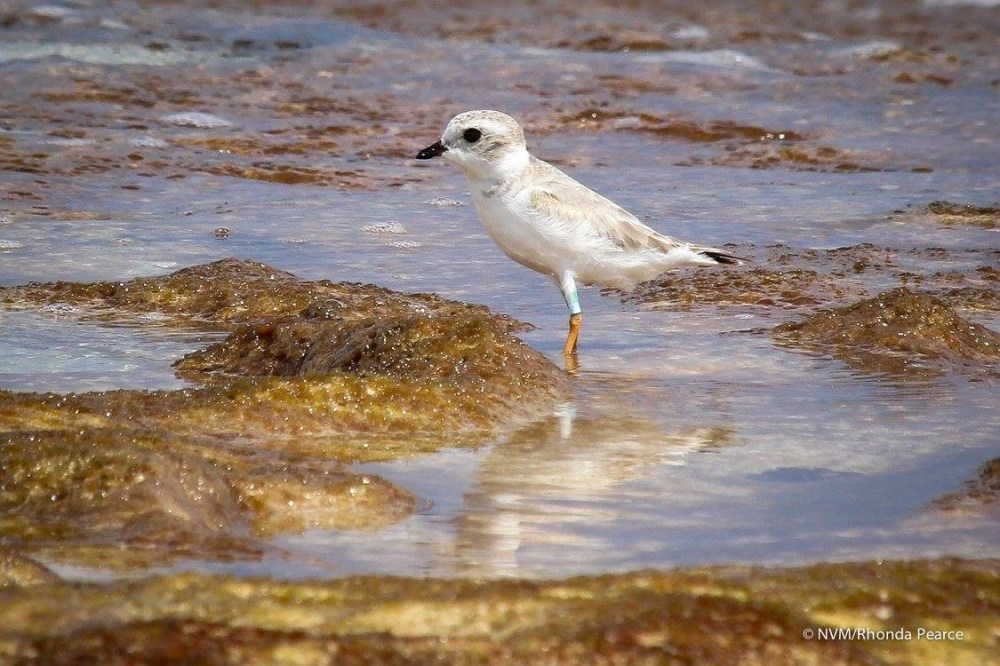
Over 4 years, distinctive patterns have emerged.

  1. Firstly, the plover numbers each season are fairly constant.
  2. Next, we have found that a number of birds return the following winter. Some are repeat returners – the current record is held by Bahama Mama from Lake Michigan, with 5 annual visits to the very same beach.
  3. Then, we have established that many of the banded birds are (a) resighted along the US coastline where they take a stopover during migration and (b) return to exactly the same beach where they were born.
  4. Often, we can find out when they hatched, fledged and left the beach – and even the person who did the banding.
  5. Finally, the number of banded birds – especially Canadian ones – is on the rise. This in part reflects an increase in summer chicks banding – but the fact is, we can show that they are turning up on Abaco, and returners usually turn up either on the same shoreline (or very close to it) as the previous year.
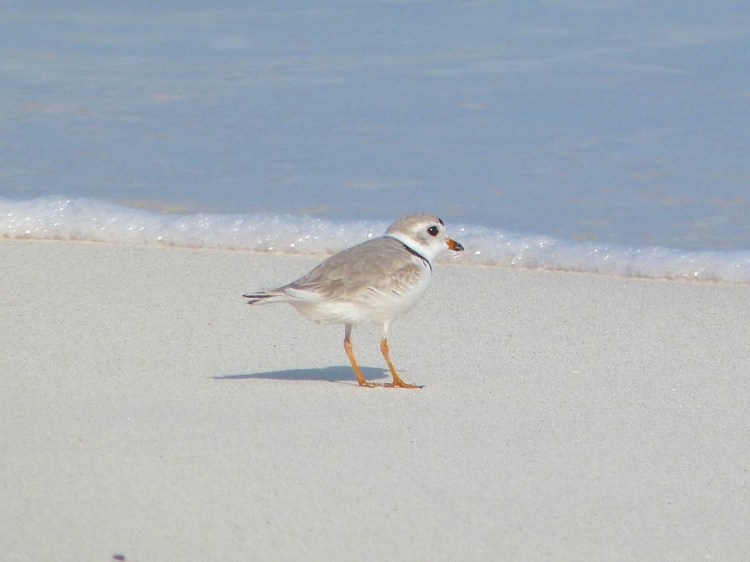
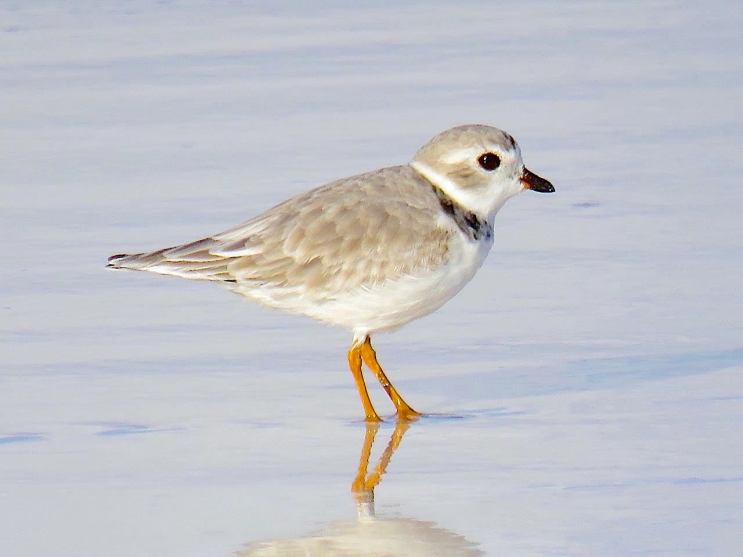
Piping Plover on Abaco Bahamas (Keith Salvesen)

WOULD IT MATTER IF APPW DIDN’T EXIST?

In one sense no, because the birds would still undertake their Fall and Spring migrations, even if no one took any notice. But then, of course, no one would have any idea where the plovers might be for 6 – 8 months of the year. What the Watch can do, in conjunction with our partners in the breeding grounds, is to complete the annual migration circle and provide the specific details that help research and conservation of this rare little bird (world population around 8000). Furthermore, the Watch results provide continuing evidence that Abaco and its Cays provide a safe and suitable overwintering habitat for the birds. 

SQUIDS KIDS – THE MIGRATION CIRCLE COMPLETED

KEITH, CHEROKEE & ABACOPiping Plover 'Keith' - CWFNJ    Piping Plover 'Cherokee' - CWFNJ Piping Plover 'Abaco' CWFNJ
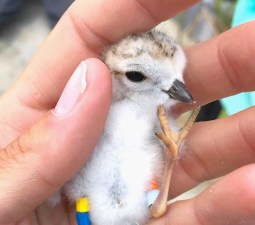
These 3 little chicks are this summer’s hatchlings (in June) of parents Squid (see above) and ‘Sophia’. This is on the very same beach where Squid was born and banded in July 2017. Sometime this Fall, we hope that Squid will return for a 3rd year in Cherokee Sound. And we hope just as much that one or maybe all his chicks will arrive on Abaco too. We’ll certainly know if they do – we already know their band combinations! They each have an Abaco-related name – maybe that will encourage them too.

Piping plover on the beach at Delphi (Peter Mantle)Piping Plover on Abaco Bahamas (Peter Mantle)
WHAT SORT OF PEOPLE CAN BE BEACH MONITORS?

Anyone at all. No experience is needed. You’ll be given all the info you need about the birds you’ll be looking for, and it may be possible to go out with a monitor to see what it’s like. Even a blank report is useful to have, to indicate where the plovers are not… And there’s no such thing as a mistake – the system allows for occasional miscounts, for example. Below is a summary of the last season, from which you can see the kind of data that is accumulated. 
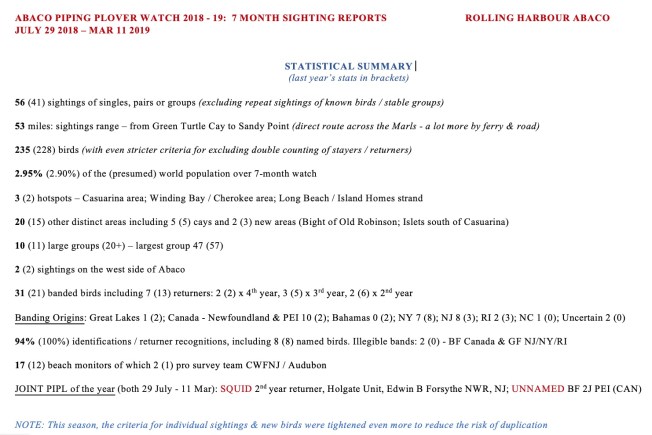
You’ll see that there were 17 beach monitors of whom most were local Abaconians or regular second-homers. You probably know some or all of them! A few were visitors from US and UK. The 2 pro monitors were from our partners Conserve Wildlife Foundation NJ, and Audubon Caribbean. Keith Kemp is the wonderful and hard-working lead monitor and very regularly visits the hotspot shorelines. Other people made quite frequent reports, some about once a month, and several made fewer than 5. Each one added to the overall picture.

Piping Plover chick on LBI (Northside Jim Verhagen)


If you would like to become involved, even on the most casual basis, please do get in touch. Ditto if you’d like to know a bit more about it. If you decide not to go ahead – or once started, to stop – that’s all fine. It’s basically up to you whether you want to turn a beach walk into a bit of research (though as I mentioned above, it’s not a thing that can be done with a dog, for obvious reasons). Take a friend – or even a spouse. A single sighting might reveal a hitherto unknown location or a new banded bird – it happens every year. It’s Citizen Science in action!

Please email me at rolllingharbour.delphi [@] gmail.com or contact me via FB. Or just comment on this post!

A flock of piping plovers (with a few birds that aren’t), Cherokee Flats (Lucy & mark Davies)Piping Plover Flock, Cherokee Sound, Abaco Bahamas (Lucy & Mark Davies)
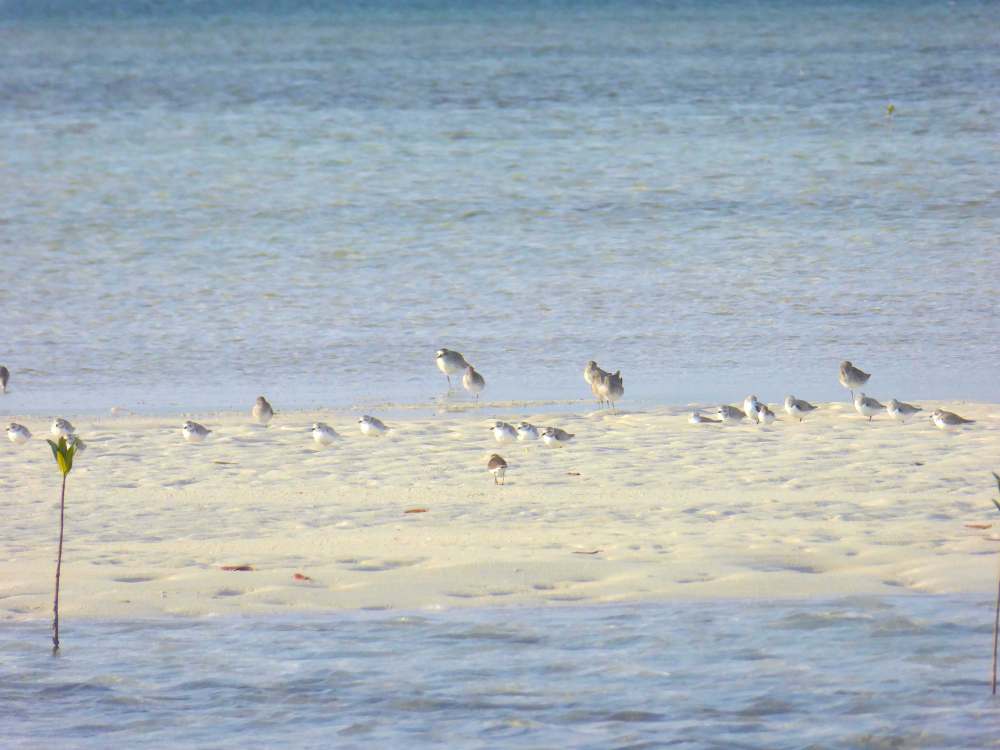
Credits: CWFNJ / Kim; Keith Kemp; Charmaine Albury; Rhonda Pearce; Keith Salvesen; CWFNJ / Michelle Stantial x 3; Peter Mantle; ‘Northside’ Jim Verhagen x 2, LBI; Lucy & Mark Davies

I’m on Long Beach Island right now – hope to meet you on Abaco in the Fall (Northside Jim)
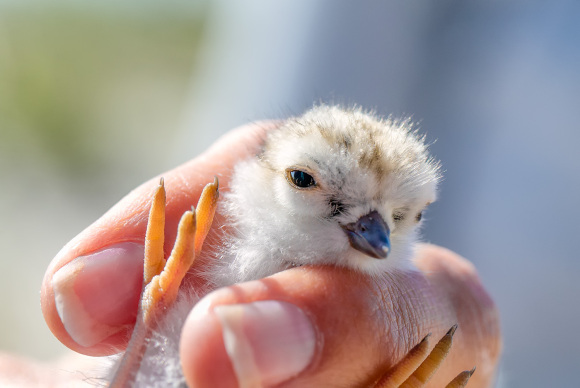
Piping Plover chick on LBI (Northside Jim Verhagen)