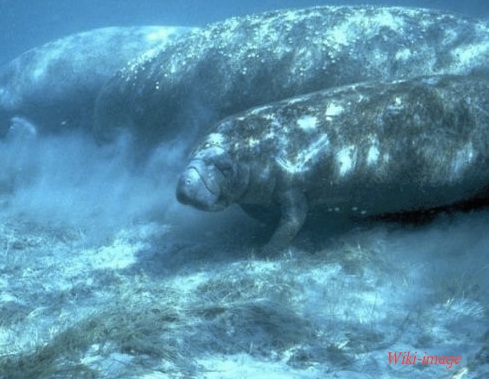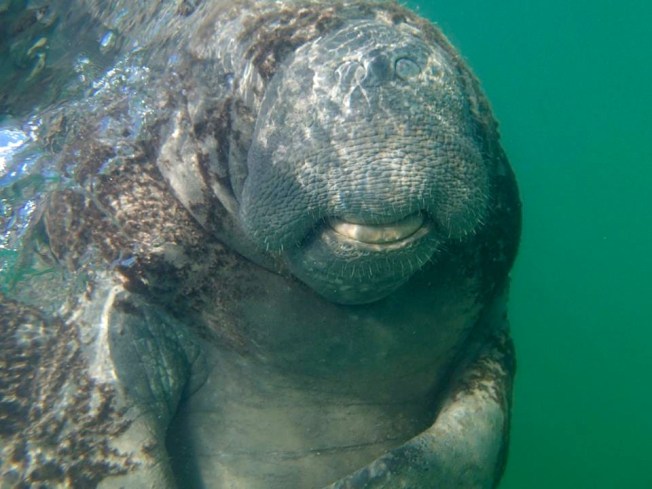
Unknown's avatar

GEORGIE THE ABACO MANATEE: IS SHE RELATED TO AN ELEPHANT?


GEORGIE THE ABACO MANATEE: IS SHE RELATED TO AN ELEPHANT?

Georgie, having returned to Cherokee after Hurricane Sandy, is still around there and seems to have made it her home. While she was missing, it was thought she had headed off instinctively for the protection of the mangroves. However a number of sighting reports made since Sandy suggest that she had sensibly swum up the canal at Casuarina, where she was able to keep her head down until the storm had safely cleared northwards, and she was able to return to base. Because she had shed her tag, we’ll never know the full story… 

Georgie safely back at Cherokee after Hurricane Sandy

Recently an interesting article by BEACH CHAIR SCIENTIST considered the relationship between sirenians and pachyderms, and added some handy comparative facts (you can seen more manatee facts on this blog HERE). Thanks, BCS, for use permission (the relevant credits are contained in the article).

Are manatees and elephants related?

by Beach Chair Scientist

It might be very difficult to imagine, but manatees (also known as ‘sea cows’) share a common ancestor with elephants which might come as a surprise if you thought manatees shared a common ancestor with other marine mammals such as dolphins, whales, or sea lions. Here are 10 facts that link manatees and elephants are long-lost relatives.

1. Scientifically, manatees and elephants are classified as subungulates. Other mammals in the Subungulata superorder are hyraxes and aardvarks.
2.Manatees and elephants have an uncommon-shaped heart that is spherical. To compare, most mammals have a single-pointed tip at the base (i.e., “heart”—shaped).
3. The West Indian and West African manatee have three or four fingernail-like structures on the tip of their flippers, just like that of the toenails on the feet of elephants.
4. Manatees and elephants both have a thick, gray skin with very sparse hair.
5. Manatees and elephants have molars which move toward the front of the mouth, eventually break off, and are restored by those at the rear. Elephants have a limited number while manatees are never-ending.
6. Manatees have two incisors that bear a resemblance to elephant tusks.
7. Manatees use their large, flexible muscular lips to break apart vegetation in the water and skillfully steer food to their mouths. This is very similar to the action of the elephant eating with his trunk.
8. Manatees and elephants are herbivores. Manatees tend to feast on sea grass and freshwater plants and consume up to 100-150 pounds a day. Elephants tend to feast on small plants, bushes, fruit, twigs, tree bark, and roots and consume up to 330-375 pounds a day.
9. Male manatees and elephants are known as bulls. Female manatee and elephants are known as cows. Young manatee and elephants are known as calves.
10. Manatees and elephants are both endangered. Their numbers have dropped due in a large part to human activities.

Manatee image (c) cruisenaplesflorida.com, elephant image (c) gallery.hd.org

Here is a fantastic TEACHING RESOURCE from the University of Florida and Se Grant extension I uncovered while pulling this post together.

Credit: SavetheManatee.org

To whom thanks also for this: WHAT DO MANATEES SOUND LIKE? 

[audio http://www.savethemanatee.org/Manatee%20Sounds/Track03mp3.mp3]


Unknown's avatar

HURRICANE SANDY AFTERMATH: ABACO PICTURES, NEWS FROM DELPHI CLUB, BAHAMAS & MANATEE UPDATE


DAMAGE FROM HURRICANE SANDY AT THE DELPHI CLUB, ABACO

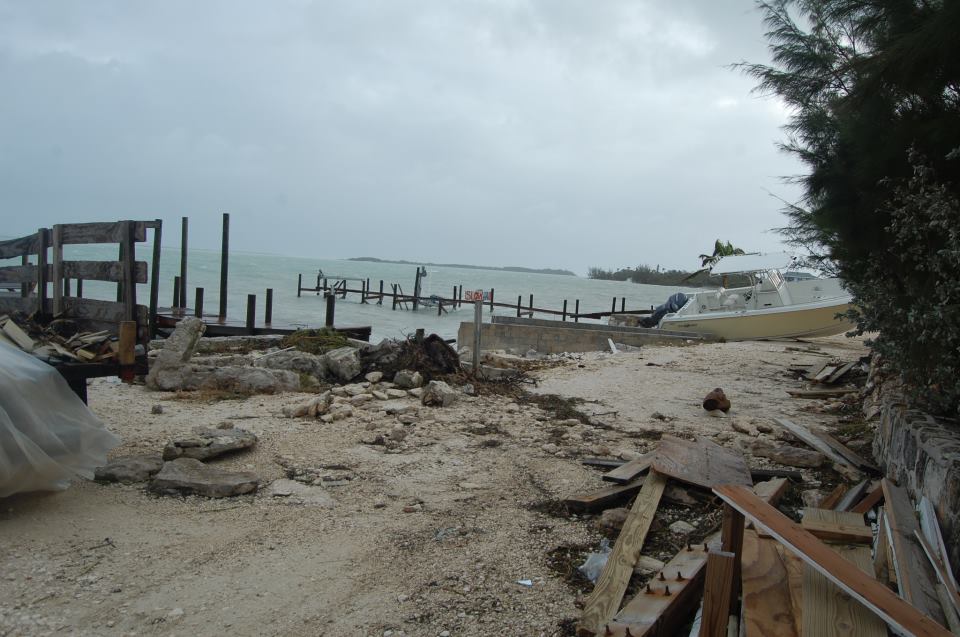
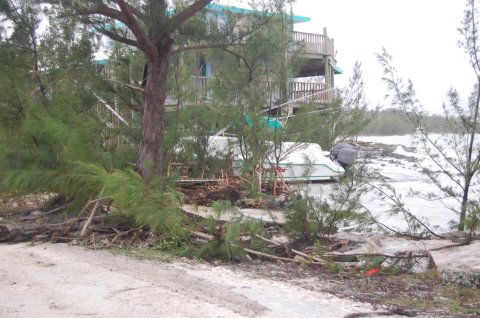
The storm has passed from the Bahamas and the clear-up is underway – but further north communities are bracing themselves for the onslaught. The news today  from contacts, from Facebook and the web generally, is of thankfully little lasting damage, with power and comms restored in many places. There’s been plenty of flooding – eg Sandy Point – and tree / plant mayhem.

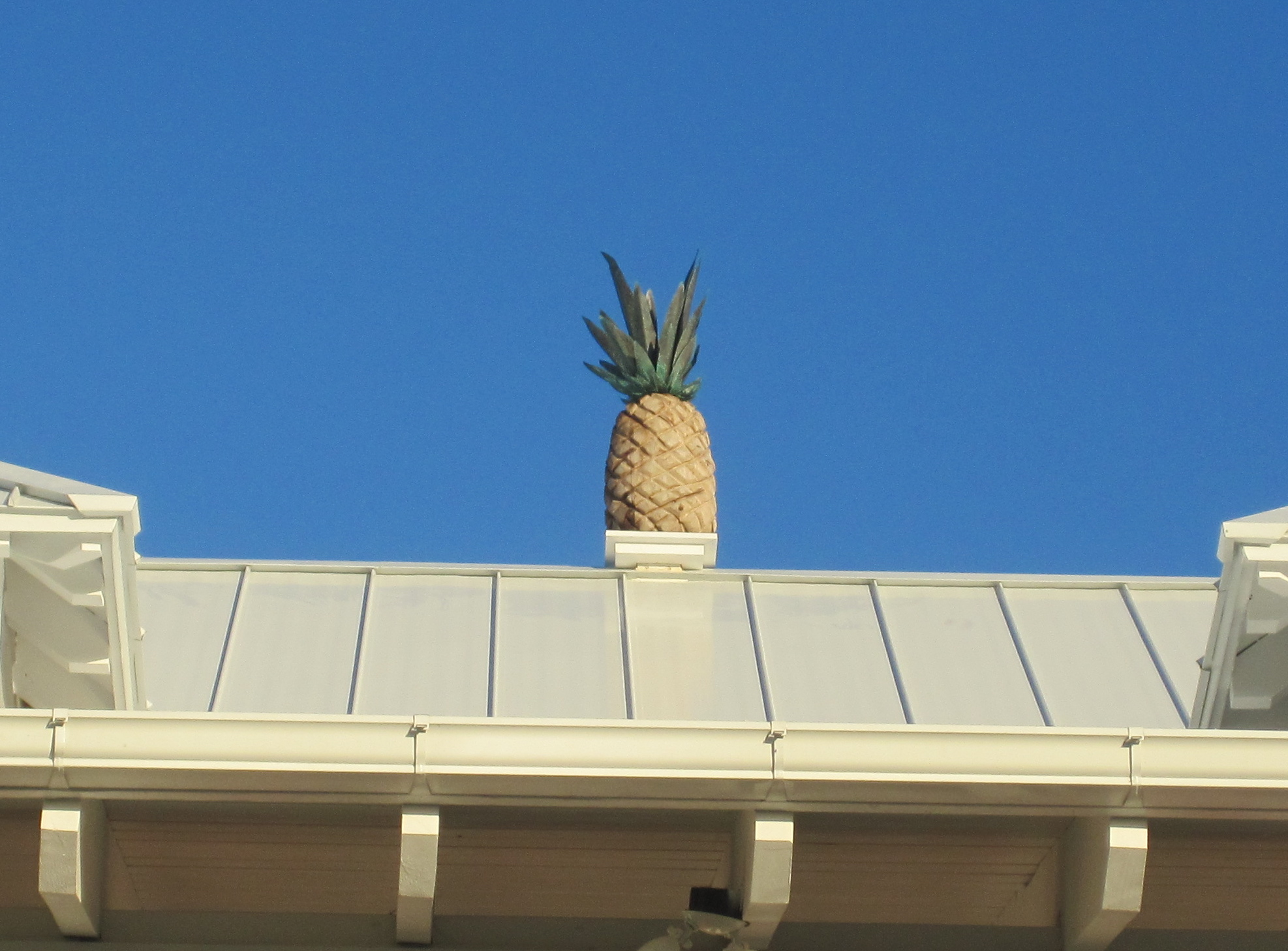
The Delphi Club was again, as with Irene last year, almost directly beneath the eye of the storm. Then, a couple of leaves were lost from the pineapple crown (above), a few fittings were smashed, and the gardens were unceremoniously rearranged. Peter Mantle, Delphi Club supremo, has posted his record of the last few days at the club – the approach of Sandy, the storm, and the aftermath. I am posting extracts below, to be read (chronologically) from the bottom entry to the top of the page. For those who haven’t experienced a storm of this violence, Peter’s account gives a vivid picture of the before, the during and the after…

Apologies for having posted about Sandy in detail with maps etc, and at the crucial time tailing off  while I was away and had only an iPhone™  and a sporadic connection…

STOP PRESS: AMERICAN OYSTERCATCHERS – BRAVE OR FOOLISH? 29 October

Peter Mantle has just sent me a ‘Sandy’ photo from the Delphi Club beach, showing a group of oystercatchers on the rocks at one end of Rolling Harbour. Storm detritus already festoons the rocks. Have the birds seen what’s about to hit them? Are they waterproof? 

STOP PRESS: BMMRO MANATEE UPDATE 29 October

The BMMRO has posted news from Sandy Point and for those who have been asking after manatee Georgie’s welfare, an update:

“Hi Everyone, everything is ok here at the research center! We are working on getting information on Georgie’s whereabouts and we will happily update everyone as soon as we hear anything. There’s still a bit of damage here in Abaco that is preventing travel but hopefully we will be able to get up to Georgie soon”.

STOP PRESS: SOME ABACO IMAGES 28 October

(credits to Timothy Roberts & Cindy James Pinder and their facebook posts)

SANDY TAKES BONEFISH; DARK HUMOUR ON DARK DAYS

OCTOBER 27th Among the many bits of minor damage caused by Hurricane Sandy was the destruction of our bonefish weather vane. This had been hand-made by the other Sandy, our general manager, and stood atop his lodgings. Snapped off, the copper creation was found nearby, bruised and dented, rather like ourselves.

Yet again, we have been very fortunate – staff and guests are all well. And most of the damage caused by the 100mph winds was minor. The storm had its moments, but the worst bits were at nighttime when many people were huddled safe in bed. Lots of bumps and bangs provided a spooky soundtrack, but it was more of a B movie than a full-blown Hollywood epic. That said, I hate to think what a really big Category 3, 4 or 5 hurricane would be like.

We still have no mains electricity; thank God for the gennie. We have no phones or mobile connection, so we have little idea of what is going on elsewhere on the island. We hope for the best but fear not all will have escaped as lightly as we did. Some of the staff from Crossing Rocks are stranded here by flooding. But the wireless internet is back so all will soon be revealed.

Yet again, the gardens have been shredded. The banana trees have been snapped off mid-fruiting. My favorite banyan tree has broken in half again, having nearly bounced back from Irene. The big Bismark ferns are banjaxed, the bougainvillea is blasted leafless and the pool is a mess. But who cares. We are fine. Dunkirk spirit? Well, very black humour and spirits of a different kind have seen us through.

“I survived Sandy” T-shirts are now in preparation, but that’s a staff joke about their hyperactive and heroic boss…..

A BAD HAIR DAY…

OCTOBER 25th It is getting distinctly breezy here, with winds as bad as any Irish gale. But Hurricane Sandy, now upgraded to a Category 2 hurricane, is still some 18 hours away and currently features average winds of 105mph with higher gusts. It may get even worse, they say. So no fishing today. More guests have made it in. Bahamasair even ran a plane out of Nassau at first light this morning.

While we still have power and phones, the lines are buzzing and we are glued to the internet. It seems odd to see that Sandy is the lead news story on the BBC. Non-technical guests have adjourned to the library (where “A Perfect Storm” and “Winnie the Poo and the Blustery Day” are current favourites). The air of gloom is more attributable to the fact that Arsenal lost at home last night than to any fears for personal safety.

We may go quiet for a while.

NOTHING VERY FEMININE ABOUT THIS SANDY

OCTOBER 24th, noon Tropical storms are now given boys’ and girls’ names alternately; in the old days they were all girls. The one that currently threatens us is Sandy, a name that is more commonly applied to females in this part of the world. But there is nothing too feminine about this storm; as the forecast deteriorates and Sandy intensifies into a hurricane over Jamaica, we are becoming more and more concerned by its macho capabilities.

The National Hurricane Centre now predicts that Sandy will pass very close to Abaco – the predicted path having shifted overnight. As it now looks, the eye may pass just 25 miles from us, which would basically be a direct hit since damaging winds spread far out from the centre. We are going to have to keep a very close on on this little girl over the next 48 hours.

ALL EYES ON SANDY

OCTOBER 23rd No sooner has the Club reopened for the new season than a tropical storm appears on the horizon. And, in a twist of divine humour, it’s been christened after our general manager, Sandy.

Sandy (the mostly human version) is tracking Sandy (the swirling tempest) on an hourly basis. As it now stands, we are in the “cone” of the likely track of the storm over coming days. Currently south of Jamaica, TS Sandy is turning north and could yet morph into a hurricane. It’s expected to be over or near us by Friday night, with “average” winds of nearly 60mph and gusts of up to 90mph.

Hatches will therefore be battened, outdoor furniture put back indoors and supplies of grog reinforced. The lucky fishers in residence will have to take a breather, while the new chef, John, will receive a special form of baptism.

Tropical storms this late in the year are a great rarity. Somehow that is not very reassuring just now. But the forecast for the following week is rather better… 

Click image to visit the Delphi Club

Unknown's avatar

“MANATEE MANIA IN THE ABACOS” BMMRO FALL 2012 NEWSLETTER


“MANATEE MANIA IN THE ABACOS” – BMMRO FALL 2012 NEWSLETTER

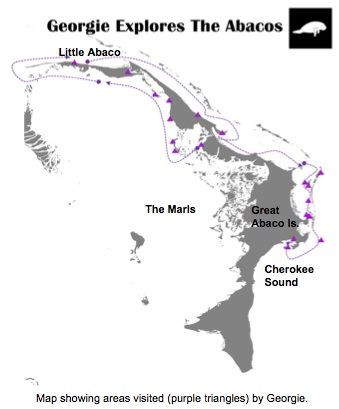
The BMMRO has just published the Fall 2012 newsletter, and it’s no surprise to find that the front page news is the arrival of young manatee Georgie on Abaco. After nosing and indeed grazing her way around Abaco and the Cays, she still appears to be contentedly moored in Cherokee after the best part of a month. Here’s the official map of her wanderings 

Besides the manatee there’s plenty more to read and look at including 

  • Charlotte Dunn’s ‘President’s Update’
  • Articles on whales, and a friendly bottlenose dolphin’s visit to Hope Town
  • Fall ‘cetacean sightings’ map
  • Students at ‘Whale Camp’
  • A quiz to make sure you have taken it all in…

To read the four-page document –  and admire the photos – CLICK BMMRO FALL 2012 NEWSLETTER

Unknown's avatar

GEORGIE THE ABACO MANATEE – CHEROKEE’S SIRENIAN VISITOR STAYS ON…


GEORGIE THE ABACO MANATEE – CHEROKEE’S SIRENIAN VISITOR  STAYS ON…

There must be something special about Cherokee on Abaco. Georgie the Manatee, having travelled over from the Berry Is. early last month, spent 4 weeks or so on the move. She was tracked on the west side of Abaco in the Marls, moving north and rounding Little Abaco, then travelling south visiting various Cays along the way, ending up in Hope Town harbour. After a few days she moved across from Elbow Cay to the Little Harbour area, before settling down in Cherokee. That was nearly 3 weeks ago. She’s still there, by far the longest she has stayed in one place

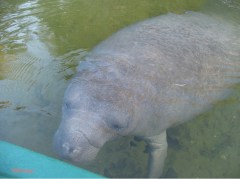
Maybe the sea grass is especially good there. Or maybe she has found a tasty freshwater spring. Or it could be that she is enjoying the company there, and the welcome from the community – though she of course has been a very popular visitor in all her ports of call. Whatever the reason, she seems to be happy and in good health. Kendria Ferguson (BMMRO) has just sent me 3 photos from her visit to Cherokee today. Georgie has managed to shed her tag – again – but since everyone knows where she is, it doesn’t matter for now…

The image below is also posted on the BMMRO’s FACEBOOK PAGE and maybe gives a clue to why Georgie is so content – calm, friendly interest and attention. The next one is of a young boy inspecting Georgie, also in Cherokee. Equally peaceful.

Let’s compare and contrast those serene pictures with another taken recently – the woman below who was detained in Florida for her ‘manatee riding’ antics…

Unknown's avatar

“GEORGIE” THE MANATEE MOVIE: ON LOCATION AT CHEROKEE, ABACO


UPDATE 17 OCT I gather that Georgie is so pleased with her new home at Cherokee, she’s still there. Not sure if she is with or without her tag, but I suppose if she has decided to stay put in one area, tracking her is not a priority. Maybe the sea grass there is a particularly good kind – or perhaps she has found natural springs to her liking. Maybe it’s the folk who live there… yes, I think it must be that. I’m hoping to get some more specific news soon, and some more photos.

UPDATE 7 OCT Kendria says that Georgie has managed to lose her tag yet again. She’s still at Cherokee, but if she decides to make a move, she can now be tracked only from reported sightings. Maybe she just doesn’t like to accessorise…

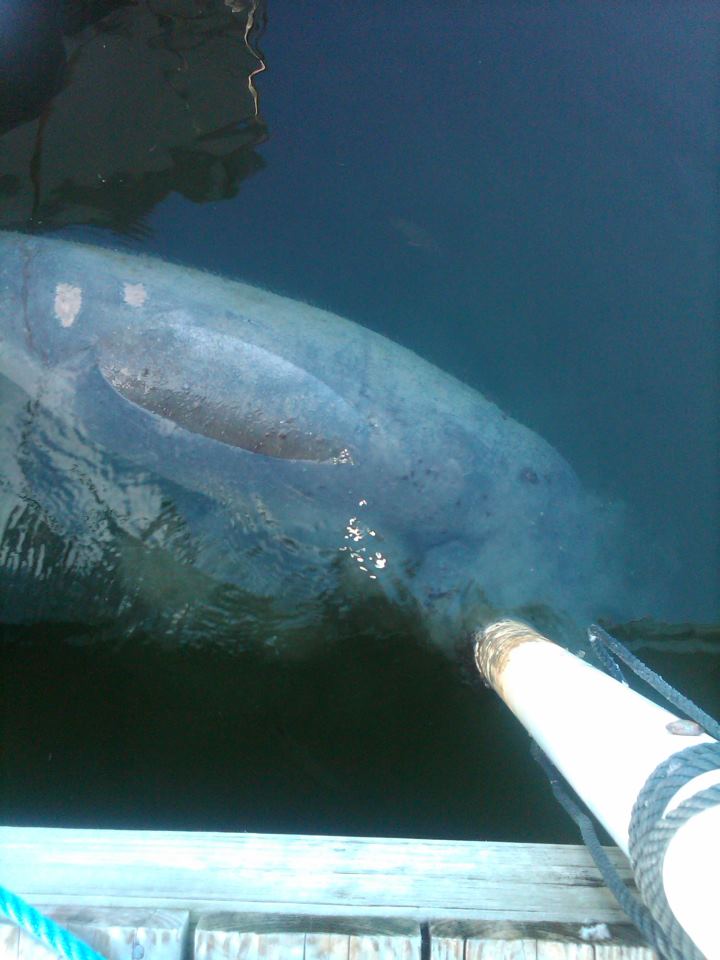
UPDATE 6 OCT Georgie has taken to life in Cherokee. She is still there – the longest she has stayed on one place during her epic journey. She’s a very popular guest, of course, and  has generated a lot of local interest and affection. Here’s a BMMRO photo taken yesterday of Georgie enjoying some quality algae browsing on the pilings in the dock

“GEORGIE” THE MANATEE MOVIE: ON LOCATION AT CHEROKEE, ABACO

The story of Georgie, the young female manatee currently undertaking a round trip of Abaco, has further raised the profile of these unusual and fascinating creatures in the northern Bahamas. Like many others who have been enthused by this important conservation and research project, I’ve been following her story since her release with her mother Rita in the Berry Is. earlier this year. In June she was weaned. In September she decided to set off to sea grass pastures new –  see GEORGIE for details

Yesterday she was still in the Cherokee area, but had lost her tag. The task was to locate her, find the tag and reattach it, and check her wellbeing. All were accomplished in the course of the day and the BMMRO posted: “Today was another day in Georgie’s ‘world according to Georgie’!!! A special BMMRO thank you and Manatee high five to Andrew Lowe, Cindy & Buddy, and the community of Cherokee! Georgie is lucky to have such caring people around! She is still parked at Cherokee and BMMRO will do their best to continue to monitor her health and habitat use in the area!”

Things have moved on a bit since then, and I am really grateful to Kendria Ferguson for finding the time to email me; and to Cindy James Pinder  for permission to use her excellent photographic material from her time spent with Georgie. Her latest news is that Georgie is moving south towards Casuarina. There are blue holes in the area where she can find fresh water. Cindy adds “She may show up in the canal in Casuarina today. If you see her please offer her fresh water from a hose.”

It’s time to showcase a short video taken by Cindy at Cherokee yesterday. In order to post it here I have had to make a derivative movie from the original. It’s like an uncontentious bootleg, i.e. made with the artist’s approval (for which many thanks!). The quality isn’t as good of course, but you will clearly see what is endearing about these inquisitive, gentle and trusting creatures – and why this makes them so vulnerable and in need of protection. Only today, a woman has been detained in Florida for riding a manatee – a strictly unlawful act that has been strongly condemned.

Here are some stills also taken by Cindy yesterday, who says “…in case you are wondering . . . a manatee feels like leather!”. They depend on having some fresh water, and these great pictures show various methods of supplying it. The top one is my favourite.

HELP NEEDED If you would like to support manatee research and conservation in The Bahamas, please email info@bahamaswhales.org or rollingharbour.delphi@gmail.com 
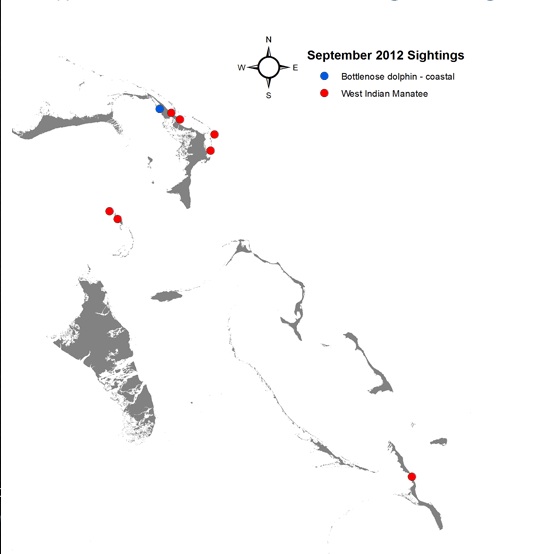
This is the perfect place and time to post the BMMRO September 2012 Whale, Dolphin and Manatee sightings map. Last month the cetacean count was very low – no whales at all, a solitary dolphin. However, manatees are starting to feature much more, and the Abaco sightings – presumably of Georgie as she progresses round the Islands  – are the first ones recorded there (I think) since manatee sightings began to be included towards the end of last year. A cause for breaking out the fresh water to celebrate.
*  *  *  *  *  *  *
MUSICAL AFTERNOTES The video music is Rizraklaru by Ralph McTell (before he arguably spoilt it all with the mawkish ‘Streets of London’) from ‘Spiral Staircase’ (credit / plug for RM). He wrote it in 1967 while living in an old caravan in deepest Cornwall. He and his mates had only mother nature’s ‘Rural Karzi’ to use, and the song title is an anagram. It’s a long story that ends, in RM’s words, “After he’d stopped laughing, Henry and I explained the title’s origin [to him] and he suggested an anagram, so we put the first letter last and spelt the whole thing backwards, and there you have it ! RIZRAKLARU !” 
Unknown's avatar

ABACO MANATEE GEORGIE’S TRIP: HOPE TOWN TO CHEROKEE


ABACO’S MANATEE, GEORGIE, SWIMS  FROM HOPE TOWN VIA LITTLE HARBOUR TO CHEROKEE

GEORGIE UPDATE 2 OCT Cindy James Pinder has posted on Facebook “Oh no, Georgie the manatee has lost her tracking device. Be on the look out for it in the Cherokee area. We are going to go out and look for her tomorrow with BMMRO. We are hoping that she goes back to the dock area looking for fresh water.” 

BMMRO UPDATE 1 OCT I’ve just heard from Diane Claridge and Kendria Ferguson. They have kindly clarified the details of Georgie’s route, which makes her journey longer than my guesstimate (see below). Georgie has continued on her way, and after some resting and some quality sea grass munching, Kendria says (yesterday ) “…right now she is in CHEROKEE!”. I’m not sure where the fresh water springs are along the east coast, but I am beginning to think that Georgie may be on her way to check out Rolling Harbour and the Delphi Club, drawn by telepathic and symbiotic forces as yet unexplained, projected from the blogosphere… 

BMMRO FACEBOOK “Georgie the manatee is creating quit a stir in Cherokee! Thank you for the sighting reports! (get some photos please!) To everyone there please don’t feed her lettuce. Manatees become very dependent on humans-their fast learners! It also teaches them to come into marinas which is where their number one predator lives – BOATS!! We want to ensure Georgie’s safety whiles she is here! We are unfamiliar with the area-so if anyone knows of any natural freshwater resources (shallow water seepage/blueholes) please do share that info! It is ok to give her a hose, mainly because we are not sure if she’s getting adequate freshwater in the area. Please remember she is a toddler and her belly is never full so have a cut off limit!  See you tomorrow Cherokee!! Take care of Georgie!”

Georgie’s next stop?

BMMRO report 30 SEP Georgie the manatee continues to travel around the Abaco’s! Fitted with a new satellite tag, she is currently exploring LITTLE HARBOUR. Yesterday, scientists caught up with her by CORNISH CAY where she was taking a quick nap and feeding on seagrass. We will continue to update the public on her whereabouts. Thank you to everyone for all their assistance in locating Georgie and ensuring her safety whiles she takes a much needed vacation from the Berry Islands.

A short time ago I wondered (in print) when a manatee would next be seen in Abaco waters – the nearest candidates being the small Berry Is. population. The answer was quick. Now! Georgie – the recently weaned calf of Rita – had swum across from the Berrys to Abaco, explored the Marls, headed  north to Little Abaco, then travelled south on the eastern side of Abaco. She was spotted at Green Turtle Cay, but it had become clear that her satellite tag was malfunctioning, so locating Georgie and monitoring her progress depended on reported sightings.

The BMMRO reported yesterday “Georgie the manatee was sighted at the Sailing Club dock in Hope Town Harbour just after 2pm today! We’d appreciate any further sighting reports as to her whereabouts! Please drive carefully in and around Hope Town Harbour.” Hope Town resident Stafford Patterson was able to get 2 fine photos of Georgie. I contacted him about using them, and he has replied “Permission granted!! And we were happy to host Georgie yesterday.” So here is Abaco’s sole resident manatee (as far as I am aware) enjoying her visit to Elbow Cay.

A team was able to fit a new satellite tag to Georgie (see below), so following her adventures will now be much easier. But where will she go next? What this space or, better still, check out the BMMRO FACEBOOK page

STOP PRESS I’ve been wondering about the distance Georgie has travelled (remembering always that she was weaned only recently). So with the the help of an online map measuring thingy (Free! Cool!), here’s a calculation based loosely on more assumptions than you will find on ASSUMPTION ISLAND. For a start, I don’t know where in the Berry Is. Georgie officially set off from; nor where she was seen on  the Marls; nor how she negotiated Little Abaco and the Cays along the east coast of Abaco; nor how many times she circled round exploring as she went. However, taking the ‘as the manatee swims’ direct line approach and assuming no significant deviations, the gizmo reckons the journey was a minimum of 150 miles. With any luck the recovered defective tag will have recorded her exact route, and amply demonstrate that I have wasted 1/2 an hour on this. Still, I wanted to know…


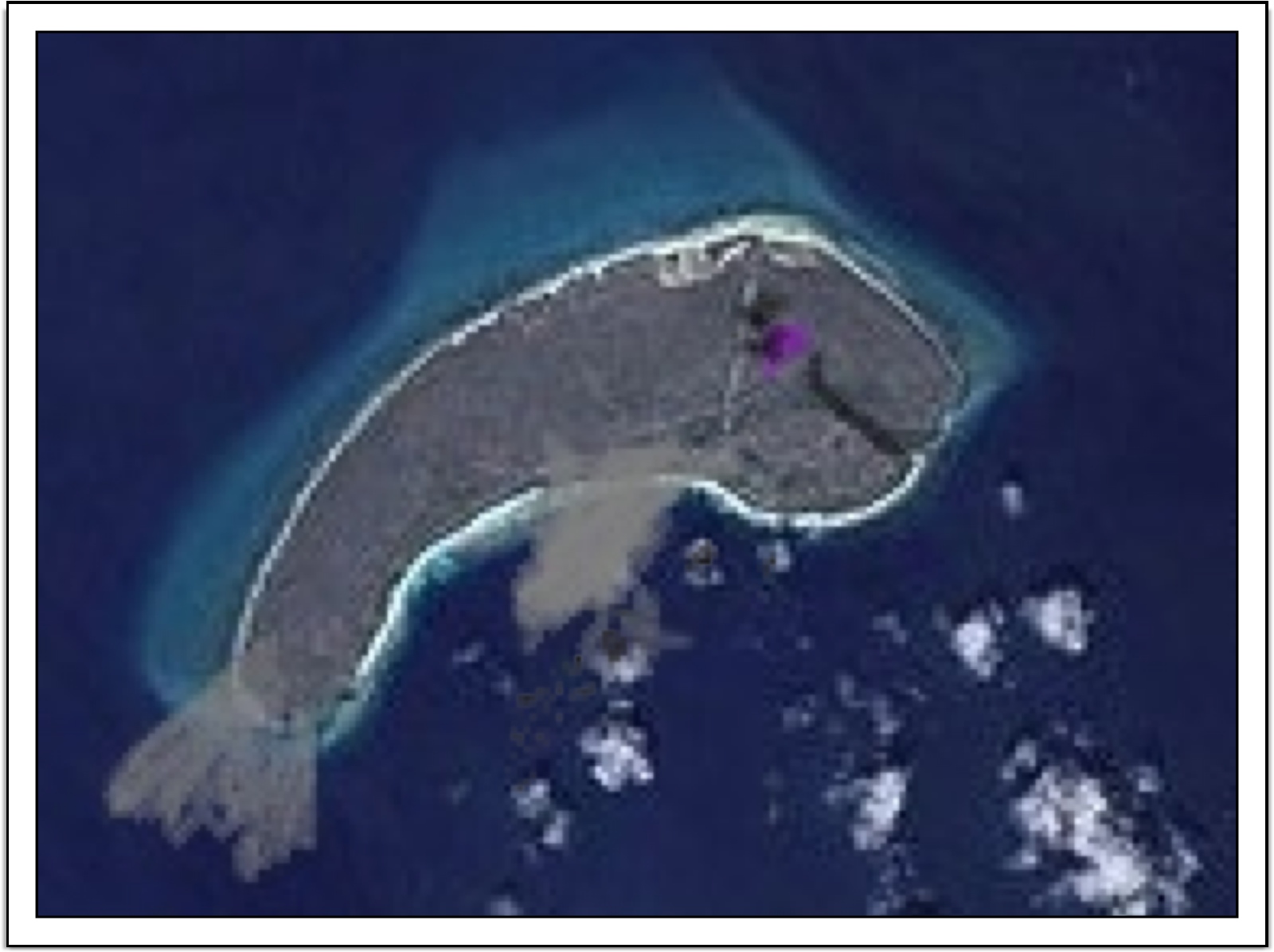
And for anyone wondering about Assumption Island, it does indeed exist, located in the Indian Ocean north of Madagascar. And the spooky thing is… it is shaped remarkably like a manatee! Well, quite like one, anyway.

Assumption Island (geographically correct)  Assumption Island (manatee rotation)      Awww…Cute!!!


Credit: savethemanatee.org

Unknown's avatar

WEST INDIAN MANATEES: GOOD NEWS FROM BMMRO, BAHAMAS


GEORGIE THE MANATEE IS WEANED

It’s good to look beyond the immediate area of Abaco and the Cays when the occasion calls for it – for example, more good news about the BMMRO’s painstaking research and careful protective monitoring of the very small West Indian Manatee population in the Bahamas. I’ve written before about these gentle, unhurried, curious creatures and their vulnerability – particularly to man’s usage of their natural habitat CLICK ===>>> MANATEES 

Kendria Ferguson’s story below shows just one aspect of the BMMRO’s commitment to the conservation of the cetaceans and sirenians in the seas around Abaco and beyond. The Manatees have excited the interest of the whole local community including the schoolchildren. If you have ever been moved by the sight of dolphins in Marsh Harbour or whales further out to sea, you can be sure someone is keeping an eye on their well-being. You might even be moved to help this important conservation work, in which case CLICK ===>>> HERE

KENDRIA’S REPORT

Adult female manatees are considered sexually mature at 6-10 years of age and have a gestation period that lasts up to 13 months. The first two years of a calf’s life is spent with its mother. During this time they are taught where to find food, fresh water, warmth and shelter. Generally, after two years the calf separates from its mother. This separation is known as ‘weaning’.

On the 14th of June 2012 Argos satellite locations received from both Rita and Georgie’s satellite tags indicated that they were no longer traveling together. Georgie had been weaned. Georgie was born on the 25th June 2010, therefore Georgie was now old enough to survive on her own in the wild

Georgie fitted with a paddle belt around the base of her tail. A flexible nylon tether is then attached to this belt with the satellite tag, which floats when it’s near the surface.Photo provided by Jim Reid-USGS Sirenia Project

After tracking Rita and Georgie for the last three months, it was hard to fathom a two year old being old enough to take on the world. But like they say – mothers know best!

Rita and Georgie fitted with satellite tags

Rita and Georgie were released in Great Harbour Cay (GHC) on April 19th of this year. They travelled to Nassau during Hurricane Irene (late August 2011) from Spanish Wells, Eleuthera and ended up in Nassau harbour. Concerned for their safety, The Department of Marine Resources gave Atlantis-Dolphin Cay permission to capture the animals and house them until a decision was made as to their release. After spending over twenty-five weeks in captivity, scientists feared that Georgie would be weaned before she was returned to the wild and given the opportunity to learn how to survive in her natural habitat. The mother-calf pair was transported to The Berry Islands on April 19th, where they were released and fitted with VHF data log satellite tags.

A map showing areas visited by Georgie pre-weaning and post-weaning

There are four resident West Indian Manatees (Trichechus manatus) residing in Great Harbour Cay, Berry Islands. Notably, an adult female, “Gina” (known previously from Florida), has been residing in Great Harbour Cay since 1999. Since then she reportedly has had 3-4 calves and is currently accompanied by her female calf, JJ, which was born in the late winter of 2011.

Within Rita’s and Georgie’s first week of being released they travelled over 50 miles around the east coast of GHC to as far south as Ambergris Cays and back into the harbour where they were released. During the winter months, Floridian West Indian Manatees (Trichechus manatus latirostris) travel vast distances in search of warm waters. So it isn’t uncommon for these agile species to explore the shallow waters in which they inhabit.

Georgie is now re-visiting important habitat areas she visited in the past with her mother. Since their separation in June, Rita and Georgie have been seen together in the harbour by the local community.

Scientists will continue to monitor Georgie’s movement patterns around The Berry Islands throughout the hurricane and winter seasons. This data will assist us in developing a management plan for manatees in The Bahamas.

Story written by Kendria Ferguson, BMMRO’s resident manatee expert

Unknown's avatar

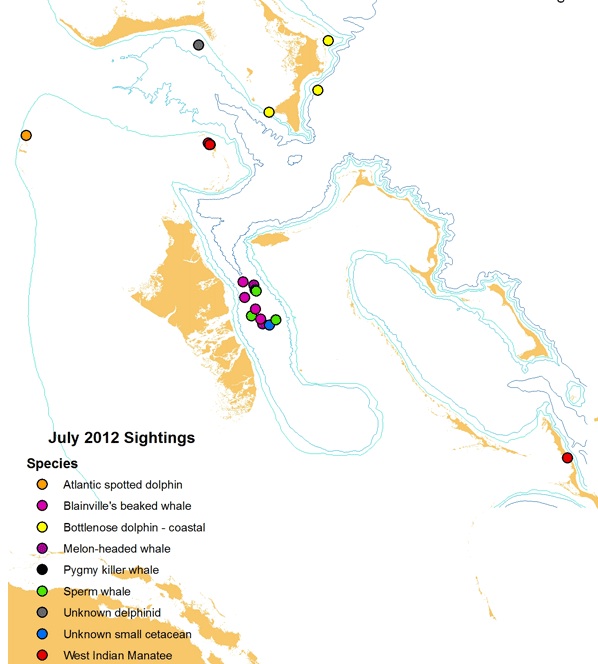
BMMRO WHALE, DOLPHIN & MANATEE SIGHTINGS ABACO / BAHAMAS JULY 2012


BMMRO WHALE & DOLPHIN SIGHTINGS ABACO JULY 2012

Last month there were bottlenose dolphins for Abaco; manatees for the Berry Is. [Hi, Rita & Georgie! – check out their progress on FACEBOOK BMMRO] with a first manatee sighting (I think) off the west coast of Long Island; and quite a few whale reports off the east coast of Andros. I wonder why the whales are all in that area at the moment? Maybe the reports are high for that area because that’s where the whale spotters congregated in July…

STOP PRESS Georgie the Manatee is now weaned – for details CLICK===>>> HERE

STOP PRESS 21 AUG As a sad coda to these sightings, the BMMRO has posted news of the stranding and death of  pygmy sperm whale on Eleuthera

Stranding Event: August 19th, 2012
A blackfish stranded in Eleuthera:

Photos confirmed the species to be a pygmy sperm whale. The animal stranded alive but later died. Many thanks to Tom Glucksman and his wife for their efforts in providing pictures and getting a skin sample, which will allow us to get even more information about this animal

For more information on how to report a stranding event, please visit  http://bahamaswhales.org/stranding

BMMRO (Website)

FACEBOOK BMMRO

Unknown's avatar

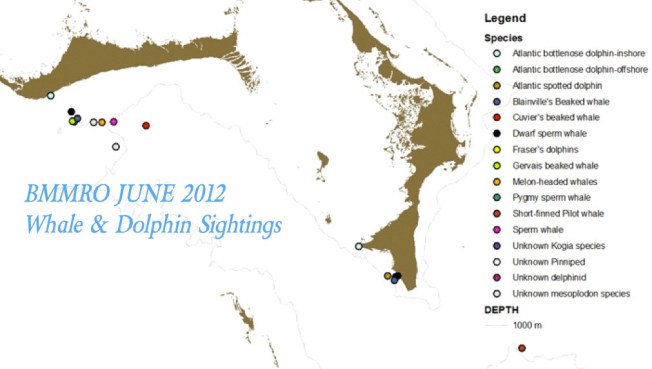
BMMRO WHALE & DOLPHIN SIGHTINGS ABACO JUNE 2012


BMMRO WHALE & DOLPHIN SIGHTINGS ABACO JUNE 2012

Actually, I say ‘Abaco’ but the most activity – and the most varied, species-wise – is off the southern coast of Grand Bahama. Abaco sightings are also confined to the south, with shows from a PIGMY SPERM WHALE and a BLAINVILLE’S BEAKED WHALE  and dolphins in the arc between Rocky Point and Hole-in-the-Wall. To see recent aerial photos of this section of coast CLICK===>>> HERE

The manatees of the Berry Is. are no longer shown on this map. Their happy story (and their fame) has spread and they now have their own entries on the BMMRO FACEBOOK PAGE, like any self-respecting stars. You can reach it anytime direct from the Sidebar if you you want to keep track of the story of Rita and her calf Georgie’s rehabilitation – and the other manatees they have encountered as they get used to their freedom. 

ADDED The latest BMMRO quarterly newsletter has just been published – highly recommended for anyone with an interest in active whale / dolphin research, or in the latest news of the manatees of Berry Is. To see it CLICK===>>> BMMRO NEWSLETTER JULY 2012

Unknown's avatar

BMMRO WHALE, DOLPHIN & MANATEE SIGHTINGS MARCH 2012


BMMRO WHALE, DOLPHIN & MANATEE SIGHTINGS MARCH 2012

Hard on the heels of the BMMRO’s Fisheries Report for 2011 – see previous posts – comes the map of last month’s sightings. First, let’s hear it for the manatees, featuring for the 4th consecutive month off the Berry Is. The 2 reports of an ‘unknown large cetacean’ off Elbow Cay are the puzzles of the month. There was a sperm whale in that area in January, but presumably it would have moved away in the meantime…. I wonder what the likely candidates are for ‘large’ besides sperm and humpbacks?

Unknown's avatar

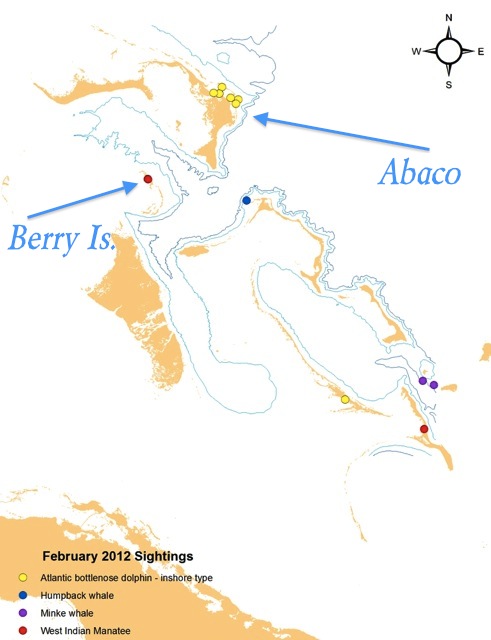
BMMRO WHALE, DOLPHIN & MANATEE SIGHTINGS FEB 2012


BMMRO WHALE, DOLPHIN & MANATEE SIGHTINGS ABACO / BAHAMAS FEBRUARY 2012

From an Abaconian point of view, the news is of Dolphin activity in the Marsh Harbour area / nearby Cays and northwards from there. No whale reports last month, though. Further afield, another manatee report from the Berry Is makes three consecutive monthly reports of sirenians. There was a humpback to the south but other reports are concentrated further away

Unknown's avatar

ABACO WHALE, DOLPHIN & MANATEE SIGHTINGS JANUARY 2012


ABACO CETACEANS AND SIRENIANS                                        BMMRO SIGHTING REPORTS JANUARY 2012

For the second month in succession MANATEES have been seen in the area: again in the Berry Is region, and additionally off Grand Bahama. With luck they will now be a fixture on the BMMRO monthly sightings map. The main reported Abaco activity, including a sperm whale, was on the ocean side of Elbow Cay. Thanks to Charlotte Dunn / BMMRO for permission to use their material

Unknown's avatar

WEST INDIAN MANATEES AND THE BAHAMAS: THE FACTS


Bahamas Manatee Gina (BMMRO)

WEST INDIAN MANATEES IN THE BAHAMAS

The appearance of a mother and calf manatee off the Berry Islands in December 2011 – see BMMRO SIGHTINGS post – led me to investigate these creatures a bit more. I added some more info and a couple of photos to that post, but really they deserve a post in their own right. So, with a wave of a flipper in the direction of Wiki and other open sources,  here’s some more about these most strange-looking mammals, just in case you ever happen to come across one…
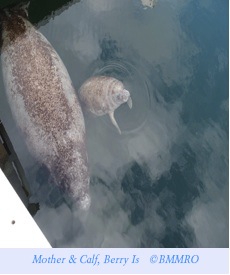
I will expand the post when I have read the latest “What Manatee?”, “Total Manatee” and “Manatee Monthly” magazines 

MANATEES Trichechidae “Large, fully aquatic, mostly herbivorous marine mammals. There are three accepted living species of Trichechidae, representing three of the four living species in the order Sirenia. The name manatí comes from the Taíno, a pre-Columbian people of the Caribbean, meaning breast” 

10 MEMORABLE MORSELS OF MANATEE MINUTIAE

The 4 species of Sirenia are the West Indian, Amazonian and West African manatee; and the Asian / Pacific dugong. Fossil remains of Florida manatees date back 45 million years; their closest living relative is the elephant

Manatees are also known as Sea Cows. Some say sailors who’d been at sea for too long took them to be mermaids, a mistake I doubt they made twice…

They can weigh up to 1,300 lb and measure up to 13 feet. Females are larger than males. Baby manatees may weigh 65 lb. Adult intestines can reach 45 meters which would take Usain Bolt 4.31 seconds to run past (if straightened out, obviously)

Accurate population estimates seem to be impossible to obtain, varying by season and by year for no apparent reason. Overall,  the picture is of a declining population, with extinction likely without further protection (see below for the THREATS to the species)

West Indian Manatees can move freely between extremes of salinity, and may be found in warm shallow coastal waters, in estuaries, or migrated into rivers to freshwater springs (as in Florida). They cannot survive below 15°C (60°F). They have a propensity to hang around the warm-water outflows of power stations

Manatees have some intelligence and demonstrate discrimination and task-learning similar to dolphins.Their eyelids close “in a circular manner”, though I can’t quite picture this. They have only 6 teeth in each jaw, which are replaced throughout their lives

They breed every other year. Gestation lasts 12 months, and it takes a further 12 to 18 months to wean the calf. A single calf is born. Apart from mothers with a calf or males showing off to females, manatees tend to be solitary creatures

They are herbivores, eating many plant species, such as mangrove leaves, turtle grass, and types of algae. An adult manatee can eat up to 10% of its body weight per day. They have been known to eat small amounts of fish from nets

Half a manatee’s day is spent sleeping in the water. The rest of the time they graze in shallow waters. They swim at 3 to 5 mph, faster in short bursts. They may live up to 60 years (surprisingly, given their punishing daily schedule)

The oldest manatee in captivity is Snooty, at the South Florida Museum. He was born at the Miami Seaquarium on July 21, 1948 and came to the South Florida Museum in Bradenton, Florida in 1949

   PREDATION, THREATS AND CONSERVATION – A SUMMARY       The manatee is yet another creature whose worst enemy is mankind. The generalisations below apply to the West Indian manatee – elsewhere there may be different problems

Natural predators Manatees have few natural predators except, occasionally, sharks and crocodiles. Predation is not a significant survival threat. The main causes of death are human-related, such as habitat destruction and human marine objects; and natural causes such as low water temperature and disease

Hunting Historically, manatees were hunted for meat. They were easy to tempt to a canoe and then stun with a pole. Manatee hides were used – and traded – for canoes and shoes; their bones were used for ‘medicine’. Museums used to pay for hides or bones. Hunting was banned in 1893, though some poaching still occurs

                    Manatee Group                                                        Young Manatee                            

 Ship-strike Manatees move slowly and are curious… Coastal development has led to many violent collisions with propeller-driven boats and ships, causing maiming, disfigurement, and death. Manatees are cut in half by large vessels like ships and tugs. Many others have propeller scars and they can often be identified by their scar patterns –  some bear 50 scars and disfigurements from vessel strikes. Breeding ability may be affected. Infected injuries can prove fatal. Internal injuries also come from being trapped between hulls and docks. Studies of the attrition rate from “boat mortality” alone is causing much concern for the survival of the species. In 2009, of 429 Florida manatees recorded dead, 97 (23%) were killed by commercial and recreational vessels

Red tide Another cause of manatee deaths is “red tide”, blooms of the microscopic marine algae Karenia Brevis.  This produces toxins that affect the central nervous systems of sea creatures. In 1996 an outbreak off the Florida coast killed 151 manatees

Other threats (1) Fishing gear: hooks, metal weights, and especially  mono-filament line clogging a manatee’s digestive system; entanglement in fishing lines (2) water-control structures such as navigation locks and floodgates (3) drowning in pipes and culverts (4) bizarrely, there have been numerous reports people, when allowed to swim with manatees in Florida, harassing them

CONSERVATION All three species of manatee are listed by the World Conservation Union as vulnerable to extinction. It is illegal under US federal and Florida law to injure or harm a manatee. They are classified as endangered by both the US state and the federal governments. Some vessels are now adapted to help prevent harm to manatees where they operate

Florida Sea Park Manatee
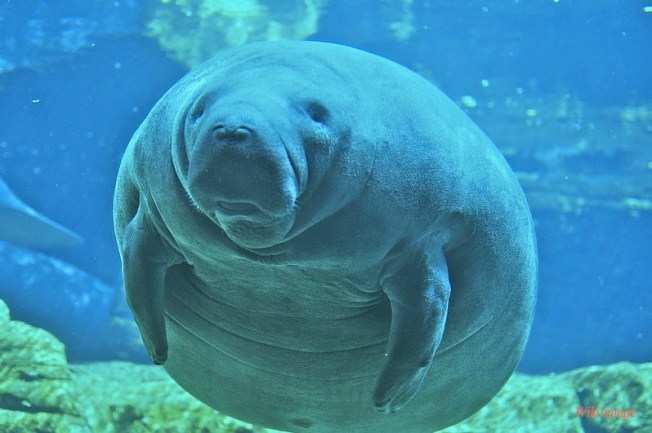
For news of forthcoming BMMRO research into the apparent recovery in the population of manatees in the Bahamas CLICK HERE

Finally, here’s the link to a website that contains more manatee information and images. You can join, adopt a manatee, donate or buy stuff. Who wouldn’t want a T-shirt – or a ‘ManaT-shirt’, even – adorned with a picture of the lady above? CLICK LINK===>>> SAVE THE MANATEE CLUB
Unknown's avatar

BMMRO WHALE, DOLPHIN & MANATEE SIGHTINGS / WINTER REPORT


BMMRO WHALE, DOLPHIN & MANATEE SIGHTINGS AND WINTER REPORT DECEMBER 2011

This was an interesting month. For a start, a humpback whale was reported off Elbow Cay, and a sperm whale further out to sea to the east. There were several cetacean reports between Sandy Point and Hole-in-the-Wall. Perhaps best of all, West Indian manatees – mother and calf – were reported in the area at the end of December, just off the Berry Islands – photo below, and further details in the BMMRO Winter Newsletter via the blue link.

THE WINTER NEWSLETTER contains much of cetacean interest, as always. It features articles on the effects of climate change of the declining Sea of Abaco bottlenose dolphin population; manatees in the Bahamas; ‘Life after Death’ – the importance of whale carcasses on the deep sea eco-system; sonic body-length measurement of sperm whales; the false killer whale stranding on Guana Cay (see POST); educational news update; and much more besides

BMMRO NEWSLETTER WINTER 2011/12

Courtesy of NAHRVALUR and her excellent wildlife blog, here is a cute view of a manatee in a Florida Reserve, where a webcam has been installed 

Manatees (family Trichechidae, genus Trichechus) are large, fully aquatic, mostly herbivorous marine mammals sometimes known as sea cows. There are three accepted living species of Trichechidae, representing three of the four living species in the order Sirenia: the Amazonian manatee (Trichechus inunguis), the West Indian manatee (Trichechus manatus), and the West African manatee (Trichechus senegalensis). They measure up to 13 feet (4.0 m) long, weigh as much as 1,300 pounds (590 kg), and have paddle-like flippers. The name manatí comes from the Taíno, a pre-Columbian people of the Caribbean, meaning “breast”
I’ll write a separate post about these creatures later, and cross-refer from here. rh
NOW CLICK LINK===>>>       MANATEES: THE FACTS