Unknown's avatar

ABACO BONEFISHING Pt 1: A NON-ANGLER’S SKIFF-VIEW – WHAT, HOW, WHERE & WHY?


             BE NATURAL (YET SHARP) ON THE FLATS – PART 1  

WHAT, HOW, WHERE AND WHY?

[I published the original of this post a year ago. I discovered that it had been put badly out of kilter by recent blog format change, so I have amended and to an extent updated it, with larger photos (NB the video was my first feeble foray).  So yes, it’s a retread, which I rarely do; but I wasn’t tooled up with Facebook & Twitter then, and thankfully a couple more people now read this thing, so it possibly deserves a fresh outing. No? Well I’m doing it, regardless]

It’s 7.15 and breakfast time at Delphi. At 8.00 the trucks, skiffs, guides and fishers will set off to the fishing grounds for the day, leaving you with an empty beach, shells, warm sea, the pool, the hammock and your book. For the moment, the talk is of the excellent ‘Full Abaco’ breakfast, the weather, ‘Delphi daddies’ & ‘crazy charlies’ and someone’s mislaid reel. Sandy enters to announce that there’s a place free on your partner’s skiff… and offers it to you. So what should you, a non-angler, expect of a day out on the flats?

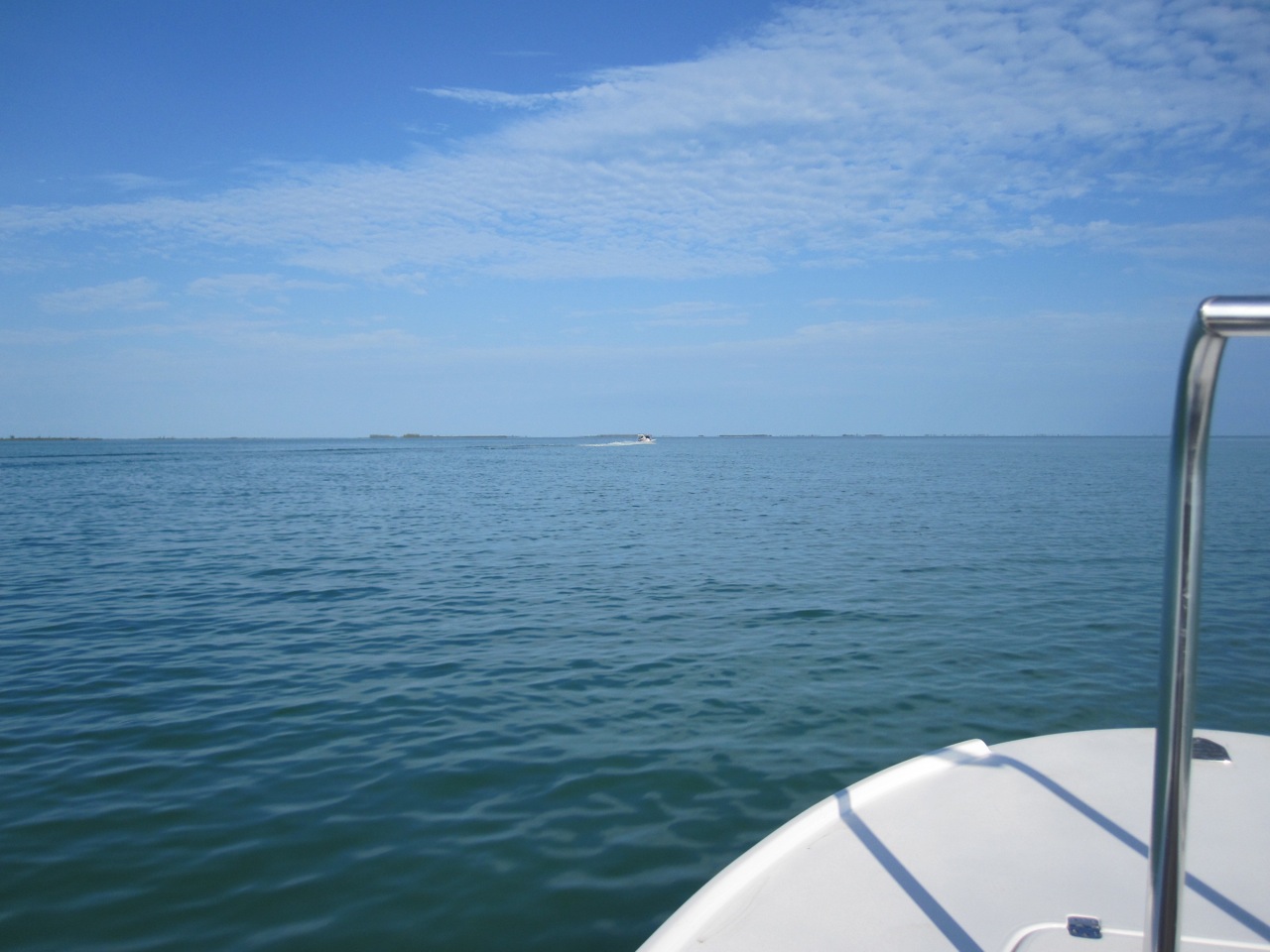
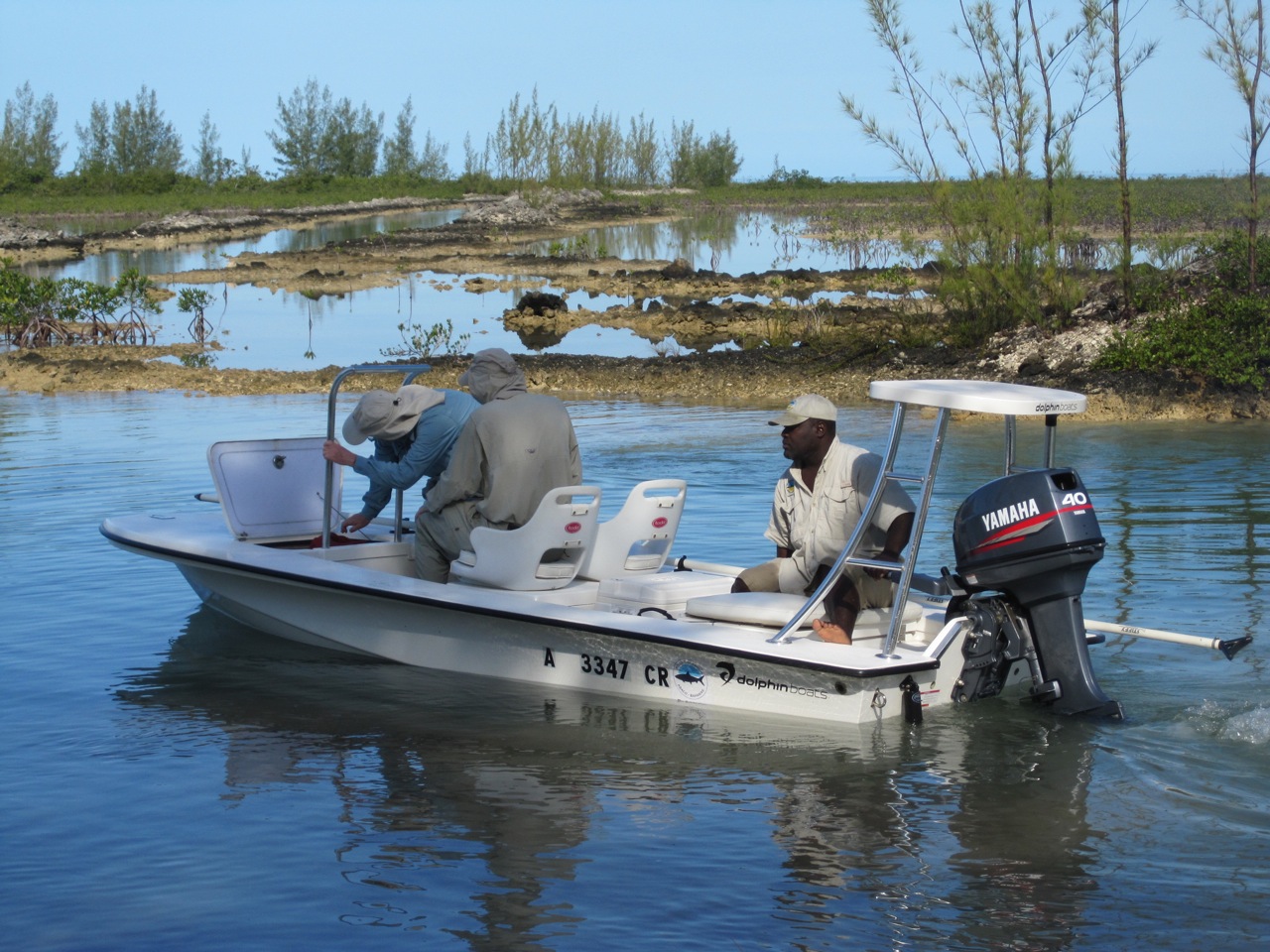
THE SKIFFS These are top-of-the range boats, capable of considerable speed getting out to the fishing grounds. The ride can be bumpy, splashy and even chilly in the early morning, so bring a fleece and a waterproof top. Camera? Essential. Here is a Delphi skiff on a sand bar in Cherokee Sound, parked for lunch and some quality conch and sand-dollar hunting. So for a start, the day isn’t ALL about fishing…

THE FISHING GROUNDS You will leave from one of three launch points and speed across the water to the bonefishing areas. The main one is “Nettie’s”, with access via a narrow man-made channel to the Marls…

… more than two hundred square miles of mangrove swamp, islets, channels and fish. The journey to Nettie’s may seem quite a long way as you bump along through the pine forest on a network of logging tracks. Watch out for small birds flickering all around as you pass.


———————————

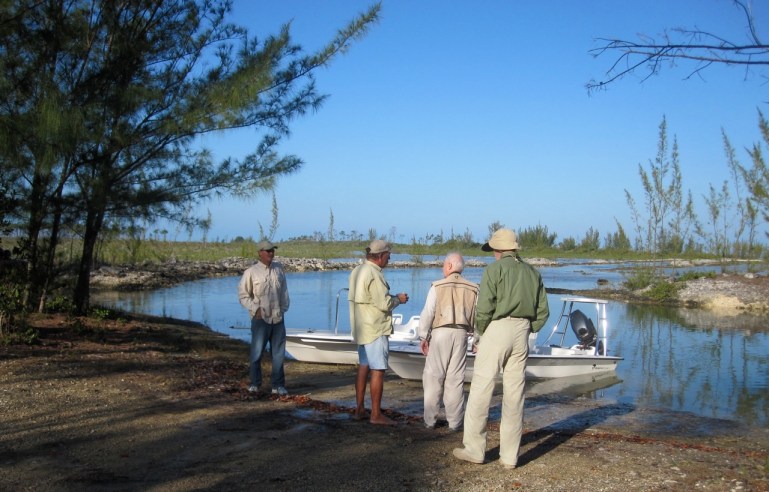
Launching a skiff at Nettie’s

Plans are hatchedGood to go…
Stowing gear in the front (forrard?) locker. There’s also one behind the seats for the lunch cool boxes. And the fuel…
The other two launch areas are Crossing Rocks (a short drive south of DCB) or Casuarina Point for Cherokee Sound (a slightly longer drive north of DCB)
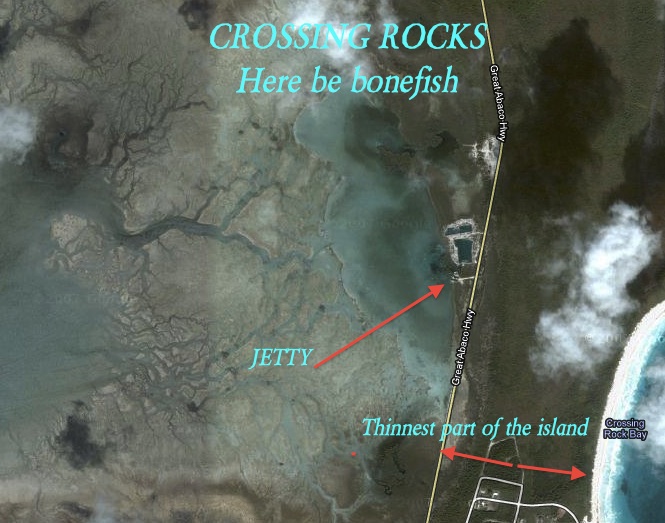
The jetty at Crossing Rocks – skiffs being prepared

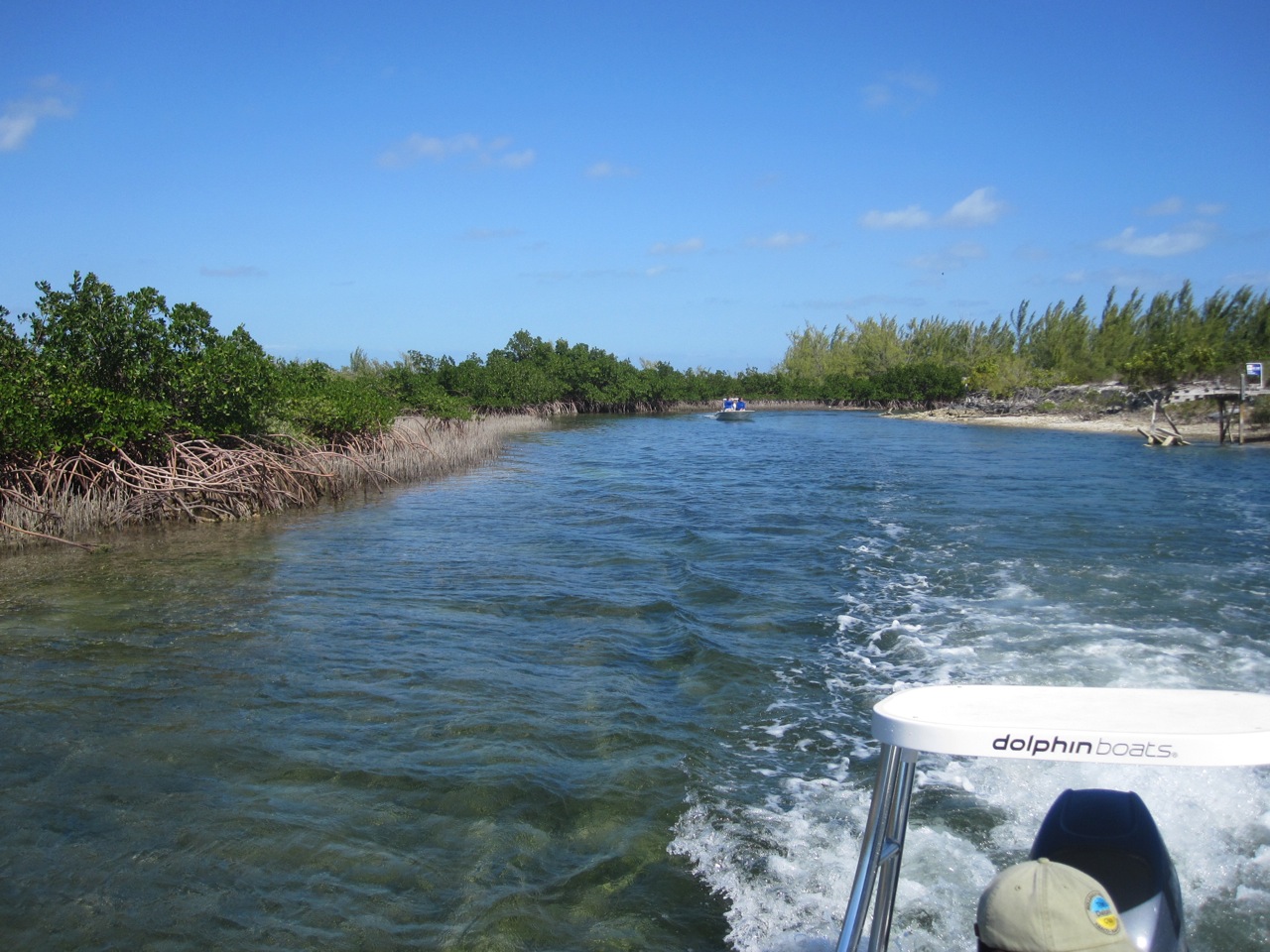
The launch point at Casuarina. A channel leads out to Cherokee Sound

Two boats in the channel – the authentic James Bond chase experience
WHAT’S THE POINT? Bonefishing! You’ve heard all the Club talk, you’ve seen your partner fussing over all those bits and pieces in your room: now see it in action. Once you get out to a fishing area, the guide cuts the engine… and suddenly you are being poled very slowly and almost noiselessly across the shallow flats

The guide stands on the platform at the back of the skiff, using the advantage of height to scan the shallow water; the fisher stands at the front looking tensely for grey shadows underwater, waiting for the magic words…

 “…hey, bonefish, 10 o’clock, 4 of them moving right, 30 feet… see them?” 

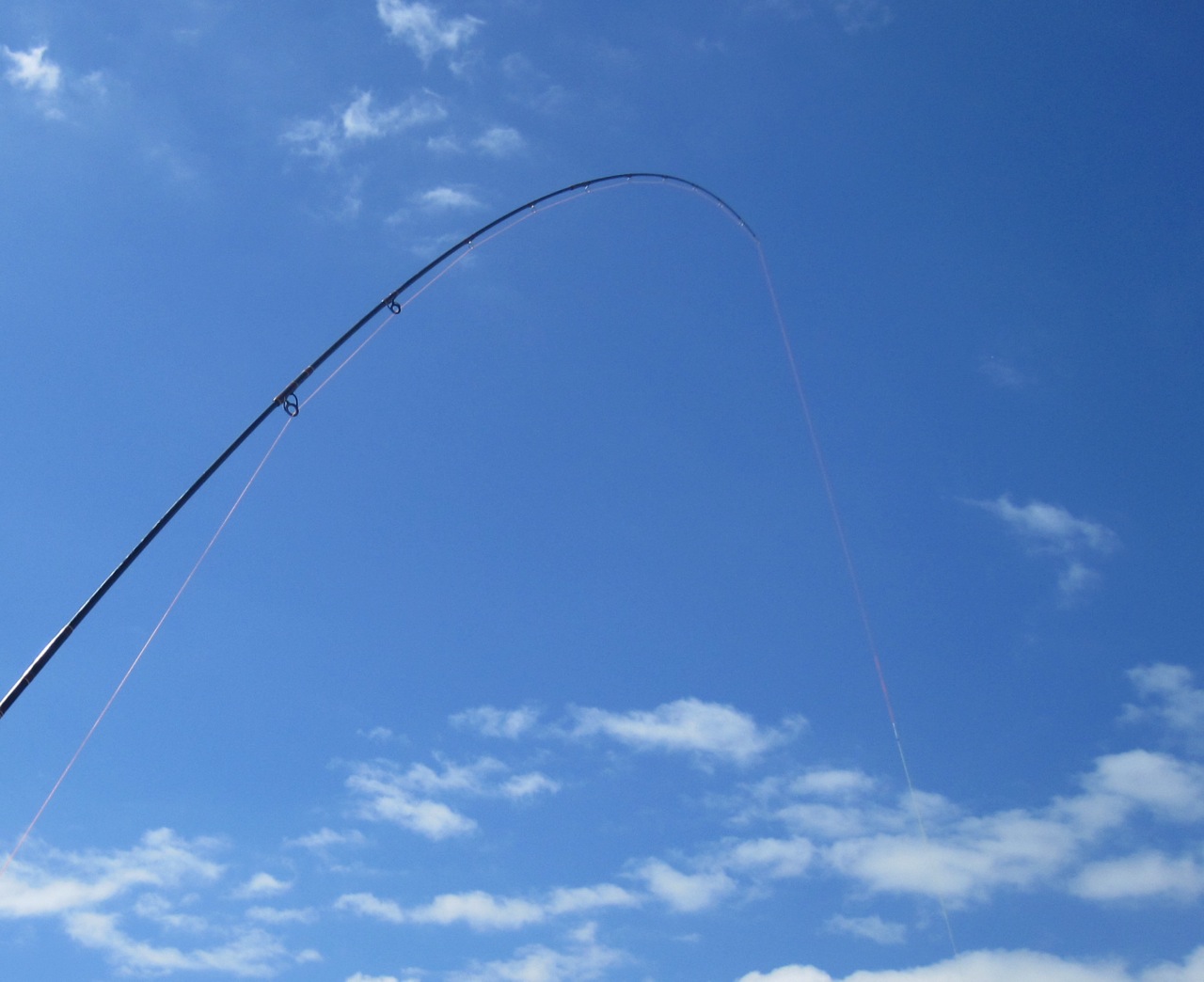
And it’s ‘game on’. This isn’t the place for a discourse about casting technique and style – I have neither (Sandy, of me: “Muppet”) – but I promise that you will get completely caught up in the excitement when a fish takes the fly and takes off towards the horizon, stripping the line and backing from the reel… (I realise the image above may suggest… well he’s just fishing, OK?)

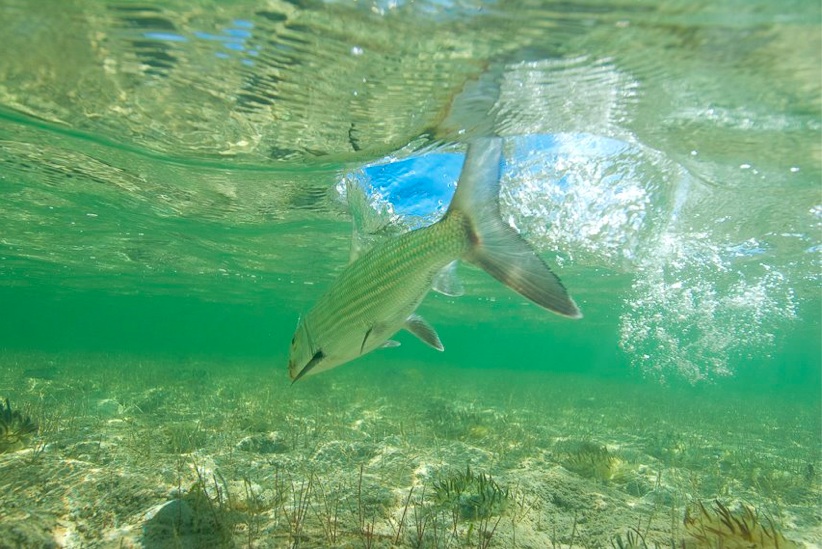
THE QUARRY – grey ghosts below water, bars of silver above. Caught on the ‘fly’ which are in fact shrimp or crab imitations, with barbless hooks to make the chance of losing a fish that much greater… This ensures that a boated fish can be returned to the water as easily and quickly as possible. It’s all ‘catch and release’, though some (me) find that mostly the fish very sensibly self-release long before they ever reach the boat…

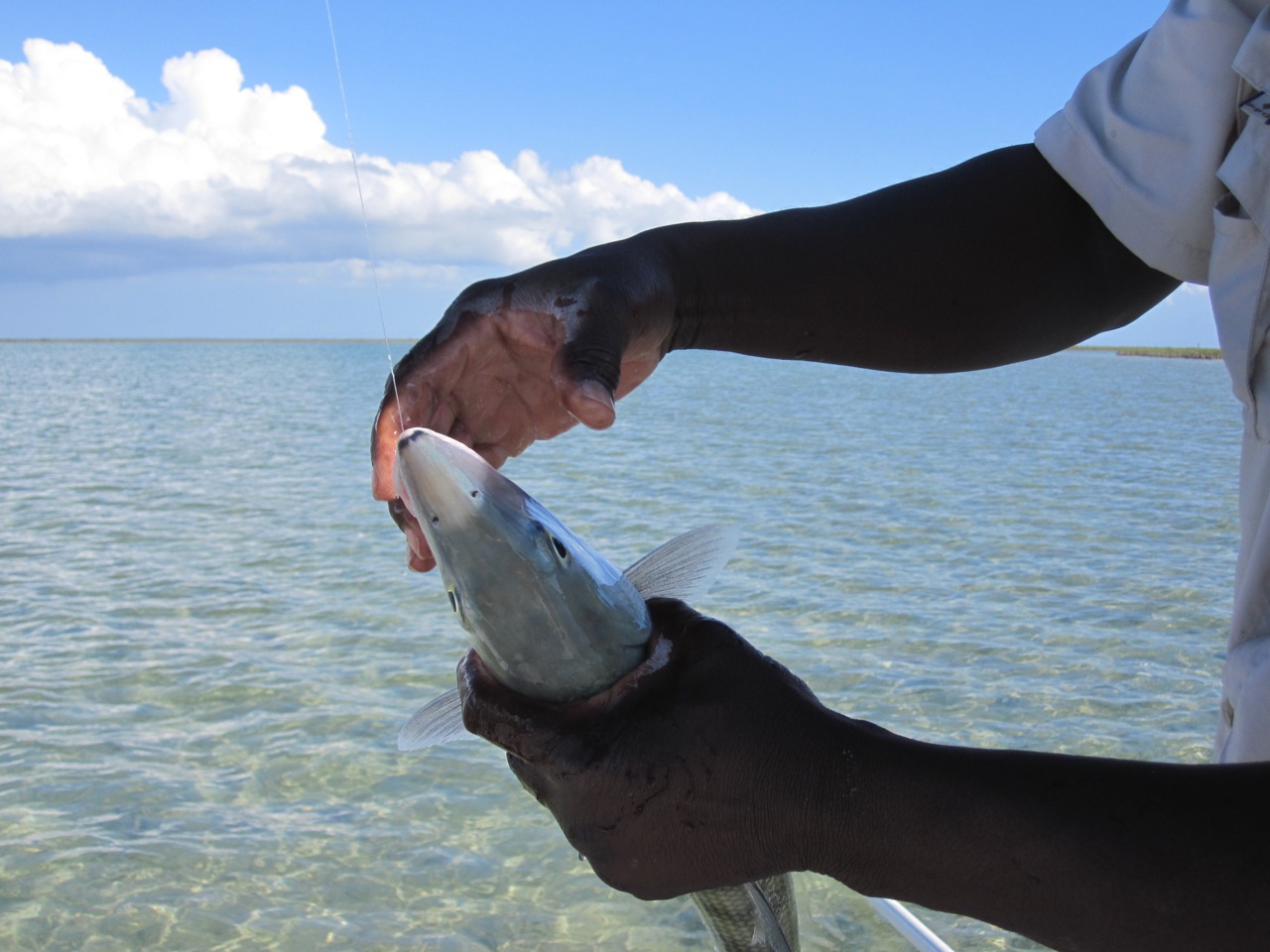
Abaco bonefish off Crossing Rocks (just caught and released)Guide Ishi with Abaco bonefish caught on the MarlsGuide Robin Albury removes the barbless hook before returning the fishgood specimen‘Ishi’s Fishy’, as he would say
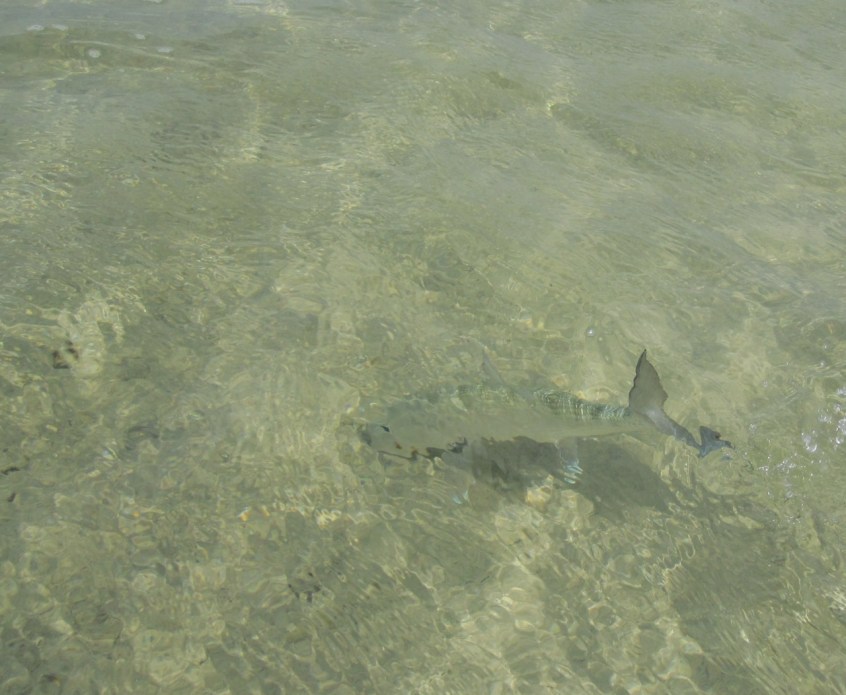
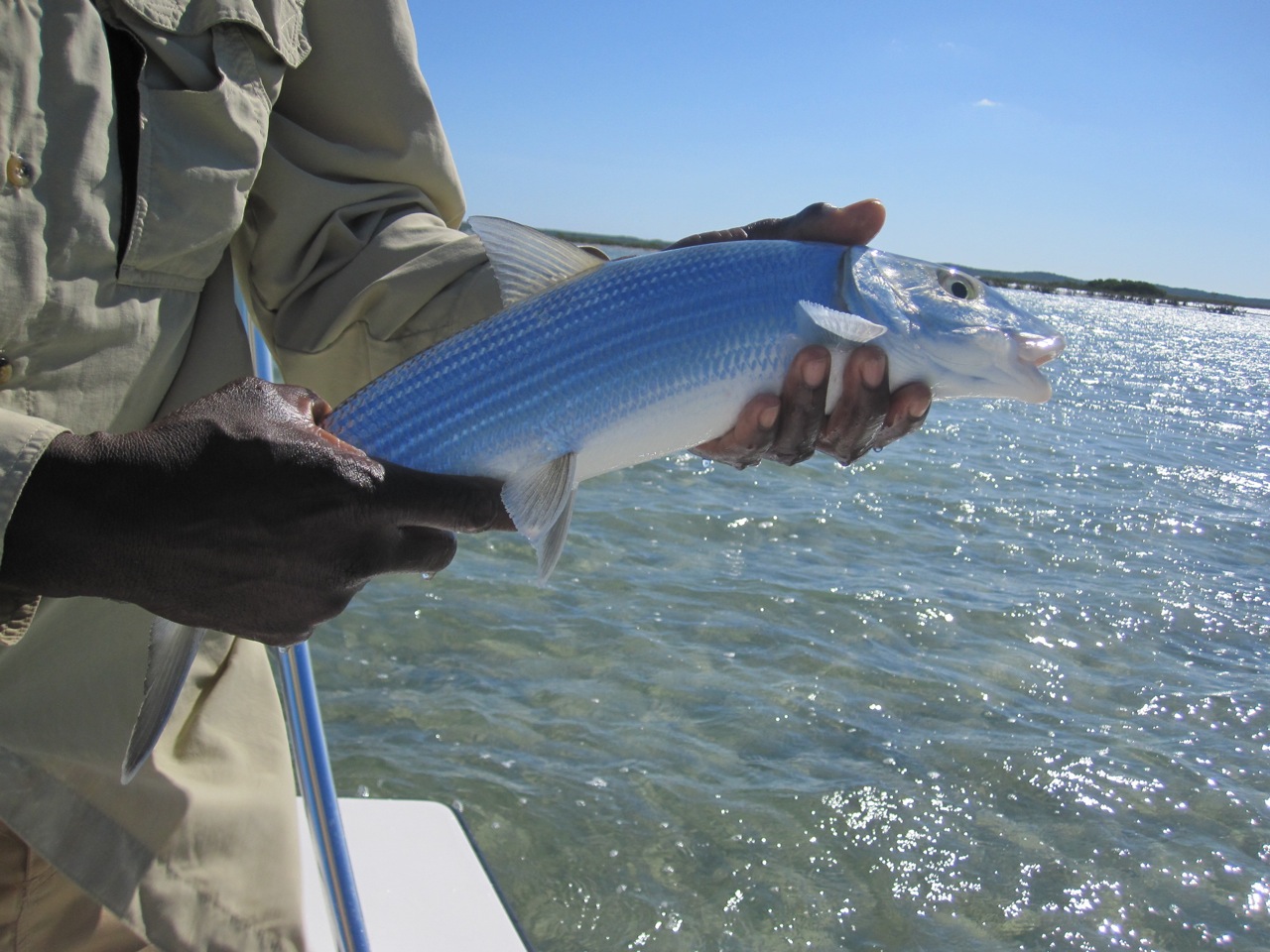
All images, and indeed fish, ©RH

There is even the possibility that at some stage you may unexpectedly be handed a rod (even if you have never held one before, or wanted to) with ‘fish on’… Here, Robin has hooked a 2.5 lb fish and handed the rod to Mrs RH (then engrossed in eating a cheese roll) who successfully played and brought in her first ever fish…

PART 2 will deal with what else goes on during the day: the scenery, birdlife, sharks, turtles, blue holes and so forth. For now, here is a short clip of the skiff ride out to the Marls, to give you an idea. NB this was a very calm day – things can get a little bumpier and wetter at times. The seats are padded, but not very… 

 [Ultra-cautious music credit to Joe Satriani who sued Coldplay for alleged tune ‘borrowing’ saying “I felt like a dagger went right through my heart. It hurt so much”. Case dismissed + unspecified settlement…  Way to go, Joe! Want to check? Cut ‘n’ paste this: http://www.youtube.com/watch?v=zjB024bZoB4&feature=fvwrel Then by way of counterbalance try John Lennon’s Imagine vs Coldplay’s ‘Fix you’ at (cut ‘n’ paste)  http://www.youtube.com/watch?v=DksjpsAe3vk&feature=endscreen&NR=1]                

CLICK LOGO for the Bonefish & Tarpon Trust


Unknown's avatar

“GLIMPSES OF LIFE ALONG A CORAL REEF” A c19 NATURALIST VISITS ABACO


GLIMPSES OF LIFE ALONG A CORAL REEF by F. H. HERRICK

This post is aimed at those with a particular interest in the flora and fauna – especially avifauna – of Abaco and its Cays. It is a naturalist’s account from 1886 of an expedition to Abaco, interspersed with a few line drawings. It’s an easy read if you are interested in Abaco, its history, and the state of natural life on the islands 125 years ago. Those who have come to this site for the photos and / or even the occasional jest are warned to expect neither. However, to tempt waverers I’ll highlight below (by way of a quiz) some intriguing aspects of the 9-page article. I have had to edit it to correct the many ‘literals’ in the open-source material; however the c19 spellings are retained. I’ve also added coloured subject-matter codes as follows: PLACE NAMES; BIRDS; PLANTS; FISH; CREATURES

In 1886, Herrick visited Abaco with a party of naturalists. This trip predated by 3 years the publication of Charles Cory’s groundbreaking ‘Birds of the West Indies‘. There would have been scant readily-available published material about the natural history of the Bahamas, let alone of Abaco itself. Herrick and a friend left the main party and went on their own wider explorations of Abaco with two local guides. Herrick recorded their findings, which were subsequently published in ‘Popular Science Monthly‘ in 1888. In Herrick’s wide-ranging account of the adventure you will find the answers to the following 15 questions. If any one of them whets your appetite to read this historic account, press the link below the quiz!

  • What fruit might you have found growing in fields on Abaco in 1886?
  • What was the local name for the perforated rock at Hole-in-the-Wall?
  • What is an “egg-bird”?
  • What was causing “the gradual extermination” of flamingos?
  • What were “shanks” and “strikers”?
  • To what human use were Wilson’s Terns put?
  • How many eggs does a tropic-bird lay?
  • What law prevented the shooting of tropic-birds, and indeed any other bird, by naturalists?
  • What sort of creature is a “sennet”?
  • Which was rated the better for eating – grouper or ‘barracouta’ (sic)?
  • Who or what is or are “grains”?
  • What common creature had a burning touch like a sharp needle?
  • What bird was reckoned to have the call ‘loarhle-ee’ ?
  • What – or indeed who – was described as a “pilepedick”?
  • What creature laid 139 eggs?

ABACO NATURAL HISTORY Popular Science Monthly Volume 32 January 1888

Unknown's avatar

SEA URCHINS & SEA BISCUITS – BEACHCOMBING TREASURES ON ABACO


Sea Urchin Delphi Abaco 2

SEA URCHINS & SEA BISCUITS – BEACHCOMBING TREASURES ON ABACO 

It’s time we had some more shells and other beach treasures on these pages. In the absence of star Abaco beachcomber and blog-contributor KASIA I have taken a closer look at the Delphi Club collection. This has been casually accumulated by the Club, its members and guests during the past 3 years whenever a good specimen has been encountered, and is displayed in the Great Room. The first items to catch my eye were the ECHINODERMS, a family that includes sea urchins, sand dollars, sea biscuits and star fish. Their sun-bleached tests are often found, though in my limited experience the larger they are, the rarer.  The link above is to the Wiki-blurb, which has the unpromisingly daunting heading  “This article may be too technical for most readers to understand…”. Now there’s a challenge!

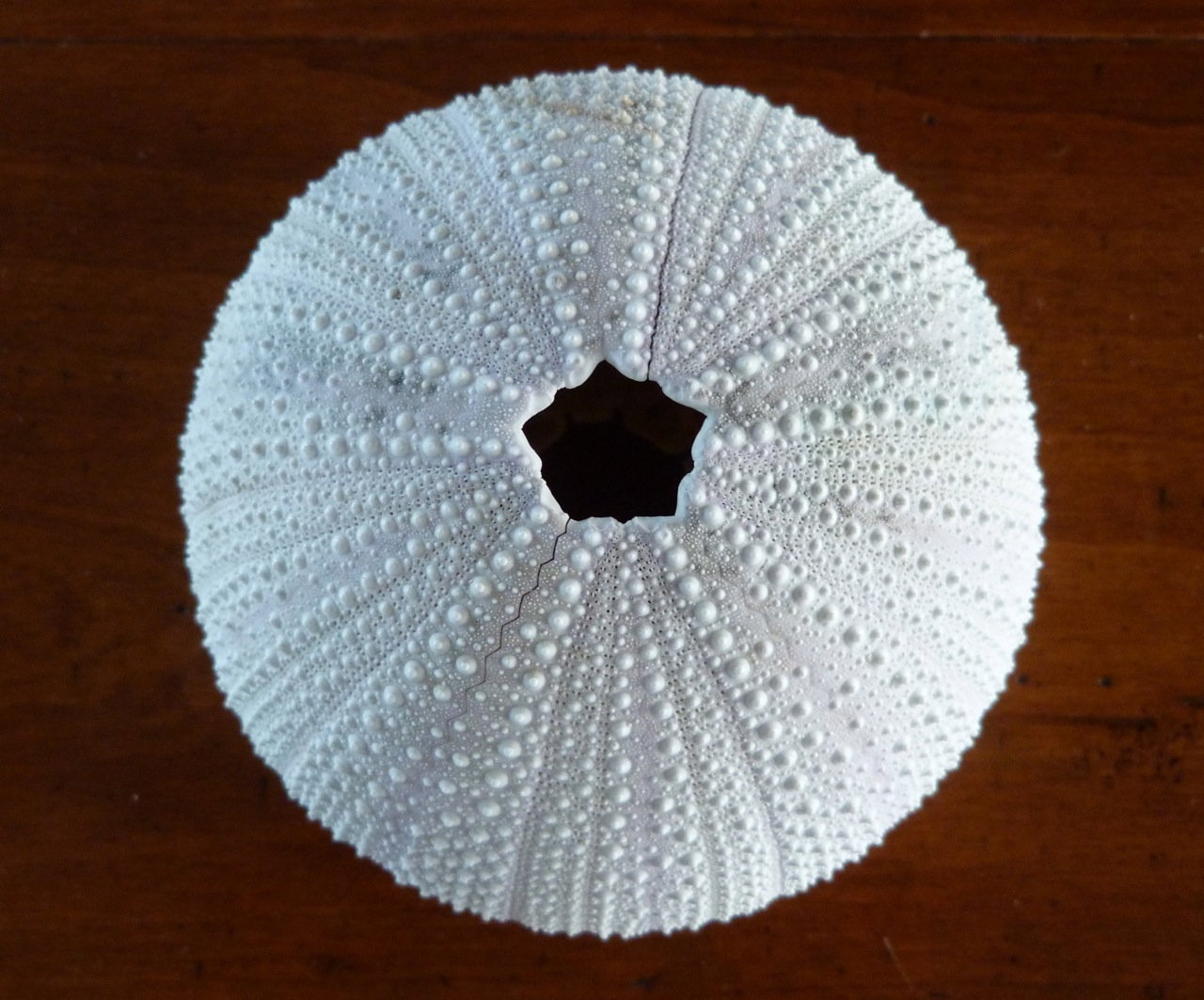
First up is a very large SEA URCHIN, a thing of great delicacy and fragility that weighs next to nothing. I have never seen a bigger one. Looking at the fine detail, it is hard to believe that such perfection of symmetry and intricacy can exist in a creature so very painful to tread on. 

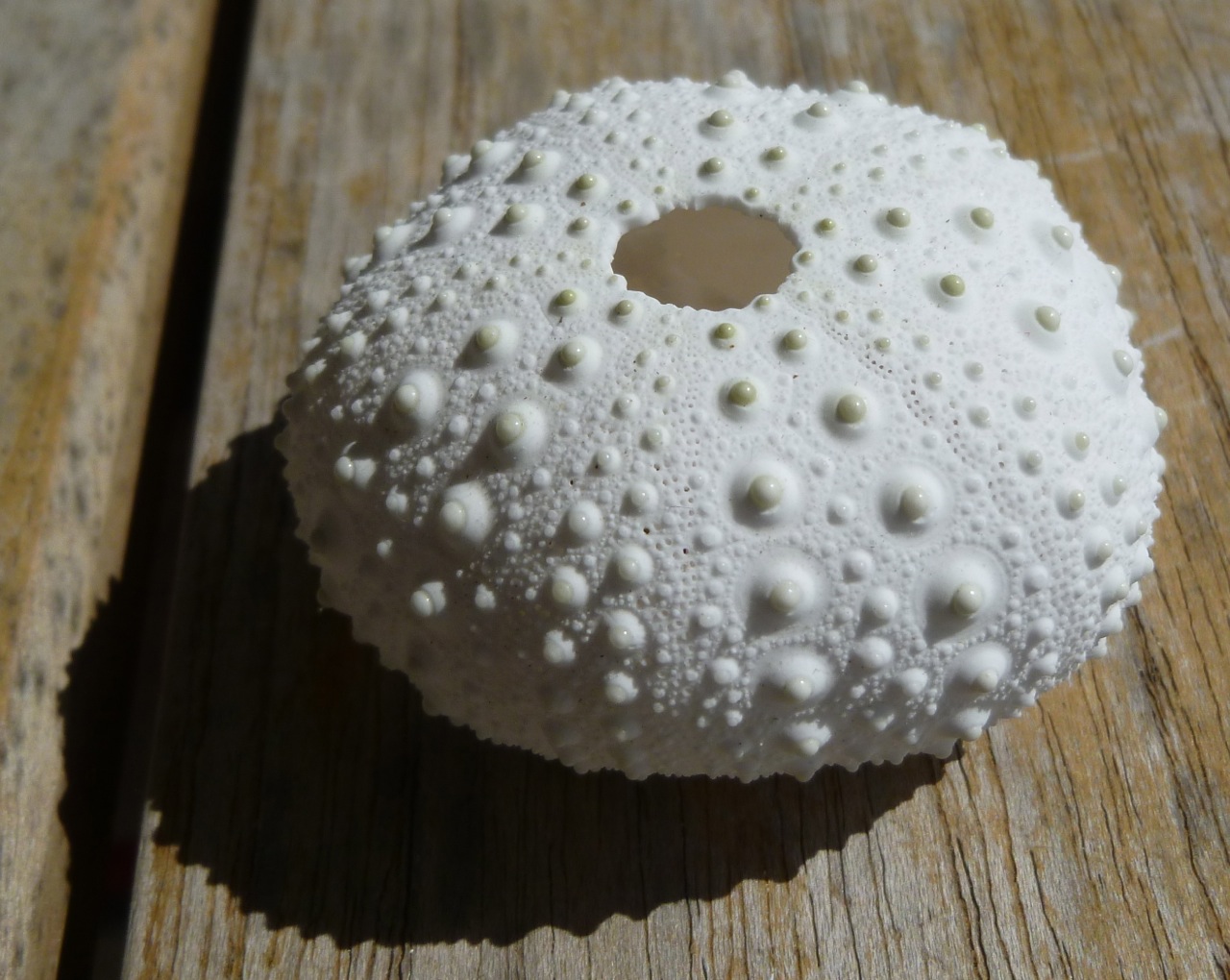
This SEA URCHIN is smaller, with more prominent nodules and a much more random pattern – reminiscent of a cartoon of some distant white planet. It has cast a fine knobbly shadow.

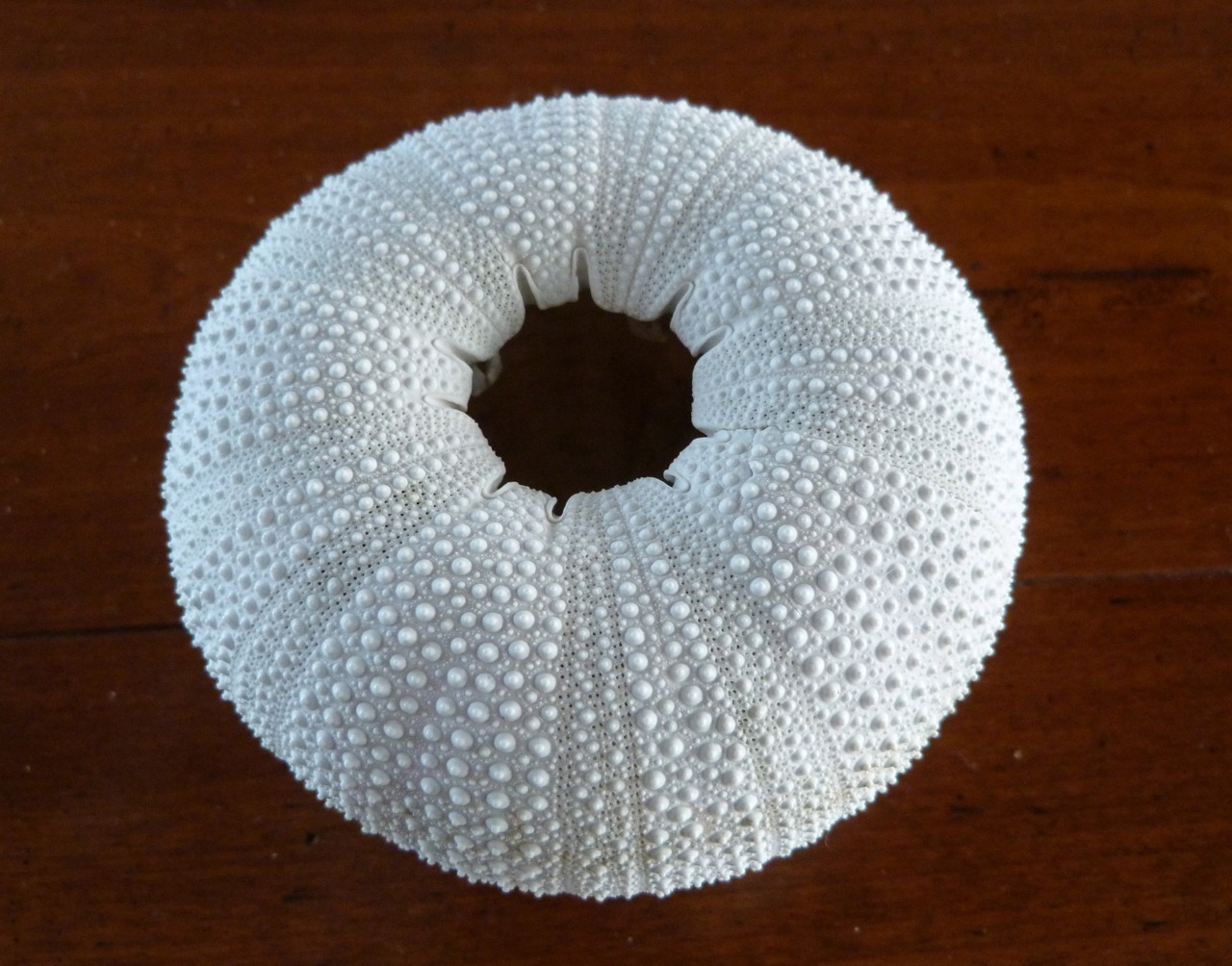
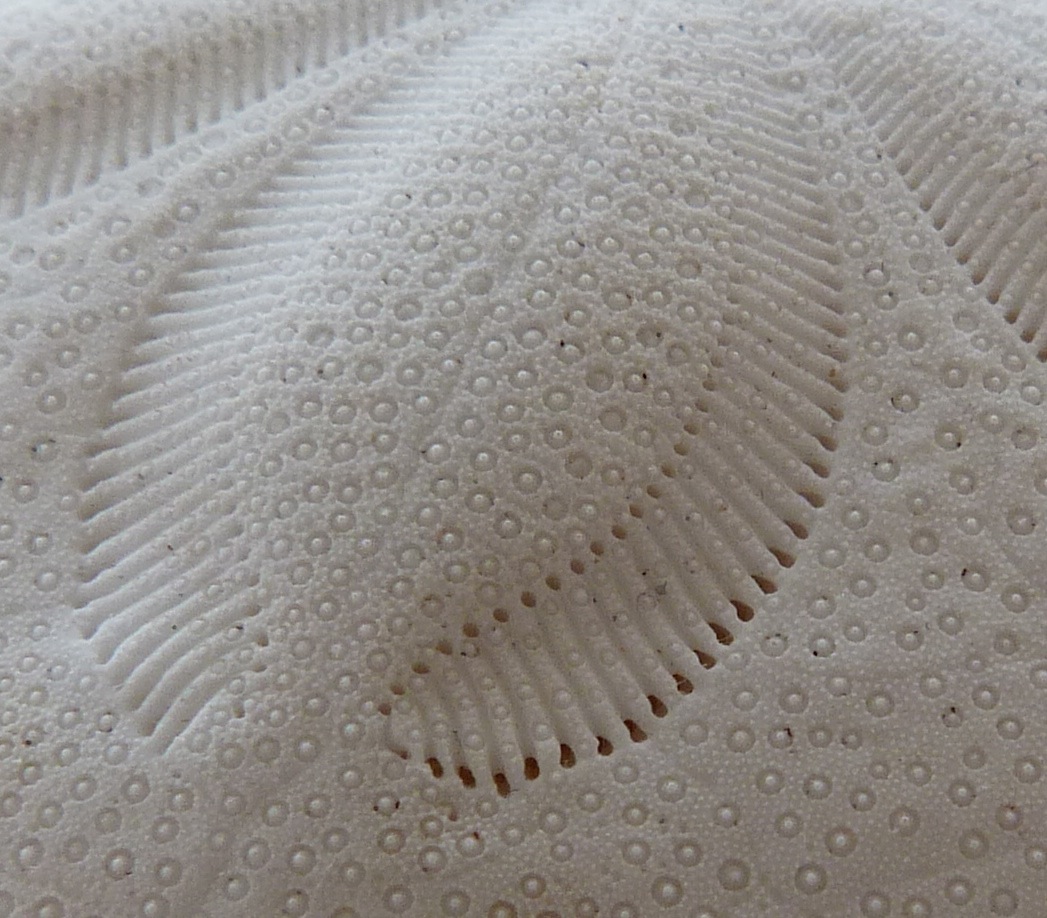
SEA BISCUITS have similar five-way symmetry to their first cousins SAND DOLLARS but are generally pebble-shaped rather than disc-shaped. I have included 2 close-ups to show the fine details of the pattern – almost like lace-work

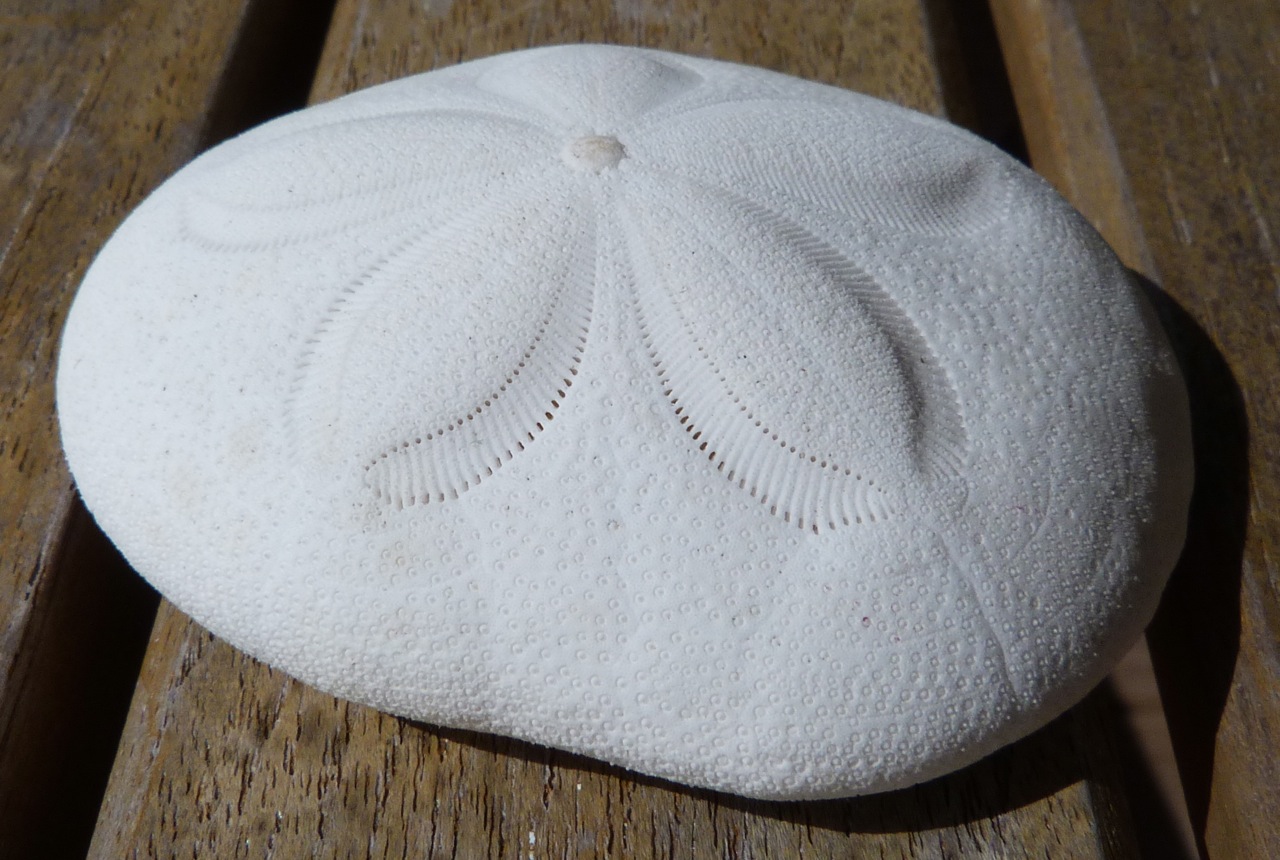
This SEA BISCUIT is a different type, with the 5 radials reaching right round it. For some reason it only has 4 and not 5 small holes (as one might expect) at the centre. Unlike SAND DOLLARS they tend to be more oblong than round.

Unknown's avatar

BLUE-GRAY GNATCATCHER ‘ON SONG’ IN THE ABACO COPPICE


BLUE-GRAY GNATCATCHER Polioptila caerulea

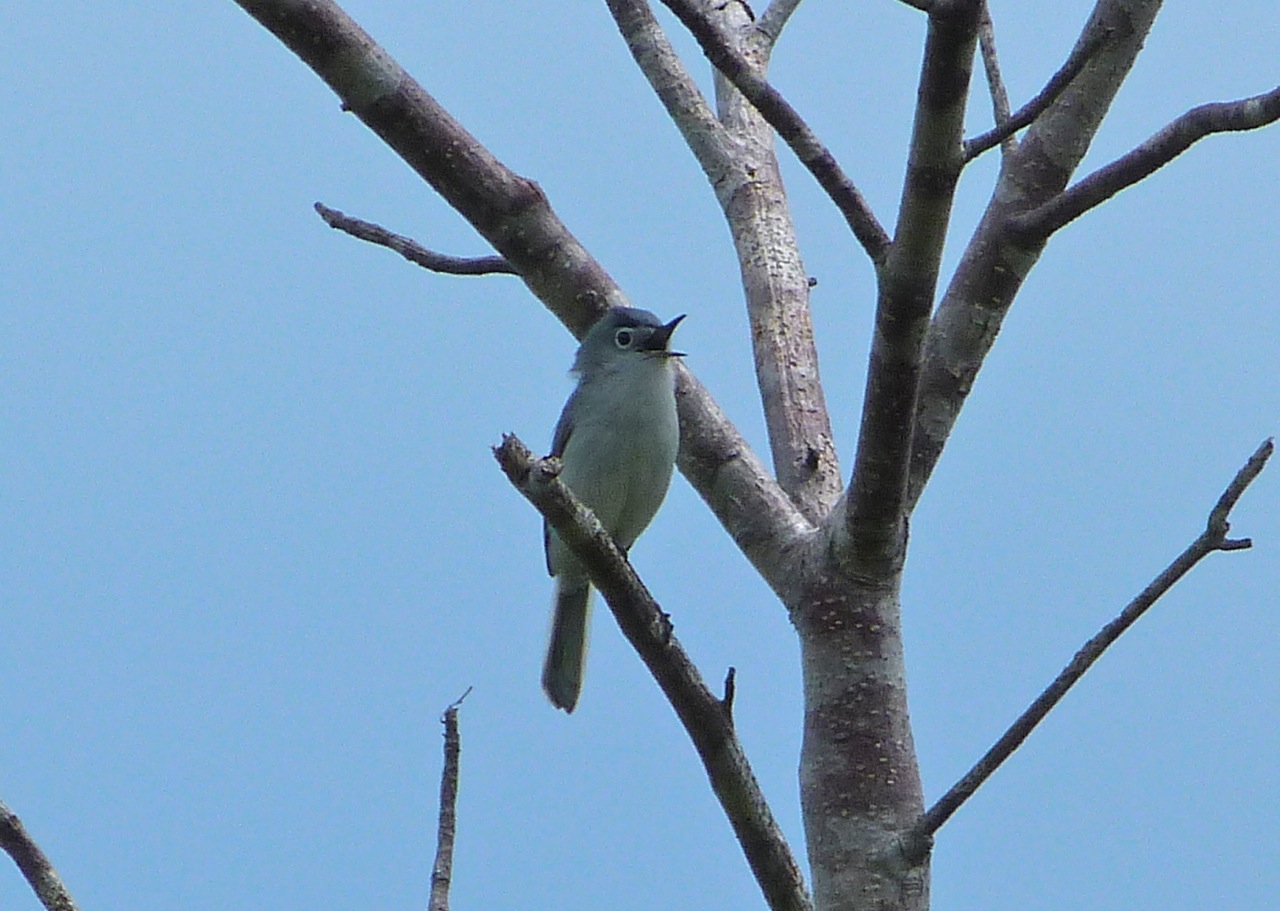
This small bird was quite far back – and high up – in the coppice on the Delphi guest drive. The photos were distance shots, so not the best quality, but they do capture the little bird in full song. BGGs have complete white eye rings; males have a dark ‘monobrow’ which can just about be seen in the photo above. In a word, ‘cute’. They sound like this (you may need to wait for the clip (credit: Cornell Lab / RH) to load – or hurry it along by clicking ‘Play’ as it loads):

[audio http://www.fileden.com/files/2012/7/14/3325949/Blue-gray%20Gnatcatcher%20Cornell.m4a]

They build a cup nest on a horizontal tree branch. It’s a modern family unit – both parents make the nest, tend the eggs, feed the young, and teach them manners. They may raise two broods in a season.

BGGs eat insects and spiders, feeding in trees and shrubs. They can hover very briefly, but mainly they catch insects on the wing (‘hawking’). The tail is often held upright while defending territory. Or sometimes just because they can.

All the information you could want on this species can be found at the excellent OISEAUX-BIRDS.COM 

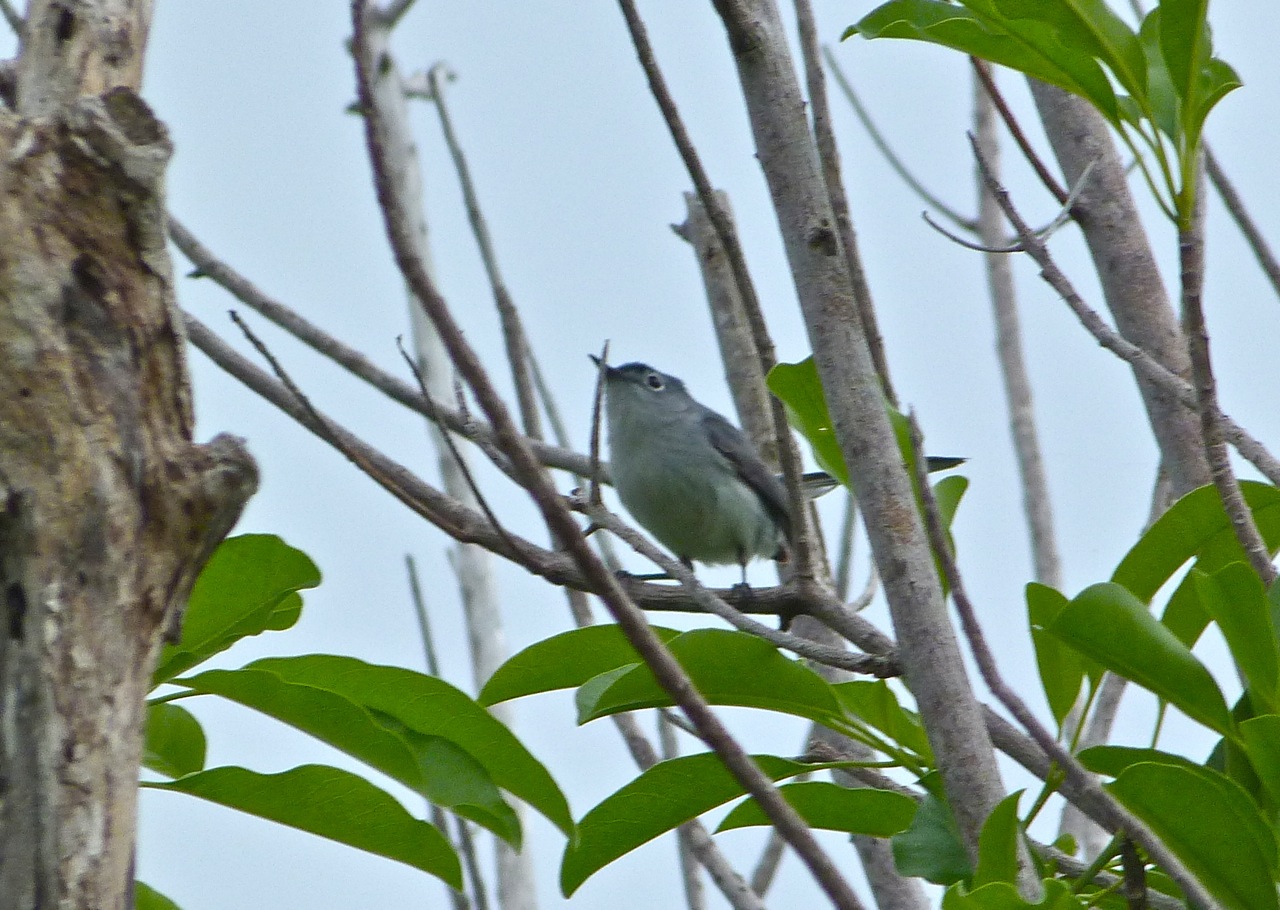
STOP PRESS checking back through my photos, I’ve found a (slightly blurry) distance shot of a BGG. I am adding it because it shows the bird with its characteristically cocked tail, often seen when perching (the bird, I mean) 

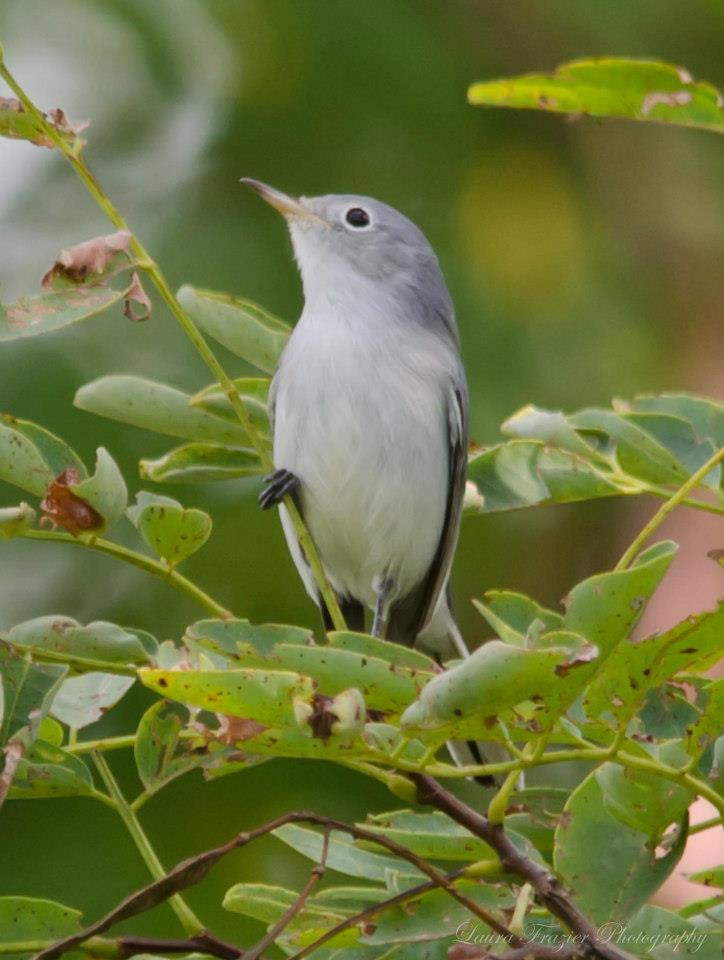
A very pretty BGG has recently been published on the superb Cornell Lab website, credited to Laura Frazier. It’s so cute – and such a clear image – that it deserves inclusion here 


Unknown's avatar

BONEFISH! POLING THROUGH THE MANGROVES ON THE ABACO MARLS


BONEFISH! POLING THROUGH THE MANGROVES ON THE ABACO MARLS

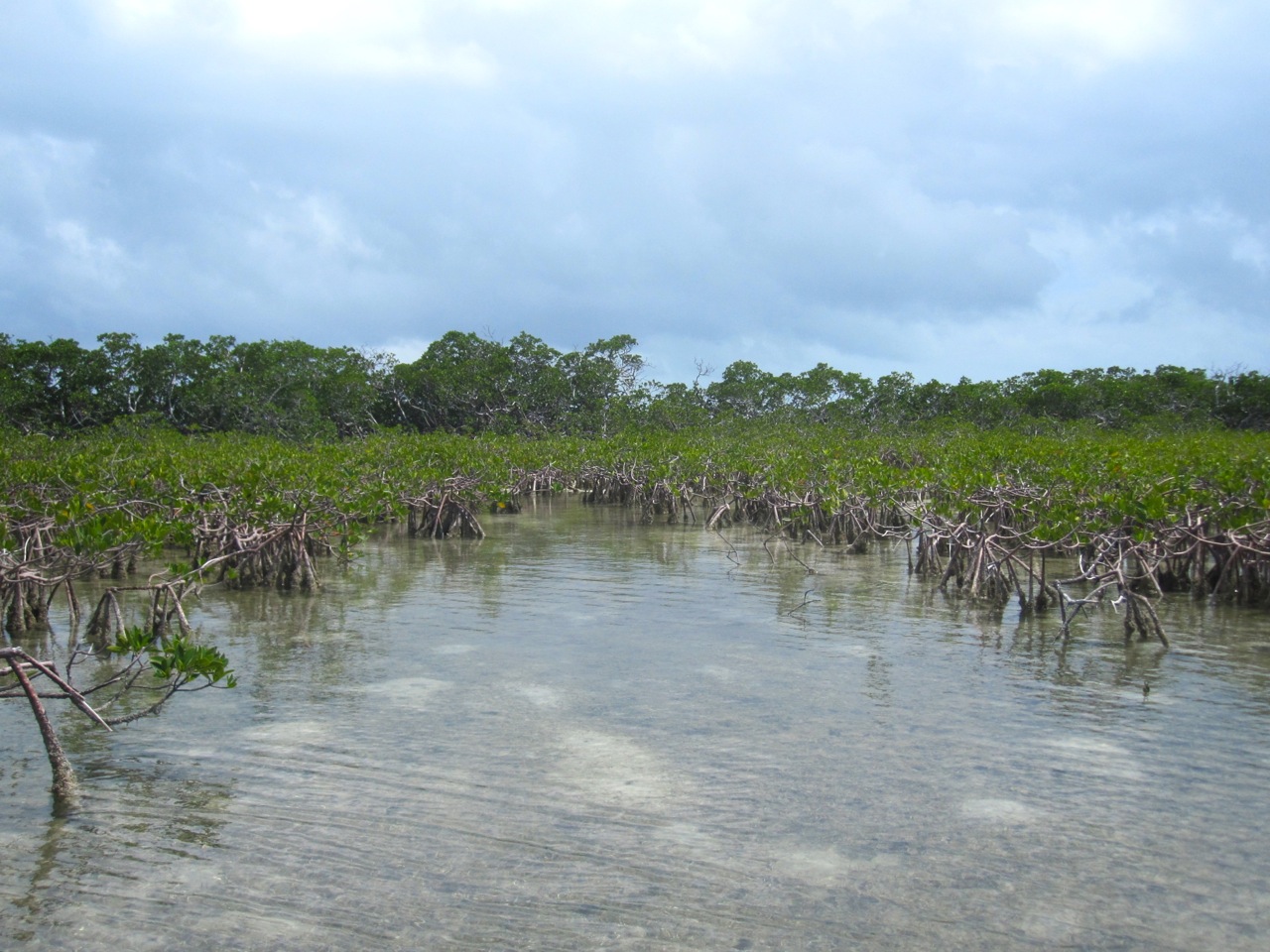
I recently posted a short video giving an idea what it is like on a skiff as it skims fast over the water to the bonefish feeding grounds of the Abaco Marls SKIFF VIDEO Having arrived among the mangroves where the bonefish are lurking, the game changes. Instead of the roar of the engine and bump of the waves, the engine is cut and in near-silence the guide poles the skiff very slowly through the low water…
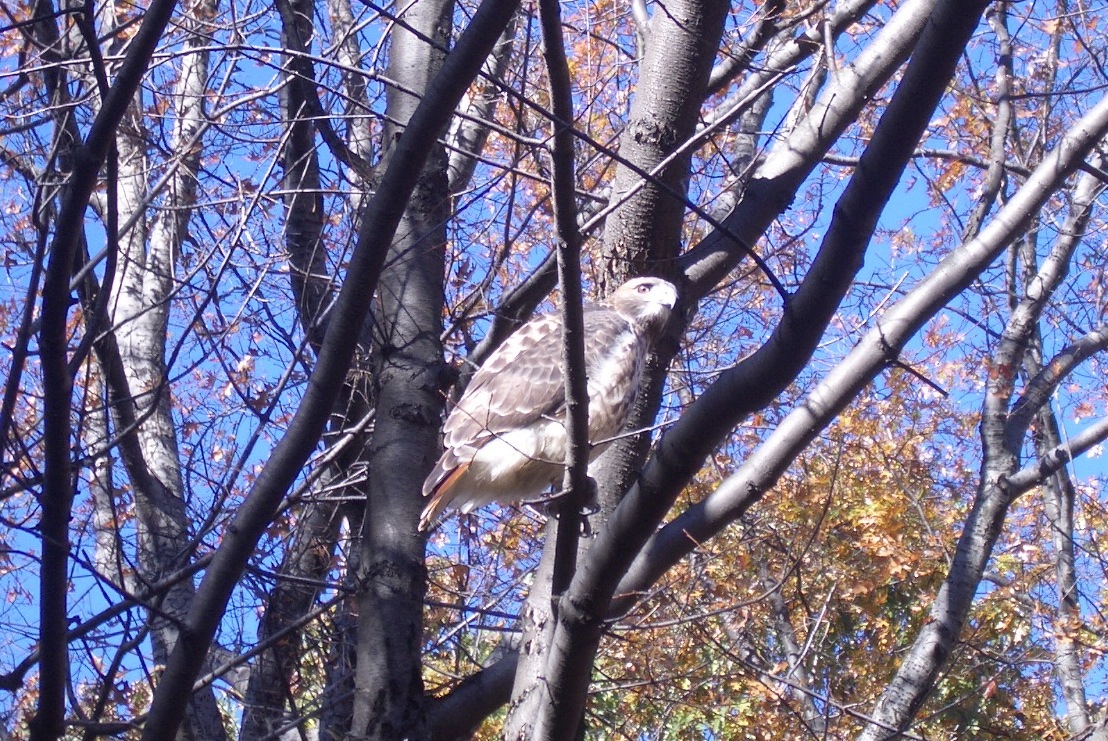
There’s a regular gentle scrape of the long pole on the sea-bed, as all eyes – guide, the fisher ‘up front’, and fishing partner – scan the water and the margins of the mangroves for bonefish or signs of their feeding. There might be tell-tale grey holes in the sandy bottom – or, as below, a ‘push’ wave as one or more bonefish move on to another area

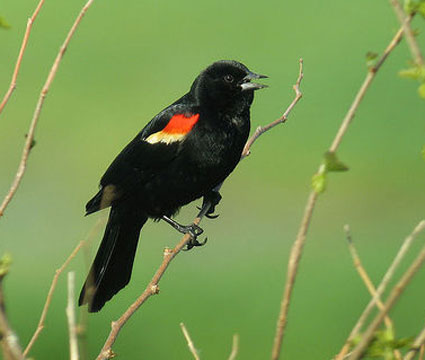
There are bird calls such as the strangely melancholic metallic double-note of the RED-WINGED BLACKBIRD  sounding like a rusty door-hinge.

Otherwise, very little noise until… the urgently whispered “Hey! Bonefish 9 o’clock, 30 feet, moving right, 3 of them…” and the hunt is on

This short video shows the skiff’s slow progress across low clear water close to the edge of the mangroves, while we search for the dark shadows cast on the sand by the bonefish as they work their way through the flats hunting shrimps and small crabs… and in due course, with luck a well-placed “Delphi Daddy”

[vimeo https://vimeo.com/45498544]

Credits: Red-winged Blackbird call – Xeno-Canto; Video Music – Albert Ross (formerly of Fleetwood Mac); R-WB below – Cornell Lab of Ornithology

Unknown's avatar

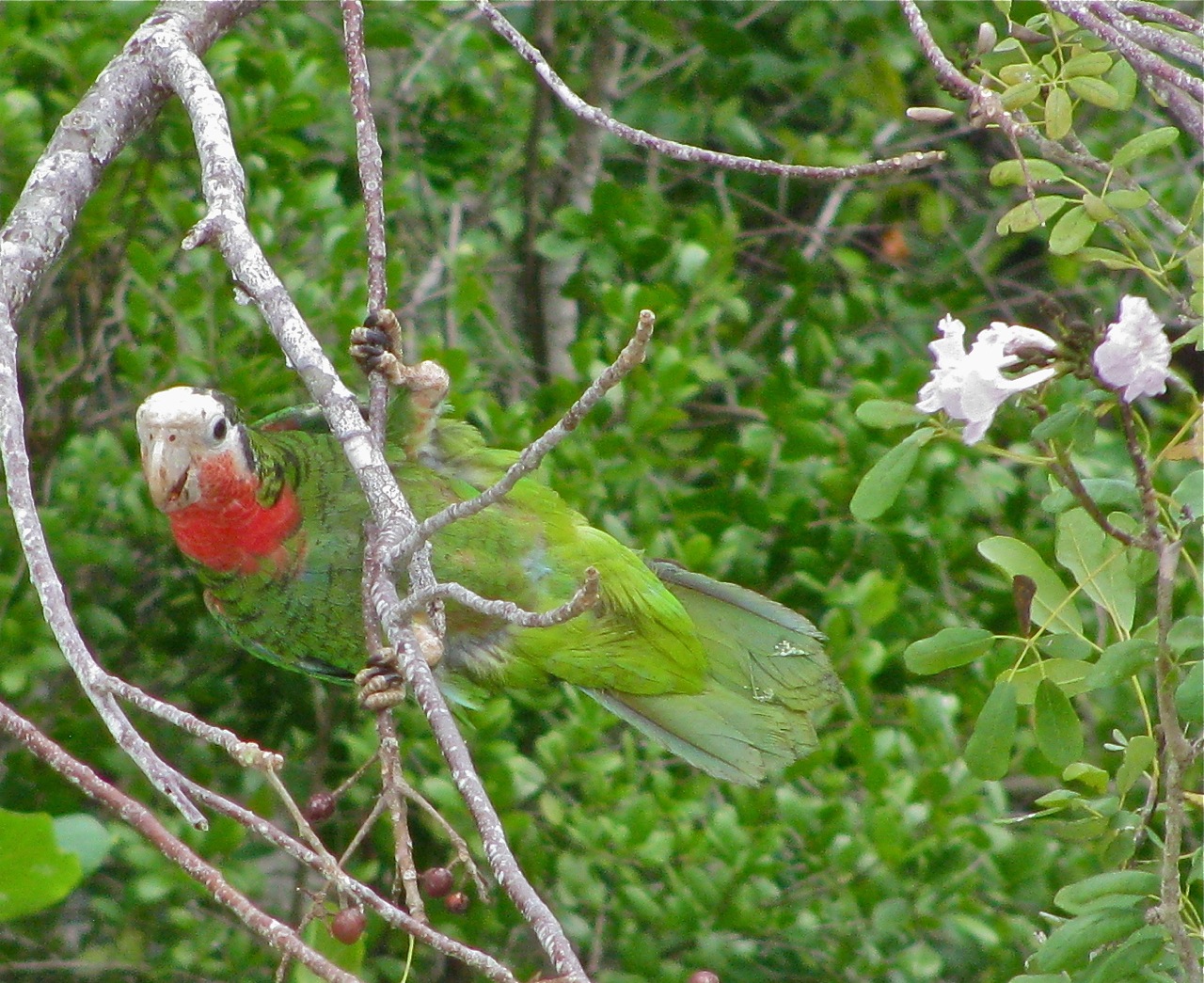
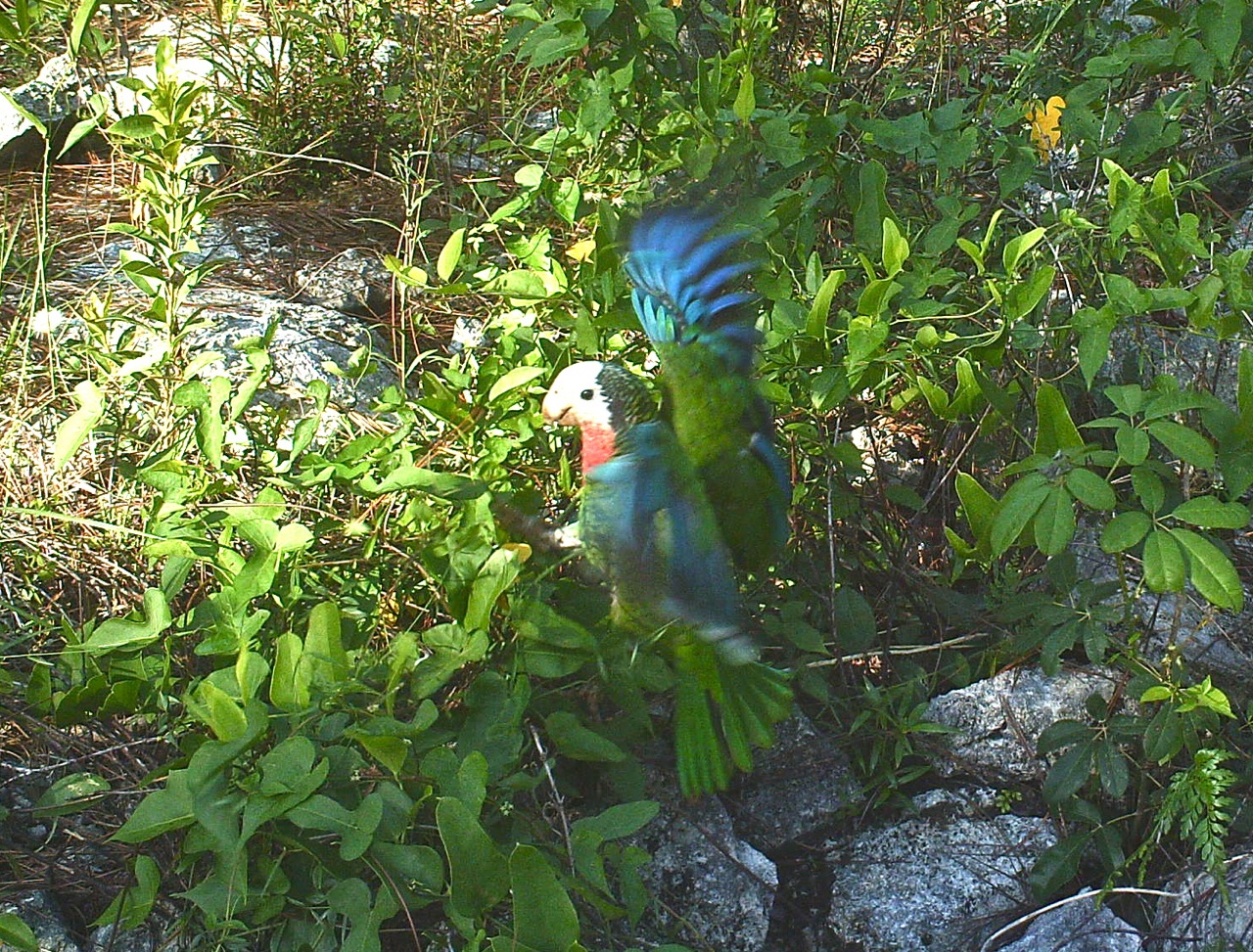
ABACO PARROTS – CONSERVATION & ANTI-PREDATION PROGRAMS BREED SUCCESS…


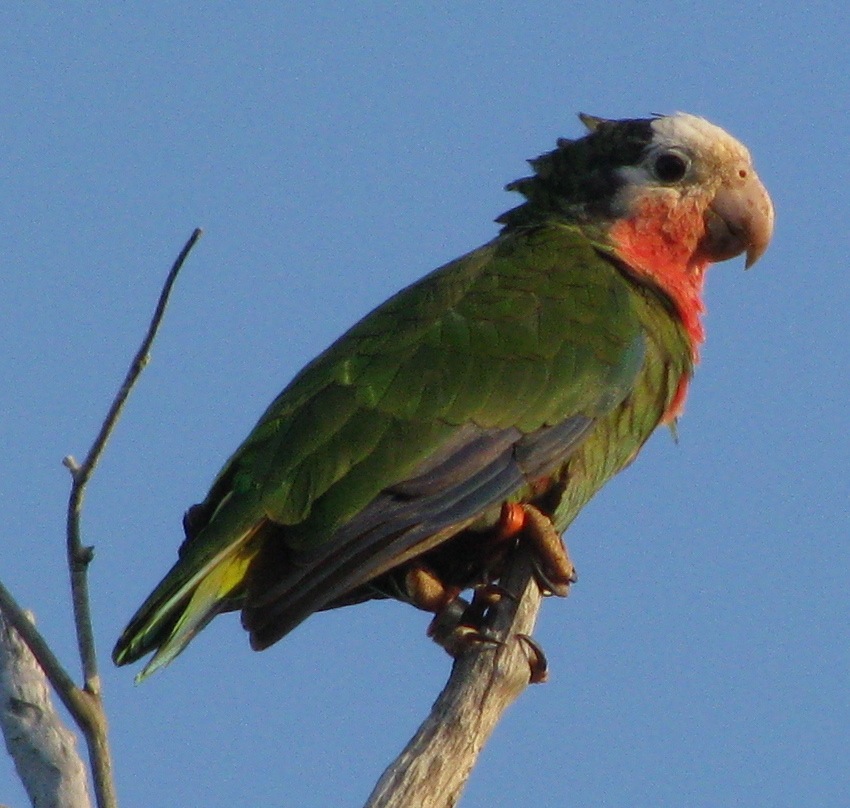
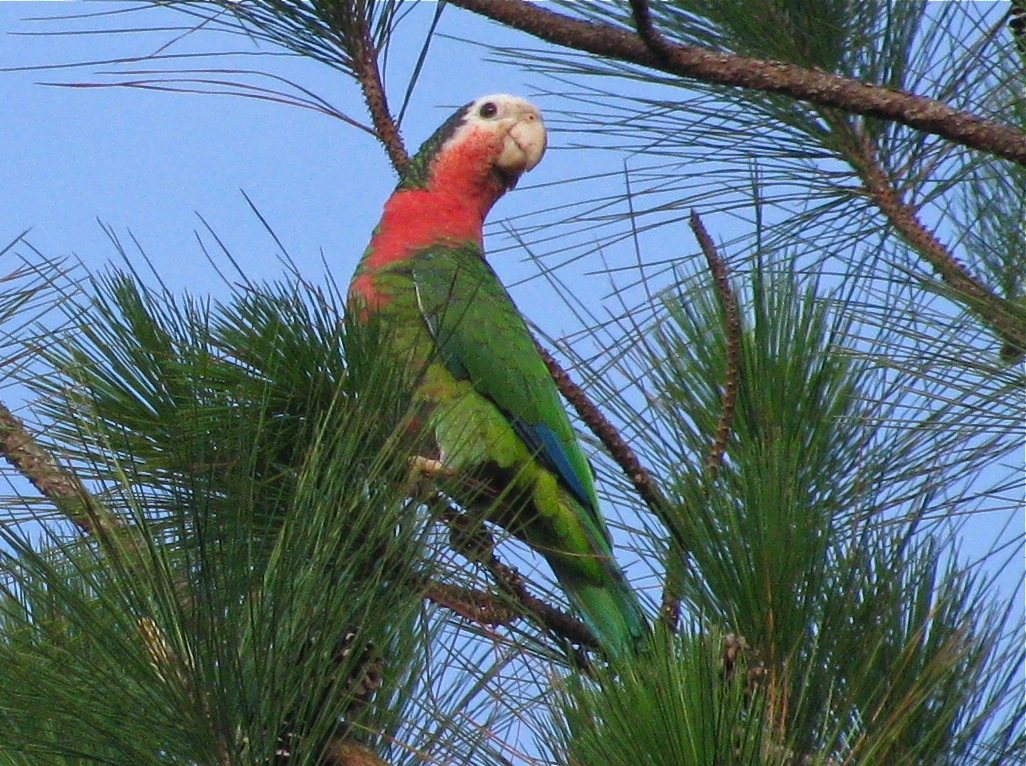
The wild parrots of Abaco are very special birds. Uniquely they nest underground in limestone holes which provides protection, not least from forest fires. Thanks to a program of intensive research over the last few years, far more is now known about these birds and their breeding habits. Investigations into predation have led to effective predator controls. The evidence this year is that the population numbers, having stabilised, are gradually rising to a sustainable level of some 4000 birds. The parrot below has been ringed as a chick as part of the continuing monitoring program.

I will soon be posting about the current breeding season – the parrots are in their limestone cavity nests now, the eggs are laid, the chicks will soon be hatching. Caroline Stahala, the Abaco parrot expert familiar to those who follow this blog (see ABACO PARROTS), will soon be reporting on this years breeding and chick-ringing program. In the meantime, here are some of Caroline’s pictures taken during the past season of the parrots in all their glory…

The parrots mainly live and breed in the pine forest of the Abaco National Park

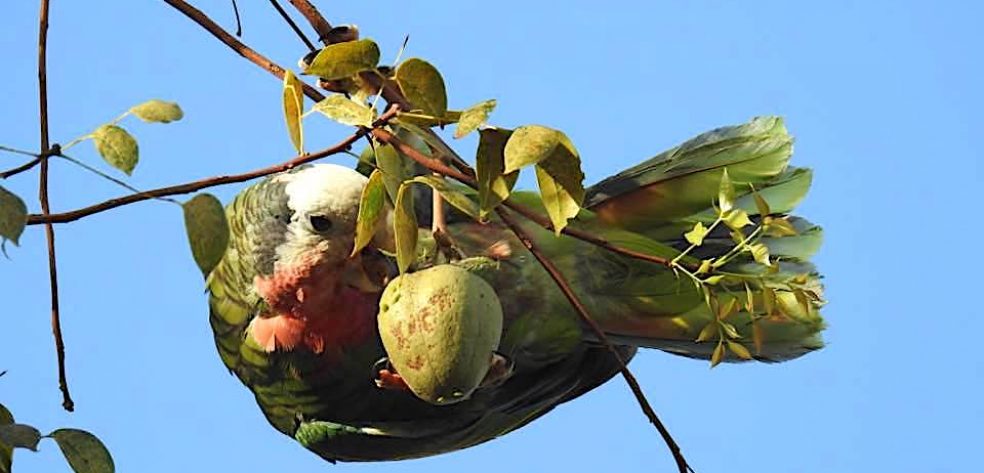
During the day they fly northwards, often in large noisy groups, where they feed. One of their favourite treats is the fruit of the Gumbo Limbo tree. This sometimes requires acrobatic skill

The sunshine brings out their bright colouring. When they fly, the blue on their wings is wonderful 

Besides Gumbo Limbo berries, the parrots enjoy feeding on seeds

A parrot takes flight near a nest cavity. There’ll be more photos of parrot nests later this month

(All photos © C. Stahala / Rolling Harbour)

Unknown's avatar

ROLLING HARBOUR, ABACO: A WIDE-ANGLE VIEW


ROLLING HARBOUR, ABACO: A WIDE-ANGLE VIEW

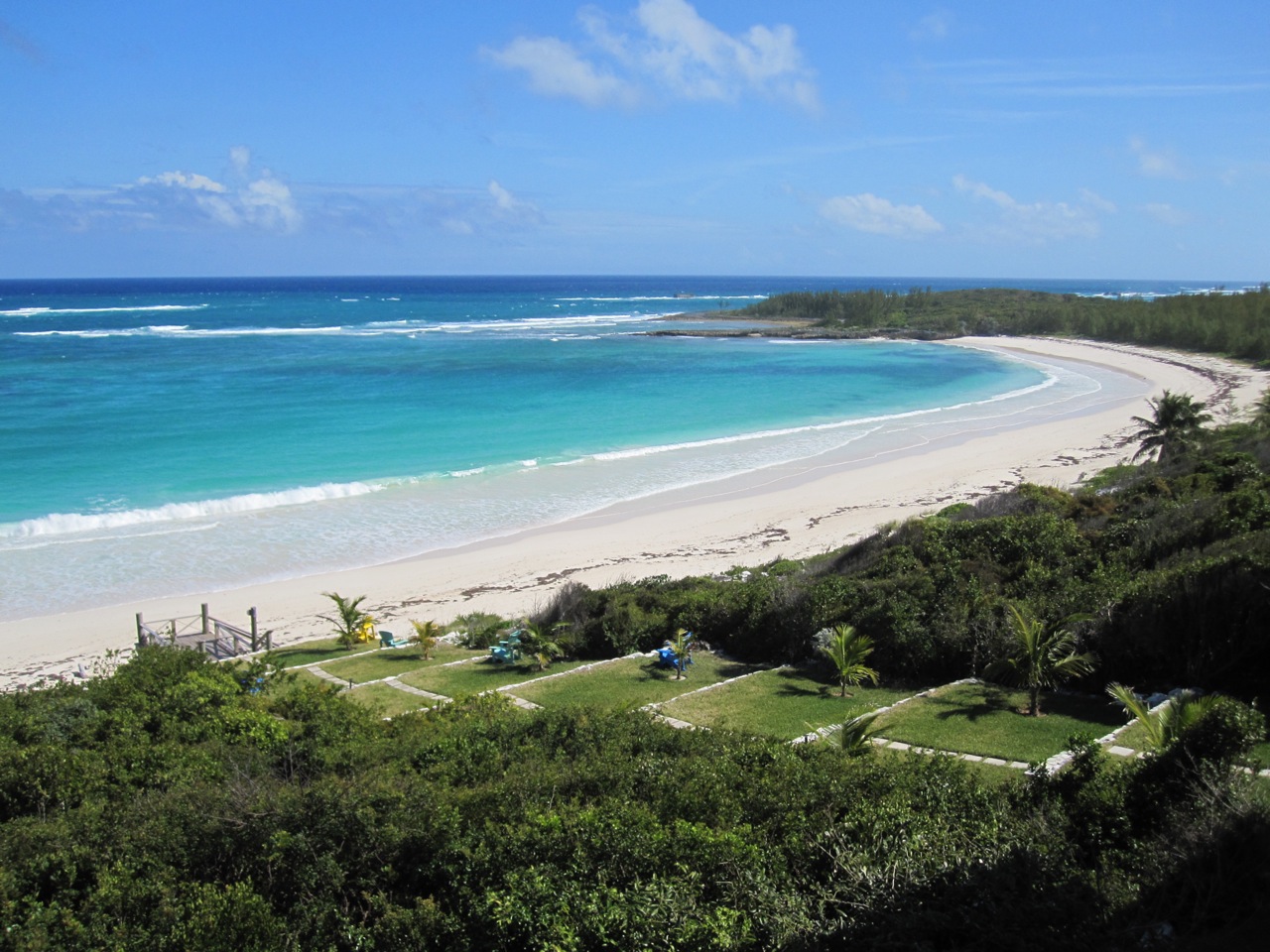
A new Header has arrived to grace the Home Page. It’s a wonderful wide-angle view of the 3/4 mile bay of white sand that is Rolling Harbour. It was taken by Michael Vaughn, a photographer  and tarpon guide from Key West, and I have ‘borrowed’ it from the main DELPHI CLUB website. You can immediately see the attraction of the blog name ‘Rolling Harbour’, an enterprise related to but editorially independent of HQ (though subject to benign scrutiny from Peter Mantle, who has so far resisted any temptation to behave in a ‘Murdochian’ fashion…)

The Delphi Club has just completed its third year in operation, with a record number of fish caught both out on the Marls and off the beach. There were records, too, for guest numbers; nourishment consumed in both the food and the drink categories; and for bird species spotted in the club grounds, the coppice and pine forest, and on the beach…

This aerial view shows the plantation-style club building and its minimal ‘footprint’ in the landscape

The Delphi Club from the beach

The view of the beach looking north from the Club verandahThe view of the beach looking south from the Club verandah

Unknown's avatar

‘THE AUK’ JOURNAL: SUMMER BIRDS ON ABACO & IN THE BAHAMAS 1905


THE AUK

A Quarterly Journal of Ornithology


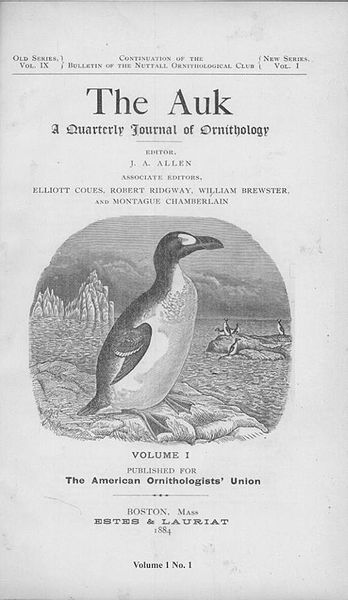
THE AUK is a quarterly journal published by the AOU specialising in promoting the scientific study of birds by means of original peer-reviewed reports. It has been in continuous publication since 1884, and can lay claim to be a (the?) foremost journal in its field. Here is the front page of  the first volume of the journal

The 1905 Vol 22 No. 2 contains a 22 page study by Glover M Allen entitled SUMMER BIRDS IN THE BAHAMAS. If you aren’t a particularly dedicated birder, my advice is ‘look away now’ and move on to a page, post or other occupation that interests you more. For the remaining 2 of you, stay tuned in. I thank you both. It will be worth it…

The article was published at a time when ornithological survey of the Bahamas was in its infancy. Cory’s famous list of birds collected from the islands had been published a mere 15 years earlier. Allen details his time spent with 2 companions – much of it on Abaco – as they investigated birdlife and recorded their findings. That aspect comprises the first part of the article. The second part is equally  fascinating: their list of bird species, with commentary, remarks and comparisons thrown in, together with some of the local names for the birds. Some of these are still in use, others perhaps long-forgotten. Is a Least Tern still known as a ‘Kill-’em-Polly’? Here are some highlights for busy people:

FLAMINGO / SPOONBILL Of particular interest is the recording of the apparently imminent loss of the flamingo (“fillymingo”) from the Northern Bahamas – a single colony only still surviving on the Abaco Marls by 1905. Allen and his group found only one roseate spoonbill, also on the Marls (we were also lucky enough to see a single spoonbill on the Marls in June)

BAHAMA PARROT Those who follow the fortunes of these fine birds on this blog or elsewhere will be especially interested in the following extract, which suggest that at the start of the c20, the species had all but died out on Abaco: “Amazona bahamensis (Bryant). We were interested to learn through the captain of our schooner, that a few parrots still exist on Great Abaco. He told us of having seen a flock near Marsh Harbor the year before (1903) and in previous years had some- times observed a flock in late summer at that part of the island. We learned that at Acklin’s Island about 14o miles south of Nassau, parrots still nest in numbers and the young birds are regularly taken from the nest when fledged,and bronght to Nassau to be sold as pets” I will be posting about the parrots later this month, but suffice to say here that the current estimate for Abaco parrots is now around 4000 birds, a significant increase since conservation measures and a predator control program were started some years ago.

BAHAMA WOODSTAR These endemic hummingbirds, now taking second place to the in-comer Cuban Emerald, were plainly everywhere then: “On all the islands and cays, wherever there was bush or tree growth, this humming- bird occurred” 

“PARAKEETS” There seems to have been a significant population of these, known then as ‘Bahama Grassquits’. What species were – or are -these? The description doesn’t quite match the ‘quit family candidates we are familiar with today.

OTHER SPECIES Avian taxononomy, with its frequent official changes of classification, is a confusing area… but it seems that in 1905 there were then 2 distinct species of Spindalis (now, one); and 3 Mockingbird varieties (now, two). But of course there may simply have been a naming adjustment since the article was published…

For those who have stayed awake till now, your prize is the following link to the whole 22-page (small pages!) article

BAHAMAS BIRDS PAPER 1905

 
Unknown's avatar

ABACO WARBLER CHALLENGE: CAPE MAY WARBLER IDENTIFIED


WARBLER IDENTIFICATION – A LIGHT-HEARTED CHALLENGE

SPECIES ID NOW SOLVED! CUT TO THE CHASE BENEATH THE PHOTOS FOR DETAILS. A LATE ENTRY NOW DISPUTES THE GENDER ID, SO THE SEX CHALLENGE IS REOPENED, SO TO SPEAK

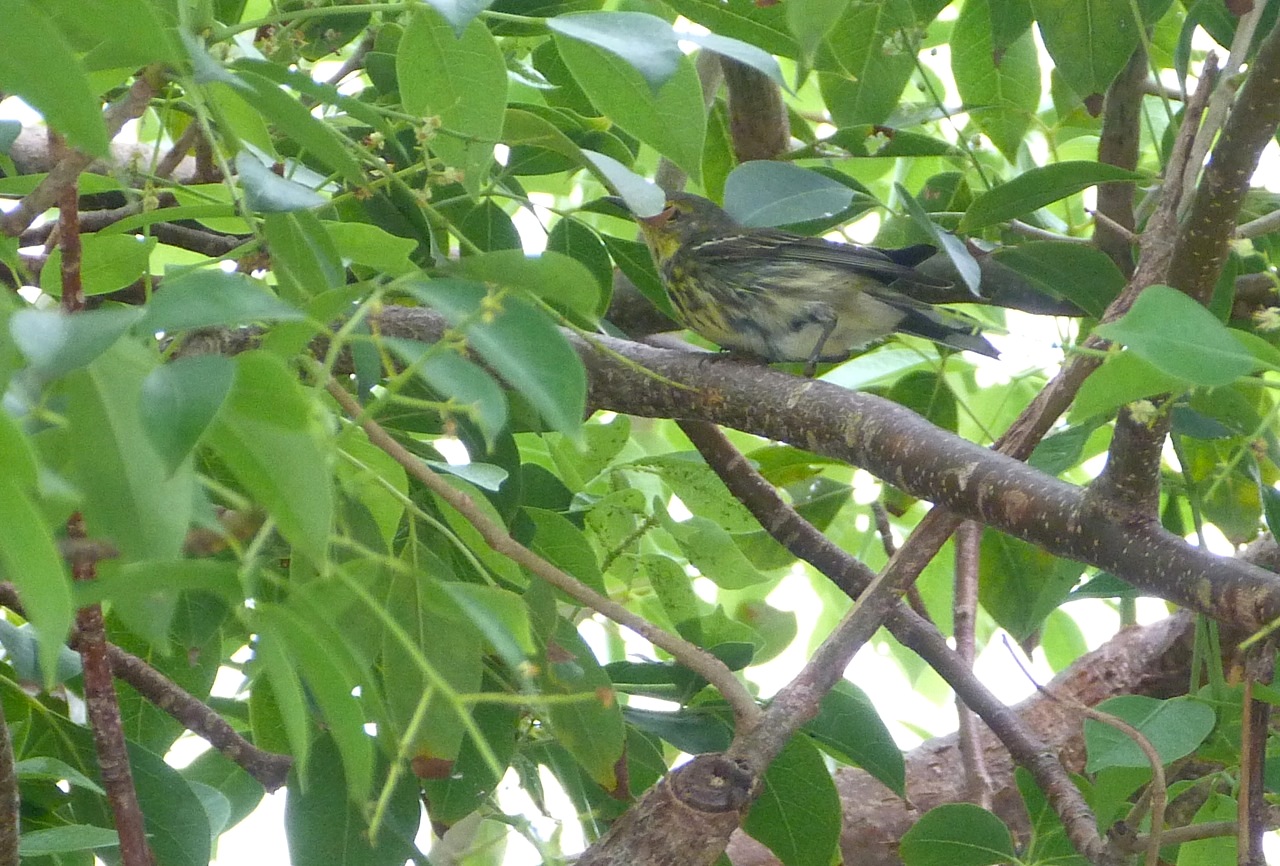
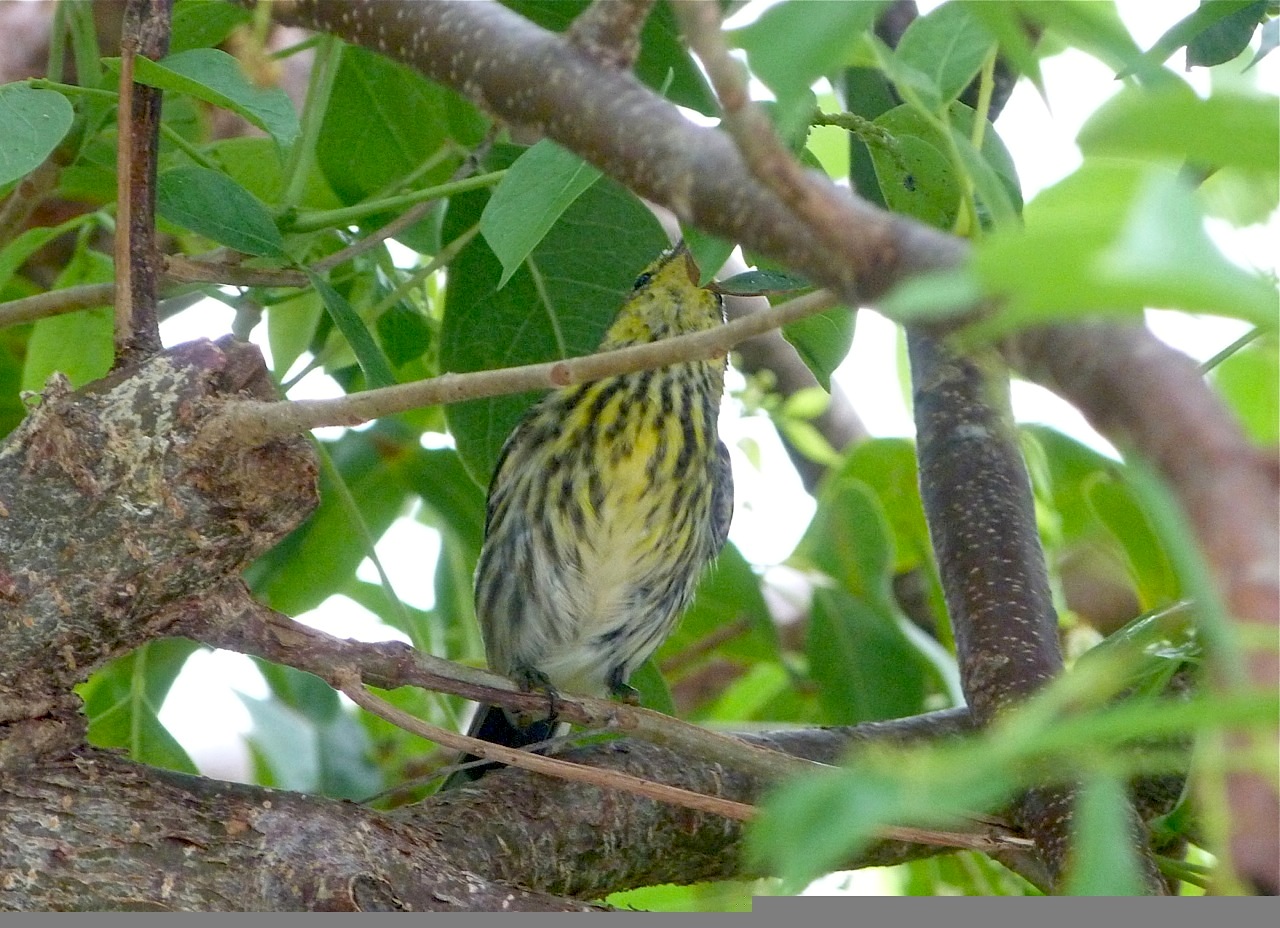
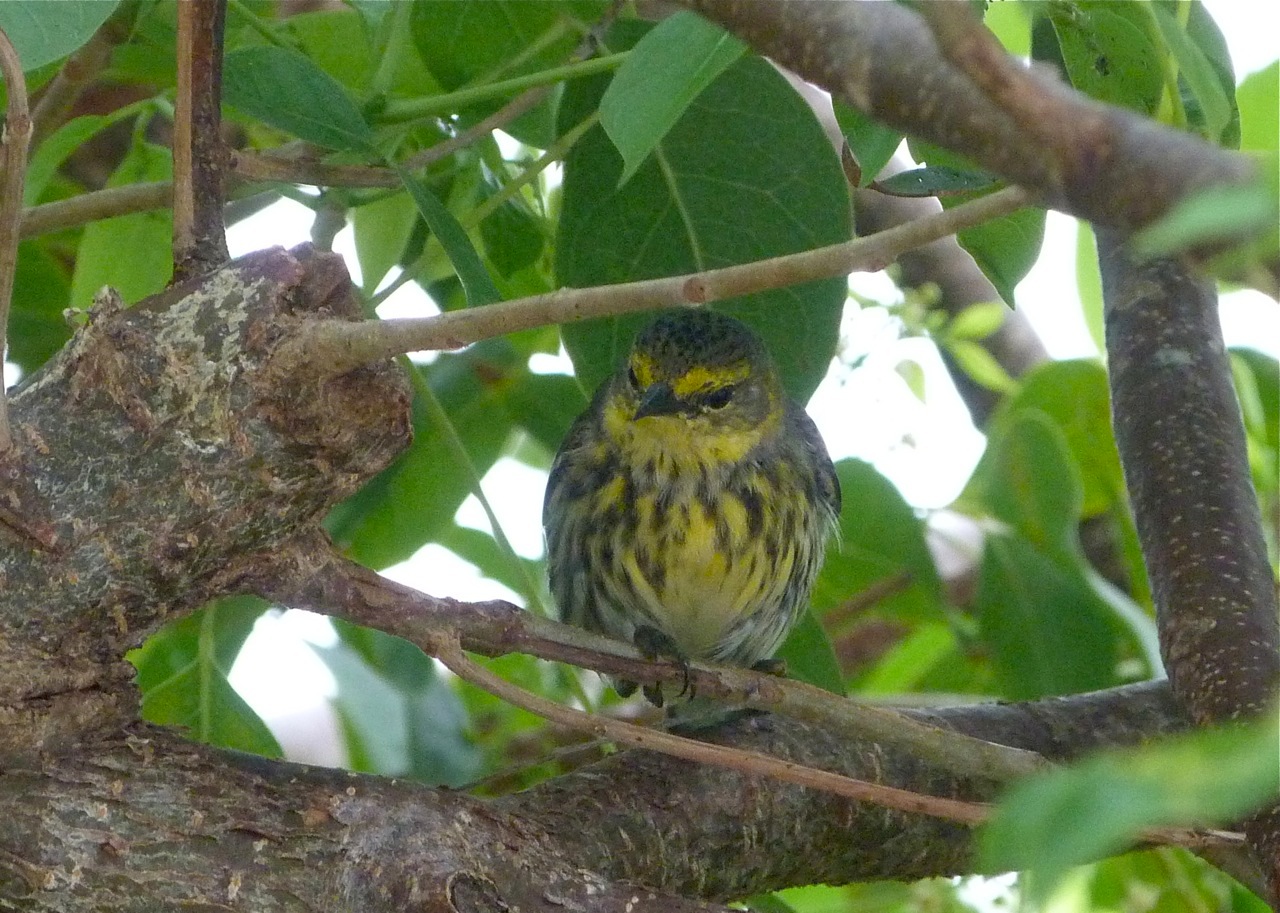
I have previously posted aids to WARBLER ID (1); WARBLER ID (2), a pitfall-fraught area that continues to baffle me despite books, online resources, futile stabs in the dark etc. For each species the male differs from the female, and both differ from juvenile / maturing birds. And this all depends to some extent on the season. Here’s a speckled warbler photographed recently at the Delphi Club, Abaco, for which there are various candidates ranging from the distinctly possible to the frankly completely-unlikely-but-astounding-if-it-turned-out-to-be-true Kirtland’s Warbler. These are seen and positively identified vanishingly rarely on Abaco – maybe one or two a year, and invariably in winter. But what if one decided to stay behind for the summer… And to those who say “Prairie, dimwit”, I reply “…but their speckles don’t cover their entire fronts”.

I’m throwing this open, because although I have a view I’d like to see what others come up with. Craig? Avian101? Avian3? Margaret H? Other birding followers? Are you out there? Leave a comment (see small-print blurb at the bottom of the post) or email me at rollingharbour.delphi@gmail.com The bird was a bit reluctant to be photographed, but I managed to get a side view, a ‘full-frontal’ and a head shot. Any ideas?

UPDATE Thanks to all who came up with suggestions – it’s interesting how opinion on warbler species varies, even with quite clear close-ups to judge from. The first past the post is… Dr Elwood D Bracey (Fl), to whom many thanks. It’s a female CAPE MAY WARBLER Dendroica tigrina. The runner-up is (amazingly) myself – I had it down for a Cape May juvenile, because I thought it looked a bit on the fluffy side… Also, its eye-patches (photo 3) are grey rather than brown, and I took their colouring to be a work in progress. There’ll be some more ID queries from our recent batch of Abaco photos – not just birds, but flowers & shells as well. All contributions will be welcome…

Oh no! What’s happening here? A late challenge has come in from Margaret H (see comments), who contends that the clearly shown patch on the bird’s cheek indicates that it is a male, not a female, Cape May. So the challenge was ended and the award given prematurely… The species is now definite, but the gender ID remains unresolved…

I’ve now heard from Alex Hughes, who writes “[I am] one of Caroline Stahala’s field techs on the parrot project this summer.  She forwarded me the photos of the warbler taken recently on Abaco.  The photos I saw are of a female Cape May Warbler, which is a great find in June!  She is certainly not going to make it to her breeding grounds, unfortunately, but still fascinating to see a boreal forest bird in the Bahamas during summer.

In a follow-up, Alex adds “I’d be very surprised if this was a male bird, due to the plumage lined up with the time of year.  This year’s juvenile birds are not big enough to make the flight south from breeding grounds yet, and wouldn’t anyways if they could.  Therefore, it would have to be adult non-breeding plumage if it were a male, also meaning this bird already molted from alternate plumage from spring, and flew south.  This seems far more unlikely to me than a female who simply didn’t make the flight, probably due to some handicap.  Either way, very cool!”

So I think that wraps it up. A female Cape May, in the right place at the wrong time. How lucky to have got close to one in the off-season. It just goes to show, eager Kirtland hunters, that any of the migratory warbler species might choose to stay behind for the summer…

CORNELL LAB OF ORNITHOLOGY IMAGE & BLURB

“The Cape May Warbler breeds across the boreal forest of Canada and the northern United States, where the fortunes of its populations are largely tied to the availability of spruce budworms, its preferred food. Striking in appearance but poorly understood, the species spends its winters in the West Indies, collecting nectar with its unique curled, semitubular tongue”.

It is presumably using its ‘unique… tongue’ in Photo 2, inconveniently concealed by foliage so we will never know

(RH COMMENT My one obviously liked the Delphi Club – and its feeders – so much that it decided to stay for the summer…)

(Credit: Steve Pelikan for Xeno-Canto)

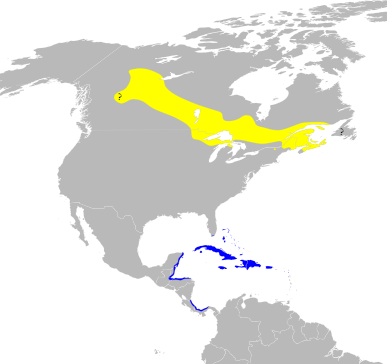
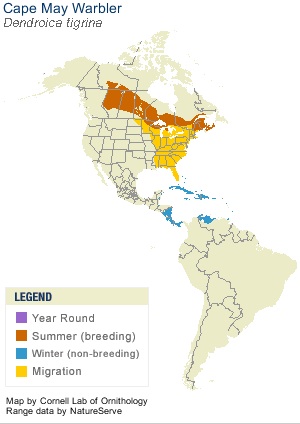
CAPE MAY WARBLER RANGE MAP (Wiki) (left)

As a warbler-muddler, I am interested to see how extremely selective this species is in its preferred summer and winter latitudes. The banding is very distinct. Are they never tempted by New York? Have they never tried Disneyland?

CORNELL LAB OF ORNITHOLOGY RANGE MAP (below)

The more sophisticated range map below shows the migration areas between the summer breeding and winter non-breeding areas. It looks as though a Cape May warbler on Abaco in June is an unexpected sighting.

Unknown's avatar

BRIGHT & BEAUTIFUL: SUMMER BIRDS AT THE DELPHI CLUB, ABACO


BRIGHT & BEAUTIFUL: SUMMER BIRDS AT THE DELPHI CLUB, ABACO

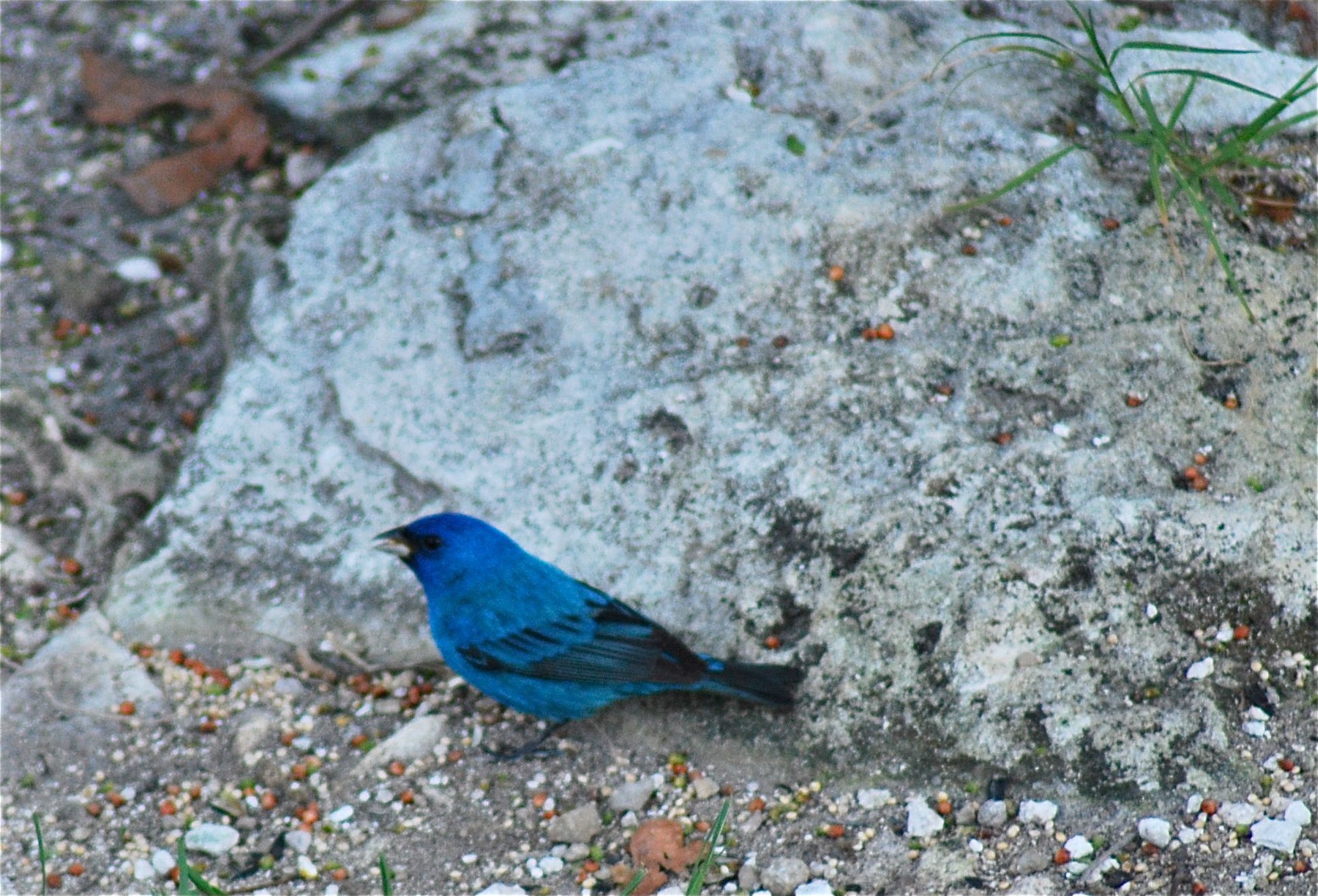
Peter Mantle reports that some colourful birds have arrived at Delphi to take advantage of the feeders and fresh water provided. Indigo Buntings have been around for a while, as they have been a little further north at BAHAMA PALM SHORES; and Rose-fronted / Red-breasted Grosbeaks (I’m not sure which is correct – the terms seem to be used interchangeably) have been seen all round the Club grounds for a week or more. They haven’t been recorded at Delphi before, so they have now been added to the ever-growing official list of the ‘Birds of Delphi’. How long before an elusive Kirtland’s Warbler puts in an appearance? And will anyone recognise it if it does..?

Unknown's avatar

HOOKED! A FANATICAL FISHERMAN’S WIFE TAKES TO THE BONEFISH FLATS


HOOKED! A FANATICAL FISHERMAN’S WIFE TAKES TO THE BONEFISH FLATS

I’m married to a Fanatical Fisherman. I have never shared his enthusiasm, though I have always loved the places where his fishing takes us. However the chance to spend two weeks at the Delphi Club Bahamas on Abaco every year has changed my perspective. This year I thought to myself (in non-fishing terminology, of course) ‘How about giving it a try?’

We waited for a day that was not windy and that would suit the FF’s own fishing convenience. One of the other guests was a kind and patient, not to say a highly eminent fisherperson and she gave me my first ever lesson on the lawn. With much encouragement I went forth. It was a lovely day with the sun beating down, so it was ‘sun block on and all parts covered’. 

Skiffs on their way to the bonefishing grounds

We set out in the skiff and after an exhilarating ride we glided to a stop in shallow water. I sat enchanted for a moment, taking in the incredible beauty of the place. Guide Tony provided suitable footwear for me (his son’s); and the relative merits of a ‘Crazy Charlie or a ‘Delphi Special’ were debated. Soon I was wading on the flats, rod in hand. This was my first-ever experience of my husband’s lifetime obsession…

Poling to a good place for wading

Within minutes Tony pointed to a shoal of bonefish… I cast (in a manner of speaking)! I struck! I hooked! I played! And… I lost!  

FISH ON!

But that was enough. From then on I was on a mission. I saw the ‘nervous water’ – great shoals of bonefish causing a subtle ripple 0n the surface of the water. When they turned and moved towards me I could hardly contain my excitement. I knew I had to tread carefully underfoot and to keep still as I cast. Silver flashes glinted in the sunlight as the fish started ‘tailing’.

Watch out for ‘Nervous Waters’

Meanwhile the sharks lazily circled us waiting for a chance to grab a prize before we could reel it in. I did hook another bone but it too managed to evade capture. And then suddenly the day was over. How did that happen? In the end I landed no fish but as the skiff sped back across the blue water I knew this was, for me, the start of something wholly absorbing. FF had better look to his laurels.

Lorna Jarman

(All illustrative photos by RH – Lorna was otherwise engaged!)

Unknown's avatar

BONEFISH RESEARCH: THE IMPACT OF HOOK RETENTION


THE IMPACT OF HOOK RETENTION ON RELEASED BONEFISH

Anyone committed to catch and release for bonefish will have wondered about the hooks that from time to time are left in a fish. The issue has now been the subject of a detailed scientific report from ELSEVIER highlighted in the ever-useful THE ABACO SCIENTIST (thanks to Craig Layman). The report’s main conclusions can be summarised as follows:

  • Hooks, especially shallow ones, are expelled fairly quickly
  • For deep-hooked fish, barbless hooks are significantly easier for the fish to deal with
  • The presence of a hook does not appear to interfere with feeding
  • Hook size is not a material factor
  • All the test sample fish survived
Overall, therefore, this is a vindication for the policy of barbless hook use for C&R. The report concludes that it’s best simply to leave a difficult-to-remove hook in the fish. Here, guide Ishi prepares to remove a barbless hook from one of my fish caught on the Abaco Marls.
I have included a clip of the report’s front page and Abstract; and the link to a PDF of the full report for those interested in checking out the detailed scientific aspects of this research. To go direct to the general Fisheries Research section click ELSEVIER. The astounding photo is courtesy of Abaco’s conservation organisation FRIENDS OF THE ENVIRONMENT

REPORT PDF

NEW in June 2012 see later post + video CATCH & RELEASE DEMO ON THE ABACO MARLS for a quick release method with a barbless hook involving minimal contact with the fish. It isn’t suitable for deep-hooked fish or large ones, but it shows how quick the operation can be

Unknown's avatar

ABACO WARBLERS: NEW “WHICH?” GUIDE TO I.D.


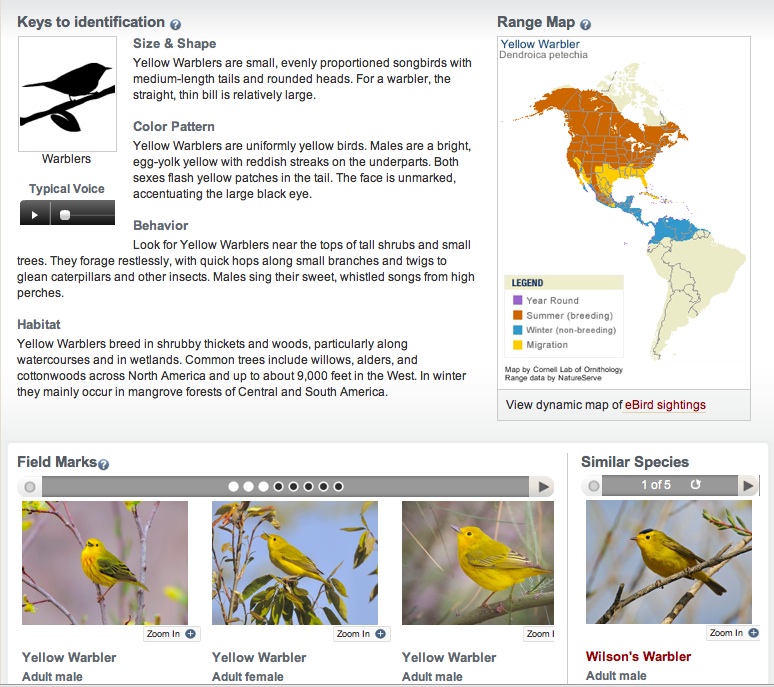
YELLOW WARBLER ©Cornell Lab

BANISH “WHAT WARBLER???” MISERY NOW WITH CORNELL LAB

I’ve written before about the problems of ID of the multitude of small yellow birds on Abaco. They are mostly (but not all) warblers. The issue is further confused by the differences in each species between males, females and juveniles; and also, I expect, by colour variations during the season. YW song courtesy of Xeno-Canto

The CORNELL LAB OF ORNITHOLOGY has again come to the rescue with a helpful article. The link below takes as the starting point Yellow Warblers. Here is a grab of the page so you can see the well-thought-out format. You get

  • Keys to ID – size, shape, colour pattern, behaviour and habitat
  • Range Map
  • Audio clip of Call
  • Field marks (zoomable) including M & F
  • Similar species for comparison
  • Further down the page, other similar species and their details (e.g. American Goldfinch, Yellowthroats)

CLICK LINK===>>>  CORNELL LAB WARBLER ID

Unknown's avatar

BIRDS OF BAHAMA PALM SHORES, ABACO: FEEDER, COPPICE & BEACH


BIRDS OF BAHAMA PALM SHORES

I posted a while ago about a wonderful afternoon spent at BPS with nature guide and all-round Abaco knowledge mine Ricky Johnson. Three posts (Abaco Parrots; other birds; flower and plants) were later combined into the page ABACO ECO-TOUR (if you visit, apologies that the formatting is still out of whack after a blog format change)

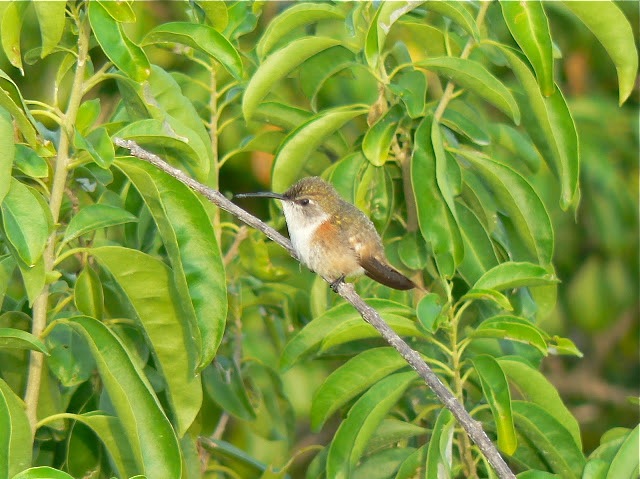
Resident ANN CAPLING has kindly sent some photos of birds on her feeder, prompted by my post of her recent sighting of a PROTHONOTARY WARBLER, a bird not often encountered at BPS. The feeder photos were taken from indoors through glass, considering which they have come out very well. She also sent a brilliant photo of a tiny female Bahama Woodstar looking totally cute (not a word I normally use, but completely apt here, I think); and of 2 American Oystercatchers strutting along the BPS shoreline

PROTHONOTARY WARBLER

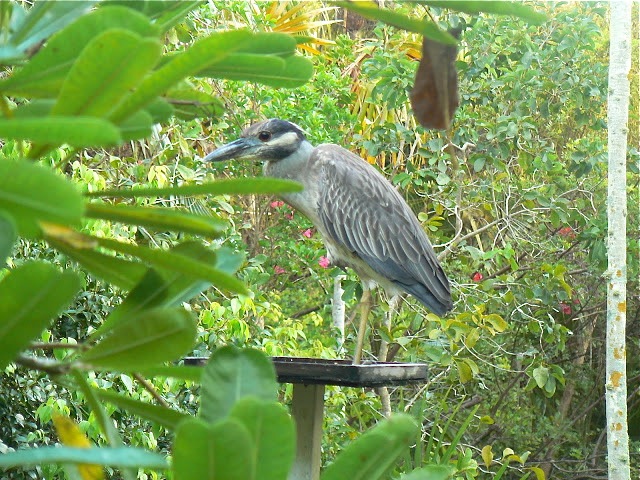
YELLOW-CROWNED NIGHT HERON

INDIGO BUNTING (and 2 more dowdy admirers)

INDIGO BUNTING (2)

GREATER ANTILLEAN BULLFINCH

BAHAMA WOODSTAR HUMMINGBIRD

AMERICAN OYSTERCATCHERS

Unknown's avatar

PROTHONOTARY WARBLERS ON ABACO, BAHAMAS: WHAT’S IN A NAME?


PROTHONOTARY WARBLERS ON ABACO, BAHAMAS

Janene Roessler has kindly sent news of a sighting yesterday of a prothonotary warbler on a feeder at Bahama Palm Shores, Abaco [Later addition] Now, with thanks to Ann Capling, here is that very warbler on the feeder –  a fine photo considering it was taken indoors through glass.Apparently there hasn’t been one recorded there since 2007. I know of one seen further south on the island near the Delphi Club in April 2010 (see photo and caption below). I’ve never seen one myself. It seems fitting to celebrate the news with a post about these little birds…

This very pretty species of warbler Protonotaria citrea is the only member of its genus. The male birds are very colourful, with the females and juveniles being a bit duller. In flight, the underside of their tails are white at the base, and dark at the tip Photo Credit Craig Nash (Peregrine’s Blog) This fantastic photo was taken on the main drive of the Delphi Club, Abaco

STOP PRESS JULY 2018 this rather basic post was written in April 2012, in the earliest days of this blog when mistakes were (and undoubtedly still are) made. Tim Kalbach has just contacted me with the helpful observation “the Craig Nash photo is a Yellow Warbler, not a Prothonotary. Yellow – green tones in rump and tail don’t occur in Prothonotary; those areas would be blue-gray in color”. Which goes to show, I think, that after 6+ years I need to revisit this species in more detail and accuracy! Thanks for the comment, Tim.

These warblers are native to the eastern US where they breed, wintering further south in the West Indies and Central & South America. Their nesting arrangements are unusual: “It is the only eastern warbler that nests in natural or artificial cavities, sometimes using old downy woodpecker holes. The male often builds several incomplete, unused nests in his territory; the female builds the real nest” where she lays 3 – 7 eggs. So either the male is cleverly creating decoy nests away from the real nest; or maybe he is showing typically male behaviour in starting several home DIY projects at once and not getting round to finishing any of them…

Female Prothonotary Warbler (wiki)

I can never cope with those phonetic descriptions of bird calls… So many small birds are described as going ‘tseep’ or ‘tweep’ or ‘seeep’, yet in practice sound different from each other. So here, courtesy of the admirable Xeno-Canto and recordist Don Jones, is how they sound in real life

Listed as of ‘Least Concern’ (except in Canada, where they are ‘endangered’), the sad fact is that like so many species PNs are declining in numbers due to habitat loss. They are also bullied by other birds, in particular the brown-headed cowbird; and the house wren with which they compete for nest sites.

And the cumbersome name? Although at one time known by the helpful name ‘Golden Swamp Warbler’, the bird was renamed after senior Roman Catholic church officials called PROTONOTARII whose robes were (are?) supposedly golden. For full but quite dull details click on the green word back there. Bizarrely, the wiki-link doesn’t seem to confirm the goldenness of the robes at all. I think I’ll vote for a return to the simpler description…

Male Prothonotary Warbler (wiki)

POST SCRIPT: By complete coincidence, the National Audubon Society posted this lovely PN picture on its Facebook page this very day, with the caption Start your Monday morning off right with this cute Prothonotary Warbler peeking out of a heart shaped tree hole! Have you seen any of these birds yet? Photo by Mark Musselman” 
Unknown's avatar

1ST ANNIVERSARY “ESSENTIAL ABACO WILDLIFE FACTS” COLLECTION


Today is the 1st birthday of this blog, on the very day that the hit count passes 37,000. I started out last April, with faltering steps, into the mysterious world of the blog – setting it up, getting ‘stuff’ posted, finding out about birds, creatures, shells and much else from scratch. The learning curve has modified slightly and has a less vertiginous ascent. We are now mostly under control here at Rolling Harbour HQ… It’s been a year of Parrots, Whales, Hurricanes, Mars Probe Booster Rockets and other beachcombing mysteries. As year 2 begins, huge thanks to the many who have contributed so far, or generously given advice and (mainly) constructive criticism along the way, or simply taken the time to have a look. Especially if you came back for more…

Here to celebrate the day is the Official Rolling Harbour Collection of  some of the “Essential Facts” that have appeared in various posts over the previous year. It is, needless to say, essential reading. Amaze or alienate your friends with your esoteric knowledge of the length of an adult male manatee’s intestines…

ESSENTIAL HUMMINBIRD FACTS

  • The colourful throat of a (male) bird is known as a ‘gorget’
  • Hummingbirds are the only birds that can fly backwards
  • There are 320 species of hummingbird worldwide
  • The smallest is the bee hummingbird of Cuba, at 2″ for an adult
  • John Gould, the c19 ornithologist and artist, invented many of the names to reflect the varied and iridescent colours of the birds.
  • Hummingbird wings beat as much as 75 times per second
  • Hummingbirds have the highest metabolic rate of any warm-blooded creature; also the largest hearts (proportionately, obviously…)
  • There are many collective nouns, including a “bouquet”, “glittering”, “hover”, “shimmer”, and “tune” of hummingbirds
  • On the TCI, the Bahama Woodstar is known as ‘The God Bird’ 

10 MEMORABLE MORSELS OF MANATEE MINUTIAE

  • The 4 species of Sirenia are the West Indian, Amazonian and West African manatee; and the Asian / Pacific dugong. 
  • Fossil remains of Florida manatees date back 45 million years; their closest living relative is the elephant
  • Manatees are also known as Sea Cows. Some say sailors who’d been at sea for too long took them to be mermaids, a mistake I doubt they made twice…
  • They can weigh up to 1,300 lb and measure up to 13 feet. Females are larger than males. Baby manatees may weigh 65 lb. Adult intestines can reach 45 meters which would take Usain Bolt 4.31 seconds to run past (if straightened out, obviously)
  • Accurate population estimates seem to be impossible to obtain, varying by season and by year for no apparent reason. Overall,  the picture is of a declining population, with extinction likely without further protection
  • West Indian Manatees can move freely between extremes of salinity, and may be found in warm shallow coastal waters, in estuaries, or migrated into rivers to freshwater springs (as in Florida). They cannot survive below 15°C (60°F). They have a propensity to hang around the warm-water outflows of power stations
  • Manatees have some intelligence and demonstrate discrimination and task-learning similar to dolphins.Their eyelids close “in a circular manner”, though I can’t quite picture this. They have only 6 teeth in each jaw, which are replaced throughout their lives
  • They breed every other year. Gestation lasts 12 months, and it takes a further 12 to 18 months to wean the calf. A single calf is born. Apart from mothers with a calf or males showing off to females, manatees tend to be solitary creatures
  • They are herbivores, eating many plant species, such as mangrove leaves, turtle grass, and types of algae. An adult manatee can eat up to 10% of its body weight per day. They have been known to eat small amounts of fish from nets
  • Half a manatee’s day is spent sleeping in the water. The rest of the time they graze in shallow waters. They swim at 3 to 5 mph, faster in short bursts. They may live up to 60 years (surprisingly, given their punishing daily schedule)
  • The oldest manatee in captivity is Snooty, at the South Florida Museum. He was born at the Miami Seaquarium on July 21, 1948 and came to the South Florida Museum in Bradenton, Florida in 1949

10 ESSENTIAL YET GRISLY MUREX FACTS

  • Murex are highly carnivorous with rasping teeth, and drilling equipment for boring into the shells of their prey
  • A determined Murex may take up to 5 days to drill into its prey
  • Murex also use their foot to smother prey, or to crush it by using suction power
  • They eat clams by hoovering them up with their foot and smashing them on rocks to get at the occupant
  • They happily eat sea-floor carrion and sea-kill
  • Murex act in packs to carry out raids on unsuspecting beds of clams, which they feast on avidly
  • They are sexually wanton. Females store sperm from different males for many months, eventually producing embryos with different dads (I’m not making this up. I would like to have done so)
  • Cannibalism occurs. The kids are equally prone to extreme delinquency and are happy to eat each other when peckish
  • Some species of murex secrete a fluid that is believed to be used to drug their prey into paralysis
  • That same fluid (Murex / Mucus) is also used as a dye, ‘Tyrian’ or ‘Royal’ Purple, which can be ‘milked’ from a living murex (the Aztecs & Phoenicians did this). I’ll pass on that…
POTCAKE POT POURRI
  • Potcakes are a mixed-breed dog of the Bahamas & TCI, named after the layer of dried rice and peas in  the bottom of cooking pots, traditionally fed to stray dogs
  • Appearance and colouring varies considerably from island to island. Mostly commonly they are (mainly) brown, have smooth coats, cocked ears, and long faces. Adults typically weigh from 45 to 50 pounds (20 to 23 kg)
  • Potcakes have a wandering tendency. There are many strays on every island – often considered a nuisance. Volunteer organizations re-home strays,  and offer free spaying and neutering
  • Potcakes are often used for hunting hogs. Some are trained to locate fish through  scent on the water and the cries of feeding sea birds
  • Potcakes may originate from 3 canine types: (1) dogs brought by the Arawak  to the Bahamas; (2) terriers protecting supplies from rodents on ships to the Bahamas; (3) Dogs that arrived with Loyalists during the Revolutionary War
  • In the 1970s the potcake dog was officially recognized in The Bahamas as the “Royal Bahamian Potcake”. In February 2011, they were accepted by the Bahamas Kennel Club in the category ‘Group 9 Non-Registered’
  • A potcake dog named Amigo has been the mascot of the Humane Society of Grand Bahama. He ‘served as an Ambassador of Hope for homeless animals’ until his death in 2007, and appeared on TV
  • Potcakes have featured in a set of special-issue Bahamas stamps (as have Bahama Swallows)

10 MEMORABLE FACTS ABOUT LIGNUM VITAE

  • Traditionally, it was used for making British Police Truncheons (now made of soft fluffy pink fabric to reflect new caring policing methods)
  • Its physical qualities made it widely used in shipbuilding (though presumably not the whole ship, which would sink instantly)
  • Cabinet-makers, stone-carvers and gem-cutters all use the wood in their crafts
  • LV has many engineering uses. The wood is self-lubricating and is ideal for bearings. The 1st nuclear submarine had some of these
  • The world-renowned  UK fishing rod maker Hardy’s made a famous ‘Greenheart’ rod
  • LV has medical uses, including for arthritis; and its bark / shavings allegedly make a nice cup of “tea”… (Any evidence of this?)
  • A 1920’s calypso song “LignumVitae” was sensationally saucy for its allusions to the bark tea’s prophylactic quality in addition to exploiting the phallic connotations
  • Gabriel Garcia Márquez incorporates uses for the wood in two of his novels (neither of which I have read. Oh dear. The guilt)
  • Pete Seeger, singer / songwriter, made the neck of his banjo from LV
  • The wood is also connected to mauve tiling, vitamin glue, anti-evil gum and the ‘vigilant emu’ by anagrammatic chance

SCOTCH BONNET FACTS

  • It takes approximately six years for a Scotch bonnet to mature
  • The shells grows 2 – 4 ins long (5 – 10 cm), showing distinct growth stages
  • Scotch bonnets live on sand, usually in fairly shallow water (but see below)
  • The more a Scotch bonnet eats the more elaborate its shell, the glossier its sheen & the brighter its colours (research suggests this doesn’t work for humans)
  • Divers frequently find Scotch bonnets at depths of 50 – 150 feet (15 to 46 m). Specimens have been found in depths up to 308 ft (94 m)
  • Shipwrecks provide a good habitat for this species
  • Crabs are its main predators, crushing the shell to get at the occupant. Since the snails’ main defence mechanism is to withdraw into their shells, they urgently need to evolve a new tactic
  • The empty shell of this sea species is often used by hermit crabs
  • In 1965 the state of North Carolina made the Scotch bonnet its official state shell, in honor of the Scottish settlers who founded the state

GENERAL CLASSIFICATION OF SEA GLASS COLOUR OCCURRENCE

Most common (1 in every 1 – 25 pieces found): clear, Kelly (‘Irish’) green, brown, blue, purple

Less common (1 in every 25 – 100 pieces found): jade, amber, lime green, forest green, ice / soft blue

Uncommon (1 in every 50 – 100 pieces found): other green shades

Very uncommon 1 in every 200 – 1000 pieces found): citron, opaque white, cobalt, cornflower blue and aqua

Extremely rare (1 in every 1000 – 10,000 pieces found): grey, pink, teal, black, yellow, turquoise, red

Rarest of all (1 in every 10,000+ pieces found): orange

Unknown's avatar

AMERICAN ROBINS ON ABACO, BAHAMAS – A RECENT AND RARE SIGHTING


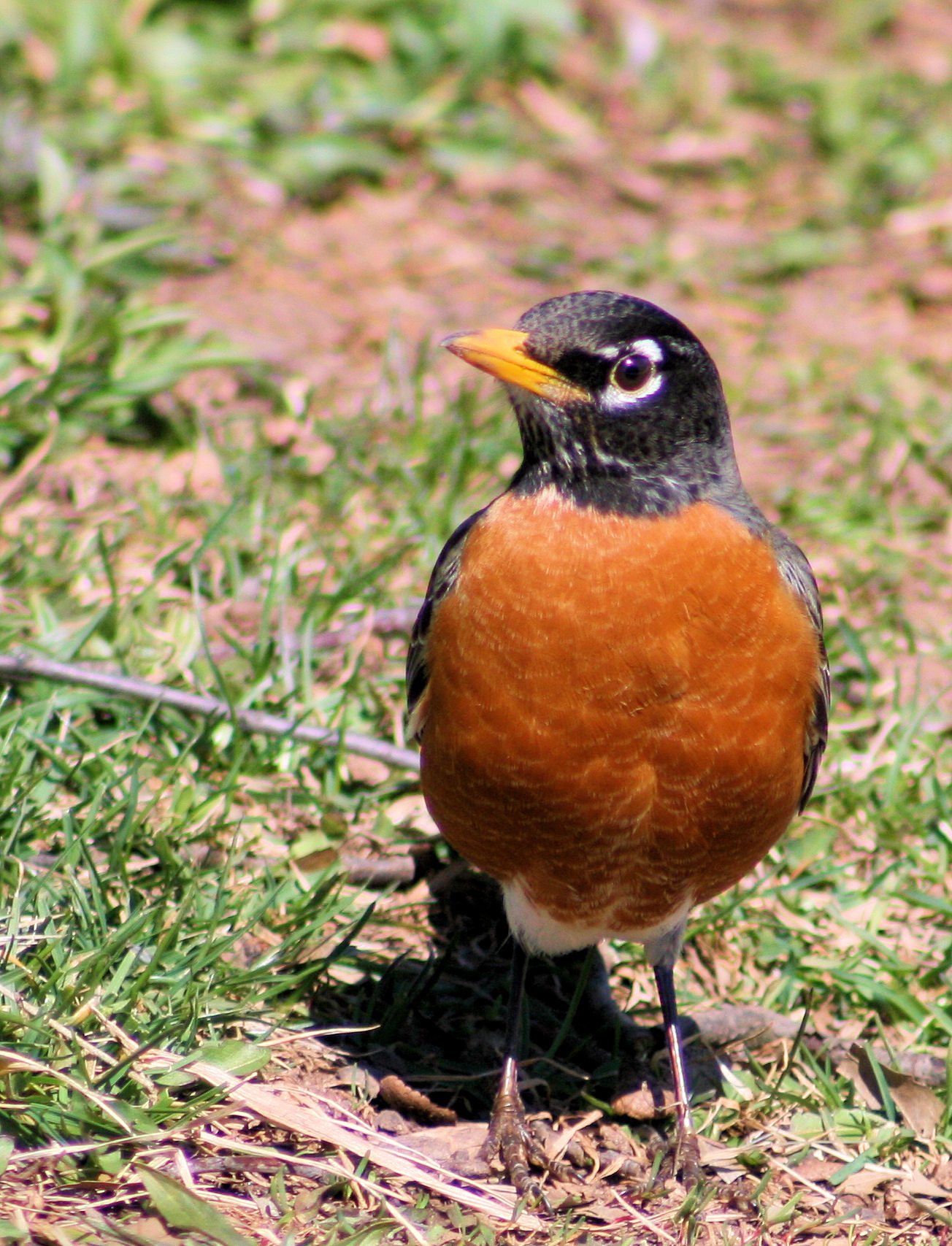
I am prompted to write this post after Brigitte Carey, commenting on a photograph of mine of a European robin, commented  “We actually have reports of one single robin on Elbow Cay. We think he was blown off course by the very strong winds we had a few weeks ago. He has been sighted in separate spots on Elbow Cay in the last couple of weeks. Poor guy…he’ll have a lonely life here!”

I wondered what other evidence exists of their presence on Abaco as occasional visitors – the northern Bahamas are not within their usual migratory range – so I did a bit of research

AMERICAN ROBIN DISTRIBUTION MAP

YELLOW – summer-only range

GREEN – all year-round

BLUE – winter-only migration range

I’ve checked various online databases – Avibase, e-bird for example –  for reported sightings. The evidence is that reports are very scarce indeed. Of course that does not necessarily reflect actual sightings, which are presumably more numerous. Overall however, American Robins certainly seem rare enough on Abaco, even though their full range includes nearby Florida. Which is why the recent reports Brigitte refers to are so significant.Fortunately the spotter Michele S put her brief Elbow Cay / Hope Town sighting report onto e-bird: “After a gale, saw two on the lawn in front of the Lighthouse” This was on Sunday 4 March 2012 at 9.30 a.m, and it would seem they were blown over to Abaco during the high winds. Brigitte will be pleased to hear that there were in fact two of them, so loneliness won’t be a problem… Apart from that very recent sighting, there is a recorded sighting on Man-o-War Cay in 1983; and one on Green Turtle Cay in 2008. Avibase suggests no sightings on South Abaco [except perhaps Marsh Harbour]. The species is however included in the checklist for Little Abaco. If any reader has seen an American robin on Abaco, it would be great to know when and where (using the COMMENT box below), and I will add the details to this post.

NEW – 2012 sightings at TC! Thanks to Elwood D. Bracey MD of Treasure Cay for his comments – and please contact him (or use the COMMENT box) if you can help with his valiant quest to reach the magic 200 species seen – he’s on 170 now:  

“As a birder living on Abaco for the past 20 years I’ve seen over 20 robins here, sometimes as many as 6 in North Abaco at once. This year I had 2 in Treasure Cay and 3 in Crown Haven. They appear on average once every other year. While notable I feel they are almost annual… why some years and not others I’m not sure.

Cedar Waxwings, Dickcissels, and Ruby-crowned kinglets are similar. This year we had our first Swainson’s Hawk for the Caribbean at the organic vegetable farm in North Abaco. It’s still here as is the Canada Goose on the #11 hole at TC Golf Course. It’s nice we have these vagrants and makes for interesting birding. I’m trying for a big year in the Bahamas (no one has ever had over 200 species in 1 year and I’m at 170 so far so if anyone has any unusual sightiongs please call me at 365-8305) [RH note: with only 196 recorded Abaco species on Avibase, this may be difficult to achieve…]. There was a pair of Wood Ducks on the TC GC which I missed. I did find 3 Kirtland’s Warblers [RH note: red-listed as ‘near-threatened’, and only ‘rare / accidental’ on Abaco] near Hole-in-the- Wall in January. Clean lenses and fast focusing!”

Photo Credits for the above images to good old Wiki

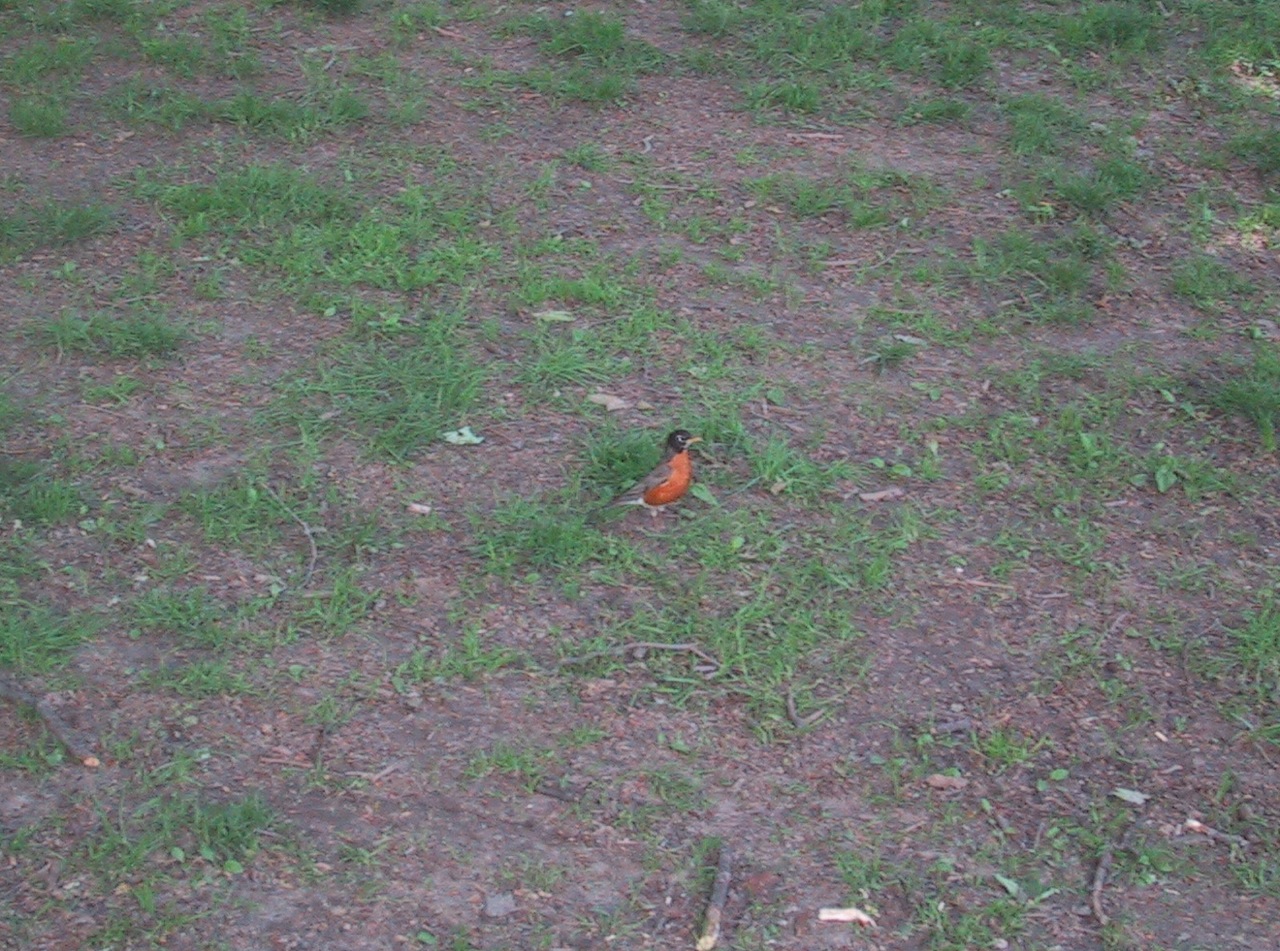
Here’s my own photo of an American Robin in Central Park NYC – I didn’t get very close…

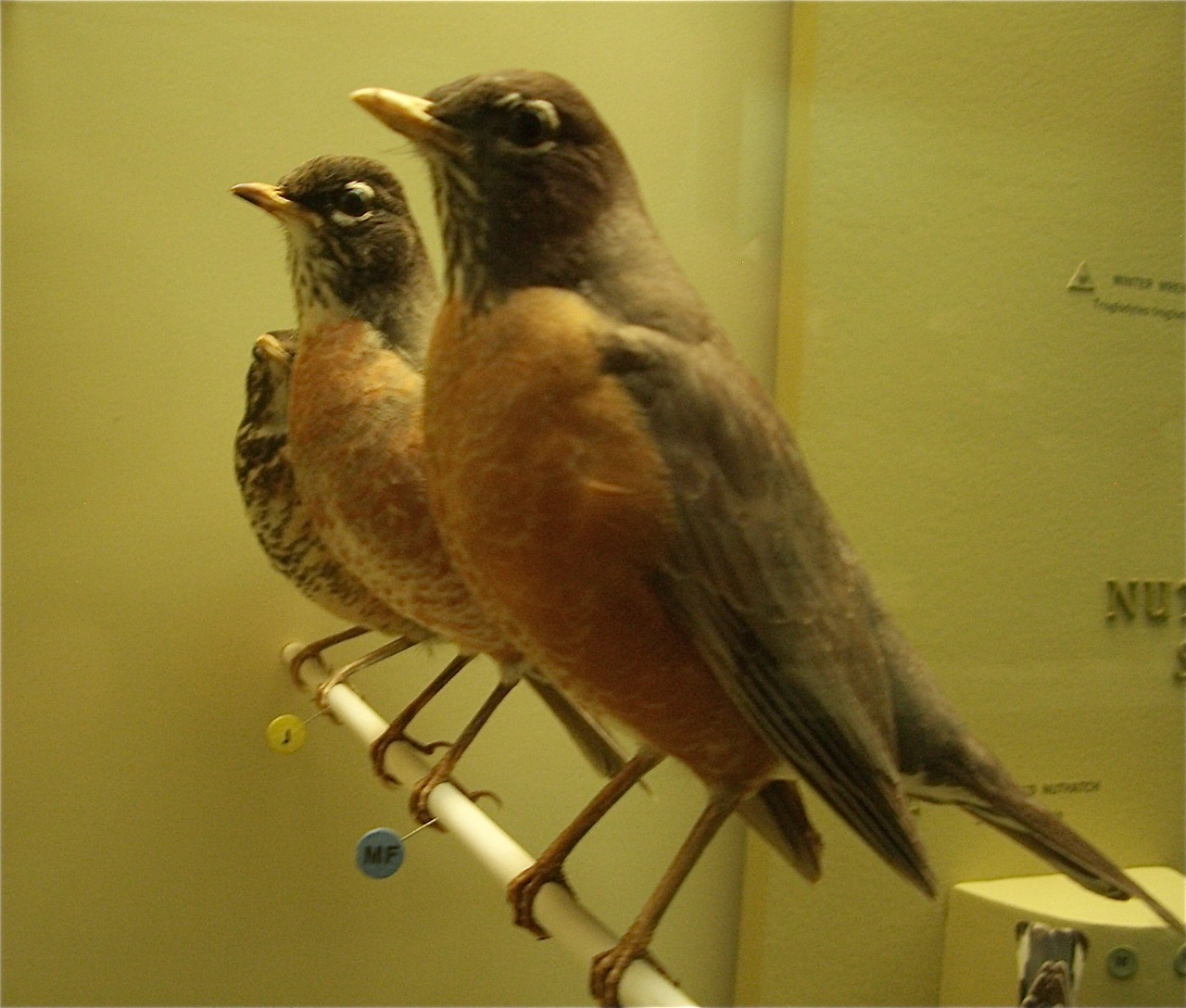
These ARs are exhibited in the Museum of Natural History, NYC

Finally, here are 2 European robins for comparison. They are far smaller than the American version, roughly the size of a vireo

This is the photograph that Brigitte commented on – a robin’s Spring song – that I took a few days ago


Unknown's avatar

BIRDS OF NEW YORK CITY ALSO FOUND IN SOUTH ABACO, BAHAMAS


Red-tailed Hawk PPB 1

If you happen to live in New York, you may quite possibly spend some spare time birding in Central Park, or checking out the red-tailed hawks of Washington Square. And if you are planning a trip to Abaco, you might suddenly wonder just how different the bird life will be there. Will there be any familiar species at all?

New York City has nearly 200 regularly recorded bird species, most of which will be found in Central Park at some time of the year, if not all through it. South Abaco has 126 species. Is there much overlap, I wondered? And the answer is that there is plenty, rather more than I expected. 61 species in common, by my reckoning. The coincidence of warblers is the most notable feature.

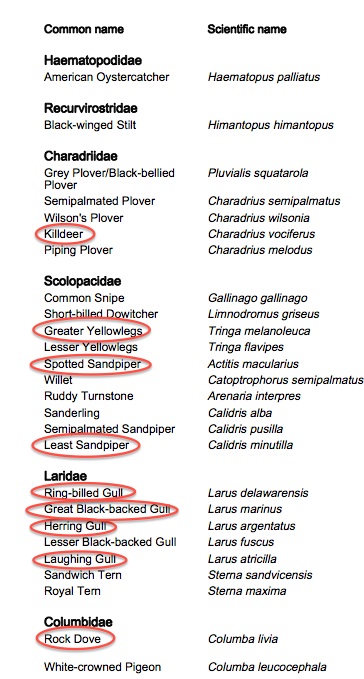
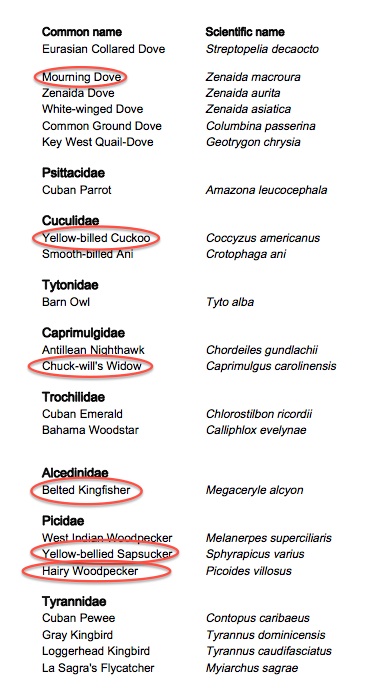
I used the excellent AVIBASE checklist for South Abaco (as now featured on the Delphi Club site in the new BIRDING  section) and worked through a comparative list of the NYC species (there are very good sites for NYC / Central Park birding). The result is below: a New Yorker using the South Abaco checklist may see any of the birds ringed in red. And it would work vice versa, of course. Why New York? It’s the only other place outside Europe that I have ever ‘birded’ (only extremely casually – no book, no notes, few photos – just for enjoyment). Peaceful bird time in the Ramble in Central Park is time well used… Before we get to the list, here’s a bit of local colour that you won’t find on Abaco – a male Northern Cardinal in the snow in FebruaryCardinal NYC CP

NYC BIRD SPECIES THAT APPEAR ON THE SOUTH ABACO BIRDS CHECKLIST

Here’s a red-tailed hawk I photographed in Central Park… I’ve seen one on Abaco in the National Park, but it flew off before I could get my camera out of the truck. There’s a lesson there somewhere…

Unknown's avatar

16 ABACO BIRD SPECIES THAT AUDUBON MIGHT HAVE SEEN (had he gone there)


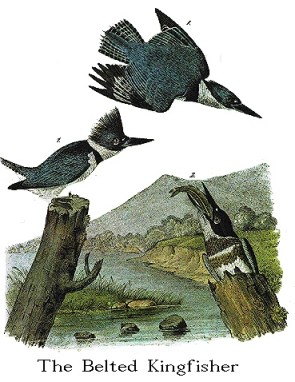
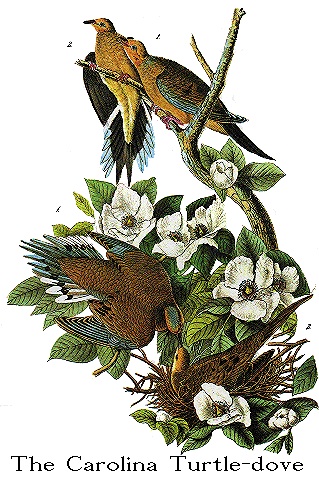
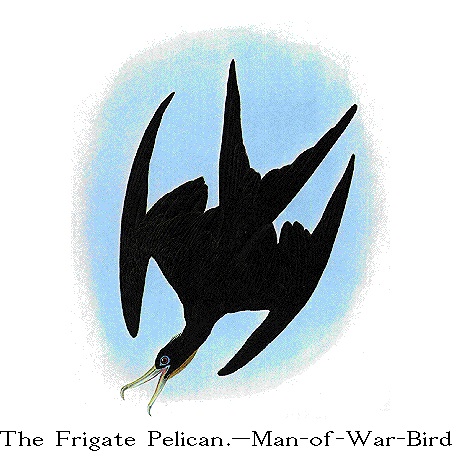
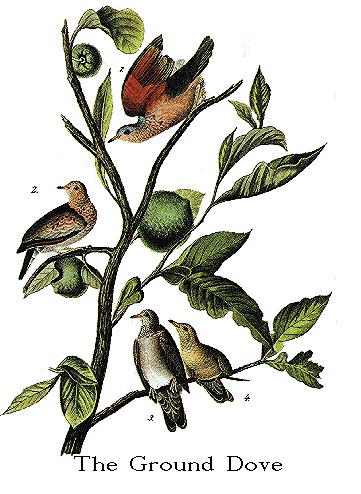
Audubon (1785 – 1851) never went to Abaco. The nearest he got was probably in 1820, when he made a field trip to the southern states, including Florida; or in the 1830s when he made at least one trip to Key West. One technique that set him apart from contemporaries was his method of producing naturalistic (as opposed to ‘stuffed bird’) drawings. It involved killing birds using very fine shot, and then using wires to pose them naturally, according to his field sketches. This contrasted with the usual technique of using a stuffed specimen as a model.

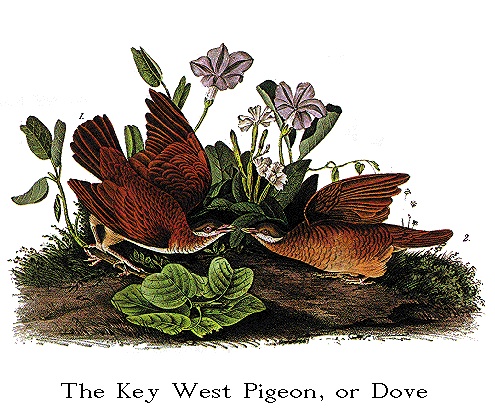
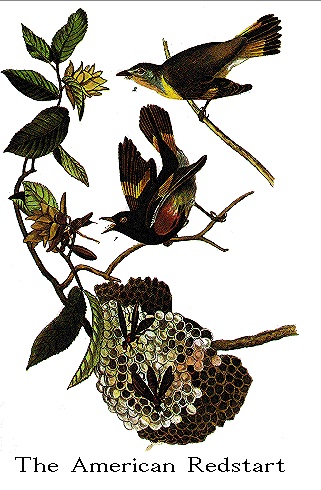
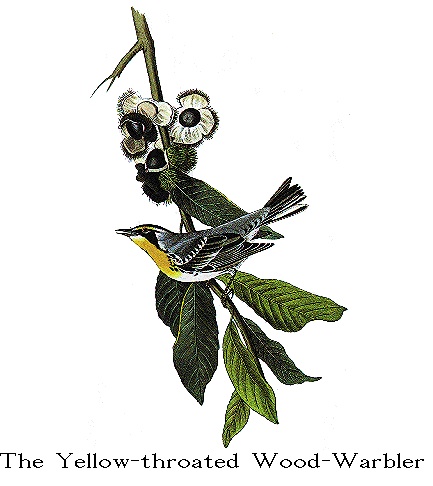
The birds shown below are all included in Audubon’s master-work Birds of America. They may all be found on Abaco today, though some with different names (the Carolina Turtle-Dove, for example, is now known as the Mourning Dove). There are more to add, of course, but this is a fair representative sample.

There are about 120 sets of the original book still in existence. They were incredibly expensive to produce in contemporary terms; and in modern times a set sold for $11.5 million at Sotheby’s London in 2010, setting the unbeaten record for the world’s most expensive book sale. Recently there was great excitement over the sale of another set at Christie’s New York, but the sale price was far lower, a mere $7,922,500…


As an exercise of some sort, I tried to imagine what Audubon might have found had he actually made a brief visit to the northern Bahamas when he was in Florida in 1820. I wondered if his diary entry might have read something along these lines:

“I am recently returned from my short voyage, and have made haste to commit my sketches to paper, for I have a small volume in mind. We dropped anchor by a most pretty island in the low waters of Lucaya, which some call Abaco. I went early ashore with some men, and straightway did observe to my astonishment the number and variety of birds thereon. There was but little habitation to be discerned; and the creatures held no terror of man, seeming as if we were not present. I made me some drawings in my smallest note book, the better to recall what I witnessed. We returned to our vessel before nightfall, which is wondrous swift in those parts. I am resolved to eat no further of the wolf-fish Albula, that is all bones and little to sustain a man… ” 

At least we can be confident he didn’t send the message OMG!!! Lotsa birds – Gr8! All a-twitter! ROFL 😉 @audubon

Due credit, of course, to the Audubon Society  and all it stands for