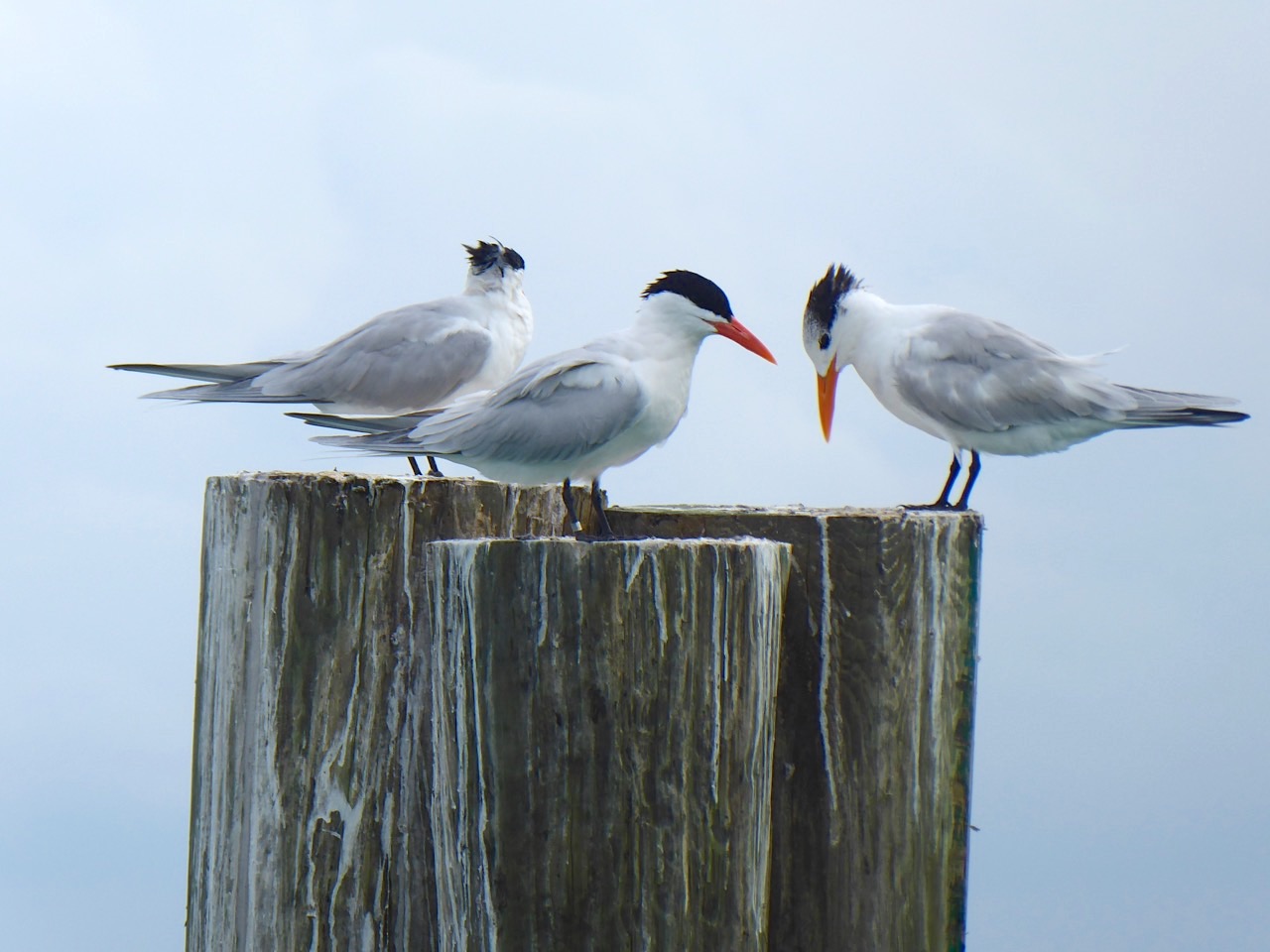
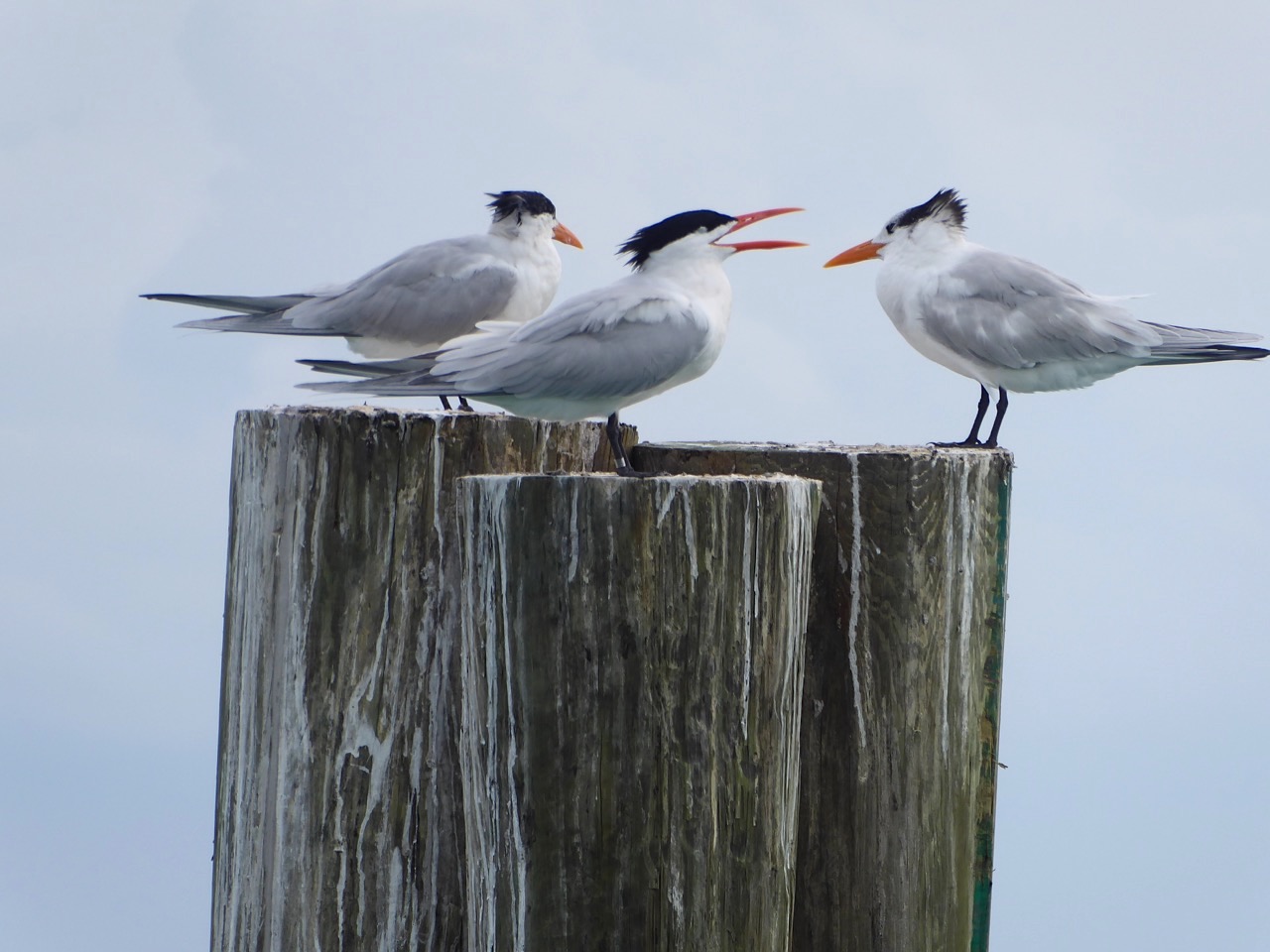
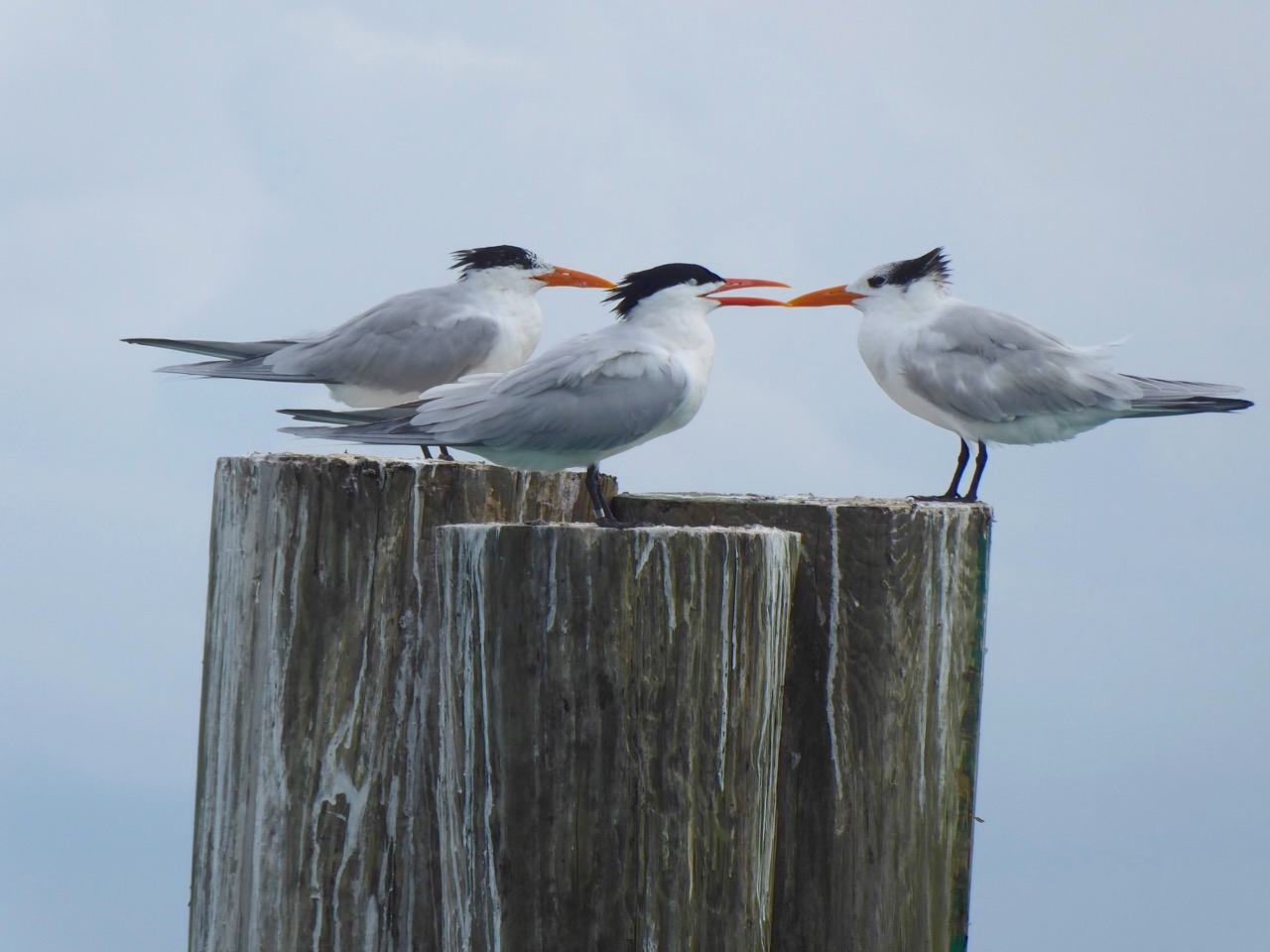
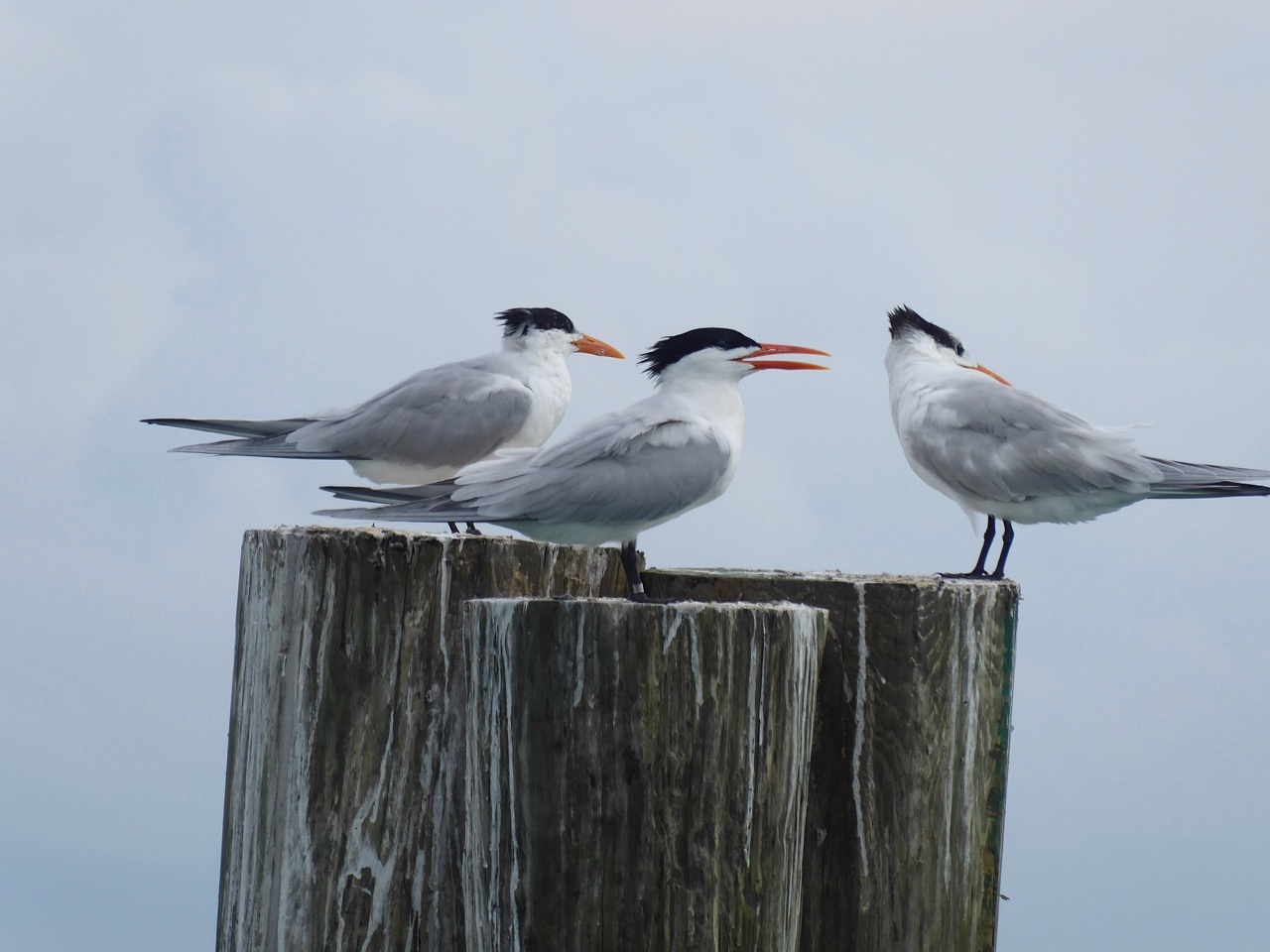
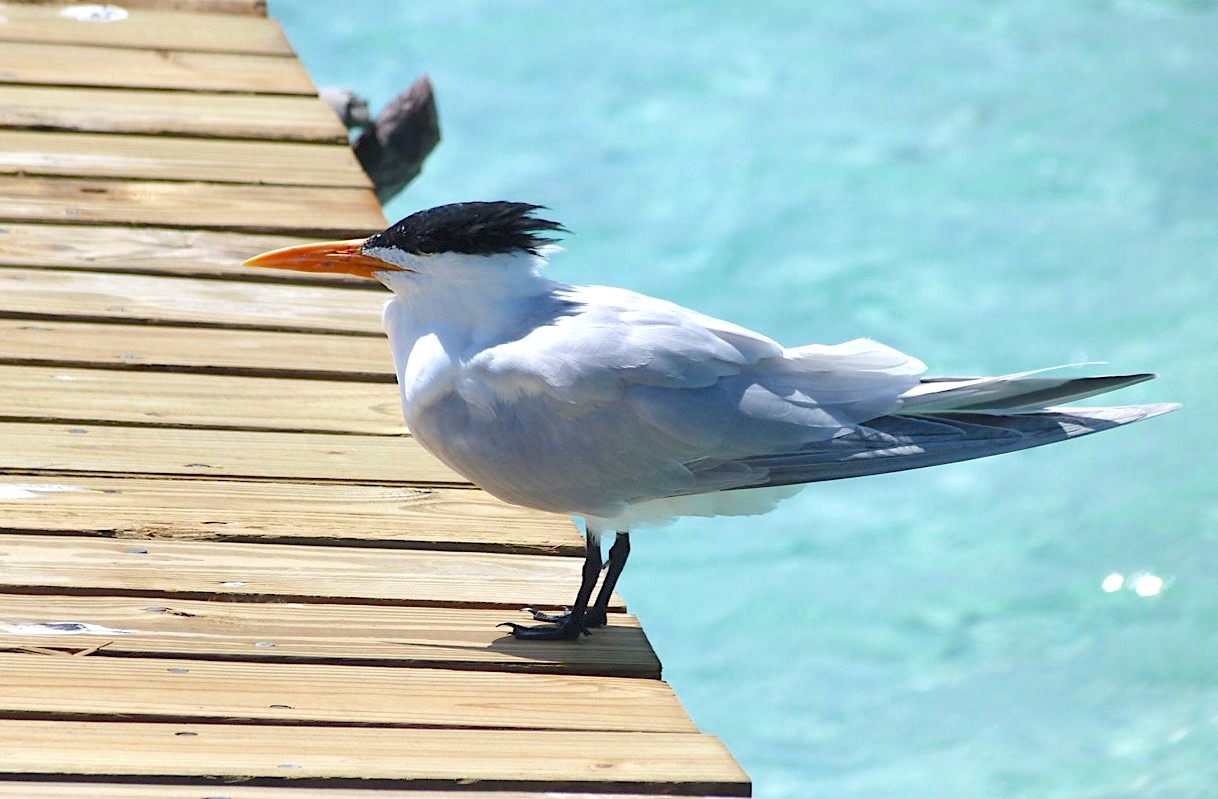
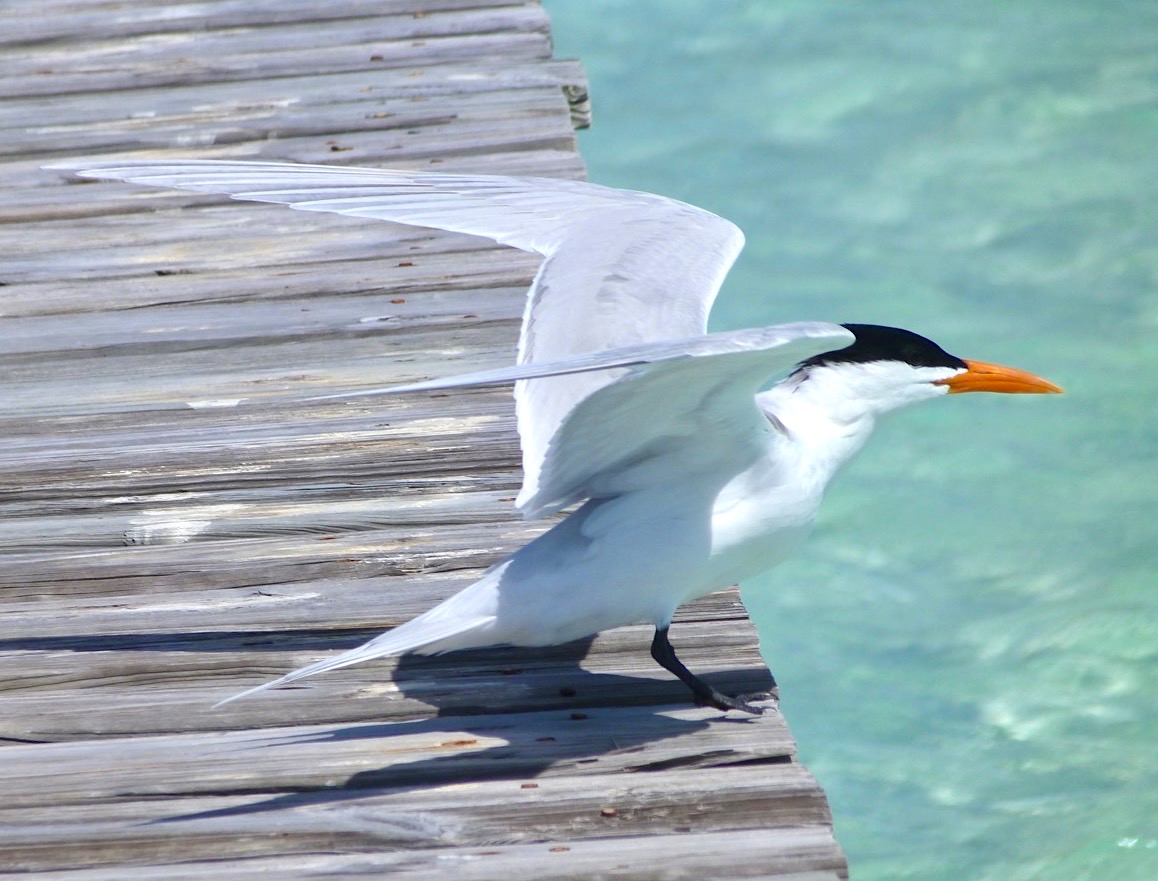
There’s a time and a place for anthropomorphising animal behaviour in terms of human responses. Usually it’s best done with caution or not at all… I’m going to press ahead, though, with a romantic encounter between two Royal terns today at Sandy Point, Abaco. Ultimately, this appeared to be an approach, a come-on, a poorly executed attempt at intimacy, and ultimately a rejection. Or else it’s just bird interchange that we should not read too much into…
Good afternoon, I should like to get to know you better…
Would you do me the honour of commencing a relationship?
Indeed I would, kind Sir!
*Boastfully* I happen to be the most handsome and regal tern this side of Marsh Harbour
I’m going to give you a peck that you’ll never forget…
Whaaaaaa? Wait… Too much, too soon. I hardly know you
You’ve moved as far away as possible on this post – you have no idea what you’re missing
I’ll be the judge of that. I’m off, don’t try to follow me…
Credits: all photos (artfully taken in fairly poor light), corny storyline, inappropriate anthropomorphism – Keith Salvesen
RARE, PRECIOUS – AND FOUND ONLY ON ANDROS, BAHAMAS
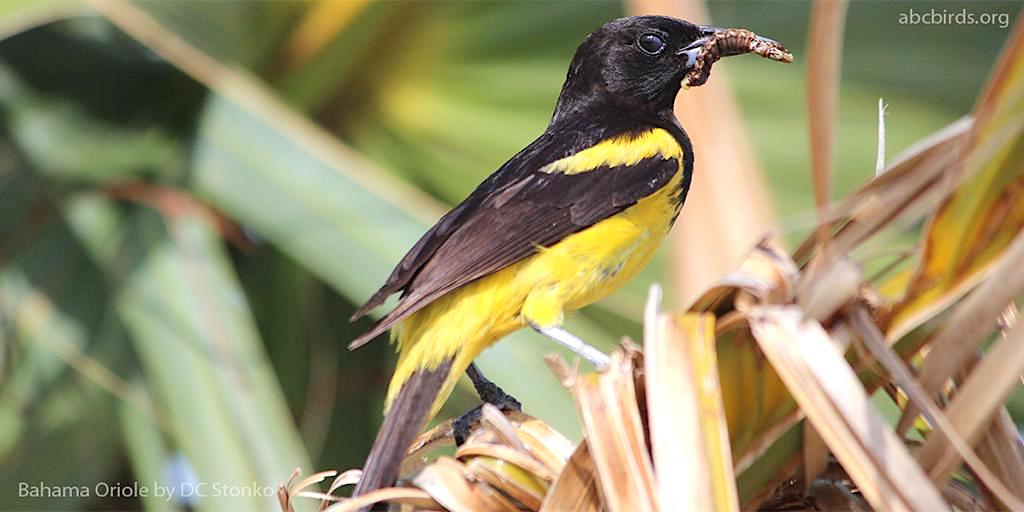
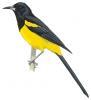
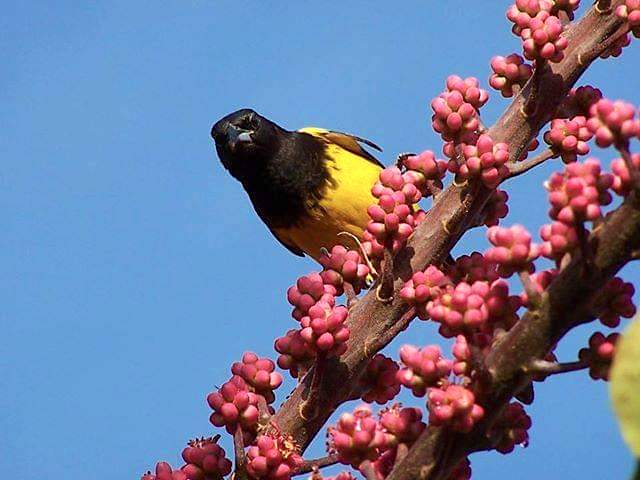
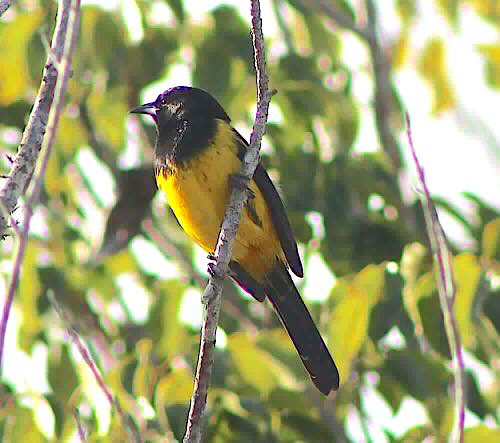
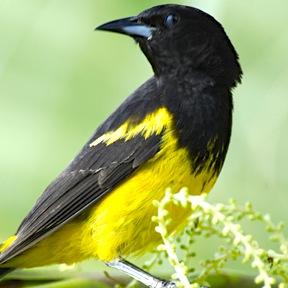
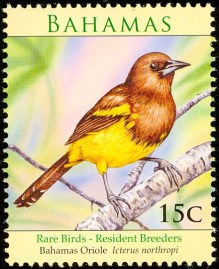
The future of the gorgeous endemic Bahama Oriole (Icterus northropi) hangs in the balance. IUCN Red Listed as ‘Critically Endangered’, the Oriole once lived on both Abaco and Andros. As recently as the 1990s, the species became extirpated on Abaco, leaving a small and fragile population in fairly specific areas of Andros. These are places where the habitat is conducive to the orioles’ well-being, and in particular where they can safely breed and (with luck) replenish their depleted population.
We hear a lot about habitat loss as a grave worldwide problem for an increasing number of species. Narrow that down to one species, one island, a few defined areas, then add mankind and his needs to the mix. The wrong mix of habitat degradation, clearances, predation or disease could cause the Andros population to disappear as well.
Which is where conservation and science come into play. The Bahamas archipelago benefits from an astonishing number of (broadly-speaking) environmental organisations that are involved in species and habitat protection, both terrestrial and marine. They range from international to Bahamas-wide and Governmental, to NFP organisations on the main islands, and on through local communities via citizen scientists to dedicated individuals. All are fighting a specific battle with a single aim; all face an increasing array of metaphorical weapons being deployed against them.
SO, ANY GOOD NEWS THEN?
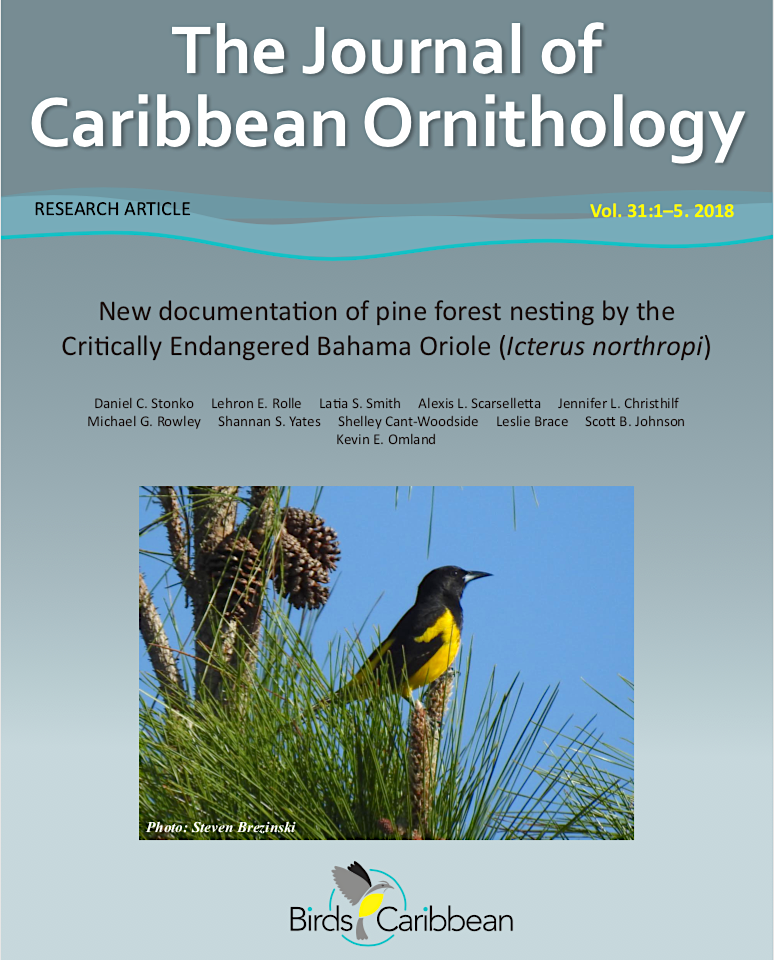
Returning to the orioles – in many ways a perfect indicator bird species – recent research has led to an encouraging discovery. A new study in The Journal of Caribbean Ornithology published by researchers from the University of Maryland, Baltimore County and Bahamas National Trust collaborating on the Bahama Oriole Project (@BahamaOrioleProject) reveals new evidence about the nesting habits and habitats of the orioles that will have “…major implications for future conservation” (this work was funded in part by the American Bird Conservancy and Birds Caribbean).
The study is the outcome of the work of a dozen conservation specialists. In a coconut-shell, the orioles were thought to nest only in the coconut palms found near the coast. However the recent intensive research program reveals that ‘multiple pairs’ breed in the pines and the thatch palms of the forests, away from the coast. Indeed, these may prove to be the primary nesting locations. The implications of these new findings are significant, not least for a possible uplift in numbers and the way in which conservation measures can be adapted to the new discovery. For those wanting something more authoritative, the short Abstract of the study is given at the end. And if you’d like to read the whole article, click on the link below.
Lethal Yellowing Diseaseof the coastal coconut palms, until very recently (see above) believed to be the prime nesting habitat for the oriole. In some areas the palms have been all but wiped out. The recent findings in the forests have clearly reduced the impact of this specific problem
The arrival in the 1990s and spread of the Shiny Cowbird Molothrus bonariensis, abrood parasitethat lays its eggs in the nests of other bird species*
Habitat loss / development
Forestry work / forest fires
Feral cats and rodents
Disease within the population is also cited as a contributory cause
*The date of this arrival seems to correspond to when the orioles were extirpated from Abaco. However, see next para.
WHEN & WHY DID THE ORIOLES VANISH FROM ABACO?
This is a classic ‘riddle wrapped in a mystery inside an enigma’. Various sources I have looked at use a formula such as “…became extirpated from Abaco in the 1990s”, or “disappeared for unknown reasons in the 1990s”. However, Abaco birding expert Elwood ‘Woody’ Bracey comments (see below) that Bahama Orioles were last formally recorded on Abaco in 1973 by researcher Duncan Everette and his partner who were banding warblers in Southern Abaco in what is now the Abaco National Park. At that time, the Shiny Cowbird was only rarely found on Abaco, if at all.
I’ve found no clear clue as to the cause – nor even when the last evidences sighting of an oriole on Abaco was made. I haven’t found a single photo of one taken on Abaco at any time in history. To be fair the option of snapping everything with wings multiple times using a digital camera with a huge chip didn’t exist then. As to past history, Kevin Omland of @BahamaOrioleProject says that there are at least 9 specimens in museums around the world collected from Abaco in the 1800s and early 1900s.
eBird map showing Bahama Oriole sightings distribution in c21
ABSTRACT
The Bahama Oriole (Icterus northropi) is a Critically Endangered species endemic to The Bahamas and currently found only on the Andros island complex. With the elevation of the Bahama Oriole to full species status in 2011, research suggested that there were fewer than 300 individuals remaining in the global population. The Bahama Oriole was also termed a “synanthropic species” based on data suggesting that the species nested almost exclusively within anthropogenic residential and agricultural habitats in introduced coconut palms (Cocos nucifera). These conclusions were based on population surveys primarily confined to settled areas near the coasts. However, we documented multiple pairs of orioles with breeding territories deep in pine forests, and we present the first records of Bahama Orioles nesting in pine forests—in both a Caribbean pine (Pinus caribaea) and native understory Key thatch palms (Leucothrinax morrisii). Given the predominance of the pine forests on Andros, this newly documented breeding habitat has important implications for developing population estimates and future conservation plans for the Bahama Oriole.
Credits: Dan Stonko / American Bird Conservancy, Michael Baltz / Bahama Oriole Project / Kevin Omland; Mary Kay Beach; Bahama Oriole Project FB header; C Ward / BNT; Thomas Nierle / Bahama Oriole Project; Bahamas Postal Service; BNT; D Belasco / American Bird Conservancy; Handbook of World Birds (drawing)
The brackish pond at Gilpin Point near Crossing Rocks is generally a reliable place to find waterbirds. For those birding on South Abaco (in many respects, one big hotspot) Gilpin is definitely worth a visit at almost any time. Bear in mind it is (a) a longish private road (we got a puncture down there once…**) and (b) it is private land. However, the owner Perry Maillis is always welcoming to tidy birders who bring only enthusiasm and take only pictures. Plus he very kindly changed our wheel!
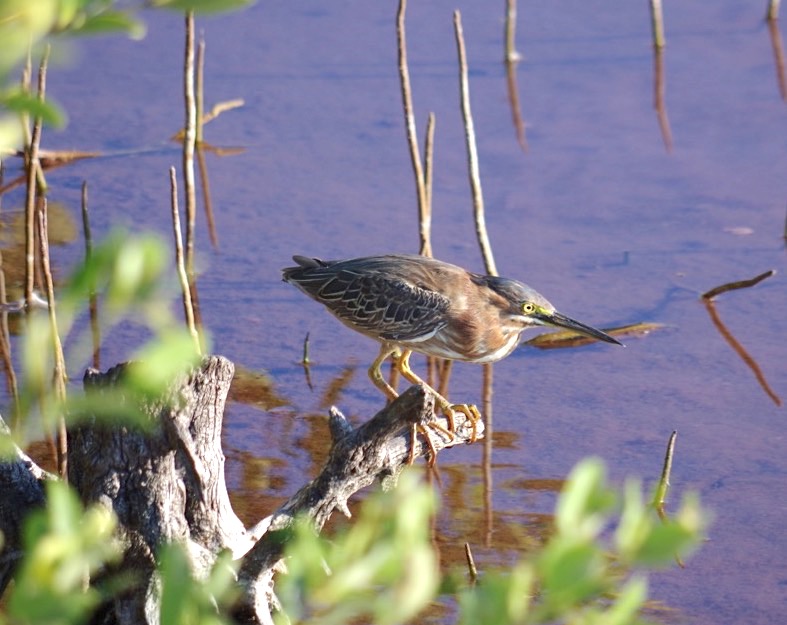
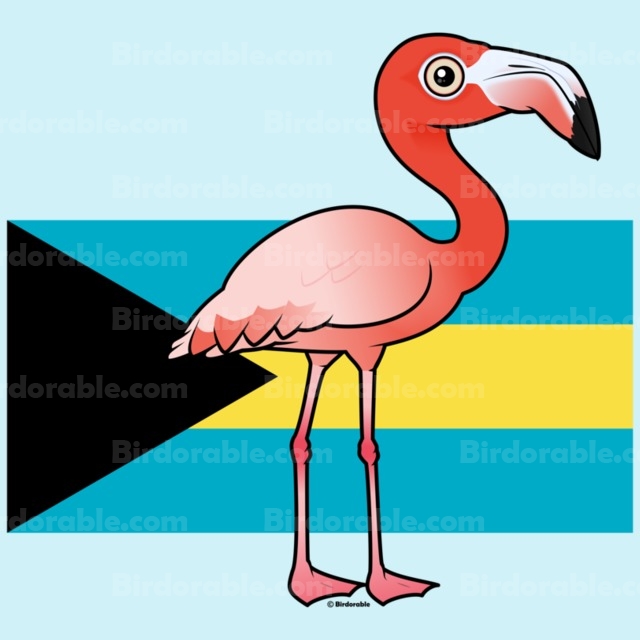
We found this small Green Heron quite easily. We’d watched it fly onto a stump in the pond near the jetty, then fly closer to the shoreline. By tiptoeing onto the jetty, we could see the bird perched close to the water, inspecting it with a fierce and predatory eye. Both eyes, in fact.
The hunting technique is deceptively simple. Note the long sharp stabbing beak. Note the large feet and claws for gripping securely Here’s how it is done. As a fish is sighted, so the heron leans gradually forwards, beak dipping closer to the water, the body more streamlined to look at. The procedure is beginning in the image above.
The stance means ‘small fish – 5 feet off – moving left and closing – prepare to strike‘. As the prey unwittingly approaches, the bird slowly tilts further forward unless its beak almost touches the water, the quicker and closer to strike.
The actual strike is so rapid that it is barely possible to see with the naked eye, let alone to photograph it clearly (not on my type of camera anyway). But the end result is rarely in doubt, with a small fish struggling but securely held in that long, clamping beak. It will be down the heron’s gullet in a matter of seconds.
I left the heron as it settled slowly back into ‘scanning the water mode’ while I went to watch some lesser yellowlegs nearby. Some minutes later, the heron was still contentedly fishing from its vantage point.
ROUGH GILPIN CHECKLIST
Species we have found on and around the pond include black-necked stilts, little blue heron, great blue heron, tricolored heron, snowy egret, reddish egret, yellow-crowned night heron, the relatively rare and very shy sora, hordes of white-cheeked pintails, northern pintails, lesser yellowlegs, belted kingfisher, turkey vulture, smooth-billed ani, American kestrel, Bahama woodstar, Cuban emerald, Mucovy duck (Perry’ pet!) – and the green heron of course.
As a bonus, Gilpin has become an increasingly regular stop for raucous flocks of Abaco parrots. Rarer species found there include American flamingo (rare vagrant), brown pelican, double-crested cormorants, and limpkins. On the beach 5 minutes walk away, there are usually shorebirds including rare piping plovers, Wilson’s plovers, turnstones; gull and tern species; and passing tropicbirds & magnificent frigatebirds flying high over the water.
** I realise that strictly I should be saying ‘flat’ here, but that might be confusing for Euro-readers, who would understand that to mean that we had rented (or purchased) an apartment in a larger dwelling house containing similar accommodation.
All photos, Keith Salvesen except the cute chick, Charlie Skinner; and the cute cartoon GH, Birdorable…
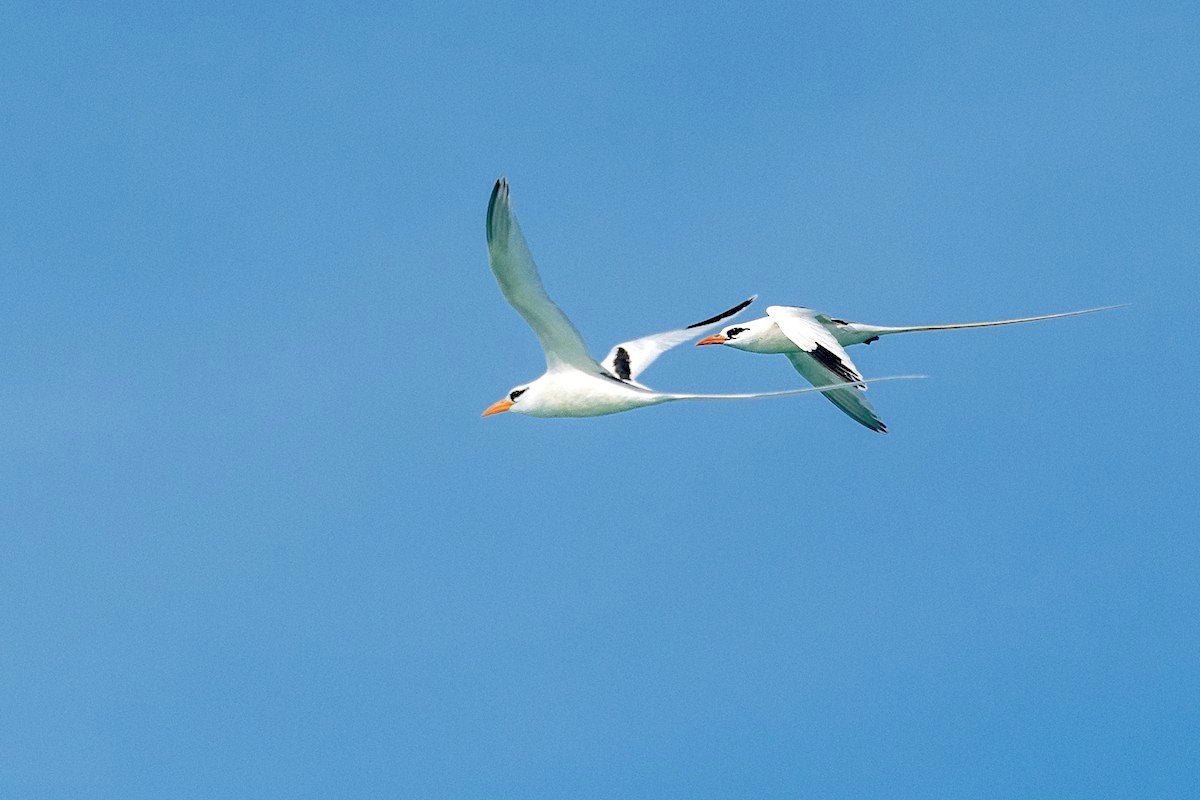
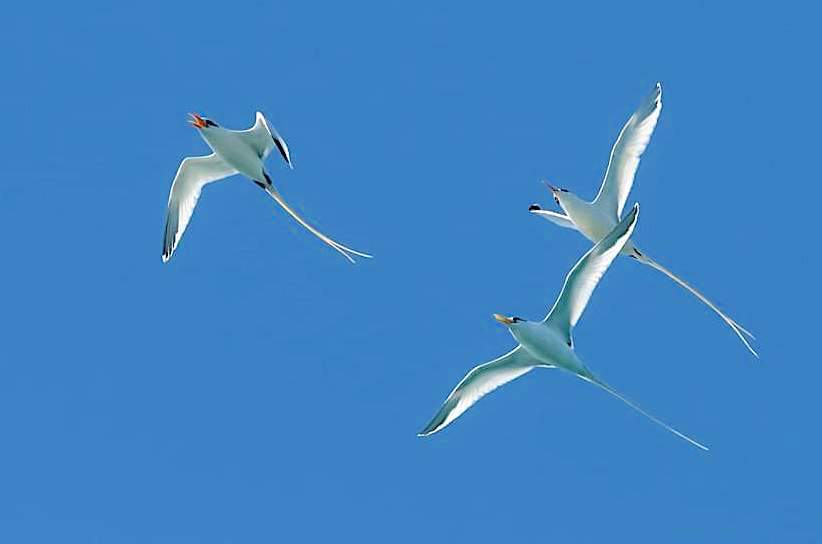
I am interrupting my intended sequence of posts (I try to plan ahead a bit…) to bring you some gorgeous white-tailed tropicbirds (Phaethon lepturus catesbyi) seen within the last week near the Low Place on Man-o-War Cay. There were 6 in the group, flying high, flying low, circling, dipping down, flirting – all of this taking place just offshore.
Sally Chisholm, Abaco birder and photographer, was with Todd Pover of CWFNJ, engaged in the final piping plover count of the season before the birds return to their summer breeding grounds [check out ABACO PIPING PLOVER WATCH if you are interested]. Sally and Todd were distracted from the matter in hand as the group of tropicbirds glided and swooped through the air. It was a free demonstration of beautiful flying skills that can be matched by few other species.
It became obvious that courtship was involved. As Sally vividly describes it, “The birds were observed for more than 15 minutes making wide circles, at times flying out of sight across towards Great Abaco and coming back flying low over the same area on MOW. Two birds would interact with a lot of “keck-keck-keck”, and then one of the pair flew down to land several times in the same crevice of the iron shore. It first appeared that the bird was landing for food but none of the photos showed anything carried. The display looked to be one of courtship and was amazing to watch”.
TROPICAL TOPICS
WTTR plunge-dive for fish and squid, sometimes submerging completely
Or they swoop and skim their prey from the surface
Another technique to take flying fish in the air (I’d love to see that…)
WTTR have no fixed breeding season, and may nest year-round
Nesting is colonial or in pairs in a particular area, or even in isolation
A pair will fly together, one above the other then…
…the higher bird bends its tail down to touch tail of lower bird and [veil drawn]
They nest in crevices, holes in rock, on ledges, on the ground under vegetation
Chicks are fed by both parents using regurgitation
The same site may be re-used for several years by the same pair
Credits: All photos, Sally Chisholm except the fantastic nest shot, Melissa Maura (many thanks to both for use permission – I’ve never got a decent photo of one); Audubon NA
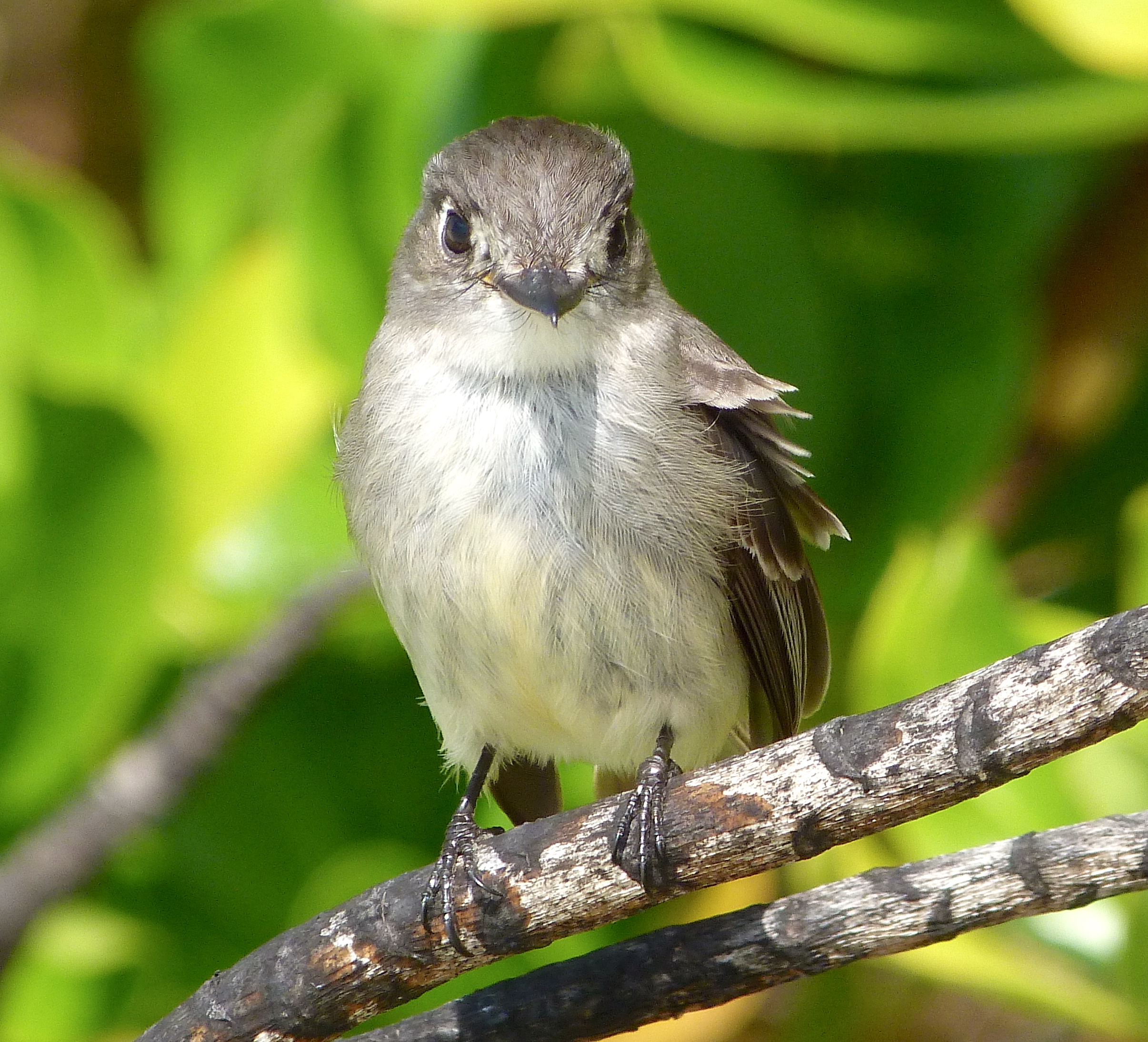
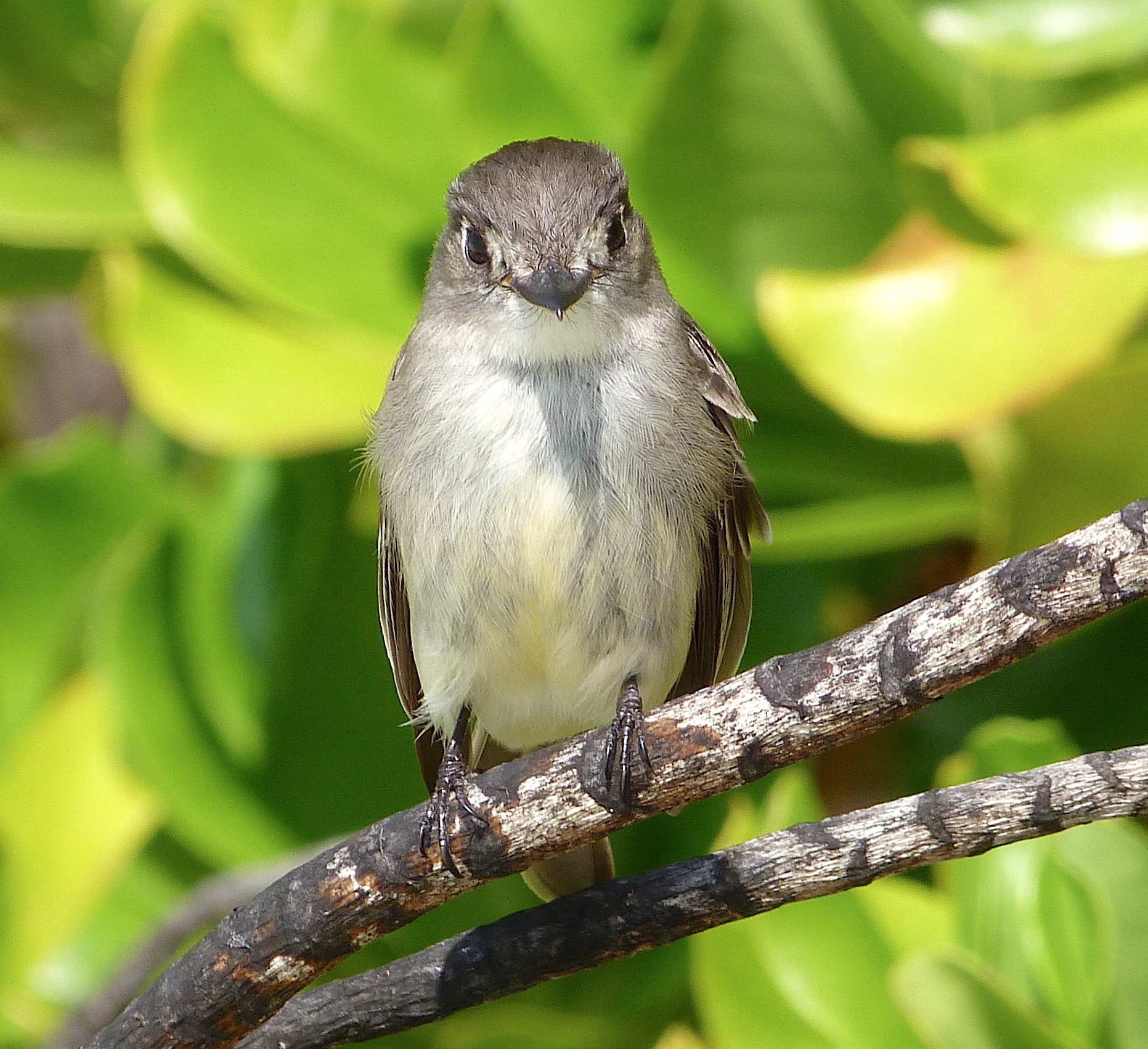
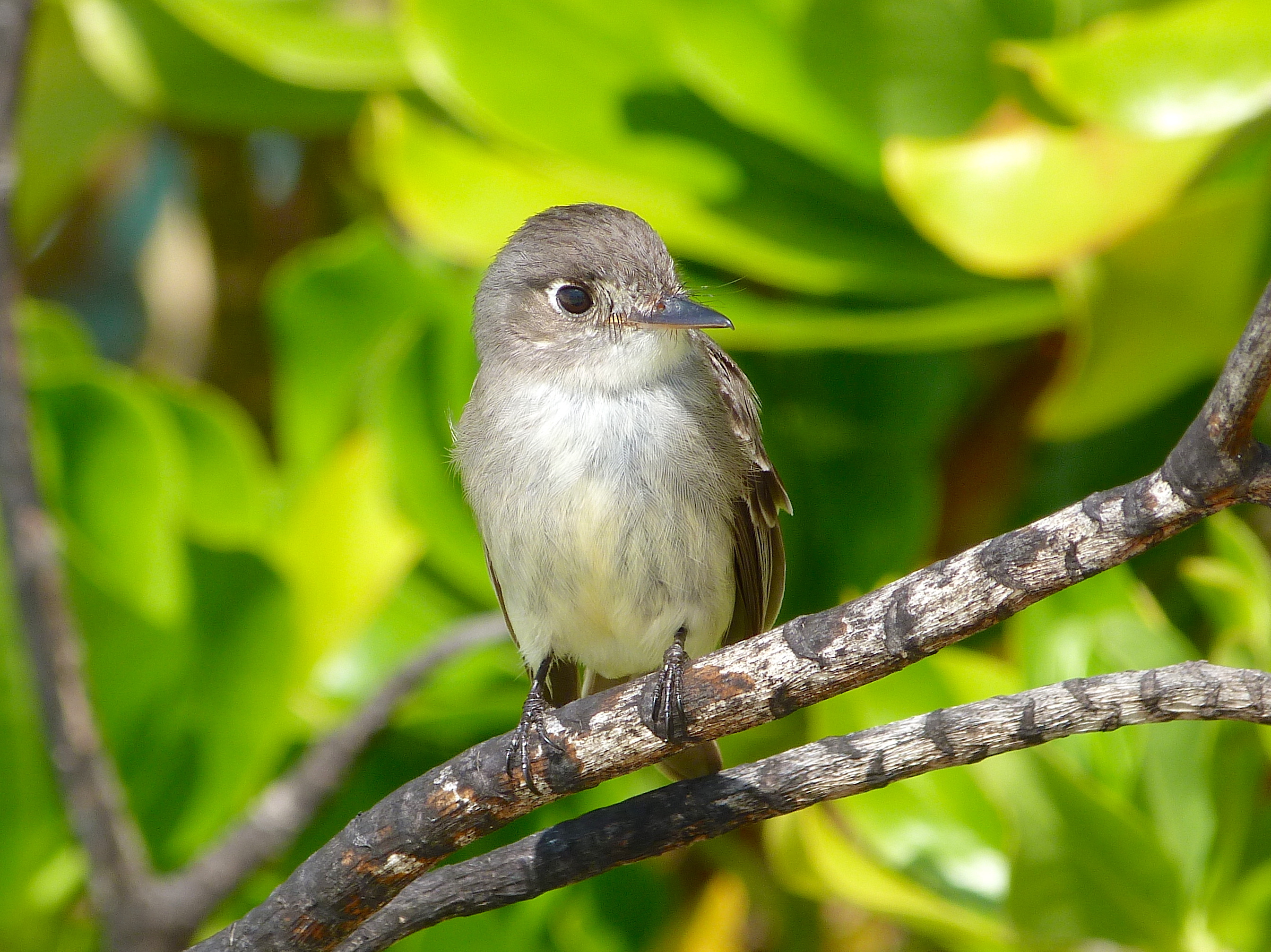
The small bird featured here is a CUBAN PEWEE Contopus caribaeus bahamensis (sometimes called the Crescent-eyed Pewee – see image for why this is so). It is without a doubt a tyrant. At barely 6″ long, it is the smallest tyrant you are likely to encounter in the Bahamas or indeed anywhere else. However it does happen to be a member of the family Tyranidae. These are the flycatchers, and on Abaco they include the larger LA SAGRA’S FLYCATCHER, the still largerLOGGERHEAD KINGBIRDand (a summer visitor only) the GRAY KINGBIRD(this last link explains the difference between the two kingbirds).
The Cuban Pewee is permanently resident on Abaco, and can be found in both pine woods and coppice. When returning to its perch after a fly-catching sortie – ‘hawking’ on the wing – this wee bird gives a characteristic flick of the tail. The bird featured here was in the rough scrub behind the beach of the beautiful bay at Casuarina. It became a favourite of mine simply by being completely unafraid of me, and accepting my extremely slow approach (3 inches at a time) with apparent interest mixed in with an endearing willingness to pose, even when I could almost have reached out and touched it.
Unlike many creatures, it did not seem concerned by eye-contact. It responded when I made a faint clicking sound by rather sweetly putting its head on one side. However, as I got as close to it as I dared, it began to fidget slightly (possibly feeling camera-shy). So I shuffled slowly back, so as not to disturb it in its own territory, where it was the resident and I was the intruder.
These close-ups clearly show the tiny hooked tip at the end of the upper beak, which (as in other tyrant species) relates to the business of catching flies. Also like other flycatchers, the Cuban Pewee has very distinctive whiskers around the base of the beak. In fact, these are not whiskers as such – not hairs so much as feathers that have modified into bristles. These act as ‘tactile sensors’ to assist the detection and targeting of aerial insects as the bird darts from a perch to intercept some passing tasty winged morsel.
The range of the Cuban Pewee is limited almost entirely to Cuba and the Bahamas, so it is very region specific. And how lucky we are to have these cute little specimens on Abaco. I note that the Audubon site calls them drab, which I think is a little unfair. Merely because a bird is not decked out like aPAINTED BUNTINGor startlingly marked like a male RED-WINGED BLACKBIRDdoes not make it drab. I prefer the word ‘subtle’. I like GRASSQUITS too, for the same reason: too often maligned as ‘dull’.
It is sometimes tempting to anthropomorphise such close encounters in terms of imputed human / creature empathy. It is probably best to try to resist that attitude (‘inter-species condescension’, as you might term it). But as I withdrew, leaving this little bird undisturbed on its branch, I did experience a strange feeling of mutual understanding and… [I must interrupt myself here. I’m a lawyer, so that’s quite enough of that sort of emotive nonsense]
As I have mentioned before, theBAHAMAS POSTAL SERVICEhas an exceptionally good record for producing wonderful, colourful stamps showcasing the abundant wealth of natural history in the archipelago. Birds, reef fish, turtles, marine mammals, butterflies, plants and flowers – all these and more have featured on the stamps of the Bahamas for many years. There’s quite a collection of them on a display page of their own HERE.
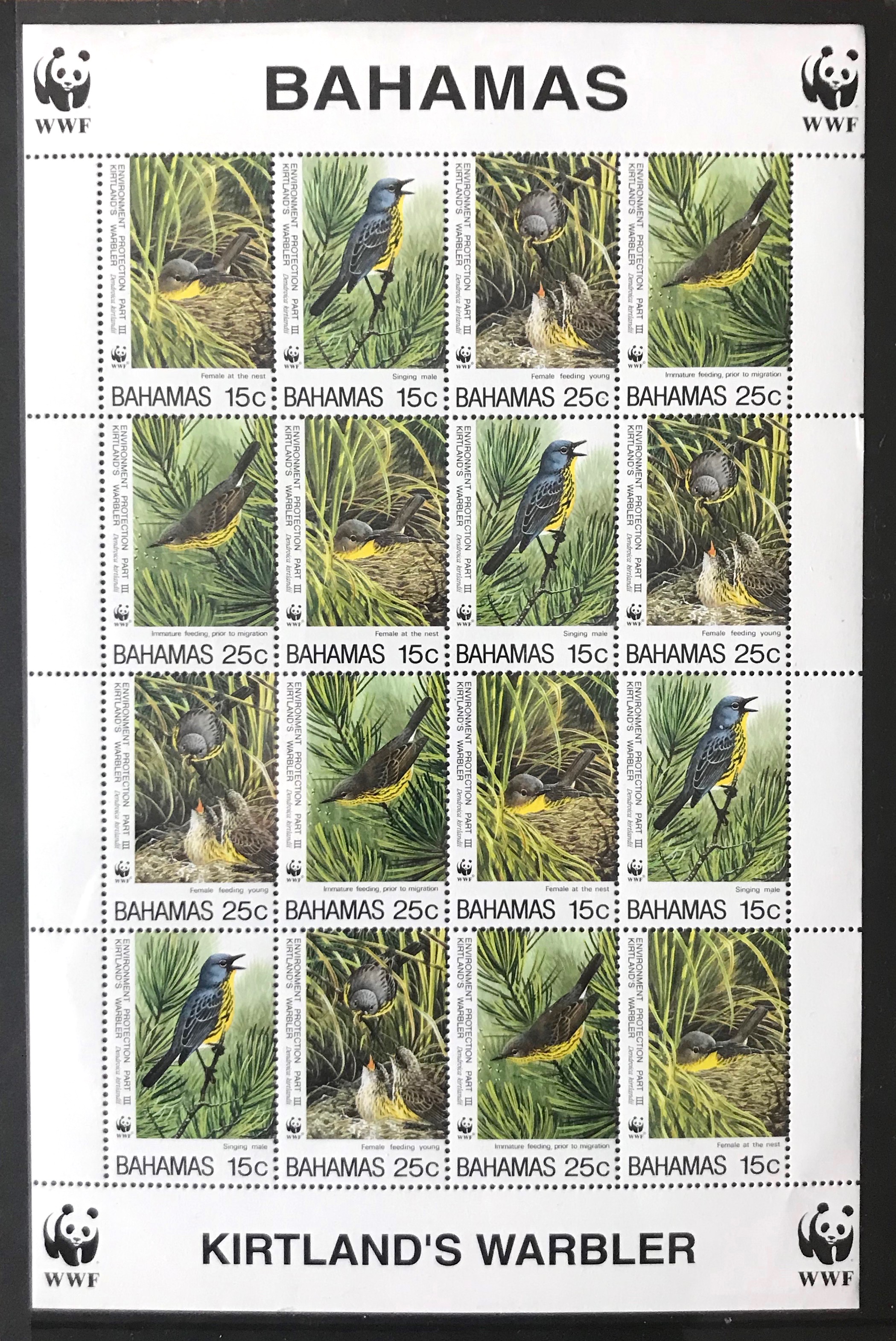
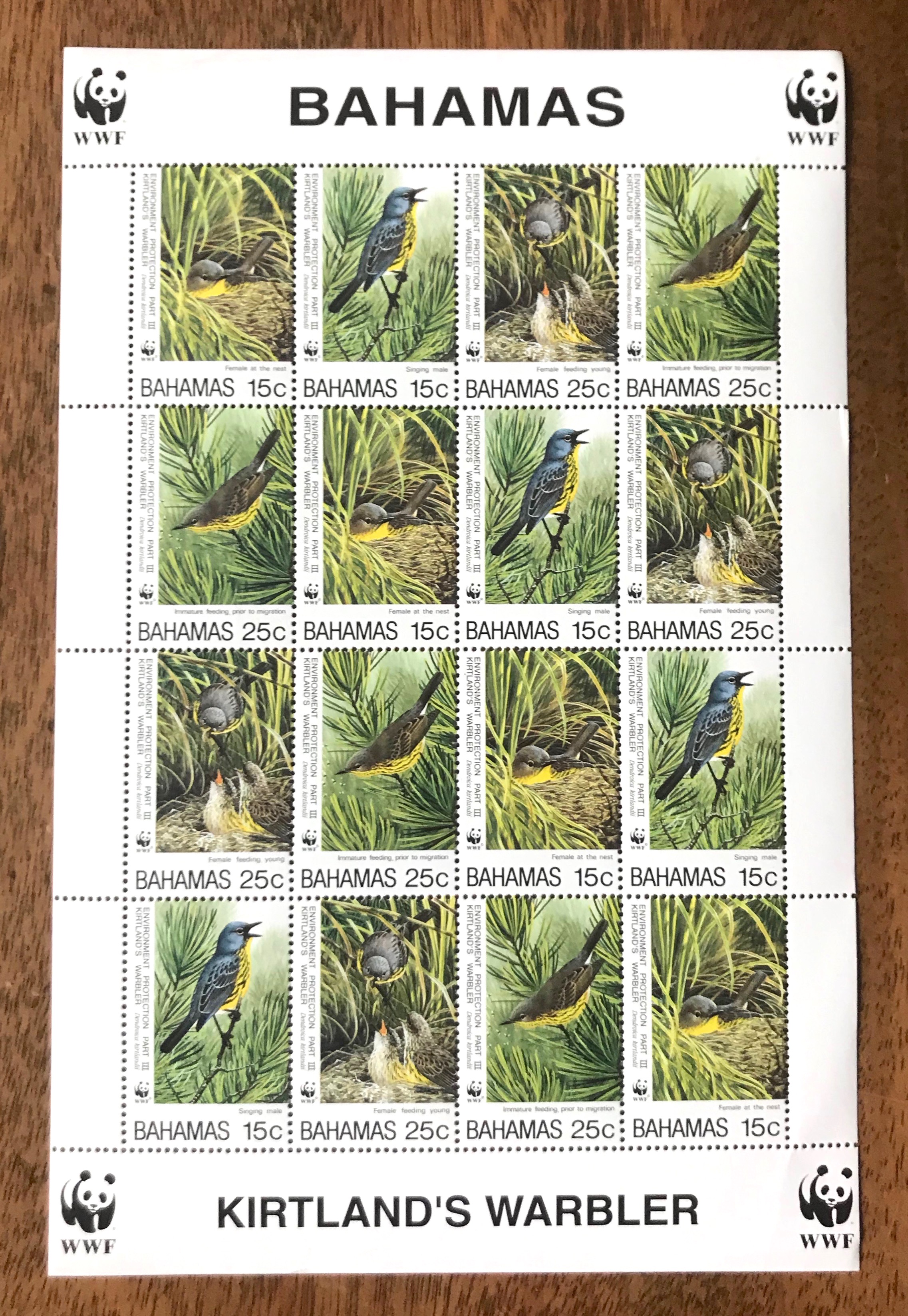
Quite by chance I recently came across a significant philatelic tribute to one of the rarest Bahamas winter visitors, the Kirtland’s Warbler (Setophaga kirtlandii): a complete commemorative sheet of stamps. Reader I bought it (= ‘won’ it on eBay – $2.75!). Produced in conjunction with the WWF, it is a model of conservationist sensitivity.
The sheet of 16 stamps depicts 4 x 4 KIWA variations: a female at the nest; a singing male; a female feeding young; and a juvenile feeding in the Jack pines of its summer habitat, prior to its long Fall migration to Abaco and the Bahamas.
Kirtland’s Warbler in the Abaco National Park: you need to know where to look to find one
I am not a stamp collector, but I do appreciate it when countries take the trouble to showcase their flora and fauna among the notable people, sporting heroes, modes of transport and Harry Potter characters. As I say, the Bahamas is very good in this respect.
A Kirtland’s Warbler on Green Turtle Cay: the first recorded sighting on one of the Cays
You can find out more about these rare and vulnerable little warblers, including the first ever recorded on a Cay in Abaco, using these links:
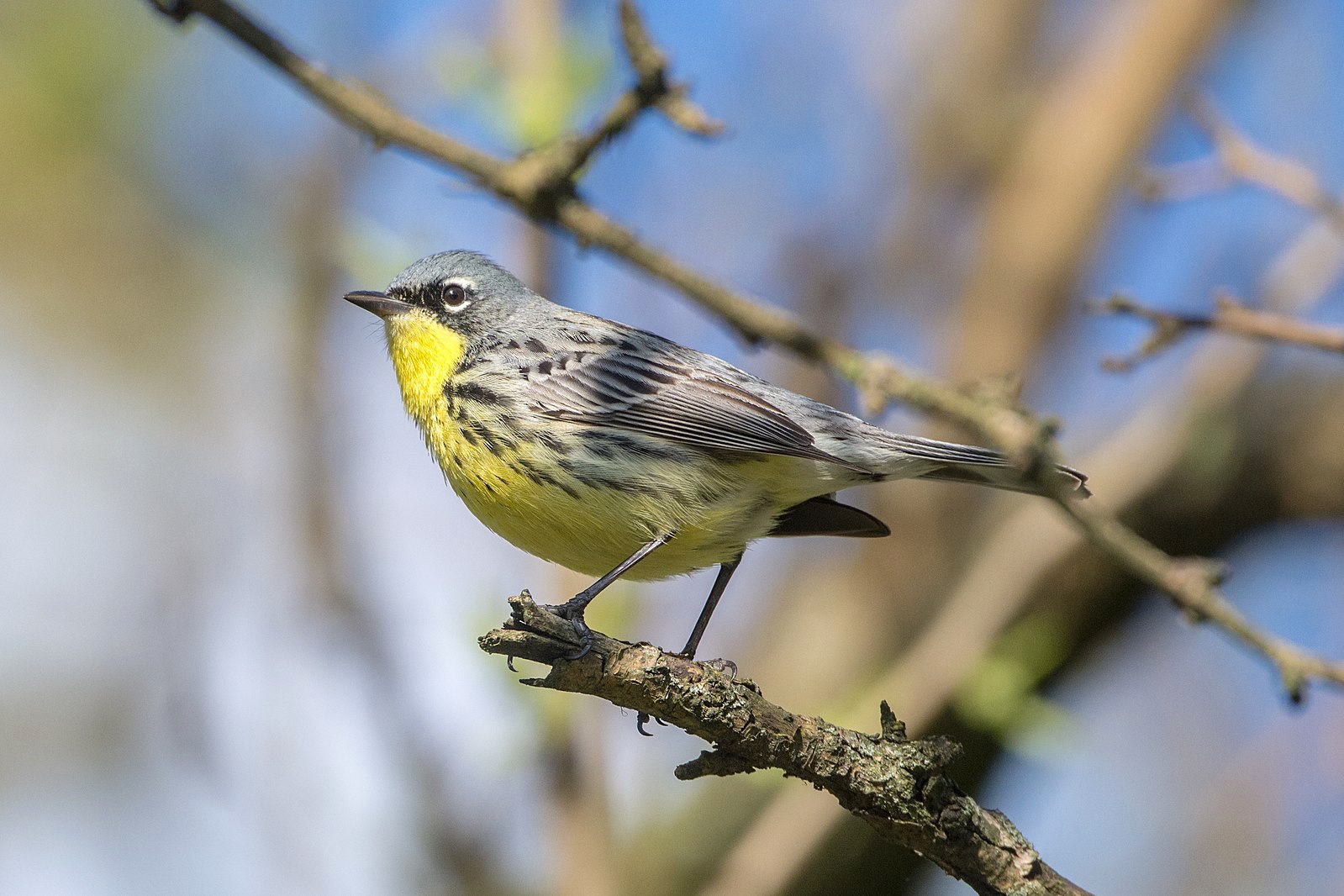
In the breeding grounds in very limited areas of Michigan and Ohio, the KIWAs are carefully monitored. Vince Cavalieri is a bird expert in those parts, and his bird below was photographed in the heartland of their preferred summer habitat. Vince wrote the following caption:
In 1987 the Kirtland’s Warbler was a hair’s breadth from extinction. A century of fire suppression and encroachment into their habitat by the brown-headed cowbird had reduced its already small population to a tiny number of birds in just a few Michigan counties. A prescribed fire that got out of control may have saved them, creating enough habitat that it gave conservationists enough time to figure out how to save them (highly prescriptive habitat creation and cowbird control). Today their comeback has been so successful that they have been proposed for removal from the endangered species list. They still remain the stuff of birding legend. A tiny range mostly restricted to north central Michigan, a big beautiful warbler with a loud and cheerful song, easy to see and confiding once found. A bird worthy of long travel to check off your list.
Here are a couple more ‘summer birds’ to admire
Credits: Woody Bracey (1, 2); Sally Chisholm (3); Vince Cavalieri (4); Joel Trick FWSH (5); Andrew C (Wiki) (6); Birdorable (cartoon); BPS and eBay (KIWA stamps)
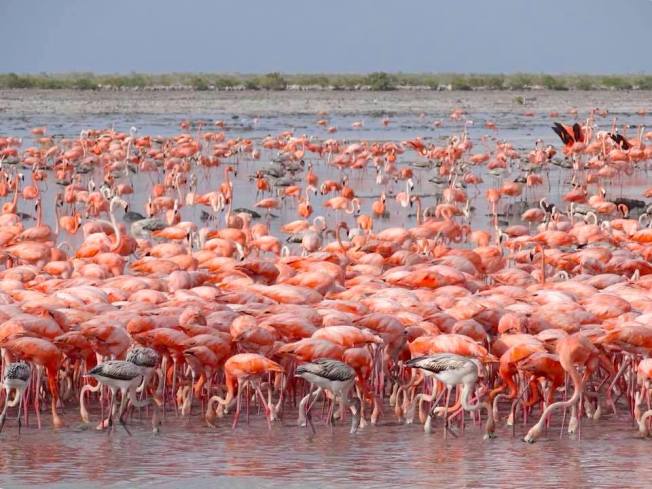
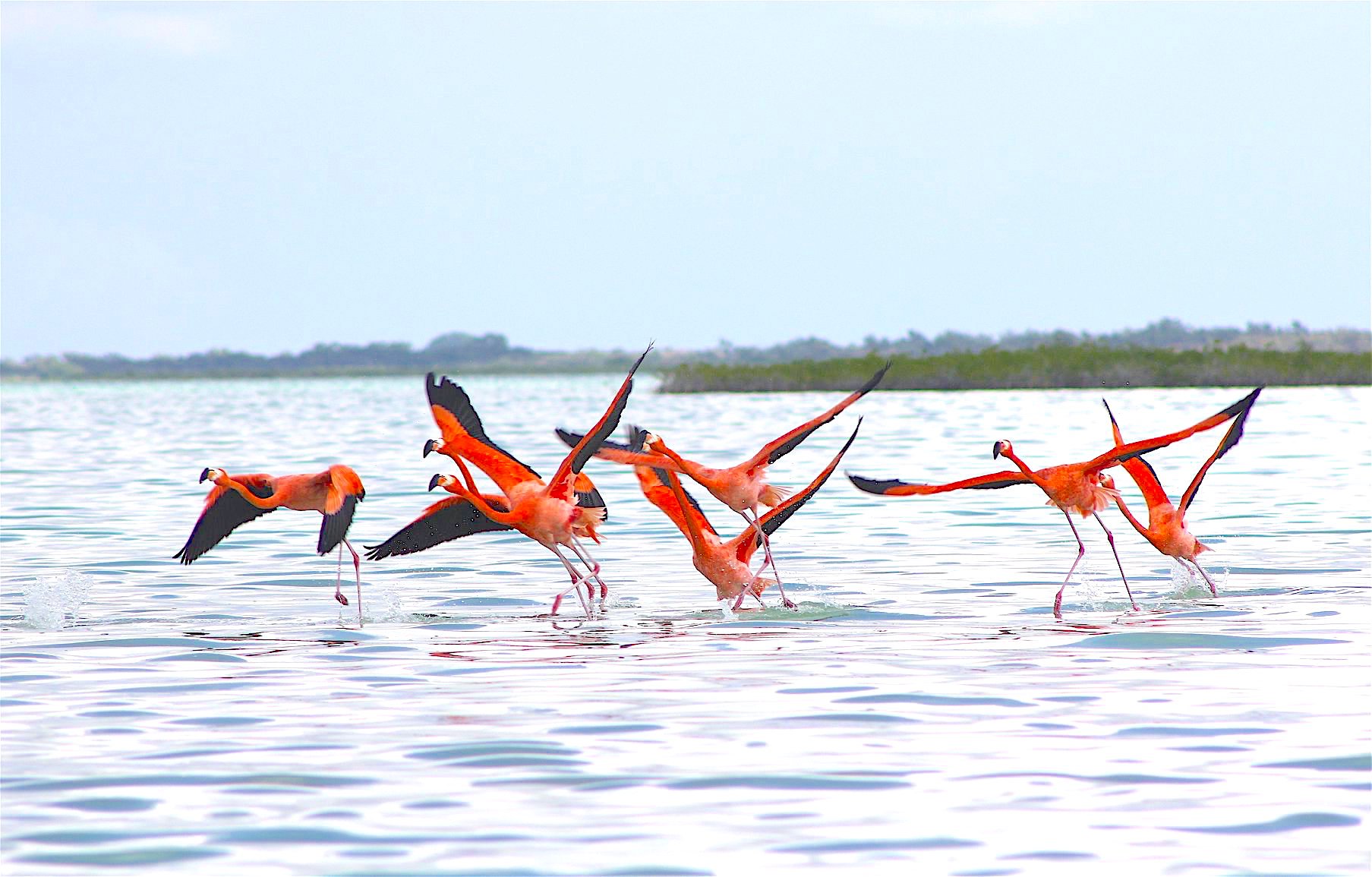
It is an ill-concealed secret that I don’t have an artistic bone in my body – I get acute angst if asked to draw a stickman. As I was looking through photos of large pink flamingo groups, I suddenly realised that I was getting some sort of abstract vision of them. Whoooh! Art-talk. Anyway, I wondered how a legion of flamingos might look in B&W. Add a bit of highlight and… does it work at all? Whether yes or no, this may be the only B&W photo of flamingos since the invention of colour film. Why would you? [Impatient reader: ‘Why did you?]
All great photos courtesy of Melissa Maura (1, 2, 3, 9, 10); Mary Kay Beach (4, 5, 6, 7, 8); Michael Vaughn (11), with many thanks for use permission; Cartoon, Birdorable
Turkey Vultures Cathartes aura [TUVUs, to use their Alpha Bird Code for brevity]are a familiar sight flying over Abaco, wheeling effortlessly overhead on thermals or gliding with the wind in singles, pairs, or flocks. Statistically, 83% of all photographs of turkey vultures are taken from below and look like this:
A very good cameraman with a very good camera and very good luck might catch this
Of in-flight shots, 57% are taken in unhelpful light or conditions, and look like the image below (mea maxima culpa). On a positive note, this picture shows the extreme delicacy of the wing-tip feathering (starboard wing, anyway) that enables these birds to adjust their direction and speed with minimal effort.
TUVUs have a wide range in the Americas and the Caribbean, and will prosper in almost any type of habitat. This is mainly because these large birds are almost exclusively carrion feeders, and carrion is everywhere. They spend their days scavenging, or thinking about scavenging, or recalling successful locations to re-scavenge. They do not generally kill live creatures.
The word ‘vulture’ derives from the latin word ‘vulturus‘ meaning ‘ripper’, ‘shredder’, or in more recent times, ‘very loud Metallica song*‘. TUVUs have very good eyesight, and an acute sense of smell that enables them to detect from a considerable distance the scent of decay and consequent release of the chemical ethyl mercaptan. The smell is variously described as ‘persistent penetrating decayed cabbage’ or a ‘pungent malodorous skunk-like odour’. A breeding pair will raise two chicks, which revoltingly are fed by the regurgitation of all the rank and foul… excuse me a moment while I… I feel a little bit… ~~~~~~~~~~~ …alright, fine again now.
When they are not flying, feeding, breeding or nourishing their young, TUVUs like best to perch on a vantage point – a utility post is ideal. But unusually for a bird, you won’t ever hear them sing or call. They lack aSYRINX(the avian equivalent of a larynx), and their vocalisation is confined to grunting or hissing sounds. Here’s a single hiss (at 10 / 15 secs).
These vultures are often seen in a spread-winged stance, which has several functions that include drying the wings, warming the body, and baking bacteria. Possibly it also reduces the miasma of rotting meat that may surround them after a good meal.
Equally happy to spread their wings on a debris-strewn shoreline
10 SCAVENGED TURKEY VULTURE FACTS FOR YOU TO PICK OVER
One local name for a TUVU is ‘John Crow’
An adult has a wingspan of up to 6 feet
Sexes are identical in appearance, although the female is slightly larger
The eye has a single row of eyelashes on the upper lid and two on the lower lid
TUVUs live about 20 years. One named Nero had a confirmed age of 37
LEUCISTIC (pale, often mistakenly called “albino”) variants are sometimes seen
The TUVU is gregarious and roosts in large community groups
The TUVU has few natural predators
Though elegant in flight, they are ungainly on the ground and in take-off
The nostrils are not divided by a septum, but are perforated – from the side one can see through the beak [some humans also suffer from this condition. They tend to ‘sniff’ a lot]
REVOLTING CORNER / DEPT OF ‘WAY TOO MUCH INFORMATION’
SQUEAMISH? THEN LOOK AWAY NOW
UNATTRACTIVE HABITS The Turkey Vulture“often defecates on its own legs, using the evaporation of the water in the feces and/or urine to cool itself, a process known asUROHIDROSIS.This cools the blood vessels in the unfeathered tarsi and feet, and causes white uric acid to streak the legs”. The droppings produced by Turkey Vultures can harm or kill trees and other vegetation. Maybe don’t park your nice car under one of their perching posts…
HORRIBLE DEFENCES The main form of defence is“regurgitating semi-digested meat, a foul-smelling substance which deters most creatures intent on raiding a vulture nest. It will also sting if the predator is close enough to get the vomit in its face or eyes. In some cases, the vulture must rid its crop of a heavy, undigested meal in order to take flight to flee from a potential predator”
DIETARY NOTES TUVUs tend to prefer recently dead creatures, avoiding carcasses that have reached the point of putrefaction. They will occasionally resort to vegetable matter – plants and fruit (you could view this as their side-salad). They rarely, if ever, kill prey – vehicles do this for them, and you’ll often see them on roadsides feeding on roadkill. They also hang around water, feeding on dead fish or fish stranded in shallow water.
ECO-USES If you did not have birds like this, your world would be a great deal smellier and less pleasant place, with higher chance of diseases from polluted water and bacterial spread. TUVUs kept the highways clear and work their way round the town dumps recycling noisome items.
FORAGING TUVUs forage by smell, which is uncommon in birds. They fly low to the ground to pick up the scent of ethyl mercaptan, a gas produced by the beginnings of decay in dead animals. Their olfactory lobe in the brain is particularly large compared to that of other animals.
SEX TIPS Courtship rituals of the Turkey Vulture involve several individuals gathering in a circle, where they perform hopping movements around the perimeter of the circle with wings partially spread. In humans, similar occasions are called ‘Dances’. A pair will fly, with the female closely following the male while they flap & dive… then they land somewhere private and we draw the veil…
My favourite graphic of all time
Credits: Nina Henry (1); Bruce Hallett (2); Keith Salvesen (3, 4, 5, 11); Clare Latimer (4, 6); amy-at-poweredbybirds (7); Wiki, small pics 8, 9); Charlie Skinner (10); Craig Nash (12); Xeno-Canto / Alvaric (sound file); Info, magpie pickings; Birdorable (cartoon); RH (Keep Calm…); depressingnature.com (puking TUVU)
*As Metallica so appropriately wrote and sweatily sang (luckily there’s no verse referencing urination, defecation and puking). ALERT don’t actually play the video – the song hasn’t aged well! In fact… it’s terrible. Woe woe indeed…
The vultures come See the vultures come for me Fly around the sun But now too late for me Just sit and stare Wait ’til I hit the ground Little vultures tear Little vultures tear at flesh
Warts and all… the gorgeous, hygienic, roadkill-ridding vulture, with a few dirty habits
BUNTING(S) FOR AN ABACO CHRISTMAS: AN OLD TRADITION
BUNTING /ˈbʌntɪŋ/ (Noun)
[A Christmas gift of a puntastic avian / festive double-meaning]
A small New World songbird of the cardinal subfamily
Flags and other colourful festive decorations
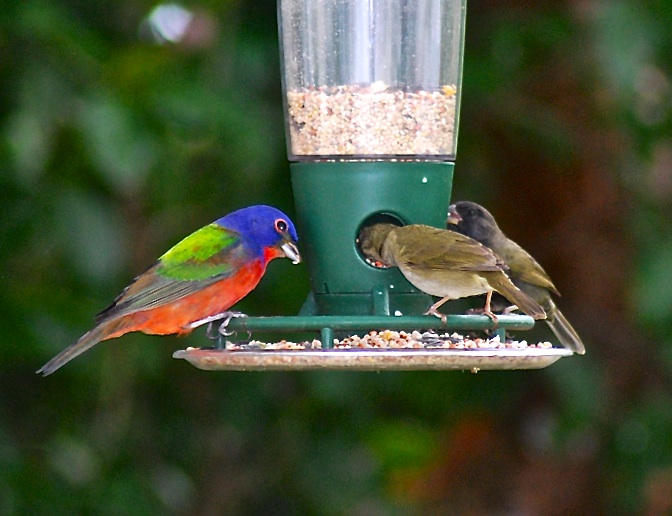
PAINTED BUNTING
One of the Winterval traditions at Rolling Harbour HQ – that haven of unreliable natural science powered by lazy insouciance and characterised by a regrettably unserious approach – is to break the rule that (mostly) forbids reposting old material without good reason (which there occasionally is). This means marking the imminence of Christmas with bunting. And indeed buntings, those lovely birds beautifully painted by nature. Nothing says ‘Happy Christmas’ better than a flock of PABU!
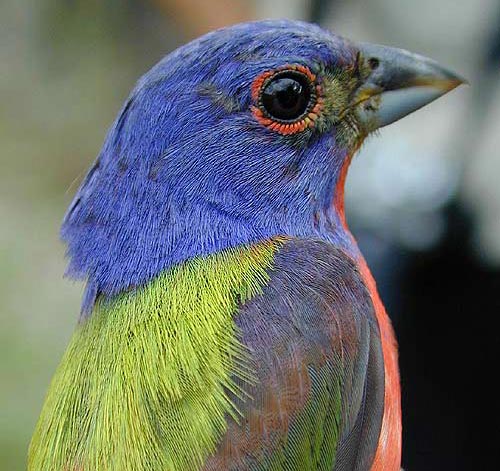
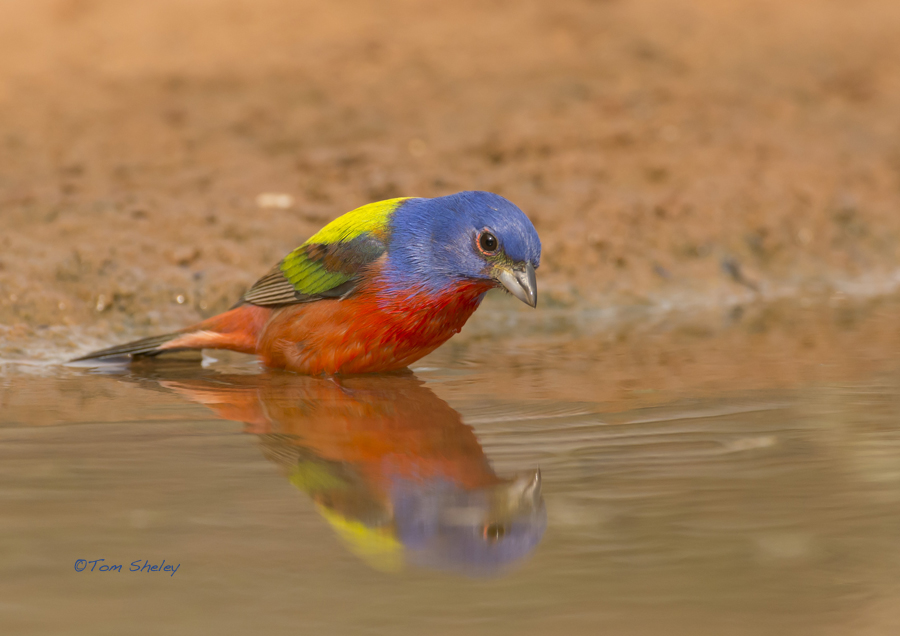
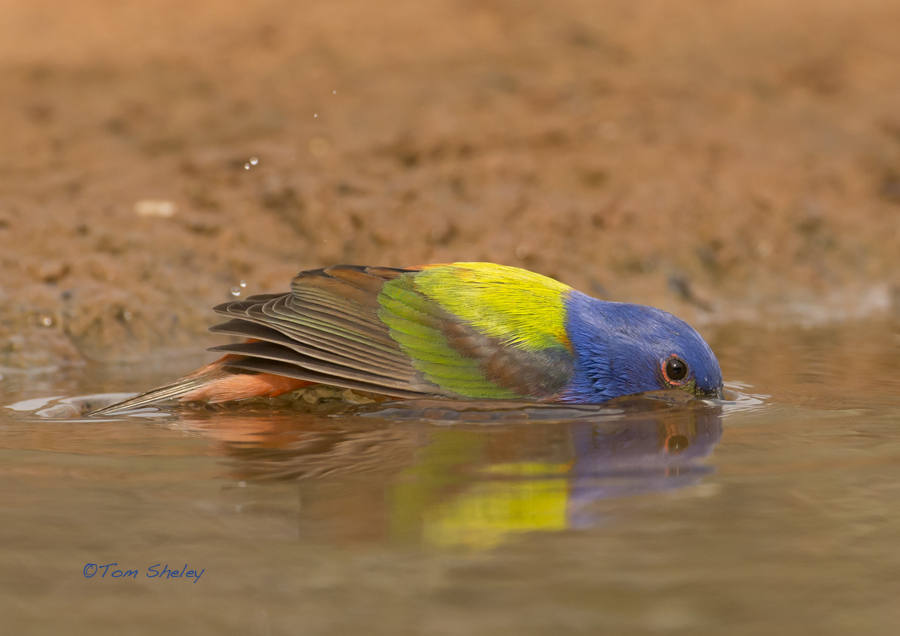
It’s hard to imagine a more Christmassy little bird than the Painted Bunting. Bright blue, red, green primary colours straight from a child’s paintbox make for a spectacular bird to grace the festive season. These are migratory winter residents, and the first reports of the bright and beautiful males on Abaco started to appear in late October. Some will stay around until March.
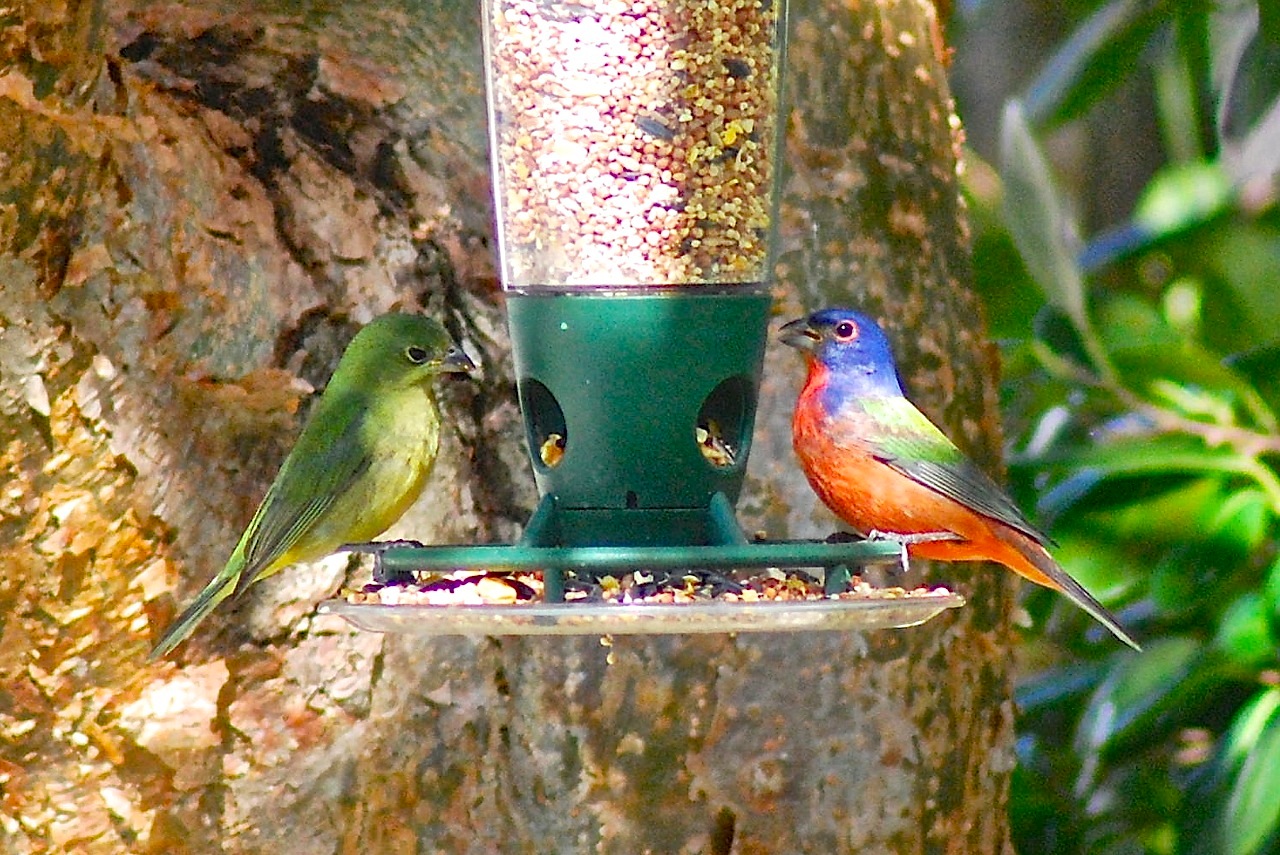
A female & a male PABU feeding together, and a male with a pair of black-faced grassquits
The two wonderful photos below are by Tom Sheley, a major photographic contributor to THE BIRDS OF ABACO. They were actually taken in Texas, but I include them because of Tom’s strong connection with the birdlife of Abaco; and also because they are fantastic shots…
This is my opportunity to wish a very Happy Christmas or [insert preferred seasonal appellation] to everyone who visits Rolling Harbour and especially those who, having done so, return for more! There could of course be anything from 600,000+ individuals who called in once, were put-off and never came back… to one sadly crazed person who has been pressing the ‘read’ button 600,000+ times over the last few years. If the former, thanks for trying, sorry to disappoint. If the latter, keep up the good work, buddy.
Credits: Tom Sheley (1, 7, 8), Erik Gauger (2), Tara Lavallee (3, 4), Keith Salvesen (5); Sandy Walker (6); Birdorable Cartoons
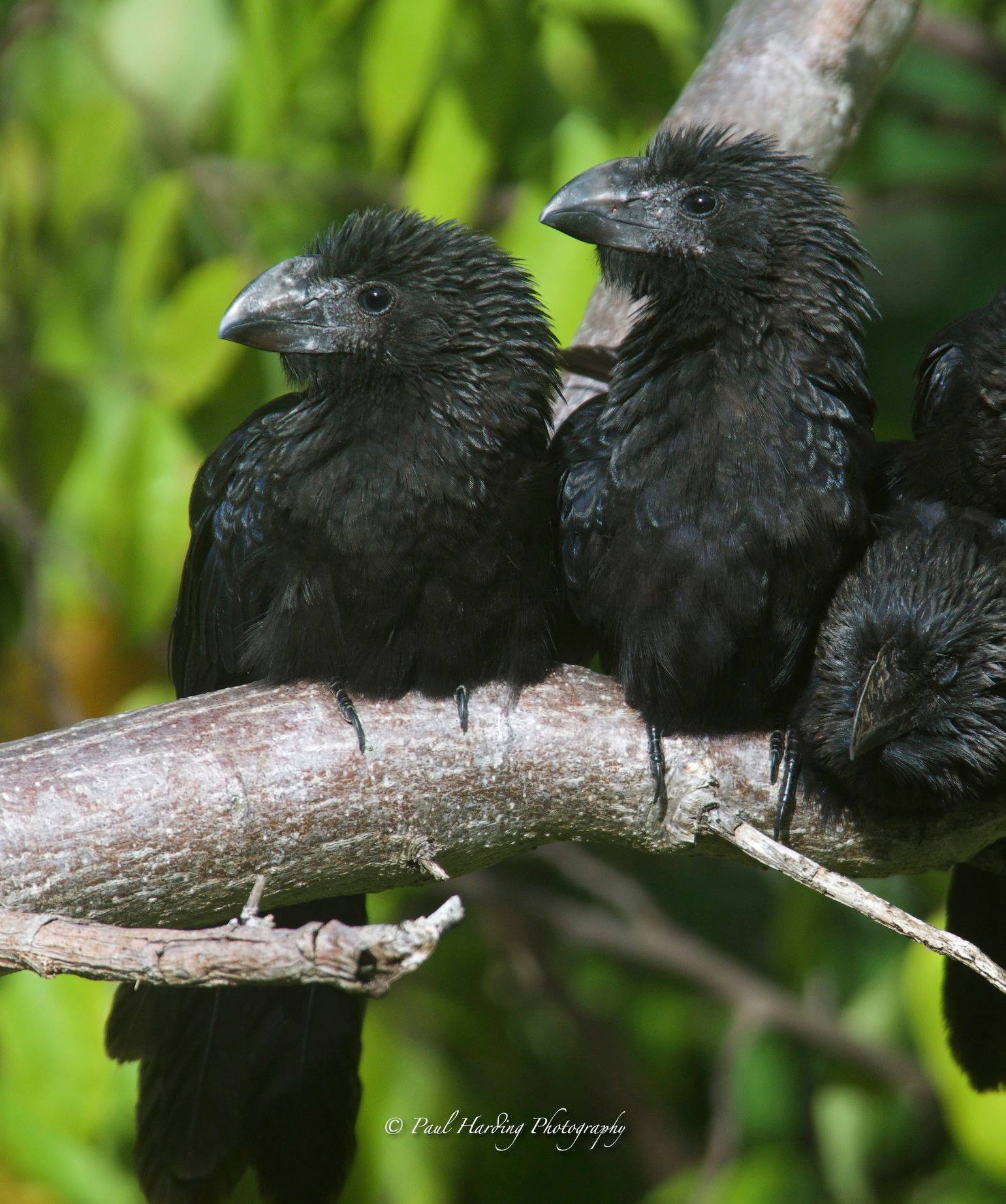
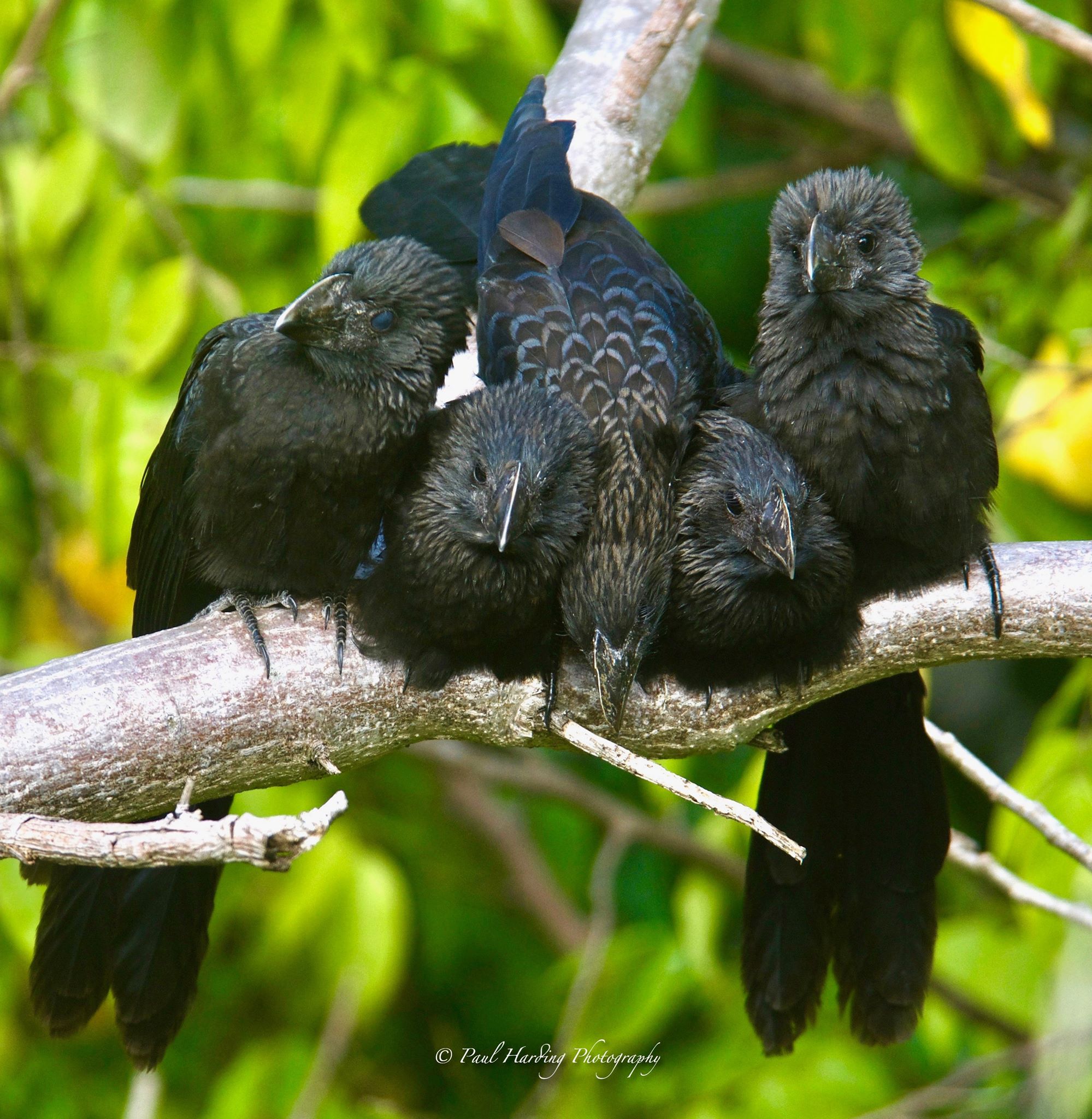
The Smooth-billed Ani (Crotophaga ani) – aka Cemetery Bird – is the third member of the cuckoo family found on Abaco, the others being the MANGROVE CUCKOOand theYELLOW-BILLED CUCKOO. You can (it’s voluntary) find out more about them in an earlier articleHERE.
I have returned to these engagingly gregarious birds and their raucous ways because Paul Harding has recently captured a sequence of a small group of anis behaving so endearingly that they are irresistible. Not for them the oddly incompetent fluttering flight, nor the disorganised, unbalanced landing technique. It’s simply a matter of getting settled on a branch, and then making room for one more in the middle (or perhaps resisting it…).
‘A COMMOTION OF ANIS’
There were 4 on the branch…
Hey – make room for another one…
Budge up, guys, I mean C’mon…
Yay, I’m in… a bit squished but…
Um… guys, I can’t breathe…
That’s better… all settled now….
Let the racket begin!
Credits: all terrific pics, Paul Harding; sound files, Xeno Canto
KIRTLAND’S WARBLERS ON ABACO: A FIRST FOR THE CAYS
I last wrote in April about the rare Kirtland’s warbler Setophaga kirtlandii that, in very small isolated numbers, overwinters on Abaco. You can get to the article HERE. You’ll find plenty of information, a range map, notes about the eponymous Mr Kirtland, and lots of good photos (none mine except the joke one – I messed up my one chance out of 4 birds encountered in the National Park). So I won’t go over the ground again…
I’m returning to this near-threatened species now because there has been a very exciting development for Abaco for the KIWA. Towards the end of last month, 2 birds were found over a couple of days at a location on Green Turtle Cay. Having now checked all reported sightings for Abaco since time immemorial (or at least from when eBird began), I believe that this may be the first time a Kirtland’s warbler has been reported on any of the cays. Certainly when we were researching The Birds of Abaco, we found no evidence of KIWA reports from the cays. Sightings are anyway few and far between (not even annual), and mostly on a ‘right place right time a hunch and a large slice of luck’ basis.
The first sighting of the season, on Ocotober 27, was (surprisingly) at Sandy Point, when Woody Bracey took a party of 3 birding for the day. Most KIWA sightings are in south Abaco, with selected areas of the huge National Forest being much the most likely places. There were in fact 2 birds seen – here’s a photograph of one of them. Sandy Point was an unexpected location, but they were on the mainland and in the south – a great ‘get’ by any standards, but not unique for the area.
AN EXCITING SIGHTING
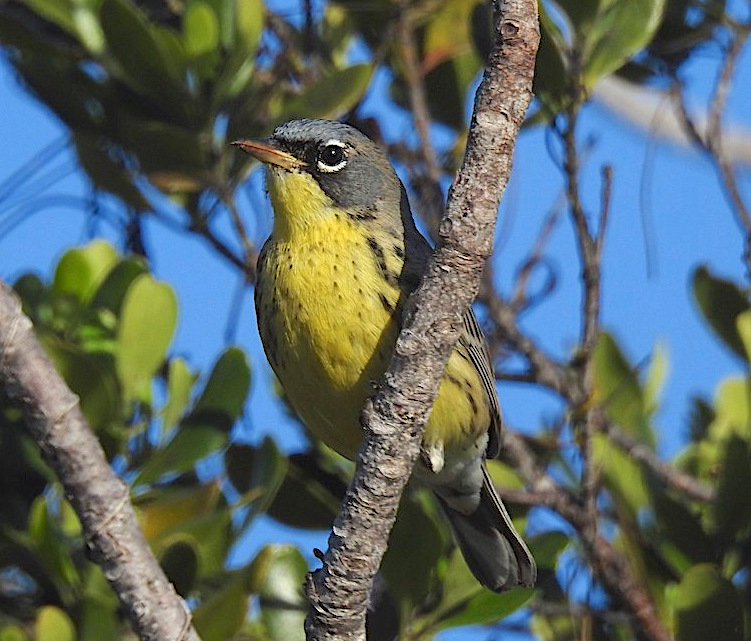
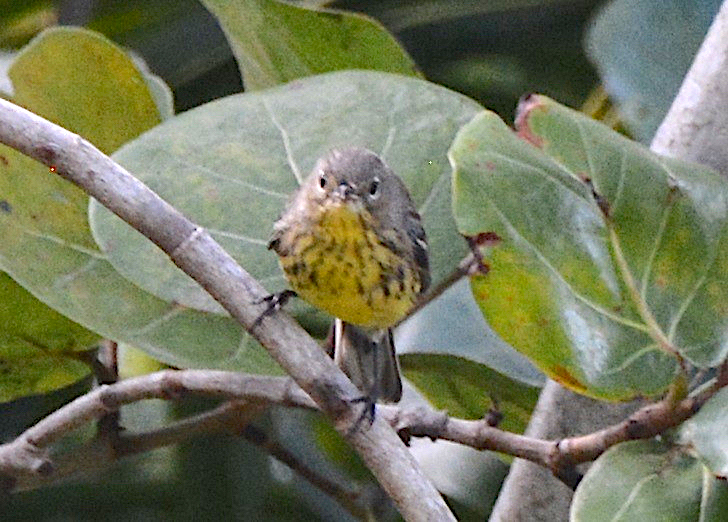
On November 22 at 08.30, Sally Chisholm was birdwatching on GTC when she suddenly came across an unmistakeable KIWA, seeing it closely and clearly: “gray back with dark striping, gray head with white broken eye ring, pale yellow breast with small dark spots”. It was pumping its tail (‘tail-wagging’ J. Bond) characteristically, and eating the berries from a palm tree (see header image). Sally heard its repeated “chip” call, typical of the KIWA. Furthermore, a second bird was returning the call, though she could not see it.
KIWA CHIP CALL Paul Driver / Xeno Canto
Two days later, in the early morning on November 24, Sally returned to the same location and saw a single bird, clearly one (or perhaps the other) of the two birds already seen / heard. She got a fine clear shot this time, too.
I’m not by any stretch of the imagination a Kirtland’s expert (not even a bird expert, if I’m honest). The photos seem to me to show a young bird (compared with ones I have seen) and I wonder if they are juvenile adults (as it were) on their first migration from the jack pines of Michigan. Comments on this remark invited and welcomed… No matter: the great thing is that, whatever the age of the bird, photo #1 is, as far as I can tell, the first visual confirmation of a KIWA sighting on an Abaco cay. It’s a privilege to be able to give it a wider audience.
WHAT ARE THE MAIN THREATS TO THE SPECIES?
Mankind is the primary threat. The breeding areas are particularly vulnerable from deforestation and clearance of the jack pines that are essential for successful nesting and breeding – and therefore the survival of the species
Encroachment of development is another threat, as with so many species
There is a further threat of nest parasitism by brown-headed cowbirds, to which KIWAs are especially vulnerable
In the winter grounds where the habitat is mostly remote or in protected areas, there is rather less of a problem from these factors – for now at least
Overall, habitat degradation at one end of the migration – in particular the breeding grounds – poses a serious risk; at both ends, extinction could loom again. Check out the very limited range of the KIWA and you’ll see the point at once
Credits: Sally Chisholm (1, 2, 4, 5) with special thanks for use permission for her terrific photos; Rodger Neilson (3); Paul Driver / Xeno Canto, sound file; Birdorable, cartoon; Usual (range map); BPS (stamp)
It is axiomatic that people tend towards birding – if at all – in later life. Not the scientists, of course: they must commit themselves to the study of natural history at an early age, collecting qualifications by degrees (as it were), through Masters, Field Work, their first posts, PhDs and beyond.
American Redstart (m)
I didn’t take a very active interest in birds until the first time I investigated Central Park NYC and saw a blue jay. Followed by a cardinal… a red-tailed hawk… chickadees… American robins (or ‘Mercan rubbins‘, as I was informed). These were alien species for a European, and they awoke my interest.
Brown Pelican
On later trips to NYC I have always spent a day in CP, wandering from end to end, spending time in the hotspots like The Ramble, the JO Reservoir, and the pretty Loch trail to the north, and wondering at the huge and expensive birding hardware toted by those around me (while knowing I didn’t want it). And then a visit to Prospect Park Brooklyn too, if I have the time. More recently came Abaco, and a whole new world of wildlife that has captivated me…
Hermit Thrush
This reminiscence by an oldster brings me to Chris Johnson, a young Bahamian man who will be familiar to many readers of this blog. I first encountered him when I was researching the Bahama Oriole and discovered that he, in his early teens, had found one on a trip to Andros and photographed it. It was a pleasure to be able to include the image in my article.
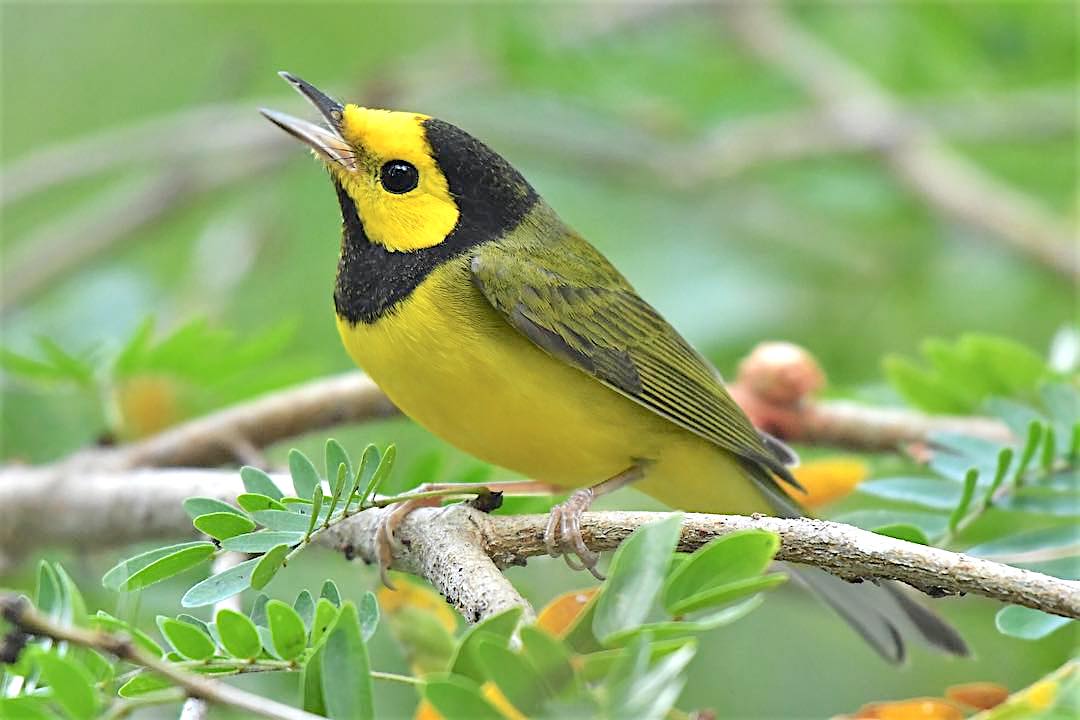
Hooded Warbler
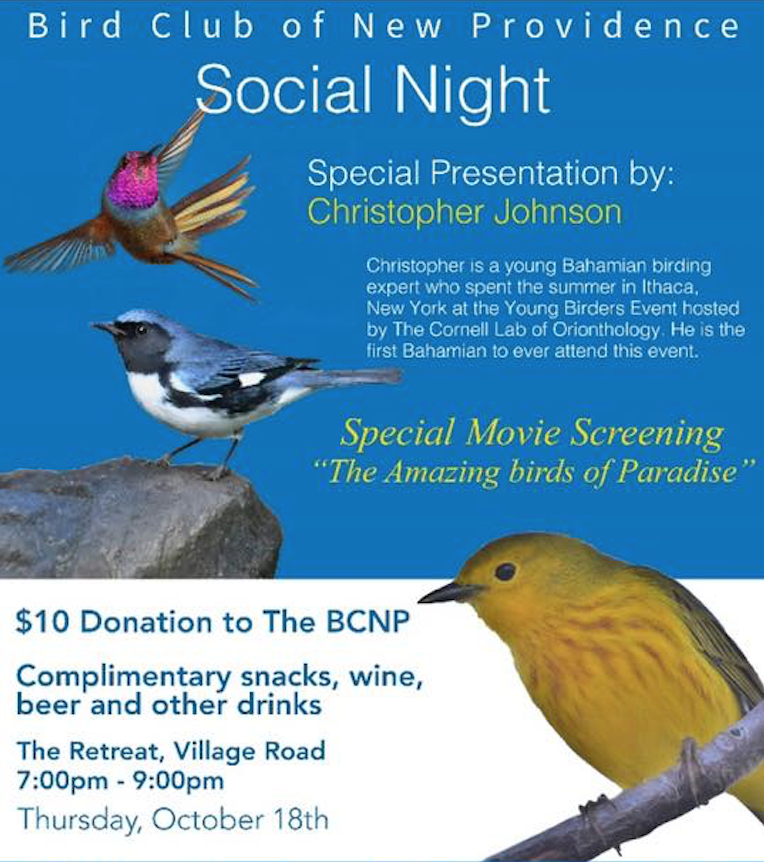
Since then, Chris’s birding and photographic skills have rapidly developed and his reputation is growing too. This summer he was one of 12 students chosen to attend Cornell University Lab of Ornithology for their Young Birder’s Event in Ithaca NY, a great tribute to his accomplishments and a wonderful opportunity too. It is worth noting that Chris is the first Bahamian to be invited to attend this event.
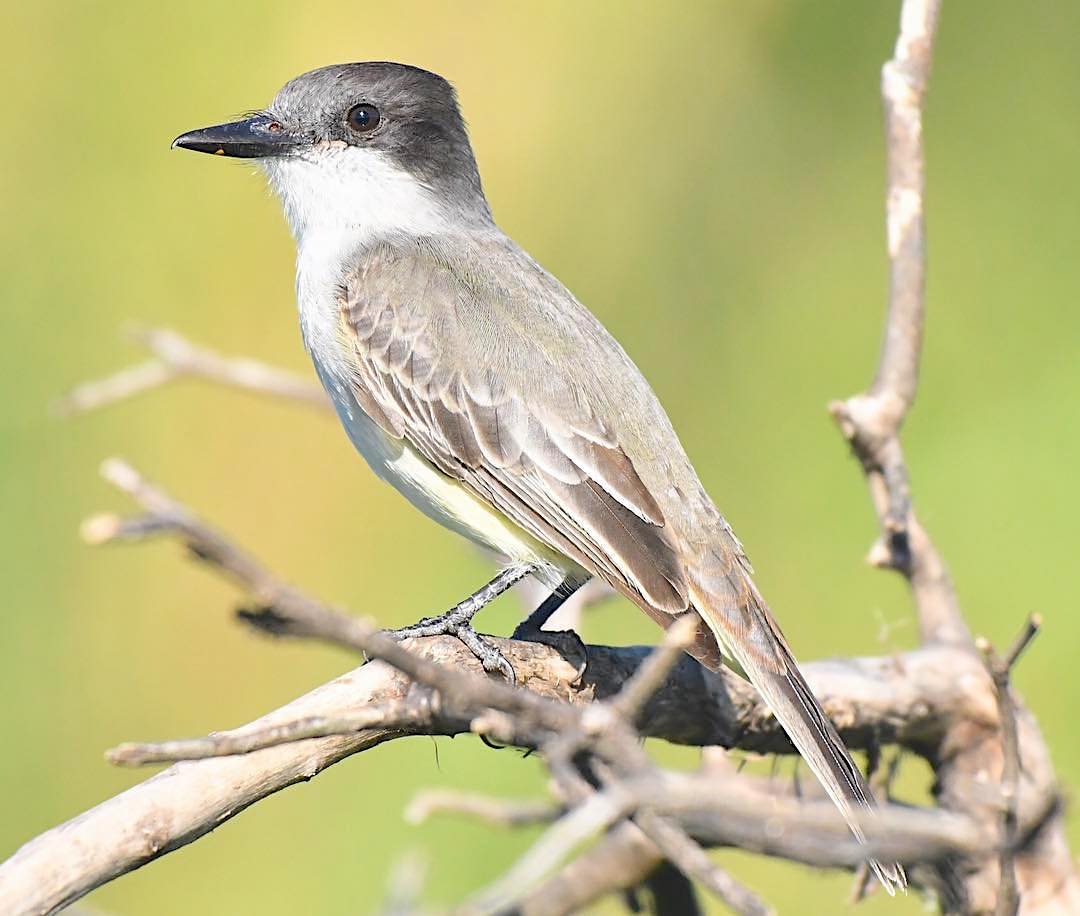
Loggerhead Kingbird
Chris is also beginning to make his own presentations, as he did recently to the Bird Club of New Providence. It won’t be long before he is leading bird groups – in fact, he is probably doing this already.
Another impressive feature of Chris’s birding is his photography. I have watched the progression online with interest. The crispness of his images, the composition and the right ‘take’ to make the best of each bird is wonderful, and he has a great eye for a neat shot – for example in the header image I have chosen, with its awareness of the effective use of dark and light.
Black-and-white Warbler
I should say that I have never met Chris, although we have occasionally been in touch. I am featuring him because I believe he and other young people of his age – Chris is 17 – are the future for birding, for wildlife, for species protection and for habitat conservation. The older generation will move on and the ‘middles’ may begin to take an interest in the birds around them. But Chris’s generation are the ones who can make a difference in the future. As things stand right now, they may have to. It’s a huge responsibility for them, but it’s one our generation is in the process of transferring to them.
Red-legged Thrush
I hope you have enjoyed the small gallery of Chris’s photographs displayed here. If you are interested in the birds of the Bahamas, keep an eye on him and others like him. They need all the encouragement we can give them.
All photos: Chris Johnson, with thanks for use permission. Please do not ‘borrow’ any of these images without asking first. That would only be fair.
ABACO BALD EAGLE(S): AN EYRIE COINCIDENCE (GEDDIT?)
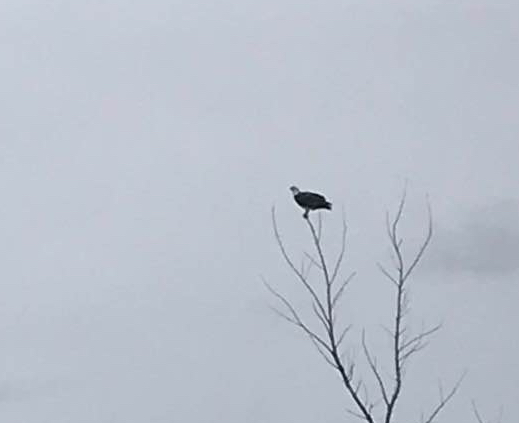
I absolutely knew this would happen. In a sense, I rather wanted it to happen. And now it has, and I have got my comeuppance. Bigly. Hugely. No sooner had I pressed ‘send‘ on my post 2 days ago bemoaning the absence of bald eagles in 2018 than corrections began to come in.
Harsh Judgemental Reader: “Do you mean you were wrong?”
Contrite Writer: “Yes.”
HJR: “Did you check eBird before you fired off your intemperate post?”
CW (in a small apologetic voice): “No.”
HJR: Well then, what have you got to say for yourself?”
CW (*hangs head*): I’m very sorry, everyone. I’ll try to do better this time. Here goes:”
THE ABACO BALD EAGLE(S) OF 2018: IN NO WAY AWOL!
SIGHTING ONE
On October 25th legendary Bahamas birder Elwood Bracey and a party of 4 were looking out over the Marls from Sunset Ridge when they saw 4 birds flying high. Two were unmistakably turkey vultures; one was a magnificent frigatebird (ie totally non-eagle-ish); and the fourth was much larger, looking like a juvenile bald eagle. Any remaining doubts were dispelled when it dropped into a steep dive and smashed into the water, catching a fish in its talons, much like an osprey. There’s no room for confusion here: Woody has vast experience on Abaco and beyond – and besides, he had a powerful spotting scope and 4 birding witnesses. The ID is, as they say, solid. And it was posted on eBird. Which I should have checked. But didn’t. As Julia Roberts (qua Vivian Ward) actually did say, “Big Mistake. Huge!“
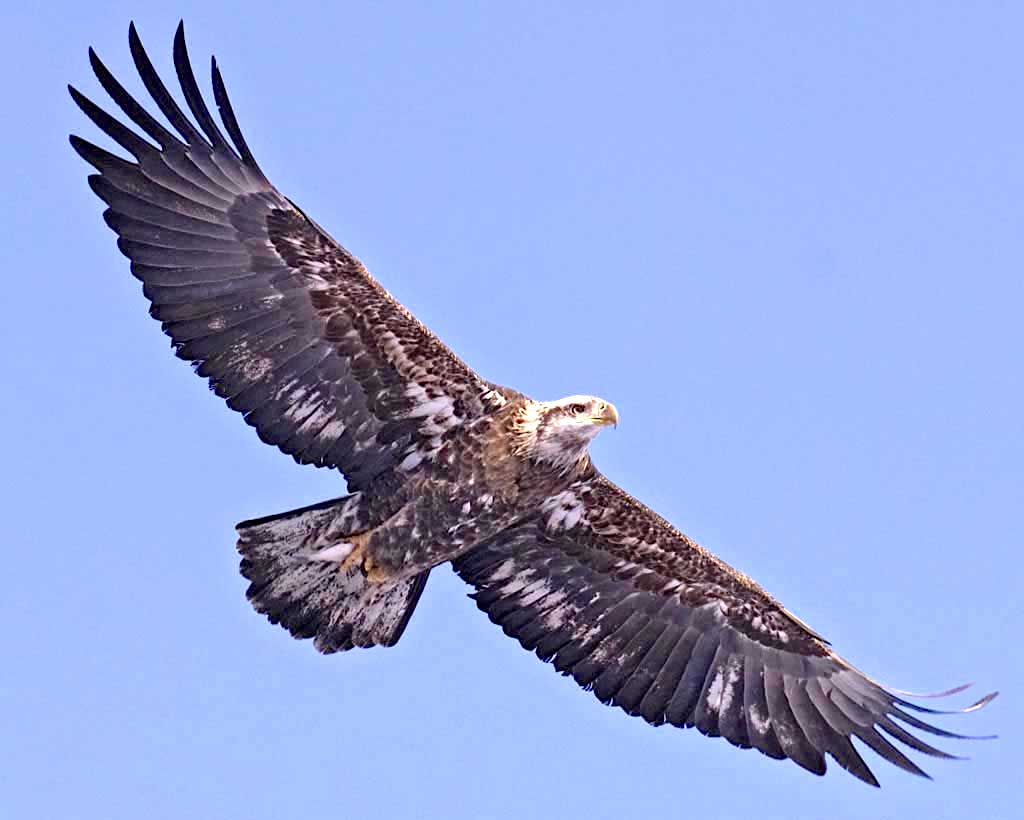
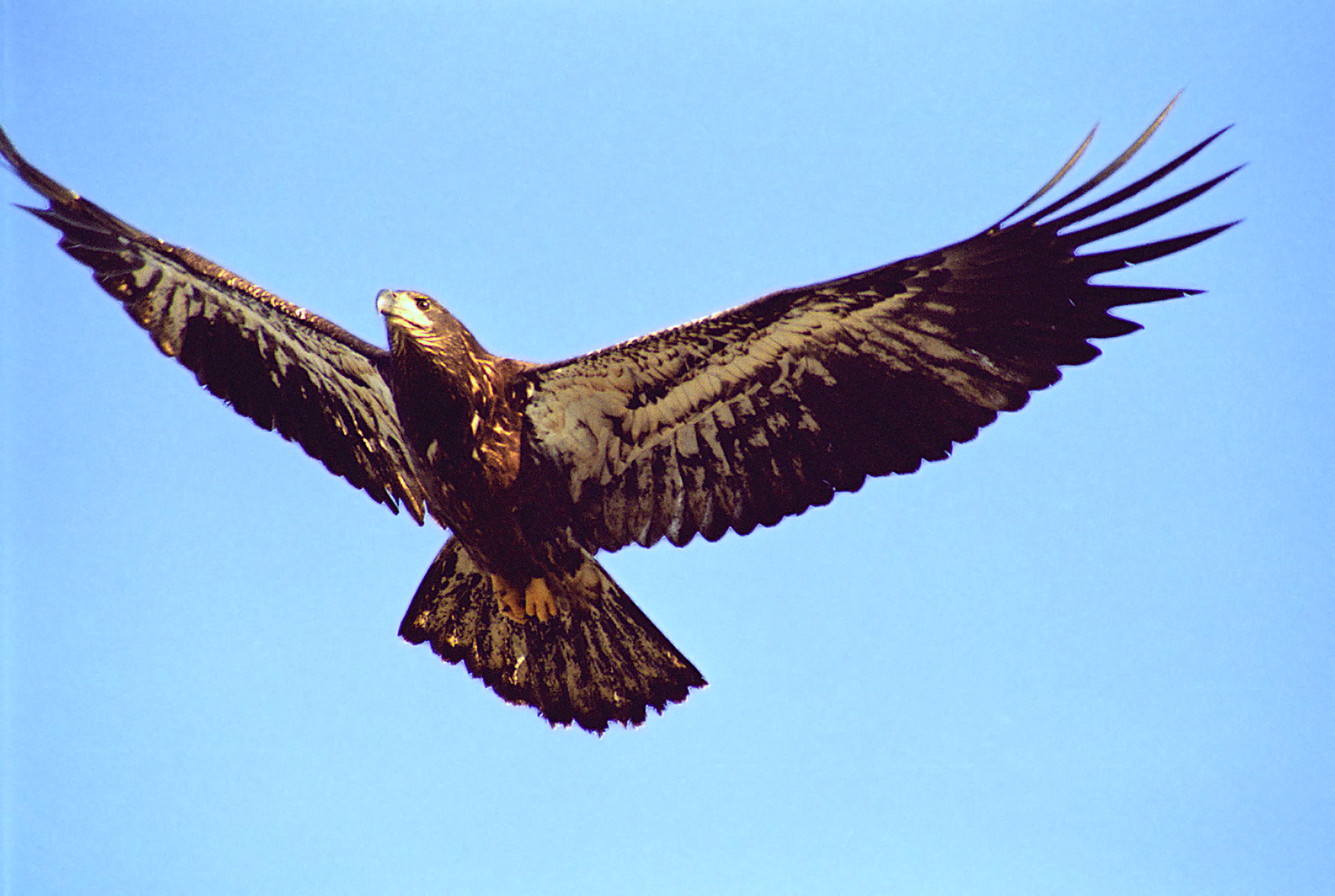
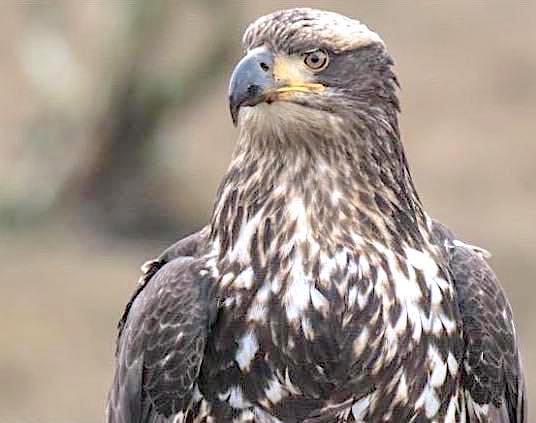
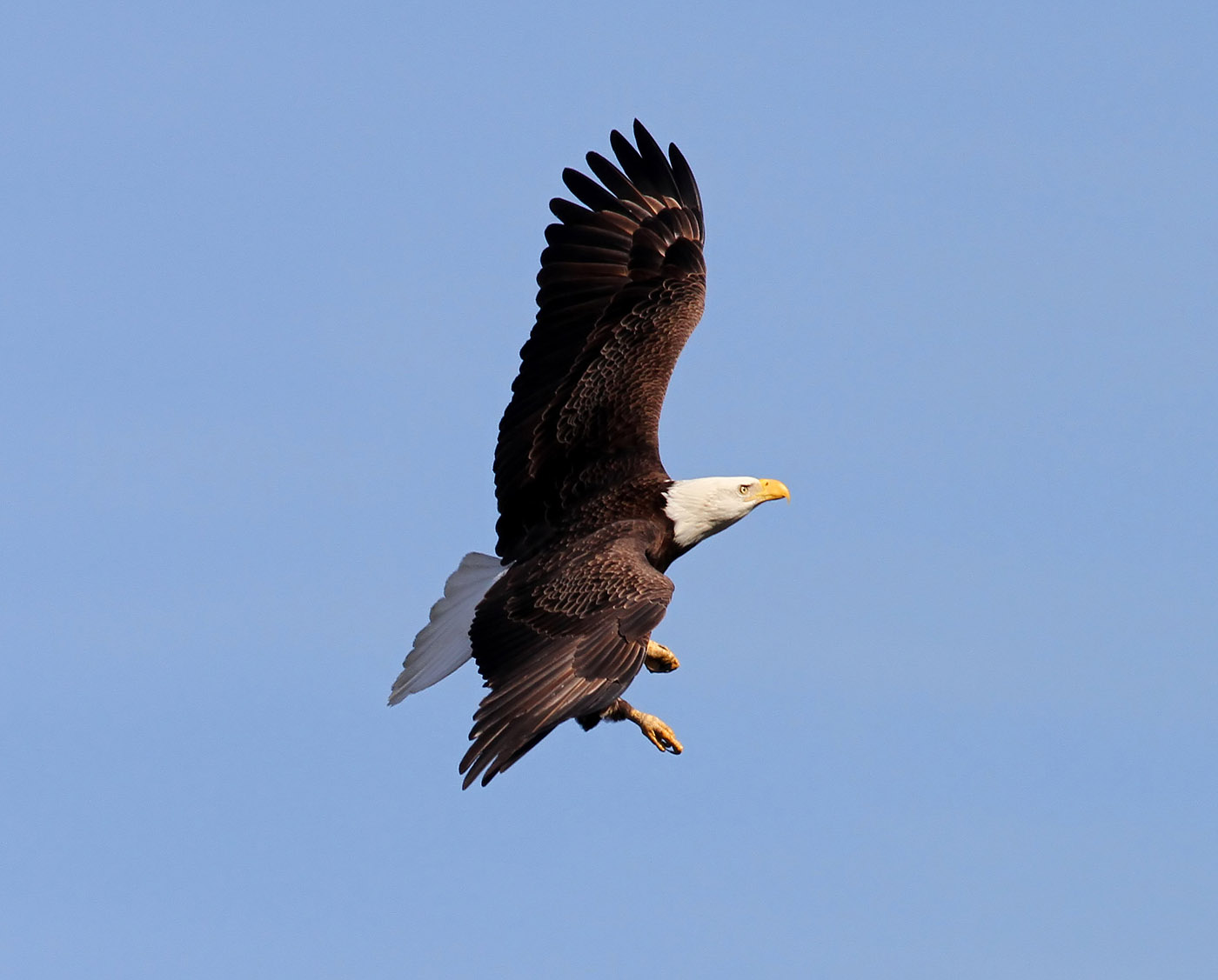
The problem here – you are ahead of me, aren’t you – is that a juvenile bald eagle does not resemble an adult. Rather than the familiar and symbolic look, they are dark brown with white flecks and mottling that changes as they grow older. A juvenile won’t even begin to look like a bald-headed adult until it is around 4 years old. Here are two comparisons of the confusing ages and stages.
SIGHTING 2
Within the last couple of weeks, a resident of Man-o-War Cay saw a huge brown bird – not an osprey, turkey vulture or red-tailed hawk – hunting chickens in the area. He told his family and identified the bird from looking at a photo of a juvenile bald eagle. I received this report – the first in time – from Charmaine Albury. Her brother was the sharp-eyed spotter. Had that been the only report, in the absence of a photo I might have had at least some doubt. Then Woody’s report arrived, a definite juvenile bald eagle only 3 weeks before, over the Marls. From there, with its spectacular eyesight it could practically have seen the individual chickens on Man-o-War. So it’s a good fit for ID.
WHAT’S THE CONCLUSION?
I’d say that right now on Abaco we have a single juvenile bald eagle. It’s a vagrant, away from its usual hunting ground but unchallenged in the skies where it has ended up. There has been the usual autumn extreme weather (though Abaco has dodged the worst of it) to throw a young bird of course in the last couple of months. So, rather late in the day, we really do have an Abaco Bald Eagle for 2018.
A juvenile bald eagle – not at all like its parents to look at
Credits: Woody and Char for the sighting reports; header image (1), Audubon; (2) wiki; (3) Allaboutbirds.com; comparative drawing, Birdwatchers’ Digest; (4) FB, source unknown (and a credit or take-down as you wish if it’s yours); cute cartoon, the most excellent Birdorable
It is a year since I last wrote about the Abaco Bald Eagle(s) of 2017. The bracketed ‘s’ signifies the absence of firm evidence that there was just the one. Equally, there was no indication that there were ever two. All reported sightings were of a single bird, seen at a distance. The likelihood is that it was a lone visitor. The bald eagle is classified as a very rare vagrant on Abaco, and I gathered together as many reports since 2000 as I could find (see below). Not many, in summary, and never two.
Last year, a bald eagle was sighted around to coast of Abaco over a period of several months. There were 8 sightings in all, and I had hoped that the bird might stay around for 2018. Sadly, not so. The photos featured here come from a sequence by photographer Phil Lanoue. They were not taken on Abaco of course, so don’t be confused. But they illustrate the magnificence of this iconic bird as it prepares for its landing in a pine tree. We do have wonderful ospreys of course, but the occasional eagle makes for a rare treat.
As I said last year, the 2017 sightings were most likely all of the same lone bird that had somehow strayed over to Abaco and found the available prey good, and the location congenial. As undisputed king of the skies, its daily hunting range was a wide one which would explain the varied sighting locations. I ended: “I’m sticking with this theory unless and until 2 eagles are seen together”.
BALD EAGLE SIGHTINGS REPORTED ON ABACO SINCE c1950 (= ‘ever’)
Here is the list of sightings. They start in 2000, because there are no known reports for Abaco prior to that from when they started to be kept in the 1950s. If anyone has others, I’d be pleased to hear from you.
2000 December, location unknown – info from Woody Bracey
2001 December – Chicken Farm area – Betsy Bracey
2002 December – over Marls opposite Treasure Cay – Woody Bracey
2004 Autumn – south of Lynard Cay (after hurricane) – Cheryl Noice
2014 Date unknown – circling the power plant – LC
===================================
2017 March – Big Pine Point, Marls – James Cheesewright
2017 Early May – Power plant area – LC
2017 May – Marls – Danny Sawyer
2017 May – Lubbers / Tahiti Beach area – ‘Kelly’s mom’
2017 September – Cross Harbour – Carol Rivard Roberts (with photo)
2017 November – Cherokee Road – Howard Pitts
2017 November – Bahama Palm Shores / 8-mile beach – Steve Roessler
2017 November – Tilloo Bank – Laurie Schreiner (with photo)
Italics = report in comments on Danny Sawyer’s FB page; Blue = added reports to me
The first-ever bald eagle photo on Abaco Sept 2017
Carol Rivard Roberts
The last bald eagle photo on Abaco Nov 2017
Laurie Schreiner
Credits: all brilliant ‘eagle landing’ photos, Phil Lanoue with many thanks for use permission; Abaco eagles by Carol Rivard Roberts and Laurie Schreiner; amusing cartoon, Birdorable; thanks to all spotters and reporters.
Royal terns Thalasseus maximus seem to have a great liking – quite rightly – for the charms of Cherokee, Abaco. Of the 12 tern species recorded for Abaco, ROTEs are the only permanent residents. Most of the others are summer visitors; a couple are winter visitors; and the rest pass through as migrating ‘transients’, stopping to rest and refuel on their long journeys. So ROTEs are undoubtedly the most commonly found terns on Abaco, and some might say the finest. And Cherokee Long Dock is one place to find them.
The historicLONG DOCKat Cherokee stretches far out into the sea to accommodate the varying tide levels of the area – click the link for more information and photos. It is a memorable feature for visitors, and much loved by locals. Also by the royal terns.
The dock provides an ideal safe platform for ROTEs to congregate and hang out. They have a perfect view of the small fishes that make up their diet as they swim in the clear turquoise waters a few feet below. Watching these birds diving off the dock after a fish is nearly as entertaining as watching brown pelicans dive off the jetty at Sandy Point.
There are buoys in the bay as well, and individual birds will fly from the dock to perch on a buoy and check out the fishing round it, before returning to the dock – hopefully with a fish in its beak. And the juveniles, with their endearing beginner ‘hair’styles (see #3) can learn the ropes from their elders and betters.
People often stroll the length of the dock, or pause on it to pass the time of day and watch the optimistic bonefishers casting hopefully at their silver prizes. These fish are often easier to see from the dock than from wading level – people sometimes shout helpful encouragement: “There… going left…look!… 20 feet in front of you… no, THERE…” and so on. The terns take little notice of all this. A group of people, especially with a dog, might persuade the birds to take flight, but they return as soon as they can; or simple move along the dock and settle in a different place.
The plaque for the long dock shows its importance to the community
The dock is so long that it tapers to a vanishing point on the horizon
KNOW YOUR TERNS (WITH THE ADMIRABLE BIRDORABLE)
Abaco has these species plus three more
Credits: Keith Salvesen Photography; BIRDORABLE, with thanks for their wit and amazingly effective highlighting of the essential distinguishing features of bird species
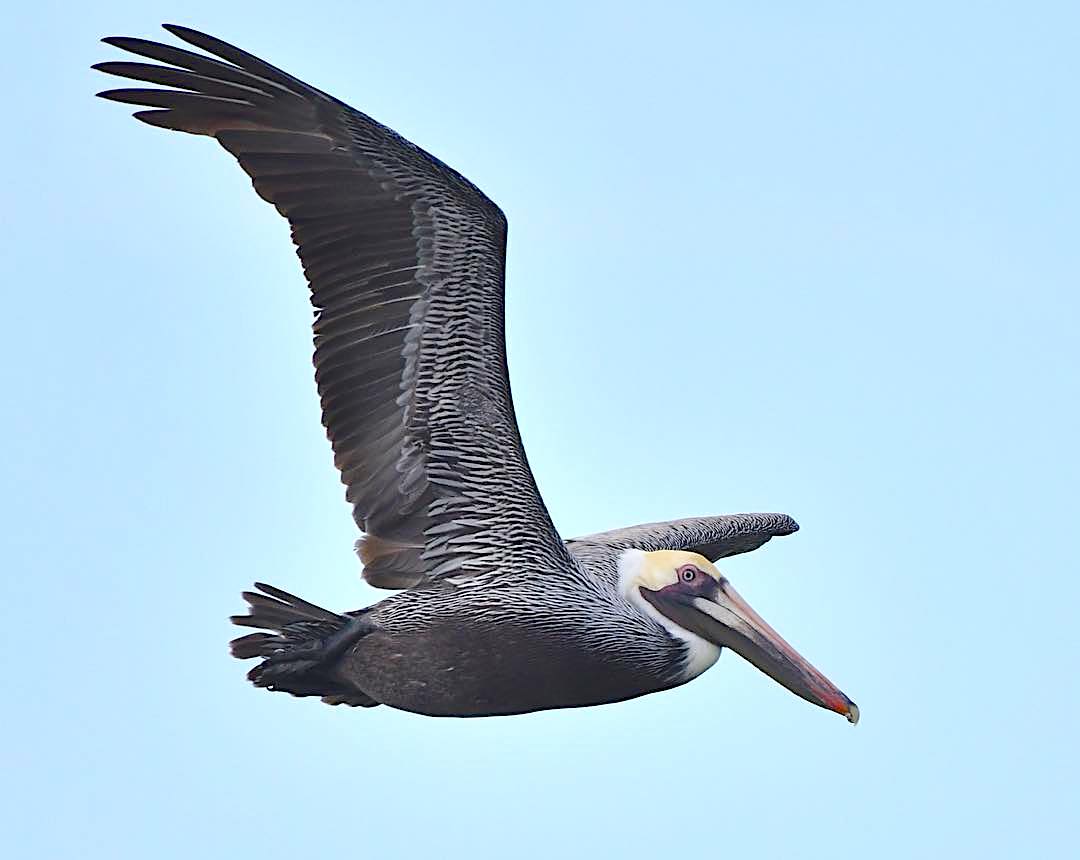
Brown Pelicans are permanent breeding residents on Abaco, and not uncommon in certain areas though not be any means throughout the island and the cays. If you come across a pair of them – or preferably a group – it’s well worth spending some time watching them in action. These are magnificent birds, unafraid of humans and happy to carry on fishing / plunge diving with an audience.
The most reliable place I know of to watch the pelicans on Abaco is Sandy Point. You may find them on the dock, drying their wings on the pilings or diving off it for fish. At other times, they will be further out to sea where the sandbars stretch out into the ocean, taking off and gaining height before smashing straight down into the water.
These wonderful images of pelicans taking off and landing are the work of professional photographer Phil Lanoue, whose work I am always excited to feature. He has the skills, the equipment and the eye to produce outstanding photographs, freezing birds in motion with complete clarity.
If anyone reading this knows of other locations on Abaco where pelicans can reliably be found, I’d be very pleased to hear more!
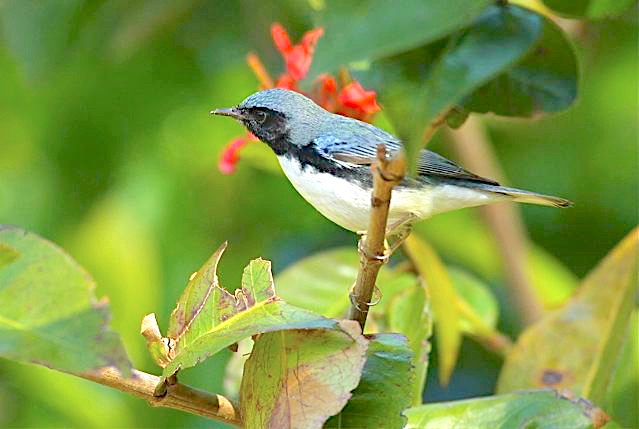
It’s warbler time of year on Abaco, and a good time to take a look at the Black-throated blue warbler Setophaga caerulescens. This small warbler has very particular breeding and overwintering ranges. In the summer they are found in the forests and woods of eastern North America. As the Fall approaches, they start to migrate south to the Caribbean and Central America. Abaco is one of their winter homes, as well as a likely transit stop on their way further south. Right now sightings are being reported on the mainland and the Cays.
WHAT DO I LOOK OUT FOR?
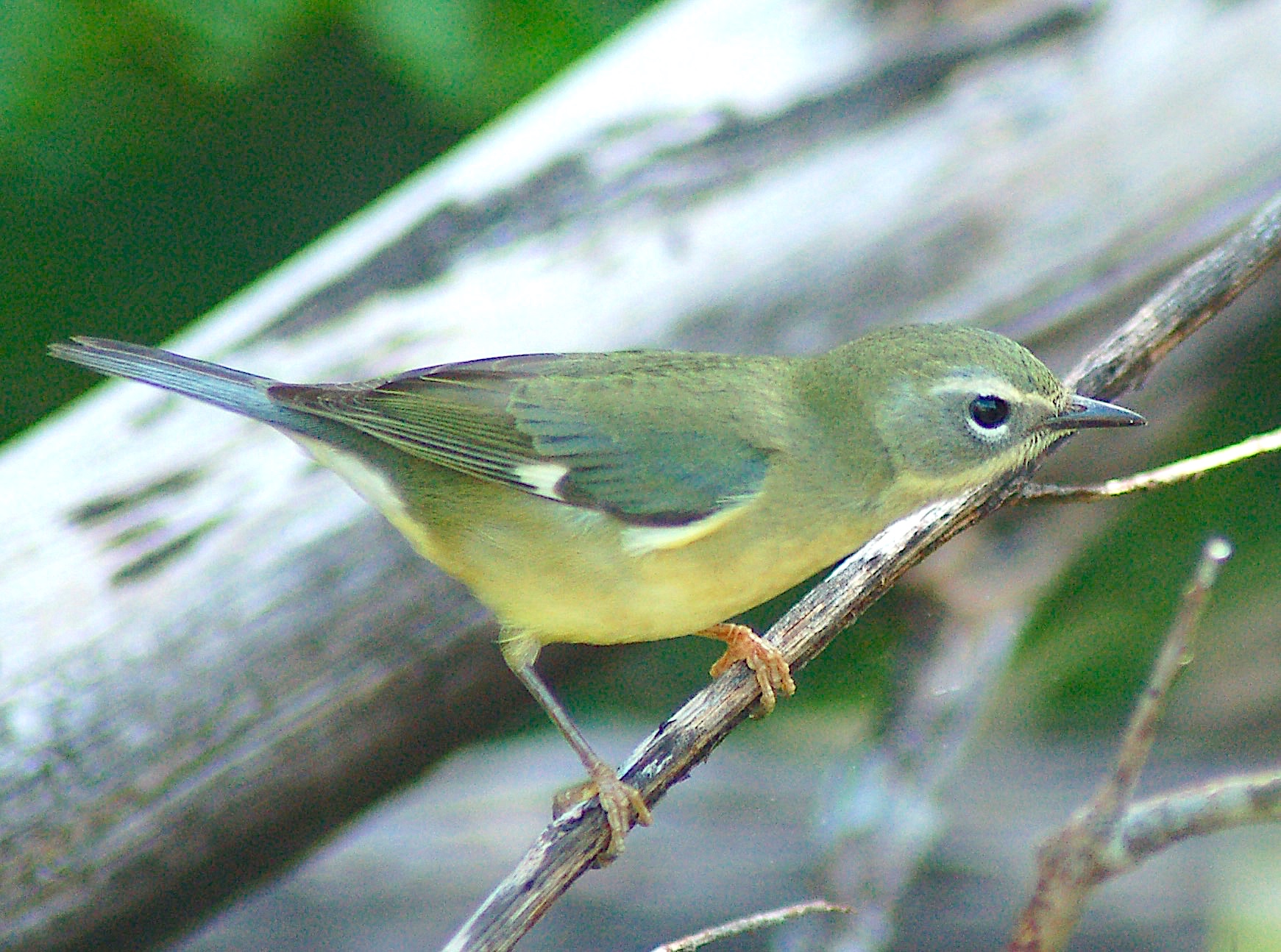
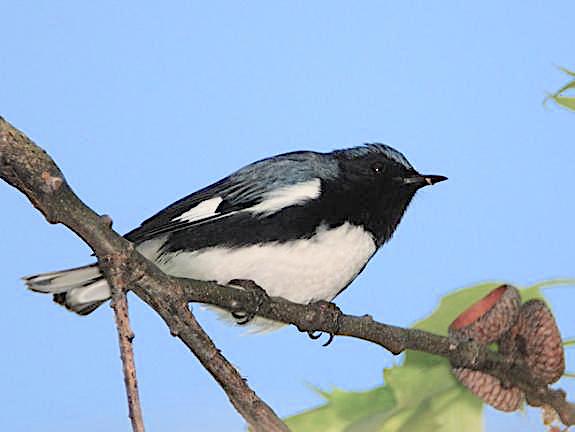
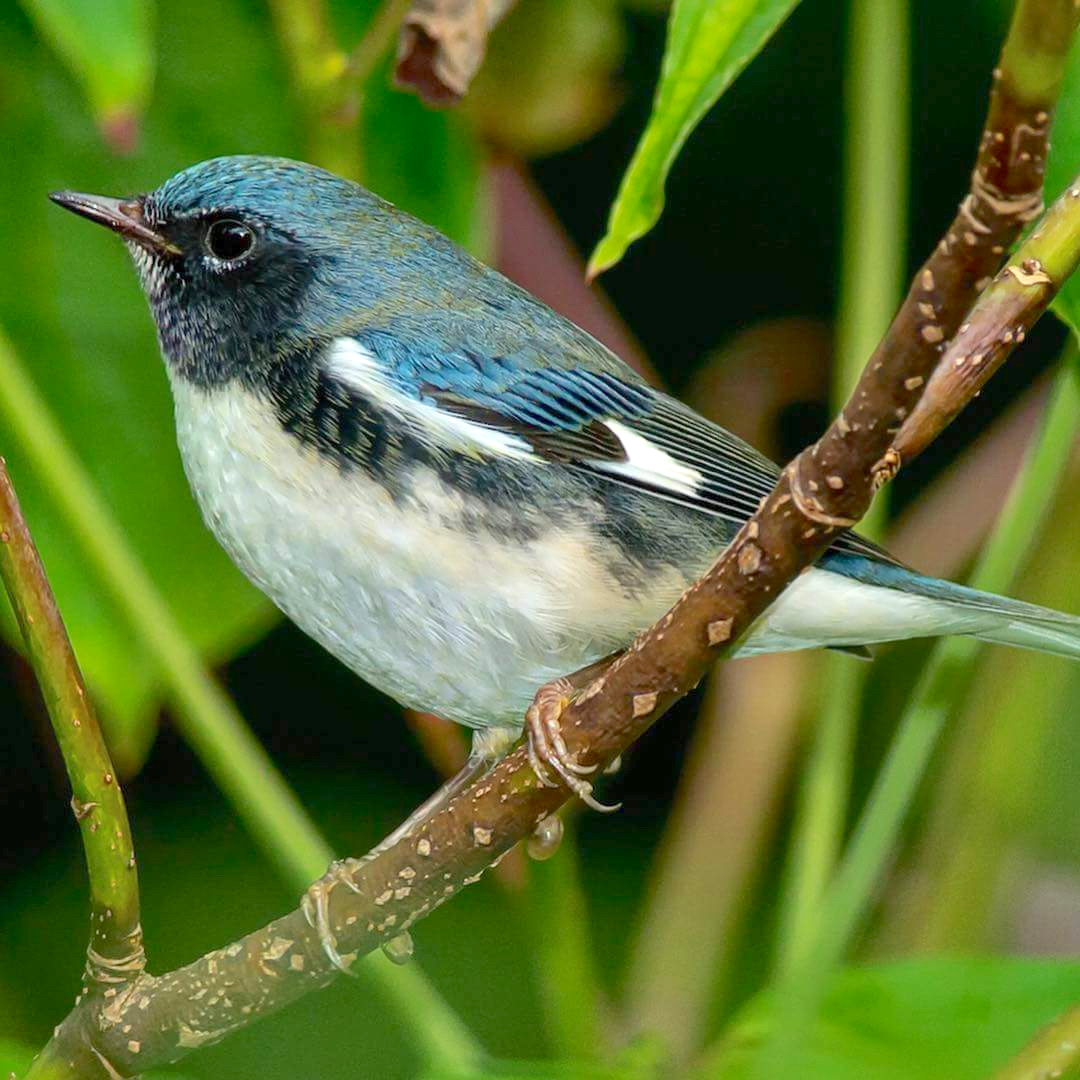
Males and females are quite different in appearance (‘sexually dimorphic’), and could even be mistaken for distinct species. Males are a deep slate-blue above (hence caerulescens) with a striking black face and throat, and white underparts. They are unmistakeable, and unlikely to be confused with any other warbler. Females are basically grayish-olive above and pale yellow underneath. For ID, look for a white stripe above the eye, a pale arc below it. In addition, both sexes have a diagnostic white patch on the the wing, that I have seen referred to as a ‘handkerchief‘.**
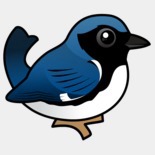
The legendary bird cartoon website Birdorable, featured often in these pages, as usual has a spot-on comparison of the sexes. TBH, this is a great resource for nailing a bird’s essential characteristics. You should check out its warblers in particular! Here’s their inimitably charming take on the BTBW gender comparison.
These pretty warblers can be seen in gardens, coppice, and woodland. Although mainly insect-eaters, sometimes catching them in flight, they also eat fruit and seeds especially in winter. BTBWs are territorial, and will defend their chosen space against all-comers, including their own species.
WHAT DO I LISTEN OUT FOR?
As I have mentioned before, I tend to find phonetic transcriptions of bird sounds rather baffling – and often not really how I hear them myself. This is especially with the ‘Oh-dear-oh-dear-I’ve-run-out-of-beer’ and ‘Have-a-little-Kalik-at-Pete’s’ kind. One source asserts:“The bird’s song can be described as a buzzed zee-zee-zeeee with an upward inflection. Its call is a flat ctuk”. You be the judge…
SONG Etienne Leroy / Xeno-Canto
CALL Paul Marvin / Xeno-Canto
BTBW SEX LIFE – ANY GOOD GOSS?
Black-throated blue warblers are – and I say this with considerable reservations – mainly a monogamous species. However it turns out that they have complex patterns of vocalisations and behaviours at breeding time, including very promising-sounding ‘extra-pair copulation’ involving ‘heterospecific cuckoldry’. However, despite all my efforts in researching this phenomenon more thoroughly, merely reading the intricacies quickly crossed my boredom threshold, and my own ‘call’ soon became a ‘sonoroussaw-like Zzzzzzzzzzzzzzz‘. Anyway these birds don’t breed on Abaco so I’ll spare you the details and move on.
IS MANKIND MASHING UP THEIR HABITAT?
BTBWs are fairly common birds within their range, with a large population. The usual stuff is happening with them in terms of habitat destruction & co at both ends of their migration. For some already threatened species (e.g. Kirtland’s Warblers), habitat degradation at either end of the migration (let alone both) presages a downward spiral in population. With BTBWs, I have read both that the population is decreasing; and in another source, slightly increasing. For now, let’s regard the welfare of the species as being stable. However, the current causes of species decline will doubtless continue, and many regard increasingly evident climate change as being a determining factor for the well-being of migratory species. The birds are not yet out of the woods, so to speak… and maybe never will be.
**anyone remember those?
CREDITSPhotos: Gerlinde Taurer (1, 2); Becky Marvil (3); Bruce Hallett (4); Blaine Rothauser / CWFNJ (5); @daxroman / Birds Caribbean (7); Paul Reeves / Birds Caribbean (8). Range Map, Wiki; Cartoons, Birdorable; Video, Cornell Lab for Ornithology
Melissa Maura is well-known to many in the Bahamas, not least because of the wonderful work she does with injured or orphaned creatures. Thanks to the skills and compassion of Melissa and those who work with her, animals and birds of all kinds are saved from death or incapacitating injury. In the saddest cases, they are gently cared for until the inevitable occurs.
Melissa also takes terrific bird photographs, some of which I have featured in the past. Indeed my blog headline photograph is one of her parrots. I used to change the header from time to time, but this one is so cheerful that I decided to keep it in place. It always makes me smile.
Parrots are acrobatic creatures, happy to eat at all angles including completely upside down. Not just eat, though. Also bicker, flirt, play-fight, and see off rivals via inverted aggression. With the Abaco parrots, one of the benefits for the bystander is that the balancing act and consequent fluttering often reveals the spectacular blue of the birds’ wings.
In a row, it’s not unusual to see a parrot taking up a dominant position on a branch, leaving its opponent hanging on in an uncomfortably precarious position…
People often ask where on Abaco they are most likely to see the parrots. First, there are no parrots north of Marsh Harbour – they are all in South Abaco. Secondly, although they live and nest in the National Park at the southern end of the island, in practice it covers a very large area, much of it inaccessible and with the only ‘road’ something of a challenge for an ordinary vehicle (described HERE). I’d say that the single most reliable place to see the parrots is at Bahama Palm Shores. Simple turn into the north entrance, drive straight down to the end with the windows down, park up – and listen. If they are there, you’ll hear them for sure!
All photos Melissa Maura except #5, Keith Salvesen (also the sound file of parrots at BPS)
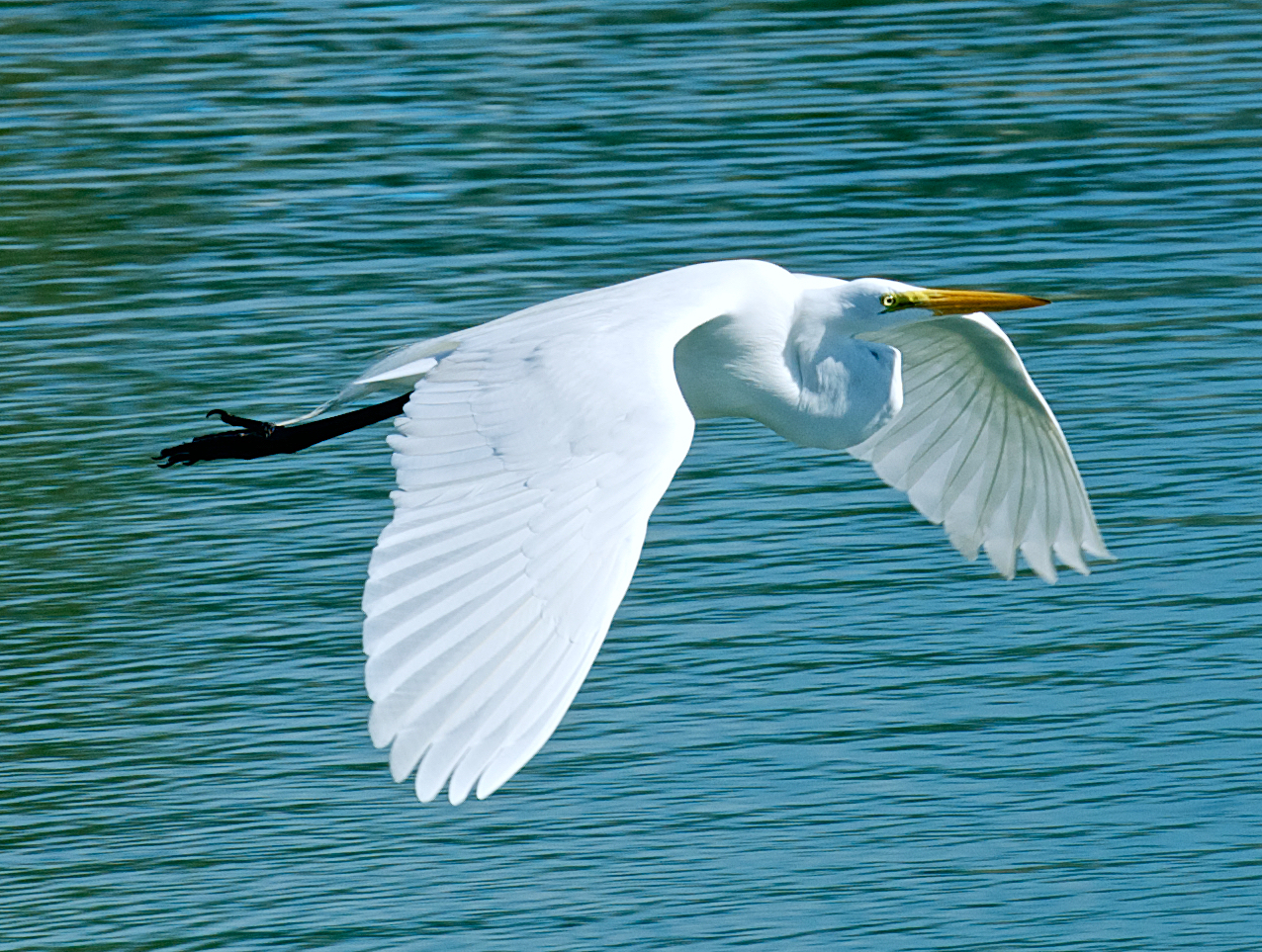
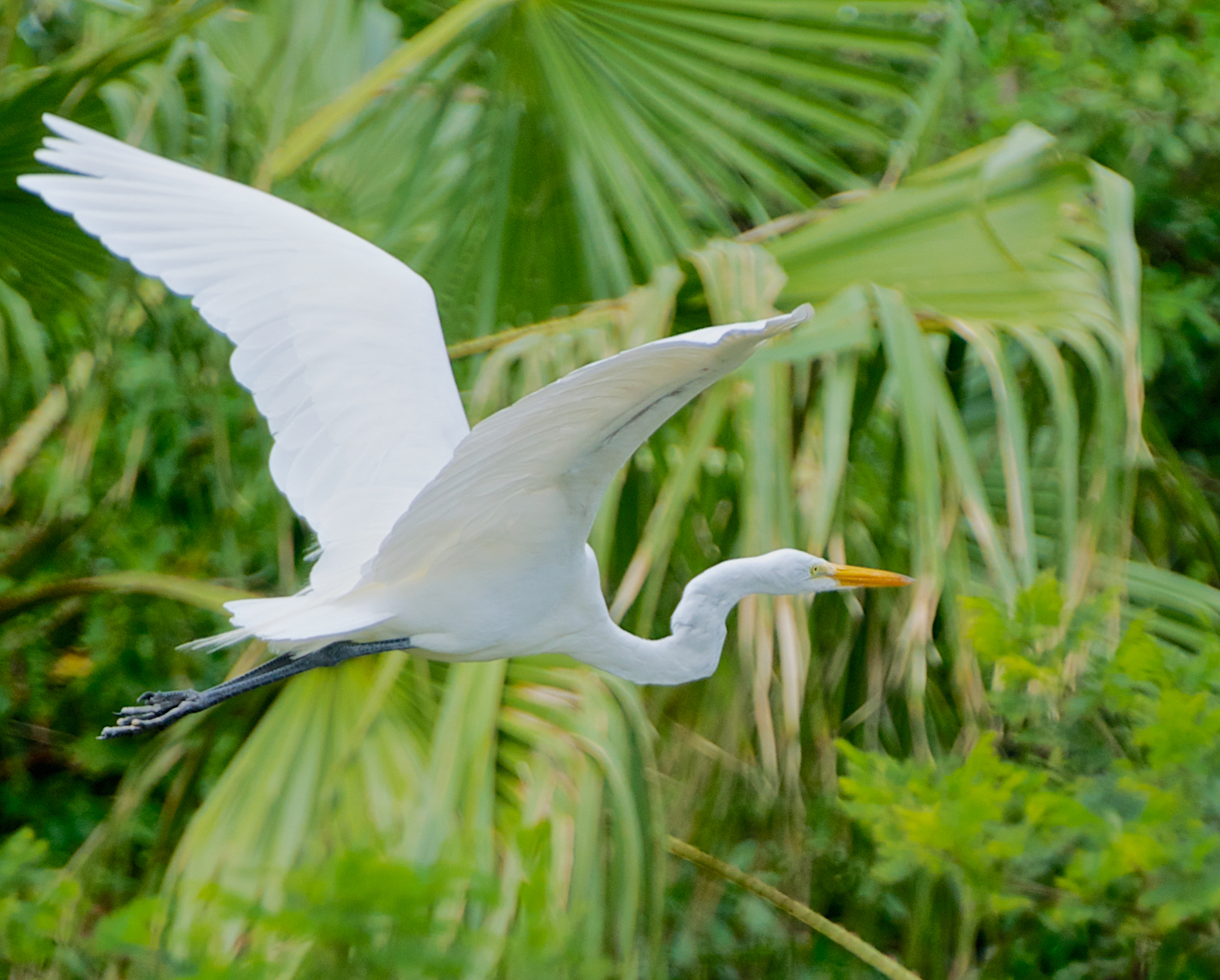
The Great Egret is actually a heron rather than an egret. It’s a Great Heron. All egrets are members of the heron family Ardeidae, but the converse is not true. As long ago as 1758,Linnaeus awarded the bird the binomial name Ardea alba i.e. ‘Heron white‘. Why it should have been so hard to stick to that authoritative nomenclature, I can’t imagine. Perhaps in time all heron and egret species became so hopelessly confusing for people that it ceased to matter much what they were called.
Maybe it was that type of carelessness that led to people from the mid-c19 onwards eyeing up GREGs as a source of hat feathers and other decorative necessities. As with flamingos and many other beautiful avian species, mankind’s millinery and other fashion needs were satisfied at the expense of gorgeous plumage. Actually, at the cost of the birds’ lives: they were simply shot in huge numbers.
Healthy populations were decimated; for some species they never recovered. For others, the great egret among them, the passage of time and the passing of fashions – backed in many cases with conservation programs – have successfully restored the populations. In 1953 theNational Audubon Society, which was formed at least in part to discourage the killing of birds for their feathers, took a decisive step in the cause of the great egret by making the bird the emblem of the organisation.
Photo Credit: Nina Henry photographed all the egrets in this post. Her wonderful images made a significant contribution to the “BIRDS OF ABACO” project.
Every day of the year, or so it seems, at least one worthy creature has been awarded an ‘Appreciation Day’, a special day when a particular species has its profile raised and awareness spread around. It certainly seems to be the case with birds; I’m going to assume that it applies to all the other classes of animal – mammals, fish, reptiles, amphibians and invertebrates, each with their own worthy candidates for recognition. Except for no-see-ums, obviously. And fire ants, I hope. You’d think standing on a nest while taking photos just once in a lifetime would be a lesson. I’ve done it twice… Anyway, yesterday was Plover Appreciation Day 2018.
PLOVERS ON ABACO
Until recently Abaco had 33 recorded shorebird species but since the first-ever sightings of a BUFF-BREASTED SANDPIPER in 2016, the number has risen to 34. Of these, a mere 6 are plovers:
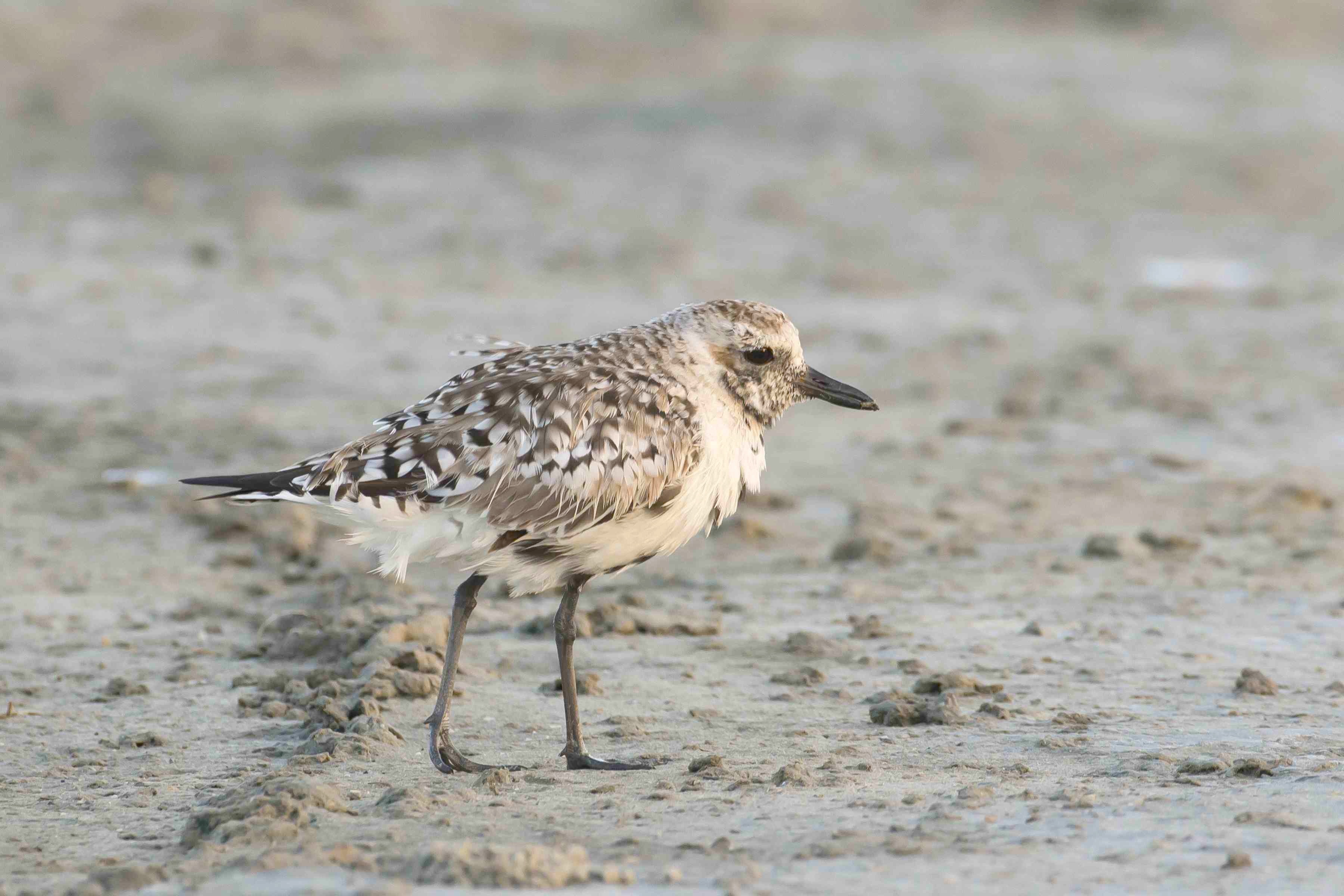
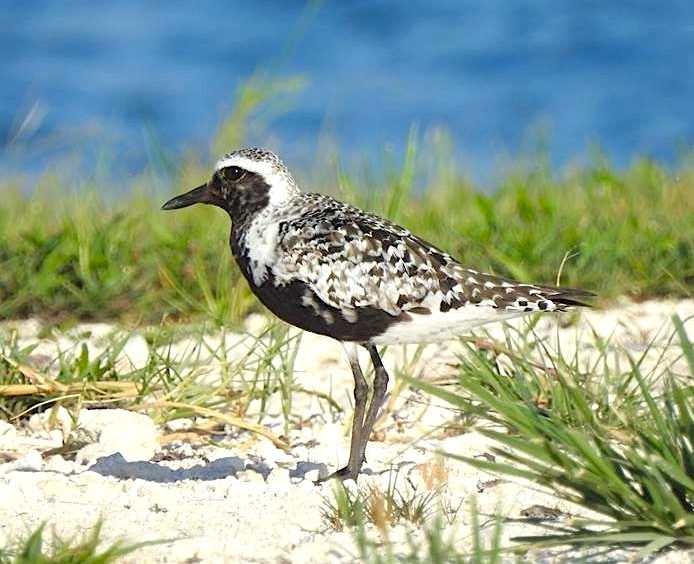
Black-bellied Plover Pluvialis squatarola WR 1
American Golden Plover Pluvialis dominica TR 4
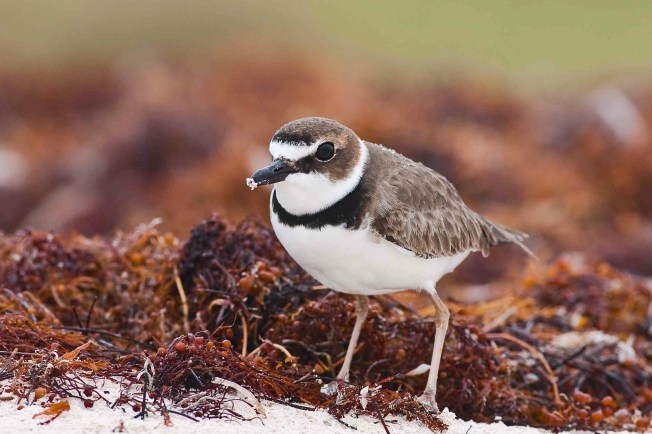
Wilson’s Plover Ochthodromus wilsonia PR B 2
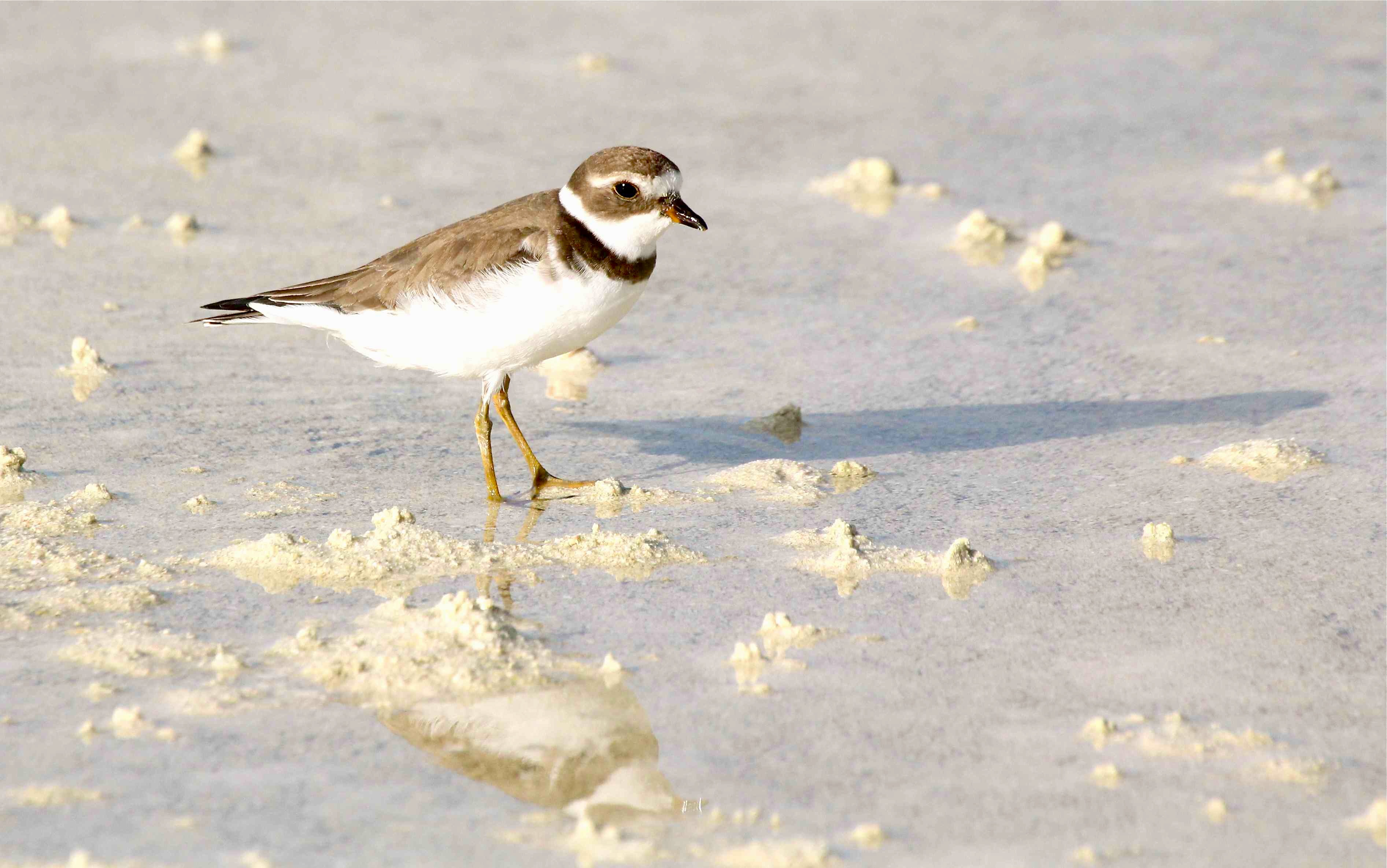
Semipalmated Plover Charadrius semipalmatus WR 2
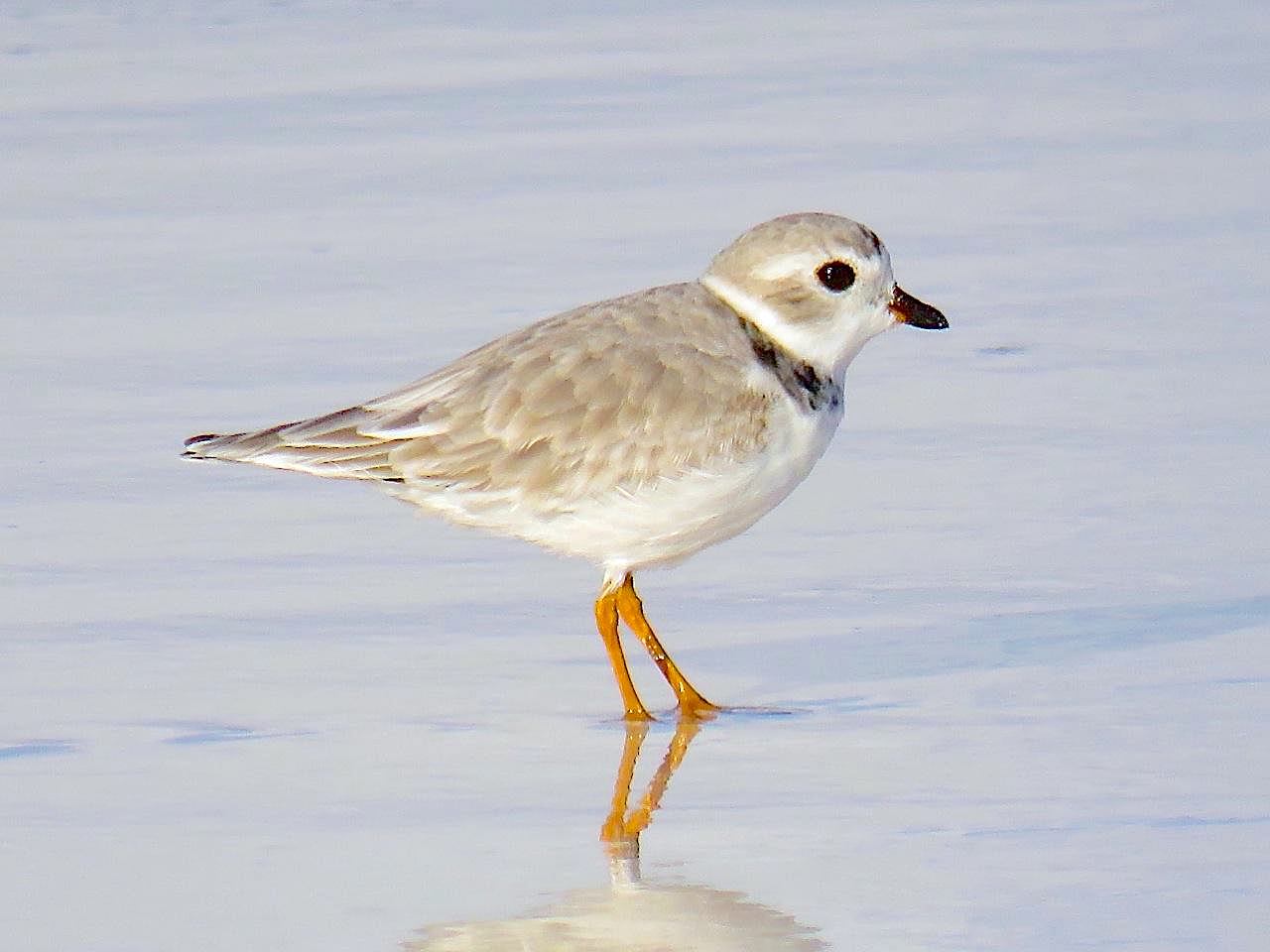
Piping Plover Charadrius melodus WR 3
Killdeer Charadrius vociferus WR 2
The codes tell you, for any particular bird, when you may see it (P = permanent, WR = winter resident, TR = transient); whether it breeds (B) on Abaco; and your chance of seeing it, graded from easy (1) to vanishingly unlikely (5)
The best-known of the 6 Abaco plover species is the Wilson’s Plover, because it is the only permanent resident. The American Golden Plover is a rare transient, but we luckily have a photo of one (below) taken on Abaco. All the others are winter residents and easy to middling hard to find.
The Piping Plover is the most interesting species, with a mere 8000 left in the world. There is a vigorous conservation program to protect them and their habitat, both in their breeding grounds in the North and their southern overwintering grounds. Their summer breeding range is in Canada and the Great Lakes, north-central US, and the eastern seaboard. In winter they migrate south, many to the Bahamas – and Abaco is one of their preferred homes. We count as many as we can between August and February, report the banded ones, and find out their origins and histories
BLACK-BELLIED PLOVER Pluvialis squatarola WR 1
Non-breeding plumage (as you would see normally it on Abaco, without the black belly)
Breeding plumage – and the reason for the name
AMERICAN GOLDEN PLOVER Pluvialis dominica TR 4
SEMIPALMATED PLOVER Charadrius semipalmatus WR 2
KILLDEER Charadrius vociferus WR 2
PIPING PLOVER Charadrius melodus WR 3
WILSON’S PLOVER Ochthodromus wilsonia PR B 2
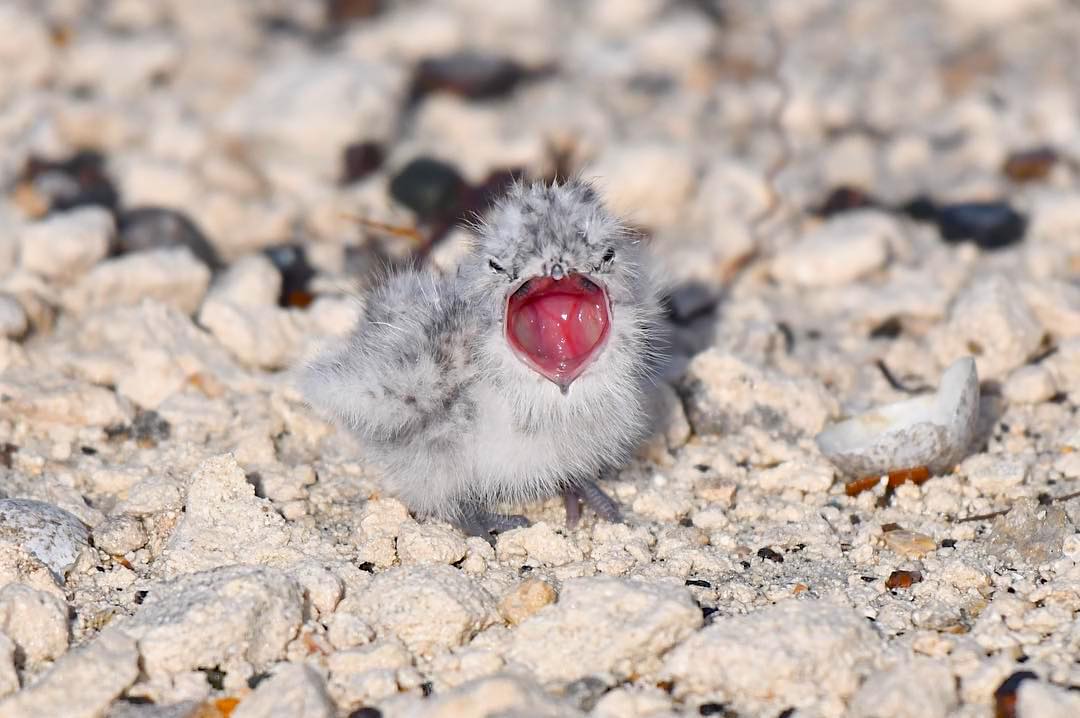
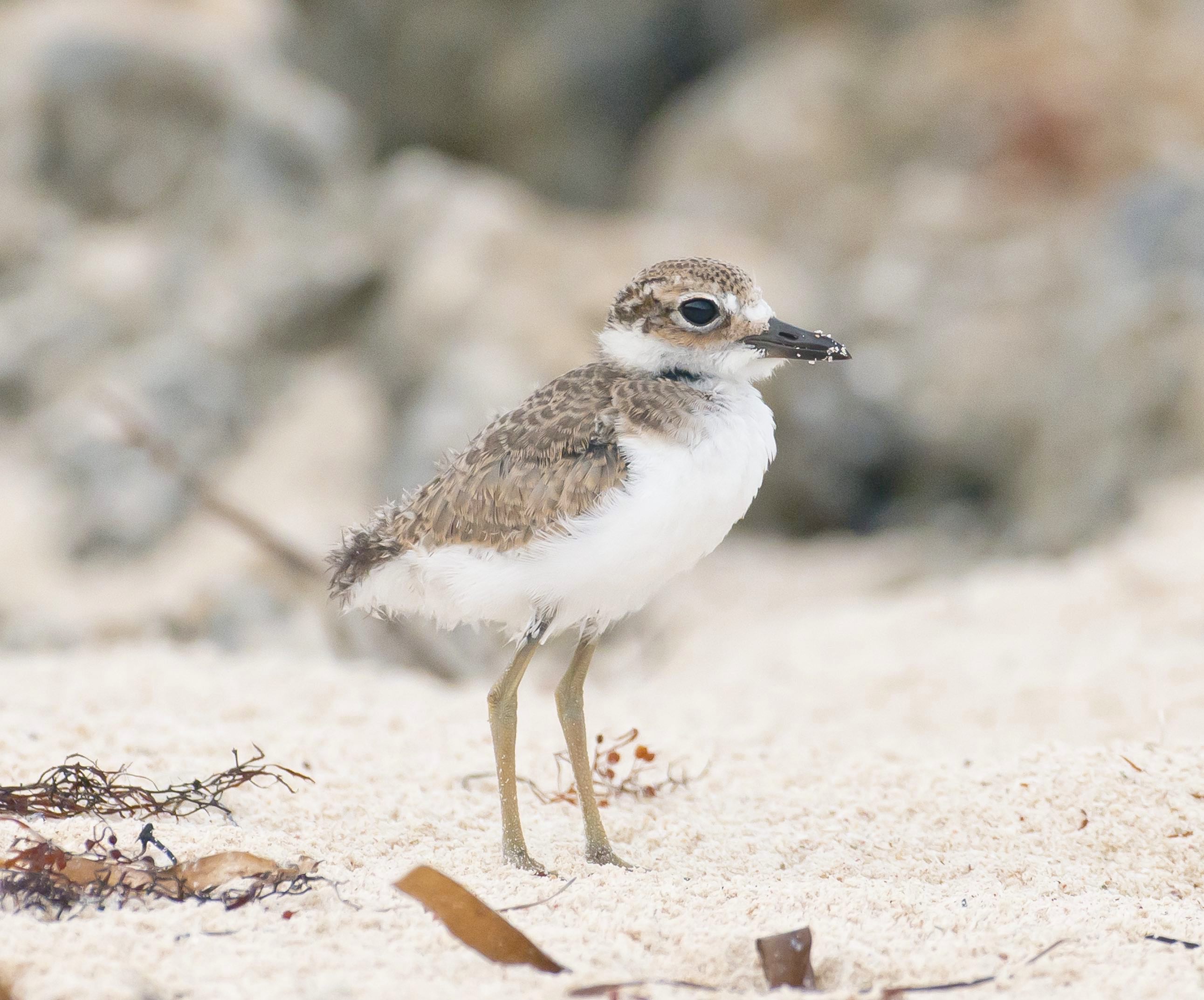
This permanent resident plover is a year-round presence on the Delphi Club beach, where in summer they nest and raise their tiny fluffball chicks. They are especially significant on Abaco as the only breeding plover species – it’s the only chance we get to see plover nests and chicks… (see header image and below).









 Credits: Dan Stonko / American Bird Conservancy, Michael Baltz / Bahama Oriole Project / Kevin Omland; Mary Kay Beach; Bahama Oriole Project FB header; C Ward / BNT; Thomas Nierle / Bahama Oriole Project; Bahamas Postal Service; BNT; D Belasco / American Bird Conservancy; Handbook of World Birds (drawing)


























































 ROLLING HARBOUR ABACO
You must be logged in to post a comment.