Unknown's avatar

BAHAMAS REEF FISH (48): SCHOOLMASTER SNAPPER


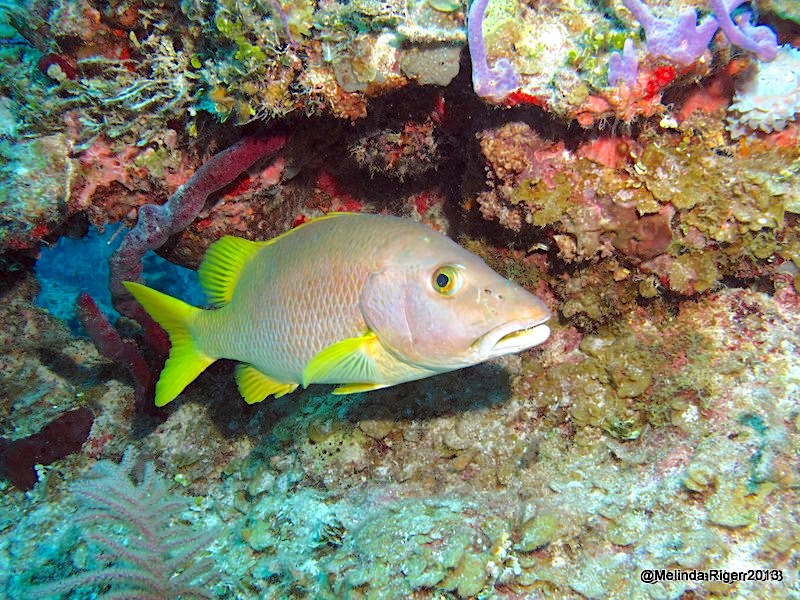
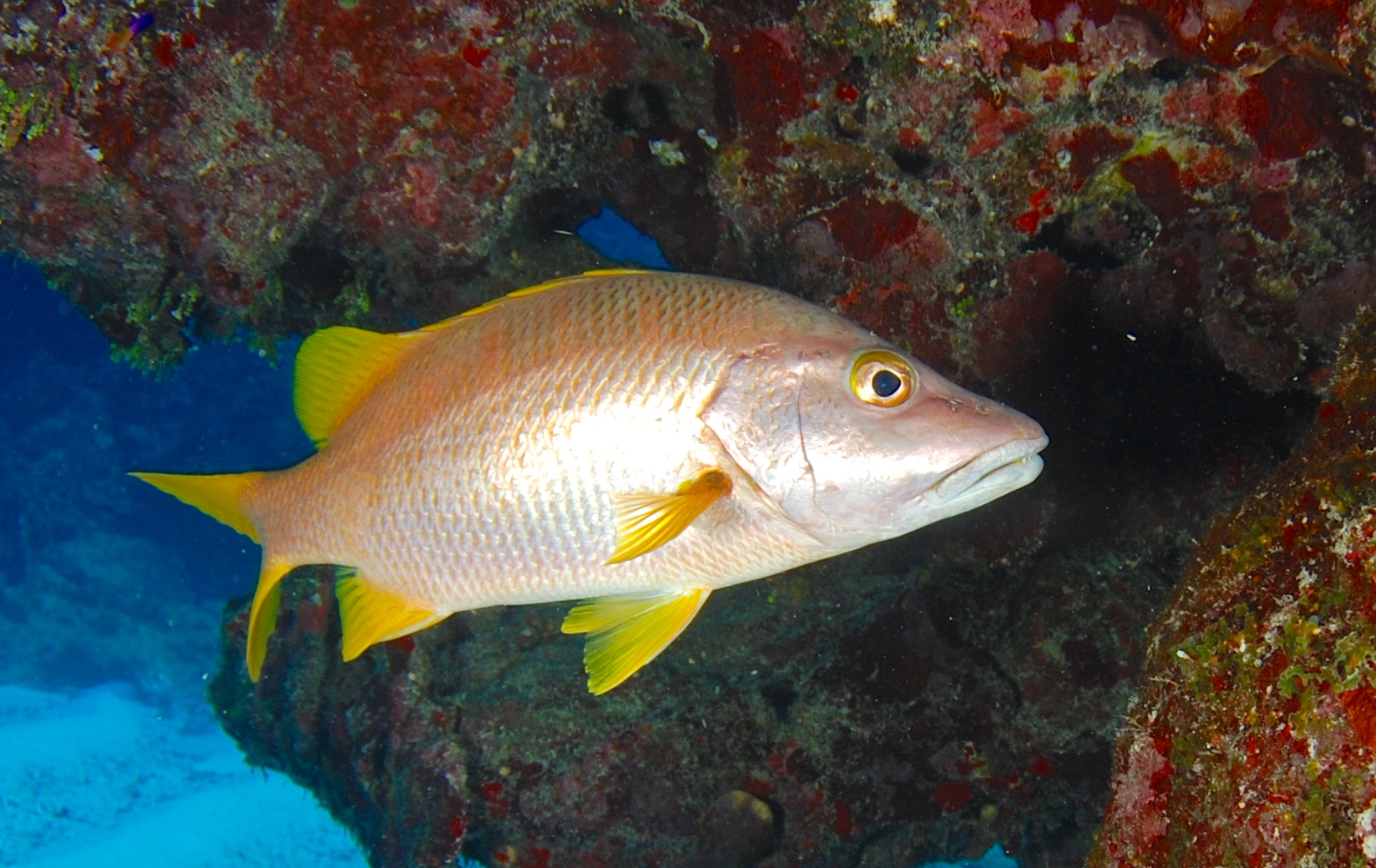
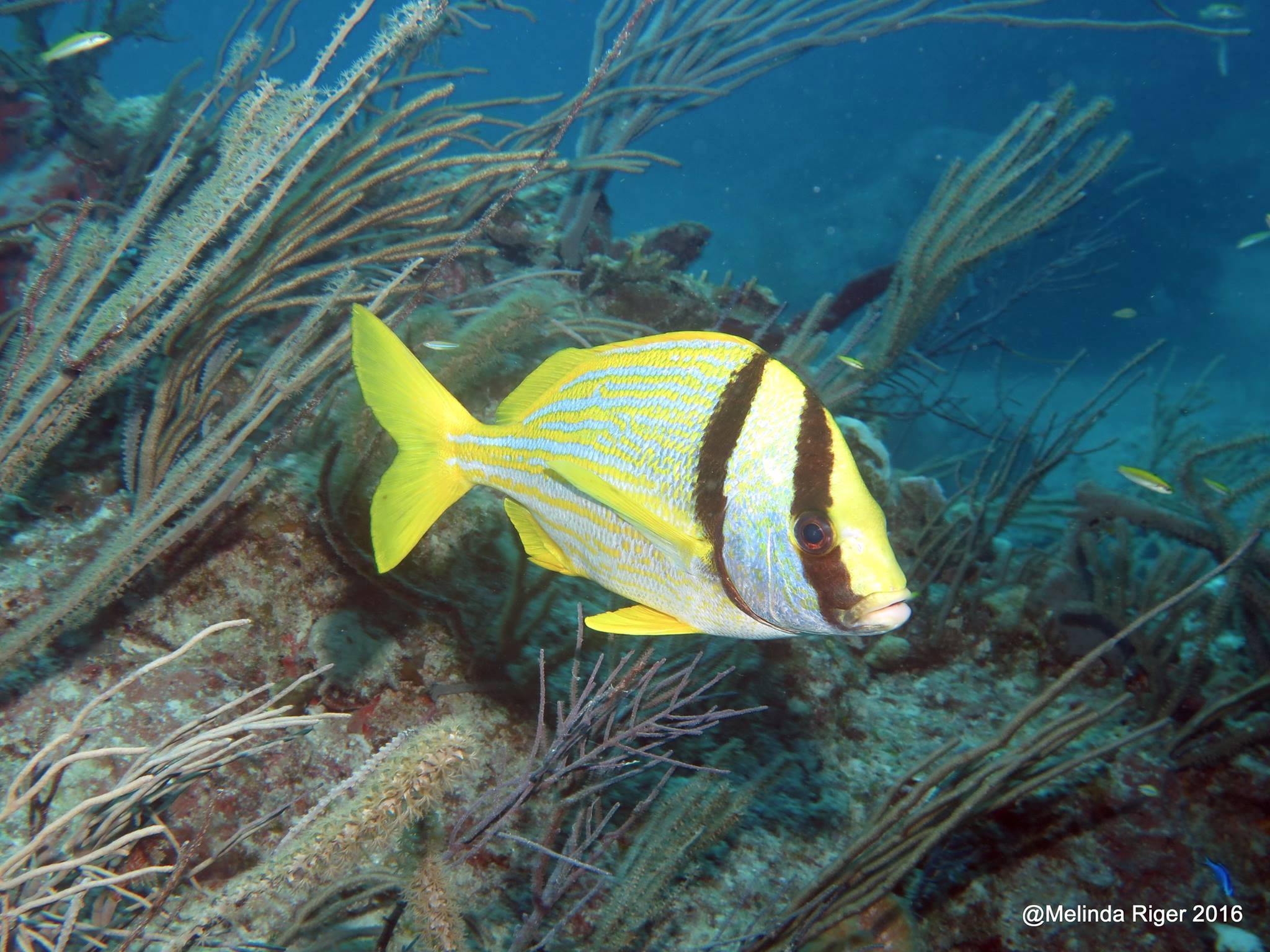
Schoolmaster Snapper (Melinda Riger @ G B Scuba)

BAHAMAS REEF FISH (48): SCHOOLMASTER SNAPPER

November 1st already, and the first time I am prepared to consider the possibility of the onset of Christmas, with its attendant joys yet complications… Meanwhile, I thought I might have run out of types of reef fish to feature in this series long before I got to 50. Yet here we are, two short of that target, with a species of snapper I haven’t even mentioned before. I am (frankly) a rather feeble swimmer, and do not possess a viable underwater camera. So there’s no way I could show these denizens of the not-especially-deep without heavy reliance on others, in particular the outstanding photos of diver Melinda Riger of Grand Bahama Scuba; and the memorable ones from Adam Rees of Scuba Works that include some of the more obscure species that appear in my WTF? (What’s That Fish) series. 

Schoolmaster Snapper (Melinda Riger @ G B Scuba)

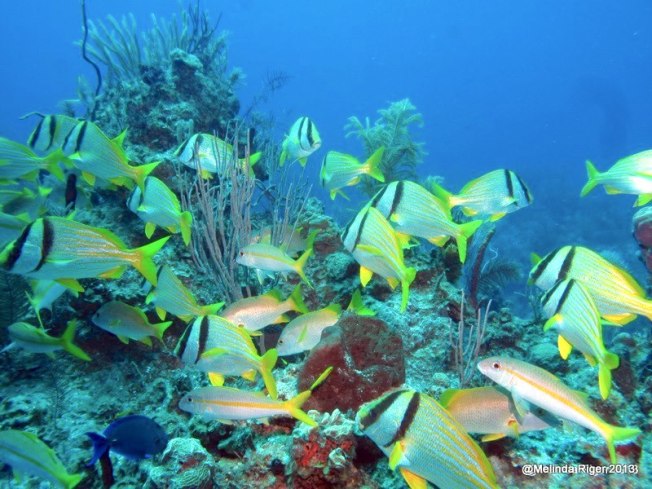
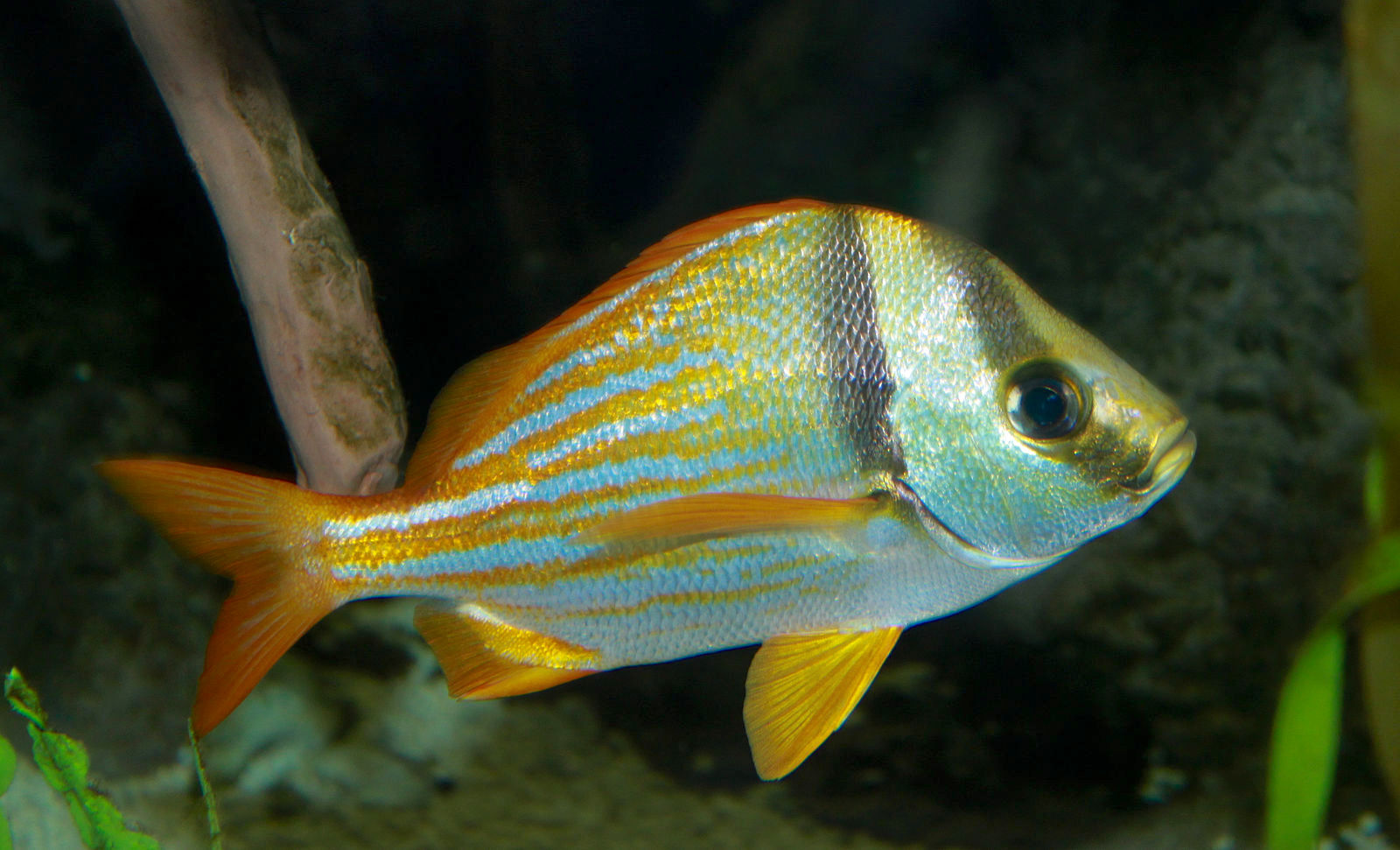
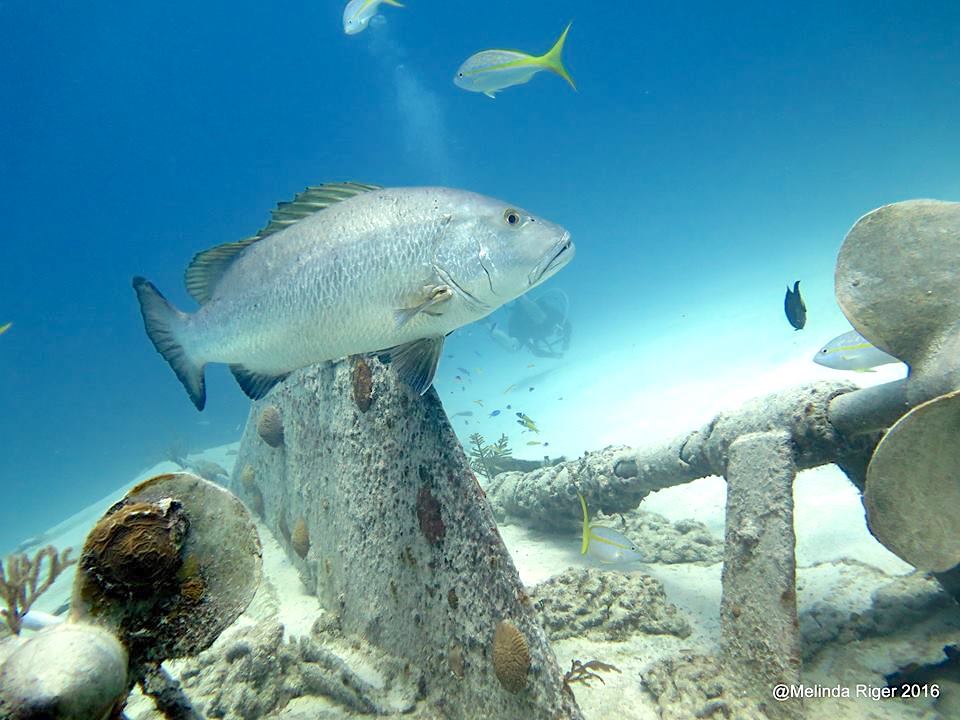
The schoolmaster snapper (Lutjanus apodus) lives among the coral reefs and mangroves of the Caribbean and further north to the northern Bahamas and Florida. Generally they are quite small, not much more than 12- 18 inches. They tend to hang out in ‘schools’, which several sources suggest as the reason they got their common name. But schoolmasters don’t really move around in large groups, do they? It’s school pupils that do that, but ‘Pupil Snapper’ wouldn’t cut it as a fish name I guess.

Schoolmaster Snapper (Melinda Riger @ G B Scuba)

10 SCHOOLMASTER SNAPPER FACTS TO PONDER

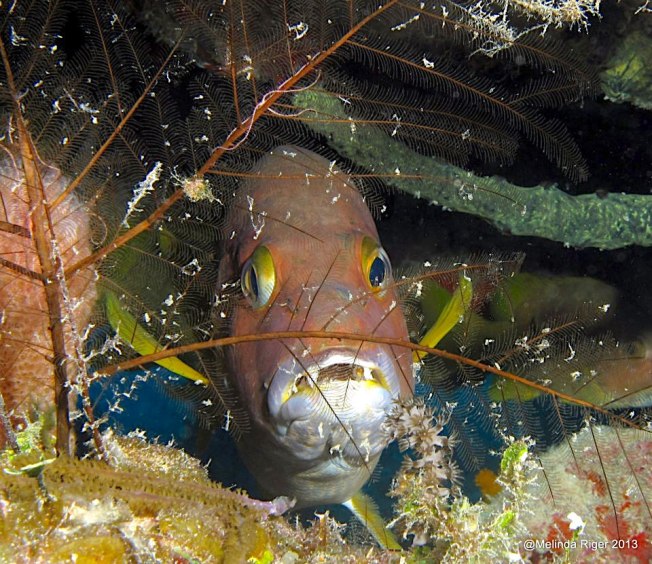
  • One pair of upper teeth are so large they protrude when the fish shuts its mouth
  • Their side scales are so arranged that diamond shapes are produced
  • There’s plenty to learn about their fin arrangements, but not necessarily to remember
  • Their jaws don’t open very wide, so their prey tends to be quite small
  • Unlike fish that change sex as they grow, these ones retain their birth gender for life
  • When they spawn they produce their gametes simultaneously, and swim away
  • The fertilised eggs sink to the bottom, where they have to take their chances
  • Though small, they are good to eat and are fished for recreation and commercially
  • Regionally there are specific regulations as to catch length & limits, hook type, bait etc
  • Like all snappers and many other fish species, these fish are associated with ciguatera

Schoolmaster Snapper (Melinda Riger @ G B Scuba)

RECIPES

For those who enjoy cooking (whatever that is), you probably know exactly how you like to cook your snappers. For anyone else, here’s a site that proposes several different ways to cook them, with helpful tips. These seem to apply to all snapper species, most of which are available free in the Bahamas. http://www.allfishingbuy.com/Fish-Recipes/Snapper-Recepies.htm

My favourite schoolmaster snapper photo of those featured hereSchoolmaster Snapper (Melinda Riger @ G B Scuba)

POSSIBLE MEDICAL BENEFITS FROM EATING SNAPPERS

These are alleged to include (except when fried): protection against certain types of stroke, reduction of heart arrhythmia, and defence against certain types of cancer. Don’t take my word for it, though. And definitely don’t rely on a snapper-based diet regime. I think the most that can safely be said is that eating snapper will do you no harm (except when fried) and may conceivably have a marginal benefit on health along with a balanced diet, exercise, minimal alcohol intake and all the routines that we strictly adhere to for a healthy life. In our dreams, anyway.

Schoolmaster Snapper (Albert Kok)

Credits: All great pics by Melinda Riger / GB Scuba except #6 Albert Kok; range map, Wiki. Magpie pickings.

Schoolmaster Snapper (Melinda Riger @ G B Scuba)


Unknown's avatar

BLACK DURGON: A TRIGGERFISH OF DISTINCTION


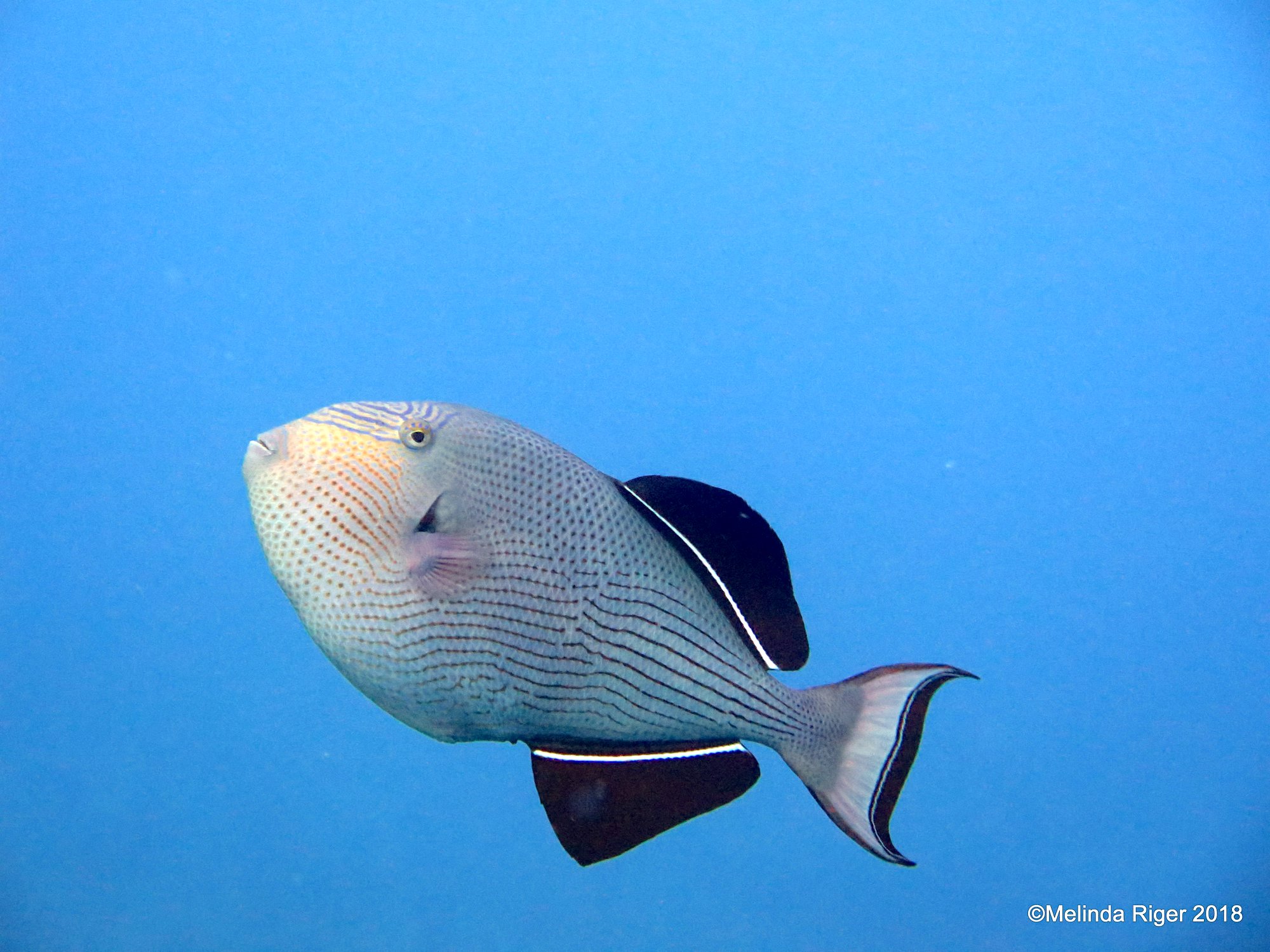
Black Durgon Triggerfish (Melinda Riger / Grand Bahama Scuba)

BLACK DURGON: A TRIGGERFISH OF DISTINCTION

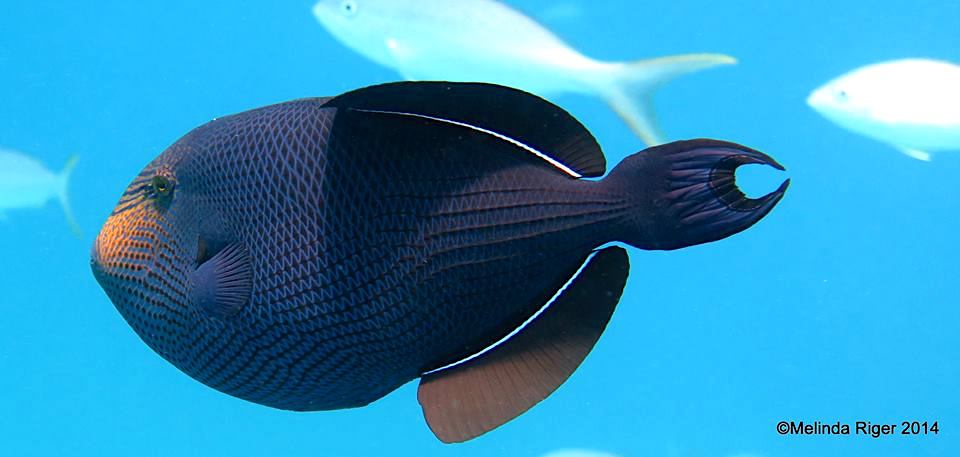
The Black Durgon (Black Triggerfish) seems to be a fairly rare triggerfish in Bahamas waters. I say that not because I know, but because there is very little mention of them in a Bahamas context. In fact, the (not especially profound) research I have done suggests it is not (originally?) really native to the Bahamas region at all. Correction of this impression welcome!

Black Durgon Triggerfish (Melinda Riger / Grand Bahama Scuba)

These fish have the ability to change colour, according to their surroundings. Mostly, they seem completely black. However they have intricate blue markings to the head, and regular patterning on their flanks that resembles the sort of thing one idly doodles during a long and less then attention-holding phone call (or the ‘hold music’) – see Header Image. They also have dramatic pale stripes where their fins join the body.

Black Durgon Triggerfish (Getty Images)

These fish have a varied diet that includes small fish, squid and shrimps, with side-helpings of algae, zooplankton and marine plants. And…

FUN FACT (REALLY!)

The Black Durgon has been studied, of course. One piece of research discovered that they… erm… ingested the feces and vomit of a species of dolphin. Other reef fish in the area did so too, but the Black Durgon was much the keenest on this distinctive  diet. So these are ‘offal-eating’ fish… and welcome to it. Here’s a short video to take your mind off it all…

I’d be interested to hear from anyone who has encountered these fish in Abaco waters. I ought to look further into their prevalence. Maybe they just don’t get much publicity. They need a new agent.

Black Durgon Triggerfish (Melinda Riger / Grand Bahama Scuba)Credits: Photos by Melinda Riger / Grand Bahama Scuba except #3, Getty Images; Kwik-Viddy, Cassandra-Tel; inadequate research, Author

Unknown's avatar

WTF? (WHAT’S THAT FISH?) 15: SCORPIONFISH


Caribbean Scorpionfish, Bahamas (Melinda Riger / G B Scuba)

WTF? (WHAT’S THAT FISH?) 15: SCORPIONFISH

The WTF? series is aimed at shedding light on fishes that are unusual. Or very unusual. Or puzzling, dangerous and maybe less than elegant in appearance. The scorpionfish is one such. It belongs to a large family, the Scorpaenidae, and many types are found throughout the world, especially in the Pacific and Indian oceans. LIONFISH, the newcomers to the western Atlantic, are a species of scorpionfish. 

Just another rock on the seabed…Caribbean Scorpionfish, Bahamas (Melinda Riger / G B Scuba)

WHY ‘SCORPIONFISH’? THEY LOOK SCARY. ARE THEY DANGEROUS?

One feature common to many scorpionfish species is that they are highly venomous. As the name suggests, a sting is involved. Or several stings. These come from the creature’s sharp spines, which are coated with mucus, and are to be avoided. If you want to pet one, the dorsal, anal and pelvic fins are the ones to steer clear of – these all have venom glands at the base. The spines act like injection needles. Scorpionfish aren’t naturally aggressive (except to prey), but they know how to defend themselves if need be. If you get ‘got’, you are in for “extreme pain and burning sensation”.

Caribbean Scorpionfish, Bahamas (Melinda Riger / G B Scuba)

DO THEY HAVE ANY OTHER TRICKS TO WATCH OUT FOR?

As many have written, scorpionfish are ‘Masters of Camouflage’. They are able to disguise themselves very effectively. Their appearance is a remarkably adapted to their surroundings, as if covered in a raggle-taggle of colourful algae. They can change colour to aid concealment. They can flick sand over themselves as they settle on the seabed. These ploys enable them to lie motionless on a coral reef or on the seabed, ready to ambush their prey. This consists mainly of small fishes and crustaceans, but really anything edible that will fit in their mouths is fair game. 

Concealed against coralCaribbean Scorpionfish, Bahamas (Melinda Riger / G B Scuba)

HOW DO THEY FEED?

The large mouth of scorpionfishes has a particular function. They don’t have teeth because they have no need. A scorpionfish can open its mouth and its gills simultaneously, thereby creating an instant vacuum that will suck in its prey in a flash. I have seen this described as “a nearly imperceptible split-second movement (15 milliseconds)”

Caribbean Scorpionfish, Bahamas (Ocean Frontiers Dive Shop)

THESE SCARY MONSTERS MUST BE HUGE, RIGHT? I’M KEEPING OUT OF THE WATER

Not so fast. When all is said and done – and in my view, most disappointingly – adult Caribbean Scorpionfish grow in the range of… erm… 7 – 14 inches. So now you are reassured, here’s a great short video from Ocean Frontiers Dive Shop, who kindly shared it on YT. I’ve used a couple of illustrative stills from it too.

ANYTHING ELSE WE NEED TO KNOW?

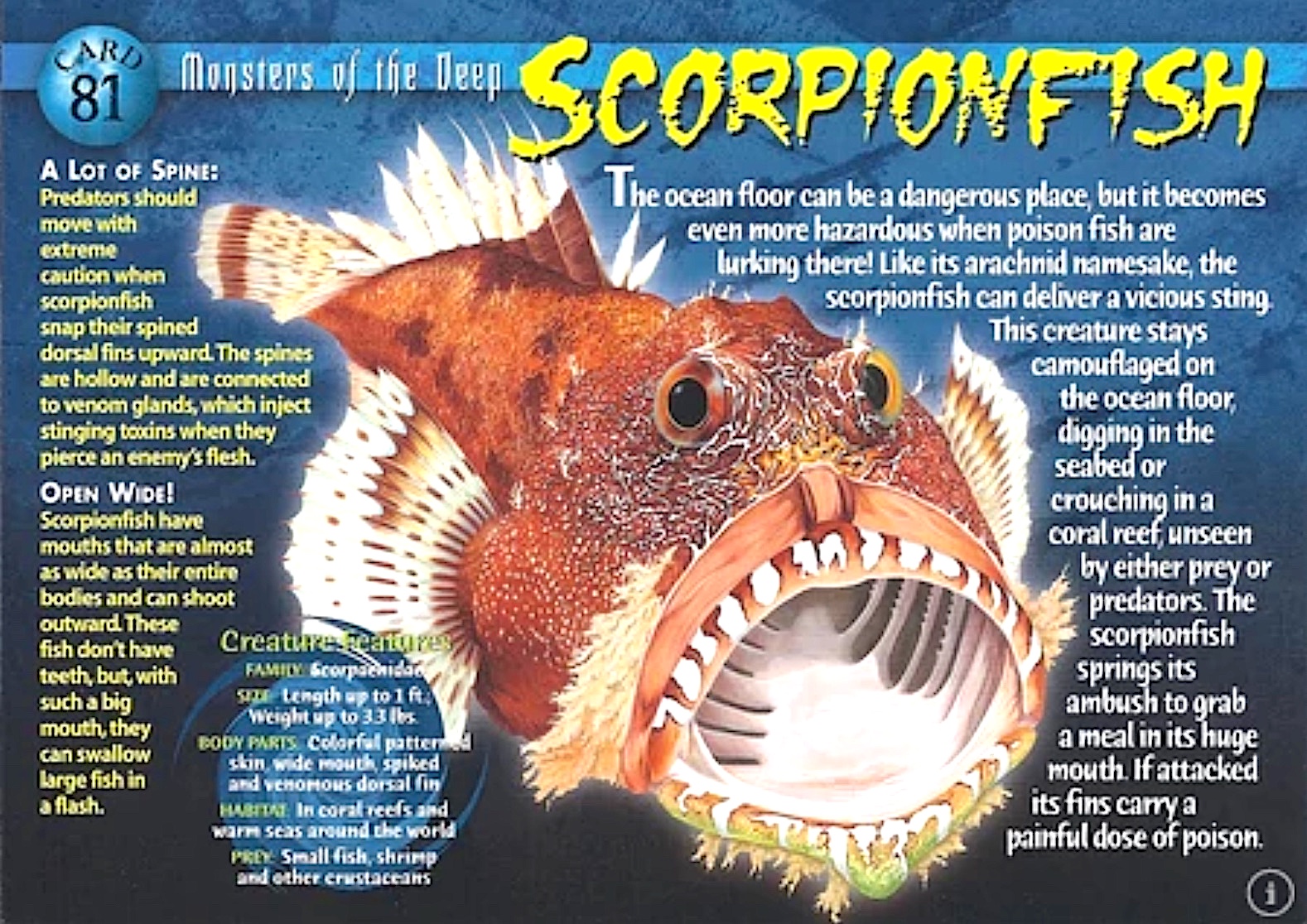
I can do no better than to turn to Card 81 to the excellent Monsters of the Deep‘ series of trading cards (the link is to my MotD page). I do realise that this is a rather unscientific approach. On the other hand these guys pack memorable information into a very short space, and do it well. Note that you can get a reflex sting from a scorpionfish for up to a week after it has died. Eat dust, earthbound scorpions.

Credits: Melinda Riger / Grand Bahama Scuba (1, 2, 3, 4,); Ocean Frontiers Dive Shop (video from YT, 2 stills); Wierd (sic) Creatures / Monsters of the Deep (O/S)

Scorpionfish, Bahamas (Ocean Frontiers Dive Shop)

Unknown's avatar

FORAYS WITH MORAYS (5): THE GOLDENTAIL


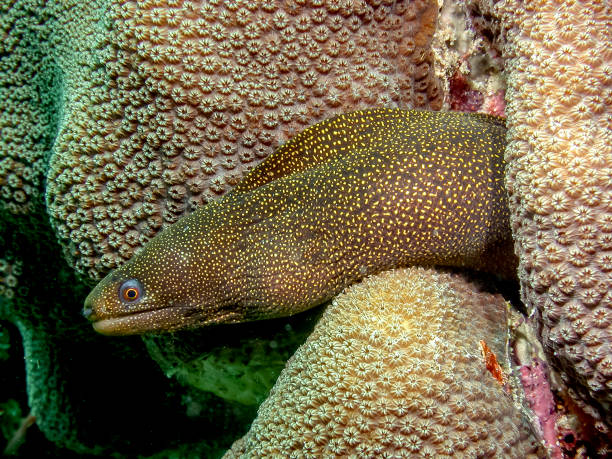
Goldentail Moray Eel (Melinda Riger / G B Scuba)

FORAYS WITH MORAYS (5): THE GOLDENTAIL

The Goldentail Moray Eel Gymnothorax miliaris is one of the half-dozen moray species found in Bahamas waters. Adults range in length from about 1.5 to 2.5 feet, and they are creatures of the reefs and rocks of the western Atlantic. As far as I can make out, the goldentails are rather less common than green or spotted morays, the two main eel species of the Bahamas.

Goldentail Moray Eel (Melinda Riger / G B Scuba)

Like their moray cousins, goldentails likes to keep themselves to themselves, and lead largely solitary lives. That said, sometimes they have been observed hunting in a group. They live in holes, clefts, and caverns which they leave both during the day and at night to hunt for prey along the reefs, aided by an acute sense of smell. Their diet is mainly of crustaceans, mollusks, and small fishes. 

goldentail-moray-eel-istock-getty-images-2

ARE GOLDENTAILS DANGEROUS?

Like many other eels, goldentails secrete a protective mucus that contains a toxin, making them unattractive prey for large predators such a groupers and barracudas. They are also associated with ciguatera poisoning, the active ingredients of which are found in the mucus coating. They are sometimes found in aquariums – the associated sites give a warning of painful bites, because they have backwards-pointing teeth (aka prey traps) – see header image for a clear view of this.

Goldentail Moray Eel (Melinda Riger / G B Scuba)
 
CAN YOU EAT THESE FISH?

Well I wondered that too, so I checked. The answer seems to be yes, if you real really want to. Comments on forums include:

  • “Yes they are edible, I just ate one few weeks ago. Some parts are little bony and skinning it is a bitch. But the meat is very soft and white, delicious. Deep fry works”. 
  • “After eating our moray eel something changed. The next morning, we were decidedly feeling ill. I won’t get into the details, but let’s just say that “gastrointestinal effects”
  • “…symptoms (of ciguatera) include gastronomic effects, and neurological effects which include headaches, numbness, paresthesia, muscle ache, and even hallucinations”.
  • “Before you can eat one you have to kill it. They are amazingly hard to kill. I would skip it.”
  • “I would rather eat a shoe”

So I’ll be moving straight on to the next course, please. Or just a Kalik would do, thanks.

goldentail-moray-eel-istock-getty-images-3

RELATED POSTS

SPOTTED MORAY EELS

GREEN MORAY EELS

goldentail-moray-eel-istock-getty-images-1.

Credits: Melinda Riger / Grand Bahama Scuba (1, 2, 4); iStock / Getty Images (3, 5, 6)


Unknown's avatar

SHARPNOSE PUFFER FISH: BAHAMAS REEF FISH (47)


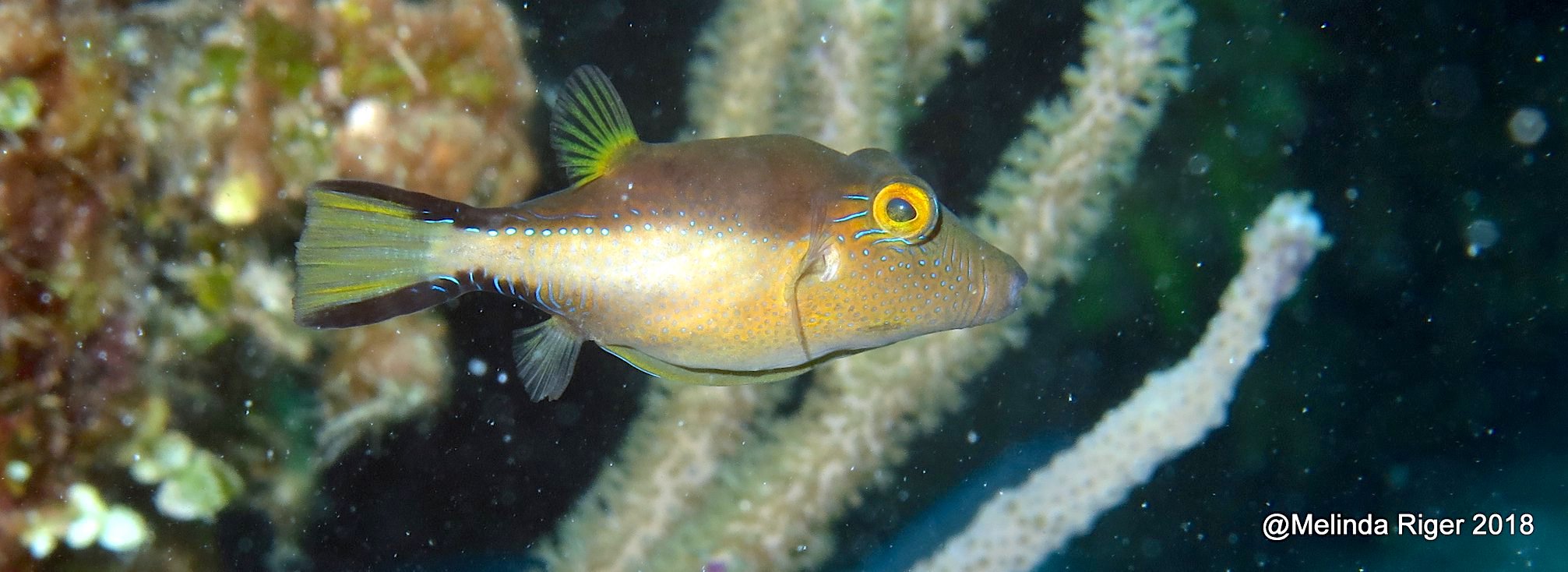
Sharpnose Puffer Fish (Melinda Riger / G B Scuba)

SHARPNOSE PUFFER FISH: BAHAMAS REEF FISH (47)

It’s more than 4 years since I last wrote about these intriguing creatures and their endearing ways. It’s time for another look, with a new batch of great photos too. This is a species that lends itself to the ‘Fun Fact’ treatment, a method that tells you at least as much as you probably need – or want – to know about puffers. The message to take away is, best not to handle one – let alone eat one – unless you know exactly what you are doing…

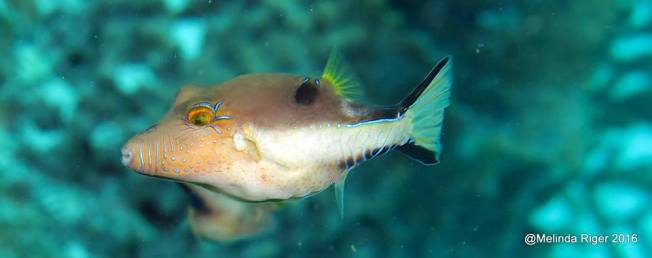
Sharpnose Puffer Fish (Melinda Riger / G B Scuba)

10 PUFFER FISH FACTS TO ASTONISH YOUR FAMILY & FRIENDS

1. Puffers can inflate their bodies in an instant by ingesting huge amounts of water and becoming water-filled balloons. Then their tiny spines stick out. 

2. They need a startling form of defence (or ‘piscatorial superpower’ Linnaeus 1763*) like this because they can’t swim very well to escape from predators: it’s surprising and intimidating – and it also makes them hard to eat.

3. However, a persistent predator undeterred by the trick will find that the puffer contains a toxin (tetrodotoxin TTX) that is said to be ‘1,200 times stronger than cyanide’. One puffer fish has enough toxin to kill up to 30 humans (National Geographic).

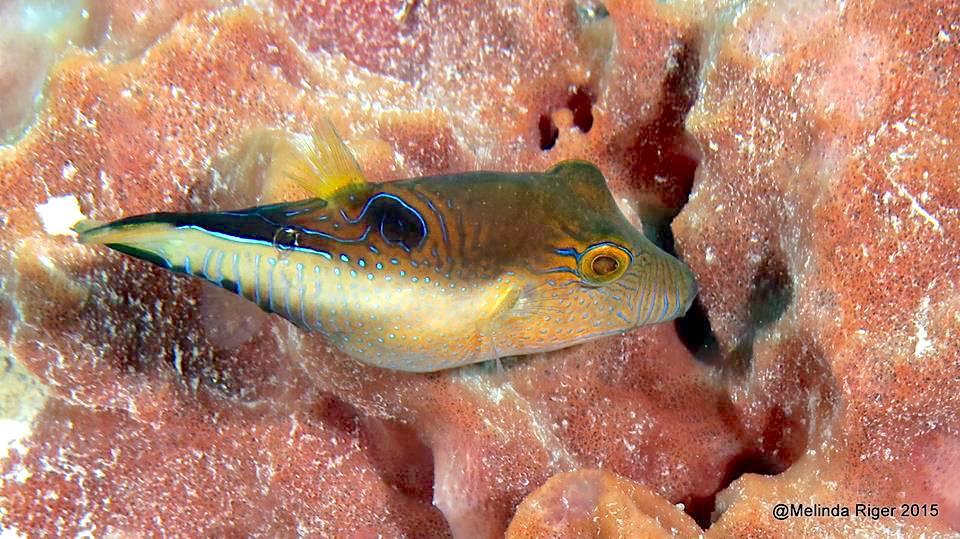
Sharpnose Puffer Fish (Melinda Riger / G B Scuba)

4. Notwithstanding the risks, selected parts of a puffer fish are a delicacy in some cultures (known as ‘fugu’ in Japan). Specially trained chefs are used to avoid mass deaths among diners. The insurance premiums must be huge.

5. Sharks are thought to be the only species immune to the puffer fish, and are not much bothered by a small fish that can blow itself up.

6. Puffers have skin, not scales; most have toxic fins or spines of some sort, besides toxic innards. Bright coloured kinds are likely to be more toxic than their duller cousins. This warning colouration in creatures is known as aposematism.

Sharpnose Puffer Fish (Melinda Riger / G B Scuba)

7. It’s worth finding out what an uninflated puffer looks like before you try to pet a random passing fish and have a toxic encounter. There is as yet no known antidote.

8. In all, there are more than a hundred puffer species in the world, all found where there are warm shallow waters. At least 3 main species – sharpnose, band-tail and chequered – are found in the Bahamas.

Sharpnose Puffer Fish (Melinda Riger / G B Scuba)

9. Some puffer species are not toxic at all; and some – especially in Pacific waters – are far more toxic than others. That’s the region where they are treated as a delicacy.

10. I’ve checked several research papers but I can’t find an evaluation of the relative toxicity as between the Bahamas puffer species. However it’s clear that the sharpnose is certainly not one play with. Take care!

Q. SO WHAT DOES AN INFLATED PUFFER LOOK LIKE? A. THIS!

Brian Lockwood took his life in his hands to get this fantastic shot…Sharpnose Puffer Fish (Brian Lockwood)

* Not really

RELATED POST: PORCUPINE FISH

Photo Credits: All puffer fish taken by Melinda Riger of Grand Bahama Scuba except for the photo of an inflated one from recent Abaco permanent resident Brian Lockwood

Unknown's avatar

QUEEN ANGELFISH: BAHAMAS REEF FISH (46)


Queen Angelfish, Bahamas (Melinda Riger / Grand Bahama Scuba)

QUEEN ANGELFISH: BAHAMAS REEF FISH (46)

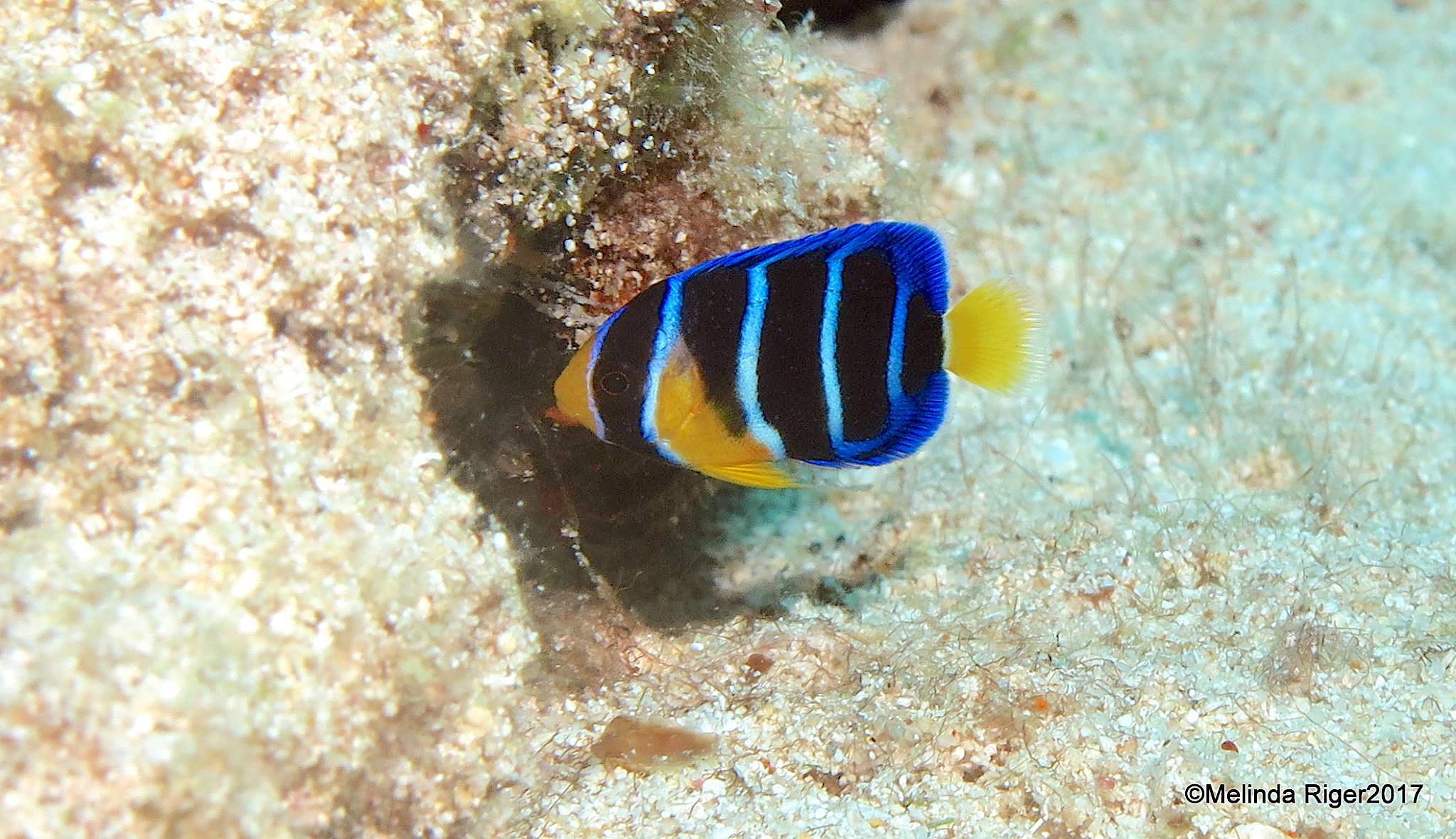
The Queen Angelfish Holacanthus ciliarisis is without doubt one of the most beautiful of all reef fishes in the Bahamas – and the competition is very strong. I have posted about them before, but to my surprise not for nearly 5 years. Too long: here are some much more recent photographs of adults and cute juveniles.

Queen Angelfish, Bahamas (Melinda Riger / Grand Bahama Scuba)Queen Angelfish, Bahamas (Melinda Riger / Grand Bahama Scuba)

The bright colours, the pouty expressions, the appealing poses – these fish are true Beauty Queens. And helpfully, they are unlikely to be mistaken for any other fish species.

Queen Angelfish, Bahamas (Melinda Riger / Grand Bahama Scuba)

TEENAGE QUEEN ANGELFISHQueen Angelfish (Juv), Bahamas (Melinda Riger / Grand Bahama Scuba)

JUVENILE QUEEN ANGELFISHQueen Angelfish (Juvenile), Bahamas (Melinda Riger / Grand Bahama Scuba) Queen Angelfish (Juvenile), Bahamas (Melinda Riger / Grand Bahama Scuba)

Photo Credit: ©Melinda Riger (Grand Bahama Scuba), with thanks as ever

Unknown's avatar

CARIBBEAN REEF SQUID REVISITED: SUPERPOWERS & SQUID SEX


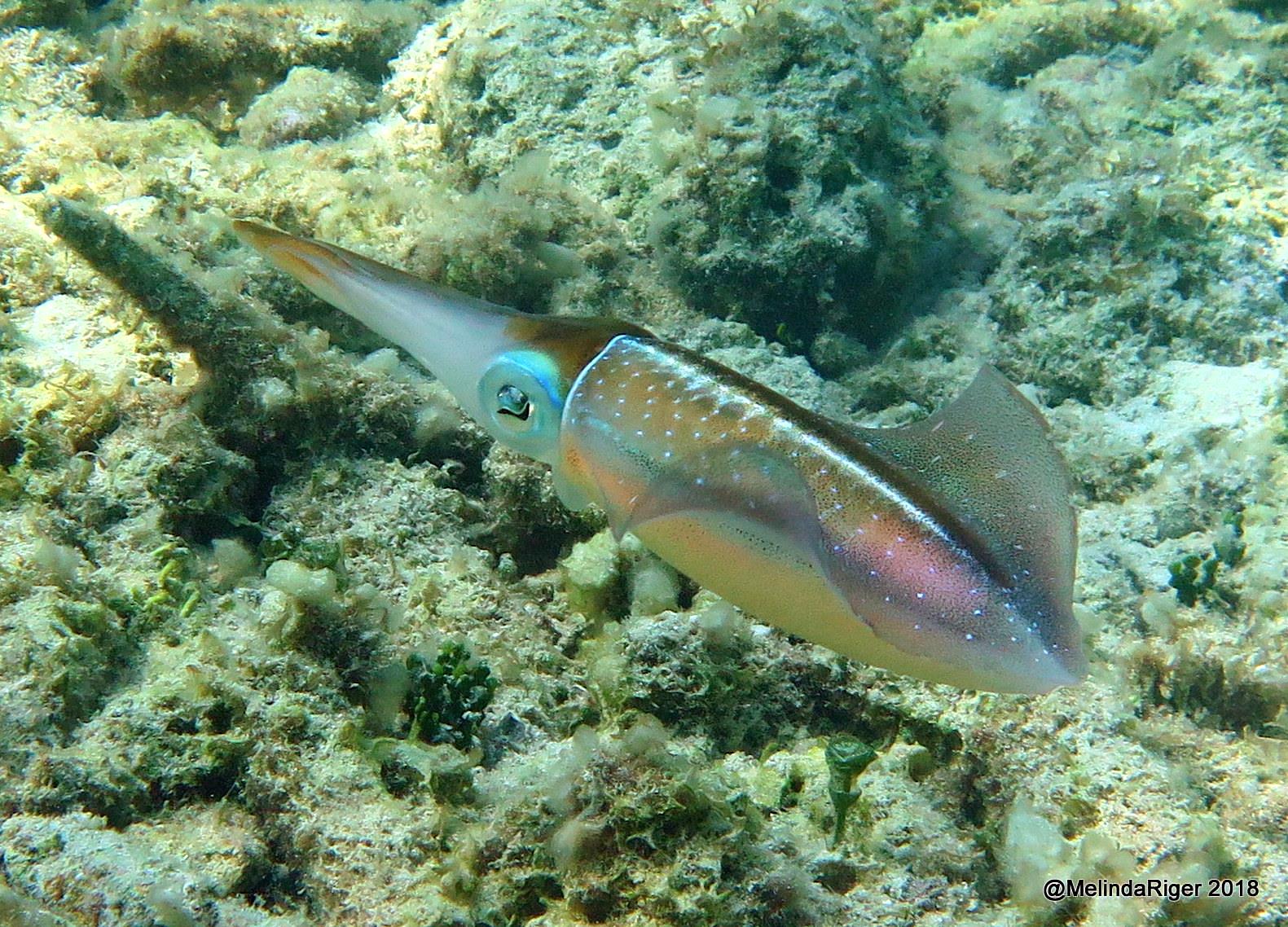
Caribbean Reef Squid, Bahamas (Melinda Riger / G B Scuba)

CARIBBEAN REEF SQUID REVISITED: SUPERPOWERS & SQUID SEX  

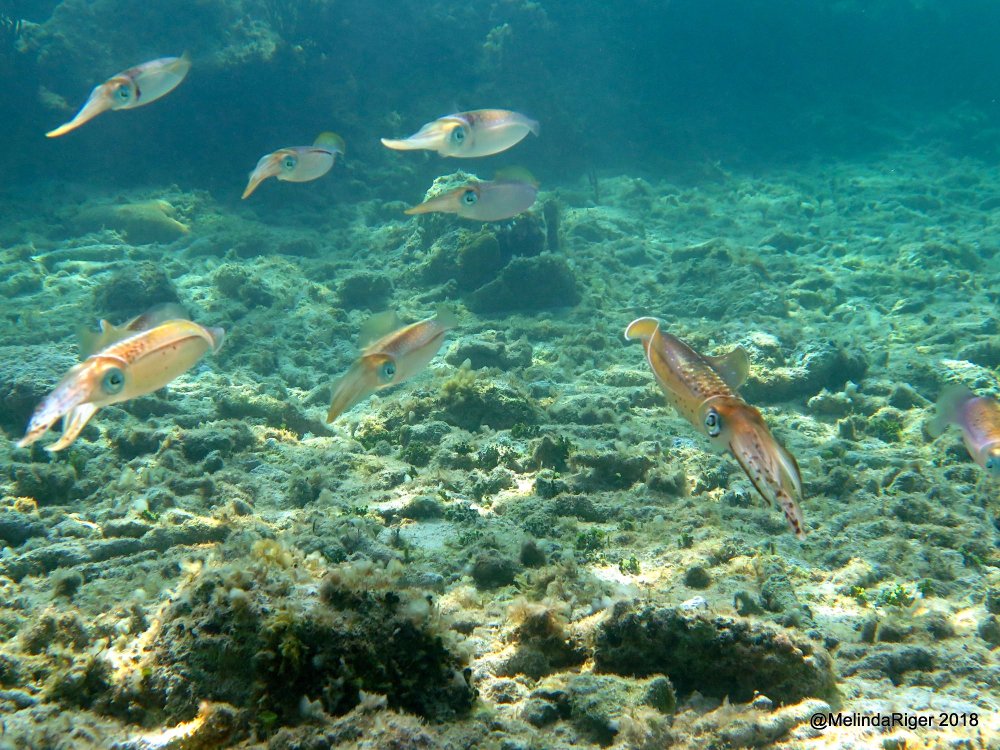
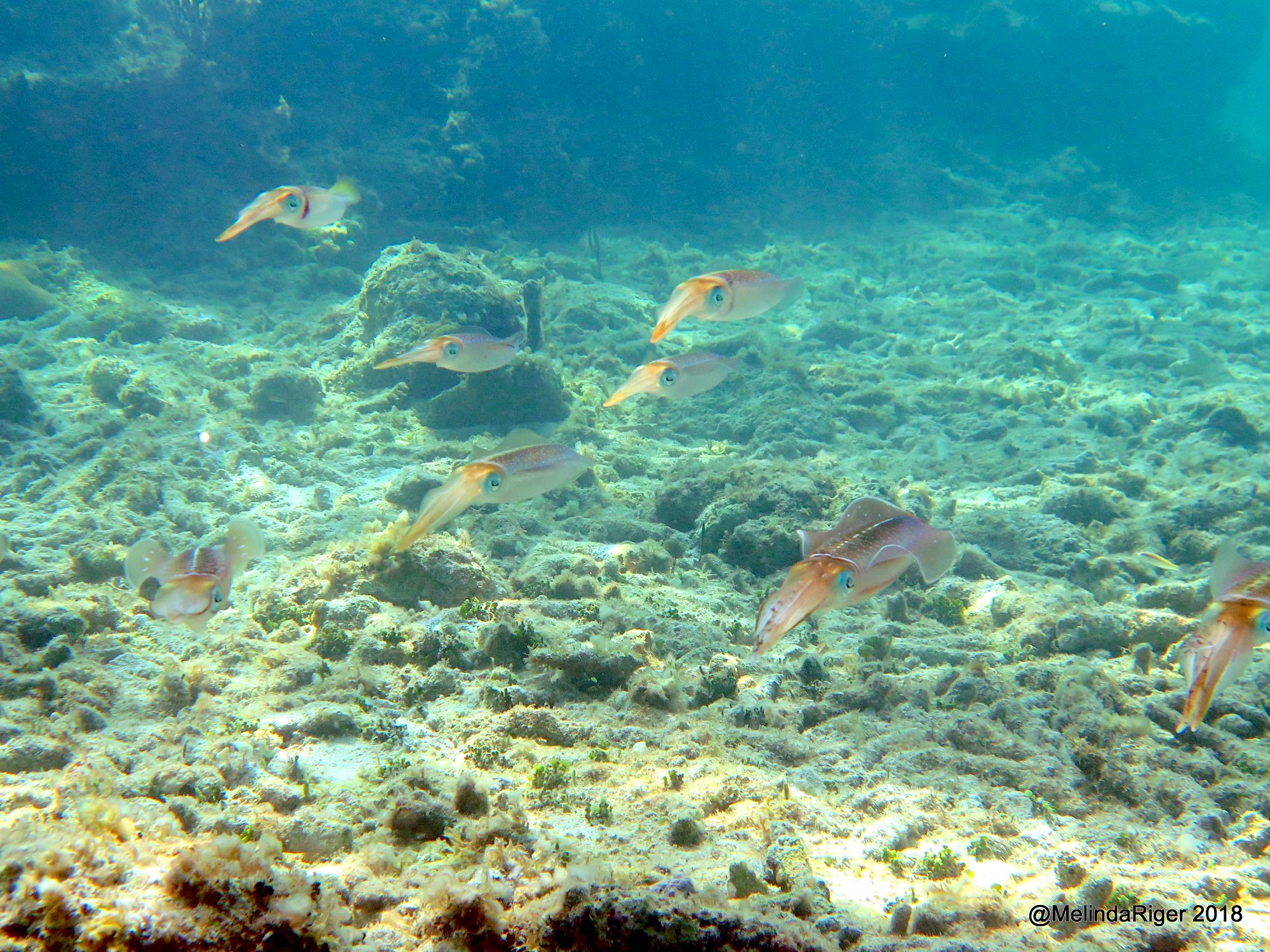
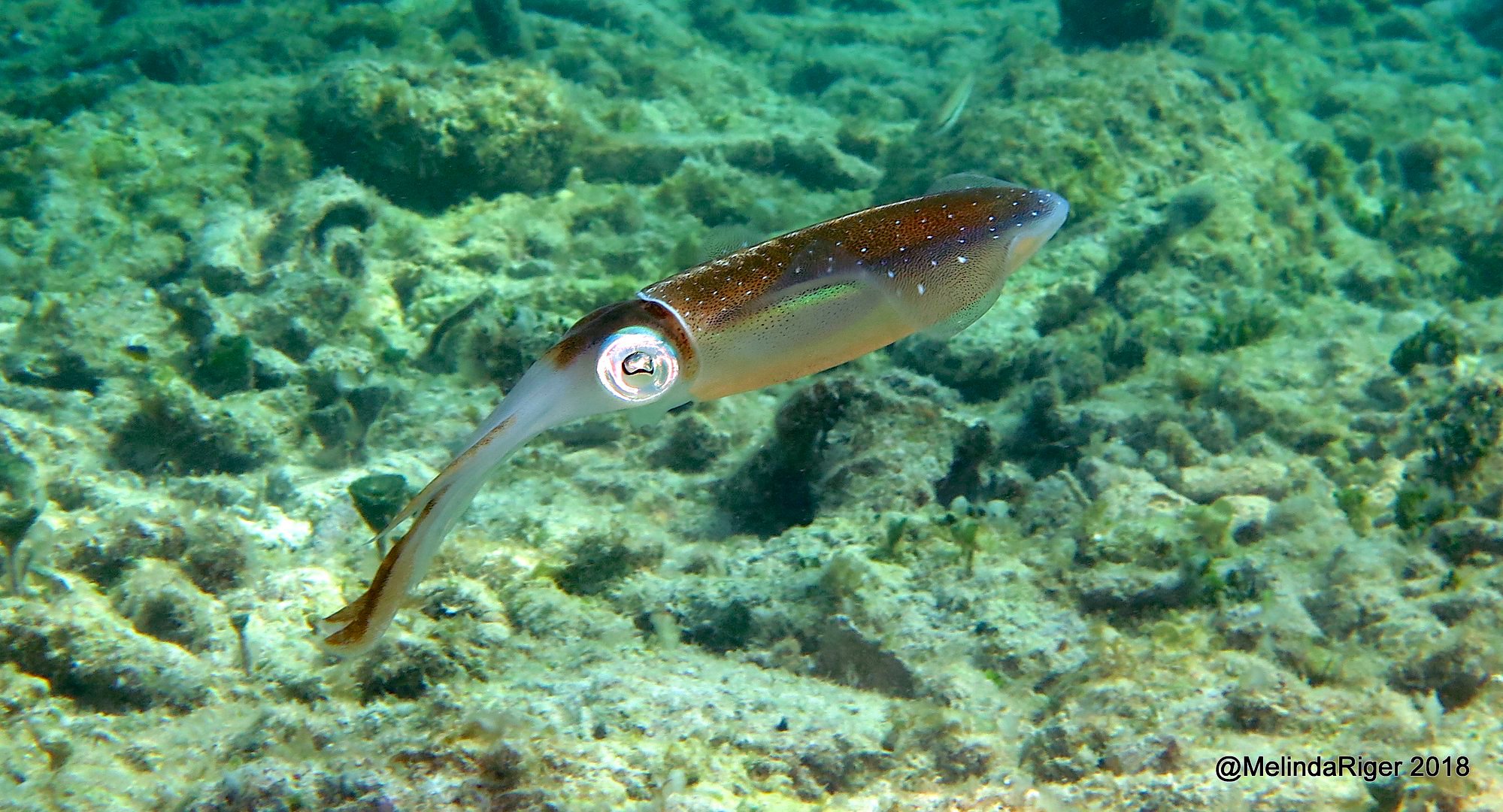
The Caribbean reef squid Sepioteuthis sepioidea is a small squid species of (mainly) the Caribbean Sea and the Floridian coast, and the most common in its range. These squid tend to form small shoals in and around reefs. Right now, in June, is a good time to find these creatures swimming in groups – all these photos were taken during the last fortnight. I wrote about squid a while back (3 years, maybe)? This post includes some parts of the earlier one, with all-new images. Squidmages, even.

Caribbean Reef Squid, Bahamas (Melinda Riger / G B Scuba)

Squid are voracious eaters, dragging their prey to their mouths with some or all of their 10 limbs and using their beak to cut it up. The target species are small fish, molluscs and crustaceans. The squid have a ‘raspy tongue’ known as a radula which further breaks up the food for easy consumption.

Caribbean Reef Squid, Bahamas (Melinda Riger / G B Scuba)

REEF SQUID SUPERPOWERS (SUPERCOOL)

  • Squid are capable of brief flight out of the water (a fairly recent discovery)
  • They can also hide from / confuse predators by ejecting a cloud of black ink
  • Squid can change colour, texture and shape, and can even match their surroundings
  • This enviable power is used defensively as camouflage or to appear larger if threatened
  • It is also used in courtship rituals (something that humans might find most disconcerting)
  • Colour patterns are also used for routine squid-to-squid communication AND GET THIS:
  • A squid can send a message to another on one side, and a different one to a squid on the other side

Caribbean Reef Squid, Bahamas (Melinda Riger / G B Scuba)

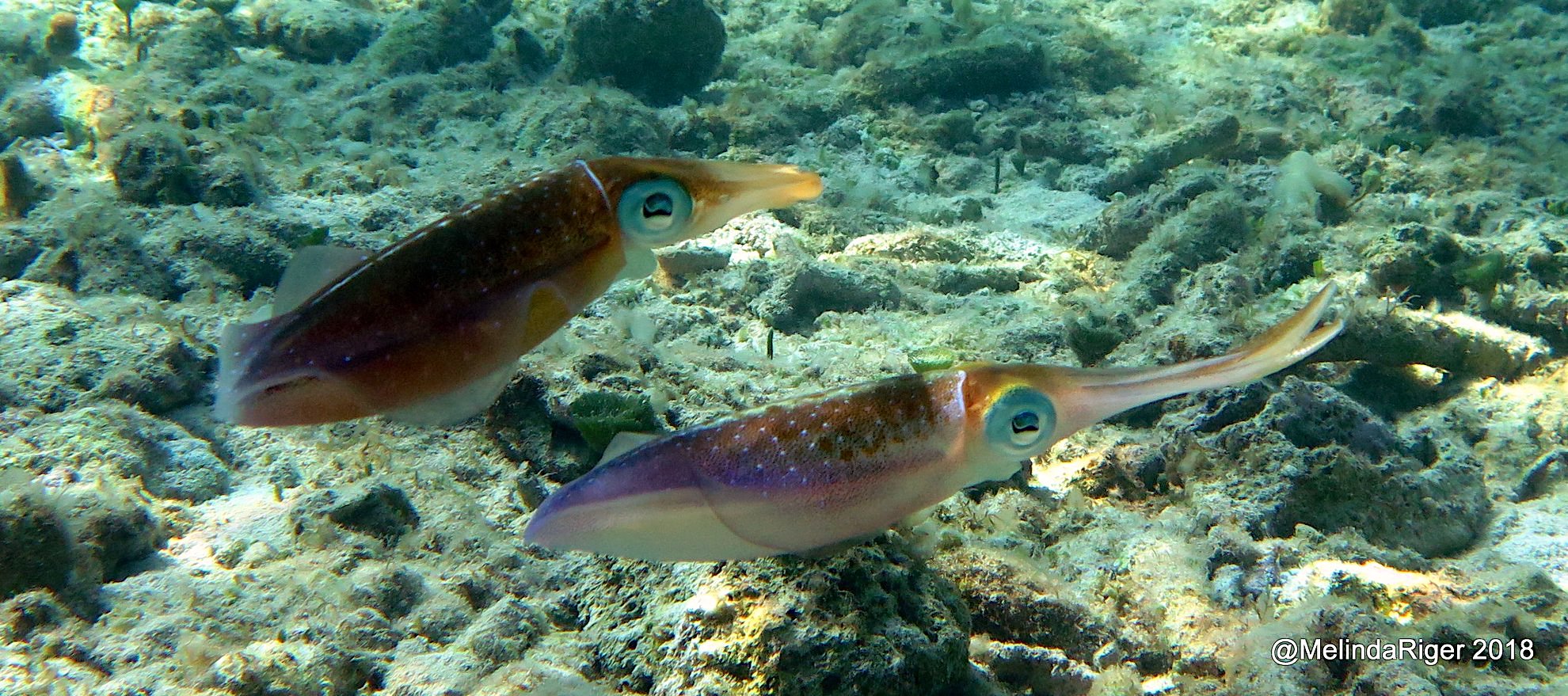
SQUID SEX (1) “ROMANCING THE SQUID”

  • A male will gently stroke a female with his tentacles
  • The female will (most likely) flash an ‘alarm’ pattern. She’s hard to get.
  • The male soothes her (don’t try this at home, guys) by blowing and jetting water at her
  • If this doesn’t go well, he’ll move off, then repeat the routine until she sees his good points
  • However this on / off courtship can last for hours until at last he succeeds and then…
  • … he attaches a sticky packet of sperm onto the female’s body (romance is not dead on the reef)
  • She then reaches for it and moves it to her seminal receptacle
  • Meanwhile he stays close, emitting a pulsing pattern, as well he might after all that palaver
  • She then finds a safe place to lay her eggs. Job done.

Caribbean Reef Squid, Bahamas (Melinda Riger / G B Scuba)

SQUID SEX (2) IT ALL ENDS BADLY. VERY BADLY.

  • As soon the female squid has laid her eggs, she dies at once
  • The male squid lives a bit longer and… may have other packets to stick on other lady squid
  • But then in the end he dies too
  • It’s all horribly reminiscent of Romeo and Juliet. The lovers die. But no the balcony scene

Caribbean Reef Squid, Bahamas (Melinda Riger / G B Scuba)

THE CORRECT PLURAL OF SQUID

I had an unwise look online, always a hotbed of conflicting opinions. Inserting an algorithm into the interstices of the internet proves conclusively that the plural of squid is… squid. One squid, ten squid, a group of squid, a plate of squid. Unless, that is, you are talking about more than one of the many squid species, when you could also have ‘I collect both reef and giant squids’. “Squidses” sounds fun but is sadly not permitted.

Caribbean Reef Squid, Bahamas (Melinda Riger / G B Scuba)

RELATED POSTS

THE PLURAL OF OCTOPUS

Credits: As ever (for fabulous underwater pics) Melinda Riger of Grand Bahama Scuba; research sources include MarineBio; Animal Diversity Web (Michigan Uni)

Unknown's avatar

‘CURIOUS GEORGE’ THE INQUISITIVE BLACK GROUPER


Black Grouper Bahamas (Curious George) - Melinda Riger / GB Scuba

‘CURIOUS GEORGE’ THE INQUISITIVE BLACK GROUPER

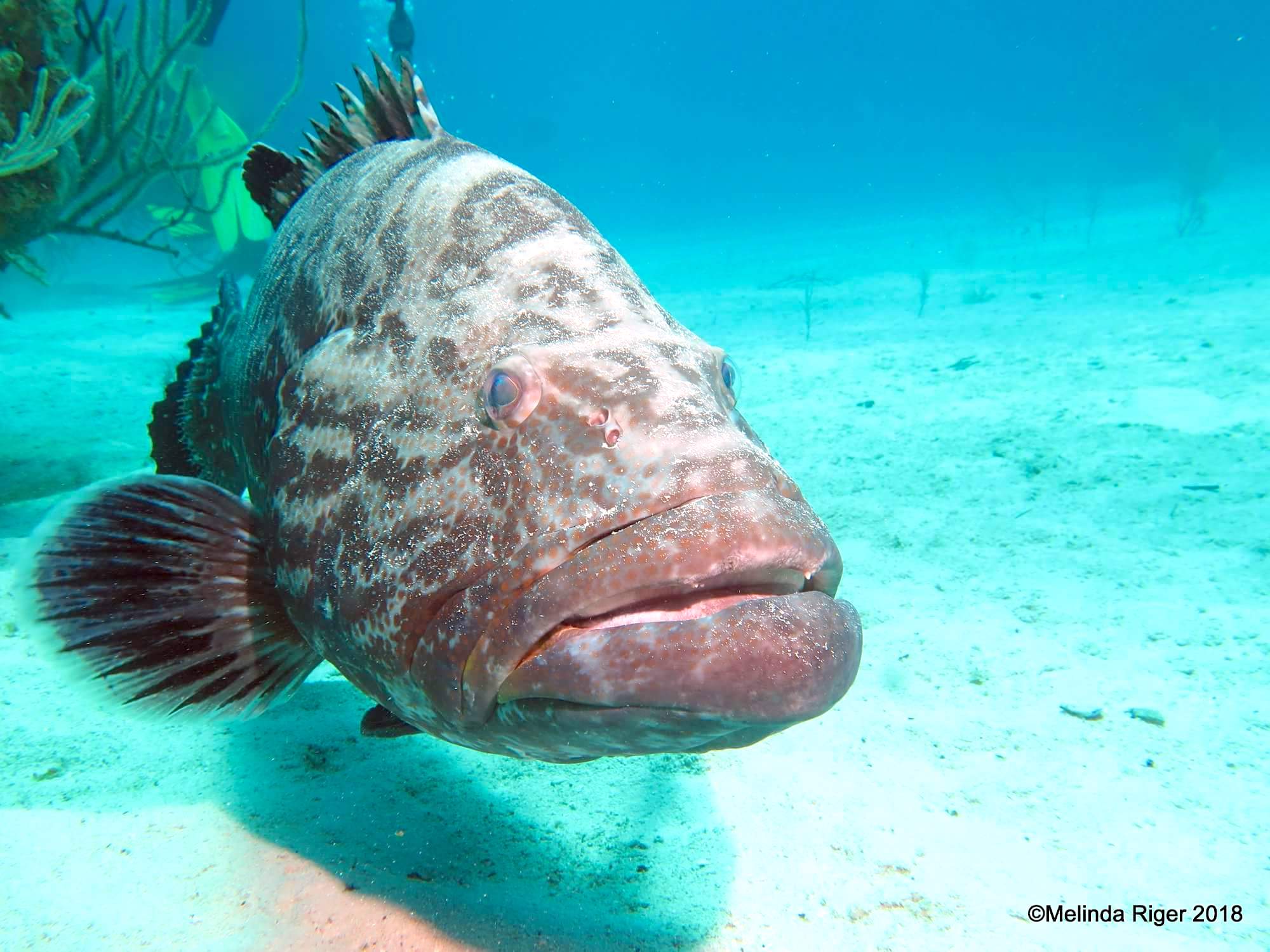
Fish, like humans, have a wide variety of temperaments, or so it seems. Resorting to anthropomorphic analysis of animal behaviour is a favourite pastime for humans. Who really knows if a creature is actually feeling shy or confident or playful or aggressive or indeed inquisitive. Often it just seems that way and we are happy to categorise dolphins as playful, sharks as vicious, angelfish as serene, small darting fish as timid and so on. 

Black Grouper Bahamas (Curious George) - Melinda Riger / GB Scuba

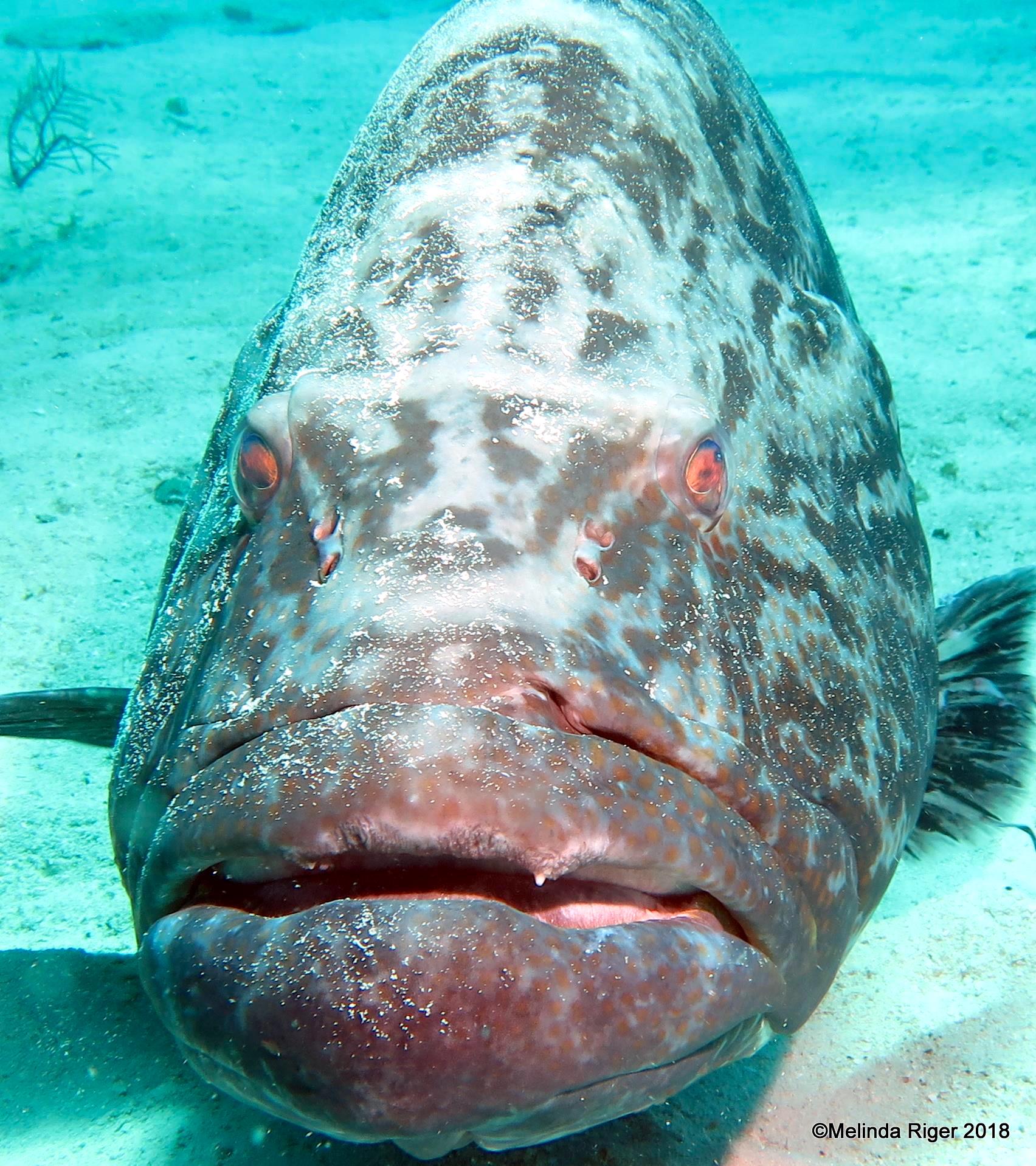
Occasionally a creature displays a ‘human’ characteristic that seems undeniable. One such is Curious George. He has become used to the divers around the reef where he lives, and greets them. He enjoys the photography sessions and the equipment, even though they may be for recording other fish. He demonstrates inquisitiveness for the strange-looking black-suited creatures that visit his patch. Like many groupers, he likes to be gently patted and stroked. 

Black Grouper Bahamas (Curious George) - Melinda Riger / GB Scuba

All this curiosity and friendliness evidences a benign interspecies relationship of symbiotic mutualism, through which both species (man and fish) benefit from the interaction. The mutually beneficial feeling might in broad terms be described as ‘pleasure’.

Black Grouper Bahamas (Curious George) - Melinda Riger / GB Scuba

Or maybe I am just indulging in a bit of over-anthropomorphisation (if there is such a word)…

All photos by one half of the symbiotic mutualism here, Melinda Riger (Grand Bahama Scuba)

Unknown's avatar

BAHAMAS REEF FISH (45) THREESPOT DAMSELFISH


Threespot Damselfish (Melinda Riger / GB Scuba)

BAHAMAS REEF FISH (45) THREESPOT DAMSELFISH

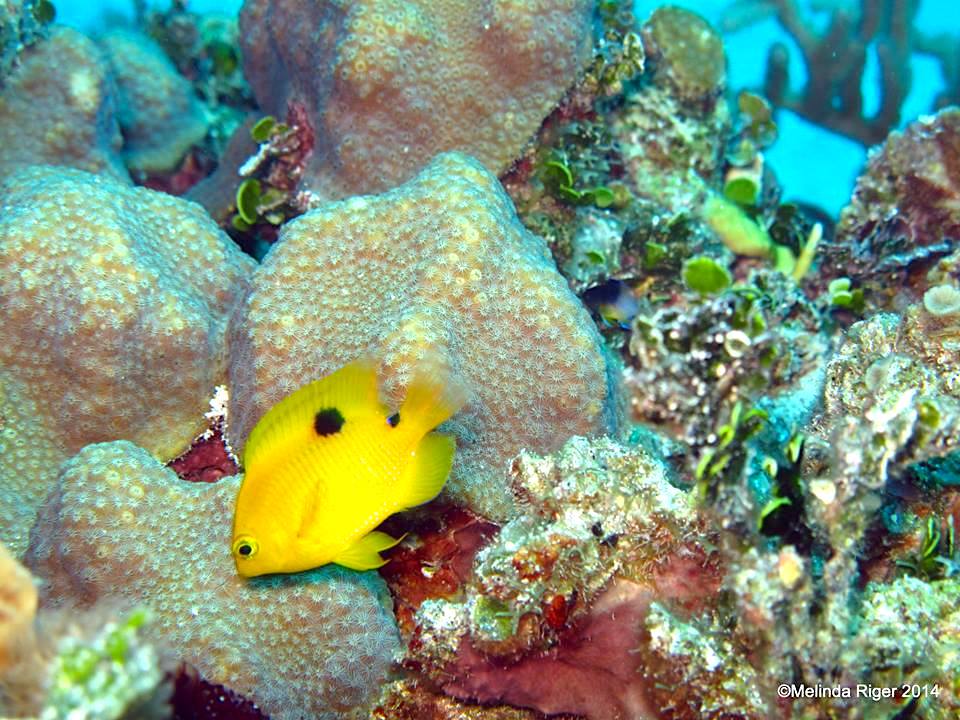
The threespot damselfish Stegastes planifrons is one of several damselfish types found in the Bahamas and more generally in the western Atlantic. As with so many reef species, there is a marked difference in coloration between juveniles (bright yellow) and darker-hued adults (above).

Threespot Damselfish (Melinda Riger / GB Scuba)Threespot Damselfish (Melinda Riger / GB Scuba)

These are bony little creatures, equipped with both spines and ‘soft rays’ on some of their fins. This perhaps make them unappealing to potential predators; and maybe the very brightness and ‘hi-viz’ of the juveniles is aposematic, a coloration thats acts as a warning or repellent to potential predators.

Threespot Damselfish (Melinda Riger / GB Scuba)

On the reef it seems threespots favour staghorn coral as a daytime base. Their diet is mainly seaweed, with small molluscs, gastropods and worms for variety. At night they retire to crevices and caves.

Threespot Damselfish (Melinda Riger / GB Scuba)

Adults are, for such small fish, vigorously protective of their territories. They will chase and nip intruders into their domains, even far larger creatures (up to and including humans).

Threespot Damselfish (Melinda Riger / GB Scuba)

A breeding pair will both be involved in egg care. Once the female has laid her eggs, they adhere to the lower reef and seabed. The male guards them and rather sweetly fans them with his fins to keep them oxygenated. And then another generation hatches and the threespot life cycle repeats.

Threespot Damselfish (Melinda Riger / GB Scuba)

Credits: All fantastic photos by Melinda Riger / Grand Bahama Scuba

Unknown's avatar

WTF? (WHAT’S THAT FISH?) 15 PORCUPINEFISH


Porcupinefish, Bahamas (©Melinda Riger / Grand Bahama Scuba)

WTF? (WHAT’S THAT FISH?) 15 PORCUPINEFISH

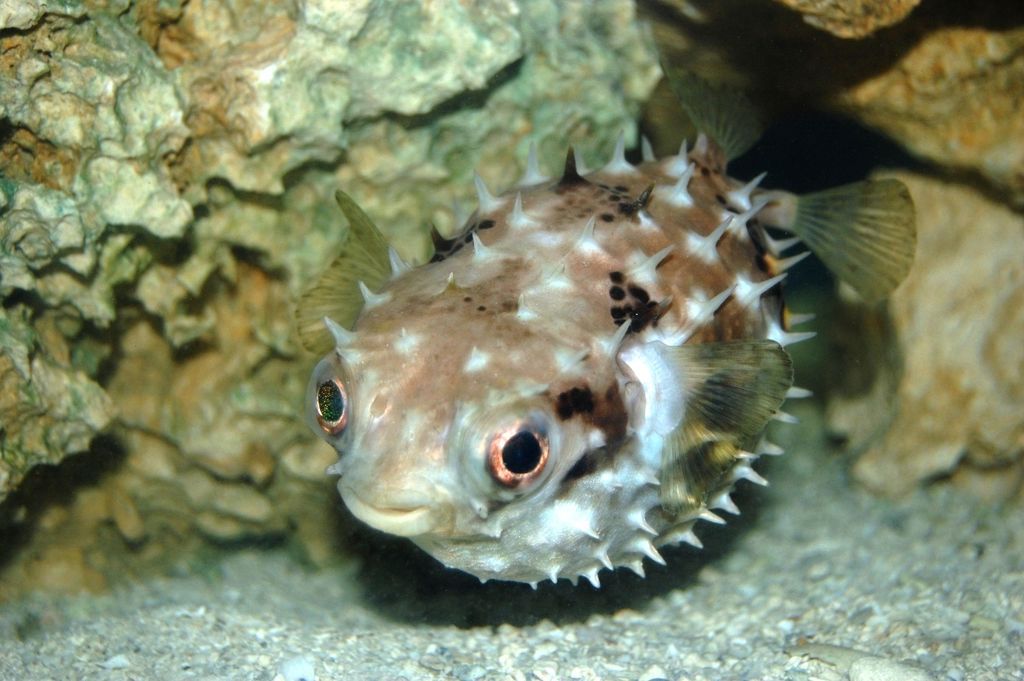
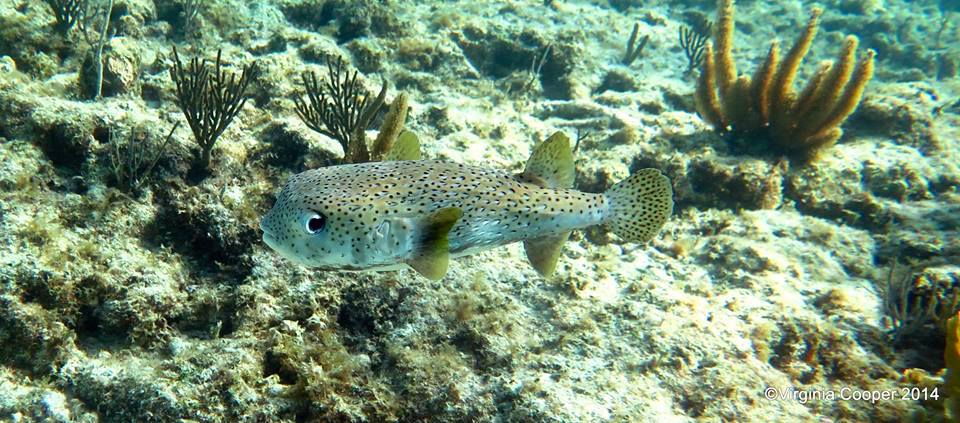
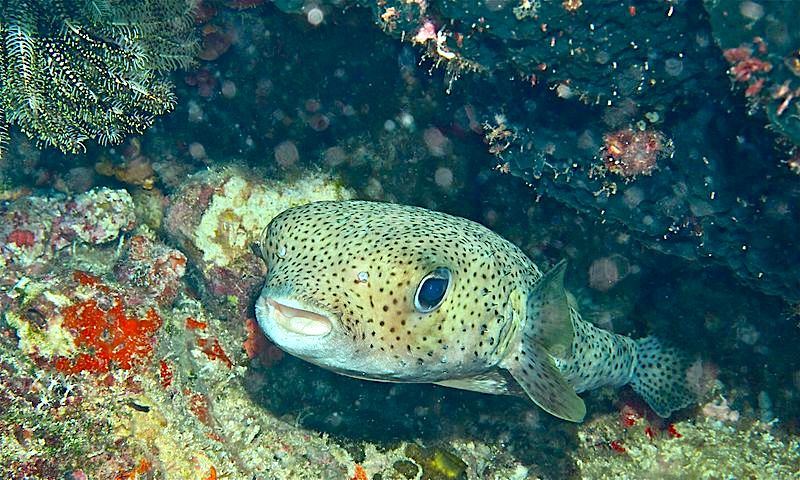
The porcupinefish Diodon hystrix falls into the general category ‘pufferfish’, though the particular species named PUFFERFISH are distinct in their own right. There are other similar species – e.g. balloonfish, blowfish and burrfish – with which there is scope for confusion. The relationship is something like this: all porcupinefish are pufferfish (in a broad sense); but not all pufferfish (in its species sense)  are porcupinefish. 

Porcupinefish, Bahamas (©Melinda Riger / Grand Bahama Scuba)

Porcupinefish are slow-moving reef dwellers and like their puffer cousins, they can inflate themselves by ingesting water, turning them into spiny balloons. This defence mechanism is a response to threat and works in two way: only predators with large mouths would consider them a meal; and even then they have to deal with the spines that become prominent when the fish is bloated.

Porcupinefish, Bahamas (George Parilla wiki)

I’VE HEARD PUFFERFISH ARE POISONOUS? WHAT ABOUT THIS GUY?

Good question. Checking it out, I’ve found some contrary statements about this. The truth seems to be that unlike pufferfish, they do not produce toxic secretions from their skins, so are not poisonous to touch (if you must**).

Porcupinefish, Bahamas (©Virginia Cooper / Grand Bahama Scuba)

However porcupinefish do contain powerful (neuro)toxins in their internal organs and are best not eaten – though in some parts of the world they are considered a minor delicacy. They may also suffer the ignominy of being dried in their inflated state and sold to tourists as novelties –  with lightbulbs inside for added amusement value. 

Porcupinefish, Bahamas (Bernard Dupont wiki)

ARE PORCUPINEFISH FAMOUS IN ANY RESPECT?

Indeed they are. They had the honour of being recorded by Charles Darwin. He gives a surprisingly long account of this creature, encountered during his renowned voyage on the Beagle. It clearly fascinated him. I’ve ‘ripped’ the relevant passage (open source – it’s ok) and turned it into an eezi-reed pdf if you want to check out Darwin’s careful observations in more detail:

THE VOYAGE OF THE BEAGLE – CHARLES DARWIN

Porcupinefish, Bahamas (Adam Rees / Scuba Works)

WAIT! ISN’T THERE A MORE RECENT CLAIM TO FAME?

Yes! In ‘Finding Nemo’, Bloat the Porcupinefish was part of the ‘Tank Gang’ in a dentist’s office. He had an encore in the closing credits of ‘Finding Dory’. Enough of fame already. Here’s a 50 second video demonstrating the puffer / porcupine distinction.

Porcupinefish, Bahamas (Adam Rees / Scuba Works)

RELATED POSTS
Photo Credits: Melinda Riger (1, 2); George Parilla (3); Virgini Cooper (4); Bernard Dupont (5); Adam Rees (6, 7); Video, ‘AquariumKids’ (I do high-powered research, see?)

**Incidentally, it’s apparently not considered an act of animal kindness to catch them / scare them so you can have the pleasure of watching them blow up

Unknown's avatar

BAHAMAS REEF FISH (44): PORKFISH


Porkfish (Grunt), Bahamas - Melinda Riger / Grand Bahama Scuba

BAHAMAS REEF FISH (44): PORKFISH

Behold the porkfish Anisotremus virginicus, the slightly unattractively named representative of the (arguably) even less attractively named grunt species. These small, bright-coloured reef dwellers are rarely more than 12 inches long. They are mainly nocturnal fish, feeding on small crustaceans, mollusks and so on. Juveniles have been observed acting as cleaners to larger species, feeding on parasites – an example of mutualism between species, in which both sides benefit from the arrangement.

Porkfish (Grunt), Bahamas - Melinda Riger / Grand Bahama Scuba

WHY IS A ‘PORKFISH’ A ‘GRUNT’

The terminology seems to be somewhat confused by local usages, but in general terms all porkfish are grunts; but not vice versa. Yet I notice that the term ‘porkfish’ is used to describe other types of grunt. A good rule of thumb is the the Atlantic Porkfish is the only grunt with two black vertical bars and yellow stripes… Note that grunts differ from their cousins the snappers by having a different dental arrangement – no canine teeth.

Porkfish (Grunt), Bahamas - Melinda Riger / Grand Bahama Scuba

AND WHY ‘GRUNT’ ANYWAY? DO THEY SOUND LIKE PIGS?

Well, perhaps a bit. All grunts, including porkfish, are capable of producing grunt-like sounds from some kind of grinding of their back teeth that is too technical to go into here**. The sound is associated with ‘situations of duress and danger’ – such as being caught and unhooked…

Porkfish (Grunt), Bahamas - Melinda Riger / Grand Bahama Scuba

DO YOU HAPPEN TO HAVE A RECORDING?

As it so happens I do. This is taken from a rather longer Youtube video in which a grunt was caught, unhooked and returned.You’ll hear a couple of grunts as the fish was unhooked, and some (perhaps understandable) hilarity on the boat. I guess you had to be there.

Porkfish are gregarious, and also mix with other speciesPorkfish (Grunt), Bahamas - Melinda Riger / Grand Bahama Scuba

ARE PORKFISH EDIBLE?

Like most if not all grunts, they are, with the proviso that there is some association with ciguatera. I’ve never knowingly eaten one myself, but I gather that “grits and grunts” is a popular culinary combo in some places. For those that might want to know more, a quick look at a couple of threads reveals the following:

  • They taste great, a bit like ham
  • Their white meat cooks very well
  • They taste better than black margates (another grunt species)
  • Eat them in enchilado or breaded fillets
  • ‘Big-ass head’ on them so not much if you filet
  • If you scale and cook whole you get a better yield on them
  • When fishing for supper, ‘shoot ’em up and hold off for the bigger ones’

Porkfish (Grunt) - Brian Gratwicke (wiki)

Credits: all great photos by Melinda Riger /  Grand Bahama Scuba, except the last by Brian Gratwicke (wiki); soundbite from Youtube video 2010 by peachyree; research from seaworld.org; britannica.com and the usual suspects…

** Subtle code for “I haven’t really understood it…”

Unknown's avatar

BAHAMAS REEF FISH (43): CUBERA SNAPPER


BAHAMAS REEF FISH (43): CUBERA SNAPPER

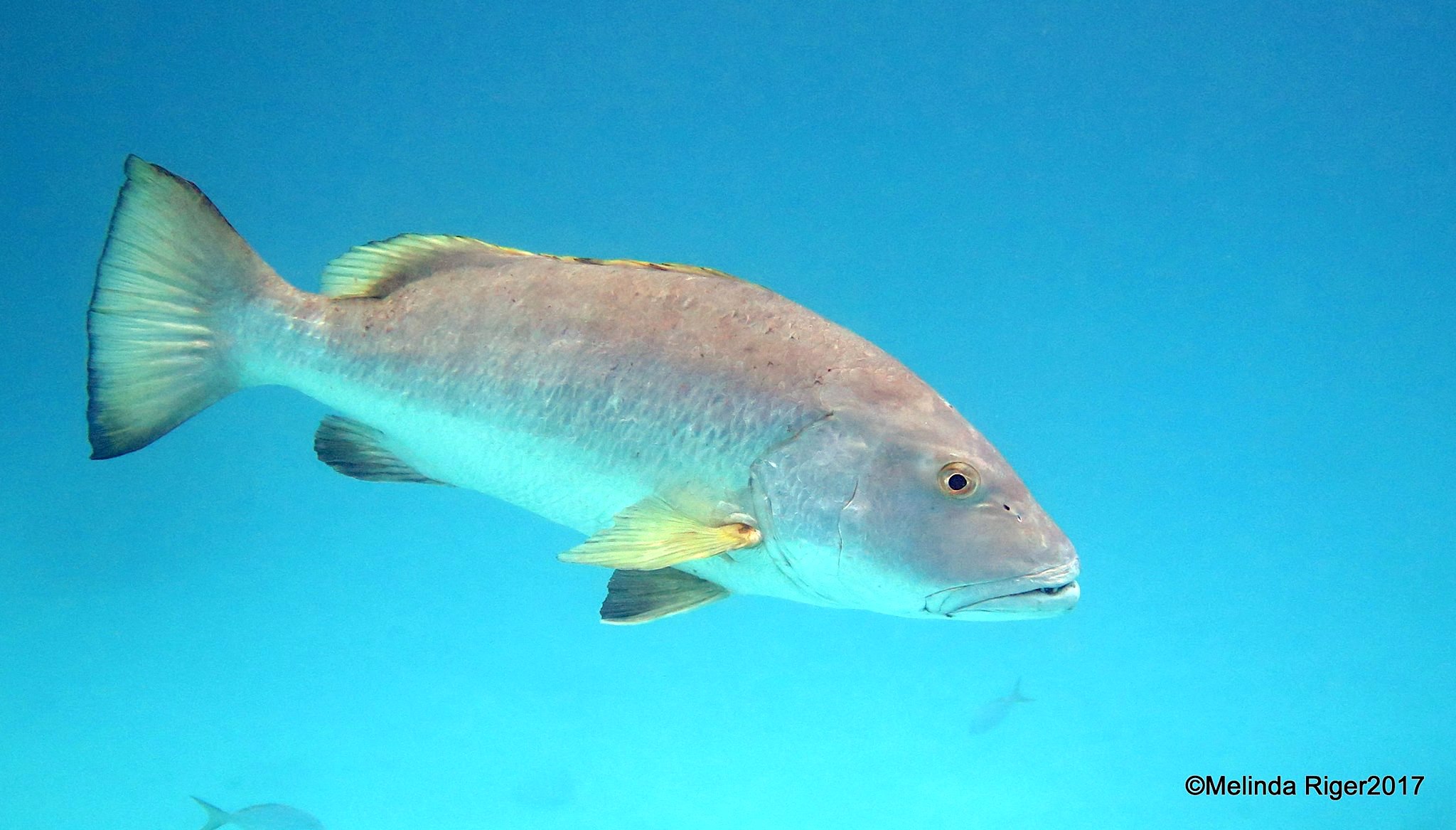
The cubera snapper (Lutjanus cyanopterus) is the largest snapper species. Adults may grow to 5′ long but they average around 3′ long and weigh 40 lbs or so (the record apparently stands at a massive 126 lbs). These are game fish, and they are a commercially important species. They are also IUCN listed as vulnerable, perhaps for that very reason. 

10 CUBERA SNAPPER SNAPPY  FACTS

  • The largest of a large number of snapper species in the western Atlantic
  • Feed on fish, shrimps & crabs, with large strong teeth (see pics) and jaws
  • Among their (few) predators are sharks, barracuda, and moray eels
  • Edible, but beware of the danger of CIGUATERA poisoning
  • In summer months, spawning is governed by lunar cycles
  • Cuberas form huge spawning masses (to 10k) in offshore shallows
  • Sadly the resulting eggs and larvae are rich pickings for predators…
  • Youngsters live in sea grass or mangroves for protection
  • Cuberas are game fish with commercial importance
  • IUCN listed as vulnerable – largely courtesy of mankind (see »)

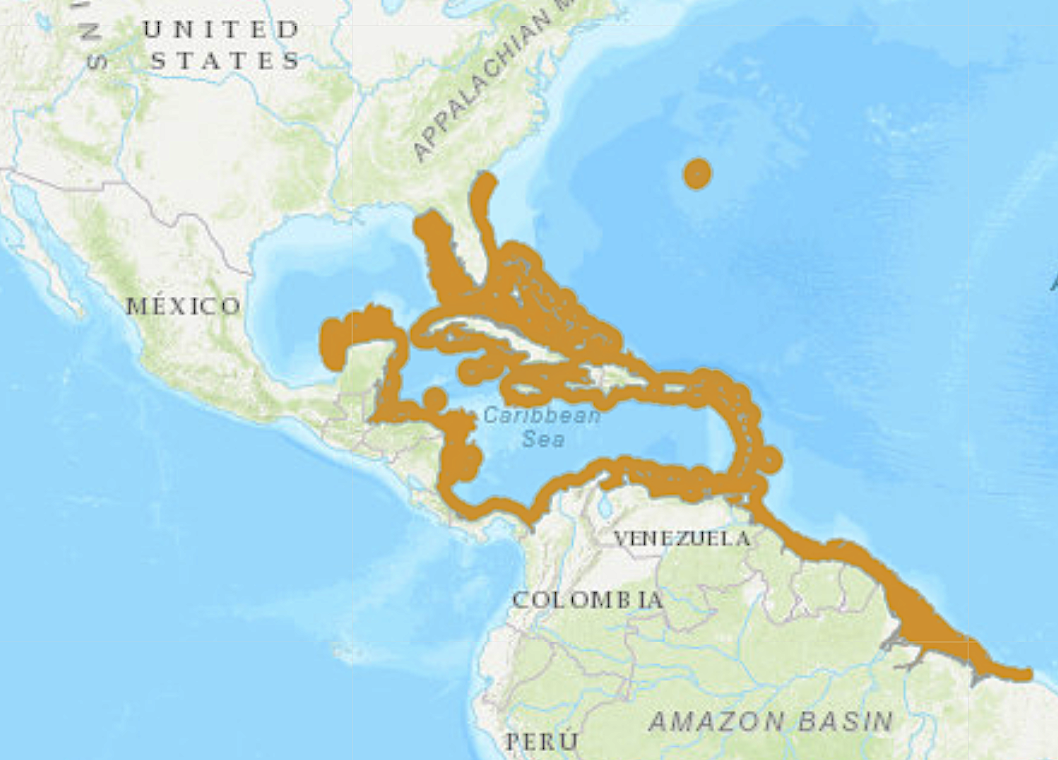
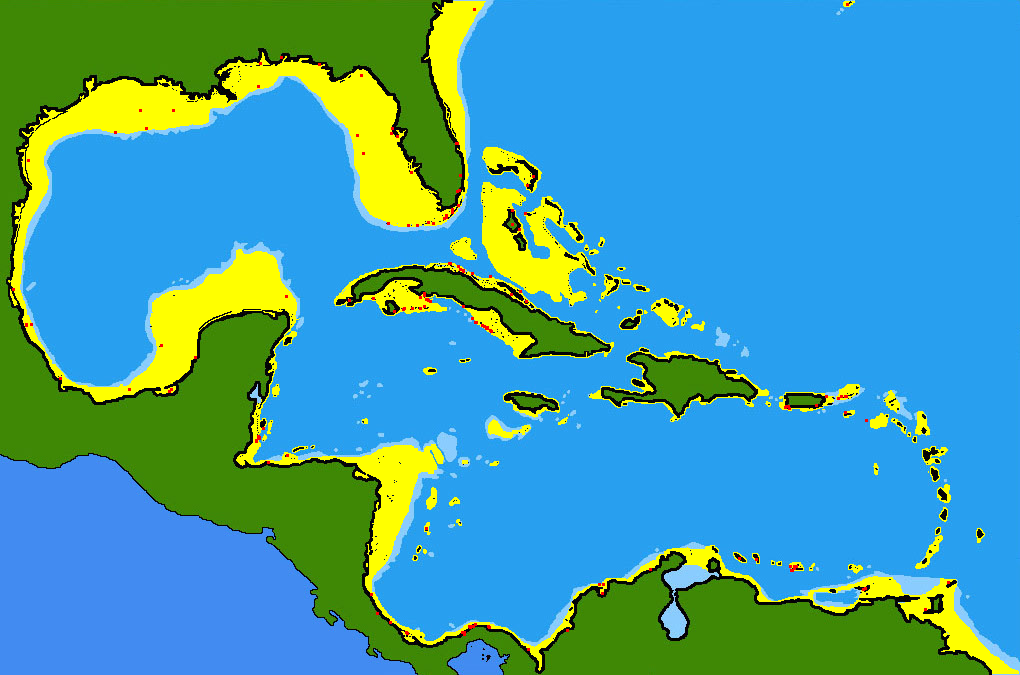
RANGE FINDER

Cubera Snapper Range Map (wiki)

CONSERVATION MATTERS

Overfishing is one of the greatest threats to the species. Those young fish that are not predated naturally and grow to adulthood are targets for fishermen. There’s no prissy ‘catch & release’, as with bonefish. At spawning time, as the fish instinctively (and predictably) mass as the moon dictates, so do the human predators. The spawning sites are where the best protection can be given, to ensure the annual reproductive cycle is uninterrupted. If not, ‘vulnerable’ will soon give way to ‘endangered’…

I’d been going to pull apart a long recipe for the “wonderfully sweet white meat ” of this fish for the tastiest morsels of info, then (not being a cook) I quickly tired of the idea. Sorry to disappoint. 

Credits: Melinda Riger for the wonderful photos; range map from wiki; magpie research pickings, including (but not limited to ) Nat Geo

Unknown's avatar

GRAYSBY (GROUPER): BAHAMAS REEF FISH (42)


Graysby (grouper) - Melinda Riger / Grand Bahama Scuba

GRAYSBY (GROUPER): BAHAMAS REEF FISH (42)

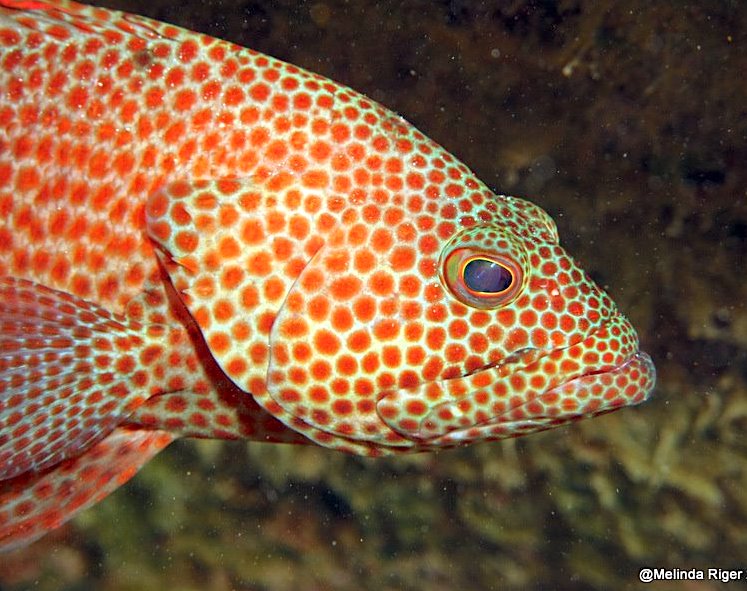
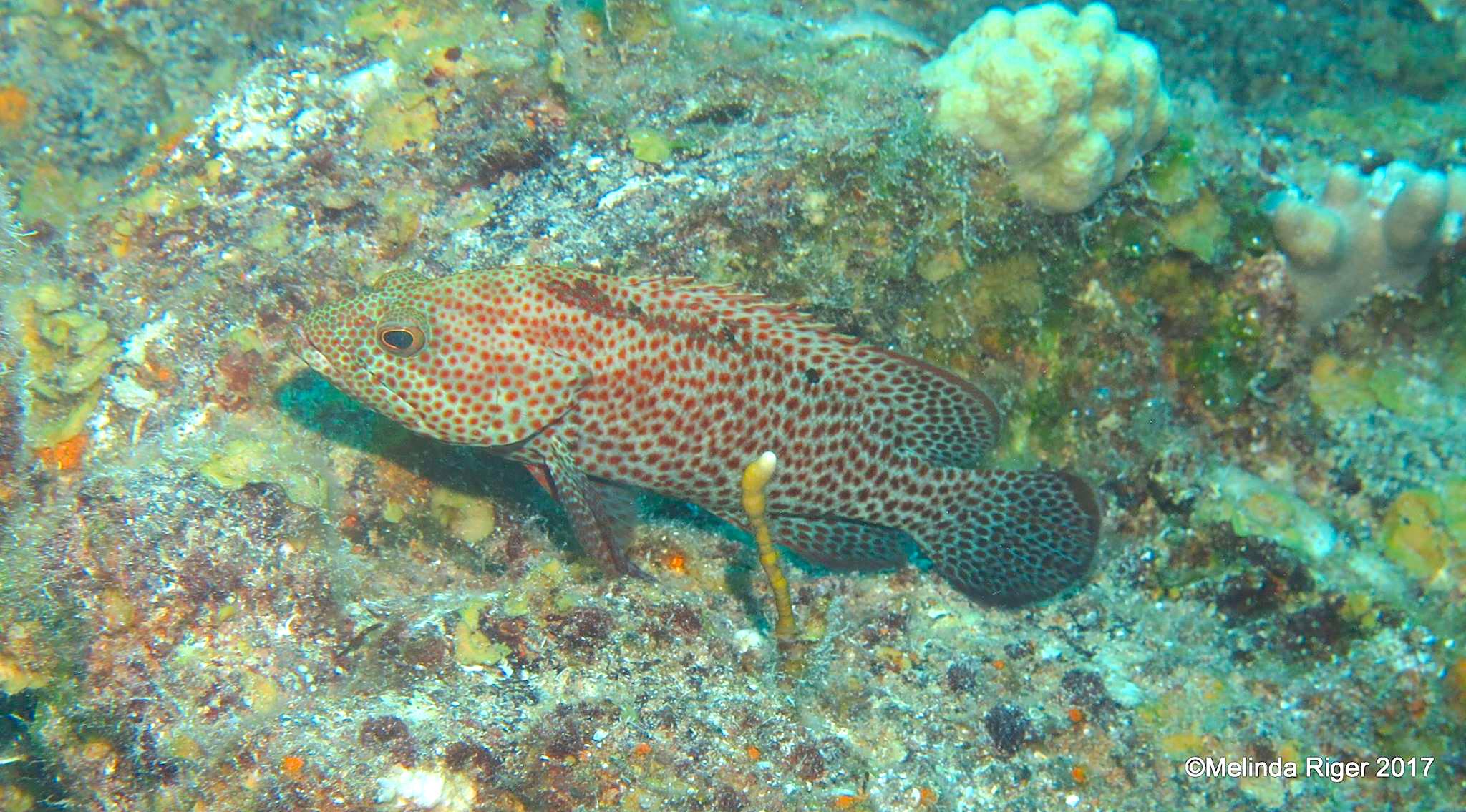
The Graysby Cephalopholis cruentata is a small, spotty grouper, which grows to a maximum of around 16 inches. These rather unassuming and solitary fish have a preference for coral reefs, where they can blend in with their surroundings on ledges and in caves and crevices during the day. At night, they become active – that’s when they feed on feed on small fish, crabs and shrimps. 

Graysby (grouper) - Melinda Riger / Grand Bahama ScubaGraysby (grouper) - Melinda Riger / Grand Bahama Scuba

The graysby has variable colouring in a range from light brown to pale gray, with all-over spots that may be red, orange or brownish. Often, they have 3 to 5 contrasting spots on their backs, along the base of the dorsal fin, as below:
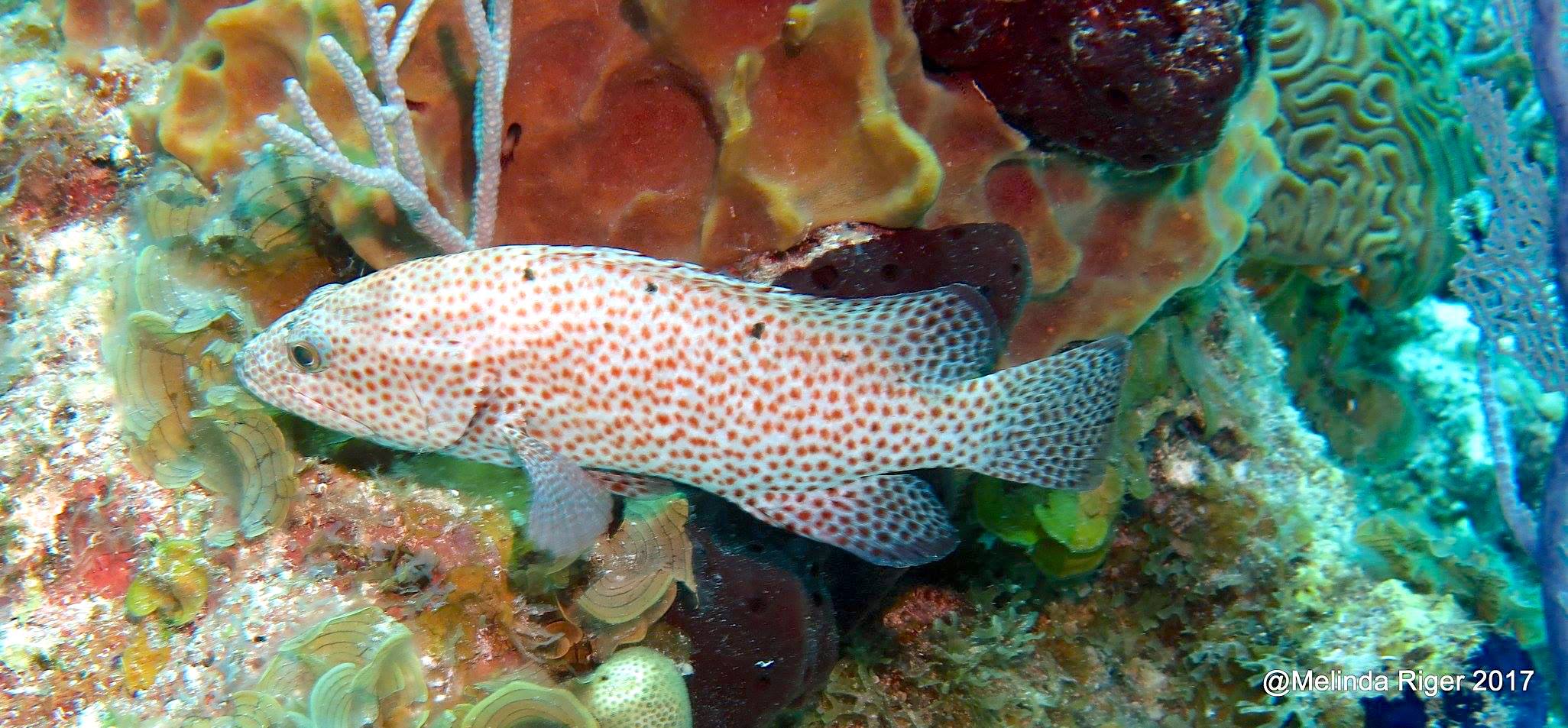
Graysby (grouper) - Melinda Riger / Grand Bahama ScubaGraysby (grouper) - Melinda Riger / Grand Bahama Scuba

The long erectile dorsal fin comprises both spines and ‘rays’ – spines at the front, rays at the back. Like this:

The spots of a graysby can change in colour (at least to a limited extent), becoming either paler or darker. I imagine this is a protective feature to enable the fish to blend in more easily with its reef surroundings. 

Graysby (grouper) - Melinda Riger / Grand Bahama Scuba

Signalling to turn right…

I wondered if they are edible. I believe so – but then I also read that the larger adults carry the risk of ciguatera and raised mercury levels. So I’ll give it a miss thanks.

Photo & other credits: all photographs by Melinda Riger / Grand Bahama Scuba; aqua.org; SAMFC (drawing)

Unknown's avatar

WTF? (WHAT’S THAT FISH?) 14: ARROW CRABS


Arrow Crab (Melinda Riger / Grand Bahama Scuba)

WTF? (WHAT’S THAT FISH?) 14: ARROW CRABS

It’s been a while since the last in the WTF? series, which is dedicated to the wilder, less conventionally fish-shaped side of reef life – those creatures that you may come across, blink into your face-mask,  and silently mouth the words ‘What’s That Fish?’ (that’s what it looks like you are saying, anyway).

Arrow Crab (Adam Rees)

Let’s meet some Arrow Crabs Stenorhynchus seticornis, one of the very few creatures surely to have a triangular body plus a huge pointy nose (rostrum), supported on long skinny legs. To which add, they wear tiny blue gloves on their two front claws.

Arrow Crab (Melinda Riger / Grand Bahama Scuba)

These crabs are coral reef dwellers and mostly stay concealed during the day. Their body is protected by a carapace, and the rostrum has serrated edges like a tiny rasp or file. I haven’t found a definitive reason for this gadget, but I suspect it is more for probing than for piercing or fighting.

Arrow Crab (Melinda Riger / Grand Bahama Scuba)

There’s a considerable colour variation among these crabs, as these images show. The body may even have blue iridescent lines (#2, above). And those claws may be any of 50 shades of blue…

Arrow Crab (Melinda Riger / Grand Bahama Scuba)

Arrow crabs are most active at night. They eat feather-duster worms (illus.) and similar invertebrates such as bristle worms.

Feather-duster worm (Melinda Riger / G B Scuba)

Arrow Crab Meal

Like certain types of shrimp, they also have a symbiotic relationship with anemones, whereby they make use of an anemone to benefit from the food it captures – and possibly for cover too. They are protected from anemone stings, whereas some of their predators are not.

This was the place where I was going to tell you about the arrow crab’s private life, but, well… “it’s complicated”. Briefly it is: male passes sperm-filled capsule to female; she uses it in some way whereby it fertilises her eggs; she then ‘broods’ the eggs in one of her ‘swimming legs’; the eggs hatch into larvae and swim off to eat plankton; each one then grows & moults, repeating the process until it has reached adult form. On balance, humans have arguably perfected a preferable method.

Arrow Crab (Nick Hobgood / Wiki)

Arrow Crabs are apparently popular aquarium creatures, although they sound to me rather a disagreeable challenge. They can move quickly on those long legs, and it seems as if they inclined to be aggressive to other inhabitants of the tank. As far as I can make out, it’s best not to put 2 of them together: they certainly won’t be doing the sperm capsule thing described earlier… 

Arrow Crab (Adam Rees)

Master of Disguise

Photo credits: Melinda Riger / G B Scuba (1, 3, 4, 5, 6); Adam Rees / Scuba Works (2, 8, 9); Nick Hopgood,Wiki (7); Chuck Elliot – video

Arrow Crab (Adam Rees)

Unknown's avatar

SOUTHERN STINGRAYS: BAHAMAS REEF FISH (41)


Southern Stingrays, Bahamas (Melinda Riger / Grand Bahama Scuba)

SOUTHERN STINGRAYS: BAHAMAS REEF FISH (41)

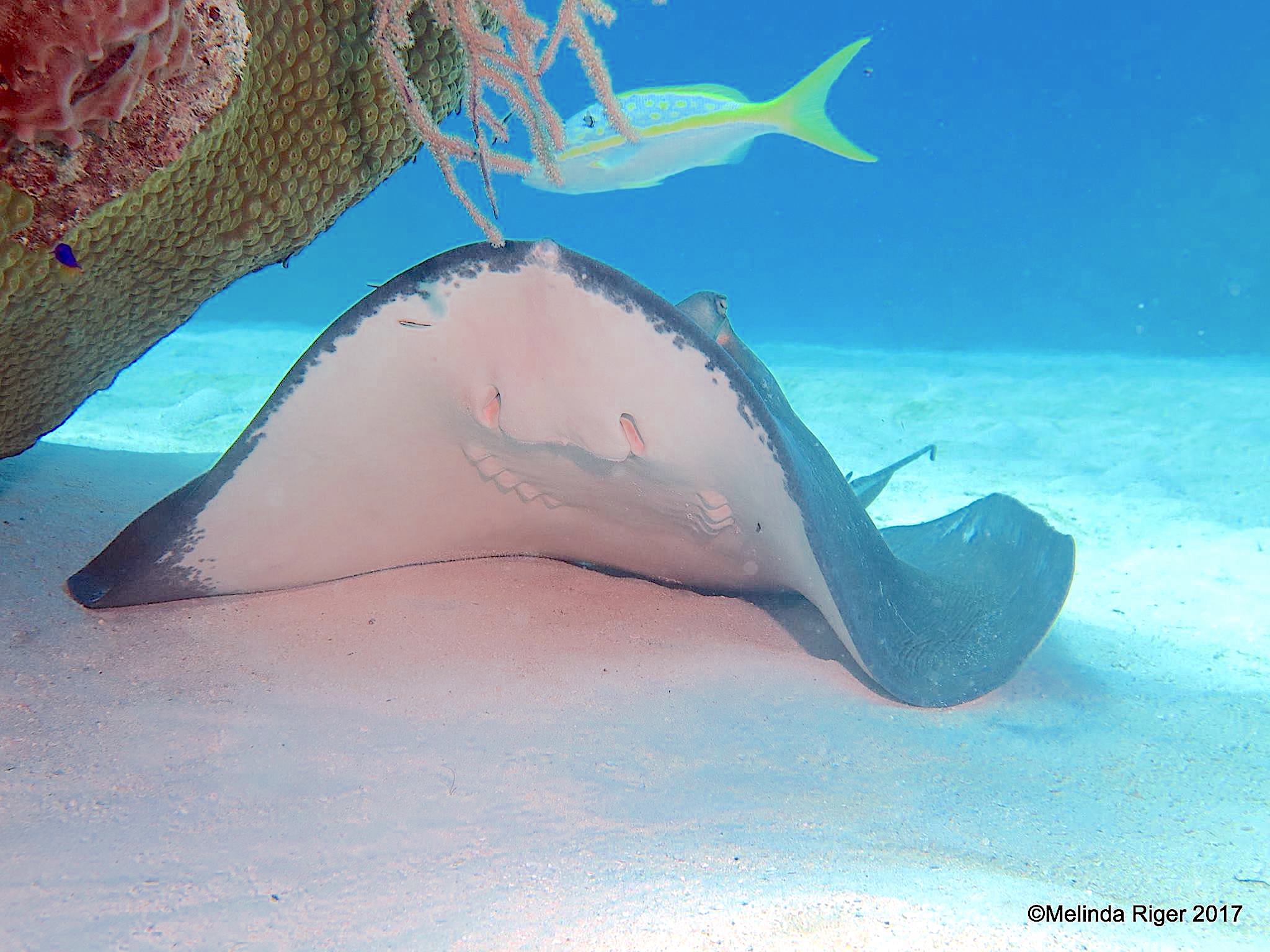
Anyone who has scuba-dived or snorkelled around the bright coral reefs of the Bahamas, or hunted bonefish out on the Abaco Marls will have come across Southern Stingrays Dasyatis americana. And there are certain places (eg Manjack Cay) where you can actually feed them – and not come to any harm

Southern Stingrays, Manjack Cay, Bahamas (Samantha Regan)

FEED THEM? AREN’T THESE GUYS LETHALLY DANGEROUS CREATURES?

Southern Stingrays, Bahamas (Melinda Riger / Grand Bahama Scuba)

The name that always comes to mind in connection with stingrays is poor Steve Irwin, the charismatic Australian wildlife expert who was tragically ‘stung’ over his heart as he swam close over a ray while filming underwater. But this was, it would appear, a dreadful combination of circumstances with a terrible outcome.

Southern Stingrays, Bahamas (Melinda Riger / Grand Bahama Scuba)

The ray’s stinger is in fact an erectile venomous barbed spine near the base of the tail and not on the end of it (as one might expect). But these creatures are not out to harm you – though of course when you are in their environment you should accord them the respect that they merit.

Southern Stingray (Tomas Willams, wiki)

If you are walking / wading in the water, avoid the risk of accidentally treading on a ray. Best to shuffle your feet forward in the sand; if there’s a half-concealed ray feeding or resting on the bottom nearby, it will swim away peacefully. I took the photo below while bonefishing on the Marls; the ray directly ahead slowly makes off as the skiff drifts closer. The next one is of a ray with its young – completely aware of us as we glide past to one side, but not especially bothered.

Southern Stingrays, Bahamas  (Keith Salvesen)Southern Stingray adult and young, Bahamas  (Keith Salvesen)

If you are swimming, snorkelling or diving, don’t get too close – especially by swimming directly over a ray (apparently Steve Irwin’s mistake, so that he was struck right in the chest by the stinger when the ray reacted).

Southern Stingrays, Bahamas (Melinda Riger / Grand Bahama Scuba)

Enough of the potential dangers. The southern stingray is a magnificent creature, as Melinda’s wonderful photographs show. She spends half her life underwater and I’m not aware that she has had a problem with a ray. 

Southern Stingrays, Bahamas (Melinda Riger / Grand Bahama Scuba)

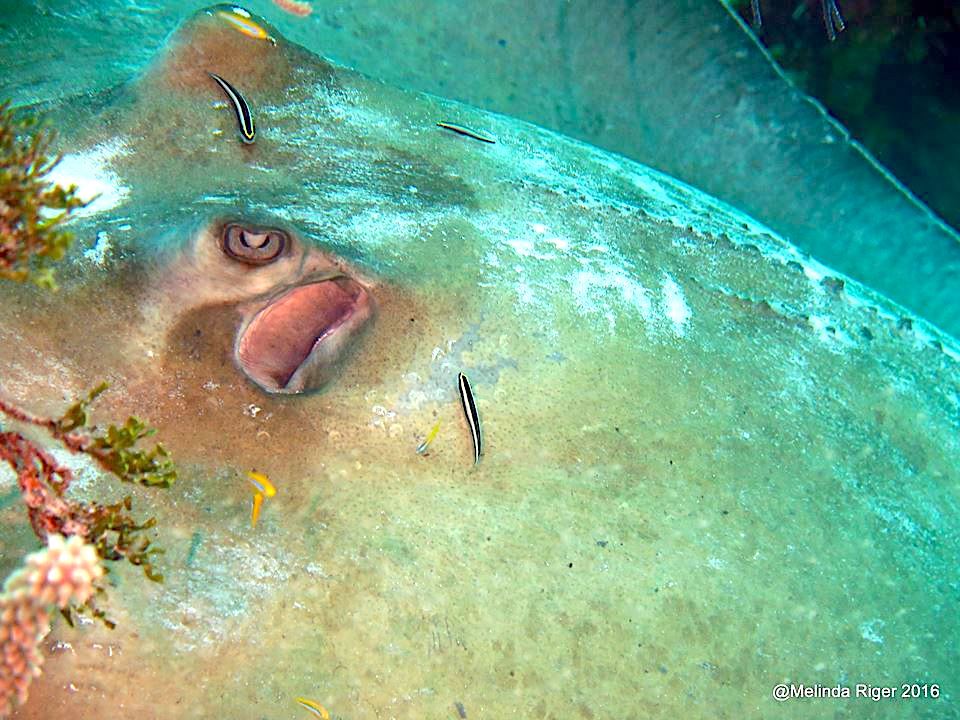
Like many larger sea creatures, stingrays need help with their personal care – the removal of parasites, dead skin and so forth. And so they make use of the services offered by small fish like gobies, wrasses and shrimps at a CLEANING STATION. Here are 2 photos of rays doing just that. You can see the tiny fish by the reef, going about their work. There’s a mutual benefit in this symbiotic relationship, in which it is understood that the cleaners are unharmed. Indeed, they will often enter the mouths and gills of a fish to clean… including the teeth. So there’s dental hygiene on offer too…

Southern Stingrays, Bahamas (Melinda Riger / Grand Bahama Scuba)

Southern Stingrays, Bahamas (Melinda Riger / Grand Bahama Scuba)

RELATED POSTS

YELLOW STINGRAY

GRACE WITH ATTITUDE

TAKEN TO THE CLEANERS

Photo Credits: Melinda Riger / Grand Bahama Scuba, except for the feeding photo (cheers, Samantha Regan), the ‘specimen’ from Tomas Willems (Wiki) and my two noted above

Unknown's avatar

NASSAU GROUPER: ENDANGERED… AND PROTECTED


Nassau Grouper (Melinda Riger / Grand Bahamas Scuba)

NASSAU GROUPER: ENDANGERED… AND PROTECTED

Most creatures need some space for creative activity of one sort or another. Especially one particular sort, namely breeding. And for vulnerable and endangered species, this is especially important in order to maintain a sustainable population, and preferably to increase it year on year. Which is why there are closed seasons for certain fish, ensuring a time when they can be left alone to breed in peace and to perpetuate their species.

Nassau Grouper (Melinda Riger / Grand Bahamas Scuba)

The Nassau grouper Epinephelus striatus is just one of a number of grouper species that inhabit Bahamian waters. They are mostly found in the Northern Bahamas but only the Nassau grouper is on the IUCN Red List as an Endangered Species in need of protection.

Nassau Grouper (Melinda Riger / Grand Bahamas Scuba)

WHY ARE THESE FINE FISH ENDANGERED?

Sad to say, mankind is the main cause of the population fragility that has led to the official listing, and the imposition of a strict closed season for 3 months between December 1st and February 28th. Scientific studies have shown that commercial overfishing has reduced a thriving population to fewer than 10,000 mature fish. That may sound plenty to be going on with… until you consider that a net annual loss of only 10% would lead to extinction in a decade.

Nassau Grouper Infographic (Royal Defence Force)

10 CONVENIENTLY COLLECTED NASSAU GROUPER FACTS TO PONDER

  • An adult can grow to more than a metre long, and weigh 25 kg
  • They tend to be solitary daytime feeders, eating small fish & crustaceans
  • Their large mouths are use to ‘inhale’ or suck in prey
  • The colouring of an individual can vary from red to brown
  • These fish have little black spots around the eyes (I’ve no idea why).
  • Their habitat is in the vicinity of coral reefs, from shallows to 100 m deep
  • Spawning occurs in Dec & Jan during a full moon
  • Large numbers gather in a single location to mate in a mass spawning
  • These groupers are slow breeders, which compounds the overfishing problem
  • They are easy mass targets at spawning time; hence the need for a closed season

Nassau Grouper (Melinda Riger / Grand Bahamas Scuba)

Department of Fisheries information sheet (interesting if you have the time)

A Nassau Grouper glumly contemplates the possibility of extinctionNassau Grouper (Melinda Riger / Grand Bahamas Scuba)

RELATED POSTS

BLACK GROUPER

TIGER GROUPER

RED HIND

NASSAU GROUPER 1

CLEANING STATIONS

Nassau Grouper (Melinda Riger / . Grand Bahama Scuba)

Credits: all photos, Melinda Riger; Infographic by Royal Defence Force (tip o’ the  hat to Char Albury); Info Sheet, Dept of Fisheries

Unknown's avatar

BAHAMAS REEF FISH (40): FOUR-EYED BUTTERFLYFISH


Four-eyed Butterflyfish, Bahamas (Melinda Riger / G B Scuba)

BAHAMAS REEF FISH (40): FOUR-EYED BUTTERFLYFISH

Four-eyed (or foureye) butterflyfish (Chaetodon capistratus) are small, somewhat circular fish with an endearingly pointy little snout. They are one of several butterflyfish species found in Bahamian waters. On their sides are smart ‘go-faster’ chevrons, with the unmistakeable white-circled black ‘eye’ at the back. The real eyes, in the conventional position, are small and far less noticeable, not least because of the stripe that passes right through them.

Four-eyed Butterflyfish, Bahamas (Melinda Riger / G B Scuba)

WHY THIS EXOTIC PATTERNING?

This type of misleading pattern is not uncommon in fishes and indeed in terrestrial creatures. It creates confusion in predators – and when this little fish is threatened it swims away with its large ‘eye’ prominent to the pursuer.  It acts as a warning and an off-putting feature that suggests ‘don’t eat me’. If you half-close your eyes and look at the image below, the large eyes stand out against the reef background and hint at a creature not to be tangled with. Why reef predators don’t rumble this ruse within minutes, I have no idea.

Four-eyed Butterflyfish, Bahamas (Melinda Riger / G B Scuba)

WHAT IF THE RUSE FAILS?

Foureyes are very agile swimmers and can take advantage of narrow gaps and clefts in the reef  by swimming sideways or even upside-down to manoeuvre away from danger and to safety where the predator cannot reach it. 

Four-eyed Butterflyfish, Bahamas (Melinda Riger / G B Scuba)

AND IF THAT DOESN’T WORK?

If the foureye is in deep trouble, it has an alternative cunning plan. It will turn and face the pursuer, head down and dorsal spines erect. This posture says both ‘I’m very spiny – watch out’ and ‘I’m coming atcher’. 

Four-eyed Butterflyfish, Bahamas (Lazlo Ilyes wiki)

AND IF THAT DOESN’T WORK? I’M WORRIED FOR IT NOW…

Curtains. It’s lunchtime, I’m afraid.

♦ ♦ ♦ ♦ ♦ ♦ ♦ ♦ ♦

Foureyes are far from the only reef dwellers that have predator-confusing markings. In the image below, the foureye at the top is swimming with a larger BUTTER HAMLET, a species that also relies on an abnormal spot pattern to put off predators. This is a great capture, and it also illustrates how the smaller reef fishes can hang out together amicably.

Four-eyed Butterflyfish, Bahamas (Melinda Riger / G B Scuba)

RELATED POSTS

REEF BUTTERFLYFISH 

SPOTFIN BUTTERFLYFISH

LONGSNOUT BUTTERFLYFISH

Image Credits: 1, 2, 3, 4, 6, Melinda Riger / Grand Bahama Scuba; 5, Lazlo Ilyes


Unknown's avatar

BAHAMAS REEF FISH (39): YELLOWTAIL DAMSELFISH


Yellowtail Damselfish (©Melinda Riger / Grand Bahama Scuba)

BAHAMAS REEF FISH (39): YELLOWTAIL DAMSELFISH

Yellowtails are just one of several damselfish species in Bahamas waters. These small fish are conspicuous not just for the bright tails that give them their name. More striking if anything – especially if seen underwater in sunlight against the coral – are the electric blue spots visible in both adults and juveniles.

Yellowtail Damselfish (©Melinda Riger / Grand Bahama Scuba)

The body of adults is dark blue to brownish to almost black 

The body of juveniles is blue

Yellowtails are a common and widespread variety of damselfish. They have a limited ability to change colour according to their surroundings, but with their bright tails and luminous blue flecks, it’s hard to see how they can look, to a predator, anything other than a tasty snack.

I have enjoyed seeing these little fish at Fowl Cay Marine Preserve, Abaco. The reef there makes for easy and rewarding snorkelling, with a wide variety of small and medium-size reef fishes to be seen. It’s an expedition I would definitely recommend to anyone wanting to see a healthy and active reef in a completely natural protected area.

I found that a video I took with a tiny camera was sadly of use only to myself. No one else would be able to make anything out due to the marked camera shake. Novices, huh? You are spared that: here’s a brief example of yellowtails swimming instead, showing the difference between juveniles and adults.

Credits: all photos, Melinda Riger / Grand Bahama Scuba; video from Desert Diving

Unknown's avatar

‘RAISE AWARENESS’: SPOTTED EAGLE RAYS


Spotted Eagle Rays, Abaco, Bahamas (Gabrielle Manni)

Spotted Eagle Rays – Abaco, Bahamas

‘RAISE AWARENESS’: SPOTTED EAGLE RAYS

Mention of rays may conjure up thoughts of the familiar southern stingrays that populate the bright shallows and colourful reefs of the Bahamas. But there are other ray species out there gracefully patrolling the coral reefs – and one of these species is the spotted eagle ray (Aetobatus narinari).

Spotted Eagle Rays, Abaco, Bahamas (Catherine / Tara Pyfrom)

These fish (for that is what they are) are not uncommon. In fact they are found in tropical oceans worldwide (though there is a taxonomic distinction between the Atlantic version and the Pacific / Indo-Pacific ones). Note the concentration in the Caribbean sea.

Spotted Eagle Rays, Grand Bahama, Bahamas (Melinda Riger / GB Scuba)

Spotted eagle rays obviously have spots, but they are not notably eagle-like to look at. In fact, their snouts resemble a duck’s bill, and in some place they are less glamorously known as the duckbill ray. The ‘eagle’ part relates to the way in which they use their wings and appear to be soaring as they glide effortlessly through the water (see videos below).

Spotted Eagle Rays (Lazlo-photos Wiki)

Despite their global presence, these rays are categorised as ‘near-threatened’ on the IUCN Red List. Aside from vulnerability to predators including many types of shark, the rays may be caught as bycatch. In some areas they suffer entanglement in shark nets. And unsurprisingly there is a trade for them for large commercial aquariums. For the Atlantic species, Florida has taken a lead by banning fishing for, landing, buying or trading in spotted eagle rays. 

Spotted Eagle Rays, Abaco, Bahamas (Gabrielle Manni)

10 ESSENTIAL FACTS ABOUT SPOTTED EAGLE RAYS

  • They have 2 – 6 venomous barbed spines at the base of the tail
  • Adults are among the largest rays, with a 10 ft wingspan
  • They can leap clear of the water, and may do this more than once at a time
  • Occasionally they land in boats, to the consternation of all concerned
  • Their main diet is small fish and crustaceans, & sometimes octopuses
  • Their broad snouts are used to dig food out of the seabed as they forage
  • The rays are basically shy but may be curious of divers & snorkellers
  • They suffer from parasites, both externally and in their gills
  • Ray sex is quite physical, yet actual mating is brief (up to 90 secs…)
  • The female hatches her eggs internally, then her ‘pups’ are born live a year later

SPOTTED EAGLE RAY PUP


Spotted Eagle Ray (John Norton Wiki)

 VIDEO SHOWCASE
These 3 short videos demonstrate the grace and beauty of spotted eagle rays as they glide elegantly around the reefs. The first (50s) was taken off Grand Bahama by Fred Riger (Melinda’s husband, for those who follow the underwater forays hereabouts); then one by Stephen Dickey (2:12) ; and finally one from Wildscreen Arkive (2:00).

WEIRD CREATURE CORNER

I have a lot of time for these cards produced by ‘Weird ‘n’ Wild Creatures’. In their unique style they are simple, educative and often give information nuggets not found elsewhere. The link is to their 4th series, Monsters of the Deep.


Photo credits: Gabrielle Manni (1), (5); Catherine & Tara Pyfrom (2); Melinda Riger / Grand Bahama Scuba (3); Lazlo-photos Wiki (4); Wiki (baby ray thumbnails); John Norton Wiki (6); Jacob Robertson Wiki (7); Weird ‘n’ Wild Creatures – card images. Videos as credited in text.

Spotted Eagle Ray, TCI (Jacob Robertson, Wiki)
Unknown's avatar

QUEEN TRIGGERFISH AND GOOD RIDDANCE TO MARIA


Queen Triggerfish Bahamas (Melinda Riger / Grand Bahama Scuba)

QUEEN TRIGGERFISH AND GOOD RIDDANCE TO MARIA

I can think of no sensible connection between the colourful yet undoubtedly strange and grumpy-looking looking queen triggerfish Balistes vetula, and a hurricane. However, Hurricanes Irma and Maria have been rightly dominating the news and everyone’s thoughts for nearly 3 weeks now. And most of the recent posts from Rolling Harbour, for that matter. It’s not been a great time for looking at the birds, beasts and fishes. So, as Maria drifts eastwards and away from the Bahamas into the open ocean, it’s time for a splash of colour – and a fish I have not featured before. 

Hurricane Maria tracking at 11.00 EST on Sept 22

Queen Triggerfish Bahamas (Melinda Riger / Grand Bahama Scuba)Queen Triggerfish Bahamas (Melinda Riger / Grand Bahama Scuba)

The queen triggerfish, sometimes known as an Old Wife, is an Atlantic reef fish. This species is sometime fished for as game, and I know that a few have been taken from off the rocks at the south end of Delphi beach over the years – though perhaps not exactly on purpose.

Queen Triggerfish Bahamas (Mark Peter, Wiki)Queen Triggerfish Bahamas (Melinda Riger / Grand Bahama Scuba)

This fish typically is coloured with shades of  blue, purple, turquoise and green with a yellowish throat, with pale blue lines fins on head and fins. It’s minor superpower is to be able to change its coloration to some extent to match its reef surroundings and assist camouflage. Its favourite food is the sea urchin.

Queen Triggerfish Bahamas (Clark Anderson / Aqua-images)

Let’s hope this is the last post to feature anything about hurricanes for a good long time, as we think of all those still struggling to make sense of the terrible destruction they have recently experienced – in some places, twice over.

Credits: Melinda Riger / Grand Bahama Scuba; Mark Peter, Wiki; Clark Anderson / Aqua-images