Unknown's avatar

‘CHECK OUT THE WEB’: SEMIPALMATED PLOVERS ON ABACO


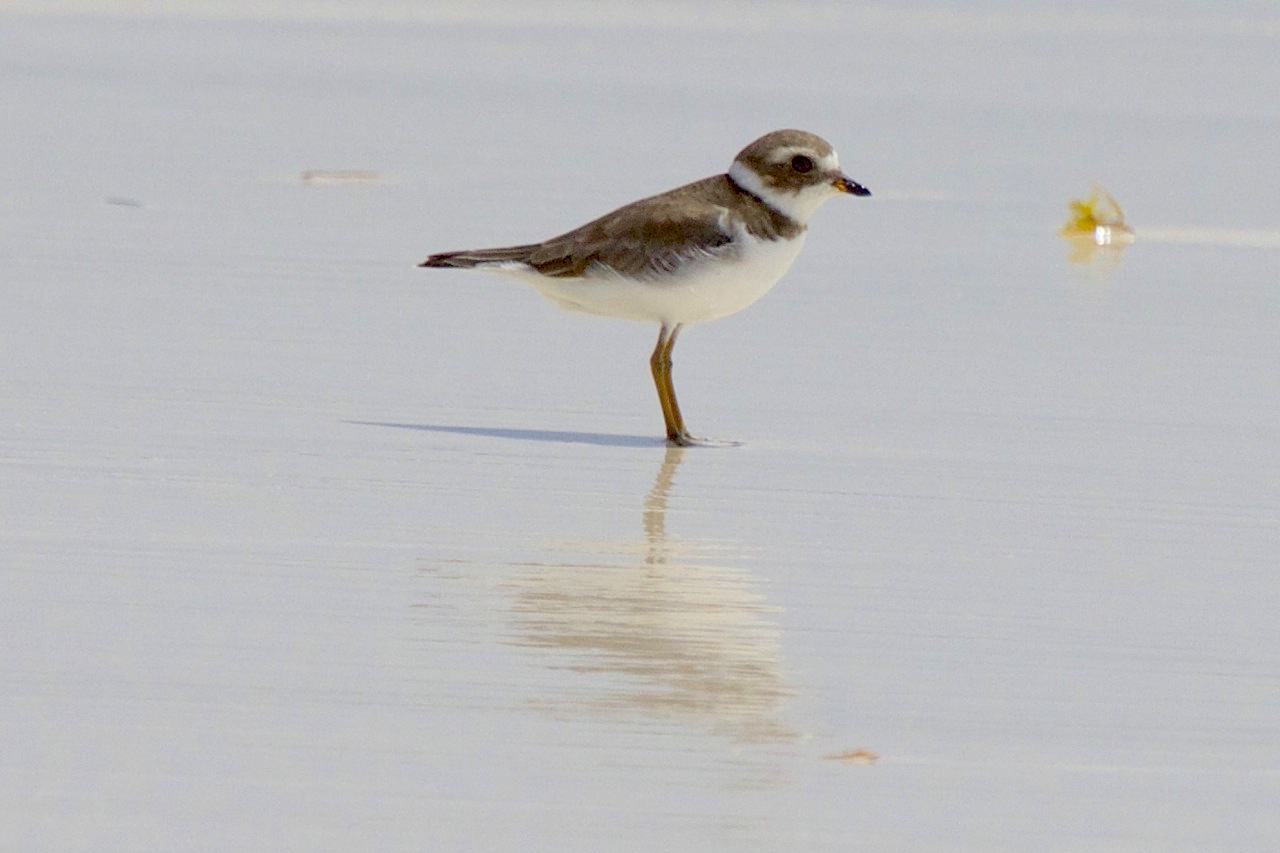
Semi-Palmated Plover, Abaco (Alex Hughes)

‘CHECK OUT THE WEB’: SEMIPALMATED PLOVERS ON ABACO

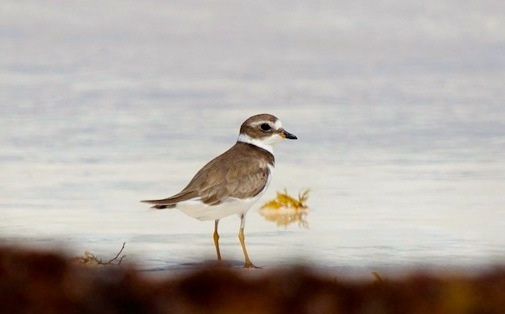
“Semipalmated”. You what? Come again? Ehhhh? My reactions to the word until embarrassingly recently. In fact until the steep learning curve involved in writing a bird book made some all of the terminology clearer. Plovers and sandpipers both have semipalmated versions, and I’ll take the semipalmated plover (Charadrius semipalmatus) first.

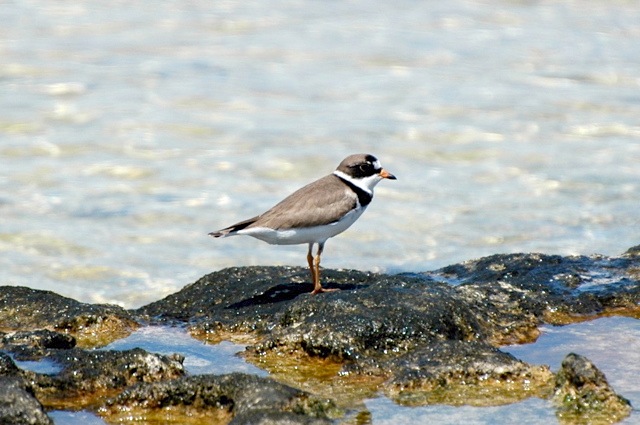
Semipalmated Plover, Abaco (Woody Bracey)

WHAT SHOULD I LOOK FOR?

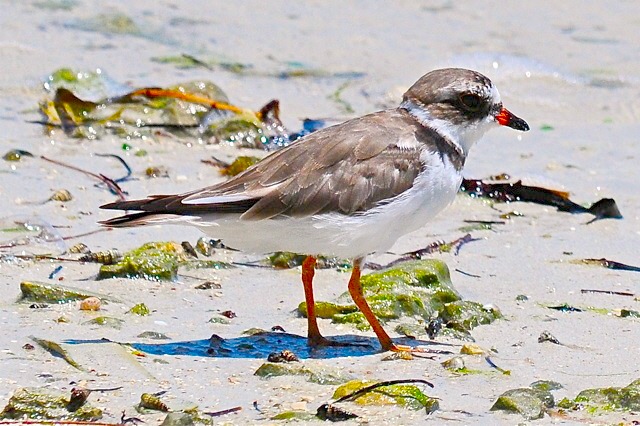
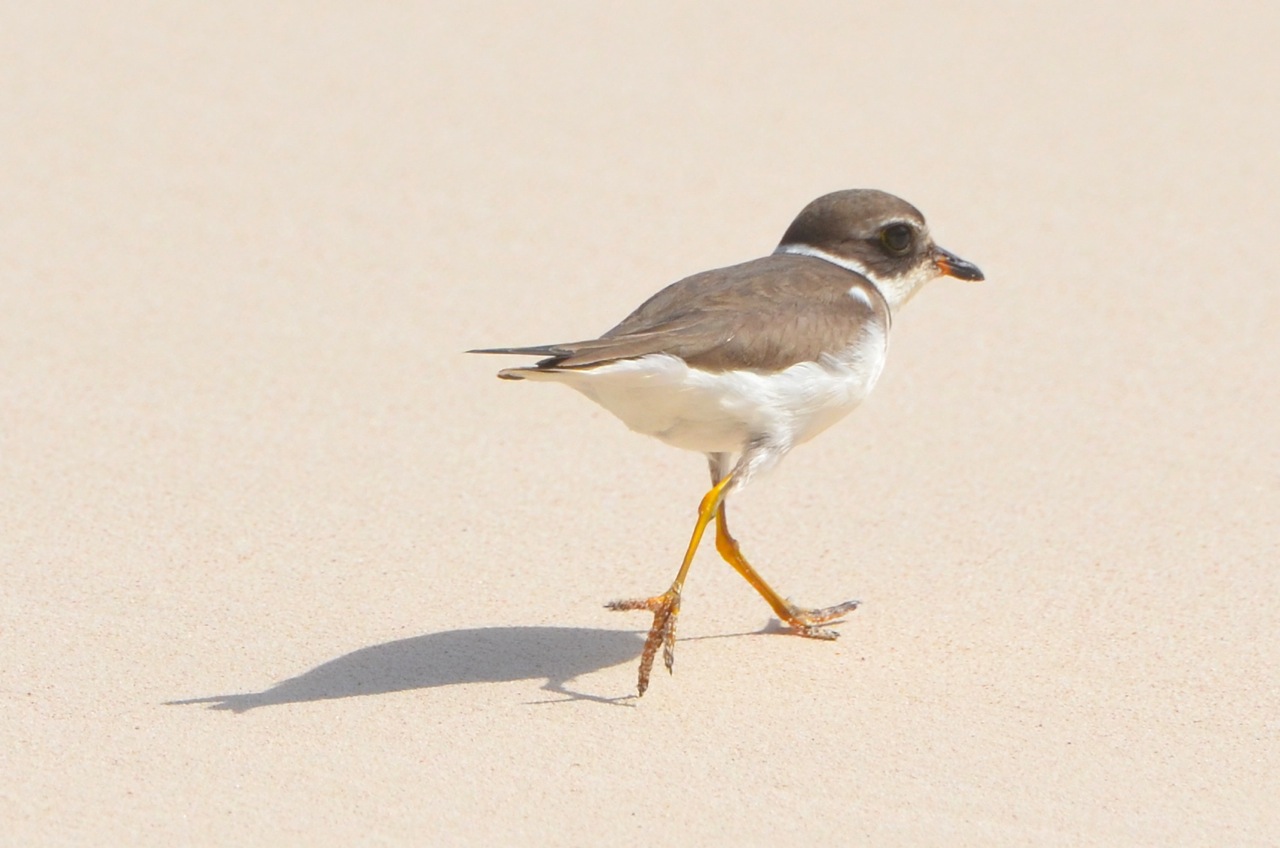
A small shorebird with a grey-brown back and wings, a white underside with a single black neck band, and orange legs. They have a brown cap, a white forehead, a black eye mask and a short black bill with an orange base to it. And feet to be discussed below.Semi-palmated Plover WB P1001211 copySemipalmated Plover, Abaco (Tony Hepburn)

WHERE DO THEY LIVE?

Their summer home and breeding habitat is on the beaches and flats of northern Canada and Alaska. They nest in scrapes on the ground right out in the open. In the Autumn these little birds set off on long journeys south to warmer climes until Spring: the coasts of the southern states, Caribbean and South America. On Abaco, they are fairly common in certain areas including the beach at Delphi. Like other plovers, these  birds are gregarious and will mix in with other shorebirds – which can make them hard to pick out in the crowd.Semipalmated Plover, Abaco (Charles Skinner)

GET ON WITH THE ‘SEMIPALMATED’ BIT, PLEASE

‘Semipalmated’ refers to the partial webbing between their toes. There are different degrees of palmation, as these handy graphics demonstrate:

Semipalmate: in practice, very hard so see in the field e.g. plovers & sandpipers semipalmate

Palmate: full webbing across the ‘front’ 3 toes, e.g. gulls

palmate

Totipalmate: all toes are fully webbed e.g. cormorants

totipalmate

Nonpalmate: please supply own imagination 

Gregarious flight: there are sandpipers in the mix (clue: long bills)Semipalmated Plover, Abaco (Alex Hughes)

WHAT DO THESE BIRDS EAT?

Semipalmated plovers are much like any other small shorebird foraging on beaches and foreshores. They eat insects, crustaceans and worms. Here is a bird in a promising place for its preferred diet.

Semipalmated Plover, Abaco (f, nb) Bruce Hallett FV

ANYTHING ELSE TO LOOK OUT FOR?

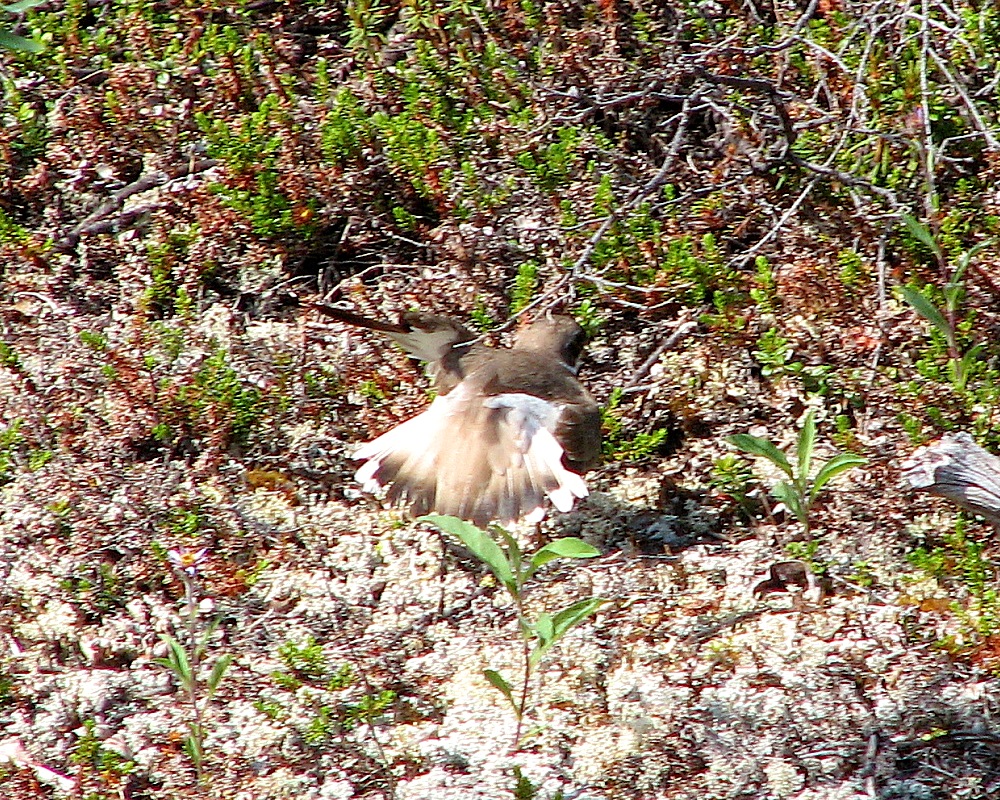
Like other plover species – Wilson’s and Killdeer for example – a semipalmated will  use the ‘broken wing’ ploy to lure a predator away from a nest and the eggs or chicks in it. As it flops about pathetically on the sand looking vulnerable, it actually moves gradually further away from the nest. If it comes to the crunch it is able to take wing rapidly, leaving a very puzzled predator behind.Semipalmated_Plover,_broken_wing_display (D Gordon E Robertson)

Semipalmated plovers flying with 2 sandpipersSemi-palmated Plover AH IMG_0612 jpg

Credits: Alex Hughes (1, 6, 9, 10); Woody Bracey (2, 3); Tony Hepburn (4); Charles Skinner (5); Bruce Hallett (7); D Gordon E Robertson (8);  Bird foot infographics people.eku.edu AH IMG_1637 copy

Unknown's avatar

GREATER ANTILLEAN BULLFINCH: ABACO’S “POLICE BIRD”


Greater Antillean Bullfinch, Abaco (Erik Gauger)

GREATER ANTILLEAN BULLFINCH: ABACO’S “POLICE BIRD”

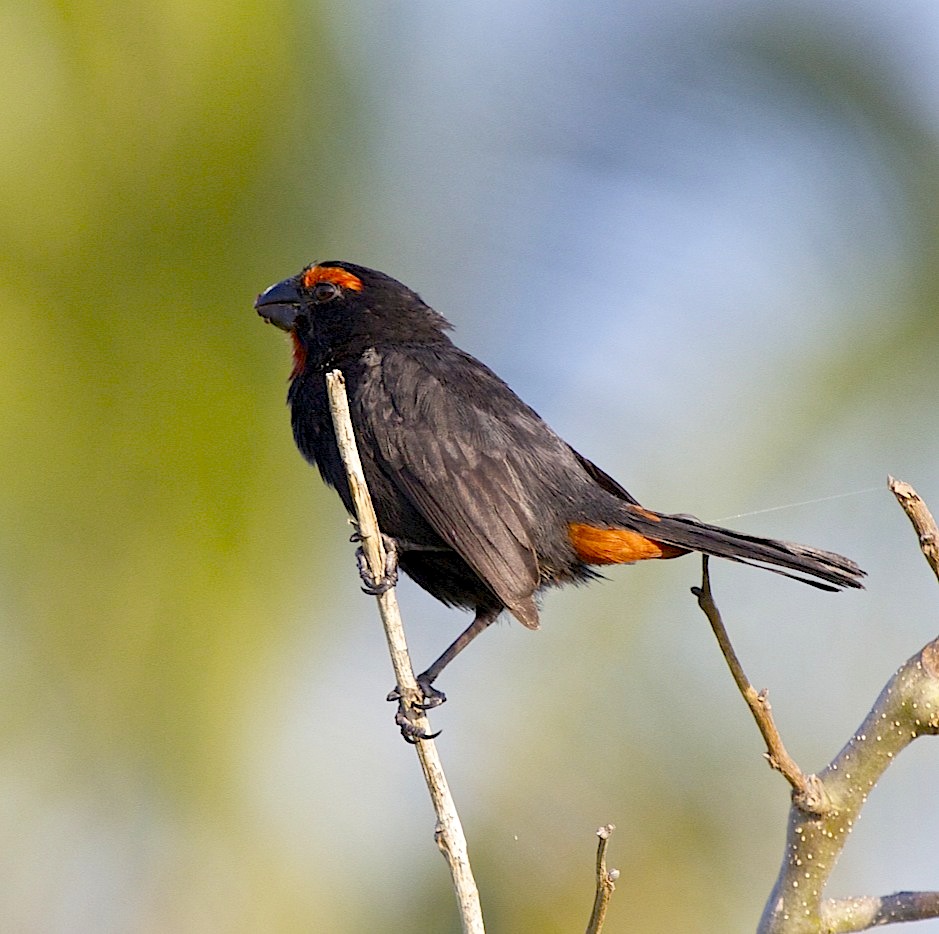
Following my last gloomy post about the widely-reported die-off of the poor, exhausted migratory great shearwaters, let’s turn with relief to a cheerful bird known to all and admired in coppice and garden: the Greater Antillean Bullfinch Loxigilla violacea. These pretty birds are easy to find and to identify. They love feeders, and they are responsive to ‘pishing’, that irritating (?) noise that birders make to unseen avians in the coppice to persuade them to reveal themselves. Adult males are black with bright red accessories (hence “police bird”); females are paler with orangey accessories; and juveniles look a bit scruffy and patchy. Here’s a GAB gallery to enjoy.

Greater Antillean Bullfinch, Abaco (Alex Hughes) 4 Greater Antillean Bullfinch, Abaco (Alex Hughes) 5Greater Antillean Bullfinch immature with snail 2.Delphi Club.Abaco (Tom Sheley)Greater Antillean Bullfinch, Abaco (Keith Salvesen)Great Antillean Bullfinch, Abaco  (Tom Sheley) 1Great Antillean Bullfinch, Abaco (Charles Skinner)Great Antillean Bullfinch, Abaco (Gerlinde Taurer)GAB BH IMG_9208 copy 2

Credits: Erik Gauger (1); Alex Hughes (2, 3); Tom Sheley (4, 6); Keith Salvesen (5); Charles Skinner (7); Gerlinde Taurer (8); Bruce Hallett (9)


Unknown's avatar

KILLDEER ON ABACO? IT DOESN’T, BUT ACE NAME ANYWAY


Kildeer, Abaco (Bruce Hallett)

KILLDEER ON ABACO? IT DOESN’T, BUT ACE NAME ANYWAY

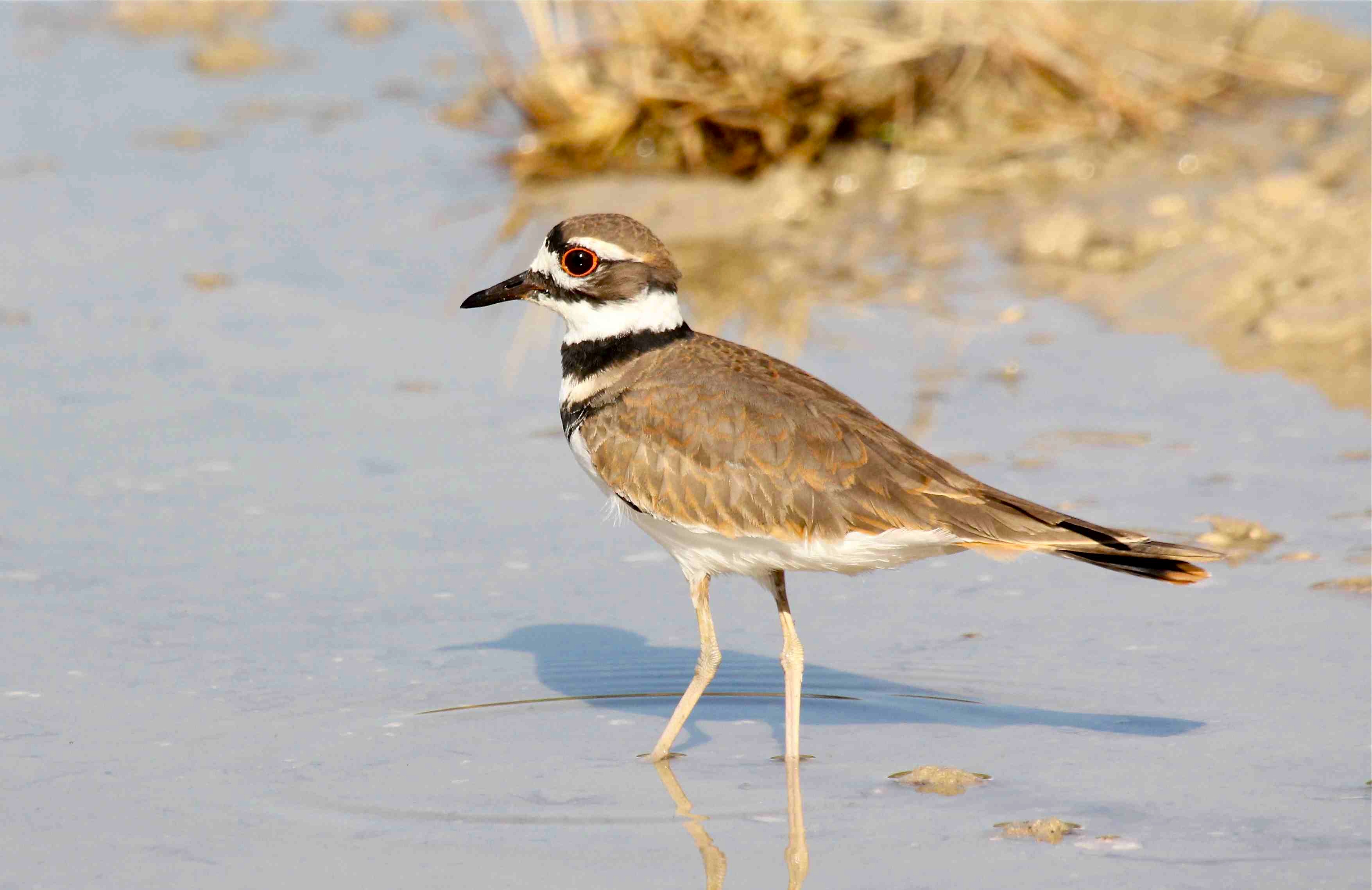
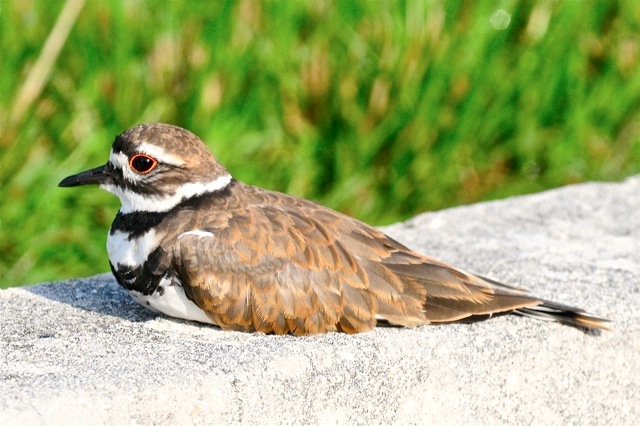
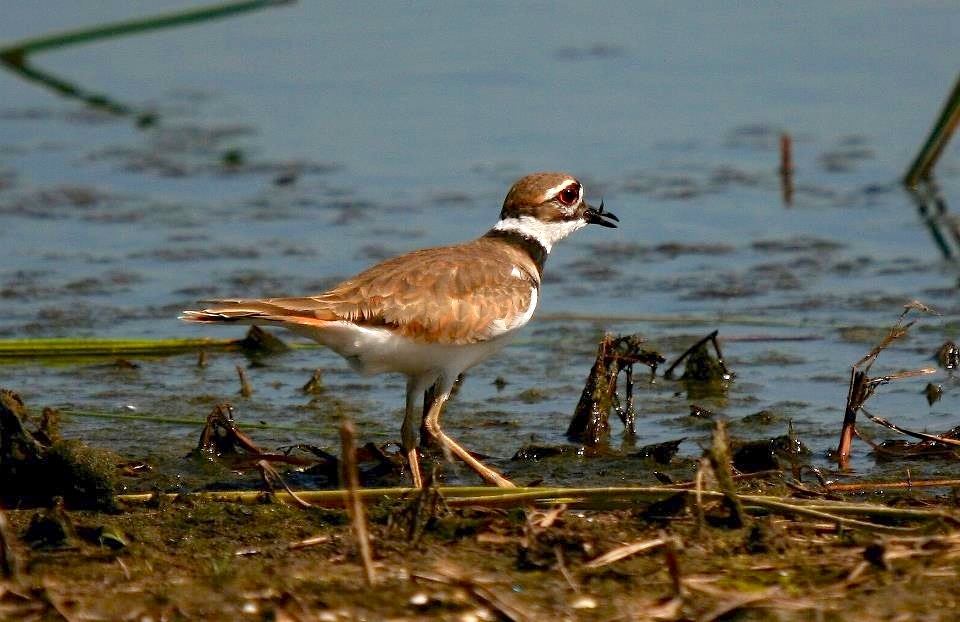
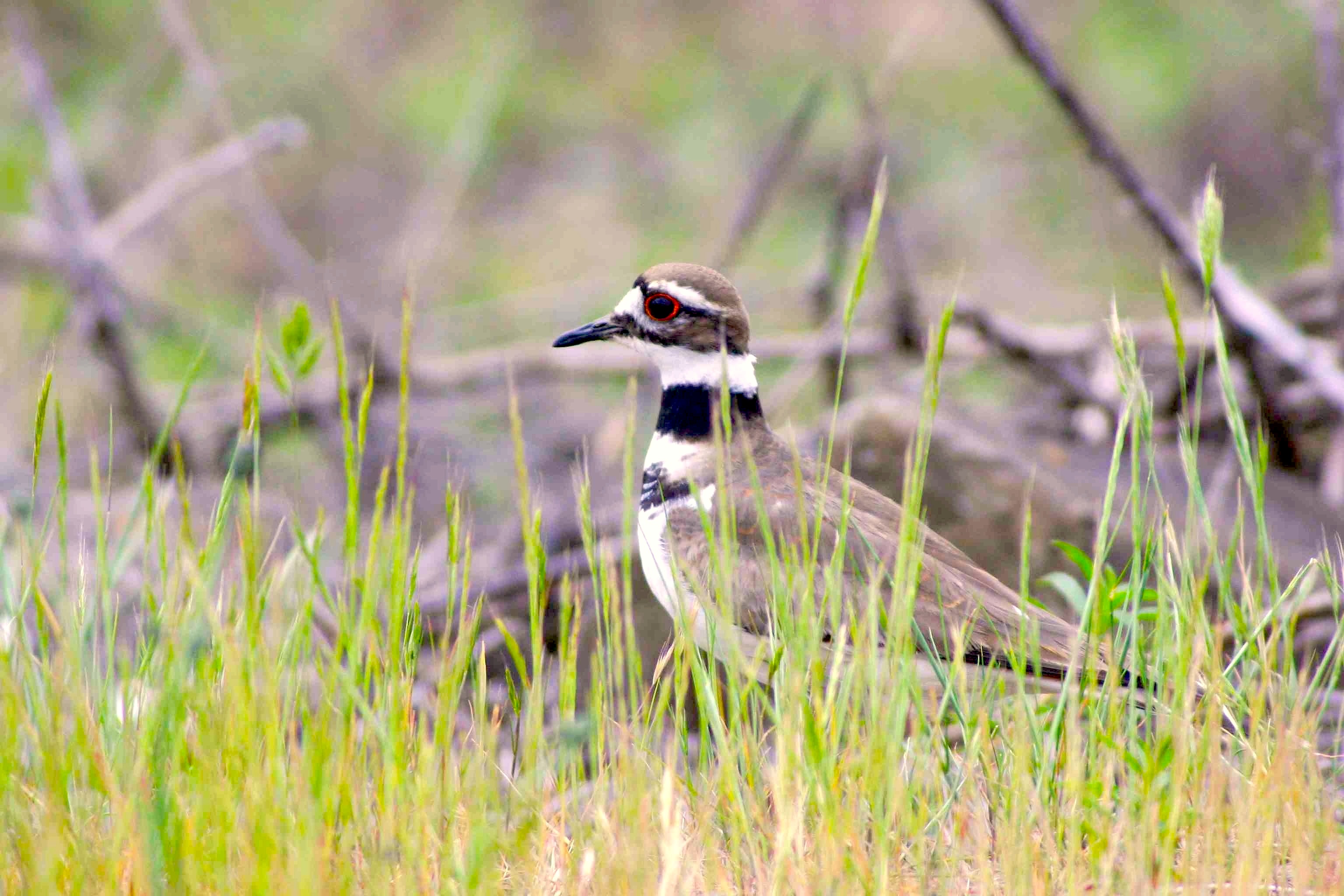
The KILLDEER Charadrius vociferus is a fairly common winter resident plover on Abaco. They can often be found on the Delphi beach, and the lovely beach at Casuarina is another place to spot them. They can easily be distinguished from other plover species, being the only ones with two black frontal bands – see above and below. The lower picture, you’ll be relieved to hear, is not the fabled ‘legless killdeer’, but is simply having a little rest on a nice warm wall.

Killdeer, Abaco (Tony Hepburn)

The killdeer’s name is a bit of a puzzle, frankly. The Latin term Charadrius vociferus basically means “shouty plover”, but it’s a long way from that to “killdeer”. This is another one of those bird names that are allegedly onomatopoeic – and thankfully it has nothing whatsoever to do with savage behaviour involving Bambi and his ilk (or elk, even). Supposedly the killdeer call is “Kill…Deer”, in the same way as the bobwhite calls an interrogative “Bob…White?”. 

Killdeer - Harrold & Wilson Ponds, NP (Rick Lowe) copy

Consulting some random authorities reveals divergence of opinion on the issue, with definite bet-hedging between ‘kill-dee’ variations and ‘dee dee dees’. Except for Messrs Flieg & Sanders who opine (rudely) ‘the shrill, loud, monotonous call resembles its name’. Yet while I completely get the ‘Bob…White?’ thing, I’m not so sure with the killdeer. Were I a little killdeer, it’s a name I’d like to have anyway. Respect! But what do these sound like to you?

or this

Guillermo Funes Xeno Canto

or this

Peter Boesman Xeno CantoKIlldeer (Danny Sauvageau)

I’ve mentioned the distinctive double black breast-bands that distinguish the killdeer from its brother plovers. These can be seen at quite a distance, as this shot on the Delphi beach by Mrs RH shows (the tracks are from Smithy’s seaweed-clearing tractor).

Killdeer SS edits

The babies are, like all plover chicks, totes irresistibz munchkinsKilldeer hatchling (NTox)Killdeer FB

And like other plovers, a killdeer will defend its nest and young with a broken wing display to distract predators, lurching pathetically across the sand, moving ever further away from the nest. 

I think we can safely conclude that, while the bird doesn’t quite live up to the cervidae-cidal tendencies suggested by its name, nor even sound particularly as though it is saying “killdeer”, it is a very attractive plover to have around whatever the heck its call may resemble.Killdeer, Abaco (Erik Gauger)

Photo credits: Bruce Hallett, Tony Hepburn, Rick Lowe, Danny Sauvageau, Mrs RH, NTox, Very Recent FB & I’ll track down the source if it kills me**, Erik Gauger

** Got it now: The very excellent Mike Bizeau, whose on his wonderful NATUREHASNOBOSS website posts a single daily image. Many are birds, some are landscapes, some are other things that have caught his eye. I get a daily email, and am invariably impressed by the quality of the images…

Unknown's avatar

“STRIKE THE POSE”: BLUE-GRAY GNATCATCHERS ON ABACO


Blue-Gray Gnatcatcher, Treasure Cay, Abaco (Becky Marvil)

“STRIKE THE POSE”: BLUE-GRAY GNATCATCHERS ON ABACO

I’ve featured these little birds before, including a few I took a couple of months back. For reasons to do with a current project I have been revisiting some of my archive folders of Abaco birds. Most are carefully and correctly labelled, which in most cases is easy – ‘Abaco Parrots’; ‘W Spindalis’; B/quits’ etc. Some have more fancy shortcut names that I’m just getting into – ‘PIPL’; ‘BAWA’; ‘WESA’ and so on. And some are crammed into generic folders like ‘Shorebirds Misc’, ‘Gulls Terns Whatever’ or ‘Warblers???’ pending further attention (if ever).

Blue-Gray Gnatcatcher, Treasure Cay, Abaco (Becky Marvil)Blue-Gray Gnatcatcher, Treasure Cay, Abaco (Becky Marvil)

The BGGs I have previously shown have all been photographed on South Abaco. Several of the photos here were taken in and around the Treasure Cay area by Becky Marvil, one of the photographic contributors to THE BIRDS OF ABACO. It’s good to remember that although South Abaco provides the best birding, there are other parts of the island, and some Cays such as Man-o-War, where the birding is also very good.

Blue-Gray Gnatcatcher, Treasure Cay, Abaco (Becky Marvil)Blue-gray Gnatcatcher, Treasure Cay Abaco (Becky Marvil)

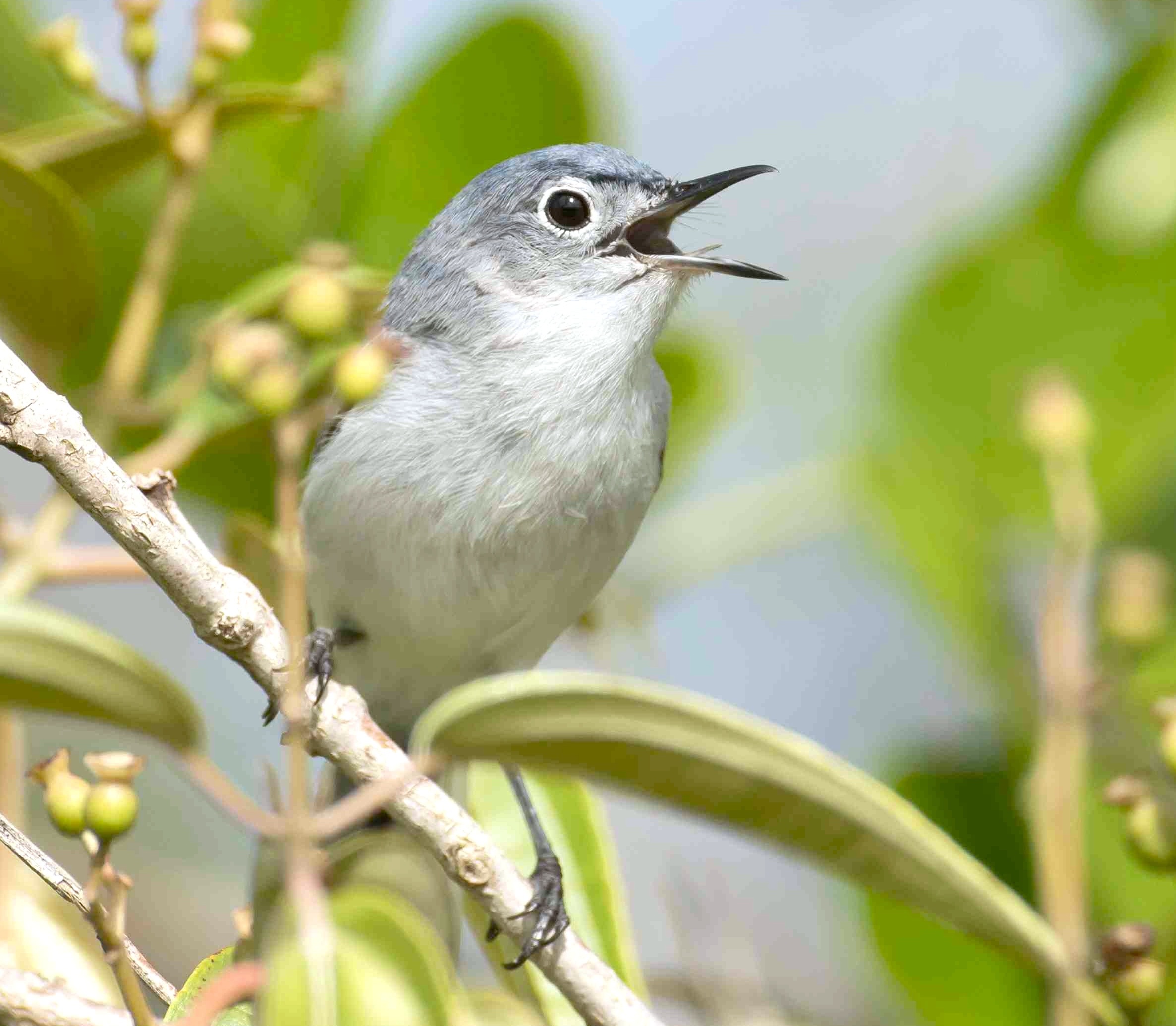
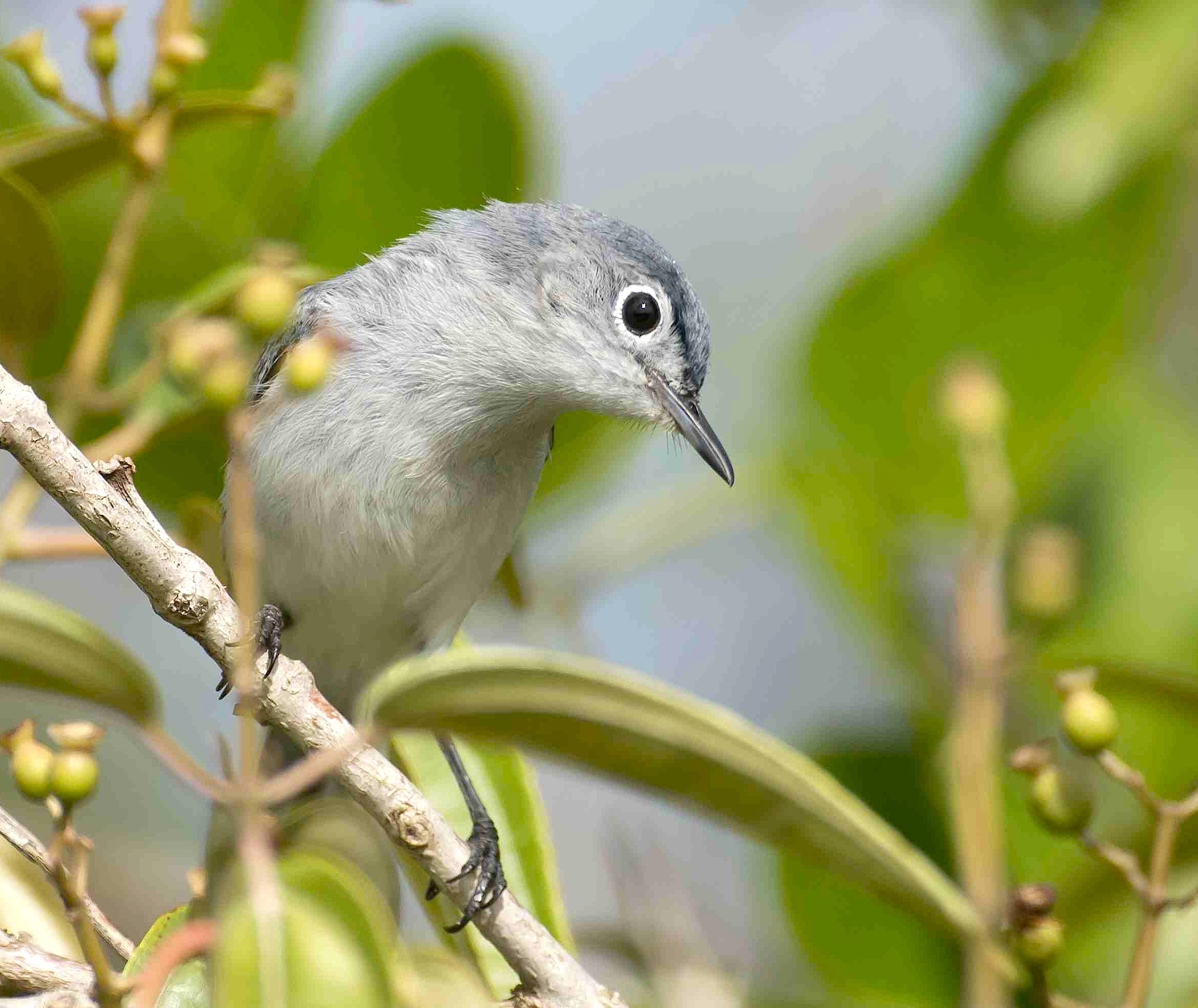
BGGs are well-known for their irreziztbz little ways – coming to check you out if you pish, click or whistle softly in thick coppice; posing daintily for the camera; and maybe even preceding or following you down a track in a companionable way. They may be small, but they always a welcome sight and they make for a very attractive bird gallery.

Blue-gray Gnatcatcher, Abaco Bahamas (Tom Sheley) aBlue-gray Gnatcatcher preening, Abaco Bahamas (Tom Sheley) bBlue-gray Gnatcatcher, Abaco Bahamas (Tom Sheley) c

Blue-gray Gnatcatcher, Abaco (Charles Skinner)Blue-gray Gnatcatcher, Abaco (Charles Skinner)

Credits: Becky Marvil (1,2,3,4,5), Tom Sheley (6,7,8), Charlie Skinner (9,10), Bruce Hallett (11)Blue-gray Gnatcatcher, Abaco (Bruce Hallett)

Unknown's avatar

YELLOW WARBLERS ON ABACO


Yellow Warbler at sunrise. Abaco Bahamas.6.13.Tom Sheley copy

YELLOW WARBLERS ON ABACO

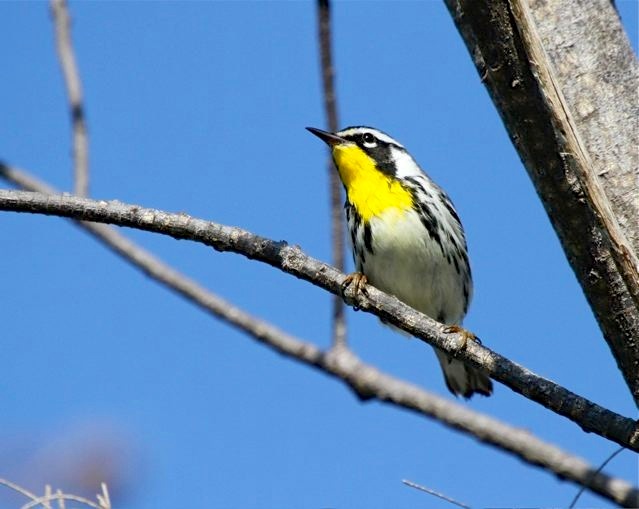
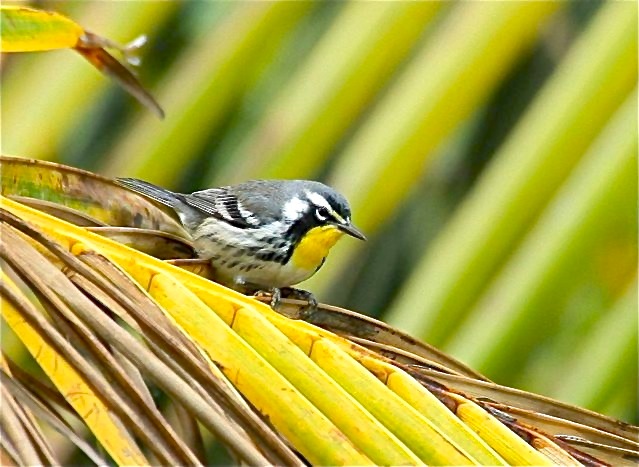
Of the 37 WARBLER SPECIES recorded for Abaco, 25 are mainly or partly yellow. So talk of a ‘yellow warbler’ can as easily be a general description matching any one of a number of species, as a particular description of the one and only Yellow Warbler Setophaga petechia. This small sunny bird is a common permanent resident on Abaco, one of only 5 resident warblers. The other 4 don’t help the situation much, by dint of all being yellow to a greater or lesser extent. 

Yellow Warbler male3.Abaco Bahamas.6.13.Tom SheleyDendroica-petechia-001 (MDF)

My general rule of thumb is that the Yellow Warbler out-yellows all the rest (though the winter-resident PROTHONOTARY gives it a run for its money), with the adult males bright and cheerful all over and the females rather less glaring but still demonstrably yellow from beak to tail tip.

Yellow Warbler (f) Bruce Hallett

Q. ARE THEY ALWAYS EASY TO SEE? A. SEE BELOW, GO FIGUREYellow Warbler male.Cherokee Sound.Abaco Bahamas.Tom Sheley

Q. CAN YOU SHOW MORE PRETTY FEMALES? A. BY ALL MEANSYEWA_Bahamas-Great Abaco_5204_Yellow Warbler_Gerlinde Taurer copyYEWA 2_Bahamas-Great Abaco_5165_Yellow Warbler_Gerlinde Taurer copy

Q. SO YEWAs ARE COMMON? HAVE YOU EVER PHOTOGRAPHED ONE? A. ONLY HOPELESSLYYellow Warbler, Abaco (Keith Salvesen)

Q. DO THEY HAVE AN ATTITUDE PROBLEM? A. ONLY VERY RARELYYellow Warbler male2.Abaco Bahamas.6.13.Tom Sheley

A THREAT TO THE SPECIES Shiny Cowbirds, luckily still rare on Abaco, favour yellow warbler nests for their parasitic egg-laying, with sadly predictable results. These cowbirds properly belong in South America, but they are gradually spreading north through the Caribbean, and have now reached Florida. I’m beginning to take a (purely personal) hard line on invasive species where they diminish and destroy indigenous species: eradication. The feral peacocks of Casuarina, now several generations down the line from their original introduction as exotic pets, do no harm and are undeniably decorative. But would you prefer the pretty yellow warbler and its fledglings in your garden, or the shiny cowbird that displaced them?

240px-Dendroica_petechia_map.svg

Credits: Tom Sheley (1,2,5,9); MDF (3)Bruce Hallett (4); Gerlinde Taurer (6,7); RH (8)

And finally… the song that out-yellows all other songs with the word ‘yellow’ in the title – it is the only song called just that one word! 

    Yellow Warbler at sunrise.Abaco Bahamas.6.13.Tom Sheley copy copy                Yellow Warbler at sunrise.Abaco Bahamas.6.13.Tom Sheley copy copy                Yellow Warbler at sunrise.Abaco Bahamas.6.13.Tom Sheley copy copy                Yellow Warbler at sunrise.Abaco Bahamas.6.13.Tom Sheley copy copy                Yellow Warbler at sunrise.Abaco Bahamas.6.13.Tom Sheley copy copy

Unknown's avatar

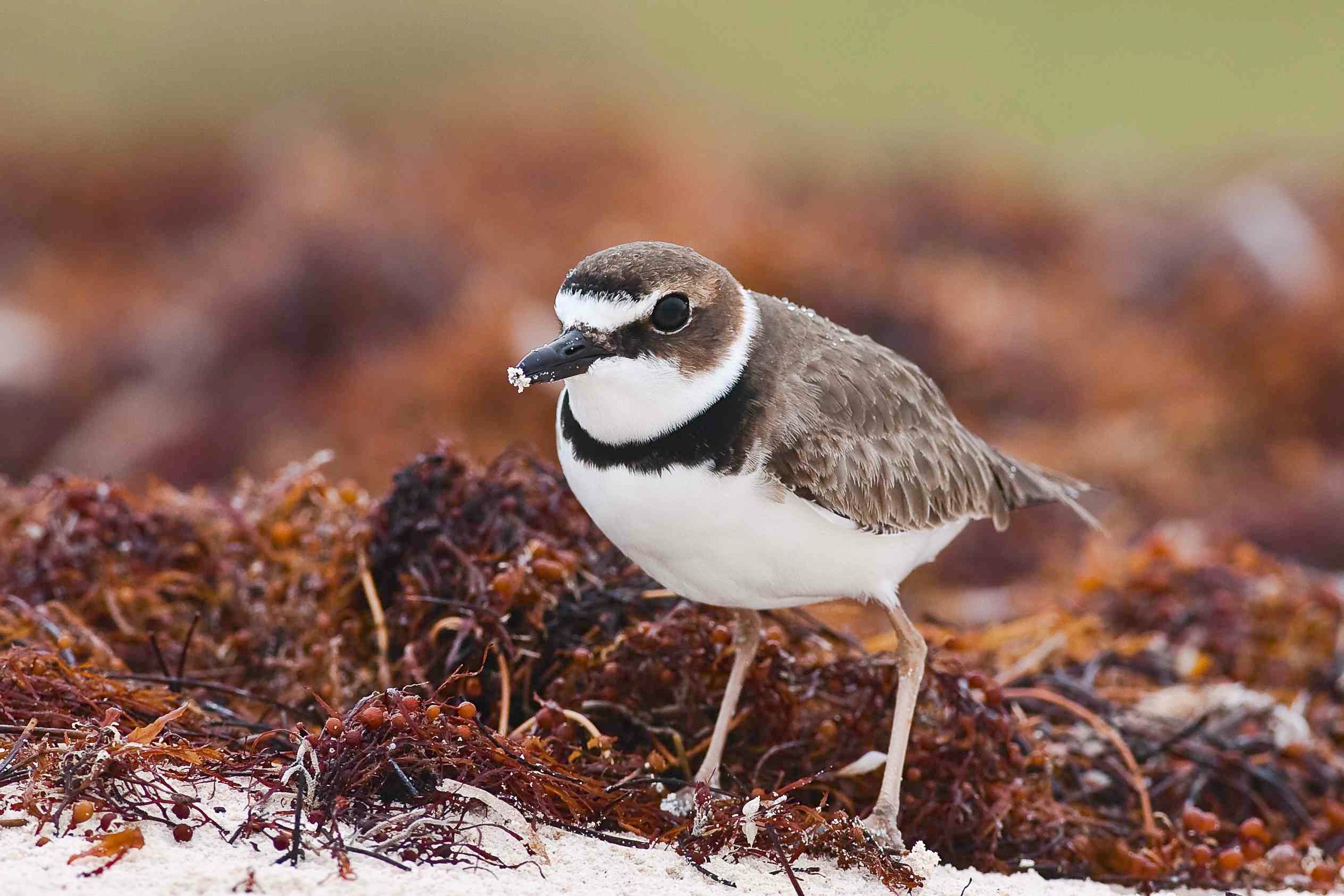
PIONEER NATURALISTS & ABACO BIRDS: POTTED BIOGRAPHIES


Wilson's Plover, Abaco (Craig Nash)

Wilson’s Plover, Abaco (Craig Nash)

PIONEER NATURALISTS & ABACO BIRDS: POTTED BIOGRAPHIES

Who were all the people – all men, I’m afraid – who are immortalised in the names of birds they first discovered or recorded or collected specimens of or wrote about? In various previous birds posts I have given brief bios of the naturalist for whom the particular species under consideration is named. I’ve decided to bring all those who specifically relate to Abaco together in one place. There is not (as far as I know) a collective term for ornithologists, so may I introduce a “Scope” or “Twitch” of them…

ALEXANDER WILSON 1766 – 1813

Mr WilsonWilson’s phalarope, plover, snipe, storm-petrel, warbler

Alexander Wilson was a scottish poet and writer. He specialised in ballads, pastoral pieces, and satirical commentary on the conditions of weavers in the mills. The latter got him into trouble when he overstepped the mark by making a vicious written attack on one mill owner. He was arrested, convicted and sentenced to burn the work in public (fair enough, perhaps) and imprisoned (somewhat harsh). After his release, he sensibly emigrated to America in 1794.
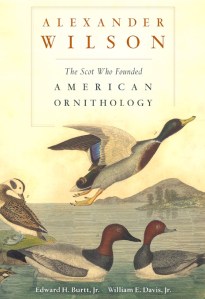
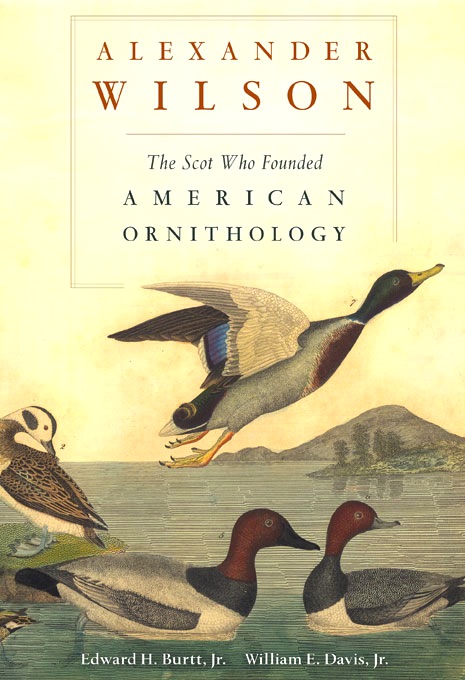
Alexander Wilson: The Scot Who Founded American Ornithology

Wilson became a teacher in Pennsylvania, and develpoped his interests in ornithology and painting. His ambitious plan was to publish a collection of illustrations of all the birds of North America. He travelled widely, collecting, painting, and securing subscriptions to fund a nine-volume American Ornithology (1808–1814). Of the 268 species of birds illustrated, 26 had never previously been described. Wilson died during the preparation of the ninth volume, which was completed and published by George Ord. Wilson predated John James Audubon (though not by many years) and  is generally acknowledged to be the founder of American ornithol0gy.

For examples of Wilson’s American Birds, check out the excellent Virginia University records HERE 
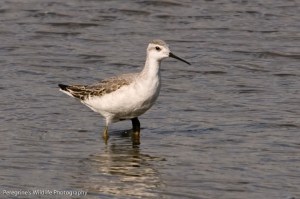
Wilson's Phalarope (Craig Nash)

Wilson’s Phalarope (Craig Nash)

CHARLES LUCIEN BONAPARTE 1803 – 1853

Bonaparte, Charles Lucien (1803-1857)Bonaparte’s gull, Zenaida dove

Charles Lucien Bonaparte, 2nd Prince of Canino and Musignano was a French biologist and ornithologist. He was nephew of the Emperor Napoleon. He married his cousin Zenaïde, by whom he had twelve children. They moved from Italy to Philadelphia, by which time Bonaparte had already developed a keen interest in ornithology. He collected specimens of a new storm-petrel, later named after the Scottish ornithologist Alexander Wilson (see above).

Bonaparte studied the ornithology of the United States, and updated Wilson’s American Ornithology. His revised edition was published between 1825 and 1833. He was a keen supporter of a (then unknown) ornithologist John James Audubon. Rather sweetly, he created the genus Zenaida, after his wife, applying it to the White-winged Dove Zenaida asiatica,  Zenaida Dove Zenaida aurita and Mourning Dove Zenaida macroura. He himself was later honoured in the name ‘Bonaparte’s Gull’.

Bonaparte's Gull, Abaco (Bruce Hallett)

Bonaparte’s Gull, Abaco (Bruce Hallett)

RAMON LA SAGRA (1798 -1871)
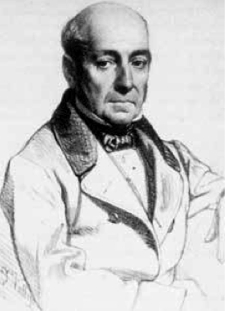
Mr La Sagra La Sagra’s Flycatcher

Ramón Dionisio José de la Sagra y Peris was a multi-talented man, being a Spanish botanist and also a writer, economist, sociologist, politician, anarchist, and founder of the world’s first anarchist journal El Porvenir (“The Future”). He lived in Cuba and became director of Havana’s Botanical Garden; his name lives on arguably more significantly in ornithological than in anarchist circles (actually, an ‘anarchist circle’ must surely be a contradiction in terms…)
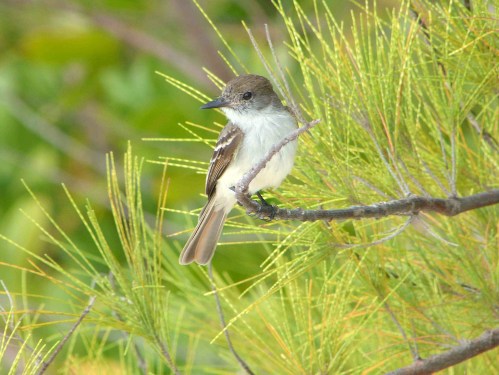
La Sagra's Flycatcher, Abaco (Keith Salvesen)

La Sagra’s Flycatcher, Abaco (Keith Salvesen)

A Cuban stamp commemorates the death of Juan Gundlach, the nauralist who chose La Sagra’s name to bestow on the flycatcher, and who himself is honoured in the name of the Bahama Mockingbird Mimus gundlachii Cuba Stamp La Sagra's Flycatcher

WILLIAM JOHN SWAINSON (1789 – 1855)

Mr SwainsonFor Abaco: Swainson’s Hawk, Thrush & Warbler

Swainson was an English ornithologist, entomologist, conchologist, natural historian, and a gifted illustrator of the natural world. He was a pioneer of the new lithographic technology, which enabled quicker reproduction of his work than engraving. Swainson lent his name to a number of avian species, three of which may be found on Abaco – the Swainson’s Hawk, Thrush and Warbler. The hawk is a rare visitor; the thrush is a transient, passing through the Bahamas during migration; and the warbler is a hard-to-find winter resident. Below is the only known Swainson’s Hawk to be photographed on Abaco.

Swainson's Hawk, Abaco (Bruce Hallett)

Swainson’s Hawk, Abaco (Bruce Hallett)

JOHN ISIAH NORTHROP (1861 – 91)
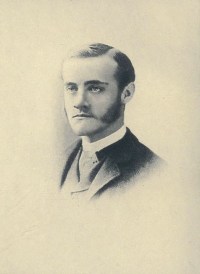
640px-Picture_of_John_Isaiah_NorthropBahama Oriole (Icterus northropi)

John Isiah Northrop, for whom the endemic BAHAMA ORIOLE Icterus northropi is named, entailed a bit more research. The link above will take you to my post about this very beautiful species that is sadly on the brink of extinction. Until recently it was found only on Abaco and Andros, but is now extirpated from Abaco and exists only in certain enclaves on Andros.
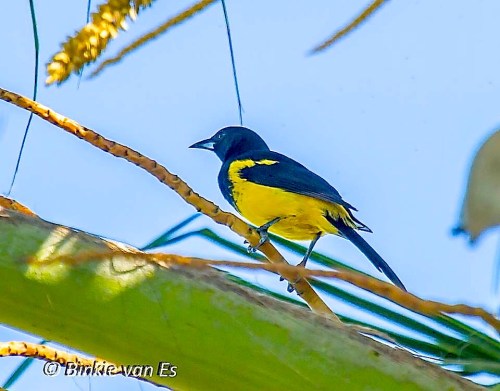
Bahamas Oriole, Andros (Binkie Van Es)

Bahamas Oriole, Andros (Binkie Van Es)

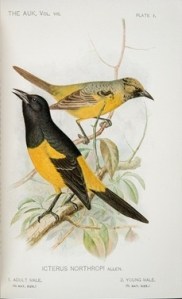
I can do no better than regurgitate the info provided by the University of Glasgow Library Research Annexe in relation to a fine  illustration from A Naturalist in the Bahamas (1910), reprinted in The Auk journal (below) at a time when Icterus northropi was still a mere subspecies:

The yellow and black Bahama Oriole (Icterus Northropi) is a bird species unique to the Bahamas. The bird was named for American ornithologist and zoologist, John Isiah Northrop (1861–91); the illustration comes from an account of the trip Northrop and his botanist wife, Alice, took to the Bahamas in 1889 which was published in his memory: A Naturalist in the Bahamas: John I. Northrop, October 12 1861-June 25, 1891; a memorial volume (Columbia University Press, 1910). It was edited and introduced by Henry Fairfield Osborn, professor of zoology at Columbia University where Northrop worked as a tutor and was killed in a laboratory explosion shortly (9 days) before the birth of his son John Howard Northrop (who became a Nobel prize-winning chemist)”.Icterus Northropi illustrated in A Naturalist in the Bahamas (plate 1)
 

JARED POTTER KIRTLAND 1793 –1877

260px-Jared_Potter_Kirtland_1793-1877Kirtland’s Warbler (Setophaga kirtlandii)

Jared Potter Kirtland was a naturalist, malacologist and politician, most active in Ohio where he served as a probate judge, and in the Ohio House of Representatives. He was also a physician and co-founder of a University Medical School. Kirtland became one of America’s leading naturalists, with a particular interest in horticulture and sea shells. He published numerous natural history articles, and was a founder and president of the Kirtland Society of Natural History and the Cleveland Academy of Natural Science.

Somewhere in amongst all this, he discovered or at least studied the warbler that was named after him. This rare bird is found in small numbers only in certain areas of Michigan; and overwinters in the Bahamas including on Abaco. They a very hard to find, and harder still to photograph. This year we made an expedition into remote backcountry and found 4, more of which another time…
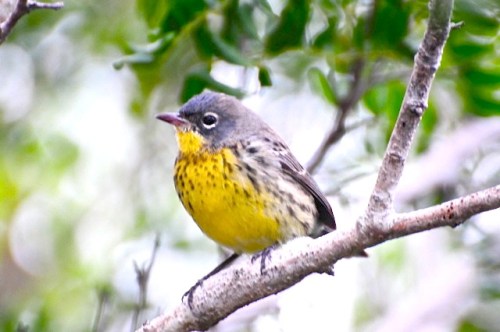
Kirtland's Warbler, Abaco (Woody Bracey)

Kirtland’s Warbler, Abaco (Woody Bracey)

JOHN JAMES AUDUBON (1785 – 1851)

John James Audubon never went to Abaco. The nearest he got was probably in 1820, when he made a field trip to the southern states, including Florida; or in the 1830s when he made at least one trip to Key West. One technique that set him apart from contemporaries was his method of producing naturalistic (as opposed to ‘stuffed bird’) drawings. It involved killing birds using very fine shot, and then using wires to pose them naturally, according to his field sketches. This contrasted with the usual technique of using a stuffed specimen as a model.

Although no Abaco birds are specifically named for Audubon, it is almost impossible to dip a toe into ornithological history without immediately stubbing it on Audubon’s name. Hence his inclusion in this piece, bringing it to a conclusion.

Audubon’s master-work was his renowned Birds of America, arguably the most famous bird tome ever. There are about 120 sets of the original book still in existence. They were incredibly expensive to produce in contemporary terms; and in modern times a set sold for $11.5 million at Sotheby’s London in 2010, setting the unbeaten record for the world’s most expensive book sale. Recently there was great excitement over the sale of another set at Christie’s New York, but the sale price was far lower, a mere $7,922,500… 

Audubon Birds of America.jpg

Credits: Bird pictures as shown; Encyclopaedia of Cleveland History, University of Glasgow Library, The Auk, Audubon Society, Wiki, Magpie pickings
Unknown's avatar

IT’S A WARBLER. WITH A YELLOW THROAT. ON ABACO. SIMPLE?


Yellow-throated warbler, Abaco  (Keith Salvesen)

IT’S A WARBLER. WITH A YELLOW THROAT. ON ABACO. SIMPLE?

The Yellow-throated Warbler (Setophaga dominica) is a most helpful warbler, in that what you see is what you get. You needn’t go to embarrassing lengths to determine whether it has a Yellow Rump. It doesn’t make extravagant geographical claims like the Cape May, Kentucky, Tennessee, Nashville or Connecticut warblers. It doesn’t disguise its warblerdom with a confusing name like ‘American Redstart’ or ‘Ovenbird’. Nor with a weird warbler name that is completely obscure like the Prothonotary. It’s a winter resident only, so it won’t try to puzzle you in the summer. The males and females are roughly similar in appearance, unlike so many species. All-in-all, a most agreeable and obliging little bird. Here are a few to enjoy, before I spoil the magic slightly…

Yellow-throated Warbler, Abaco (Bruce Hallett)Yellow-throated Warbler, Abaco (Bruce Hallett) 2Yellow-throated warbler, Abaco (Erik Gauger)

YTWs are quite pose-y birds, and tend to strike attitudes. One is the ‘head-in-the-air’, as below and further above. There’s the ‘butt-in-the-air’ too, immediately above (one of my favourite photos)Yellow-throated Warbler, Abaco (Becky Marvil) Yellow-throated Warbler, Abaco - Becky MarvilYellow-throated warbler, Abaco  (Keith Salvesen)

This shape is both characteristic and characterful. You might call it the ‘sag-in-the-middle’Yellow-throated warbler, Abaco  (Keith Salvesen)

This year I saw my first YTW in the Delphi Gardens, skulking around in a Gumbo Limbo tree. Having taken a number of rather poor shots – partly due to the intervention of branches, twigs, leaves, berries, shaky hands and so forth – I got some clearer shots at it, the two above and below being the best of an indifferent bunch.Yellow-throated warbler, Abaco  (Keith Salvesen)Yellow-throated warbler, Abaco  (Keith Salvesen)

I said earlier that the magic of the apparently simple ID of a warbler that lives up to its name would have to be spoiled. I’m afraid this little gallery rather undoes the certainties I’d promised… two more species common to Abaco, also named for their yellow throats (yet it’s more extensive than just the throat, anyway) . 
BAHAMA YELLOWTHROAT
                                                     20130106_Bahamas-Great Abaco_4846_Bahama Yellowthroat_Gerlinde Taurer copy Bahama Yellowthroat (m) Bruce Hallett
COMMON YELLOWTHROAT
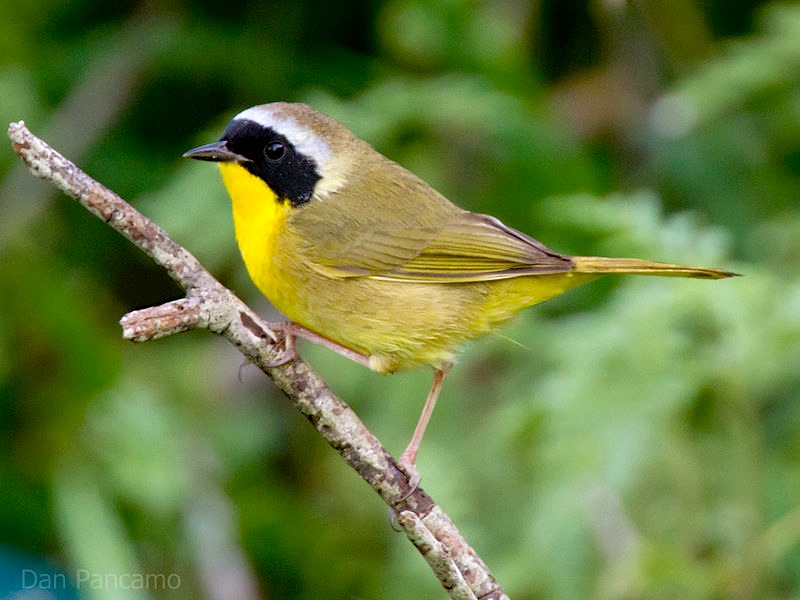
800px-Common_Yellowthroat_by_Dan_Pancamo Common Yellowthroat, Gilpin Pond, Abaco Bahamas (Tom Sheley)
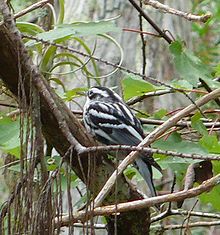
You’d really think that someone at Audubon Towers or Cornell Castle might have thought of calling these two species ‘Bahama’ and ‘Common’ Masked Warblers, wouldn’t you – after all there’s a Hooded Warbler, which indeed has a hood. No other warbler has a mask like these 2. Then any confusion could be avoided. So remember: the Yellow-throated Warbler has a yellow throat AND is otherwise black and white, with streaks. Erm, just like a…
BLACK AND WHITE WARBLER

Black & White Warbler (Wiki)

RELATED POSTS
 
Credits: RH (1,7,8,9,10); Bruce Hallett (2, 3); Erik Gauger (4); Becky Marvil (5, 6). Thumbnails: Gerlinde Taurer, Bruce Hallett, Dan Pancamo, Tom Sheley, Wiki
Unknown's avatar

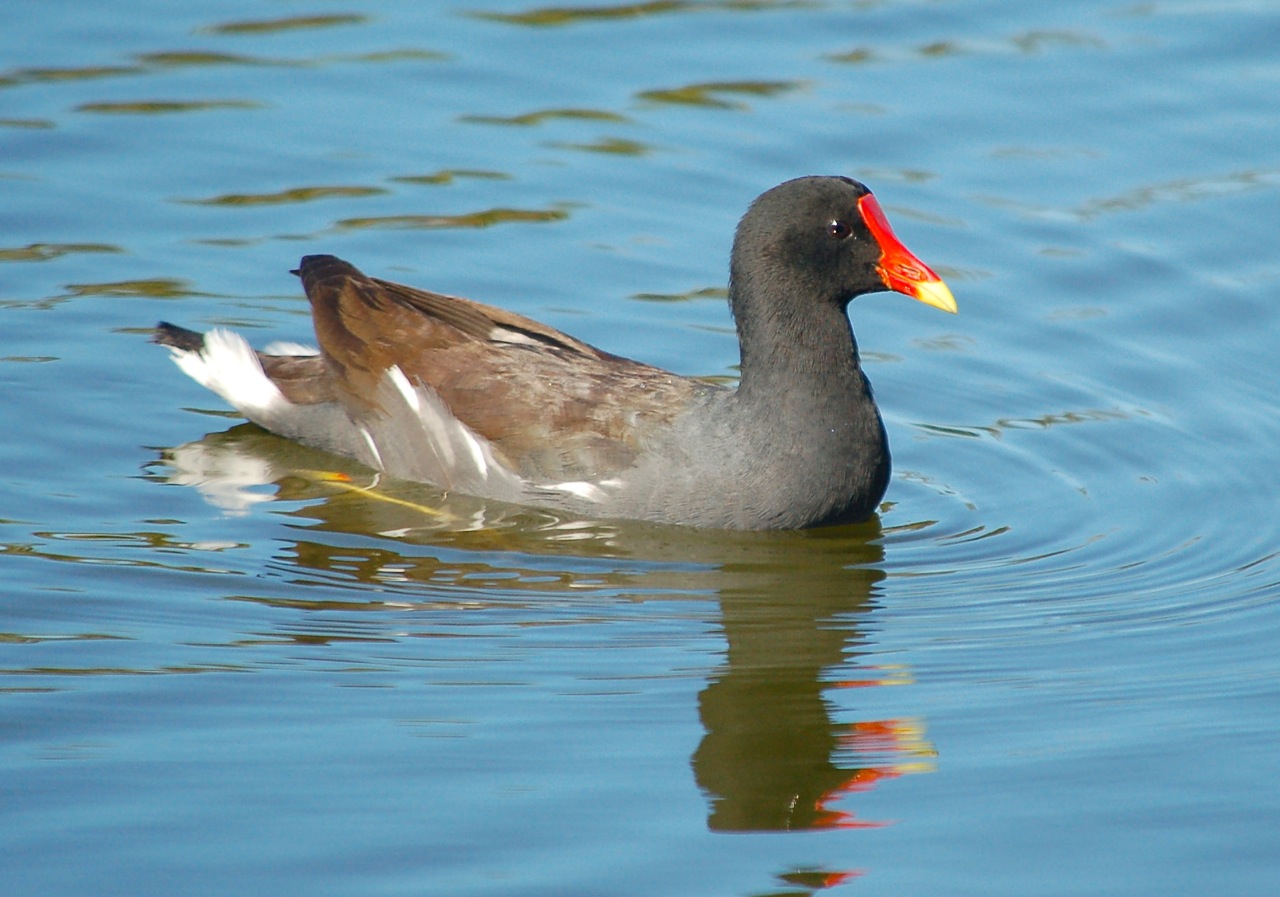
WHAT’S IN A NAME? COMMON GALLINULE aka MOORHEN


Common Gallinule.Abaco Bahamas.6.13.Tom Sheley

WHAT’S IN A NAME? COMMON GALLINULE aka MOORHEN

Names can be a hassle. My own, when not my alter ego Rolling Harbour (from a long line of Harbours), was a act of Baptismal Folly for which I cannot be held responsible. I could have changed it by Deed Poll were I seriously bothered, but I am aware that there are far worse names out there and at least mine reflects my scandi-scottish origins I suppose.

Common Gallinule, Abaco - Bruce Hallett

The Moorhen has had a far worse time of it. Over many decades its name has been changed, changed back and changed again. Partly it’s to do with a continuing debate over the New World and Old World subspecies – or as it now stands, separate species. Even that status has changed around over time. It’s enough to give the poor creature an ID crisis.

Bahamas-Great Abaco_7551_Common Gallinule_Gerlinde Taurer copy

The Common Gallinule Gallinula galeata, as it has been known since 2011, is a bird of the rail family. The AOU decreed its divorce from the Common Moorhen after due consideration of the evidence and it is now lumbered with the less familiar and user-friendly Gallinule name.

Common Gallinule, Abaco - Peter Mantle

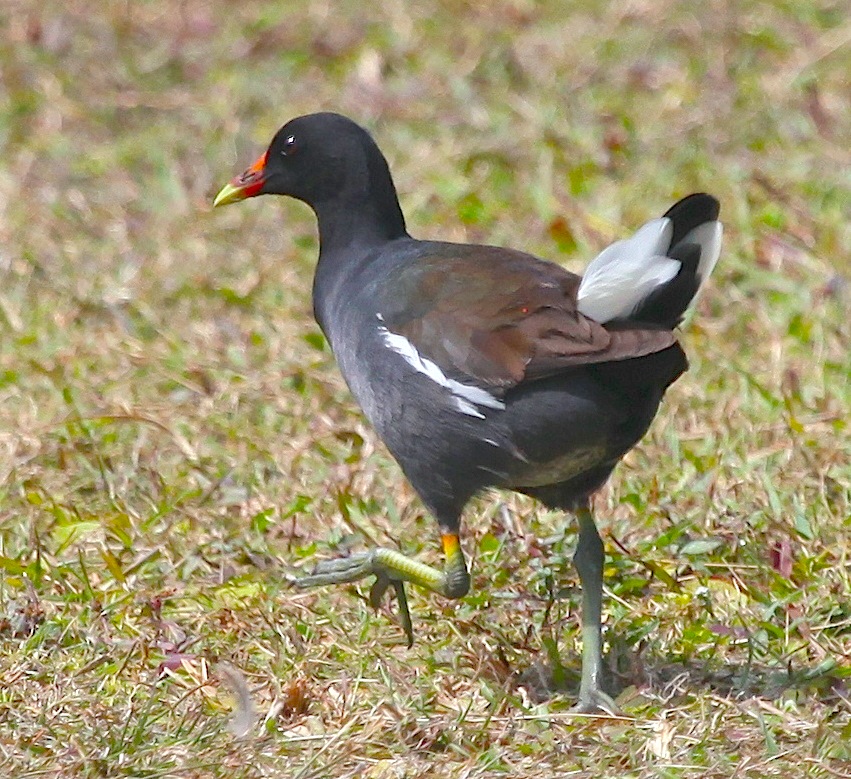
Note the yellow legs and large feet (unwebbed)

Moorhens (I’m using this as a comfortable nickname, aware that I am flying in the face of progress) are usually seen swimming serenely around ponds or picking their way through marshy ground as they forage. They have an aggressive side, hissing loudly if they feel threatened and fighting to preserve their territory or nest. Nestlings have been observed clinging to a parent as it flies to safety with its offspring as passengers.

Bahamas-Great Abaco_7536_Common Gallinule_Gerlinde Taurer copy

WHAT IS A ‘GALLINULE’ WHEN IT’S AT HOME

I wondered what the word ‘Gallinule’ actually means? What is the derivation? The BINOMIAL NOMENCLATURE (basically = scientific name in Latin) of most species is largely unintelligible unless you have some knowledge of Latin. But most birds end up with a useful, often descriptive, everyday name. Red-tailed Hawk. Least Tern. Yellow Warbler. Painted Bunting. You know what to expect with those. But a ‘Gallinule’ could as easily be a french cooking receptacle or delicious dish. Or a grim and slimy horror from Tolkien. Or maybe something / someone out of Harry Potter. Sleuthing online reveals that the word is a modern Latin construct of the c18, derived from the Latin diminutive word for a ‘hen’. So it’s simply a hen. As in Moorhen.

Common Gallinule, Abaco Woody Bracey

WHAT IS A ‘MOOR’ WHEN IT’S ATTACHED TO A HEN?

This does not refer to a wide swathe of open upland country, often covered in heather and gorse, where in the UK (especially in Scotland) every August 12 thousands of grouse are traditionally shot. It stems from an honest Old English word for a marshy or swampy area, Mor. It was used from early mediaeval times and itself comes from Saxon and Germanic roots. So perhaps calling the Common Gallinule a [Common] Marsh Hen would be more helpful… Or – hey! – why not have American Moorhen and Eurasian Moorhen, a perfectly valid differentiation used quite satisfactorily for other species…?

Common Gallinule (nonbreeding adult).Abaco Bahamas.2.12.Tom Sheley

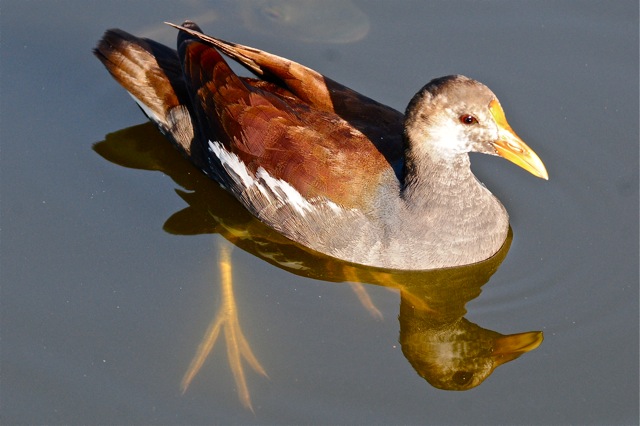
Adult non-breeding plumage

There’s more on the naming of birds generally and Moorhens specifically in a couple of amusingly-written sources I came across. The first is from NEMESIS BIRD written by Alex Lamoreaux in 2011, called Goodbye Moorhen, Hello Gallinule. The second is from the excellent 10000BIRDS.COM entitled Moorhen Mania – the splitting and renaming of the Common Moorhen

Common Gallinule (Leucistic?) - Tony Hepburn

The bird above with a striking colouring and orange beak was photographed by the late Tony Hepburn. He believed it to be an unusual LEUCISTIC moorhen with reduced pigmentation, a condition that has similarities with ALBINISM

BAHAMAS - Common Gallinule, Abaco, TC GC Hole 11 - Becky Marvil

At some stage I am planning a companion Coot post. I won’t need to go on and on about that name. It may not be descriptive but it is short and simple, and everyone knows where they stand with it. Until they decide to rename it a Cotellinule…

Gallinule © Hans Hillewaert

Credits: Tom Sheley, Bruce Hallett, Peter Mantle, Gerlinde Taurer, Woody Bracey, Tony Hepburn, Becky Marvil, Hans Hillewaert, Nemesis Bird, 10000birds.com

     common-gallinule     common-gallinule     common-gallinule     common-gallinule     common-gallinule     common-gallinule

Unknown's avatar

HUMBLE HOUSE SPARROWS ON ABACO… & EVERYWHERE ELSE!


House Sparrow, Abaco  - Nina Henry

HUMBLE HOUSE SPARROWS ON ABACO… & EVERYWHERE ELSE!

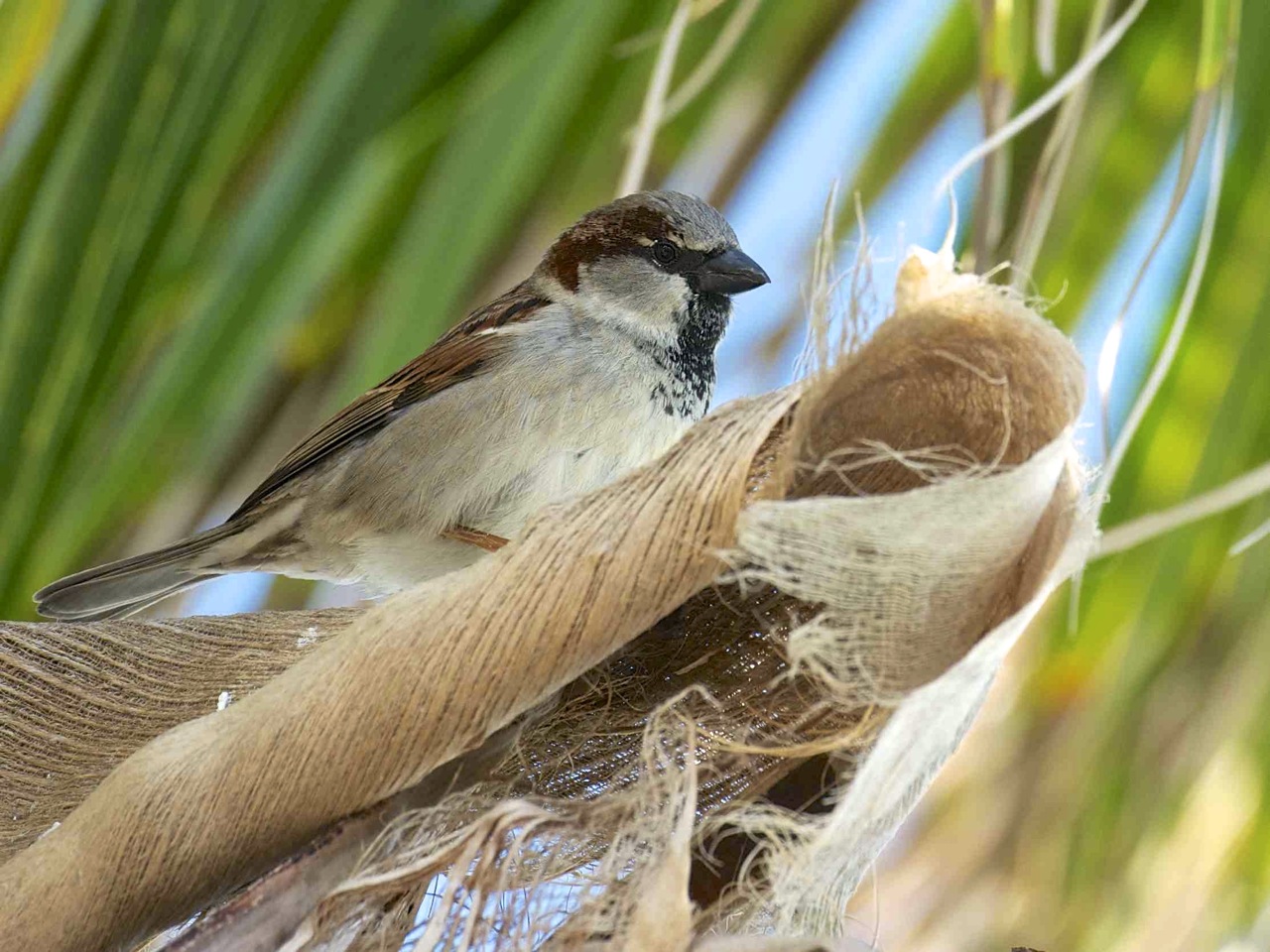
The House Sparrow is one of the most successful, adaptive and prolific species in the world. THE most, in fact. It is found on every continent (except Antarctica… but I bet there are in fact a few of them pecking around the Ross Ice Shelf for crumbs). It is indigenous to Europe and Asia, and has been introduced elsewhere.  So to any birds or people  that say house sparrows are boring and common, I would point out that they are world record-holders… 

People tend not to photograph house sparrows. Their domesticity and familiarity have rather tended to breed contempt. Besides, there are more impressive birds to capture. In compiling BIRDS OF ABACO, it was surprisingly hard to get hold of sparrow images. We had to take some ‘in-house’ photos as back-up. Although the house sparrow comes into the broad birding category ‘LBJ’ (‘Little Brown Job’), it’s really a bit unfair. The males in particular deserve a second look (then you can go and find some painted buntings if you wish…).House Sparrow, Abaco - Nina Henry

One of the strangest birding features in the UK in the last 20 years has been the virtual elimination of the house sparrow from London and its inner suburbs. Until recently, there were loveable ‘Cockerny Sparrers’ everywhere. Then suddenly the population began to decline, and the rate of loss accelerated quickly. I haven’t seen one in London for years – not in our garden, not in the green squares, not in the trees, not in noisy squawking crowds in Trafalgar Square and Piccadilly Circus. Suddenly a bird that was so common that its presence was taken completely for granted has now become high on any birder’s ‘get’ list for London, and a joy to see…  To read a short article on the possible reasons for the decline CLICK HERE. The trouble is that most theories could be applied to other major cities where there are still thriving populations – New York, for example.

House Sparrow, Abaco - Peter Mantle

It has to be said that the female house sparrow is undeniably less… er… flamboyant than the male, as is the case with most (all?) avians. But they are still pretty birds, in much the same way that a female black-faced grassquit has subtle coloration if you look closely. I took the photo below at MH Airport while hanging around for a plane. The bird wasn’t perched at a very good angle for a memorable shot, or so I thought until I noticed its little wrinkly feet and sharp claws…

House Sparrow (f), Abaco Keith Salvesen

The delicate patterns of the female house sparrow 
House Sparrow (f), Abaco Bruce Hallett copy

A juvenile. Cute, yes, but I’m sorry, it really is quite dull at this stage…House Sparrow (juv), Abaco (Charles Skinner)

Credits: Nina Henry x 2, Peter Mantle, Moi, Bruce Hallett, Charles Skinner

Unknown's avatar

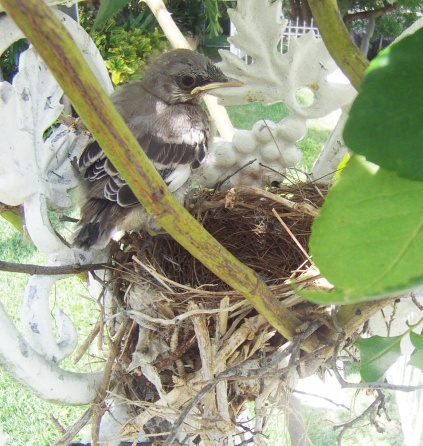
BAHAMA MOCKINGBIRD NEST, CHICKS & FLEDGING VIDEO


Bahama Mockingbird, Abaco -  Bruce Hallett

Bahama Mockingbird, Abaco – Bruce Hallett

BAHAMA MOCKINGBIRD NEST, CHICKS & FLEDGING VIDEO

I tend not to reblog other people’s posts wholesale. For a start, there can be compatibility issues that are tiresome to sort out. Often, they will include material – interesting in its own right – that is applicable to that blog but not to this one… Or it might be inappropriate to add other useful info or images. Sometimes, though, a post is perfect. This is one such time. I have recently started to follow Dominique’s blog WANDER IN NATURE, having come across her post about the Bahama Mockingbird Mimus gundlachii. The Baha Mocker is on the ‘wants list’ of any birder on Abaco. I have never seen a photo of a nest or chick before, far less seen either in real life. So here they are, not on Abaco but only a mockingbird’s flight away!

Wander in Nature logo

BAHAMA MOCKINGBIRD TAKES FLIGHT

JUNE 2014 Sometime in the transition between Spring and Summer, I stumbled across a bird’s nest wedged in the top corner of the rose garden.  After a much needed boost, I peered in and discovered the bobbing beaks of three little nestlings, so fragile and still without their feathers.

Bahama Mockingbird Chicks (Wander in Nature)

Over the next few days, I hoped to follow their growth and capture them during feeding time with their two parents that had clearly made their presence known.  One of the young birds appeared to take over the nest for a while, and eventually took flight into the big wide world.

Bahama Mockingbird Fledgling (Wander in Nature)

Bahama Mockingbird Adult & Fledgling (Wander in Nature)

Bahama Mockingbird Fledgling (Wander in Nature)

The whole story is here… there’s a great deal of action at this nest!

Here are two recordings of the beautiful song of this bird that I made 18 months ago a short way down a logging track in the pine forest south of Crossing Rocks (before the Y). Note the repetition of particular phrases before the bird moves on to the next sound in its extensive repertoire.
RELATED POSTS

BAHAMA MOCKINGBIRD ‘Making a good impression…’

NORTHERN MOCKINGBIRD ‘Taking off…’ (Mimicry)

Credits: Header image, Bruce Hallett; all other images and video, Dominique @ Wander in Nature

Unknown's avatar

RARE AMERICAN ROBINS ON ABACO: MORE SIGHTINGS


American Robin, Abaco - Bruce Hallett

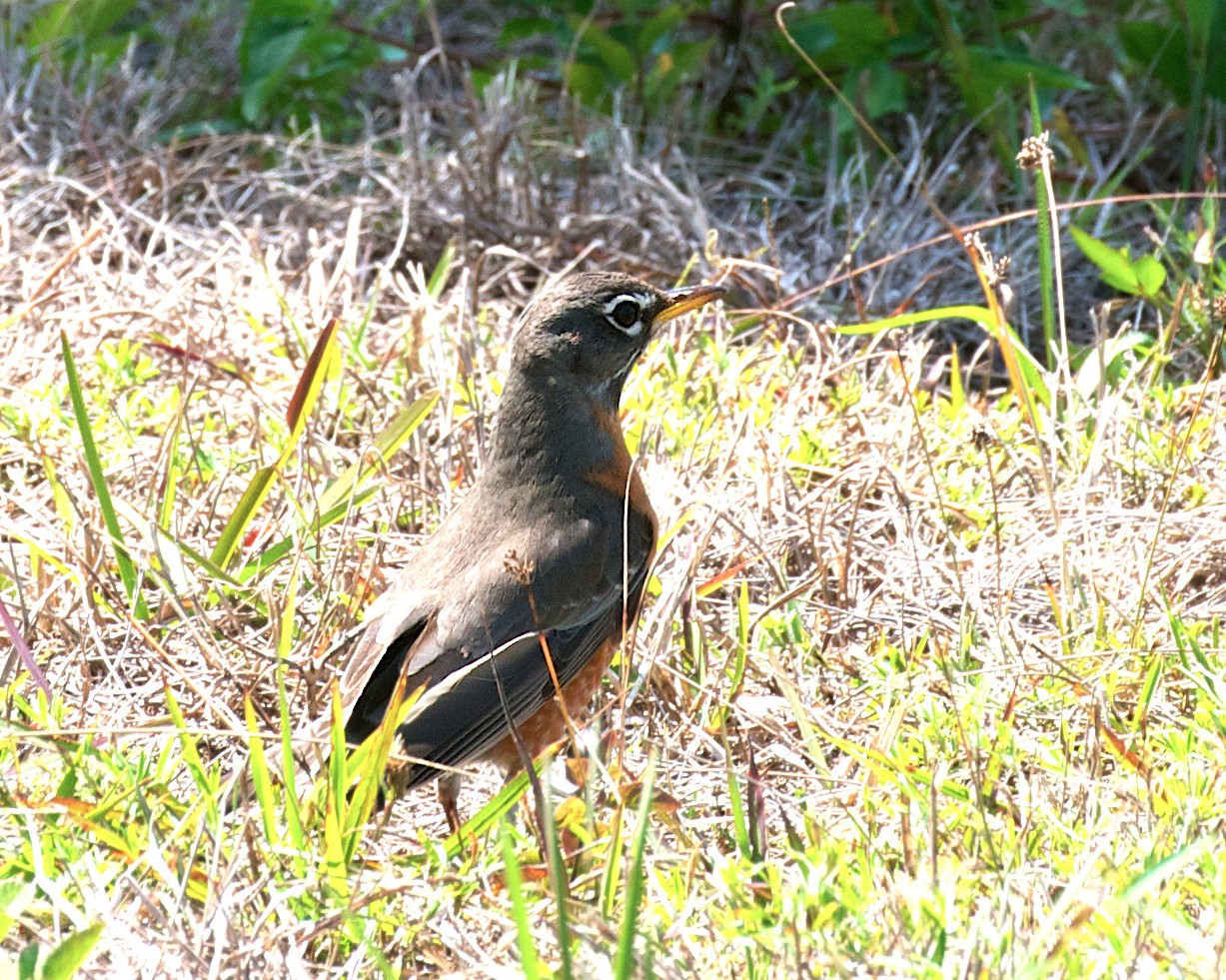
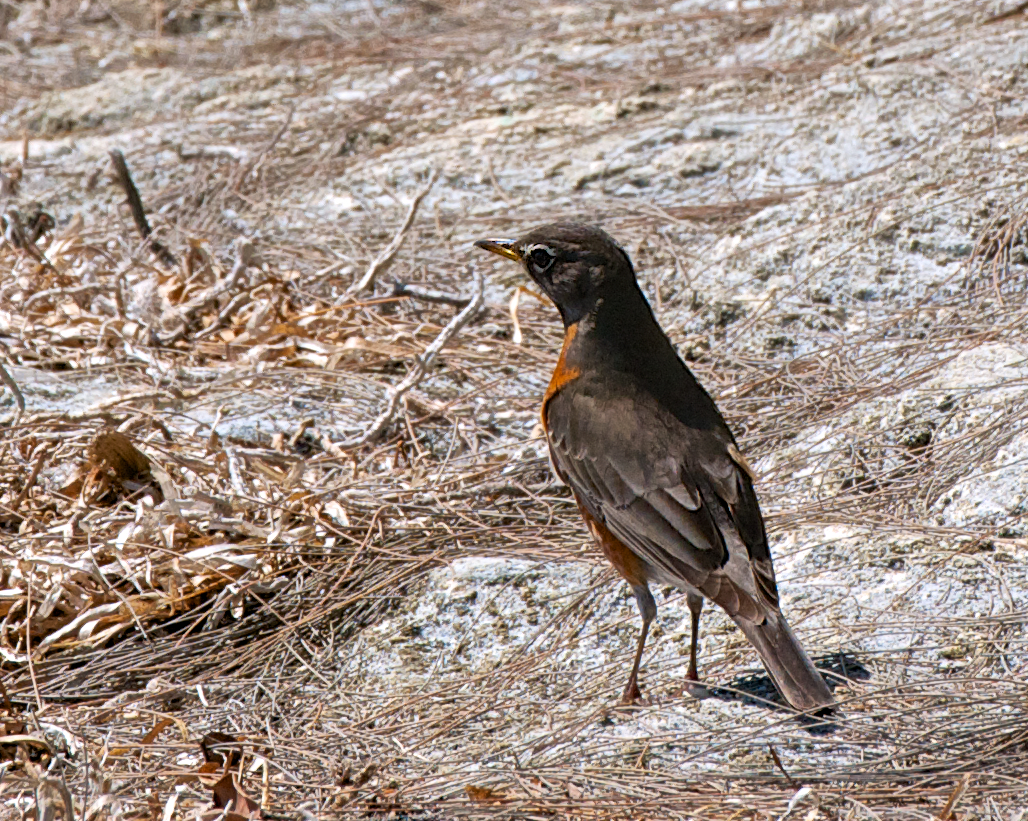
In 2012 I wrote a post about the comparative rarity of the American Robin on Abaco, which had surprised me. They overwinter in Florida, and they might conceivably range further more often than they do. It turned out that one or two may be reported one year, none the next. I listed a number of sightings and some comments by Woody Bracey, but I lacked any photos of these birds taken on Abaco. I had to make do with wiki and bad ones taken in the US by me (including stuffed ones in the Natural History Museum, NYC – an act of desperation!). You can see the post HERE

Nina Henry, a photographic contributor to BIRDS OF ABACO, had some good fortune last March 2014 when she found these 3 birds during her trip to Abaco. Maybe March is a good time for them – perhaps a few call in as they start to make their way north for the summer. 

AMERICAN ROBIN, Abaco 1- Nina Henry AMERICAN ROBIN, Abaco 2- Nina Henry AMERICAN ROBIN, Abaco 3- Nina Henry

Many past sightings have been on the Cays rather than the main island.  Here’s a recent photograph taken by Charmaine Albury on Man-o-Way Cay

American Robin Man-o-War Cay Abaco (Charmaine Albury)

Meanwhile I have been able to improve slightly on the tiny distant AMRO I posted before, with one taken more recently – still not on Abaco but in NYC. Closer, but definitely no cigar yet…

American Robin, NYC (Rolling Harbour)

 Credits: Bruce Hallett (header), Nina Henry x 3, Charmaine Albury, RH

Unknown's avatar

‘SEXING THE HUMMER’: A GENDER GUIDE TO ABACO’S HUMMINGBIRDS


Cuban Emerald (male) Abaco - Becky Marvil

Cuban Emerald (male) Abaco – Becky Marvil

 ‘SEXING THE HUMMER’: A GENDER GUIDE TO ABACO’S HUMMINGBIRDS

The subject matter of this post is not as indelicate as the title might imply; nor is it a ‘hands-on’ practical guide for intimate examinations of tiny birds. In particular it does not publicise some recently discovered louche activity involving unfeasibly large motor vehicles. It’s all about plumage. In my thin disguise as a person with apparent knowledge about the wildlife of a country that is not my own, I get frequent requests for bird ID. Some, I know at once. Some I have to think about, my memory not being quite as…

Where was I? Yes, bird ID. I use BRUCE HALLETT’S book of course, and online the CORNELL LAB and AUDUBON sites. OISEUX-BIRDS is also a good resource and has a large archive of images. And of course dear old Google – they may watch your every keystroke and know more about you than you do yourself, but put a bird’s name into Google Images and you’ll probably see your bird in every static pose or flight you need for ID. They’ll log that too for future use. I have had some queries about Bahama Woodstar gender ID, and more recently, Cuban Emeralds. So here are the adult males and females of each species in all their undoubted glory…

BAHAMA WOODSTAR (Calliphlox evelynae)

Bahama Woodstar (m), Abaco (Bruce Hallett)

Bahama Woodstar (male), Abaco (Bruce Hallett)

Bahama Woodstar male, Abaco Bahamas (Tom Sheley)

Bahama Woodstar male, Abaco Bahamas (Tom Sheley)

Bahama Woodstar, Delphi Club, Abaco (Keith Salvesen)

Bahama Woodstar (female), Delphi Club, Abaco (Keith Salvesen)

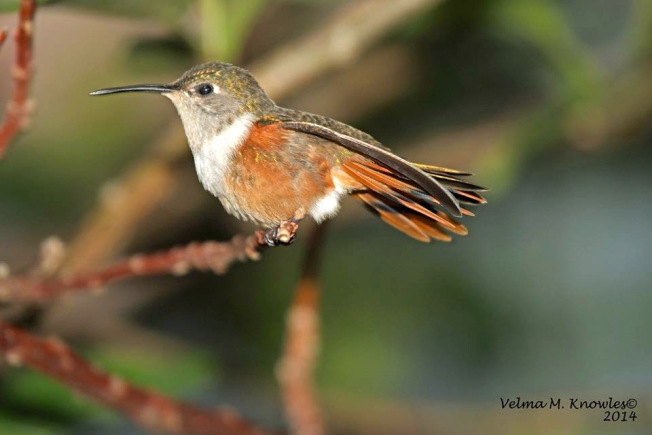
Bahama Woodstar (female), Abaco (Velma Knowles)

Bahama Woodstar (female), Abaco (Velma Knowles)

Bahama Woodstar (female), Bahama Palm Shores, Abaco  (Tara Lavallee)

Bahama Woodstar (female), Bahama Palm Shores, Abaco (Tara Lavallee)

 WOODSTAR ID MADE EASY

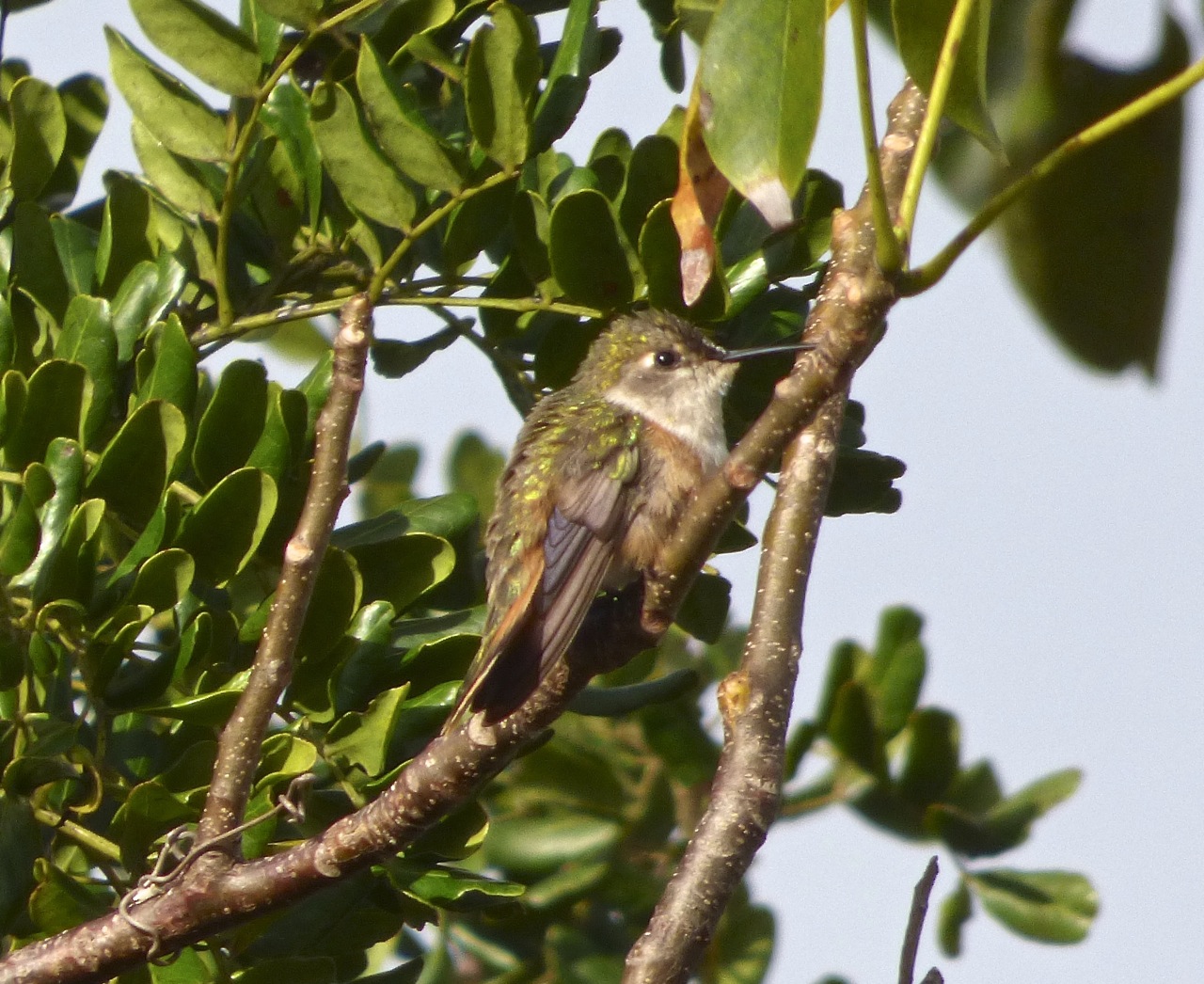
Males have a glorious purple, showy ‘gorget’. Females are less flamboyant, and have grey throats and fronts. Tara’s wonderful photo above vividly demonstrates their more delicate beauty. It’s one of my personal favourites from “BIRDS OF ABACO“, along with Tom Sheley’s above, the bird that graces the jacket. 

 CUBAN EMERALD (Chlorostilbon ricordii)

Cuban Emerald (male), Delphi Club, Abaco (Keith Salvesen)

Cuban Emerald (male), Delphi Club, Abaco (Keith Salvesen)

Cuban Emerald (male), Abaco (Erik Gauger)

Cuban Emerald (male), Abaco (Erik Gauger)

Cuban Emerald (female), Delphi Club, Abaco (Keith Salvesen)

Cuban Emerald (female), Delphi Club, Abaco (Keith Salvesen)

Cuban Emerald (female) Gilpin Point, Abaco (Keith Salvesen)

Cuban Emerald (female) Gilpin Point, Abaco (Keith Salvesen)

EMERALD ID MADE EASY

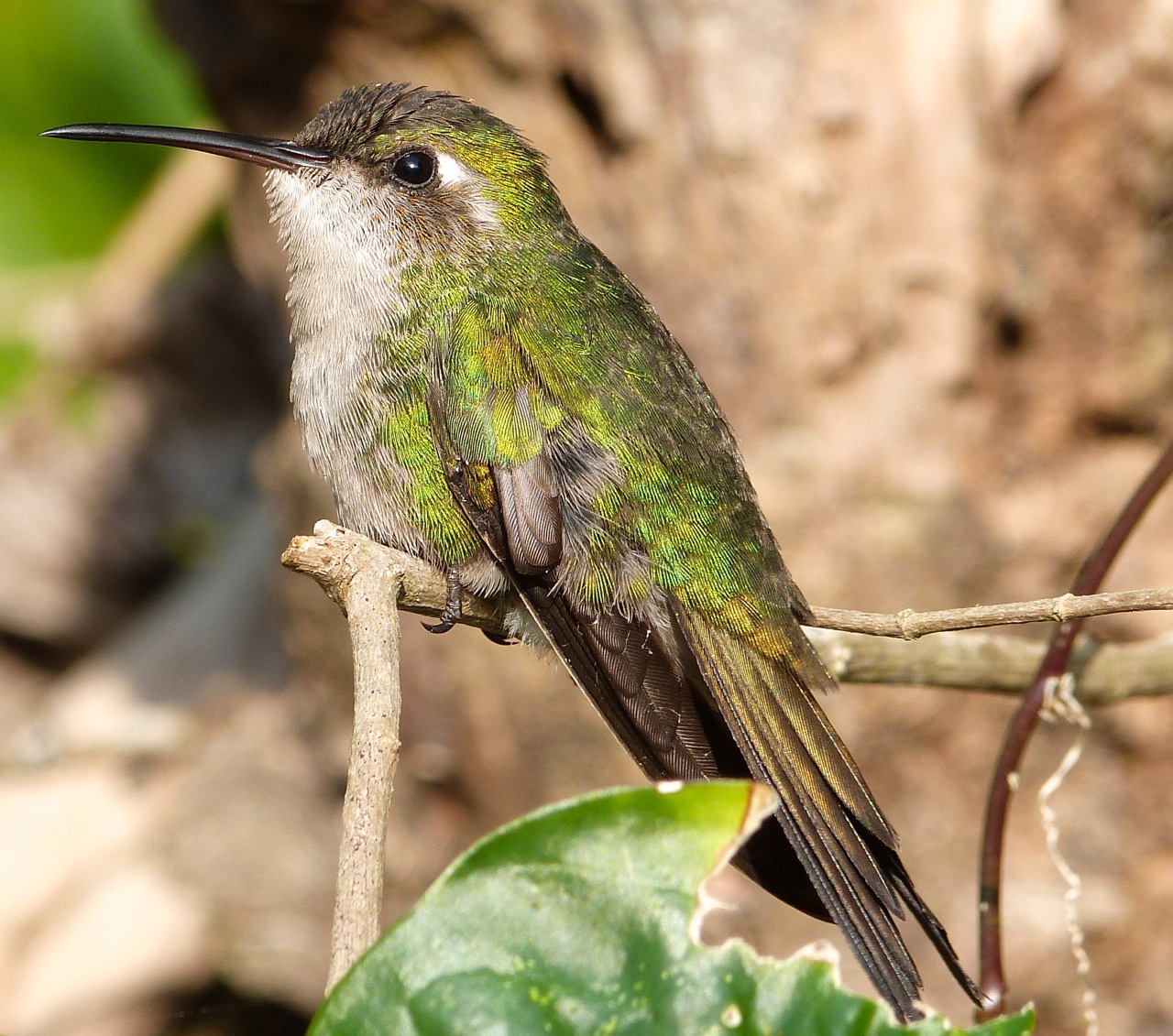
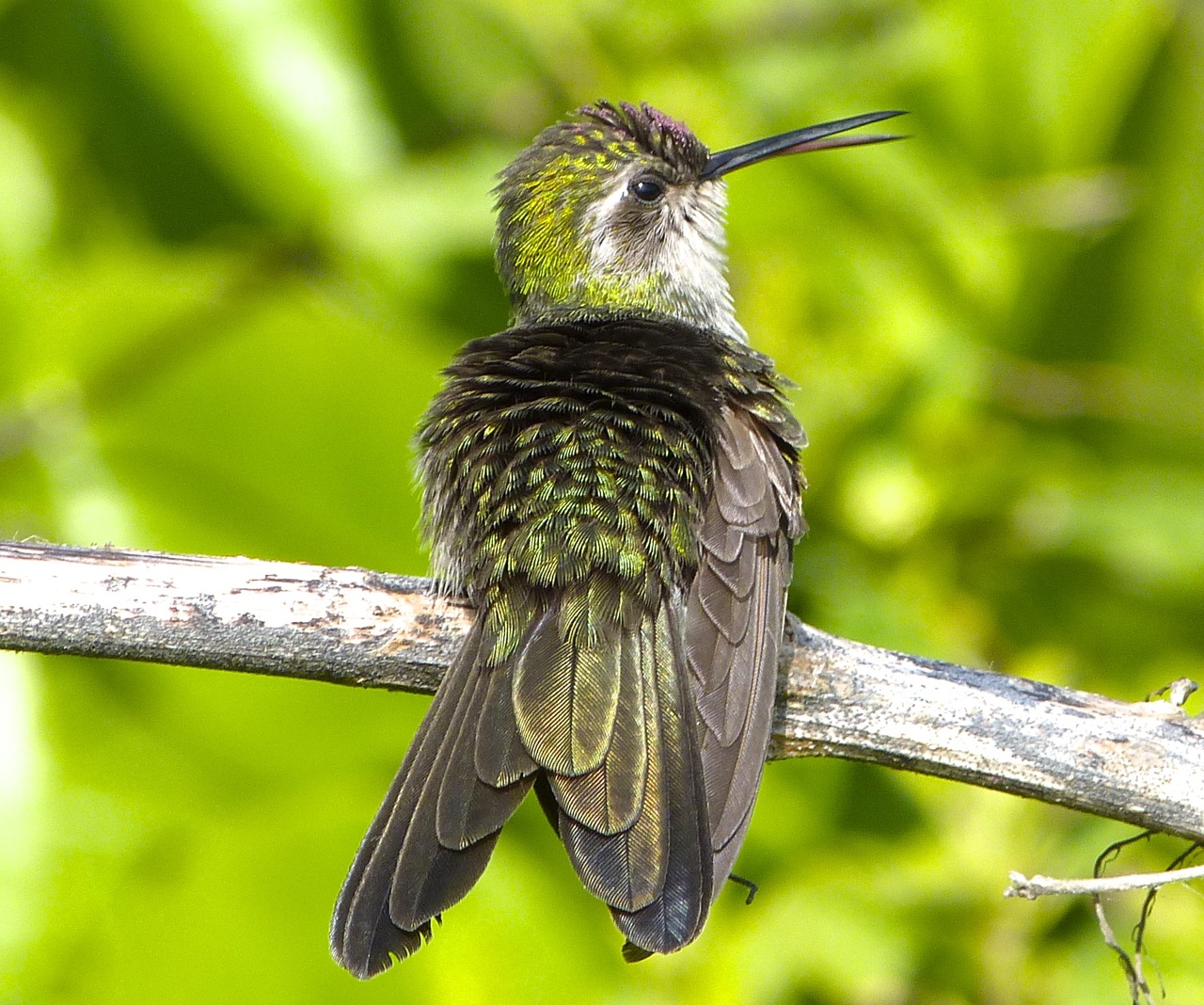
Male emeralds are basically… er… emerald green all over , apart from the wings. Females have grey throats and fronts, and lack the chestnut frontal band of the female woodstar. I’d say that their iridescent green is a different metallic shade from the male, but that may be just me. I don’t have the palette vocab to describe it, but advice welcome! Perhaps one can simply say it is more subtle.

SO IT’S JUST THE TWO HUMMERS ON ABACO, IS IT?

The answer is ‘No’. But don’t make a special trip to see the third species – they are casual / irregular vagrants only, and a definite sighting will be a rarity. But just in case, here are stock photos of a male and a female, and (taken on Abaco by Bruce Hallett) an immature male of the species…

RUBY-THROATED HUMMINGBIRD

MaleRuby-throated hummer (Steve Maslowski, Wiki)

FemaleRuby-throated Hummingbird (Tim Ross Wiki)

Ruby-throated Hummingbird (male, immature)

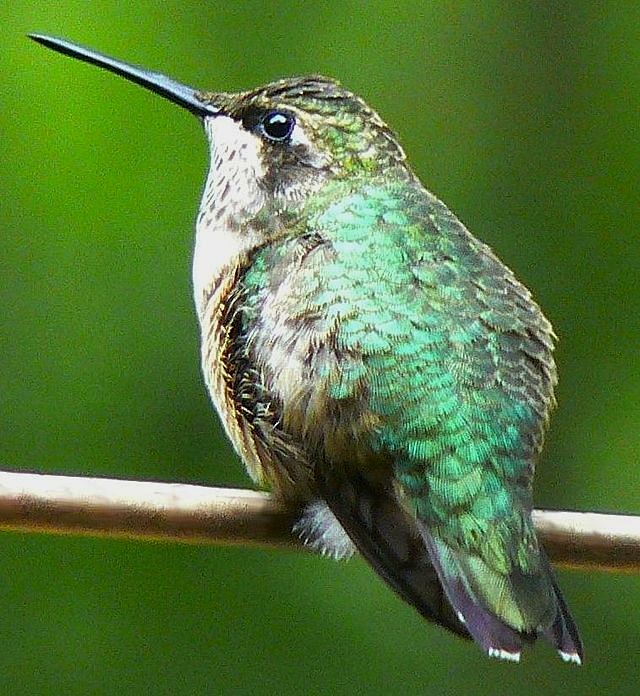
Ruby-throated Hummingbird (male, imm), Abaco (Bruce Hallett)

Ruby-throated Hummingbird (male, imm), Abaco (Bruce Hallett)

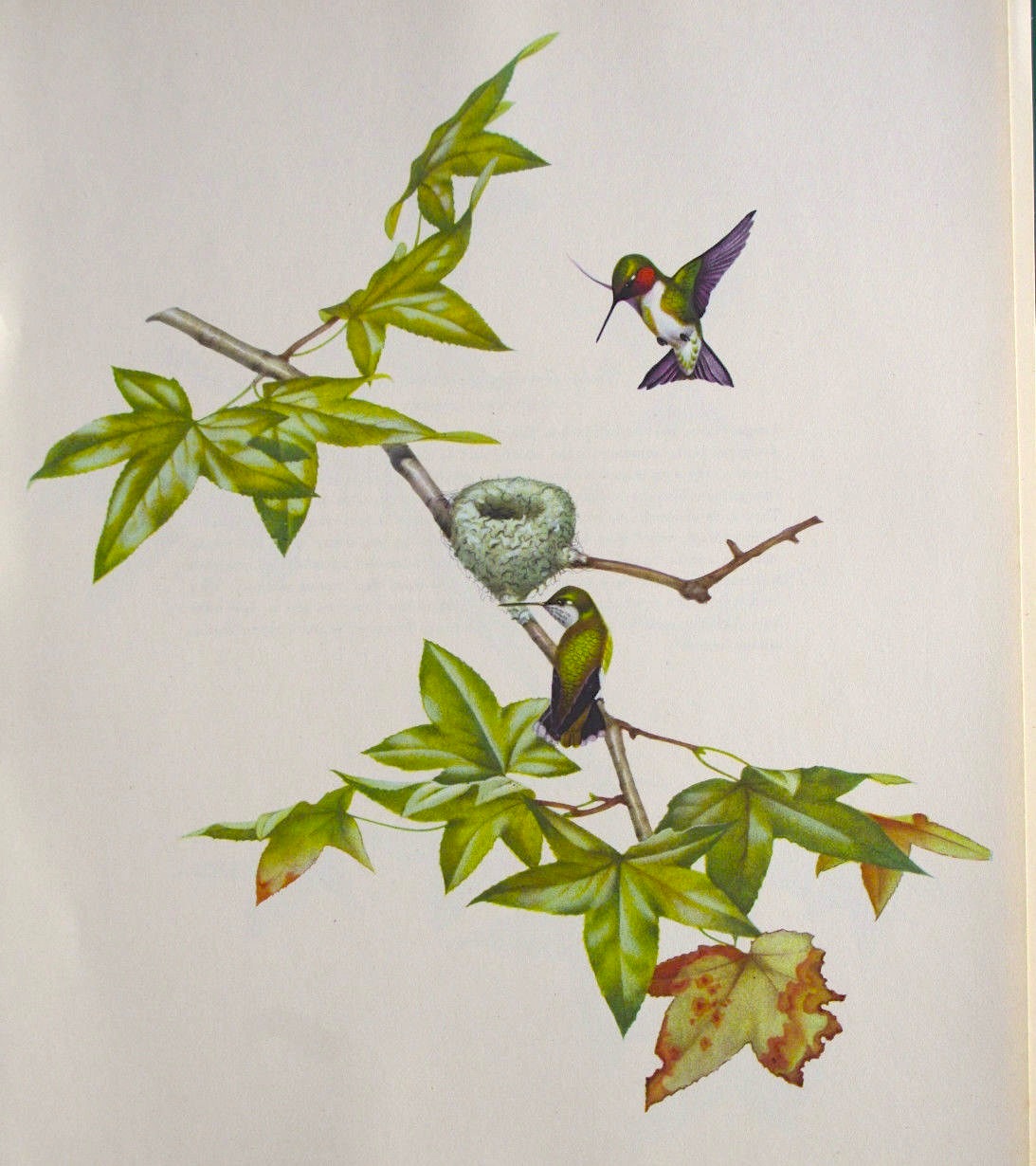
This is an attractive print of the R-tH by MenaboniRuby-throated Hummingbird - Menaboni

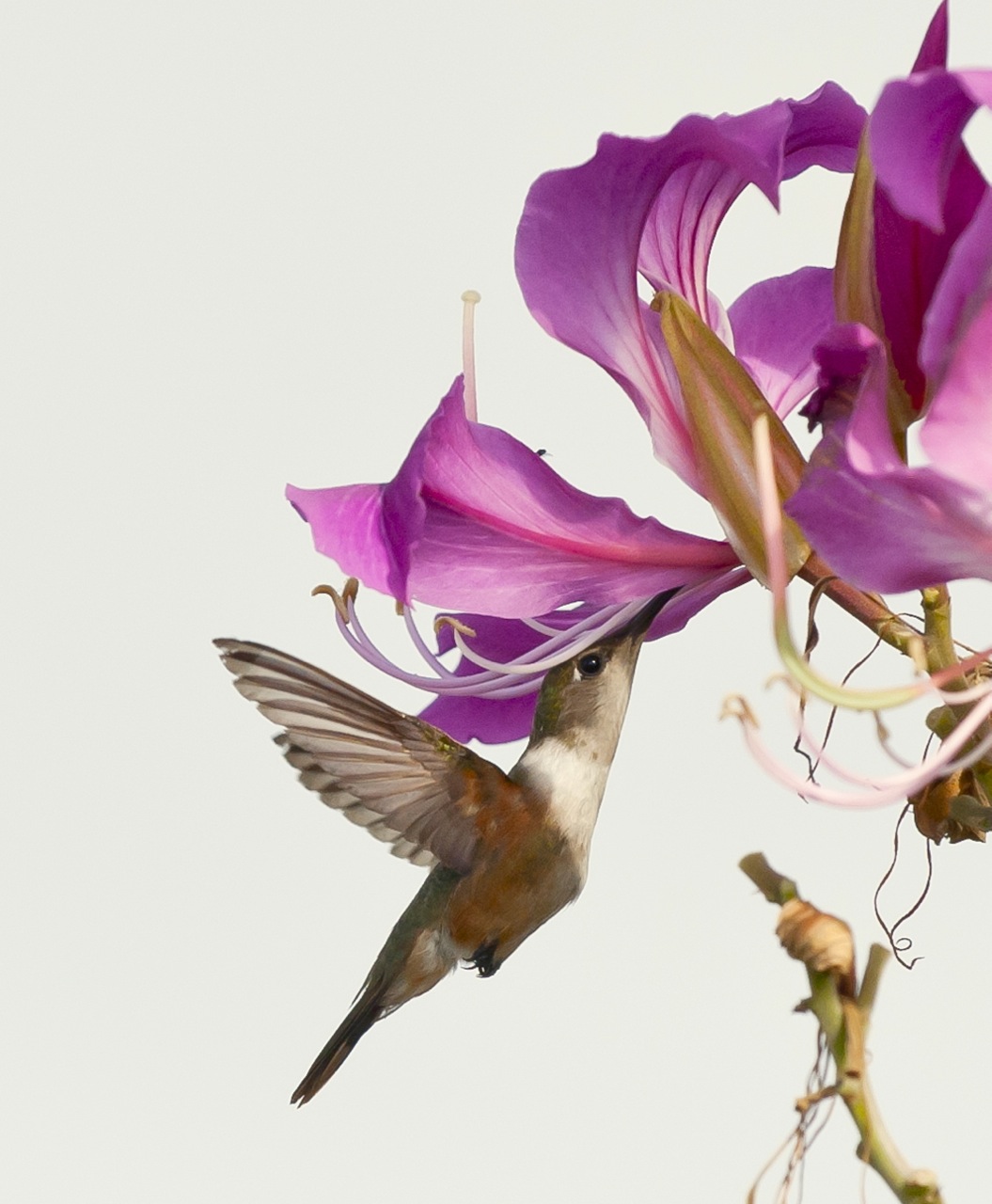
To complete this post, I’ll add a brilliant Woodstar photo taken by Tom Sheley, birdman and generous fishing partner, that I reckon spans the boundary between photography and art. 

Bahama Woodstar female.Abaco Bahamas.Tom Sheley

Bahama Woodstar female.Abaco Bahamas.Tom Sheley

Credits: In addition to those shown below images, Steve Maslowski and Tim Ross for the RTHs

Unknown's avatar

DOWITCHERS FOR ABACO TWITCHERS


Short-billed Dowitcher, Abaco (Bruce Hallett) DOWITCHERS FOR ABACO TWITCHERS

(THE LONG AND THE SHORT OF IT…)

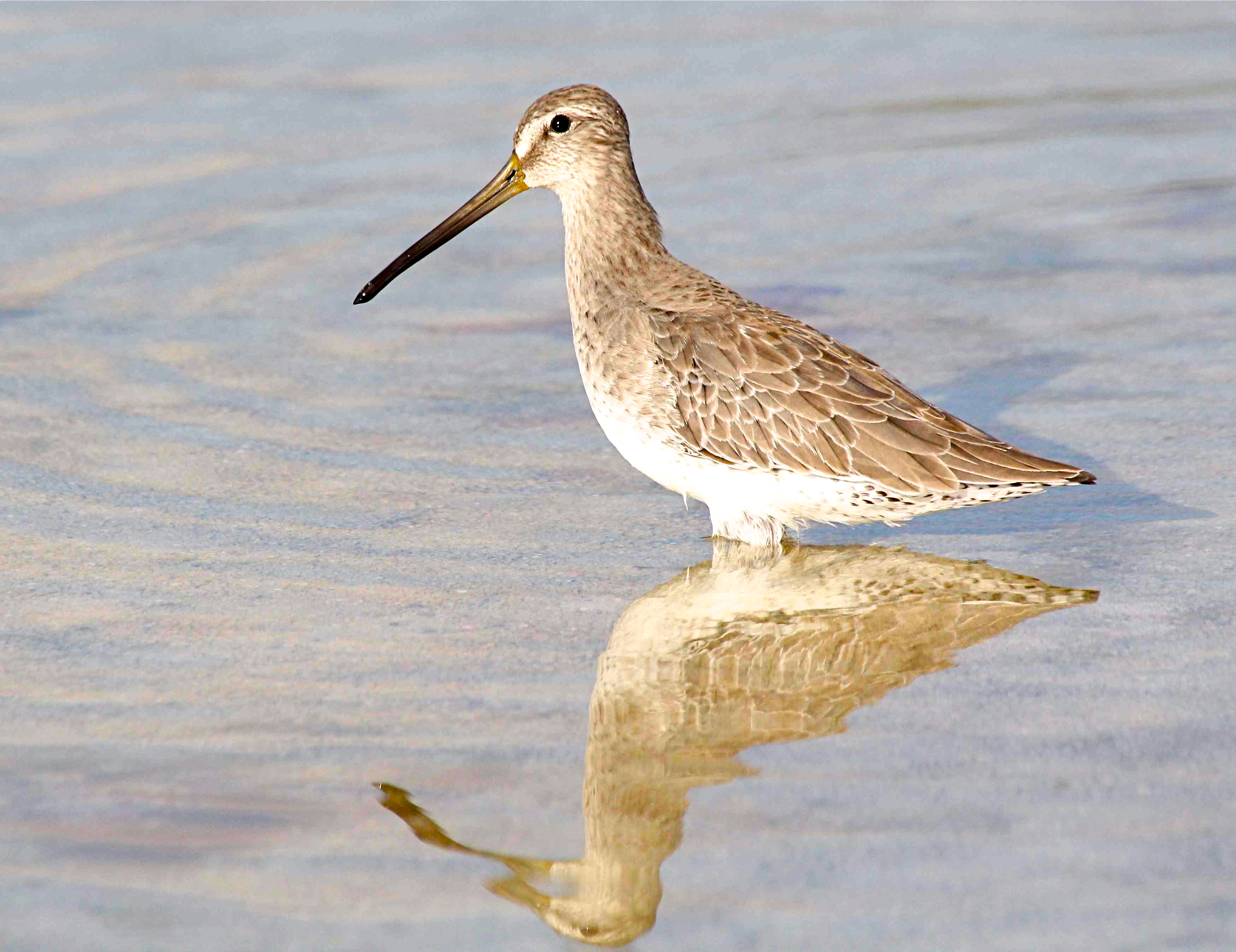
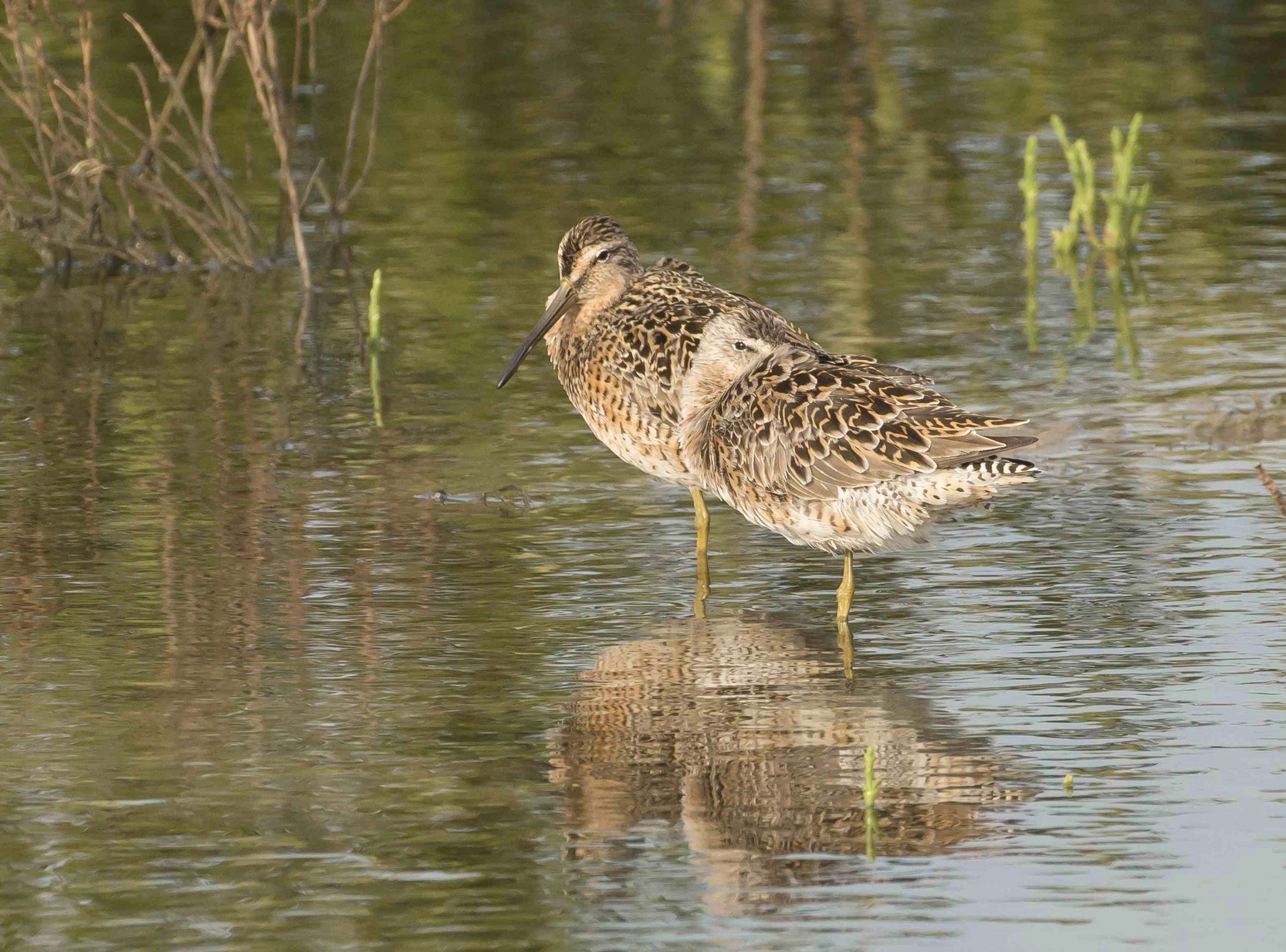
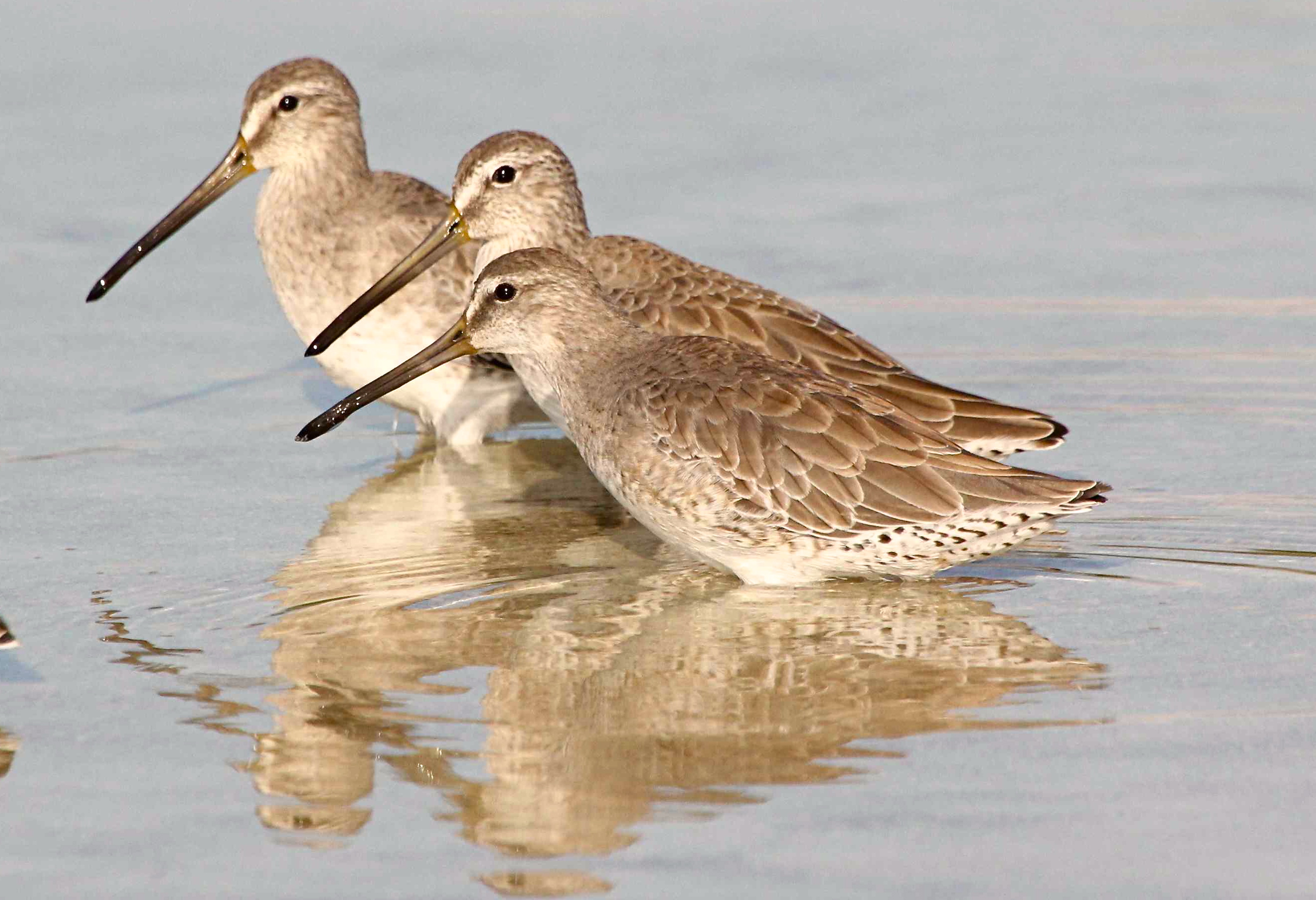
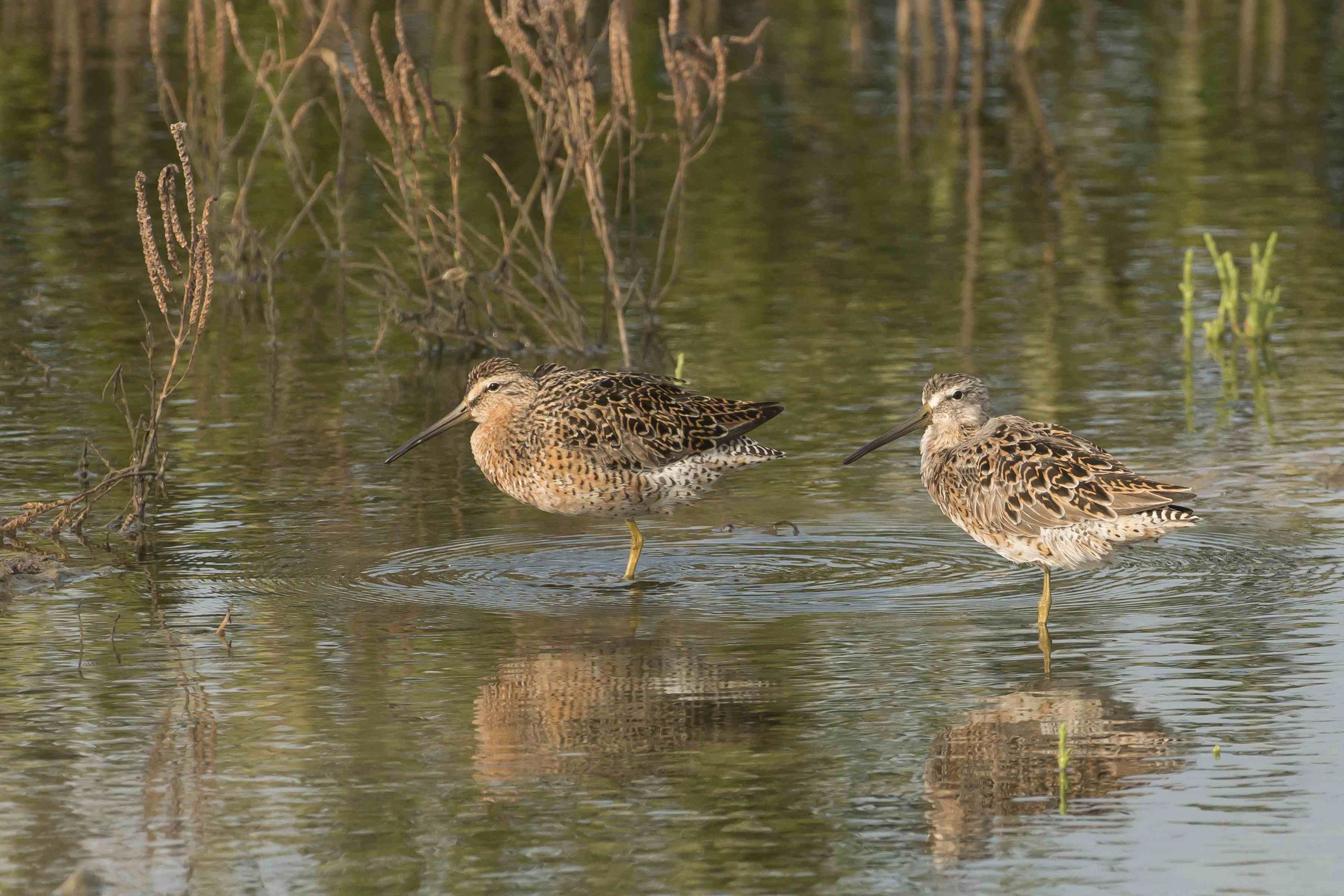
Long-billed (Limnodromus scolopaceus)? Or Short-billed (Limnodromus griseus)? Which one is that over there? No, not there. There! For Abaco, the answer is very easy. The SBD is a common winter resident, whereas the LBD is an occasional casual visitor, recorded rarely and irregularly in the Northern Bahamas. So if you are looking at a Dowitcher, it’s 98% certain that’s it’s an SBD. Which is lucky – they are so similar that telling them apart is a complex ID challenge, even if seen together! Until 60 years ago they happily existed as one species until the avian powers-that-be decided to prise them apart and award them separate species status. All the birds featured here are Abaco SDBs, with one exception… More on the comparisons and differences below.

The Dowitcher’s bill is an extremely effective instrument for probing deep into low water and mud. The rapid stabbing for concealed invertebrates has been vividly described as being ‘like a sewing-machine’. A ‘Dowitcher Stitcher’. So to speak.Short-billed Dowitcher, Abaco 2 (Bruce Hallett)

 HOW DID THE DOWITCHER GET ITS NAME?

I had assumed that the strange name for these birds was onomatopoeic, in the same way that a Killdeer is supposed to call “Kill…Deer”. And a Bobwhite, an interrogative “Bob…White?”. When I tried to check this online, I found that the usually valuable primary sources for bird info were silent on the topic. In the end, I tracked down a Merriam Webster entry that simply said “probably of Iroquoian origin; akin to Oneida tawístawis. First Known Use: 1841”. Which left me better informed, but no wiser…

Short-billed Dowitcher2.Abaco Bahamas.Tom Sheley

THERE’S A BUNCH OF SHOREBIRDS OVER THERE – WHAT DO SBDs SOUND LIKE?

 Phoenix Birder / Xeno Canto

In the header image, the bird is foraging in shallow water. In deeper water or with softer mud, SBDs will plunge their bills in to the hilt

Short-billed Dowitchers, Abaco -  Bruce Hallett

SHORT OR LONG – HOW ON EARTH DO I TELL? 

1. HELPFUL(ISH) WAYS

  • On Abaco, if you see a Dowitcher the overwhelming likelihood is that it’s a SBD
  • The species prefer different habitats, with the LBS preferring freshwater even in coastal regions
  • The SBD prefers coastal areas, shorelines and brackish / muddy ponds
  • The SBD’s call is said to be “mellower” than the LDB – though unless you have heard both for comparison, that’s not a very useful identifier.
  • The body shapes are apparently subtly different, in ways I personally can only begin to guess
  • In breeding plumage, the species have perceptible colour / pattern differences. (If you have binoculars?)
 2. CONFUSING FACTORS
  • LBDs may occasionally join SBDs that are foraging on open tidal flats
  • Actual bill length may not help, there’s an overlap – some SBDs may have longer bills and vice versa.
  • There are theories about bill-length / head size comparison as a field ID method. Do they work? As if!
  • Winter plumage of both species is very similar (grey). Both are only on Abaco in winter. Go figure.

Short-billed Dowitcher, Abaco 1 Bruce Hallett

DOES THE DOWITCHER HAVE ANY PRACTICAL APPLICATION?

Yes! In Scrabble you can form a stonking 315 words from those 9 letters, all permitted under Scrabble rules (though not my own house rules, which forbid ridiculous 2 and 3 letter words that sound invented for the purpose of winning Scrabble). Apart from the full 9 letter original, there’s one 8 letter word – ‘witherod’, a type of viburnum plant; and 13 words of 7 letters, of which I’d say 8 are in common though not everyday usage. I’ll leave you to work out the remaining 301 words…

Short-billed Dowitcher.Abaco Bahamas.Tom Sheley

DO YOU HAVE ANY LBD PHOTOS TAKEN ON ABACO?

I surely do. Woody Bracey photographed a pair of dowitchers together on Abaco, one SBD and one LBD. But even though this looks a pretty straightforward comparison of bill length, colouring and marking, by now I’m now so confused that I’m beginning to wish the two species could be happily reunited into one…Long & Short Billed Dowitchers, Abaco Woody Bracey

 Credits: Bruce Hallett, Tom Sheley, Woody Bracey, past researches, the usual bird info suspects

Unknown's avatar

COLOURFUL BUNTING FOR CHRISTMAS ON ABACO


imagesimagesimagesimages

Painted Bunting, Abaco (Erik Gauger)

COLOURFUL BUNTING FOR CHRISTMAS ON ABACO

BUNTING  /ˈbʌntɪŋ/  (Noun)
[Yay! A Christmas gift of a puntastic avian / festive double-meaning]
  1. A small New World songbird of the cardinal subfamily
  2. Flags and other colourful festive decorations
imagesimagesimages

PAINTED BUNTINGPainted Bunting, Abaco Tara Lavallee

It’s hard to imagine a more Christmasy little bird than the Painted Bunting. Bright blue, red, green primary colours make for a spectacular small bird to grace any garden or feeder. The 2 birds above were featured in a detailed post on the species several months ago, with plenty of other great photos, HERE But there are other bunting species and close relations on Abaco that haven’t yet had a look-in on these pages. A common factor is the little fat beak and a great liking for seeds…

images

INDIGO BUNTINGIndigo Bunting.BPS.Abaco Bahamas.Tom Sheley

Indigo Bunting male with 2 females going for the seeds, Bahama Palm ShoresIndigo Bunting, BPS, Abaco Ann Capling

images

ROSE-BREASTED GROSBEAKRose-breasted Grosbeak PMRose-breasted Grosbeak, Delphi, Abaco (Caroline Stahala)

images

SUMMER TANAGERSummer Tanager (m), Abaco Bruce Hallett

images

SCARLET TANAGERScarlet Tanager, Abaco Woody Bracey

The birds above are all buntings or part of the wider bunting family. The definition is somewhat flexible and includes piranga and tanager species (and in the past the Western Spindalis, formerly the Stripe-headed Tanager). All were photographed on Abaco, mostly at the Delphi Club or Bahama Palm Shores. The photos below are a flagrant cheat. You’ll never see one of these on Abaco. They were taken by me a couple of years back in Central Park, NYC, made magic with snow and freezing air. Have a very happy and colourful Christmas!

images

NORTHERN CARDINALRed Cardinal CP NYC 2Red Cardinal CP NYC 3

Credits: Erik Gauger, Tara Lavallee, Tom Sheley, Ann Capling, Caroline Stahala, Bruce Hallett, Woody Bracey, RH

imagesimagesimagesimages

Unknown's avatar

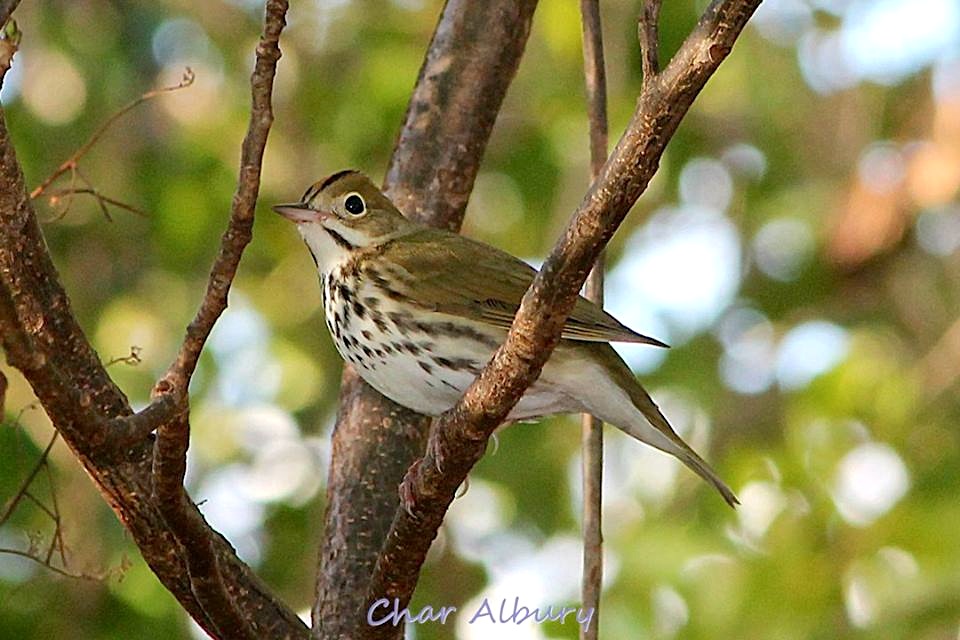
OVENBIRDS FOR CHRISTMAS ON ABACO (NB NOT ROAST TURKEY)


Ovenbird.Abaco Bahamas.Tom Sheley.2

OVENBIRDS FOR CHRISTMAS ON ABACO (NB NOT ROAST TURKEY)

The Ovenbird (Seiurus aurocapilla) is a small winter-resident warbler with distinctive orange head feathers that can be raised into a crest.  I’m guessing this accomplishment is mainly used in the breeding season as a way to impress and attract a mate. Maybe when alarmed or excited at other times as well. Right now, with Christmas only ’12 sleeps’ away, they have become a visible presence on Abaco and the Cays despite their shyness and a general tendency to shuffle around in the undergrowth looking for insects and small snails. Ovenbird.Delphi Club.Abaco Bahamas.Tom Sheley.1

You may hardly be aware of these rather unassuming little birds, and as they rootle their way through the dead leaves under shrubs they can look quite dull. See one lit up by the morning sun, however, and you’ll see how pretty and richly marked they are.

Ovenbird, Abaco  Woody Bracey

The Ovenbird enjoys the taxonomic distinction of being the only bird of its genus in the warbler family Parulidae. It is a so-called ‘monotypic’ species. It was formerly lumped in with Waterthrushes, but was found to be genetically dissimilar so its new status was granted. 

Ovenbird.Bahama Palm Shores.Abaco Bahamas.Tom Sheley

The ovenbird is so named because it builds a domed nest (“oven”) with a side-entrance, constructed from foliage and vegetation. They tend to nest on the ground, making them vulnerable to predation. The species name for the ovenbird, Seiurus aurocapilla, has nothing to do with the nest shape, though. It derives from both Greek and Latin, and loosely means ‘shaking tail, golden haired’. No, nothing to do with Miley Cyrus either. Leave it.

Here are some recent shots taken by Charmaine Albury on Man-o-War Cay, showing the orange crest very clearly.

Ovenbird, M-o-W Abaco (Char Albury 3) Ovenbird, M-o-W Abaco (Char Albury 2) Ovenbird, M-o-W Abaco (Char Albury 1)

My plan to include audio of the ovenbird’s song and call has been temporarily thwarted by a glitch, but I’ll add them here when I have overcome the problem.Ovenbird, Abaco (Gerlinde Taurer)

Gauge the size of the bird against the pod it is standing on…Ovenbird, Abaco - Bruce Hallett

In this photo, you can see that the orange crest feathers are raisedOvenbird Seiurus aurocapilla (Cephas, wiki)

Credits: Tom Sheley, Woody Bracey, Charmaine Albury, Bruce Hallett, Gerlinde Taurer, Cephas / Wiki

Unknown's avatar

THICK-BILLED VIREOS: ABACO’S ONLY PERMANENT RESIDENT VIREO


Thick-billed Vireo, Abaco 2 Tom Reed

THICK-BILLED VIREOS: ABACO’S ONLY PERMANENT RESIDENT VIREO

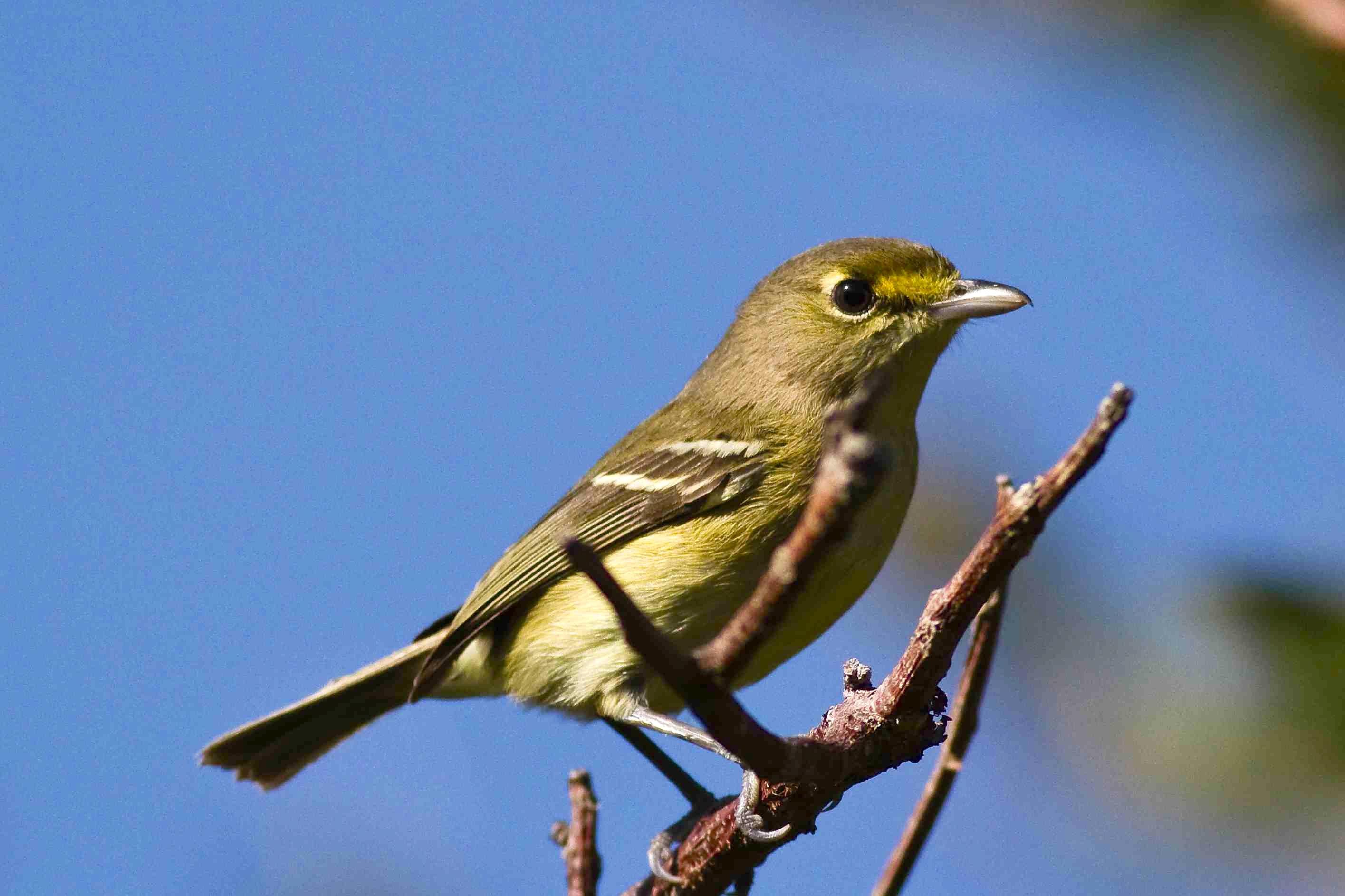
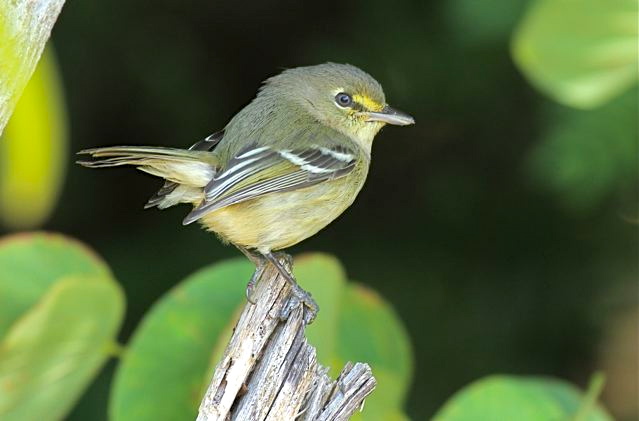
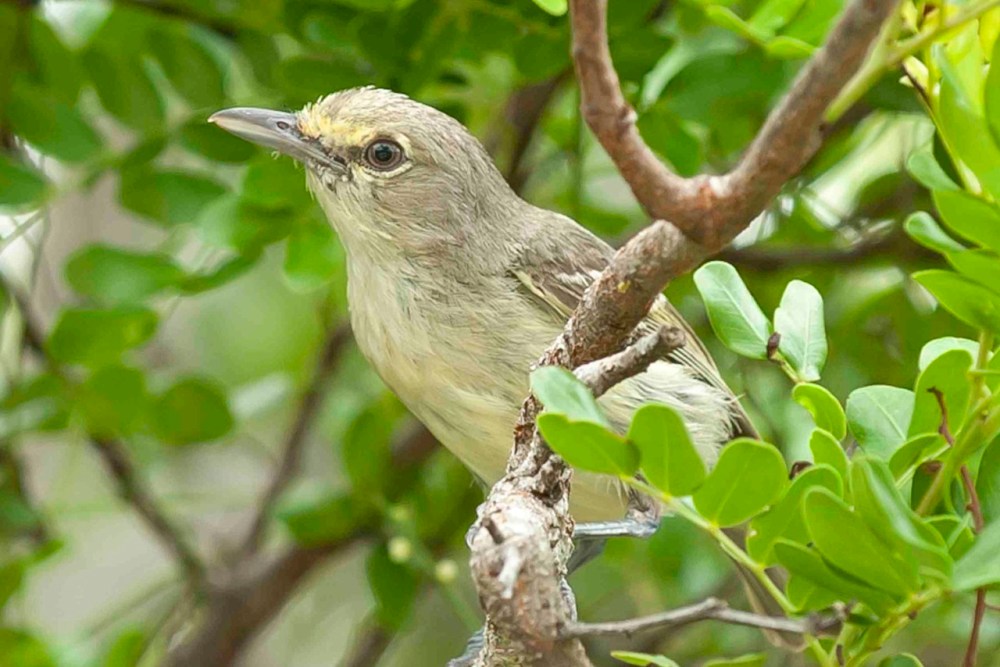
Hard to know why I haven’t got round to featuring these little vireos before. Unlike the other 7 vireo species found on Abaco seasonally or as transients, the Thick-billed Vireo Vireo crassirostris is an ever-present permanent resident of the coppice and scrub; and their unmistakeable repeating song can be heard almost everywhere. It was the first bird song I heard on Abaco, and therefore the TBV was the first bird I learned to ID. I’ve got quite a soft spot for them, really.Thick-billed Vireo, Abaco (Craig Nash)

Although TBVs are very easy to hear and track to a general area of coppice, I find actually seeing the bird creating the noise quite hard – let alone getting a clear camera shot. They always seem to be lurking several feet further away, deeper in the foliage, than the sound suggests. I’ve had some fun making TBV song iPhone recordings along the Delphi drive, practising the technique. If you want to know more about recording and converting to MP3 CLICK HERE.

One of my favourite images, from Gerlinde Taurer: a ‘shouty’ bird. We used it for ‘BIRDS OF ABACO‘.Thick-billed Vireo, Abaco  (Gerlinde Taurer 2)

I also love this perky little guy with a great beady-eyed pose taken by Bruce HallettThick-billed Vireo, Abaco (Bruce Hallett 2)

Here’s a clip of song, which I’m sure will be immediately familiar to Bahamians:

Paul Driver / Xeno Canto

Thick-billed Vireo, Abaco Bahamas.Tom Sheley

The main signifiers for this species, which in combination distinguish the TBV from the other vireo species on Abaco, are:

  • Two white wing bars
  • Yellow patch – usually quite prominent – between eye and beak
  • Thick bill – which immediately rules it out of being one of the 37 warbler species on Abaco…

Text book TBVThick-billed Vireo, Abaco (Becky Marvil 2).jpg

There are marked colour variations in the species according to maturity, season and to an extent gender (though m & f are quite similar). Here’s one that is causing wing-bar confusion by only showing traces. It also has quite dark upper parts.

Thick-billed Vireo, Abaco (Alex Hughes)

This is a very yellow TBVThick-billed Vireo, Abaco (Bruce Hallett 1)Whereas this one has rather anaemic colorationThick-billed Vireo, Abaco Bahamas .Tom SheleyFinally, this pretty TBV is very delicately markedThick-billed Vireo, Abaco (Tony Hepburn)

RELATED POSTS

BLACK-WHISKERED VIREO

PHILADELPHIA VIREO

Credits: Tom Reed (1), Craig Nash (2), Gerlinde Taurer (3), Bruce Hallett (4, 8), Tom Sheley (5, 9), Becky Marvil (6), Alex Hughes (7), Tony Hepburn (10); Paul Driver / Xeno Canto

Unknown's avatar

COMMON YELLOWTHROATS ON ABACO: CHEERFUL WINTER WARBLERS


Common-yellowthroat, Abaco (Erik Gauger)

COMMON YELLOWTHROATS ON ABACO: CHEERFUL WINTER WARBLERS

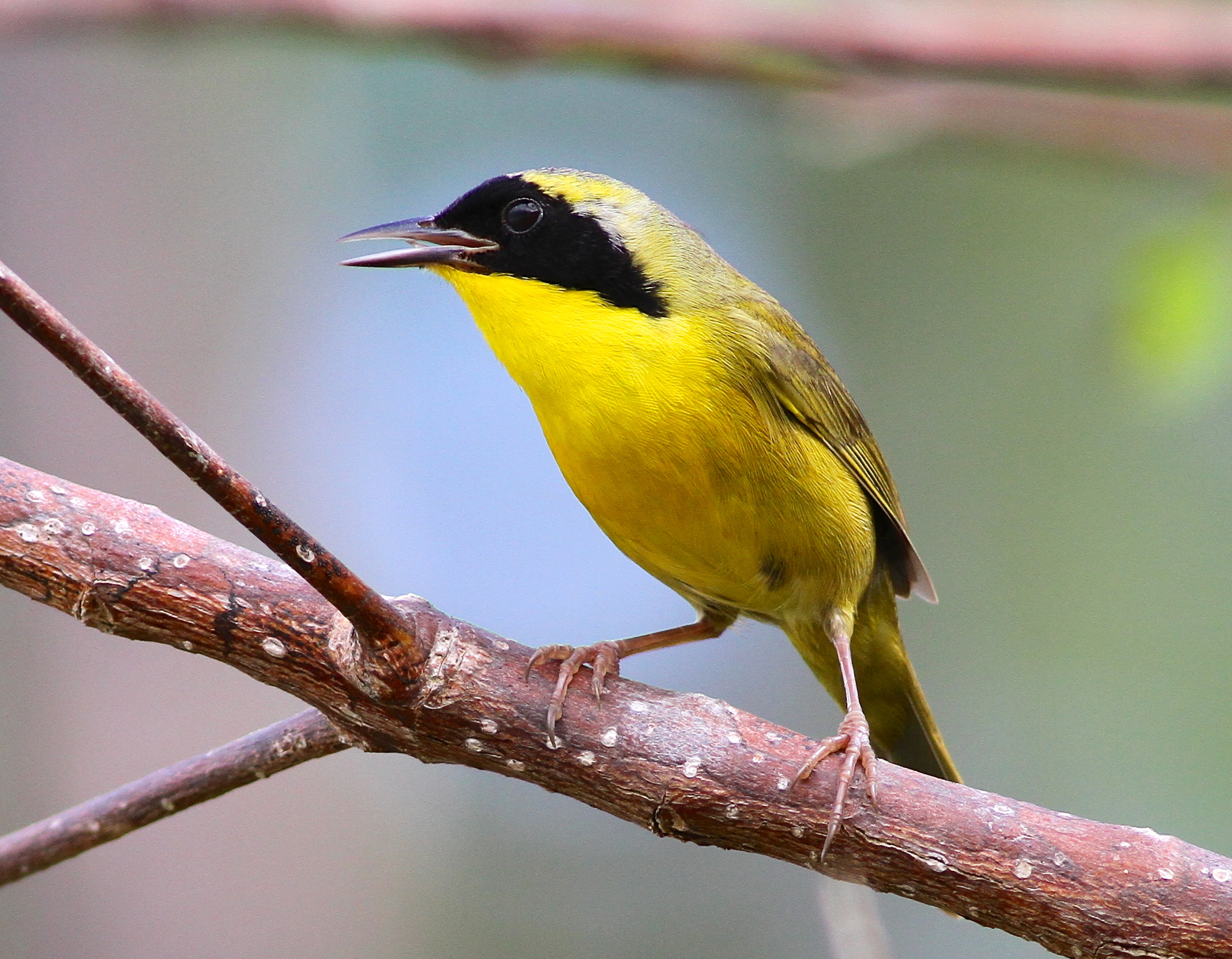
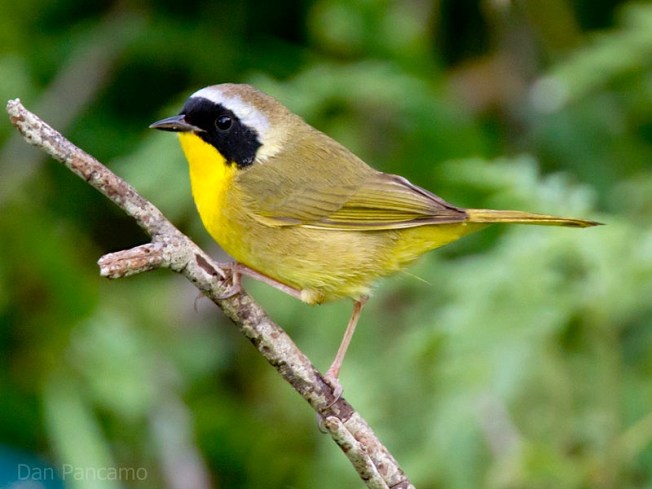
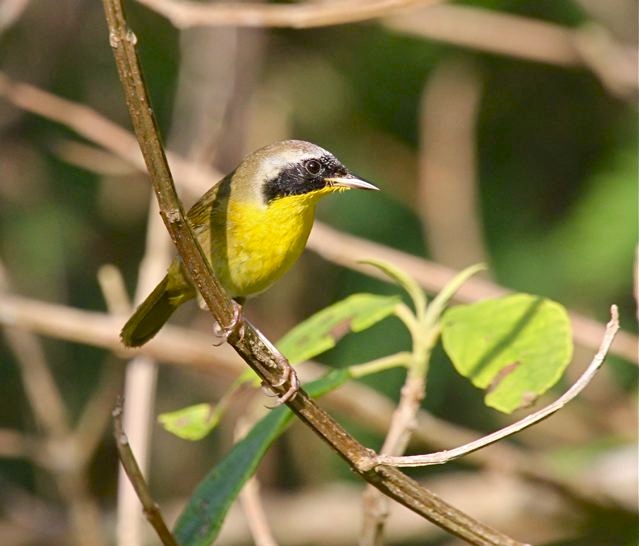
Abaco is fortunate to be home to the endemic BAHAMA YELLOWTHROAT Geothlypis rostrata, a striking bird with a dashing black mask and bright yellow body in the male. You can see it with its fellow endemics HERE. But there is similar winter resident species, the COMMON YELLOWTHROAT Geothlypis trichas, that can be seen on Abaco between October and March. Now is a very good time to look out for them. However, the two species are easy to confuse.

Common Yellowthroat (male)Common Yellowthroat, Gilpin Pond, Abaco Bahamas (Tom Sheley)

Bahama Yellowthroat (male)Bahama Yellowthroat (M) BH IMG_0675 copy

WHAT’S THE DIFFERENCE?

  • SIZE – the BW is slightly larger and sturdier than the CW
  • BEAK – larger in the BW, and some might say it tends to be decurved
  • COLOUR – the BW is more colourful, with more extensive yellow underparts and mask
  • FEMALES – both species lack the mask and are duller; the female BW has a greyer head
  • HABITAT – both are found in the same areas; the CW prefers denser vegetation near water
  • DEBATEABLE – it seems to me the pale stripe behind the mask is usually less prominent in the BW

Common Yellowthroat male with conspicuous pale head-stripe800px-Common_Yellowthroat_by_Dan_Pancamo

Both yellowthroat species are an endearing mix of shy and inquisitive. These birds are responsive to ‘pishing’, and once lured from cover they may remain nearby on low branches or shrubs watching you with interest as you watch them. Their song – similar in both species – is fairly easily imitated (or at least approximated), which may also bring them into the open – a source of great satisfaction to the amateur birder when it works. Unless it’s just coincidence, of course… The songs of the two species recorded below sound almost indistinguishable (except that the first one is professional and the second notably amateur…).

COMMON YELLOWTHROAT 

Todd Wilson / Xeno Canto

BAHAMA YELLOWTHROAT

RH own recording

Female Common Yellowthroats are unassuming and quite delicate little birds. The first of these two images shows an immature bird, with its front beginning to become yellow. The second is a mature female.Common Yellowthroat (f, imm) Bruce Hallett IMG_9435Common Yellowthroat (f) Bruce Hallett IMG_4057

Two more male Common Yellowthroats to admire…Common Yellowthroat (m) Bruce Hallett IMG_4232  Common Yellow-throat, Abaco (Becky Marvil)

Photo Credits: Erik Gauger (1); Tom Sheley (2); Bruce Hallett (3, 5, 6, 7); Dan Pancamo /Wiki (4); Becky Marvil (8) Audio: Xeno Canto; RH

Unknown's avatar

RING-BILLED GULLS ON ABACO


Ring-billed Gull ACH DSC_0451 copy

RING-BILLED GULLS ON ABACO

The Ring-billed Gull Larus delawarensis is a common winter gull, familiar to all in its adult form because of its… er… ringed bill that distinguishes it from all the other gull species found in the northern Bahamas. There are other differences, obviously, but this beak-related signifier provides the easiest method of ID. To be honest, you may find one anywhere – out to sea, on the shore, inland, or perhaps hanging out at one of the dumps that they are attracted to. This last preference is one shared with many species, but while the dumps may provide good birding venues, the photographic backgrounds and general ambience may be somewhat unattractive… Here are 3 great photos by Nina Henry of these gulls where they look best, near the shoreline.

STOP PRESS Nov 18 Woody Bracey reports from Treasure Cay “I had my first for the fall here in Treasure cay yesterday – one adult and 1 immature. It’s nice to have them back”. So keep an eye out – the ring-billeds are back on Abaco…

Ring-Billed Gull, Abaco (Nina Henry)Ring-Billed Gull, Abaco (Nina Henry)Ring-Billed Gull, Abaco (Nina Henry)

The Latin name of these gulls refers to the Delaware River, Pennsylvania, which is on their migration route. But there must have been dozens of other towns along the route with equal claim to have a bird named after them. Why Delaware took the honours, I cannot explain… and thinking about it has inserted the old song in my brain “What did Delaware, boys? What did Delaware? She wore a brand New Jersey…” etc etc**. So I’ll get on and show some more RBGs to get it out of my head. Here are 3 stages of development from Bruce Hallett.

JuvenileRing-billed Gull (juv), Abaco (Bruce Hallett)

First winterRing-billed Gull (1st winter), Abaco (Bruce Hallett)

AdultRing-billed Gull, Abaco (Bruce Hallett)

Laughing Gulls are gregarious creatures, and are quite often found in a group with some other seabird in the middle of the crowd – often a larger one. Here is a ring-billed gull standing proudly in the throng, while the laughing gulls snooze in the sun on the jetty. Ring-billed Gull + Laughing Gulls, Abaco (Peter Mantle)

Photo Credits: Tony Hepburn (1), Nina Henry (2,3,4), Bruce Hallett (5,6,7), Peter Mantle (8)

** If you want to remind yourself – or inflict on yourself for the first time – the entire US-State-related pun-encrusted jingle CLICK DELAWARE DITTY

Unknown's avatar

“STAR ANIS”: ENTERTAININGLY GREGARIOUS CUCKOOS ON ABACO


Smooth-billed Ani, TCGC Hole 11 - Becky Marvil

“STAR ANIS”: ENTERTAININGLY GREGARIOUS CUCKOOS ON ABACO 

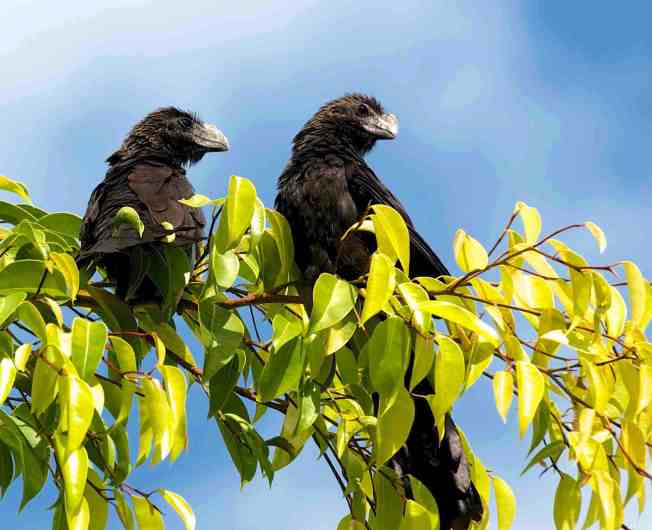
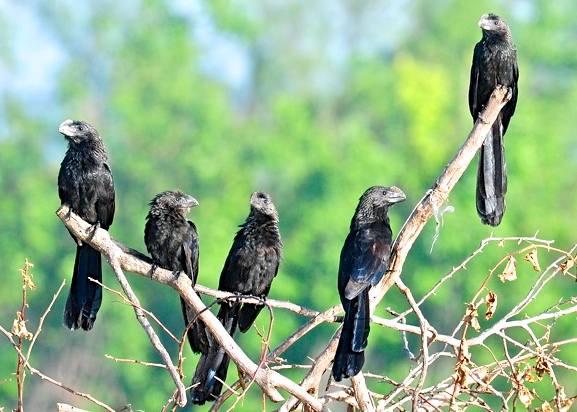
The Smooth-billed Ani (Crotophaga ani) is the third member of the cuckoo family found on Abaco, the others being the MANGROVE CUCKOO and the YELLOW-BILLED CUCKOO. Anis range from Florida and the Bahamas in the north, down through the Caribbean to South America, where they are widespread.

Ani Range Map (Xeno-Canto) jpg

Smooth Billed Ani, Abaco - Nina Henry 2a

Unlike their shy and retiring cuckoo cousins, anis are extrovert shouty birds that like to hang out in noisy gangs. Large groups can quite often be found in the low scrub at the Highway end of the Delphi drive; and you may well find a posse of them in settlements such as Sandy Point. You’ll probably hear them from some way off, sounding like this:

Leonardo Ordóñez-Delgado / Xeno Canto

Smooth-billed Anis_Abaco - Tony Hepburn

Anis have advanced parenting and chick-rearing skills, sharing not only communal nesting sites but also egg incubation and feeding the chicks. They are also what my mother might have called ‘fast’, raising up to three broods in a season. Rather touchingly, the young of earlier broods help to feed more recent chicks.

Smooth-billed Anis Abaco - Gerlinde Taurer d

I have tried to discover why an ani’s beak is as it is, without much success. Very often beak shape relates directly to the feeding habits and preferences of a species, but it is hard to see how a diet consisting mainly of insects and small reptiles such as lizards would account for such a prominent proboscis. Here is a close-up of the item in question (thanks, Roselyn Pierce).
On Abaco (and indeed elsewhere) Anis are sometimes known as ‘Cemetery Birds’, no doubt because of their all-black appearance (their raucous tendencies would be quite inappropriate for a graveyard…). [Nicolette Russell has contacted me to say that she has always known them as Rain Crows] However although at a distance these birds may look completely black, catch one in the sun at the right angle, and you’ll find that the plumage is far more varied, and with some intricate patterning.

Smooth-billed Ani. Abaco Bahamas Tom Sheley

Look for Anis in low scrubland and coppice, cultivated areas, perched in unsteady bickering rows on utility lines… and on the ground.

Smooth-billed Ani, Abaco. Gerlinde Taurer c

The appearance and flying abilities of Anis are wonders to behold. As I wrote in The Birds of Abaco, “Their curious heavy beaks, their clumsy flight and their untidy take-off and landing routines suggest a design fault”.

Smooth Billed Ani, Abaco - Nina Henry 1a

“One… is the loneliest number…” oh, hang on a moment…Smooth-billed Ani Abaco - Gerlinde Taurer a

…”two of us…standing solo in the sun…”Smooth-billed Ani, Abaco (Gerlinde Taurer) b

As far as I know, there is not yet a collective noun for a group of anis. There should be. Any suggestions welcome via the comment box. Meanwhile I put forward A Commotion of Anis”

Smooth-biled Ani, Abaco - Bruce Hallett

Credits: Becky Marvil, Nina Henry, Tony Hepburn, Gerlinde Taurer, Roselyn Pierce, Tom Shelley, Bruce Hallett; Xeno Canto for range map & sound file; Hat tip to Aimee Mann.

“Star Anis” – do not confuse with Star Anise. One can fly, the other cannotStar Anise Spice (Tesco)

Unknown's avatar

CORMORANTS: RAPACIOUS PESCATARIAN SEA-RAVENS


Cormorant WWT 12

CORMORANTS: RAPACIOUS PESCATARIAN SEA-RAVENS

Cormorants are strange creatures. Strange to look at. Strange in their relationship with humans – love / hate in fishing terms and good / evil in mythology. Strangely useless for poetry, since – like the words ‘purple’ and ‘orange’ – there is no pure rhyme for the word cormorant. But they are undeniably striking, and a cormorant on the Abaco Marls effortlessly gliding inches above the water is an impressive sight.

Cormorant WWT 1Cormorant WWT 5

The cormorant’s name originates from the Latin name ‘Corvus Marinus’, the Sea Raven. Cormorants belong to the ‘Pelican’ order of birds known as the pelecaniformes that also encompasses tropicbirds, frigatebirds and anhingas. Worldwide, there are around 40 different species of cormorant. In many parts of the world, this seabird has established itself inland. Angling communities are increasingly concerned by the spread of this bird along productive fishing rivers, often far from the sea shore. In the UK as elsewhere they are very bad news for prime fishing rivers.

Cormorant WWT 8

Splosh! Gull Photobomb! It wasn’t there when I decided to press the trigger…Cormorant WWT 4 (gull photobomb)Itchy neck? You just have to scratch it…Cormorant WWT 6Relaxed now, thanks…Cormorant WWT 7

The birds here were photographed in the UK on Halloween. While the world was preparing to immerse up to its neck in blood, guts, gore and spider webs, I was out armed only with a camera in unseasonably warm sunshine. So these are Great Cormorants Phalacrocorax carbo, the species found in the UK. They a remarkably similar to the Double-crested Cormorants Phalacrocorax auritus found on Abaco but larger and with a pale cheek and upper neck. This was a perfect day for the cormorants to enjoy their preening and wing-drying routines.

Cormorant WWT 9 Cormorant WWT 10 Cormorant WWT 11  Cormorant WWT 13

Last sight of the one on the small rock: “Hey, photographer, for !@£$%&* sake leave me alone, ok?”Cormorant WWT 14

I will be writing about Neotopic Cormorants Phalacrocorax brasilianus on Abaco in detail soon, but for comparative purposes here is one from Bruce Hallett taken on Teasure Cay Golf Course, where the ponds are usually a productive birding resource (check in at the clubhouse for permission first).

Neotropic Cormorant, Treasure Cay, Abaco - Bruce Hallett

And as for the very familiar double-crested cormorant, here is a great photo taken on Abaco by Jim Todd of three chicks growing up fast in their unusual double-decker nest…OLYMPUS DIGITAL CAMERA

Credits: All photos RH except the last 2, Bruce Hallett and Jim Todd