HUNGRY MOUTHS TO FEED: WEST INDIAN WOODPECKER CHICKS
West Indian Woodpeckers are special. So special that Abaco even has its own subspecies Melanerpes superciliaris blakei. They are joyful and noisy. They noisily share parenting duties in an admirably modern way. And did I mention they are noisy?
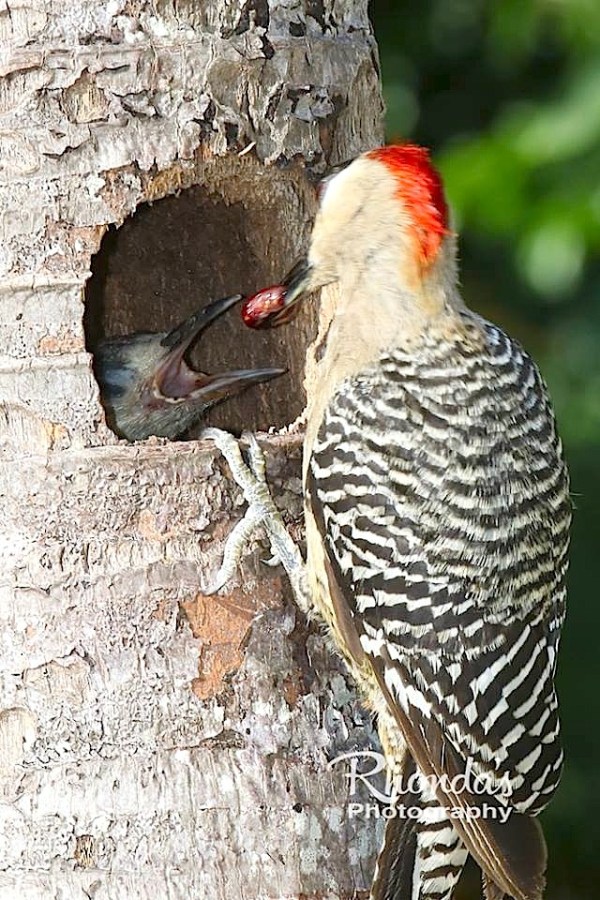
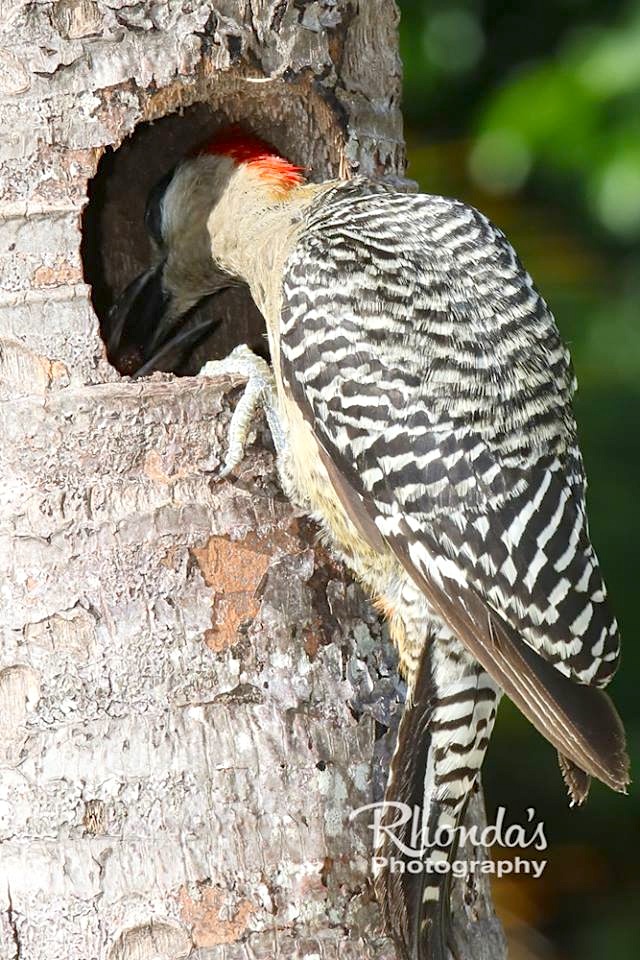
The parents set up home together, with both partners taking their turns to choose the furnishings and fit out the nest. They share duties on the nest once the eggs have hatched. And they take turns to feed the nestlings as they grow into increasingly hungry and raucous fledglings.
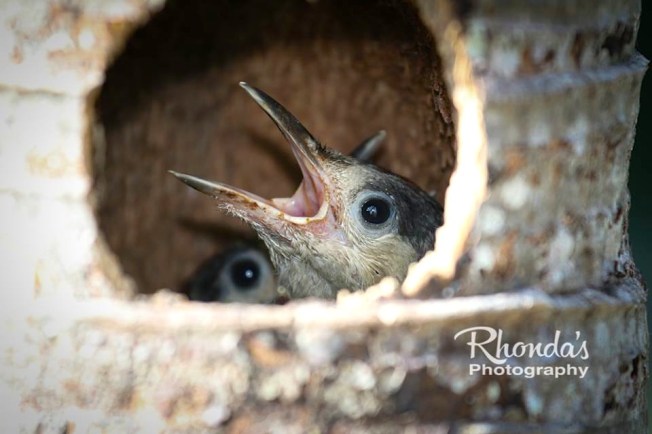
This feeding sequence was taken by Rhonda Pearce whose ravenous chick in the header photo is one of the best I have come across. I have never managed to get such a clear shot of desperate chick hunger…
Here’s how a nest can sound when the chicks are young – a weird sort of insistent purring sound. As the chicks get larger – and more competitive – so the volume level increases.
Get this down your throat, you pesky little rascal…
Abaco is spoilt for birds. What other island in the word has its very own population of ground-nesting parrots? (Clue: none). How many others provide a secluded winter home for the rare Kirtland’s Warbler? Or a safe habitat for piping plovers – more than 300 individual birds recorded last year, nearly 4% of the total population? Or host 32 warbler species in the winter to supplement the 5 resident species? Or record a visit from a black-browed albatross? Or enjoy 4 out of 5 of the Bahamian endemic species (no longer the Bahama Oriole sadly, now confined to specific areas of Andros).
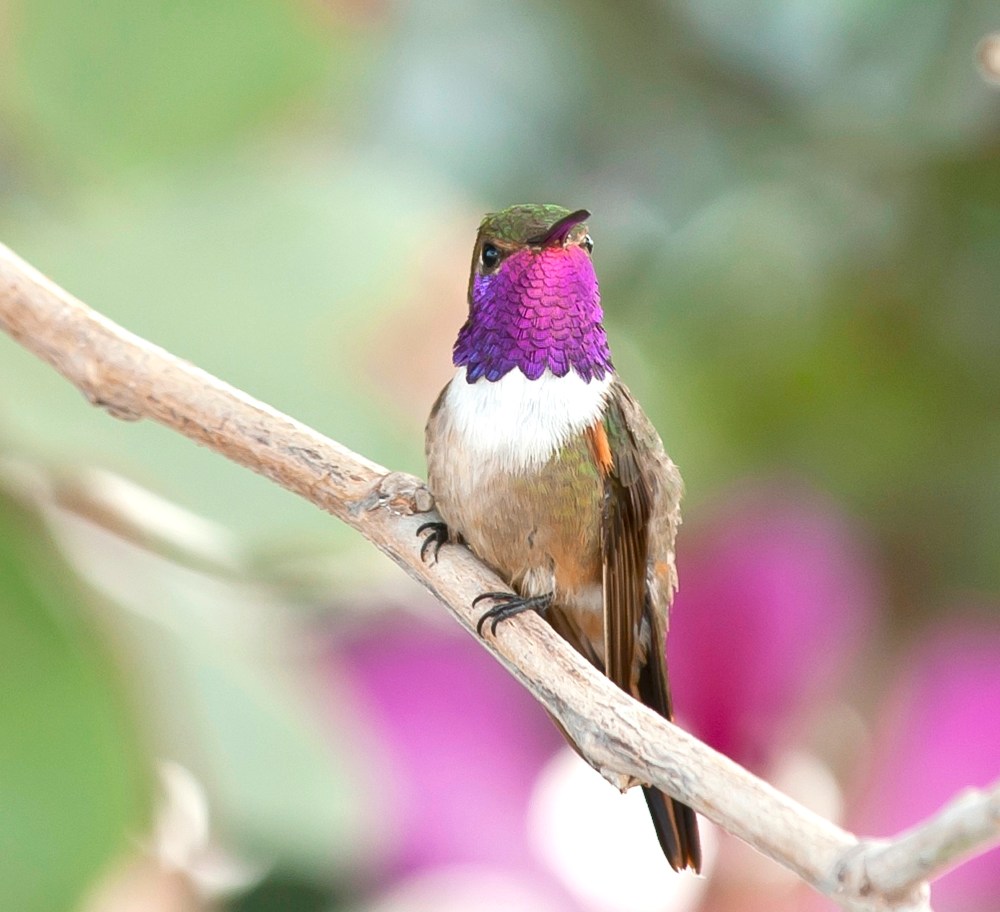
A while back I held a poll for Abaco’s favourite bird, with about 10 contenders. Some were quick to point out that their own personal favourite was not an option, but I had to take a fairly broad brush approach. On the podium, gold went to the Bahama Woodstar; silver to the parrot; and bronze to the western spindalis. I’m in a genial mood today, having caught a fair-sized wild brown trout on my third (part) day of stalking it (over 2 weeks), on the smallest fly in my box (size 18). I put it straight back of course. Respect! So in a spirit of cordiality, here are some epic shots of Abaco’s democratically elected favourite bird… at least according to the poll.
The two images above were taken by the legendary Bruce Hallett, author of the go-to field guide for the Bahamas, which no birder should be without. Many of his wonderful photos appear in THE BIRDS OF ABACO, and he was a steady guiding hand during the preparation of the book.
This brilliant photo of a female woodstar was taken by Tara Lavallee of Bahama Palm Shores, and for composition, clarity, colour and sheer charm it was a must for inclusion in the book.
Another major photographic contributor was Tom Sheley. I had the pleasure of spending time on Abaco with Tom during expeditions deep into backcountry to find and photograph birds. He had two cameras, one with a long lens. The other had a very long lens. The results he obtained – showcased in the book – were outstanding. His woodstar graces the front cover.
Tom also took a delicate little study of a female woodstar feeding, one of my favourite photos
Tony White, Keith Salvesen, Bruce Hallett & Woody Bracey
TONY WHITE: CHAMPION OF BAHAMAS BIRDS
Tony White passed away 2 days ago. The sad news has spread rapidly through the birding community and far beyond it. It is not my place to write a detailed appreciation of Tony’s life and achievements; others who have been his long-term friends, associates and birding companions are in a far better position to do so than I. However, I do have direct experience of Tony’s kindness, enthusiasm and pragmatism in connection with the compilation of The Delphi Club Book of the BIRDS OF ABACO.
Tony with Caroline Stahala Walker, erstwhile parrot supremo of Abaco
It took 16 months or so from the initial idea of the project to the finished 30-contributor book and a launch party at the Delphi Club in March 2014. During that time I had amazing support from the birding elite of the Bahamas. The proposed book might well have been treated as misconceived fantasy by amateur hicks from out of town. Instead, we received nothing but courtesy, kindness, cooperation, and a willingness that the project should succeed.
Tony with Bruce Hallett (author of Birds of the Bahamas and TCI)
Tony was one of the invaluable experts on whom I knew I could rely. His emails were invariably cordial, helpful and to the point. When I asked if he would undertake a complete revision of the checklist for Abaco that appears in his indispensable book for Bahamas birders (see link below), he agreed without hesitation. In due course, and in conjunction with Woody Bracey, a new checklist for all birds recorded for Abaco – however rare – from 1950 until the day of publication was completed.
Tony in the field (Lynne Gape, BNT)
When the book was launched Tony was there of course, his startlingly blue eyes bright with excitement. His friends Bruce Hallett and Woody Bracey, without whose help the book would never have been the avian showcase that it is, were also present. The contributions of all three were indispensable .
Tony after a Grand Bahama bird count (Erika Gates)
I have included some photos of Tony as we would all like to remember him, with thanks to Lynn Gape of the Bahamas National Trust and to Erika Gates, Grand Bahama.
Tony White, Bruce Hallett & Woody Bracey at “Birds of Abaco” launch; author aka RH (seated)
To read my original review of Tony’s magisterial book clickHERE
To see Tony and Woody’s complete Abaco bird checklist, up to date as at March 2014, clickCHECKLIST FV 06 table sun2Since then, 5 new species have been recorded on Abaco.
*BIRDWATCHER ALERT* A BIG DAY FOR BIRDS EVERYWHERE!
It’s here again – GBD, the second Global Big Day. A chance for anyone and everyone to participate in a worldwide celebration of birds at just the level you choose.
No need to try to cover 100 square miles in a day and record 300 species. Unless you want to, of course. You could as easily spend an hour or two in a garden. In a clearing in the coppice. Down a track in the pine forest. Sitting on the beach with a cooler full of beer. Whatever suits you.
Western Spindalis, Delphi, Abaco
As the second Saturday in May, today also happens to be the officialIMDB– International Migratory Bird Day – for the U.S. and Canada (the Caribbean is in October – reversed migration routes. Geddit?).
However, this post is not primarily about that event, but rather an encouragement to people to join in with some easygoing birding today. And if you happened to want to do it tomorrow, that’s OK too! If you want to send me your checklist (iphone photo should be fine), please do. Or send 2 or 3 best photos, and I’ll post my favourites – though preferably rather than post to my FB page, email to rollingharbour.delphiATgmail.com .
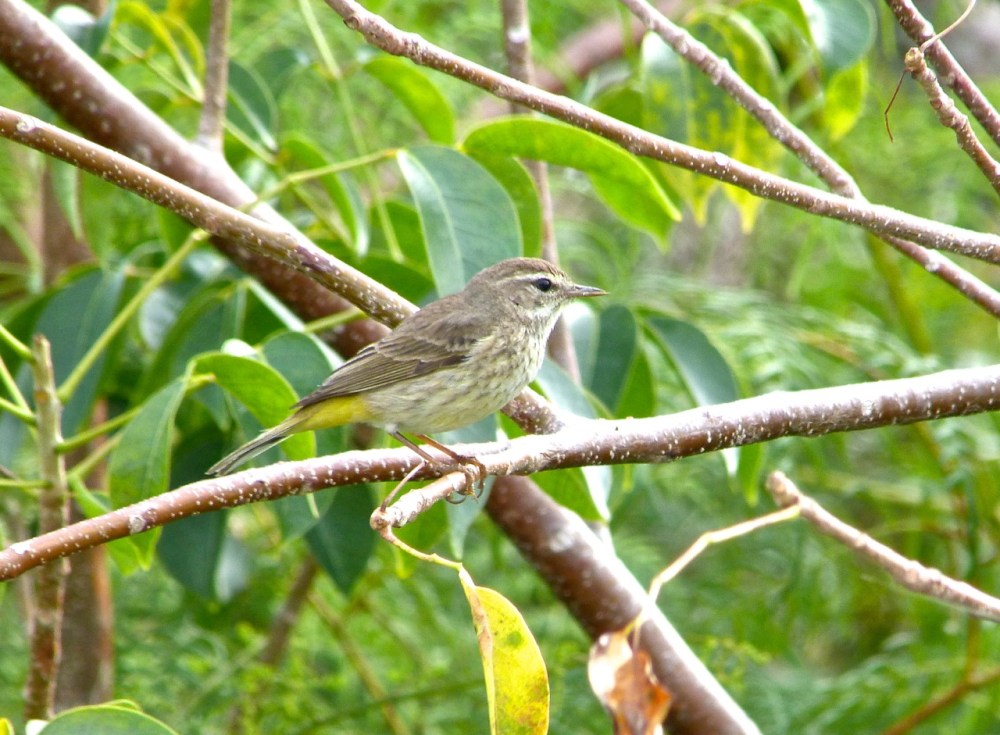
Palm Warbler, Delphi: a migratory warbler. Unlikely to be on Abaco – all hightailed north by now
Wherever you happen to be, just take a little time to look for some birds. There are plenty of places you can rule out straight away. Indoors for example. So it means being in the fresh air. And it’s probably best to set an hour or so as a minimum target time to spend on the task.
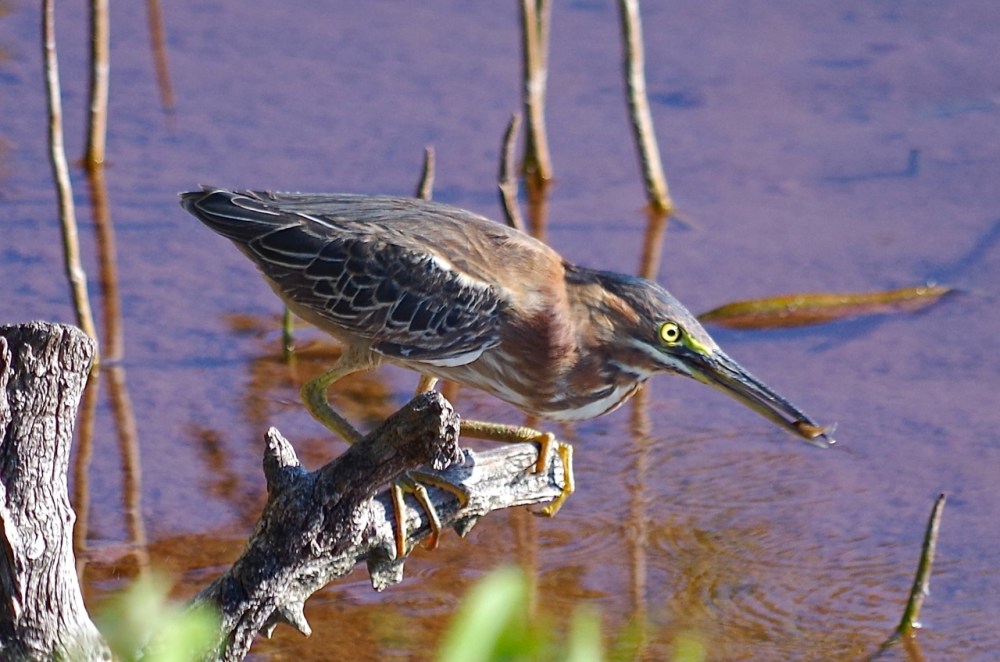
Green Heron hunting (successfully) – Gilpin Point pond, Abaco
WHAT DO I NEED?
Keep it simple. A pen that works. A spare pen just in case. A note book or even a large sheet of paper. Binoculars maybe. Camera if you are that way inclined. Sustenance. Maybe a friend for a joint effort. Possibly a bird book. If you have a North American one, it will help with most of the species you are likely to encounter.
Antillean Bullfinch, Delphi, Abaco
In an ideal world you would then upload your checklist officially to eBirdby May 17 so that your findings can be included in the global statistics. Or you could pass your record to a local birding group to upload for you. Or just have a bit of fun, why not, and see how many different birds you can find (even if you can’t put a name to them). Last year 268 Caribbean species were recorded. Imagine if one of yours was the only one of its kind to be seen?
Bananaquit, Delphi, Abaco
WHY DO IT?
The stats gleaned from this initiative, and others like it (‘Shorebird Day’; ‘Warbler Day’ etc) are a good indicator of the state of health of the bird population both in general and by location. Perhaps an area previously having worrying low numbers for a particular species will show an encouraging upswing, indicating a successful breeding season and / or effective habitat protection initiatives. Or maybe one species will show an unexpectedly low figure, indicating a need for research and the instigation of protection measures.
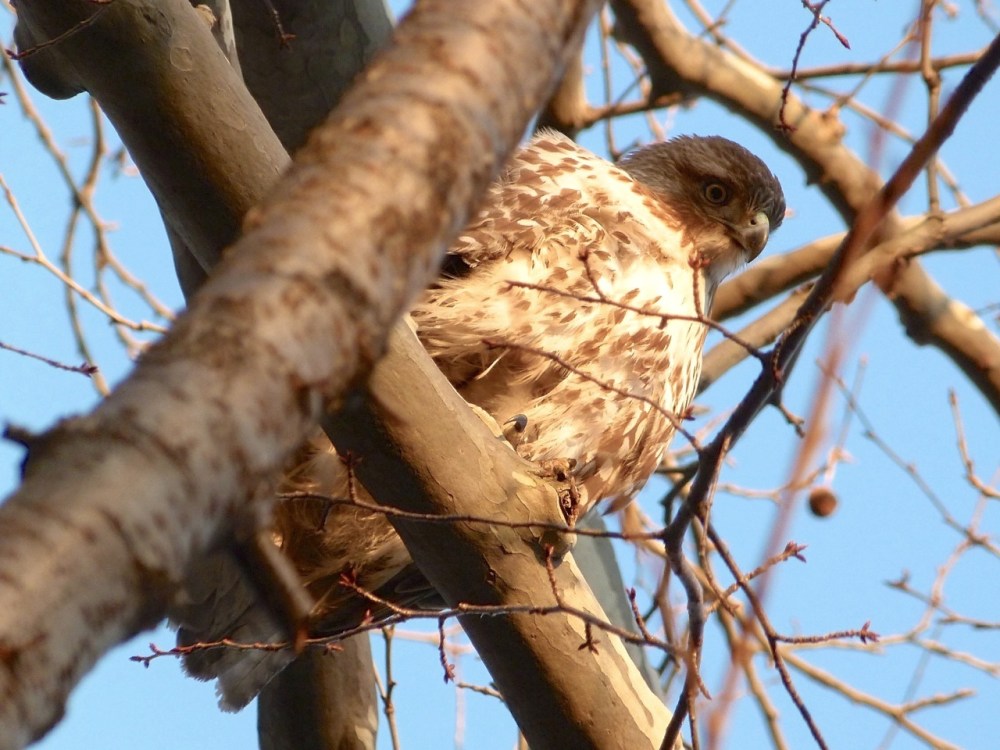
Red-tailed Hawk giving me ‘The Look’
So every return made for every region in the world is significant; and if you can add 20 species to the count, you will be adding to the vast fund of accumulated knowledge that in the long term helps to preserve the birds that surround us.
Let the count begin…
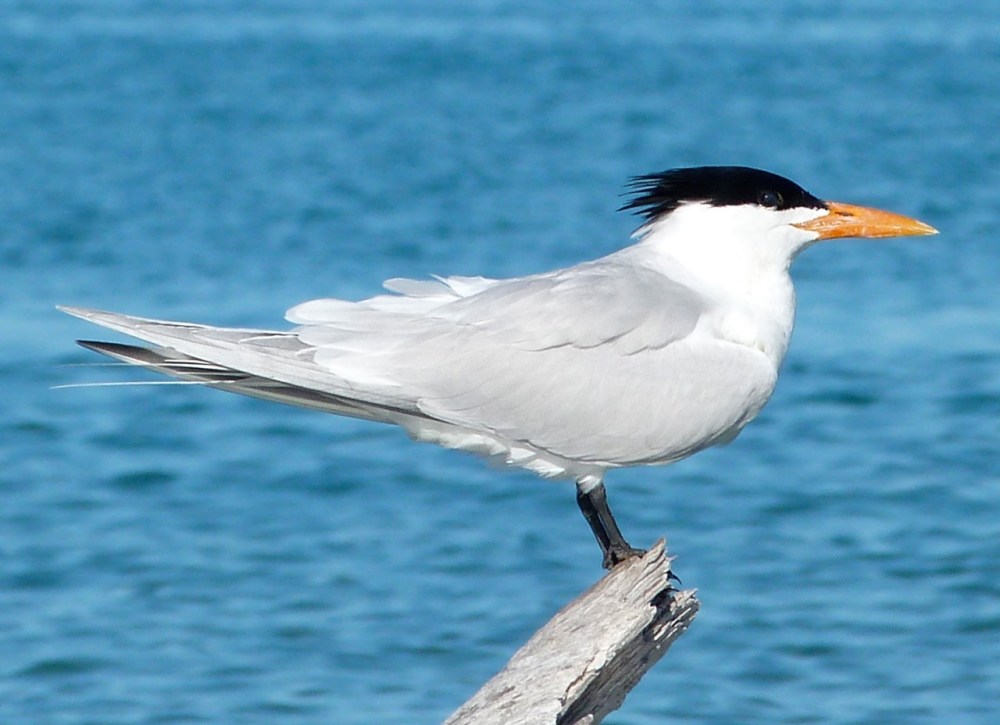
Royal Tern, The Marls, Abaco – taken while fishing. Camera + rod. Cool, huh?)
All photos: Keith Salvesen, taken on Abaco (ok, you got me there, not the red-tailed hawk, which is a cheat and was taken in Central Park NYC. Never got this close on Abaco. But I like it anyway)
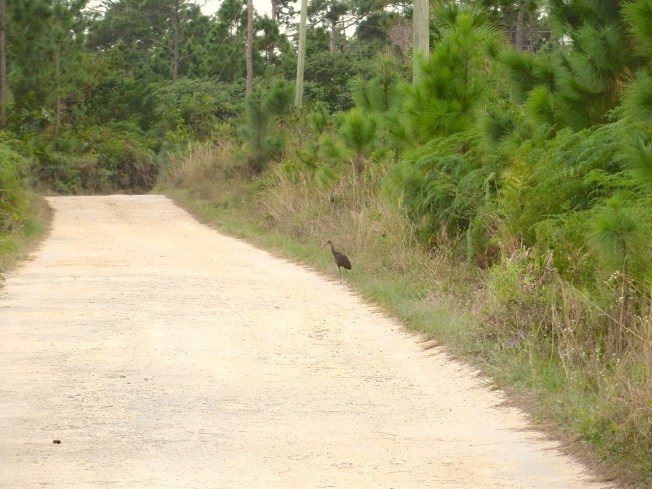
It’s 07.50 and we are trundling up the one-mile Delphi drive towards the highway in a truck towing the skiff for a day of fishing out on the Marls. We are ‘first boat out’, so the driveway has been peaceful for a while. Suddenly, some way ahead, a dark shape detaches itself from the margin of the coppice and steps into the roadway. Large. Dark brown. Kind of awkward looking. Long legs. Long decurved bill. And the bird I’ve been waiting to see for a long time. A limpkin.
My first sighting of one of the Delphi limpkins
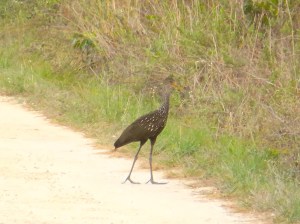
Grabbing the small point ‘n’ shoot I take fishing (far cheaper to drown than an iPh@ne), I leaned out of the open window and fired off some optimistic shoots at the bird, on full (yet feeble) zoom. For what they are worth**, here are a few – and will you look at the toes on the creature!
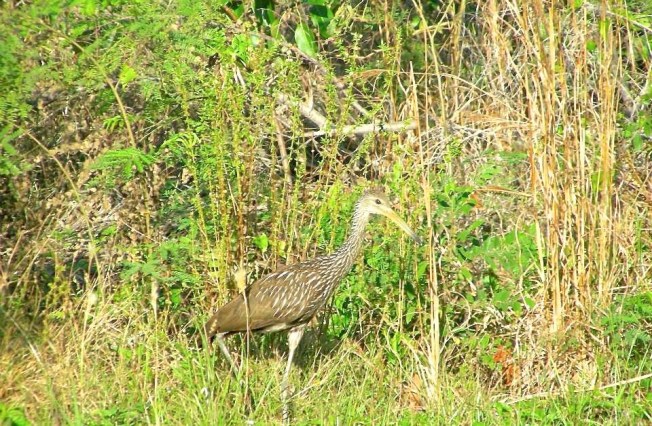
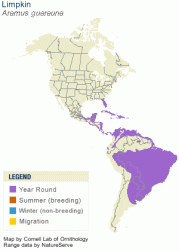
Limpkins (Aramus guarauna) have lived near the top end of the Delphi drive for several seasons, but they and I have never coincided. I haven’t even heard their weird screaming call. The guides sometimes see them when they first arrive each day, but limpkins are very shy, unsociable birds that keep themselves to themselves. Unless you see them cross a track, you might never notice them. To make matters more difficult, they are mainly “nocturnally and crepuscular”, so they are not generally active during the day.
Limpkin at Gilpin Point
ONE OF A KIND
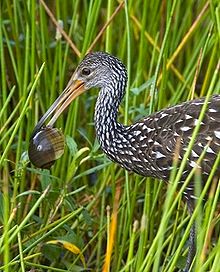
The limpkin is a species of long-billed, long-legged wading bird, and is unrelated to herons, cranes and rails despite appearances. In fact, it has the honour to be the sole member of its taxonomic family. They may be found near ponds, in mangroves, in dense coppice or on the edge of pinewoods. They move jerkily, with a flickering tail and, as with any ID-cooperative bird, to see one is to know one.
Juvenile limpkin
TEN LIMPID LIMPKIN FACTS TO ENTHRAL PUNTERS AT PETE’S PUB
The Limpkin has its own ‘monotypic’ family – a one-off species of bird
They eat snails and molluscs (also insects, worms & frogs), using their beaks to snatch them
They may leave piles of discarded shells in their favourite feeding sites
The birds are ungainly and awkward: “limpkin” probably derives from their limping gait
Males and females have the same plumage (males being slightly larger)
The beak acts like tweezers – slightly open and closing at the tip – for tweaking snails etc
Territory is defended aggressively, with ‘ritualized charging and wing-flapping’ at intruders
Sex lives: they are monogamous; or polyandrous (a male and more than one female. Tsk.)
They use ‘courtship feeding’ – males will catch and shell a snail and then feed it to a female
They are also known as the ‘Crying Bird’ for their bizarre shrieking call, as used in films (below)
Range map
Olivia Patterson of Friends of the Environment kindly sent me this video that she posted on their FB page a while back with the comment:“Do you know what a limpkin sounds like? There are a pair of them which live around the FRIENDS office. Check out this video to hear them calling out for each other. See if you can spot the limpkin! (hint… look at the pine tree on the left). Limpkins typically live near wetlands and eat snails”.
Limpkins call mainly at dusk in the night, or at dawn. The frankly somewhat tedious and repetitive cry has been phonetically rendered as “kwEEEeeer orklAAAar“, if that helps you to remember it! The racket has even achieved fame in films: it has been used for jungle sound effects in Tarzan films; and more recently for the HIPPOGRIFF in the film Harry Potter and the Prisoner of Azkaban.
Favourite food – the apple snail
**I’m not ashamed to use my more pathetic photos when context permits…
Credits: Header, Tony Hepburn; 5 rubbish photos from a moving truck, RH; Gilpin Point, Troy Maillis; 3 other images wiki (uncredited); range map, Cornell; video, Olivia Patterson / FOTE; general long-billed rootling around for info, with a nod to wiki.
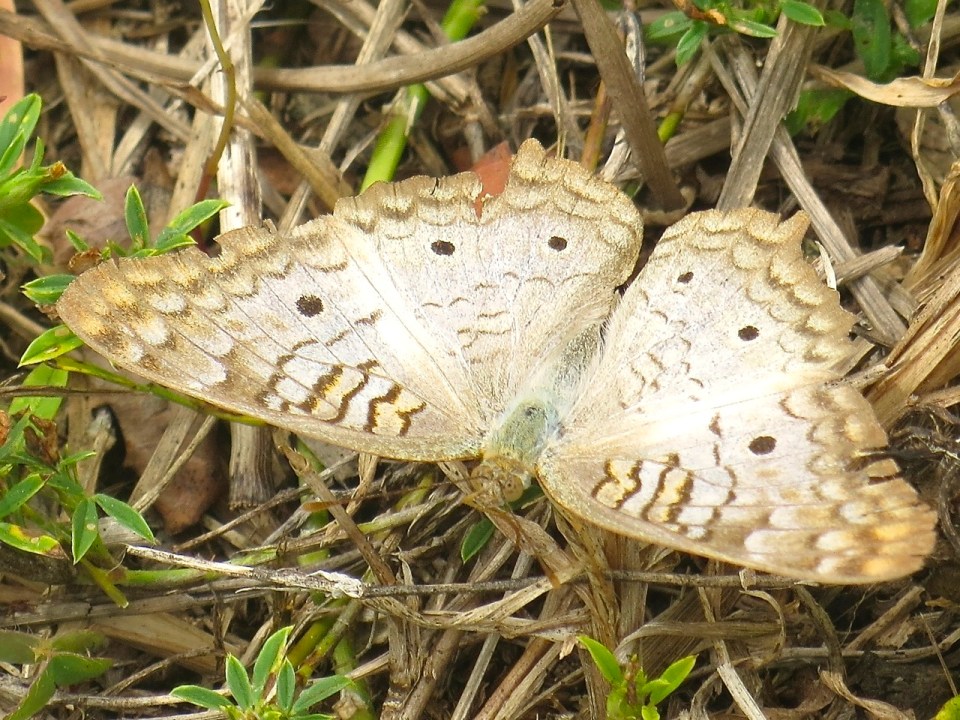
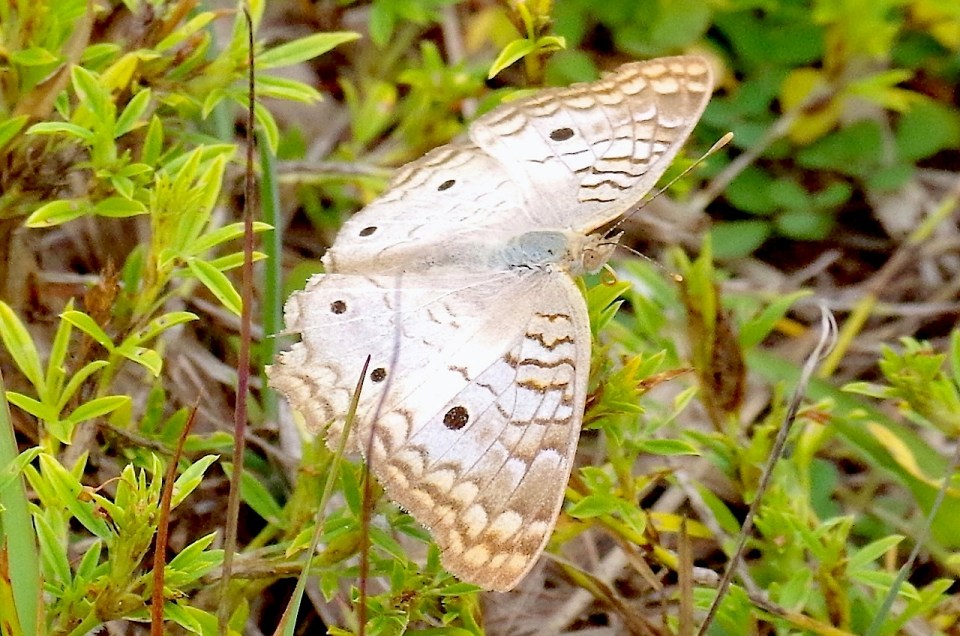
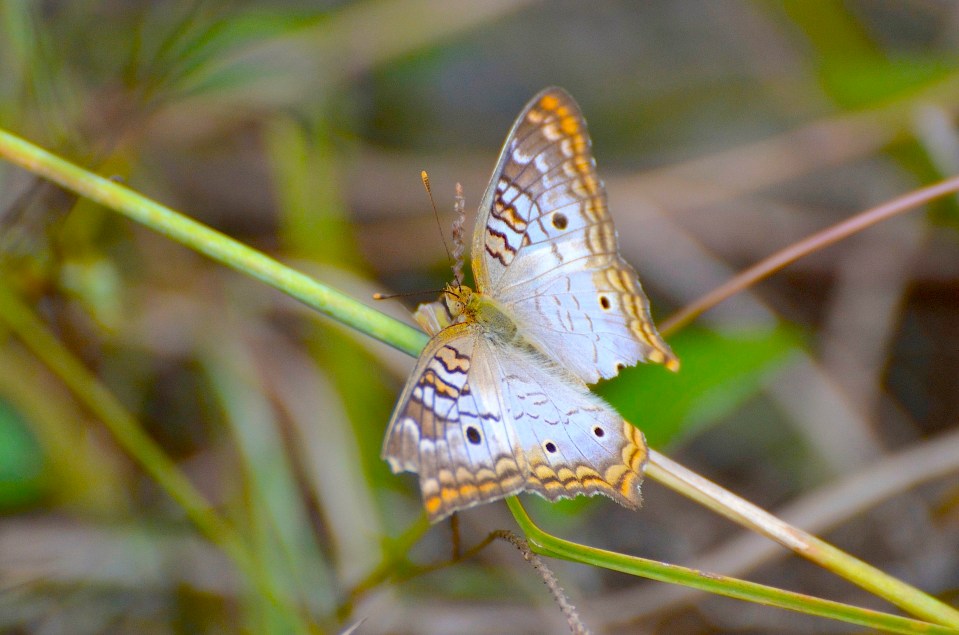
The white peacock (Anartia jatrophae) is not a rare butterfly in the northern Bahamas. However, until recently I had never – or never consciously – seen one before. Then we came across a few at the Neem Farm, all very frisky and mostly refusing to settle for more than 1/100 second. By the time I have remembered to remove my lens cap, they are 50 yards away.
I checked out these pretty but unassuming butterflies online because they seemed rather pale and anaemic. As far as I can make out this is because they were still in winter colouring; in summer they are more brightly marked. Here’s a photo of a dishevelled white peacock taken in June at Delphi by Charlie Skinner, which shows stronger colours.
ARE THEY EVER FOUND LOOKING BRIGHT AND NOT FALLING APART?
Yes, of course, but interestingly, never ever in the field. The one below, non-anaemic and intact, was thoughtfully uploaded to Wiki by Greg Hume. He took it at a butterfly show, where presumably tatty butterflies are excluded…
Photos: Keith Salvesen 1 – 4; Charlie Skinner 5; Greg Hume 6
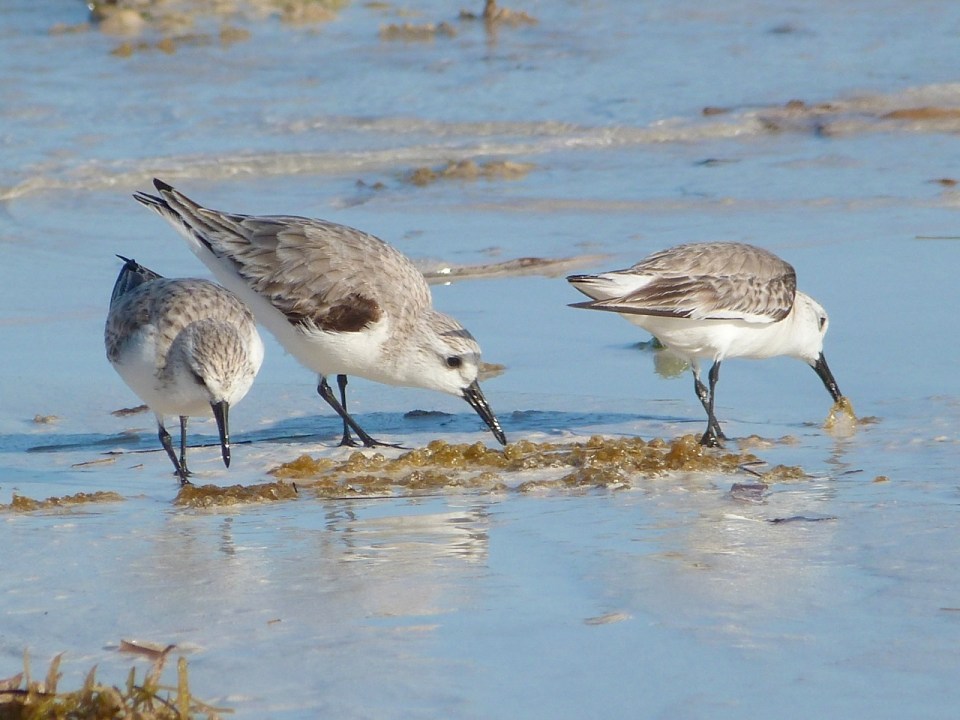
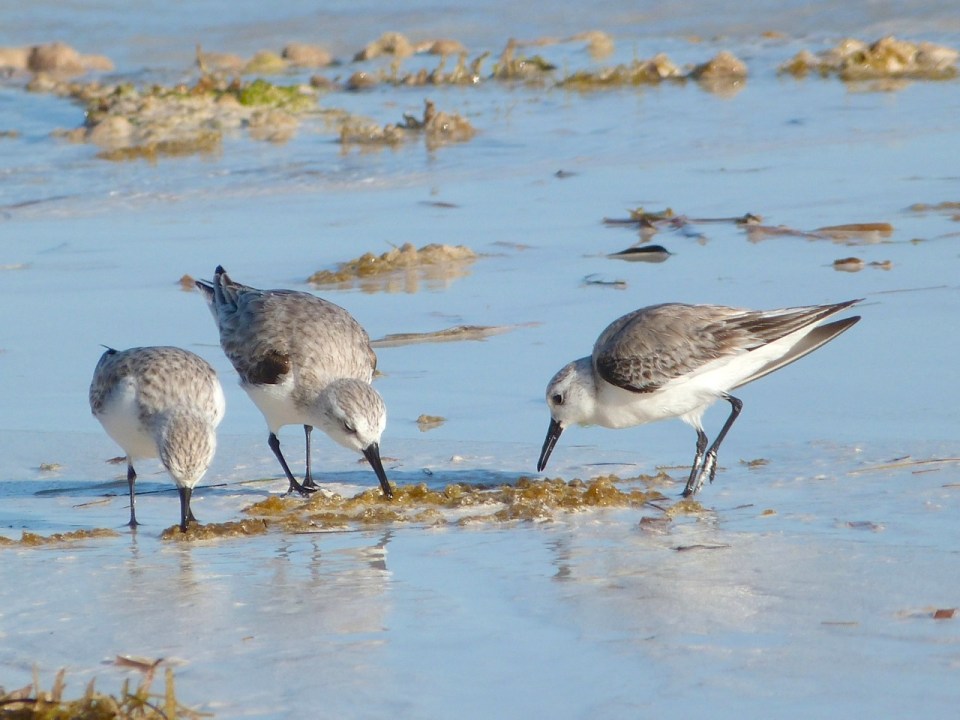
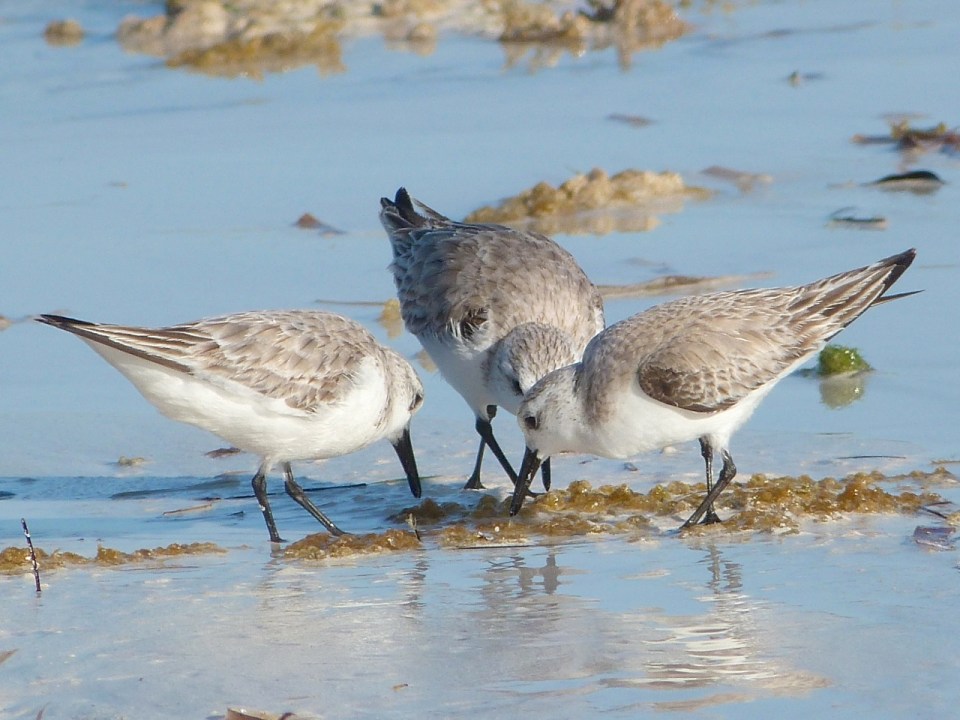
Good grief, this is awful. Suddenly I’m channelling Belinda Carlisle, raucous chanteuse and former lead vokes with the Go-Gos. She has not impinged on my cerebral cortex for, oh, 20 years. And even then, not of my own volition. Yet as soon as I downloaded and checked on-screen this sequence of sanderling photos taken as they foraged greedily on the Delphi beach, a spooky thing happened. The dread words and tune of ‘We Want The Same Thing’ crackled round my synapses. Listen! Can you hear it too?
It should of course have been “We Want The Same Crustaceans, Mollusks and Worms”, but no one has written that song. Yet. And I am now left with Belinda’s ear-worm… and other ones from that exhausting back catalogue are crowding in to join it, not least “Circle in the Sand” and “Heaven is that Delphi Place on Earth”…
“We Want the Same Thing”, though we have an entire beach to forage on…
OPTIONAL MUSICAL DIVERSION (YOU WERE WARNED)
All photos RH on the Delphi Beach, Abaco; musical stuff inspired by Ms Carlisle. Weird.
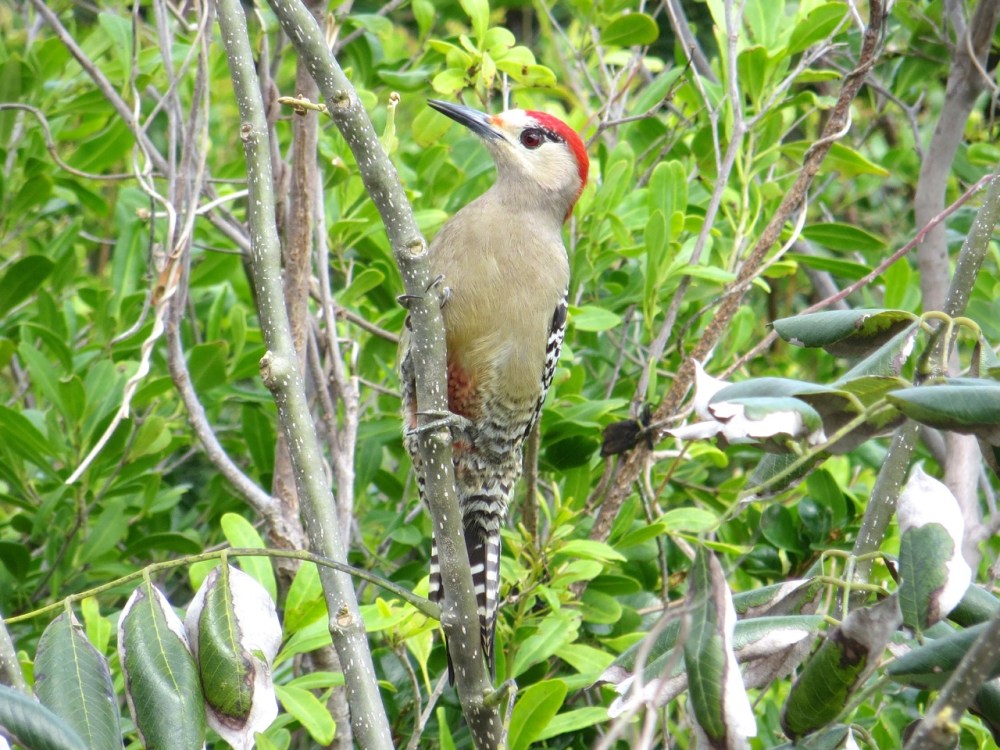
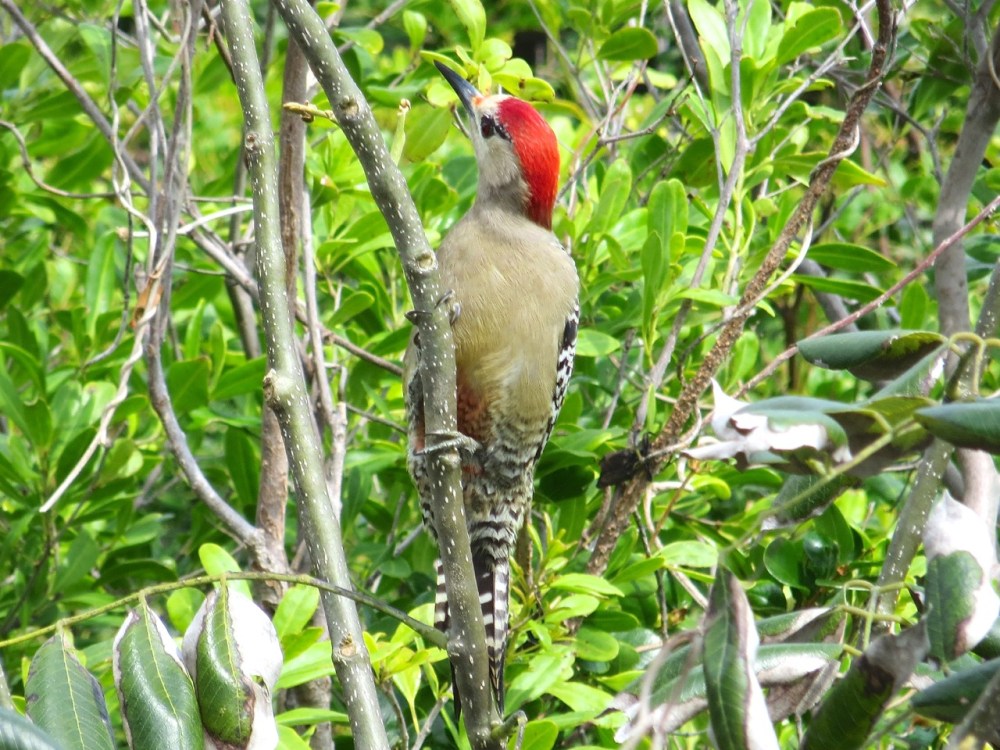
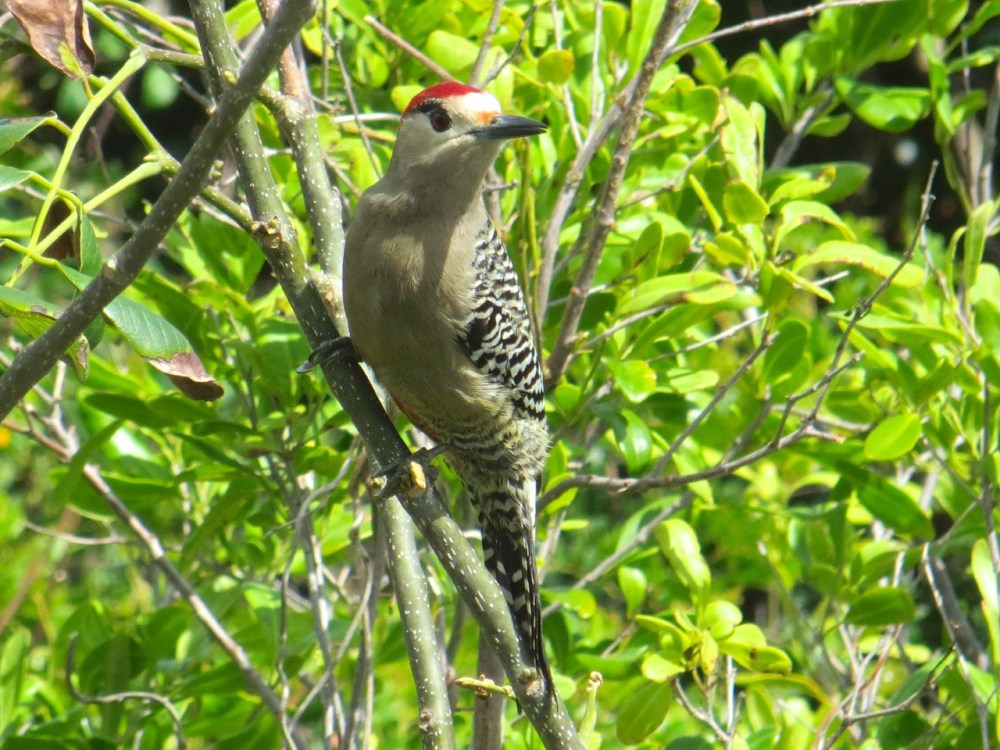
THE PECKING ORDER: WEST INDIAN WOODPECKERS AT DELPHI ABACO
The Delphi West-Indian Woodpeckers are at it again. In all senses of the phrase. When they first became infatuated with the wooden slats on the underside of the verandah roof, it was necessary – for the sake of the building – to divert them. This was quickly done by the simple expedient of building and installing two nesting boxes under the eaves.
An annual routine has been established. In March, the pair discuss quite loudly and at length which of the two boxes they prefer (usually the right-hand one). There follows enthusiastic housework, shelf-building, nursery decoration and so forth; after which they go ‘at it’… and move in. Continuing internal improvements take place, and they fly in and out busily. This year a yellow-throated warbler had the insolence to trespass into the box and we saw him abruptly ejected.
In due course the pair produce up to 6 chicks in their first brood. The nestlings start by making a small buzzing noise, but within days – hours? – they are calling loudly and demandingly for food. The parents take it in turns to fly off and bring back assorted insects of increasing size, at which stage the noise of the chicks is deafening.
By late May or early June the chicks are ready to fledge. Meanwhile, their parents take a break from feeding duties to renovate the second nest box, preparing it for their second brood. I have seen, even with eyes averted, the adults shamelessly mating on top of the second nest box while their chicks are jostling at the entrance to the first box, working out how to fly.
The fledglings fly off eventually into the coppice and pine forest (they stay around for a few days until they get the hang of finding their own food). And the adults repeat the same family-raising routine in the second nest box. The last time I saw the second brood fly, 4 left the box quite quickly – within about 5 minutes of each other. A fifth took one look at the world and disappeared into the depths of the box. A sixth teetered on the edge of the box for nearly half an hour – with both parents shouting encouragement at it – before finally launching into space. His timid sibling then shot out of the box into the great unknown. The breeding season was accomplished.
A SPECIALITY SPECIES FOR ABACO
West-Indian Woodpeckers are one of Abaco’s speciality species. In the Bahamas they are found only on Abaco and – a long way off – San Salvador. They are unknown on other islands. Until quite recently these birds were also found on Grand Bahama, but are sadly now extirpated, presumably for the familiar reasons…
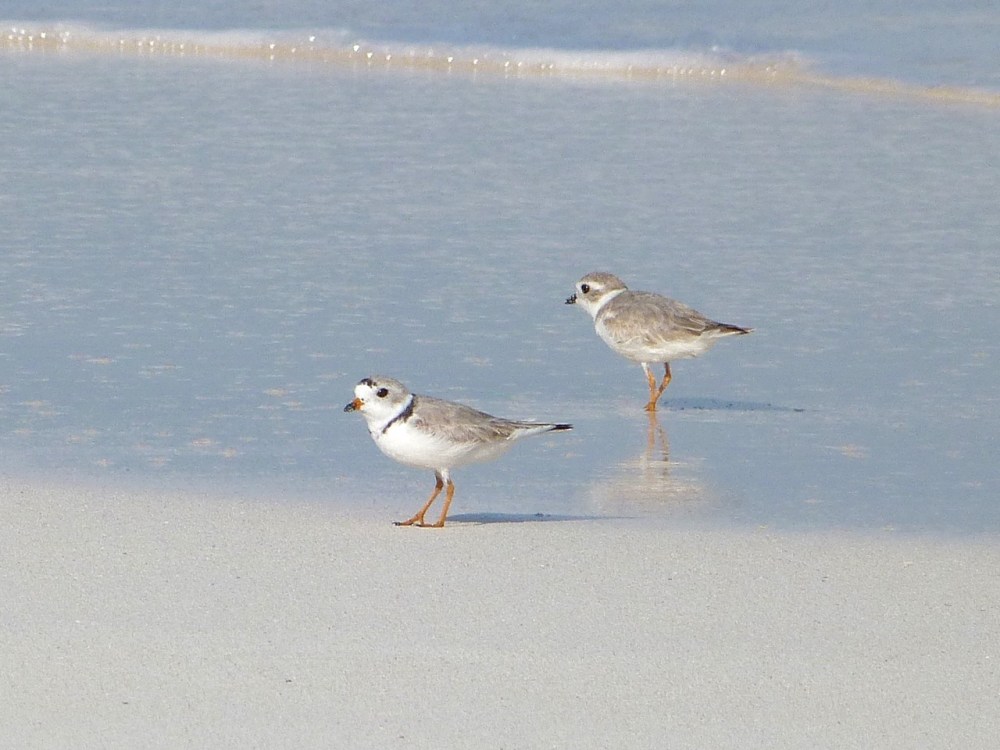
JUST HANGING AROUND: PIPING PLOVERS ON THE DELPHI BEACH, ABACO
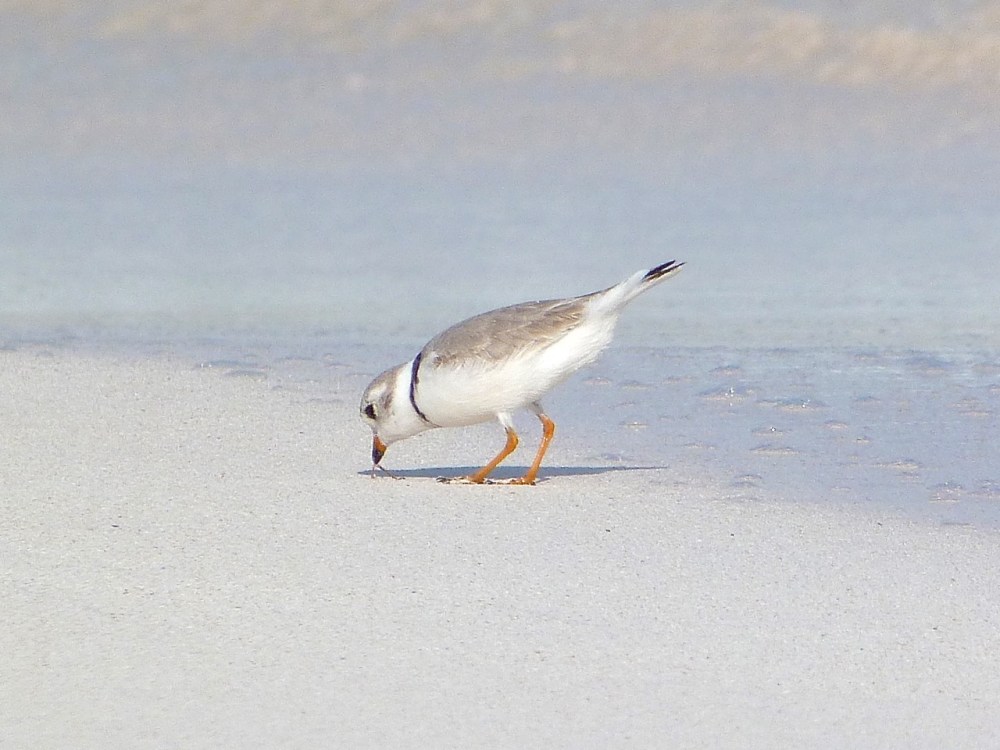
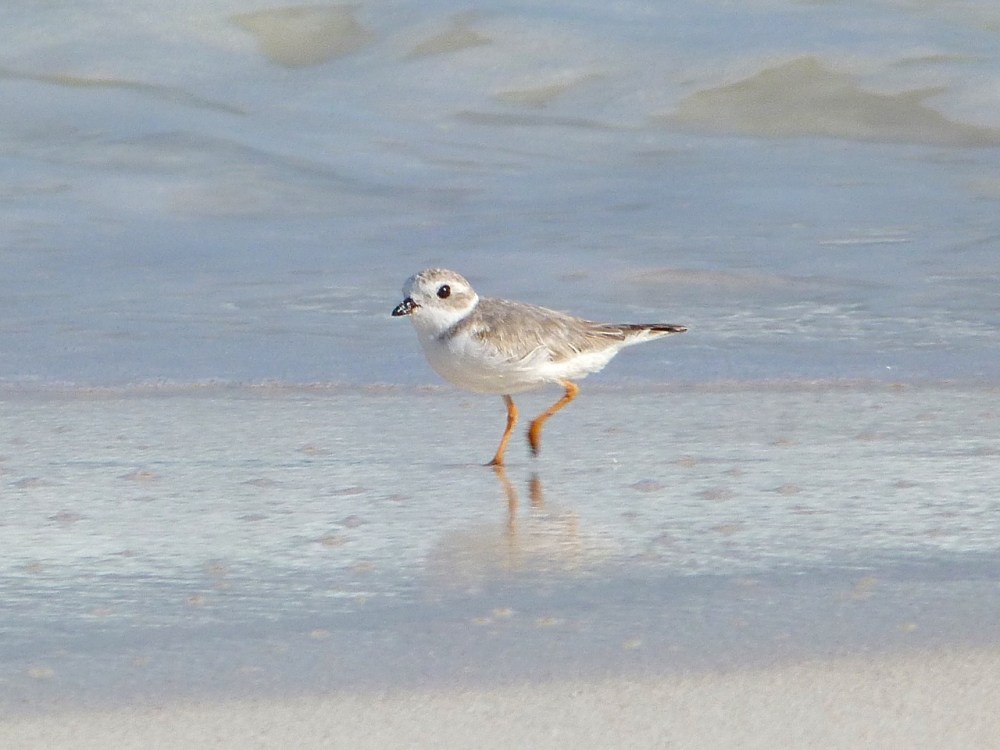
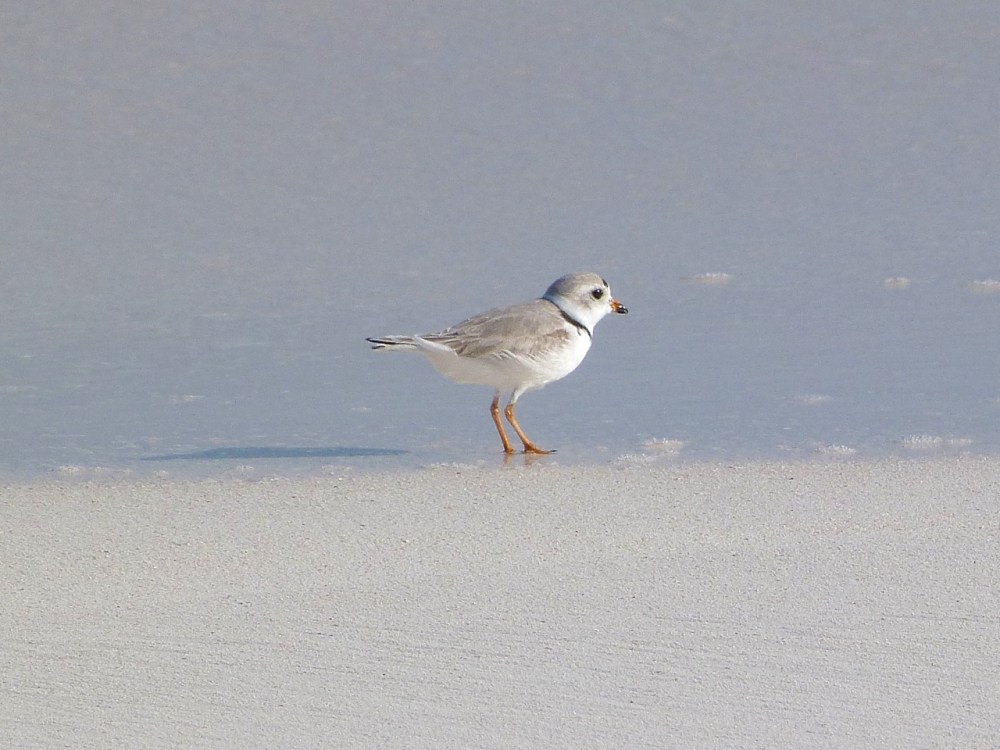
I’ve posted quite a few times about PIPING PLOVERS (PIPL) on Abaco, not least because of the five-month Rolling Harbour ABACO PIPING PLOVER WATCHthat preceded the 4-year census in January 2016. These little guys are tiny, rare and threatened – by predators, humans, domestic animals, beach vehicles, habitat loss and the other usual factors.
Ha! I’ve found meat-string!
In many of their summer breeding grounds, these are the hazards they face annually as they struggle to increase the world population from a precarious 8000 to a more sustainable number. The signs are promising. Intensive conservation projects by organisation such at CONSERVE WILDLIFE FOUNDATION, NEW JERSEYhave ensured protection in the breeding grounds, resulting in a (probable) increased population estimate once the census stats are analysed.
My left leg is moving too fast…
In the places the pipers overwinter such as the northern Bahamas, they find relatively safe havens. Abaco is one favoured place; and the beach at Delphi is home to a number of these little birds annually. Usually by the time we are here in March, they have set off on their 1000+ mile flights north to the breeding areas on the Atlantic Coast, the Great Lakes and the Great Plains. However this year, there is a pair right here, right now – hanging out on the beach, hanging around when most other PIPL are all already gone.
Check out my breeding plumage, get ready for me on the NJ shoreline
These pictures were taken a couple of evenings ago as the plovers poddled and paddled back and forth along the tidal margin. I didn’t try to get too close – I didn’t want to risk disturbing their happy evening stroll. You’ll see that the male is already in his breeding plumage, with smart black chinstrap, monobrow and orange ‘n’ black beak. I take the other bird to be a female though maybe it’s a first-winter male (comment invited).
All photos: RH, with the camera he has since dropped in the sea (by falling in. Don’t ask)
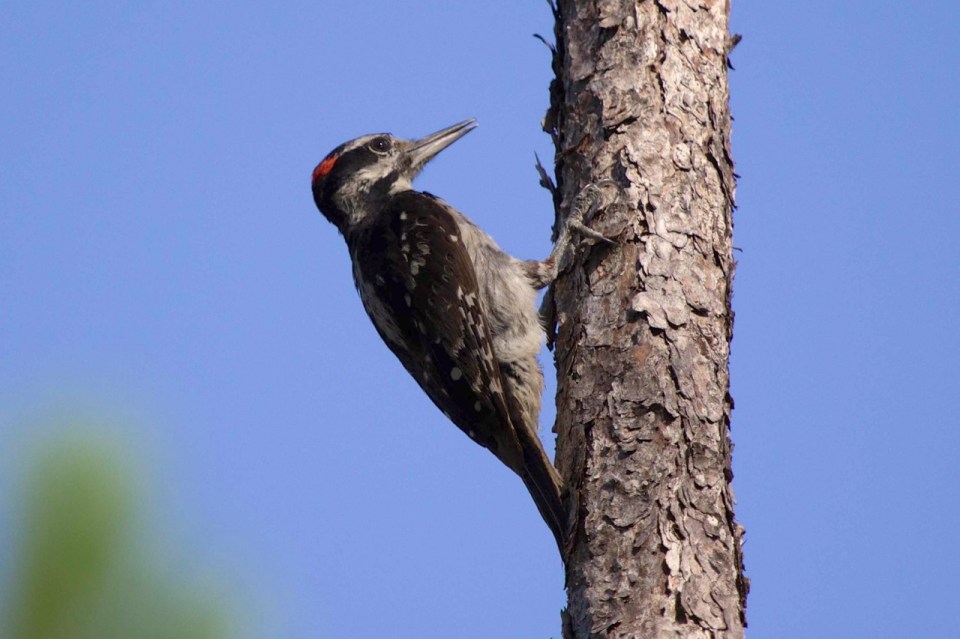
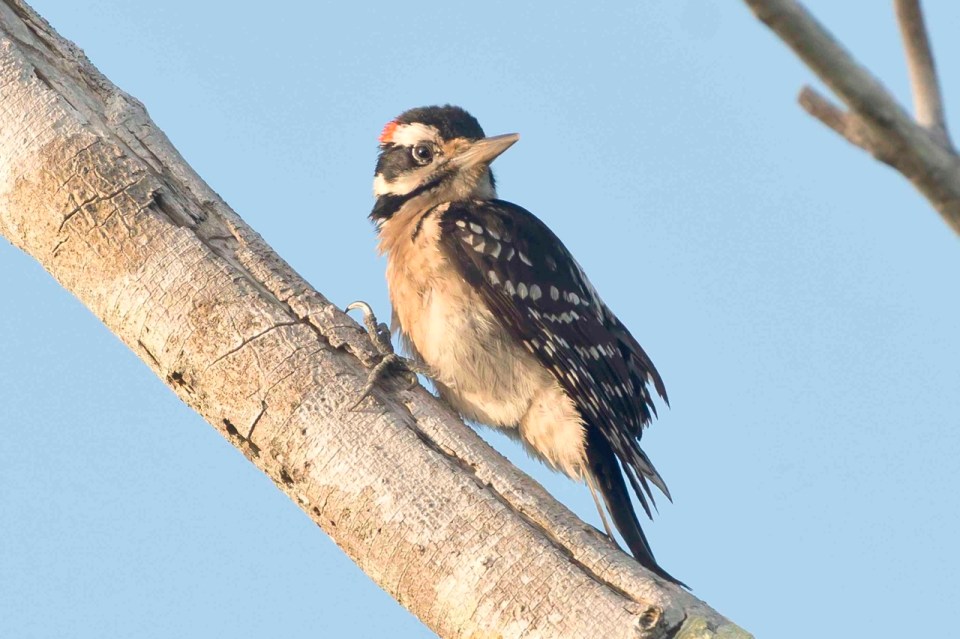
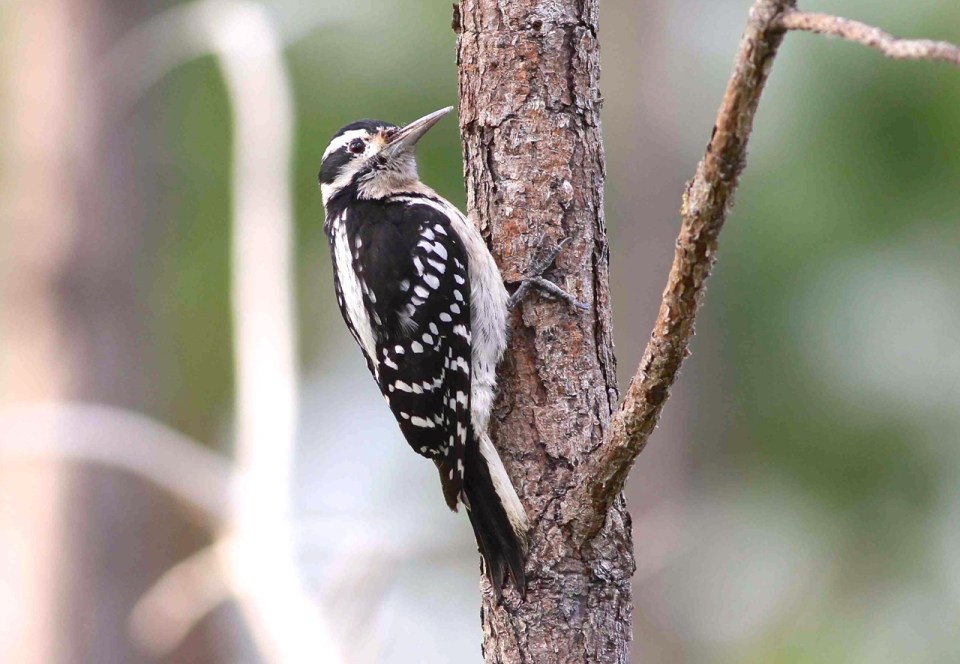
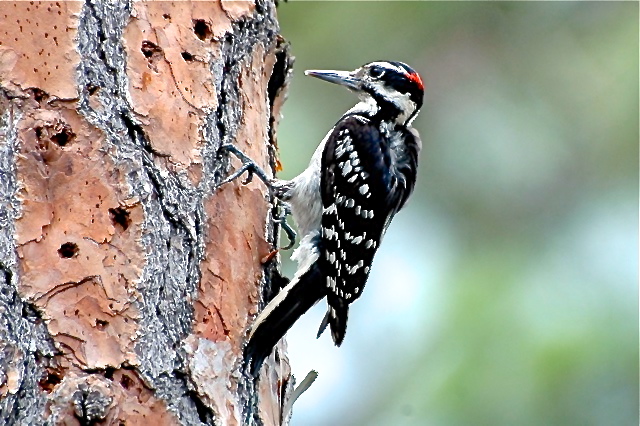
Delphi is an excellent place for woodpeckers. The Lodge itself has its own resident WEST INDIAN WOODPECKERS, who generally raise two broods a year in the nest boxes under the eaves. The coppice and pinewoods along the one-mile drives are home to the smaller Hairy Woodpeckers Picoides villosus, where they too nest annually. There’s a particular tall dead tree on the guest drive that is used every year, and from early March it is the first place I check for signs of occupation. If evident, I take it as a sign of good luck (and hope it extends to my fishing).
I can’t believe I haven’t featured a hairy woodpecker for more than 2 years. As we prepare for our forthcoming trip to Abaco HQ and the consequent plethora of photos (95% of which will be deleted), here is a small gallery of males (red caps) and females, some of them taken at Delphi. Check out those huge claws of the one below at her nest on the dead tree mentioned above.
I photographed this female last year in a tree near the swimming pool. I watched it for some time, but it must have been camera shy, because although quite unconcerned by my presence, it never came right out into the open.
MUSICAL DIGRESSION (OPTIONAL)
“Knock on Wood”, the 1966 hit for Eddie Floyd, was co-written with the amazing Steve Cropper (‘house guitarist’ for Stax). It has been much-covered over the years, none more unexpectedly than by David Bowie on his 1974 Live album (also released as a single). Here is the originator, in a live performance.
Credits: Gerlinde Taurer (1, 7), Alex Hughes, Bruce Hallett, Peter Mantle, Tom Sheley (5, 6), Tony Hepburn, Keith Salvesen
Bad day. I know about random outage outrage and so on, but really… The router died, unmourned. Bought another. Wasted 2 hours trying to make it work. Turns out to be ‘defective’, which is to say broken. Or another B word. Bought another. Almost lost the will to live. I have the briefest window in which to check emails etc before it, too, checks out of the Mac Hotel. The ONLY SOLUTION (apart from Kalik in copious quantities, sadly not available where I am right now), is to look at some pretty birds taken in the gardens round the Delphi Club. Mmmmm. Feeling better now. Deep breaths… and… relax…
All pics by a rather stroppy RH
STOP PRESS Exactly 24 hours after excitedly unwrapping the (second) new router, after a convoluted and Kafkaesque series of phone calls to various techie centres, headily mixed with wine, beer, tears and tantrums, I combined some of the info from each and miraculously the recalcitrant beast sprang to life. For how long, though? Router advice given: $100 ph + exes
[Yay! A Christmas gift of a puntastic avian / festive double-meaning]
A small New World songbird of the cardinal subfamily
Flags and other colourful festive decorations
PAINTED BUNTING
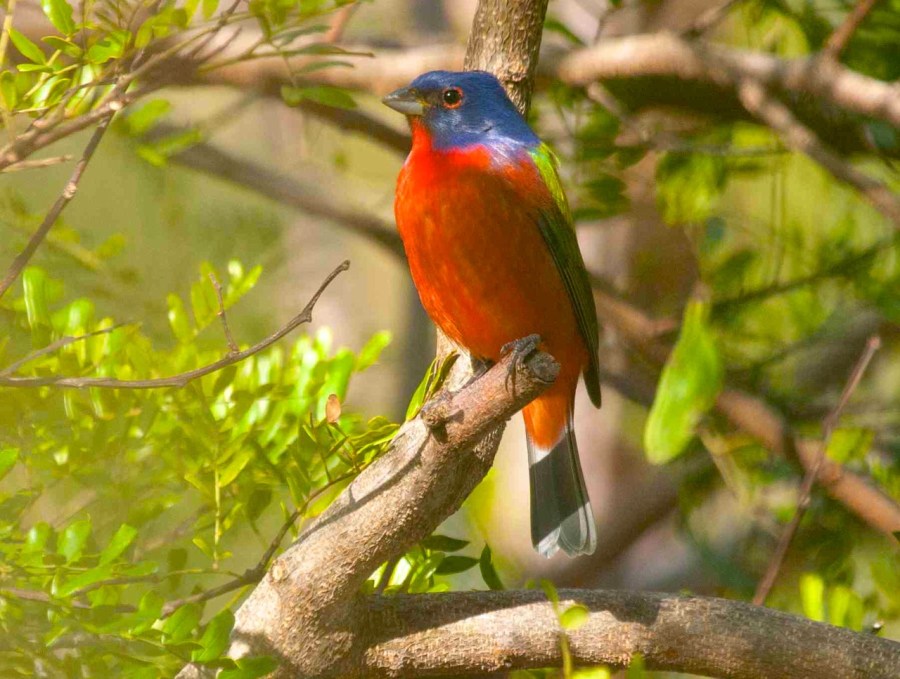
It’s hard to imagine a more Christmasy little bird than the Painted Bunting. Bright blue, red, green primary colours make for a spectacular small bird to grace any garden or feeder. There are other bunting species and close relations – e.g. grosbeaks – on Abaco. A common factor is the little fat beak and voracious seed greed…
Feeders at the Delphi Club. The first is of a female & a male PABU feeding together (RH). The second is a male PABU with a pair of black-faced grassquits (Sandy Walker)
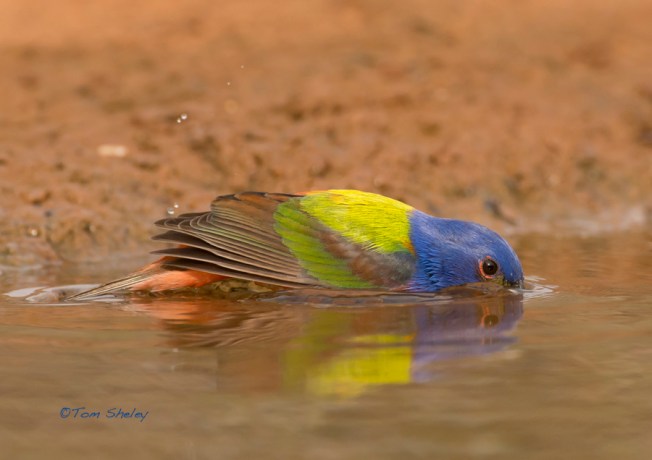
The next two wonderful photos are by Tom Sheley, a major photographic contributor to THE BIRDS OF ABACO. They were taken in Texas, not on Abaco, but I include them because of Tom’s strong connection with the birdlife of Abaco; and because on any view they are fantastic shots…
Credits: Tom Sheley (1, 7, 8), Erik Gauger (2), Tara Lavallee (3, 4), Keith Salvesen (5) Sandy Walker (6); Birdorable Cartoons
A new season – the seventh – of the Delphi Club is now underway. There are fish to be caught, poolside inactivities to relish, chef-prepared meals to eat and a capacious wine cellar to be explored. To which, add birds to be spotted. Delphi has turned out to be a superb place for birding – not a feature given prominence in the original prospectus… The Club’s remoteness and its rich mix of pine forest, coppice, gardens and a pristine one-mile beach ensure the prefect protected habitat for a vast number of bird species common, uncommon and rare.
Eighteen months ago, “The Delphi Club Guide to THE BIRDS OF ABACO“was published. The originator of the idea – as with the entire Delphi project – was of course Peter Mantle, the publisher. The book took 16 months from conception to the arrival of three pallets of printed books on the dockside in Marsh Harbour, having travelled by a tortuous route from specialist printers in Italy.
The book was launched at the Delphi Club in March 2014, to generous enthusiasm and support both on Abaco and beyond. 75% of the edition has been sold already. In addition, Abaco schools, libraries and wildlife organisations have been given copies for educational purposes. A percentage of profits is to be given to local wildlife causes. We couldn’t be more pleased with the response to this lavish book, a unique publication in the Bahamas.
The incremental growth of social media is rapid. Blogs gain readers. Facebook and Twitter pages gain new friends and followers. The start of this new Delphi season is therefore a good moment to post a reminder about the book, illustrated with a few of the wonderful bird species featured. And… ahem… there are only 57 more ‘sleeps’ until Christmas.
The Guide showcases the rich and varied bird life of Abaco, Bahamas and features both resident and migratory species including rarities and unusual sightings. The main features are as follows:
272 pages with more than 350 photographs
163 species shown in vivid colour – nearly two-thirds of all the bird species ever recorded for Abaco
Every single photograph was taken on Abaco or in Abaco waters
All birds are shown in their natural surroundings – no feeders or trails of seed were used
Several birds featured are the first ones ever recorded for Abaco or even for the entire Bahamas
A total of 30 photographers, both experienced and amateur, contributed to the project
The book has had the generous support of many well-known names of Abaco and Bahamas birding
A complete checklist of every bird recorded for Abaco since 1950 up to the date of publication was compiled specially for the book.
A neat code was devised to show at a glance when you may see a particular bird, and the likelihood of doing so. Birds found at Delphi are also marked.
Specially commissioned cartographer’s Map of Abaco showing places named in the book
Informative captions intentionally depart from the standard field guide approach…
…as does the listing of the birds in alphabetical rather than scientific order
Say goodbye to ’37 warbler species on consecutive pages’ misery
Say hello to astonishing and unexpected juxtapositions of species
The book was printed in Florence, Italy by specialist printers on Grade-1 quality paper
Printing took pairs of printers working in 6 hour shifts 33 hours over 3 days to complete
The project manager and the author personally oversaw the printing
The book is dedicated to the wildlife organisations of Abaco
A percentage of the proceeds of sale will be donated for the support of local wildlife organisations
A copy of the book has been presented to every school and library on Abaco
The book is published by the Delphi Club (contact details below). The project was managed by a publishing specialist in art books. The author is the wildlife blogger more widely known on Abaco and (possibly) beyond as ‘Rolling Harbour’. Oh! So that would in fact be Mrs Harbour and myself. Well well! What are the chances?
The Delphi Club at Rolling Harbour
PO Box AB-20006, Marsh Harbour, Abaco, Bahamas
Tel: +1-242-366-2222
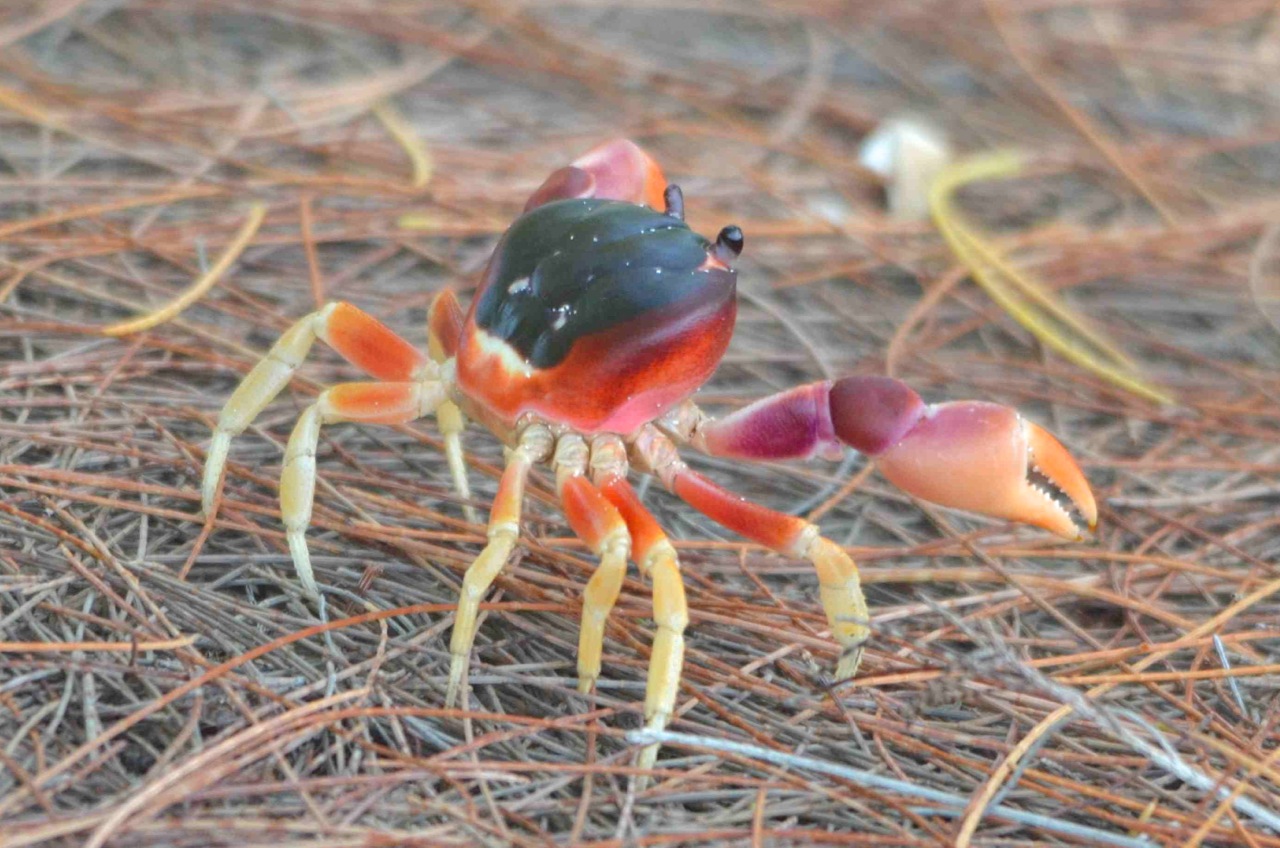
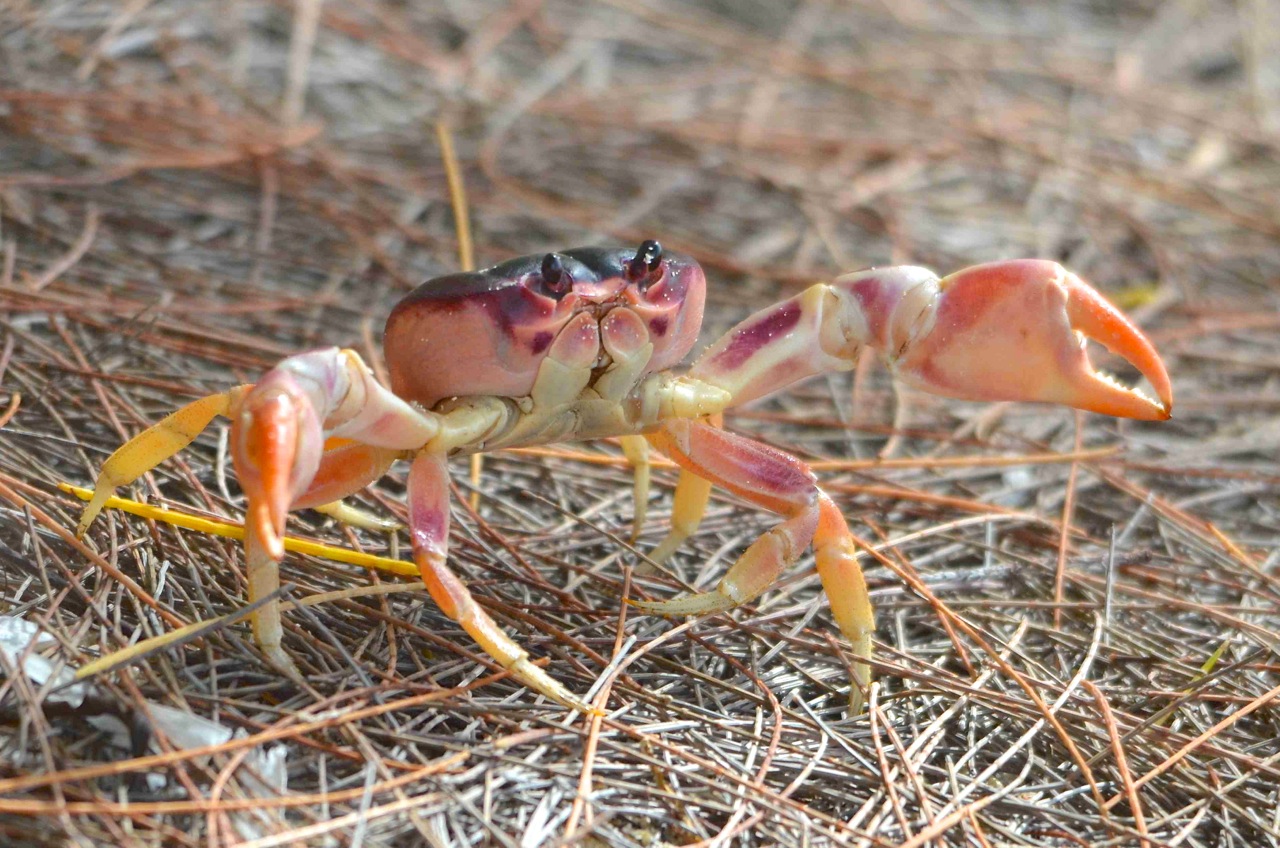
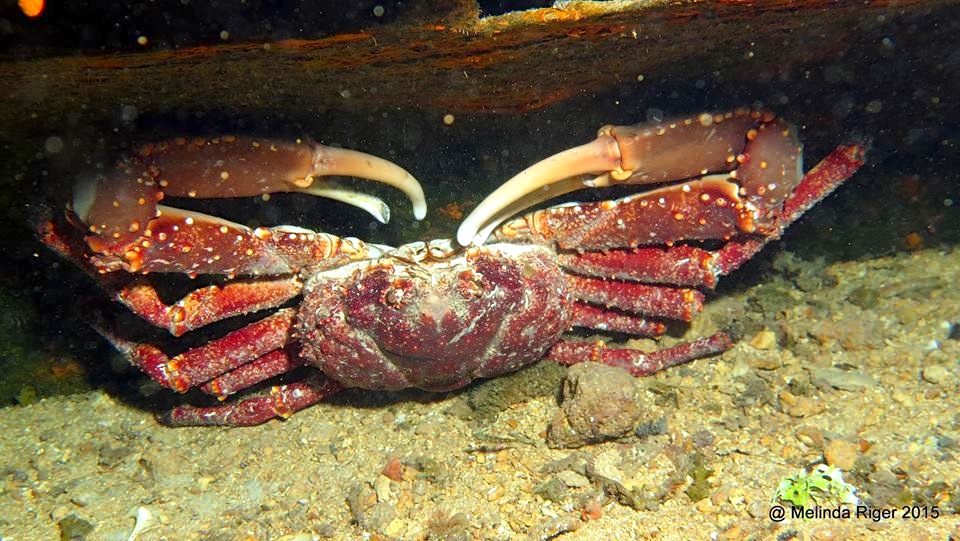
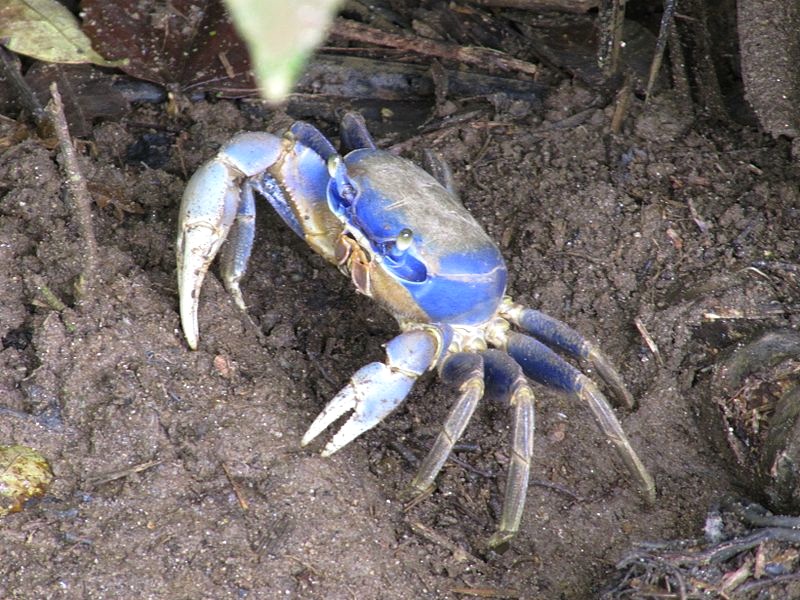
It’s been a while since I was in a crabby mood, but autumn is here and there’s a sharp nip in the early morning air… What better time to visit a selection of the many crab species found on Abaco.
GHOST CRAB
I thought I had some good photos of these cute little guys with their ‘Carson the Downton Abbey Butler’ white gloves. However, Tom Sheley (header and below) has perfectly caught the tide-hanging that they enjoy, sometimes disappearing completely or perhaps leaving just their twin periscopes showing.
HERMIT CRAB
Many people’s favourite small crab, with their endearing house-moving habits as they grow. Excellent for racing, too (see HERE). Here’s one taking its mobile home up a tree; and another tucked safely into a nerite[Capt Rick Guest amends]Magpie Shell, Cittarium pica, (used to be Livona pica), the living animal of which is the 3rd most consumed animal behind Lobster & Conch in the Caribbean. They are Littoral around Shorelines and are also used as bait.
BLACK-BACKED LAND CRAB
Faithful guardians of my rod (there are 2 there)!
LAND CRAB
STONE CRAB
ARROW CRAB
CLINGING CRAB
BLUE CRAB
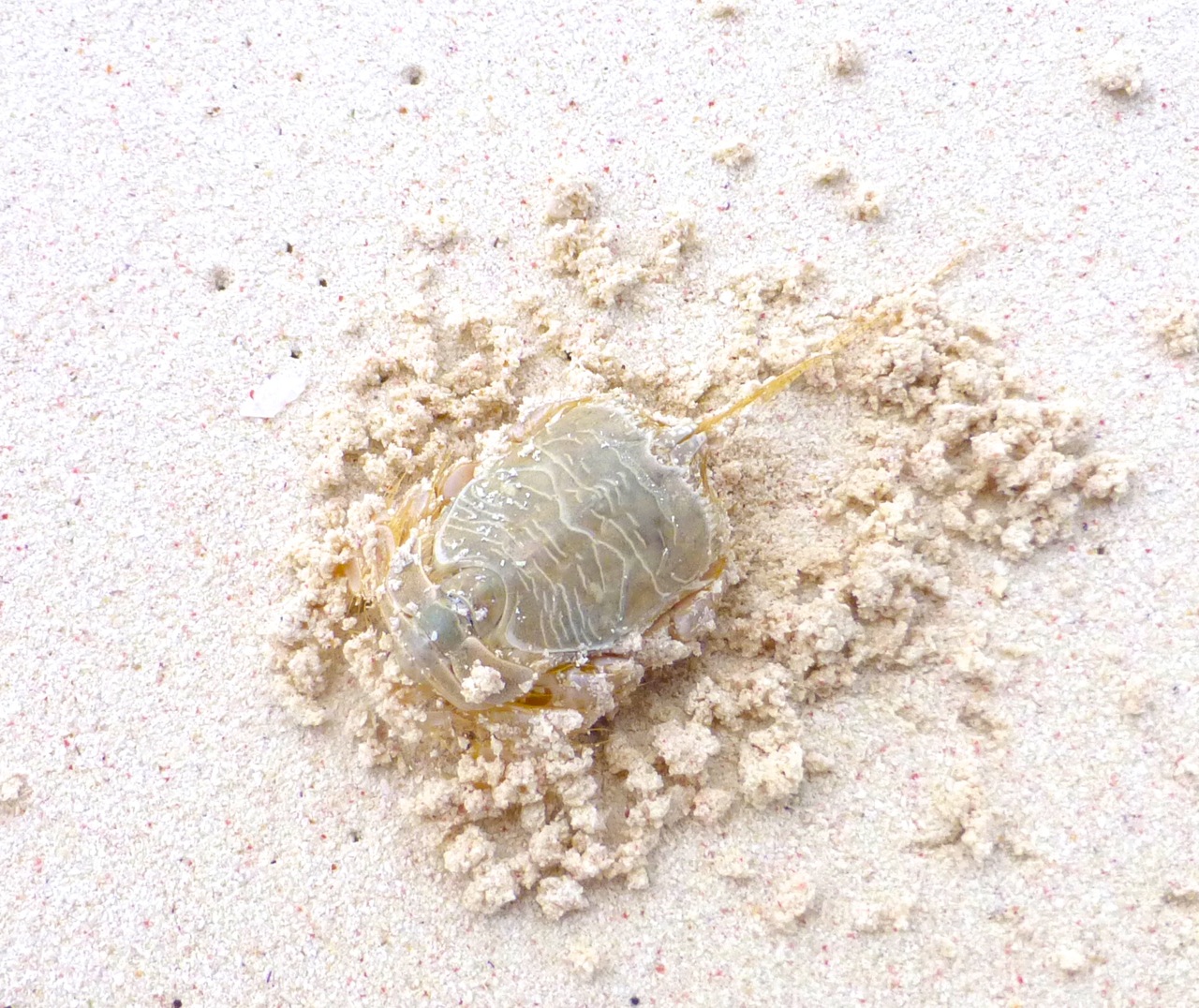
HORSESHOE CRAB (LIMULUS)
Credits: Tom Sheley (1, 2, 3); Keith Salvesen (4,7,8,9,15); Charlie Skinner (5,6); Melinda Riger (10,11,12,13); Leodec (14)
In past posts I have mentioned what an excellent birding place Gilpin Point has become. There’s the large pond; and right beside it, dunes, the other side of which is a fine secluded beach and the ocean. The place is a magnet for birds of all shapes and sizes, from brown pelicans down to the tiny endemic Bahama woodstars. There are water birds, wading birds, shorebirds and coppice birds. It has become a place where Abaco parrots regularly congregate. You can reach the Gilpin FB page HERE.
A while back, there was a rare visitor, a Flamingo that stayed a few months then disappeared again. It was in some ways a sad reminder of past flamingo glory days, when they were commonly found on Abaco. Now they are confined to Inagua apart from the occasional vagrant. For more on the the topic, with wonderful photos by Melissa Maura of the breeding season on Inagua, click HERE. Another rare vagrant – formerly quite plentiful on Abaco – was recently found at Gilpin by Keith Kemp, who skilfully managed to get photos of it from some distance away: a Roseate Spoonbill.
I have featured spoonbills before in a post IN THE PINK, but the photos were taken on New Providence by Woody Bracey. I had no Abaco spoonbill photos. To be fair, we did once see one while we were bonefishing far out on the Marls. It was on the edge of the mangroves a good distance away, and the pale pink tinge caught my eye. My photo with an iPhone 4 (the one with the risibly cr@p camera – remember?) was so utterly pathetic that I dumped it (the photo, I mean, but the phone soon followed). But we knew what we had seen, and that was enough.
STOP PRESS 1I should add that a friended visited the pond after the side-effects of Hurricane Joaquin had receded, and the spoonbill had gone. So the spoonbill alone would not make the journey worthwhile!
STOP PRESS 2A check of eBird reveals that a handful of spoonbills have been reported in Northern Bahamas this year, about 6 in all. Almost none before that. I have the impression that birding intensity in The Bahamas, coupled with the ease of uploading reports to eBird, will increasingly make a difference to the incidence of sightings of uncommon and rare species, cf the recentWHIMBRELSof Grand Bahama.
GILPIN POINT LOCATION
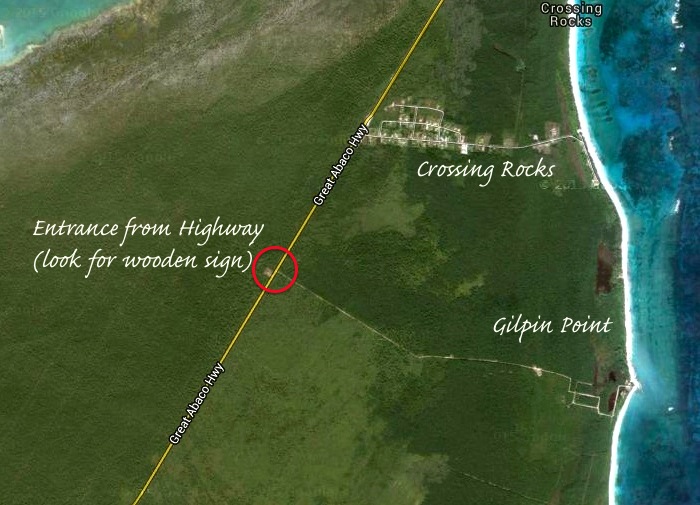
Gilpin Point is just south of Crossing Rocks. The brackish pond – sometimes an alarming reddish colour that I assume is algal – is just inland from the shoreline and provides a wonderful haven for birds. It’s a long mile from the highway. There is no vehicle nor even human traffic apart from occasional birders and walkers. Please note that the drive and the property are private. However Perry Maillis is always welcoming to tidy birders who (as I have written elsewhere) bring only enthusiasm and take only photographs (though a picnic on the beach is worth considering. And maybe a swim…).
Helpful location maps
WHAT SPECIES MIGHT BE FOUND AT GILPIN?
A brief list includes regular visits from parrots. It’s the only place we have found a furtive little sora skulking in the reedy margins. It’s a reliable spot for herons and egrets of every kind, white-cheeked (Bahama) pintails by the score, black-necked stilts and lesser yellowlegs. Occasionally a northern pintail, ruddy duck or merganser. Turkey vultures. Limpkins. We’ve seen belted kingfishers, Bahama woodstars, cuban emeralds, american kestrels, Bahama swallows, doves, pigeons, western spindalis and many more coppice birds besides. One flamingo. One spoonbill. Pelicans have been seen on the rocks on the beach. Shorebirds include turnstones, sundry plovers & sandpipers, and oystercatchers. You may well see tropicbirds and frigate birds off-shore, and assorted gulls and terns. I can’t personally be more species-specific because I have never ‘shorebirded’ properly there, but I have noticed an impressive mix…
When we launched THE BIRDS OF ABACO at the Delphi Club, we were delighted that Pericles was able to come to the party. He took a few photos and I’m sure he won’t mind my including a small gallery to end with, featuring a couple of the Gilpin entries in his signed copy.
Bahamas birding nobility: Tony White with Caroline Stahala; Woody Bracey & Bruce Hallett
Credits: Keith Kemp for the great spoonbill photos; Perry for the Delphi photos
The compilation of The Delphi Club Guide to THE BIRDS OF ABACO involved making a few rules and sticking to them. For example, the avian images in the book – and there are a great many – had to be of birds actually photographed on Abaco or in Abaco waters. Gorgeous pictures from Grand Bahama or New Providence were ruthlessly excluded, however painful it was to do. Some wonderful spoonbill photos taken in Nassau stayed in the ‘Not Use’ folder. The temptation to slip in an non-Abaco whimbrel to fill a whimbrel-shaped space among the shorebirds had to be resisted – even though at the time the last recorded sighting of one on Abaco (no photo) was in 2000…
Another important restriction was the stipulation that we would only use birds that had been photographed in their natural surroundings, defined as being a place where a particular species might naturally be found. Coppice and shoreline, obviously, but this included utility wires, posts and docks etc for species that habitually use them to perch on or hunt from. However, the rule meant a complete embargo on feeder photos, however winsome a hummingbird might look as it sips sugar water. We extended the principle to include a ban on luring birds into camera-shot with seed or corn trails; and similar ruses beyond the simple whistles and pishes that anyone might use to tempt a bird out of deep cover.
Cuban Emerald coming in to land… and feeding
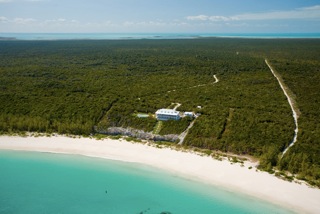
The Delphi club is the perfect location for an enviably varied number of species. Its remoteness down a one-mile drive from the Highway, with pine forest giving way to luxuriant coppice, ensures minimal disturbance for the birds including a number of rarer species.
The one-mile white sand curve of the beach sees many shorebirds and seabirds in all seasons. The gardens attract both the usual suspects and less common birds. The building, too, has its resident West Indian Woodpeckers in two nesting boxes under the eaves, thoughtfully provided to discourage the Club’s woodwork from exploratory drilling.
Mr and Mrs Black-faced Grassquit
There are a number of seed and sugar water feeders around the place, and bird baths too. It’s a long time since I featured a collection of ‘tame’ birds. This post shows a few of the species that have made Delphi their home.
Mr and Mrs Greater Antillean Bullfinch
Mr and Mrs Painted Bunting
Bananaquit: the curved beak makes it easy to use the hummer feeder (see above)
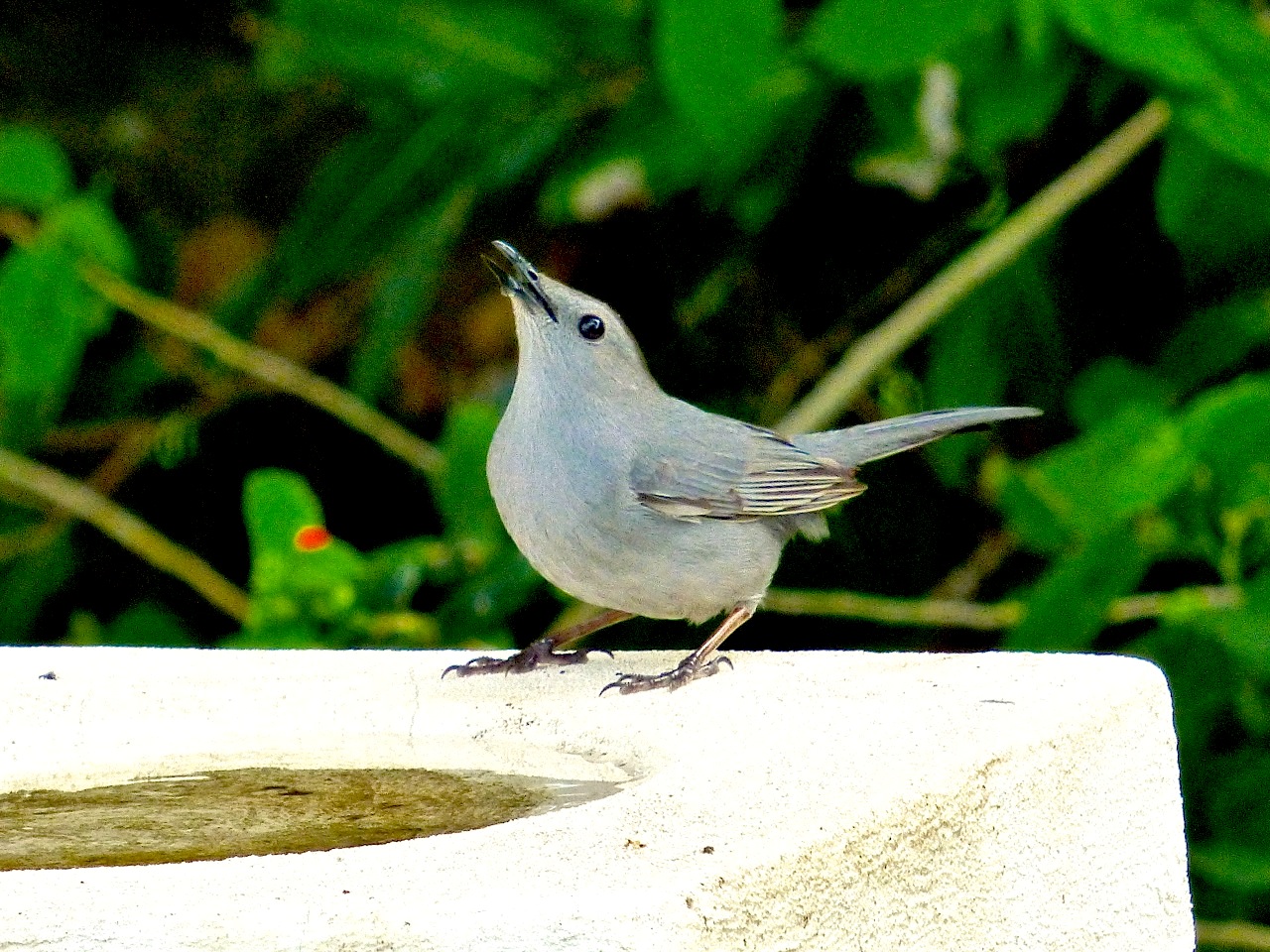
A Gray Catbird takes a drink… and a bath
Adaptive behaviour from a W I Woodpecker – that long tongue is perfect for the job
The turkey vulture takes priority over all smaller birds…
A red-legged thrush enjoys picking up the seed shrapnel off the ground…
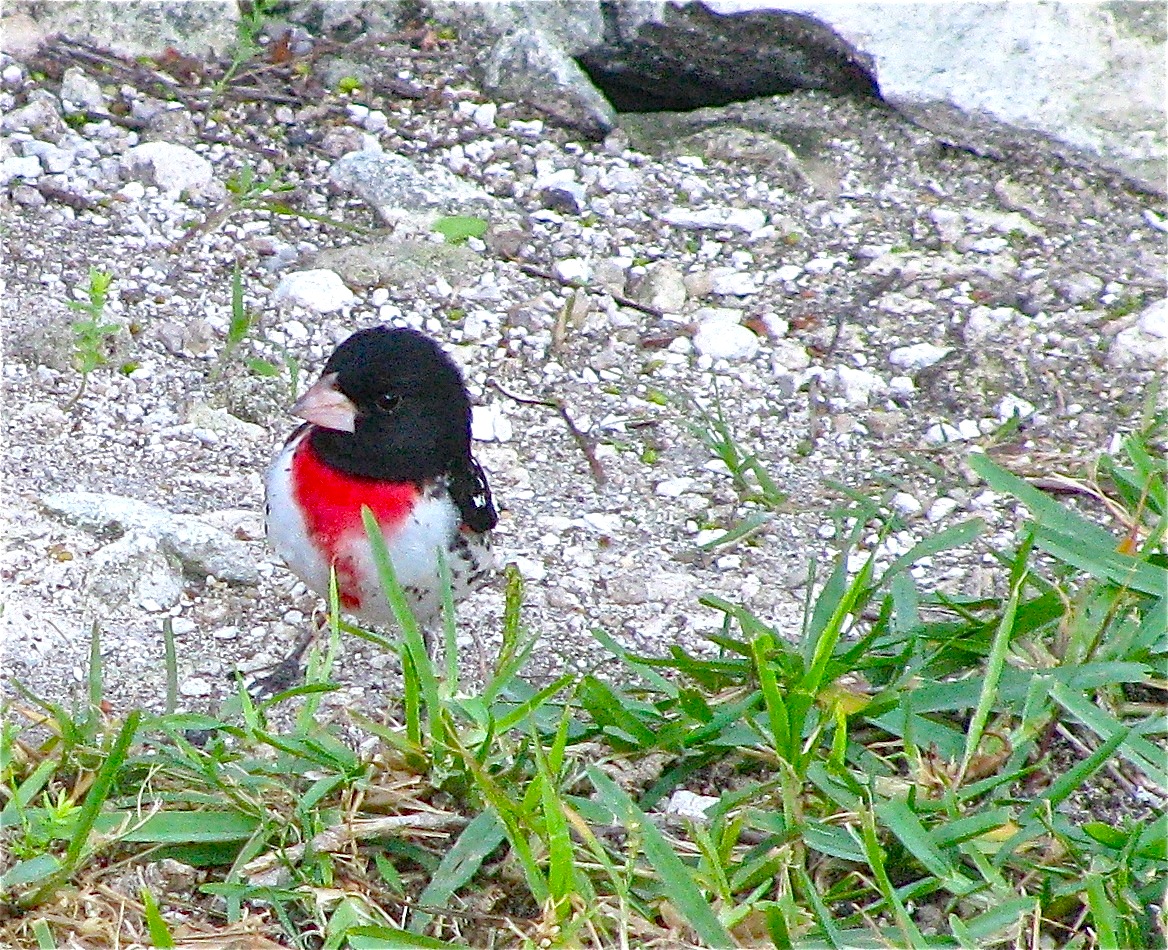
As do rose-breasted grosbeaks and indigo buntings
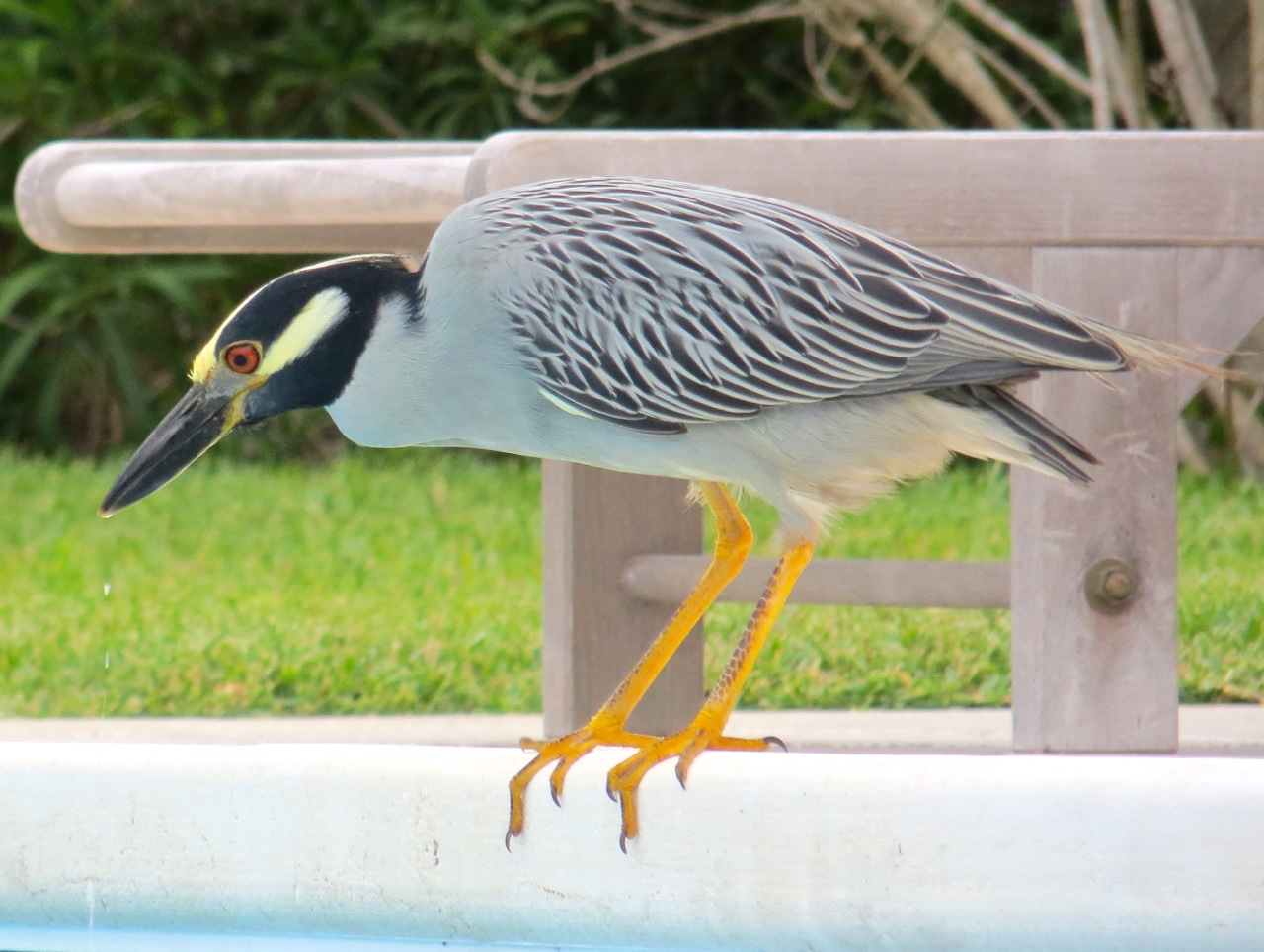
Meanwhile, a yellow-crowned night heron takes a drink from the pool
Credits: all photos RH except aerial shot of Delphi, Peter Brown; the hummers, Peter Mantle; and the buntings / grosbeaks, PM and Caroline Stahala…
Banded in Michigan in 2010 – in Florida right now!
“GOOD MIGRATIONS” by THE BEACH BIRDS
It’s started already. The autumn migration of piping plovers from up north to down south. It seems only the other day (April in fact) that the last PIPL were seen on Abaco. Since then, they have spent the summer in their breeding grounds, raising families. This seems to have been a successful breeding season, with good reports that included a record number in the tiny Great Lakes population. But the attrition rate to predation is high: for example, of the 4 chicks in one family that was closely observed on Long Beach Island NJ, only one (‘Beth’) has survived.
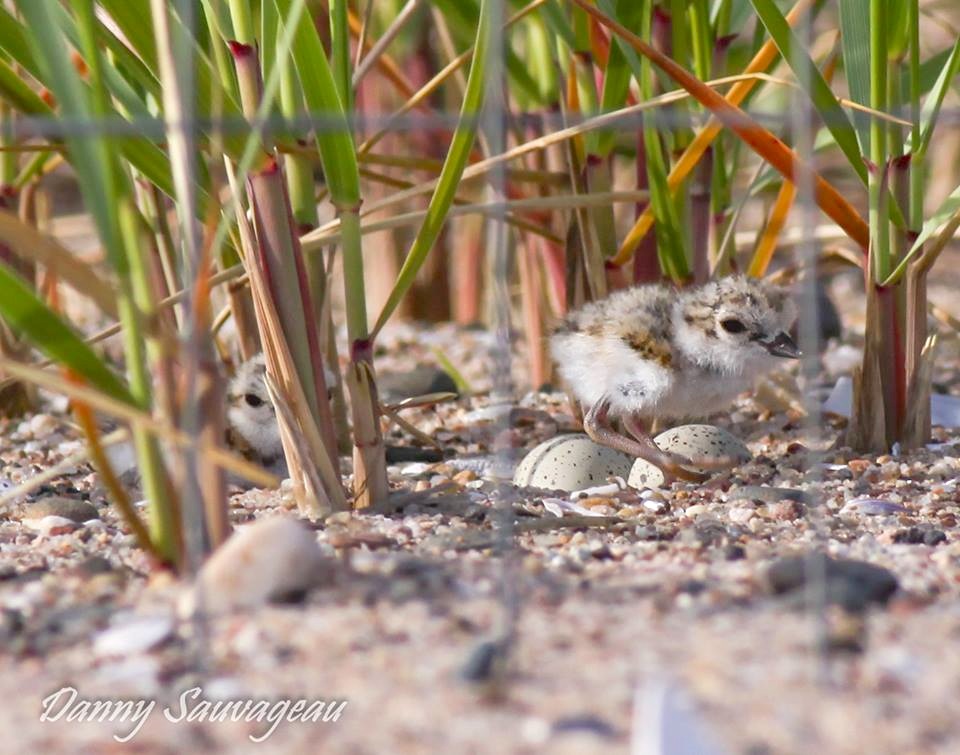
Piping plovers: 2 chicks & 2 eggs, Connecticut
WHAT’S SO SPECIAL ABOUT THESE BIRDS?
A recent estimate put the world’s supply of these little birds at 8000. And of these, many spend their winter in the Bahamas, Abaco being one of their favoured destinations. The survival of the species is in the balance. Habitat degradation at either end of their migrations could be disastrous; at both ends, more than doubly so.
Piping Plover juvenile, Connecticut
HOW CAN THEIR SURVIVAL BE ASSURED?
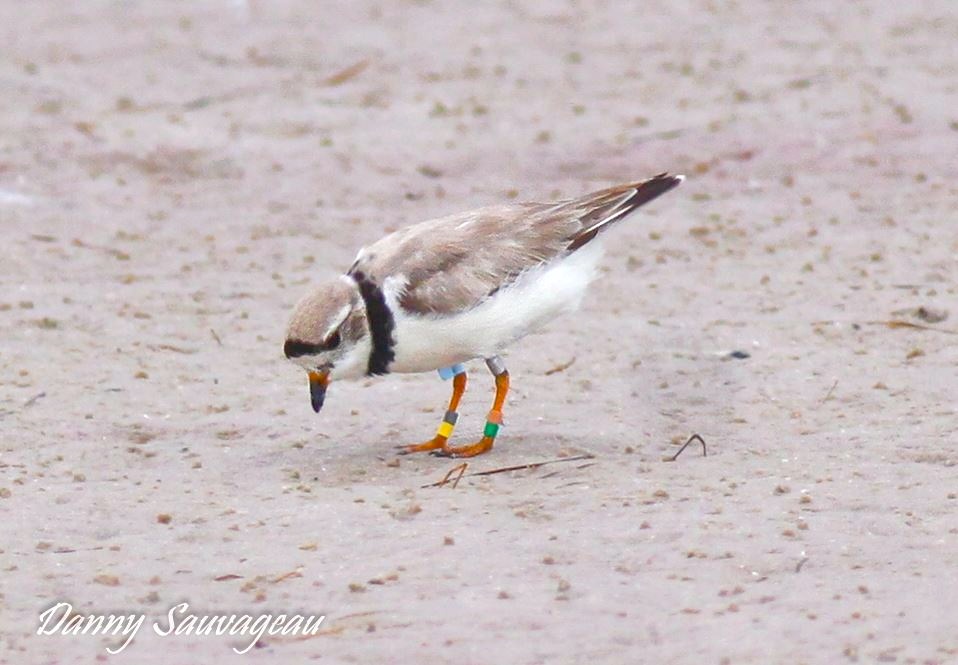
A number of organisations and individuals are dedicated to looking out for the PIPL. This includes ensuring preservation of habitat integrity and protection on the beaches where they nest, and banding programs so that birds can be tracked and monitored during their migrations. This is one aspect which people on Abaco (and elsewhere) can help with – looking out for these birds, reporting their location and how many are seen, and if possible describing the bling: colour of bands, which legs, which order,visible numbers etc. Or better still, taking photos!
WHERE WILL I FIND PIPING PLOVERS ON ABACO?
On beaches and shorelines. On the mainland, places where they were reported last year included Long Beach, Crossing Rocks, Schooner Bay, the beach at Delphi, Bahamas Palm Shores, Casuarina and Little Harbour. They also visit the cays, with a number reported on Man-o-War Cay for example.
HOW FAR HAVE THEY GOT IN THEIR TRAVELS?
Well on their way south. Danny Sauvageau, who combines monitoring beaches in Florida with being a wonderful bird photographer, has just reported the first arrivals. On 23 July he saw 3 unbanded PIPL in Dunedin Fl. – here’s one of them.
Then on 29 July Danny found his first banded Piping Plovers of the 2015-16 wintering season at Fort Desoto – 6 birds of which 5 were banded. This enabled him to recognise them as returners, and to identify their origin: “Two were from the Great Lakes (Michigan), two were from the Great Plains (North Dakota and South Dakota) and one was from Nebraska!”.
These 3 examples show the wide variation in banding in the different locations. Which is why a photo of a bird’s legs is particularly helpful for the research into the species.
The CONSERVE WILDLIFE FOUNDATION OF NJ is involved annually with researching the piping plovers of Abaco. Many will be familiar with the scientists Todd Pover and Stephanie Egger who visit each year to monitor the plovers. For those who do not already have a direct line to them I would be very pleased to receive reports of sightings to collate and pass on. The monitoring work provides exactly the kind of information that will help to ensure the survival of this adorable but vulnerable species. Please email me at rollingharbour.delphi@gmail.com or, better still, upload info / pics to the new FB page I have set up, ABACO PIPING PLOVER WATCH 2015 – 16
The most helpful information to have is date; time; location; number of birds; whether banded or unbanded; and if banded, as much information as possible or ideally a photo…
TYPICAL MUSICAL DEVIATION FROM THE TOPIC
The referencing in the title to a famous ‘disc’ from 1966 by a ‘popular beat combo’ does not presage a re-formation. In the past there was acrimony. Some drink ‘n’ drugs hell. Splits and re-formations. Sadly not all former members are still with us. Here’s a memory of them from (arguably) their most satisfyingly inventive era… **EARWORM ALERT** now you won’t be able to get the wretched tune out of your head. It’s given you ‘excitations’. Sorry about that.
Credits: All photos courtesy of Danny Sauvageau except ‘lone chick’ MDF & ‘chick in hand’ CWFNJ; shout outs to Danny, Todd, Stephanie and all PIPL researchers. Plus Bay Soundings. And the Beach Boys…
ADDENDUM AUG 2A good article about the significance of banding can be found at BAY SOUNDINGS(based around Tampa Bay). It includes contributions from Danny and a useful info box:
Reporting banded birds
Reporting banded birds is one of the most important activities for citizen-scientists, says Wraithmell. “It’s the only way we have to solve the mystery of migration – to learn where they stop and where they winter so we can protect that habitat too.”
Most photographers stumble upon their first banded birds accidentally because they don’t always see the bands until they review their images on a computer screen. After that, they’ll learn to watch for the bands even if they don’t get close enough to see them with their naked eye.
“There’s something very exciting about photographing banded birds, learning where they came from and following their travels if they’ve been seen and reported before,” Sauvageau said.
But capturing an image shouldn’t outweigh allowing the bird to rest or feed in peace, Wraithmell said. “One thing that’s really important is not disturbing the birds, whether they’re nesting or just resting,” she said. If nesting birds are disturbed, they fly off and leave their eggs or babies in broiling sun and defenseless against predators. Wintering birds need to rest and pack on the pounds before they fly back to their summer breeding grounds.
“Some birds, like piping plovers, actually spend more time here than they do nesting,” she said. “Their main job over the winter is eating and resting so they can nest successfully. And breeding is hard work – it takes a lot of energy to make an egg and then to feed and defend a chick until it’s old enough to take care of itself.”
For the scientists who band birds, “it’s like putting a message in a bottle and throwing it in the sea,” Wraithmell said. “Every resighting is valuable because we learn something new.”
LIMESTONE CAVES ON ABACO: WELL WORTH LOOKING INTO…
I have written several posts in the last few months featuring Brian Kakuk’s amazing photos of the underwater caves of Abaco. These caves, mostly beneath Abaco’s pine forests, are fabulous treasures of rock and crystal. A recent post example can be seenHERE. I have also featured some of the famous Blues Holes of Abaco from time to time, for example HERE. So now it’s time to turn attention to ‘land caves’, the dry(ish) limestone holes and caverns that are dotted around Abaco, especially in the South, and bear witness to aeons of geological development through erosion.
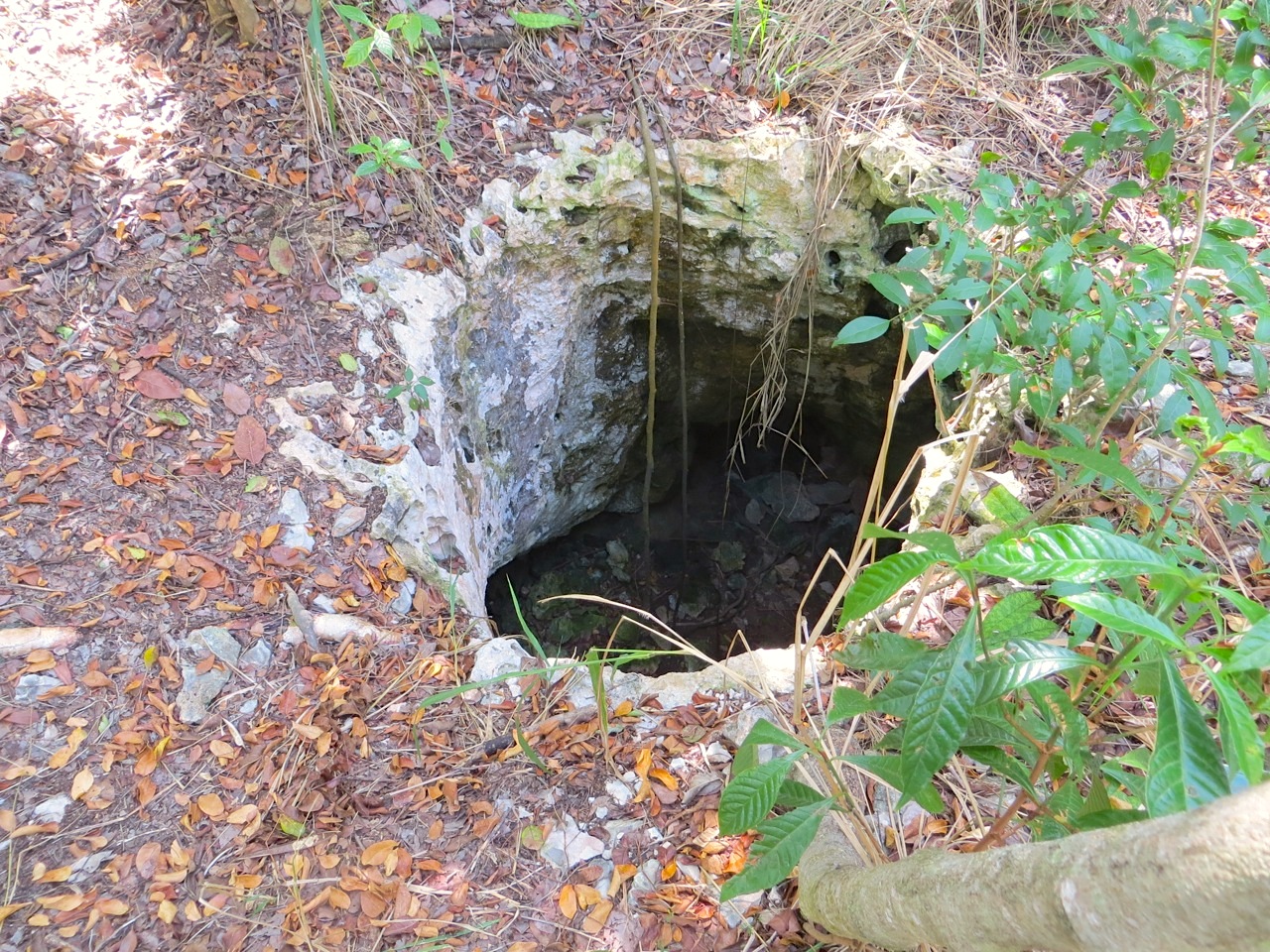
The coppice and extensive pine forests are pitted with holes of widely varying sizes. I’m way out of my depth here, geology-wise (polite corrections invited), but this sort of landscape is I believe known asKARST. This term presumably includes Abaco’s ‘dry’ holes, the blue holes and the substantial network of underwater caverns. Small examples can readily be found in easily accessible places such as non-dense coppice. We were very surprised when we pushed our into the coppice bordering the Delphi Club guest drive and took a closer look at a hole. Although the weather was hot and dry at the time, you will see that the hole has some form of micro-climate, with damp walls and interior and wet-climate plants like small ferns and forms of what I take to be moss and algae.
ONE OF MANY LIMESTONE HOLES BESIDE THE DRIVES AT DELPHI
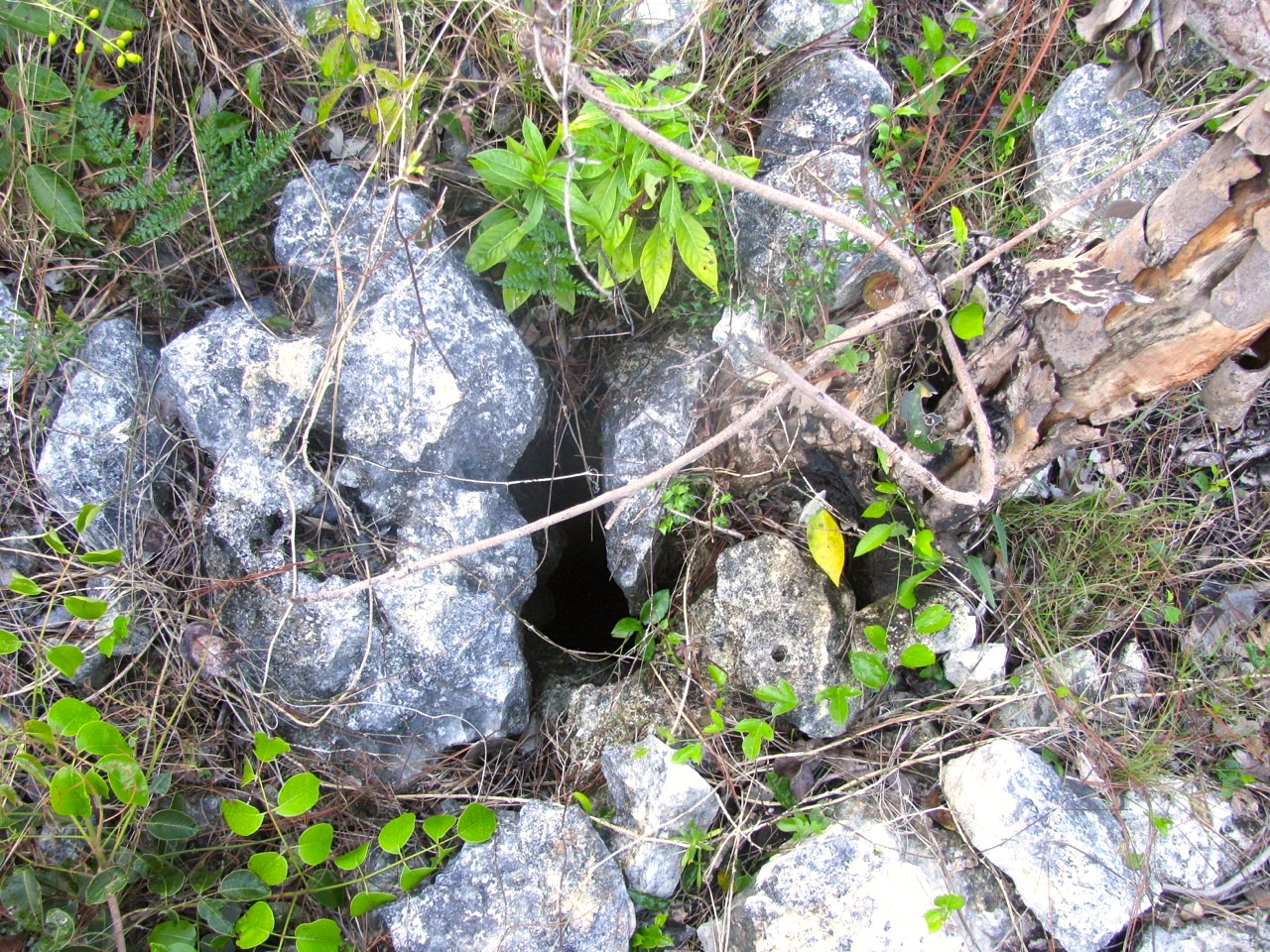
A HOLE NEAR HOLE-IN-THE -WALL – LARGER INSIDE THAN IT LOOKS
THE CAVE-DWELLERS OF ABACO: THEFABULOUSPARROTS
Among the best-known special residents of Abaco are the ground-nesting parrots, gorgeous birds that I have often featured in the past – see the parrot page HERE. Not so long ago, their numbers had reduced to an unsustainable population – fewer than 1000 – that faced extinction. The creation of the National Park covering the pine forests where they breed, coupled with a vigilant and intensive conservation program, have reversed the trend. There is now a sustainable breeding population again, exceeding 3000 birds.
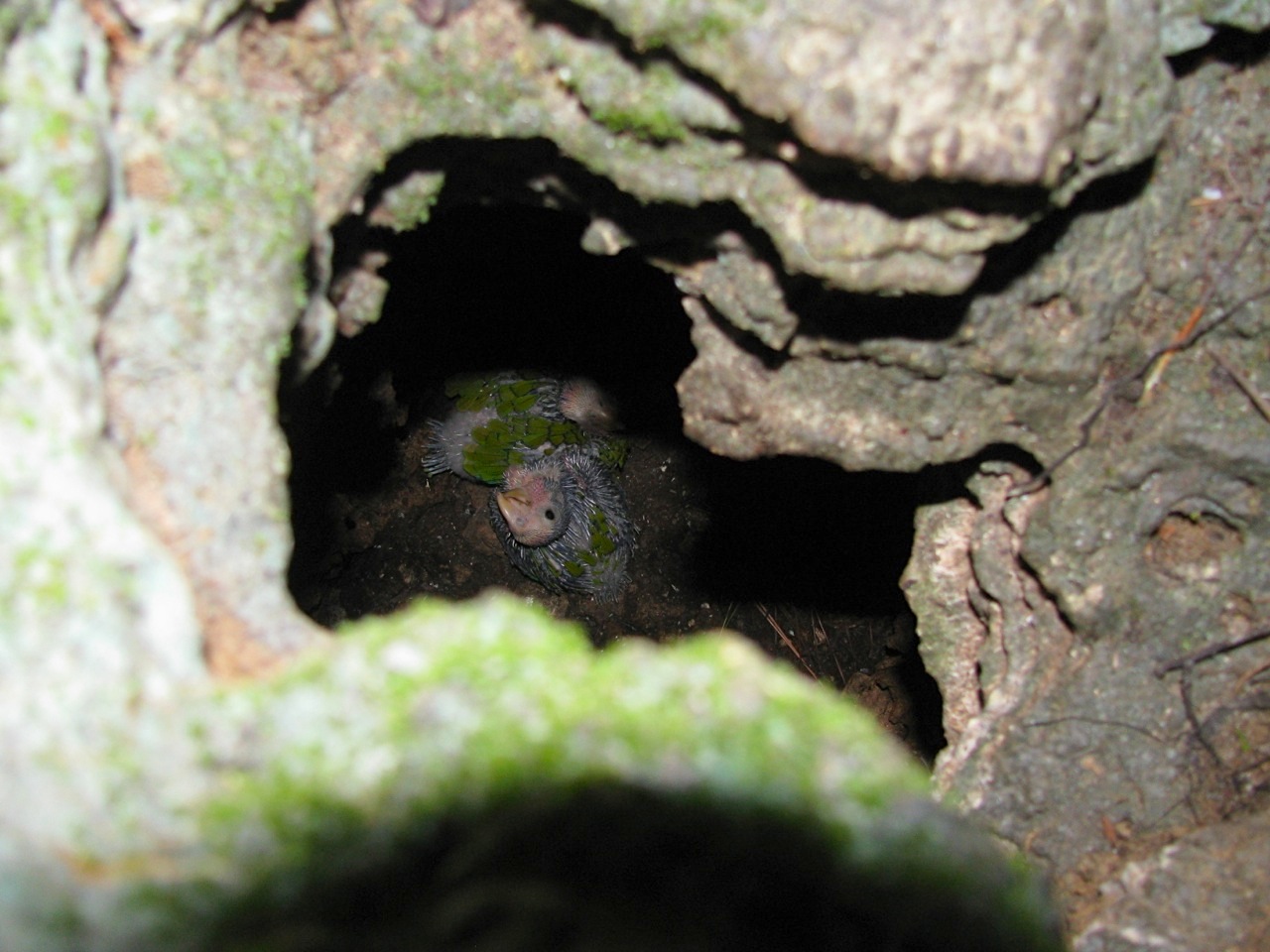
The only other breeding Cuban parrot population in the Bahamas is found on Inagua, where they nest conventionally in trees. There is a very small non-breeding population on New Providence. Abaco’s cave-dwelling subspecies of the cuban parrot is unique. Here’s an insight into how they live, deep in the pine forest, during the summer breeding season, with many thanks to Caroline Stahala, the scientist who spent some 10 years researching and protecting the parrots.
PARROT NEST HOLES: VULNERABLE TO PREDATORS, PROTECTED FROM FOREST FIRES
PARROTS MAY NEST DEEP – OR SHALLOW.
THE BREEDING SEASON: NEST, EGGS, HATCHLINGS, FLEDGELINGS…
HOW BIG DO THE ‘DRY’ HOLES GET?
TBH my personal experience is somewhat limited. I believe there are large, sea-scoured caves along rocky parts of the south coast, but those are rather different from the eroded ground holes discussed here. As so often I rely on Mrs RH – far more intrepid than me – and her exploring skills. The cave shown below is right down at the far south of Abaco, at Hole-in-the-Wall, hidden in the coppice along the ‘Soldier Road’ from the T-junction (we are talking rough tracks here – very – not proper roads) towards the lighthouse.
The rock is far more colourful than you might expect
Credits: Caroline “The Parrot Lady” Stahala; Mrs RH for investigating the last cave and taking the camera with her; RH the rest; Woody Bracey for our great day of birding at Hole-in-the-Wall and his local knowledge of the area…
I rarely recycle old posts, though I sometimes rewrite them. Occasionally a past subject returns later as a new hot topic, usually because of some related event or news item. Suddenly I get a flurry of hits for ‘do manatees have toenails?’ or ‘does one good tern deserve another?’. That kind of thing. Right now – indeed for the past 10 days – the current sporting event in London SW19 (i.e. Wimbledon) has by a side-swipe of a mis-hit tennis racket affected the smooth operations at Rolling Harbour. The fruit generally associated most with Wimbledon is of course The Strawberry. Yes, they are now so expensive at the ground that they have to be sold singly. If you want Cream with it, they offer moderate loan terms in return for a charge on your house. A small cardboard box to eat it from is extra, though eating from your hand remains free. For now. But the fruit that is rocking the blog at the moment is the PINEAPPLE. I am suddenly getting lots of ‘search’ hits daily with various combos of the question “why is there a pineapple on top of the Wimbledon Trophy?” So I am rolling out my pineapple post from a couple of years back, slightly modified, which will answer this and many other ananatic questions.
🍍 🍍 🍍 🍍 🍍
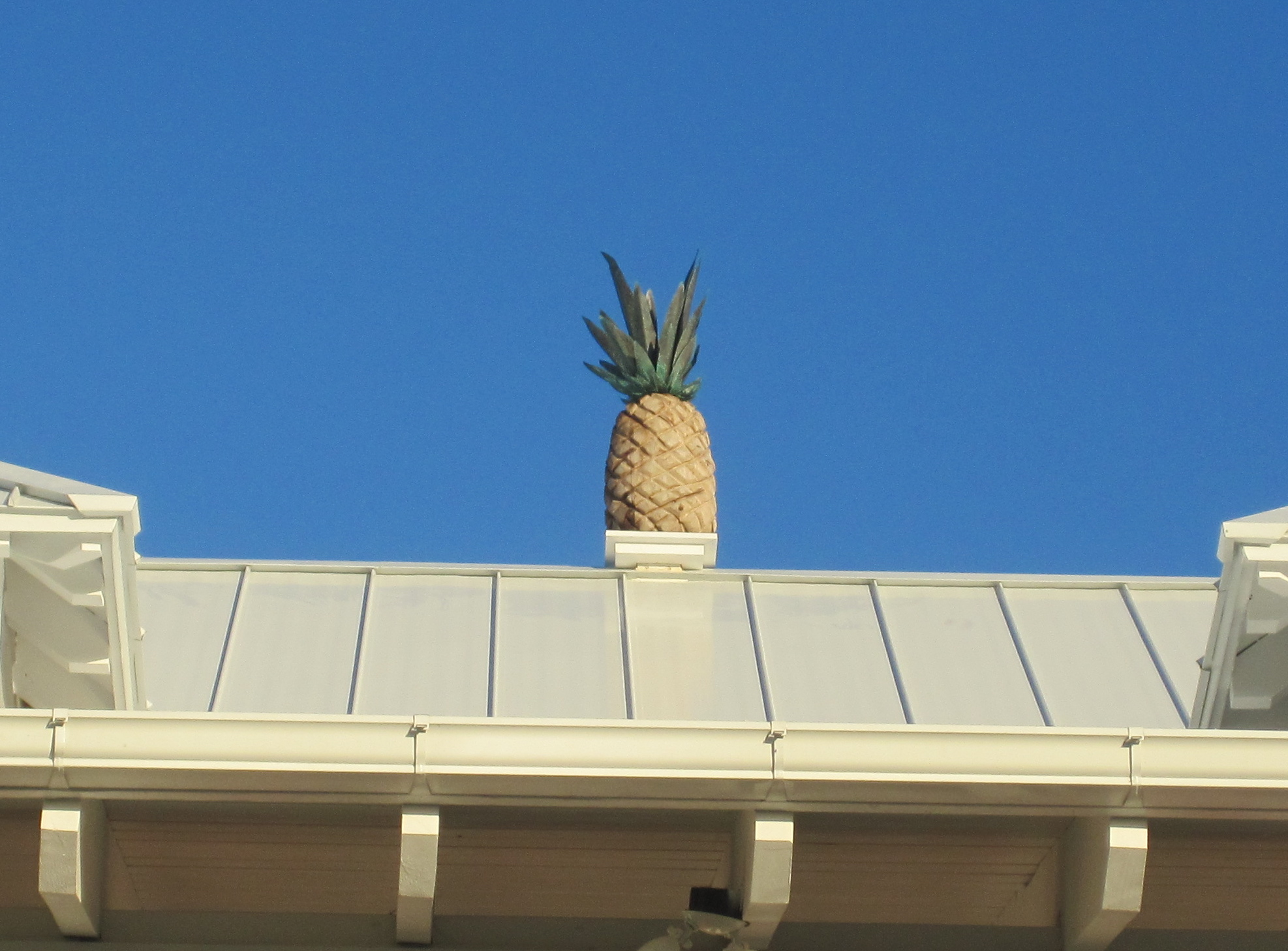
The first image below is of the handsome locally hand-carved pineapple that surmounts the roof of the DELPHI CLUB Abaco. The fruit lost a few leaves in Hurricane Irene, which scored a direct hit on the Club. As posted on theABACO FACTS page (under RANDOM main menu) “the precise Longitude & Latitude coordinates of the Pineapple [on] the Delphi Club roof are respectively –77.1787834167480 &26.20450323936187“. But why is it there? Time for a Short Voyage around the Pineapple…
PINEAPPLE FACTS TO ENLIVEN YOUR CONVERSATION
HISTORICAL & SOCIAL CONTEXT
Brought back to Europe by Christopher Columbus in 1493 on his return from his second voyage
Taken on long voyages as a protection against scurvy and because of its long life
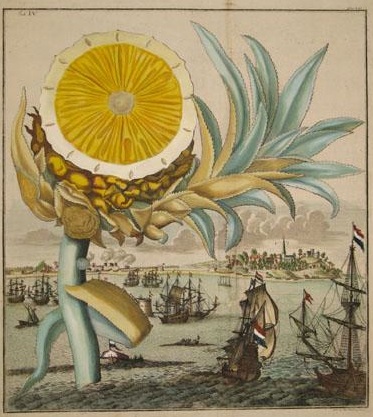
By the c17 royalty & aristocracy grew them in hot-houses (or rather, their gardeners did). King Charles II tried one, an event so important it was recorded by the Court painter Hendrik Danckerts
By c18 considered a great delicacy and a status symbol of wealth, often the centre-piece of a feast.
If you couldn’t afford to buy one, you could rent one and return it afterwards. Someone richer than you would then buy it.
Pineapples were grown in pits of fermenting manure. In England Queen Victoria was not amused and soon put an end to that unpleasant nonsense
In the c19 pineapples were one of the most significant exports from Abaco
The Earl of Dunmore built a huge pineapple folly in Scotland in 1761, which you can stay in (We have. It’s a lot of fun)
On ‘Unter den Linden’ in Berlin, the cast iron posts round the huge equestrian statue of Frederick the Great are topped by pineapples.
CULTURAL SYMBOLISM
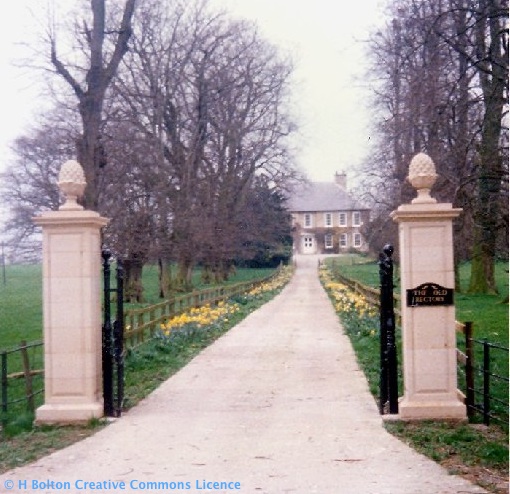
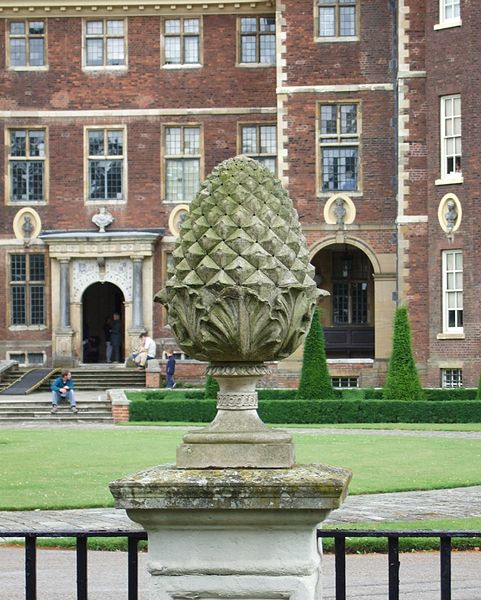
Pineapples symbolise welcome and hospitality, placed at the entrance to villages or plantations. The tradition spread to Europe where they were carved as gateposts; staircase finials; and incorporated into wooden furniture (including bedposts at the Delphi Club)
Seafarers put pineapples outside their homes on their return to show that they were back from their travels and ‘at home’ to visitors
An expensive fruit to grow & to transport; remained a luxury until the arrival of steamships
Their costliness made them status symbols / indicators of wealth and rank. Displaying or serving pineapple showed that guests were honoured. And, coincidentally, that the hosts were loaded.
In the 1920s the grandest dinners apparently needed both “a pineapple and Lady Curzon” (I have been asked whether this is Interwar Period code for some sort of disreputable activity… let’s hope the answer is ‘yes’)
The future Queen Elizabeth was sent 500 cases of canned pineapple as a wedding present from Australia. She asked them the traditional Royal Question “Hev you come far?” Prince Phillip’s reaction was – apart from the word ‘pineapple’ – unprintable
In the play Abigail’s Party (Mike Leigh) pineapple chunks on cocktail sticks were used as a plot device to highlight the desperate social ambitions of a hellish hostess trying to impress & outclass her guests
A 1930s ad promised that by baking a pineapple pie a wife would make her man “smack his lips in real he-man enjoyment” (NB This may not work so well in the 2010s)
By Appointment to HM the Queen
ARTS & CRAFTS
Used on Wedgwood pottery designs as early as the 1760s; others soon followed suit
Became widely used decoratively as a motif for gateposts, weather vanes, door lintels, wallpaper, table linen & curtains, and incorporated into furniture
Depicted as curiosities in early botanical engravings (Commelin 1697 Hortus Botanicus)
Featured in still life paintings as a crowning example of opulence (e.g. De Heem, Jan van Os)
Josef Schuster
Depicted in plant and fruit studies, for example these by Johann Christoph Volckamer, very early c18
Occasionally found in Church stained glass windows (e.g. St Lawrence’s, Jersey)
Featured in music e.g. Pineapple Rag (Scott Joplin); Pineapple Head (Crowded House); Escape – The Piña Colada Song (Rupert Holmes); Pineapple Express (Huey Lewis); Pineapple (Sparks)
Used as a motif on shutters in Marsh Harbour
SPORT
The Men’s Singles Trophy at Wimbledon is a silver gilt cup with a gilded pineapple on top of the lid. It used to mean “Welcome back, Roger!” Now it stands for the first British male singles win since 1937 (‘Go, Andy!’). [British women have fared rather better in the singles in that time (‘Go, Angela, Ann & Virginia!’)]
MOTORING
Vauxhall produced the Vauxhall Astra Sport in ‘tasteful’ Pineapple Yellow. For the history of the use of the far more glamorous Bahama Yellow in motoring history, clickHERE
10 TASTY PINEAPPLE CHUNKS
The cocktail Afterglow is 1 part grenadine, 4 parts orange juice & 4 parts pineapple juice on ice
Piña Colada is rum, coconut milk & crushed pineapple. Omit the rum for a Virgin Colada
It is impossible, for chemical reasons, to make jelly with fresh pineapple
“Pineapple heat” was once a standard marking on thermometers
A pineapple grows as two interlocking helixes (8 one way, 13 the other – each being aFibonaccinumber)
A pineapple will never become any riper than it was when harvested
Workers who cut up pineapples eventually have no fingerprints – a gift fact for crime writers
Pineapple stems are being tested for anti-cancer properties
Pine Apple, a small Alabama town full of pineapple symbols, was originally named “Friendship” but there turned out to be another town called that, so they changed it
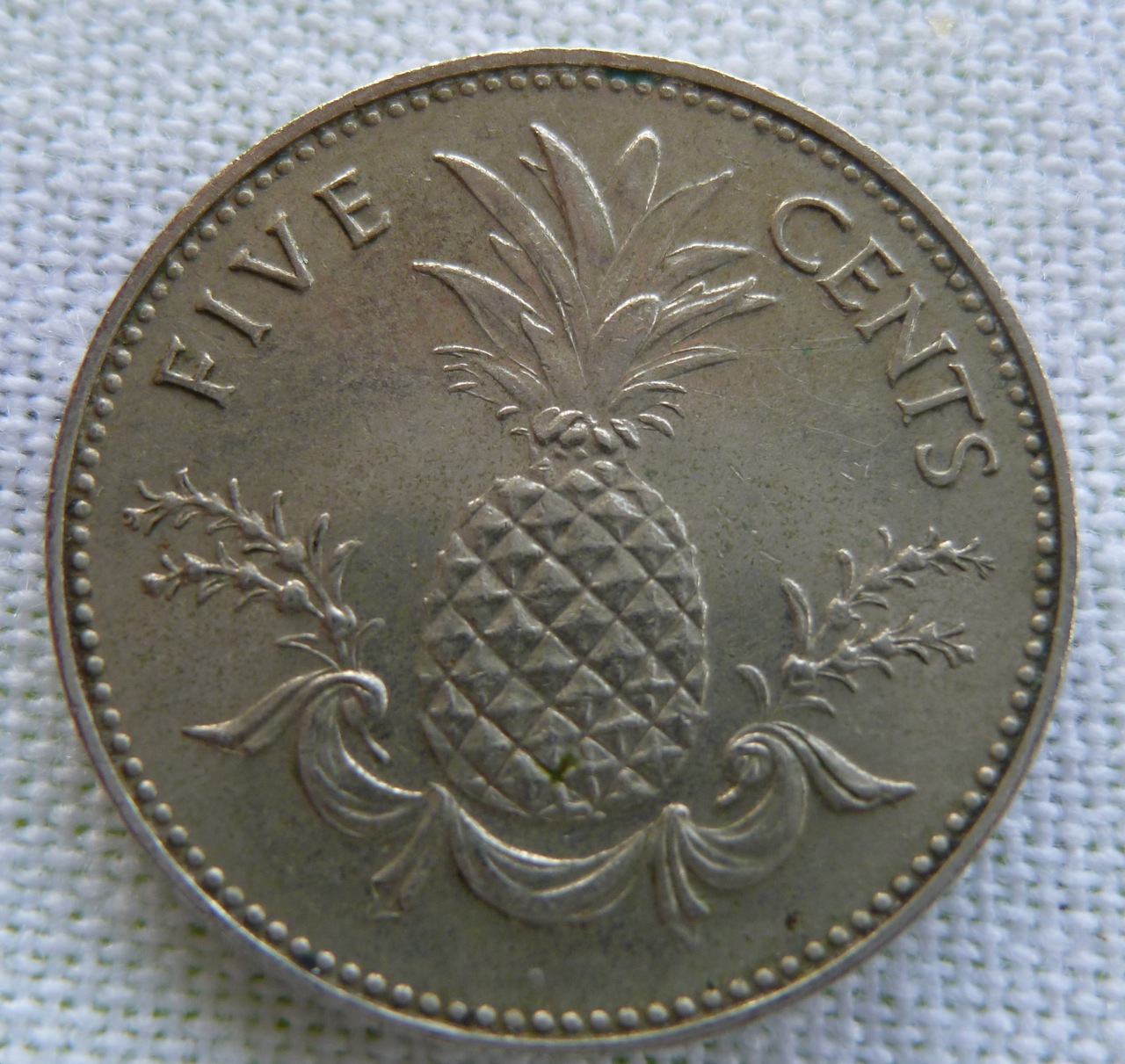
Features on the Bahamian 5 cents coin…
…and a $1 stamp
Read Jim Kerr’s interesting article in ABACO LIFE on Abaco’s pineapple past HERE
FRANCESCA BEAUMAN 2006THE PINEAPPLE – KING OF FRUITSIf you want to find out more about pineapples, their history and social significance, you should be able to pick up a copy of this book on Am@z%n, Abe or ALibris for a few dollars“What?” I hear you cry, “you’ve managed a whole page about pineapples without mentioning modern advertising”. Shall I do so now? The man from Del Monte, he says YES
FOUR WAYS TO CUT UP & SERVE A PINEAPPLE
Sources: Own ideas + some magpie-thieving-borrowing from a variety of sources, many of which contain identical info and / or quote from the above book. Hope everyone is comfortable with that… NB Not every fact above is strictly 100% true, so expect to be challenged if you try one out. In particular Prince Phillip is of course naturally docile and gentle-mouthed…
POST SCRIPT The first 21 Fibonacci numbers (just add 2 successive numbers to produce the next) are
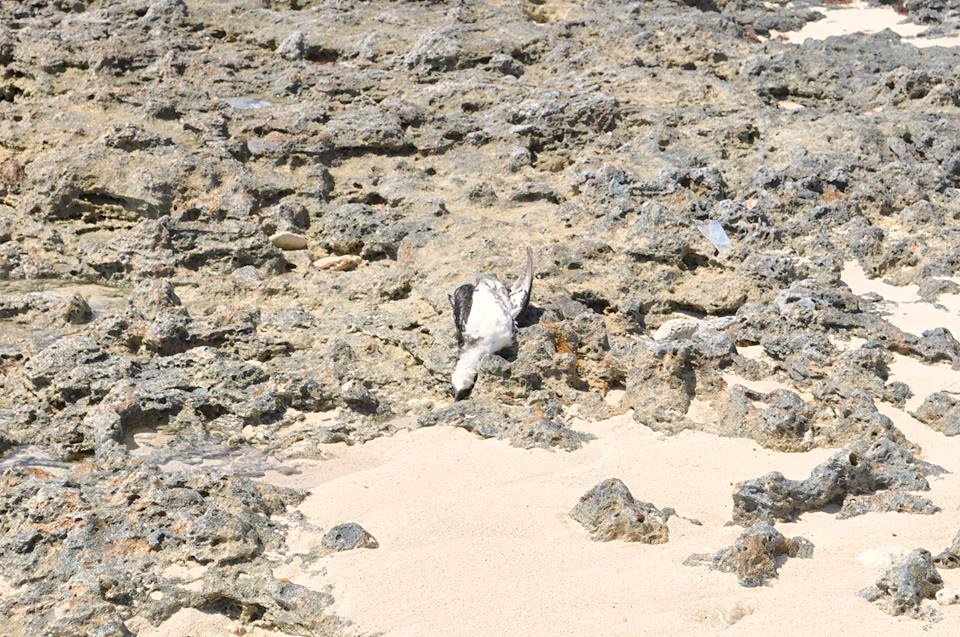
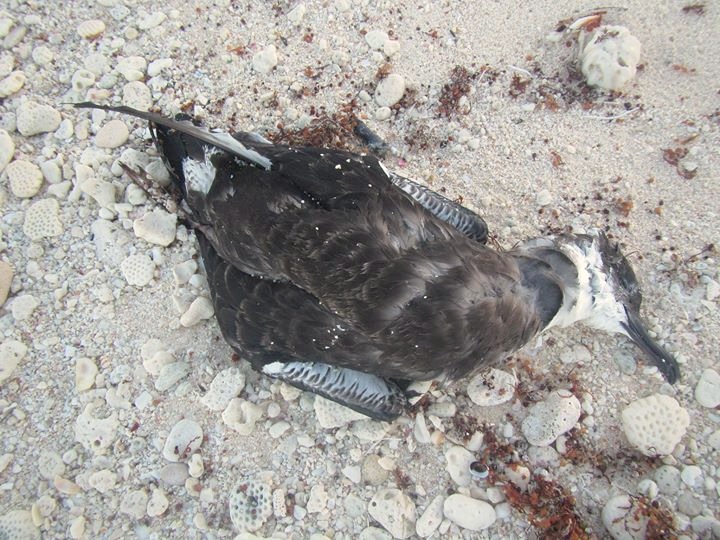
We do not generally do sad or sombre at Rolling Harbour. It’s a beautiful and happy place, and the Delphi Club is a haven of good fellowship and good craic (stemming no doubt from its Irish connections). But I have to report on a sad occurrence on the beach at Delphi and, as it turns out, at many other Abaco locations (and beyond) during June – a notable number of shearwaters being found dying or dead on beaches or else in the sea, their bodies in due course being washed in on the tide.
There are quite a few species of shearwater worldwide, of which 5 are recorded for Abaco. The only permanent breeding resident is the Audubon’s Shearwater, a bird that is quite commonly seen out at sea though not, I imagine, on land. We never managed to obtain a photo of one for “The Birds of Abaco”. I presume there are breeding colonies on Abaco, but not that I have heard about.
As the checklist above shows, three of the other shearwaters are rare transients. These birds fly long migration routes over the ocean and so the casual birder is in practice unlikely to encounter one, let alone get a photograph. The Manx can be ignored as an aberration – the V5 means that one or two vagrant individuals have been recorded since (say) 1950.
My first inkling that something unusual was occurring came a week ago from a FB post by Melissa Maura, whose wonderful parrot and flamingo photos feature elsewhere in these pages.She said “…on my rugged Abaco ocean beach last week, were many dead magnificent seabirds – greater shearwaters (about 5) and a couple of Frigate birds… They didn’t appear to wash in on the waves, but appeared to have perished perhaps from exhaustion on the beach”. Various later comments suggested that this phenomenon had been noted periodically in the past, the last time 4 or 5 years ago.
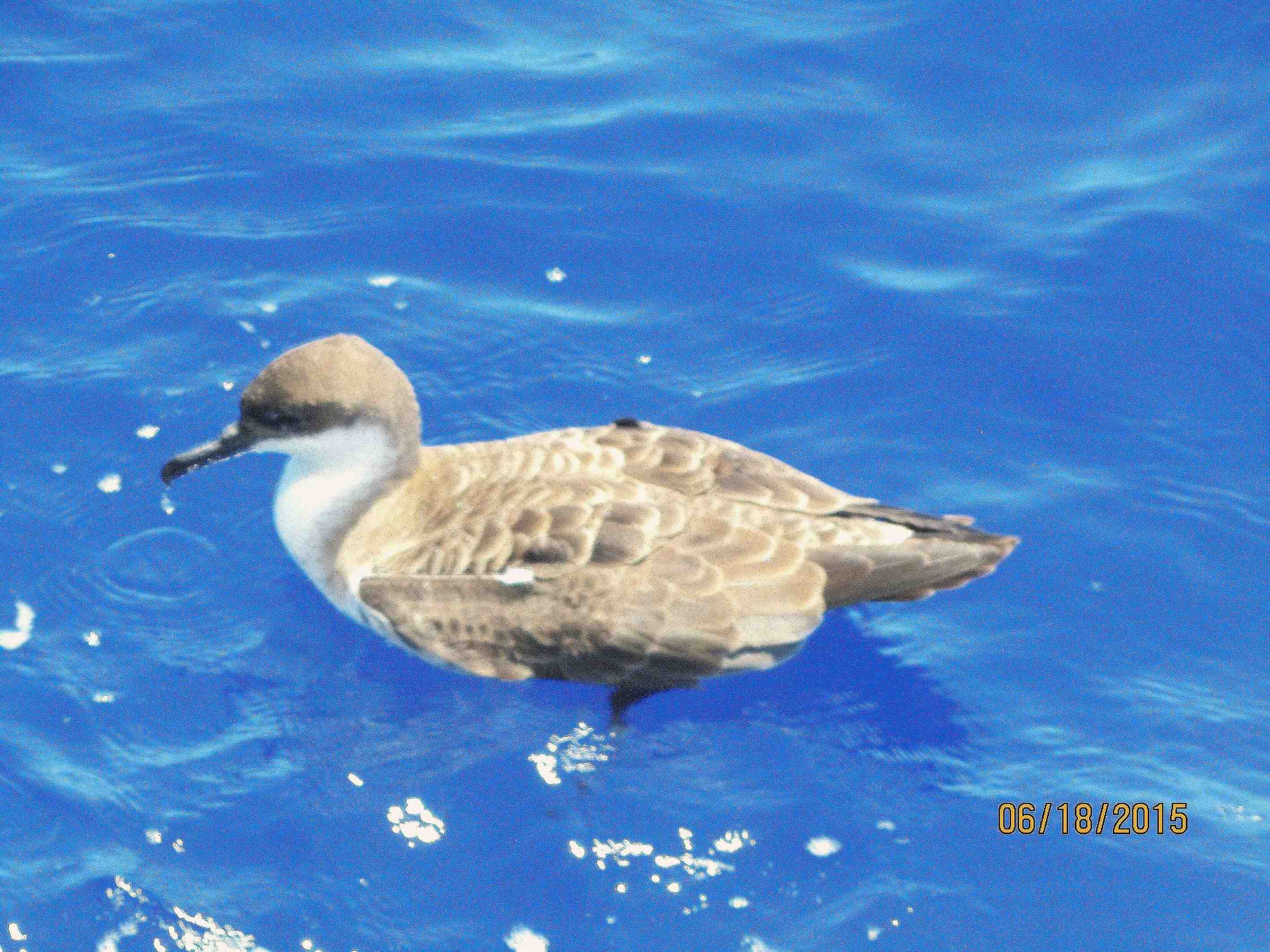
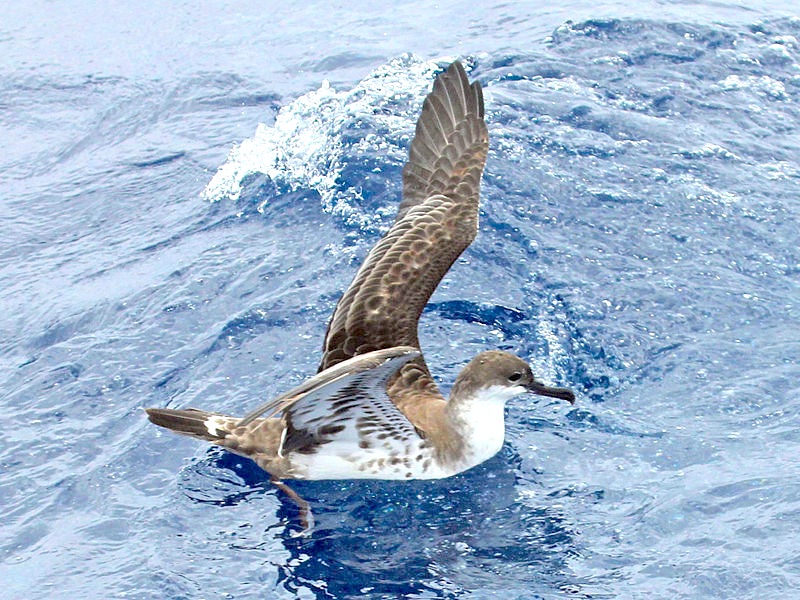
This was followed a couple of days later by evidence from well-known birding maestro Woody Bracey that living great shearwaters were in Abaco waters, perhaps confirming that they are in mid-migration at the moment. The one in #2 was “caught” 3 miles off Great Guana Cay.
Then a couple of days ago Jane Mantle emailed me with photos of some dead birds on the beach at Delphi saying that “half- dead birds are washing up on the beach ‘only for the vultures to finish off’. We must have over 20 with more to come”. I circulated these to the ‘usual suspects’ for ID and comment.
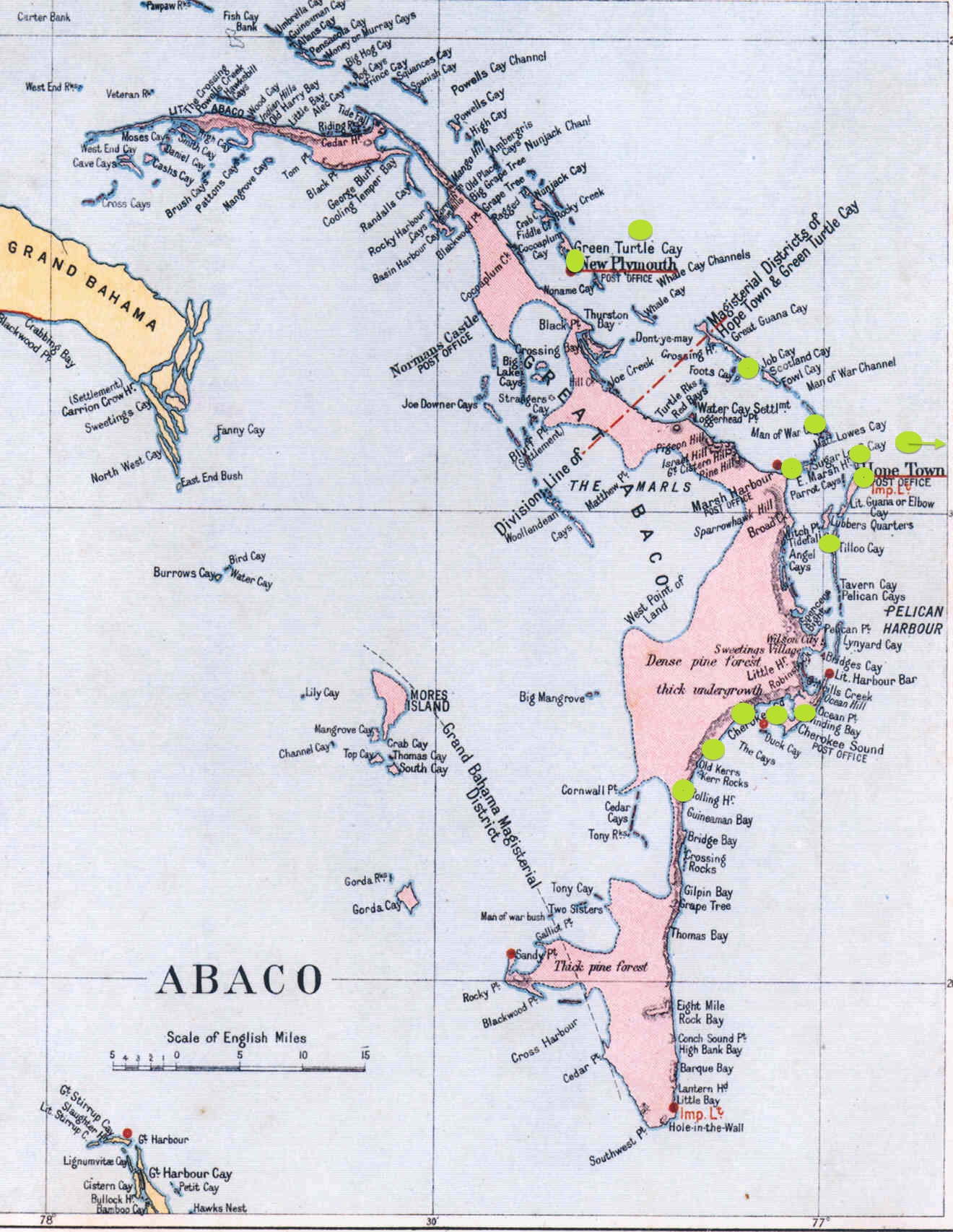
I also posted the photos on myRH FBto see if others had seen anything similar. Many thanks to all those who ‘liked’, shared or commented on the post. Here is a summary of the responses, from which a pretty clear picture emerges of widespread recent shearwater deaths on Abaco mainland and Cays.
Delphi Club Beach – 20 plus
Bahama Palm Shores – ‘many many’ dead birds washed up on the shore
Casuarina Beach – 1
Cherokee (Watching Bay) – 3 or 4
Cherokee (Winding Bay) – 4
Marsh Harbour area – about 5
Great Guana Cay, southern end – 1 (possibly a gull)
Tilloo Cay – 13 at least on Junk Beach, more than ever seen (see photos below)
Elbow Cay – 2 + 1 Atlantic side beach near Abaco Inn
Elbow Cay – 2, North End
Green Turtle Cay beach – 2
Green Turtle Cay, offshore – “a lot in the water”
Man-o-War Cay – 1 by the roadside
Ocean 20m from HT Lighthouse – 2 in the sea
also Exuma Sound (5 birds), Briland Beach Harbour Island (“some”) and Shroud Cay (gull?”)
SIGHTINGS MAP, ABACO AS AT 09.00 JUNE 25 (2X click to enlarge)
Shearwaters at Tilloo Cay (Janie Thompson)
Shearwaters on Elbow Cay (Rudolf Verspoor)
WHAT SORT OF SHEARWATERS ARE THESE?
In the main it looks and sounds as though these are migrating great shearwaters. Woody Bracey has identified several dead birds as ‘greats’ from photos, and one as an alive Cory’s shearwater swimming in the sea off the Delphi Beach. ID is not easy, and a few of the birds found may be gulls. It’s possible that there are some Audubon’s shearwaters among the stricken birds, although since they are resident to Abaco that would go against the theory of an exhausted migratory species that has been blown of course en masse.
WHAT DO THE EXPERTS THINK?
There are a few obvious contenders for the solution to the riddle of the shearwaters, ranging from the frontrunner migration exhaustion to disease and trash ingestion. The evidence of mass deaths over a wide geographical area during a short time probably rules out trash ingestion – although I’m sure the poor creatures must have plenty of plastic bits inside them. Mass disease striking suddenly over one area is seems unlikely. Once those two possibilities are ruled out, the primary cause, covering most instances of the sad and upsetting phenomenon, becomes clearer.
Lynn Gape of BNT posted the view of William Mackin, a seabird biologist who looked at some of the photos and wrote“The five birds look like greater shearwaters. They breed at Gough Island in the South Atlantic. The young begin life by flying 10000 miles to Newfoundland in the North Atlantic. Some do not make it. They wash up on eastern US and Bahamian beaches. It is sad. We should monitor the numbers. The frequency is variable but possibly increasing.”
Tony White, the omniscient Recorder of Bahamas Birds and compiler of the comprehensive and authoritative checklist for the area, writes:
“The dead birds on the beach (and in the water) is a phenomenon that happens every five to ten years. According to the late Dave Lee these are young Great Shearwaters migrating from their natal home in the South Atlantic to their feeding grounds off the US and Canada, Combination of poor food supply and wind conditions in the doldrums lead to their expending all their energy and expiring. It is a normal event for this species and has been recorded many times The Great Shearwater population appears to weather the bad years and do well in the good years. Relevant articles are: Lee, D.S. 2009. Mass die-offs of Greater Shearwater in the Western North Atlantic: Effects of weather patterns on mortality of a trans-equatorial migrant. Chat 73(2):37; Seabird Ecological Assessment Network. 2007. Greater Shearwater Die-off in the Atlantic: June-July 2007. Volunteer Newsletter 3(2):2; and Watson, George. 1970. A Shearwater Mortality on the Atlantic Coast. Atlantic Naturalist 25(2):75-80.
Woody Bracey has now left an informative and perceptive comment:“It’s amazing how far(10,000 miles) these young birds have to travel to their feeding grounds so soon after being fledged. Breeding colonies are on isolated subantarctic islands of the southern hemisphere. Breeding begins in October. Incubation of the single egg lasts 55 days and it is another 105 days until the chick is ready to fly. Each loss of a bird represents much time and effort of a pair to produce a single chick which then has to fly the gauntlet through the windless, often foodless doldrums to reach its northern feeding grounds. So many hazards, so few birds! It’s sad to witness these die-offs but the species still survives. Global warming cannot be helping this species on its journey to the colder, nutrient rich more northern briny destinatioin. Lets stop setting our dumps and forests on fire here in the Abacos. Eventually it will not only affect the Great Shearwaters but us as well”.
I should add that it is reassuring to be able to confirm that, at least at present, the great shearwater is IUCN-listed “Least Concern”
Tony has asked for all available information Bahamas-wide: “It would be very useful if someone could collect some hard data on the die-off, e.g. when was it first noted and how many birds are found along a given stretch of beach? Check for other species and take a few wings as samples of the desiccated birds. In past events the number of dead birds was much greater on Crooked and Acklin Islands than Abaco. Eleuthera too should be checked if possible”.
Lynn has also asked “Please photograph and count birds found on your beaches and send images and the number counted to me at lgape@bnt.bs. We will send on to William Mackin and Tony White who are keeping records of these occurrences The image with this post is a Greater Shearwater in flight…” (see above, as we would all like to think of these magnificent birds)
Or by all means contact me at rollingharbour.delphi@gmail.com and I’ll pass on any info
STOP PRESSAn update to this post written the following week, detailing new sightings and reporting the passing of a sad fortnight of shearwater fatalities in the Bahamas, can be foundHERE
A happier great shearwater image to leave you with…
Credits and thanks to Woody Bracey, Melissa Maura, Lynn Gape, Jane Mantle, William Mackin, Patrick Coin, J J Harrison, Dick Daniels, Norvell Slezycki, Lory Kenyon,Selah Vie, Lindsey Delaphine McCoy,Turtle Cove Tilloo, Janie Thompson, Rudolf Verspoor, Laurie Schreiner,Caroline Woodson Sawyer, Steph Russell, Ashley L. Albury, Dwayne Wallas, Sully Vincent T Sullivan, Ben Albury, Abaco Bulletin, Carol Rivard Roberts, Jason McIntosh, Dale Sawyer, Barbara Trimmer, Dominique Allen, Jessica Aitken and Juana Rudzki, with apologies to anyone else who has slipped through the net…

















































































 ROLLING HARBOUR ABACO
You must be logged in to post a comment.