Unknown's avatar

YELLOW WARBLERS ON ABACO


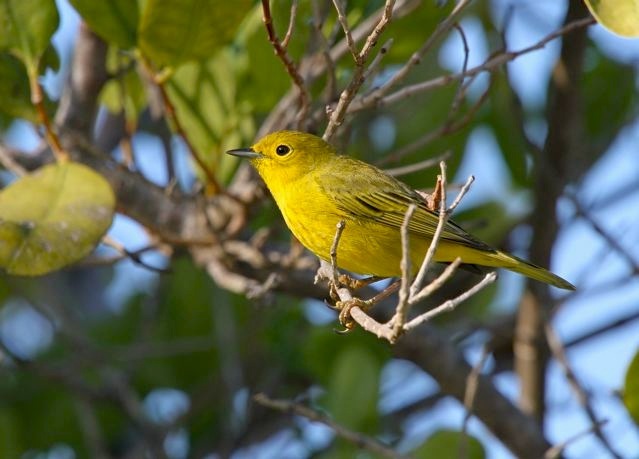
Yellow Warbler at sunrise. Abaco Bahamas.6.13.Tom Sheley copy

YELLOW WARBLERS ON ABACO

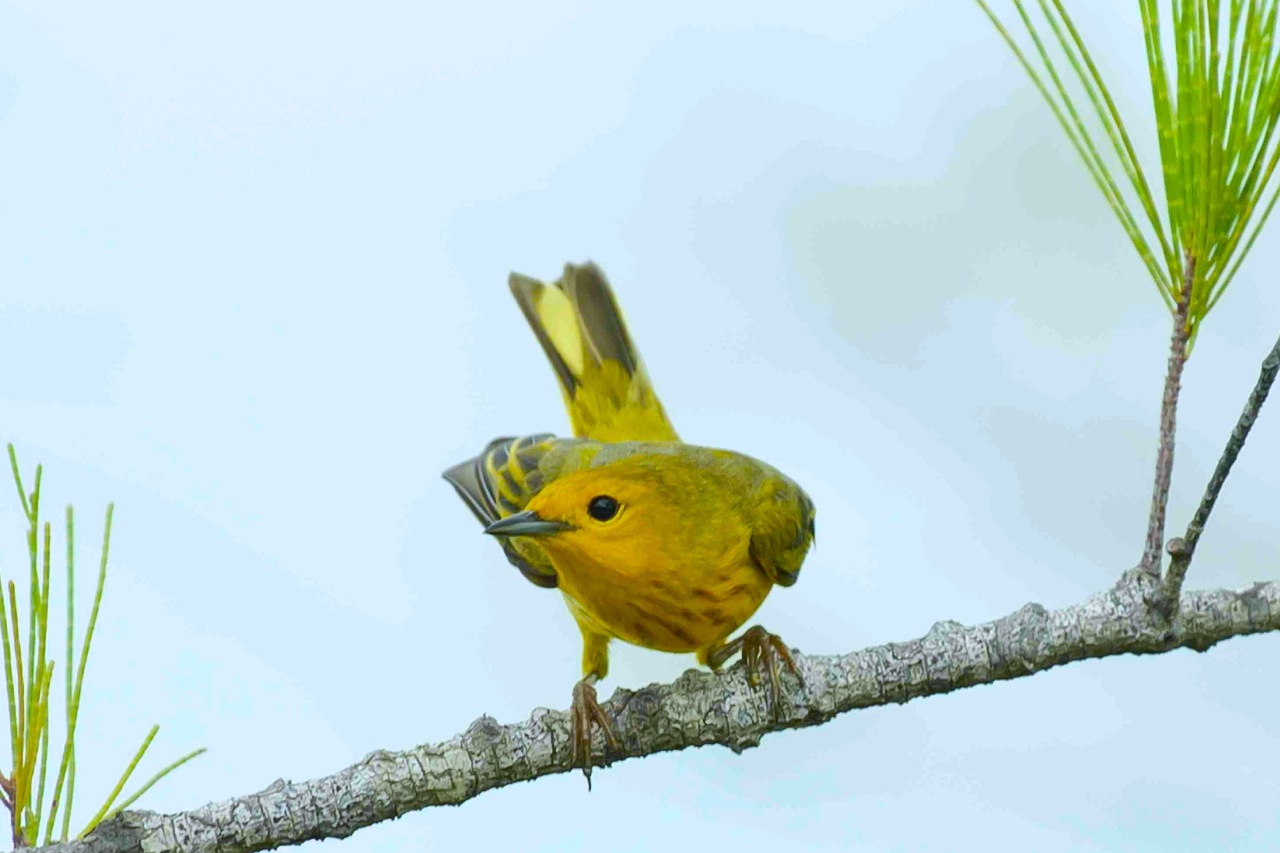
Of the 37 WARBLER SPECIES recorded for Abaco, 25 are mainly or partly yellow. So talk of a ‘yellow warbler’ can as easily be a general description matching any one of a number of species, as a particular description of the one and only Yellow Warbler Setophaga petechia. This small sunny bird is a common permanent resident on Abaco, one of only 5 resident warblers. The other 4 don’t help the situation much, by dint of all being yellow to a greater or lesser extent. 

Yellow Warbler male3.Abaco Bahamas.6.13.Tom SheleyDendroica-petechia-001 (MDF)

My general rule of thumb is that the Yellow Warbler out-yellows all the rest (though the winter-resident PROTHONOTARY gives it a run for its money), with the adult males bright and cheerful all over and the females rather less glaring but still demonstrably yellow from beak to tail tip.

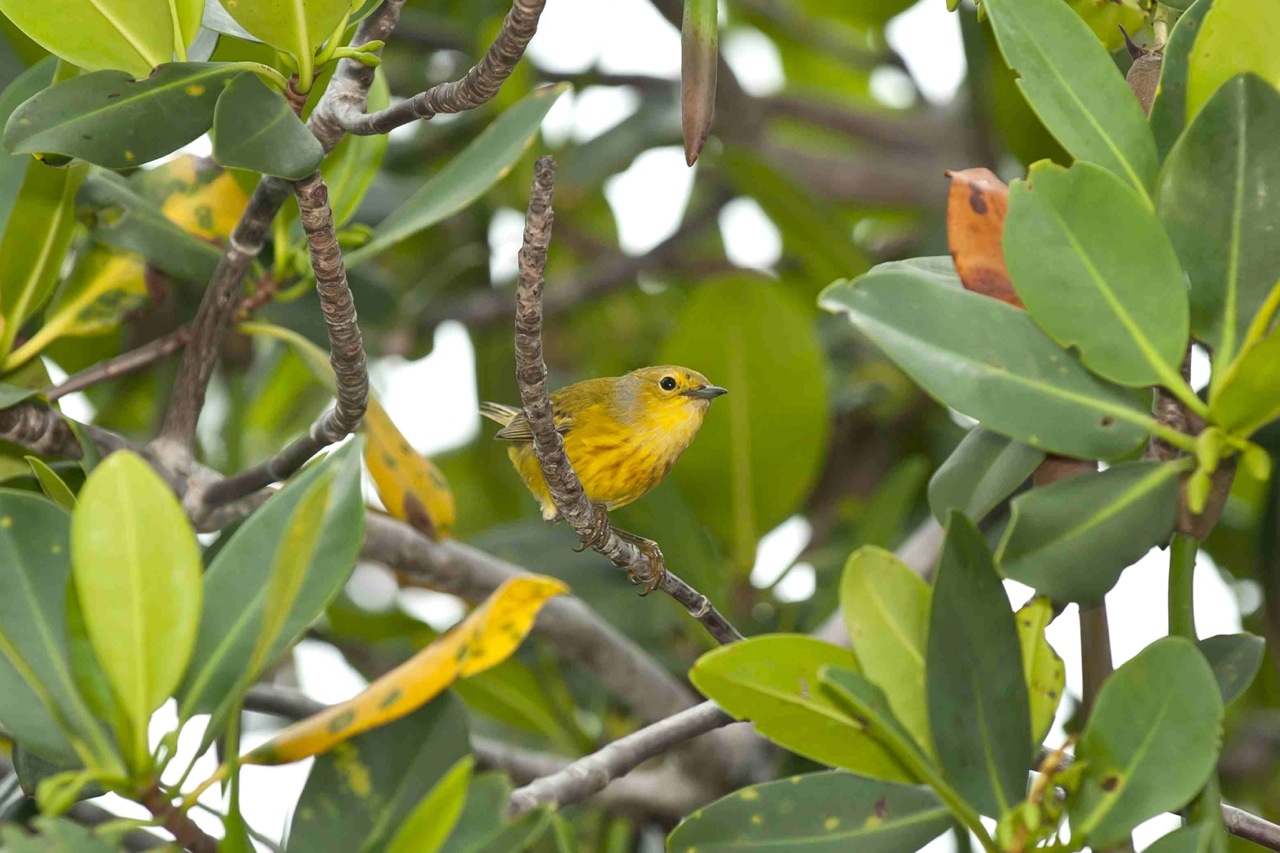
Yellow Warbler (f) Bruce Hallett

Q. ARE THEY ALWAYS EASY TO SEE? A. SEE BELOW, GO FIGUREYellow Warbler male.Cherokee Sound.Abaco Bahamas.Tom Sheley

Q. CAN YOU SHOW MORE PRETTY FEMALES? A. BY ALL MEANSYEWA_Bahamas-Great Abaco_5204_Yellow Warbler_Gerlinde Taurer copyYEWA 2_Bahamas-Great Abaco_5165_Yellow Warbler_Gerlinde Taurer copy

Q. SO YEWAs ARE COMMON? HAVE YOU EVER PHOTOGRAPHED ONE? A. ONLY HOPELESSLYYellow Warbler, Abaco (Keith Salvesen)

Q. DO THEY HAVE AN ATTITUDE PROBLEM? A. ONLY VERY RARELYYellow Warbler male2.Abaco Bahamas.6.13.Tom Sheley

A THREAT TO THE SPECIES Shiny Cowbirds, luckily still rare on Abaco, favour yellow warbler nests for their parasitic egg-laying, with sadly predictable results. These cowbirds properly belong in South America, but they are gradually spreading north through the Caribbean, and have now reached Florida. I’m beginning to take a (purely personal) hard line on invasive species where they diminish and destroy indigenous species: eradication. The feral peacocks of Casuarina, now several generations down the line from their original introduction as exotic pets, do no harm and are undeniably decorative. But would you prefer the pretty yellow warbler and its fledglings in your garden, or the shiny cowbird that displaced them?

240px-Dendroica_petechia_map.svg

Credits: Tom Sheley (1,2,5,9); MDF (3)Bruce Hallett (4); Gerlinde Taurer (6,7); RH (8)

And finally… the song that out-yellows all other songs with the word ‘yellow’ in the title – it is the only song called just that one word! 

    Yellow Warbler at sunrise.Abaco Bahamas.6.13.Tom Sheley copy copy                Yellow Warbler at sunrise.Abaco Bahamas.6.13.Tom Sheley copy copy                Yellow Warbler at sunrise.Abaco Bahamas.6.13.Tom Sheley copy copy                Yellow Warbler at sunrise.Abaco Bahamas.6.13.Tom Sheley copy copy                Yellow Warbler at sunrise.Abaco Bahamas.6.13.Tom Sheley copy copy

Unknown's avatar

COMMON GROUND DOVE (‘TOBACCO DOVE’) ON ABACO


Common Ground Dove, Abaco (Tom Reed)

COMMON GROUND DOVE (‘TOBACCO DOVE’) ON ABACO

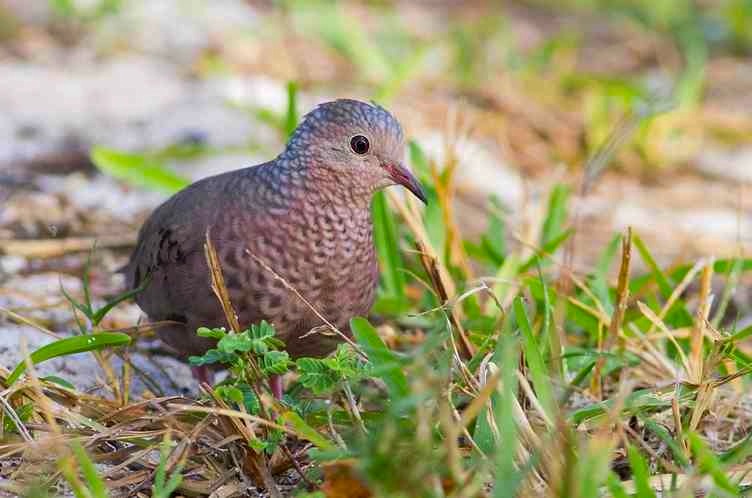
These small birds Columbina passerina are also known as tobacco doves. Although they sometimes perch in the branches of trees, you are more likely to encounter them on the ground, where they forage for seeds, fruit, and insects. Common Ground Dove, Abaco 1 (Tom Sheley)

They will often fly in front of a person or vehicle in short fluttering stages, keeping out of reach but never going too far ahead.When they fly, their undersides flash reddish-brown (sometimes described as chestnut) – hence (I presume) the tobacco dove name.

Common Ground Dove, Abaco 2 (Tom Sheley)

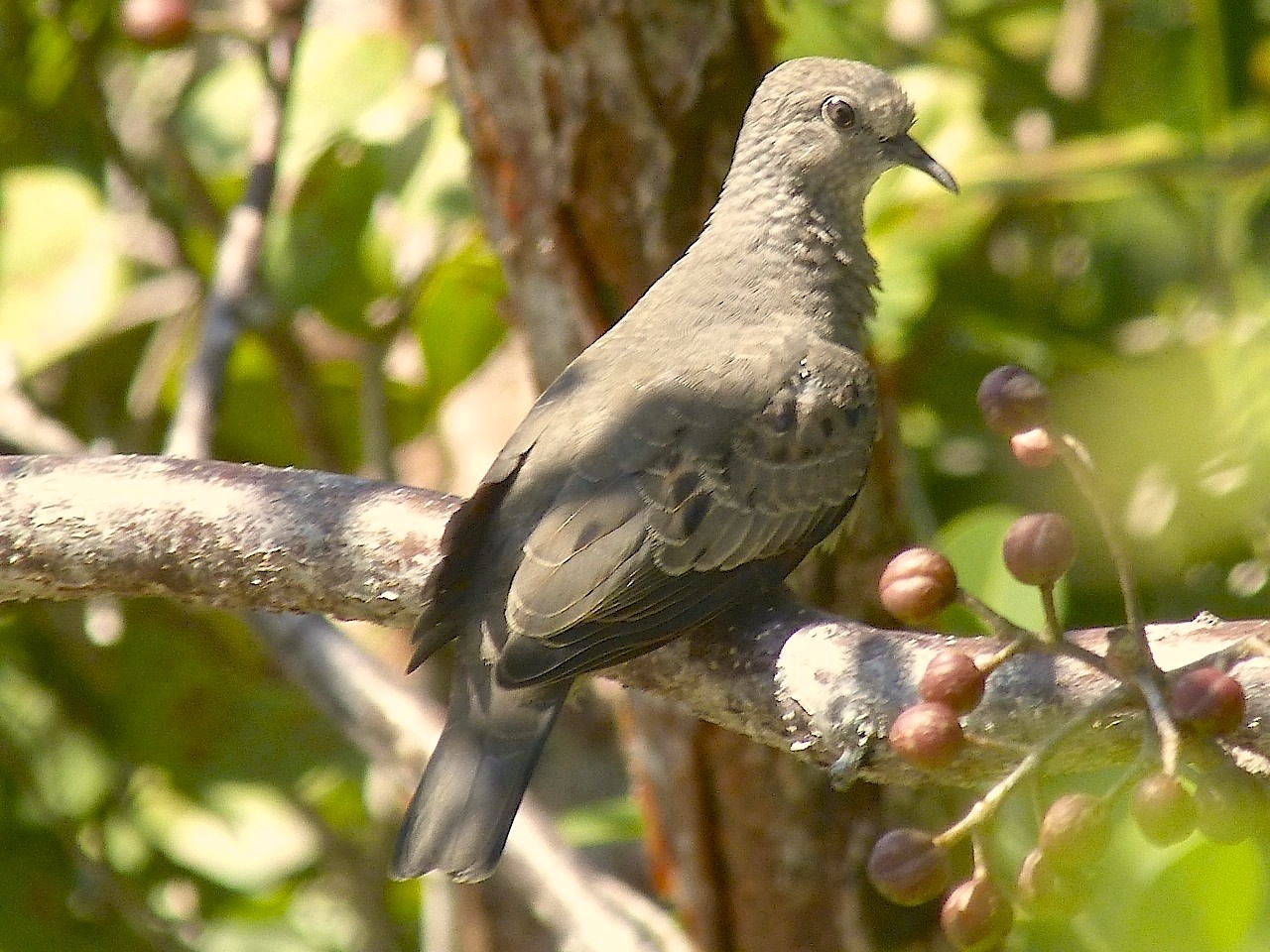
The common ground dove is one of the world’s smallest doves – roughly 6 inches long. Its beak has a black tip, and its feathers have a pinkish tinge. The feathers on the head and the breast look rather like scales. Females are similar to males but tend to be greyer.

Common Ground Dove, Abaco (Nina Henry)

Common ground doves mate with their partner for life, and a pair may have 2 or even 3 broods a year. Both parents feed the young birds until they are ready to feed themselves. Rather amazingly, hatchlings can fledge in 11 days. 

Common Ground Dove, Abaco 3 (Nina Henry)

Here’s the sound to listen out for, a (frankly) rather monotonous and subdued little ‘whoop’.

 Andrew Spenser / Xeno Canto

Common Ground Dove, Abaco 2 (Nina Henry)

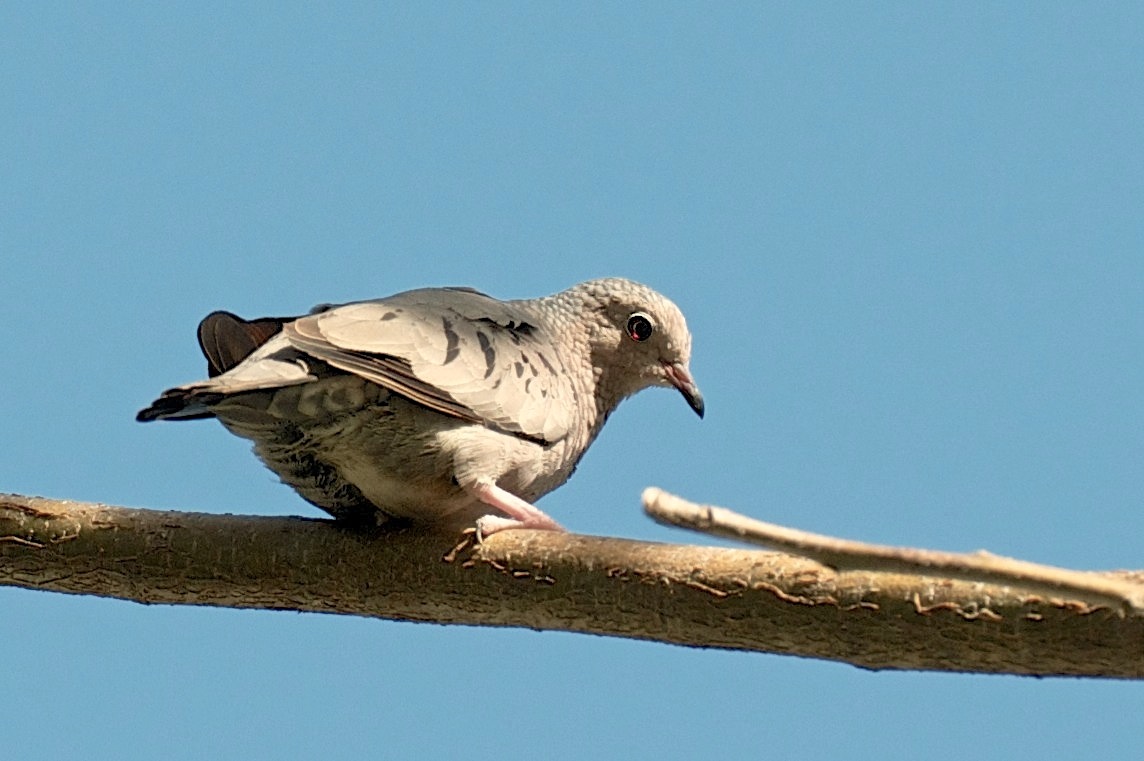
My own attempts to photograph a CGD satisfactorily have been rather feeble. I have taken plenty of photos of them on the ground, but nothing memorable, let alone useable. However the one below surprised me by flying onto a branch quite near me, and I had time to squeeze the trigger before it flew off again. Far from perfect compared with others on this page, but I’m not going to let that little detail prevent me from showing it… Common Ground Dove, Abaco (Keith Salvesen)

 Photo Credits: Tom Reed (1), Tom Sheley (2, 3), Nina Henry (4, 5, 6), RH (7); Audio – Andrew Spenser / Xeno Canto

Unknown's avatar

WHAT’S IN A NAME? COMMON GALLINULE aka MOORHEN


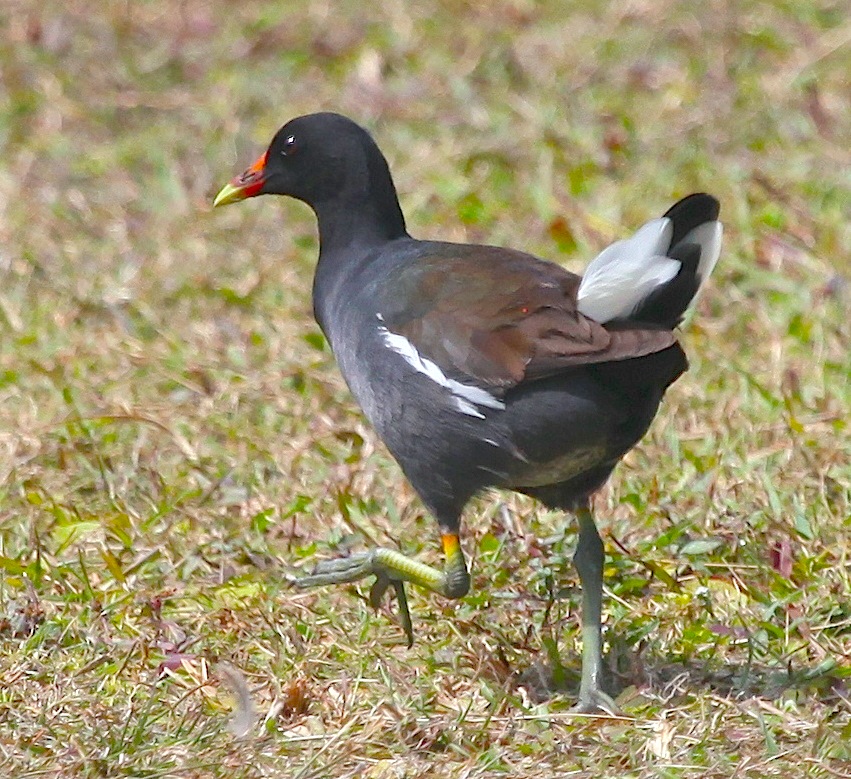
Common Gallinule.Abaco Bahamas.6.13.Tom Sheley

WHAT’S IN A NAME? COMMON GALLINULE aka MOORHEN

Names can be a hassle. My own, when not my alter ego Rolling Harbour (from a long line of Harbours), was a act of Baptismal Folly for which I cannot be held responsible. I could have changed it by Deed Poll were I seriously bothered, but I am aware that there are far worse names out there and at least mine reflects my scandi-scottish origins I suppose.

Common Gallinule, Abaco - Bruce Hallett

The Moorhen has had a far worse time of it. Over many decades its name has been changed, changed back and changed again. Partly it’s to do with a continuing debate over the New World and Old World subspecies – or as it now stands, separate species. Even that status has changed around over time. It’s enough to give the poor creature an ID crisis.

Bahamas-Great Abaco_7551_Common Gallinule_Gerlinde Taurer copy

The Common Gallinule Gallinula galeata, as it has been known since 2011, is a bird of the rail family. The AOU decreed its divorce from the Common Moorhen after due consideration of the evidence and it is now lumbered with the less familiar and user-friendly Gallinule name.

Common Gallinule, Abaco - Peter Mantle

Note the yellow legs and large feet (unwebbed)

Moorhens (I’m using this as a comfortable nickname, aware that I am flying in the face of progress) are usually seen swimming serenely around ponds or picking their way through marshy ground as they forage. They have an aggressive side, hissing loudly if they feel threatened and fighting to preserve their territory or nest. Nestlings have been observed clinging to a parent as it flies to safety with its offspring as passengers.

Bahamas-Great Abaco_7536_Common Gallinule_Gerlinde Taurer copy

WHAT IS A ‘GALLINULE’ WHEN IT’S AT HOME

I wondered what the word ‘Gallinule’ actually means? What is the derivation? The BINOMIAL NOMENCLATURE (basically = scientific name in Latin) of most species is largely unintelligible unless you have some knowledge of Latin. But most birds end up with a useful, often descriptive, everyday name. Red-tailed Hawk. Least Tern. Yellow Warbler. Painted Bunting. You know what to expect with those. But a ‘Gallinule’ could as easily be a french cooking receptacle or delicious dish. Or a grim and slimy horror from Tolkien. Or maybe something / someone out of Harry Potter. Sleuthing online reveals that the word is a modern Latin construct of the c18, derived from the Latin diminutive word for a ‘hen’. So it’s simply a hen. As in Moorhen.

Common Gallinule, Abaco Woody Bracey

WHAT IS A ‘MOOR’ WHEN IT’S ATTACHED TO A HEN?

This does not refer to a wide swathe of open upland country, often covered in heather and gorse, where in the UK (especially in Scotland) every August 12 thousands of grouse are traditionally shot. It stems from an honest Old English word for a marshy or swampy area, Mor. It was used from early mediaeval times and itself comes from Saxon and Germanic roots. So perhaps calling the Common Gallinule a [Common] Marsh Hen would be more helpful… Or – hey! – why not have American Moorhen and Eurasian Moorhen, a perfectly valid differentiation used quite satisfactorily for other species…?

Common Gallinule (nonbreeding adult).Abaco Bahamas.2.12.Tom Sheley

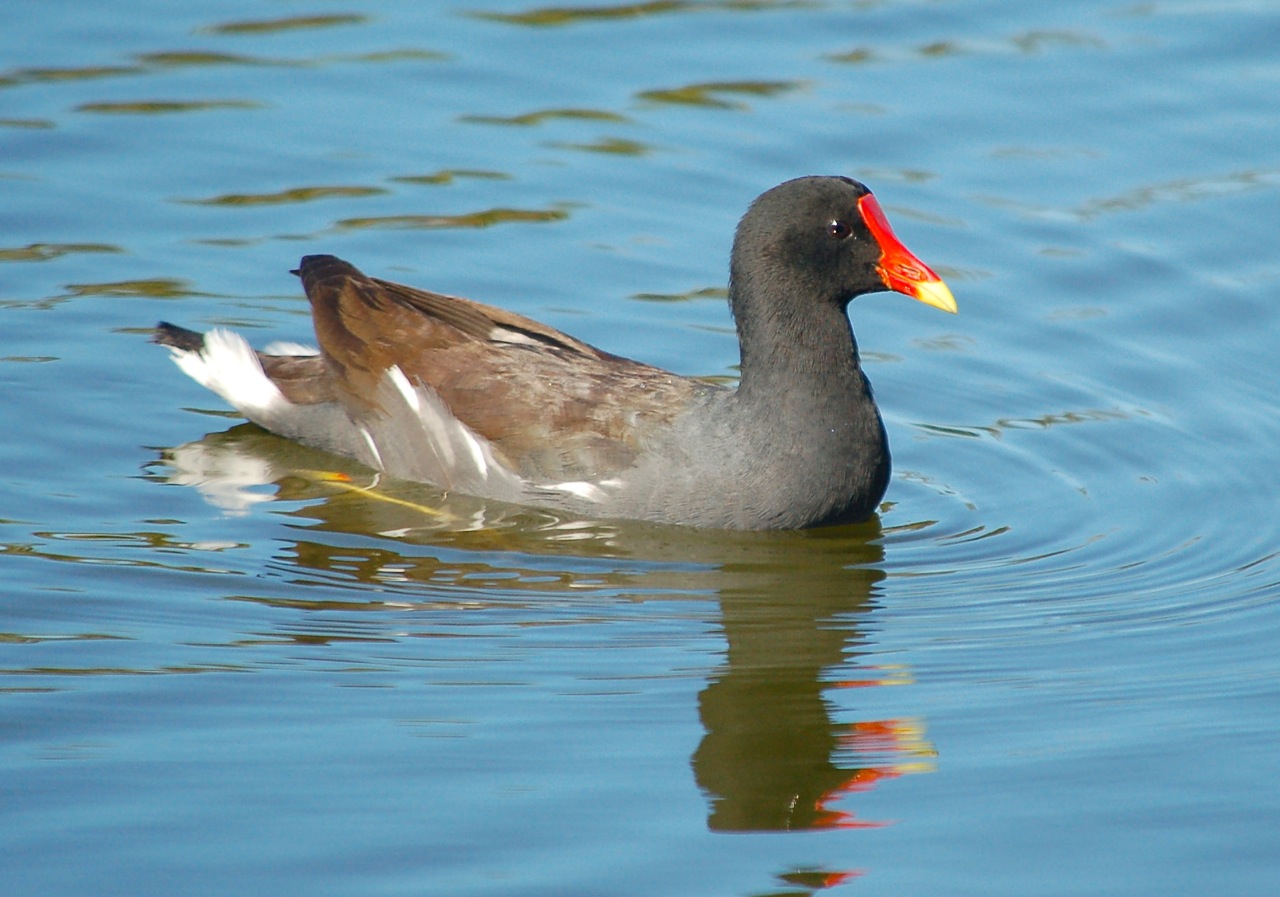
Adult non-breeding plumage

There’s more on the naming of birds generally and Moorhens specifically in a couple of amusingly-written sources I came across. The first is from NEMESIS BIRD written by Alex Lamoreaux in 2011, called Goodbye Moorhen, Hello Gallinule. The second is from the excellent 10000BIRDS.COM entitled Moorhen Mania – the splitting and renaming of the Common Moorhen

Common Gallinule (Leucistic?) - Tony Hepburn

The bird above with a striking colouring and orange beak was photographed by the late Tony Hepburn. He believed it to be an unusual LEUCISTIC moorhen with reduced pigmentation, a condition that has similarities with ALBINISM

BAHAMAS - Common Gallinule, Abaco, TC GC Hole 11 - Becky Marvil

At some stage I am planning a companion Coot post. I won’t need to go on and on about that name. It may not be descriptive but it is short and simple, and everyone knows where they stand with it. Until they decide to rename it a Cotellinule…

Gallinule © Hans Hillewaert

Credits: Tom Sheley, Bruce Hallett, Peter Mantle, Gerlinde Taurer, Woody Bracey, Tony Hepburn, Becky Marvil, Hans Hillewaert, Nemesis Bird, 10000birds.com

     common-gallinule     common-gallinule     common-gallinule     common-gallinule     common-gallinule     common-gallinule

Unknown's avatar

‘SEXING THE HUMMER’: A GENDER GUIDE TO ABACO’S HUMMINGBIRDS


Cuban Emerald (male) Abaco - Becky Marvil

Cuban Emerald (male) Abaco – Becky Marvil

 ‘SEXING THE HUMMER’: A GENDER GUIDE TO ABACO’S HUMMINGBIRDS

The subject matter of this post is not as indelicate as the title might imply; nor is it a ‘hands-on’ practical guide for intimate examinations of tiny birds. In particular it does not publicise some recently discovered louche activity involving unfeasibly large motor vehicles. It’s all about plumage. In my thin disguise as a person with apparent knowledge about the wildlife of a country that is not my own, I get frequent requests for bird ID. Some, I know at once. Some I have to think about, my memory not being quite as…

Where was I? Yes, bird ID. I use BRUCE HALLETT’S book of course, and online the CORNELL LAB and AUDUBON sites. OISEUX-BIRDS is also a good resource and has a large archive of images. And of course dear old Google – they may watch your every keystroke and know more about you than you do yourself, but put a bird’s name into Google Images and you’ll probably see your bird in every static pose or flight you need for ID. They’ll log that too for future use. I have had some queries about Bahama Woodstar gender ID, and more recently, Cuban Emeralds. So here are the adult males and females of each species in all their undoubted glory…

BAHAMA WOODSTAR (Calliphlox evelynae)

Bahama Woodstar (m), Abaco (Bruce Hallett)

Bahama Woodstar (male), Abaco (Bruce Hallett)

Bahama Woodstar male, Abaco Bahamas (Tom Sheley)

Bahama Woodstar male, Abaco Bahamas (Tom Sheley)

Bahama Woodstar, Delphi Club, Abaco (Keith Salvesen)

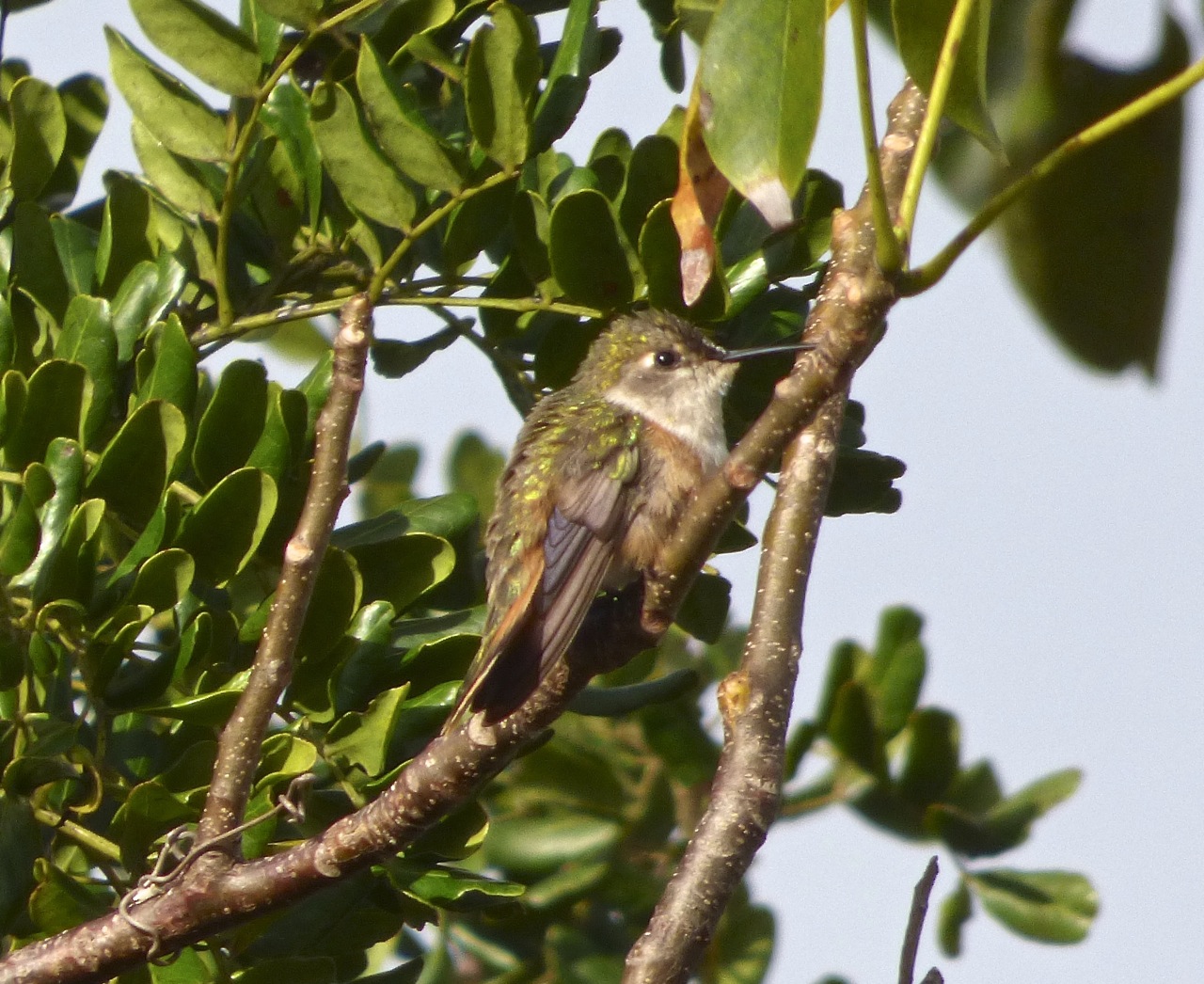
Bahama Woodstar (female), Delphi Club, Abaco (Keith Salvesen)

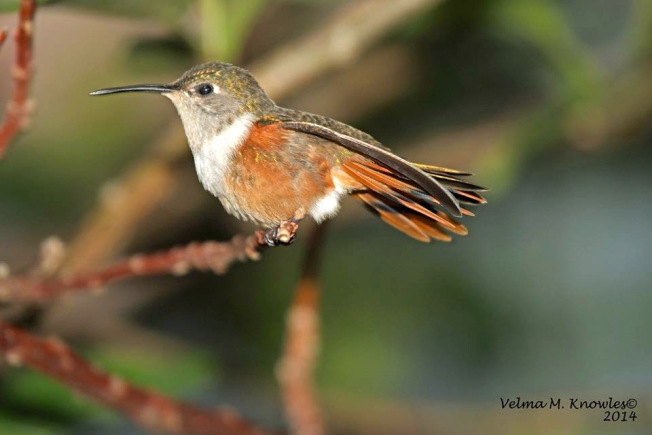
Bahama Woodstar (female), Abaco (Velma Knowles)

Bahama Woodstar (female), Abaco (Velma Knowles)

Bahama Woodstar (female), Bahama Palm Shores, Abaco  (Tara Lavallee)

Bahama Woodstar (female), Bahama Palm Shores, Abaco (Tara Lavallee)

 WOODSTAR ID MADE EASY

Males have a glorious purple, showy ‘gorget’. Females are less flamboyant, and have grey throats and fronts. Tara’s wonderful photo above vividly demonstrates their more delicate beauty. It’s one of my personal favourites from “BIRDS OF ABACO“, along with Tom Sheley’s above, the bird that graces the jacket. 

 CUBAN EMERALD (Chlorostilbon ricordii)

Cuban Emerald (male), Delphi Club, Abaco (Keith Salvesen)

Cuban Emerald (male), Delphi Club, Abaco (Keith Salvesen)

Cuban Emerald (male), Abaco (Erik Gauger)

Cuban Emerald (male), Abaco (Erik Gauger)

Cuban Emerald (female), Delphi Club, Abaco (Keith Salvesen)

Cuban Emerald (female), Delphi Club, Abaco (Keith Salvesen)

Cuban Emerald (female) Gilpin Point, Abaco (Keith Salvesen)

Cuban Emerald (female) Gilpin Point, Abaco (Keith Salvesen)

EMERALD ID MADE EASY

Male emeralds are basically… er… emerald green all over , apart from the wings. Females have grey throats and fronts, and lack the chestnut frontal band of the female woodstar. I’d say that their iridescent green is a different metallic shade from the male, but that may be just me. I don’t have the palette vocab to describe it, but advice welcome! Perhaps one can simply say it is more subtle.

SO IT’S JUST THE TWO HUMMERS ON ABACO, IS IT?

The answer is ‘No’. But don’t make a special trip to see the third species – they are casual / irregular vagrants only, and a definite sighting will be a rarity. But just in case, here are stock photos of a male and a female, and (taken on Abaco by Bruce Hallett) an immature male of the species…

RUBY-THROATED HUMMINGBIRD

MaleRuby-throated hummer (Steve Maslowski, Wiki)

FemaleRuby-throated Hummingbird (Tim Ross Wiki)

Ruby-throated Hummingbird (male, immature)

Ruby-throated Hummingbird (male, imm), Abaco (Bruce Hallett)

Ruby-throated Hummingbird (male, imm), Abaco (Bruce Hallett)

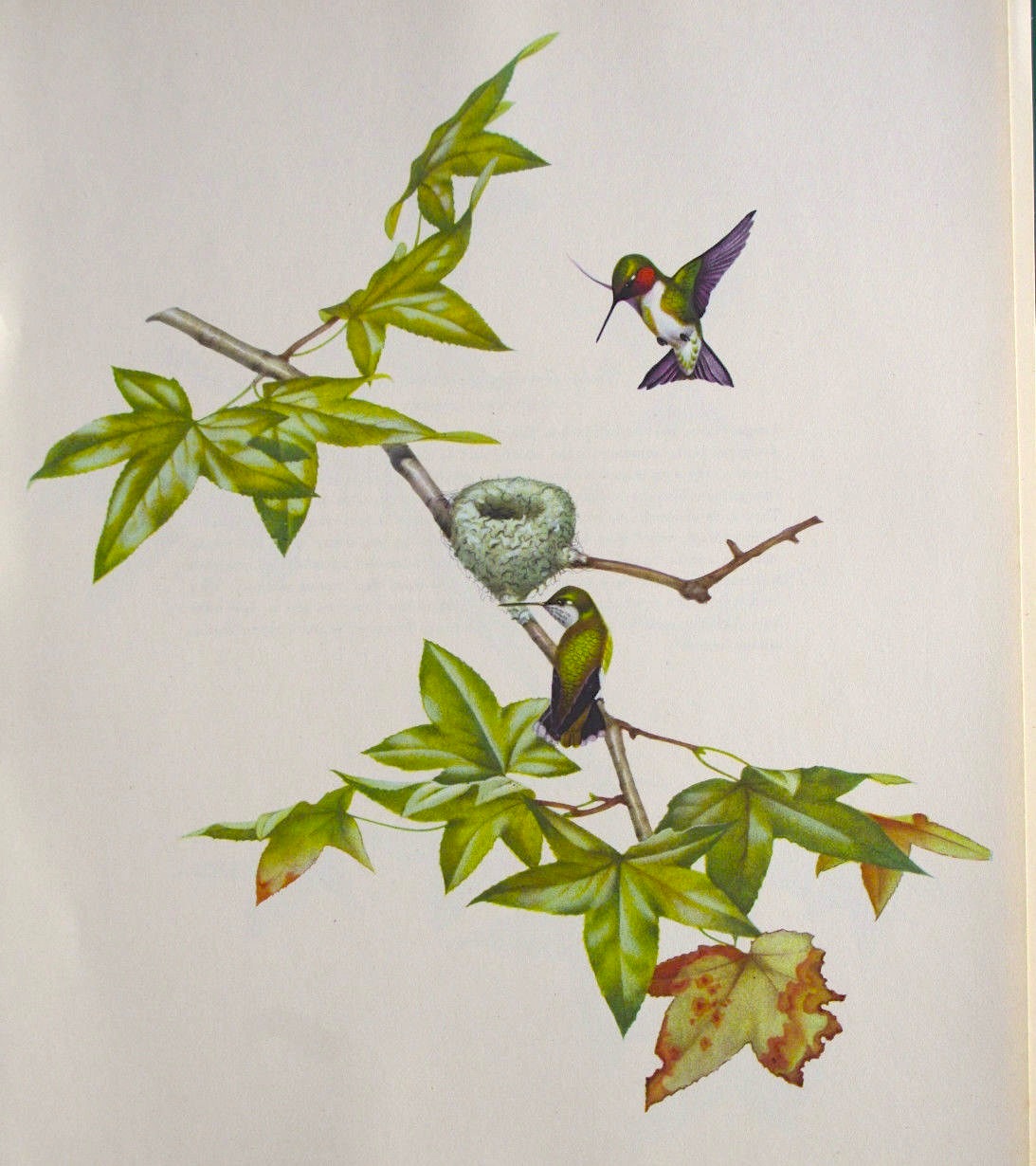
This is an attractive print of the R-tH by MenaboniRuby-throated Hummingbird - Menaboni

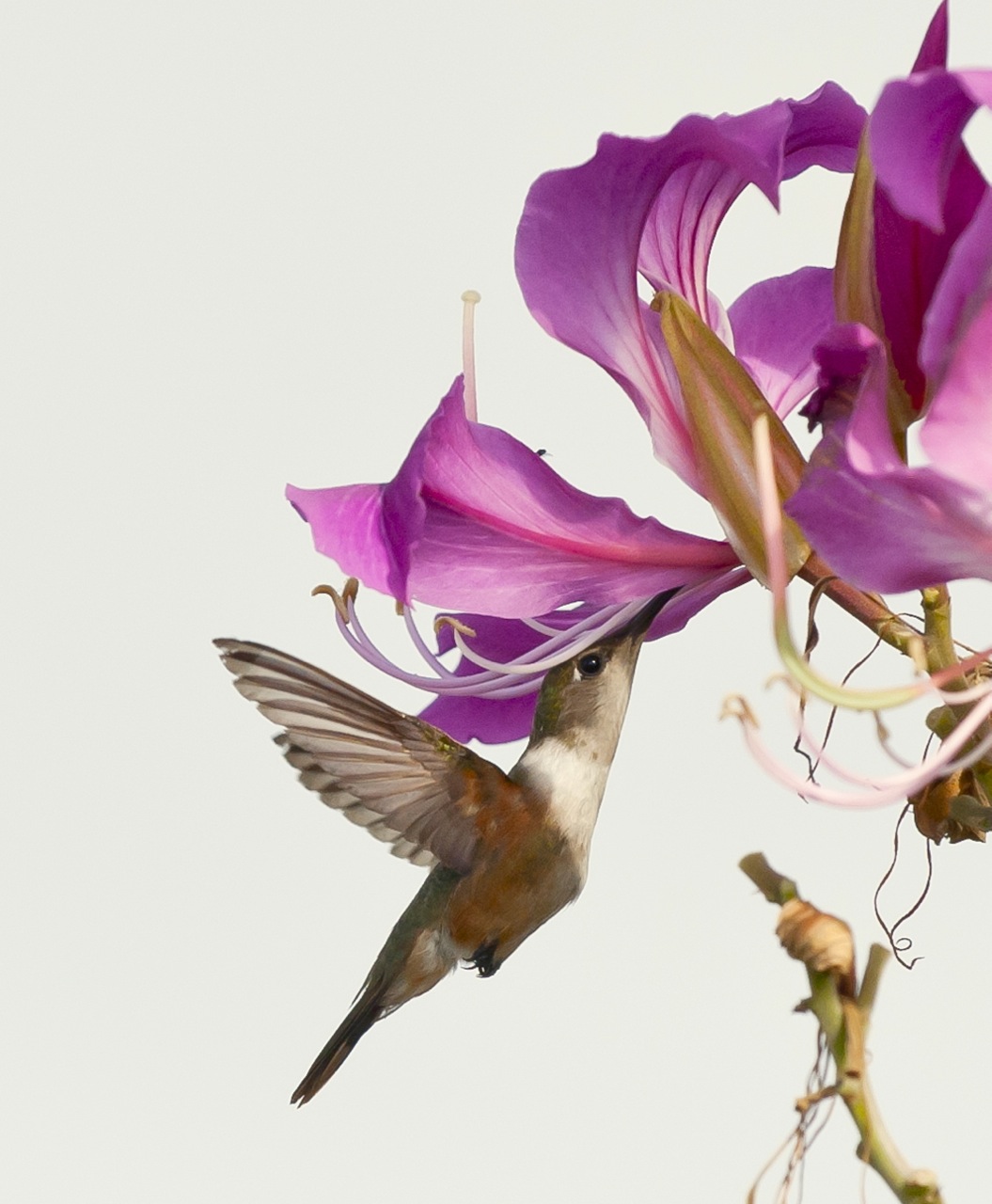
To complete this post, I’ll add a brilliant Woodstar photo taken by Tom Sheley, birdman and generous fishing partner, that I reckon spans the boundary between photography and art. 

Bahama Woodstar female.Abaco Bahamas.Tom Sheley

Bahama Woodstar female.Abaco Bahamas.Tom Sheley

Credits: In addition to those shown below images, Steve Maslowski and Tim Ross for the RTHs

Unknown's avatar

SANDERLING ON ABACO: A PERFECT PEEP FOR THE NEW YEAR


Sanderling Pair, Abaco (Craig Nash)

SANDERLING ON ABACO: A PERFECT PEEP FOR THE NEW YEAR

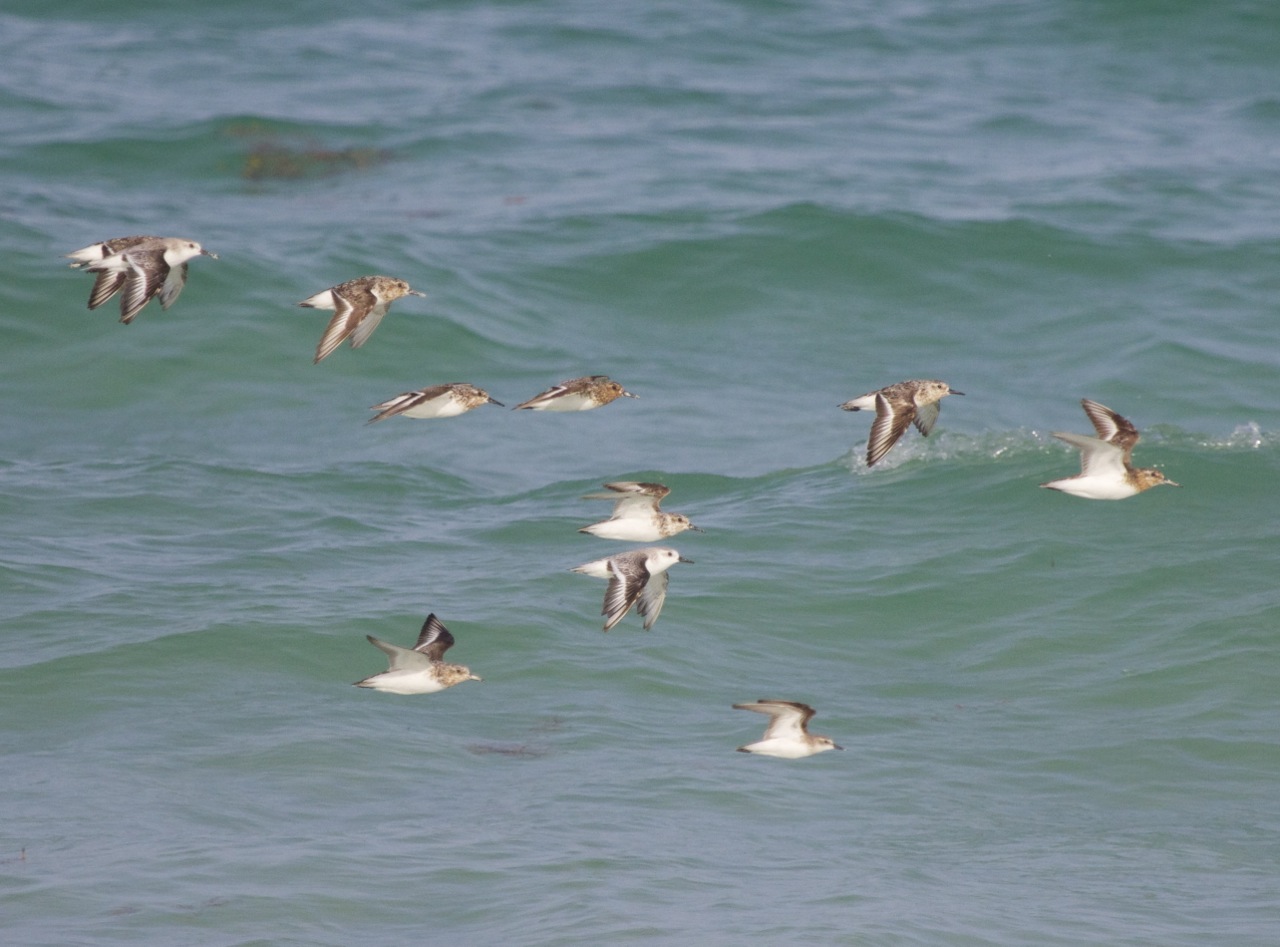
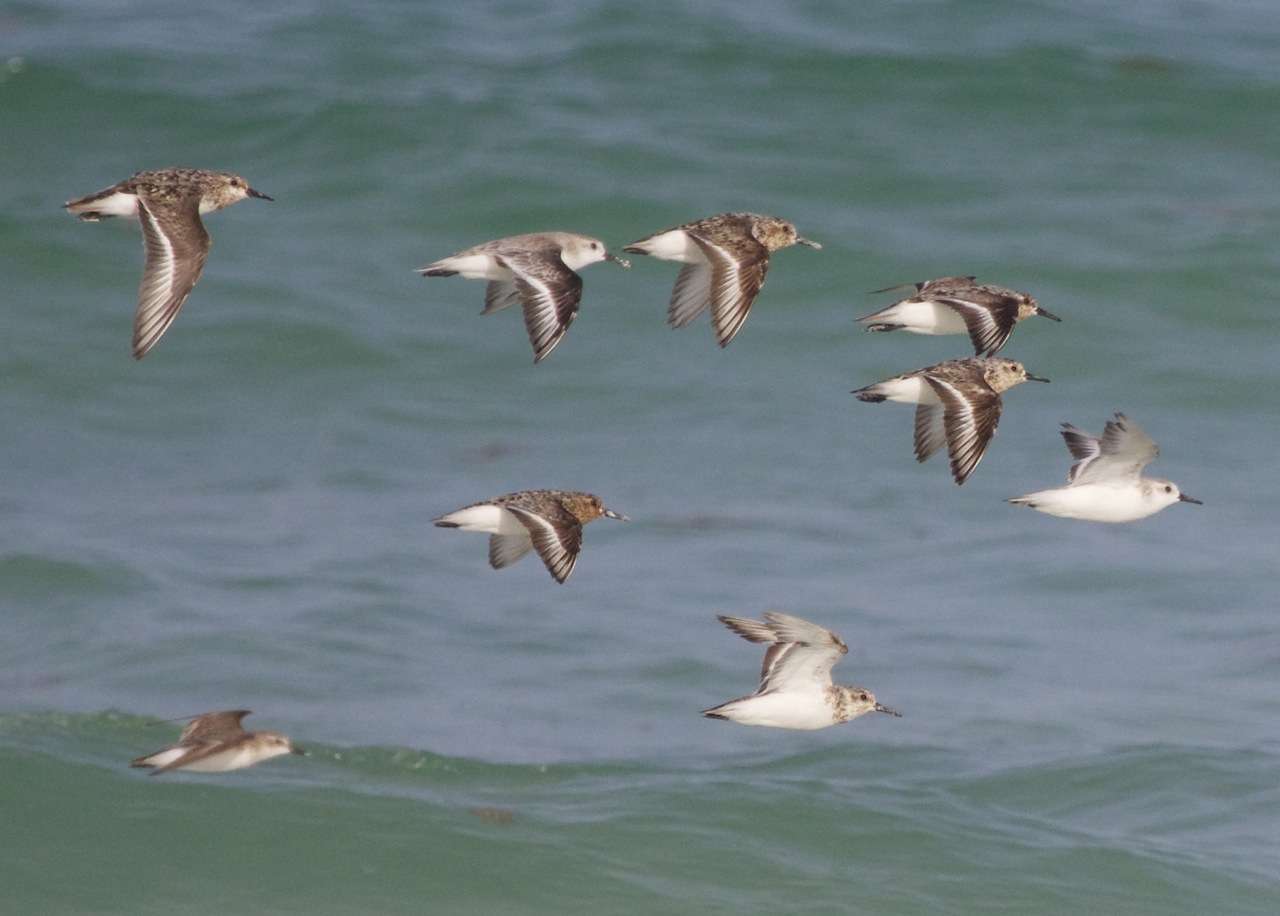
Various matters have kept me from the Blogosphere over the last week, so this is the first post for 2015. And what gorgeous little birds to have to hand for it – the Sanderling Calidris alba, a small sandpiper or ‘stint’ that is a common and welcome winter sight on the shorelines of Abaco, as in many other parts of the world. Who can resist these little guys, the ‘wave chasers’ that work along the shoreline, rapidly following the surf as food is exposed on the tide. Sometimes they will actually run into the ripples of an incoming wave to snap up a morsel of food, before scuttling back up the beach. They have been likened to clockwork toys. Amusing and cheering little birds to watch, so here is a gallery of them to enjoy and to welcome in the new year.

Sanderling in the Surf, Abaco (Craig Nash)Sanderling, Abaco (Craig Nash)  Sanderling, Abaco (Alex Hughes)1Classic Sanderling foraging area in the wet sand left by the retreating tideSanderling, Abaco (Alex Hughes)4The birds are small and fly fast: a clear ‘in-flight’ photo is a great achievementSanderling, Abaco (Alex Hughes)2 Sanderling, Abaco (Alex Hughes)3 Sanderling.Abaco Bahamas.Tom Sheley1 Sanderling.Abaco Bahamas.Tom Sheley2

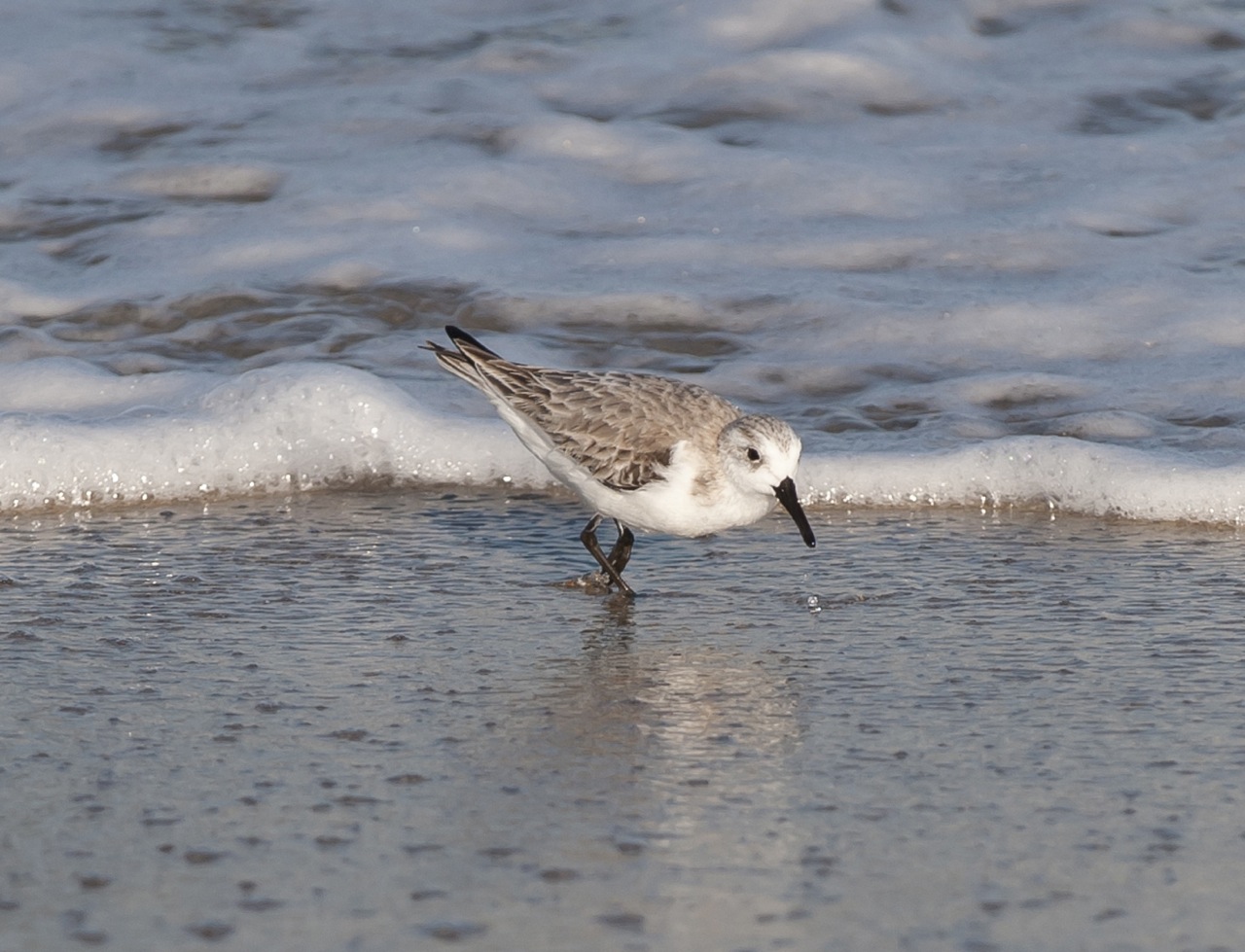
This sandpiper was taken by the late Tony Hepburn on Abaco. It has been ringed in its summer breeding grounds, and feeds in wave-softened sand with the tidal foam still visible all around it.Sanderling, Abaco (Tony Hepburn) copy

This made me chortle… Sanderling Lonelyheart!photo

Credits: Craig Nash (1 – 3); Alex Hughes (4 – 7); Tom Sheley (8 – 9); Tony Hepburn (10)

Unknown's avatar

COLOURFUL BUNTING FOR CHRISTMAS ON ABACO


imagesimagesimagesimages

Painted Bunting, Abaco (Erik Gauger)

COLOURFUL BUNTING FOR CHRISTMAS ON ABACO

BUNTING  /ˈbʌntɪŋ/  (Noun)
[Yay! A Christmas gift of a puntastic avian / festive double-meaning]
  1. A small New World songbird of the cardinal subfamily
  2. Flags and other colourful festive decorations

imagesimagesimages

PAINTED BUNTINGPainted Bunting, Abaco Tara Lavallee

It’s hard to imagine a more Christmasy little bird than the Painted Bunting. Bright blue, red, green primary colours make for a spectacular small bird to grace any garden or feeder. The 2 birds above were featured in a detailed post on the species several months ago, with plenty of other great photos, HERE But there are other bunting species and close relations on Abaco that haven’t yet had a look-in on these pages. A common factor is the little fat beak and a great liking for seeds…

images

INDIGO BUNTINGIndigo Bunting.BPS.Abaco Bahamas.Tom Sheley

Indigo Bunting male with 2 females going for the seeds, Bahama Palm ShoresIndigo Bunting, BPS, Abaco Ann Capling

images

ROSE-BREASTED GROSBEAKRose-breasted Grosbeak PMRose-breasted Grosbeak, Delphi, Abaco (Caroline Stahala)

images

SUMMER TANAGERSummer Tanager (m), Abaco Bruce Hallett

images

SCARLET TANAGERScarlet Tanager, Abaco Woody Bracey

The birds above are all buntings or part of the wider bunting family. The definition is somewhat flexible and includes piranga and tanager species (and in the past the Western Spindalis, formerly the Stripe-headed Tanager). All were photographed on Abaco, mostly at the Delphi Club or Bahama Palm Shores. The photos below are a flagrant cheat. You’ll never see one of these on Abaco. They were taken by me a couple of years back in Central Park, NYC, made magic with snow and freezing air. Have a very happy and colourful Christmas!

images

NORTHERN CARDINALRed Cardinal CP NYC 2Red Cardinal CP NYC 3

Credits: Erik Gauger, Tara Lavallee, Tom Sheley, Ann Capling, Caroline Stahala, Bruce Hallett, Woody Bracey, RH

imagesimagesimagesimages

Unknown's avatar

OVENBIRDS FOR CHRISTMAS ON ABACO (NB NOT ROAST TURKEY)


Ovenbird.Abaco Bahamas.Tom Sheley.2

OVENBIRDS FOR CHRISTMAS ON ABACO (NB NOT ROAST TURKEY)

The Ovenbird (Seiurus aurocapilla) is a small winter-resident warbler with distinctive orange head feathers that can be raised into a crest.  I’m guessing this accomplishment is mainly used in the breeding season as a way to impress and attract a mate. Maybe when alarmed or excited at other times as well. Right now, with Christmas only ’12 sleeps’ away, they have become a visible presence on Abaco and the Cays despite their shyness and a general tendency to shuffle around in the undergrowth looking for insects and small snails. Ovenbird.Delphi Club.Abaco Bahamas.Tom Sheley.1

You may hardly be aware of these rather unassuming little birds, and as they rootle their way through the dead leaves under shrubs they can look quite dull. See one lit up by the morning sun, however, and you’ll see how pretty and richly marked they are.

Ovenbird, Abaco  Woody Bracey

The Ovenbird enjoys the taxonomic distinction of being the only bird of its genus in the warbler family Parulidae. It is a so-called ‘monotypic’ species. It was formerly lumped in with Waterthrushes, but was found to be genetically dissimilar so its new status was granted. 

Ovenbird.Bahama Palm Shores.Abaco Bahamas.Tom Sheley

The ovenbird is so named because it builds a domed nest (“oven”) with a side-entrance, constructed from foliage and vegetation. They tend to nest on the ground, making them vulnerable to predation. The species name for the ovenbird, Seiurus aurocapilla, has nothing to do with the nest shape, though. It derives from both Greek and Latin, and loosely means ‘shaking tail, golden haired’. No, nothing to do with Miley Cyrus either. Leave it.

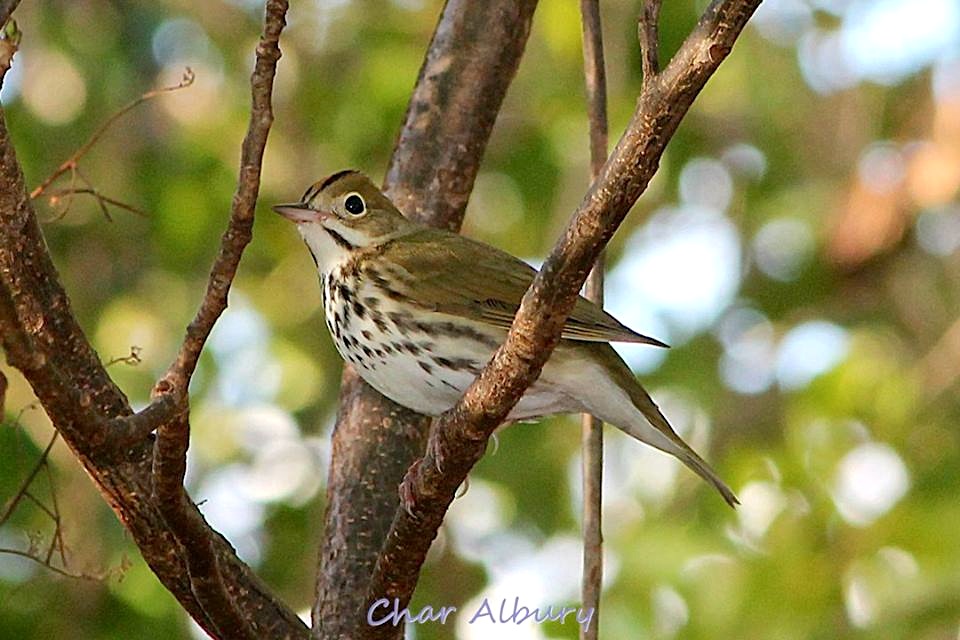
Here are some recent shots taken by Charmaine Albury on Man-o-War Cay, showing the orange crest very clearly.

Ovenbird, M-o-W Abaco (Char Albury 3) Ovenbird, M-o-W Abaco (Char Albury 2) Ovenbird, M-o-W Abaco (Char Albury 1)

My plan to include audio of the ovenbird’s song and call has been temporarily thwarted by a glitch, but I’ll add them here when I have overcome the problem.Ovenbird, Abaco (Gerlinde Taurer)

Gauge the size of the bird against the pod it is standing on…Ovenbird, Abaco - Bruce Hallett

In this photo, you can see that the orange crest feathers are raisedOvenbird Seiurus aurocapilla (Cephas, wiki)

Credits: Tom Sheley, Woody Bracey, Charmaine Albury, Bruce Hallett, Gerlinde Taurer, Cephas / Wiki

Unknown's avatar

THICK-BILLED VIREOS: ABACO’S ONLY PERMANENT RESIDENT VIREO


Thick-billed Vireo, Abaco 2 Tom Reed

THICK-BILLED VIREOS: ABACO’S ONLY PERMANENT RESIDENT VIREO

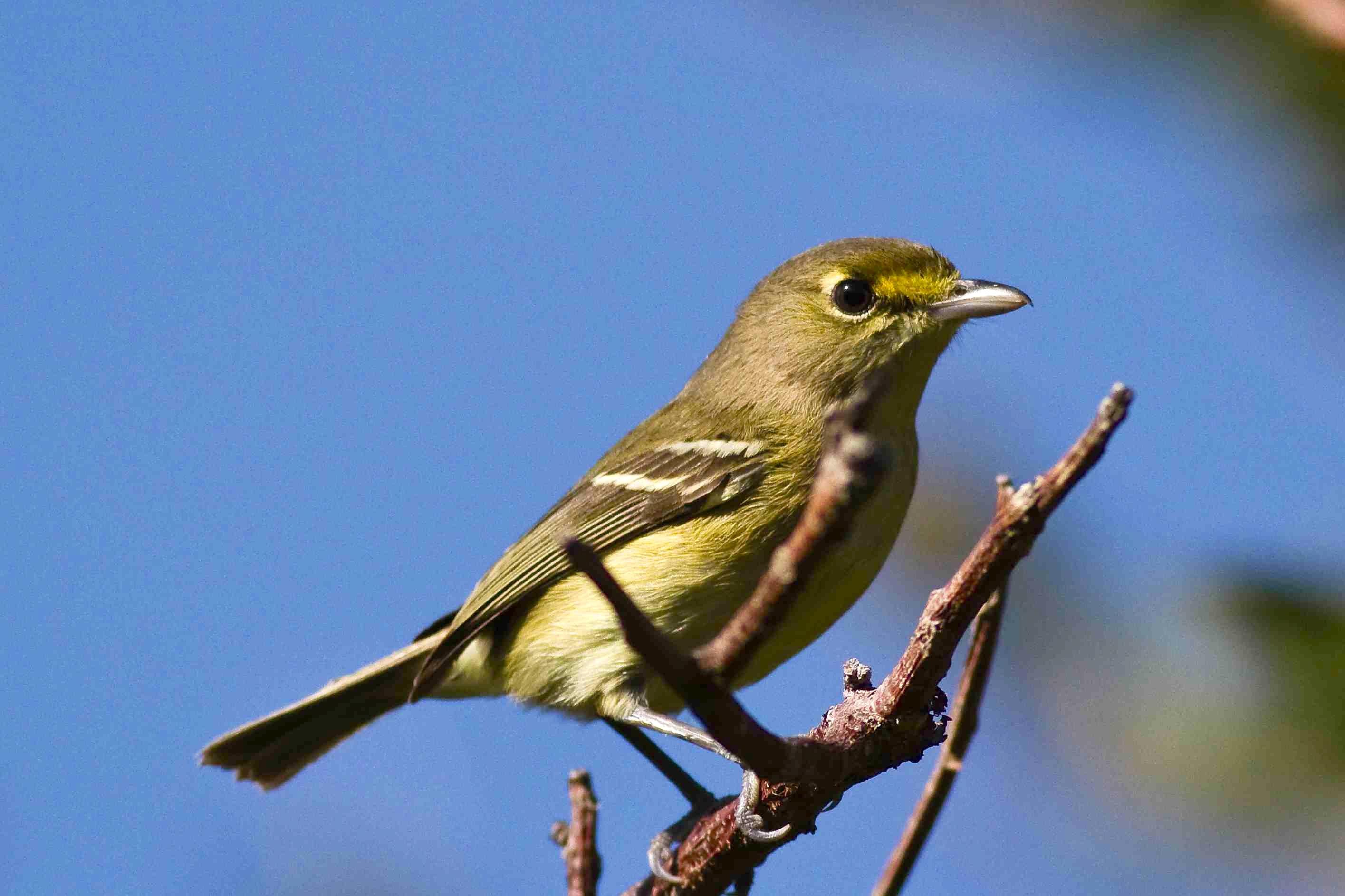
Hard to know why I haven’t got round to featuring these little vireos before. Unlike the other 7 vireo species found on Abaco seasonally or as transients, the Thick-billed Vireo Vireo crassirostris is an ever-present permanent resident of the coppice and scrub; and their unmistakeable repeating song can be heard almost everywhere. It was the first bird song I heard on Abaco, and therefore the TBV was the first bird I learned to ID. I’ve got quite a soft spot for them, really.Thick-billed Vireo, Abaco (Craig Nash)

Although TBVs are very easy to hear and track to a general area of coppice, I find actually seeing the bird creating the noise quite hard – let alone getting a clear camera shot. They always seem to be lurking several feet further away, deeper in the foliage, than the sound suggests. I’ve had some fun making TBV song iPhone recordings along the Delphi drive, practising the technique. If you want to know more about recording and converting to MP3 CLICK HERE.

One of my favourite images, from Gerlinde Taurer: a ‘shouty’ bird. We used it for ‘BIRDS OF ABACO‘.Thick-billed Vireo, Abaco  (Gerlinde Taurer 2)

I also love this perky little guy with a great beady-eyed pose taken by Bruce HallettThick-billed Vireo, Abaco (Bruce Hallett 2)

Here’s a clip of song, which I’m sure will be immediately familiar to Bahamians:

Paul Driver / Xeno Canto

Thick-billed Vireo, Abaco Bahamas.Tom Sheley

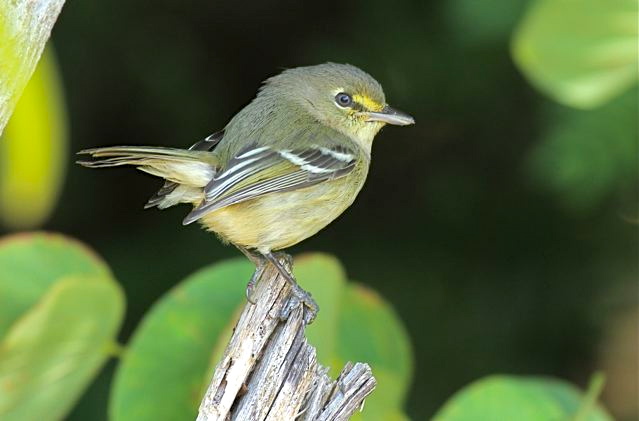
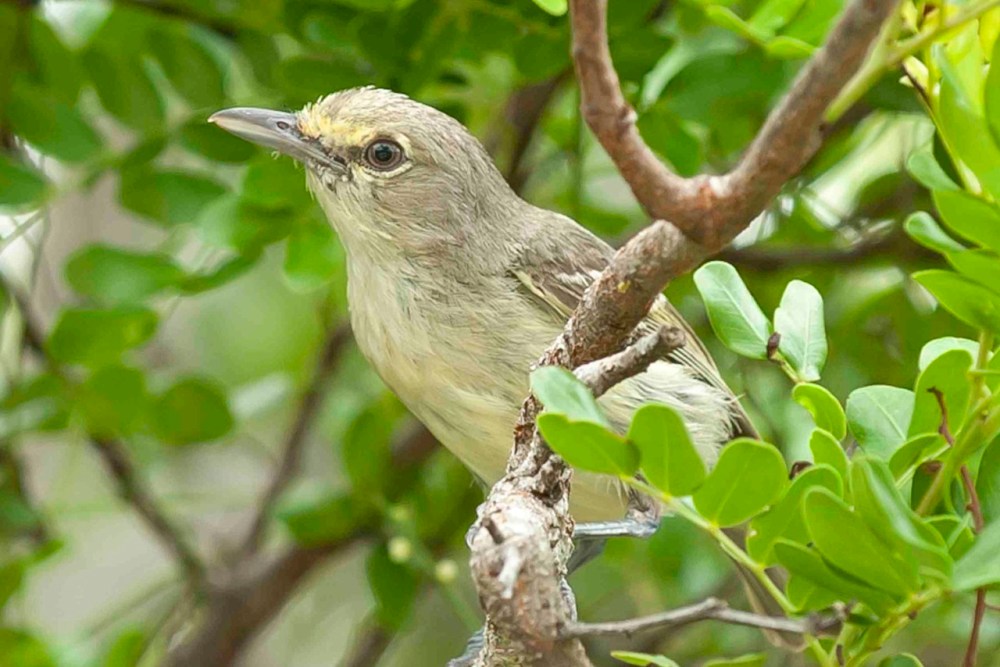
The main signifiers for this species, which in combination distinguish the TBV from the other vireo species on Abaco, are:

  • Two white wing bars
  • Yellow patch – usually quite prominent – between eye and beak
  • Thick bill – which immediately rules it out of being one of the 37 warbler species on Abaco…

Text book TBVThick-billed Vireo, Abaco (Becky Marvil 2).jpg

There are marked colour variations in the species according to maturity, season and to an extent gender (though m & f are quite similar). Here’s one that is causing wing-bar confusion by only showing traces. It also has quite dark upper parts.

Thick-billed Vireo, Abaco (Alex Hughes)

This is a very yellow TBVThick-billed Vireo, Abaco (Bruce Hallett 1)Whereas this one has rather anaemic colorationThick-billed Vireo, Abaco Bahamas .Tom SheleyFinally, this pretty TBV is very delicately markedThick-billed Vireo, Abaco (Tony Hepburn)

RELATED POSTS

BLACK-WHISKERED VIREO

PHILADELPHIA VIREO

Credits: Tom Reed (1), Craig Nash (2), Gerlinde Taurer (3), Bruce Hallett (4, 8), Tom Sheley (5, 9), Becky Marvil (6), Alex Hughes (7), Tony Hepburn (10); Paul Driver / Xeno Canto

Unknown's avatar

COMMON YELLOWTHROATS ON ABACO: CHEERFUL WINTER WARBLERS


Common-yellowthroat, Abaco (Erik Gauger)

COMMON YELLOWTHROATS ON ABACO: CHEERFUL WINTER WARBLERS

Abaco is fortunate to be home to the endemic BAHAMA YELLOWTHROAT Geothlypis rostrata, a striking bird with a dashing black mask and bright yellow body in the male. You can see it with its fellow endemics HERE. But there is similar winter resident species, the COMMON YELLOWTHROAT Geothlypis trichas, that can be seen on Abaco between October and March. Now is a very good time to look out for them. However, the two species are easy to confuse.

Common Yellowthroat (male)Common Yellowthroat, Gilpin Pond, Abaco Bahamas (Tom Sheley)

Bahama Yellowthroat (male)Bahama Yellowthroat (M) BH IMG_0675 copy

WHAT’S THE DIFFERENCE?

  • SIZE – the BW is slightly larger and sturdier than the CW
  • BEAK – larger in the BW, and some might say it tends to be decurved
  • COLOUR – the BW is more colourful, with more extensive yellow underparts and mask
  • FEMALES – both species lack the mask and are duller; the female BW has a greyer head
  • HABITAT – both are found in the same areas; the CW prefers denser vegetation near water
  • DEBATEABLE – it seems to me the pale stripe behind the mask is usually less prominent in the BW

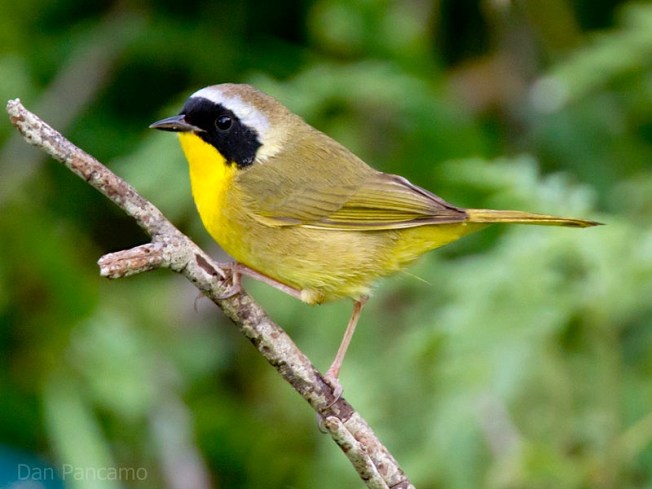
Common Yellowthroat male with conspicuous pale head-stripe800px-Common_Yellowthroat_by_Dan_Pancamo

Both yellowthroat species are an endearing mix of shy and inquisitive. These birds are responsive to ‘pishing’, and once lured from cover they may remain nearby on low branches or shrubs watching you with interest as you watch them. Their song – similar in both species – is fairly easily imitated (or at least approximated), which may also bring them into the open – a source of great satisfaction to the amateur birder when it works. Unless it’s just coincidence, of course… The songs of the two species recorded below sound almost indistinguishable (except that the first one is professional and the second notably amateur…).

COMMON YELLOWTHROAT 

Todd Wilson / Xeno Canto

BAHAMA YELLOWTHROAT

RH own recording

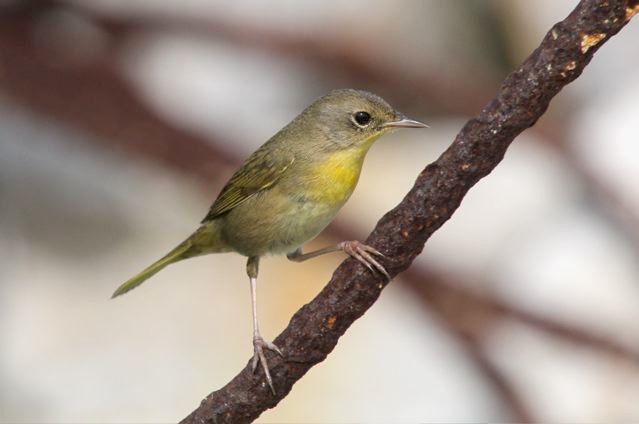
Female Common Yellowthroats are unassuming and quite delicate little birds. The first of these two images shows an immature bird, with its front beginning to become yellow. The second is a mature female.Common Yellowthroat (f, imm) Bruce Hallett IMG_9435Common Yellowthroat (f) Bruce Hallett IMG_4057

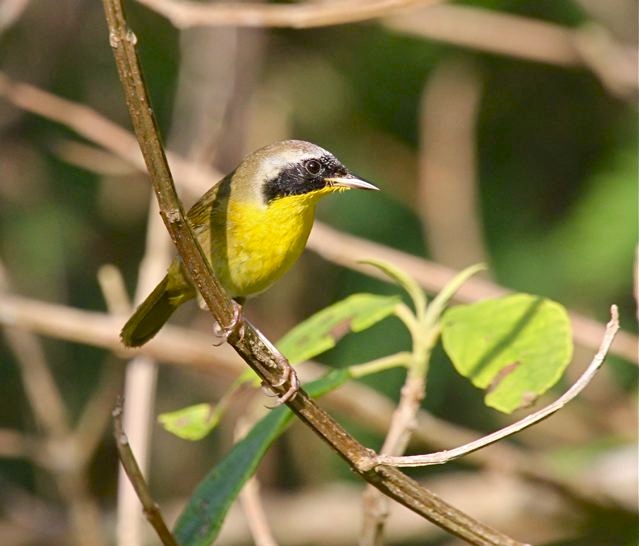
Two more male Common Yellowthroats to admire…Common Yellowthroat (m) Bruce Hallett IMG_4232  Common Yellow-throat, Abaco (Becky Marvil)

Photo Credits: Erik Gauger (1); Tom Sheley (2); Bruce Hallett (3, 5, 6, 7); Dan Pancamo /Wiki (4); Becky Marvil (8) Audio: Xeno Canto; RH

Unknown's avatar

ABACO PARROTS: A GALLERY OF GORGEOUS


'Over the Moon'

‘Over the Moon’

ABACO PARROTS: A GALLERY OF GORGEOUS

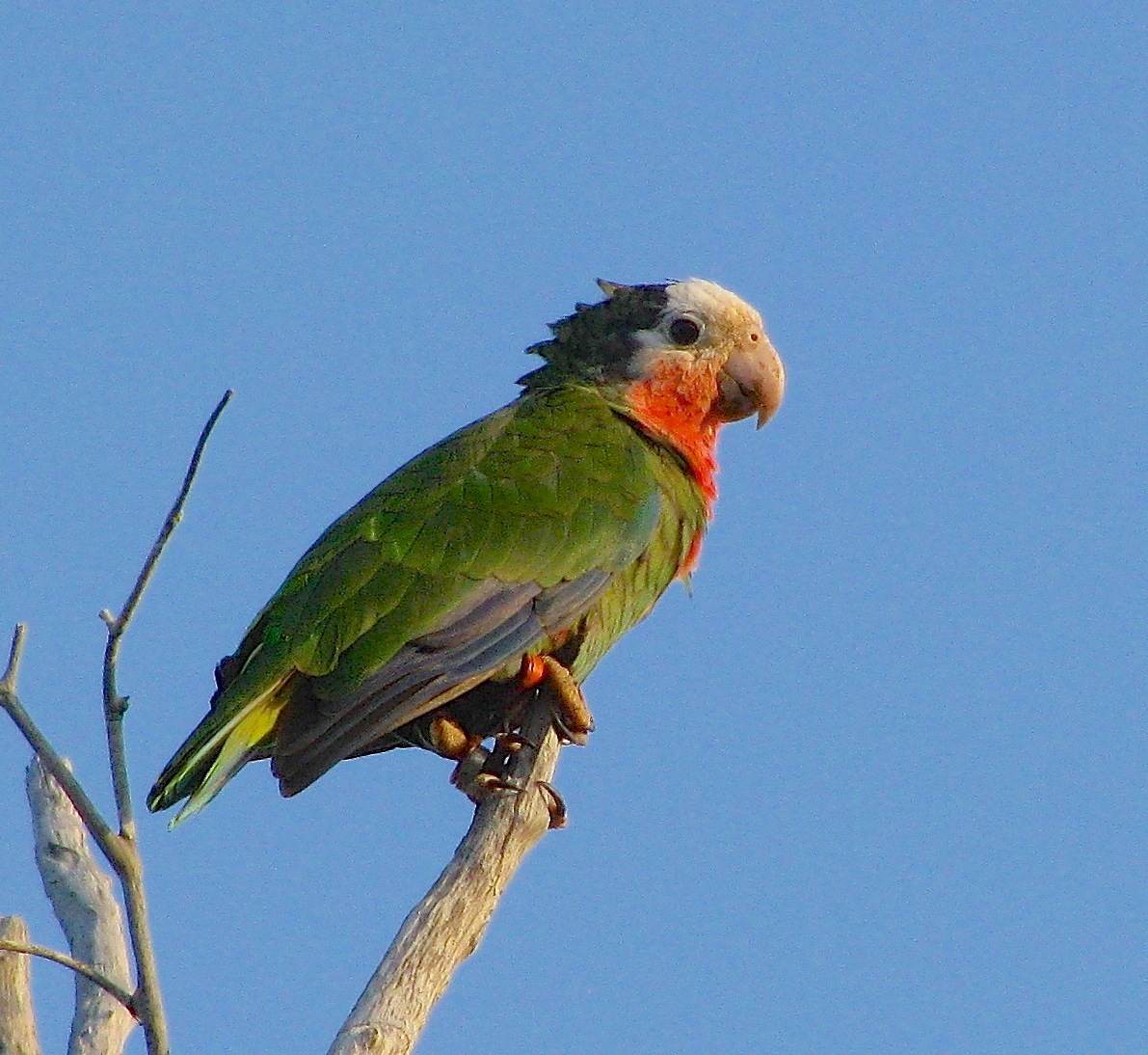
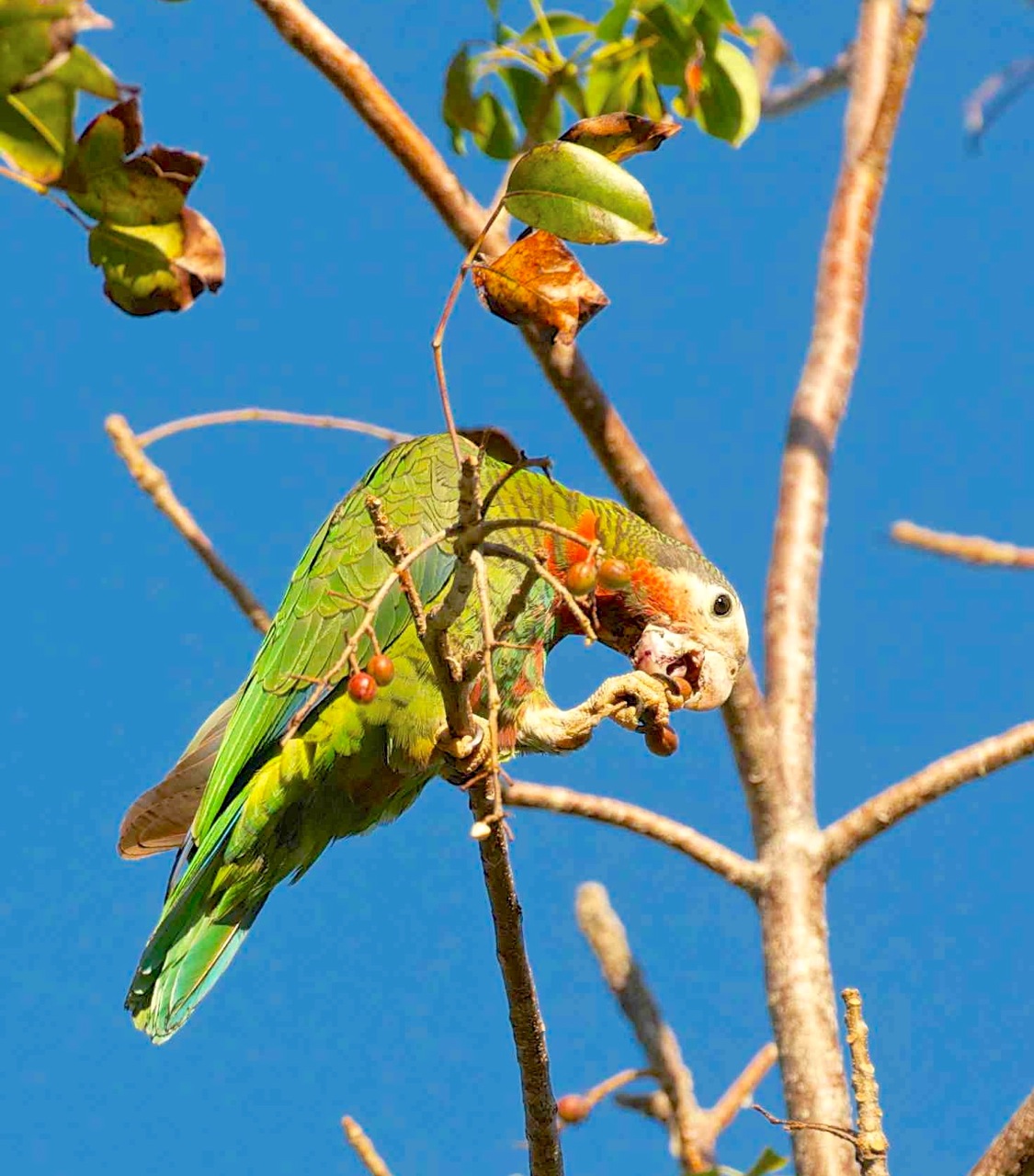
It’s been a while since the parrots of Abaco got a look-in hereabouts. Time to put that right. At the end of this gallery I will add some links to posts about the unique ground-nesting parrots of Abaco. Newcomers to this blog (I thank you both) may be interested to know that intensive conservation measures have brought this subspecies of the Cuban Parrot back from the brink of extinction – fewer than 1000 – to a sustainable and expanding population of around 4000.

For an overview of these lovely birds, I’ve made a slideshow presentation of a small booklet I put together in conjunction with scientist Caroline Stahala, who devoted several years to the research and protection of the parrots. Contents: parrots, nests, eggs, cute chicks, info, Sandy Walker with a fledgling on his lap.

Bahamas-Great Abaco_6419_Rose-throated Parrot_Cuban Parrot_Gerlinde Taurer Abaco Parrot Craig Nash.Cuban Parrot Abaco Abaco Parrot eating Gumbo Limbo fruit. Abaco Bahamas 2.12 copy

Here is the noise of a flock of parrots at Bahama Palm Shores, an excellent place to find them. It’s one of the less raucous recordings that I have made! We normally go to the main (north) turning, drive straight down to the end, cut the engine and listen. I’ve usually been lucky in that immediate area around 5.00 p.m., though others may have discovered other good times of day.

Abaco Parrot, Peter Mantle Abaco Parrot Keith Salvesen.Rolling Harbour Abaco
Bahama Parrot 1-Nina Henry sm Cuban Parrot Bruce Hallett IMG_7681ABACO (CUBAN) PARROT Abaco (Cuban) Parrot -  Charlie SkinnerAbaco (Cuban) Parrot -  Charlie SkinnerABACO PARROTS Unique parrots in pictures, video & sound

ABACO PARROTS Rare nesting footage

ABACO PARROTS Conservation & anti-predation programs 

Credits: Melissa Maura (brilliant header!), Gerlinde Taurer, Craig Nash, Tom Sheley, Peter Mantle, RH, Nina Henry, Bruce Hallett, Charlie Skinner, and Caroline Stahala

Unknown's avatar

WORLD SHOREBIRDS DAY – ABACO’S 33 SHORE SPECIES (3): PLOVERS


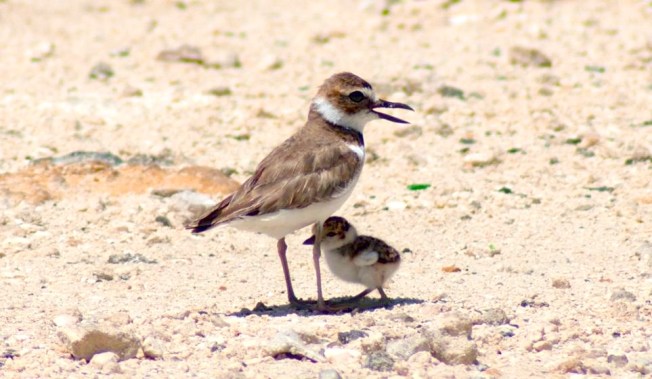
Wilson's Plover & Chick, Delphi Beach, Abaco - Sandy Walker

Wilson’s Plover & Chick, Delphi Club Beach, Abaco (Sandy Walker)

 WORLD SHOREBIRDS DAY – ABACO’S 33 SHORE SPECIES (3): PLOVERS

Over the last 2 days, 20 of Abaco’s 33 shorebird species have been featured, LARGER SHOREBIRDS followed by SANDPIPERS. The third part of the series concentrates on the 6 plover species found on Abaco. First, I’ve repeated the main Abaco shorebird checklist of 26 species (birds previously featured in bold), with each bird’s ‘availability’ code. I am disregarding the 7 species listed under the checklist because (1) they are transients or vagrants and your chances of encountering one are slim to remote; and (2) because in 16 months I was unable to obtain photos of any of them taken on Abaco, which can’t simply be because they are not photogenic. I still haven’t managed to deal with the shonky formatting, so I’ve given up on that…

The codes will tell you, for any particular bird, when you may see it (P = permanent, WR = winter resident, TR = transient, V = vagrant); whether it breeds (B) on Abaco; and your chance of seeing it, graded from easy (1) to vanishingly unlikely (5).

  • Black-necked Stilt                         Himantopus mexicanus              PR B 3
  • American Avocet                           Recurvirostra americana           WR 4
  • American Oystercatcher          Haematopus palliatus                 PR B 2
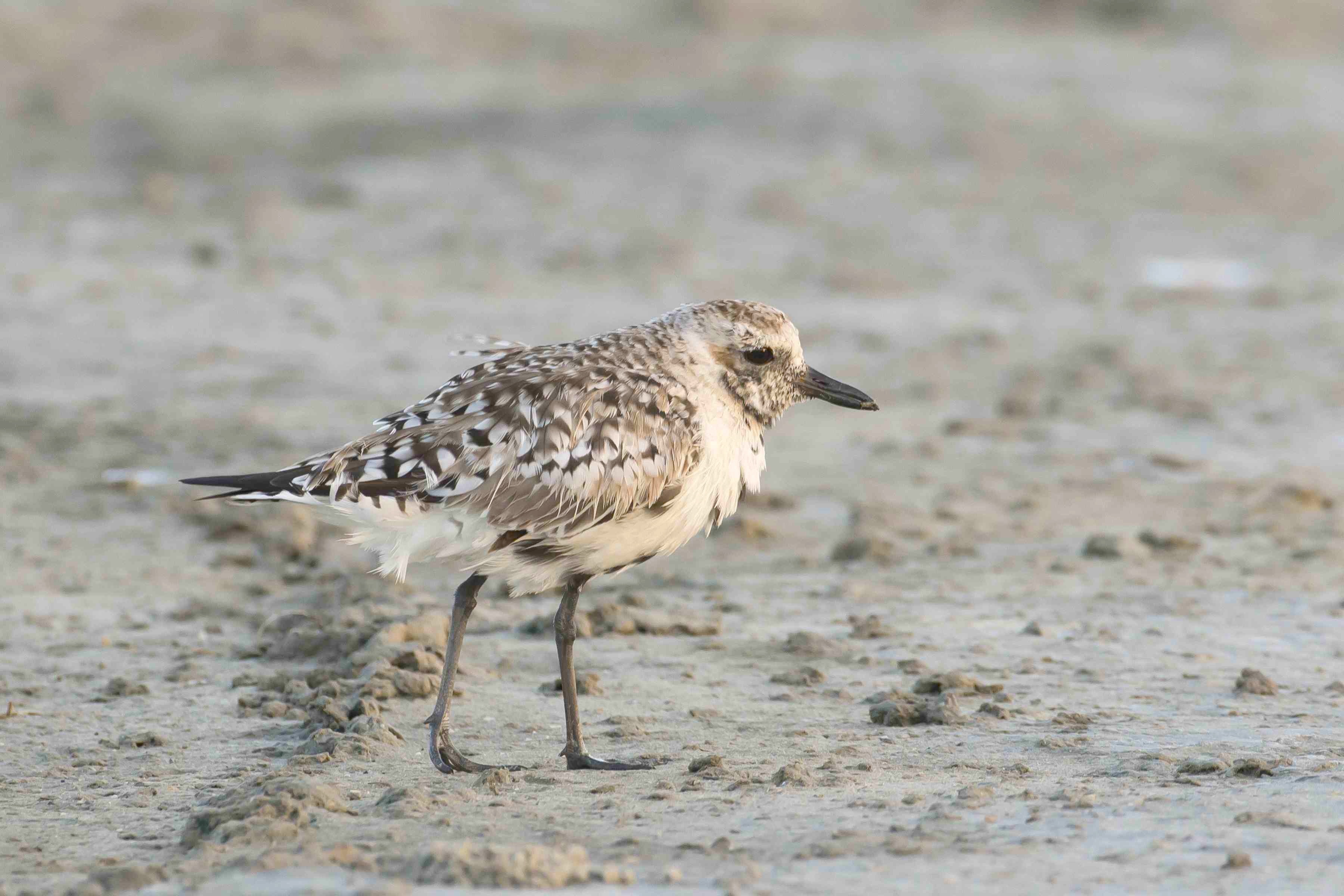
  • Black-bellied Plover                          Pluvialis squatarola                      WR 1
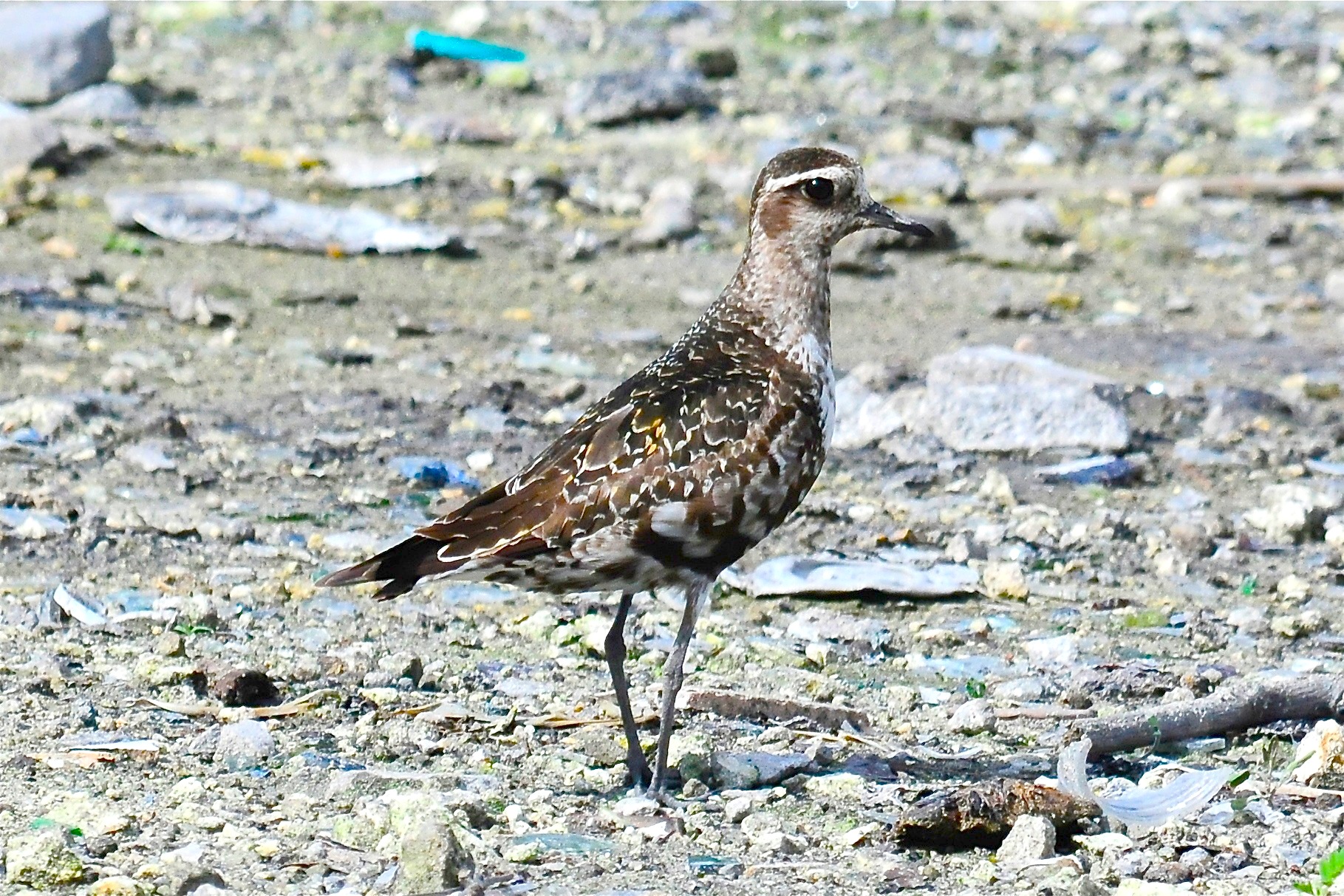
  • American Golden Plover                 Pluvialis dominica                         TR 4
  • Wilson’s Plover                                  Ochthodromus wilsonia              PR B 2
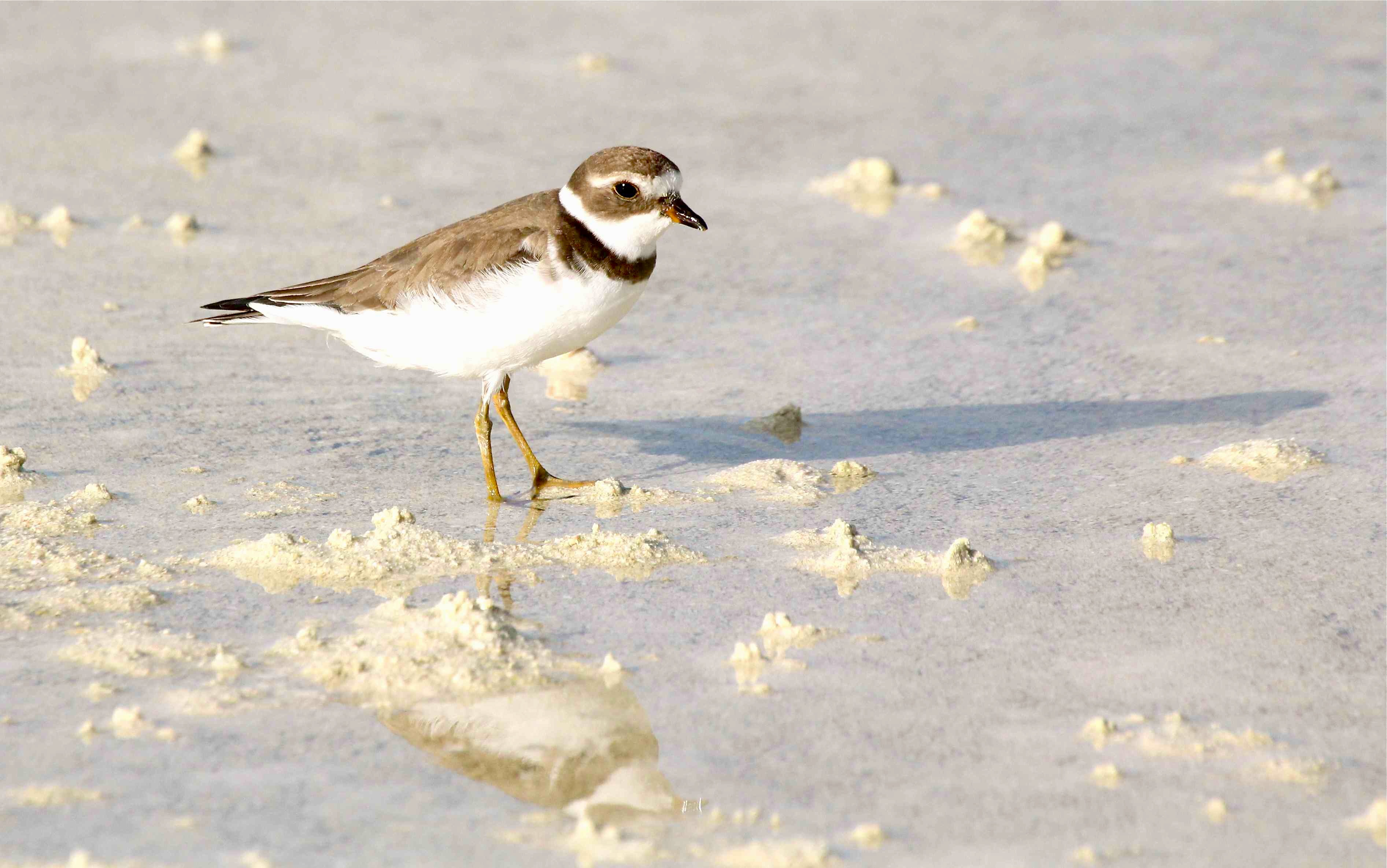
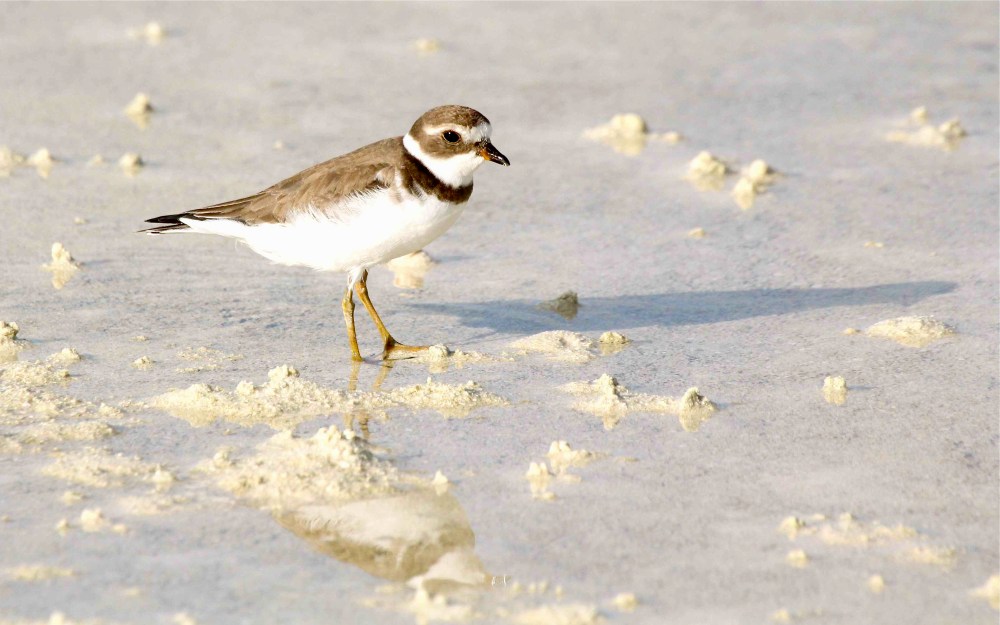
  • Semipalmated Plover                        Charadrius semipalmatus          WR 2
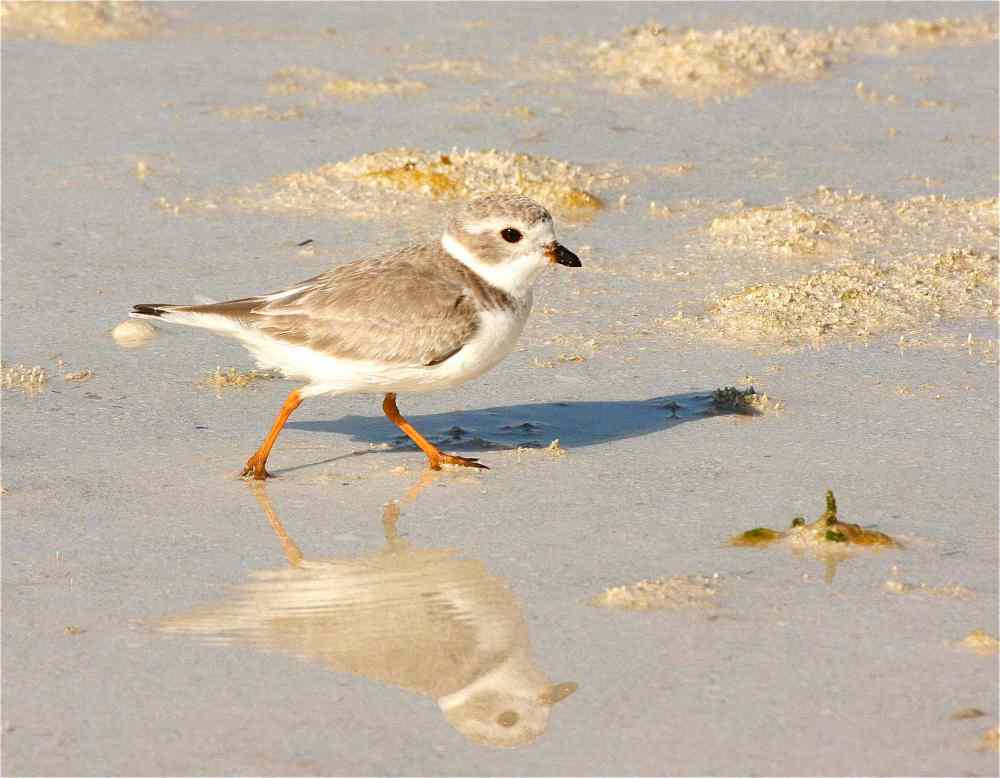
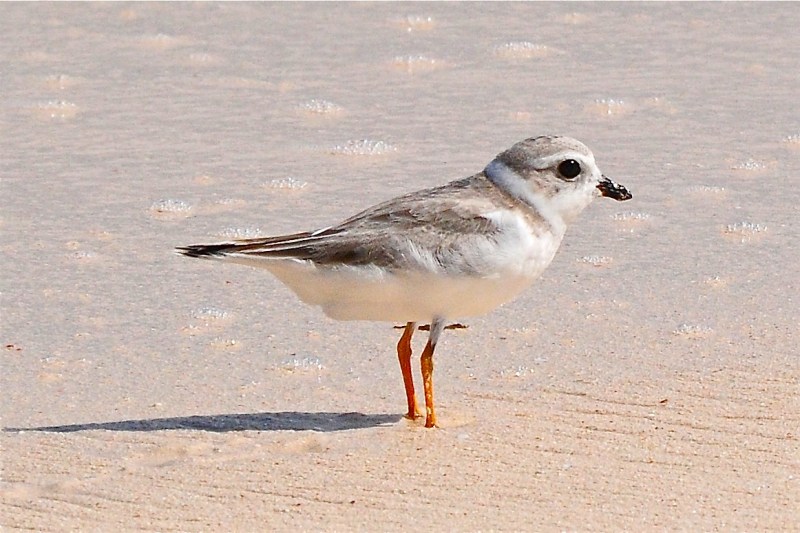
  • Piping Plover                                      Charadrius melodus                      WR 3
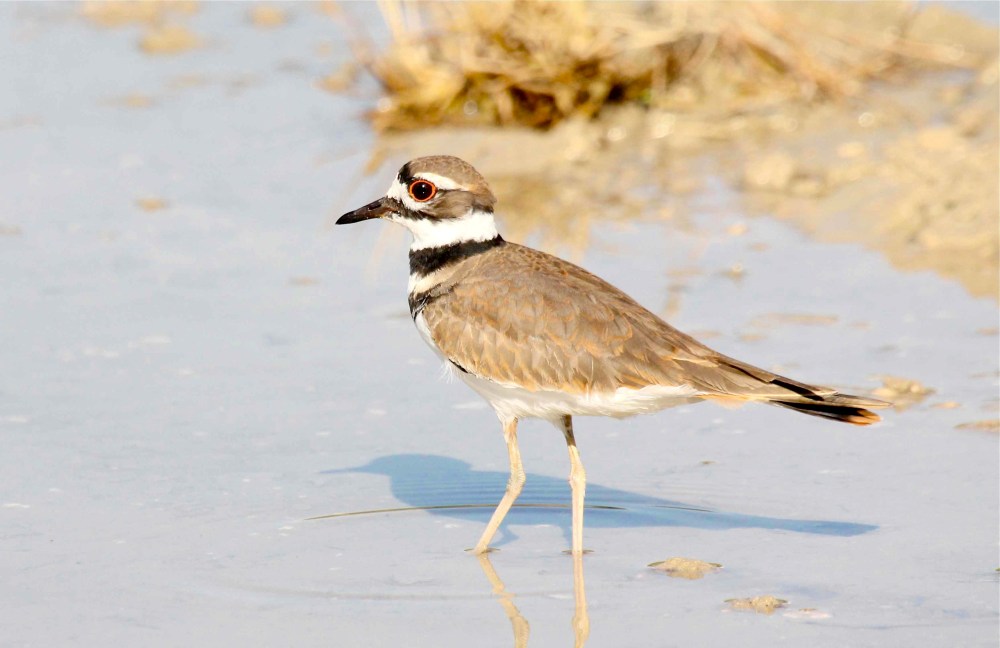
  • Killdeer                                                 Charadrius vociferus                    WR 2
  • Spotted Sandpiper                      Actitis macularius                         WR 1
  • Solitary Sandpiper                       Tringa solitaria                            WR 2
  • Greater Yellowlegs                       Tringa melanoleuca                      WR 2
  • Willet                                                   Tringa semipalmata                    PR B 2
  • Lesser Yellowlegs                          Tringa flavipes                              WR 3
  • Ruddy Turnstone                          Arenaria interpres                      PR 2
  • Red Knot                                            Calidris canutus                           WR 3
  • Sanderling                                        Calidris alba                                  WR 1
  • Dunlin                                                 Calidris alpina                              WR 2
  • Least Sandpiper                            Calidris minutilla                         WR 2
  • White-rumped Sandpiper       Calidris fuscicollis                        TR 3
  • Semipalmated Sandpiper         Calidris pusilla                              TR 2
  • Western Sandpiper                      Calidris Mauri                                TR 2
  • Short-billed Dowitcher               Limnodromus griseus                  WR 1
  • Long-billed Dowitcher                Limnodromus scolopaceus         WR 4
  • Wilson’s Snipe                                 Gallinago delicata                         WR 3
  • Wilson’s Phalarope                      Phalaropus tricolor                        V 4

The other 7 species of shorebird recorded for Abaco – all transients or vagrants – are: Upland Sandpiper TR 4, Whimbrel  TR 4, Hudsonian Godwit V5, Marbled Godwit V5, Buff-breasted Sandpiper V5, Pectoral Sandpiper  TR 3, Stilt Sandpiper TR 3

PLOVERS ON ABACO

The best-known of the 6 Abaco plover species is the Wilson’s Plover, because it is the only permanent resident. The American Golden Plover is a rare transient, but we luckily have one taken on on Abaco. All the others are winter residents and easy to middling hard to find. All except the American Golden Plover may be found on the beach at Delphi or the rocks at either end. The Piping Plover is the most interesting species, with a mere 8000 left in the world and a vigorous conservation program to protect them and their habitat. Their summer breeding range is in Canada, central US and the eastern seaboard. In winter they migrate south, and Abaco is one of their homes. At Delphi we are very fortunate that every year some choose the beach for their winter retreat.

BLACK-BELLIED PLOVER  Pluvialis squatarola   WR 1Black-bellied Plover intermediate plumage.Marls.Abaco Bahamas.3.12.Tom Sheley edit

You  may well wonder why a bird with such a very specific belly-related colour designation has a white one in the photo. It’s because this is the non-breeding plumage (in fact, intermediate), so I have borrowed from Audubon Magazine (‘tip of the hat’) to show a non-Abaco bird in its breeding plumage. Black- Bellied Plover (Audubon Magazine)

AMERICAN GOLDEN PLOVER  Pluvialis dominica  TR 4American Golden Plover, Abaco - Tony Hepburn
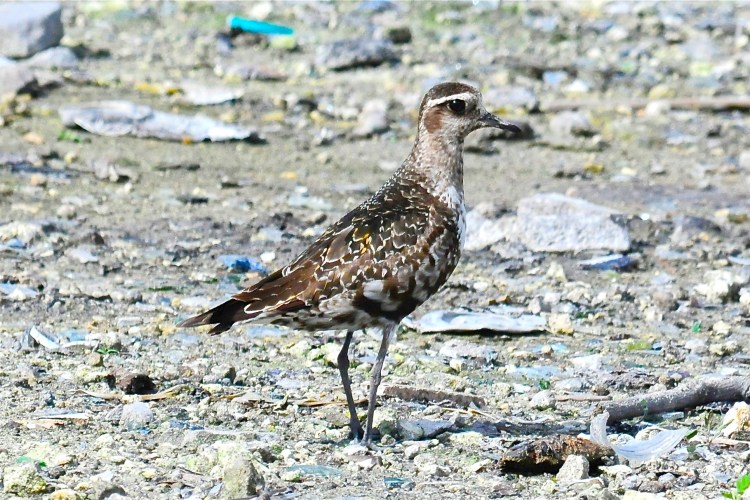
 SEMIPALMATED PLOVER Charadrius semipalmatus WR 2Semipalmated Plover (f nb), Abaco - Bruce Hallett
KILLDEER Charadrius vociferus WR 2Kildeer, Abaco - Bruce Hallett

PIPING PLOVER  Charadrius melodus WR 3Piping Plover, Abaco - Bruce HallettPiping Plover, Abaco - Tony HepburnPiping Plover, Abaco  - Tom Reed

WILSON’S PLOVER Ochthodromus wilsonia  PR B 2

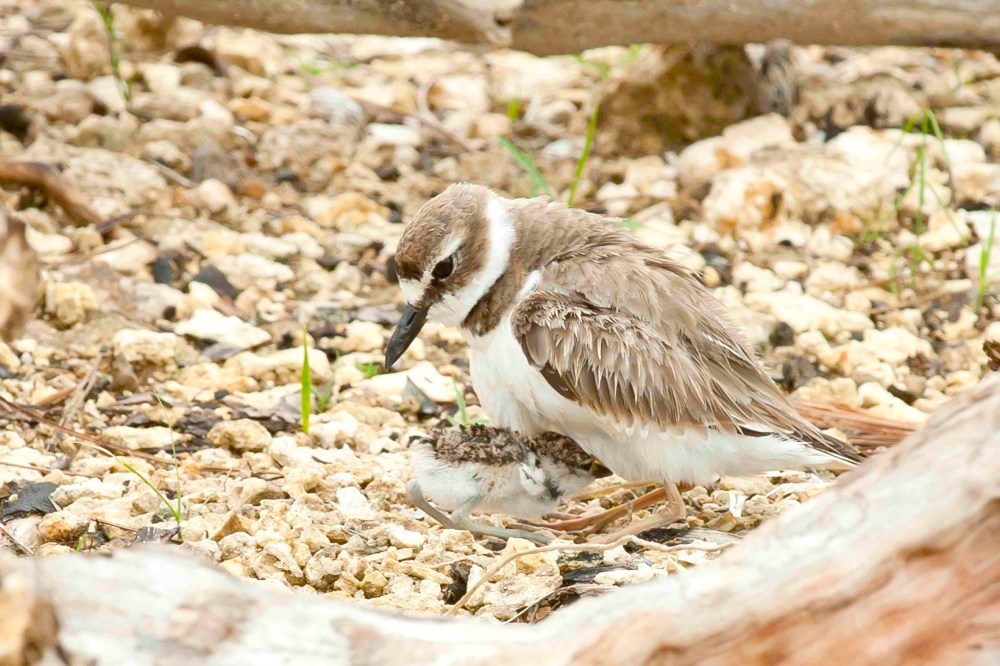
This permanent resident plover is a year-round presence on the Delphi Club beach, where in summer they nest and raise their tiny fluffball chicks (see Sandy Walker’s wonderful header image). I’m posting in some detail about these because it’s a while since I featured them. Links to other relevant posts are given below. All the following photos bar 1 were taken on the beach at Delphi.Wilson's Plover, Delphi Club Beach, Abaco - Craig Nash

The photo below was taken by Tom Sheley at Nettie’s Point, the skiff launching point for the day’s bonefishing on the Marls. The plover pair had made a scrape and nested there. They chose a tricky place to do so –  it was just where the trucks are turned after off-loading the skiffs. So the guides built a protective driftwood enclosure to protect the nest and prevent tragedy. The plovers, unfazed by the human proximity and activity, raised their family safely. I mostly saw the female on the nest within the square wooden pen, with the male usually close by, standing guard protectively. 
Wilson's Plover, Abaco Bahamas - Tom Sheley

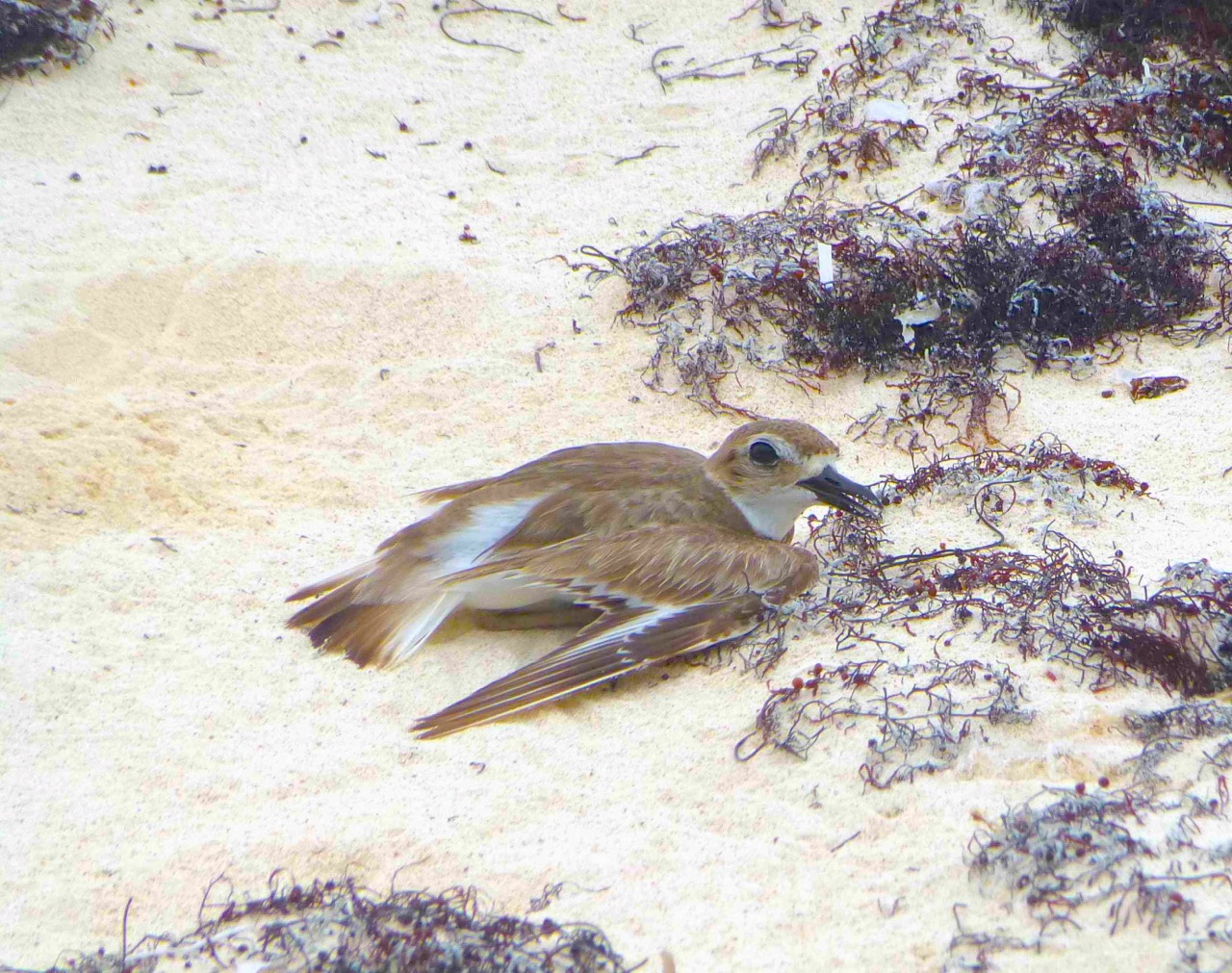
This plover, photographed on the Delphi beach, is performing a typical ‘broken wing’ display, a tactic used to draw predators away from a nest site. The bird makes itself appear to be wounded and vulnerable, and flaps pathetically about on the ground… gradually getting further from the nest. If the going gets tough and the predator gets too close for comfort,  the plover gets going by unexpectedly flying off. Wilson's Plover, Abaco (broken wing display) Clare Latimer - Version 2

TWO MORE FROM THE DELPHI BEACHWilson's Plover, Abaco 12 Wilson's Plover, Abaco 11

RELATED POSTS

PIPING PLOVERS

WILSON’S PLOVERS (1) ‘Dream Plover’

 WILSON’S PLOVERS (2) Nest Protection

 WILSON’S PLOVERS (3) Scrapes, Chicks & Broken Wings

Photo credits: Sandy Walker, Tom Sheley, Audubon, Tony Hepburn, Bruce Hallett, Tom Reed, Craig Nash, Clare Latimer, RH
Unknown's avatar

WORLD SHOREBIRDS DAY – ABACO’S 33 SHOREBIRD SPECIES (2) – SANDPIPERS


Ruddy Turnstone winter plumage.Abaco Bahamas.2.13.Tom Sheley e

WORLD SHOREBIRDS DAY: ABACO’S 33 SHOREBIRD SPECIES (2)

Yesterday I featured 8 of the larger, longer-billed species among Abaco’s 33 shorebirds. Plus one cute Wilson’s Plover chick as page-bait! A number of those are classified as sandpipers. To see them, click HERE. Today it’s the turn of the smaller sandpiper species, little birds with long beaks for their size that in general help differentiate them from the stubby-beaked plover species. To recap, here is  the main Abaco shorebird checklist of 26 species (birds previously featured in bold):

The codes will tell you, for any particular bird, when you may see it (P = permanent, WR = winter resident, TR = transient, V = vagrant); whether it breeds (B) on Abaco; and your chance of seeing it, graded from easy (1) to vanishingly unlikely (5).

  • Black-necked Stilt                         Himantopus mexicanus              PR B 3
  • American Avocet                           Recurvirostra americana           WR 4
  • American Oystercatcher          Haematopus palliatus                 PR B 2
  • Black-bellied Plover                          Pluvialis squatarola                     WR 1
  • American Golden-Plover                 Pluvialis dominica                        TR 4
  • Wilson’s Plover                                  Ochthodromus wilsonia              PR B 2
  • Semipalmated Plover                        Charadrius semipalmatus         WR 2
  • Piping Plover                                      Charadrius melodus                      WR 3
  • Killdeer                                                 Charadrius vociferus                    WR 2
  • Spotted Sandpiper                              Actitis macularius                         WR 1
  • Solitary Sandpiper                             Tringa solitaria                              WR 2
  • Greater Yellowlegs                       Tringa melanoleuca                     WR 2
  • Willet                                                   Tringa semipalmata                     PR B 2
  • Lesser Yellowlegs                          Tringa flavipes                               WR 3
  • Ruddy Turnstone                                Arenaria interpres                        PR 2
  • Red Knot                                               Calidris canutus                              WR 3
  • Sanderling                                            Calidris alba                                     WR 1
  • Dunlin                                                 Calidris alpina                                 WR 2
  • Least Sandpiper                                  Calidris minutilla                           WR 2
  • White-rumped Sandpiper                 Calidris fuscicollis                          TR 3
  • Semipalmated Sandpiper                  Calidris pusilla                                TR 2
  • Western Sandpiper                             Calidris Mauri                                 TR 2
  • Short-billed Dowitcher               Limnodromus griseus                   WR 1
  • Long-billed Dowitcher                Limnodromus scolopaceus         WR 4
  • Wilson’s Snipe                                 Gallinago delicata                         WR 3
  • Wilson’s Phalarope                            Phalaropus tricolor                        V 4

The other 7 species of shorebird recorded for Abaco – all transients or vagrants – are: Upland Sandpiper TR 4, Whimbrel  TR 4, Hudsonian Godwit V5, Marbled Godwit V5, Buff-breasted Sandpiper V5, Pectoral Sandpiper  TR 3, Stilt Sandpiper TR 3

SANDPIPERS

Of the sandpiper species shown below, 9 of the 10 are ones that, at the right time and in the right place, you may see on Abaco. The tenth, the Wilson’s Phalarope, is the first specimen ever recorded for Abaco and as far as is known this is the only photo of it (props to Woody Bracey for this accomplished ‘get’). Again, some of the birds shown below were photographed on the Delphi Club beach.

SPOTTED SANDPIPER Actitis macularius   WR 1Spotted Sandpiper.Abaco Bahamas - Tom Sheley

SOLITARY SANDPIPER Tringa solitaria  WR 2Solitary Sandpiper, Petrie Island D G E Robertson Wiki

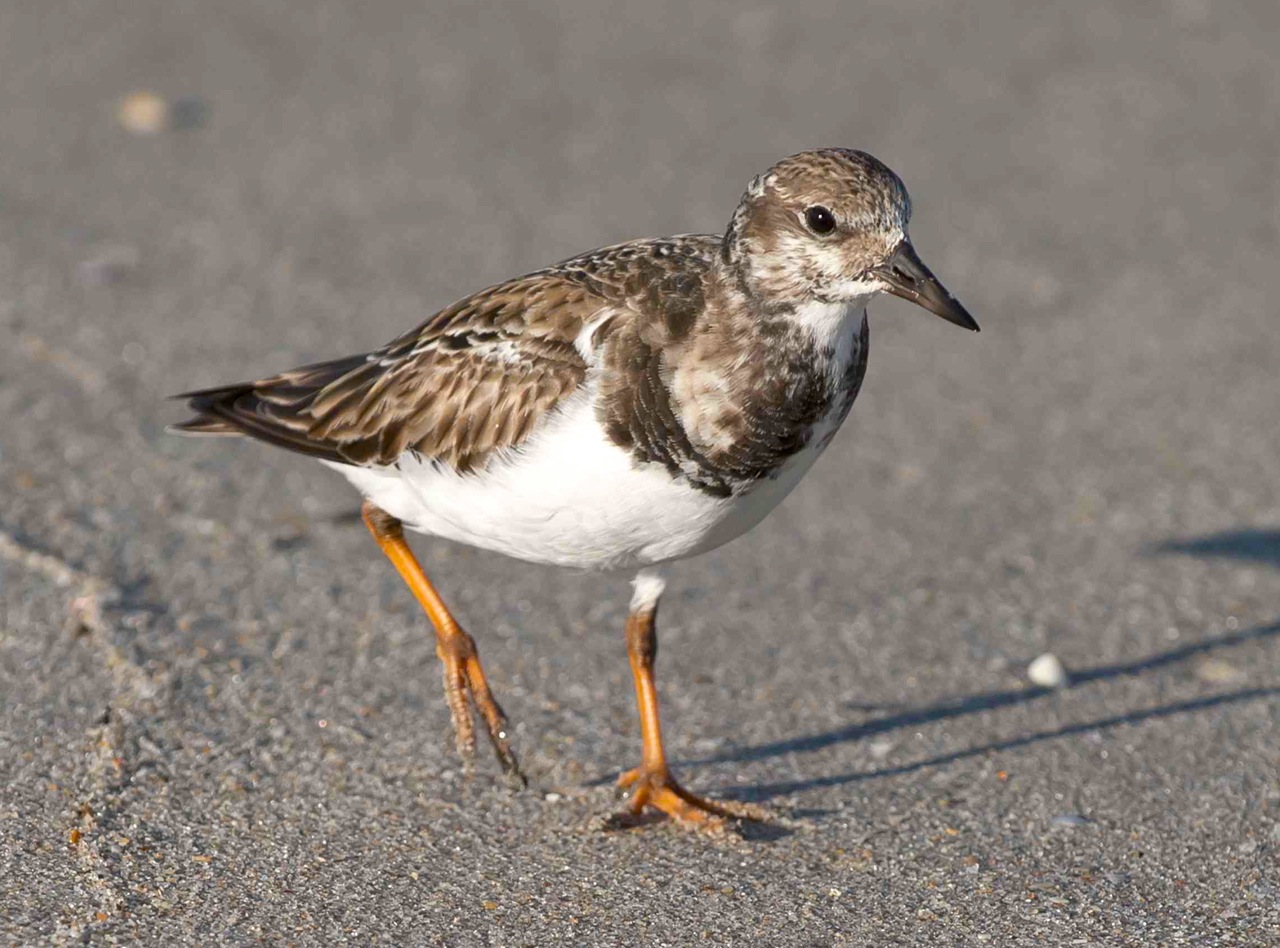
RUDDY TURNSTONE  Arenaria interpres  PR 2Ruddy Turnstone Abaco Bahamas. 2.12.Tom Sheley copy 2

RED KNOT Calidris canutus (non-breeding plumage)  WR 3Red Knot,  Green Turtle Cay, Abaco - Becky Marvil

SANDERLING  Calidris alba  WR 1Sanderling, Abaco -  Craig Nash

LEAST SANDPIPER  Calidris minutilla  WR 2Least Sandpiper, Delphi Club Beach, Abaco - Keith Salvesen

WHITE-RUMPED SANDPIPER  Calidris fuscicollis  TR 3White-rumped Sandpiper, Abaco - Tony Hepburn

SEMIPALMATED SANDPIPER   Calidris pusilla  TR 2Semipalmated Sandpiper, Abaco (juv) Bruce Hallett

WESTERN SANDPIPER  Calidris Mauri  TR 2Western Sandpiper, Abaco (Bruce Hallett)

WILSON’S PHALAROPE Phalaropus tricolor  V 4 Wilson's Phalarope, Abaco - Woody Bracey

RELATED POSTS

RUDDY TURNSTONES

LEAST SANDPIPERS

Photo Credits: Tom Sheley, D Robertson, Becky Marvil, Craig Nash, RH, Tony Hepburn, Bruce Hallett, Woody Bracey

Unknown's avatar

‘AMOY’ THERE! AMERICAN OYSTERCATCHERS ON ABACO


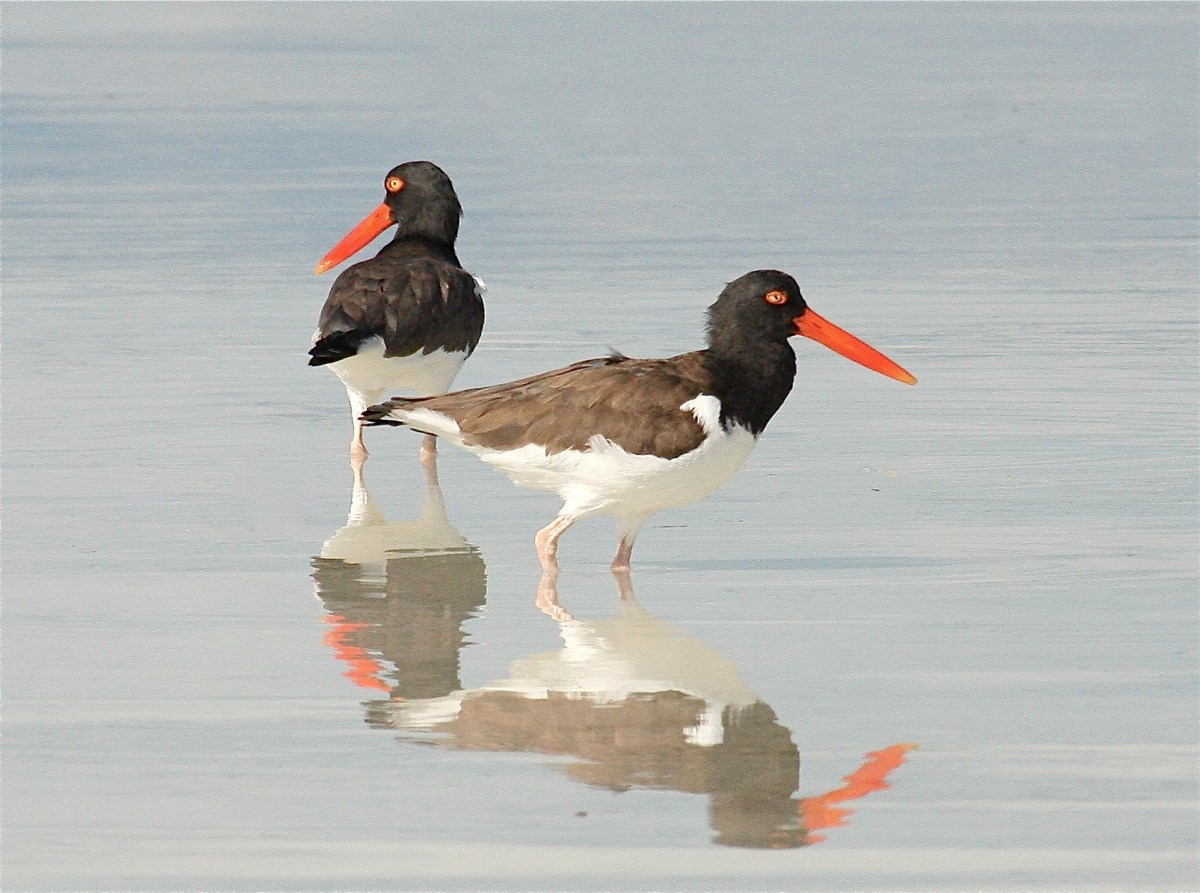
American Oystercatcher.Delphi Club.Abaco Bahamas.Tom Sheley

‘AMOY’ THERE! AMERICAN OYSTERCATCHERS ON ABACO

The American Oystercatcher Haematopus palliatus is a familiar shorebird, with the significant advantage that it cannot be mistaken for any other shore species either to look at or to hear. All those little sandpipers and plovers can be very confusing; the handsome AMOY stands out from the crowd. I am posting about this species now as a prelude to WORLD SHOREBIRDS DAY on September 6th. The link will take you to the official Facebook Page where you will find more information, including how to sign up for a pleasant day’s birding, with the chance to report your sightings.world-shorebirds-day1000

The header picture and the next 2 were taken by photographer and ace birder Tom Sheley on the Delphi Club beach. Unsurprisingly, we used one of these wonderful photographs as a full-page image in The Delphi Club Guide to THE BIRDS OF ABACO.

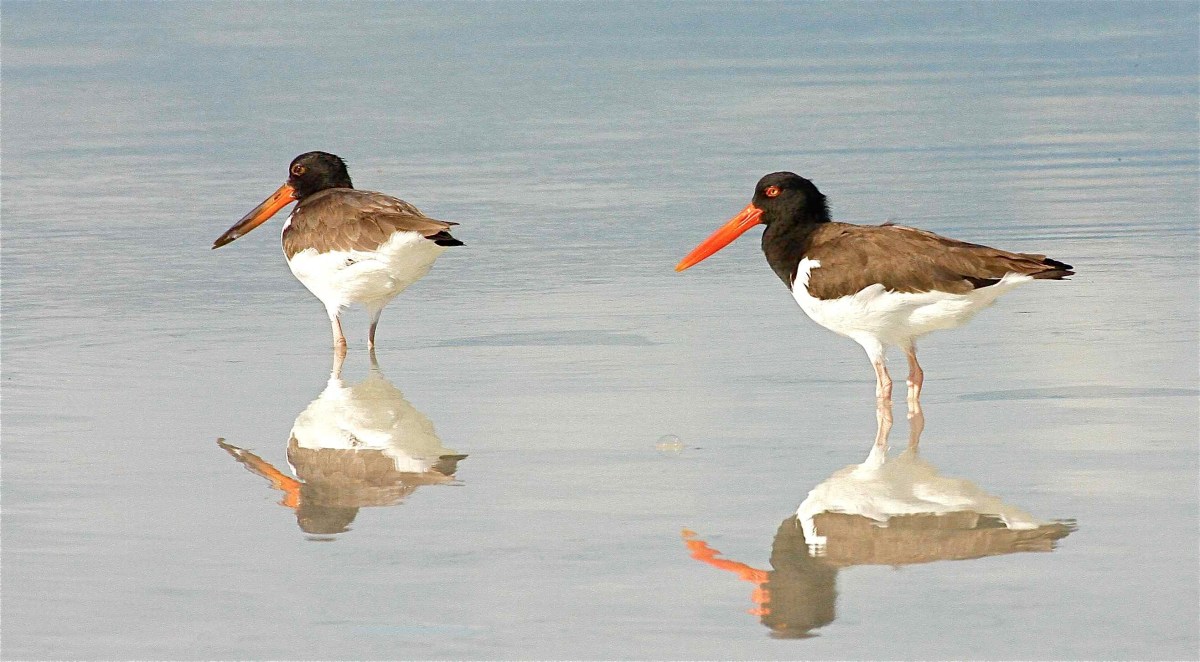
American Oystercatcher.Delphi Club.Abaco Bahamas.Tom Sheley American Oystercatcher.Delphi Club.Abaco Bahamas.Tom Sheley

Bruce Hallett, author of the essential field guide ‘Birds of the Bahamas and the TCI’ (featured in the sidebar) was a major contributor to the book. Not just with his excellent photographs, either, such as the two below. His knowledge, his patience with my queries, and his scrupulous reading of the final draft to eliminate my errors were vital to the project. American Oystercatcher.Abaco Bahamas.Bruce HallettAmerican Oystercatcher.Abaco Bahamas.Bruce Hallett163952

Here are two recordings of oystercatchers, unmistakeable call sounds that will probably be instantly familiar.

Lopez Lanus / Xeno-Canto

Krzysztof Deoniziak / Xeno-Canto

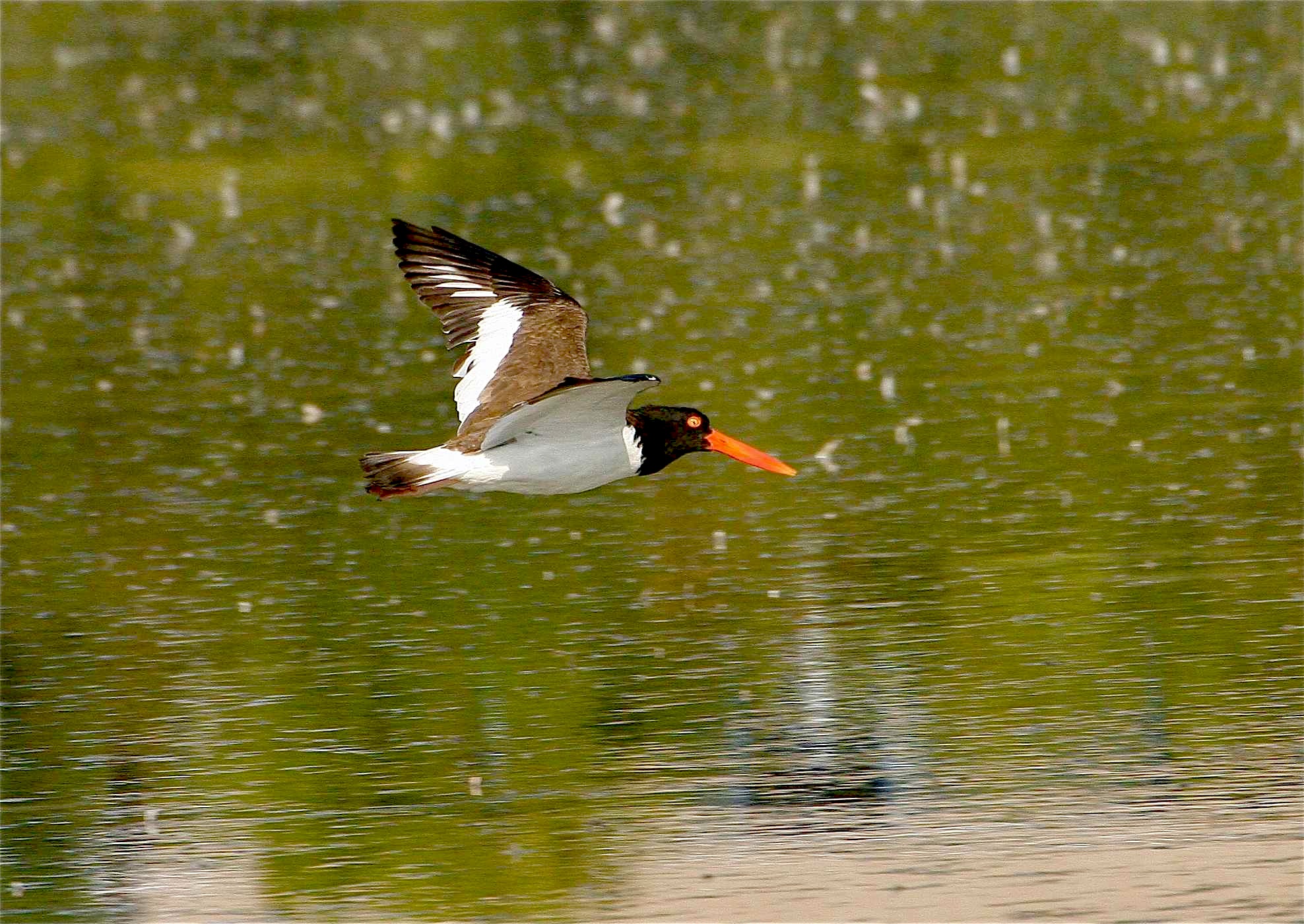
I like the rather dishevelled appearance of this AMOY from Jim Todd, fly fisherman, author of ‘The Abaco Backcountry’, and intrepid kayak explorer around the coast of Abaco.American oystercatcher Abaco (Jim Todd)

The next two photos were taken on the Delphi beach by Charlie Skinner, another contributor to the book. Below them is an ‘in-flight’ shot by Bruce Hallett.American Oystercatcher, Abaco (Charlie Skinner)American Oystercatcher, Abaco (Charlie Skinner)     American Oystercatcher.Abaco Bahamas.Bruce Hallett

This fine video from Audubon shows close-up views of the American Oystercatcher, and unleashes more of the distinctive call-sounds – an insistent wittering – of the species. [vimeo https://vimeo.com/48479131%5D

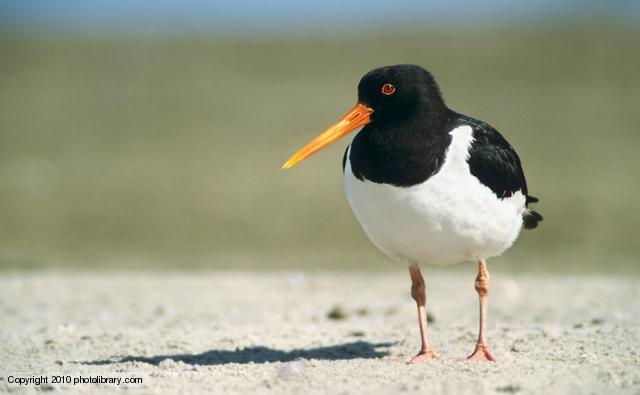
For some time, I found it difficult to distinguish American and Eurasian Oystercatchers. The markings of both species are variable according to gender, age, season and so on, but are generally very similar. Mrs RH noticed the salient difference at once – the eyes. The AMOY has bright orange eyes with red eye-rings; the EUROY’s eyes are the reverse colouring, as this example shows.Eurasian Oystercatcher. BBC

 Credits: Tom Sheley, Bruce Hallett, Jim Todd, Charlie Skinner, Xeno-Canto, Audubon, BBC
world-shorebirds-day1000

Unknown's avatar

SHARP-EYED & SHARP-BILLED: GREEN HERON ON ABACO


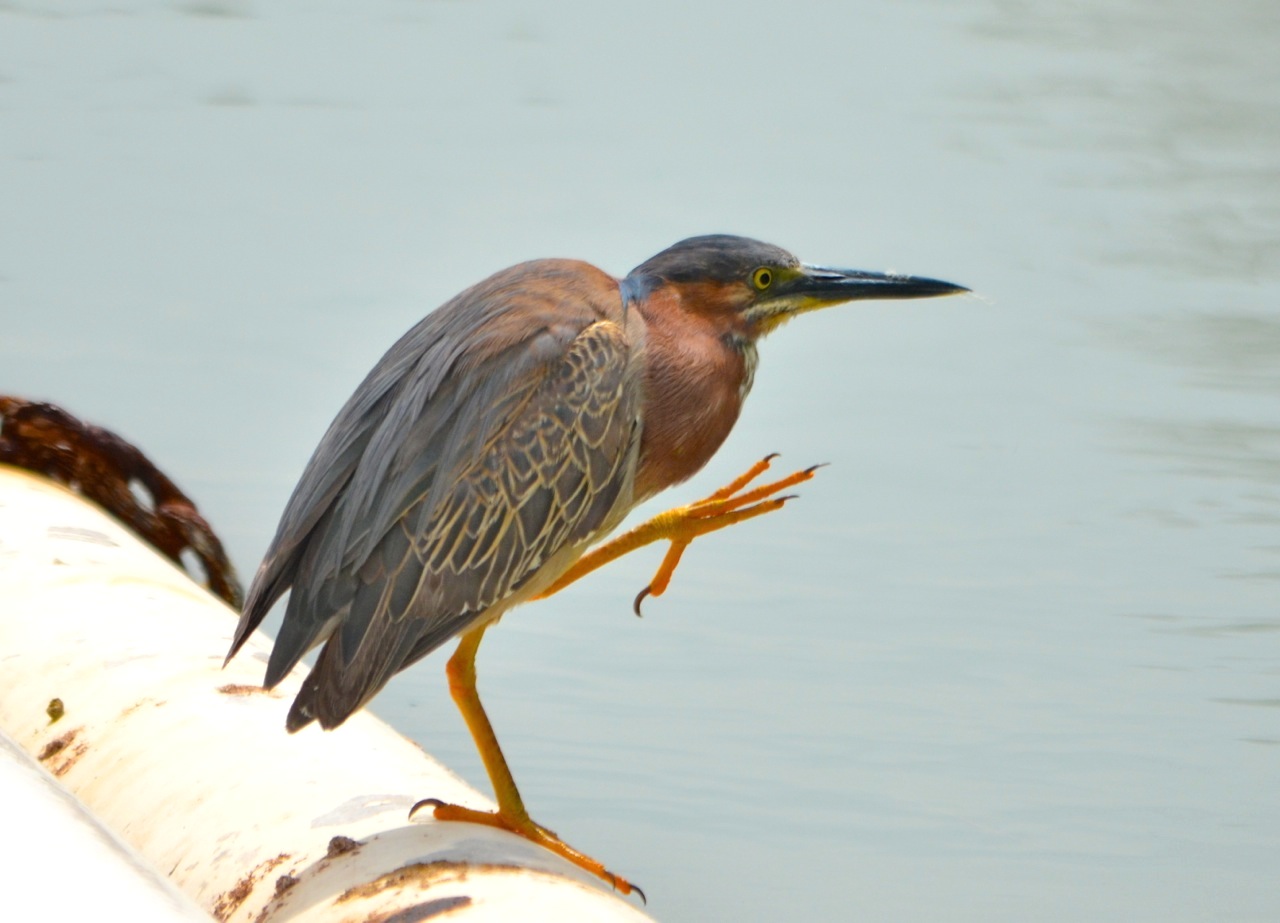
Green Heron.Abaco Bahamas.Tom Sheley

SHARP-EYED & SHARP-BILLED: GREEN HERON ON ABACO

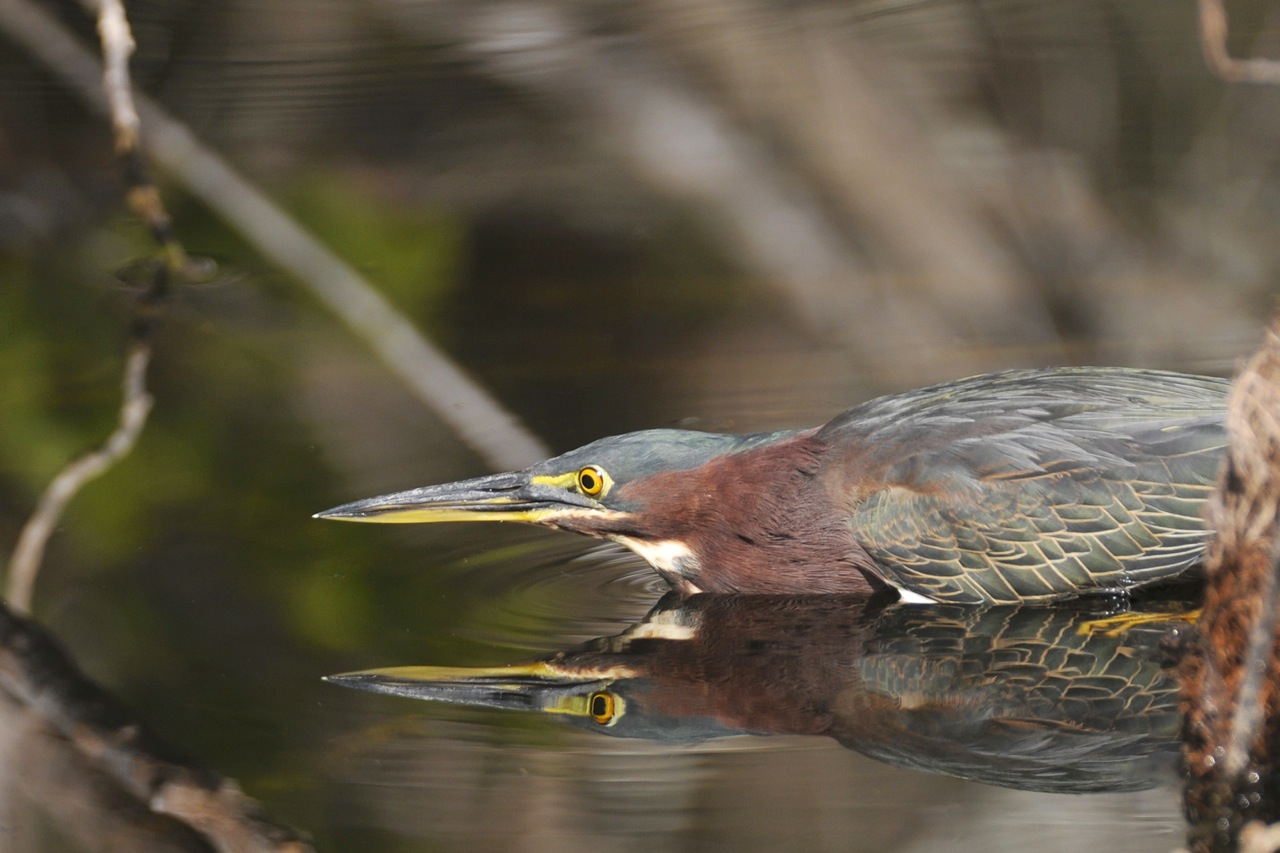
Abaco has six ‘true’ heron species (putting aside the various egrets): Great Blue Heron, Little Blue Heron, Tricolored Heron, Green Heron, Black-crowned Night-Heron and Yellow-crowned Night-Heron. The Green Heron Butorides virescens is a permanent resident and is easily distinguishable from the other heron species. The header picture by Tom Sheley is one of many wonderful photographs he took for THE BIRDS OF ABACO, and is one of the most striking. This is a bird actively hunting, keeping very low with eyes fixed on the water, waiting for the chance to use that long sharp bill to snaffle its prey – small fish, frogs and aquatic insects.

RANGE MAP

Green Heron Range Map

There are thought to be 5 sub-species of green heron within the range, but this is a matter for anguished debate (not by me). However, the resident variety in the Bahamas has been designated Butorides virescens bahamensis since 1888 (Brewster), so I’m going along with that.

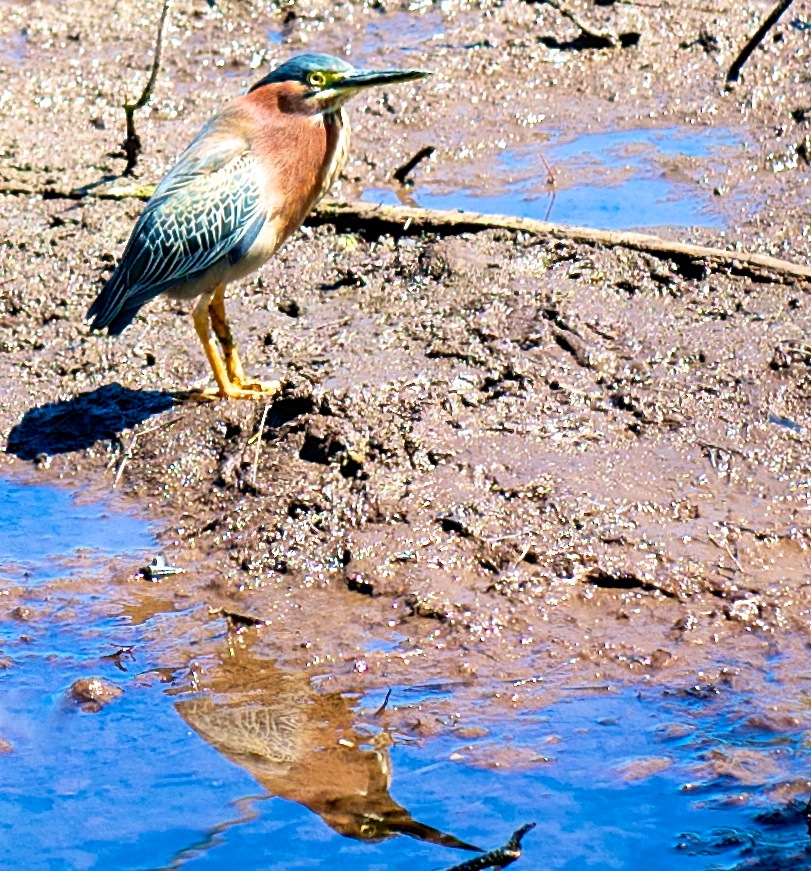
Green Herons are most likely to be seen in or near water – the margins of brackish ponds or amongst the mangroves, for example. Their foraging is mostly done in water, usually at dawn or dusk.Green Heron, Abaco Woody Bracey

You may encounter one on the shoreline or beach…GREEN HERON, Abaco - Nina Henry

…but they don’t always choose the most scenic locationsGreen Heron, Abaco Nina Henry

FASCINATING FACTOID

Green Heron are known to drop food, insects, or small objects such as stones on the water’s surface as bait to attract fish or other tasty creatures. They are thus classified as one of the animal kingdom’s  44 (?) TOOL-USING SPECIES, considered a sign of superior intelligence.

Green Herons may also be found perching in treesGreen Heron Abaco Tom ReedGreen Heron, Abaco Rick LoweGreen Heron, Abaco Peter Mantle

Occasionally they may be seen out at sea – this one from an offshore BMMRO research vesselGreen Heron Abaco BMMRO

The Golf Course at Treasure Cay is an excellent place to go bird-watching. There is always plenty of bird life on the 3 ponds there, the one on hole #11 being the biggest and most abundant. If you are going to bird there, call in first at the Clubhouse and ask for permission:  they are very kind about it, but they do need to know who is out on the course.  And since the pond is alongside the fairway, keep your wits about you – you are a potential target for the sliced drive… (ok, ok left-handers – hooked, then).

Green Heron, Abaco Charlie SkinnerGreen Heron, Abaco Charlie Skinner

The 2 images above are from Charlie Skinner, and show a green heron adult and chick putting the Golf Course drainage pipe to good use. Captions invited for the top  one. Birds often seen at this particular location include green heron, white-cheeked pintail (lots), common gallinule (moorhen), coot, Canada goose, least grebe, neotropic cormorant, and blue-winged teal. You may also see little blue heron and smooth-billed anis. Once I found a least bittern in the background of a teal photo – I didn’t notice it at the time, but when I checked the photos there it was in the reeds behind the ducks. Another good place to bird if you are in the TC area is White Sound.

Credits: Tom Sheley, Woody Bracey, Nina Henry, Tom Reed, Rick Lowe, Peter Mantle, Charlie Skinner, Wiki

POSTSCRIPT I’ve just commented HERE on the supposedly phonetic call-sounds attributed to birds to render them recognisable by man – the “What’s-for-dinner-Martha, what’s-for-dinner” and the “Give-me-a-drink-please…NOW” and so on. So when I was borrowing the range map from Wiki I was amused to see this: “The green heron’s call is a loud and sudden kyow; it also makes a series of more subdued kuk calls. During courtship, the male gives a raah-rahh call with wide-open bill, makes noisy wingbeats and whoom-whoom-whoom calls in flight, and sometimes calls roo-roo to the female before landing again. While sitting, an aaroo-aaroo courtship call is also given”. So there you go.

Unknown's avatar

VIREOS ON ABACO (1): GOING CHEEP – THE BLACK-WHISKERED VIREO


Black-whiskered Vireo, Abaco (Bruce Hallett)

GOING CHEEP ON ABACO: THE BLACK-WHISKERED VIREO

There are 8 vireo species recorded for Abaco. The most common is the ubiquitous Thick-billed Vireo Vireo crassirostris – the only permanent resident vireo – whose cheery chirp is part of the background of bird song heard daily all over the island.  The only other species you are likely to encounter without going out of your way is the summer resident BLACK-WHISKERED VIREO Vireo altiloquus, which breeds on Abaco. The other 6 are the White-eyed, Yellow-throated, Blue-headed, Warbling, Philadelphia, and Red-eyed Vireo. Of these, the first 2 are quite rare winter residents; and the other 4 are considered to be transients. Black-whiskered Vireo, Abaco

The BWV’s song is similar to the Thick-billed Vireo, but (luckily) identifiably different. I’m not a great one for phonetic attempts at turning a bird call into a human sentence of the ‘Quick!-come-to-pick-up-a-brick’ and the ‘Skin-me-a-nice-bit-of-bonefish’ type. The Black-whiskered Vireo’s song has been described as sounding like ‘Whip, Tom Kelly’. But not to me. See what you make of it…

Brian Cox / Xeno-Canto

Black-whiskered Vireo, Abaco Bahamas 2 (Tom Sheley)

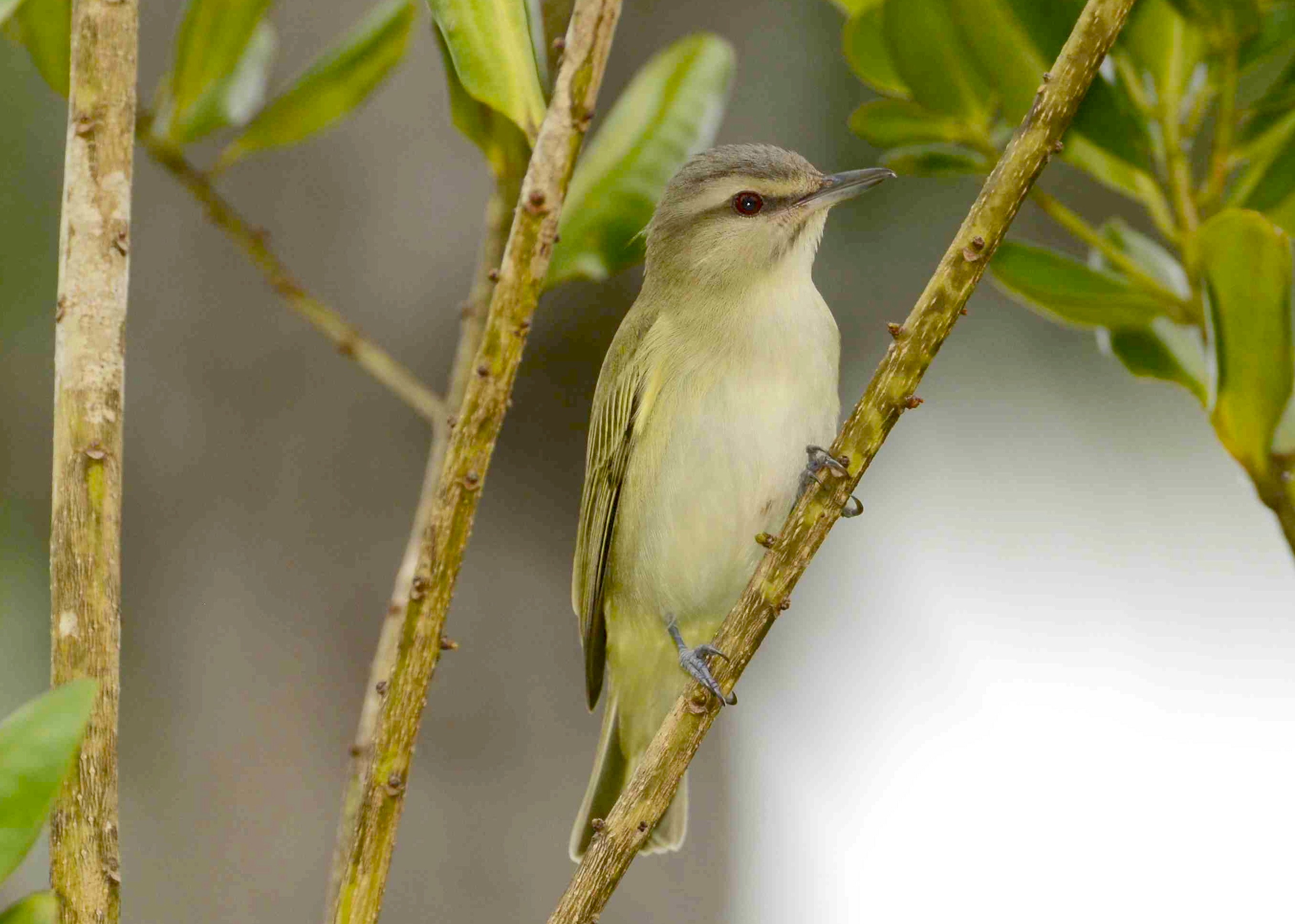
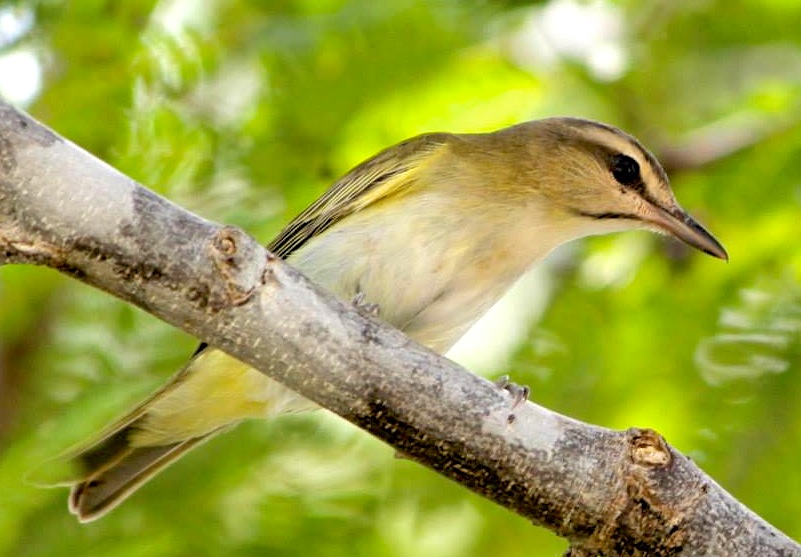
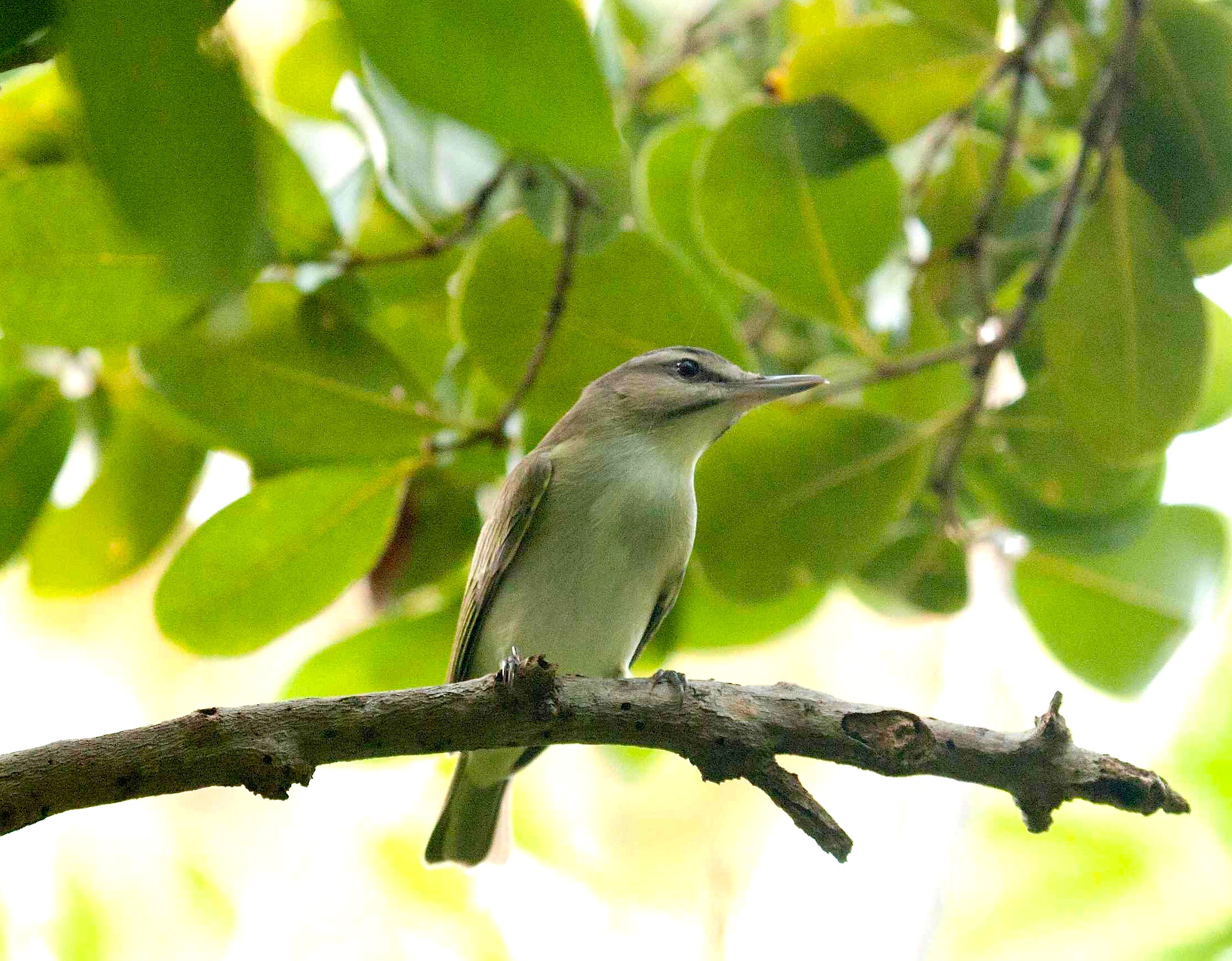
As with other vireo species, the BWV has a stout bill, a feature that helps to distinguish vireos from the many thin-billed warbler species on Abaco. The main signifiers are found on this bird’s head: the dark stripe right through the eye; the long white eyebrows; and the noticeable black lines – the ‘whiskers’ – on the sides of the neck. Other identification pointers are the pale underside with a yellow tinge to the flanks and undertail; and the red eyes (the red-eyed vireo, a very similar bird, lacks the whiskers).Black-whiskered Vireo, Abaco (Charmaine Albury)

Black-whiskered vireos feed mostly on insects in trees, bushes and undergrowth. They can sometimes be seen hovering while they forage. They also vary their diet with small quantities of berries. Here are two great shots of a mother BWV feeding a very large chick with a berry, followed by some vile insect.Black-whiskered Vireo, Abaco (Charlie Skinner)Black-whiskered Vireo, Abaco (Charlie Skinner)

Image Credits: Bruce Hallett, Tom Shelley, Charlie Skinner, Charmaine Albury, Erik Gaugerblack-whiskered-vireo, Abaco (Erik Gauger) 1

Unknown's avatar

WHAT’S IN A NAME? NORTHERN BOBWHITE ON ABACO


Northern Bobwhite female 2.Abaco Bahamas.6.13.Tom Sheley

WHAT’S IN A NAME? NORTHERN BOBWHITE ON ABACO

220px-Status_iucn3.1_NT.svg

A part of me would like Bob White to have been a legendary hero – perhaps holding his post against impossible odds; or a courageously reforming politician; or scoring a stupendous winning goal in the dying seconds of a famous tournament. Or maybe just a nice guy, popular in the local bar. Instead, the bobwhite Colinus virginianus is a small plump game bird of the quail family, named for its call which (as I have written elsewhere) “does indeed sound something like ‘bob…white?’ played on a slide-whistle”. This bird is an introduced species on Abaco where it breeds and is quite common. It is more often heard than seen, since it is a shy creature and not so easy to find. If they see you first, you’ll glimpse them scurrying away at best and you may well not see them at all. At Delphi, some set up home at the highway end of the drive where they can be heard and, from time to time, seen. Photographer Tom Sheley bided his time in order to capture these wonderful shots of a pair.

Bobwhite pair.Abaco Bahamas.Tom Sheley crBobwhite pair 2.Abaco Bahamas.Tom Sheley cr

I recently wrote about another game bird, the WHITE-CROWNED PIGEON. The bobwhite also appears in the excellent Bahamas National Trust’s BNT HUNTERS GUIDE 

Northern Bobwhite BNT Hunters Guide

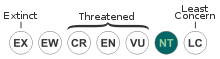
Unfortunately one of the consequences of enjoying game bird status – coupled with other factors such as habitat loss – is that the species is IUCN-listed ‘near threatened’. That’s not a cause for immediate concern, but the next stage may be…

The northern bobwhite can be found year-round in fields, grassland, open woodland areas, roadsides and wood edges. Sightings of bobwhites are most usually made when they are in cover such as long grass or undergrowth, as in the header photo and the one below.Bobwhite male in habitat.Abaco Bahamas.6.13.Tom Sheley copy

When we went out searching for bobwhites last year to photograph for the book, we drove along tracks in open farmland and remote backcountry. We could hear them but we only saw a few, mostly too briefly to photograph. My own attempts were abject failures, small brown blurs of backside as the birds scuttled away. Tom Sheley fortunately had what it took to get results – patience, skill and a great camera.

Photo credits: Tom Sheley

Unknown's avatar

LHUDE SING, CUCCU! THE MANGROVE CUCKOO ON ABACO


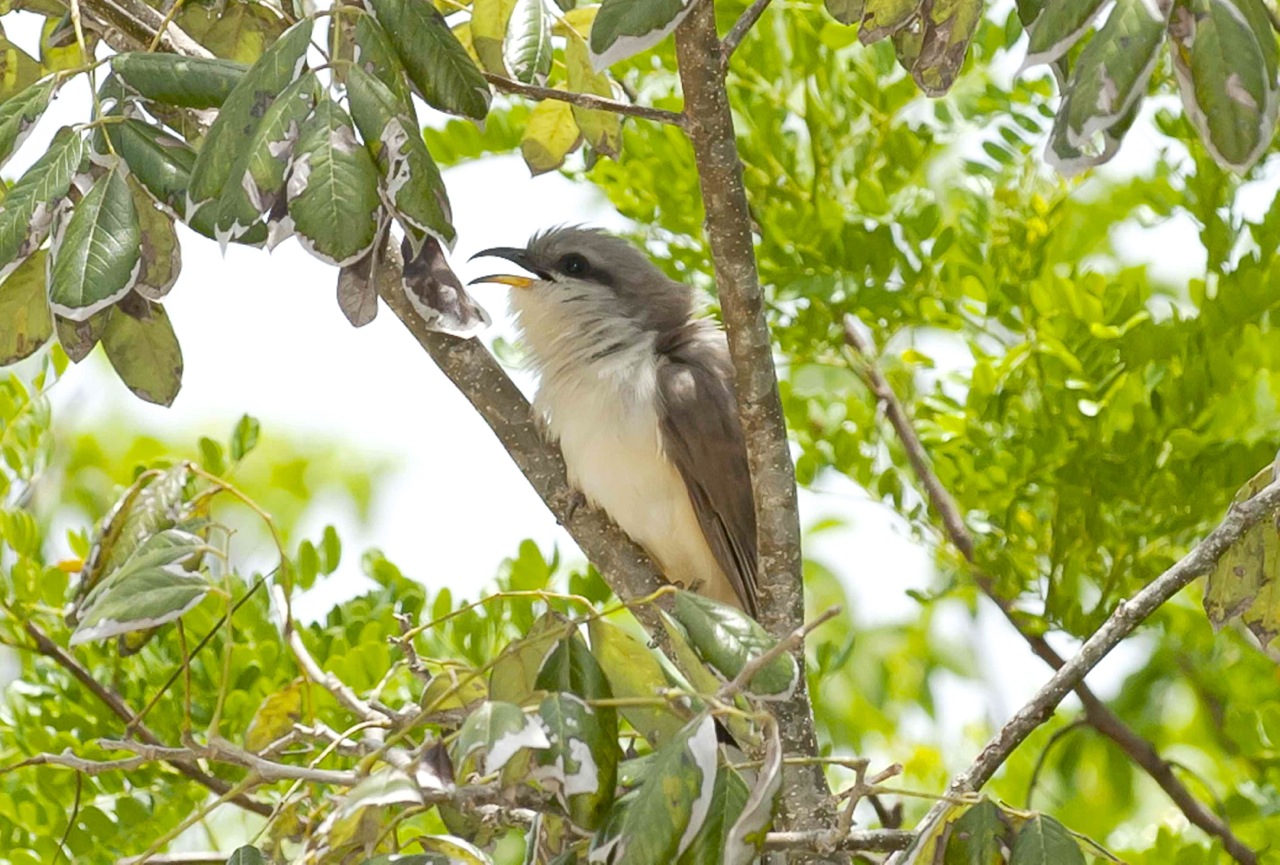
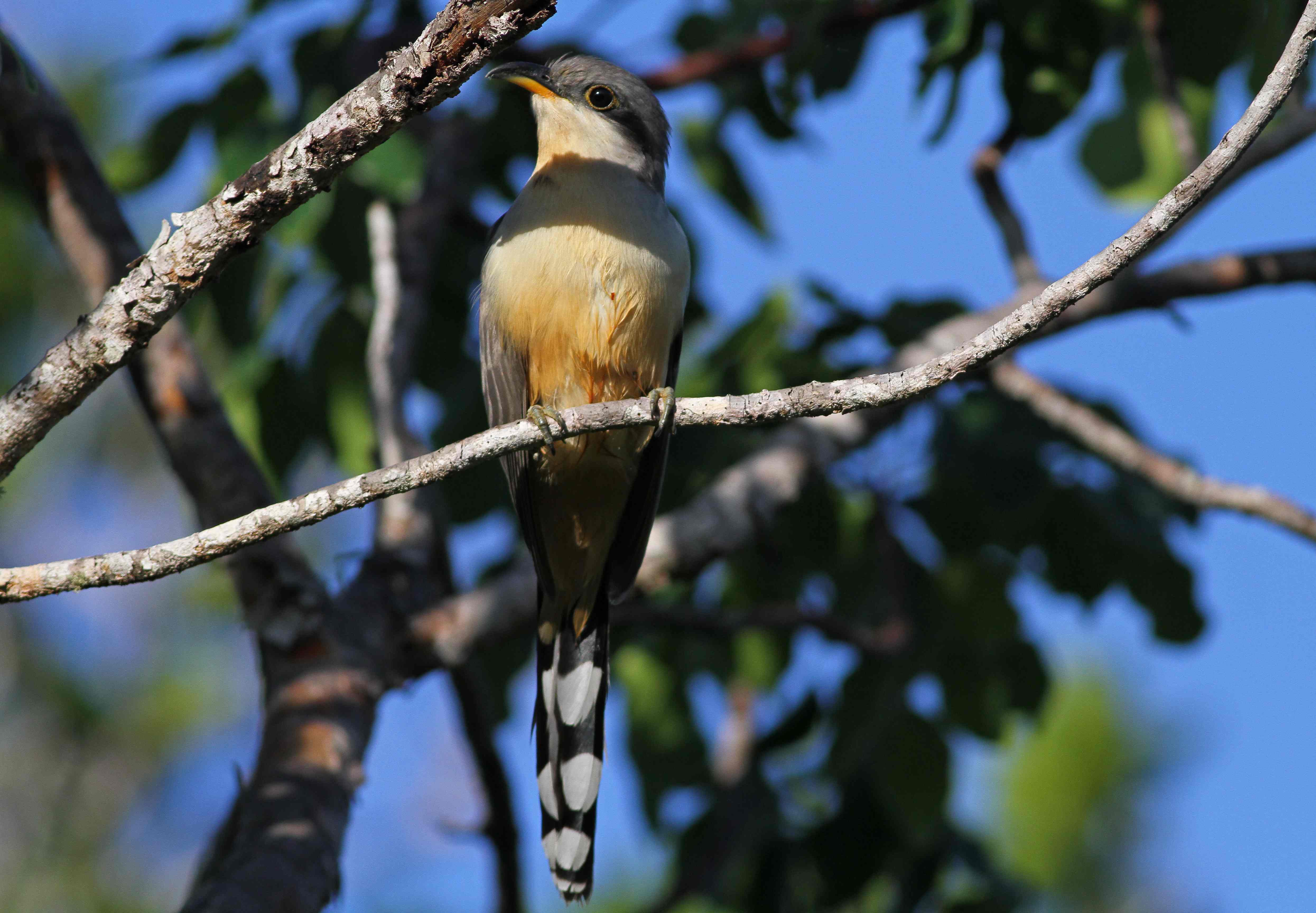
 Mangrove Cuckoo, Abaco, Bahamas (Bruce Hallett)

LHUDE SING, CUCCU! THE MANGROVE CUCKOO ON ABACO

Summer is icumen in, that’s for sure. Has already cumen in, to be accurate. The approach of summer is the time when cuckoos tend to sing loudly (not lewdly, as the old lingo might suggest). The YELLOW-BILLED CUCKOO, recently featured, is one. The MANGROVE CUCKOO (Coccyzus minor) is another. Before I get on to some gorgeous pictures (none taken by me!), let’s have a sample of how this species sounds. The call has been described in various ways, for example as “gawk gawk gawk gawk gauk gauk”. I’m not so sure. And I can’t think of a sensible way to write it out phonetically. So I won’t. Please try, via the comment box…

Jesse Fagan / Xeno-Canto

Cornell Lab / Allaboutbirds  

MANGROVE CUCKOO, Abaco (Alex Hughes)Mangrove Cuckoo with insect.Delphi Club, Abaco, Bahamas (Tom Sheley)

You will notice that all three birds above have got fat insects in  their beaks. A lot of photos in the archive show feeding mangrove cuckoos. Maybe that’s when they are most likely to break cover, for they are quite a shy species.  Their preference is for caterpillars and grasshoppers, but they are happy to eat other insects, spiders, snails, lizards and (with a nod to an all-round healthy diet) fruit.

Mangrove Cuckoo, Delphi Club, Abaco, Bahamas (Tom Sheley) copyMangrove Cuckoo, Abaco, Bahamas (Gerlinde Taurer) Mangrove Cuckoo, Abaco Alex Hughes

Delphi is lucky to have some of these handsome birds lurking in dense foliage along the drives – the guest drive in particular. Some of these photographs were taken there. Occasionally you may see one flying across a track ahead of a vehicle, flashing its distinctive tail. It’s significant that only the last of these photos shows the bird right out in the open – the rest are all deeper in the coppice.

Mangrove Cuckoo, Abaco, Bahamas (Tony Hepburn) copyMangrove Cuckoo, Abaco, Bahamas (Tony Hepburn)  copyCredits: Bruce Hallett, Alex Hughes,  Tom Sheley, Gerlinde Taurer and the late Tony Hepburn; Audio – Xeno-Canto & Cornell Lab. All photos taken on Abaco!

SumerIsIcumenIn-line


Unknown's avatar

“I HEAR YOU KNOCKING”: THE YELLOW-BILLED CUCKOO ON ABACO


Coccyzus-americanus_ Factumquintus Wiki

“I HEAR YOU KNOCKING”: THE YELLOW-BILLED CUCKOO ON ABACO

The Yellow-billed Cuckoo (Coccyzus americanus) is the least common of three cuckoo species found on Abaco. All are permanent residents.  It is similar to the more frequently seen Mangrove Cuckoo. Both are avid consumers of insects in general and caterpillars in particular. The YBC is shy and you are quite unlikely to see one out in the open, though you may hear its distinctive ‘knocking’ call. The third species classified with the ‘cuculidae’ is the Smooth-billed Ani. Here’s what to listen out for:

Mike Nelson / Xeno-Canto

Yellow-billed Cuckoo, Abaco, Bahamas (Tom Sheley) copy

The YBC has, obviously, a yellow bill. It also has yellow eye-rings and pure white underparts. Photographer Tom Sheley, a major contributor t0 “The Birds of Abaco”, is a very patient man. He managed to capture these two beautiful birds by knowing the right place to be at the right time… and waiting. The results for this little-seen species are spectacular.

Yellow-billed Cuckoo, Abaco Bahamas (Tom Sheley)

For those whose memories are stirred by the reference to “I hear you knocking” (Rick from Nassau – you!), I include archive material of Dave Edmunds hamming it up. Get a load of the Clothes! The Dancing! The Moves of the guy in the top left corner / centre back, at once rhythmic yet disconcertingly bizarre.

Unknown's avatar

‘RAINBOW BIRDS’: GORGEOUS PAINTED BUNTINGS ON ABACO


Painted Bunting male.Bahama Palm Shores.Abaco Bahamas.Tom Sheley

‘RAINBOW BIRDS’: GORGEOUS PAINTED BUNTINGS ON ABACO

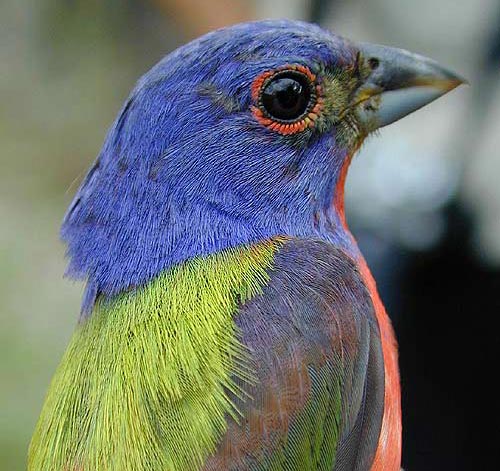
The Mnemonic: that little aide memoire that helps you easily remember a fact. A suitable example hereabouts would be one for remembering the order of taxonomy:  Kids Prefer Cheese Over Fried Green Spinach (Kingdom, Phylum, Class, Order, Family, Genus, Species). ‘ROY G BIV’ or ‘VIBGYOR’ were my childhood ones for the colours of the rainbow in order. Now I’d just look at a picture of a Painted Bunting. Who cares about the exact order? The colours are all there! 

Painted Bunting, Abaco (Tara Lavallee)

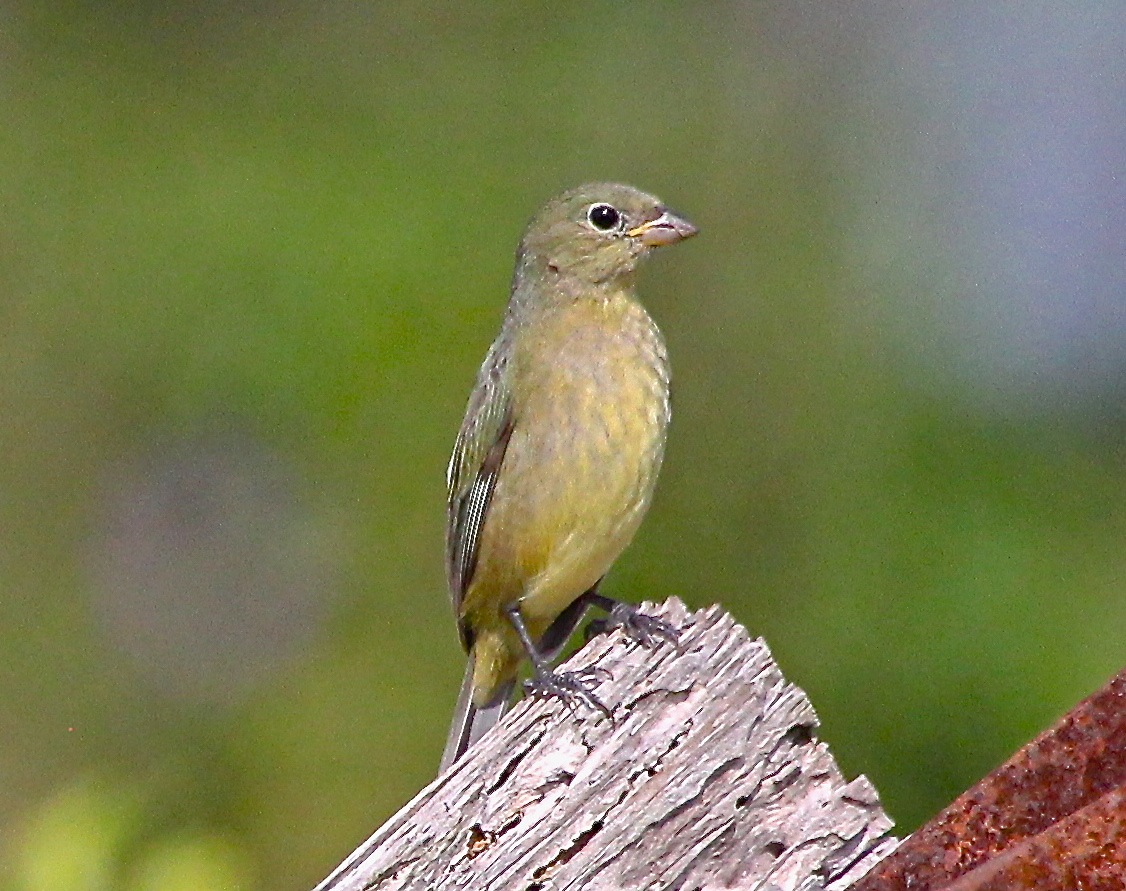
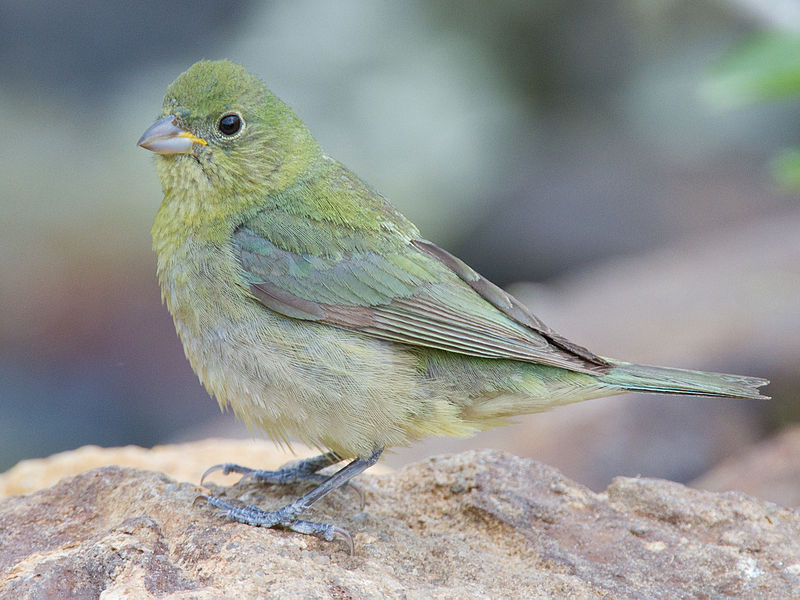
PAINTED BUNTINGS (Passerina ciris) belong to the Cardinal family (Cardinalidae) native to North America. Some would argue that the male Painted Bunting is one of the most beautiful birds. There are no ID problems with the male – once seen, never forgotten. However, these birds are inclined to skulk a bit, so despite their vivid  colouring they aren’t always easy to see amid foliage. The plumage of female and juvenile Painted Buntings are green or greeny-yellow and may be even harder to see in coppice. The one below is an immature female.

Painted Bunting (female, immature), Abaco (Bruce Hallett)

These  buntings are shy birds, but luckily their keenness for seeds outweighs their natural diffidence, and they enjoy feeders. They also eat small invertebrates such as spiders, snails, grasshoppers, and caterpillars, especially in the breeding seasonPainted Bunting, Abaco (Erik Gauger)

Male painted buntings are only too well aware how gorgeous they look (‘You’re so vain – I bet you think this post is about you…’). They may go in for ostentatious displays, including flying like a butterfly or all fluffed up or with quivering wings. Or all three. Sometimes this is to upstage another male; mostly it is to impress the laydeez.

Painted Bunting, Abaco (Tara Lavellee)

Russ Wigh, Xeno-Canto

Unsurprisingly the painted bunting was at one time very popular as a caged bird. Now though, it is illegal to catch or keep one. They are IUCN listed as Near Threatened and are protected by the U.S. Migratory Bird Act.

220px-Status_iucn3.1_NT.svg220px-Passerina_ciris_distribution

The photos above all come from the photographic archive amassed for “The Birds of Abaco” project. Credits to Tom Sheley, Tara Lavallee, Bruce Hallett, and Erik Gauger. Below is an omnium gatherum consisting of a gallery of rather good painted bunting photos from Wiki;  a good video of PABUs singing; and for light relief a largely irrelevant yet quite charming 10 minute cartoon ‘The Rainbow Bird’ based on a South American folktale. 

PaintedBunting23 Painted Bunting Passerina ciris Doug Janson Wiki 800px-Painted_Bunting_Female_by_Dan_Pancamo


Unknown's avatar

SAW A SORA? SURE? RAIL TRACK ON ABACO


BAHAMAS - Sora 2 - Oct 2010 copy 2

SAW A SORA? SURE? RAIL TRACK ON ABACO

‘Furtive’. ‘Secretive’. ‘Skulking’. These are harsh epithets to chuck at a small inoffensive bird that just goes about its daily routine in watery places. And look at it from the Sora’s point of view: ‘intrusive’; ‘prying’; invasive’; ‘nosy’… That’s you with your camera, disturbing its quiet life in the reeds and on the margins of marsh and lake. And for that matter your careful attempts to get close to the shy sora without startling it could also be described as furtive, secretive and skulking. See how it feels?

Sora.Marsh Harbour.Abaco Bahamas.6.13.Tom Sheley copy

The Sora Porzana carolina is a species of rail, a winter resident on Abaco. The island also has the CLAPPER RAIL, Virginia Rail and the Black Rail. There are no recorded sightings of this last one, and certainly no photographs. But their distinctive call has been heard in several locations over the last few years –  for example, by two people in different places last June when we were in full bird mode for “THE BIRDS OF ABACO”.

Sora, Gilpin Point Abaco RH 1

Although not uncommon, the sora is relatively hard to find; and if found, to photograph. As I wrote in the book, ‘these are most inconspicuous birds, so it is quite a coup if you manage to locate one. Their creamy beak and upturned tail may give their presence away as they work their way along the water’s edge, feeding intently’. Tom Sheley took the magnificent photo above of a sora peering out from cover – he’s a very patient man. Often, the best sight you’ll get is of the bird half-hidden in the reeds at a distance, as in my feeble effort above. Spot the Sora… I tracked the same bird, and later got a more open shot as the sora picked its way along the edge of a pond before disappearing again into the reeds. The bird was moving away from me. I was crouched on a small jetty, with a little blue heron nearby looking at me in puzzlement. Or sympathy. My best (ha!) shot below (beak and tail both visible? Check!) is followed by much the most usual view of a sora in my experience, the less photogenic end with the white… stern.

Sora, Gilpin Point Abaco RH 3Sora, Gilpin Point Abaco RH 4
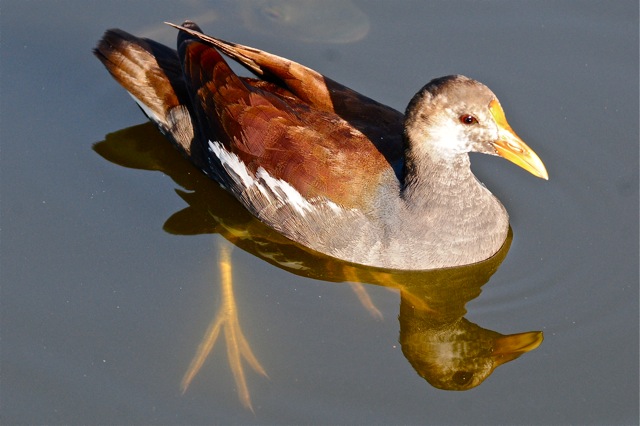
I can’t improve on good old Wiki in summarising the diet of this little rail: “Soras are omnivores, eating seeds, insects and snails. Animals that are commonly reported as sora food items include snails, crustaceans, spiders, and insects – mainly beetles, grasshoppers, flies, and dragonflies. Soras often eat plant seeds. Plants in the sora’s diet include duckweed, pondweeds, and grasses.” Wiki’s own image is shown next.

Sora, Birding Center, Port Aransas, Texas

We were with our friend the ornithological scientist Caroline Stahala* when we – I should say she – saw my first sora at the pond at Gilpin Point near Crossing Rocks. She grabbed my camera and plunged into the rather thick undergrowth at the water’s edge. Actually, she had to plunge into the water itself at one stage. Here are 2 shots that further demonstrate how hard it can be to photograph these wretched creatures. They don’t pose prettily on a branch in the sunshine like a Spindalis, for example. They forage about in places where low light and thick vegetation combine to make focus and clarity difficult to achieve. *’The Parrot Lady’  Sora, Gilpin Point Abaco - Caroline Stahala 1 Sora, Gilpin Point Abaco - Caroline Stahala 2 The remarkable calls of the sora can be heard in the very short clips below, from the invaluable Xeno-Canto archive. They make three distinct types of sound, one described as “a descending whinny”. Apparently the use of ‘call broadcasts’ greatly increases the chances of hearing a sora. They also increase the chances of seeing a sora, as the bird will often investigate the source of the call. The propriety of using a recording to attract a bird is open to debate, but there’s no doubt that it can be far more effective than simply going ‘pish-wish’ repeatedly… CALL Ted Floyd ‘WHINNY’ CALL   Micah Riegner ‘WEEP CALL’  Todd Wilson This is a second Wiki image of a sora foraging in water. I like the fact that, as with Tom’s photo, you can see the feet.1024px-Porzana_carolina “SORA”. Where does the word come from? What does it mean? It sounds like some uninviting butter-style spread. Or is that ‘Flora’? I did some research and for a start it means ‘Sky’ in Japanese and ‘Seashell’ in Korean – both used as names. Six countries worldwide have places called Sora. There are various obscure usages (e.g. a little-known video game). Disappointingly, however, the best etymology I can find in a birding context is that the origin is ‘unknown’. I was too disheartened to explore the derivation of ‘Porzana’. Could so easily be a second-tier female character in a Shakespeare comedy: “Haply, Porzana, hast seen the Sora of the Prince, withal?”. Having started this post with a header shot by Becky Marvil, I’ll end with the etymological mystery and another photo by Becky of the same bird going for some underwater delicacy. Sora, Abaco - Becky Marvil 2.1

STOP PRESS Uli Nowlan has kindly sent a photo of a Sora taken at ponds north of Treasure Cay (below). It’s a timely reminder to me that this blog is somewhat South Abaco oriented. More than somewhat, in fact. That’s inevitable I’m afraid, owing to my base camp being south of MH. Also, I think it’s generally accepted that South Abaco is the place to find the best birding. I do include birds from the TC area – the golf course ponds and the creeks – but perhaps not enough. Contributions welcome!

Sora, Abaco (Treasure Cay area) - Uli Nowlan

Credits: Header and last image – Becky Marvil; Tom Sheley, RH, Wiki, Caroline Stahala; Uli Nowlan. Wiki-nod for some info also.