For tens of thousands of people, the past 2 weeks have been dominated by one cruelly aggressive female: Irma. In terms of a lucky escape, Abaco’s gain was elsewhere’s pain. Recently, only the vivid Wunderground trackers I have posted have stood out from the bleakness of the ominous clouds, pounding waves, and sluicing rain. With the prospects for Hurricane Jose wandering around in the mid-Atlantic looking increasingly good, it’s time for a look at something more cheerful.
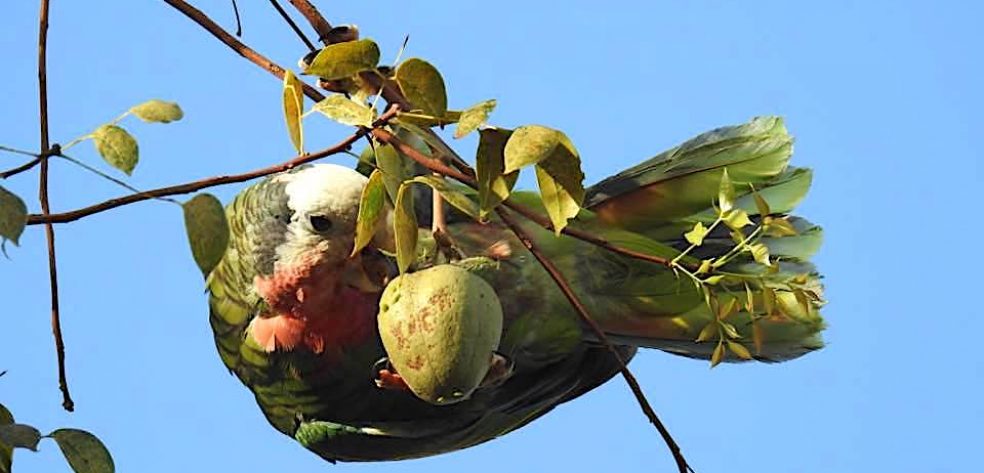
Birds can lighten the spirit. As yet, I’ve seen few reports of how the birds on Abaco have fared, but the ones I have seen have been encouraging. A west-indian woodpecker back on his usual tree; a piping plover foraging on the beach at Winding Bay, even as the storm raged; bird business more or less as usual at Delphi. No news yet of Abaco’s iconic parrots, which will have most likely headed to the National Park for cover. They usually manage OK. The header image is a tip of the hat to them, their raucous beauty, and their healthy recovery from near-extinction over the last few years.
Here’s a small gallery of some of Abaco’s most colourful and striking birds for some light relief. Have a nice day!
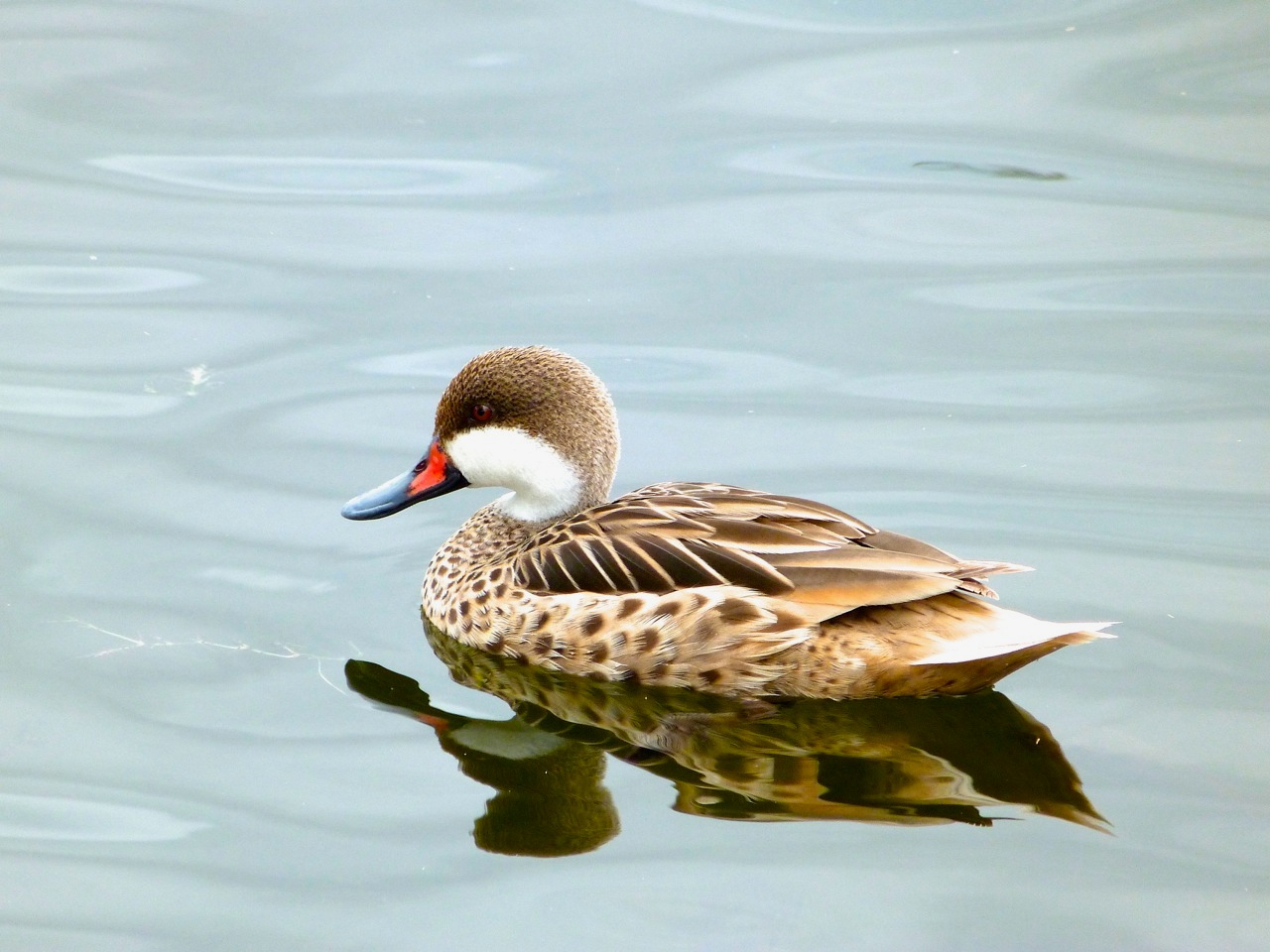
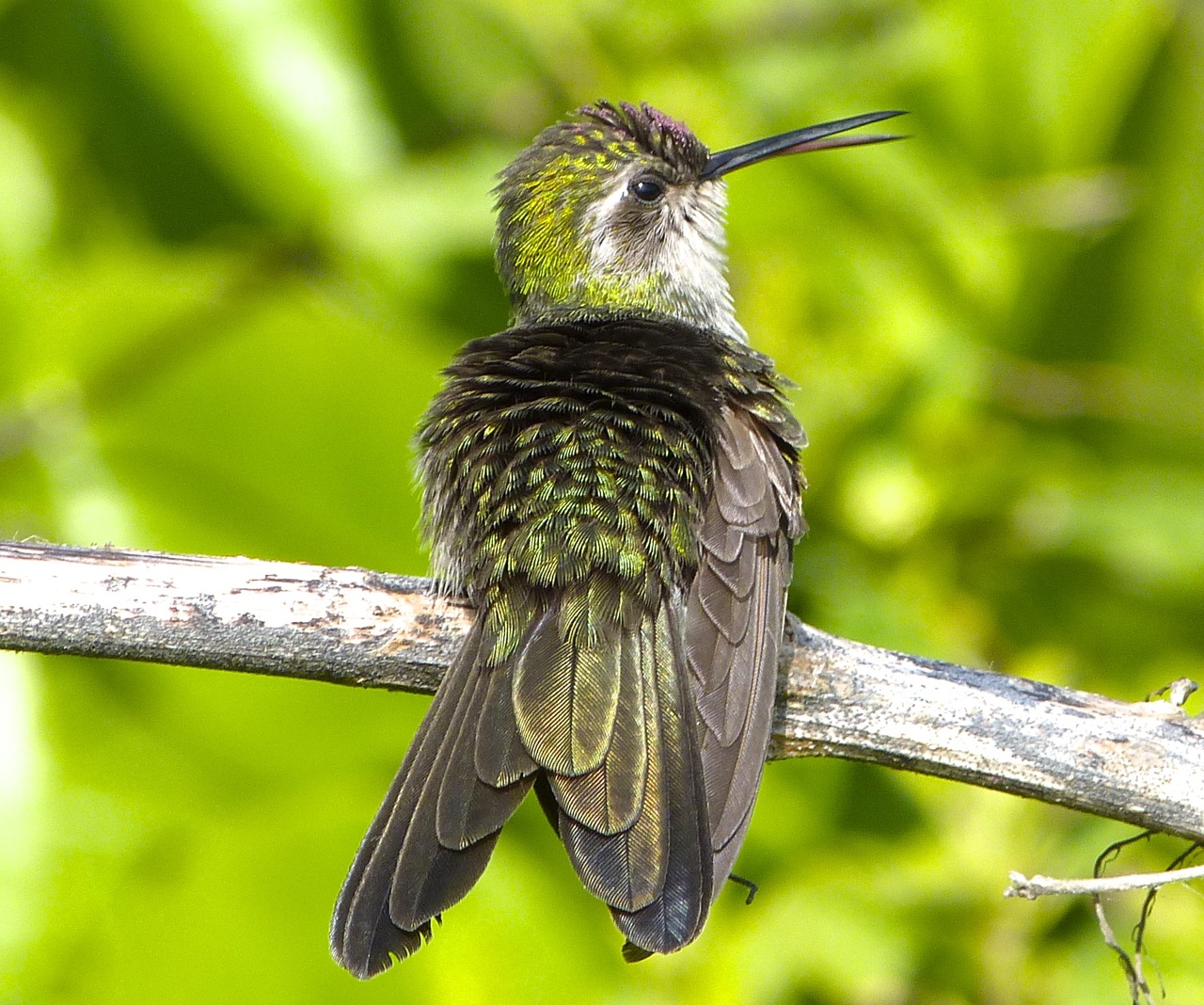
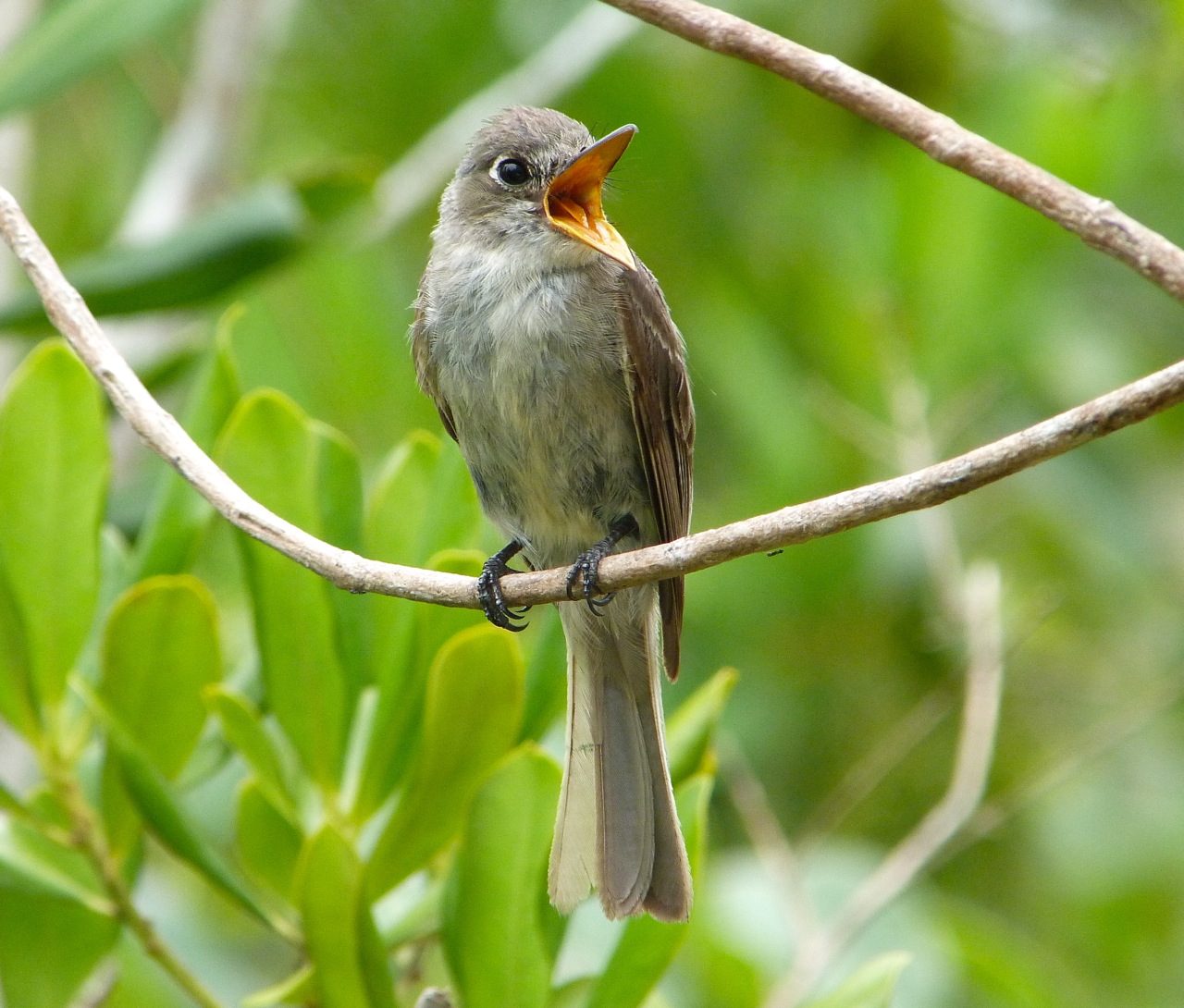
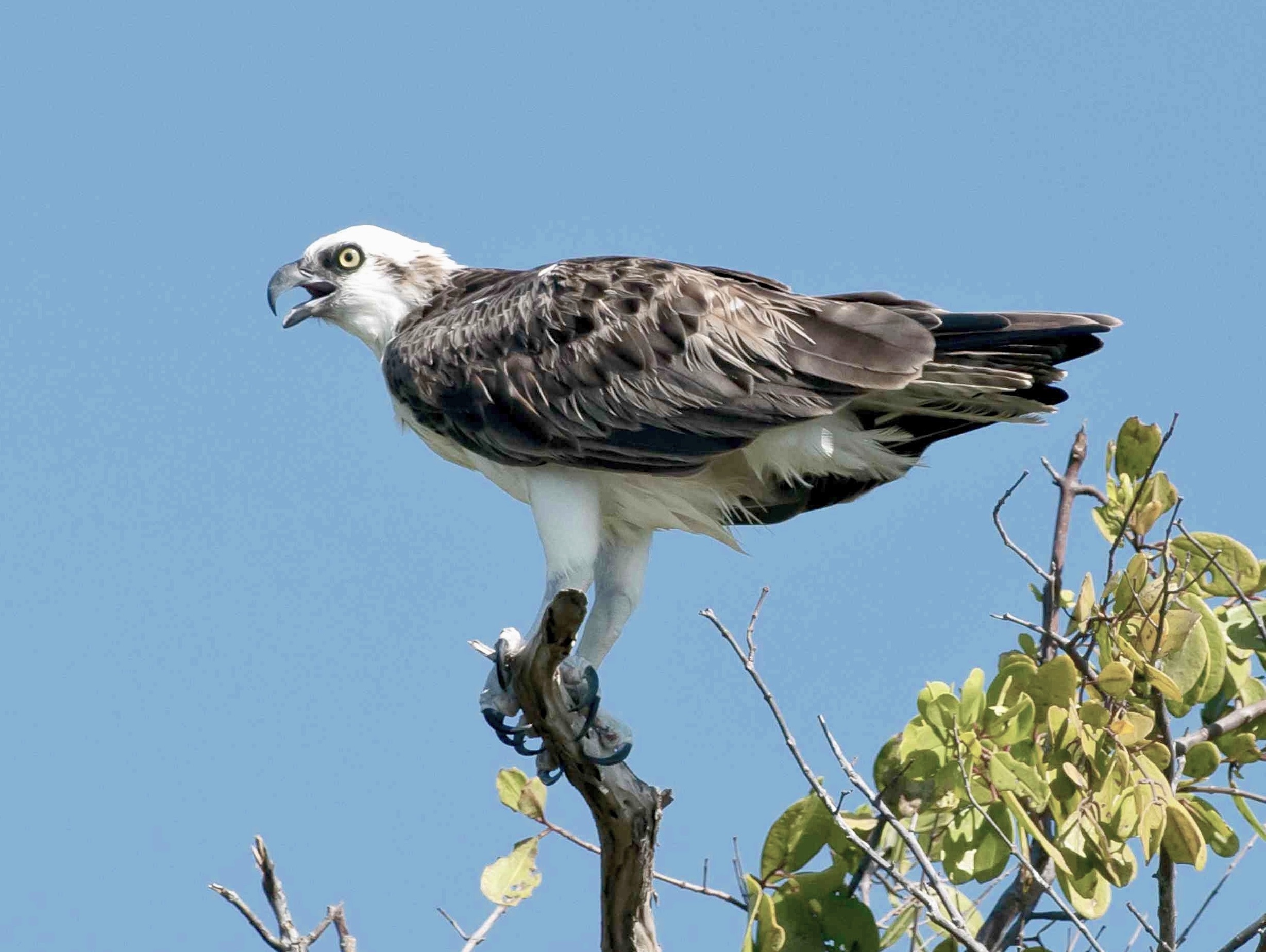
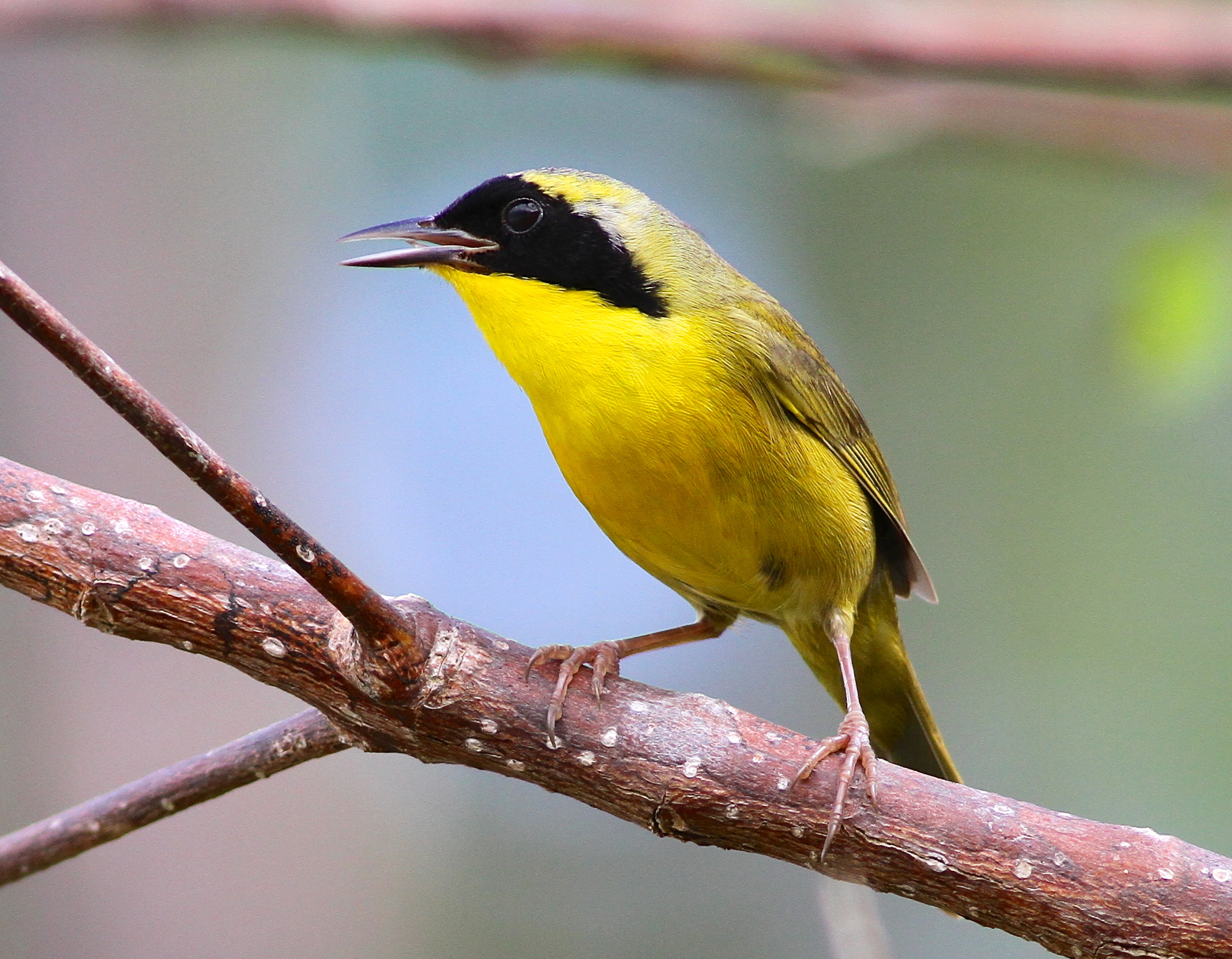
Photo Credits: Abaco (Cuban) Parrot, Melissa Maura; Painted Bunting, Tom Sheley; Bananaquit, Keith Salvesen; Western Spindalis, Craig Nash; White-cheeked (Bahama) Pintail, Keith Salvesen; Cuban Emerald (f), Keith Salvesen; Bahama Woodstar, Tom Sheley; Black-necked Stilt, Tom Sheley; Cuban Pewee, Keith Salvesen; Osprey, Tom Sheley; Bahama Yellowthroat, Gerlinde Taurer. Storm tracker, Wunderground
Just over 3 years ago, THE BIRDS OF ABACOwas published and launched at the Delphi Club. The book was intended to showcase the wonderful and varied bird life on Abaco – home to endemics, permanent residents, seasonal residents, and a wide variety of migrating transients. The book has been most generously received and supported – though I have to report that already its definitive checklist (dating from 1950) has become outdated with the recording of 6 additional species on Abaco, featured elsewhere in this blog.
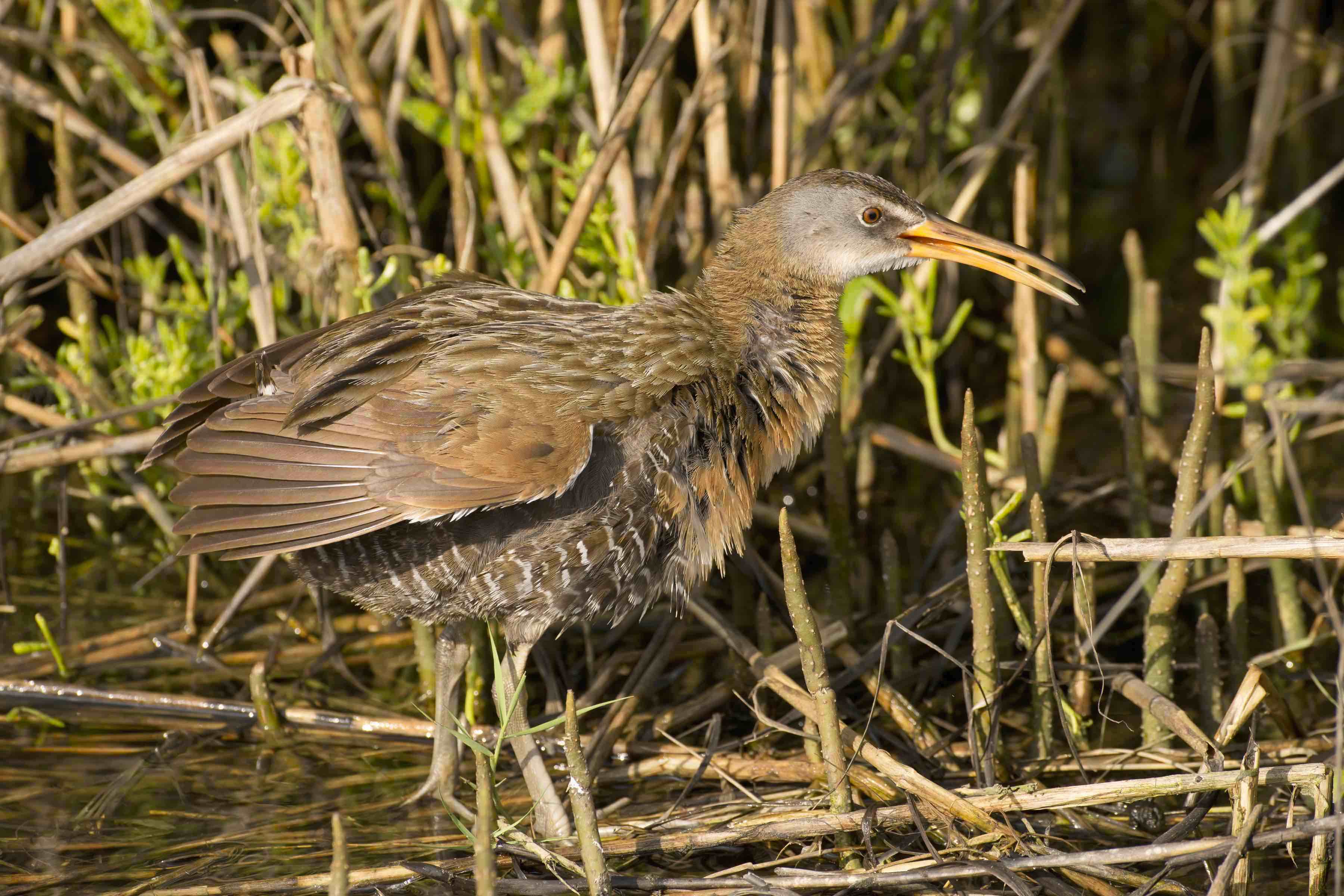
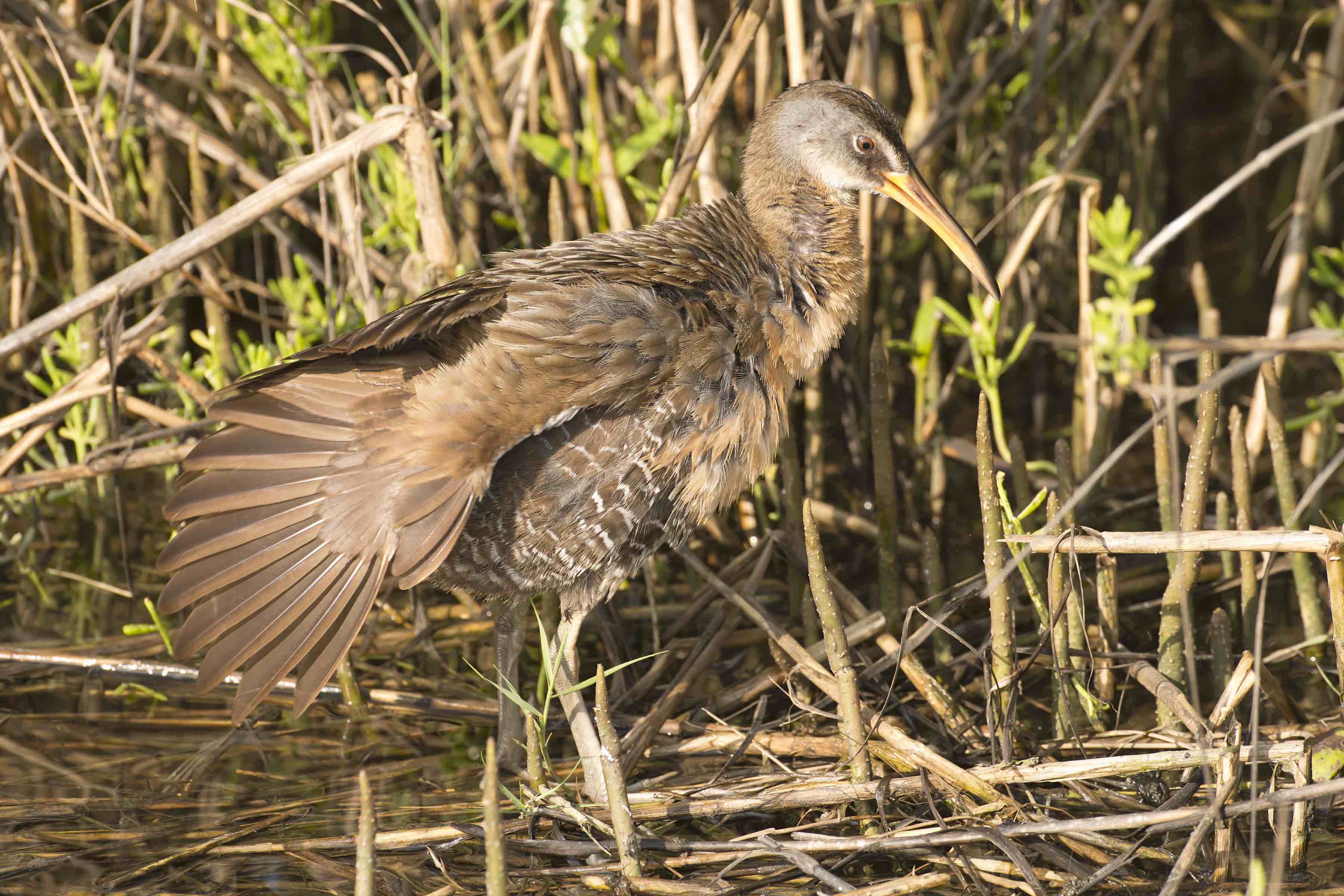
Tom Sheley was one of the main photographic contributors to the book, and I had the good fortune to coincide with one of his trips to Abaco, when he was armed with significant photographic weaponry; and to accompany him on some of his photographic day trips (not including the early morning ones, in my case). This clapper rail is one of my favourites of his photo sequences of a bird being a bird – preening, stretching, calling – in its own habitat.
My one regret about my involvement in producing the book (it took 16 months) and more generally in the wildlife of Abaco is that I have entirely failed to progress to sophisticated (expensive) photographic equipment capable of producing images the quality of Tom’s. Yes, I’ve moved on from compacts (ha!) to bridge cameras (Panasonic Lumix + lens extender), and some results ‘make the cut’. But my move up to a Canon SLR was mainly disastrous, and when eventually I inadvertently drowned it (I overbalanced while photographing shorebirds from breaking waves. Total immersion. Total stupidity.) I felt an unexpected sense of relief. A blessing really – I never understood it, nor in my heart of hearts (if I’m honest) really wanted to… But my feeble struggle made me realise and appreciate the enormous skill of those like Tom who take ‘National Geographic’ quality photographs. It’s not just the equipment – it’s knowing exactly how to use it, and often in a split second…
Photos by Tom Sheley – with thanks for the adventures
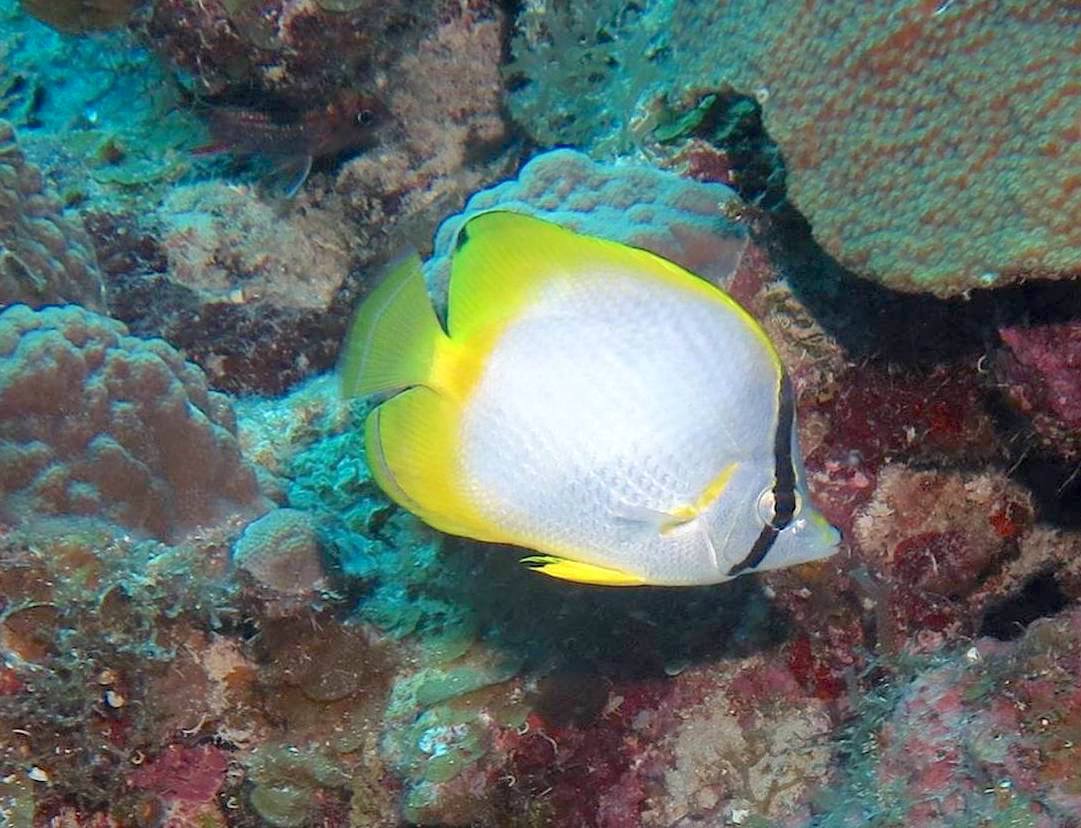
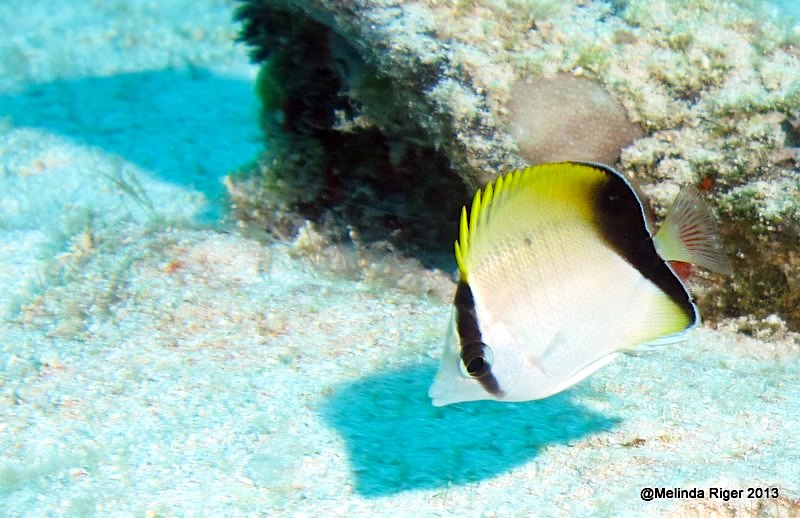
Butterflyfishes are a large family of mainly colourful small fish somewhat like mini-angelfish. The spotfin butterflyfish (Chaetodon ocellatus) is one of several types of butterflyfish found in the western Atlantic Ocean; and one of half a dozen or so you are likely to see nosing around the coral reefs of the Bahamas.
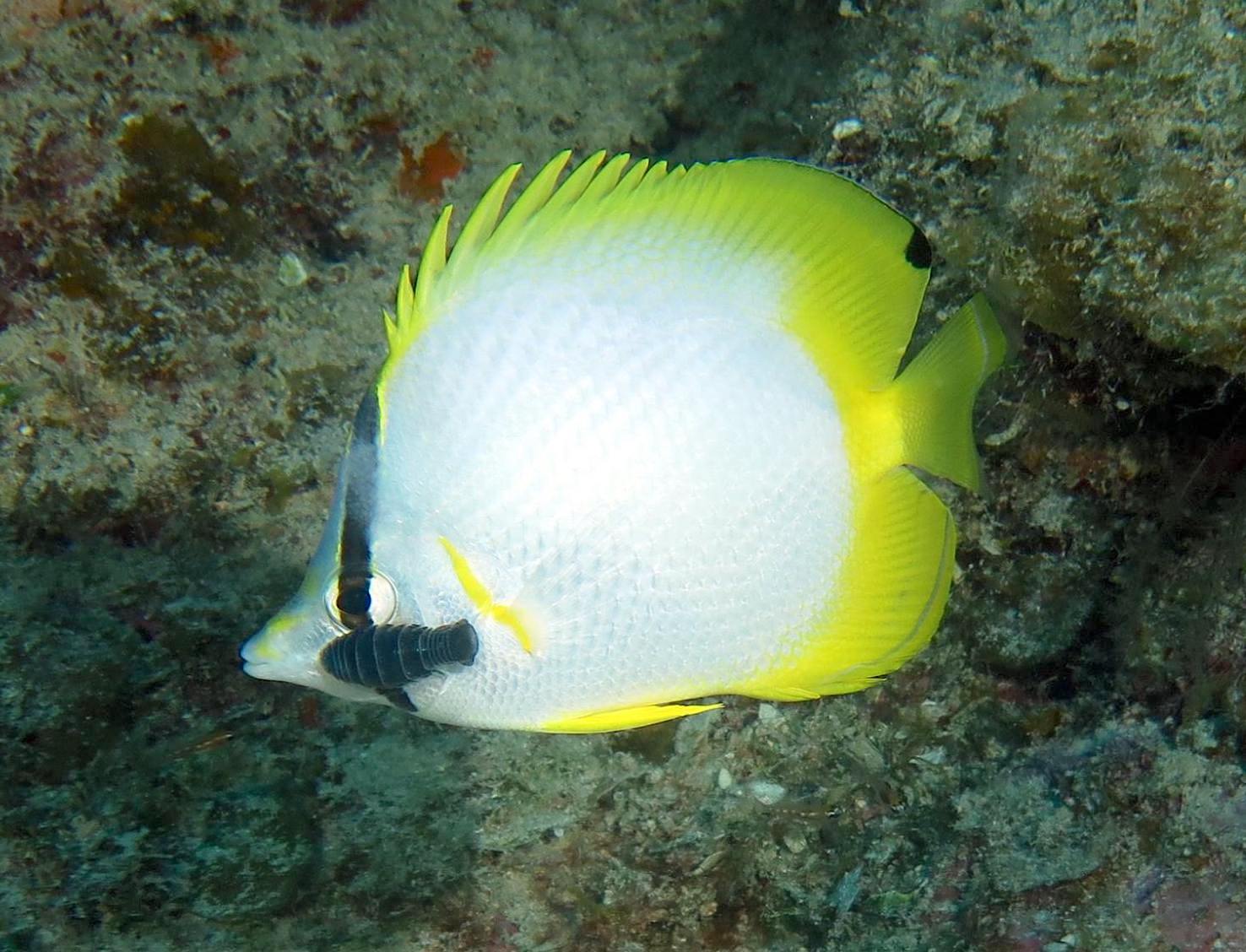
The name ‘spotfin’ derives from the dark spot on the dorsal fin. At the front end, there is a distinctive black vertical stripe that passes right through the eye. Combined with the vivid colouring, predators are in theory confused or warned off. The spotfin’s superpower (on a modest scale) is that at night, a change of appearance occurs in adults. The dark patch on the dorsal fin increases in size, and dark bands appear on the body. This seems to be in order to provide further protection during the darker hours.
The spotfin above has an isopod attached to it, a type of crustacean with a segmented body. Primitive fossils of these creatures have been dated back some 3m years. Want to know want this one is up to? These things“are mostly external parasites of fish or crustaceans and feed on blood, having piercing and sucking mouthparts and clawed limbs adapted for clinging onto their hosts”.
Soldierfish photobombs a spotfin. Or maybe it’s vice versa?
Reading about this particular species of butterfly fish, I discovered that the spotfin “is very common and very hard to maintain in a tank” – as if the two facts are somehow connected. So might they be coarse or vulgar, and thus unsuitable companions for better bred and perhaps sensitive aquarium fish? As it turns out, it may be because they are vulnerable to predation, and so can coexist only with peaceable tank friends.
Spotfins are perfectly happy swimming upside down; and their party trick apparently is to rise to the surface and squirt a jet of water in the air. Sadly, I couldn’t come up with a photo of this…
Some birds are named for the sounds they make (bobwhite, chuck-will’s-widow, pewee, killdeer). Some are named for their appearance (yellow-rumped warbler, painted bunting). And some are named for what they do (shearwater, sapsucker – but definitely NOT killdeer). The ruddy turnstone Arenaria interpres is in the last two of these categories: it looks ruddy and it literally turns stones to get at the goodies underneath.
And they don’t just turn stones to look for food. Someone with a lot of patience has defined 6 specific methods by which a turnstone forages for food:
Turning stones by flicking them with its beak
Digging using its beak to flick away sand or earth (see video below)
Routing around in piles of seaweed to expose food under it
Surface pecking with short, shallow pecks for food just below the surface
Probing by simply sticking its beak deep into soft sand or ground
Hammer-probing to crack open a shell and get at the occupant
In these photos taken on a rather gloomy day on the Delphi beach, a combination of mainly digging and routing is going on. Note the sandy beak of the RUTU below, right up to the hilt.
This short video shows how effective the RUTU method is. It was fascinating to watch the team work their way through and around the piles of weed on the beach, flicking sand vigorously in their quest for sandflies or whatever. Watch the sand fly! Pity it wasn’t a sunny day – the photos might have looked a bit more cheerful…
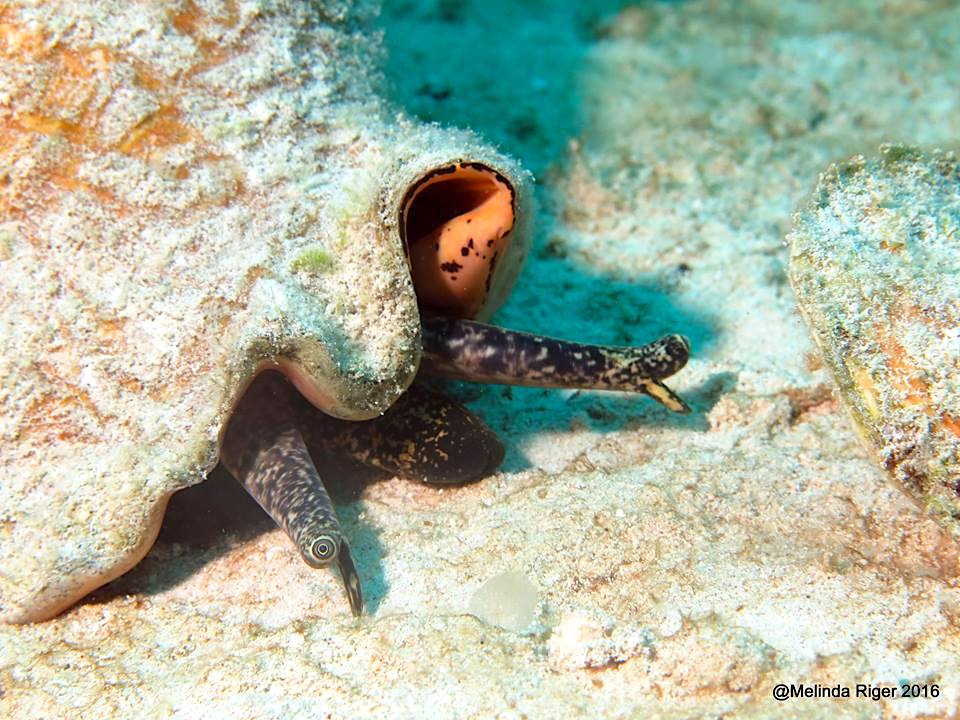
This is not so much about you looking at, and admiring (without salivating too much, I trust) conchs in their natural element. More about them watching you watching them – and focusing on their rather remarkable stalk-based eyes. Take a look at these examples of the ‘watcher in the shallows‘ (to misquote a well-known book title).
HALF A DOZEN CONCH EYE FACTS TO PONDER
The eyestalks are attached to an extendable ‘snout’
The two eyestalks (ommatophores) are retractable within the shell
Their purpose is to provide a wider field of vision around the shell
The eyes at the tip of each eyestalk have ‘proper’ lenses, pupils and irises
The small projection below the eye is a ‘sensory tentacle’ or feeler
CAUTIONARY WARNING
For a rather depressing view of the current state of conch populations, check out this recent article in theMIAMI HERALD. Not a great deal to be optimistic about…
I’M WATCHING YOU…
CREDITS: All remarkable ‘conch watching’ photos by Melinda Riger / Grand Bahama Scuba – except for the wonderful header image by Charmaine Albury (contributor the The Birds of Abaco), taken on Man-o-War Cay; Cindy James Pinder for the heads-up for the Miami Herald article
To be honest, the header image is not the sort of ‘fruity’ I had in mind, which was intended to have an entirely dietary connotation. I’m not quite sure what these two are up to – not procreation, I think, in that precarious situation. It looks non-aggressive… so maybe just having fun and… er… hanging out together.
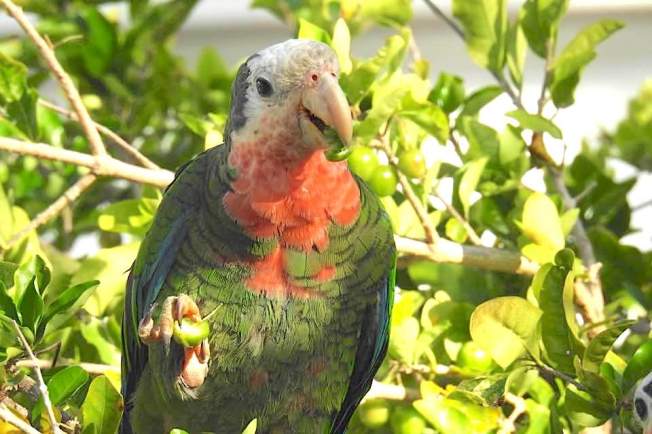
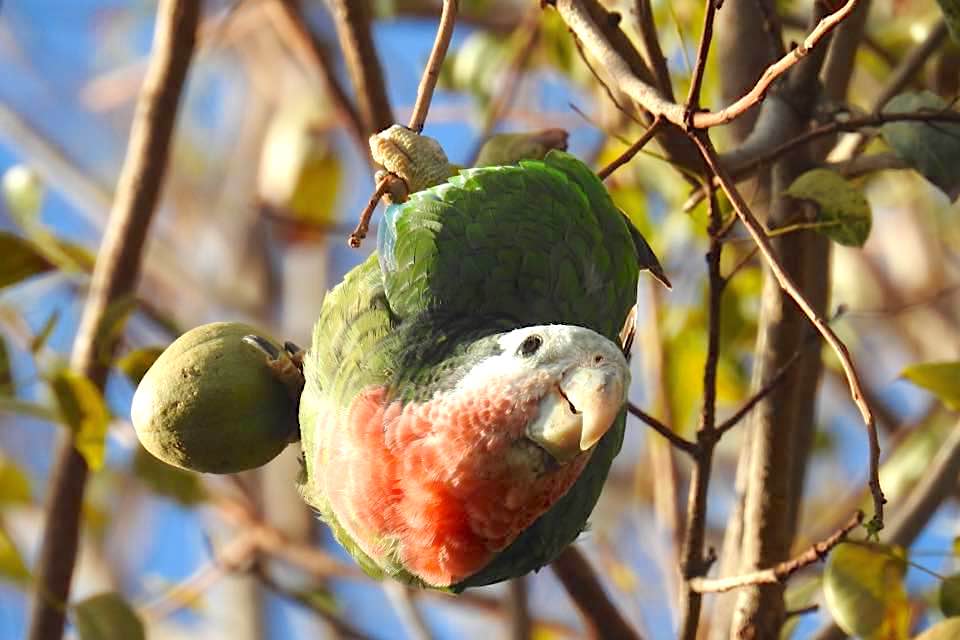
Here are some Abaco parrots doing what they love to do in between group squawking sessions: gorge themselves on fruit, and getting at it any which way.
Upside down is really just a different angle to get at fruit
Noshing on berries
One in the beak, next one ready in the claw
Tackling something more substantial
More acrobatics
And eventually out on a limb…
All great parrot photos by Melissa Maura, with thanks as always for use permission
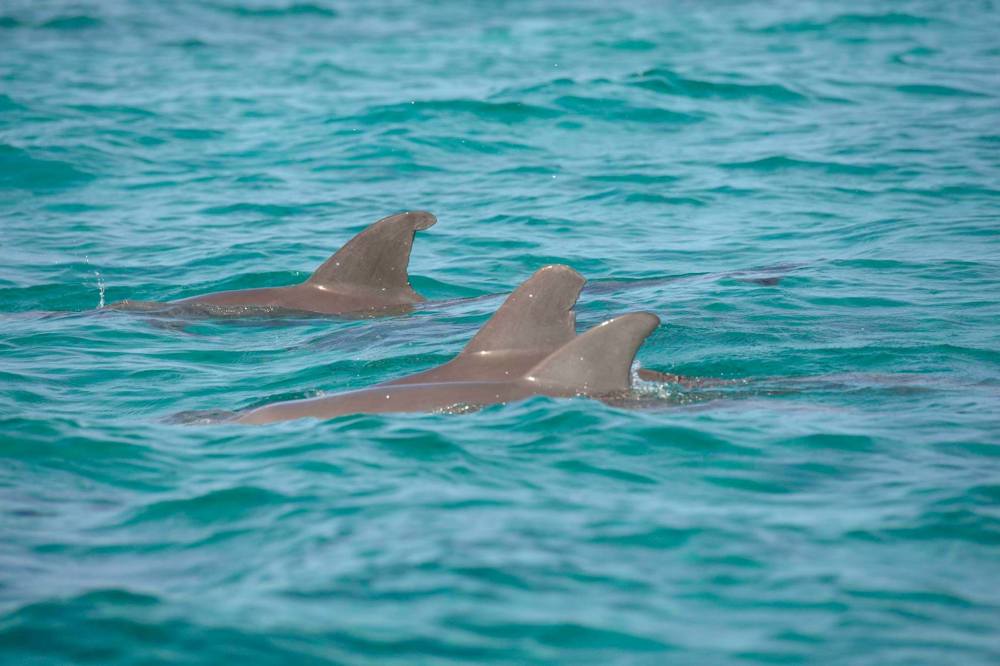
‘Disporting’. Not a word I’ve used very often. Or possibly ever. It looks a bit like ‘unsporting’, which is emphatically what dolphins are not. Basically, it just describes what dolphins are doing when you see them on the surface: amusing themselves, frolicking around in the waves, and simply enjoying themselves.
True, they are probably keeping an eye out for food… But when you have a group sociably following alongside the boat your are in, moving in front, dropping behind, diving under, and generally playing around, it’s quite hard to believe that these are completely wild creatures. They seem to be performing just for you, simply because they want to. You don’t even have to throw fish at them to earn this free display.
As is well-known, the BAHAMAS MARINE MAMMAL RESEARCH ORGANISATION (BMMRO) is the custodian for the welfare of these beautiful creatures for the entire Bahamas. However, being based on Abaco and carrying out the majority of the research from the HQ at Sandy Point means that many of the great images that get taken are from Abaco waters. Indeed some are taken within swimming distance (not mine) of the shore.
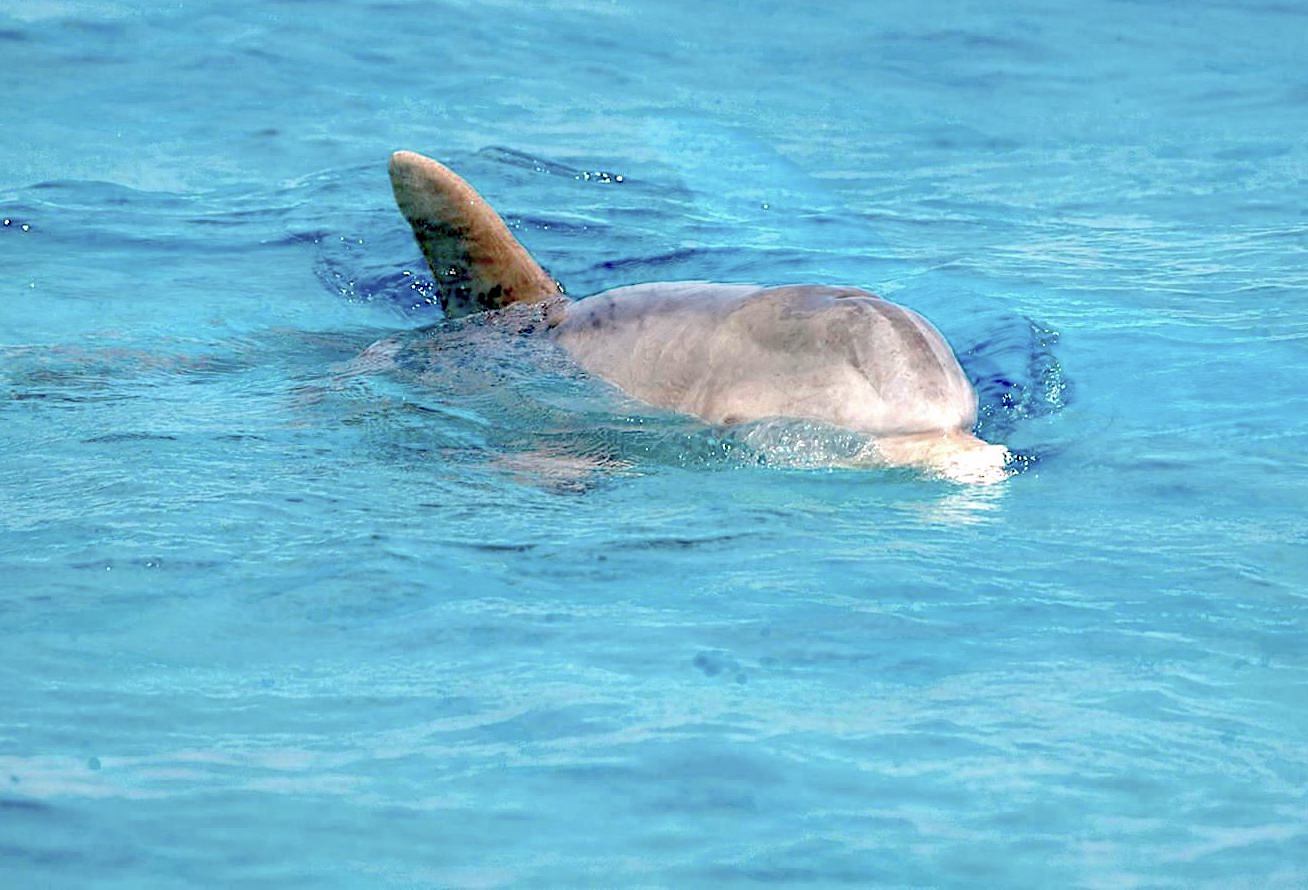
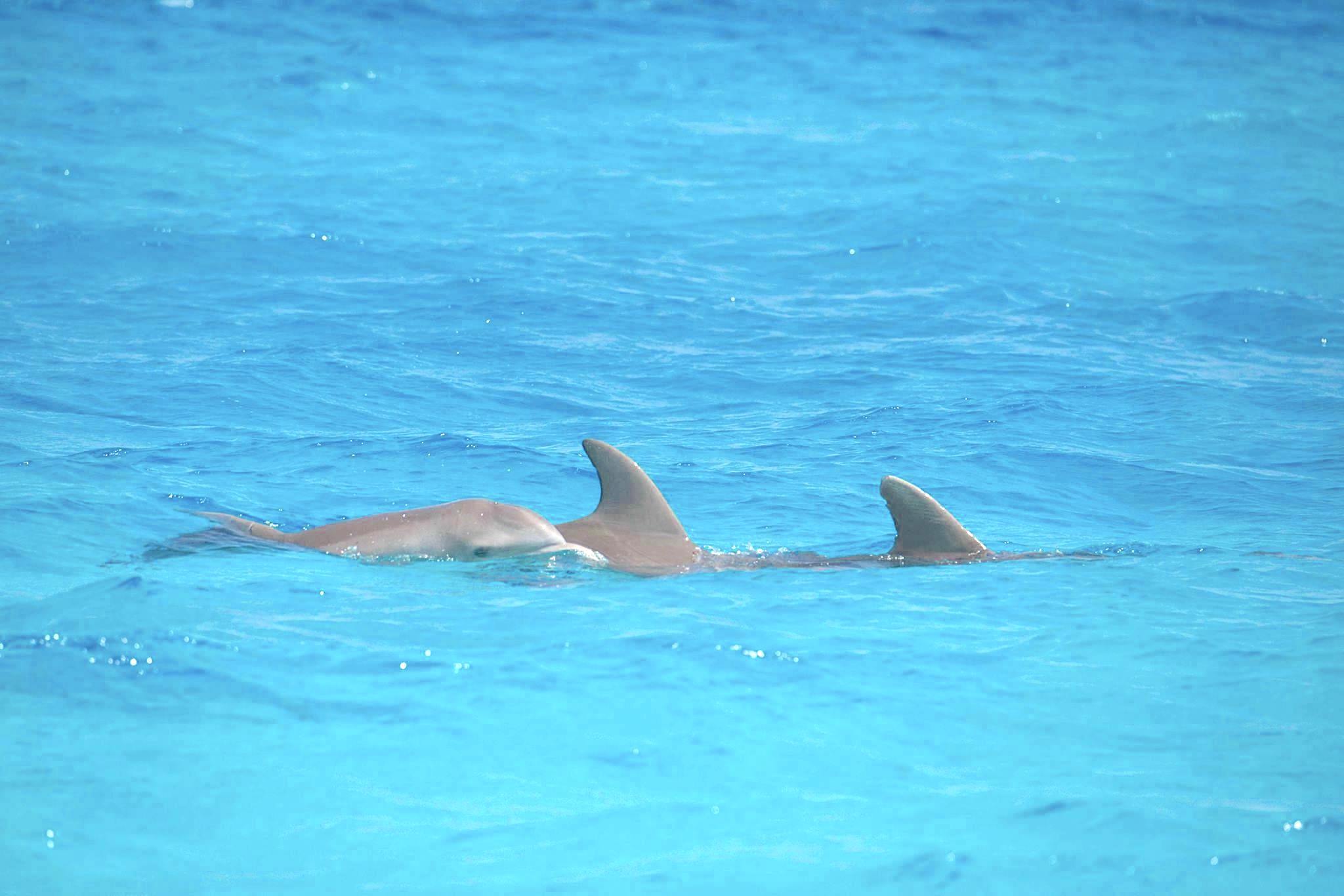
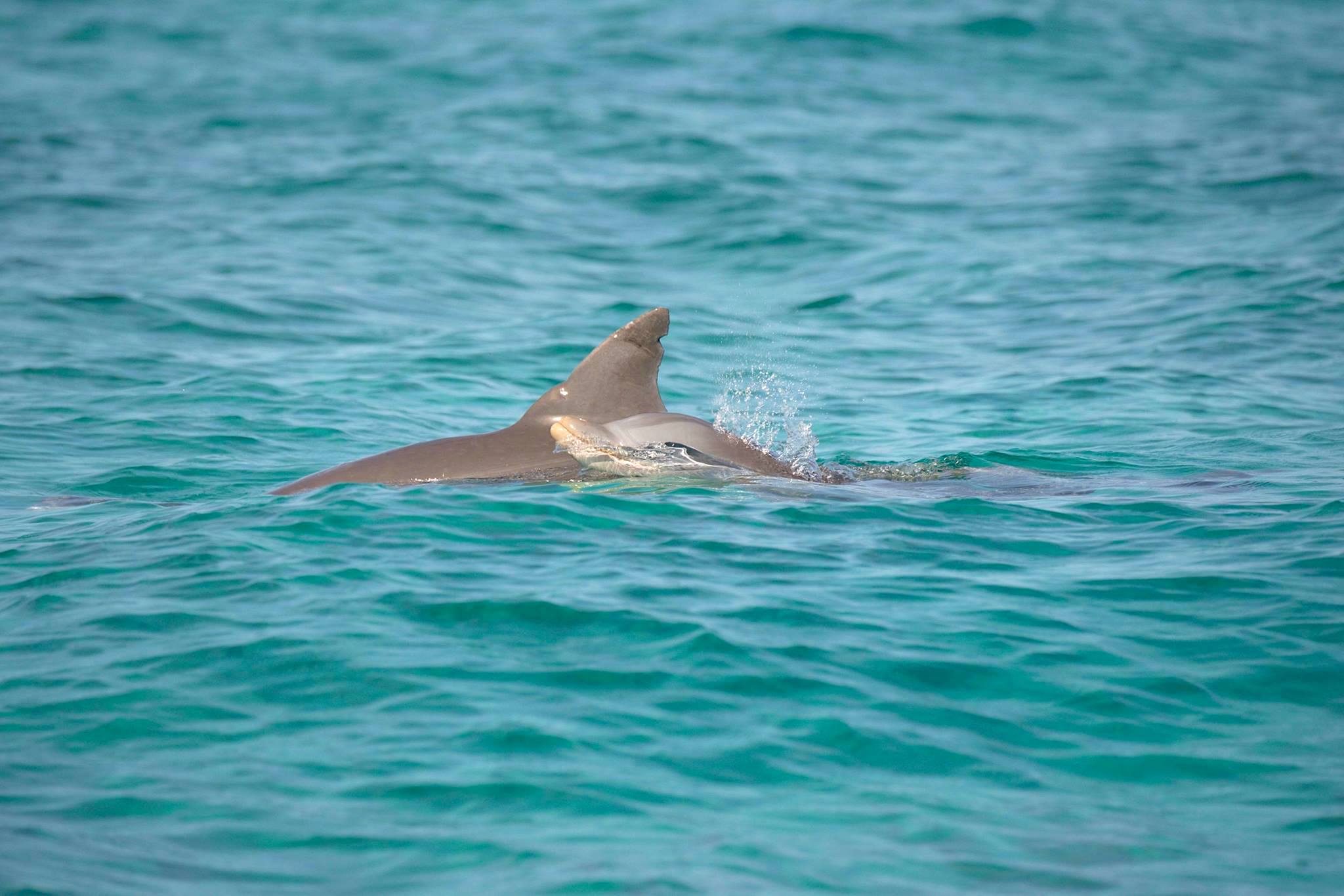
The photographs featured here were taken during the last few weeks. Some are of the familiar bottlenose dolphins. The others – with speckled undersides clearly visible in the header image & below – are of Atlantic spotted dolphins. There’s even one of my own taken from the research vessel.
For the researchers, the most important part of an individual dolphin is its dorsal fin. Unique patterns of cuts and scars mean that each dolphin sighted can be logged and their profiles built up. Some have been found in the same area for many years. They are not usually given jocular names – ‘Davy Jones’, ‘Finny Phil’ or whatever. The first time we went out on the research vessel we were slightly surprised by the practical, scientific calls during a sighting of a dolphin group: “there’s B4 again” and “over there – D5 is back”. All said fondly however – many of the dolphins are old friends.
This dolphin has a notable notch on the dorsal fin with a nick below, & a scar line – with a prominent white scar on the lower front edge
Notice how these 3 dolphins all have quite different fin profiles. The nearest one’s fin looks unblemished, but has a paler tip. Powerful binoculars and a serious camera can pick out small differences at a distance that the eye could not
Coming soon: Manatees & Man in the Bahamas
All photos (bar one by me) BMMRO, with thanks to Diane & Charlotte, and a tip of the hat to the current interns involved in the research projects (Hi, UK Thomas!)
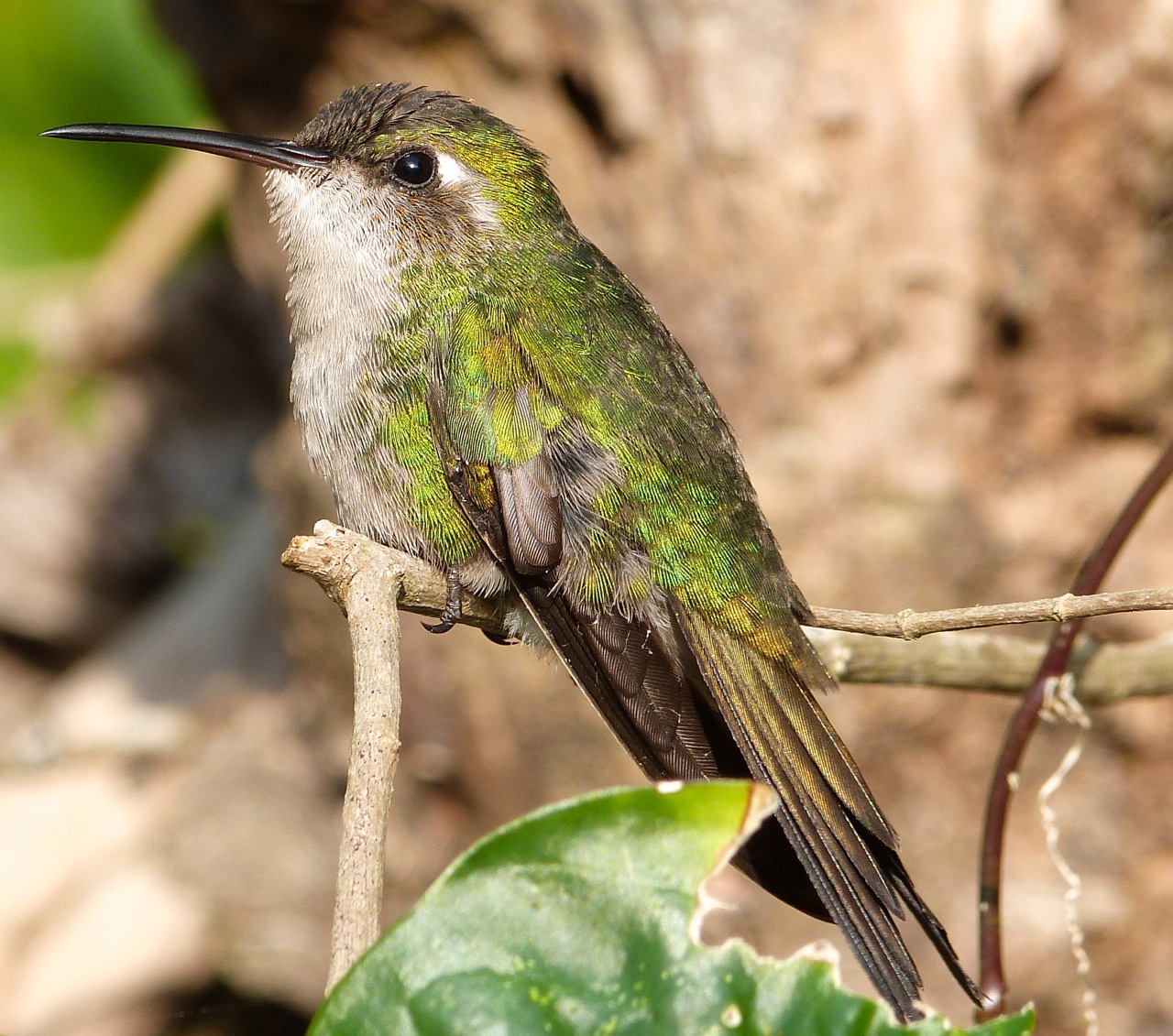
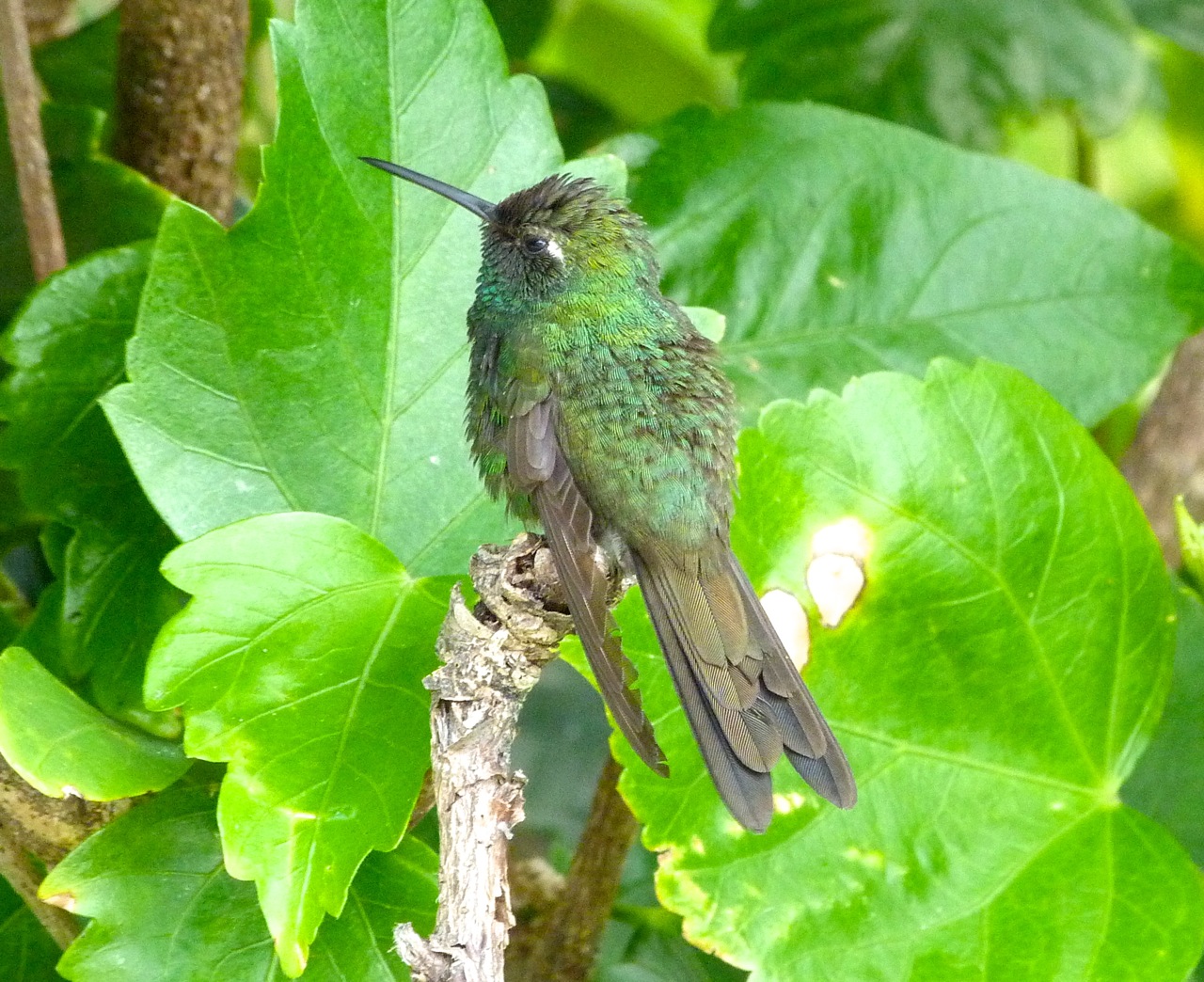
Well I don’t want to overstate it, but there cannot be anyone on the planet who has anything but love for hummingbirds. There’s no existing word for ‘fear of hummingbirds’ – ‘colibriphobia‘ is not a ‘thing’. There’s fear of almost everything else, from grass to clouds to plastic bags**… but, surely, not hummers. Here are a few to enjoy.
The females have a wonderful metallic sheen that makes them shimmer in the sunshine. Males are darker: a gorgeous, handsome green. The Emeralds are one of those bird species where it is hard to decide between the sexes which is the more beautiful…
All photos: Keith Salvesen / Rolling Harbour
**Plastybolsaphobia (nb despite the apparent Greek derivation of this word, the Ancient Greeks were strangers to the world of these handy carriers / vile polluters / dealing wildlife killers)
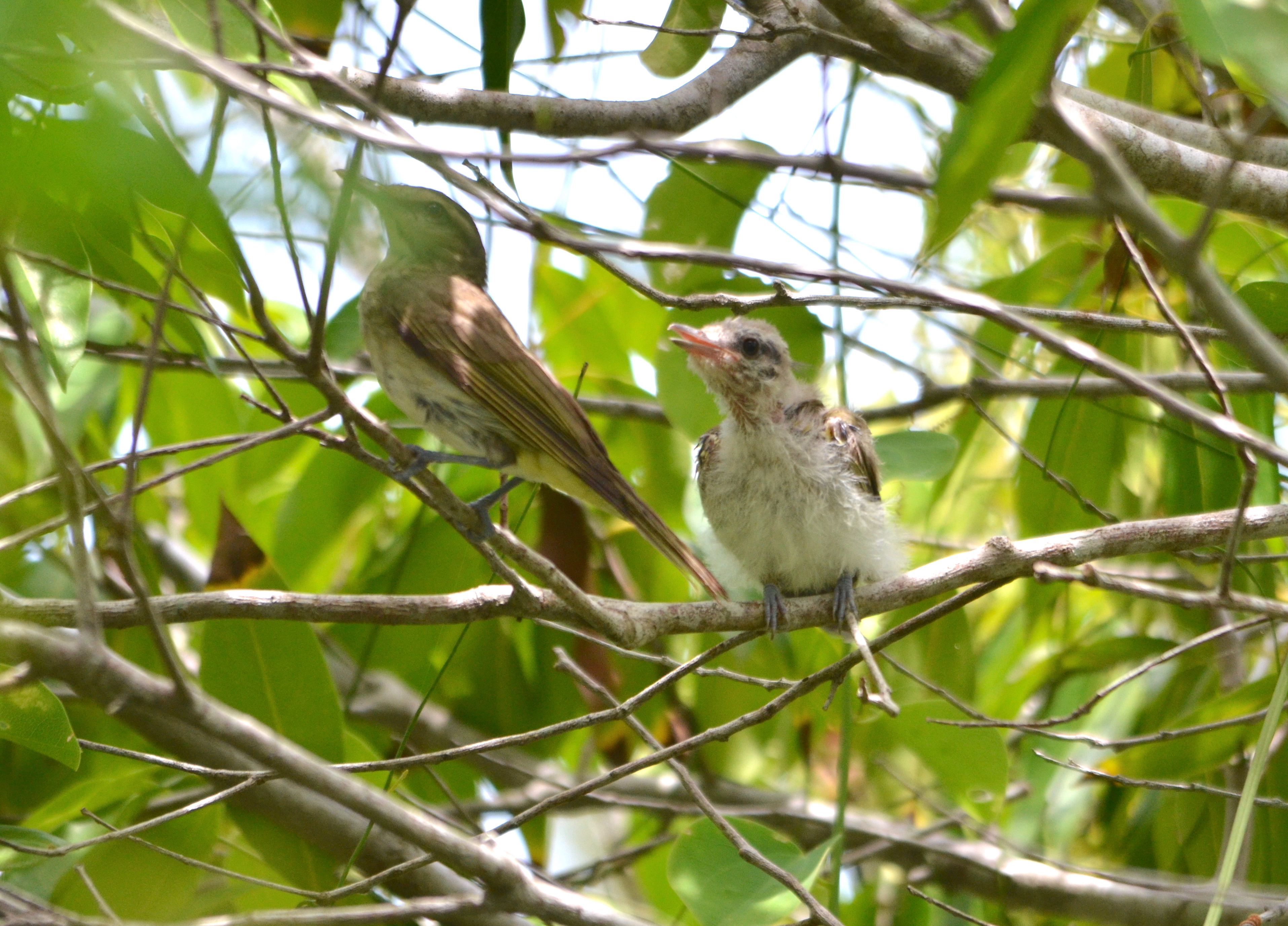
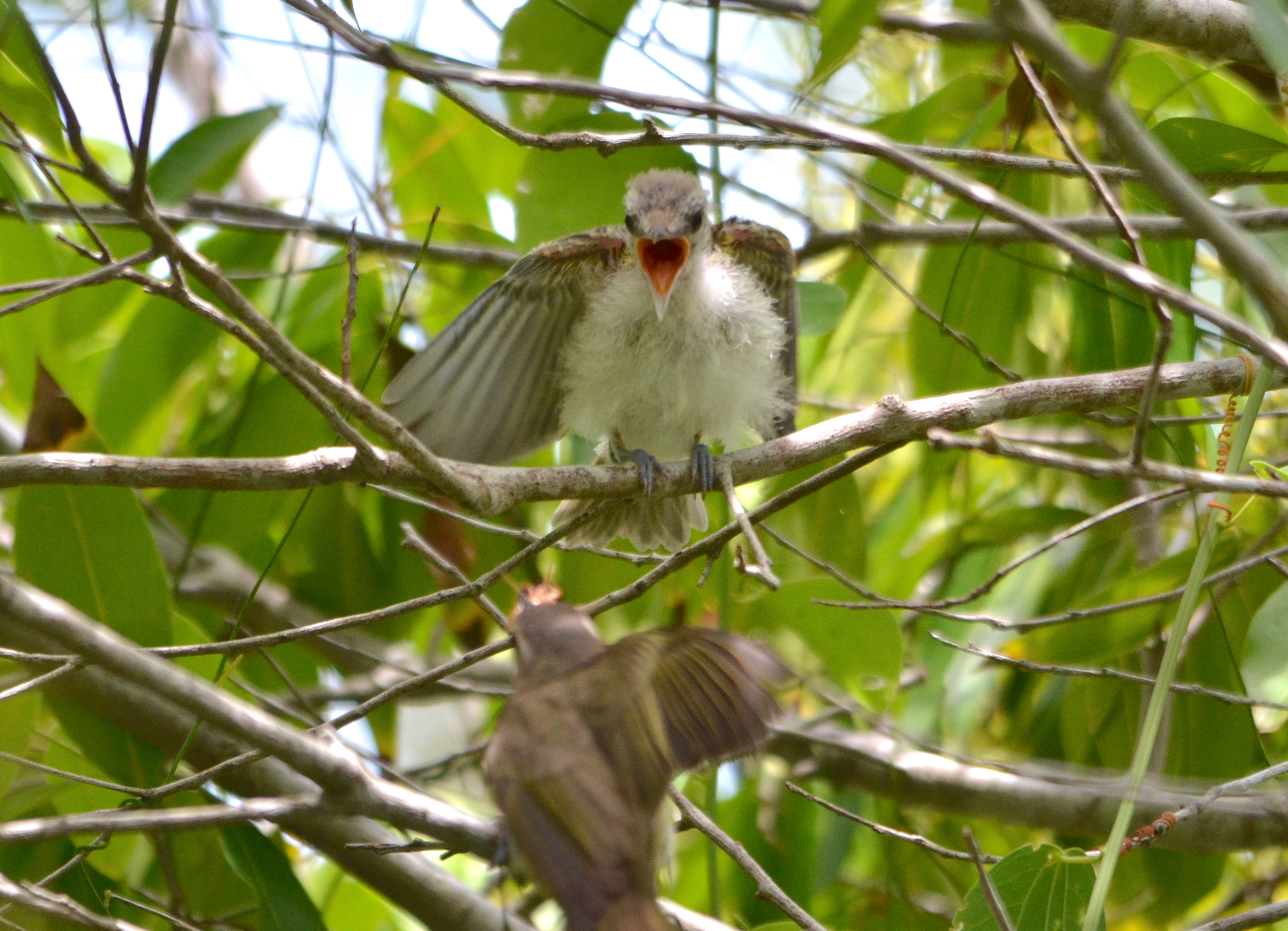
Lo, the tiny fluffy BLACK-WHISKERED VIREO fledgling, so innocent and coming close to aborbs (but for being frankly a little unkempt). Yet few would guess that beneath that delightfully virtuous exterior rages the appetite of a MONSTER…
Excuse me, I’m getting a little peckish…
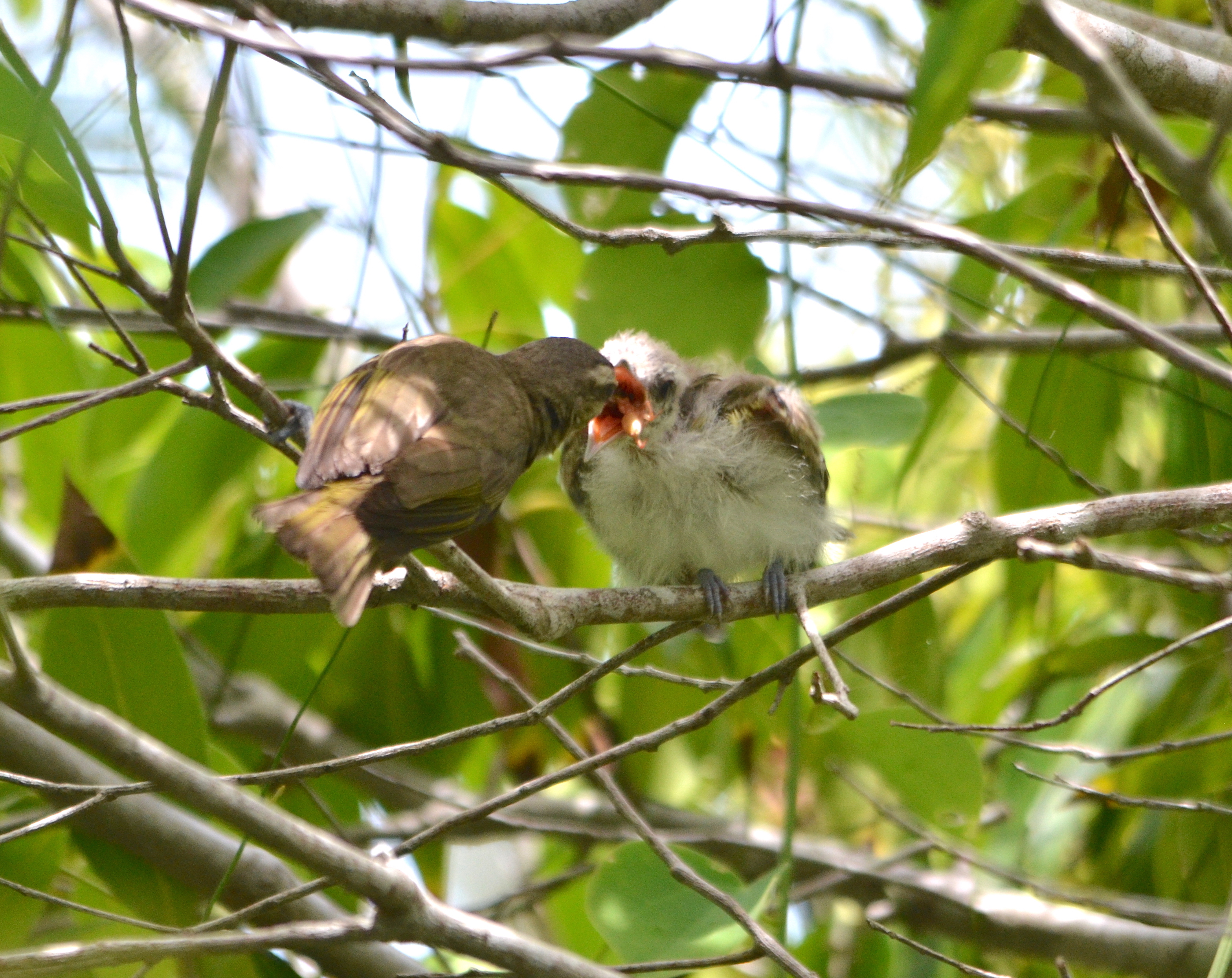
That’s fine, son, I’ll go and get you a little snack…
Whaaaaa… Hungreeeee…
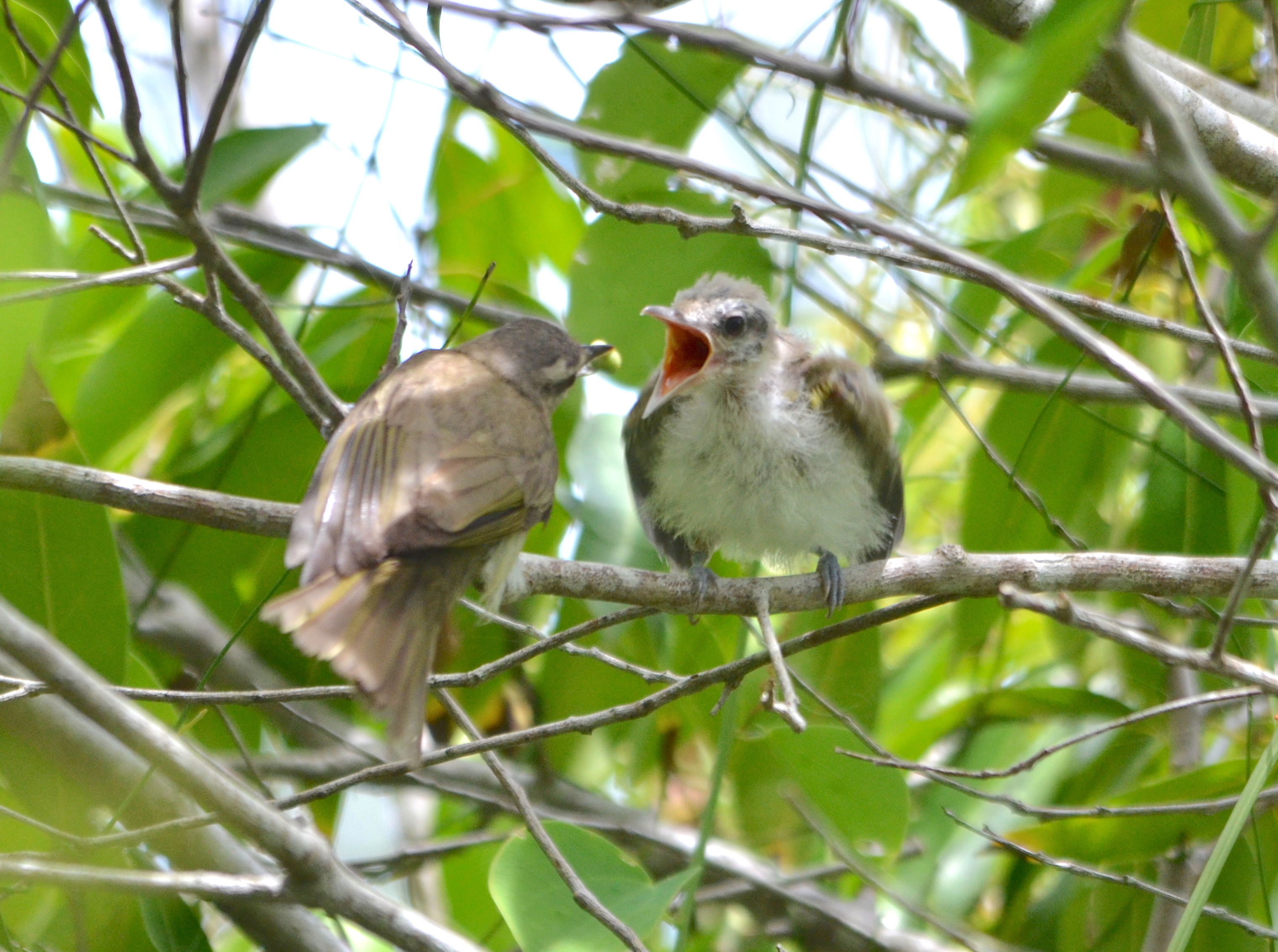
Whaaaaa…. want MORE…
And more…
And another one… keep ’em coming
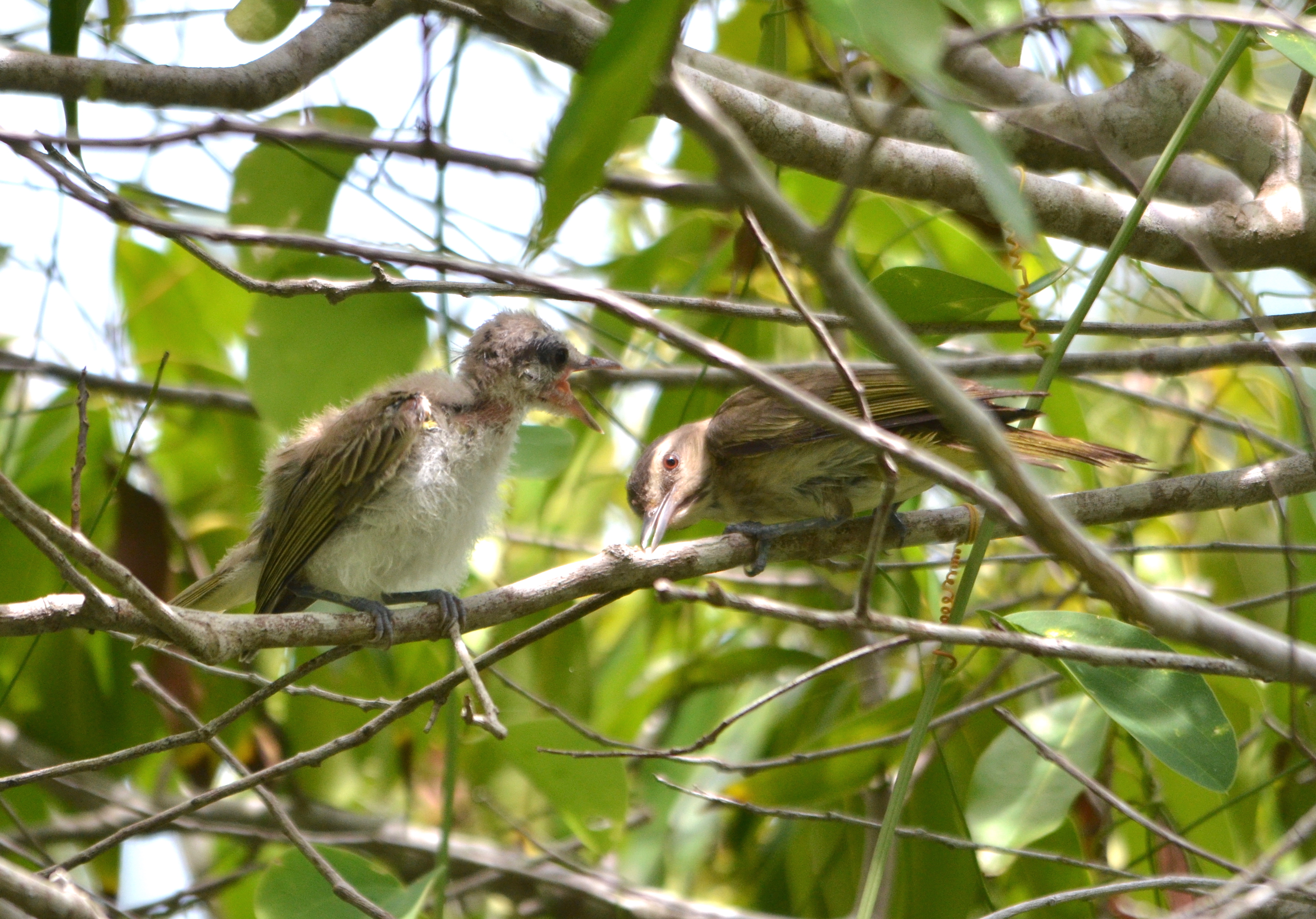
Whaaaaa… more… NO, son, you’ve had quite enough for one meal…
This one’s ALL for me…
All great photos by Charles Skinner, who must have had a fun time watching the entertainment. Although we intentionally featured very few juveniles in THE BIRDS OF ABACO, one of these shots insisted on being included…
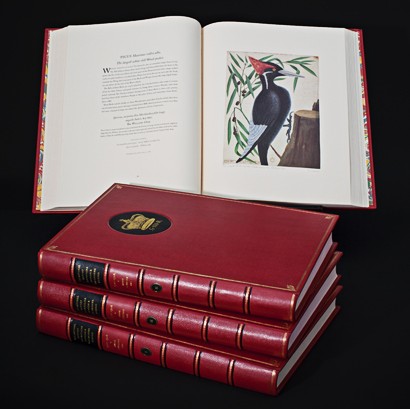
Exactly two years ago, I wrote about the publication of a lavish limited edition facsimile of Mark Catesby’s renowned work The Natural History of Carolina, Florida and the Bahama Islands in 4 volumes to mark the 300th anniversary of Catesby’s arrival in the New World. Unsurprisingly, the cost of the set was prodigious (a rather nice car) – but only a fraction of the cost of a vanishingly rare original set (a rather nice house). Reader, I didn’t buy one.
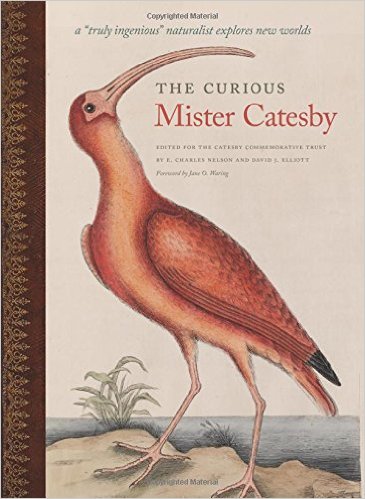
Now theCATESBY MEMORIAL TRUSThas produced an excellent and inexpensive illustrated introduction to Catesby’s great work that will transport you back through the centuries to the earliest days of natural historical research by Europeans abroad. It’s worth remembering that Catesby antedated the more famous John James Audubon (1785-1851) by a whole century.
Catesby’s signature
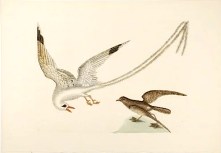
The new book has over 40 illustrations from Catesby’s The Natural History of Carolina, Florida and the Bahama Islands. These are paired with relevant extracts from the work, and there is additional commentary. Click on Catesby’s Tropicbird below for a sample of the book.
Mark Catesby (1683 – 1749) was a pioneering English naturalist and artist who published his magnum opus based on a number of expeditions he undertook from 1712 onwards. His was the first ever published account of the flora and fauna of North America, and the 2 volumes (with a supplement) included some 220 colour plates of the creatures and plants of land and sea that he had come across. After his travels, Catesby spent some 20 years producing his masterwork and died soon after, perhaps from the sheer effort of it all.
Red-legged Thrush in Gumbo Limbo Tree
AND HIS RELEVANCE TO THE BAHAMAS IS…?
On behalf of the Royal Society Catesby undertook expeditions, first to Carolina and then more widely in America and eventually in the Bahamas. On these trips he drew and painted detailed pictures of birds, fish, turtles, flowers and corals, many of which are familiar in the Bahamas to this day – and a few of which are included here.
Information about the Catesby Commemorative Trust and the book The Curious Mister Catesby can be found HERE. I have the book: it is wonderful, but as an amateur I find it quite a difficult read, and I have to take it in small chunks.
For anyone tempted to look further into the importance of this ground-breaking naturalist, the CCT produced a 50 minute film that is well worth watching if you are interested to know more.
Credits: HM QE2, Catesby Commemorative Trust, National Geographic, Mariners’ Museum Library, sundry open source info-&-pic-mines inc. Wiki, Addison Publs,
“Illuminating natural history is so particularly essential to the perfect understanding of it” (Mark Catesby)
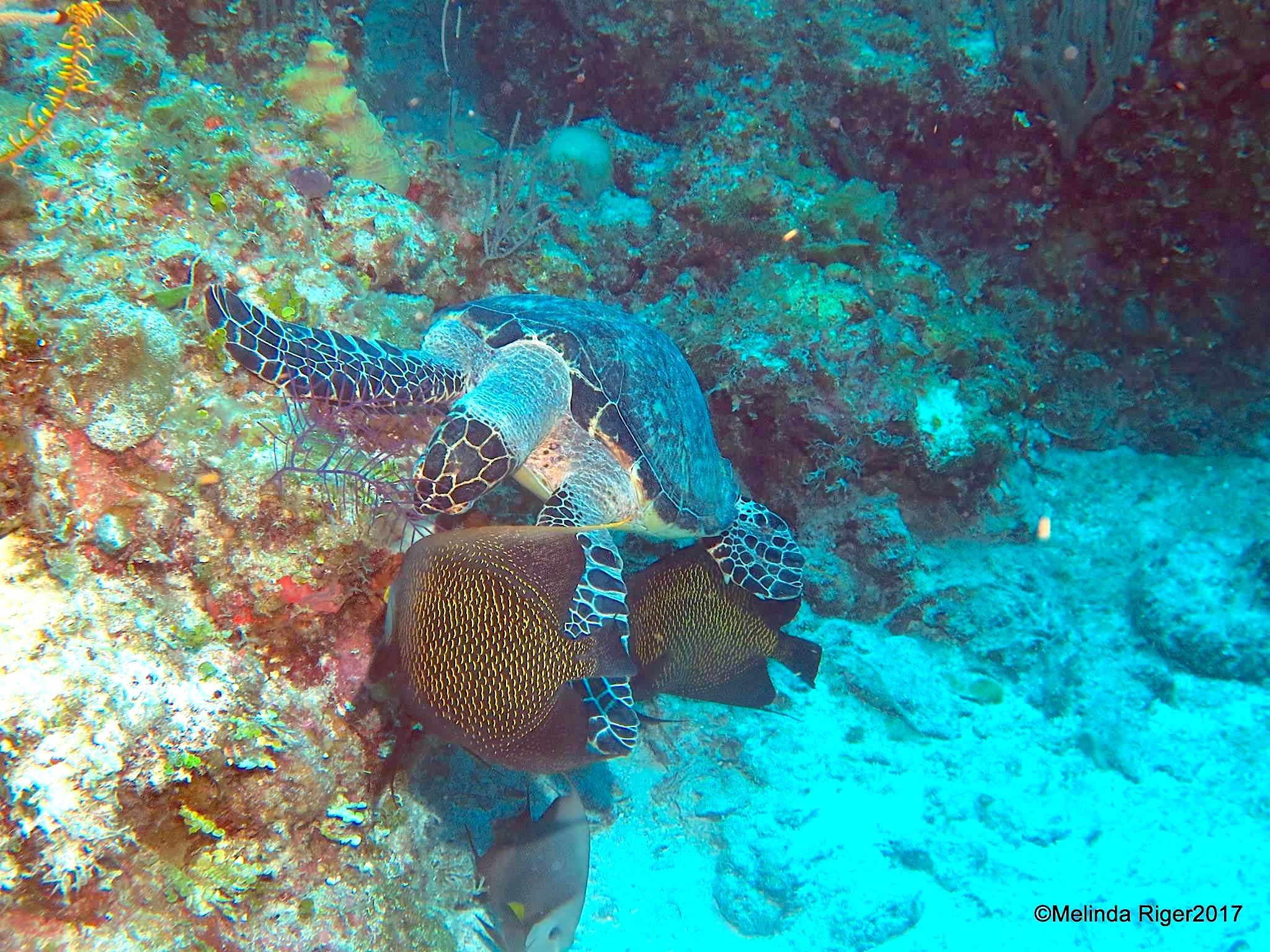
Hawksbills on their own, nosing around the colourful coral reefs of the Bahamas, are a beautiful sight. I don’t want to overdo the religious tendency of the title, but they are indeed wonderful to behold. Add FRENCH ANGELFISH and a QUEEN ANGELFISH and it’s as close to perfection as a reef scene gets. Click on the links above for more pictures and details about the two angelfish species seen here with the turtle. As ever, Melinda Riger was ready with her camera to capture these great images.
This astonishing photo was of course achieved by carefully balancing a GoPro on the turtle’s back, wrapping duct tape around it, and pressing ‘go’ (camera and turtle simultaneously). **
**This is not true. It’s just a cleverly shot turtle’s-eye view as it forages on the reef
This short video shot by Melinda’s husband Fred of a turtle ‘loving’ the camera is one of those wildlife events that cannot be predicted… but when it happens, it’s frankly a bit of a scoop.
OPTIONAL MUSICAL DIGRESSION
As I was writing this, an earworm started up and grew insidiously in both ears and then inside my head… the dread words “Elenore, gee I think you’re swell”. Followed by “so happy together…”. And then “she’d rather be with me…” Yes, I’ve now gotTURTLESin my head, the (?long-and-hitherto-forgotten) band from the second half of the 60’s, with their cheery anodyne soppy-poppy love songs. And dammit, they’ve stuck… Here’s a reminder for those whose memory I have jogged. For anyone under, say, 75, step away from this area. Nothing to hear here.
Credits: Grand Bahama Scuba: all photos – Melinda Riger & video – Fred Riger; Turtle music – someone else’s music collection, not mine, honestly… (oh dear another lie I am afraid – cred gone)
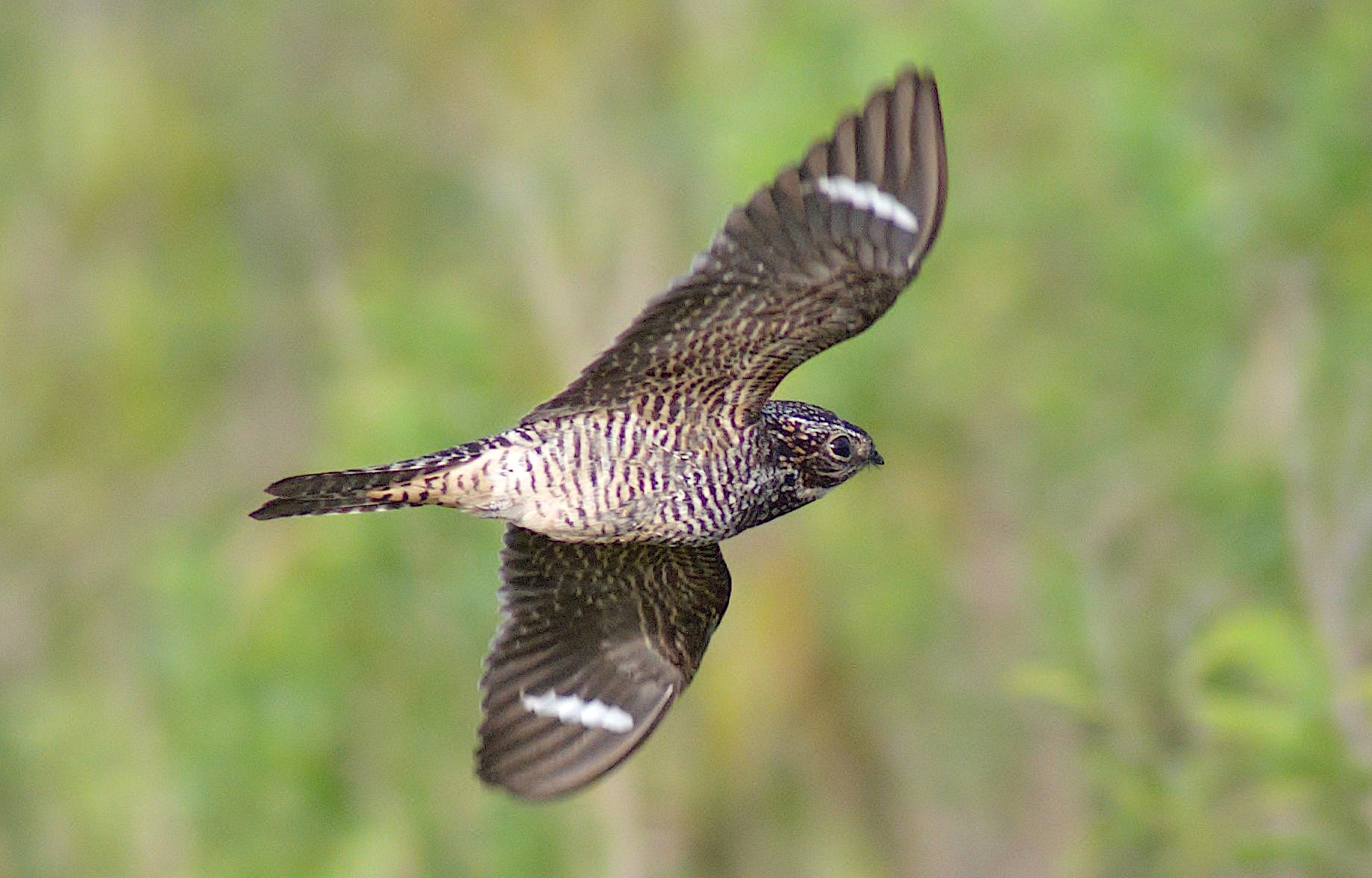
In 2014 I wrote about finding myself – with others on a birding expedition – in the midst of dozens of nighthawks as they swooped and dived (dove?) while hawking for flies. “The birds were quite unperturbed by our presence, and from time to time would zoom past within inches of our heads, making a swooshing noise as they did so”. You can find the post at FAST FOOD ON THE WING.
Nighthawks catch flying insects on the wing, and mostly forage at dawn and dusk – or (more romantically) at night in a full moon.
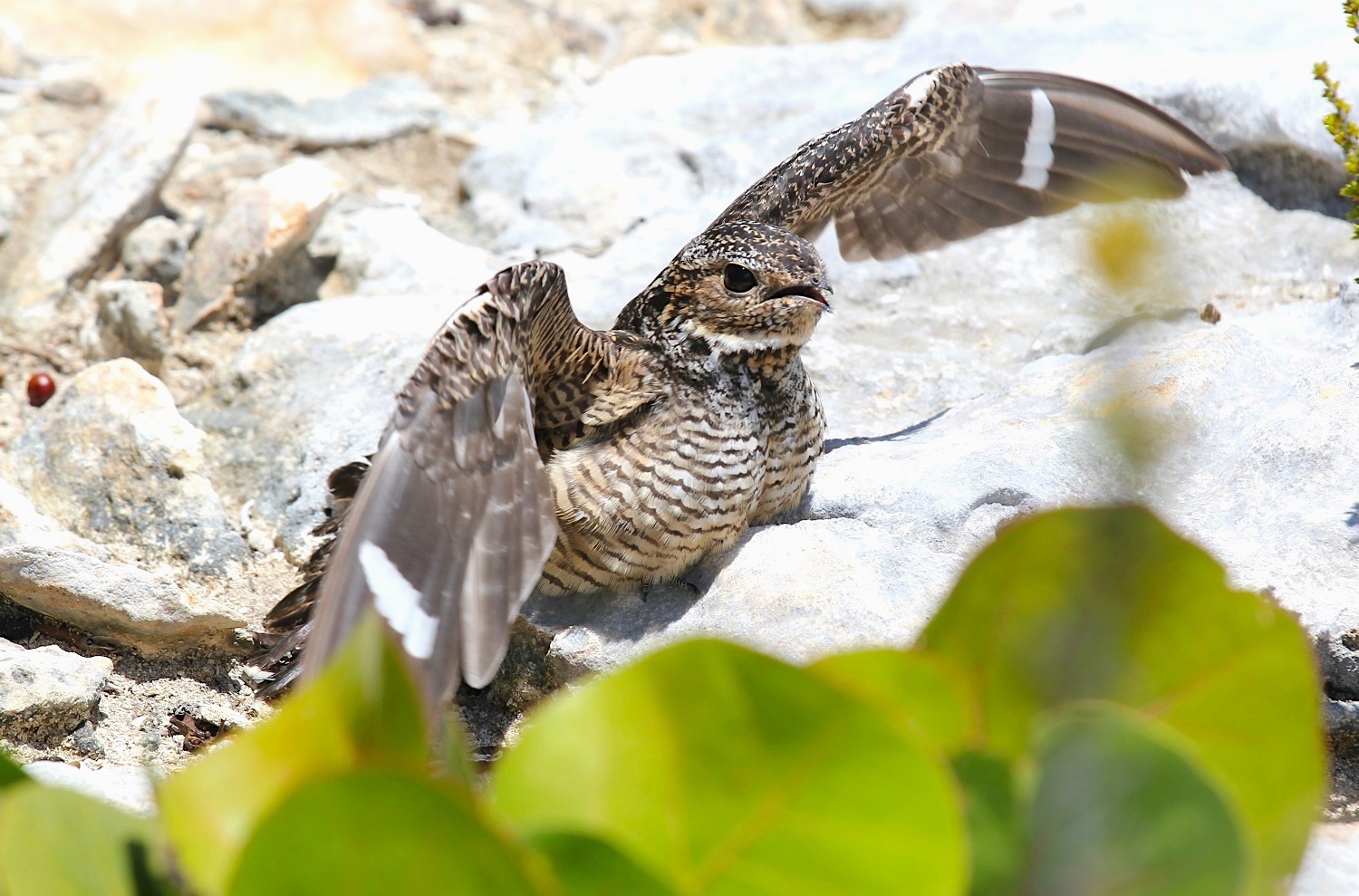
Besides aerial feeding displays, nighthawks may also be seen on the ground, where they nest. I say ‘nest’, but actually they hardy bother to make an actual nest, but just lay their eggs on bare ground. And, more riskily, this may well be out in the open rather than concealed. The eggs – usually 2 – hatch after 3 weeks or so, and after another 3 weeks the chicks fledge.
Fortunately their colouring enables them to blend in with the landscape – a good example of bird camouflage in natural surroundings.
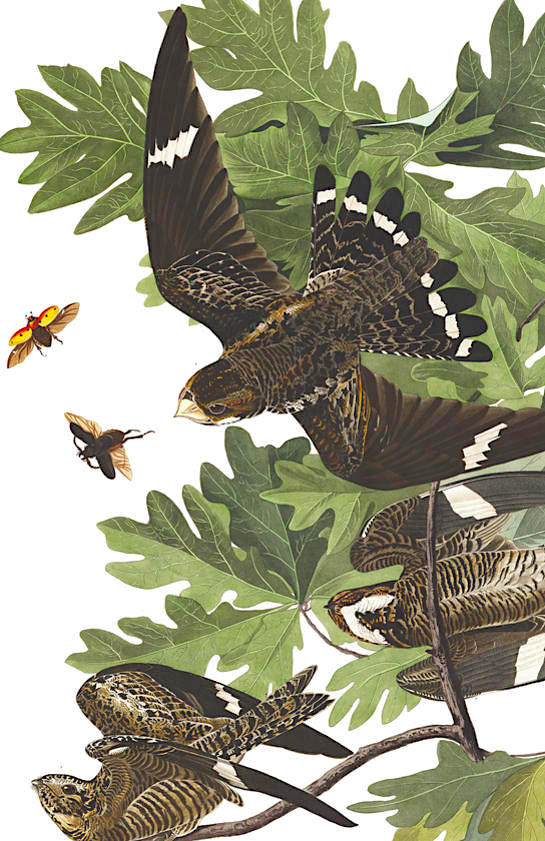
The photos above are from Sandy Walker (header), Stephen Connett – to whom special thanks for use permission for his great nighthawk and egg images – and the last one by bird legend and author of the locus classicus The Birds of the Bahamas (without which no trip to the Bahamas is complete), Bruce Hallett.
Antillean Nighthawk Chordeiles gundlachii, is a species of nightjar. These birds have local names such as ‘killa-ka-dick’, ‘pi-di-mi-dix’, ‘pity-pat-pit’, or variations on the theme, presumably onomatopoeic. Pikadik-(dik) will do for me. See what you reckon from these recordings (excuse the thick-billed vireo – I think – in the background):
Andrew Spencer / Xeno-Canto
ODD FACT
I have read in several sources that no one knows where these migratory birds spend winter; or else that winter season data is ‘scarce’. So no sensible range maps exist, for example. If you read this, and have antillean nighthawks (as opposed to common nighthawks) all round you in winter, please tell someone – you may hold the key to an ornithological mystery…
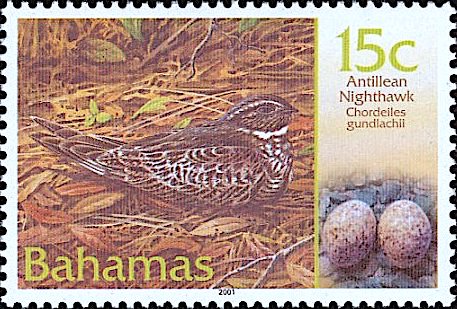
As so often, the Bahamas Philatelic Bureau leads the way with natural history stamps. The 15c Antillean Nighthawk above featured in a 2001 bird set. You can see dozens more very excellent Bahamas bird, butterfly, fish, flower and other wildlife stamps HERE.
Find out about Juan Gundlach, Cuban Natural Historian (he of the Antillean Nighthawk and the Bahama Mockingbird for example) HERE
Credits: Sandy Walker (1); Stephen Connett (2, 3, 4, 5); Bruce Hallett (6); Andrew Spencer / Xeno-Canto (audio files); Audubon (7); Sibley / Audubon (8)
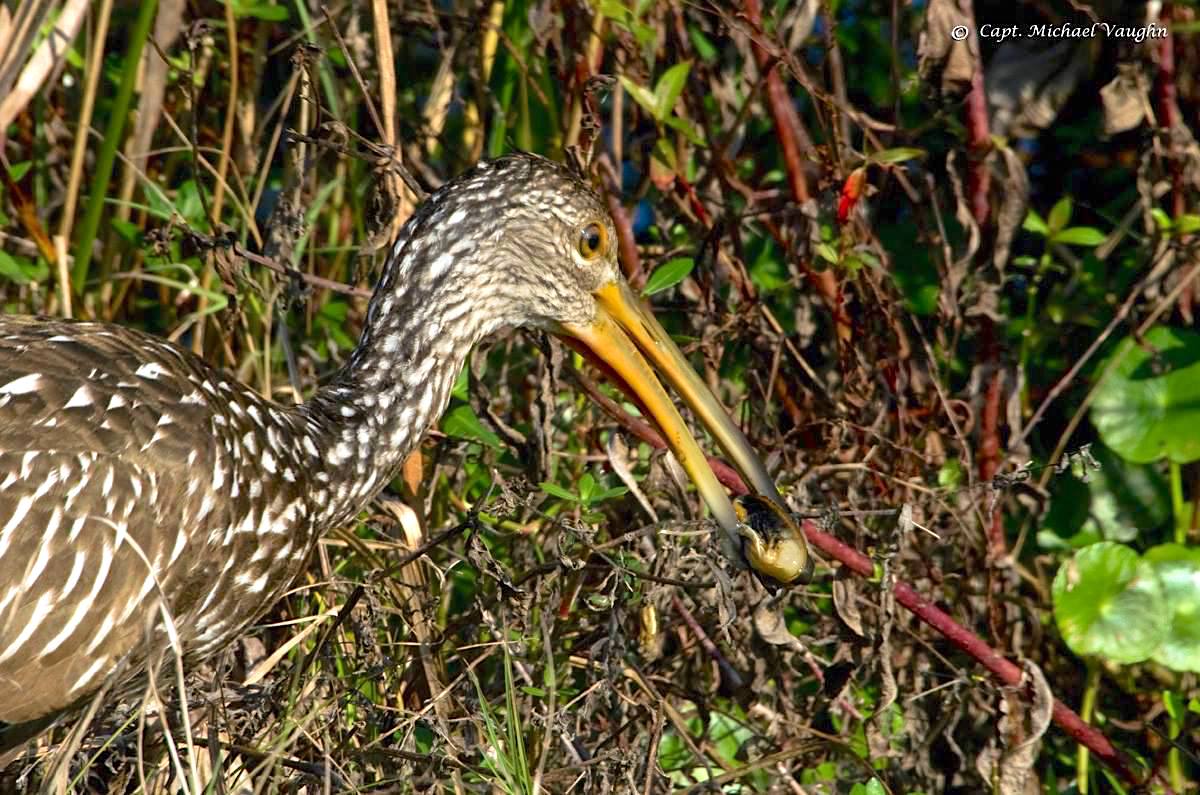
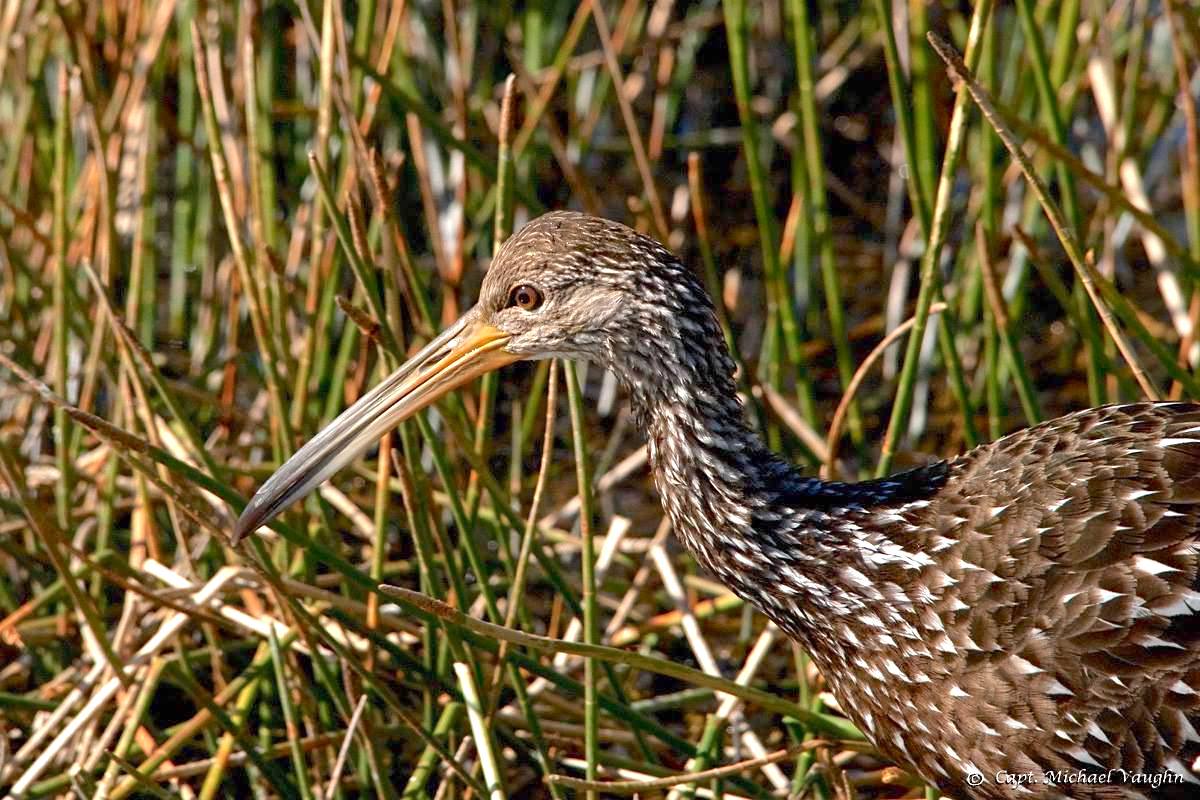
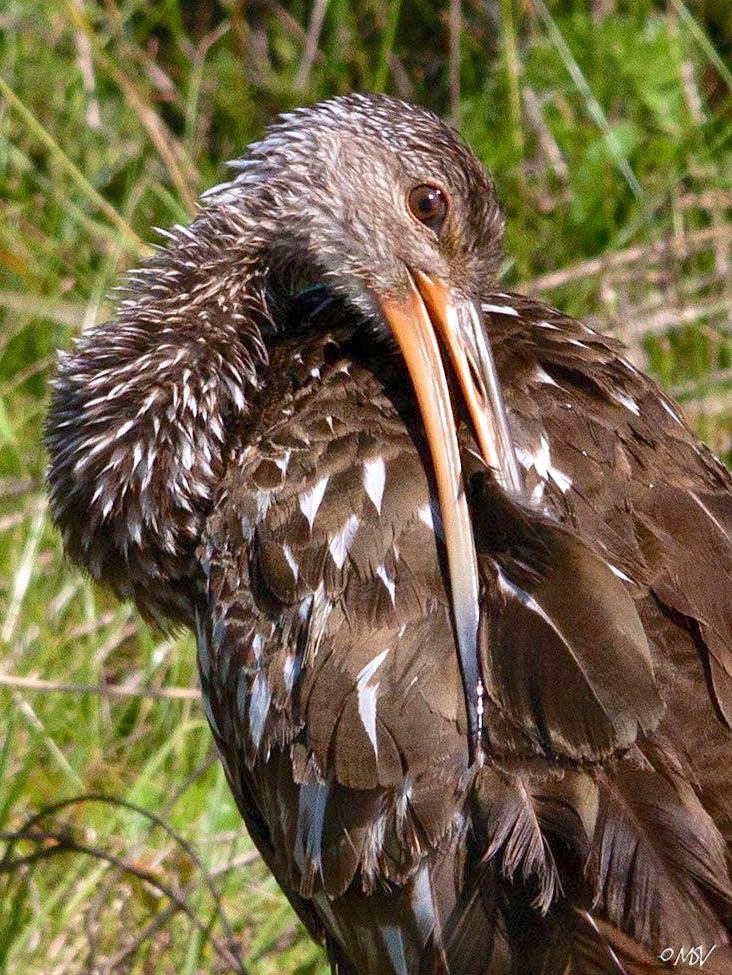
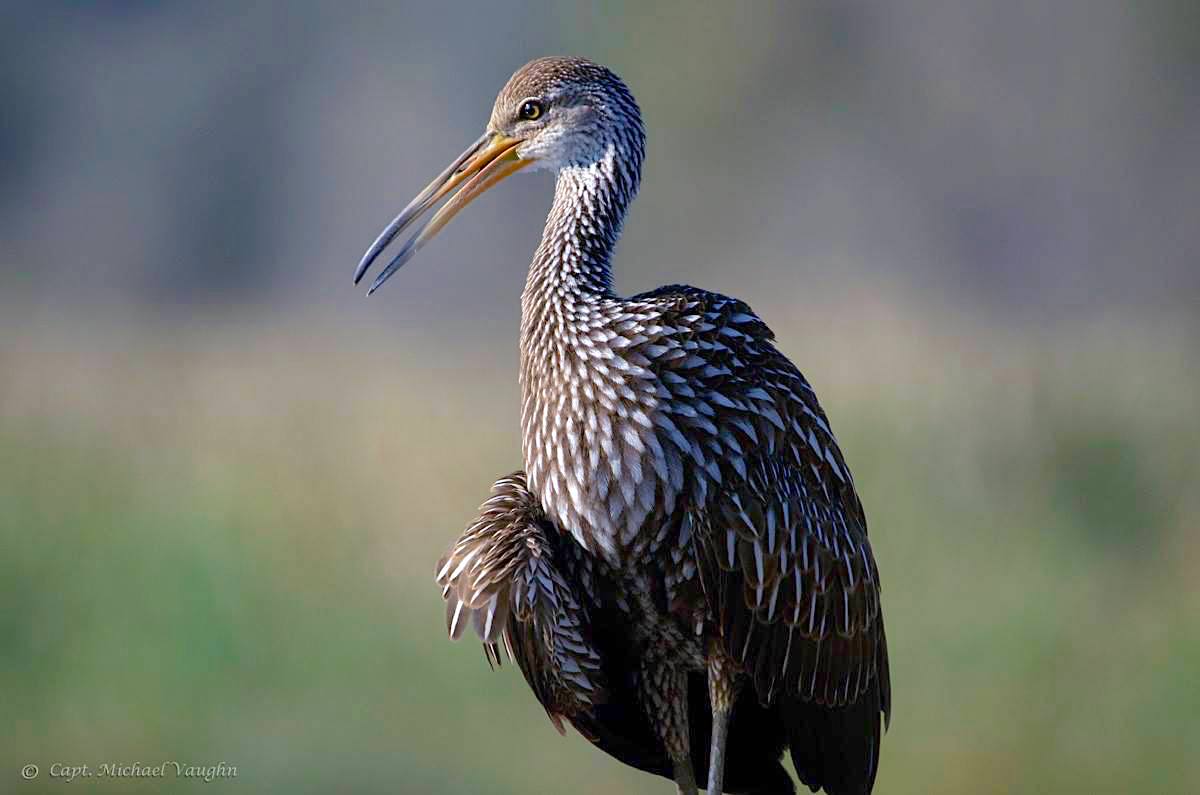
The Limpkin has a special status: it is in a Class of its own. Actually, it is in a Family of its own in terms of strict Linnean classification. It is in the Class ‘bird’ and the Order ‘crane and rail’. But there is no other creature in its Family or Genus. So it’s on its own, bird-wise. None like it anywhere. It is ‘monotypic’.
These snail eaters are said to be named for their somewhat lame walking method on their long legs. Their long downcurved bills are shaped to act rather like tweezers when feeding on snails. I’ve never managed to get very close to one – they seem to be quite secretive. But boy, can you hear them when they decide to go for it. If you ever hear this sound – quite possibly at night – now you’ll know what creature is making it…
Jerome Fischer / Xeno-Canto
TEN LIMPID LIMPKIN FACTS TO ENTHRAL YOUR FRIENDS
The Limpkin has its own ‘monotypic’ family – a one-off species of bird
They eat snails and molluscs (also insects, worms & frogs), using their beaks to snatch them
They may leave piles of discarded shells in their favourite feeding sites
The birds are ungainly and awkward: ‘limpkin’ probably derives from their limping gait
Males and females have the same plumage (males being slightly larger)
The beak acts like tweezers – slightly open and closing at the tip – for tweaking snails etc
Territory is defended aggressively, with ‘ritualized charging and wing-flapping’ at intruders
Sex lives: they are monogamous; or polyandrous (a male and more than one female. Tsk.)
They use ‘courtship feeding’ – males will catch and shell a snail and then feed it to a female
They are also known as the ‘Crying Bird’ for their bizarre shrieking call, as used in films**
** Specifically, as a generic jungle noise in Tarzan films; and apparently for the hippogriff in one of the Harry Potter films.
Credits: All main photos, Michael Vaughn taken in Florida – with thanks for use permission; teaching resource Schmoop for the Linnean infographic; audio file Jerome Fischer / Xeno-Canto
Butterflyfishes come in several varieties in Bahamian waters; and there are more than 120 species worldwide. Not so long ago I wrote about the LONGSNOUT variety, also known as the “Butterbun”. Now it’s time to take a look at the Reef Butterfyfish.
In some ways butterflyfishes resemble small angelfishes – adult Reefs are just a few inches long. As the name suggests, these are creatures of the reefs, and of shallow waters. As one might expect, these colourful fish are popular for aquariums (or, strictly I suppose, aquaria).
Butterflyfishes have interesting spawning patterns. They release large numbers of buoyant eggs into the water. These become mixed in with plankton and suchlike, and float where the tides take them until they hatch. Then, most unusually, they go through a larval stage when they are covered by bony material, which they lose as they mature. This is known as an ‘armoured’ stage, which I can only assume is to provide protection to the tiny fry – perhaps by making them crunchy and unappetising. I’ve been trying to find a usable illustrative drawing, without success so far.
OPTIONAL MUSICAL DIGRESSION
In some parts of the world the butterflyfish is called a BORBOLETTA, which is Portugese for ‘butterfly’. It is also the title of Santana’s criminally underrated sixth album (1974). For sure it’s no 1st, Abraxas, 3rd or Caravanserai… but if you can tolerate the man’s move to ‘jazz-funk-fusion’ – maybe John McLaughlinhad a hand in that – there is much to enjoy. There’s less searing guitar and there’s some strange ‘soundscape’ stuff that’s maybe not to everyone’s taste. But still – it stand up pretty well in comparison with some of the later Carlos creations where a certain tiresomeness began to creep in and some tracks are (IMVHO) not really listenable-to. Anyway, the recently released (2016) Santana IV is a welcome return to the good old days, and the good old team.
Here’s ‘Promise of a Fisherman’ – 8 minutes of Santana, from which you can judge the direction he’s taken by Album 6…
All photos by Melinda Riger of Grand Bahama Scuba – mainstay, with Adam Rees, of the underwater photos I use, what with me being a feeble swimmer and all. Tip o’ the Hat to Carlos, who I have even managed to see Live a couple of times.
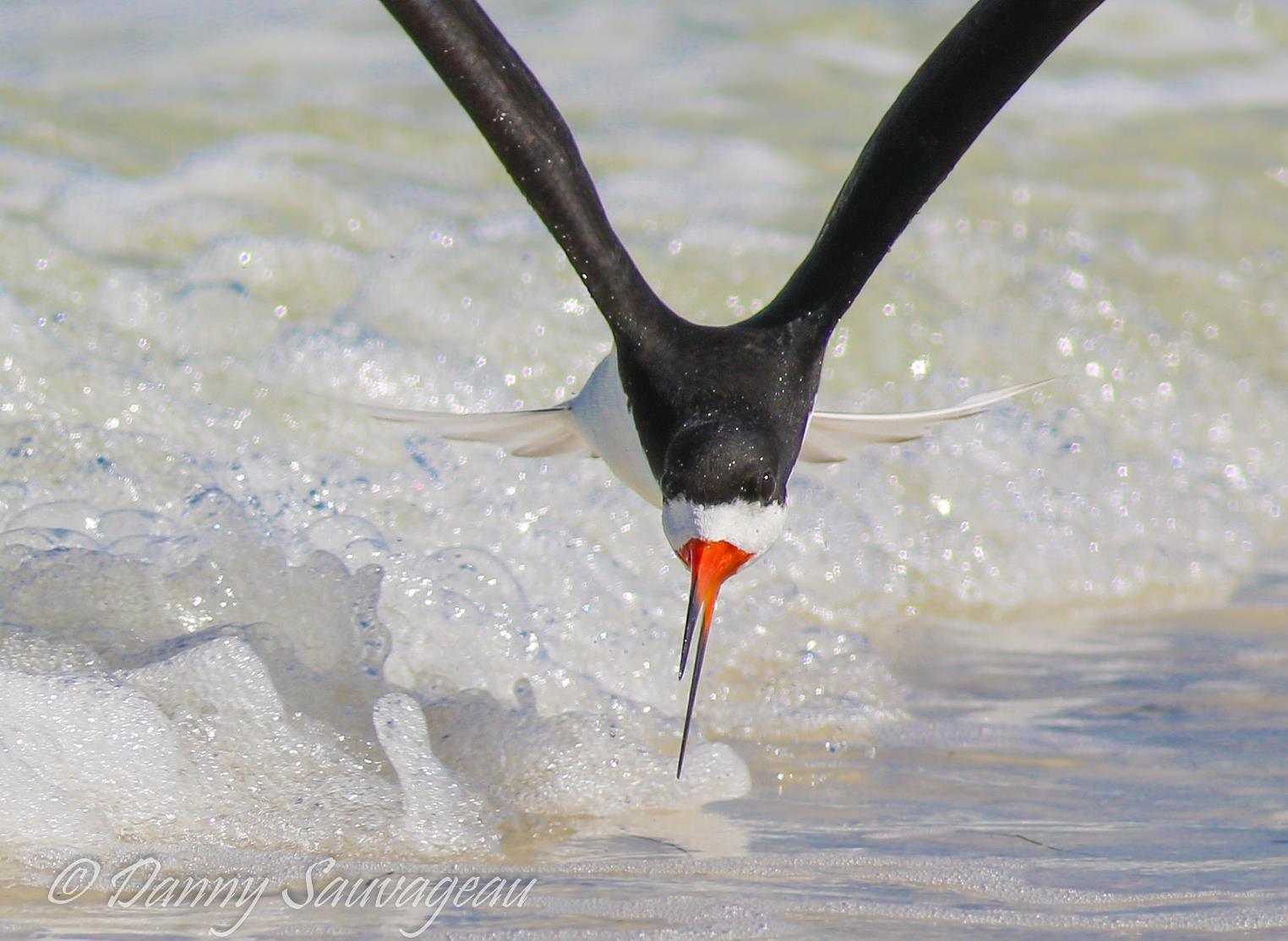
Last year I posted about an avian scoop, when black skimmers (Rynchops niger) were actually photographed on Abaco. These wonderful birds are classified WR 4 for Abaco, which means uncommon winter residents (ie roughly September until April). Now I look into it further on the indispensableeBird, there are actually quite a few reported sightings most years on Abaco – especially on the Cays. Furthermore the sightings cover most months except midsummer. So maybe they aren’t so rare after all. But I couldn’t track down any workable Abaco skimmer photographs until Charmaine Albury managed to take a few last Autumn, which led to the gift post title SCOOP. Because that is just how they feed.
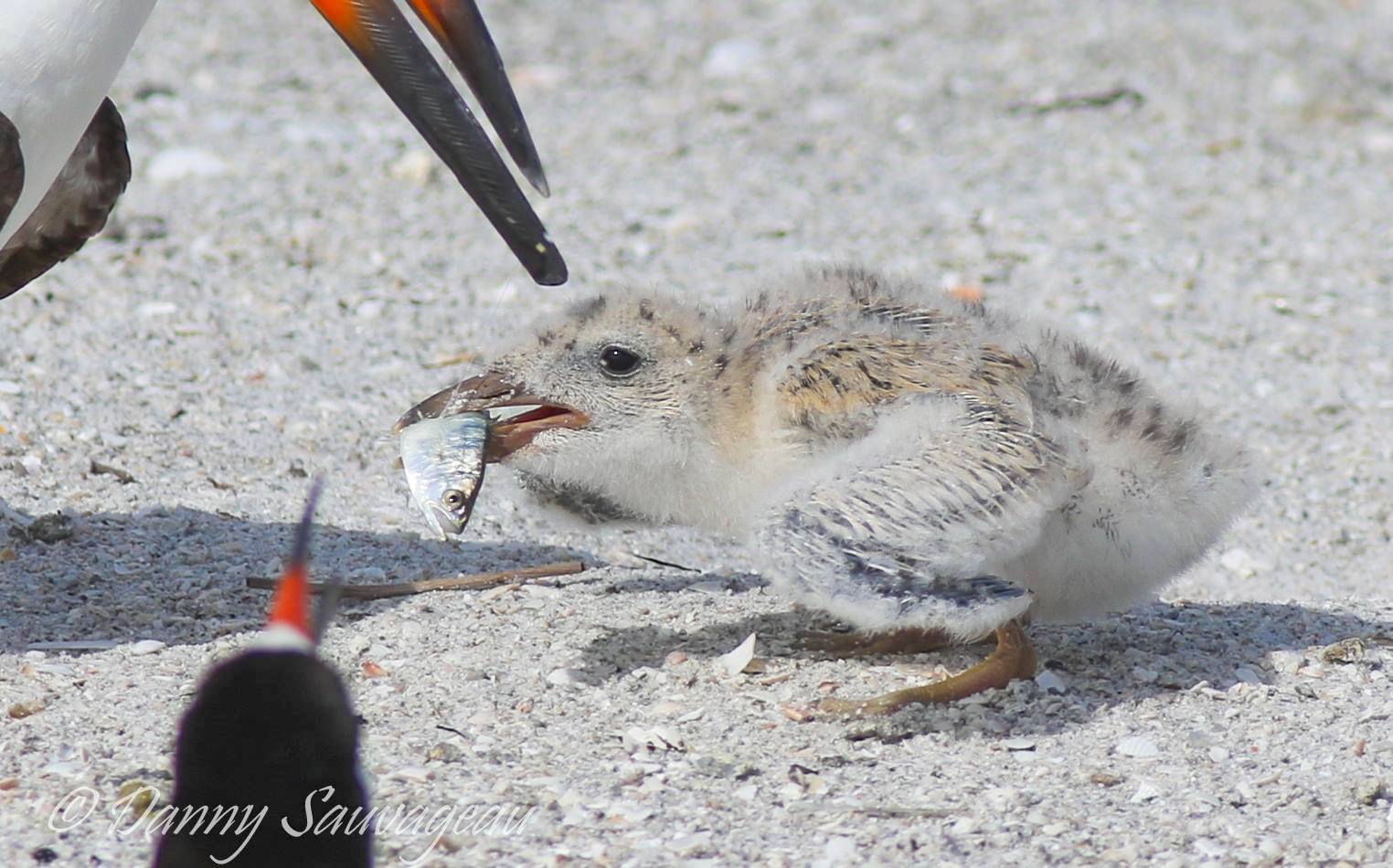
Danny Sauvageau is a dedicated birder in Florida, and a brilliant photographer with it. From time to time I feature his work when his camera skills cover a species found on Abaco but for which Abaco images are scarce (or non-existent). All these photographs were recently taken in Pinellas County, Fl., and I’m really grateful to Danny for permission for occasional use of his exceptional photos.
At the moment, the breeding season is well under way, with the hungry chicks being fed as fast as they can swallow. And this is how that looks, thanks to Danny and his immense talent.
And finally… I’d be really pleased to hear about any Abaco skimmer sightings (and I’ll keep an eye on eBird). Bonus points and a theoretical Kalik for photographs!
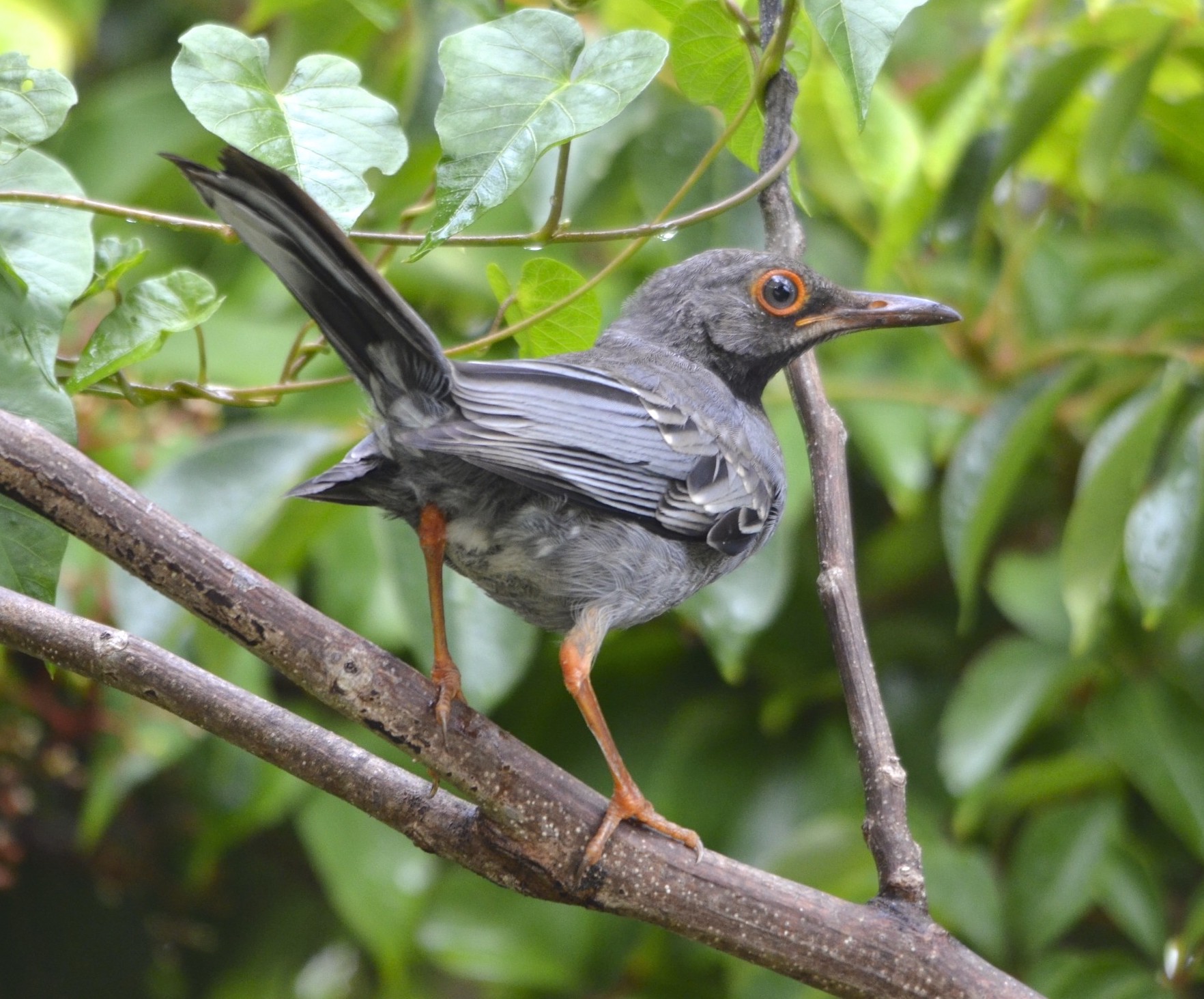
I see it is ‘literally’** years since I last wrote about these lovely, accessible birds, the only permanent resident breeding thrush species on Abaco (out of 8). The post –OL’ RED-EYES IS BACK– featured mainly my own photos, plus one by Mrs RH. With a whole lot of more recent photos, it’s time to revisit these cheery birds. I promised something brighter after two rather sombre shearwater die-off posts – (incidentally, a far wider problem than just in the Bahamas, including NC & Cape May). Here it is.
A RED-LEGGED, RED-EYED GALLERY
Many of the birds shown here were photographed in or around the grounds of Delphi. More recently, they have to an extent been displaced by red-winged blackbirds which are of course very fine birds but in large numbers sound (may I say this? Is this just me?) quite irritating after a while. Whereas the thrush of course has a sweet and melodious song, like this (my own recording – turn up the vol):
Mr & Mrs Harbour’s Handiwork at Delphi
As I may have mentioned before (impatient reader: ‘yes, yes, you did’), the eyes of the RLT are at least as prominent a feature as their legs. Lots of birds have red legs. Very few have such remarkable bright, fiery eye-rings, even in a youngster.
This photo from birdman Tom Sheley is my favourite – a perfect composition
**This means it really is literally years (4), not in the modern modified sense of ‘not actually literally’, as in “I am literally dying of hunger”. Unless you are exceptionally unfortunate, while you have the breath to say you are, you are literally not doing so…
FUN FACT
There is quite literally no song since 1950 with the word ‘thrush’ in the title. Hard to fathom why… One or two songs have a thrush buried away in the lyrics somewhere. Blackbirds have done rather better in this respect…
Photo Credits: Tom Sheley (1, 11); Peter Mantle (2, 4); Gerlinde Taurer (3); Mr & Mrs Harbour (5, 6, 7); Charles Skinner (8, 9); Erik Gauger (10). Lo-fi audio recording: RH
A week ago I posted about the reports of dead and dying Audubon’s shearwaters being washed up on various beaches on the Abaco mainland in and around Cherokee Sound and down to Bahama Palm Shores. I included some advice about how to deal with these poor birds. You can find the post HERE.
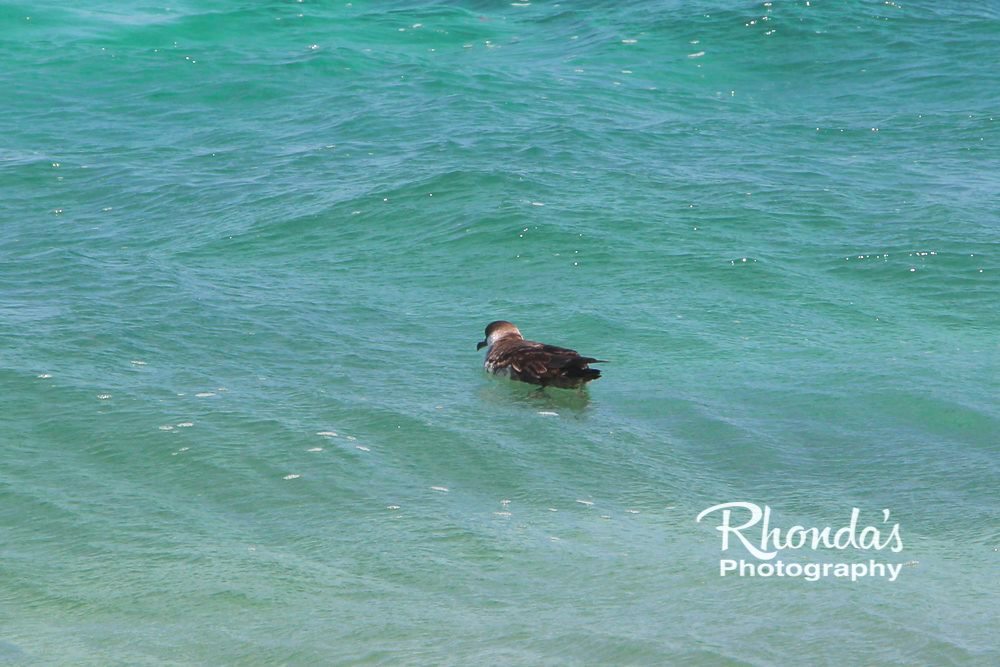
Piping plover monitor Rhonda Pearce found a couple of struggling shearwaters in the sea
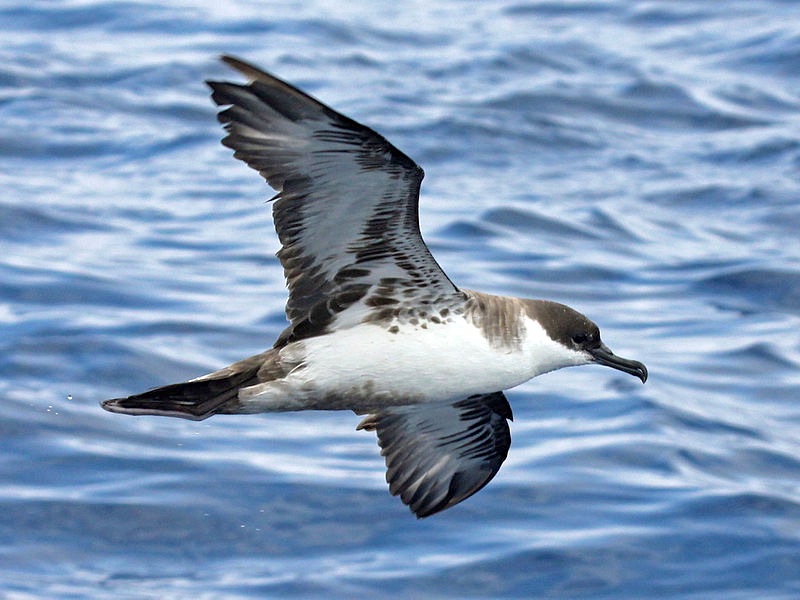
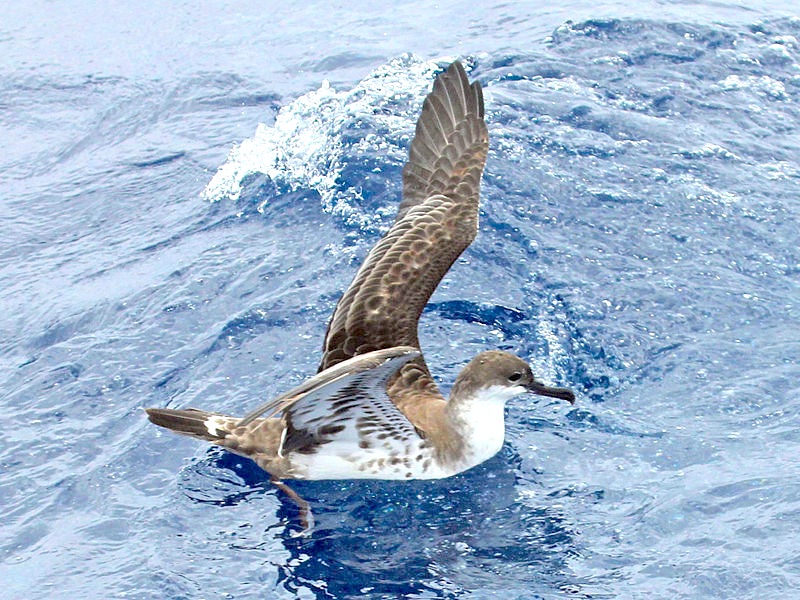
The very next day, reports began to emerge of another species, great shearwaters, being found dead or in a distressed state just off-shore or washed up on beaches. Reports were fewer, but covered a wider area, including a bird in a very poor condition at Delphi. Great shearwaters were the ones involved in the die-back event 2 years ago.
Keith Kemp, who made one of the earlier Audubon shearwater reports, found a young great shearwater in trouble in the sea while he was out in a kayak off Cherokee Point. He rescued it and took all sensible precautions to nourish it and make it comfortable but sadly it did not last the night. He has frozen the bird as a specimen in case analysis will help to explain this die-off event.
As I wrote before, these birds of the open ocean may become weakened and exhausted if fishing conditions become adverse. They will drift weakly with the tide, dying at sea or washing up in a very poor state in the tideline or on beaches. Their prospects of survival if rescued is sadly very slim – I have not yet heard of a success, though I would love to…
Thankfully, during the past week, reports have gradually diminished. I’ve not seen one for a couple of days. With any luck, the current die-off is now over and will not be repeated for several years. However, another one will certainly happen, I’m afraid – maybe in 5 to 10 years time, the usual gap. Twice in two years has made for very bleak, distressing news.
A more cheerful post will be next, I promise. Meanwhile, any further reports or comments would be welcome.
Photo credits: Dick Daniels (1, 5), Rhonda Pearce (2, 3); Keith Kemp (4)
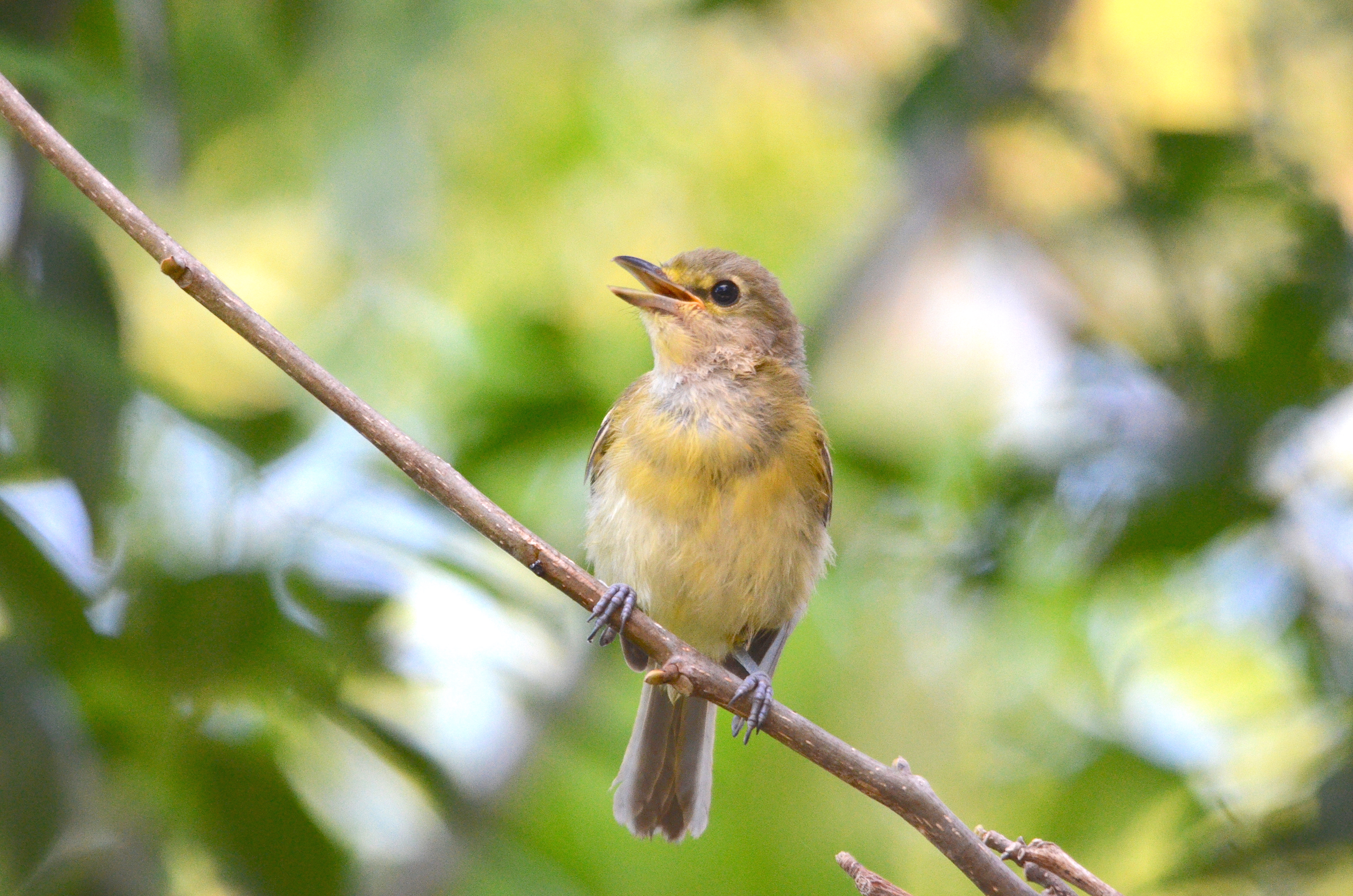
THICK-BILLED VIREO ‘ON VOCALS’: A CHIRPY JUVENILE ON ABACO
I’m not sure that TBVs would rank as anyone’s all-time favourite bird. Probably not in the top 10. Or 20. But we have a particular affection for them. When we first arrive at Delphi, that cheerful call is invariably the first birdsong we hear. And when we leave, it’s often the last. These small birds inhabit the coppice on either side of the drive, and are often found right by the the Lodge.
The strange thing about them is that despite their ubiquity and their uninhibited advertising of their presence, they are surprisingly hard to see, let alone get a clear photograph of. A singing TBV often seems to be at least 2 rows of bush further back than it sounds, concealed by intervening branches, leaves, and twigs.
Maybe growing juveniles are less cautious. This little guy is right out in the open, and singing away happily. He’s still cutely fluffy, but his plumage already starting to turn yellow. He has the diagnostic yellow marking in front of and around the eyes. However at the base of his characteristically plump beak there’s still a hint of baby bird mouth.
Here’s a recording of an adult TBV I took from the Delphi drive (you may need to turn up the volume a bit). And no, I couldn’t actually see the bird, though I knew exactly where it was from the slight movements of foliage. All-in-all, the TBV is a most engaging little bird and well-deserving of affection if not perhaps a high placing in the Avian Popularity Charts…
All photos by Charles Skinner (a significant contributor to The Birds Of Abaco)
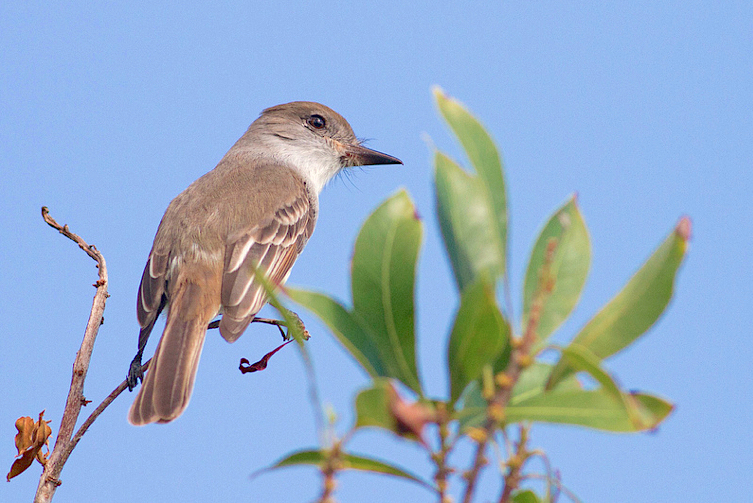
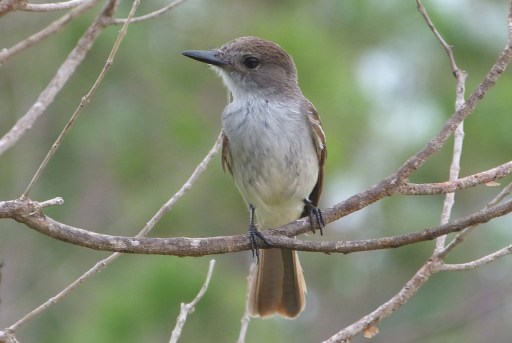
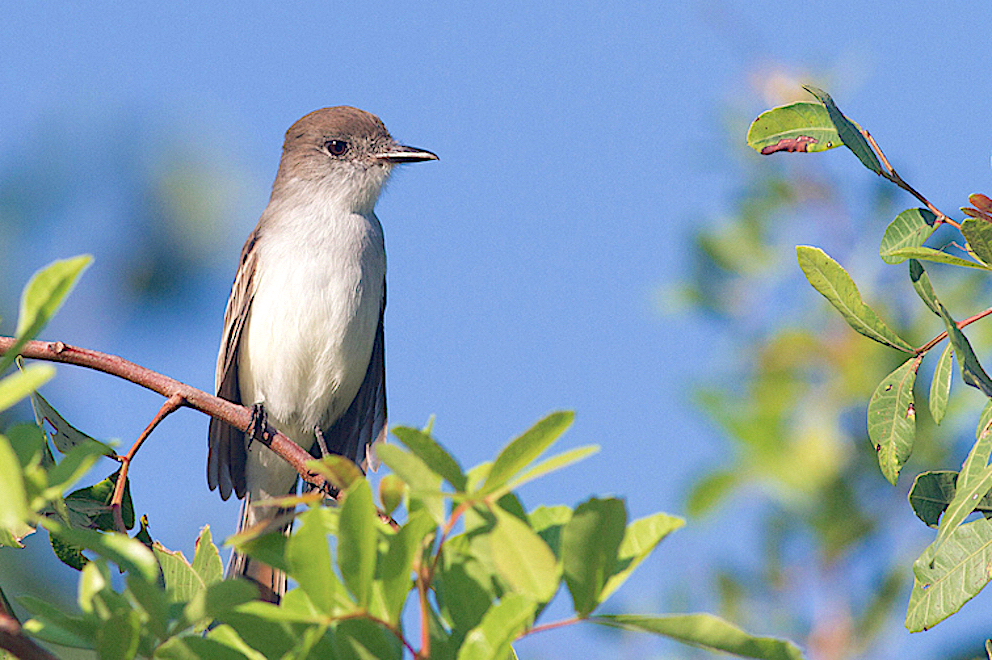
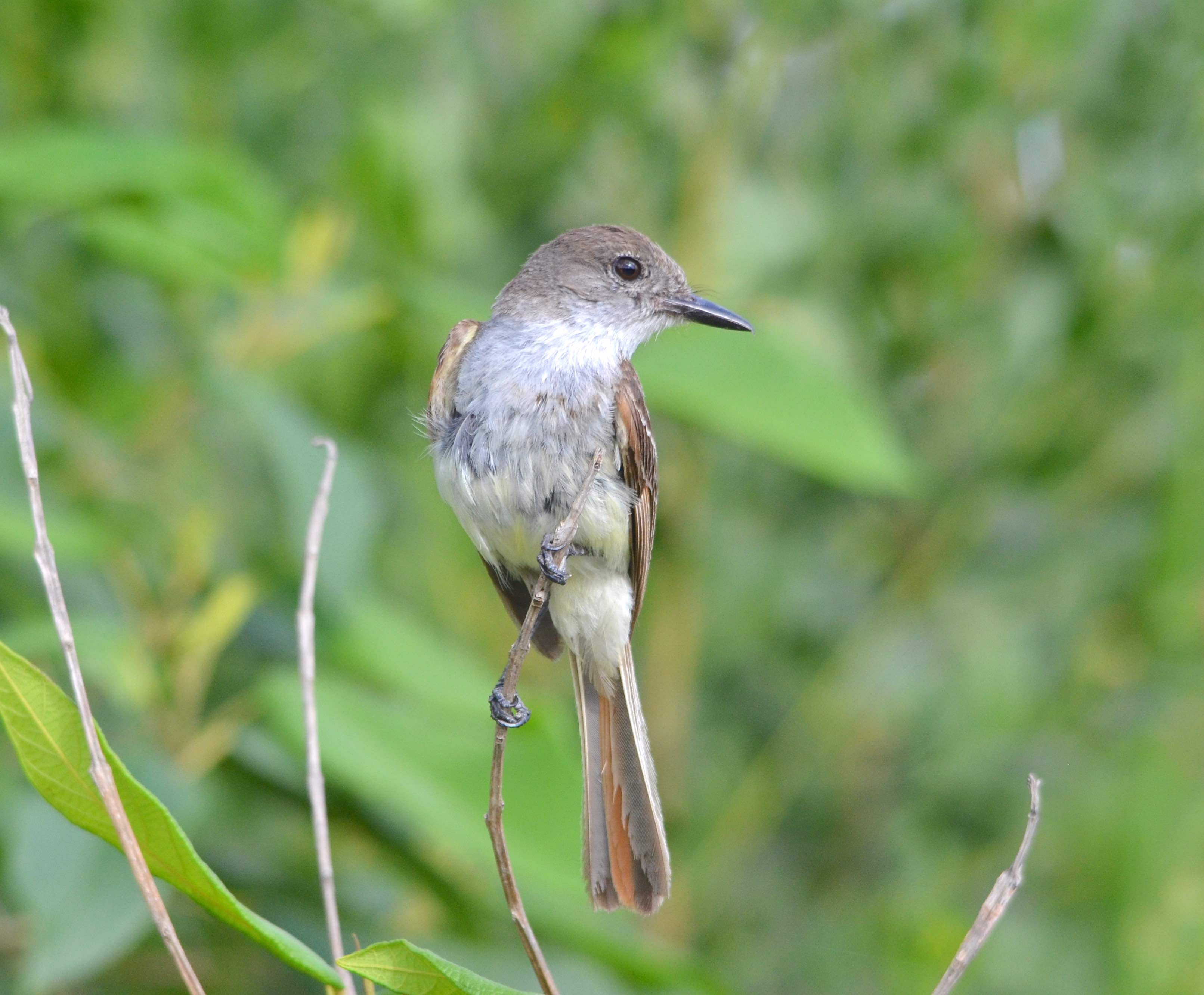
The LA SAGRA’S FLYCATCHER(Myiarchus sagrae) is a common resident breeding species of flycatcher on Abaco, and these very pretty small birds can be seen in many habitats – pine forest, scrubland, coppice and gardens, for example. They are insectivores, as the name suggests, but they also eat seeds and berries.
As a ‘tyrant flycatcher’, this little bird is a member of the large passerine order that includes kingbirds, pewees and phoebes, with which they are sometimes confused. I last wrote about LSFs in the infancy of this blog, illustrated with my own rather… ahem… ‘simple’** photos. Time to revisit them and to do them justice with some new, improved images.‘
‘Simple’ photo from a less complex era, taken with a 2mp ‘Cheepo’™ camera
Magnificent photo by Gelinde Taurer that you can actually enlarge (click pic– see?)
Unlike many bird species, adult LSFs are very similar in appearance in both sexes. Whatever the gender, they are sometimes confused with their cousins the Cuban Pewees, but those have a very distinctive eye-crescent.
Cuban Pewee – note eye-crescent, absent in the LSF
Both species have a tiny hook at the end of the (upper) beak – to help trap insects, I assume
Another thing to notice about LSFs is the amount of rufous brown in their plumage, particularly on the wings and tail – and even at the base of the beak. This coloration is absent from their larger cousin kingbirds, the loggerhead and the gray.
WHAT SHOULD I LISTEN OUT FOR?
“A high pitched single or double noted sound described as ‘wink’... ” Or it might be ‘bip‘. Or ‘weep‘. Or (on one recording I listened to, complete with sonograph) it sounded like ‘chi-chitty chew‘. But it may have been a misID.
Hans Matheve @ Xeno-Canto
A hint of a crest is visible in this photo
ANY IDEA WHAT LA SAGRA CHICKS LOOK LIKE?
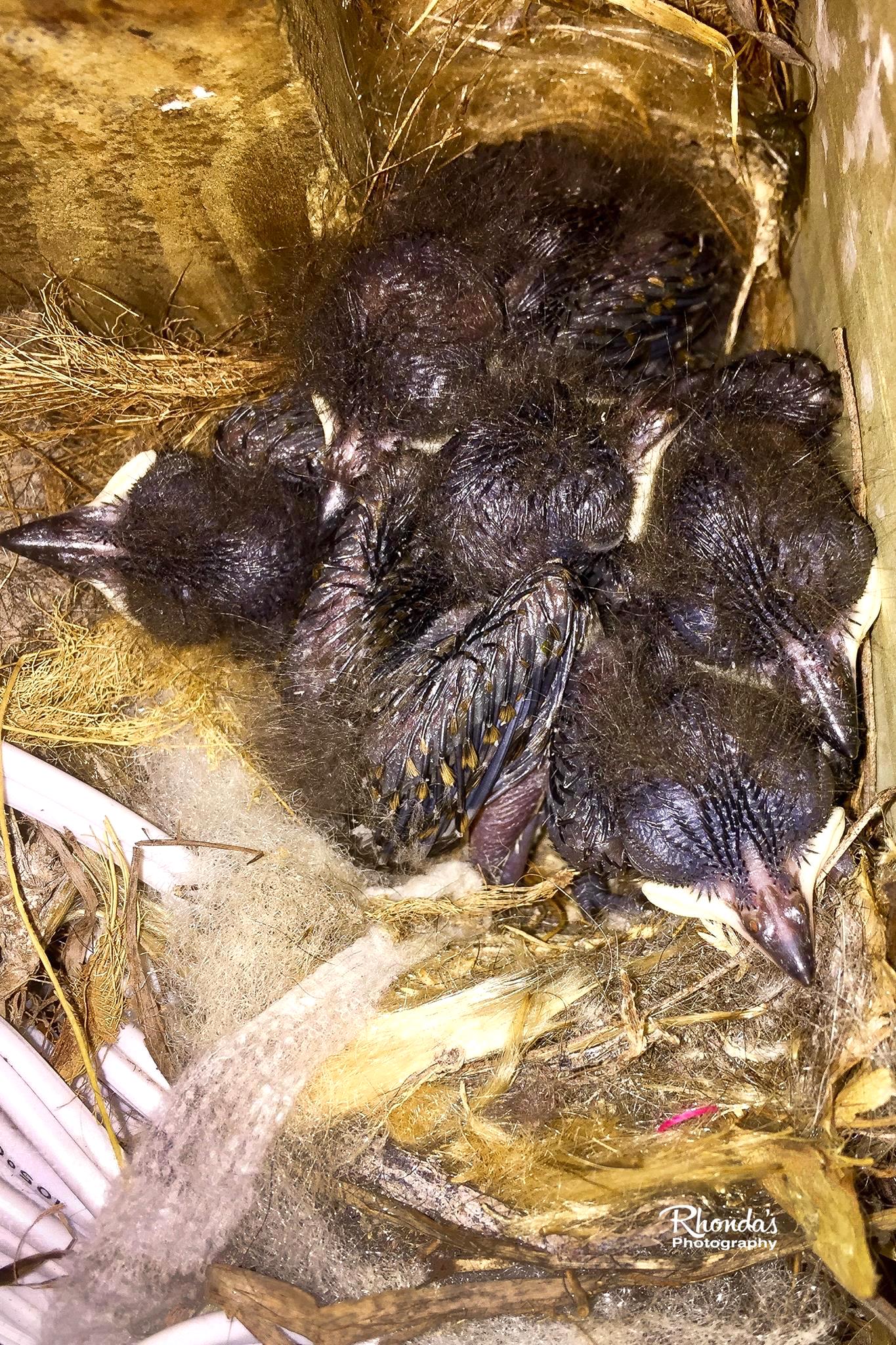
Well, as it happens, yes. By good fortune Abaco photographer and piping plover monitor Rhonda Pearce happens to have had a nest at hand this very season. So, happy to oblige…
WHO OR WHAT IS A ‘LA SAGRA’ WHEN IT’S AT HOME?
Mr La Sagra was a multi-talented Spanish botanist. Ramón Dionisio José de la Sagra y Peris(1798–1871) was also a writer, economist, sociologist, politician, anarchist, and founder of the world’s first anarchist journal El Porvenir (‘The Future’). At one time he lived in Cuba and became director of Havana’s Botanical Garden. His name lives on more significantly in ornithological than in anarchist circles (actually, ‘anarchist circles’ must be a contradiction in terms… that should be ‘anarchist disorganised squiggles’)
I note in passing that La Sagra is a provincial area in Spain, an Italian festive celebration, a chocolatier, and a small comet… All these meanings may have to be negotiated online before you get to the flycatcher…
Ramón Dionisio José de la Sagra y Peris
Continuing this blog’s philatelic natural history theme, here are stamps from the Cayman Islands and Cuba featuring the La Sagra’s Flycatcher. The Cuban stamp commemorates the death of Juan Gundlach, the man who chose La Sagra’s name to bestow on this bird. And Gundlach’s name lives on in the Bahama Mockingbird Mimus gundlachii…
** ‘Simple’, as in ‘not completely disastrous for an amateur effort but frankly not the sort of standard we have come expect around here’.
Photo Credits: Gerlinde Taurer (1, 4); Tom Reed (2, 6); Keith Salvesen (3 [!], 5, 12); Charles Skinner (7, 8); Peter Mantle (9); Rhonda Pearce (chicks) 10; Tom Sheley (11); Ramon and stamps, open source
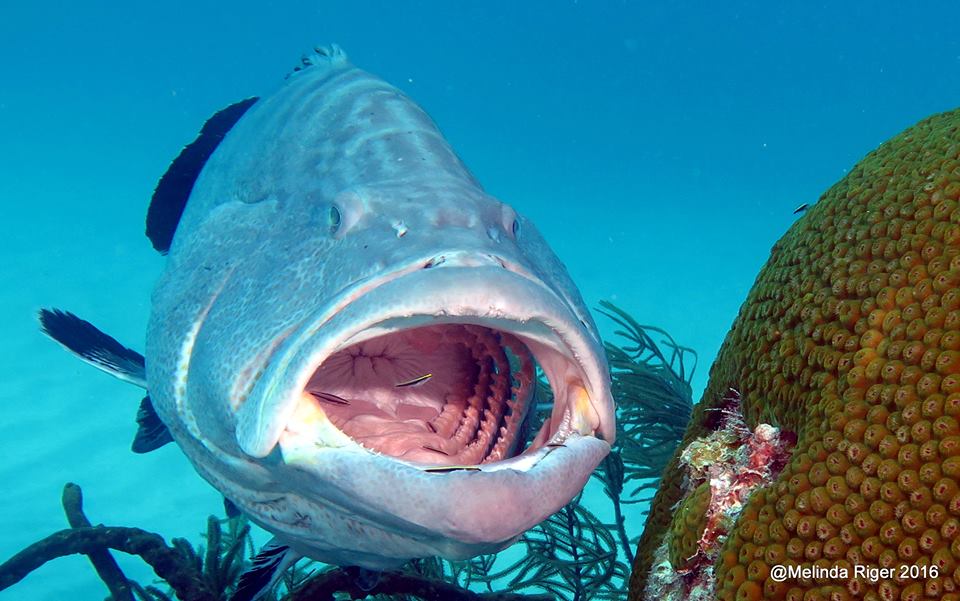
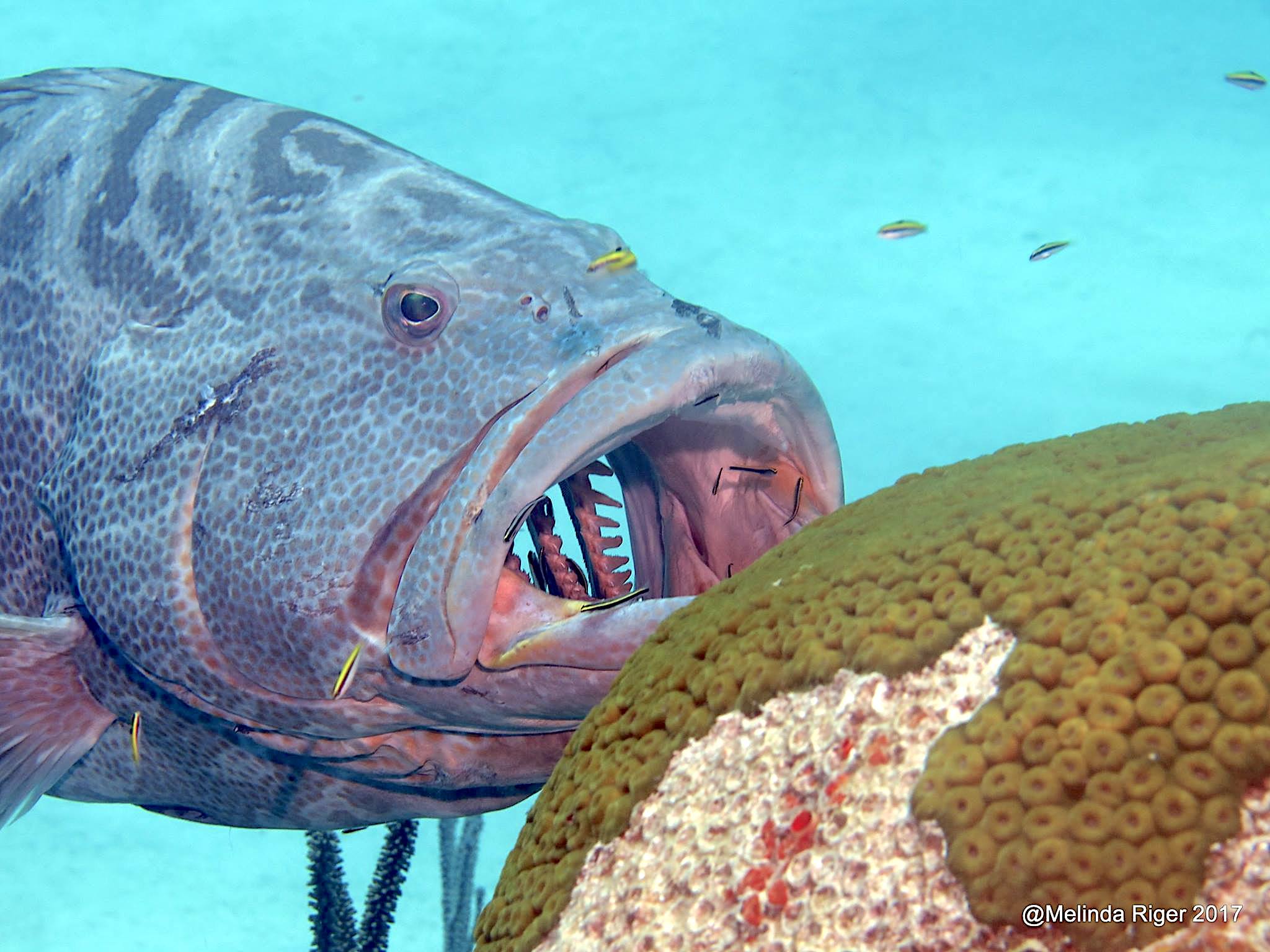
In some of these photos you’ll notice tiny fish attending to the grouper. These areCLEANERS and they are an essential part of the bodily and oral hygiene routine for larger fish species. The big fish call in at so-calledCLEANING STATIONS, where the tiddlers remove parasites and dead skin, and polish up the gills. They will even enter the fish’s mouth to pick bits from between its teeth – the deal being that they will not be eaten. This mutually beneficial arrangement is called ‘cleaning symbiosis’ and is carried out by (for example) gobies, wrasses and cleaner shrimps.
Pederson’s cleaner shrimps and cleaner wrasse
Some of these photos show groupers with open gills as well as open mouths, an invitation to the cleaners to do their work. I’d intended to write about how and why gills work but I’ve thought better of it. There’s a lot of detail about chemical exchange involved that, when I looked more closely, seemed rather dull… and therefore outside the remit of this blog, which includes trying to avoid ‘dull’. If you really want to know more, Wiki has a good articleHERE. Good luck with that….
Credits: All photos Melinda Riger, Grand Bahama Scuba































































 ROLLING HARBOUR ABACO
You must be logged in to post a comment.