Unknown's avatar

BOTTLENOSE DOLPHINS IN ABACO WATERS (2): MOTHER & CALF


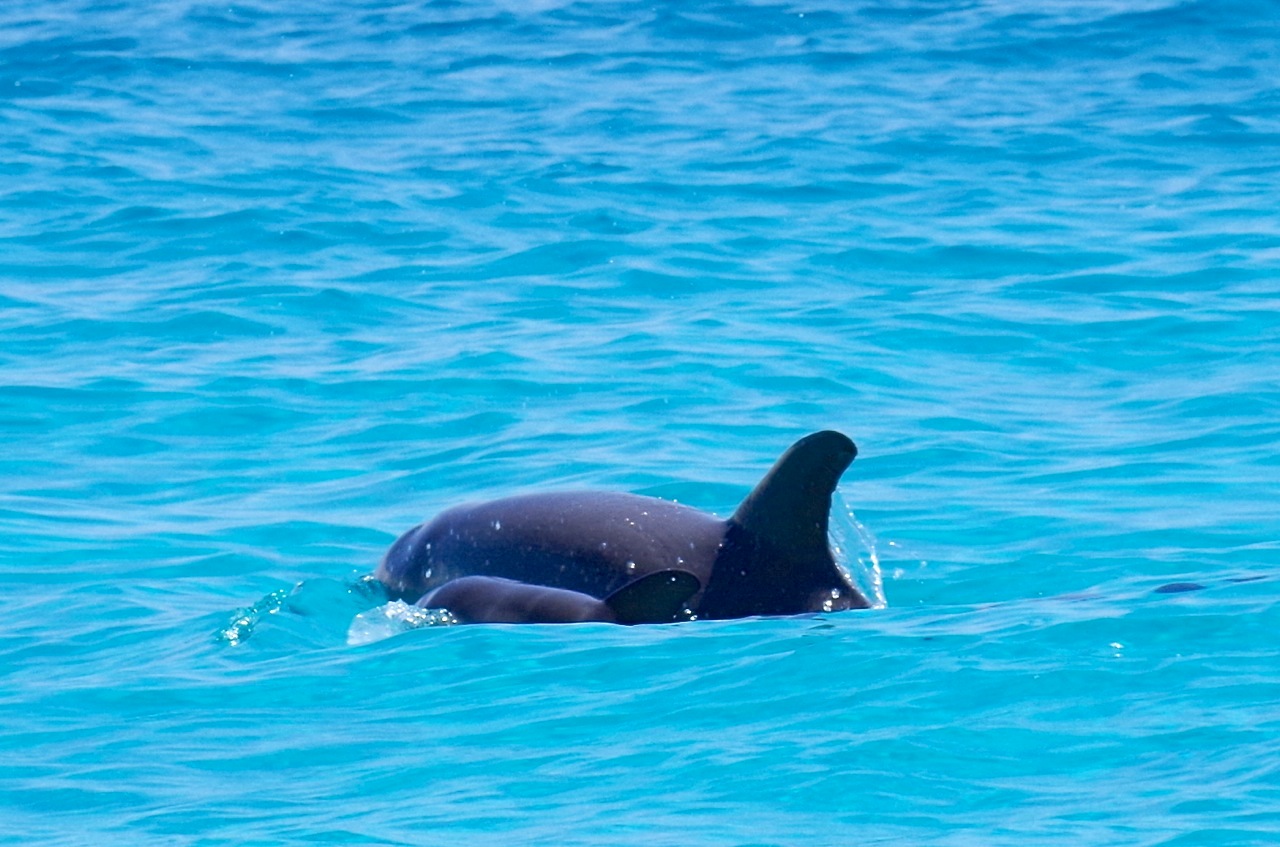
Dolphin Mother & Calf, Sandy Point, Abaco, Bahamas 12

Sometimes things happen that completely take my breath away. Here is one of those moments, from our recent trip with Charlotte and Diane in the BMMRO research boat. As we returned from whale-watching to base in Sandy Point and moved from the deep dark ocean to the bright blue shallows, we encountered a group of bottlenose dolphins. You can see my recent post featuring some of the adults HERE. That was exciting enough, as they played around the boat. Then another participant appeared… 

 Notice the dark area behind the adult dolphin… Dolphin Mother & Calf, Sandy Point, Abaco, Bahamas
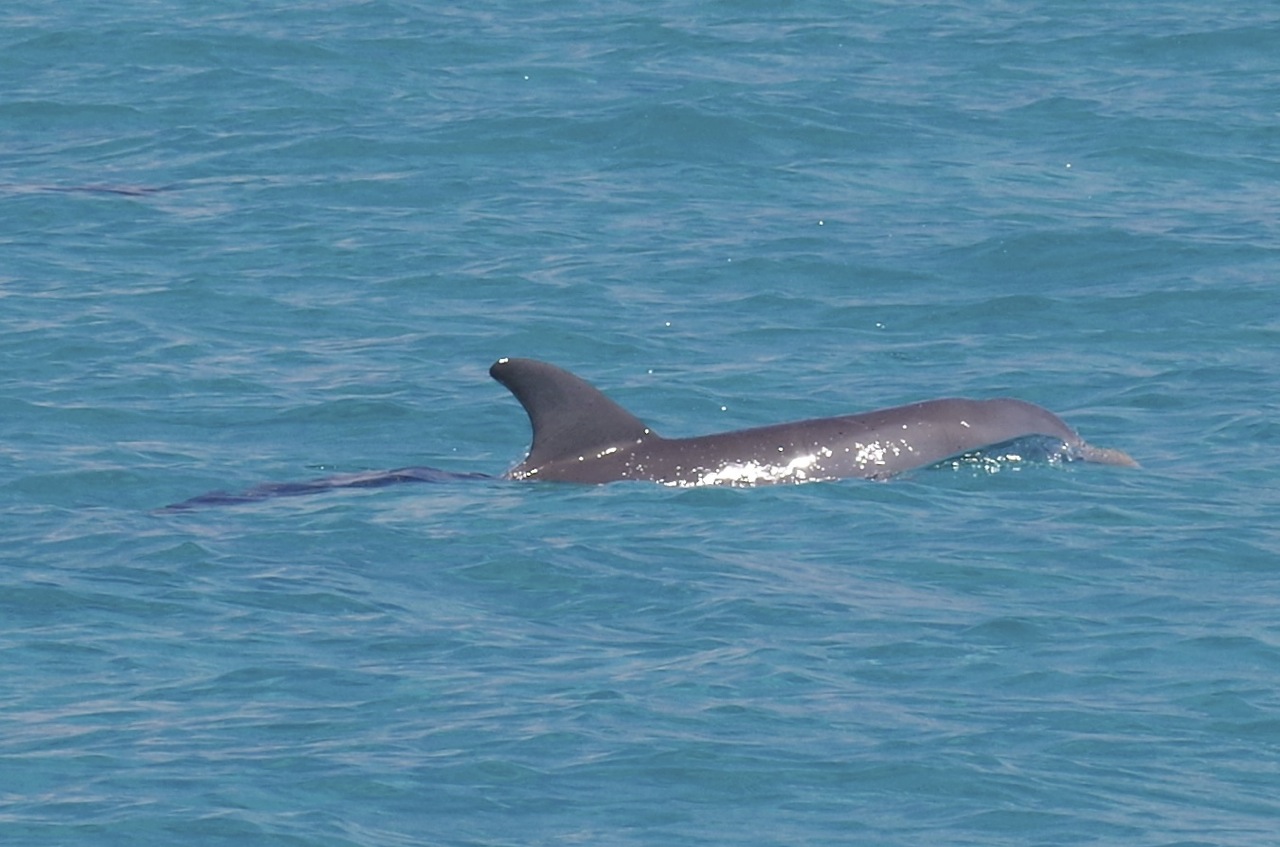
…which soon separated into a small dark splashing creature with its own fin cutting the waves…Dolphin Mother & Calf, Sandy Point, Abaco, Bahamas
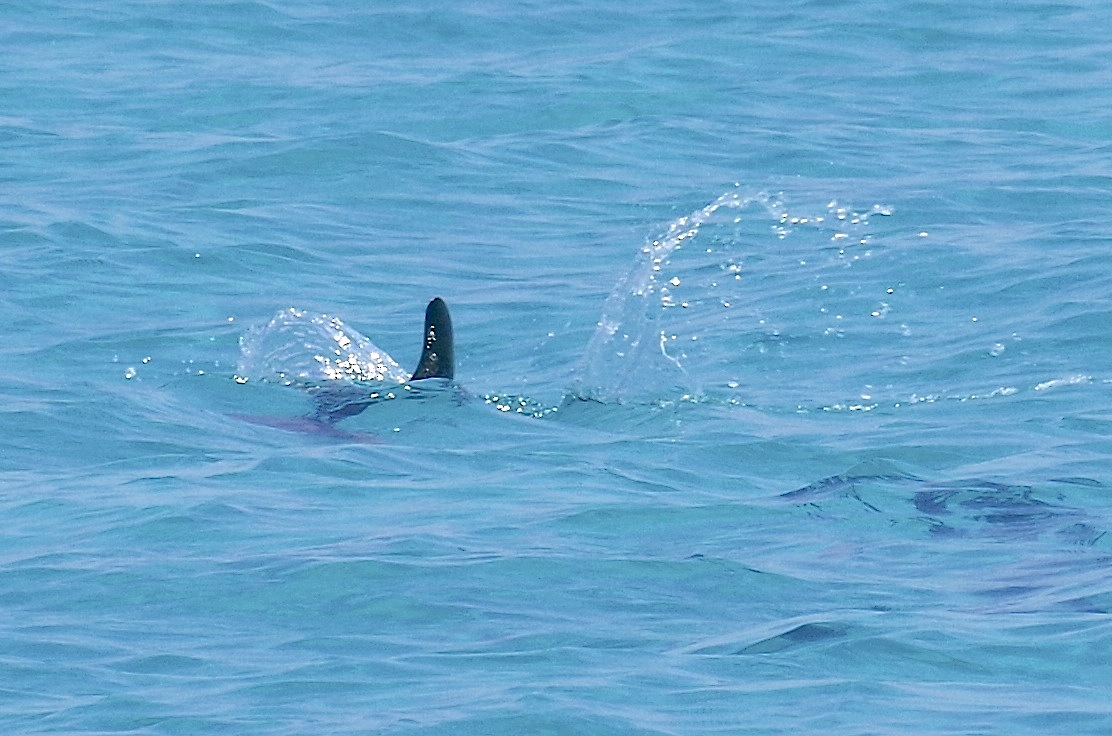
…and next seen keeping pace with its parentDolphin Mother & Calf, Sandy Point, Abaco, Bahamas

The sharp line between the light and the dark sea is where the sandy shallows abruptly give way to the deep waters of the Grand Bahama Canyon, a massive trench up to 2.5 miles deep with almost vertical cliff walls to the depths in some places

Dolphin Mother & Calf, Sandy Point, Abaco, Bahamas

Dolphin Mother & Calf, Sandy Point, Abaco, Bahamas

There were less active and splashy moments as the pair swam around togetherDolphin Mother & Calf, Sandy Point, Abaco, BahamasDolphin Mother & Calf, Sandy Point, Abaco, Bahamas
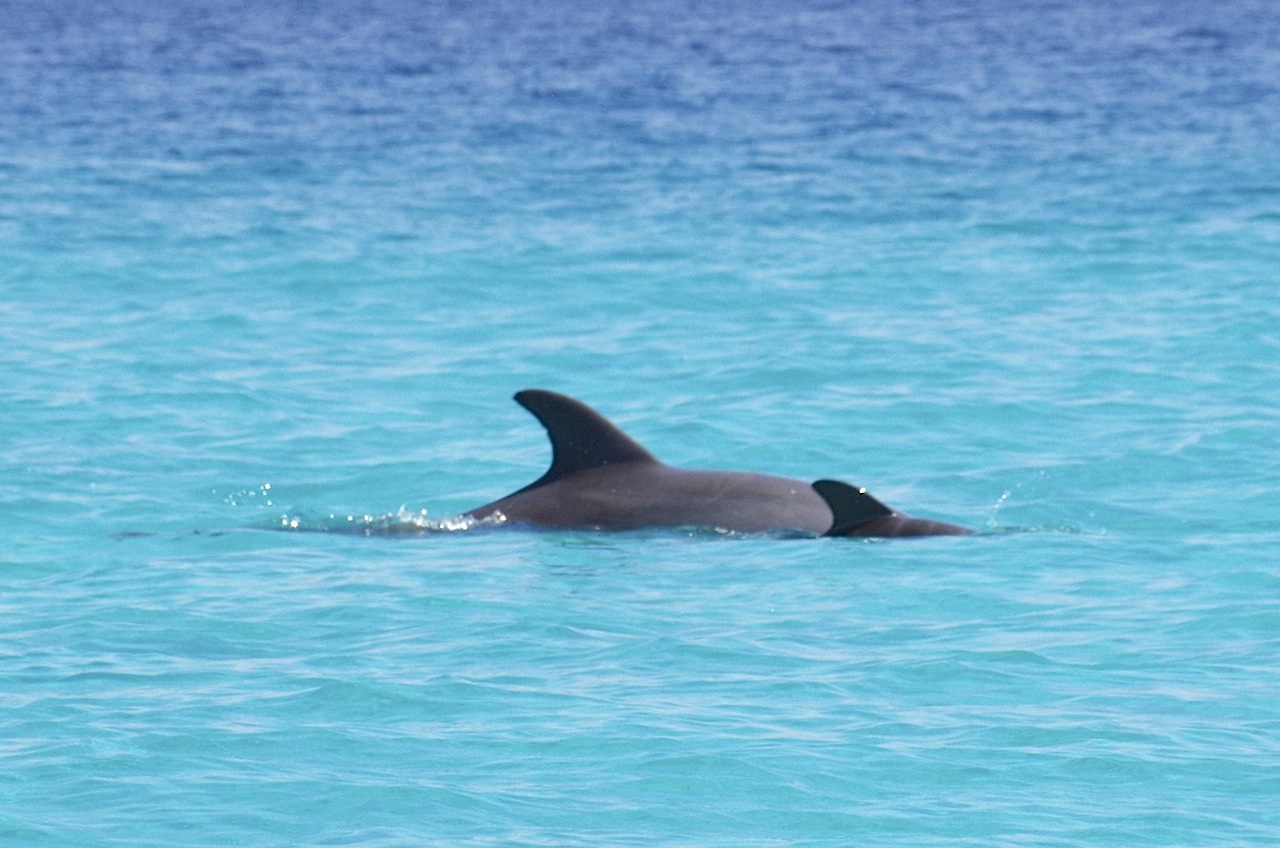
Then it was back to doing what they like best…Dolphin Mother & Calf, Sandy Point, Abaco, BahamasDolphin Mother & Calf, Sandy Point, Abaco, Bahamas

Then some more restful moments…Dolphin Mother & Calf, Sandy Point, Abaco, Bahamas Dolphin Mother & Calf, Sandy Point, Abaco, Bahamas

And finally the pair moved away. On the far horizon, the Massive Mickey Mouse Cruise ship moored at ‘Disney’s Castaway Cay’ (formerly the sober-sounding Gorda Cay), where you can be a Pirate of the Caribbean. Or anyway a very happy Tourist. The choice is yours. Would you like fries with that?Dolphin Mother & Calf, Sandy Point, Abaco, Bahamas

And looking out to sea from the cheerful place that is Castaway Cay, I wonder if a small child was wondering “Ok, love Mickey and his Friends – but I’d also really love to see a wild dolphin swimming free… 

Disney Magic docked next to the Castaway Cay Family Beach copy

All photos RH (except Castaway, Wiki). Huge thanks to Charlotte, Diane and Bahamas Marine Mammal Research Organisation BMMRO for a truly wonderful day photo 2

bmmro_logo

Unknown's avatar

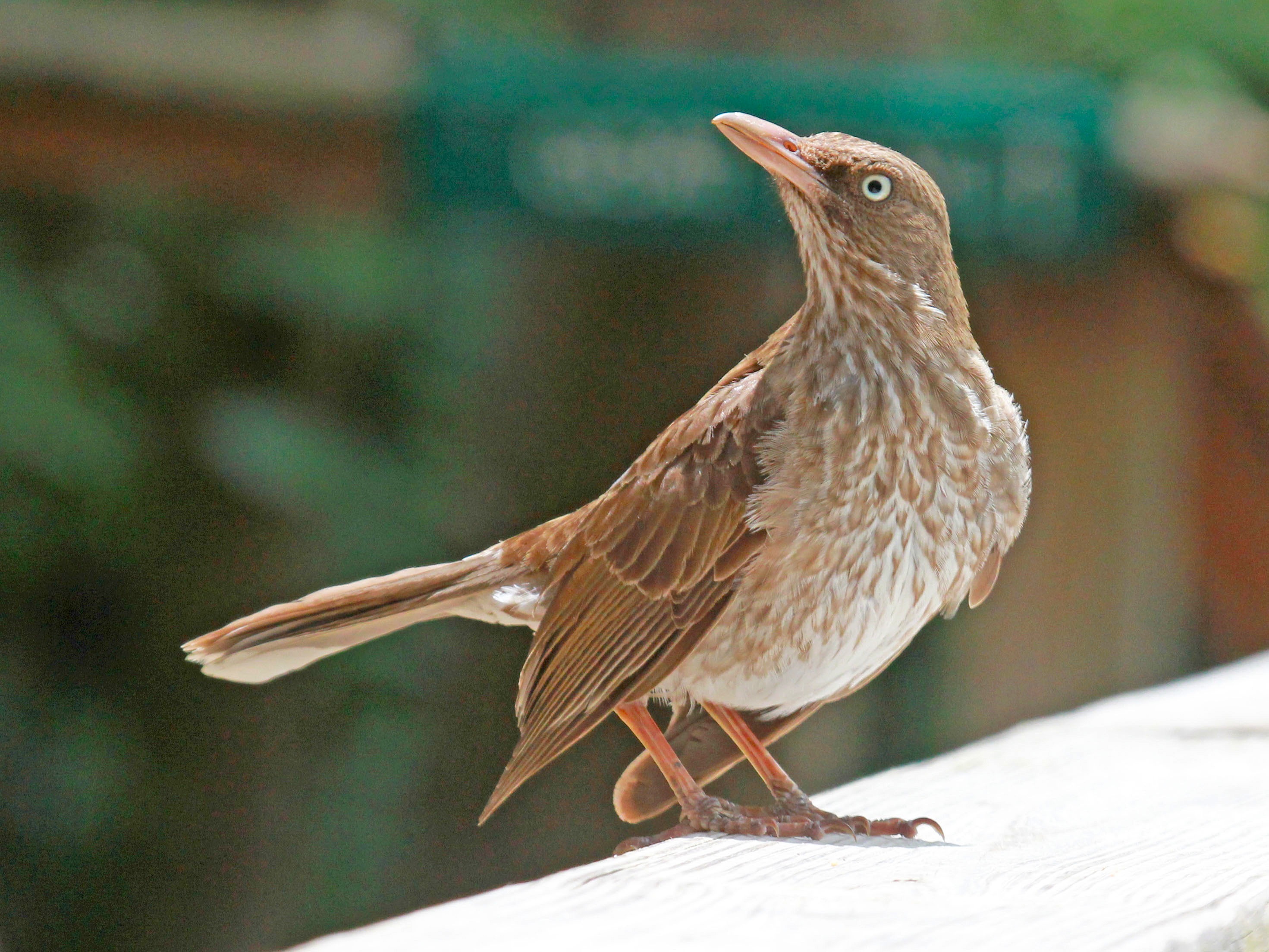
PEARLY-EYED THRASHER – ANOTHER NEW BIRD FOUND ON ABACO


Margarops_fuscatus_Mike's Birds Wiki

 PEARLY-EYED THRASHER – ANOTHER NEW BIRD FOUND ON ABACO

Exactly a year ago, the ultimate, complete and utter Checklist of the birds of Abaco, compiled by Tony White with Woody Bracey, was published. It covers 4 pages of close print in THE BIRDS OF ABACO, and lists the 282 species recorded since 1950, including so-called ‘exotics’ but excluding so-called ‘pets’ (sadly your minah bird would not qualify). New sightings had been static since a BLACK-BROWED ALBATROSS had made an unheralded appearance out at sea. In the last year, 5 new species have been recorded. The links to them are listed below. That Checklist already needs an update!

Pearly-eyed_ThrasherDick Daniels (Wiki)

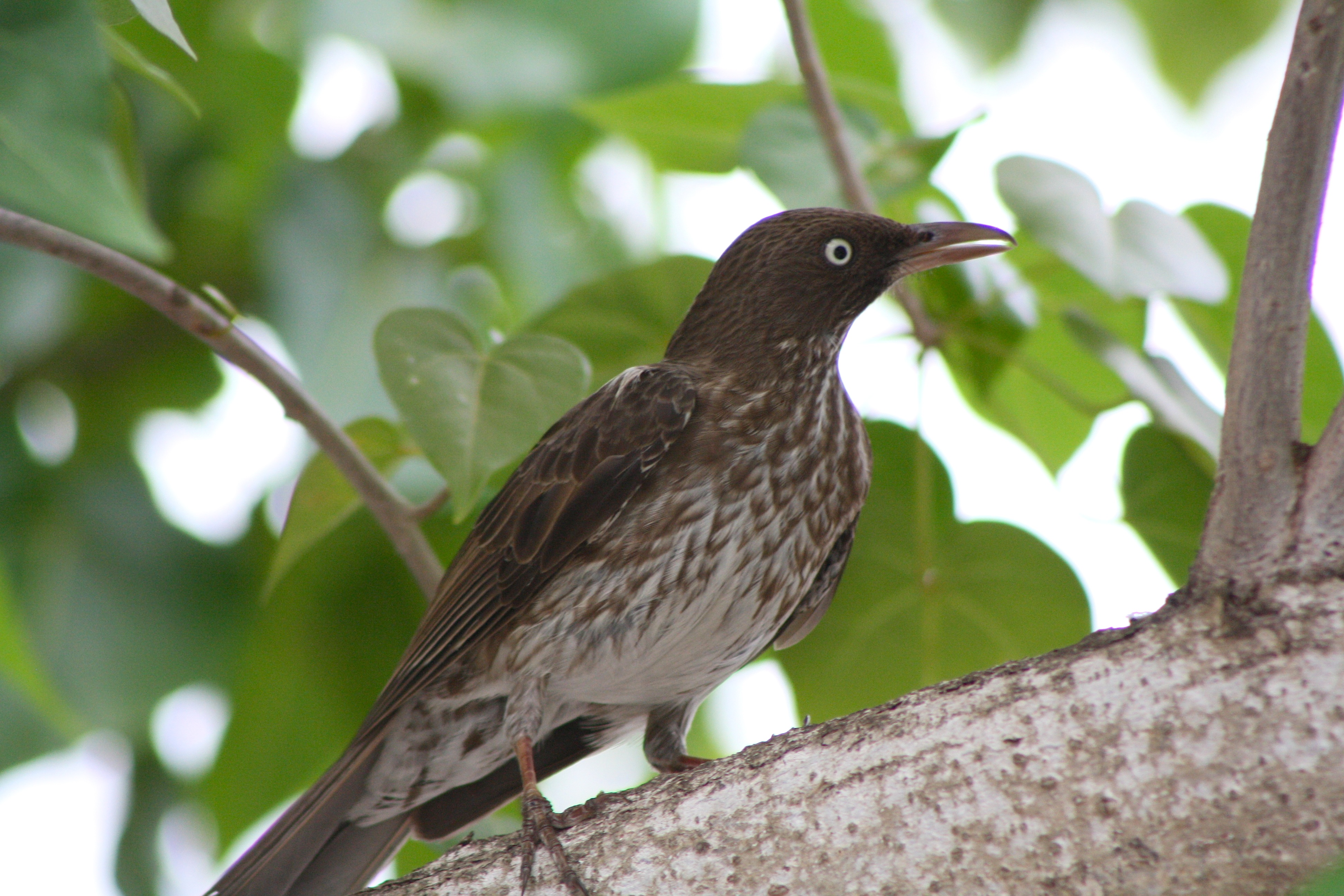
The newest bird in town is the Pearly-eyed Thrasher (Margarops fuscatus). This is a bird in the family Mimidae, along with mockingbirds and the gray catbird. Until last November, no thrasher species had ever been recorded for Abaco. Then there was a sighting of a BROWN THRASHER. Just a few months later, its Pearly-eyed cousin has turned up right in the heart of Treasure Cay, seen by first by Erik Gauger and confirmed by Woody Bracey (each a contributor to THE BIRDS OF ABACO). 

This thrasher species is found widely throughout the Caribbean, though with several varieties that are genetically distinct. In the Bahamas, they breed on some of the southern islands. They are known to overwinter on Eleuthera and Cat Island, but have not previously been recorded as far north as Abaco. This sighting is important in suggesting that the species may be beginning to extend its range, although it could of course simply be a one-off ‘vagrant’, as they are officially yet disrespectfully known.

Pearly_Eyed_Thrasher,_Margarops_fuscatus (Kati Fleming Wiki)

Since the first sightings by Erik & Woody a couple of days ago, Woody has been out again with a camera seeking to obtain photographic  evidence of the bird. Last night he sent me a snapshot taken in difficult circumstances – the bird was being hassled by a Eurasian Collared Dove (who should have known better, being a non-native species itself…). The pearly eye is quite clear, as is the speckled front and white end to the underside of the tail. If  a clearer shot comes in, I’ll add it. So, TC-based birders, a Rolling Harbour Kalik challenge is on!

IMG_3432 copy

STOP PRESS Woody has sent a couple more photos of the PET taken right in the centre of Treasure Cay. Or perhaps there is a second one… and if so, different sexes… and if so, a nest, eggs, chicks, fledglings and in due course a new breeding species on Abaco… 

Pearly-eyed Thrasher, Treasure Cay, Abaco - Woody Bracey (new species for Abaco)IMG_3444 Pearly-eyed Thrasher, Treasure Cay, Abaco - Woody Bracey (new species for Abaco)

STOP PRESS April 2015 Erik Gauger has now written up his account of his discovery of this new species for Abaco. You can read it HERE (scroll down to the second article on the page)

The other photos I have used are ‘open source’ for obvious reasons, and credited below as far as the information is available…

 NEW ABACO BIRD SPECIES – MAR 2014 to MAR 2015

BLACK-BELLIED WHISTLING DUCKS

FORK-TAILED FLYCATCHER

BROWN THRASHER

MASKED BOOBY

Photo credits with thanks for public postings: (1) ‘Mike’s Birds (2) Dick Daniels (3) Kati Fleming, and  (4) Woody Bracey

Unknown's avatar

BOTTLENOSE DOLPHINS IN ABACO WATERS (PART 1)


Bottlenose Dolphins, Rocky Point, Abaco (Keith Salvesen : BMMRO) 7

BOTTLENOSE DOLPHINS IN ABACO WATERS (PART 1)

DCB GBG Cover Logo dolphin

This seems to be a excellent early Spring for dolphin and whale sightings in Abaco waters. I’ve noticed that people have been posting dolphin sightings on FB recently. In our brief window of opportunity each March, I usually reckon to see 2 or 3 dolphins at most – maybe crossing over to Hope Town on the ferry, or more probably on a fishing trip. This year we saw 2 groups of about 6 off Cherokee while fishing, including calves. On another day, 4 adults made a leisurely progress the whole length of Rolling Harbour while we watched from the balcony of the Delphi Club. I don’t think they have ever been so close to the shore there before. The best was to come.Bottlenose Dolphins, Rocky Point, Abaco (Keith Salvesen : BMMRO) 3

Near the end of our trip Charlotte Dunn and Diane Claridge invited us to go out with them on the BMMRO research boat. This is equipped with a hydrophonic system that can detect the bleeps, whistles and clicks of cetaceans, and record them for comparison with previous data. This enables particular animals to be identified from their vocalisations. The other method is to note particular features of an animal – damage to a fin, markings on the flank and so on. During the day C & D happily conversed in code: “Is that 132 over there?” “No, it’s got a nick in the fluke, it must be 127…”BMMRO Research Boat, Sandy Point, Abaco

As we returned in the RHIB from an amazing day spent at close quarters with beaked whales [more on these soon], we moved from deep dark blue ocean to sandy turquoise shallows. There, just off Rocky Point (near BMMRO HQ at Sandy Point) were half a dozen bottlenose dolphins, including a mother and calf. This post contains a small batch of photos of adults – there’ll be another post shortly featuring the calf… Bottlenose Dolphins, Rocky Point, Abaco (Keith Salvesen : BMMRO) 4Bottlenose Dolphins, Rocky Point, Abaco (Keith Salvesen : BMMRO) 1Bottlenose Dolphins, Rocky Point, Abaco (Keith Salvesen : BMMRO) 5

Here’s a taster for the next post – the calf, just visible close alongside its mother, was being given leaping practice. Watch this blog…

Bottlenose Dolphins, Rocky Point, Abaco (Keith Salvesen : BMMRO) 6

All photos RH. Huge thanks to Charlotte, Diane and Bahamas Marine Mammal Research Organisation BMMRO for a truly wonderful day (and for my cool sweatshirt!) photo 2

bmmro_logo

Unknown's avatar

UNDENIABLY NATTY: BLUE-GRAY GNATCATCHERS ON ABACO


Blue-gray Gnatcatcher, Abaco, Bahamas 1 copy

UNDENIABLY NATTY: BLUE-GRAY GNATCATCHERS ON ABACO

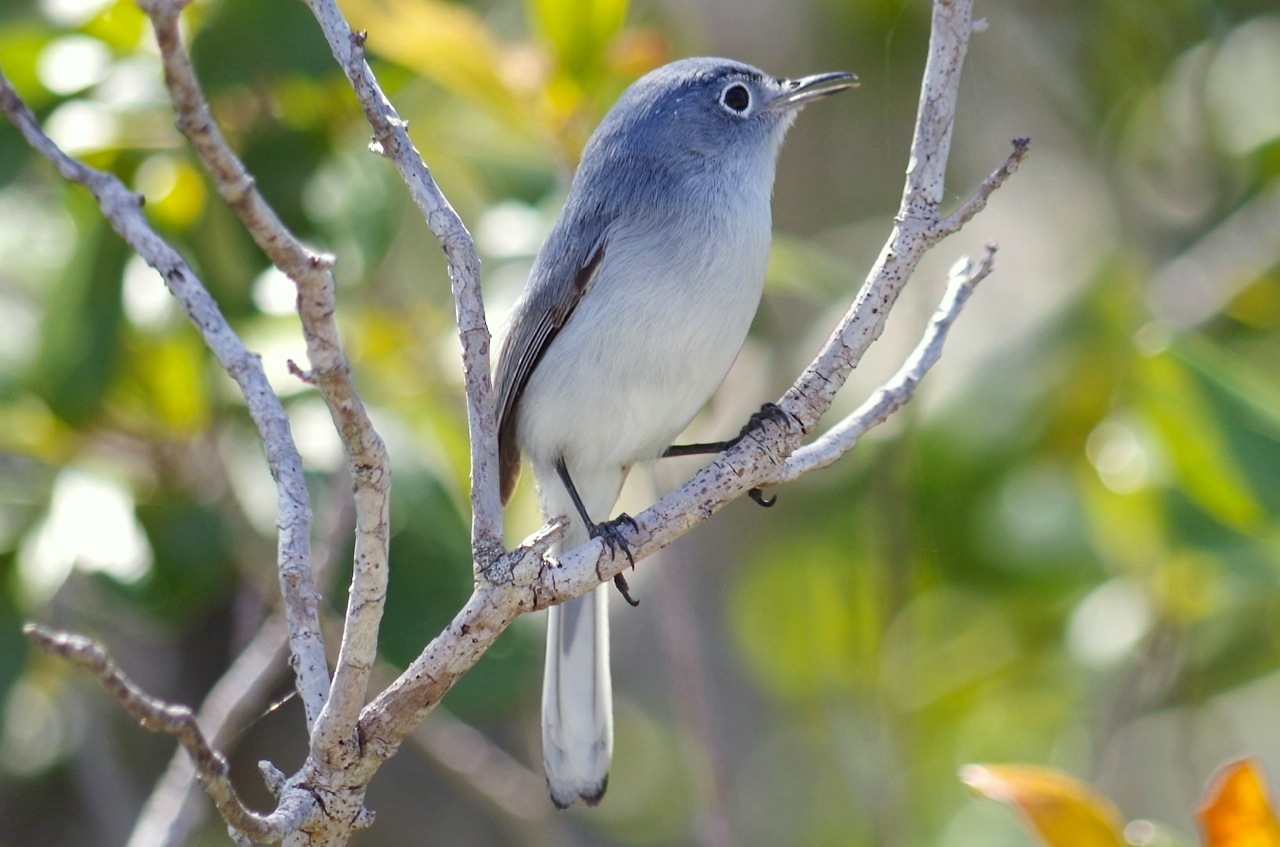
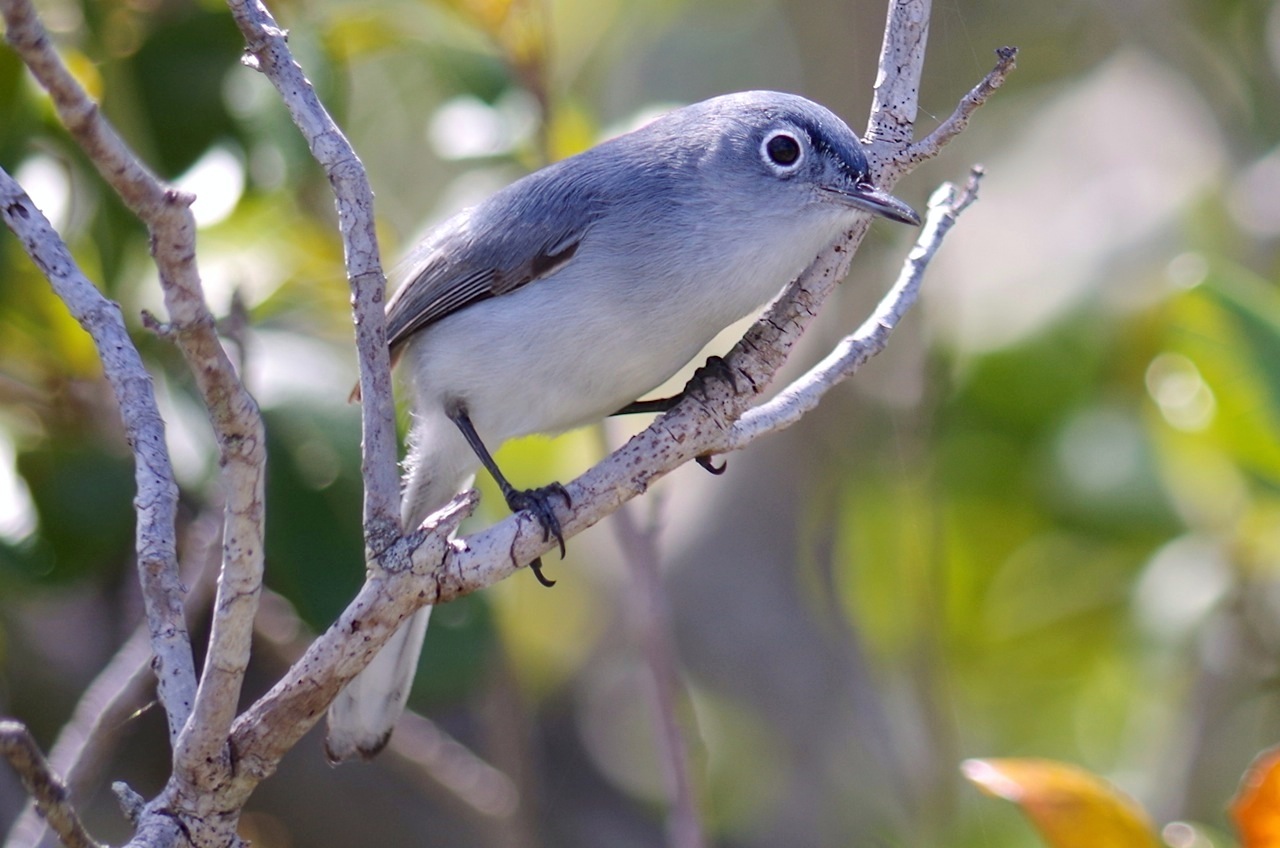
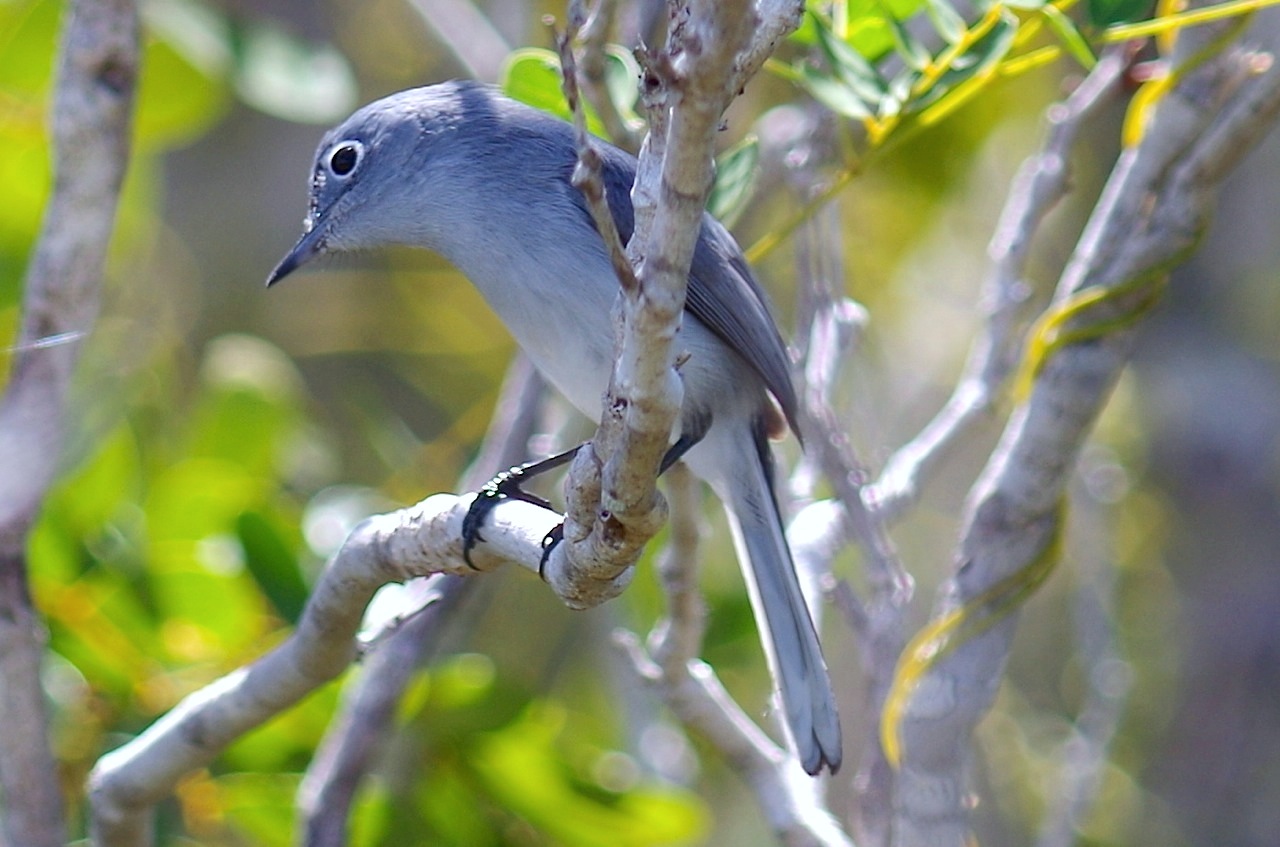
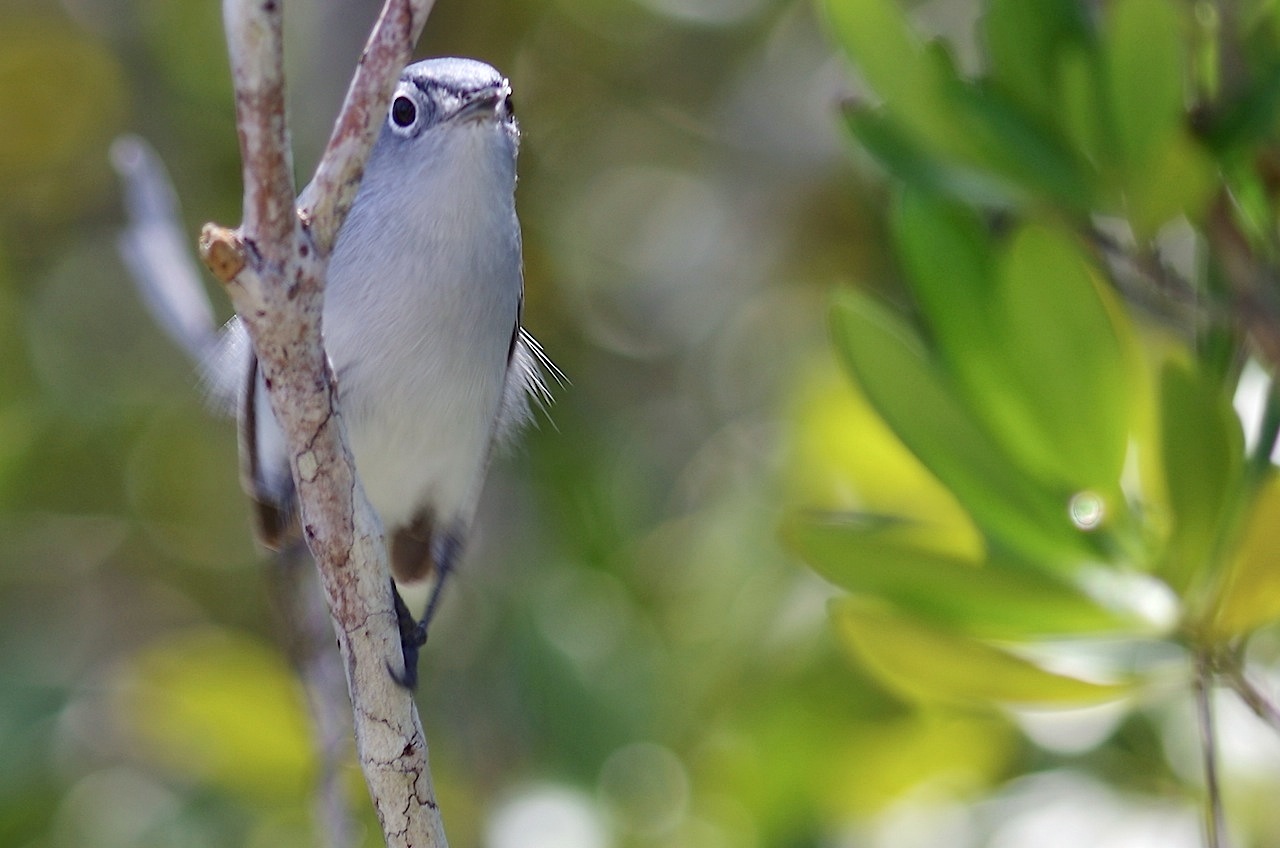
As I sort through 11,867* recent photographs from Abaco and dump the 99% of them that fall into any of the ‘epic fail’, ‘hopeless’, ‘what on earth?’, ‘why on earth’?, ‘sun-flared’, ‘pitch black’, and ‘bird-butt’ categories, a few are making it through the rigorous editorial process. There will be birds, fish, whales, dolphins, expeditions and scenery in due course, but I’m kicking off with a small bird that is a great favourite, the Blue-gray Gnatcatcher Polioptila caerulea. This is because it is probably the easiest bird to pish, click, whistle or otherwise vocalise from the back of the coppice to the front. Then it gets flirty with the camera, performs cutely, and follows you down the track. The perfect subject except for one thing: they are small and branches / twigs are numerous. So, many shots consist of a magnificently focussed stick or leaf, with a blue-gray blur behind it…

Blue-gray Gnatcatcher, Abaco, Bahamas 7Blue-gray Gnatcatcher, Abaco, Bahamas 6Blue-gray Gnatcatcher, Abaco, Bahamas 1Blue-gray Gnatcatcher, Abaco, Bahamas 2Blue-gray Gnatcatcher, Abaco, Bahamas 5

RELATED POSTS

BLUE-GRAY GNATCATCHERS “TOP 5 CUTE?”

BLUE-GRAY GNATCATCHERS “ON SONG IN THE COPPICE” 

*This may be a slight exaggeration, but it certainly seems like it now…

All photos: RH

Unknown's avatar

THE WARBLER GUIDE: BOOK OR EASY ID IN NEW APP


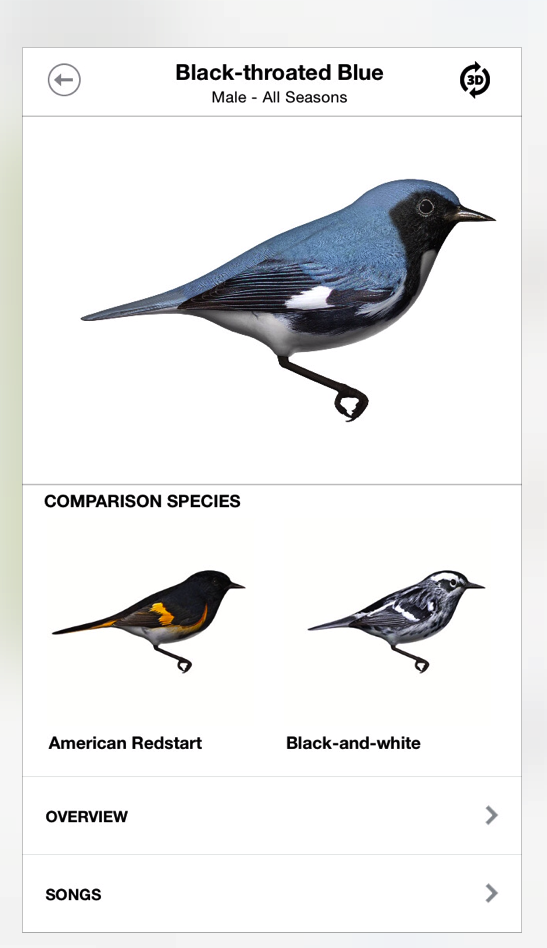
The Warbler Guide App (cover)

 THE WARBLER GUIDE: BOOK OR EASY ID IN NEW APP

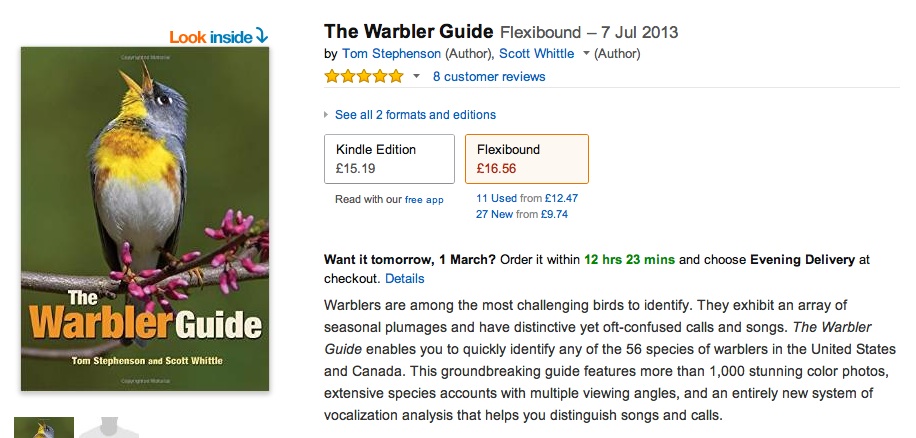
In 2013 Princeton University published a well-received – indeed award-winning – guide to North American warblers. Its relevance to the Northern Bahamas is that all 37 species of warbler recorded for Abaco are found on its pages. Plus, you can use it in North America as a bonus! Details of the book are given below.

As a follow-up project, Princeton has now produced a Warbler Guide App that looks quite impressive at a glance. It’s not cheap, at £9.99 or dollar equivalent, but with bird apps you generally get what you pay for. Included are song/call IDs for a start, which takes the App a long way beyond mere visual recognition. And the illustrations are from several angles, taking account of the fact that you may not get an ideal broadside view of a bird in the field. Below are a few sample images.

To go straight to the App on iTunes CLICK HERE

The Warbler Guide App (Princeton)The Warbler Guide App (Princeton) The Warbler Guide App (Princeton) The Warbler Guide App (Princeton)

 THE WARBLER GUIDE IN BOOK FORM

(Amazon listing details March 2015)

WARBLER GUIDE  for post jpg

The Warbler Guide revolutionizes birdwatching, making warbler identification easier than ever before. For more information, please see the author videos on the Princeton University Press website.

  • Covers all 56 species of warblers in the United States and Canada
  • Visual quick finders help you identify warblers from any angle
  • Song and call finders make identification easy using a few simple questions
  • Uses sonograms to teach a new system of song identification that makes it easier to understand and hear differences between similar species
  • Detailed species accounts show multiple views with diagnostic points, direct comparisons of plumage and vocalizations with similar species, and complete aging and sexing descriptions
  • New aids to identification include song mnemonics and icons for undertail pattern, color impression, habitat, and behavior
  • Includes field exercises, flight shots, general identification strategies, and quizzes
  • A complete, page-by-page audio companion to all of the 1,000-plus songs and calls covered by the book is available for purchase and download from the Cornell Lab of Ornithology’s Macaulay Library by using the link at http://www.TheWarblerGuide.com
  • Winner of a 2014 National Outdoor Book Award in Nature Guidebooks
  • Second Place for the 2013 BB/BTO Best Bird Book of the Year, British Birds and the British Trust for Ornithology
  • Honorable Mention for the 2013 PROSE Award in Single Volume Reference/Science, Association of American Publishers
Unknown's avatar

THE OCTOPUS: THERE’S NOTHING QUITE LIKE IT…


THE OCTOPUS: THERE’S NOTHING QUITE LIKE IT…

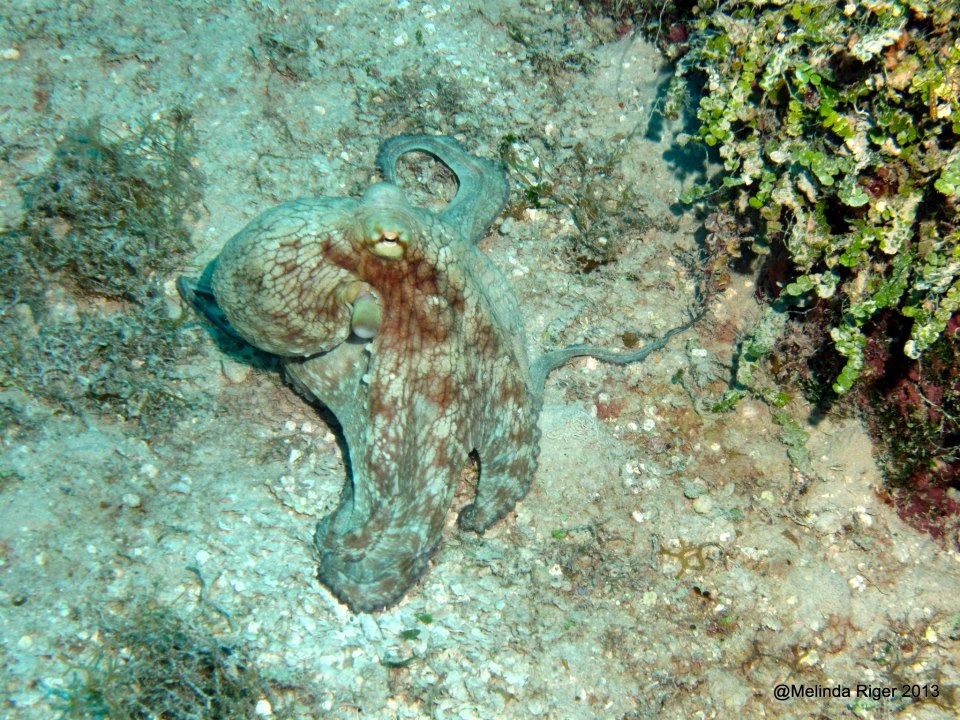
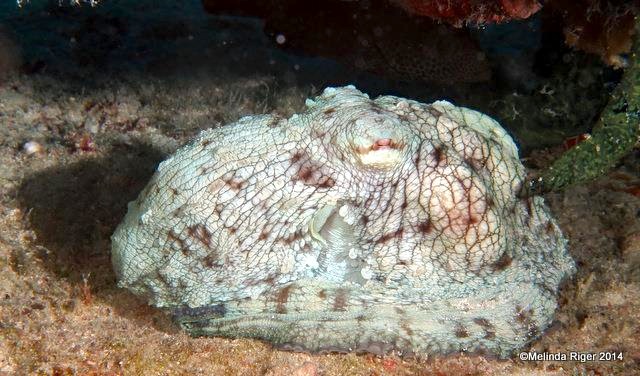
I’ve posted about the octopus a couple of times before. The first time was to explore the correct plural of the word ‘and related cephalopod mysteries’. You can see that HERE. More recently there was ‘Marine Bagpipes filled with Ink’, which you can see HERE. Both posts were really a way to show some of Melinda Riger’s stunning underwater photography, with an octopoidal theme. Now I have some more images for you, so I present some new photos of Octopi… erm, Octopodes… erm, Octopuses… Octopus ©Melinda Riger @G B Scuba Octopus 1:15 ©Melinda Riger @ G B Scuba Octopus 4

This octopus is having a sleep, disguised as a rockOctopus Sleeping ©Melinda Riger @ GB Scuba

Credits: All images courtesy of Melinda Riger of Grand Bahama Scuba

Unknown's avatar

THE PECKING ORDER: FEEDER GREED ON ABACO


Black-faced Grassquits, Delphi, Abaco 2

THE PECKING ORDER: FEEDER GREED ON ABACO

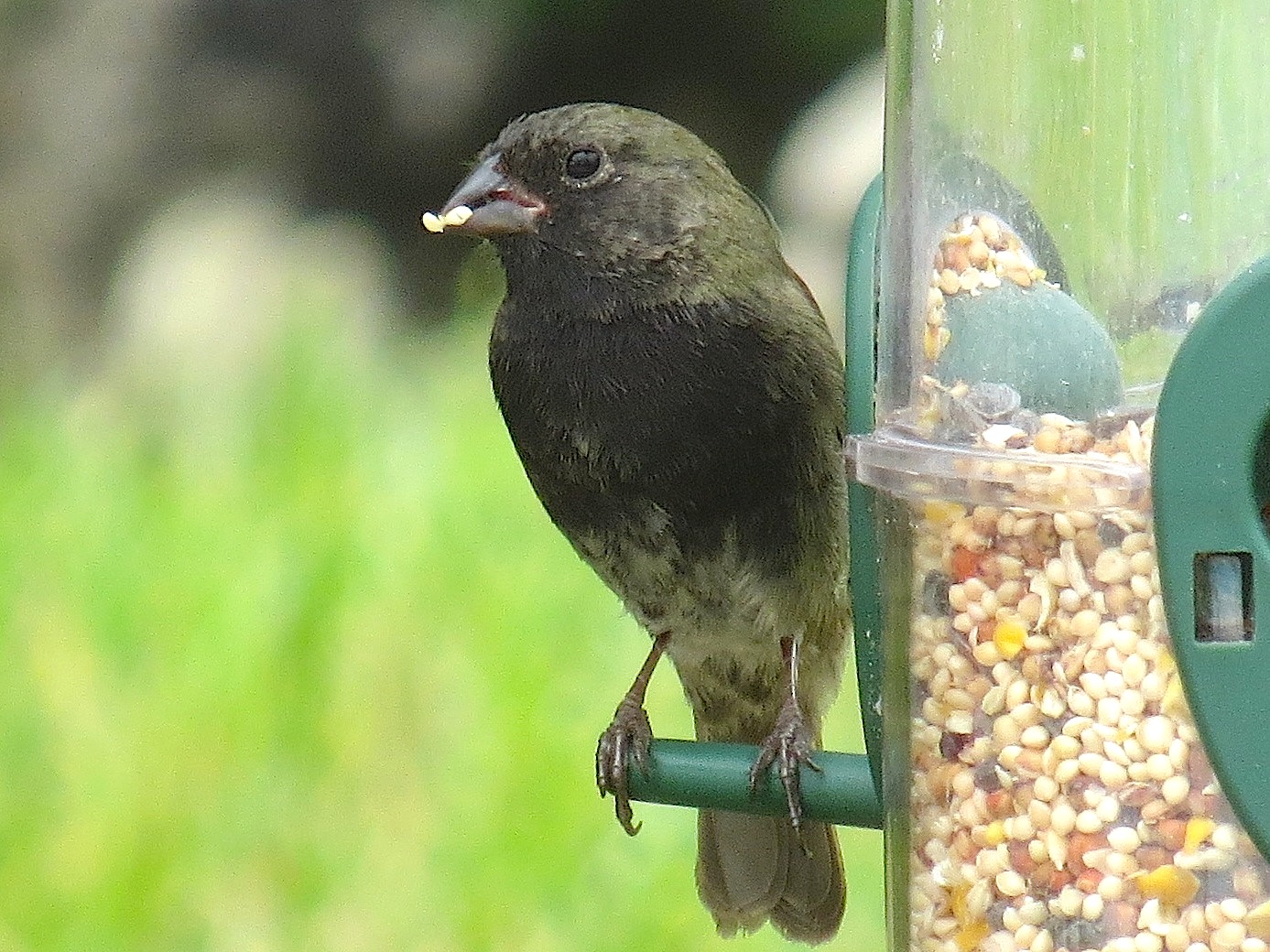
At Delphi there are several feeders, with seeds for the garden birds in general, and sugar water feeders for the specialist hummingbirds. The seed feeders are the cause of a certain amount of species squabbling, with a pecking order based on size. Smaller birds tend to give way to larger, and either flutter down to the ground to pick up dropped seeds or fly off to the bushes until it’s safe to return.  The hummer feeders are also visited by birds with adaptive beaks to fit the tiny holes, such as bananaquits; and birds with long and probing tongues like the resident West Indian woodpeckers. The hummers tend to flit away until the intruders have flown off again.

BLACK-FACED GRASSQUITS

There’s no getting away from it, I’m afraid. BFGs are greedy little birds. Many would also call them dull, but personally I rather like the assertive colouring of the male and the subtle olive shades of the female (but that said I’d trade one in for a painted bunting without a second thought…). They are easily bullied out of the way by GABs (see below), although I have noticed that both species happily coexist on the ground under the feeders, where there is more space for them to pick up fallen seeds.

Black-faced Grassquits, Delphi, Abaco 4Black-faced Grassquits, Delphi, Abaco 3 Black-faced Grassquits, Delphi, Abaco 6

 GREATER ANTILLEAN BULLFINCH

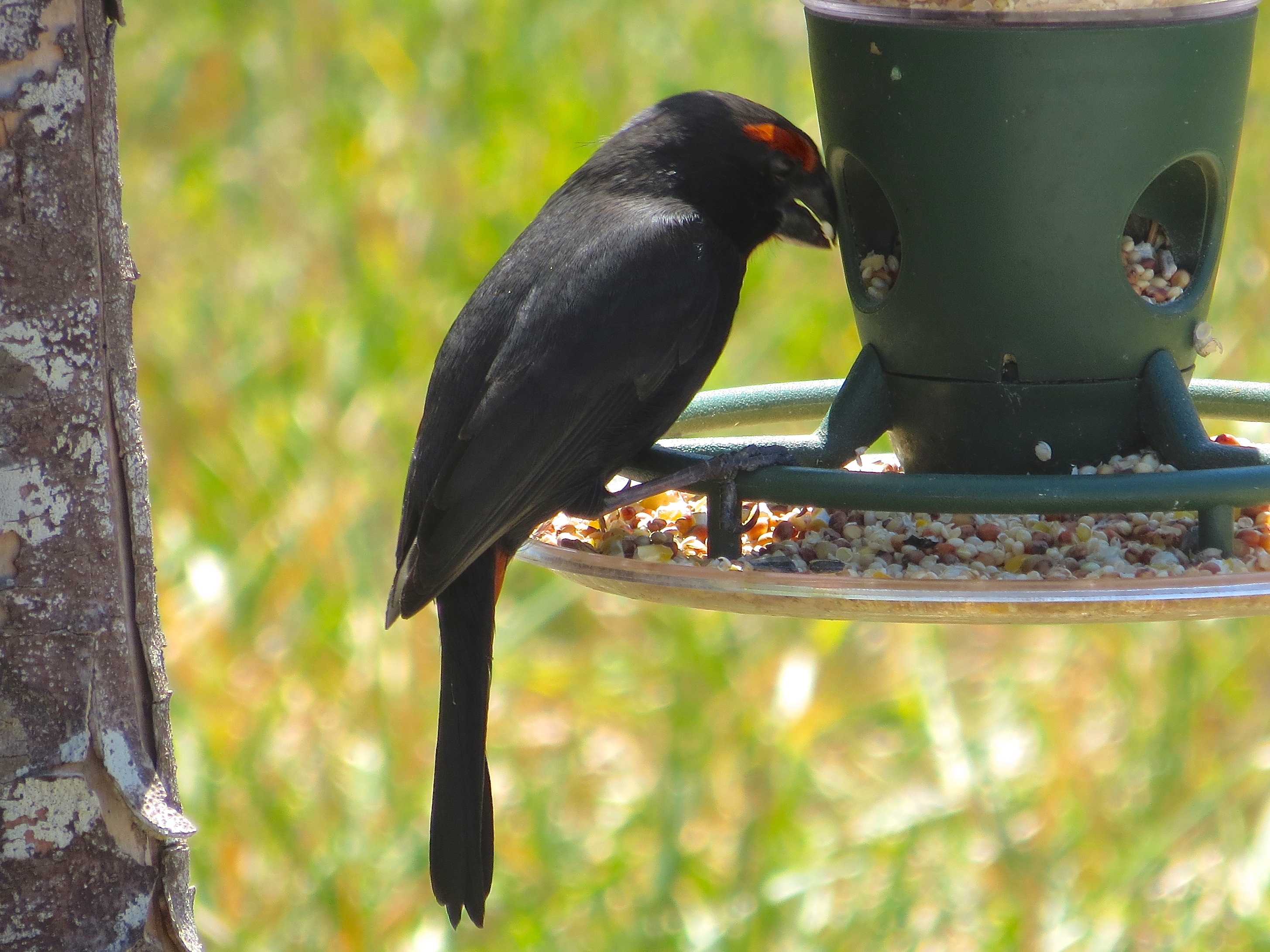
These fine birds with their striking livery assume feeder priority. They are just as voracious as the BFGs, and get seriously stuck in. No other birds spoil their feasting. These are alpha seed guzzlers.Greater Antillean Bullfinch, Delphi, AbacoGreater Antillean Bullfinch, Delphi, Abaco

HEY YOU! GRASSQUIT! DON’T YOU DARE COME ANY CLOSER… MINE!Greater Antillean Bullfinch, Delphi, AbacoGreater Antillean Bullfinch, Delphi, Abaco

HUMMINGBIRD FEEDER RIVALS

BANANAQUIT

This bird had been sticking its thin, curved beak in to the tiny holes and drinking until I got a bead on it (with the camera). Annoyingly it then started to sip the spillage, so I missed the shot I really wanted… Meanwhile two Emeralds had retired to the bushed nearby, waiting for their chance at what was after all their own designated feeder.Bananaquit at Hummer feeder, Delphi, Abaco Bananaquit at Hummer feeder, Delphi, Abaco

This is a beak that can easily negotiate a little feeder holeBananaquit & palm, Delphi, Abaco, Bahamas 7

WEST INDIAN WOODPECKER

When Delphi’s resident woodpeckers decide to try out the hummer feeder, everyone keeps clear. Very meanly, the male takes precedence over the female, despite the fact that in the course of each year she rears two families, moving to the second nesting box to rearrange the furniture even before the chicks in the first box have flown. Nevertheless, she has to wait her turn… Note how the male manages to get his long tongue right into the small hole in the yellow flower…West Indian Woodpecker (male) at Hummer Feeder, Delphi, Abaco

Meanwhile, Mrs Woody politely waits her turn…West Indian Woodpecker (female) at Hummer Feeder, Delphi, Abaco

 All photos: RH

Unknown's avatar

SAW FISH IN THE ABACO MARLS? NO SURPRISE. SAW A SAWFISH? AWESOME!


Pristis_pectinata _Georgia_Aquarium_ Diliff Wiki

SAW FISH IN THE ABACO MARLS? NO SURPRISE. SAW A SAWFISH? AWESOME!

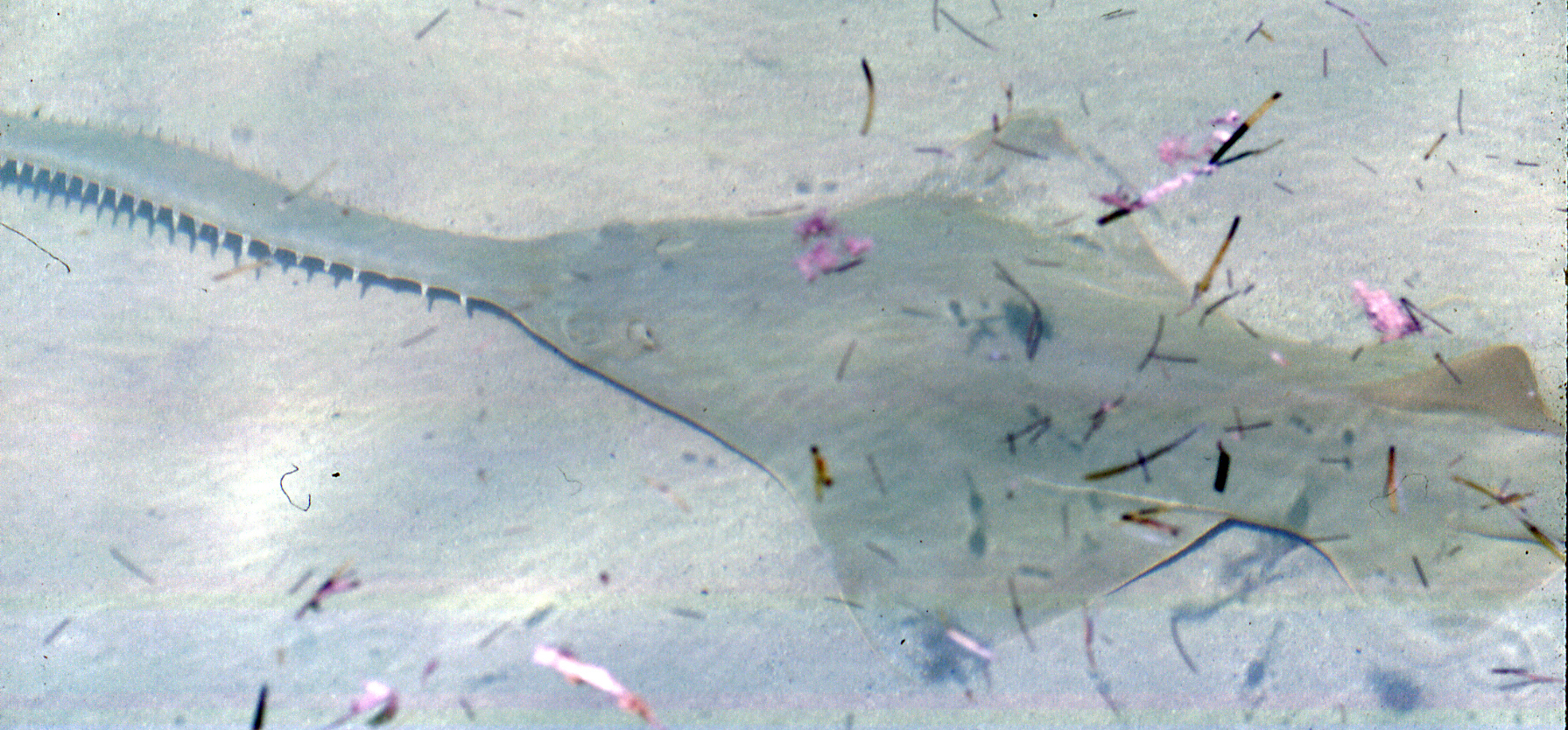
Exactly a year ago, an extraordinary find was made out on the Abaco Marls. Almost disguised against the pale mud under the low water was the first sawfish reported for the Marls. This fish is not merely a rarity in the Northern Bahamas: all species of sawfishes worldwide are IUCN listed as Endangered or Critically Endangered.

Sawfish, Abaco Marls Feb 2014 (Photo: Jacque Cannon)

Sawfish, Abaco Marls Feb 2014 (Photo: Jacque Cannon)

Here is an account of the discovery reported by FRIENDS OF THE ENVIRONMENT: “On a recent fishing trip in the Marls with local guide Justin Sands, Sam and Jacque Cannon had an exciting encounter. As Justin was poling the flats, with Sam on the bow searching for bonefish, Jacque spotted a Sawfish! Jacque and Justin quickly forgot about Sam and his efforts to catch a bonefish and turned their focus to the Sawfish. This is a very rare sighting and one we are happy there was a camera available to document it…” A couple of weeks later I was lucky enough to sit next to Jacque at dinner at the Delphi Club, so I was able to hear at first hand the story of this amazing find. It also turned out to be the perfect time to sign an early copy of “The Birds of Abaco” for Jacque and Sam… 1900063_10152069487394482_984358031_n

Sawfish Book Plate (1884)

Sawfish Book Plate (1884)

 10 ESSENTIAL SAWFISH FACTS

  • Sawfishes are also known as Carpenter Sharks; their ‘saw’ is called a ROSTRUM
  • There are 7 species in oceans and seas worldwide, including the Mediterranean
  • All populations have declined drastically due to habitat loss, overfishing & pollution
  • The rostrum is used to feel, to dig, to slash & impale or stun its prey, and for defence
  • Sawfishes are nocturnal creatures and spend a lot of time face down on the sea floor
  • Like sharks, their skeleton is made of cartilage and not bone.
  • Some species can grow up to 7m long
  • They are generally unaggressive unless provoked but fight strongly when caught
  • Sawfishes are slow breeders, making population recovery more difficult
  • Babies are called ‘pups’. Their rostrum is flexible and sheathed until after birth
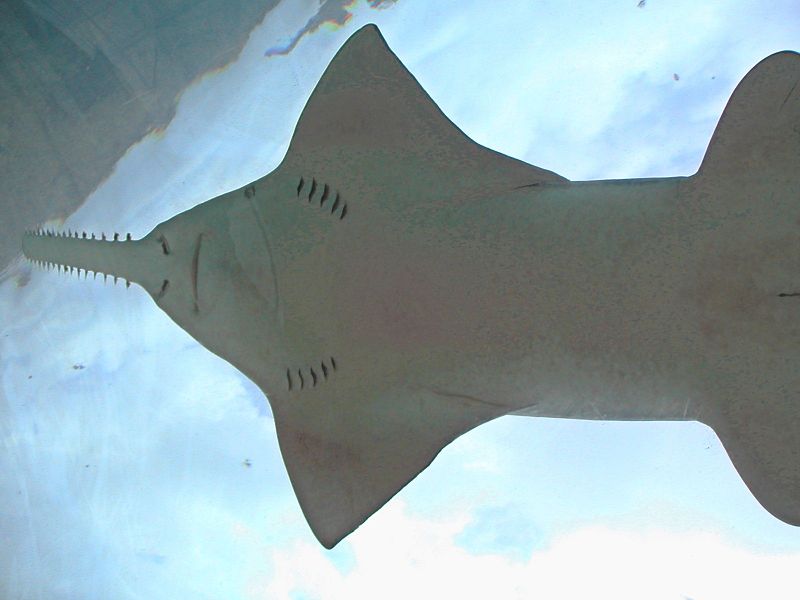
Sawfish seen from Underwater Tunnel - Atlantis, Nassau Bahamas (Fred Hsu)

Sawfish seen from below – Atlantis, Nassau, Bahamas (Fred Hsu)

Other sawfish have been seen recently in the Northern Bahamas, though not in Abaco waters. Last summer the Bahamas National Trust posted 2 great images of a Smalltooth Sawfish, saying “BNT was excited to receive these photographs of a Smalltooth Sawfish photographed in the proposed East Grand Bahama National Park – Bersus Cay Area. The sawfish was 12 to 13 feet long and was seen in water that was 2 -3 feet deep. Thank you to Buzz Cox, Island Manager at Deep water Cay for sending us these photos”. Sawfish, Grand Bahama Sawfish, Grand Bahama

CONSERVATION ISSUES

POPULATION DECLINE As noted above, Sawfish populations have declined to less than 10% of historical levels. The Smalltooth Sawfish – seen above – was once prolific in the Atlantic, Gulf of Mexico, Mediterranean, Black Sea and Indo-Pacific. Population numbers of this species are now estimated at less than 5% to perhaps as low as 1% of their historic levels.

THREAT TO SURVIVAL The threats to their existence are many: habitat loss, overfishing, accidental bycatch, rostrum souvenir hunters (good prices can be obtained), taking them for fins (as a delicacy) or oil from their liver (medicinal).

LEGAL PROTECTION Capturing a sawfish is illegal in certain countries, including the United States. The sale of smalltooth sawfish rostra is prohibited in the United States under the Endangered Species Act.  The import for sale of that of any sawfish species is also prohibited. The international trade of sawfish was banned by the CITES convention in June 2007.
For those that want to find out  a bit more detail about these issues, there’s plenty on interesting information in a scientific (but readable) paper from NOAA – click the link below

A very recent Bahamas smalltooth sawfish sighting on Bimini – Jan 2015Pristis_pectinata_(smalltooth_sawfish)_(Bimini,_western_Bahamas) Lee & Mary Ellen St John Jan 2015 Wiki

Smalltooth Sawfish (Pristis pectinata) Bimini, Bahamas – Lee & Mary Ellen St John Jan 2015

Time for some footage of these rare and wonderful creatures in the Bahamas. The first is from John Flanagan and was taken during a dive off Bimini in early 2014. He was so surprised by the sight that he nearly forgot to turn on his camera to take a short video… The second is a longer 5 min video taken off Andros by Grant Johnson of “wild footage of the critically endangered Smalltooth Sawfish (Pristis pectinata). The west side of Andros, Bahamas is one of the last places on Earth that still provides vast refuge for this incredible animal”.

Finally, you may be wondering how exactly the sawfish uses its rostrum to stun fish, as mentioned earlier. Watch this short video – see how quickly it moves, for such an apparently cumbersome and dozy creature…
Credits as shown above, with particular mention of Jacque Cannon for probably the first known sighting and anyway photo of an Abaco sawfish…; header pic in aquarium Diliff (Wiki)

Unknown's avatar

“PELICAN BRIEF”: BROWN PELICANS AT SANDY POINT, ABACO


Brown Pelicans, Sandy Point, Abaco 12

 “PELICAN BRIEF”: BROWN PELICANS AT SANDY POINT, ABACO

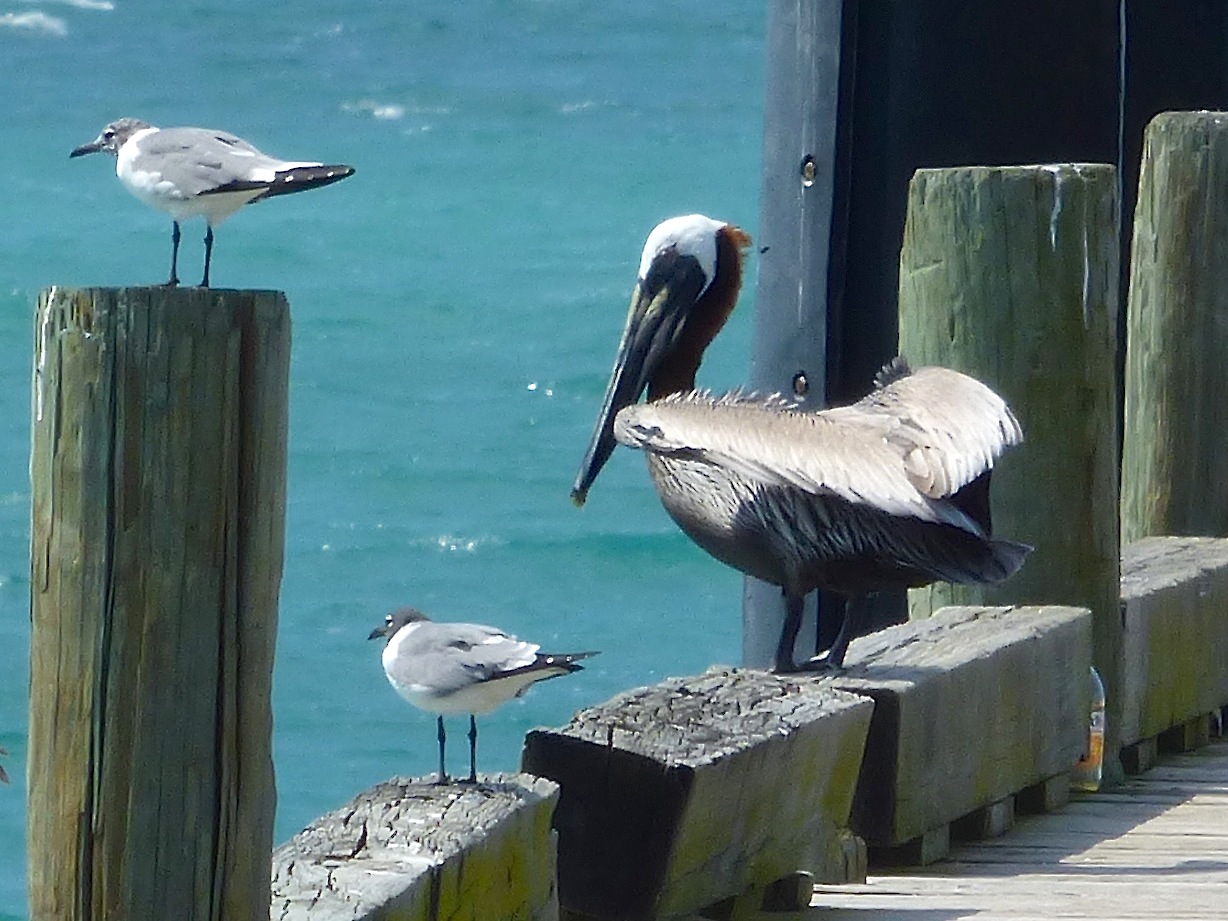
The Brief today is to write about Brown Pelicans at Sandy Point. And to shoehorn in the traditional titular pun somehow (job done!). For those unfamiliar with Abaco, SP is the end of the road. Literally. The island has one highway 120 miles long, mostly straight, from north to nearly south where it curves abruptly west for a while, past the airfield, and when it reaches the ocean at Rocky Point there’s a 90º turn. For a couple of miles, you travel north again into Sandy Point… then stop when you see the sea ahead of you. Dead end. Time to park and explore… 

Abaco Road Map

Brown Pelicans, Sandy Point, Abaco 4

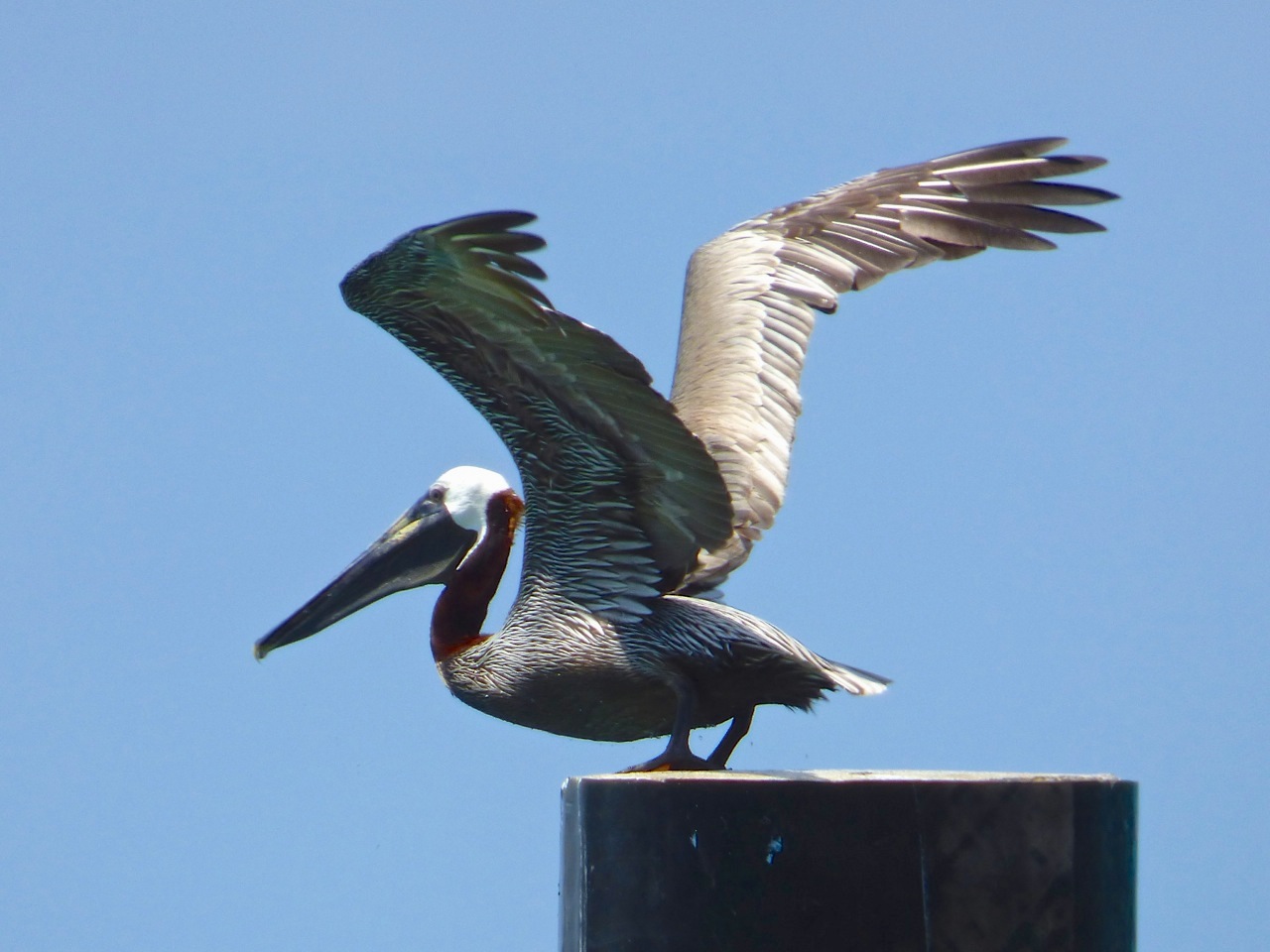
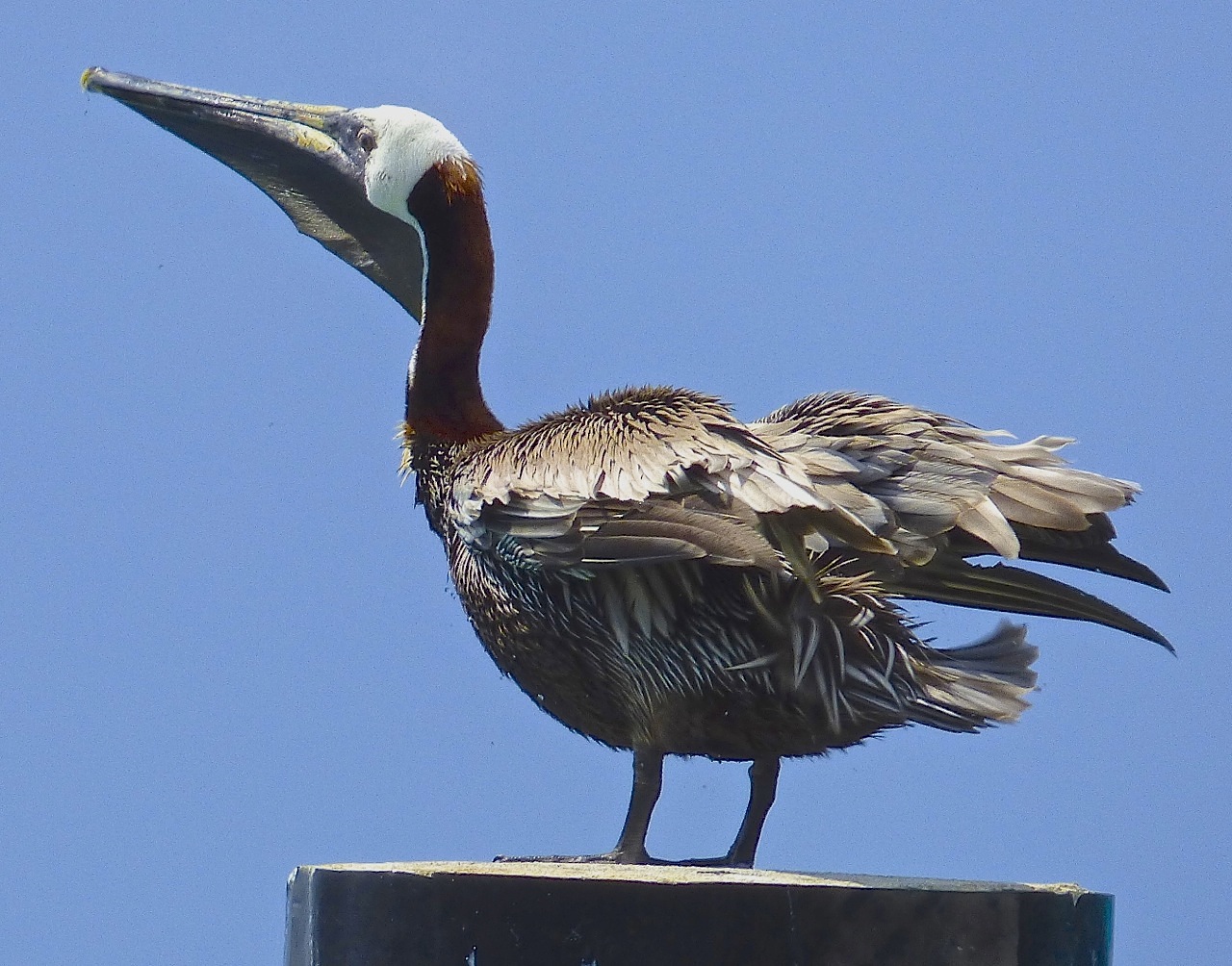
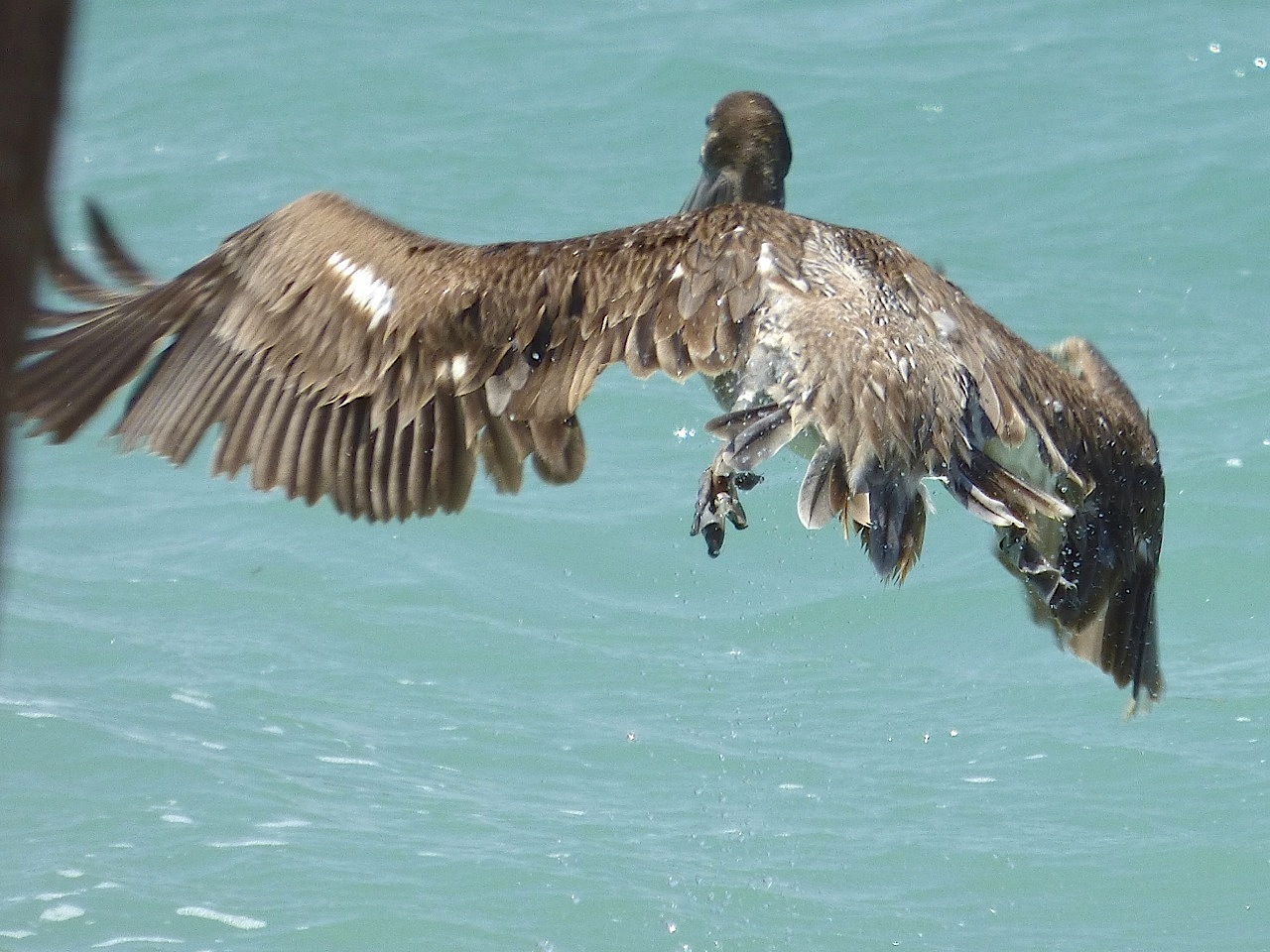
The birding at SP can be very rewarding. Depending on the time of year, you may see ospreys, tropicbirds, heron and egrets of various sorts, kestrels, anis and plenty of shorebirds. The last are found on the narrow beaches and at low tide on the sandbars close to the shore. On the more distant sandbars in Spring, you may see a colony of Magnificent Frigatebirds (or Man-0-War birds), the males with their amazing ‘look-at-me’ bright red throat-balloons (‘gular pouches’) inflated to enhance their wooing prospects. This is exactly the time you’ll realise you haven’t brought your binoculars with you…  Brown Pelicans, Sandy Point, Abaco 9 We’d gone to a (very) informal lunch party at the legendary Nancy’s, but there was activity on the nearby dock that caught my eye. A pair of pelicans were fishing from it, then drying in the sun, then having a little fly around. I only had a rather underwhelming camera with me, so I did what I could in a short time before returning to the matter in hand. Brown Pelicans, Sandy Point, Abaco 8Brown Pelicans, Sandy Point, Abaco 6Brown Pelicans, Sandy Point, Abaco 7 Although I watched the birds diving off the dock a few times, I never actually saw them catch anything. Maybe they had already swallowed some hapless little fish before returning to the dock. I was reminded of a poem by a poet called James Montgomery. Here’s his vivid and perhaps overwrought description of pelican feeding habits: Nimbly they seized and secreted their prey, Alive and wriggling in the elastic net, Which Nature hung beneath their grasping beaks; Till, swoln, with captures, the unwieldy burden Clogg’d their slow flight, as heavily to land, These mighty hunters of the deep return’d. There on the cragged cliffs they perch’d at ease, Gorging their hapless victims one by one; Then full and weary, side by side, they slept, Till evening roused them to the chase again. James Montgomery (4 November 1771 – 30 April 1854): Pelican Island, 1828 (canto IV, l. 141)

Watching the water intentlyBrown Pelicans, Sandy Point, Abaco 10

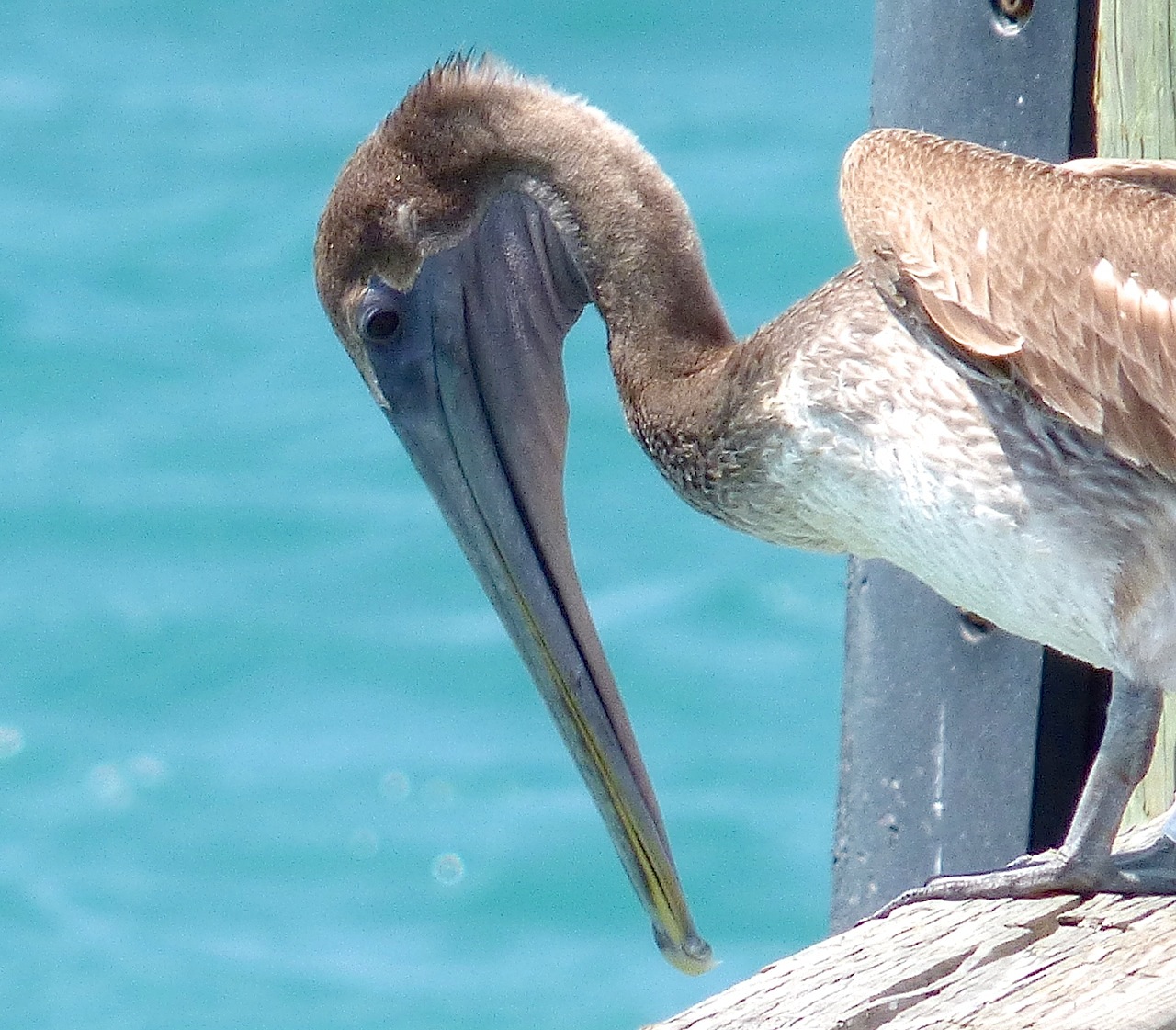
Check out that ‘gular pouch’… Pelicans, like frigatebirds, have them – cormorants too.Brown Pelicans, Sandy Point, Abaco 14

After each sortie a certain amount of shaking down, feather fluffing & general drying-off took placeBrown Pelicans, Sandy Point, Abaco 13

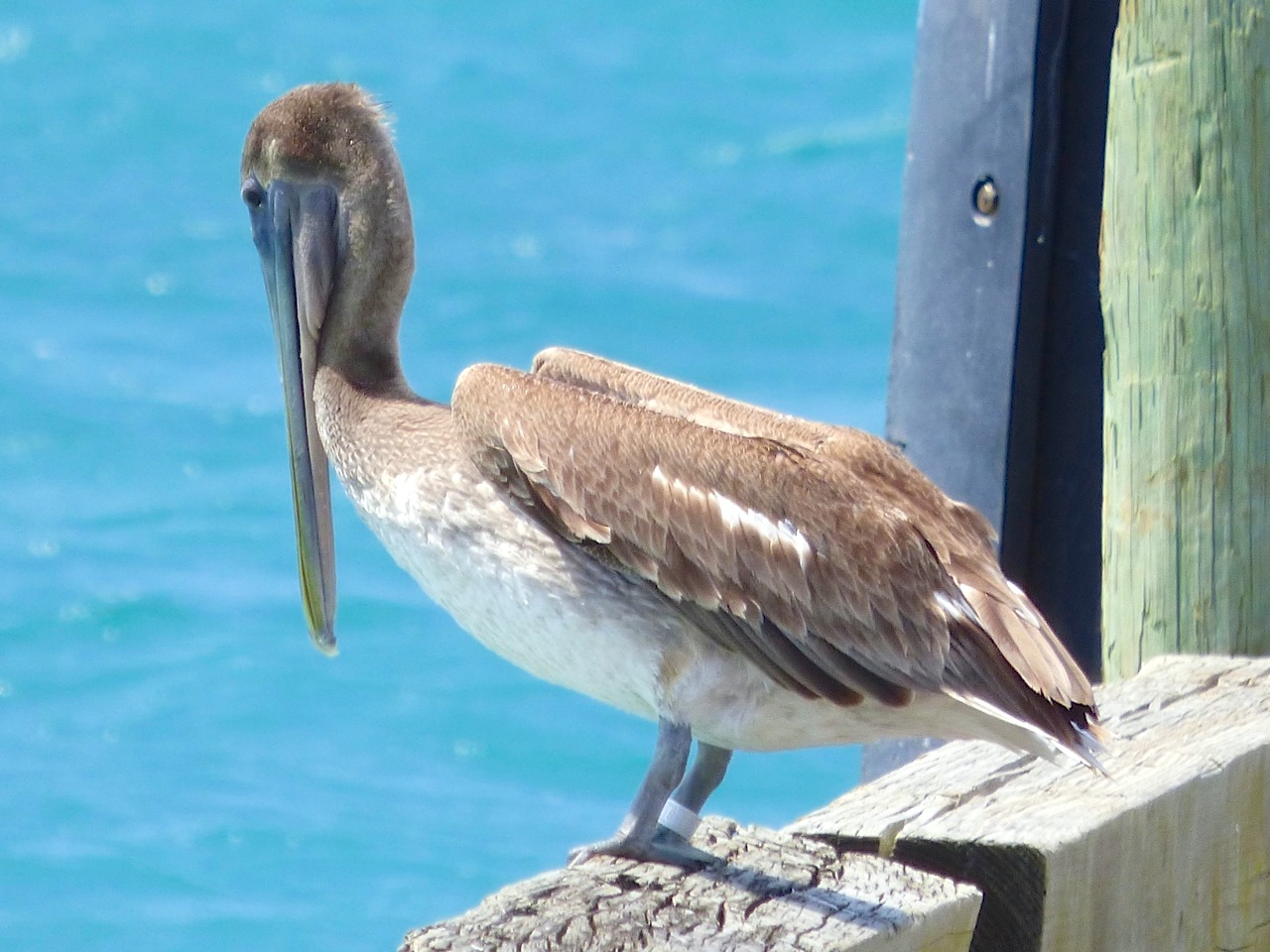
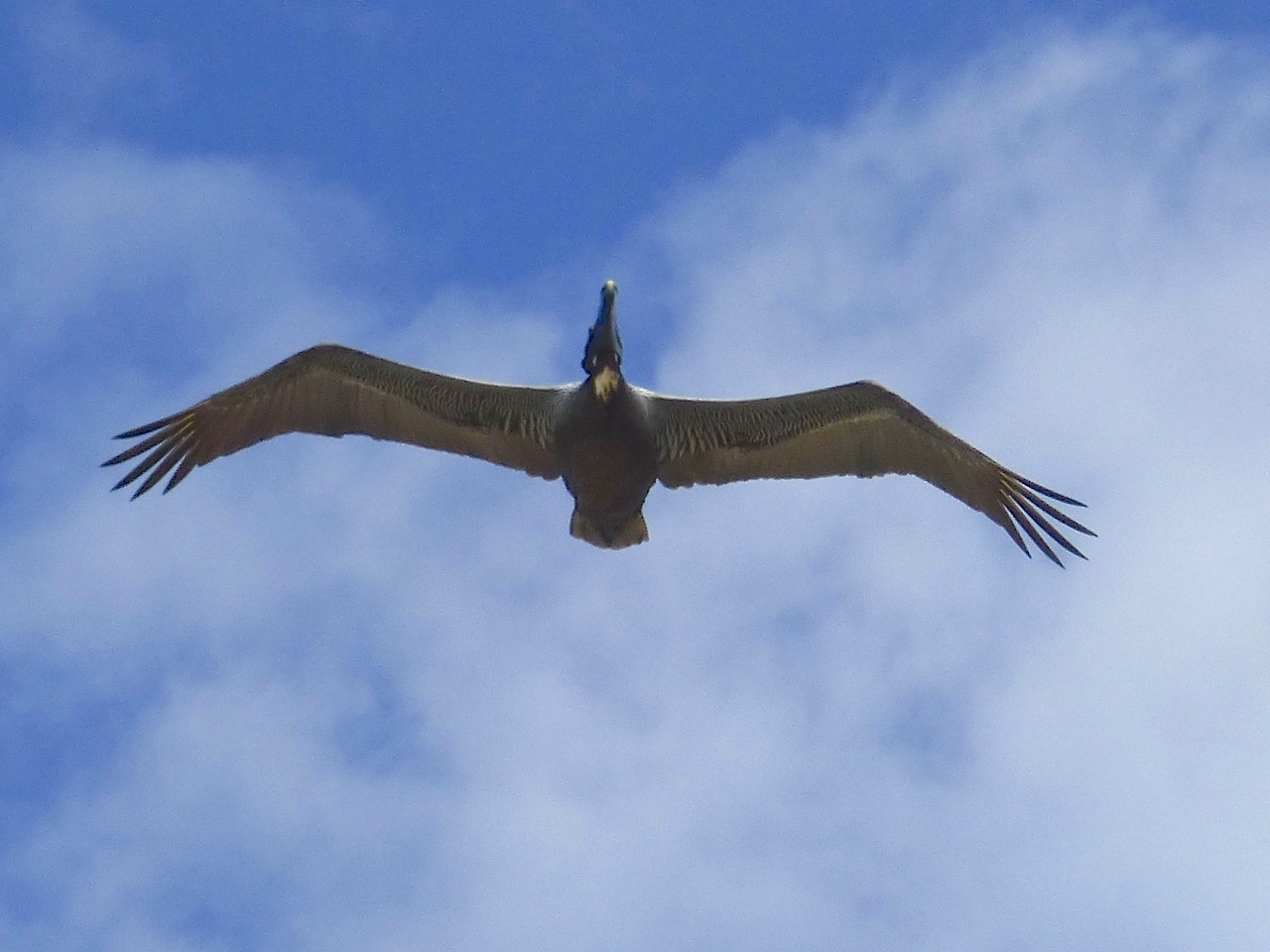
Although these pelicans look generally rather clumsy and ponderous both in flight and on land, they are surprisingly quick and agile in the dive. Occasionally, however, the take-off was a bit ragged… Brown Pelicans, Sandy Point, Abaco 16 Usually the male took the tallest post from which to survey the scene, but occasionally the female beat him to a good vantage point.Brown Pelicans, Sandy Point, Abaco 17 I’d never seen pelicans so close-to before. At Delphi they can be seen flying lazily past over the bay, quite high. I’ve seen one in Hope Town, but some distance away. So it was a huge thrill to be able to watch these two birds from the dock itself. You’ll see that the female was ringed (banded), but the male was not. Very soon we’ll be back on Abaco. I’m hoping the pelicans will be at Sandy Point again. And the ospreys. And the Frigatebirds.  And that I’ll have remembered the binoculars. And that the Kaliks at Nancy’s will be ice-cold…  All photos, RH

It’s a poor photo, but it illustrates the huge wingspan compared to body length…Brown Pelicans, Sandy Point, Abaco 15

Unknown's avatar

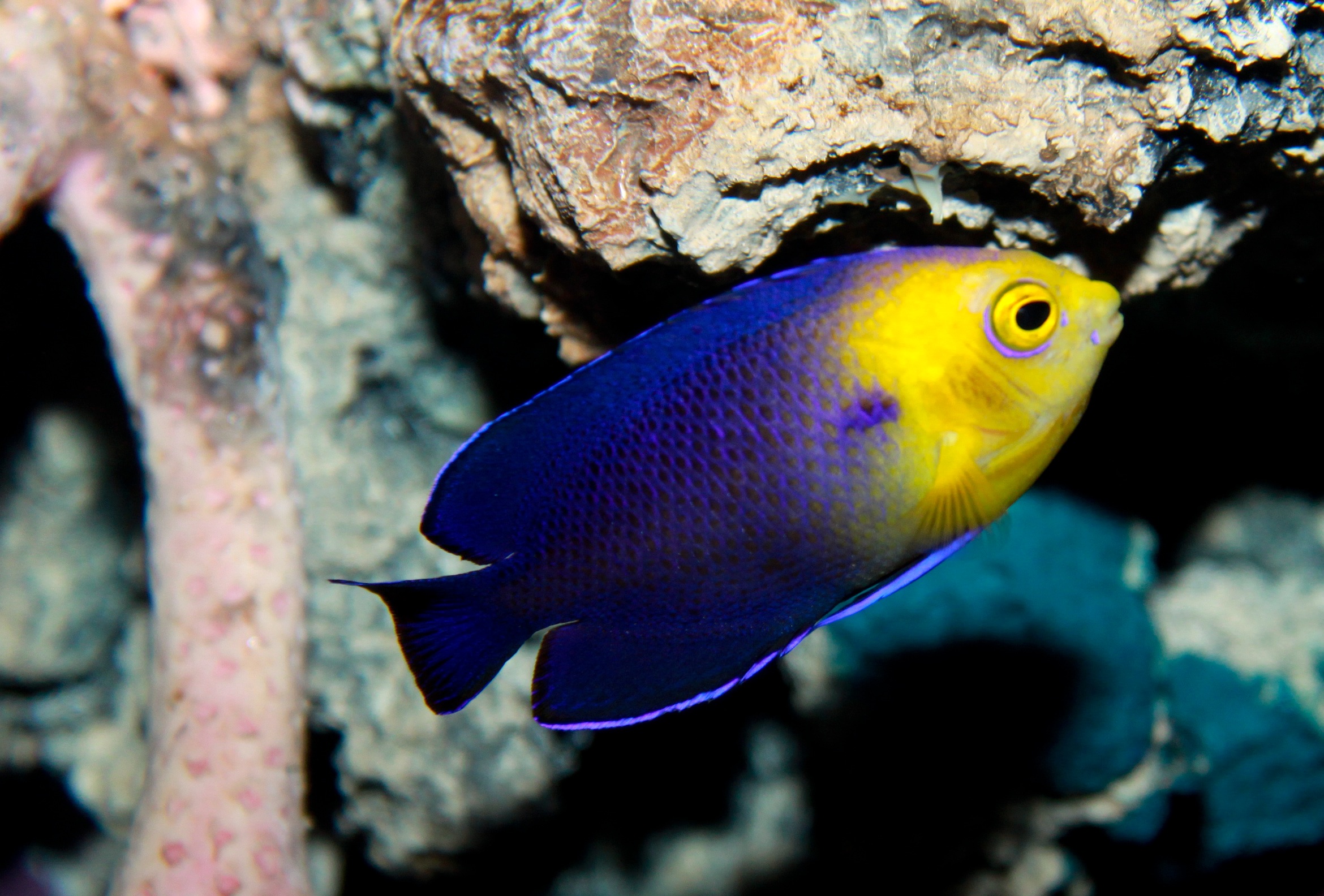
CHERUBFISH (PYGMY ANGELFISH): BAHAMAS REEF FISH (23)


Cherubfish (Pygmy Angelfish) © Melinda Riger @ G B Scuba

 CHERUBFISH (PYGMY ANGELFISH): BAHAMAS REEF FISH (23)

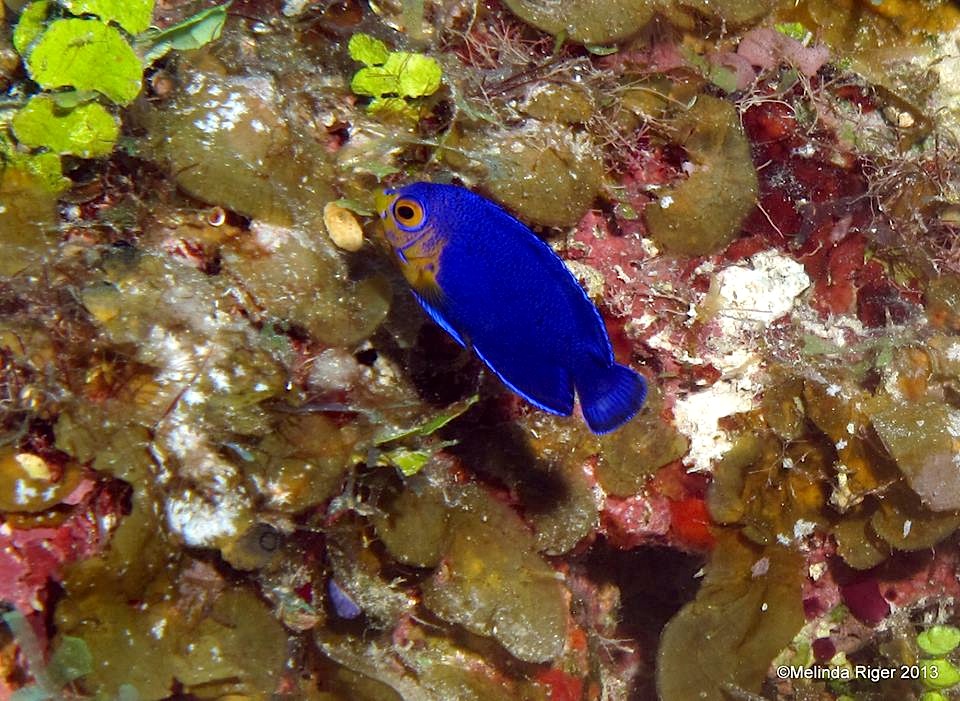
Time for a bright little denizen of the not-so-deep. The Cherubfish Centropyge argi or pygmy angelfish is a very small (8cm) and distinctively coloured angelfish species. These fish are native to the Caribbean and Gulf of Mexico, and flicker round the coral reefs happily feeding as they go (see the video below to see how busily they forage). Or maybe they are just having a good time…

Cherubfish (rare) ©Melinda Riger @ G B Scuba

The Cherubfish is unsurprisingly a popular aquarium species. Don’t rush straight out and buy some though: a typical warning says “like other angel fish, they are not completely 100% reef-safe. Results vary among individual fish and tank qualities (size, feeding, tankmates, etc.), so caution is recommended when adding this fish to a coral tank“. You can read the whys and the wherefores HERE – sadly I lack the vibrant interest in aquaria to go into it myself…

Cherubfish Melinda Riger @ G B Scuba

Looking beyond Melinda’s lovely images of the species, I have found that these creatures will often show more yellow at the nose end. Here’s an example of a more two-tone Cherubfish in case you come across one. Cherubfish Centropyge argi  (Brian Gratwicke)

I mentioned that Cherubfish flicker around the reefs instead of proceeding serenely and in an orderly fashion.  Have a look at this short video to see what active little fish they are.

RELATED POSTS

GRAY ANGELFISH 1

GRAY ANGELFISH 2

QUEEN ANGELFISH 1

QUEEN ANGELFISH 2

DAMSELFISH

ROCK BEAUTY

Credits: all images Melinda Riger of Grand Bahama Scuba except the last, Brian Glanville

Unknown's avatar

HUMBLE HOUSE SPARROWS ON ABACO… & EVERYWHERE ELSE!


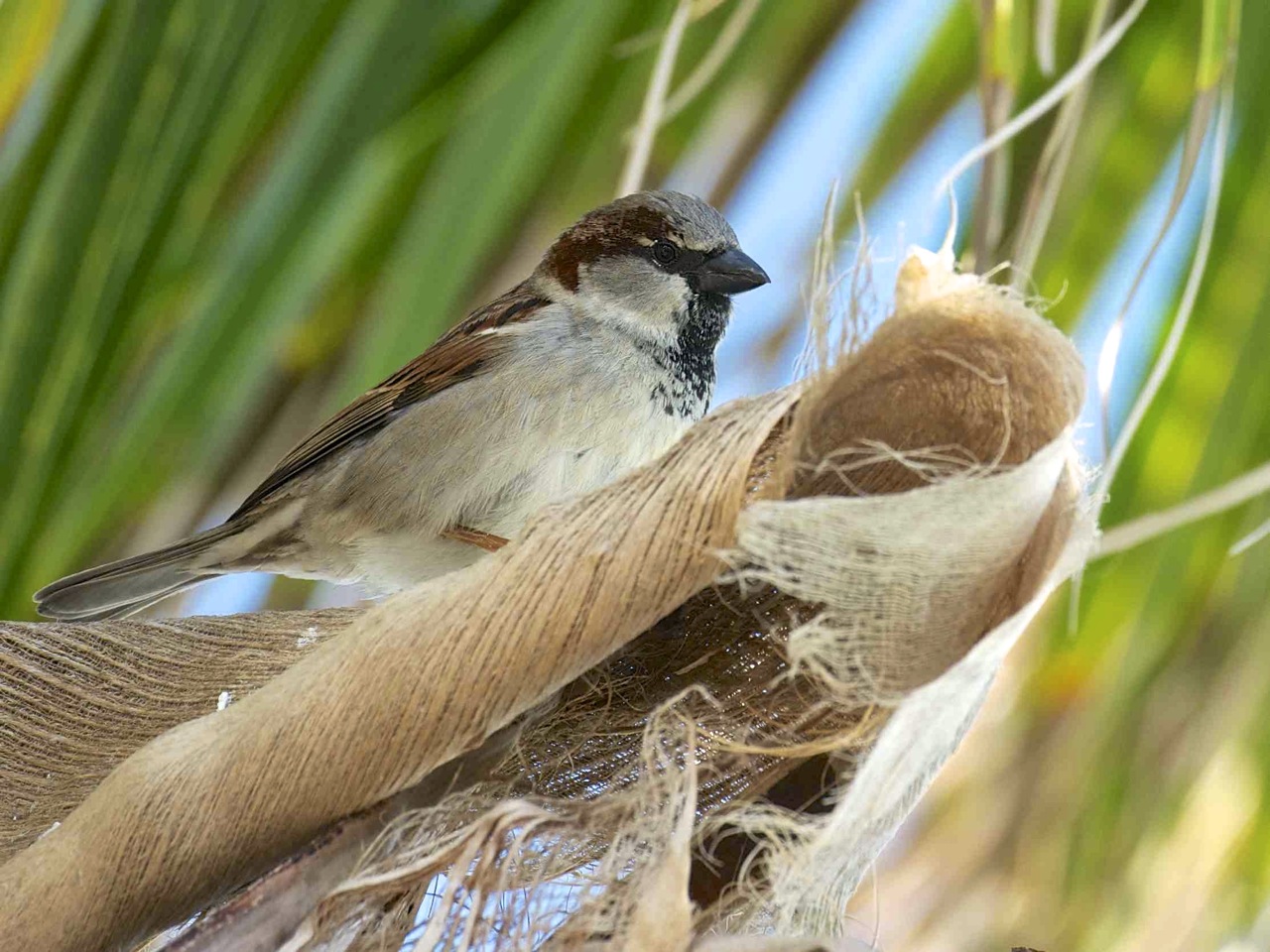
House Sparrow, Abaco  - Nina Henry

HUMBLE HOUSE SPARROWS ON ABACO… & EVERYWHERE ELSE!

The House Sparrow is one of the most successful, adaptive and prolific species in the world. THE most, in fact. It is found on every continent (except Antarctica… but I bet there are in fact a few of them pecking around the Ross Ice Shelf for crumbs). It is indigenous to Europe and Asia, and has been introduced elsewhere.  So to any birds or people  that say house sparrows are boring and common, I would point out that they are world record-holders… 

People tend not to photograph house sparrows. Their domesticity and familiarity have rather tended to breed contempt. Besides, there are more impressive birds to capture. In compiling BIRDS OF ABACO, it was surprisingly hard to get hold of sparrow images. We had to take some ‘in-house’ photos as back-up. Although the house sparrow comes into the broad birding category ‘LBJ’ (‘Little Brown Job’), it’s really a bit unfair. The males in particular deserve a second look (then you can go and find some painted buntings if you wish…).House Sparrow, Abaco - Nina Henry

One of the strangest birding features in the UK in the last 20 years has been the virtual elimination of the house sparrow from London and its inner suburbs. Until recently, there were loveable ‘Cockerny Sparrers’ everywhere. Then suddenly the population began to decline, and the rate of loss accelerated quickly. I haven’t seen one in London for years – not in our garden, not in the green squares, not in the trees, not in noisy squawking crowds in Trafalgar Square and Piccadilly Circus. Suddenly a bird that was so common that its presence was taken completely for granted has now become high on any birder’s ‘get’ list for London, and a joy to see…  To read a short article on the possible reasons for the decline CLICK HERE. The trouble is that most theories could be applied to other major cities where there are still thriving populations – New York, for example.

House Sparrow, Abaco - Peter Mantle

It has to be said that the female house sparrow is undeniably less… er… flamboyant than the male, as is the case with most (all?) avians. But they are still pretty birds, in much the same way that a female black-faced grassquit has subtle coloration if you look closely. I took the photo below at MH Airport while hanging around for a plane. The bird wasn’t perched at a very good angle for a memorable shot, or so I thought until I noticed its little wrinkly feet and sharp claws…

House Sparrow (f), Abaco Keith Salvesen

The delicate patterns of the female house sparrow 
House Sparrow (f), Abaco Bruce Hallett copy

A juvenile. Cute, yes, but I’m sorry, it really is quite dull at this stage…House Sparrow (juv), Abaco (Charles Skinner)

Credits: Nina Henry x 2, Peter Mantle, Moi, Bruce Hallett, Charles Skinner

Unknown's avatar

BAHAMA MOCKINGBIRD NEST, CHICKS & FLEDGING VIDEO


Bahama Mockingbird, Abaco -  Bruce Hallett

Bahama Mockingbird, Abaco – Bruce Hallett

BAHAMA MOCKINGBIRD NEST, CHICKS & FLEDGING VIDEO

I tend not to reblog other people’s posts wholesale. For a start, there can be compatibility issues that are tiresome to sort out. Often, they will include material – interesting in its own right – that is applicable to that blog but not to this one… Or it might be inappropriate to add other useful info or images. Sometimes, though, a post is perfect. This is one such time. I have recently started to follow Dominique’s blog WANDER IN NATURE, having come across her post about the Bahama Mockingbird Mimus gundlachii. The Baha Mocker is on the ‘wants list’ of any birder on Abaco. I have never seen a photo of a nest or chick before, far less seen either in real life. So here they are, not on Abaco but only a mockingbird’s flight away!

Wander in Nature logo

BAHAMA MOCKINGBIRD TAKES FLIGHT

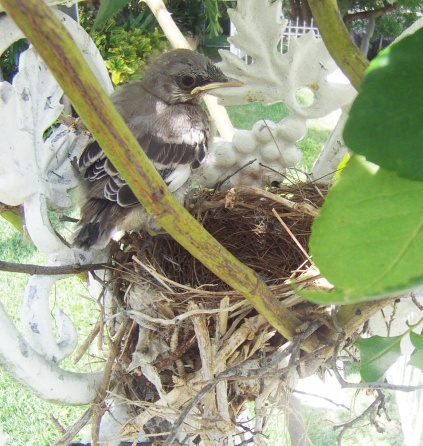
JUNE 2014 Sometime in the transition between Spring and Summer, I stumbled across a bird’s nest wedged in the top corner of the rose garden.  After a much needed boost, I peered in and discovered the bobbing beaks of three little nestlings, so fragile and still without their feathers.

Bahama Mockingbird Chicks (Wander in Nature)

Over the next few days, I hoped to follow their growth and capture them during feeding time with their two parents that had clearly made their presence known.  One of the young birds appeared to take over the nest for a while, and eventually took flight into the big wide world.

Bahama Mockingbird Fledgling (Wander in Nature)

Bahama Mockingbird Adult & Fledgling (Wander in Nature)

Bahama Mockingbird Fledgling (Wander in Nature)

The whole story is here… there’s a great deal of action at this nest!

Here are two recordings of the beautiful song of this bird that I made 18 months ago a short way down a logging track in the pine forest south of Crossing Rocks (before the Y). Note the repetition of particular phrases before the bird moves on to the next sound in its extensive repertoire.

RELATED POSTS

BAHAMA MOCKINGBIRD ‘Making a good impression…’

NORTHERN MOCKINGBIRD ‘Taking off…’ (Mimicry)

Credits: Header image, Bruce Hallett; all other images and video, Dominique @ Wander in Nature

Unknown's avatar

BAHAMAS REEF FISH (22): BLACK GROUPER


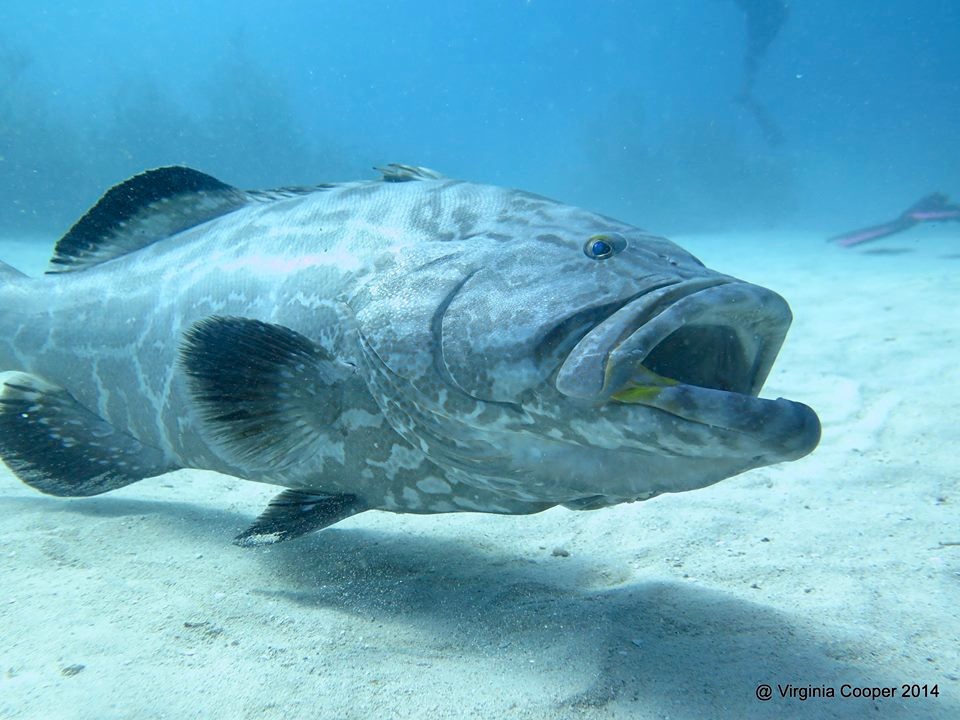
Black Grouper ed ©Virginia Cooper @ G B Scuba 2

BAHAMAS REEF FISH (22): BLACK GROUPER

The Black Grouper is a large fish of the reefs found in the western Atlantic, particularly in the waters of Florida, Bahamas, Caribbean and the Gulf of Mexico. It is a solitary species that mostly prefers the shallow waters around coral reefs.

Black Grouper ©Virginia Cooper @ G B Scuba

Formerly plentiful, these groupers (like other grouper species) have moved from an IUCN listing of ‘Least Concern’ to ‘Near-Threatened’. They have the twin disadvantages of being fished for sport and fished for food. As demand for grouper on the menu rises, so does its vulnerability. The species is described as a ‘slow breeder’, so a depleting population has less chance of sustaining numbers. 

Black Grouper ©Melinda Riger @ G B Scuba copy

An adult black grouper’s diet consists of small fish and squid. Juveniles feed primarily on crustaceans. However, certain tiny reef fish are important to the species as ‘cleaners’. You can read about their significance by clicking CLEANING STATIONS Here are examples of two black groupers receiving attention at the same cleaning station. Both also seem to be giving a ride to REMORAS.

Grouper at cleaning station ©Melinda Riger @ G B Scuba copy

Note that this fish has an embedded hook and is trailing a line – one that ‘got away’Grouper, Black, at cleaning station (+ hook) ©Melinda Riger @ GB Scuba copy

Despite the name, black groupers are not all black. They have many shades from dark to olive-coloured to pale. I believe the two photos below are of a grouper known as Arthur, a favourite with divers and definitely off the menu… Black Grouper  ©Melinda Riger @ G B ScubaBlack Grouper 2 ©Melinda Riger @ G B Scuba

The tiny bright blue fish in the photo above are Blue Chromis, a regular accompaniment on any snorkel or dive on a reef. I like the colourful little Fairy Basslet in the next photoBlack Grouper © Melinda Riger @ G B Scuba copy

Now that the NASSAU GROUPER has been awarded a closed season to help maintain numbers, it will be interesting to see if the winter fishing ban is extended to the Black Grouper…

Black Grouper (Arthur) ©Virginia Cooper @ G B Scuba

RELATED POSTS

TIGER GROUPER

NASSAU GROUPER

Credits: all photos Virginia Cooper and Melinda Riger of Grand Bahama Scuba 

Unknown's avatar

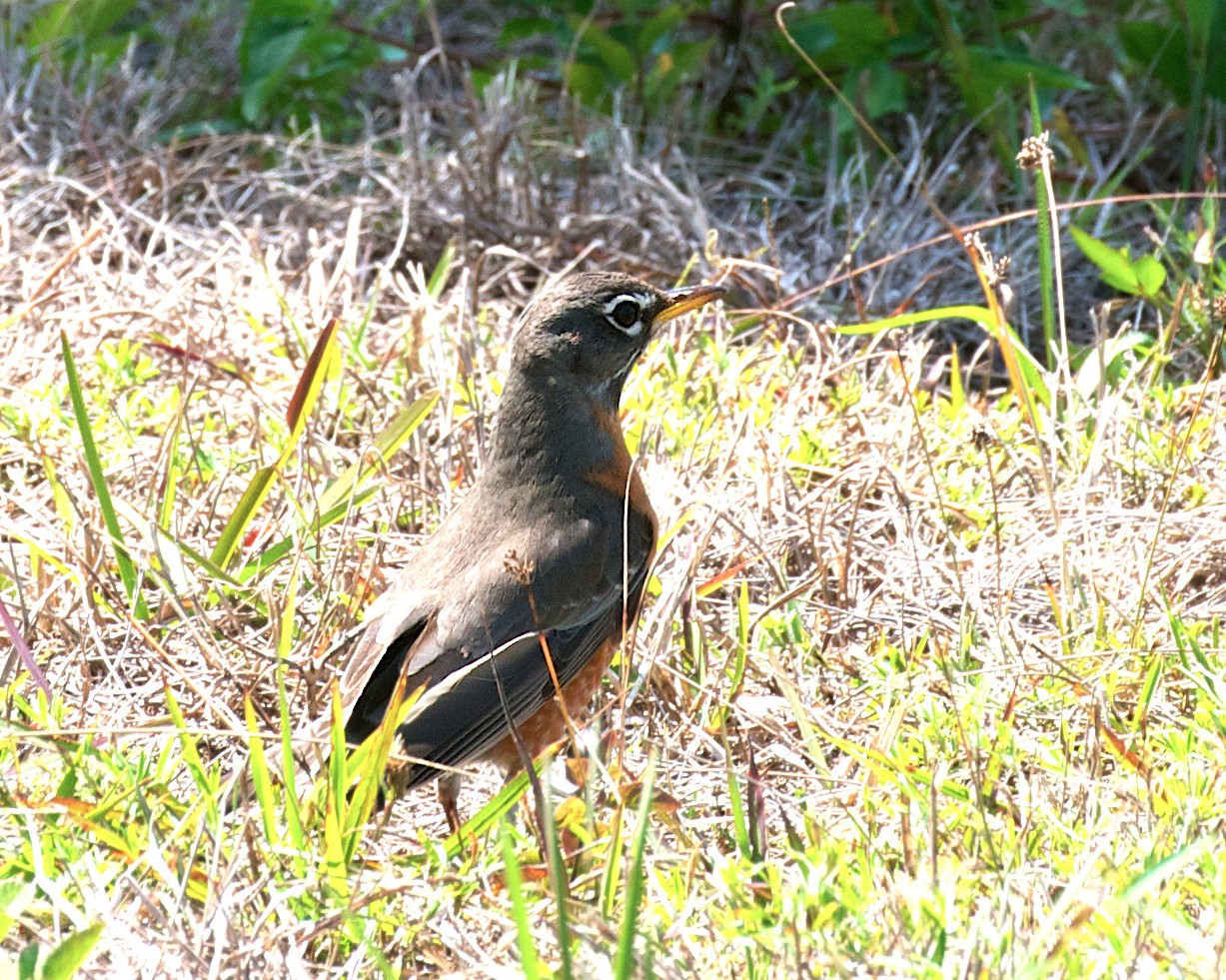
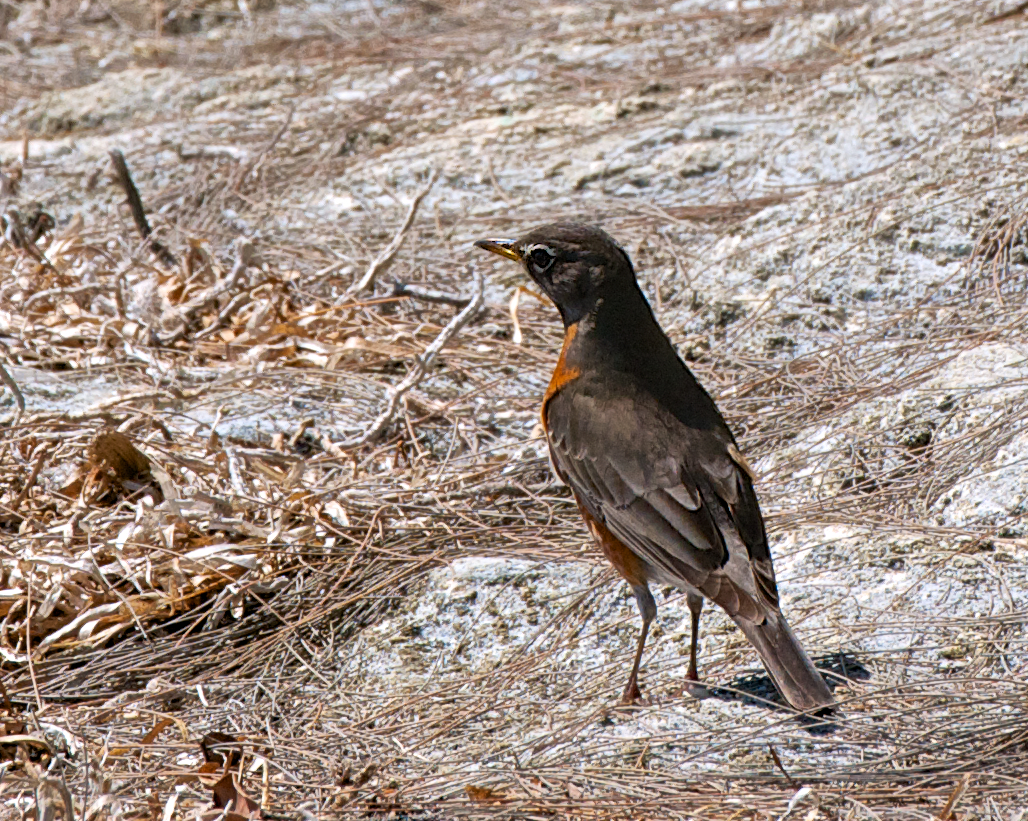
RARE AMERICAN ROBINS ON ABACO: MORE SIGHTINGS


American Robin, Abaco - Bruce Hallett

In 2012 I wrote a post about the comparative rarity of the American Robin on Abaco, which had surprised me. They overwinter in Florida, and they might conceivably range further more often than they do. It turned out that one or two may be reported one year, none the next. I listed a number of sightings and some comments by Woody Bracey, but I lacked any photos of these birds taken on Abaco. I had to make do with wiki and bad ones taken in the US by me (including stuffed ones in the Natural History Museum, NYC – an act of desperation!). You can see the post HERE

Nina Henry, a photographic contributor to BIRDS OF ABACO, had some good fortune last March 2014 when she found these 3 birds during her trip to Abaco. Maybe March is a good time for them – perhaps a few call in as they start to make their way north for the summer. 

AMERICAN ROBIN, Abaco 1- Nina Henry AMERICAN ROBIN, Abaco 2- Nina Henry AMERICAN ROBIN, Abaco 3- Nina Henry

Many past sightings have been on the Cays rather than the main island.  Here’s a recent photograph taken by Charmaine Albury on Man-o-Way Cay

American Robin Man-o-War Cay Abaco (Charmaine Albury)

Meanwhile I have been able to improve slightly on the tiny distant AMRO I posted before, with one taken more recently – still not on Abaco but in NYC. Closer, but definitely no cigar yet…

American Robin, NYC (Rolling Harbour)

 Credits: Bruce Hallett (header), Nina Henry x 3, Charmaine Albury, RH

Unknown's avatar

‘SEXING THE HUMMER’: A GENDER GUIDE TO ABACO’S HUMMINGBIRDS


Cuban Emerald (male) Abaco - Becky Marvil

Cuban Emerald (male) Abaco – Becky Marvil

 ‘SEXING THE HUMMER’: A GENDER GUIDE TO ABACO’S HUMMINGBIRDS

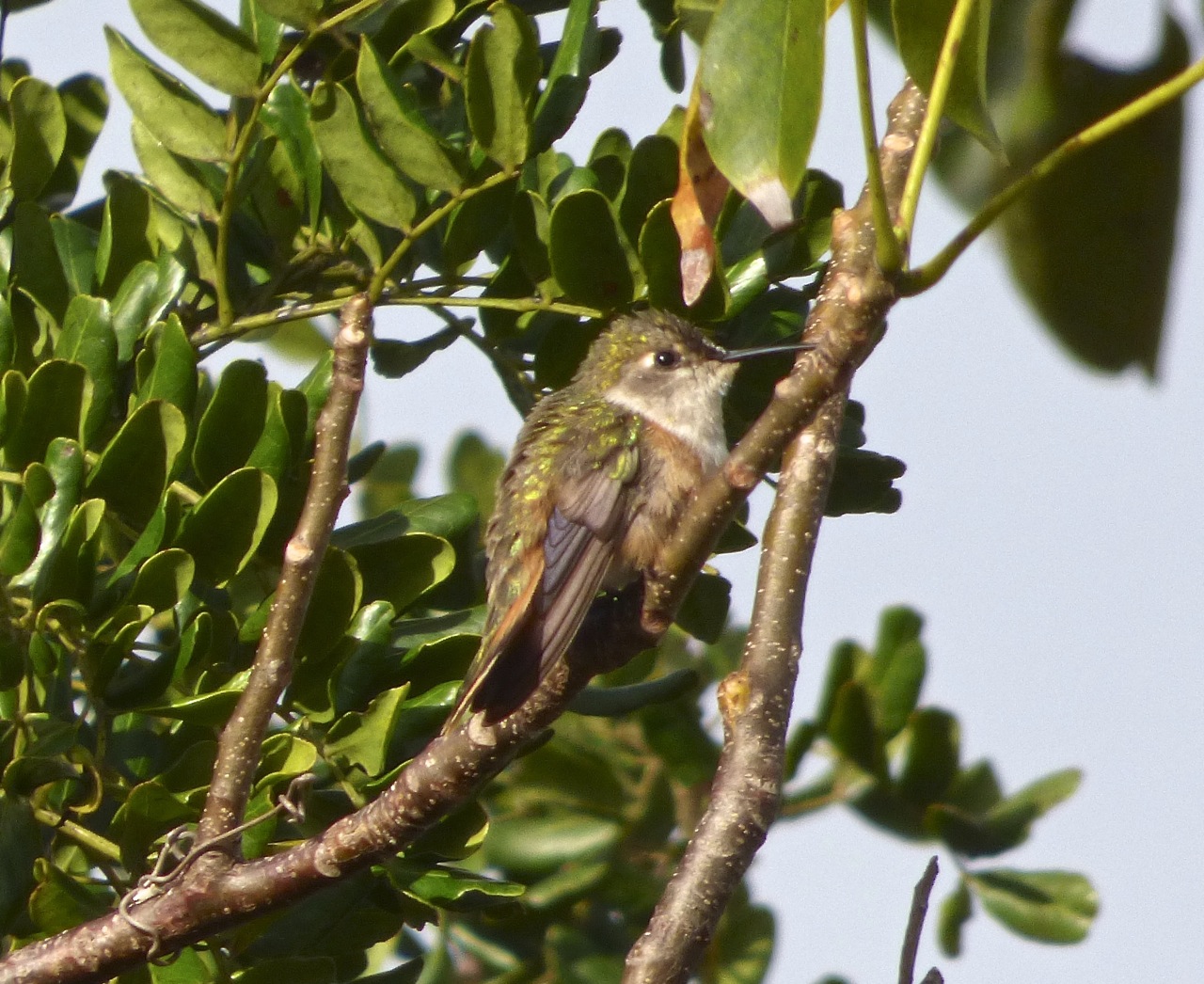
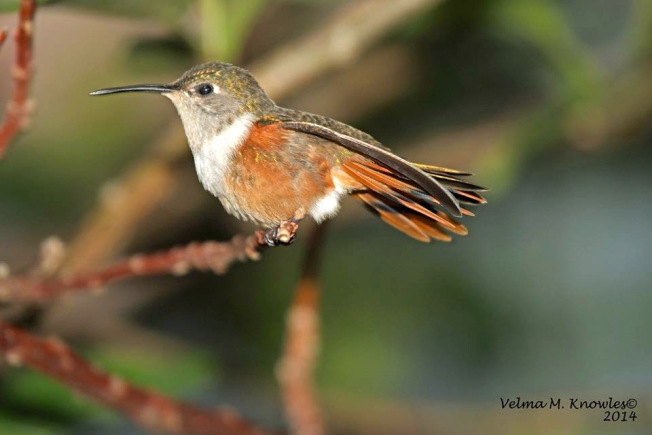
The subject matter of this post is not as indelicate as the title might imply; nor is it a ‘hands-on’ practical guide for intimate examinations of tiny birds. In particular it does not publicise some recently discovered louche activity involving unfeasibly large motor vehicles. It’s all about plumage. In my thin disguise as a person with apparent knowledge about the wildlife of a country that is not my own, I get frequent requests for bird ID. Some, I know at once. Some I have to think about, my memory not being quite as…

Where was I? Yes, bird ID. I use BRUCE HALLETT’S book of course, and online the CORNELL LAB and AUDUBON sites. OISEUX-BIRDS is also a good resource and has a large archive of images. And of course dear old Google – they may watch your every keystroke and know more about you than you do yourself, but put a bird’s name into Google Images and you’ll probably see your bird in every static pose or flight you need for ID. They’ll log that too for future use. I have had some queries about Bahama Woodstar gender ID, and more recently, Cuban Emeralds. So here are the adult males and females of each species in all their undoubted glory…

BAHAMA WOODSTAR (Calliphlox evelynae)

Bahama Woodstar (m), Abaco (Bruce Hallett)

Bahama Woodstar (male), Abaco (Bruce Hallett)

Bahama Woodstar male, Abaco Bahamas (Tom Sheley)

Bahama Woodstar male, Abaco Bahamas (Tom Sheley)

Bahama Woodstar, Delphi Club, Abaco (Keith Salvesen)

Bahama Woodstar (female), Delphi Club, Abaco (Keith Salvesen)

Bahama Woodstar (female), Abaco (Velma Knowles)

Bahama Woodstar (female), Abaco (Velma Knowles)

Bahama Woodstar (female), Bahama Palm Shores, Abaco  (Tara Lavallee)

Bahama Woodstar (female), Bahama Palm Shores, Abaco (Tara Lavallee)

 WOODSTAR ID MADE EASY

Males have a glorious purple, showy ‘gorget’. Females are less flamboyant, and have grey throats and fronts. Tara’s wonderful photo above vividly demonstrates their more delicate beauty. It’s one of my personal favourites from “BIRDS OF ABACO“, along with Tom Sheley’s above, the bird that graces the jacket. 

 CUBAN EMERALD (Chlorostilbon ricordii)

Cuban Emerald (male), Delphi Club, Abaco (Keith Salvesen)

Cuban Emerald (male), Delphi Club, Abaco (Keith Salvesen)

Cuban Emerald (male), Abaco (Erik Gauger)

Cuban Emerald (male), Abaco (Erik Gauger)

Cuban Emerald (female), Delphi Club, Abaco (Keith Salvesen)

Cuban Emerald (female), Delphi Club, Abaco (Keith Salvesen)

Cuban Emerald (female) Gilpin Point, Abaco (Keith Salvesen)

Cuban Emerald (female) Gilpin Point, Abaco (Keith Salvesen)

EMERALD ID MADE EASY

Male emeralds are basically… er… emerald green all over , apart from the wings. Females have grey throats and fronts, and lack the chestnut frontal band of the female woodstar. I’d say that their iridescent green is a different metallic shade from the male, but that may be just me. I don’t have the palette vocab to describe it, but advice welcome! Perhaps one can simply say it is more subtle.

SO IT’S JUST THE TWO HUMMERS ON ABACO, IS IT?

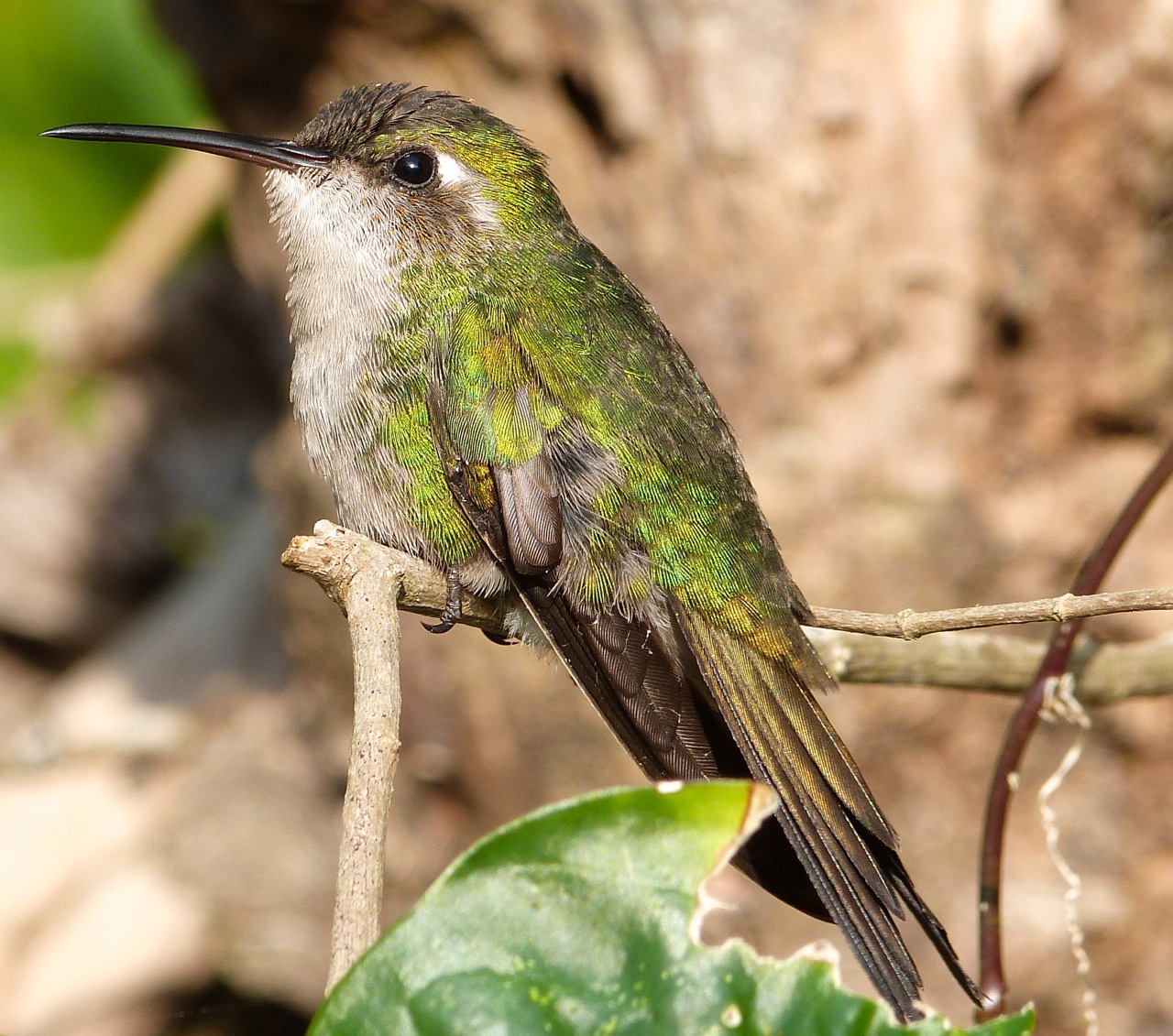
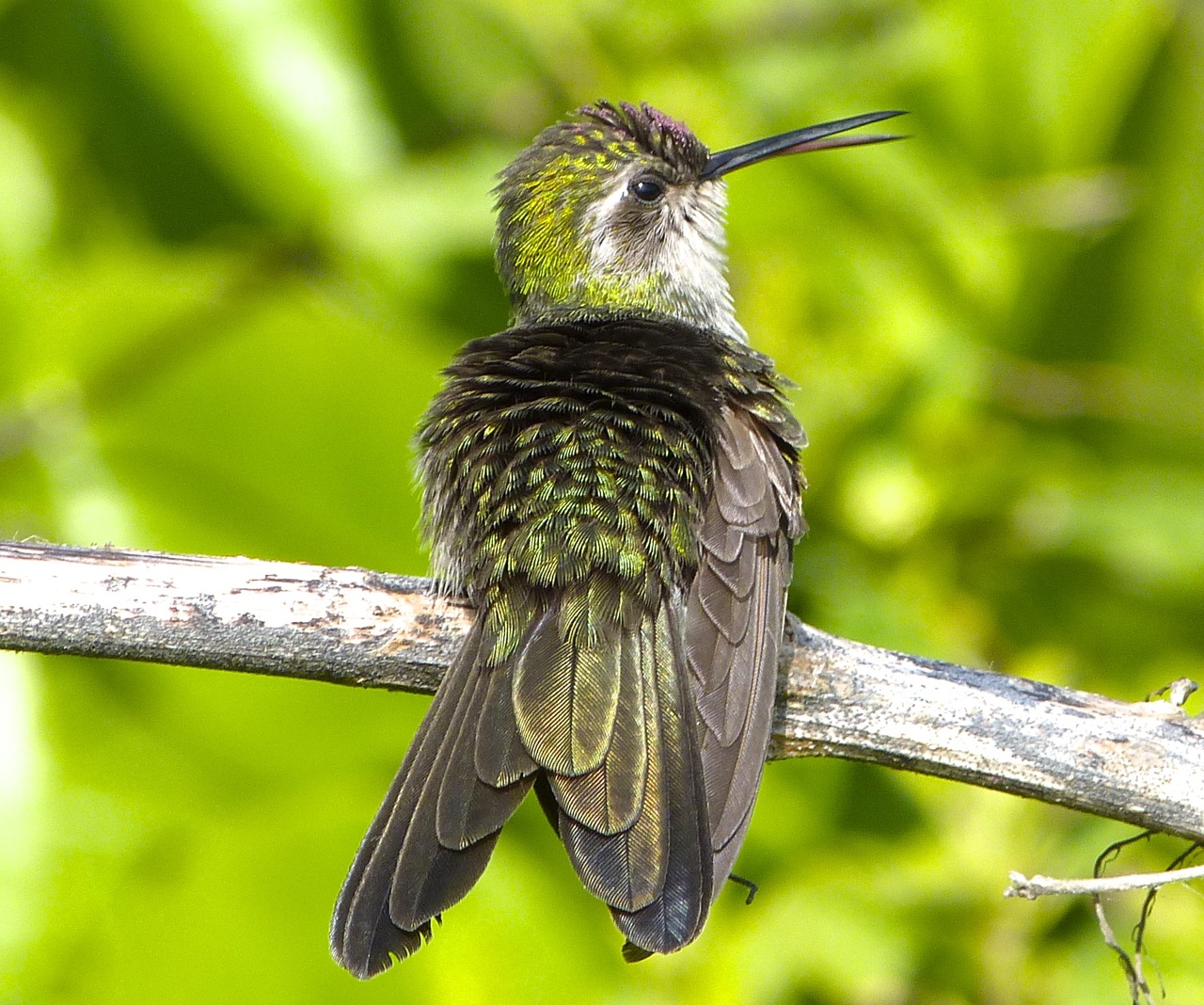
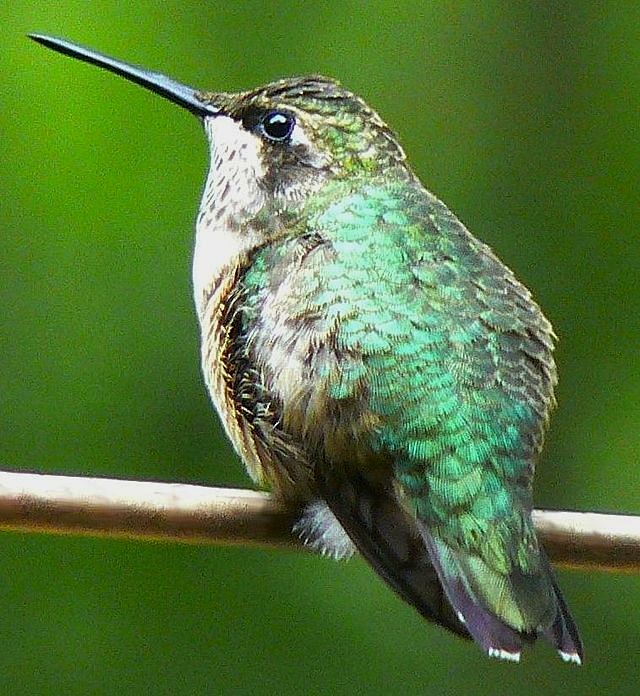
The answer is ‘No’. But don’t make a special trip to see the third species – they are casual / irregular vagrants only, and a definite sighting will be a rarity. But just in case, here are stock photos of a male and a female, and (taken on Abaco by Bruce Hallett) an immature male of the species…

RUBY-THROATED HUMMINGBIRD

MaleRuby-throated hummer (Steve Maslowski, Wiki)

FemaleRuby-throated Hummingbird (Tim Ross Wiki)

Ruby-throated Hummingbird (male, immature)

Ruby-throated Hummingbird (male, imm), Abaco (Bruce Hallett)

Ruby-throated Hummingbird (male, imm), Abaco (Bruce Hallett)

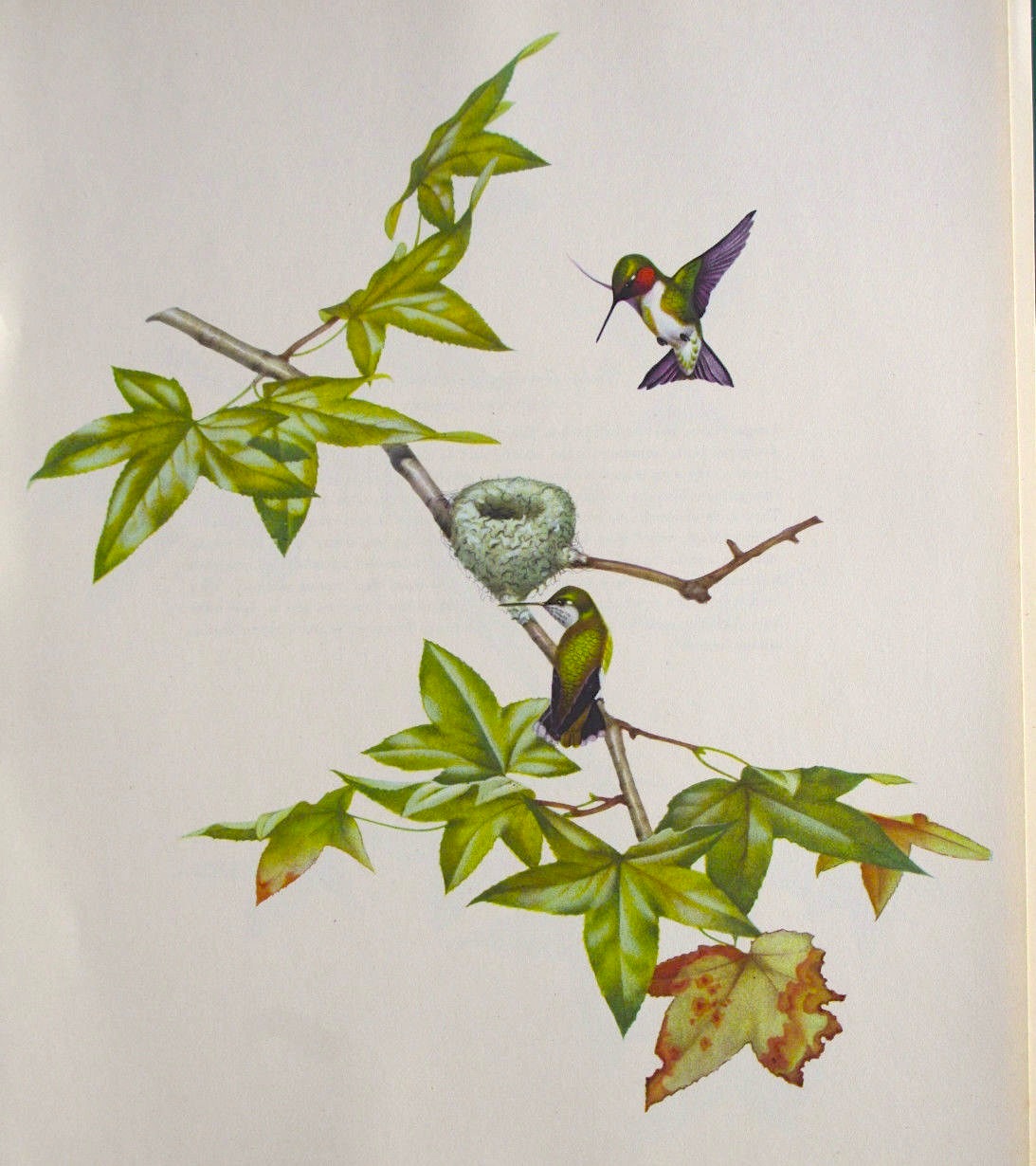
This is an attractive print of the R-tH by MenaboniRuby-throated Hummingbird - Menaboni

To complete this post, I’ll add a brilliant Woodstar photo taken by Tom Sheley, birdman and generous fishing partner, that I reckon spans the boundary between photography and art. 

Bahama Woodstar female.Abaco Bahamas.Tom Sheley

Bahama Woodstar female.Abaco Bahamas.Tom Sheley

Credits: In addition to those shown below images, Steve Maslowski and Tim Ross for the RTHs

Unknown's avatar

EGRETS GREAT & SNOWY FOR SUNNY GREAT ABACO & SNOWY ELSEWHERE!


Snowy Egret, Bahamas - Tony Hepburn

EGRETS GREAT & SNOWY FOR SUNNY GREAT ABACO & SNOWY ELSEWHERE!

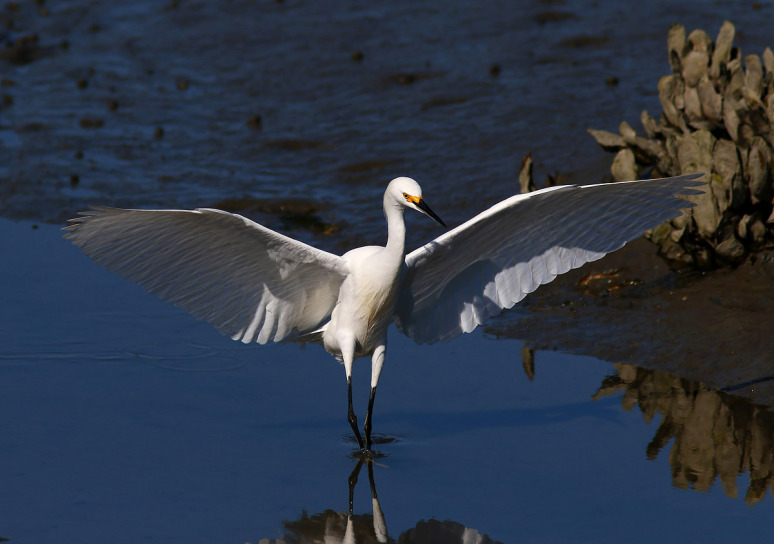
There’s nothing to beat a superlative sequence of narrative photos taken by someone with great skill, a very good eye and an excellent camera (that’s me out of it, on all 3 counts). The two sequences below are from PHIL LANOUE, a highly experienced wildlife photographer who specialises in birds and… alligators (I’ll do the ‘taking snaps’ joke, thank you). He posts almost daily, and it’s a morning treat to see what he has captured on his salt marshes. Very often it is a compelling wildlife action sequence showing the trials and tribulations of bird territory sharing; or the joys and disappointments of fishing… the ones that get away!

GREAT EGRETS

You’ll soon see why the egret is taking flight – a rival is fiercely seeing him off, including an attempted leg or foot grab. That may not have succeeded, but I think he made his point…

egret-fight-in-the-salt-marsh-01 (Phil Lanoue) egret-fight-in-the-salt-marsh-02 - (Phil Lanoue) egret-fight-in-the-salt-marsh-03 (Phil Lanoue) egret-fight-in-the-salt-marsh-04 (Phil Lanoue) egret-fight-in-the-salt-marsh-05 (Phil Lanoue)


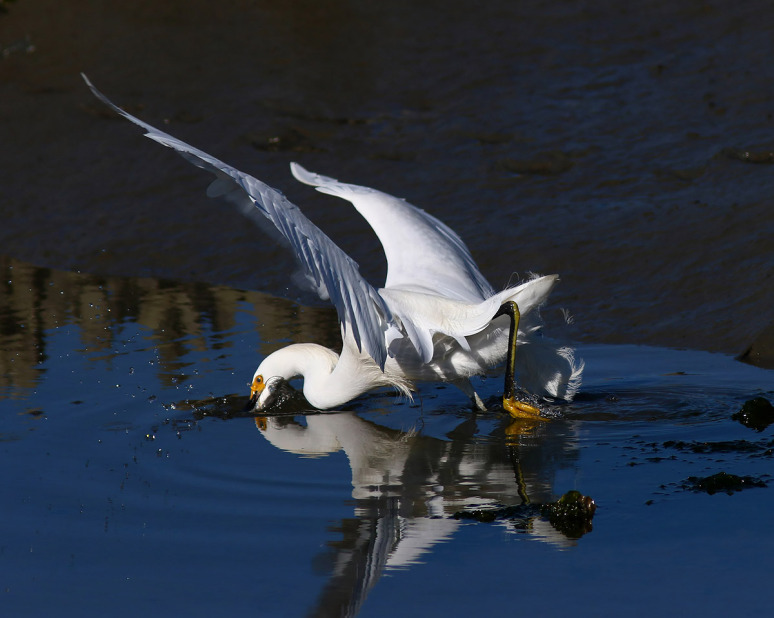
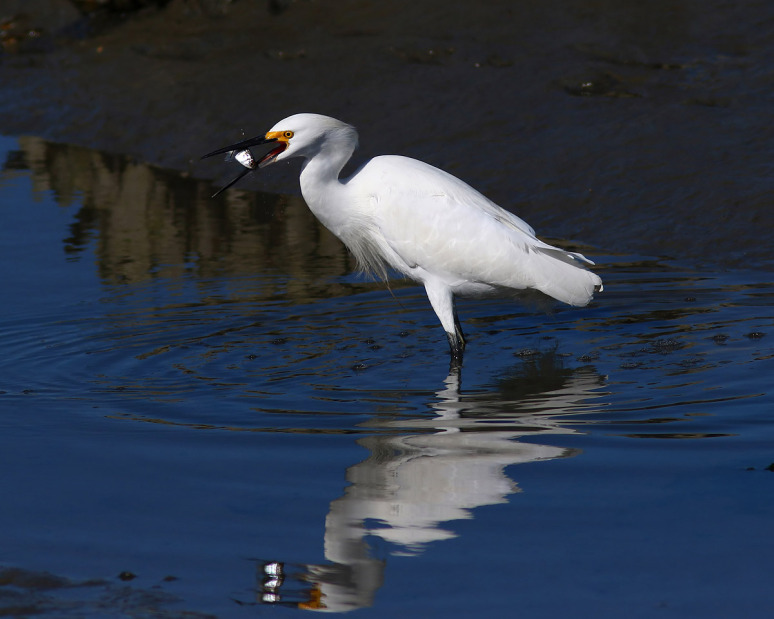
SNOWY EGRET FISHING

You can tell that this bird is motionless while hunting – there are no ripples at all round its legs. That sharp beak is poised for the sudden, rapid strike. As it stabs down, it shows its distinctive yellow feet and leg markings. The fish emerges firmly gripped sideways, and is effortlessly flipped round for immediate consumption,

snowy-fishing-in-the-salt-marsh-01 (Phil Lanoue) snowy-fishing-in-the-salt-marsh-02 (Phil Lanoue) snowy-fishing-in-the-salt-marsh-03 (Phil Lanoue) snowy-fishing-in-the-salt-marsh-04 (Phil Lanoue)

These are the sorts of pictures I would love to be able to take. Anyone would. But I am going to have to graduate to something a great deal more sophisticated than my trusty Lumix bridge camera and its fixed zoom extension. It has a Leica lens, which counts for a lot, but an upgrade to SLR is on the horizon. First I need to get stuck into some serious work on manual settings. I have a mountain to climb – I’m still hanging around Base Camp!

RELATED EGRET POSTS

EGRETS? I’ VE SEEN A FEW… (BUT THEN AGAIN…) (Great Egrets)

IT’S ALL WHITE… IT’S A REDDISH EGRET (Reddish Egrets, White Morph)

MANGROVES, MUD & (REALLY) GREAT EGRETS (Great Egrets, Treasure Cay)

REMARKABLE FEET’ – SNOWY EGRETS ON ABACO (Snowy Egrets)

‘ELEGANT COOT CABARETS’ (6,6,2,5 anag.)  (Cattle Egrets)

 Credits: Header image, Tony Hepburn; all others Phil Lanoue with many thanks for use permission

Unknown's avatar

HOPE TOWN BIRDERS SPOT 44 SPECIES ON SOUTH ABACO


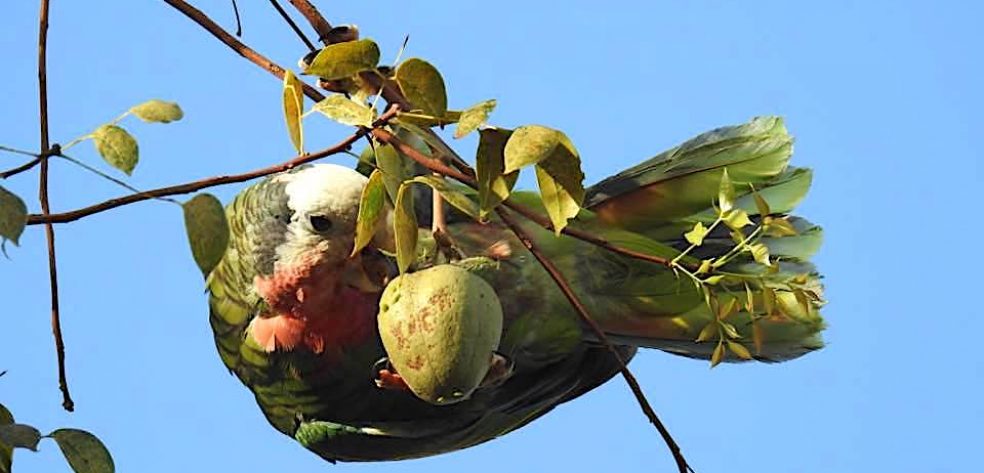
Abaco (Cuban) Parrot, Bahama Palm Shores (Keith Salvesen)

Abaco (Cuban) Parrot, Bahama Palm Shores (Keith Salvesen)

HOPE TOWN BIRDERS SPOT 44 SPECIES ON SOUTH ABACO

South Abaco – the tract of land south of Marsh Harbour – has some of the richest birding in the Bahamas. Besides 4 of the 5 Bahamas ENDEMIC SPECIES, it contains some of the most interesting speciality birds. The unique ABACO PARROT for a start, with a population that is gradually increasing following a drastic decline and conservation intervention. Rare PIPING PLOVERS on the eastern shores that overwinter, as do the endangered KIRTLAND’S WARBLERS, of which more soon. In the Bahamas the WEST INDIAN WOODPECKER is common on Abaco, but elsewhere it is rare on San Salvador and is no longer found on Grand Bahama (missing, presumed extirpated). If you want to learn more about them and their engaging ways read Caroline Stahala’s fascinating article HERE
Olive-capped Warbler, Abaco (Bruce Hallett)

Olive-capped Warbler, one of 5 permanent resident warblers (of 37 species in all) Bruce Hallett

January was an excellent time for the Hope Town Birding Group to take the ferry over for a quality day of birding on south Abaco. In all, 44 species were identified, ranging from expected feathery denizens to what are sometimes described as ‘Good Gets’. The group was led by Bruce Wolck. Jan Metcalf contacted me to arrange for Delphi – a notable birding hotspot – to be on the itinerary. And as she wrote to me afterwards in summing up the day:
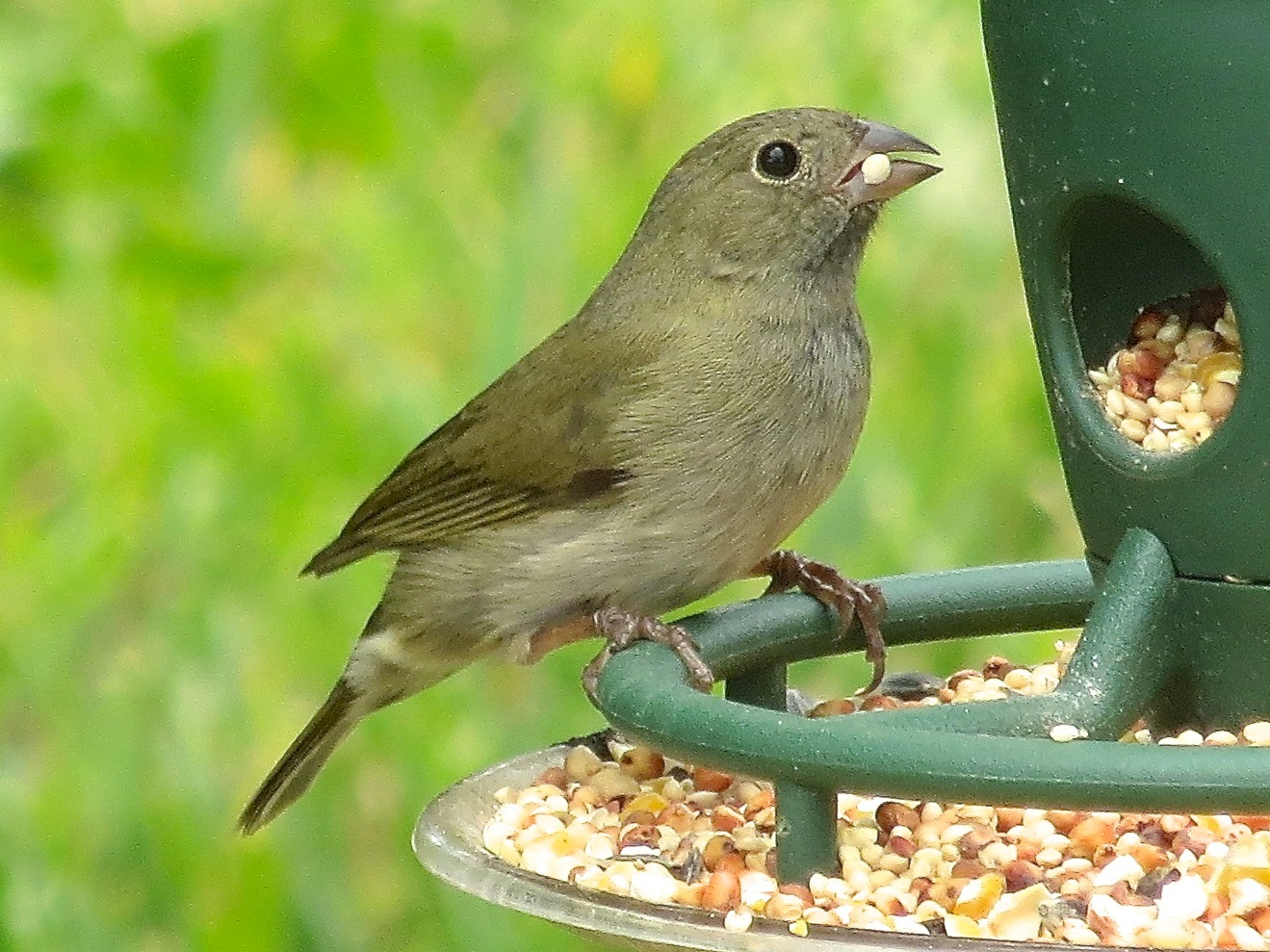
“Amazing birds, amazing day, amazing Delphi (where we saw the Bullfinch)”
Sally Chisholm has since emailed that among places visited were the “[town] dump, locations along the highway south to the Y, Sandy Point, the south ferry dock, Gilpin Point, Bahama Palm Shores and Delphi” I’ve never been to the dock, so that’s one for us to try out in March…
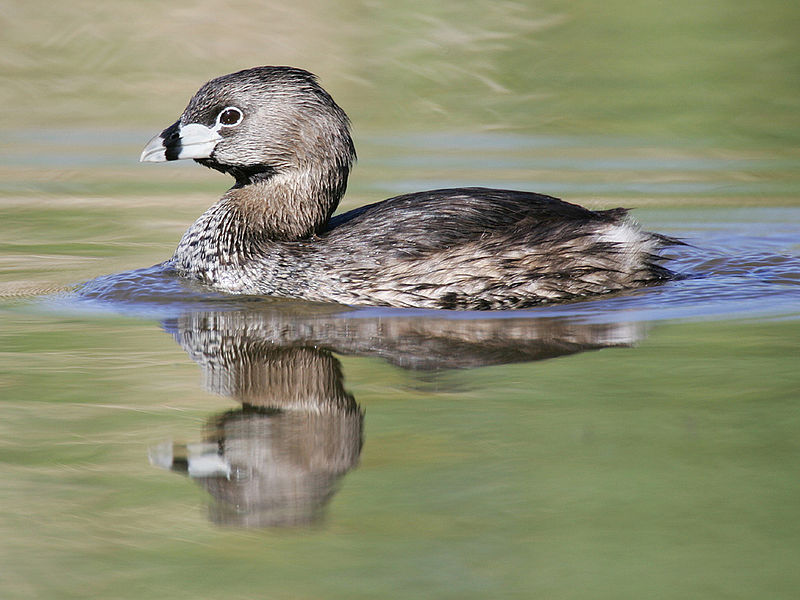
Here is the group’s checklist of the 44 species. I have added thumbnail images, almost all taken on Abaco by contributors to THE DELPHI CLUB GUIDE TO THE BIRDS OF ABACO, including some used in the book. “Good Gets” include the Pied-billed Grebe, a permanent resident but quite scarce; the Bonaparte’s Gull; the Great Black-backed Gull; and the White Ibis. The last 3 are what are termed ‘casual’ winter residents – rarely seen and so irregularly reported.
HOPE TOWN BIRDING GROUP CHECKLIST – JANUARY 2015
CLICK on a thumbnail to enlarge it. That’s the idea anyway, but I’m a bit ‘casual’ myself in checking links. The ones I spot-checked worked so I am hoping for the best with the remainder…
Pied-billed- Grebe Podilymbus podiceps (Wiki)Pied-billed Grebe
Pelican Sandy Point Abaco (Keith Salvesen)Brown Pelican
Magnificent Frigate male wikipicsMagnificent Frigatebird
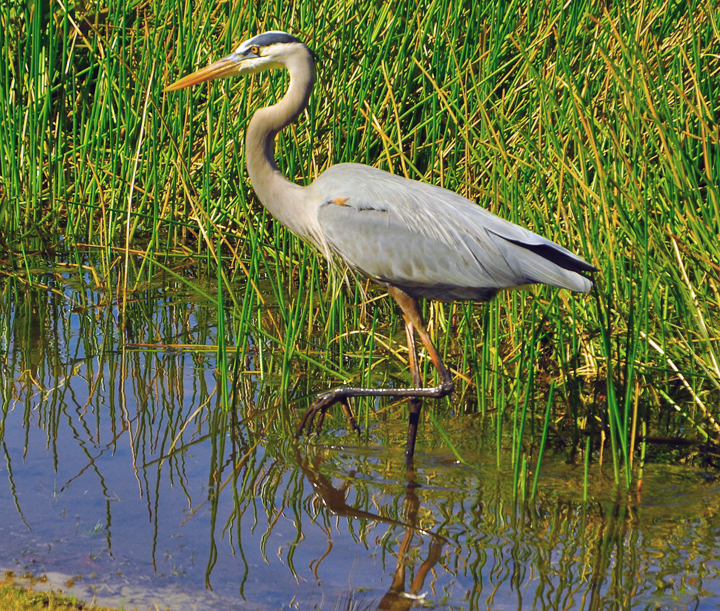
Great_Blue_Heron_Wading_2Great Blue Heron 
Great Egret Abaco - Treasure Cay Ponds (Keith Salvesen)Great Egret
Little Blue Heron, Abaco - Bruce HallettLittle Blue Heron
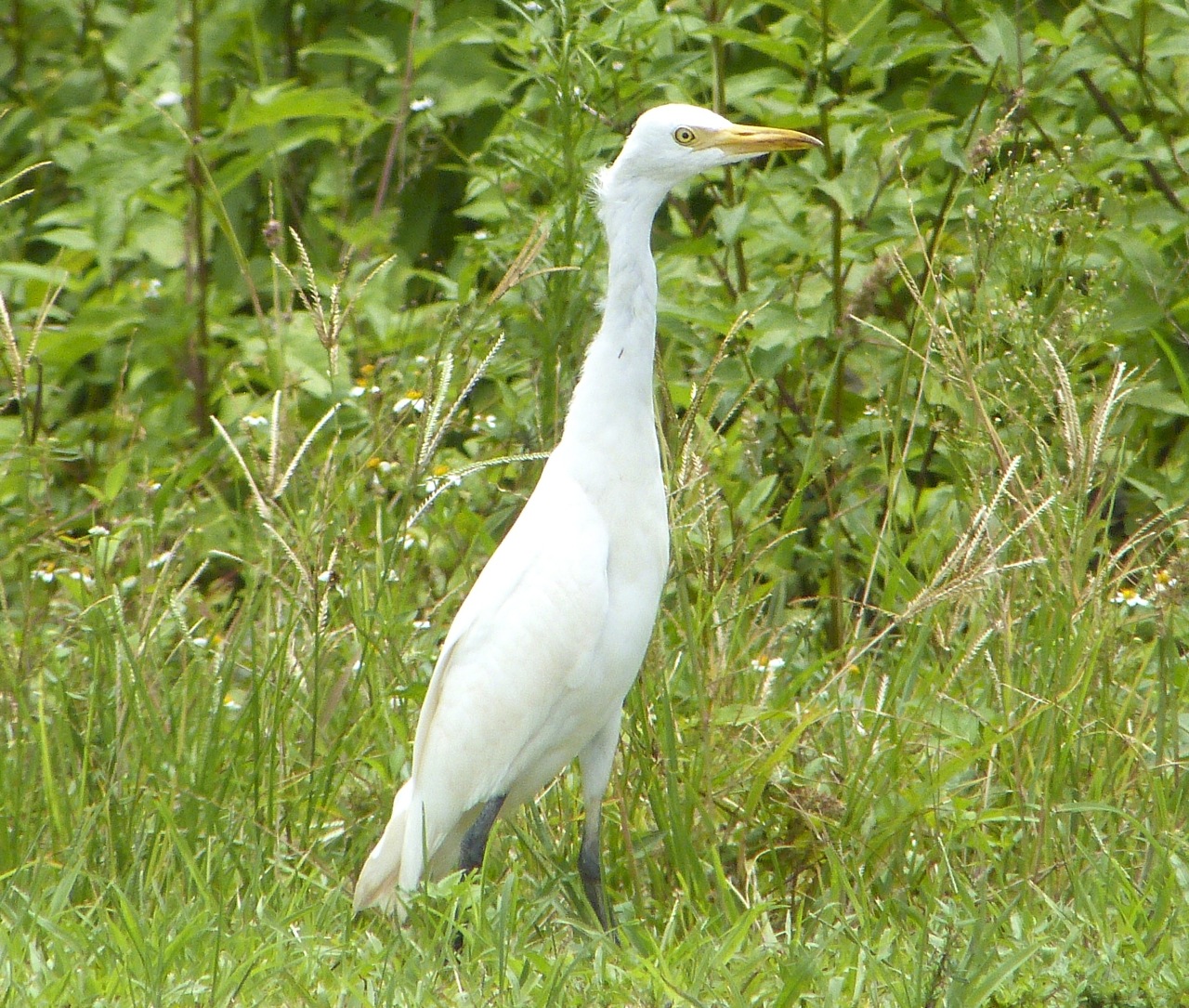
Cattle Egret, Sandy Point, Abaco - Keith SalvesenCattle Egret
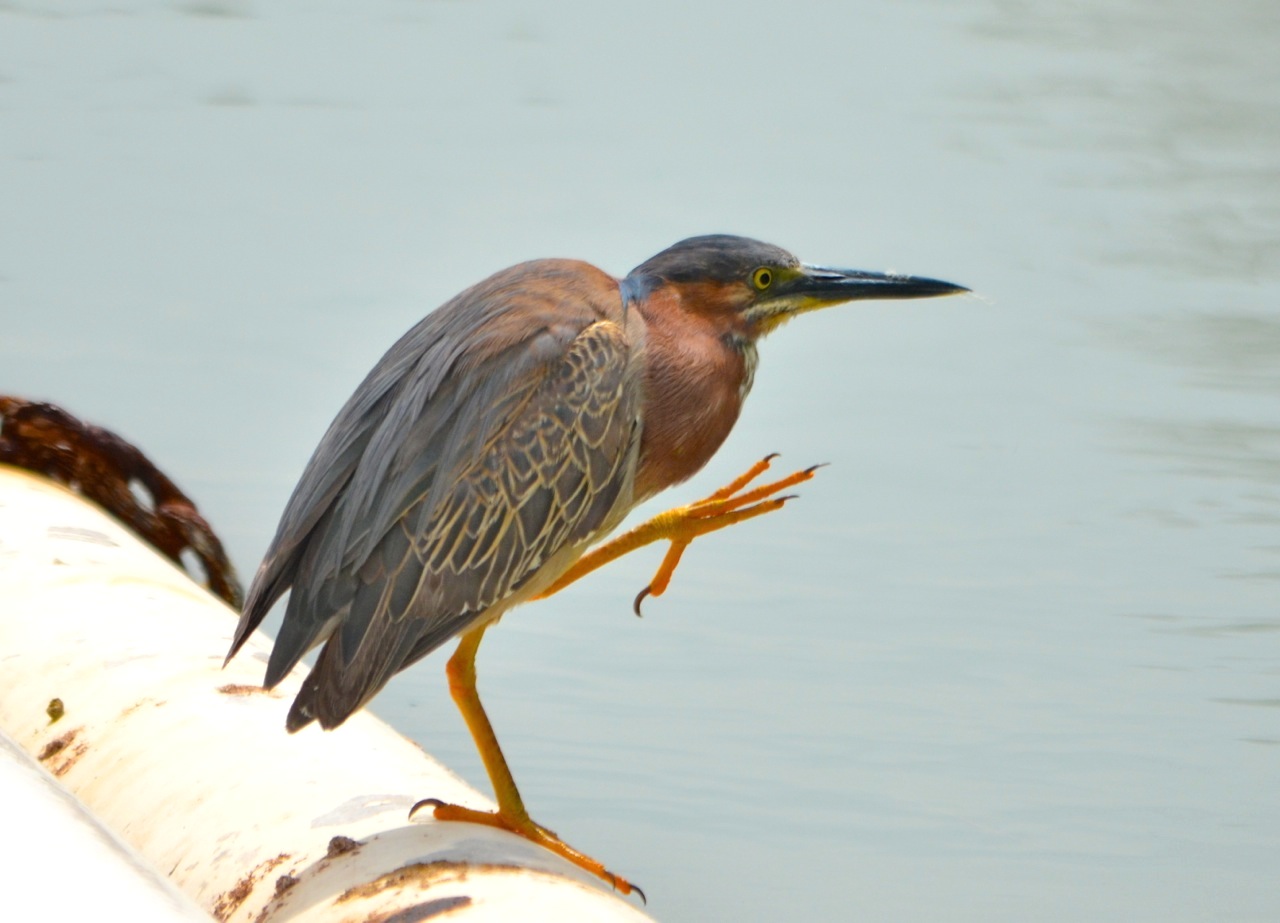
Green Heron, Abaco - Treasure Cay GC - Charlie SkinnerGreen Heron
White Ibis, Treasure Cay Abaco - Kasia ReidWhite Ibis
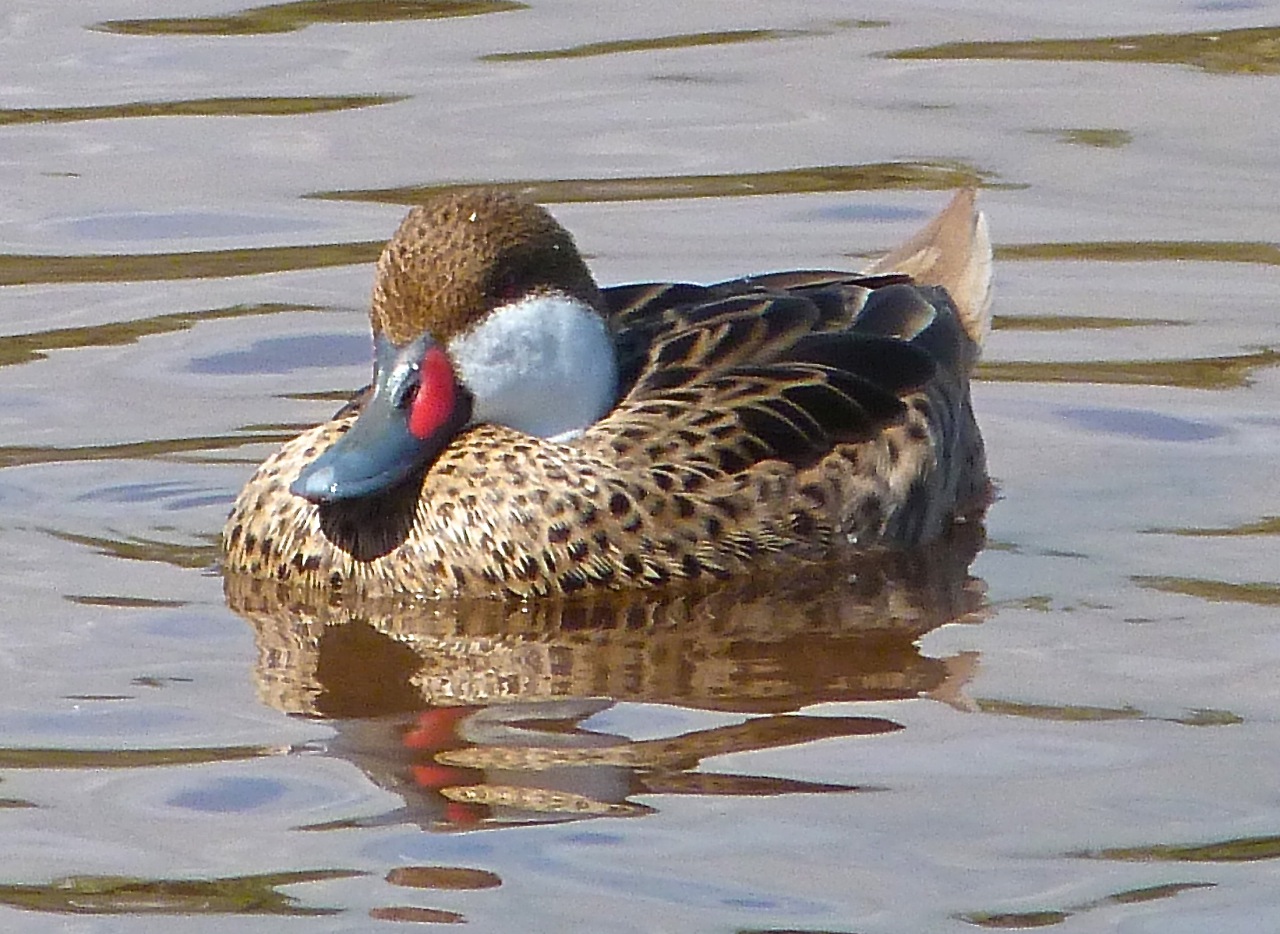
White-cheeked Pintail, Abaco - Gilpin Pond - Keith SalvesenWhite-cheeked Pintail
Turkey Vulture Abaco - Delphi  (Keith Salvesen)Turkey Vulture
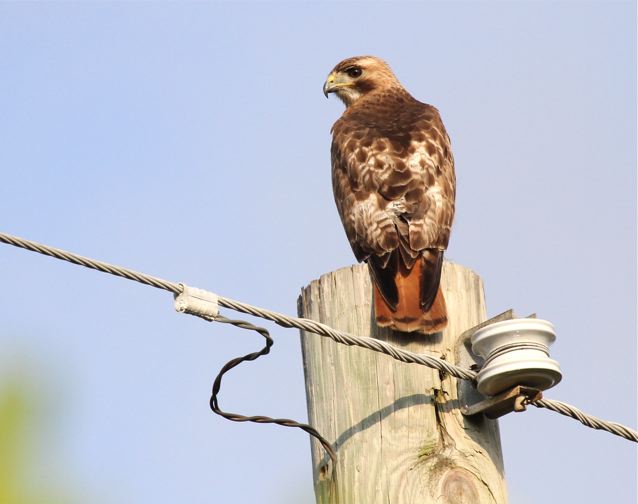
Red-tailed Hawk Abaco - Bruce HallettRed-tailed Hawk
American Kestrel Abaco - Sandy Point - Keith SalvesenAmerican Kestrel
1009BlackBelliedPloverBlack-bellied Plover
American Oystercatcher Abaco -  Jim ToddAmerican Oystercatcher
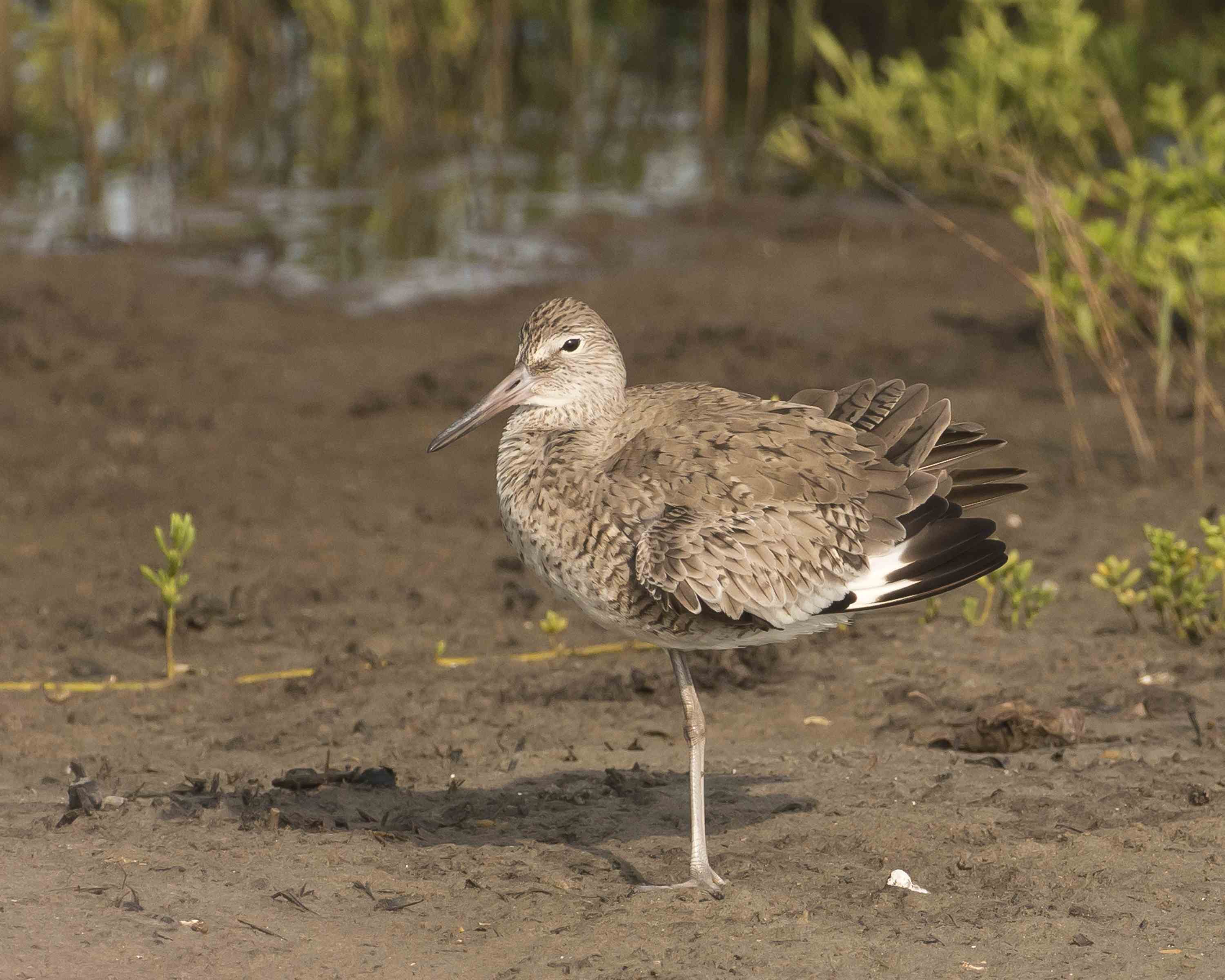
Willet.Abaco Bahamas.2.13.Tom Sheley smallWillet
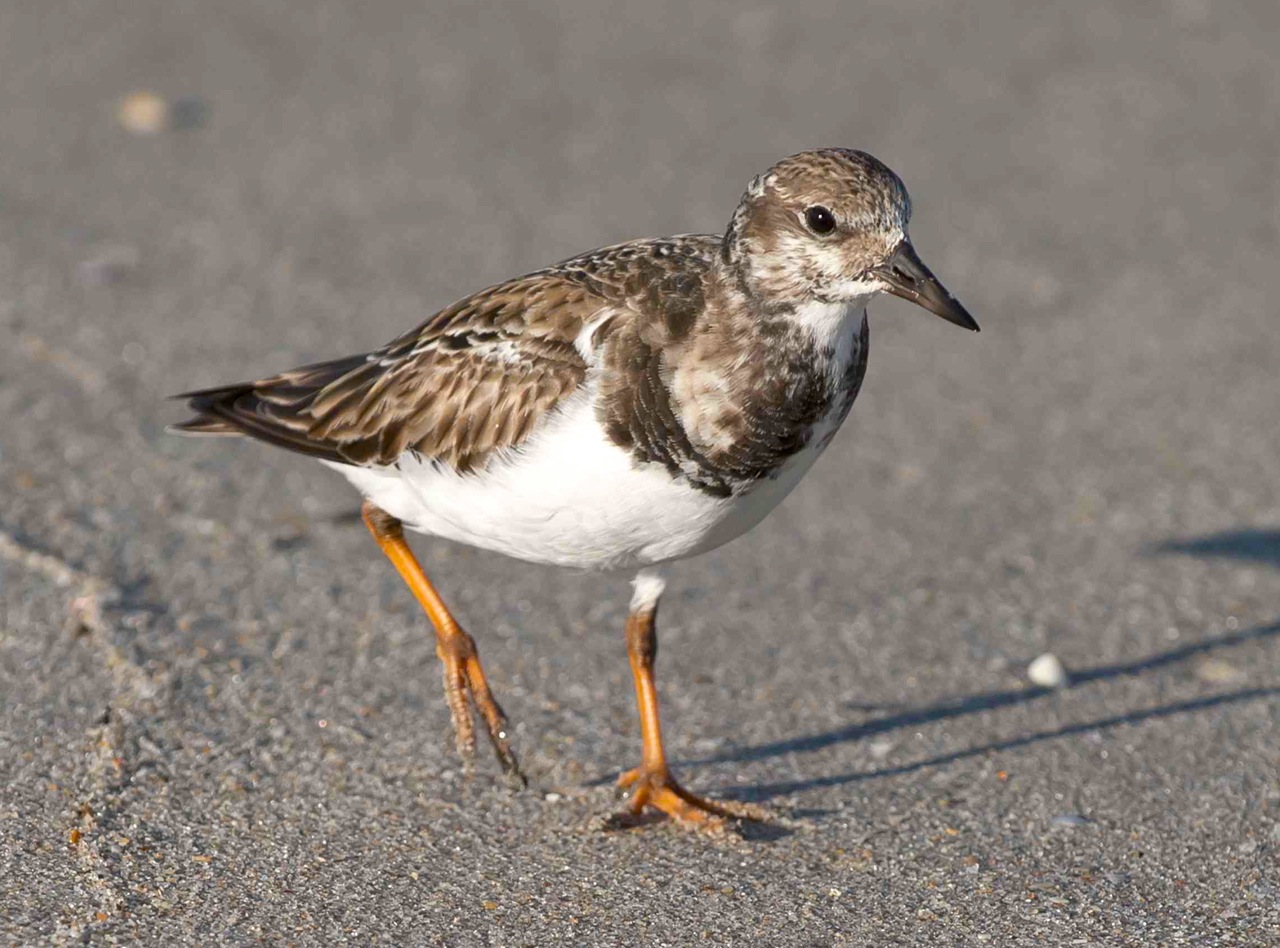
Ruddy Turnstone winter plumage.Abaco Bahamas.2.13.Tom Sheley eRuddy Turnstone
Laughing Gull, Abaco - Nina HenryLaughing Gull
Bonaparte's Gull (Ad NB), Abaco - Bruce HallettBonaparte’s Gull
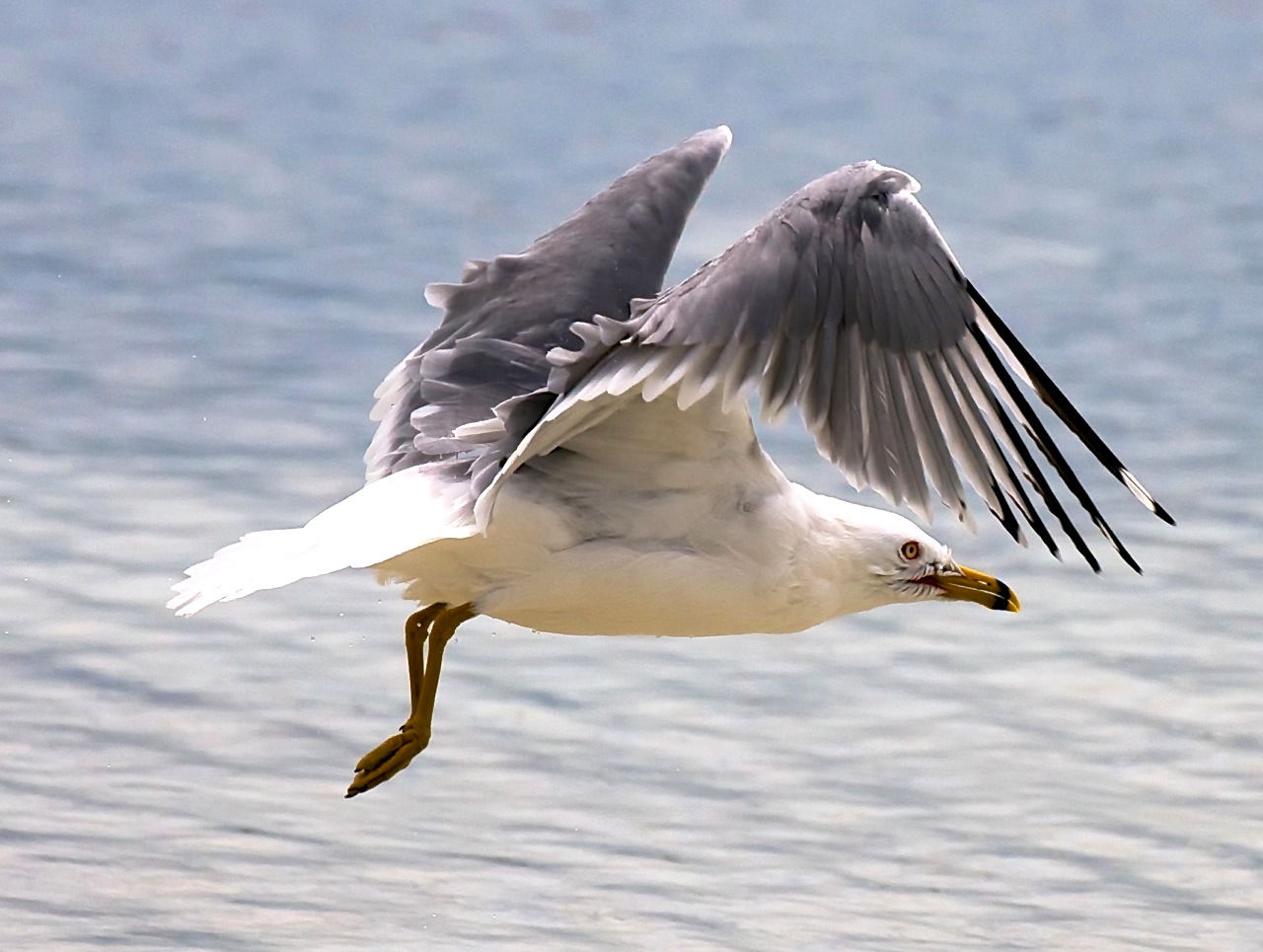
Ring-billed Gull, Abaco (Nina Henry : DCB)Ring-billed Gull
800px-Great_Black-backed_Gull_Larus_marinusGreat Black-backed Gull
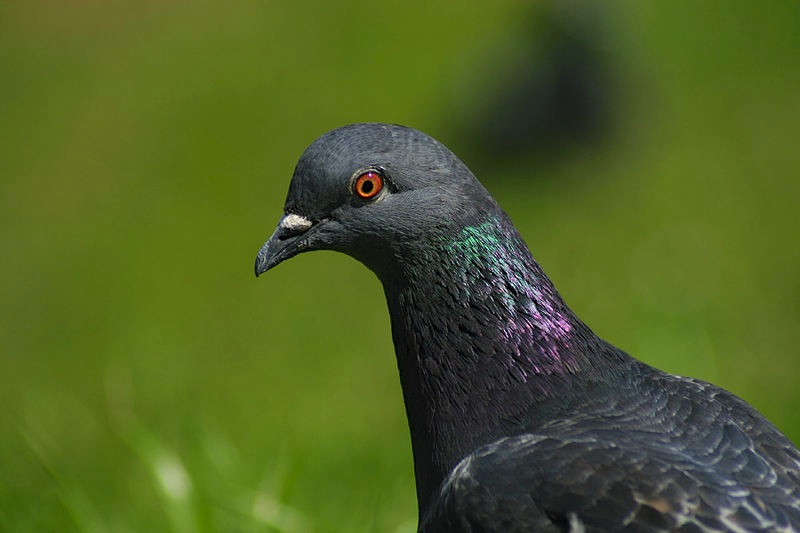
Rock_Dove_close-upRock Dove
Eurasian Collared Dove, Abaco - Bruce HallettEurasian Collard Dove
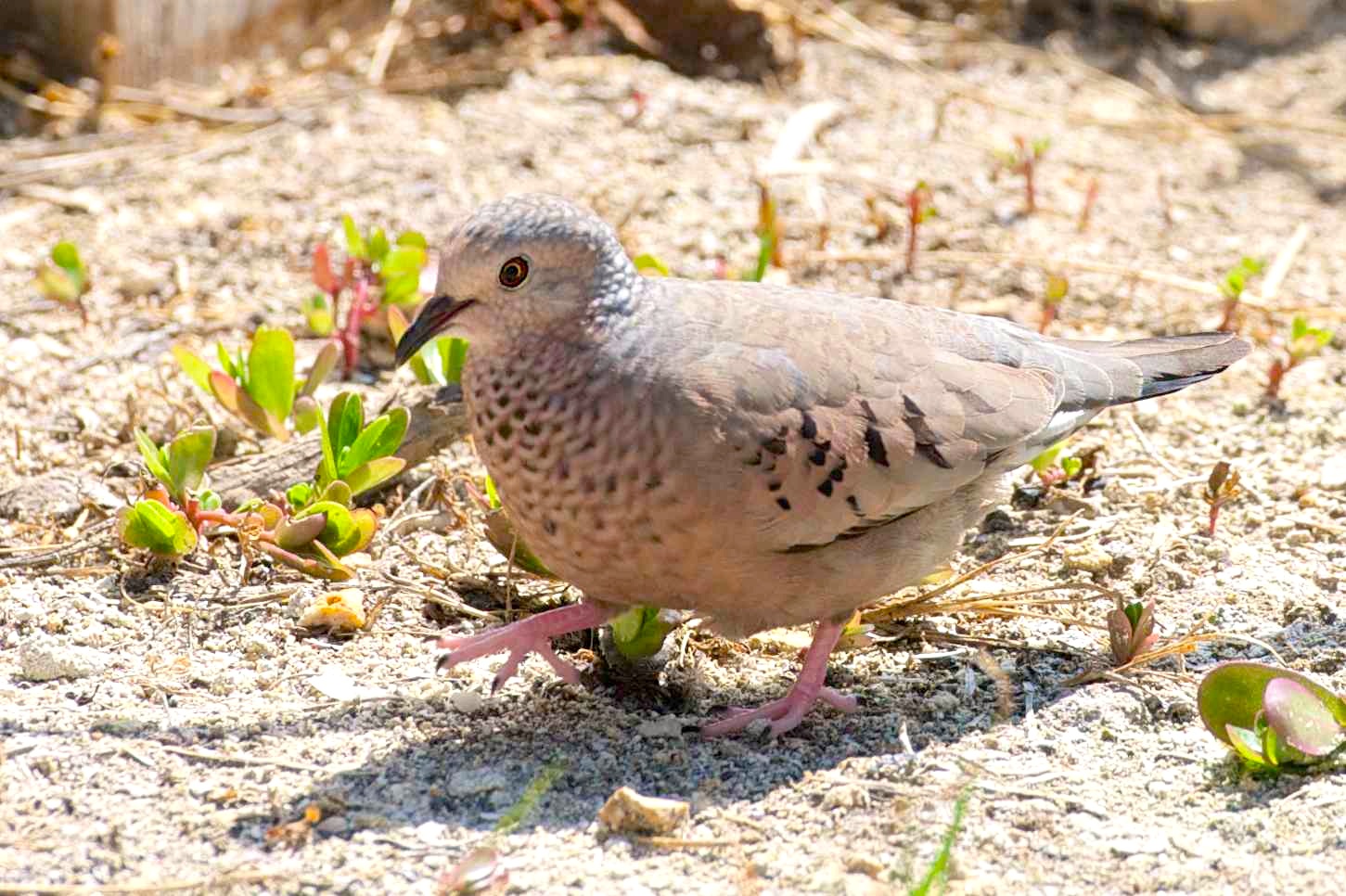
Ground Dove, Abaco -Nina Henry Common Ground Dove
ABACO (CUBAN) PARROT, Abaco (Caroline Stahala)Cuban Parrot
Smooth-billed Ani, Abaco - Roselyn PierceSmooth-billed Ani
Cuban Emerald, Delphi, Abaco - Keith SalvesenCuban Emerald
800px-Belted_Kingfisher_with_preyBelted Kingfisher
800px-West_Indian_Woodpecker_(Melanerpes_superciliaris)West Indian Woodpecker
Yellow-bellied Sapsucker. Abaco Bahamas 2.12.Tom SheleyYellow-bellied Sapsucker
Cuban Pewee Abaco - Casuarina - Keith SalvesenCuban Peewee
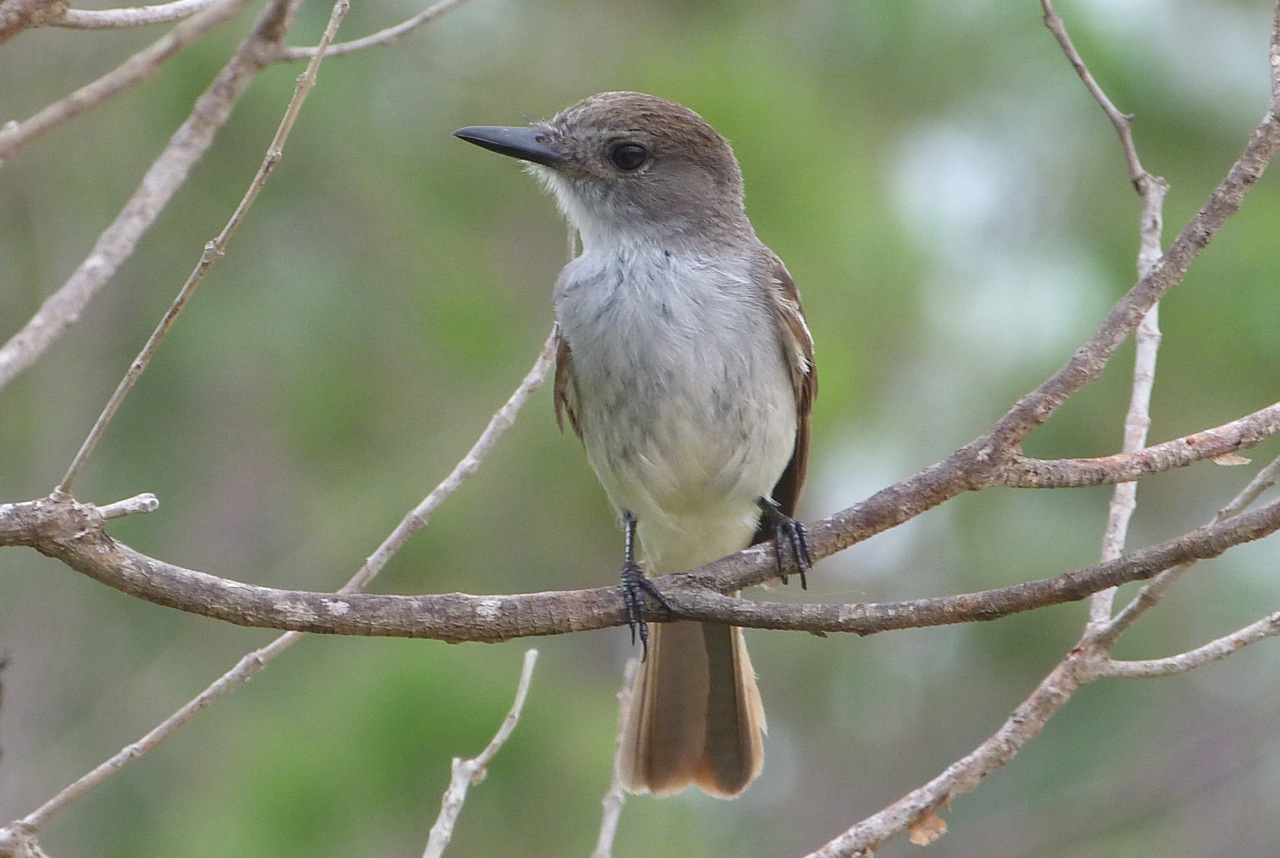
La Sagra's Flycatcher - Delphi,  Abaco - Keith SalvesenLa Sagra’s Flycatcher
Loggerhead Kingbird, Abaco - Peter Mantle Loggerhead Kingbird
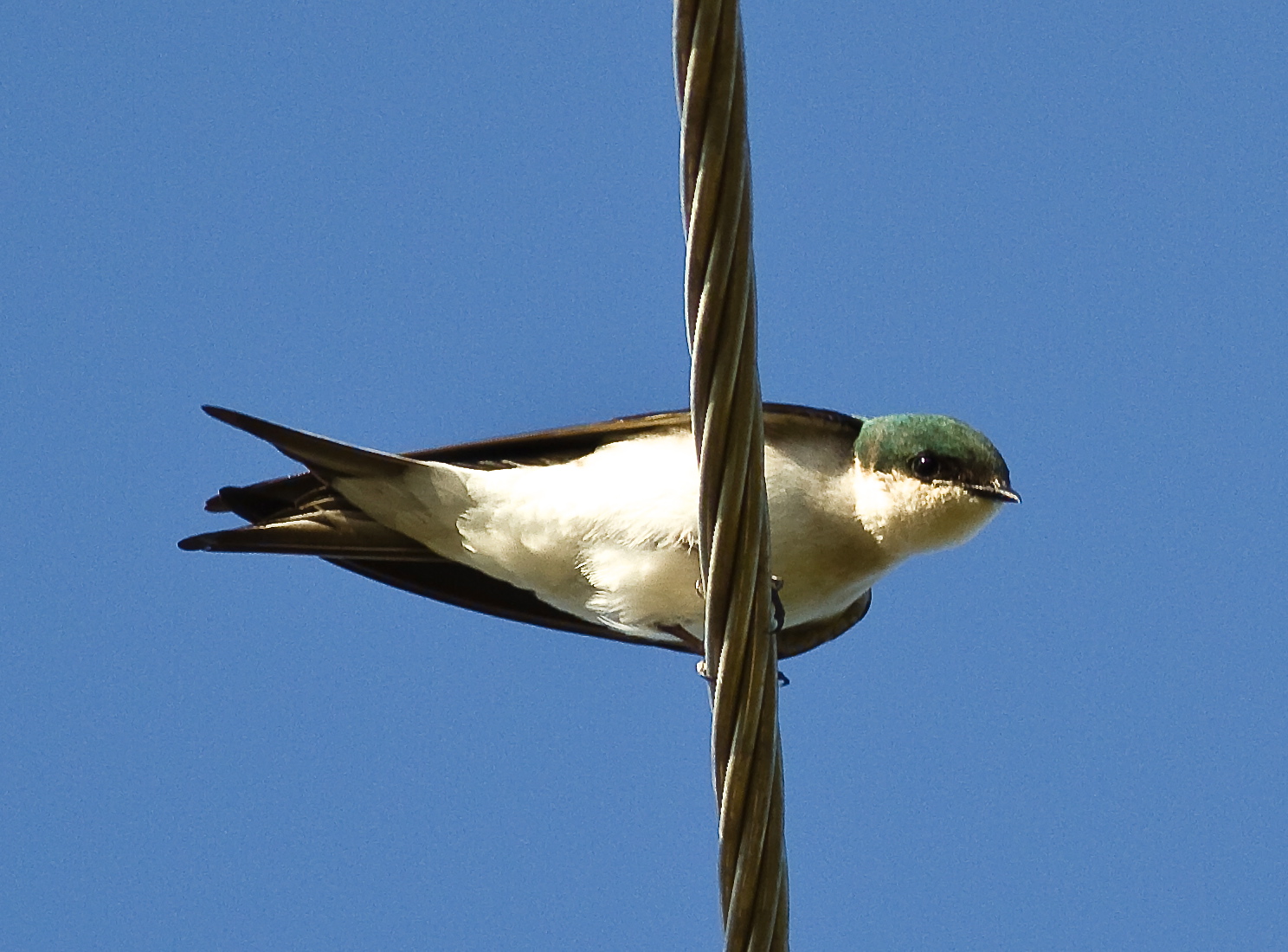
Bahama Swallow, Abaco - Craig NashBahama Swallow
Red-legged Thrush, Delphi,  Abaco - Keith SalvesenRed-legged Thrush
Northern Mockingbird, Delph, Abaco  - Keith SalvesenNorthern Mockingbird
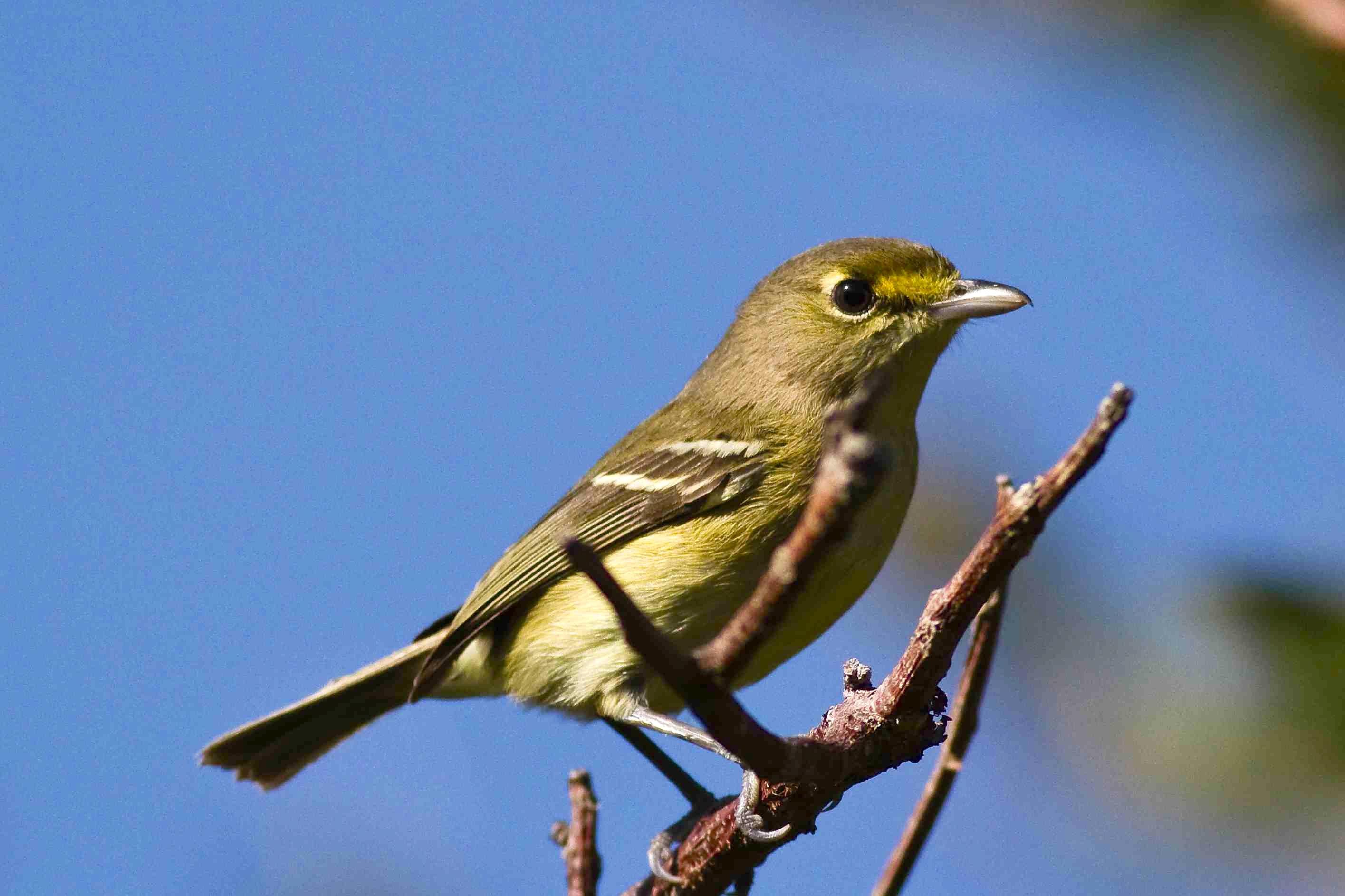
Thick-billed Vireo, Abaco (Craig Nash)Thick-billed Vireo
Northern Parula, Abaco - Craig NashNorthern Parula
Yellow-throated Warbler, Abaco - Bruce HallettYellow-throated Warbler
Olive-capped Warbler, Abaco - Bruce HallettOlive-capped Warbler
Pine Warbler, AbacoPine Warbler
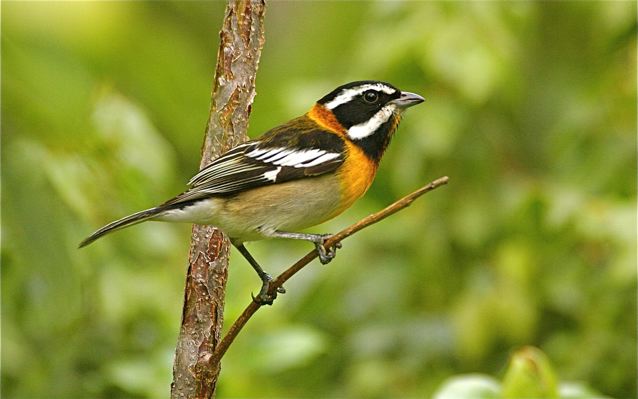
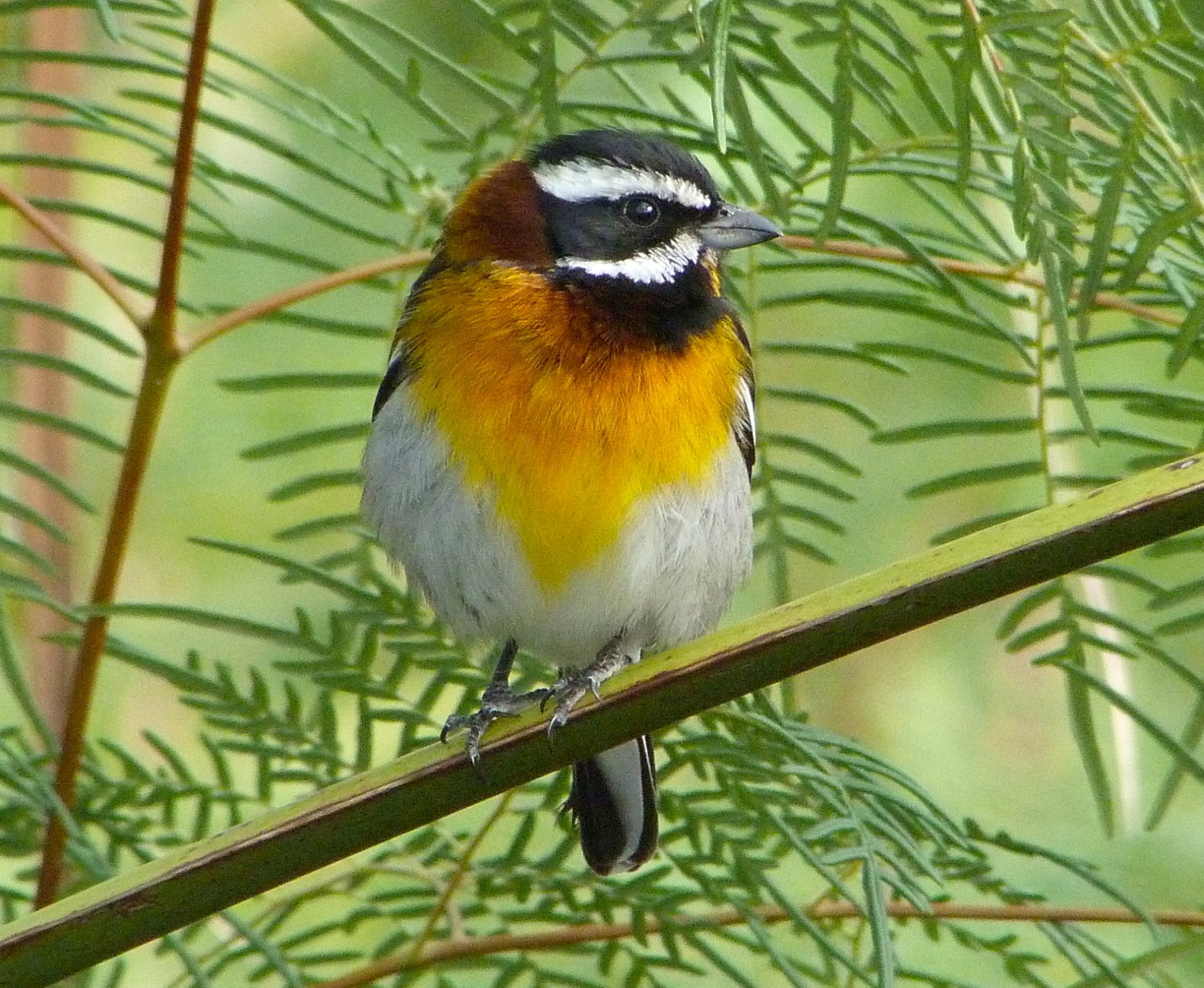
Western Spindalis, Abaco - Bruce HallettStripe-headed Tanager

Black-faced Grassquit (m), Abaco - Bruce HallettBlack-faced Grassquit
Greater Antillean Bullfinch, Abaco - Tony HepburnGreater Antillian Bullfinch
If any Birding Groups are interested in birding the one-mile drives (wonderful pine and coppice habitats), gardens and one-mile white sand beach at Delphi, let me know. It can easily be arranged, but there are times when it is not convenient or that some areas are not open for access. Email me as first contact at rollingharbour.delphi[AT]gmail.com
Western Spindalis Abaco (Keith Salvesen)

Western Spindalis, Abaco -Delphi Club Drive (Keith Salvesen)

Unknown's avatar

DOWITCHERS FOR ABACO TWITCHERS


Short-billed Dowitcher, Abaco (Bruce Hallett) DOWITCHERS FOR ABACO TWITCHERS

(THE LONG AND THE SHORT OF IT…)

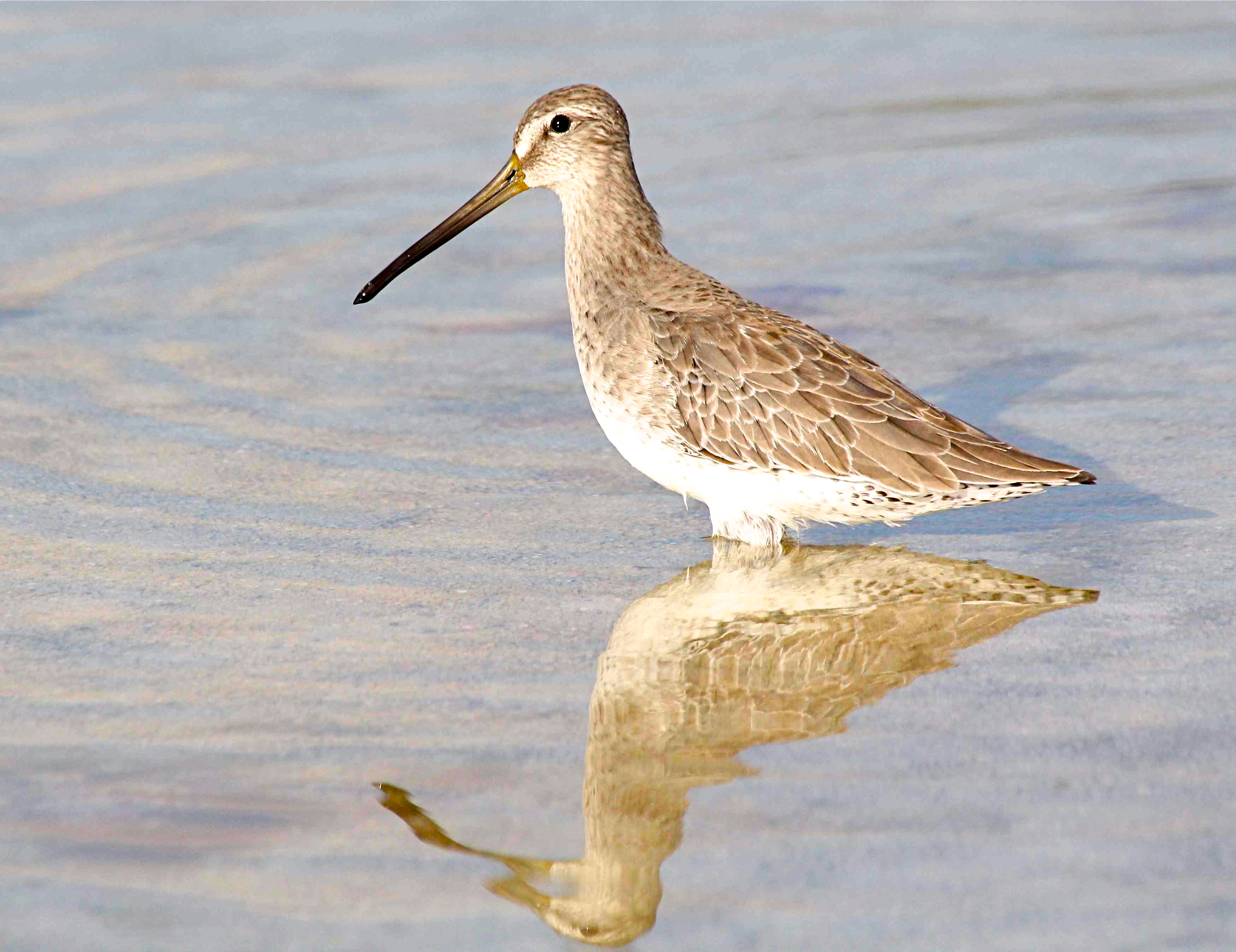
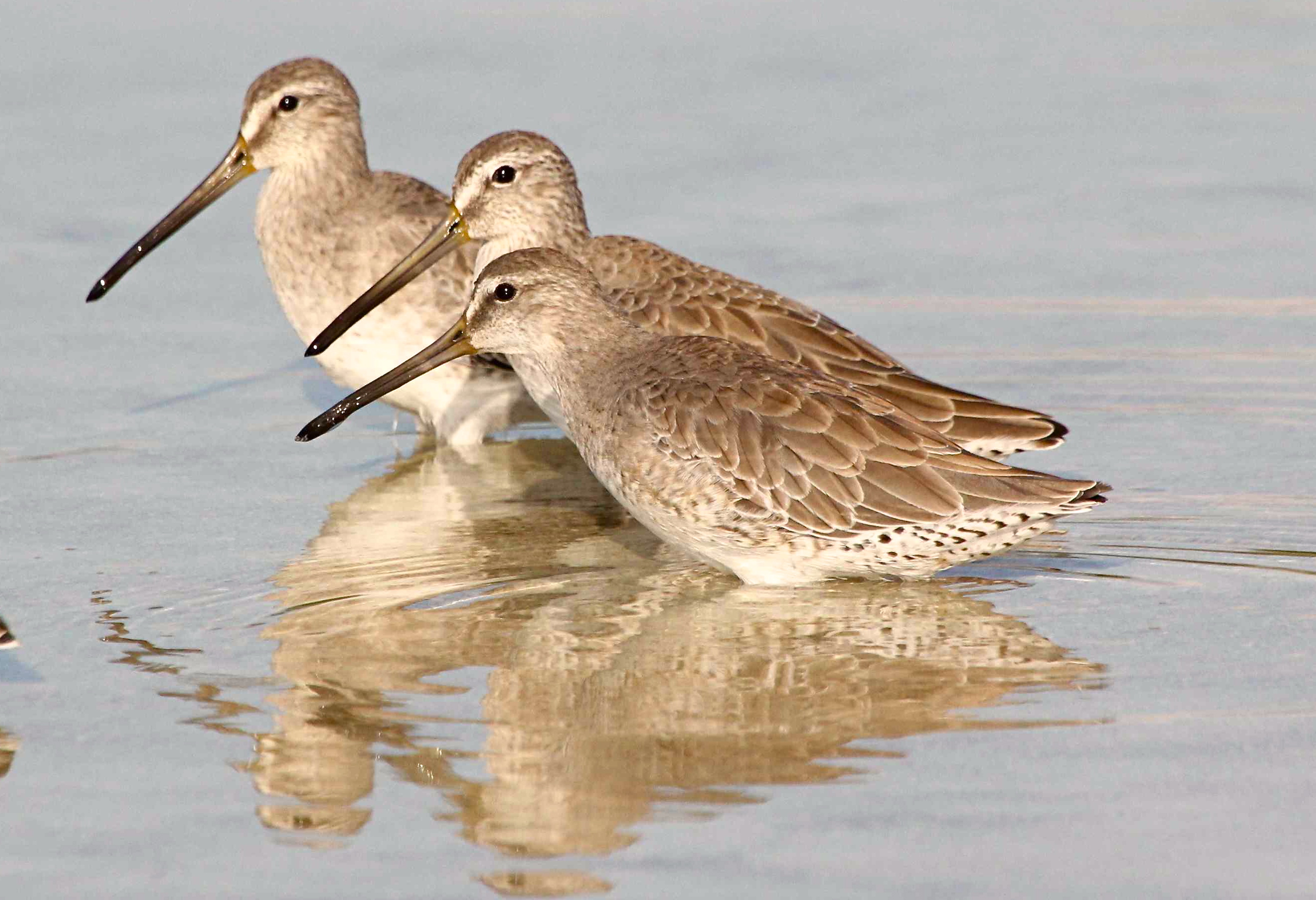
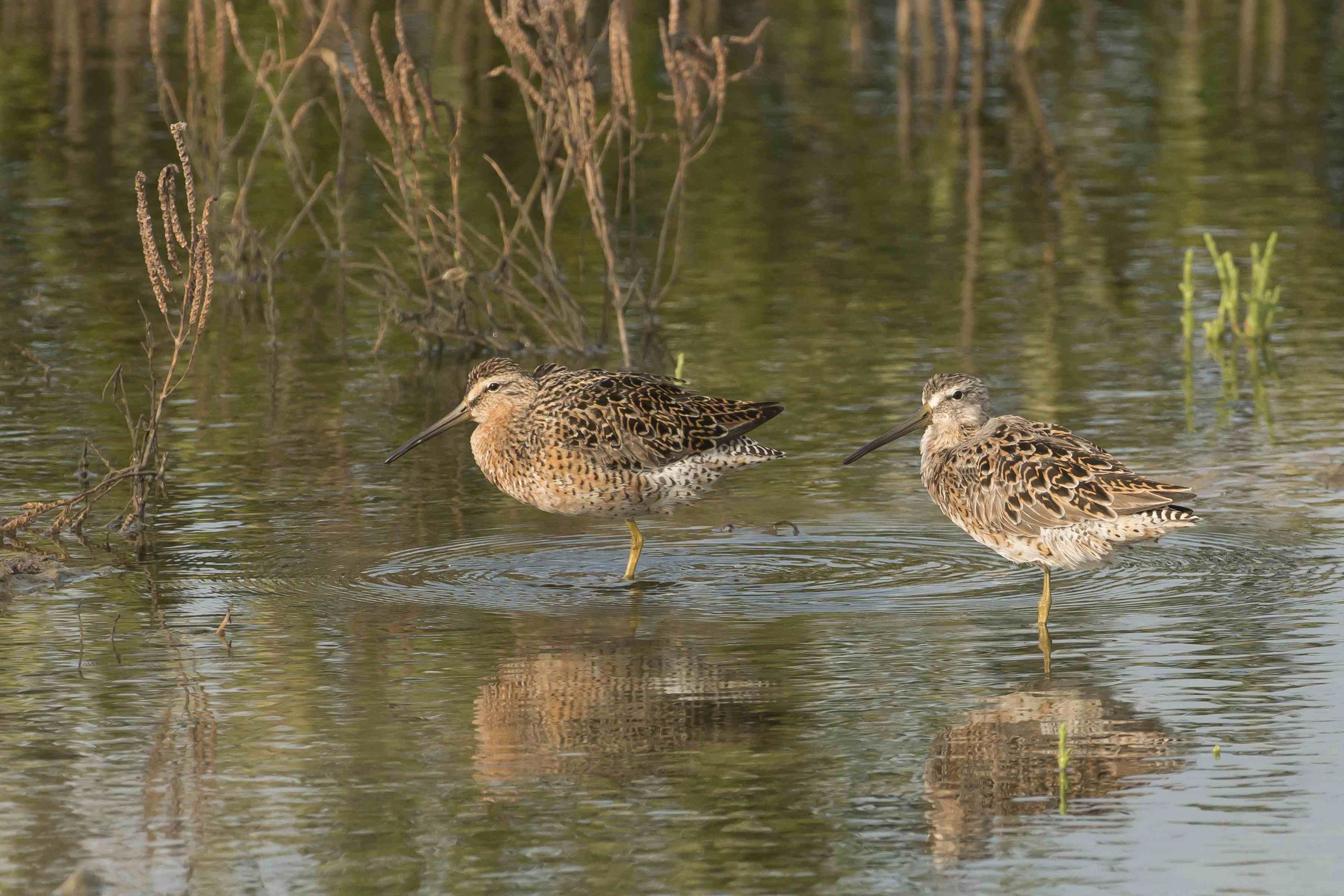
Long-billed (Limnodromus scolopaceus)? Or Short-billed (Limnodromus griseus)? Which one is that over there? No, not there. There! For Abaco, the answer is very easy. The SBD is a common winter resident, whereas the LBD is an occasional casual visitor, recorded rarely and irregularly in the Northern Bahamas. So if you are looking at a Dowitcher, it’s 98% certain that’s it’s an SBD. Which is lucky – they are so similar that telling them apart is a complex ID challenge, even if seen together! Until 60 years ago they happily existed as one species until the avian powers-that-be decided to prise them apart and award them separate species status. All the birds featured here are Abaco SDBs, with one exception… More on the comparisons and differences below.

The Dowitcher’s bill is an extremely effective instrument for probing deep into low water and mud. The rapid stabbing for concealed invertebrates has been vividly described as being ‘like a sewing-machine’. A ‘Dowitcher Stitcher’. So to speak.Short-billed Dowitcher, Abaco 2 (Bruce Hallett)

 HOW DID THE DOWITCHER GET ITS NAME?

I had assumed that the strange name for these birds was onomatopoeic, in the same way that a Killdeer is supposed to call “Kill…Deer”. And a Bobwhite, an interrogative “Bob…White?”. When I tried to check this online, I found that the usually valuable primary sources for bird info were silent on the topic. In the end, I tracked down a Merriam Webster entry that simply said “probably of Iroquoian origin; akin to Oneida tawístawis. First Known Use: 1841”. Which left me better informed, but no wiser…

Short-billed Dowitcher2.Abaco Bahamas.Tom Sheley

THERE’S A BUNCH OF SHOREBIRDS OVER THERE – WHAT DO SBDs SOUND LIKE?

 Phoenix Birder / Xeno Canto

In the header image, the bird is foraging in shallow water. In deeper water or with softer mud, SBDs will plunge their bills in to the hilt

Short-billed Dowitchers, Abaco -  Bruce Hallett

SHORT OR LONG – HOW ON EARTH DO I TELL? 

1. HELPFUL(ISH) WAYS

  • On Abaco, if you see a Dowitcher the overwhelming likelihood is that it’s a SBD
  • The species prefer different habitats, with the LBS preferring freshwater even in coastal regions
  • The SBD prefers coastal areas, shorelines and brackish / muddy ponds
  • The SBD’s call is said to be “mellower” than the LDB – though unless you have heard both for comparison, that’s not a very useful identifier.
  • The body shapes are apparently subtly different, in ways I personally can only begin to guess
  • In breeding plumage, the species have perceptible colour / pattern differences. (If you have binoculars?)
 2. CONFUSING FACTORS
  • LBDs may occasionally join SBDs that are foraging on open tidal flats
  • Actual bill length may not help, there’s an overlap – some SBDs may have longer bills and vice versa.
  • There are theories about bill-length / head size comparison as a field ID method. Do they work? As if!
  • Winter plumage of both species is very similar (grey). Both are only on Abaco in winter. Go figure.

Short-billed Dowitcher, Abaco 1 Bruce Hallett

DOES THE DOWITCHER HAVE ANY PRACTICAL APPLICATION?

Yes! In Scrabble you can form a stonking 315 words from those 9 letters, all permitted under Scrabble rules (though not my own house rules, which forbid ridiculous 2 and 3 letter words that sound invented for the purpose of winning Scrabble). Apart from the full 9 letter original, there’s one 8 letter word – ‘witherod’, a type of viburnum plant; and 13 words of 7 letters, of which I’d say 8 are in common though not everyday usage. I’ll leave you to work out the remaining 301 words…

Short-billed Dowitcher.Abaco Bahamas.Tom Sheley

DO YOU HAVE ANY LBD PHOTOS TAKEN ON ABACO?

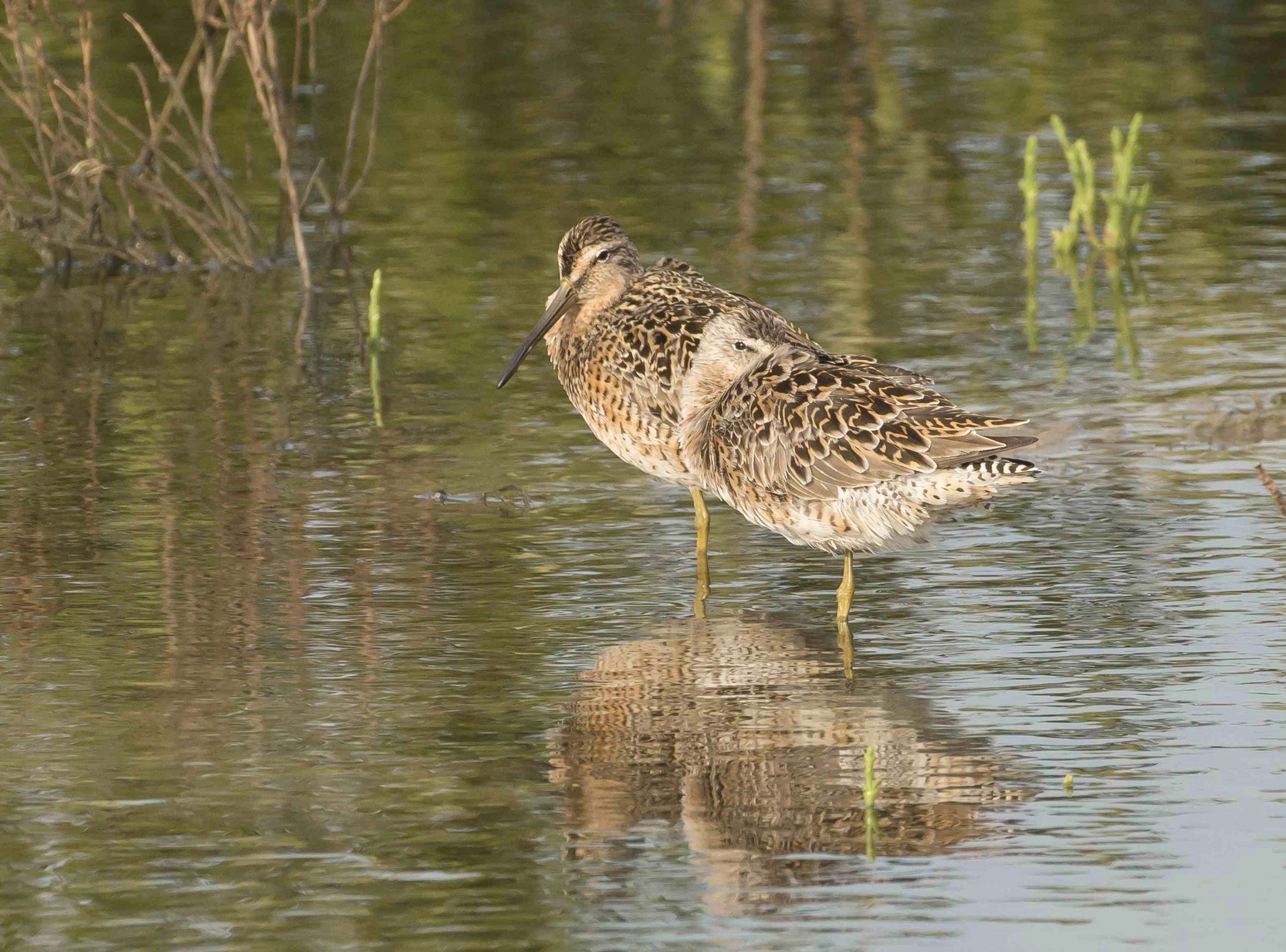
I surely do. Woody Bracey photographed a pair of dowitchers together on Abaco, one SBD and one LBD. But even though this looks a pretty straightforward comparison of bill length, colouring and marking, by now I’m now so confused that I’m beginning to wish the two species could be happily reunited into one…Long & Short Billed Dowitchers, Abaco Woody Bracey

 Credits: Bruce Hallett, Tom Sheley, Woody Bracey, past researches, the usual bird info suspects

Unknown's avatar

MASKED BOOBY: A SPECTACULAR NEW BIRD SPECIES FOR ABACO


Masked Boobies, Norfolk Island  (Steve Daggar - Wikimedia)

MASKED BOOBY: A SPECTACULAR NEW BIRD SPECIES FOR ABACO

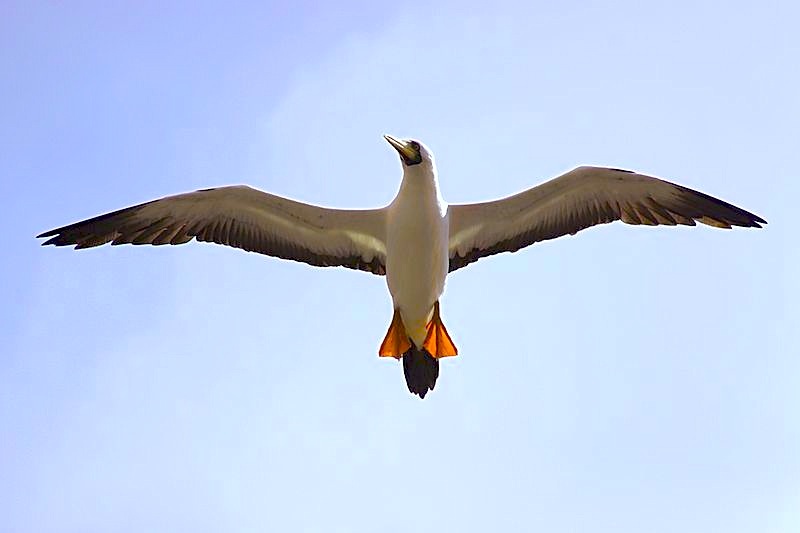
Hot avian news has arrived today from Woody Bracey: the 4th brand new species recorded for Abaco within the last 12 months has just been sighted in Abaco waters, north of Great Guana Cay. It was a single Masked Booby (Sula dactylatra), a large seabird also known as a Masked Gannet (and it certainly looks quite gannet-like). [NB the photos in this post are obviously not of the new bird, but are illustrative of the species]
Masked booby & chick (Duncan Wright Wikimedia)

THE LOGGED SIGHTING DETAILS 

Date: Wed Jan 21, 2015 10:00 AM

Location: Deep Sea 2-15 miles off Great Guana Cay, Central Abaco, Hope Town and Green Turtle Cay, BS

Protocols: traveling – party size 2 – duration 6 hours – distance 30.0 miles

Observers: Karl Kleim and Kim Kuhnle; Reporter via Ebird, Elwood Bracey

Description:  Single Masked Booby “Large white bird sitting on the sea with a yellow-greenish bill and no yellow on the head, then flew a few 100 yards showing the black trailing edge to the wings and wingtips and tail. Adult female.”

Masked Booby Sighting Map 1 jpg      Masked Booby Sighting Map 2

Masked Booby Sula dactylatra (Drew Avery / Amada44 Wikimedia)

EIGHT ESSENTIAL MASKED BOOBY FACTS

  • First described by A French naturalist in 1831
  • One of six species of booby in the ‘Booby’ genus Sula 
  • The largest Booby species
  • The only other Booby species recorded for Abaco is the Brown Booby
  • The closest breeding populations to Abaco are off Mexico and southern Caribbean
  • Silent at sea, whistling greeting call in nesting colonies plus a repertoire of ‘hissing and quacking’
  • Spectacular diving abilities
  • 2 eggs are laid: very often the first chick to hatch kills the second (“Siblicide”)

Masked_Booby_Chick by Pauk (Wiki)

The wingspan of an adult Masked Booby can exceed 5 feetMasked_Booby_(Sula_dactylatra) by Drew Avery

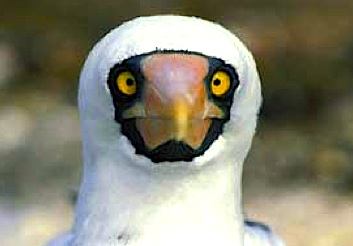
Here’s looking at you…Masked Booby (SuperStock) jpg

ABACO’S OTHER RECENT NEW BIRD SPECIES

and before that, a hugely exciting seabird find

Credits: Steve Daggar, Duncan Wright, Drew Avery, Pauk, Superstock, Wiki images & open source

Unknown's avatar

GREEDY GREEN HERON & A FACEFUL OF FISH


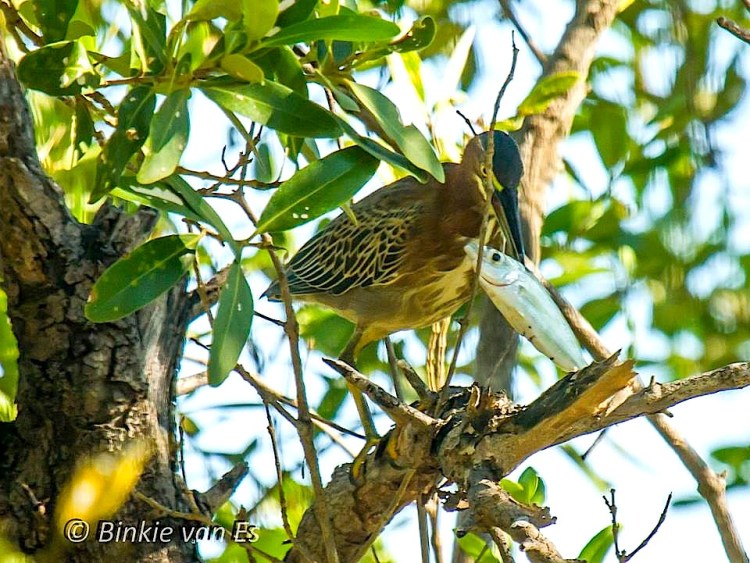
Green Heron eating fish (Binkie van Es)

GREEDY GREEN HERON & A FACEFUL OF FISH

The Green Heron Butorides virescens is one of 6 heron species found on Abaco. I wrote a detailed post about them last summer HERE, with some wonderful Abaco images (none taken by me…). Since then, I got in touch with Binkie van Es, who had photographed the increasingly rare Bahama Oriole on Andros. Small areas of  the island are the last remaining habitat of a lovely bird that until recently was one of Abaco’s prized endemics. You can see some excellent pictures of them HERE (none mine either!) and read the sad story of their population decline towards extinction.

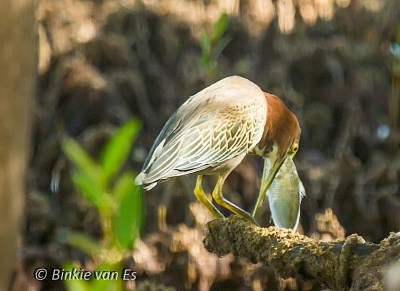
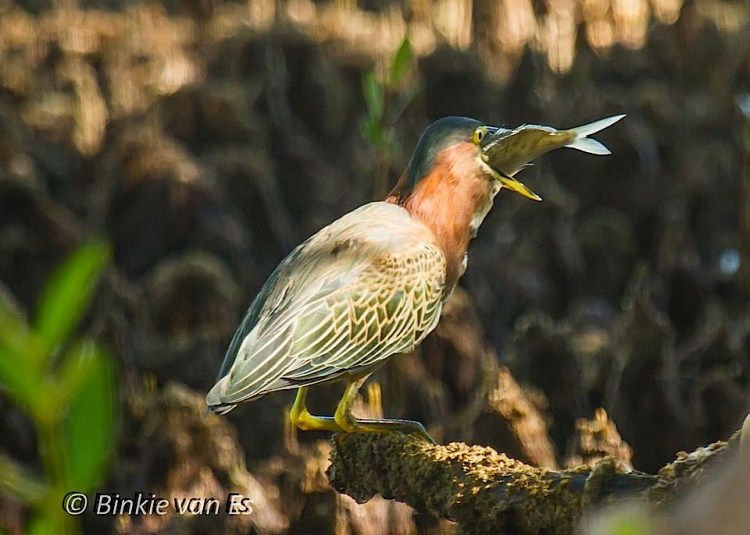
Binkie kindly gave use permission for some of his other photos. I especially like this sequence of a green heron getting more than he bargained for in his choice of lunch. In the end greed overcomes a formidably large snack, but it’s a hard one to swallow…

I caught me a handsome fish to take to my dining areaGreen Heron eating fish (Binkie van Es)

Think this ain’t going to be easy? Just you watch!Green Heron eating fish (Binkie van Es)

See? I just sort of slurp it in like… so. Practice makes perfect.
Green Heron eating fish (Binkie van Es)

Busy… can’t really talk right nowGreen Heron eating fish (Binkie van Es)

Nmmpphh Grfffffff Mmpphphphph Rmmmmmmmph!Green Heron eating fish (Binkie van Es)

Ulppppp! Green Heron eating fish (Binkie van Es)

No Green Heron was harmed in the photographing of this sequence. Sadly I can’t say the same for the fish, which despite its size had met its match… 

Credits: All photos Binkie van Es, with thanks