Unknown's avatar

NORTHERN PINTAILS ON ABACO: LOOKING SHARP

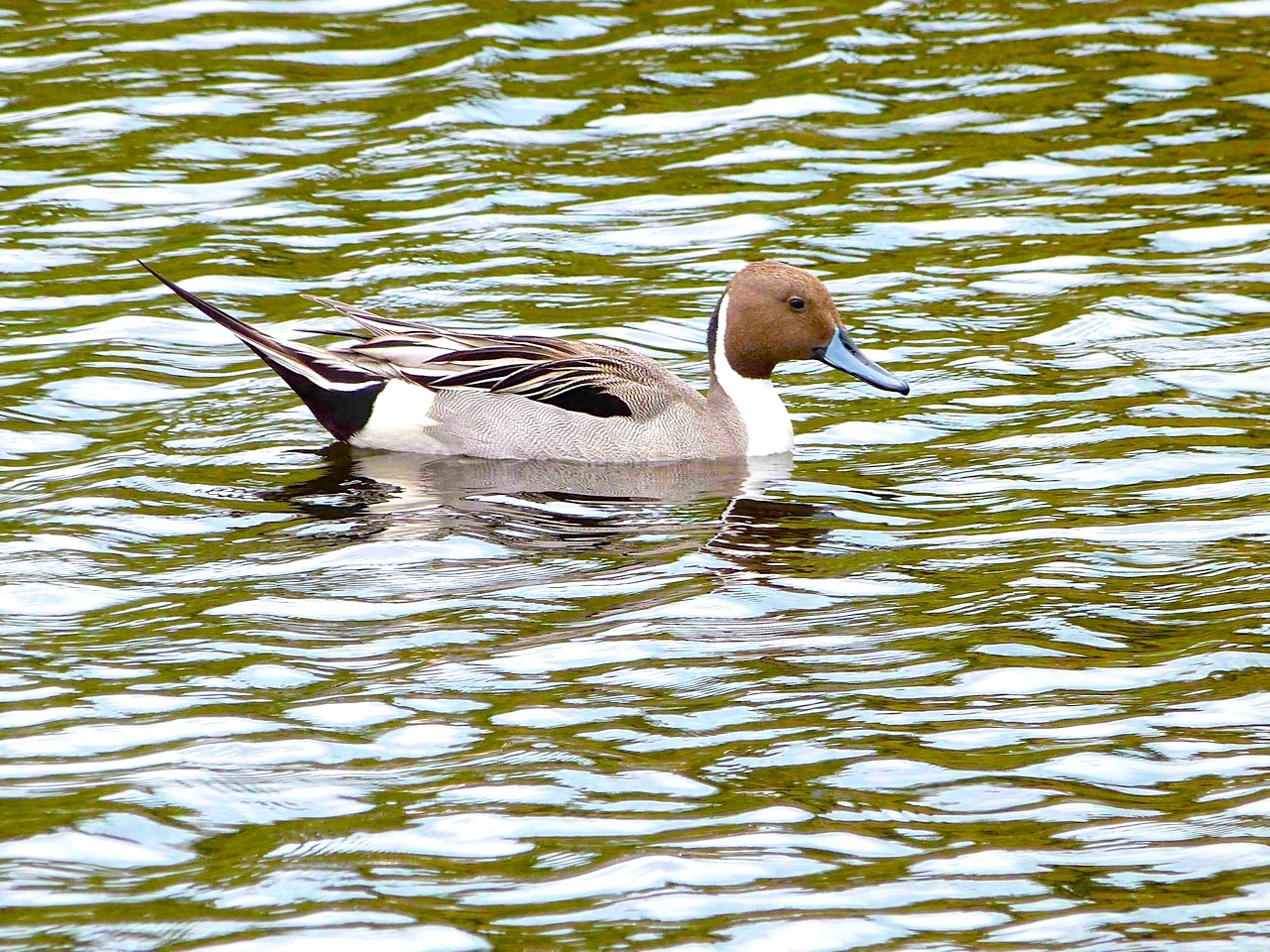
Northern Pintail, Abaco (Keith Salvesen)

NORTHERN PINTAILS ON ABACO: LOOKING SHARP

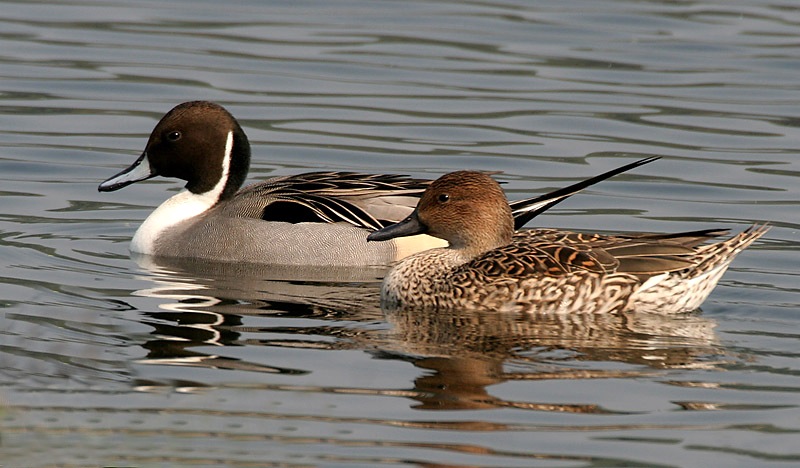
The Northern Pintail Anas acuta is a relatively rare winter resident dabbling duck on Abaco. The species has a huge range, being found throughout much of the northern hemisphere. 

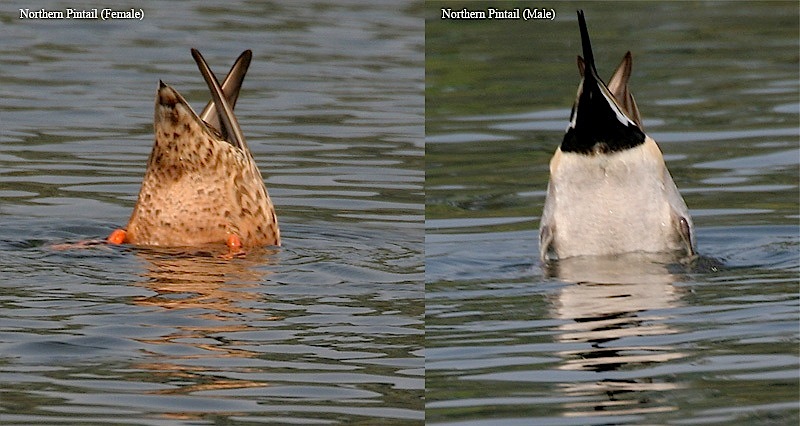
DABBLING DUCKS – PINTAILS UPNorthern Pintails (M & F) Up-ending (J M Garg)jpg

The ‘acuta’ in the Latin name refers to the characteristic sharp ‘pin tail’. As so often, the drake is a somewhat flashy specimen while the female is unassuming or, as some sources harshly put it, dull and drab. And while the drake makes a melodious whistle, the female simply quacks or croaks.

FLASHY MALENorthern Pintail, Abaco (Tony Hepburn)

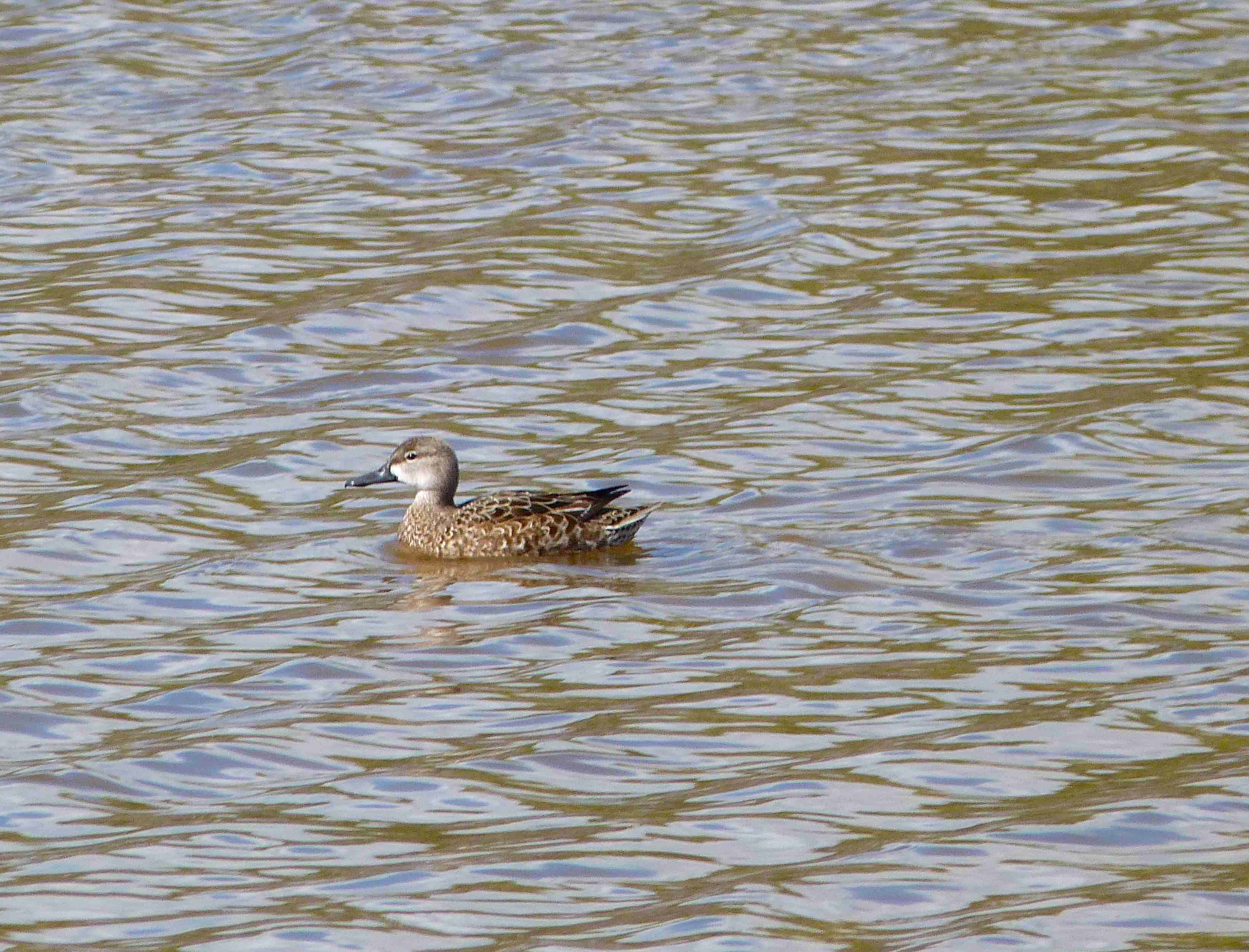
DULL & DRAB FEMALE? DEBATABLE!Northern Pintail (f), Abaco (Keith Salvesen)Northern Pintail (f) x 4 (Woody Bracey)

Northern Pintails form flocks and are happy to mix with other species.  Their long necks give the edge over similarly-sized dabbling ducks such as the mallard, enabling them to reach deeper down in the water to feed.

Northern Pintail PM IMG_5342 copy 2

THREATS TO THE SPECIES

  • Predation of nests and chicks by animals and birds such as birds of prey and (some) gulls
  • Parasites including worms and lice, to which they seem to be susceptible; and avian diseases including bird ‘flu
  • Hunting: they are a good target species being swift and agile in the air (for sport) yet quite large (for success rate). Also, delicious (for dinner).
  • Lead poisoning from shot or angling tackle, research has shown. A major problem with all bottom-feeders, though improved where laws prohibiting lead shot have been introduced
  • Loss of wetland areas to agriculture or due to habitat or climate changes

Northern Pintail, Abaco (Keith Salvesen)

On Abaco, Northern Pintails arrive in the autumn and leave as spring approaches. They are most likely to be found on ponds such as the one at Treasure Cay Golf Course, where I photographed the male; and at Gilpin Point where I spotted the lone female (at a distance). Below are both genders together for comparison (NB not taken on Abaco). 

BREEDING TIME

Mating is aquatic, by the usual anatine method in which the female lowers herself in the water to indicate her agreement to the proposal whereupon the male tries to drown her. Apparently after mating, the male raises his head and whistles – whether as a signal that it’s all over or exaltation or relief has not been researched. Yet. 

Northern Pintails (M & F) J M Garg

 RELATED POSTS

BAHAMA (WHITE-CHEEKED) PINTAIL

BAHAMA PINTAIL PAGE

Credits: RH x 3, Peter Mantle x 1, Tony Hepburn x 1, Woody Bracey x 1, J M Garg x 2, Birdorable 

        northern-pintail        northern-pintail        northern-pintail

Unknown's avatar

WTF? (WHAT’S THAT FISH?) (4): THE BATFISH

Batfish (Brenda Bowling, Texas Parks & Wildlife Department)

WTF? (WHAT’S THAT FISH?) 4 : THE BATFISH

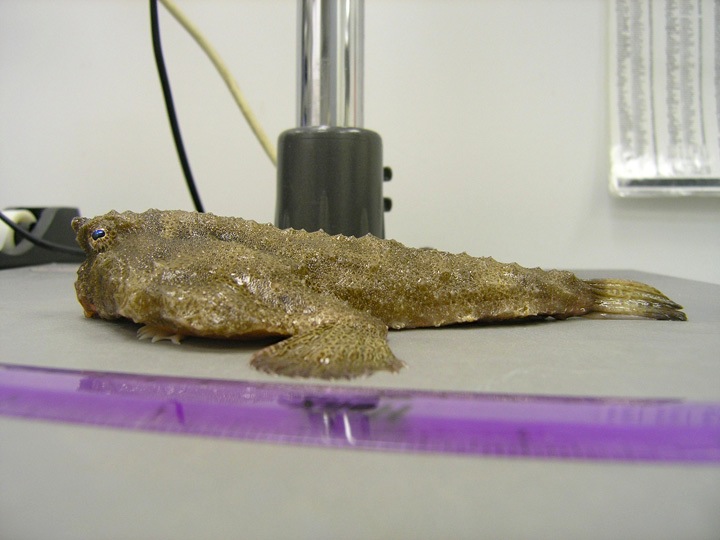
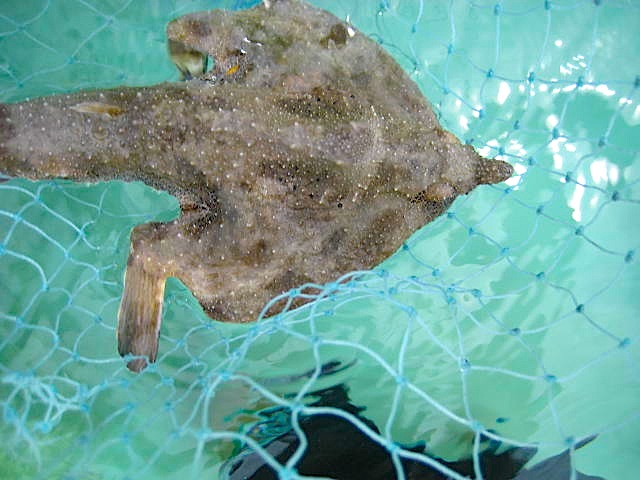
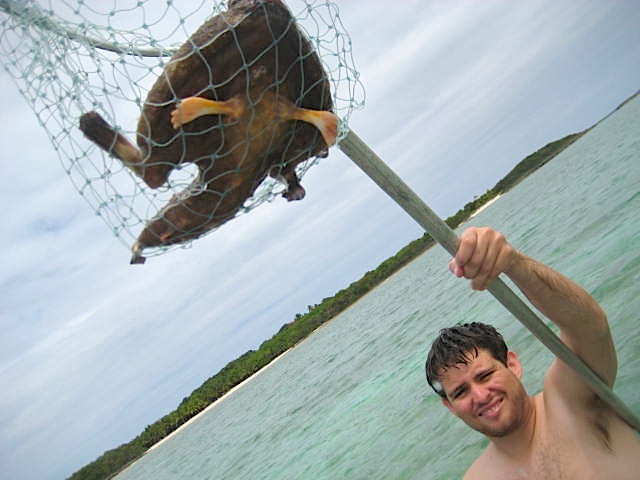
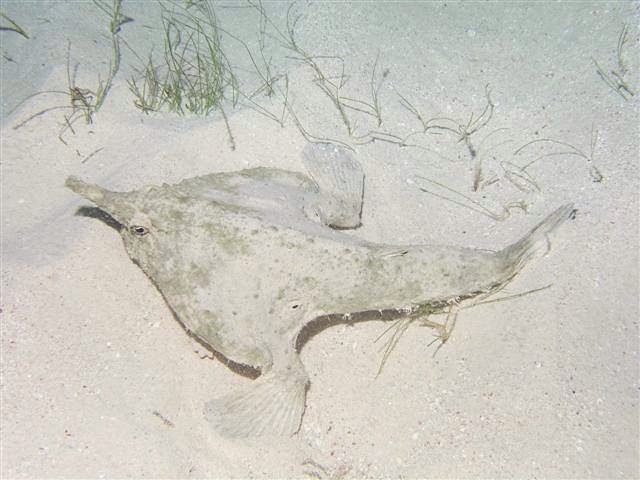
That’s ‘Batfish’ (or strictly, Batfishes, for there are some 60 species worldwide), as in one of the weirdest, most alien underwater creatures you may ever encounter. As opposed to ‘Bait Fish’, those little silvery specimens that are so attractive to predator fish higher up the food chain – the ones fishermen might be interested in… And the Batfish has no connection at all with Bruce Wayne of Wayne Manor, Gotham City nor with his sidekick Robin. Batfish (Brenda Bowling, Texas Parks & Wildlife Department) I mention this bizarre-looking and -acting creature because two have recently been seen and photographed in Abaco waters and although I’d heard of the batfish and even knew vaguely what one looked like, I was quite unprepared for the real thing. Ellen Sokol is a Captain for Kiskeedee Sailing Charters which during the summer is based in the Abacos and which amongst other things gives youngsters the opportunity to snorkel and to learn about undersea life. Ellen says: “I was snorkelling when I saw this thing on the bottom.  At first, I thought it was a dead bird!  It wasn’t moving at all even when I touched it with my flipper.  Later when I read about this fish I learned that it sits motionless and uses the long nose to attract prey.  I suppose that is exactly what it was doing when I rudely interrupted it! I later researched, and found it to be a spotted batfish”.   Because they had no underwater camera on board, Ellen’s son gently scooped it up in a net so they could take a quick photo of the fish before returning it. Quick thinking! Batfish, Abaco 1 (Ellen Sokol, Kiskeedee Sailing)Batfish, Abaco 3 (Ellen Sokol, Kiskeedee Sailing) The other recent sighting was posted with a photo on FB within the last 3 weeks by the excellent CRUISE ABACO.  Batfish (?Shortnose), Abaco Waters (FB, source unclear)

10 OGCOCEPHALIDAE (BATFISH) FACTS TO TREASURE

  • There are some 60 species of batfishes worldwide
  • They live in warm and temperate seas, including the waters of the Bahamas
  • An adult batfish is 12″ – 14″ in length
  • Their bodies are generally lumpy, with some hard spines
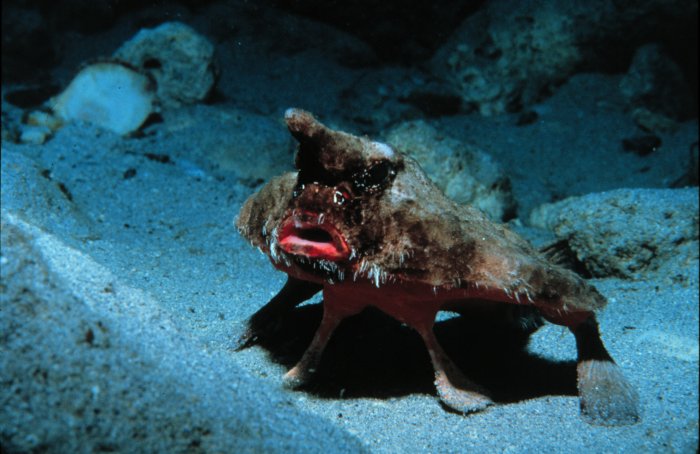
  • Some have a long, upturned snout. Others have bright red ‘lipstick lips’
  • They are rubbish swimmers, and often ‘walk’ on their limb-like pectoral and pelvic fins
  • Most species are deep sea denizens but some (short nose, spotted) inhabit shallower water
  • The fleshy snout above the mouth lures prey close enough to its jaws to eat
  • The batfish is becoming increasingly rare worldwide, and is considered to be endangered
  • Only the word ‘Logcock’ (pileated woodpecker) contains the initial 4 letters of Ogcocephalidae 

 CAN YOU SHOW ME SOME MORE EXAMPLES OF THIS INTRIGUING FISH?

By all means. Here are some images of other batfish species – red-lipped, long nosed, short nosed – each peculiar in its own way. You’ll see their preferred, most unfishlike method for getting around.

13179-004-429B61E0Red_lipped batfish (Barry Peters) Ogcocephalus_parvus Undersearch Research Program (NURP)Long-nosed Batfish Wiki

Shortnose Batfish Divephotoguide.com Eric Reich

Q. PLEASE MAY I SEE A VIDEO OF A BATFISH? A. YES. TWO.

“Heather Ashcraft found this very rare short-nosed bat fish on Eleuthera, Bahamas Sept 17 2013. It is a very strange (almost alien) looking combination of bat, frog, bird, and fish. The pelvic fins are used for walking on the ocean floor… Above the bat face is a horn (or beak)…”

“Taken at Coco Cay, Bahamas, April 29, 2014. At first we had no Idea what we were looking at… one of the weirdest things we had ever seen. Apparently they are rare. Even some of the locals had no idea what we were describing”

Batfish, Man-o-War Cay Abaco (Cheryl Marx MacKee)Batfish, Man-o-War Cay, Abaco (Cheryl Marx McKee)

Batfish, Abaco (Bob Williams August 2015)Batfish, Abaco, Bahamas (Bob Williams) Batfish, Abaco, Bahamas -2 (Bob Williams)

Credits: Header image courtesy Texas Parks and Wildlife Department (Brenda Bowling); Ellen Sokol and Kiskeedee Sailing Charters; Cruise Abaco; Wiki, Barry Peters, NURP, Eric Reisch; Youtubers x 2; Petersen, Arkive, Cheryl Marx MacKee, Bob Williams and sundry magpie pickings…
Unknown's avatar

“THEY CALL ME THE HUNTER…” A GREEN HERON ON ABACO

Green Heron, Gilpin Point, Abaco (Keith Salvesen)07

“THEY CALL ME THE HUNTER…” A GREEN HERON ON ABACO

There are a number of birding hotspots on South Abaco (defined loosely for avian purposes as south from Marsh Harbour). Most are attractive places to be; a few (e.g. the town dump) less so, requiring additional skills to avoid taking your long-awaited ‘life bird’ in a pool of grossness…

Always a good bet, Gilpin Point near Crossing Rocks is definitely worth a visit at almost any time, especially the brackish pond just inland from the shoreline. Bear in mind it is (a) a longish private road (we got a puncture down there once…*) and (b) it is private land. However Perry Maillis is always welcoming to tidy birders who bring only enthusiasm and take only pictures. Plus he very kindly changed our wheel! At the end of this post is a rough list of birds I have seen at Gilpin, with one or two that I know have also been seen there (photographic evidence!)

*I realise I should say we got a ‘flat’, but to me that would mean we had obtained an apartment. We are indeed “nations divided by a common language” (Attrib variously to Wilde, Shaw & Churchill)

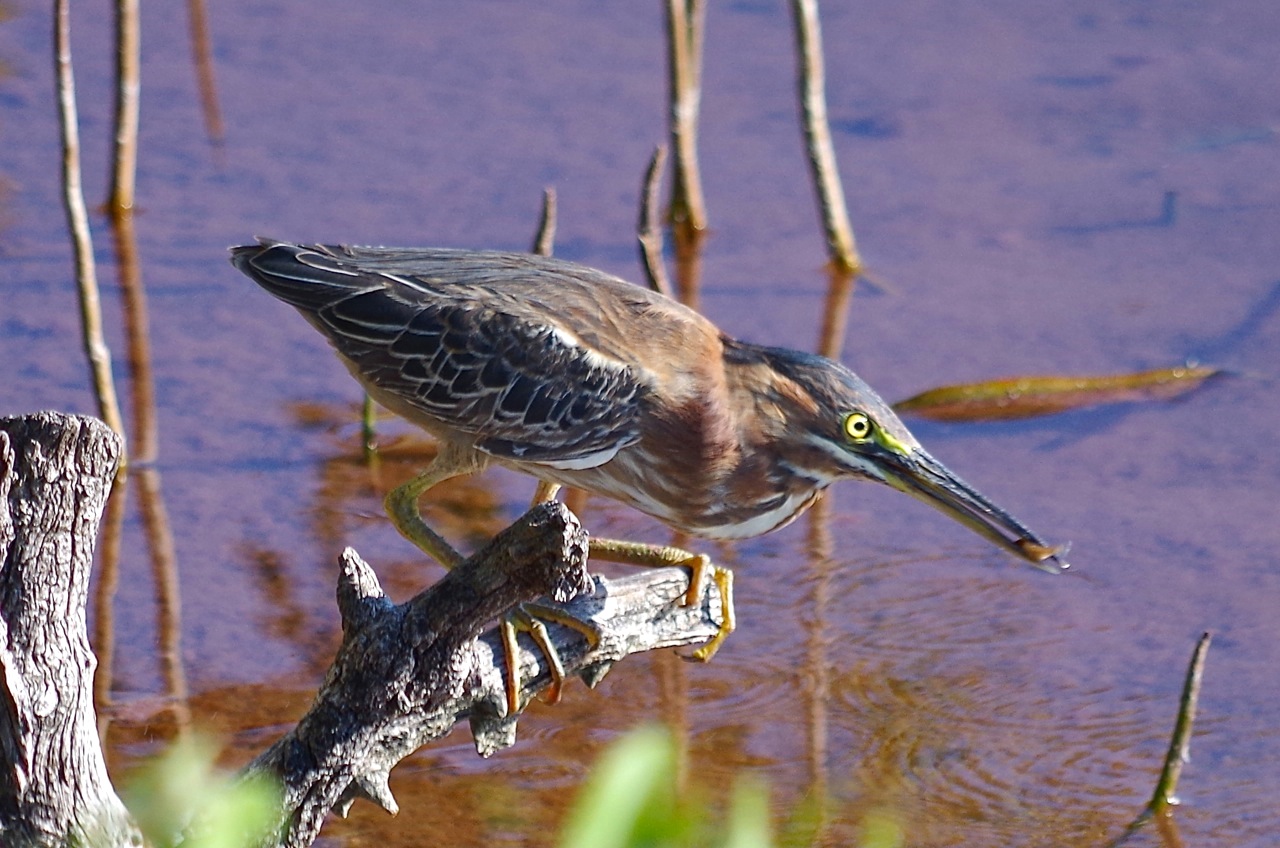
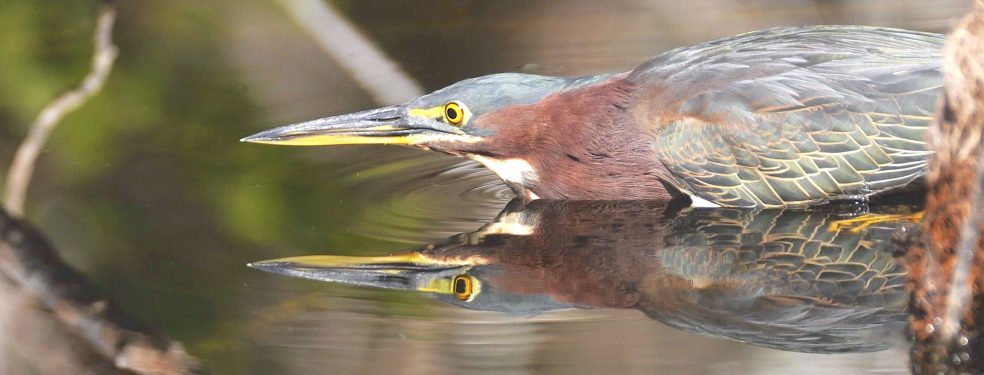
We found this small Green Heron quite easily. We’d watched it fly onto a stump in the pond near the jetty, then fly closer to the shoreline. By tiptoeing onto the jetty, we could see it perched close to the water, inspecting it with a fierce and predatory eye. Both eyes, in fact. 

Green Heron, Gilpin Point, Abaco (Keith Salvesen)01

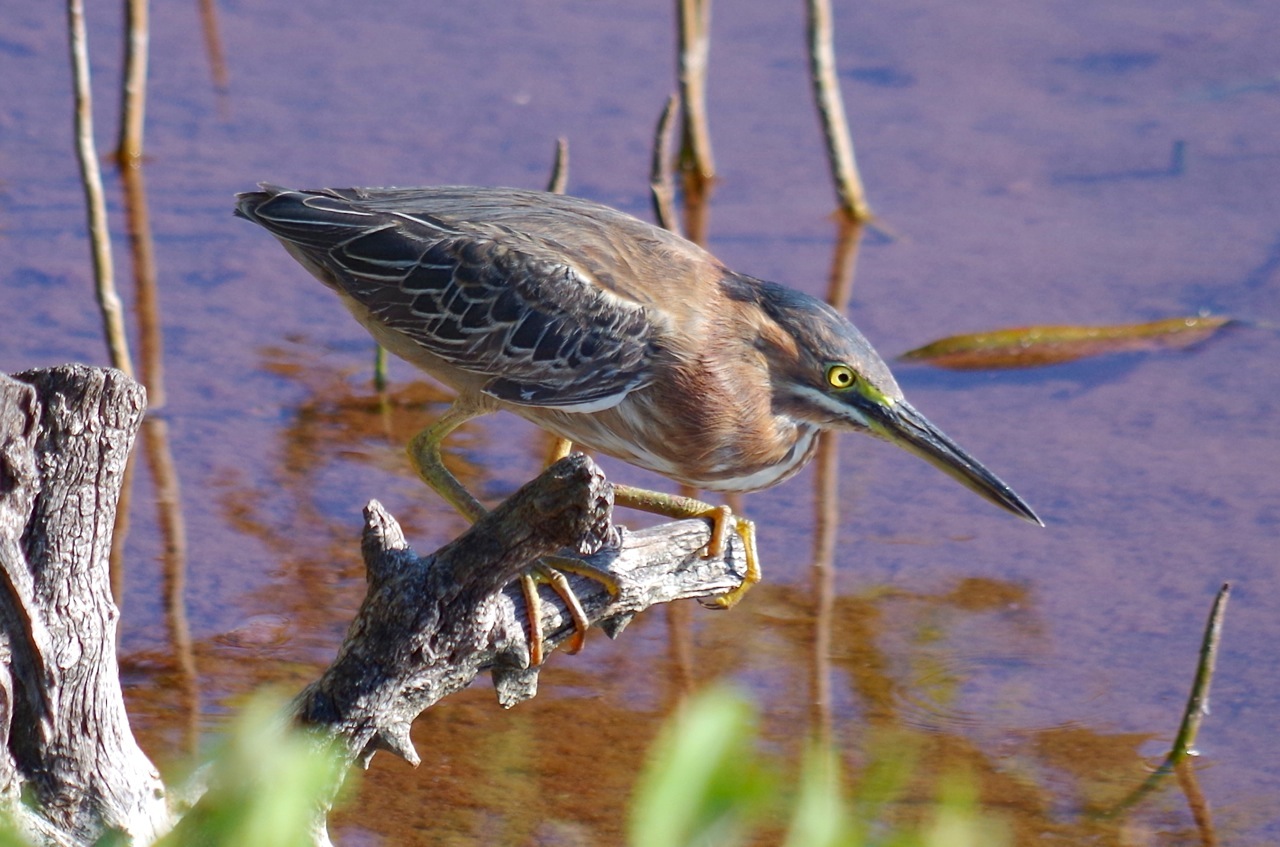
The hunting technique is deceptively simple. Note the long sharp stabbing beak. Note the large feet and claws for gripping securely Here’s how it is done. As a fish is sighted, so the heron leans forward, beak closer to the water, more streamlined to look at.Green Heron, Gilpin Point, Abaco (Keith Salvesen)02

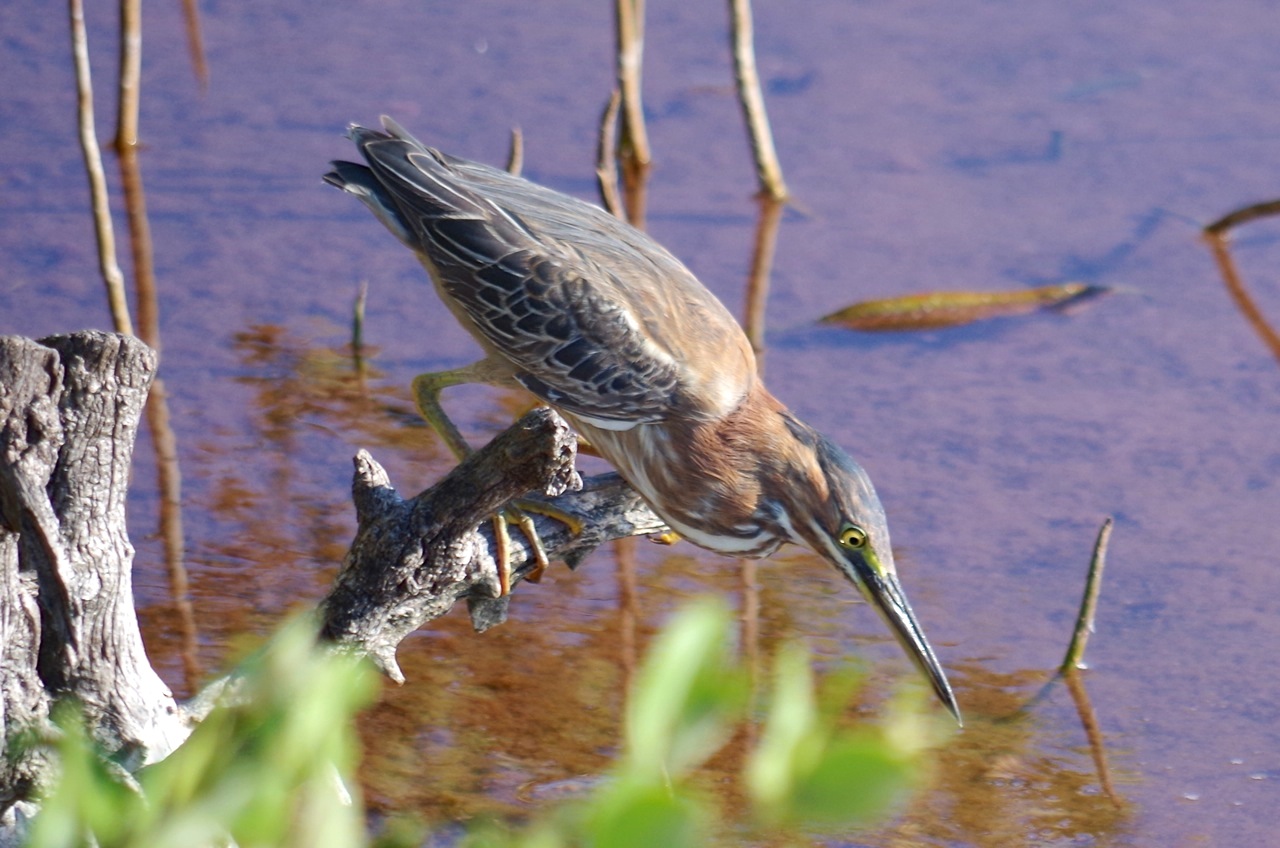
As the prey unwittingly approaches the bird slowly tilts further forward unless its beak almost touches the water, the quicker to strike…Green Heron, Gilpin Point, Abaco (Keith Salvesen)03 Green Heron, Gilpin Point, Abaco (Keith Salvesen)04

The actual strike is so rapid that it is barely possible to see with the naked eye, let alone to photograph it clearly. For me and my little Pentax, anyway. But the end result is rarely in doubt, with a small fish struggling but securely held. It will be down the heron’s gullet in a matter of seconds.Green Heron, Gilpin Point, Abaco (Keith Salvesen)05

I left the heron as it settled slowly back into ‘scanning the water mode’ while I went to look at some Lesser Yellowlegs nearbyGreen Heron, Gilpin Point, Abaco (Keith Salvesen)06

I returned a few minutes later. Scanning was still in progress, and the bird started the gradual ‘leaning forward’ process as it sighted a fishGreen Heron, Gilpin Point, Abaco (Keith Salvesen)08

Get ready to spearfish…Green Heron, Gilpin Point, Abaco (Keith Salvesen)10

Epic success for the heron, epic fail for the photographer…Green Heron, Gilpin Point, Abaco (Keith Salvesen)09

“Ha ha Mr Human with your funny black clicky thing hanging round the thing that attaches your head to your body. I was too quick for you. Who hasn’t got the hang of shutter speed yet? Eh? I win the fish. I win the game…”Green Heron, Gilpin Point, Abaco (Keith Salvesen)11

ROUGH GILPIN CHECKLIST

Species we have found on and around the pond include Black-necked Stilts, Little Blue Heron, Great Blue Heron, Tri-colored Heron, Snowy Egret, Reddish Egret, Yellow-crowned Night Heron, Sora, hordes of White-cheeked Pintails, Northern Pintails, Lesser Yellowlegs, Belted Kingfisher, Turkey Vulture, Smooth-billed Ani, American Kestrel, Bahama Woodstar, Cuban Emerald, Mucovy Duck (pets!)  and – for the first time this year – Green heron. As a bonus, Gilpin has become a regular stop for flocks of Abaco Parrots. Other species found there include American Flamingo, Brown Pelican, DC Cormorants and Limpkin. I’ve no doubt there are shorebirds on the beach such as Wilson’s Plovers, various gulls to be identified, and passing tropicbirds & magnificent frigatebirds high over the water.

VOLUNTARY MUSICAL DIGRESSION

‘The Hunter’ is a well-known Albert King / Stax song from 1967 with elements reminiscent of many blues songs and lyrics before that. The best known versions are probably the one by Free (‘Tons of Sobs’ 1968), which is un-improvable and definitive; and the doff of the cap by Led Zeppelin towards the end of ‘How Many More Times’… However ‘Pacific Gas and Electric’ made a pretty good stab at the song, also in the late ’60s

RELATED POSTS  

SHARP-EYED SHARP BILLED

A FACEFUL OF FISH

All photos RH; Music ‘borrowed’  from a CD into iTunes, converted to MP3 and ‘re-borrowed’ for present non-commercial purposes. And it did say “FREE” on it in large letters…

Unknown's avatar

CARIBBEAN ENDEMIC BIRD FESTIVAL: NASSAU BIRDERS VISIT ABACO

DSC00298_3

CARIBBEAN ENDEMIC BIRD FESTIVAL: NASSAU BIRDERS VISIT ABACO

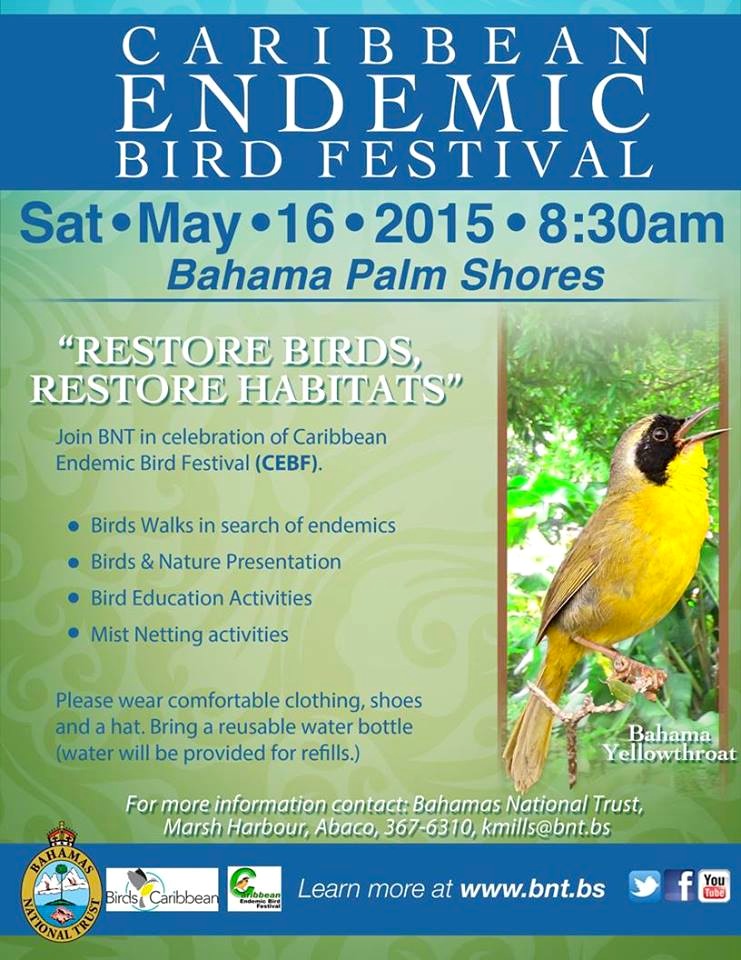
THE CARIBBEAN ENDEMIC BIRD FESTIVAL (CEBF) is a Caribbean-wide festival that aims to heighten awareness for birds generally in the region. It is sponsored by the excellent BIRDS CARIBBEAN organisation – click the link to see what it is all about. Birds, obviously, but from the points of view both of promoting and of preserving the rich avian variety throughout the Caribbean.

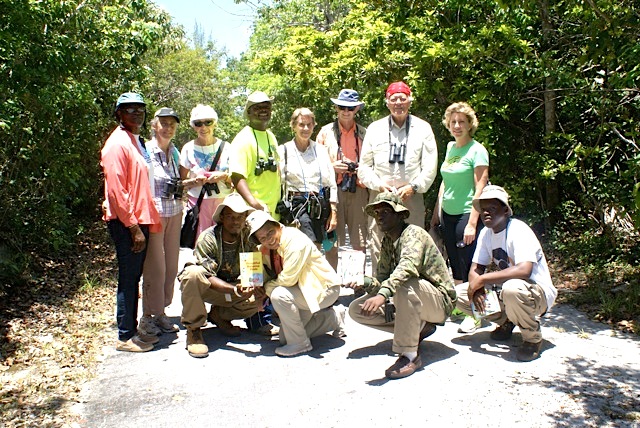
As part of the CEBF celebrations this month, a birding group from New Providence came to Abaco to explore the birdlife. The expedition group included several well-known local bird experts, all the better for locating and identifying species and ensuring a comprehensive checklist could be compiled. Also in the group was photographer Linda Huber, whose photos you will undoubtedly have seen in Bahamas publications, including the recently published small guide BEAUTIFUL BAHAMA BIRDS (click to see my review and further details – highly recommended for any birder from novice up). Here are a few of Linda’s photos of some of the birds seen during the expedition, a gallery that shows the extraordinary diversity of species to found in a short time on Abaco.

Apologies to those who received a ‘false start’ draft of this post. It was lunchtime, I was hungry, I pressed ‘Save Draft’… or thought I had. Why is the ‘Publish’ button so close? Oh. Right. I see. It’s not its fault, it’s mine…

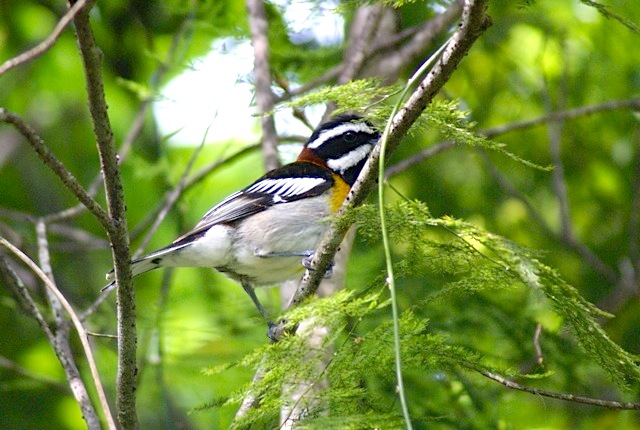
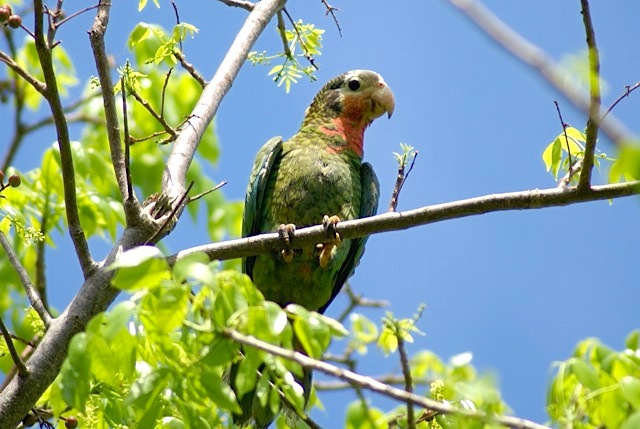
Western Spindalis Spindalis zena             Abaco Parrot Amazona leucocephala bahamensis                       DSC00210_2  DSC00216_2

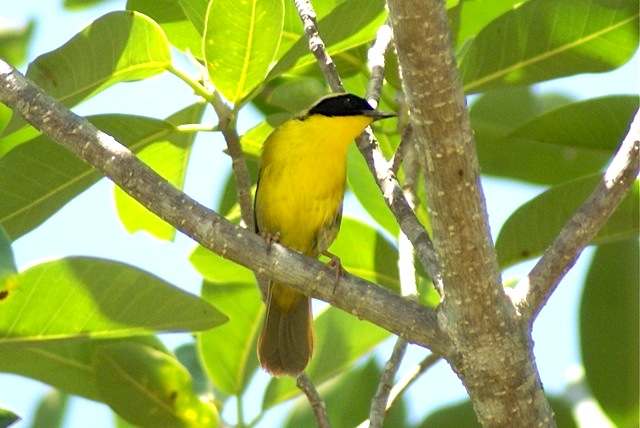
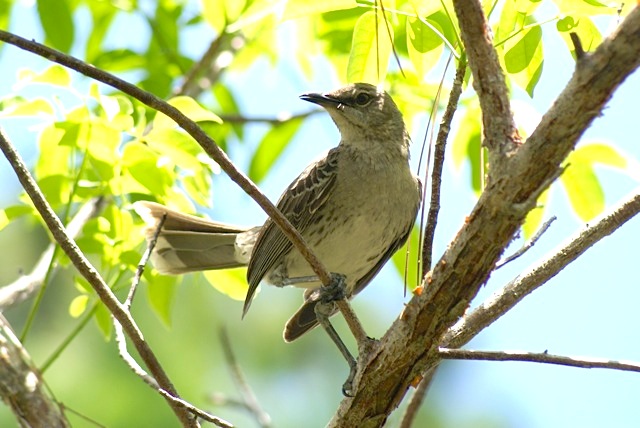
Bahama Yellowthroat Geothlypis rostrata                   Bahama Mockingbird Mimus gundlachiiDSC00298_3 DSC00317_2

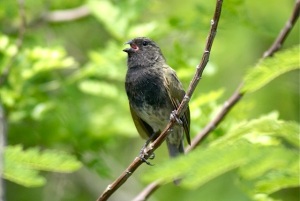
Bahama Warbler Setophaga flavescens                         Black-faced Grassquit Tiaris bicolorDSC00356_3 DSC00381_3

                                                        Yellow Warbler Dendroica petechia                                                                DSC00371_2 DSC00378_2

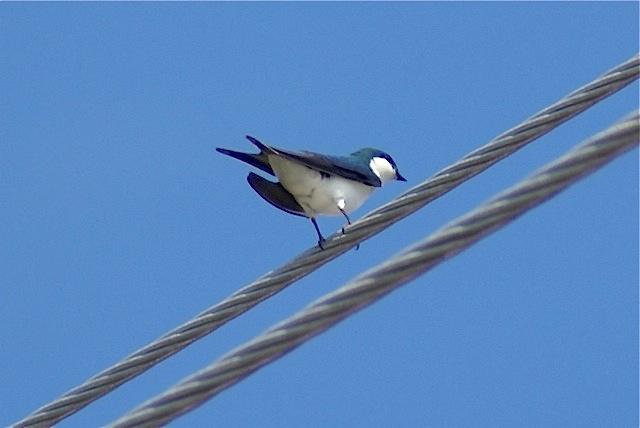
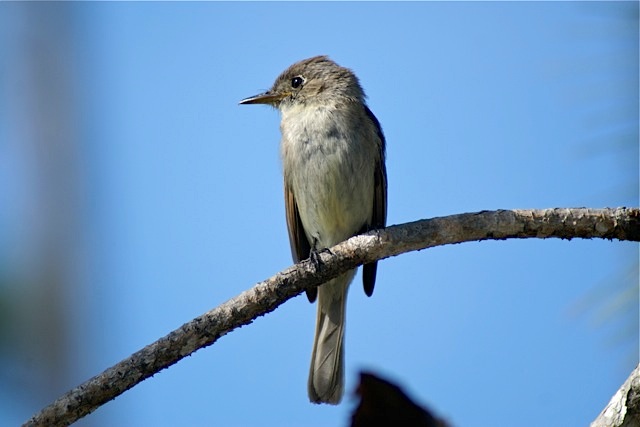
Bahama Swallow Tachycineta cyaneoviridis              Cuban Pewee Contopus caribaeus bahamensis  DSC00399_3 DSC00413_2

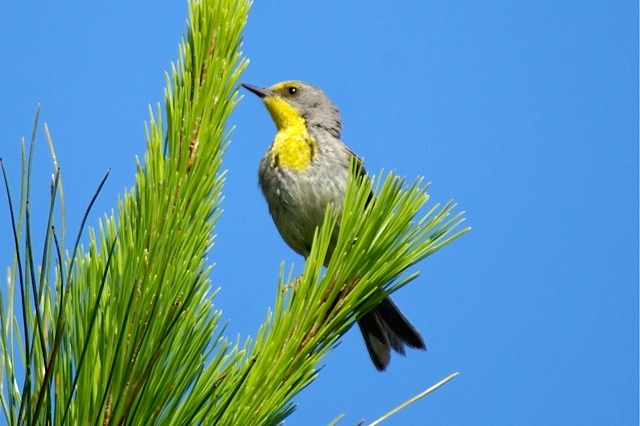
Olive-capped Warbler Dendroica pityophila            Pearly-eyed Thrasher Margarops fuscatusDSC00422_2 DSC00501_3

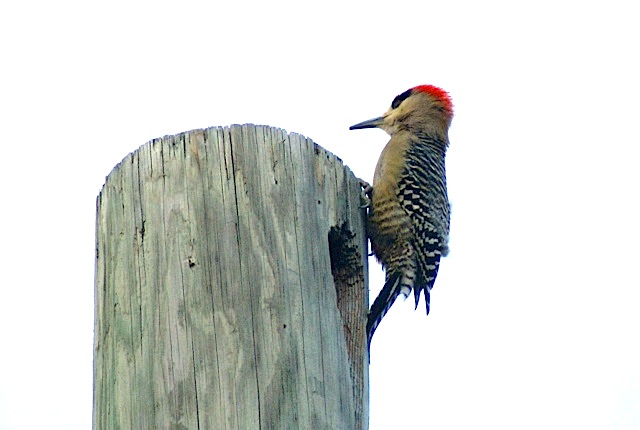
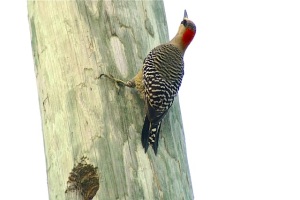
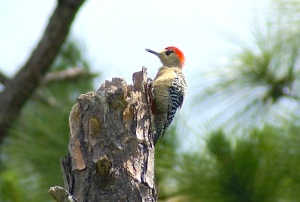
                              West Indian Woodpecker Melanerpes superciliaris                                             DSC00475_2  DSC00278_3

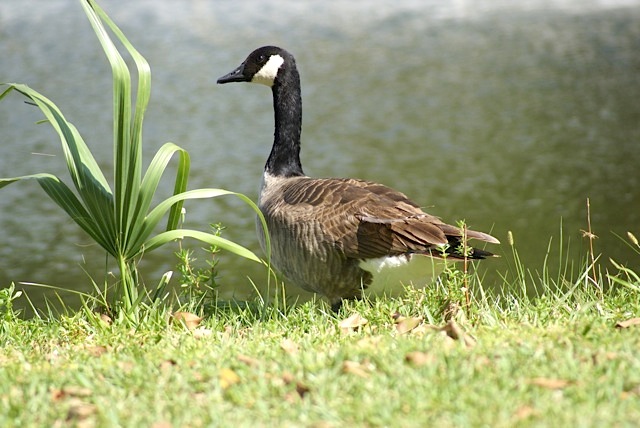
                                                      Canada Goose Branta canadensis                                                                             DSC00566 DSC00642_2

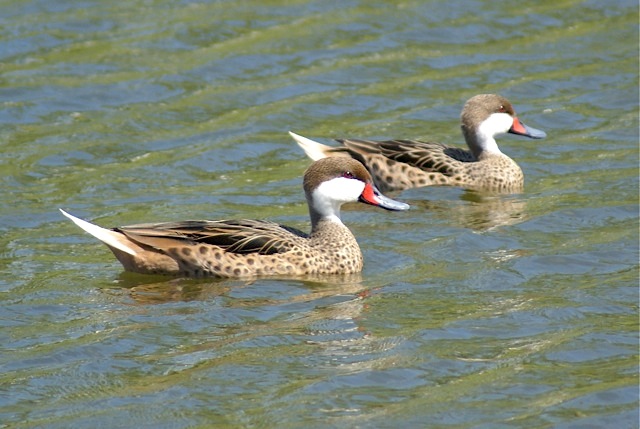
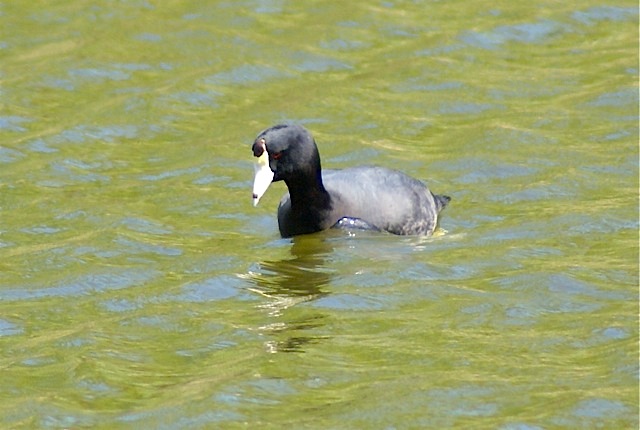
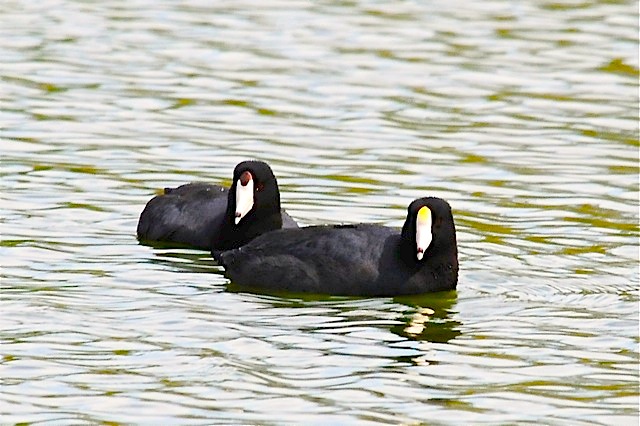
White-cheeked Pintails Anas bahamensis                   Caribbean Coot Fulica caribaea     DSC00612_2 DSC00627_3

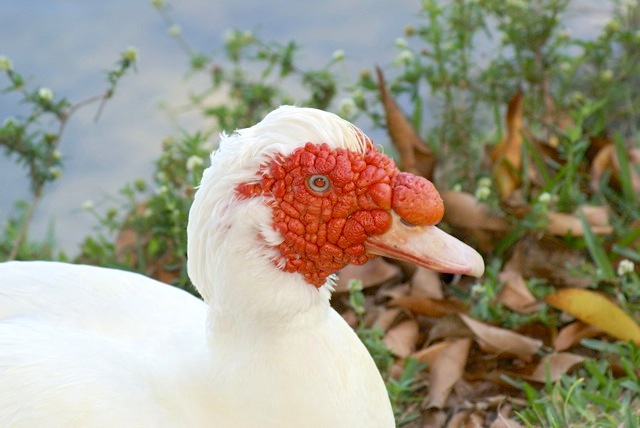
Muscovy Duck Cairina moschata                                   European Starling Sturnus vulgaris        DSC00639_2  DSC00524_2

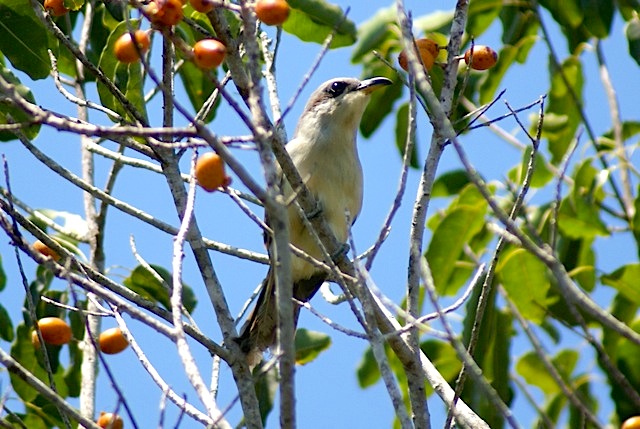
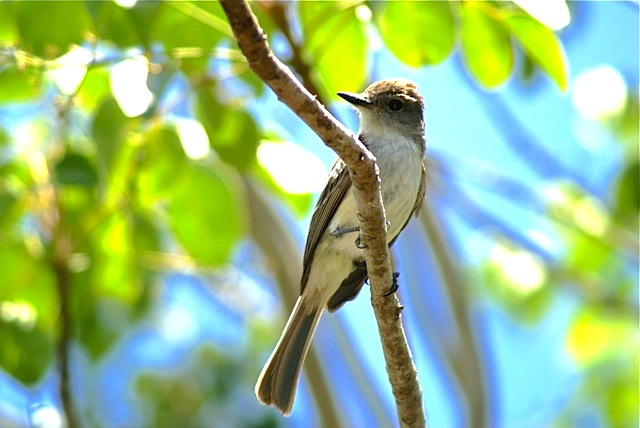
Mangrove Cuckoo Coccyzus minor                    La Sagra’s Flycatcher Myiarchus sagrae lucaysiensisDSC00675_2 DSC00694_2_2

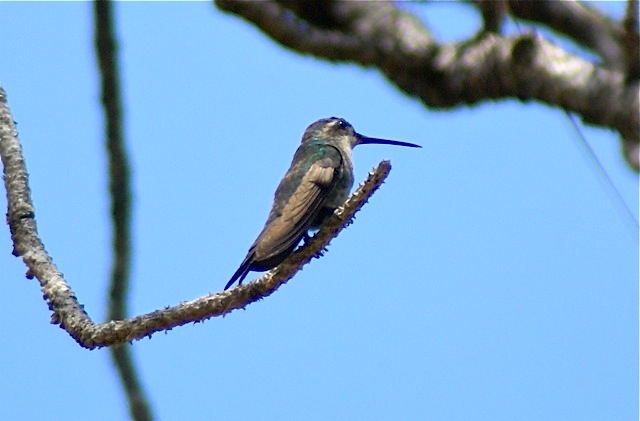
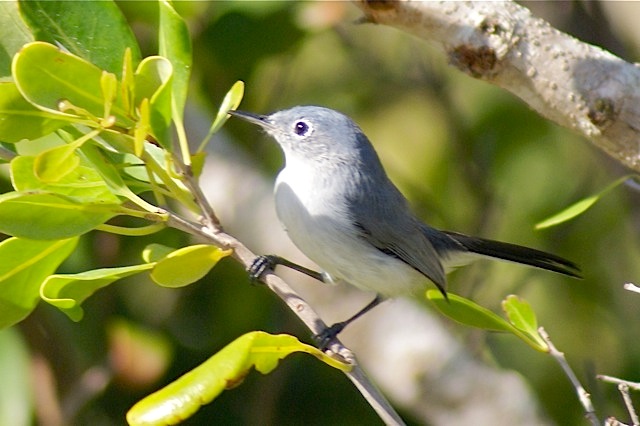
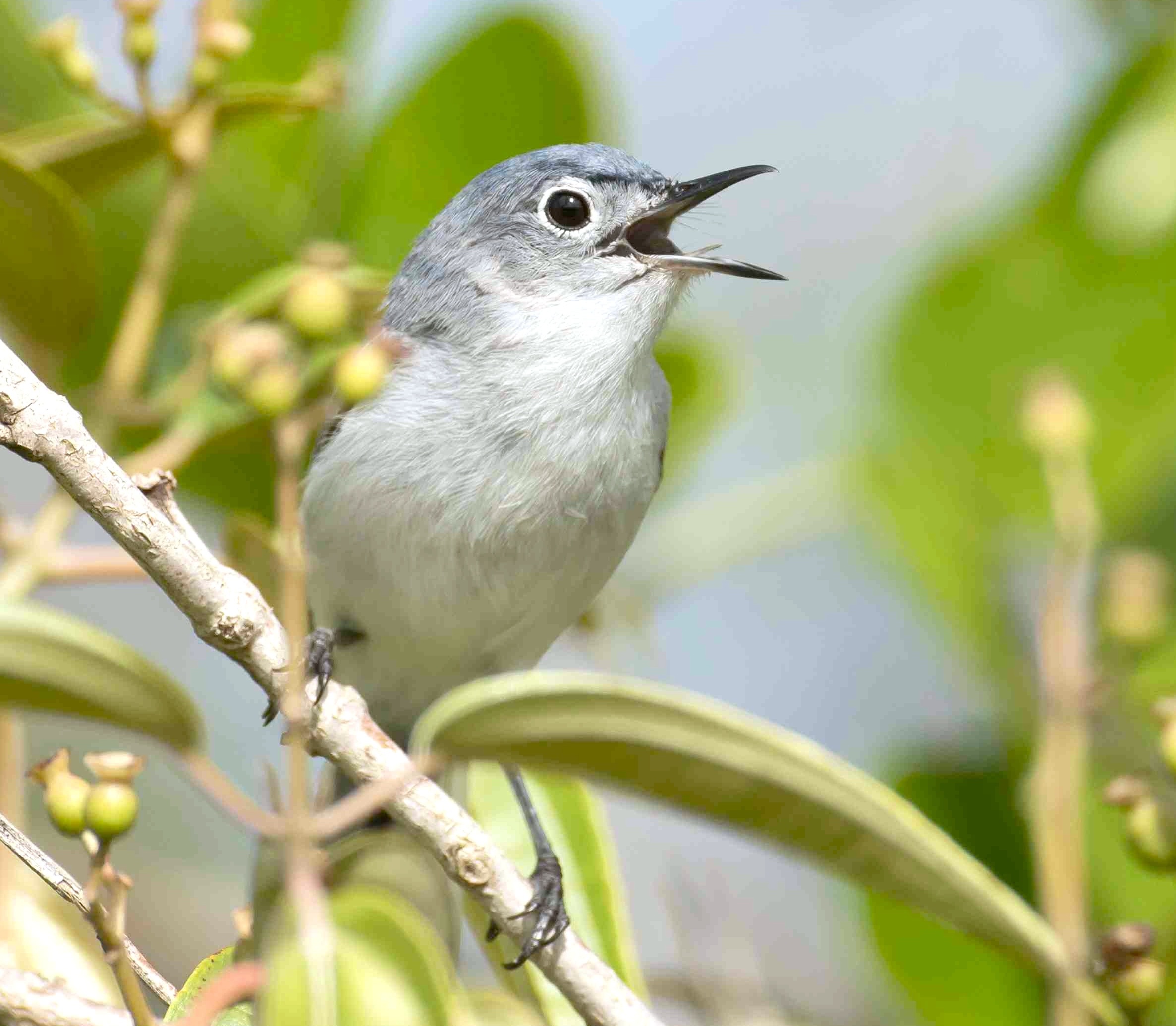
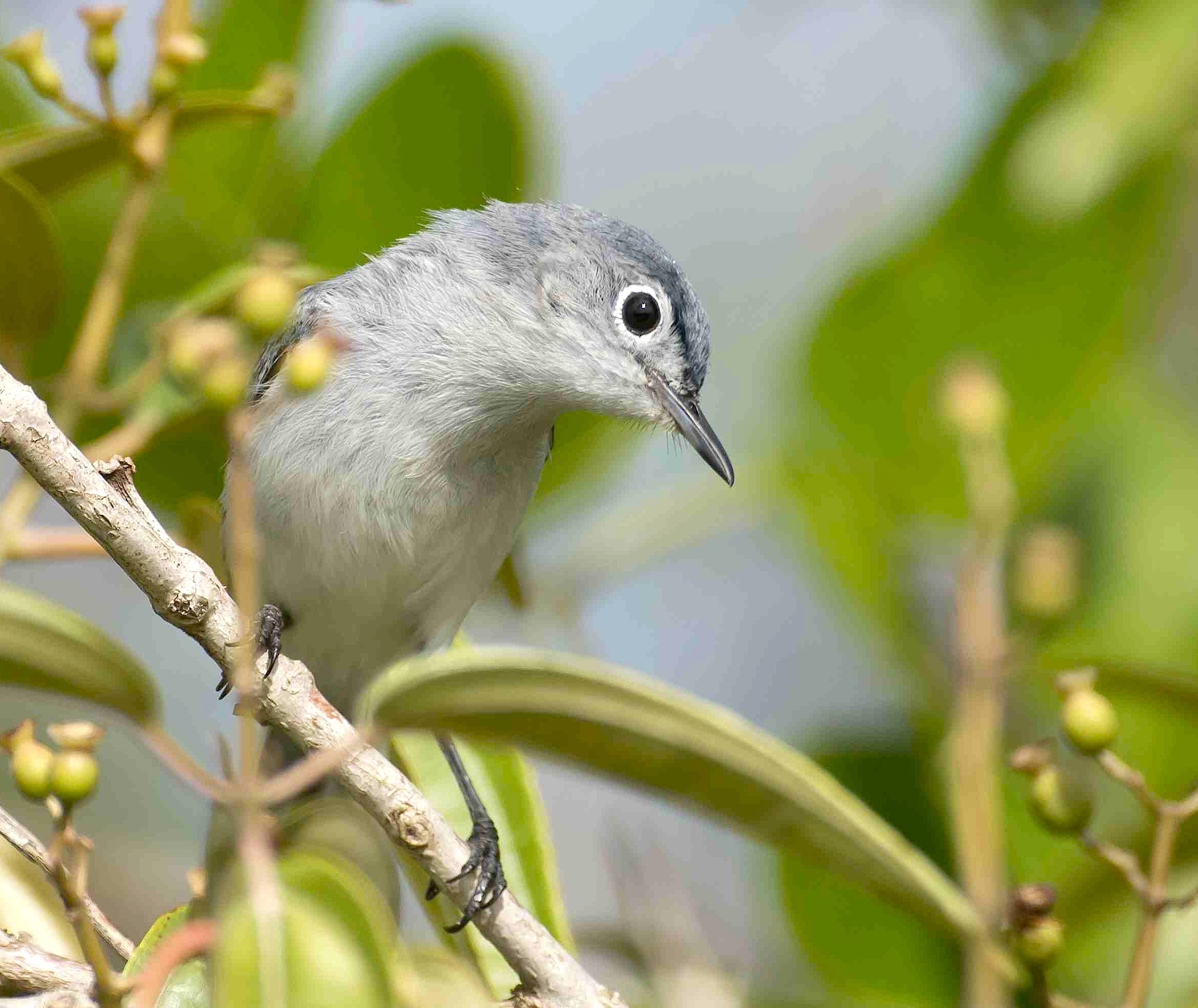
Cuban Emerald Chlorostilbon ricordii                        Blue-gray Gnatcatcher Polioptila caerulea DSC00721_2 DSC09484_2

The gallery above includes a number of specialist birds and others of particular interest. In brief:

  • 3 of the 4 ENDEMIC SPECIES found on Abaco (omitting only the Bahama Woodstar)
  • The famous, incomparable and indeed unique ground-nesting ABACO PARROT
  • 4 ‘local’ subspecies of birds also found beyond the Bahamas
  • 1 of only 5 resident warblers, the Olive-capped (of 37 recorded for Abaco)
  • The most recent addition to the birds recorded for Abaco PEARLY-EYED THRASHER
  • The WEST-INDIAN WOODPECKER, now found only on Abaco and (rarely) San Salvador
  • 2 or 3 introduced or domestic species (if that Muscovy Duck was at Gilpin Point it’s a pet!)
  • The debatable ‘Caribbean Coot’, about which it has been written**  The American Coot is familiar to all, but controversy surrounds the Caribbean Coot with its all-white frontal shield. Some authorities say it is a separate species; others say it is a true subspecies of the American Coot; some claim it is simply a local variant. Bond (1947) treats them as distinct species. The image below shows the two species together. They coexist contentedly and are indifferent to the debate.

American & 'Caribbean' Coot (Tony Hepburn)

The group on a Logging Track in the Abaco National ParkDSC00349

The New Providence Birding Group Expedition to AbacoDSC00706_3

 Caribbean Endemic Bird Festival Flyer

CREDITS All photos Linda Huber (with many thanks for use permission) except the pair of coots (Tony Hepburn) and the singing Bahama Yellowthroat in the BNT Flyer (Bruce Hallett)

** Keith Salvesen, The Birds of Abaco p22

Unknown's avatar

“STRIKE THE POSE”: BLUE-GRAY GNATCATCHERS ON ABACO

Blue-Gray Gnatcatcher, Treasure Cay, Abaco (Becky Marvil)

“STRIKE THE POSE”: BLUE-GRAY GNATCATCHERS ON ABACO

I’ve featured these little birds before, including a few I took a couple of months back. For reasons to do with a current project I have been revisiting some of my archive folders of Abaco birds. Most are carefully and correctly labelled, which in most cases is easy – ‘Abaco Parrots’; ‘W Spindalis’; B/quits’ etc. Some have more fancy shortcut names that I’m just getting into – ‘PIPL’; ‘BAWA’; ‘WESA’ and so on. And some are crammed into generic folders like ‘Shorebirds Misc’, ‘Gulls Terns Whatever’ or ‘Warblers???’ pending further attention (if ever).

Blue-Gray Gnatcatcher, Treasure Cay, Abaco (Becky Marvil)Blue-Gray Gnatcatcher, Treasure Cay, Abaco (Becky Marvil)

The BGGs I have previously shown have all been photographed on South Abaco. Several of the photos here were taken in and around the Treasure Cay area by Becky Marvil, one of the photographic contributors to THE BIRDS OF ABACO. It’s good to remember that although South Abaco provides the best birding, there are other parts of the island, and some Cays such as Man-o-War, where the birding is also very good.

Blue-Gray Gnatcatcher, Treasure Cay, Abaco (Becky Marvil)Blue-gray Gnatcatcher, Treasure Cay Abaco (Becky Marvil)

BGGs are well-known for their irreziztbz little ways – coming to check you out if you pish, click or whistle softly in thick coppice; posing daintily for the camera; and maybe even preceding or following you down a track in a companionable way. They may be small, but they always a welcome sight and they make for a very attractive bird gallery.

Blue-gray Gnatcatcher, Abaco Bahamas (Tom Sheley) aBlue-gray Gnatcatcher preening, Abaco Bahamas (Tom Sheley) bBlue-gray Gnatcatcher, Abaco Bahamas (Tom Sheley) c

Blue-gray Gnatcatcher, Abaco (Charles Skinner)Blue-gray Gnatcatcher, Abaco (Charles Skinner)

Credits: Becky Marvil (1,2,3,4,5), Tom Sheley (6,7,8), Charlie Skinner (9,10), Bruce Hallett (11)Blue-gray Gnatcatcher, Abaco (Bruce Hallett)

Unknown's avatar

YELLOW WARBLERS ON ABACO

Yellow Warbler at sunrise. Abaco Bahamas.6.13.Tom Sheley copy

YELLOW WARBLERS ON ABACO

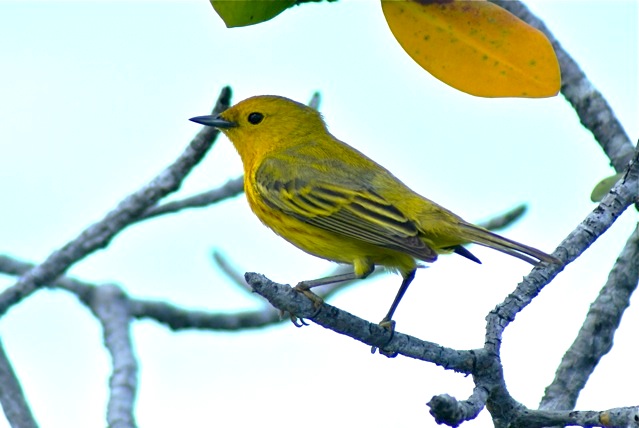
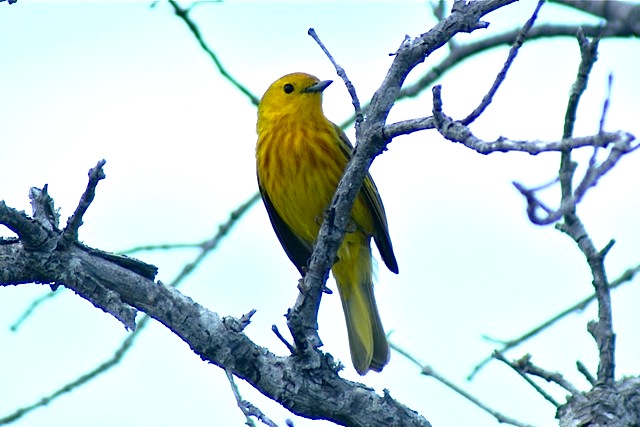
Of the 37 WARBLER SPECIES recorded for Abaco, 25 are mainly or partly yellow. So talk of a ‘yellow warbler’ can as easily be a general description matching any one of a number of species, as a particular description of the one and only Yellow Warbler Setophaga petechia. This small sunny bird is a common permanent resident on Abaco, one of only 5 resident warblers. The other 4 don’t help the situation much, by dint of all being yellow to a greater or lesser extent. 

Yellow Warbler male3.Abaco Bahamas.6.13.Tom SheleyDendroica-petechia-001 (MDF)

My general rule of thumb is that the Yellow Warbler out-yellows all the rest (though the winter-resident PROTHONOTARY gives it a run for its money), with the adult males bright and cheerful all over and the females rather less glaring but still demonstrably yellow from beak to tail tip.

Yellow Warbler (f) Bruce Hallett

Q. ARE THEY ALWAYS EASY TO SEE? A. SEE BELOW, GO FIGUREYellow Warbler male.Cherokee Sound.Abaco Bahamas.Tom Sheley

Q. CAN YOU SHOW MORE PRETTY FEMALES? A. BY ALL MEANSYEWA_Bahamas-Great Abaco_5204_Yellow Warbler_Gerlinde Taurer copyYEWA 2_Bahamas-Great Abaco_5165_Yellow Warbler_Gerlinde Taurer copy

Q. SO YEWAs ARE COMMON? HAVE YOU EVER PHOTOGRAPHED ONE? A. ONLY HOPELESSLYYellow Warbler, Abaco (Keith Salvesen)

Q. DO THEY HAVE AN ATTITUDE PROBLEM? A. ONLY VERY RARELYYellow Warbler male2.Abaco Bahamas.6.13.Tom Sheley

A THREAT TO THE SPECIES Shiny Cowbirds, luckily still rare on Abaco, favour yellow warbler nests for their parasitic egg-laying, with sadly predictable results. These cowbirds properly belong in South America, but they are gradually spreading north through the Caribbean, and have now reached Florida. I’m beginning to take a (purely personal) hard line on invasive species where they diminish and destroy indigenous species: eradication. The feral peacocks of Casuarina, now several generations down the line from their original introduction as exotic pets, do no harm and are undeniably decorative. But would you prefer the pretty yellow warbler and its fledglings in your garden, or the shiny cowbird that displaced them?

240px-Dendroica_petechia_map.svg

Credits: Tom Sheley (1,2,5,9); MDF (3)Bruce Hallett (4); Gerlinde Taurer (6,7); RH (8)

And finally… the song that out-yellows all other songs with the word ‘yellow’ in the title – it is the only song called just that one word! 

    Yellow Warbler at sunrise.Abaco Bahamas.6.13.Tom Sheley copy copy                Yellow Warbler at sunrise.Abaco Bahamas.6.13.Tom Sheley copy copy                Yellow Warbler at sunrise.Abaco Bahamas.6.13.Tom Sheley copy copy                Yellow Warbler at sunrise.Abaco Bahamas.6.13.Tom Sheley copy copy                Yellow Warbler at sunrise.Abaco Bahamas.6.13.Tom Sheley copy copy

Unknown's avatar

ENDANGERED SPECIES DAY: ONE LITTLE REASON WHY IT MATTERS…

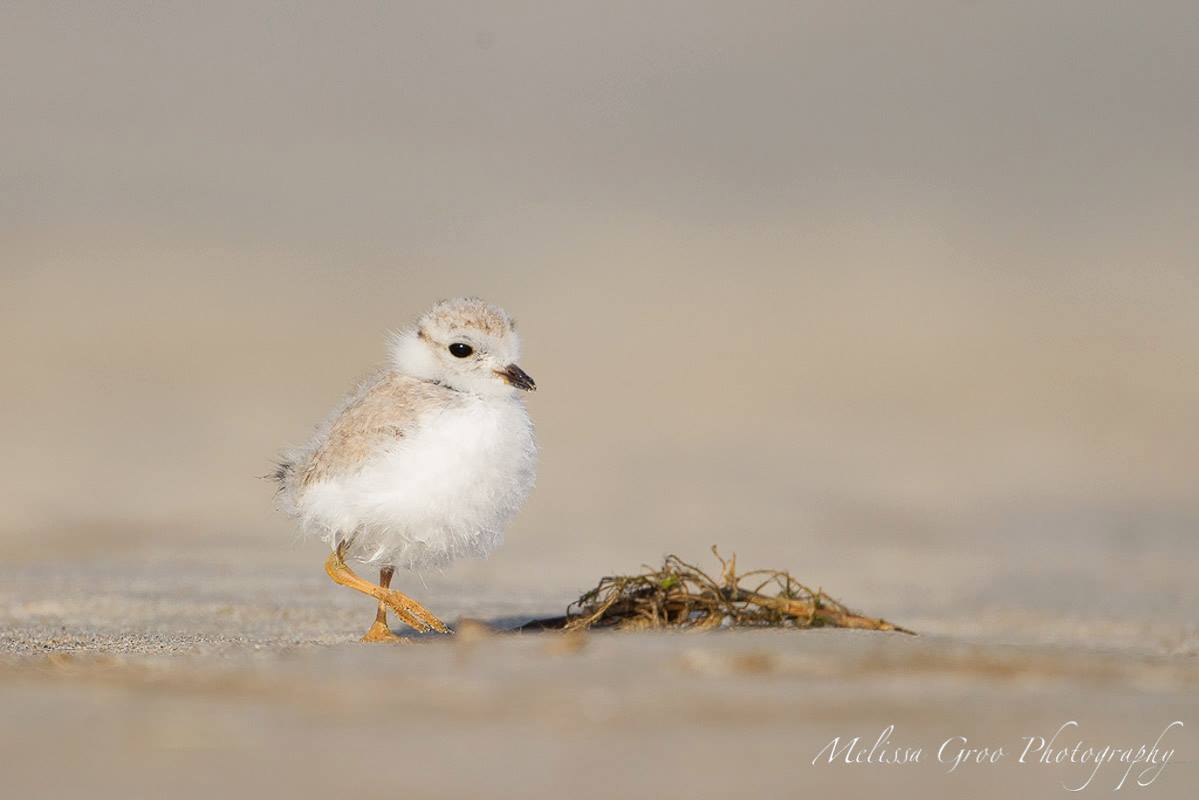
Piping Plover Chick ©Melissa Groo PhotographyI had been going to post a selection of bird photos to mark Endangered Species Day today. I’d begun to plan the details – the birds to use, the captions for each and so on. Then I saw one photograph that is so charming and yet so poignant that I realised that adding further images would be superfluous. This tiny piping plover chick is a potent symbol of the vulnerability of all threatened species.

This shot was taken by award-winning and renowned wildlife photographer Melissa Groo. If you want to see the most wonderful and varied wildlife photography that you could ever imagine, please go to Melissa’s website and prepare to be amazed. You will find it HERE

I have posted several times about the endangered piping plovers, many of which overwinter in the northern Bahamas generally, Abaco particularly, and the Delphi Club beach specifically. There are believed to be fewer than 8000 individual birds on earth, and their little world of the shoreline is threatened at both ends of their migration, as well as at their rest ‘stopovers’ en route in either direction. Conservation programs at each end of the range are proving effective at preserving the plovers’ habitat, and the population does seem to have increased slightly. Each chick protected represents a small triumph for conservation.

10929252_1074153812594711_7941388760872191799_n

RELATED POSTS

RARE GEMS

50 WAYS TO PLEASE YOUR PLOVER

PLOVER LOVER?

Photo credit: Melissa Groo, with thanks for the inspiration! “Less is more…”; Conserve Wildlife Foundation of NJ for their partnership conservation work with PIPL on Abaco and in the Bahamas; the originator – ?Great Lakes Piping Plover Project –  of the neat small logo…

10626583_10153152260167977_7640847114631960629_n

Unknown's avatar

BAHAMAS WHALES & DOLPHINS IN ABACO & ANDROS WATERS

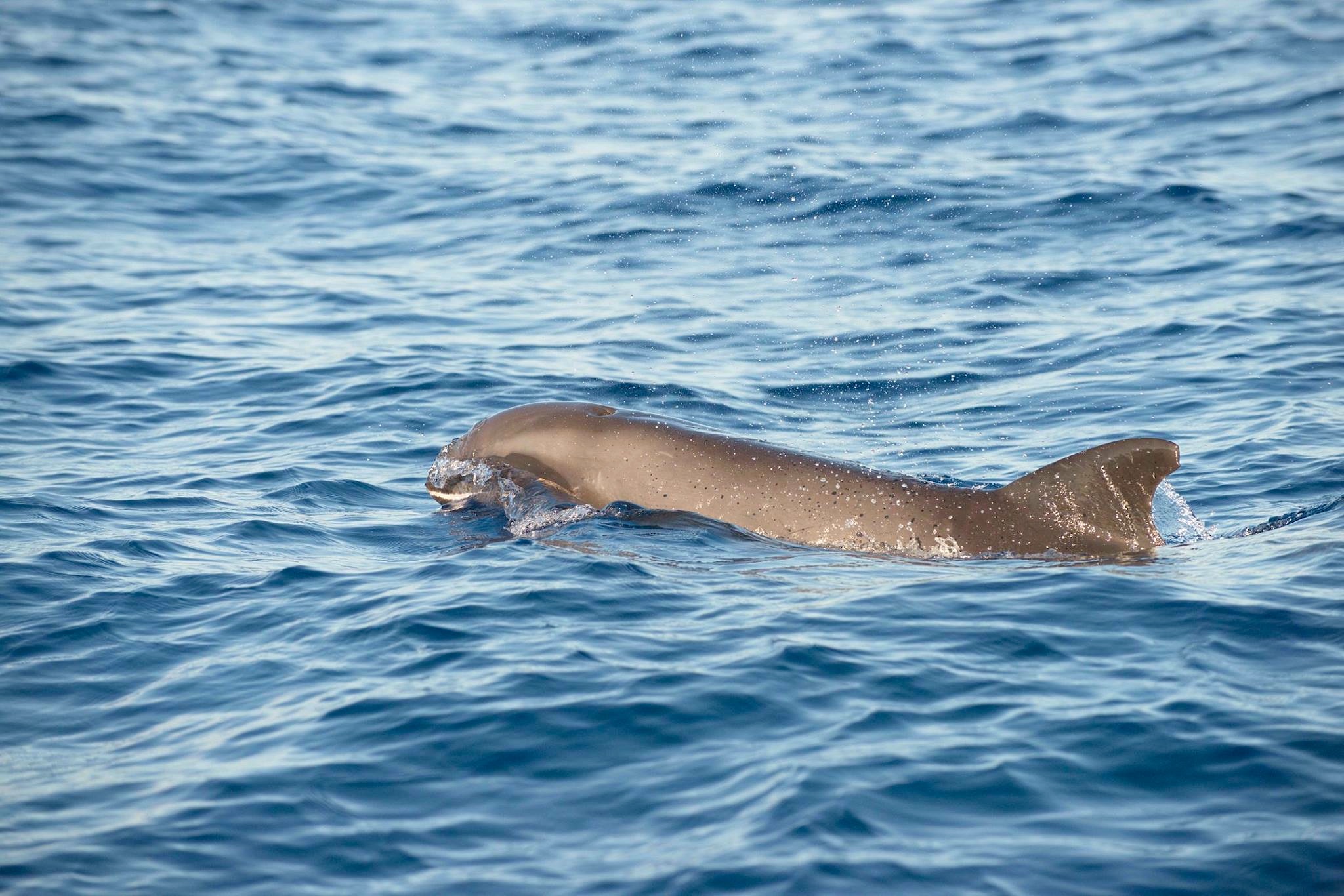
Melon-headed Whale breaching - BMMRO copy

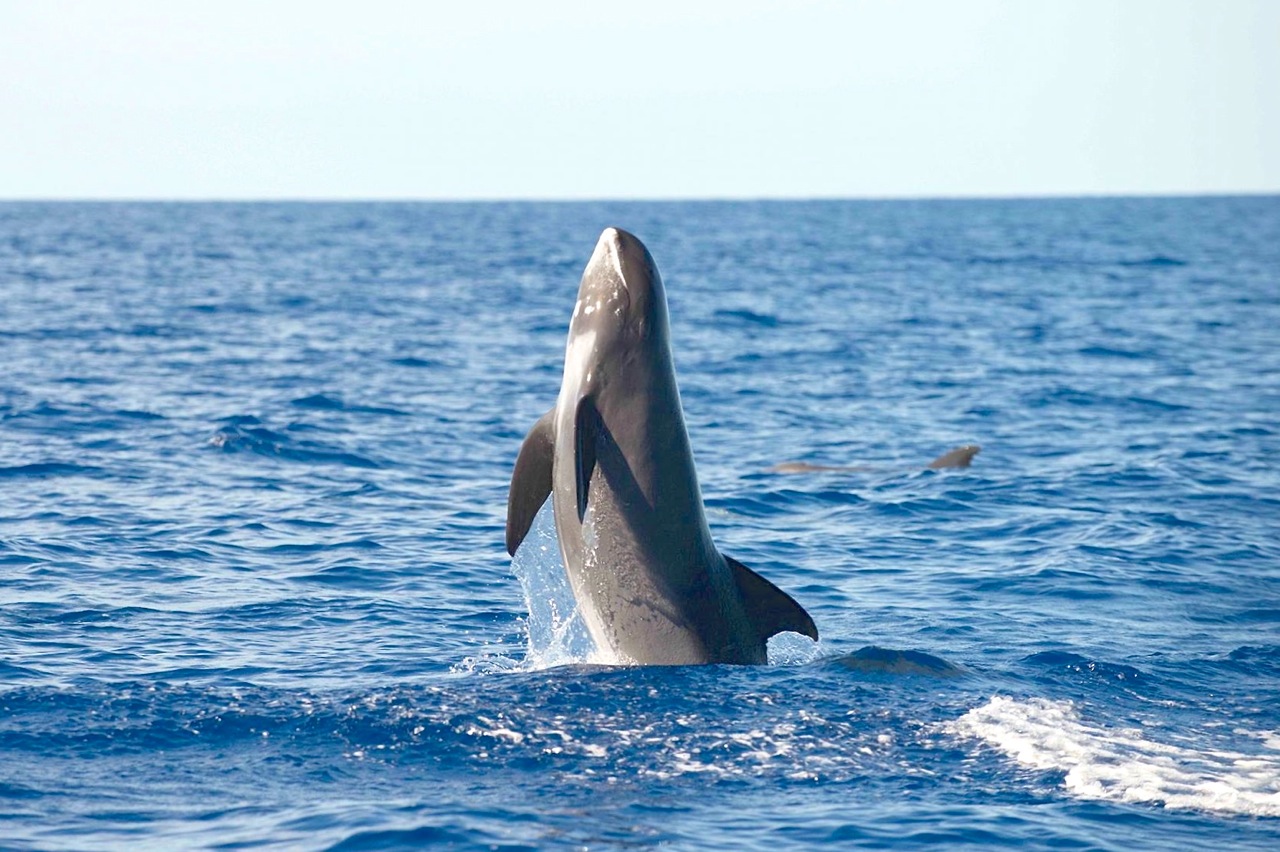
Melon-headed Whale breaching – BMMRO

BAHAMAS WHALES & DOLPHINS IN ABACO & ANDROS WATERS

The Bahamas Marine Mammal Research Organisation (BMMRO)  has its HQ at Sandy Point, Abaco. We recently went out in their research boat, a RHIB, to spend an unforgettable day with Blainville’s beaked whales and bottlenose dolphins. I posted some of the dolphins HERE; and a two-part beaked whale post is a work in progress.

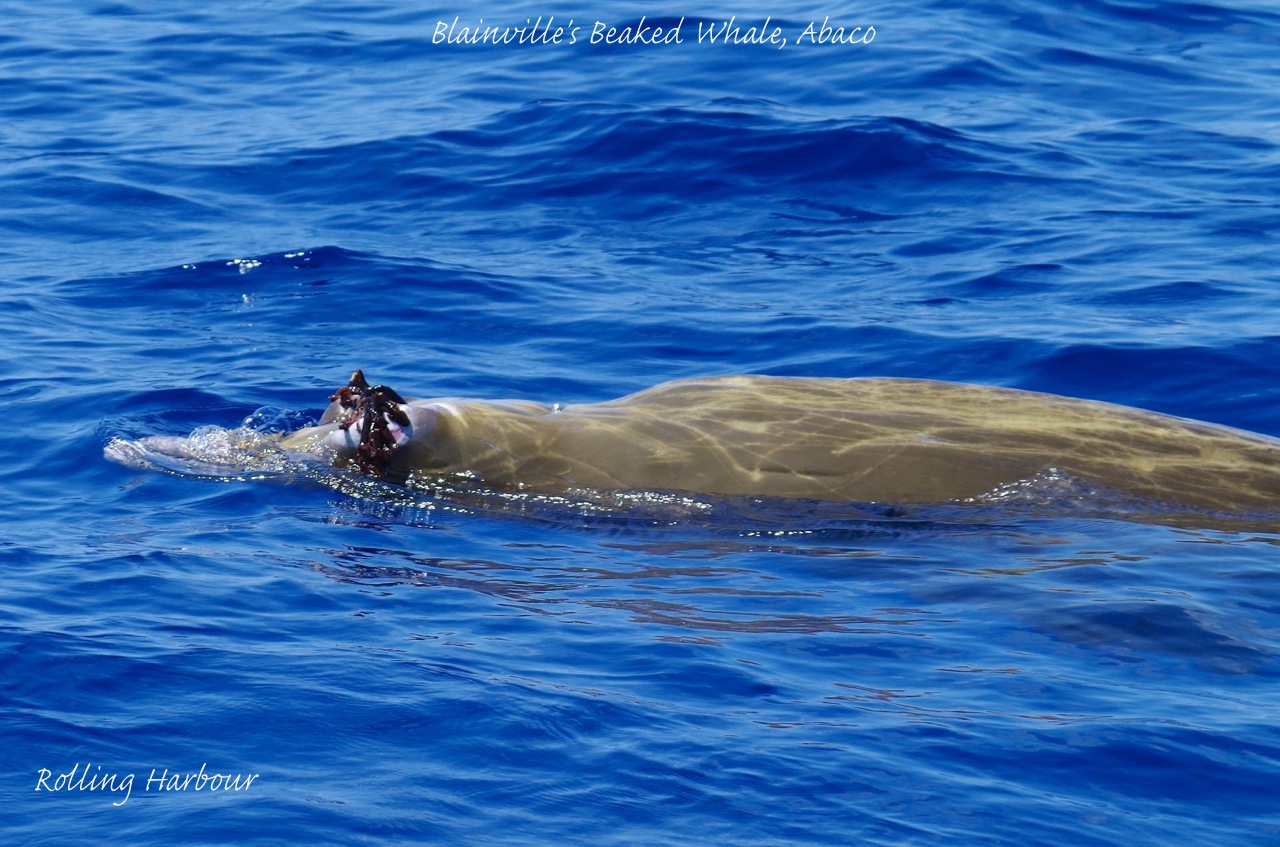
Male Blainville’s beaked whale with its extraordinary barnacle-encrusted teeth that protrude upwards from its lower jaw. The prominent beak is plainly visible. Sighted off the south-west point of Abaco during our second encounter with a group of these whales – the only male we saw that dayBlainville's Beaked Whale KS 1

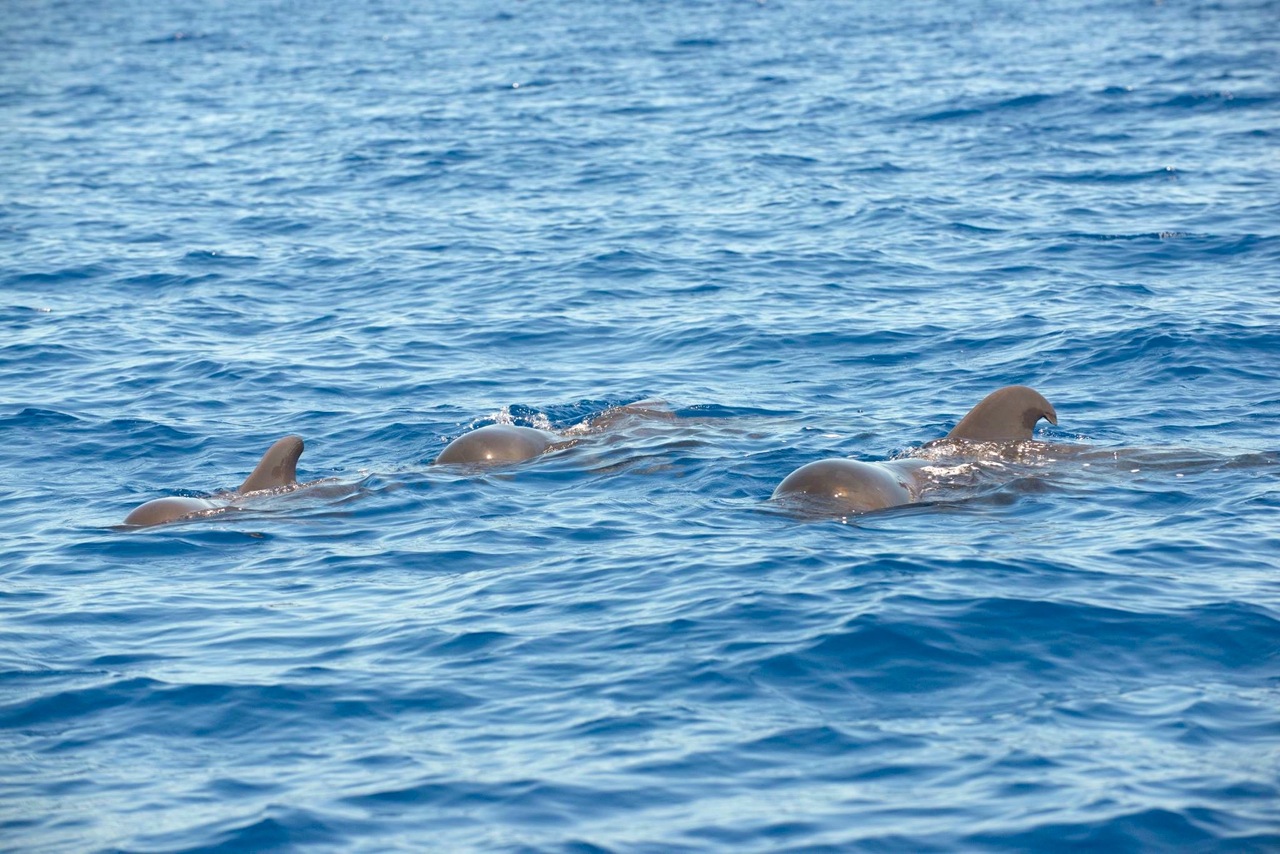
Abaco waters are ideal for marine mammals, especially off the southern shores where the walls of the Great Bahama Canyon drop vertiginously down from the shallow coastal waters to depths of up to 3 miles below. This is one of the deepest ocean canyons in the world.  The area provides a rich source of food and nutrients for the whales and dolphins and many different species are regularly sighted there, from huge sperm whales to small pilot whales (including plenty of species I had never heard of before). 

Great Bahama Canyon Map edit

As the name suggests, the BMMRO’s remit extends far beyond Abaco. The researchers often spend time exploring and recording cetaceans in other Bahamian waters. For the last few weeks the team have been off Andros and have encountered quite a few target species. I have included a selection below taken within the last month to illustrate the importance of the area for a remarkable assortment of wonderful whales and dolphins.

BLAINVILLE’S BEAKED WHALEBlainville's Beaked Whale copy

DWARF SPERM WHALESDwarf Sperm Whales - BMMRO copy

PANTROPICAL SPOTTED DOLPHINSPantropical Spotted Dolphin - BMMRO Pantropical Spotted Dolphin leap - BMMRO copy

On board the research vessel, every sighting is recorded in detail – where possible by species, numbers, ages, sexes, and individual identifying characteristics. Thus ‘SW34’ may have a damaged fluke, whereas ‘RD49’ may have a long scar on its back. 

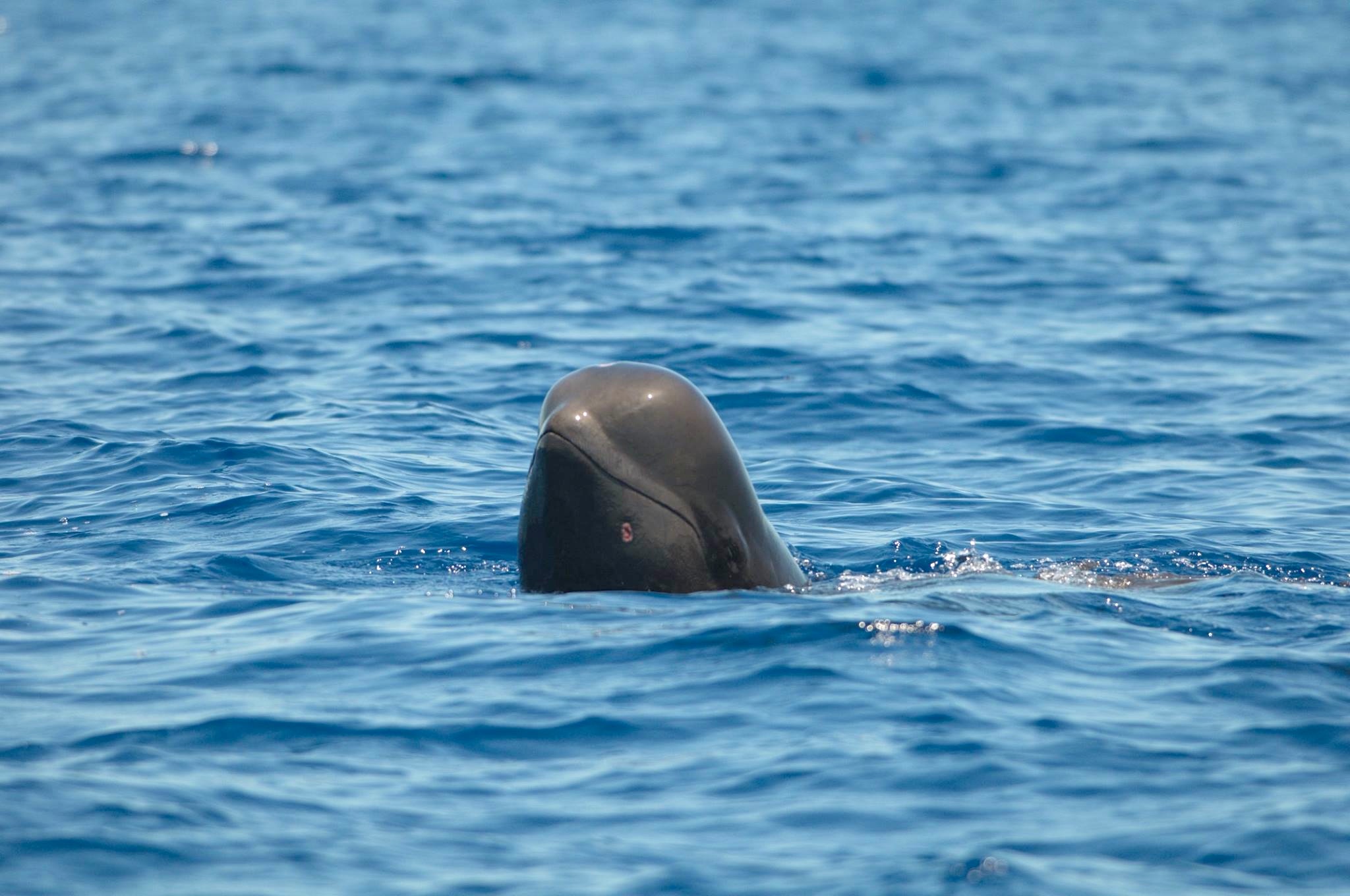
PILOT WHALESPilot Whale - BMMROPilot Whales - BMMRO copyPilot Whales 2 - BMMRO

The research boat is equipped with sound devices which, when the microphone is immersed, are capable of picking up whale or dolphin sounds from a considerable distance. It’s astounding to be able to listen in ‘live’ to the wide assortment of clicks and whistles produced as the creatures communicate with each other. The recorded sound patterns are studied and can often be matched to enable an individual animal to be identified. 

MELON-HEADED WHALESMelon-headed Whales - BMMRO Melon-headed Whale - BMMRO

RISSO’S DOLPHINRisso's Dolphin - BMMRO copy

Other work, including photography, is done underwater. Perhaps the most intriguing aspect is the collection of poop specimens, from which a great deal can be ascertained about the diet and health of an individual animal. I wrote about this task and the methods used a while ago inFAMILIAR FECES‘.

I’ll be writing more about whales soon. Meanwhile, here’s a short BMMRO video of a large group of melon-headed males. At the start, you can clearly hear communication sounds between them.

Credits: Charlotte & Diane of the BMMRO for taking us out with them and for all the photos except the male Blainville’s beaked whale (mine, for once!)

Unknown's avatar

BRITTLE STARS: PRIMITIVE YET INCREDIBLY COMPLEX STARFISH

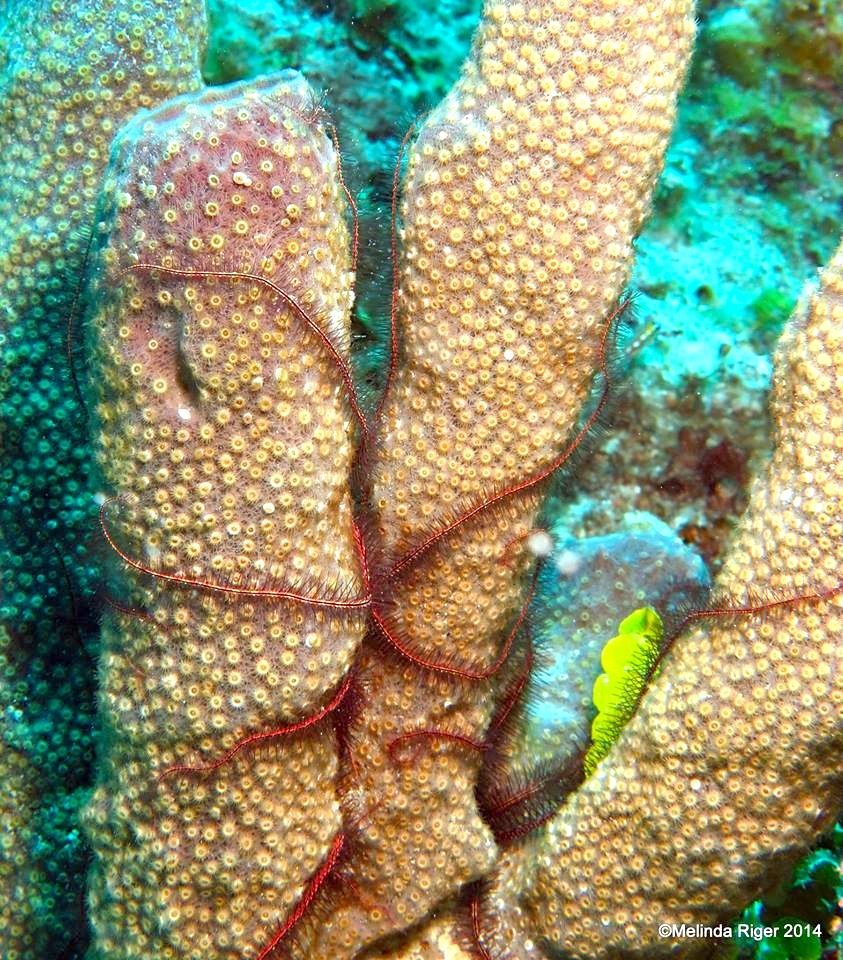
Brittle Star around a Tube Sponge ©Melinda Riger @ GB Scuba

BRITTLE STARS: PRIMITIVE YET INCREDIBLY COMPLEX STARFISH

BRITTLE STARS are closely related to starfish, and in particular to Basket Stars. They are commonly known as “serpent stars”, having 5 long, thin arms that may grow as long as 2 feet long. There are lots of different types of brittle star – at least 2000 – and they are found in every ocean on earth from the poles to the tropics. In Bahamian waters they a commonly found living on reefs.

Although these creatures look primitive, their structure, nervous systems, respiratory systems, digestive systems, sex lives and transportation methods are incredibly complex. Take it from me – I’ve just read about it all. So I’ve decided to pick a few aspects of these creatures to highlight rather than discuss the minutiae of their ossicles (tiny bones), madroporites (a sort of water filter / pressure balancer) and viscera.

You are most likely to see Brittle Stars clinging to coral or spongesSponge & Brittle Star ©Melinda Riger @GB Scuba

A DOZEN BRITTLE STAR FACTS TO PLAY WITH

  • The star has no eyes and no sense organs as we know them, but can detect light chemically; and (why would they need this?) sense smell through their ‘feet’… [Not a superpower I would prize, but still]
  • The mouth is on the underside of the central disc (‘body’) of 5 segments, each with a toothed jaw
  • The mouth is used both for ingestion and, putting it delicately, egestion. [Nor that superpower]
  • Stars eat tiny organisms suspended in the water or mini-worms, gathering them with their arms
  • If I have understood this, they breathe through their armpits, and can excrete from here also
  • The arms fit the main part with ball and socket joints, and are flexible in all directions
  • The genitals seem to be located in or between the armpits (lucky we are not descended from stars)
  • Stars readily regenerate lost arms until they lose the 5th – then they are in real trouble
  • This enables them to shed an arm in a predator attack, like a lizard its tail
  • Trials indicate that a jettisoned arm cannot regenerate from itself
  • They use only 4 arms to move along, with the fifth ‘steering’ out in front or trailing behind
  • Brittle Stars are inedible but non-toxic

Brittle Star on Green Rope Sponge ©Melinda Riger @ GB Scuba

Often, brittle stars will cling on inside a spongeBrittle Stars in sponge ©Melinda Riger @ GB Scuba

I quite liked this infographic from a source new to me, ‘Weird ‘n’ Wild Creatures Wikia’Brittle_Stars_front

Here is a great video from Neptune Canada of a brittle star fight on the ocean floor over the remains of a shrimp. If you watch the ones joining the fight, you will clearly see the locomotion method described above, with one limb pathfinding and the other four ‘walking’.

I’m not renowned for extreme sensitivity, so I feel no shame in showing mating brittle stars, courtesy of Channel Banks. It’s not exactly Lady Chatterley and Mellors, but the entwined arms are rather romantic, no?

Credits: all wonderful photos by Melinda Riger of Grand Bahama Scuba; BS infographic and viddys as credited

Unknown's avatar

PIONEER NATURALISTS & ABACO BIRDS: POTTED BIOGRAPHIES

Wilson's Plover, Abaco (Craig Nash)

Wilson’s Plover, Abaco (Craig Nash)

PIONEER NATURALISTS & ABACO BIRDS: POTTED BIOGRAPHIES

Who were all the people – all men, I’m afraid – who are immortalised in the names of birds they first discovered or recorded or collected specimens of or wrote about? In various previous birds posts I have given brief bios of the naturalist for whom the particular species under consideration is named. I’ve decided to bring all those who specifically relate to Abaco together in one place. There is not (as far as I know) a collective term for ornithologists, so may I introduce a “Scope” or “Twitch” of them…

ALEXANDER WILSON 1766 – 1813

Mr WilsonWilson’s phalarope, plover, snipe, storm-petrel, warbler

Alexander Wilson was a scottish poet and writer. He specialised in ballads, pastoral pieces, and satirical commentary on the conditions of weavers in the mills. The latter got him into trouble when he overstepped the mark by making a vicious written attack on one mill owner. He was arrested, convicted and sentenced to burn the work in public (fair enough, perhaps) and imprisoned (somewhat harsh). After his release, he sensibly emigrated to America in 1794.
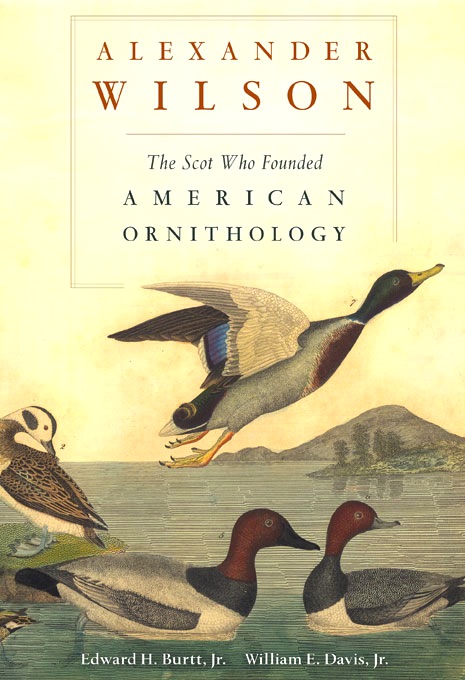
Alexander Wilson: The Scot Who Founded American Ornithology

Wilson became a teacher in Pennsylvania, and develpoped his interests in ornithology and painting. His ambitious plan was to publish a collection of illustrations of all the birds of North America. He travelled widely, collecting, painting, and securing subscriptions to fund a nine-volume American Ornithology (1808–1814). Of the 268 species of birds illustrated, 26 had never previously been described. Wilson died during the preparation of the ninth volume, which was completed and published by George Ord. Wilson predated John James Audubon (though not by many years) and  is generally acknowledged to be the founder of American ornithol0gy.

For examples of Wilson’s American Birds, check out the excellent Virginia University records HERE 
Wilson's Phalarope (Craig Nash)

Wilson’s Phalarope (Craig Nash)

CHARLES LUCIEN BONAPARTE 1803 – 1853

Bonaparte, Charles Lucien (1803-1857)Bonaparte’s gull, Zenaida dove

Charles Lucien Bonaparte, 2nd Prince of Canino and Musignano was a French biologist and ornithologist. He was nephew of the Emperor Napoleon. He married his cousin Zenaïde, by whom he had twelve children. They moved from Italy to Philadelphia, by which time Bonaparte had already developed a keen interest in ornithology. He collected specimens of a new storm-petrel, later named after the Scottish ornithologist Alexander Wilson (see above).

Bonaparte studied the ornithology of the United States, and updated Wilson’s American Ornithology. His revised edition was published between 1825 and 1833. He was a keen supporter of a (then unknown) ornithologist John James Audubon. Rather sweetly, he created the genus Zenaida, after his wife, applying it to the White-winged Dove Zenaida asiatica,  Zenaida Dove Zenaida aurita and Mourning Dove Zenaida macroura. He himself was later honoured in the name ‘Bonaparte’s Gull’.

Bonaparte's Gull, Abaco (Bruce Hallett)

Bonaparte’s Gull, Abaco (Bruce Hallett)

RAMON LA SAGRA (1798 -1871)
Mr La Sagra La Sagra’s Flycatcher

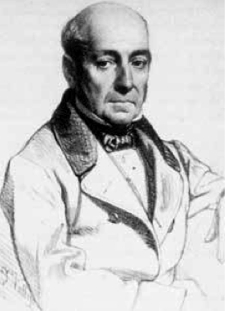
Ramón Dionisio José de la Sagra y Peris was a multi-talented man, being a Spanish botanist and also a writer, economist, sociologist, politician, anarchist, and founder of the world’s first anarchist journal El Porvenir (“The Future”). He lived in Cuba and became director of Havana’s Botanical Garden; his name lives on arguably more significantly in ornithological than in anarchist circles (actually, an ‘anarchist circle’ must surely be a contradiction in terms…)
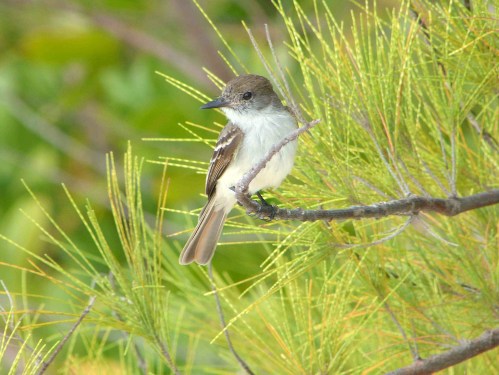
La Sagra's Flycatcher, Abaco (Keith Salvesen)

La Sagra’s Flycatcher, Abaco (Keith Salvesen)

A Cuban stamp commemorates the death of Juan Gundlach, the nauralist who chose La Sagra’s name to bestow on the flycatcher, and who himself is honoured in the name of the Bahama Mockingbird Mimus gundlachii Cuba Stamp La Sagra's Flycatcher

WILLIAM JOHN SWAINSON (1789 – 1855)

Mr SwainsonFor Abaco: Swainson’s Hawk, Thrush & Warbler

Swainson was an English ornithologist, entomologist, conchologist, natural historian, and a gifted illustrator of the natural world. He was a pioneer of the new lithographic technology, which enabled quicker reproduction of his work than engraving. Swainson lent his name to a number of avian species, three of which may be found on Abaco – the Swainson’s Hawk, Thrush and Warbler. The hawk is a rare visitor; the thrush is a transient, passing through the Bahamas during migration; and the warbler is a hard-to-find winter resident. Below is the only known Swainson’s Hawk to be photographed on Abaco.

Swainson's Hawk, Abaco (Bruce Hallett)

Swainson’s Hawk, Abaco (Bruce Hallett)

JOHN ISIAH NORTHROP (1861 – 91)
640px-Picture_of_John_Isaiah_NorthropBahama Oriole (Icterus northropi)

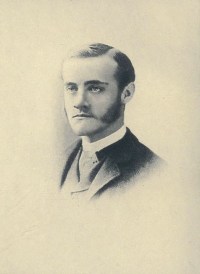
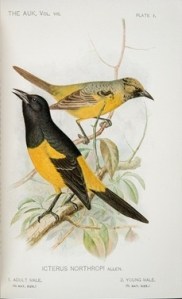
John Isiah Northrop, for whom the endemic BAHAMA ORIOLE Icterus northropi is named, entailed a bit more research. The link above will take you to my post about this very beautiful species that is sadly on the brink of extinction. Until recently it was found only on Abaco and Andros, but is now extirpated from Abaco and exists only in certain enclaves on Andros.
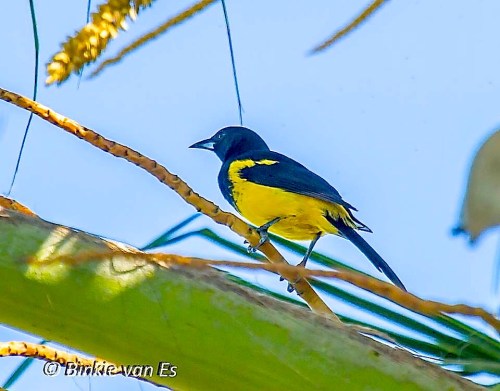
Bahamas Oriole, Andros (Binkie Van Es)

Bahamas Oriole, Andros (Binkie Van Es)

I can do no better than regurgitate the info provided by the University of Glasgow Library Research Annexe in relation to a fine  illustration from A Naturalist in the Bahamas (1910), reprinted in The Auk journal (below) at a time when Icterus northropi was still a mere subspecies:

The yellow and black Bahama Oriole (Icterus Northropi) is a bird species unique to the Bahamas. The bird was named for American ornithologist and zoologist, John Isiah Northrop (1861–91); the illustration comes from an account of the trip Northrop and his botanist wife, Alice, took to the Bahamas in 1889 which was published in his memory: A Naturalist in the Bahamas: John I. Northrop, October 12 1861-June 25, 1891; a memorial volume (Columbia University Press, 1910). It was edited and introduced by Henry Fairfield Osborn, professor of zoology at Columbia University where Northrop worked as a tutor and was killed in a laboratory explosion shortly (9 days) before the birth of his son John Howard Northrop (who became a Nobel prize-winning chemist)”.Icterus Northropi illustrated in A Naturalist in the Bahamas (plate 1)
 

JARED POTTER KIRTLAND 1793 –1877

260px-Jared_Potter_Kirtland_1793-1877Kirtland’s Warbler (Setophaga kirtlandii)

Jared Potter Kirtland was a naturalist, malacologist and politician, most active in Ohio where he served as a probate judge, and in the Ohio House of Representatives. He was also a physician and co-founder of a University Medical School. Kirtland became one of America’s leading naturalists, with a particular interest in horticulture and sea shells. He published numerous natural history articles, and was a founder and president of the Kirtland Society of Natural History and the Cleveland Academy of Natural Science.

Somewhere in amongst all this, he discovered or at least studied the warbler that was named after him. This rare bird is found in small numbers only in certain areas of Michigan; and overwinters in the Bahamas including on Abaco. They a very hard to find, and harder still to photograph. This year we made an expedition into remote backcountry and found 4, more of which another time…
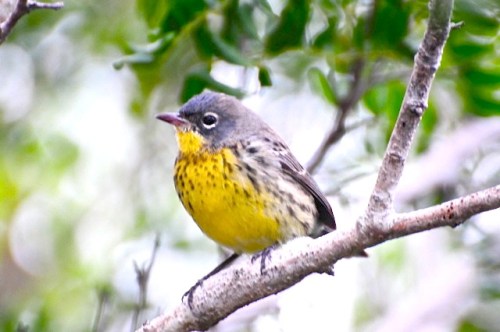
Kirtland's Warbler, Abaco (Woody Bracey)

Kirtland’s Warbler, Abaco (Woody Bracey)

JOHN JAMES AUDUBON (1785 – 1851)

John James Audubon never went to Abaco. The nearest he got was probably in 1820, when he made a field trip to the southern states, including Florida; or in the 1830s when he made at least one trip to Key West. One technique that set him apart from contemporaries was his method of producing naturalistic (as opposed to ‘stuffed bird’) drawings. It involved killing birds using very fine shot, and then using wires to pose them naturally, according to his field sketches. This contrasted with the usual technique of using a stuffed specimen as a model.

Although no Abaco birds are specifically named for Audubon, it is almost impossible to dip a toe into ornithological history without immediately stubbing it on Audubon’s name. Hence his inclusion in this piece, bringing it to a conclusion.

Audubon’s master-work was his renowned Birds of America, arguably the most famous bird tome ever. There are about 120 sets of the original book still in existence. They were incredibly expensive to produce in contemporary terms; and in modern times a set sold for $11.5 million at Sotheby’s London in 2010, setting the unbeaten record for the world’s most expensive book sale. Recently there was great excitement over the sale of another set at Christie’s New York, but the sale price was far lower, a mere $7,922,500… 

Audubon Birds of America.jpg

Credits: Bird pictures as shown; Encyclopaedia of Cleveland History, University of Glasgow Library, The Auk, Audubon Society, Wiki, Magpie pickings
Unknown's avatar

PLOVER LOVER? MEET SOME CUTE CHICKS ON ABACO

Wilson's Plover chick.Delphi Club.Abaco Bahamas.Tom Sheley

PLOVER LOVER? MEET SOME CUTE CHICKS ON ABACO

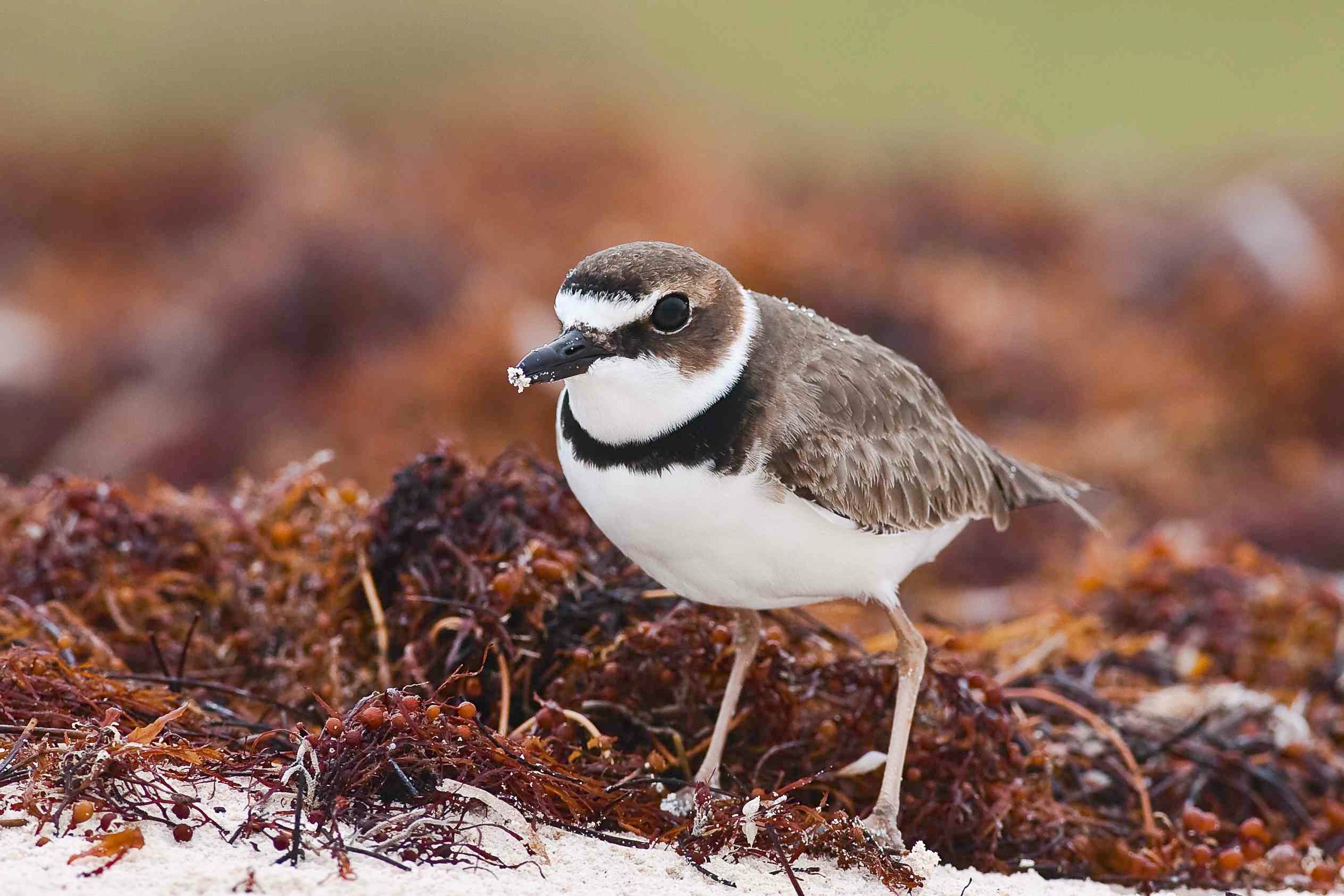
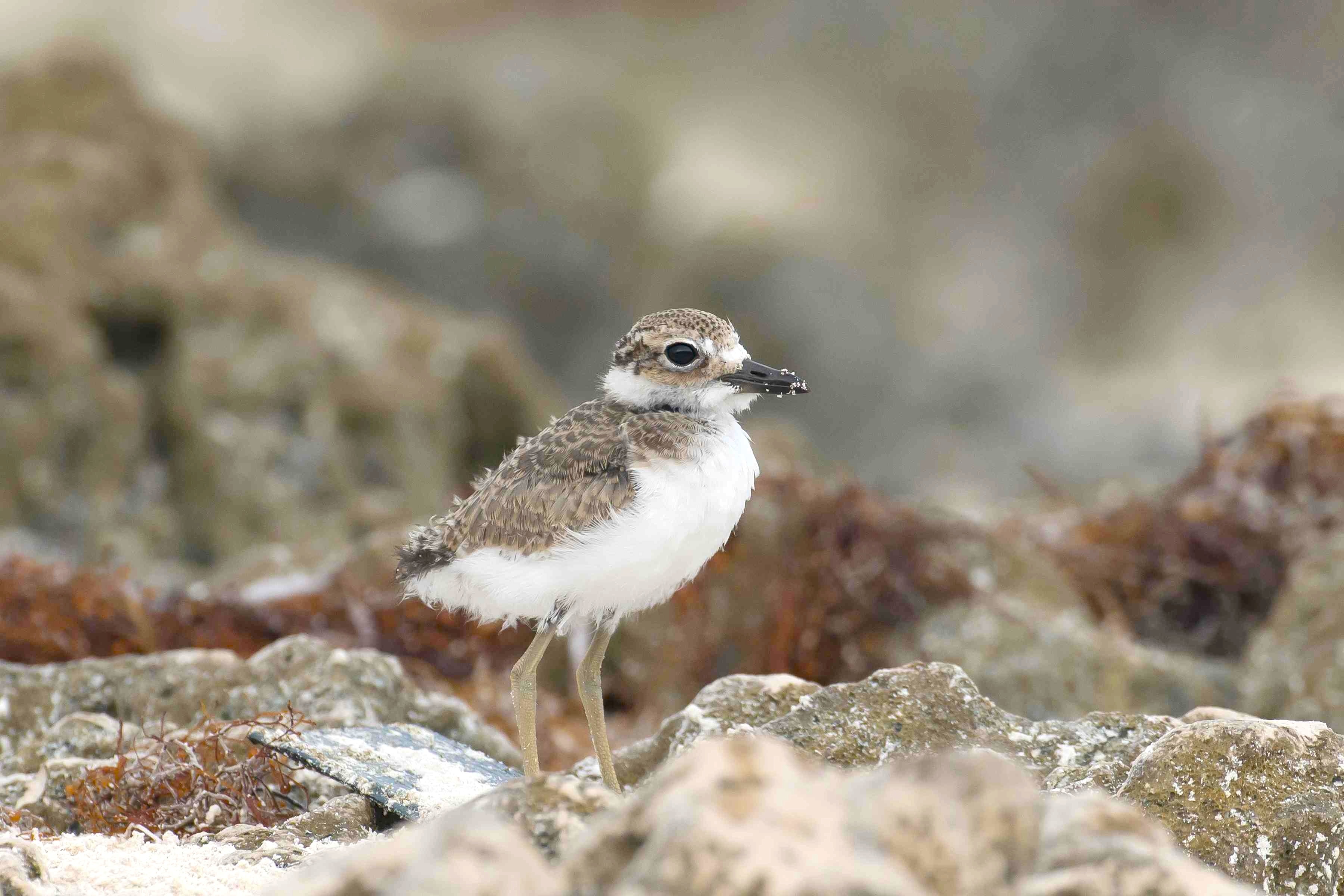
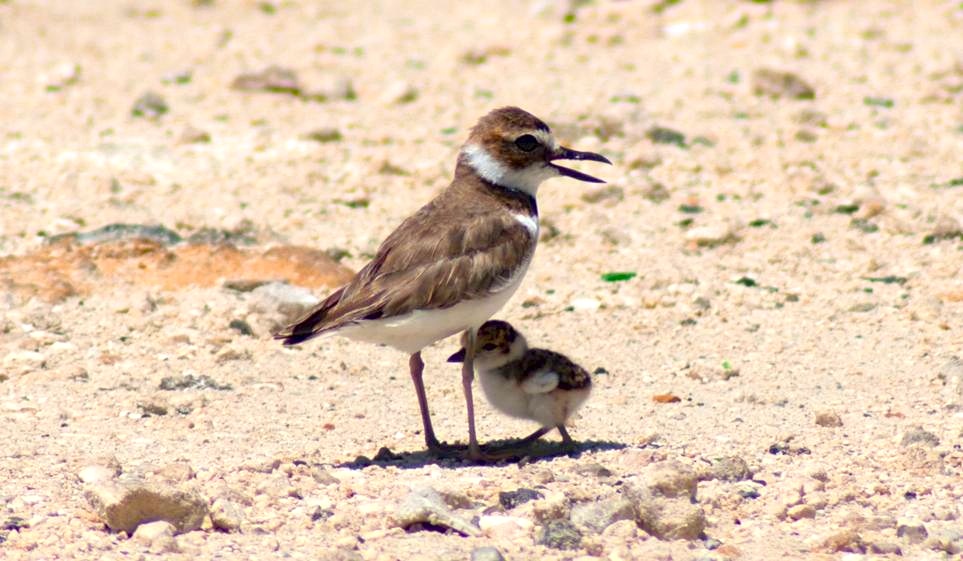
(*Serious Voice*) “The Wilson’s Plover is the only permanent resident plover found on Abaco, the other species being the winter resident Black-bellied Plover, Semipalmated Plover, Piping Plover and Killdeer; and the rare transient American Golden Plover. The nidification of the Wilson’s Plover is by common consent among naturalists the most…”

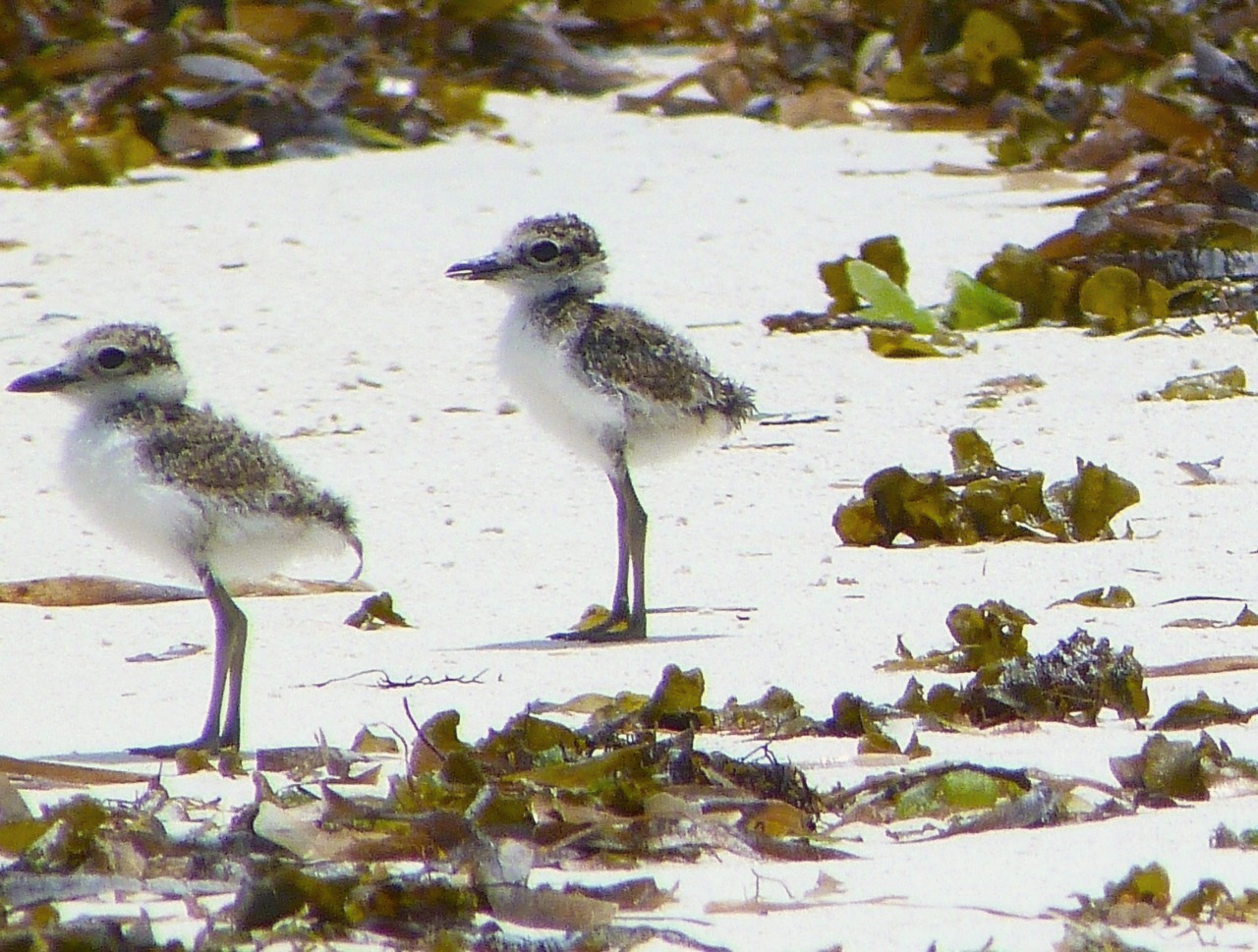
But let’s not get carried away with all that pompous ornithological stuff. There are baby plovers to be considered. Each one exudz adorbz and absorbz admirz. Most of the photos below were taken on the beach at Delphi. Ready? Let’s meet some chicks… But you can’t have them without first having the eggs, can you?

Wilson's Plover nest, Delphi Beach, Abaco (Clare Latimer)Wilson's Plover chick.Delphi Club.Abaco Bahamas.Tom Sheley

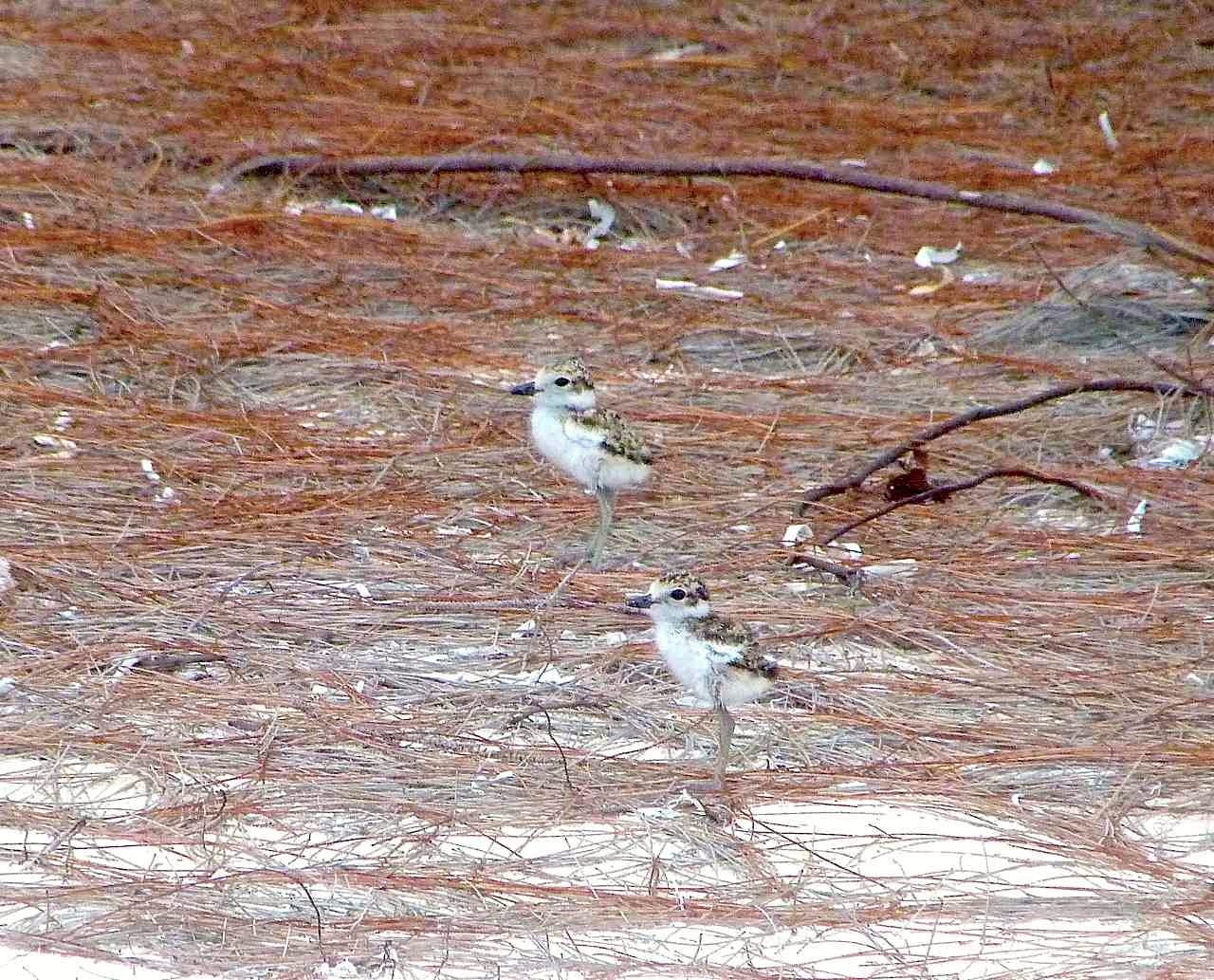
The Wilson’s Plovers at Delphi generally nest at the north end of the beach, up towards the reef. It is secluded, has good sight-lines and is bordered by pines. On the approach of a predator or human (in this case, me), the tiny chicks are sent scuttling to safety at the back of the beach while the parents prepare to tough it out if need be…Wilson's Plover Chicks Delphi Beach, Abaco (Keith Salvesen)

“You ain’t seen me, right?”Wilson's Plover Chick, Delphi Beach, Abaco (Keith Salvesen)

“I know we are caught in the open, but if we stand really still, you can’t see us, right?”Wilson's Plover Chicks x 2, Delphi, Abaco (Keith Salvesen)

One of the most fascinating aspects of bird behaviour to watch is the so-called ‘broken-wing’ display put on by plover parent(s) to distract a predator away from a nest or scrape, and the eggs or chicks in it. Kildeer and black-necked stilts are among other species that do this performance. It goes like something like this: 

“Oh! OW! I am helpless. Please don’t attack me, Apex Predator, for I am but a vulnerable plover…”Wilson's Plover, Delphi, Abaco -  broken wing display (Clare Latimer)

“But kindly follow me as I flap pathetically (moving away from my nest). I can’t fly, you know…”Wilson's Plover, Delphi, Abaco -  broken wing display (Clare Latimer)

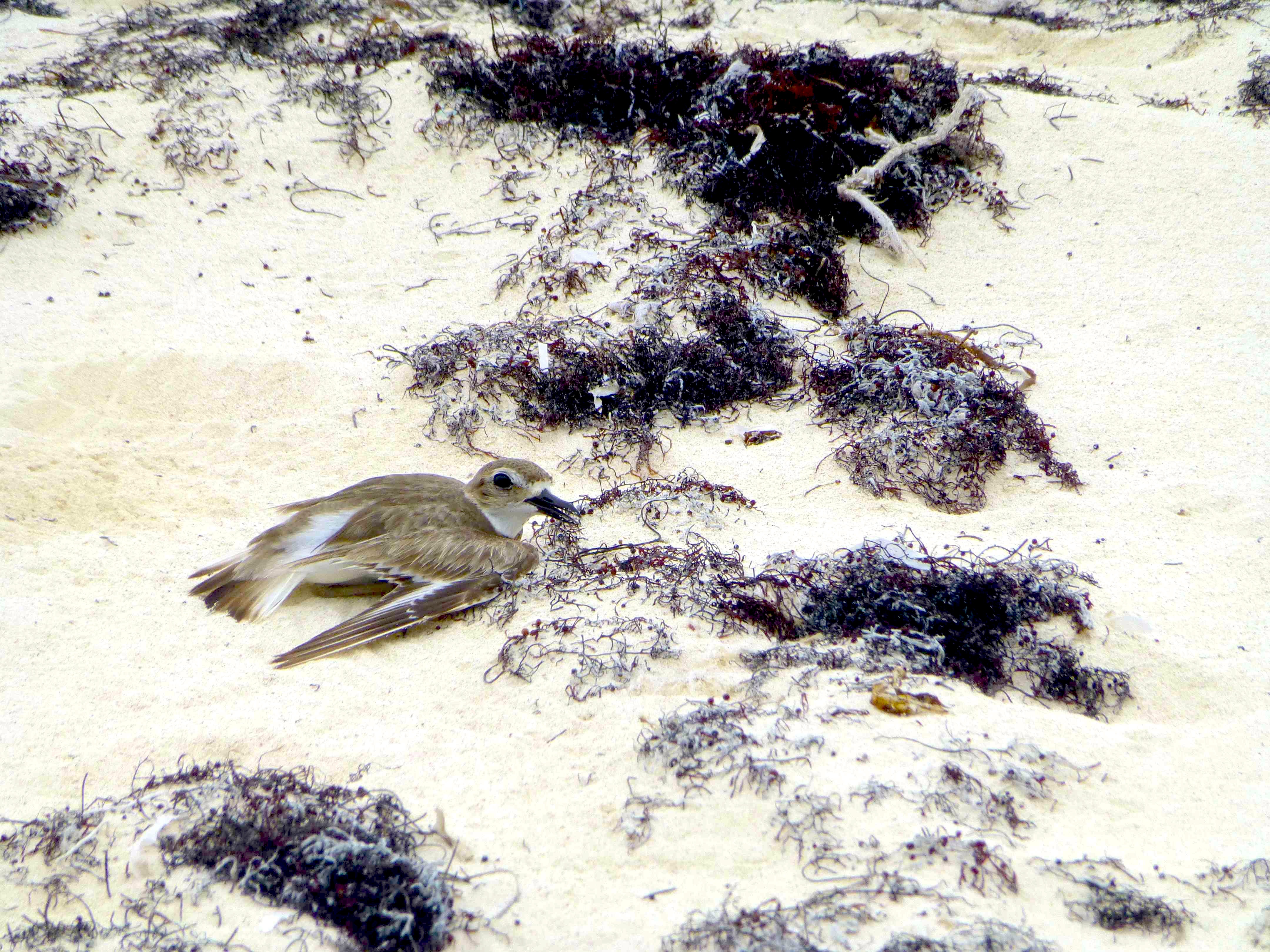
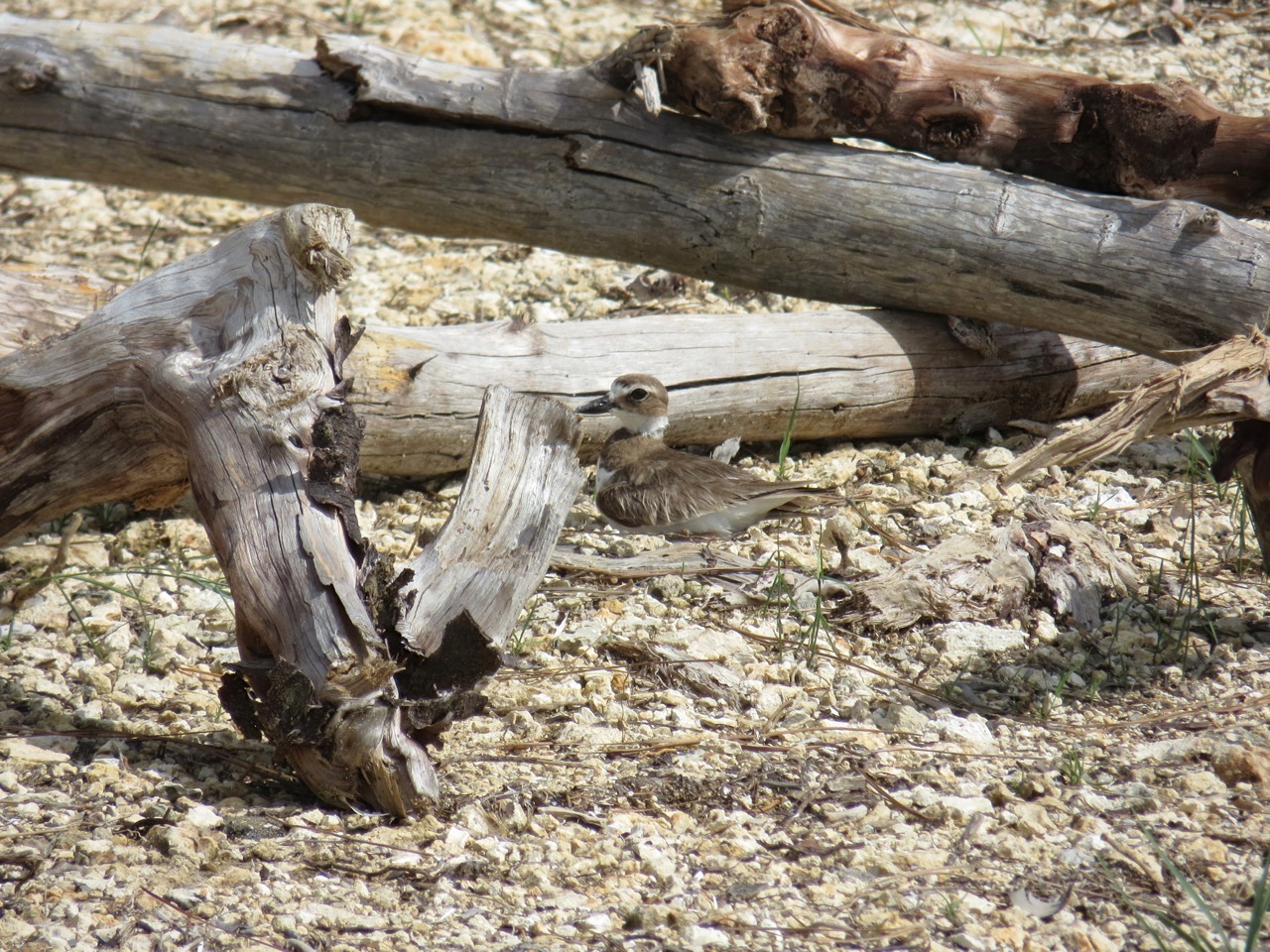
Camouflage also plays a part in the protection of these little creatures. This chick is on the rocks at the north end of the Delphi beach, the bit where you begin to wish you’d worn shoes because the rock is so sharp… From 10 feet away, you might well miss seeing the chick completely.Wilson's Plover chick. Delphi.Abaco Bahamas.6.13.Tom Sheley

This is one of my favourite shots, also at Delphi, taken by Sandy WalkerWilson's Plover & Chick, Delphi, Abaco (Sandy Walker)

Quite a while ago, I wrote about a Wilson’s Plover family that had made their scrape at Nettie’s Point, the place where the bonefishing skiffs are launched. They chose their homemaking site right where the trucks and trailers turn. Big mistake you might think. But the kind guides built a small stockade of branches round the scrape so that it could clearly be seen and avoided. After that, Mrs WP settled down happily and Mr WP stood guard whenever anyone was around…

The protective stockade in place. Mrs Plover in place. All’s well with the worldNettie's Point, Abaco - Proected Wison's Plover Nest (Keith Salvesen)Nettie's Point, Abaco - Mrs Wilson's Plover on the nest (Keith Salvesen)

Soon after, two chicks hatched, were reared by both parents, and in due course fledged safelyWilson's Plover.Abaco Bahamas.Tom SheleyWilson's Plover + chicks 2.Abaco Bahamas.6.13.Tom Sheley

Photo Credits: Clare Latimer (2, 7, 8); Tom Sheley (1, 3, 9, 13, 14); Sandy Walker (10); RH (the rest)

Unknown's avatar

COMMON GROUND DOVE (‘TOBACCO DOVE’) ON ABACO

Common Ground Dove, Abaco (Tom Reed)

COMMON GROUND DOVE (‘TOBACCO DOVE’) ON ABACO

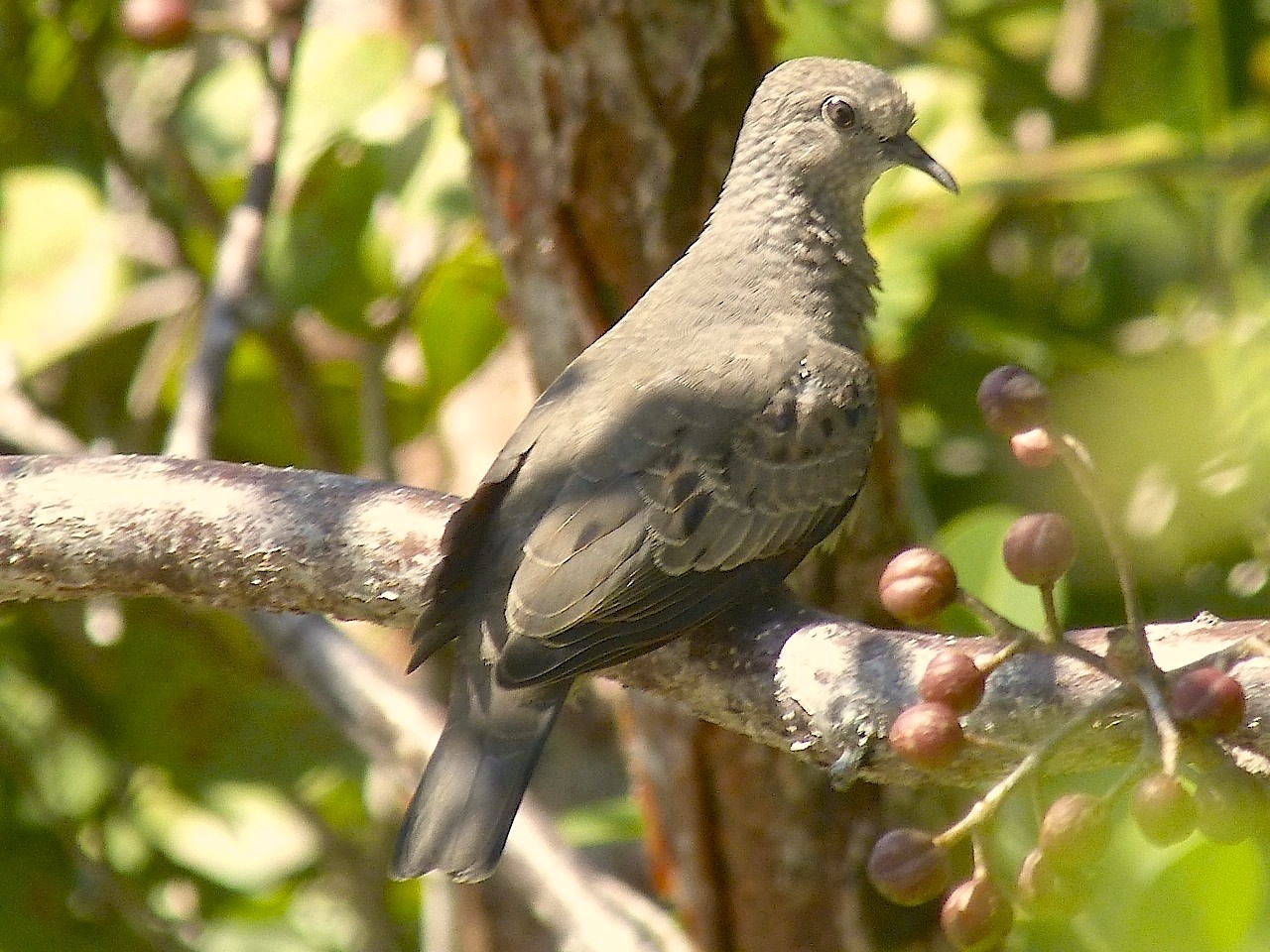
These small birds Columbina passerina are also known as tobacco doves. Although they sometimes perch in the branches of trees, you are more likely to encounter them on the ground, where they forage for seeds, fruit, and insects. Common Ground Dove, Abaco 1 (Tom Sheley)

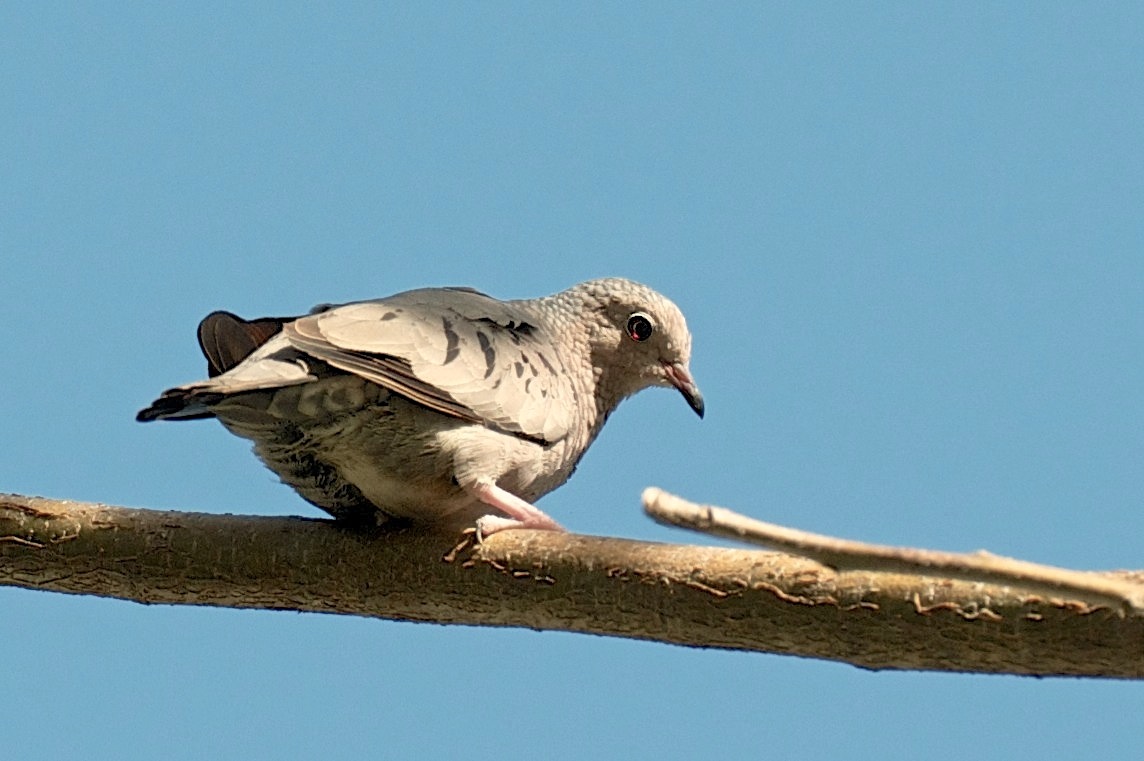
They will often fly in front of a person or vehicle in short fluttering stages, keeping out of reach but never going too far ahead.When they fly, their undersides flash reddish-brown (sometimes described as chestnut) – hence (I presume) the tobacco dove name.

Common Ground Dove, Abaco 2 (Tom Sheley)

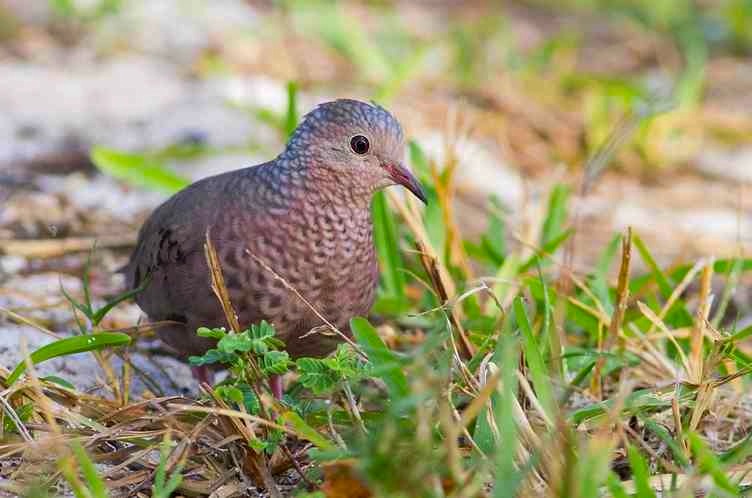
The common ground dove is one of the world’s smallest doves – roughly 6 inches long. Its beak has a black tip, and its feathers have a pinkish tinge. The feathers on the head and the breast look rather like scales. Females are similar to males but tend to be greyer.

Common Ground Dove, Abaco (Nina Henry)

Common ground doves mate with their partner for life, and a pair may have 2 or even 3 broods a year. Both parents feed the young birds until they are ready to feed themselves. Rather amazingly, hatchlings can fledge in 11 days. 

Common Ground Dove, Abaco 3 (Nina Henry)

Here’s the sound to listen out for, a (frankly) rather monotonous and subdued little ‘whoop’.

 Andrew Spenser / Xeno Canto

Common Ground Dove, Abaco 2 (Nina Henry)

My own attempts to photograph a CGD satisfactorily have been rather feeble. I have taken plenty of photos of them on the ground, but nothing memorable, let alone useable. However the one below surprised me by flying onto a branch quite near me, and I had time to squeeze the trigger before it flew off again. Far from perfect compared with others on this page, but I’m not going to let that little detail prevent me from showing it… Common Ground Dove, Abaco (Keith Salvesen)

 Photo Credits: Tom Reed (1), Tom Sheley (2, 3), Nina Henry (4, 5, 6), RH (7); Audio – Andrew Spenser / Xeno Canto

Unknown's avatar

WHITE IBISES ON ABACO: UNCOMMONLY EXCITING SIGHTING

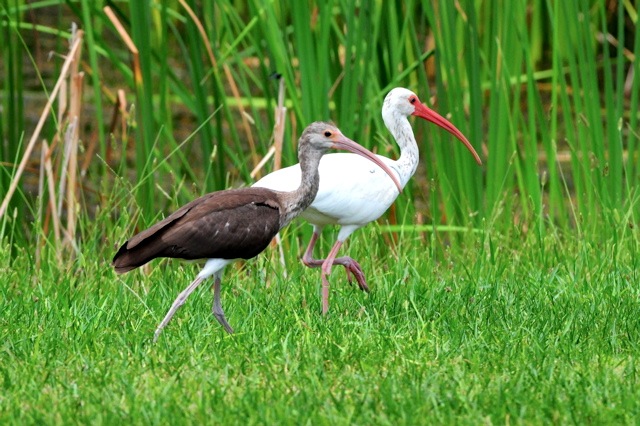
White Ibises (adult & juvenile), Sandy Point, Abaco (Keith Salvesen)

 WHITE IBISES ON ABACO: UNCOMMONLY EXCITING SIGHTING

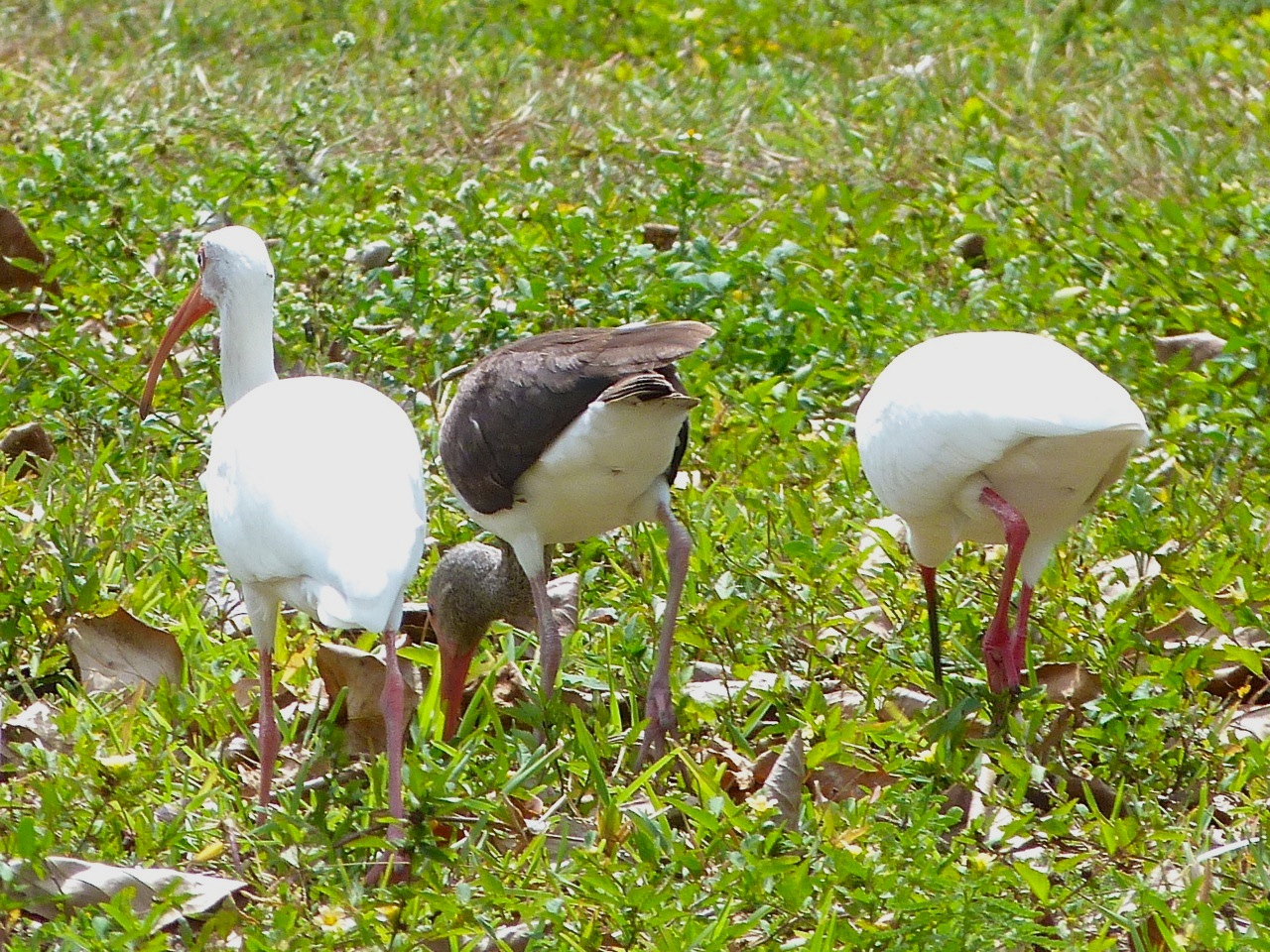
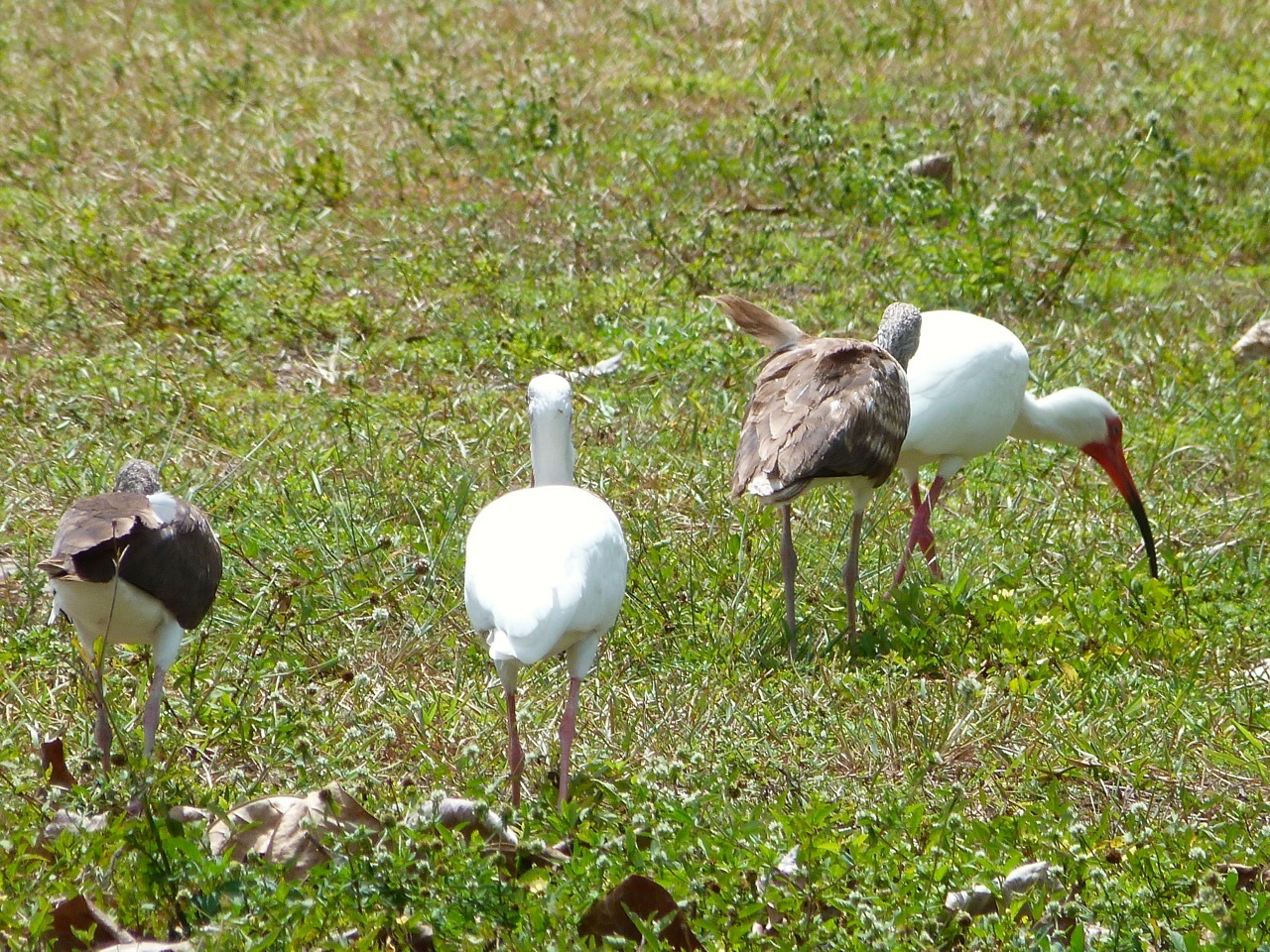
“STOP THE CAR!” The shout was embarrassingly loud, amplified by being yelled inside a vehicle. Loud, because it seemed to emanate from very close indeed to my ear. Embarrassing, because it appeared to come out of my own mouth. Good grief! It was me. And I’d seen White Ibises. There they were, 2 adults and 2 juveniles, strolling and feeding their way across an open grassy area right in the middle of Sandy Point, as casual as you please.

P1200740White Ibises (adult & juvenile), Sandy Point, Abaco (Keith Salvesen)

So I leapt out of the car (it had conveniently and fortunately stopped by this stage), remembered to remove the lens cap for once, and took some photos. Unfortunately we had driven slightly past them which inevitably increased the risk of bird-butt shots (as the birds were moving away from me) to add to my already impressive ‘aves-ass’ collection

White Ibis, Sandy Point, Abaco (Keith Salvesen)

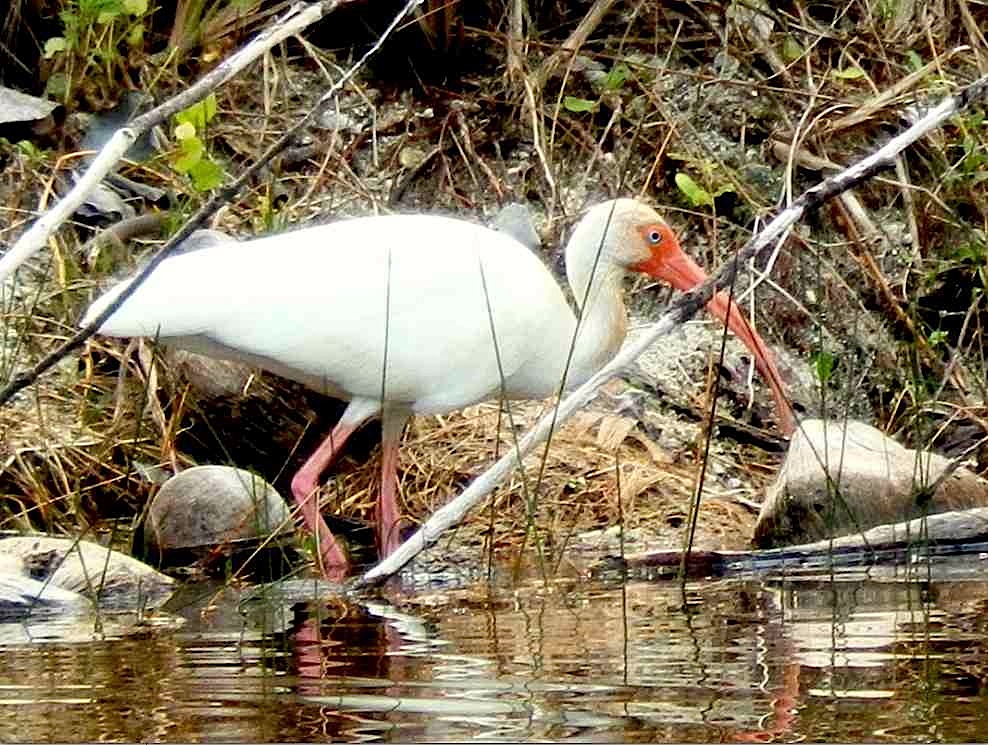
The reason for the excitement was that the White Ibis is classed on Abaco as a ‘WR4‘, that is to say a Winter Resident that is both uncommon to rare and irregularly reported. Some years, maybe none will be seen at all. When I was collecting the images – hundreds and hundreds of them – for THE BIRDS OF ABACO, I rejected any that had not actually been taken on Abaco. That was part of the point of the enterprise, to showcase Abaco’s birds, not “birds from other islands that you may also encounter on Abaco”. So although we had some wonderful White Ibis pics from Nassau, they were ineligible for the book…

We ended with just the one, taken by Kasia Reid at the Treasure Cay Golf course ponds. In the course of the 16 months it took to produce the book, we never obtained another Abaco White Ibis photo, which meant that Kasia’s image did not qualify for a spread and sadly had to be relegated to the supplement… (bird 159 on page 262!). Here it is.

White Ibis, Treasure Cay, Abaco (Kasia Reid)

Meanwhile, returning swiftly to Sandy Point, the 4 Ibises (Ibi?) were working their way slowly and systematically over the greenery, picking through it for morsels of food.

White Ibises (adult & juvenile), Sandy Point, Abaco (Keith Salvesen) White Ibis, Sandy Point, Abaco (Keith Salvesen) White Ibis, Sandy Point, Abaco (Keith Salvesen) White Ibises (adult & juvenile), Sandy Point, Abaco (Keith Salvesen) White Ibises (adult & juvenile), Sandy Point, Abaco (Keith Salvesen)

Then they were gone, and I got back into the car feeling that I had seen something special. I may have been the only occupant who felt that way, but such is life. For all I know, the birds may have been there for weeks. Or forever. But I have never seen them there before, nor seen reports of them. The sighting further confirms the excellence of Sandy Point as a birding location on land, shoreline and out to sea.

And then it was off to the legendary Nancy’s for lunch (fresh snapper, Kalik). Here are some of the Ibi (that sounds a much better plural) that had to be ruled out of the book for being non-Abaconian.

THE SALON DES REFUSÉS OF THE NASSAU EUDOCIMUS ALBUS

White Ibis, Bahamas (Tony Hepburn) White Ibis, Bahamas (Tony Hepburn) White Ibis (adult & juvenile), Bahamas (Tony Hepburn) White Ibises, Bahamas (Woody Bracey)

Credits: RH, Kasia Reid, Tony Hepburn, Woody Bracey

Unknown's avatar

“THE ABACO BACKCOUNTRY – AN APPRECIATION” by JIM TODD

Click to preview The Abaco Backcountry photo book

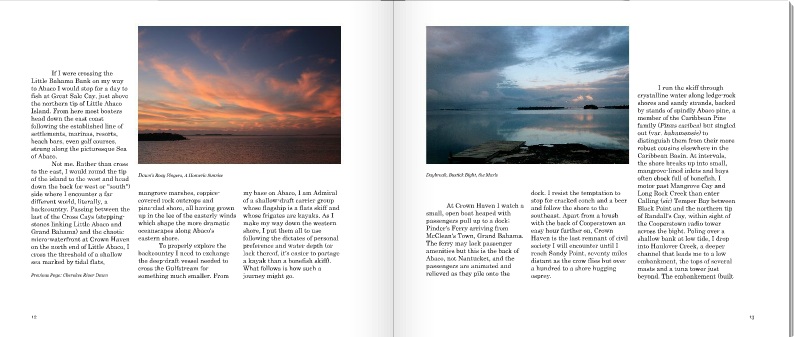
Jim Todd has produced an attractive self-published book, available in 3 formats, showcasing some of the outstanding features of the less-frequented areas of Abaco and its waters. It contains many excellent photographs, with interesting notes and observations. There are places and facts in the book that may not be known even to locals! Below are some sample pages. 

Abaco Backcountry Grab 2 Abaco Backcountry Grab 3 Abaco Backcountry Grab 4 Abaco Backcountry Grab 5Abaco Backcountry Grab 7 Abaco Backcountry Grab 6Abaco Backcountry Grab 1

Anyone who loves Abaco, its natural surroundings, its ecology and its wildlife will love this book. If this post has whetted your appetite, here are some further details:

Available exclusively on BLURB (this is the direct link)

“The Abaco Backcountry draws on the author’s extensive exploration of the area to describe a hypothetical traverse of its length in words and pictures. It is not a guidebook but an appreciation of a unique Bahamian marine ecosystem”

56 pp, available softcover ($35), Hardcover, Dustjacket ($38.99) and Hardcover, Image Wrap ($40.99)

STOP PRESS In answer to a UK query, the Blurb price is shown in $$$. When you go to the checkout, the shipping is added e.g. $10.99 to ship the PB version to the UK. You can pay by CC or Paypal. The conversion to sterling (or presumably euros) happens… by magic

Unknown's avatar

GRACE WITH ATTITUDE: SOUTHERN STINGRAYS IN THE BAHAMAS

Southern Stingray 2 ©Melinda Riger @ G B Scuba copy

GRACE WITH ATTITUDE: SOUTHERN STINGRAYS IN THE BAHAMAS

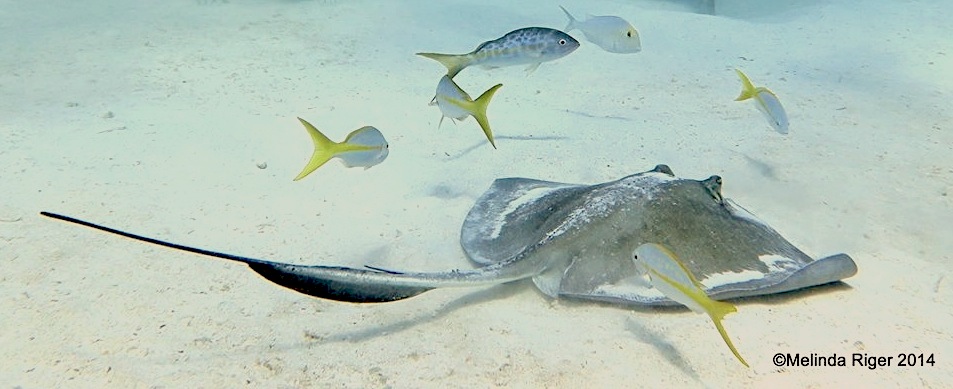
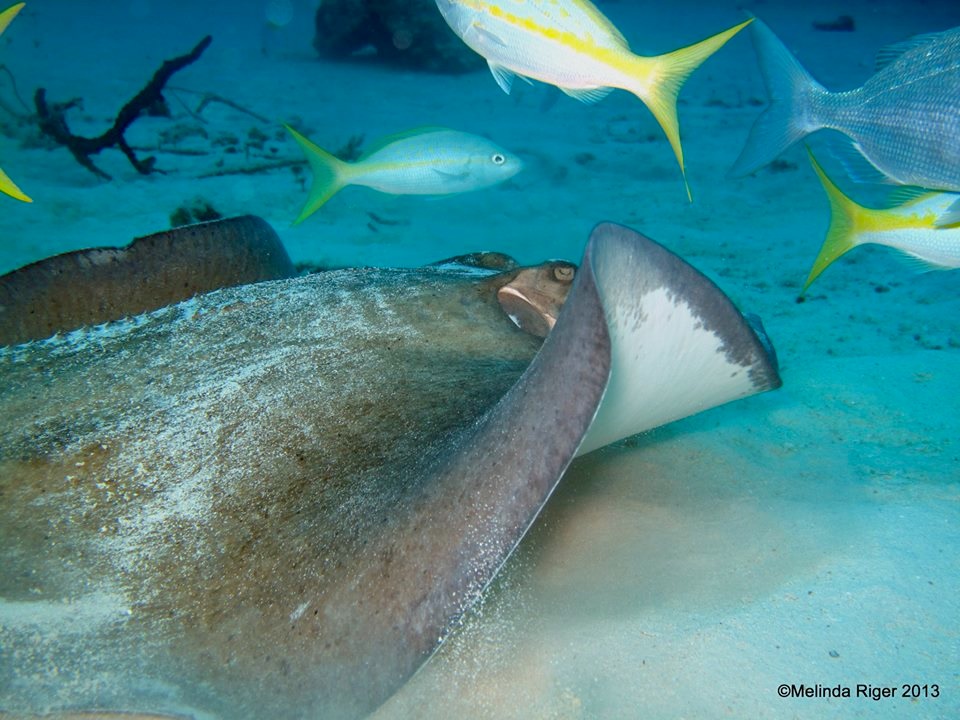
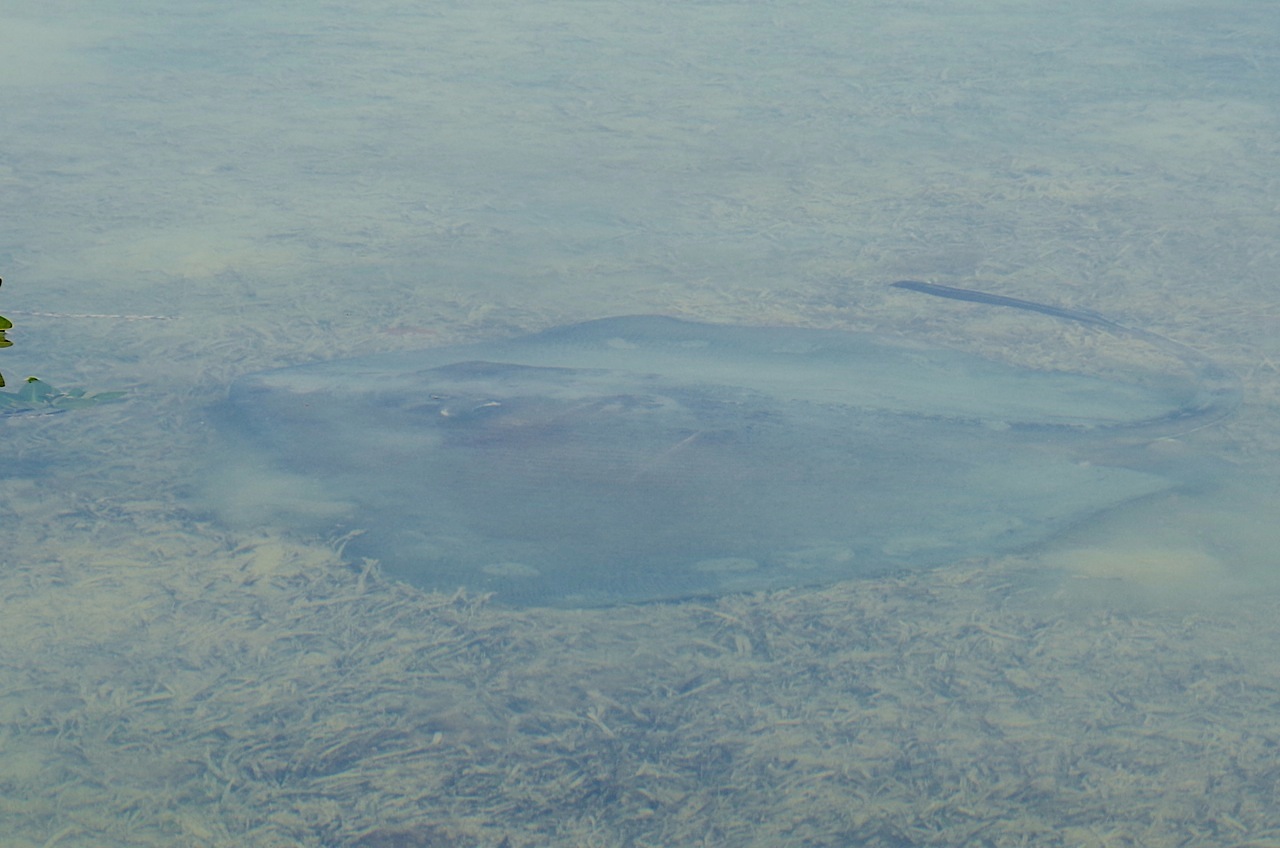
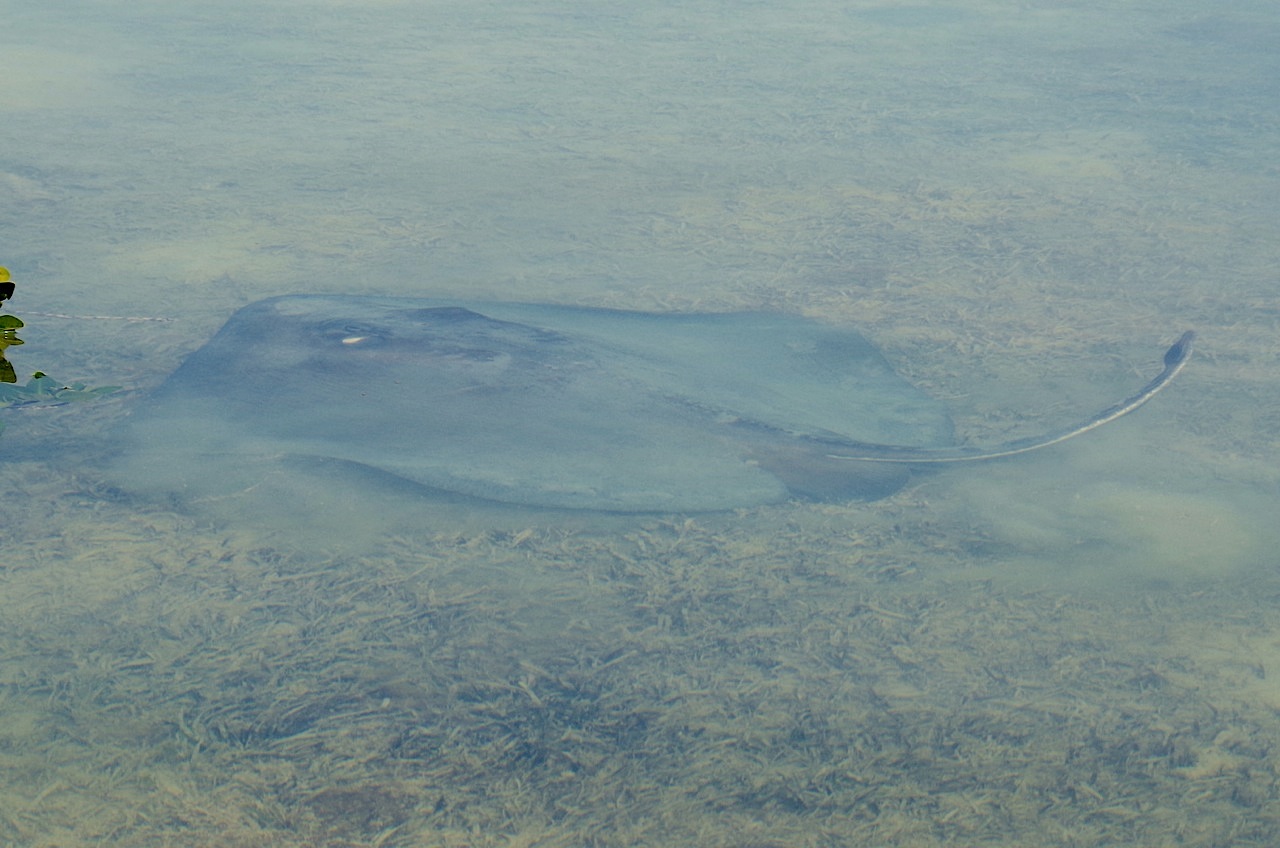
Southern Stingrays are often seen in Abaco waters. In the bay of Rolling Harbour at Delphi, we sometimes watch them admiringly from the balcony or beach as they lazily cruise along the shoreline in the turquoise water. If someone is in the water, they will make a leisurely detour round them – unfrightened in their own element, but unthreatening and disinclined to investigate human intrusion. Diving with them is a wonderful experience (though I have never got very close). Melinda Riger – a scuba expert with great camera skills – takes the most beautiful photos of the stingrays she encounters. Here are a few that I haven’t yet featured.  Notice the little striped CLEANING GOBIES going about their business. 

Stingray, Southern with cleaning gobies ©Melinda Riger @ G B Scuba copyStingray, Southern at cleaning station ©Melinda Riger @ G B Scuba  copySouthern Stingray © Melinda Riger @GB Scuba copy

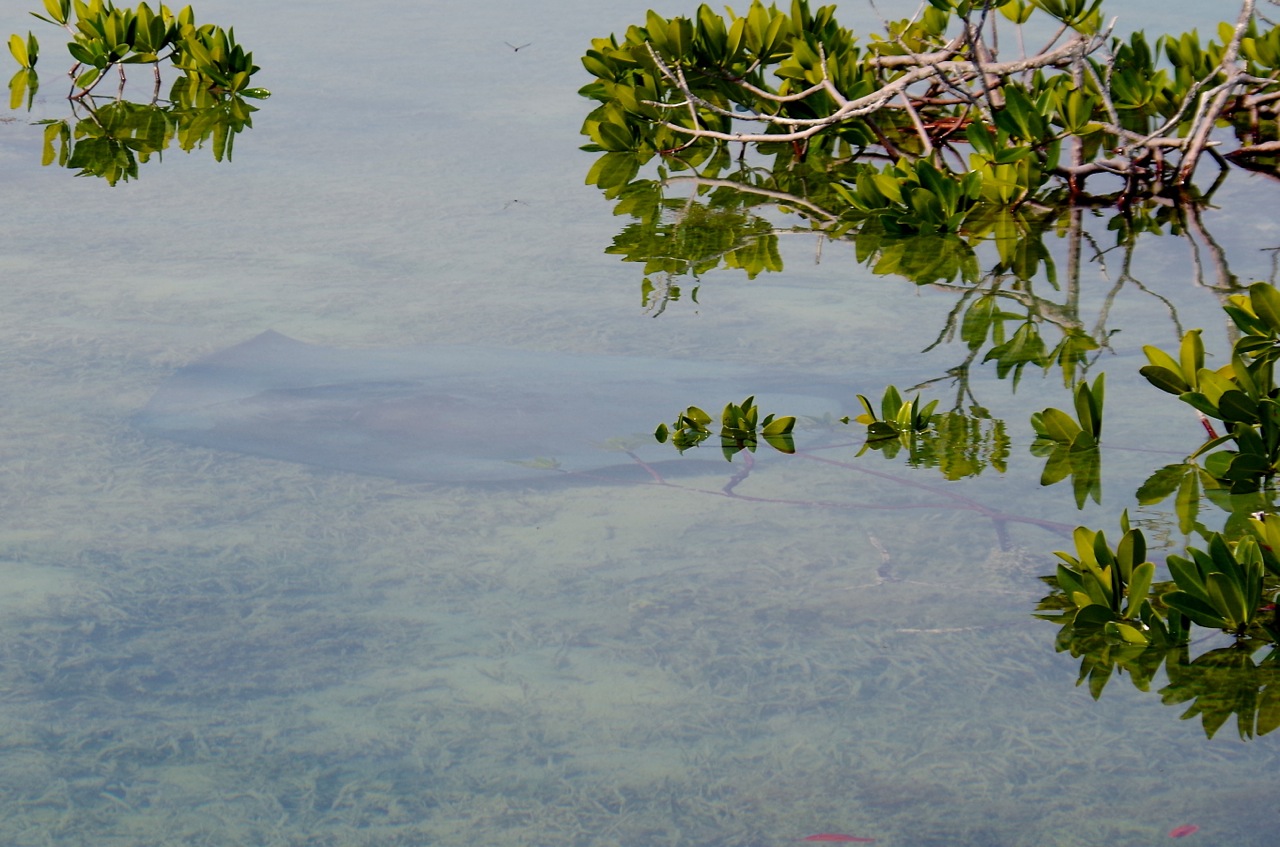
Southern Stingrays are often encountered when one is bonefishing in the low waters of the Marls. I took the photos below while we were fishing in a channel between areas of mangrove. As the skiff was poled very slowly forward, I saw the stingray coming straight towards us. I wondered how it would react. Very elegantly, was the answer. It turned effortlessly and unperturbed to one side, then resumed its original course leaving a clump of mangrove between it and the skiff. 

Southern Stingray, Abaco Marls (Keith Salvesen 1)Southern Stingray, Abaco Marls (Keith Salvesen 2)Southern Stingray, Abaco Marls (Keith Salvesen 3)Southern Stingray, Abaco Marls (Keith Salvesen 4)

RELATED POSTS

SOUTHERN STINGRAYS

RAYS OF SUNSHINE

YELLOW STINGRAYS

Credits: Melinda Riger, Grand Bahama Scuba; RH

Unknown's avatar

REDDISH EGRET ON ABACO, LOVES FISHING, STILL SEEKS ‘THE ONE’

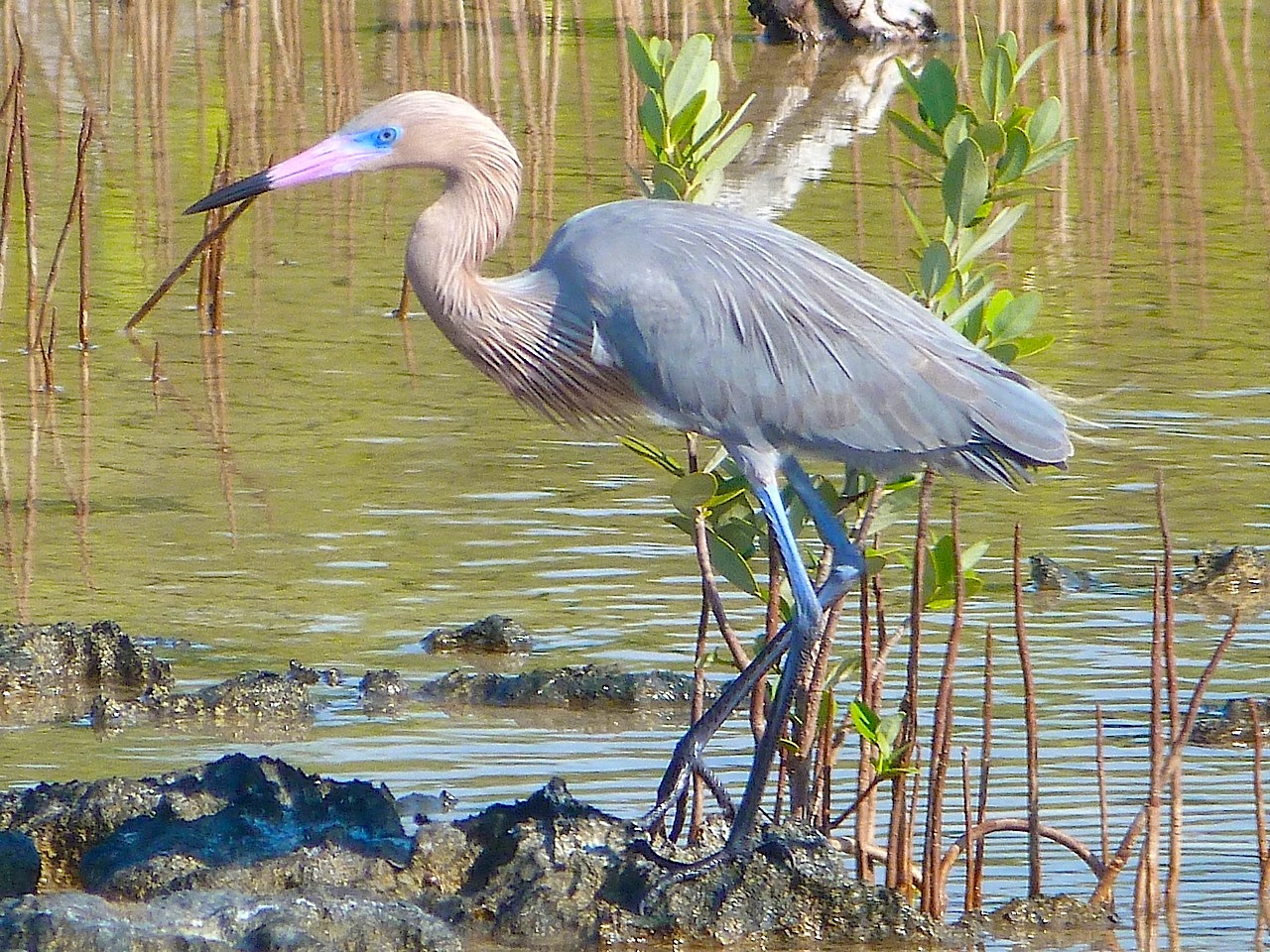
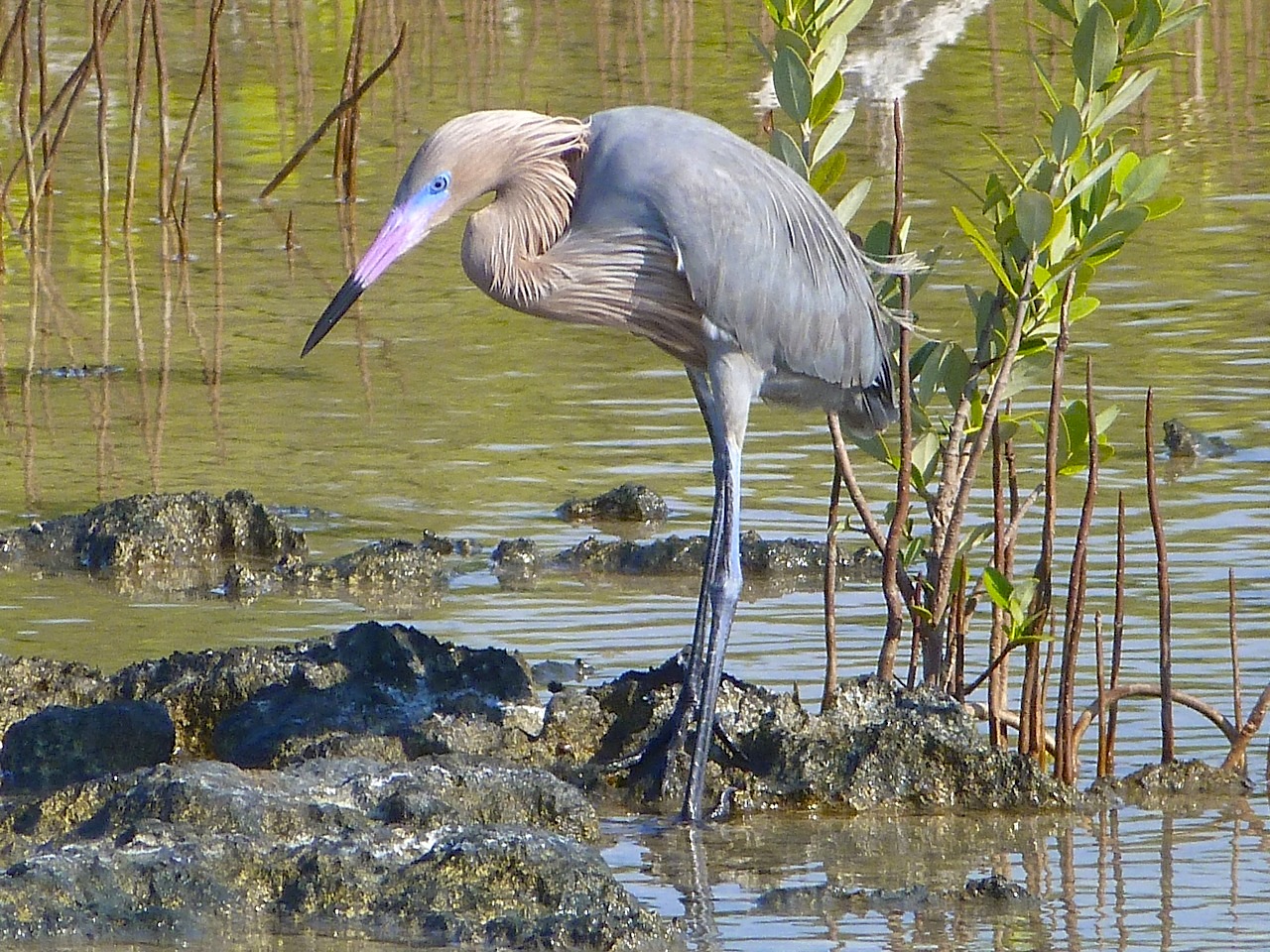
Reddish Egret, Crossing Rocks, Abaco (Keith Salvesen)09

REDDISH EGRET ON ABACO, LOVES FISHING, STILL SEEKS ‘THE ONE’

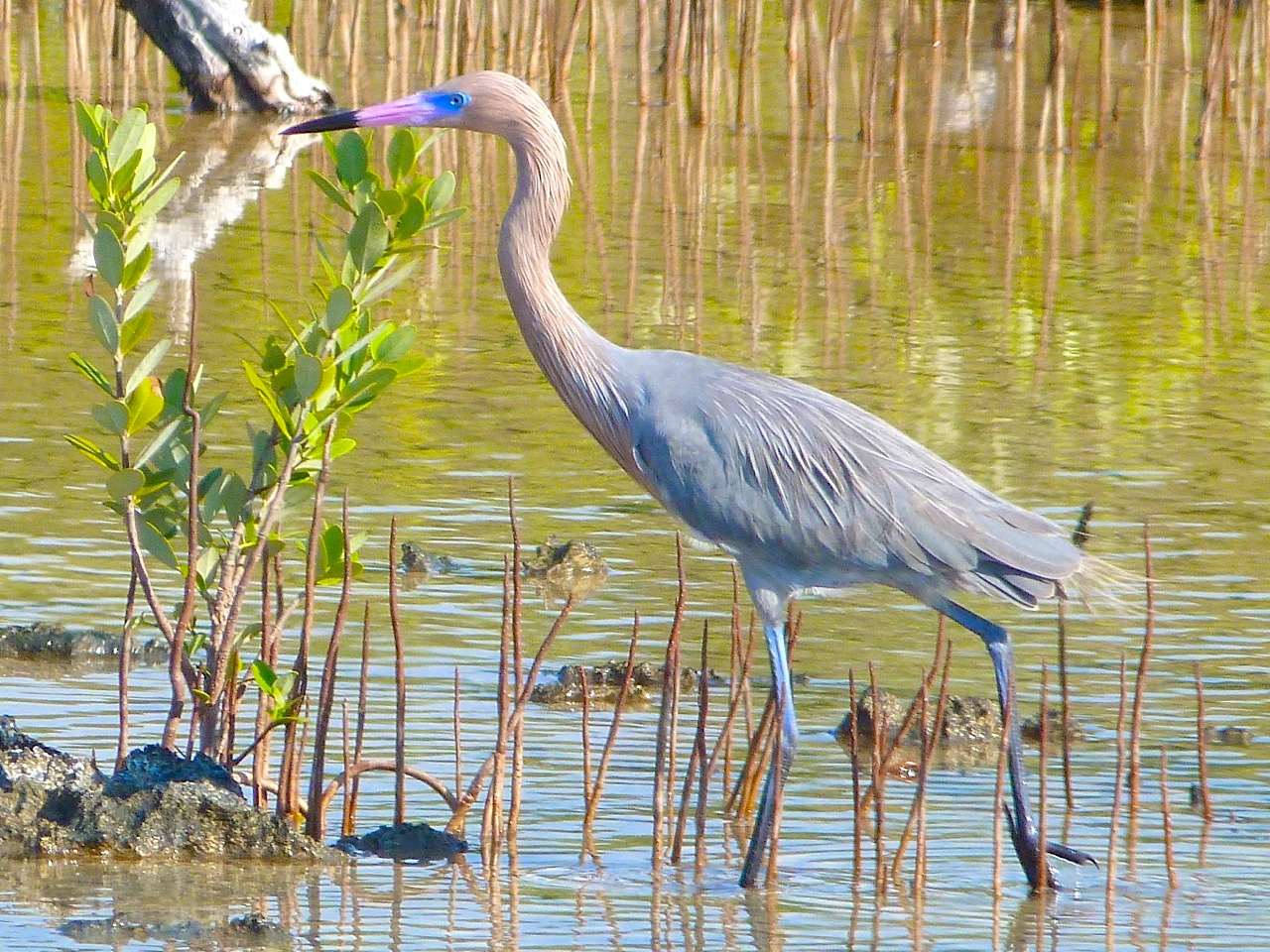
A couple of weeks ago I wrote about a wonderful male reddish egret in his splendid breeding colours. He was hanging out in the brackish ponds opposite the Crossing Rocks jetty, ‘spear fishing’ from a standing position and ‘chase-fishing’ frantically through the water. You can see that post HERE. Unsurprisingly, we decided to take another look down there – easily done, since we had spent the morning out bonefishing on the west side. We’d earlier seen a tri-colored heron in the ponds, and a reddish egret WHITE MORPH, so it was worth having a (different) camera to hand…

Reddish Egret, Crossing Rocks, Abaco (Keith Salvesen)11

We were in luck. The RE was still there, looking every bit as handsome as before (though not the entire time – see below) So here are some more shots of this gorgeous bird.

Reddish Egret, Crossing Rocks, Abaco (Keith Salvesen)12Reddish Egret, Crossing Rocks, Abaco (Keith Salvesen)13Reddish Egret, Crossing Rocks, Abaco (Keith Salvesen)01Reddish Egret, Crossing Rocks, Abaco (Keith Salvesen)02Reddish Egret, Crossing Rocks, Abaco (Keith Salvesen)14Reddish Egret, Crossing Rocks, Abaco (Keith Salvesen)05

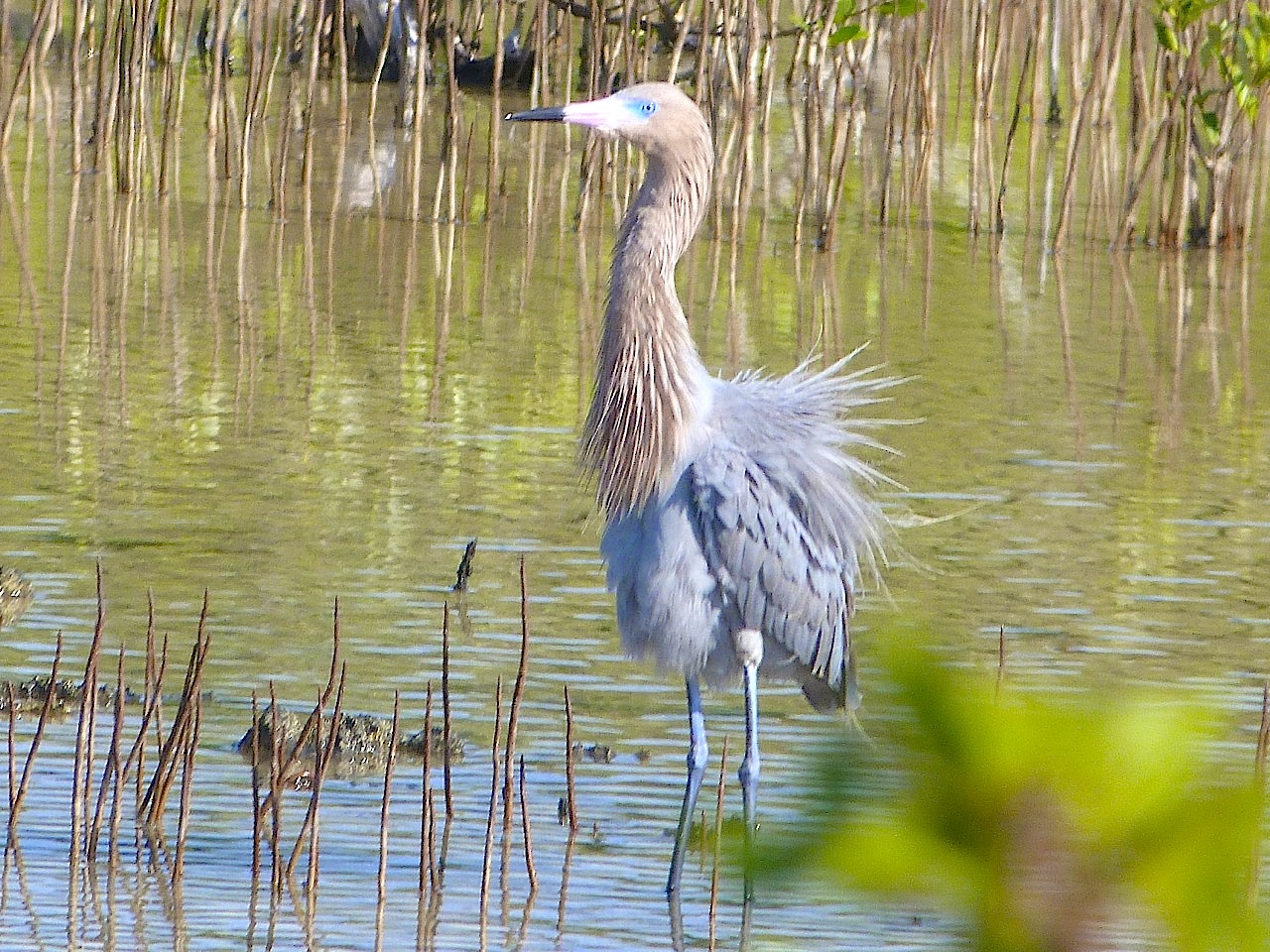
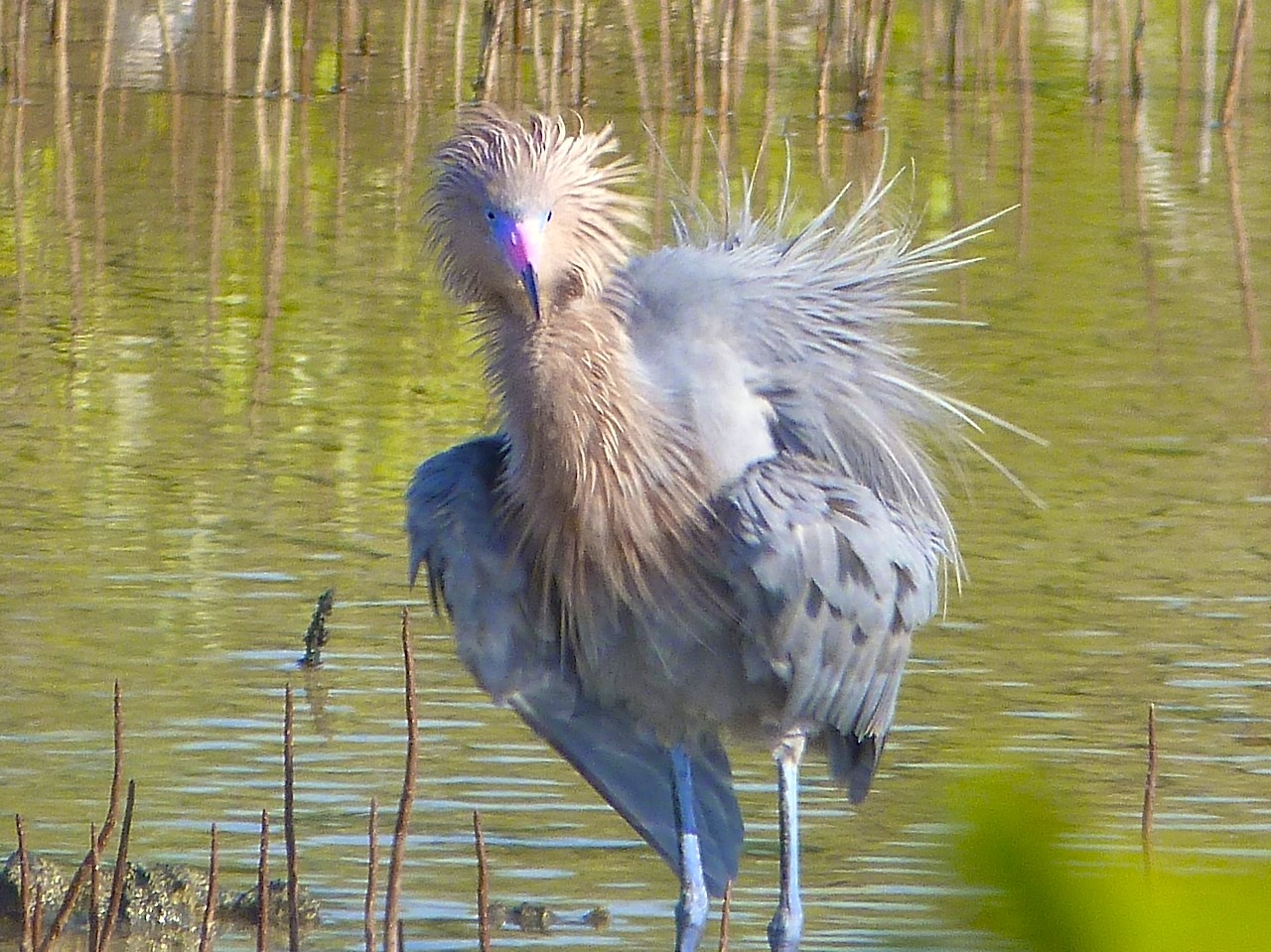
Mostly, the RE was sleek and elegant. There were times however when the wind ruffled him up a bit, and he lost some of his composure… not the ideal look should a female RE arrive looking for her perfect partner at that very moment. A bit ‘morning after’ rather than ‘evening before’…Reddish Egret, Crossing Rocks, Abaco (Keith Salvesen)07

…and does this (unfairly undignified) view reveal a touch of early baldness’?Reddish Egret, Crossing Rocks, Abaco (Keith Salvesen)06

This turned out to be our last opportunity to see the RE. Let’s hope he has paired off happily, and that his offspring will be at the ponds next year.

I posted this photo on FB, because the bird strongly reminded me of someone. A very small amount of digging produced the human likeness and inspired a bit of creativity – see below (with apologies to both parties).Reddish Egret, Crossing Rocks, Abaco (Keith Salvesen)08

RODDISH EGRET MEETS RED STEWART…

                     Rolling Harbour Abaco's photo.Rolling Harbour Abaco's photo.
To coin a phrase, Every Picture tells a Story! Oh. Someone’s come up with that already, have they? Well here’s a reminder of the original – complete with Sir Roderick’s personal grooming advice near the start: “…standing in front of my mirror… combed my hair in 1000 ways, but it came out looking just the same…”
All photos: RH, with Mrs RH
Unknown's avatar

WOOD DUCK: THE LEAST REALISTIC DUCK EVER

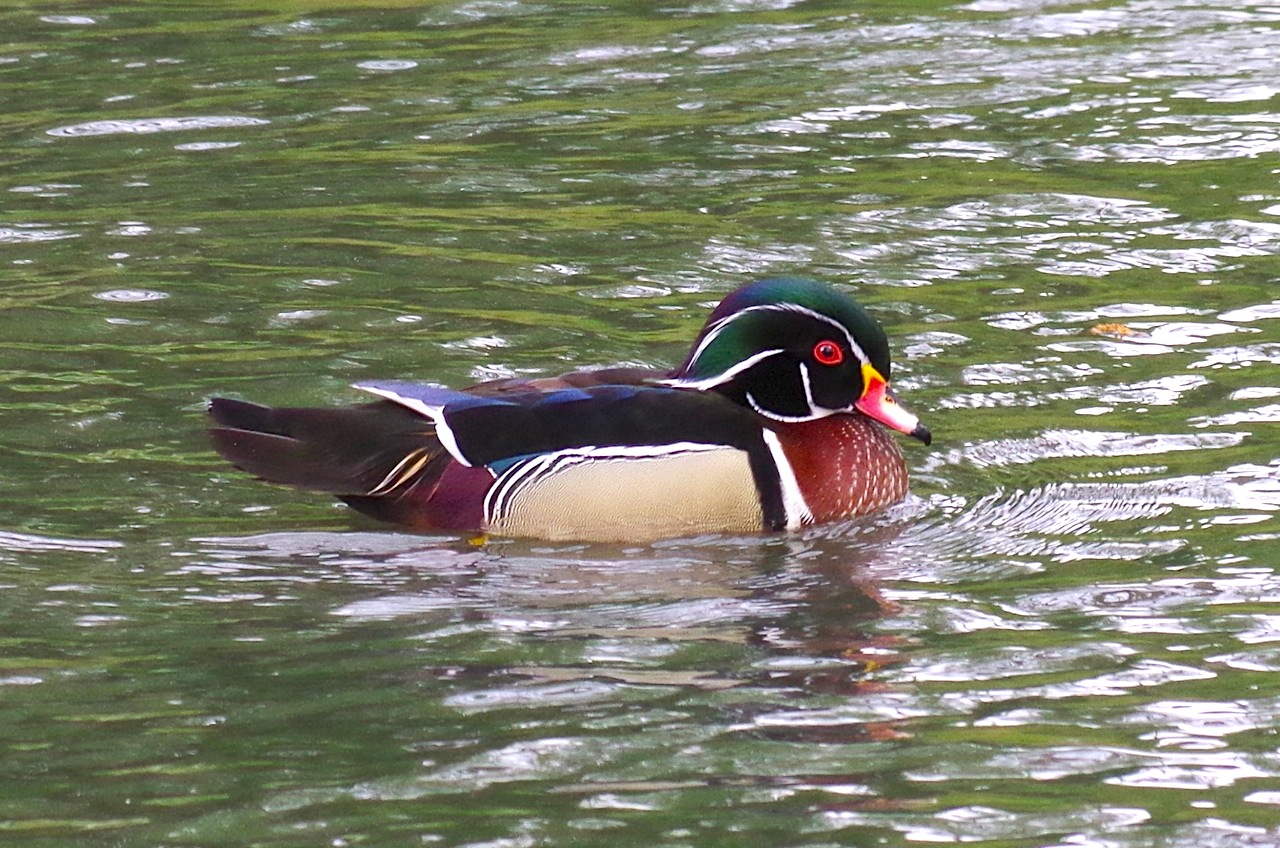
Wood Duck (Keith Salvesen)5

WOOD DUCK: THE LEAST REALISTIC DUCK EVER

I’ve been out shooting duck, camera-wise. Ducks are a bit of a mystery to me, and to be honest I often find it hard to tell one ruddy duck from another. I’ve found a memorable one now, though – the Wood Duck Aix sponsa. With all due respect to the Family Anatidae, these birds are just wooden toys brightly painted. I’ve watched them, and I’m still not convinced they don’t have tiny motors in them that propel them slowly in the water and make the wings twitch from time to time. 
Wood Duck (Keith Salvesen)2

Wood Ducks may be found on Abaco, which I why I mention them. I’m showing some here in case you should be lucky enough to meet one – then you’ll recognise it at once. They are infrequent winter residents on Abaco – not exactly rare, but not commonly seen and therefore irregularly reported. 

Wood Duck (Keith Salvesen)1

If you do happen upon one of these birds you’ll be fortunate, for they are undoubtedly very beautiful. It might be worth clapping your hands to test my theory that they won’t react at all. Their little motors will just keep them chugging through the water…Wood Duck (Keith Salvesen)4

All photos: RH. Idiotic duck-based theory: RH

Unknown's avatar

AUDUBON’S ‘PRIORITY BIRDS’ ON ABACO: 21 SPECIES TO TREASURE

Black-necked stilt AH IMG_1462 copy - Version 2

AUDUBON’S ‘PRIORITY BIRDS’

PRIORITY BIRDS ON ABACO

Of the total of 49 species listed by Audubon, an astonishing 31 are recorded for Abaco. Such a statistic underlines the importance of the island and its cays as a major birding location with habitat suitable for these ‘Priority Birds’ . Some of them birds may be rare ‘vagrants’, or occasional ‘transient’ visitors but all are considered threatened or vulnerable. I have marked in red the ones that may easily or with reasonable diligence and luck be found on Abaco. These are either Permanent Resident (PR) species; or Migratory species resident in Winter (WR) or Summer (SR); or TRansients that are seen annually or at least are regularly reported. For all practical bird-spotting purposes, the remainder can be set aside, and with no disrespect to them I have reduced their image & entry sizes… That leaves 21 species selected by Audubon for special protection that may be quite readily found on Abaco – and that will be adversely affected by significant habitat change. Birds to treasure, in fact.

 PR

Arctic Tern Sterna paradisaea

Bald Eagle Haliaeetus leucocephalus

Black Skimmer Rynchops niger

Black-capped Petrel Pterodroma hasitata

Hudsonian Godwit Limosa haemastica

Redhead Aythya americana

Roseate Spoonbill Platalea ajaja

Sooty Shearwater Puffinus griseus

Swainson’s Hawk Buteo swainsoni

Swallow-tailed Kite Elanoides forficatus

PR

Wilson’s Plover Charadrius wilsonia


WHO WAS THIS AUDUBON GUY, ANYWAY?

FIND OUT HERE including drawings by Audubon of birds he might have seen had he ever visited Abaco (which he didn’t…)

Wilson's Plover & Chick jpg

Credits: Alex Hughes (header), Sandy Walker (above), Audubon Birds


Unknown's avatar

IT’S A WARBLER. WITH A YELLOW THROAT. ON ABACO. SIMPLE?

Yellow-throated warbler, Abaco  (Keith Salvesen)

IT’S A WARBLER. WITH A YELLOW THROAT. ON ABACO. SIMPLE?

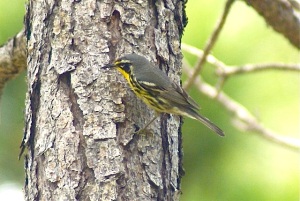
The Yellow-throated Warbler (Setophaga dominica) is a most helpful warbler, in that what you see is what you get. You needn’t go to embarrassing lengths to determine whether it has a Yellow Rump. It doesn’t make extravagant geographical claims like the Cape May, Kentucky, Tennessee, Nashville or Connecticut warblers. It doesn’t disguise its warblerdom with a confusing name like ‘American Redstart’ or ‘Ovenbird’. Nor with a weird warbler name that is completely obscure like the Prothonotary. It’s a winter resident only, so it won’t try to puzzle you in the summer. The males and females are roughly similar in appearance, unlike so many species. All-in-all, a most agreeable and obliging little bird. Here are a few to enjoy, before I spoil the magic slightly…

Yellow-throated Warbler, Abaco (Bruce Hallett)Yellow-throated Warbler, Abaco (Bruce Hallett) 2Yellow-throated warbler, Abaco (Erik Gauger)

YTWs are quite pose-y birds, and tend to strike attitudes. One is the ‘head-in-the-air’, as below and further above. There’s the ‘butt-in-the-air’ too, immediately above (one of my favourite photos)Yellow-throated Warbler, Abaco (Becky Marvil) Yellow-throated Warbler, Abaco - Becky MarvilYellow-throated warbler, Abaco  (Keith Salvesen)

This shape is both characteristic and characterful. You might call it the ‘sag-in-the-middle’Yellow-throated warbler, Abaco  (Keith Salvesen)

This year I saw my first YTW in the Delphi Gardens, skulking around in a Gumbo Limbo tree. Having taken a number of rather poor shots – partly due to the intervention of branches, twigs, leaves, berries, shaky hands and so forth – I got some clearer shots at it, the two above and below being the best of an indifferent bunch.Yellow-throated warbler, Abaco  (Keith Salvesen)Yellow-throated warbler, Abaco  (Keith Salvesen)

I said earlier that the magic of the apparently simple ID of a warbler that lives up to its name would have to be spoiled. I’m afraid this little gallery rather undoes the certainties I’d promised… two more species common to Abaco, also named for their yellow throats (yet it’s more extensive than just the throat, anyway) . 
BAHAMA YELLOWTHROAT
                                                     20130106_Bahamas-Great Abaco_4846_Bahama Yellowthroat_Gerlinde Taurer copy Bahama Yellowthroat (m) Bruce Hallett
COMMON YELLOWTHROAT
800px-Common_Yellowthroat_by_Dan_Pancamo Common Yellowthroat, Gilpin Pond, Abaco Bahamas (Tom Sheley)
You’d really think that someone at Audubon Towers or Cornell Castle might have thought of calling these two species ‘Bahama’ and ‘Common’ Masked Warblers, wouldn’t you – after all there’s a Hooded Warbler, which indeed has a hood. No other warbler has a mask like these 2. Then any confusion could be avoided. So remember: the Yellow-throated Warbler has a yellow throat AND is otherwise black and white, with streaks. Erm, just like a…
BLACK AND WHITE WARBLER

Black & White Warbler (Wiki)

RELATED POSTS
 
Credits: RH (1,7,8,9,10); Bruce Hallett (2, 3); Erik Gauger (4); Becky Marvil (5, 6). Thumbnails: Gerlinde Taurer, Bruce Hallett, Dan Pancamo, Tom Sheley, Wiki
Unknown's avatar

“ONE IS CALLED LUCY…”: SWIMMING WITH BAHAMAS SHARKS

Shark, Blacktip ©Melinda Riger @ G B Scuba copy 2

“ONE IS CALLED LUCY…”: SWIMMING WITH SHARKS

From time to time I wonder about the naming of animals. I know about the problems that can arise when people name their chickens Henny, Penny, Denny & Lenny, and the time comes to (please look away now). And how a slavering dog coming towards you (not on a lead) that the owner calls ‘Tyson’ or ‘Killer’ is possibly one to cross the street for. And that the owner of a cat called ‘The Reverend Wenceslas Muff’ (Sir Roy Strong, in fact) may not take kindly to you referring to it facetiously as ‘Puddy-tat’. But does it make things any better to know that the shark that is eyeballing you is called Lucy? I don’t know the names of the others, but I am sure they would all like to be introduced… Shark close-up ©Melinda Riger @ G B Scuba copyShark with remora ©Melinda Riger @ G B Scuba copyShark © Melinda Riger @ G B Scuba copy 2Shark ©Melinda Riger @ GB Scuba copy 2Shark Head ©Melinda Riger @ GB Scuba copy 2Shark 2 ©Melinda Riger @ G B Scuba copy 2Shark 4 ©Melinda Riger @ G B Scuba copyShark (pregant female) ©Melinda Riger @G B Scuba copy
REMORAS Some of the photos show a strange creature attached to the underside of the shark. For more info about these weird shark passengers, and some great images, click HERE

All the fabulous photographs above were taken by Melinda Riger and Virginia Cooper of Grand Bahama Scuba, on whom I rely entirely for subaqueous material, being a pathetic swimmer, a gnarly ancient, and a certified scaredy-cat (‘highly commended’). My thanks as always to them for use permission