Unknown's avatar

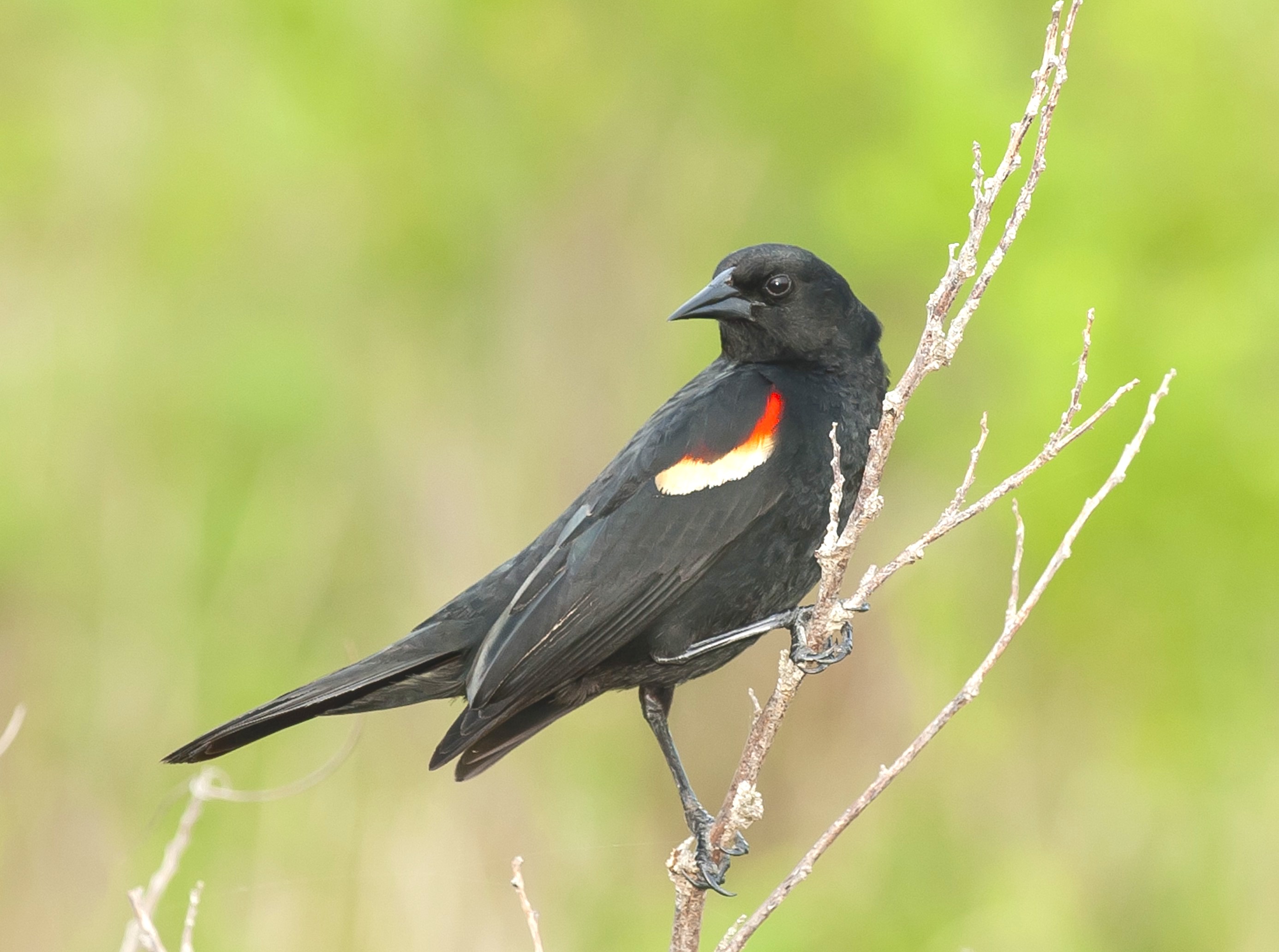
RED-WINGED BLACKBIRD, ABACO, BAHAMAS


red-winged-blackbird-male-abaco-bahamas-tom-sheley.jpg

I’m away for a few days on the Emerald Isle, leaving my trusty computer many miles away (on purpose, I mean). I’ve just got my iPhone, but writing posts and inserting images on such a small screen / keyboard is a fool’s errand. So I’ve pre-loaded a couple of beautiful bird images to post this week. Here is a wonderful red-winged blackbird male taken by photographer Tom Sheley while we were getting together some images for The Birds of Abaco deep in Abaco backcountry.

Photo credit: Tom Sheley

Unknown's avatar

SPERM WHALES TAILING: ABACO, BAHAMAS


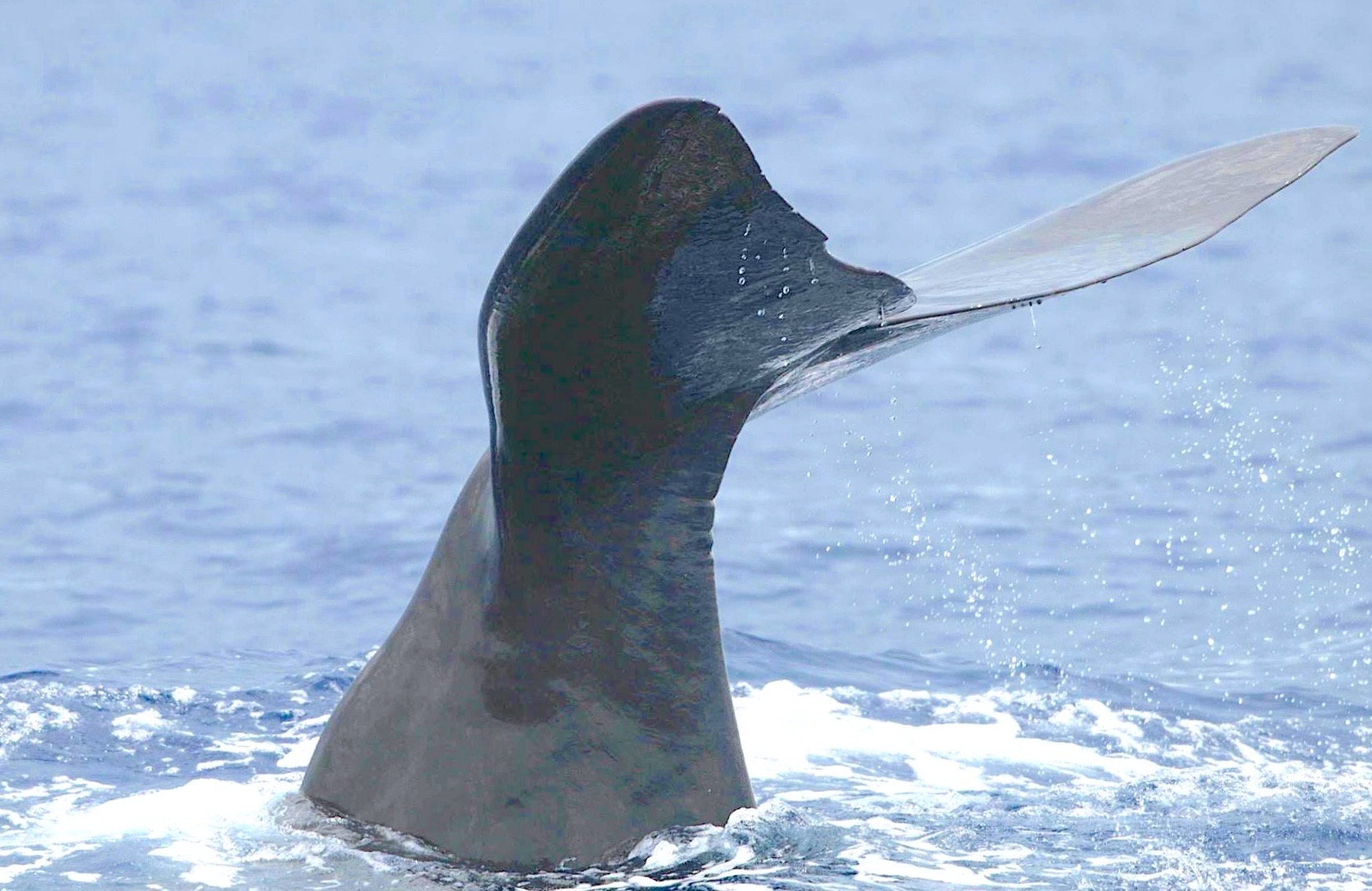
Sperm Whale Tailing, Abaco, Bahamas (©BMMRO)

SPERM WHALES TAILING: ABACO, BAHAMAS

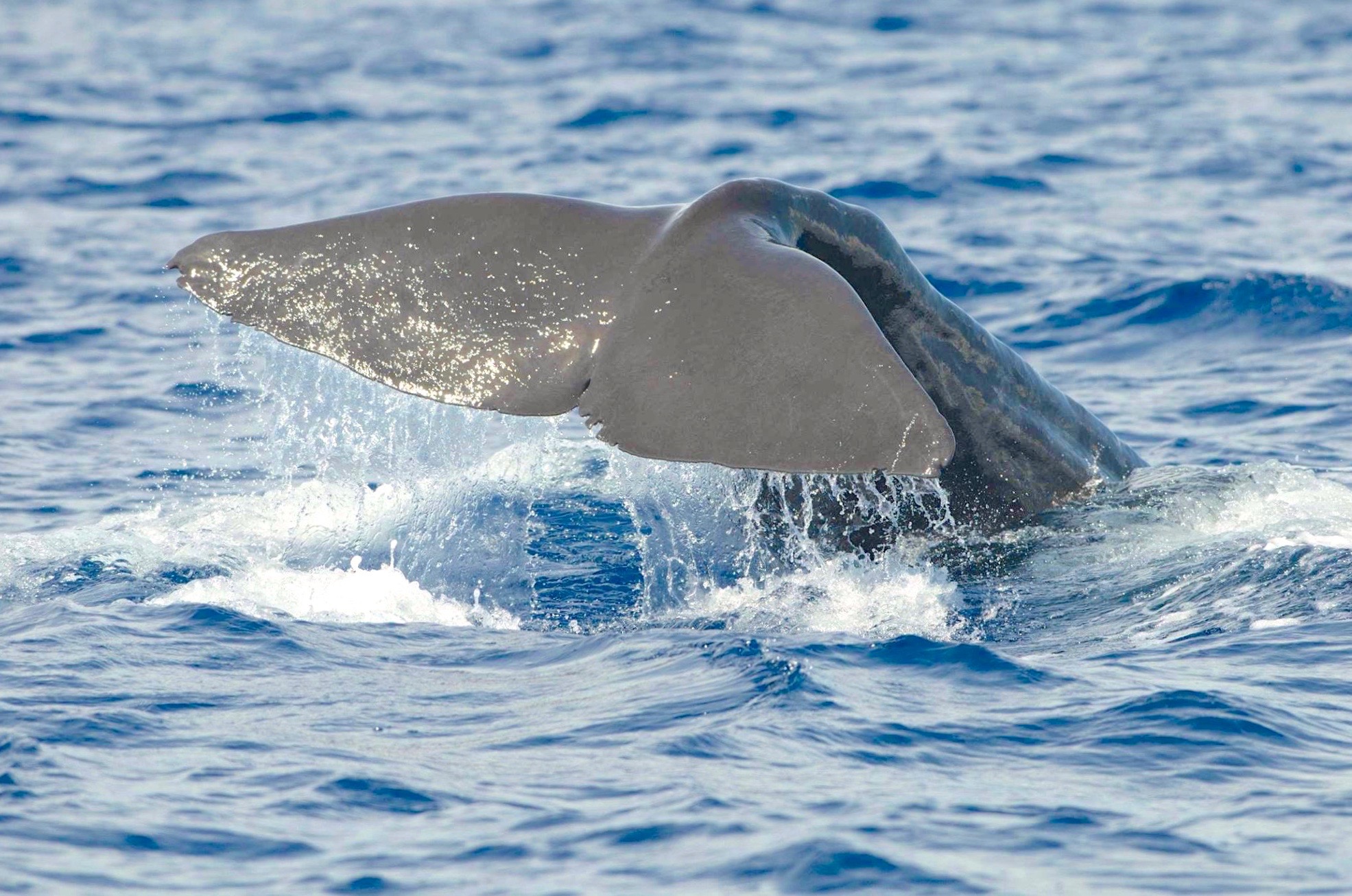
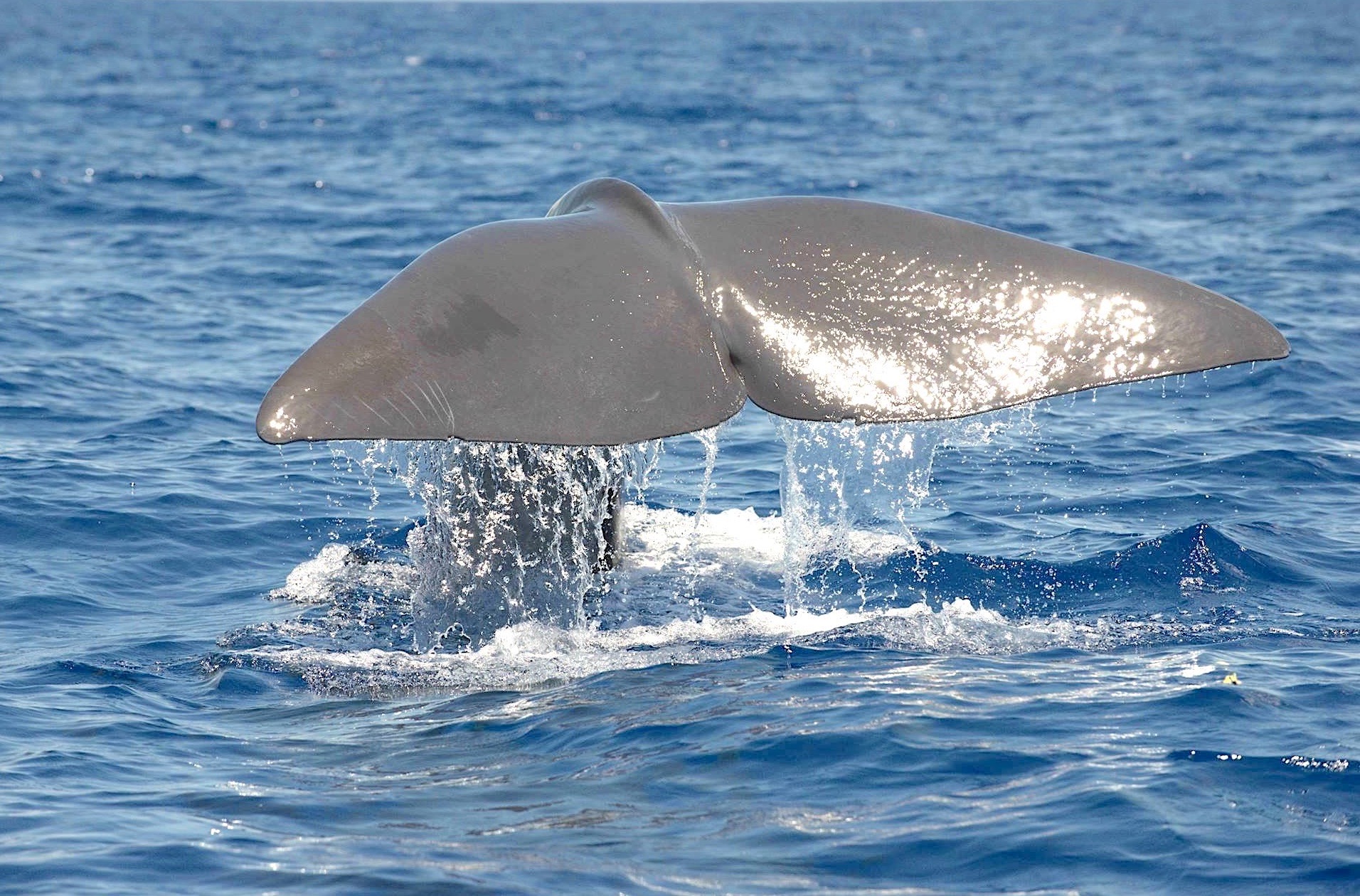
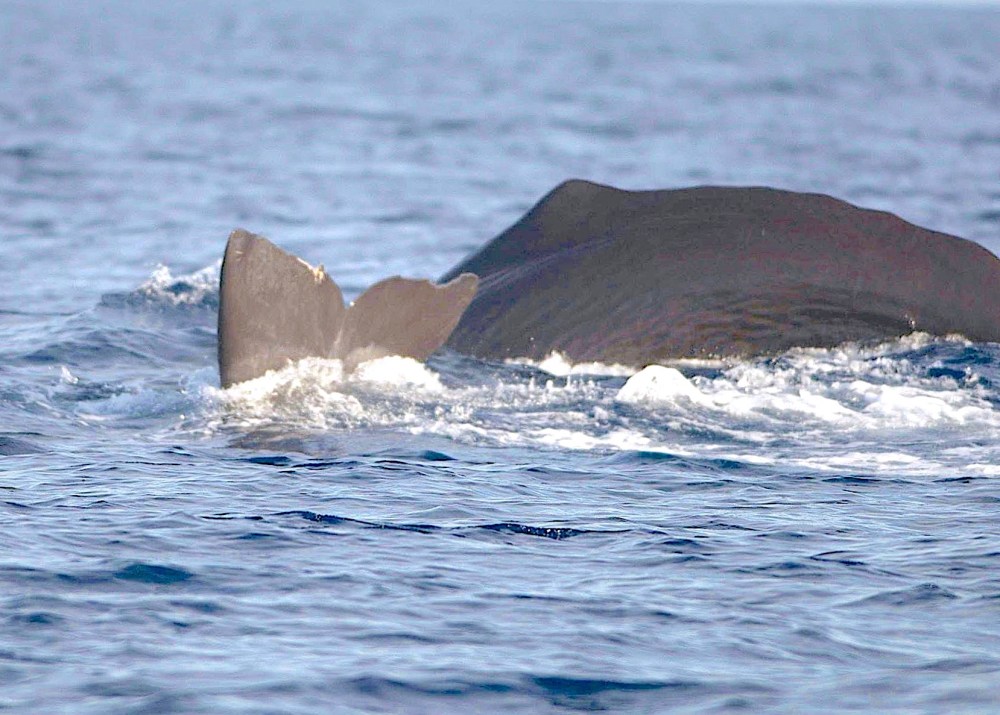
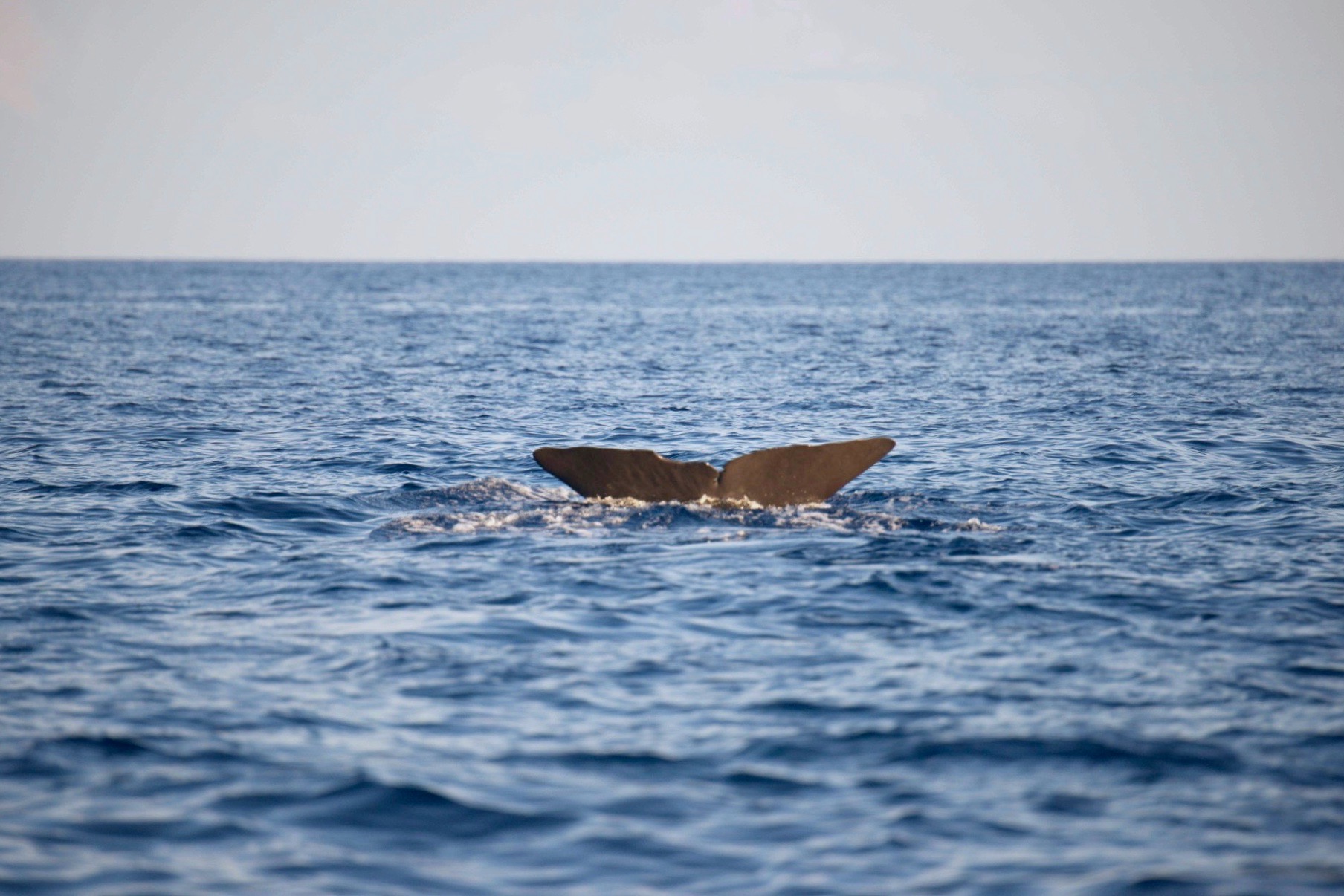
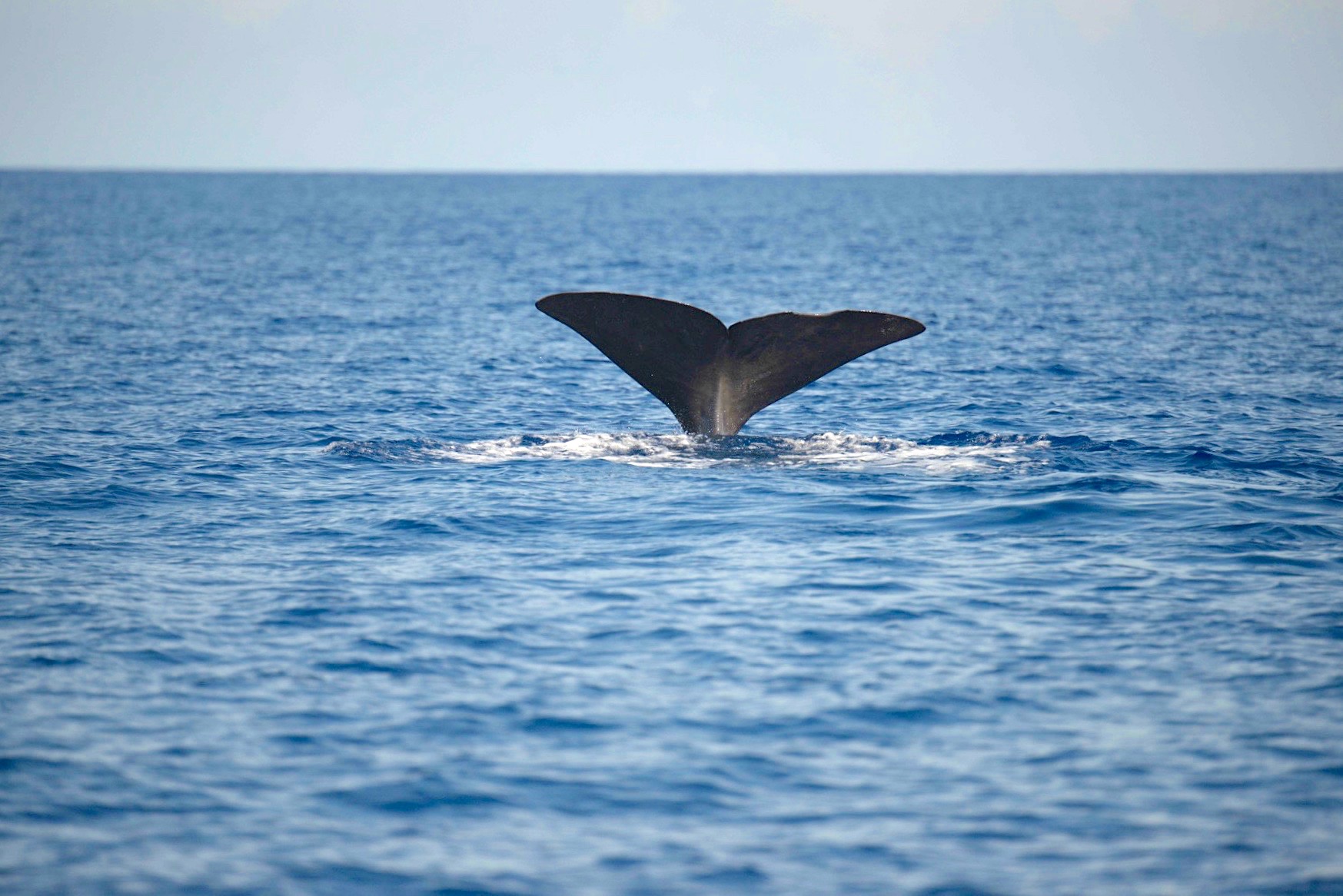
There can be very few people in the world whose breath would not be taken away by the sight of a massive sperm whale tailing close by. And as it happens, this very phenomenon can be seen in the deeper waters around the coast of Abaco. Here is a small gallery of photos of sperm whales tailing, taken from the BMMRO research vessel. There’s no point in my writing a lot of commentary to the images – they speak for themselves of the awesome (in its correct sense) power and grace of these huge mammals.

Sperm Whale Tailing, Abaco, Bahamas (©BMMRO) Sperm Whale Tailing, Abaco, Bahamas (©BMMRO)

In these images, you will notice that the whales have distinctive patterns of notches and tears in their flukes (ie tail fins). As with a dolphin’s dorsal fin, these areas of damage are like fingerprints – unique to each individual, and a sure means to identification. The researchers log each sighting and assign a cypher – a whale will become known as ‘B42’ and not usually by a less scientific name like ‘Derek’ or ‘Susie’).

Sperm Whale Tailing, Abaco, Bahamas (©BMMRO) Sperm Whale Tailing, Abaco, Bahamas (©BMMRO)

Q. What happened next?  A. You would see the tail emerge as the whale dives deep… Sperm Whale Tailing, Abaco, Bahamas (©BMMRO)

One of my favourite whale views is of the tail as it rises above the surface with water streaming off the flukes, before it flicks over and disappears beneath the waves. 

Sperm Whale Tailing, Abaco, Bahamas (©BMMRO)

A juvenile takes a dive alongside an adult. One day that tail will be massive…Sperm Whale Tailing, Abaco, Bahamas (©BMMRO)

Credits: all photos © BMMRO, with thanks as ever to Diane and Charlotte

Sperm Whale Tailing, Abaco, Bahamas (©BMMRO)

Unknown's avatar

SHARPNOSE PUFFER FISH: BAHAMAS REEF FISH (47)


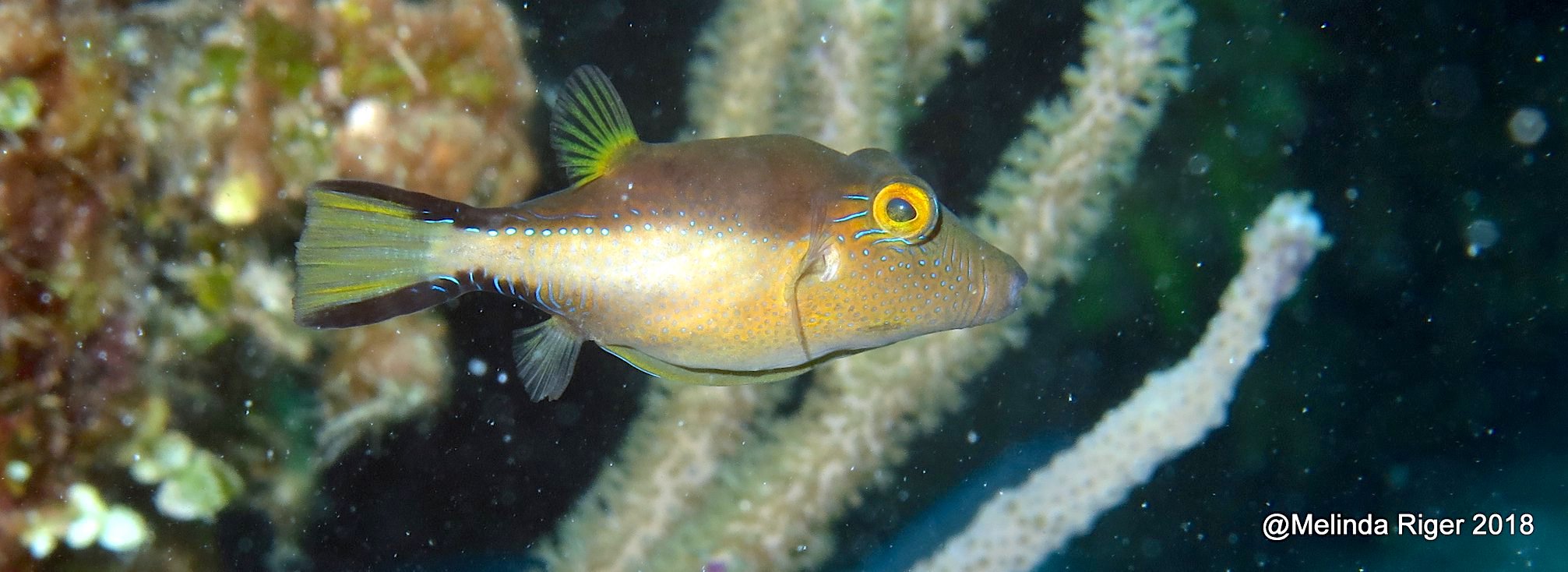
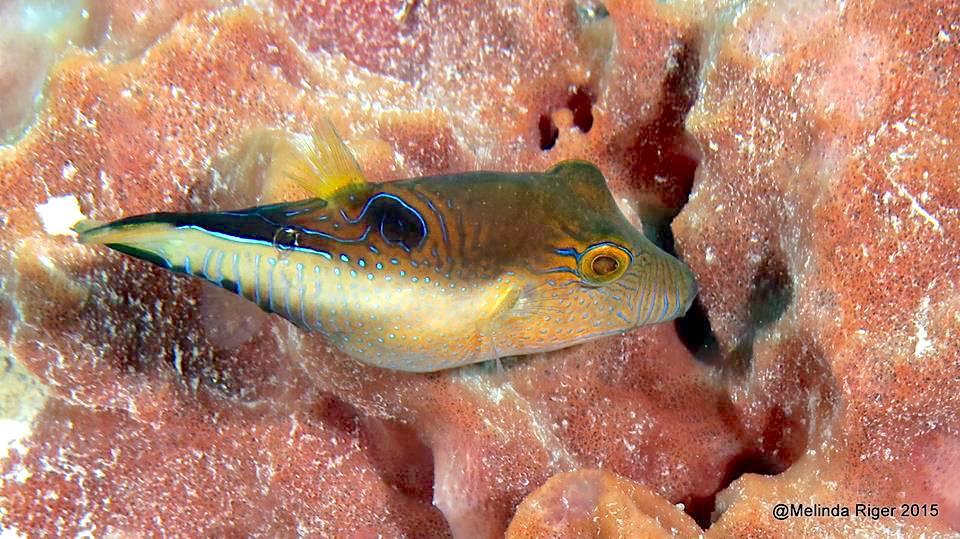
Sharpnose Puffer Fish (Melinda Riger / G B Scuba)

SHARPNOSE PUFFER FISH: BAHAMAS REEF FISH (47)

It’s more than 4 years since I last wrote about these intriguing creatures and their endearing ways. It’s time for another look, with a new batch of great photos too. This is a species that lends itself to the ‘Fun Fact’ treatment, a method that tells you at least as much as you probably need – or want – to know about puffers. The message to take away is, best not to handle one – let alone eat one – unless you know exactly what you are doing…

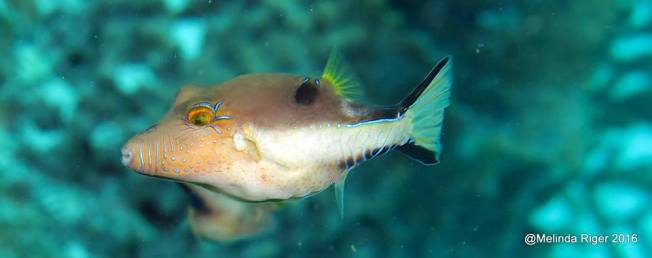
Sharpnose Puffer Fish (Melinda Riger / G B Scuba)

10 PUFFER FISH FACTS TO ASTONISH YOUR FAMILY & FRIENDS

1. Puffers can inflate their bodies in an instant by ingesting huge amounts of water and becoming water-filled balloons. Then their tiny spines stick out. 

2. They need a startling form of defence (or ‘piscatorial superpower’ Linnaeus 1763*) like this because they can’t swim very well to escape from predators: it’s surprising and intimidating – and it also makes them hard to eat.

3. However, a persistent predator undeterred by the trick will find that the puffer contains a toxin (tetrodotoxin TTX) that is said to be ‘1,200 times stronger than cyanide’. One puffer fish has enough toxin to kill up to 30 humans (National Geographic).

Sharpnose Puffer Fish (Melinda Riger / G B Scuba)

4. Notwithstanding the risks, selected parts of a puffer fish are a delicacy in some cultures (known as ‘fugu’ in Japan). Specially trained chefs are used to avoid mass deaths among diners. The insurance premiums must be huge.

5. Sharks are thought to be the only species immune to the puffer fish, and are not much bothered by a small fish that can blow itself up.

6. Puffers have skin, not scales; most have toxic fins or spines of some sort, besides toxic innards. Bright coloured kinds are likely to be more toxic than their duller cousins. This warning colouration in creatures is known as aposematism.

Sharpnose Puffer Fish (Melinda Riger / G B Scuba)

7. It’s worth finding out what an uninflated puffer looks like before you try to pet a random passing fish and have a toxic encounter. There is as yet no known antidote.

8. In all, there are more than a hundred puffer species in the world, all found where there are warm shallow waters. At least 3 main species – sharpnose, band-tail and chequered – are found in the Bahamas.

Sharpnose Puffer Fish (Melinda Riger / G B Scuba)

9. Some puffer species are not toxic at all; and some – especially in Pacific waters – are far more toxic than others. That’s the region where they are treated as a delicacy.

10. I’ve checked several research papers but I can’t find an evaluation of the relative toxicity as between the Bahamas puffer species. However it’s clear that the sharpnose is certainly not one play with. Take care!

Q. SO WHAT DOES AN INFLATED PUFFER LOOK LIKE? A. THIS!

Brian Lockwood took his life in his hands to get this fantastic shot…Sharpnose Puffer Fish (Brian Lockwood)

* Not really

RELATED POST: PORCUPINE FISH

Photo Credits: All puffer fish taken by Melinda Riger of Grand Bahama Scuba except for the photo of an inflated one from recent Abaco permanent resident Brian Lockwood

Unknown's avatar

A HISTORIC MONUMENT TO MARITIME HISTORY: CHEROKEE, ABACO


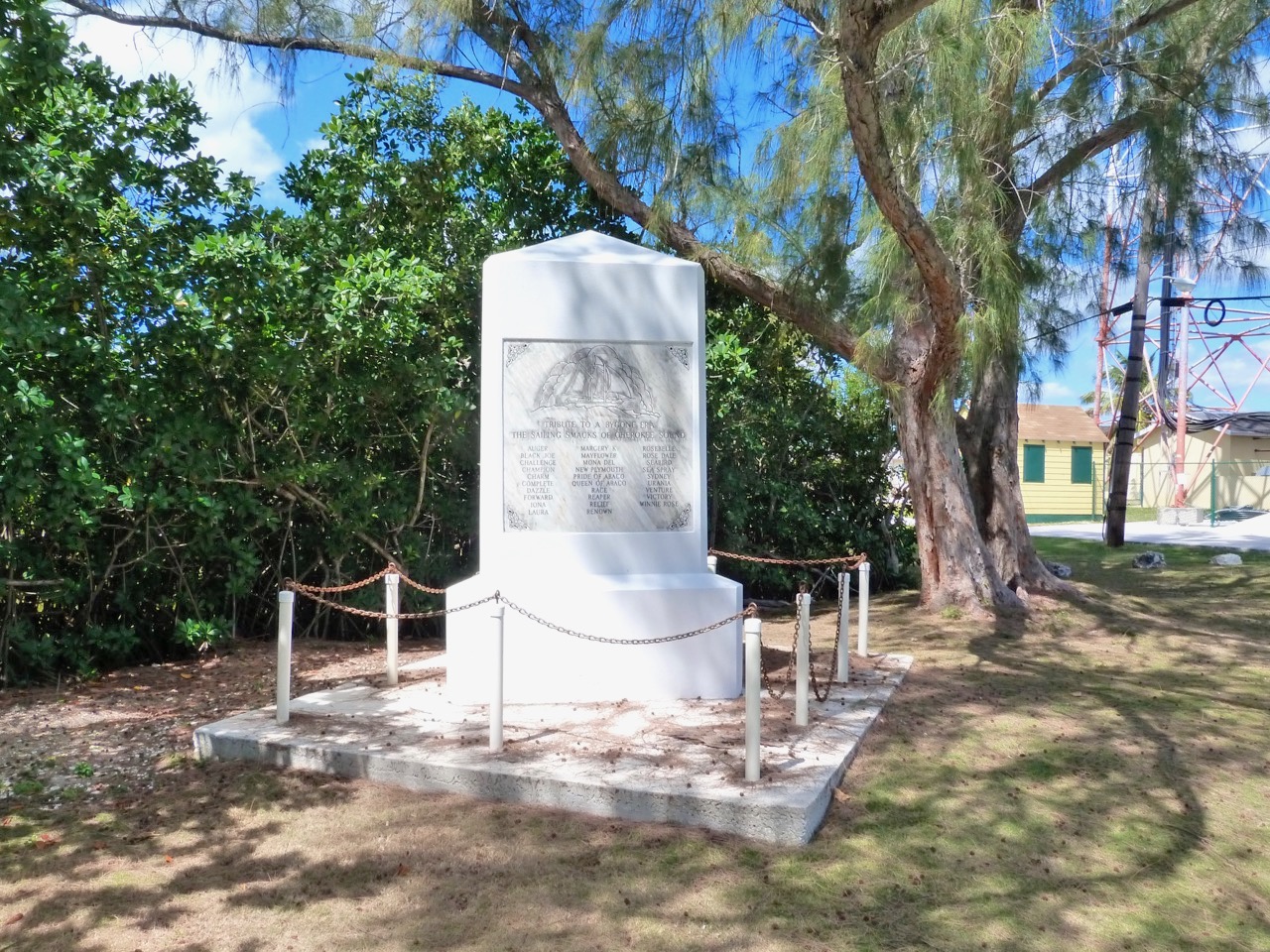
Tribute Monument to the Sailing Smacks of Cherokee Abaco (Keith Salvesen)

A HISTORIC MONUMENT TO MARITIME HISTORY: CHEROKEE, ABACO

The small and – until quite recently – remote settlement of Cherokee is said to have been founded by one Colonel Thomas Brown with his cohort of Loyalists from the Carolinas. The origin of the name has given rise to various theories, one of which stems from Col. Brown’s supposed link to Cherokee Indians.

The early settlers established themselves at this natural harbour, and life there was largely dependent on the sea. Fishing provided food, wrecking provided goods and presumably the wherewithal for trade or barter. In due course, boat building became an important part of the community, as with other places on Abaco (e.g. Man-o-War Cay). Later still, smack fishing with the locally made boats brought stability and no doubt a degree of prosperity to the community.

The monument, and in the background right, the comms tower & the new SHELL MUSEUMTribute Monument to the Sailing Smacks of Cherokee Abaco (Keith Salvesen)
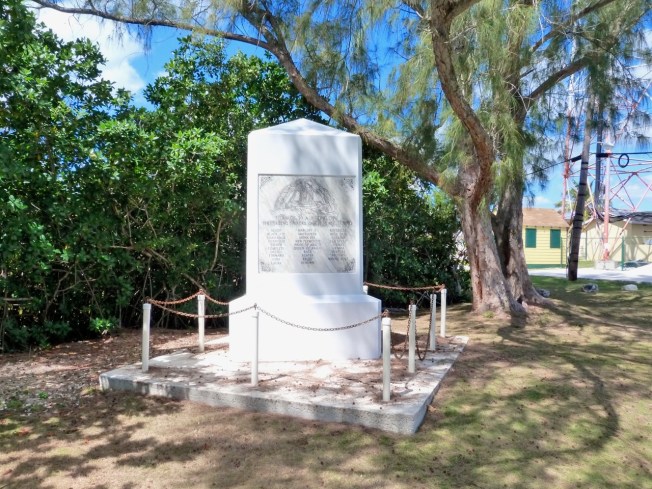
The fishing smacks of Cherokee were designed to carry 5 sails rather than the usual 7 sails. Not being a sailor, I can’t tell if this was just a local stylistic choice, or for simplicity, or perhaps for a specific sea-going reason in that particular area. As a tribute to this honourable industry, in October 1988 the community of Cherokee Sound erected a fine monument near the famous LONG DOCK dedicated to the Cherokee fishermen and their smacks, and naming many of the vessels involved over many decades.
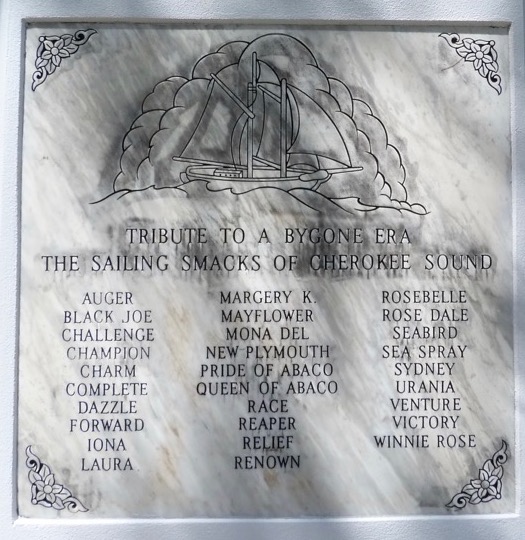
Tribute Monument to the Sailing Smacks of Cherokee Abaco (Keith Salvesen)

The monument also sets out the long history of smack fishing dating from the early c19 until the 1960s, by which time the advent of the diesel engine had begun to make setting the sails for fishing redundant. The moving tribute speaks to the great pride of the community in its history and its forbears.

The short poem, with the authorship shown as Anon, is in fact based on a sea-song written by a non-seafaring Scotsman called Allan Cunningham (1784- 1842), A Wet sheet and a flowing sea – said to be his best known song. The full version is given at the end, and you’ll see that the second verse (with some minor changes) is the part chosen to form the shorter tribute.

Tribute Monument to the Sailing Smacks of Cherokee Abaco

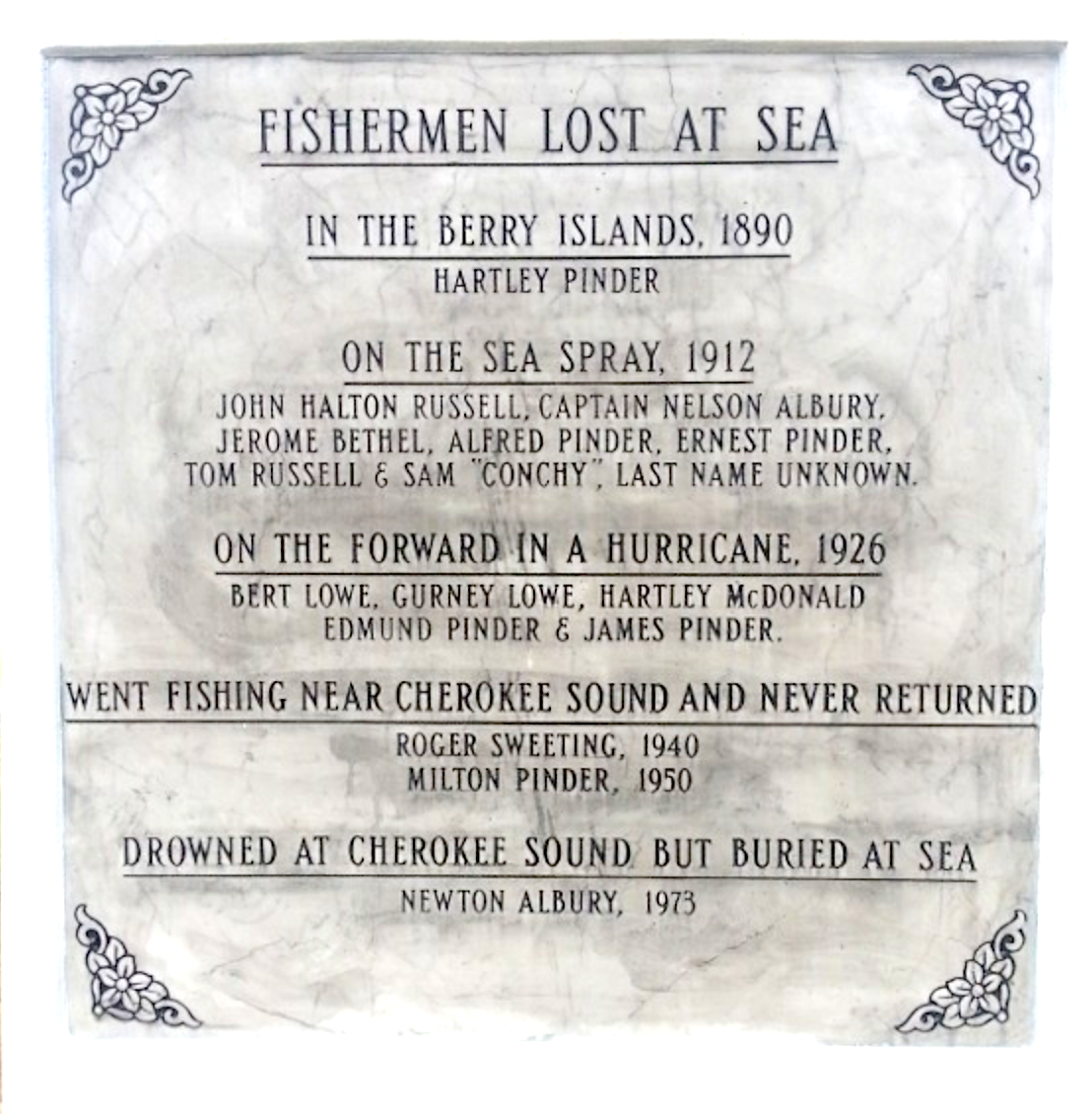
The monument also includes a panel dedicated to the fishermen of the community who lost their lives in plying their trade from 1890 onwards. It is notable that every one of them bears a family name familiar to this day on Abaco in the succeeding generations.
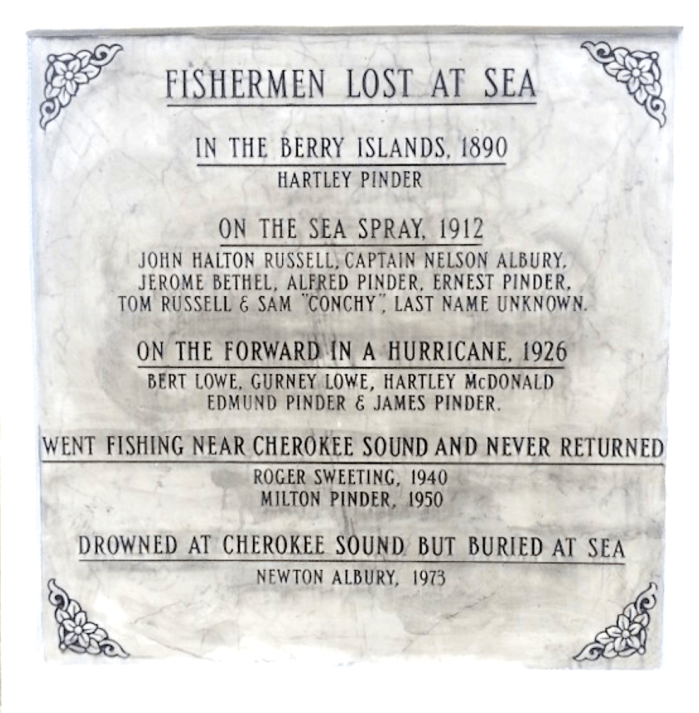
Tribute Monument to the Sailing Smacks of Cherokee Abaco

A Wet Sheet and a Flowing Sea by Alan Cunningham (1784- 1842)

A Wet sheet and a flowing sea, 
    A wind that follows fast 
And fills the white and rustling sail 
    And bends the gallant mast; 
And bends the gallant mast, my boys, 
    While like the eagle free – 
Away the good ship flies, and leaves 
    Old England on the lee.

“O for a soft and gentle wind!” 
    I heard a fair one cry: 
But give to me the snoring breeze 
    And white waves heaving high; 
And white waves heaving high, my lads, 
    The good ship tight and free – 
The world of waters is our home, 
    And merry men are we.

There’s tempest in yon hornèd moon, 
    And lightning in yon cloud: 
But hark the music, mariners! 
    The wind is piping loud; 
The wind is piping loud, my boys, 
    The lightning flashes free – 
While the hollow oak our palace is, 
    Our heritage the sea.

Credits & research: Keith Salvesen, Kaderin Mills / BNT, Bahamas.com, National Geographic, Bahamas Ministry of Tourism
Unknown's avatar

LITTLE HARBOUR ABACO (1): JOHNSTON FOUNDRY & GALLERY


Pete's Pub & Gallery / The Johnston Foundry Little Harbour Abaco (Keith Salvesen)

LITTLE HARBOUR ABACO (1): JOHNSTON FOUNDRY & GALLERY

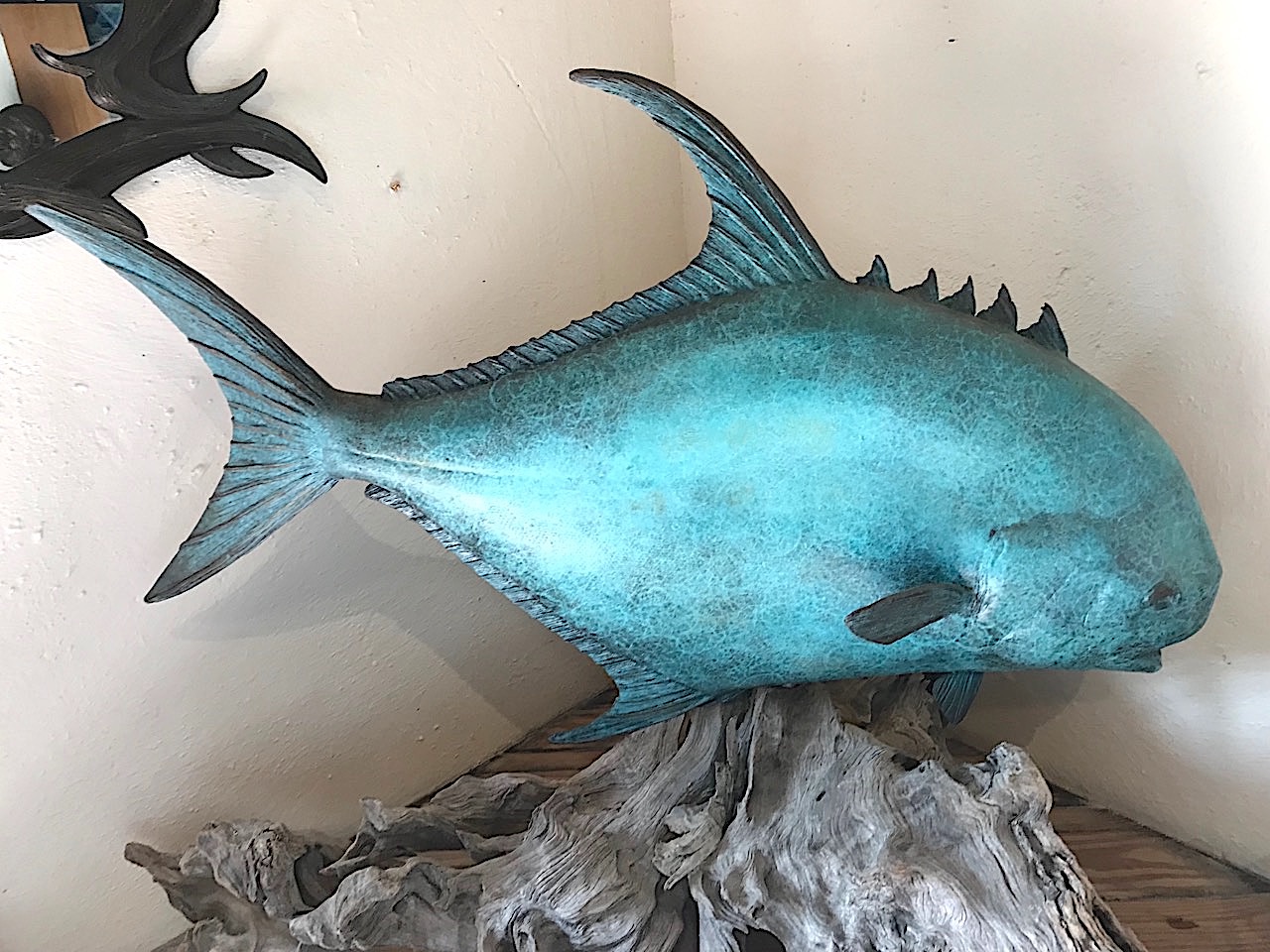
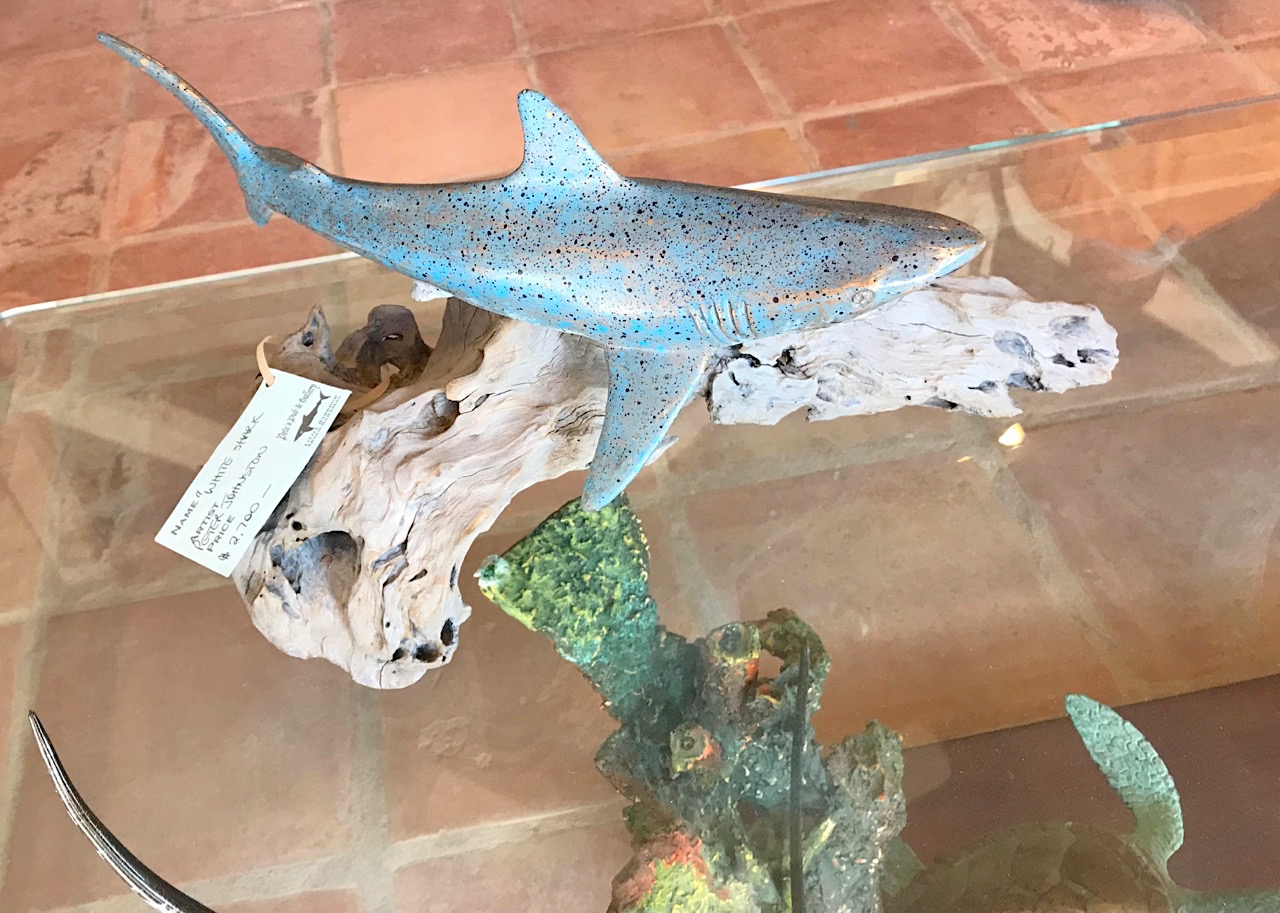
Pete’s Pub in Little Harbour needs no introduction. The place is an integral part of Abaco life, in much the same way as the Elbow Reef Lighthouse. Everyone knows that one runs effortlessly on beer and rum; the other on kerosene and a bed of mercury (just don’t mix up which is which, and best not to drink the mercury). Some visitors may happily while away an hour or three at Pete’s, not knowing of the amazing sculpture gallery almost next door, where works from the historic Johnston Foundry are displayed. Here is a taste of what you will find there.

Pete's Pub & Gallery / The Johnston Foundry Little Harbour Abaco (Keith Salvesen)

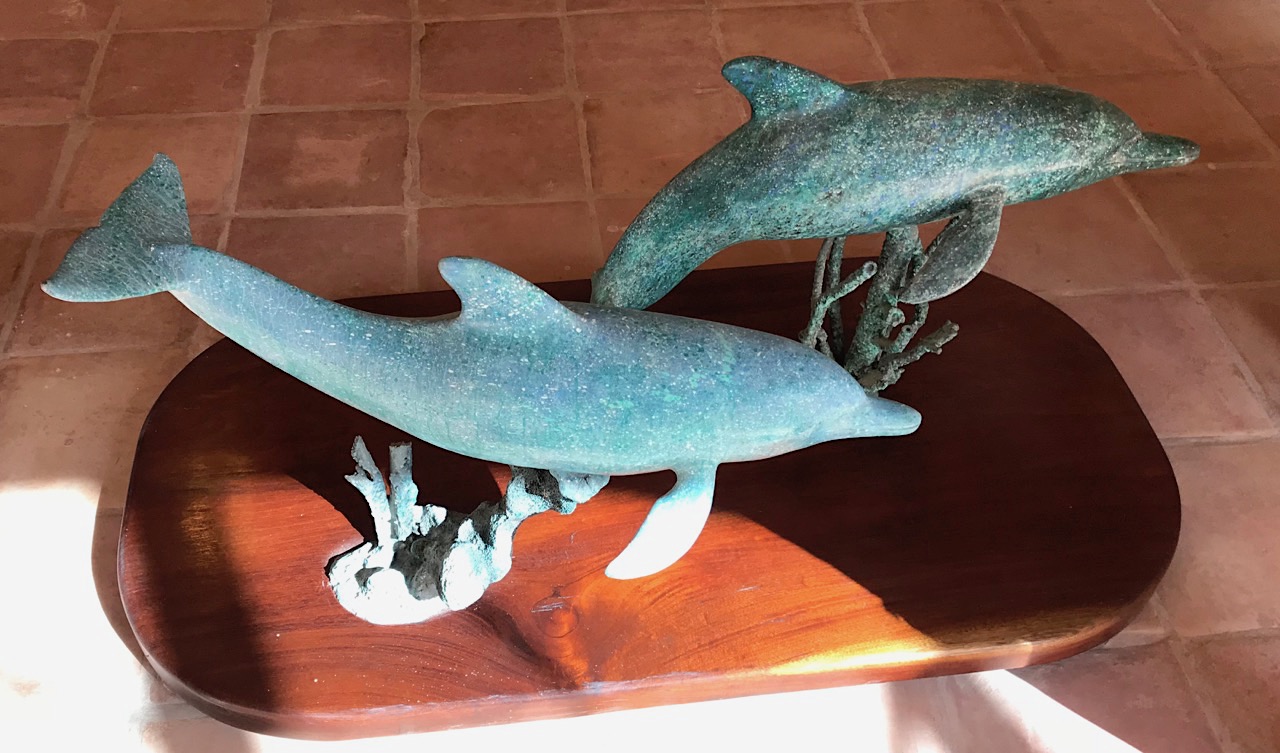
In the 1950s Randolph Johnston built a bronze casting foundry at Little Harbour that is still very much in use today. Much of the wonderful work produced by members of the Johnston family over 3 generations can be found on display in the Gallery. Here you will find genuinely locally produced sculptural works of art ranging from the simple to the incredibly complex. Some large outdoor pieces can also be found dotted around the settlement – here, a huge ray; over there, a pair of leaping dolphins.

Pete's Pub & Gallery / The Johnston Foundry Little Harbour Abaco (Keith Salvesen)Pete's Pub & Gallery / The Johnston Foundry Little Harbour Abaco (Keith Salvesen)Pete's Pub & Gallery / The Johnston Foundry Little Harbour Abaco (Keith Salvesen)Pete's Pub & Gallery / The Johnston Foundry Little Harbour Abaco (Keith Salvesen)

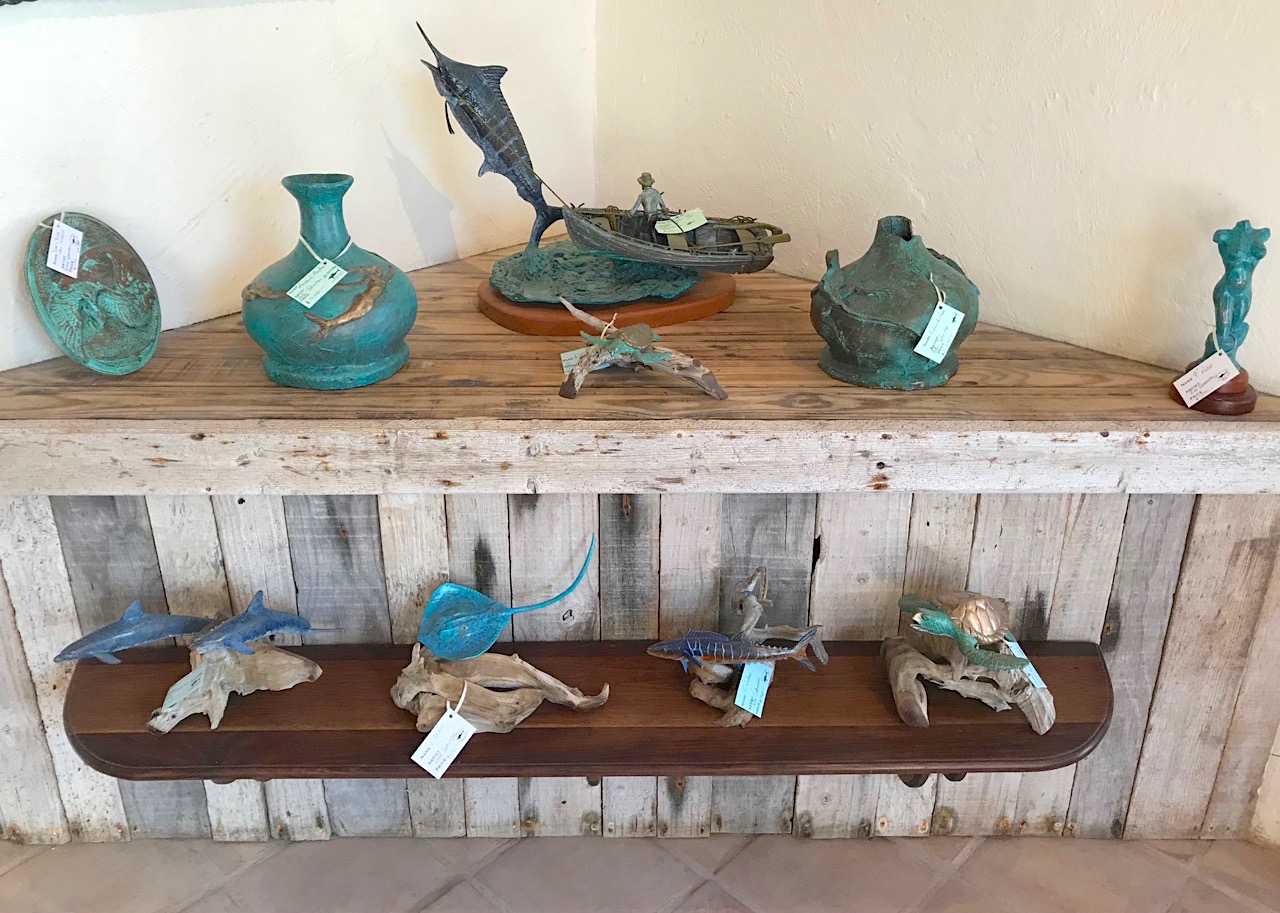
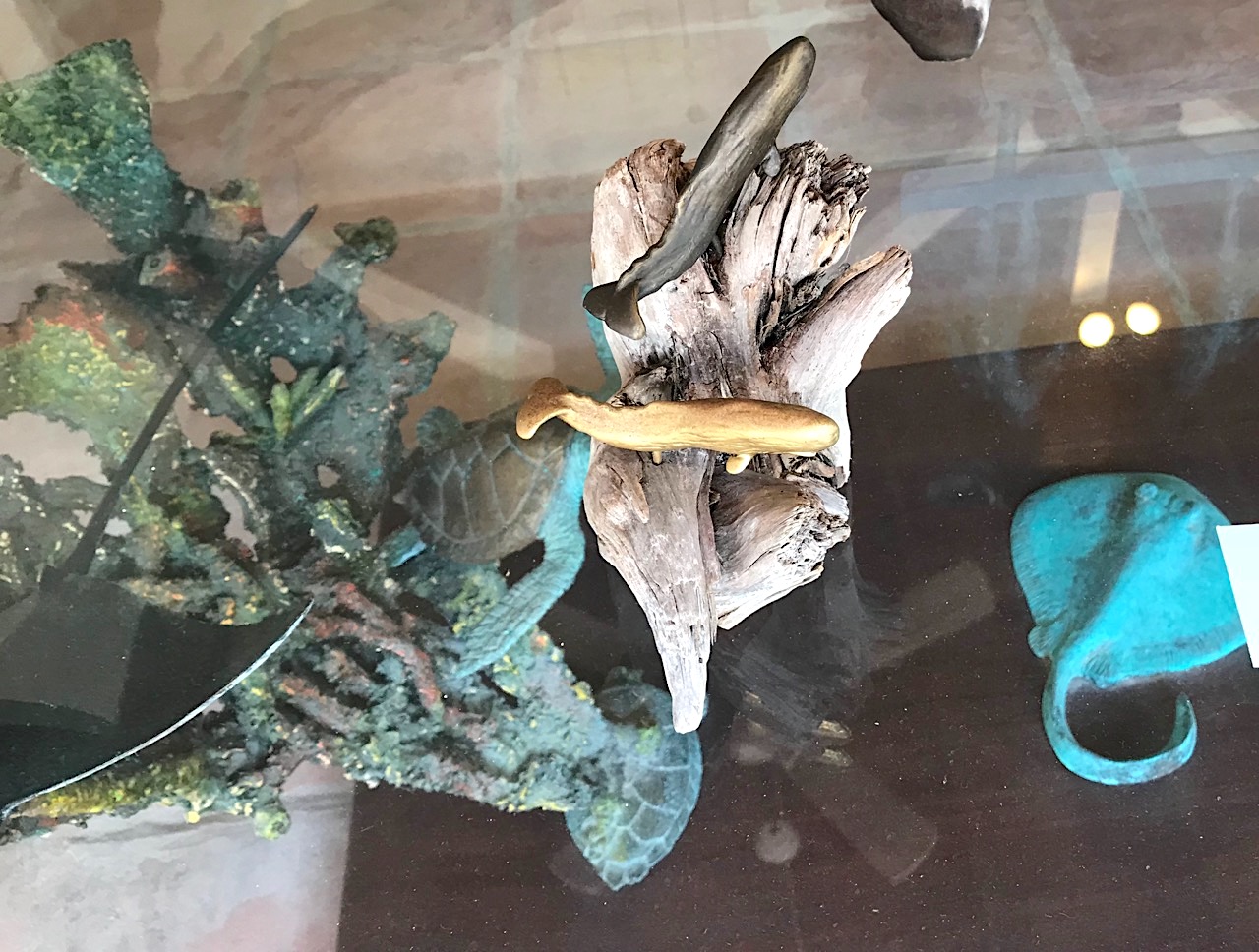
Unsurprisingly, the sculptures on display mostly relate to the sea, which laps the shoreline only a few yards in front of the gallery. These are works of art, and of skill refined over decades. They do not come cheap. There are however smaller and less expensive items to tempt the visitor who may have a baggage allowance to live down to. Here is a snapshot of some of these.

Pete's Pub & Gallery / The Johnston Foundry Little Harbour Abaco (Keith Salvesen)Pete's Pub & Gallery / The Johnston Foundry Little Harbour Abaco (Keith Salvesen)Pete's Pub & Gallery / The Johnston Foundry Little Harbour Abaco (Keith Salvesen) Pete's Pub & Gallery / The Johnston Foundry Little Harbour Abaco (Keith Salvesen)Pete's Pub & Gallery / The Johnston Foundry Little Harbour Abaco (Keith Salvesen)

You might be entertained by this short video, which will give you an idea of Pete’s set-up at this unique off-grid settlement. And if you do visit, coincide with a mealtime – the freshly caught fish is outstanding.

All photos: Keith Salvesen, with thanks for permission to photograph some of the artworks on display. Video by Pete’s! [PS I have not been paid for my writing, not even a beer…]

Unknown's avatar

THE TALE OF ‘BIG BIRD’ THE RESCUE HERON


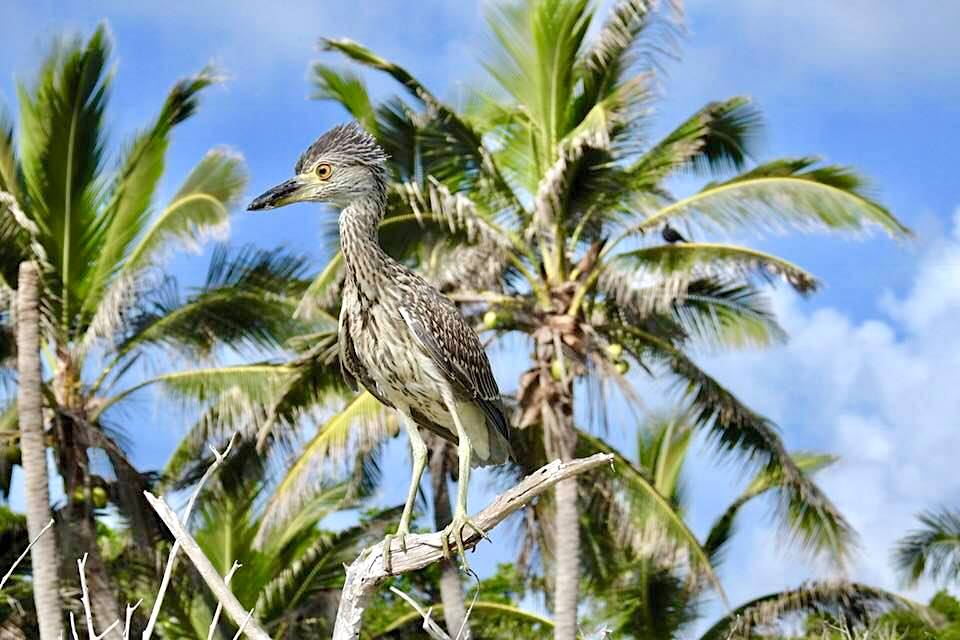
Yellow-crowned Night Heron (Rescue Bird 'Big Boy) - Melissa Maura

THE TALE OF ‘BIG BIRD’ THE RESCUE HERON

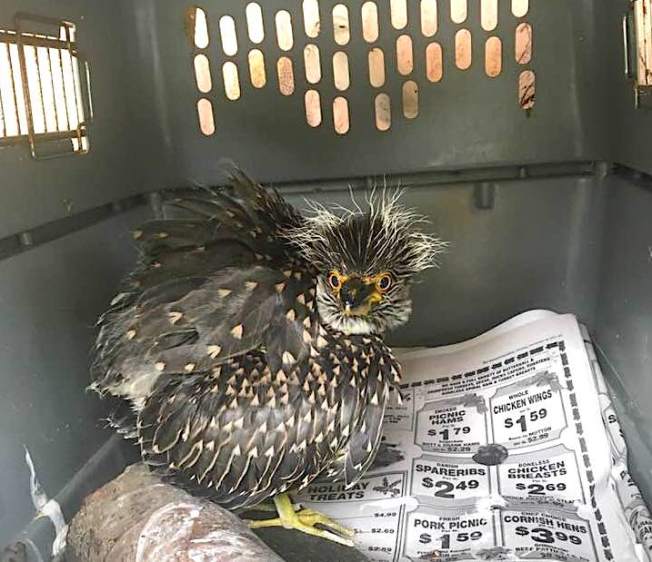
Admiring birds, photographing them, and counting them for surveys – all these are excellent pastimes. But for a real and meaningful interaction, there can surely be nothing more rewarding than animal rescue. Melissa Maura, known I’m sure to many readers of this blog, is an expert at caring for damaged or orphaned creatures. And at the beginning of June, she took a small dishevelled YELLOW-CROWNED NIGHT HERON into her care for rehabilitation. He was named Big Bird.

June 4  Big Bird has arrived…. For some rehab and perhaps a salon appointment…Yellow-crowned Night Heron (Rescue Bird 'Big Boy) - Melissa Maura

To start with, Big Bird was little enough to fit into a smallish space while the process of feeding and nurturing commenced. He was clearly quite a character.

Yellow-crowned Night Heron (Rescue Bird 'Big Boy) - Melissa Maura

Very soon, Big Bird was becoming less straggly and more herony – even his startling hairstyle started to grow out. By this stage, he was eating almost a bag a day of bait shrimp.

Yellow-crowned Night Heron (Rescue Bird 'Big Boy) - Melissa Maura

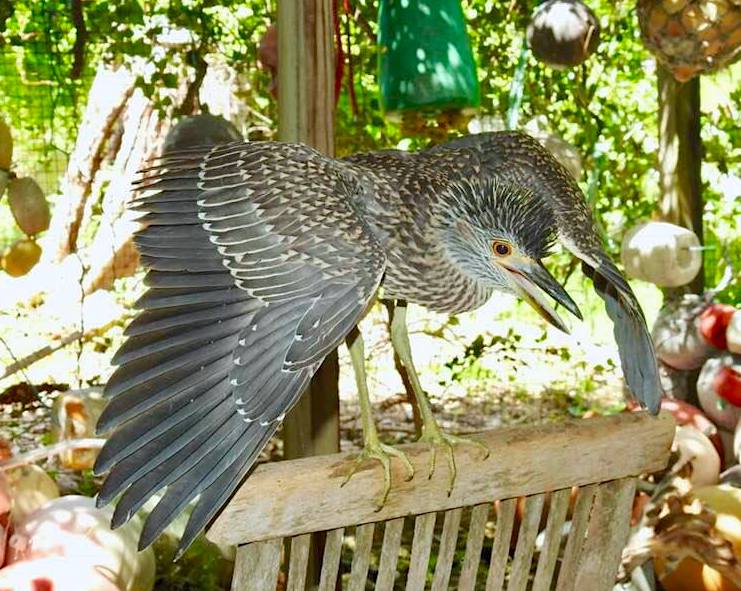
The next step in the rehab process came with the move from a small indoor cage and promotion to a big outside cage. This provided more room for Big Bird, and helped him learn to stretch his growing wings and learn to be independent.

Yellow-crowned Night Heron (Rescue Bird 'Big Boy) - Melissa MauraYellow-crowned Night Heron (Rescue Bird 'Big Boy) - Melissa Maura

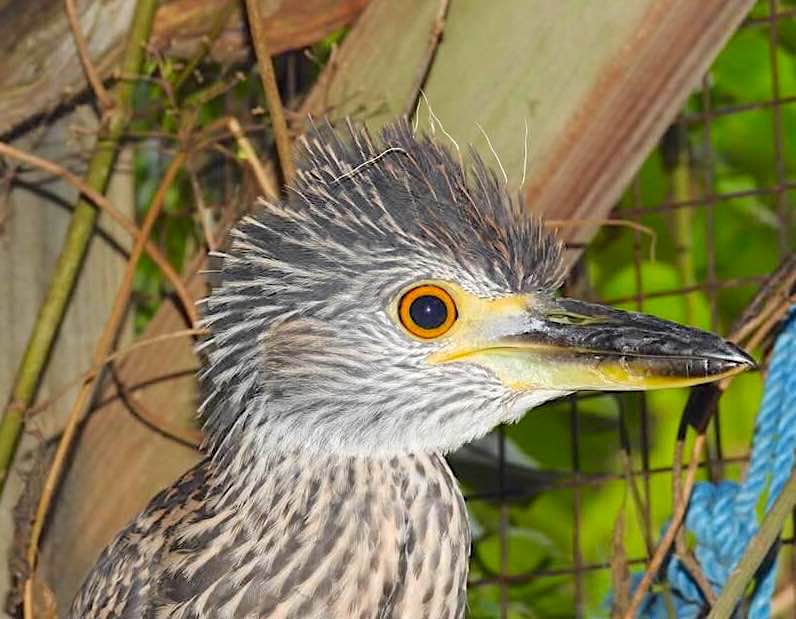
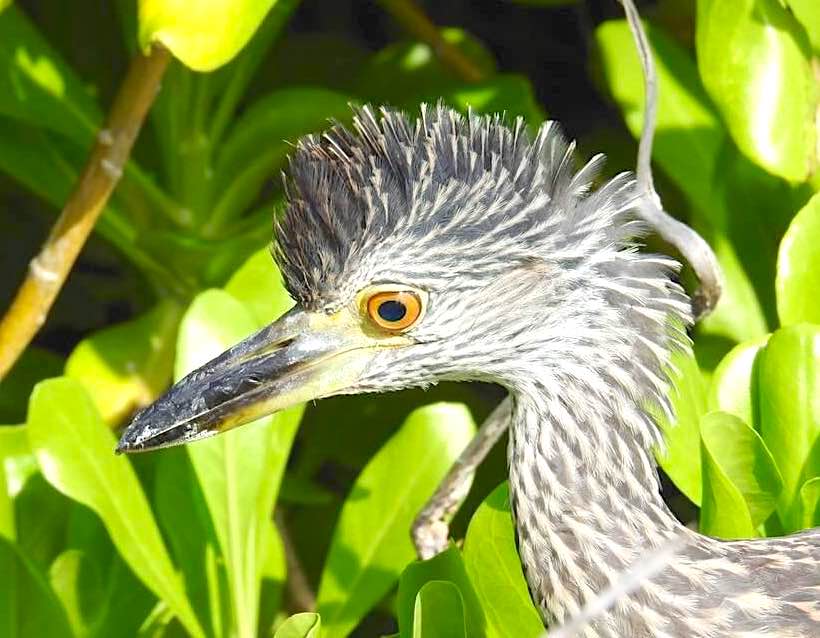
Big Bird’s wings became increasingly strong, and his early crazy hairstyle settled into something rather more crown-like.

Yellow-crowned Night Heron (Rescue Bird 'Big Boy) - Melissa MauraYellow-crowned Night Heron (Rescue Bird 'Big Boy) - Melissa Maura

A mere 6 weeks or so after Melissa started to look after Big Bird, he was nearly ready for the final stage of rehab – freedom. The specially selected location was an area where there were already a number of juvenile herons, companions for Big Bird to grow up with.

Big Boy (foreground)Yellow-crowned Night Heron (Rescue Bird 'Big Boy) - Melissa Maura

As Melissa wrote: “It comes down to this moment, after all those hours of feeding, caging and keeping a watchful eye to then see that flight to freedom!”

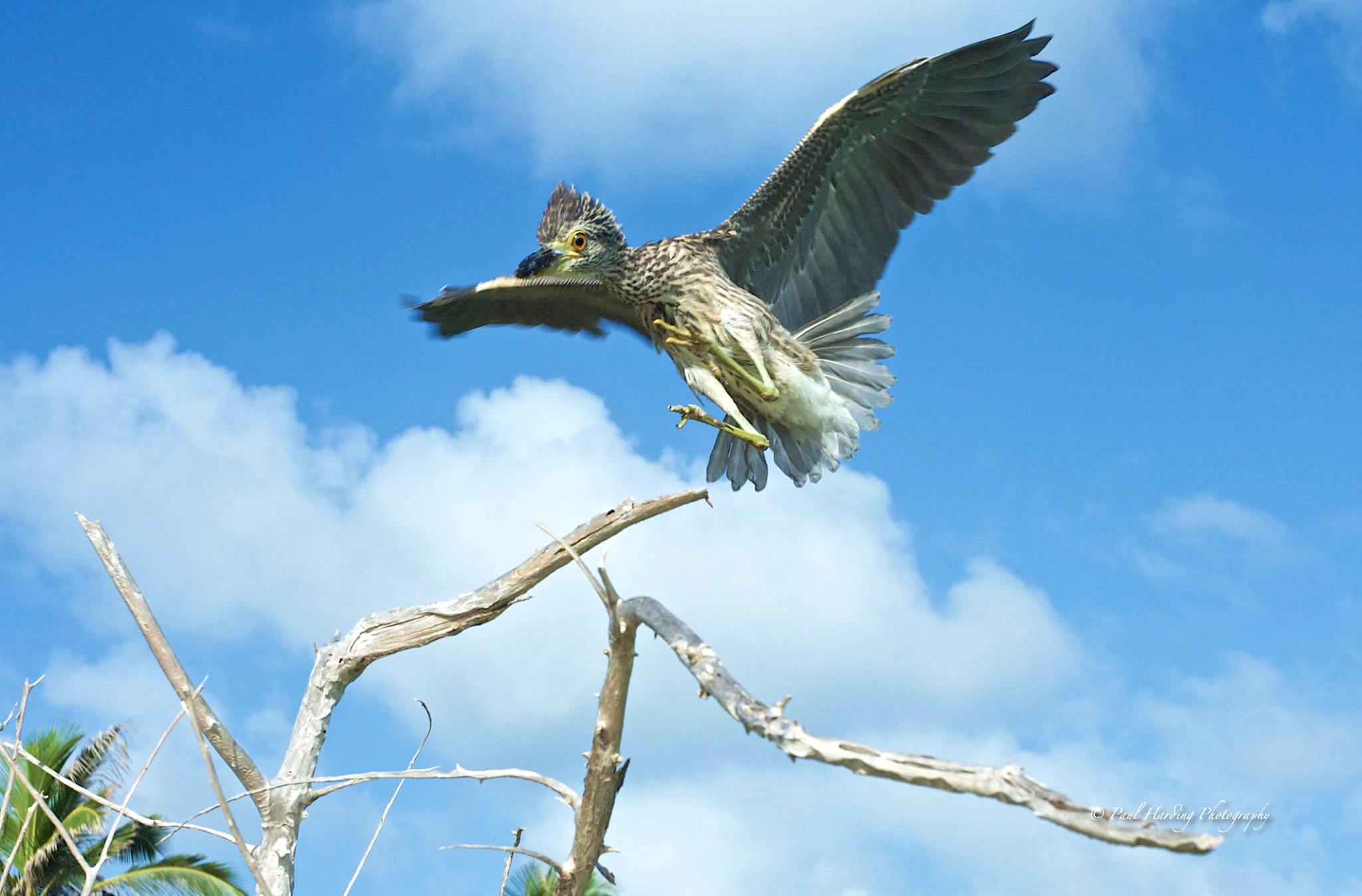
Preparing to fly freeYellow-crowned Night Heron (Rescue Bird 'Big Boy) - Melissa Maura Yellow-crowned Night Heron (Rescue Bird 'Big Boy) - Melissa Maura

And then, suddenly, the heart-stopping moment of the launch… Inelegant, but inevitableYellow-crowned Night Heron (Rescue Bird 'Big Boy) - Melissa Maura

Melissa’s posts about Big Bird unsurprisingly inspired many fans (including me, of course) who followed the story over the weeks of Big Bird’s rehab. As Melissa wrote online of the release:

“Yesterday morning Big Bird was placed lovingly into his custom-made box and transported by ferry to his new residence – the wilds of Blue Lagoon Island where upon arrival at a chosen spot, we were met by no less than 13 other juvenile Night Herons exactly his age! They all gathered nearby as we released our baby and watched him take his first steps in sand and tackle longer flights. It was such a relief to see him appear so comfy in his new home and he blended into his surrounds perfectly, sporting his best hair-do. Heartfelt thanks to Kelly Meister, John McSweeney and the island crew for helping us put Big Bird in the best possible wild situation…”

And so it goes – another bird rescued, cared for, released, and set free to live and to breed in the wild. In a turbulent world of dissent and discord, I hope people will find a grain of joy and optimism in the tale of Big Bird the Heron.

Yellow-crowned Night Heron (Rescue Bird 'Big Boy) - Melissa Maura

Credits: All photos by Melissa, quotes as shown in maroon. Go safely, Big Bird… 

Unknown's avatar

QUEEN ANGELFISH: BAHAMAS REEF FISH (46)


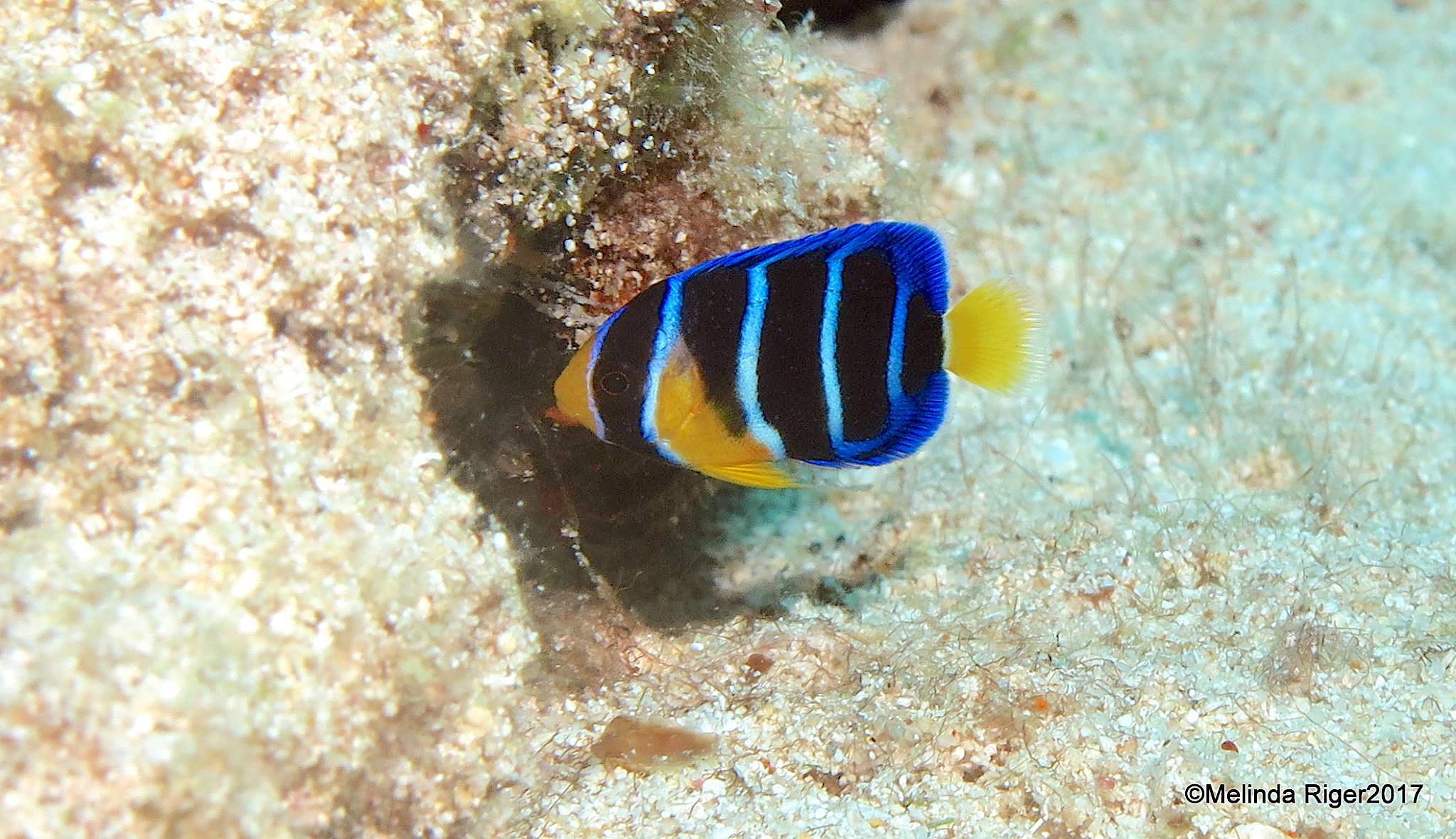
Queen Angelfish, Bahamas (Melinda Riger / Grand Bahama Scuba)

QUEEN ANGELFISH: BAHAMAS REEF FISH (46)

The Queen Angelfish Holacanthus ciliarisis is without doubt one of the most beautiful of all reef fishes in the Bahamas – and the competition is very strong. I have posted about them before, but to my surprise not for nearly 5 years. Too long: here are some much more recent photographs of adults and cute juveniles.

Queen Angelfish, Bahamas (Melinda Riger / Grand Bahama Scuba)Queen Angelfish, Bahamas (Melinda Riger / Grand Bahama Scuba)

The bright colours, the pouty expressions, the appealing poses – these fish are true Beauty Queens. And helpfully, they are unlikely to be mistaken for any other fish species.

Queen Angelfish, Bahamas (Melinda Riger / Grand Bahama Scuba)

TEENAGE QUEEN ANGELFISHQueen Angelfish (Juv), Bahamas (Melinda Riger / Grand Bahama Scuba)

JUVENILE QUEEN ANGELFISHQueen Angelfish (Juvenile), Bahamas (Melinda Riger / Grand Bahama Scuba) Queen Angelfish (Juvenile), Bahamas (Melinda Riger / Grand Bahama Scuba)

Photo Credit: ©Melinda Riger (Grand Bahama Scuba), with thanks as ever

Unknown's avatar

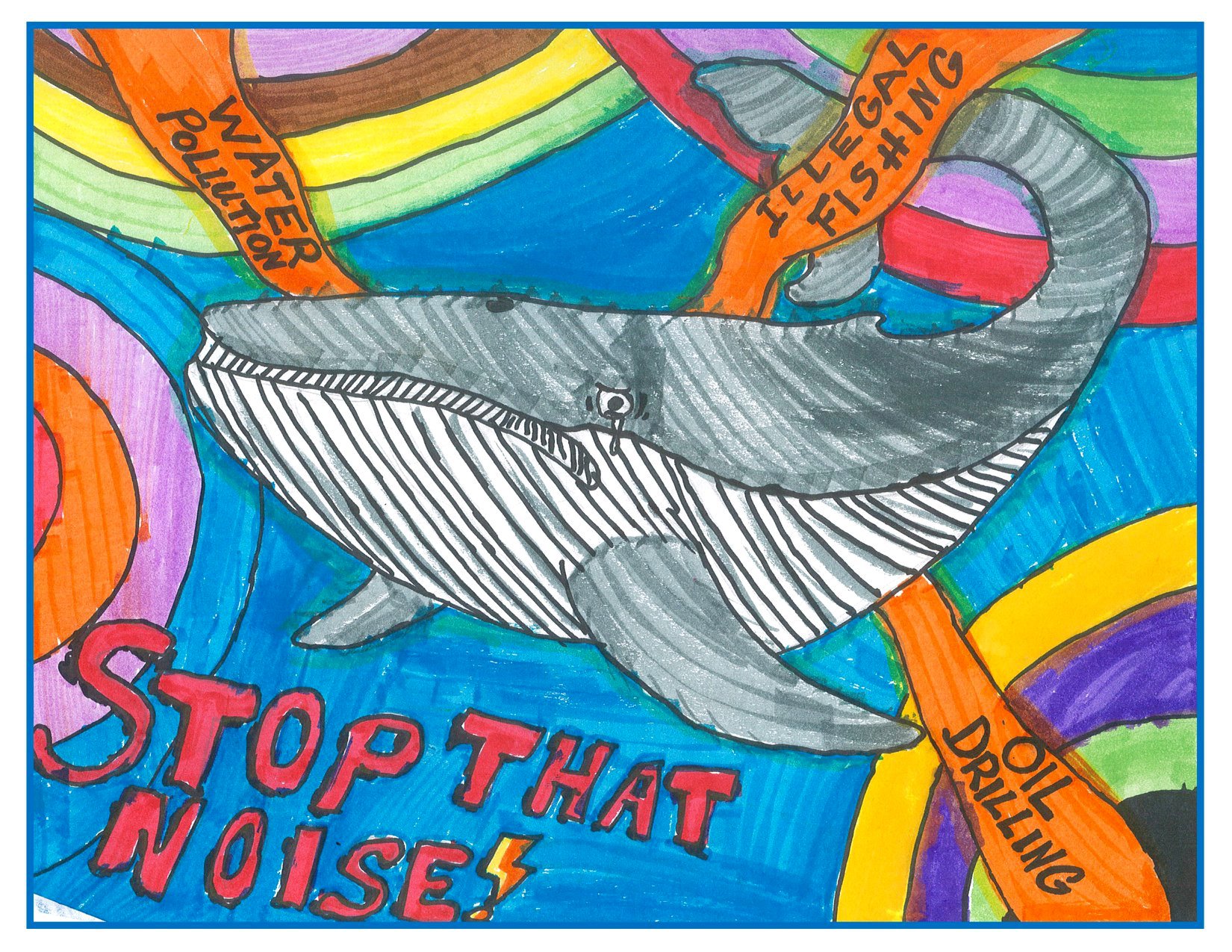
MARINE POSTER COMPETITION FOR ABACO KIDS


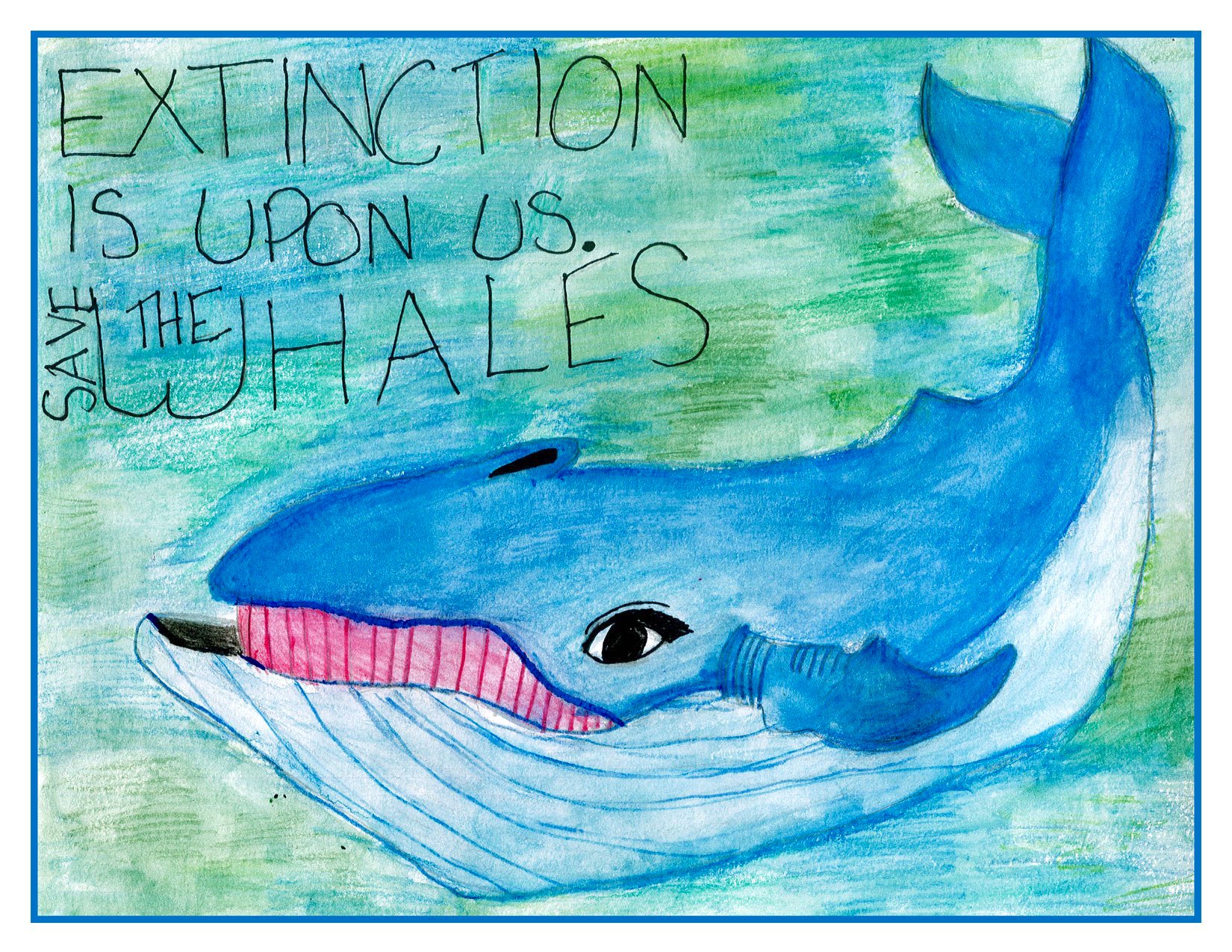
BMMRO children's poster competition winners

MARINE POSTER COMPETITION FOR ABACO KIDS

BMMRO recently collaborated with Dolphin Encounters Marine Education Poster Contest in a competition for schoolchildren on Abaco. There were 3 age groups, 3 -5, 6 – 8, and 9 – 12. The young participants received the excellent BMMRO marine educational poster as a prize, though I suspect they were motivated not so much by a prize but by the fun possibilities of the challenges set for them. 

BMMRO children's poster competition winners

And how well they met them. I am featuring a selection of the prizewinners as posted by BMMRO on FB and Insta. Bearing in mind the ages of the artists, the results are astounding. As someone for whom the task of drawing a stickman presents insurmountable difficulties of perspective, proportion, form and accuracy, I am in awe of the inventiveness of these young minds and their artistic skills. They’ve done a fantastic job in highlighting the critical conservation issues facing all marine creatures large and small, with an awareness that I hope will help stay with them into adulthood.

BMMRO children's poster competition winnersBMMRO children's poster competition winnersBMMRO children's poster competition winnersBMMRO children's poster competition winnersBMMRO children's poster competition winnersBMMRO children's poster competition winnersBMMRO children's poster competition winnersBMMRO children's poster competition winnersBMMRO children's poster competition winnersBMMRO children's poster competition winners

Do I have a favourite, I asked myself. Actually, no – I’d just be proud to have any of these on my wall. And I bet the teachers and the families involved all feel the same.

HUGE CONGRATULATIONS TO ALL THE WORTHY WINNERS

BMMRO children's poster competition winnersBMMRO children's poster competition winners


Unknown's avatar

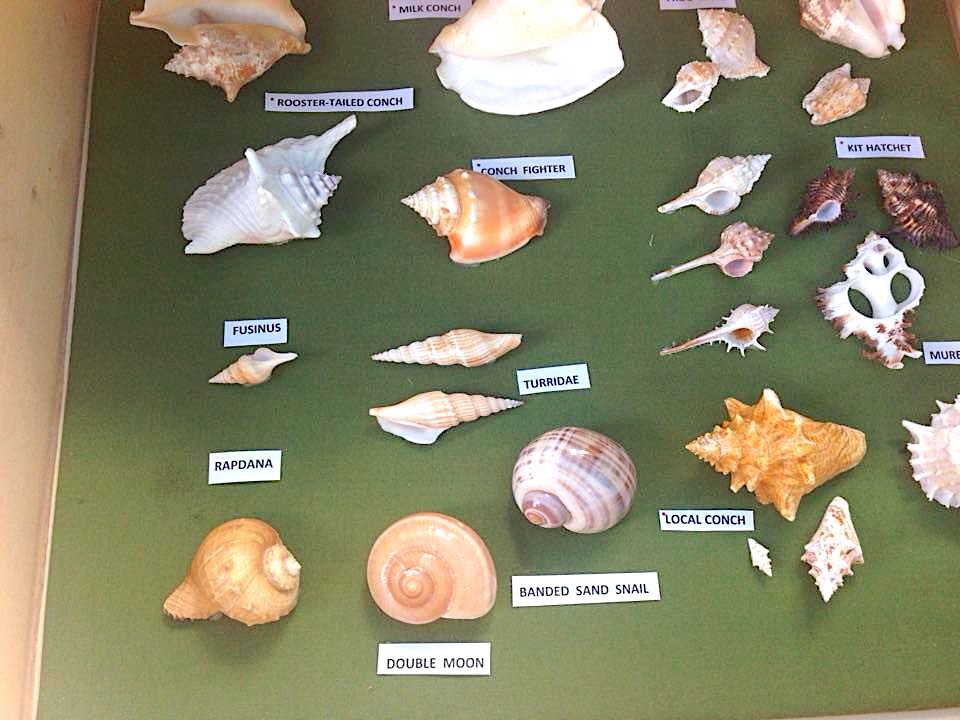
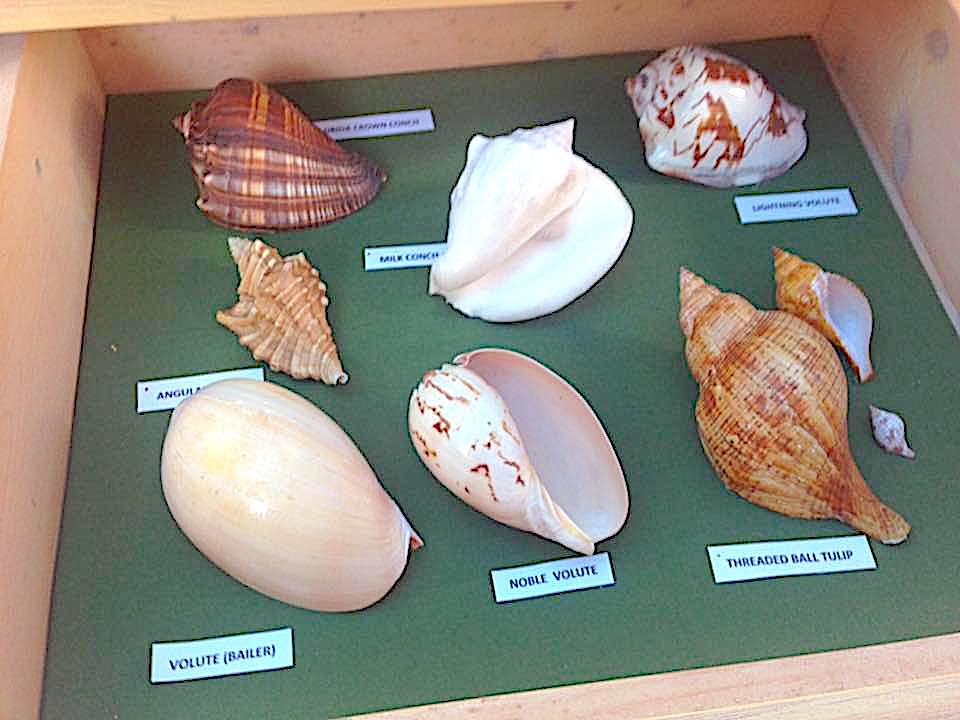
“GIFTS FROM THE SEA”: THE CHEROKEE SHELL MUSEUM


Cherokee Shell Museum, Abaco Bahamas (Keith Salvesen)

“GIFTS FROM THE SEA”: THE CHEROKEE SHELL MUSEUM

In the shadow of a tall pylon in the secluded settlement of Cherokee stands Abaco’s smallest museum. Make that one of the world’s smallest museums. As I mentioned after it opened last year, other contenders for the title include the MmuseumM in New York, housed in an elevator shaft (look through glass window + audio guide); a converted red telephone kiosk in Warley, Yorkshire UK dedicated to local history (one visitor at a time); and a tiny shed of 134 sq ft in Arizona featuring what might broadly be called ‘ephemera’, including a Beatles poster…

Cherokee Shell Museum, Abaco Bahamas (Keith Salvesen)

This tiny museum is dedicated to the shells of Abaco. It is almost certainly the smallest shell museum anywhere in the world (except maybe the one you kept in a small box under your bed when you were 10). 

Cherokee Shell Museum, Abaco Bahamas / Gifts from the Sea / Cinder Pinder

“Gifts from the Sea” is housed in the former 1950s telegraph office that ceased to operate in 1987 and had fallen into disrepair. Leased from BTC for a nominal rent, the little building was restored, and given a smart new roof and a complete makeover. It’s the perfect space for displaying a selection of the wonderful shells and corals to be found in Abaco waters.

Cherokee Shell Museum, Abaco Bahamas / Gifts from the Sea / Cinder Pinder

This community project is the vision and creation of Curator Lee Pinder. Derek Weatherford fitted cabinets for the exhibits, and artist Jo-Ann Bradley painted a interior Cherokee-themed mural as a fitting backdrop to the displays.

Cherokee Shell Museum, Abaco Bahamas / Gifts from the Sea / Cinder Pinder

The exhibition shows more than 200 shells, each catalogued with its Latin and common name, and clearly labelled in the display. Most were found locally; a few are from further afield. Some specimens are very rare. The collection will expand as people make shell donations to the museum. 

Cherokee Shell Museum, Abaco Bahamas / Gifts from the Sea / Abaconian

The building has a door at each end to give natural light and provide a ‘walk-through’ arrangement, which makes viewing in the confined space easier. Entry is free but there’s a glass jar for donations towards the upkeep of the museum. I’m guessing here, but I reckon donations made ‘outside the jar’ (so to speak) are very welcome too…

Museum Curator Lee PinderCherokee Shell Museum, Abaco Bahamas / Gifts from the Sea / Cinder Pinder

The opening ceremony took place on Easter Saturday 2017, when Cherokee resident Rev. Bateman Sands performed the official ribbon cutting ceremony preceded by a prayer at precisely 12 noon. As Jennifer Hudson in an Abaconian article pointed out, he was the ideal person for the task, having been “the first telegraph operator in Cherokee Sound, working in the little building using Morse code and in charge of the one and only telephone in the settlement until 1987 when the new BTC building was opened”.

Cherokee Shell Museum, Abaco Bahamas / Gifts from the Sea / Cinder Pinder

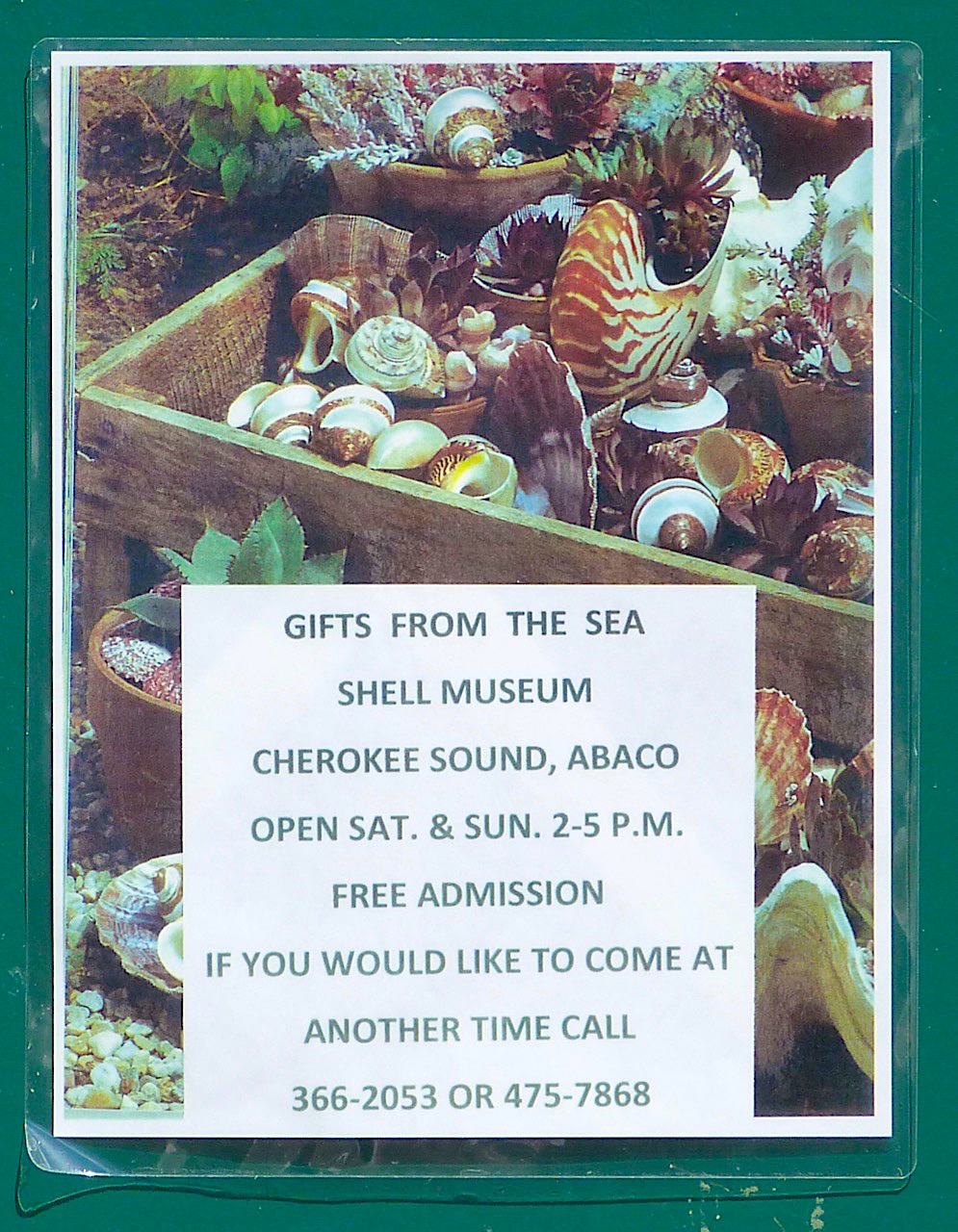
The shell museum is not left open all the time, but visitors are welcomed on weekend afternoons, and private tours can be arranged by calling either number shown below on the notice attached to the door.

Cherokee Shell Museum, Abaco Bahamas (Keith Salvesen)

To see a selection of the many types of Abaco shells, check out my shell page HERE

Sources and Photo Credits: Bradley Albury / Jennifer Hudson / Abaconian; Cindy James Pinder (shells, interior 2017); Keith Salvesen (exterior, 2018)

Cherokee Shell Museum, Abaco Bahamas (Keith Salvesen)

Unknown's avatar

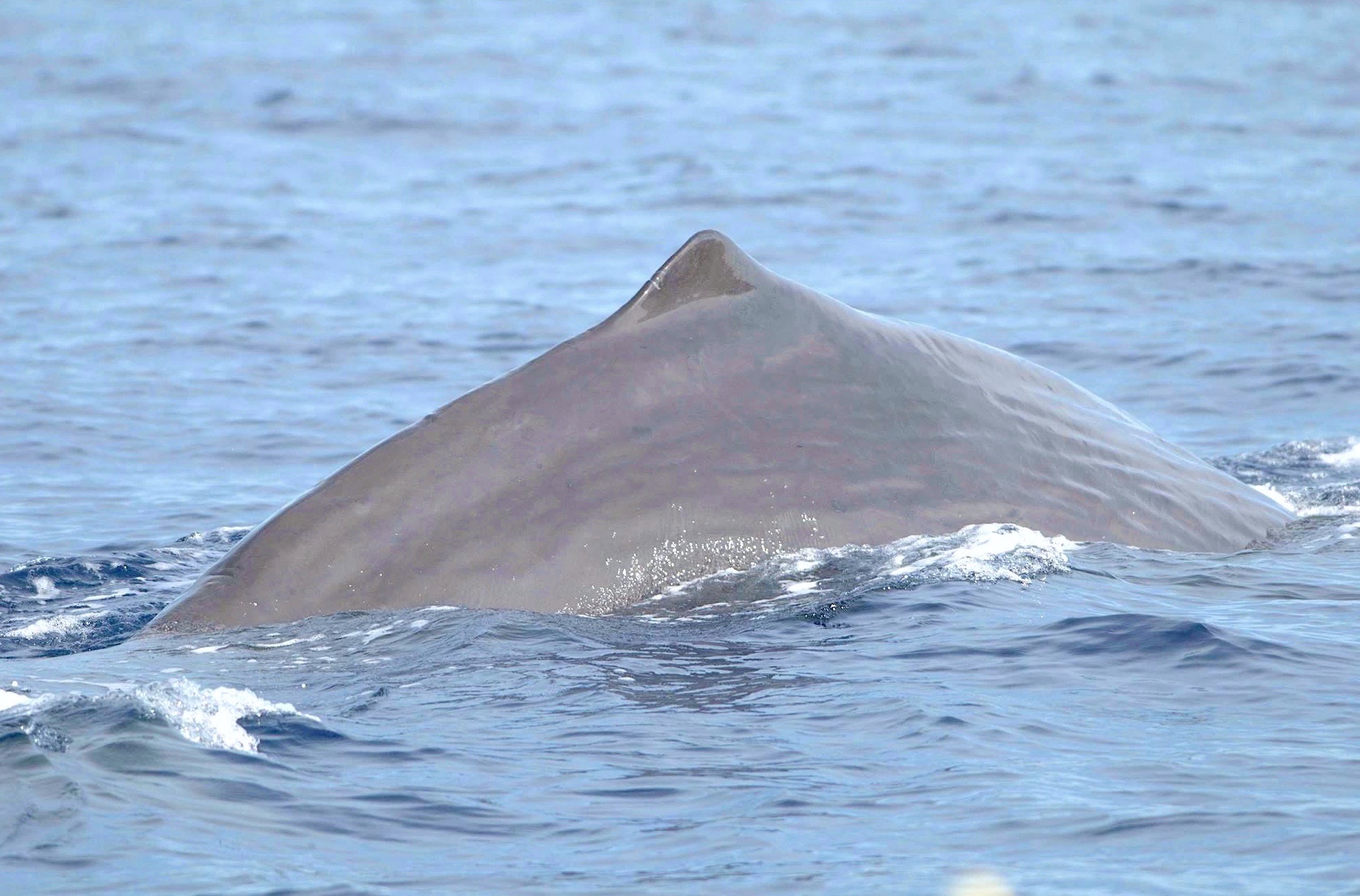
SPERM WHALES GATHERING IN ABACO WATERS


Sperm Whales, Abaco Bahamas (BMMRO / Keith Salvesen)

SPERM WHALES GATHERING IN ABACO WATERS

During the past week, the BMMRO research boat has been tracking sperm whales off the south coast of Abaco. These huge creatures are the largest marine mammals found in Bahamian waters, and the area between Rocky Point around the south coast to Hole-in-the Wall is a great place to find them. 

Sperm Whales, Abaco Bahamas (BMMRO / Keith Salvesen)Sperm Whales, Abaco Bahamas (BMMRO / Keith Salvesen)

One reason they are found in this particular area is the existence of the Great Bahama Canyon, one of the deepest submarine canyons in the world. The depth of the canyon ensures that the waters are nutrient-rich, with food being drawn up from the depths towards the surface. In season it’s the perfect place for female sperm whales and their calves.

Sperm Whales, Abaco Bahamas (BMMRO / Keith Salvesen)Sperm Whales, Abaco Bahamas (BMMRO / Keith Salvesen)

The BMMRO research trip encountered more than a dozen sperm whales, mostly females with their calves. And the amazing thing is that the sightings are often made within sight of land. In these photos, the are two landmarks visible. One is the huge Disney vessel parked at Gorda Cay aka Castaway Cay (header image); the other is HOLE-IN-THE-WALL LIGHTHOUSE (above)

Sperm Whales, Abaco Bahamas (BMMRO / Keith Salvesen) Sperm Whales, Abaco Bahamas (BMMRO / Keith Salvesen)

Credits: All photos BMMRO 2018, with thanks to Diane & Charlotte as ever

Sperm Whales, Abaco Bahamas (BMMRO / Keith Salvesen)

Unknown's avatar

BAHAMA MAMA: BIG NEWS ABOUT A TINY BIRD


Piping Plover Bahama Mama, Michigan / Abaco (Carol Cooper)

BAHAMA MAMA: BIG NEWS ABOUT A TINY BIRD

The bird in the header image is the presciently named Bahama Mama in Muskegon State Park, Michigan – so, one of the rare Great lakes piping plovers. She originally hatched and was banded as a chick in 2014 at Tawas MI, some distance away from Muskegon. When later named in 2015 by Muskegon monitor Carol Cooper, no one could possibly have known then where she would chose to overwinter. The Bahamas, as it turned out – the avian equivalent of nominative determinism.

Piping Plover Chick (MDF / Wiki)

This little bird is the perfect example to demonstrate the success of (a) an organised monitoring and recording system in the breeding grounds of these rare birds; (b) the use of easily identified coded banding and (c) the deployment of ‘citizen scientists’ to back up the professionals in the overwintering grounds such a Abaco.

A combination of the three factors leads over time to the compilation of a life story. Invariably there will be gaps, but let’s take a look at what we know about Bahama Mama, in her own dedicated timeline. Note two things: her beach fidelity; and the evidence of mate infidelity…

  • 2014 Born Muskegon State Park, MI
  • 2015 Nested with Little Guy and raised chicks. Winter location unknown
  • 2016 Returned to Muskegon and again successfully nested with a new male, Bear, from Sleeping Bear Dunes Park MI. (Little Guy went off with another female on the same beach…)
  • 2016 Resighted in October on Long Beach Abaco and stayed for several months
  • 2017 Back at Muskegon and raised chicks again with Little Guy
  • 2017 Again resighted  in October on Long Beach Abaco and overwintered
  • 2018 Back at Muskegon, initially back with Little Guy, eventually nested with Enforcer

The official record of the latest union – evidence of fickleness

This summer 4 chicks  were hatched. Sadly, one of them (Ringo, 2 pics below) was lost, presumed predated, leaving 3 to fledge.

Bahama Mama with one of her chicksBahama Mama & Chick, Muskegon MI (Carol Cooper)

Little Ringo RIPRingo Piping Plover, Muskegon MI (Carol Cooper)

Another of the chicks

These are rare and threatened birds, vulnerable at both ends of their migration for all the usual reasons. The studies undertaken at both ends of the migration have revealed astonishing beach loyalty in these little birds that travel up to 1500 miles (sometimes more) every Spring and every Fall to be somewhere safe to nest and breed; and then to overwinter. In Michigan, Carol Cooper is Bahama Mama’s mama, watching over her, recording the details, checking when she has left the beach, and anxiously watching each Spring for her arrival home.

On Abaco, these duties – pleasures, even – are undertaken by ABACO PIPING PLOVER WATCH and the team of citizen scientists who keep an eye on the beaches, count the birds, note the banded birds and photograph them for ID, and pass the info on to HQ (which happens to be me). The data from all sightings is collated and then the season’s stats are compiled and provided to the scientists involved. Here’s a summary of stats for last season: 

Abaco Piping Plover Watch Stats 2017-18 (Keith Salvesen)

Bahama Mama, first sighting on Long Beach Abaco Oct 2017Bahama Mama Piping Plover, Long Beach Abaco (Keith Kemp)

Photo Credits: Carol Cooper (1, 3, 4, 5, 6); MDF (2); Keith Kemp (7). Special thanks to Carol Cooper, monitor in Michigan; and to Keith Kemp, primary monitor on Abaco. Also to Todd Pover CWFNJ and all the other real scientists involved for the last 3 years

POLITE REQUEST

If you live on Abaco or its cays anytime between August and March and might be interested in helping with piping plover research by becoming a monitor, please get in touch with me. It’s very simple and undemanding. A beach stroll from time to time – even as little as once a month – with a notebook, pencil, binoculars, a chocolate bar and (preferably for accurate ID of banded birds) a camera. Not a dog, though. Not on this walk anyway! Every report, even of a single bird, adds to the picture. Last season there was more than one ‘citizen scientist’ sighting of a plover where none had been seen before. 

Unknown's avatar

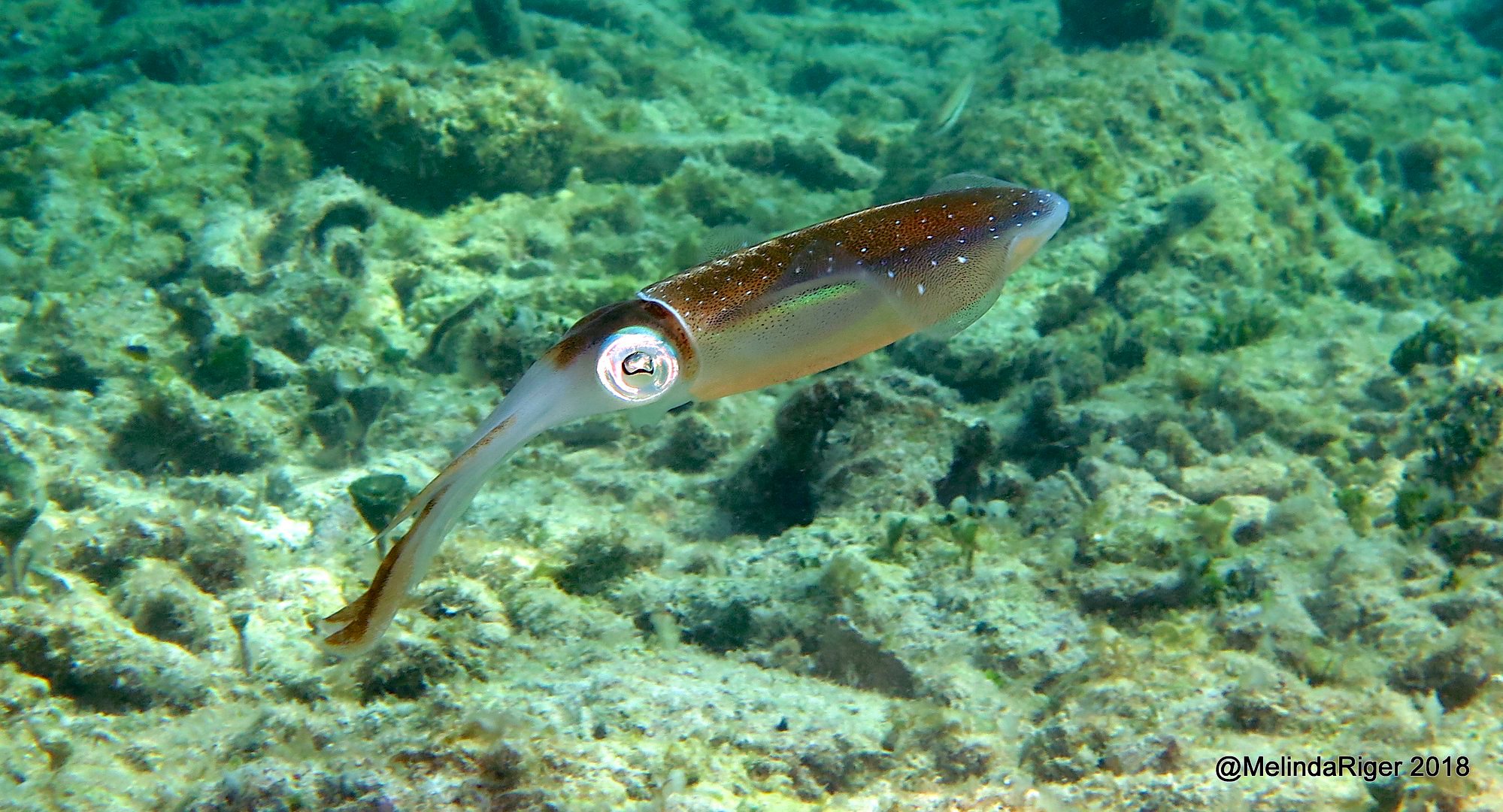
CARIBBEAN REEF SQUID REVISITED: SUPERPOWERS & SQUID SEX


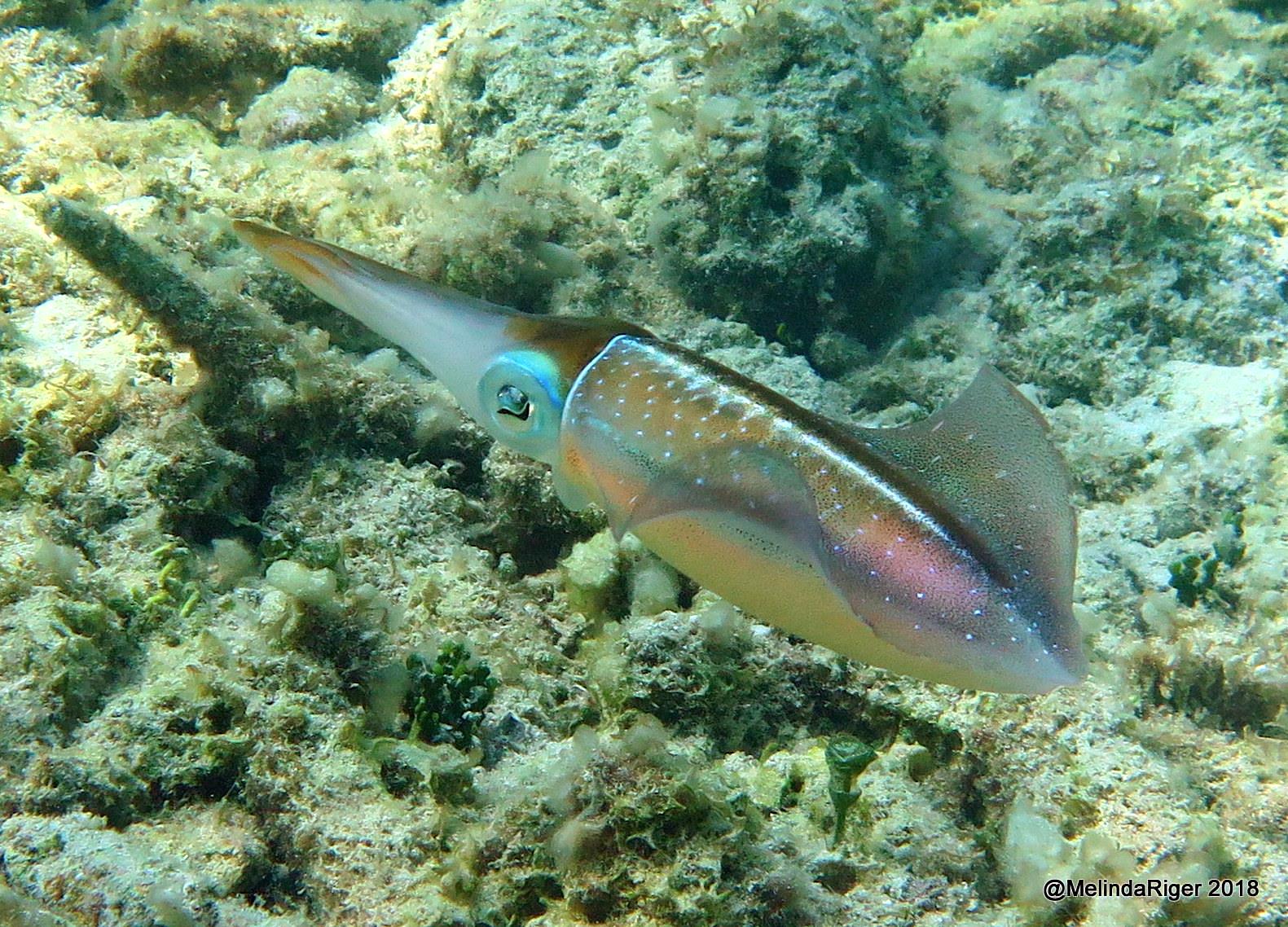
Caribbean Reef Squid, Bahamas (Melinda Riger / G B Scuba)

CARIBBEAN REEF SQUID REVISITED: SUPERPOWERS & SQUID SEX  

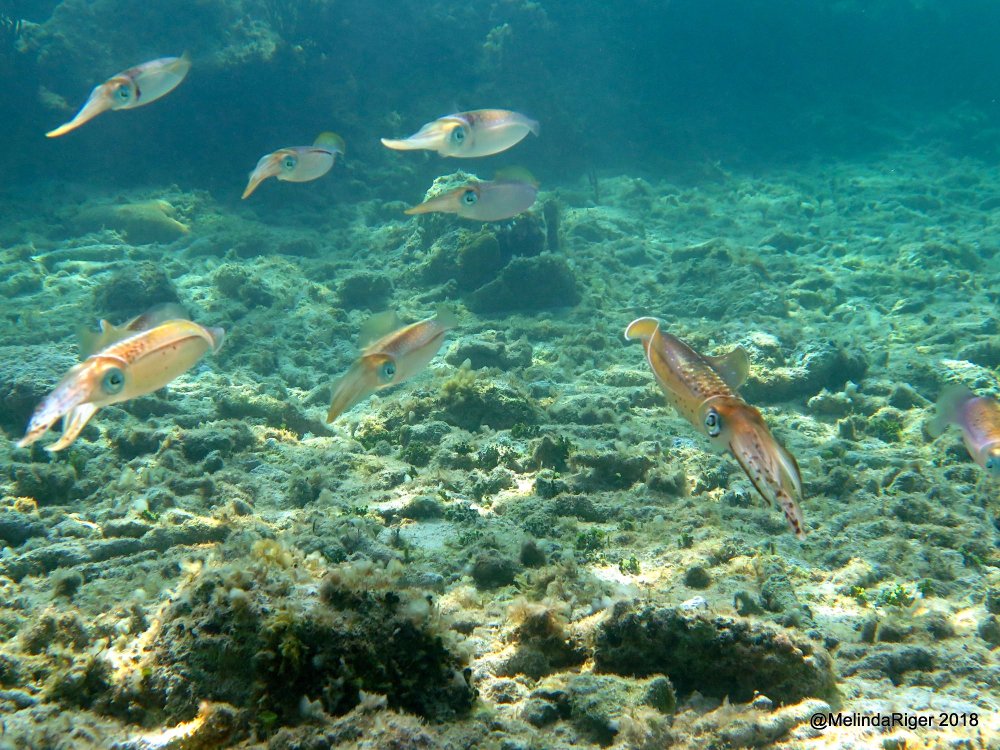
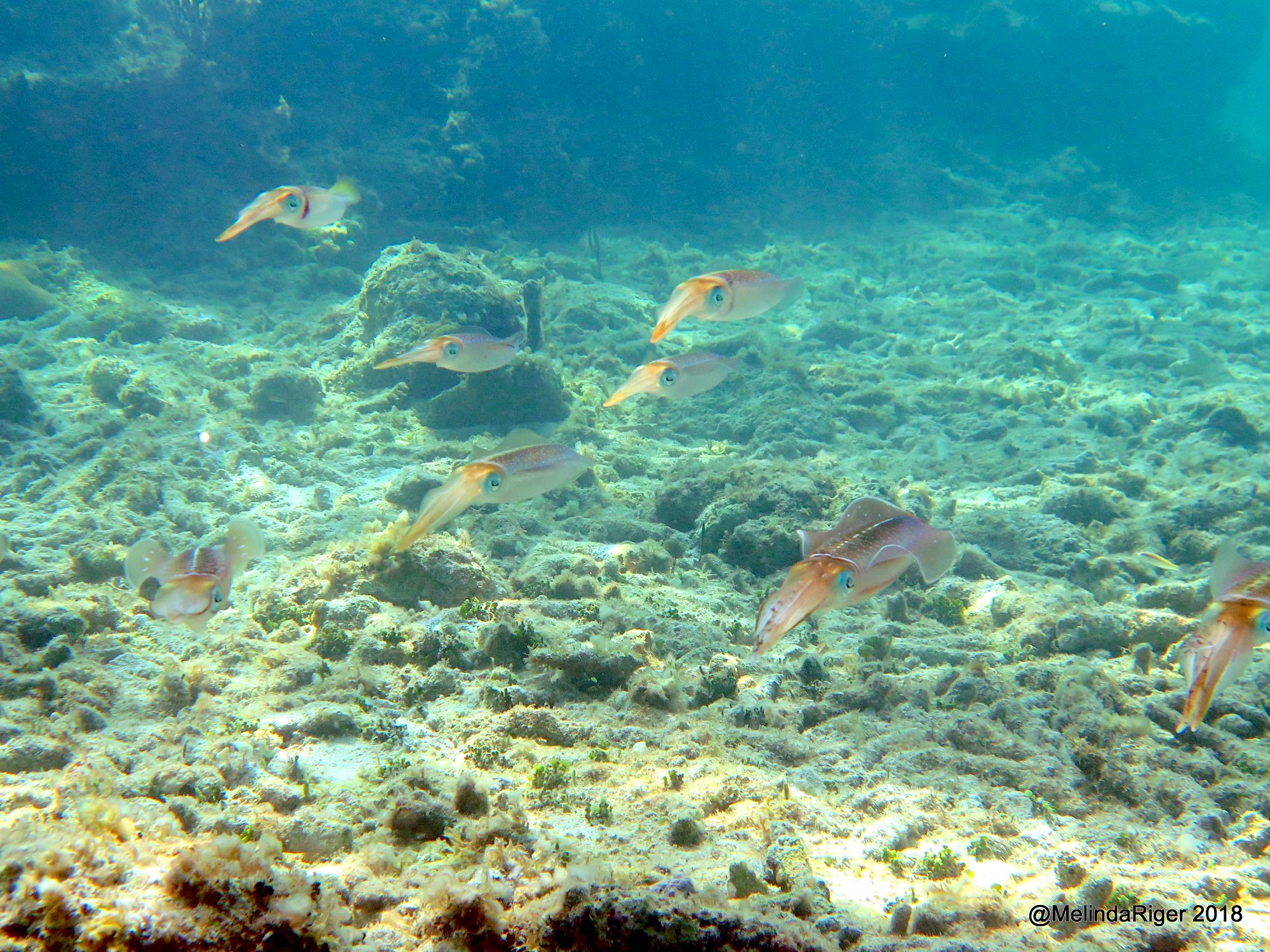
The Caribbean reef squid Sepioteuthis sepioidea is a small squid species of (mainly) the Caribbean Sea and the Floridian coast, and the most common in its range. These squid tend to form small shoals in and around reefs. Right now, in June, is a good time to find these creatures swimming in groups – all these photos were taken during the last fortnight. I wrote about squid a while back (3 years, maybe)? This post includes some parts of the earlier one, with all-new images. Squidmages, even.

Caribbean Reef Squid, Bahamas (Melinda Riger / G B Scuba)

Squid are voracious eaters, dragging their prey to their mouths with some or all of their 10 limbs and using their beak to cut it up. The target species are small fish, molluscs and crustaceans. The squid have a ‘raspy tongue’ known as a radula which further breaks up the food for easy consumption.

Caribbean Reef Squid, Bahamas (Melinda Riger / G B Scuba)

REEF SQUID SUPERPOWERS (SUPERCOOL)

  • Squid are capable of brief flight out of the water (a fairly recent discovery)
  • They can also hide from / confuse predators by ejecting a cloud of black ink
  • Squid can change colour, texture and shape, and can even match their surroundings
  • This enviable power is used defensively as camouflage or to appear larger if threatened
  • It is also used in courtship rituals (something that humans might find most disconcerting)
  • Colour patterns are also used for routine squid-to-squid communication AND GET THIS:
  • A squid can send a message to another on one side, and a different one to a squid on the other side

Caribbean Reef Squid, Bahamas (Melinda Riger / G B Scuba)

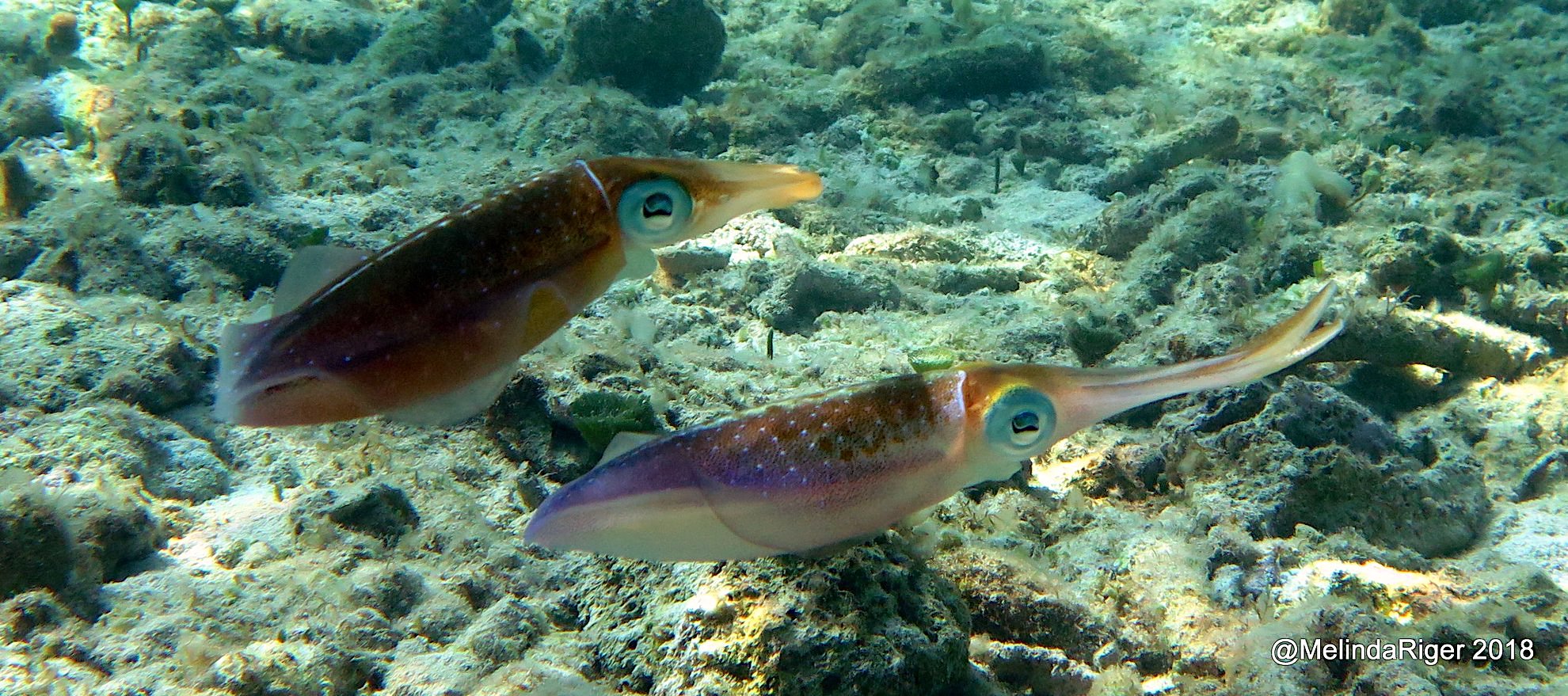
SQUID SEX (1) “ROMANCING THE SQUID”

  • A male will gently stroke a female with his tentacles
  • The female will (most likely) flash an ‘alarm’ pattern. She’s hard to get.
  • The male soothes her (don’t try this at home, guys) by blowing and jetting water at her
  • If this doesn’t go well, he’ll move off, then repeat the routine until she sees his good points
  • However this on / off courtship can last for hours until at last he succeeds and then…
  • … he attaches a sticky packet of sperm onto the female’s body (romance is not dead on the reef)
  • She then reaches for it and moves it to her seminal receptacle
  • Meanwhile he stays close, emitting a pulsing pattern, as well he might after all that palaver
  • She then finds a safe place to lay her eggs. Job done.

Caribbean Reef Squid, Bahamas (Melinda Riger / G B Scuba)

SQUID SEX (2) IT ALL ENDS BADLY. VERY BADLY.

  • As soon the female squid has laid her eggs, she dies at once
  • The male squid lives a bit longer and… may have other packets to stick on other lady squid
  • But then in the end he dies too
  • It’s all horribly reminiscent of Romeo and Juliet. The lovers die. But no the balcony scene

Caribbean Reef Squid, Bahamas (Melinda Riger / G B Scuba)

THE CORRECT PLURAL OF SQUID

I had an unwise look online, always a hotbed of conflicting opinions. Inserting an algorithm into the interstices of the internet proves conclusively that the plural of squid is… squid. One squid, ten squid, a group of squid, a plate of squid. Unless, that is, you are talking about more than one of the many squid species, when you could also have ‘I collect both reef and giant squids’. “Squidses” sounds fun but is sadly not permitted.

Caribbean Reef Squid, Bahamas (Melinda Riger / G B Scuba)

RELATED POSTS

THE PLURAL OF OCTOPUS

Credits: As ever (for fabulous underwater pics) Melinda Riger of Grand Bahama Scuba; research sources include MarineBio; Animal Diversity Web (Michigan Uni)

Unknown's avatar

GREEN TURTLES & TURTLE AWARENESS ON ABACO


Green Turtle, Bahamas (Adam Rees)

GREEN TURTLES & TURTLE AWARENESS ON ABACO

There’s something slightly unsettling about the perspective of the header image, with foreshortening suggesting that the turtle is actually a gigantic creature with a tiny diver swimming close to it…

I don’t seem to have given green turtles much space in the past, the most frequently photographed (and therefore featured) species being the hawksbill. This post is both to right the wrong, and to provide some information about the species.

Green Turtle, Bahamas (Adam Rees)

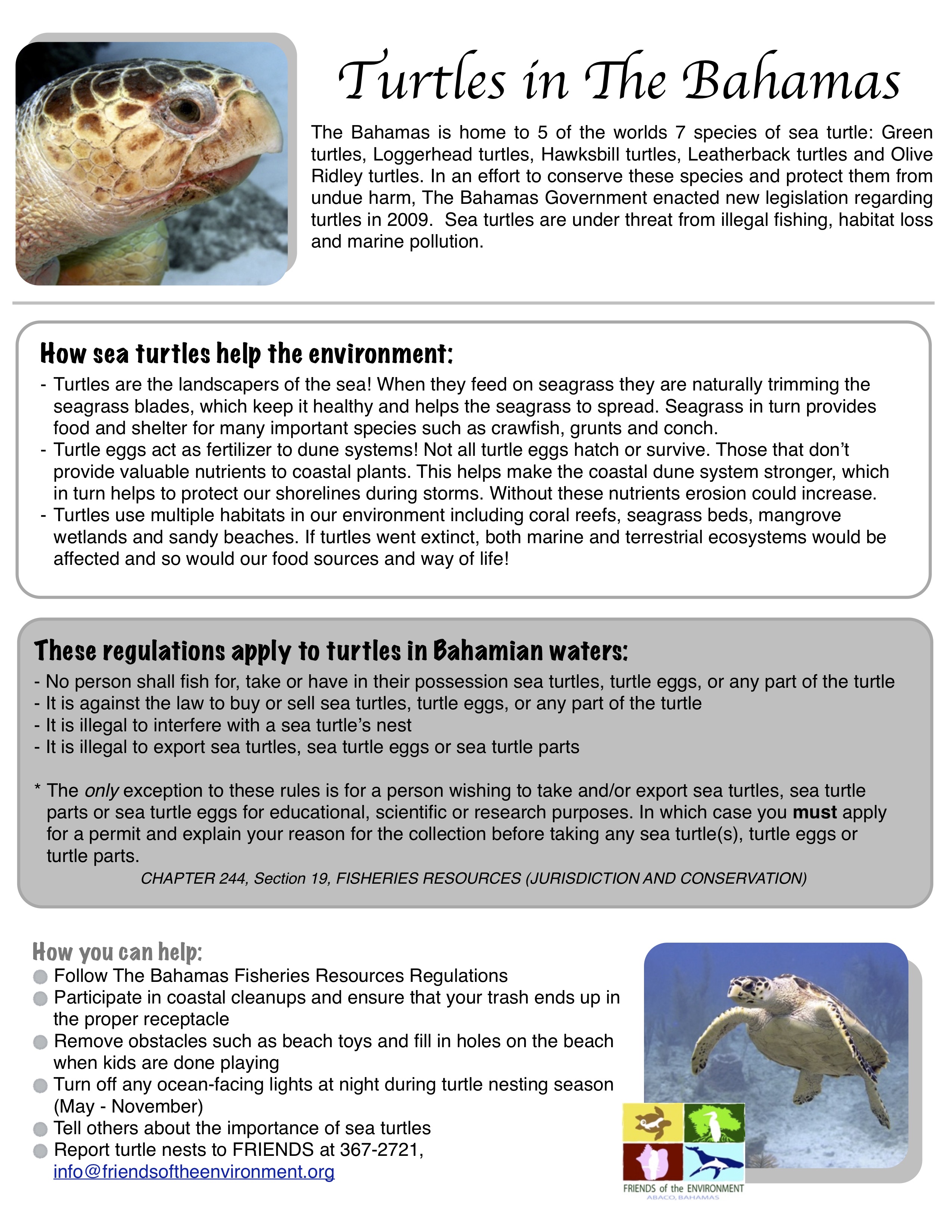
Friends of the Environment has produced an interesting short guide to the sea turtles of the Bahamas. One of the many facts included is that 5 of the 7 sea turtle species in the world can be found in Bahamian waters. The turtle protection law is also given – also the way to report turtle nests so they can be watched and protected.

Green Turtle, Bahamas (Adam Rees)

The 4 main species are the hawksbill, green, loggerhead and leatherback. The 5th and lesser known one is the Olive Ridley turtle. The differences between most of these is considerable, as can be seen from this IUCN-produced Identification Chart (credits as shown).

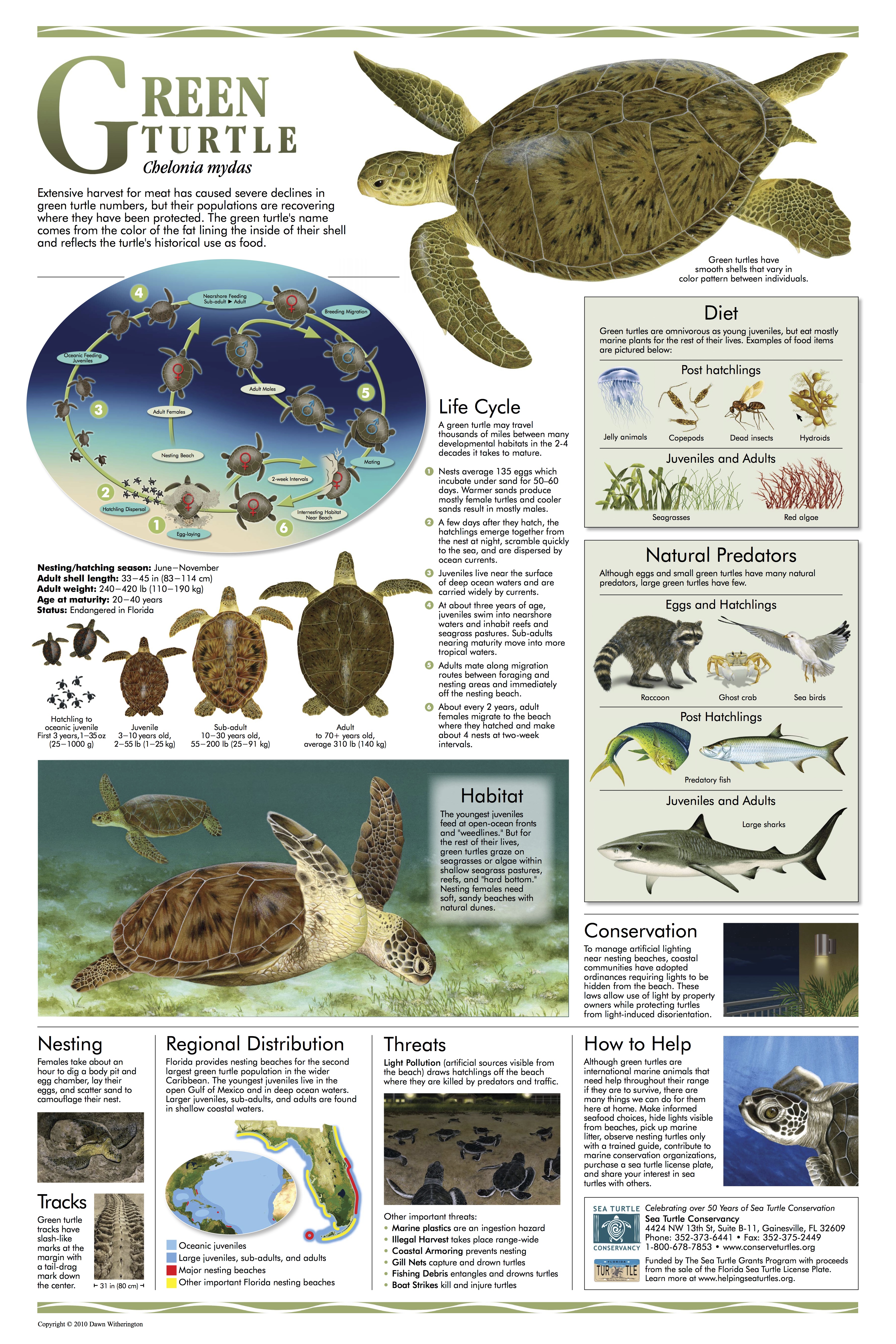
Another useful source of information for green turtles is this extremely well produced poster illustrated by the excellent Dawn Witherington, who has somewhat (and deservedly) cornered the market with this kind of large-scale infographic. The sea turtle series is so helpful that I have dedicated a whole page to them HERE. Dawn also created the LOXAHATCHEE poster series covering such topics as Lionfish, Sea Grasses, Land Crabs, Bonefish, Coral Reefs and more

Green Turtle, Bahamas (Adam Rees)

All photos: Adam Rees Photography, with thanks for use permission here and elsewhere

Unknown's avatar

‘ON STILTS’: ELEGANCE ON TWO LEGS (OR JUST ONE)


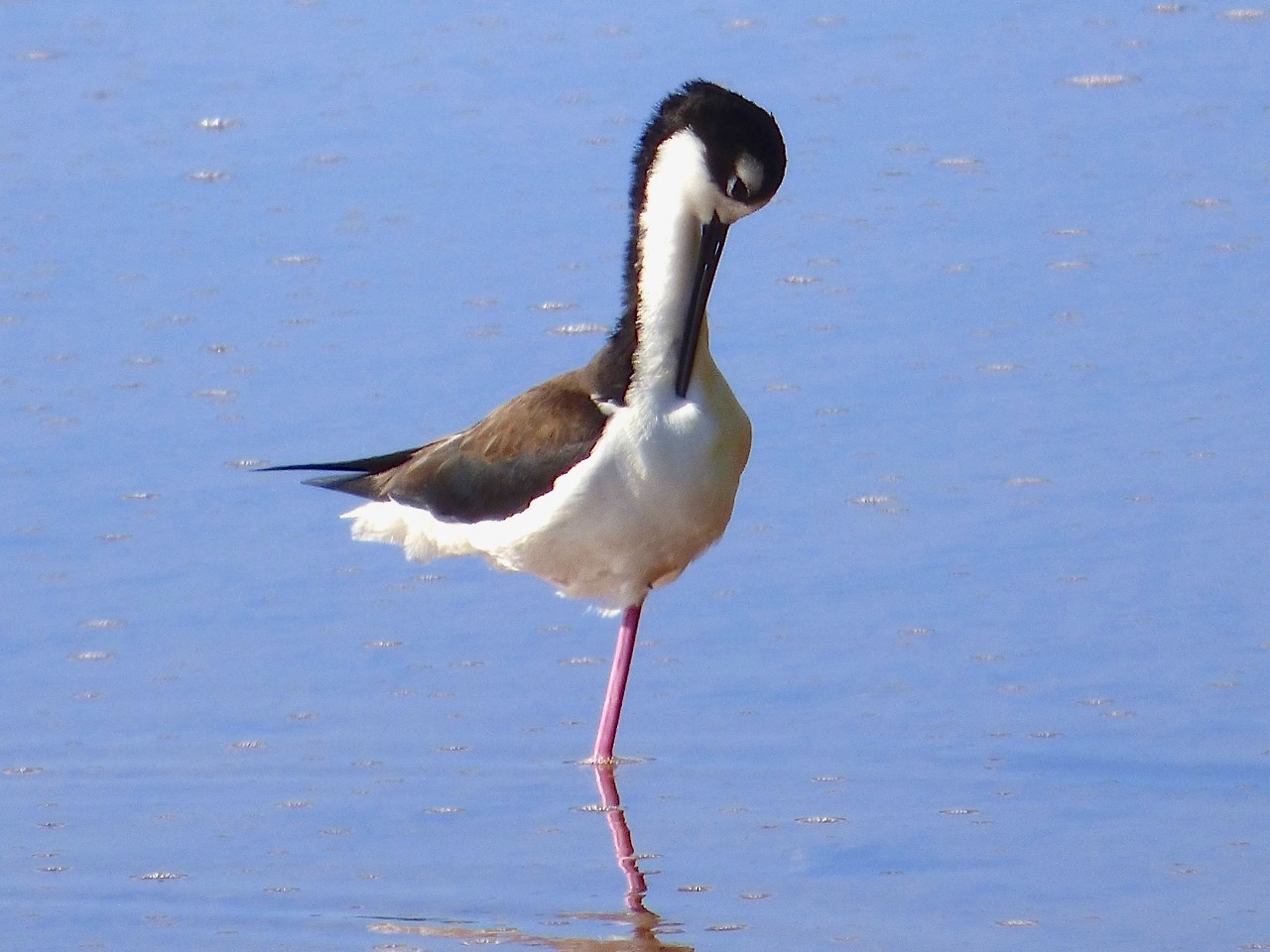
Black-necked Stilts, Abaco Bahamas (Keith Salvesen)‘ON STILTS’: ELEGANCE ON TWO LEGS (OR JUST ONE)

There’s something wrong in the picture above (no, I don’t mean about the photograph itself). Count up how many pink legs you can see. No, not including the reflections. Give up? It’s three. Between two birds. I assumed of course that  ‘Oner’ had a perfectly good serviceable leg tucked up into its undercarriage. I admired the balancing skills involved in resting one leg while nonchalantly standing on the other.

We were watching this pair of black-necked stilts Himantopus mexicanus at the pond at Gilpin Point, which at certain times can be ‘Stilt Central’. These birds are permanent breeders on Abaco and are without a doubt the most beautiful of all the waders (avocets, being extremely uncommon winter visitors, are disqualified from consideration for lack of presence). 

Black-necked Stilts, Abaco Bahamas (Keith Salvesen)
It gradually dawned on me that Oner really did only have one stilt to stand on. After 10 minutes observing them and the other birds around them, there was no question about it – the right leg was completely and utterly missing. This unipedal deficit had no obvious ill-effects on the bird – nor on its ability to throw a good pose (above). Or to preen (below).
Black-necked Stilts, Abaco Bahamas (Keith Salvesen)
I’m in danger of losing sight of Twoer here, a bipedal bird that deserves its own place in the story, not just a wade-on part in Oner’s story.
Twoer as Ringmaster…Black-necked Stilts, Abaco Bahamas (Keith Salvesen)
BNSs are territorial and in particular can become ‘proactive’ (ie aggressive) in protecting the area near a nest. I once mistakenly got close to a nest, not even knowing it was there. I soon learnt – a parent BNS came wading towards me, zigzagging in the water, shouting and carrying on in a way that immediately said ‘my nest is nearby’. And when I meanly stood my ground it suddenly took off and flew straight at my head…
A shouty stiltBlack-necked Stilts, Abaco Bahamas (Keith Salvesen)
On reflection…Black-necked Stilts, Abaco Bahamas (Keith Salvesen)
All photos: Keith Salvesen / Rolling Harbour Abaco (and, if anyone noticed, sorry about some formatting issues which I can’t get rid of…); Audio file Jim Holmes / Xeno Canto
Black-necked Stilts, Abaco Bahamas (Keith Salvesen)
Unknown's avatar

WHERE’S THE CATCH? A REDDISH EGRET FISHING


Reddish Egret Fishing, Crossing Rocks, Abaco (Keith Salvesen)

WHERE’S THE CATCH? A REDDISH EGRET FISHING

The narrowest point on Abaco is just north of Crossing Rocks. The 120-mile long highway that splits the Island down the middle passes over a narrow strip of land. On the west side, there are mangrove swamps, an inlet of sea, and a small jetty used by bonefishers to reach the productive waters further out. On the east side? Well, there’s more mangrove swamp, giving way to thick jungly coppice before reching the top end of Crossing Rocks beach – and not much else. Except for a long thin brackish pond by the road, that is. 

Reddish Egret Fishing, Crossing Rocks, Abaco (Keith Salvesen)

If you are interested in birds – maybe on your way to the pond at Gilpin Point for Bahama Duck and waders, or returning from a Bahama mockingbird hunt in the National Park – it’s worth pulling over at the pond. Or preferably on the other side of the road so you can approach it stealthily. There’s plenty of roadside cover for birder discretion. Chances are, you’ll encounter one or more of the several heron or egret species found on Abaco – and that they’ll be fishing.

Reddish Egret Fishing, Crossing Rocks, Abaco (Keith Salvesen)

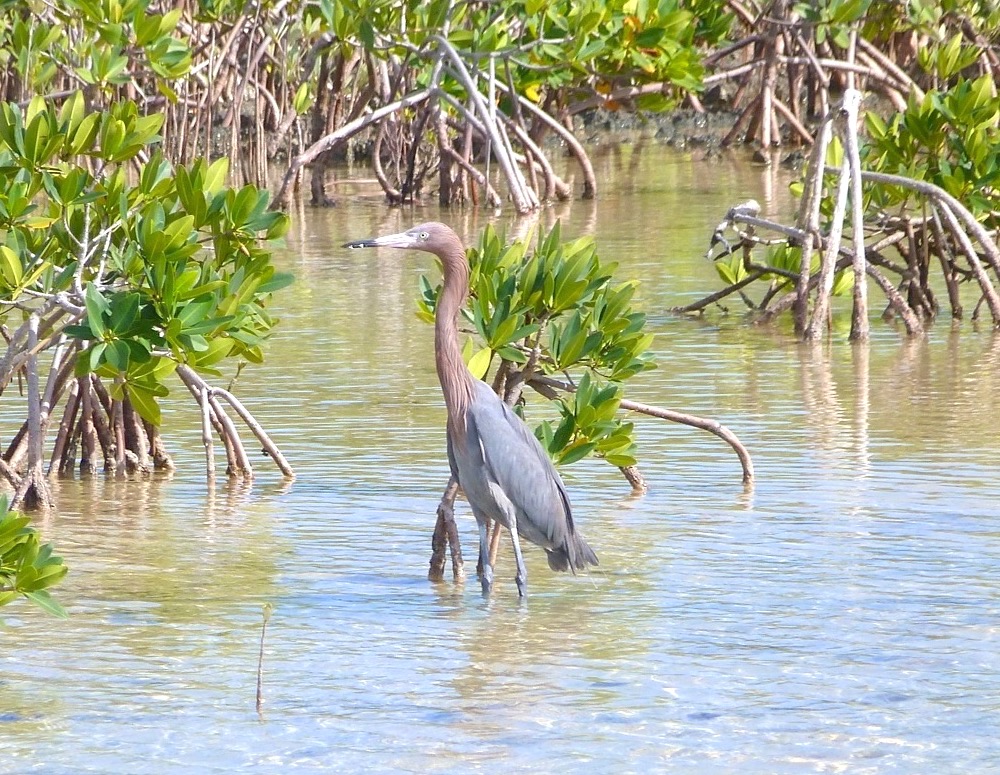
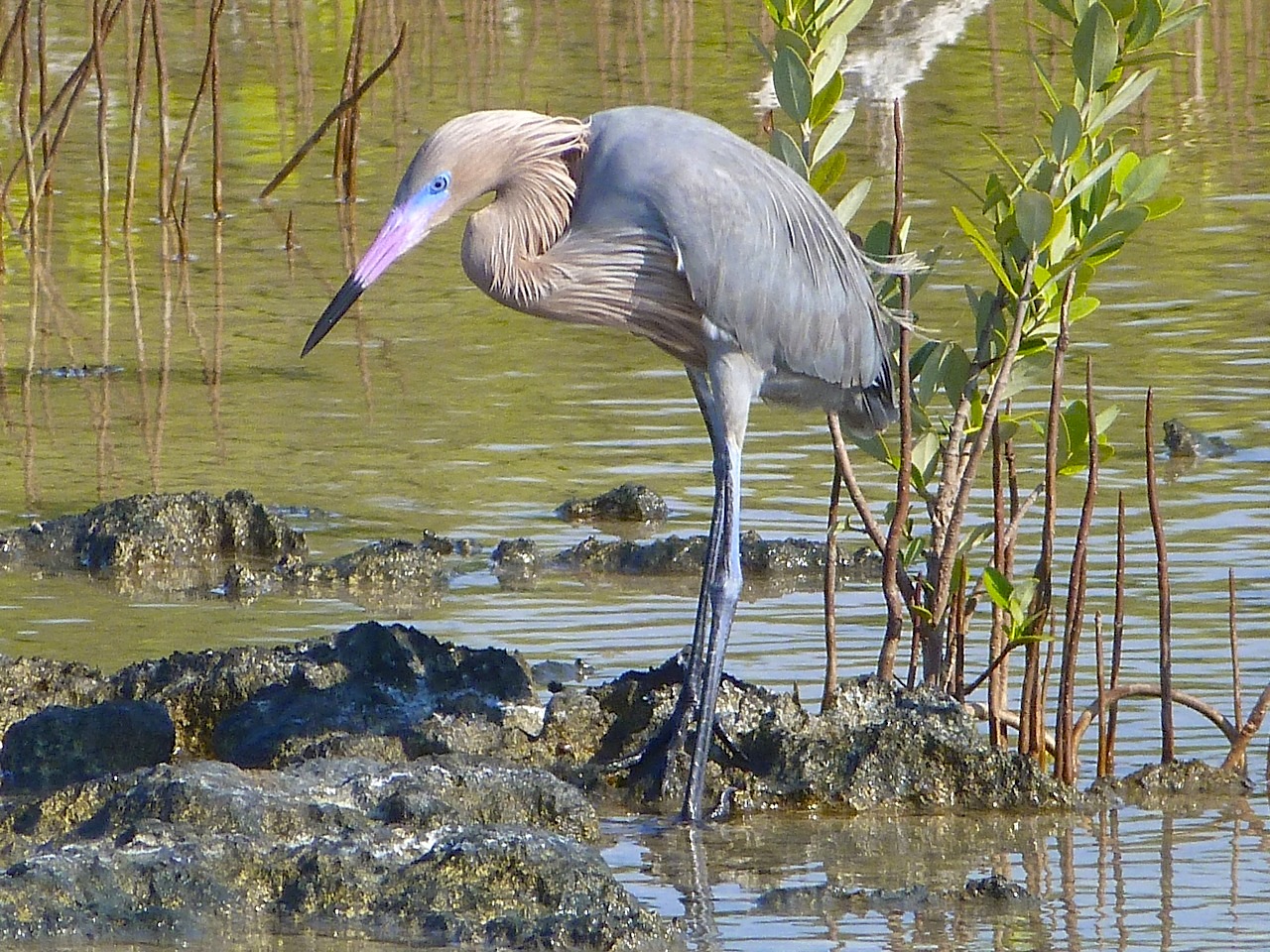
You can see how clear the water can be. It’s no wonder that this reddish egret has ‘hunched up’ to get that cruel beak closer to the surface to stab down on a small silver snack. In the short time we watched, he had no success (hence ‘Where’s the Catch?’ – there was none). But I’ve seen reddish egrets including the white morph successfully snacking at the pond; and a tricolored heron. A couple of years ago we had a great scoop in late March – a male reddish egret fishing in his wonderful breeding colours. Compare the ‘routine’ plumage of the bird above with this gorgeous creature.

Reddish Egret Fishing, Crossing Rocks, Abaco (Keith Salvesen)

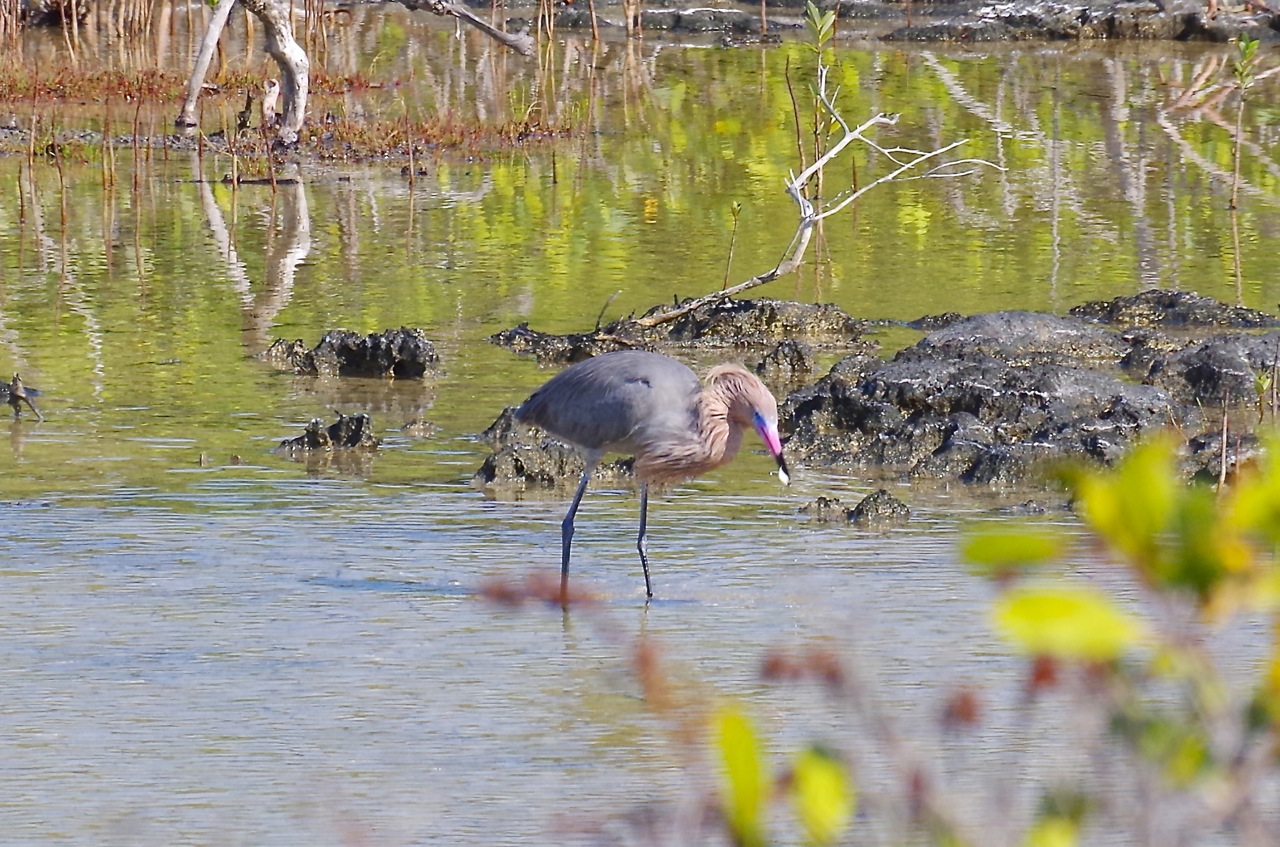
And to show I am not making up the fishing part, a shot of this bird actually making a catch…Reddish Egret Fishing, Crossing Rocks, Abaco (Keith Salvesen)

All photos: Keith Salvesen

Unknown's avatar

HUTIAS: ABACO’S EXTINCT RODENTS LIVE ON… ELSEWHERE


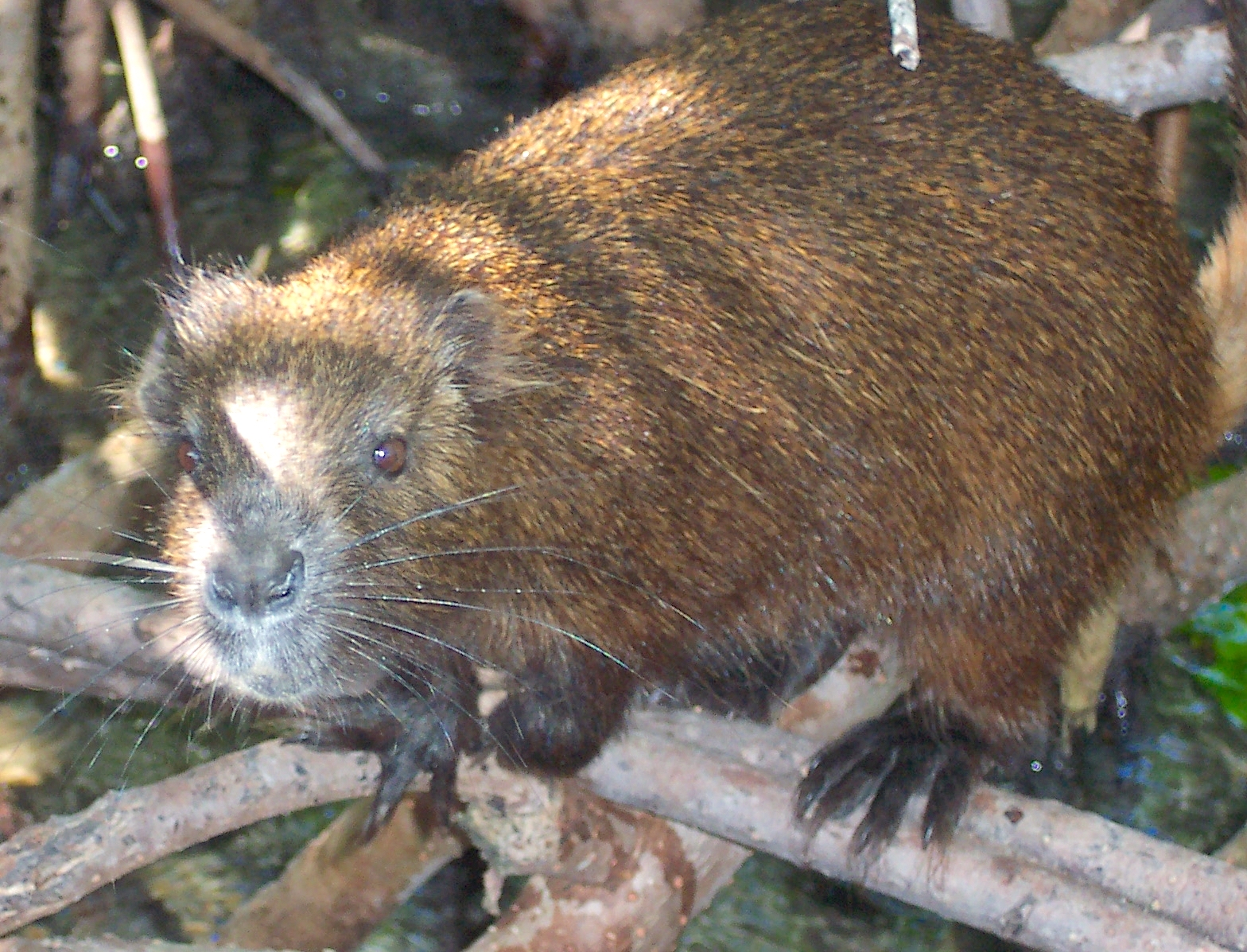
Bahamian Hutia (Cole Fiechter)

HUTIAS: ABACO’S EXTINCT RODENTS LIVE ON… ELSEWHERE  

The Bahama hutia (Geocapromys ingrahami) has the distinction of being the only indigenous land mammal in the Bahamas. Historically found on a number of islands, the species is now confined to very limited locations. Abaco is, sadly, no longer one of them; they are officially shown as extirpated here from about 1600. Hutias had been recorded on Great Abaco by early explorers from Europe, but their survival was already threatened by hunting and land clearance as the human population expanded.

Bahamian Hutia (Cole Fiechter)

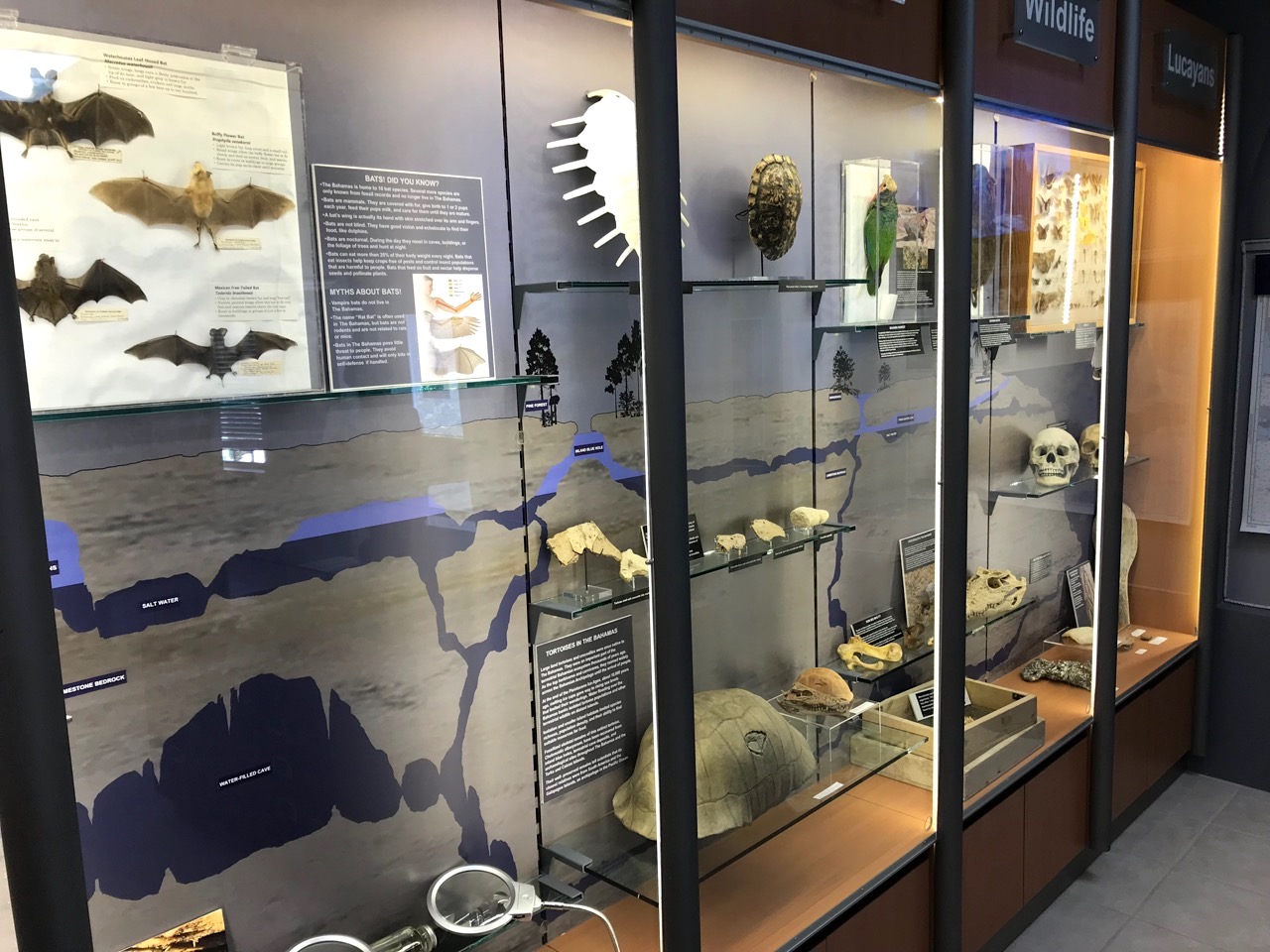
Further evidence of their long-term existence on Abaco – prehistoric, even – comes from research carried out by divers in the land-based Blues Holes. SAWMILL SINK has been a particularly rich source of the remnants of early creatures, including well-preserved skeletons, carapaces or other remains of crocodiles, turtles, birds, bats – and hutias. These date from the Pleistocene epoch of the Quartenary period, spanning roughly 2.5m years and ending some 12,000 years ago. You can see some of these treasures in the wonderful Natural History Museum at Friends of the Environment in Marsh Harbour.

A c20 hutia from the Exumas on display in the museumBahama Hutia Museum Exhibit (FOTE, Abaco)

Exhibits in the museum – there’s even a dead parrot for Monty Python fansMuseum of Natural History, Abaco Bahamas

The population of the extant Bahama hutia species Geocapromys ingrahami became so depleted that by the 1960s they were considered to be extinct. Then in 1966 a colony was discovered on East Plana Cay. Some have since been relocated (see below) and the overall population is now confined to a handful of locations, for which reason the Bahama hutia is IUCN listed as vulnerable. All the usual man-caused threats to their survival apply, as well as predation by dogs and feral cats. One place to find them is in the Exumas, but because they are mainly nocturnal creatures and there are few of them, a sighting is a rare event, let alone getting a decent photo op. 

A ‘Demarest’s Hutia’ – not the Bahamian species, but very similarDemarest's Hutia (Yomangani, wiki)

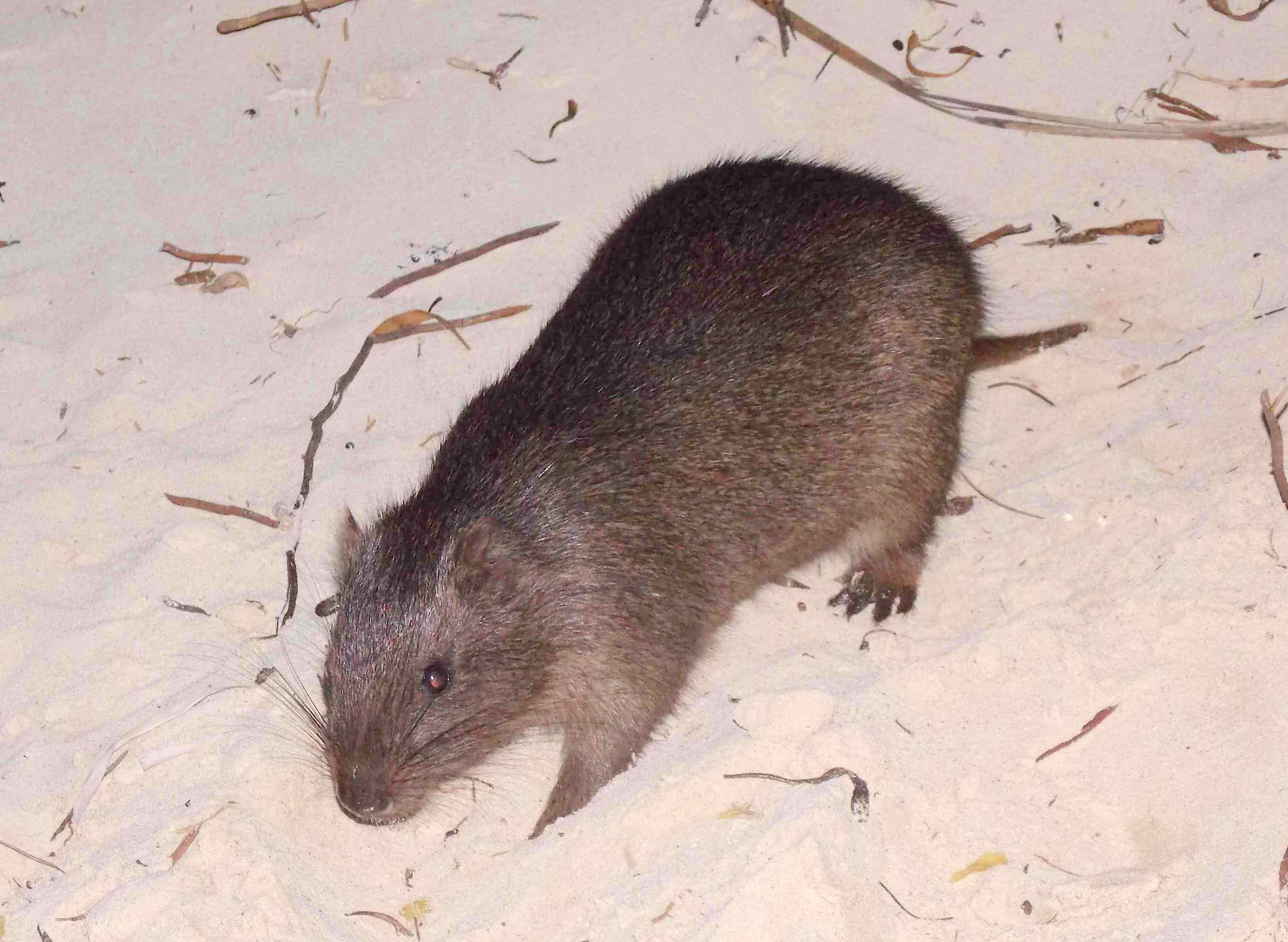
The terrific header image and the second image were taken by teenager Cole Fiechter while on a sailing trip with his parents and brother in the excellently named ‘Truansea’. On the beach of the Exumas Land and Sea Park at Warderick Wells, they encountered “a guinea pig with a rat’s tail”: a hutia. Cole’s photograph will hopefully grace the forthcoming Field Guide to the Natural History of the Bahamas, now in the late stages of production, and with which I am peripherally involved.

MARK CATESBY‘s take on the hutia in the c18, where he describes it as a rabbitHutia by Mark Catesby (c18)

The BAHAMAS NATIONAL TRUST notes that “Bahama hutias occur naturally only on East Plana Cay (located between Acklins and Mayaguana). Historically however, they were found on ten Bahamian islands. In a move to protect the species, a small Bahama hutia population was transplanted to two locations – Little Wax Cay and Warderick Wells (Exumas). These three locations now host the only known populations of this particular species in the whole world”

It looks as though Warderick Wells might be your best bet to see a Bahama hutia if you are visiting the Bahamas. Don’t be too confident of coming across one – but if you do see one, you will have had the pleasure of seeing a very rare creature.

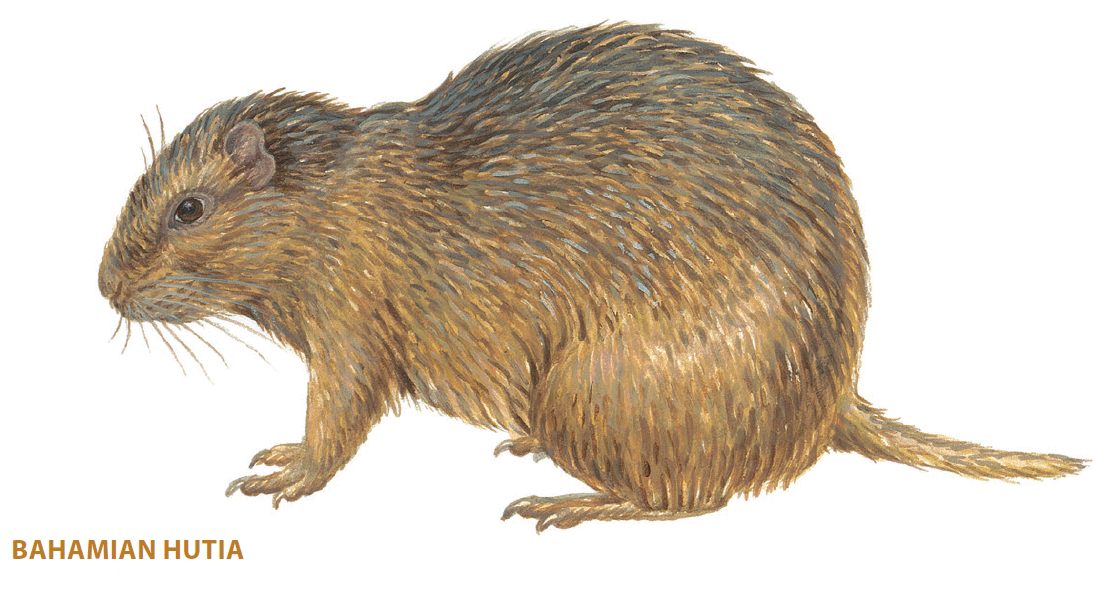
Bahamian Hutia Drawing (Princeton UP)

A HUTIA’S TAIL (very different from a rat…)

IMG_7500

Credits: Cole Fiechter (1, 2); Keith Salvesen / FOTE (3, 4); ‘Yomangani’ wiki (5); OS (6); Princeton UP (7). Research credits PNAS, BNT, FOTE

Unknown's avatar

ABACO’S THREE CUCKOO SPECIES


Yellow billed cuckoo, Abaco Bahamas (Tom Sheley)

ABACO’S THREE CUCKOO SPECIES

Goodness, is it the end of the month already? So much going on, 3 half-written posts but running short of time. So here’s something (even) more interesting than the stuff I write – actual photos of actual birds with no words. Great photos (not mine) of Abaco’s 3 cuckoo species to compare and contrast. Until next month… when there’ll be stilts, hutias and a whole lot more.

YELLOW-BILLED CUCKOO (and header image)

Yellow billed cuckoo, Abaco Bahamas (Tom Sheley)

MANGROVE CUCKOO

Mangrove cuckoo, Abaco Bahamas (Tony Hepburn)Mangrove cuckoo, Abaco Bahamas (Alex Hughes)

SMOOTH-BILLED ANI

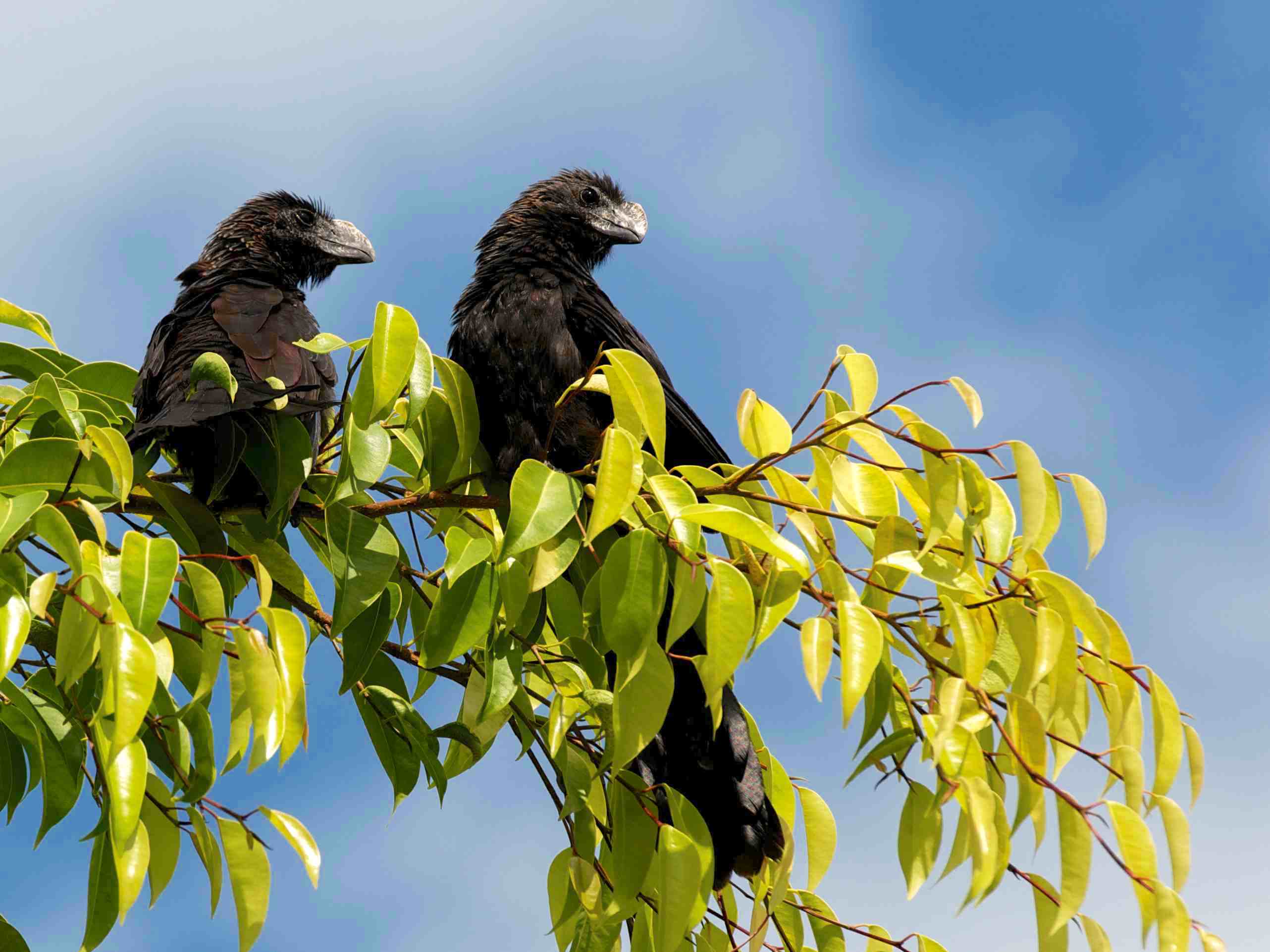
Smooth-billed Ani, Abaco Bahamas (Gerlinde Taurer)Smooth-billed Ani, Abaco Bahamas (Nina Henry)

Photo Credits: Tom Sheley, Tony Hepburn, Alex Hughes, Gerlinde Taurer, Nina Henry

Unknown's avatar

‘SOCIABLE DOLPHINS’: MELON-HEADED WHALES


Melon-headed whales, Bahamas (BMMRO / Field School)

‘SOCIABLE DOLPHINS’: MELON-HEADED WHALES

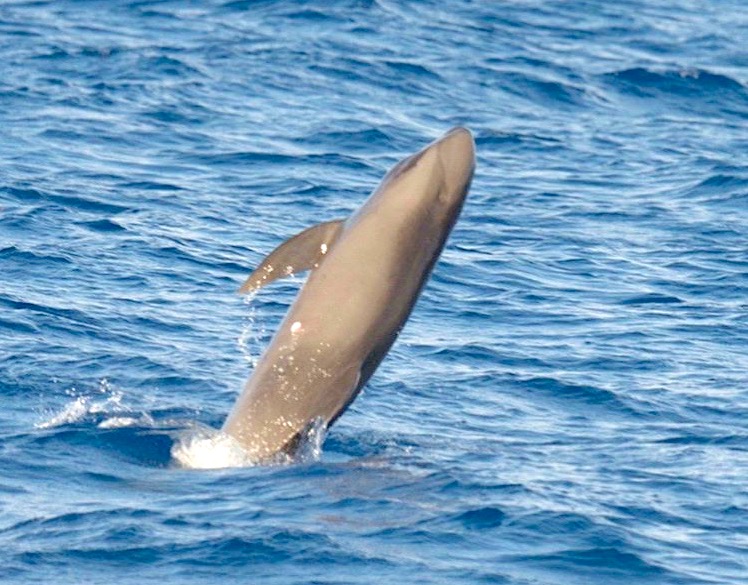
Last month, BMMRO undertook a joint expedition with FIELD SCHOOL to carry out research on sperm whales. This took them out into deep water, where another, quite different, cetacean species was also encountered on the final day – a huge pod of more than 100 melon-headed whales Peponocephala electra.

Melon-headed whales, Bahamas (BMMRO / Field School)

The melon-headed whale is in fact – like the FALSE KILLER WHALE I recently wrote about – a species of dolphin. It is sometimes more accurately called the melon-headed dolphin, which removes any confusion. These creatures are oceanic, preferring deeper waters. For that reason they are not often encountered, despite being quite common in tropical and sub-tropical waters around the world.

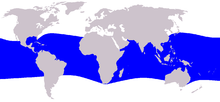
Cetacea range map Melon-headed Whale.PNG

Melon-headed whales, Bahamas (BMMRO / Field School)

The MHW belongs to a dolphin species commonly known as blackfish. Other dolphins in this group included, for the Bahamas, the pygmy killer whale and the more frequently encountered pilot whale, a species than can be seen in the Sea of Abaco.

In some of these photos you can see the distinctive white lips of the MHW Melon-headed whales, Bahamas (BMMRO / Field School)

Melon-headed whales are notably social animals. They live in large groups – often more than 100-strong (as the expedition found), up to as many as 1000 individuals. Within these large groups, smaller groups of a dozen or so form and stay close as they swim.

Note the ‘Rainbow Blow’ caught in this photoMelon-headed whales, Bahamas (BMMRO / Field School)

MHWs appear to communicate or perhaps to bond by touching flippers. MHWs also associate with other dolphin species, and they have even been recorded with large whales such as humpbacks.

Melon-headed whales, Bahamas (BMMRO / Field School)

Other observed behaviour includes sub-surface resting in numbers, boat-wave riding, and so-called ‘spy hopping’ (above). This last activity may be carried out by several resting animals,  which jump vertically out of the water and splash back again into the ocean (see also the Header image).

Melon-headed whales, Bahamas (BMMRO / Field School)

This video was recorded during the expedition. You’ll get a very good idea of the size of the group from the drone shots as they pull out. I doubt that many people would expect to see such large sea creatures in such numbers – it must be an awesome** sight.

10 MELON-HEADED FACTS WITH WHICH TO ASTOUND YOUR LOVED ONES
  • The MHW’s head is rounded, lacking the obvious beak of more familiar dolphins
  • The darker grey face is sometimes called a ‘mask’
  • Their distinctive white lips are a good identifying feature
  • They are capable of swimming at very fast speeds
  • Like other dolphins, they make series of low jumps out of the water as they swim
  • Their groups often contain 100 individuals, up to as many as 1000
  • An adult grows to around 3m / 10′ long
  • They live for at least 20 years, and females may live as long as 30 years
  • As with many certaceans, their favourite food is squid
  • Oh, did I mention that they are really dolphins and not whales at all?

CREDITS: all fantastic photos & the original of the video clip – © BMMRO /  Field School

** In its true and original meaning of ‘inspiring wonder and awe’ (historically, in a religious sense), rather than the diluted modern usage as in ‘awesome pizza’ or ‘awesome selfie’

Unknown's avatar

LOGGERHEAD KINGBIRD: BENIGN ‘TYRANT’ OF ABACO


Loggerhead Kingbird, Abaco Bahamas (Keith Salvesen)

LOGGERHEAD KINGBIRD: BENIGN ‘TYRANT’ OF ABACO

Abaco is home to 4 main so-called tyrant flycatchers (Tyrannidae): the loggerhead kingbird, the gray kingbird, the La Sagra’s flycatcher and the Cuban pewee. All are common permanent residents except the gray kingbird, which is a summer resident only. Several other flycatcher species are found on Abaco, but they are very uncommon winter residents, rare transients, or vagrants.

Loggerhead Kingbird, Abaco Bahamas (Keith Salvesen)

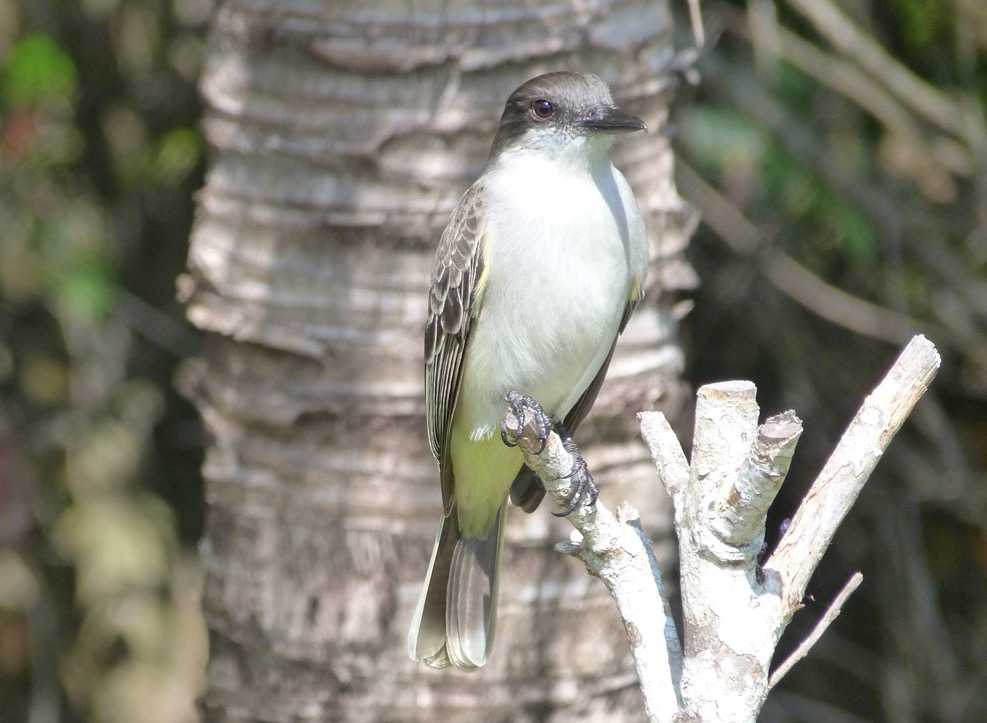
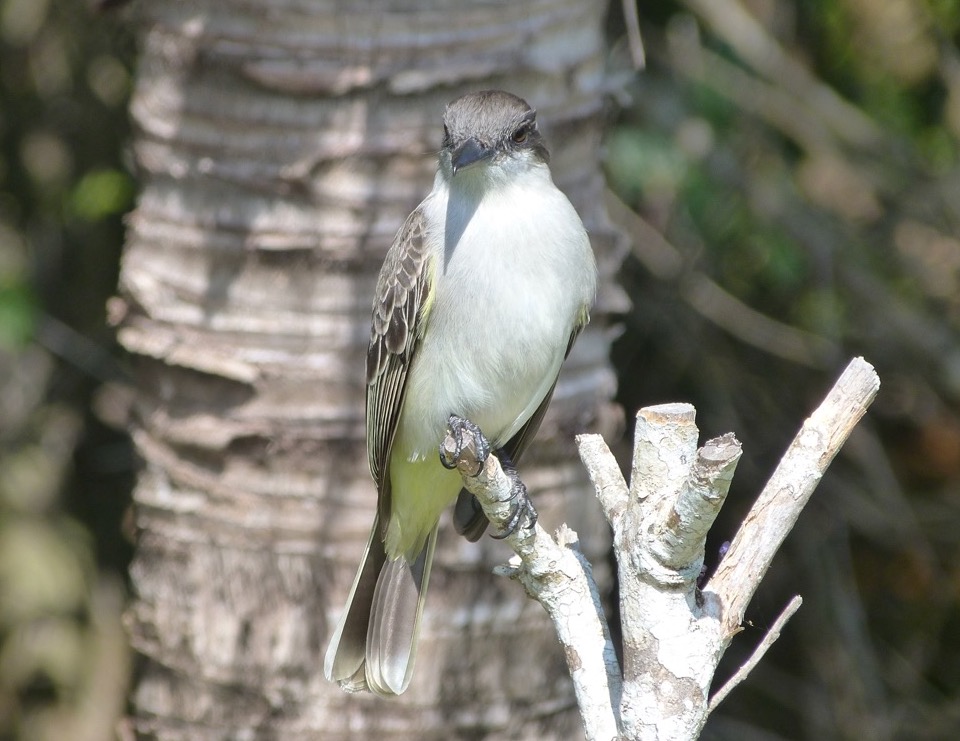
The loggerhead featured here in several poses is a watchful sentinel at Delphi. His preferred perches are in the edge of the coppice round the pool or at the edge of the main drive. From time to time he will leave his perch to catch a passing insect by ‘hawking’, returning to the same place to eat it.

Loggerhead Kingbird, Abaco Bahamas (Keith Salvesen)

Loggerhead and gray kingbirds can be quite easy to confuse. A couple of years ago I wrote about how to distinguish them, and with gray kingbirds in residence now this is probably a good time to set out the distinctions again.

Loggerhead Kingbird, Abaco Bahamas (Keith Salvesen)

LOGGERHEAD Tyrannus caudifasciatus vs GRAY Tyrannus dominicensis 

DIFFERENCES and SIMILARITIES

TOP TIP ANY KINGBIRD SEEN IN WINTER WILL BE A LOGGERHEAD

  • Kingbirds seen between (say) October & March are Loggerheads. Grays are strictly summer visitors
  • Both are medium size birds and roughly the same size as adults (around 23 cms)
  • Loggerheads have dark brown to near-black heads, grays have lighter, slate-coloured heads
  • Loggerheads have a ‘squared’ tip to the tail; grays have a notched tip
  • Loggerheads may have a whitish fringe at the tip of the tail; grays not so
  • Loggerheads have yellowish tinges to their white undersides & forewings; grays less so or not at all
  • Grays have a dark or black ‘mask’ through the eyes, often clear but not always easy to see
  • Loggerheads allegedly have inconspicuous orange head crests; grays are red. I’ve never seen either!
  • [*RH personal opinion alert*] Grays have larger, heavier beaks than loggerheads
  • Grays are territorially aggressive; when they turn up, the loggerheads tend to retreat to the forest

Loggerhead Kingbird, Abaco Bahamas (Keith Salvesen)

Here is how David Sibley shows the differences

 6323_Sibl_9780307957900_art_r1 3069_Sibl_9780307957900_art_r1-1

Illustrations: David Allen Sibley

GRAY KINGBIRD FOR COMPARISONGray_Kingbird (Dick Daniels Wiki)

MEMORABLE FACT TO DEPLOY IN CONVERSATION

The collective names for a group of kingbirds are: a Court, a Coronation, or a Tyranny

Loggerhead Kingbird, Abaco Bahamas (Keith Salvesen)

Photo Credits: All loggerheads, Keith Salvesen at Delphi;  gray kingbird by Dick Daniels; Illustrations David Sibley

Unknown's avatar

SEA BISCUITS: THEY REALLY DO CONTAIN DOVES – AND MORE!


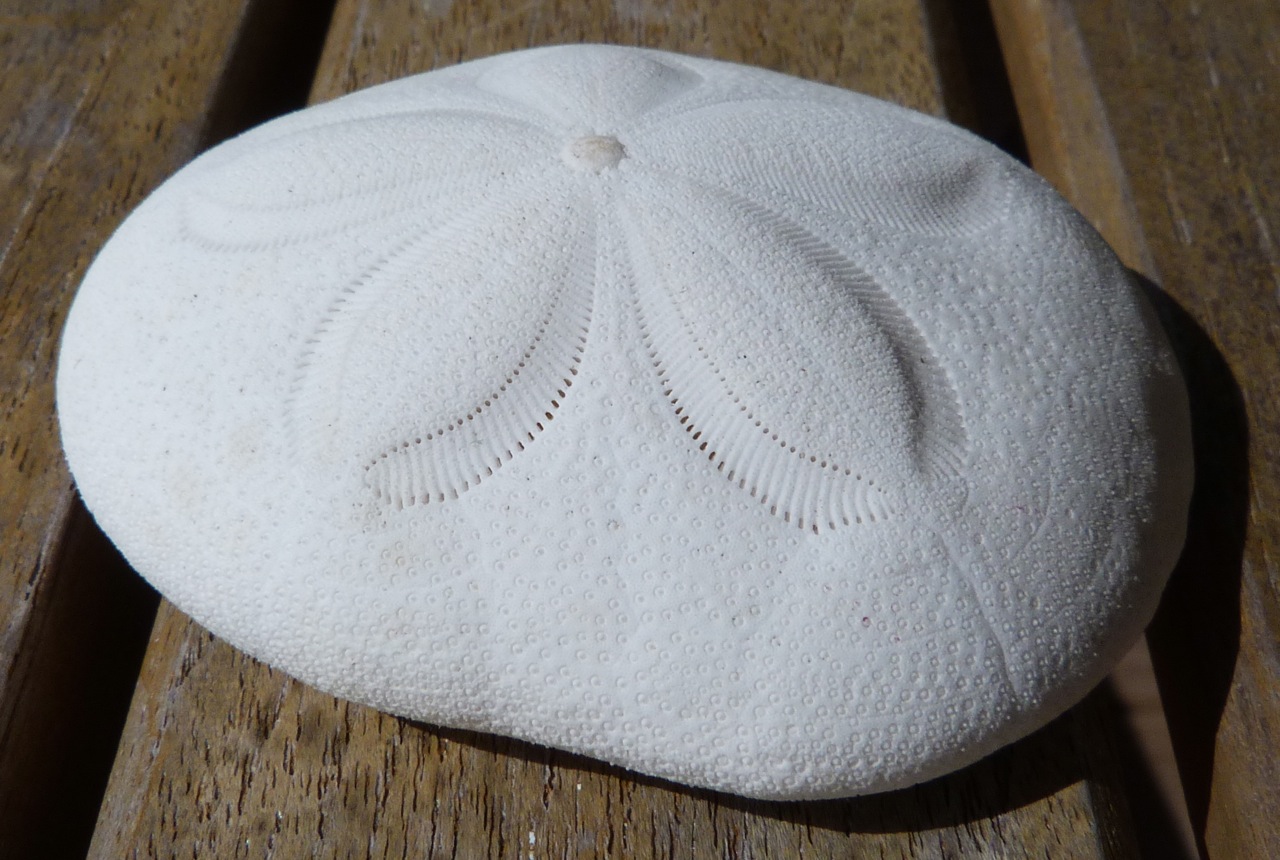
Sea Biscuit Close-up, Abaco (Keith Salvesen)

SEA BISCUITS: THEY REALLY DO CONTAIN DOVES – AND MORE!

Recently I posed the question whether sea biscuits, like sand dollars contain ‘doves’. I had one in my hand, it rattled, I took a photograph through its ‘mouth hole’ and the question was answered. Biscuits do indeed contain doves – see HERE for details and comparisons with dollar doves.

Sea Biscuit 'Doves', Abaco (Keith Salvesen)

However, I spinelessly* failed to break open the biscuit to check out the contents more closely. I theorised that, because of the 5-way symmetry of these creatures, there would be 5 doves (which are in fact segmented mouth parts) in a biscuit exactly as with a dollar, and amiably challenged anyone to disprove it. [* biscuits and dollars are types of sea urchin – see what I did there?]

Dollar dove in close-up – one of 5 segmented mouth parts inside the ‘test’ (skeleton)Sand Dollar 'Doves', Abaco (Keith Salvesen)

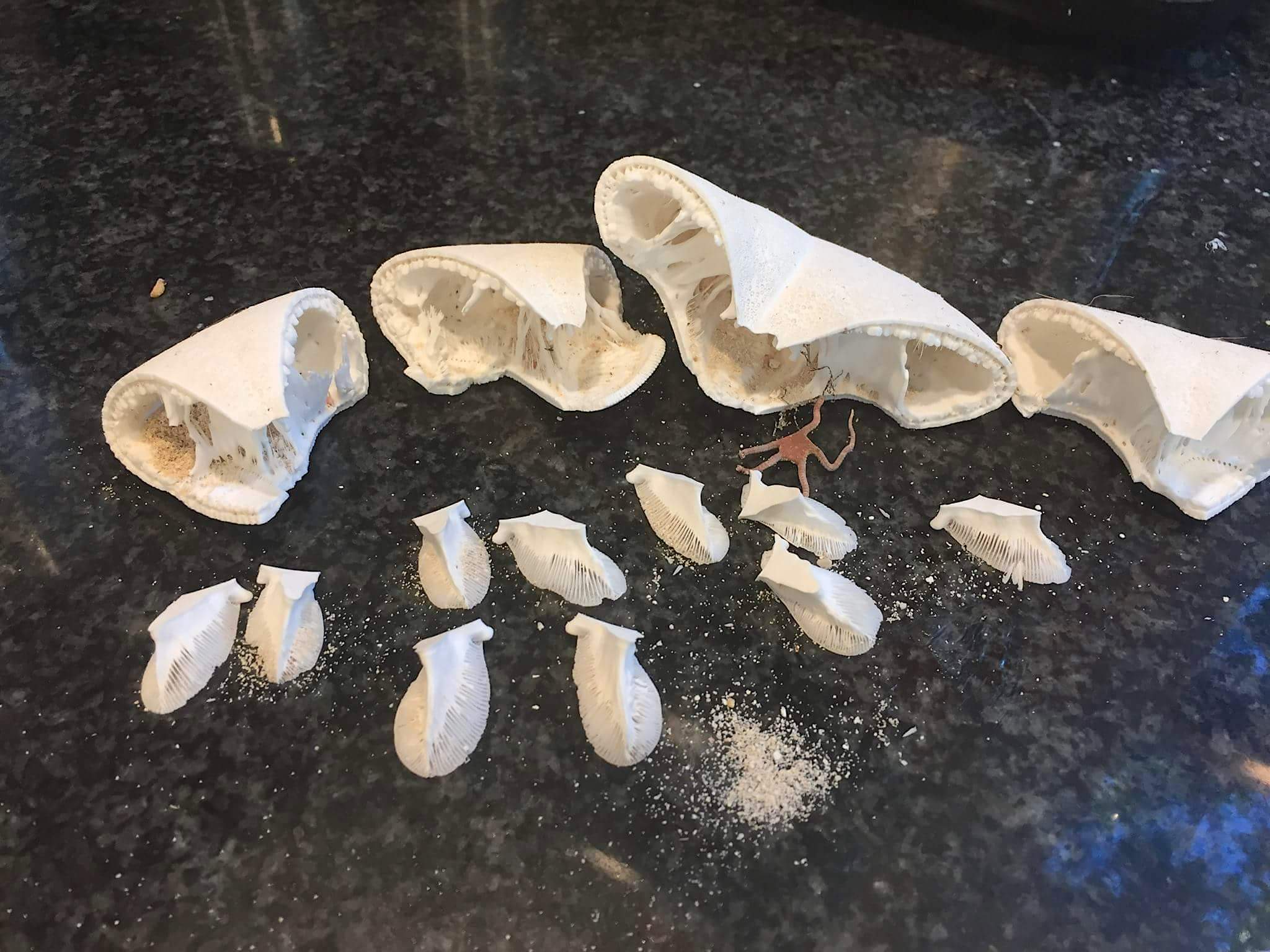
Melissa Ann Guinness from Hope Town has a far more robust attitude to these things and, taking up the challenge, she heartlessly smashed open a sea biscuit from her collection to investigate further. I said I’d publish a correction if my theory was wrong. This is it – though in one arguable sense the theory holds good. It just didn’t go far enough…

Sea Biscuit 'Doves', Abaco (Melissa Ann Guinness)

In the above picture you can see (a) 4 quarters of a sea biscuit skeleton (b) 10 demi-doves (rather than 5 whole doves) and (c) a small mummified 5-limbed brittle star that was presumably in the creature’s digestive system when it died.

10 ‘demi-doves’  (or, when assembled, 5 doves that (unlike sand dollars) are in 2 parts
Sea Biscuit 'Doves', Abaco (Melissa Ann Guinness)

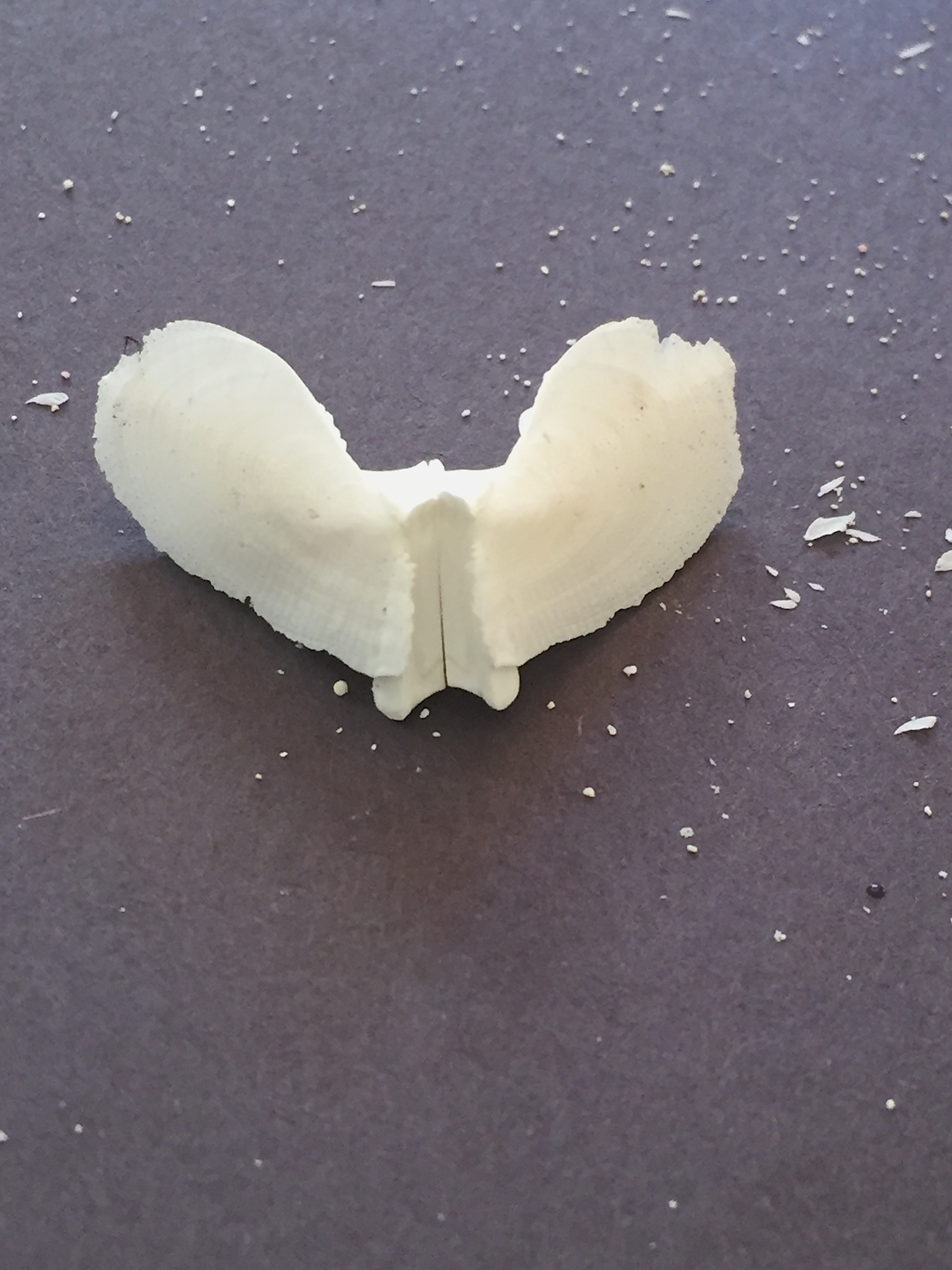
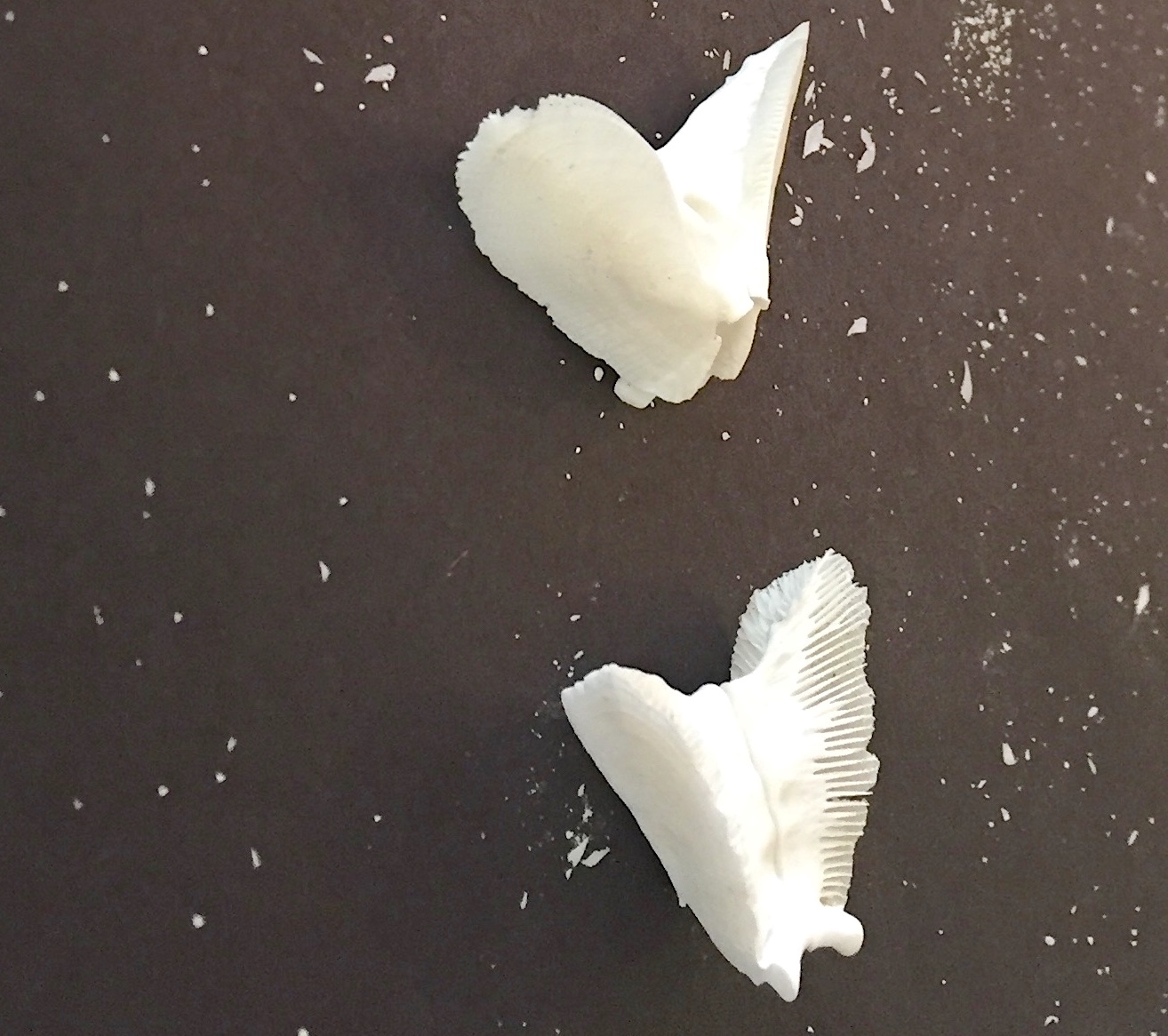
Complete doves

Sea Biscuit 'Doves', Abaco (Melissa Ann Guinness) Sea Biscuit 'Doves', Abaco (Melissa Ann Guinness) Sea Biscuit 'Doves', Abaco (Melissa Ann Guinness)

The final reconstruction – 5 doves and a bonus brittle star

Sea Biscuit 'Doves', Abaco (Keith Salvesen)

Photo Credits: Keith Salvesen (1, 2, 3, 10); Melissa Ann Guinness (4, 5, 6, ,7 ,8 ,9)