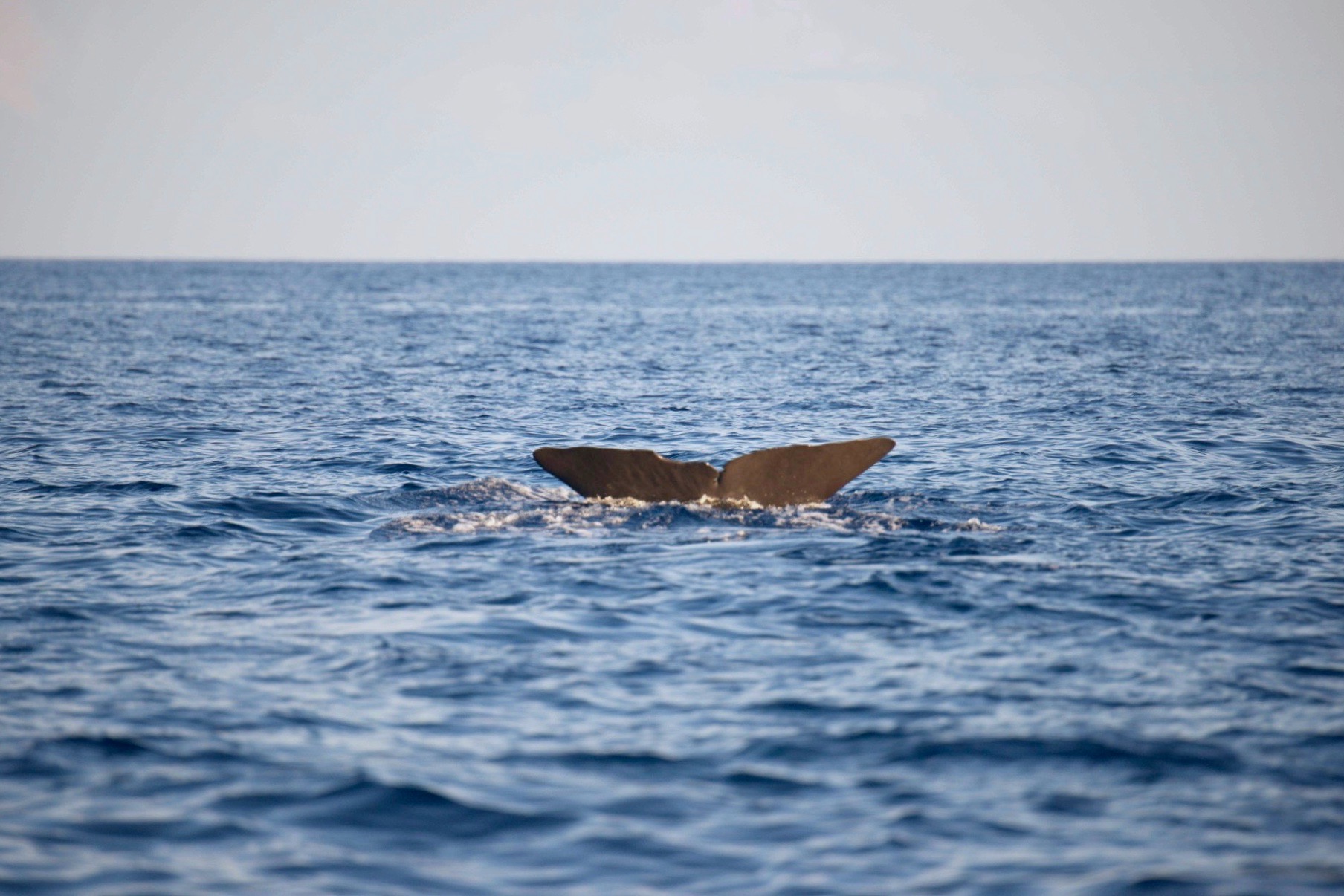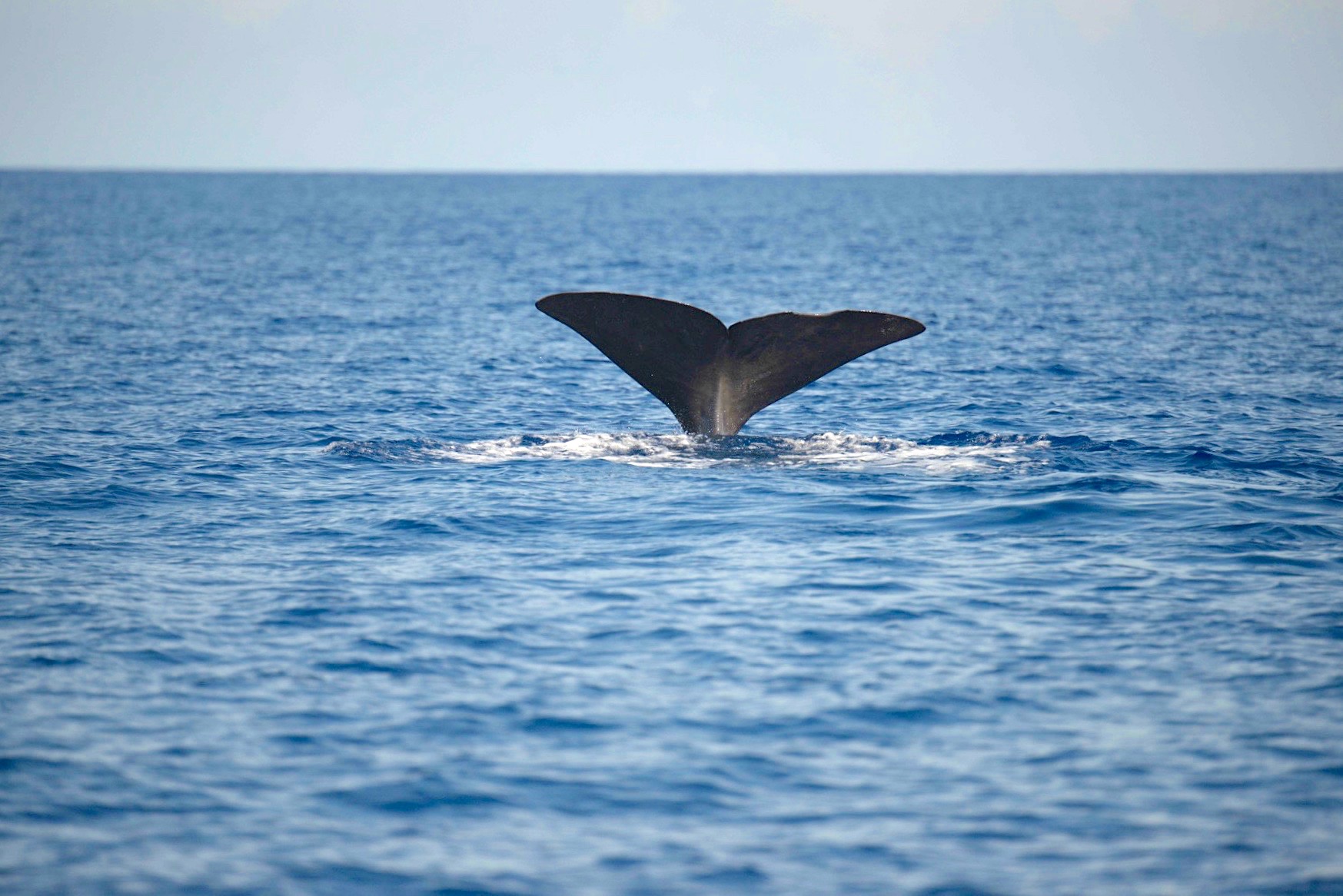
During the past week, the BMMRO research boat has been tracking sperm whales off the south coast of Abaco. These huge creatures are the largest marine mammals found in Bahamian waters, and the area between Rocky Point around the south coast to Hole-in-the Wall is a great place to find them.
One reason they are found in this particular area is the existence of the Great Bahama Canyon, one of the deepest submarine canyons in the world. The depth of the canyon ensures that the waters are nutrient-rich, with food being drawn up from the depths towards the surface. In season it’s the perfect place for female sperm whales and their calves.
The BMMRO research trip encountered more than a dozen sperm whales, mostly females with their calves. And the amazing thing is that the sightings are often made within sight of land. In these photos, the are two landmarks visible. One is the huge Disney vessel parked at Gorda Cay aka Castaway Cay (header image); the other is HOLE-IN-THE-WALL LIGHTHOUSE(above)
Credits: All photos BMMRO 2018, with thanks to Diane & Charlotte as ever
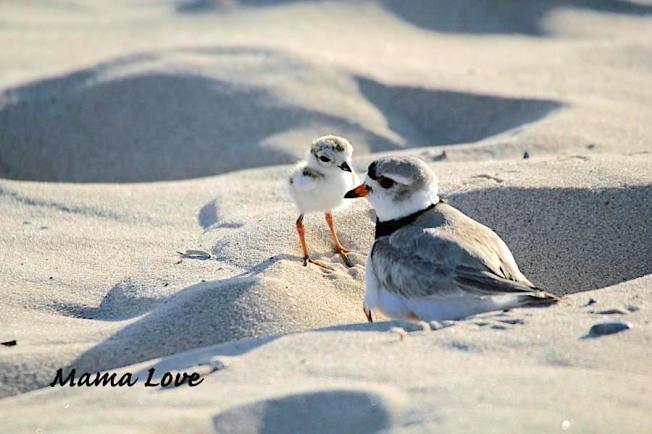
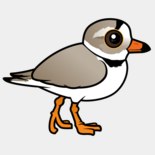
The bird in the header image is the presciently named Bahama Mama in Muskegon State Park, Michigan – so, one of the rare Great lakes piping plovers. She originally hatched and was banded as a chick in 2014 at Tawas MI, some distance away from Muskegon. When later named in 2015 by Muskegon monitor Carol Cooper, no one could possibly have known then where she would chose to overwinter. The Bahamas, as it turned out – the avian equivalent of nominative determinism.
This little bird is the perfect example to demonstrate the success of (a) an organised monitoring and recording system in the breeding grounds of these rare birds; (b) the use of easily identified coded banding and (c) the deployment of ‘citizen scientists’ to back up the professionals in the overwintering grounds such a Abaco.
A combination of the three factors leads over time to the compilation of a life story. Invariably there will be gaps, but let’s take a look at what we know about Bahama Mama, in her own dedicated timeline. Note two things: her beach fidelity; and the evidence of mate infidelity…
2014 Born Muskegon State Park, MI
2015 Nested with Little Guy and raised chicks. Winter location unknown
2016 Returned to Muskegon and again successfully nested with a new male, Bear, from Sleeping Bear Dunes Park MI. (Little Guy went off with another female on the same beach…)
2016 Resighted in October on Long Beach Abaco and stayed for several months
2017 Back at Muskegon and raised chicks again with Little Guy
2017 Again resighted in October on Long Beach Abaco and overwintered
2018 Back at Muskegon, initially back with Little Guy, eventually nested with Enforcer
The official record of the latest union – evidence of fickleness
This summer 4 chicks were hatched. Sadly, one of them (Ringo, 2 pics below) was lost, presumed predated, leaving 3 to fledge.
Bahama Mama with one of her chicks
Little Ringo RIP
Another of the chicks
These are rare and threatened birds, vulnerable at both ends of their migration for all the usual reasons. The studies undertaken at both ends of the migration have revealed astonishing beach loyalty in these little birds that travel up to 1500 miles (sometimes more) every Spring and every Fall to be somewhere safe to nest and breed; and then to overwinter. In Michigan, Carol Cooper is Bahama Mama’s mama, watching over her, recording the details, checking when she has left the beach, and anxiously watching each Spring for her arrival home.
On Abaco, these duties – pleasures, even – are undertaken by ABACO PIPING PLOVER WATCHand the team of citizen scientists who keep an eye on the beaches, count the birds, note the banded birds and photograph them for ID, and pass the info on to HQ (which happens to be me). The data from all sightings is collated and then the season’s stats are compiled and provided to the scientists involved. Here’s a summary of stats for last season:
Bahama Mama, first sighting on Long Beach Abaco Oct 2017
Photo Credits: Carol Cooper (1, 3, 4, 5, 6); MDF (2); Keith Kemp (7). Special thanks to Carol Cooper, monitor in Michigan; and to Keith Kemp, primary monitor on Abaco. Also to Todd Pover CWFNJ and all the other real scientists involved for the last 3 years
POLITE REQUEST
If you live on Abaco or its cays anytime between August and March and might be interested in helping with piping plover research by becoming a monitor, please get in touch with me. It’s very simple and undemanding. A beach stroll from time to time – even as little as once a month – with a notebook, pencil, binoculars, a chocolate bar and (preferably for accurate ID of banded birds) a camera. Not a dog, though. Not on this walk anyway! Every report, even of a single bird, adds to the picture. Last season there was more than one ‘citizen scientist’ sighting of a plover where none had been seen before.
CARIBBEAN REEF SQUID REVISITED: SUPERPOWERS & SQUID SEX
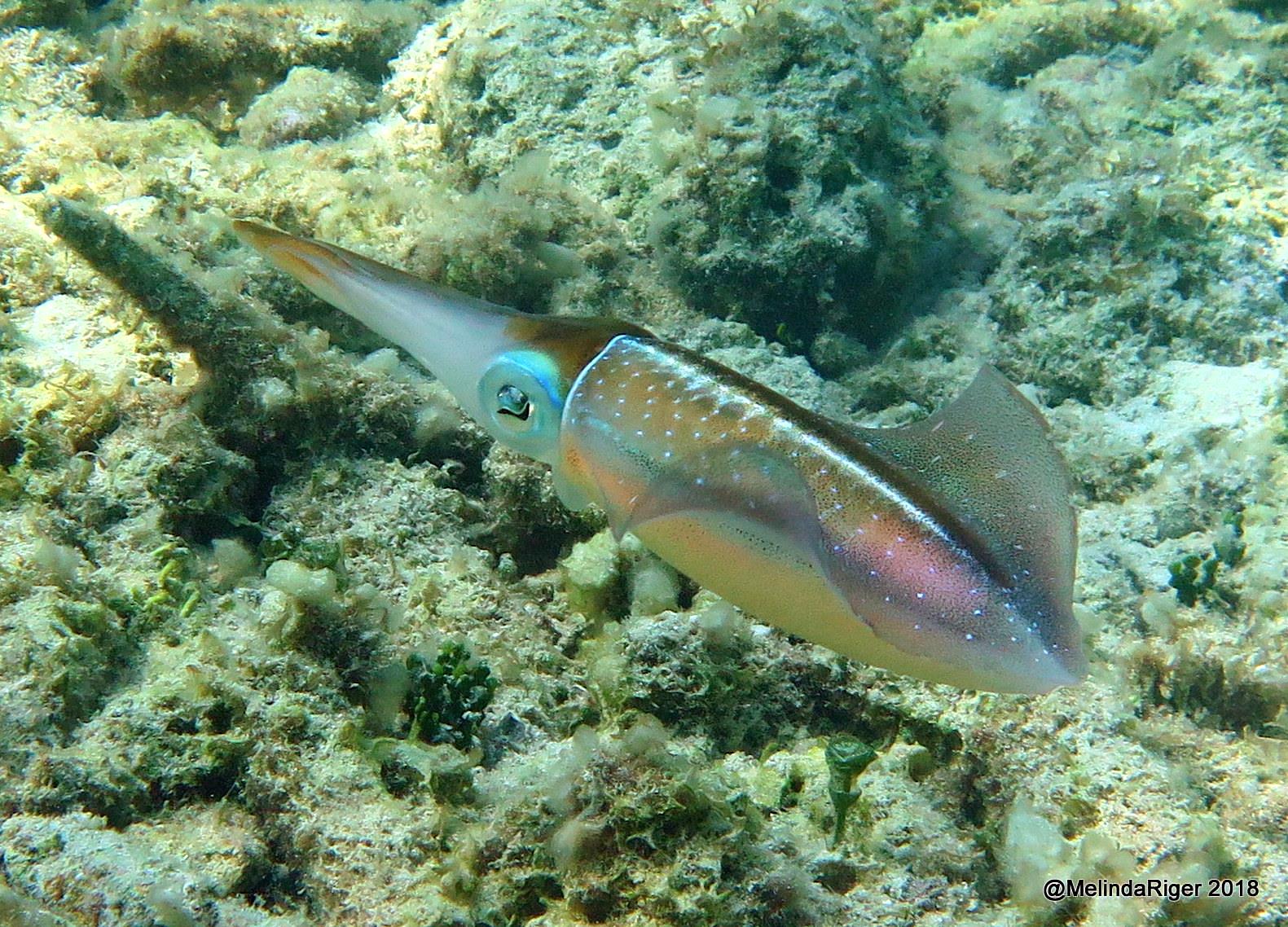
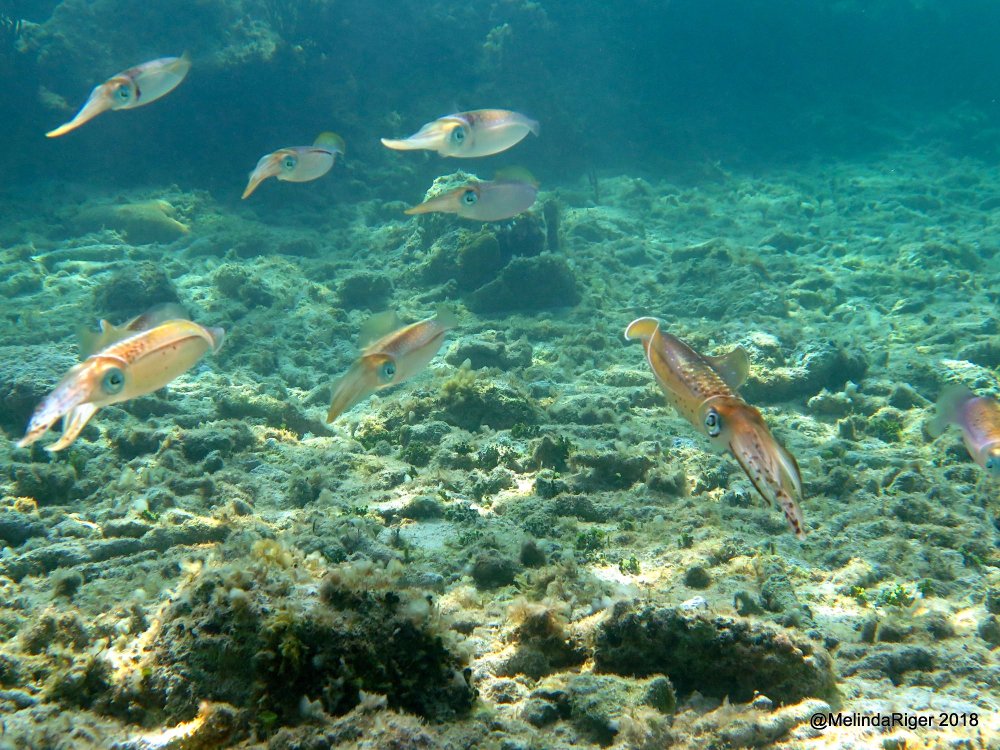
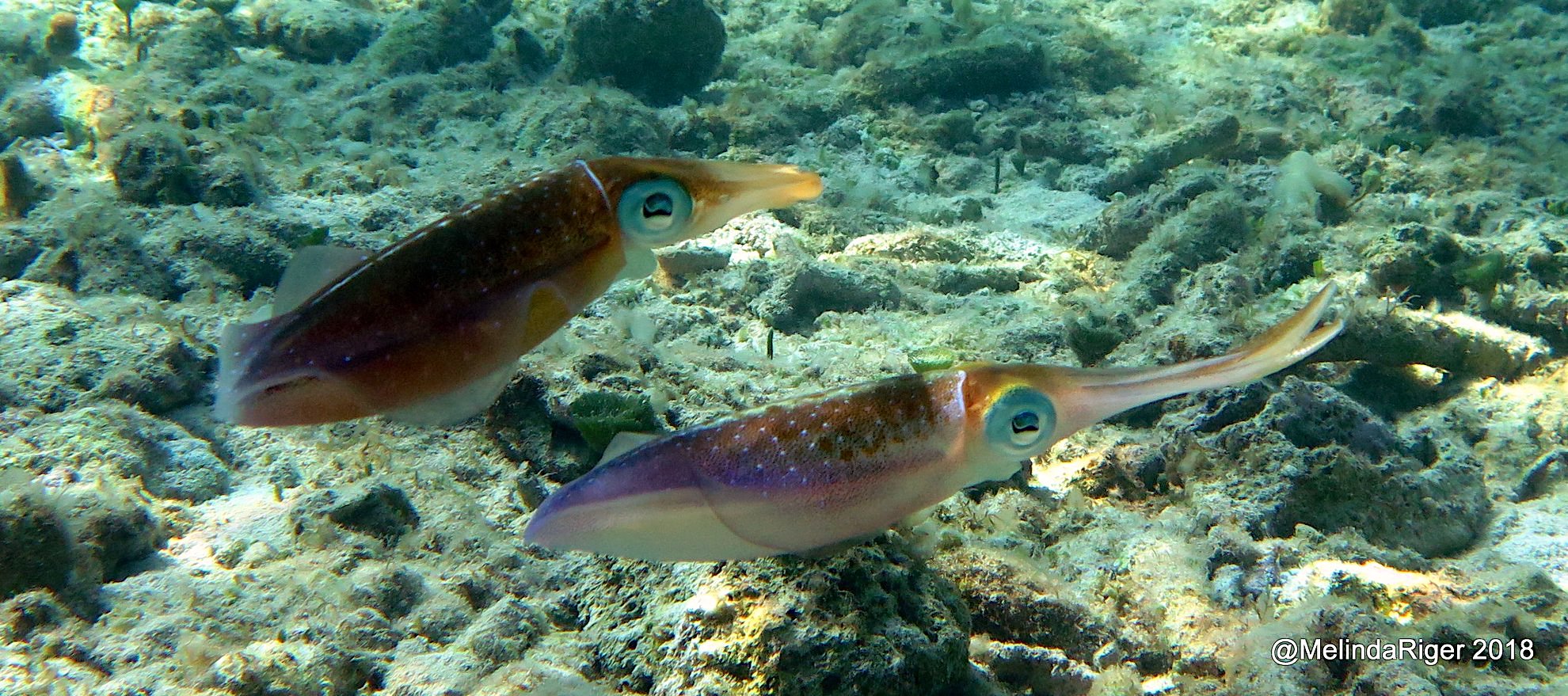
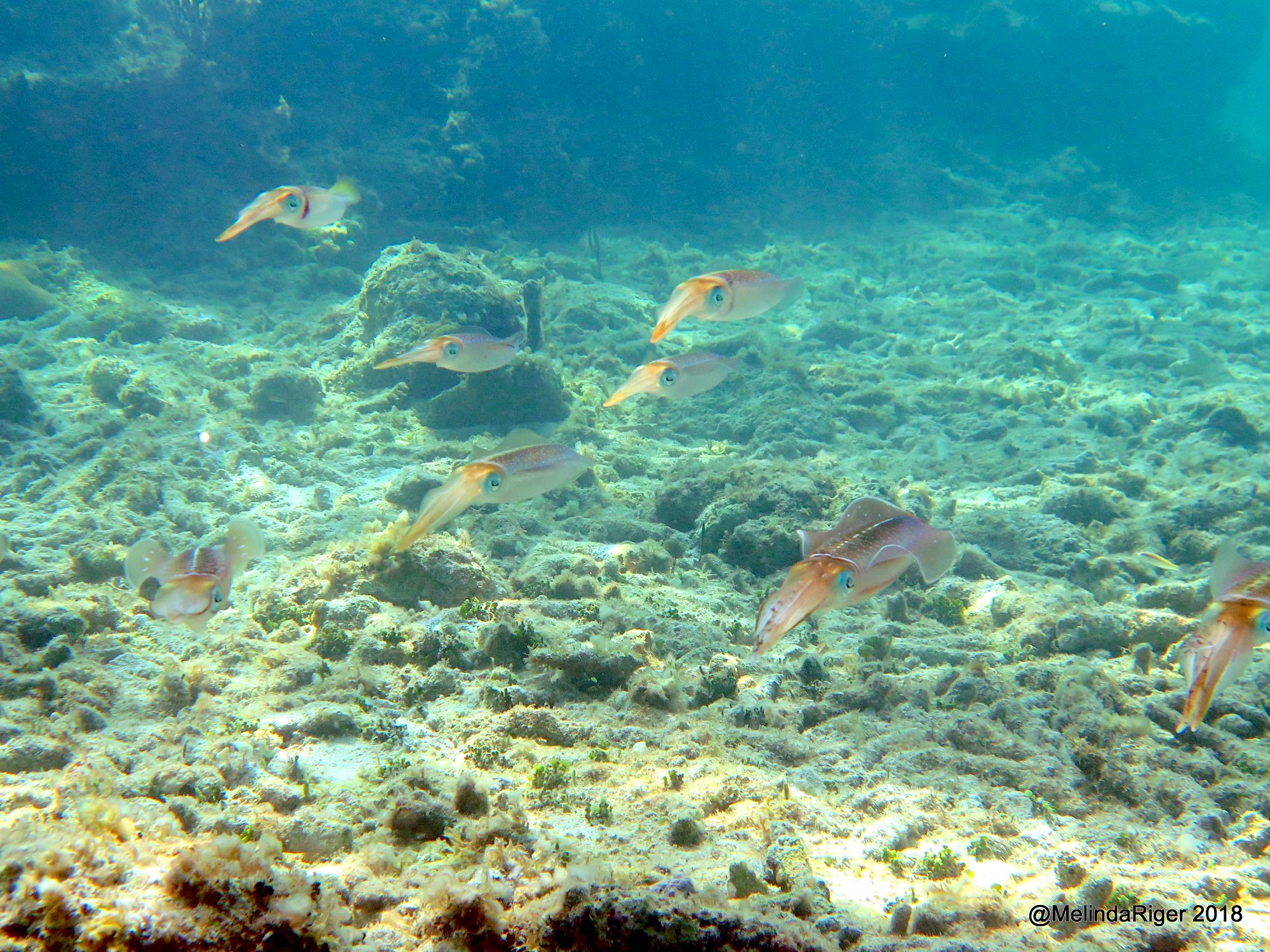
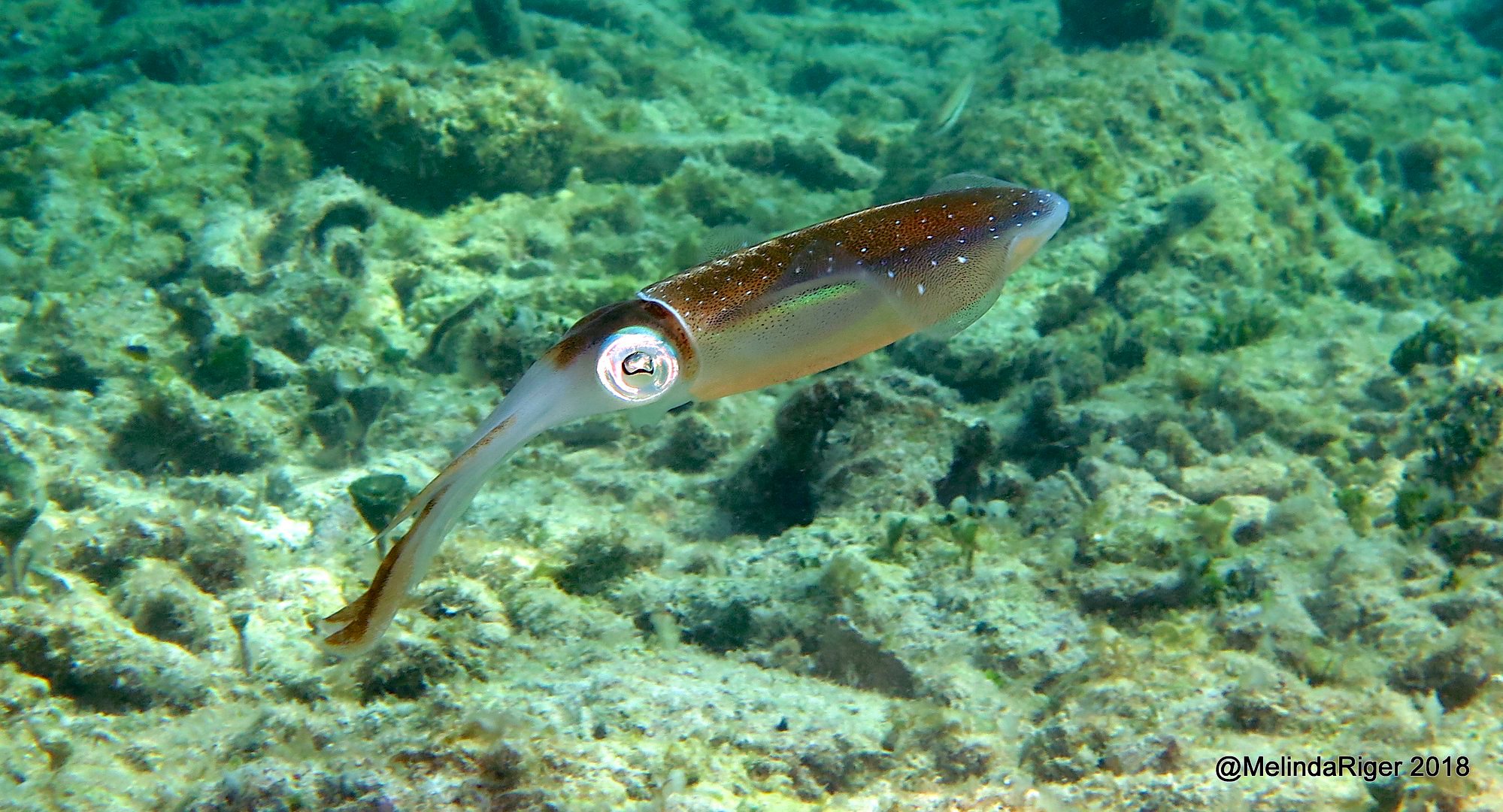
The Caribbean reef squid Sepioteuthis sepioidea is a small squid species of (mainly) the Caribbean Sea and the Floridian coast, and the most common in its range. These squid tend to form small shoals in and around reefs. Right now, in June, is a good time to find these creatures swimming in groups – all these photos were taken during the last fortnight. I wrote about squid a while back (3 years, maybe)? This post includes some parts of the earlier one, with all-new images. Squidmages, even.
Squid are voracious eaters, dragging their prey to their mouths with some or all of their 10 limbs and using their beak to cut it up. The target species are small fish, molluscs and crustaceans. The squid have a ‘raspy tongue’ known as a radula which further breaks up the food for easy consumption.
REEF SQUID SUPERPOWERS (SUPERCOOL)
Squid are capable of brief flight out of the water (a fairly recent discovery)
They can also hide from / confuse predators by ejecting a cloud of black ink
Squid can change colour, texture and shape, and can even match their surroundings
This enviable power is used defensively as camouflage or to appear larger if threatened
It is also used in courtship rituals (something that humans might find most disconcerting)
Colour patterns are also used for routine squid-to-squid communication AND GET THIS:
A squid can send a message to another on one side, and a different one to a squid on the other side
SQUID SEX (1) “ROMANCING THE SQUID”
A male will gently stroke a female with his tentacles
The female will (most likely) flash an ‘alarm’ pattern. She’s hard to get.
The male soothes her (don’t try this at home, guys) by blowing and jetting water at her
If this doesn’t go well, he’ll move off, then repeat the routine until she sees his good points
However this on / off courtship can last for hours until at last he succeeds and then…
… he attaches a sticky packet of sperm onto the female’s body (romance is not dead on the reef)
Meanwhile he stays close, emitting a pulsing pattern, as well he might after all that palaver
She then finds a safe place to lay her eggs. Job done.
SQUID SEX (2) IT ALL ENDS BADLY. VERY BADLY.
As soon the female squid has laid her eggs, she dies at once
The male squid lives a bit longer and… may have other packets to stick on other lady squid
But then in the end he dies too
It’s all horribly reminiscent of Romeo and Juliet. The lovers die. But no the balcony scene
THE CORRECT PLURAL OF SQUID
I had an unwise look online, always a hotbed of conflicting opinions. Inserting an algorithm into the interstices of the internet proves conclusively that the plural of squid is… squid. One squid, ten squid, a group of squid, a plate of squid. Unless, that is, you are talking about more than one of the many squid species, when you could also have ‘I collect both reef and giant squids’. “Squidses” sounds fun but is sadly not permitted.
Credits: As ever (for fabulous underwater pics) Melinda Riger of Grand Bahama Scuba; research sources include MarineBio; Animal Diversity Web (Michigan Uni)
There’s something slightly unsettling about the perspective of the header image, with foreshortening suggesting that the turtle is actually a gigantic creature with a tiny diver swimming close to it…
I don’t seem to have given green turtles much space in the past, the most frequently photographed (and therefore featured) species being the hawksbill. This post is both to right the wrong, and to provide some information about the species.
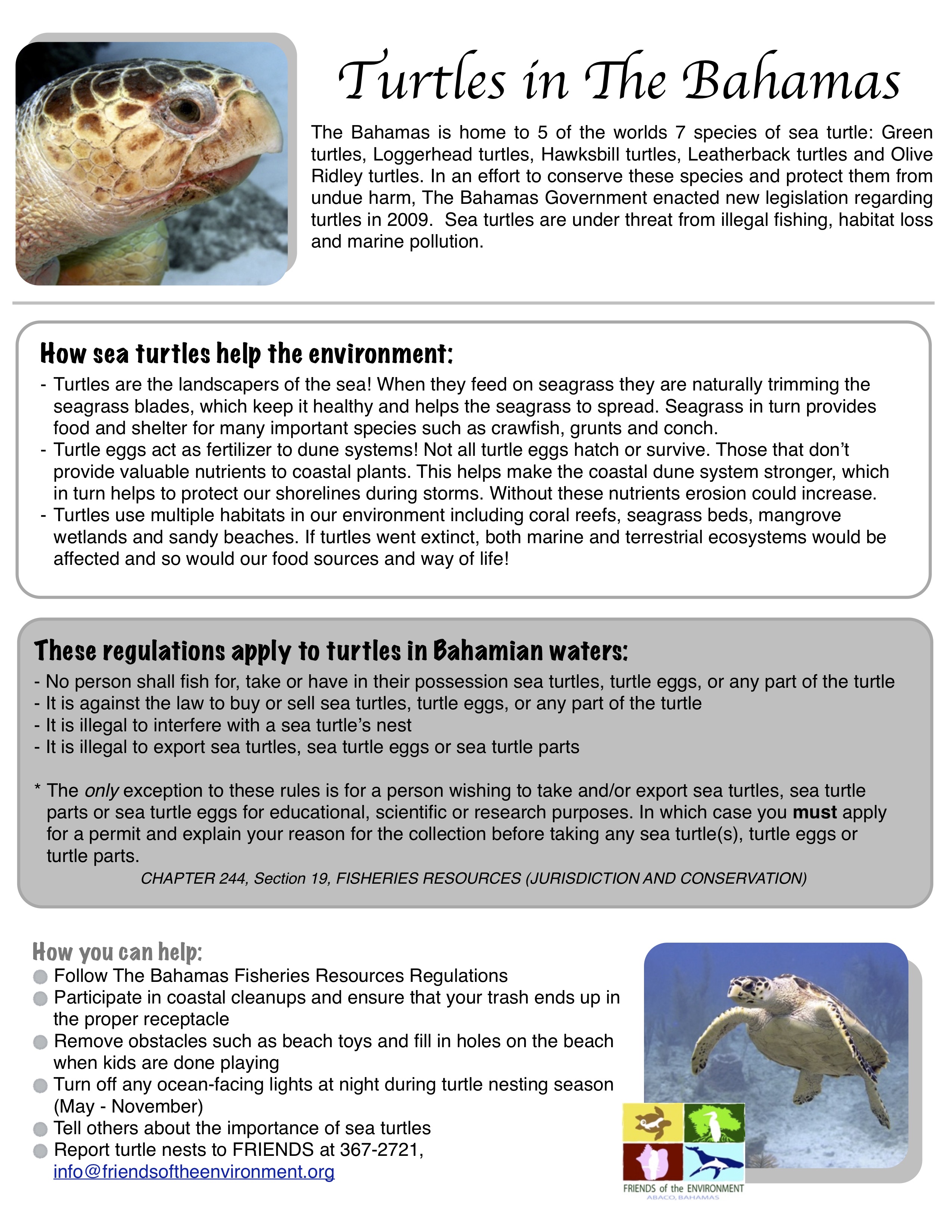
Friends of the Environment has produced an interesting short guide to the sea turtles of the Bahamas. One of the many facts included is that 5 of the 7 sea turtle species in the world can be found in Bahamian waters. The turtle protection law is also given – also the way to report turtle nests so they can be watched and protected.
The 4 main species are the hawksbill, green, loggerhead and leatherback. The 5th and lesser known one is the Olive Ridley turtle. The differences between most of these is considerable, as can be seen from this IUCN-produced Identification Chart (credits as shown).
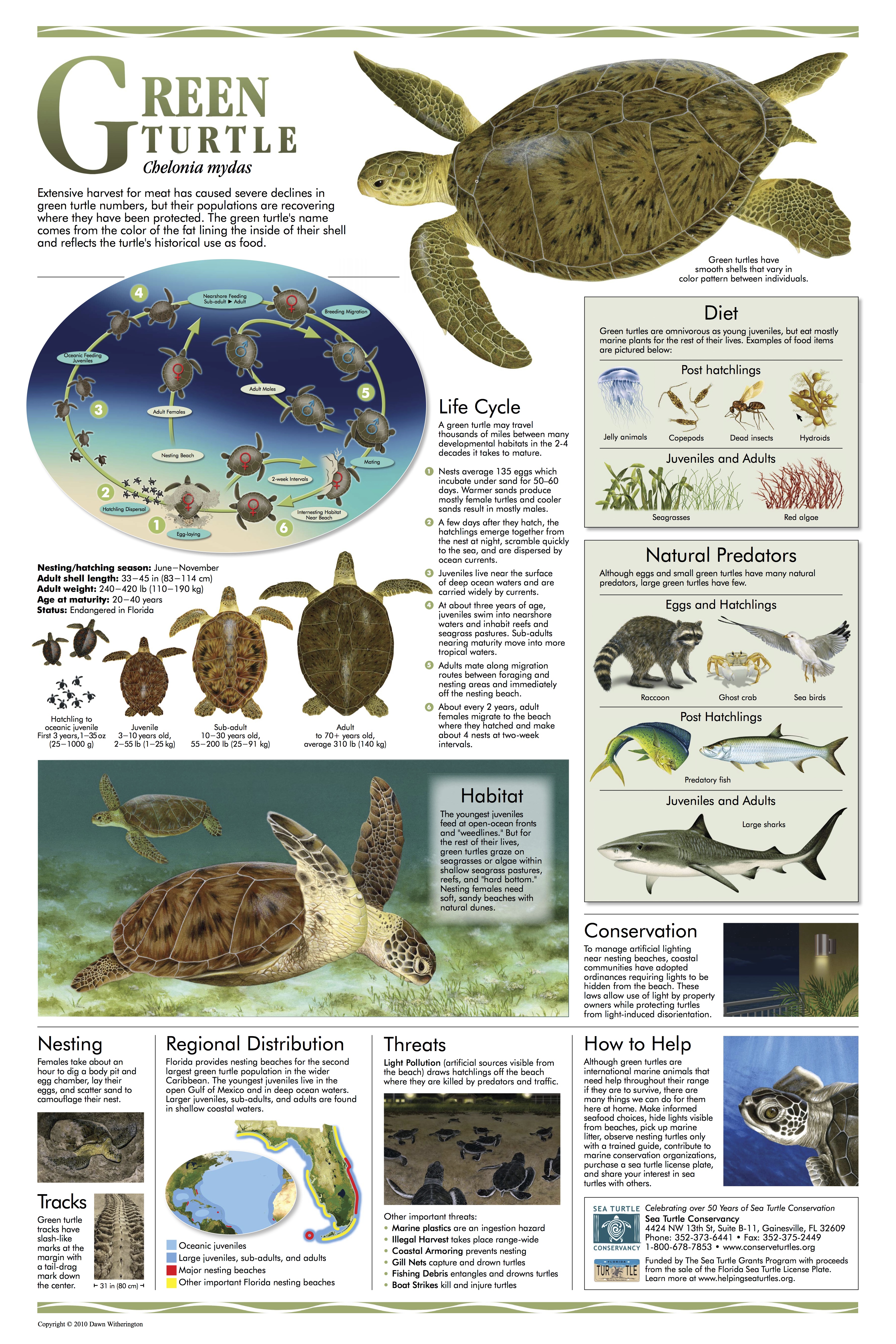
Another useful source of information for green turtles is this extremely well produced poster illustrated by the excellent Dawn Witherington, who has somewhat (and deservedly) cornered the market with this kind of large-scale infographic. The sea turtle series is so helpful that I have dedicated a whole page to them HERE. Dawn also created the LOXAHATCHEE poster series covering such topics as Lionfish, Sea Grasses, Land Crabs, Bonefish, Coral Reefs and more
All photos: Adam Rees Photography, with thanks for use permission here and elsewhere
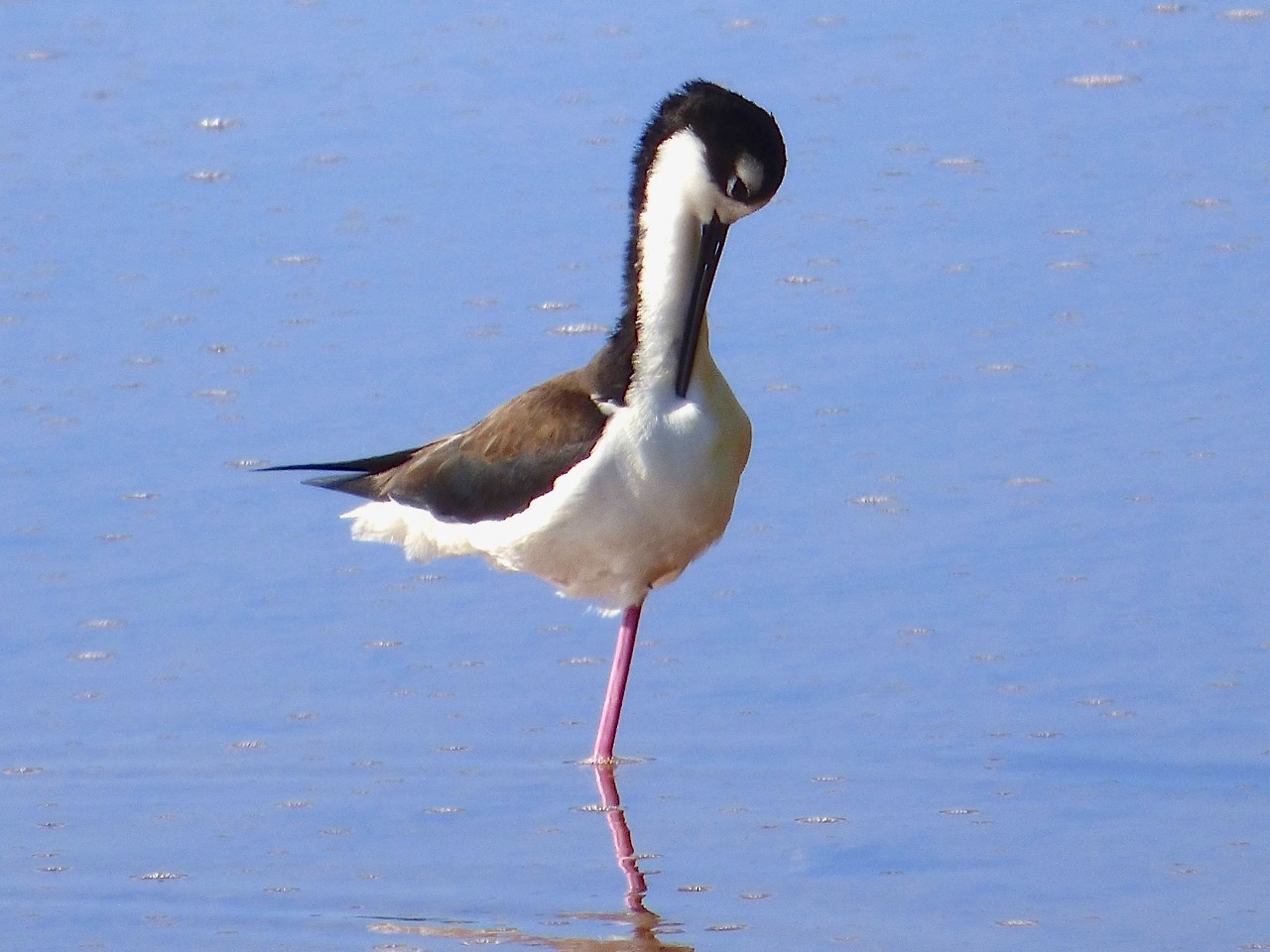
There’s something wrong in the picture above (no, I don’t mean about the photograph itself). Count up how many pink legs you can see. No, not including the reflections. Give up? It’s three. Between two birds. I assumed of course that ‘Oner’ had a perfectly good serviceable leg tucked up into its undercarriage. I admired the balancing skills involved in resting one leg while nonchalantly standing on the other.
We were watching this pair of black-necked stilts Himantopus mexicanus at the pond at Gilpin Point, which at certain times can be ‘Stilt Central’. These birds are permanent breeders on Abaco and are without a doubt the most beautiful of all the waders (avocets, being extremely uncommon winter visitors, are disqualified from consideration for lack of presence).
It gradually dawned on me that Oner really did only have one stilt to stand on. After 10 minutes observing them and the other birds around them, there was no question about it – the right leg was completely and utterly missing. This unipedal deficit had no obvious ill-effects on the bird – nor on its ability to throw a good pose (above). Or to preen (below).
I’m in danger of losing sight of Twoer here, a bipedal bird that deserves its own place in the story, not just a wade-on part in Oner’s story.
Twoer as Ringmaster…
BNSs are territorial and in particular can become ‘proactive’ (ie aggressive) in protecting the area near a nest. I once mistakenly got close to a nest, not even knowing it was there. I soon learnt – a parent BNS came wading towards me, zigzagging in the water, shouting and carrying on in a way that immediately said ‘my nest is nearby’. And when I meanly stood my ground it suddenly took off and flew straight at my head…
A shouty stilt
BLACK-NECKED STILT ALARM CALL
Jim Holmes / Xeno Canto
On reflection…
All photos: Keith Salvesen / Rolling Harbour Abaco(and, if anyone noticed, sorry about some formatting issues which I can’t get rid of…); Audio file Jim Holmes / Xeno Canto
The narrowest point on Abaco is just north of Crossing Rocks. The 120-mile long highway that splits the Island down the middle passes over a narrow strip of land. On the west side, there are mangrove swamps, an inlet of sea, and a small jetty used by bonefishers to reach the productive waters further out. On the east side? Well, there’s more mangrove swamp, giving way to thick jungly coppice before reching the top end of Crossing Rocks beach – and not much else. Except for a long thin brackish pond by the road, that is.
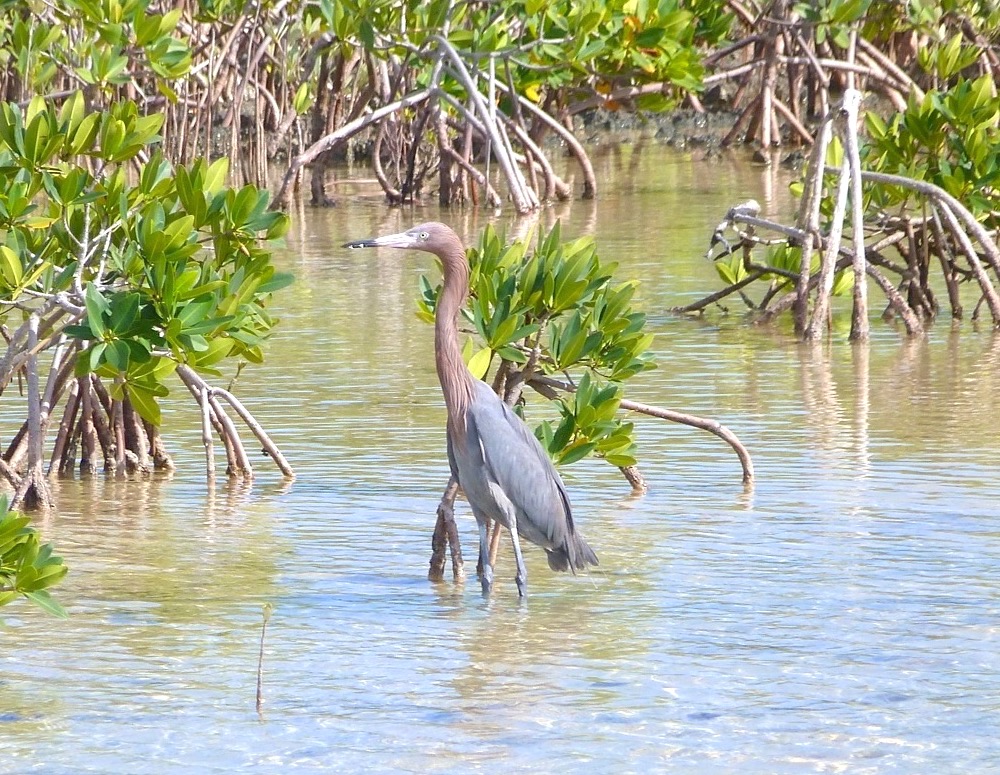
If you are interested in birds – maybe on your way to the pond at Gilpin Point for Bahama Duck and waders, or returning from a Bahama mockingbird hunt in the National Park – it’s worth pulling over at the pond. Or preferably on the other side of the road so you can approach it stealthily. There’s plenty of roadside cover for birder discretion. Chances are, you’ll encounter one or more of the several heron or egret species found on Abaco – and that they’ll be fishing.
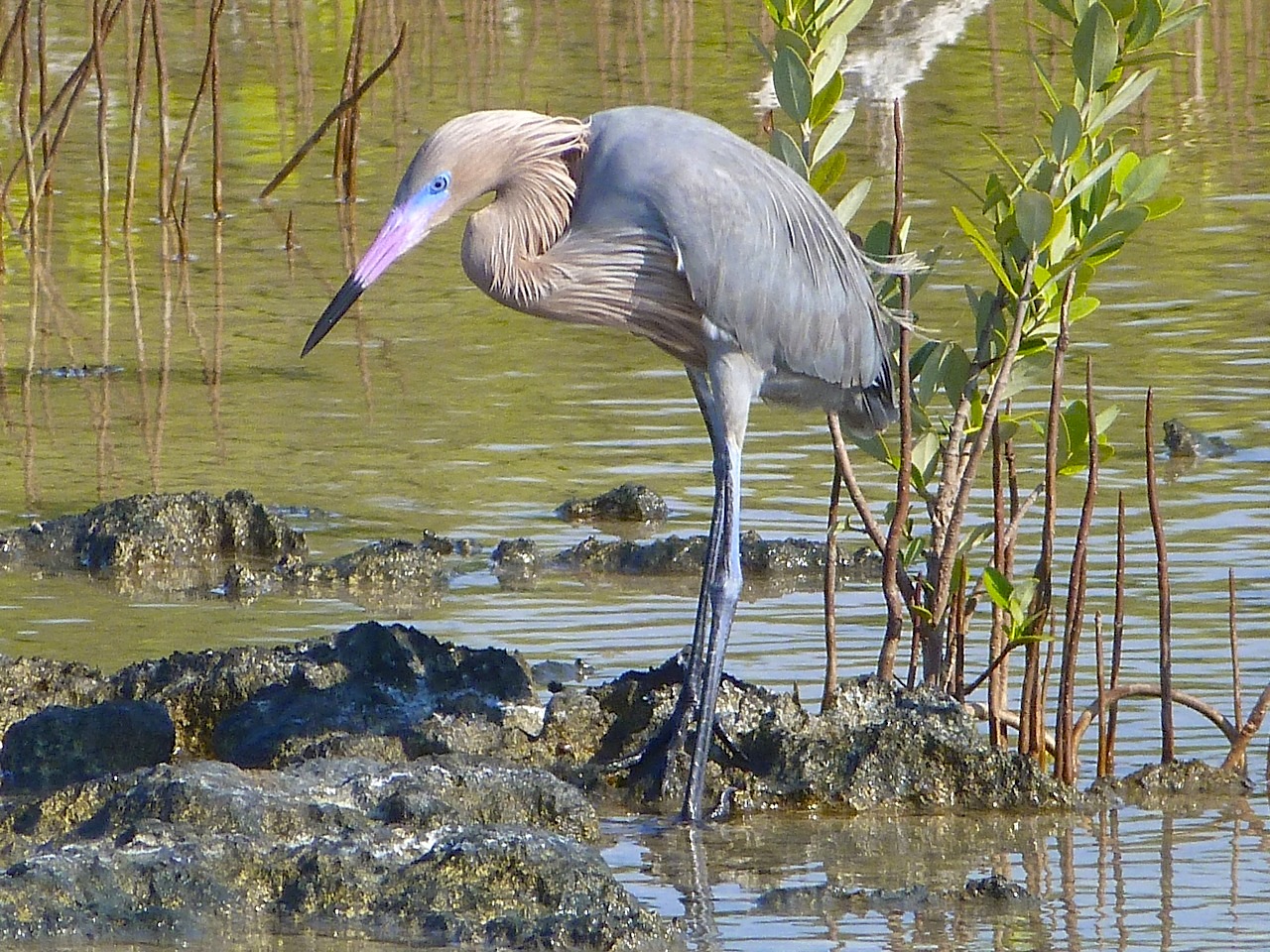
You can see how clear the water can be. It’s no wonder that this reddish egret has ‘hunched up’ to get that cruel beak closer to the surface to stab down on a small silver snack. In the short time we watched, he had no success (hence ‘Where’s the Catch?’ – there was none). But I’ve seen reddish egrets including the white morph successfully snacking at the pond; and a tricolored heron. A couple of years ago we had a great scoop in late March – a male reddish egret fishing in his wonderful breeding colours. Compare the ‘routine’ plumage of the bird above with this gorgeous creature.
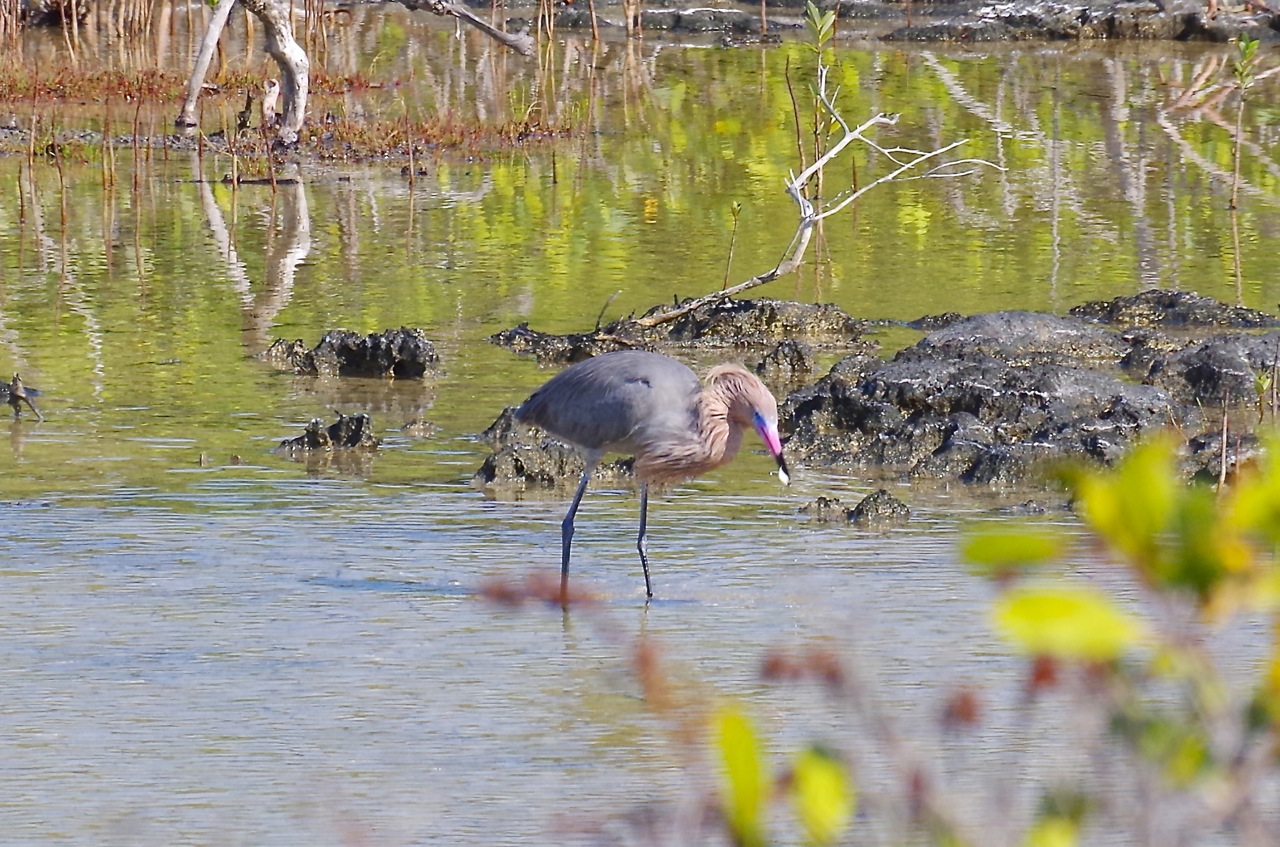
And to show I am not making up the fishing part, a shot of this bird actually making a catch…
HUTIAS: ABACO’S EXTINCT RODENTS LIVE ON… ELSEWHERE
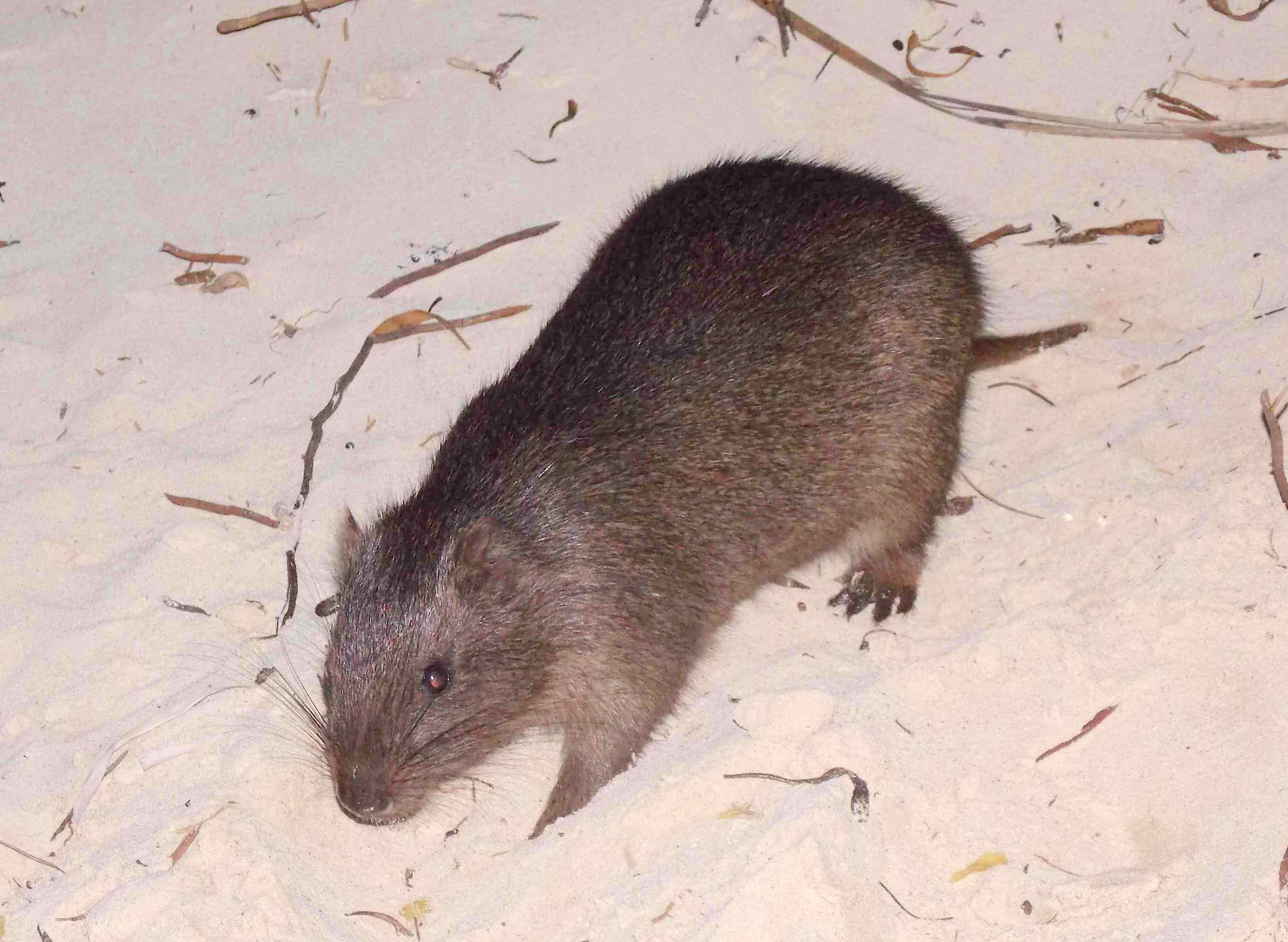
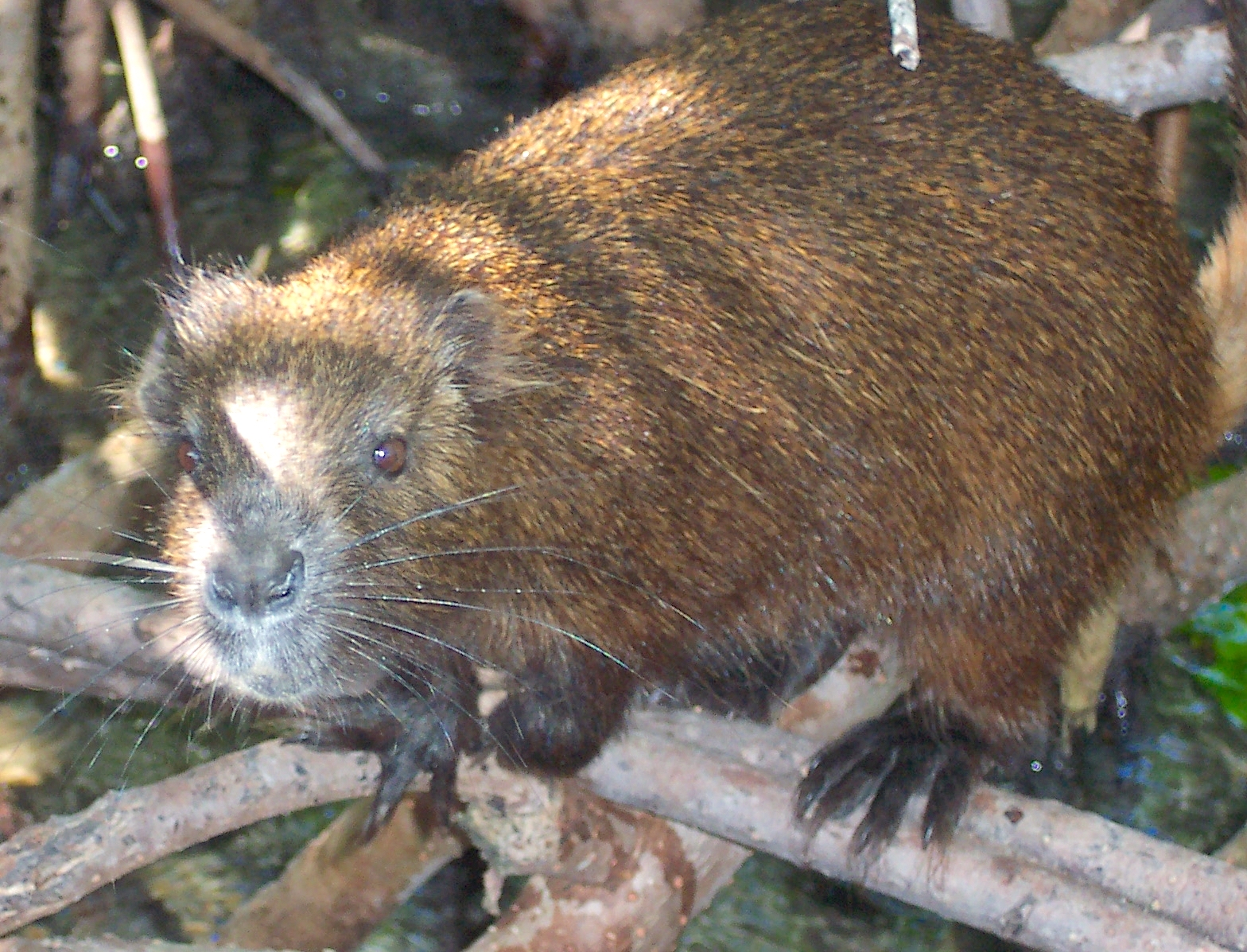
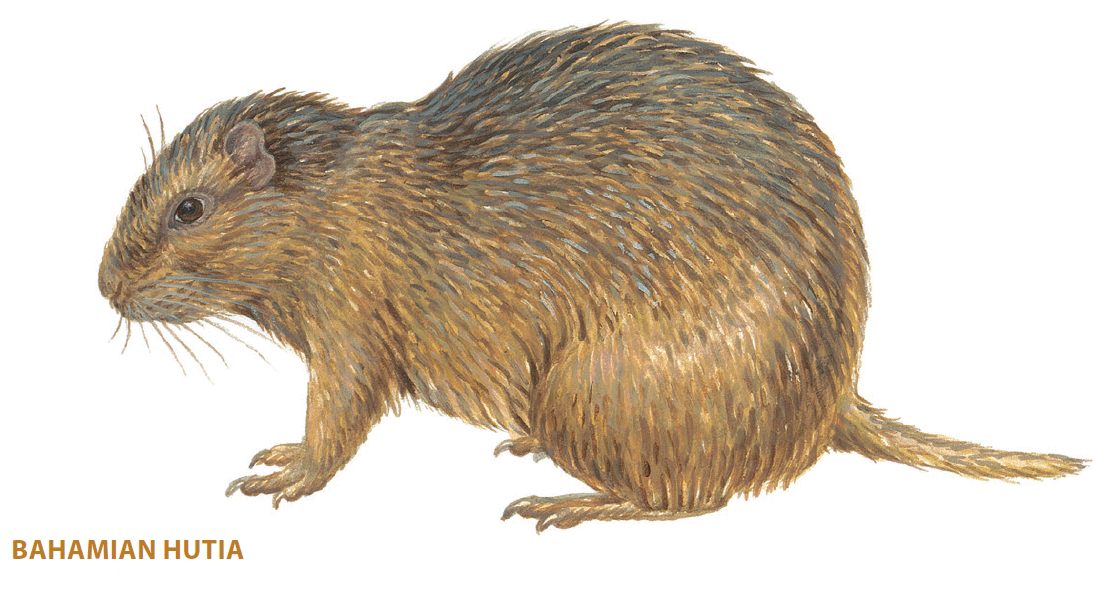
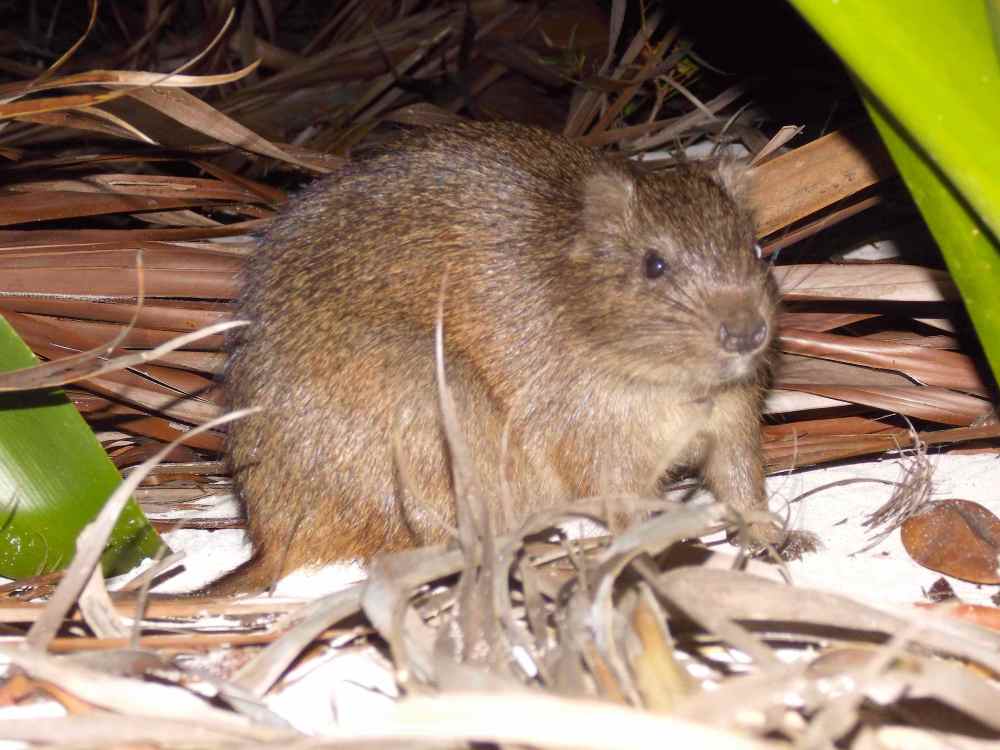
The Bahama hutia (Geocapromys ingrahami) has the distinction of being the only indigenous land mammal in the Bahamas. Historically found on a number of islands, the species is now confined to very limited locations. Abaco is, sadly, no longer one of them; they are officially shown as extirpated here from about 1600. Hutias had been recorded on Great Abaco by early explorers from Europe, but their survival was already threatened by hunting and land clearance as the human population expanded.
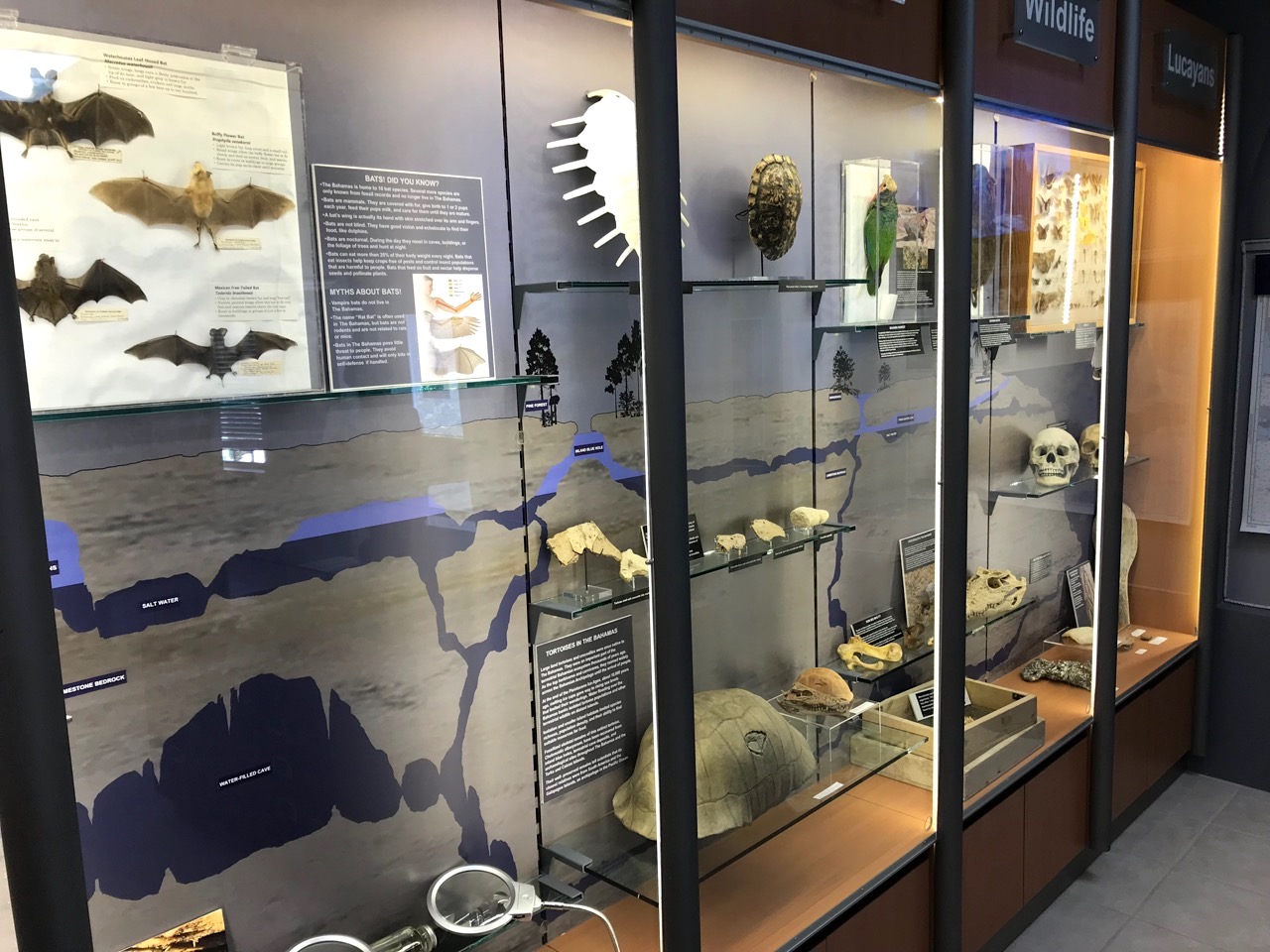
Further evidence of their long-term existence on Abaco – prehistoric, even – comes from research carried out by divers in the land-based Blues Holes. SAWMILL SINK has been a particularly rich source of the remnants of early creatures, including well-preserved skeletons, carapaces or other remains of crocodiles, turtles, birds, bats – and hutias. These date from the Pleistocene epoch of the Quartenary period, spanning roughly 2.5m years and ending some 12,000 years ago. You can see some of these treasures in the wonderful Natural History Museum at Friends of the Environment in Marsh Harbour.
A c20 hutia from the Exumas on display in the museum
Exhibits in the museum – there’s even a dead parrot for Monty Python fans
The population of the extant Bahama hutia species Geocapromys ingrahami became so depleted that by the 1960s they were considered to be extinct. Then in 1966 a colony was discovered on East Plana Cay. Some have since been relocated (see below) and the overall population is now confined to a handful of locations, for which reason the Bahama hutia is IUCN listed as vulnerable. All the usual man-caused threats to their survival apply, as well as predation by dogs and feral cats. One place to find them is in the Exumas, but because they are mainly nocturnal creatures and there are few of them, a sighting is a rare event, let alone getting a decent photo op.
A ‘Demarest’s Hutia’ – not the Bahamian species, but very similar
The terrific header image and the second image were taken by teenager Cole Fiechter while on a sailing trip with his parents and brother in the excellently named ‘Truansea’. On the beach of the Exumas Land and Sea Park at Warderick Wells, they encountered “a guinea pig with a rat’s tail”: a hutia. Cole’s photograph will hopefully grace the forthcoming Field Guide to the Natural History of the Bahamas, now in the late stages of production, and with which I am peripherally involved.
MARK CATESBY‘s take on the hutia in the c18, where he describes it as a rabbit
The BAHAMAS NATIONAL TRUST notes that “Bahama hutias occur naturally only on East Plana Cay (located between Acklins and Mayaguana). Historically however, they were found on ten Bahamian islands. In a move to protect the species, a small Bahama hutia population was transplanted to two locations – Little Wax Cay and Warderick Wells (Exumas). These three locations now host the only known populations of this particular species in the whole world”.
It looks as though Warderick Wells might be your best bet to see a Bahama hutia if you are visiting the Bahamas. Don’t be too confident of coming across one – but if you do see one, you will have had the pleasure of seeing a very rare creature.
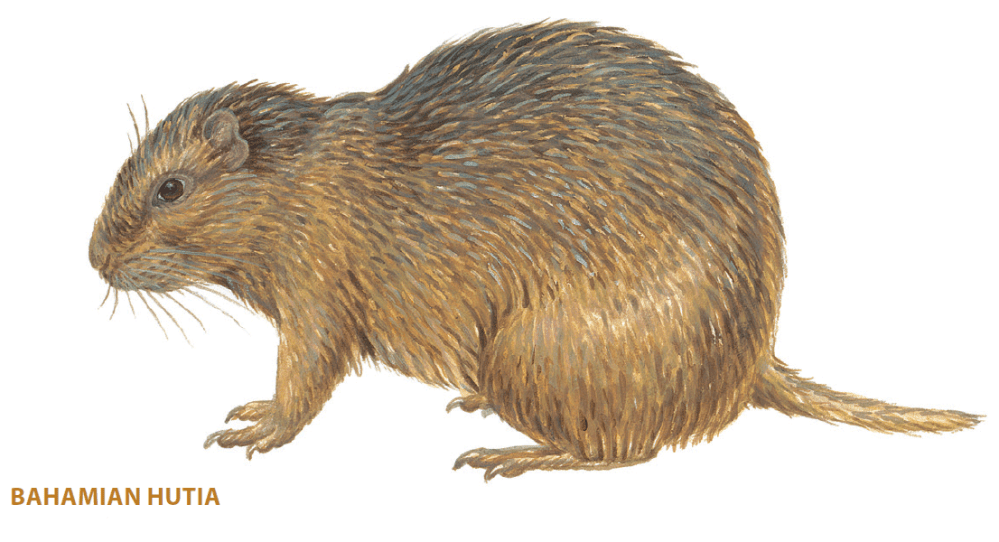
A HUTIA’S TAIL (very different from a rat…)
Credits: Cole Fiechter (1, 2); Keith Salvesen / FOTE (3, 4); ‘Yomangani’ wiki (5); OS (6); Princeton UP (7). Research credits PNAS, BNT, FOTE
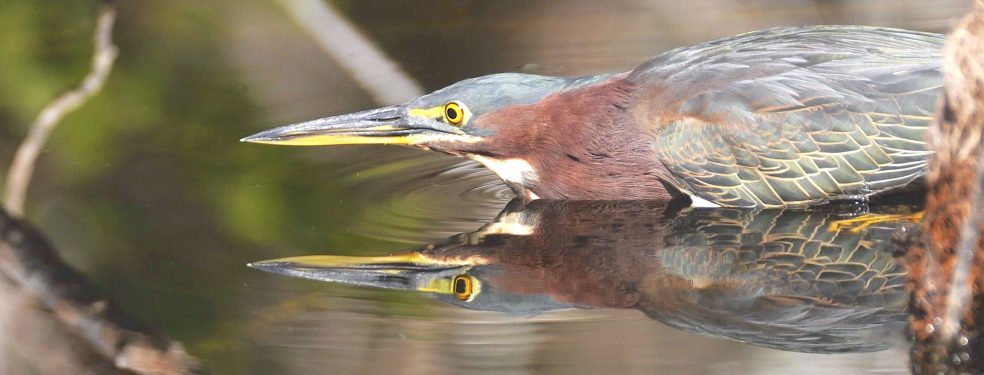
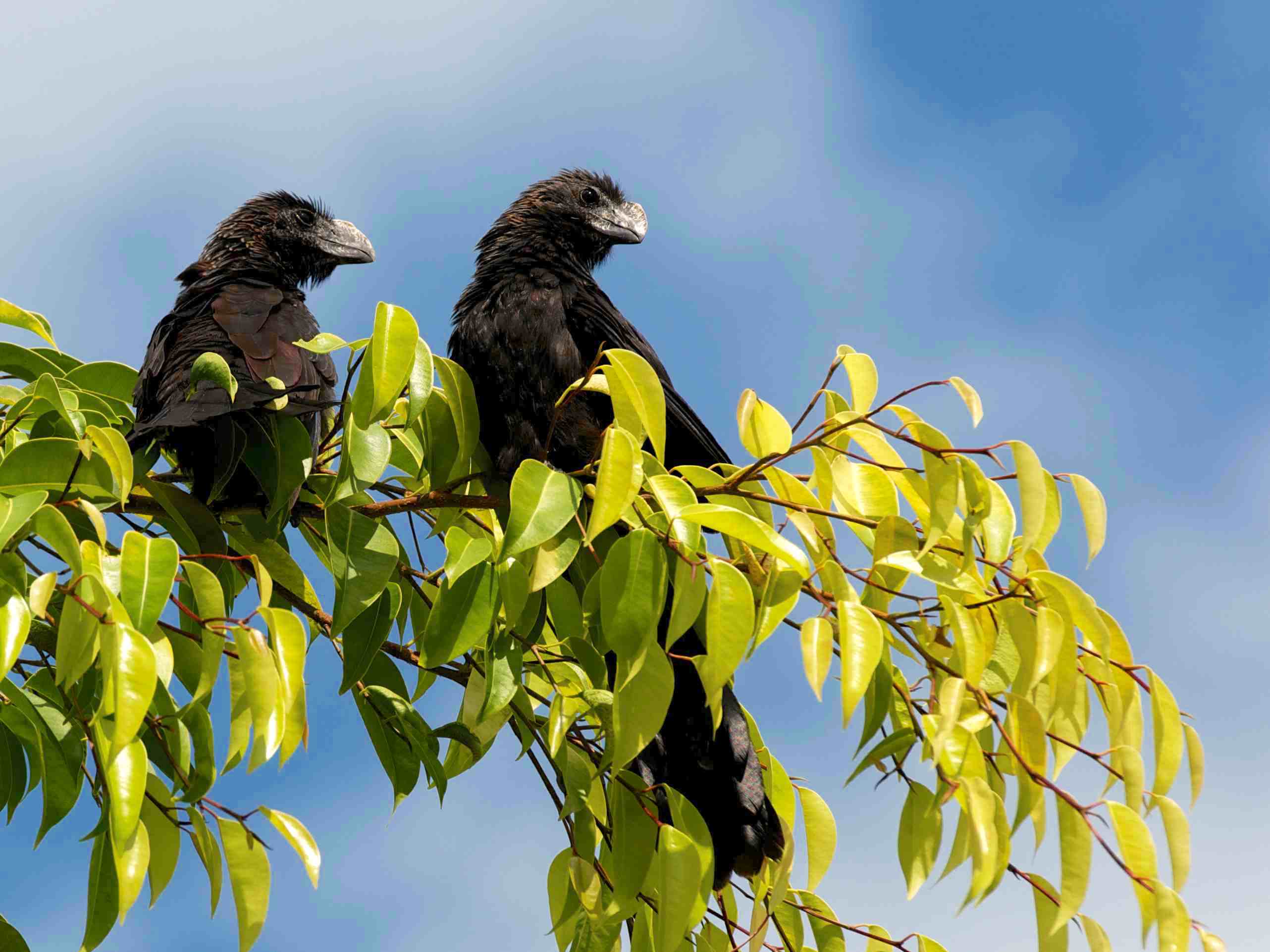
Goodness, is it the end of the month already? So much going on, 3 half-written posts but running short of time. So here’s something (even) more interesting than the stuff I write – actual photos of actual birds with no words. Great photos (not mine) of Abaco’s 3 cuckoo species to compare and contrast. Until next month… when there’ll be stilts, hutias and a whole lot more.
YELLOW-BILLED CUCKOO (and header image)
MANGROVE CUCKOO
SMOOTH-BILLED ANI
Photo Credits: Tom Sheley, Tony Hepburn, Alex Hughes, Gerlinde Taurer, Nina Henry
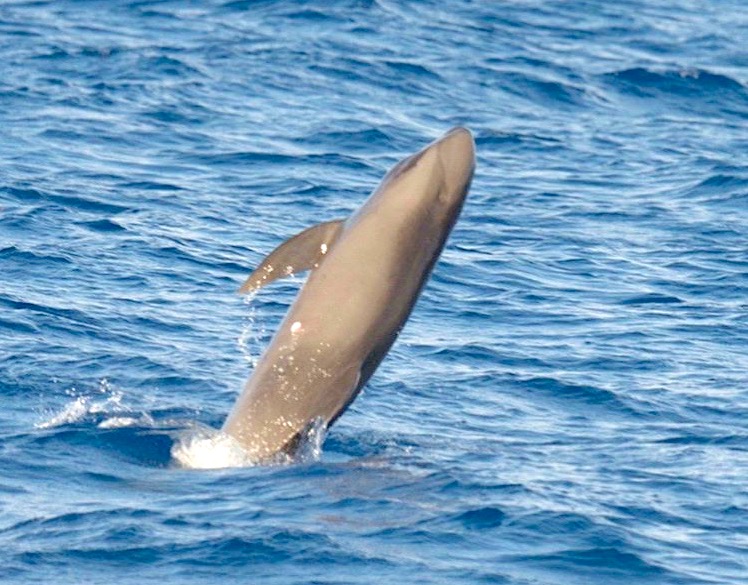
Last month, BMMRO undertook a joint expedition with FIELD SCHOOL to carry out research on sperm whales. This took them out into deep water, where another, quite different, cetacean species was also encountered on the final day – a huge pod of more than 100 melon-headed whales Peponocephala electra.
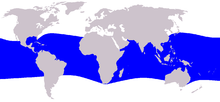
The melon-headed whale is in fact – like the FALSE KILLER WHALEI recently wrote about – a species of dolphin. It is sometimes more accurately called the melon-headed dolphin, which removes any confusion. These creatures are oceanic, preferring deeper waters. For that reason they are not often encountered, despite being quite common in tropical and sub-tropical waters around the world.
The MHW belongs to a dolphin species commonly known as blackfish. Other dolphins in this group included, for the Bahamas, the pygmy killer whale and the more frequently encountered pilot whale, a species than can be seen in the Sea of Abaco.
In some of these photos you can see the distinctive white lips of the MHW
Melon-headed whales are notably social animals. They live in large groups – often more than 100-strong (as the expedition found), up to as many as 1000 individuals. Within these large groups, smaller groups of a dozen or so form and stay close as they swim.
Note the ‘Rainbow Blow’ caught in this photo
MHWs appear to communicate or perhaps to bond by touching flippers. MHWs also associate with other dolphin species, and they have even been recorded with large whales such as humpbacks.
Other observed behaviour includes sub-surface resting in numbers, boat-wave riding, and so-called ‘spy hopping’ (above). This last activity may be carried out by several resting animals, which jump vertically out of the water and splash back again into the ocean (see also the Header image).
This video was recorded during the expedition. You’ll get a very good idea of the size of the group from the drone shots as they pull out. I doubt that many people would expect to see such large sea creatures in such numbers – it must be an awesome** sight.
10 MELON-HEADED FACTS WITH WHICH TO ASTOUND YOUR LOVED ONES
The MHW’s head is rounded, lacking the obvious beak of more familiar dolphins
The darker grey face is sometimes called a ‘mask’
Their distinctive white lips are a good identifying feature
They are capable of swimming at very fast speeds
Like other dolphins, they make series of low jumps out of the water as they swim
Their groups often contain 100 individuals, up to as many as 1000
An adult grows to around 3m / 10′ long
They live for at least 20 years, and females may live as long as 30 years
As with many certaceans, their favourite food is squid
Oh, did I mention that they are really dolphins and not whales at all?
**In its true and original meaning of ‘inspiring wonder and awe’ (historically, in a religious sense), rather than the diluted modern usage as in ‘awesome pizza’ or ‘awesome selfie’
Abaco is home to 4 main so-called tyrant flycatchers (Tyrannidae): the loggerhead kingbird, the gray kingbird, the La Sagra’s flycatcher and the Cuban pewee. All are common permanent residents except the gray kingbird, which is a summer resident only. Several other flycatcher species are found on Abaco, but they are very uncommon winter residents, rare transients, or vagrants.
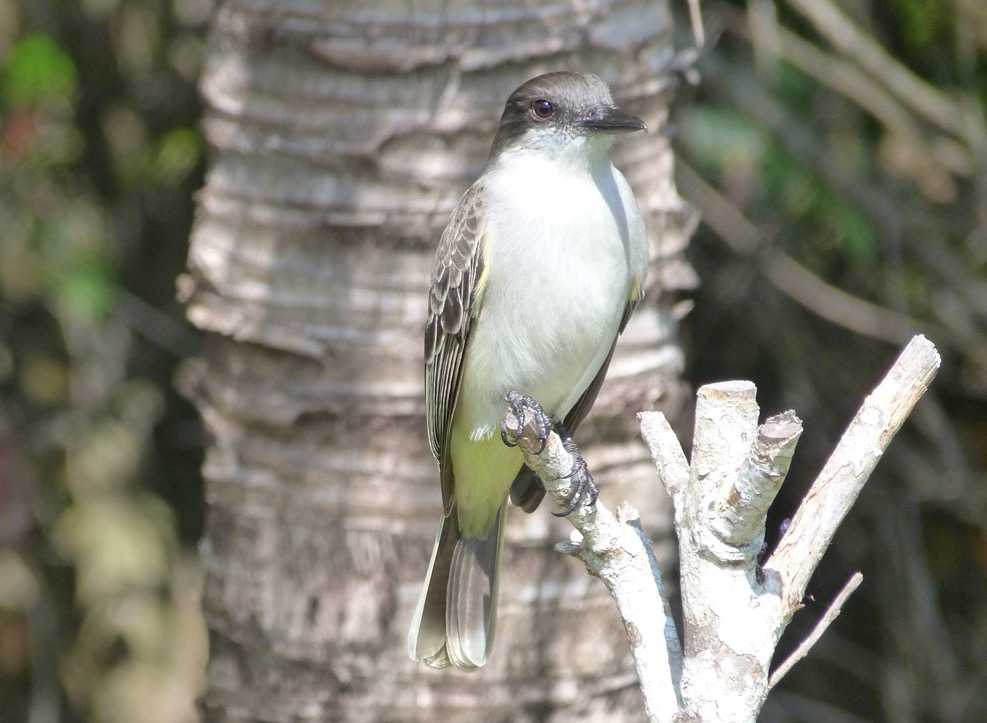
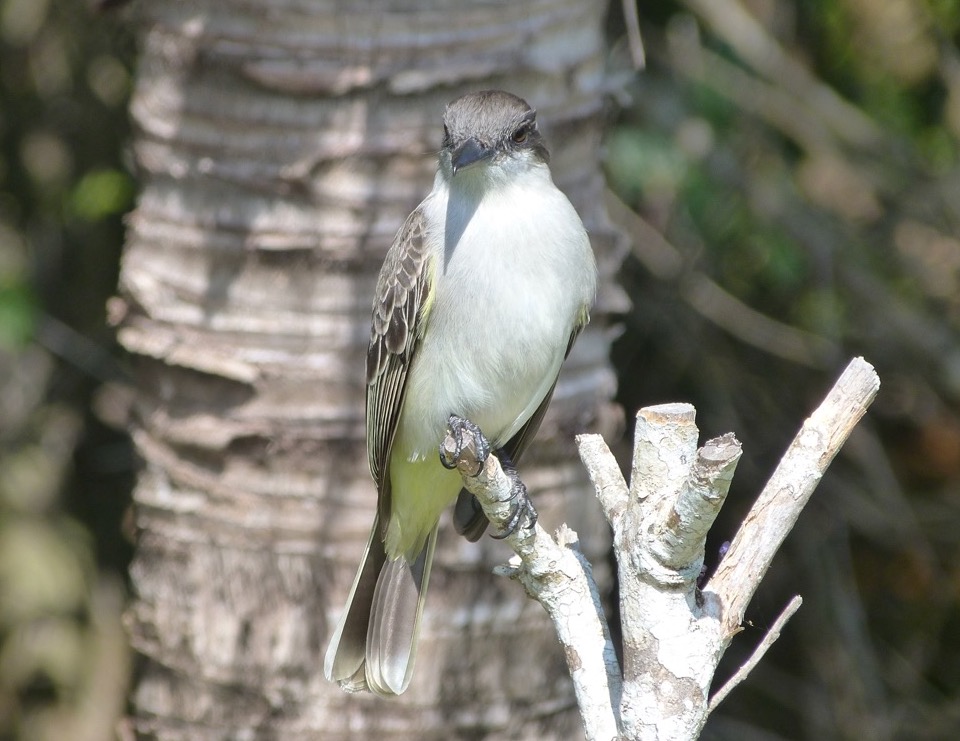
The loggerhead featured here in several poses is a watchful sentinel at Delphi. His preferred perches are in the edge of the coppice round the pool or at the edge of the main drive. From time to time he will leave his perch to catch a passing insect by ‘hawking’, returning to the same place to eat it.
Loggerhead and gray kingbirds can be quite easy to confuse. A couple of years ago I wrote about how to distinguish them, and with gray kingbirds in residence now this is probably a good time to set out the distinctions again.
LOGGERHEAD Tyrannus caudifasciatus vs GRAY Tyrannus dominicensis
DIFFERENCES and SIMILARITIES
TOP TIPANY KINGBIRD SEEN IN WINTER WILL BE A LOGGERHEAD
Kingbirds seen between (say) October & March are Loggerheads. Grays are strictly summer visitors
Both are medium size birds and roughly the same size as adults (around 23 cms)
Loggerheads have dark brown to near-black heads, grays have lighter, slate-coloured heads
Loggerheads have a ‘squared’ tip to the tail; grays have a notched tip
Loggerheads may have a whitish fringe at the tip of the tail; grays not so
Loggerheads have yellowish tinges to their white undersides & forewings; grays less so or not at all
Grays have a dark or black ‘mask’ through the eyes, often clear but not always easy to see
Loggerheads allegedly have inconspicuous orange head crests; grays are red. I’ve never seen either!
[*RH personal opinion alert*] Grays have larger, heavier beaks than loggerheads
Grays are territorially aggressive; when they turn up, the loggerheads tend to retreat to the forest
Here is how David Sibley shows the differences
Illustrations: David Allen Sibley
GRAY KINGBIRD FOR COMPARISON
MEMORABLE FACT TO DEPLOY IN CONVERSATION
The collective names for a group of kingbirds are: a Court, a Coronation, or a Tyranny
Photo Credits: All loggerheads, Keith Salvesen at Delphi; gray kingbird by Dick Daniels; Illustrations David Sibley
SEA BISCUITS: THEY REALLY DO CONTAIN DOVES – AND MORE!
Recently I posed the question whether sea biscuits, like sand dollars contain ‘doves’. I had one in my hand, it rattled, I took a photograph through its ‘mouth hole’ and the question was answered. Biscuits do indeed contain doves – see HERE for details and comparisons with dollar doves.
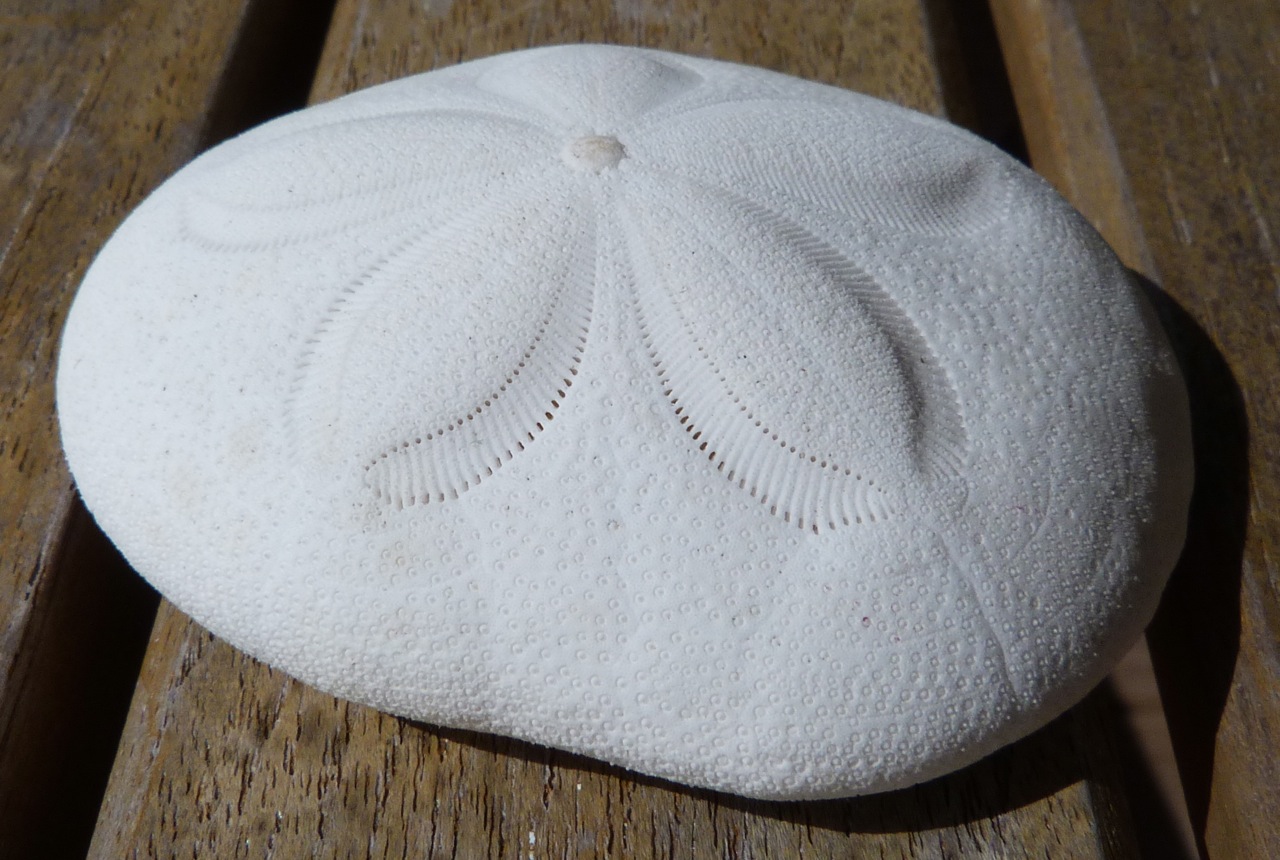
However, I spinelessly* failed to break open the biscuit to check out the contents more closely. I theorised that, because of the 5-way symmetry of these creatures, there would be 5 doves (which are in fact segmented mouth parts) in a biscuit exactly as with a dollar, and amiably challenged anyone to disprove it. [* biscuits and dollars are types of sea urchin – see what I did there?]
Dollar dove in close-up – one of 5 segmented mouth parts inside the ‘test’ (skeleton)
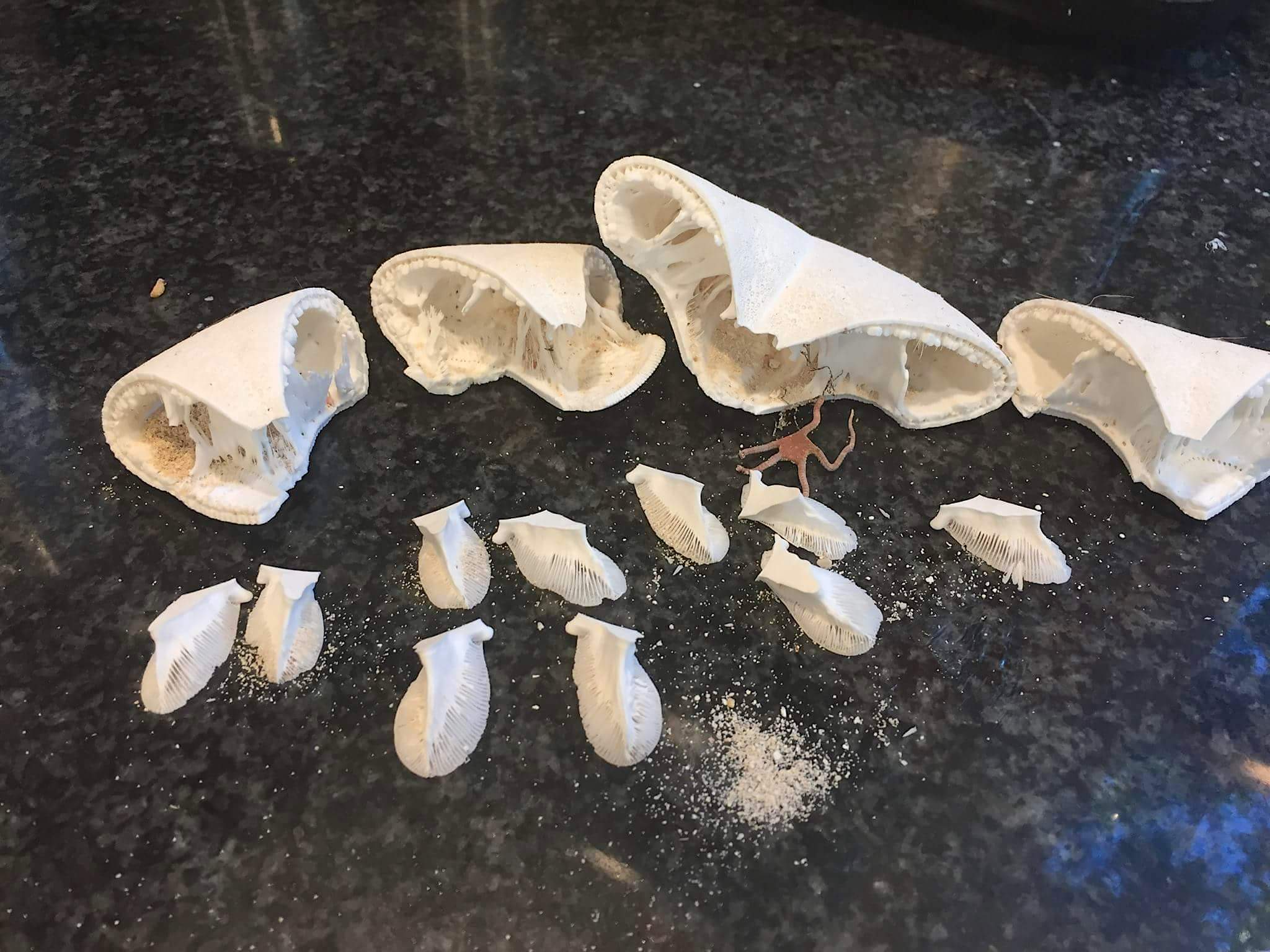
Melissa Ann Guinness from Hope Town has a far more robust attitude to these things and, taking up the challenge, she heartlessly smashed open a sea biscuit from her collection to investigate further. I said I’d publish a correction if my theory was wrong. This is it – though in one arguable sense the theory holds good. It just didn’t go far enough…
In the above picture you can see (a) 4 quarters of a sea biscuit skeleton (b) 10 demi-doves (rather than 5 whole doves) and (c) a small mummified 5-limbedbrittle star that was presumably in the creature’s digestive system when it died.
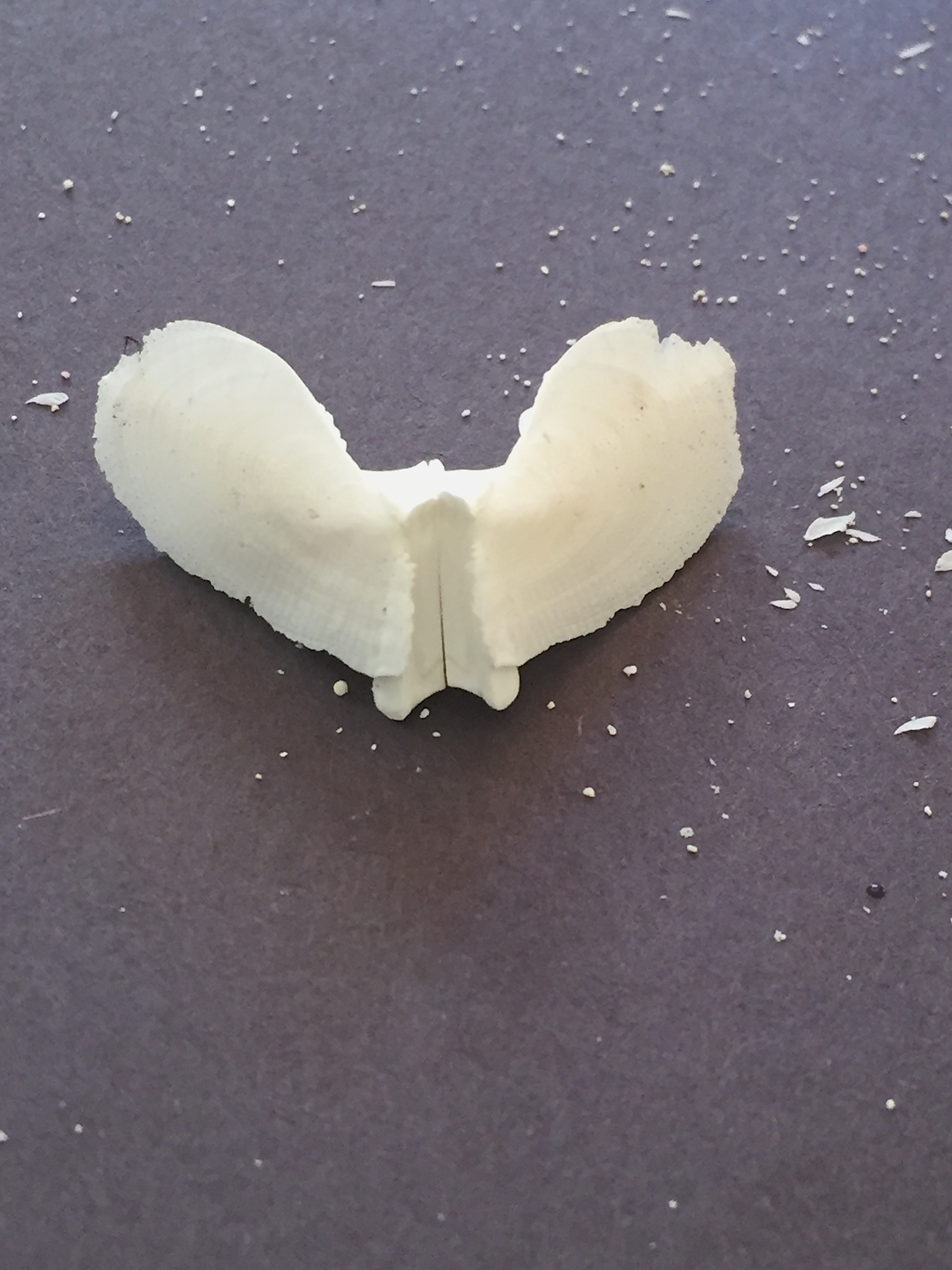
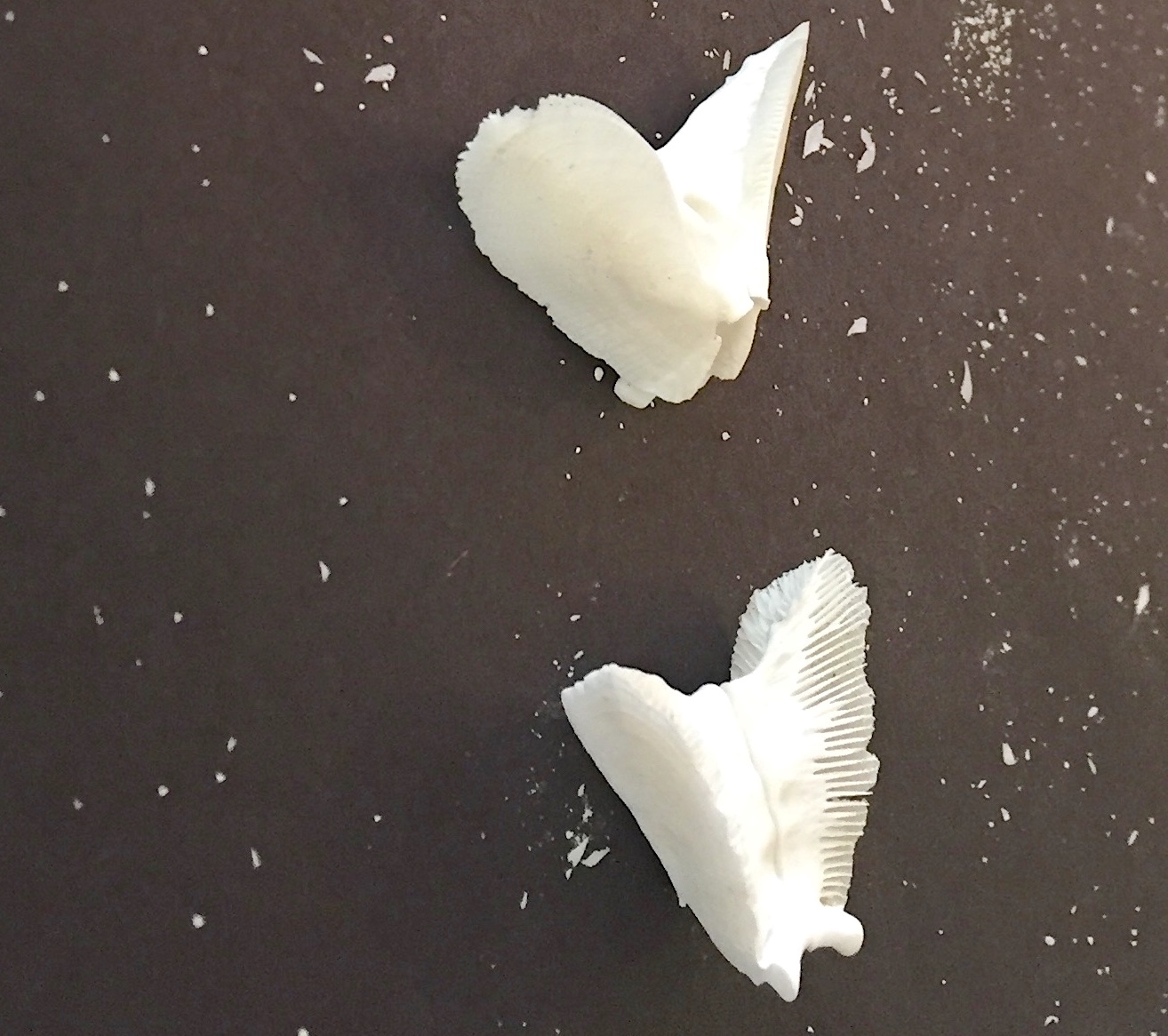
10 ‘demi-doves’ (or, when assembled, 5 doves that (unlike sand dollars) are in 2 parts
Complete doves
The final reconstruction – 5 doves and a bonus brittle star
Photo Credits: Keith Salvesen (1, 2, 3, 10); Melissa Ann Guinness (4, 5, 6, ,7 ,8 ,9)
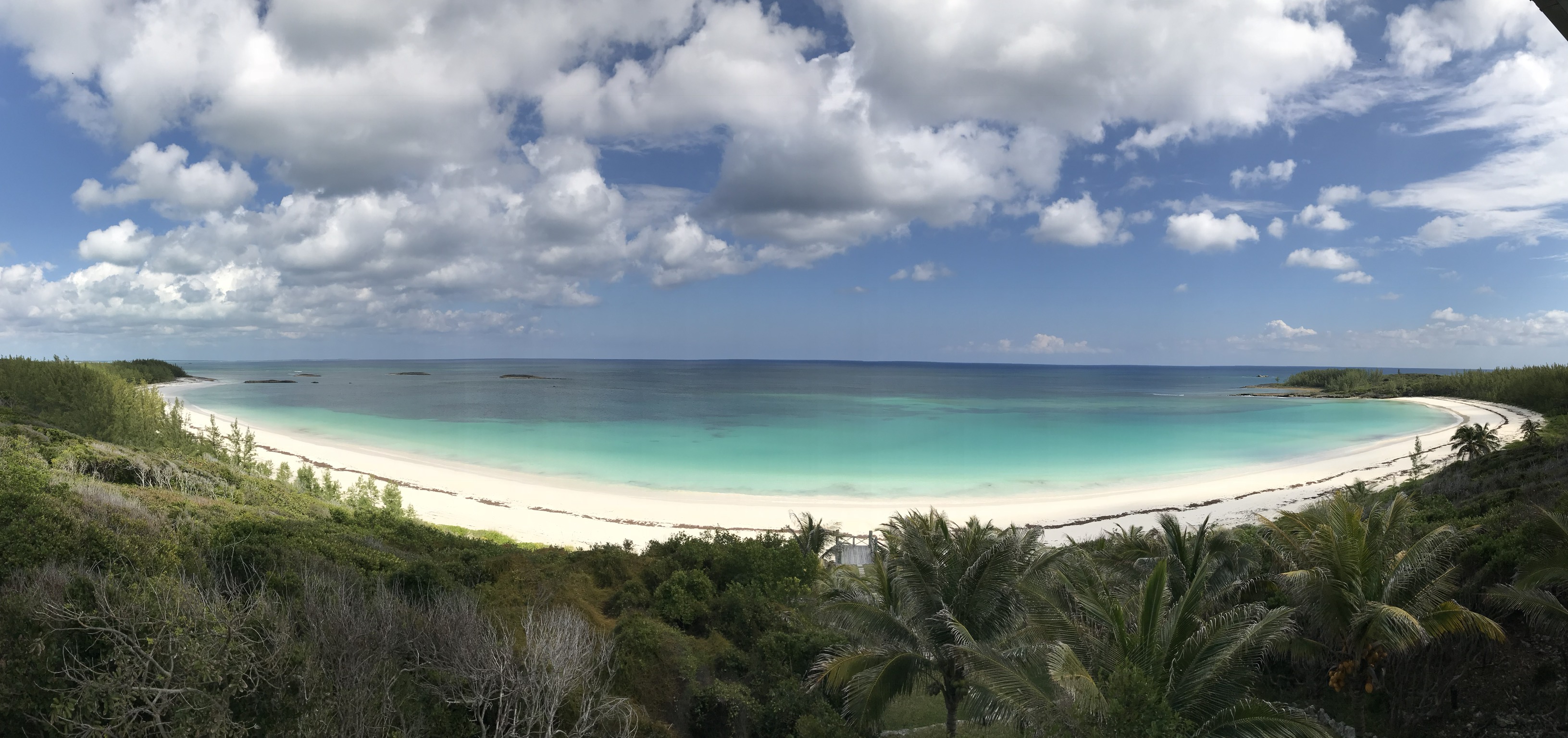
Behold the beach at ‘Delphi West’, Abaco, a fishing lodge of elegance and repute. It overlooks a bay, known by strange coincidence as Rolling Harbour – a mile-long secluded white-sand beach.
4000 mile away is ‘Delphi East’, the counterpart salmon fishery in the mountains of the west of Ireland, of equal elegance and repute.
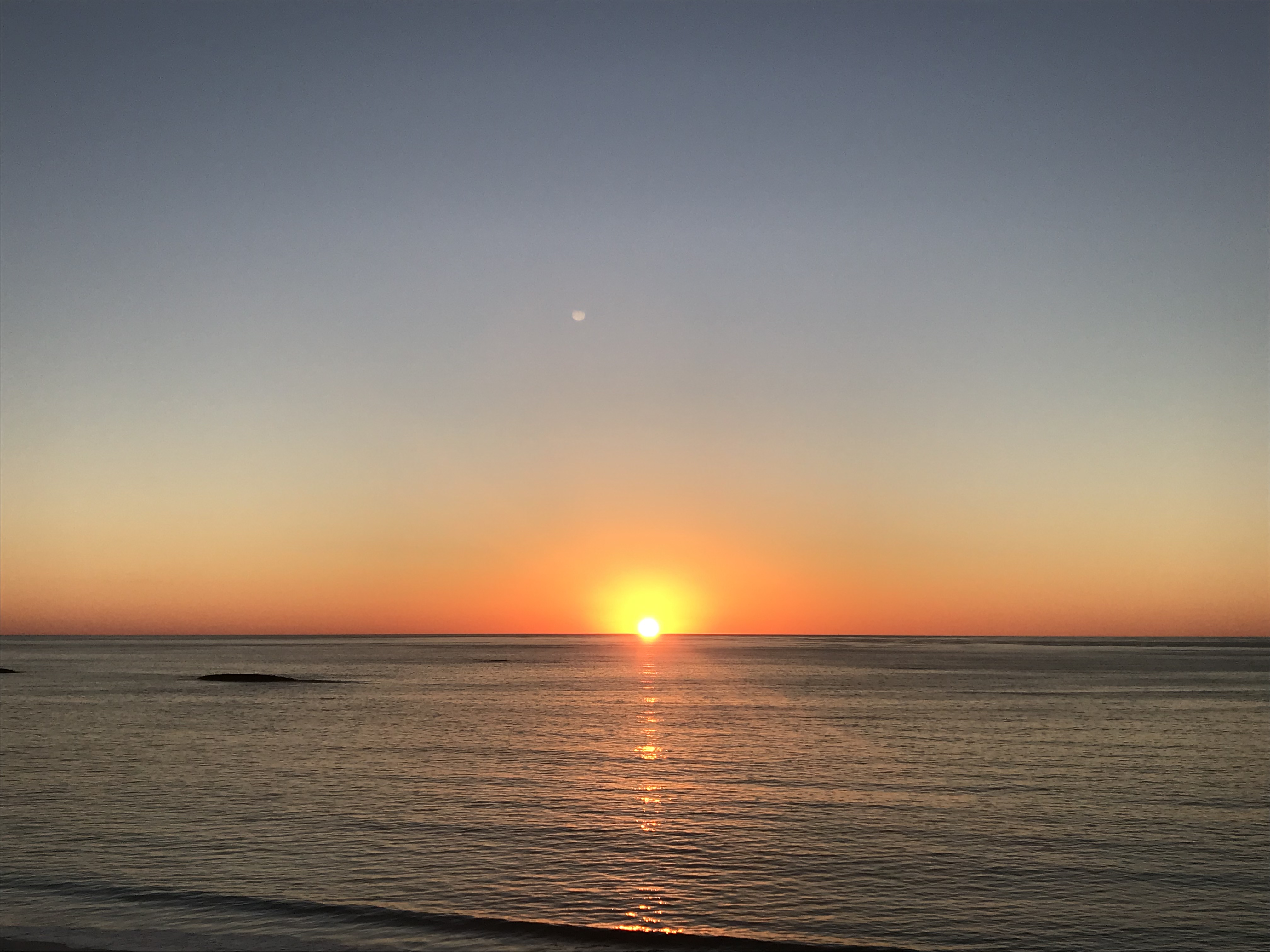
Between these two equally beautiful yet very different fishing locations is the Atlantic. The wi-fi can be just as iffy in both. I’m posting this from DE on my phone using a phone link. Enjoy a sunrise from DW (note the moon going to bed) to end with. My thumb aches.
Like many of the blues musicians who covered Robert Johnson’s originals, we got ramblin’ on our minds. Specifically to ‘Delphi East’ in Ireland, thus stupidly exchanging 82F sunshine in southern UK for 46F rain in the Emerald Isle. Good for the fishing, if nothing else… So (always remembering that corals are actually creatures and not plants) here’s a bouquet of coral to be going on with until we next meet with wifi!
OPTIONAL MUSICAL RAMBLING
Robert Johnson’s output – a meagre 29 songs in all – formed the bedrock for later bluesmen and the blues / rock crossovers that followed. They mined Johnson’s talent and formed their own new material from it. Here’s the original – you’ve probably heard it or variations of it with different names, a thousand times – some good, some bad, most so-so.
Entire coral pot pourri by Melinda Riger / Grand Bahama Scuba
Fish, like humans, have a wide variety of temperaments, or so it seems. Resorting to anthropomorphic analysis of animal behaviour is a favourite pastime for humans. Who really knows if a creature is actually feeling shy or confident or playful or aggressive or indeed inquisitive. Often it just seems that way and we are happy to categorise dolphins as playful, sharks as vicious, angelfish as serene, small darting fish as timid and so on.
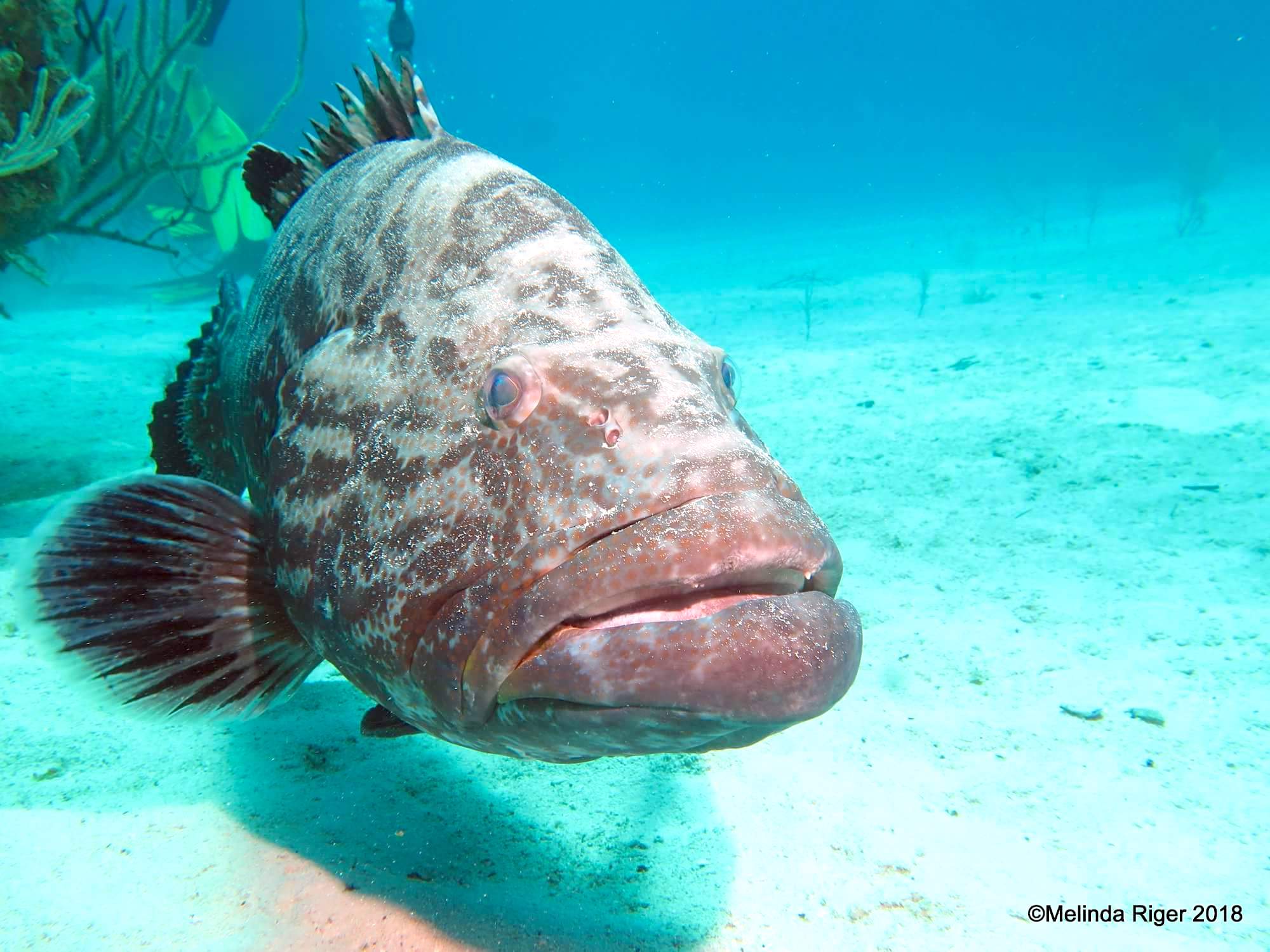
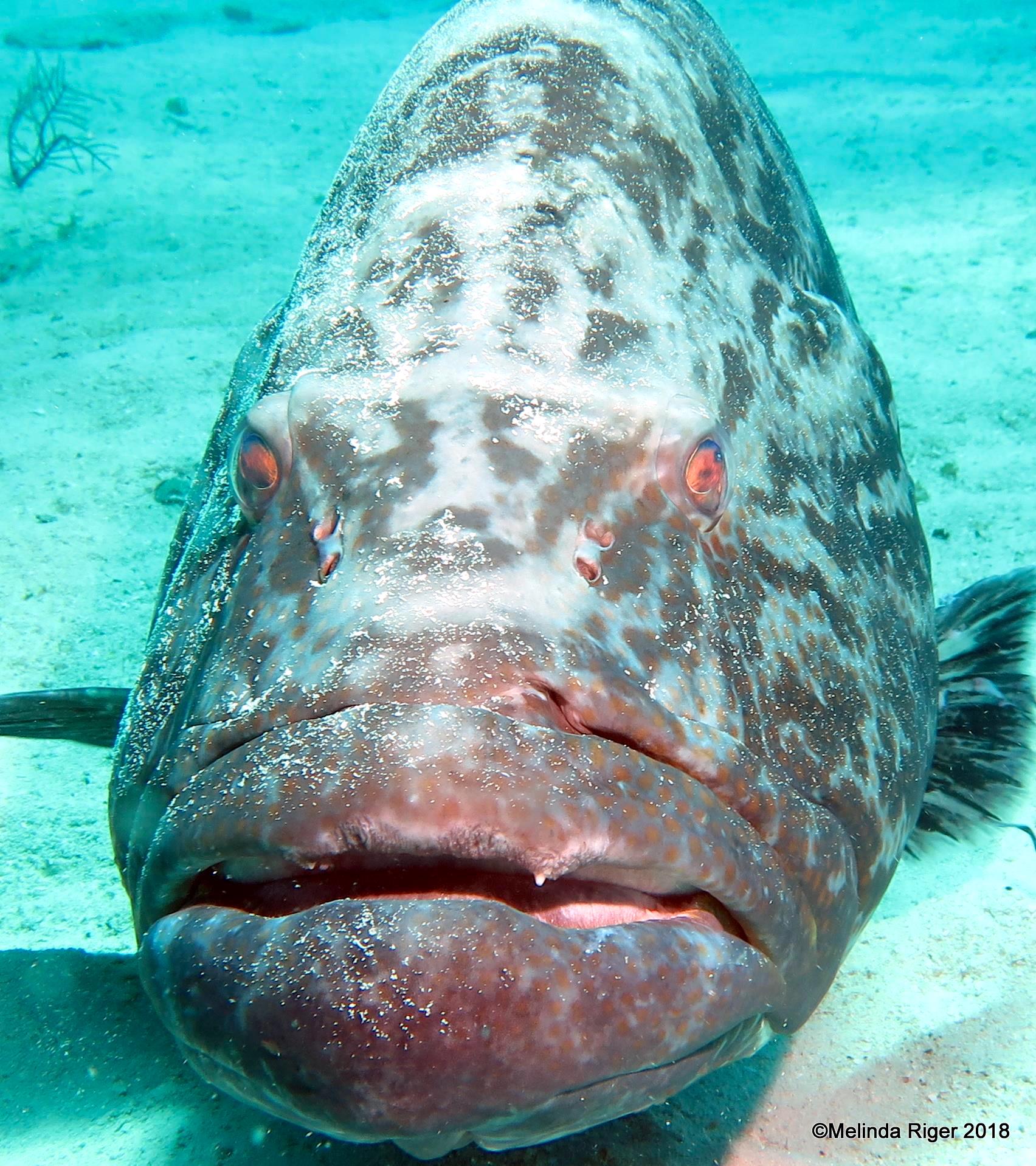
Occasionally a creature displays a ‘human’ characteristic that seems undeniable. One such is Curious George. He has become used to the divers around the reef where he lives, and greets them. He enjoys the photography sessions and the equipment, even though they may be for recording other fish. He demonstrates inquisitiveness for the strange-looking black-suited creatures that visit his patch. Like many groupers, he likes to be gently patted and stroked.
All this curiosity and friendliness evidences a benign interspecies relationship of symbiotic mutualism, through which both species (man and fish) benefit from the interaction. The mutually beneficial feeling might in broad terms be described as ‘pleasure’.
Or maybe I am just indulging in a bit of over-anthropomorphisation (if there is such a word)…
All photos by one half of the symbiotic mutualism here, Melinda Riger (Grand Bahama Scuba)
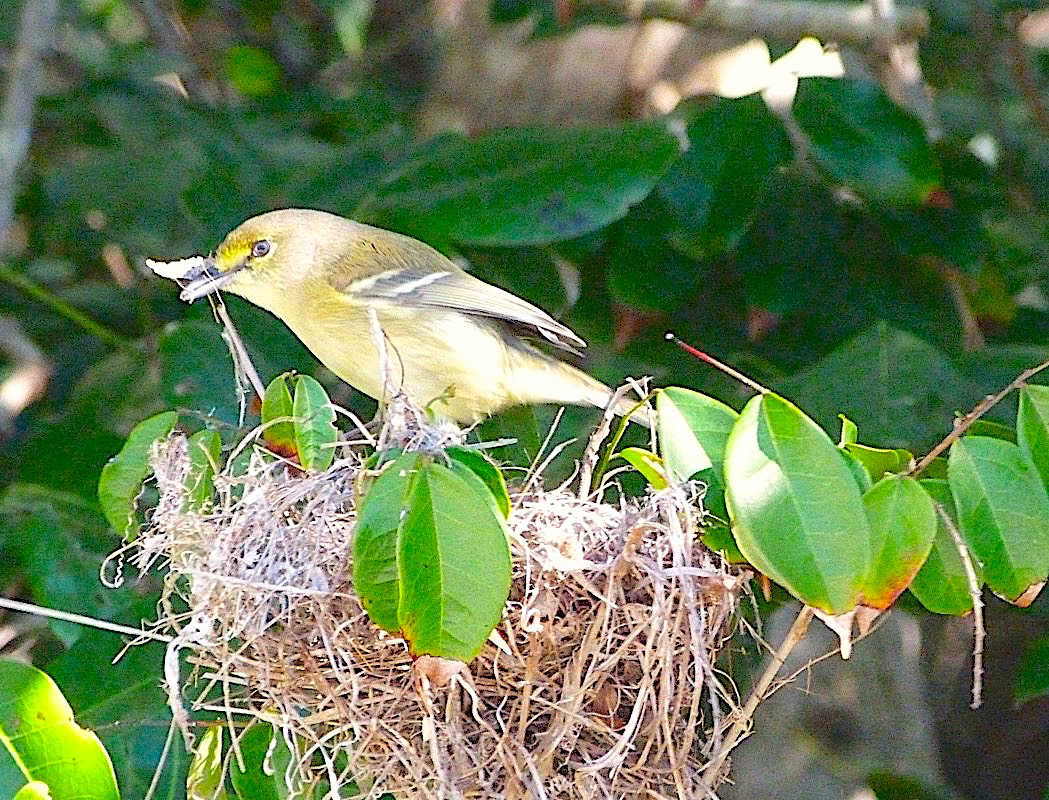
“Nidification” was one of the new words I learned from the wonderful book Birds of the West Indies by James Bond (a different one – for the full story behind the name click HERE). It means, essentially, the nesting process of a bird. It sounds pleasingly technical for a straightforward concept: nest-building.
Soft furnishings being added
I spotted this TBV making its nest on the edge of the drive at Delphi. I usually think of these cheerful chirpy birds as ‘lurkers’, hanging back in the coppice and not making themselves easily visible. But this nest was right out in the open – possibly not the wisest place for nidification.
If you look up TBV’s in bird books, you may find a reference to nest building in the fork of shrubs or bushes – exactly what was going on here. It quite a messy nest, but then again it looks comfortable and firmly wedged in.
Although I only saw one of the pair actively engaged in the building, another TBV was ‘vocalising’ (there’s another technical term, = singing) nearby, presumably the mate. In a way that humans have been slow to adopt, both birds will be actively involved in raising their family, from incubating the eggs to chick care – feeding, cleaning out the nest and so on.
WHAT DO THEY SOUND LIKE WHEN THEY VOCALISE?
Let’s hope for a successful outcome to the nidification…
All photos Keith Salvesen, also the sound recording (made at Delphi)
A couple of years ago I wrote a post called ECHINODERMS, DOLLAR DOVES & PETRIFIED BISCUITS. It dealt with the… fact? rumour? old wive’s tale?… that within each sand dollar test (i.e. the white skeleton) are hidden 5 ‘doves’. You can hear them rattling inside if you shake the dollar…
Sand Dollar from Abaco containing 5 miniature white doves…
I investigated the theory with senior granddaughter, and we broke a sand dollar in half. And as you can see, the answer was undoubtedly yes – there were 5 tiny white doves, thus fulfilling the prediction of the famous ‘Sand Dollar’ poem that contains the lines “Now break the centre open And here you will release The five white doves awaiting To spread good will and peace”.
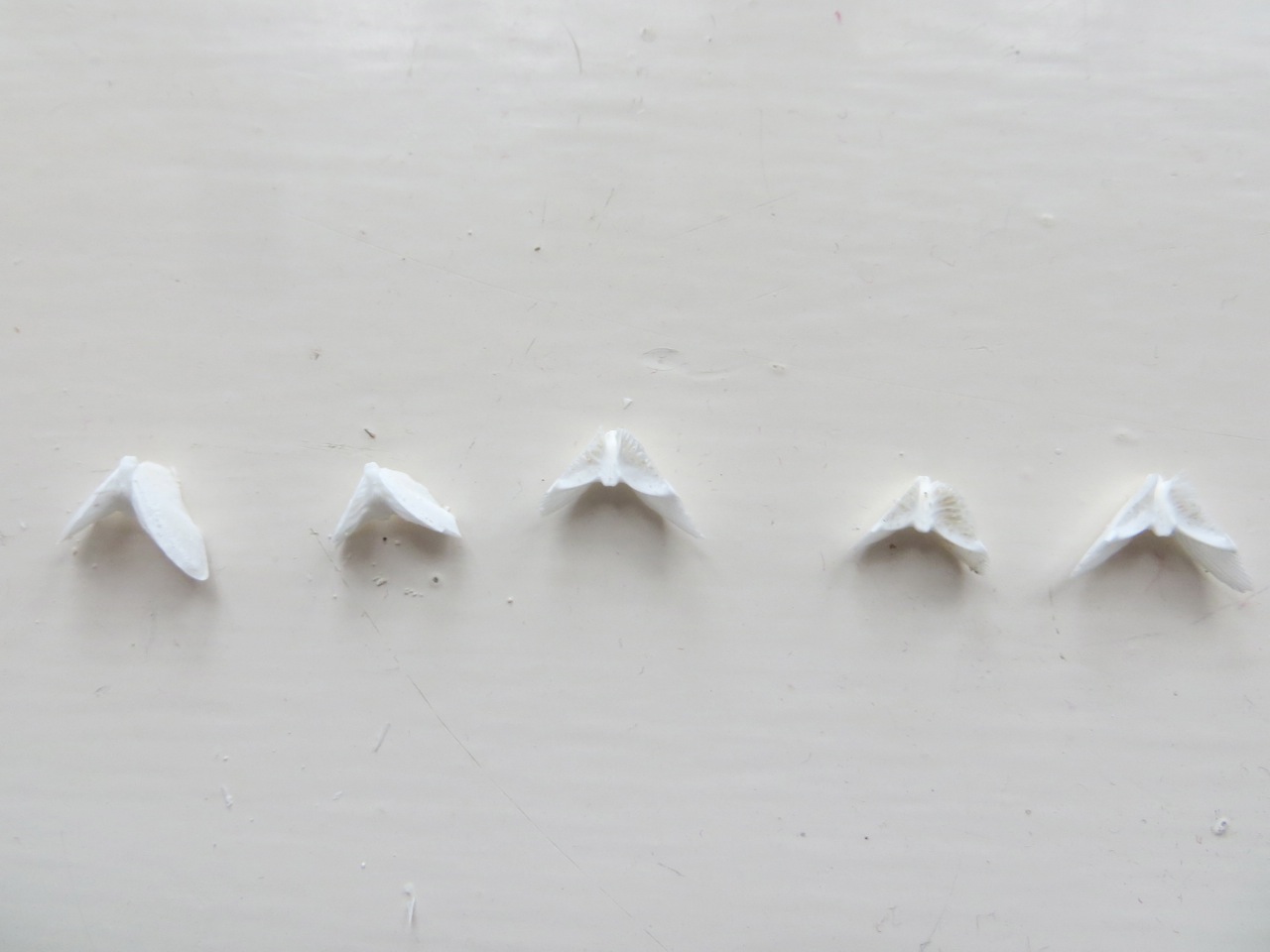
Five white doves (in fact, the separated parts of the creature’s feeding apparatus)
A single dove, a picture of doveliness
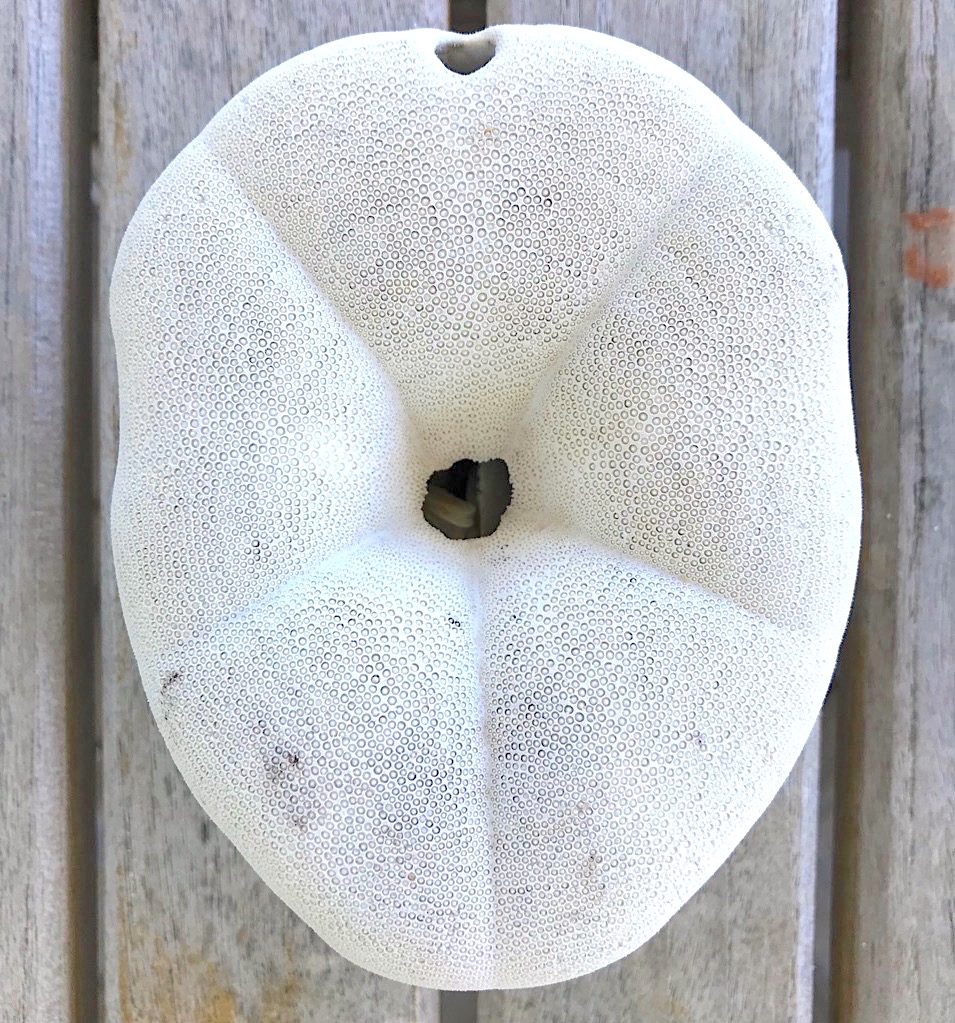
I never thought to extend the experiment to sea biscuits, another object prized by beachcombers. All that changed last month when I picked up a sea biscuit and found that it, too, rattled.
A rattling good sea biscuit
So I turned it over to take a closer look at the underside. And there, unmistakably, was the source of the rattle – some kind of internal arrangement inside the feeding hole (let us not pause overlong to consider the purpose of the other hole). But it wasn’t conclusively a dove.
So I shook it around a bit (sorry, doves) and zoomed in. And there was a small white columbine-type contraption remarkably similar to those found in the dollar dove. And no, I did not smash open the sea biscuit (it wasn’t actually mine). And no, I didn’t doubt any longer that sea biscuits also contain doves.
SO WILL THERE BE 5 DOVES, LIKE WITH THE DOLLARS?
I predict there will also be five. Both dollars and biscuits have ‘five-way symmetry’ (look on the topside of a biscuit or dollar to see how); and so the mouth (from which the ‘doves’ derive) will have a single part for each of the five sectors, all linked.
If anyone would like to smash up one of their precious beach finds and test the theory, please feel free. Prove me wrong… and I’ll publish a correction! [Photo please…]
All photos Keith Salvesen except Header, Clare Latimer at Delphi
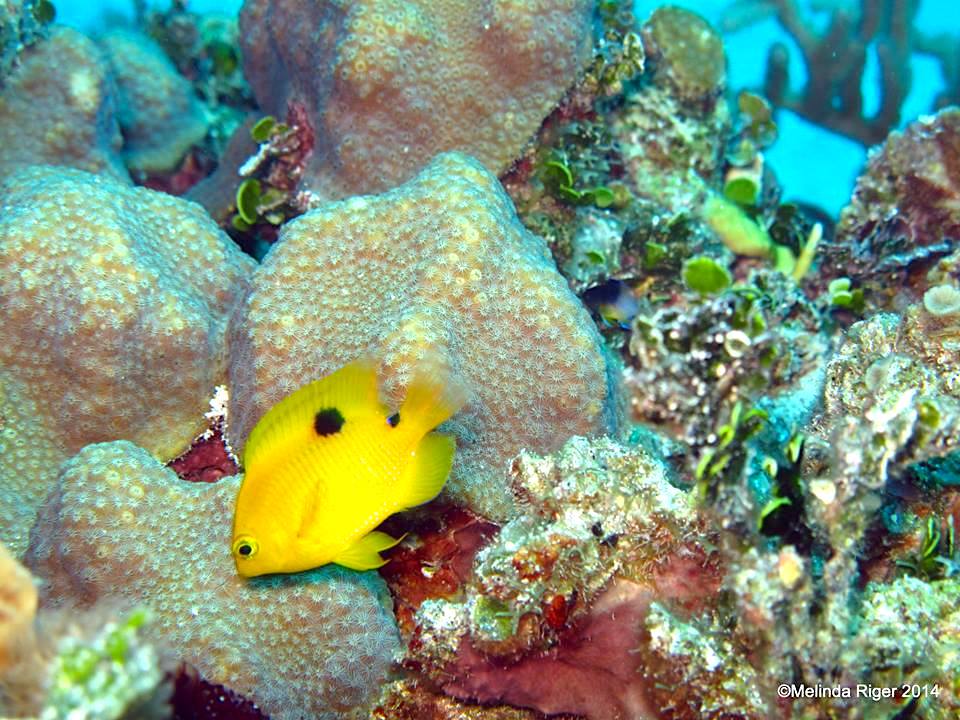
The threespot damselfish Stegastes planifrons is one of several damselfish types found in the Bahamas and more generally in the western Atlantic. As with so many reef species, there is a marked difference in coloration between juveniles (bright yellow) and darker-hued adults (above).
These are bony little creatures, equipped with both spines and ‘soft rays’ on some of their fins. This perhaps make them unappealing to potential predators; and maybe the very brightness and ‘hi-viz’ of the juveniles is aposematic, a coloration thats acts as a warning or repellent to potential predators.
On the reef it seems threespots favour staghorn coral as a daytime base. Their diet is mainly seaweed, with small molluscs, gastropods and worms for variety. At night they retire to crevices and caves.
Adults are, for such small fish, vigorously protective of their territories. They will chase and nip intruders into their domains, even far larger creatures (up to and including humans).
A breeding pair will both be involved in egg care. Once the female has laid her eggs, they adhere to the lower reef and seabed. The male guards them and rather sweetly fans them with his fins to keep them oxygenated. And then another generation hatches and the threespot life cycle repeats.
Credits: All fantastic photos by Melinda Riger / Grand Bahama Scuba
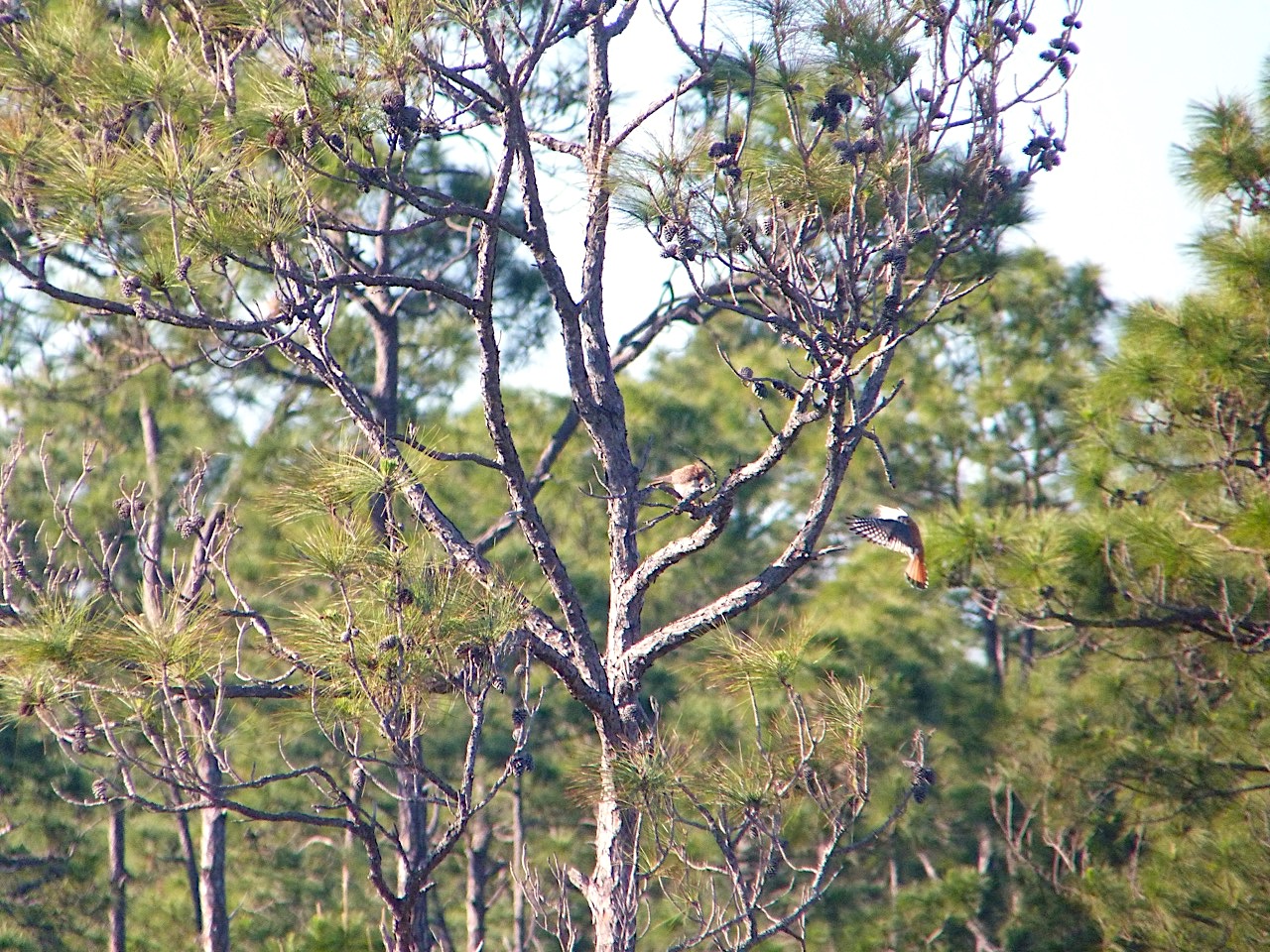
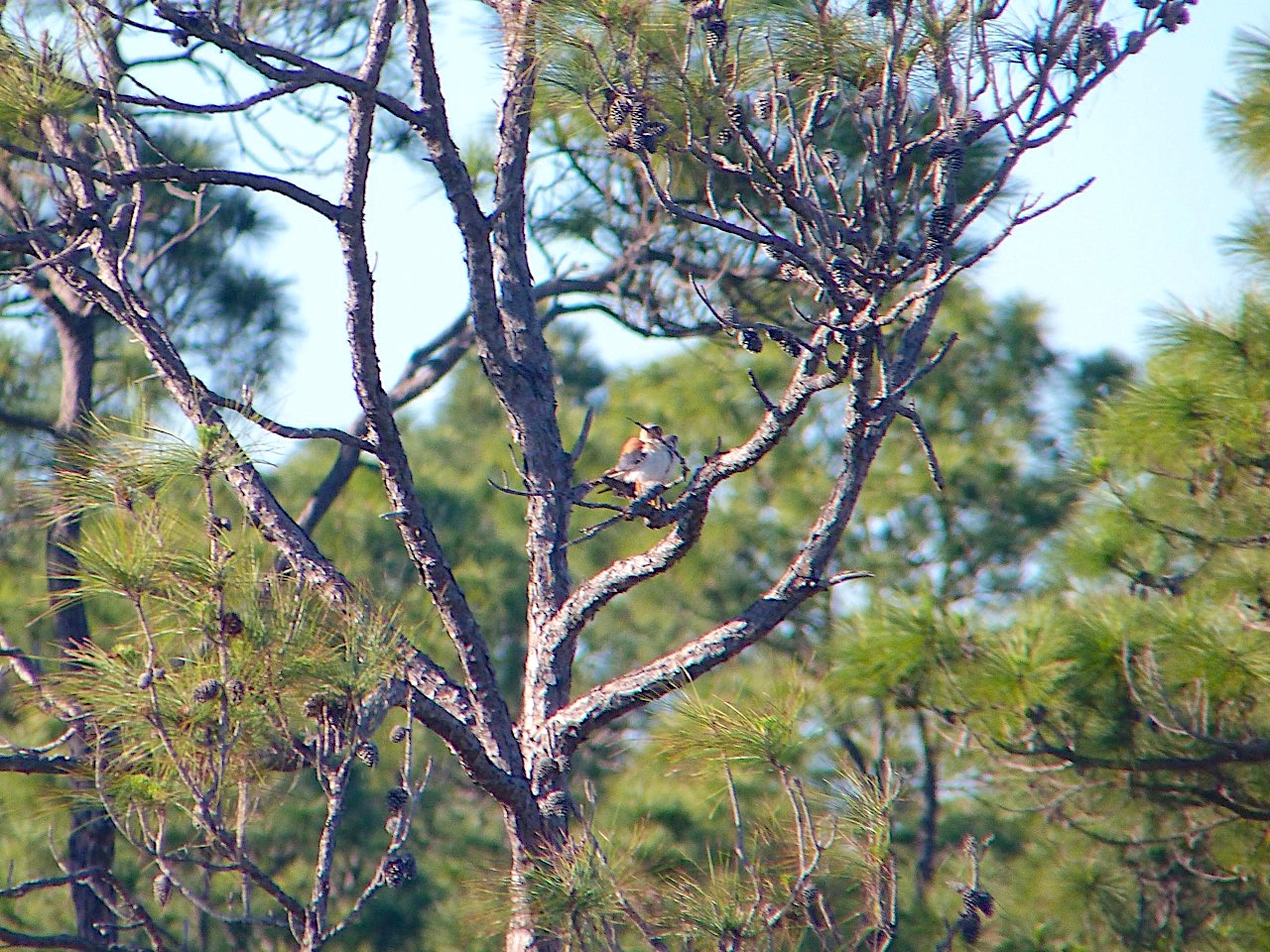
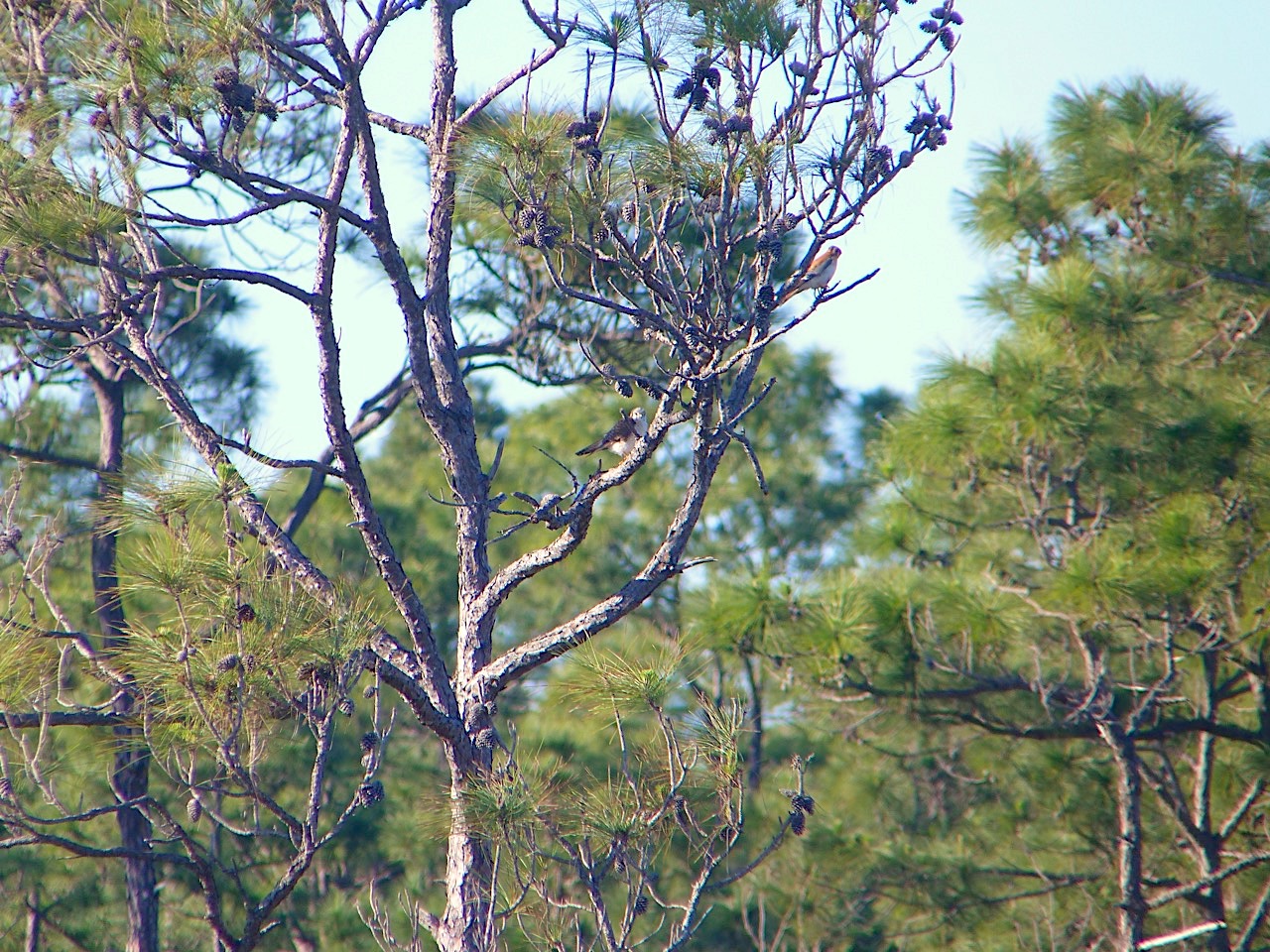
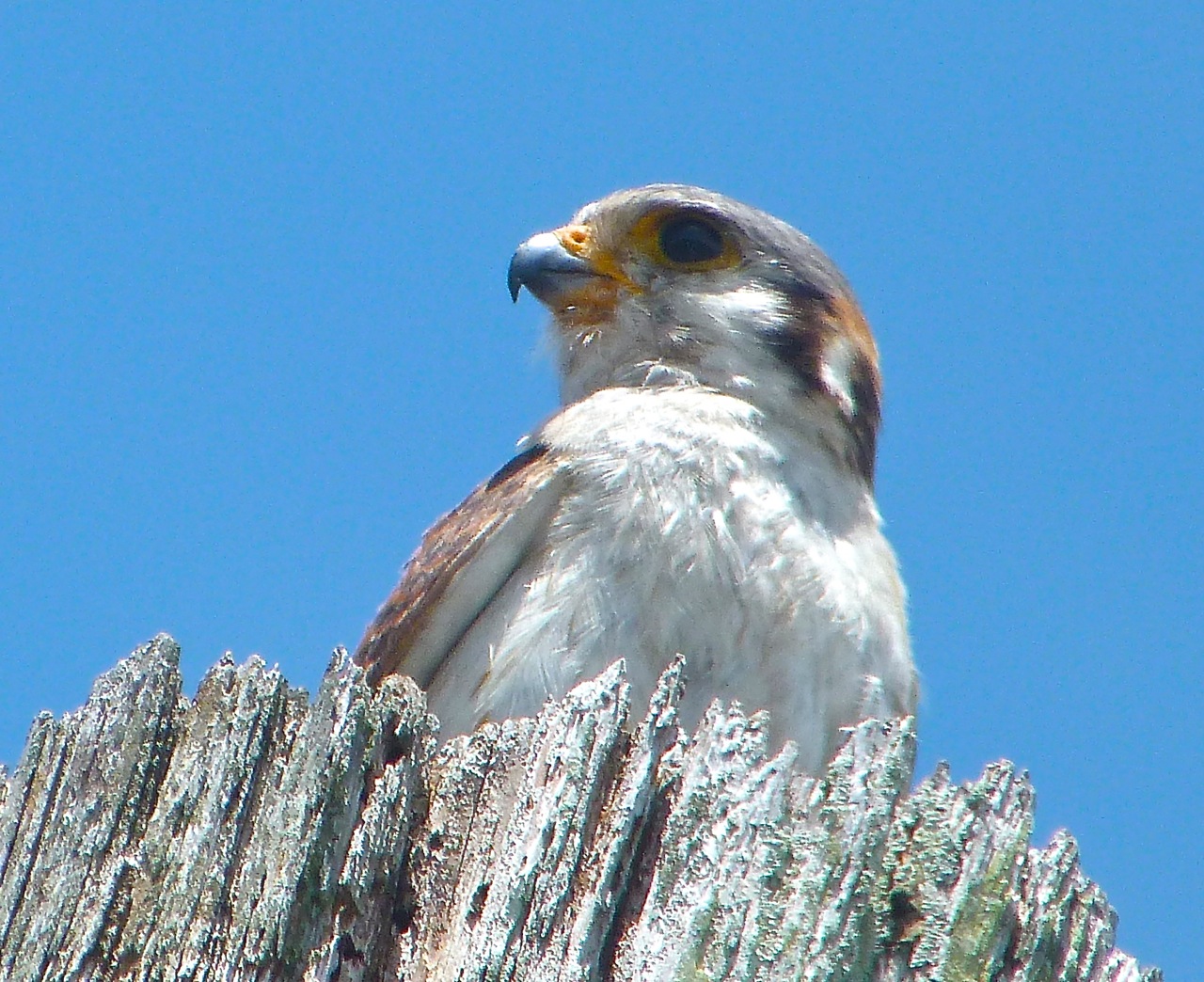
I don’t usually hold back from using (my) bad photos if there’s a reasonable excuse to do so. There’s a reason here. So here are a few bad photos. This sequence of mating kestrels was taken at a considerable distance, after I’d seen a bird fly into a pine tree out of the corner of my eye**. I couldn’t make out what species it was with the naked eye or through the viewfinder, so I took an ‘ID shot’ to enlarge later on. The image below is it – and a clear enough blur to say AMKE. Then I carried on taking pictures.
The header image came next as I realised there was another bird flying in from the right. Then the sequence below: the male mating with the female at once, dispensing with preliminaries; the male moving off along the branch; the female following a short way up the branch; then the male eventually flying away.
And that was that: all over in no time at all; all captured on camera; all finding its way onto the internet before you can say K@rd@shi@n tape. Let hope some good comes of it. Some baby kestrels would be good…
These photos were taken at Bahama Palm Shores, one of the go-to hotspots on Abaco for great birding including the gorgeous parrots. A new local initiative has seen the building of a tall platform overlooking a secluded lake that offers birders a great view of the birdlife there. But that’s a topic for another day.
All photos: Keith Salvesen
**This is badly written, I do realise – no, it didn’t literally fly out of the corner of my eye, that’s just how I happened to see it.
THE ARTICULATE WHALE (2): MARINE SCIENCE ON DISPLAY
A couple of months back I wrote about the fate of the false killer whale Pseudorca crassidens (in fact a species of dolphin) that was stranded on Duck Cay. After its discovery, it was cut up, buried for many months before being disinterred, cleaned… and made ready to be reconstructed for display at Friends of the Environment, Marsh Harbour for research and educational purposes. The poor dead creature was destined to have a future ‘life’ (in a sense) as an exhibit. You can read the details and see the various stages of the preparatory processes (including some gory images) HERE.
The FKW joint project (see below for participants) has taken more than a year. The final stage has been similar to doing a jigsaw puzzle, with the added complication that it isn’t entirely clear where or even whether all the pieces fit – there may even be one or two leftover small bones when the reconstruction is finished.
HEAD
Since I last wrote about the ‘rearticulation’ project, I have spent some time on Abaco. A highlight was our visit to FotE to meet the jocundly-named ‘Ducky’ of Duck Cay [I’d have gone for ‘Killer’ as a name – there’s no such thing as bad publicity]. Incidentally the strange item on the whale’s skull is in fact nothing to do with the creature’s real structure – it’s a natural historian’s unicorn-related jest…
RIBCAGE & SPINE
Besides identifying all the bones and numbering them, those working on this project have had to devise ingenious methods for display to make the reconstruction as accurate as possible – not an easy task with a creature nearly 20 feet long.
SPINE
FLIPPER 1 – COMPLETE
FLIPPER 2 – WORK IN PROGRESS
JAW & A TRAY OF SUNDRIES…
It would be against the principles of this blog to miss out on an obvious open goal of an opportunity for an apposite final caption…
A WHALE TALE THAT ENDS WITH THE WHALE TAIL
This ambitious year-long project has involvedBMMRO, FOTE, BEP (Bahamas Environment Protection Foundation), interns, and volunteers. A number of children from local schools have already been to visit Ducky and been completely fascinated. A dead stranded whale now has a new incarnation, and a new story to tell.
ARE STRANDINGS FREQUENT – AND WHY REPORT THEM?
Each year there may be half-a-dozen reports of cetacean strandings in Abaco waters, both whales and dolphins. As far as I can make out, the animals are almost invariably dead. If still alive, reporting is clearly urgent to ensure a quick response and to maximise the creature’s chances of survival. If dead, a carcass can provide scientists with valuable data on the biology and health of marine mammals and, in turn, the health of our marine ecosystems. This includes basic information, such as an animal’s age, its size, the types of prey it consumes, and the occurrence of diseases. Necropsies can provide more detailed information to add to the growing knowledge-base of marine mammal populations.
And a project like this one, with its great educational potential, can in effect enable a stranded marine mammal to tell its story even after death.
STRANDING NETWORK HOTLINE NUMBER +1 242 366 4155
(or +1 242 357 6666 / +1 242 577 0655)
Credits: all photos by Keith Salvesen / BMMRO. Special thanks to Olivia Patterson and all at Friends of the Environment for a fascinating time visiting Ducky Killer; and to Nancy Albury for showing us around the excellent Museum. If you haven’t been, go!
This is a challenging topic that I have been (shamefully) putting off. My task is a full-scale facing-up to an extremely rare, very small, and rather adorable adversary, the Kirtland’s Warbler (Setophaga kirtlandii). There are probably more dedicated KIWA experts out there than there are birds of this scarce species. Estimates of bird numbers vary wildly, but if I take a consensus of the mean of an approximate average of the median as ± 5000 individuals, I’d probably be in the ballpark named “Current Thinking“.
THAT SOUNDS QUITE RARE, RIGHT?
Around 50 years ago, the species was all but extinct – perhaps fewer than 500 birds in total, a barely sustainable population. In 1975, Brudenell-Bruce estimated 1000. I’ll mention some of the reasons later. In the 1970s, the Kirtland’s Warbler Recovery Plan was instituted with the twin objectives of protecting the vulnerable breeding habitat – basically large areas of jack pine; and of monitoring and management aimed at encouraging an increase in numbers. Around that time, they became IUCN listed as vulnerable, but more recently, population growth has resulted in a recategorisation to the more optimistic near-threatened category.
AND THEY LIVE WHERE, EXACTLY?
In spring and summer almost the entire KIWA population lives and breeds in very specific areas of Michigan and Ontario, where jack pines are found. There are signs that the range has expanded slightly in Michigan and more widely into Wisconsin and Ohio as the numbers have increased.
A Kirtland’s Warbler in the jack pines of Michigan (Vince Cavalieri)
In the fall and winter the population migrates to the Bahamas & TCI, where they tend to choose remote scrub and coppice areas to live until the spring when they return north in April. This range map shows the extremely specialist habitat choices of these migratory birds.
A Kirtland’s Warbler in Ohio
SO THEY ARE REALLY FOUND ON ABACO?
Yes – but they are notoriously hard to find. To give you an idea, I checked the eBird stats for Abaco sightings over the last 10 years: 9 successful trips reported, with 18 birds seen in all**. There were 3 groups comprising 6, 4, and 2 birds; and the rest were single birds. Abaco ornithologist and guide Woody Bracey is the go-to man for finding these little birds. Two years ago we were in his party that saw 4 in the space of a couple of hours. I was supposedly the photographer, but unaccountably found myself in completely the wrong place for the first 3. The 4th flew off a branch and straight at my head as I raised the camera… I felt the wind as it passed on its way deep into the coppice. I’m not proud of my effort; the fuzzy lemon item beyond the twigs and leaves is a KIWA (you’ll have to take my word for it…).
HAVE ANY BEEN SEEN ON ABACO THIS YEAR?
Last week, Woody took another party to the main hotspot in the Abaco National Park, a protected area at the southern end of the island. The park is huge, covering more than 20,000 acres of (mostly) pine forest. These birds are tiny, about 14 cms long and weighing 14 gms. Despite which they found a female and then a male KIWA in their favoured habitat beyond the pine forest. Those are the only 2 I’ve heard about this winter season.
Kirtland’s Warbler, Abaco Bahamas, 12 April 2018
WHAT DO I LOOK OUT FOR?
Gray head with a blueish tinge, gray-brown back
Yellow throat & underside, with some dark streaking
Females are paler and more streaked
Split eye rings – white crescents above and below eyes
Frequent tail pumping and bobbing (‘tail-wagging’ J. Bond)
WHAT DO THEY SOUND LIKE?
Some would say ‘chip-chip-chip-too-too-weet-weet’. Elsewhere I have found they produce ‘a loud tchip, song an emphatic flip lip lip-lip-lip-tip-tip CHIDIP‘ (Arnott). You be the judge!
Ross Gallardy / Xeno-Canto
WHAT ARE THE MAIN THREATS TO THE SPECIES?
Mankind is the primary threat. The breeding areas are particularly vulnerable from deforestation and clearance of the jack pines that are essential for successful nesting and breeding – and therefore the survival of the species.
Encroachment of development is another threat, as with so many species.
There is a further threat of nest parasitism by brown-headed cowbirds, to which KIWAs are especially vulnerable.
In the winter grounds where the habitat is mostly remote or in protected areas, there is rather less of a problem from these factors – for now at least.
Overall, habitat degradation at one end of the migration – in particular the breeding grounds – poses a serious risk; at both ends, extinction could loom again.
WHO WAS MR KIRTLAND?
Jared Potter Kirtland (1793-1877)
Jared P. Kirtland (1793 – 1877) was an Ohio scholar, doctor, judge, politician and amateur naturalist. He was a man of many and varied interests and talents, not-untypical of his time. In the field of natural history, Kirtland’s name lives on in his warbler; and also in a couple of snake species.
The Bahamas Postal Service is commendably active in producing wildlife stamps
**I realise eBird is not the be-all and end-all for sighting reports. It hasn’t been in existence for as long as 10 years, and not everyone uses it anyway. And awareness of the Bahamas as the winter home for KIWAs is a surprisingly recent development (as with piping plovers). As awareness increases, so do birder interest, habitat knowledge, and consequently reports of sightings.
Another example of the ‘twigs in the way’ problem for photographers
Credits: Bruce Hallett (1, 2, 3); Vince Cavalieri (4); Tom Sheley (5); Unattributable (me, in fact) 6; Woody Bracey (7, 9); Tony Hepburn (8); Lionel Levene (10); Birds of North America (range map); Ross Gallardy / Xeno-Canto (audio file); Birdorable (cartoon); BPS (KIWA stamp). Special thanks for all use permissions for images of this rare bird.
You must be logged in to post a comment.