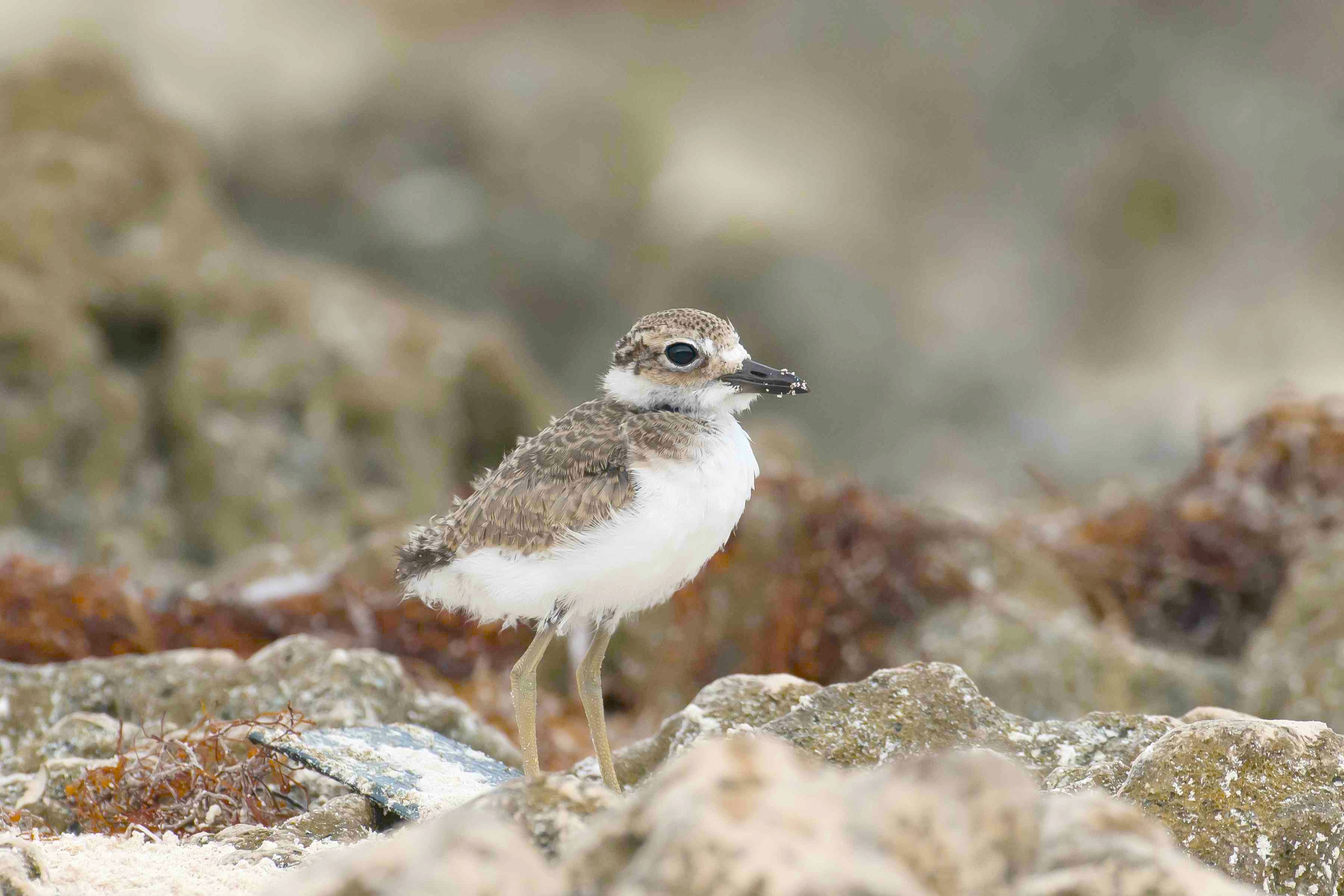
Unknown's avatar

WORLD SHOREBIRDS DAY – ABACO’S 33 SHORE SPECIES (1) LARGE BIRDS


Wilson's Plover chick 5.Delphi Club.Abaco Bahamas.6.13.Tom Sheley copy small

Wilson’s Plover chick, Delphi Club Beach, Abaco (Tom Sheley)

WORLD SHOREBIRDS DAY: ABACO’S 33 SHORE SPECIES (1)

Abaco is home to 33 shorebird species. Like the human residents of the main island and cays, some are permanent; some are winter visitors arriving to enjoy a warmer climate; and some a transients (e.g. Delphi Club members). To celebrate today being World Shorebirds Day, I am going to feature Abaco’s quota of the world’s shorebirds in 3 posts over the next few days. I’ll start with the definitive checklist of Abaco’s shorebirds compiled by Bahamas Birding author and authority Tony White  with Woody Bracey especially for the BIRDS OF ABACO. I have kept to the conventional / official species order. I’ve let the formatting run wild, though… problematic in WordPress. I may try to sort it. Or perhaps not…

AMERICAN AVOCET Recurvirostra americana   WR 4
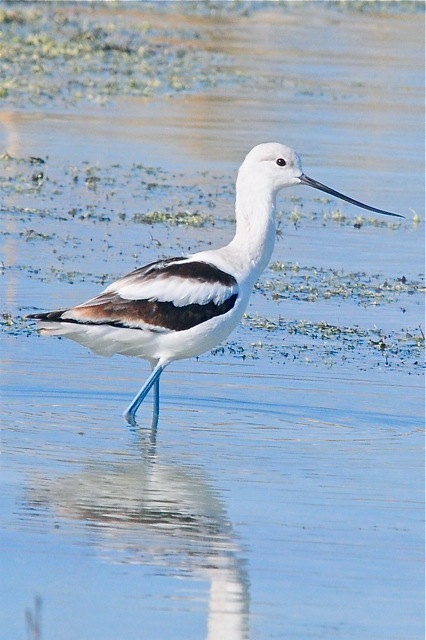
American Avocet, New Providence - Tony Hepburn

The codes will tell you, for any particular bird, when you may see it (P = permanent, WR = winter resident, TR = transient, V = vagrant); whether it breeds (B) on Abaco; and your chance of seeing it, graded from easy (1) to vanishingly unlikely (5).

  • Black-necked Stilt                             Himantopus mexicanus              PR B 3
  • American Avocet                               Recurvirostra americana             WR 4
  • American Oystercatcher                  Haematopus palliatus                   PR B 2
  • Black-bellied Plover                          Pluvialis squatarola                      WR 1
  • American Golden-Plover                 Pluvialis dominica                          TR 4
  • Wilson’s Plover                                  Ochthodromus wilsonia               PR B 2
  • Semipalmated Plover                        Charadrius semipalmatus             WR 2
  • Piping Plover                                      Charadrius melodus                     WR 3
  • Killdeer                                                 Charadrius vociferus                  WR 2
  • Spotted Sandpiper                              Actitis macularius                       WR 1
  • Solitary Sandpiper                             Tringa solitaria                              WR 2
  • Greater Yellowlegs                             Tringa melanoleuca                      WR 2
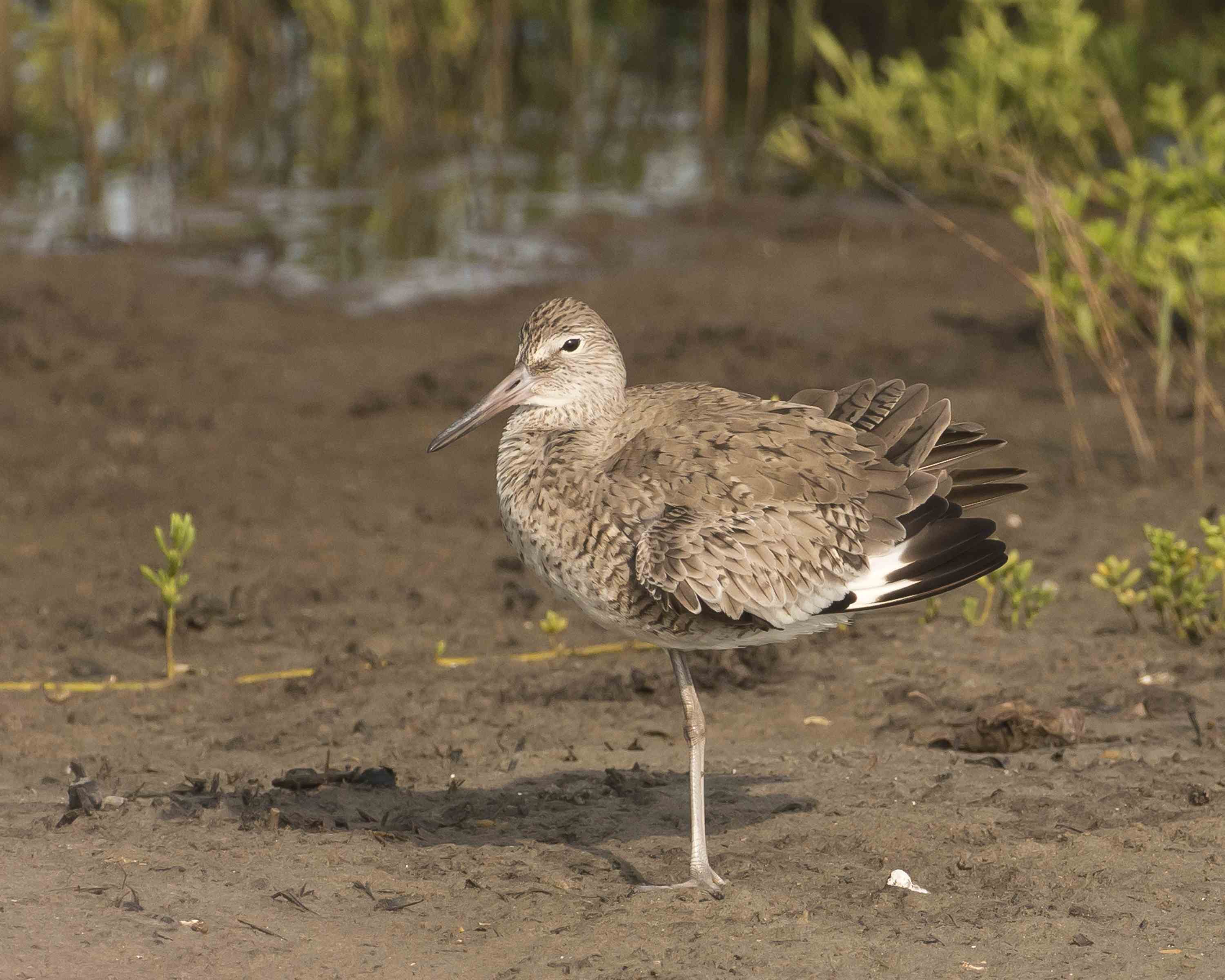
  • Willet                                                     Tringa semipalmata                   PR B 2
  • Lesser Yellowlegs                               Tringa flavipes                              WR 3
  • Ruddy Turnstone                                 Arenaria interpres                        PR 2
  • Red Knot                                                Calidris canutus                         WR 3
  • Sanderling                                             Calidris alba                                WR 1
  • Dunlin                                                    Calidris alpina                             WR 2
  • Least Sandpiper                                   Calidris minutilla                          WR 2
  • White-rumped Sandpiper                  Calidris fuscicollis                           TR 3
  • Semipalmated Sandpiper                  Calidris pusilla                                TR 2
  • Western Sandpiper                             Calidris Mauri                                TR 2
  • Short-billed Dowitcher                      Limnodromus griseus                     WR 1
  • Long-billed Dowitcher                      Limnodromus scolopaceus             WR 4
  • Wilson’s Snipe                                     Gallinago delicata                         WR 3
  • Wilson’s Phalarope                            Phalaropus tricolor                          V 4

Of these 26 birds, 23 are ones you might encounter, though some only if you are lucky or your field-craft is excellent. If you happen upon a Long-billed Dowitcher or an American Avocet, tell someone! And the photo I will be posting of a Wilson’s Phalarope is of the first specimen ever recorded for Abaco. And it so happens that I can illustrate them with photographs, mostly from the book archive… What a coincidence. All except 3 were photographed on Abaco; and I have purposely chosen many that were photographed on the lovely 1-mile curve of white sand watched over by the Delphi Club and historically named ‘Rolling Harbour’.

For the sake of completeness, the other 7 species of shorebird recorded for Abaco – all transients or vagrants – are:

  • Upland Sandpiper                     Bartramia longicauda             TR 4
  • Whimbrel                                    Numenius phaeopus                 TR 4
  • Hudsonian Godwit                   Limosa haemastica                   V5
  • Marbled Godwit                         Limosa fedoa                               V5
  • Buff-breasted Sandpiper          Tryngites subruficollis            V5
  • Pectoral Sandpiper                   Calidris melanotos                    TR 3
  • Stilt Sandpiper                           Calidris himantopus                 TR 3

photo

OK let’s see some of the birds. I’ll post one shot of each of the 26 birds to show them at their best in their perfect environment – wild coastline. Some of these species haven’t yet featured in the blog at all, or else not for a while. Let’s go with some of the larger and / or long-beaked species, including a couple of matching pairs.

GREATER YELLOWLEGS  Tringa melanoleuca   WR 2Greater Yellowlegs LR. Abaco Bahamas.Tom Sheley.2.12 copy 2

LESSER YELLOWLEGS  Tringa flavipes  WR 3Lesser Yellowlegs.Evening on the Marls.Abaco Bahamas.2.13.Tom Sheley small2
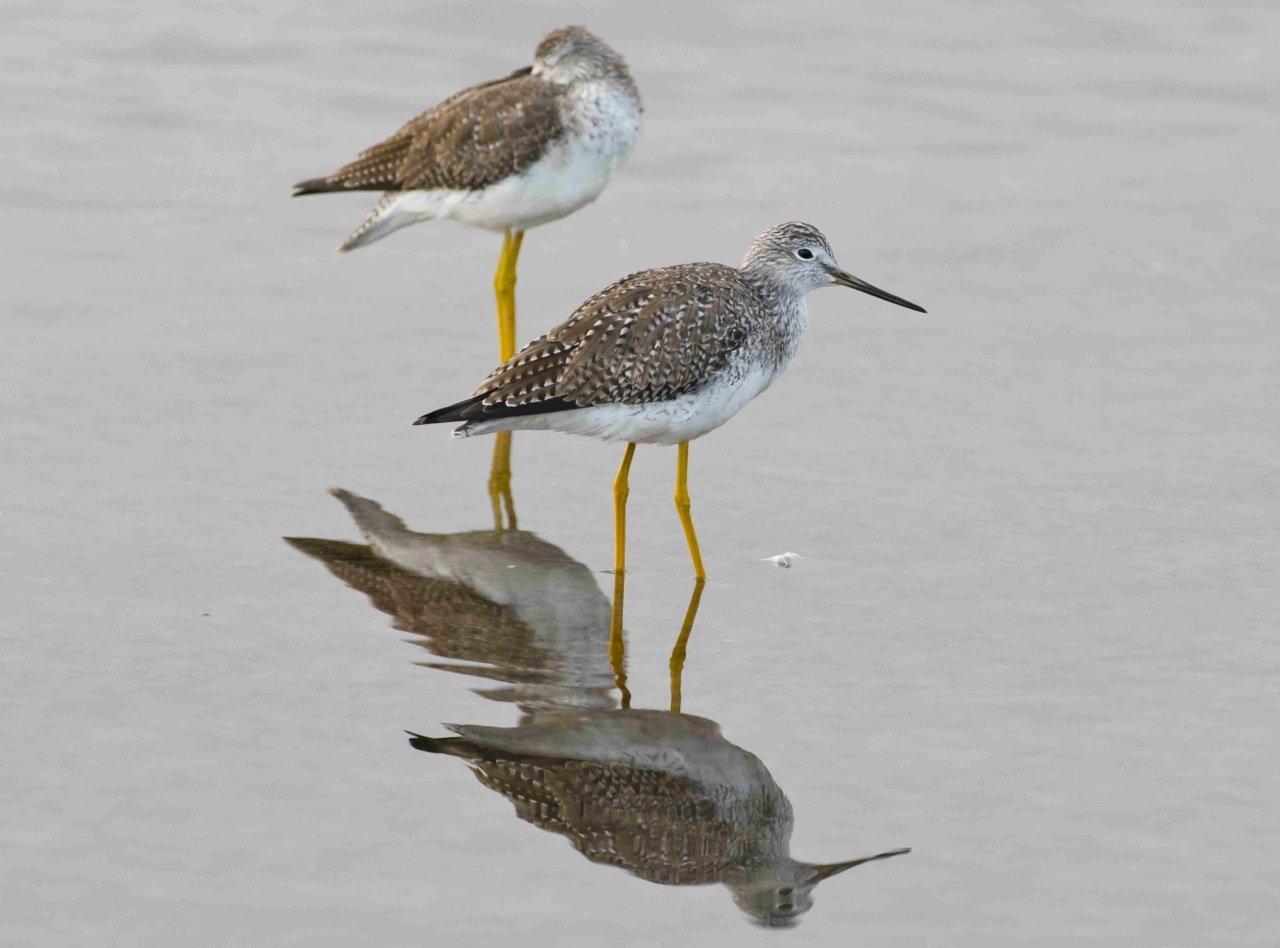
SHORT-BILLED DOWITCHER  Limnodromus griseus  WR 1Short-billed Dowitcher (NB), Abaco - Bruce Hallett 

LONG-BILLED DOWITCHER  Limnodromus scolopaceus   WR 4Long-billed Dowitcher Mike Baird Wiki
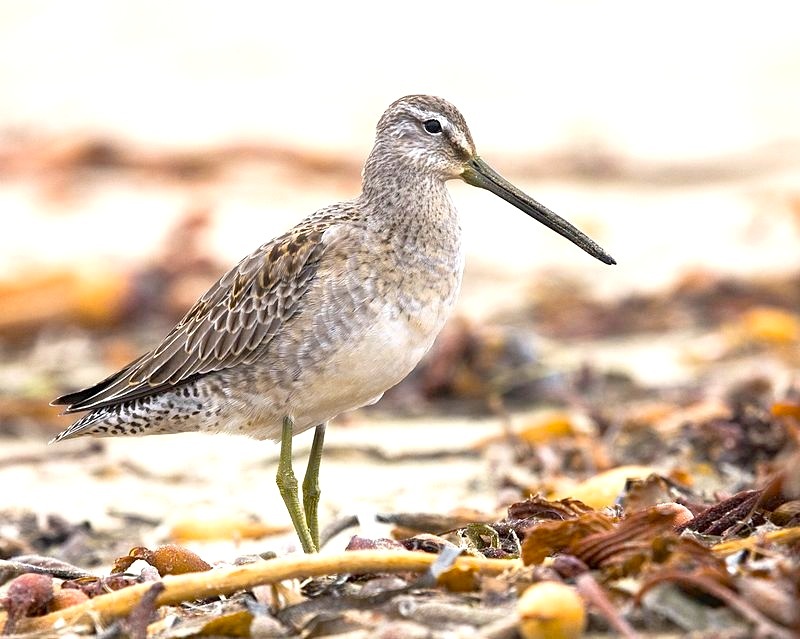
WILLETT  Tringa semipalmata  PR B 2Willet.Abaco Bahamas.2.13.Tom Sheley small

WILSON’S SNIPE  Gallinago delicata   WR 3Wilson's Snipe, Abaco - Woody Bracey

BLACK-NECKED STILT  Himantopus mexicanus  PR B 3Black-necked Stilt, Abaco - Tom Sheley

I’m adding a free  bonus stilt in flight, because it’s such a great shot…Black-necked stilt, Abaco - Alex Hughes

AMERICAN OYSTERCATCHER  Haematopus palliatus PR B 2American Oystercatcher, Abaco 5.1 Tom Sheley

Part 2 will be about the Plovers. Or maybe the Sandpipers

RELATED POSTS

WILLET

BLACK-NECKED STILT

AMERICAN OYSTERCATCHER

 Photo Credits: Tom Sheley, Bruce Hallett, Tony Hepburn, Mike Baird, Woody Bracey, Alex Hughes

photo                 photo              photo

Unknown's avatar

‘AMOY’ THERE! AMERICAN OYSTERCATCHERS ON ABACO


American Oystercatcher.Delphi Club.Abaco Bahamas.Tom Sheley

‘AMOY’ THERE! AMERICAN OYSTERCATCHERS ON ABACO

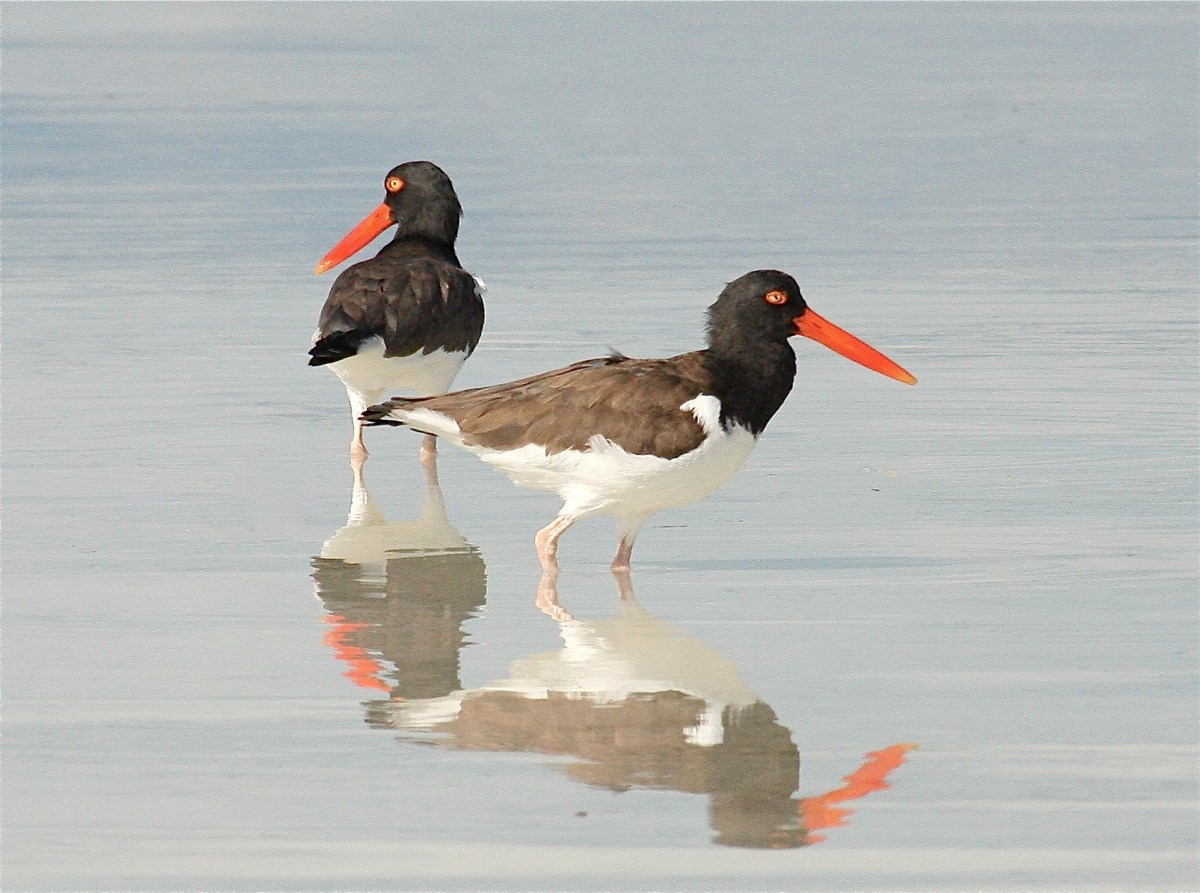
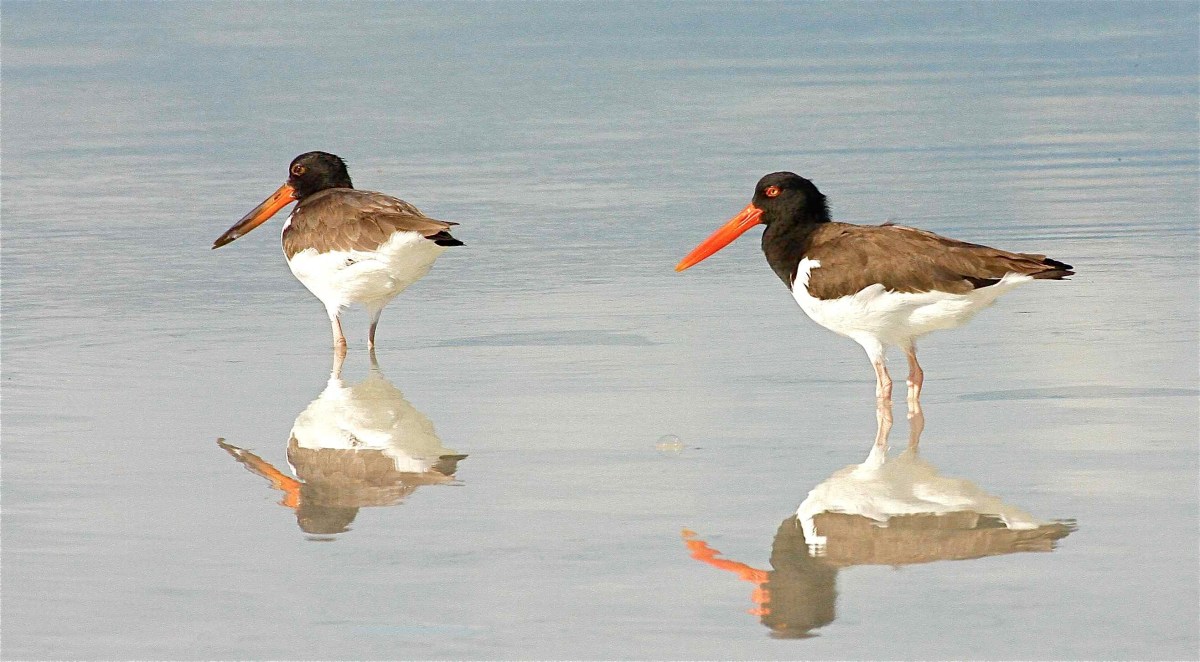
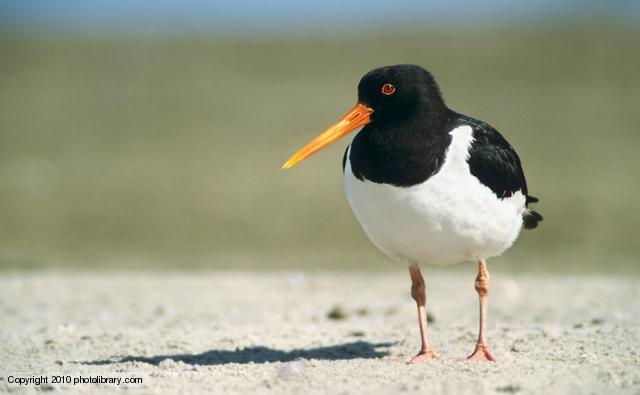
The American Oystercatcher Haematopus palliatus is a familiar shorebird, with the significant advantage that it cannot be mistaken for any other shore species either to look at or to hear. All those little sandpipers and plovers can be very confusing; the handsome AMOY stands out from the crowd. I am posting about this species now as a prelude to WORLD SHOREBIRDS DAY on September 6th. The link will take you to the official Facebook Page where you will find more information, including how to sign up for a pleasant day’s birding, with the chance to report your sightings.world-shorebirds-day1000

The header picture and the next 2 were taken by photographer and ace birder Tom Sheley on the Delphi Club beach. Unsurprisingly, we used one of these wonderful photographs as a full-page image in The Delphi Club Guide to THE BIRDS OF ABACO.

American Oystercatcher.Delphi Club.Abaco Bahamas.Tom Sheley American Oystercatcher.Delphi Club.Abaco Bahamas.Tom Sheley

Bruce Hallett, author of the essential field guide ‘Birds of the Bahamas and the TCI’ (featured in the sidebar) was a major contributor to the book. Not just with his excellent photographs, either, such as the two below. His knowledge, his patience with my queries, and his scrupulous reading of the final draft to eliminate my errors were vital to the project. American Oystercatcher.Abaco Bahamas.Bruce HallettAmerican Oystercatcher.Abaco Bahamas.Bruce Hallett163952

Here are two recordings of oystercatchers, unmistakeable call sounds that will probably be instantly familiar.

Lopez Lanus / Xeno-Canto

Krzysztof Deoniziak / Xeno-Canto

I like the rather dishevelled appearance of this AMOY from Jim Todd, fly fisherman, author of ‘The Abaco Backcountry’, and intrepid kayak explorer around the coast of Abaco.American oystercatcher Abaco (Jim Todd)

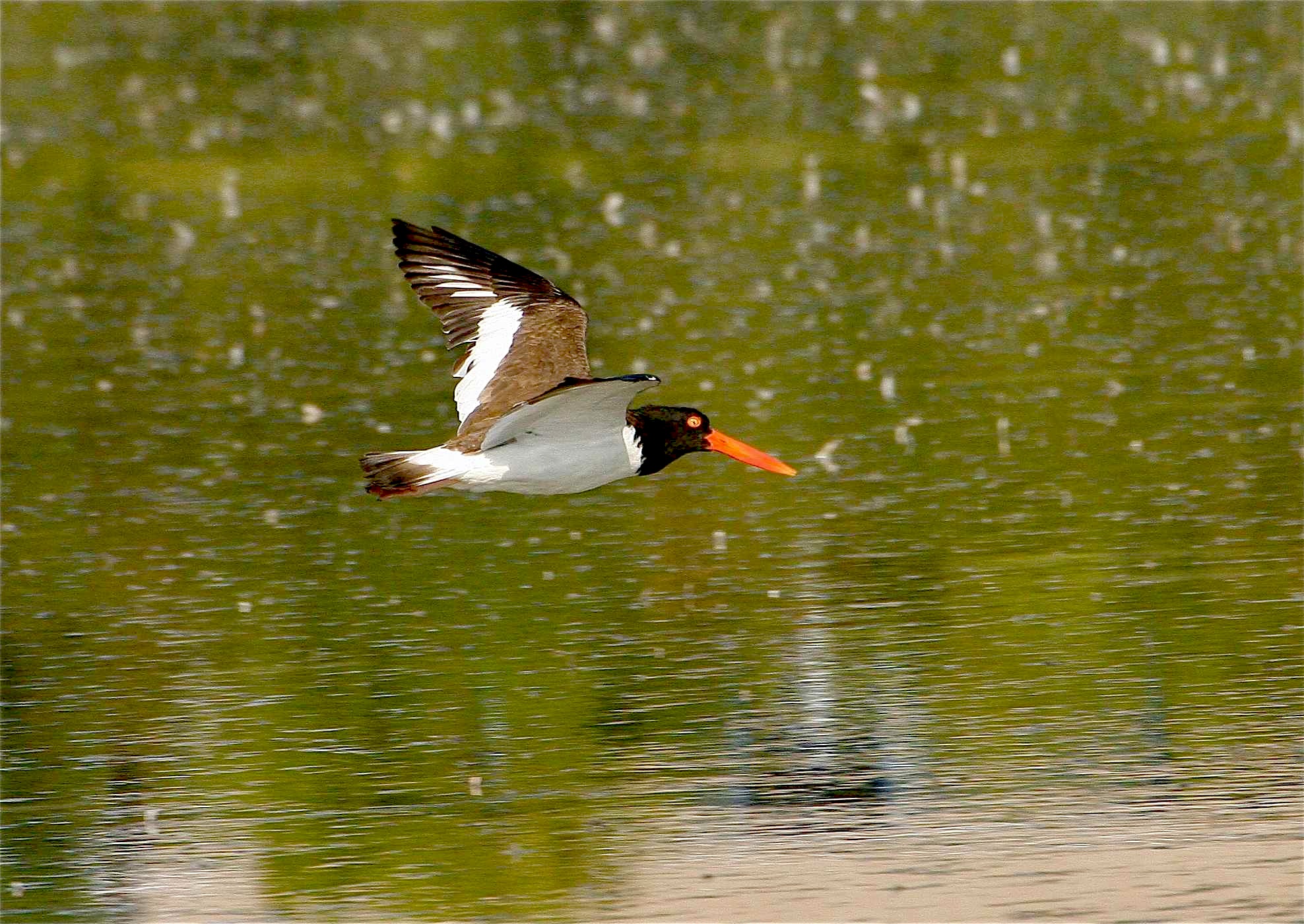
The next two photos were taken on the Delphi beach by Charlie Skinner, another contributor to the book. Below them is an ‘in-flight’ shot by Bruce Hallett.American Oystercatcher, Abaco (Charlie Skinner)American Oystercatcher, Abaco (Charlie Skinner)     American Oystercatcher.Abaco Bahamas.Bruce Hallett

This fine video from Audubon shows close-up views of the American Oystercatcher, and unleashes more of the distinctive call-sounds – an insistent wittering – of the species. [vimeo https://vimeo.com/48479131%5D

For some time, I found it difficult to distinguish American and Eurasian Oystercatchers. The markings of both species are variable according to gender, age, season and so on, but are generally very similar. Mrs RH noticed the salient difference at once – the eyes. The AMOY has bright orange eyes with red eye-rings; the EUROY’s eyes are the reverse colouring, as this example shows.Eurasian Oystercatcher. BBC

 Credits: Tom Sheley, Bruce Hallett, Jim Todd, Charlie Skinner, Xeno-Canto, Audubon, BBC
world-shorebirds-day1000

Unknown's avatar

‘SPOTTED IN ABACO WATERS’: PANTROPICAL SPOTTED DOLPHINS


 Spotted Dolphins Abaco Bahamas (BMMRO)

‘SPOTTED IN ABACO WATERS’: PANTROPICAL SPOTTED DOLPHINS

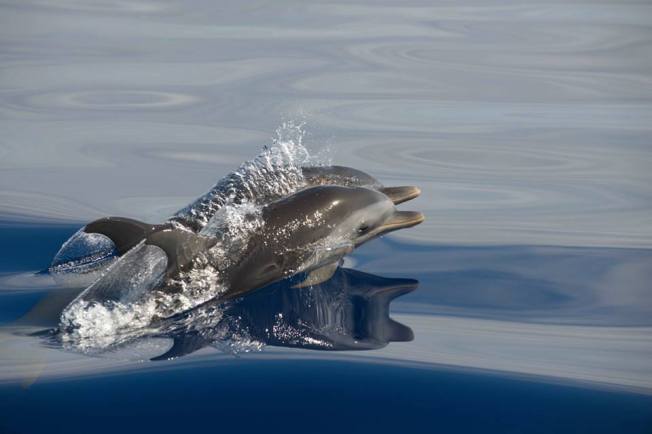
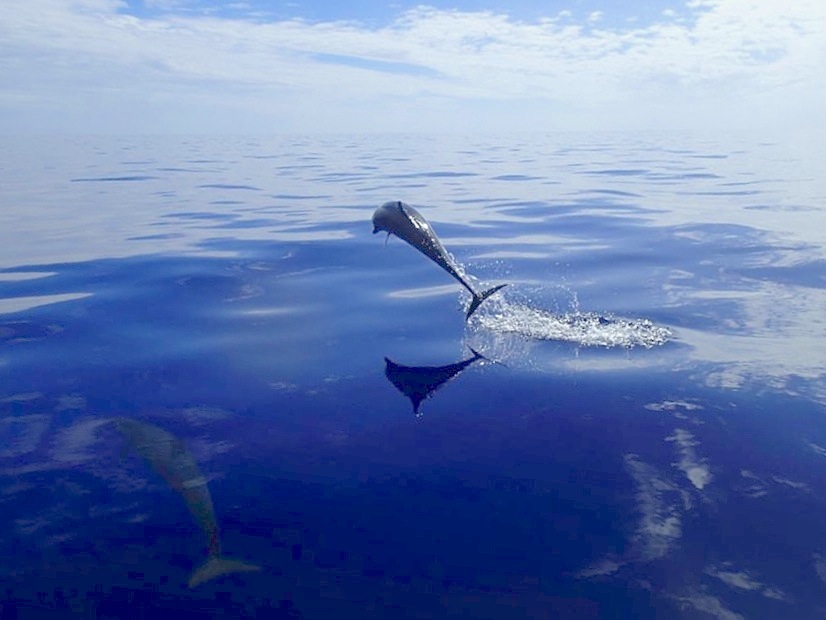
The BMMRO has posted several reports of dolphin and whale activity around the coast of Abaco during August, with some outstanding photos to accompany them. I had been going to post rather generally about this until a couple of days ago, when an unusual dolphin species for the region was… er… spotted and some memorable images taken.

Spotted Dolphins Abaco Bahamas (BMMRO)

These are PANTROPICAL SPOTTED DOLPHINS Stenella attenuata, whose range encircles the globe but at a lower latitude than the far more frequently encountered resident  ATLANTIC SPOTTED DOLPHINS Stenella frontalis. Here are comparative range maps. The rarity of the Pantropical species in the Bahamas is indicated in the BMMRO report of a stranding in 2011 – see below.

ATLANTIC SPOTTED DOLPHIN                                                                    PANTROPICAL SPOTTED DOLPHIN

Verbreitungsgebiet des Zügeldelfins Stenella frontalis.PNG                                                Cetacea range map Pantropical Spotted Dolphin.PNG

Spotted Dolphin Abaco, Bahamas (BMMRO) copy 2

Spotted Dolphins Abaco  Bahamas (BMMRO)Spotted Dolphins  Abaco Bahamas (BMMRO) copy

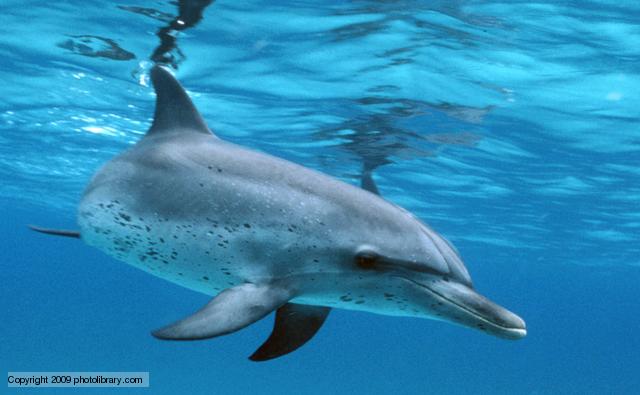
The pantropical image below is from the BBC archive and not taken in the Bahamas. I’ve included it for illustrative purposes due to the close-up underwater view of the dolphin.Pantropical spotted dolphin (BBC)

This wonderful underwater video of pantropicals is by Jake Levenson, shot from a polecam. Although it is 6 minutes long, I highly recommend it for (a) the stunning views of these creatures at very close quarters (b) the excellent audio quality – you can clearly hear the dolphins communicating with ‘sonar’ clicks and squeaks, and (c) the strange sense of peace you may feel when you have watched it. 

[youtube http://youtu.be/-hXTYe58g34]

PANTROPICAL SPOTTED DOLPHIN STRANDING 2011

In May 2011 a dead dolphin was found on the sandbank at Casaurina Point, Abaco. BMMRO’s scientists established that it was a sub-adult male pantropical spotted dolphin with a stomach full of squid beaks, a known prey for the species. A full necropsy was conducted on the animal and samples were taken for scientific testing to determine the cause of death. At the time the BMMRO reported the find in their quarterly Newsletter:

Pantropical spotted dolphins are commonly found in off-shore waters, although they can be found close to Abaco’s coastline due to the close proximity of deep waters. They can occur in large group sizes of up to 100 animals. Adult males and females reach up to 2.6 m (8.5 ft) and 2.4m (7.9 ft) in length, respectively. Since our efforts began in 1991, BMMRO has records of only 28 sightings of pantropical spotted dolphins in The Bahamas (my rubric), although their cousin species, Atlantic spotted dolphin, is a common resident. This is the first recorded stranding of this species in The Bahamas.”

Credits: BMMRO / Diane Claridge; BBC; Jake Leveneson (video); Wiki (range maps)

Unknown's avatar

SHARP-EYED & SHARP-BILLED: GREEN HERON ON ABACO


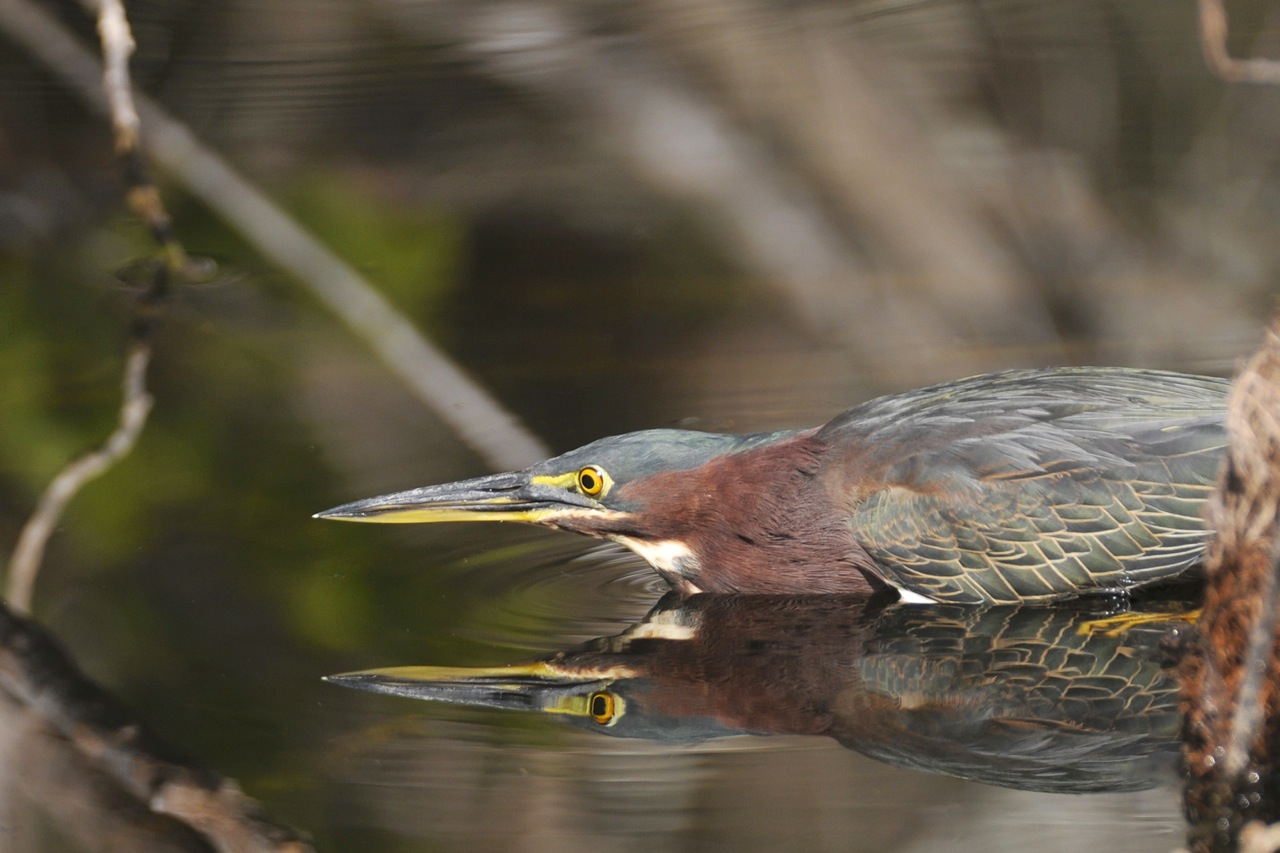
Green Heron.Abaco Bahamas.Tom Sheley

SHARP-EYED & SHARP-BILLED: GREEN HERON ON ABACO

Abaco has six ‘true’ heron species (putting aside the various egrets): Great Blue Heron, Little Blue Heron, Tricolored Heron, Green Heron, Black-crowned Night-Heron and Yellow-crowned Night-Heron. The Green Heron Butorides virescens is a permanent resident and is easily distinguishable from the other heron species. The header picture by Tom Sheley is one of many wonderful photographs he took for THE BIRDS OF ABACO, and is one of the most striking. This is a bird actively hunting, keeping very low with eyes fixed on the water, waiting for the chance to use that long sharp bill to snaffle its prey – small fish, frogs and aquatic insects.

RANGE MAP

Green Heron Range Map

There are thought to be 5 sub-species of green heron within the range, but this is a matter for anguished debate (not by me). However, the resident variety in the Bahamas has been designated Butorides virescens bahamensis since 1888 (Brewster), so I’m going along with that.

Green Herons are most likely to be seen in or near water – the margins of brackish ponds or amongst the mangroves, for example. Their foraging is mostly done in water, usually at dawn or dusk.Green Heron, Abaco Woody Bracey

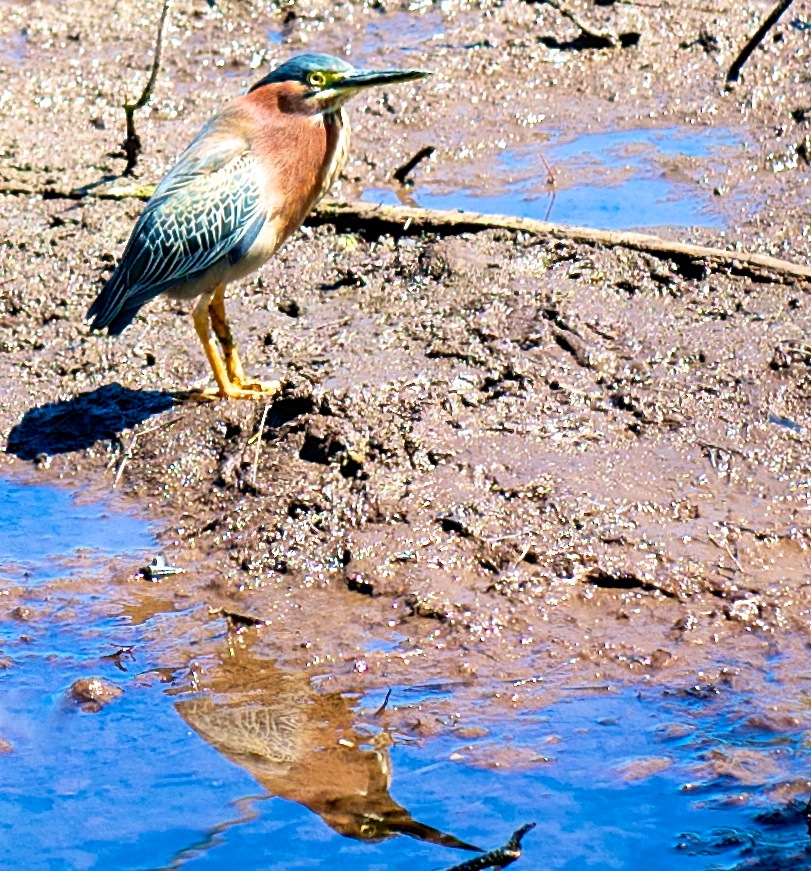
You may encounter one on the shoreline or beach…GREEN HERON, Abaco - Nina Henry

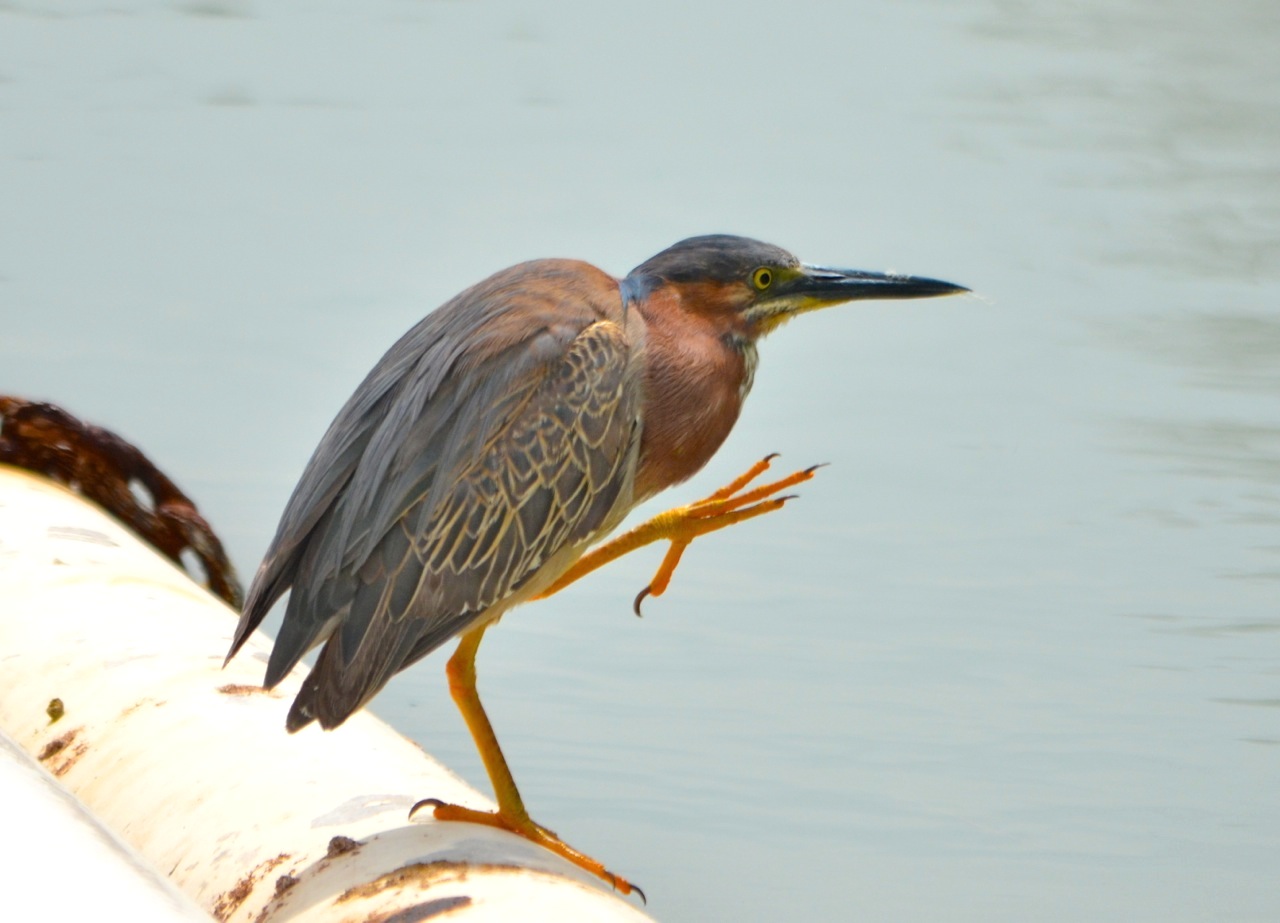
…but they don’t always choose the most scenic locationsGreen Heron, Abaco Nina Henry

FASCINATING FACTOID

Green Heron are known to drop food, insects, or small objects such as stones on the water’s surface as bait to attract fish or other tasty creatures. They are thus classified as one of the animal kingdom’s  44 (?) TOOL-USING SPECIES, considered a sign of superior intelligence.

Green Herons may also be found perching in treesGreen Heron Abaco Tom ReedGreen Heron, Abaco Rick LoweGreen Heron, Abaco Peter Mantle

Occasionally they may be seen out at sea – this one from an offshore BMMRO research vesselGreen Heron Abaco BMMRO

The Golf Course at Treasure Cay is an excellent place to go bird-watching. There is always plenty of bird life on the 3 ponds there, the one on hole #11 being the biggest and most abundant. If you are going to bird there, call in first at the Clubhouse and ask for permission:  they are very kind about it, but they do need to know who is out on the course.  And since the pond is alongside the fairway, keep your wits about you – you are a potential target for the sliced drive… (ok, ok left-handers – hooked, then).

Green Heron, Abaco Charlie SkinnerGreen Heron, Abaco Charlie Skinner

The 2 images above are from Charlie Skinner, and show a green heron adult and chick putting the Golf Course drainage pipe to good use. Captions invited for the top  one. Birds often seen at this particular location include green heron, white-cheeked pintail (lots), common gallinule (moorhen), coot, Canada goose, least grebe, neotropic cormorant, and blue-winged teal. You may also see little blue heron and smooth-billed anis. Once I found a least bittern in the background of a teal photo – I didn’t notice it at the time, but when I checked the photos there it was in the reeds behind the ducks. Another good place to bird if you are in the TC area is White Sound.

Credits: Tom Sheley, Woody Bracey, Nina Henry, Tom Reed, Rick Lowe, Peter Mantle, Charlie Skinner, Wiki

POSTSCRIPT I’ve just commented HERE on the supposedly phonetic call-sounds attributed to birds to render them recognisable by man – the “What’s-for-dinner-Martha, what’s-for-dinner” and the “Give-me-a-drink-please…NOW” and so on. So when I was borrowing the range map from Wiki I was amused to see this: “The green heron’s call is a loud and sudden kyow; it also makes a series of more subdued kuk calls. During courtship, the male gives a raah-rahh call with wide-open bill, makes noisy wingbeats and whoom-whoom-whoom calls in flight, and sometimes calls roo-roo to the female before landing again. While sitting, an aaroo-aaroo courtship call is also given”. So there you go.

Unknown's avatar

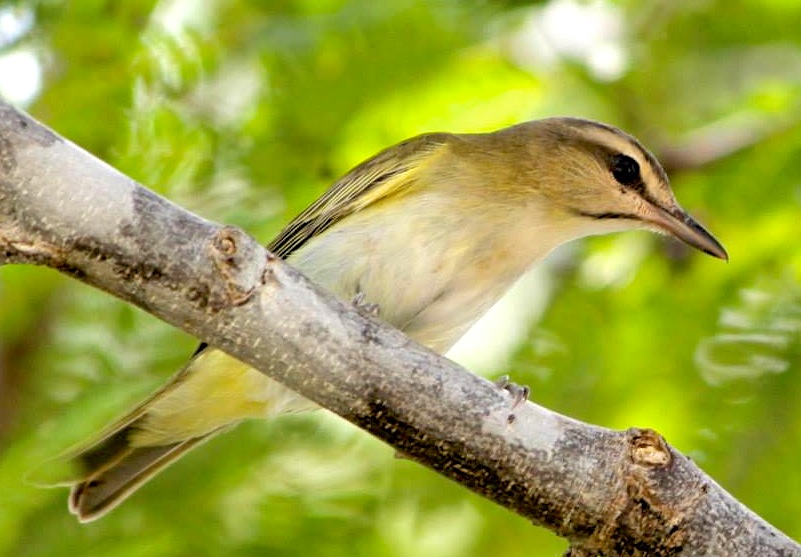
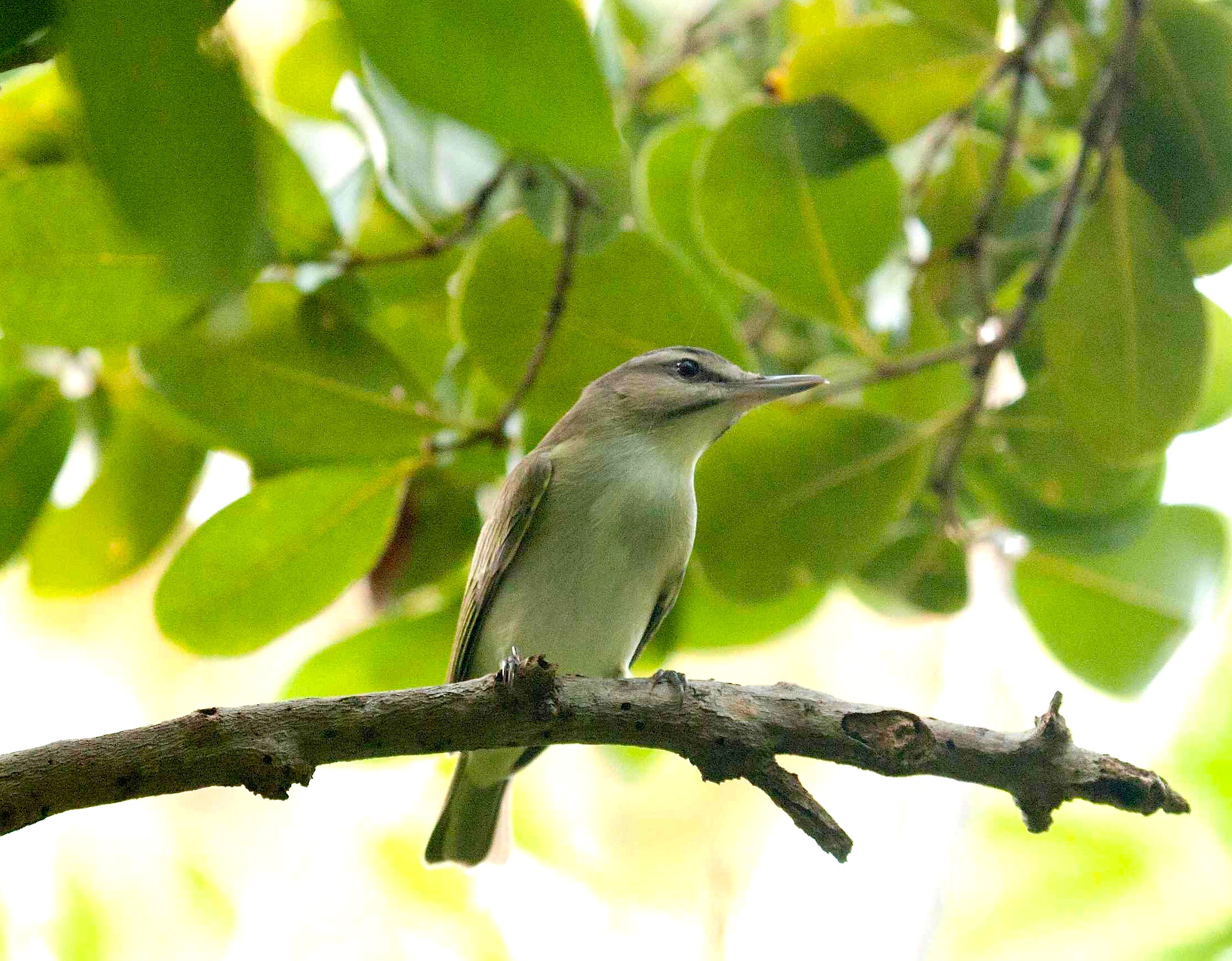
VIREOS ON ABACO (1): GOING CHEEP – THE BLACK-WHISKERED VIREO


Black-whiskered Vireo, Abaco (Bruce Hallett)

GOING CHEEP ON ABACO: THE BLACK-WHISKERED VIREO

There are 8 vireo species recorded for Abaco. The most common is the ubiquitous Thick-billed Vireo Vireo crassirostris – the only permanent resident vireo – whose cheery chirp is part of the background of bird song heard daily all over the island.  The only other species you are likely to encounter without going out of your way is the summer resident BLACK-WHISKERED VIREO Vireo altiloquus, which breeds on Abaco. The other 6 are the White-eyed, Yellow-throated, Blue-headed, Warbling, Philadelphia, and Red-eyed Vireo. Of these, the first 2 are quite rare winter residents; and the other 4 are considered to be transients. Black-whiskered Vireo, Abaco

The BWV’s song is similar to the Thick-billed Vireo, but (luckily) identifiably different. I’m not a great one for phonetic attempts at turning a bird call into a human sentence of the ‘Quick!-come-to-pick-up-a-brick’ and the ‘Skin-me-a-nice-bit-of-bonefish’ type. The Black-whiskered Vireo’s song has been described as sounding like ‘Whip, Tom Kelly’. But not to me. See what you make of it…

Brian Cox / Xeno-Canto

Black-whiskered Vireo, Abaco Bahamas 2 (Tom Sheley)

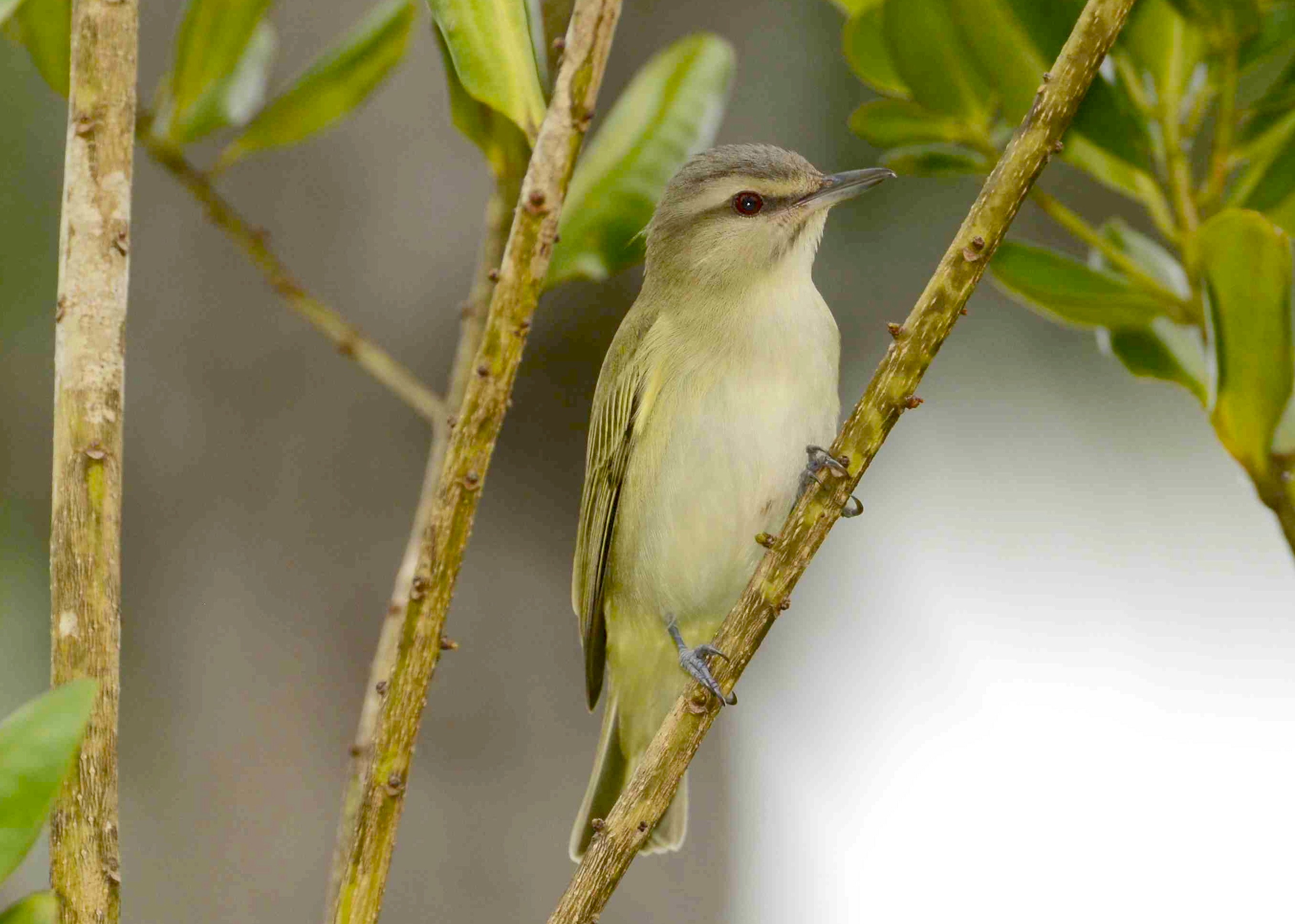
As with other vireo species, the BWV has a stout bill, a feature that helps to distinguish vireos from the many thin-billed warbler species on Abaco. The main signifiers are found on this bird’s head: the dark stripe right through the eye; the long white eyebrows; and the noticeable black lines – the ‘whiskers’ – on the sides of the neck. Other identification pointers are the pale underside with a yellow tinge to the flanks and undertail; and the red eyes (the red-eyed vireo, a very similar bird, lacks the whiskers).Black-whiskered Vireo, Abaco (Charmaine Albury)

Black-whiskered vireos feed mostly on insects in trees, bushes and undergrowth. They can sometimes be seen hovering while they forage. They also vary their diet with small quantities of berries. Here are two great shots of a mother BWV feeding a very large chick with a berry, followed by some vile insect.Black-whiskered Vireo, Abaco (Charlie Skinner)Black-whiskered Vireo, Abaco (Charlie Skinner)

Image Credits: Bruce Hallett, Tom Shelley, Charlie Skinner, Charmaine Albury, Erik Gaugerblack-whiskered-vireo, Abaco (Erik Gauger) 1

Unknown's avatar

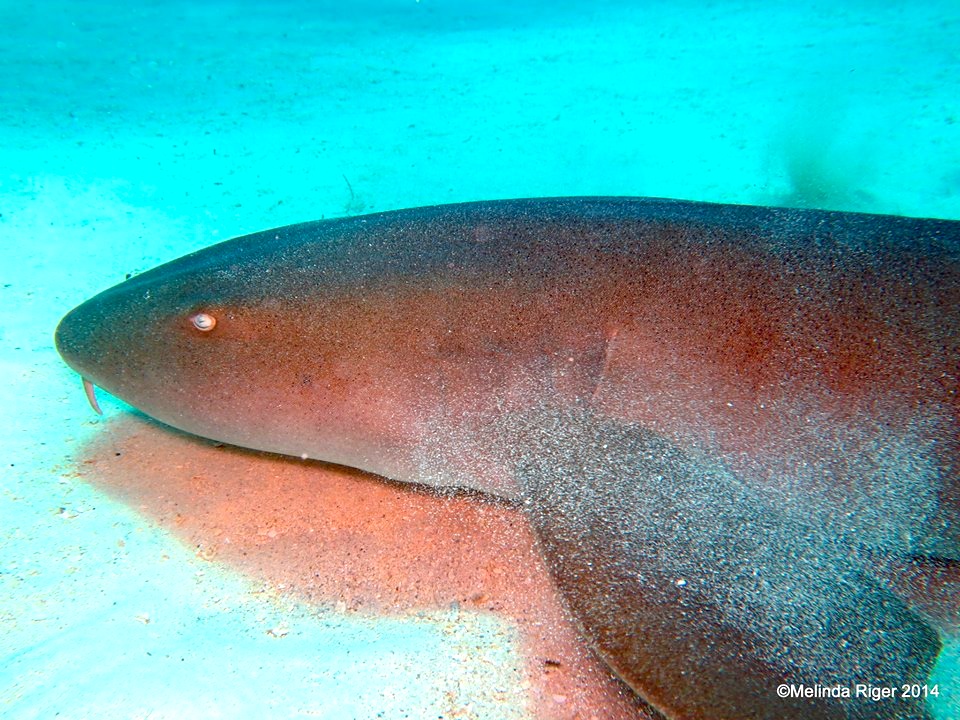
‘TREAT WITH PATIENCE…’ – NURSE SHARKS IN THE BAHAMAS


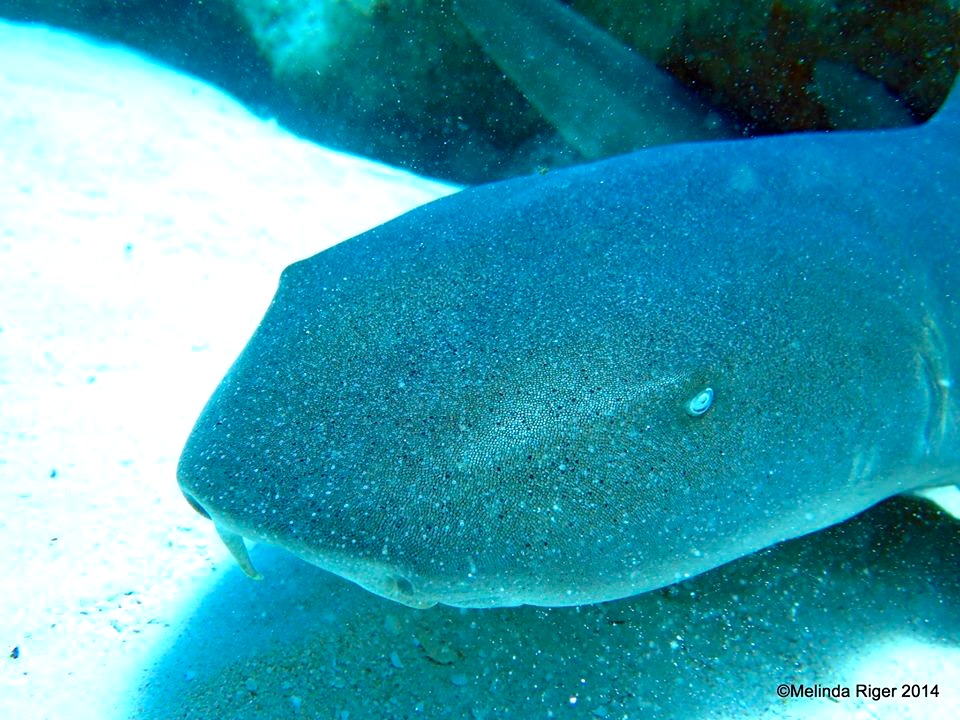
Nurse Shark ©Melinda Riger @ GB Scuba

‘TREAT WITH PATIENCE…’ – NURSE SHARKS IN THE BAHAMAS

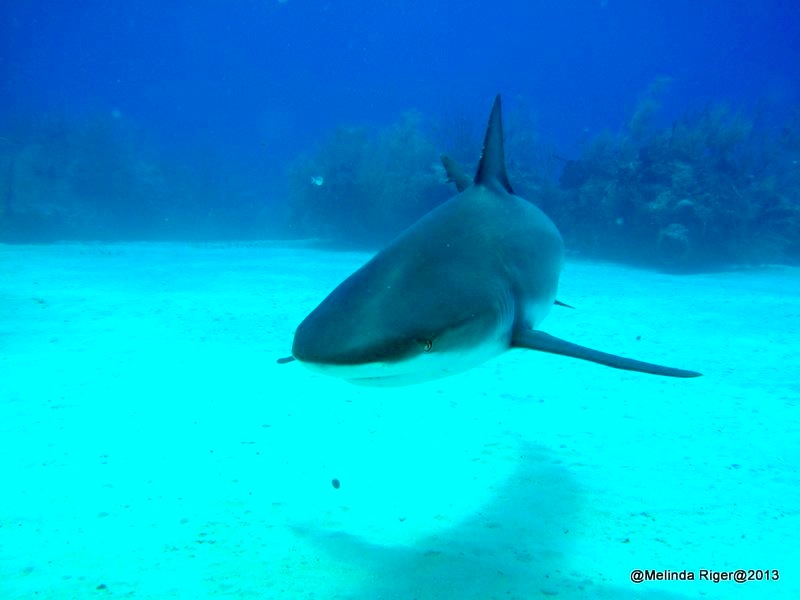
The scientific name for the nurse shark sounds like something Bilbo Baggins might have said to summon elves to his rescue: Ginglymostoma cirratum. Actually the name is a mix of Greek and Latin and means “curled, hinged mouth” to describe this shark’s somewhat puckered appearance. The origin of the name “nurse shark” is unclear. It may come from the sucking sound they make when hunting for prey in the sand, which vaguely resembles that of a nursing baby. Or it may derive from an archaic word, nusse, meaning cat shark. The most likely theory though is that the name comes from the Old English word for sea-floor shark: hurse.

Shark ©Melinda Riger @ GB Scuba

Nurse sharks are slow-moving bottom-dwellers and are, for the most part, harmless to humans. However, they can be huge—up to 14 feet (4.3 meters)—and have very strong jaws filled with thousands of tiny, serrated teeth, and will bite defensively if stepped on or bothered by divers who assume they’re docile. [There are recorded instances of injuries caused to divers who have tried to pull nurse sharks by the tail. And serve them right, I say. Treat them with patience – and respect!] 

Nurse_shark_with_remoras Duncan Wright (Sabine's Sunbird)

Notice that the nurse shark in the above photo, and in the header image, is being attended by REMORAS. Click the link to find out more about the strange relationship these ‘weird suckers’ have with larger marine creatures.

Nurse Shark ©Melinda Riger @ G B Scuba

They use their strong jaws to crush and eat shellfish and even coral, but prefer to dine on fish, shrimp, and squid. [And also stingrays, apparently. They have been observed resting on the bottom with their bodies supported on their fins, possibly providing a false shelter for crustaceans which they then ambush and eat.] They are gray-brown and have distinctive tail fins that can be up to one-fourth their total length. Unlike most other sharks, nurses are smooth to the touch. 

Nurse Shark ©Melinda Riger @ Grand Bahama Scuba

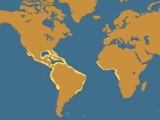
Nurse sharks are found in the warm, shallow waters of the western Atlantic and eastern Pacific oceans. They are abundant throughout their range and have no special conservation status, although the closeness of their habit to human activities is putting pressure on the species.

map-nurse-shark-160-20135-cb1321035858

Nurse sharks are nocturnal and will often rest on the sea floor during the day in groups of up to 40 sharks, sometimes piled on top of each other.

Shark, Nurse (young) ©Melinda Riger @ GB Scuba

FAST FACTS

  • Type: Fish 
  • Diet:  Carnivore
  • Size: 7.5 to 9.75 ft (2.2 to 3 m)
  • Weight: 200 to 330 lbs (90 to 150 kg)
  • Size relative to a 6-ft (2-m) man:
Illustration: Shark compared with adult manNurse Shark ©Melinda Riger @ G B Scuba copy

Credits: All photos Melinda Riger, Grand Bahama Scuba; range map and text mostly  NATIONAL GEOGRAPHIC  filled out with other pickings

Unknown's avatar

FAST FOOD ON THE WING: ANTILLEAN NIGHTHAWKS ON ABACO


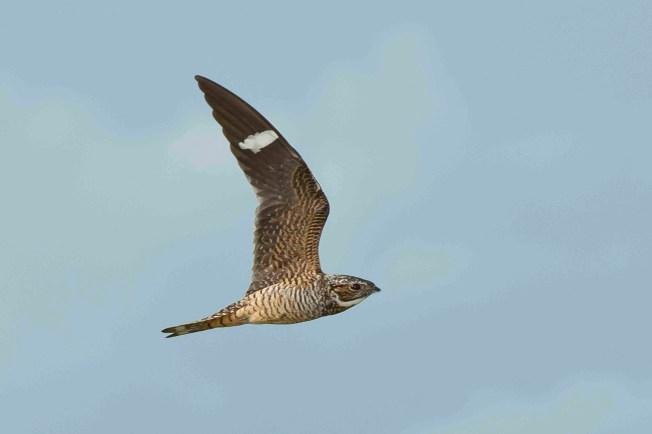
Antillean Nighthawk in flight 2. Abaco bahamas.6.13.Tom Sheley

FAST FOOD ON THE WING: ANTILLEAN NIGHTHAWKS ON ABACO

A bird ID query was recently posted on my FB page by Abaco resident Maria Bethel Flore, who said “I saw a flock of birds I’ve never seen before. All black except for a white stripe underneath the wing. I didn’t get one good picture they were flying so fast”. There were a couple of clues there: a fast-flying flock; and the white underwing bars. Maria’s distant image confirmed the ID as an Antillean Nighthawk Chordeiles gundlachii. These birds have local names such as ‘killakadick’ and ‘pi-di-mi-dix’, or variations on the theme – presumably onomatopoeic.

Paul Marvin / Xeno-Canto

I thought a post illustrating these wonderful birds in flight and on the ground would be timely. 

Antillean Nighthawk in flight 3. Abaco Bahamas.6.13.Tom SheleyAntillean Nighthawk, Abaco  (Sandy Walker)

The photos above were taken during a trip into deep South Abaco backcountry to the west of the Highway to photograph birds for BIRDS OF ABACO. We reached an open area late in the afternoon to find ourselves in the middle of dozens of nighthawks swooping and diving as they hawked for flies. We leapt out of the truck (we stopped it first) with eager eyes and cameras and watched the performance in amazement. The birds were quite unperturbed by our presence, and from time to time would zoom past within inches of our heads, making a swooshing noise as they did so.

Truck Backcountry

The speed of flight and the jagging paths made it extremely hard to take photos. Photographer Tom Sheley (below) was able to nail them (see top 2 images); I could barely catch a bird in my jiggling viewfinder, but Sandy Walker got a good clear shot (photo 3).Tom Sheley with Antillean Nighthawks, Abaco

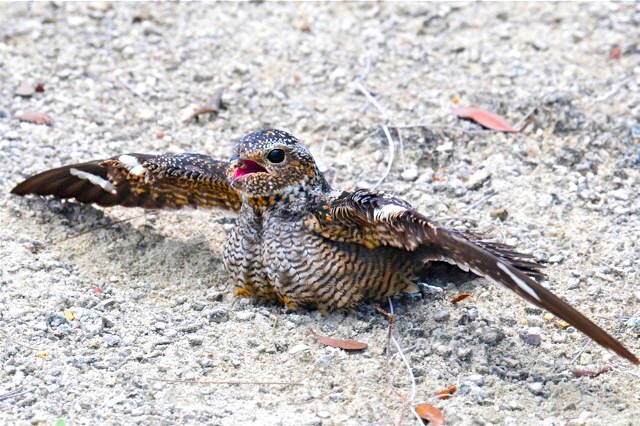
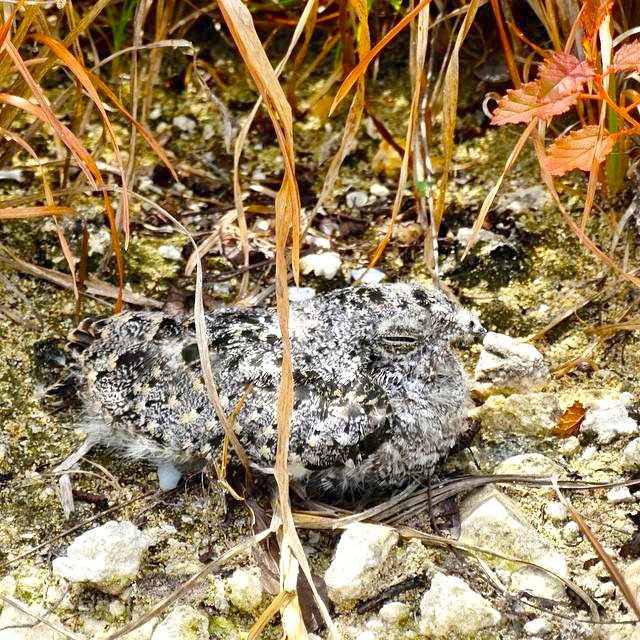
Apart from the exuberant aerial displays such as I have described, nighthawks may also be seen on the ground, where they nest. Their colouring enables them tend to blend in with the surroundings. Woody Bracey took the first 2 pictures; the next is from the excellent BIRDS CARIBBEAN, which anyone with an interest in birds would enjoy; and the final one was scooped by Susan Daughtrey on a recent visit to Abaco – another very good example of the bird’s camouflage in natural surroundings.

Antillean Nighthawk, Abaco Woody Bracey Antillean Nighthawk, Abaco (Woody Bracey)Antillean Nighthawk chick (aka %22pi-di-mi-dix%22) BahamasAntillean Nighthawk, Abaco  (Susan Daughtrey)

Credits: Tom Sheley, Sandy Walker, RH, Woody Bracey, Birds Caribbean, Susan Daughtrey, Xeno-Canto

Unknown's avatar

RARE GEMS: PIPING PLOVERS ON ABACO (1)


Piping Plover (non-breeding), Abaco (Bruce Hallett)

Piping-Plover Artmagenta  RARE GEMS: PIPING PLOVERS ON ABACO (1) Piping-Plover Artmagenta

8000 

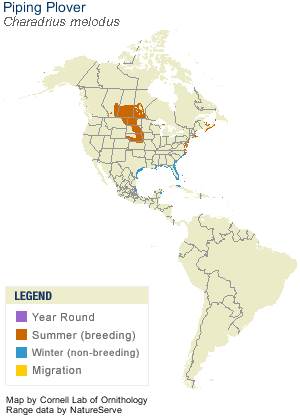
That’s the total number of all the piping plovers (Charadrius melodus) left in the world. Like many other rare and vulnerable species (e.g. the Kirtland’s Warbler), the habitat at both ends of their migration routes is under threat. And, as with the Kirtland’s, vigorous conservation campaigns are underway. Problems such as habitat loss at one end are bad enough – if at both ends, population decline is a certainty and extinction looms. The summer breeding range of PIPLs takes in Canada, central US and the eastern seaboard. In winter they join the mass migration of other birds south to warmer climes. Abaco is lucky enough to receive these little winter visitors; and at Delphi we are fortunate that every year some choose the beach for their winter retreat.

char_melo_AllAm_map

Piping Plover, Abaco (Tony Hepburn)

This is the first of a planned Piping Plover series that I have been working on. The reason for beginning now is because the autumn migrations are starting, and before long a few of this precious species will be on a beach near you on Abaco. Many of them will be ringed as part of the ongoing conservation projects. One of the best ways to monitor success is to follow the migratory lives of these birds; and this can very easily be done by taking photographs of a piping plover that show its rings. The number and colours of the rings on each leg tell the conservationists a great deal about an individual bird. Here is a photo by Don Freiday that shows what to look out for – these 4 items of plover-bling are an integral part of the preservation efforts for this species.

PIPLfledge_banded_Meb_DF

The Audubon Society has produced a wonderful interactive demonstration of the PIPL’s year-round life  that can be found at BEATING THE ODDS. For anyone interested in these fascinating little birds, I highly recommend a click on the link. Some clips are shown below.

A good example of one of the organisations involved in the conservation of PIPLs is CONSERVE WILDLIFE NEW JERSEY, of which Todd Pover and Stephanie Egger are also directly involved on both Abaco and with the CAPE ELEUTHERA INSTITUTE.

With due acknowledgement to Audubon, here are a couple of outstanding photos by Shawn Carey from the site; and below them, details of the range of the Piping Plovers and their 4000-odd mile two-way trip made in the course of each year.

TWO LEGS                                                                SIX LEGS

ShawnCarey[3] ShawnCarey.crop[1}

SUMMER                                                                      FALL

PIPL range Summer jpgPIPL range Fall jpg

WINTER                                                                         SPRING

PIPL range Winter jpgPIPL range Spring jpg

THE PIPING OF THE PLOVER Originator Lang Elliot, as featured by Audubon, eNature, Birdwatchers Digest etc

That’s enough to begin with. I will return to PIPLs soon, with more photos, information and links. Meanwhile, here is a great 4-minute video from Plymouth Beach MA. And if you see a Piping Plover on Abaco this autumn and are not part of the ‘bird count community’, please let me know the location; if you can, describe the rings – how many, which legs, what colour; if possible, photograph the bird (and – a big ask – try to include the legs). Whether ringed or not, all data is invaluable and I’ll pass it on.

 Migration ProductionsMigration Productions

Piping Plover Chick (Beaun -Wiki)

Credits with thanks: Bruce Hallett, Cornell Lab, Tony Hepburn, Don Freiday, Shawn Carey, Audubon, Beaun/wiki, Lang Elliott (audio) Migration Productions (video), Artmagenta (mini drawings)

Piping-Plover Artmagenta          Piping-Plover Artmagenta          Piping-Plover Artmagenta          Piping-Plover Artmagenta          Piping-Plover Artmagenta          Piping-Plover Artmagenta

Unknown's avatar

ABACO: THE PERFECT PLACE FOR BAHAMAS BIRDING


ABACO: THE PERFECT PLACE FOR BAHAMAS BIRDING

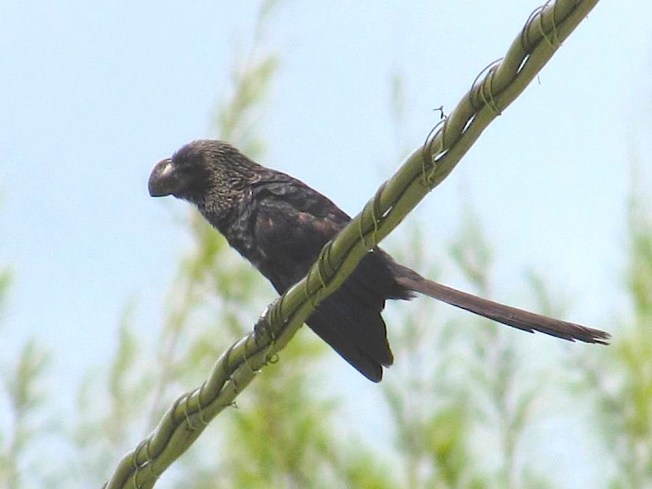
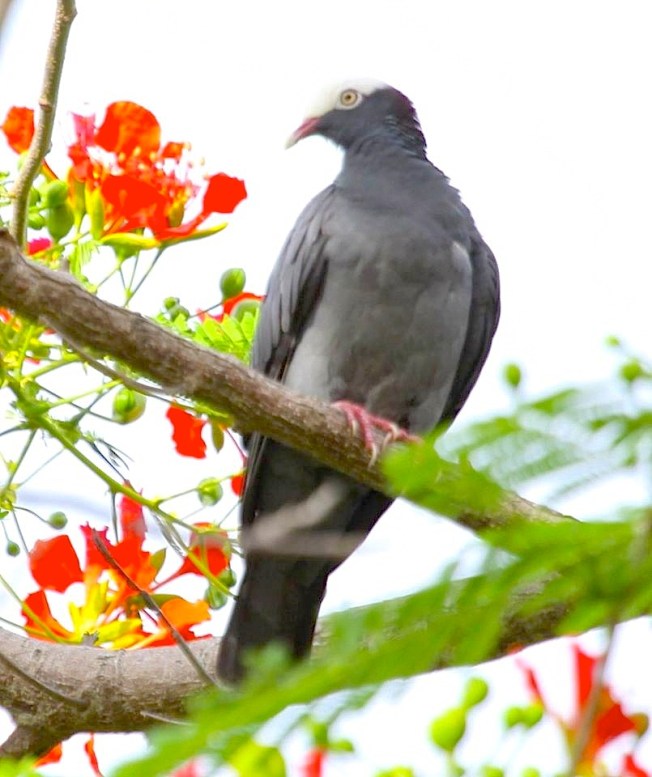
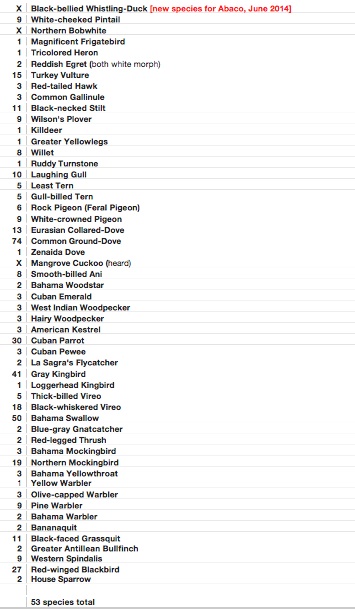
I’ve  fairly very often mentioned the remarkable diversity of the bird species on Abaco. This small island has a wide variety of permanent resident species and the advantage of being on a primary migration route so that it has both winter and summer migratory visitors. Here’s an example of some of the species a visitor might reasonably expect to find during a day’s birding. This isn’t an ‘invented inventory’, easy though that would be to compile. It records a birding outing by Abaco visitor Susan Daughtrey, guided by the legendary Woody Bracey, with sightings of 53 species from A (baco Parrot) to Z (enaida Dove). Here are some of Susan’s photos of the birds she encountered. At the end is the full list of the 34 species she photographed.There’s nothing very rare – most of those shown are permanent residents (PR), breed on Abaco (B) and are commonly found (1). Hence the code* PR B 1. SR is for the 2 summer residents, I is for the introduced collared dove. The best ‘get’ is the Bahama Mockingbird (PR B 3), a bird mainly of the pine forests and not so easy to find.

ADDENDUM Susan has now sent me her complete record for a great day out in which 53 species were seen. The list shows the numbers seen for each species. I have had to reformat the list from the original to make it work in this blog. I have added links for the first bird, the Black-bellied Whistling Duck, which was recorded on Abaco for the first time in early June. Of the six seen at any one time to begin with (including at Delphi), the reported numbers dropped to 2, then 1. The latest news is an unconfirmed sighting of a single bird at Treasure Cay Golf Course.

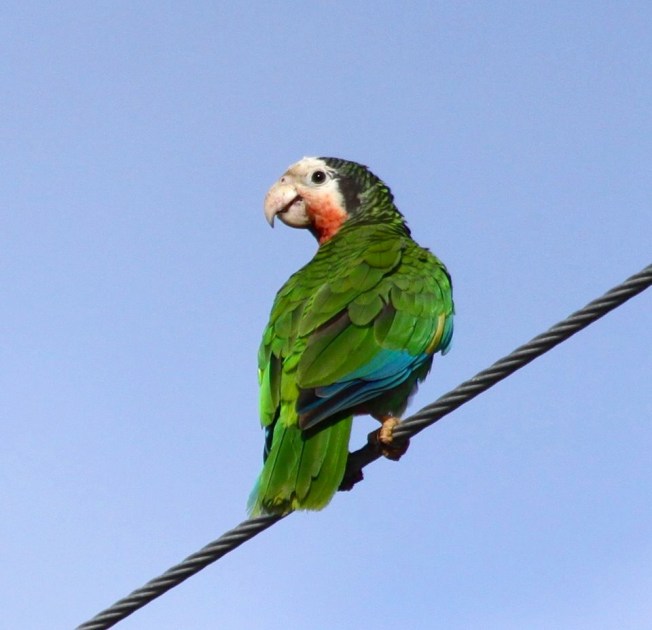
ABACO (CUBAN) PARROT Amazona leucocephala PR B 1

ANTILLEAN NIGHTHAWK Chordeiles gundlachii SR 1Amazon (Cuban) Parrot, Abaco (Susan Daughtrey)Antillean Nighthawk, Abaco  (Susan Daughtrey)

BAHAMA MOCKINGBIRD (ENDEMIC) Mimus gundlachii PR B 3Bahama Mockingbird, Abaco  (Susan Daughtrey)

BAHAMA SWALLOW (ENDEMIC) Tachycineta cyaneoviridis PR B 1Bahama Swallow, Abaco  (Susan Daughtrey)

BAHAMA PINTAIL (WHITE-CHEEKED PINTAIL) Anas bahamensis PR B 1
Bahama (White-cheeked) Pintail, Abaco  (Susan Daughtrey)

BLUE-GRAY GNATCATCHER Polioptera caerulea PR B 1Blue-gray Gnatcatcher, Abaco  (Susan Daughtrey)

CUBAN PEWEE Contopus caribaeus PR B 1Cuban Pewee, Abaco  (Susan Daughtrey)

EURASIAN COLLARED DOVE Streptopelia decaocto  I PR B 1Eurasian Collared Dove, Abaco  (Susan Daughtrey)

HAIRY WOODPECKER Picoides villosus PR B 1Hairy Woodpecker, Abaco  (Susan Daughtrey)

LEAST TERN Sternula antillarum SR B 1Least Tern, Abaco  (Susan Daughtrey)

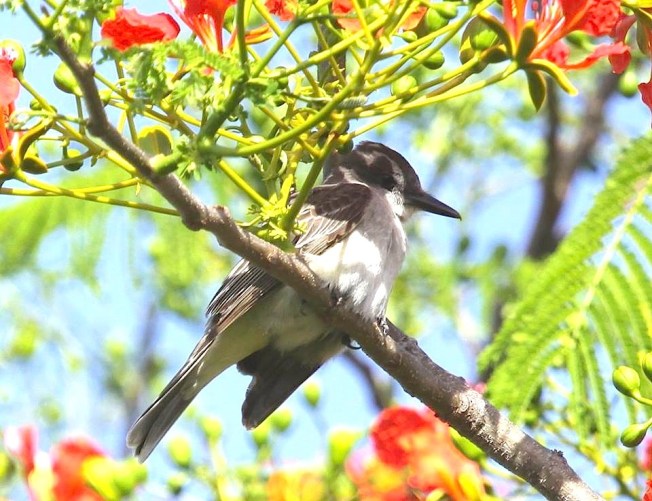
LOGGERHEAD KINGBIRD Tyrannus caudifasciatus PR B 1Loggerhead Kingbird, Abaco  (Susan Daughtrey)

MAGNIFICENT FRIGATEBIRD (female)  Fregata magnificens PR B 1Magnificent Frigatebird, Abaco  (Susan Daughtrey)

OLIVE-CAPPED WARBLER Setophaga pityophila PR B 1                                            Olive-capped Warbler, Abaco  (Susan Daughtrey)

RED-LEGGED THRUSH  Turdus plumbeus PR B 1Red-legged Thrush, Abaco  (Susan Daughtrey)

RED-WINGED BLACKBIRD Agelaius phoeniceus PR B 1Red-winged Blackbird, Abaco  (Susan Daughtrey)

SMOOTH-BILLED ANI Crotophaga ani PR B 1Smooth-billed Ani, Abaco (Susan Daughtrey)

THICK-BILLED VIREO Vireo crassirostris PR B 1
Thick-billed Vireo, Abaco  (Susan Daughtrey)

WESTERN SPINDALIS Spindalis zena PR B 1Western Spindalis, Abaco  (Susan Daughtrey)

WHITE-CROWNED PIGEON Patagioenas leucocephala PR B 1White-crowned Pigeon, Abaco  (Susan Daughtrey)

SUSAN’S LIST OF BIRDS PHOTOGRAPHED

SUSAN'S SPECIES jpg

SUSAN’S COMPLETE LIST FOR THE DAY – 53 SPECIES

To learn about Abaco’s latest new species the Black-bellied Whistling Duck click HERE & HERE

Susan's fuller list JPG

Credits: all photos, Susan Daughtrey; *the excellent birding code was devised by ornithologist Tony White with Woody Bracey

Unknown's avatar

WHAT’S IN A NAME? NORTHERN BOBWHITE ON ABACO


Northern Bobwhite female 2.Abaco Bahamas.6.13.Tom Sheley

WHAT’S IN A NAME? NORTHERN BOBWHITE ON ABACO

220px-Status_iucn3.1_NT.svg

A part of me would like Bob White to have been a legendary hero – perhaps holding his post against impossible odds; or a courageously reforming politician; or scoring a stupendous winning goal in the dying seconds of a famous tournament. Or maybe just a nice guy, popular in the local bar. Instead, the bobwhite Colinus virginianus is a small plump game bird of the quail family, named for its call which (as I have written elsewhere) “does indeed sound something like ‘bob…white?’ played on a slide-whistle”. This bird is an introduced species on Abaco where it breeds and is quite common. It is more often heard than seen, since it is a shy creature and not so easy to find. If they see you first, you’ll glimpse them scurrying away at best and you may well not see them at all. At Delphi, some set up home at the highway end of the drive where they can be heard and, from time to time, seen. Photographer Tom Sheley bided his time in order to capture these wonderful shots of a pair.

Bobwhite pair.Abaco Bahamas.Tom Sheley crBobwhite pair 2.Abaco Bahamas.Tom Sheley cr

I recently wrote about another game bird, the WHITE-CROWNED PIGEON. The bobwhite also appears in the excellent Bahamas National Trust’s BNT HUNTERS GUIDE 

Northern Bobwhite BNT Hunters Guide

Unfortunately one of the consequences of enjoying game bird status – coupled with other factors such as habitat loss – is that the species is IUCN-listed ‘near threatened’. That’s not a cause for immediate concern, but the next stage may be…

The northern bobwhite can be found year-round in fields, grassland, open woodland areas, roadsides and wood edges. Sightings of bobwhites are most usually made when they are in cover such as long grass or undergrowth, as in the header photo and the one below.Bobwhite male in habitat.Abaco Bahamas.6.13.Tom Sheley copy

When we went out searching for bobwhites last year to photograph for the book, we drove along tracks in open farmland and remote backcountry. We could hear them but we only saw a few, mostly too briefly to photograph. My own attempts were abject failures, small brown blurs of backside as the birds scuttled away. Tom Sheley fortunately had what it took to get results – patience, skill and a great camera.

Photo credits: Tom Sheley

Unknown's avatar

‘ELEGANTLY WEIRD’ – SPOTTED DRUMFISH JUVENILES: BAHAMAS REEF FISH (20)


‘ELEGANTLY WEIRD’ – SPOTTED DRUMFISH JUVENILES: BAHAMAS REEF FISH 20

I’ve posted before about the rather extraordinary SPOTTED DRUMFISH, one of those reef fish which in juvenile form is very different from the adult. This species was first up in the Bahamas Reef Fish series – click above link. Here are a few recent images, courtesy of Melinda Riger. The first three show the juvenile form (note the piscine photobomb in the first one). The last shows a group of adults hanging out on the reef with (I think) some soldierfish. You can see how the juvenile drumfish becomes the adult, but those little stripy bullet-heads with their two long elegantly trailing appendages differ considerably from the rather solid-looking spotty / stripy adults with their dramatic punko-rockabilly quiffs.

Drumfish (juv) 3 ©Melinda Riger @ Grand Bahama Scuba Drumfish (juv) 4 ©Melinda Riger @ Grand Bahama ScubaDrumfish (juv) 2 ©Melinda Riger @ Grand Bahama Scuba Drumfish ©Melinda Riger @ Grand Bahama Scuba

Unknown's avatar

BIRDS OF SAN SALVADOR, BAHAMAS: BOOK REVIEW


Birds of San Salvador (cover) JPG

THE BIRDS OF SAN SALVADOR, BAHAMAS

  • Authors: R. Hays Cummins, Mark R. Boardman, Mark L. McPhail
  • Published 1 Jan 2013, 132pp with 400+ images covering 54 species
  • Available spiral bound for $29.95 on Am@zon; and a steal at $3.16 for Kindle (£5.99 in the UK)
  • STOP PRESS Also available on iTunes for iPhone / iPad, where I imagine it looks great. Once downloaded, author Hays says it can be viewed on a Mac, certainly if you have the latest OS X Mavericks. UK price: a very modest £1.99 (= $3.30)

Within a couple of weeks of the decision to use Tom Sheley’s wonderful Bahama Woodstar as the ‘cover bird’ for “THE BIRDS OF ABACO”, another Bahamas bird book was announced. The same colourful and enchanting endemic bird had also commended itself to the authors for their cover. I wrote to Hays Cummins at once to check whether he would mind another Bahamas bird book encroaching on the territory, especially one using the same cover bird into the bargain. He very charmingly said it would be fine and declared his support for our (luckily) rather different project.

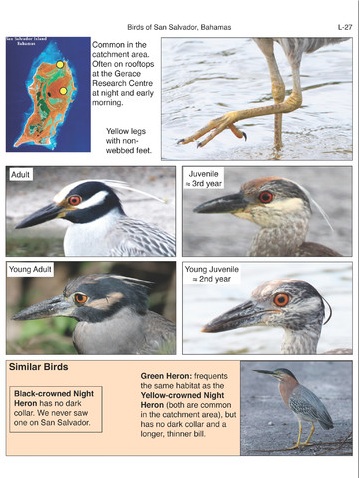
It’s been a while since I added to the section BOOKS, but I thought I’d mention this one for two reasons. First, it is described as ‘A Photo Essay of Common Birds’, which in practical terms means that most if not all of the species featured will be common to the northern Bahamas and therefore familiar on Abaco. Secondly, I very much like the format of the book: there are clear photos; and all necessary general information including notes on individual characteristics and similar species is presented in an easily assimilable way. Were the Delphi book not designed to be the 2 kg bird-showcasing non-field guide doorstop it is, the San Salvador book is one I should liked to have produced! Birds of San Salvador (sample page 1) Birds of San Salvador (sample page 2) DESCRIPTION “This enchanting book addresses a need for an important audience, the budding naturalist, which many of our students are. Without fanfare and pomposity, the book presents beautiful and inspiring photos and lively discussion, but does not indulge in the details of the accomplished birder. The authors present information about the natural history of birds on San Salvador, Bahamas, not through the eyes of a professional or advanced birder, but through the eyes and photographic lenses of inquiring educators and naturalists. This book will help capture and catalyze the interests of aspiring birders and will be an asset for introductions to the birds of the Bahamas and neighboring Caribbean. Over 400 images, representing 54 species, are all original and include a variety of behaviors and highlight recognition characteristics. The authors’ aesthetic photography, printed on high quality paper, will help reinforce identification and enjoyment. Birds are organized by habitat (Coastal, Interior, and Lakes & Ponds), not by taxonomic affinities. A taxonomic index is included.” 

I’m pleased to see the decision to depart from the usual taxonomic ordering of species, though I recognise that for a serious field guide that tradition is pretty much sacrosanct. We played around with categories and sub-categories a bit (sea birds, water birds, land birds; big, medium, small; cute, splendid, dull, plug-ugly) before settling on Peter Mantle’s excellent idea of straight alphabetical organisation. For a mainly photographic book this gives an element of surprise to turning the pages, and avoids  e.g. 37 pages of warblers species, mostly yellow, all huddled together.  Birds of San Salvador (sample page 4) Birds of San Salvador (sample page 5) I notice that there is a single Amazon review, a good one, that says “This guide to one of the lesser known islands in the Bahamas is a nice one. While not exhaustive, it covers most of the species likely to be seen on San Salvador. The style is unorthodox for a field guide (elements of humor, gives brief description of species, but no real key field marks), the descriptions, locations on the island, and behaviors make this guide useful for those visiting San Salvador. The photographs are excellent.” Birds of San Salvador (sample page 3)For anyone interested in a useful reference guide to the common birds of Abaco, and in possession of a Kindle, this book is easily worth getting electronically.  ‘To be brutally honest’ (™ Sandy Walker), I’d like in due course to produce a small book very like this for Abaco, but it would obviously be naked plagiarism to do that, so of course I won’t. Still, all the same…

Unknown's avatar

“FAIR GAME” ON ABACO: THE ATTRACTIVE BUT SADLY DELICIOUS WHITE-CROWNED PIGEON


White-crowned Pigeon, Abaco, Bahamas (Tony Hepburn)

 “FAIR GAME” ON ABACO: THE ATTRACTIVE BUT SADLY DELICIOUS WHITE-CROWNED PIGEON

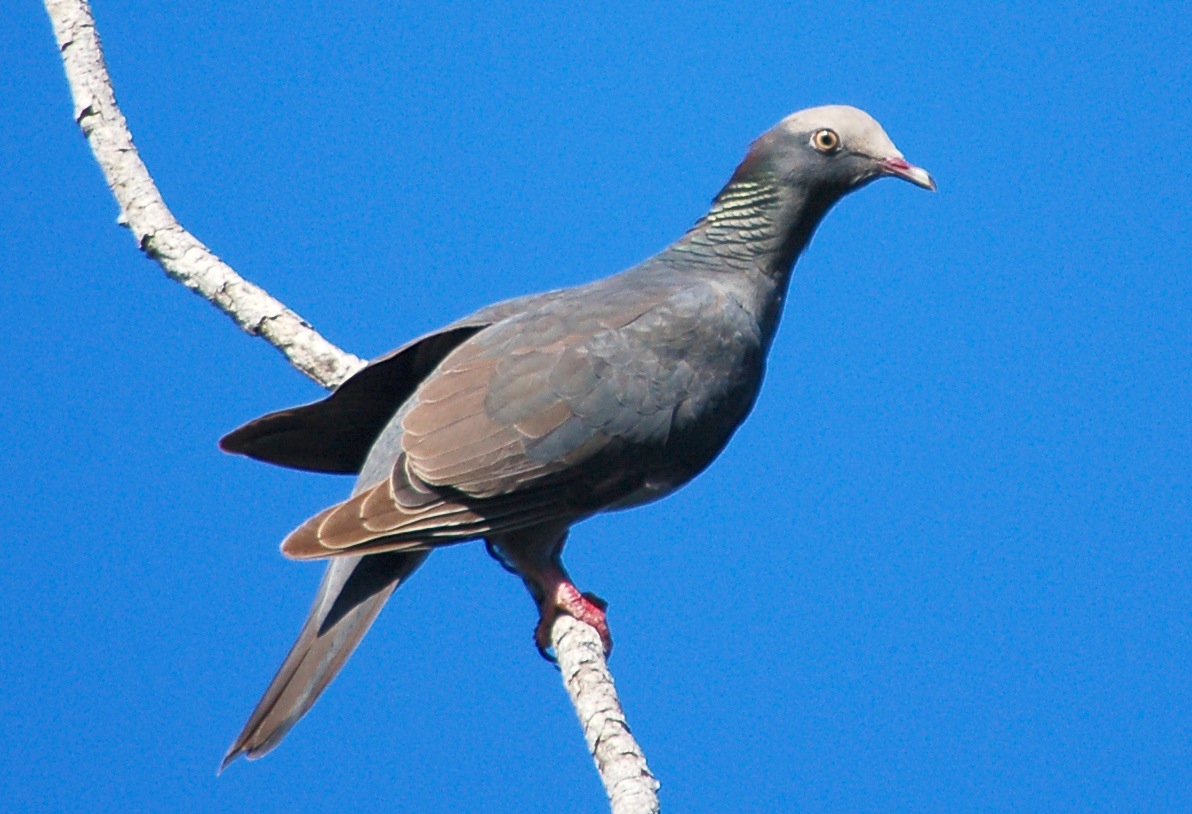
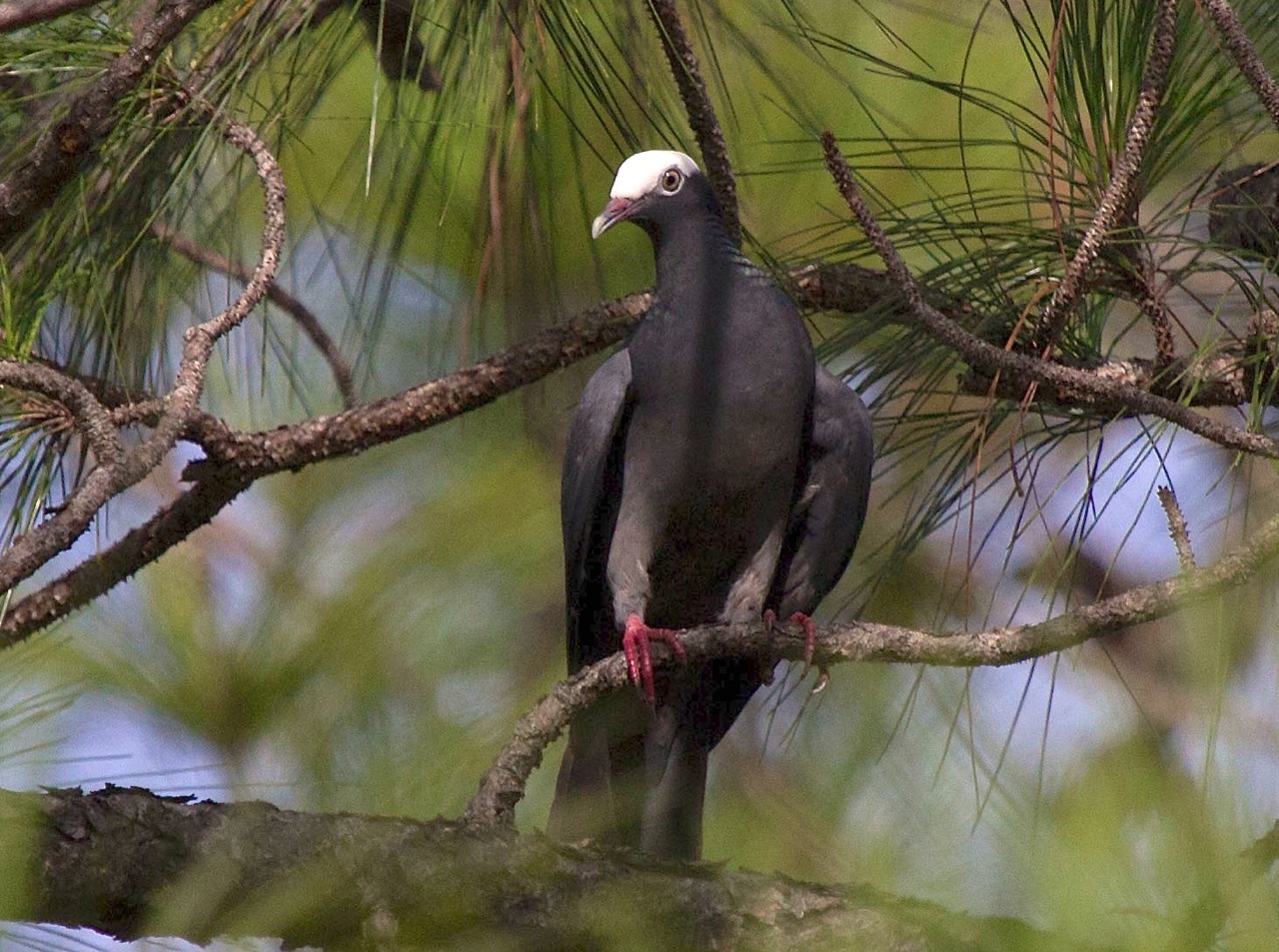
Fishing is the mainstay of Abaco’s sporting life, but hunting runs it a close second. Whether it’s the hog hunters plunging down remote backcountry tracks with their dogs or the shooters plying their trade, there is plenty on the hunter’s menu. The WHITE-CROWNED PIGEON Patagioenas leucocephala is one of the species that’s fair game in season. The bright white of its crown rather gives away its position. A permanent resident on Abaco, this pigeon is quite commonly found.

White-crowned Pigeon, Abaco, Bahamas (Gerlinde Taurer)

The Bahamas hunting season for this species is between the end of September and March. Here is the relevant extract from the excellent BNT HUNTERS GUIDE, a very useful publication packed with information that is well worth a look at. WCP BNT Hunters Guide

220px-Status_iucn3.1_NT.svg

Unfortunately, this pigeon is no longer as prolific as it once was, and is now IUCN-listed ‘near-threatened’. Hunting is one reason. Habitat loss is another. And apparently in Florida (the only US State that has these birds), car-strike is a major cause of population decline (with time, they may learn to fly higher. Unless it’s too late for the species by then…).

White-crowned Pigeon, Abaco (Alex Hughes)

The balance of species preservation and the perceived need of humans to encroach on habitat or their wish to shoot for the pot, is a always a hard one to judge. ‘Near-threatened’ sounds bad, but it’s probably not until the next stage is reached – ‘vulnerable’ or ‘endangered’ – that there is real cause for concern. But as the title says (props to Peter Mantle for this pithy observation, duly incorporated into the WCP entry in THE BIRDS OF ABACO) these inoffensive pigeons are indeed ‘sadly delicious…’

White-crowned Pigeon, Abaco, Bahamas (Gerlinde Taurer)Photo credits: Gerlinde Taurer, Alex Hughes, Tony Hepburn plus BNT for the hunters guide


Unknown's avatar

CETACEAN SENSATION: SPERM WHALES & DOLPHINS ON ABACO


10492458_817200128299215_4153510656415477809_n - Version 2

CETACEAN SENSATION: SPERM WHALES & DOLPHINS ON ABACO

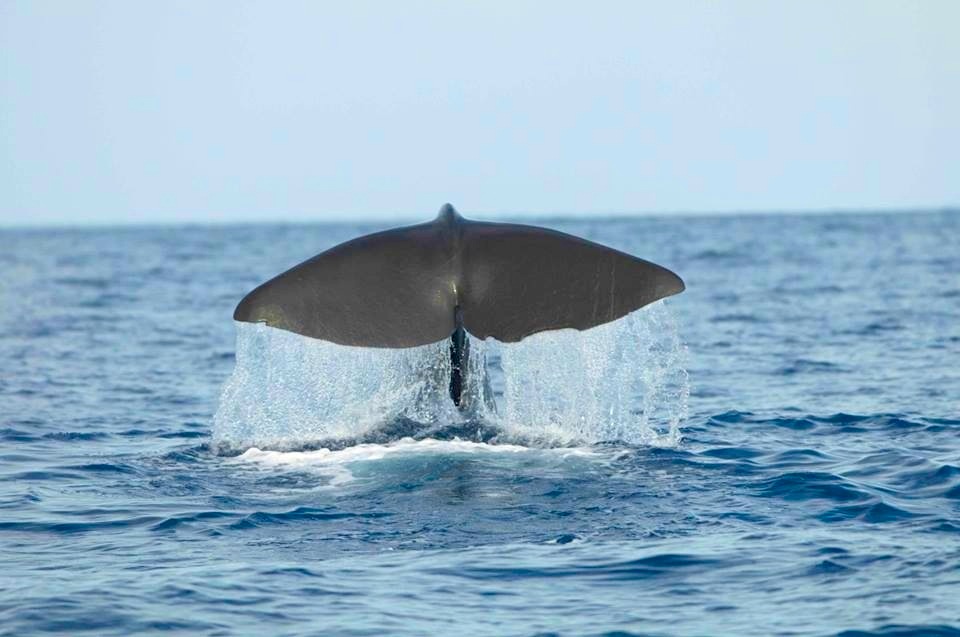
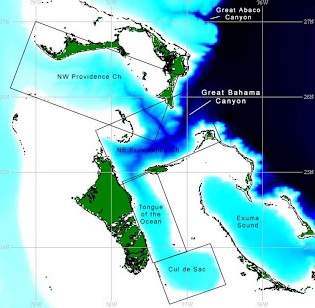
July has been ‘Whale Camp’ month for the BMMRO, when a small group of lucky youngsters get to spend time out at sea searching for whales and dolphins, and learning the intricacies of data recording and research. One target was the sperm whale, a species that may be found off the coasts of South Abaco. This is a favoured place because the deep trench of the Great Bahama Canyon throws up the food these whales need (see map below).

After some time spent searching, the BMMRO reported  “the sperm whales are back! We found a single animal yesterday, and finally in the evening found the rest of the group, 10+ animals including 3 mother-calf pairs, and dolphins at Rocky Point!” Here are some of the photos from the trip.

Sperm Whale Tailing, Abaco, Bahamas (BMMRO) Sperm Whale, Abaco, Bahamas (BMMRO) Sperm Whale, Abaco, Bahamas (BMMRO)

This map of the northern Bahamas shows the V-shaped tails of the Great Bahama Canyon, and explains why the east coast and (in particular) the shallower south-west coast between Hole-in-the-Wall and Rocky Point is so attractive to feeding whale species.

Great Bahama Canyon

The dolphins were quite prolific in July, in particular bottlenose and spotted dolphins. These photos were mostly taken while the search for sperm whales was going on: the BMMRO posted “lots of dolphins up at Gorda Cay yesterday… still not hearing any sperm whales in the area, has been a couple of weeks without sign of them so they should be showing up again soon…” As they obligingly did!

Bottlenose Dolphin, Abaco, Bahamas (BMMRO)Bottlenose Dolphins, Abaco, Bahamas (BMMRO) Bottlenose Dolphin, Abaco, Bahamas (BMMRO)Spotted Dolphins, Abaco, Bahamas (BMMRO)

10592949_747256928672527_8290058412214442799_n

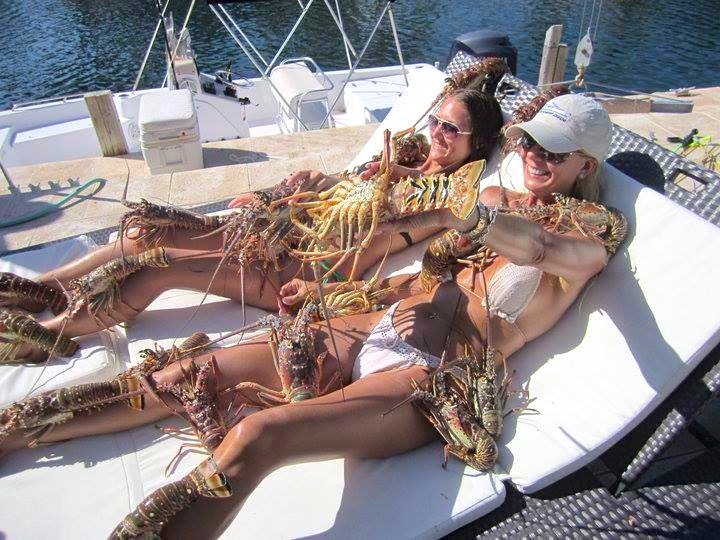
Today is the first day of the crawfish season and Facebook Abaco has been crawling with crawfish for a couple of days in feverish anticipation. So I decided to stick with whales and dolphins instead because there are enough crawfish images out there to keep anyone happy. However I did particularly like this offering today from Albury’s Ferry Services, always a byword for tastefulness and decorum. I’ve borrowed their picture (they borrow mine sometimes) – I wondered if it need a little more exposure, then decided there was probably quite enough already….

1560751_559512834154838_7953388384919364087_n

Photo credits: all cetaceans, BMMRO; Crawfish Ladies, Albury’s Ferries; ‘Keep Calm’, Mariah Sawyer

Unknown's avatar

BAHAMAS STAMPS & ABACO BIRDS: ‘IMITATION IS THE SINCEREST FORM OF PHILATELY’


BAHAMAS STAMPS & ABACO BIRDS: ‘IMITATION IS THE SINCEREST FORM OF PHILATELY’ 

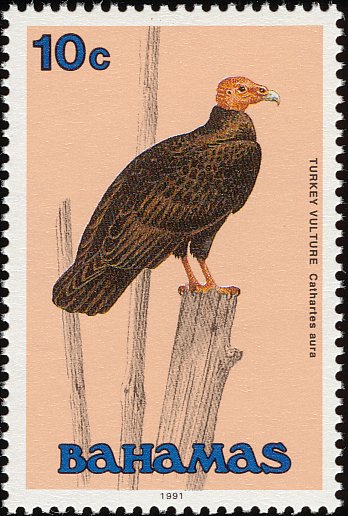
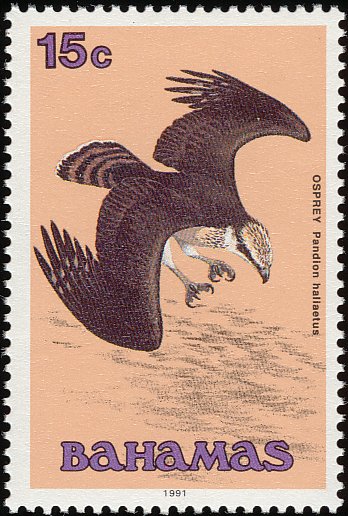
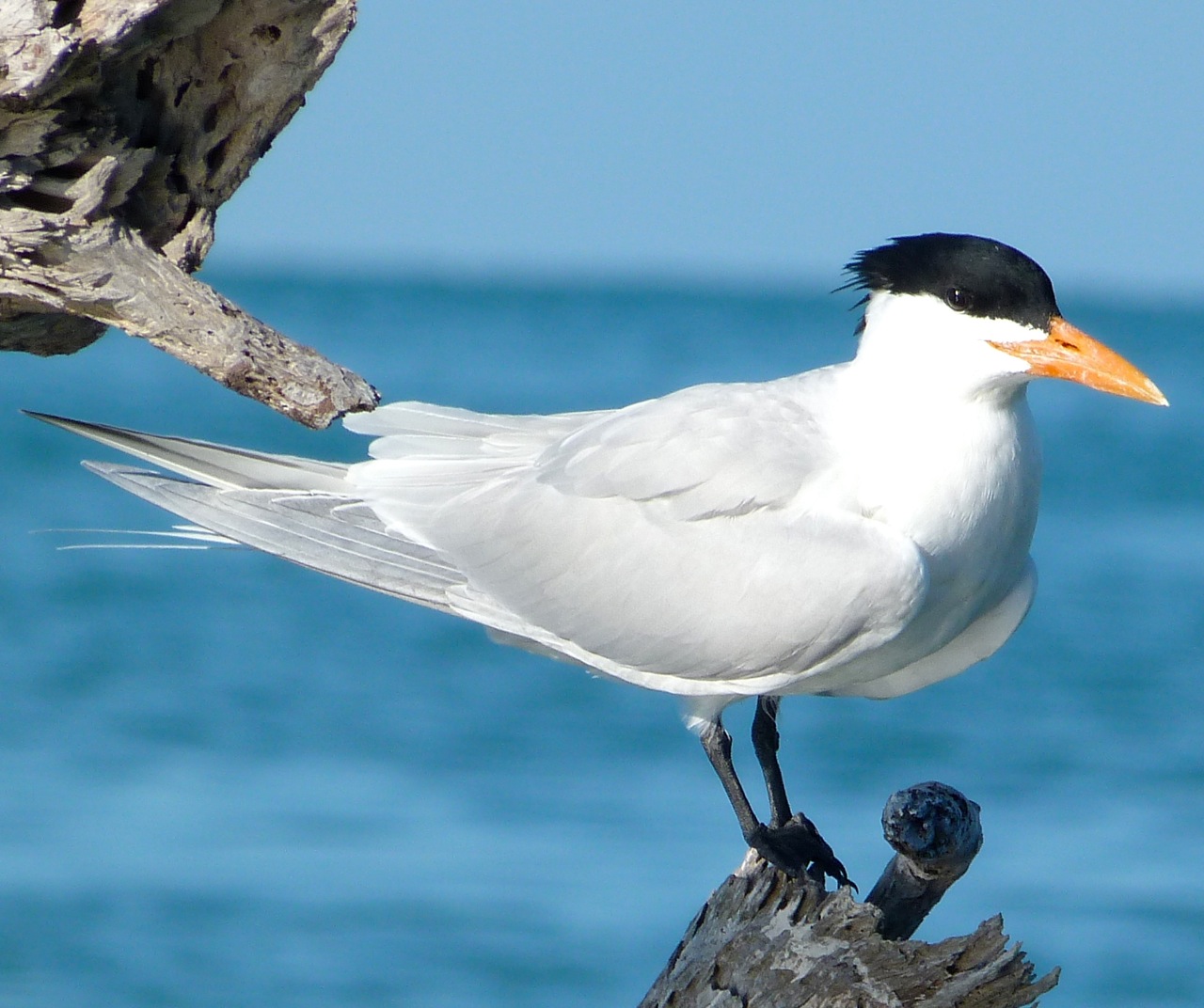
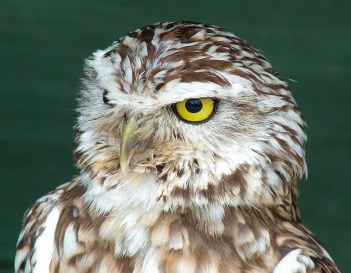
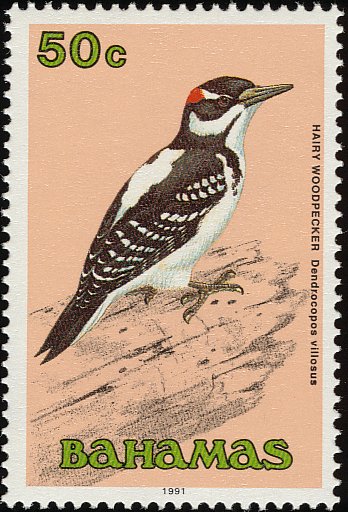
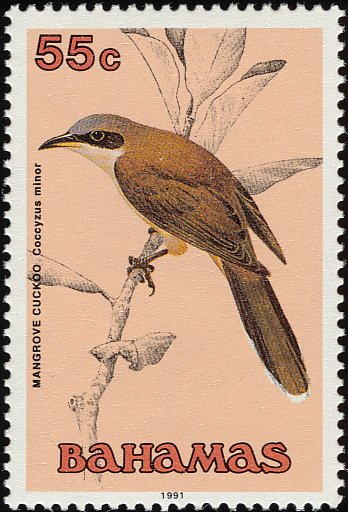
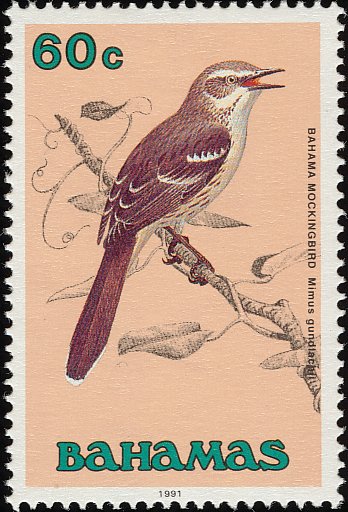
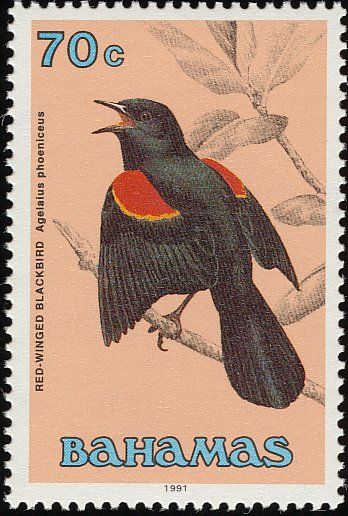
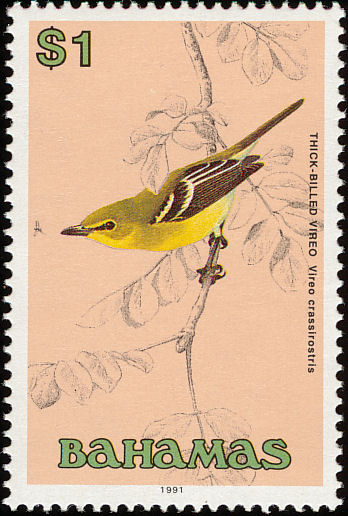
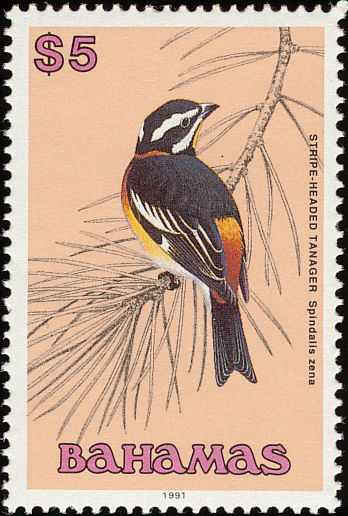
The Bahamas produces frequent issues of wildlife stamps. Mostly birds, but also reef fish and sea creatures, animals, butterflies and flowers. I am gradually collecting an album of Bahamas wildlife stamps on a PHILATELY page. I’ve been having a look at a 16-bird issue from 1991 which reflects the wide diversity of species extremely well. Here is the set, with comparative photos of each bird. All but one were taken on Abaco, the rare Burrowing Owl being the exception. All the other 15 birds may be found on Abaco as permanent residents, either easily or with a bit of a look and some luck. I personally have not seen the Clapper Rail (though I saw a SORA) or the rarer Key West Quail-Dove.

bah199101l                       GREEN HERON, Abaco (Nina Henry)


bah199102l                       Turkey Vulture Abaco (Keith Salvesen)

bah199103l                      Osprey - Abaco Marls (Keith Salvesen)

bah199104l                      Clapper Rail, Abaco (Erik Gauger)

bah199105l                     Royal Tern Abaco (Keith Salvesen)

bah199106l                     BAHAMAS - Key West Quail-dove (Becky Marvil)

bah199107l                    Smooth-biled Ani, Abaco (Bruce Hallett)

bah199108l                    Burrowing Owl (Keith Salvesen)

bah199109l                  Hairy Woodpecker, Abaco (Tony Hepburn)

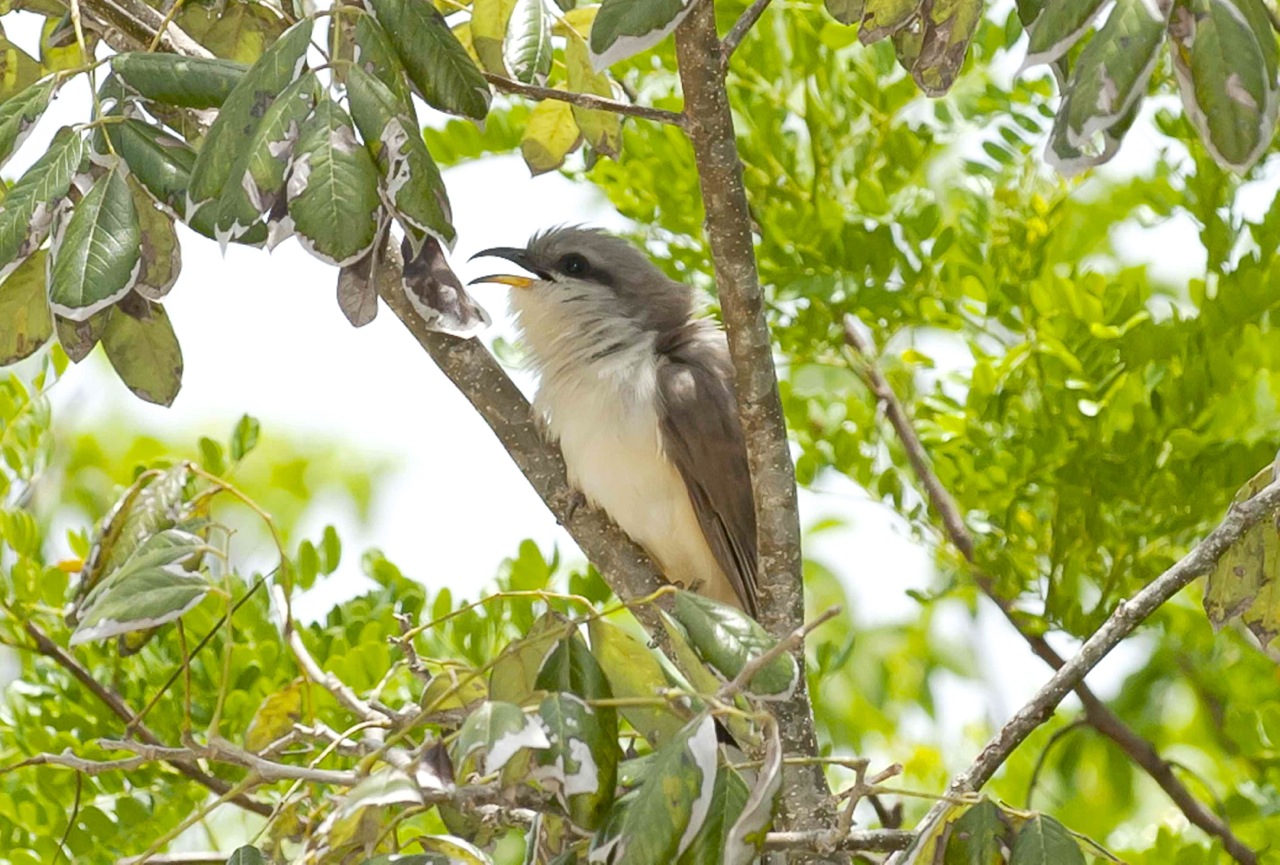
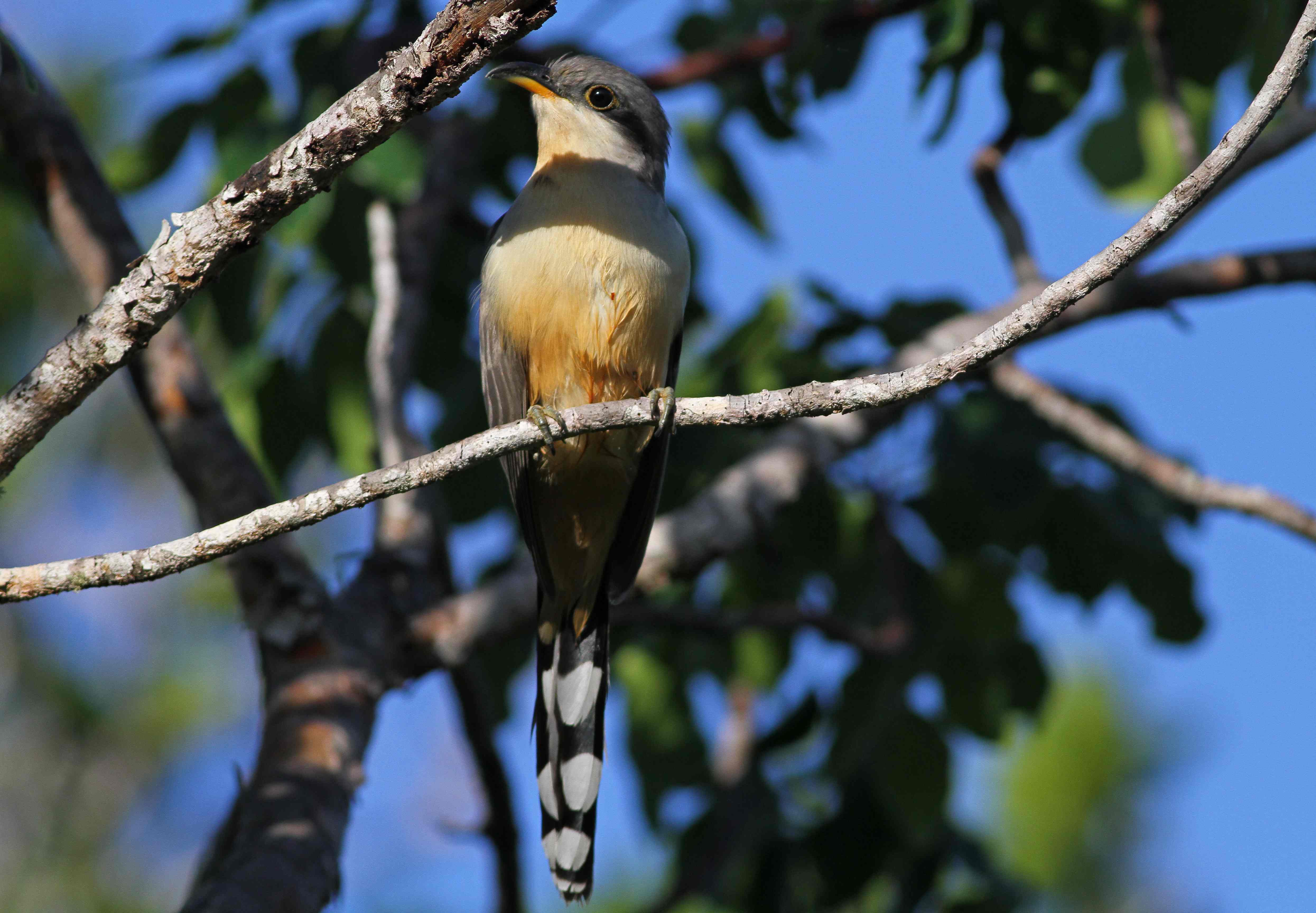
bah199110l                   Mangrove Cuckoo, Abaco, Bahamas (Tony Hepburn) copy

bah199111l                   Bahama Mockingbird, Abaco (Keith Salvesen)

bah199112l                 Red-winged Blackbird Abaco Bahamas (Keith Salvesen)

bah199113l                 Thick-billed Vireo, Abaco (Susan Daughtrey)

bah199114l                 Bahama Yellowthroat vocalizing.Abaco Bahamas.Tom Sheley

bah199115l                 Western Spindalis Abaco (Janene Roessler)

bah199116l                  Greater Antillean Bullfinch, Abaco (Bruce Hallett)

 The bird list and image credits

 Green Heron                     Butorides virescens               Nina Henry

Turkey Vulture                   Cathartes aura                     Keith Salvesen / RH (Delphi)

Western Osprey                Pandion haliaetus                 Keith Salvesen / RH (Marls)

Clapper Rail                      Rallus longirostris                 Erik Gauger

Royal Tern                         Thalasseus maximus            Keith Salvesen / RH (Marls)

Key West Quail-Dove      Geotrygon chrysia                 Becky Marvil

Smooth-billed Ani            Crotophaga ani                      Bruce Hallett

Burrowing Owl                  Athene cunicularia              Keith Salvesen / RH (UK)

Hairy Woodpecker             Picoides villosus                   Tony Hepburn

Mangrove Cuckoo             Coccyzus minor                     Tony Hepburn

*Bahama Mockingbird     Mimus gundlachii              Keith Salvesen / RH (National Park)

Red-winged Blackbird      Agelaius phoeniceus       Keith Salvesen / RH (Backcountry Abaco)

Thick-billed Vireo              Vireo crassirostris               Susan Daughtrey

*Bahama Yellowthroat       Geothlypis rostrata            Tom Sheley

Western Spindalis              Spindalis zena                       Janene Roessler

Greater Antillean Bullfinch  Loxigilla violacea            Bruce Hallett

* Endemic species for Bahamas

STAMPS            http://freestampcatalogue.com            Tony Bray

Unknown's avatar

THE ABACO PARROT: BEAUTIFUL, NOISY AND UNIQUE [Video]


 Abaco (Cuban) Parrot 2013 (Keith Salvesen)

THE ABACO PARROT: BEAUTIFUL, NOISY AND UNIQUE [Video]

I’ve posted quite often about Abaco’s unique ground-nesting parrots. They have their own page at ABACO PARROTS; and there’s a link in the right sidebar to a small illustrated booklet about them wot I writ in conjunction with Caroline Stahala. I have just found a very short bit of video footage that’s ideal for anyone who is extremely busy and /or has a short attention span. Spend a happy 10 seconds to  (a) admire the bright colours and (b) listen to the raucous cries of a flock of Abaco parrots. 

Abaco Parrots (Melissa Maura)Credits: Header photo & video RH; 2-parrot pic Melissa Maura with thanks


Unknown's avatar

LHUDE SING, CUCCU! THE MANGROVE CUCKOO ON ABACO


 Mangrove Cuckoo, Abaco, Bahamas (Bruce Hallett)

LHUDE SING, CUCCU! THE MANGROVE CUCKOO ON ABACO

Summer is icumen in, that’s for sure. Has already cumen in, to be accurate. The approach of summer is the time when cuckoos tend to sing loudly (not lewdly, as the old lingo might suggest). The YELLOW-BILLED CUCKOO, recently featured, is one. The MANGROVE CUCKOO (Coccyzus minor) is another. Before I get on to some gorgeous pictures (none taken by me!), let’s have a sample of how this species sounds. The call has been described in various ways, for example as “gawk gawk gawk gawk gauk gauk”. I’m not so sure. And I can’t think of a sensible way to write it out phonetically. So I won’t. Please try, via the comment box…

Jesse Fagan / Xeno-Canto

Cornell Lab / Allaboutbirds  

MANGROVE CUCKOO, Abaco (Alex Hughes)Mangrove Cuckoo with insect.Delphi Club, Abaco, Bahamas (Tom Sheley)

You will notice that all three birds above have got fat insects in  their beaks. A lot of photos in the archive show feeding mangrove cuckoos. Maybe that’s when they are most likely to break cover, for they are quite a shy species.  Their preference is for caterpillars and grasshoppers, but they are happy to eat other insects, spiders, snails, lizards and (with a nod to an all-round healthy diet) fruit.

Mangrove Cuckoo, Delphi Club, Abaco, Bahamas (Tom Sheley) copyMangrove Cuckoo, Abaco, Bahamas (Gerlinde Taurer) Mangrove Cuckoo, Abaco Alex Hughes

Delphi is lucky to have some of these handsome birds lurking in dense foliage along the drives – the guest drive in particular. Some of these photographs were taken there. Occasionally you may see one flying across a track ahead of a vehicle, flashing its distinctive tail. It’s significant that only the last of these photos shows the bird right out in the open – the rest are all deeper in the coppice.
Mangrove Cuckoo, Abaco, Bahamas (Tony Hepburn) copyMangrove Cuckoo, Abaco, Bahamas (Tony Hepburn)  copyCredits: Bruce Hallett, Alex Hughes,  Tom Sheley, Gerlinde Taurer and the late Tony Hepburn; Audio – Xeno-Canto & Cornell Lab. All photos taken on Abaco!

SumerIsIcumenIn-line


Unknown's avatar

COMMONWEALTH GAMES 2014, GLASGOW: THE BAHAMAS TEAM


180px-Flag_of_the_Bahamas.svg

 YOUR CUT OUT ‘N’ KEEP GUIDE TO TEAM BAHAMAS

 THE OFFICIAL BLURB

BAHAMAS: POPULATION: 313,500, CAPITAL CITY: NASSAU

The name may have come from the Arawak people who lived here, or the Spanish words ‘baja mar’, which means shallow water or sea.

You’ll find frogs, lizards and snakes on the Bahamas. None are poisonous.

In the seas around the islands you can see many fish, including the crayfish. This isn’t actually a fish, but a spiny lobster.

Tourism is important to the economy. Columbus was the first visitor from Europe, when he landed in 1492 on the island that became known as San Salvador.

The Dean’s Blue Hole is one of the Bahamas’ claims to fame. Blue holes are inland caves or underwater sinkholes, and the Dean’s descends 220 m, making it the world’s deepest blue hole.

The Jankanoo is a traditional street parade in Nassau, taking place on Boxing Day and New Year’s Eve with lots of music and dancers.

The national sport is sloop sailing. Basketball and American football are popular too.

Schoolchildren on the Bahamas like softball, volleyball, baseball and track &field sports.

The Bahamas joined the Commonwealth in 1973.

It first attended the Vancouver 1954 British Empire and Commonwealth Games and has only missed the Games of 1974 and 1986. The islanders win the vast majority of their medals on the athletics track, and at Melbourne 2006 Tonique Williams won Bronze in the Women’s 400m and Laverne Eve won Bronze in the Women’s Javelin.

At the Delhi 2010 Commonwealth Games, The Bahamas won six medals. Four of them were in Athletics, with the remaining two in Boxing.

Fun fact: ‘Who Let The Dogs Out’ is a song by the Bahamian group Baha Men, who play music called Junkanoo. You may have heard this song in the The Hangover (2009), and it’s also sung at sport events.

Sport fact: Between 1948 and 1988, the Bahamian sailor Durward Knowles competed in eight Olympic Games, and in 1964 he won a Gold medal in the Star class. Previously he sailed for Britain, ending fourth in 1948.

images

OPENING CEREMONY

FLAG CARRIER

SWIMMER Arianna Vanderpool-Wallace adds another honour to her glittering career tonight when she carries the Bahamas flag at the Commonwealth Games opening ceremony in Glasgow.

The 24-year-old multiple national record holder will be the first female outside track and field to be her country’s flag bearer at the prestigious quadrennial event that stand just behind the Olympic Games in prominence.

“It’s a really big honour. I mean I feel like sometimes track and field get a lot of attention so it’s really nice that swimming is going to get the attention,” said Vanderpool-Wallace.

Although she was given the news before she arrived in Scotland, Vanderpool-Wallace said yesterday it is slowly sinking in that she will be leading in the Bahamas’ largest delegation ever to the Games. “I hope that one day I will also be the Olympic flag bearer,” she said. “But the Commonwealth Games is a very big event for the Bahamas and the world, so I am really honoured that I am carrying the flag.”

SWIMMERS_l-r_Joanna_Evans_Ariel_Weech_Elvis_Burrows_Dustin_Tynes_and_Arianna_Vanderpool-Wallace.1_t670

SWIMMERS Joanna Evans, Ariel Weech, Elvis Burrows, Dustin Tynes, Arianna Vanderpool-Wallace

(Text & Photo Tribune 242)

THE EVENTS

BAHAMIANS COMPETE IN 6 DISCIPLINES WITH MORE THAN 30 ATHLETES IN OVER 60 EVENTS

ATHLETICS

Men
Track and road events
Athlete Event Round 1 Round 2 Semifinal Final
Result Rank Result Rank Result Rank Result Rank
Chris Brown 400 m
Jeffery Gibson 400 m hurdles
Adrian Griffith 100 m
Shavez Hart 100 m
200 m
Demetrius Pinder 400 m
Teray Smith 200 m
Latoy Williams 400 m
Warren Fraser
Adrian Griffith
Shavez Hart
Stephen Newbold
Jamial Rolle
Teray Smith
4 x 100 m relay
Chris Brown
Jeffery Gibson
Michael Mathieu
Demetrius Pinder
Alonzo Russell
Latoy Williams
4 x 400 m relay
Field events
Athlete Event Qualifying Final
Result Rank Result Rank
Lathone Collie-Minns Triple jump
Latario Collie-Minns Triple jump
Raymond Higgs Long jump
Ryan Ingraham High jump
Leevan Sands Triple jump
Donald Thomas High jump
Jamaal Wilson High jump
Women
Track and road events
Athlete Event Round 1 Round 2 Semifinal Final
Result Rank Result Rank Result Rank Result Rank
Cache Armbrister 100 m
Shaniqua Ferguson 100 m
200 m
Shaunae Miller 400 m
Nivea Smith 200 m
Anthonique Strachan 100 m
200 m
Cache Armbrister
Tylar Carter
Shaniqua Ferguson
Tynia Gaither
V’alonne Robinson
Nivea Smith
4 x 100 m relay
Christine Amertil
Miriam Byfield
Lenece Clarke
Shakeitha Henfield
Shaunae Miller
4 x 400 m relay
Field events
Athlete Event Qualifying Final
Result Rank Result Rank
Kenya Culmer High jump
Tamara Myers Long jump
Triple jump
Bianca Stuart Long jump

BOXING

Men

Athlete Event Round of 64 Round of 32 Round of 16 Quarterfinals Semifinals Final
Opposition
Result
Opposition
Result
Opposition
Result
Opposition
Result
Opposition
Result
Opposition
Result
Rank
Rashield Williams Light welterweight N/A
Carl Heild Welterweight N/A
Godfrey Strachan Middleweight
Kieshno Major Heavyweight N/A

CYCLING

ROAD

Men
Athlete Event Result Rank
Chad Albury Road race
Anthony Colebrook Road race
Time trial
Roy Colebrook jr. Road race
Jay Major Road race
Time trial
D’Angelo Sturrup Road race

JUDO

Men

Athlete Event Round of 32 Round of 16 Quarterfinals Semifinals Repechage Bronze Medal Final
Opposition
Result
Opposition
Result
Opposition
Result
Opposition
Result
Opposition
Result
Opposition
Result
Opposition
Result
Rank
D’Arcy Rahming jr. -66 kg
Women
Athlete Event Round of 16 Quarterfinals Semifinals Repechage Bronze Medal Final
Opposition
Result
Opposition
Result
Opposition
Result
Opposition
Result
Opposition
Result
Opposition
Result
Rank
Cynthia Rahming -57 kg

SWIMMING

Men

Athlete Event Round 1 Semifinal Final
Result Rank Result Rank Result Rank
Elvis Burrows 50 m freestyle
50 m butterfly
Dustin Tynes 50 m breaststroke
100 m backstroke
200 m backstroke N/A
Women
Athlete Event Round 1 Semifinal Final
Result Rank Result Rank Result Rank
Joanna Evans 200 m freestyle N/A
400 m freestyle N/A
800 m freestyle N/A
McKayla Lightbourn 50 m breaststroke
100 m backstroke
200 m backstroke N/A
200 m individual medley N/A
Laura Morley 50 m breaststroke
100 m breaststroke
200 m breaststroke N/A
200 m individual medley N/A
Arianna Vanderpool-Wallace 50 m freestyle
100 m freestyle
50 m butterfly
100 m butterfly
Ariel Weech 50 m freestyle
100 m freestyle

WRESTLING

Men’s freestyle

Athlete Event Round of 32 Round of 16 Quarterfinals Semifinals Repechage Bronze Medal Final
Opposition
Result
Opposition
Result
Opposition
Result
Opposition
Result
Opposition
Result
Opposition
Result
Opposition
Result
Rank
Rashji Mackey -74 kg

This wouldn’t be Rolling Harbour if I didn’t pick up the baton dropped by the official FUN FACT (see above) and give you this:

[vimeo https://vimeo.com/10794012]

And here is a reminder of past glory – the Gold Medal Bahamas Relay Team for the 2012 Olympic Games. Kind of…

Unknown's avatar

RED REEF RESIDENTS: A RUFOUS ROUND-UP IN THE BAHAMAS


Squirrelfish (Elvis) ©Melinda Riger @ Grand Bahama Scuba copy

Elvis the Squirrelfish

RED REEF RESIDENTS: A RUFOUS ROUND-UP IN THE BAHAMAS

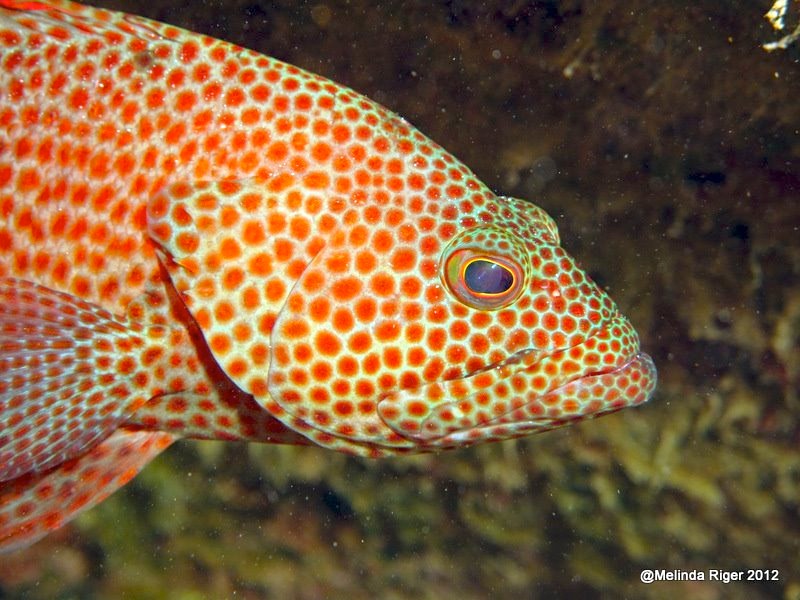
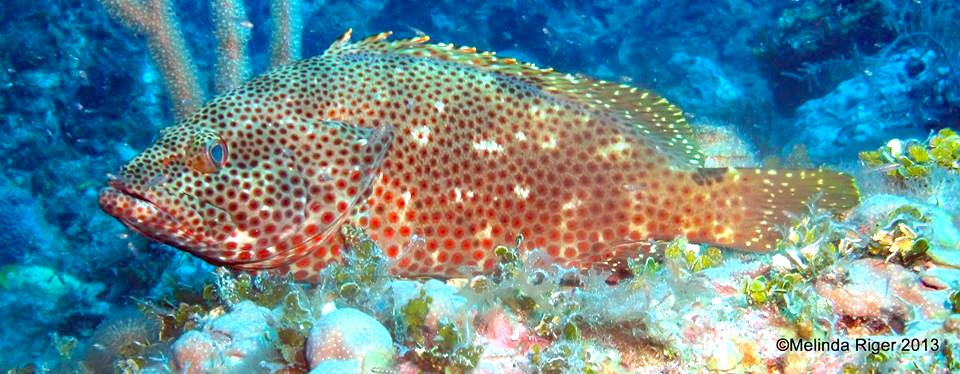
It’s sunny and very hot. Time to take another dive with Melinda to see what is going on under water around the reefs. Here are some residents, a somewhat loose description since some of the denizens featured are not especially active. But they are alive, so they qualify by my wide rules. And please may we not get into a discussion about where precisely red and orange overlap. It’s a grey area. And it’s too hot to argue about it… Let’s start with three types of GROUPER that may be spotted in the northern Bahamas. In fact, they are always spotted. One of my favourite pictures is the Graysby – it’s such a great expression, and he really rocks the spots!

GRAYSBY
Graysby © Melinda Riger @ Grand Bahama Scuba copy

TIGER GROUPER AT A CLEANING STATION with Peterson Cleaning Shrimps & a GobyGrouper, Tiger with cleaning shrimps and goby ©Melinda Riger @ G B Scuba copyRED HINDRed Hind Grouper Melinda Riger @ G B Scuba copy

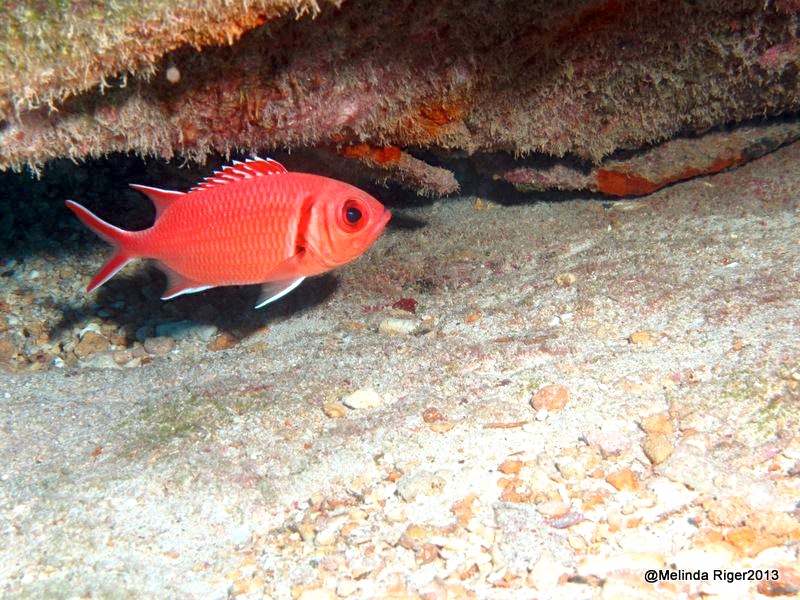
BLACKBAR SOLDIERFISHBlackbar Soldierfish ©Melinda Riger @ G B Scuba copy

HOGFISHHogfish ©Melinda Riger @ GB Scuba copy 2

SQUIRRELFISHSquirrelfish 2 copy

But red fish are not the only red reef residents. Here are some  that won’t swim away from you as you swim towards them to admire them…

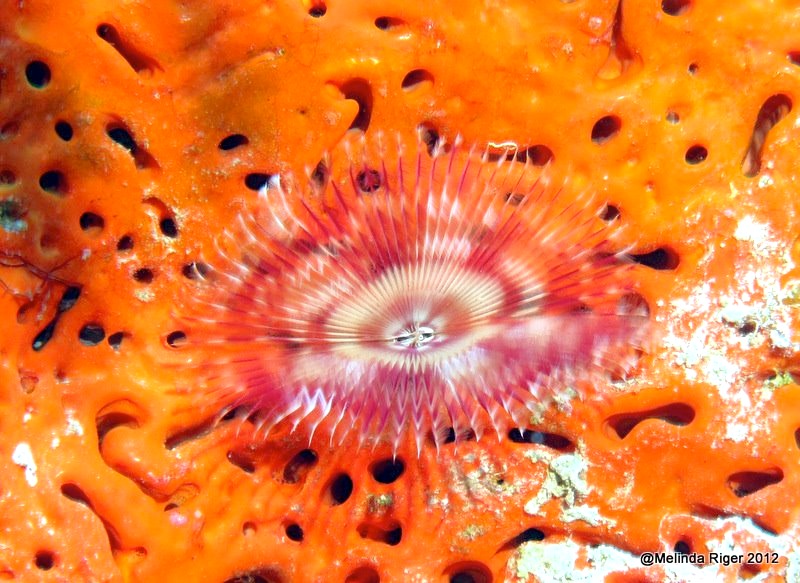
A FEATHER DUSTER ON A SPONGEFeather Duster in a Sponge ©Melinda Riger @ Grand Bahama Scuba copy

RED SPONGERed Sponge ©Melinda Riger @ GB Scuba copyUNDERWATER GARDEN GROWING IN A RED CONTAINERCoral ©Melinda Riger @ G B Scuba 2 copy

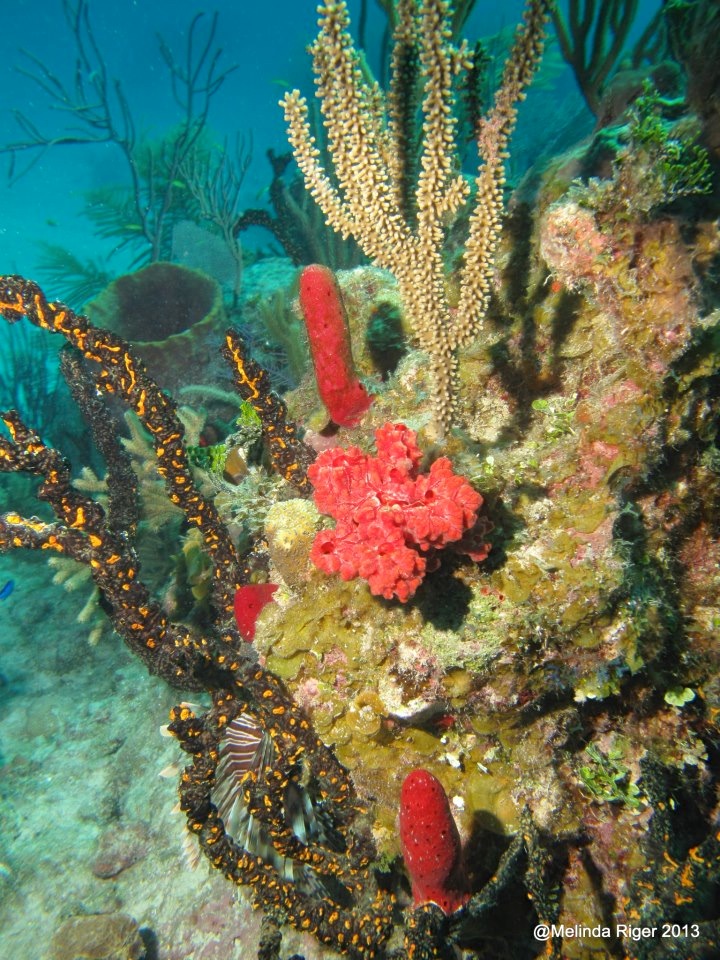
ANOTHER VARIED REEF GARDENReef Garden ©Melinda Riger@ G B Scuba copy

CORALS WITH (I have just noticed) A LURKING LIONFISH Coral ©Melinda Riger @ G B Scuba 1 copy

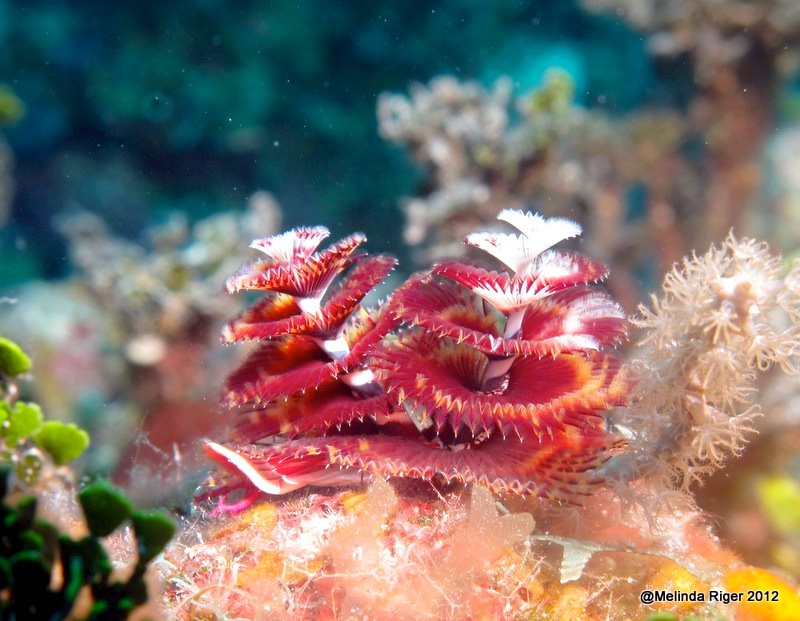
CHRISTMAS TREE WORMS (see more of these amazing creatures HERE)Christmas Tree Worms ©Melinda Riger @ G B Scuba copy

All photos: Melinda Riger @ Grand Bahama Scuba

Unknown's avatar

“I HEAR YOU KNOCKING”: THE YELLOW-BILLED CUCKOO ON ABACO


Coccyzus-americanus_ Factumquintus Wiki

“I HEAR YOU KNOCKING”: THE YELLOW-BILLED CUCKOO ON ABACO

The Yellow-billed Cuckoo (Coccyzus americanus) is the least common of three cuckoo species found on Abaco. All are permanent residents.  It is similar to the more frequently seen Mangrove Cuckoo. Both are avid consumers of insects in general and caterpillars in particular. The YBC is shy and you are quite unlikely to see one out in the open, though you may hear its distinctive ‘knocking’ call. The third species classified with the ‘cuculidae’ is the Smooth-billed Ani. Here’s what to listen out for:

Mike Nelson / Xeno-Canto

Yellow-billed Cuckoo, Abaco, Bahamas (Tom Sheley) copy

The YBC has, obviously, a yellow bill. It also has yellow eye-rings and pure white underparts. Photographer Tom Sheley, a major contributor t0 “The Birds of Abaco”, is a very patient man. He managed to capture these two beautiful birds by knowing the right place to be at the right time… and waiting. The results for this little-seen species are spectacular.

Yellow-billed Cuckoo, Abaco Bahamas (Tom Sheley)

For those whose memories are stirred by the reference to “I hear you knocking” (Rick from Nassau – you!), I include archive material of Dave Edmunds hamming it up. Get a load of the Clothes! The Dancing! The Moves of the guy in the top left corner / centre back, at once rhythmic yet disconcertingly bizarre.