Unknown's avatar

SAWMILL SINK, ABACO: INDUSTRIAL ARCHAEOLOGY IN A POST-APOCALYPTIC LANDSCAPE


Sawmill Sink (adventureactivist youtube)

SAWMILL SINK, ABACO: INDUSTRIAL ARCHAEOLOGY IN A POST-APOCALYPTIC LANDSCAPE

1. BLUE HOLES

The Blue Holes of Abaco are geological wonders about which much has been written – much of it in the NATIONAL GEOGRAPHIC MAGAZINE. Sawmill Sink is one of the best-known inland ones; and there are other holes in the shallow seas on both sides of the island. They are deep chasms in the limestone rock, many leading to extensive and complex cave systems under the island. Divers exploring Sawmill Sink have found many prehistoric fossils, including those of an extinct giant tortoise, and land crocodiles. Most conveniently, this fascinating blue hole is close to Delphi, hidden deep in the pine forest and accessible only by historic logging tracks.

LOGGING TRACK TO SAWMILL SINKSawmill Sink Abaco 19

AERIAL VIEW OF SAWMILL SINK DEEP IN THE PINE FORESTSawmill Sink Map copy

This article is not about Blues Holes in general, nor Sawmill Sink  specifically. I have such a post planned, but for the moment I’ll put some relevant links at the end of this one. Feel free to scroll straight there if the cumbersome heading has already put you off… but in an effort to hold your interest, here’s an image of the Sink to give you an idea of what it looks like. There are wooden steps down and a platform to enable you to swim in it (there are no crocodiles these days. So they say…).

SAWMILL SINK, ABACOSawmill Sink Abaco 8

2. A LOGGING HISTORY

South Abaco – defined loosely as the area south of Marsh Harbour – is dominated by pine forest. There are a few settlements and individual residences, all by the coast. The forested swathes are criss-crossed by an extensive system of logging tracks, many now all but impassable. They are reminders of Abaco’s historic importance as a source of wood deriving from the ubiquitous tall, slim pines. One use to which they were put was as mine pit props in the collieries of Wales.

 1996.2039.db

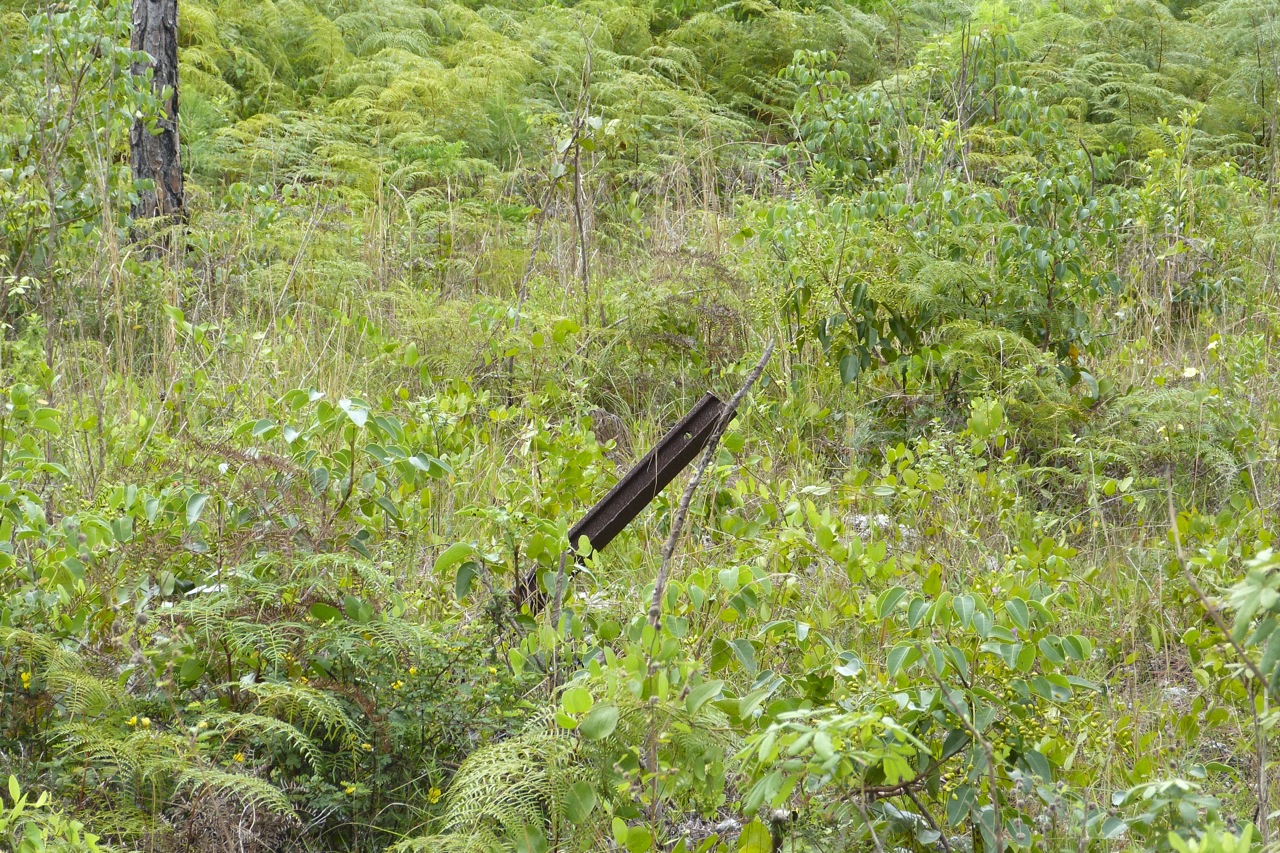
Last June when we went to Sawmill Sink, we saw a rusty rail sticking up from the undergrowth. We were with Ricky Johnson, the man who could invariably answer any question about Abaco; he explained that there had at one time been a light railway through the forest to carry the felled timber to the highway, where it was transported to the coast for loading onto ships.Sawmill Sink Abaco 17
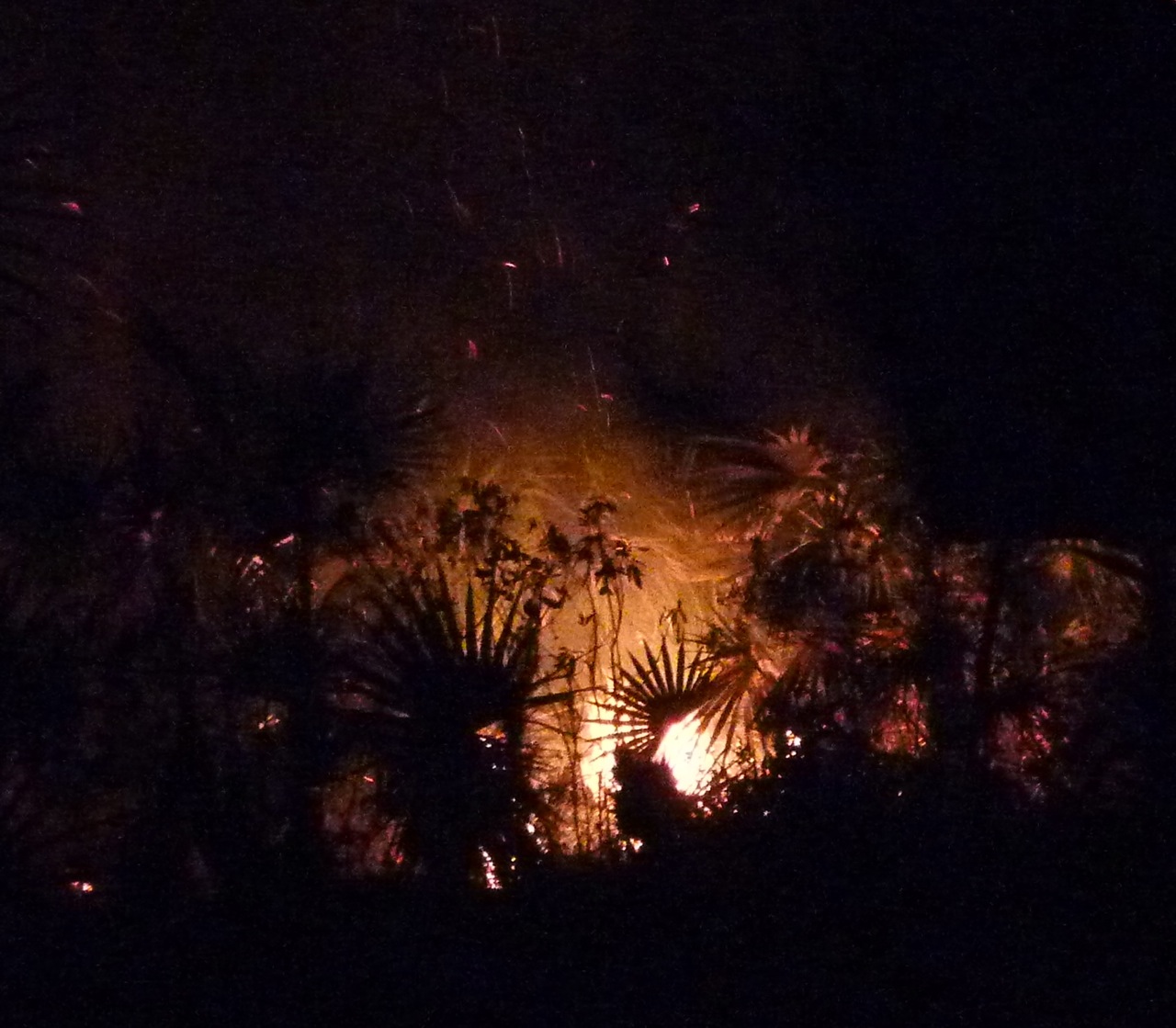
Last month we returned to Sawmill Sink. The south part of the island was enduring the annual outbreak of forest fires, most (if not all) believed to be set by hunters wanting to clear to undergrowth to make hog-hunting easier. While the occasional natural fire is actually good for the forest (cf burning moorland), the set fires do great damage over a vast area. On some days there were 6 or more separate seats of fire appearing in one day – highly unlikely to be the work of nature. Thick palls of smoke drifted across the island, and out to sea. Even far out on the Marls, the fires were visible, with the smell of burning carried on the wind. This year, the fires came uncomfortably close to some of the settlements. Night-long community action was needed in some places to protect property. At Delphi, the fires came within 300 feet or so before finally fizzling out in the coppice… Two years ago, they  came nearly as close. For a post-fire wander round the Delphi drive circuit click FOREST FIRES (it was one of the first, tentative posts on this blog – and boy, does it show… it needs a rethink)

DELPHI GUEST DRIVE: A WARM WELCOMEForest Fire, Delphi, Abaco
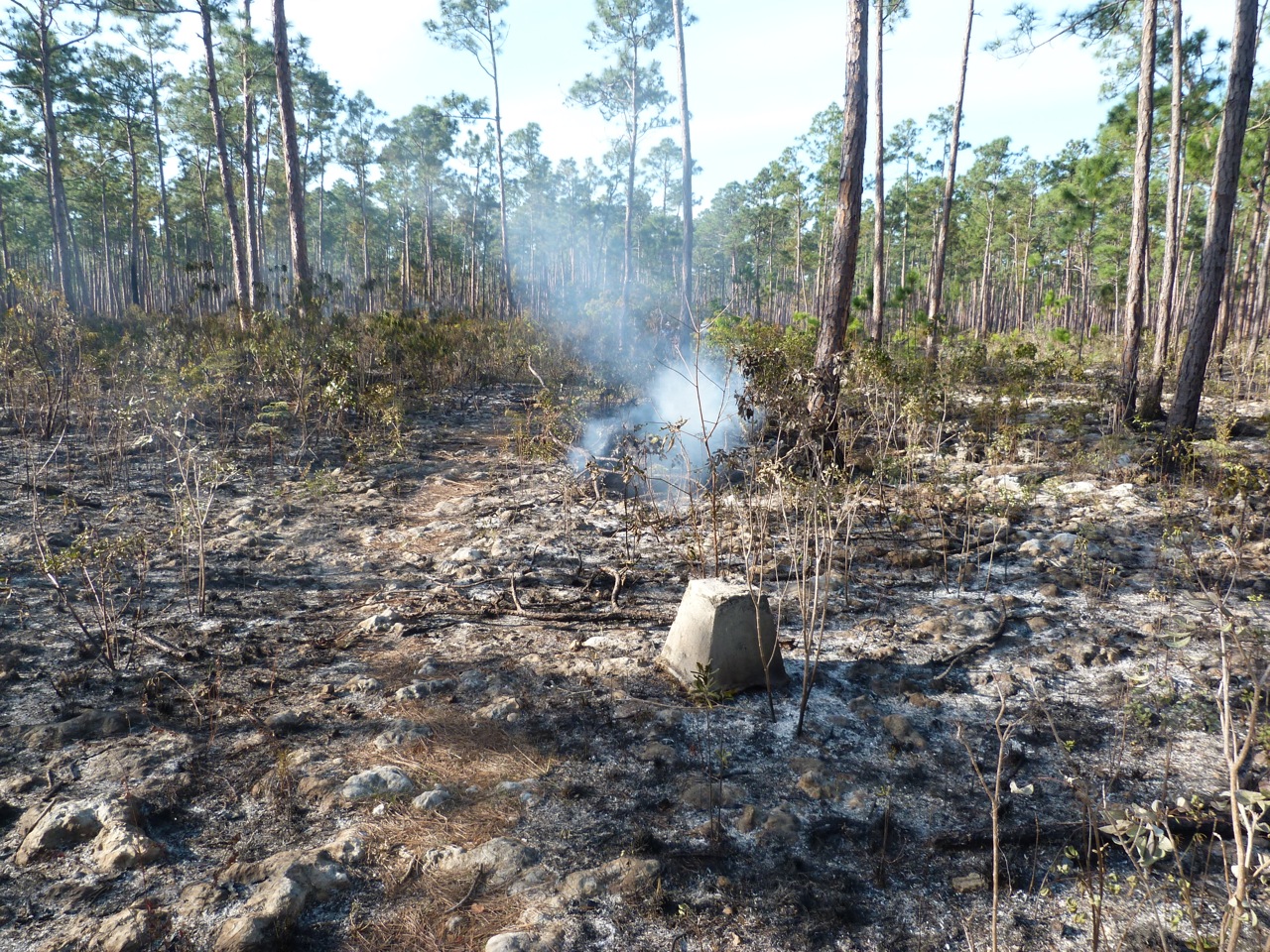
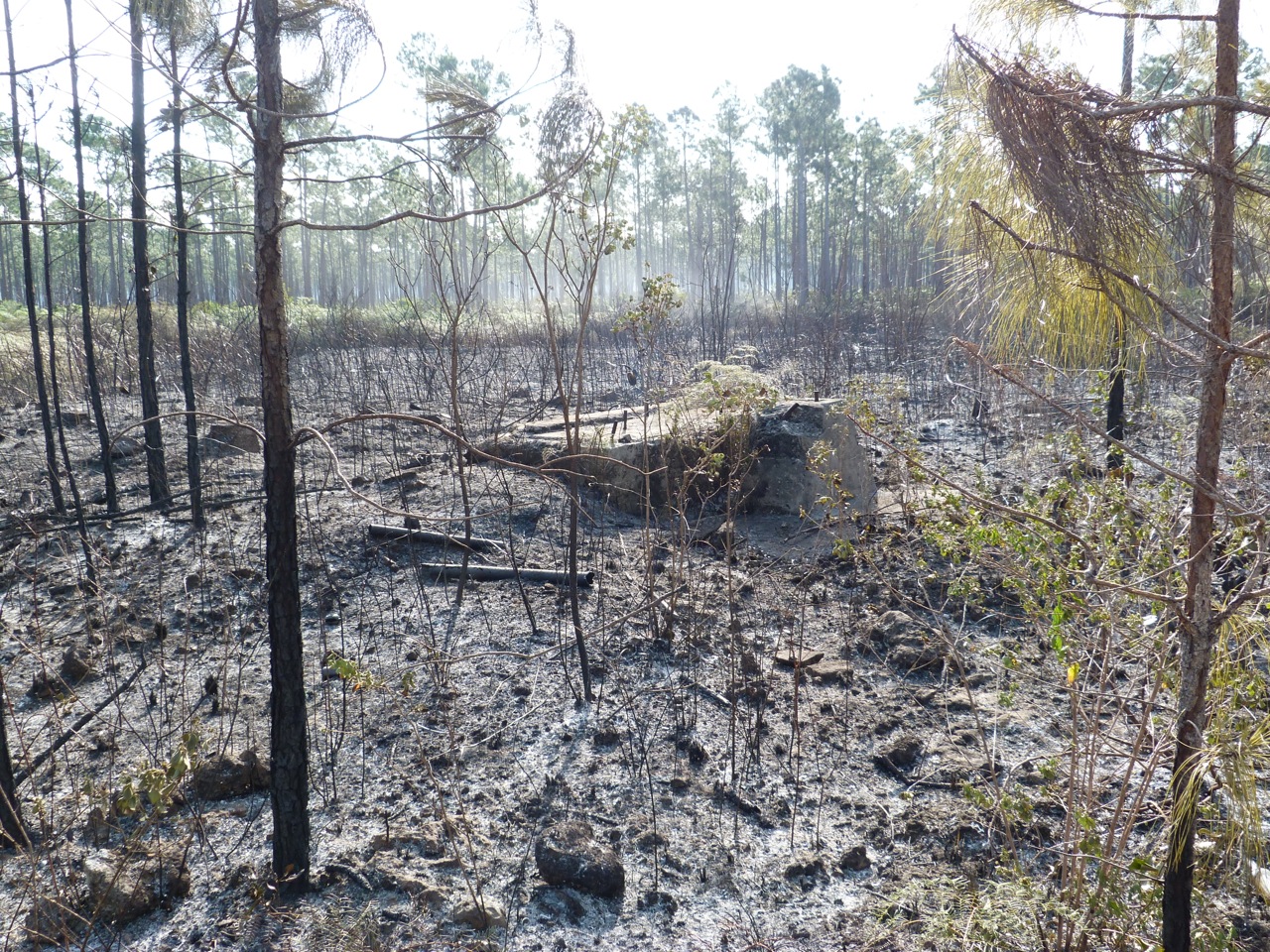
The photos that follow show the track to Sawmill Sink immediately after a fire had swept through the area. Trees were still smouldering and in places the ground was still hot to the touch. Along the way the evidence of the former usage had been laid bare. Some images show the paved path that leads from the logging track to the Sink. I have no idea if these are the first images of so many visible remains of the logging trade, revealed by the burnt-off undergrowth. I haven’t tracked down any others at all so far. I write as a non-resident of the island, so if anyone can add any information, please do so via the COMMENT box. Sawmill Sink Abaco 1 Sawmill Sink Abaco 2 Sawmill Sink Abaco 3 Sawmill Sink Abaco 5 Sawmill Sink Abaco 6 Sawmill Sink Abaco 7 Sawmill Sink Abaco 9 Sawmill Sink Abaco 10 Sawmill Sink Abaco 11 Sawmill Sink Abaco 12 Sawmill Sink Abaco 13 Sawmill Sink Abaco 14

Finally, we found this rock close to the Sink. Are those plant fossils? Bearing in mind that sea probably covered this area entirely (the highest point on Abaco is a mere 134 feet ASL), might these be anemones or sponge fossils of some sort? Comments from fossilologists welcome.

STOP PRESS thanks to FOSSIL LADY (aka Kathi) for the following: “Those don’t look like plant fossils to me, they remind me of stromatolites, a sponge like creature that first dominated the earth billions of years ago. Some varieties still survive today. It would be worth it to have a geologist have a look see. ps the sinkhole is awesome!”Sawmill Sink Abaco 15

SOME BLUE HOLE LINKS TO EXPLORE 

BAHAMAS CAVES RESEARCH FOUNDATION

FRIENDS OF THE ENVIRONMENT, ABACO

NATIONAL GEOGRAPHIC

ADVANCED DIVER MAGAZINE ARTICLE

As a reward for having waded through the smoke and ash above, here’s a short video of what you can see if you dive in a blue hole. It’s worth saying (1) that you need to check you are allowed dive – some holes are subject to ongoing research and (2) blue hole diving and caving is an inherently unsafe activity unless you have the right equipment and know exactly (by which I don’t mean “hey, I can wing it”) what you are doing… 

[vimeo http://vimeo.com/37838009]

Photo credits: all RH except header (adventureactivist, youTube); pit props (Scottish Mining Museum); aerial view (Gmaps)

Unknown's avatar

BLACK-FACED GRASSQUITS ON ABACO, BAHAMAS


Black-faced Grassquit Abaco 7

BLACK-FACED GRASSQUITS ON ABACO, BAHAMAS

BFGs. Birds of the coppice, garden, feeder… and beach (see below). I posted some images last year HERE and now I have a few more, taken recently. Although their name is promising at first glance, the Title pun-value of these little birds is low, so I’ve left it… While the males are indeed black-faced, and often -chested too, the females are a drab brown. Until you look closely. Then you’ll see the olive shades, and the pretty yellow streaks on the wings.

A YOUNG FEMALE BFG ENJOYING THE BEACH AT TREASURE CAYBlack-faced Grassquit Abaco 4Black-faced Grassquit Abaco 3

BFGs AT DELPHIBlack-faced Grassquit Abaco 1Black-faced Grassquit Abaco 2

A MALE BFG AT BAHAMA PALM SHORESBlack-faced Grassquit Abaco 6 Black-faced Grassquit Abaco 5

Unknown's avatar

‘MEN AT WORK’: CLEANING UP MAN’S DEBRIS IN THE OCEAN


bird1

‘MEN AT WORK’: CLEANING UP MAN’S DEBRIS IN THE OCEAN

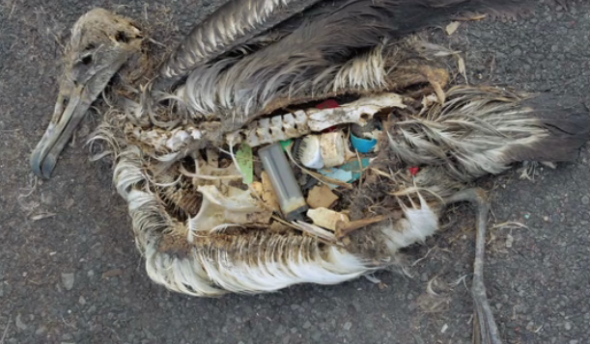
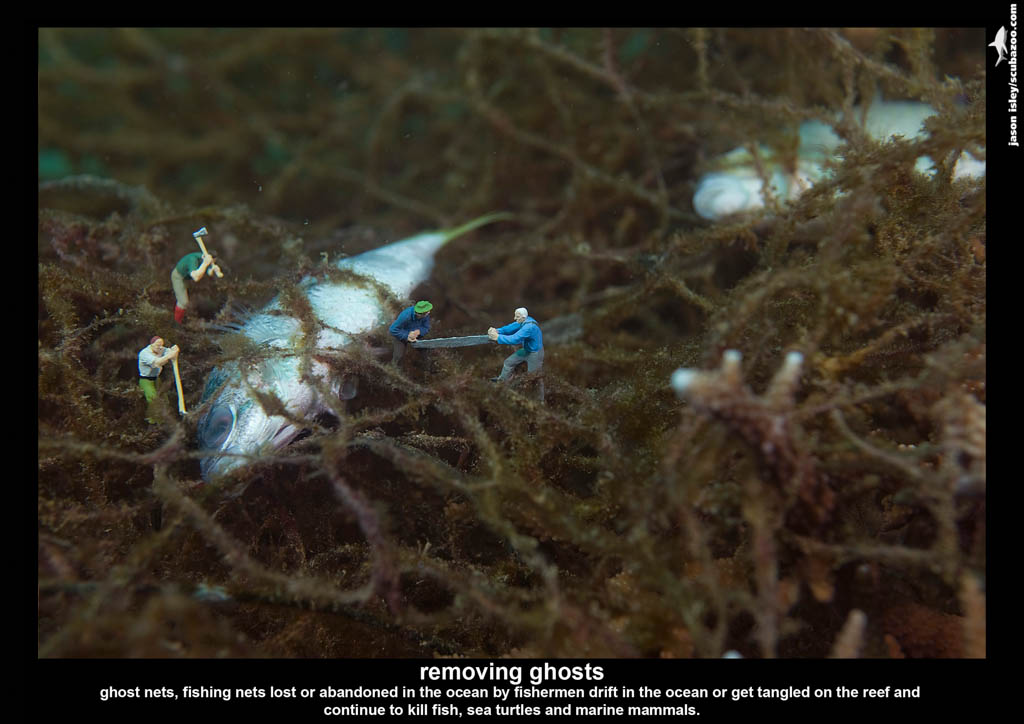
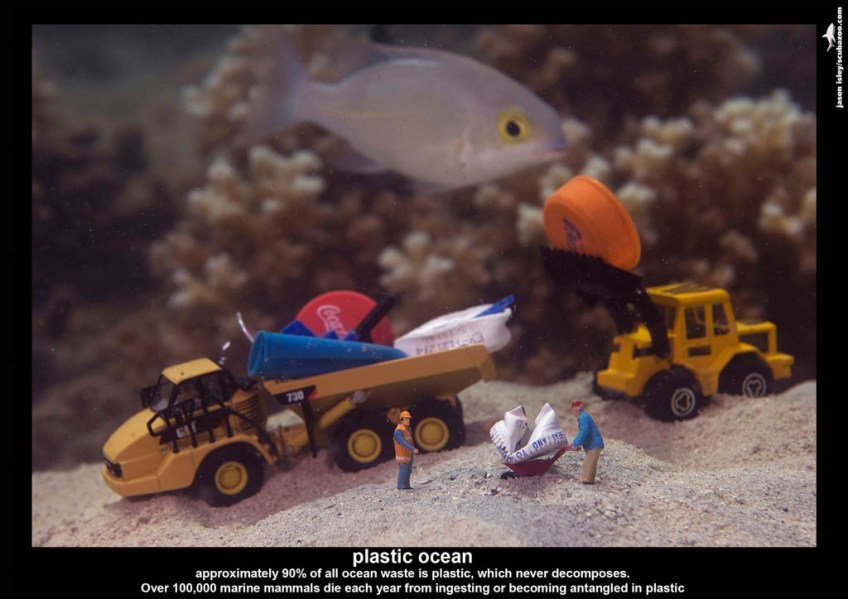
I keep an eye on the website SCUBAZOO. As ever, the alert ABACO SCIENTIST (highly recommended to follow) has beaten me to this latest post from Jason Isley, diver / photographer and creative thinker. He demonstrates the wonders and (human) blunders of the deep with wit and style. In the gallery below, he tackles the issue of man’s pollution of pristine waters. In a simple way, he manages to use humour to get across a message  that can easily become obscured by lengthy sermonising. See what you think.            

Pollution01Pollution02Pollution04Pollution03pollution06pollution05

Unknown's avatar

A TASTE OF HONEY: SPRING BEES ON ABACO


Abaco bees 9

A TASTE OF HONEY: SPRING BEES ON ABACO

There are a number of insects on Abaco that demand human attention. The smallest and most persistent nuisances are the ‘no-see-ums’, tiny sandflies whose near-invisible size belies the effects of their bite. They seem impervious to many standard types of insect repellent. Different things work for different people. My method is to eat marmite (cf vegemite) on plain biscuits daily for 2 weeks before a visit to Abaco, and that does the trick. This year, I had a single bite (of course, if you hate marmite you’ll need another plan). See RECOMMENDED LINKS in the SIDEBAR under SAND FLY  for more on this topic.

There’s a form of yellowish horsefly that can give you a bit of a nip. At the top end of the pain and discomfort scale is the PEPSIS WASP (Tarantula Hawk). I’ve only ever seen one, and if you do come across one be sure not to disrespect it (click link to see why…). 

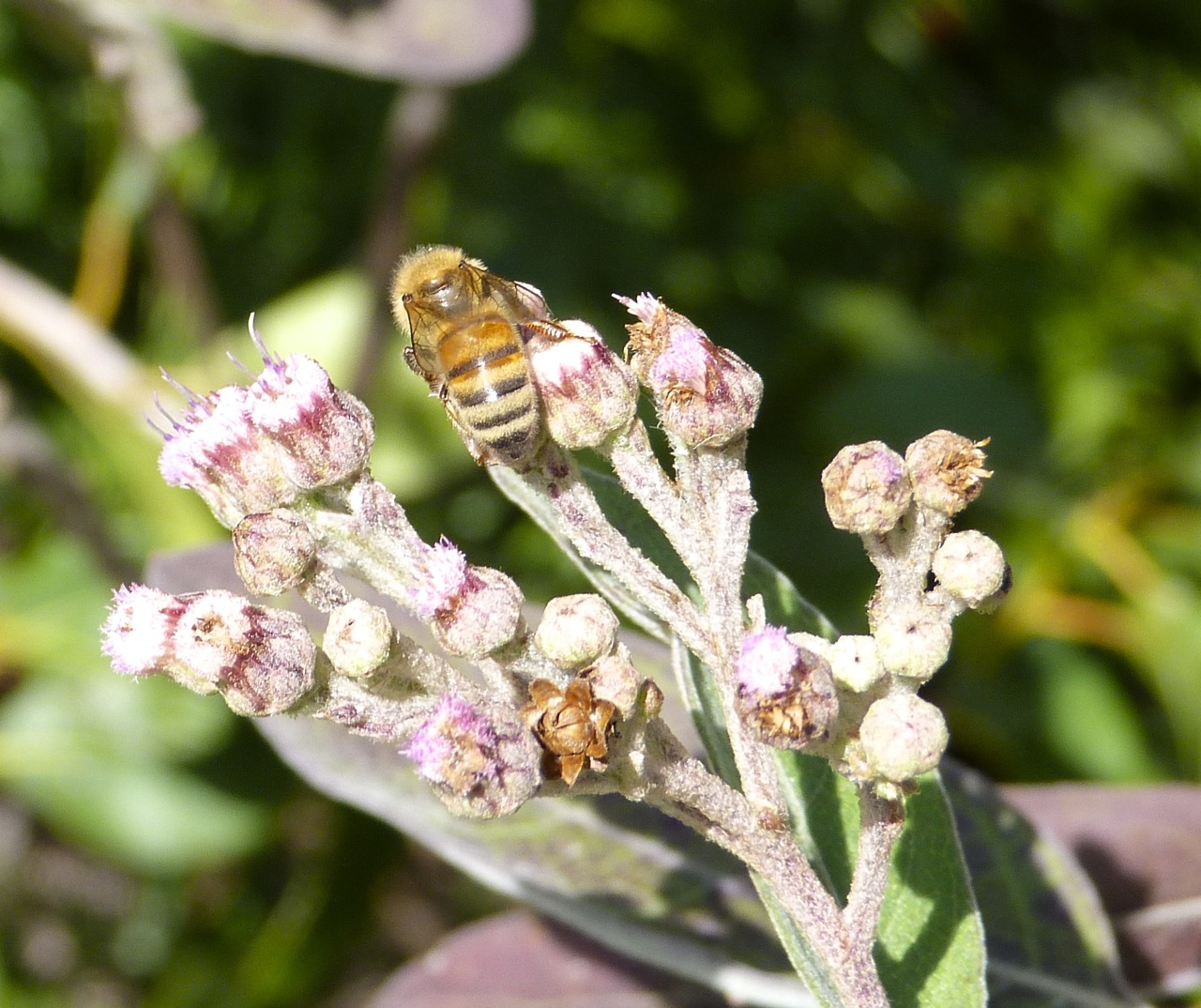
Until recently, I can’t say I’d ever noticed bees on Abaco. There are plenty of wonderful flowers that are visited for their nectar by the many species of butterfly and  various kinds of bird (hummingbirds, bananaquits). Then, last month, I heard a distinct buzzing in a bush. Bees. Lots of them. I took a few photos, some of which are shown below. Then I began to notice them elsewhere. Everywhere. Compared to the european bees that I am familiar with (check out my BEE GALLERY), Abaco bees are much smaller – see how they look on the individual flower heads in the first few photos. These little creatures were constantly on the move. No sooner had one settled on a flower, than it moved on to the next one…

I kept an eye out for bumble bees, but saw none – indeed, I’m not certain there are any bumble species in the (northern) Bahamas, and I have found no references to their existence. Enlightenment on this topic welcome via the comment box.

Abaco bees 1Abaco bees 2 Abaco bees 3There was plenty of pollen for the bees, though not all of it went into their what’s-the-correct-word-for-their-pouches (EST the Beekeper please can you help here?)Abaco bees 5However most were managing to harvest impressive quantities to take back to the hive. It’s worth saying that these are all wild bees. I know of only one honey-producer in South Abaco (south of Marsh Harbour).Abaco bees 6 Abaco bees 7A successful foraging expedition… somewhat surprisingly this bee was still able to take off…Abaco bees 8This is my favourite photo: there’s something about the expression on that little face that says “Ooooo. More good stuff in this one….”Abaco bees 9

Wild bees find a novel use for a woodpecker nesting box Bees in bird nest box 1

Unknown's avatar

‘UNDERWATER BUTTERFLIES’: BAHAMAS REEF FISH (8)


Spotfin Butterfly Fish

UNDERWATER BUTTERFLIES: BAHAMAS REEF FISH (8)

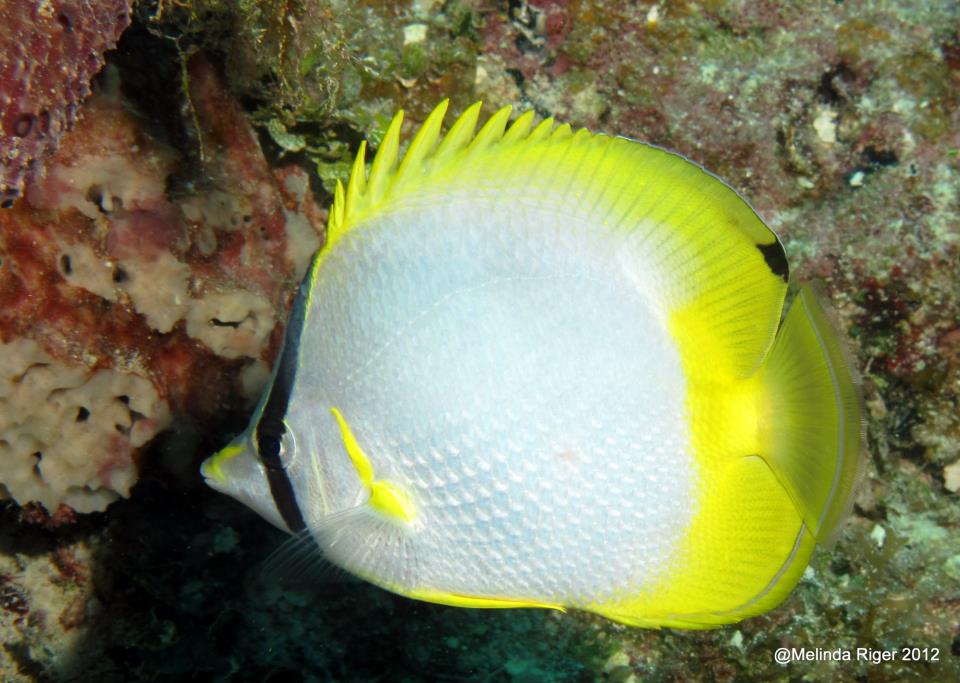
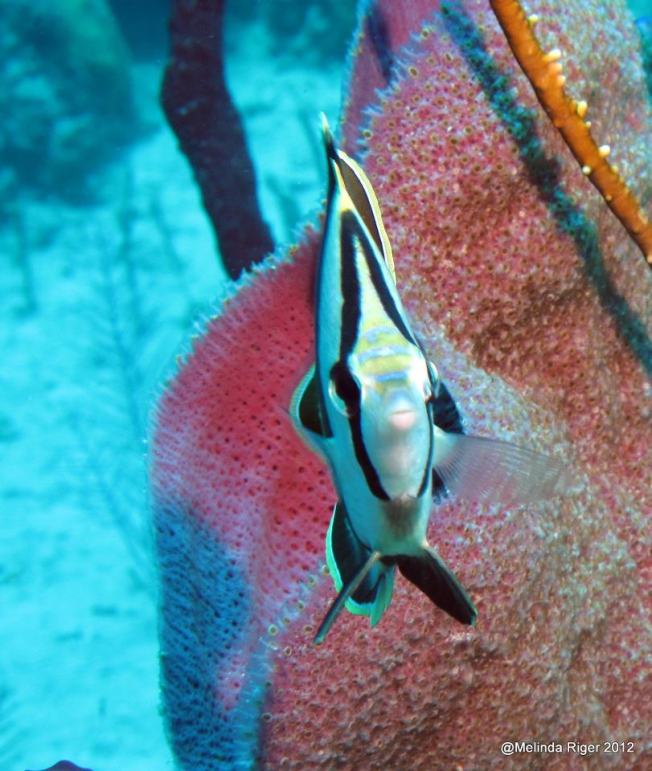
Butterflyfishes (Chaetodontidae) belong to a large worldwide family of small, colourful reef fishes. There are several sorts to be found in the Bahamas, of which 4 are shown below. These creatures resemble small angel fishes, and are invariably vividly coloured, strikingly patterned, or in many cases, both. Apart from that, the most interesting fact about them is that their species name  Chaetodontidae derives from a Greek compound noun meaning ‘hair tooth’. This unsettling description relates to the rows of tiny, fine filament-like teeth inside their protuberant mouths. If I ever get a photo of a butterflyfish showing its teeth while feeding or yawning, I will add it here…

FOUR-EYED BUTTERFLYFISHFour-eyed Butterflyfish ©Melinda Riger @GBS

REEF BUTTERFLYFISH

Reef Butterfly Fish ©Melinda Riger GB ScubaReef Butterflyfish ©Melinda Riger @ GB Scuba

SPOTFIN BUTTERFLYFISHSpotfin Butterfly Fish 2

BANDED BUTTERFLYFISH

Banded Butterflyfish ©Melinda Riger @GBSPhoto Credit: Melinda Riger, Grand Bahama Scuba

Unknown's avatar

NOT THAT JAMES BOND. THE OTHER JAMES BOND. AND THE OTHER TYPE OF BIRD…


NOT THAT JAMES BOND. THE OTHER JAMES BOND. AND THE OTHER TYPE OF BIRD…

I usually try to avoid regurgitating previous posts, but today I feel it is justified. I posted the article below nearly a year ago. As it happens, tomorrow is the 60th Anniversary of the publication by Jonathan Cape of Ian Fleming’s first book in the extensive Bond franchise, ‘Casino Royale’. So it makes some sense to revisit the background to the naming of literature’s iconic special agent. I promise not to repeat this annually for ‘Live and Let Die’, ‘Moonraker’, ‘Diamonds are Forever’ and all the rest of them.

First, a quick plot reminder: James Bond is sent to play against and bankrupt Le Chiffre, the paymaster for a SMERSH-controlled trade union, in a high-stakes baccarat game in France. With help from CIA agent Felix Leiter, Bond wins the game, but is betrayed by Vesper Lynd, a double agent (Ursula Andress in the 1967 caper; Eva Green in the 2006 remake). Lynd falls in love with Bond and, instead of betraying him, commits suicide.”  (Source: I can’t reveal it, obviously. You can’t catch me out that way…)

First, mix a cool Vesper Cocktail (“shaken, not stirred”) HERE. Now read on…

220px-Vesper_Cocktail

♠ ♣ ♥ ♦ ♠ ♣ ♥ ♦ ♠ ♣ ♥ ♦ ♠ ♣ ♥ ♦ ♠ ♣ ♥ ♦

“THE NAME’S BOND. JAMES BOND. LICENSED TO WATCH BIRDS…”

JAMES BOND – THE ORNITHOLOGIST WHO LENT HIS NAME TO A FICTION LEGEND

Jamaica, 1952. The night was hot, too hot. Fleming cursed as he made his way up the steps to his neighbour’s verandah. He heard the clink of ice from within the house, and guessed that the rum punch was being mixed just the way he liked it. Stirred, not shaken. As he passed a low table on the verandah his eyes were drawn to a small book lying on it. Fleming paused, taking in the information, his senses suddenly alive. Bond. James Bond. A bird book about the avian species of the West Indies. Suddenly, it all made sense. Fleming knew now the direction he had to take, and with a thin smile he flicked back the insolent comma of dark hair that had fallen across his face and strode into the house towards the sound of the ice…

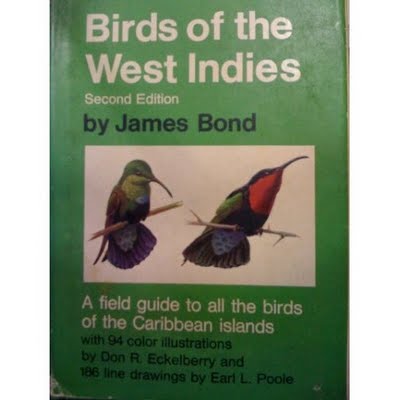
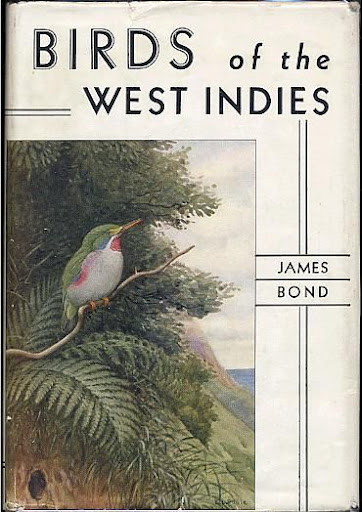
James Bond, ornithologist (1900 – 1989) was an expert on the birdlife of the Caribbean and wrote the seminal Birds of the West Indies, first published in 1936 and republished in varying formats ever since.

Ian Fleming lived in Jamaica and was a keen birdwatcher. The story goes that one evening, visiting friends, he saw ornithologist James Bond’s Birds of the West Indies on a table, and borrowed that short, punchy name for his fictional hero 007 for Casino Royale, published in 1953. He later said he wanted a name that sounded ‘as ordinary as possible’. In an interview, Fleming said “I wanted the simplest, dullest, plainest-sounding name I could find, and ‘James Bond’ was much better than something more interesting, like ‘Peregrine Carruthers.’ Exotic things would happen to and around him, but he would be a neutral figure — an anonymous, blunt instrument wielded by a government department.” Fleming wrote to the real James Bond’s wife “It struck me that this brief, unromantic, Anglo-Saxon and yet very masculine name was just what I needed, and so a second James Bond was born.” He also contacted the real James Bond about using his name in the books and Bond replied that he was “fine with it.” At some point during one of Fleming’s visits to Jamaica he met the real Bond and his wife. The meeting was recorded for a documentary.

FACT, FICTION & IN-JOKES

IDr No Fleming referenced Bond’s work by basing a large Ornithological Sanctuary on Dr No’s island in the Bahamas. In 1964, Fleming gave Bond a first edition copy of You Only Live Twice signed “To the real James Bond, from the thief of his identity”. In the 2002 Bond film Die Another Day the fictional Bond can be seen examining Birds of the West Indies in an early scene that takes place in Havana. However the author’s name (James Bond) on the front cover is obscured. In the same film, when Bond first meets Jinx, he introduces himself as an ornithologist.

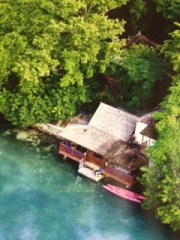
Ian Fleming Lived Here in Jamaica **

I had been planning to research the history of the various editions of Birds of the West Indies, the locus classicus for Caribbean species. Then I started to look into it and found that someone – Jack Holloway – had already done it so thoroughly that I would be wasting my time. So I contacted Jack for use permission, and I am very grateful to him for granting it by return. This next part is all thanks to him. I recommend a visit to his very good online bird resource website at AVIAN3

♠ ♣ ♥ ♦ ♠ ♣ ♥ ♦ ♠ ♣ ♥ ♦ ♠ ♣ ♥ ♦ ♠ ♣ ♥ ♦

THE HISTORY OF BIRDS OF THE WEST INDIES BY JAMES BOND
1936 (The Original)
This is the alpha of the “Birds of the West Indies” books by James Bond. Its longer subtitle is “An Account with full descriptions of all the birds known to occur or to have occurred on the West Indian Islands“. Published just shy of two years after Peterson’s A Field Guide to the Birds of the West Indies, this book was the first field guide to cover all the birds of the West Indies (outside of Cory’s annotated book of 1889).
 
Somewhat in contrast to what is stated in the later 1961 version as the “First American Edition”, this 1936 book was published by The Academy of Natural Sciences of Philadelphia (at which Bond worked) and was printed by Waverly Press, Inc. in Baltimore, Maryland.This book is certainly quite scarce and typically commands a price ranging from $500 – $1,500 depending on its condition and the presence of a dustjacket.
 
Ultimately, one may ask, “What’s the difference between this first book and the subsequent versions?” Here is the answer in the form of a table (see below)
  

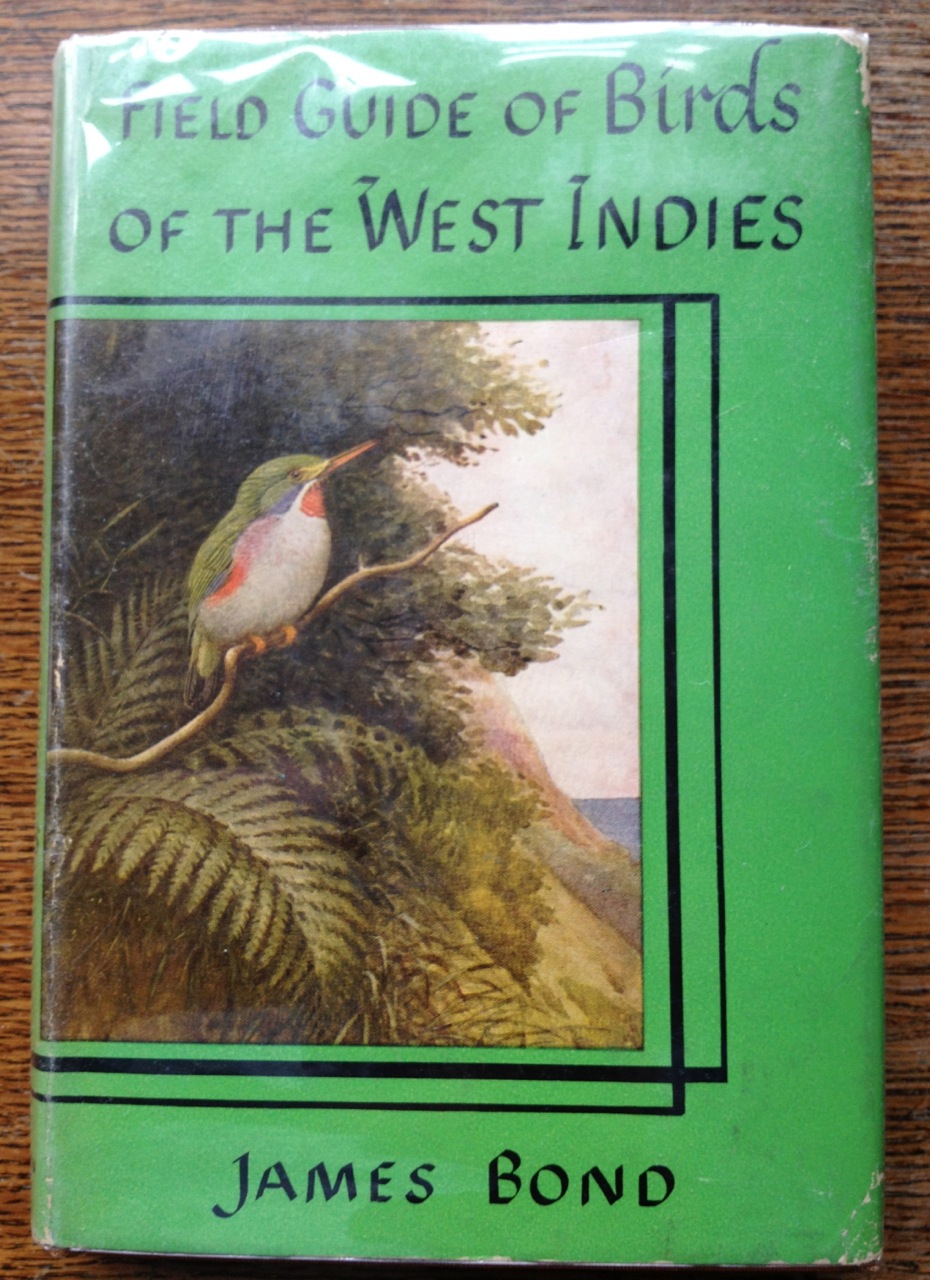
1947 (The Next Version)
This 1947 version is often advertised or assumed to be the first edition. This may be due in part to the rarity of the original 1936 edition and/or to the presence of “First Printing” printed on the backside of the Title Page in the 1947 book (see image below). This “first printing” refers only to the second book. For the true, original book, you must go back another 11 years to 1936.
 
Despite the notation of “First American Edition” in the 1961 version, this 1947 book was published by the MacMillan Company of New York and was printed in the United States. The 1936 edition was also US published and printed.
 
As an obscure note, the title of the book printed on the dustjacket does not match the title printed on the book itself. The cover reads, “Field Guide of Birds…” while the book reads, “Field Guide to Birds…”. Also, it is likely this is the version owned by Ian Fleming which inspired the naming of his charismatic spy (see below)
 
Depending on the condition of this book and the presence of a dustjacket, this 1947 version ranges in price between $30 and $100.
 
  
STOP PRESS  As a guideline, I bought a copy of this edition on eBay for $80, in very good condition with good dust jacket. Elsewhere, on a first edition, I beat the seller down from $2250 to $1600, but it was in poor condition and I left it at that…
                             James Bond Birds 1947 ed f:c                        James Bond Birds F:P 1947 ed

1961 (“1st American Edition”)
Just as a note of interest — or irony — this 1961 version is labeled as the “First America Edition”. Keep in mind the 1936 and 1947 books were both published and printed in the US. Additionally, just beneath the statement of “First American Edition”, you will see “Printed in Great Britain”. Completing the picture, this book was published by the Houghton Mifflin Company of Boston; thus, the American connection (I guess).


1970s
 
1971 1971 1974
  

1980s
 
1980 1980 1985 1986 (?)

1990s (the adoption by the Peterson series)
 
1993 1995 1999
  

2000s
 
2002 (?)

OTHER COVERS
 
1960s?

ADDENDUM
 
1966

Needless to say, the name James Bond has a familiarity beyond just the birding world. Several myths and slight distortions have grown related to how this name has been transmogrified from ornithologist to international spy.

In 1966, Mrs James (Mary Wickham) Bond wrote a 62-page book How 007 Got His Name that outlined the circumstances which led to the use of Mr Bond’s name in the series of books written by Ian Fleming.

As noted on pp. 16-17, Dr. Bond first became aware of his new recognition in 1961. This was after seven spy thrillers had already been published and were just becoming popular in the US.

Mrs Bond wrote a light-hearted letter to Mr Fleming on February 01, 1961 to make note that he had “…brazenly taken the name of a real human being for your rascal!” (p.18). A return letter by Mr Fleming was most gracious and apologetic.

In this reply, (contained in full in Mrs Bond’s book), Mr Fleming wrote, “I will confess at once that your husband has every reason to sue me in every possible position and for practically every kind of libel in the book, for I will now confess the damnable truth.” (p.21).

He then provided an explanation of how he selected his character’s name for the first book in 1953: “…I was determined that my secret agent should be as anonymous a personality as possible…At this time one of my bibles was, and still is, Birds of the West Indies by James Bond, and it struck me that this name, brief, unromantic and yet very masculine, was just what I needed and so James Bond II was born…”

Mimicking Mrs Bond’s light-hearted approach, Mr Fleming continued his reply with this unique offer: “In return I can only offer your James Bond unlimited use of the name Ian Fleming for any purpose he may think fit. Perhaps one day he will discover some particularly horrible species of bird which he would like to christen in an insulting fashion.” (p.22).

Mr Fleming also offered the Bonds an open invitation to visit his residence in Jamaica and to visit the birthplace of the second James Bond.

Iam Fleming and the real James Bond met only once, which was February 5th, 1964. This was in Jamaica, six months before the death of Mr. Fleming.

This short book by Mrs Bond is a nice, quick read. I appreciate it for the first-hand accounts of the historical beginnings of Bond vs Bond as opposed to the hearsay and myths created over time. The book also offers entertaining stories of how James Bond dealt with his new popularity and the avid “fans” upon their discovery of his name. (RH note: copies occasionally appear on eBay, Am@z@n, & ABE)


Comparison Table of the Books’ Contents over the Years
** “THE FLEMING VILLA” (SHOWN ABOVE) – THE FACTS
  • Once rented by Noel Coward
  • Sting wrote “Every Breath you Take” here
  • Princess Margaret, while a guest, broke a toe on one of the beds (rum punch alert!)
  • Ian Fleming himself designed the house, and wrote all the Bond books here
  • It has 5 bedrooms, and was built by a former donkey track bought by Fleming in 1946
  • You can rent it (and its full-time staff) for £3500 (including breakfast). Per night…
  • It is part of the ‘Goldeneye’ Estate (and no, there isn’t a ‘Thunderball’ Estate)
  • Other guests: Errol Flynn, Katharine Hepburn, Lucian Freud, Truman Capote & Evelyn Waugh

(Source credits: The Quarterly, Wiki & kin; Feeble Intro Pastiche:  RH)

Unknown's avatar

A CUBAN EMERALD HUMMINGBIRD ON ABACO, BAHAMAS


DCB GBG Cover Logo

A CUBAN EMERALD HUMMINGBIRD ON ABACO, BAHAMAS

I took photos of this tiny bird at BPS last month. They were ‘chance’ pics taken when we were photographing parrots in the tree tops. The hummer suddenly appeared some way ahead of me, so I swivelled the camera at it without changing any settings. Frankly, I didn’t expect the results to show more than a small green blur, but they have turned out slightly better than anticipated. I put these images on my subsidiary ‘Gallery’ site and people seem to like them so I’ve decided to add them here too. After all, it’s their true home, I suppose, with the other Abaco wildlife. Apologies to those who have seen these already on the other site. The images are exactly as taken – no colour tweaking, no sharpening, no photoshop  – and may not stand enlargement or close scrutiny, because I was several yards away. On the other hand they give a good idea of how this bird feeds. The body postures are very characteristic, and besides, the plants are pretty… Cuban Emerald Hummingbird in flight, Abaco Bahamas 1Cuban Emerald Hummingbird in flight, Abaco Bahamas 2Cuban Emerald Hummingbird in flight, Abaco Bahamas 3Cuban Emerald Hummingbird in flight, Abaco Bahamas 4Cuban Emerald Hummingbird in flight, Abaco Bahamas 5

Unknown's avatar

‘BEAUTY & THE BEACH’: A CLOSE LOOK AT ABACO SHELLS


Abaco seashell 11

‘BEAUTY & THE BEACH’: A CLOSE LOOK AT SOME ABACO SHELLS

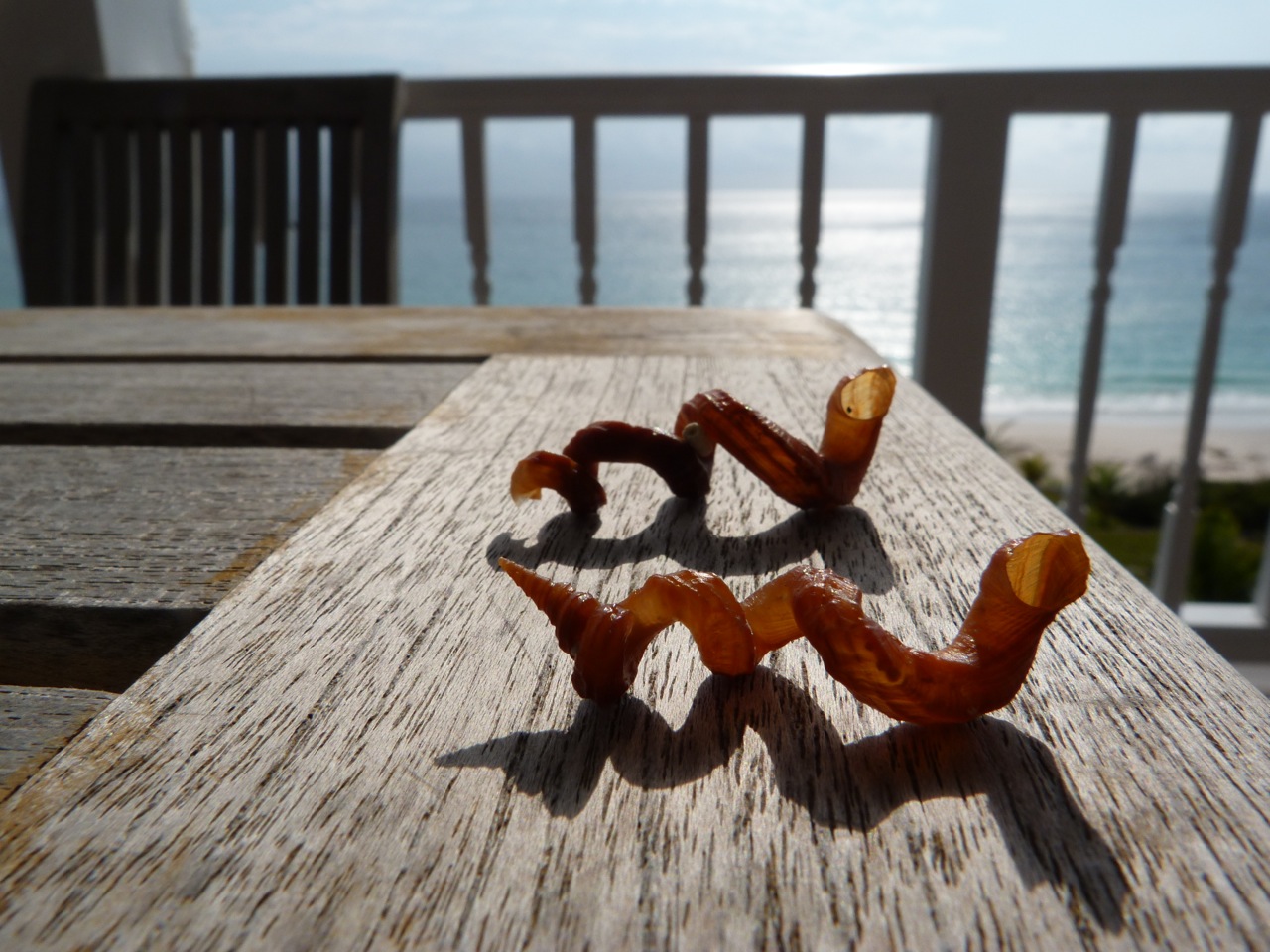
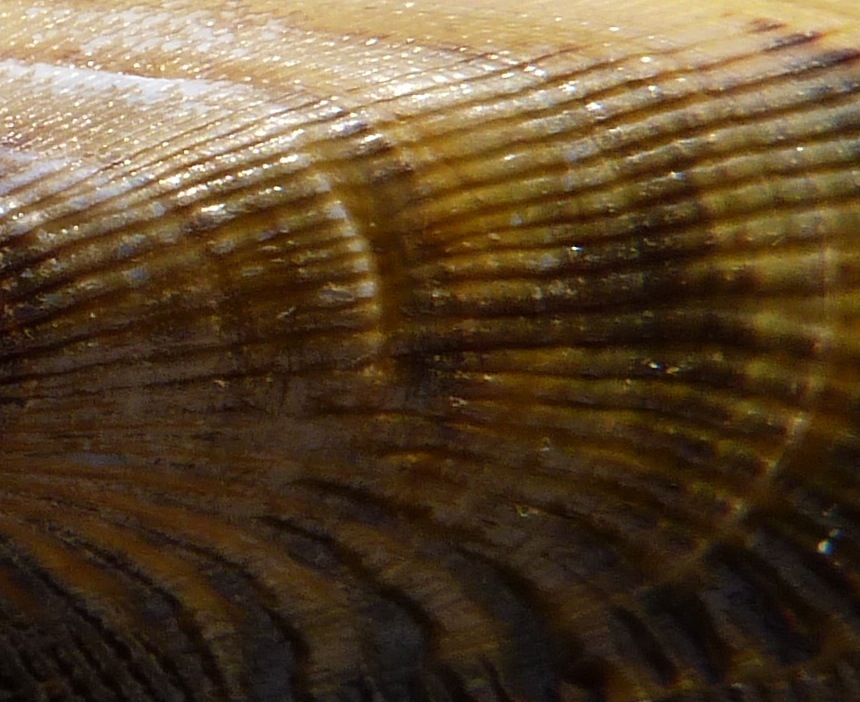
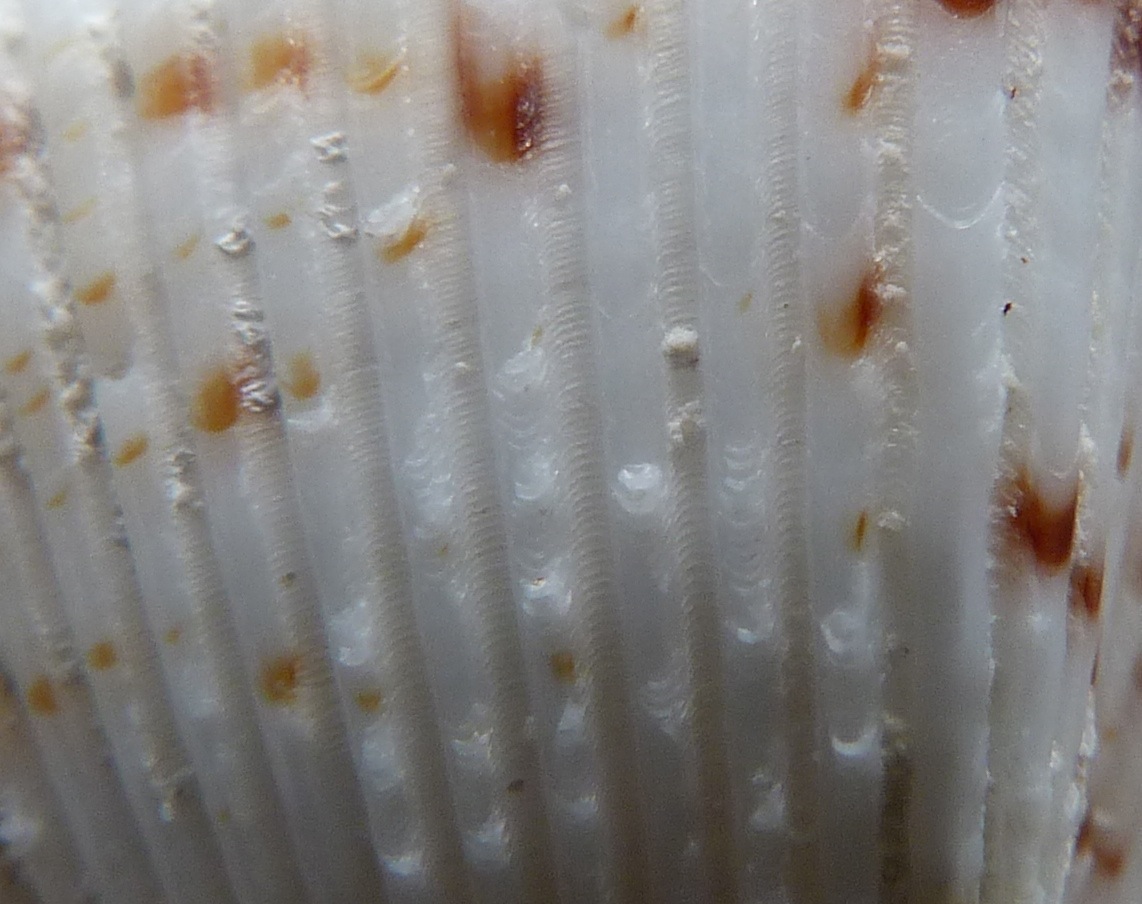
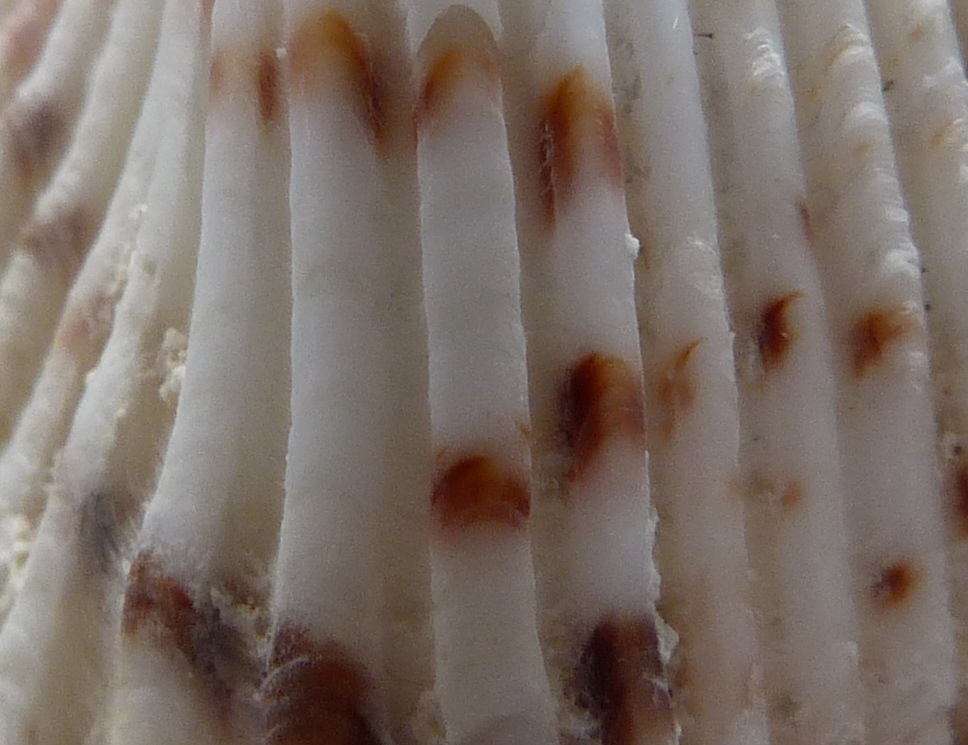
Abaco seashell 10Abaco seashell 7bAbaco seashell 6bAbaco seashell 3bAbaco seashell 2bAbaco seashell 1bAbaco seashell 4bAbaco Shells 12bAbaco seashell 5bAnd to end with, not a shell but a somewhat unattractive head shot…Abaco seashell 9b

BEAUTY PARADE

Abaco seashell 7aAbaco seashell 6aAbaco seashell 3aAbaco seashell 4aAbaco Shells 12 aAbaco seashell 5a

UGLY BUG BALL…

Can anyone ID this? It’s not what I thought… *later* yes they can! See comments for the debateAbaco seashell 9b

Skull 2

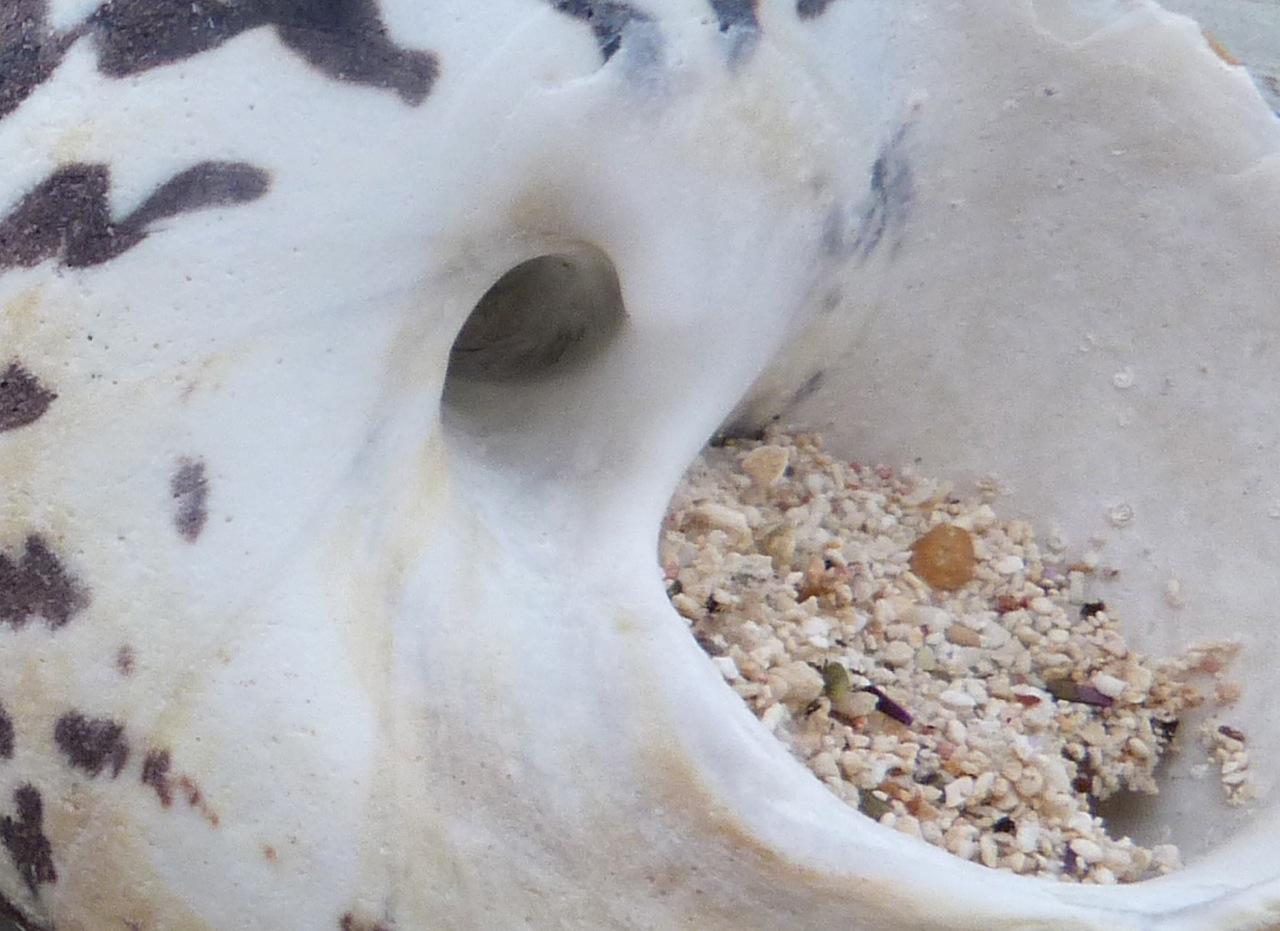
All shells – & the spider crab carapace – collected from the beach at Casuarina

Unknown's avatar

“ROCK & ROLLING WAVES”: ROCK EROSION ON ABACO


Rock Erosion Gilpin Point 3

“ROCK & ROLLING WAVES”: ROCK EROSION ON ABACO

On 26th October 2012, the ‘roof’ of the geological feature at the southern tip of Abaco known for centuries as Hole-in-the-Wall was blasted apart by Hurricane Sandy. The combination of huge waves and powerful winds proved too much for a structure that had existed since the last ice age. I posted in detail about this event last year HERE so now I will concentrate on some geological aspects.

The photo below shows the Hole a year or so before its destruction. At the left-hand end of the bridge there is a paler area underneath where limestone rock had recently fallen into the sea, suggesting an underlying instability. At close quarters there were plenty of cracks in the apparently solid structure. (I’ve no idea why I didn’t straighten the image. Let’s say… Artistic Perspective)hole-in-the-wall-abaco-ricky-johnson

This photo was taken a few days after the collapse, the first to be published of the new view. The clean white rock at either end of the ex-bridge is clearly visible. The section on the left became a new islet at the southern extremity Abaco, separated from the mainland for the first time in history. I proposed various names for it (not all serious) – Sandy Cay (or Isle) was the clear, indeed obvious, winner…

Hole-in-the-Wall Abaco- the new gap Nov 2012

This close-up of the south side of the bridge shows the detail of the rock fragmentation. Tara’s photographs are (as far as I know) the very first of the new gap and of Abaco’s new islet, predating John Haestad’s by a day.HOLE-IN-THE-WALL ABACO post Sandy 3

◊  ◊  ◊  ◊  ◊  ◊  ◊  ◊  ◊  ◊  ◊

We recently went to a beach near Crossing Rocks that we had never explored before (plenty of interest there for later posts). We were struck by the fragmented and pitted nature of the limestone rocks on the shoreline. We noticed some pale exposed rock surfaces, similar to those at Hole-in-the-Wall. We watched the incoming waves scouring and undercutting the rocks, leaving overhangs (see video below). Erosion is increased by the double action of the waves. The immediate area hinted that there may even have been a very small Hole at one time. On the day we were there, the sea was gentle. It’s easy to imagine how the hugely destructive force of the wind and crashing waves resulting from hurricanes such as Sandy can eventually shatter solid rock that has been gradually eroded and destabilised over centuries by wave action.Rock Erosion Gilpin Point 1 copyRock Erosion Gilpin Point 2 copy

Photo credits as shown / RH. You have Mrs RH to thank for a shorter (50 secs) video than the one I originally made (75 secs). Now I’ve redone the thing, I agree – one wave does look very like the next… 

ADDENDUM Just remembered that I took an aerial photo of HitW from the plane the other day. It’s a phone photo through BahamasAir window glass, and I’ve had to tweak it a bit. It shows the relevant area…all the blurry dark stuff is part the pine forest of the National Park 

Image - Version 2

ADDENDUM 2 In response to a comment about the power of hurricanes, here is an image I have posted previously of a large rock some way out from the Delphi beach. Before Hurricane Irene in 2011, it was a solid rectangular slab. This is what it was like after Irene had moved on northwards  Delphi Blasted Rock

Unknown's avatar

BABY BONEFISH, CASUARINA, ABACO HIDING IN PLAIN SIGHT…


Casuarina Bay (to south)

BABY BONEFISH, CASUARINA, ABACO: HIDING IN PLAIN SIGHT…

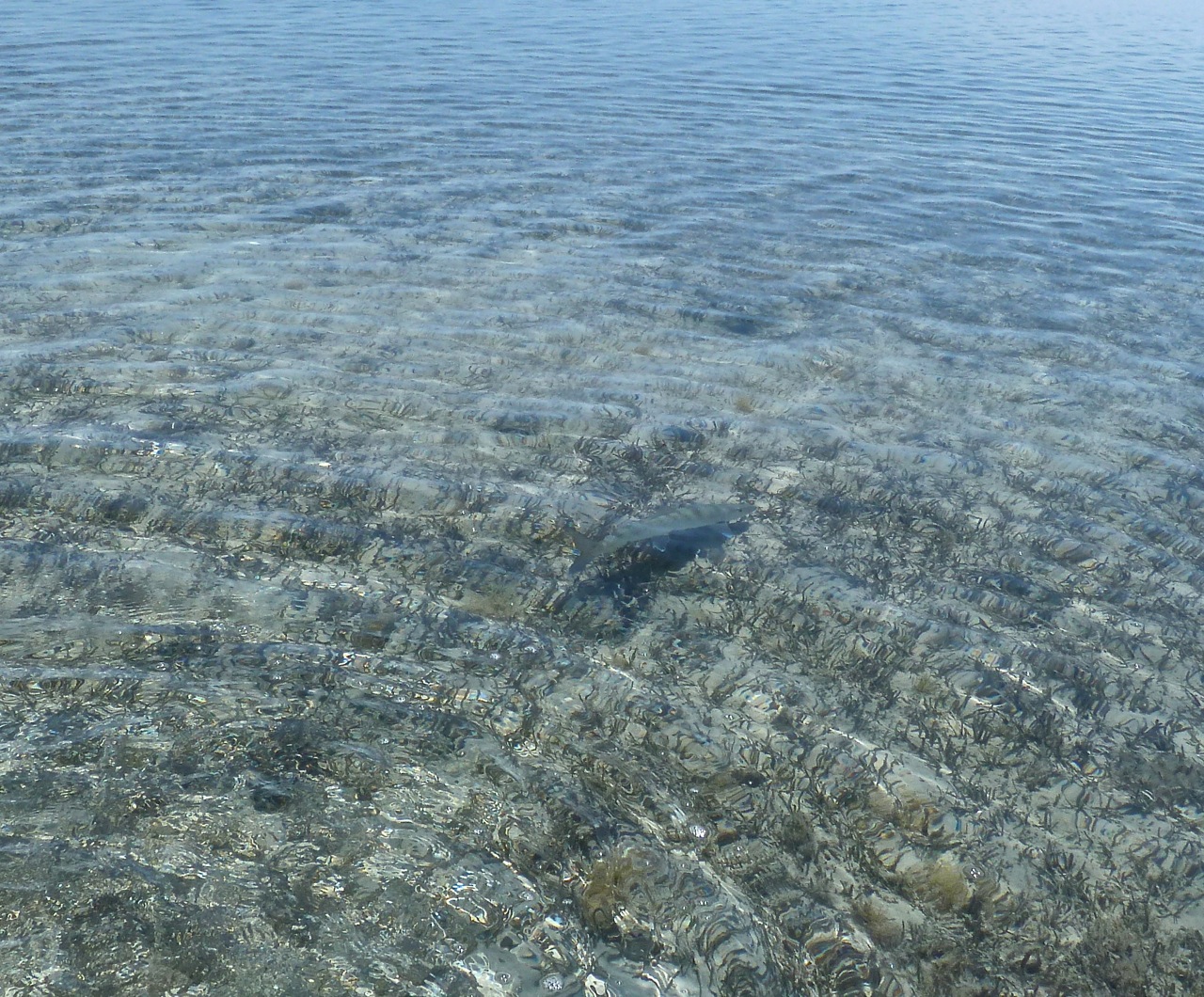
Bonefish are difficult to see in the water at the best of times. Shining silver out of water, but pale grey shadows underwater. Fishing under cloud cover and / or (especially ‘and’) when there’s a ripple on the water can be atritional. Sight-casting becomes impossible, and the best recourse is to locate the cloudy patches of water that show where the fish are feeding on the bottom. Chucking the fly into – or beyond – one of these and stripping back may be the only way to get a fish in such adverse conditions. What’s needed is clear sky, sunlight, good polaroids, patience, and keen eyes to scan the water for dark shadows moving across the sand… Or, in my case, simply waiting for the guide to hiss “Hey! Rolling Harbour. Three fish, 40 feet, 10 o’clock moving right, see them? Go now!”. By then, there’s a 50 / 50 chance I may have located them and got my act together enough to (try to) cast at them…

This picture of an adult fish, just caught on the Marls and released at once, shows how a bonefish can easily blend in with its underwater surroundings… but it can’t hide the dark shadow it casts.Adult Bonefish, The Marls, Abaco Bahamas

Two days later we went to Casuarina with friends who wanted a day’s wading on the extensive flats there. This photo shows a juvenile fish close to the beach there, on a glorious sunny day with a light breeze (the header picture [double-click] was taken the same day – low water over pale sand as far as the eye can see). I’d never have noticed this little fish, had I not seen the dark shadow it cast on the sand, magnified by the distorting effect of the ripples.

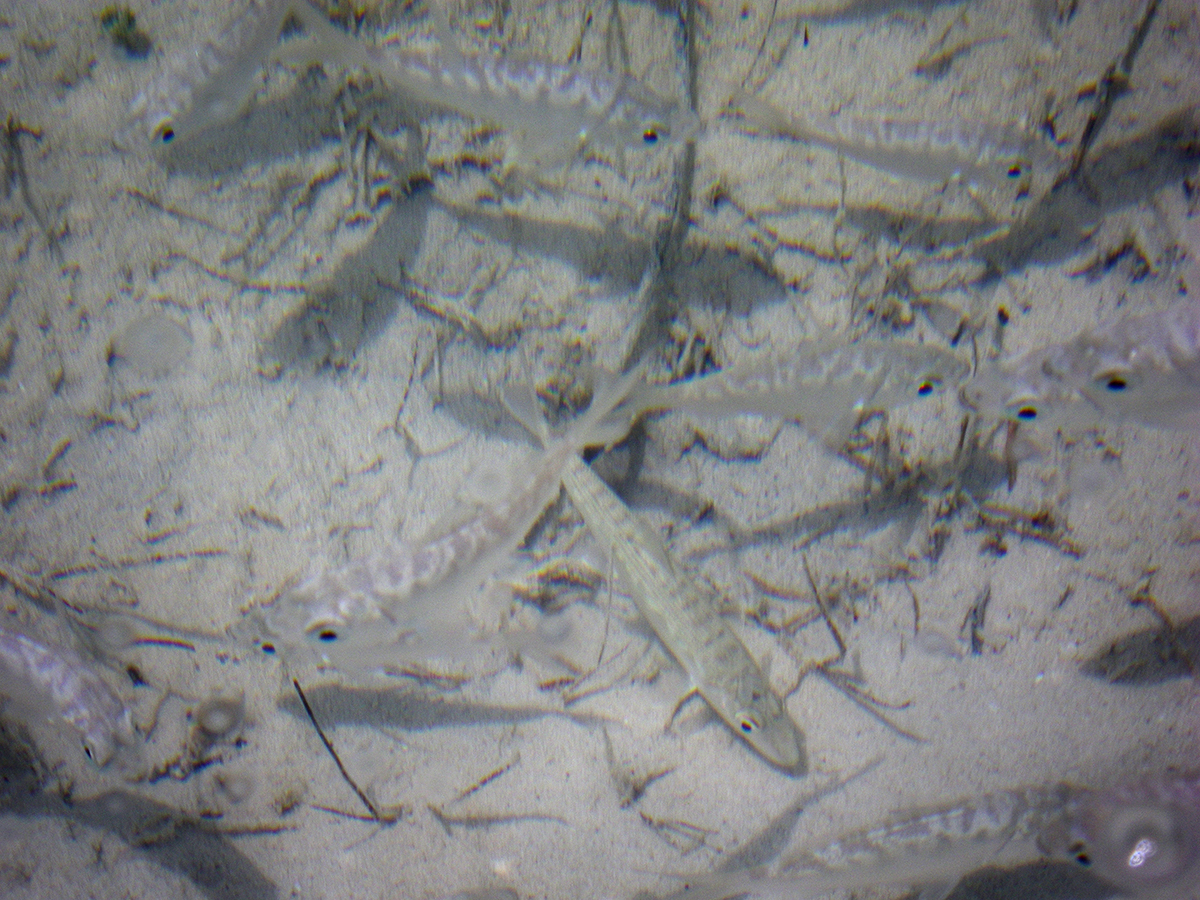
Without the distortion from surface ripples, the bonefish shape can be clearly seen. It’s hard to imagine that by the time this little fish has reached a weight of 2 lbs, he will be capable of stripping your line down to the backing in seconds… or could he?

No, not, in fact. This fish, with its deeply forked ‘bonefish’ tail, is in fact a YELLOWFIN MOJARRA also known as shad. As Zach Zuckerman of the CAPE ELEUTHERA INSTITUTE writes in kindly emphasising that the fish above is not a bonefish, “the yellowfin mojarra… is related to the mottled mojarra mentioned in Chris Haak’s text (see below). Yellowfin mojarra and bones share the same habitats, and mojarra also feed off of benthic invertebrates”. Which brings me to some interesting recent findings by the CAPE ELEUTHERA INSTITUTE in conjunction with thBONEFISH & TARPON TRUST. We saw a single small fish. It looked like a bonefish (though I guess the yellow fin markings suggested otherwise). It was in fact a similar-looking species. Where are all the young bones? The babies? How do they protect themselves from the many predators of juvenile fish?

EVER WONDER WHY YOU DON’T SEE SCHOOLS OF TINY BONEFISH ON THE FLATS?

Article ref: blog.ceibahamas.org

“Since May 2011, Christopher Haak, a PhD student (and avid fisherman) at the University of Massachusetts, Amherst, along with other scientists, has been trying to solve the mystery of where juvenile bonefish live, from settlement through the time they join adult populations on the flats.  Exhaustive efforts to locate juveniles along the densely-developed coastlines of Florida were met with little success, leading researchers to the comparatively pristine shorelines of The Bahamas to continue their search.

For the past one-and-a-half years, they have scoured the coastlines of South Eleuthera, conducting 1000+ seine hauls, encompassing a broad range of coastal habitats. This project is funded by Bonefish & Tarpon Trust and based out of CEI.   These efforts (with the help of South-Eleutherans; thanks Denny and Kelsey Rankin!) have succeeded in locating over 800 juvenile bonefish as small as one inch in length, and have revealed some intriguing trends.  For example, contrary to what might be expected, juvenile bonefish do not appear to frequent the mangrove creek systems or expansive tidal flats commonly used by adults, preferring instead to remain along shallow, sheltered shorelines near deeper basins or channels.”

Can you find the juvenile bonefish among the mojarra in the picture below?

“Perhaps the most remarkable finding to date is that nearly every bonefish collected was in the company of much greater numbers of like-sized mojarras (a common schooling baitfish known to Bahamians as shad).  These juvenile bonefish exhibited markings and coloration not apparent in adult bonefish, but very similar to the mojarras with which they were caught.  By blending in with considerably greater numbers of the model species, the mimics may be reducing their predation risk, and increasing their chances of survival.  In the case of bonefish, this hypothesis would also explain why juveniles are so rarely observed; they are well hidden within schools of mojarras!  From a conservation perspective, this suggests that bonefish populations may be dependent upon healthy mojarra populations, important information for resource managers.

This research is also producing valuable information about the diverse juvenile fish communities that inhabit Eleuthera’s shores.  Myriad seine hauls of the island’s beaches, bays, sounds, and creeks have catalogued juvenile fishes from a wide array of species, including other flats inhabitants like permit, reef fish such as parrotfish, jacks, and wrasses, and some very unusual demersal critters such as shortnose batfish.  The high densities and diversity of juvenile fishes revealed by this study serves to highlight the importance of these nearshore habitats to healthy adult fish populations of all kinds, underscoring the need to preserve and care for our coastlines.”

ADDENDUM With thanks to Aaron Adams of the BONEFISH & TARPON TROUT for use permission, here is a great size indicator for baby bonefish, taken by him some years back in connection with a juvenile bonefish project.juvbonefish

CEI LOGO logo

Unknown's avatar

CRAB RUN – THE MOVIE (LOCATION: DELPHI CLUB BEACH, ABACO)


Crab, Delphi Club Beach, Abaco

CRAB RUN – THE MOVIE (LOCATION: DELPHI CLUB BEACH, ABACO)

‘ROLLING HARBOUR MOVIES’ PROUDLY PRESENTS

(Music: Chet Atkins ‘Yakkety Axe’, aka The Benny Hill Show Theme)

Unknown's avatar

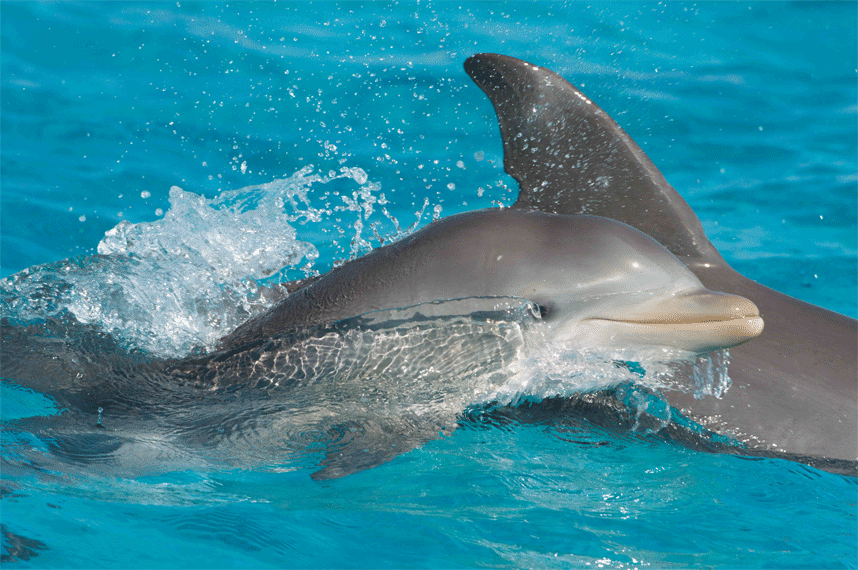
BOTTLENOSE DOPHINS (VIDEO) & BMMRO ABACO CETACEAN SIGHTINGS


safe_image.php

BOTTLENOSE DOPHINS (VIDEO) & BMMRO ABACO CETACEAN SIGHTINGS

The legendary CONCH SALAD TV is a great resource for Bahamas wildlife and way-of-life enlightenment. Their instructive videos are very well put together, and cover Nature, Marine, Art, Science, Music, Culture, Cooking, and broader Bahamas issues. The video below is 9 minutes of Bottlenose Dolphin action, and is recommended for relaxation, gentle instruction, and Kalik-swigging accompaniment…

BMMRO Whale Camp Dolphin Image FV

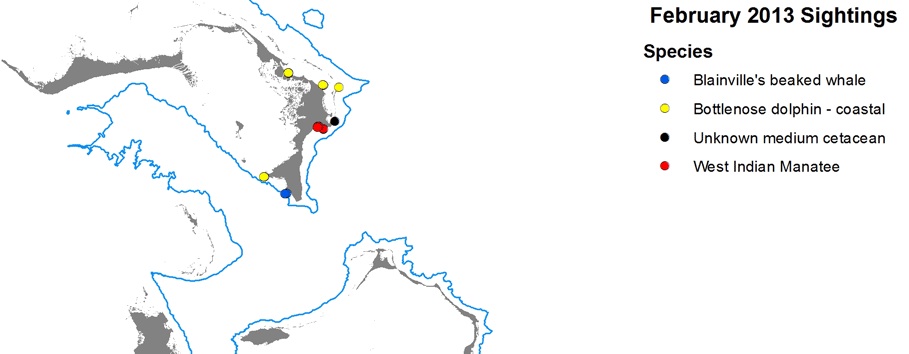
It time to catch up with last month’s Cetacean sightings around Abaco. The Manatee reports are of Georgie in the Cherokee area – alas no longer resident on Abaco but safely at Atlantis where she is being cared for. To know more about the Blainville’s beaked whale on Abaco, click HEREBMMRO sightings 2013

stop pres gif BMMRO’s executive director DIANE CLARIDGE has been awarded her PhD by St Andrews University for her research on beaked whales.  Dr Claridge’s new status is celebrated by humans and cetaceans alike (see image ©BMMRO below…)Bottlenose Dolphins Abaco ©BMMRO

mantsw~1

Unknown's avatar

BLACK & WHITE WARBLERS: WINTER VISITORS TO ABACO


Black & White Warbler (Wiki)

BLACK & WHITE WARBLERS (Mniotilta varia)

WINTER VISITORS TO ABACO

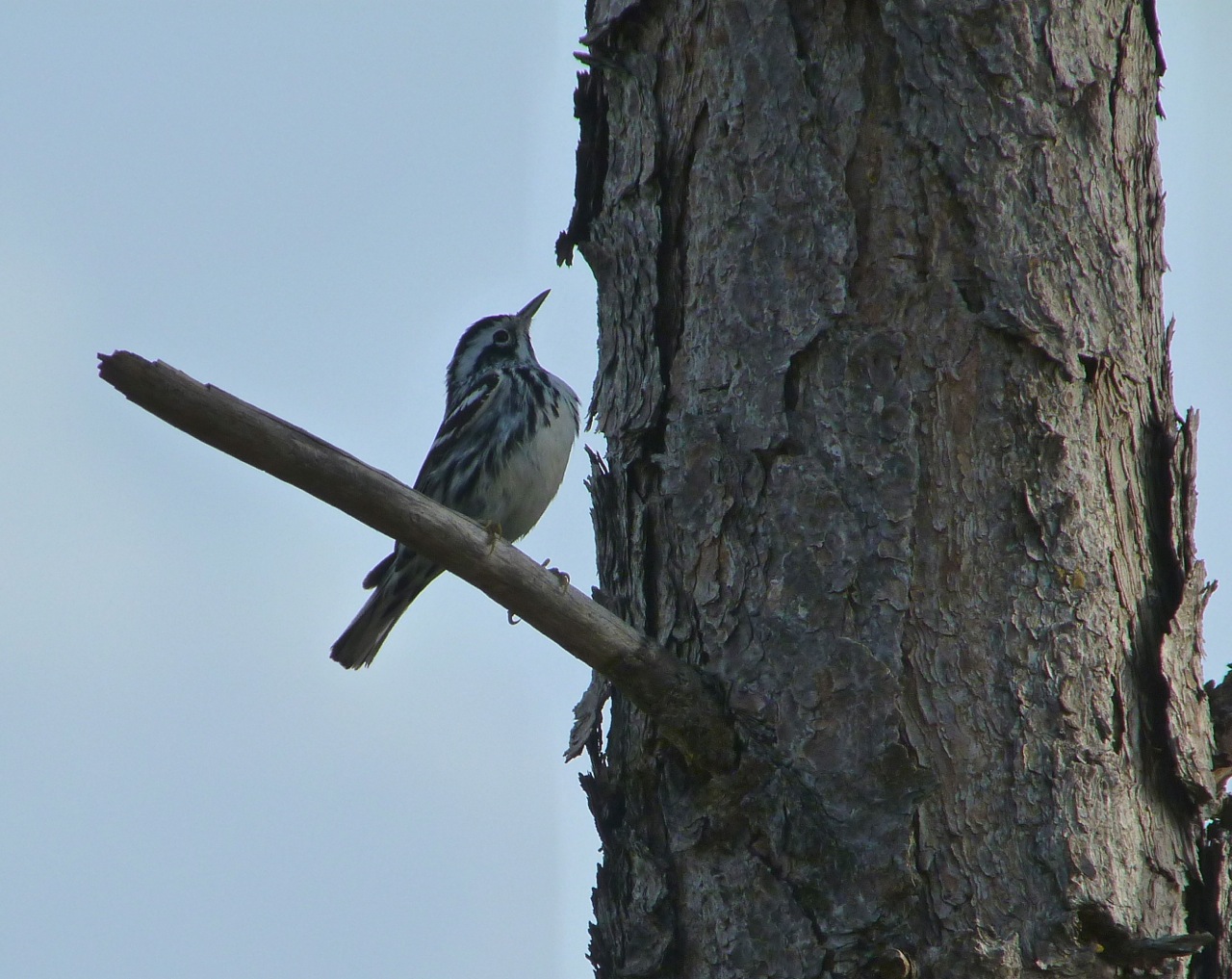
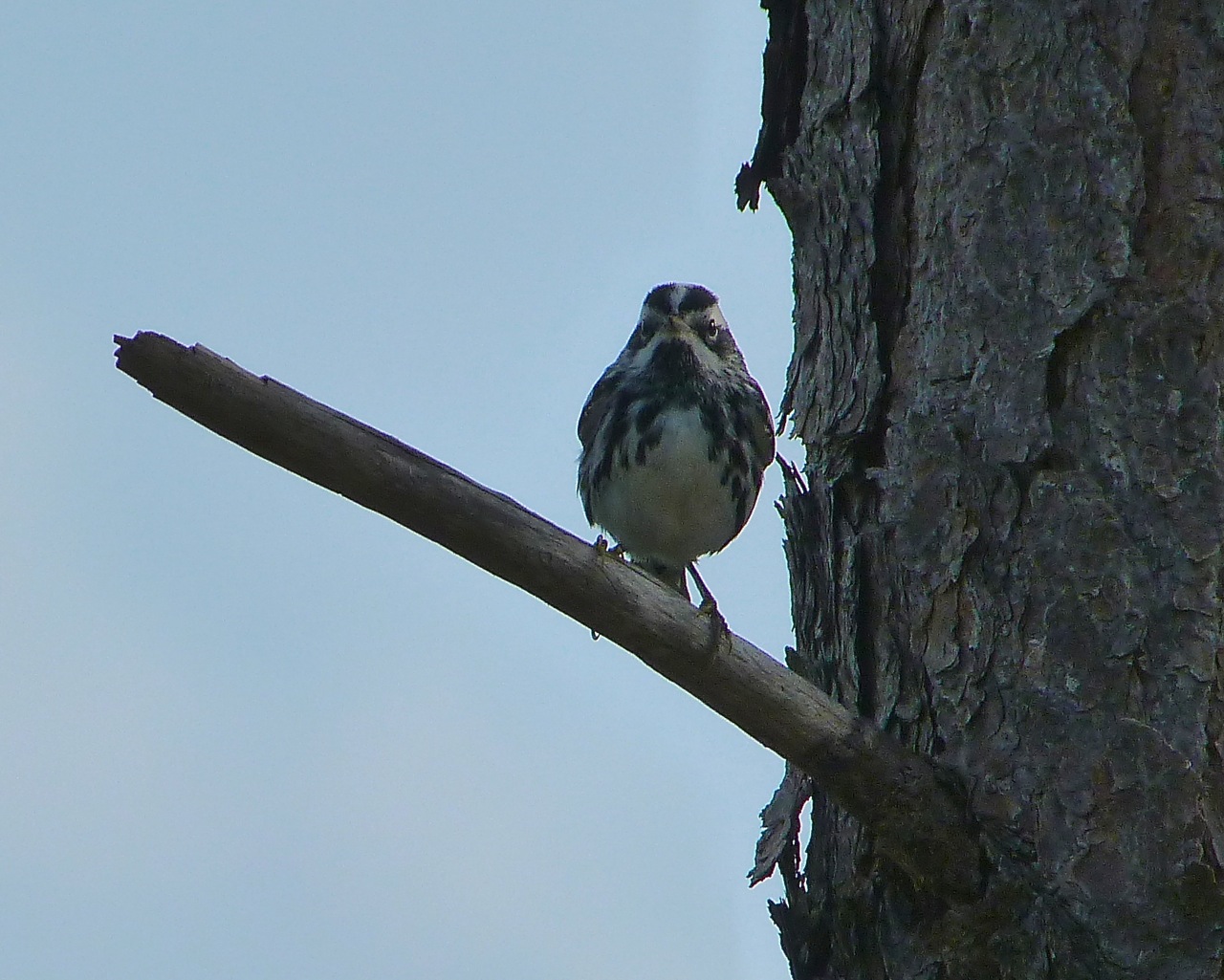
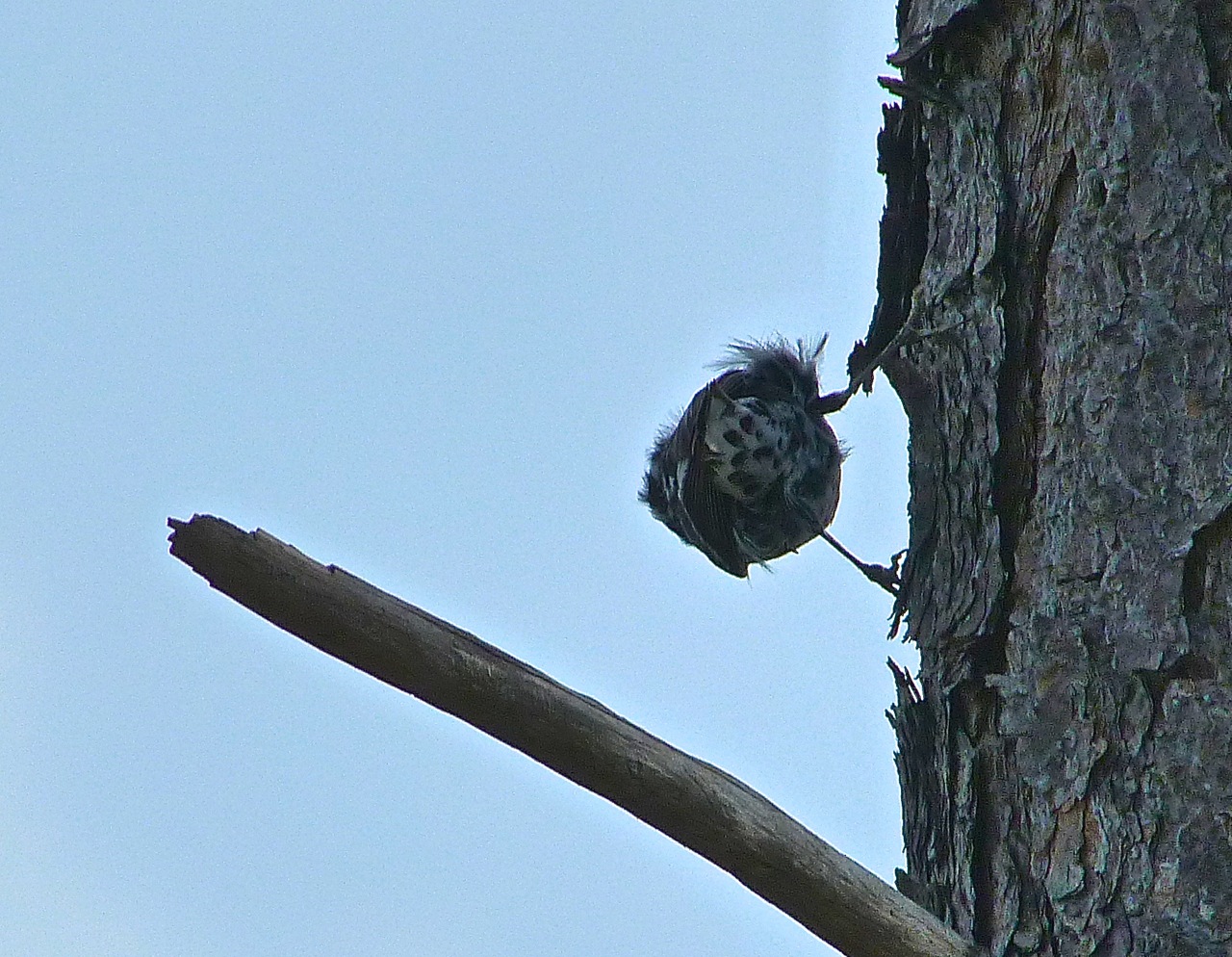
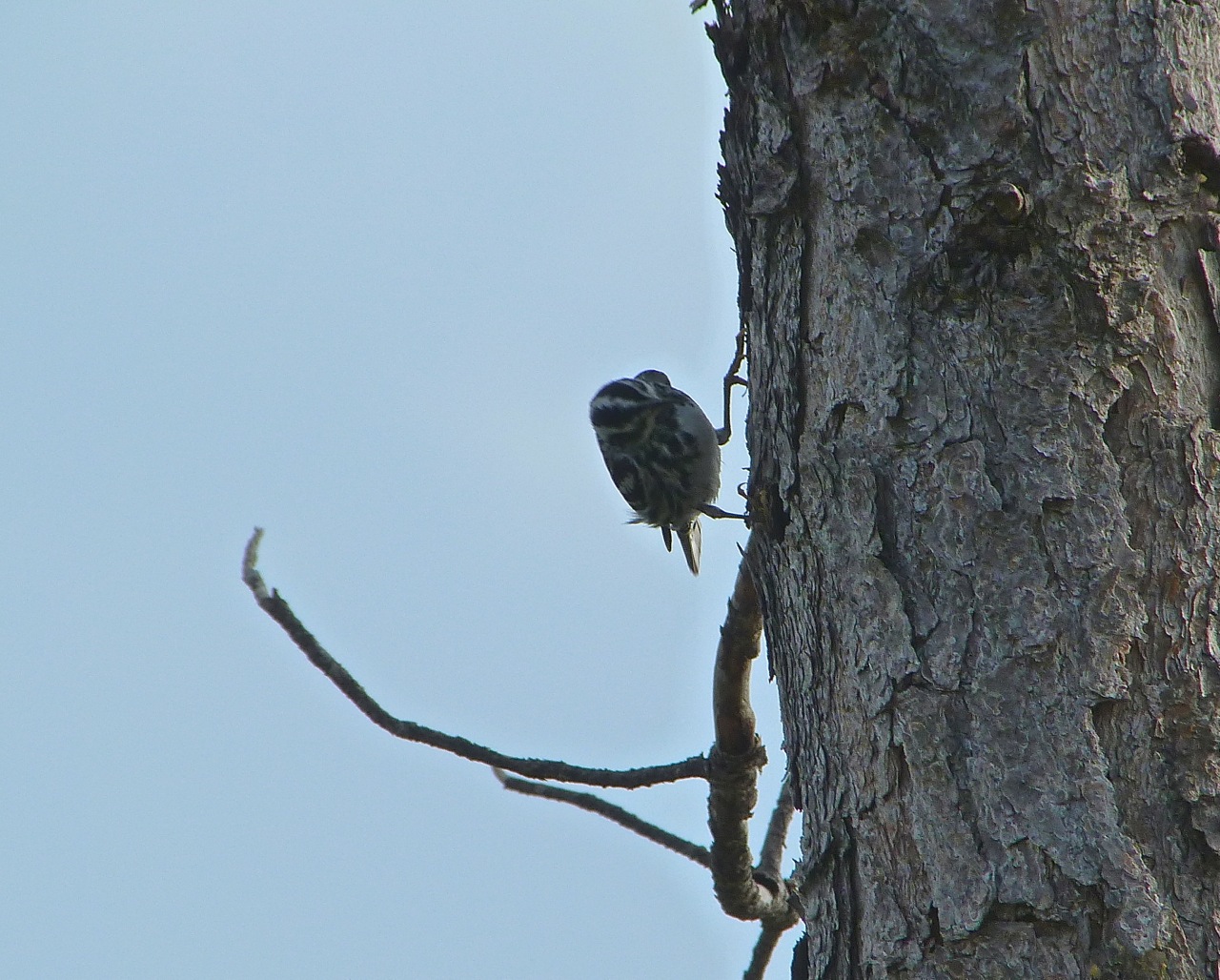
By no stretch of the imagination are the images below very impressive. Sorry about that. The wonder is that we noticed this little bird at all – also, that it stayed still for long enough for me to get a bead on it. I credit the sharp eyes of Mrs RH (from whom little is hid) for spotting a fleeting movement on a pine trunk along the Delphi drive. Unlike any other warbler, these small birds feed in the manner of nuthatches or tree / brown creepers. They run rapidly up and down tree trunks and branches foraging on insects in the bark with their sharp little beaks. 

Black & White Warbler, Abaco, Bahamas 1Summer & Winter Ranges

Black & White Warbler, Abaco, Bahamas 2

IUCN status

Black & White Warbler, Abaco, Bahamas 3

The next 2 photos (yes, I agree, they’re not very good, nor taken – the top one, anyway – from an elegant angle) are included to demonstrate the remarkable length and dexterity of the bird’s legs. During the minute we watched it before it flew off, we noted this characteristic legs-splayed ‘pausing pose’ several times.

Black & White Warbler, Abaco, Bahamas  4Black & White Warbler KS P1050385 - Version 2

Unknown's avatar

ONE GOOD (ROYAL) TERN ON THE ABACO MARLS…


ONE GOOD TERN ON THE ABACO MARLS…4

ONE GOOD (ROYAL) TERN ON THE ABACO MARLS…

Royal Tern, Abaco, Bahamas (Marls) 1…deserves another…Royal Tern, Abaco, Bahamas (Marls) 2…and a few more besides…Royal Tern, Abaco, Bahamas (Marls) 3

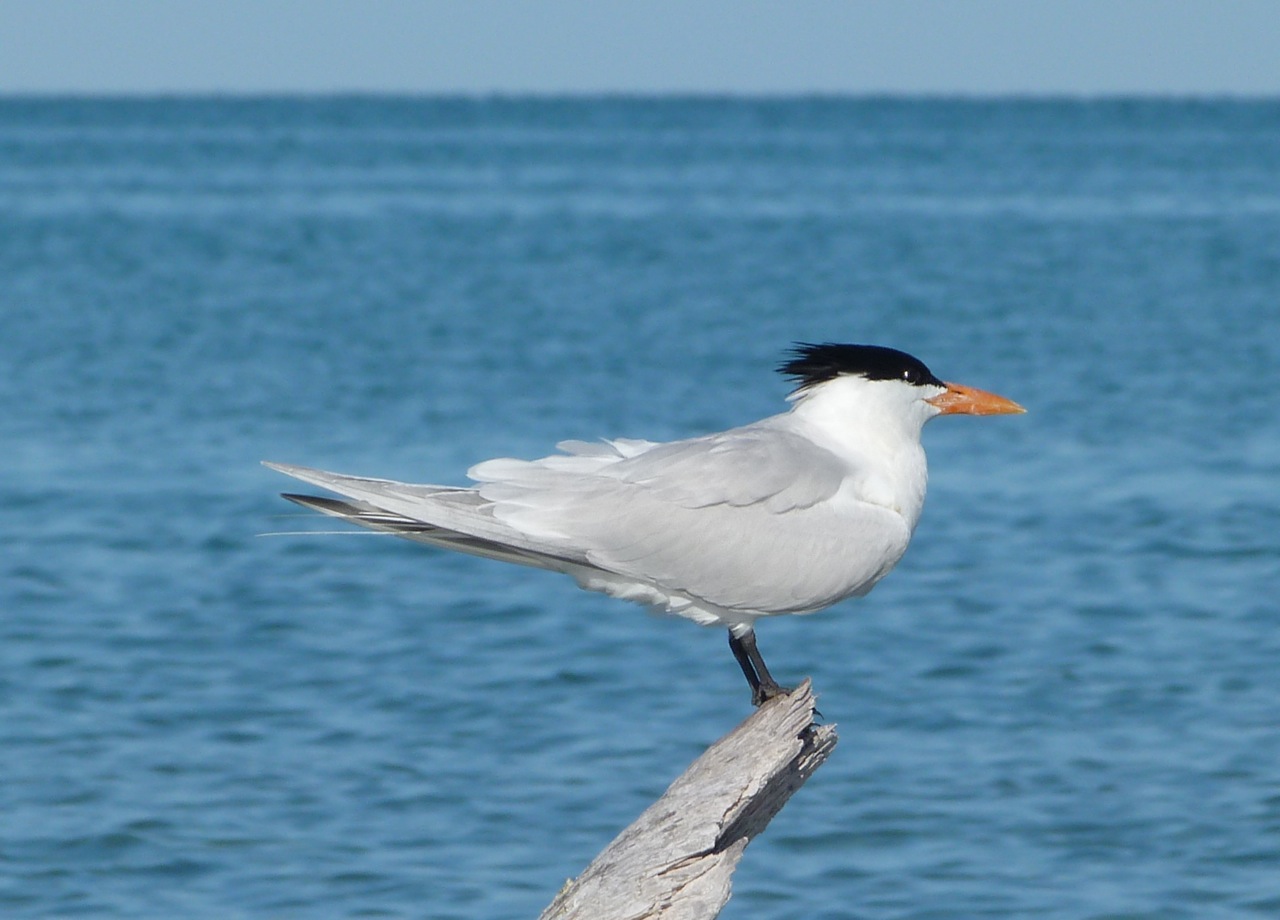
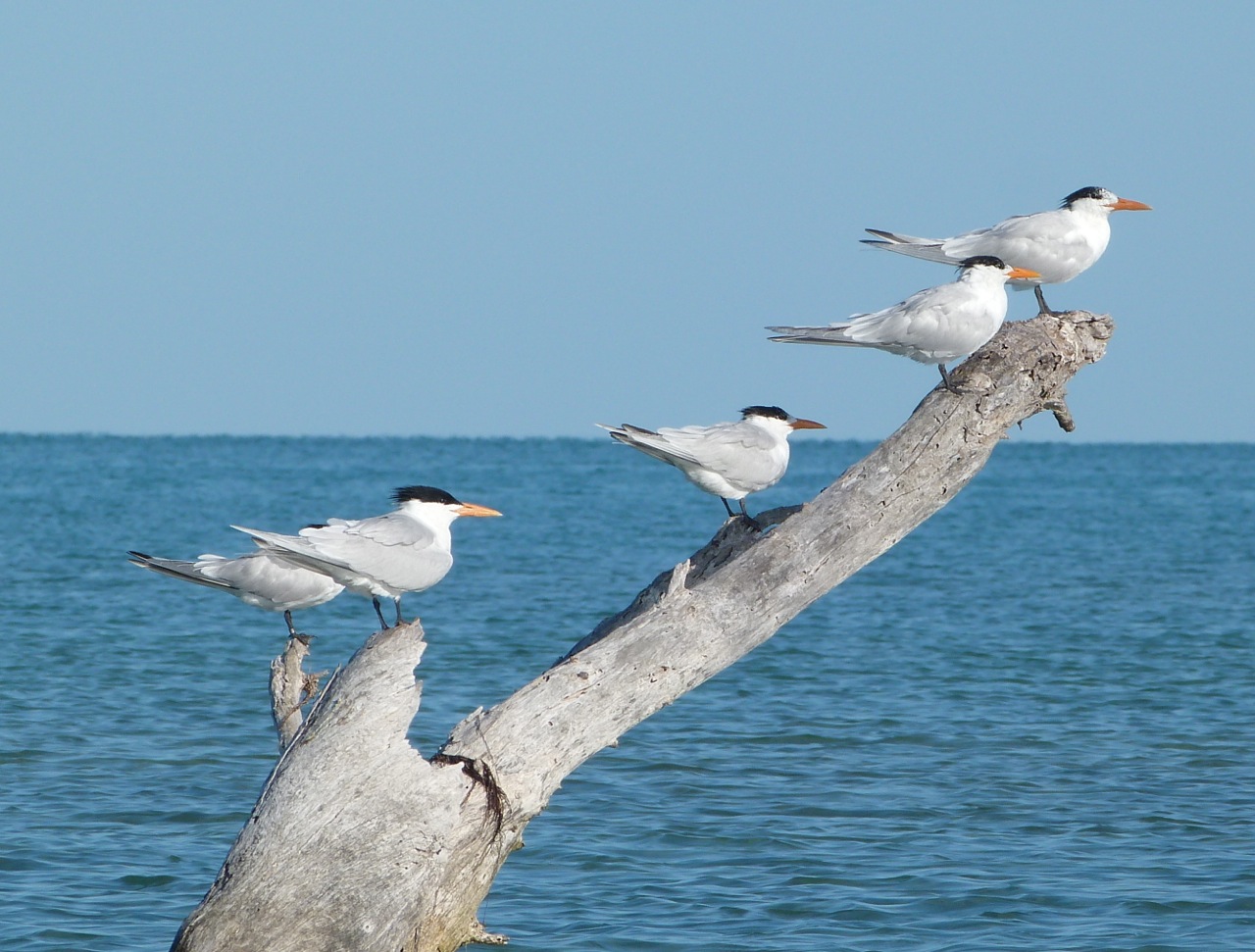
We passed these fine Royal Terns during the boat ride ride out to the bonefishing grounds of the Abaco Marls. The single dead tree lay alone in a vast expanse of open water near the mangrove swamps, providing a perfect perch and vantage point for the birds. Their positioning on the tree suggested a distinct “pecking order”, which turned out to be literally true. The terns were unembarrassed by our presence, but at one stage they all took off and circled lazily round once before settling back on the tree. Those that tried to take a higher perch were aggressively treated by the original occupant. In the end, things settled down much as before. However, one disappointed claimant to promotion was dispossessed of the main trunk entirely. He ended up, uncomfortable and huffy, on a small stump facing the opposite way to the rest of the birds – perhaps from wounded dignity, or to make his feelings known through body language….Royal Tern (Sterna maxima), Abaco Marls, Bahamas 5

220px-Status_iucn3.1_LC.svg 

Unknown's avatar

MASTERS OF UNDERWATER CAMOUFLAGE: BAHAMAS REEF FISH (7)


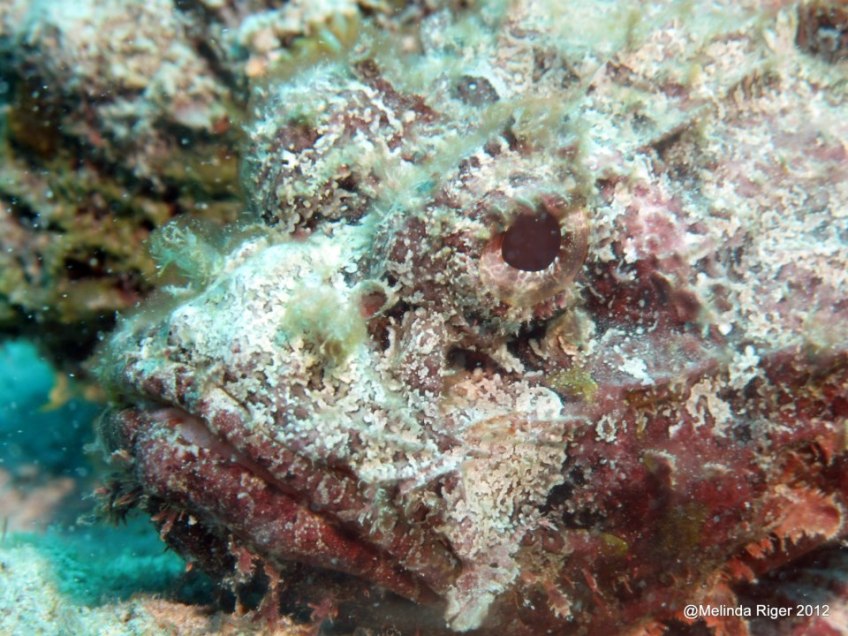
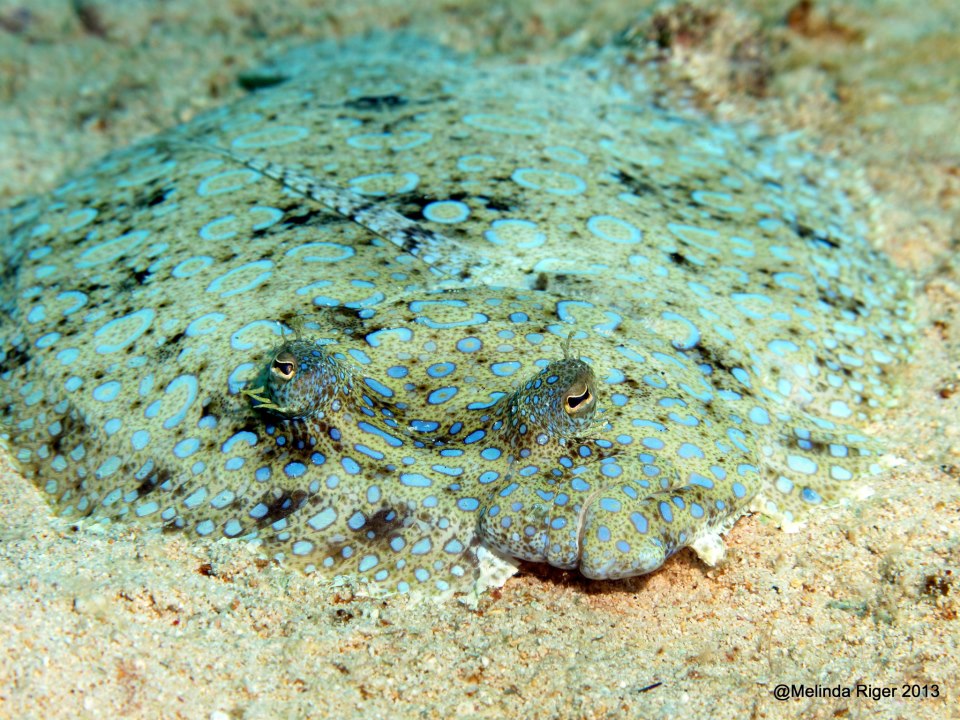
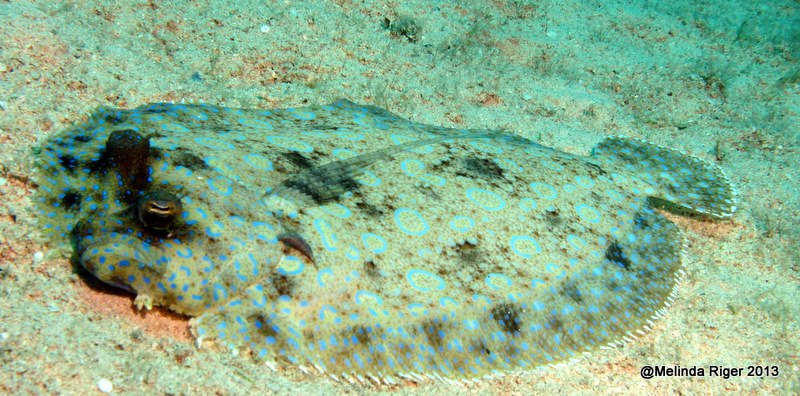
BAHAMAS MASTERS OF UNDERWATER CAMOUFLAGE

SCORPIONFISHScorpionfish camouflaged against coral ©Melinda RigerScorpionfish Close-up ©Melinda Riger @GBS

PEACOCK FLOUNDER or PLATE FISH Bothus lunatusPeacock Flounder Peacock FlounderPeacock Flounder ©Melinda Riger @ GB ScubaPhotos: Melinda at Grand Bahama Scuba

This is my last post until next week, when apparently we can expect a snowy welcome. Hmmmm. Plenty of new material for kind followers – both of you..

20130321-075611.jpg

DELPHI DAWN

Unknown's avatar

HUMMINGBIRDS OF ABACO SPARKLING IN THE SUN


KS Hummer 4

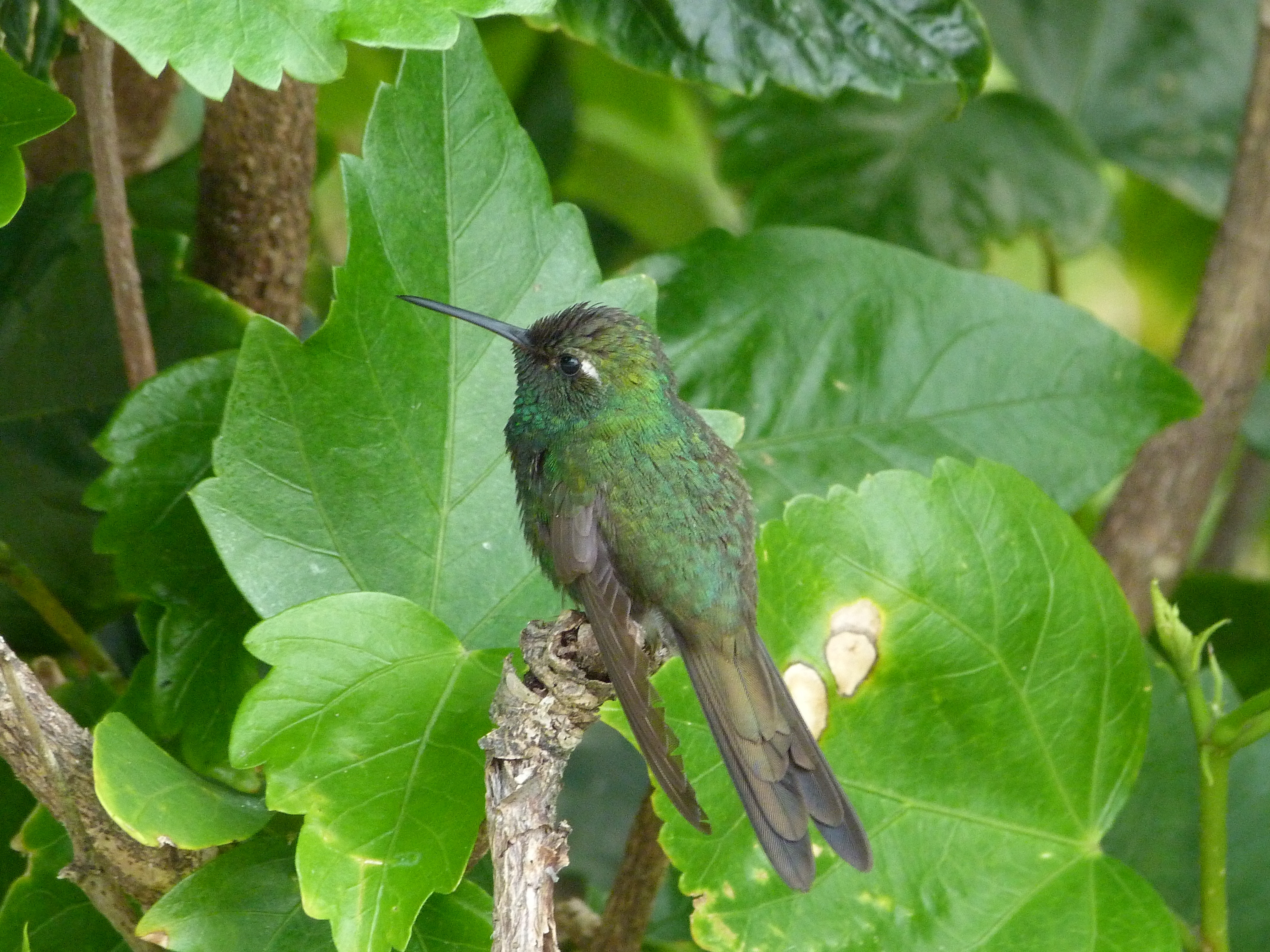
This is a ‘holding’ post while I am actually on Abaco, to be rejigged in due course. The weather is a bit variable, my fishing is somewhat variable (as usual – more miss than hit, though my biggest bone yet a couple of days ago), the birds are fantastic. Abaco has two hummingbird species, the endemic Bahama Woodstar and the Cuban Emerald. The Woodstars are rather pushed around by the Emeralds, and tend to be scarcer where there are plenty of Emeralds. We are lucky at Delphi that both species coexist in relative harmony, although this may be largely due to the sugar-water feeders and the hummer-friendly planting around the Lodge. Here are a few irridescent images I’ve taken in the last few days. Things are a bit slow here (the internet connections, not me), so the image order, formatting and sizing may need attention later on…

KS Hummer 6KS Hummer 1KS Hummer 3KS Hummer 5Oh. Is that the time? I need a Kalik and lie down. I’ll add a couple pics more later!

NB these photos are posted exactly as taken. No photoshop, no iFiddling, no cropping. That’s how close you can get to these tiny birds…

ADDENDUM A few shots of a hummer in flight feeding on plants can now be seen on my subsidiary website HERE

Unknown's avatar

MANGROVE JELLYFISH: AN UPSIDE-DOWN UNDERWATER LIFE


250px-Fkeysmacro

MANGROVE JELLYFISH: AN UPSIDE-DOWN UNDERWATER LIFE

220px-Status_iucn3.1_LC.svg

Production still from the television series BAHAMA BLUE © 2014 Parallax FIlm Productions Inc.

             Production still from the television series BAHAMA BLUE © 2014 Parallax FIlm Productions Inc.

The Mangrove Jellyfish Cassiopea, also called the ‘upside-down jellyfish’ for reasons I needn’t dwell on, is the only member of its particular jellyfish family. These creatures prefer warm waters, and typically live upside-down on the sea-bottom, which no doubt makes catching prey very simple. They can be found individually, though more likely in large groups, with individuals displaying different shades and colours.

NEW An excellent video by Melinda Riger of Grand Bahama Scuba

The Mangrove Jellyfish has one of the milder stings of the numerous species, though human reactions to the sting will vary with the individual. A greater problem may come from swimming around or over a mass of these creatures. Their stinging cells are excreted in a transparent mucus which may invisibly cover the unwary swimmer. Apart from skin-irritation and a rash, the stings are apparently very itchy. My guess is that scratching can only make things worse (cf No-see-ums…). The first of the two videos below was taken recently by Sarah Bedard (to whom thanks) who “found a great tidal pool full of them at the end of Rock Point Road, Treasure Cay (Abaco)”. The second is short, but with some amazing footage of the Jellyfish in action.

Unknown's avatar

A RARE ABACO PARROT DISPLAYS A RARE TALENT…


DCB GBG Cover Logo

A RARE ABACO PARROT DISPLAYS A RARE TALENT…

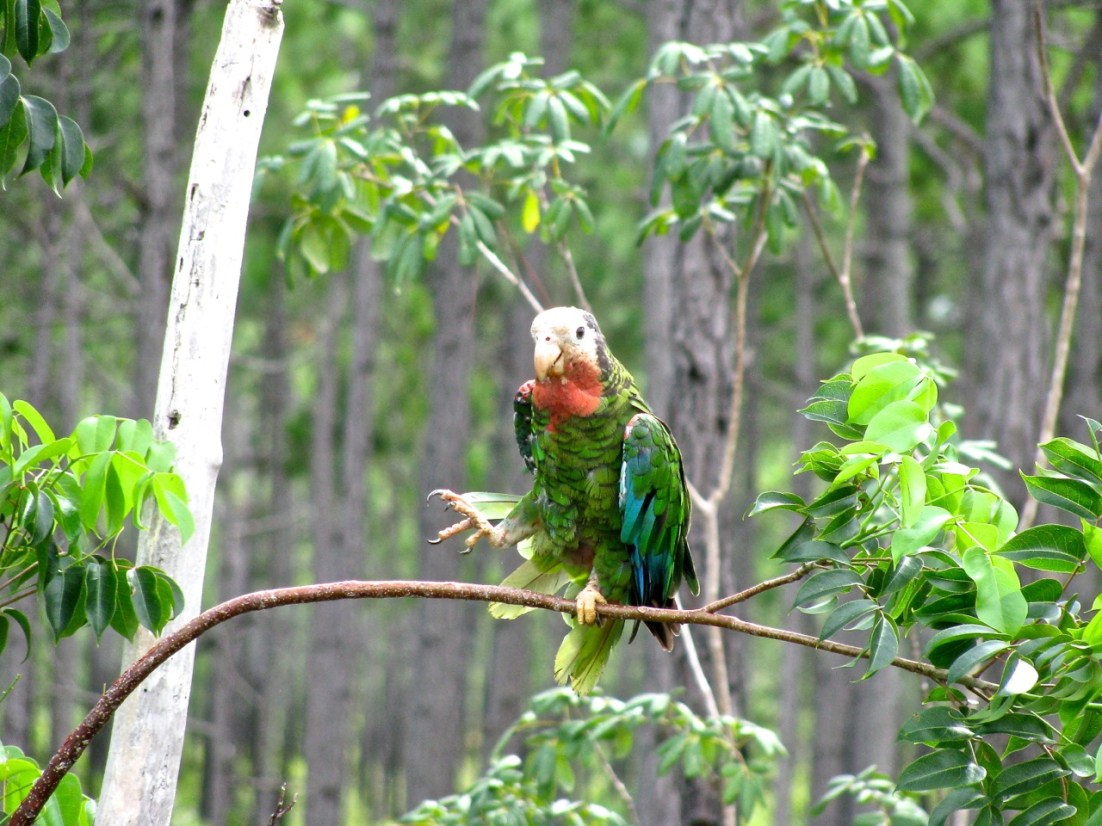
WOULD YOU LIKE TO SEE MY LITTLE TRICK?ABACO PARROT CS 13-3

I’M A BIT CAMERA-SHY – I’LL JUST TURN ROUNDABACO PARROT CS 13-4

THAT’S BETTER. ARE YOU SURE YOU ARE READY FOR THIS?ABACO PARROT CS 13-2

TA DAAAAAAAAAAAAAAAAAAAABACO PARROT CS 13-1

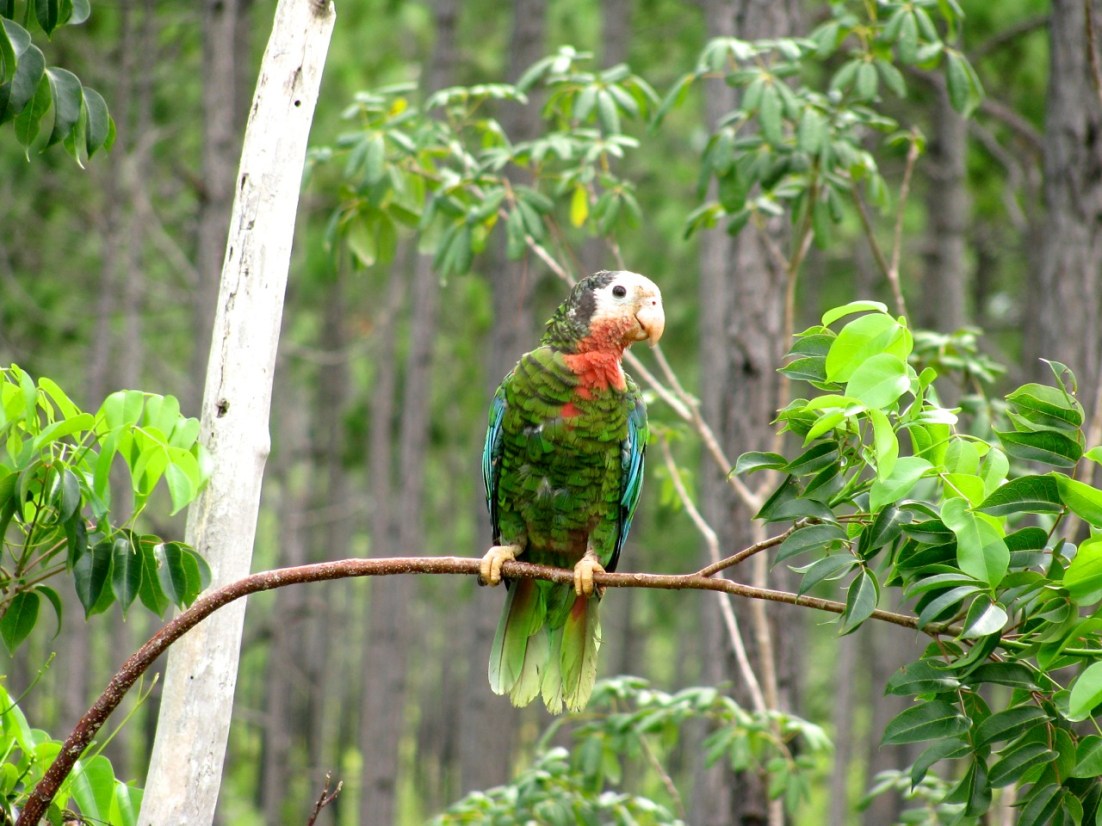
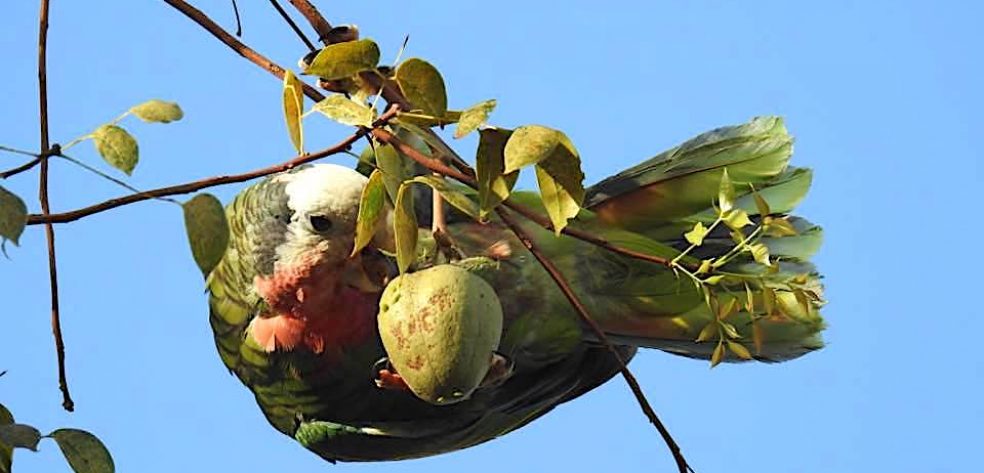
The Abaco Parrot is a unique subspecies of Cuban Parrot found on only Abaco. They are the only parrot to nest underground, in limestone caves in the pine forest. Their numbers have increased from near extinction to a sustainable population as the result of an intensive program of conservation and anti-predation. They get plenty of publicity hereabouts, and have their own page HERE. We normally avoid too much whimsy in these parts, but I am in parrot territory right now, so I have given myself permission to break my own rule. Photos: ©Caroline Stahala (who looks after them)

Unknown's avatar

PARROTFISH: COLOURFUL CORAL CHARACTERS BAHAMAS REEF FISH (6)


Stoplight Parrotfish ©RH

BAHAMAS REEF FISH (6) PARROTFISH: COLOURFUL CORAL CHARACTERS

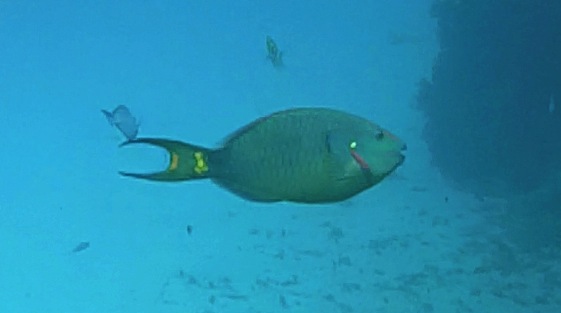
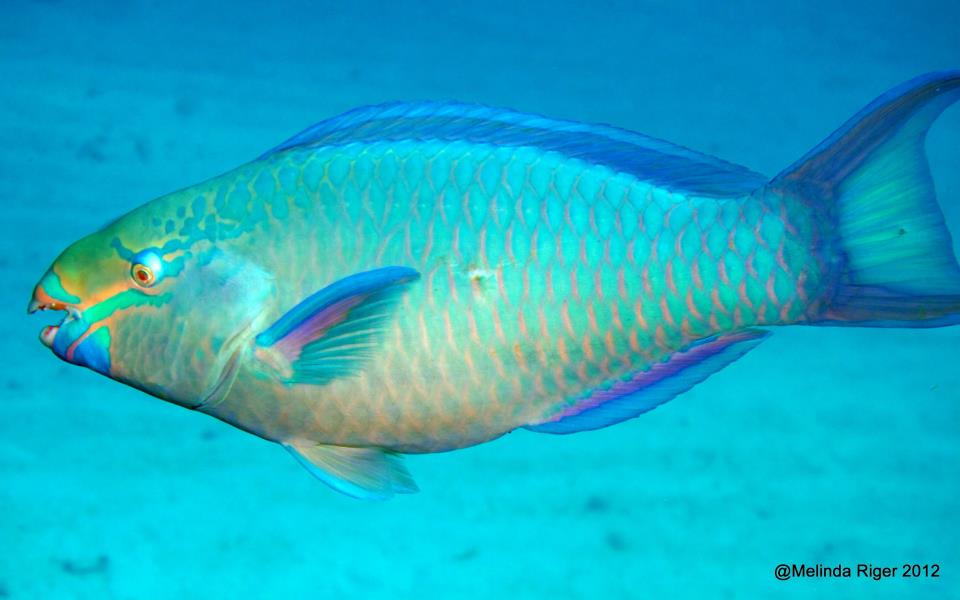
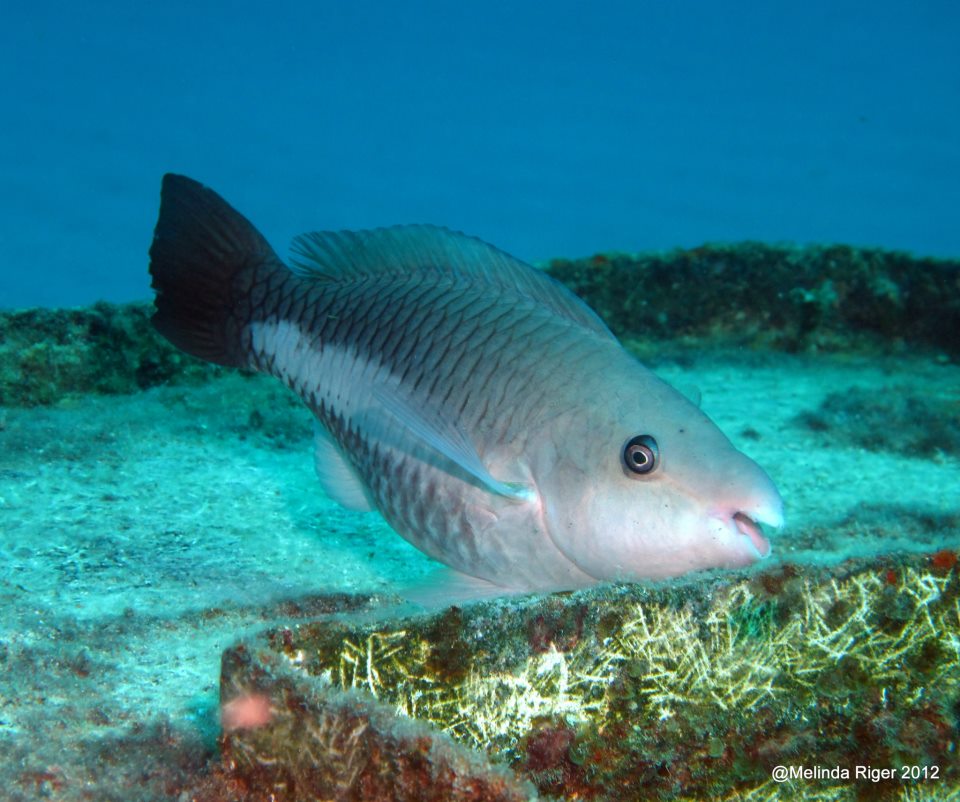
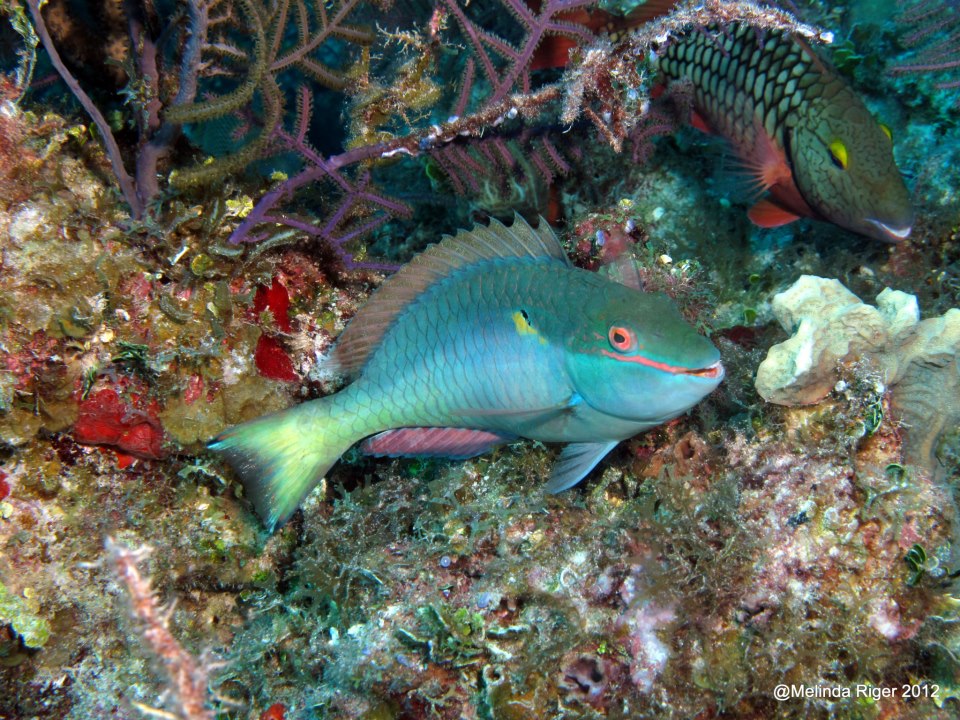
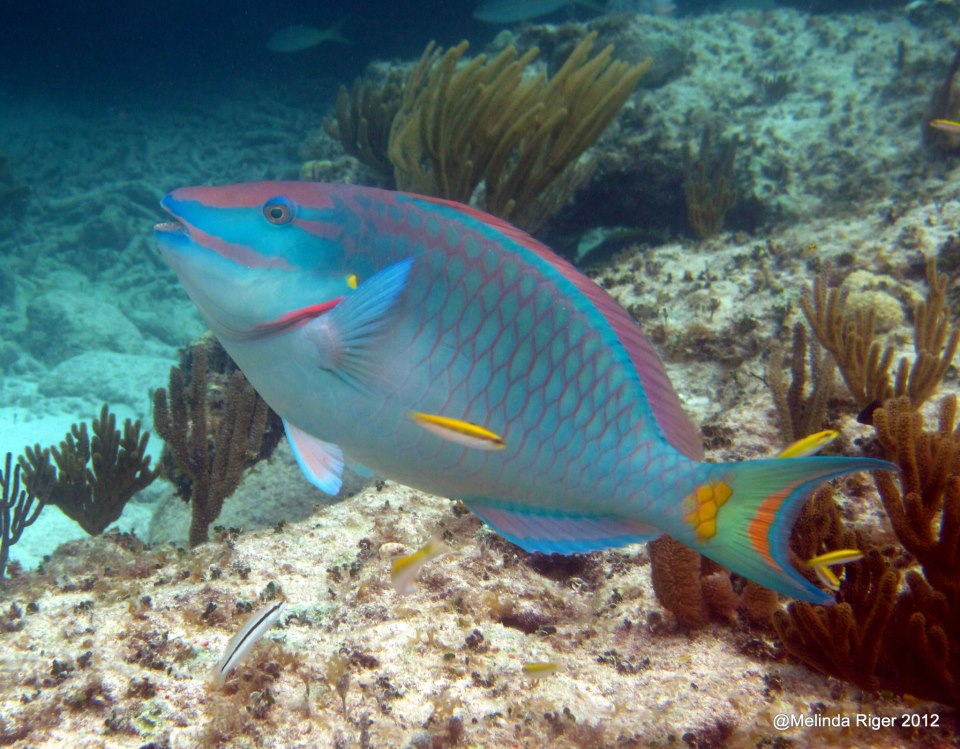
The term ‘PARROTFISH’ comprises many related species (80) around the world  inhabiting shallow tropical and subtropical waters.  They are commonly found in coral reefs and seagrass beds, and along rocky coasts. They play a significant role in BIOEROSION. Here are some examples of 5 of this species that inhabit the waters of the Northern Bahamas

BLUE PARROTFISHBlue Parrotfish copy 2

PARROTFISH FACTS TO ASTOUND AND IMPRESS YOUR FRIENDS WITH

A. FEEDING HABITS

1. Named for their dental arrangements – a mouthful of teeth, forming the characteristic ‘beak’

2. Primarily herbivore but not above snacking on small creatures / organisms or even molluscs

3. Their teeth grow continuously, replacing ones worn away by feeding on coral

4. As they feed on algae etc, their teeth grind up the coral, which they  ingest

5. Then (get this!) they digest it and excrete it as sand… it’s a component of your favourite beach!

6. “One parrotfish can produce 90 kilograms (200 lb) of sand each year”. Wiki says so – it must be true

7. They are a vital species in preventing algae from choking coral

PRINCESS PARROTFISHPrincess ParrotfishQUEEN PARROTFISH (initial phase)

B. PERSONAL INFORMATION (theirs, I mean)

1. Some species secrete a protective mucous cocoon to sleep in or to conceal themselves from predators

2. A mucous substance also helps heal damage, repel parasites, & protect them from UV light

3. As they develop, most species change colour significantly to become vivid adults – “polychromatism”

4. Some juveniles can change colour temporarily to mimic other species as a protection

5. Most are “sequential hermaphrodites”, turning from female to male (a few change vice versa)

6. They tend to hang out in groups of similarly-sized / -developed fish

7. Single males tend to have several lady friends, and aggressively defend their love rights

8. Parrotfish are PELAGIC SPAWNERS. Females release many tiny buoyant eggs into the water, which float freely and settle into the coral until they hatch

9. Unlike other fishes, they use their pectoral fins to propel themselves

10. Their feeding behaviour makes them unsuitable for marine aquariums

RAINBOW PARROTFISH& Royal Grammas

Anyone interested in getting more information about Parrotfishes – maybe about that whole female / male transformation thing? – is recommended to look at an article by Tim Smith of Miami University, Ohio entitled THE BAHAMAS: A CLOSER LOOK AT THE COLORFUL AND UNIQUE PARROTFISH Click on the P-word to get to it directly.

If you are pressed for time, here is the article conveniently digested into bullet points:

  • a superior competitor among herbivorous reef fishes
  • large, heavy scales in regular rows on head and body, with teeth fused together to form a beak-like jaw
  • unique pharyngeal dentition: upper interlocking pharyngeal bones located above the gills rest plush against the lower pharyngeal bone to form the pharyngeal mill (molar-like teeth in their throats) used to grind up the hard coral skeleton that contains microscopic algae
  • the crushed calcareous material travels through the fish’s digestive system and is voided on the reef as white coral sand
  • some fish will return to the same location to deposit this calcareous powder resulting in the formation of small hills over time
  • most parrotfish live on reefs from which they rarely wander far
  • rainbow parrotfish are thought to use the sun for navigation to travel from its nocturnal cave in deeper water to the shore to feed
  • all parrotfish uniquely use the pectoral fins located behind the gills for propulsion (not their caudal or tail fins)
  • in addition to scraping algae from substrate, some parrotfish browse on sea grasses
  • at night, each fish separates to search for a suitable place within the reef to sleep.
  • the large, thick scales of the parrotfish are strong enough to stop a spear in some species
  • the flesh is soft and spoils quickly, the parrotfish is not known as a food fish in the Bahamas
  • in Hawaii they are eaten raw and at one time were reserved for royalty
  • the blue parrotfish may carry ciguatera-producing toxins that result in illness when consumed
  • it’s high time for another picture or two

REDBAND PARROTFISH

Some more bullet points from Tim Smith’s article:

  • at night some species simply burrow into the sand
  • others secrete a filmy mucus cocoon in 30 minutes which masks its scent, affording the parrotfish protection from coral reef night predators such as sharks and moray eels.
  • the parrotfish has the ability to undergo sex reversal in which female fish become males
  • parrotfish born male remain male throughout their lives and are called primary males.
  • female born fish may change sex & color to become male – secondary males or referred to as supermales or terminal males.
  • some parrotfish are chameleon-like, changing their colors to match their surroundings.
  • parrotfish spawn throughout the year
  • there are 80 species of parrotfish
  • the vibrantly colored parrotfish plays a major role in maintaining the cycle of reef growth and erosion
  • “Do not be alarmed if you experience a sudden drift of sediment or hear the crunching sound of coral the next time you are snorkeling or diving along a coral reef in the Bahamas. It is just a parrotfish doing its job.”
  • I sense a stoplight is about to interrupt the proceedings… and here it is

STOPLIGHT PARROTFISH (adult and, below, juvenile form)Thanks to Melinda of Grand Bahama Scuba for her fantastic illustrative pics; the header is mine own

It’s possible that I won’t be quite as attentive with posts / replies to comments etc over the next couple of weeks or so. I’ve a few things in the pipeline, but it may depend on wifi access… I’m giving up trying to use an iPhone to post while on the move – fine for snaps, but not for anything more complicated. So apologies in advance, and like Arnie, I’m afraid I’ll be back…

Gone Fishin'Relax... at Lubbers Quarters

Unknown's avatar

VACATION FEVER HITS ROLLING HARBOUR: OUTBREAK OF HUMOUR


DCB Pineapple Crop

VACATION FEVER HITS ROLLING HARBOUR: OUTBREAK OF PICTORIAL HUMOUR

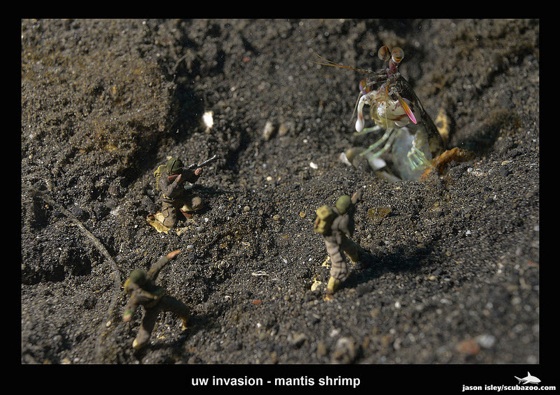
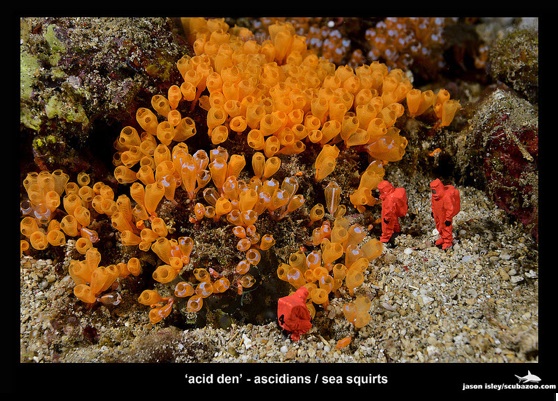
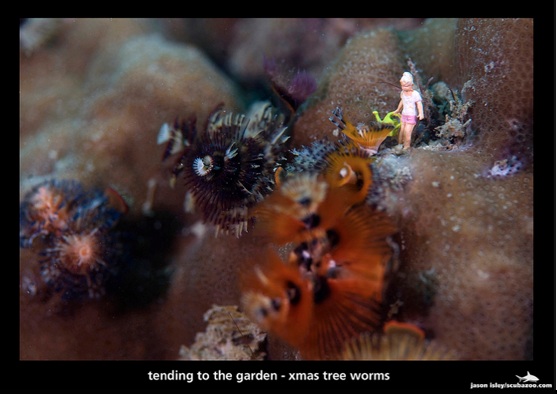
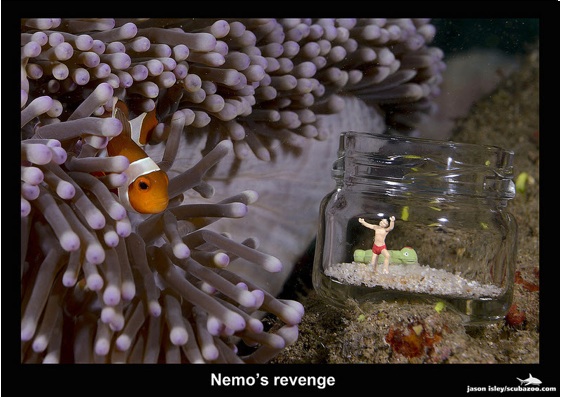
Is humour permissible around here? I think so! With an imminent trip to Abaco and the thought of being out on the Marls this time next week, there’s a jovial atmosphere in the immediate vicinity of my keyboard. So I’m going to unleash some sea creature-based fun from the imaginative JASON ISLEY at SCUBA ZOO  via the enjoyable website SEAMONSTERSCUBAZOO 1 SCUBAZOO 2 SCUBAZOO 3 SCUBAZOO 4 SCUBAZOO 5 SCUBAZOO 6SCUBAZOO 7SCUBA ZOO 9SCUBAZOO 8