CHRISTMAS TREE WORMS Spirobranchus giganteus
“PROBABLY THE MOST CHEERILY FESTIVE WORMS IN THE WORLD…”


 Credits: Melinda Riger of Grand Bahama Scuba, Wiki-Reef & RH


“PROBABLY THE MOST CHEERILY FESTIVE WORMS IN THE WORLD…”
Credits: Melinda Riger of Grand Bahama Scuba, Wiki-Reef & RH

Crabby the Crab lived amongst the greenery at the very back of the Delphi Club Beach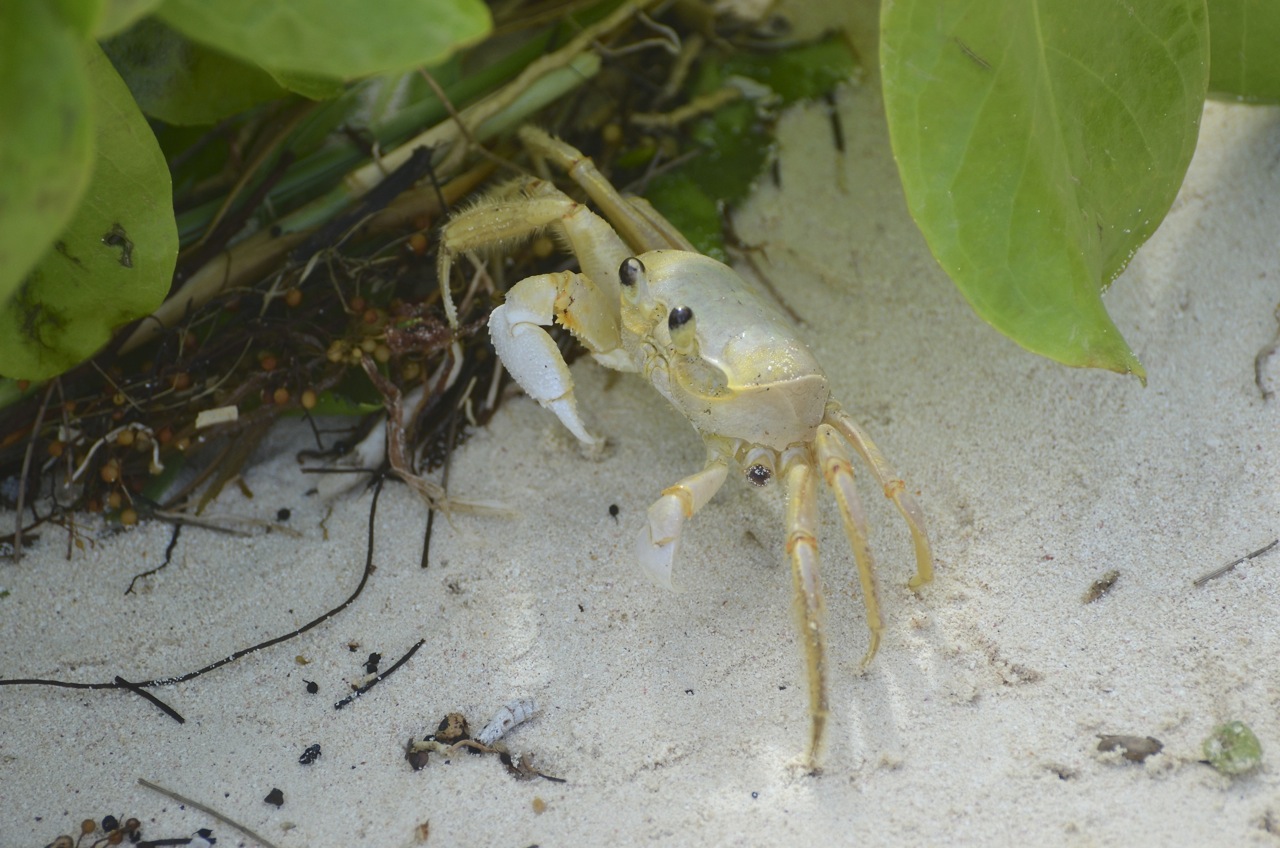
It was a very beautiful beach indeed. Lucky Crabby!
One day Crabby decided to go down to the sea for a swim
He scuttled across the sand towards the sound of the waves
He passed the burrow of his friend Sandy. Sandy was very busy tidying his house.
“Would you like to come for a paddle?” asked Crabby. “No thanks”, said Sandy, “I’m busy today”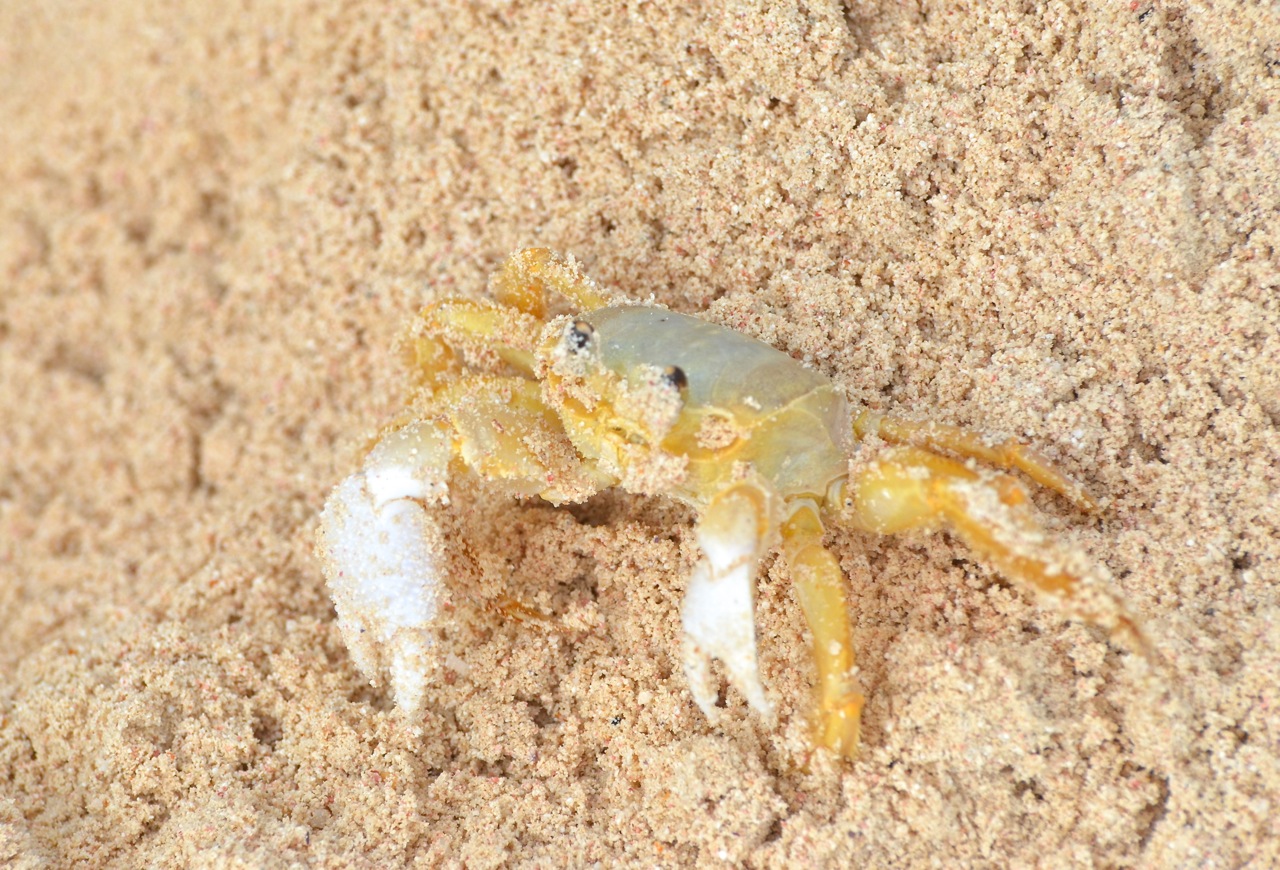
So Crabby carried on towards the water’s edge. He got closer, to where the sand was wet…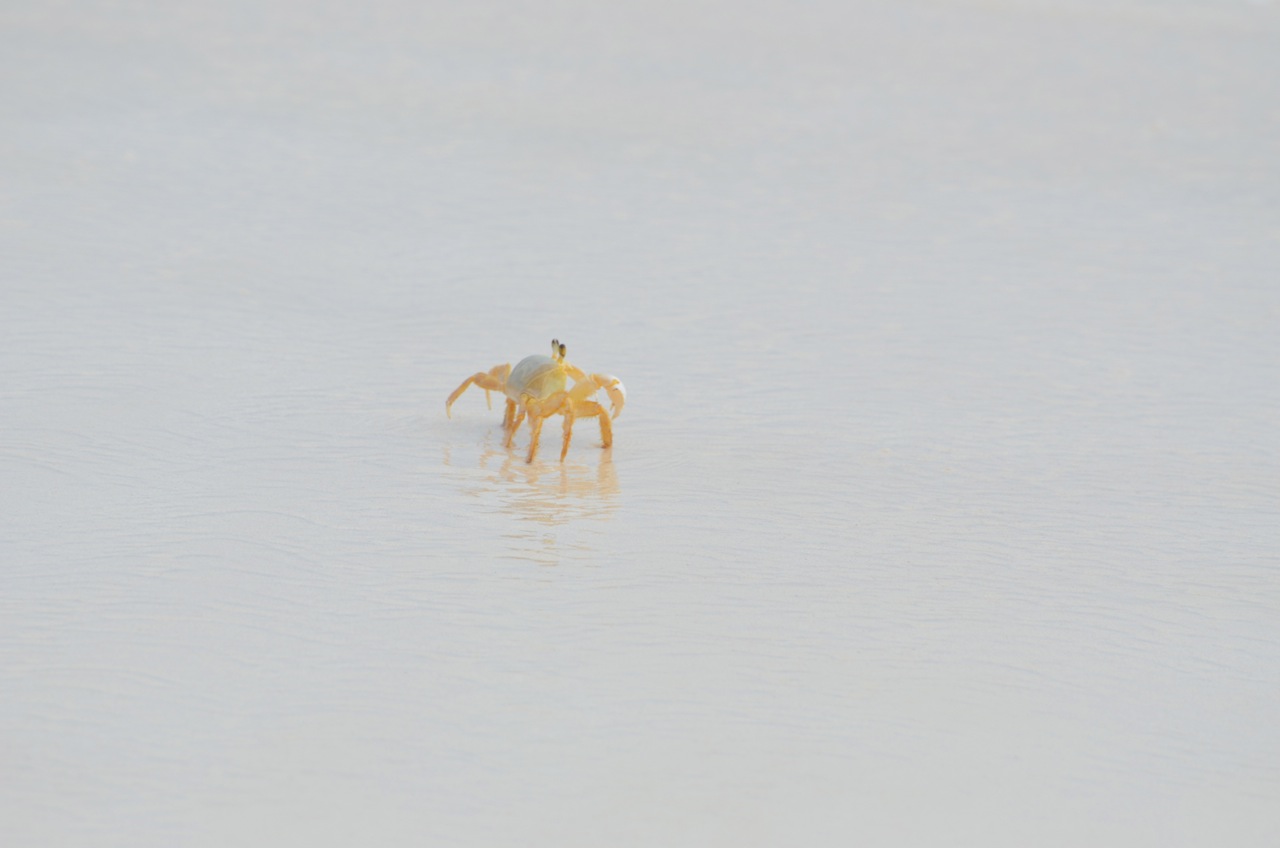
…and closer, to where the water tickled his toes…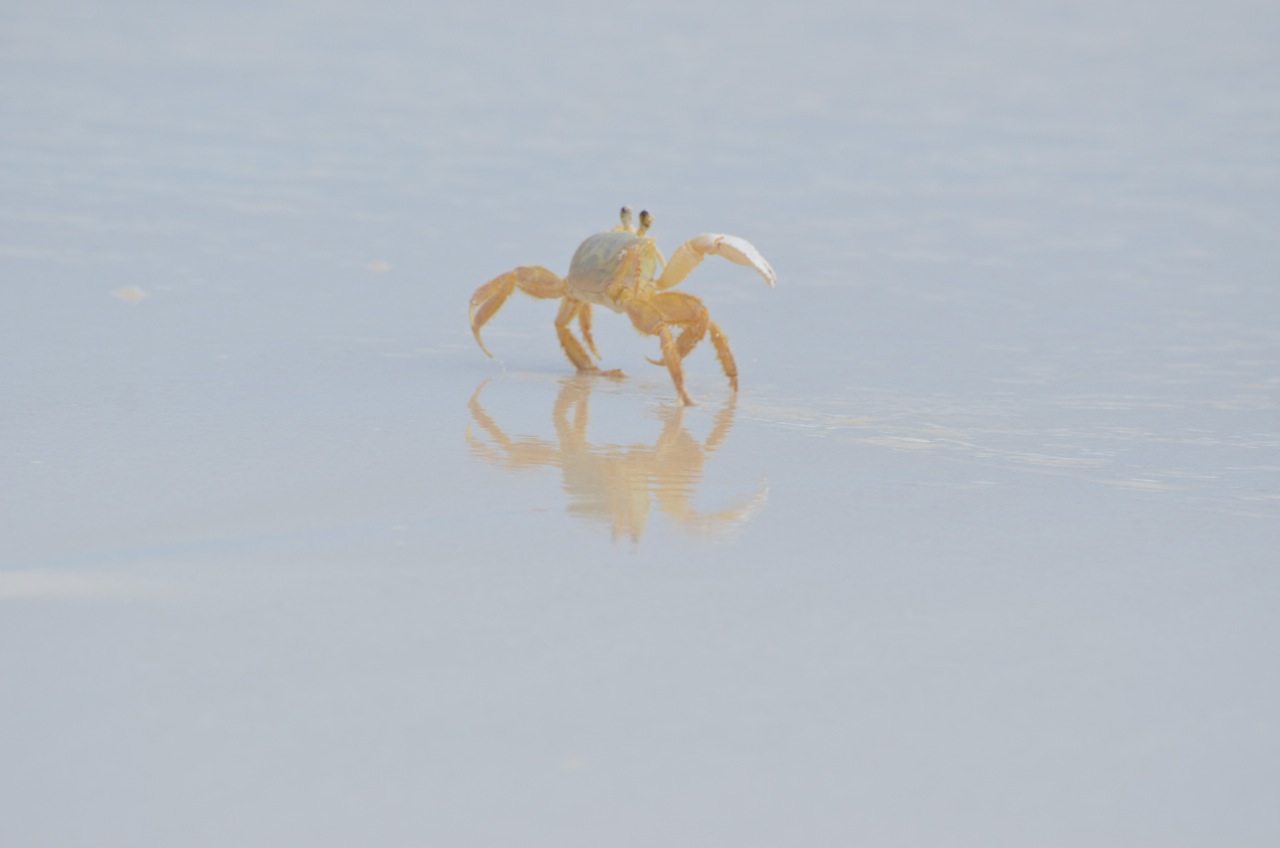
…and closer, to where the tide ripples reached. Crabby waved his claws with excitement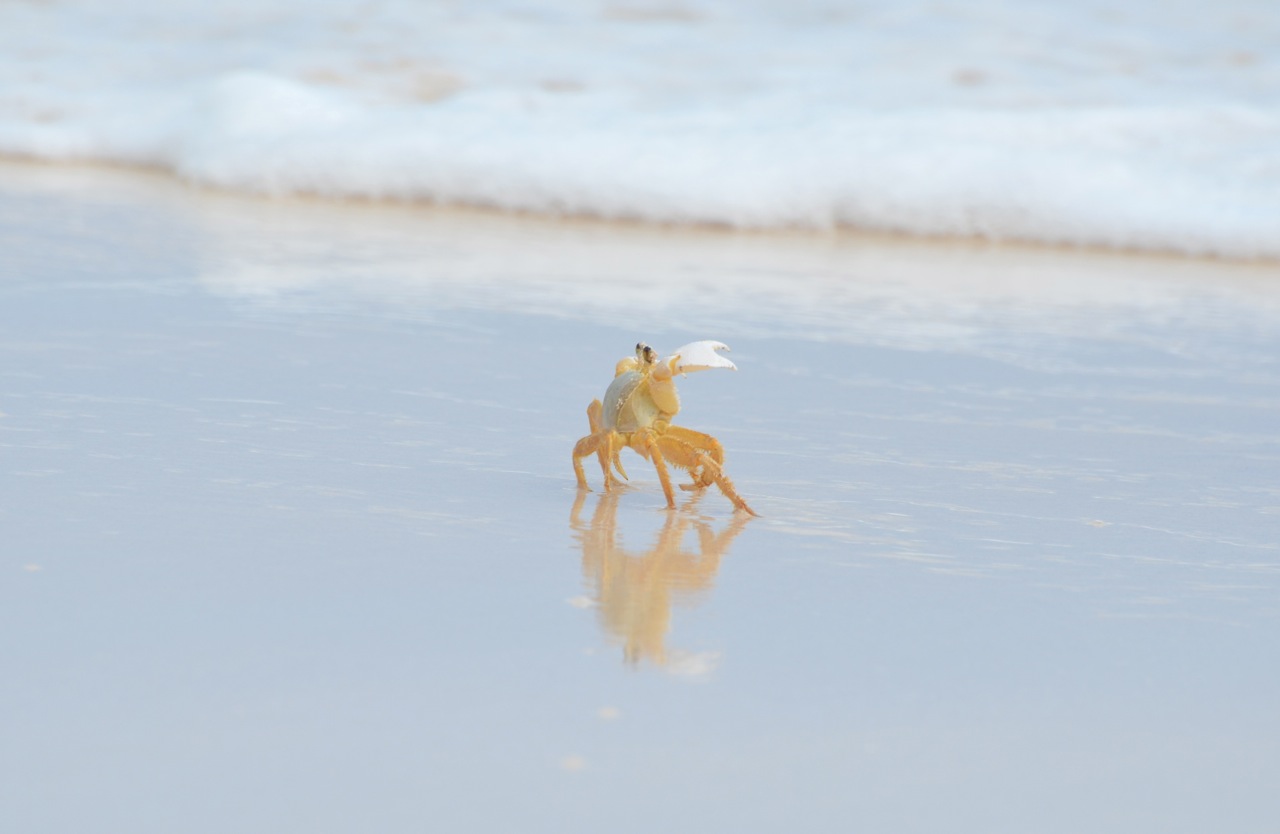
Finally, he was paddling in the warm water. It was just perfect. Whoops! Don’t fall in, Crabby!
Very soon Crabby was in the water, right up to his eyes. What a beautiful day for a swim!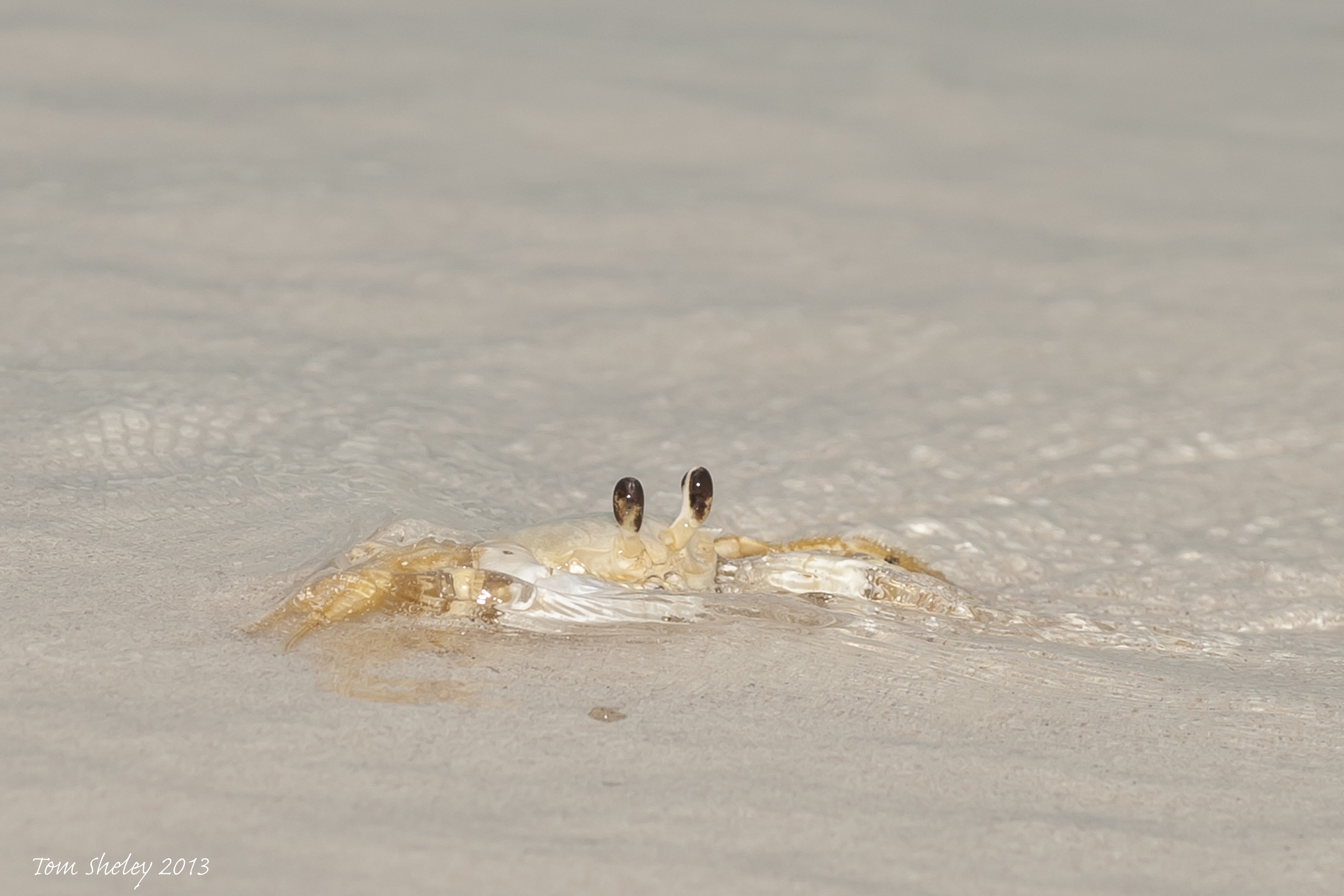
See ‘Crab Run: The Movie’, starring Crabby the Crab
CREDITS: header & beach, RH; last image, Tom Sheley; the rest, Charlie Skinner. DEBITS: pre-Christmas nauseatingly anthropomorphic tomfoolery and video – blame me. No crabs were harmed or even mildly embarrassed during this photoshoot.

I have been idly filing away some stunning close-up reef denizen images by Melinda Riger. A Monday morning is the perfect time to showcase some pouts, poses and glad eyes from the ‘catfish walk’, starting with my absolute favourite…
A COWFISH** PERFECTS THE POUT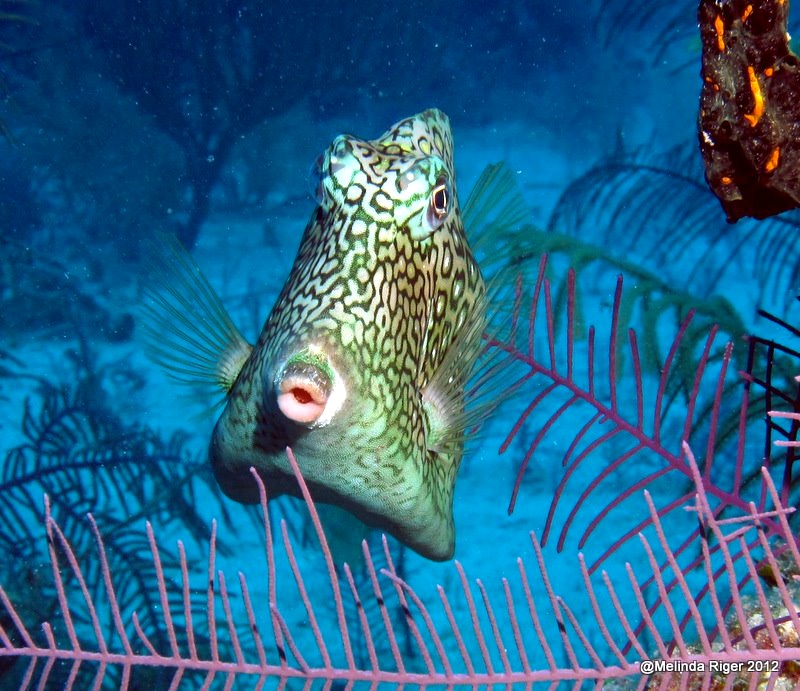
A GREEN MORAY EEL SMILES STRAIGHT TO CAMERA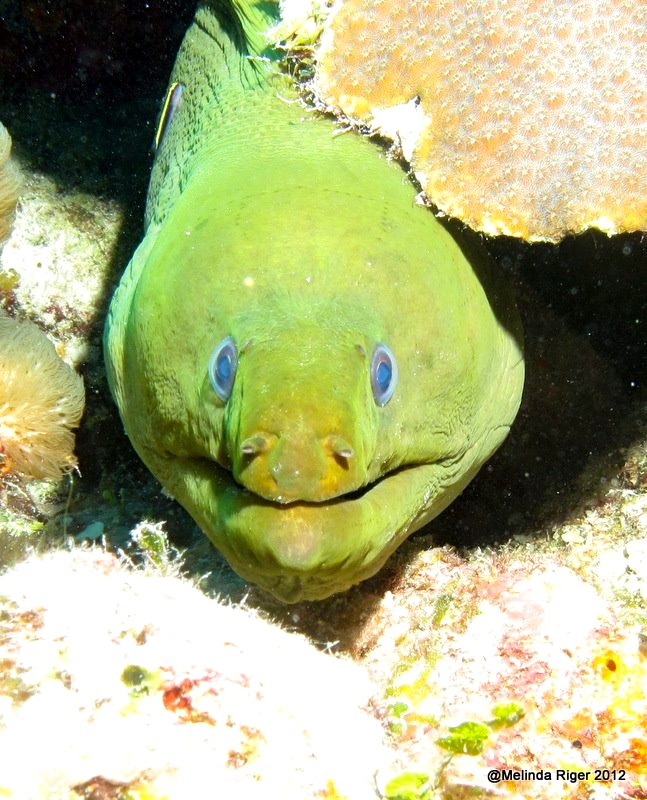
THE QUEEN ANGELFISH ‘LOVES’ THE LENS
A GROUPER DOES THE ‘OPEN-MOUTH’ GAPE
THIS SCHOOLMASTER SNAPPER MAY NOT HAVE GOT QUITE WHAT IT TAKES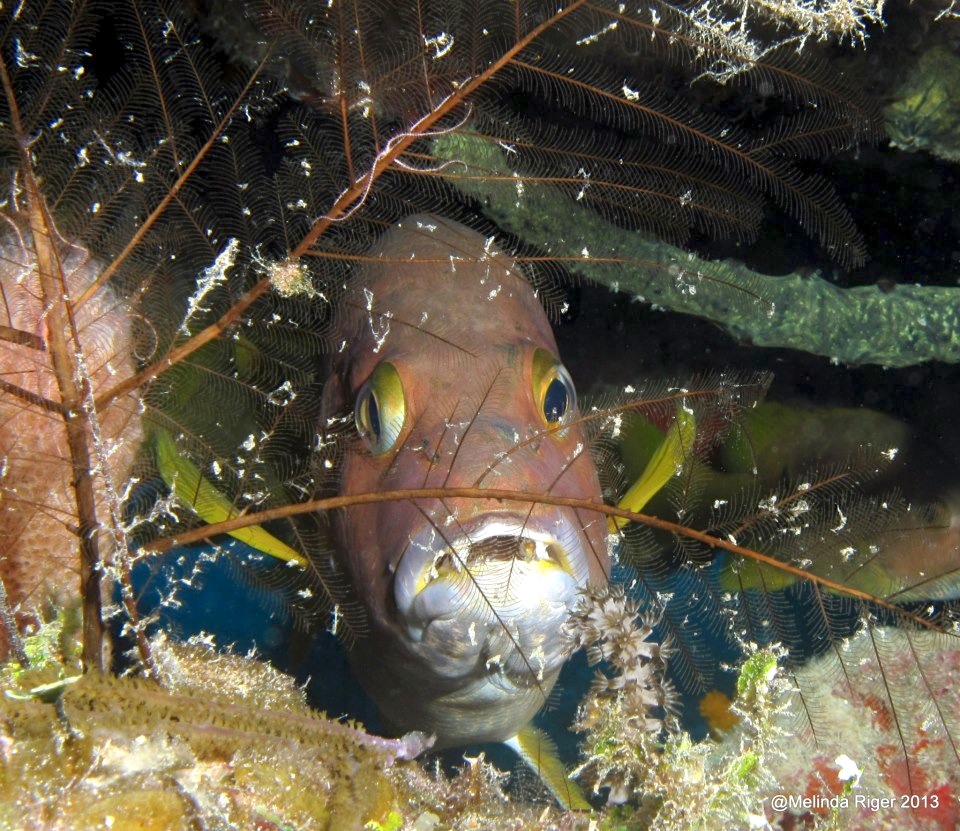
NICE EYES, BUT THE PETITE SAND-DIVER NEEDS TO BE A LITTLE MORE OUTGOING
AS DOES THE SOUTHERN STINGRAY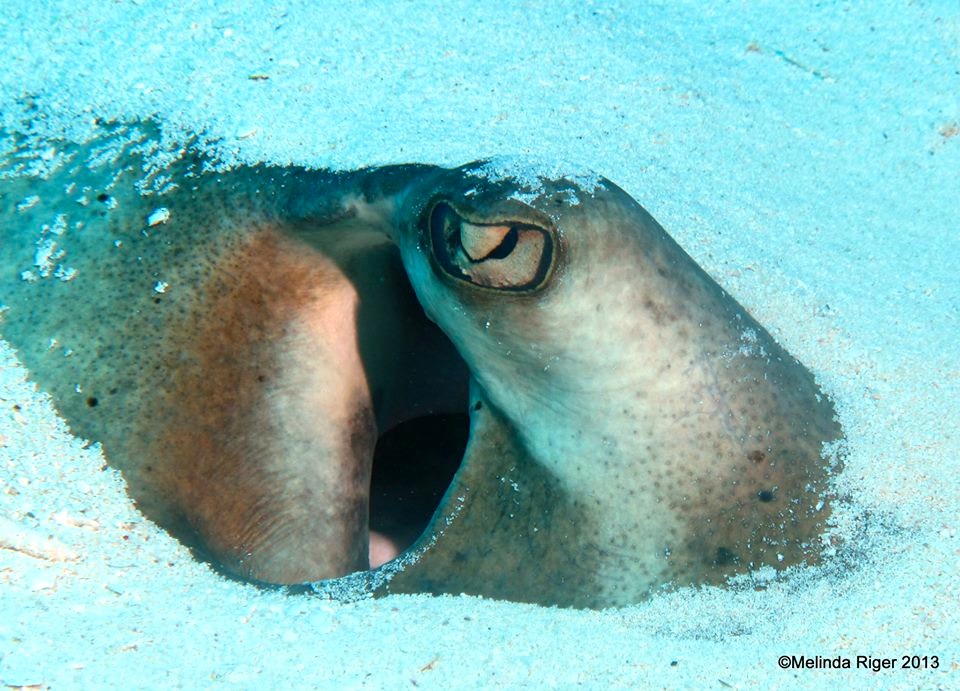
HOWEVER THE PEACOCK FLOUNDER IS ROCKING THE MAKE-UP BOX
THE OCTOPUS IS MOODY & WON’T GET OUT OF BED FOR LESS THAN 20 MOLLUSCS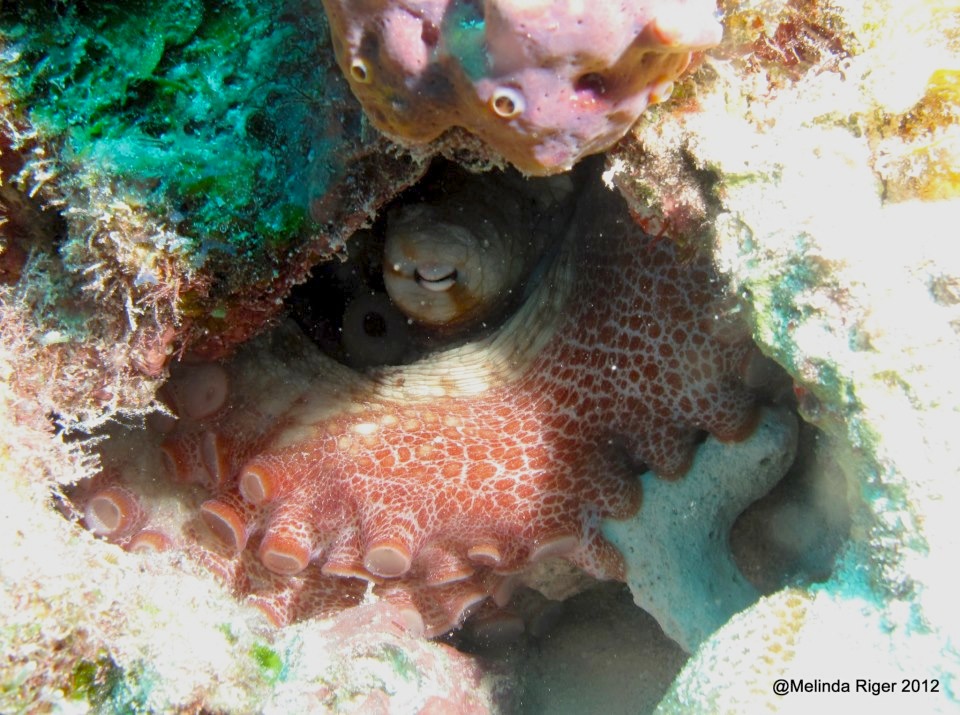
AND REGRETTABLY THE POOR CONCH HAS A BAD STAGE FRIGHT
For more octopus information and a discussion of the correct plural (choice of 3) CLICK HERE
For a post about underwater species camouflage CLICK HERE
**Since I posted this earlier today, I have been asked (re photo 1) what the… the… heck a Cowfish looks like, when it’s not puckering up while facing you. The answer is: stunningly glamorous…
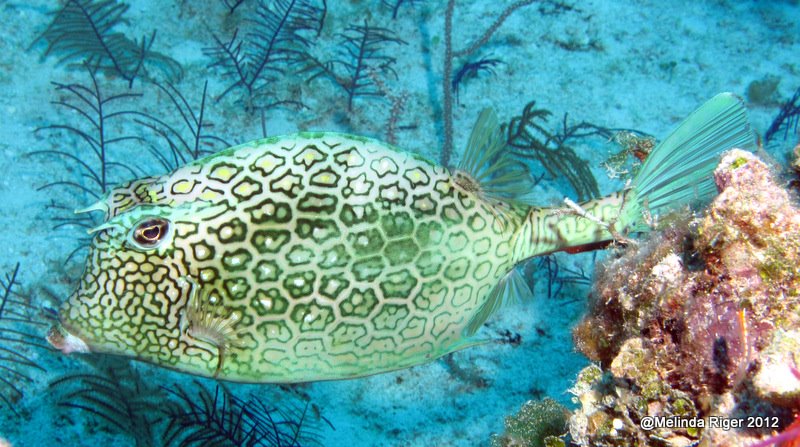
Thanks as ever to Melinda Riger of Grand Bahama Scuba for use permission for her fab photos; tip of the dorsal fin to Wiki for the shark eye header pic

“Oh, that this too too solid flesh would melt, thaw and…” Ah! Sorry. I’m soliloquising again. Must be Thursday. And the merest mention of Hamlet is enough to set anyone off. But I speak not of noble yet gloomy Danes of Elsinore and of discernibly introspective aspect. These ones are pretty reef fish of the Caribbean seas, mainly in the Bahamas and along the Florida coast. There are a number of different types of hamlet, of which the 4 featured below in Melinda’s amazing underwater images were were encountered in one dive.
SHY (OR GOLDEN) HAMLET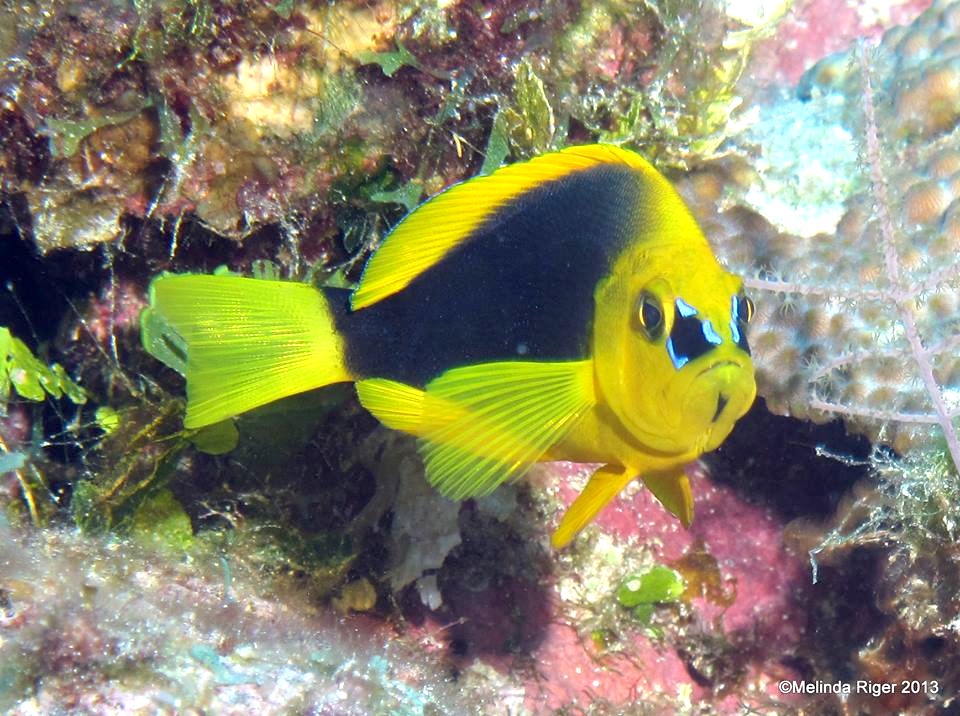

Hamlets have outstandingly interesting reproductive skills, being ‘synchronous hermaphrodites’. They have the unusual benefit of having both male and female sexual organs as adults, permitting imaginative combinations of pairings (though not including self-fertilization). When they find a mate, “the pair takes turns between which one acts as the male and which acts as the female through multiple matings, usually over the course of several nights”. I don’t dare check whether there are websites that cater for this sort of energetic coupling. The wonder is that Hamlets preferentially mate with individuals of their same colour pattern, and that they are not more wanton with their attentions and sexual flexibility.
INDIGO HAMLET
BARRED HAMLET
BUTTER HAMLET

OPTIONAL CULTURAL, HISTORICAL & MUSICAL DIVERSION INSPIRED BY HAMLET
The other notable Hamlet is, of course, the mild cigar equated in the famed commercials with happiness, accompanied by an excerpt from a jazzy version of Bach’s ‘Air on the G String’. Here is one of the best – and possibly the only advert to my knowledge to feature not one, but two excellent Sir Walter Raleigh jokes.
Bach’s well-known descending chord sequence of was of course shamelessly ripped off by ingeniously adapted by Procol Harum for ‘A Whiter Shade of Pale’, their first single in 1967. Relive the Summer of Love right here and now. Is this the music that might even put those versatile hamlets in the mood…
Any fret-tweakers might like to see the sheet music of the Air for guitar – you could even play it on air guitar – which is relatively easy, being in C major.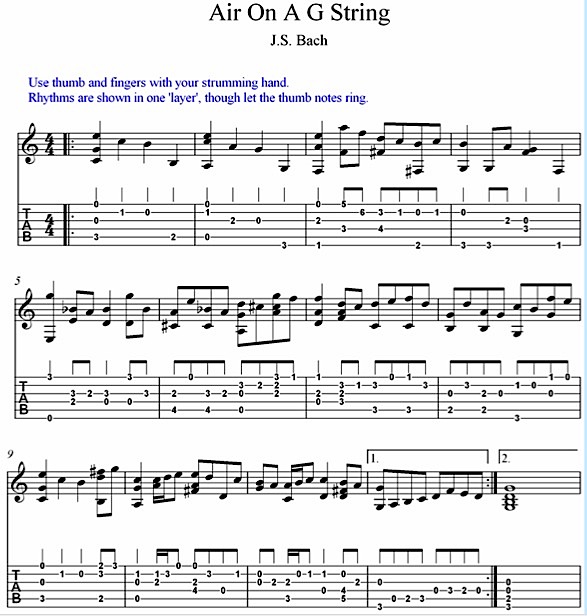 Credits: All fish pics Melinda Riger of Grand Bahama Scuba, except wiki-header; open-source online material; my mp3, dammit – I can’t get the wretched tune out of my mind…

with guest expert PHIL LATTERLY
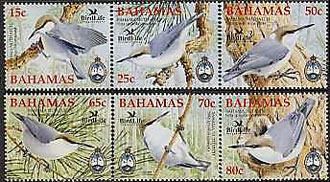
The Bahamas ‘does’ extremely nice stamps, in particular ones featuring the rich and varied wildlife of the islands. The islands spread from the subtropical climates of the north, on a level with Florida, to the near-tropical islands of the south. This ensures plenty of scope for designing pretty sticky bits of paper to stick onto other bits of paper. One of the small pleasures in life, near-lost to the tyranny of the email…
The sets of wildlife stamps are issued by the Bahamas Post Office. I’ll add to this collection piecemeal (including some from my own modest collection). The very latest commemorative issue heads the display.
1. SEA CREATURES
BREEF 20th Anniversary Issue – November 2013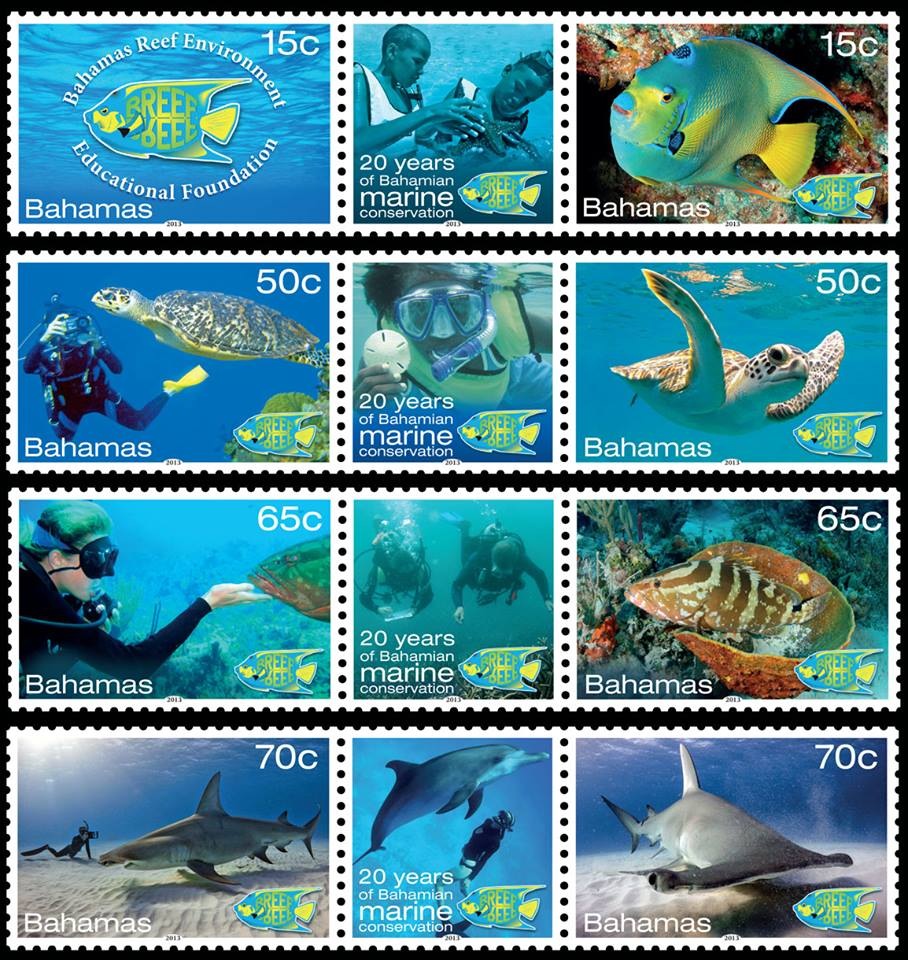
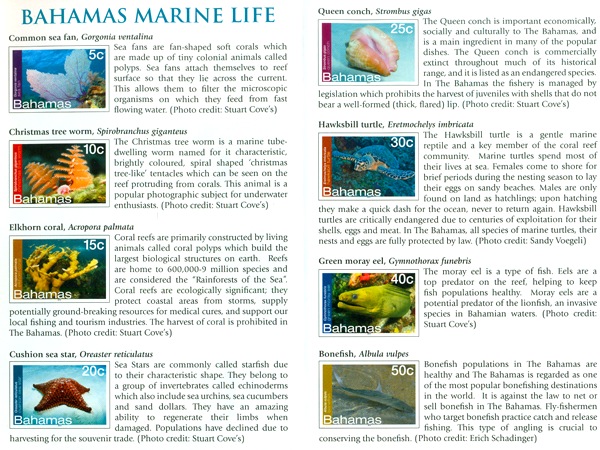
REEF FISHES

2. BIRDS
February 2012: WWF Flamingo Issue
Best seen on Inagua, the island where they breed. Less often found elsewhere, and sadly now only as occasional ‘vagrants’ on Abaco. Flamingo post with wonderful pictures of adults, babies and nests HERE

PARROT POST
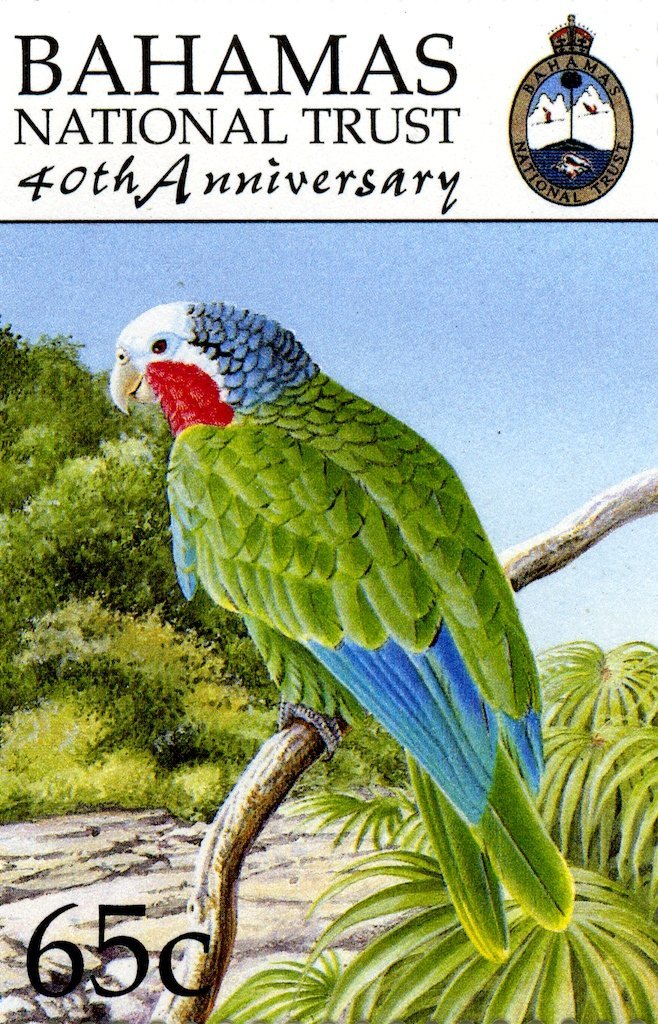
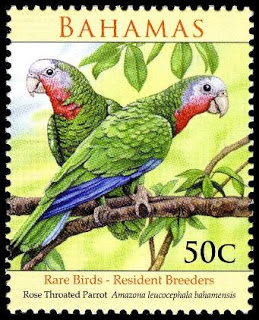
Found mainly on Abaco (the resident underground nesting variety) and Inagua (conventional nesters), where they breed. Small groups are now found elsewhere, e.g. Nassau, where there is a local monitoring programme, but I’m not sure that there is evidence of breeding there. Any info welcome… One (of several) lavishly illustrated parrot posts HERE
Impressive commemorative issues for the BAHAMAS NATIONAL TRUST

OTHER BIRD SPECIES


The KIRTLAND’S WARBLER is one of the rarest birds of the Bahamas, a winter resident that breeds only in a small area of Michigan. The entire population is numbers only a few thousand birds. The number of sightings annually on Abaco is very small – fewer than a dozen, and in some years none at all. Increasing knowledge about their favourite haunts is now improving the recording rate. I know of two seen this year, on the same day… a birder’s lifetime achievement.

This swallow is endemic to the Bahamas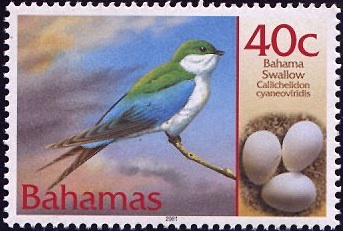
Found on Abaco only as an occasional visitor.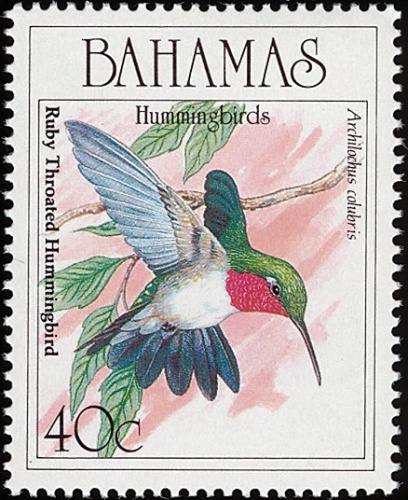
WATERFOWL Credit as shown
3. ANIMALS


4 BUTTERFLIES & INSECTS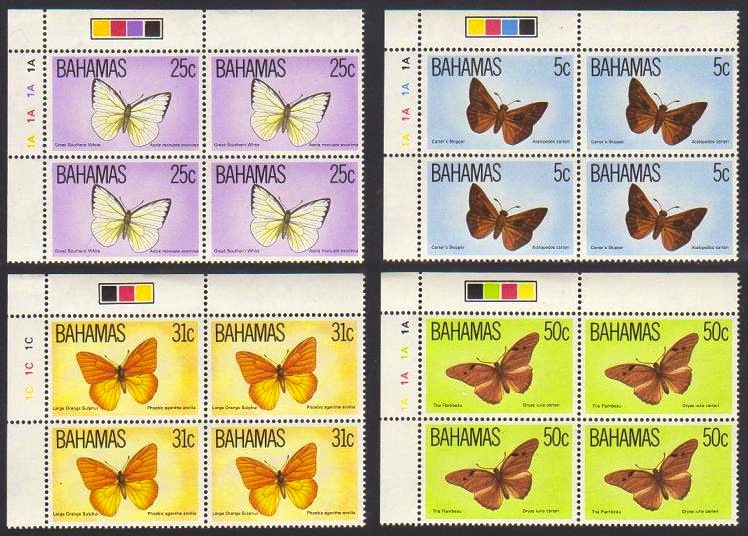
Credits: A compendious credit to sundry online sources including Bahamas PO, Bahamas Weekly, eBay and other sales / promotional sources, ads and the like, and unknown sources. I rarely find myself having to use this broad sweep approach: if your pic is here and you are upset, apologies, contact me to express your displeasure &co and I’ll take it down of course. But these are only non-rare small bits of paper; and this is a humble non-profit making info site of limited appeal in a Big Wide World. OK with that?
 QUEEN ANGELFISH: COLOURFUL CORAL ROYALTY – BAHAMAS REEF FISH (13)
One of the earliest posts in the Bahamas Reef Fish series was about Queen Angelfish Holacanthus ciliaris, and you can see it HERE. I make no apology for returning with some more recent photos from Melinda Riger – these fish deserve plenty of attention for their wonderful bright presence that stands out even amongst the colourful corals of the reef.
This first image is remarkable for its clarity and composition. What, I wonder, is the fish saying to Melinda as she presses the camera button? All caption suggestions welcome…
Angelfish are quite happy to swim round either way up

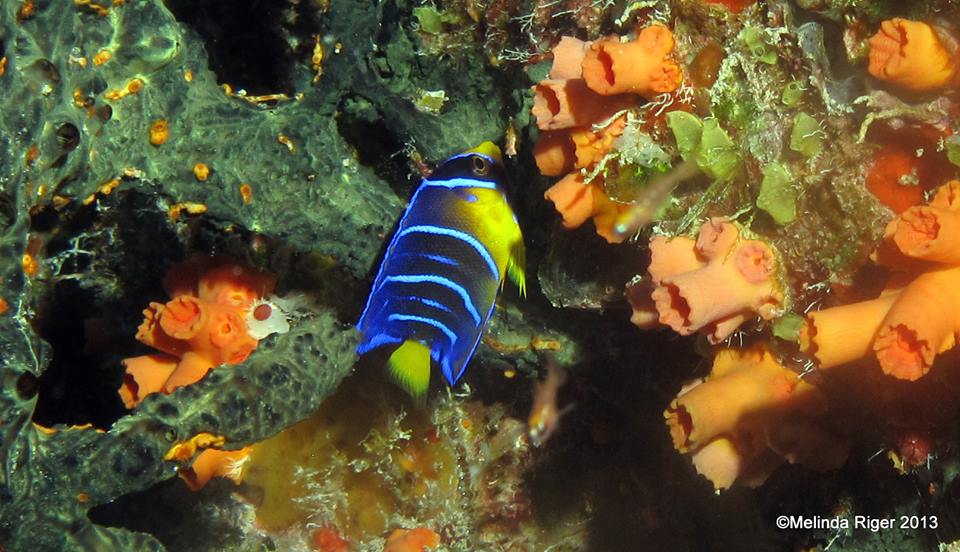
The juvenile of the species, nosing around the coral for tasty morsels, is equally colourful

We are back in the realm of ‘animal, vegetable or mineral?’. Dive down a few feet – inches, even – to the reef, and… is this thing waving about here a plant or a creature? And is that colourful lump over there a bit of inanimate rock or a living thing?
1. FEATHER DUSTERS
Not in fact pretty frilly-fringed plants, but worms among the coral. The tiny electric blue fish are Blue Chromis, ubiquitous around the reefs.
Here the feather dusters have attached themselves to a sea fan, a ‘gorgonian’ coral
Moored on part of an old wreck
A different form of duster with remarkable feathered tentacles
2. BASKET STARS Creatures in the same family group as brittle stars. Take a close look at the remarkable transformation in the two photographs. The top image is taken in daylight. The star is off duty and enjoying some downtime. However the second image is the same view at night, with the star fully open and waiting to harvest whatever micro-morsels come its way. The star has truly ‘come out at night’.
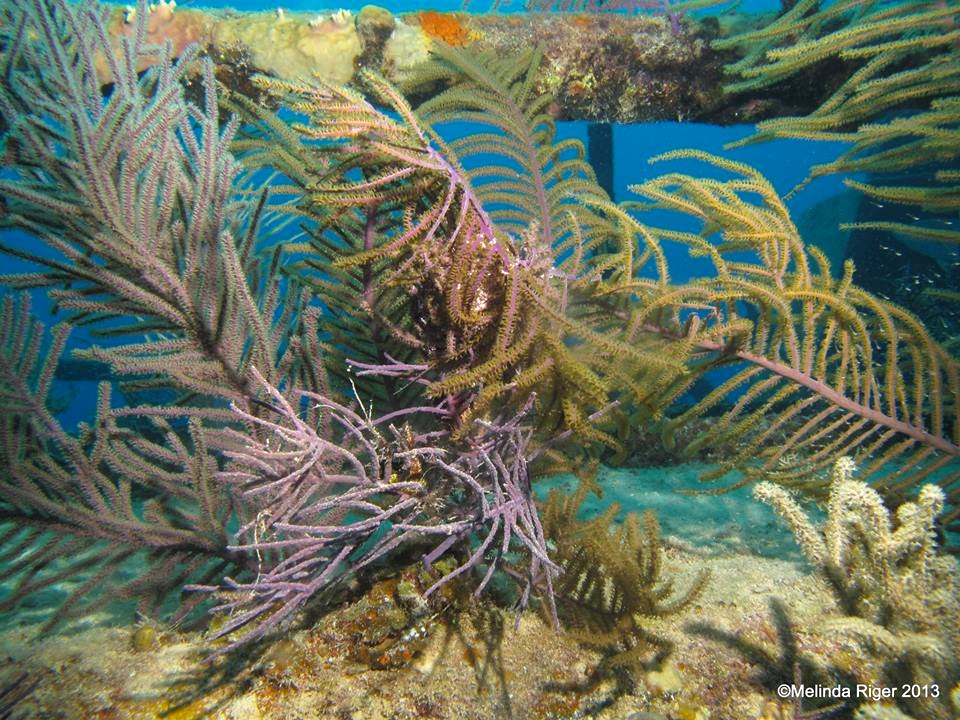
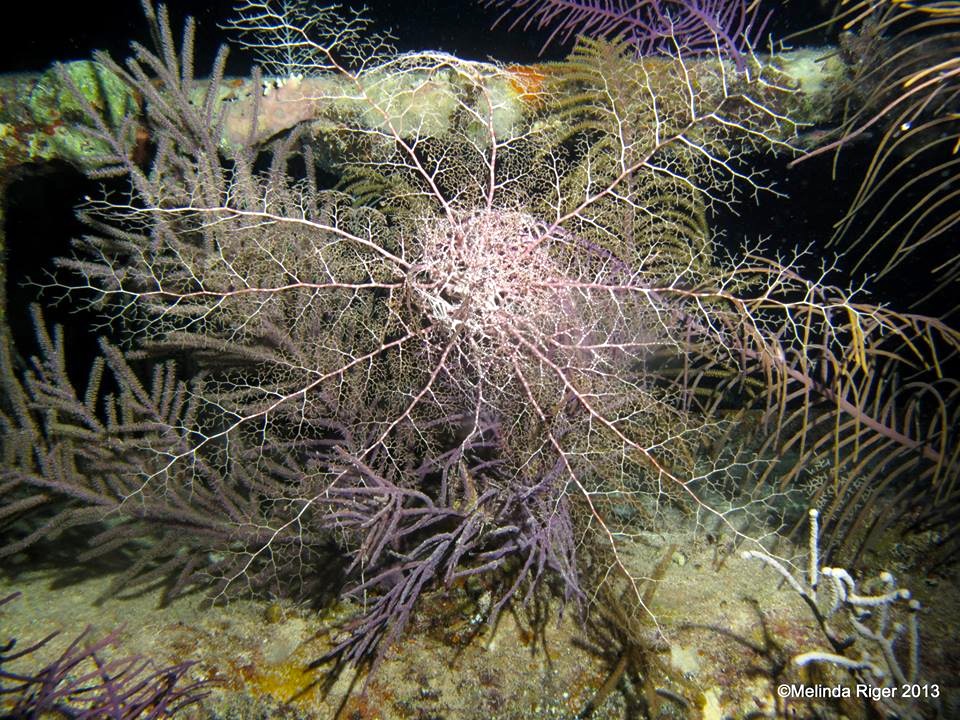
3. CORKY SEA FINGER Another form of gorgonian coral, sometimes known as dead man’s fingers… **

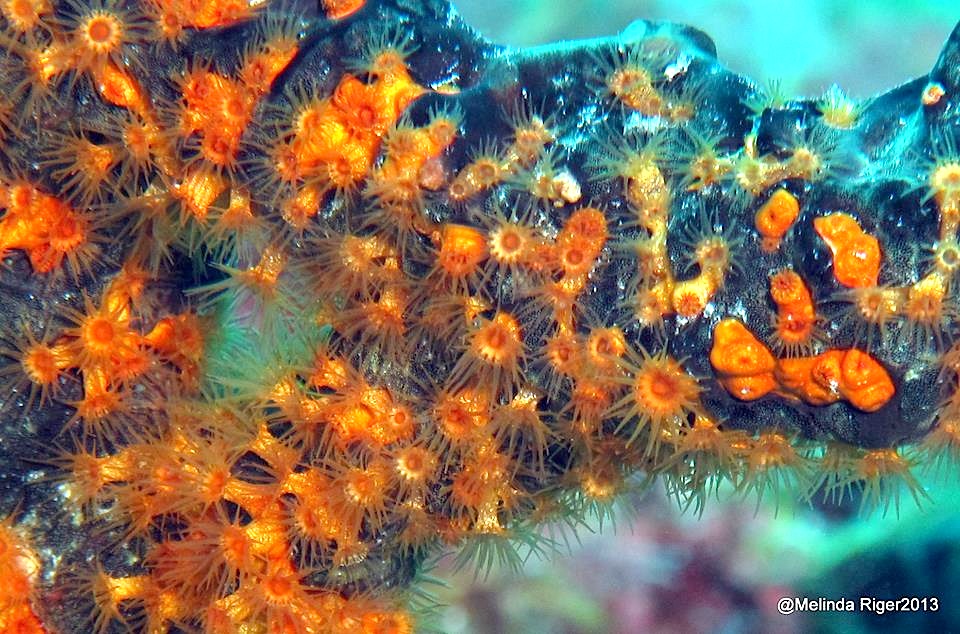
4. GOLDEN ZOANTHIDS Coral forms living on a Green Rope Sponge. Some zoanthids contain a deadly poisin called palytoxin, which may do unspeakable things to your heart. Like stop it. Luckily, none so unpleasant live in the Bahamas (or so the Bahamian Tourist Board would no doubt wish me to make clear).
 I realise that calling this occasional series ‘Reef Gardens’ is a bit of a misnomer. They are in fact Reef Zoos. The previous posts are as follows:
REEF GARDENS 1 Anemones, Basket Stars & Christmas Trees
REEF GARDENS 2 (Corals)
Image credits, with thanks: Melinda Riger @ Grand Bahama Scuba
** I knew this image reminded me of something… or someone. And (superannuated British rockers out there), is it not exactly like the hairdo of one of the guys in Mott the Hoople, a band lifted from relative obscurity to fame by being gifted a song by David Bowie? Guitarist. Ian Hunter. Take a look at him now… and just imagine then


 Click logo for website

My name is Jack Lucas and I am Marine Biology Student at Plymouth University in the UK. I came to the Bahamas Marine Mammal Research Organisation on Abaco in July 2013 for a 3 month internship, which has been an amazing experience from start to finish. Heres a summary of my summer spent at BMMRO.
Sperm Whale Fluking
I arrived at the start of July and was fortunate enough with my timing to be part of an assembled crew of scientists from all over the world coming together to start work on what was to be this summers main project; collecting faecal samples from Blainville’s beaked whales to assess stress hormones produced. This team included Dr Roz Rolland and Dr Scott Kraus from New England Aquarium, who are collaborating with BMMRO for the work, and the samples will be analysed back at their lab in the US. Also along for the ride was Roxy Corbett; a whale observer and field researcher from the US, and Dr Stephanie King; a acoustician from the Sea Mammal Research Unit in Scotland. The first day after arriving it was straight out on the boat to search for these elusive creatures and the beginning of a crash course in how to collect and store the faecal samples when we found them. For the first week the work was a mix of boat work when the weather permitted and practicing poop collection using custom-made fine-mesh nets and coffee grounds (as close to the real thing as we were willing to try!), as well as clearing out BMMRO’s garage and, under the direction of foreman Scott, the construction from scratch of a lab to prepare samples for storage.
An example of the use of coffee grounds to practise whale poop-scoop technique RH note: NOT Jack’s arms / snappy diving suit…
Unfortunately, despite days of poop collection practice and endless hours searching for the whales at sea, the original poop team never got a chance to employ these by now highly developed skills or to see the lab being used, as the weather was so windy we barely encountered the animals let alone spent long enough with them to collect any samples.
Despite the lack of beaked whales, we did encounter loads of marine mammals in the first few weeks, from sperm whales to three different species of dolphin; including the little-seen and even less-studied rough-toothed dolphin.
Rough-toothed Dolphin
After discussion with Charlotte and Di about a possible project for me to complete during my stay, it was to be this species that I would focus on and in between the usual office jobs it was my task to sort through the photos from 20 rough toothed encounters in the Bahamas since 1995 and create a catalogue of individuals. This initial task consisted of careful inspection, comparison and sorting of what turned out to be over 5000 photos, into an organised catalogue of 167 separate and distinctive individuals. Despite the hours of endless staring at fins, it was very rewarding as there were 13 resighted individuals found (we were not necessarily expecting any!) which suggests long-term site fidelity and association of these animals, in addition to year round use of the Grand Bahama Canyon. Even more rewarding; the results of this work have recently been submitted for a poster display at an Odontocete workshop in New Zealand this December and I am also writing up the results in a formal scientific paper, with the hopeful goal of publishing a note in a peer-review journal.
Scott, Jack, Stephanie and Di in the new lab at Sandy Point
Around a month in I was lucky enough to be sent by Di and Charlotte to Great Harbour Cay on the nearby Berry Islands to work with the manatees there, in particular Georgie; a recently released juvenile whose status is being carefully monitored after her rehabilitation at Atlantis’ Dolphin Cay following health problems. The work here for a week under the guidance of Kendria; a Bahamian contracted by BMMRO to monitor the manatees on the Berry Islands, consisted of tracking Georgie using a satellite tag attached to a belt around her tail. Once located, we logged her position and made any notes on her health and behaviour aswell as the other manatees that were often found with her (there are currently 6 located on Great Harbour Cay). Two days in her tag was found unattached at a locals dock (it has a weak-link incase of entanglement) and we had to locate her using underwater hydrophones to detect her belt. Once found, I had the rare opportunity of entering the water with her in order to re-attach a new tag to her belt; it was amazing and one of the best encounters I have had with any animal! It is impossible not to love these amiable and gentle creatures, especially when you observe their infamous ‘hugs’ in person!
Georgie the Manatee
For more about Georgie’s re-release in the Berry Is. after her earlier shenanigans on Abaco, see HERE
After returning from the Berry Islands (and incidentally missing the first two poop collections of the season made by Charlotte!) it was back to hunting for the elusive beaked whales around South Abaco. During my time I had the chance to work with several interns coming to BMMRO including local marine-enthusiasts Tristan and AJ, and Courtney Cox from Florida. Oscar Ward from the UK also joined the team as Charlotte left for Scotland to complete her PhD, and was on hand during the poop-collection and other little excursions. In wasn’t until the last month of my time here that we managed to get close enough to the whales for me to get in the water and be towed alongside in the hope of seeing one defecate. One amazing morning two whales surfaced right off the bow of the boat and what resulted was again, one of the most amazing moments; swimming just a couple of feet away from an animal only a handful of people in the world have seen underwater. After nearly two months with no samples, the two weeks that followed were a flurry of boat days, poop-collection and whale watching; with a total of 7 samples collecting from beaked whales (5 in one day!!) and another 3 from sperm whales. This was the best possible end to my time here and I finally got a chance to use the much-practiced poop collection techniques. The samples included a number of squid beaks, and in one very deep dive collection a mass of parasitic worms and a weird cephalopod-type animal! We also got a chance in the last few weeks to test-run a new addition to the fleet, that included a dive compressor.
Ready to collect some poop…
Finally my time in the Bahamas had to come to an end, and I had to return home. The last 3 months has flown by and has been one of the most enjoyable and most importantly educational periods of my life and I cannot thank Di and Charlotte enough for making it all possible. The day-to-day boat runs, office work, equipment maintenance and station chores has given me a good insight into all aspects of field research. It was my first taste of life as a marine mammal scientist, and it has made me even more determined to pursue a career in this field; a perfect stepping stone from which to move forward. In addition my work with BMMRO (and what must of been a brilliant reference from the girls!) made it possible to secure a highly competitive internship in the Farallon Islands this winter tagging elephant seals amongst other work! I cannot wait to continue working in this field and finish writing up the results of my project here, and hope I have the chance to come to Abaco again to work with these amazing people and animals!
BMMRO would like to thank Jack for all his help during the summer, and all our interns for their assistance! To our sponsors, Friends of the Environment, Disney Animal Programs and Environmental Initiatives and Rotary of Abaco, we thank you for your continued support.
To read more about the work of Interns on Abaco with the BMMRO at Sandy Point and Friends of the Environment in Marsh Harbour, check out Oscar Ward’s excellent blog SEVENTYPERCENTBLUE. There are articles on Life in the Mangroves, the Bahamas Climate, Whale Poop Collection, and most intriguing how he and co-intern Jack both came very close to being Black Tip Fodder… real live Chums!
The Author researching underwater creatures



The grouper family is a large one, and a number of varieties of the species inhabit Bahamas waters. Like most groupers, these are denizens of coral reefs. An adult grouper may grow to 3 ft long and weigh in the region of 10 lbs.

Groupers are effective predators, with strong gills that enable them to suck their prey into their large mouths from a short distance away. They will eat smaller fish, crustaceans, and even OCTOPUSES (click to discover the correct plural form for this creature).


Many divers become familiar with the groupers of the reefs they explore, and some of the fish are given pet names. They are often distinguished from each other by distinctive markings or injury scars. More varieties of grouper will be on show soon; though it has to be said that this series will be no beauty parade… (see above and below for further details)
 All photos: Melinda Riger @ Grand Bahama Scuba
UPDATE I’ve found a video of a tiger grouper off Nassau sizing up the photographer, before swimming away

…along came some friendly sharks to swim with… and to photograph
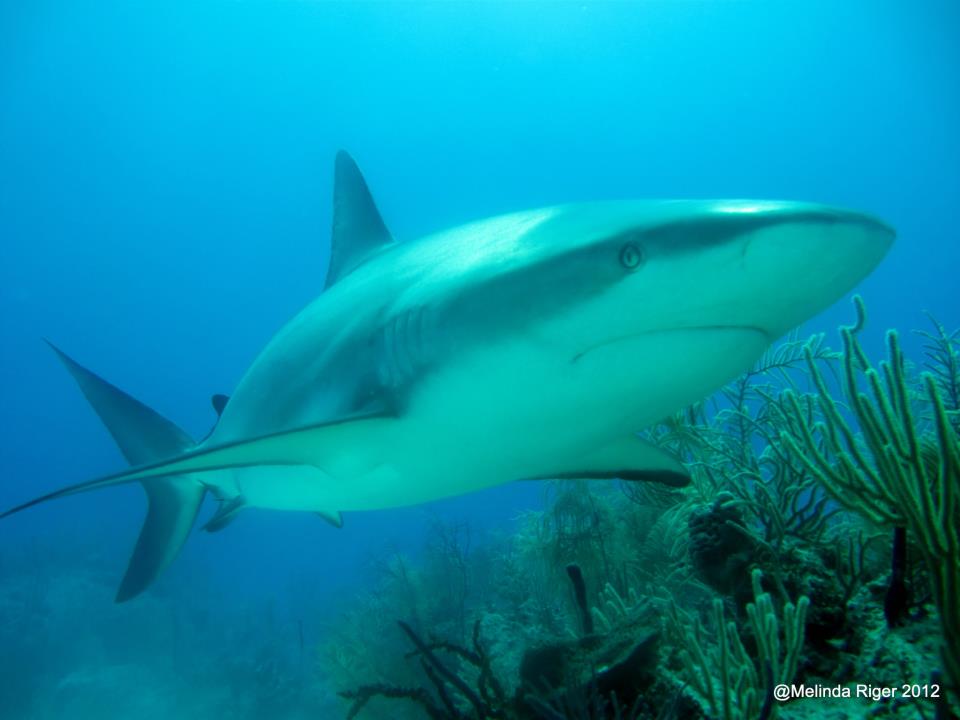
There’s no escaping… the fact that there are sharks in the Bahamas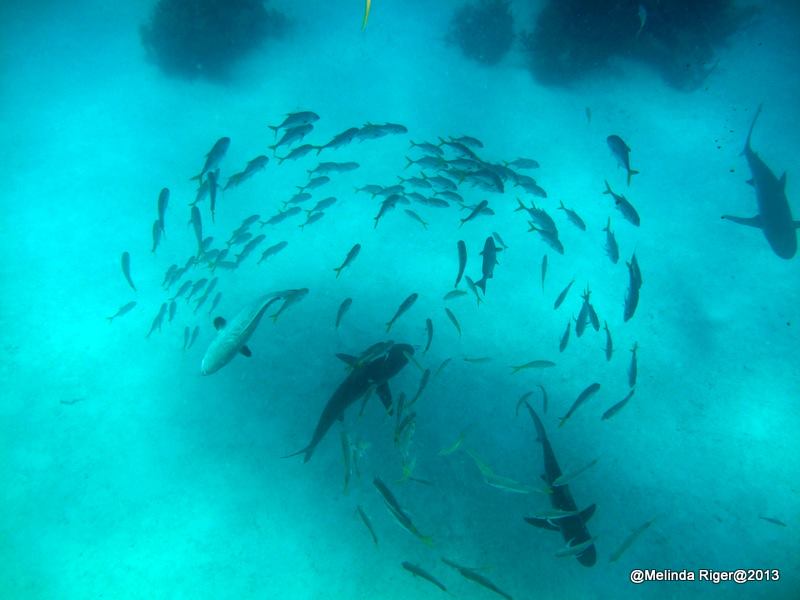

Take comfort from the fact that no fatalities and only half a dozen injuries from shark attacks have been recorded in Abaco waters for over 250 years (since 1749). Risk assessors and the nervous, take note.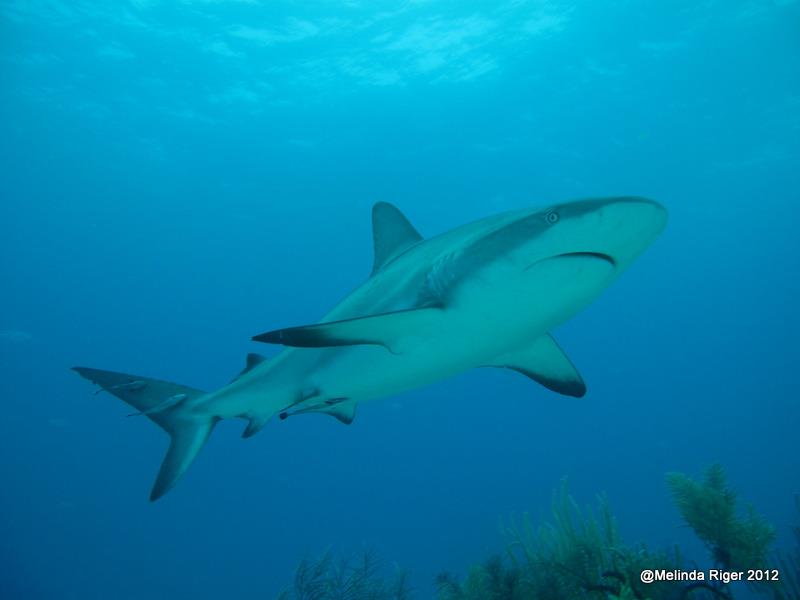
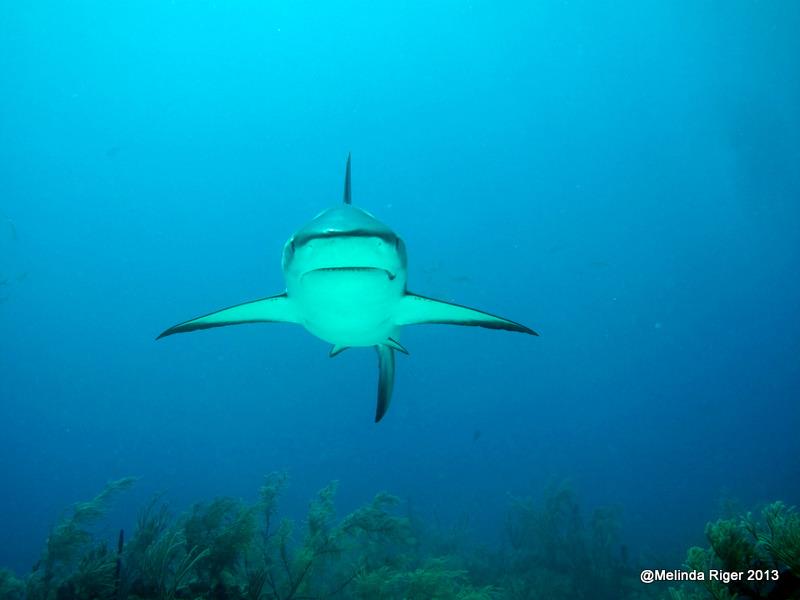
By way of comparison, in the last 150 years there have been 36 recorded shark attacks in the Mediterranean, of which 18 have been fatal…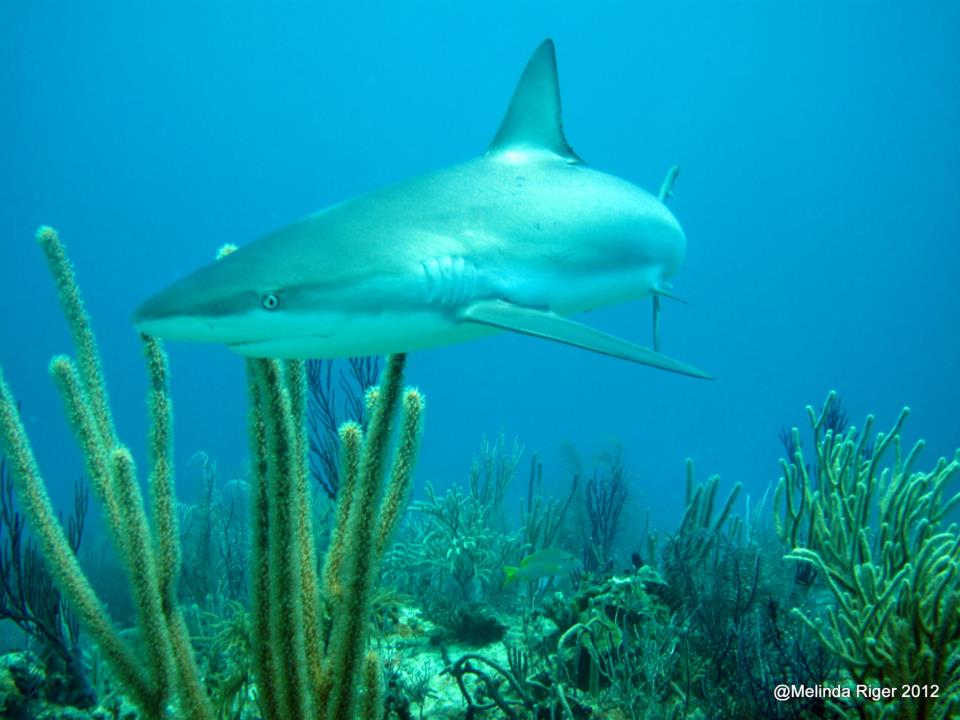
Since 1845 there have been a number of shark attacks in British waters, with one fatality. There were two more fatalities in an incident in 1956 , but this was an ‘own-goal’ arising from an attempt to blow up a shark with dynamite. It can hardly be blamed on the shark.
WEIRD NON-SHARK RELATED STATISTIC: Amazingly, in the 3 years 2007 – 09 in England and Wales, 42 people died from being bitten by animals, only a few of which were dogs.
CONCLUSION You are statistically far safer to spend 250 years swimming off Abaco than spending 3 years stroking a cat in Manchester. Or Swansea.

LEAVE SHARKS ALONE AND THEY’LL LEAVE YOU ALONE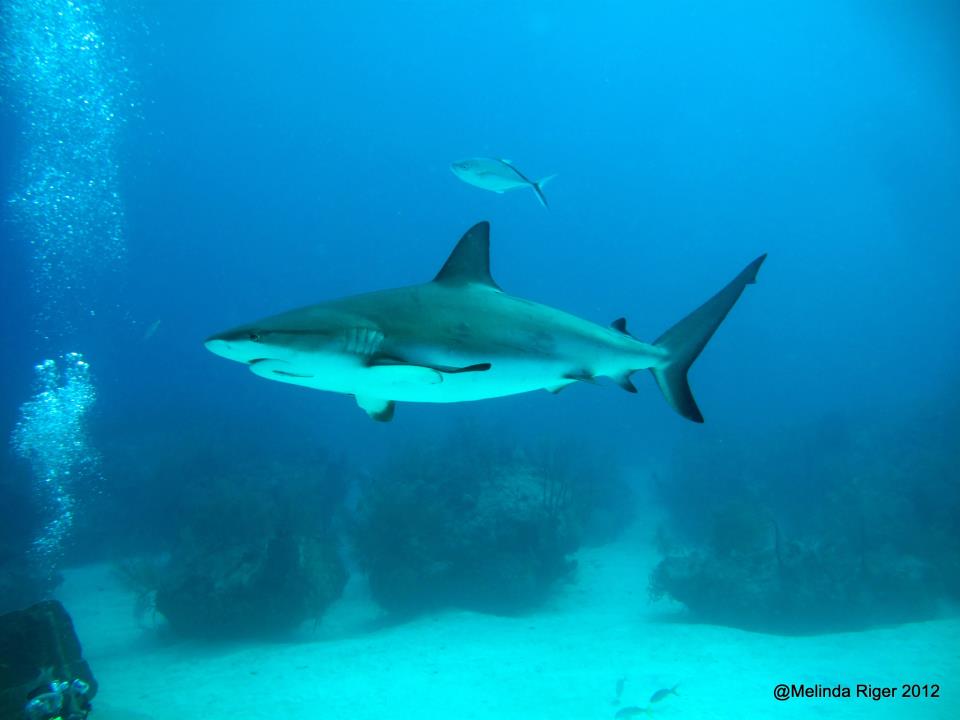
All fantastic images by Melinda Riger of Grand Bahama Scuba who swims with sharks all the time!

Here’s a promising-looking rocky outcrop a short distance south of Crossing Rocks. The action of the sea over centuries has eroded and pitted it – ideal for the formation of pools in which marine life can thrive.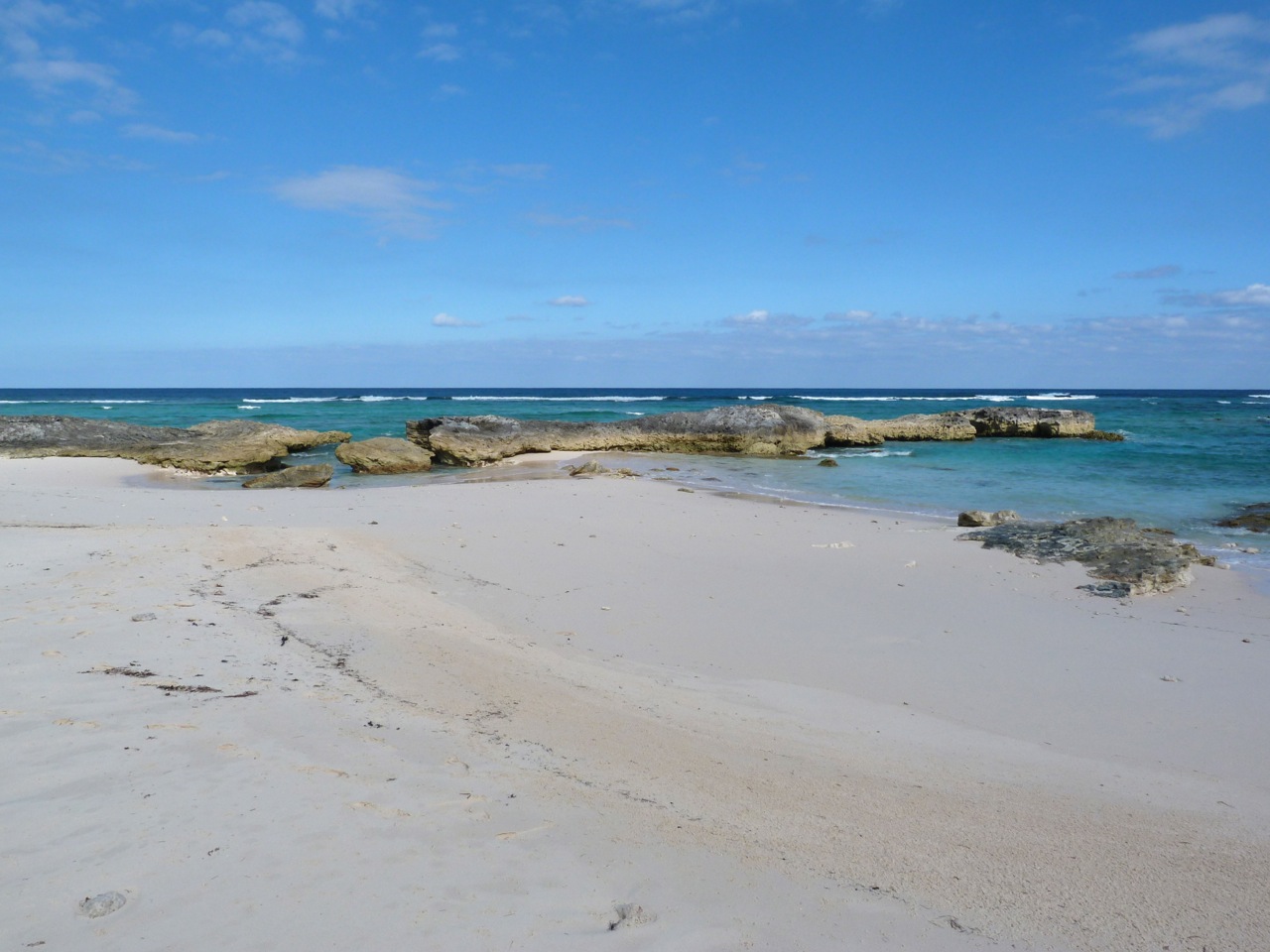
Time to clamber up to see if the theory holds good… the prospects are encouraging. There are certainly plenty of sea urchins here.
Let’s zoom in on the nearest pool. There are clearly 2 different-coloured sea urchins here, but I’m not sure if that’s an age thing or a species thing. 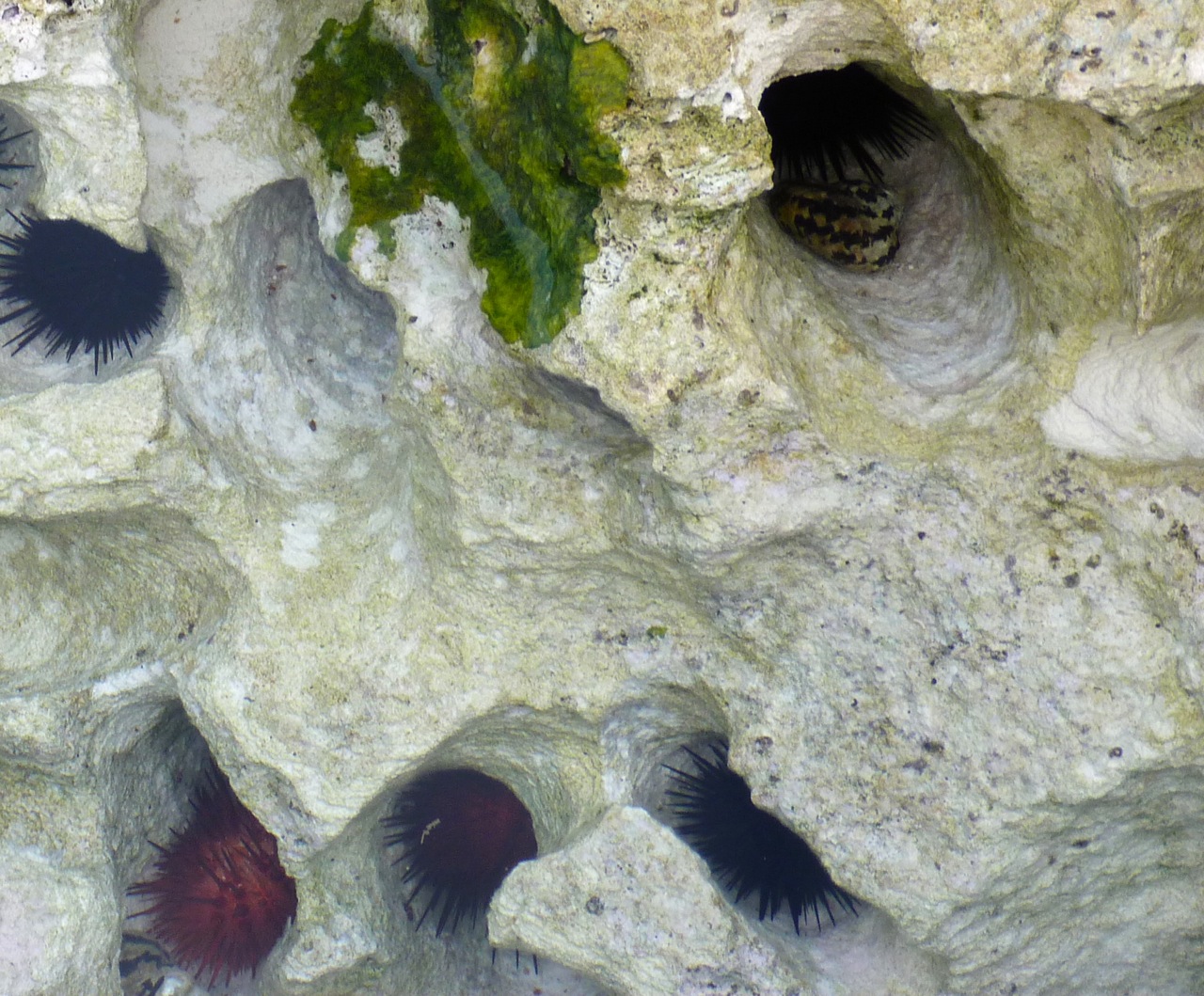
Apart from the sea urchins, there are some shells and other things that need a closer look…
At the bottom of these photos, you can see that a zebra-marked nerite is quite happy to share a hole with an urchin. There are two brownish accretions on or in the rock. My tentative suggestion is that these are the shells of some sort of worm, perhaps petaloconchus.
UPDATE Rick Guest helpfully comments “Yes, it’s quite the invertebrate hotel mostly due to the urchin’s talent for scouring out protective “rooms”. Of interest is the Magpie shell (Livona pica) in frames 4 and 5. The rather ubiquitous Livona’s very thick shell, (Up to 5″ diameter) and ability to withstand most attempts at removal by predators, including Homo sapiens, assures their continued presence on littoral shore lines. They are edible, but not particular tasty to my palet. All these “Condo” residents “party” at night and will even leave the rock in search of food and perhaps romance, so a flash pic of the condo at night would be an interesting contrast to a daylight shot”.
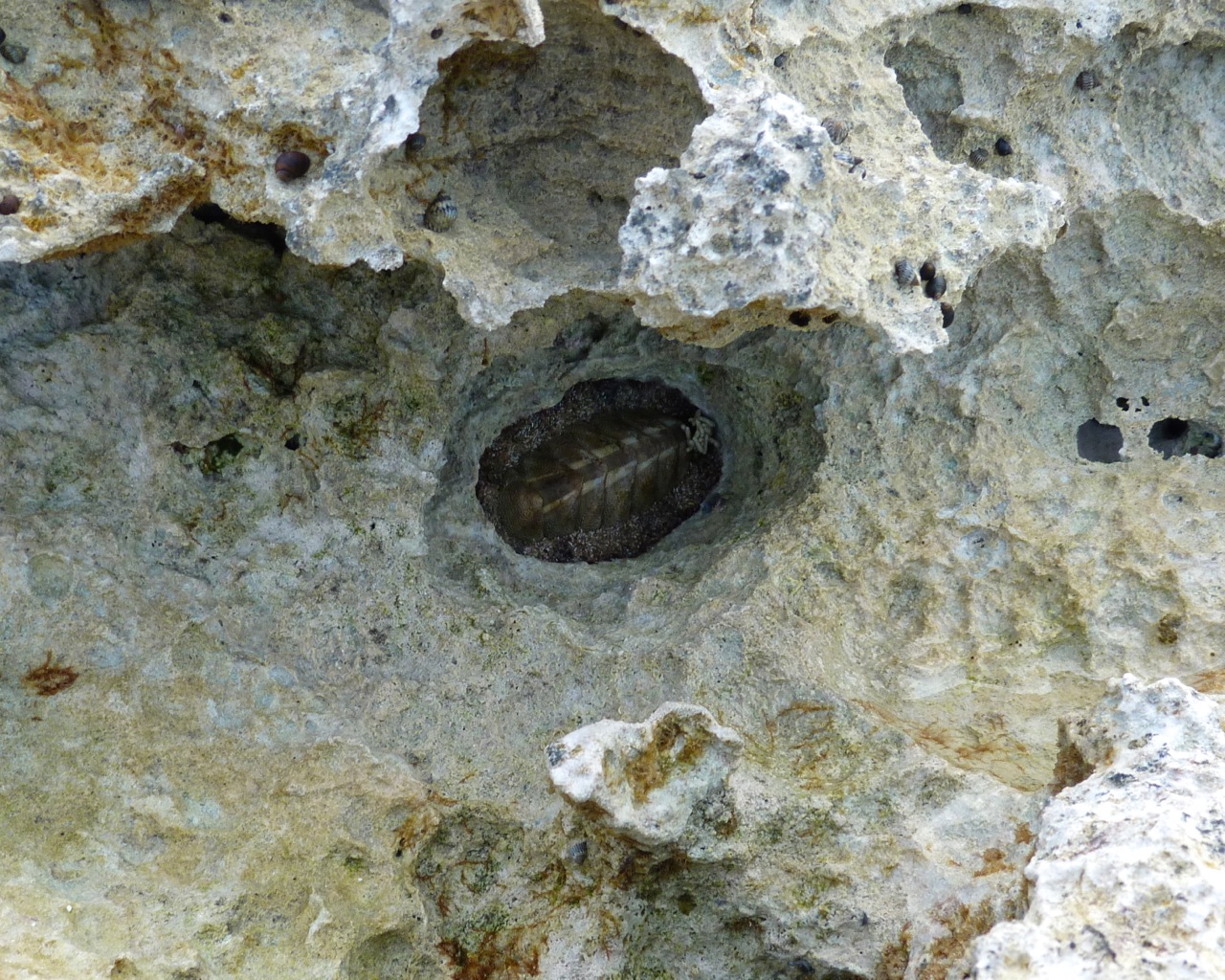
In a snug little cave (top right) just above the water-level of the pool is a primitive-looking chiton, a species that has been around for millions of years. Below, there’s a clearer image of one from a different pool. These creatures always remind me of school projects on prehistoric trilobites.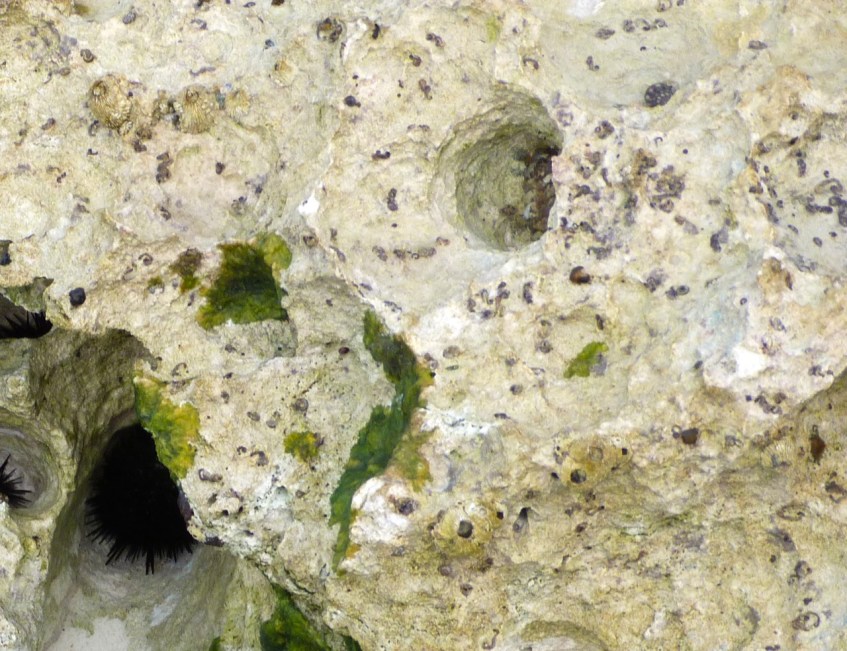
The rough rocky surfaces close to the pool are covered in shells. The stripey nerites are small, the grey shells really are miniature. They are mostly littorines/ periwinkles and perhaps ceriths, I think.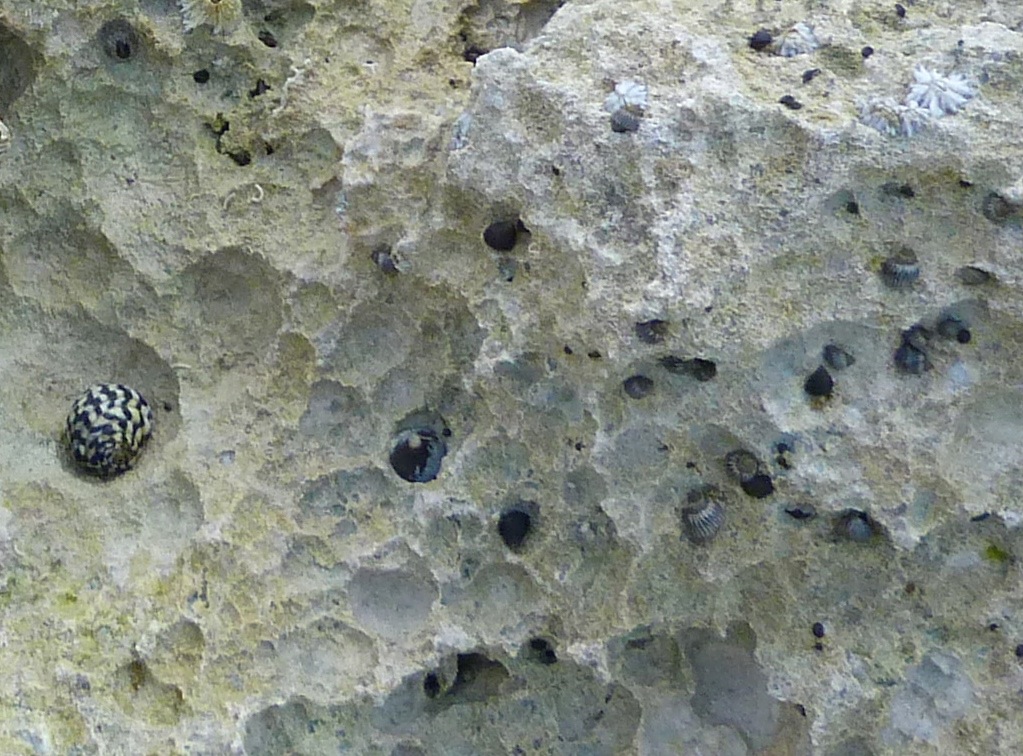

Close-up views of nerites showing their distinctive markings and spirals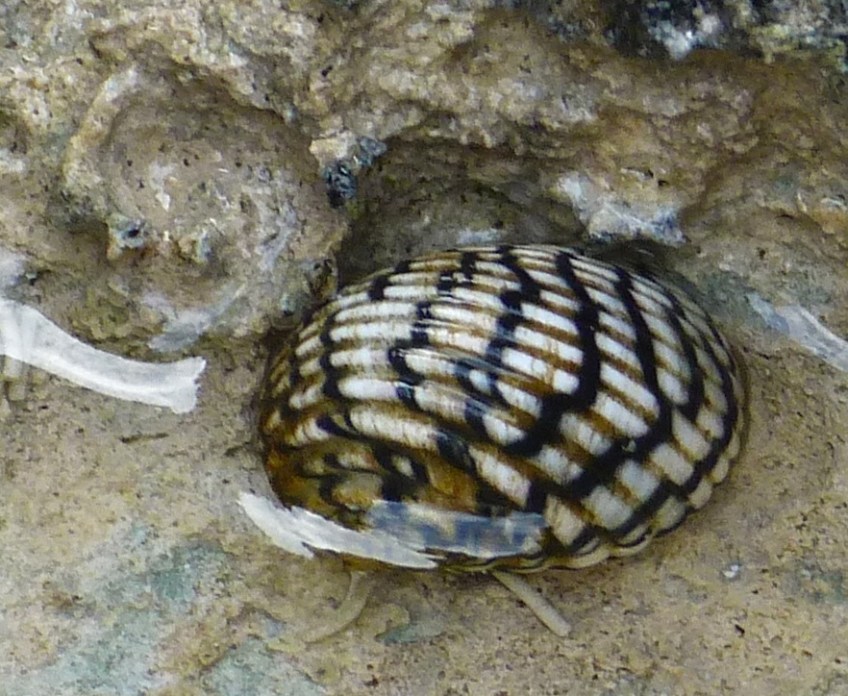


Contrary to appearances from the header image and the one below, Reddish Egrets (Egretta rufescens) do not yet use cellphones to communicate. Nevertheless, the trick of having a good ear-scratch while standing in water on one leg is a good posey accomplishment.
All these photos were taken while we were bonefishing from a skiff far out on the Marls in the mangroves. Ishi poled us closer so that boat-partner Tom – a real photographer – could get some shots. Meanwhile, I did my best with my little camera that I take out on the boat – the one that won’t matter too much when it slips from my hand or pocket into the drink. These things happen: I lost a good pair of Costas that a gust of wind unkindly whisked away when I took them off to change a fly.

This egret comes in two very different ‘colourways’. The classic version has a slatey-blue body and a reddish head and plumes. The white morph is pure white. The only similarities between the two are the two-tone bills with the black tip; and the blue-grey legs and feet.
True Reddish Egret, as you might expect it to look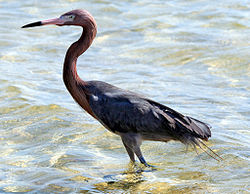
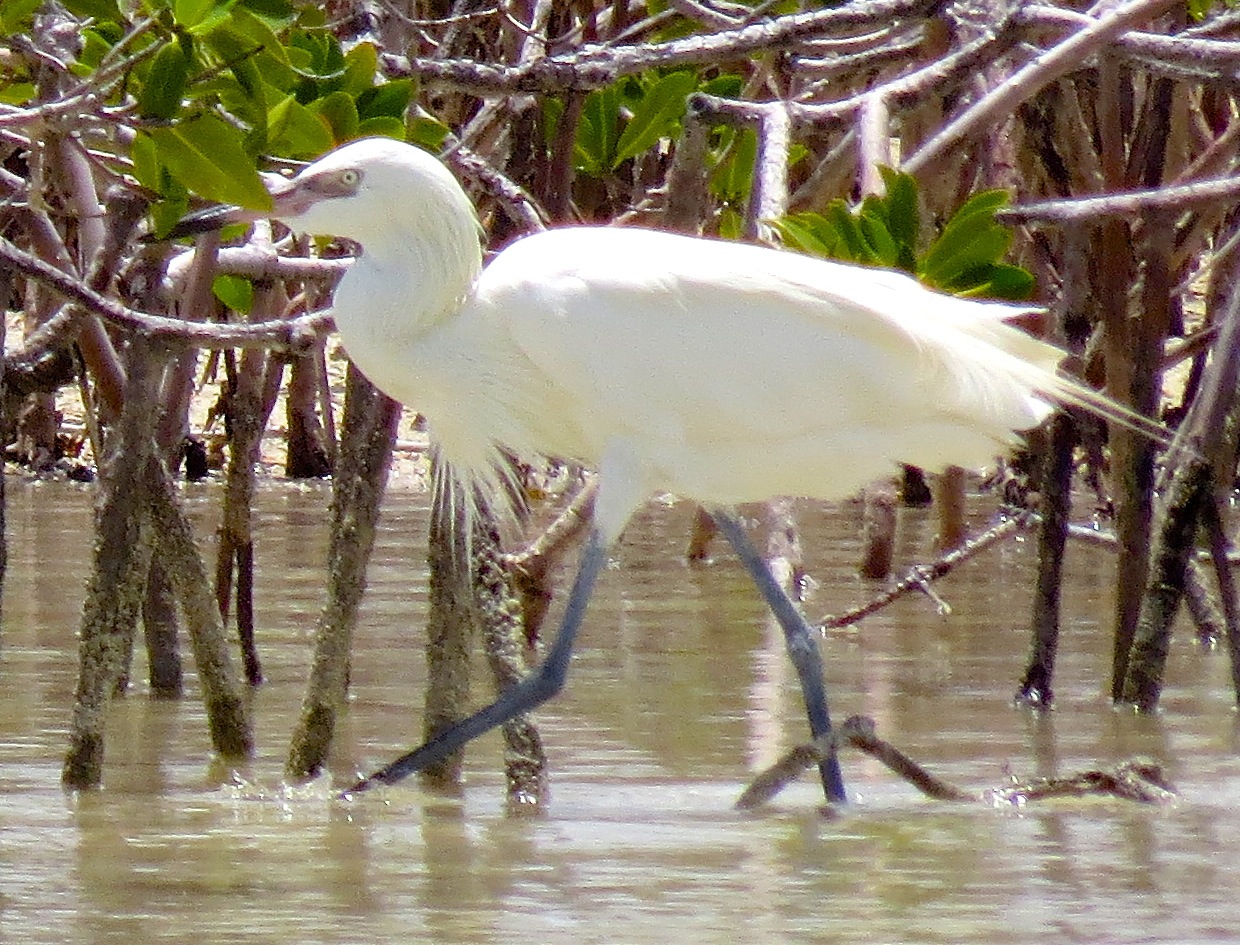
The white morph
I’m not certain of the proportions of each type on Abaco, but I have certainly seen twice as many white ones as true reddish ones. There seem to be quite a few around – there are plenty of fish for them and dozens of square miles of human-free space in which to stalk them. However as with many (most?) of the bird species, there is a declining population for all the usual man-related reasons, and these fine birds have now had to be put on the IUCN ‘near-threatened’ list.
The bird kept an eye on us as we drifted closer, but was unperturbed. It continued to poke around in the mud, and occasionally it moved delicately but quite quickly to a different patch.

We watched the bird for about 10 minutes. Then we returned to what we were really there for – Tom to catch bones with practised skill, and me to wave the rod incompetently around until some passing fish took pity on me and grabbed my fly, knowing it would soon be released once all the fuss was over…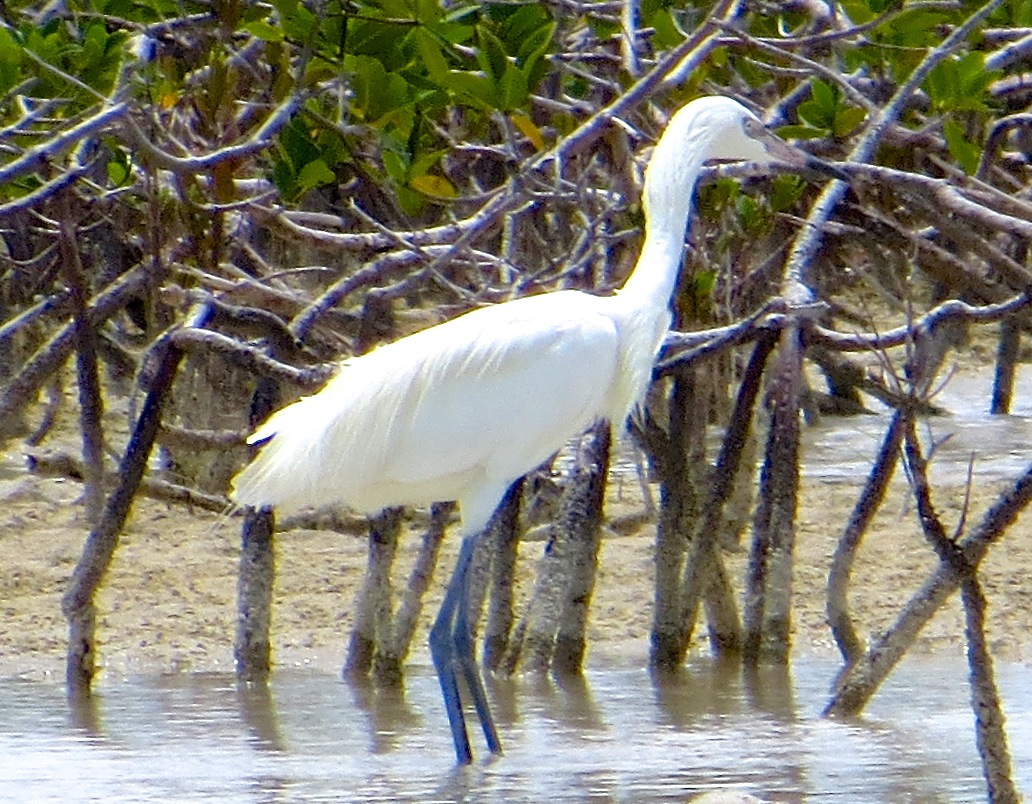

The coral reefs of the Bahamas provide a home for a myriad of subaquatic creatures and plants. Not necessarily a safe one, though. Some species prefer to remain largely hidden to reduce the chances of becoming part of the lengthy reef food chain. Rocks, of course, can offer some security, but also the sandy bottom. Even brain coral can provide some protection…
JAWFISH
This Yellowhead Jawfish has its eggs safely stored in its mouth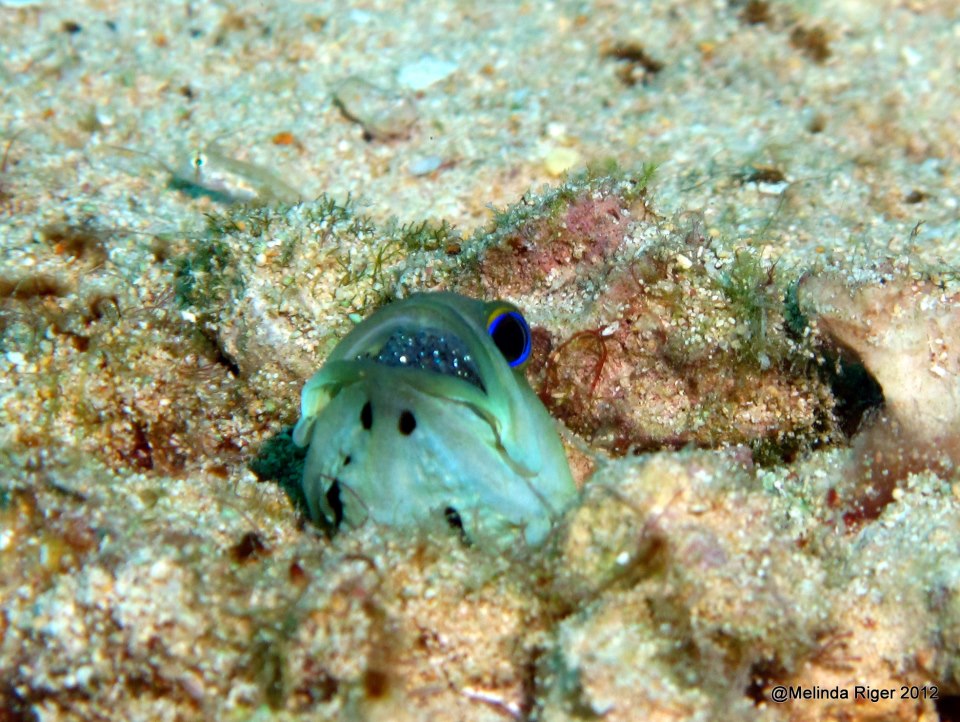
SAND DIVER FISH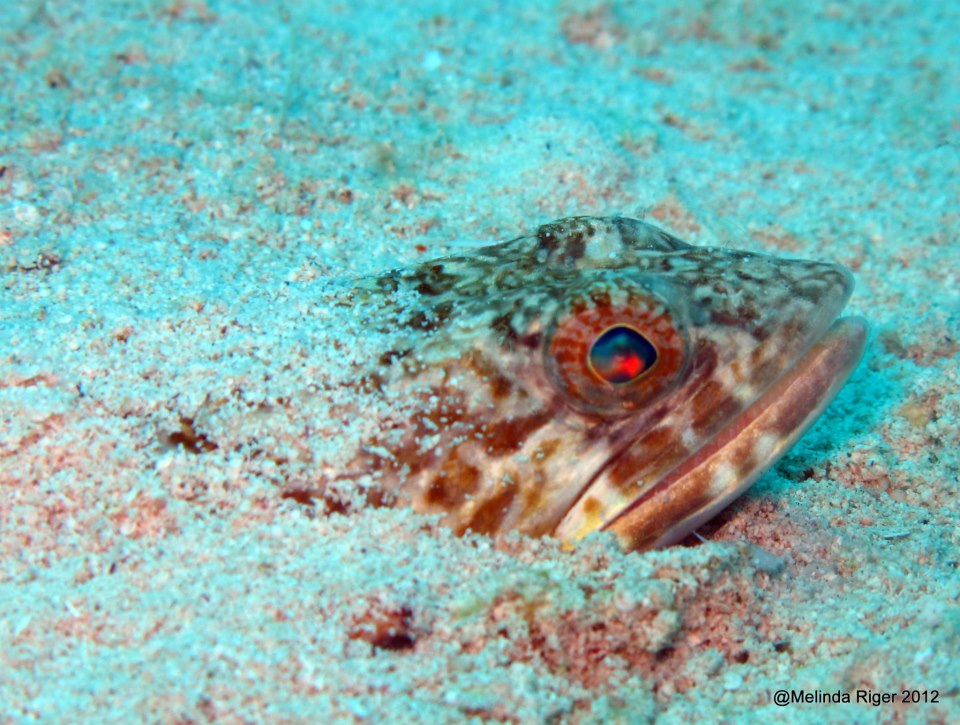

ROUGHHEAD BLENNY IN BRAIN CORAL (and header)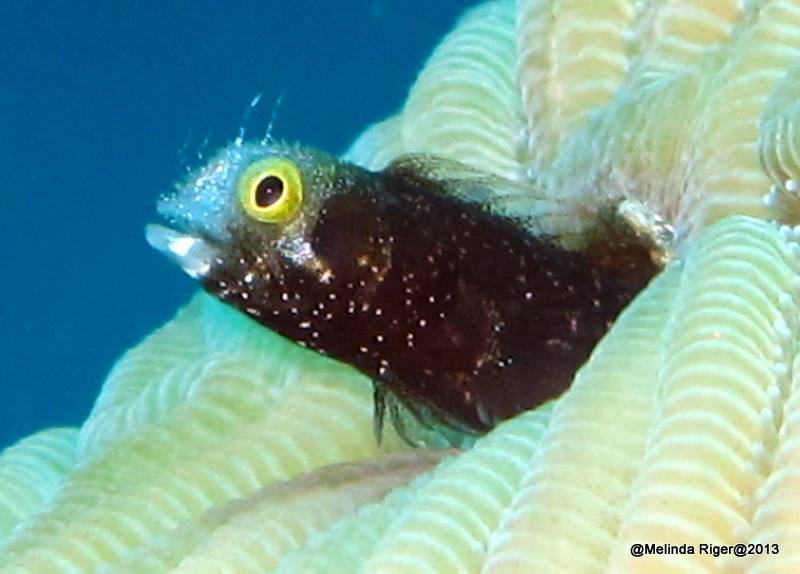

…and in a different home
MANTIS SHRIMP
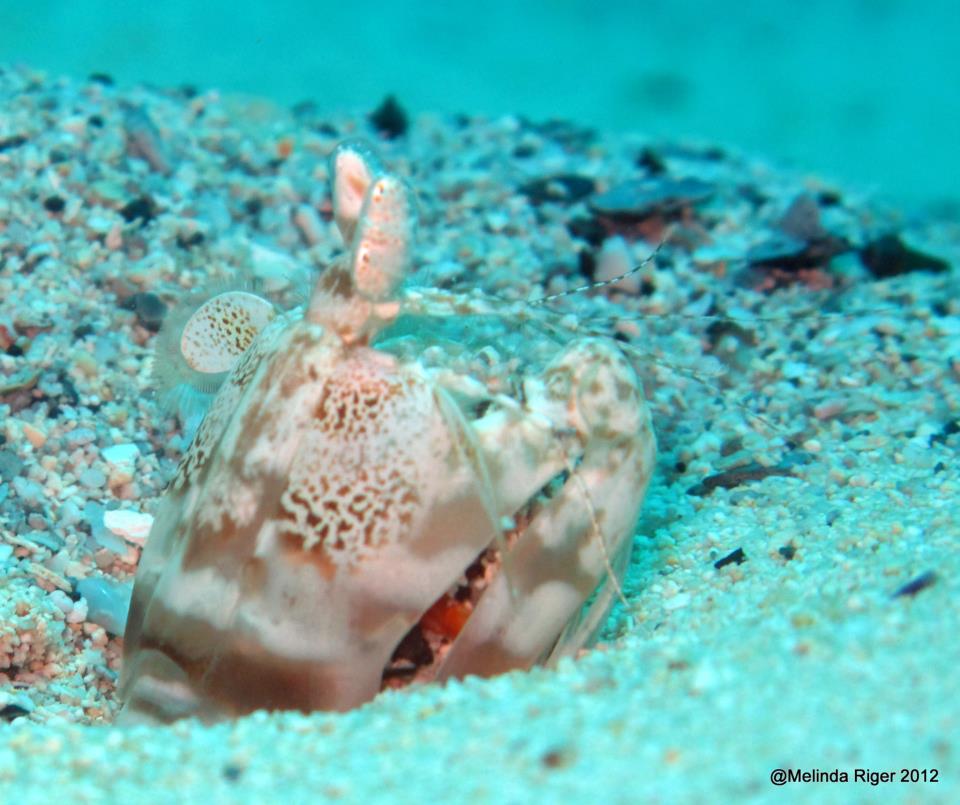
…AND A VERY GOOD AFTERNOON TO YOU TOO, MR SPOTTED MORAY EEL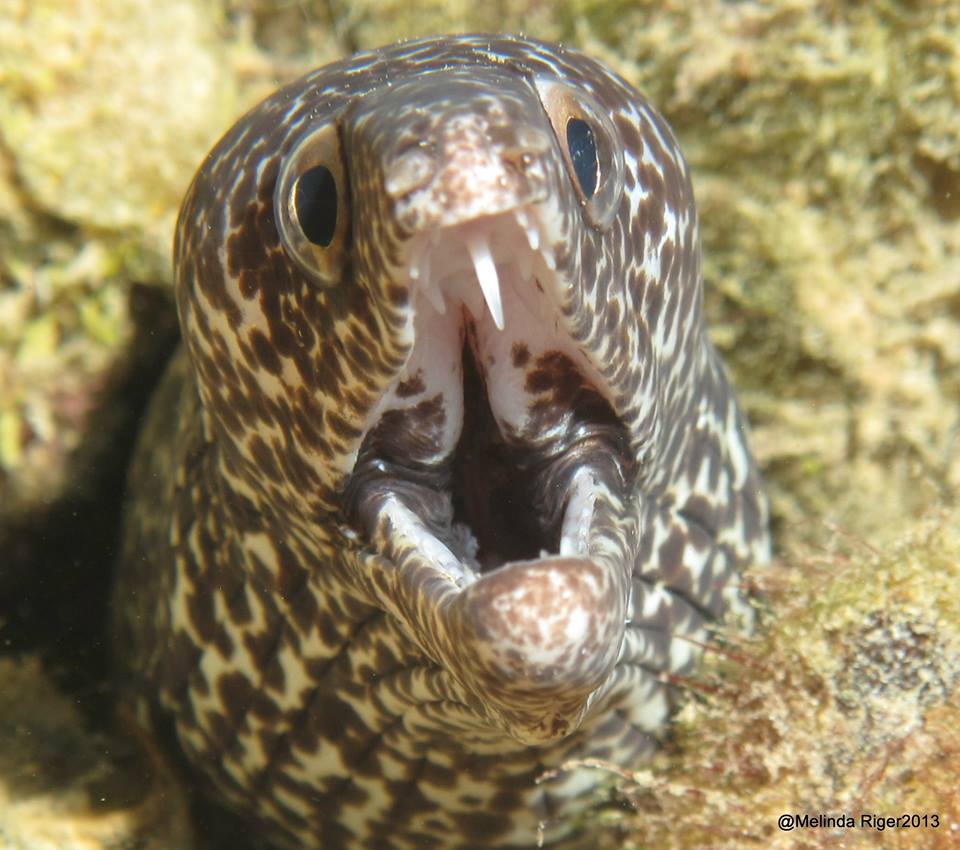 All Images: thanks to Melinda Riger of Grand Bahama Scuba


The shell species below (also in the header picture) is an olive. It turns out to have potential to star in a small maritime horror movie. Capt Rick Guest, who kindly keeps an eye on my shell and other sea-related posts, writes “Interestingly, the previous occupant of the first and last shell pictured here is a major predator of the other Bivalve shells shown. The Olive shell hides under the sand by day, then emerges at night to feast upon small Bivalves, and any other available prey. One can often trace the nocturnal trails of this Olive shell in sand on calm mornings with mask and snorkel, and thrust a hand under a trails end for this fellow. When kept in an aquarium, they will consume any meat offered.” “Olive and Let Die”, maybe?


Last year I posted about Georgie, the young manatee that made Abaco her home for several months. Georgie was born in Spanish Wells. She and her mother Rita travelled to Nassau Harbour, where in April 2012 they were rescued from the multiple shipping hazards and released in Great Harbour Cay, Berry Is. Both were equipped with tags to monitor their movements. In June, the newly-weaned Georgie embarked on a big solo adventure by swimming to Abaco. Her tracking device showed that she called in at the Marls, before continuing right round the top of Abaco and down the east side, calling in at various Cays on the way. In all, her journey was some 200 miles long. She eventually settled down in the Cherokee and Casuarina area, and in a modest way became a lettuce-chomping celebrity. 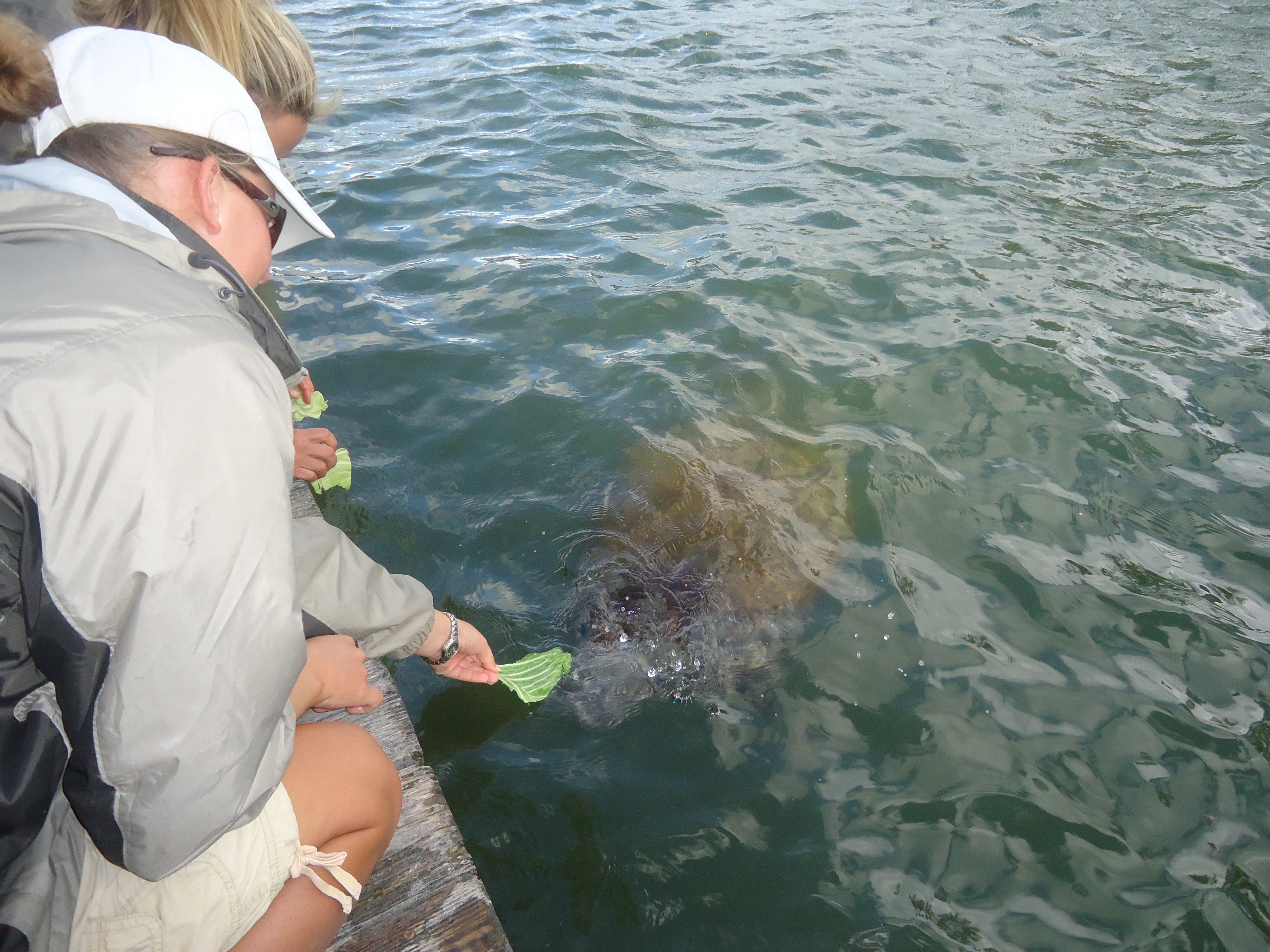
Georgie-related posts include these:
WEST INDIAN MANATEES AND THE BAHAMAS: THE FACTS
GEORGIE THE ABACO MANATEE – CHEROKEE’S SIRENIAN VISITOR STAYS ON…
GEORGIE THE ABACO MANATEE: FAREWELL CHEROKEE, HELLO ATLANTIS
The BMMRO has recently updated Georgie’s story: “Georgie remained in Cherokee Sound throughout the fall, including during hurricane Sandy but in January she was beginning to look slightly underweight. Concern was raised about her general appearance and the decision was made… to conduct a field health assessment and relocate her to the Atlantis Marine Mammal Rescue Center. “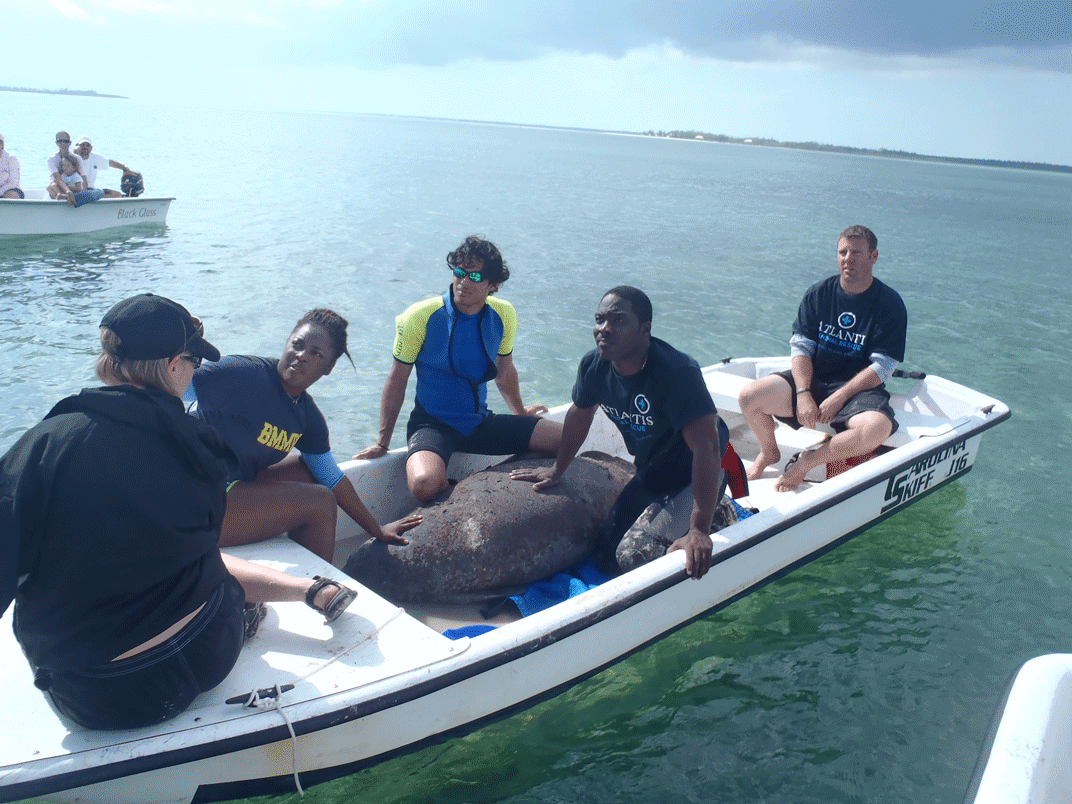
“Georgie underwent a series of general health evaluations and was fed approximately 75 pounds of lettuce each day. She gained more than 200 pounds during the course of her care and weighed 569 pounds upon her recent release”. 
“We are pleased to announce that Georgie has now been released once more to Great Harbour Cay in the Berry Islands after a successful rehabilitation at Atlantis’ Dolphin Cay. She was successfully released on Wednesday 14th August by the Atlantis Animal Rescue Team from the Atlantis Dolphin Cay Marine Mammal Rescue Center, with the help of the Bahamas Marine Mammal Research Organisation (BMMRO). She has a satellite tag attached to her which will help post-release monitoring, currently being conducted by representatives from BMMRO and Dolphin Cay.”
Georgie being let down from the boat, back into Great Harbour Cay (K. Ferguson)
Georgie with her tag shortly after release (K. Ferguson)
Georgie socialising with a young male manatee in Great Harbour Cay a few days later (K. Ferguson)
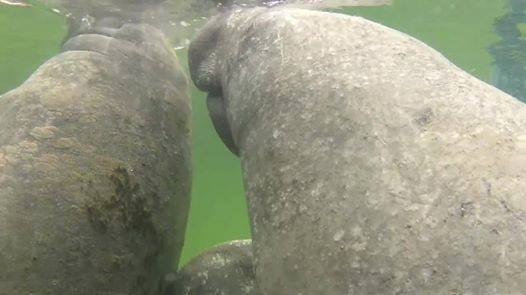
“The first 3 weeks of Georgie’s release showed her venturing on longer and longer journeys, with the blue circles showing her first weeks’ movements, the red her second, and finally the yellow circles her locations up to Saturday. She is doing very well and often seen with the other manatees in the area.”

GEORGIE: THE MOVIE OF THE MOVIE
Apologies for using an iPh*ne to capture the movie – I wasn’t able to embed it directly. Updates on Georgie will be posted on BMMRO’s FACEBOOK PAGE
Credits and thanks to BMMRO and Kendria Ferguson for use of photos and the maroon text…

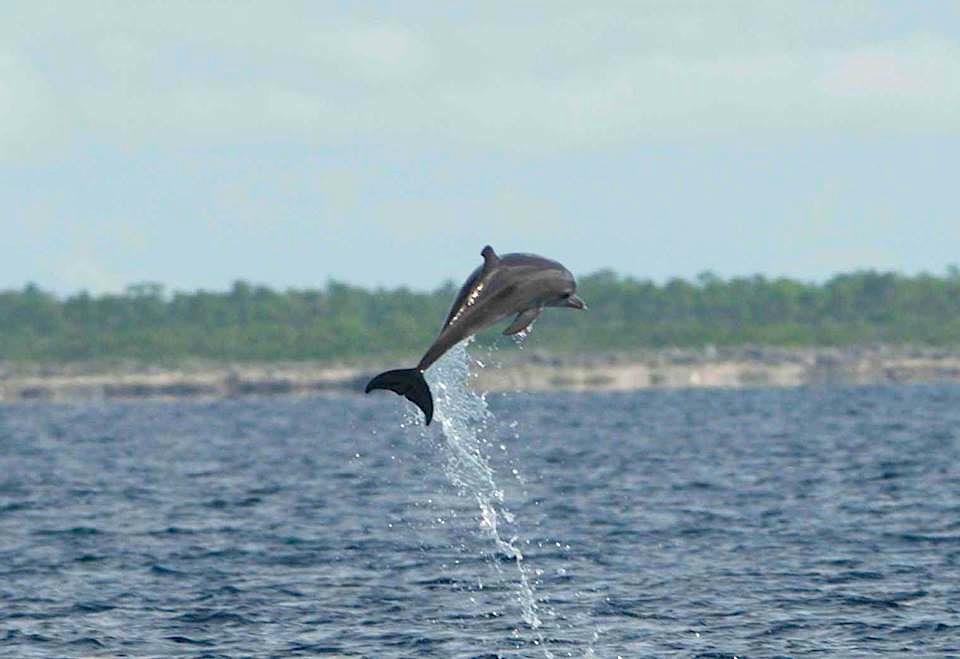
To be totally accurate, one or two of these photographs may have be take from the BMMRO research vessel at some point during an expedition to Andros. But since the boat set off from and returned to Abaco, with an Abaconian team on board, I have stretched a point with the title…
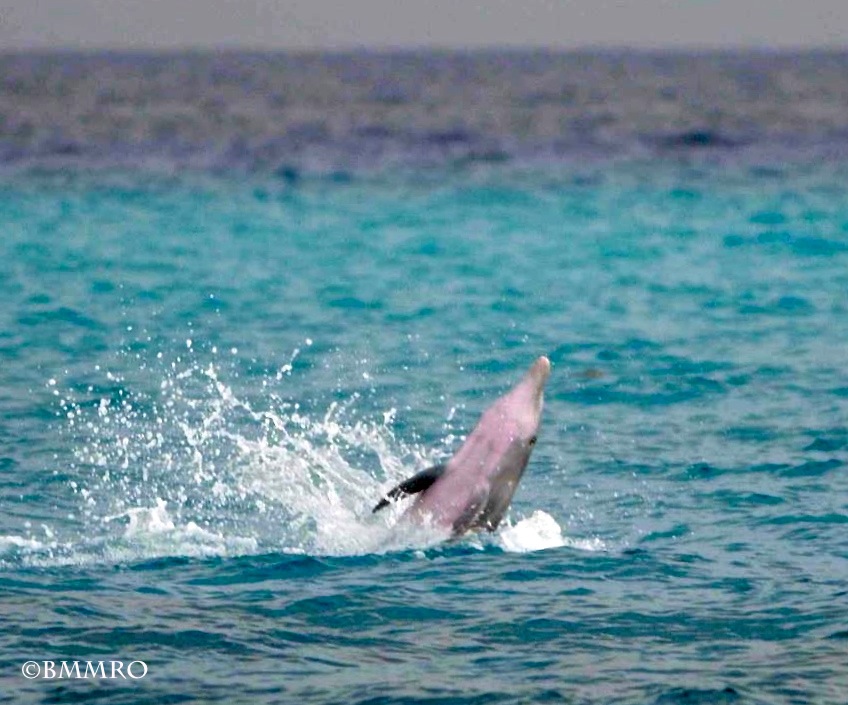
It would be hard to view a dolphin leap as high as this (top photo) as anything other than an expression of pure enjoyment. Difficult to tell the exact height, but it’s fairly spectacular. Dolphins always seem to be looking, or acting, happy. Here are a few more, a mix of bottlenose and spotted dolphins, to spread some cheer…


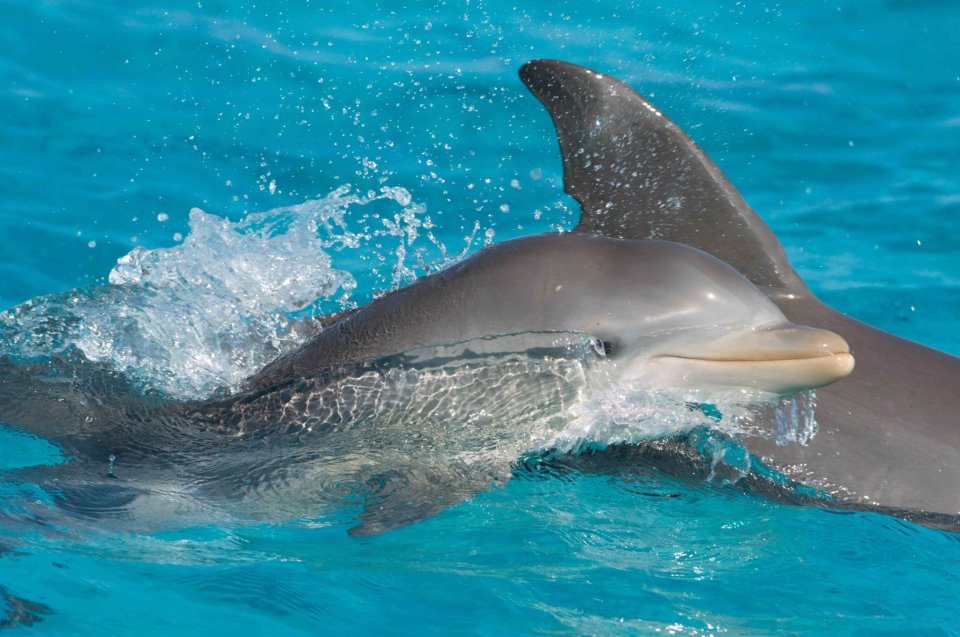
This dolphin was one of a large pod of 28 seen on a recent BMMRO research trip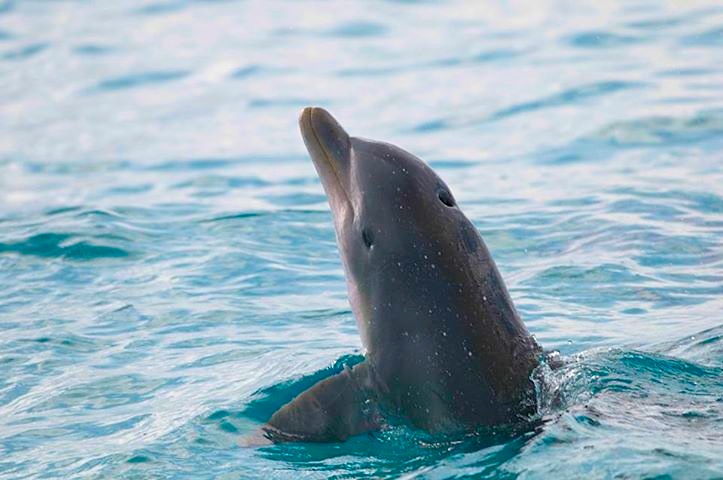
Time to get my… erm… paintbox out Photo credits: Bahamas Marine Mammal Research Organisation BMMRO
In an earlier post I name-checked BMMRO intern Oscar Ward’s blog SeventyPercentBlue. You can read Oscar’s account of his continuing adventures HERE

Most conchs encountered in daily life are lying peacefully on the beach; or are artfully displayed; or are found in conch heaps (often in the vicinity of restaurants) like the ones below at Sandy Point. 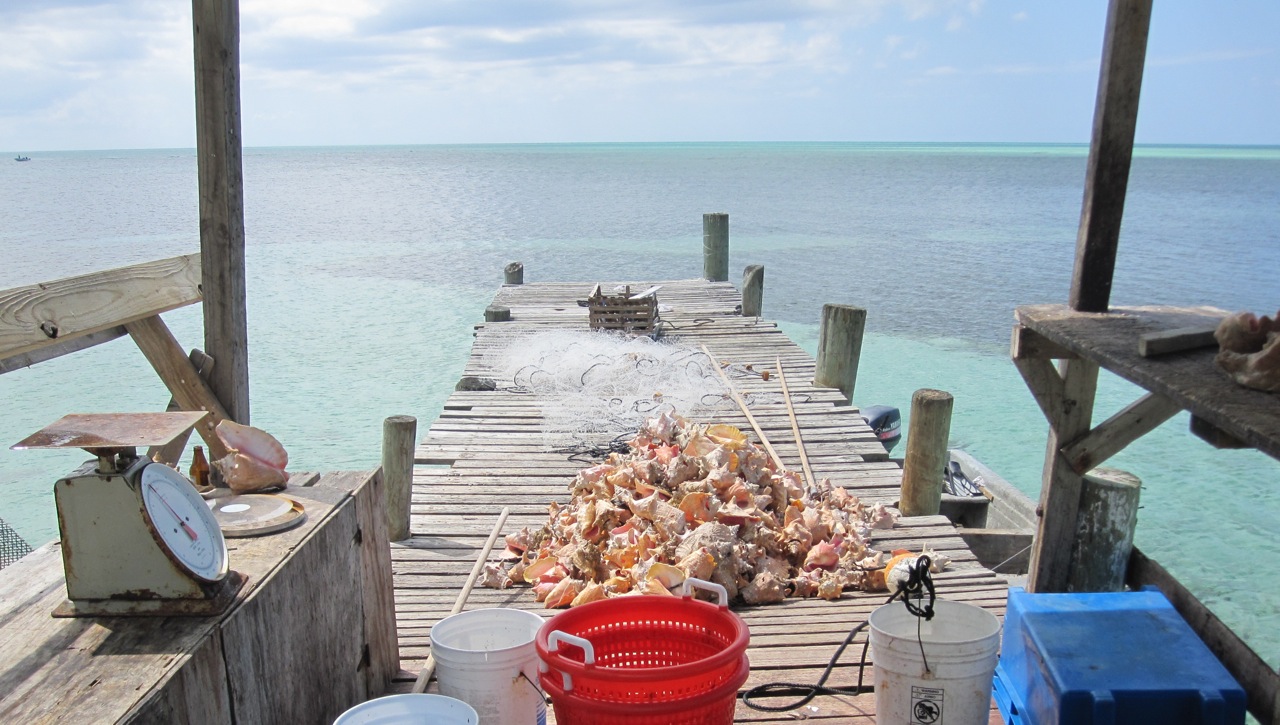

These shells at Sandy Point are so plentiful that they form a small spit of ‘land’ into the sea
An attractive display of conch shells in Marsh Harbour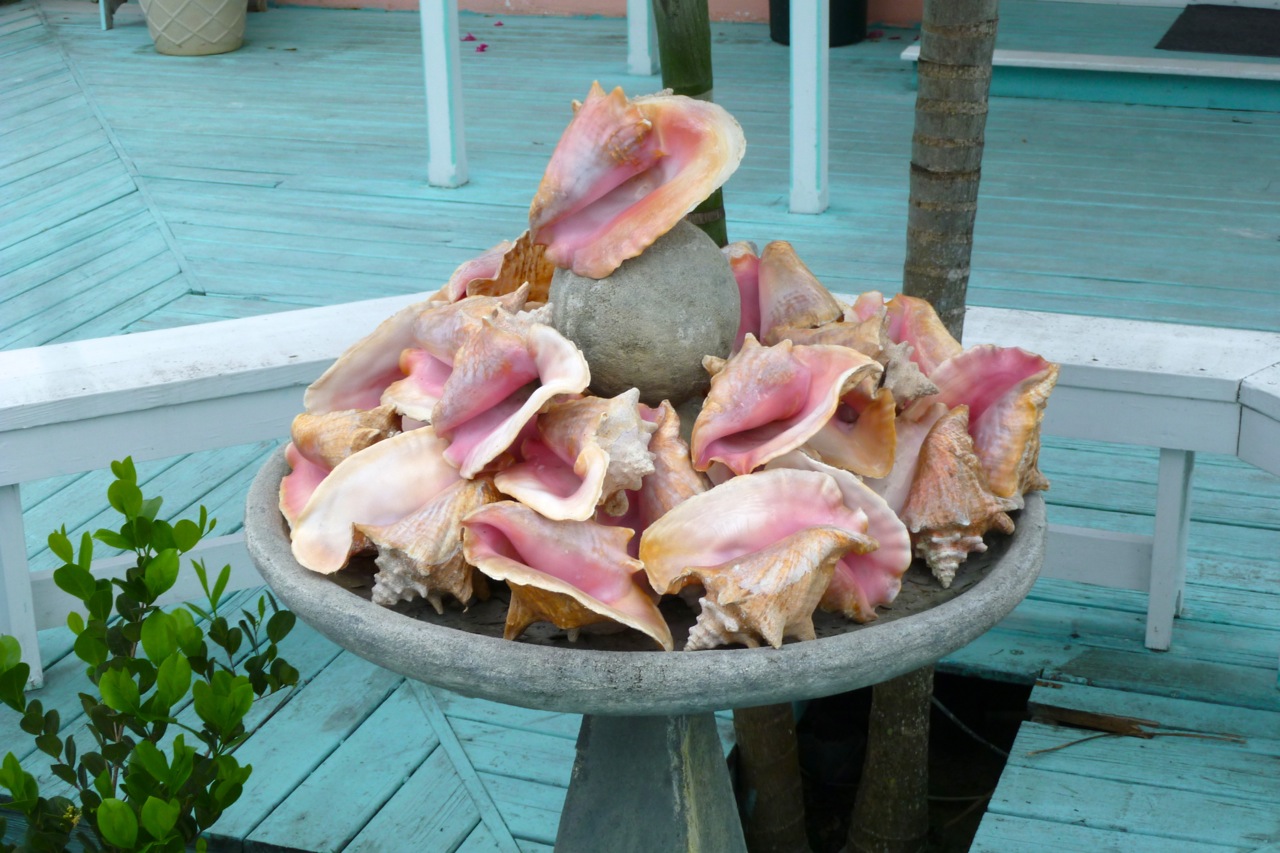
A less formal arrangement along the jetty at Man o’ War Cay (after a storm)
It’s easy to forget that these shells are more than just a garden adornment, or pretty containers for a ubiquitous Caribbean food. Under the sea, and not very far at that, are living creatures going about their daily lives.

And that includes reproducing. This sounds as if it might be a cumbersome process, but (like porcupines) they seem to manage. Here is a pair preparing to mate. The male behind is presumably about to… well never mind. I’ve never seen the process, so it’s a case of using imagination. Or just accepting that, whatever it is that they do, it works. [I haven’t located a video online – I’ll post one if I do]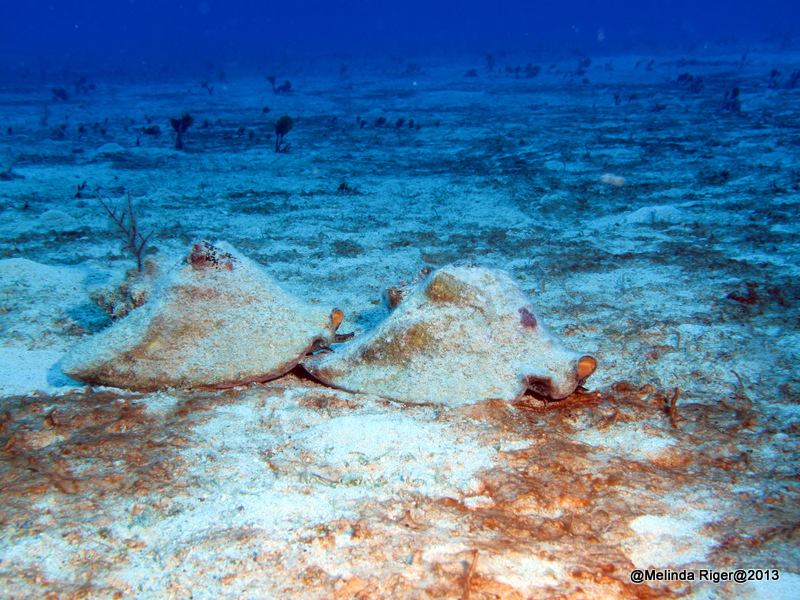
You’ll find some more about Conchs in a previous post HERE, including 12 Unputdownable Conch Facts, notes on conservation matters and… a photo of Honeychile Rider, arguably the most famous conch-carrier ever. Oh, she was fictional, you say? But I always though she… How very disappointing.
And if you want to know how to clean a conch, a dude will show you in a video on this page HERE
Finally, check out the very informative website COMMUNITY CONCH, a charitable conservation organisation 
Photo credits: Melinda, Clare, RH
UPDATE I name-checked BMMRO intern Oscar Ward’s blog below. Now he’s been out on the ocean on ‘poop patrol’. You can read Oscar’s account of his experiences HERE
Among the many pleasures for cetacean research scientists must be the joy of whale poop collection. Followed by close inspection and analysis. The Bahamas Marine Mammal Research Organisation BMMRO conducts research expeditions, in conjunction with such organisations as the New England Aquarium NEAQ and Friends of the Environment FOTE, in Abaco waters and further afield in the Bahamas. The attention this year has been on beaked whale feces, though available sperm whale feces are not to be sniffed at. Images and info below are courtesy of the organisations mentioned above, with thanks for use permission

A researcher working with BMMRO demonstrates feces collection using coffee grounds. She collects the coffee granules in her net and places the entire sample into a ziplock bag, ready to hand to the boat for processing 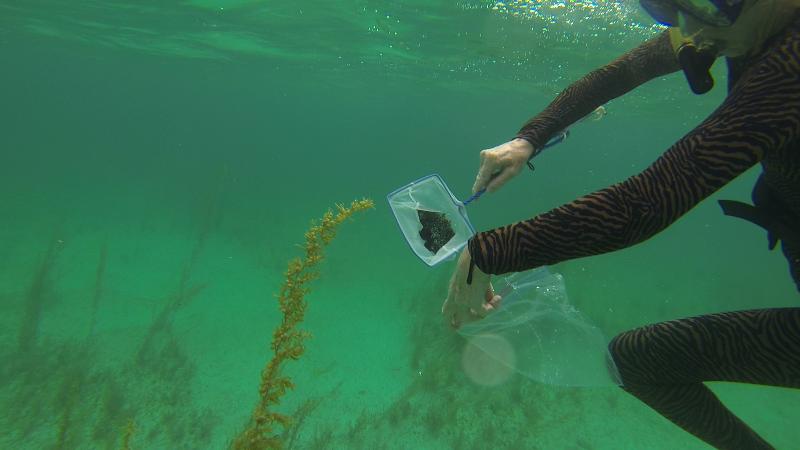
The purpose of feces collection is to look at the stress and reproductive hormones of the whales and to gather a baseline for these animals with which to compare other populations that are under threat
An alternative method of collection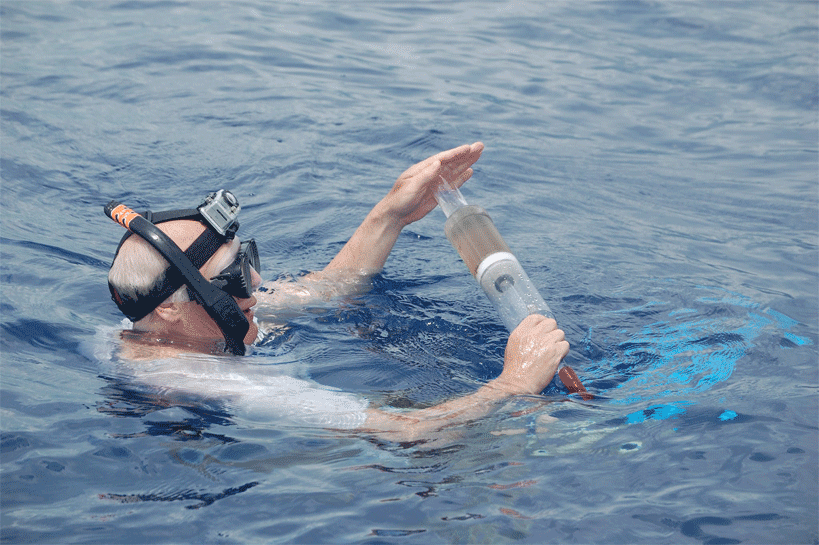
Blainville’s Beaked Whales (suppliers of raw research material)
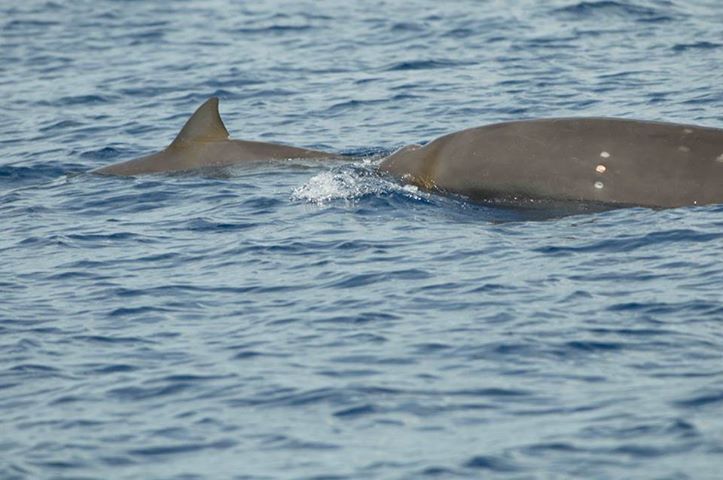
There are some conditions – dare I say windy ones – when Blainville’s beaked whales may be hard to locate. At such times, collection of pieces of other species feces rarely ceases… Here is a sperm whale in the act of producing laboratory samples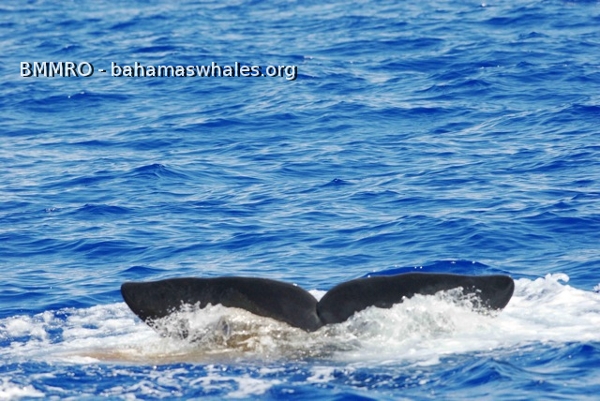
Weather of the sort that makes the day’s collection more complicated. Indeed, it looks and uphill task…
That’s enough on the topic for now. Later in the month there will be some great dolphin pictures to enjoy. Below is the BMMRO sightings chart for July, which I forgot to publish sooner.
Finally, a young UK friend of ours, Oscar Ward, has recently won his place to study marine biology at university next Autumn. He has just arrived on Abaco to start an internship with the BMMRO at Sandy Point. He will then be moving to Friends of the Environment in MH. He has set up an excellent blog to record his experiences, with his first Abaco post going up today, I notice. You can follow Oscar at SEVENTYPERCENT.COM And if you see him around, do say hi! to him.


This is part 2 of a series that started out HERE with a selection of anemones, basket stars and Christmas tree worms. The images below show a wide variety of corals. In among them are also sponges and anemones. These photos are evidence of a healthy reef environment in the waters of the northern Bahamas. Abaco’s coral reef is the third largest barrier reef in the world (yes, I hear you – the Great Barrier… And the second is???), providing wonderful and accessible diving / snorkelling opportunities. However, monitoring shows that the incidence of coral bleaching and disease is increasing in the Bahamas, as elsewhere in the world. It’s a sobering thought that your grandchildren may never swim in an environment with any of the living corals shown below…
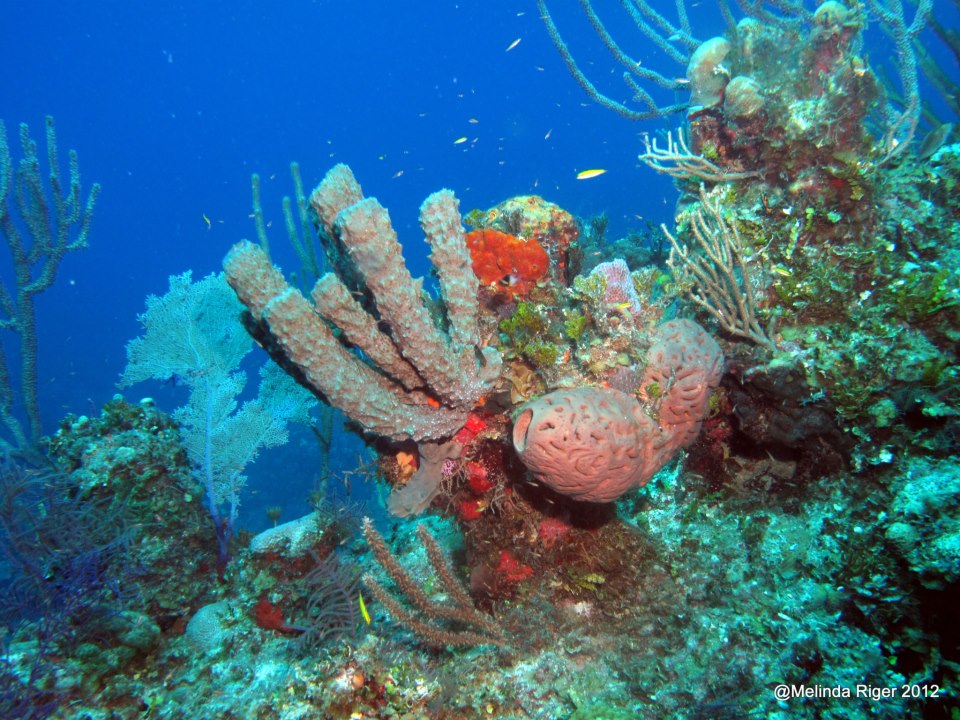


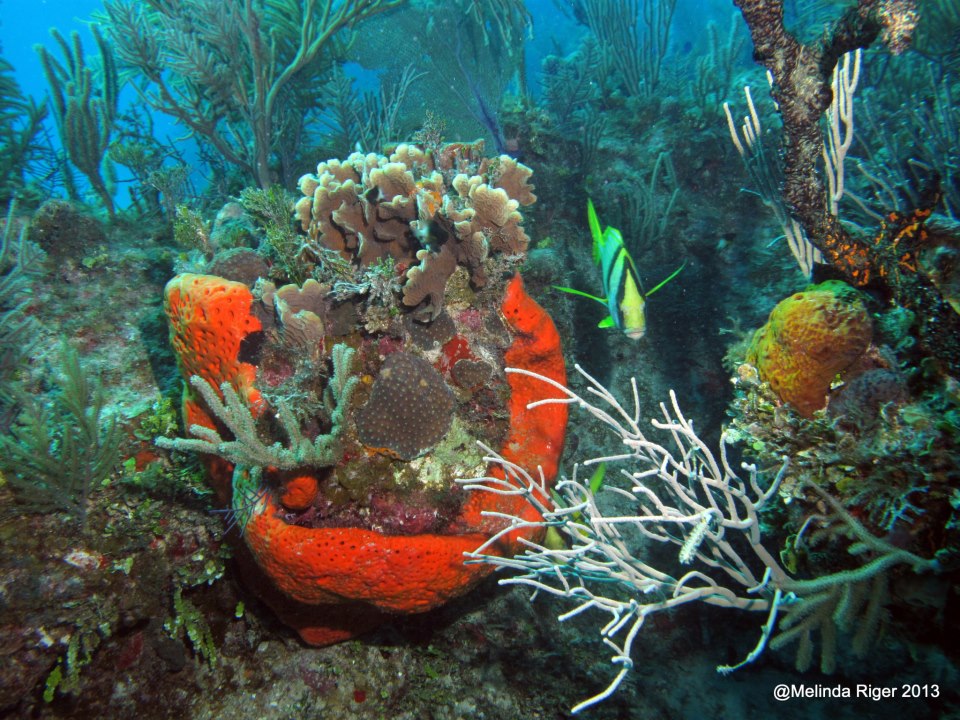
 Image Credits: ©Melinda Riger @ Grand Bahama Scuba

The SOUTHERN STINGRAY Dasyatis americana is a ‘whiptail stingray’ found in the Western Atlantic Ocean. Their habitat and personal habits – feeding and mating – are similar to those of the YELLOW STINGRAY. They live on the seabed, where they feed on small crustaceans, molluscs and fish. They expose their prey by flapping their ‘wings’ (= pectoral fins) to disturb the sand


You want to avoid treading on one of these if possible. Their tails have a serrated barb covered in venomous mucous, used for self-defence. These spines are not fatal to humans, but if you step on one it may be an experience in extreme pain to tell your grandchildren about. 
Luckily they are likely to see you long before you notice them, and to swim away from your approach
IUCN LISTING: ‘DATA DEFICIENT’
Surprisingly, the ‘at risk’ status of the Southern Stingray is not known. However, as with other marine species that humans like to befriend in the wild for the perceived benefit of both parties, there are parts of the Caribbean where stingray swims involve rather more than merely swimming with and enjoying the rays in their own environment. There is organised hand-feeding with cut-up fish, even general fondling and cuddling, that can make these wild creatures seem ‘tame’. There is growing concern that such close dependent interactions with humans is not a good thing, at least for the stingrays.
A diver admiring a ray while keeping a respectful distance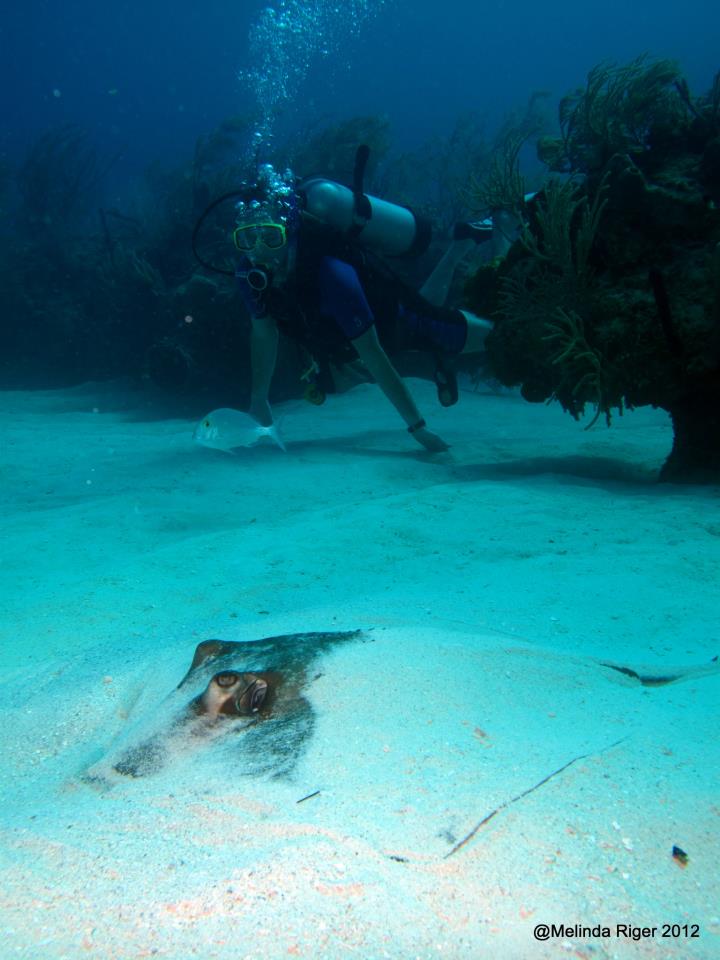
If you watch out for them… they’ll keep an eye out for you
Credits: Melinda Riger of Grand Bahama Scuba; Wiki for thumbs / material; selected online trawlings


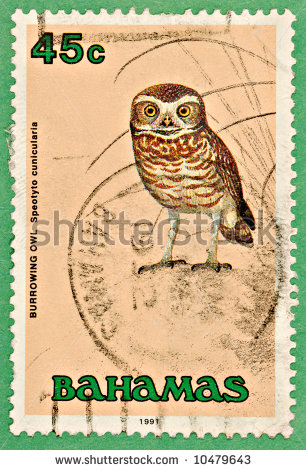

 ROLLING HARBOUR ABACO
You must be logged in to post a comment.