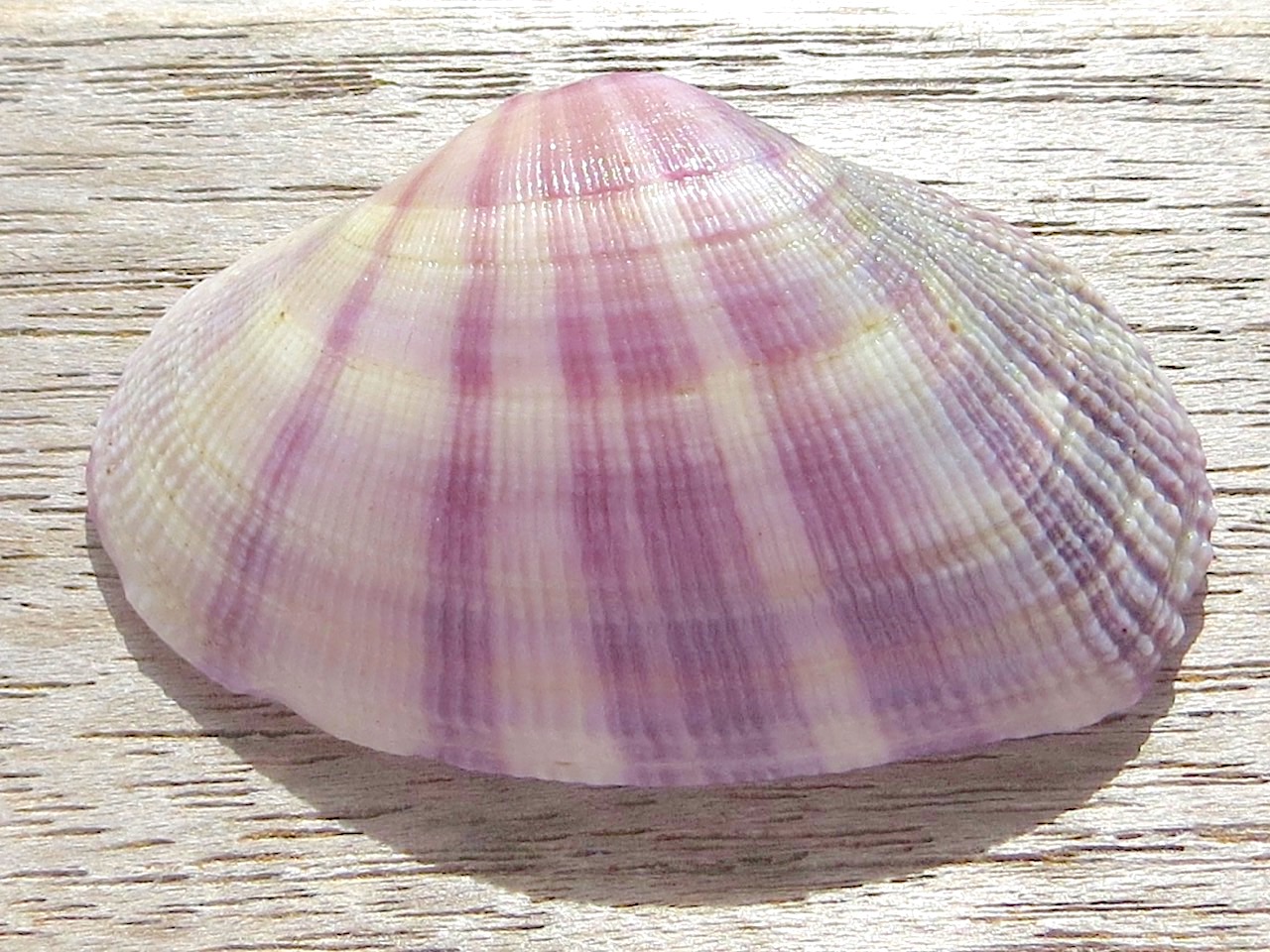
These very pretty shells, with their striking pink radials, are sometimes known as ‘rose-petal shells’. They are always tempting to pick up from the sand. The ‘hinges’ (muscles) are very delicate, however, and with many of these shells that wash up on the beach the two halves have separated naturally.
Sunrise tellins are not uncommon, and make good beachcombing trophies They can grow up to about 7 cms / 2.75 inches, and the colouring is very varied, both outside and inside.
TELLIN: THE TRUTH
The occupant of these nice shells is a type of very small clam. They live on the sea-floor, often buried in the sand and with the lid (mostly) shut. When they die (or their shells are bored into by a predator and they are eaten) the shells eventually wash up empty on the beach. There’s not much more to say about them – they perform no tricks and are believed to have vanilla sex lives. Other small clams are quite inventive, doing backflips and copulating with enthusiasm.
Inside Story… not much to tell except (a) very pretty & (b) possible predator bore-hole top right
WHAT ELSE IS THERE TO KNOW ABOUT THEM?
These clamlets have 5 tiny teeth to chew up their staple diet, mainly plant material
These include one ‘strong’ tooth and one ‘weak’ one, though it isn’t clear why. How someone found this fact out remains a mystery
Tellins are native to the Caribbean and north as far as Florida
They live mainly in quite shallow water, but have been found as deep as 60 foot
They have no particular rarity value, and are used for marine-based crafting.
TELLIN LAW
You know those lovely tellins you collected during your holiday and took back home to your loved ones? You did take them, didn’t you? You may have committed a crime! In the Bahamas there is no specific prohibition on the removal of tellin shells, certainly not for personal use… but the general rule – law, even – seems to be “in most countries it is illegal to bring back these shells from holidays”.
Linnaean Examples
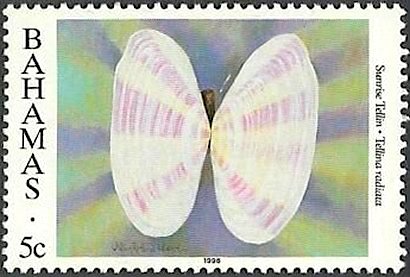
As ever, the very excellent Bahamas Philatelic Bureau has covered seashells along with all the other wildlife / natural history stamp sets they have produced regularly over the years. The sunrise tellin was featured in 1995. You can find more – much more – on myPHILATELYpage.
All photos Keith Salvesen / Rolling Harbour; Rhonda Pearce, O/S Linnean Poster, O/S BPB stamp
FLAMINGO TONGUE SNAILS Cyphoma gibbous are small marine gastropod molluscs related to cowries. The living animal is brightly coloured and strikingly patterned, but that colour only exists in the ‘live’ parts – the so-called ‘mantle’. The shell itself is usually pale, and characterised by a thick ridge round the middle. These snails live in the tropical waters of the Caribbean and the wider western Atlantic. Whether alive or dead, they are gratifyingly easy to identify.
THE IMPORTANCE OF CORAL
Flamingo tongue snails feed by browsing on soft corals. Often, they will leave tracks behind them on the coral stems as they forage (see image below). But corals are not only food – they provide the ideal sites for the creature’s breeding cycle.
Adult females attach eggs to coral which they have recently fed upon. About 10 days later, the larvae hatch. They eventually settle onto other gorgonian corals such as Sea Fans. Juveniles tend to live on the underside of coral branches, while adults are far more visible and mobile. Where the snail leaves a feeding scar, the corals can regrow the polyps, and therefore the snail’s feeding preference is generally not harmful to the coral.
The principal purpose of the patterned mantle of tissue over the shell is to act as the creature’s breathing apparatus. The tissue absorbs oxygen and releases carbon dioxide. As it has been (unkindly?) described, the mantle is “basically their lungs, stretched out over their rather boring-looking shell”.
THREATS AND DEFENCE
The species, once common, is becoming rarer. The natural predators include hogfish, pufferfish and spiny lobsters, though the spotted mantle provides some defence by being rather unpalatable. Gorgonian corals contain natural toxins, and instead of secreting these after feeding, the snail stores them. This supplements the defence provided by its APOSEMATIC COLORATION, the vivid colour and /or pattern warning sign to predators found in many animal species.
MANKIND’S CONTRIBUTION
It comes as little surprise to learn that man is now considered to be the greatest menace to these little creatures, and the reason for their significant decline in numbers. The threat comes from snorkelers and divers who mistakenly / ignorantly think that the colour of the mantle is the actual shell of the animal, collect up a whole bunch from the reef, and in due course are left with… dead snails and “boring-looking shells” (see photos below). Don’t be a collector; be a protector…
The photos below are of nude flamingo tongue shells from the Delphi Club Collection. Until I read the ‘boring-looking shell’ comment, I believed everyone thought they were rather lovely… I did, anyway. You decide!
Image Credits: Melinda Rogers / Dive Abaco; Keith Salvesen / Rolling Harbour
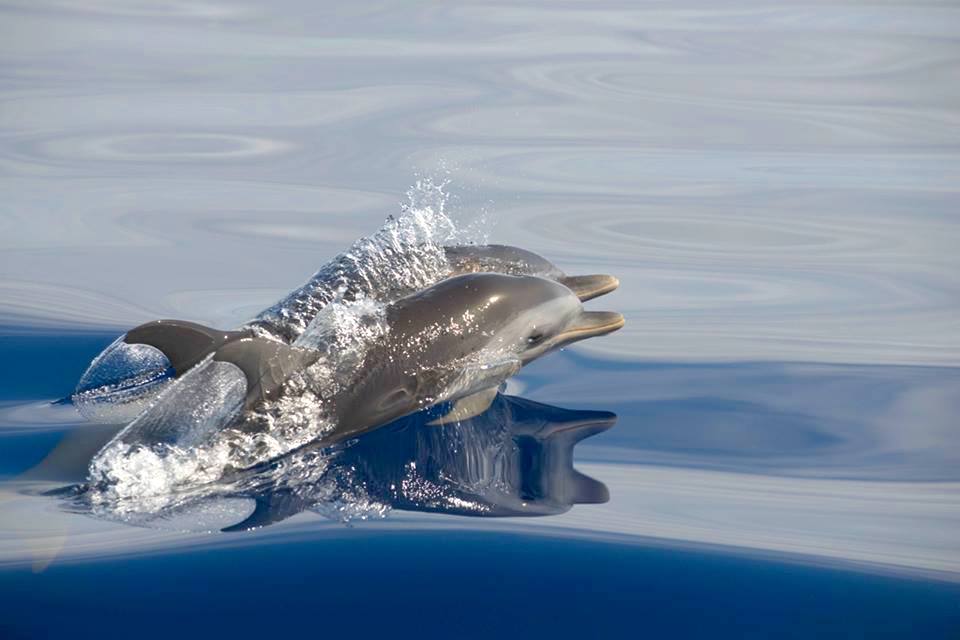
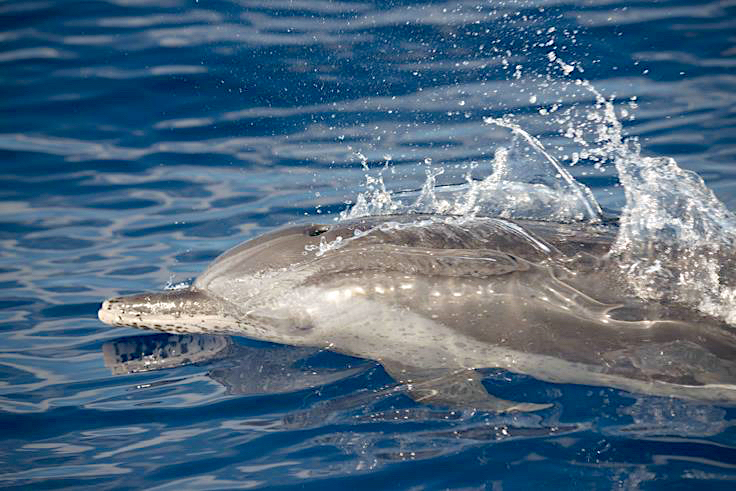
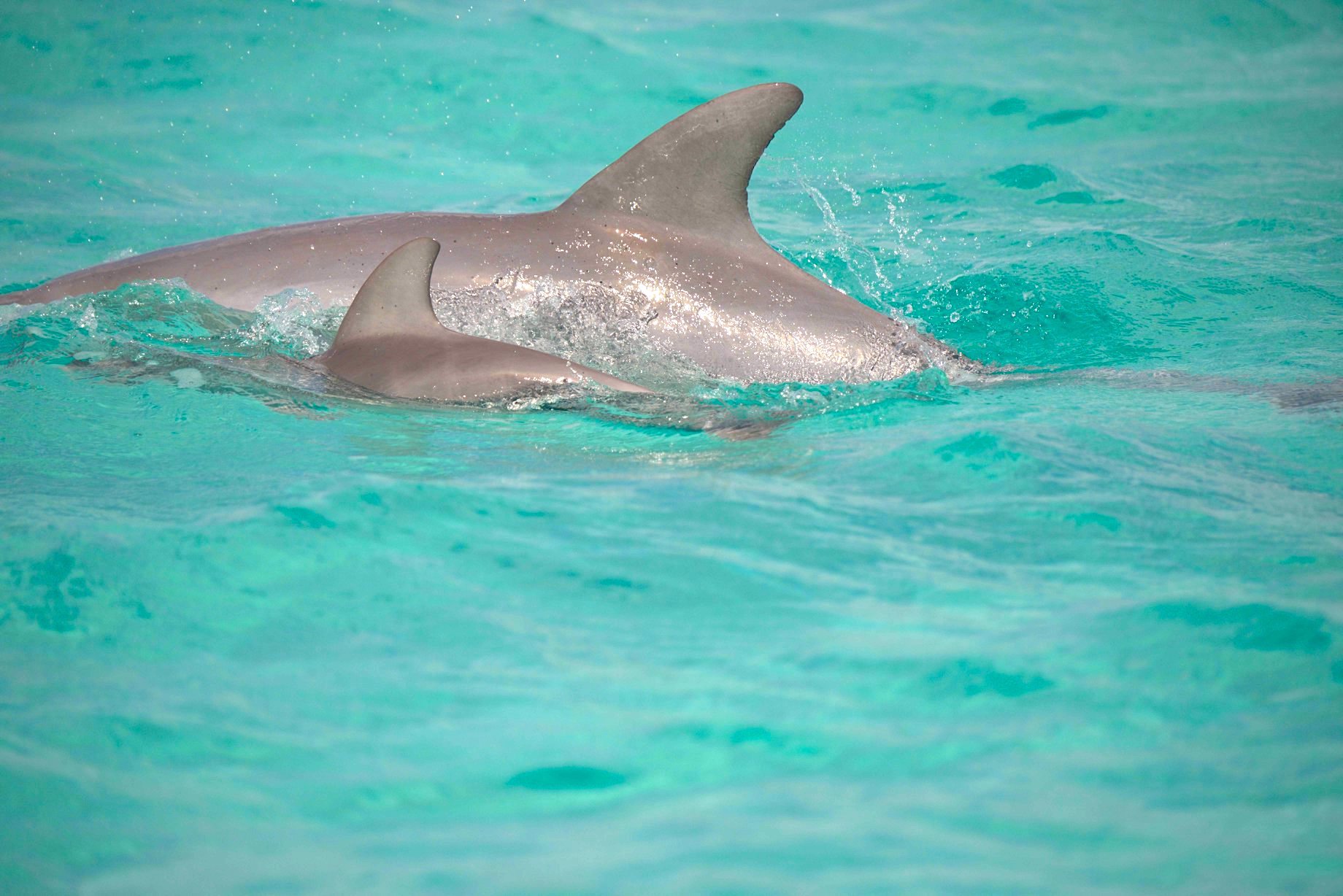
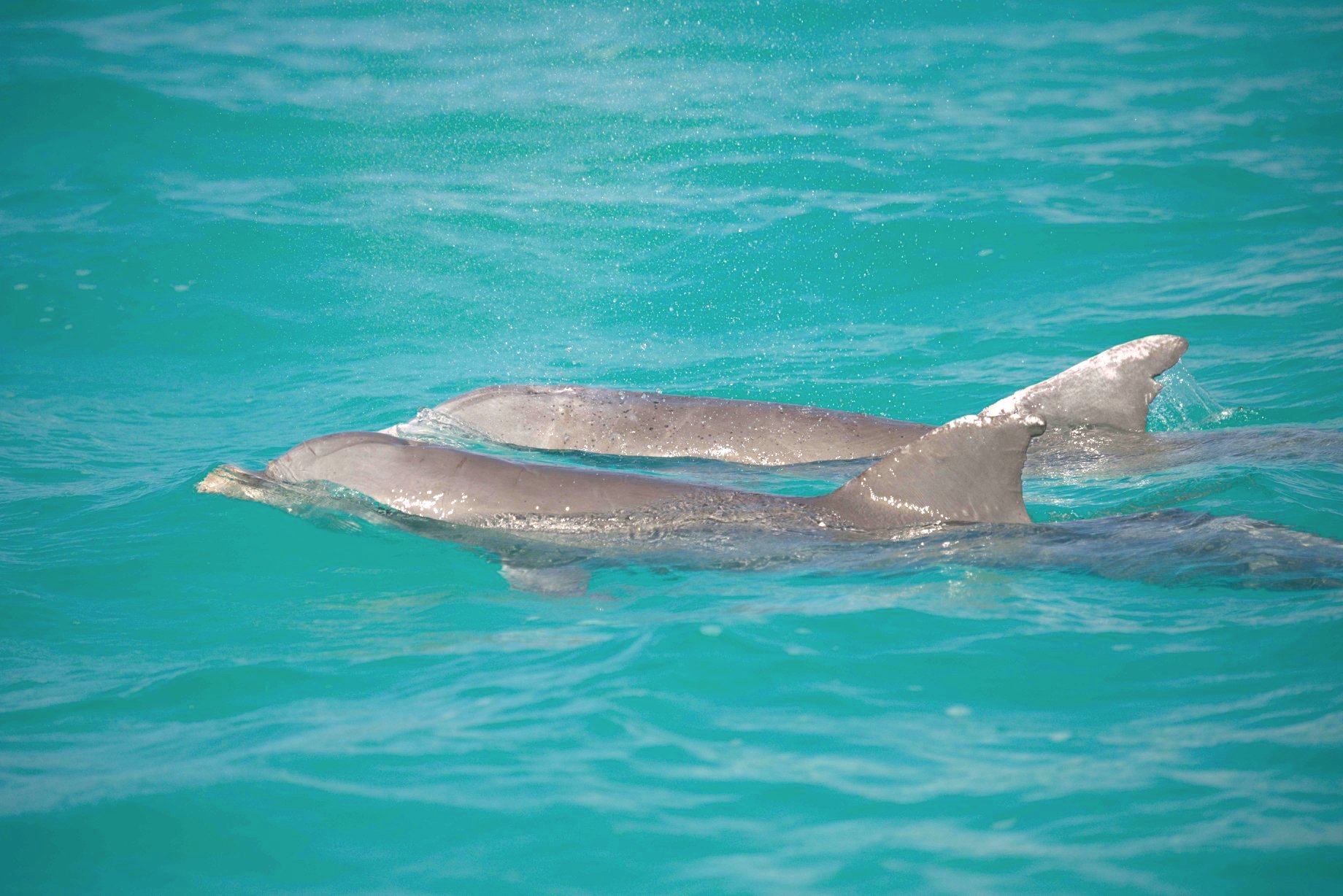
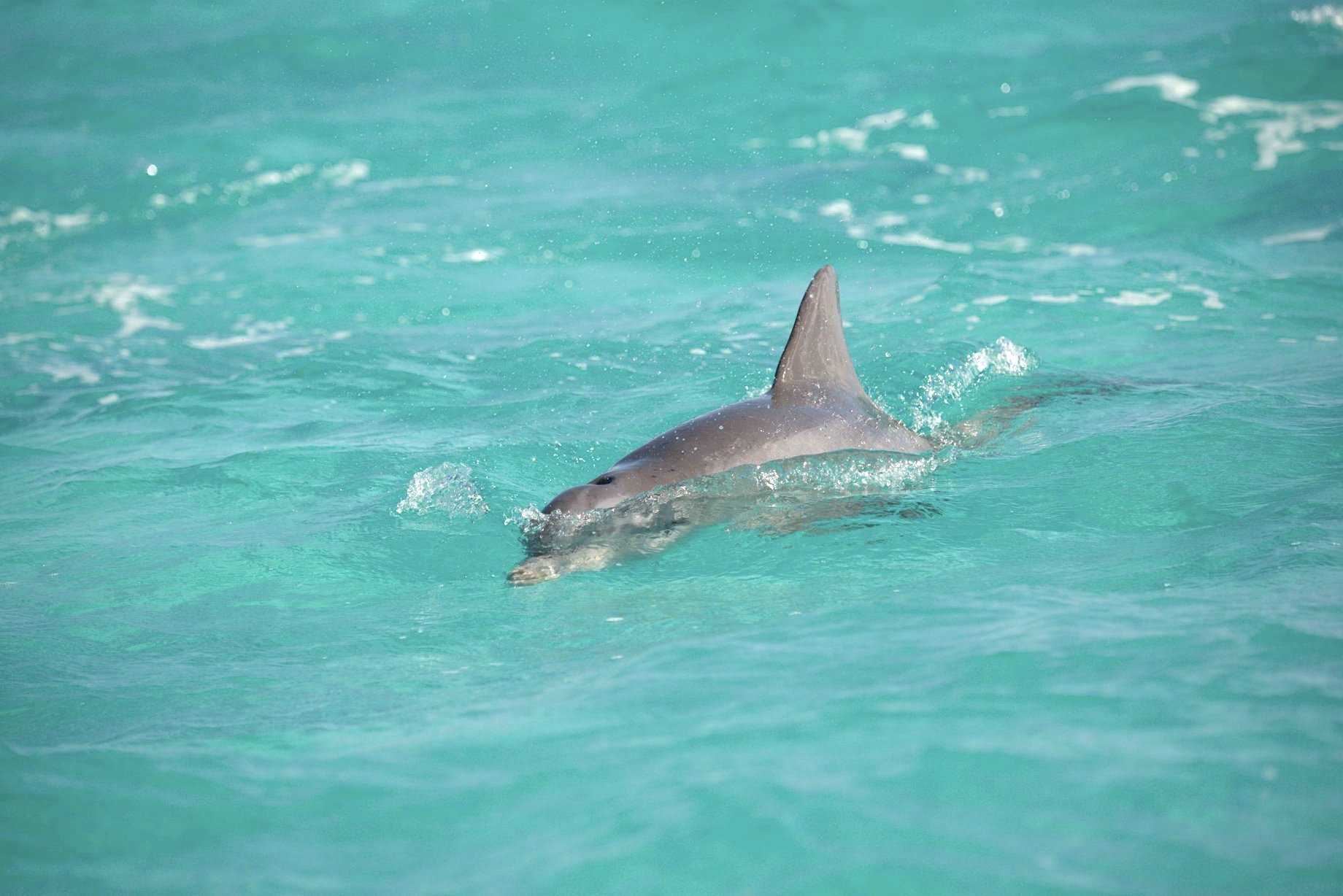
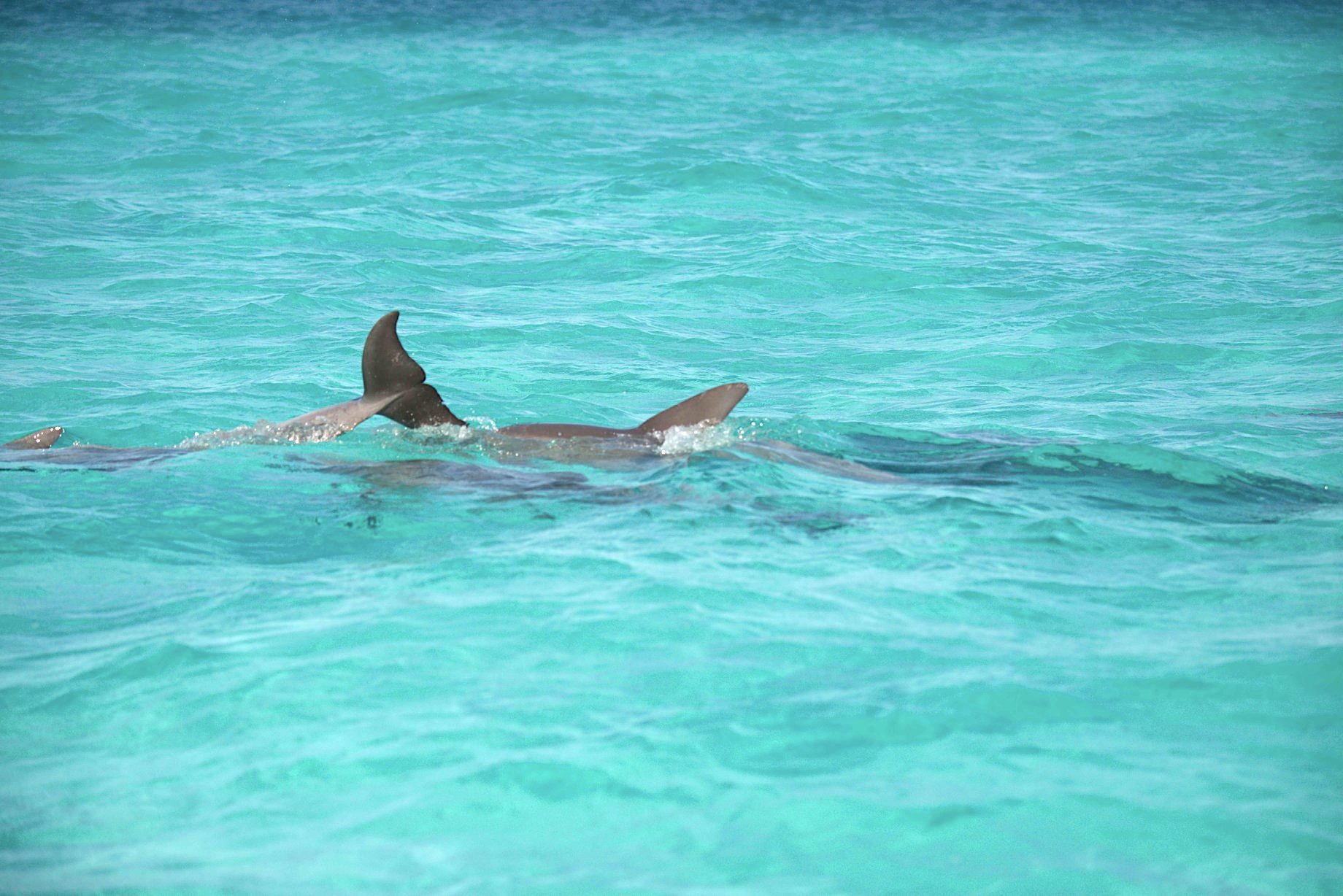
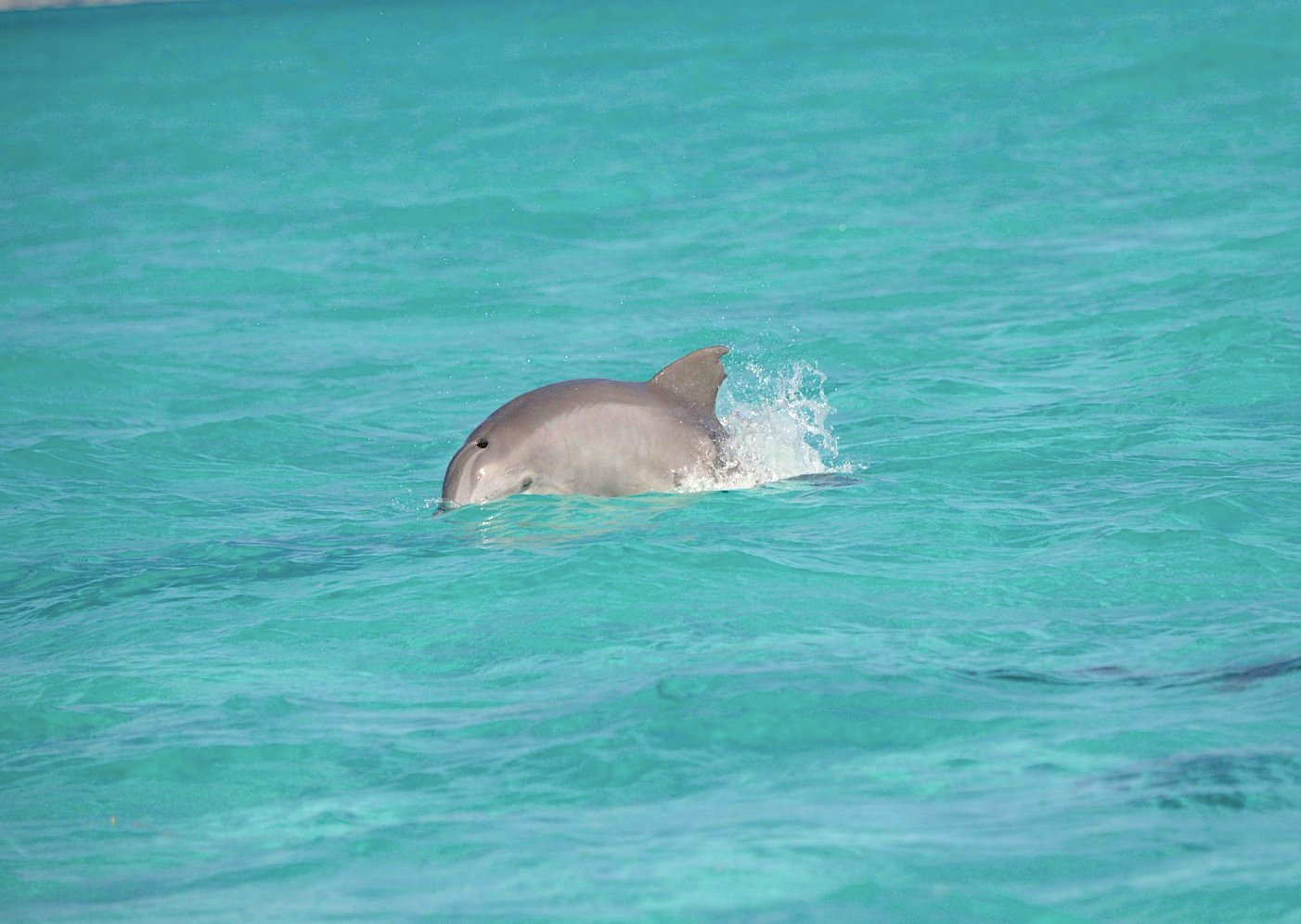
There’s never ever a wrong time for dolphins to have some fun in the water. It’s what they expect. It’s what we (if we are lucky enough to see them) expect. It’s what they expect that we expect if we are out in a boat – hence the joyful bow-riding, the rapid crossing back and forth. From time to time there’s a single dolphin in a group that takes the opportunity to show off. In the deeper water off the southern tip of Abaco, in sight of the lighthouse, this is a good example of such carefree behaviour.
Atlantic Spotted Dolphins . Abaco Bahamas . BMMRO
There’s more excitement to be found in this group. If you look carefully at #3 in the gallery, you’ll see a very small dorsal fin. There’s a calf in the group, being guided and watched over by two adults. Imagine being out there in a boat and encountering this group. That would in itself be something to show off about…
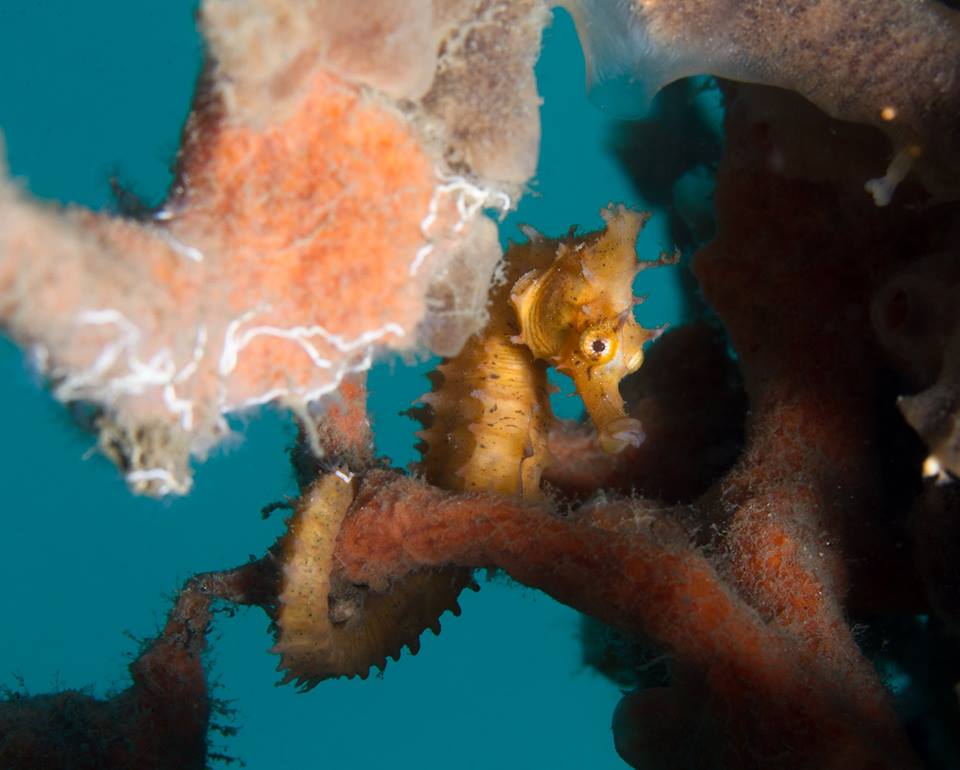
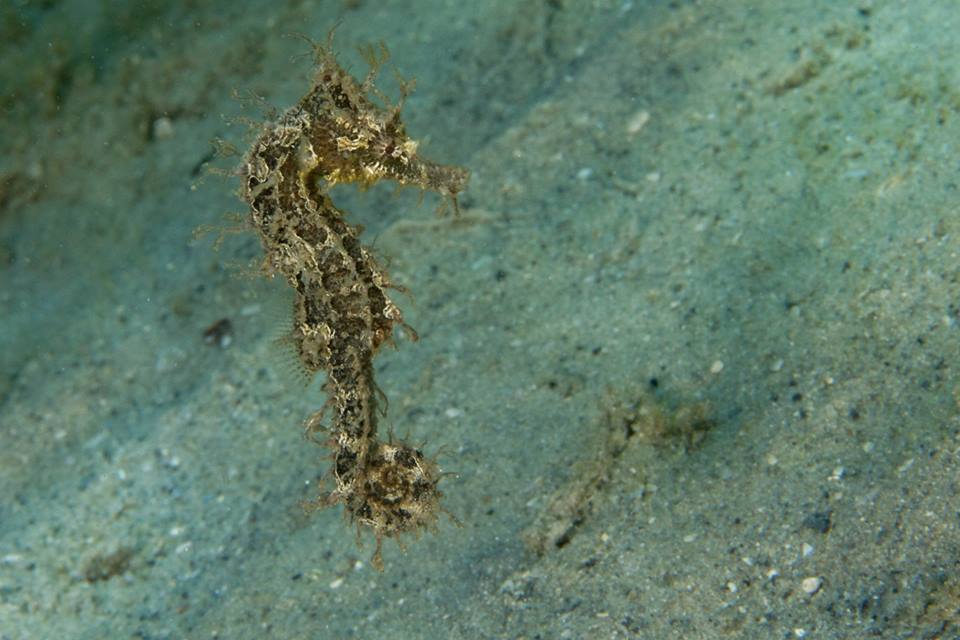
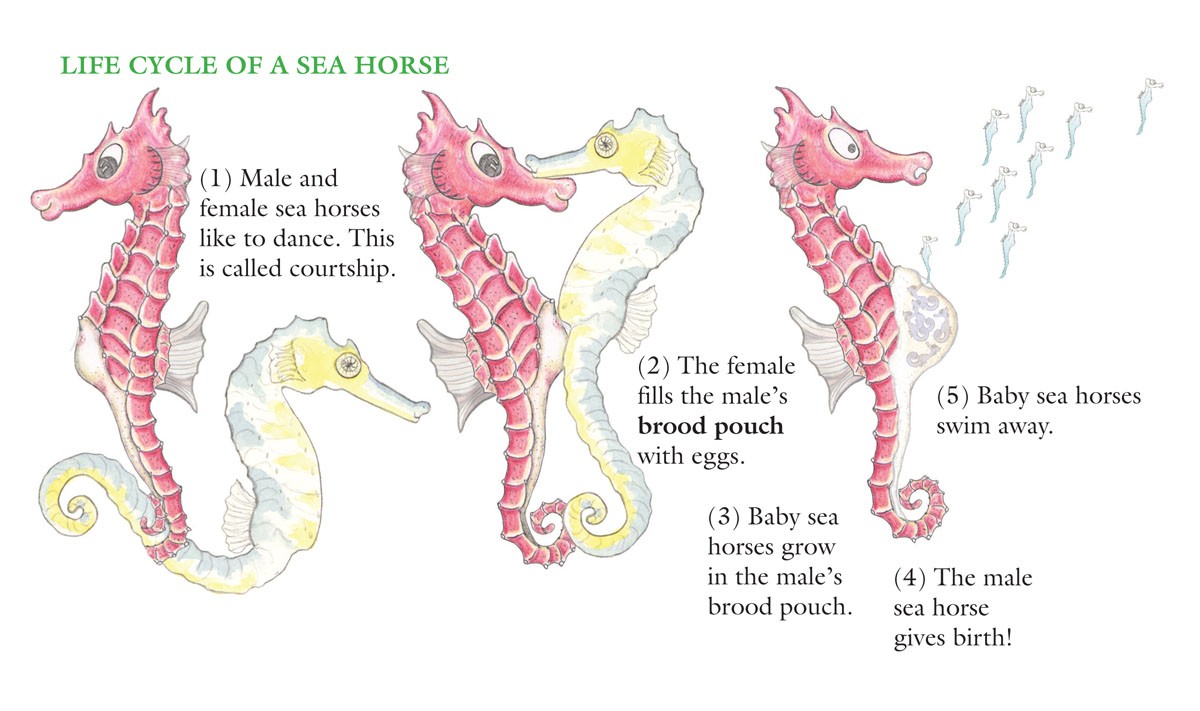
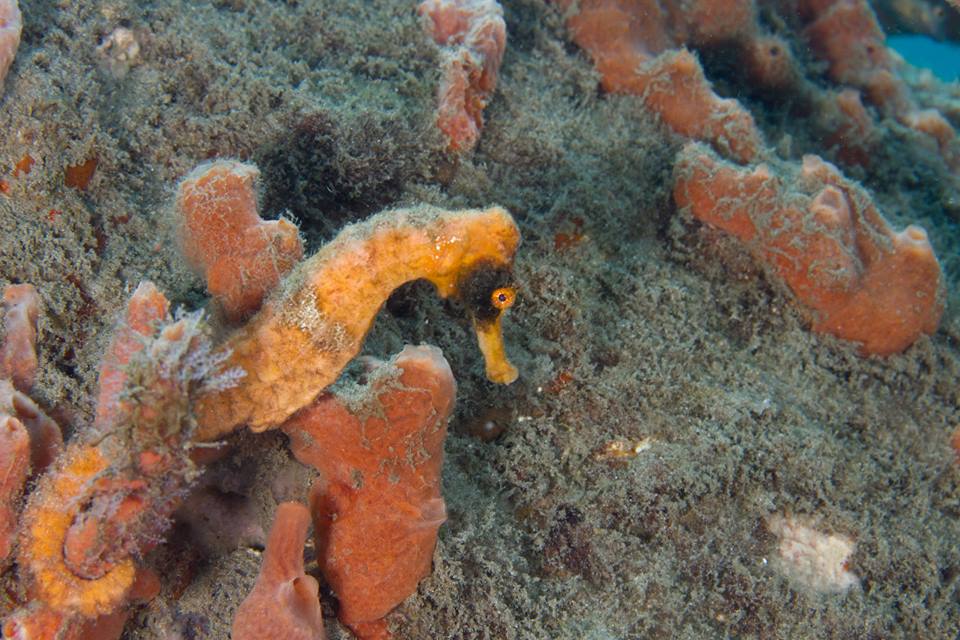
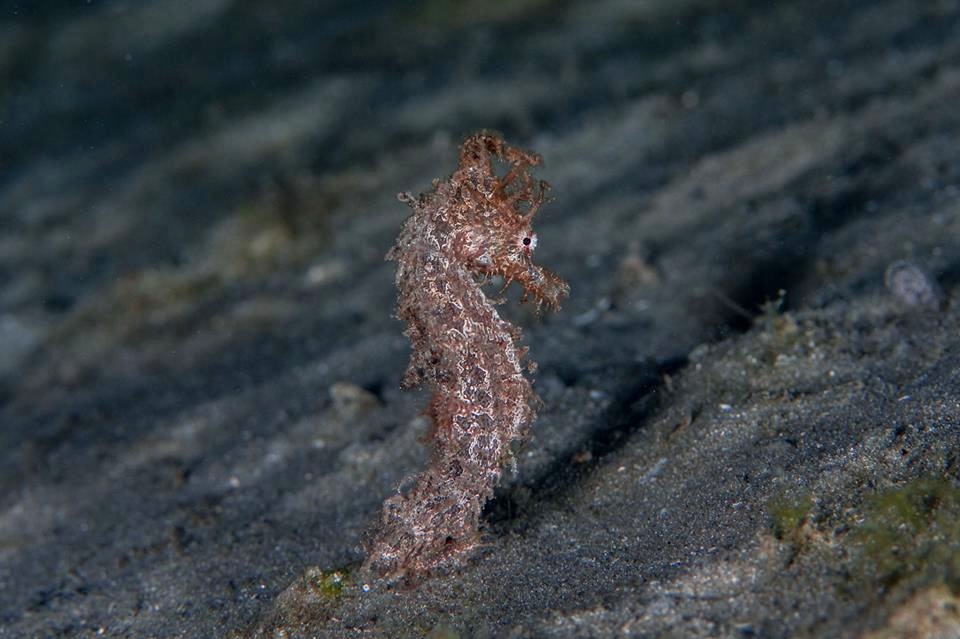
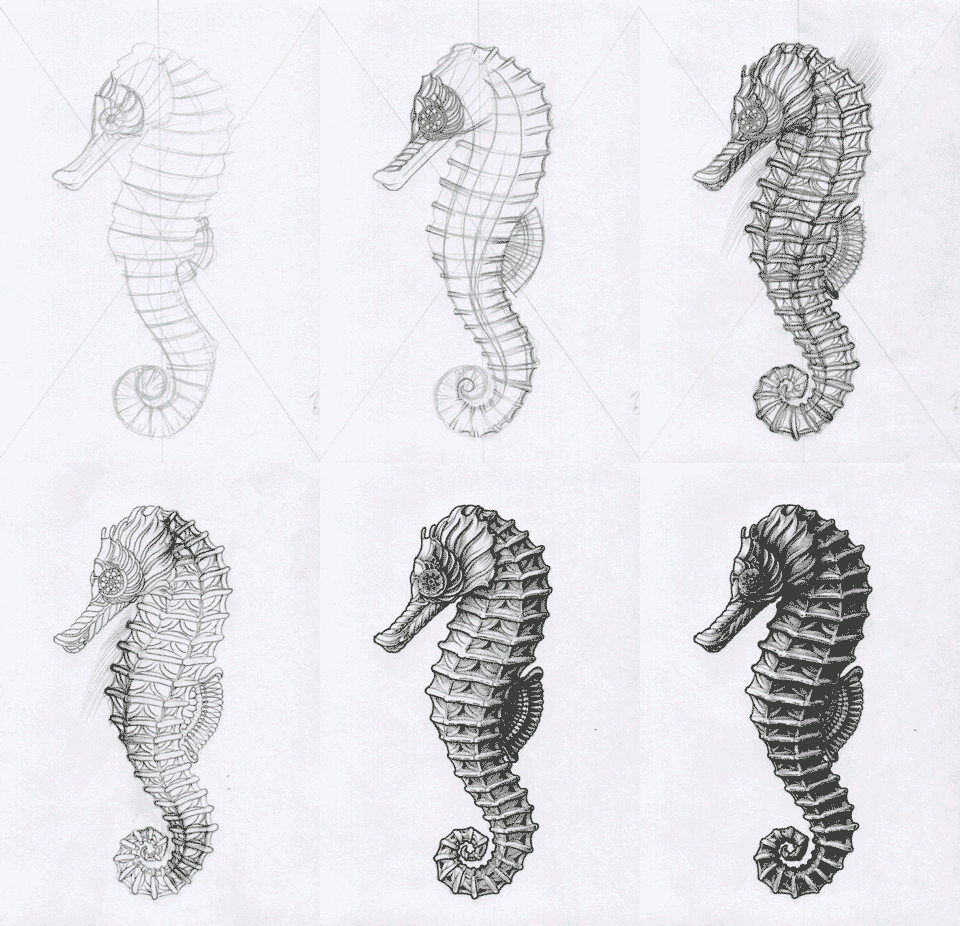
It’s a while since I showcased these astonishing little creatures. Adam Rees of SCUBA WORKS is a diver who combines great underwater experience with wonderful photographic skills. Here is a showcase for some of Adam’s seahorse photography and the amazing detail he captures. If these images don’t make you want to get your head underwater and explore the reefs, I can’t think what will…
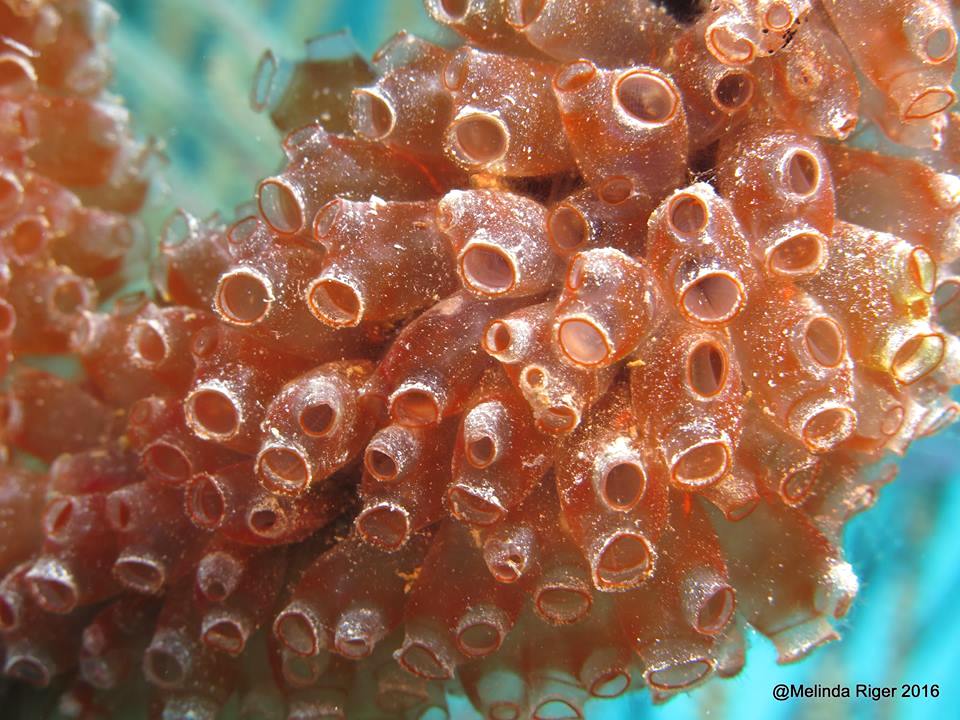
Painted Tunicates Clavina picta are one of several species of tunicate ‘sea-squirts’ found in Bahamas and Caribbean waters. These creatures with their translucent bodies are usually found clustered together, sometimes in very large groups. One reason for this is that they are ‘sessile’, unable to move from where they have taken root on the coral.
HOW DO THEY FEED?
Like most if not all sea squirts, tunicates are filter feeders. Their structure is simple, and enables them to draw water into their body cavity. In fact they have 2 openings, an ‘oral siphon’ to suck in water; and an exit called the ‘atrial siphon’. Tiny particles of food (e.g. plankton) are separated internally from the water by means of a tiny organ (‘branchial basket’) like a sieve. The water is then expelled.
WHAT DOES ‘TUNICATE’ MEAN?
The creatures have a flexible protective covering referred to as a ‘tunic’. ‘Coveringcates’ didn’t really work as a name, so the tunic aspect became the name.
IF THEY CAN’T MOVE, HOW DO THEY… (erm…) REPRODUCE?
Tunicates are broadly speaking asexual. Once a colony has become attached to corals or sponges, they are able to ‘bud’, ie to produce clones to join the colony. These are like tiny tadpoles and their first task is to settle and attach themselves to something suitable – for life – using a sticky secretion. Apparently they do this head first, then in effect turn themselves upside down as they develop the internal bits and pieces they need for adult life. The colony grows because (*speculation alert*) the most obvious place for the ‘tadpoles’ to take root is presumably in the immediate area they were formed.
APART FROM BEING STATIONARY & ASEXUAL, ANY OTHER ATTRIBUTES?
Some types of tunicate contain particular chemicals that are related to those used to combat some forms of cancer and a number of viruses. So they have a potential use in medical treatments, in particular in helping to repair tissue damage.
Credits: all fabulous close-up shots by Melinda Riger / Grand Bahama Scuba; diagram from depts.washington.edu; magpie pickings with a particular mention of an article by Sara MacSorley
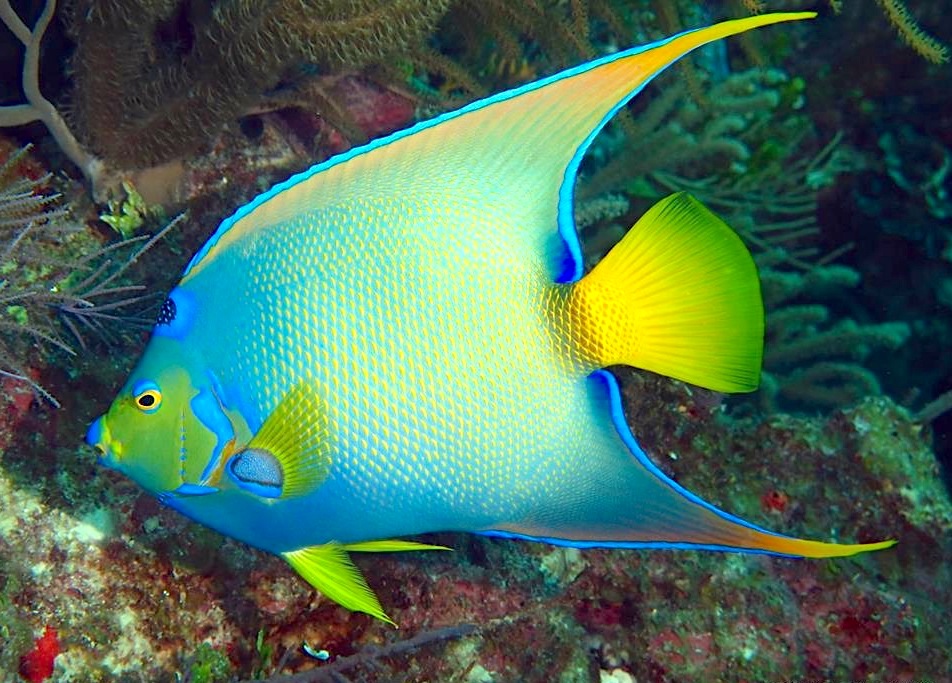
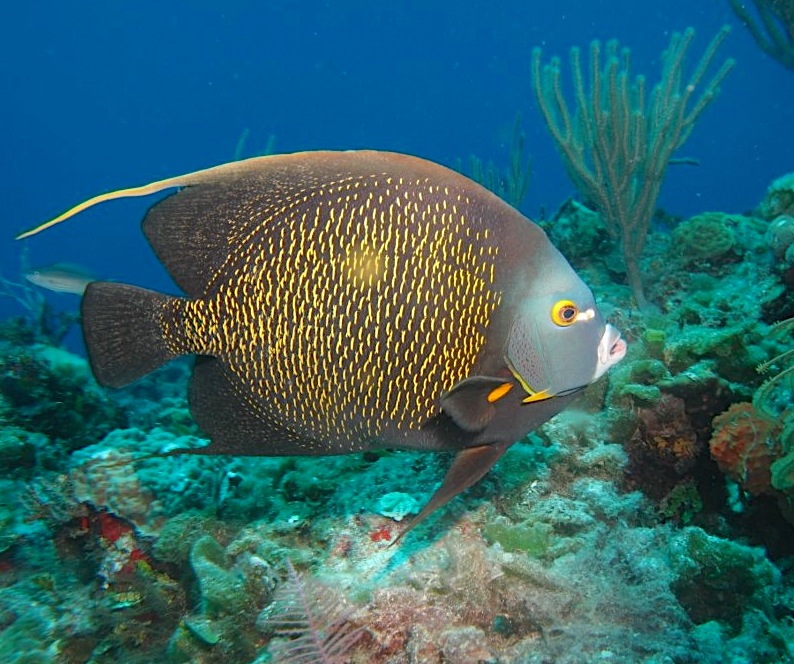
The images below show the three species of angelfish commonly found among the coral reefs of the Bahamas. These were photographed by diver Melinda Riger in the waters round Grand Bahama. The Queen, French and Gray Angels are shown in both adult and juvenile forms.
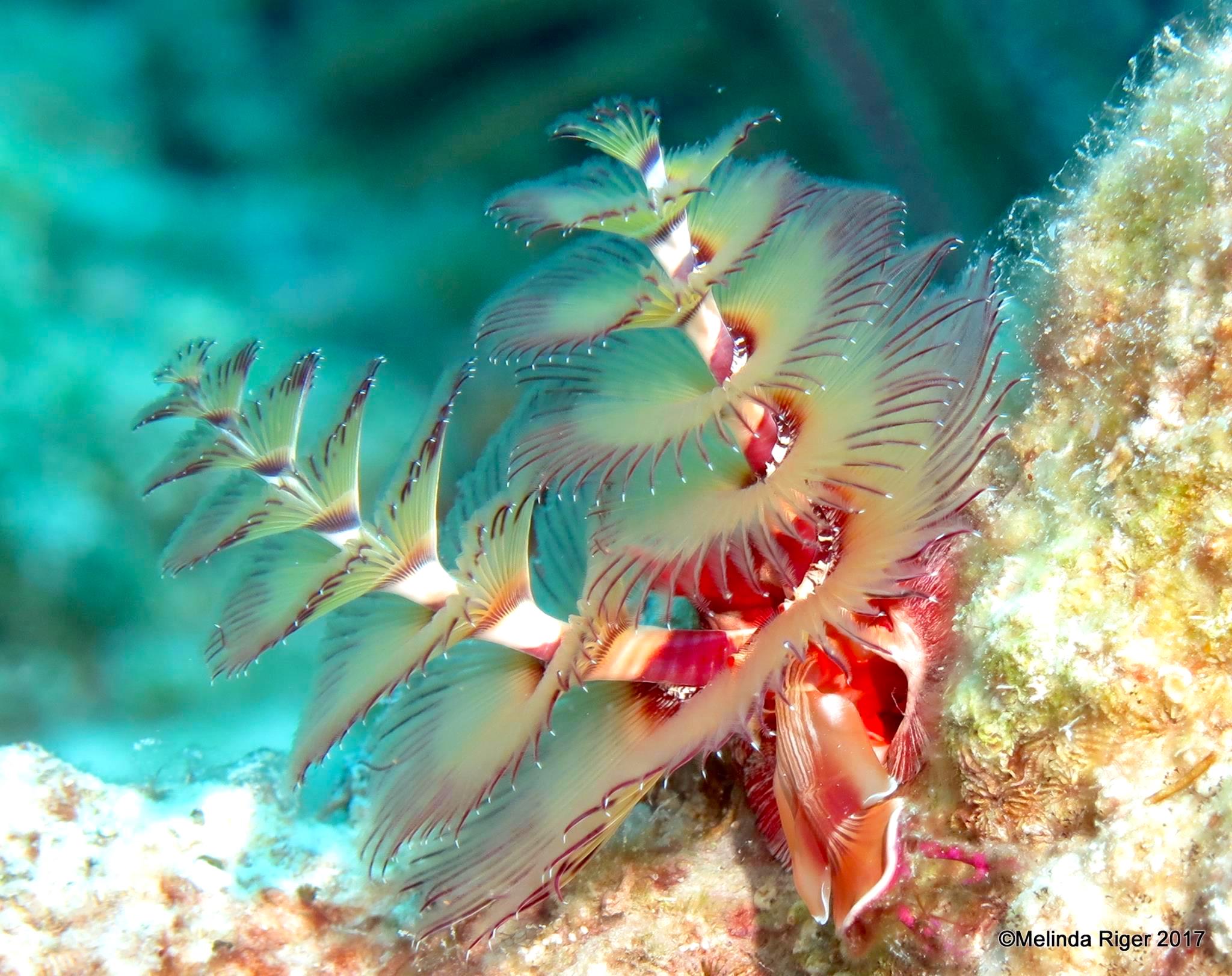
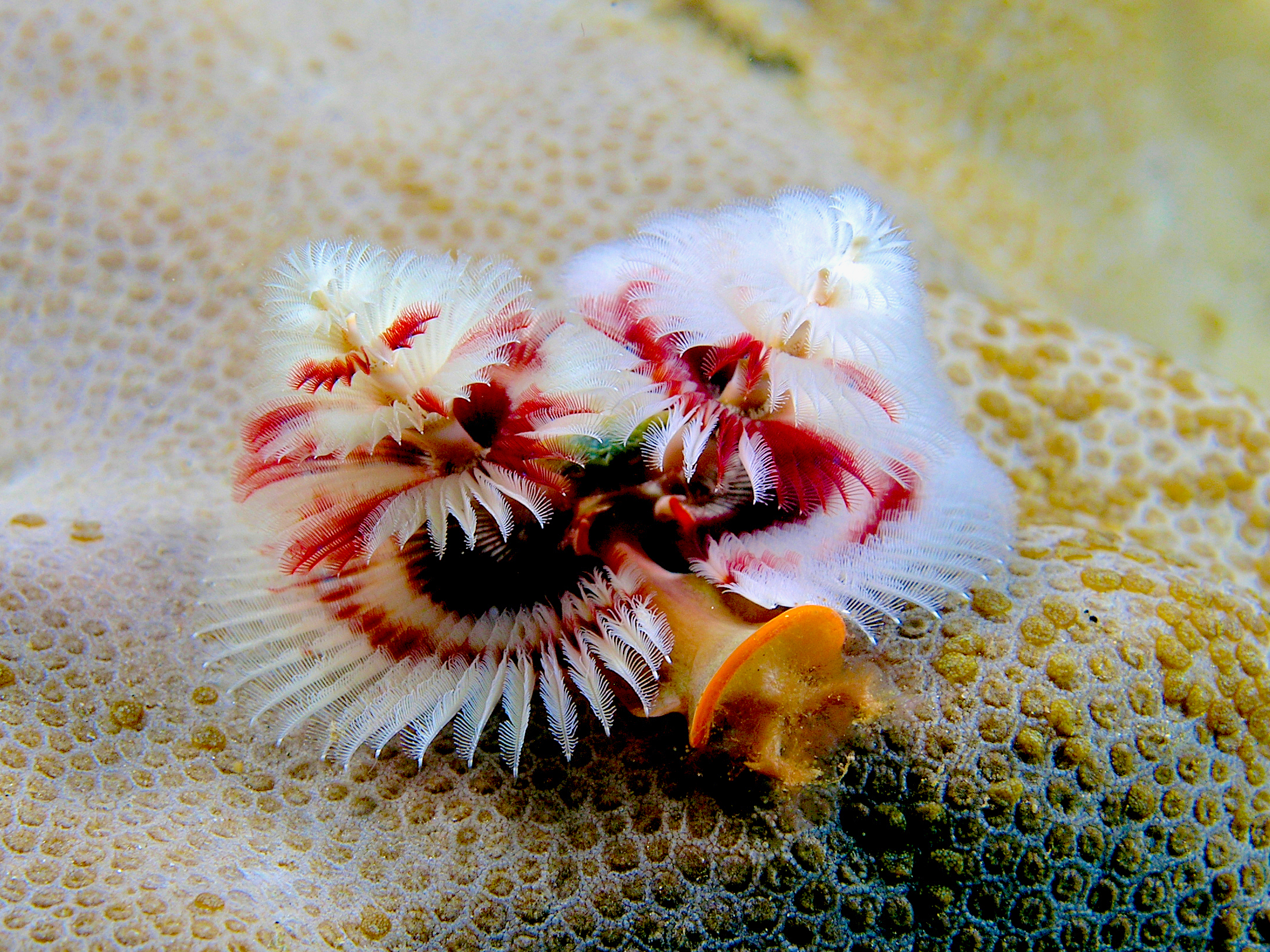
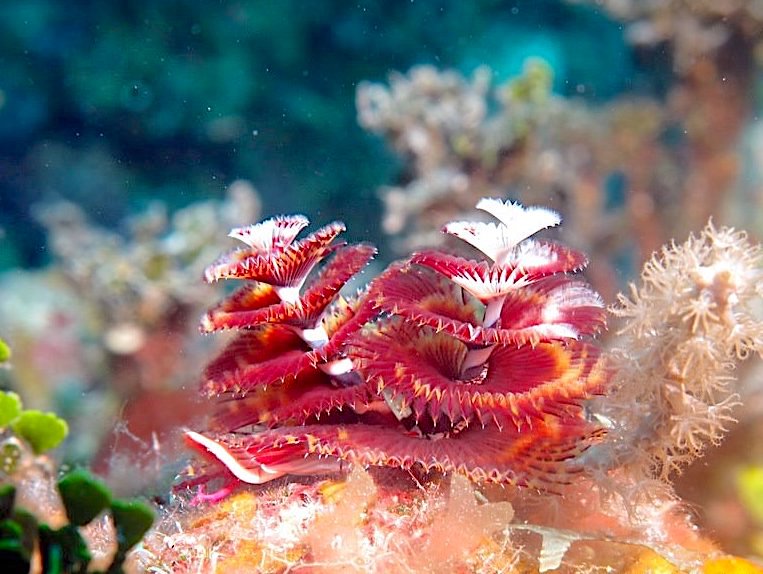
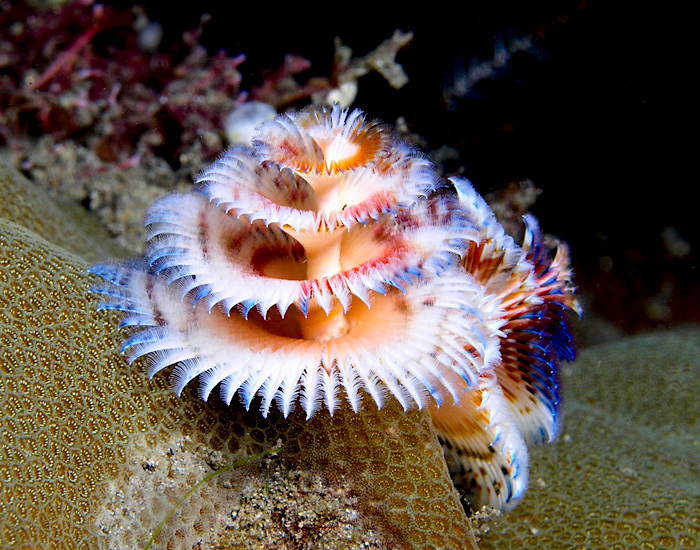
“Deck the Reefs with Worms Like Christmas Trees… Fal-La-La-etc-etc ” is a traditional Carol familiar to all. Well, most. Ok, some, then. Oh right – maybe with different words? Anyway, now is the perfect time to take a look at these remarkable subsurface symbols of seasonal good cheer (nb they are wonderful animals not gorgeous plants).
10 CHRISTMAS TREE WORM FACTS TO PONDER
The 2 colourful spirals are not the worm, but complex structures for feeding & respiration
The spirals act as specialised mouth extensions for ‘filter-feeding’
Prey is trapped by the feathery tentacles & guided by cilia (microscopic hairs) to the mouth
The tentacle things are radioles and act as gills for breathing as well as prey traps
It is not believed that prey slide down the spiral to their doom, like on a helter-skelter
The actual worm lives in a sort of segmented tube, with extremely limited mobility skills
It contains digestive, circulatory & nervous systems – and a brain in the middle of it all
The worm also has a tiny drainage tube (I think I have this right) for excretion etc
They embed themselves into heads of coral such as brain coral. And stay there
And yes, the Christmas trees are retractable… (see below for some action)
HOW DO THE WORMS… YOU KNOW… ERM… REPRODUCE?
This is a delicate area. They are very discreet, but as far as I can make out they eject gametes from their what-I-said-above. There are mummy and daddy worms, and their respective gametes (eggs and spermatozoa) drift in the current and into each other to complete the union. The fertilised eggs develop into larvae, which settle onto coral and burrow into it as their parents did, build their protective tubes, and the process begins again.
YOU DON’T REALLY UNDERSTAND THESE CREATURES, DO YOU?
I won’t lie. I found it hard to work out how the CTWs function in practice. There are plenty of resources showing them in their full glory, but that only takes one so far. Then I came across a short video that shows it all brilliantly simply (except for the reproduction part).
The worms, in their coral burrows, hoist their pairs of ‘trees’. You can easily see small particles – zooplankton – drifting in the water, and the radioles swaying to catch potential food. Suddenly it all makes sense (except the repro bit – I haven’t found footage of that). Next: the New Year Worm (there is no Easter worm).
A WHOLE FESTIVAL OF CHRISTMAS TREE WORMS
Credits: Melinda Riger (Grand Bahama Scuba); Nick Hobgood; Betty Wills; Video by ‘Super Sea Monkey’; Reef Collage by RH; MarineBio; Wikibits & Magpie Pickings
HappyChristmas toallthosewho putupwithRHwithsuchfortitude over the years
Manatees are apex ‘gorgeous marine mammals’. Gentle, inquisitive, brave, long-distance-but-rather-slow-swimming, grass-grazing miracle ur-elephant descendants. They never made it out of the sea in the Miocene epoch.
Incongruous in a world of fast sharks, huge whales and leaping dolphins, they contentedly mooch around the seagrass beds. No one in the world has ever objected to or dissed a manatee. They bring only delight to the sea-world, and offer only charm to mankind.
I’ve written quite often about the small number of manatees that inhabit the turquoise inner waters of the Bahamas. Almost all are named and some are tracked (until they lose their trackers). Their friendships and amorous hook-ups are recorded. Despite their relative scarcity in the Bahamas and a 16-month birth cycle, they produce manatee-lets and the family trees are very gradually growing.
Gina and Calf, Bahamas (BMMRO)
IS THERE A DOWNSIDE FOR THESE APPARENTLY BLISSFUL AND PEACEFUL CREATURES?
Yes indeed. It’s mankind. Among the threats to the survival of these unusual, endearing, and legally protected creatures are, in no particular order:
Pollution of inshore waters and canals
Degradation of the (formerly limitless) sea-grass beds where they feed
Reduction or tainting of the fresh water sources that they need to survive
Understandable over-enthusiasm by admirers – especially in harbours – in dousing them with water from hoses and feeding them lettuce…
…and similar behaviours that may lead to a trusting dependance on humans
Unthinking or speed-selfish boat behaviour in or near harbours resulting in collisions
Simply not caring at all and carving them up, leaving often deep prop-scars. Few manatees escape at least a few of these. Some may not survive.
Let’s celebrate this special day for manatees. Let’s hope that they can survive and prosper in these increasingly difficult and dangerous times for almost all species. Look at any of these photos… can we agree that these wonderful animals deserve care and protection.
All photos: Charlotte Dunn / BMMRO and research contributors
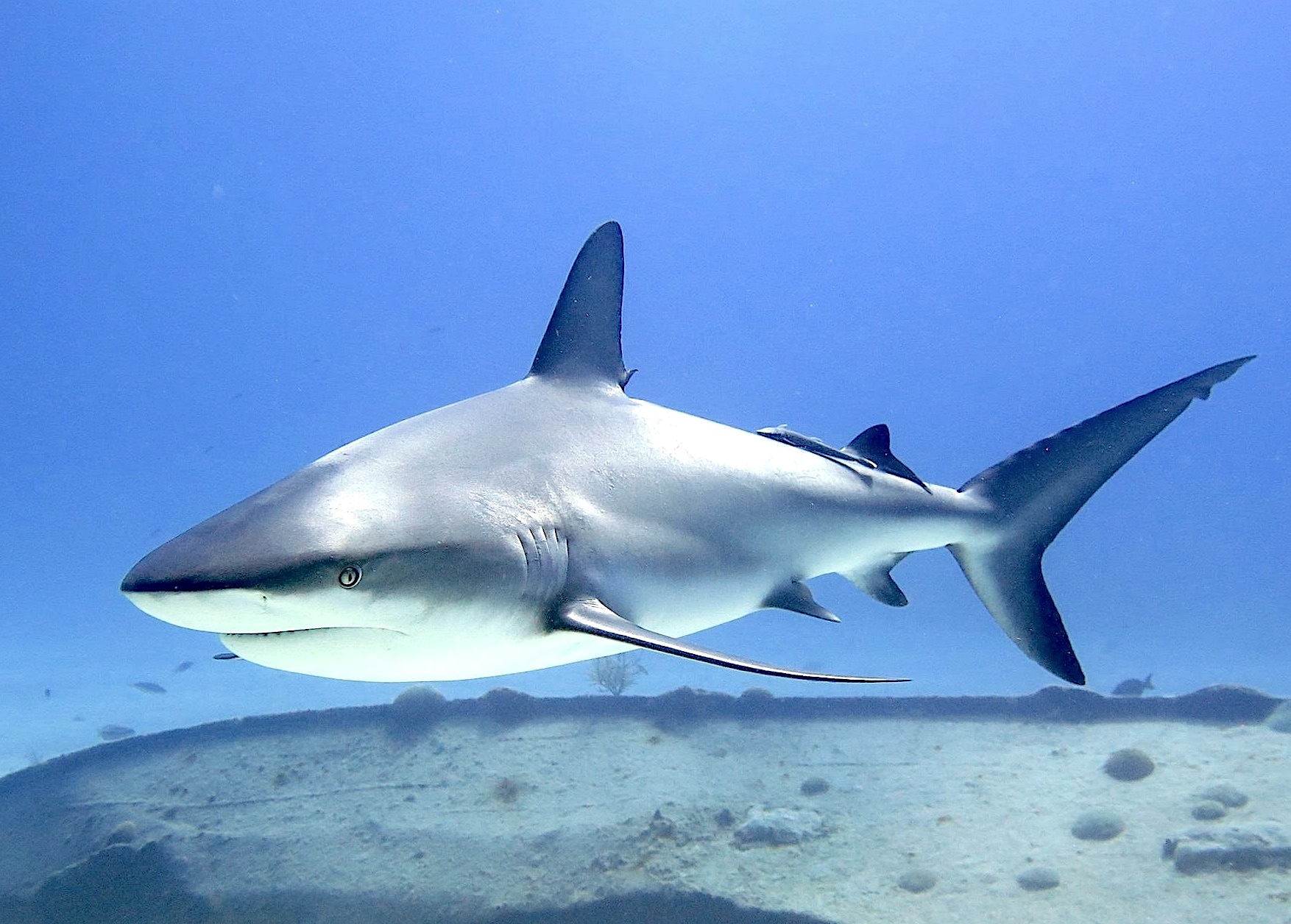
Two days ago, a woman was tragically killed by a shark off Nassau. She and her husband were paddleboarding nearly a mile offshore. Few details have been reported at present, as is only right in the circumstances. In November there had been a presumed fatality off West End, Grand Bahama when a woman diver was attacked and has not been found. Such incidents are exceptionally rare for the region, with Bahamas having a consistent history of low attack figures.
This page has had a great many visits over the past 48 hours, for obvious reasons. At this time further comment would be quite inappropriate. We extend deep and respectful sympathy to the families and friends of those involved. Such terrible events should be given due privacy for those who are grieving.
This notice has also been posted on the other differently arranged Shark Attack page HERE
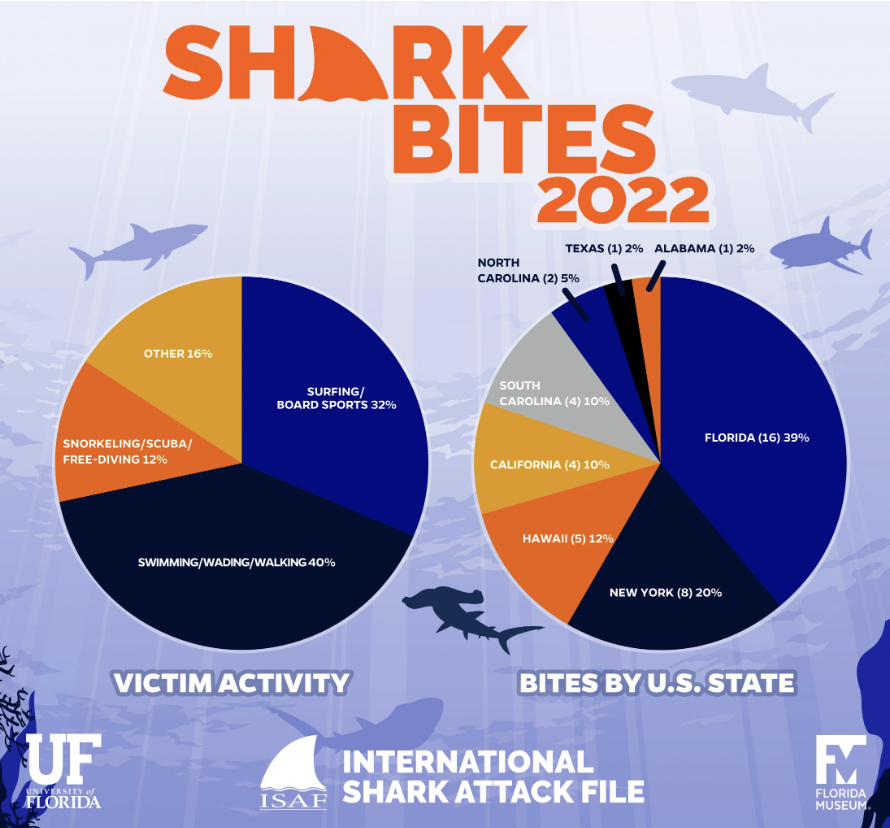
Global total of unprovoked shark bites significantly lower than average
Country
Total
Fatal
USA
41
1
Australia
9
0
Egypt
2
2
South Africa
2
2
Brazil
1
0
New Zealand
1
0
Thailand
1
0
Worldwide
57
5
The 2022 worldwide total of 57 confirmed unprovoked cases is lower than the most recent five-year (2017-2021) average of 70 incidents annually. There were nine shark-related fatalities this year, five of which are assigned as unprovoked. This number is in line with the 5 year annual global average of six unprovoked fatalities per year.
Annual fluctuations in shark-human interactions are common. Despite 2021’s spike in fatalities, 2022 was a return to typical long-term trends which show a decreasing number of annual fatalities. Year-to-year variability in oceanographic, socioeconomic and meteorological conditions significantly influences the local abundance of sharks and humans in the water.
BAHAMAS STATS
Confirmed Unprovoked Shark Attacks (1749-Present)
32
Risk of being bitten by a shark remains extremely low
Short-term trends show both fatal and non-fatal bites to be decreasing. The total number of unprovoked shark bites worldwide is extremely low, given the number of people participating in aquatic recreation each year. Fatality rates have been declining for decades, reflecting advances in beach safety, medical treatment and public awareness.
DATABASE UPDATE 2021
INTERNATIONAL SHARK ATTACK FILE
Over the last couple of weeks or so I have been getting a lot of hits for Shark Attack information. There have been 2 or 3 recent incidents including a tragic (and very rare) death in Maine, which may well account for this. The Shark Attack details I have accumulated and posted over the years are buried in an historical sub-sub-page, so to make things easier I have re-checked and updated the latest data resources and their links, and put them in a mainstream post. This is it.
DATABASE UPDATE 2020
INTERNATIONAL SHARK ATTACK FILE
PRIMARY RESOURCE
This resource is the portal to a mass of current, recent, and historical data, presented with authority and clarity. It provides undoubtedly the most comprehensive and accessible global shark-incident data of all.
Last year I included informative screen-shots taken from this site. For now I am confining the information to the most useful direct links. More work for the reader, perhaps, but also a better chance to explore and understand the hows, whens and wherefores of shark-related incidents – and how best to avoid the situation in the first place.
“The 2019 worldwide total of 64 confirmed unprovoked cases were lower than the most recent five-year (2014-2018) average of 82 incidents annually. There were five fatal attacks this year, two of which were confirmed to be unprovoked. This number is in line with the annual global average of four fatalities per year“
For anyone thinking of entering waters where sharks live – eg scuba divers, spear-fishers, swimmers, boaters – with relatively little experience or knowledge, these links will be incredibly useful. Local knowledge is well worth having as well. A young friend of ours, an intern on Abaco, was warned against spearfishing at a particular location: “Fish there, you’ll get ate”. He did. He very nearly was.
“Humans are not on the menu of sharks. Sharks bite humans out of curiosity or to defend themselves”
The SRI produces a downloadable Global Shark Attack File that provides:
Even the most optimistic lovers of unmolested wildlife, unpolluted oceans, un-degraded habitats, unextinguished species and understanding humans will be beginning to lose heart. Even as reports increase of resurgent wildlife during these Covid months, so it is gradually becoming clear that once humans are unlocked again, the only way will be down.
Humpback whale
Here are just a few magnificent marine mammals to admire. All were photographed from the BMMRO research vessel in Abaco or adjacent waters. They are protected, recorded, researched, and watched over in their natural element – some individuals for more than a decade.
Pantropical spotted dolphins
Today we contemplate our oceans at a time when the human species is having to confront a sudden and indiscriminate destructive force. Maybe the impact will lead to a recalibration of the ways we treat other species and their environment. We have contaminated the world’s oceans, perhaps irreparably, in a single generation. We could start by committing our support to those that tackle the plastic saturation, oil / chemical pollution, acoustic bombardment, ‘ghost gear’, and all the other unwelcome attritional activities we are responsible for. We could continue by supporting those that monitor and protect all the marine creatures struggling in a polluted environment that, in natural law, should be theirs.
Bottlenose Dolphins
Below is a male Blainville’s beaked whale, with its remarkable barnacled tusks that protrude upwards from its lower jaw. This is a specialist research species in the Bahamas. Below that is a short video of these whales that I took from the BMMRO research vessel. Turn up the volume – you will clearly hear them breathing as they slowly pass by (and others in the group, under) the boat. Note that land is clearly visible. These whales can sometimes be found just beyond the shallow turquoise waters, where the sea deepens as the depth drops down to an underwater canyon.
Blainville’s beaked whale (m)
Hope for the future…
All photos taken in (or adjacent to) Abaco waters, Bahamas: Charlotte Dunn / Bahamas Marine Mammal Research Organisation (BMMRO), except for the beaked whale image and video by Keith Salvesen / Rolling Harbour (BMMRO)
Note: prognostications and personal views – and their intensity – detectable here are mine and do not necessarily reflect those of my colleagues at BMMRO…
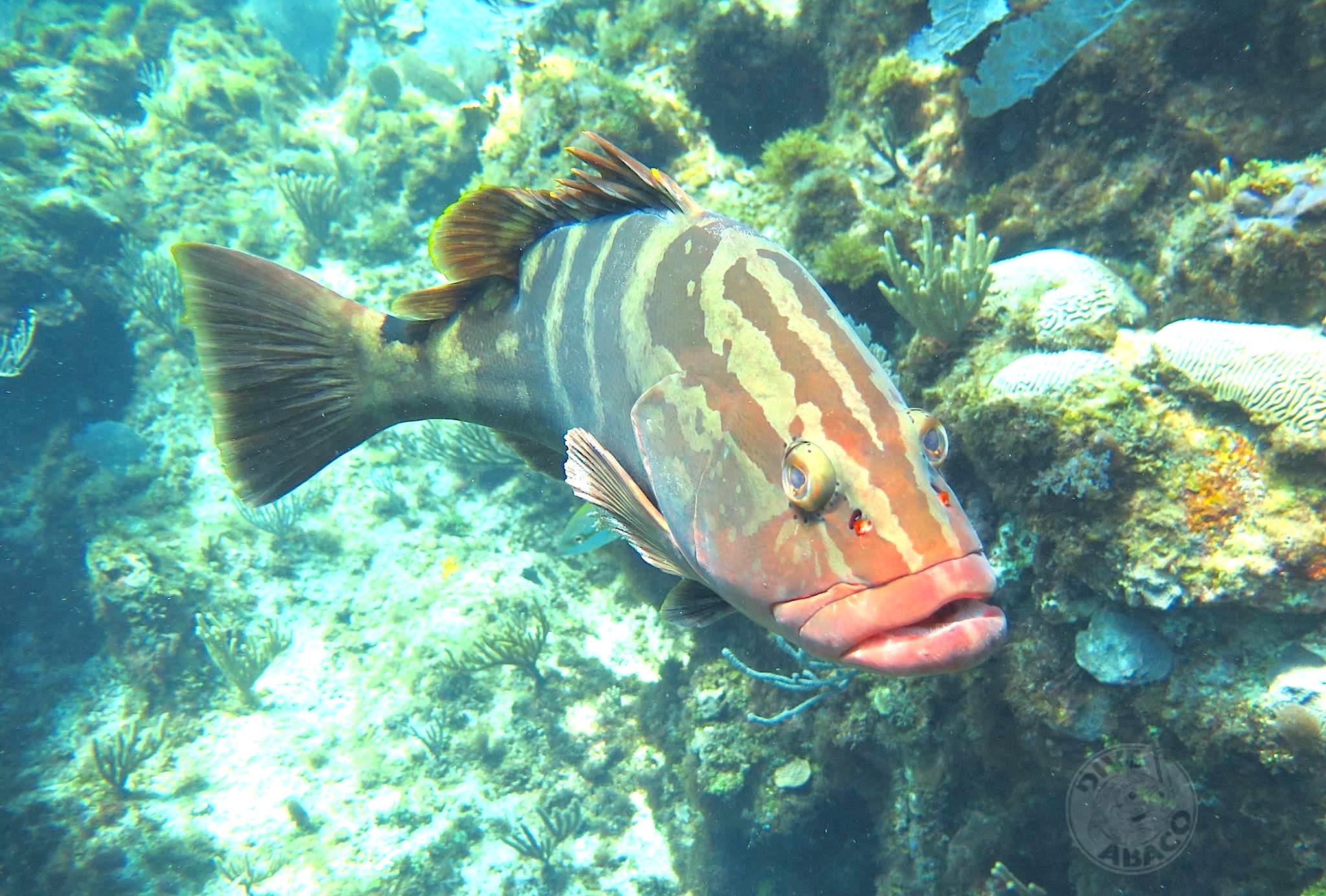
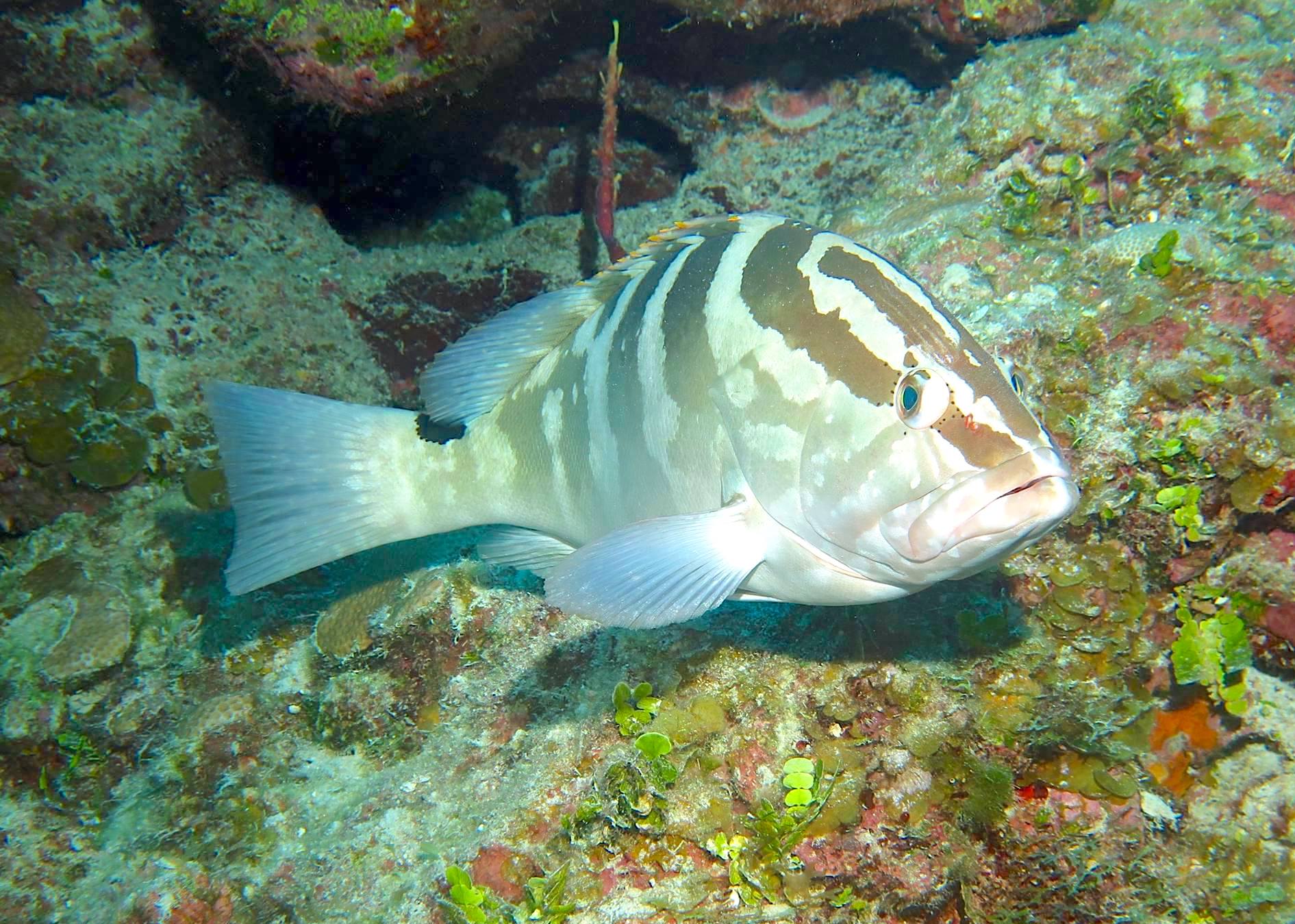
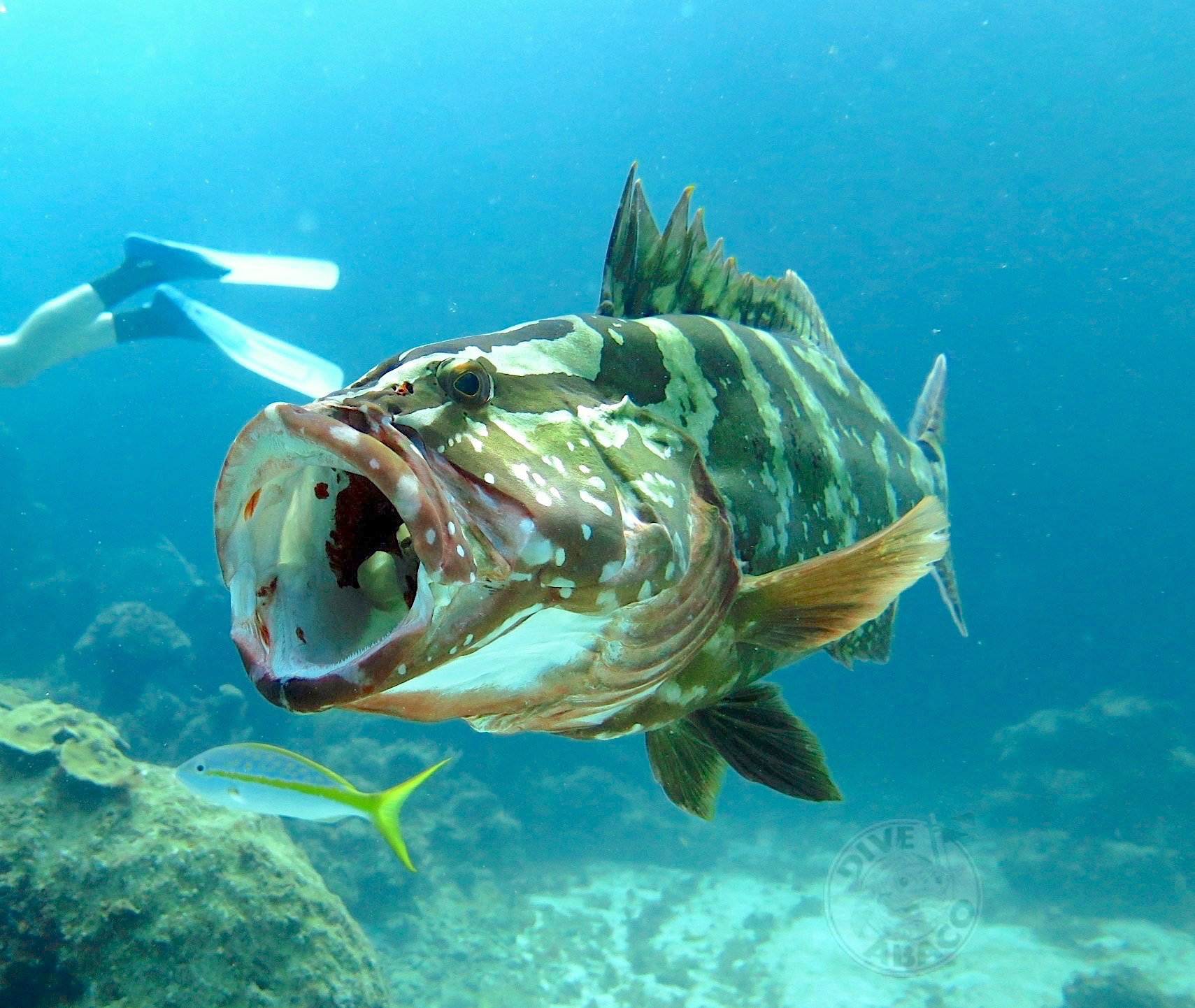
The Nassau grouper Epinephelus striatus is one of a number of grouper species found in Bahamian waters. Of these, only the Nassau grouper is on the IUCN Red List, as Critically Endangered. When I last wrote about them they were in the lesser category ‘Threatened’.
In order to sustain a viable population, it is vital to maintain numbers and preferably to increase them year on year. Once it became clear that year-round commercial overfishing was a prime component of the steep decline in the population, a 3-month closed season during the breeding period was imposed. This has ensured that at the most critical time in the lifecycle of the species, the groupers are left alone to breed in peace and to perpetuate their species.
The closed season operates from December to February to maximise the chances of breeding success. As with some other fish species, reproduction occurs around the full moon. The fish gather at spawning sites and the process is at its height around sunset.
10 CONVENIENTLY COLLECTED NASSAU GROUPER FACTS
An adult can grow to more than a metre long, and weigh 25 kg
They tend to be solitary daytime feeders, eating small fish & crustaceans
Their large mouths are use to ‘inhale’ or suck in prey
The colouring of an individual can vary from red to brown
These fish have little black spots around the eyes (I’ve no idea why).
Their habitat is in the vicinity of coral reefs, from shallows to 100 m deep
Spawning mainly occurs in Dec & Jan during a full moon
Large numbers gather in a single location to mate in a mass spawning
These groupers are slow breeders, which compounds the overfishing problem
They are easy mass targets at spawning time; hence the need for a closed season
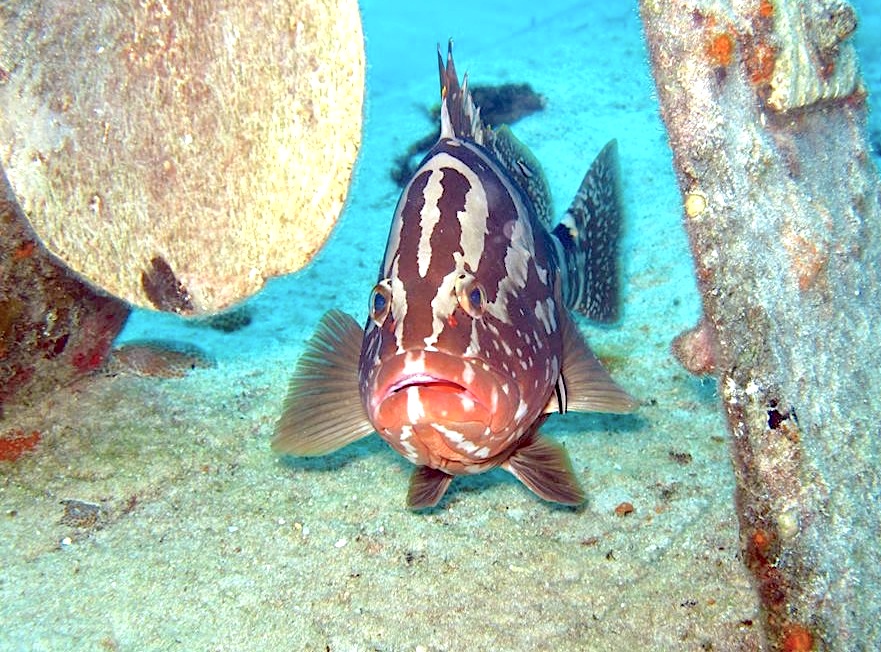
A Nassau Grouper glumly contemplates the possibility of extinction
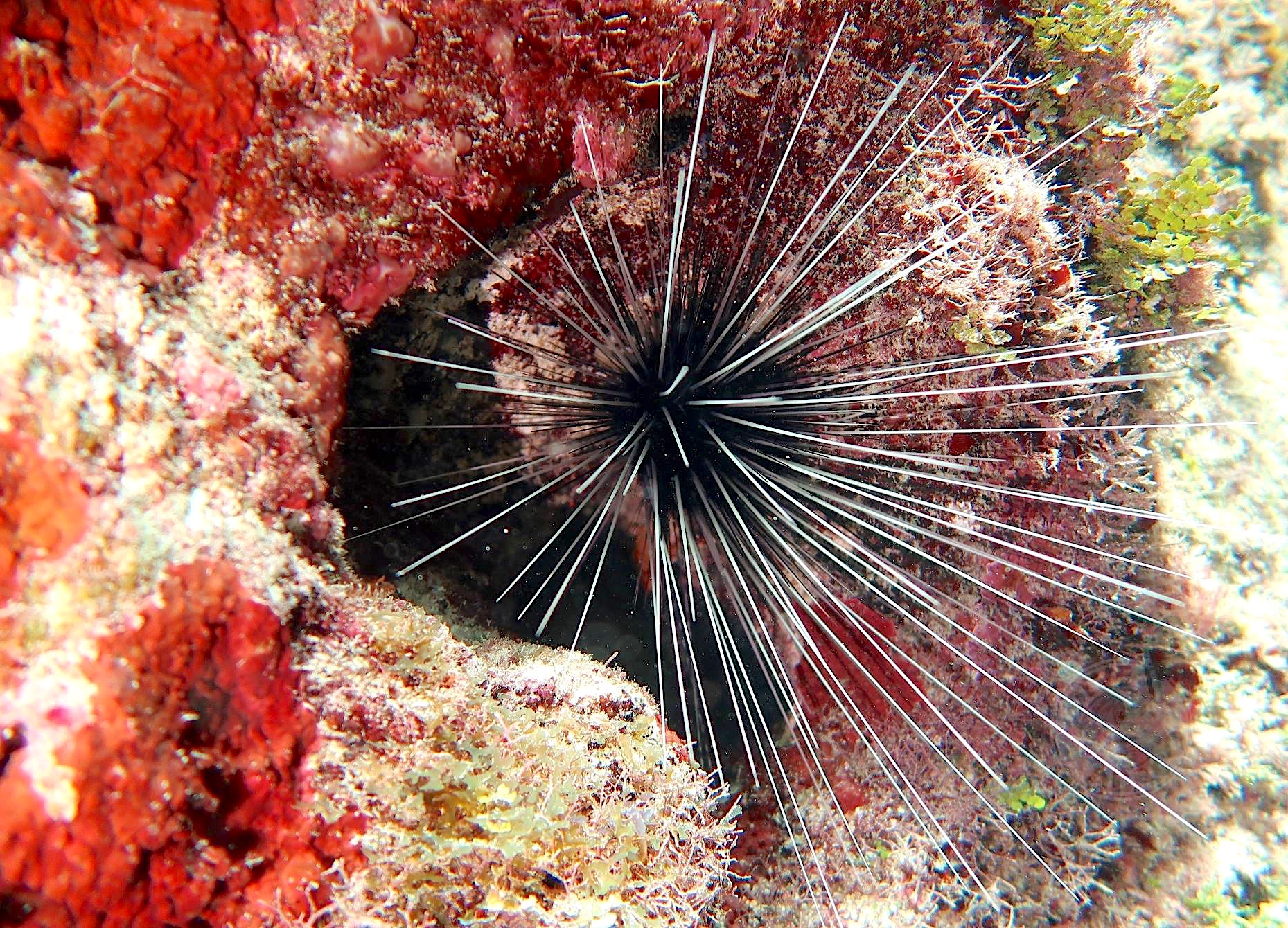
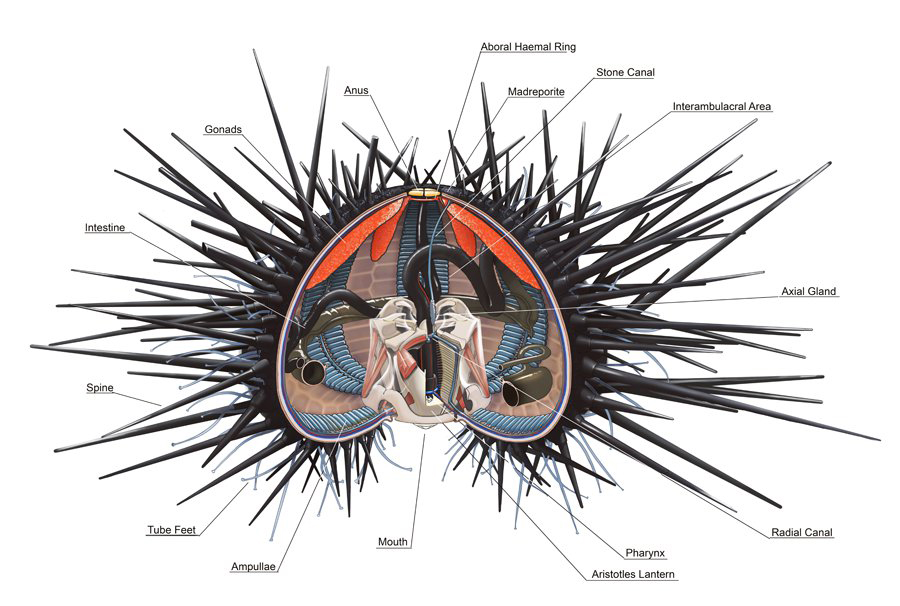
As every swimmer knows, or eventually finds out the hard way, it’s not only Blue Suede Shoes that should not be stepped on. But however painful the consequences of a misstep, it’s hard not to find some beauty in an urchin living in a thriving reef environment. The wonderful anatomical diagram by Alex Ries shows everything you could conceivably want to know about one of nature’s most proficient foot-stabbers (if only all such diagrams were presented so simply and clearly).
The internal organs depicted resemble a bad trip in the bowels of a vacuum cleaner; or (narrow your eyes) an experimental painting from one of the less successful schools of early c20 modern art, soon to be swept aside by Cubism. Note that the mouth is located where you might expect to find the opposite end, and vice versa.
I photographed the urchin test (skeleton) below at Delphi. It was large and almost entirely undamaged (very rare in my experience). The bright faintly greenish white is set off by the palest of pinks. Whatever your view of how creatures came to exist, imagine the creation or evolution of calcium carbonate into a small symmetrical structure as beautiful, detailed and complex as this. If you are short of a lockdown recreation, maybe try to draw it.
Photo credits: #1 Melinda Rogers / Dive Abaco; #2 Anatomy Diagram, Alex Reis (5 stars for making it available free on Wikimedia); #3 Keith Salvesen / Rolling Harbour Abaco
Off the east coast of Abaco lies one of the longest barrier reefs in the world. Some authorities suggest it is the third longest, but the exact ranking of the top dozen coral barriers is a matter for considerable debate. None of the lists I have just checked agree, except that the Great Barrier Reef is the outright winner. I suspect that the problem lies in the loosely generalised description of ‘barrier reef’ and in variations of the appropriate criteria for determining length (it may also depend on who is doing the measuring, of course).
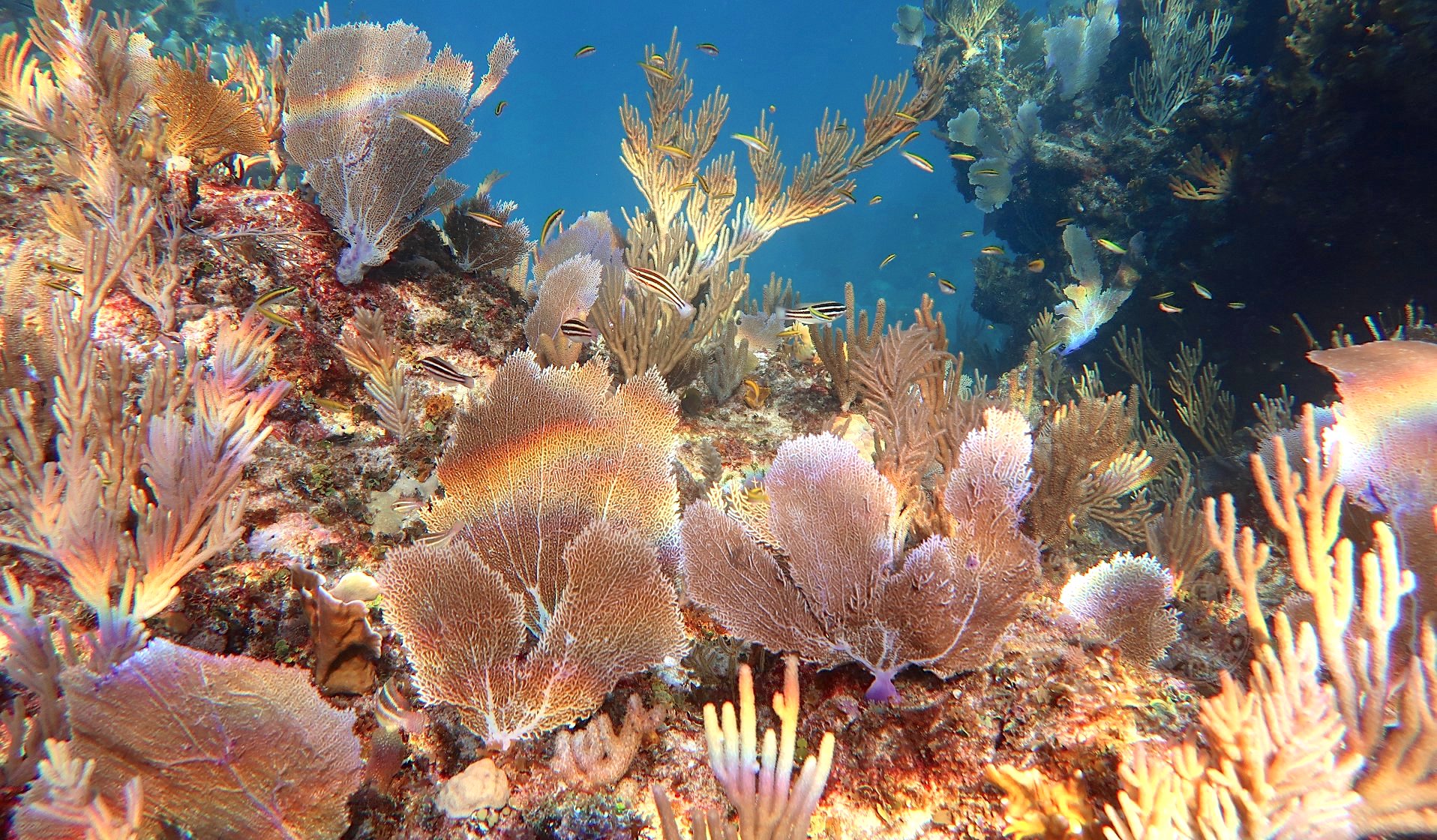
Melinda Rogers of Dive Abaco took this bright sunlit ‘Coralscape’ in the Fowl Cays National Park. It’s a place I have tentatively snorkelled around with great pleasure, despite being in the top dozen most useless swimmers in the world (my appalling underwater videos were disqualified from the rankings for being… rank).
I made this short video last year at BMMRO HQ, Sandy Point, Abaco. A sperm whale had stranded earlier in the year, and after the necropsy some of the bones were taken from the beach for research. In order to clean them, the bones were sunk and anchored to the seabed offshore in quite shallow water. Strandings are always sad, of course, but it is good to know that even after death the creature makes an important contribution to scientific research. In a sense, it has life after death.
GROUPER AT A CLEANING STATION: PICTURE PERFECT BAHAMAS (5)
This black grouper (‘Arnold’) is at a so-called CLEANING STATION, being groomed by gobies. The process is an example of species symbiosis known as MUTUALISM. This is a transaction between individuals of two species that is mutually beneficial. Here, the primary creature pauses at a locally familiar cleaning station and allows itself to be expertly cleaned by tiny fishes such as gobies and wrasses to remove parasites, dead skin and so forth. This nurture even includes, as here, inside the mouth and gills. The gobies benefit by feeding on the proceeds of their endeavours removed from the host (or ‘client’ as one might say). And of course, in return for their favours a collateral benefit is that they can feed freely without being eaten by a potential predator.
Mrs RH and I are sticking to self-isolation right now (we are fine, but thank you for asking). However I am already breaking my current self-imposed ‘single-picture-and-not-much-writing’ regime with today’s creature feature. The excuse? It is of course the last Wednesday in March and as everyone must know it is Manatee Appreciation Day.
Anyone can (and indeed should) appreciate manatees anywhere at any time, and their contemplation is a way to lift the spirits. They were first found in Abaco waters about a dozen years ago. BMMRO reported their movements and the ongoing research. Later, Bahamian locals enthusiastically followed the lives of Gina, Rita, Georgie, Randy & co; and the calves such as JJ and Sayle (winning name in a public competition). Citizen scientist reports were invaluable to the research. Unsurprisingly, since Hurricane Dorian reports have greatly reduced. Manatees may well still be around but even now, 6 months later, trichechi sightings are sporadic. There are other concerns, after all.
Manatees love the camera and, Madonna-like, are often pleased to ‘strike the pose’. Of a sort.
Today the Marine Conservation Society (MCS) showed their appreciation for manatees with a superb image and an excellent set of Manatee Facts that I recommend to anyone who has read this far. For example, recent broadcasts and news articles have featured the importance of seagrass. You will see that it is the primary diet of manatees.
The bottlenose dolphin photos here, taken during a recent BMMRO dolphin research project in the Sea of Abaco, are of great significance. Six months after Hurricane Dorian smashed the life out of Abaco, the island is still in the early stages of recovery – to the extent that recovery is possible when the main (only) town has been pulverised to rubble and the island’s infrastructure wrecked. Good news is prized.
Amidst the human cost of Dorian to the Abaco community, people have found some consolation in the natural world around them. The return of birdsong. The bright flashes of the unique parrots flying overhead. Shorebirds returning to the beaches from wherever they found for cover. Curly-tail lizards sunning themselves. And on water, sightings of turtles, rays and dolphins to spread some cheer. Some huge bonefish are being caught (and released) too.
The Bahamas Marine Mammal Research Organisation (BMMRO) has its HQ at Sandy Point. During the past months, life there has been busy. A long-term underwater acoustic research project is in progress, for example. The effects of the hurricane on the marine mammals in Abaco waters – whales , dolphins and manatees – has been a cause of great concern. A drop in the dolphin population in the Sea of Abaco had been noted a few months ago, so a second assessment of the area has just been carried out.
Playtime in the Sea of Abaco
GOOD NEWS FOR DOLPHINS
Scientists Diane Claridge and Charlotte Dunn obtained positive results. During the assessment, they encountered 18 individual dolphins. The encouraging observations included:
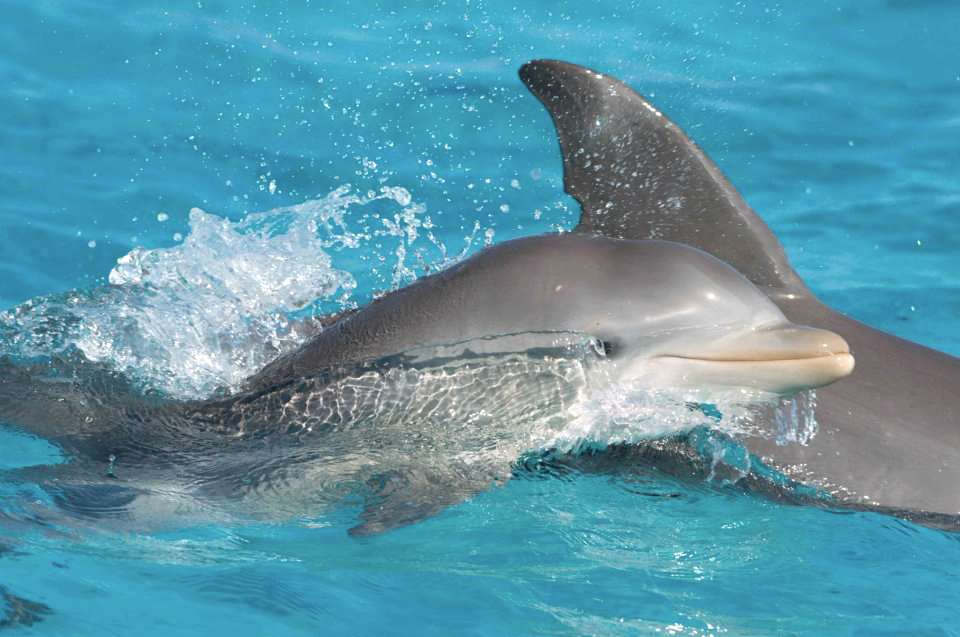
The wonderful mother and newborn calf in the header image – a great sign of hope
Some dolphins first recorded – amazingly – in 1992
Dolphins in areas not used for years, probably due to recent reduced boat traffic
Familiar dolphin behaviours such as wave-surfing and group socialising
Ragged dorsal fin patterns enable easy ID
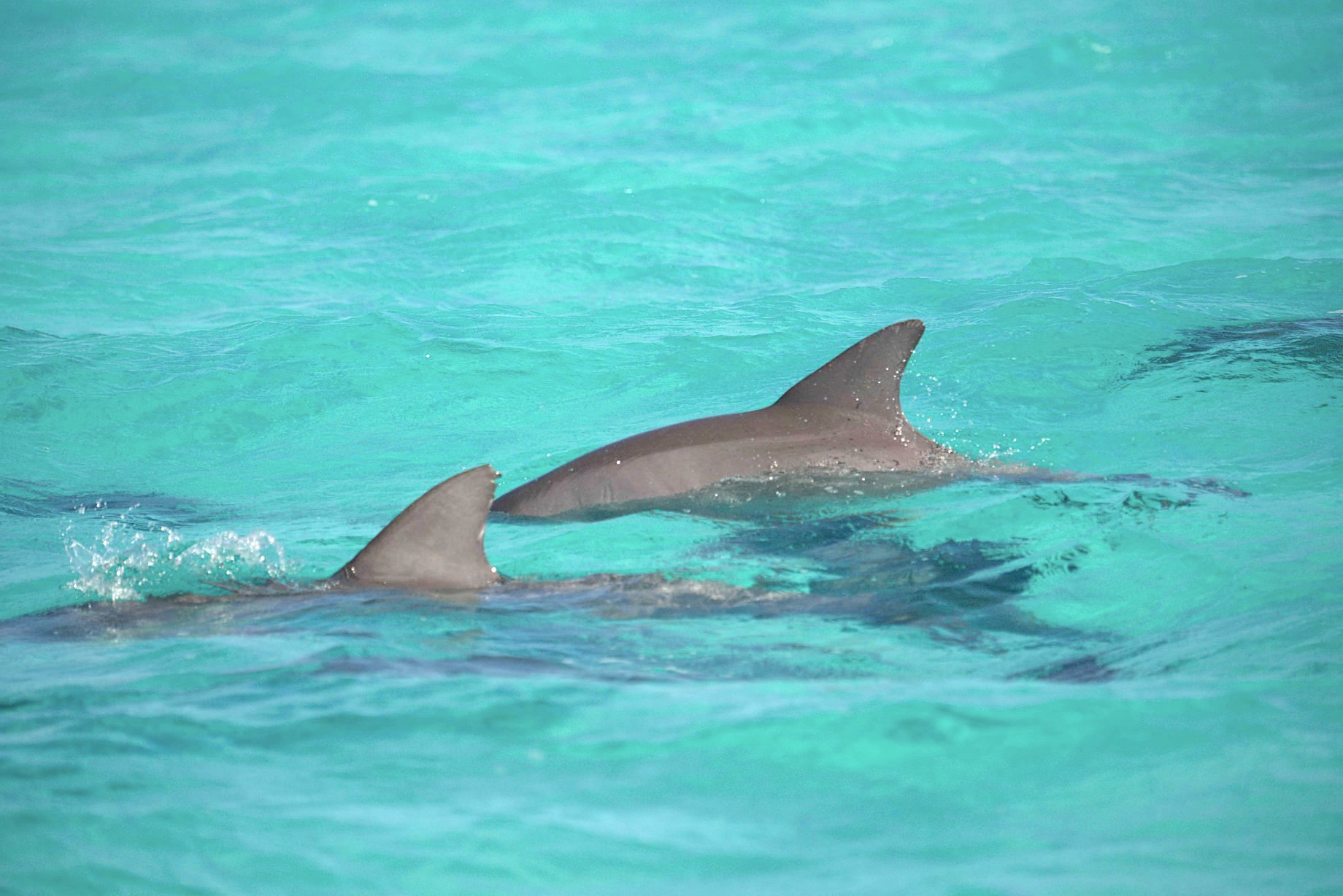
If you wonder how researchers can be so sure about the ID of the animals they see, check out the dorsal fins in some images here. Individual dolphins have unique patterns, markings (#2) and in particular fin damage that is readily identifiable. Seen close to, these are obvious. At a longer distance, binoculars are needed. Photos of each animal are also taken to be analysed in the lab. Sound recordings may be taken: distinctive individual voice patterns are analysed to assist ID. All of this can be compared against the BMMRO database. That is how dolphins first recorded in 1992 can be identified with such certainty now.
Credits: Charlotte Dunn (photos) and Diane Claridge, BMMRO; the dolphins for research cooperation
If you would like to know more about the work of BMMRO and its research, click the logo above
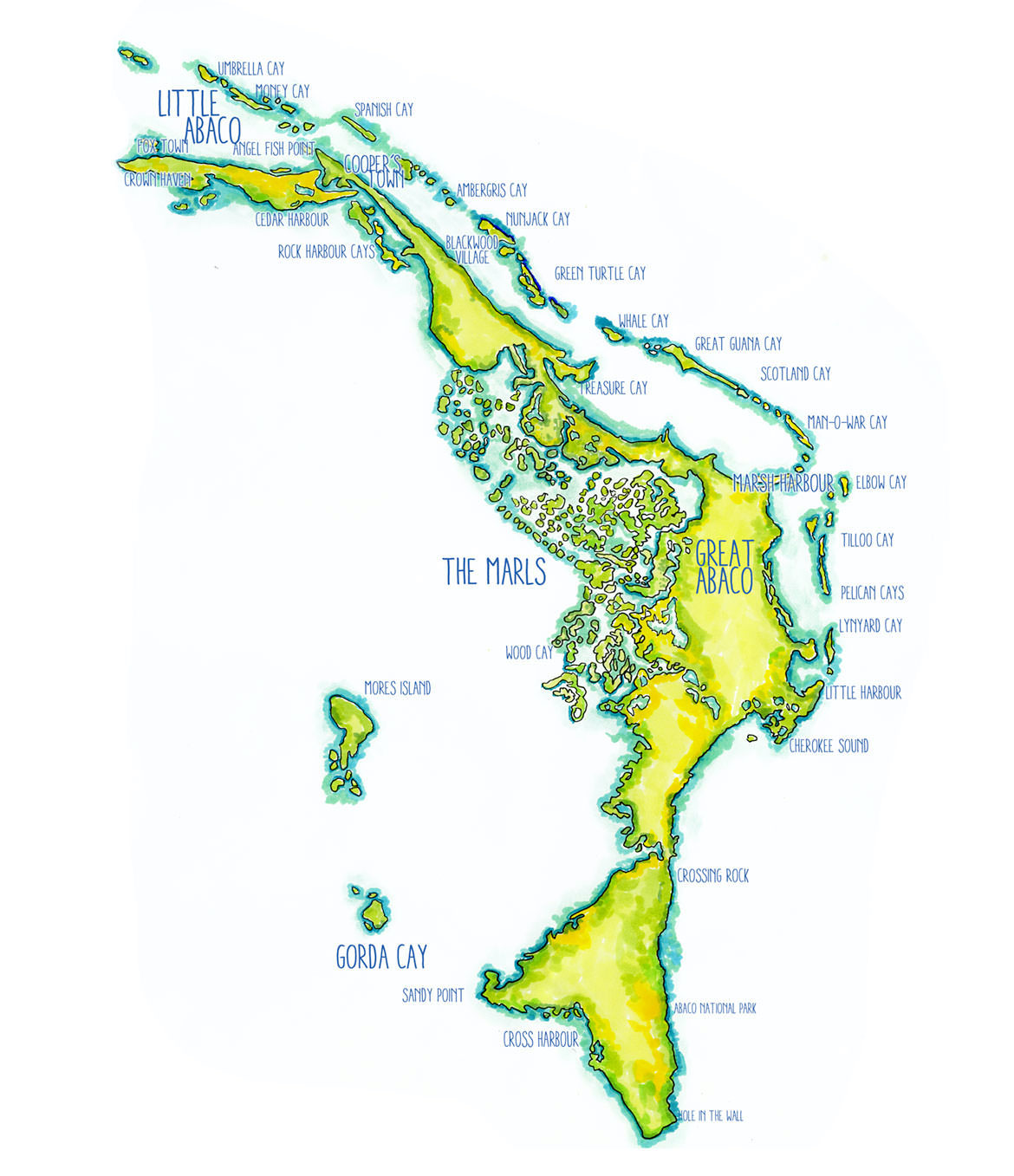
The spectacular coral reef chains of the Bahamas include the 3rd largest barrier reef in the world. Abaco’s reef system stretches from Little Harbour to beyond the northern end of the mainland, as Sandy Estabrook’s map shows. Inside the reef: the Sea of Abaco. Beyond the reef and the next landfall east: Western Sahara, south of the Canary Islands.
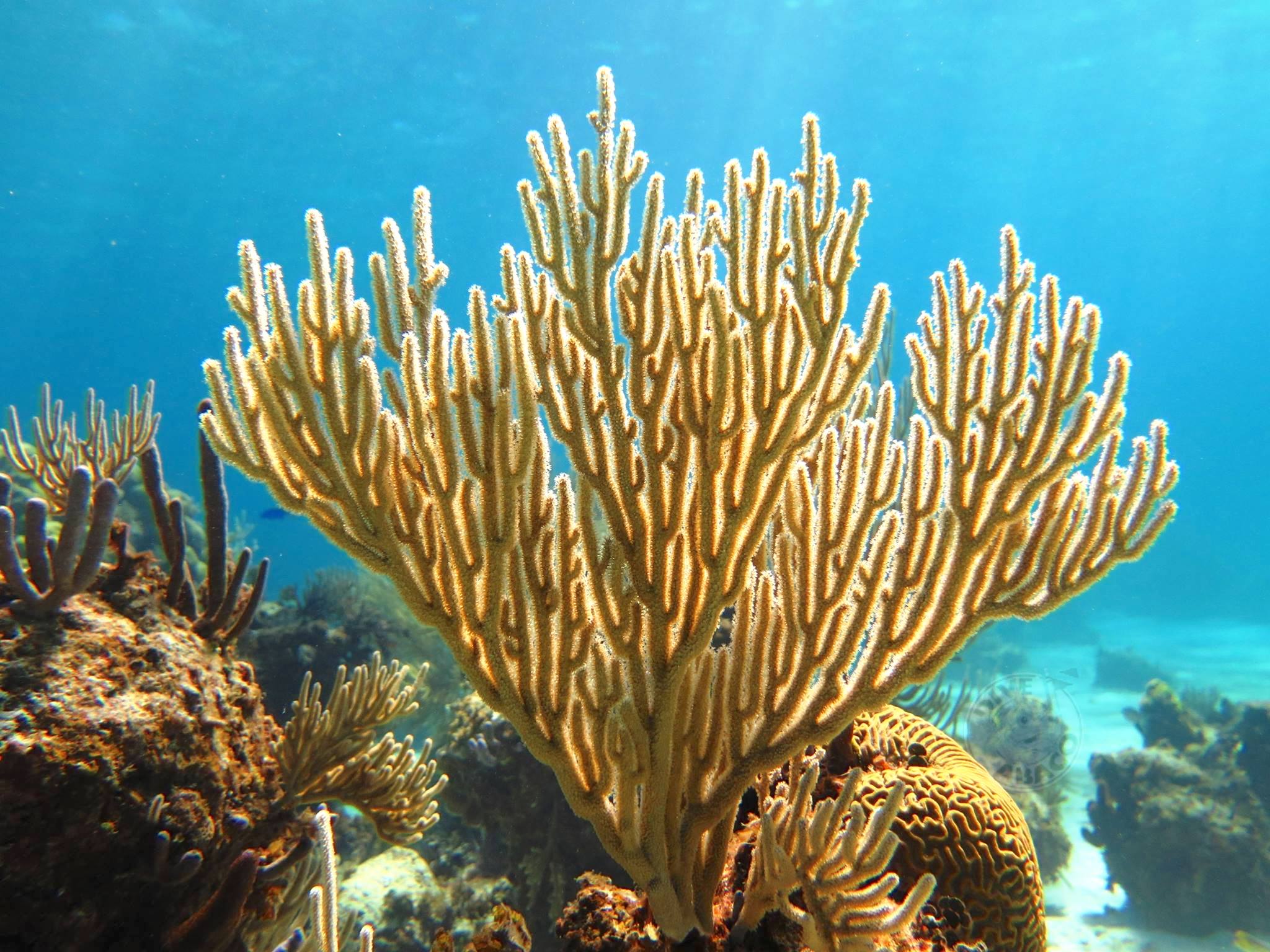
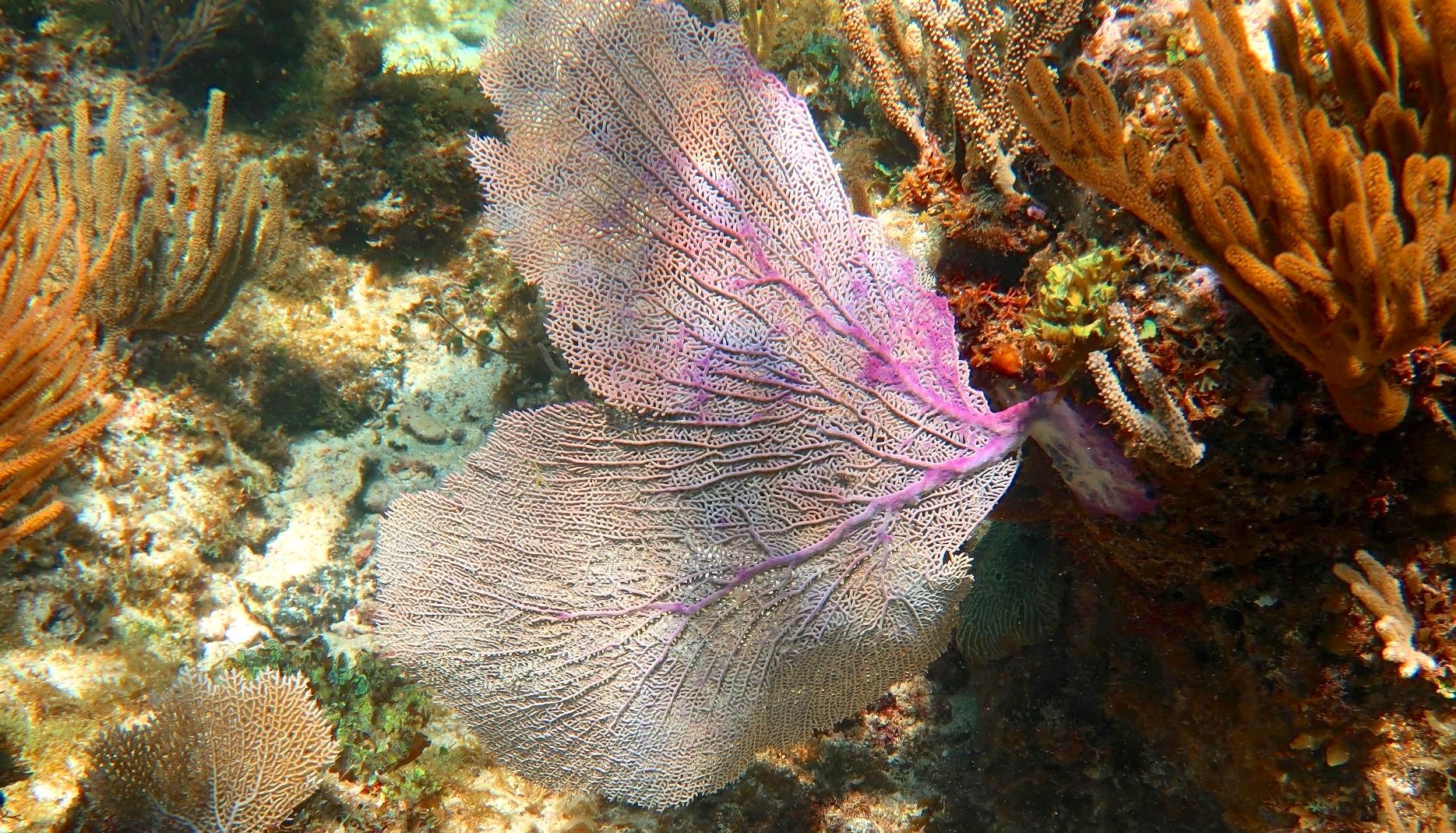
A rainbow effect of filtered sunlight on sea fans
Since the devastation of Abaco by Hurricane Dorian last September, a number of surveys have been carried out. Some of these relate to the impact of the storm on the natural world – the damaged forest and coppice, the bird-life including the Abaco specialities, and the marine life including marine mammals, fish, and reef structures and environments.
A recent assessment by the Perry Institute for Marine Sciences (PIMS) in Abaco and Grand Bahama waters has been carried out on the coral reefs to determine the extent to which the vulnerable structure, ecology and environment has been damaged. Some details have just been published in the Nassau Guardian in an article by Paige McCartney. The LINK is below.
DAMAGE FINDINGS IN BRIEF
25 – 30% of the 29 reef sites surveyed are devastated
factors include damage from debris, silt burial, and bleaching
uprooted casuarina trees were caught in the storm surge, causing damage
in particular, corals have been smashed and reef structure destroyed
there is biomass loss – basically reduced populations of fish & other organisms
RAYS OF LIGHT
Although the reef systems of both islands have been significantly damaged, in other areas little damage was found. Moreover, in some areas the storm had washed away some types of seaweed that are harmful to the reefs. The hope is that restoration of the damaged areas can be achieved with careful management.
WHAT CAN BE DONE NOW?
Action towards restoration and future protection includes:
removal of debris and other deleterious matter (eg silt)
cutting back the non-native, invasive casuarinas from the shoreline
restoration programs (recent successes with ‘coral farming’ could be vital)
extending marine protected areas
developing a rapid response protocol to meet extreme situations
The reports ends with some welcome news: Government departments have recently proposed putting $5 million towards a coral restoration project on Abaco, including the establishment of a and-based aquaculture facility to support coral growth in nurseries. Let’s hope that becomes a reality.
Spot the trumpetfish…
The publication of the PIMS report and its findings gives some hope of recovery for the fragile reef environment of the northern Bahamas. Other factors may reverse the optimism of course, not least the accelerating warming of the seas and the exponentially expanding pollution problem such as this, recently reported
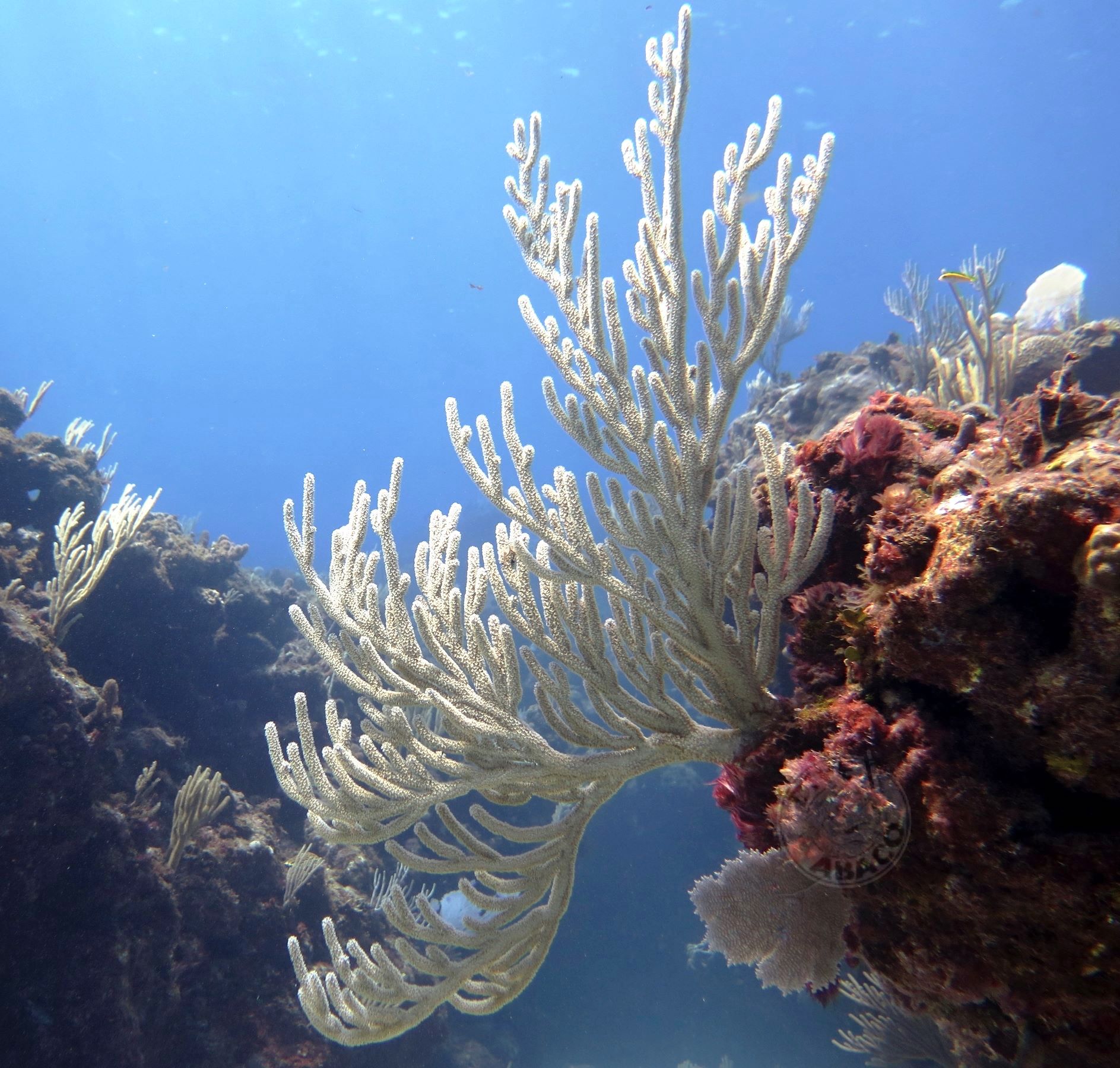
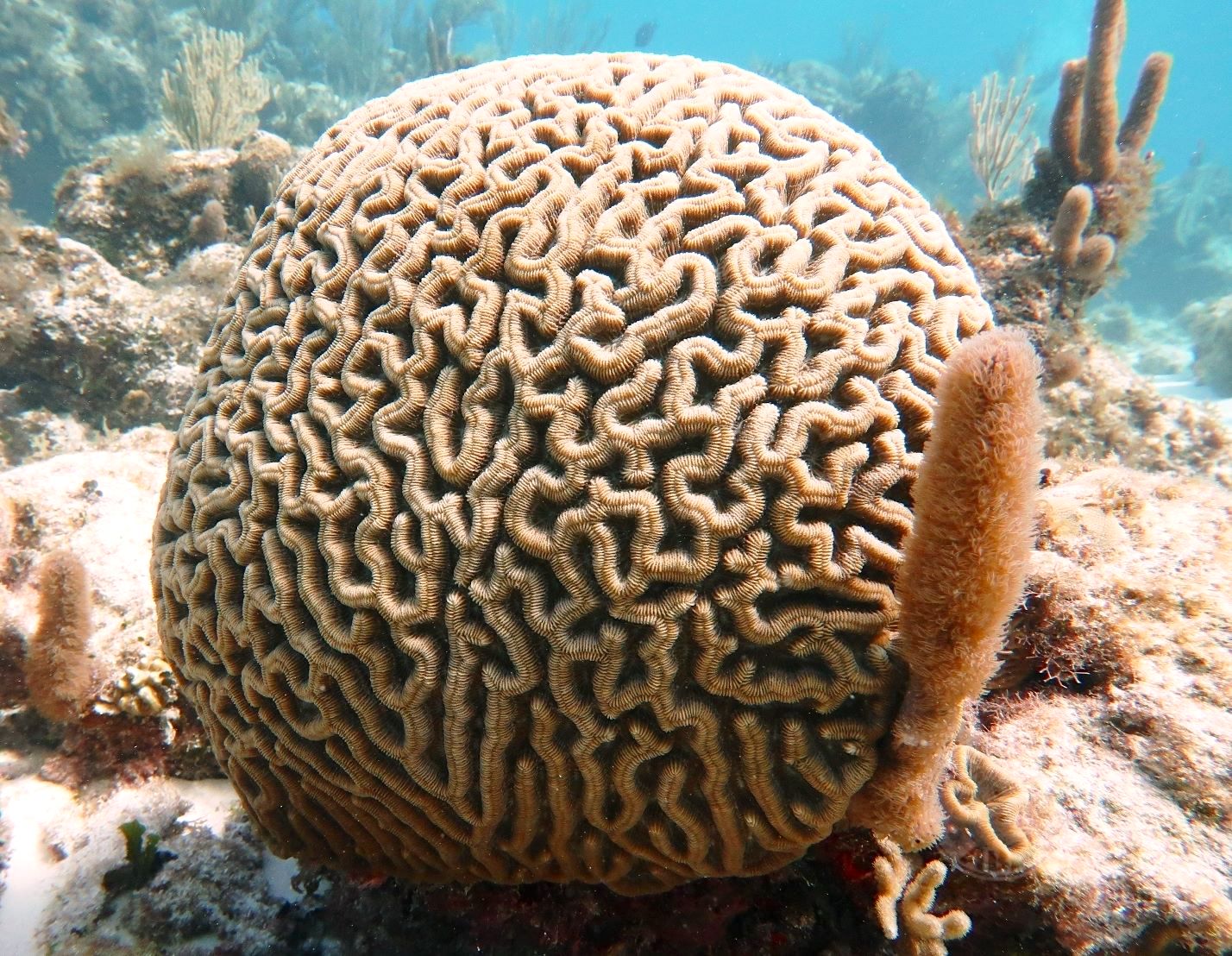
This has been an opportunity to revisit the clear waters around Abaco where Melinda Rogers of Dive Abaco took these astonishing photos of coral on the local reefs. If the coral is destroyed or dies, this is what our children and their children will be be missing.
Click the brain coral to link to the Nassau Guardian Article
All photos, Melinda Rogers / Dive Abaco; Map, Sandy Estabrook; Nassau Guardian / Paige McCartney; Perry Institute for Marine Sciences (PIMS)
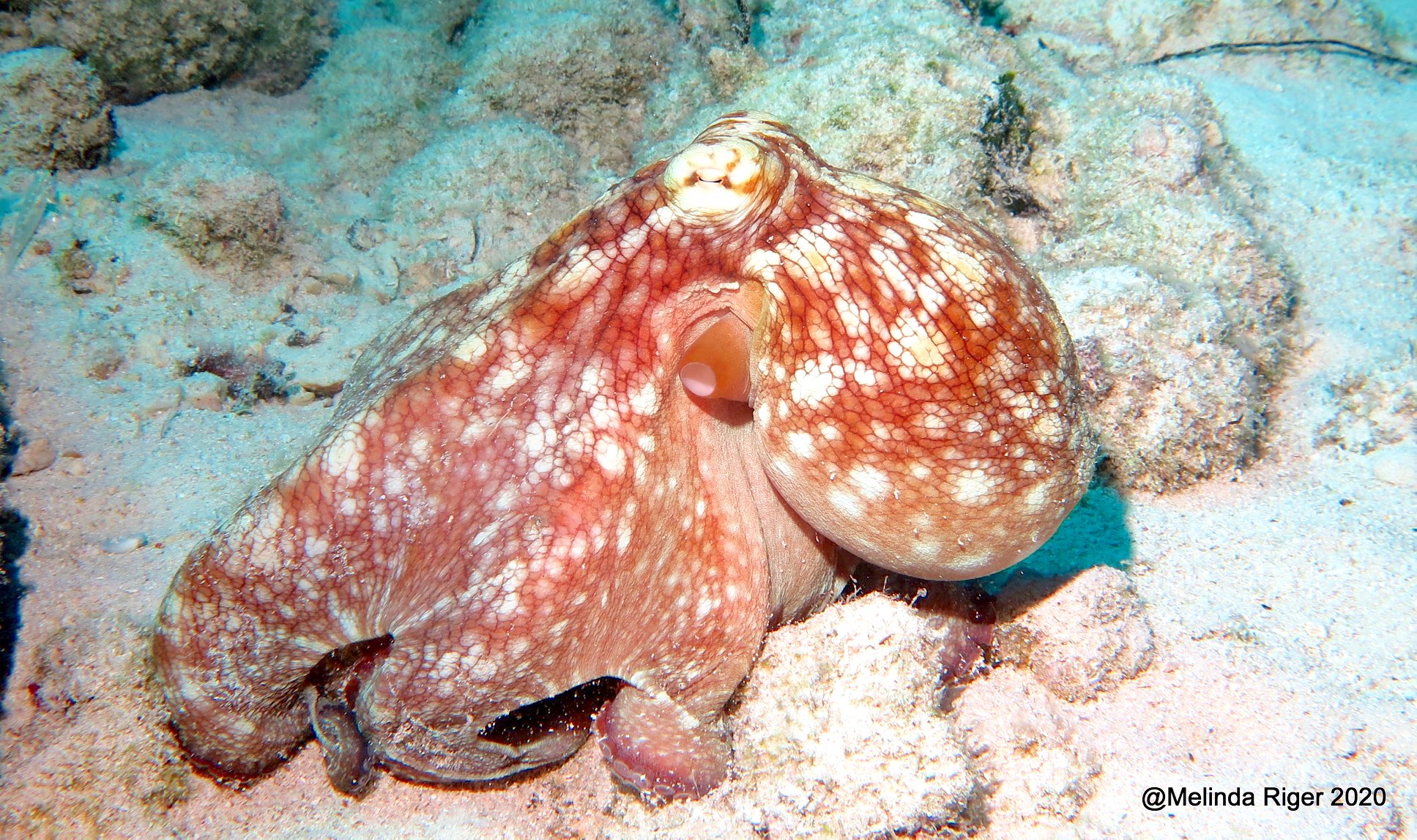
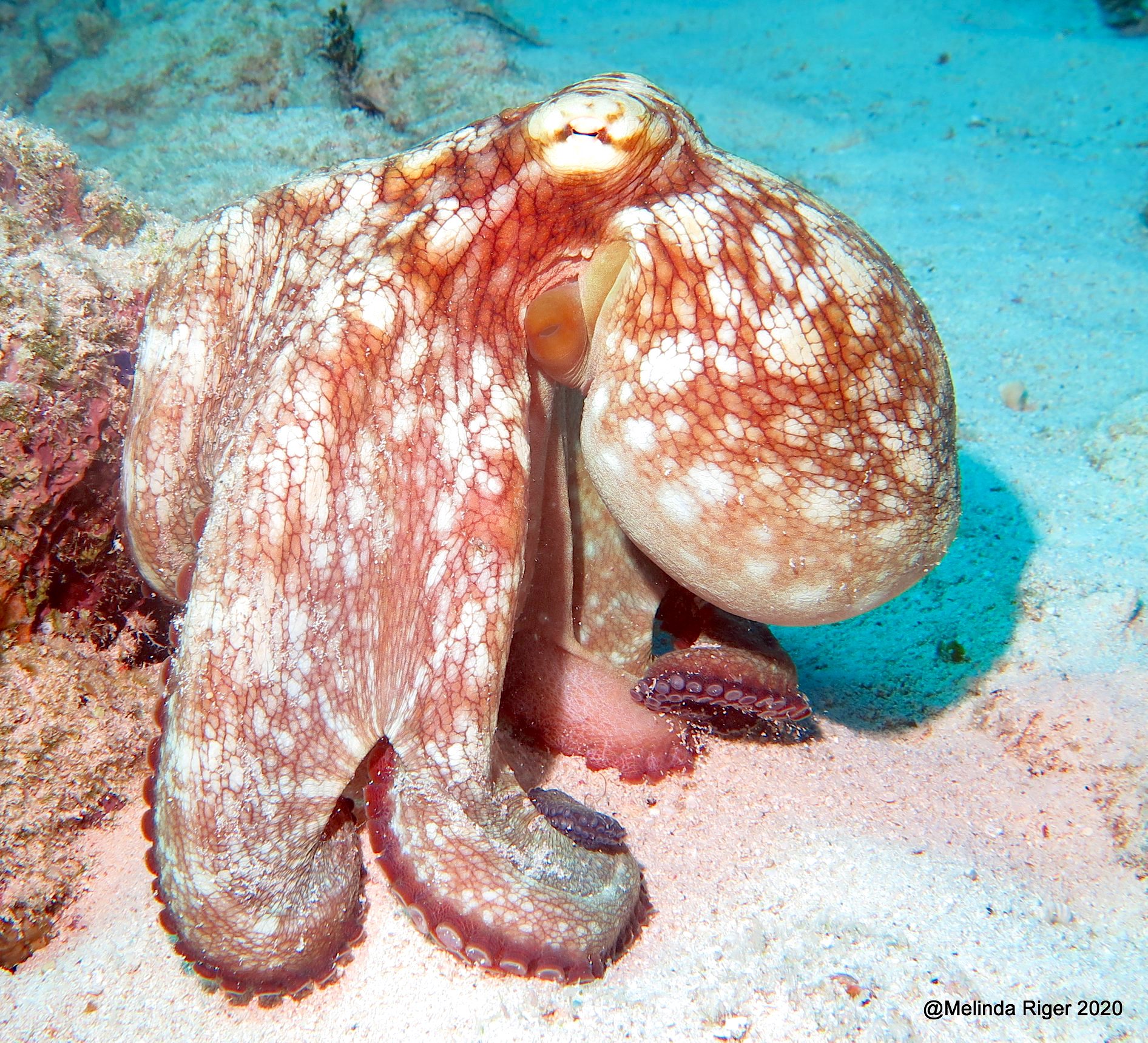
We are back again under the sea, warm below the storm, with an eight-limbed companion in its little hideaway beneath the waves.
It’s impossible to imagine anyone failing to engage with these extraordinary, intelligent creatures as they move around the reef. Except for octopodophobes, I suppose. I’ve written about octopuses quite a lot, yet each time I get to look at a new batch of images, I feel strangely elated that such a intricate, complex animal can exist.
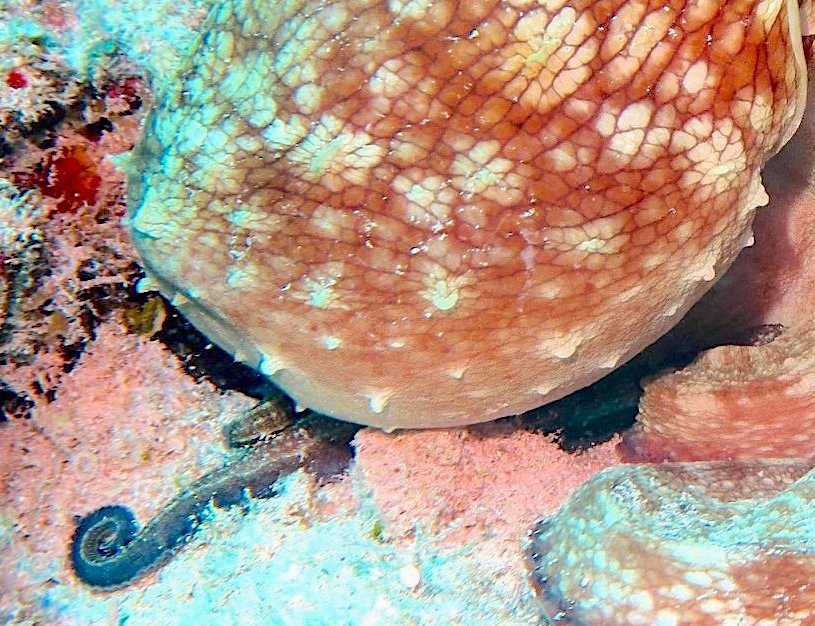
While examining the photo above, I took a closer look bottom left at the small dark shape. Yes my friends, it is (as you feared) a squished-looking seahorse,
The kind of image a Scottish bagpiper should avoid seeing
OPTIONAL MUSICAL DIGRESSION
With octopus posts I sometimes (rather cornily, I know) feature the Beatles’ great tribute to the species, as voiced with a delicacy that only Ringo was capable of. There’s some fun to be had from the multi-bonus-track retreads currently so popular. These ‘extra features’ include alternative mixes, live versions and – most egregious of all except for the most committed – ‘Takes’. These are the musical equivalent of a Picasso drawing that he botched or spilt his wine over and chucked in the bin, from which his agent faithfully rescued it (it’s now in MOMA…)
You might enjoy OG Take 9, though, for the chit chat and Ringo’s endearingly off-key moments.
All fabulous photos by Melinda Riger, Grand Bahama Scuba taken a few days ago
YELLOWTAIL (REDFIN) PARROTFISH: BAHAMAS REEF FISH (54)
The yellowtail parrotfish (sometimes known as a redfin) is one of around half-a-dozen kinds of parrotfish found among the coral reefs of the Bahamas, and sometimes in seagrass areas. There are many other related species worldwide (about 80). Parrotfish are among the most important fishes on the reef because they play a major role inBIOEROSION , a vital process for the health of the reef.
A. FEEDING & BEACH BUILDING
Their dental arrangements – a mouthful of meshing teeth – form the characteristic ‘beak’
Primarily herbivores but also snack on small creatures, organisms, or even molluscs
As they feed on their favourite algae, their teeth grind up the coral which they ingest
They digest the coral & excrete it as sand, becoming a component of your favourite beach
The teeth grow continuously, replacing ones worn away by grinding coral as they graze
They are a vital species in preventing algae from choking coral: essential reef cleaners
B. PARROTFISH: PERSONAL INFORMATION
Some secrete a protective mucous cocoon to sleep in or as concealment from predators
Mucous also helps to heal damage, repel parasites, & protect them from UV light
As they develop from the juvenile stage, most species change colour significantly
In some species, juveniles change colour temporarily for protective purposes
These are “sequential hermaphrodites”, turning from female to male (‘protogyny’)
Single males tend to have several lady friends, and aggressively defend their love rights
Parrotfish arePELAGIC SPAWNERS. Females release many tiny buoyant eggs into the water
The eggs float freely then eventually sink to the coral until they hatch
Unlike almost all other fishes, they use their pectoral fins to propel themselves
Feeding behaviour / dietary requirements make them (thankfully) unsuitable for aquariums (or aquaria, if you prefer)
WHAT WAS THAT ABOUT CHANGING SEX?
Parrotfish may undergo sex reversal in which developing female fish become males
Parrotfish born male remain male throughout their lives (“primary males”)
Female-born fish may change sex & colour to become male (“secondary males”)
Secondary males are fertile and generally mate with a single female
Females that stay female live in harems protected by a dominant “supermale” BUT…
…if the supermale dies, the largest female in the group changes sex to become male…
…AND amazingly adopts the coloration of the supermale (best ‘astounding fact’ of all)
ARE PARROTFISH EDIBLE? JUST ASKING…
Parrotfish skin is very tough but their flesh is soft and degenerates quickly
Some species (eg blue parrotfish) carry ciguatera toxins – to be avoided
They are not considered a fishing target in Bahamas, nor a food-fish
Parrotfish are eaten elsewhere in the world however, for example Jamaica (cooked)
In Hawaii they are eaten raw – at one time they were reserved for royalty
Credits: Melinda Rogers / Dive Abaco for her great illustrative images. All photographs were taken on the reefs of Abaco, before the devastation and destruction of Hurricane Dorian last September; Florida Museum to cross-check facts; VIDEO – Scientific American














































 ROLLING HARBOUR ABACO
You must be logged in to post a comment.