Unknown's avatar

“THE DELPHI CLUB GUIDE TO THE BIRDS OF ABACO” HAS LANDED…


JACKET GRAB JPG

WHAT HAS THE GESTATION PERIOD OF A WALRUS (16 MONTHS) AND WEIGHS THE SAME AS A PAIR OF FULLY GROWN PINEAPPLES (2 KILOS)?

“THE DELPHI CLUB GUIDE TO THE BIRDS OF ABACO”

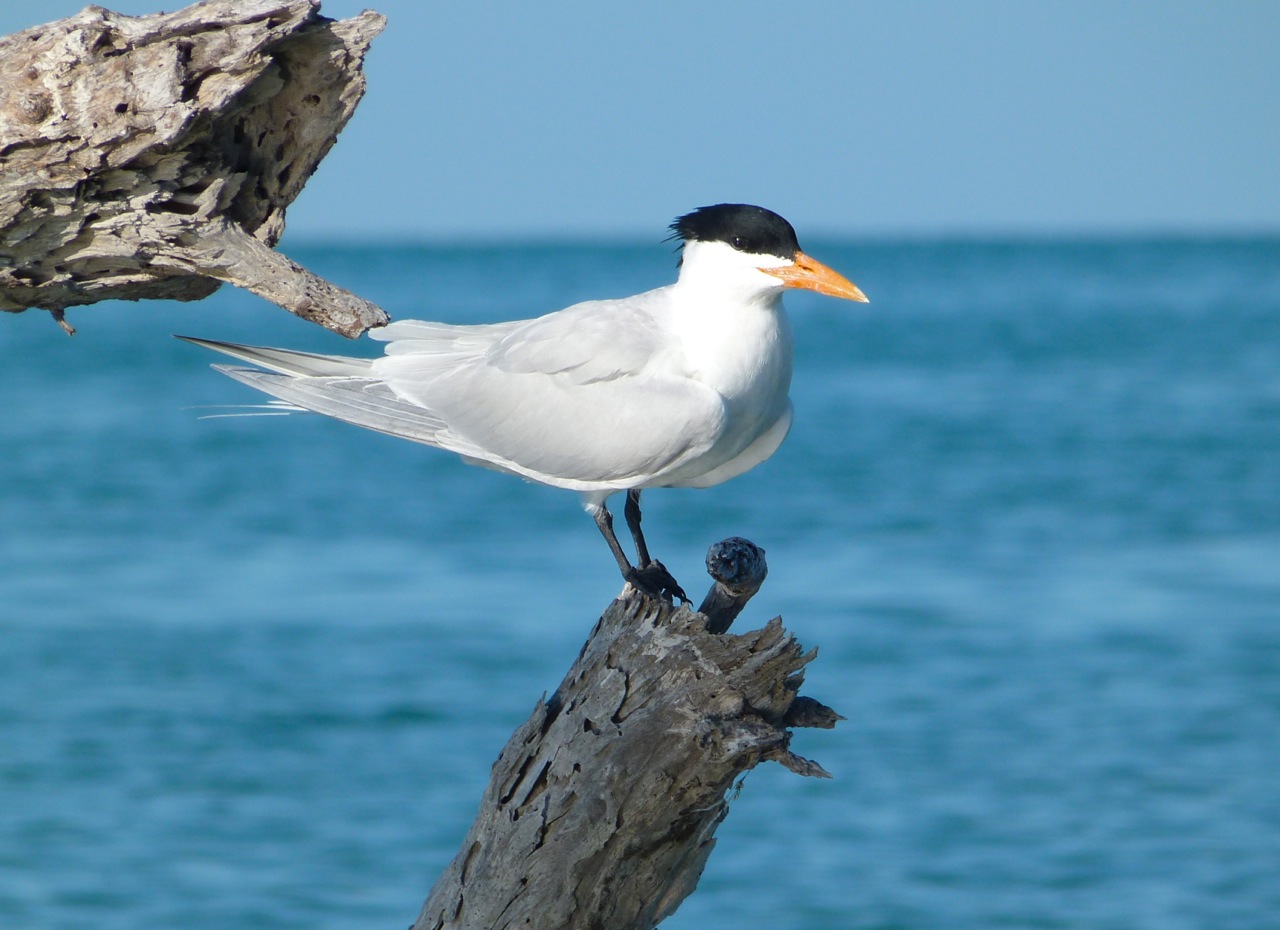
A unique bird book is  been published and has arrived on Abaco today. Printed in Italy at the end of January, it has made its way from Florence via Bologna, Leipzig, Brussels, Cincinnati, Miami and Nassau. Having spent an unexpectedly long sojourn in Nassau,  2 pallets of books are now safely at the Delphi Club… at last!Cuban Pewee on Abaco

The Guide showcases the rich and varied bird life of Abaco, Bahamas and features both resident and migratory species including rarities and unusual sightings. It is available for sale now from the Delphi Club in a limited edition of 500.  The main features are as follows:

  • 272 pages with more than 350 photographs
  • 163 species shown in vivid colour – nearly two-thirds of all the bird species ever recorded for Abaco
  • Every single photograph was taken on Abaco or in Abaco waters
  • All birds are shown in their natural surroundings – no feeders or trails of seed were used
  • Several birds featured are the first ones ever recorded for Abaco or  even for the entire Bahamas

Clapper Rail Abaco Bahamas Tom Sheley

  • A total of 30 photographers, both experienced and amateur, have contributed to the project
  • The book has had the generous support of many well-known names of Abaco and Bahamas birding
  • Complete checklist of every bird recorded for Abaco since 1950 up to the date of publication
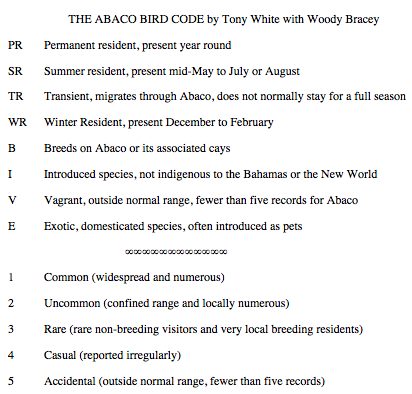
  • Specially devised codes indicating when you may see a particular bird, and the likelihood of doing so
  • Specially commissioned cartographer’s Map of Abaco showing places named in the book

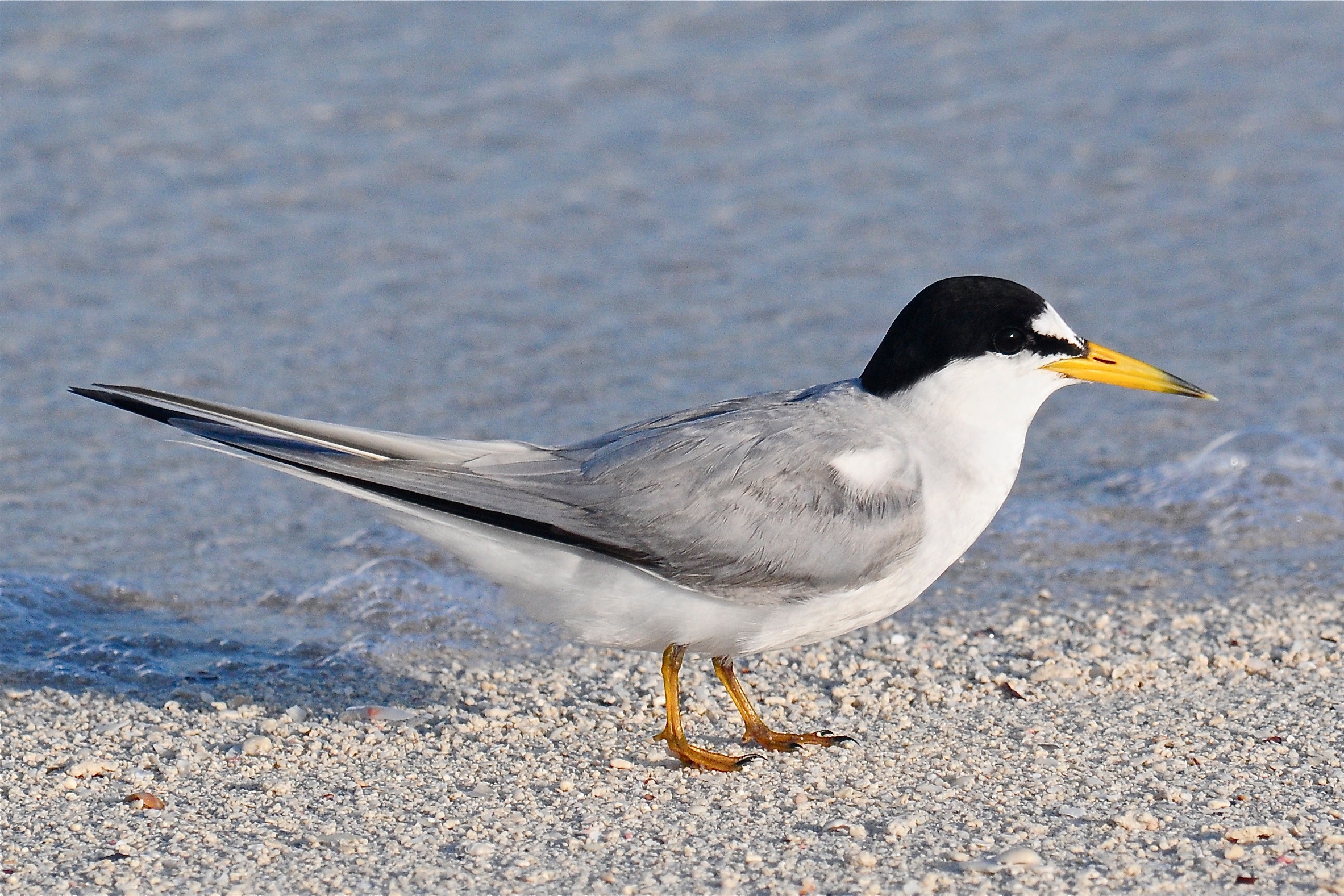
Least Tern_ACH3672 copy

  • Informative captions intentionally depart from the standard field guide approach…
  • …as does the listing of the birds in alphabetical rather than scientific order
  • Say goodbye to ’37 warbler species on consecutive pages’ misery
  • Say hello to astonishing and unexpected juxtapositions of species

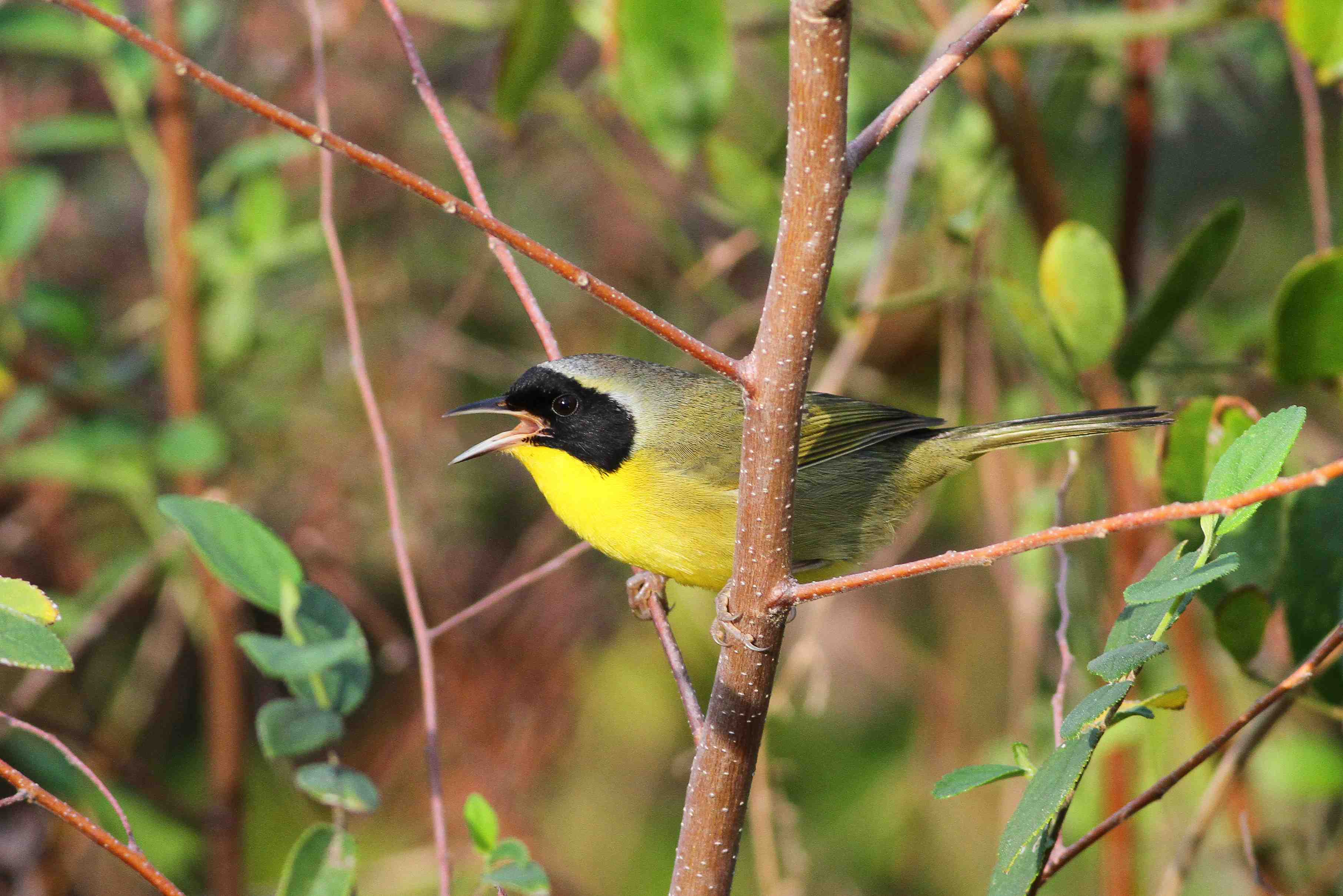
Abaco_Bahama Yellowthroat_Gerlinde Taurer copy

  • The book was printed in Florence, Italy by specialist printers on grade-1 quality paper
  • Printing took pairs of printers working in 6 hour shifts 33 hours over 3 days to complete
  • The project manager and the author personally oversaw the printing

Smooth-billed Ani pair GT

  • The book is dedicated to the wildlife organisations of Abaco
  • A percentage of the proceeds of sale will be donated for the support of local wildlife organisations
  • A copy of the book will be presented to every school on Abaco

Piping Plover BH IMG_1919

The book is published by the Delphi Club (contact details below). The project was managed by a publishing specialist in art books. The author is the wildlife blogger more widely known on Abaco and (possibly) beyond as ‘Rolling Harbour’. Oh! So that would in fact be Mrs Harbour and myself. Well well. What are the chances?

cuban-emerald-delphi-abaco-3

The Delphi Club at Rolling Harbour
PO Box AB-20006, Marsh Harbour, Abaco, Bahamas
Tel: +1-242-366-2222
General Manager – Sandy Walker: +1-242-577-1698
delphi.bahamas@gmail.com

American Oystercatchers BH IMG_2000 copy 2Images by Tom Sheley,  Bruce Hallett, Gerlinde Taurer, Tony Hepburn, RH

Unknown's avatar

‘OUTSTANDING BILLS’: THE WHITE IBIS ON ABACO AND BEYOND


White Ibis Eudocimus albus (Bill Majoros WMC)

‘OUTSTANDING BILLS’: THE WHITE IBIS ON ABACO AND BEYOND

The AMERICAN WHITE IBIS (Eudocimus albus) has a wide range in the Americas and is a familiar species  in the southern United States, especially Florida. It is also found in the Caribbean.  On Abaco they are quite rare, appearing sporadically as winter residents. Encountering one is definitely a ‘find’. I know of only one recent sighting when an ibis decided to spend some time on the lake at Treasure Cay Golf Course. Luckily Kasia was not concentrating too hard on her round of golf to the exclusion of all else – and had a camera with her. 

The white ibis is more common on other Bahamas islands, for example New Providence (Nassau). Here are some photos taken there by Tony Hepburn and Woody Bracey. Others were taken in Florida.

WIBACH_3748 copy 2White Ibises WB DSC_8628 copy 2WIB ACH_4239 copy 2

This is the call of an Ibis in the Florida Wetlands (credit Xeno-Canto / Paul Marvin) 

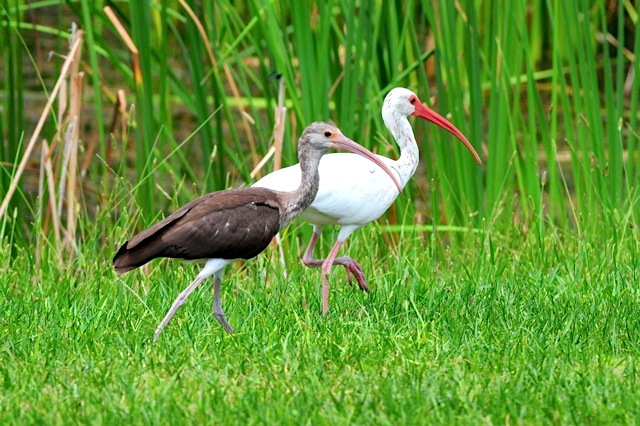
Juveniles have dark plumage that gradually grows out as they age and is replaced by white plumage WIB2 ACH_5964 copy 2White Ibis (juv) WB DSC_0529 copy 2

The ibis forages mainly by feel rather than sight, using the long curved beak to probe the bottom of shallow water for aquatic  prey. American_White_Ibis (Terry Foote WMC)

The white ibis is said to be a symbol for courage and optimism because they are supposedly the last birds to shelter from the onset of a hurricane, and the first to venture out as the storm passes. This is of course equally consistent with symbolising extreme foolhardiness… but let it pass.

White Ibis (Hans Stieglitz WMC)

FASCINATING FACTOIDS The white ibis / hurricane connection is nurtured by the University of Miami, of which the bird is the mascot. The sports teams are called the Hurricanes (or the ‘Canes for cheering purposes). Their endeavours are supported enthusiastically by none other than Sebastian the Ibis. “What does he look like?”, I hear you cry. This:

Sebastian makes a ‘U for University’ with his.. er… wingtips. He sports a natty Hurricanes hat and might easily be confused with Donald Duck’s less amiable-looking and more aggressive cousin220px-Sebastian_the_Ibis

I had intended to digress further into the mysteries of the Sacred Ibis, symbol of the Ancient Egyptian God Thoth, the God of Learning and Wisdom who ranked with Isis and Osiris as A Top God. But in fact it’s quite a dull area, and 3 pictures and a nice bronze sculpture will give you the general idea.

Thoth.svg    

The Sacred Ibis of Thoth, Met. Museum NYCIbis Met Museum 2

Credits: Kasia Reid, Woody Bracey, Tony Hepburn, Met, Wiki

Unknown's avatar

REMARKABLE FEET: SNOWY EGRETS ON ABACO


Snow Egret in Flight (Wiki)

REMARKABLE FEET: SNOWY EGRETS ON ABACO

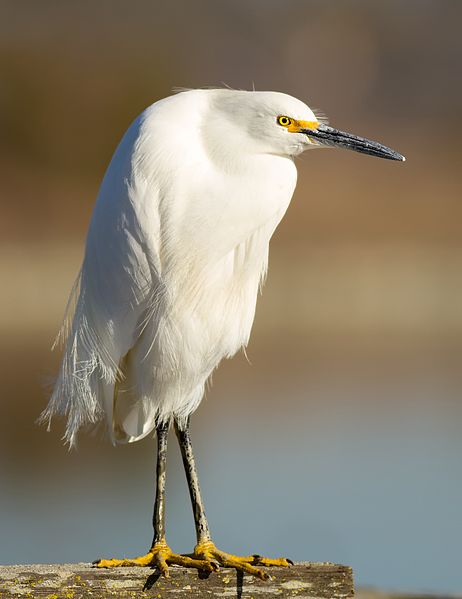
SNOWY EGRETS (Egretta thula) are small white herons of the Americas, similar to the European Little Egret. The first thing you may notice about them is that they have remarkable bright yellow feet. This distinguishes these birds from all other egret and heron species.Snowy Egret ACH1409

Young Snowy Egrets often have yellow markings higher up on their legs.Snowy 24 a - Version 2

The feet are so bright that they are often visible underwater.Snowy Egret WB P1001206 copy 2

Snowy Egrets eat fish, crustaceans, insects and small reptiles. They have 3 main foraging tactics: (1) Standing still in or on the edge of water to ambush prey (2) Stalking prey in shallow water, often running or shuffling their feet to flush out prey  (3) “Dip-fishing” by flying low over water.

Snowy Egret (Wiki)

In breeding season, Snowy Egrets grow beautiful plumes – “bridal plumage”. At one time these were in great demand as adornments for women’s hats (as with flamingos, parrots and many other decorative species). This reduced the population of the birds to dangerously low levels, from which they have now recovered. Their IUCN rating is now ‘Least Concern’.

Snowy_Egret_-_full_breeding_plumage-1

Contemplating the next meal… one of Sandy Walker’s excellent Abaco photos taken this winterSnowy Egret 1a copyPhoto Credits: Sandy Walker, Woody Bracey, Tony Hepburn, Wiki

Unknown's avatar

‘IN THE PINK’: ROSEATE SPOONBILLS IN THE BAHAMAS


Roseate Spoonbill (Myakka River State) Park - Wiki

‘IN THE PINK’: ROSEATE SPOONBILLS IN THE BAHAMAS

ROSEATE SPOONBILLS (Platalea ajaja) are rare visitors to the Northern Bahamas. For Abaco they are classified with the undignified term ‘vagrant’, meaning essentially (a) that you will be very lucky indeed to encounter one, so therefore (b) it is highly unlikely to be worth making a special trip based on the likelihood of seeing one. Try Florida instead.

Roseate Spoonbill WB 60

We saw one once when bonefishing far out on the Marls. It was unmistakeable, but well beyond the effective range of the puny ‘don’t-really-mind-if-it-takes-a-dive’ camera I had with me. The spoonbills in this post were photographed elsewhere in the Bahamas or in two cases, Florida. The wonderful one below of a spoonbill ‘flipping’ a fish was taken there by Ohio bird expert and photographer Tom Sheley.

SPOONBILL ‘FISH-FLIPPING’Roseate Spoonbill flipping fish LR.Wildcat Run FL.Tom Sheley

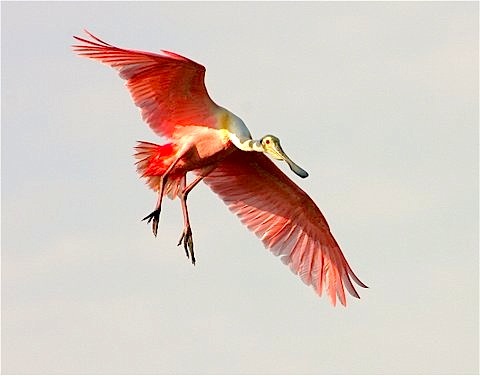
SPOONBILLS LOOK VERY DRAMATIC IN FLIGHTRoseate Spoonbill WB

Unlike herons, spoonbills keep their necks outstretched in flight. They are most likely to be found in marshes, salt-water lagoons and on mudflats. They are gregarious and mix in happily with herons and egrets, though there is some competition for food. Spoonbills nest in shrubs or trees, often mangroves.Roseate Spoonbill WB 59_IMG_6302 copy 3

Spoonbills tend to get pinker as they get older. As with American Flamingos, the pink colouring derives from their diet, which contains carotenoid pigments.  The colouring ranges from pale pink to loud pinks and reds, depending on age and location. 

Roseate Spoonbill WB 61Roseate Spoonbill BH (from WB)

Spoonbills feed in shallow fresh or coastal waters by swinging their bill from side to side while steadily walking through the water, often in groups. The spoon-shaped bill allows it to sift easily through mud for the edible contents – crustaceans, aquatic insects, frogs, newts and  small fish ignored by larger waders. This  excellent 1 minute Audubon video shows exactly how they feed, with some white ibises for company.

NEW ADDITION (props to Roselyn Pierce) 1743441_10202241639500028_1766433566_n

And a short non-roseate spoonbill feeding video from the Netherlands June 2014, showing the technique

Photo Credits: Header, Wiki; 1,3,4,5 Woody Bracey; 2 Tom Sheley, 6 Bruce Hallett (RH: nil)

Unknown's avatar

ALL THINGS BRIGHT… CHEERFUL GARDEN BIRDS AT DELPHI, ABACO


ALL THINGS BRIGHT… CHEERFUL GARDEN BIRDS AT DELPHI, ABACO

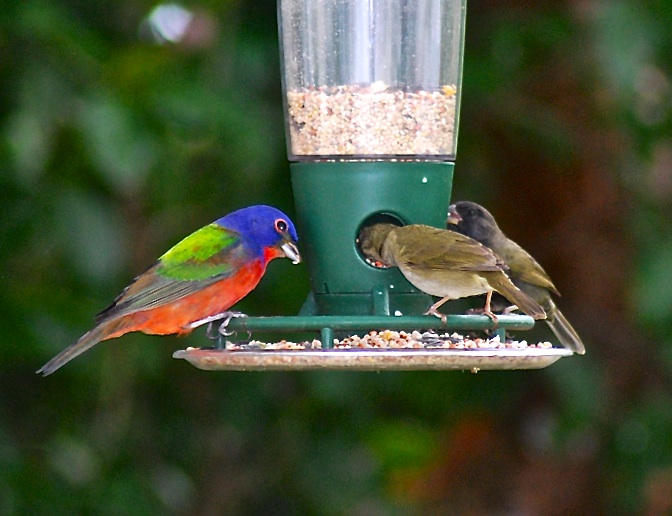
It’s not necessary to prowl around the coppice or lurk in the pine forest to see beautiful birds. They are on the doorstep, sometimes literally. Especially if there are full seed feeders and hummingbird feeders filled with sugar water for the Cuban Emeralds, Bahama Woodstars and other birds with pointy beaks (Bananaquits, for example). Here are are a few from the gardens immediately around the Delphi Club.

PAINTED BUNTINGS (f & m)DSC_0204 copy - Version 2

PAINTED BUNTING (m) WITH BLACK-FACED GRASSQUITS (m & f)Painted Bunting SW - V2 jpg

PAINTED BUNTING (f)DSC_0168 copy

WESTERN SPINDALIS (m)Western Spindalis edit DSC_0098

THICK-BILLED VIREO (m)TBV edit

This is a TBV recording made with my iPhone.

For details how to record birds (or indeed animals. Or people) with a smart phone and embed the results as an mp3, CLICK HERE 

CUBAN EMERALD HUMMINGBIRD (m)Cuban Emerald DSC_0095

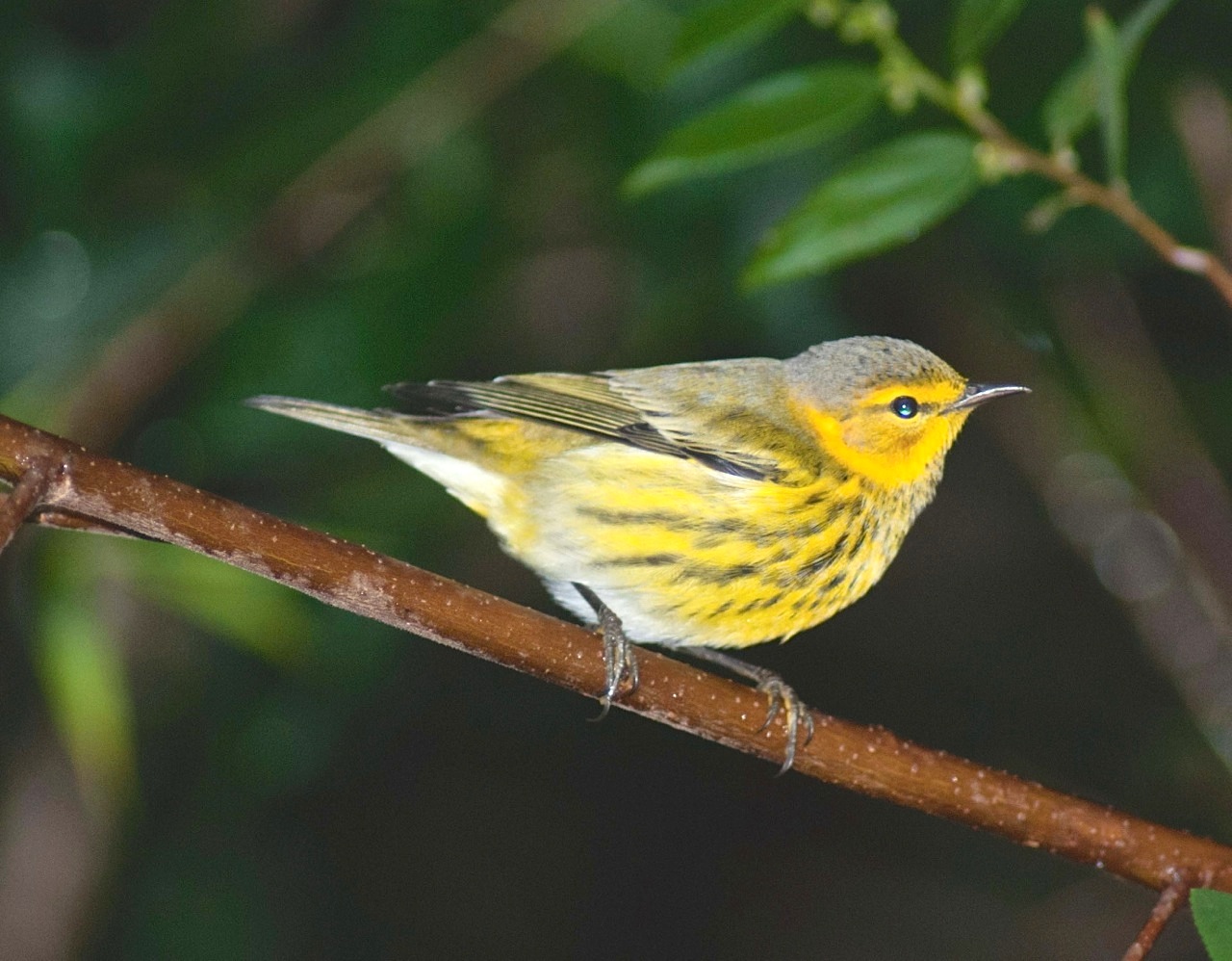
A PAIR OF CAPE MAY WARBLERS

These little birds are autumn / winter visitors, though I have seen one at Delphi in June – it must have like it there and decided to stay on. Strangely, though originally named for one found on Cape May in the c19, there wasn’t another one recorded there for another 100 years…

CMW 33 copy 2CMW 2 copy 2

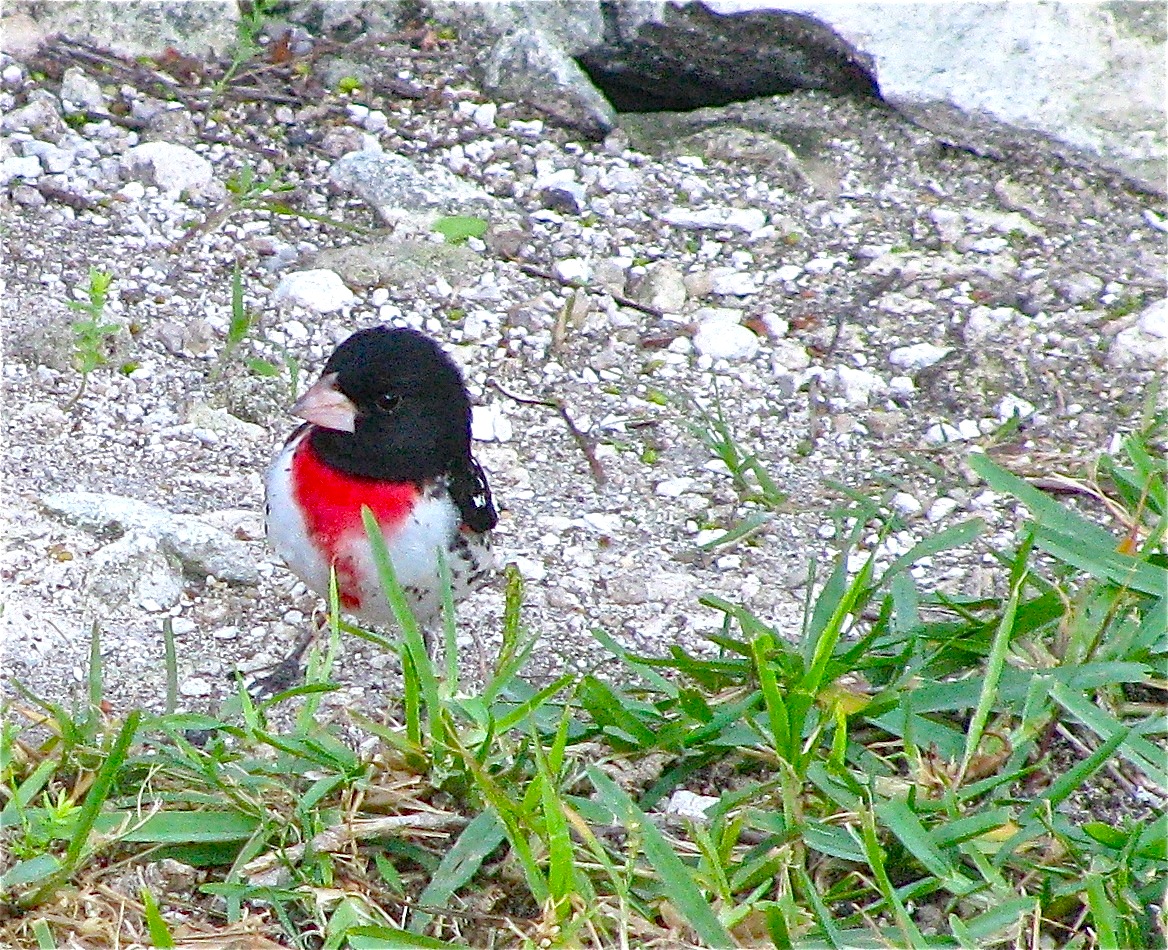
ROSE-BREASTED GROSBEAK (m)Rose-breasted Grosbeak

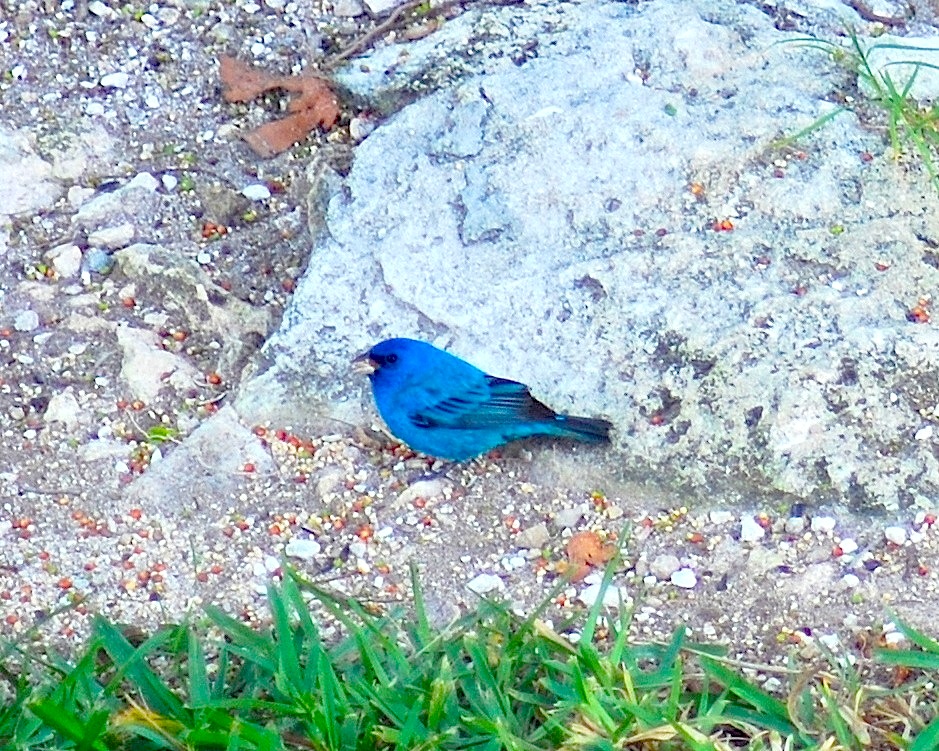
INDIGO BUNTING (m)Indigo Bunting

BANANAQUIT (m)DSC_0078

THE DELPHI CLUB, ABACOThe Delphi Club, Abaco, BahamasCredits: Mainly Sandy Walker; a couple from Peter Mantle; DCB by RH

Unknown's avatar

RUDDY TURNSTONES ON THE BEACH IN ABACO


 Ruddy Turnstones at Delphi, Abaco 14

RUDDY TURNSTONES ON THE BEACH IN ABACO

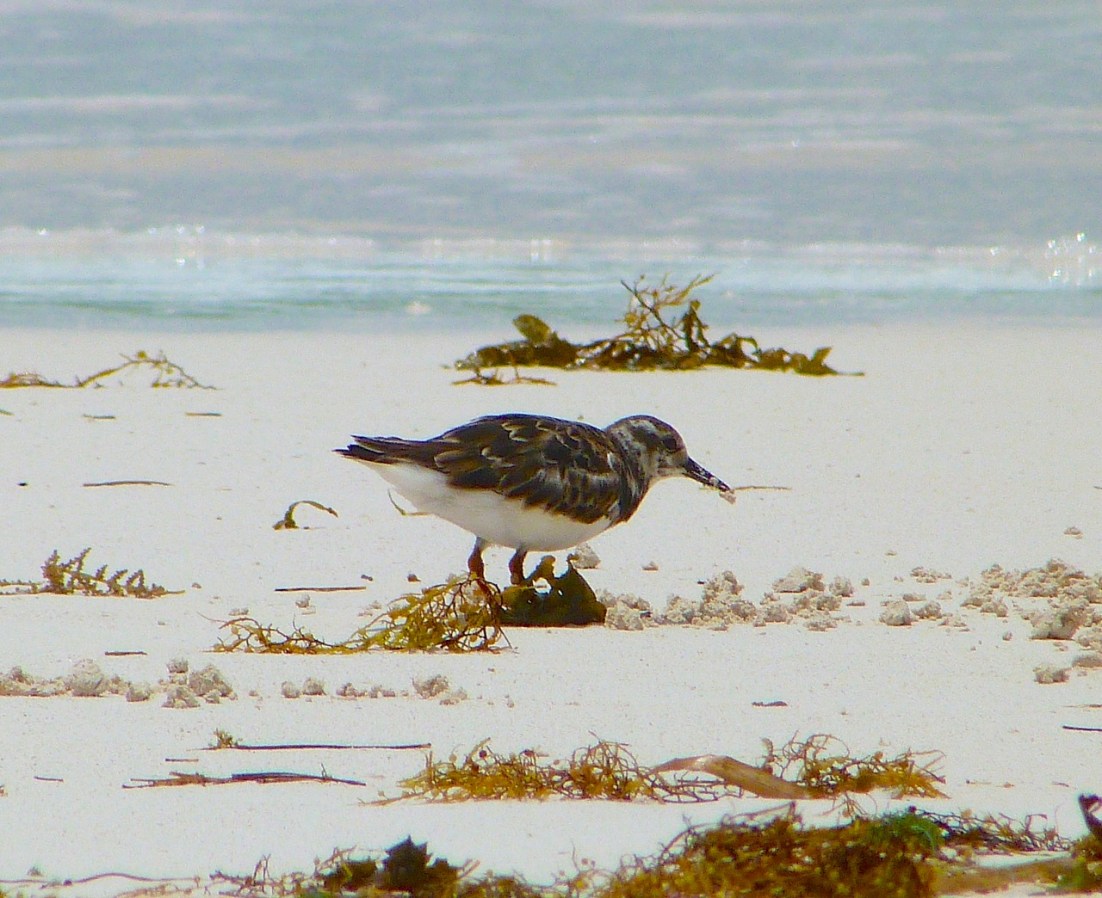
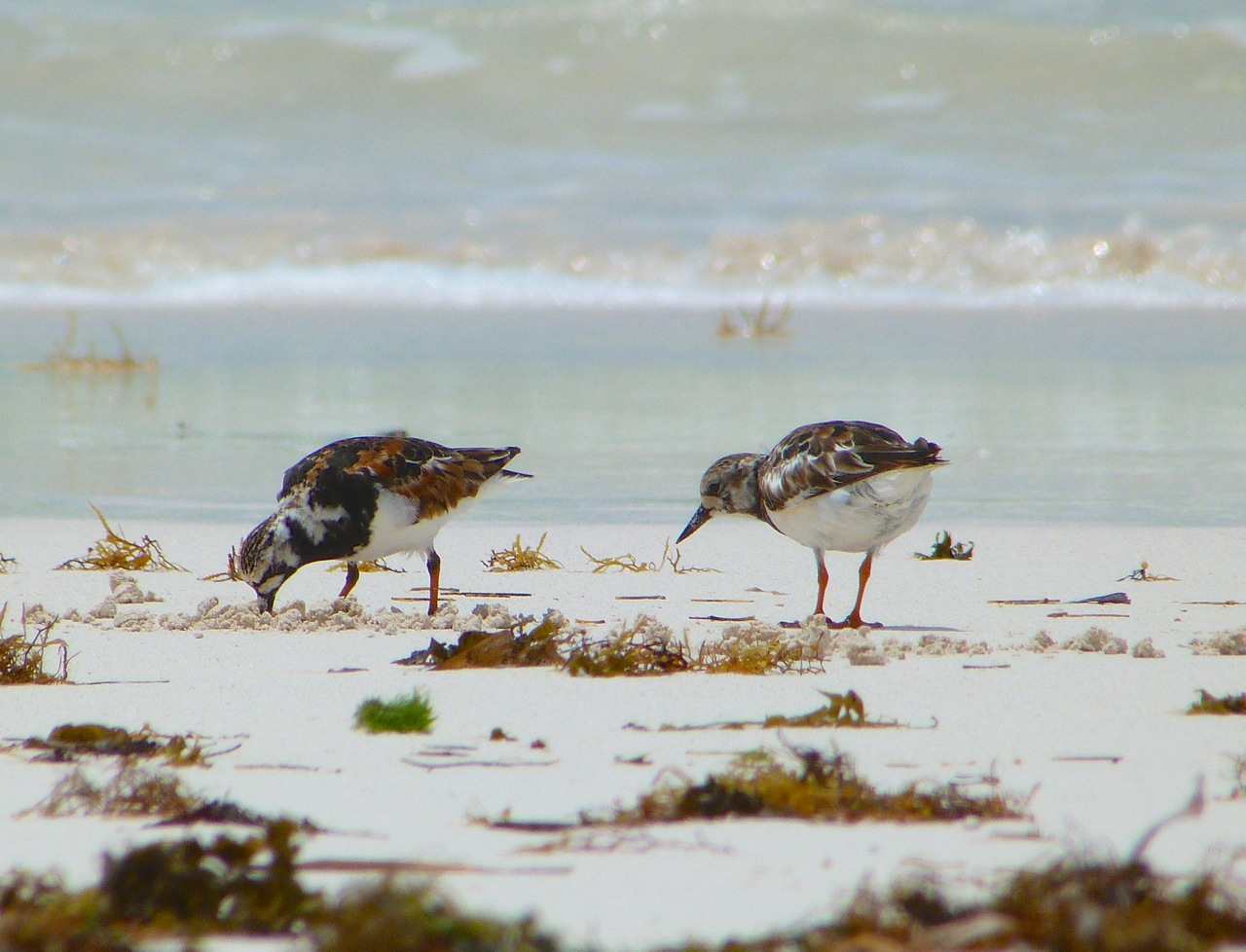
Ruddy Turnstones Arenaria interpres are well-known shore birds around the world. They used to be classified as plovers, but are now counted with sanderling. Fortunately they are distinctive enough not to be confusable with the many other species of shore bird with which they mix.Ruddy Turnstones at Delphi, Abaco 13

Their foraging methods are classified into 6 broad categories, though I imagine that if peckish, they may opt for all of these in the one feeding session.

  • Routing — rootling through piles of seaweed by flicking, ‘bulldozing’, and pecking it to expose small crustaceans or gastropod molluscs hidden underneath.
  • Turning stones — living up to its name name, flicking stones with its bill to uncover hidden snaily and shrimpy creatures.
  • Digging —  using small flicks of the bill to make holes in sand or mud and then gobbling up the prey revealed.
  • Probing — inserting the bill right into the ground to get at concealed gastropods.
  • Hammering — cracking open shells using the bill as a hammer, then winkling out the occupant. 
  • Surface pecking — short, shallow pecks to get at prey just below the surface of the sand.

Between them,  these turnstones seem to be using methods 1, 3, 4 and 6Ruddy Turnstones at Delphi, Abaco 2

This female bird has clearly dug down in the sand to the length of its billRuddy Turnstones at Delphi, Abaco 4

This male is digging deep…Ruddy Turnstones at Delphi, Abaco 1

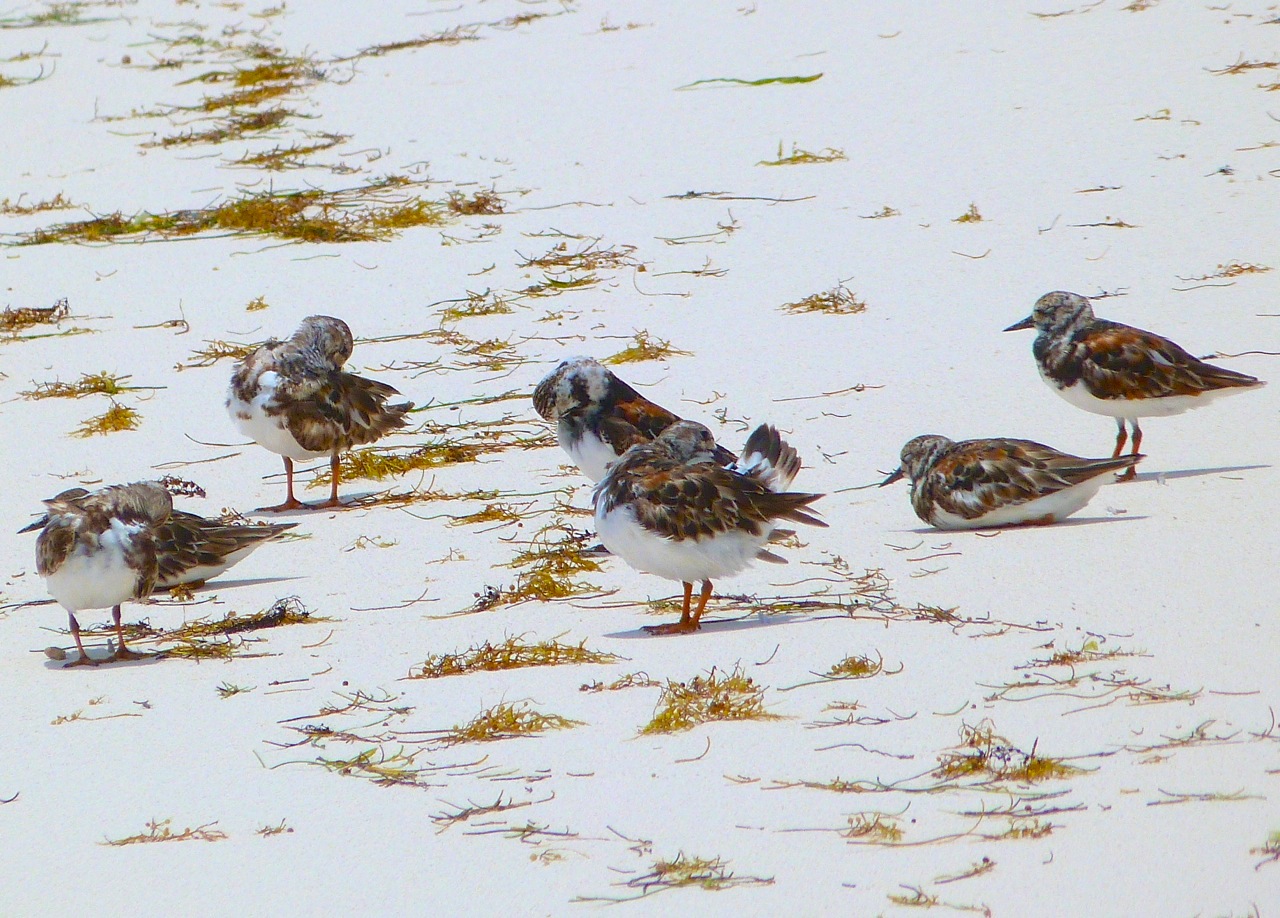
When they are not actively feeding, turnstones enjoy group preening sessionsRuddy Turnstones at Delphi, Abaco 9

They are also very good at just standing around having a companionable chat…Ruddy Turnstones at Delphi, Abaco 6

…or a post-prandial snooze…Ruddy Turnstones at Delphi, Abaco 12

…or just enjoying the scenery in groups…Ruddy Turnstones at Delphi, Abaco 11

…or simply having a peaceful paddleRuddy Turnstones at Delphi, Abaco 16All photos by RH on the Delphi Club beach (where I’ve never seen one actually turn a stone)

Unknown's avatar

ABACO: AN IMPORTANT BIRDING AREA IN THE BAHAMAS


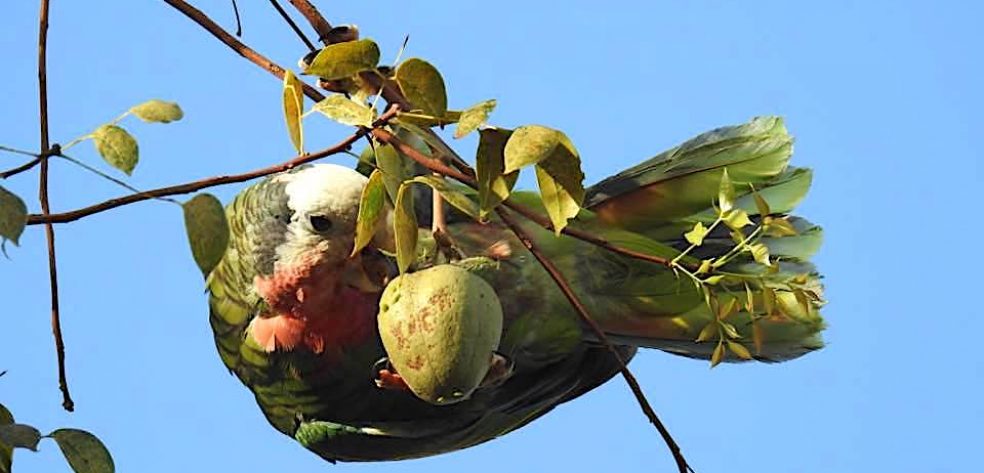
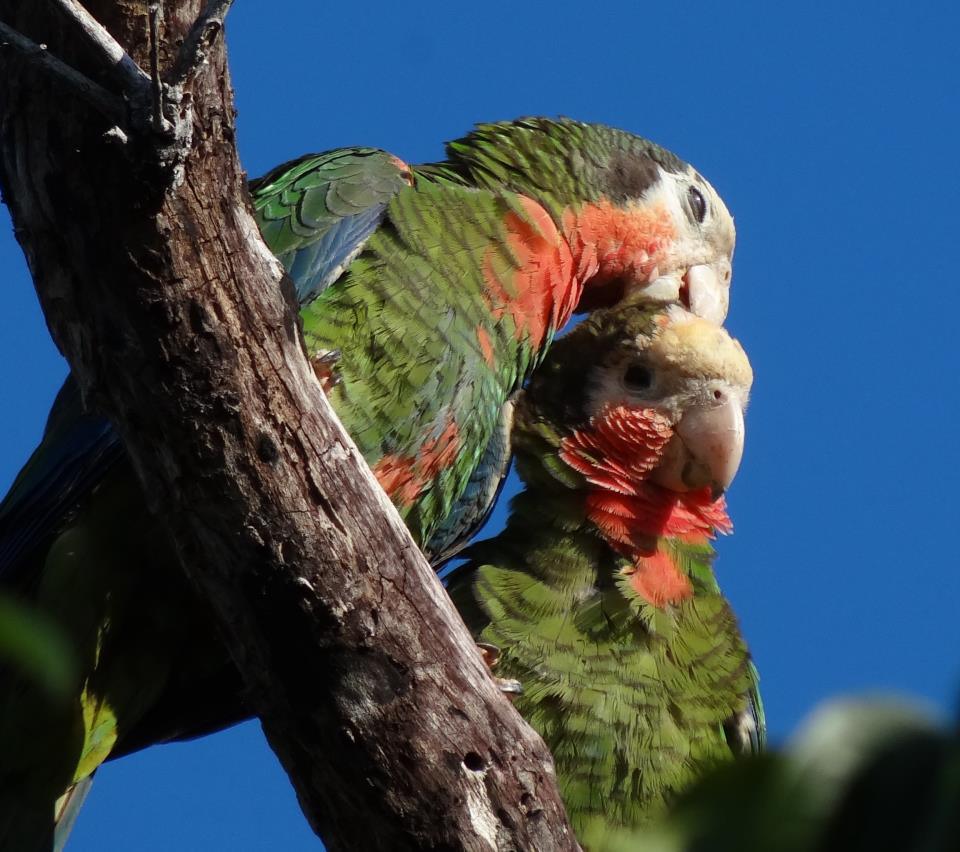
Abaco (Cuban) Parrot 2013 11

Abaco (Cuban) Parrot

ABACO: AN IMPORTANT BIRDING AREA IN THE BAHAMAS

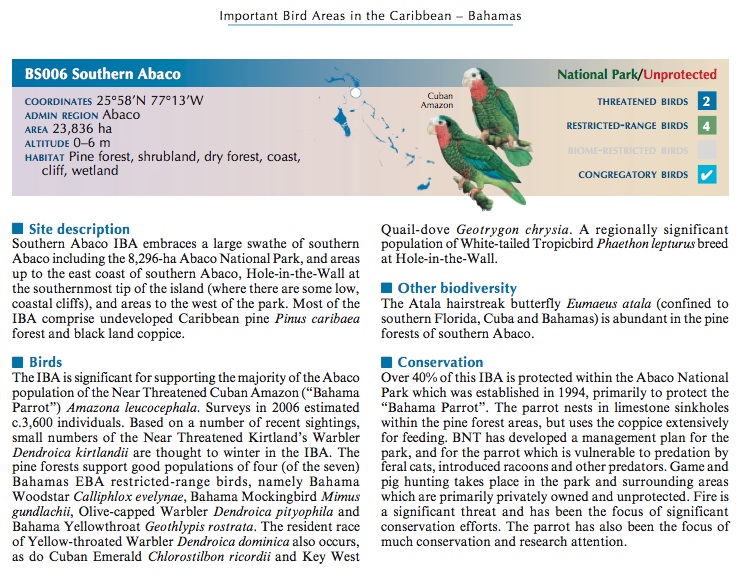
The Bahamas National Trust BNT is one of several organisations in the Bahamas responsible for conservation across the widely scattered islands of the Bahamas. One of its tasks is to look after the birds and their habitat, and from time to time the Trust publishes articles about their work. The Abaco-related material below is taken from a much longer article by Predensa Moore and Lynn Gape that covers the whole area, and concerns the importance of Abaco as a prime Bird Area. This applies in particular to Little Abaco and the Northern Cays; and to the large area of South Abaco that incorporates the National Park. The bird images used show some Abaco speciality birds mentioned by the BNT in their material. 

BNT BIRD ARTICLE 2 JPG copy

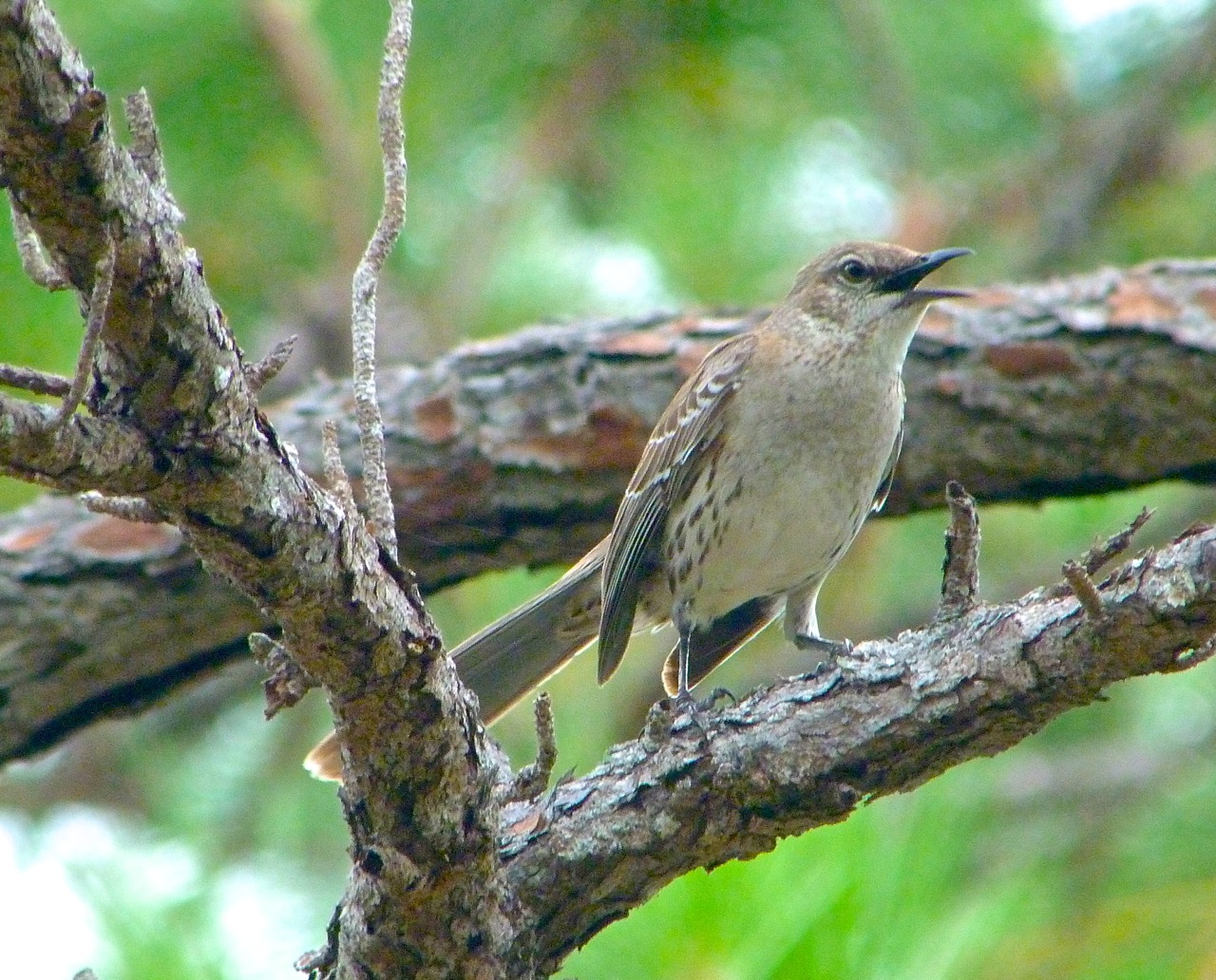
BAHAMA MOCKINGBIRD Mimus gundlachiiBahama Mockingbird, Abaco 3BNT BIRD ARTICLE 3 JPGBAHAMA WOODSTAR Calliphlox evelynae              Bahama Woodstar BPS BNT BIRD ARTICLE 4 JPGBAHAMA YELLOWTHROAT Geothlypsis rostrataBahama Yellowthroat Abaco 8 BNT BIRD ARTICLE 5 JPG

CUBAN EMERALD Chlorostilbon ricordiiCuban Emerald Hummingbird, Delphi, Abaco 1Credits: BNT; Bahama Woodstar, Ann Capling with thanks; the rest, RH

Unknown's avatar

FINE FEATHERS (1): ABACO BIRD ‘PICS’ OF 2013


Least Tern, Abaco

FINE FEATHERS (1): ABACO BIRD ‘PICS’ OF 2013

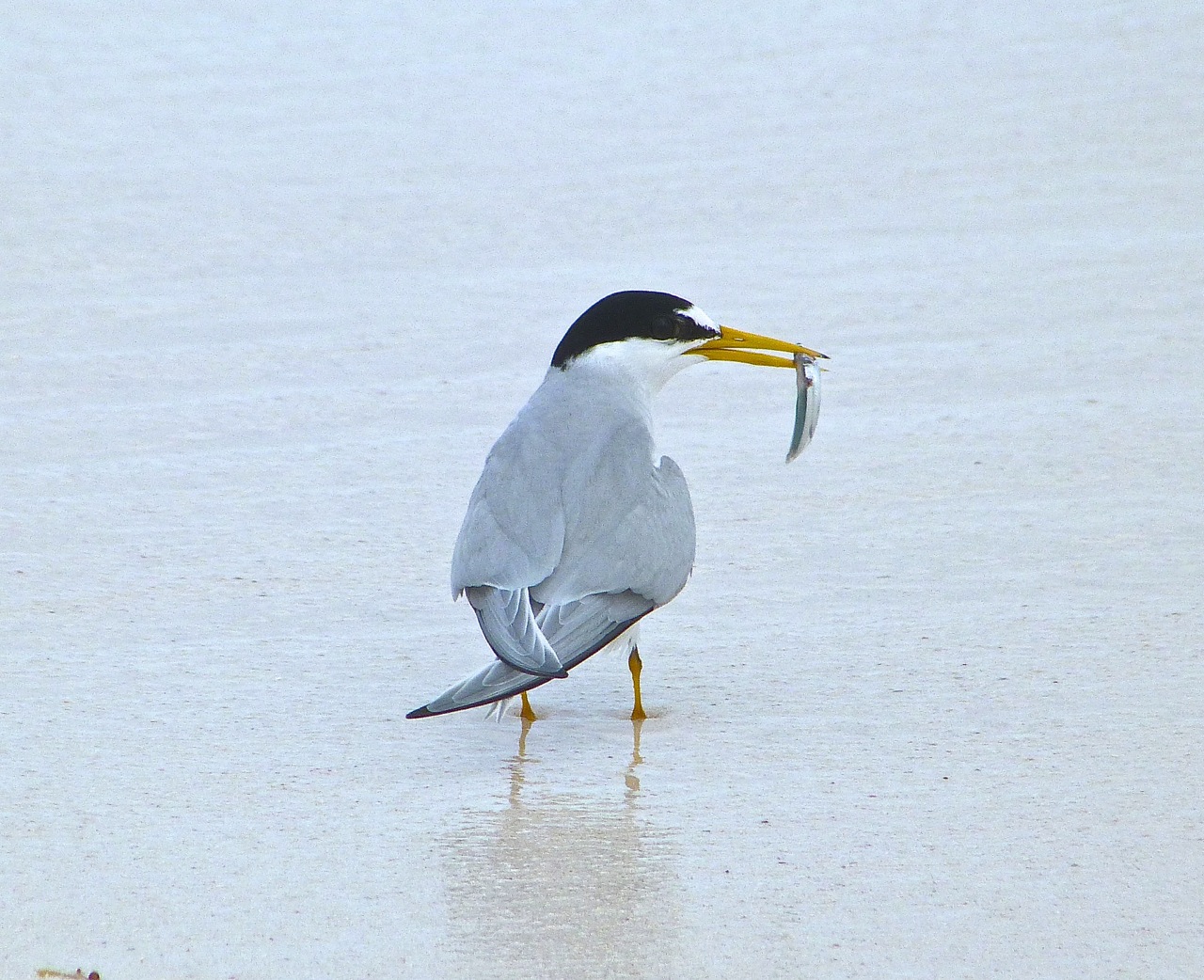
The Least Tern in the header image was a stroke of luck. I was watching plovers on the beach when it landed on the tideline with a small fish in its mouth. I just had time to point the camera and fire off 3 shots before it flew off again. This was the only usable image. I liked the fish, of course, and the way its little legs made a dent in the wet sand.

This Black-necked Stilt was attempting to distract me from a nearby nest, which I’d have known nothing about until it tried to distract me. It zig-zagged towards me, striding through the water while yelling,  and then took off and flew at my head! Twice. I moved away…Black-necked Stilt, Abaco

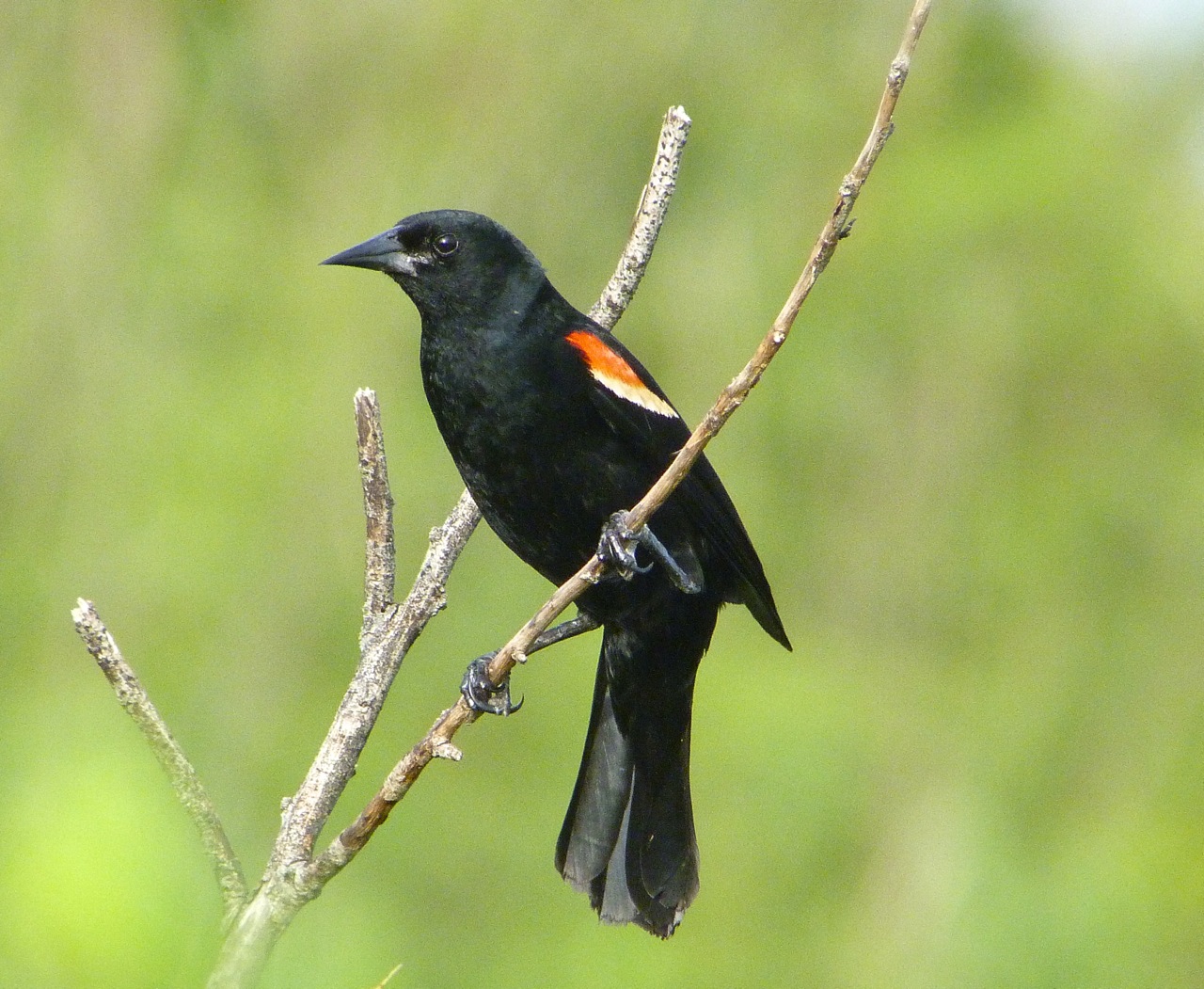
An effortlessly elegant Red-winged BlackbirdRed-winged Blackbird, Abaco

A Reddish Egret (white morph)  in the mangroves out on the Marls takes a call on its cellphoneReddish Egret (White Morph), Abaco Marls

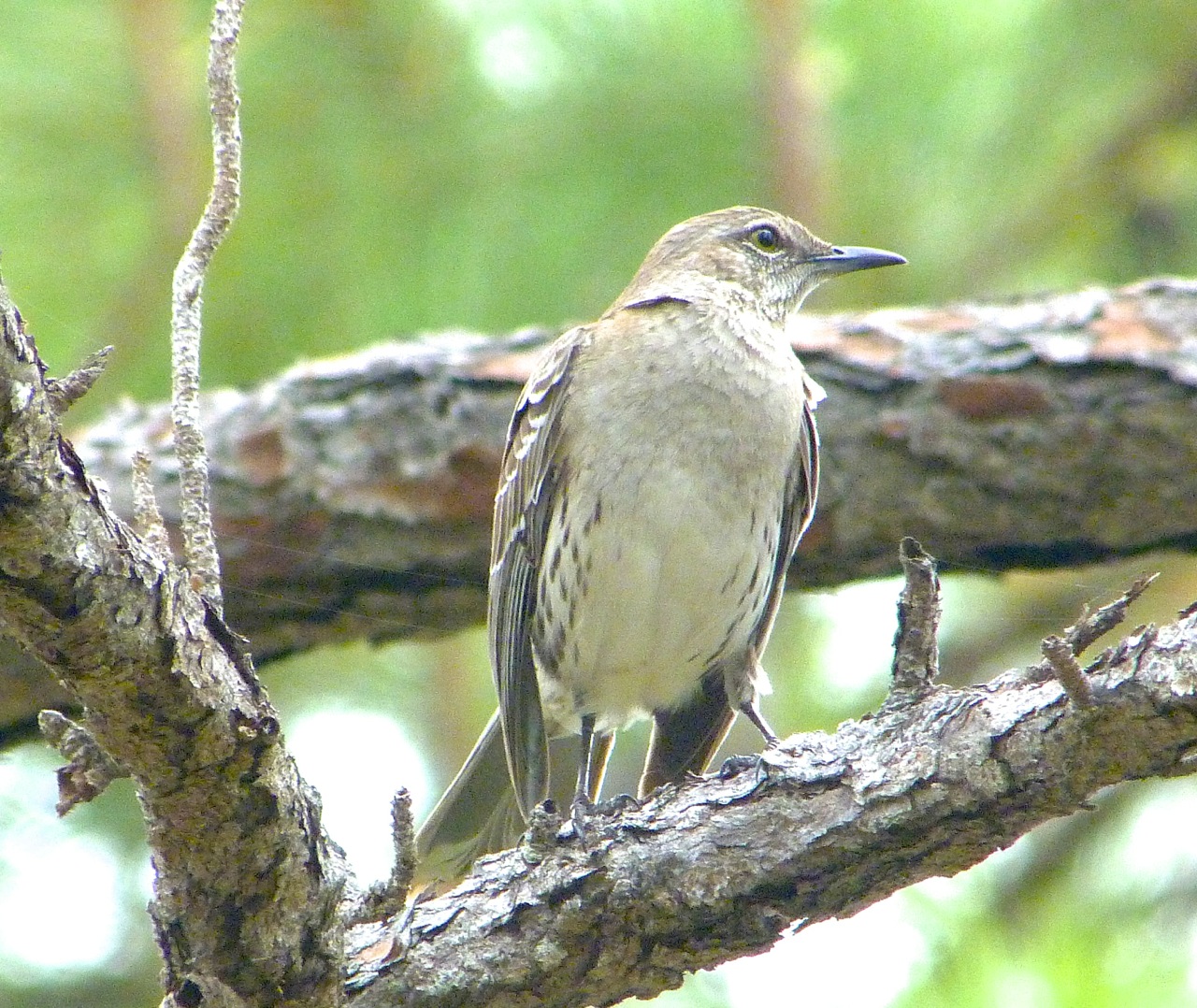
A Bahama Mockingbird deep in the pine forest of the Abaco National ParkBahama Mockingbird, National Park, Abaco

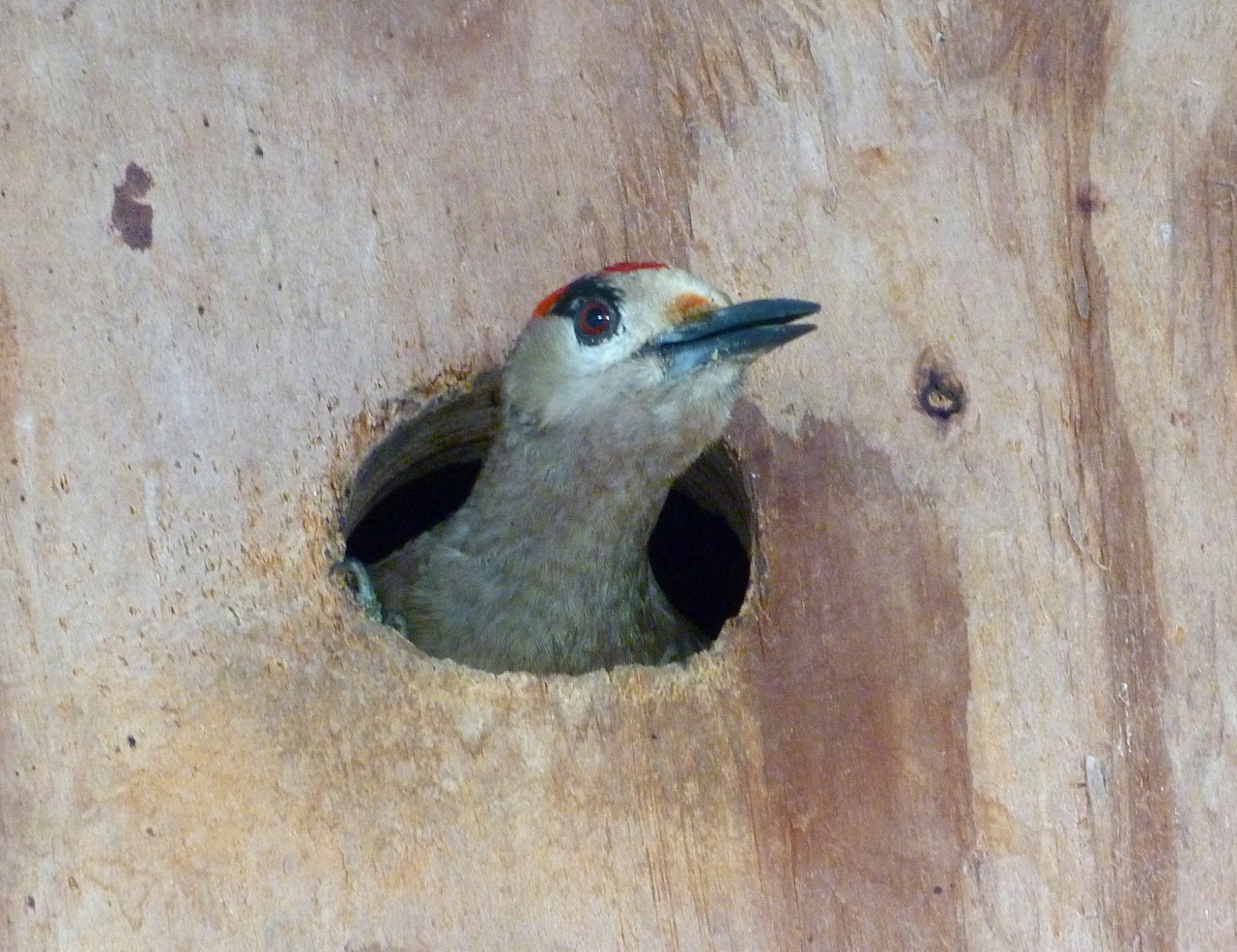
A baby West Indian Woodpecker takes a look at the wide world from its nest box. Within a week, it and 4 other chicks had flown. West Indian Woodpecker chick in nest box, Abaco

A Red-legged Thrush in full songRed-legged Thrush, Abaco

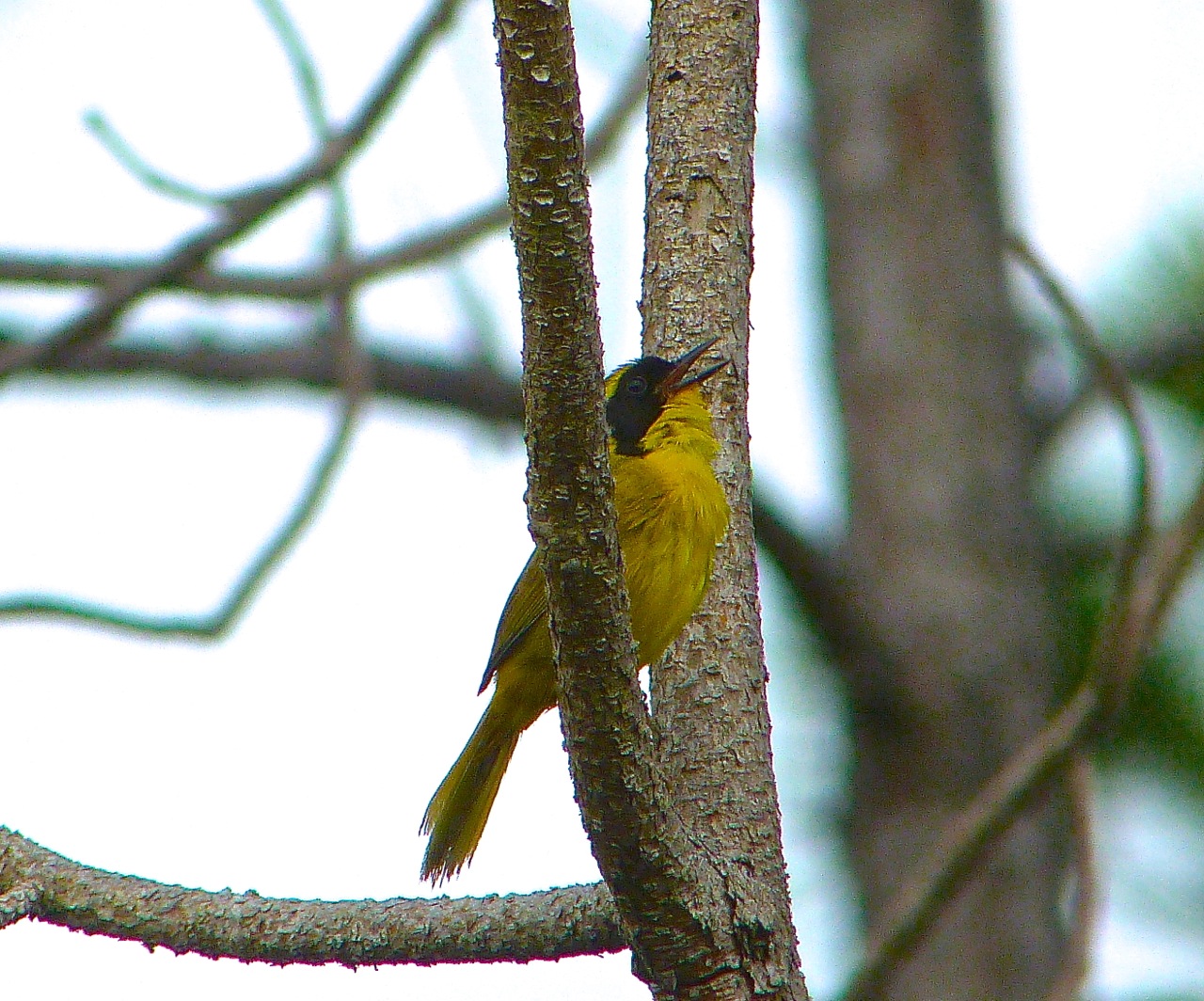
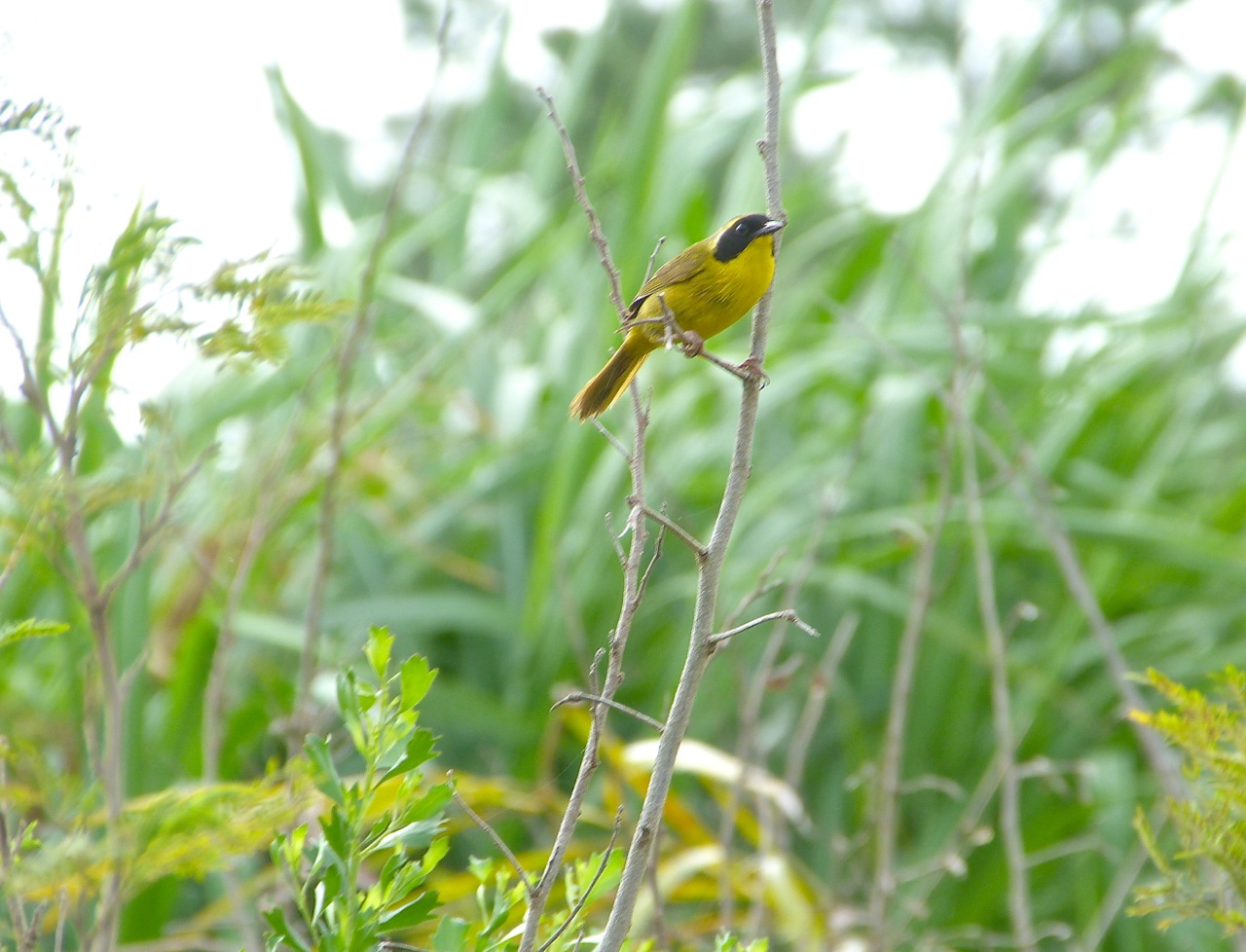
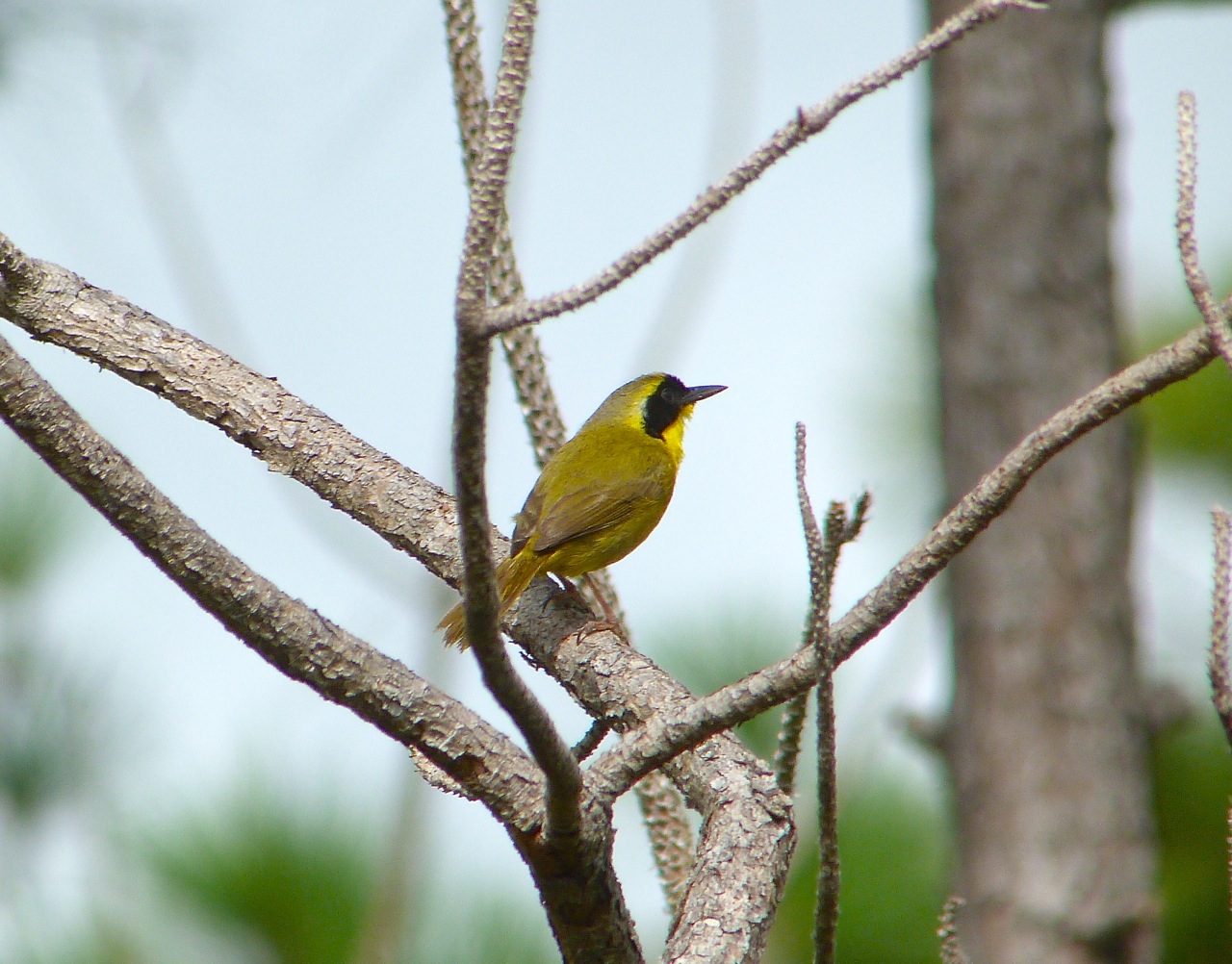
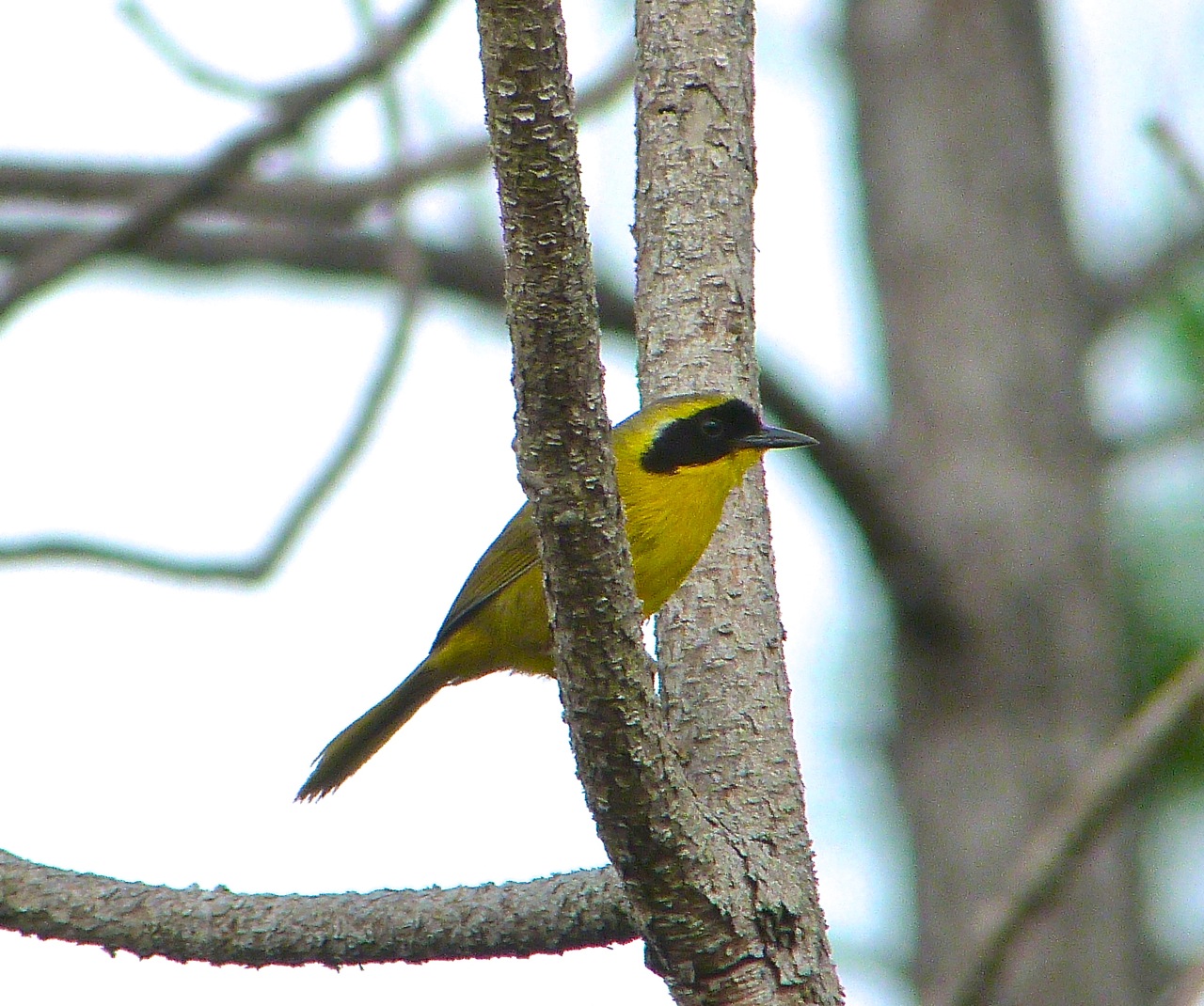
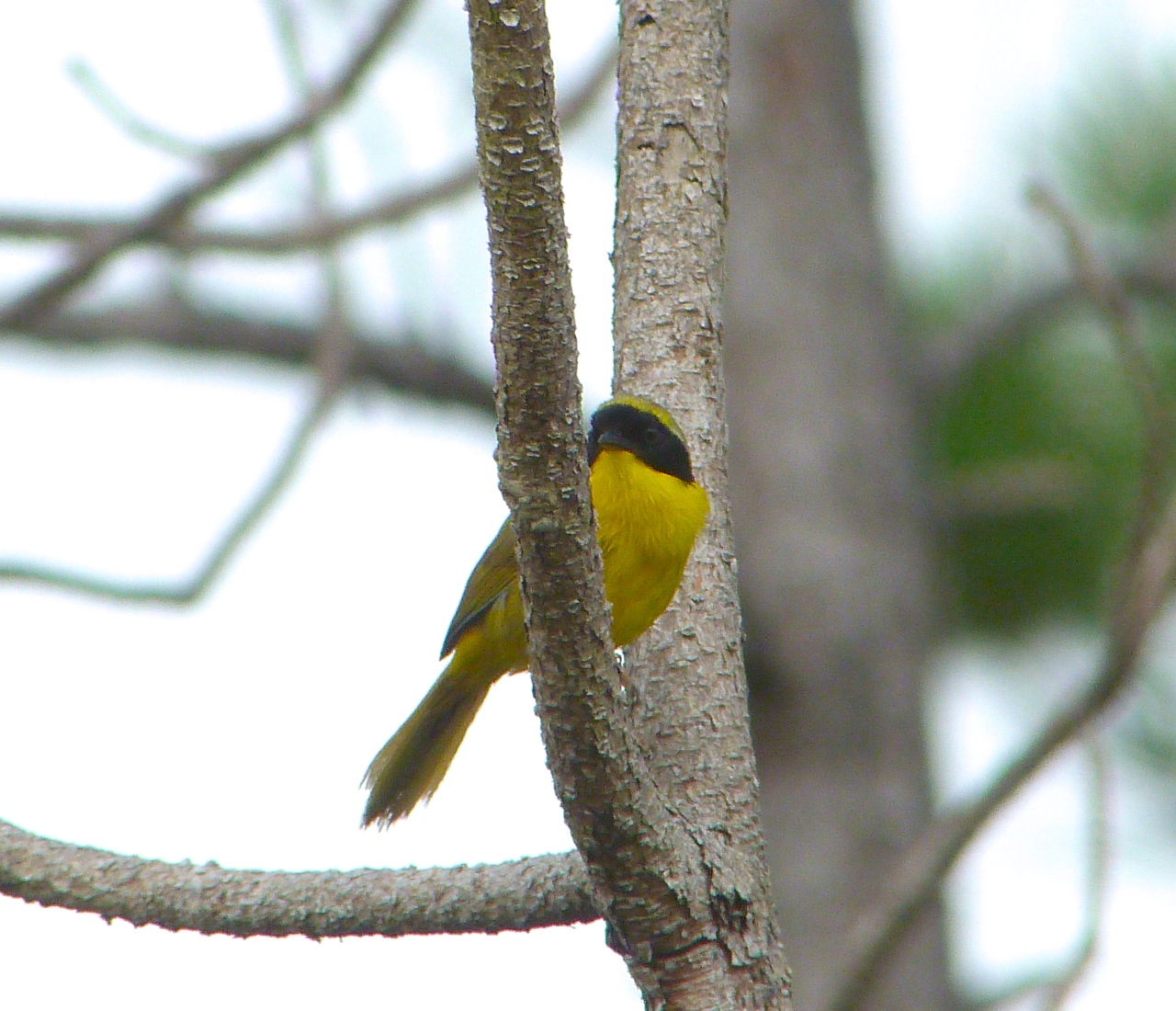
The Bahama Yellowthroat is one of 4 endemic species on Abaco. Only the males have the striking Zorro mask. They are shy birds, but also inquisitive. I learnt to imitate their call (not difficult) to bring them out of scrub and bushes. Once out, they liked to take a good look from a safe distance.Bahama Yellowthroat, Abaco

Unknown's avatar

EARLY BIRDS ON ABACO: CHARLES CORY’S EXPEDITIONS 1891


00179p1

EARLY BIRDS ON ABACO: CHARLES CORY’S EXPEDITIONS 1891

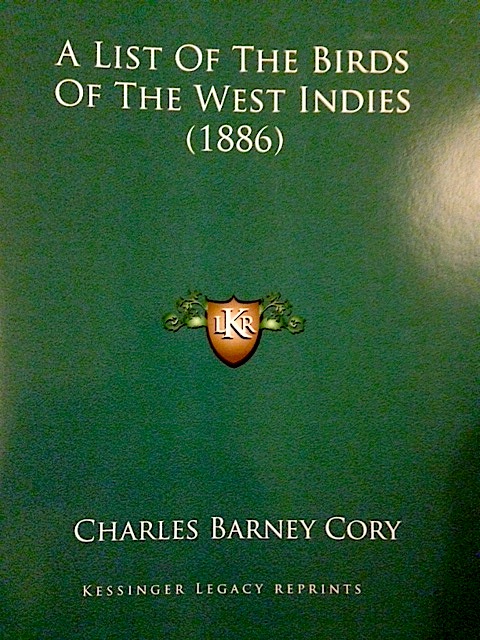
Before the explorations of the american ornithologist Charles Cory towards the end of the c19, there had been few if any serious attempts to record the birds of the Bahama Islands, especially the sparsely populated ones such as Abaco. The english naturalist Mark Catesby had published his  wonderful The Natural History of Carolina, Florida and the Bahama Islands as early as 1754, which of course included some birds, but it was far from avian-specific. During the 1880s, Cory forsook the golf course (his other passion – he even competed in the 1904 Olympics but, as it is intriguingly put, “…did not finish…”) to concentrate on birds. He commenced his research for his List of the Birds of the West Indies, published in 1886. The scope was wide, including Antilles, Jamaica, Cuba, Hispaniola and the Bahamas. The book simply listed birds by family, giving the bird names in Latin, and the locations where they were found. It’s scarcely an enticing read, and the ‘print on demand’ copy I obtained for about $15 is frankly horrid.00199p1

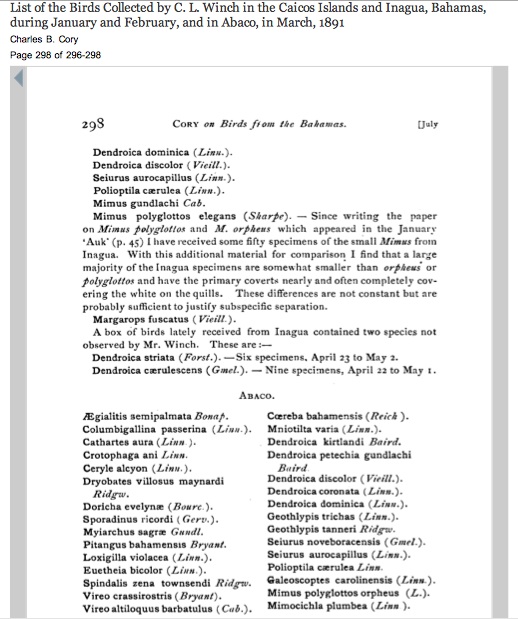
In 1891, Cory and his colleague Mr C.L. Winch paid more specific attention to the Bahamas, visiting several islands, taking specimens and recording their findings. Cory subsequently published these in the ornithological journal of record, The Auk, established in 1884 as a quarterly peer-reviewed scientific journal and the official publication of the American Ornithologists’ Union (AOU).  I’m not clear whether Cory actually accompanied Winch throughout the voyages, or whether they covered the islands separately. In any event, the first visit to Abaco took place in March 1891, when Mr Winch took specimens and recorded the species he encountered.00161p1

Cory : Winch 1891 March jpg

To save you the bother of taxing your brain with Latin  taxonomies (in some cases out-of-date), the species recorded are shown below. Every one of these species might be seen during a March visit nowadays.

COLUMN 1 Semipalmated Plover; Common Ground Dove; Turkey Vulture; Smooth-billed Ani; Belted Kingfisher; Hairy Woodpecker; Bahama Woodstar; Cuban Emerald; La Sagra’s Flycatcher; Loggerhead Kingbird; Greater Antillean Bullfinch; Black-faced Grassquit; Western Spindalis; Thick-billed Vireo; Black-whiskered Vireo

COLUMN 2 Bananaquit; Black & White Warbler; Kirtland’s Warbler; Yellow Warbler; Prairie Warbler; Yellow-rumped Warbler; Yellow-throated Warbler; Common Yellowthroat; Bahama Yellowthroat; Northern Waterthrush; Ovenbird; Blue-gray Gnatcatcher; Gray Catbird; Northern Mockingbird;  Red-legged Thrush

00103p1

In June they were back on Abaco; or at least, Mr Winch had returned. This time, the list of species was somewhat different, as one might expect in the summer season. It contains one particular curiosity: the Bahama Oriole. This fine bird was sadly extirpated from Abaco in the 1990s, and may now only be found on Andros. There are reckoned to be only about 300 left, so the species is on the brink of extinction.Bahama Oriole.jpg (Wiki)

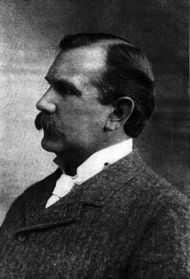
Charles Cory 1857 – 1921Charles Barney Cory 1857-1921 (Wiki)Cory List copy jpg

COLUMN 1 Red-tailed Hawk; Mourning Dove; Common Nighthawk; Cuban Emerald; Bahama Woodstar; West Indian Woodpecker; Hairy Woodpecker; La Sagra’s Flycatcher; Cuban Pewee; Loggerhead Kingbird; Gray Kingbird; Bahama Oriole; Red-winged Blackbird

COLUMN 2  Greater Antillean Bullfinch; Western Spindalis; Thick-billed Vireo; Bahama Swallow; Bahama Yellowthroat; Pine Warbler; Olive-capped Warbler; Yellow-throated Warbler; Bananaquit; Blue-gray Gnatcatcher; Northern Mockingbird; Red-legged Thrush

Cory published his findings in The Auk
The Auk 1891

A regrettable ‘print-on-demand’ purchaseCory

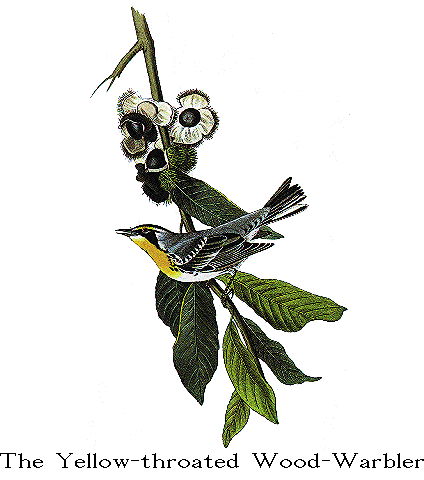
Illustrations by John James Audubon 1785 – 1851 (who never visited Abaco)00422p1

For anyone with eyelids still open, you can read more about Bahamas birds and The Auk journal HERE

Unknown's avatar

ABACO PARROT CHICKS FOR 2014, TOP POSTS & A DODO…


Abaco (Cuban) Parrot 2013 8

ABACO PARROT CHICKS FOR 2014, TOP POSTS & A DODO…

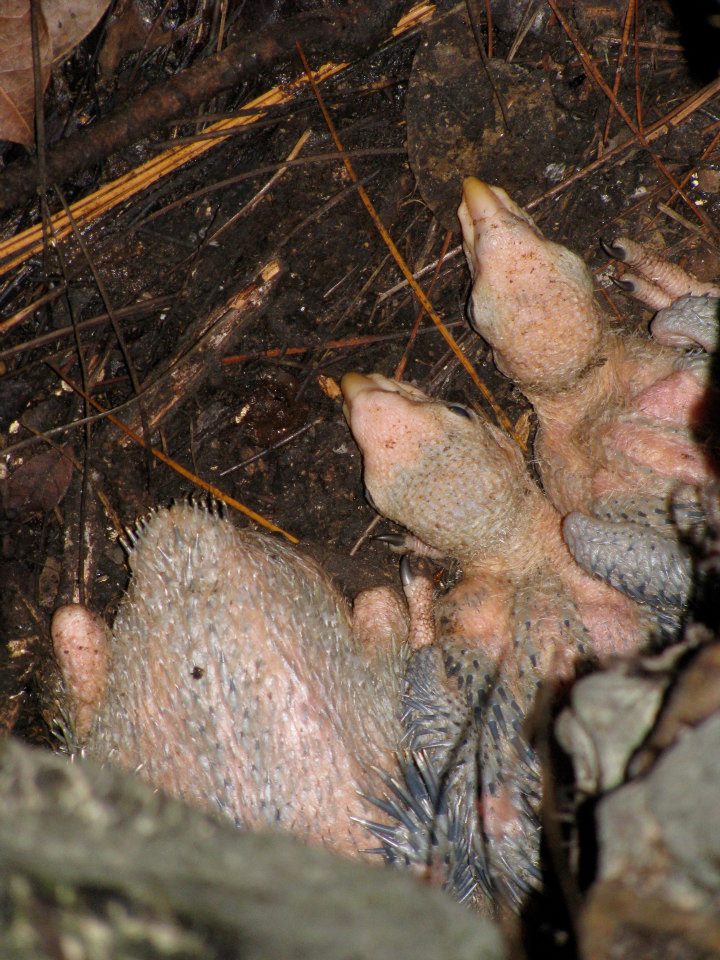
The dawn of a New Year shimmers just below the horizon, with all its bright promise for the future. It  provides a convenient excuse to peer symbolically into the limestone holes of the remarkable ABACO PARROT to take a peek at some newly hatched eggs and the tiny chicks that will, by next spring, look like the handsome bird at the top of the page…Abaco Parrot Nest 3 Abaco Parrot Nest 4 Abaco Parrot Nest 5

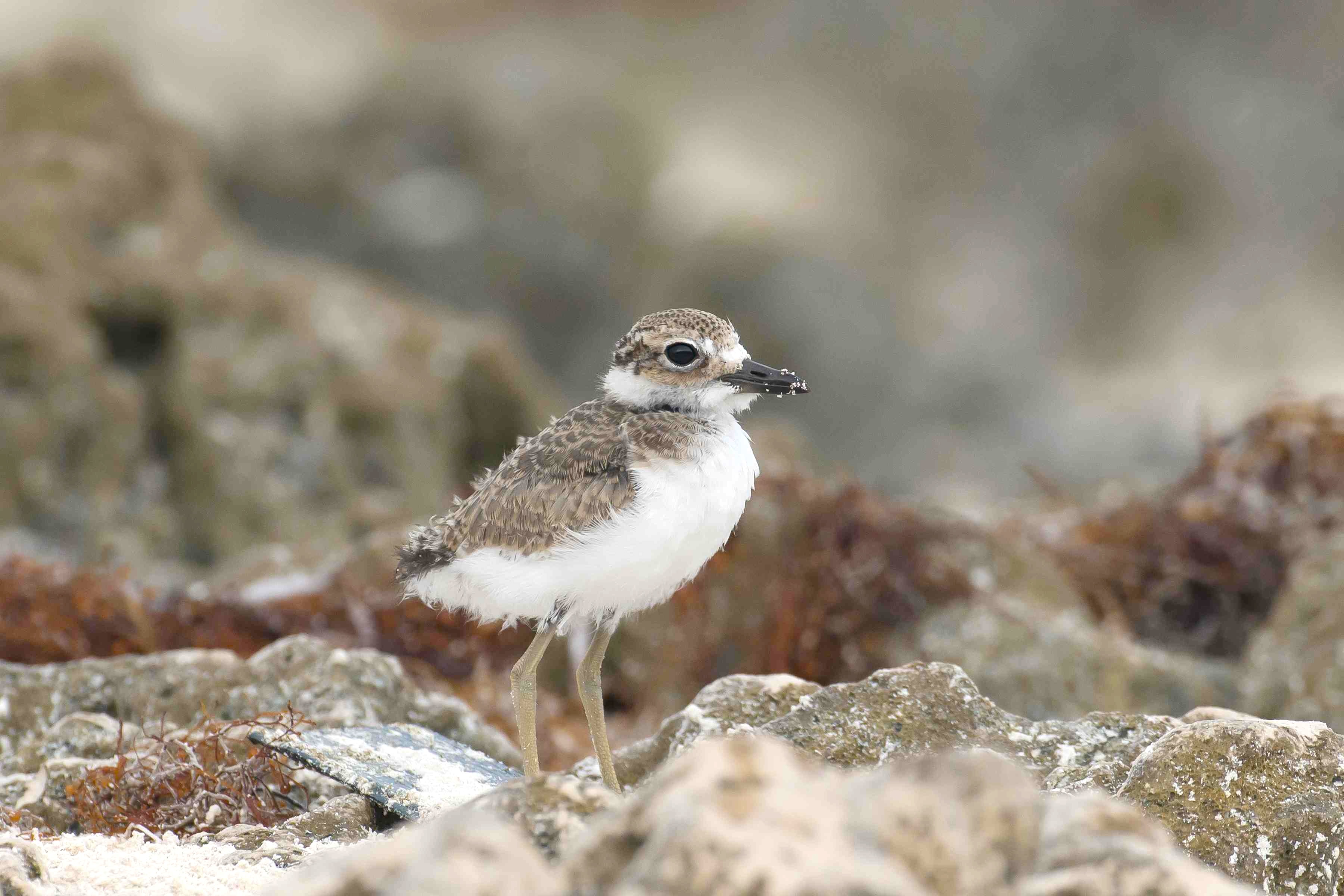
This website is not overly preoccupied with stats, but I have had a quick look to see which posts were the most popular during 2013. Here, for better or worse (I didn’t make the choices…), are the top dozen, introduced by the cutest chick of the year, a Wilson’s plover calling for its mum…Tiny Wilson's Plover for 2014

ABACO ARTS & CRAFTS    
SEA SHELLS    
LIGNUM VITAE – BAHAMAS NATIONAL TREE    
YELLOW ELDER – THE BAHAMAS NATIONAL FLOWER    
ABACO FOOD & DRINK (cook hog / bonefish; clean a conch; sip an Abaco cocktail / Goombay Smash)    
FLORA    
ABACO MAPS    
SPIDER WASPS & TARANTULA HAWKS: DON’T MESS WITH THESE GUYS    
PINEAPPLES: SYMBOLS OF WELCOME & WEALTH (ALSO, DELICIOUS)    
SHARKS & RAYS    
ABACO & HOLE-IN-THE-WALL, BAHAMAS: A SHORT HISTORY IN MAPS    
ABACO PARROTS    
 

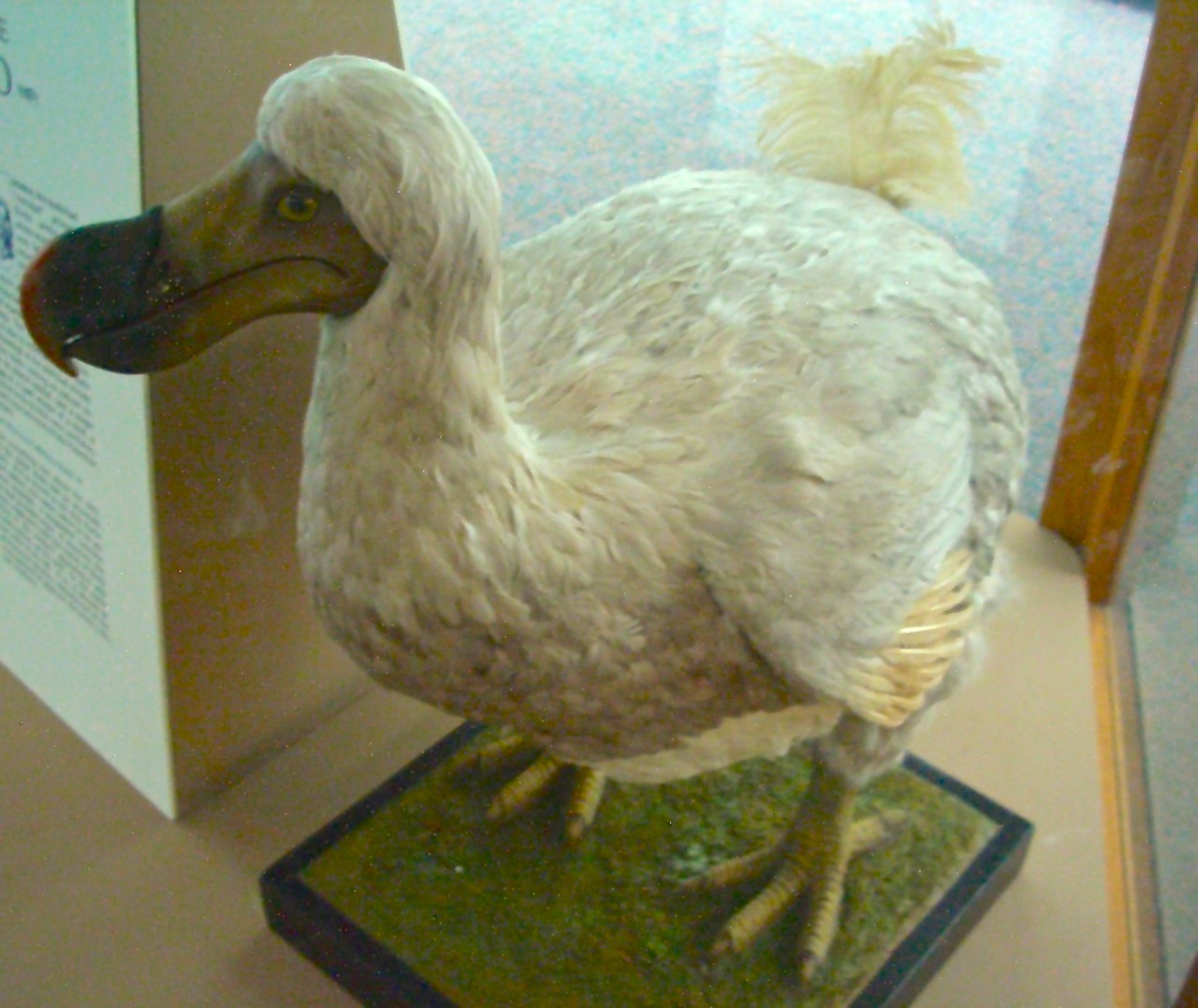
So! Farewell then 2013. Like the Curate’s egg, you were good in parts – indeed, many parts of you were excellent. Now, like Raphus cucullatus, you will become extinct, leaving remains and memories behind you… Thanks to all loyal followers of this site for sticking with it and its eccentricities (especially the musical digressions). If you wound up here by chance, mistyped g@@gle search or sheer misfortune, cheers… A very Happy New Year to you all! 

Dodo AMNH NYCPhoto taken at the American Museum of Natural History – there’s also a dodo skeleton in the Oxford University Museum of natural History

Credits: Parrot nests – Caroline Stahala (the scientist i/c parrots); the rest – RH

Unknown's avatar

SCRAPES, CHICKS & BROKEN WINGS: WILSON’S PLOVERS ON ABACO (3)


Wilson's Plover Delphi BeachSCRAPES, CHICKS & BROKEN WINGS: WILSON’S PLOVERS ON ABACO (3)

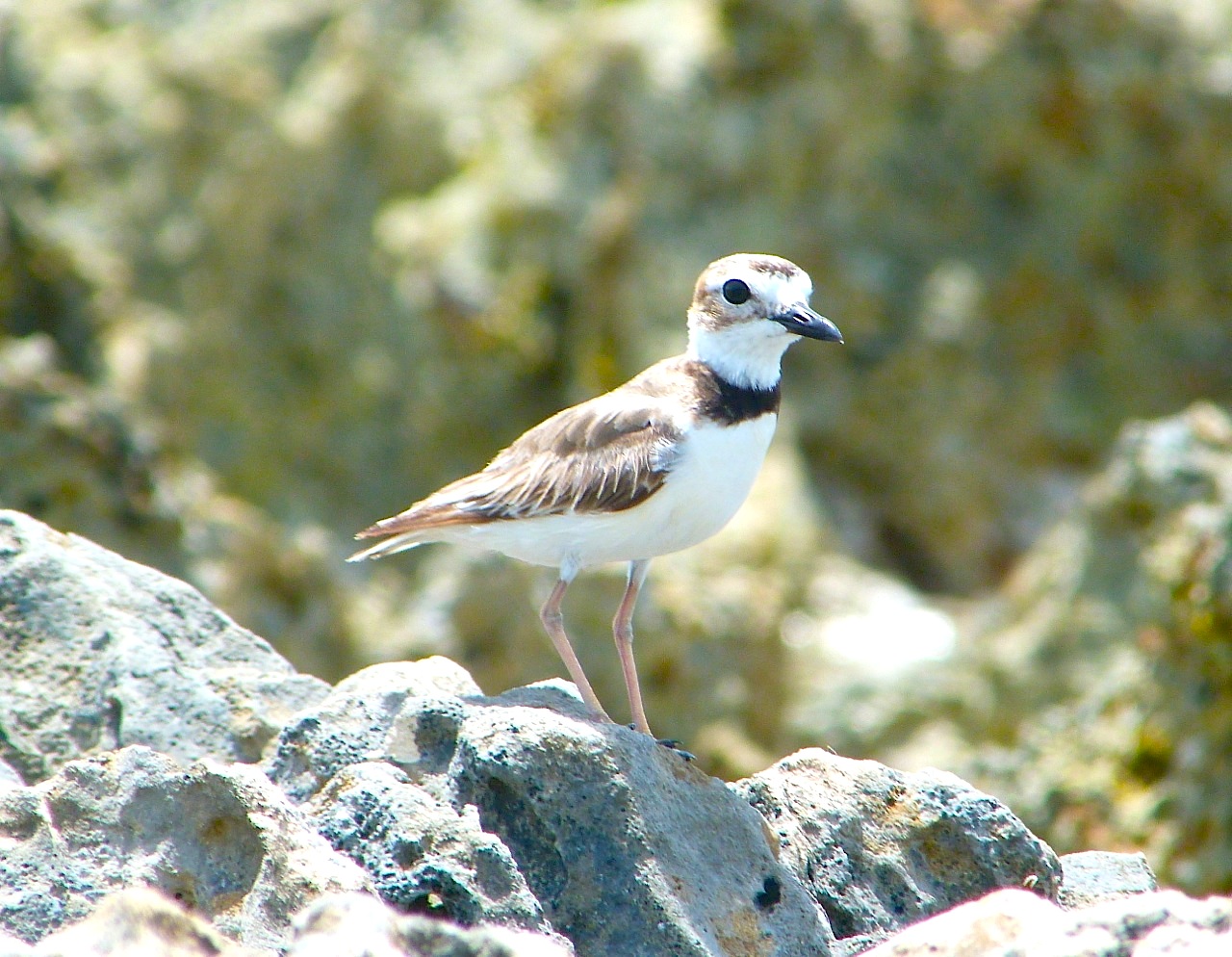
The male plover above is keeping watch from a rocky vantage point over an area at the north end of the beach at Delphi. And with good reason. It’s the summer breeding season, and on the sand are some nests. One of them is his.

This is a ‘scrape’ – not the carefully constructed nest that most birds make, but a shore bird’s collection of sticks and twigs – sometimes stones or shells – clumped together on the sand to provide a comfortable place for the mother to sit until the eggs have hatched.Wilson's Plover Scrape CL JPG

Though tiny at first, the chicks soon become independent enough to explore their surroundingsWilson's Plover Chick, Delphi Beach, Abaco

Usually, there will be a pair of chicks, maybe more. The two in the photo below have scuttled to the back of the beach for safety because the adults thought I was getting a bit close, and sent them to hide in the pine needlesWilson's Plover Chicks Delphi Beach

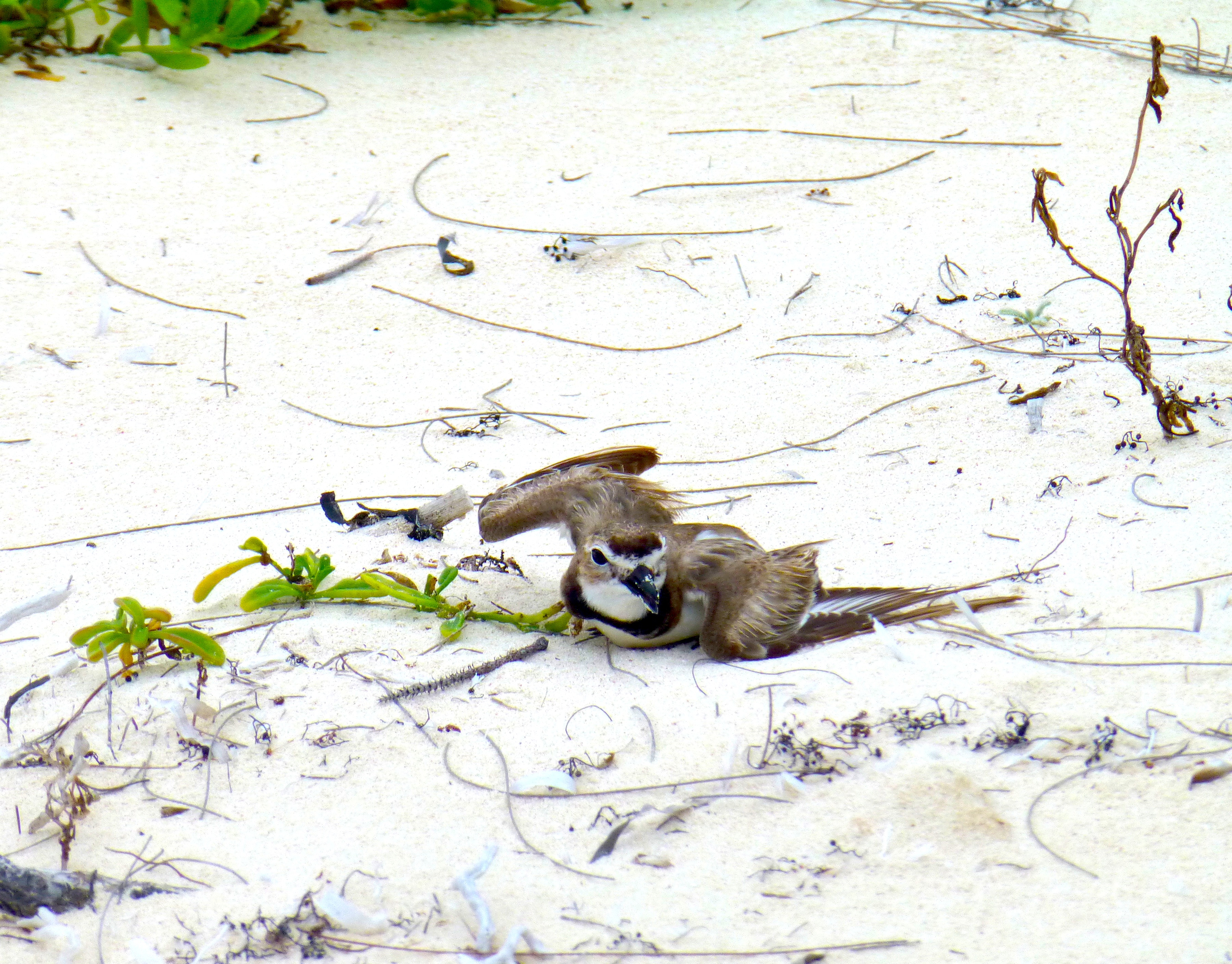
When a nest is threatened by a predator, Wilson’s plovers have a defensive technique that is remarkable to watch. Other shore birds, for example Killdeer, resort to this method as well. A parent will flutter about pathetically on the sand, apparently with one or both wings broken, attracting the predator by its faked vulnerability. The plover will gradually draw the threat away from the nest area, protecting the eggs or allowing chicks to make themselves scarce. Here are some examples of the ‘broken wing display’, all photographed on the beach at Delphi. The first 2 images show a female; the third, a male.Wilson's Plover - broken wing display CL1 Wilson's Plover - broken wing display CL4 Wilson's Plover - broken wing display CL6

Athough the little chicks are vulnerable, they grow quicklyWilson's Plover Chicks x 2 RH Delphi

Before very long, they are able to get onto the same rocky vantage point as their parents to practise surveying the scene. Next summer, they will be keeping watch over nests and chicks of their own.Wilson's Plover chick.Delphi Club.Abaco Bahamas.Tom Sheley JPG

The previous posts in the series are WILSON’S PLOVERS (1) showing the adults;  and WILSON’S PLOVERS (2) that shows how plovers nesting on the shore at Nettie’s Point were protected from human activity in the boat-launching area.

“I’m off now. See you next year”Wilson's Plover Delphi Beach AbacoCredits: scrape & broken wing display, Clare Latimer; last (and best) chick image, Tom Sheley; the rest, RH

Unknown's avatar

PHOTOGENIC ENDEMICS: BAHAMA YELLOWTHROATS ON ABACO


Bahama Yellowthroat Abaco 7

PHOTOGENIC ENDEMICS: BAHAMA YELLOWTHROATS ON ABACO

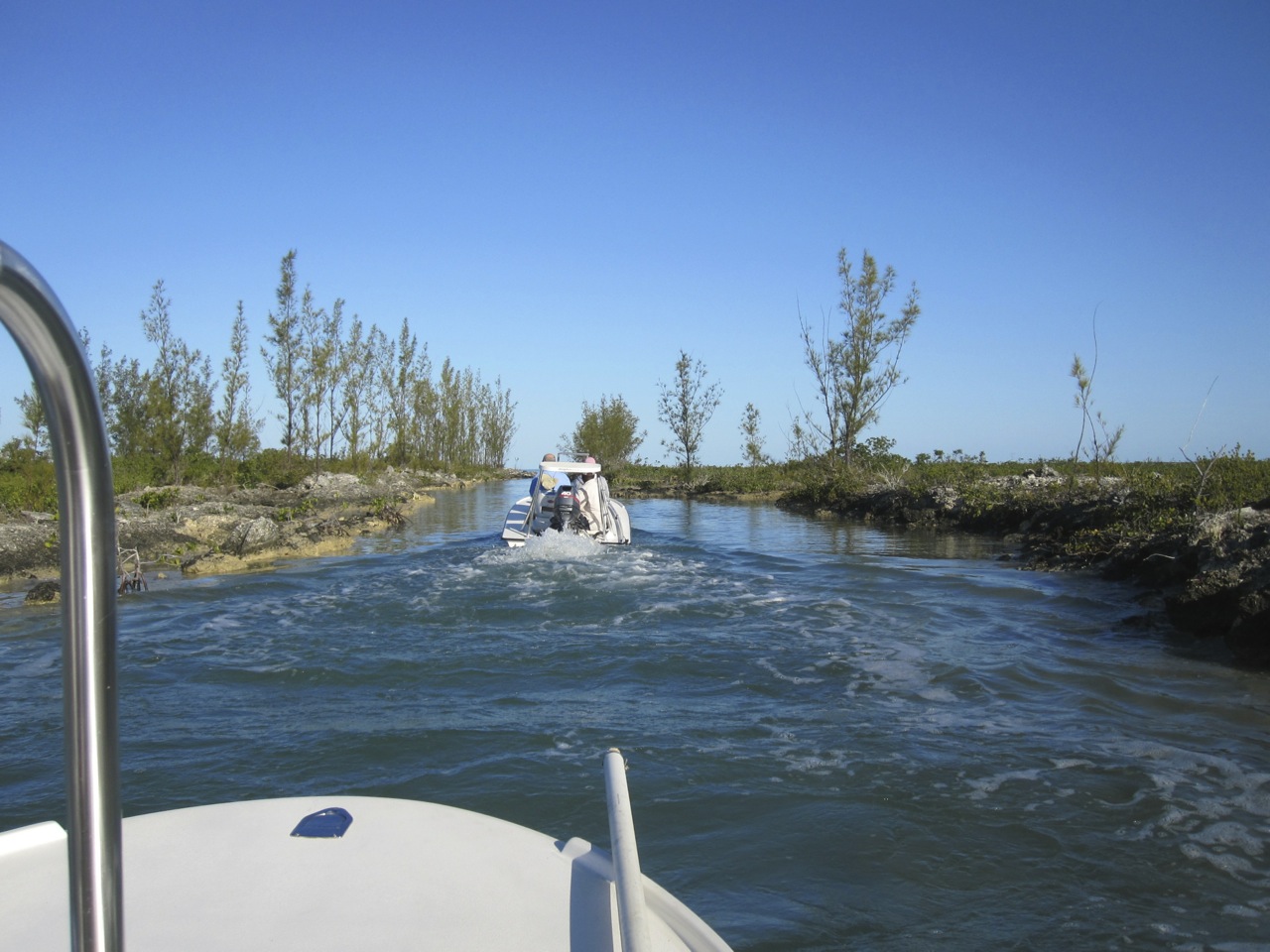
I’ve been keeping this little bird up my capacious avian-friendly sleeve for a while. In June we took a truck and headed for deep backcountry to the edge of the pine forests and beyond to see what we could find in the way of birdlife. Good choice – the answer was ‘plenty’.Bahama Yellowthroat Abaco 5

Among the birds we encountered were the endemic Bahama swallows, hairy woodpeckers, red-tailed hawks, kingbirds, red-legged thrushes, red-winged blackbirds, western spindalises, tobacco doves, La Sagra’s flycatchers, crescent-eyed pewees with a nest and eggs, a wonderful ‘booming display’ by antillean nighthawks courting during an early evening fly hatch**… and Bahama yellowthroats Geothlypis rostrata.Bahama Yellowthroat Abaco 1

The illustrative photos are of poor quality, but rather than blame my camera (as I am only too ready to do), I plead ‘overexcitement’ in mitigation. Of the 4 endemic species on Abaco, this was the only one I’d never seen. There was a tweeting noise on the edge of an abandoned sugar cane field (above), followed by  some rustling… and out fluttered this bird, crossing the track right by us and landing quite close to inspect us. Bahama Yellowthroat Abaco 2

This striking bird, with its Zorro mask and bright yellow body, is an endearing mix of shy and inquisitive. Only the males have the mask – the females are less colourful, though naturally equally interesting… Bahama Yellowthroat Abaco 8

Yellowthroats are responsive to pishing, and once lured from cover they may happily remain on low-to-medium height branches or on a shrub, watching you watching them.Bahama Yellowthroat Abaco 3

Their song is quite easily imitated, and that may also bring them into the open – a source of immense satisfaction to the amateur (me) if it works. Here’s an example, courtesy of my iPH@NE METHOD for bird recording. It’s the call at the start and the end.

The one we watched had plenty to sing about – it’s just a shame that my images are so poor, because in some you can see its tiny tongue. A bit too blurry, though, even by my own moderate standards for inclusion.Bahama Yellowthroat Abaco 4

At a formative stage of this blog, I did a short post about the endemic Bahama Yellowthroat and its comparisons with the similar and better-known Common Yellowthroat, which is also found in the Bahamas. You can read it HERE. There’s a female shown, a video, and an unacknowledged debt to Wiki or similar source, I can’t help but notice…Bahama Yellowthroat Abaco 6

**ANTILLEAN NIGHTHAWKS AND THE ‘BOOMING DISPLAY’

Common Nighthawk Photo “On summer evenings, keep an eye and an ear out for the male Nighthawk’s dramatic “booming” display flight. Flying at a height slightly above the treetops, he abruptly dives for the ground. As he peels out of his dive (sometimes just a few meters from the ground) he flexes his wings downward, and the air rushing across his wingtips makes a deep booming or whooshing sound, as if a racecar has just passed by. The dives may be directed at females, territorial intruders, and even people.” We found ourselves right in the middle of one of these astounding displays, with maybe 100 birds behaving exactly as described, often whooshing within inches of our heads. I’ll post some more about it in due course. Credits: Philip Simmons; All About Birds (Cornell Lab)

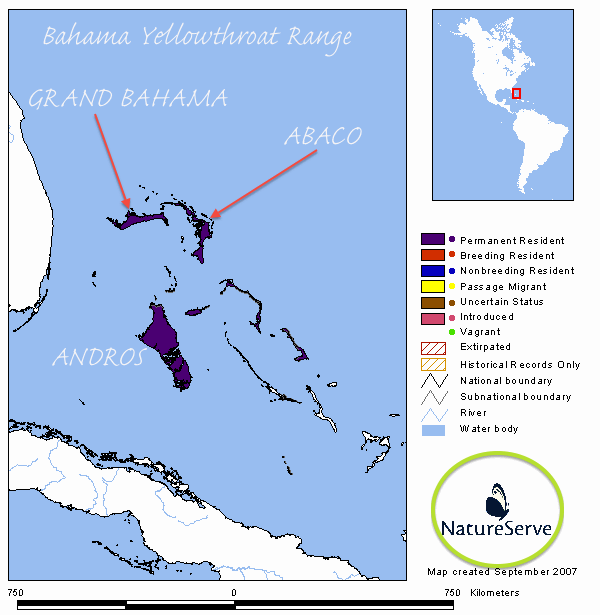
Toyota Truck, Abaco Backcountrygeothlypis_rostrata RANGE MAP

Unknown's avatar

NEST PROTECTION: WILSON’S PLOVERS ON ABACO (2)


Wilson's Plover, Abaco 12

NEST PROTECTION: WILSON’S PLOVERS ON ABACO (2)

This is the second of three vaguely planned posts about these delightful shore birds. They aren’t rare but they are approachable and fun to watch. During the nesting and hatching season, there may even be some gorgeous chicks on a beach near you (a phrase I never thought I’d find myself using). PART ONE identified the typical male and female adults found on the Delphi beach almost any day. 

Nettie's Point, Abaco - Trucks & Skiffs

This post is about nest protection. Not the ingenious methods of  the birds themselves, that will come next time. This is a story of protection by humans. The photograph above shows Nettie’s Point, one of the launching points for bonefishing skiffs being taken out to the Marls, a vast area of sea, low sand banks and mangroves where the fish are found. You hope. The skiffs gain access to open sea via an artificial channel carved out of rock. The early morning trip along it is one of the most exciting part of a fisherman’s day, as he or she sets out with a clean score sheet, a rod and a box of flies. And a cooler box with some food and maybe a Kalik beer or three.

Nettie's Point, Abaco - the cut to the sea

This June, a pair of plovers decided to locate their nesting ‘scrape’ right in the middle of the cleared area where the trucks normally turn. This was by no means a wise home-planning decision, and they might well have found themselves being promptly relocated. Or (worst case scenario) ending up under a large Toyota. But not a bit of it. Instead, these small birds were looked after by the guides like this: Nettie's Point, Abaco - Plover's nest protection

A makeshift castle was built all round the nest to protect it from any inadvertent truck-related tragedies. Meanwhile the male plover stood guard outside the castle, amiably watching the human activities. Nettie's Point, Abaco - Male Wilson's Plover guards nest

I kept my distance but in fact he was quite unperturbed, perhaps sensing that we were not a threat. He still kept a beady eye on the proceedings, though.Nettie's Point, Abaco - male Wilson's Plover guards a nest

Meanwhile, what of the wooden enclosure itself? At first glance, there didn’t look much to report. However, if you look in the centre of the picture, you’ll see the female peeping out from the nest.Nettie's Point, Abaco - Nest protection 2

I very slowly moved nearer, prepared to stop if the male became agitated, or if the female shifted her position. Both seemed quite relaxed, so I took a couple of shots and walked away to leave the birds in peace. Then I went fishing.Nettie's Point, Abaco - Female Wilson's Plover on NestNettie's Point, Abaco - Mrs Wilson's Plover on the nest

As a postscript, Nettie’s Point is the location of a remarkable geographical phenomenon, possibly the result of the cutting of the channel. Along one part of the cut, for about 30 feet, the water level sinks alarming in the middle, while remaining normal at each side. Then it levels out again. This remarkable mid-stream aquatic depression is quite disconcerting to motor through on a skiff, though eventually one gets used to it. Nettie's Point, Abaco - channel water phenomenon(Note: not every fact in this post is 100% true. If you have some salt handy, take a pinch)

Unknown's avatar

‘DREAM PLOVER’: WILSON’S PLOVERS ON ABACO (1)


Wilson's Plover, Abaco Header

‘DREAM PLOVER’: WILSON’S PLOVERS ON ABACO (1)

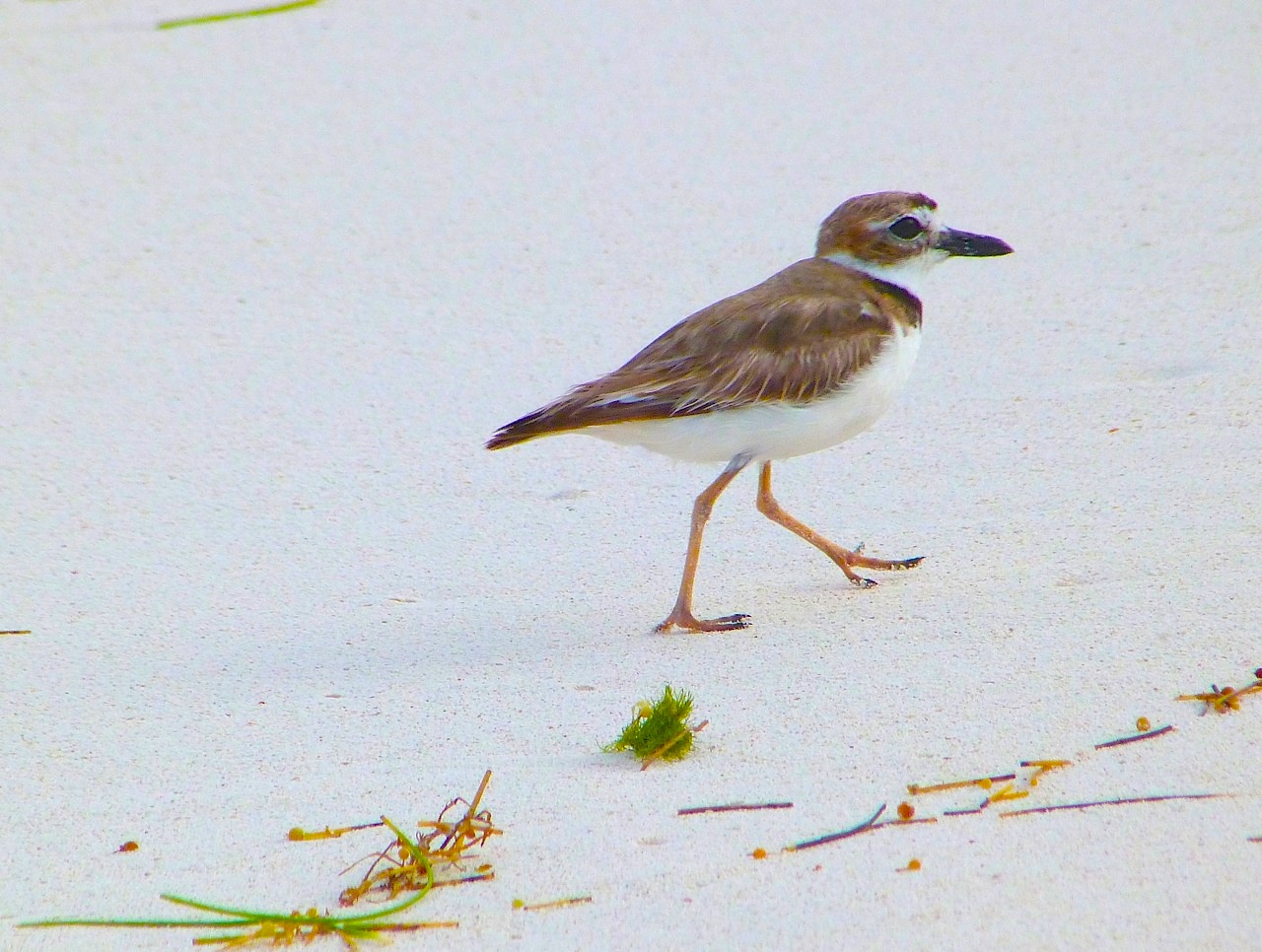
Dream Plover? Well, granted, not quite as adorable as the tiny surf-chasers, the Piping Plovers Charadrius melodus. But Wilson’s Plovers Charadrius wilsonia live on Abaco all year round, and may readily be seen on a beach near you. They breed on Abaco, and in the summer you’ll see their tiny puffball chicks scampering round. And if you approach a nest, you’ll very likely see the amazing ‘broken wing display’ by a parent, who will lurch strickenly and pathetically across the sand… leading a predator gradually further away from the nest or her chicks. Part 2 will include photos of this fascinating protective performance, and of some chicks on the Delphi beach.

MALE WILSON’S PLOVERWilson's Plover, Abaco 12

FEMALE WILSON’S PLOVERWilson's Plover, Abaco 11

And who was the Wilson who lent his name not only to a plover, but also to a snipe, a warbler, a storm-petrel and a phalarope, all birds that have been recorded for Abaco?

ALEXANDER WILSON (1766- 1813)

Wilson was Scottish poet.  Besides traditional ballads, he also wrote satirical commentary on the conditions of mill weavers. One vicious tirade against a particular mill owner resulted in Wilson’s arrest. He was sentenced to burn the work in public, and imprisoned. After his release, he sensibly emigrated to America in 1794.

Wilson's Plover, Abaco 2

Wilson became a teacher in Pennsylvania, where he developed an interest in ornithology and painting. He ambitiously decided to publish a collection of illustrations of all the birds of North America. He spent several years travelling, collecting material and painting, eventually publishing the nine-volume American Ornithology. Of the 268 species of birds illustrated there, 26 had never previously been described.  

SIDE-ON AND FRONT VIEWS OF THE SAME MALE PLOVER Wilson's Plover, Abaco 5Wilson's Plover, Abaco 6

FRONT AND SIDE VIEW OF THE SAME FEMALE PLOVER

Wilson's Plover, Abaco 9Wilson's Plover, Abaco 8

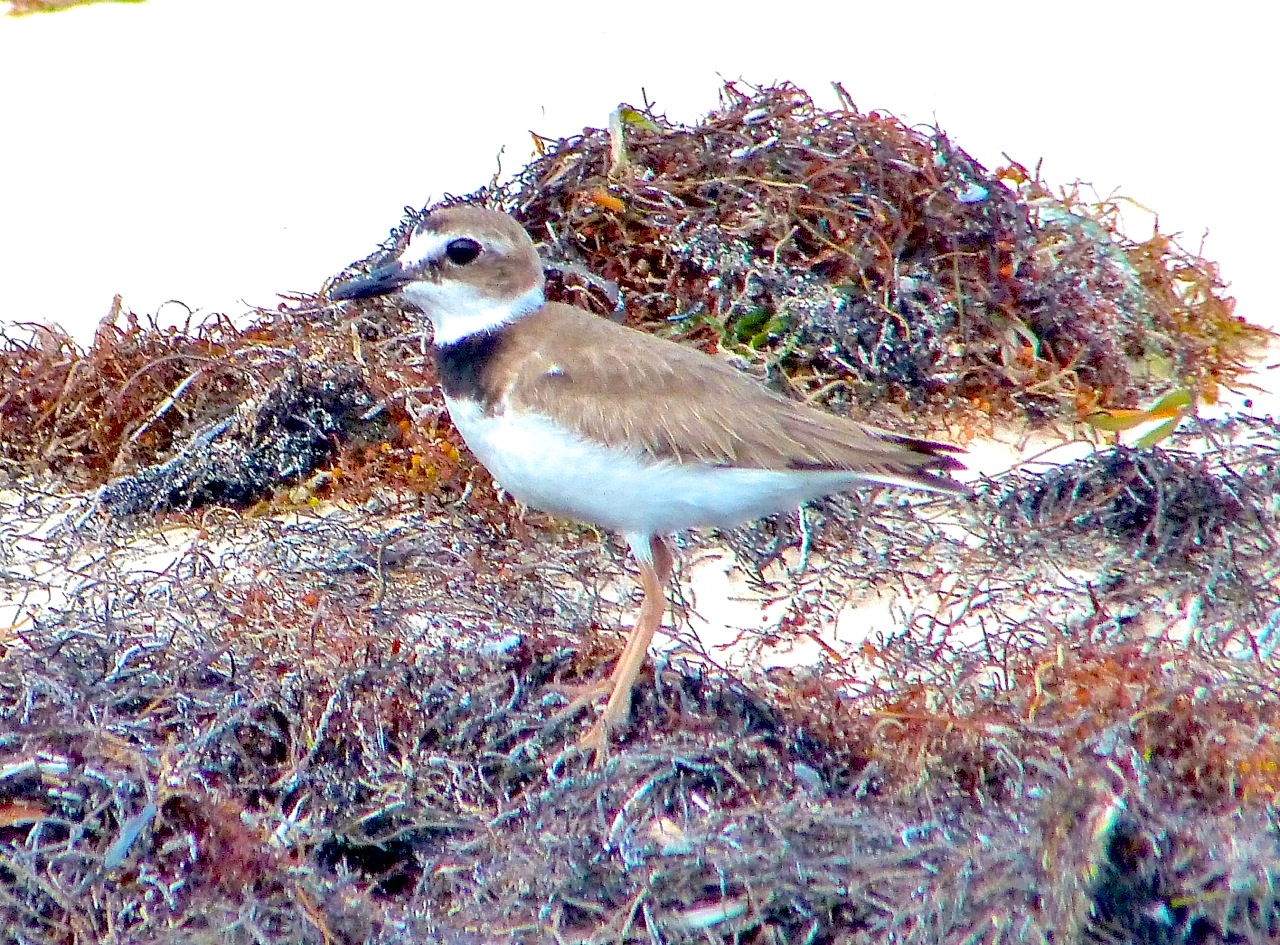
All birds on this page were photographed on the Delphi Beach. They happily coexist there with other shore bird species that include Least Sandpipers, Ruddy Turnstones and Killdeer. Here is a taster for Part 2, the family life of the Wilson’s plover. Wilson's Plover, Abaco 13

Unknown's avatar

A CUBAN EMERALD HUMMINGBIRD AT DELPHI, ABACO


Cuban Emerald Delphi Abaco 4

A CUBAN EMERALD HUMMINGBIRD AT DELPHI, ABACO

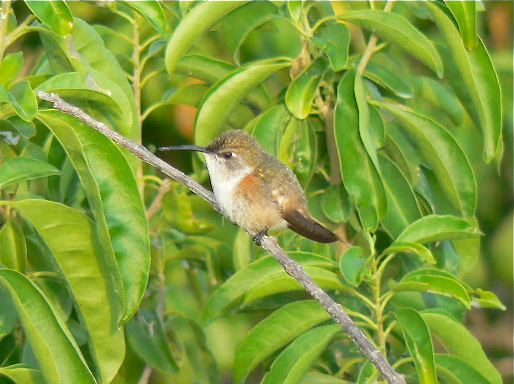
Mostly, the Cuban Emeralds at Delphi spend their days perching briefly on twigs before zooming like tiny green rockets to their next appointment – an inviting sugar-water feeder, a promising flower or maybe yet another tempting twig. Sometimes, pairs will put on an acrobatic mid-air display, flitting around each other at high speed, chittering, before disappearing into the coppice together. Avian speed-dating. Occasionally, they are more contemplative. I recently posted HERE about one that had let me get (very slowly) right up to it. Emeralds may be quite hard to spot in amongst the green leaves, but often they are there, quietly watching you go by. Here is one that stayed put when I stopped to admire it.

I’m keeping an eye on you… Cuban Emerald Delphi Abaco 1

I’ll tuck my wing in neatly if you are going to take pics of meCuban Emerald Delphi Abaco 2

Uh-oh! Close-ups. This is my better side.
Cuban Emerald Delphi Abaco 3

That’s enough, human. I’ve stopped the posing. Now push off and leave me alone.Cuban Emerald Delphi Abaco 5

In close-up, the feathers look like tiny iridescent pine needle fansCuban Emerald Delphi Abaco 6

The Delphi Club: a hive of activity for birds (to mangle a metaphor)The Delphi Club, Abaco, Bahamas

Unknown's avatar

ENJOYING THE POOL: YELLOW-CROWNED NIGHT HERONS ON ABACO


Yellow-crowned Night Heron, Abaco 5

ENJOYING THE POOL: YELLOW-CROWNED NIGHT HERONS ON ABACO

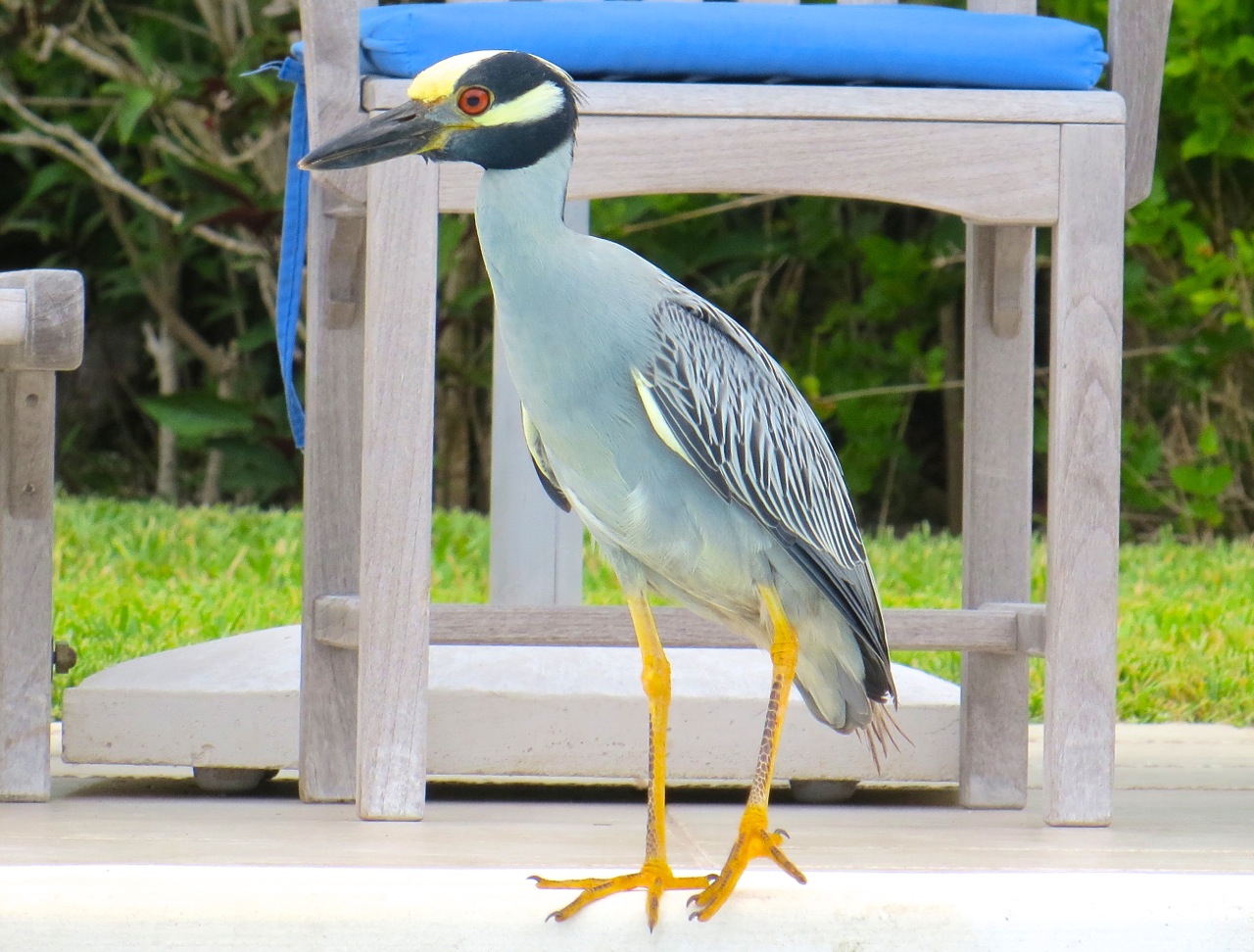
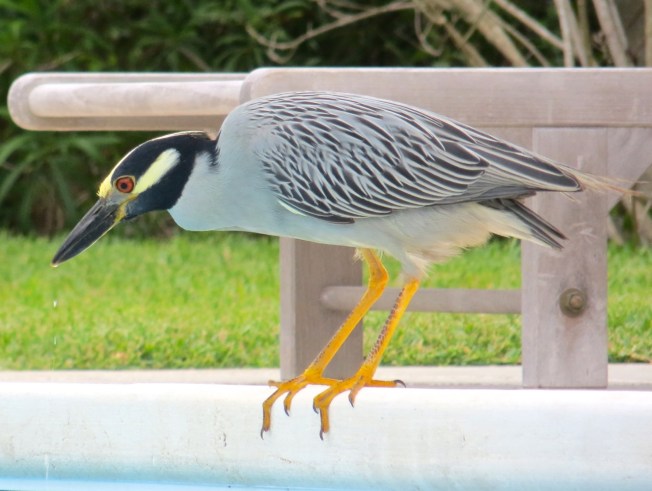
The Yellow-crowned Night Heron (Nyctanassa violate) is a smallish heron, and avian counterpart to the Black-crowned Heron (Nycticorax nycticorax). The clue to the main difference between them is in the names. The juveniles of both species are similar. The ‘night’ part of the name refers to their preferred time for feeding. They have broad appetites that include crustaceans, molluscs, frogs, fish, and aquatic insects. 

Yellow-crowned Night Heron, Abaco 6

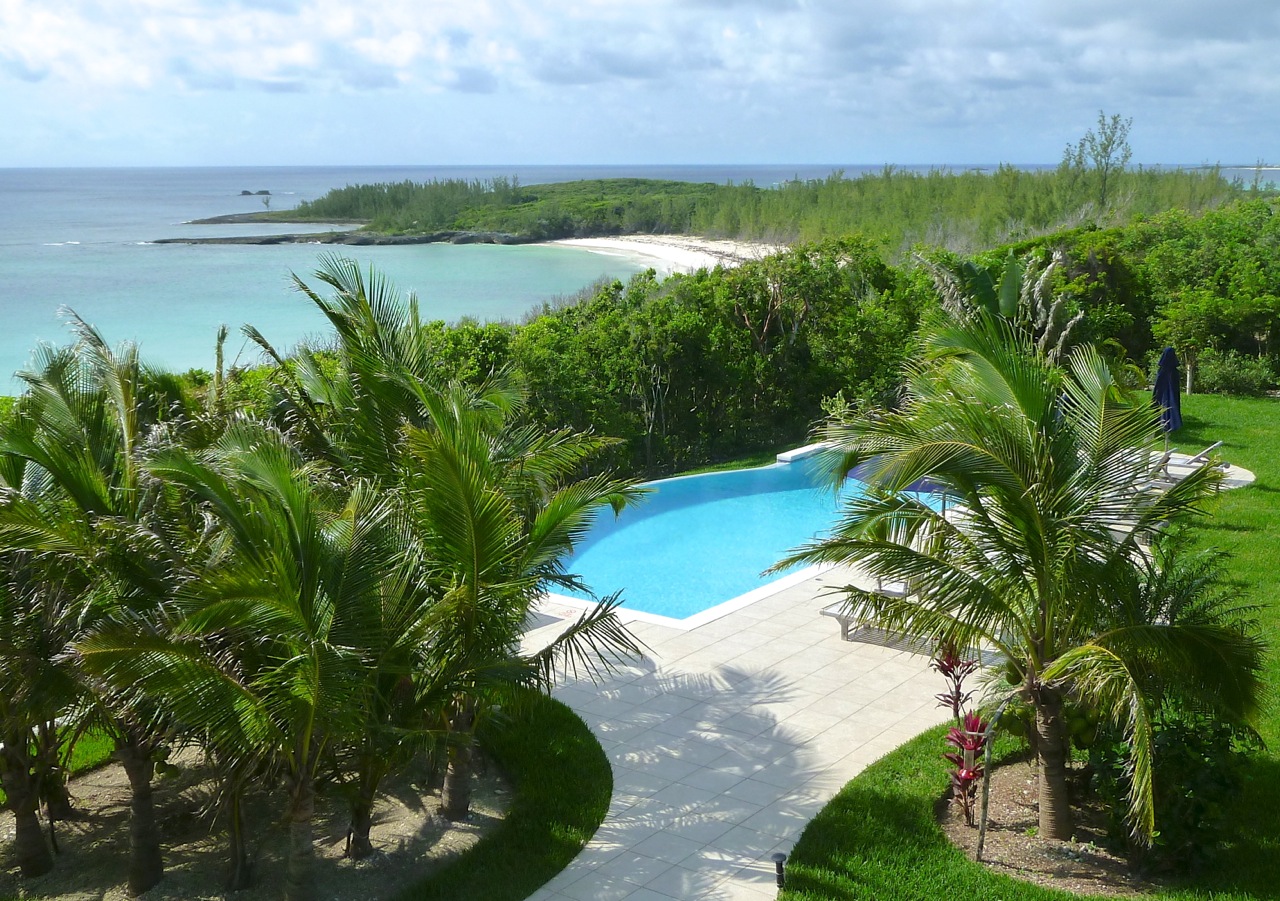
At Delphi, these lovely birds are regularly seen in gardens round the pool; drinking from the pool; standing hopefully waiting for prey to show itself in the water; and occasionally getting a bit confused by the whole thing (see below). Delphi Club Pool

Looking rightYellow-crowned Night Heron, Abaco 7

Looking wet and ruffledYellow-crowned Night Heron, Abaco 8

Looking hungryYellow-crowned Night Heron, Abaco 9

Looking contentedYellow-crowned Night Heron, Abaco 10

The YNCH will stand motionless, waiting to ambush its prey. So a human, wandering to the pool laden with towel, book, iWotsit™, sun stuff and a cool Kalik, may easily not spot the bird at first. It will have seen you first, anyway, and moved away quietly if it isn’t too sure about you. However, they can be surprisingly tame if not startled. You may settle down, and suddenly sense that you are being watched from the other side of the pool…Yellow-crowned Night Heron, Delphi (DR)

Peter Mantle managed to capture a wonderful moment when a juvenile YCNH made a bit of a mistake early one morning while the pool cover was still in place… It looks embarrassed and slightly apologetic.Yellow-crowned Night Heron (juv) PM IMG_4607 (2)

Usually, these birds are to be found in marshy areas, or by brackish ponds where (unlike the pool) there is a ready supply of food for them. A few miles south of Delphi is an excellent pond for birding near Crossing Rocks, where there is always the chance of seeing an unusual or rare species. Herons and egrets often use the landing stage as a vantage point for scoping out the feeding opportunities. The next pictures are of a juvenile (?teenage) YCNH doing just that – and fortunately, the pond does not have a cover to cause discombobulation of the species. Yellow-crowned Night Heron, Abaco 3 Yellow-crowned Night Heron, Abaco 2Yellow-crowned Night Heron, Abaco 4

Black-crowned night heron for comparison220px-Black-crowned_Night_Heron_RWD7

300px-YCNH20101

Photo credits: All RH except the across-pool-starer (David Rainford); the confused juvenile on the pool cover (Peter Mantle); and the last 2 comparatives (Wiki)

Unknown's avatar

THE CROSS LITTLE WOODPECKER: A TRUE HAIRY TALE FROM ABACO


Hairy Woodpecker, Delphi Abaco Header

THE CROSS LITTLE WOODPECKER: A TRUE HAIRY TALE FROM ABACO

ONCE UPON A TIME, on a magical far away island called Abaco, where the sun always shone and the people were always friendly and smiling, there lived a little woodpecker. It was a beautiful little woodpecker with long shiny golden locks and its name was Hairy… oh look, I can’t go on with this drivel and neither can you, I’m sure. Sorry about that. Let’s take it from the top…

    ♦      ♦      ♦      ♦

I have mentioned before the excellent birding opportunities that a wander round the Delphi drive circuit has to offer. It’s the best part of 2 miles. I am working on a list of all species encountered on the route from the Lodge, along the guest drive to the white rock on the road, and back down the service drive. It is turning out to be a gratifyingly long one.

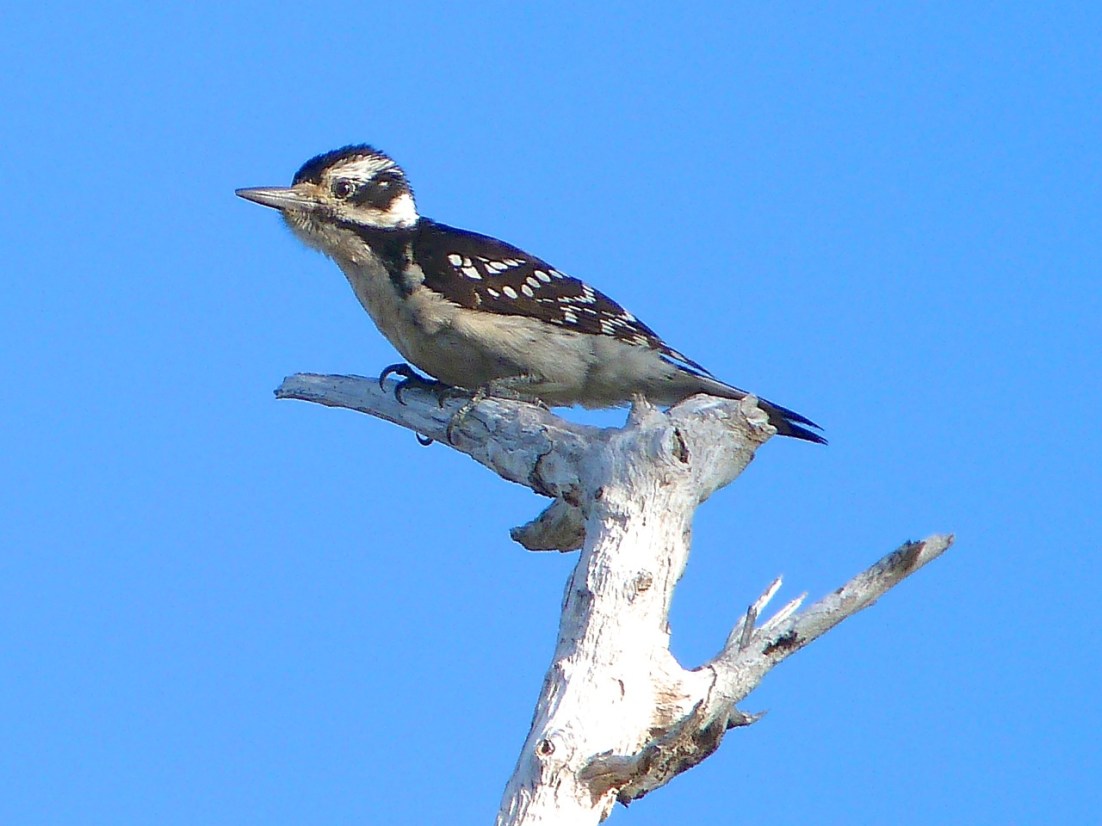
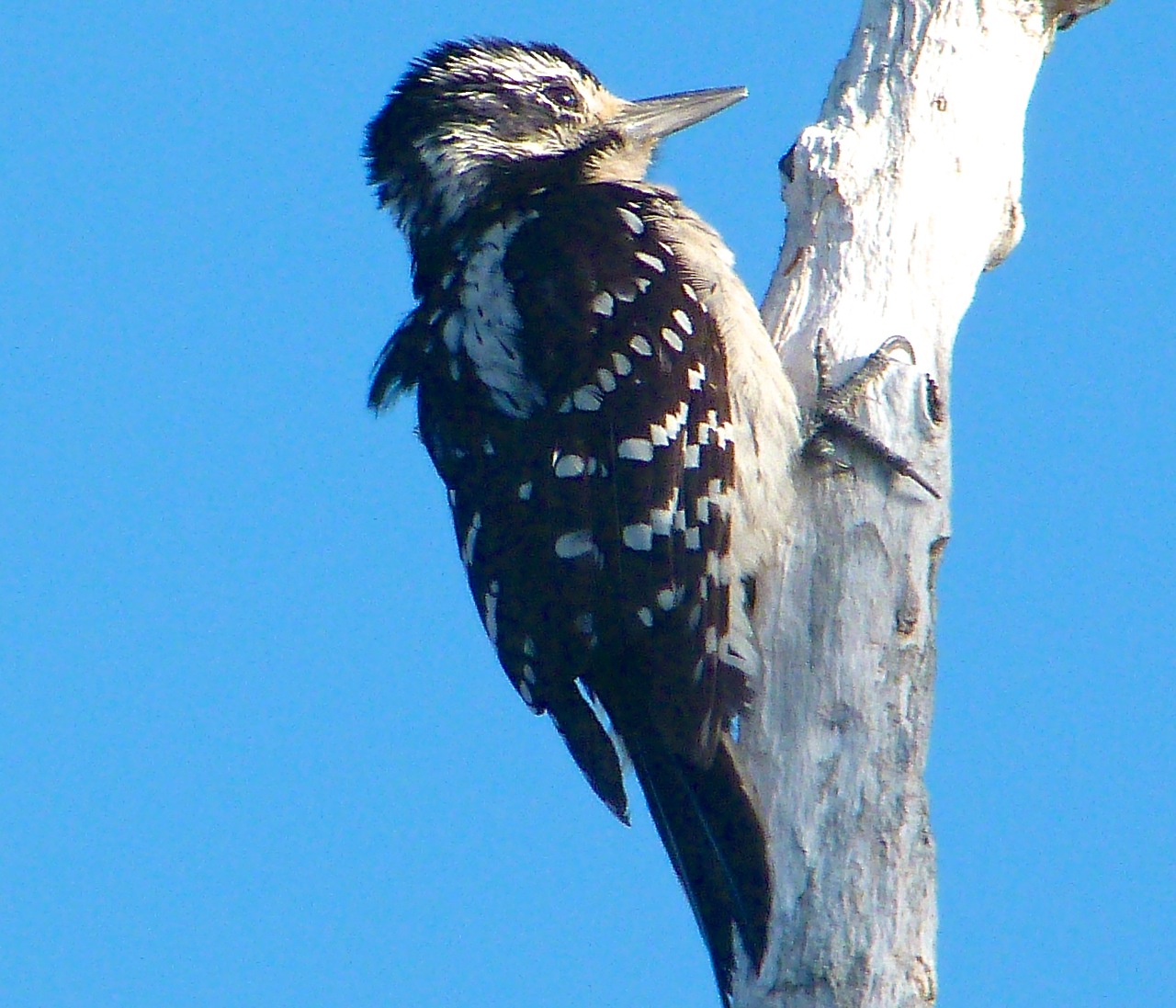
During your stroll, it’s worth checking out the dead trees, especially the upper trunk and branches, as you go. For a start, these provide excellent places for birds to pause and scope out the territory below. They also have a good chance of finding insects there. And for some species, like the Hairy Woodpecker Picoides villosus, it is home. Hairy Woodpecker, Delphi Abaco 16

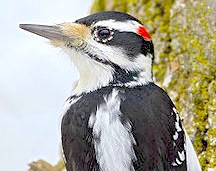
The Hairy Woodpecker is very similar to the Downy Woodpecker Picoides pubescens, the smallest woodpecker of North America. Male HWs have a prominent red patch on the back of the head.  You can find an earlier post about a male HW and its nest in the Delphi coppice, with some HW species facts, HERE

220px-Picoides-villosus-001

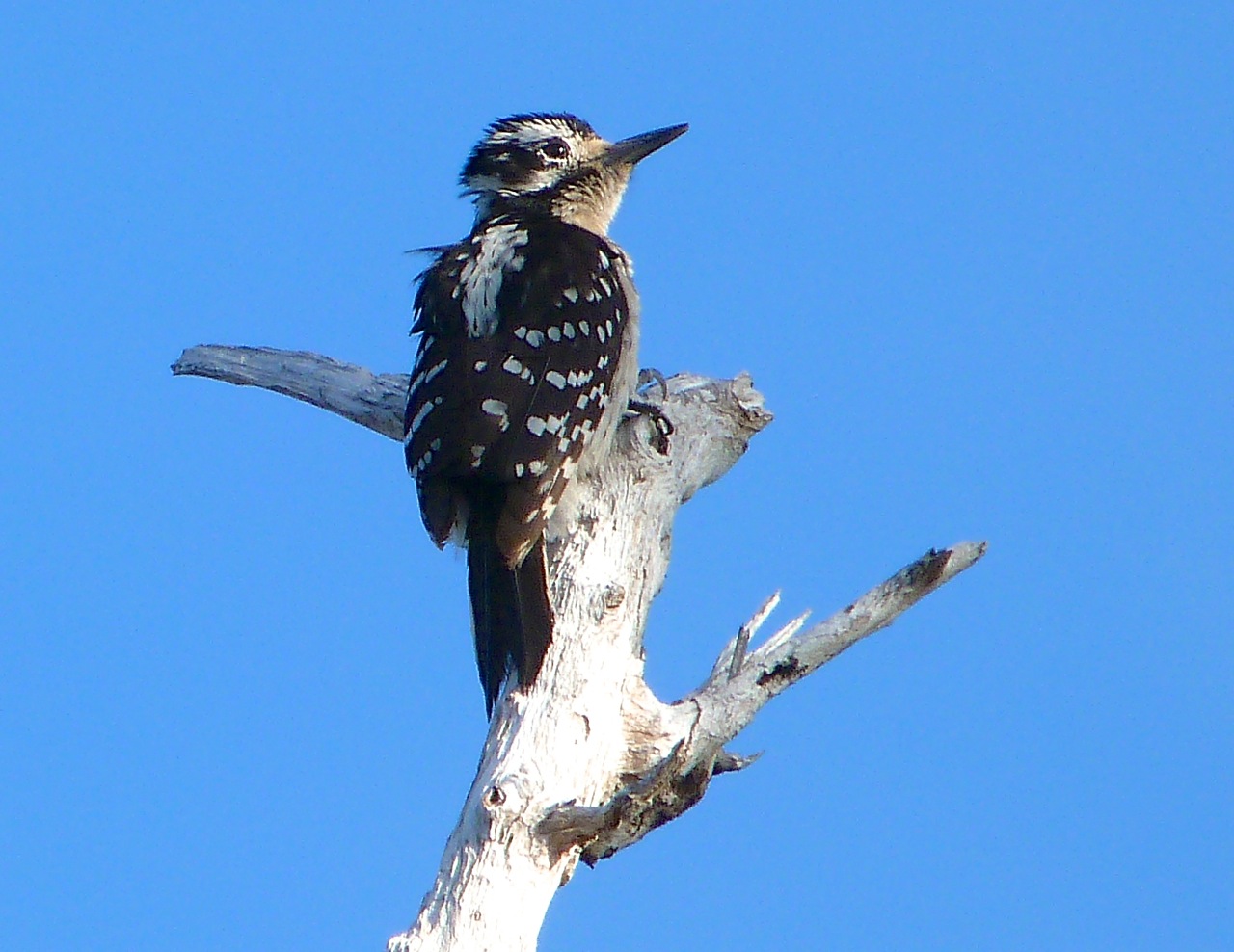
Last June Tom Sheley, a birding expert and photographer from Ohio with serious (by which I mean huge camo-covered camera and tripod) equipment, was staying at Delphi. He tipped me off about a woodpecker nest he’d found 1/3 of the way along the guest drive, just before the first bend. So I grabbed a camera –  the wrong one, as it turned out, but my main camera battery was charging – and headed out. I found the nest at the top of a dead tree near the edge of the drive (shown above) and a female HW close to it. Hairy Woodpecker, Delphi Abaco 1

She watched my approach carefully, and as soon as I paused close to the nest tree, she went into a fascinating ‘diversionary tactic’ routine to distract me from the nest. She flew across the track close in front of me, and settled on a tree on the other side of the drive, about 1/3 of the way up its trunk. There, she proceeded to scold me loudly as I fiddled about with the camera… Hairy Woodpecker, Delphi Abaco 3

Still scolding, she then started to climb the tree quite slowly, pausing occasionally to fire off some more angry woodpecker abuse at me. Hairy Woodpecker, Delphi Abaco 6

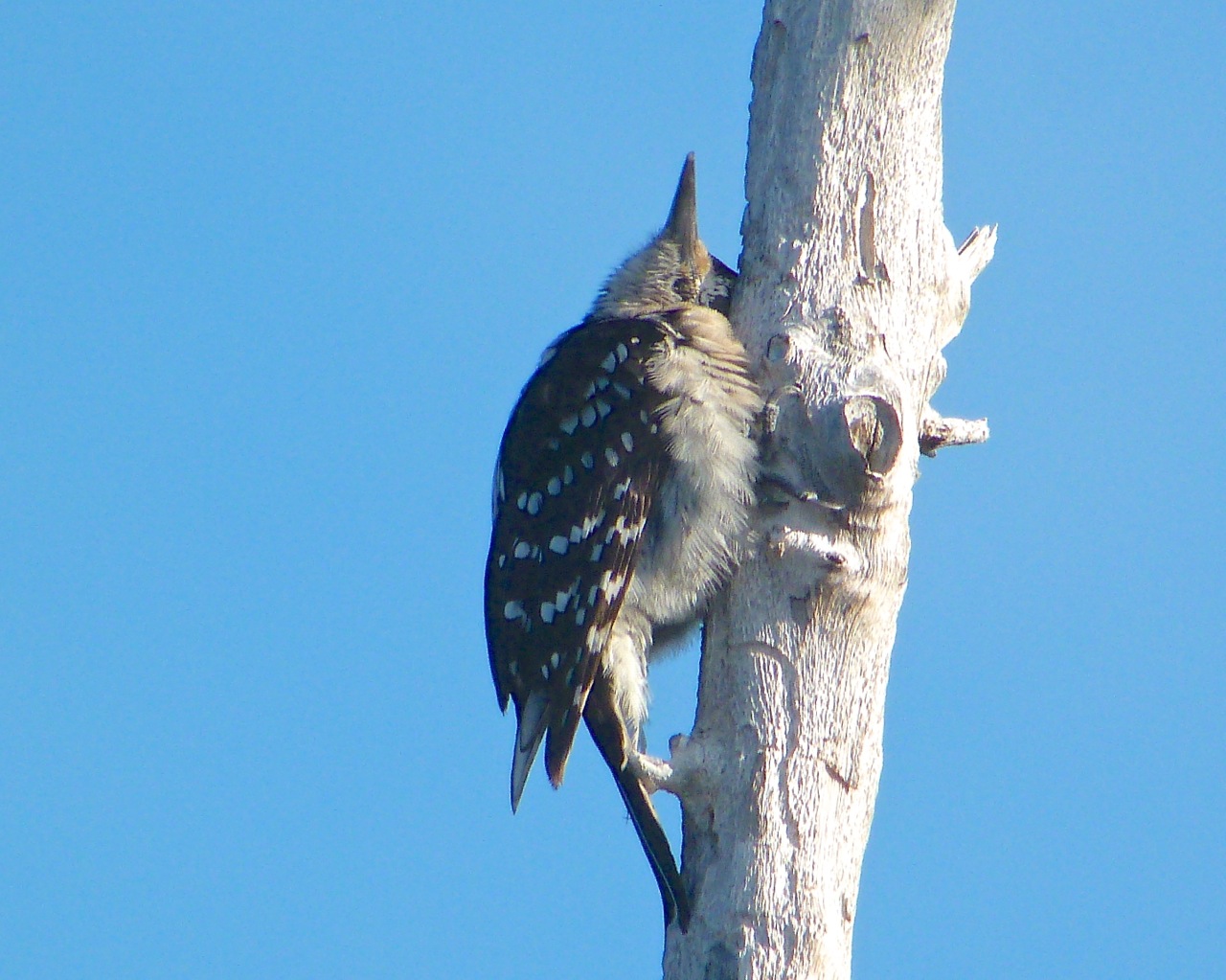
From time to time, she would change tack, closing her eyes gradually and hugging the trunk. This was presumably to make herself appear vulnerable to a predator (me), and therefore retain its (my) interest. If anyone is familiar with this behaviour, please leave a comment.Hairy Woodpecker, Delphi Abaco 5

The woodpecker carried on up the tree, chattering as she went…Hairy Woodpecker, Delphi Abaco 7
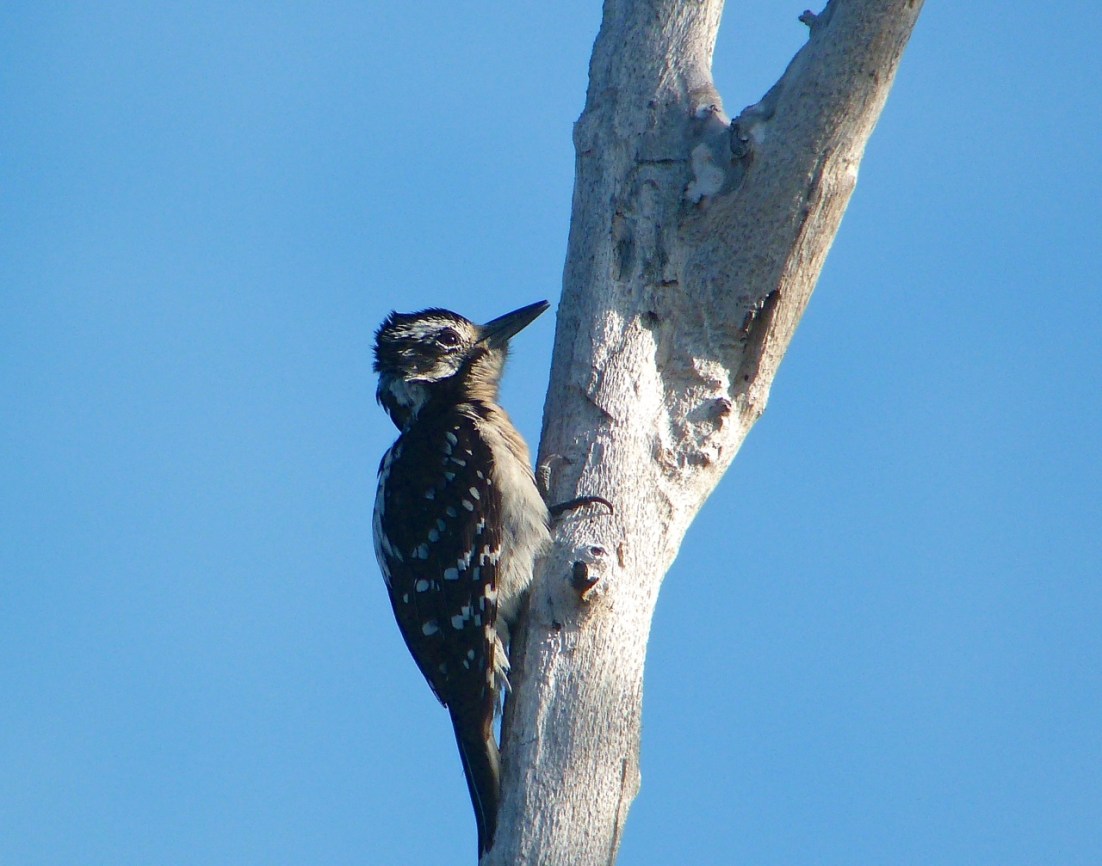
…before performing the closed eye / sleepy routine againHairy Woodpecker, Delphi Abaco 11Hairy Woodpecker, Delphi Abaco 12

By now she was nearing the top of the tree, and I was thinking of giving in… Hairy Woodpecker, Delphi Abaco 13 Hairy Woodpecker, Delphi Abaco 14 Hairy Woodpecker, Delphi Abaco 15

Once she had reached the very top, I made the decision to move on, marvelling at her persistence in taking on a two-legged predator 6ft 5″ high and… not exactly a bantam-weight. Then I realised that, in all of this, I hadn’t thought of the nest behind me a single time. She and her distraction technique had won, and so I made my apologies for disturbing her and left. HW 1, Human 0. At least I knew that on a hot cloudless day I had something to look forward to back at the ranch… 
coasters

Unknown's avatar

Q: WHAT IS CUTER THAN A BAHAMA WOODSTAR HUMMINGBIRD ON ABACO?


2319_1090169168209_1705_n

Q: WHAT IS CUTER THAN A BAHAMA WOODSTAR HUMMINGBIRD ON ABACO?2129_1086920126985_4106_n

A: A BABY BAHAMA WOODSTAR HUMMINGBIRD ON ABACO1377387_10201470915708562_1875646596_n

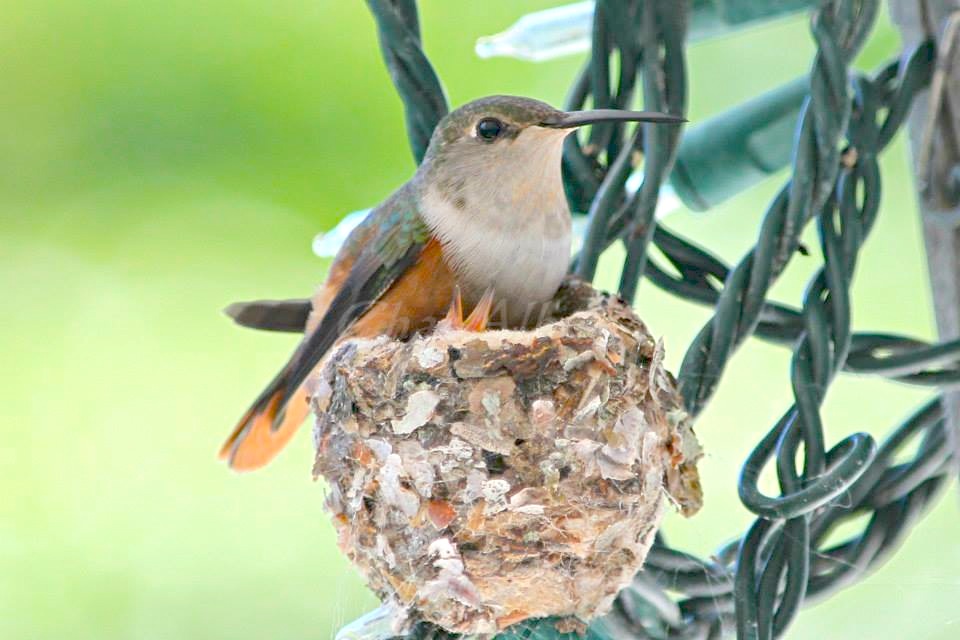
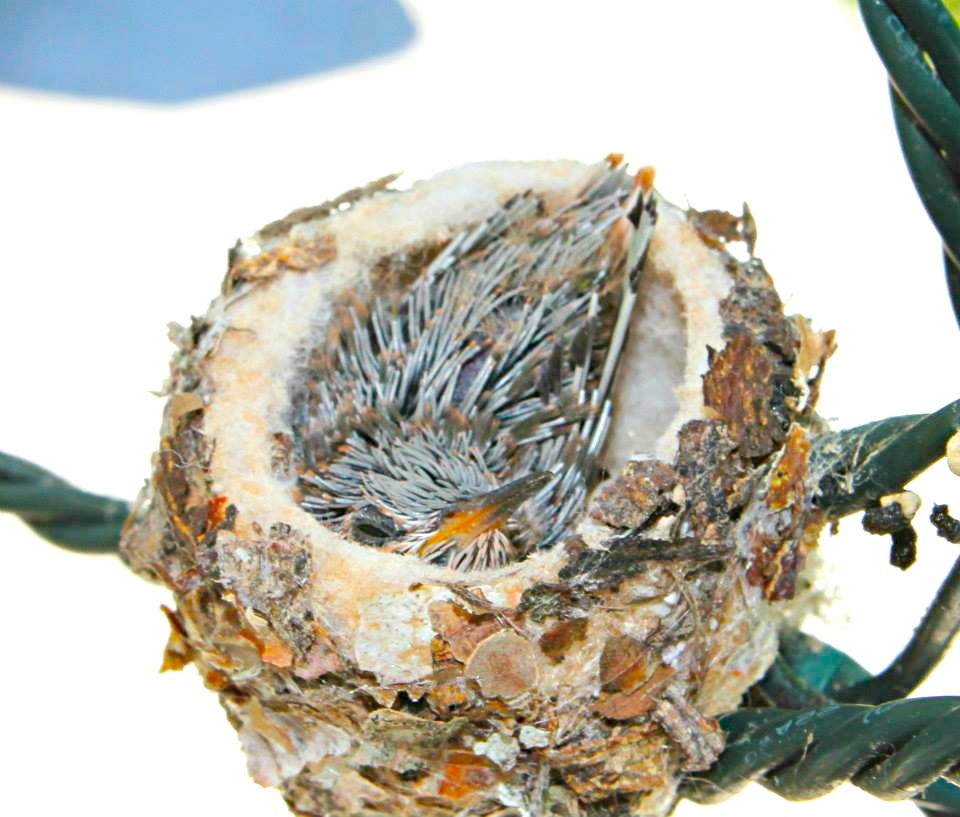
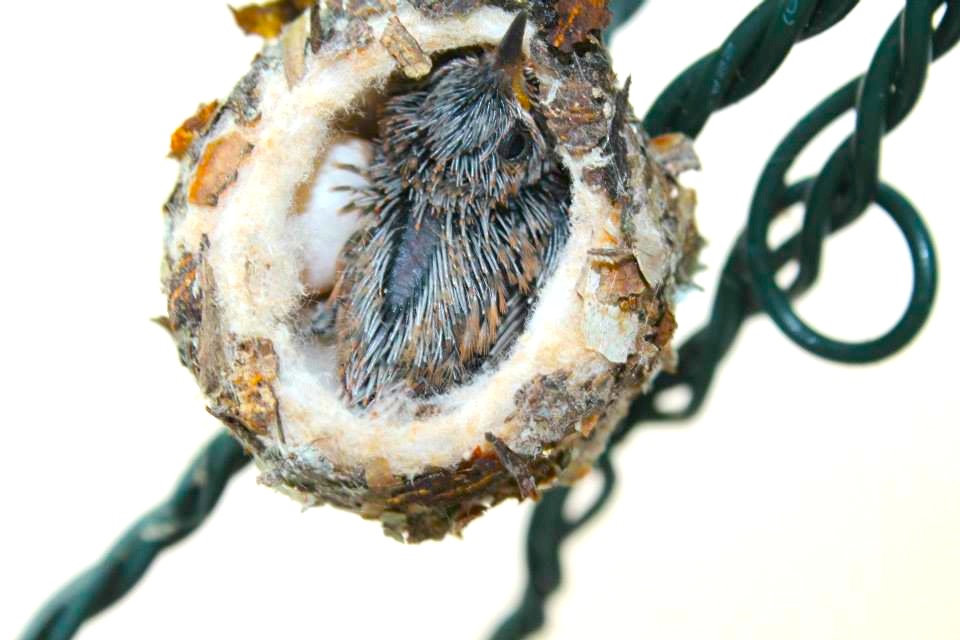
Charmaine Albury from Man-o-War Cay, Abaco, has taken some fabulous photographs of a nesting Bahama Woodstar Hummingbird at her home. With her kind permission, I am delighted to display a selection of them below. The adult is a female, and lacks the striking purple gorget of the male. The baby’s plumage is… spiky!  The cup nest is beautifully constructed, made from plant down, bark and cobwebs, balanced in a string of lights.  The size of the bulbs give a very clear idea how tiny these sweet little birds are. These are photos to be viewed in wonderment and awwwwwwwwww….

1157556_10201484511728454_263738206_n1009896_10201430116528608_457141162_n

This hummingbird species nests all year round. The female lays 2 elliptical white eggs, which she incubates for 15–18 days.  Not only is the baby in these pictures in a very small nest, it is sharing it with an unhatched and presumably sterile egg. Then again, two babies would be even more of a squash… 1381404_10201471034351528_1693570080_n541844_10201470918508632_1470337409_n 1376617_10201470928108872_1146646017_n 1377385_10201470917748613_443444189_n 1382262_10201470921668711_411658918_n

The Bahama Woodstar Calliphlox evelynae is endemic to the Bahamas, found only on there and as an occasional vagrant in south east Florida. On Abaco, it is one of four endemic species found on the island – the others are the Bahama Swallow, the Bahama Warbler and the Bahama Yellowthroat. Together with the unique ground-nesting ABACO PARROT, these are among the most special birds of Abaco.

Photo Credits: All images © Charmaine Albury

Unknown's avatar

‘TAKING OFF’ ON ABACO: NORTHERN MOCKINGBIRDS & MIMICRY


‘TAKING OFF’ ON ABACO: NORTHERN MOCKINGBIRDS & MIMICRY

The Northern Mockingbird (Mimus polyglottos) is commonly found in North America, but also has a wide range further afield. The species is plentiful on Abaco and in the northern Bahamas generally. I recently posted about Abaco’s other mocker, the local Bahama Mockingbird, HERE.

Northern Mockingbird 1

A DOZEN MEMORABLE MOCKINGBIRD FACTS TO ENLIVEN YOUR CONVERSATION

  • Only male mockingbirds sing
  • The Latin name means ‘many-tongued mimic’
  • They are omniverous and eat fruits, seeds, insects and even small lizards
  • They been shown in experiments to be capable of recognising individual humans
  • They are the State Bird of Florida, Arkansas, Mississippi, South Carolina, Tennessee, & Texas
  • Thomas Jefferson had a pet mockingbird named “Dick” [wish I’d invented this one…]
  • Courting males fly around females to impress them with their splendid wing patterns
  • Mockingbirds are monogamous & mate for life (though known to play away on occasion…)
  • Both the male and female are involved in the nest building
  • Cowbirds are inclined to lay their eggs in mockingbird nests
  • Both male and female feed their chicks, in the modern way
  • Mockers will confront larger birds including hawks; also cats and dogs; & even humans

Northern Mockingbird 2

 IMITATIONAL SKILLS
Besides having a particularly wide song repertoire, the mockingbird will mimic other birds, other natural sounds (including dogs) and even man-made / mechanical sounds – car alarms, sirens and a whole lot more besides. Good old Wiki has this to say:
“There are four recognized calls for the Mockingbird: the nest relief call, hew call, chat or chatburst, and the begging call. The Hew call is mainly used by both sexes for potential nest predators, conspecific chasing, and various interactions between mates. The differences between chats and chatbursts are frequency of use, as chats are year-round, and chatbursts occur in the fall. Another difference is that chatbursts appear to be used in territorial defense in the fall, and the chats are used by either sex when disturbed. The nest relief and begging calls are only used by the males.” Northern Mockingbird 4
IMITATIVE MEMORY?
Remarkably, it seems that Northern Mockingbirds can inherit and store the imitations of their ancestors. We listened to a young one in the Abaco National Park with Caroline Stahala, the scientist i/c Abaco Parrot conservation. The bird was accurately mimicking a tufted titmouse, a bird it will never have heard and so cannot have learned from directly (and no other bird on Abaco sounds like the titmouse). 
NEW! Another remarkable nugget, gleaned from Bahamas bird authority and author Tony White, is that in early Spring you may hear the calls of Grey Kingbirds starting to arrive for their summer vacations. Do not be fooled; Northern Mockingbirds begin imitate the calls of this species about 2 weeks before they begin to arrive…
By way of comparison, here is a Northern Mockingbird I photographed at the beginning of the year in New York while walking the High Line (if you get the opportunity to do this, take it. The perfect solution for a defunct high-level railway track is to turn it into a walkway-cum-park-cum-viewing platform).  There are detectable differences, not least the brown frontal flecking.Northern Mockingbird NYC

THE INFLUENCE OF MOCKINGBIRDS ON THE ARTS

“To Kill a Mockingbird”, Harper Lee, (1960); Film version (1962) starring, by amazing coincidence, Gregory Peck

“Listen to the Mocking Bird” (1855) An American folk song popular in the mid-19th century

“Mockingbird” (1974) Carly Simon duets with James Taylor, her (then) husband, one of several (though not simultaneous)

“Mockin’ Bird Hill” (1951) Les Paul & Mary Ford, later massacred in 1964 by ‘The Migill 5’

Star of the Lullaby that starts “Hush, little baby, don’t say a word, Mama’s gonna buy you a mockingbird…” That’s quite enough of that to be going on with

It turns out Mr Eminem has rapped up a ‘parental advisory’ and ‘explicit warning’ “Mockingbird” for our delectation. I was going to post the mp3 in a vaguely satirical way, but it is so numbingly dire that even his mum Mrs Mathers can’t bear to listen to it. So just enjoy the cover, then move on quickly to the birdsong video below…

51rcGGGsb3L._AA200_

Audubon’s Mockingbirds
[youtube http://www.youtube.com/watch?v=CMpe34Aign4]

Northern Mockingbird Eggs