Unknown's avatar

OSPREY . BIRDS OF ABACO . 1


Tom Sheley

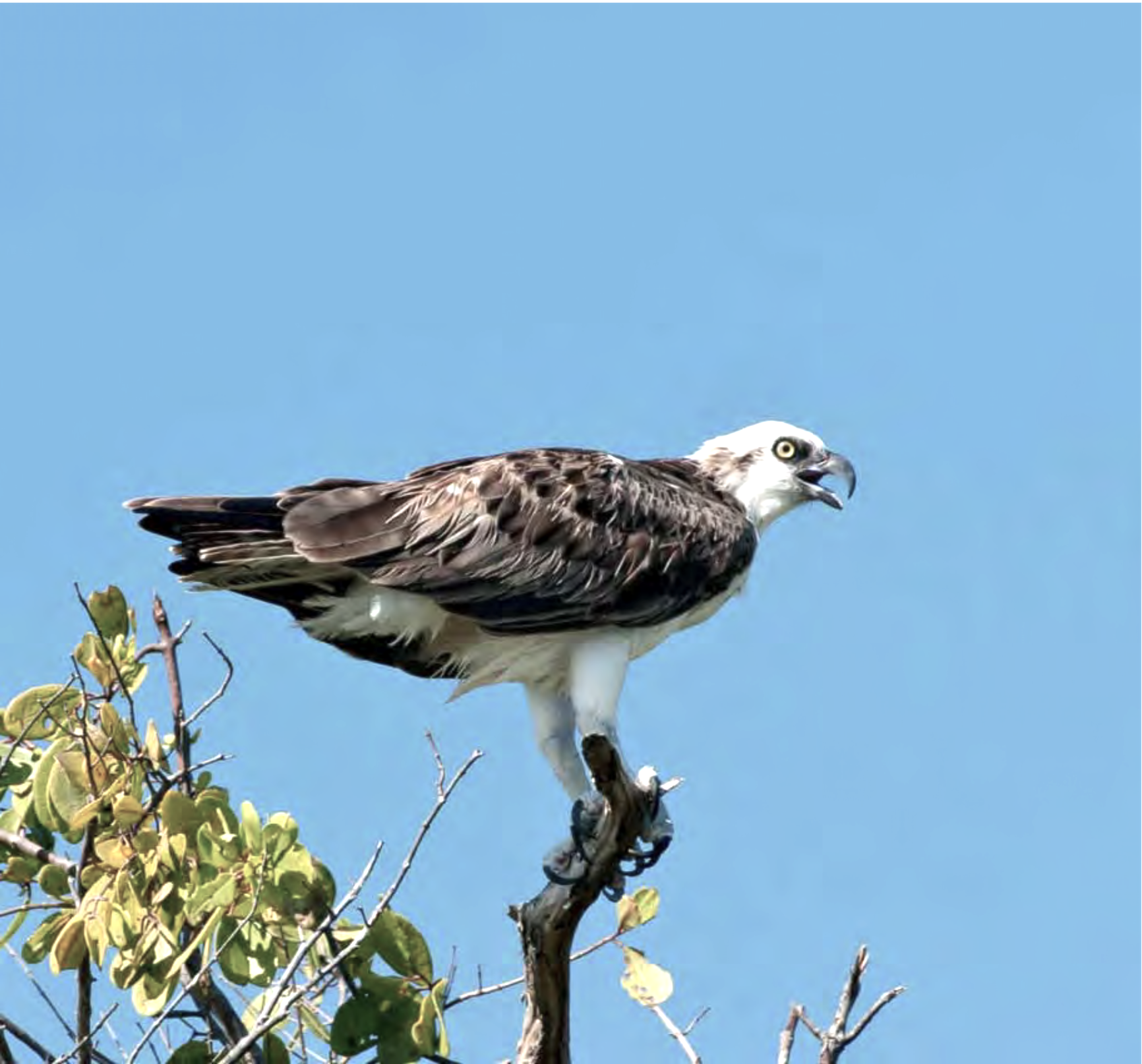
There are few more exhilarating sights in the world of birds than an osprey swooping from a great height down into the sea, emerging with a large fish held characteristically ‘fore and aft’ in its claws, and flying into the distance with heavy wing-beats.

BoA Ref : 72 OSPREY . Pandion haliaetus . PR|B|2

LINK to complete book pdf

BIRDS OF ABACO Keith Salvesen

Unknown's avatar

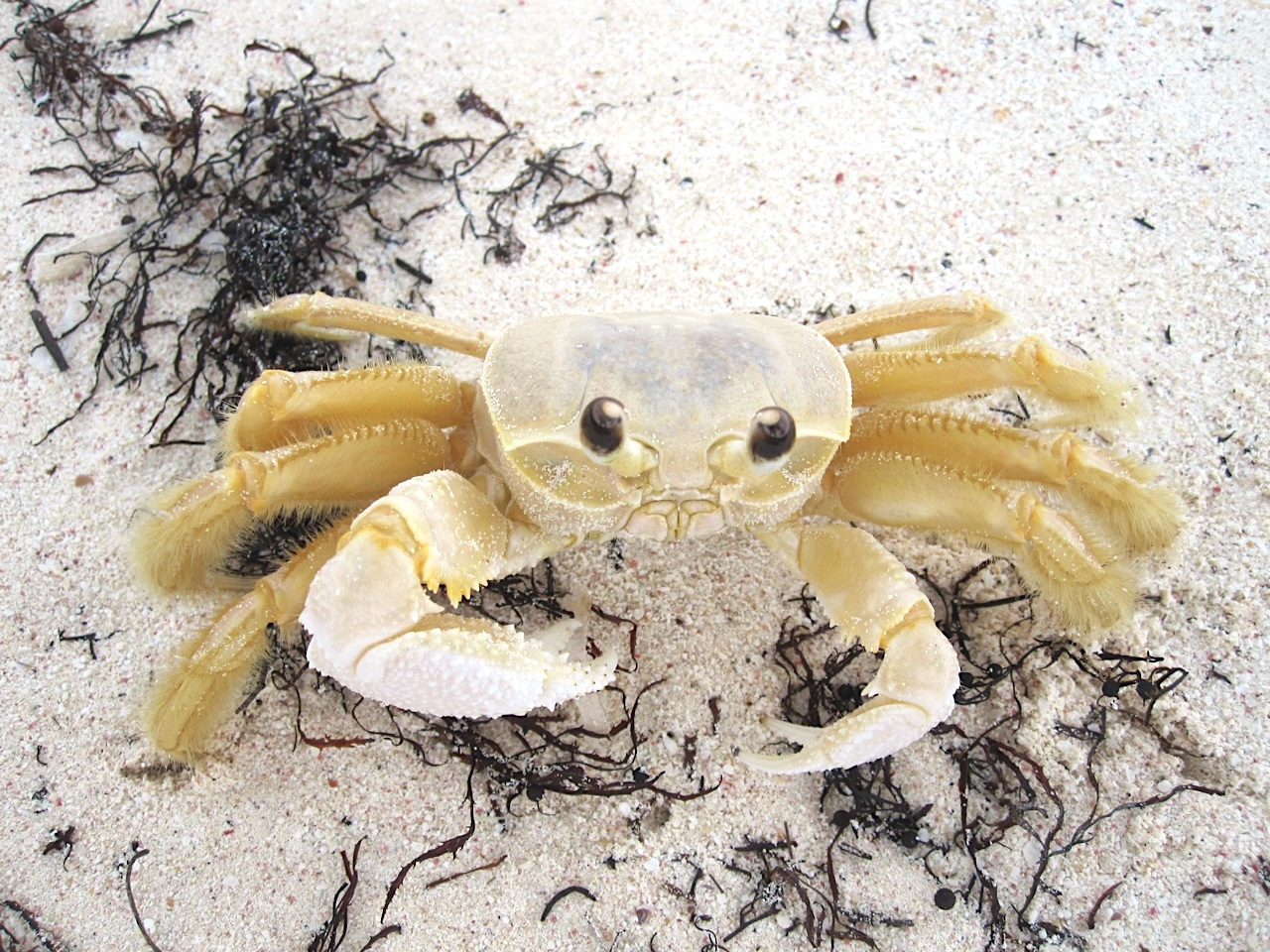
CRAB RUN – THE MOVIE


ROLLING HARBOUR MOVIES PROUDLY PRESENTS

CRAB RUN – THE MOVIE

LOCATION: DELPHI CLUB BEACH, ABACO

(Music: Chet Atkins ‘Yakkety Axe’, aka The Benny Hill Show Theme)

Found in old folder for this newish blog in 2012, when I featured plenty of tosh just for fun

Unknown's avatar

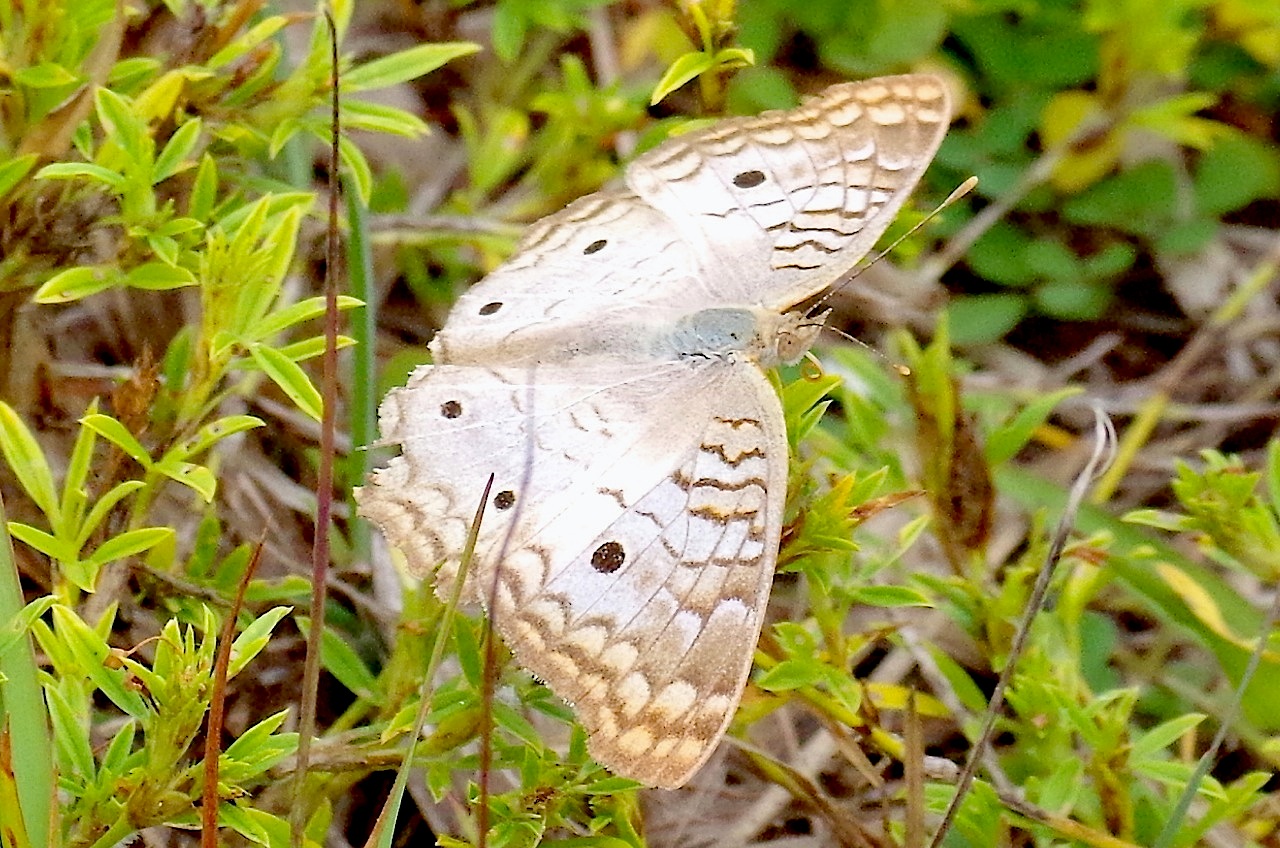
BUTTERFLIES ON ABACO (8): WHITE PEACOCK


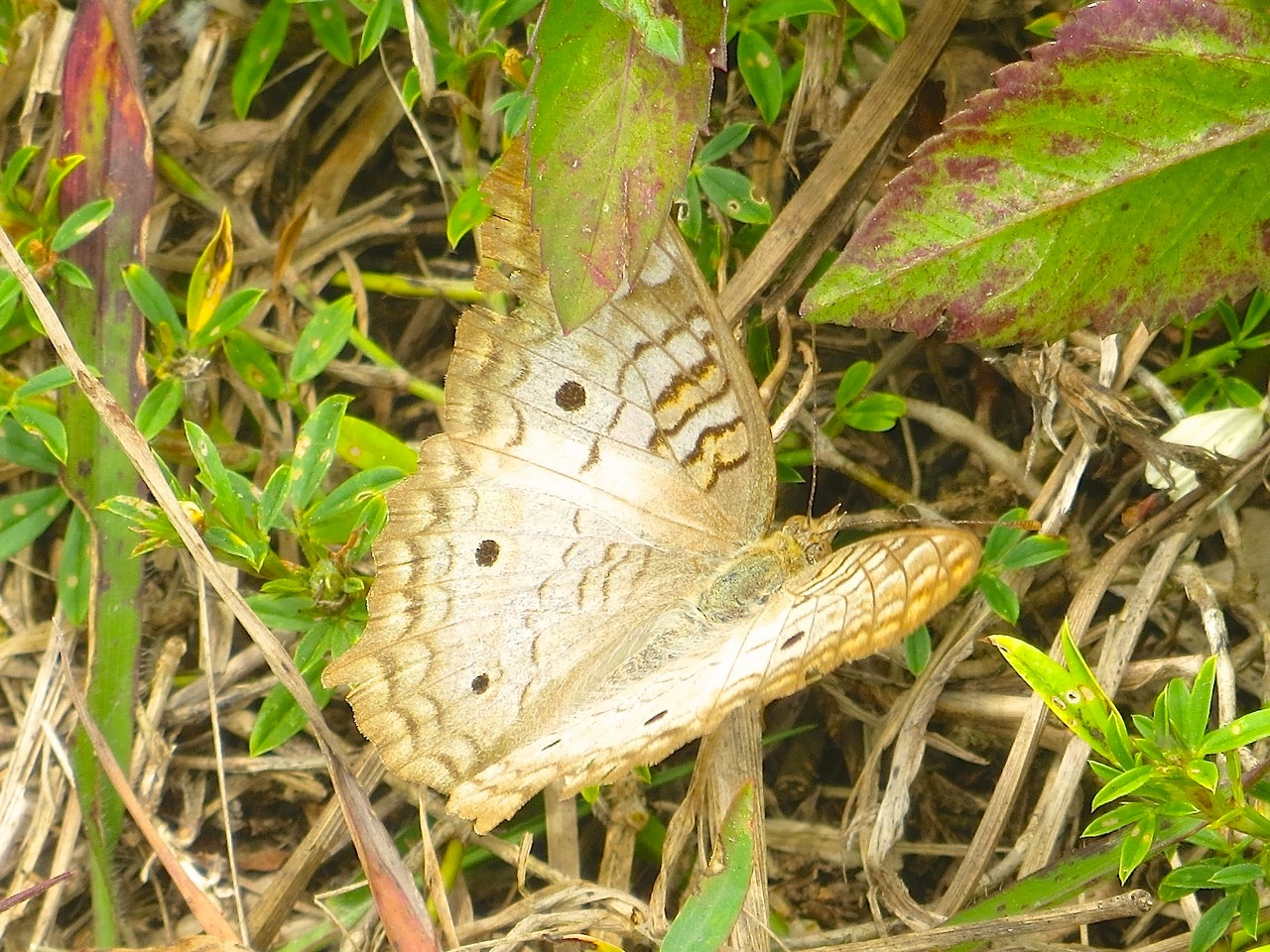
White Peacock Butterfly, Abaco (Keith Salvesen) 1

BUTTERFLIES ON ABACO (8): WHITE PEACOCK

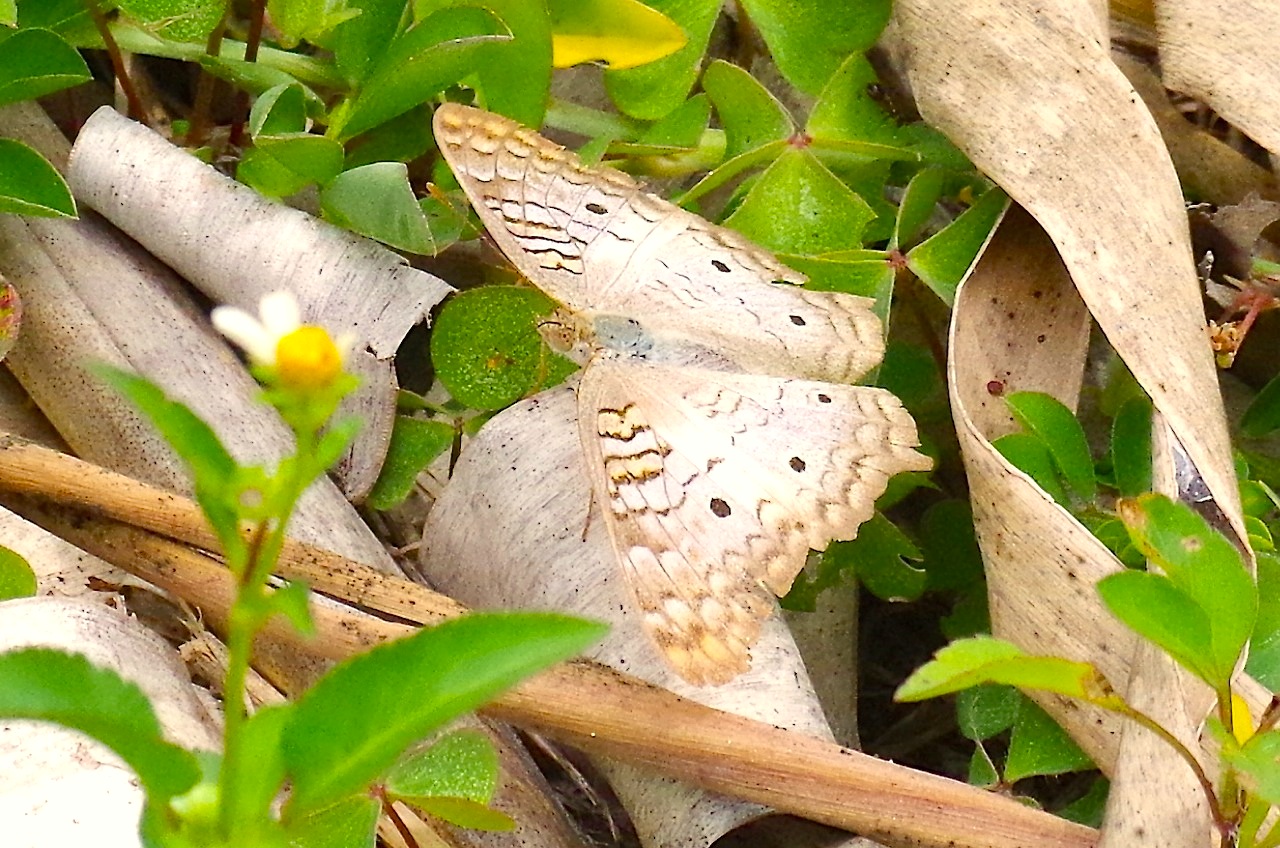
The white peacock (Anartia jatrophae) is not a rare butterfly in the northern Bahamas. However, until recently I had never – or never consciously – seen one before. Then we came across a few, all very frisky and mostly refusing to settle for more than 1/100 second. By the time I have remembered to remove my lens cap, they are 50 yards away.

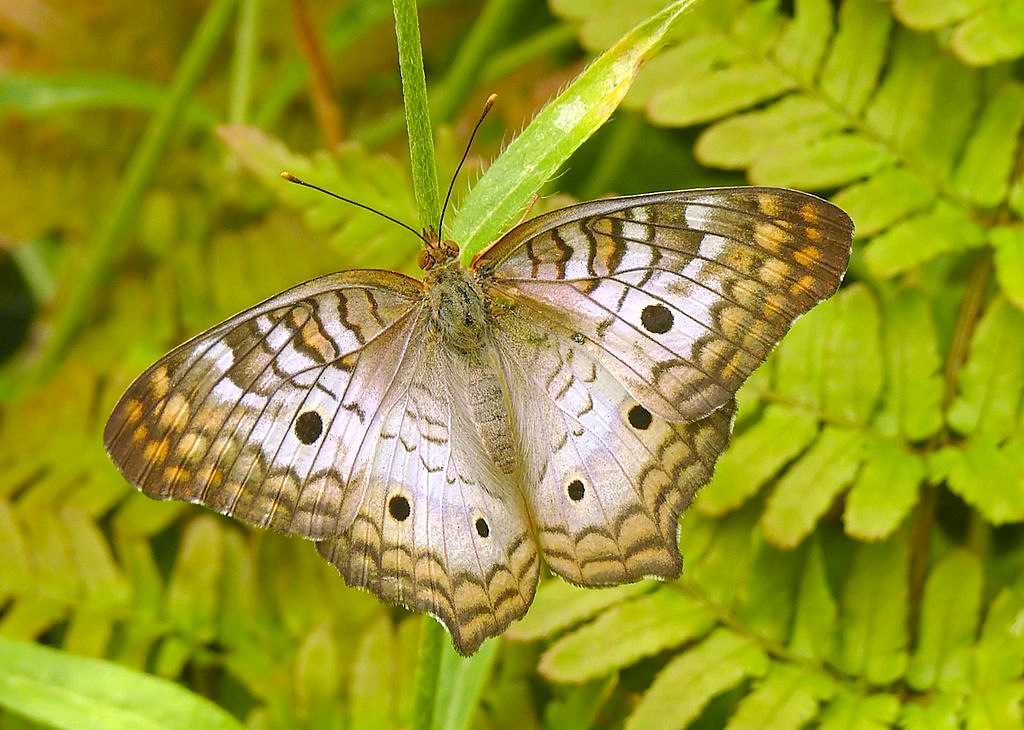
White Peacock Butterfly, Abaco (Keith Salvesen) 2White Peacock Butterfly, Abaco (Keith Salvesen) 3White Peacock Butterfly, Abaco (Keith Salvesen) 4

I checked out these pretty but unassuming butterflies online because they seemed rather pale and anaemic. As far as I can make out this is because they were still in winter colouring; in summer they are more brightly marked. Here’s a photo of a dishevelled white peacock taken in June at Delphi by Charlie Skinner, which shows stronger colours.

White Peacock, Abaco DSC_4786 (Charlie Skinner)

ARE THEY EVER FOUND LOOKING BRIGHT AND NOT FALLING APART?

Yes, of course, but interestingly, never ever in the field. The one below, non-anaemic and intact, was thoughtfully uploaded to Wiki by Greg Hume. He took it at a butterfly show, where presumably tatty butterflies are excluded…

WhitePeacock (Greg Hume)

Photos: Keith Salvesen 1 – 4; Charlie Skinner 5; Greg Hume 6

Unknown's avatar

SAWMILL SINK, ABACO: INDUSTRIAL ARCHAEOLOGY IN A POST-APOCALYPTIC LANDSCAPE


Sawmill Sink Abaco 8

SAWMILL SINK, ABACO

INDUSTRIAL ARCHAEOLOGY IN A POST-APOCALYPTIC LANDSCAPE

This article was written quite some time ago but I reckoned that, several years on, it might still be of interest. I haven’t changed much because it is what it was, so please ignore the time-slip. This was by chance a fire-fuelled opportunity to uncover a relic of Abaco’s industrial past.

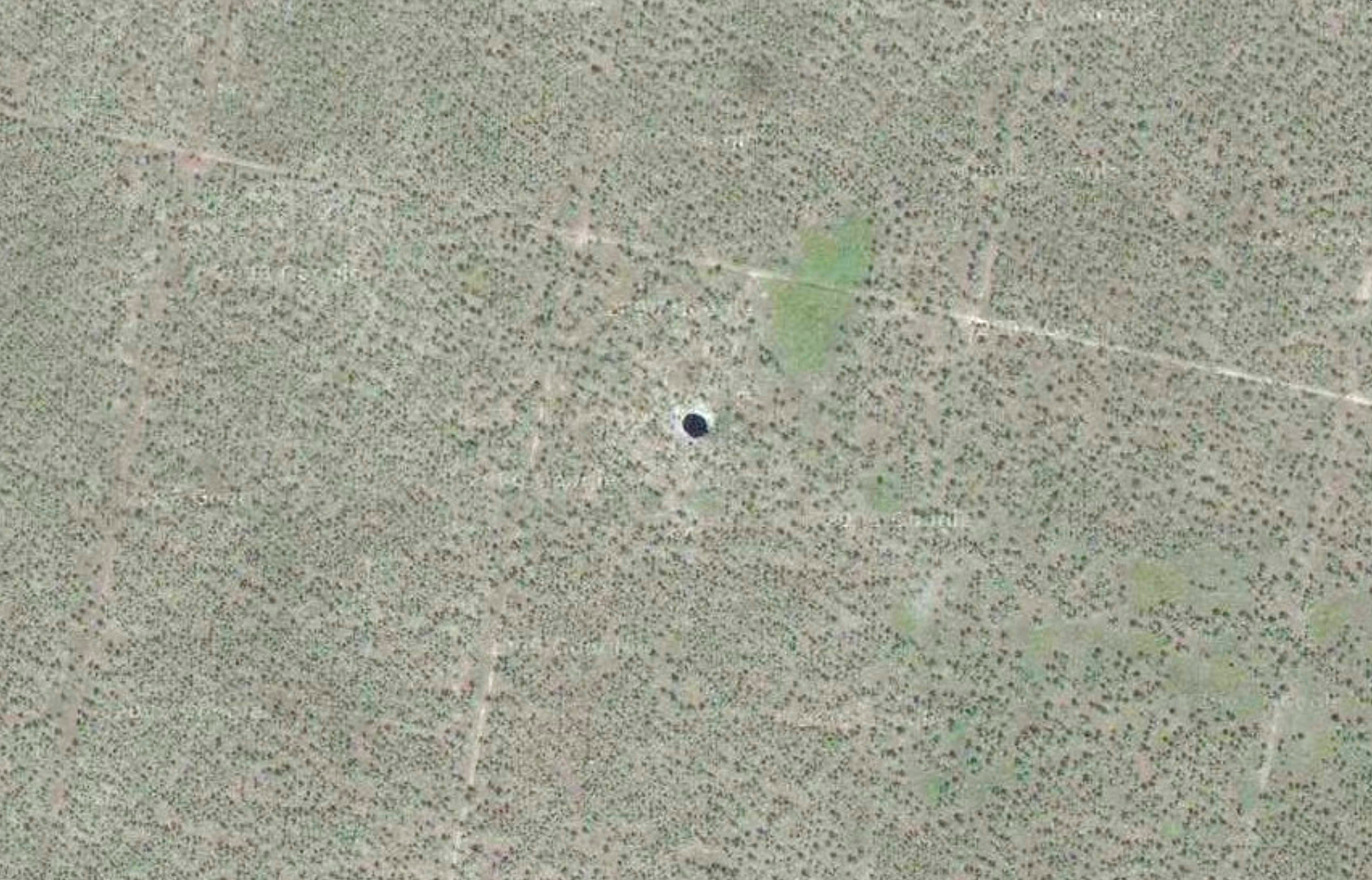
The Blue Holes of Abaco are geological wonders about which much has been written. Sawmill Sink is one of the best-known inland ones. These are deep chasms in the limestone rock, some leading to extensive and complex cave systems under the island. Divers exploring Sawmill Sink have found many prehistoric fossils, including those of an extinct giant tortoise, and land crocodiles. The sink area was also a location for such finds.

AERIAL VIEW OF SAWMILL SINK DEEP IN THE PINE FOREST

Screenshot 2024-11-16 at 17.15.58

LOGGING TRACK TO SAWMILL SINK BLUE HOLE

Screenshot 2024-11-16 at 17.15.30

LOGGING HISTORY

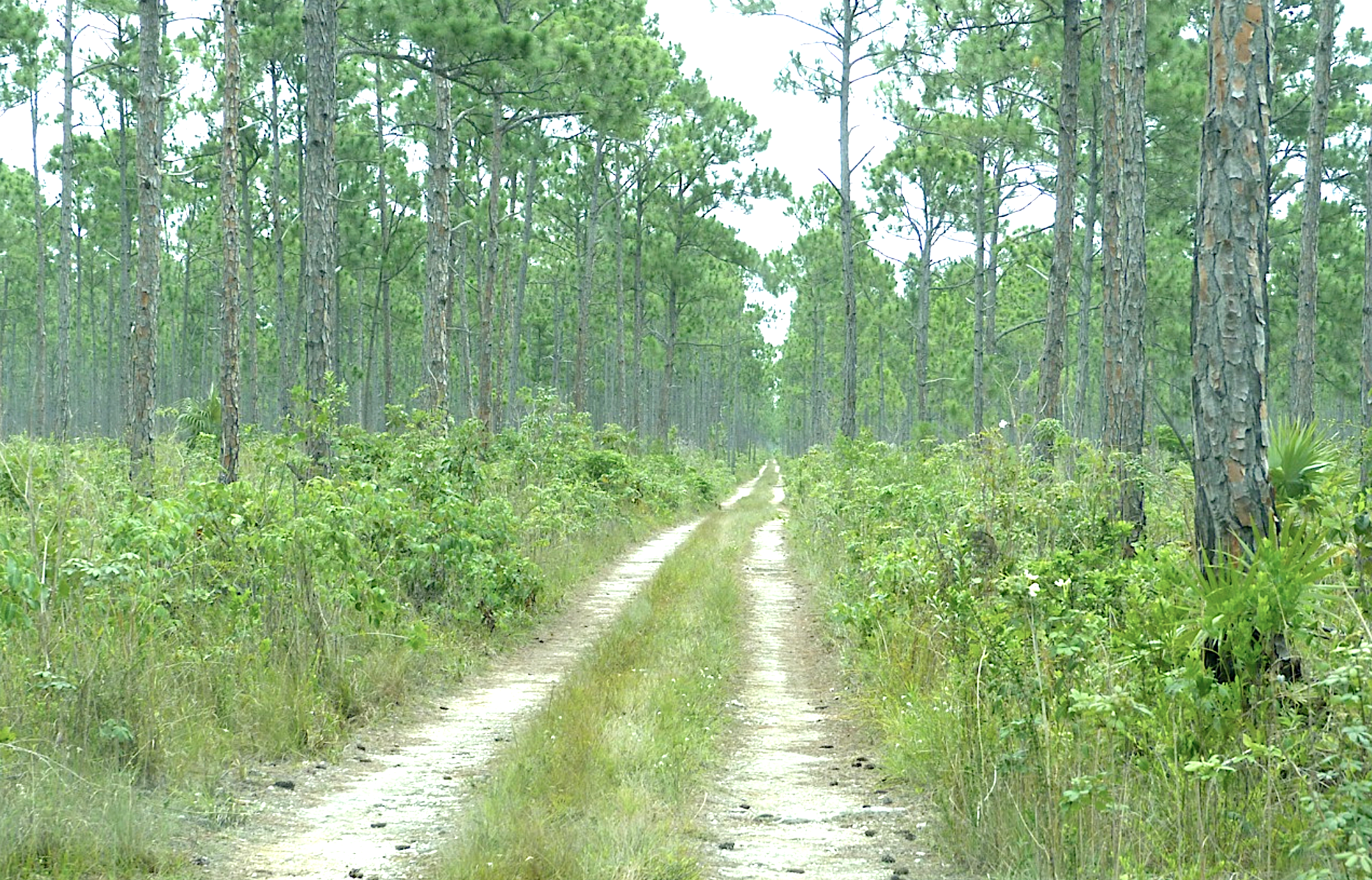
South Abaco – defined loosely as the area south of Marsh Harbour – is dominated by pine forest. There are a few settlements and individual residences, all by the coast. The forested swathes are criss-crossed by an extensive system of logging tracks, many now all but impassable. They are reminders of Abaco’s historic importance as a source of wood deriving from the ubiquitous tall, slim pines. One use to which they were put was as mine pit props in the collieries of Wales.

 1996.2039.db

TRACKING RAILS

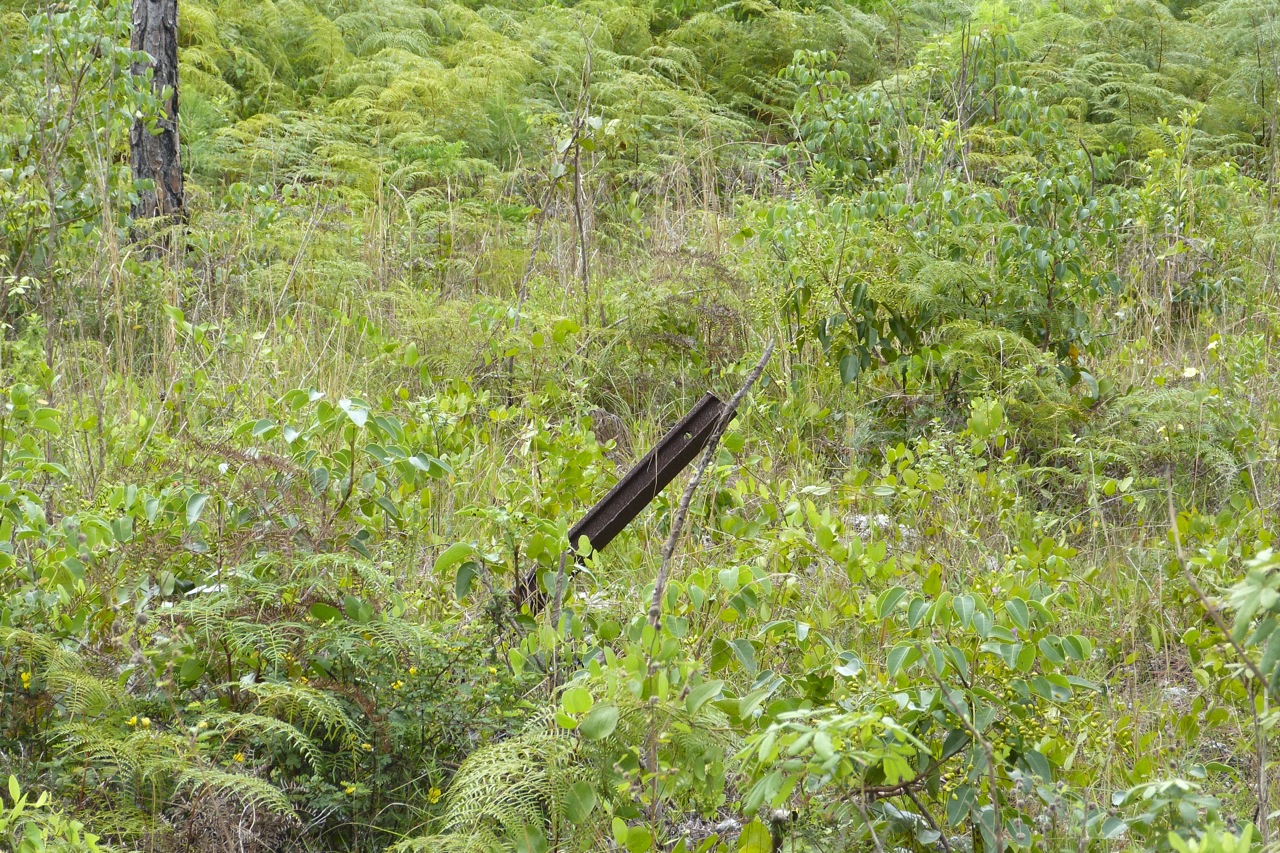
During a walk to Sawmill Sink, we noticed a rusty rail sticking up from the undergrowth. This was a remnant of the light railway tracks that had been laid through the forest to carry felled timber to the highway. From there it was transported to the coast to be loaded onto ships.

Sawmill Sink Abaco 17

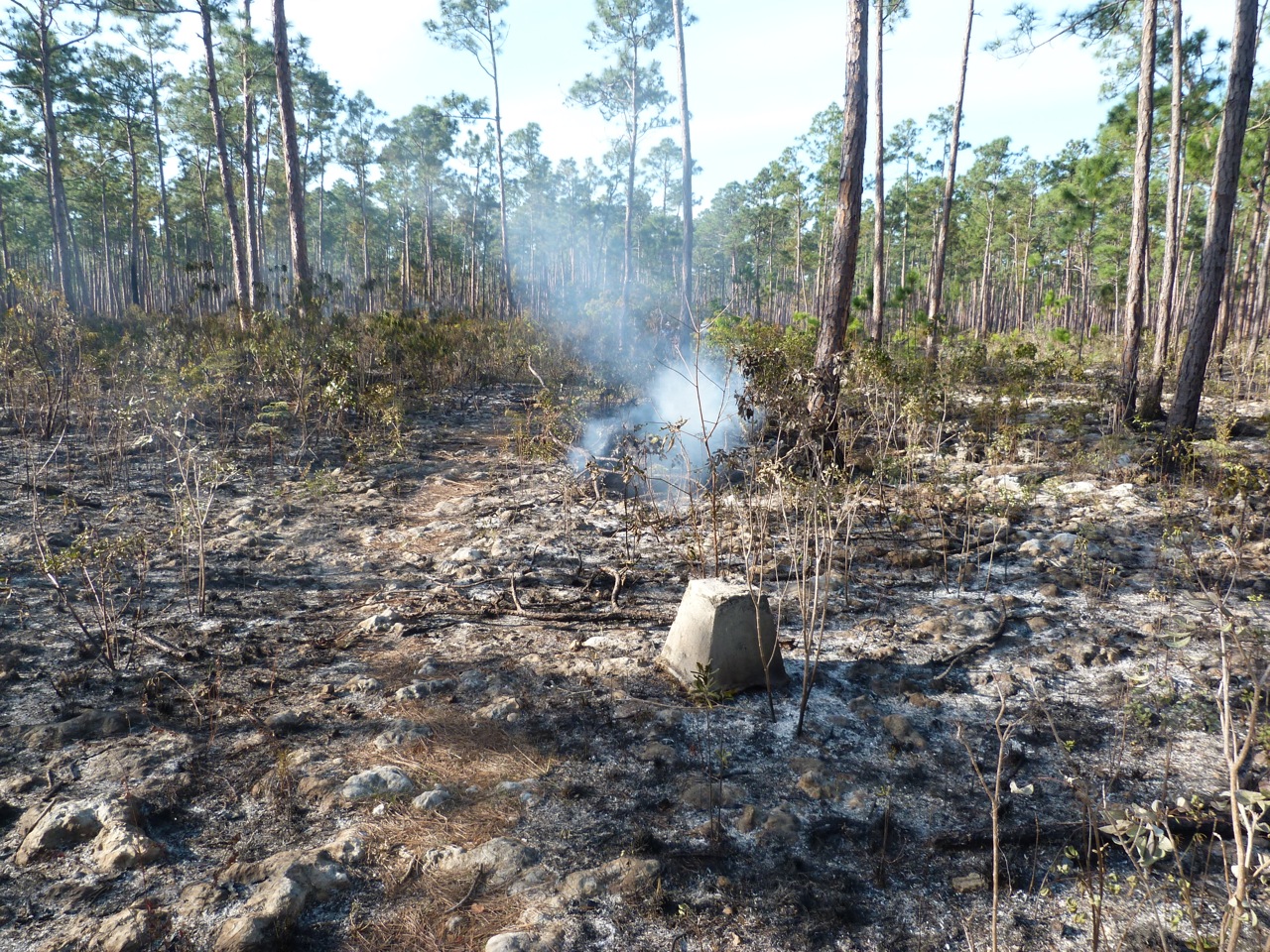
Later, we went back to Sawmill Sink at a time when the south part of the island was enduring the annual outbreak of forest fires, some natural and some set to clear undergrowth. While the occasional natural fire is actually good for regeneration of a forest (cf burning moorland), a fire out of control and fuelled by wind can very quickly damage a vast area. Thick palls of smoke drift across the island and out to sea. Even while we were fishing far out on the Marls, flames were visible as tall pines burned, with the acrid smell of the blaze was carried on the wind.

REMEMBERED EMBERS

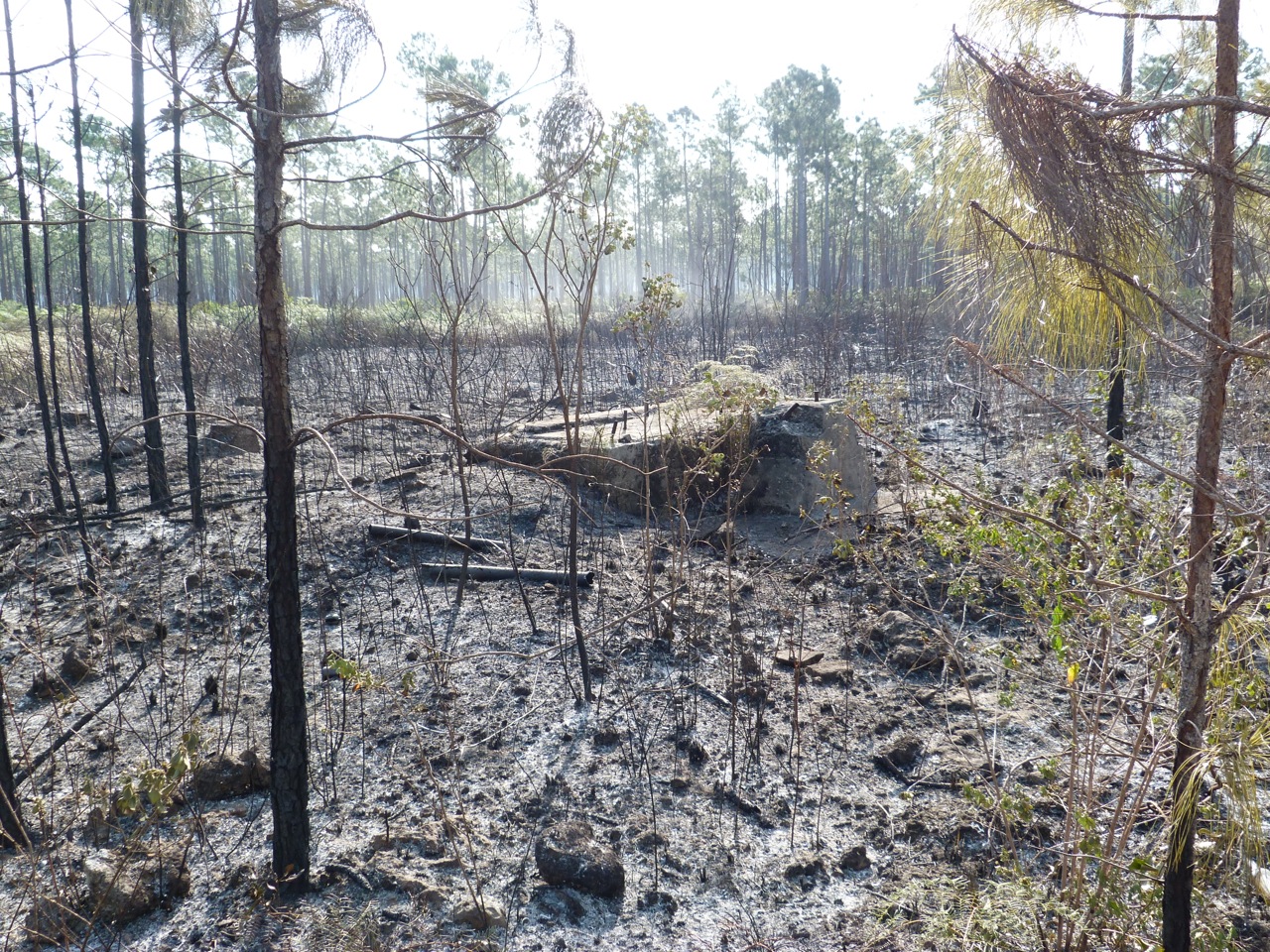
The photos that follow show the area round Sawmill Sink immediately after a fire had swept through the area, revealing the past. Trees were still smouldering and in places the ground was still hot to the touch. The evidence of the former usage had been laid bare. Some images below  show the paved path that leads from the logging track to the Sink. I never found out if these were the first detailed images of so many visible remains of the logging trade revealed by the burnt-off undergrowth. 

Sawmill Sink Abaco 1 Sawmill Sink Abaco 2 Sawmill Sink Abaco 3 Sawmill Sink Abaco 5 Sawmill Sink Abaco 6 Sawmill Sink Abaco 7 Sawmill Sink Abaco 9 Sawmill Sink Abaco 10 Sawmill Sink Abaco 11 Sawmill Sink Abaco 12 Sawmill Sink Abaco 13 Sawmill Sink Abaco 14

PREHISTORY

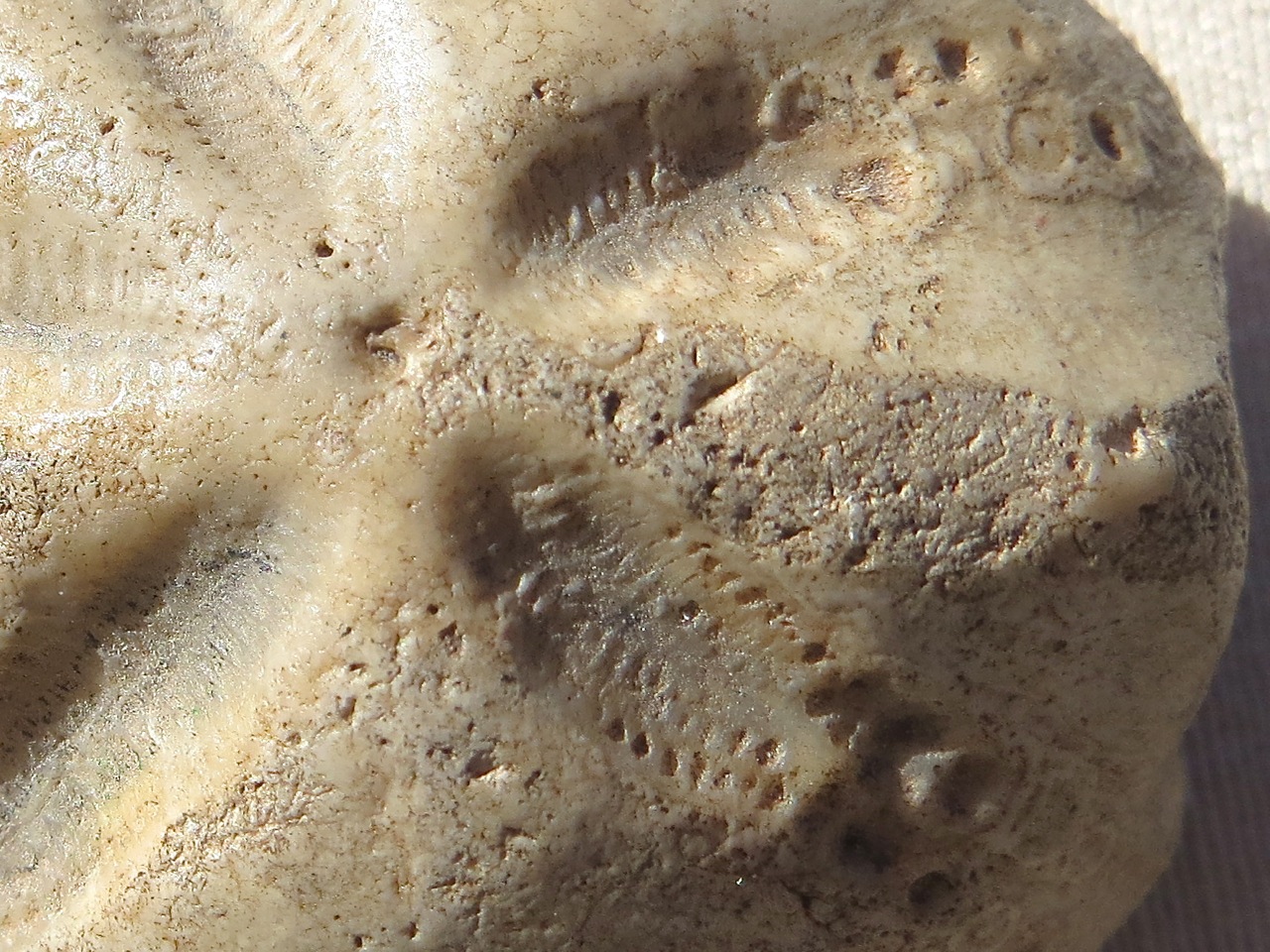
We found this rock close to the Sink. Are those plant fossils? Bearing in mind that in prehistory the ocean covered this area entirely (the highest point on Abaco is a mere 134 feet ASL), might these be anemones or sponge fossils of some sort? As I said then, ‘comments from fossilologists welcome’, and a kind follower FOSSIL LADY (aka Kathi) reponded:  Those don’t look like plant fossils to me, they remind me of stromatolites, a sponge like creature that first dominated the earth billions of years ago. Some varieties still survive today. It would be worth it to have a geologist have a look see. ps the sinkhole is awesome!

Sawmill Sink Abaco 15

Photo credits: all RH except pit props (Scottish Mining Museum); aerial view (Gmaps)

Unknown's avatar

BIRDS OF ABACO . TENTH ANNIVERSARY


THE DOWNLOAD OF THE BOOK OF THE BIRDS

NOTES

  1. This download is of the entire book
  2. Reduced to 18mb for 10 – 15 second loading; no noticeable loss of definition
  3. Below the screen BIRDS OF ABACO enlarges the screen, DOWNLOAD will do just that
  4. The top bar contains all the usual ways to make adjustments to the contents
  5. This is the penultimate version before printing, with a few crop marks etc
  6. Please let me know if there are any problems with the download

As mentioned in previous posts, I am asking those who choose to download the book to make a modest charitable donation to a local wildlife-related cause or to a local school or an organisation that inspires kids to get involved in the natural world around them.

KEITH SALVESEN

March 2024

Thanks to all the many people who contributed to the book including 30 photographers who took brilliant photos; 3 Bahamas bird experts who contributed greatly to the composition and accuracy of the book; the superb printers Conti in Italy; Peter Mantle the inspiration and eminence grise; and my wife Sally whose publishing and editorial skills are second to none, and her patience limitless.

Unknown's avatar

BIRDS OF ABACO: Frequent Fliers (1)


American Redstart (m)

ARE WE NEARLY THERE YET?

We birds want to know what’s going on please. The rest of the ‘Abaco Bird Book Club’ have nominated us to find out. So:

Q. How likely is it that we ‘guys’ will somehow be getting inside a machine and turning up in people’s homes / on their phones (whatever those are). A. Very

Q. How long must we wait before being admired on a screen by humans – we all quite fancy that. A. A week or so

Q. Are we birds going to get any seeds / insects / berries / fish in return. A. No. You will be free. And free as a bird as well.

Photo Credits: Gerlinde Taurer; Tom Sheley; Tara Lavallee; Craig Nash; Bruce Hallett

Unknown's avatar

BIRDS OF ABACO


THE BIRDS OF ABACO: SEARCHABLE INDEX

FROM ABACO PARROT TO ZENAIDA DOVE HERE

When, in 2014, Birds of Abaco had safely been hatched and was beginning to fledge, I started a companion site that was designed to add an additional dimension to the project. It was a bird-specific accessory to the main Rolling Harbour site that has always featured a far greater range of topics than birds.

The book exhibited Abaco birds in a deliberately perverse way (alphabetically, not by species grouping or other conventional methods). The loosely termed ‘Index’ was meant to be a quick alternative way to delve into the various species.

It was a side project and I did very little to promote it. Once put together (with a linked FB page) I pretty much left it to grow ‘organically’ (aka indolently and neglectfully). I’m bringing the site out of semi-retirement while I get on with my efforts to put the book online. Reach it HERE

A to Z

CAPE MAY WARBLER (Char Albury): as it turned out, an unpromising name. The first one was recorded on Cape May, NJ in the early nineteenth century. They were not recorded there again for more than a hundred years.

Unknown's avatar

THE DELPHI CLUB GUIDE TO THE BIRDS OF ABACO (1) – 10th Anniversary Flyers


FIRST FLYER

It is February 2014, and two pallets carrying 500+ heavy books in boxes have just arrived in Nassau. Printed in Italy at the end of January, the cargo had made its way from specialist printers in Florence via Bologna, Leipzig, Brussels, Cincinnati, Miami to Nassau. They spent an unexpectedly long sojourn in Nassau while formalities were unhurriedly dealt with, then made their way safely to the Delphi Club. In early March, the book was launched in the Great Room at Delphi.

Delphi Lodge 2014

The book was generously received. The Delphi years rolled by: happy years of amateur birding, incompetent bonefishing (me), adventures, companionship, conviviality, Kalik. Then a change of ownership at Delphi; the destructive power of Dorian; and the tentacles of Covid spreading round the world.

10 years on at Rolling Harbour Towers HQ, a plan is hatching like an Abaco parrot’s precious egg. Might there be an audience ready for some kind of e-Edition of the whole book, checklists and all? Technology has moved on since 2014. Even I have now read an eBook. There’ll be some tech-stuff involved to get the most practical way to proceed. I’ll need to check with the birds first, and we will get back to you.

SECOND FLYER

Sanderlings on the beach at Delphi – more interested in snacking than eBook stardom

Unknown's avatar

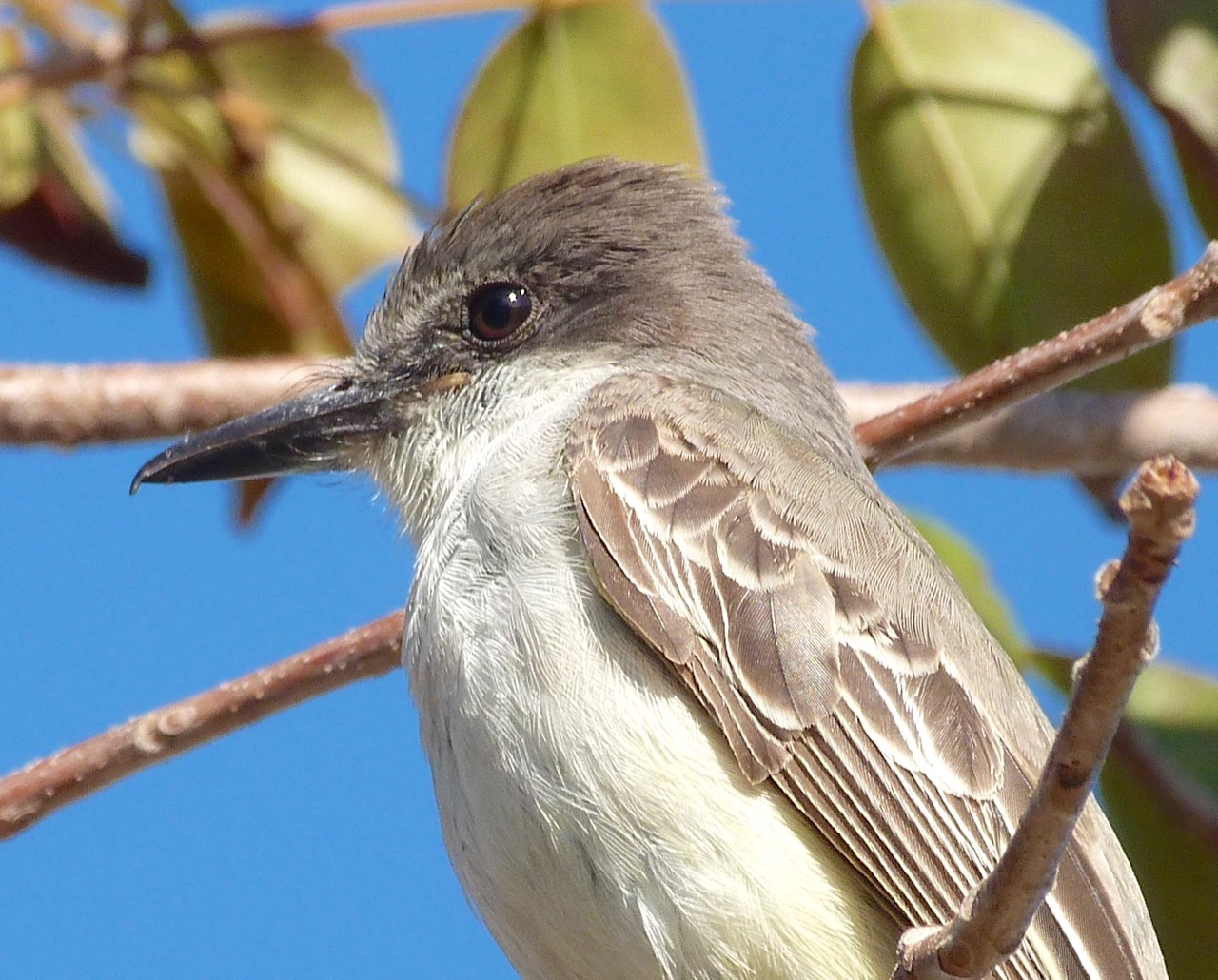
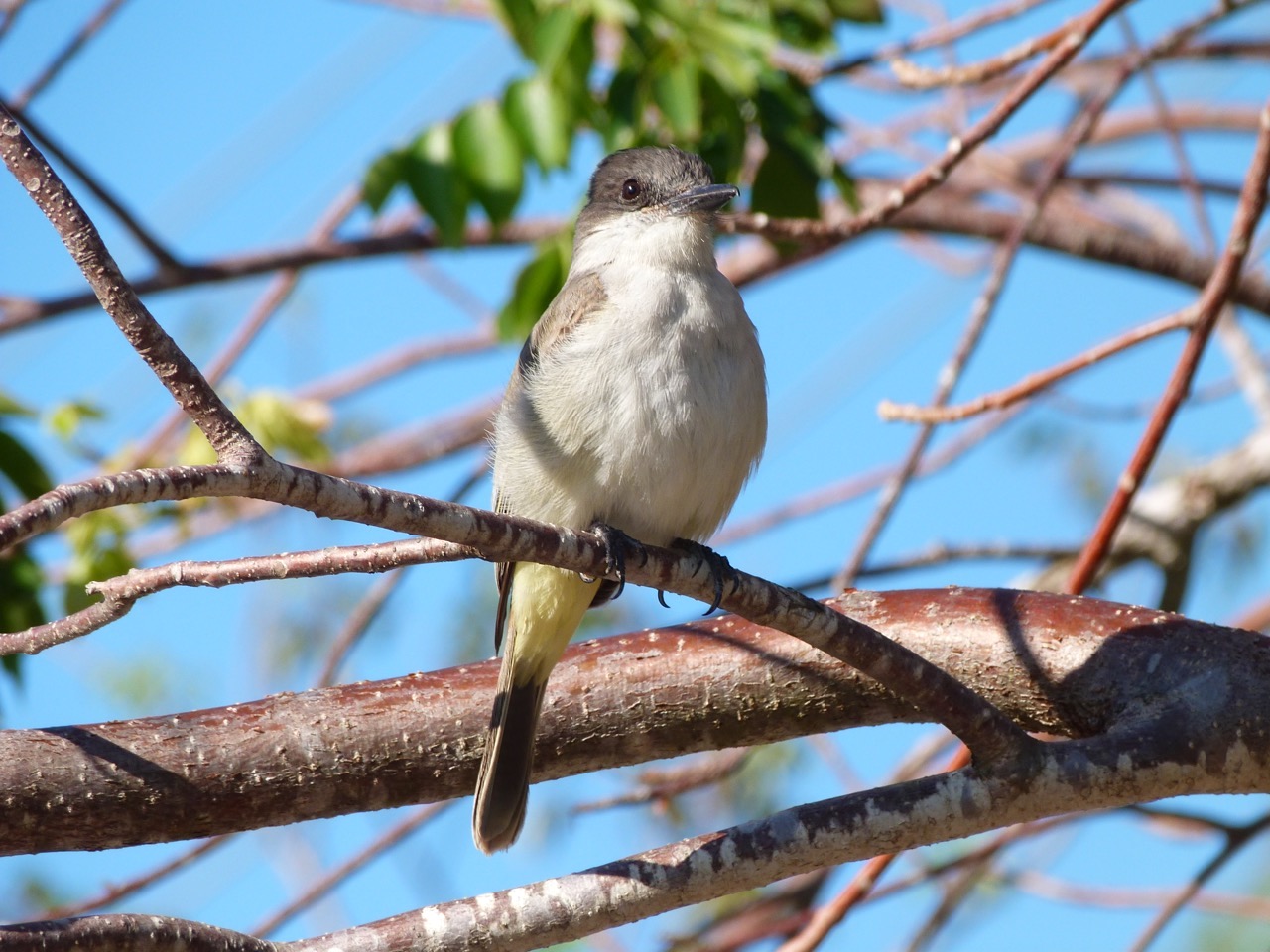
LOGGERHEAD KINGBIRD: LORD OF THE FLIES


Loggerhead Kingbird, Sandy Point, Abaco Bahamas (Keith Salvesen)

LOGGERHEAD KINGBIRD: LORD OF THE FLIES

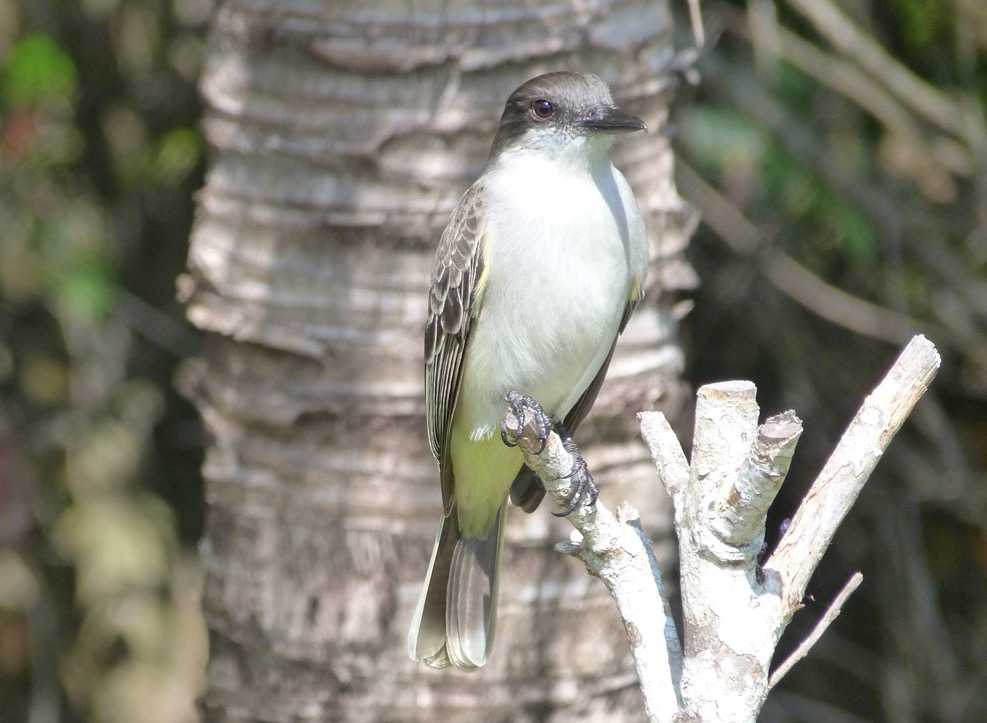
There are four main species of so-called ‘tyrant flycatchers’ (Tyrannidae) found on Abaco: the loggerhead kingbird, the gray kingbird, the La Sagra’s flycatcher and the Cuban pewee. Three are common permanent residents; the gray kingbird is a summer resident only. Several other flycatcher species are found on Abaco, but they are very uncommon winter residents, rare transients, or vagrants. 

Loggerhead Kingbird, Sandy Point, Abaco Bahamas (Keith Salvesen)

The loggerhead featured here became quite a good companion. Like other flycatchers – and indeed the cute little blue-gray gnatcatchers – loggerheads are curious and inquisitive birds, and relatively tame. One can get quite close without ruffling their feathers. 

Loggerhead Kingbird, Sandy Point, Abaco Bahamas (Keith Salvesen)

Loggerheads seem to have two methods of observing humans and their mysteries. One is by perching on a branch or in a shrub, watching intently. They stay quite still… until suddenly launching into the air to intercept some passing insect with their hooked beaks (so-called ‘hawking’), before returning to their perch. And staring at you again. The other method is to follow you round, either flying slightly ahead as you progress; or fluttering in the coppice alongside you; or playing catch-up from behind. 

Loggerhead Kingbird, Sandy Point, Abaco Bahamas (Keith Salvesen)

A typical quizzical loggerhead sideways look… all flycatchers do this

Loggerhead and gray kingbirds are similar in size, and can be quite easy to confuse. Top seasonal tip: because the grays are summer visitors only, it’s a fairly safe bet that any kingbirds seen between, say, October and April will be the resident loggerheads.

Loggerhead Kingbird, Sandy Point, Abaco Bahamas (Keith Salvesen)

MEMORABLE FACT TO DEPLOY IN CONVERSATION

The collective names for a group of kingbirds are: a Court, a Coronation, or (of course) a Tyranny

Loggerhead Kingbird, Sandy Point, Abaco Bahamas (Keith Salvesen)

Photo Credits: Keith Salvesen Abaco Bahamas; ‘Lordy’ the Loggerhead 

Unknown's avatar

FRIGATEBIRDS aka MAN-O-WAR BIRDS: TRULY MAGNIFICENT


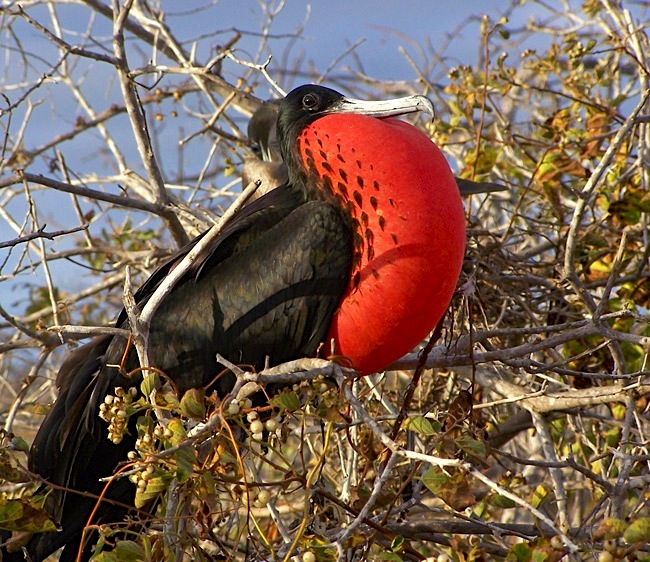
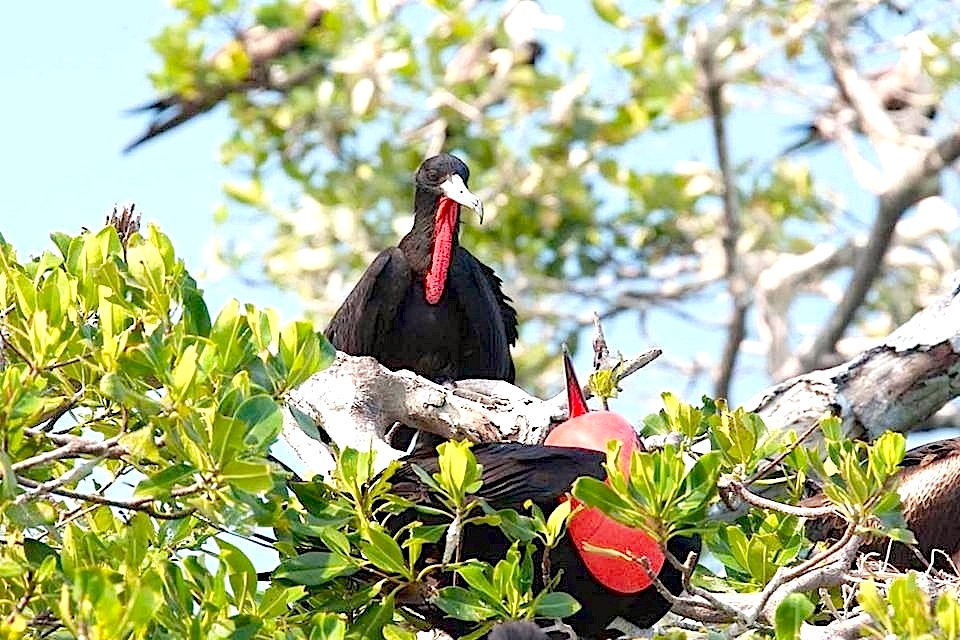
Magnificent Frigatebird (m) with inflated 'gular sac' (neck pouch) - Athena Alexander / Jet Eliot

FRIGATEBIRDS aka MAN-O-WAR BIRDS: TRULY MAGNIFICENT

This is a male frigatebird (Fregata magnificens) in the breeding season, with his extraordinary inflatable GULAR POUCH fully blown up. He is at his most chest-burstingly dashing, at least to female frigatebirds, and this great capture by photographer Athena Alexander from the excellent blog of JET ELIOT, shows one of the wonders of the bird world. A glimpse of his mate can be seen just behind his head, but frankly he has made the story his own! And just look at the size of his wings. If a bird can steal limelight, he has effortlessly done so.

COURTSHIP DISPLAY

The image below shows the male enacting his courtship display. Jet Eliot describes it thus: “During courtship display this balloon-like sac takes about 20 minutes to fully inflate.  It is featherless, scarlet red, and tight as a drum.  It’s so big it distorts him. When he’s ready and has a suitable audience of females flying overhead, he points his face skyward and rapidly beats his wings against the balloon, creating a low, booming sound”. The male’s pouch is not entirely inflated. A female is nestled under the his protective wing. Presumably she has been won over and mating will soon occur once the performance ends. Or maybe she’s bored with the whole routine – she looks rather as though she has seen it all before…frigatebird-displaying

magnificent-frigatebird

NESTING

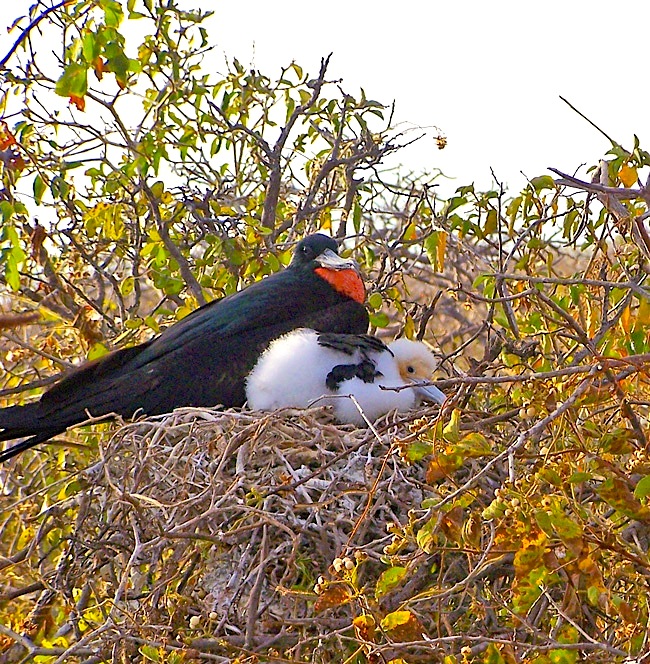
Even on the nest, males are keen to be in the picture. Not for them the ‘absentee father’ role, out fishing the entire day. Instead, they share chick-care duties, looking after the single enormous, fluffy chick. An adult pair stays together for the year, forsaking all other. Chick care takes a long time from egg to fledging and beyond – so much so that frigatebirds only breed every other year, and always produce a single egg. For this reason, habitat destruction of breeding grounds has a far greater effect on population numbers than for birds that breed annually.Magnificent Frigatebird (m) and chick on nest - Athena Alexander / Jet Eliot

magnificent-frigatebird

10 MAGNIFICENT FACTS ABOUT FRIGATEBIRDS

  • Magnificent Frigatebirds are the largest of several frigatebird species around the world
  •  They are found in tropical and subtropical watersimgres
  • Females have white fronts that make them easily distinguishable in flight
  • An adult’s wingspan is 7+ feet, with the largest wing-area / bodyweight ratio of any bird
  • Frigatebirds can remain in flight and far out to sea for many days
  • They are KLEPTOPARASITES and will rob other seabirds of their food
  • Their diet is mainly fish & squid snatched from the water’s surface; also seabird chicks
  • They nest in colonies, producing a single egg every other season
  • They don’t actually land on water, as they don’t float; and they are feeble at walking on land
  • One of the earliest depictions of a frigatebird is by Eleazar Albin in 1737. He was a naturalist contemporary of MARK CATESBY and pre-dated AUDUBON

Frigatebird_Eleazar_Albin_1737

magnificent-frigatebird

NAMING THE FRIGATEBIRD: A POTTED HISTORY

  • Columbus encountered them on his first voyage in 1492, but knew them by their Spanish name rabiforçado or ‘fork-tail’.
  • The use of the name ‘frigatebird’ was first recorded in 1667 and referenced the frigate warship, a powerful sea-vessel
  • ‘Man-o-War Bird’ was the name given to the bird by English mariners in the Caribbean, being the colloquial name given by sailors to a frigate.

magnificent-frigatebird

A MAN-O-WAR GALLERY

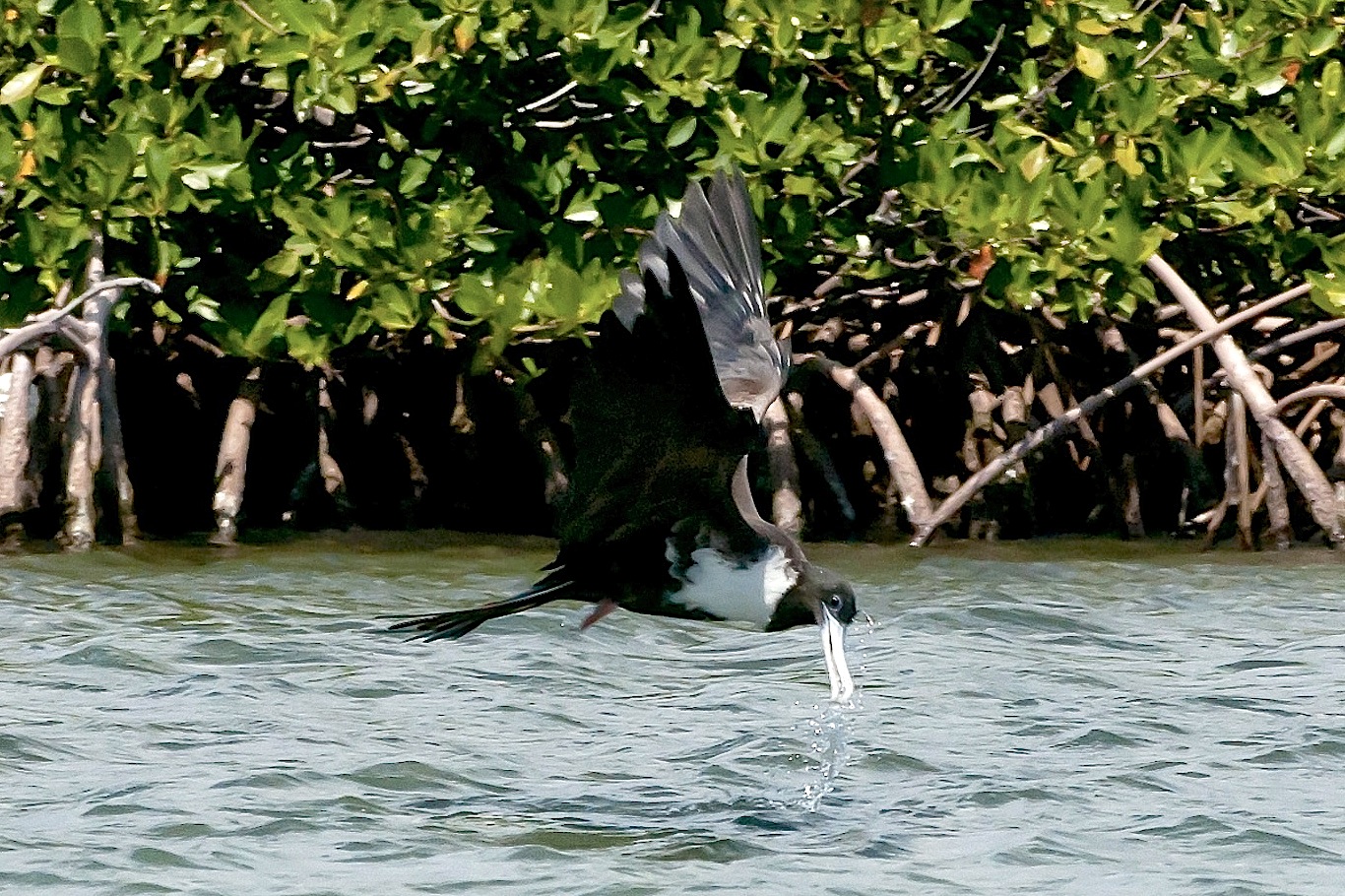
A female frigatebird hunts for food among the mangroves on AbacoMagnificent Frigatebird.Abaco Bahamas.2.12.Tom Sheley 2

A female frigatebird soars high over Marsh HarbourMagnificent Frigatebird, Marsh Harbour, Abaco - Tom Reed

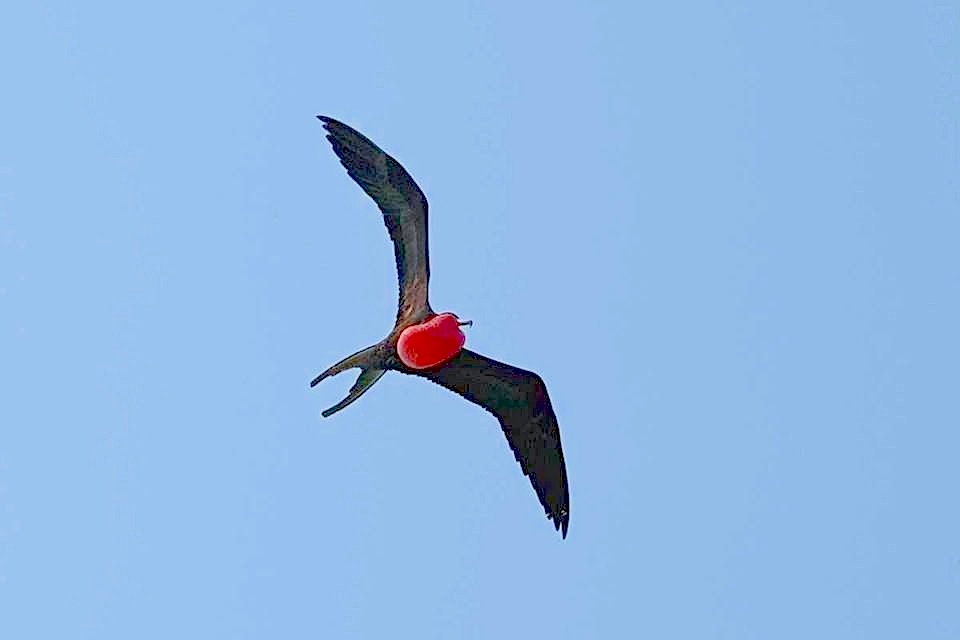
This male has taken off before his gular pouch has had time to deflate fullyFrigatebirds (m) 2 Michael Vaughn

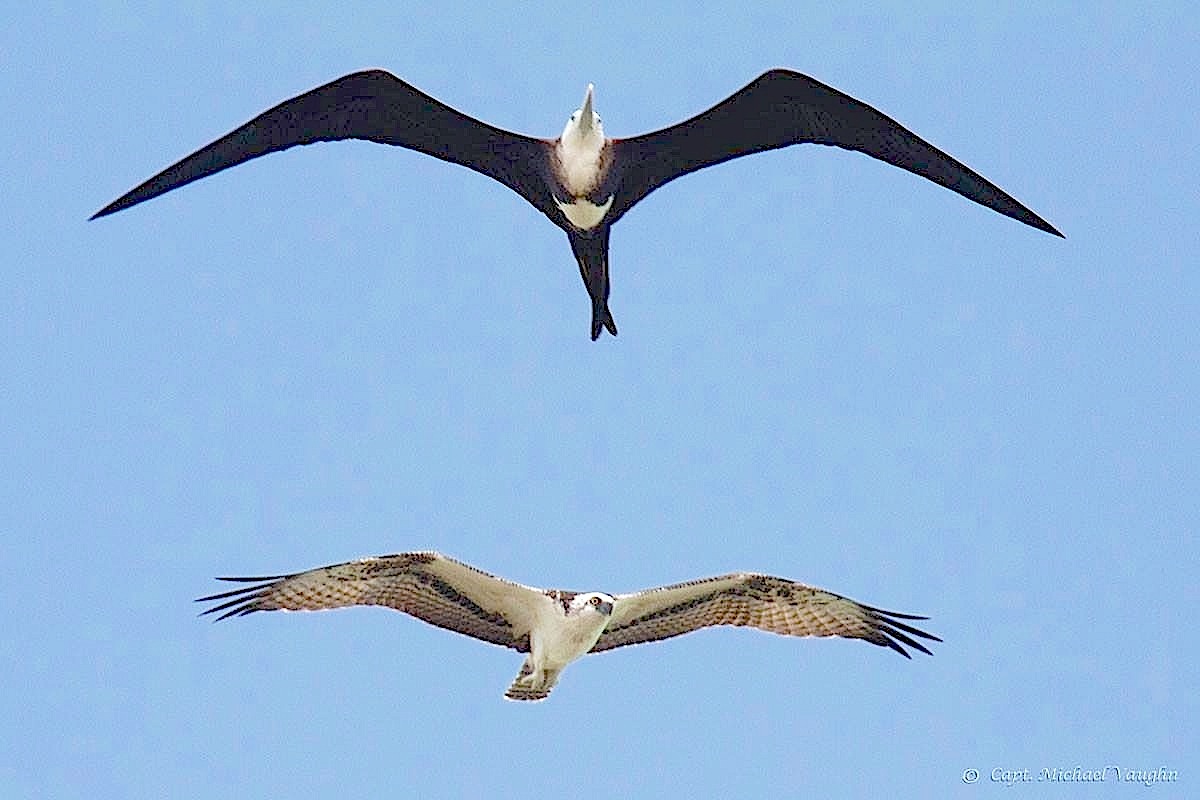
An osprey escorts a female frigatebird from his territory to a different bit of sky…Frigatebird & Osprey Michael Vaughn

Juvenile frigatebirdFrigatebird (juv) Michael Vaughn

A fully-inflated male with a droopy one who needs to get started quick if he’s going to get a mateFrigatebirds (m) 1 Michael Vaughn

ARE FRIGATEBIRDS ANY USE TO MAN OR BEAST?

Yes, emphatically so, to man anyway. Mariners through the ages have used frigatebirds as indicators of nearby land – not necessarily visible, but within sailing distance. And fishermen through the ditto have used them as reliable indicators of where fish are to be found. As an example from personal experience on Abaco, going fishing out of Casuarina into the deep waters of the open sea, the sight of high-flying frigatebirds signals ‘get ready to fish’. They are scouting around for fish, and so are you. But they know where the fish are. Follow them and you will may be rewarded. Because where there are fish for seabird predators, there are fish for the large fish predators – mahi mahi, tuna and wahoo, for example. This is not my main type of fishing, but each time we have been out in those waters – with the Delphi Club often a still-visible speck on the horizon – the frigatebirds have led us to good catches of mahi mahi (= dorado or ‘dolphin’). Last year, under the watchful gaze of the frigatebirds, in a heart-stopping moment I jumped a wahoo. If that sounds slightly rude, it isn’t – and I didn’t catch it anyway. It just leapt vertically right out of the water without taking the goodies…

STOP PRESS Cheryl Wile Ferguson sent me a great photo of a female MF being sociable with humans in the Galapagos. She hitched a ride for 2 hours during a sea crossing…Magnificent Frigatebird (f) hitching a boat ride (Cheryl Wile Ferguson)

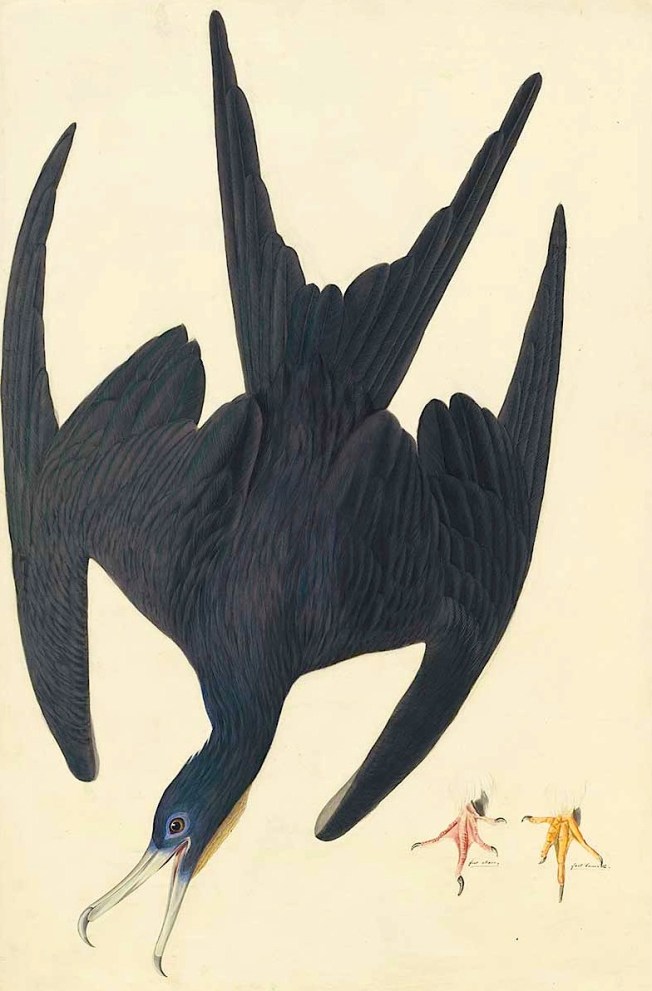
Audubon’s Magnificent FrigatebirdAudubon Frigatebird

Credits: first and foremost to Athena Alexander and Jet Eliot for use permission for images 1 – 3 (taken on Galapagos) and much invaluable info; as ever to Tom Sheley (4), Tom Reed (5) and Michael Vaughn (6,7,8,9) for their photos; Cartoon from Birdorable; other images open source; magpie pickings for facts and figures; and some limited personal experience (regrettably but unsurprisingly all my photos of frigatebirds flying, diving, triumphantly catching fish etc are too crap to use)

Unknown's avatar

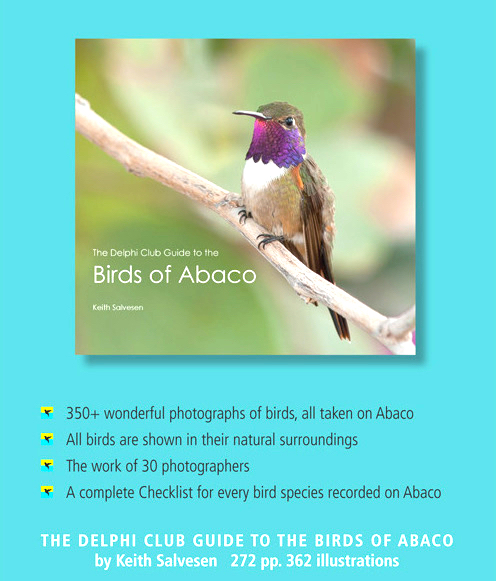
THE DELPHI CLUB GUIDE TO THE BIRDS OF ABACO by KEITH SALVESEN: final copies available


Delphi Club Guide to the Birds of Abaco (Jacket)

THE DELPHI CLUB GUIDE TO THE BIRDS OF ABACO

NEW! UNEXPECTED!

There’s nothing like a massive house clear-out (after 42 years) to reveal lost possessions, forgotten treasures, and (for that matter) a few things best forgotten… Last Spring we began to prepare for a house-move, during which I found a box of bird books that I duly reported here (and happily sold). Recently, sorting through a packed shipping container parked in the unlikely setting of a local farm has revealed plenty of surprises, including a couple more boxes of BIRDS OF ABACO. There definitely aren’t any more. There may be one or two people who might like one / who lost their copy during Dorian / who are new to Abaco and its wonderful birdlife. Here is a chance to own one… 

In the spirit of recycling I am reusing the original blurb because it still holds good today. The book is only ‘out of date’ to the extent that since publication about a dozen new species have been reported. Most were seen just the once, some for a few weeks at most. So although exciting, the newcomers were more ‘Birds Passing Through…’ than ‘Birds Of…’ Abaco  

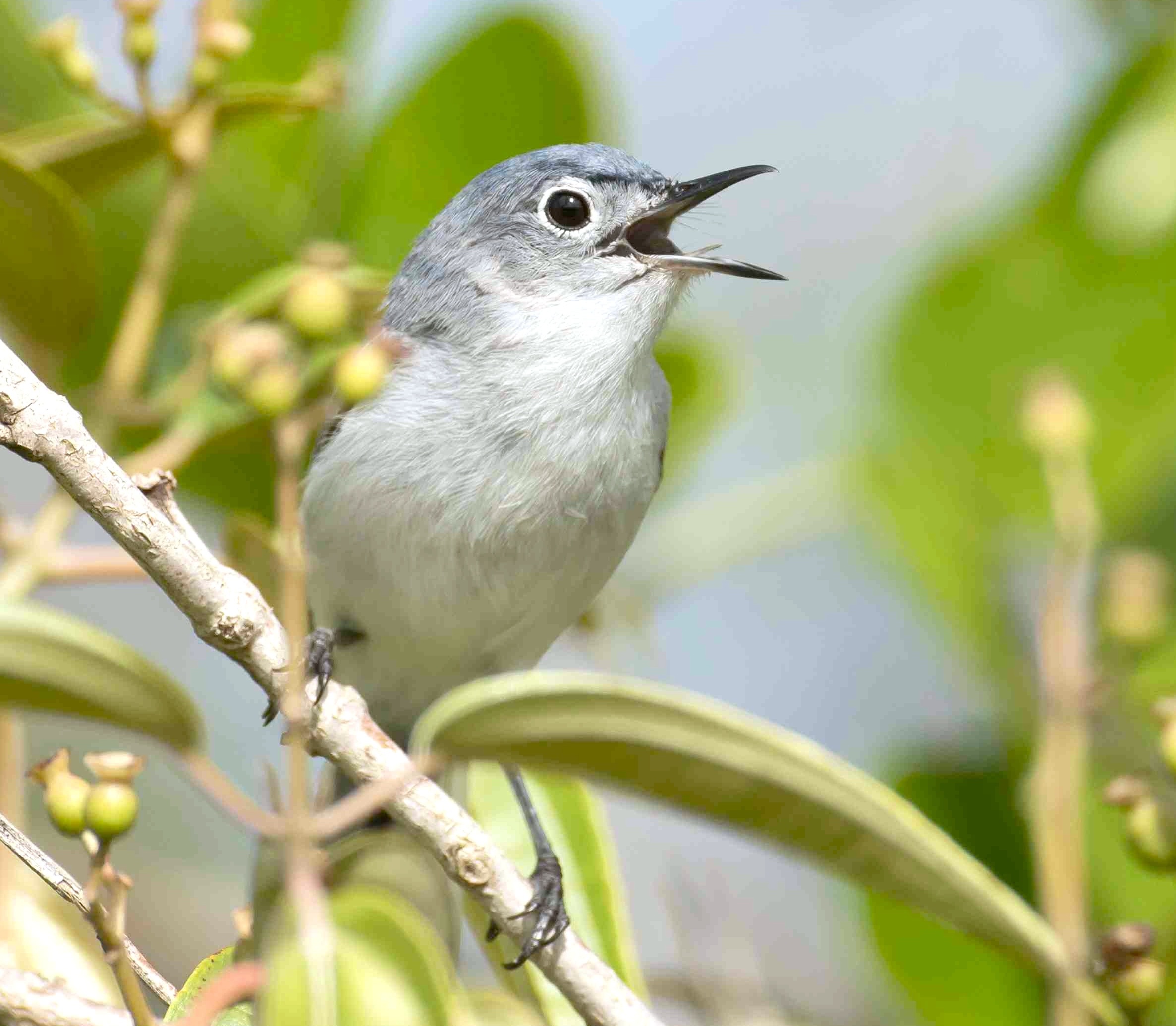
Blue-gray Gnatcatcher vocalizing.Abaco Bahamas.6.13.Tom Sheley a

The originator of the idea for the book – as with the entire Delphi Club project – was Peter Mantle, the publisher. He took a risk based on my (then) quite feeble Rolling Harbour blog about the birds and other attractions of the island. The 2kg book took 16 months from conception to the arrival of three pallets of printed books on the dockside in Marsh Harbour, having travelled by a tortuous route from specialist printers in Italy.

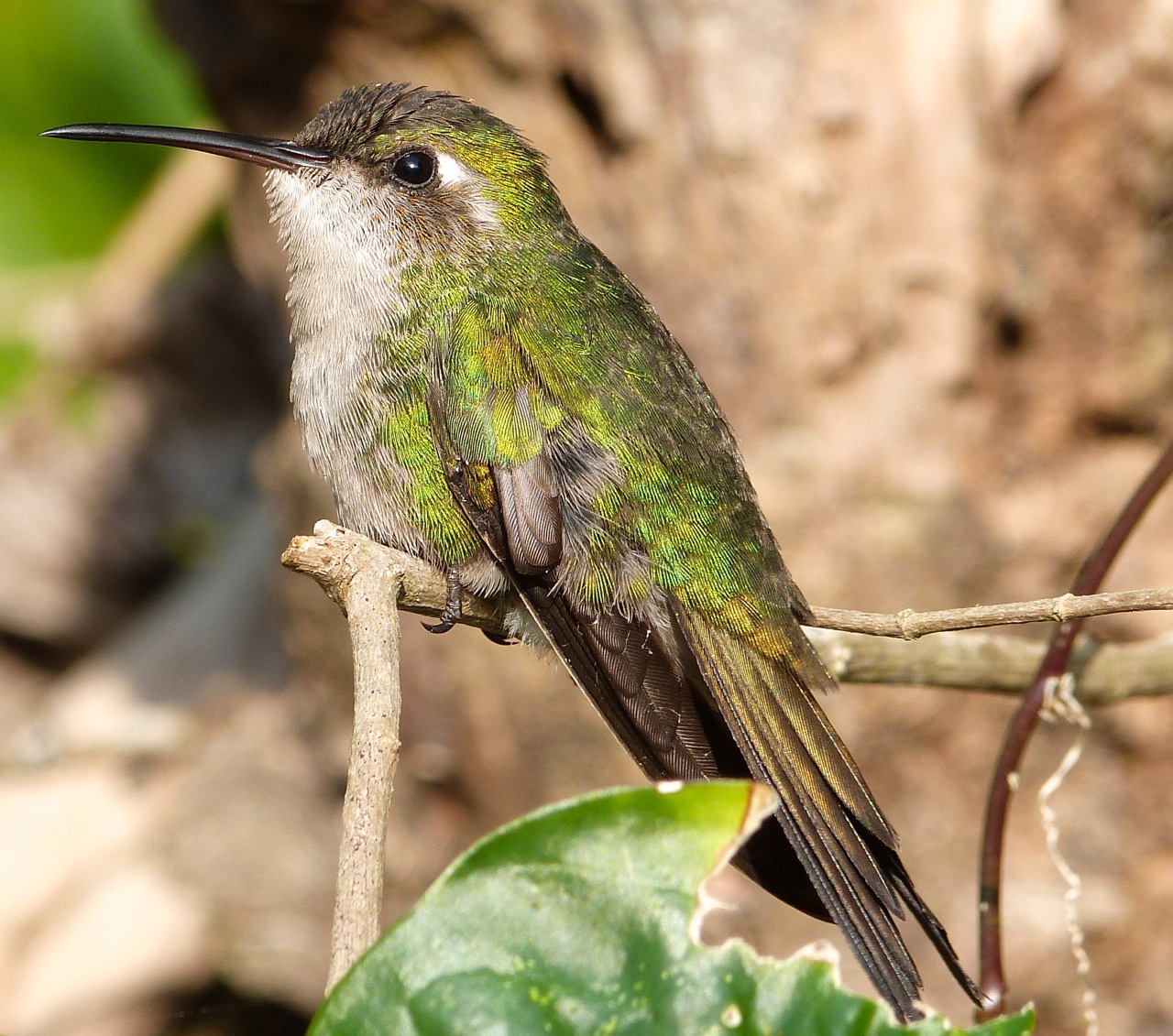
Cuban Emerald Hummingbird, Delphi, Abaco (Keith Salvesen)

As part of the project, Abaco schools, libraries and wildlife organisations were given copies for educational purposes. A percentage of profits was given to local wildlife causes. We quickly sold a great many copies,  and couldn’t have been more pleased with the response to the book, a unique publication for the Bahamas. The captions (below) about the book and content were written much nearer the time, so I’ll leave them as they are. I hope you enjoy the photos even if you don’t want a copy!

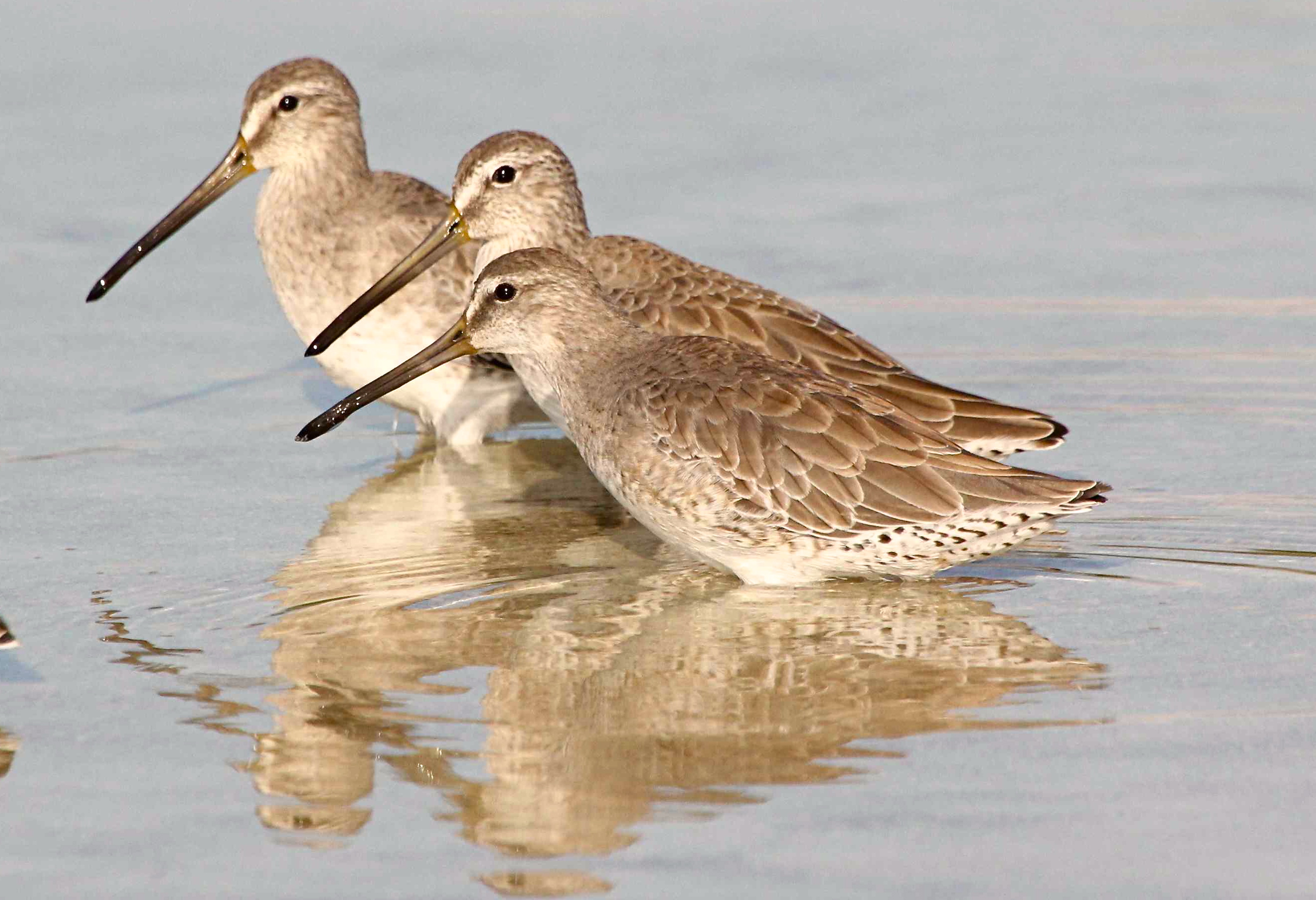
Short-billed Dowitcher, Abaco (Bruce Hallett)

The Guide showcases the rich and varied bird life of Abaco, Bahamas and features both resident and migratory species including rarities and unusual sightings. The main features are as follows:

  • 272 pages with more than 350 photographs
  • 163 species shown in vivid colour – nearly two-thirds of all the bird species ever recorded for Abaco
  • Every single photograph was taken on Abaco or in Abaco waters
  • All birds are shown in their natural surroundings – no feeders or seed trails were used
  • Several birds featured are the first ones ever recorded for Abaco or even for the entire Bahamas

Clapper Rail Abaco Bahamas Tom Sheley

  • A total of 30 photographers, both experienced and amateur, contributed to the project
  • The book has had the generous support of many well-known names of Abaco and Bahamas birding
  • A complete checklist of every bird recorded for Abaco since 1950 up to the date of publication was compiled specially for the book.
  • A neat code was devised to show at a glance when you may see a particular bird, and the likelihood of doing so. Birds found at Delphi are also marked.
  • Specially commissioned cartographer’s Map of Abaco showing places named in the book

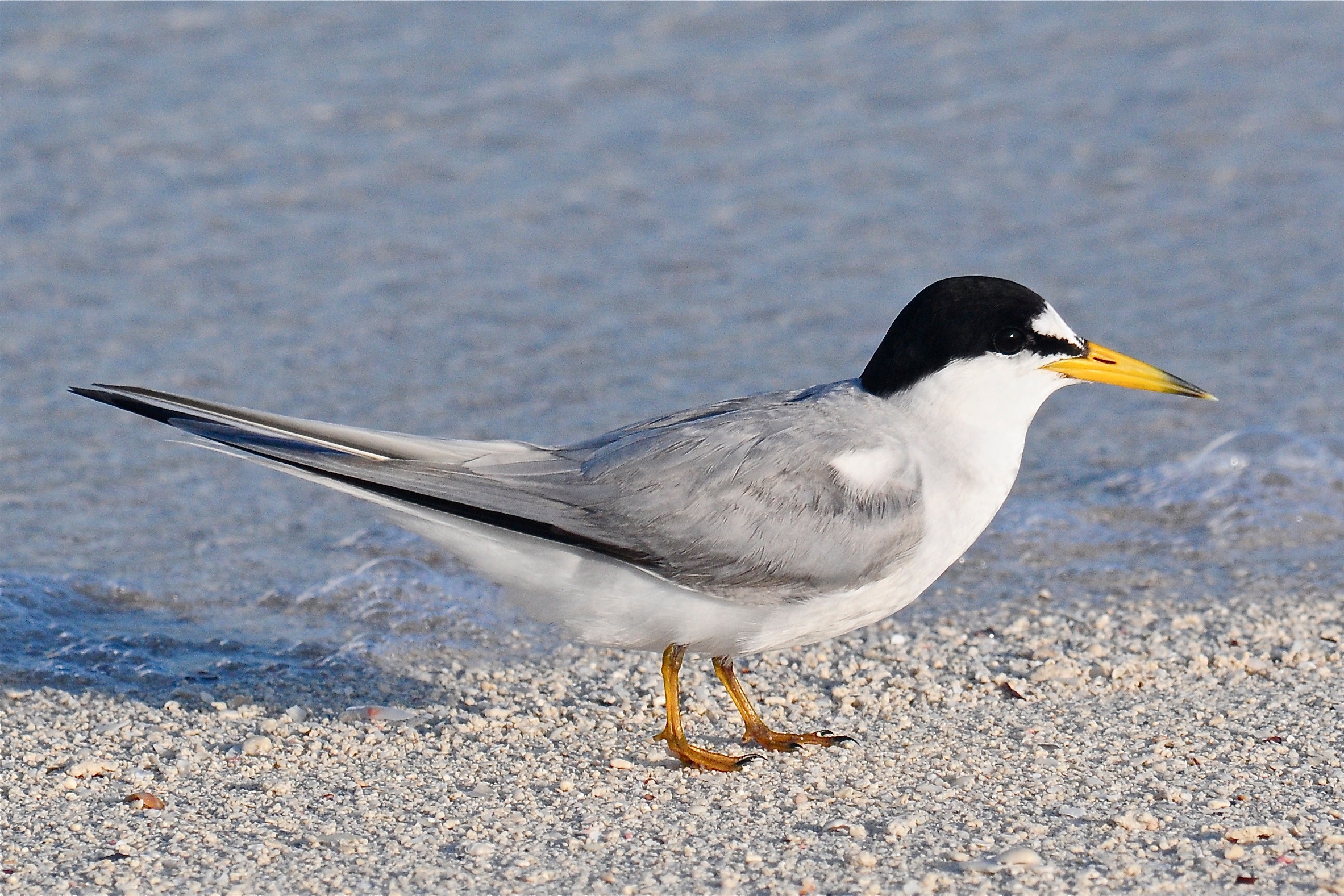
Least Tern_ACH3672 copy

  • Informative captions intentionally depart from the standard field guide approach…
  • …as does the listing of the birds in alphabetical rather than scientific order
  • Say goodbye to ’37 warbler species on consecutive pages’ misery
  • Say hello to astonishing and unexpected juxtapositions of species

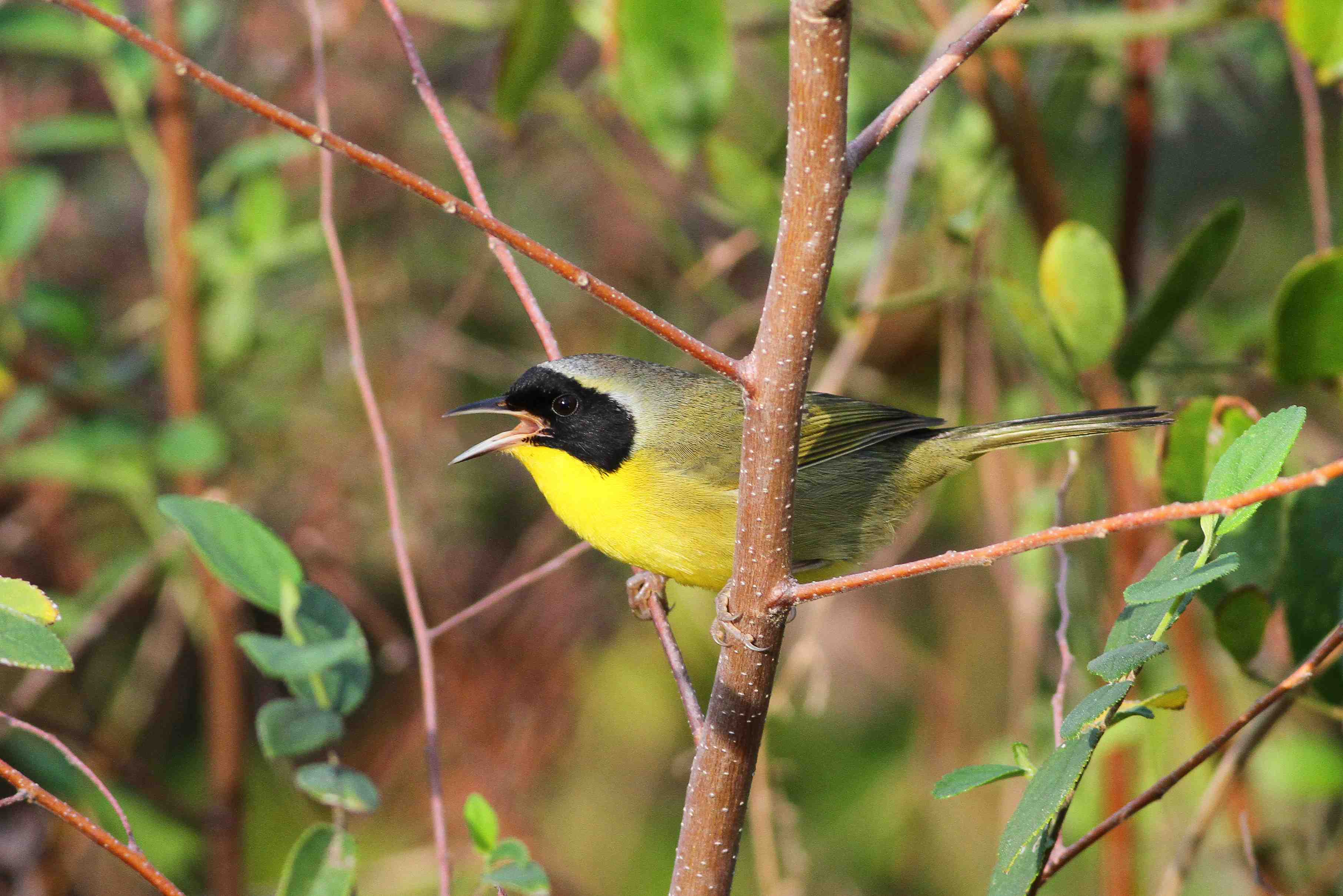
Abaco_Bahama Yellowthroat_Gerlinde Taurer copy

  • The book was printed in Florence, Italy by specialist printers on Grade-1 quality paper
  • Printing took pairs of printers working in 6 hour shifts 33 hours over 3 days to complete
  • The project manager and the author personally oversaw the printing

Smooth-billed Ani pair GT

  • The book is dedicated to the wildlife organisations of Abaco
  • A percentage of the proceeds of sale will be donated for the support of local wildlife organisations
  • A copy of the book has been presented to every school and library on Abaco

Piping Plover BH IMG_1919

The book is published by the Delphi Club. The project was managed by a publishing specialist in art and architecture books. The author is the wildlife blogger more widely known on Abaco and (possibly) beyond as ‘Rolling Harbour’. Oh! So that would in fact be Mrs Harbour and myself. Well well! What were the chances?

BOOK LAUNCH BAHAMAS BIRDING ROYALTY (Tony White, Bruce Hallett, Woody Bracey), A COMMONER… & AN EMBARRASSING AMOUNT OF REFRESHMENT

Painted Bunting male.Abaco Bahamas.Tom Sheley

BOOK SALE DETAILS
 
I am pricing the books at $120 inc. shipping. They are in England, heavy, and expensive to post. 1/3 of the price will be the flight of the birds across the Atlantic. If you would like a copy and do not already have my contact details, email me at rollingharbour.delphi@gmail.com
 
 
American Oystercatchers BH IMG_2000 copy 2

Photos: Tom Sheley (3,4,9,10),  Bruce Hallett (6,8), Gerlinde Taurer (1,7), Tony Hepburn (5), Keith Salvesen (2,11)

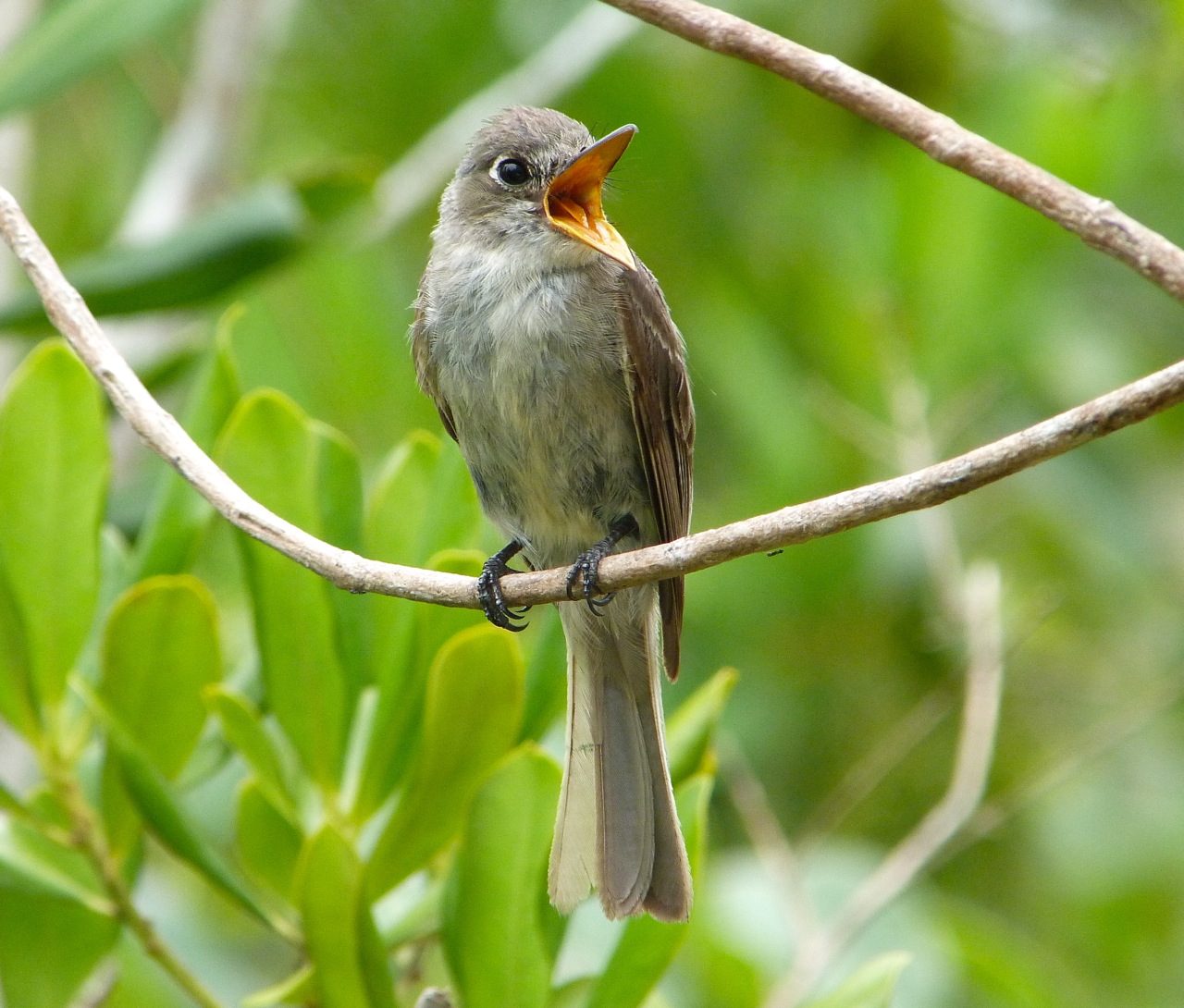
Cuban (Crescent-eyed) Pewee, Delphi, Abaco (Keith Salvesen)

THE ORIGINAL FLYER

"Birds of Abaco" flyer

Unknown's avatar

THE DELPHI CLUB GUIDE TO THE BIRDS OF ABACO by KEITH SALVESEN – a few copies now available


Delphi Club Guide to the Birds of Abaco (Jacket)

THE DELPHI CLUB GUIDE TO THE BIRDS OF ABACO

BIRDS OF ABACO was launched at the Delphi Club, Abaco, Bahamas in March 2014. I thought all copies had been sold or donated ages ago. In the aftermath of Hurricane Dorian in 2019, a number of Abaconians asked if I could replace their ruined copies. Sadly I could not. Or so I thought. A current blitz to clear our house (40 years-worth of stuff) has unearthed 2 boxes of the book, so I have decided to sell them. Scroll to the end for further details. First, though, check out these birds… Blue-gray Gnatcatcher vocalizing.Abaco Bahamas.6.13.Tom Sheley a The originator of the idea for the book – as with the entire Delphi Club project – was Peter Mantle, the publisher. He took a risk based on my (then) quite feeble Rolling Harbour blog about the birds and other attractions of the island. The 2kg book took 16 months from conception to the arrival of three pallets of printed books on the dockside in Marsh Harbour, having travelled by a tortuous route from specialist printers in Italy. Cuban Emerald Hummingbird, Delphi, Abaco (Keith Salvesen) As part of the project, Abaco schools, libraries and wildlife organisations were given copies for educational purposes. A percentage of profits was given to local wildlife causes. We quickly sold a great many copies,  and couldn’t have been more pleased with the response to the book, a unique publication for the Bahamas. The captions (below) about the book and content were written much nearer the time, so I’ll leave them as they are. I hope you enjoy the photos even if you don’t want a copy! Short-billed Dowitcher, Abaco (Bruce Hallett) The Guide showcases the rich and varied bird life of Abaco, Bahamas and features both resident and migratory species including rarities and unusual sightings. The main features are as follows:
  • 272 pages with more than 350 photographs
  • 163 species shown in vivid colour – nearly two-thirds of all the bird species ever recorded for Abaco
  • Every single photograph was taken on Abaco or in Abaco waters
  • All birds are shown in their natural surroundings – no feeders or seed trails were used
  • Several birds featured are the first ones ever recorded for Abaco or even for the entire Bahamas
Clapper Rail Abaco Bahamas Tom Sheley
  • A total of 30 photographers, both experienced and amateur, contributed to the project
  • The book has had the generous support of many well-known names of Abaco and Bahamas birding
  • A complete checklist of every bird recorded for Abaco since 1950 up to the date of publication was compiled specially for the book.
  • A neat code was devised to show at a glance when you may see a particular bird, and the likelihood of doing so. Birds found at Delphi are also marked.
  • Specially commissioned cartographer’s Map of Abaco showing places named in the book
Least Tern_ACH3672 copy
  • Informative captions intentionally depart from the standard field guide approach…
  • …as does the listing of the birds in alphabetical rather than scientific order
  • Say goodbye to ’37 warbler species on consecutive pages’ misery
  • Say hello to astonishing and unexpected juxtapositions of species
Abaco_Bahama Yellowthroat_Gerlinde Taurer copy
  • The book was printed in Florence, Italy by specialist printers on Grade-1 quality paper
  • Printing took pairs of printers working in 6 hour shifts 33 hours over 3 days to complete
  • The project manager and the author personally oversaw the printing
Smooth-billed Ani pair GT
  • The book is dedicated to the wildlife organisations of Abaco
  • A percentage of the proceeds of sale will be donated for the support of local wildlife organisations
  • A copy of the book has been presented to every school and library on Abaco
Piping Plover BH IMG_1919

The book is published by the Delphi Club. The project was managed by a publishing specialist in art and architecture books. The author is the wildlife blogger more widely known on Abaco and (possibly) beyond as ‘Rolling Harbour’. Oh! So that would in fact be Mrs Harbour and myself. Well well! What were the chances?

BOOK LAUNCH BAHAMAS BIRDING ROYALTY (Tony White, Bruce Hallett, Woody Bracey), A COMMONER… & AN EMBARRASSING AMOUNT OF REFRESHMENT 

Painted Bunting male.Abaco Bahamas.Tom Sheley

BOOK SALE DETAILS 2021
I am pricing the books at $120 inc. shipping. They are in England, heavy, and expensive to post. 1/3 of the price will be the flight of the birds across the Atlantic. If you would like a copy and do not already have my contact details, email me at rollingharbour.delphi@gmail.com
American Oystercatchers BH IMG_2000 copy 2

Photos: Tom Sheley (3,4,9,10),  Bruce Hallett (6,8), Gerlinde Taurer (1,7), Tony Hepburn (5), Keith Salvesen (2,11)

Cuban (Crescent-eyed) Pewee, Delphi, Abaco (Keith Salvesen)

THE ORIGINAL FLYER

"Birds of Abaco" flyer

Unknown's avatar

‘THE BIRDS OF ABACO’: HURRICANE DORIAN RELIEF


Abaco (Bahama) Parrot - Melissa Maura

‘THE BIRDS OF ABACO’: HURRICANE DORIAN RELIEF

ABACO, BAHAMAS has been all but destroyed by Hurricane Dorian. The horrendous scale of the disaster in human terms alone is only now becoming clear as the days pass and new tragedies are revealed. Many established relief funds – international, national and local – are being very generously supported for the benefit of those who have suffered so grievously. I am adding to the number through my specific link to Abaco and its wildlife.

Black-necked Stilt, Abaco Bahamas (Alex Hughes)

GO FUND ME BIRDS

For obvious reasons, the GFM page (in edited form here) has a rather more formal , explicatory tone than I would usually use.

Sally and I were founder members of the Delphi Club, Abaco and retain strong connections with the island and the community. I run a conservation program for rare migratory plovers that overwinter on Abaco; and I am involved with BMMRO & its marine mammal research.


‘THE BIRDS OF ABACO’, of which I am the author, was published in 2014. The book was designed by Sally and published by Peter Mantle / The Delphi club. By the end of last year the edition had sold out, and all planned educational donations to schools, libraries and relevant organisations had been completed. 

Olive-capped Warbler, Abaco Bahamas (Tom Sheley)
However, I have a couple of dozen books left in the UK.  Through this fundraiser, I am offering a copy of the book in exchange for a donation of $150 (or the equivalent). The resulting fund (minus the cost of fulfilment from the UK) will be added to the funds achieved by the Delphi Club through their DORIAN RELIEF FUND .

A higher donation is of course encouraged; and please note, it is not compulsory to receive a bird book.  Smaller donations are extremely welcome too, and for those of $50+ I will offer the donors a high-res PDF of a bird of their choice from a selection of several significant species found on Abaco; or a PDF of the complete bird species checklist for Abaco. That’s voluntary too.

Cuban Pewee, Abaco Bahamas (Keith Salvesen / Rolling Harbour)


The original price of this large photographic book was $145. It showcases the wonderful birds of Abaco with contributions from 30 photographers. Almost all are either residents of Abaco, or have strong connections with – and affection for – the island and its cays. 

The books can be sent to Bahamas, USA, Canada and Europe. For any other destination, please contact me before you make a donation. Books will not be dispatched before October.

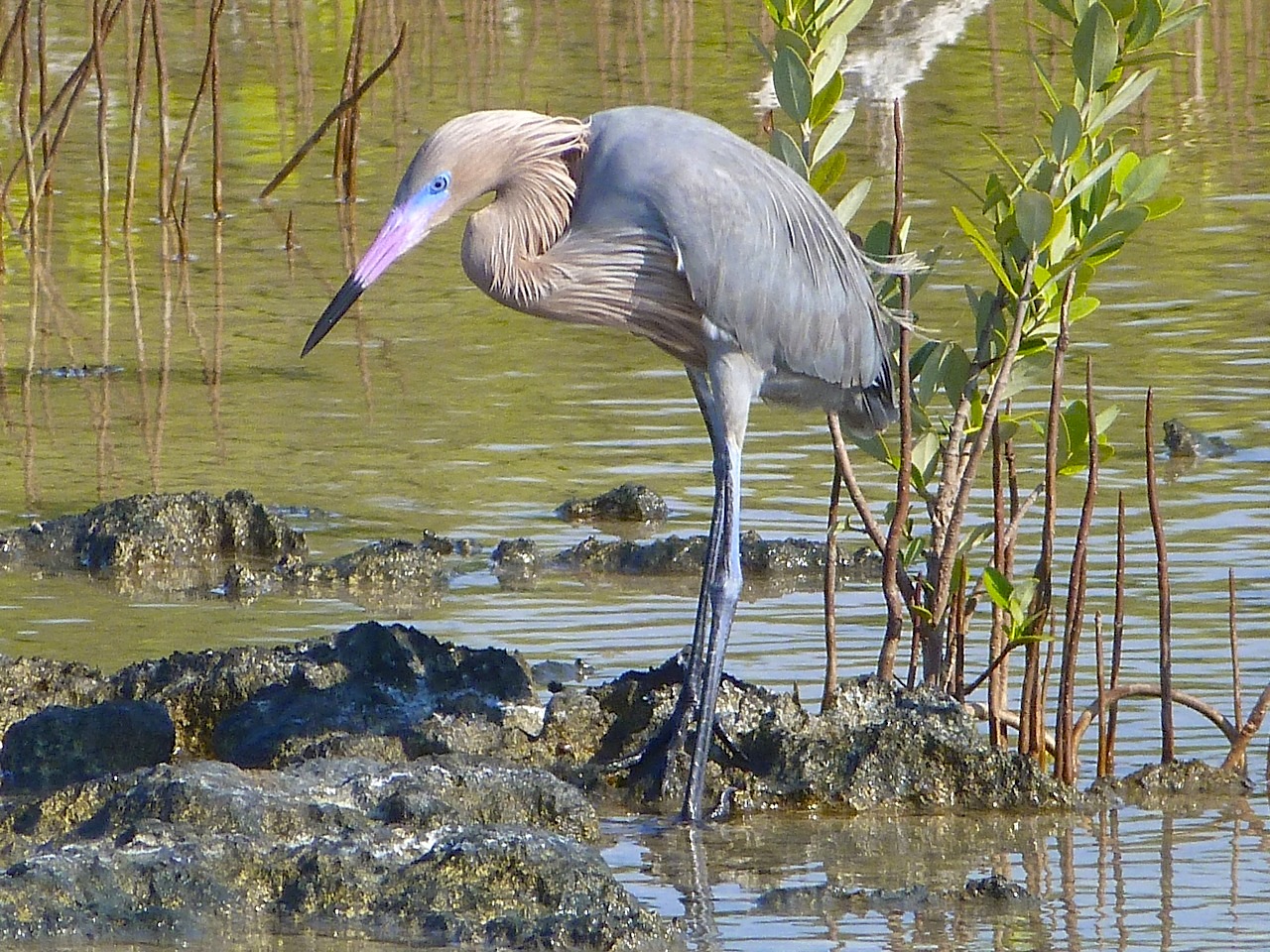
Reddish Egret, breeding colours - Abaco Bahamas (Keith Salvesen / Rolling Harbour)
Please note that the Delphi Club does not have a stock of books and is not directly involved with this fundraiser. Please contact me with any inquiries, even though the Club details are shown on the pre-publication flyer below.

Keith Salvesen

Rolling Harbour Abaco

Photo Credits: Melissa Maura – Abaco Parrot (1); Alex Hughes – Black-necked Stilt (2); Sally Salvesen – book jacket (3); Tom Sheley – Olive-capped Warbler (4); Keith Salvesen – Cuban Pewee; Reddish Egret in breeding plumage (5, 6)

Unknown's avatar

LOGGERHEAD KINGBIRD: LORD OF THE FLIES


Loggerhead Kingbird, Sandy Point, Abaco Bahamas (Keith Salvesen)

LOGGERHEAD KINGBIRD: LORD OF THE FLIES

Four principal so-called ‘tyrant flycatchers’ (Tyrannidae) are found on Abaco: the loggerhead kingbird, the gray kingbird, the La Sagra’s flycatcher and the Cuban pewee. These are common permanent residents, except for the gray kingbird which is a summer resident only. Several other flycatcher species are found on Abaco, but they are very uncommon winter residents, rare transients, or vagrants. 

Loggerhead Kingbird, Sandy Point, Abaco Bahamas (Keith Salvesen)

The loggerhead featured here became quite a good companion when I was staying in Sandy Point recently. Like other flycatchers – and indeed the cute little blue-gray gnatcatchers – loggerheads are curious and inquisitive.

Loggerhead Kingbird, Sandy Point, Abaco Bahamas (Keith Salvesen)

Loggerheads seem to have two methods of observing humans and their mysteries. One is by perching on a branch or in a shrub, watching intently. They stay quite still… until suddenly launching into the air to intercept some passing insect with their hooked beaks (so-called ‘hawking’), before returning to their perch. And staring at you again. The other method is to follow you round, either flying slightly ahead as you progress; or fluttering in the coppice alongside you; or playing catch-up from behind. 

Loggerhead Kingbird, Sandy Point, Abaco Bahamas (Keith Salvesen)

A typical quizzical loggerhead sideways look… all flycatchers do this

Loggerhead and gray kingbirds are similar in size, and can be quite easy to confuse. Top seasonal tip: because the grays are summer visitors only, it’s a fairly safe bet that any kingbirds seen between, say, October and April will be the resident loggerheads.

Loggerhead Kingbird, Sandy Point, Abaco Bahamas (Keith Salvesen)

MEMORABLE FACT TO DEPLOY IN CONVERSATION

The collective names for a group of kingbirds are: a Court, a Coronation, or a Tyranny

Loggerhead Kingbird, Sandy Point, Abaco Bahamas (Keith Salvesen)

Photo Credits: Keith Salvesen at Sandy Point, Abaco Bahamas; ‘Lordy’ the Loggerhead

Unknown's avatar

ECHINODERMS, DOLLAR DOVES & PETRIFIED BISCUITS


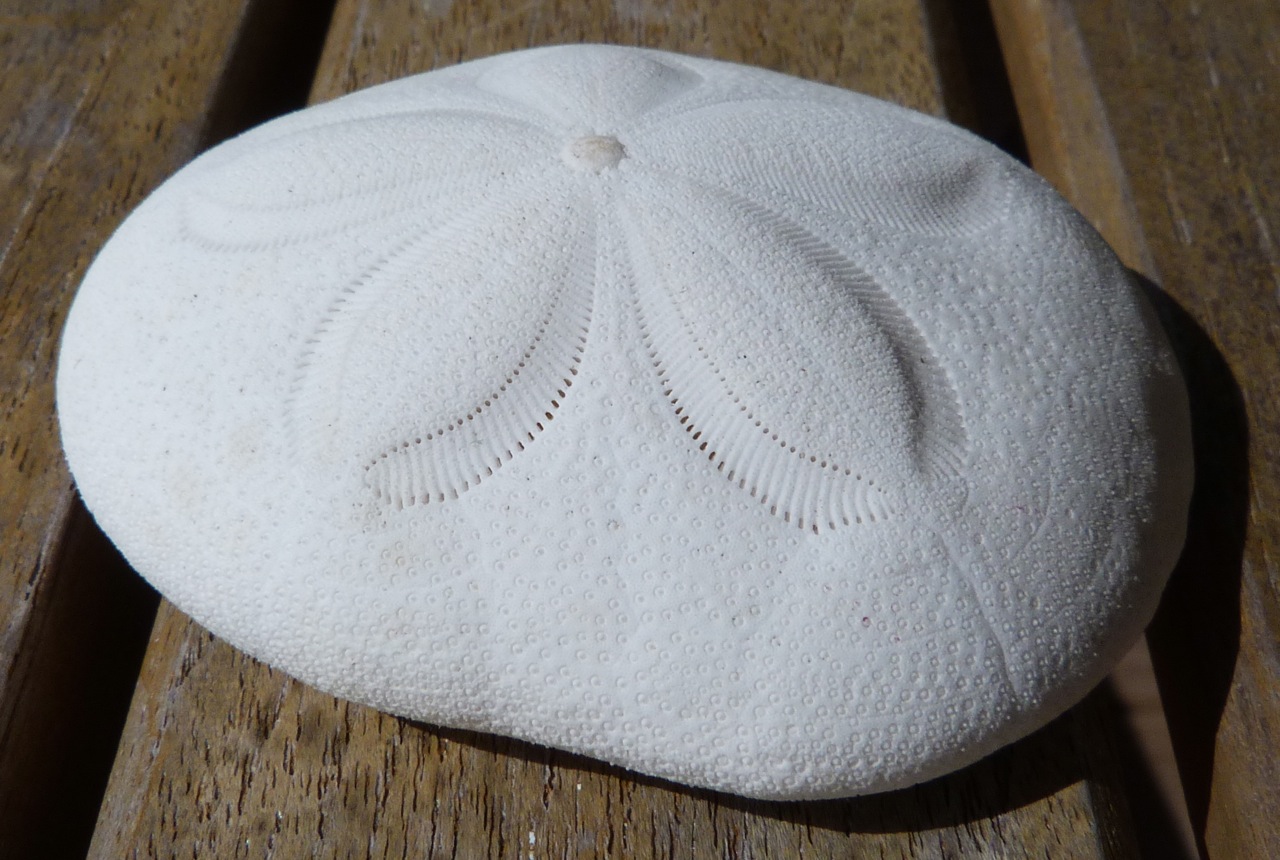
Sand Dollar, Abaco Bahamas (Keith Salvesen / Rolling Harbour)

ECHINODERMS, DOLLAR DOVES & PETRIFIED BISCUITS

Echinoderms (Gr. ‘Hedgehog Skin’) comprise a large variety of sea creatures characterised (mostly) by radial symmetry. In a nutshell a creature with radial (as opposed to bilateral) symmetry can be divided into equal portions from the centre, like a cake. It has no left or right side and no definable front or back.  It is multidirectional from the centre, where the mouth is located. It obviously has a distinct upper side and an underside, but that has no bearing on this form of symmetry. 

Ten dollar Sand Dollar coin, Bahamas

Within the family of radially symmetrical animals, echinoderms (starfish, sand dollars and sea urchins) are unique in having five-point radial symmetry. These are the creatures you are most likely to come across in Abaco. There are two particular aspects of dollars and biscuits that merit a closer look (made more difficult by me stupidly taking photos of white things on a white background).

Sand Dollar Doves, Abaco Bahamas (Keith Salvesen / Rolling Harbour)

DOLLAR DOVES

I’m sure all Bahamians know or are aware of at least one version of the famous ‘Sand Dollar’ poem, in which the various characteristics of the test (the skeleton of the creature) are given religious significance. One verse of the poem may be puzzling: “Now break the centre open And here you will release The five white doves awaiting To spread good will and peace”.

The Sand Dollar Legend

A few years back, Senior Granddaughter was looking at some Abaco sand dollars I’d given her for her growing collection of shells. She picked one up, shook it and it rattled. She said a friend at school had told her that a rattling sand dollar has ‘doves’ inside it, and asked if we could break it open and see. I’ve learnt that it is useless to argue with her – she has the tenacity of a trial lawyer – so we did. This is what we found.

Sand Dollar with a spiky interior like a white cave with stalagmites and stalagtitesSand Dollar Doves, Abaco Bahamas (Keith Salvesen / Rolling Harbour)

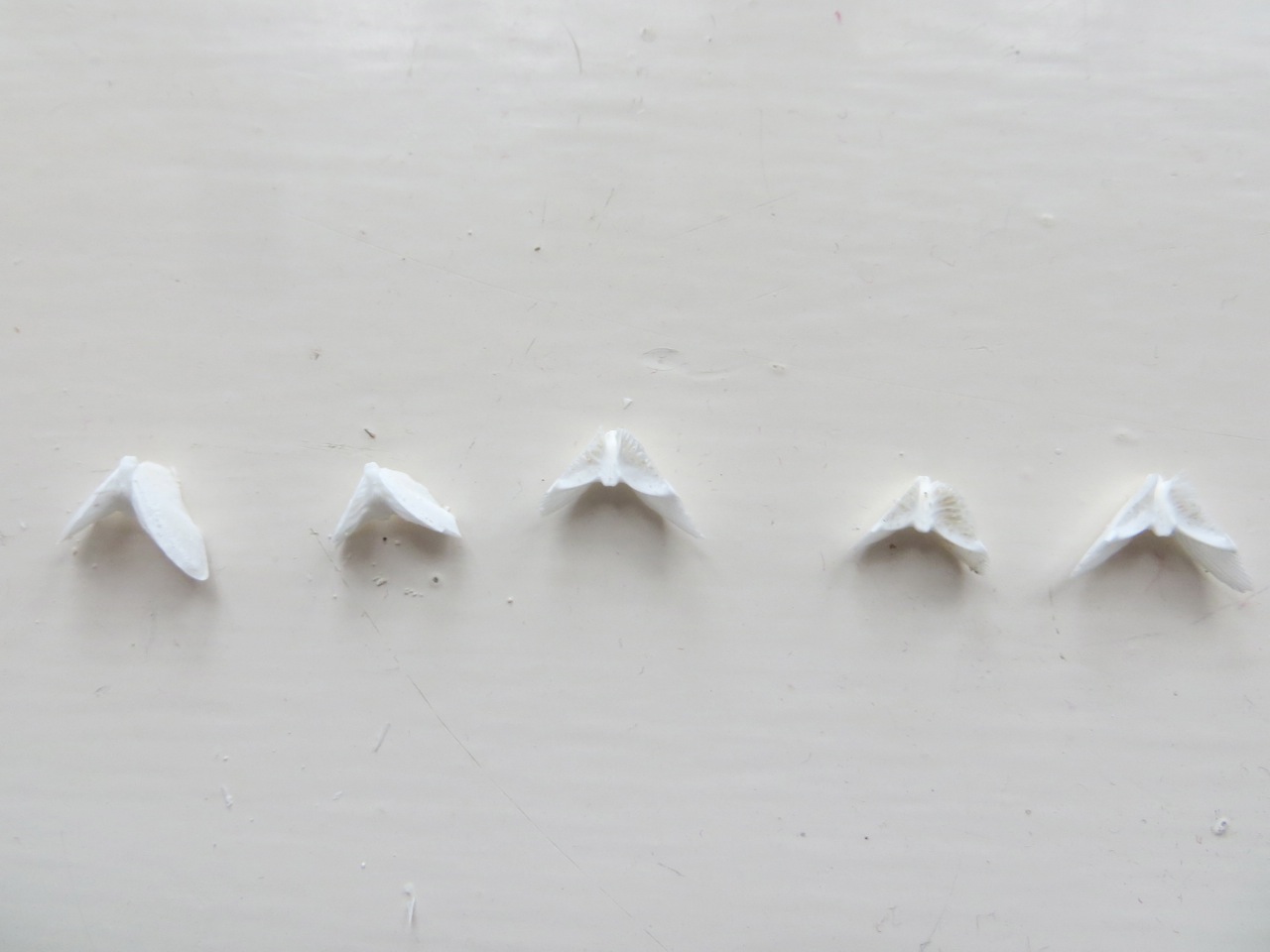
Five white doves (in fact, the separated parts of the creature’s feeding apparatus)Sand Dollar Doves, Abaco Bahamas (Keith Salvesen / Rolling Harbour)

Two broken pieces showing where the doves are centrally locatedSand Dollar Doves, Abaco Bahamas (Keith Salvesen / Rolling Harbour)

A regrettably poor photo of a single doveSand Dollar Doves, Abaco Bahamas (Keith Salvesen / Rolling Harbour)

The image below, from Pinterest, shows the ‘mouth’ with its dove-parts intact, in an arrangement called ‘Aristotle’s Lantern‘, a five-sided globular structure that supports the mouth and jaws of an echinoderm.

Sand Dollar : Aristotle's Lantern : Doves (Pinterest)

PETRIFIED BISCUITS

In common parlance ‘petrified’ is an extreme version of ‘terrified’. Literally, it means ‘turned to stone’ (L. petrus, a rock). It is descriptive of a state of fossilisation, where an animal skeleton or dead wood or plant matter turns over aeons into stone. Senior GD (a most inquisitive girl) followed up on the doves research after discovering a box containing random stones and fossils. She found these two items:

Fossilised sea biscuitsPetrified / Fossilised Sea Biscuit (Keith Salvesen)

A closer look at the pair of rocksPetrified / Fossilised Sea Biscuit (Keith Salvesen)

The undersides of the fossils above – looking like stones but with some tell-tale small holesPetrified / Fossilised Sea Biscuit (Keith Salvesen) Petrified / Fossilised Sea Biscuit (Keith Salvesen)
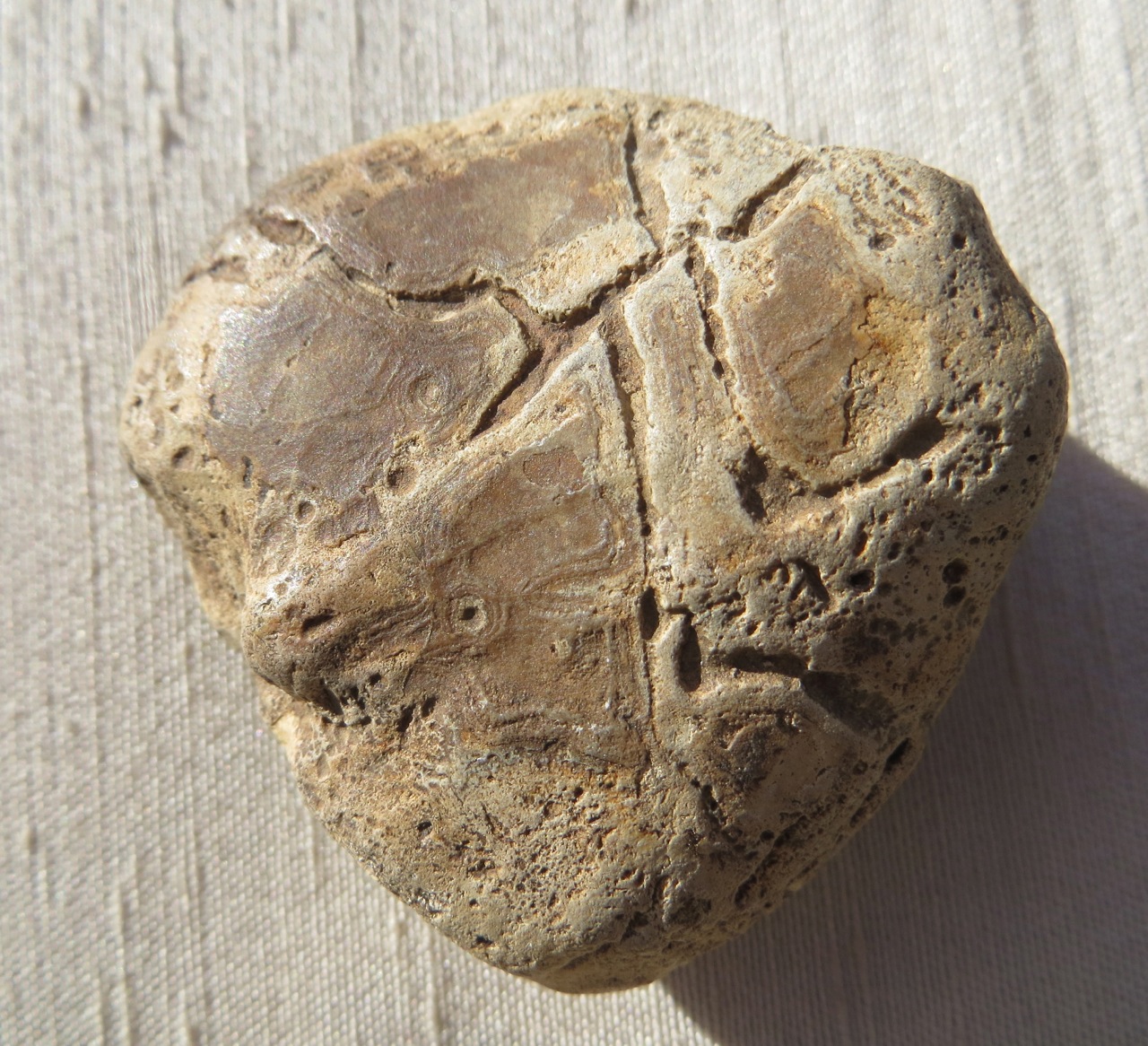
A close-up of the pale biscuitPetrified / Fossilised Sea Biscuit (Keith Salvesen)

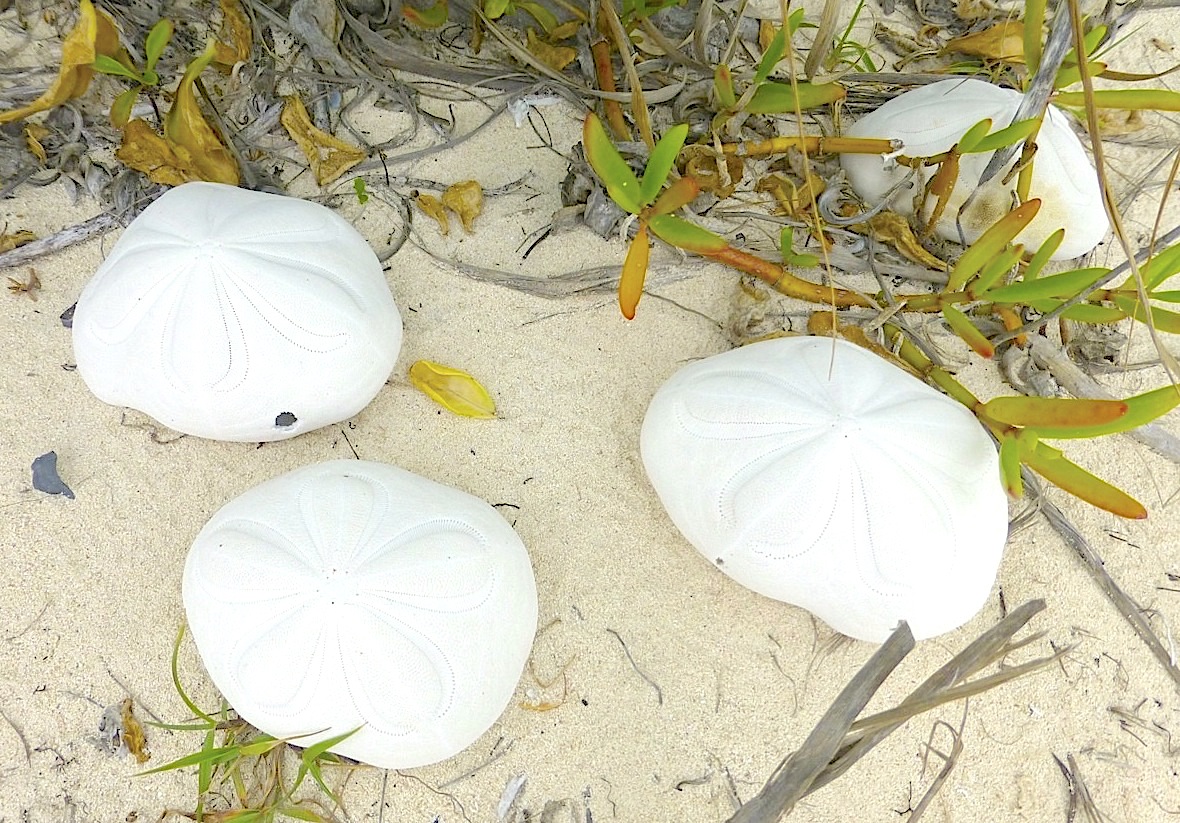
Sea biscuits on the beach at Delphi – familiar white skeletons (‘tests’) but not yet fossilsSea Biscuits, Abaco Bahamas (Keith Salvesen / Rolling Harbour)
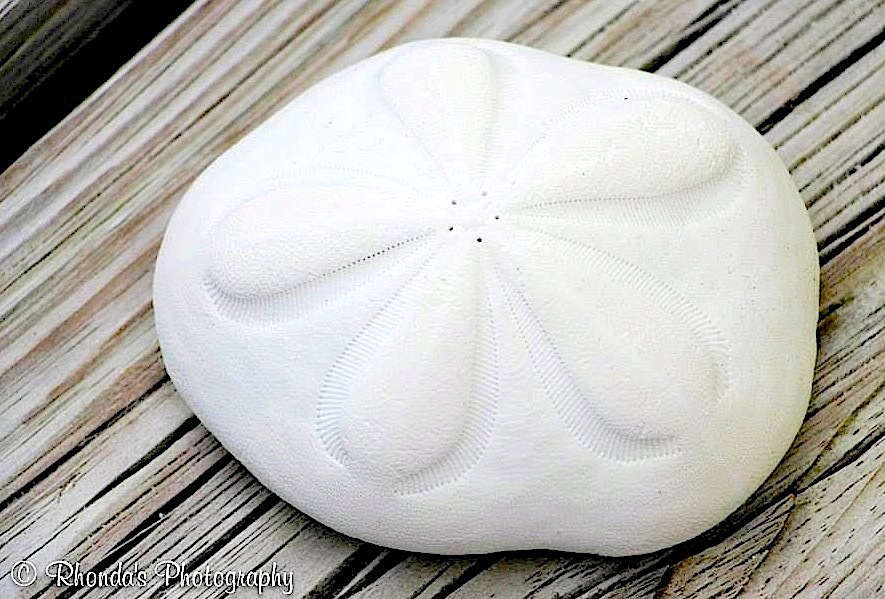
A ‘modern’ non-Jurassic Abaco sea biscuit in close-upSea Biscuit, Abaco Bahamas (Rhonda Pearce)
FUN FACT

Florida has an unofficial but proposed State Fossil, the ‘Sea Biscuit (Eocene Age)’. I didn’t know it before, but it turns out that more than 40 US States have State Fossils. Whatever next? State Bacteria? State Viruses?

Sea biscuit from Madagascar (OS)

SO HOW OLD MIGHT A PETRIFIED BISCUIT BE?

The fossil biscuits I have looked at, from Florida to Madagascar (see small image above), are said to come from three specific historic epochs – from the oldest, Jurassic (145m – 201m years ago), to Eocene (34m – 56m) and Pleistocene (0.01m – 2.6m). 

HOW DOES THAT HELP ANYBODY? BE MORE PRECISE

By all means. Here is an excellent Geochart that gives an idea of the time span. A Jurassic sea biscuit would be more than 145m years old. This chart also helpfully helps avoid confusion with the Eon Era Period Epoch ordering.

geotimescale

You will find more echinoderm entertainment using this link to my fellow-blogger ‘Dear Kitty’ https://dearkitty1.wordpress.com/2007/01/01/big-hedgehog-small-sand-dollars-diving-schools/

All photos ‘in-house’ except the Delphi biscuits, Clare Latimer; & the single biscuit Rhonda Pearce; Sand Dollar poem on Postcard, Dexter Press; the Geochart was in my ‘useful chart photos’ folder but I can’t now find the source. I did try.
Unknown's avatar

PLOVER APPRECIATION DAY 2018: ABACO’S 6 TREASURES


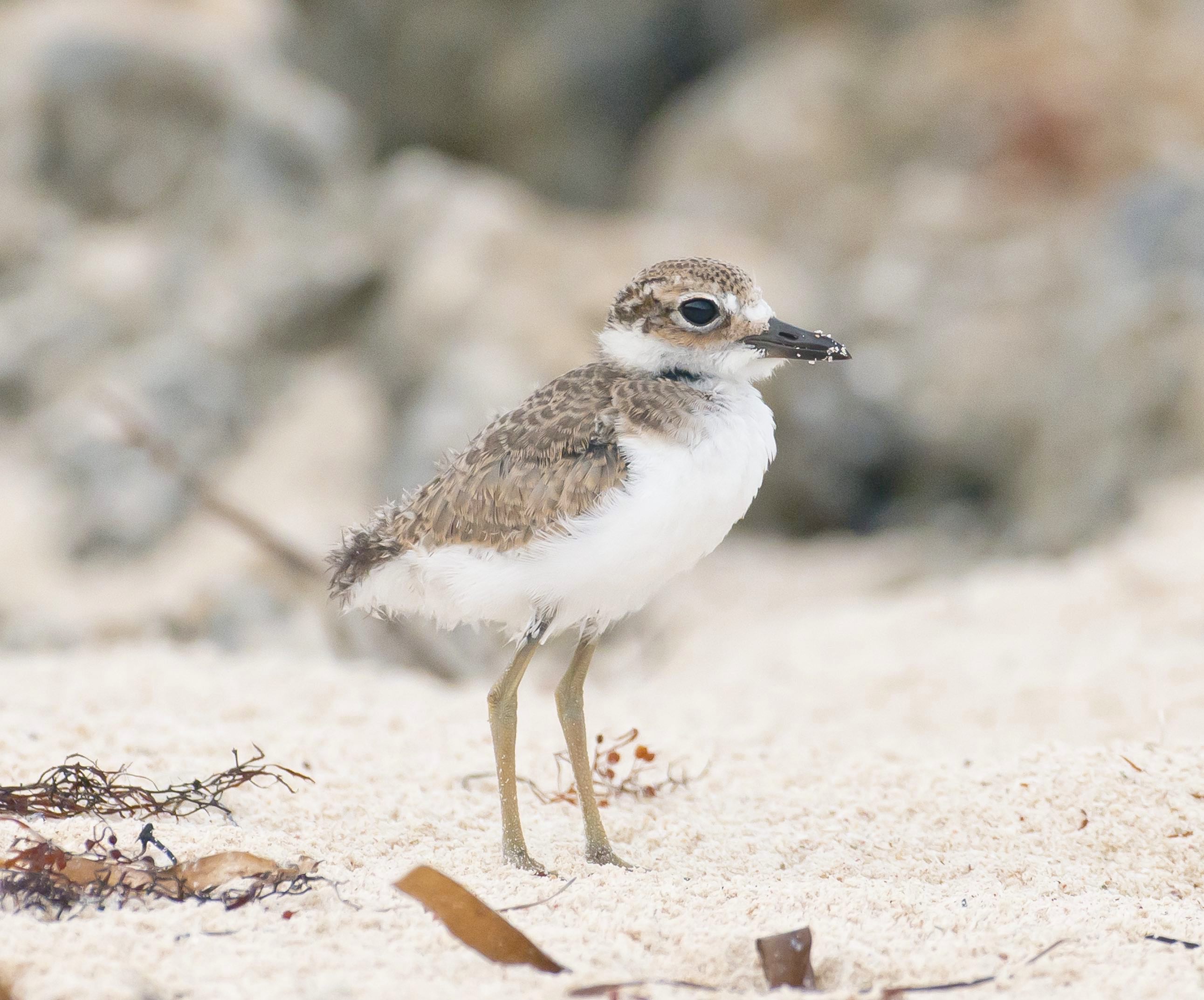
Wilson's Plover Chick, Abaco, Bahamas (Tom Sheley)

PLOVER APPRECIATION DAY 2018: ABACO’S 6 TREASURES

Every day of the year, or so it seems, at least one worthy creature has been awarded an ‘Appreciation Day’, a special day when a particular species has its profile raised and awareness spread around. It certainly seems to be the case with birds; I’m going to assume that it applies to all the other classes of animal – mammals, fish, reptiles, amphibians and invertebrates, each with their own worthy candidates for recognition. Except for no-see-ums, obviously. And fire ants, I hope. You’d think standing on a nest while taking photos just once in a lifetime would be a lesson. I’ve done it twice… Anyway, yesterday was Plover Appreciation Day 2018.

PLOVERS ON ABACO

Until recently Abaco had 33 recorded shorebird species but since the first-ever sightings of a BUFF-BREASTED SANDPIPER in 2016, the number has risen to 34. Of these, a mere 6 are plovers: 

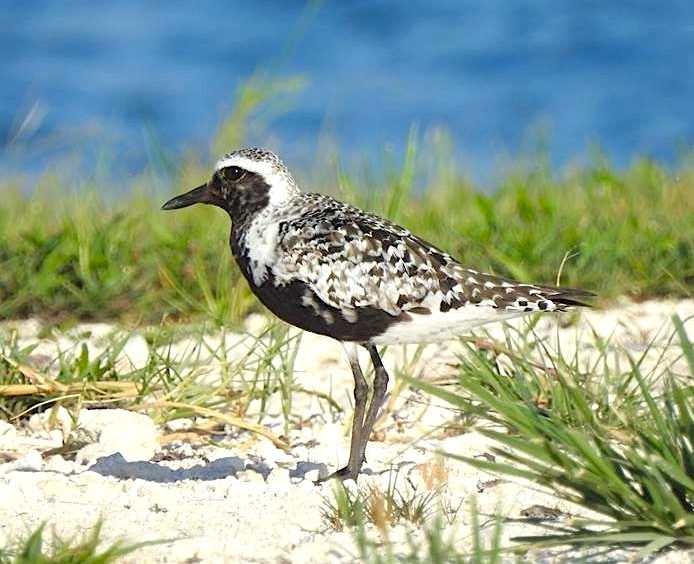
  • Black-bellied Plover                        Pluvialis squatarola                      WR 1
  • American Golden Plover                 Pluvialis dominica                         TR 4
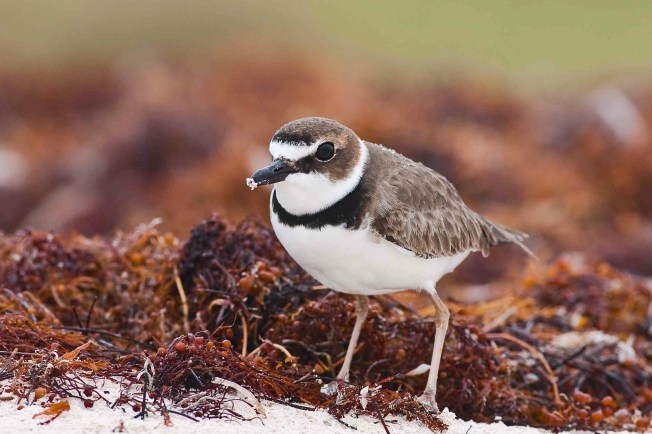
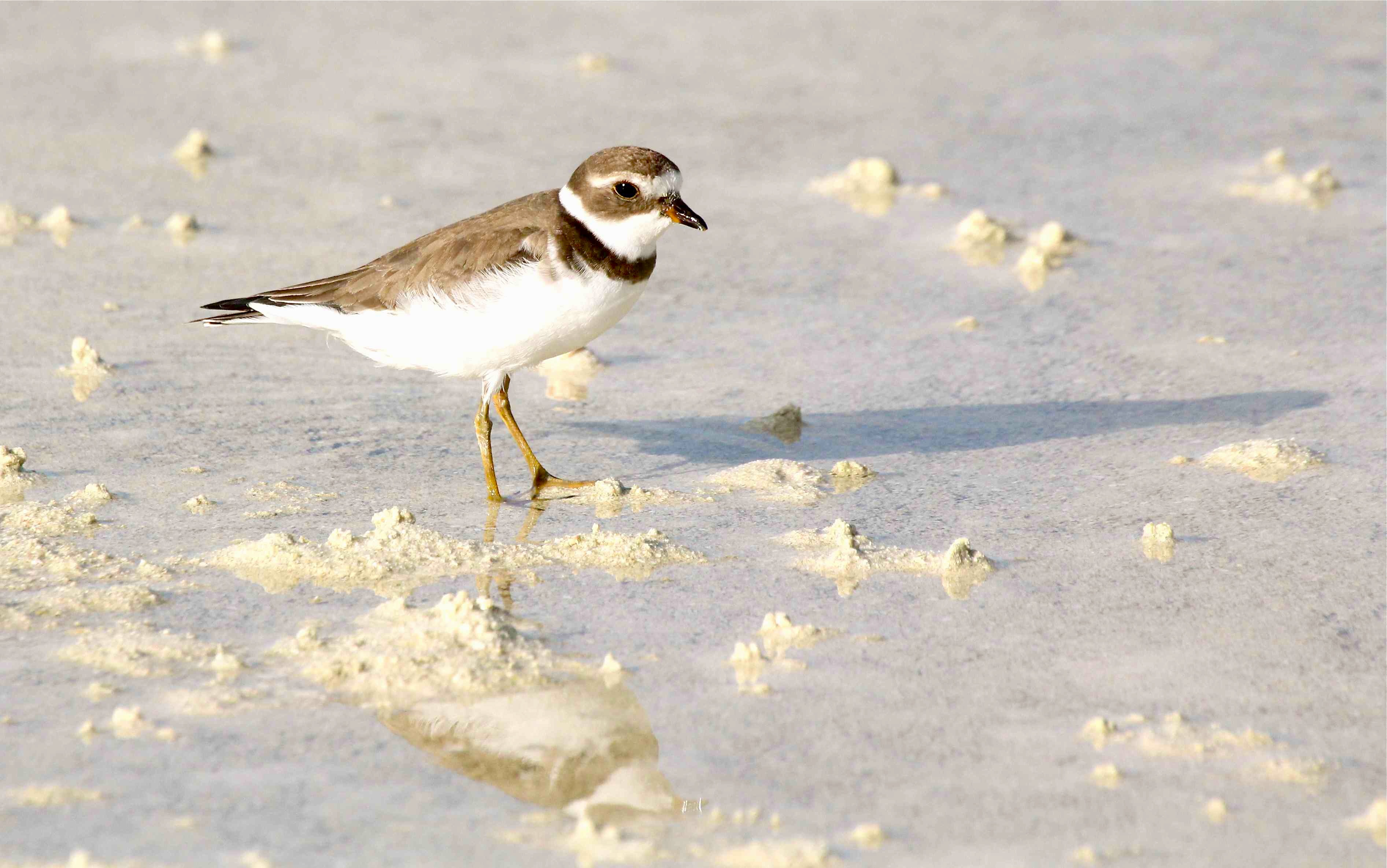
  • Wilson’s Plover                                Ochthodromus wilsonia             PR B 2
  • Semipalmated Plover                     Charadrius semipalmatus            WR 2
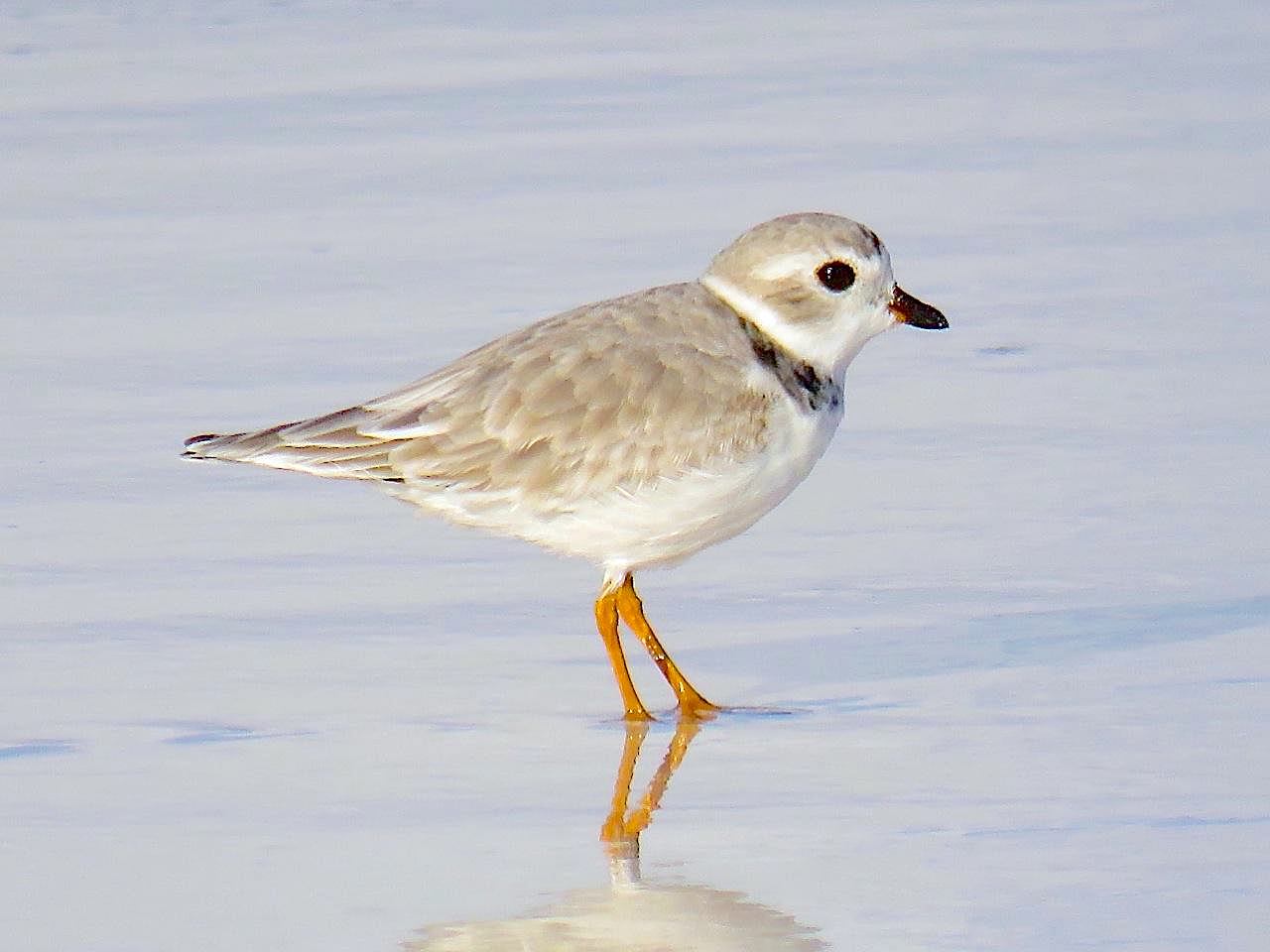
  • Piping Plover                                    Charadrius melodus                     WR 3
  • Killdeer                                              Charadrius vociferus                    WR 2

The codes tell you, for any particular bird, when you may see it (P = permanent, WR = winter resident, TR = transient); whether it breeds (B) on Abaco; and your chance of seeing it, graded from easy (1) to vanishingly unlikely (5)

The best-known of the 6 Abaco plover species is the Wilson’s Plover, because it is the only permanent resident. The American Golden Plover is a rare transient, but we luckily have a photo of one (below) taken on Abaco. All the others are winter residents and easy to middling hard to find.

The Piping Plover is the most interesting species, with a mere 8000 left in the world. There is a vigorous conservation program to protect them and their habitat, both in their breeding grounds in the North and their southern overwintering grounds. Their summer breeding range is in Canada and the Great Lakes, north-central US, and the eastern seaboard. In winter they migrate south, many to the Bahamas – and Abaco is one of their preferred homes. We count as many as we can between August and February, report the banded ones, and find out their origins and histories

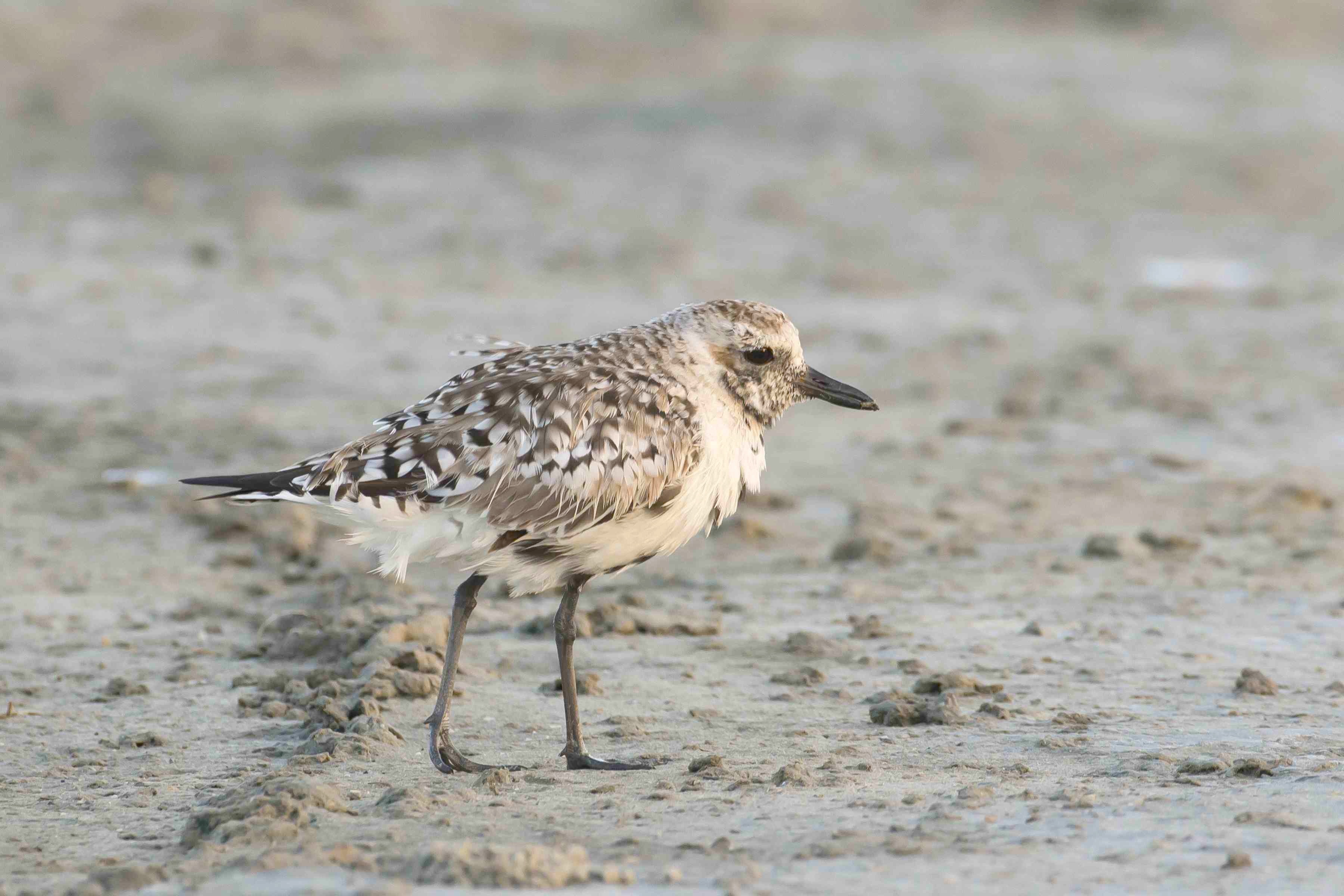
BLACK-BELLIED PLOVER  Pluvialis squatarola   WR 1

Non-breeding plumage (as you would see normally it on Abaco, without the black belly)Black-bellied Plover intermediate plumage. Marls. Abaco Bahamas. Tom Sheley

 Breeding plumage – and the reason for the nameBlack-bellied Plover (breeding plumage), Bahamas (Linda Barry-Cooper)

AMERICAN GOLDEN PLOVER  Pluvialis dominica  TR 4

American Golden Plover, Bahamas (Tony Hepburn)

 SEMIPALMATED PLOVER Charadrius semipalmatus WR 2

Semi-palmated Plover, Bahamas (Tony Hepburn)Semipalmated Plover (f nb), Abaco - Bruce Hallett

KILLDEER Charadrius vociferus WR 2

Kildeer, Abaco - Bruce Hallett

PIPING PLOVER  Charadrius melodus WR 3

Piping Plover, Bahamas (Tony Hepburn)Piping Plover, Abaco Bahamas (Peter Mantle)Piping Plover, Abaco Bahamas (Keith Salvesen)

WILSON’S PLOVER Ochthodromus wilsonia  PR B 2

This permanent resident plover is a year-round presence on the Delphi Club beach, where in summer they nest and raise their tiny fluffball chicks. They are especially significant on Abaco as the only breeding plover species – it’s the only chance we get to see plover nests and chicks… (see header image and below).

Wilson's Plover, Delphi Club Beach, Abaco - Craig NashWilson's Plover, Abaco 12

RELATED POSTS

PIPING PLOVERS

50 WAYS TO PLEASE YOUR PLOVER

WILSON’S PLOVERS (1) ‘Dream Plover’

 WILSON’S PLOVERS (2) Nest Protection

 WILSON’S PLOVERS (3) Scrapes, Chicks & Broken Wings

SEMI-PALMATED PLOVERS

Photo credits: Tom Sheley (1, 2); Linda Barry-Cooper (3); Tony Hepburn (4, 5, 8); Bruce Hallett (6, 7); Peter Mantle (9); Keith Salvesen (10, 13); Sandy Walker (11); Craig Nash (12); Charmaine Albury (14)

Piping Plover, Abaco Bahamas (Charmaine Albury)

Unknown's avatar

LOGGERHEAD KINGBIRD: BENIGN ‘TYRANT’ OF ABACO


Loggerhead Kingbird, Abaco Bahamas (Keith Salvesen)

LOGGERHEAD KINGBIRD: BENIGN ‘TYRANT’ OF ABACO

Abaco is home to 4 main so-called tyrant flycatchers (Tyrannidae): the loggerhead kingbird, the gray kingbird, the La Sagra’s flycatcher and the Cuban pewee. All are common permanent residents except the gray kingbird, which is a summer resident only. Several other flycatcher species are found on Abaco, but they are very uncommon winter residents, rare transients, or vagrants.
Loggerhead Kingbird, Abaco Bahamas (Keith Salvesen)

The loggerhead featured here in several poses is a watchful sentinel at Delphi. His preferred perches are in the edge of the coppice round the pool or at the edge of the main drive. From time to time he will leave his perch to catch a passing insect by ‘hawking’, returning to the same place to eat it.

Loggerhead Kingbird, Abaco Bahamas (Keith Salvesen)

Loggerhead and gray kingbirds can be quite easy to confuse. A couple of years ago I wrote about how to distinguish them, and with gray kingbirds in residence now this is probably a good time to set out the distinctions again.

Loggerhead Kingbird, Abaco Bahamas (Keith Salvesen)

LOGGERHEAD Tyrannus caudifasciatus vs GRAY Tyrannus dominicensis 

DIFFERENCES and SIMILARITIES

TOP TIP ANY KINGBIRD SEEN IN WINTER WILL BE A LOGGERHEAD

  • Kingbirds seen between (say) October & March are Loggerheads. Grays are strictly summer visitors
  • Both are medium size birds and roughly the same size as adults (around 23 cms)
  • Loggerheads have dark brown to near-black heads, grays have lighter, slate-coloured heads
  • Loggerheads have a ‘squared’ tip to the tail; grays have a notched tip
  • Loggerheads may have a whitish fringe at the tip of the tail; grays not so
  • Loggerheads have yellowish tinges to their white undersides & forewings; grays less so or not at all
  • Grays have a dark or black ‘mask’ through the eyes, often clear but not always easy to see
  • Loggerheads allegedly have inconspicuous orange head crests; grays are red. I’ve never seen either!
  • [*RH personal opinion alert*] Grays have larger, heavier beaks than loggerheads
  • Grays are territorially aggressive; when they turn up, the loggerheads tend to retreat to the forest

Loggerhead Kingbird, Abaco Bahamas (Keith Salvesen)

Here is how David Sibley shows the differences

 6323_Sibl_9780307957900_art_r1 3069_Sibl_9780307957900_art_r1-1

Illustrations: David Allen Sibley

GRAY KINGBIRD FOR COMPARISONGray_Kingbird (Dick Daniels Wiki)

MEMORABLE FACT TO DEPLOY IN CONVERSATION

The collective names for a group of kingbirds are: a Court, a Coronation, or a Tyranny

Loggerhead Kingbird, Abaco Bahamas (Keith Salvesen)

Photo Credits: All loggerheads, Keith Salvesen at Delphi;  gray kingbird by Dick Daniels; Illustrations David Sibley

Unknown's avatar

SEA BISCUITS: THEY REALLY DO CONTAIN DOVES – AND MORE!


Sea Biscuit Close-up, Abaco (Keith Salvesen)

SEA BISCUITS: THEY REALLY DO CONTAIN DOVES – AND MORE!

Recently I posed the question whether sea biscuits, like sand dollars contain ‘doves’. I had one in my hand, it rattled, I took a photograph through its ‘mouth hole’ and the question was answered. Biscuits do indeed contain doves – see HERE for details and comparisons with dollar doves.

Sea Biscuit 'Doves', Abaco (Keith Salvesen)

However, I spinelessly* failed to break open the biscuit to check out the contents more closely. I theorised that, because of the 5-way symmetry of these creatures, there would be 5 doves (which are in fact segmented mouth parts) in a biscuit exactly as with a dollar, and amiably challenged anyone to disprove it. [* biscuits and dollars are types of sea urchin – see what I did there?]

Dollar dove in close-up – one of 5 segmented mouth parts inside the ‘test’ (skeleton)Sand Dollar 'Doves', Abaco (Keith Salvesen)

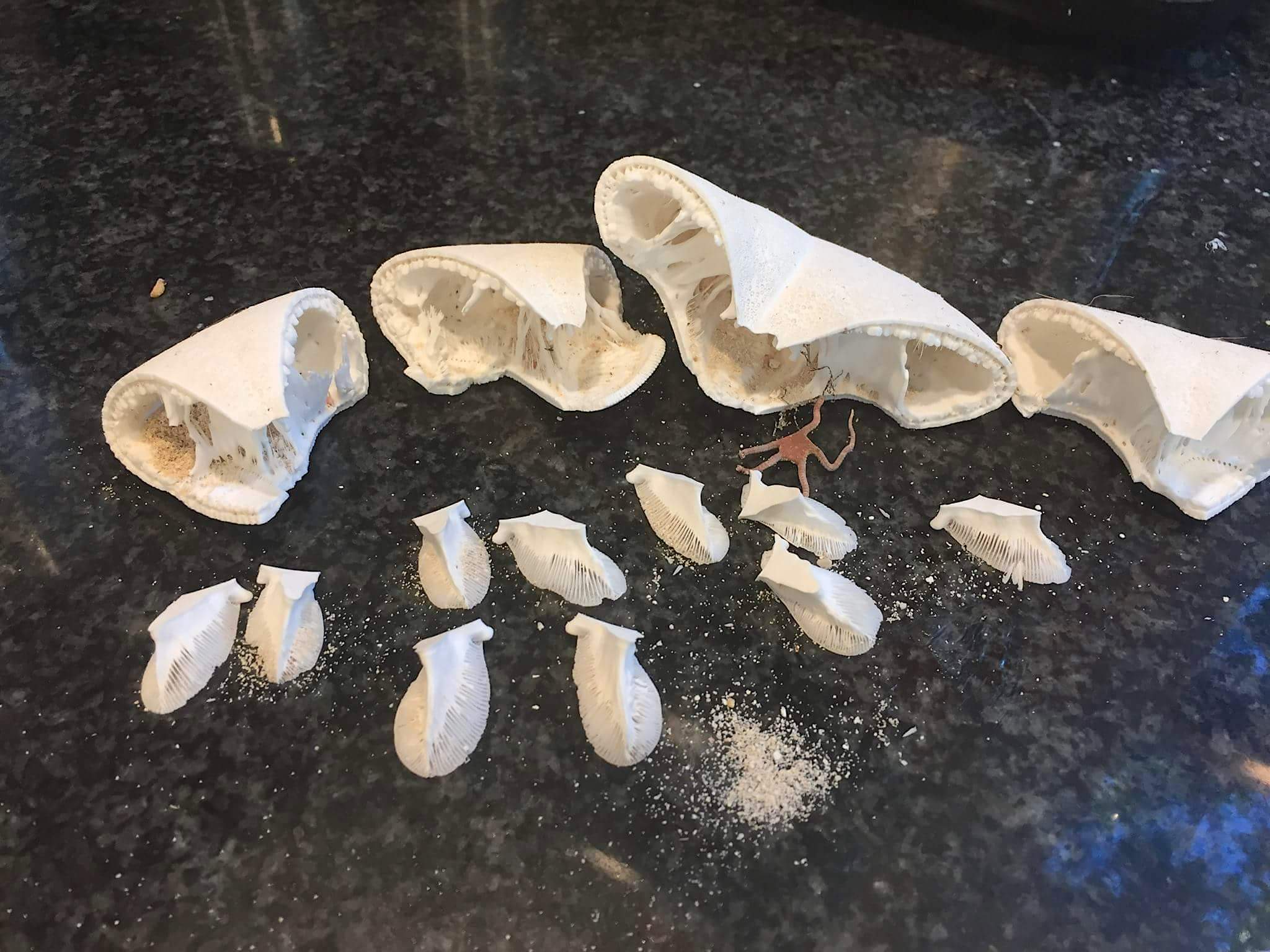
Melissa Ann Guinness from Hope Town has a far more robust attitude to these things and, taking up the challenge, she heartlessly smashed open a sea biscuit from her collection to investigate further. I said I’d publish a correction if my theory was wrong. This is it – though in one arguable sense the theory holds good. It just didn’t go far enough…

Sea Biscuit 'Doves', Abaco (Melissa Ann Guinness)

In the above picture you can see (a) 4 quarters of a sea biscuit skeleton (b) 10 demi-doves (rather than 5 whole doves) and (c) a small mummified 5-limbed brittle star that was presumably in the creature’s digestive system when it died.

10 ‘demi-doves’  (or, when assembled, 5 doves that (unlike sand dollars) are in 2 parts
Sea Biscuit 'Doves', Abaco (Melissa Ann Guinness)

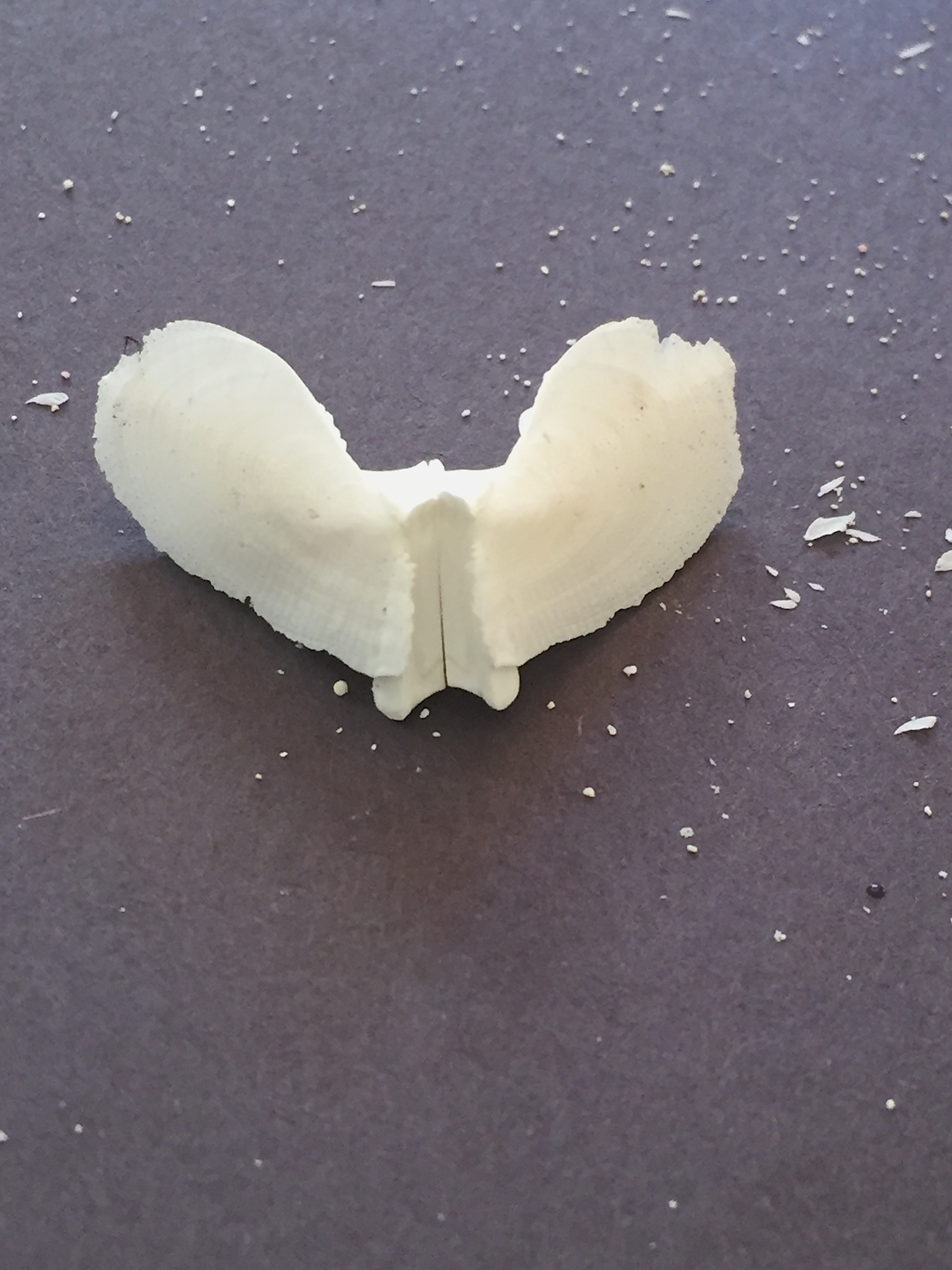
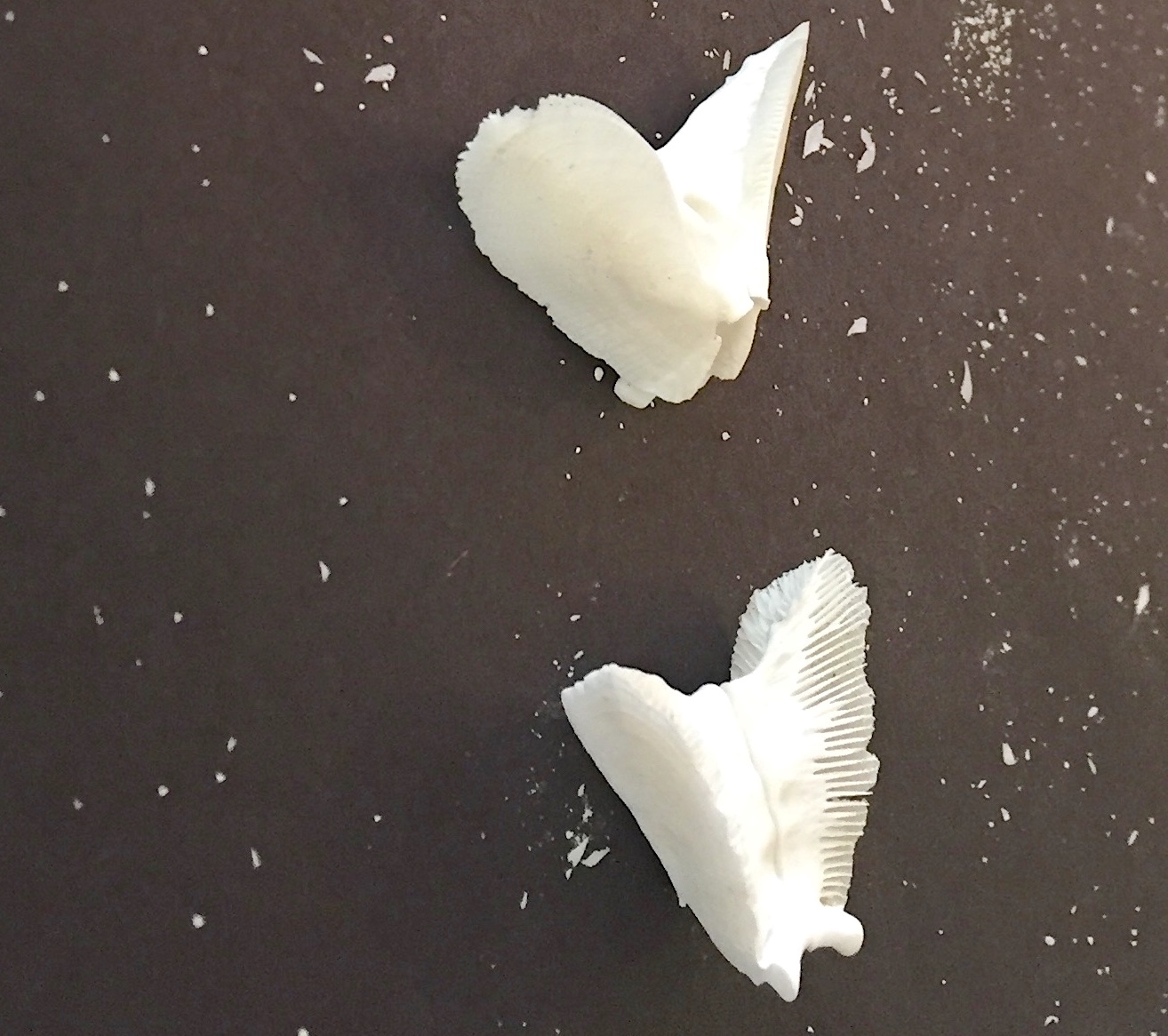
Complete doves

Sea Biscuit 'Doves', Abaco (Melissa Ann Guinness) Sea Biscuit 'Doves', Abaco (Melissa Ann Guinness) Sea Biscuit 'Doves', Abaco (Melissa Ann Guinness)

The final reconstruction – 5 doves and a bonus brittle star

Sea Biscuit 'Doves', Abaco (Keith Salvesen)

Photo Credits: Keith Salvesen (1, 2, 3, 10); Melissa Ann Guinness (4, 5, 6, ,7 ,8 ,9)

Unknown's avatar

THICK-BILLED VIREOS ON ABACO: “NIDIFICATION”


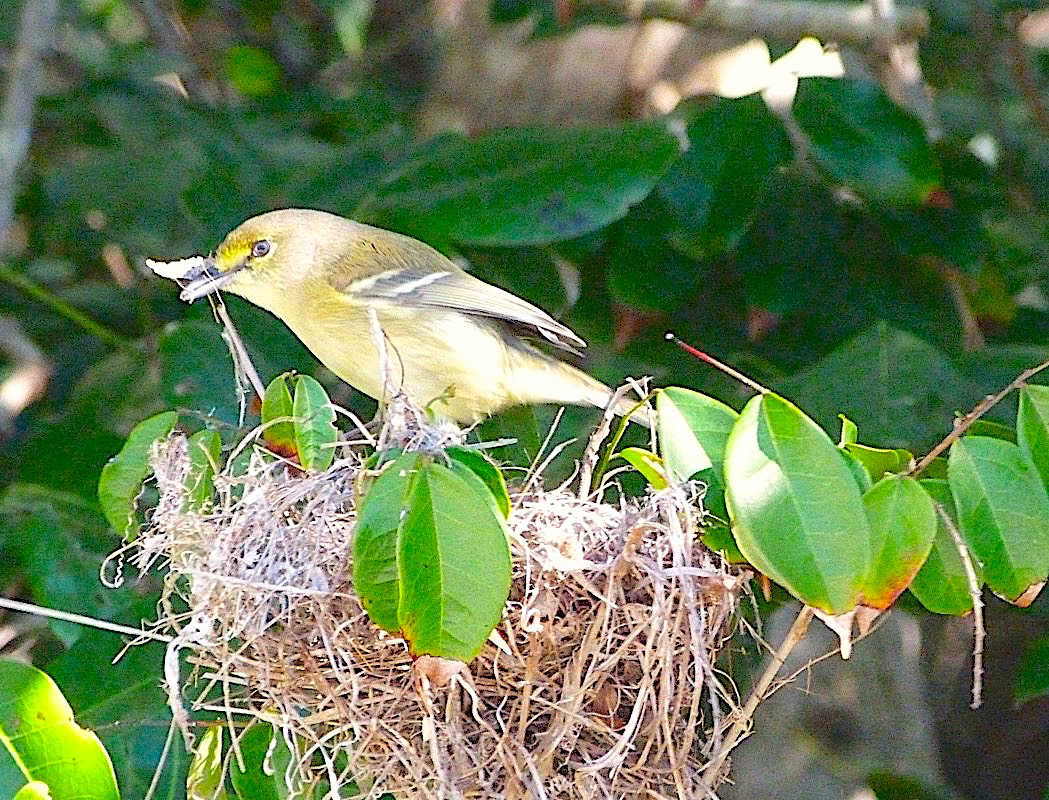
Thick-billed Vireo nesting - Delphi, Abaco (Keith Salvesen)

THICK-BILLED VIREOS ON ABACO: “NIDIFICATION”

“Nidification” was one of the new words I learned from the wonderful book Birds of the West Indies by James Bond (a different one – for the full story behind the name click HERE). It means, essentially, the nesting process of a bird. It sounds pleasingly technical for a straightforward concept: nest-building.

Soft furnishings being addedThick-billed Vireo nesting - Delphi, Abaco (Keith Salvesen)

I spotted this TBV making its nest on the edge of the drive at Delphi. I usually think of these cheerful chirpy birds as ‘lurkers’, hanging back in the coppice and not making themselves easily visible. But this nest was right out in the open – possibly not the wisest place for nidification.

Thick-billed Vireo nesting - Delphi, Abaco (Keith Salvesen)

If you look up TBV’s in bird books, you may find a reference to nest building in the fork of shrubs or bushes – exactly what was going on here. It quite a messy nest, but then again it looks comfortable and firmly wedged in.

Thick-billed Vireo nesting - Delphi, Abaco (Keith Salvesen)

Although I only saw one of the pair actively engaged in the building, another TBV was ‘vocalising’ (there’s another technical term, = singing) nearby, presumably the mate. In a way that humans have been slow to adopt, both birds will be actively involved in raising their family, from incubating the eggs to chick care – feeding, cleaning out the nest and so on. 

WHAT DO THEY SOUND LIKE WHEN THEY VOCALISE?

Let’s hope for a successful outcome to the nidification…

Thick-billed Vireo nesting - Delphi, Abaco (Keith Salvesen)

All photos Keith Salvesen, also the sound recording (made at Delphi)

Unknown's avatar

SEA BISCUITS: DO THEY REALLY CONTAIN DOVES?


Sea Biscuits, Delphi, Abaco (Clare Latimer)

Sea Biscuits on the Beach, Delphi, Abaco Bahamas

SEA BISCUITS: DO THEY REALLY CONTAIN DOVES?

A couple of years ago I wrote a post called ECHINODERMS, DOLLAR DOVES & PETRIFIED BISCUITS. It dealt with the… fact? rumour? old wive’s tale?… that within each sand dollar test (i.e. the white skeleton) are hidden 5 ‘doves’. You can hear them rattling inside if you shake the dollar… 

Sand Dollar Doves (Keith Salvesen) 6

Sand Dollar from Abaco containing 5 miniature white doves…

I investigated the theory with senior granddaughter, and we broke a sand dollar in half. And as you can see, the answer was undoubtedly yes – there were 5 tiny white doves, thus fulfilling the prediction of the famous ‘Sand Dollar’ poem that contains the lines  “Now break the centre open And here you will release The five white doves awaiting To spread good will and peace”.

Five white doves (in fact, the separated parts of the creature’s feeding apparatus)Sand Dollar Doves (Keith Salvesen) 1

A single dove, a picture of dovelinessSand Dollar Doves (Keith Salvesen) 3

I never thought to extend the experiment to sea biscuits, another object prized by beachcombers. All that changed last month when I picked up a sea biscuit and found that it, too, rattled.

A rattling good sea biscuit

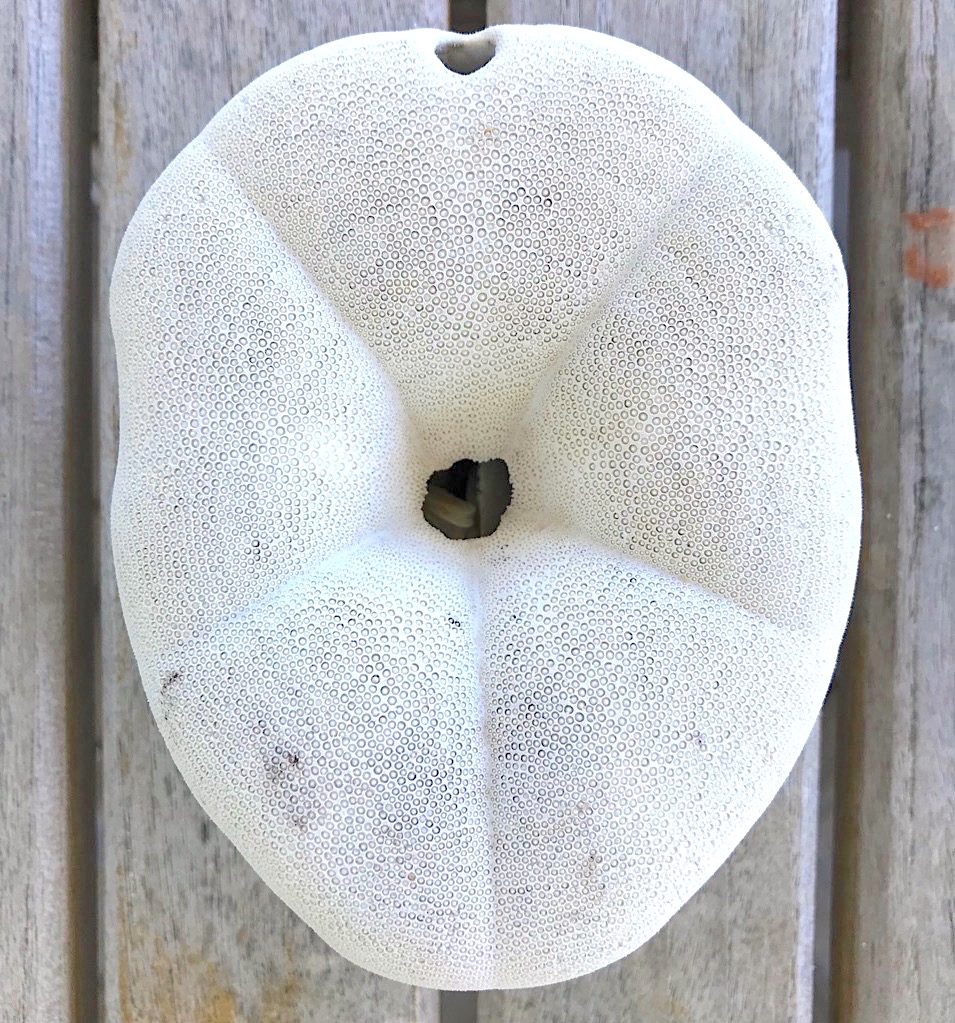
So I turned it over to take a closer look at the underside. And there, unmistakably, was the source of the rattle – some kind of internal arrangement inside the feeding  hole (let us not pause overlong to consider the purpose of the other hole). But it wasn’t conclusively a dove.

So I shook it around a bit (sorry, doves) and zoomed in. And there was a small white columbine-type contraption remarkably similar to those found in the dollar dove. And no, I did not smash open the sea biscuit (it wasn’t actually mine). And no, I didn’t doubt any longer that sea biscuits also contain doves.

SO WILL THERE BE 5 DOVES, LIKE WITH THE DOLLARS?

I predict there will also be five. Both dollars and biscuits have ‘five-way symmetry’ (look on the topside of a biscuit or dollar to see how); and so the mouth (from which the ‘doves’ derive) will have a single part for each of the five sectors, all linked. 

If anyone would like to smash up one of their precious beach finds and test the theory, please feel free. Prove me wrong… and I’ll publish a correction! [Photo please…]

All photos Keith Salvesen except Header, Clare Latimer at Delphi