Unknown's avatar

BONEFISH CATCH & RELEASE: A DEMO ON THE ABACO MARLS


BONEFISH CATCH & RELEASE: 5 COUNSELS OF PERFECTION*

1. FISH BARBLESS (OR FLATTEN THAT BARB)

2. WET YOUR HANDS BEFORE TOUCHING THE FISH

3. KEEP THE FISH IN THE WATER AS MUCH AS POSSIBLE

4. MINIMAL TOUCHING OF THE FISH – ITS PROTECTIVE COATING IS EASILY REMOVED

5. DO IT ALL AS QUICKLY AS POSSIBLE

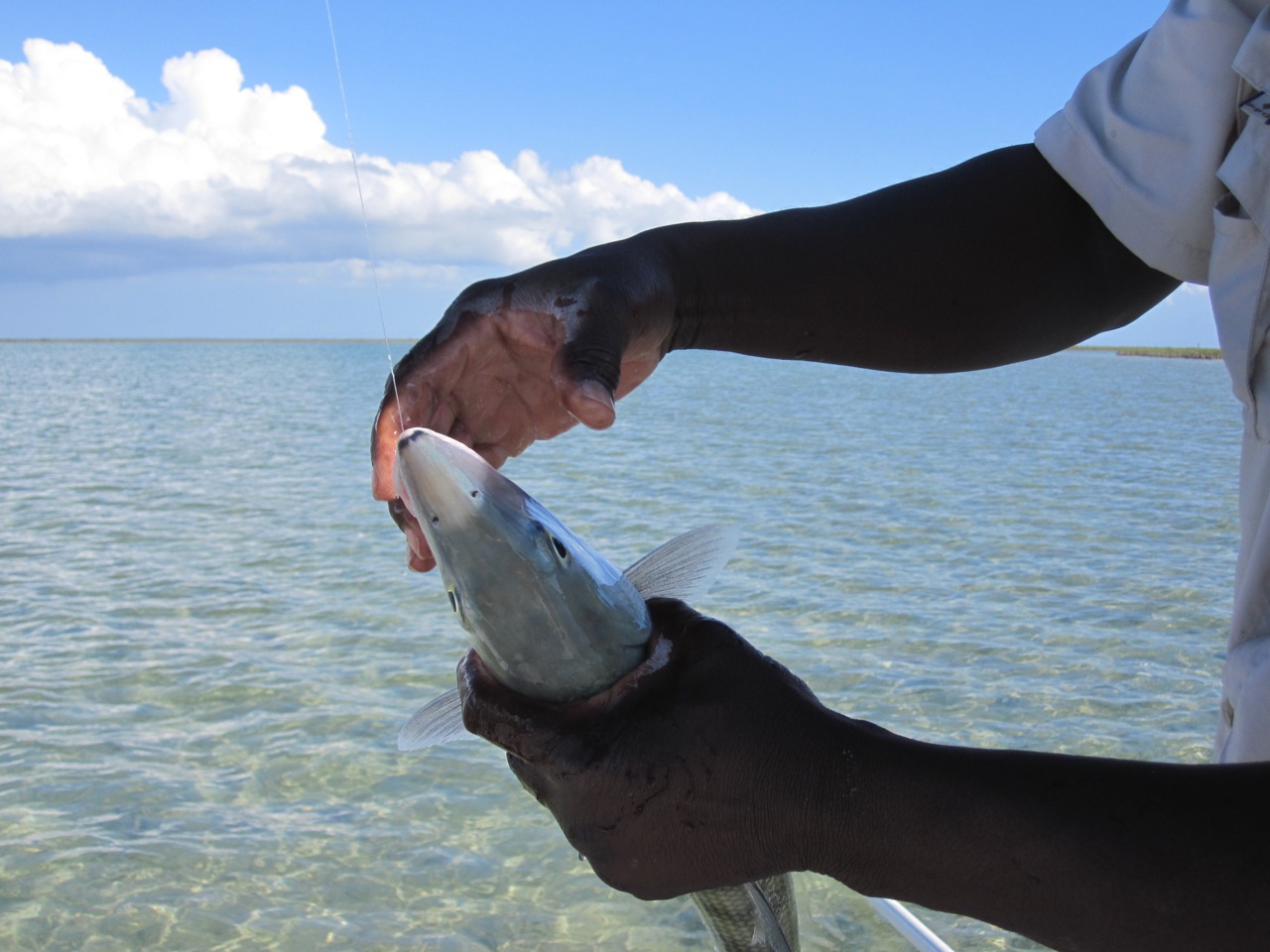
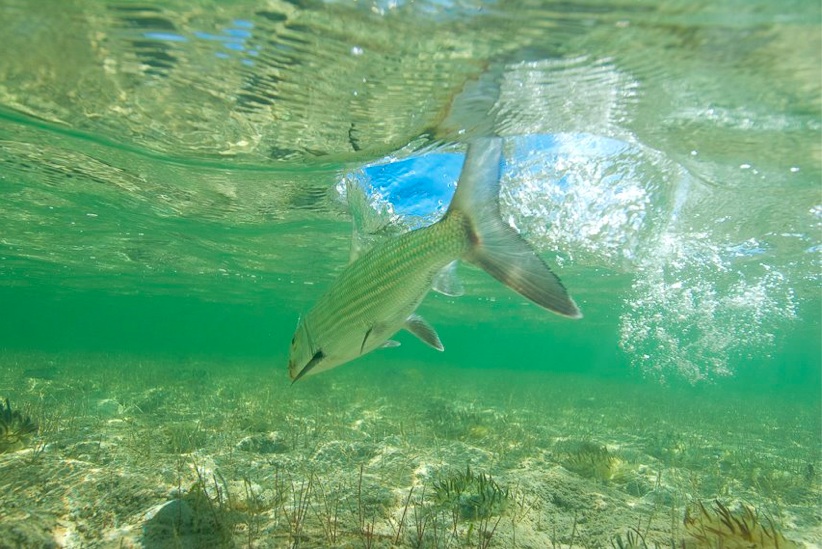
This post follows on from my recent one BONEFISH RESEARCH: THE IMPACT OF HOOK RETENTION Here’s an example of swift C&R by my boat partner Martin of a small bonefish caught on the Abaco Marls. I say ‘small’ because it was his fish, not mine, so I can! Release is achieved, barely touching the fish, by twisting and loosening the barbless hook while the fish is in the water, and quickly flicking it off the hook without touching the fish’s sides. This preserves its protective coating, which if removed makes it vulnerable to predation and disease. He has in fact omitted Counsel 2 (above), because he has needed no significant contact with the fish. Apologies for the inevitable accompaniments to using Youtube – ads, 20 other vids on offer etc [Later: Mrs RH has spotted that my reef fish Blue Tang movie is amongst them. So have a look. It’s a bit iffy, frankly, but the music is nice, and helps drown out my snorkel-wheezing]

* I have avoided the dread words ‘GOLDEN RULES’ in recognition of the fact that the lofty ideals don’t always work out in practice. The fish itself can dictate the proceedings…

(And apologies for yet another ‘premature release’ (a bit like much of my fishing) of a nearly blank document. I’ve got the ‘Save’ and ‘Publish’ buttons yips)

Unknown's avatar

LIONFISH: FURTHER RESEARCH INTO THE CARIBBEAN POPULATION EXPLOSION


LIONFISH – MARMITE DENIZENS OF THE OCEAN

A short time ago I posted in some detail about the poisonous LIONFISH. I included material about the rapid increase of this Pacific species in Caribbean and Floridian waters following accidental / deliberate releases in recent years. I also included videos from Grand Bahama scuba-expert FRED RIGER to balance the anti-lionfish orthodoxy, showing that the fish in fact do some good on the reefs. The post provoked a few comments, and had a surprising number of hits. Here is some further research courtesy of the excellent SEA MONSTER which adds a dimension to the debate and concludes with a very good point… Incidentally, in a recent morning snorkelling at Fowl Cay Marine Preserve, Abaco, I did not encounter a single one of these creatures (Mrs RH was unluckily stung by a jellyfish, though…). But I guess the Preserve is well policed against such intrusive species, which are otherwise found in large numbers in the area.

Why are lionfish populations exploding across the Caribbean?

Author: John Bruno on June 6, 2012

Lionfish are an exotic fish now found throughout the Greater Caribbean and eastern Atlantic that have become incredibly abundant on many reefs, especially in the Bahamas and off North Carolina. Lionfish are piscivores (fish that eat other fish) and were introduced from the Indo-Pacific by the aquarium trade in the late 1990s off Florida. Mostly likely, someone got tired of their fish and released them purposefully.

One hypothesis explaining their great success is the absence of natural enemies; predators, parasites and competitors.  This is probably compounded by the fact that few Caribbean reefs have any predators left that could eat them (thanks to overfishing).

Another – and I think much more likely explanation – is because there is so much to eat in the Caribbean! Not because there are more fish, but because it is so much easier to catch them. Unlike fish in the Indo-Pacific, native Caribbean fishes do not appear to recognize lionfish as a potential threat.  So the lionfish gobble them up, grow faster, make more babies, spread to new islands, etc.

Case in point: My lab group was working in Belize last week on the lionfish invasion. One of the things we were doing was collecting the otoliths and gonads from lionfish that we speared on a number of reefs to compare their fitness across the Caribbean (e.g., on reefs with and without native predators, etc).  We also looked at stomach contents and many of them had parrotfishes in their tummies or still in their throats!  The photo above is of the eggs from one lionfish we caught near Glovers Reef Atoll and the partial contents of it’s stomach (a juvenile striped parrotfish)!

Lionfish appear to be little more than machines that convert parrotfishes to baby lionfishes. Which is pretty much the purpose of all animals (consuming others and transforming them into your own genotype and species).  But jeez, couldn’t those aquarium hobbyists have released a herbivore that could be converting macroalgae to fish biomass? That would have been much more useful.

Unknown's avatar

TRAVEL TRIVIA & WORLD OCEANS DAY


We rebooked our storm-tossed flights. We spent an extra night at Delphi and one in Marsh Harbour. We went to check in online. Zilch. Nada. Niente. No trace of Mr & Mrs Harbour. One hour on the phone and it’s sorted, and with an upgrade to World International Club Class Traveller Special Plus or similar ( = more leg room? An extra bacon roll? We’ll see…)

More importantly, though, today is WORLD OCEANS DAY

20120608-081748.jpg

You can find 100 Ocean-related quotes to sprinkle into your conversation if you tune in to the excellent BEACH CHAIR SCIENTIST from whom I have ‘borrowed’ this sea-loving image

20120608-083300.jpg Quote 33 is slightly disturbing…

Apologies for premature publication omitting title and later tweaks. Posting on an iPhone is a fiddly business.

Unknown's avatar

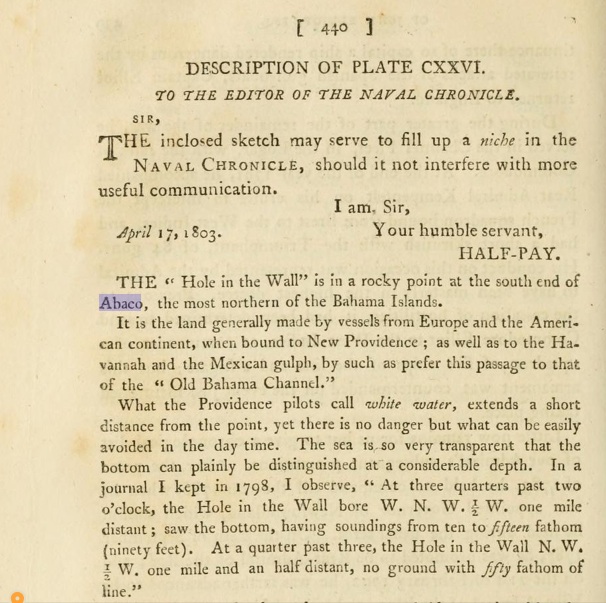
HOLE-IN-THE-WALL ABACO: HISTORIC 1803 DESCRIPTION & AQUATINT


HOLE-IN-THE-WALL, ABACO: A HISTORIC DESCRIPTION & AQUATINT FROM 1803

I recently traced the history of Hole-in-the-Wall, Abaco through maps from the 16th century onwards – its significance, the name changes, and so on. To see that post CLICK HERE . I have just come across some historical material about HITW that is so fascinating that I have awarded the accolade of a separate post, rather than lumping it in with the earlier one. The extract below is from THE NAVAL CHRONICLE (Vol 9) * for January – July 1803. It gives a short but detailed description of the Hole in the Wall in the context of a remarkable sketch (reproduced as a Plate in the book) submitted by the contributor, who signed himself  ‘Half-Pay’. That was the name traditionally used in both Navy and Army to refer to the pay or allowance an officer received when in retirement or not in actual service – or, metonomously, to the officer receiving the reduced pay. I greatly like the charming deference with which the contribution is offered.

The whole book is well worth examining for the light it sheds on Naval matters at the very start of the c19. The comprehensive personnel and other lists hold plenty of interest. This was an era of almost continuous major military and naval campaigns on both sides of the Atlantic. The Battle of Trafalgar was still 2 years away when this book was published. If you want to see the downloadable online version CLICK HERE  [I had to zoom the page and clip it in two to make it easily readable  – hence the gap. And apologies for the purple highlight – it was my place-mark…]


Here is the amazing aquatint  by J. Wells of Half-Pay’s sketch, published in the 1803 Naval Chronicle by founder J.Gold of Shoe Lane, London. It’s quite small, measuring 5½” x 9″. You may even be looking at a screen clip of a scan of the book plate of the earliest surviving depiction of Hole-in-the Wall. If anyone knows of an older one, please get in touch. And can anyone identify what kind of sailing vessels these are (I wouldn’t know a brigantine from a clipper…)?

To answer queries arising from my earlier post, I added a map and photos showing exactly where the actual Hole at HITW is, and how to get there (if you are wearing the right shoes). It’s worth revisiting the topic. People are always fascinated by the extremities of land – ‘Land’s End’, ‘Finisterre’, ‘Finistère’ and so on – especially where they are remote and relatively inaccessible. I think HITW qualifies. As far as I am aware, apart from the lighthouse its abandoned outbuildings at the southeast corner of the first map below, there is no other building in the area covered by this map. The nearest road is 15 miles up the inhospitable track to the north of the lighthouse.

Here is the map showing the location of the actual Hole in the Wall, and below that, a distance shot taken at sea

 * According to The Philadelphia Print Shop “Between 1799 and 1818, The Naval Chronicle, was the pre-eminent maritime journal reporting news about the British navy. Issued twice a year, it was published during a period in which the British navy fought the Napoleonic Wars and the War of 1812, and came to “rule the waves.” This wonderful journal included action reports, intelligence on various matters related to the British and other navies, and biographies of naval officers. Many of the reports were accounts by officers directly involved, such as Lord Horatio Nelson. Included with the articles were portraits, images of naval action, and views of the many ports in which the navy called. These are important, first-hand images of this turbulent period”
Unknown's avatar

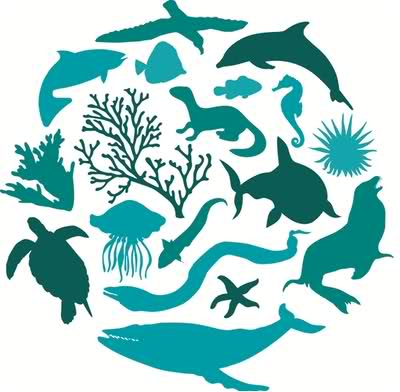
INTERNATIONAL MARINE BIODIVERSITY DAY – MAY 22


INTERNATIONAL MARINE BIODIVERSITY DAY – MAY 22

Yesterday was an important day in the marine conservation and research calendar. Me neither! I had a heads up from the redoubtable SEAMONSTER late last night. So at least I found out on the right day. I am posting the excellent logo to help to raise awareness retrospectively… I ‘get’ everything depicted in this clever sea creature globe – except for the tiny dinosaur… or is it a sea otter?

CLICK this large logo to link the the relevant website, where there are articles catering for every conceivable marine interest

Unknown's avatar

RITA & GEORGIE’S BIG ADVENTURE: BAHAMAS MANATEES TAKE A TRIP


RITA & GEORGIE’S BIG ADVENTURE

It’s Week 4 since mother and calf were released. Since then, they have made some manatee friends and gradually increased their range of exploration as their confidence continues to grow. The week’s big news is that in five days, Rita and Georgie travelled over 70 miles around Great Harbour Cay, extending their interest further south than ever before. Here are the other mother and calf pair from the area, Gina & JJ

The logo at the top is clickable straight through to the excellent BMMRO weekly reports of the lives of these gentle creatures, where you will find all the details of their progress. I have also add a click-thru’ logo near the top of the sidebar so that manatee-watchers can go straight there from this blog at any time.

So may I encourage all you nice followers out there to keep an eye on the developing story; and remind you in a subtle – oh, ok then, rather direct way – that this kind of vital conservation research in our oceans can only be carried out with support. That could include direct support for the BMMRO’s work… and / or maybe even adopting a manatee (details on the Manatee blog)

Rita and Georgie Tracking Map  Week 4 

Unknown's avatar

LIONFISH: FACTS, VENOM & CRISIS CONTROL IN THE BAHAMAS – & A COUNTER-VIEW


Lionfish, Abaco (FotE)

LIONFISH: UNINVITED GUESTS IN THE BAHAMAS

I recently put some lionfish details and images on my MARINE LIFE page. I wrote: “…their existence and rapid increase in the waters of the Bahamas is a cause of great concern, and they are keenly hunted. Last year’s inaugural Lionfish Derby on Green Turtle Cay brought in more than 1400 of these creatures in the day, ranging in size from  a 57mm juvenile to a 349mm fish. Here, from THE ABACO SCIENTIST is where in the world the 2 species of Lionfish ought by rights to be. Well away from the Caribbean, that’s where!

 Photo credit: Brigitte Carey of Tilloo Cay

Two great lionfish photos from GRAND BAHAMA SCUBA  (thanks to Fred & Melinda Riger )

———————————————————

LIONFISH Pterois

1o UNCOMFORTABLE LIONFISH FACTS

  • A genus of  spiny venomous fish indigenous to the Indo-Pacific area, of which there are 9 species
  • In the mid 1990s 2 species were introduced to the US Atlantic coast and Caribbean (see below)
  • Unaccountably popular as aquarium fish; cooked and eaten by people (though not by me)
    For recipes see LIONFISH HUNTER
  • An adult can weigh 1/2 kilo and may live up to 15 years
  • They have ‘complex courtship and mating behaviour’, presumably to avoid each other’s spines
  • Females release two egg cluster bombs every month containing up to fifteen thousand eggs…
  • Lionfish prey voraciously on small fish, invertebrates and molluscs which they gooble up in one gulp
  • They have bilateral swim-bladder muscles to alter their centre of gravity to attack their prey better
  • Apart from a tendency to species cannibalism, they have very few predators. The spines work well…
  • Sharks are not affected by the venom, and attempts have been made to train them to feed on lionfish 

LIONFISH STINGS are painful and can take several days to resolve. Tests on frogs, clams and rabbits… well, you don’t want to hear about those. In humans the venom causes systemic symptoms ranging from nausea, vomiting, fever, breathing difficulties and dizziness to convulsions and paralysis. For the very young, the elderly, the allergic or those with immune system weakness the sting can be fatal. TREATMENT: If stung it is recommended that you remove the spine(s) if possible and immerse the wound in hot water for at least 15 minutes… and seek medical treatment as soon as possible

THE CARIBBEAN INVASION supposedly started in the mid-1990s, perhaps following hurricane damage to an aquarium in southern Florida. A few earlier sightings had been recorded, possibly the result of  deliberate aquarium releases. Two of the 9 species are involved: the red lionfish P. volitans (93%) and the common lionfish P. miles (7%). It’s a measure of their rapid breeding, habitat adaptability and near-immunity from predation that the first recorded lionfish in the Bahamas was as recent as 2004. A mere 8 years later they’ve spread throughout the region. 

POPULATION INCREASE AND CONTROL The population is increasing exponentially despite efforts at control. Their voraciousness and territorial aggression must certainly be affecting the indigenous populations of reef marine life. The problem is already extreme. It is now unlikely that lionfish can ever be eradicated. Even to confine the population to its current level would require more than a quarter of the adult population to be killed monthly. Lionfish are able to reproduce throughout the year, so there is no seasonal respite. In this conservation-minded era,  official encouragement of  organised hunting bucks the trend towards creature protection. Lionfish do have food value, if natural human reluctance to eat a venomous species can be overcome, and there are now many lionfish recipes. Whether killing lionfish for sport or for food, humans are their only effective predators. Below is an example, from Oceans Watch, of the sort of campaign that will surely become commonplace throughout the region. Time to reach for the speargun…

THE COUNTER-ARGUMENT

The above is the orthodox view, widely held throughout the region. Some will ask whether the arrival of the lionfish in the Caribbean has any positives; whether they actually make a contribution to the ecology of the area; whether there is a convincing case to put forward in favour of the species; whether there is evidence to back it up. So to redress the balance I commend these 4 short videos from the enormously experienced Grand Bahama diver Fred Riger, in which he cogently demonstrates the value of this imported species. In short, the videos reveal that the adverse effect on endemic fish populations is not merely overstated but wrong; that the spreading menace to the coral reefs of choking algal growth is actually reversed by lionfish; and that important grazing crab species are thriving as a result. 
I posted the bad lionfish stuff last night; by this morning Fred had rightly taken me to task for only giving one side of the story: “Far from being a pest, lionfish are solving a huge problem created by the mother of all invasive species HUMANS, who have over fished the ocean, wiped numerous species out of existence, killed most of the world’s coral, the very stuff we in the Bahamas live on. Targeting lionfish sets conservation efforts back thirty years or more and contributes to the decline of the coral reef”. So here are the videos giving the case in favour of lionfish, and they certainly provide a fresh perspective and plenty of food for thought…
 
“LIONFISH IMPACT: THEY ARE NOT SO EVIL AFTER ALL”
Unknown's avatar

BAHAMAS MANATEE UPDATE – CHECK OUT RITA & GEORGIE’S PROGRESS


The BMMRO’s brilliant new  charting the progress of mother Rita and calf Georgie after their release (and showing wonderful pictures) is becoming addictive. How far have they ventured this week? Are there any more out there? 

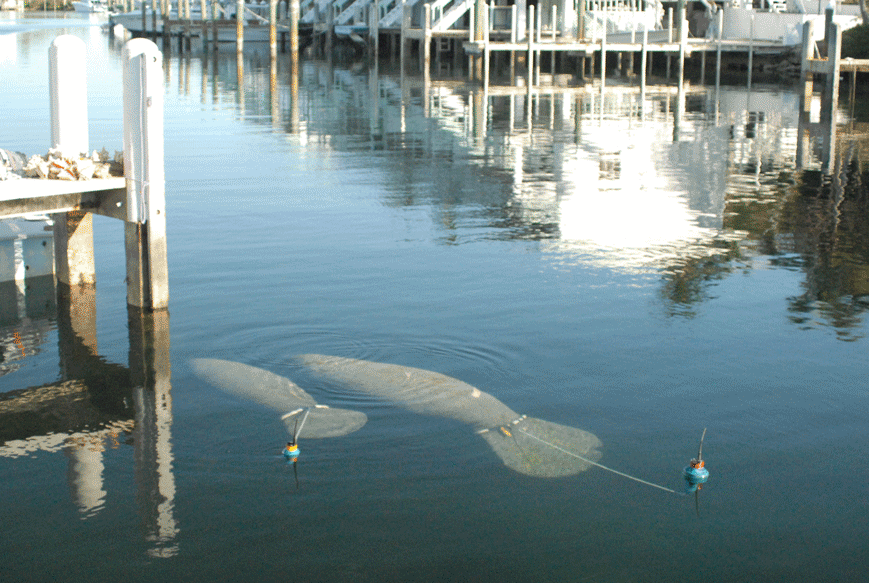
Here, Rita and Georgie are wearing their tags. I really recommend a visit to the  for the full reports, but here’s a quick review of the highlights of weeks 2 and 3 since their release:

WEEK 2

  • Rita & Georgie are beginning to attract a bit of a following
  • During the week their confidence grew and they undertook a longer expedition (see map below)
  • During their travels they were joined by 2 other manatees, first a juvenile male, then an adult male
  • Rita’s tag became disconnected. It was retrieved, the data downloaded, and it was successfully reattached
  • Audio recordings were made of underwater manatee communication
  • At one stage there were six manatees seen together, with manatees Gina and JJ joining the 4 others

Rita nurses Georgie


WEEK 2 ADVENTURES

A far more complicated pattern than the simple explorations in WEEK 1

WEEK 3 

  • Continued careful monitoring of more complex (= braver) exploration
  • A great deal of local interest generated. 
  • A ‘Save the Manatee’ campaign started
  • Presentations for groups of school students, including involving them in actual monitoring. 
  • The juvenile male has stayed with Rita and Georgie.

——————————

Rita examines the camera. Meanwhile Georgie checks out the bottom of the BMMRO boat…    

                                               A tender moment between calf and mother                                                                   

 WEEK 3 EXPEDITIONS 
Confidence growing, and more interest in investigating to the south


Unknown's avatar

HOOKED! A FANATICAL FISHERMAN’S WIFE TAKES TO THE BONEFISH FLATS


HOOKED! A FANATICAL FISHERMAN’S WIFE TAKES TO THE BONEFISH FLATS

I’m married to a Fanatical Fisherman. I have never shared his enthusiasm, though I have always loved the places where his fishing takes us. However the chance to spend two weeks at the Delphi Club Bahamas on Abaco every year has changed my perspective. This year I thought to myself (in non-fishing terminology, of course) ‘How about giving it a try?’

We waited for a day that was not windy and that would suit the FF’s own fishing convenience. One of the other guests was a kind and patient, not to say a highly eminent fisherperson and she gave me my first ever lesson on the lawn. With much encouragement I went forth. It was a lovely day with the sun beating down, so it was ‘sun block on and all parts covered’. 

Skiffs on their way to the bonefishing grounds

We set out in the skiff and after an exhilarating ride we glided to a stop in shallow water. I sat enchanted for a moment, taking in the incredible beauty of the place. Guide Tony provided suitable footwear for me (his son’s); and the relative merits of a ‘Crazy Charlie or a ‘Delphi Special’ were debated. Soon I was wading on the flats, rod in hand. This was my first-ever experience of my husband’s lifetime obsession…

Poling to a good place for wading

Within minutes Tony pointed to a shoal of bonefish… I cast (in a manner of speaking)! I struck! I hooked! I played! And… I lost!  

FISH ON!

But that was enough. From then on I was on a mission. I saw the ‘nervous water’ – great shoals of bonefish causing a subtle ripple 0n the surface of the water. When they turned and moved towards me I could hardly contain my excitement. I knew I had to tread carefully underfoot and to keep still as I cast. Silver flashes glinted in the sunlight as the fish started ‘tailing’.

Watch out for ‘Nervous Waters’

Meanwhile the sharks lazily circled us waiting for a chance to grab a prize before we could reel it in. I did hook another bone but it too managed to evade capture. And then suddenly the day was over. How did that happen? In the end I landed no fish but as the skiff sped back across the blue water I knew this was, for me, the start of something wholly absorbing. FF had better look to his laurels.

Lorna Jarman

(All illustrative photos by RH – Lorna was otherwise engaged!)

Unknown's avatar

BONEFISH RESEARCH: THE IMPACT OF HOOK RETENTION


THE IMPACT OF HOOK RETENTION ON RELEASED BONEFISH

Anyone committed to catch and release for bonefish will have wondered about the hooks that from time to time are left in a fish. The issue has now been the subject of a detailed scientific report from ELSEVIER highlighted in the ever-useful THE ABACO SCIENTIST (thanks to Craig Layman). The report’s main conclusions can be summarised as follows:

  • Hooks, especially shallow ones, are expelled fairly quickly
  • For deep-hooked fish, barbless hooks are significantly easier for the fish to deal with
  • The presence of a hook does not appear to interfere with feeding
  • Hook size is not a material factor
  • All the test sample fish survived
Overall, therefore, this is a vindication for the policy of barbless hook use for C&R. The report concludes that it’s best simply to leave a difficult-to-remove hook in the fish. Here, guide Ishi prepares to remove a barbless hook from one of my fish caught on the Abaco Marls.
I have included a clip of the report’s front page and Abstract; and the link to a PDF of the full report for those interested in checking out the detailed scientific aspects of this research. To go direct to the general Fisheries Research section click ELSEVIER. The astounding photo is courtesy of Abaco’s conservation organisation FRIENDS OF THE ENVIRONMENT

REPORT PDF

NEW in June 2012 see later post + video CATCH & RELEASE DEMO ON THE ABACO MARLS for a quick release method with a barbless hook involving minimal contact with the fish. It isn’t suitable for deep-hooked fish or large ones, but it shows how quick the operation can be

Unknown's avatar

BAHAMAS MANATEES: INTRODUCING RITA & GEORGIE – FOLLOW THEIR BLOG


BMMRO MANATEE BLOG

A couple of weeks ago I posted about the Manatees of the Bahamas, including the news that a female manatee and her calf had recently been reintroduced into the wild. To see that post CLICK===>>> RITA & GEORGIE

The BMMRO have now set up a Rita and Georgie blog so that the news of their progress and tracking reports can be seen by all. This will be a regular feature on the BMMRO site, and I reproduce with permission the first report below so that you can see what is involved. 

To follow the tale of Rita and Georgie CLICK LOGO===>>>     I will repeat this logo link in future monthly cetacean sighting reports, with a short summary, so you can get the latest on the sirenian situation. At the end of this page is a map showing their movements for the last week. Here also is a clip of the blog headings so you can see what is covered. Hint-laden note: there is a way to help this valuable research by means of adoption. You don’t get to keep one (or both) in the bath, of course, but you get a certificate and you will know you are helping to protect a species that is all too rare in the Bahamas

_____________________________________

RITA AND GEORGIE ARE RELEASED!

This blog was created to allow the public to follow two manatees, Rita and her calf Georgie, as scientists track them after their release back into the wild. Please return for weekly updates

NOTES FROM THE FIELD – WEEK 1
19-April-2012
At 10:30 am, Rita and Georgie arrived at the Great Harbour Cay Marina in Bullock’s Harbour on the Atlantis vessel Sea Keeper. High school students and interested locals had gathered at the marina for this exciting event. At 11:00 am, Dolphin Cay-Atlantis Animal Rescue Team carefully lowered Georgie into the water, and then Rita followed as quickly as possible. Both animals immediately paired up underwater and surfaced swimming towards the mangroves at the east end of the marina.
During the time of the release, two male manatees were observed in the marina and later paired up with the tagged animals. All four manatees were observed socialising as they slowly travelled out of the marina. Jim Reid (USGS) set up the VHF tracking gear and the tracking team started to track Rita and Georgie from land.
After a few detours through the bush, we found all four animals at the northern end of the T-canal; which is a ‘T’ shape cut in the harbour. We observed both males interacting with Rita while Georgie milled nearby. All four were seen feeding on algae on the canal wall. We left them at 4:30 PM.
20-April-2012
In the early morning, the juvenile male was seen in the marina and came very close to one of our vessels. The single animal remained in the harbor for more than 3 hours. This was a great opportunity for Matt McCoy (Loggerhead Productions) to get underwater footage of the juvenile male, which will be used in an educational film about ‘Manatees in The Bahamas.’
Rita and Georgie were later found in the marina but Rita’s tag was missing! Jim successfully placed a temporary tag on Rita and the original tag was found and later reattached. Kendria Ferguson (BMMRO) made acoustic recordings of both animals, which will be used to identify individuals from their vocalisations.
Later Jim collected genetic samples from both the adult and juvenile males. These samples will be used to determine if these individuals are both offspring of Gina and help to develop a family tree of Great Harbour Cay manatees.
21-April-2012
At 8:30 am GPS locations from the tags showed that Rita and Georgie were in Shark Creek along the west side of Great Harbour Cay, about 2 miles south of the harbour. When the tracking team arrived they found mother and calf both in good health and feeding on seagrass beds in the creek system.
22-April-2012  
With winds up to 20 knots the weather was not favorable for the tracking team to hit the open waters in search of Rita and Georgie so we decided to put up manatee warning signs. These signs were provided by Florida’s Save the Manatee Club, along with other educational material that will distribute throughout the island to raise awareness of the local population of manatees.
The tracking team was able to track them by land and both animals were found on the east side of the island swimming along the beach. The tracking team stayed with them for over 3 hours and monitored their breathing and movement patterns. We also got some underwater photos!!
23-April-2012
At 10:40 am local residents of Great Harbour Cay notified the “manatee lady” (Kendria) that four manatees were in front of the marina office. Gina and her calf JJ were both observed feeding on algae on the pilings and JJ was seen nursing occasionally. Both the adult male and juvenile male were there and remained close to Gina and JJ during their stay in the marina.
Jim was able to collect a genetic sample from JJ and also confirm that she is in fact a female calf. Both males continued to remain close and watched Jim constantly!
GPS locations from Rita and Georgie tags showed that they traveled as far south as Ambergris Cays. During the night, the tracking team closely monitored their movements as they were received via satellite. They entered Shark Creek shortly after 6pm from the west side of the island and remained there for approximately 5 hours. During this time, scientists believe that they were feeding and resting, as this area has extensive seagrass bed coverage. The tracking team continued to monitor their movements throughout the night and hoped that they turned to head back north very soon!
24-April-2012
At 4:30am, GPS locations showed that Rita and Georgie took ‘the channel’ cut and headed back north into the harbour of Great Harbour Cay.
At 8am we located both mother and calf under Al’s dock (our local fish provider). Both animals were resting and Georgie was observed nursing. The tracking team obtained photos, videos and acoustic recordings of both animals during this 3.5 hour encounter.
From their departure from the harbour early Sunday morning to their return Monday morning, they managed to complete a 50 mile trip around Great Harbour. A very happy ending to a very long journey!
25-April-2012
Rita and Georgie remained in the marina overnight and at 7:15am were found just a few houses down from the tag team’s home. Both animals swam towards our tracking vessel, “Feresa” and remained in the area for 15 minutes. Georgie has quite the personality! She began sucking on Feresa’s inflatable tubes and eating the algae off another inflatable boat a few feet away.
Both animals remained very close and traveled under the docks towards the end of the marina towards the mangroves. The local residents occasionally report seeing Gina and the other manatees at these mangroves and believe there is a fresh water discharge. This is also very close to the area of Rita and Georgie’s initial release back into the wild.
WEEK 1
‘An Awfully Big Adventure’ (© P.Pan)
Unknown's avatar

BAHAMAS MANATEE & BMMRO SPRING 2012 CETACEAN REPORTS


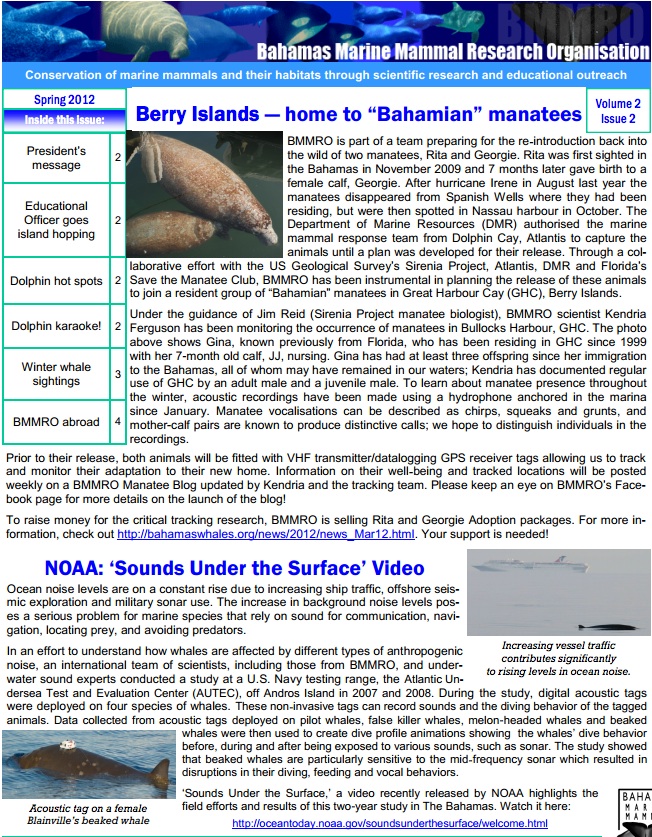
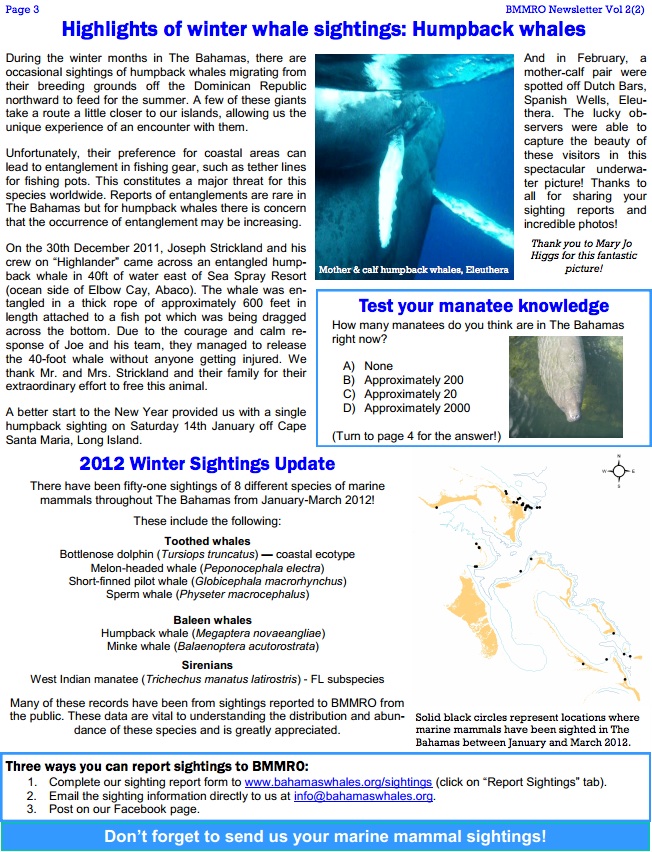
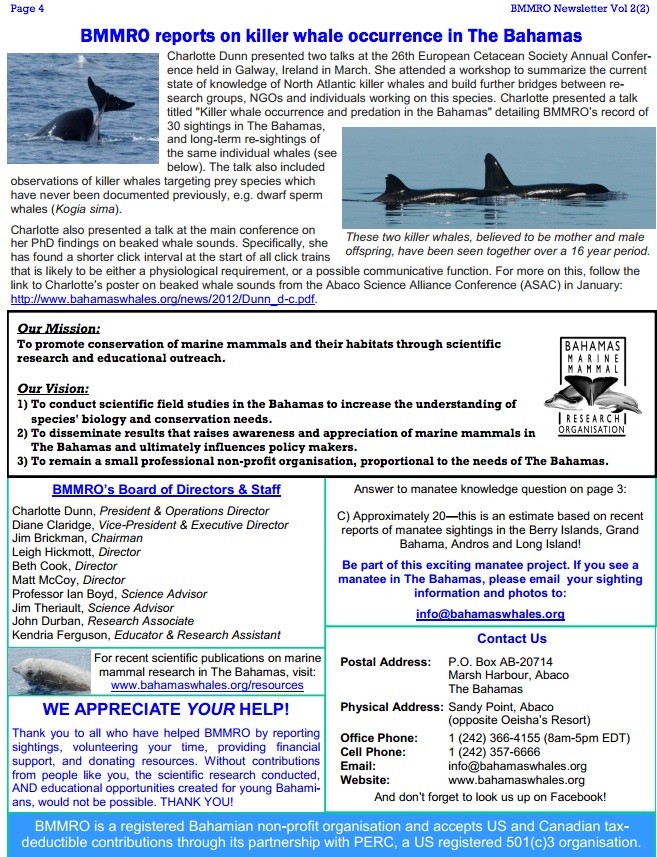
The BMMRO has just published two online reports that will interest anyone who follows the news about Whales, Dolphins and Manatees in the Bahamas.

The first concerns the reintroduction of manatees to the wild – and offers the opportunity to adopt one of them in order to support the continuing work of the conservation of the small manatee population of the Bahamas. You could have a guess now at the number of recently recorded manatees: the answer is right at the bottom of the page. If you have followed this blog’s cetacean posts, you will have noticed my own interest in the continuing monthly sightings (mainly off the Berry Is.) I have had to reduce the size of the article, but if you click on it once – or twice – it enlarges to make it more legible.

To see the article on the BMMRO website CLICK==>> BMMRO MANATEES

To go directly to my manatee page CLICK==>> ROLLING HARBOUR MANATEES

Click article to enlarge it

BMMRO REPORT SPRING 2012

I have summarised past BMMRO quarterly reports, highlighting particular features and photos. This time I’ve put in the whole report in (I hope) legible format. To see it on the BMMRO site CLICK===>>> BMMRO SPRING 2012

Approximately 20

Unknown's avatar

BEACHCOMBING WITH KASIA: EXPLORING A ROCKY SHORE


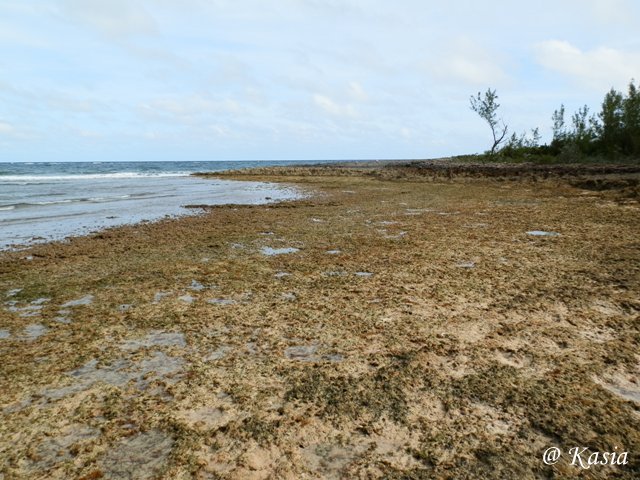
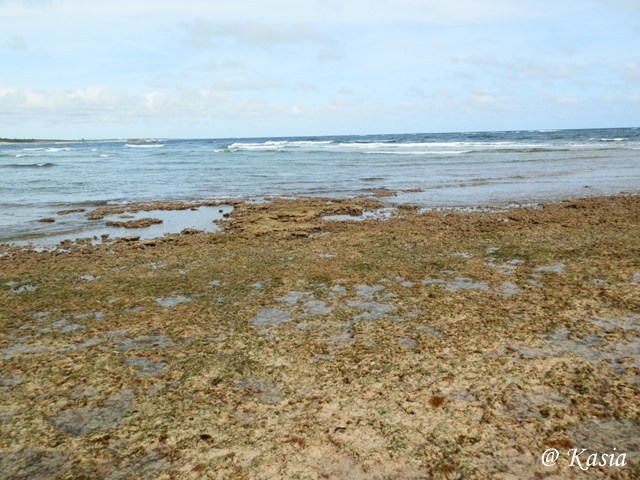
Kasia’s back! She recently explored a rather unpromising-looking stretch of Abaco coastline, and it proved to be anything but… Kasia writes: The story goes: one day I took myself for a walk and a bit of beachcombing. I usually don’t bring my camera with me but luckily this time I did. This particular beach looks very barren but on close inspection and a patient eye there are some lovely treasures to be found. Here are some of the treasures I captured!

A tangle of 3 bleached trees, with their roots apparently intertwined

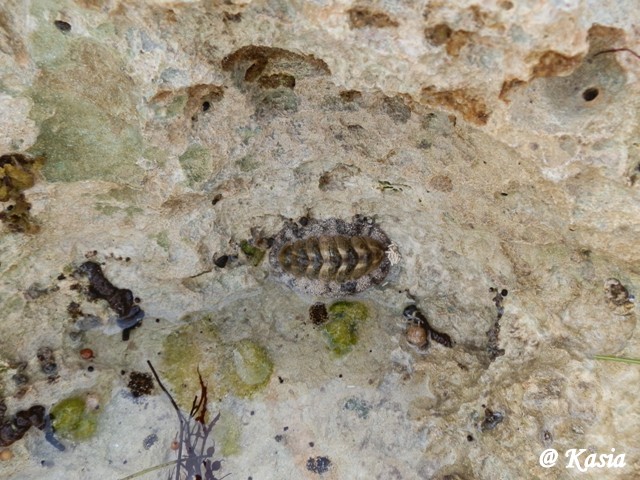
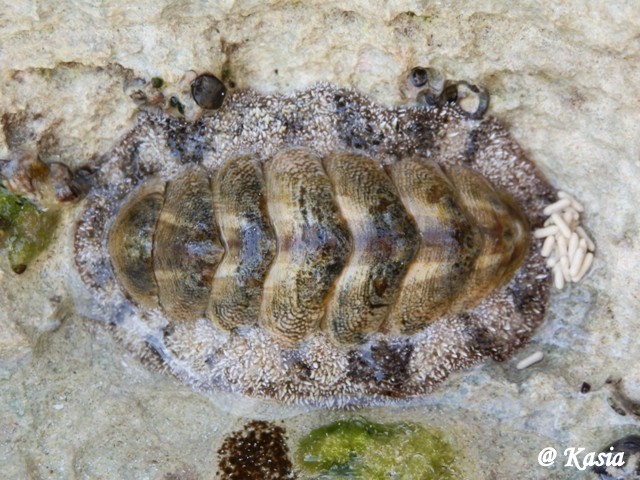
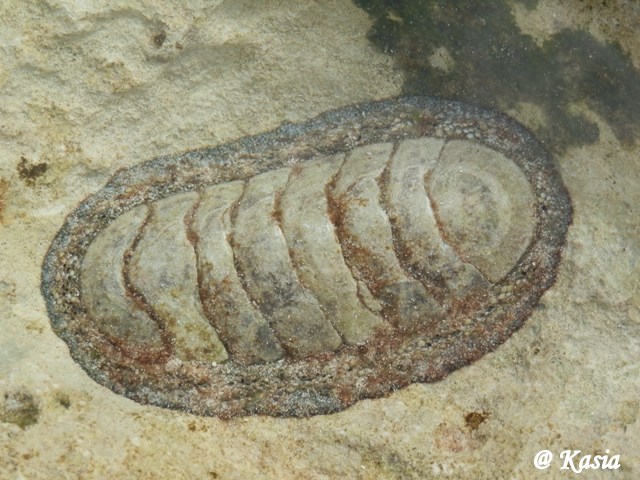
CHITONS

Great close-ups… are those eggs behind this first one? There’s a similar image in the Macmillan ‘Marine Life of the Caribbean’ but unfortunately neither the caption nor the text refers to them. ADDENDUM: Colin Redfern writes: The “eggs” behind the chiton are fecal pellets

NERITES (Nerita)


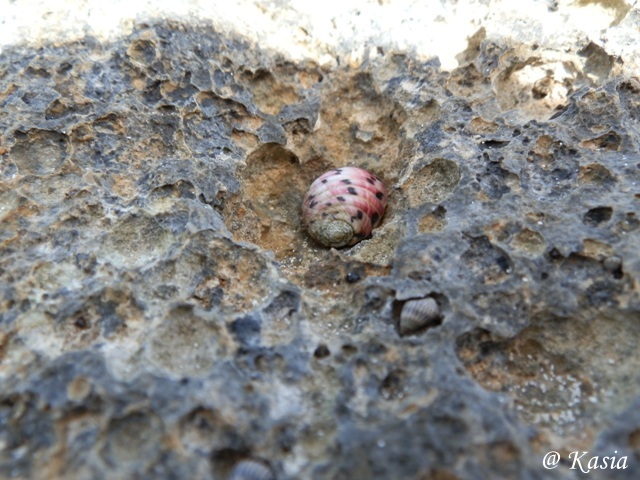
WEST INDIAN TOP-SHELLS (Cittarium Pica) 

In this image, several very small chitons can also be seen on the rock

It looks as if someone… or something… has been having a Nerite feast on the shore. A bird maybe?  I had taken the shells above and below to be another variety of Nerite, but as so often scientist and shell expert Colin Redfern has kindly corrected the error. He writes: “Very nice photos. The “nerite feast” is actually a pile of broken West Indian Top-shells (Cittarium pica). The photo immediately above shows a live group of the same species. This is what Bahamians call a whelk (or wilk), and in the lower photo they have been harvested, probably for a stew.

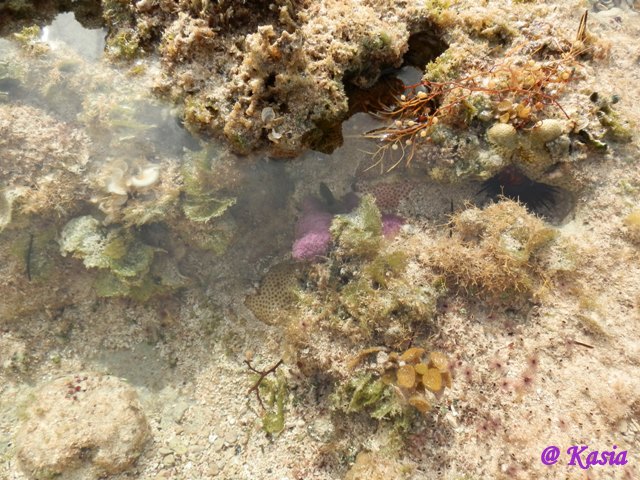
 ROCK POOL MISCELLANY

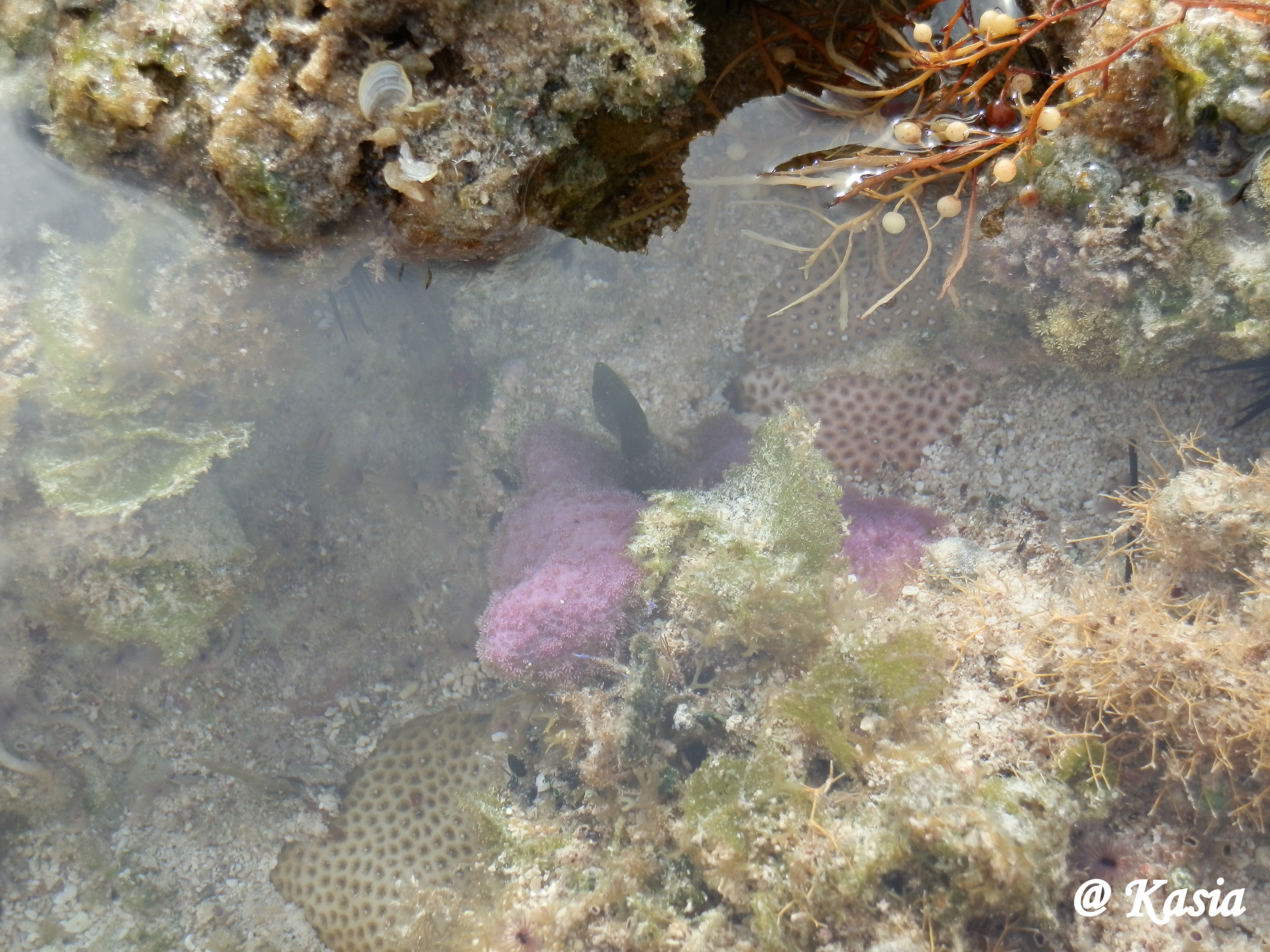
I am trying to ID a much as I can in this pool. All suggestions welcome via ‘Leave a Comment’. So far, the corals are Brain Coral and Pink Coral (I think) but I am going see what else can be given a name…

These are my favourite! 🙂 Kasia

COMET SEA STAR (possibly juvenile, with 3 such short stubs?)

A SPONGE (?) OF SOME SORT (any help with ID appreciated…)

                RED ROCK URCHINS

Unknown's avatar

BMMRO WHALE, DOLPHIN & MANATEE SIGHTINGS MARCH 2012


BMMRO WHALE, DOLPHIN & MANATEE SIGHTINGS MARCH 2012

Hard on the heels of the BMMRO’s Fisheries Report for 2011 – see previous posts – comes the map of last month’s sightings. First, let’s hear it for the manatees, featuring for the 4th consecutive month off the Berry Is. The 2 reports of an ‘unknown large cetacean’ off Elbow Cay are the puzzles of the month. There was a sperm whale in that area in January, but presumably it would have moved away in the meantime…. I wonder what the likely candidates are for ‘large’ besides sperm and humpbacks?

Unknown's avatar

BMMRO BAHAMAS FISHERIES REPORT 2011 EXTRACTS & LINK


The BMMRO has recently published its Fisheries Report for 2011. The report is comprehensive and covers a far larger area than the waters around Abaco. Extracts are shown below (thanks as alway to Charlotte Dunn for use permission). The full report can be seen in pdf form at BMMRO FISHERIES REPORT

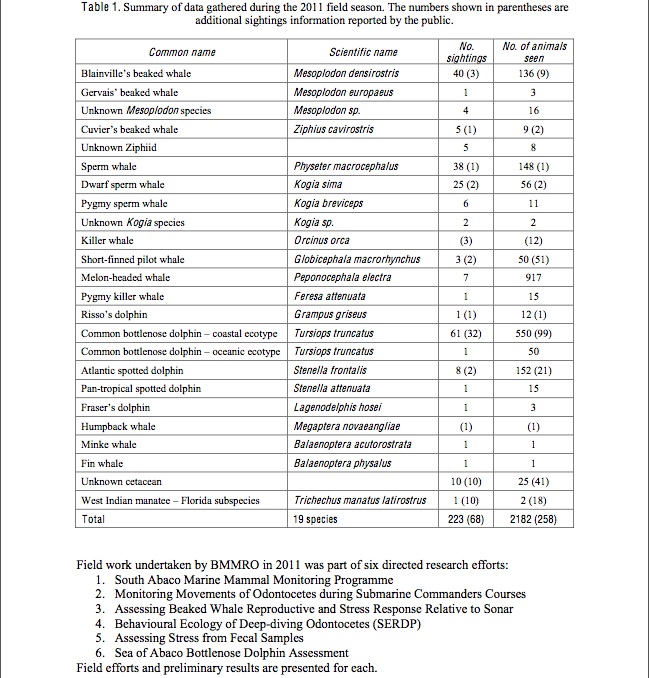
1. First, here is the table of all field data for the 2011 season, from which the incidence of the particular cetacean types can easily be seen. To a layman (me), the most significant reading on the previous year is the increase in sperm whale sightings and animal numbers, up from 14 / 69 in 2010 to 38 / 148 in 2011. I wonder why the difference?

2.  Here are results specifically relating to South Abaco, where the majority of cetacean activity is observed (see ‘green’ map). I have included a larger image of the cetacean species so that the key is easier to read

Unknown's avatar

SHELLS OF THE ATLANTIC COASTS & WEST INDIES: PETERSON FIELD GUIDE


SHELLS OF THE ATLANTIC COASTS & WEST INDIES 

PETERSON FIELD GUIDE    Abbott / Morris   350pp

An excellent and comprehensive field guide which covers the area as thoroughly as one could wish. It’s not exactly a pocket book, and at 350 pages it’s quite a chubby paperback – but the sort of size you’d happily throw into a day-bag or backpack. This authoritative shell guide dates from 1947, with frequent reprints. Mine is a fourth edition (1995) – there may be a 2002 one.

Currently £18 from Amazon UK,  or new / used for around £7 (a bargain); and a great deal cheaper on Amazon US. Overall 4* reviews

Rolling Harbour rating *****

THE BOOK IN A CONCH SHELL

  • Numerous clear illustrative line drawings throughout (115, in fact)
  • 74 colour plates grouped together at the heart of the book, showing living creatures and a huge variety of shells – 780 in all
  • Introductory articles on collecting, preparing, arranging and naming shells; also classifications and measurements
  • The text comprises 800 brief but helpful family / species descriptions, with notes on habitat and other remarks
  • Bi-valves cover 120 pages; Gastropods a stonking 150 pages
  • The substantial illustrated core of the book has shell groups on the right-hand page, with ID and text references on the left. The system works very well, especially with the many shell types that are very similar
  • At the back there’s a useful ‘Conchological Glossary’ to help sort out the crenulates from the reticulates
  • A huge 30-page index that is both thorough and user-friendly
I personally found the illustration section very helpful as a first stop; then a trip to the text to confirm the description. I had no idea what a shell we recently found in a drawer might be, but it didn’t take long to nail the ID as a STOCKY CERITH a shell I’d never even heard of. First I found a very clear illustration of it, then turned to the text description which matched what I had in my hand. Overall, as a complete amateur, I found this book the best practical guide I have yet tried for shell identification – and I suspect more sophisticated shell-seekers will get a great deal out of it too.
Unknown's avatar

STOCKY CERITH – A RANDOM ABACO SHELL FROM THE BACK OF A DRAWER


A RANDOM ABACO SHELL FROM THE BACK OF A DRAWER 

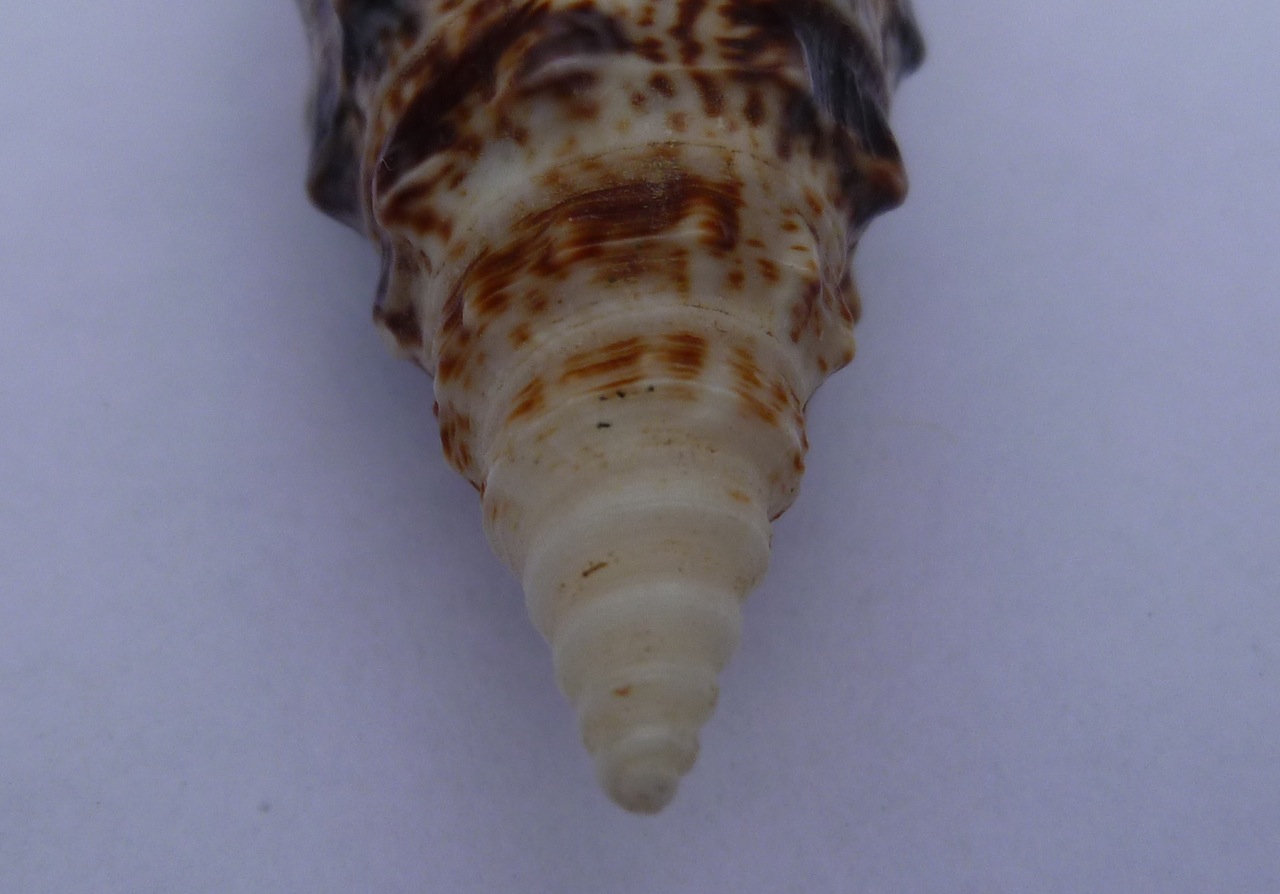
We recently discovered this shell loitering at the back of a drawer. It may well have been there for a couple of years… I had no idea what species of gastropod it might be, so I turned to a book I recently bought (and am about to review), the Peterson Field Guide on Shells. It is extremely thorough and well-illustrated, and almost at once I was able to pick the shell out as a STOCKY CERITH Cerithium Litteratum (Colin – are you still keeping an eye on the shell ID errors in this blog, I wonder? Later: yes… and he confirms the ID. Many thanks). It’s a couple of inches long and has 7 spirals before the tip part, with pronounced nobbles on the lowest 4. There’s a neat hole in it, but I don’t know whether caused by sea / beach damage or a predator. These creatures live in shallow water and are common throughout the Caribbean. So this one is nothing unusual, but I am pleased that it has eventually turned up…

STOCKY CERITH Cerithium Litteratum

Unknown's avatar

BMMRO WHALE, DOLPHIN & MANATEE SIGHTINGS FEB 2012


BMMRO WHALE, DOLPHIN & MANATEE SIGHTINGS ABACO / BAHAMAS FEBRUARY 2012

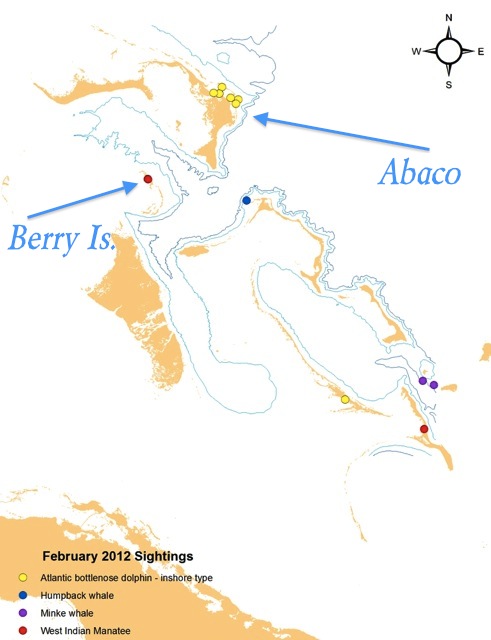
From an Abaconian point of view, the news is of Dolphin activity in the Marsh Harbour area / nearby Cays and northwards from there. No whale reports last month, though. Further afield, another manatee report from the Berry Is makes three consecutive monthly reports of sirenians. There was a humpback to the south but other reports are concentrated further away

Unknown's avatar

5 CREATURES ON ABACO THAT YOU MAY WISH TO AVOID…


Lionfish ©Melinda Riger @ GB Scuba

 has published an article entitled “15 cute animals that will cause you horrible harm”. For some of these, the word “cute” may be overstating the case. For others, the risks to humans appear to be very remote. A few are nominated despite being the most surprising and least likely harm-bringers (“KITTENS” – don’t ask).

What is undeniable is that 5 of the 15 may be encountered on or close to Abaco… Fortunately staying on dry land is a sure way to avoid them all – they all live underwater. With due credit to BRAINZ here are the Fearsome Five with his trenchant commentary, except for the last which I have censored for present purposes owing to its graphic adult content and anti-cetacean tendencies… 

1. PUFFER FISH “Puffer fish are hilarious and adorable just on general principle. It’s hard see one inflated, and refrain from uncontrollable giggling at it’s cartoonish defense mechanism. But puffer fish don’t just rely on their inflatable belly as a way of dissuading predators, they’re also packed with the deadly neurotoxin tetrodotoxin. Of course, they’re renowned as a delicacy just for this reason. Apparently, when prepared correctly, the minute traces of the toxin give you tingly lips and light-headedness. However, if the sushi chef doesn’t prepare it properly, you’re going to have a rather nasty death. See, tetrodotoxin is a muscle paralyzer, with no known cure. So if you overdose, your muscles no longer move, including your diaphragm. You become paralyzed, and unable to breath, slowly asphyxiating under the weight of your own chest

MORE ON PUFFER FISH SHARPNOSE & CHECKERED, IMAGES & 10 FACTS

2. LIONFISH “Lionfish aren’t so much cute as stunningly beautiful. They’re covered with majestic spines, which float elegantly along with them, as they swim around the ocean, eating their prey whole. So, what’s the problem with this stunning fish, and why wouldn’t you want one in your aquarium? Well, remember the rule of thumb when dealing with any animal: if it’s brightly colored, it’s poisonous. The Lion Fish’s spines are coated with a painful venom, which it will happily spear you with if you piss it off. While this venom won’t kill you, it will cause extreme pain, vomiting and difficulty breathing. Now imagine that happening while you’re scuba diving. Sounds pleasant, doesn’t it?”

MORE ON LIONFISH FACTS, VENOM &  CRISIS CONTROL and  POPULATION EXPLOSION RESEARCH

3. CONE SHELLS “Cone Snails are small aquatic snails that litter the oceans of the world. They have intricately patterned and eye-catching shells, which are exactly the sort of thing little kids like to pick up and eyeball when on the beach, which is when they strike. They have a thing called a “radular tooth” which is like a fleshy ribbon coated with tiny teeth, which are linked to a poison gland. It launches this harpoon of pain out of its mouth at any threat, including you. Now, a small snail will give you a sting like a bee or wasp, enough to hurt but not a major problem. The bigger ones? They shoot with enough force to penetrate gloves. You might not feel the symptoms for days, but when they kick in, you get pain, swelling, numbness, tingling, muscle paralysis, changes in vision, and eventually respiratory failure leading to death. What is with sea life suffocating you? Dang!”

MORE ON CONE SHELLS CONE SHELLS

NOV 13 ADDITION Capt Rick Guest adds to this by way of comment: “Hi RH ! At least for right now there is only one species of Cone shell in the Atlantic known to be a fish-eater and therefore potentially fatal to humans; Conus ermineus. It is one of the largest Atlantic cone species. I published a paper on this species in “The Veliger”, California Malacozoological Society, vol 19, Oct 1, 1976, if you want to bother searching for it. I observed this species spearing and swallowing sizable fish whole. Also, the Cones don’t have a radula ribbon. Their radular “teeth” are shaped like Capt Ahab’s harpoon, it’s hollow and is attached to the venom gland by an almost hair-thin tube. It is then forcibly ejected from the proboscis into the fish. A larger fish’s brief struggle will usually break the connection, but the venom works extremely fast, and the prey doesn’t go far. It is quickly located,seemingly by olfactory perception, and swallowed whole. There are now videos of this out there. Definitely look ‘em up!”

4. STINGRAYS “Stingrays are generally completely fine with humans. If disturbed, they’ll generally just run for it, but sometimes are happy to hang around and play. While shy by nature, they can become accustomed to human contact, and will let you play with them. Hell, many aquariums have touch tanks with rays in them, where you’re free to stroke the fish. The only problem is what happens when you step on them. If you disturb them in almost any other way, they’ll just dash away, but if you step on one while it’s hidden in the sand, there’s a fairly good chance you’ll get a stinger jabbed through you. For most people, this hits their leg, and the stinger remains after the ray swims off, like the lower half of a bee. In addition to being impaled, the sting also injects a hefty dose of poison, which leads to horrible pain, swelling and cramps. Again, not something you want to happen while you’re underwater. And sometimes, just sometimes, it’ll be fatal. Like when Steve Irwin—the Crocodile Hunter—got stabbed through the heart by one, dying soon after.”

MORE ON STINGRAYS SOUTHERN STINGRAYS and YELLOW STINGRAYS

5. DOLPHINS Oh, dolphins, lazy stoners of the sea. They just spend all their time floating around, eating fish, doing flips, and generally living the good life. Yeah, dolphins, they’re awesome. After all, who doesn’t love Flipper? Except, it turns out Dolphins are…” [tremendously detailed allegations follow. The general tenor is that these gentle creatures are apt to be overgenerous  with their sexual attentions, to the extent that when excited… well, they are large, powerful and agile, and they may try to do that thing that dogs do to human legs, only more attentively, to a diver. That’ll do as a summary. Oh, use your imagination]

MORE ON DOLPHINS  HERE and HERE

ONE MORE ABACO SPECIES TO STEER WELL CLEAR OF SPIDER (PEPSIS) WASPS Spider or Pepsis Wasp; Tarantula Hawk

Unknown's avatar

HUMPBACK WHALES IN THE BAHAMAS: TWO SIGHTINGS & AN ENTANGLEMENT


HUMPBACK WHALES – BMMRO REPORT JANUARY 2012

The BMMRO has posted recent whale news on its site – an entanglement off Elbow Cay with a happy ending, a sighting off Long Island in January, and another in February with images    (CLICK LOGO for BMMRO website)

1. An Entanglement 30.12.11  During the winter months the Bahamas occasionally get a sighting of a humpback whale migrating northward. For some reason a few of the migrating whales take a route a little closer to our islands and allow us the wonderful experience of seeing them.

On the 30th December 2011 Joseph Strickland and his crew who had been staying on the Highlander in Hope Town harbour, came across an entangled humpback whale. Due to the courage and calm response of Joe and his team, they managed to release the 40′ humpback. The whale had been entangled in a thick rope of approximately 600′ in length attached to a fishtrap. The animal was found off  Sea Spray marina in 40 feet of water off Elbow Cay, Abaco. They managed to free the animal of the fishpot which it had been dragging… as well as freeing the animal of the majority of rope, with only 20′ of line remaining on the whale. We would sincerely like to thank Mr & Mrs Strickland and their family for their extrodinary effort to free this animal, and also to report the encounter in detail.

Unfortunately as humpbacks are one of the more coastal whales, they often end up entangled in fishing gear, and come into contact with fishing pots, as well as being susceptible to vessel strikes. However, this species have made a remarkable recovery since the whaling era and in the North Atlantic abundance estimates are now approximately 12,000 humpback whales.

2. A sighting on 14.01.12  A better start to the New Year provided us with a single humpback sighting on Saturday 14th January off of Cape Santa Maria, Long Island. 

3. A sighting on 8.02.12 Finally, on Wednesday 8th February, a mother-calf humpback pair were spotted off of Dutch Bar, Spanish Wells, providing us with these beautiful pictures! Report and Image Credits BMMRO 2012