Ricky is a well-known, infectiously enthusiastic, and compendiously knowledgeable Abaco nature guide (this guy gets way too much free publicity in this blog…). In this video he focusses his binoculars on piping plovers, a threatened species of tiny plover which annually makes a long migration to the Bahamas, including Abaco – and then heads all the way north again.
If this video doesn’t make you smile at some stage, I suspect a SOH bypass and / or your ‘anti-cute’ setting is jammed on. You’ll also see the differences between the piping plover and the more familiar Wilson’s plover.
PS Missed an obvious tongue-twister component out of the original title – now amended to tip a hat to Mine (and Thine) Host
RJ’s eco-tour is not just about parrots and other avians. He is also an expert in the plant and tree life, and a great deal else. Here are some of the flower / tree images from the day, to which I will (may?) put names in due course. But frankly the pictures are far more satisfying than the knowledge that something is or is not a variant of a Cuban Popcata Petal Tree. Or whatever. If you feel like it, fast forward to the end of this post for a blue hole, a butterfly and a team photo…
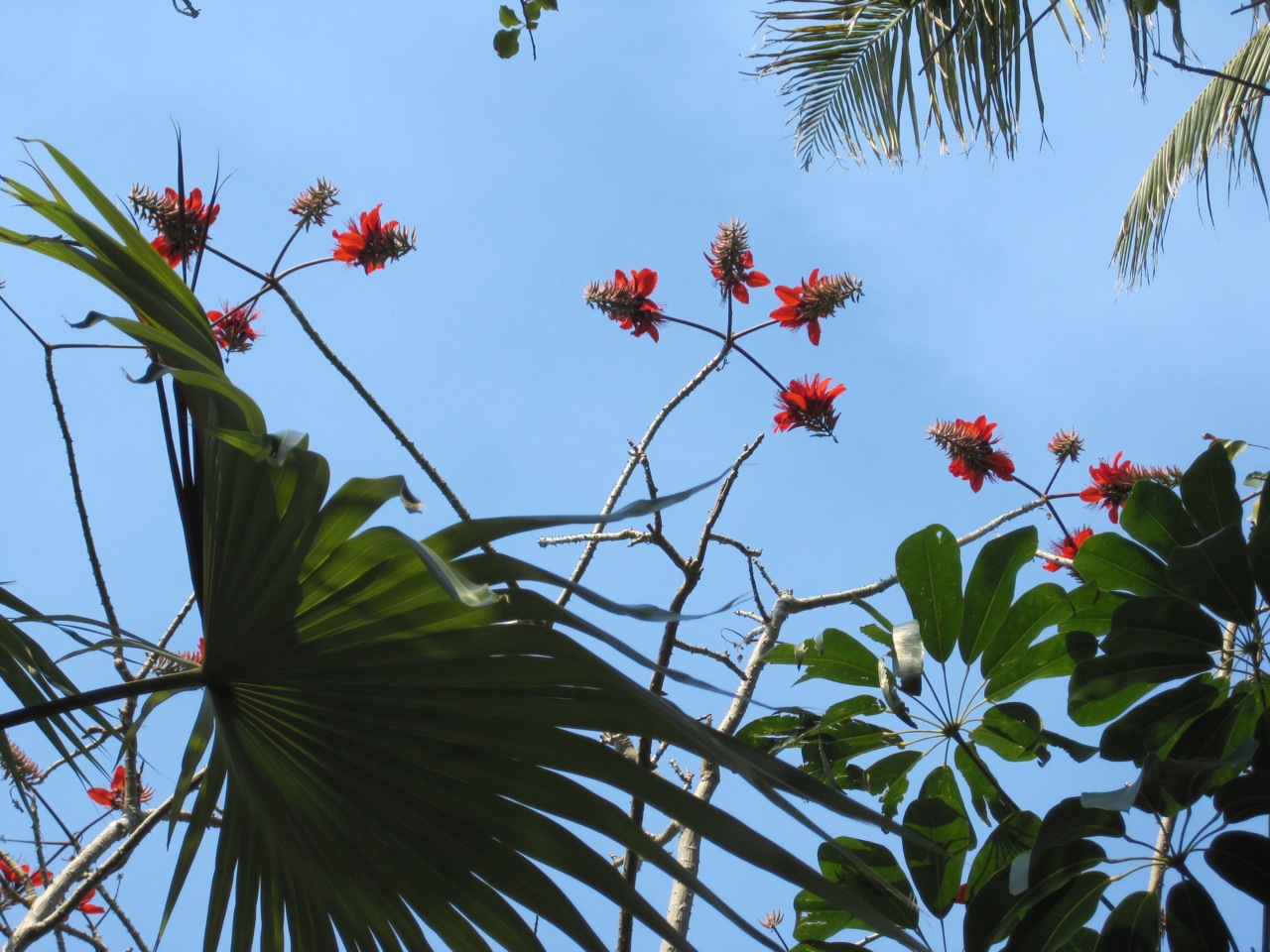
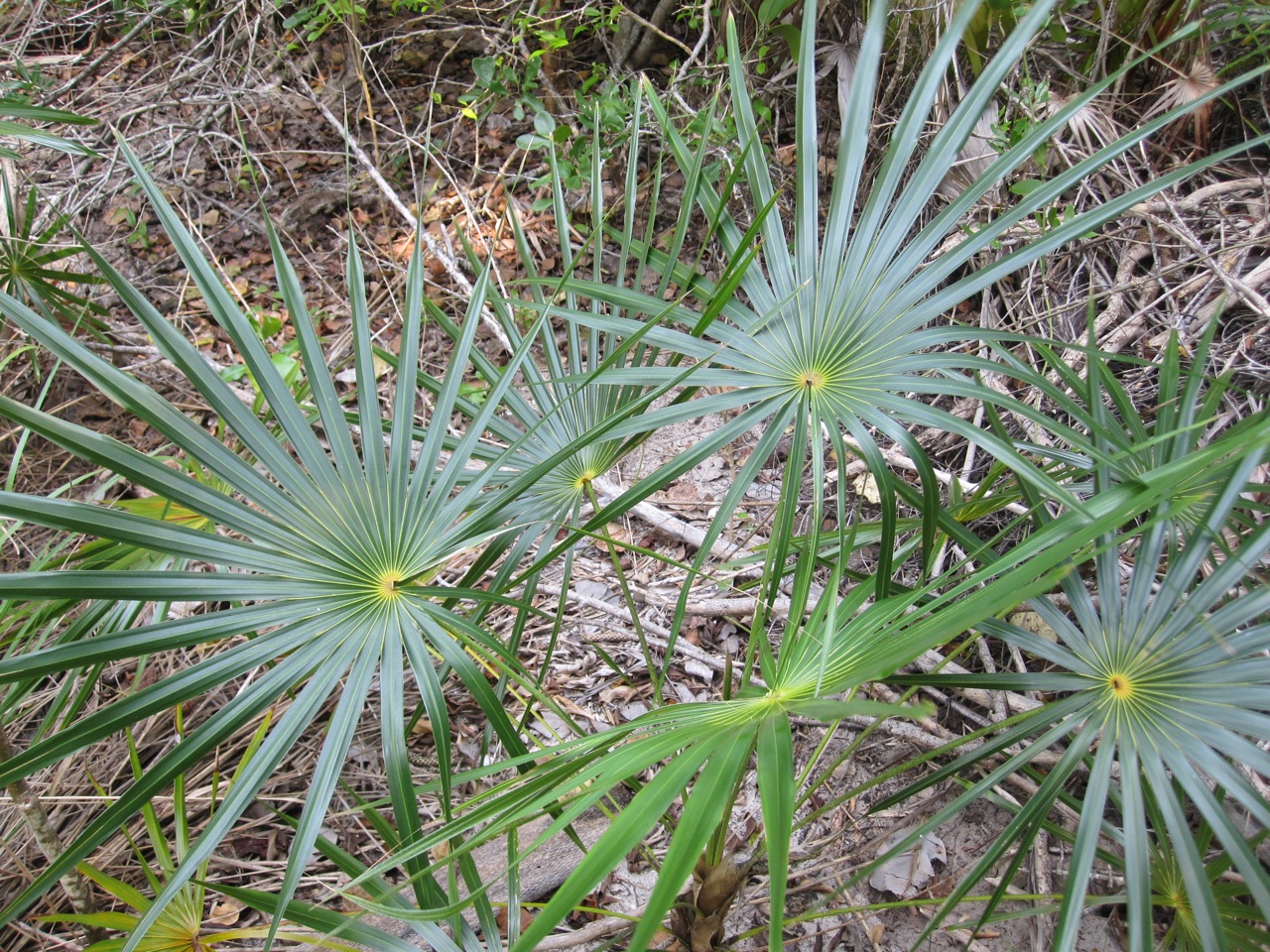
TIGER’S CLAW or INDIAN CORAL or SAMOAN SUNSHINE TREE THATCH PALM Thrinax radiata
CORAL HIBISCUS Hibiscus schizopetalus
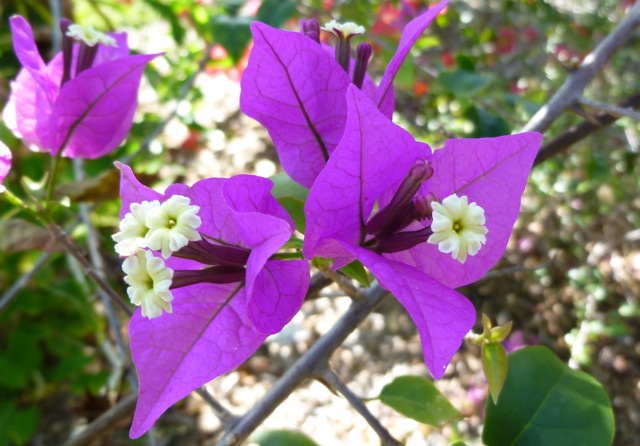
BOUGAINVILLEA Bougainvillea Spectabilis
SAPODILLA Manilkara zapota
Three images of a STAGHORN FERN Platycerium bifucatum, an epiphyte or ‘air plant’: one that grows upon another plant non-parasitically
Having left the parrots and the very lovely private garden we were shown round (where most of the plant shots were taken), Ricky took us to a blue hole nearby. The choice of 3 was narrowed down by the forest fires raging in the area (see FOREST FIRE post. The 2 largest were in a part of the pine forest that was busily engulfed in flame and dark smoke. So we went to the smallest.
However, what we could see was merely the entrance to a large and deep cave system in the limestone rock, the extent of which is still being explored (though not by me, thank heavens). The rock to the left was actually covered by 6 inches of water so clear that you could not see it – as one of our group discovered when he stepped onto the rock…
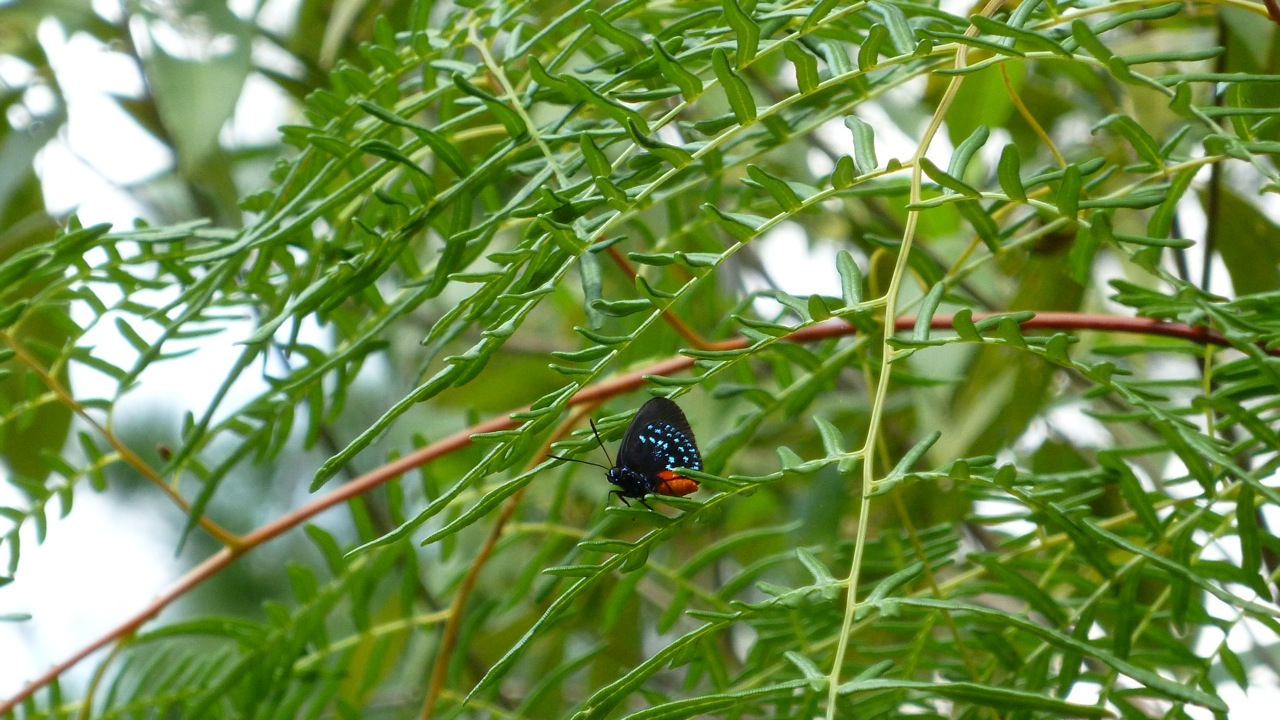
It was here that we saw ATALA HAIRSTREAK butterflies. This one is a different one from the one in the mainBUTTERFLYpost… but even their mothers can’t tell
ATALA HAIRSTREAK
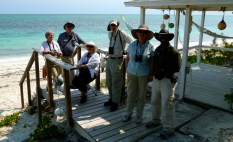
And so to the final photo of the day, taken as we sustained ourselves… before having to leave rather sharpish when the wind changed direction and the smoke and fire decided we might be worth incinerating. Possibly Ricky, in the background on his cellphone, is calling for help…
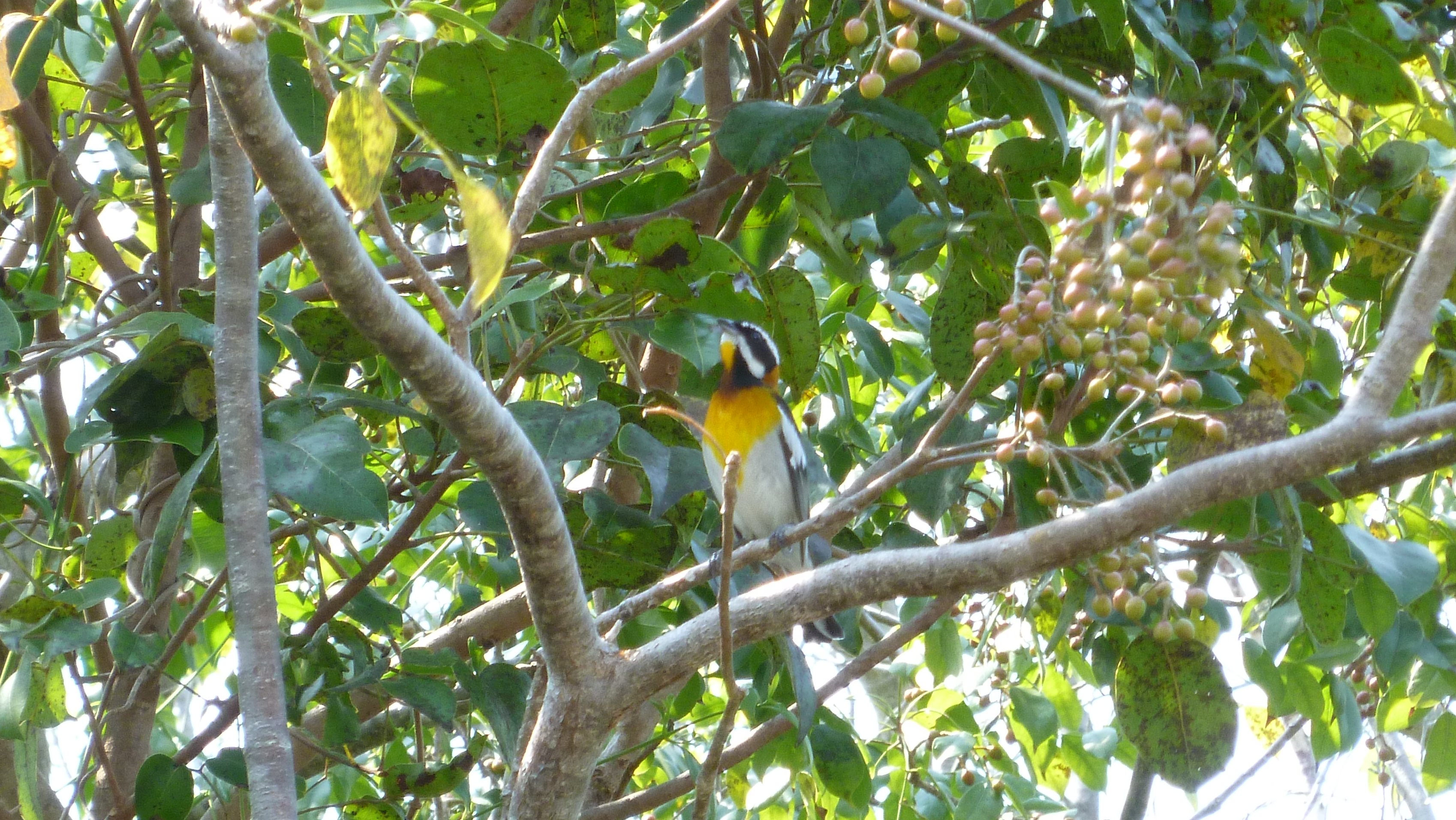
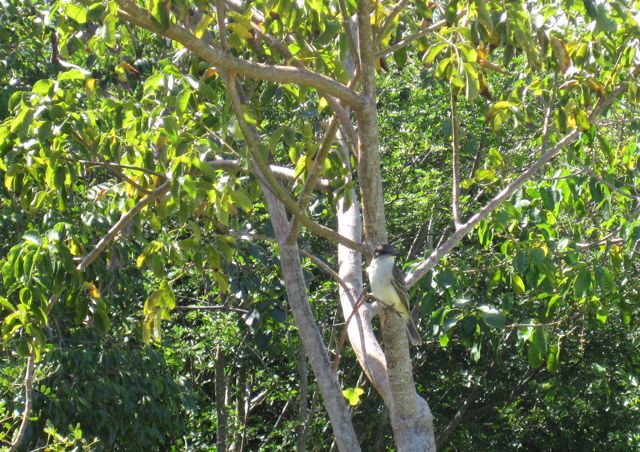
During our parrot observations, we had plenty of opportunity to see other birdlife. We were especially fortunate to be able to visit a large and very beautiful private garden on the shoreline at Bahama Palm Shores which Ricky showed us round; and to meet the benevolent owner who permits this intrusion. We saw between us a wide variety of birds in or near the garden, of which these are a small sample – starting with my favourite bird of all
Western Spindalis / Stripe-headed Tanager
Western Spindalis / Stripe-headed Tanager
POINTING AND SHOOTING THE TEAM PHOTO
Black-faced Grassquit
Black-faced Grassquit (?juvenile)
Red-legged Thrush
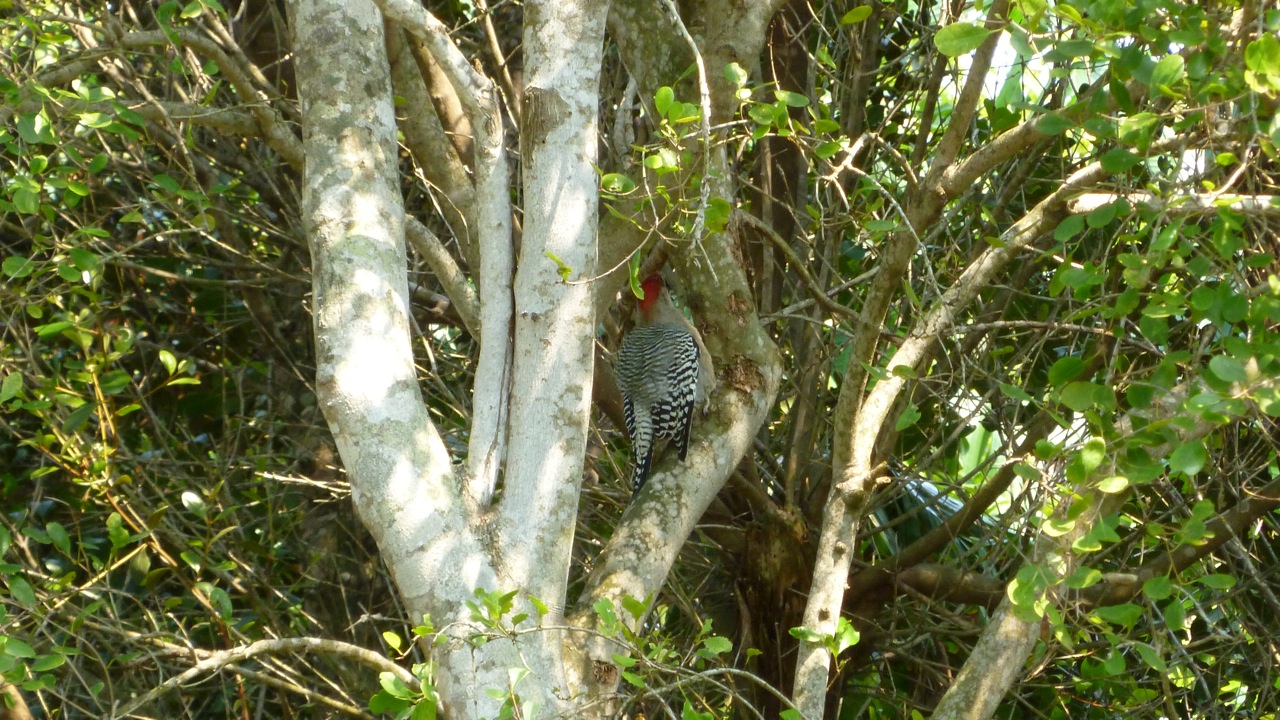
West Indian Woodpecker
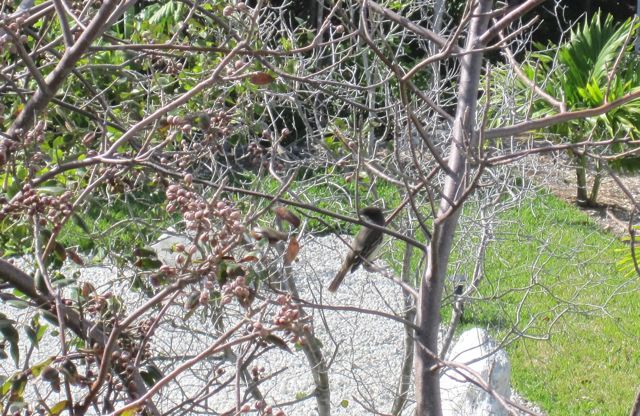
I’ve no idea. Small. Dark. Finchy. Grassquit? Hard to see. Any ideas? Sorry
Ricky ushers us into his spacious, comfortable truck: 6 denizens of Delphi eager for adventure. Most have already been on a morning trip to see the Abaco Barbs (wild horses) of which more in a separate post. rollingharbour suffers from an unfortunate but mild form of equine indifference disorder, so gave it a miss.
We set off north on the highway, checking cameras, binoculars and other essential expeditionary impedimenta. Meanwhile, Ricky reveals his knowledge, experience and huge enthusiasm… this extends way, way beyond mere birds to the trees and plants, to poisons and herbal remedies, to geology and speleology, to geography and history. Soon we reach our destination, confident in Ricky’s renowned ability to know where the parrots (and many more birds besides) are to be found. We don’t have to wait very long – about two minutes after we turn off the highway, in fact… The parrots favour the Gumbo Limbo Tree (Bursera simaruba) as pictured, which invariably and most conveniently grows next to the Poisonwood tree (Metopium Toxiferum) and is its antidote. That’s the first place to look.
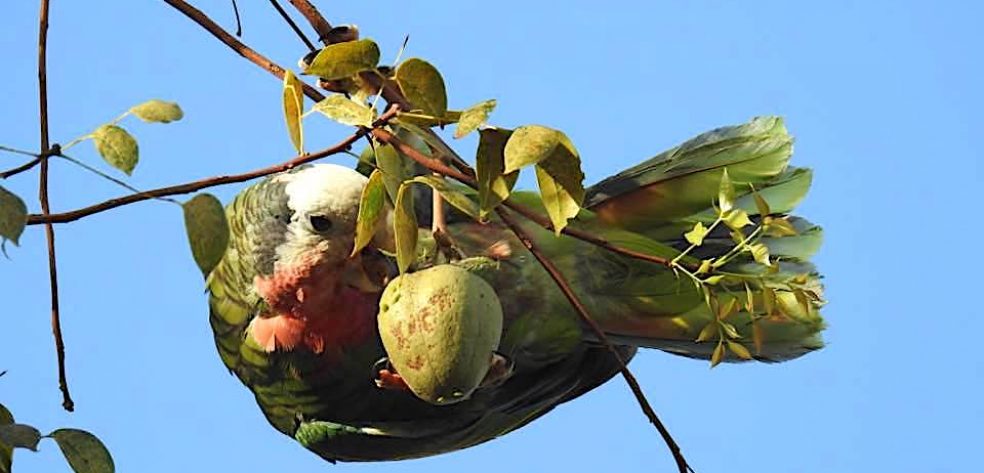
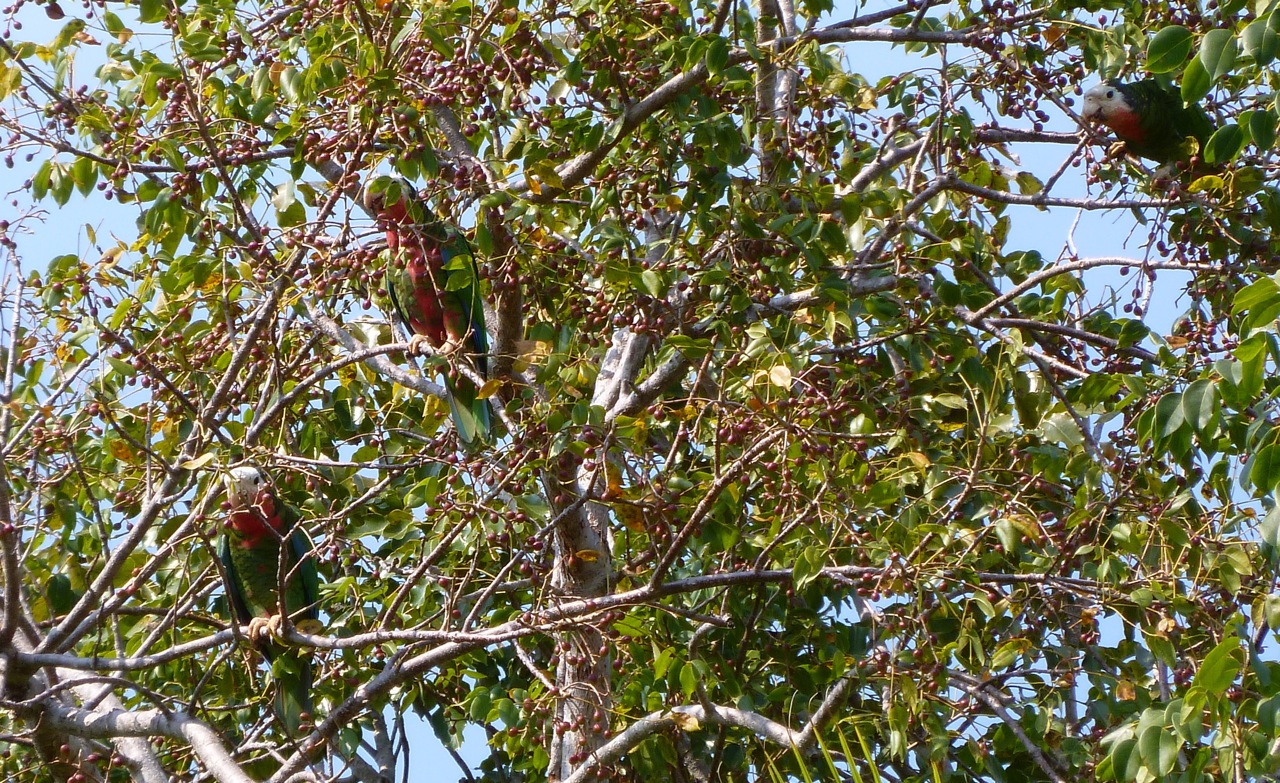
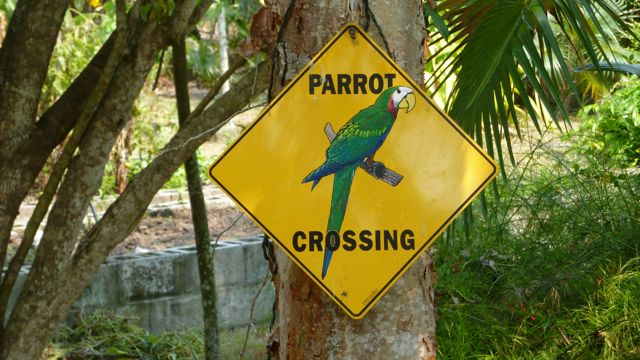
ABACO PARROTS(Amazona leucocephala bahamensis)Here is a selection of our photos of these fantastic birds. I hadn’t expected to see so many, for so long, and at such close quarters. Their colouring was extraordinarily vivid, with a slash of blue on the wings. This was especially dramatic in flight. One parrot, shown below, had red frontal markings that extended almost to its tail. Ricky hadn’t seen one like it before.
CLICK on the images to enlarge them significantly [Mrs rollingharbour reports that this is as yet a theory and may not work in practice]
CAPTION COMPETITION (NON-COMPETITIVE): 3rd image down – what did parrot (a) say to parrot (b)?
To be continued… (I’m going to do this post piecemeal – other birds, flowers etc to follow)
I have returned from “The Other Delphi” to find that Peter Wesley Brown has provided 3 excellent images, now uploaded to theCONTRIBUTIONS / PHOTOGRAPHSpage. Two are excellent pictures of a Gold Rim / Polydamas Swallowtail, dramatically… no, badly photographed by me for theBUTTERFLIESpost and later identified by PM; the third shows thatTHE RELUCTANT WOODPECKERhas finally made herself / himself at home in the nesting box…
Well, make that both ‘bad’ and ‘lucky’ (see previous post DOWNTIME). Against all reasonable expectations (mine, and everyone else’s I suspect), a rather handsome fresh hatchery salmon just light of 10lbs managed somehow to take a Willie Gunn at the lower end of the Turn Pool (for those that know the river) and make landfall about 15 minutes later. Continue reading →
The hectic pace of this new enterprise will slow a bit for a week or so while I spend some time at The Other Delphi (no, not the one in Greece) where the annual release of 50,000 hatchery smolts into Finlough has just taken place. Continue reading →
You will need: binoculars; camera; picnic lunch OR willingness to eat ‘local’ (see below); swimming kit – and a car, of course, e.g. the club Toyota
Map extract courtesy of ‘Abaco Life’ (the best, indeed the only, road map of the Island I have come across…)
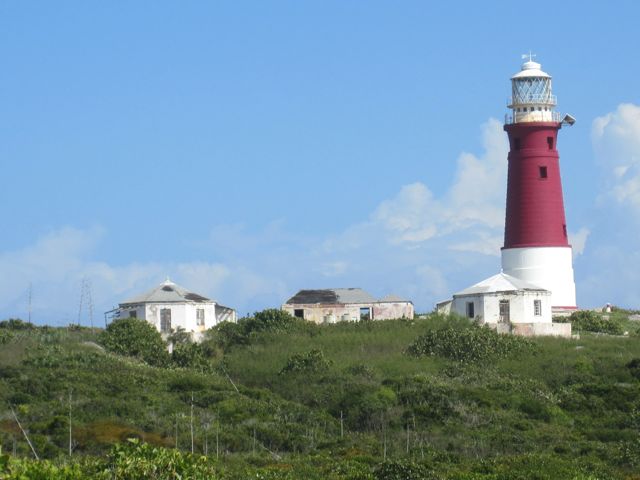
SANDY POINT is a small settlement about 30 miles / 1/2 hr drive south west of Delphi. There’s only one choice of route: turn left at the end of the drive, and keep right on to the end of the road. Having commandeered the club car from Sandy, you drive due south until you get to a long right-hand bend. There is an important junction here: if you drive straight on, you enter the National Park nature reserve proper – breeding ground for the Abaco parrots – and are on the track to Hole in the Wall and its lighthouse…
Do not be tempted to try this – it is 15 miles each way on a deteriorating track, and the club car will soon be a wreck. Rental cars are forbidden. I will post separately about this adventure, which we have done in a truck. We may not repeat the experience.
Bird Alert 1During the journey, look out for birds on the telegraph posts / wires. You may see American kestrels, turkey vultures and Bahama swallows. Small birds will flick across the road, and you may find yourself readily placing them in the ‘unidentifiable’ category. If in doubt, best settle for ‘warbler’ and there’s a fair chance you will be right. Alongside the road, look out for groups of smooth-billed Anis aka cemetery birds. These largish black birds are noisy and sociable, nest communally and look after each other’s nestlings. Continue reading →
The (badly-photographed) dark butterfly in the earlier post has been identified as a GOLD RIM SWALLOWTAIL / POLYDAMAS SWALLOWTAIL (Battus Polydamas Lucaeus) Continue reading →
Abaco National Park Created in 1994, it encompasses over 20,500 acres of pine forest / coppice and is the principal habitat for the endangered Bahama Parrot and other important species of Bahamian wildlife. The tract covers a large area of the Great Abaco water table and has significant recreational value for the people of Abaco.
Black Sound Cay Nature Reserve This two acre mangrove reserve is nestled in the harbour of Abaco’s historic Green Turtle Cay. The reserve was established in 1988 to protect a vital waterfront ecosystem and wildlife.
Pelican Cays Land & Sea Park A 2,100 acre area just north of Cherokee Sound in Great Abaco that contains stunning undersea caves, extensive coral reefs and is noted for its fish, plant and bird life.
Tilloo Cay National Park Acquired by the Trust through private donation, this 11 acre area encompasses a tropical wilderness shoreline of outstanding beauty. Exposed to the Atlantic Ocean, the area is an important sea bird nesting site.
Fowl Cay Land and Sea Park Recently created in 2009, an excellent place for reef snorkelling [I will be posting about this in due course…]
There is a wealth of birdlife on the Delphi doorstep. You don’t even have to go out of the front gateway to find it. You’ll hear a great many more birds than you ever see – many are small and very hard to spot in the bushes, even when you can hear loud chirrups. Here are a few examples of what you might see, all taken within the Club precincts
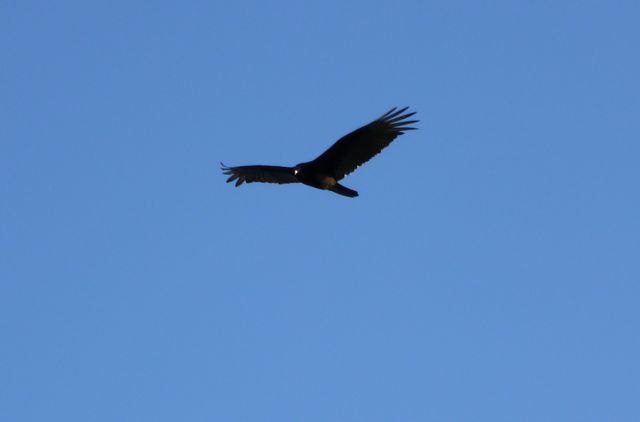
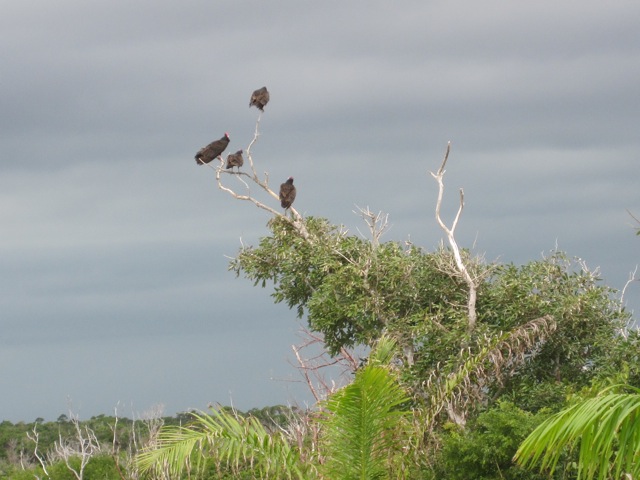
TURKEY VULTURES, ever present, wheeling above the bay, sometimes in flocks of 20 or more. Their grace in flight is slightly spoiled by the knowledge that their heads are red, wrinkled, bald and… frankly unattractive. You may also see them hunched on a dead branch along the drive (second photo)LOGGERHEAD KINGBIRDS, one of several types of ‘Tyrant Flycatcher’, so-called because of their robust attitude to defending their territory. The first one is on the far side of the pool; the second is taken from the verandah.
WEST INDIAN WOODPECKER, resident initially under the verandah eaves before moving to the upscale nesting box further along. Often seen during the day in the gardens, sometimes shouting raucously: the second photo is near the pool
ANTILLEAN BULLFINCH (previously wrongly ID’d as American Redstart – thanks CN) I’d never seen one of these before, nor indeed heard of them. This one was photographed in the trees along the drive while I was in fact looking for another bird altogether…
THICK-BILLED VIREO, one of several vireo species. Believe me, they are much less blurry in real life than here… They chirp a lot and seem quite tame.
BANANAQUIT My second favourite bird (after the western spindalis). Smart black and white heads, yellow underparts, and a sharply curved beak used to pierce the base of flowers for nectar. They aren’t choosy though, and eat insects and fruit too. Very chirpy, and VERY hard to see in the bushes, even when you can clearly hear exactly where you think it must be… Look for moving foliage. This one was in the shrubs by the main staircase.They sound like this (credit Xeno-canto.org)
NORTHERN MOCKING BIRD at a distance… above the skiff park. We heard it singing melodiously. ID (in close up – click on image for a marginally better view) from cocked and slightly spread tail, and (you won’t see this) white wing markings. This species is apparently beginning to displace the larger but unaggressive Bahama Mockingbird.
NORTHERN PARULA Small yellow warbler, of which there are many types. This is the one that unwisely tried to fly into the Great Room through the plate glass, and had to be revived by Sandy. It perked up quite quickly, and flew off none the worse for its encounter either with the glass or Sandy…
HUMMINGBIRDSare a fascinating topic in themselves, and I’ll post about them separately. There is the Cuban Emerald and the endemic Bahama Woodstar, both of which can be seen at Delphi (though the latter are rare where the former predominate). There is a 3rd type of hummer on Abaco, which I will leave you with for now:
Say what you like about Wikipedia – no, not that, please – but in many fields it is very hard to beat. CLICKLINKON BLOGROLL IN SIDEBAR–––>>>> ‘ULTIMATE LIST OF BIRDS…’ for as comprehensive a list in accessible form as you could wish to find. Even allowing for a few ‘wiki-errors’ (is “Elton John” really a species of Gnatcatcher?), it’s an awesome basic resource a mere click away. There are click-throughs to individual birds, where you will find photos and all the other types of species information you need. Well worth a quick look, anyway, and you may find it extremely helpful to give it more attention.
Want to know how to cook an Abaco hog? Eager to learn how to shake up an Abaco cocktail while you are waiting? Go to the RANDOM page drop-downFOOD & DRINK menu for recipes, ingredients and instructions for the following:
FOOD
Cooking a bonefish (if you really need to…)
How to Clean a Conch (with video and cool dude)
Steamed Abaco Wild Hog
Abaco Baked Grouper
Peas ‘n’ Rice Abaco-style
Crawfish Fritters
Bahamian Mango Chutney
DRINK
Abaco Cocktail
Goombay Smash
Any other Abaco-specific recipes welcome – how is that extra-strong Delphi Rum Punch made, for example (if not a trade secret)?
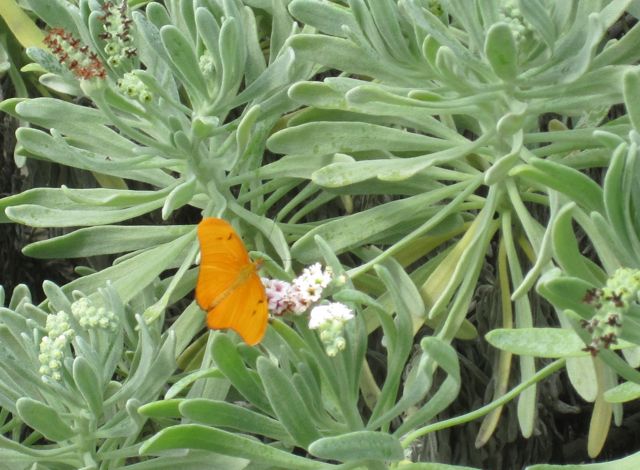
I haven’t nailed the ID of this one yet. Any ideas appreciated. [See later post for ID as GOLD RIM SWALLOWTAIL / POLYDAMUS SWALLOWTAIL (Battus Polydamus Lucaeus) ]
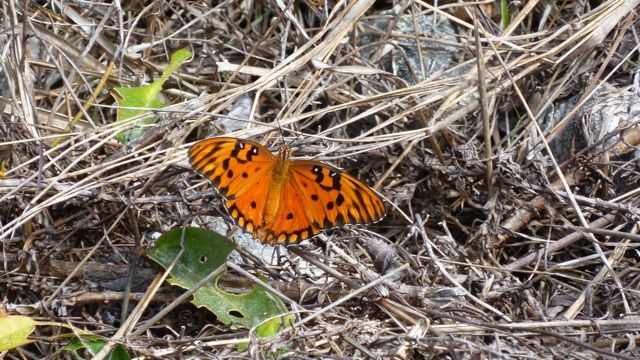
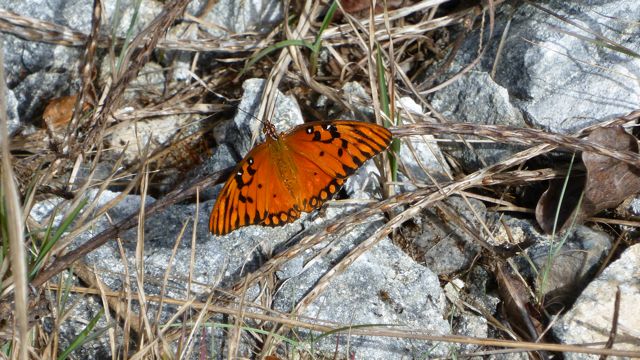
Seen all round Delphi this March. These are on the move the whole time, and are surprisingly hard to pin down (not a very sensitive way to put it for a butterfly…) The bottom photo looks like a rubbish picture, I know, but in fact the butterfly is at rest (the body / legs / feelers aren’t blurred) while the wings beat fast and constantly while it feeds
AND FINALLY… Pride of place goes to this Atala Hairstreak, photographed during a Delphi outing with Ricky Johnson to one of the Blue Holes in the pine forest. It’s the only place I have seen these small butterflies, and there were only four or five. This one stayed still for just long enough
ATALA HAIRSTREAK Eumaeus Atala
===========================================
BLOG NEWS UPDATE
23.04.11
Email Share added to the main pages
Pages Menu added to sidebar
Contributions received now posted on the appropriate page…
Note I am trying to reorganise this blog to increase accessibility of categories and sub-categories. Struggling a bit… one major accidental deletion so far… proposed pages under construction or at least under contemplation… please bear with me!
The ‘Flora’ part of ‘Flora and Fauna’ is a bit of a blind spot for me except in a very basic daffodils-tulips-roses english gardening sense. So it was with a massive sense of relief that, browsing through (namecheck here) ‘Dr Ralph’s Abaco Forum’, I stumbled across a comprehensive blog about the flora of Abaco with excellent pictures and very informative descriptions, posted by Iris Spikes. She includes notes about the plants that are poisonous, and those that have medicinal / antidotal properties. For example poisonwood and gumbo limbo trees grow side by side, as poison and antidote – you can find them growing together along the Delphi drives (the gumbo limbo fruit is especially popular with the Abaco Parrots).
With thanks for permission, I have added the web link to the Blogroll list so that you can get to it straight away. Please note that there are two linked posts – you get to part 2 from the link at the end of part 1.
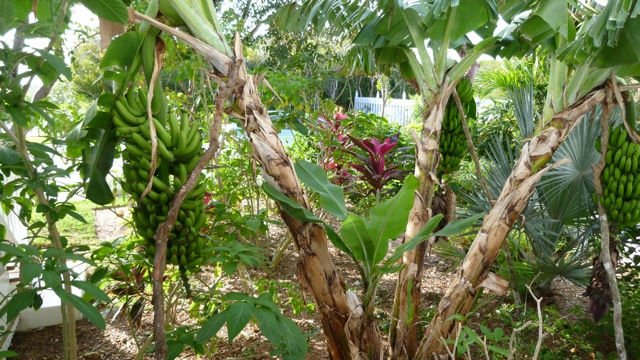
Here are a few random flora images of ours, most now readily identifiable… Almost all (including the bananas outside our room) are from the Delphi gardens or beside the drives – and one cheat that is much more Abaco than UK
Powder Puff Tree - Calliandra haematocephala
Bananas (outside rooms 1 - 4)
Hibiscus
Coral or fringed hibiscus
Bougainevillea (pool area)
Bougainevillea (pool area)
Camelia
Thatch Palm
Bottle-brush tree (a cheat – in neighbours’ garden, London!)
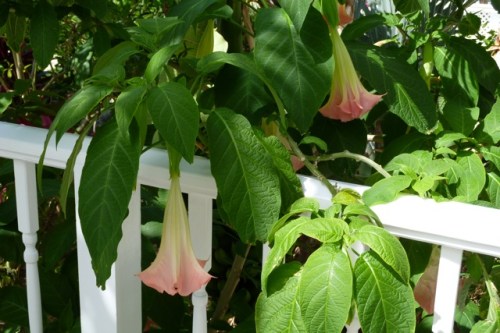
Angel’s Trumpet (Datura Candida)
An epiphytic bromeliad (see below) on the guest drive
Staghorn Fern (Platycerium bifucatum) - also epiphytic
An epiphyte (or air plant) is a plant that grows upon another plant (such as a tree) non-parasitically or sometimes upon some other object (such as a building or a telegraph post), deriving its moisture and nutrients from the air and rain and sometimes from debris accumulating around it and not from its host
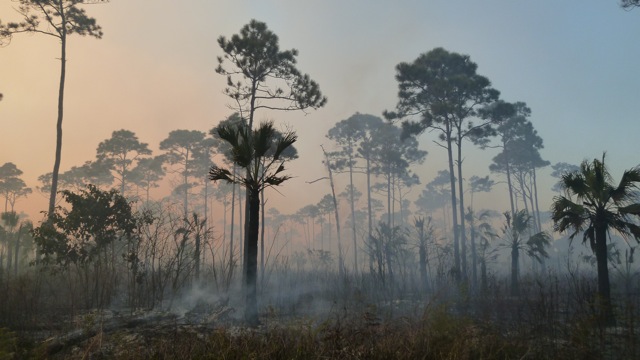
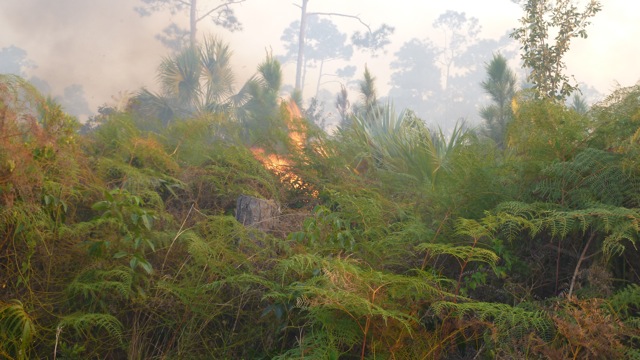
Mid-March saw the outbreak of an unnaturally large number of fires in the pine forests on (mainly) the west side of Abaco. Suspicion mostly fell on hog hunters wanting to clear the thick undergrowth. Many fires spread rapidly in the wind and some jumped the highway. For a couple of days there was increasing anxiety at Delphi, not wholly allayed by Sandy’s robust enthusiasm for driving guests intothe heart of the fires: “Look, I promise you, it’s perfectly safe ”. The big question: would the coppice stop the fire in its tracks as expected, or would the fire sweep through to the Club grounds and buildings? And (a members’ concern, this) were they adequately insured?
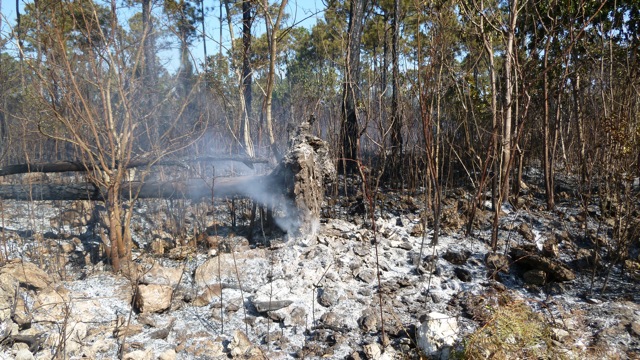
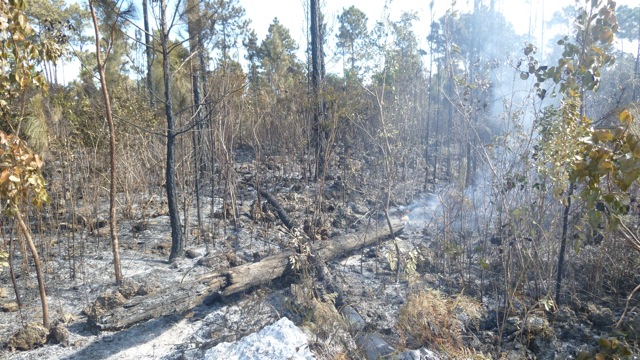
In the event, the Club was spared. However, much of the area between the road and the coppice in front of the Club was badly burned. The effect on the bird liferemains to be seen, though even after a few days there was evidence of greening up of foliage – an encouraging sign. Any hogs presumably managed to escape…
Here are some images, all of them taken from the Club or along the drives. Most (all but 2 now – I’ve fixed the rest) will enlarge with a click.
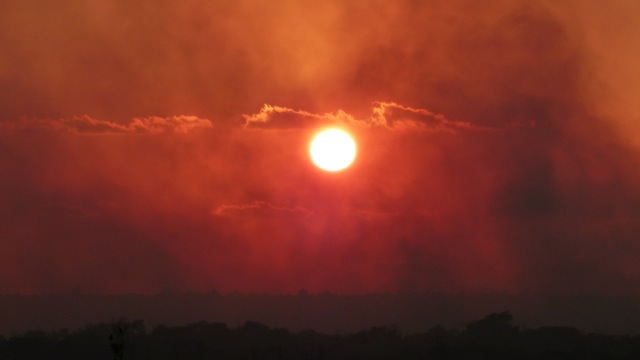
Setting sun from the Club verandah. At least 3 fire seats are visible
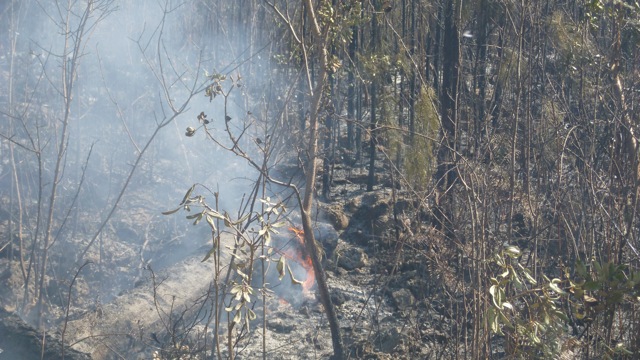
This tree along the guest drive kept smouldering for 3 or 4 days
A somewhat apocalyptic sky
This area along the drives was dense bright green undergrowth two days earlier
A milky morning sun filters through onto snowy ash
Click to enlarge this image: you’ll see a flame at the top of the tall dead tree, like an oil refinery flare stack
Fire spreading in the wind and taking hold of a new area between the drives
Another area that had been thickly wooded, with dense green undergrowth
Caroline Stahala, a scientist from Florida, has spent some years studying the endemic parrots of Abaco. The Club is a convenient place from which to carry out some of her research. Evidence is growing that these protected parrots may not be a variant subspecies of the Cuban parrot, as previously believed, but are actually a species in their own right deserving their own distinct classification. Such a finding would be of major ornithological importance, and would further secure the protection of these beautiful birds and their habitat. This in turn will help to prevent the decline in their already small numbers. I hope to post news of Caroline’s research into this year’s parrot breeding season which begins next month
CLICK LINK on BLOGROLL in SIDEBAR -—›››PARROTS INTERNATIONAL for Caroline’s Thesis







 POINTING AND SHOOTING THE TEAM PHOTO






 CAPTION COMPETITION (NON-COMPETITIVE): 3rd image down – what did parrot (a) say to parrot (b)?























 ROLLING HARBOUR ABACO
You must be logged in to post a comment.