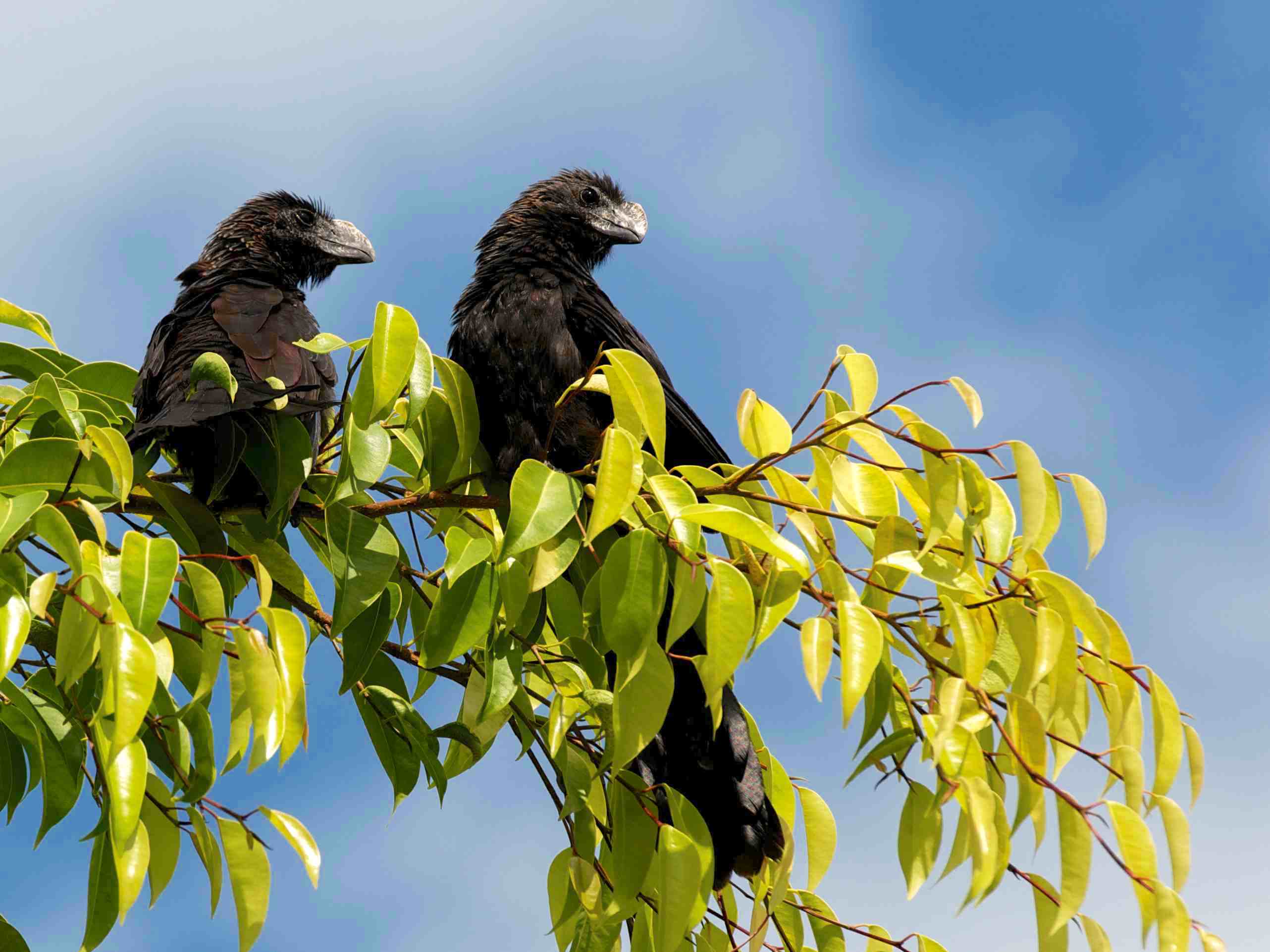
Goodness, is it the end of the month already? So much going on, 3 half-written posts but running short of time. So here’s something (even) more interesting than the stuff I write – actual photos of actual birds with no words. Great photos (not mine) of Abaco’s 3 cuckoo species to compare and contrast. Until next month… when there’ll be stilts, hutias and a whole lot more.
YELLOW-BILLED CUCKOO (and header image)
MANGROVE CUCKOO
SMOOTH-BILLED ANI
Photo Credits: Tom Sheley, Tony Hepburn, Alex Hughes, Gerlinde Taurer, Nina Henry
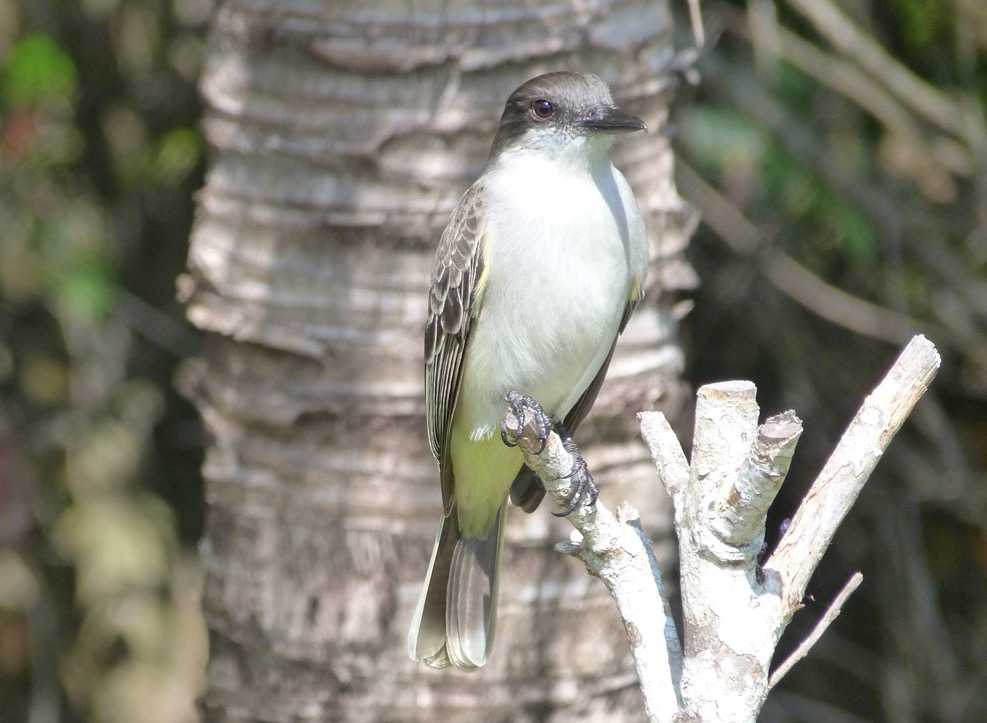
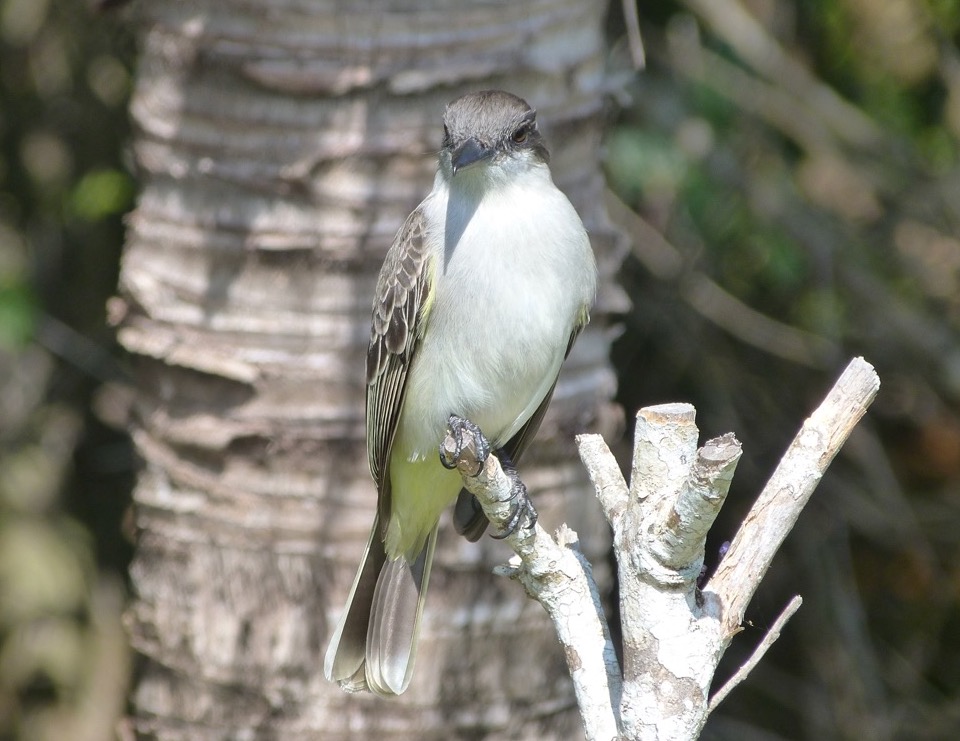
Abaco is home to 4 main so-called tyrant flycatchers (Tyrannidae): the loggerhead kingbird, the gray kingbird, the La Sagra’s flycatcher and the Cuban pewee. All are common permanent residents except the gray kingbird, which is a summer resident only. Several other flycatcher species are found on Abaco, but they are very uncommon winter residents, rare transients, or vagrants.
The loggerhead featured here in several poses is a watchful sentinel at Delphi. His preferred perches are in the edge of the coppice round the pool or at the edge of the main drive. From time to time he will leave his perch to catch a passing insect by ‘hawking’, returning to the same place to eat it.
Loggerhead and gray kingbirds can be quite easy to confuse. A couple of years ago I wrote about how to distinguish them, and with gray kingbirds in residence now this is probably a good time to set out the distinctions again.
LOGGERHEAD Tyrannus caudifasciatus vs GRAY Tyrannus dominicensis
DIFFERENCES and SIMILARITIES
TOP TIPANY KINGBIRD SEEN IN WINTER WILL BE A LOGGERHEAD
Kingbirds seen between (say) October & March are Loggerheads. Grays are strictly summer visitors
Both are medium size birds and roughly the same size as adults (around 23 cms)
Loggerheads have dark brown to near-black heads, grays have lighter, slate-coloured heads
Loggerheads have a ‘squared’ tip to the tail; grays have a notched tip
Loggerheads may have a whitish fringe at the tip of the tail; grays not so
Loggerheads have yellowish tinges to their white undersides & forewings; grays less so or not at all
Grays have a dark or black ‘mask’ through the eyes, often clear but not always easy to see
Loggerheads allegedly have inconspicuous orange head crests; grays are red. I’ve never seen either!
[*RH personal opinion alert*] Grays have larger, heavier beaks than loggerheads
Grays are territorially aggressive; when they turn up, the loggerheads tend to retreat to the forest
Here is how David Sibley shows the differences
Illustrations: David Allen Sibley
GRAY KINGBIRD FOR COMPARISON
MEMORABLE FACT TO DEPLOY IN CONVERSATION
The collective names for a group of kingbirds are: a Court, a Coronation, or a Tyranny
Photo Credits: All loggerheads, Keith Salvesen at Delphi; gray kingbird by Dick Daniels; Illustrations David Sibley
“Nidification” was one of the new words I learned from the wonderful book Birds of the West Indies by James Bond (a different one – for the full story behind the name click HERE). It means, essentially, the nesting process of a bird. It sounds pleasingly technical for a straightforward concept: nest-building.
Soft furnishings being added
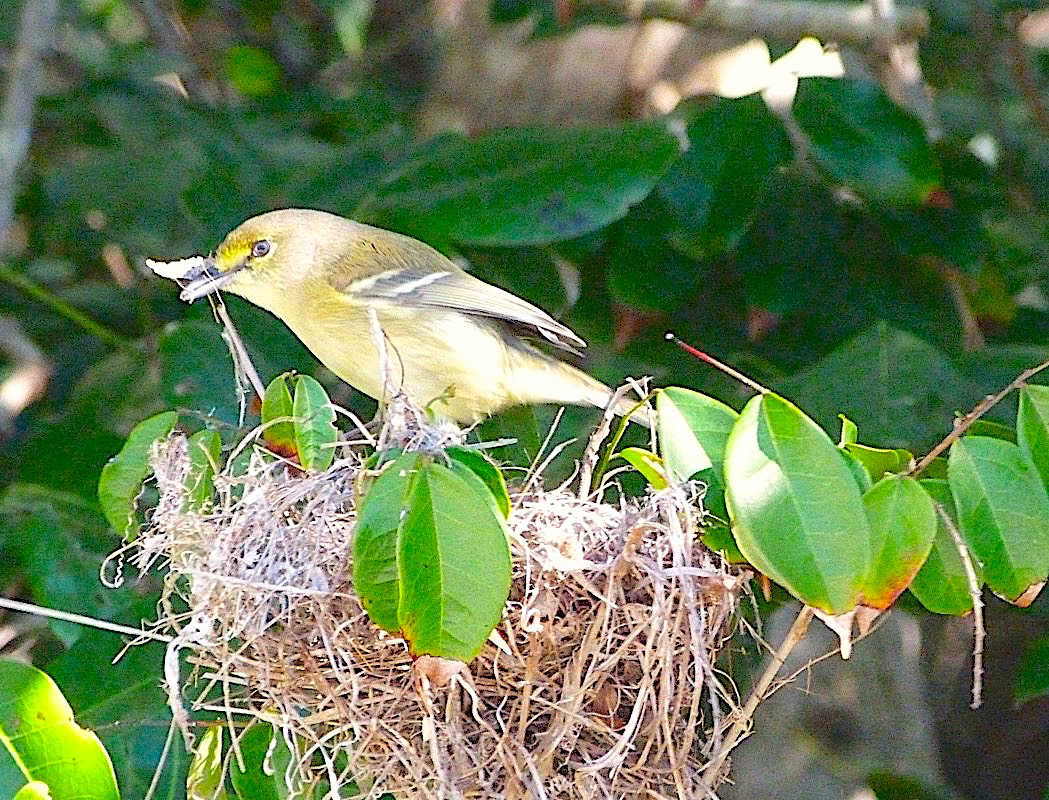
I spotted this TBV making its nest on the edge of the drive at Delphi. I usually think of these cheerful chirpy birds as ‘lurkers’, hanging back in the coppice and not making themselves easily visible. But this nest was right out in the open – possibly not the wisest place for nidification.
If you look up TBV’s in bird books, you may find a reference to nest building in the fork of shrubs or bushes – exactly what was going on here. It quite a messy nest, but then again it looks comfortable and firmly wedged in.
Although I only saw one of the pair actively engaged in the building, another TBV was ‘vocalising’ (there’s another technical term, = singing) nearby, presumably the mate. In a way that humans have been slow to adopt, both birds will be actively involved in raising their family, from incubating the eggs to chick care – feeding, cleaning out the nest and so on.
WHAT DO THEY SOUND LIKE WHEN THEY VOCALISE?
Let’s hope for a successful outcome to the nidification…
All photos Keith Salvesen, also the sound recording (made at Delphi)
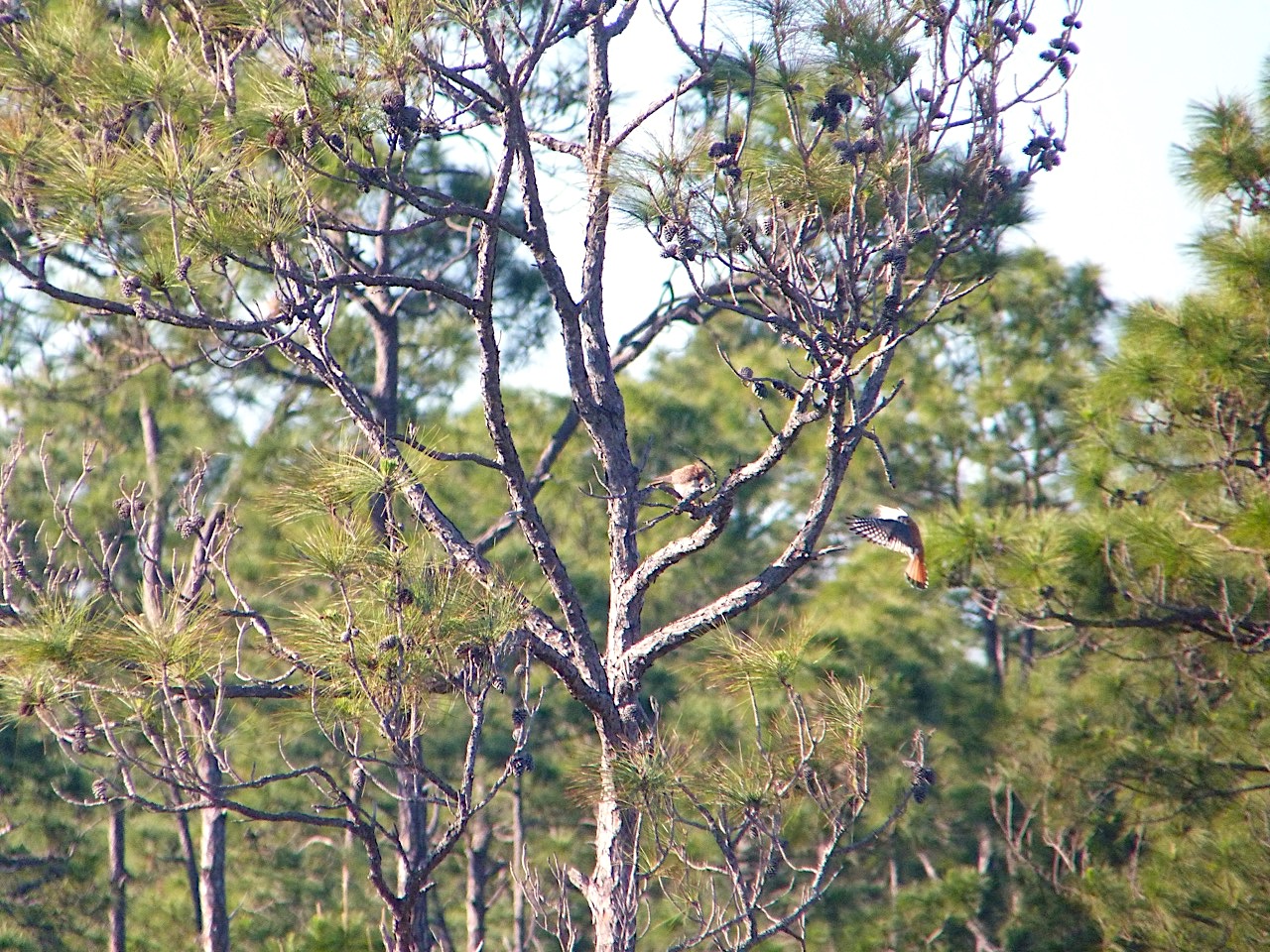
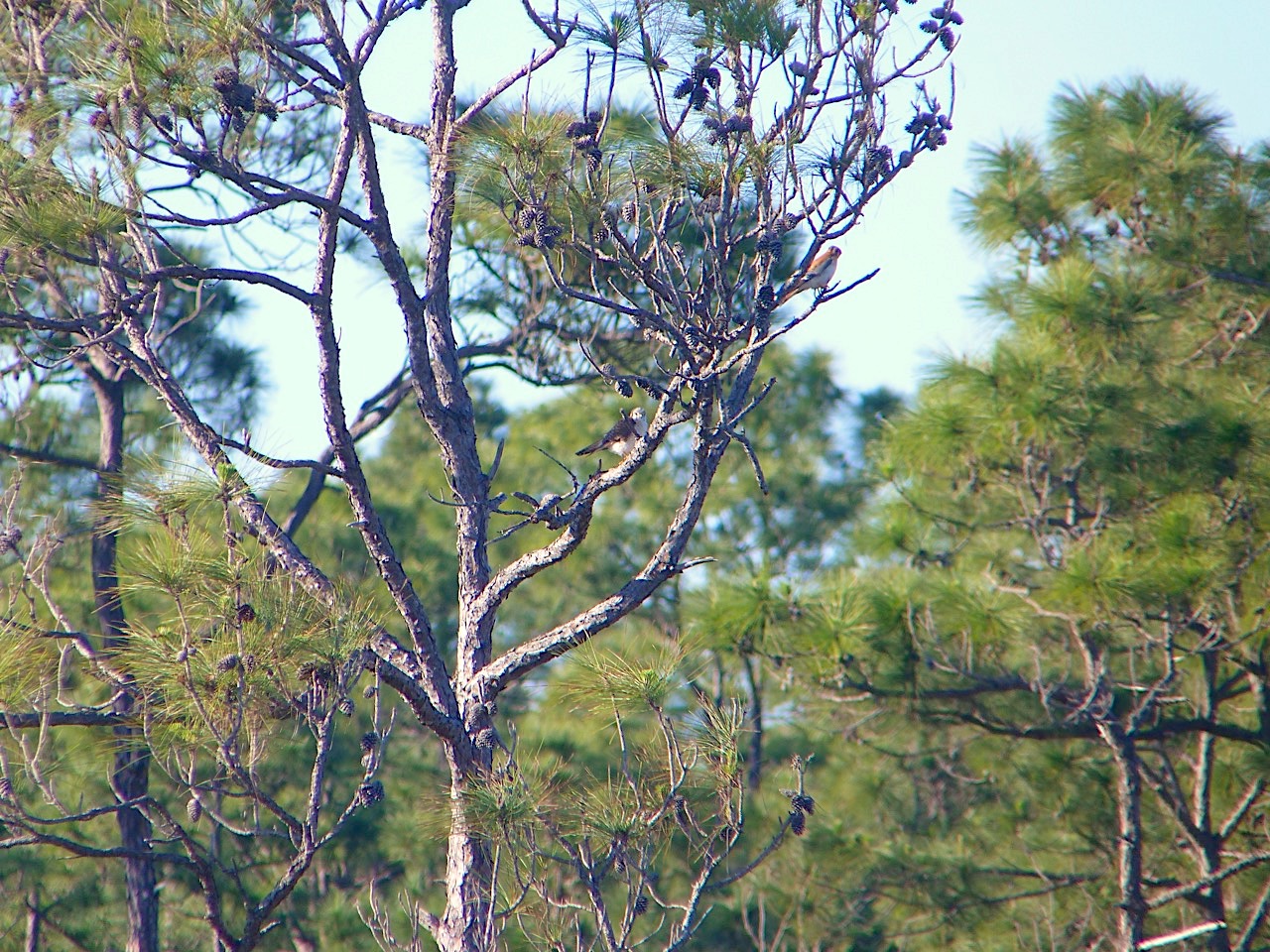
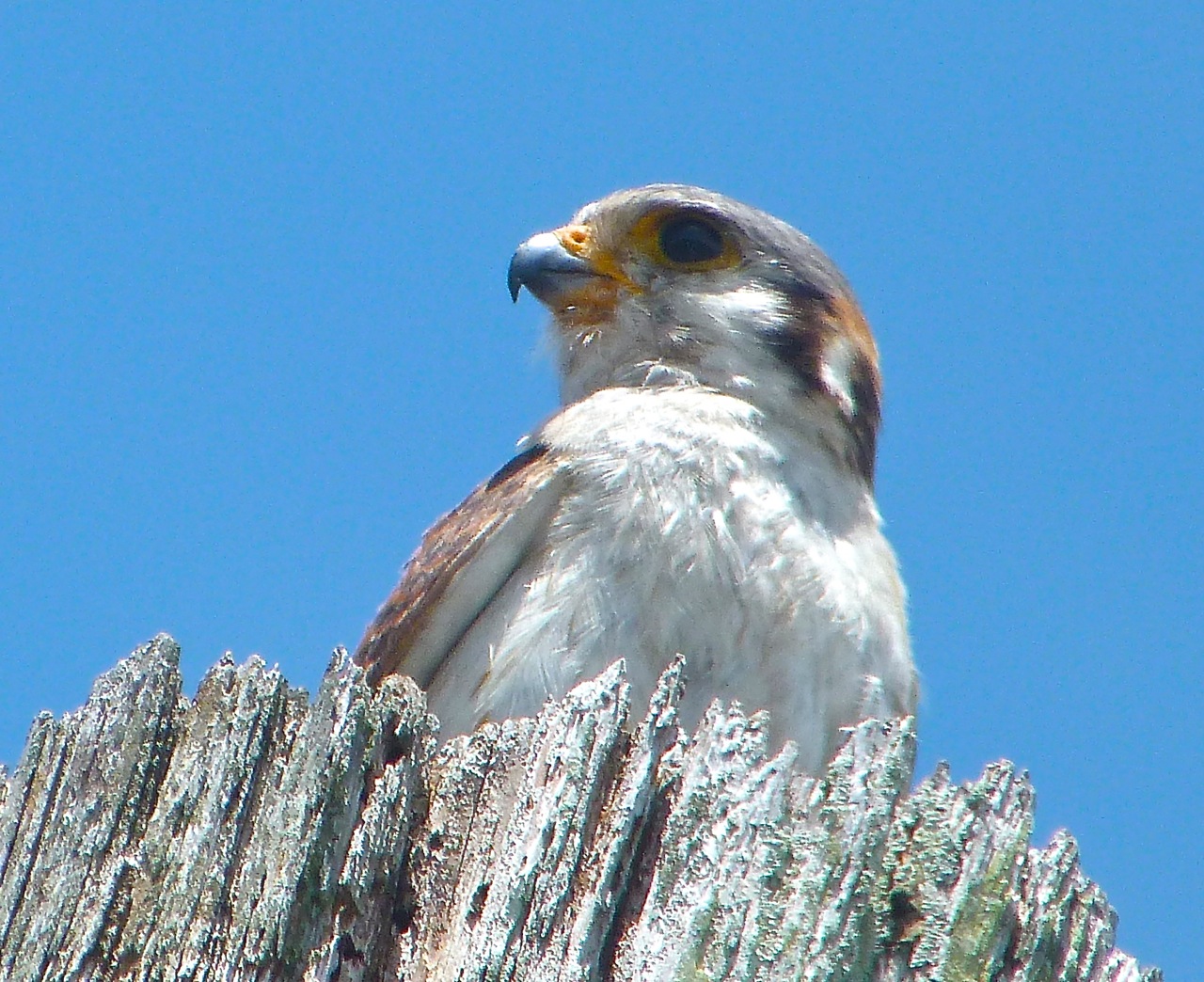
I don’t usually hold back from using (my) bad photos if there’s a reasonable excuse to do so. There’s a reason here. So here are a few bad photos. This sequence of mating kestrels was taken at a considerable distance, after I’d seen a bird fly into a pine tree out of the corner of my eye**. I couldn’t make out what species it was with the naked eye or through the viewfinder, so I took an ‘ID shot’ to enlarge later on. The image below is it – and a clear enough blur to say AMKE. Then I carried on taking pictures.
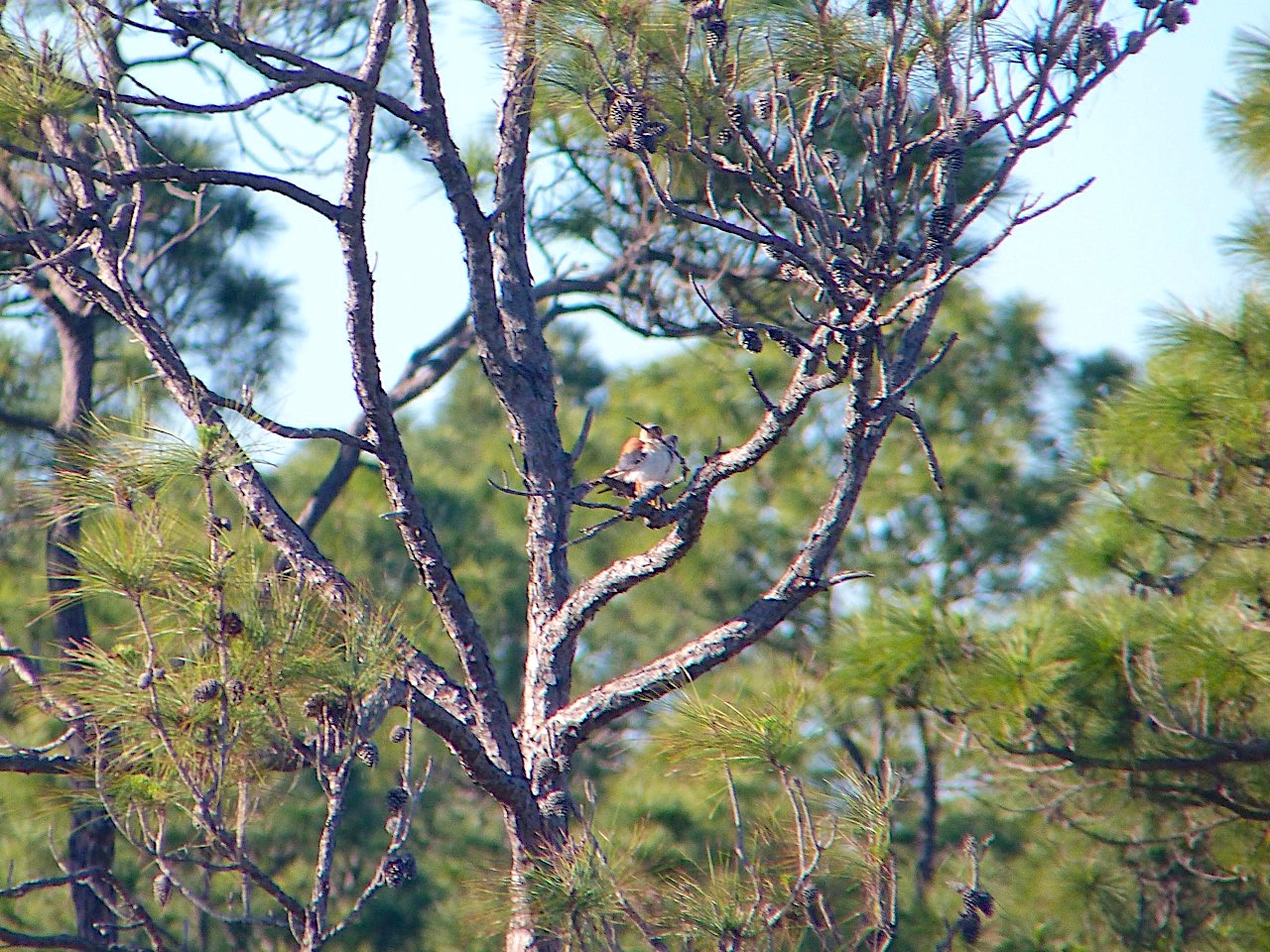
The header image came next as I realised there was another bird flying in from the right. Then the sequence below: the male mating with the female at once, dispensing with preliminaries; the male moving off along the branch; the female following a short way up the branch; then the male eventually flying away.
And that was that: all over in no time at all; all captured on camera; all finding its way onto the internet before you can say K@rd@shi@n tape. Let hope some good comes of it. Some baby kestrels would be good…
These photos were taken at Bahama Palm Shores, one of the go-to hotspots on Abaco for great birding including the gorgeous parrots. A new local initiative has seen the building of a tall platform overlooking a secluded lake that offers birders a great view of the birdlife there. But that’s a topic for another day.
All photos: Keith Salvesen
**This is badly written, I do realise – no, it didn’t literally fly out of the corner of my eye, that’s just how I happened to see it.
This is a challenging topic that I have been (shamefully) putting off. My task is a full-scale facing-up to an extremely rare, very small, and rather adorable adversary, the Kirtland’s Warbler (Setophaga kirtlandii). There are probably more dedicated KIWA experts out there than there are birds of this scarce species. Estimates of bird numbers vary wildly, but if I take a consensus of the mean of an approximate average of the median as ± 5000 individuals, I’d probably be in the ballpark named “Current Thinking“.
THAT SOUNDS QUITE RARE, RIGHT?
Around 50 years ago, the species was all but extinct – perhaps fewer than 500 birds in total, a barely sustainable population. In 1975, Brudenell-Bruce estimated 1000. I’ll mention some of the reasons later. In the 1970s, the Kirtland’s Warbler Recovery Plan was instituted with the twin objectives of protecting the vulnerable breeding habitat – basically large areas of jack pine; and of monitoring and management aimed at encouraging an increase in numbers. Around that time, they became IUCN listed as vulnerable, but more recently, population growth has resulted in a recategorisation to the more optimistic near-threatened category.
AND THEY LIVE WHERE, EXACTLY?
In spring and summer almost the entire KIWA population lives and breeds in very specific areas of Michigan and Ontario, where jack pines are found. There are signs that the range has expanded slightly in Michigan and more widely into Wisconsin and Ohio as the numbers have increased.
A Kirtland’s Warbler in the jack pines of Michigan (Vince Cavalieri)
In the fall and winter the population migrates to the Bahamas & TCI, where they tend to choose remote scrub and coppice areas to live until the spring when they return north in April. This range map shows the extremely specialist habitat choices of these migratory birds.
A Kirtland’s Warbler in Ohio
SO THEY ARE REALLY FOUND ON ABACO?
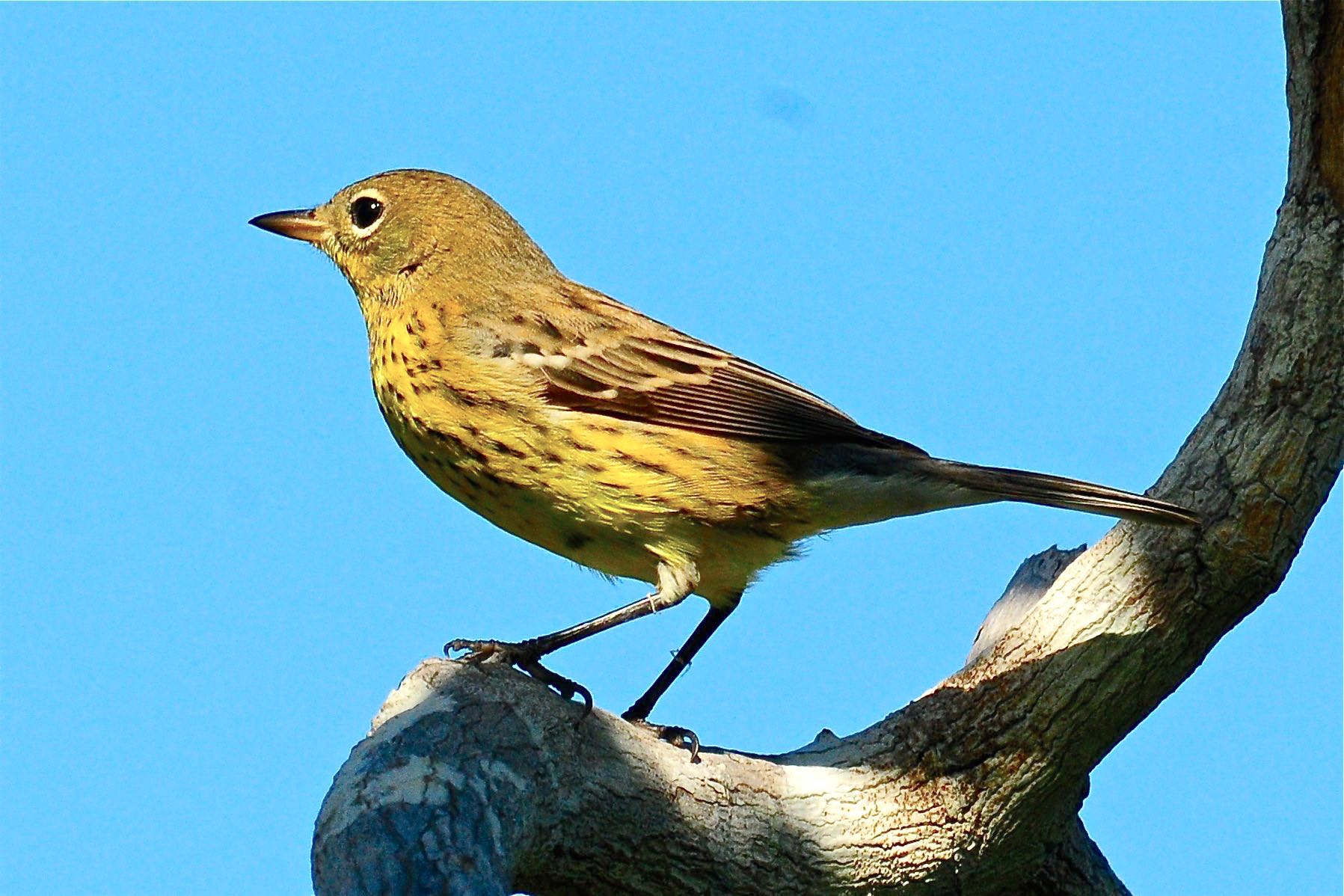
Yes – but they are notoriously hard to find. To give you an idea, I checked the eBird stats for Abaco sightings over the last 10 years: 9 successful trips reported, with 18 birds seen in all**. There were 3 groups comprising 6, 4, and 2 birds; and the rest were single birds. Abaco ornithologist and guide Woody Bracey is the go-to man for finding these little birds. Two years ago we were in his party that saw 4 in the space of a couple of hours. I was supposedly the photographer, but unaccountably found myself in completely the wrong place for the first 3. The 4th flew off a branch and straight at my head as I raised the camera… I felt the wind as it passed on its way deep into the coppice. I’m not proud of my effort; the fuzzy lemon item beyond the twigs and leaves is a KIWA (you’ll have to take my word for it…).
HAVE ANY BEEN SEEN ON ABACO THIS YEAR?
Last week, Woody took another party to the main hotspot in the Abaco National Park, a protected area at the southern end of the island. The park is huge, covering more than 20,000 acres of (mostly) pine forest. These birds are tiny, about 14 cms long and weighing 14 gms. Despite which they found a female and then a male KIWA in their favoured habitat beyond the pine forest. Those are the only 2 I’ve heard about this winter season.
Kirtland’s Warbler, Abaco Bahamas, 12 April 2018
WHAT DO I LOOK OUT FOR?
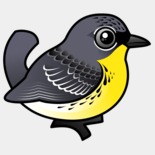
Gray head with a blueish tinge, gray-brown back
Yellow throat & underside, with some dark streaking
Females are paler and more streaked
Split eye rings – white crescents above and below eyes
Frequent tail pumping and bobbing (‘tail-wagging’ J. Bond)
WHAT DO THEY SOUND LIKE?
Some would say ‘chip-chip-chip-too-too-weet-weet’. Elsewhere I have found they produce ‘a loud tchip, song an emphatic flip lip lip-lip-lip-tip-tip CHIDIP‘ (Arnott). You be the judge!
Ross Gallardy / Xeno-Canto
WHAT ARE THE MAIN THREATS TO THE SPECIES?
Mankind is the primary threat. The breeding areas are particularly vulnerable from deforestation and clearance of the jack pines that are essential for successful nesting and breeding – and therefore the survival of the species.
Encroachment of development is another threat, as with so many species.
There is a further threat of nest parasitism by brown-headed cowbirds, to which KIWAs are especially vulnerable.
In the winter grounds where the habitat is mostly remote or in protected areas, there is rather less of a problem from these factors – for now at least.
Overall, habitat degradation at one end of the migration – in particular the breeding grounds – poses a serious risk; at both ends, extinction could loom again.
WHO WAS MR KIRTLAND?
Jared Potter Kirtland (1793-1877)
Jared P. Kirtland (1793 – 1877) was an Ohio scholar, doctor, judge, politician and amateur naturalist. He was a man of many and varied interests and talents, not-untypical of his time. In the field of natural history, Kirtland’s name lives on in his warbler; and also in a couple of snake species.
The Bahamas Postal Service is commendably active in producing wildlife stamps
**I realise eBird is not the be-all and end-all for sighting reports. It hasn’t been in existence for as long as 10 years, and not everyone uses it anyway. And awareness of the Bahamas as the winter home for KIWAs is a surprisingly recent development (as with piping plovers). As awareness increases, so do birder interest, habitat knowledge, and consequently reports of sightings.
Another example of the ‘twigs in the way’ problem for photographers
Credits: Bruce Hallett (1, 2, 3); Vince Cavalieri (4); Tom Sheley (5); Unattributable (me, in fact) 6; Woody Bracey (7, 9); Tony Hepburn (8); Lionel Levene (10); Birds of North America (range map); Ross Gallardy / Xeno-Canto (audio file); Birdorable (cartoon); BPS (KIWA stamp). Special thanks for all use permissions for images of this rare bird.
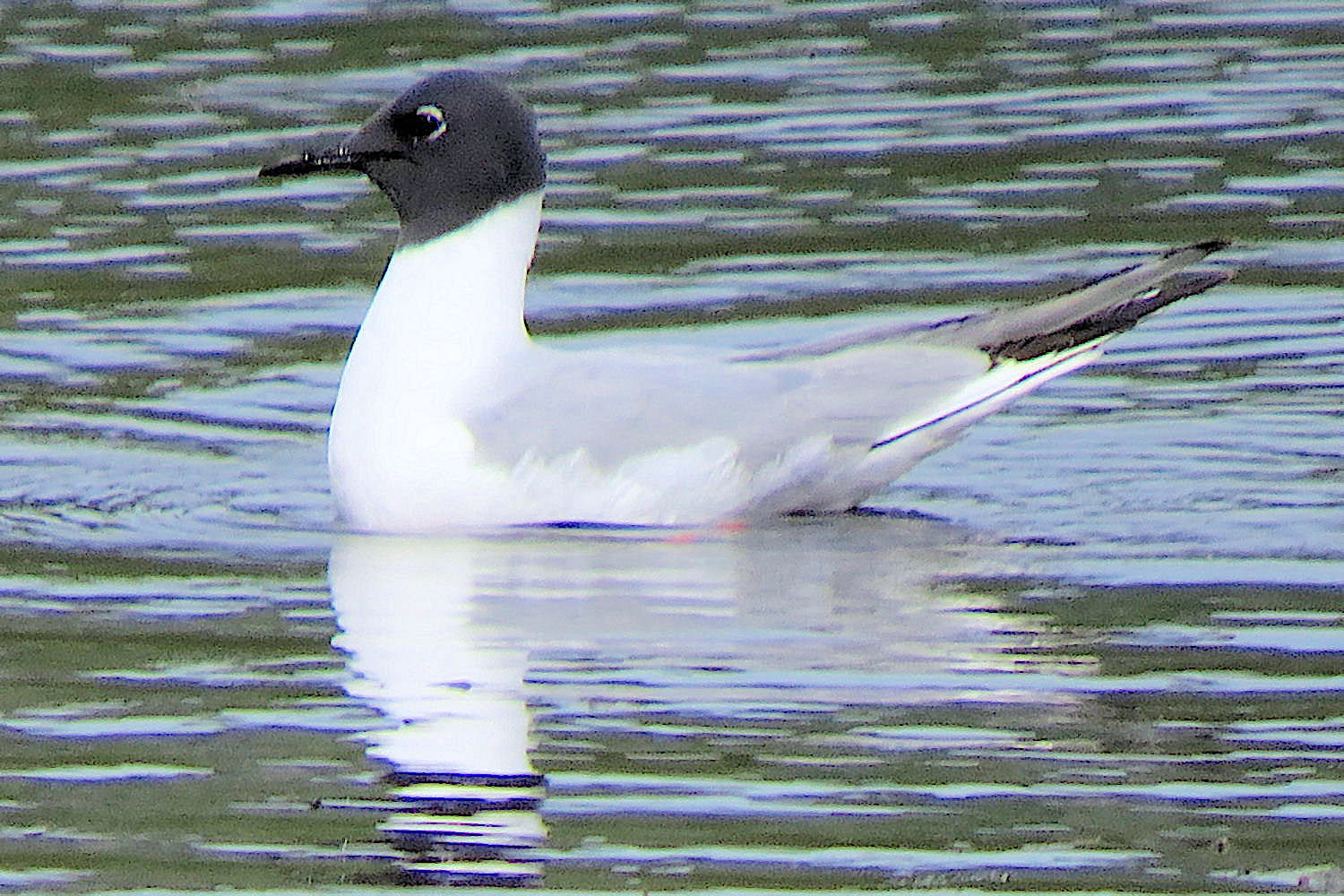
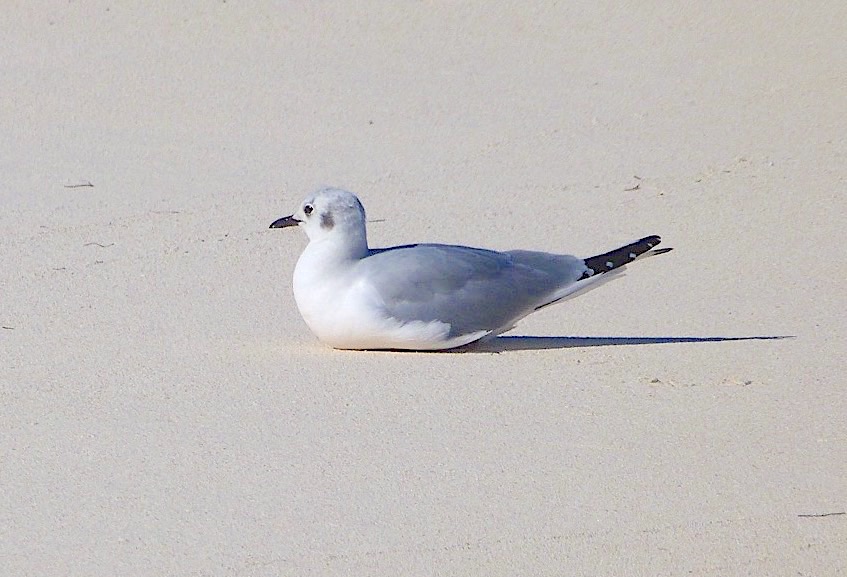
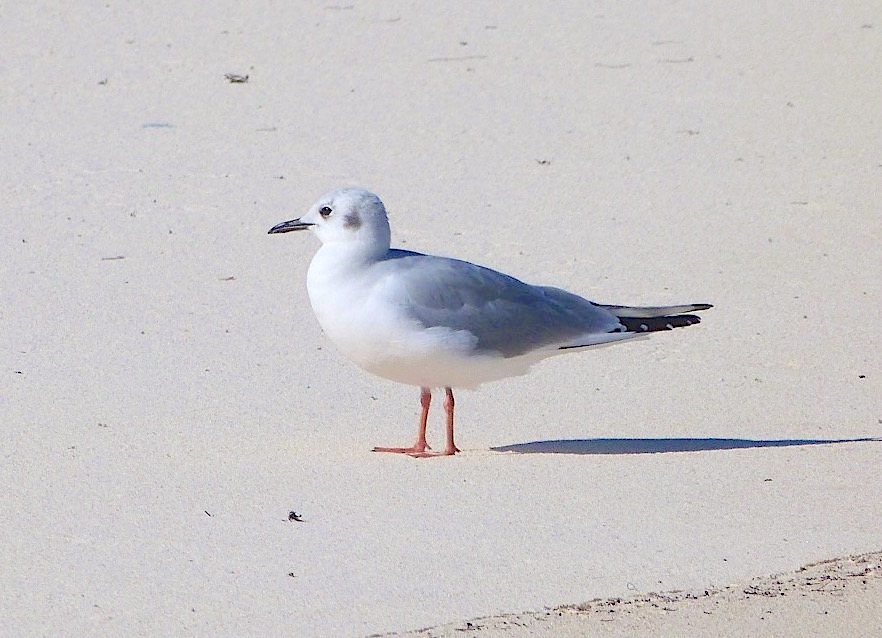
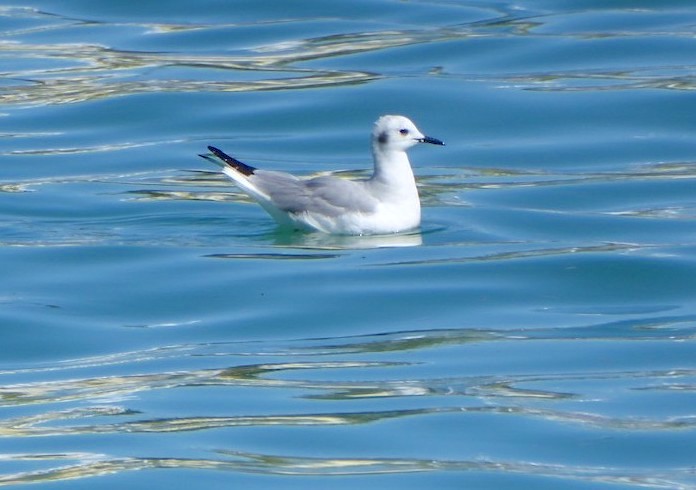
The Bonaparte’s gull Chroicocephalus philadelphia is one of the smallest gulls, and is found mainly in Canada and northern United States, though vagrants sometimes end up as far away as Europe. And Abaco. These birds are considered very uncommon winter residents on Abaco (categorised WR4). Yet within the last couple of months Elwood Bracey saw an amazing 4 in Treasure Cay harbour… Milton Harris reported seeing one at Hope Town harbour… Keith Kemp saw a couple on South Abaco (2 locations)… Eugene Hunn reported 1 on the Sandy Point dock… then suddenly there were 3 on the beach at Delphi. They have hung around there, too – let’s hope that all these birds find their way back to their breeding grounds safely. They have quite a journey ahead of them.
The species is named for Charles Lucien Bonaparte, a French ornithologist and nephew to the French emperor (see below for more about him). The philadelphia part of its Latin designation oddly results from the location from which the original ‘type specimen’ was collected (see below for the reason). This is not unlike the Cape May warbler, so named for the location of the original specimen, yet not recorded there again for more than a century (and still quite rare)…
The gulls shown here are in their winter plumage, with the characteristic dark blotch behind the eye. In the breeding season, they acquire smart slate-black hoods:
10 BONAPARTE’S GULL FACTS TO TELL YOUR GRANDCHILDREN
Graceful in flight, resembling terns as much as gulls
Monotypic: the sole representative of its taxonomic subgroup
Males and females have very much the same colouring
Believed to be monogamous
Showy breeders, with much display, swooping, diving, yelling at each other etc
Typically (and ungull-like) they nest in trees, preferring conifers eg jack pine
Share nest-building and parenting duties
Capable of considerable aggression to protect their nests / chicks
Have been known to live 18 years
The only bird species with an Emperor’s name (prove me wrong!**)
We saw these birds on the beach most days, usually just 2 of the 3 at any one time. They were quite shy and hard to get close to, however subtly. And they kept on the move – except when they decided to have a rest.
TELL US MORE ABOUT PRINCE BONAPARTEBonaparte’s gull, Zenaida dove
Charles Lucien Bonaparte, 2nd Prince of Canino & Musignano 1803 – 1853
Bonaparte was a French biologist and ornithologist, and the nephew of the Emperor Napoleon. He married his cousin Zenaïde, by whom he had twelve children. They moved from Italy to Philadelphia, by which time Bonaparte had already developed a keen interest in ornithology. He collected specimens of a new storm-petrel, later named after the Scottish ornithologist Alexander Wilson. And presumably that’s where he found his specimen gull.
Bonaparte studied the ornithology of the United States, and updated Wilson’s work American Ornithology. His revised edition was published between 1825 and 1833. He was a keen supporter of a (then unknown) ornithologist John James Audubon. Rather sweetly, he created the genus Zenaida, after his wife, applying it to the White-winged Dove Zenaida asiatica, Zenaida Dove Zenaida aurita and Mourning Dove Zenaida macroura. He himself was later honoured in the name ‘Bonaparte’s Gull’.
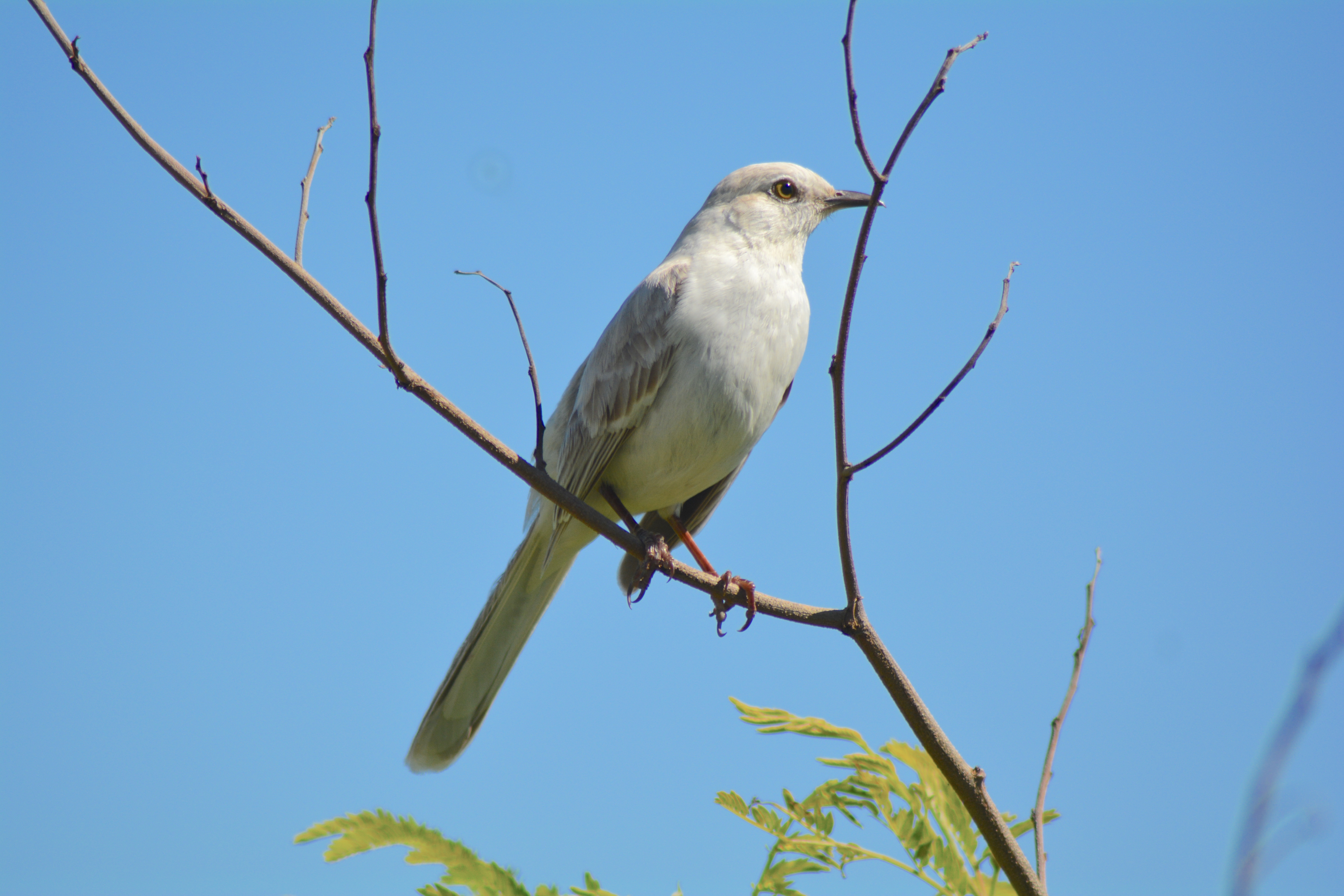
The header image is of a Bahama mockingbird recently photographed by keen-eyed Abaco birder Keith Kemp. It is a thing of wonder and beauty, exceptionally rare and possibly unique. I can find no other example of a leucistic bird of this species online.
This is not Keith’s first leucistic bird discovery on Abaco either – a while back he found a leucistic Western spindalis. You can read more about leucism and its distinction from albinism, and see a number of other examples of leucism including a white turkey vultureHERE
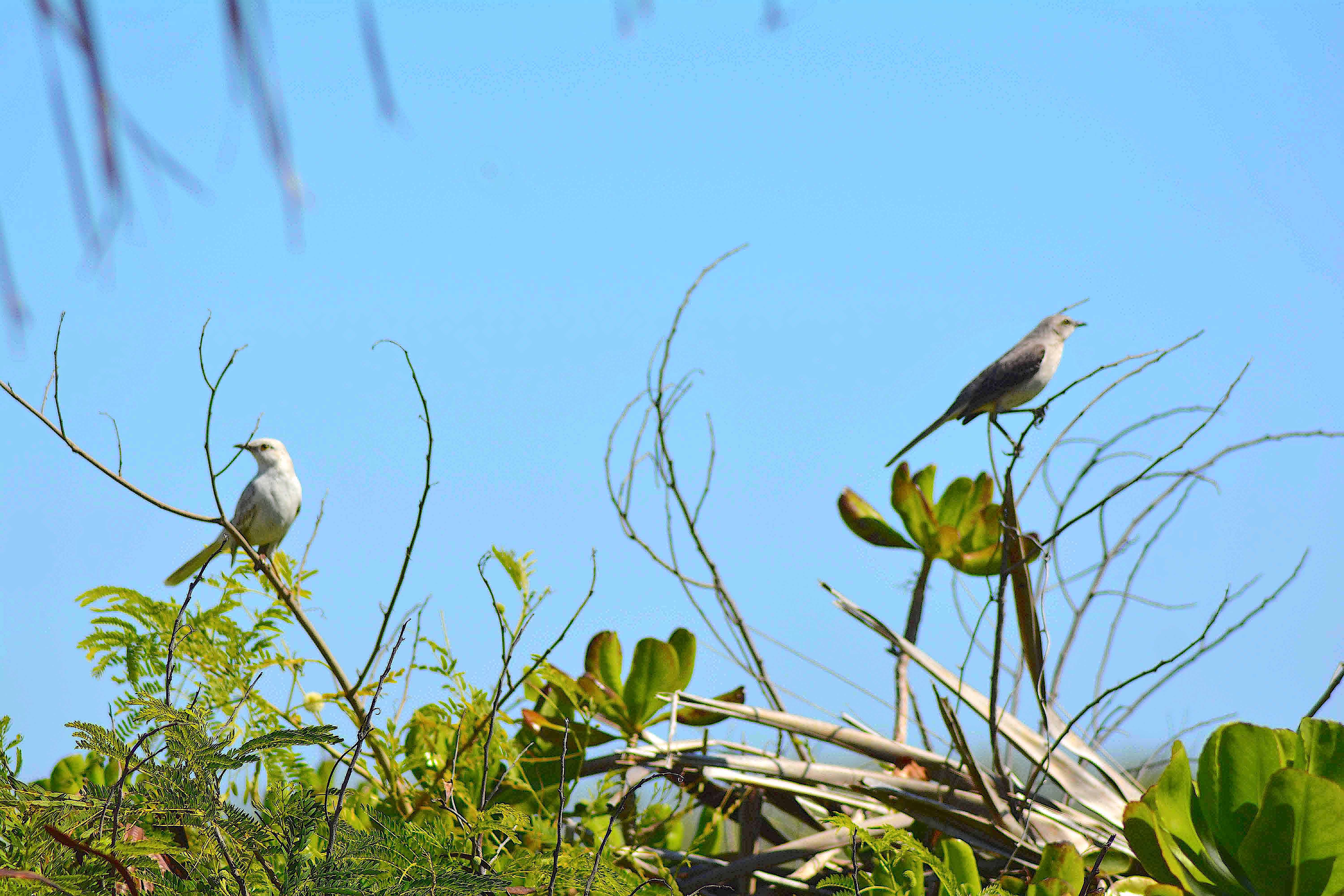
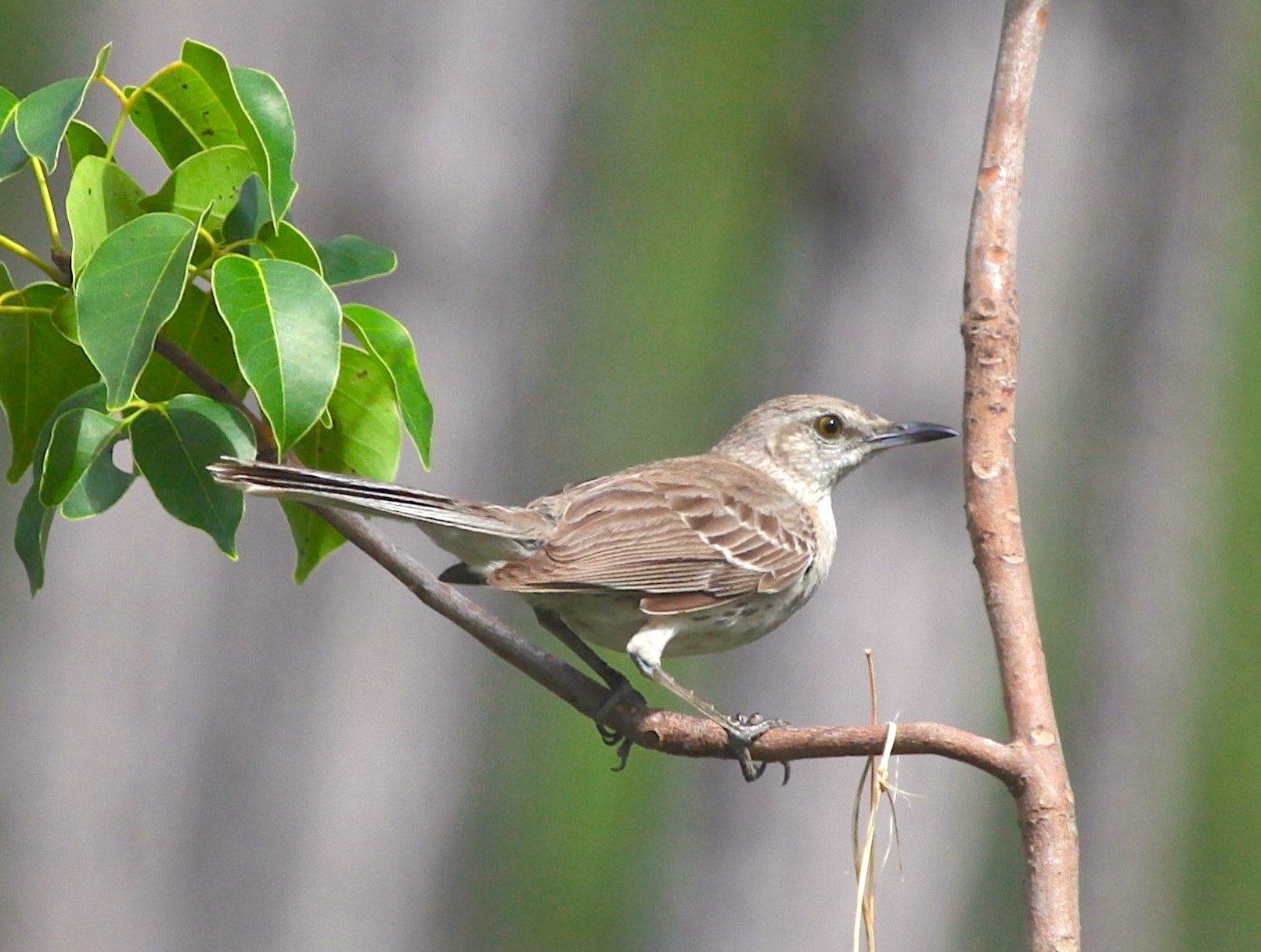
Even more astonishingly, Keith managed to get a photo of the ‘white’ bird and a ‘normal’ bird together (above). The difference is startling. Below is a fine photo by Peter Mantle of a Bahama mockingbird, as you would expect to see one – basically brown with a pale, flecked front / underside.
LEUCISM? EXCUSE ME, AND THAT IS?
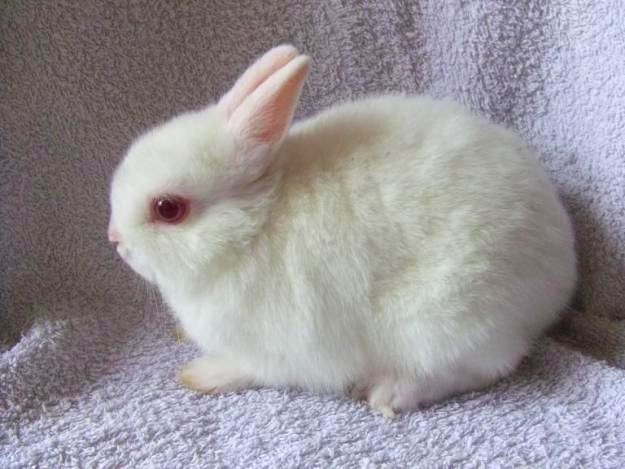
I’ll recap what I wrote in the earlier post linked above. First, what it is not. It is not albinism, which results from diminished or lost melanin production that affects pigmentation. One characteristic of the condition is the tendency to pink eyes, which of course is seen in humans as well as animals and birds. For example:
Albino Fwuffy Bwunny Wabbit
WELL, WHAT IS IT THEN?
Put simply, melanin is only one of many ingredients of pigmentation. Leucism is caused by pigment loss involving many types of pigment, not just melanin. In birds this results in unnaturally pale or white colouring of feathers that may be partial or entire. The eyes of a bird with leucism are unaffected – so, not pink. At one extreme, if all pigment cells fail, a white bird will result; at the other extreme, pigment defects cause patches and blotches of pale or white on the bird, often called a ‘pied’ effect. The condition can be inherited.
KK’s leucistic Western spindalis, an example of partial or ‘pied’ leucism
So there you have it: another extreme rarity for Abaco, and a further example of how rewarding – and surprising – birding on Abaco can be. To repeat the link to the more detailed article on leucism in birds, you can find with (*distraction alert*) some music and inappositely comedic material thrown inHERE
All photos Keith Kemp except the ‘normal’ bird, Peter Mantle
LA SAGRA’S FLYCATCHERMyiarchus sagrae is one of 3 permanent resident ‘tyrant’ flycatchers found on Abaco, the others being theCUBAN PEWEE and the LOGGERHEAD KINGBIRD. In the summer, they are joined by another commonly-found species, theGRAY KINGBIRD. There are other flycatchers, but they are seasonal, transient or vagrant, and far less common.
Two classic LSF poses: ‘head-on-one-side’ & ‘watching-for-insects’
I have just been watching one of these frankly rather very cute little birds as it patiently watched me watching it. I wasn’t very close, and I kept my distance because it seemed a little wary and I didn’t want to blow the chance of a couple of photos – the familiar ‘bird-flies-off-just-as-shutter-pressed’ syndrome.
Sized between the little cuban pewee, with its diagnostic crescent eyes, and the larger loggerhead kingbird (see below), the LSF shares with them the ability to raise its crest. I was luckily able to catch this on camera – and also some singing.
As the name suggests, the species is primarily insectivore, fly-catching in the undergrowth and low scrub or ‘hawking’ from branches. However these birds also eat berries and seeds. Their call is a high pitched single or double noted sound described as ‘wink’. Here’s a Bahamian example.
Paul Driver / Xeno-Canto
The LSF’s natural habitat is coppice and rough scrubland. It builds its nest in a tree cavity or similar natural hole, and usually lays a clutch of two to four eggs. And this morning by coincidence, Abaco birder Rhonda Pearce posted a photo of a LSF nest with its eggs.
ID CONFUSION
Here are the two flycatcher species, mentioned above, that might cause confusion:
CUBAN PEWEE
LOGGERHEAD KINGBIRD
Ramón Dionisio José de la Sagra y Peris (1798–1871)
For those who may be wondering who – or what – a ‘La Sagra’ is, the answer is: a multi-talented Spanish botanist. He was also a writer, economist, sociologist, politician, anarchist, and founder of the world’s first anarchist journal El Porvenir (“The Future”). At one time he lived in Cuba and became director of Havana’s Botanical Garden. His name lives on arguably more significantly in ornithological than in anarchist circles (actually, an ‘anarchist circle’ must surely be an oxymoron…)
[I note in passing that La Sagra is a provincial area in Spain, an Italian festive celebration, a chocolatier, or a small comet – all of which meanings may have to be negotiated online before you get to the flycatcher…]
To continue with the occasional PHILATELIC theme of this blog, here are stamps from the Cayman Islands and Cuba featuring the La Sagra’s Flycatcher. The Cuban stamp commemorates the death of Juan Gundlach, the man who chose La Sagra’s name to bestow on the LSF. The colouring is… somewhat unrealistic!
Credits: All photos Keith Salvesen except nest (Rhonda Pearce) and loggerhead kingbird (Mrs RH); recording by Paul Driver / Xeno-Canto; stamps O/S
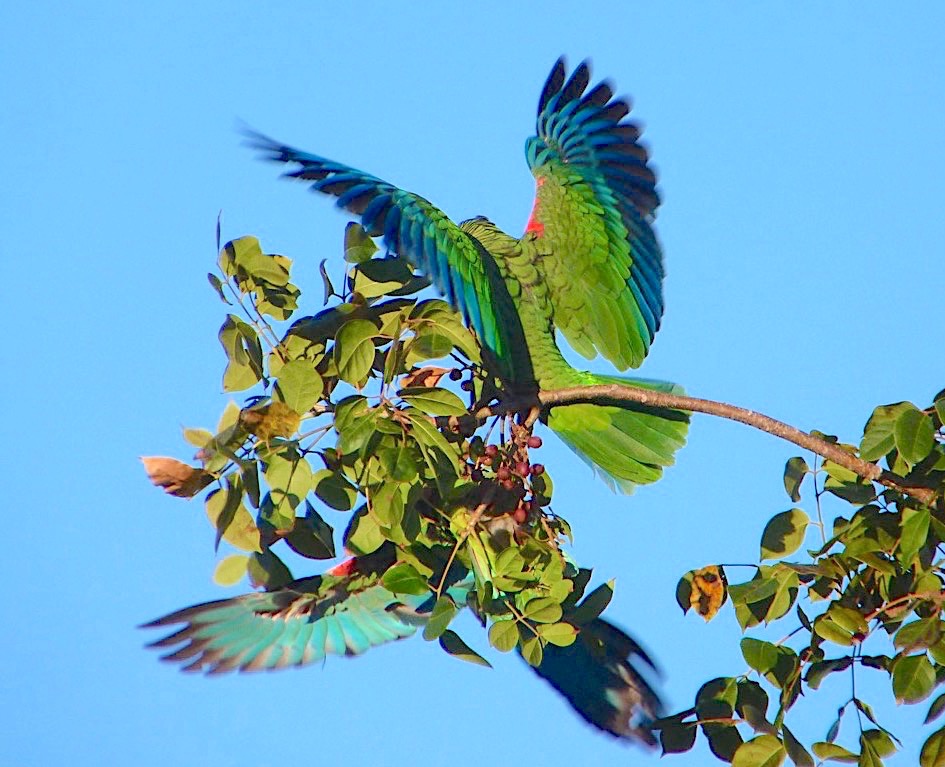
Mmmmm… gumbo limbo berries at Bahama Palm Shores. My favourite evening snack as we parrots head south to the National Park in the evening.
There’s a flock of about 60 of us tonight. I hope I’m left alone to get stuck in – there are plenty of trees to choose from here…
Uh oh! That was never going to happen. We are a noisy rowdy gang, and no one gets to eat alone for long…
This is really bad news… this guy’s hungry, and he’s swooped in higher up the branch, so he’s got an advantage.
Time to take a stand. I’m getting on a level with him. I was here first – these are MY berries… But he’s getting shouty. And there’s aggro in the air…
Right, I’m backing off here. I never did much like gumbo limbo berries, now I come to think of it… And he looks mean as hell. But wait – I’m not just going to back down. Let’s give him a little surprise to remember me by.
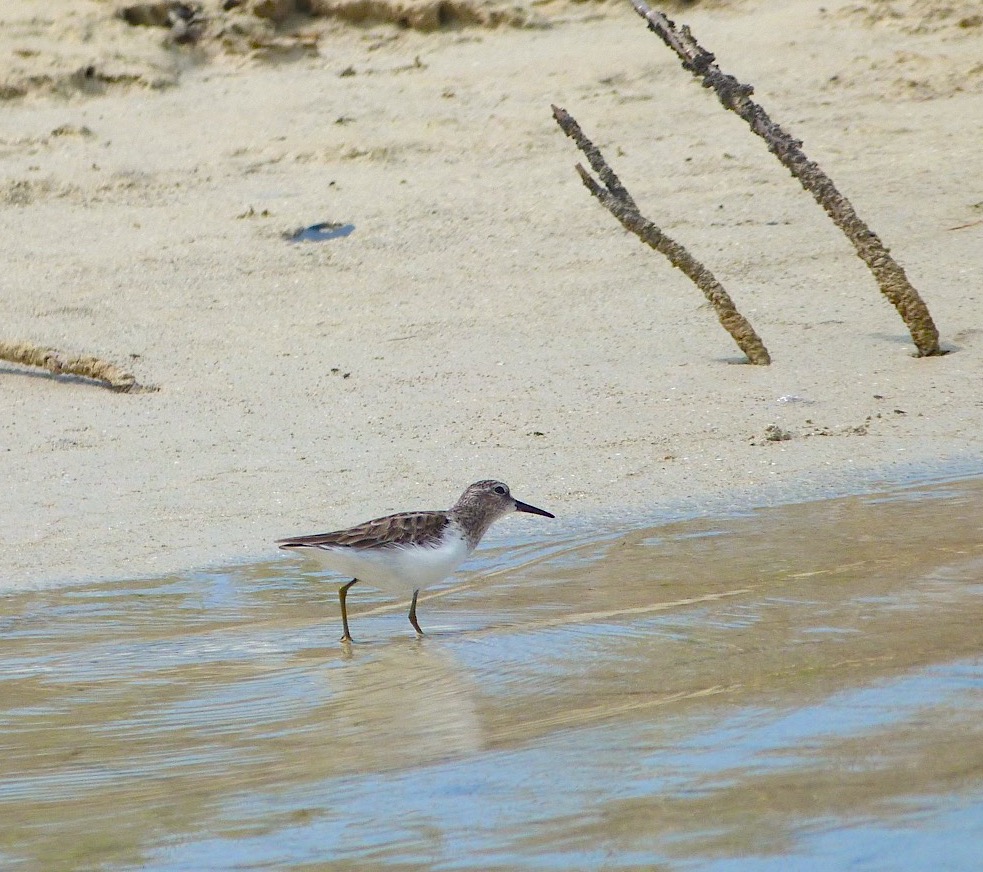
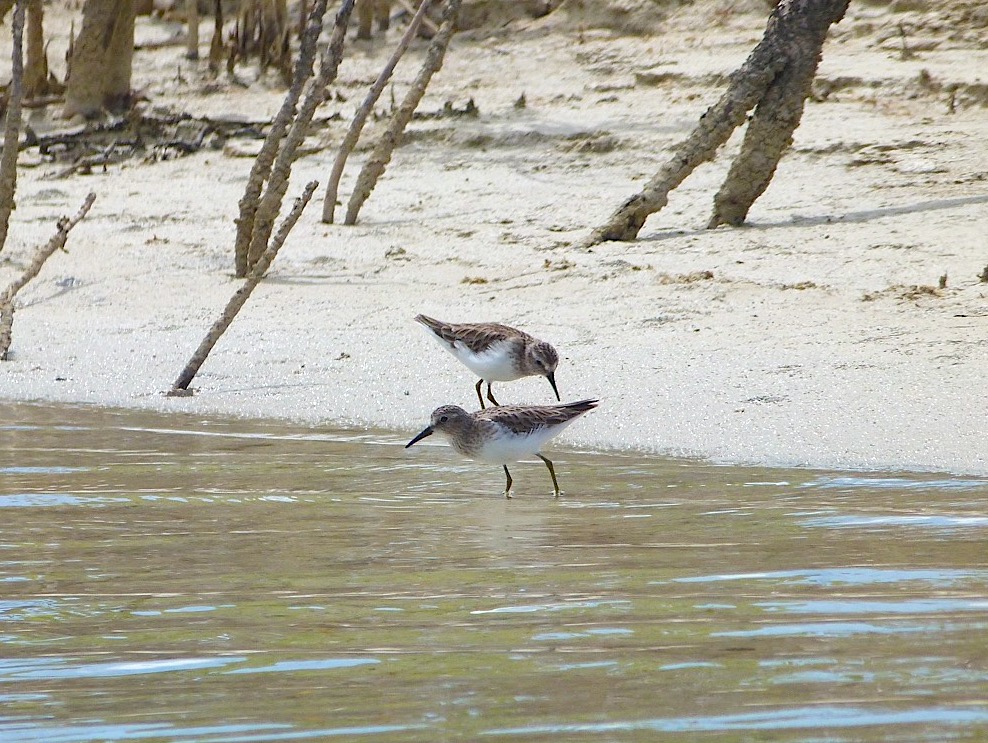
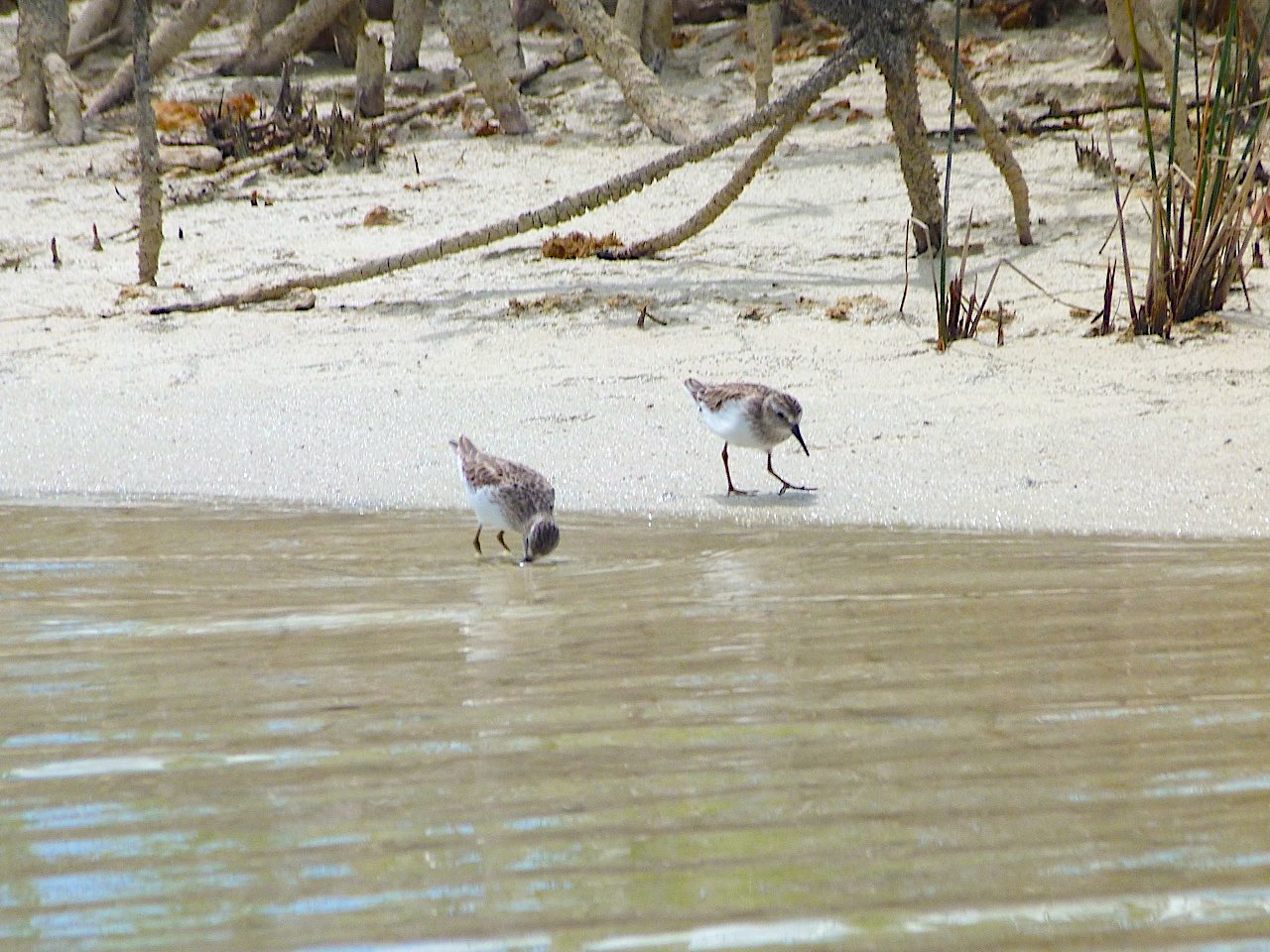
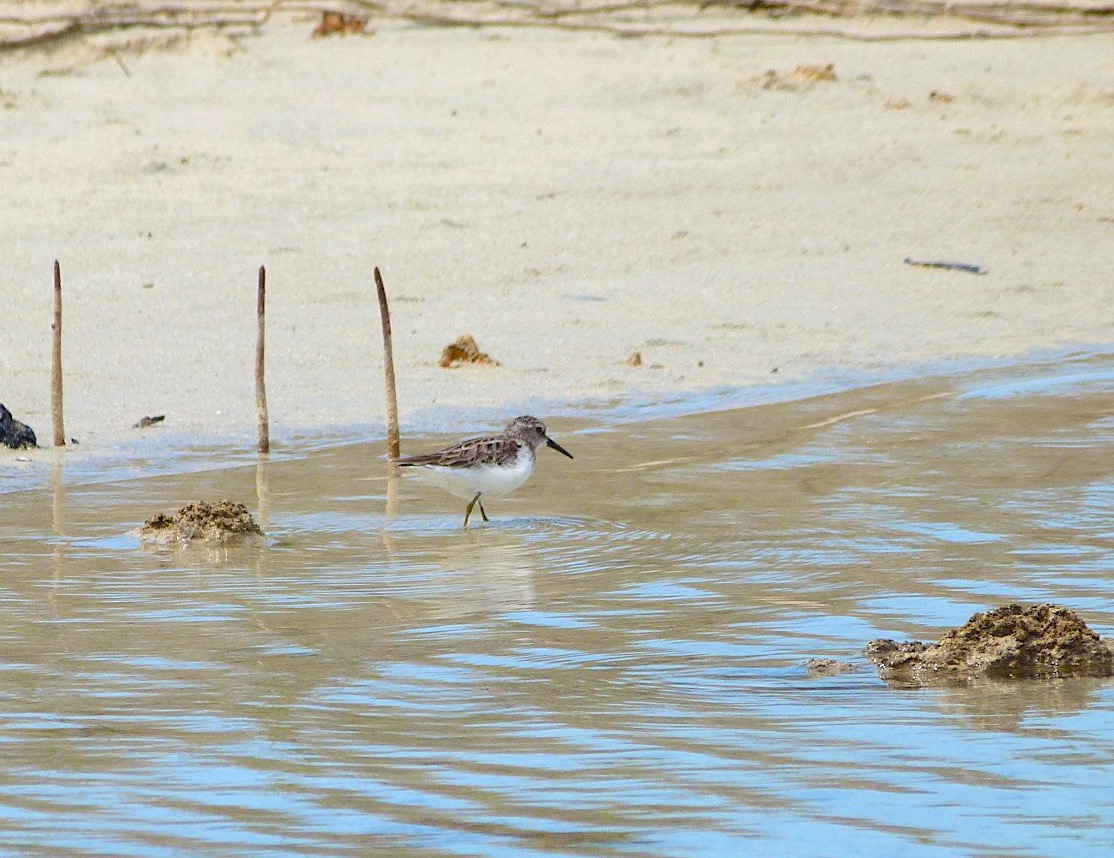
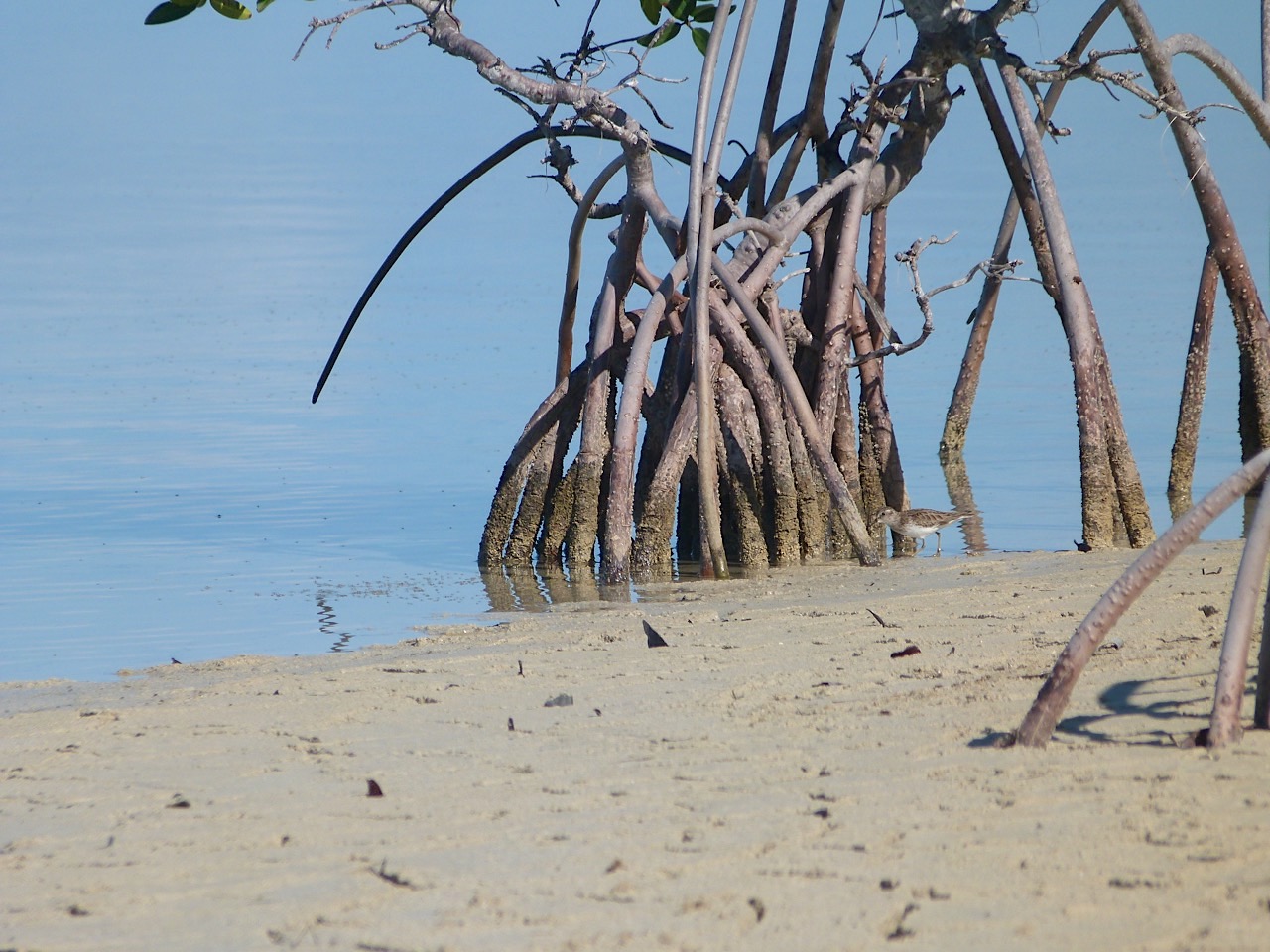
Least Sandpipers Calidris Minutilla are the smallest ‘peeps’ to be found on Abaco. There are plenty of other sandpiper species, but none so tiny as these. Take a look at the image above. See them? All 3 of them? Just look at their size in comparison with the mangrove stems.
I took these photos from the sharp end of a skiff a few days ago, way out on the Marls and with a fishing rod tucked under one arm. We were on a drift along the shoreline, and these little guys were foraging on the water’s edge as we silently floated past.
They were quite unperturbed by our presence, being far too busy feeding to be bothered with us. I have usually seen these little birds on the beach, busy in the wrack-line rootling out goodies. There, they look very small – but not nearly as tiny as when foraging among the mangrove stems.
I debated whether to do some cropping to magnify the details on the page, so to speak, but then I decided that these very sweet creatures deserved their own space without the indignity of close inspection. Context is all.
These mini-sandpipers may be Least by name, but they are very far from last in my personal list of favourite peeps. There are some down on the beach right now, but there’s some cloud cover today… I’ll wait for the sun to catch them in the best light.
South Abaco – the whole area south of Marsh Harbour – provides by far the best birding opportunities for a day of varied birding. A recent party led by birding guide Reginald Patterson included Charmaine Albury in the enthusiastic team. She sent me their checklist for the day – 40 species covering an impressive range of bird types. Here is the list, to which I have added some illustrative photographs.
The checklist covers a broad range of birds that you might expect to see in habitats ranging from coppice to pine forest to water to shoreline. Most are permanent residents, with some winter residents (eg the painted bunting, Cape May warbler). Abaco specialities include the parrots of course, the West-Indian woodpecker and the olive-capped warbler.
And birds that might, on another day, be seen? Maybe the endemic Bahama Woodstar hummingbird and the endemic Bahama Swallow. At Gilpin Pond, black-necked stilts and perhaps a belted kingfisher. And at Sandy Point, brown pelicans fishing off the dock and the chance of white-tailed tropicbirds off-shore. But overall a ’40 day’ is a great day!
We are just back on Abaco last night, and without actually trying – and just from the balcony in about 20 minutes – we have scooped:
Turkey Vulture, Black-faced Grassquit, Bananaquit, Bahama Swallows, Loggerhead Kingbird, La Sagra’s Flycatcher, and Thick-billed Vireo – also Oystercatchers heard from the beach. Time to investigate further…
Credits: Tom Sheley (1); Keith Salvesen (2, 5, 8, 9); Craig Nash (3); Gerlinde Taurer (4, 6); Tom Reed (7); Nina Henry (10)
The sounds are unmistakeable – a discordant chorus of soft chuckling noises like tongue-clicks as the RWTs flock into a bush, interrupted by harsh, metallic calls like rusty metal gate-hinges being forced open. Or maybe a lone bird mournfully repeating its eerie call from the mangroves far out on the Marls as the bonefishing skiffs slip silently along the shoreline. No other species sound quite like Agelaius phoeniceus.
The handsome males sport flashy epaulets, most clearly visible in flight or in display – for example to impress a prospective mate. Again, they are unlikely to be confused with another species.
The females, as is often the way, are less showy. I have just read that they are ‘nondescript’, which is unnecessarily harsh I reckon. Here are a couple of examples.
And the darker brown ones that are clearly not handsome black males? These are young males in their first season, before they move on to the full adult male plumage. Previously I had designated them females (as I had assumed) until very gently corrected by the legendary Bruce Hallett. Not only was Bruce an essential part in the production of the Birds of Abaco, he also keeps a benign eye on my posts and occasionally steps in to clarify IDs etc. I took the first male juvenile at Casuarina, when I also made the sound recording (below). The second was at Delphi – and with some ‘light’ issues, I notice…
Fledglings are kind of cute…
SO WHAT DO THEY SOUND LIKE?
You may need to turn up the volume a bit. You will also here a lot of dove noise and, in the background, the sound of waves lapping onto the shore.
Photo Credits: Tom Sheley (1, 2, 4, 5, 8); Alex Hughes (3); Keith Salvesen (6, 7, 9 & audio)
I recently posted about the sighting of an entirely new bird species for Abaco, the CINNAMON TEAL. Almost at once, another species was sighted – not a new one, but in the next category of rarity, the V5 and V4. ‘Vagrant’ birds that have been credibly recorded on Abaco / in Abaco waters fewer than 5 times – and maybe only once – are classified as V5 or ‘accidentals’. Birds seen a few times more than that, but irregularly and unpredictably (‘casuals’) are V4s. One such is the fine black-legged kittiwake, also known as the seahawk and a close relative of gulls.
During the Abaco Christmas Bird Count in December, avid birder Keith Kemp and a small group were checking the beach at Crossing Rocks. In due course he uploaded a list of birds seen, with selected images, to the excellent eBird site. This included a royal tern. Or make that “royal tern”.
It wasn’t long before sharp-eyed Bruce Purdy from Cornell contacted Keith to say “You shot a picture of an adult non-breeding black-legged kittiwake!!!!!!!!”. This was confirmed by Bruce Hallett, author of the definitive field guide to the birds of the Bahamas.
As Bruce Purdy commented:
“This is the first kittiwake reported that I know of in the last 20 years.Tony [White] shows a few reports but I don’t know if they were documented.Probably not since most people just started carrying cameras, so you may have the first documented kittiwake…It is a great find”.
So you are looking at (almost certainly) the first photographs of a kittiwake ever taken on Abaco. Actually, make that the Bahamas – no others are shown on eBird for the whole region; the nearest being a handful of sightings on the Florida coast.
STOP PRESSKeith’s sighting was in December 2017. The very day I pressed ‘publish’ on this post, January 30, two people immediately contacted me to say they had seen this bird in the Crossing dock area in Marsh Harbour! Thanks to Philip Sawyer and Nancy Albury for their sharp eyes and immediate response. Neither managed to get a photo, but two independent witnesses on one day in the same location make for a compelling ID. I imagine this is the same bird (rare enough as a single – the first in over 20 years – so exceptionally unlikely as a pair). Maybe there are rich fish pickings to be had in the MH harbour area.
Any further reports would be most welcome; a photo would earn the theoretical Kalik reward…
These kittiwakes are a pelagic species, birds of the open sea. They spent most of their time over the ocean, where they live on fish. However, they return to land to breed – often on cliffs, and in large, noisy, nesting colonies. Here’s a very short idea of what that might look and sound like.
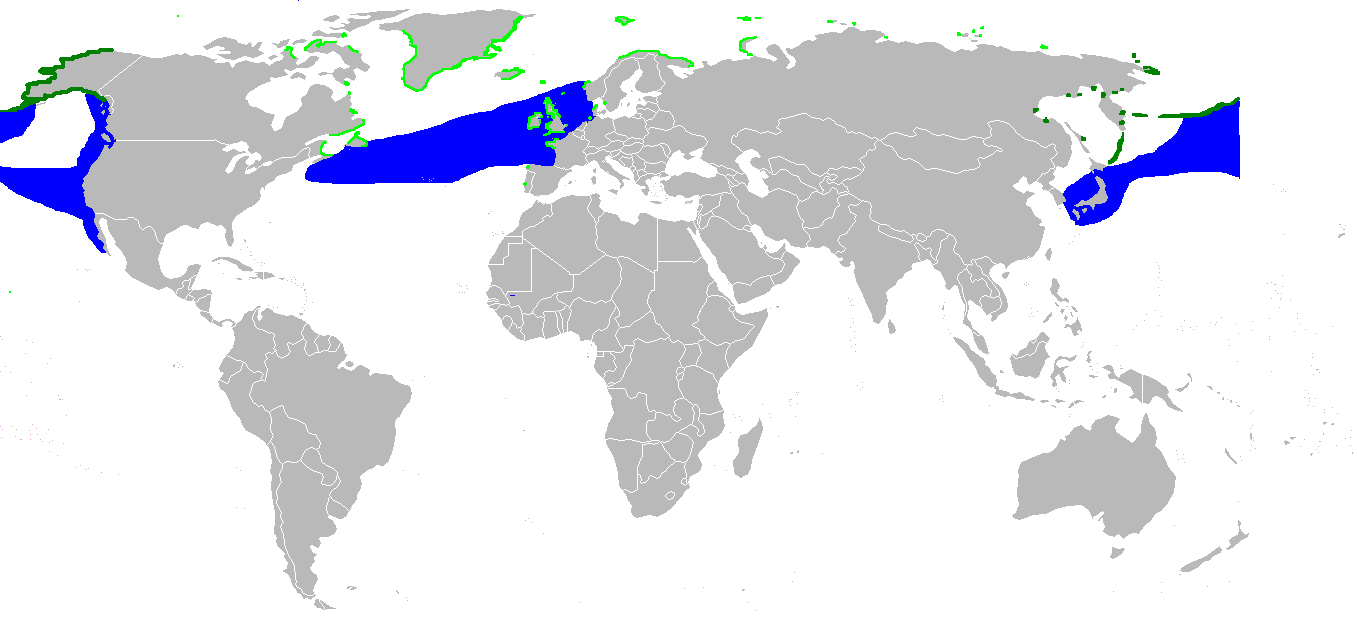
Keith’s Kittiwake was way out of its normal range. This map shows just how far.
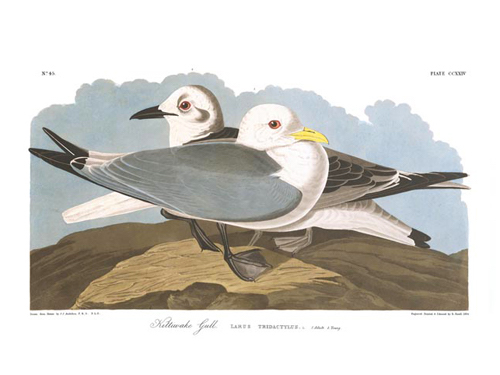
I always like to include an image of a species under discussion, as it was depicted by one of the early pioneers such a Mark Catesby or (as here) Audubon.
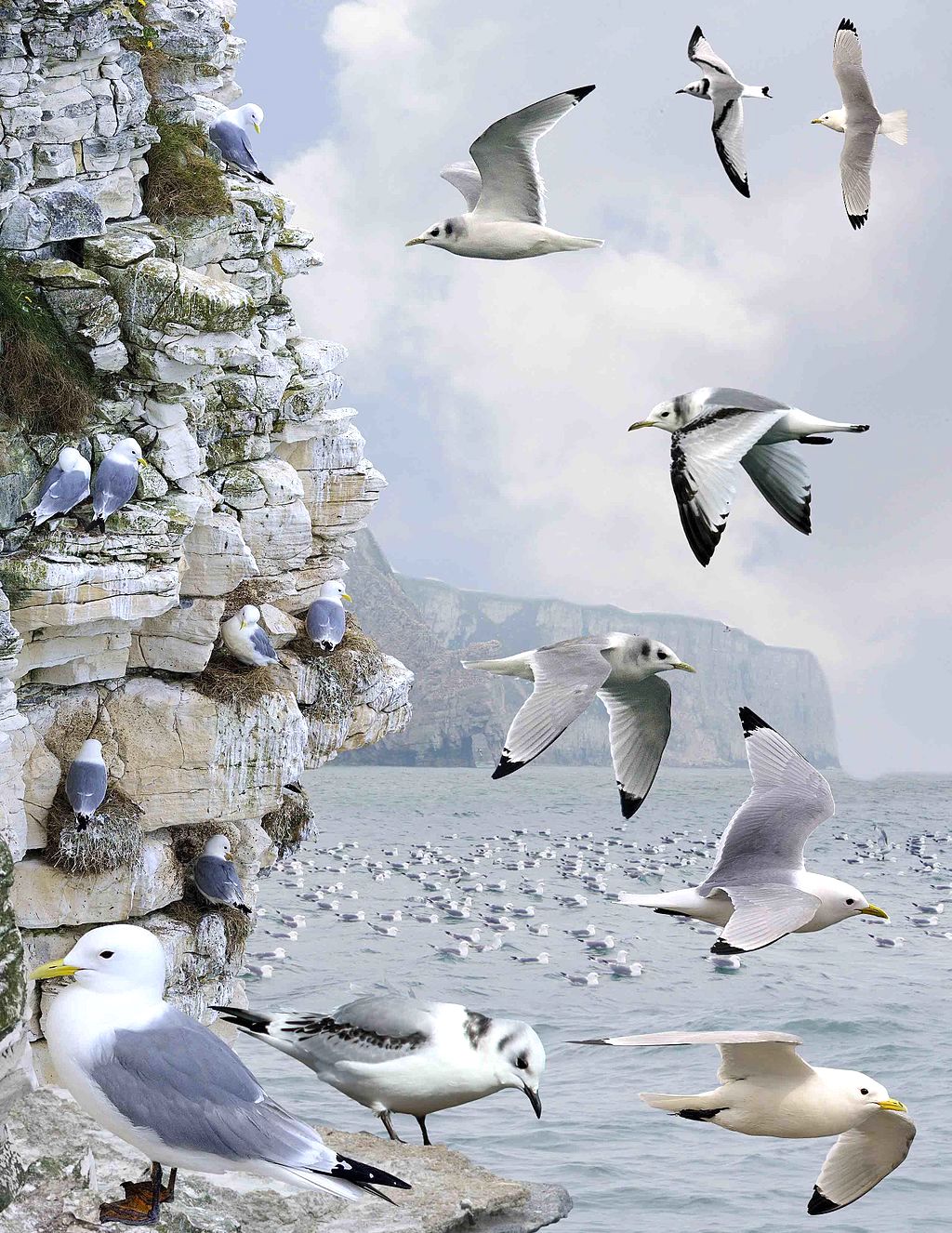
I’ll round off the story with another great source for comparative images – especially as between sexes, ages and seasons – the Crossley guide. The image below comes from the guide to Britain & Ireland, where kittiwakes are not uncommon locally where there are cliffs. Keith’s bird was in winter (non-breeding) plumage, as seen below, top left.
Credits: Dick Daniels / carolinabirds.org (1); Yathin S Krishnappa (2); Keith Kemp (3, 4, 5); RSPB Britain (video); Audubon (OS) (6); Crossley Guide (OS) (7); range map Wiki
THE BIRDS OF ABACOwas published very nearly 4 years ago. At the time, the checklist of species recorded for Abaco at the back of the book, so meticulously compiled by Tony White and Woody Bracey, was definitive for as long as records have existed (in practical terms, since 1950). The final new species included in the book was a Black-browed albatross amazingly spotted in Abaco waters from the BMMRO research vessel by a keen-eyed intern the previous summer.
Brown Thrasher Nov 2014
Within 3 months of publication, the checklist had been rendered out of date. A totally new species had touched down on Abaco – a small flock of 6 black-bellied whistling ducks. They worked their way up South Abaco from down by Crossing Rocks up to MH Airport via Schooner Bay, Delphi and Bahama Palm Shores. By then, numbers were down to 2. Soon even they disappeared, heading presumably from wherever the flock had intended to go in the first place. Maybe they got tired en route. Maybe their internal Satnav suffered a collective failure. Maybe senior BBWD had had a bright idea for a shortcut…
Masked Booby January 2015
We are not talking here of rarities in global terms, but species that have never been seen before on Abaco. Or, if seen, went unremarked. Or, if remarked, without awareness of the significance! The advent of the current enthusiasm for birding in the Bahamas plus the ease with which a quick photo can be taken – on a phone for example – as evidence of a sighting and to aid a clear ID, may well increase the number of new species sightings in the future.
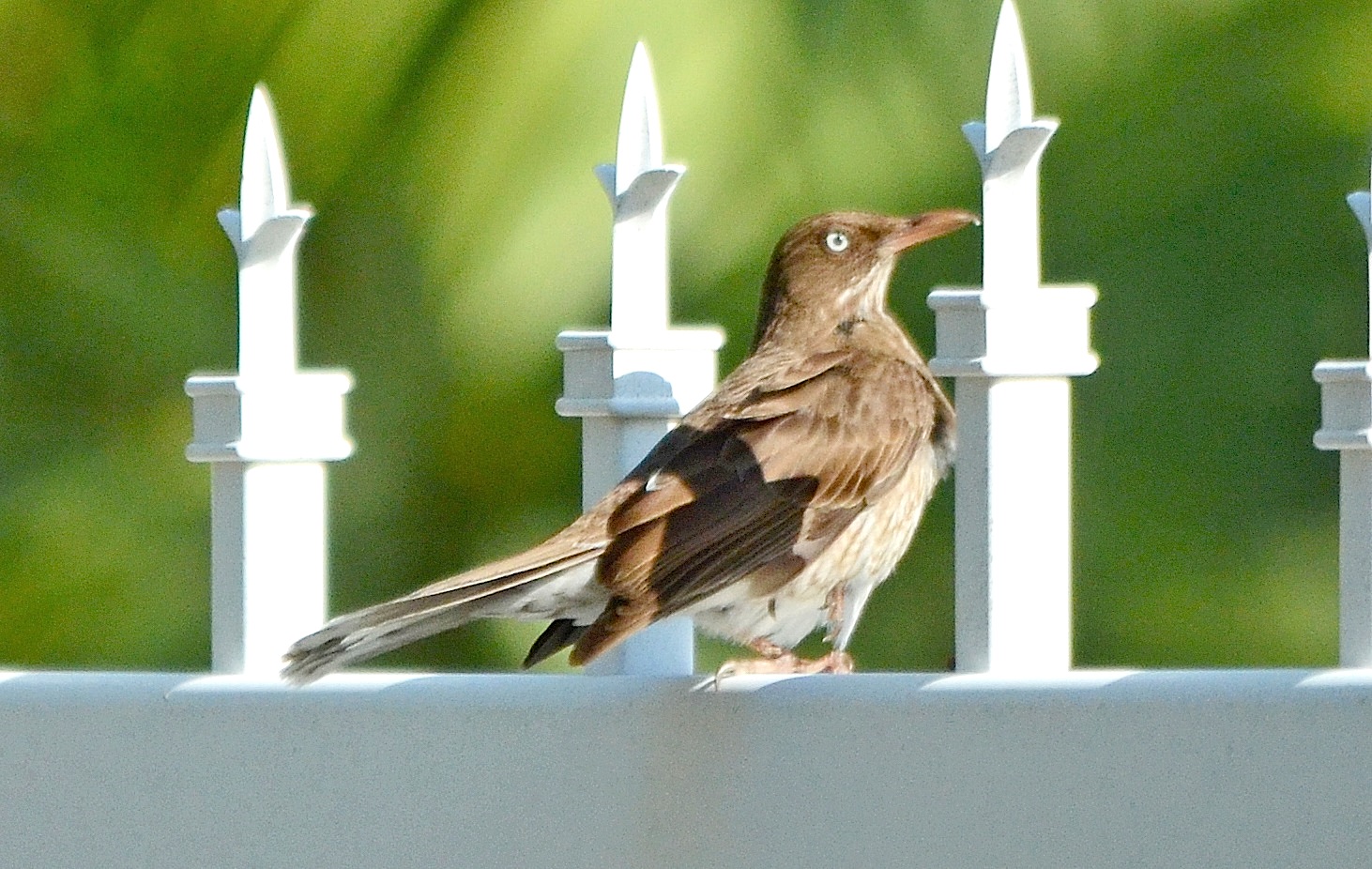
Pearly-Eyed Thrasher March 2015
There’s the added benefit from the ease with which photos can be taken and distributed – people will no longer have to do any of the following:
Shoot birds and take them as samples (hello, J.J. Audubon & historical cohorts)
Pack a sketch pad & crayons to draw birds before they fly away (or from memory)
Rely on scribbled notes made in low light and a light drizzle
Listen to, or read, a query about a “sort of brownish medium sized bird with maybe a bit of yellow on the wings, and a black tail I think, but I didn’t get a very good look and oh yes it had sort of beady eyes and sounded a bit like ‘Kalik Kalik Kalik’ “.
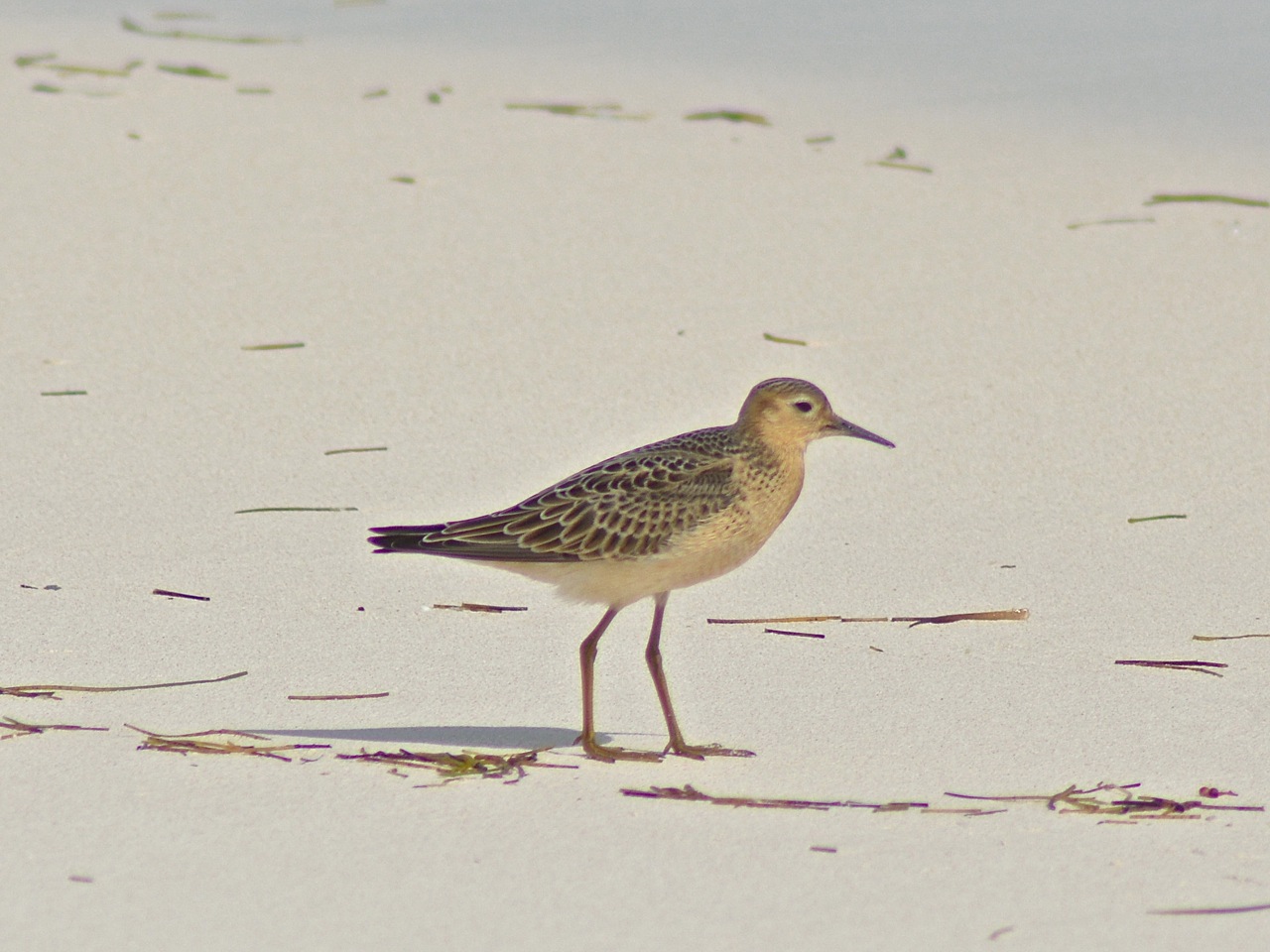
Buff-breasted Sandpiper Oct 2016
Over the 4 years, there have been a few birds that, although not ‘first evers’, are second or third ever – and the first ones with supporting photos. These include the fabulous scissor-tailed flycatcher; and the bald eagle that was sighted several times over south Abaco last year. I’ll return to these rarities another time. Let’s see the sixth new bird, from late last year.
Scaly-naped pigeon Nov 2107
To complete the set, so to speak, 2017 ended with another gorgeous duck, the cinnamon teal. You can read more about all these birds using the following links to the relevant posts.
It’s about 3 years since I featured dowitchers. There are two types, short-billed and long-billed. They are disconcertingly similar, especially if you are only looking at one bird with no comparator. However, on Abaco a good rule of thumb is that if you see a dowitcher it will almost certainly be a SBD, a common winter resident. The LBD is a rare visitor to the Northern Bahamas.And if you just happen to be wrong? Well, so might anyone else be…
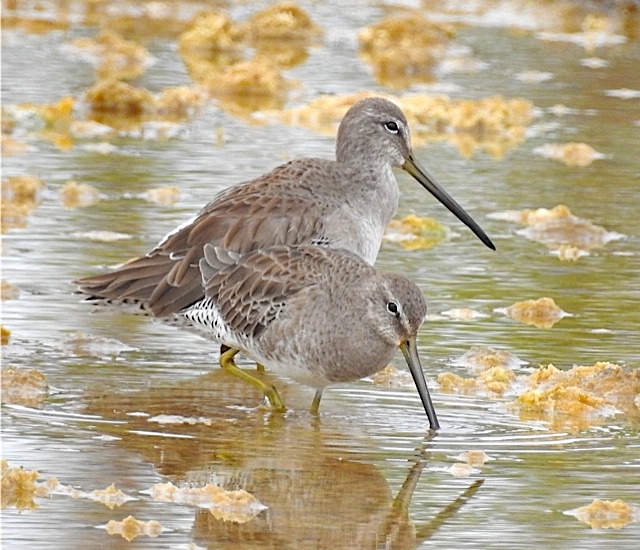
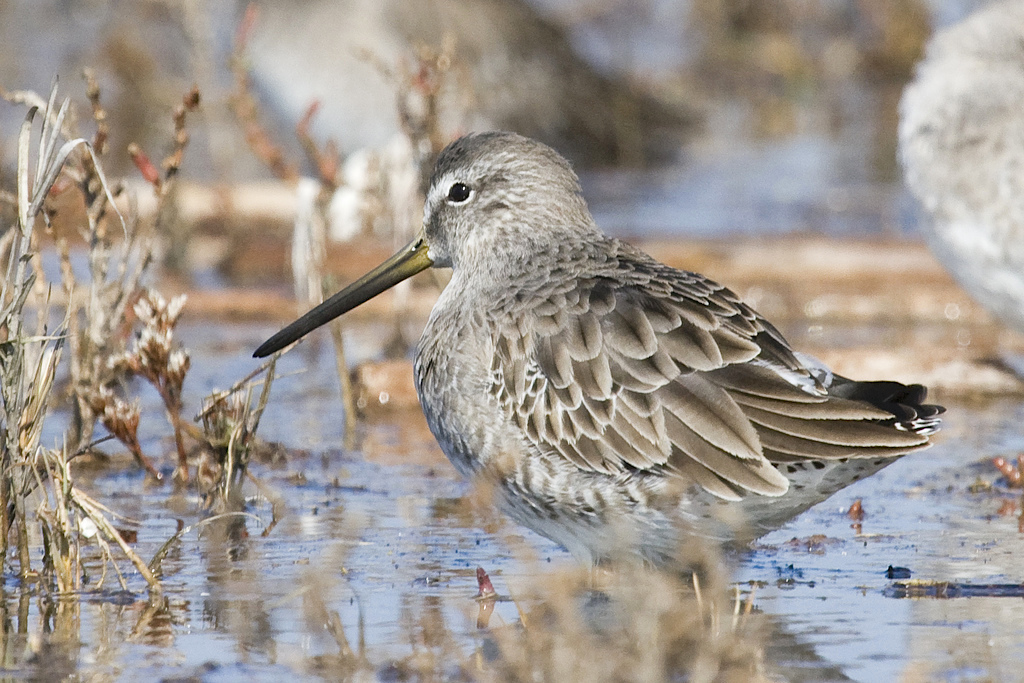
I’m returning to the topic because recently Erika Gates, well-known bird authority and guide on Grand Bahama, took some excellent photos of some LBDs, and has kindly let me feature them. These birds are very unusual on Abaco, not least because they prefer fresh water rather than brackish, which is in short supply on the island and cays.
Phoenix Birder / Xeno Canto
HOW DID THE DOWITCHER GET ITS NAME?
I had assumed that the strange name for these birds was onomatopoeic, in the same way that a Killdeer is supposed to call “Kill…Deer”; and a Bobwhite, an interrogative “Bob…White?”. When I tried to check this online, I found that the usually valuable primary sources for bird info were silent on the topic. In the end, I tracked down a Merriam Webster entry that simply said “probably of Iroquoian origin; akin to Oneida tawístawis. First Known Use: 1841”. Me neither!
LONG OR SHORT – HOW ON EARTH DO I TELL?
1. HELPFUL(ISH) WAYS
On Abaco, if you see a Dowitcher the overwhelming likelihood is that it’s a SBD
The species prefer different habitats, with the LBS preferring freshwater even in coastal regions
The SBD prefers coastal areas, shorelines and brackish / muddy ponds
The SBD’s call is said to be “mellower” than the LDB – though unless you have heard both for comparison, that’s not a very useful identifier
The body shapes are apparently subtly different, in ways I can only begin to guess
In breeding plumage, the species have perceptible colour / pattern differences (if you have binoculars?)
2. CONFUSING / UNHELPFUL FACTORS
LBDs may occasionally join SBDs that are foraging on open tidal flats
Bill length may not help, there’s an overlap – some SBDs may have longer bills and vice versa.
There are theories about bill-length / head size comparison as a field ID method. Do they work? Only if you get it right, I guess.
“Winter plumage of both species is very similar” (grey). Both are only in the Bahamas in winter. So, not a lot of help.
DOES THE DOWITCHER HAVE ANY PRACTICAL APPLICATION?
Yes! In Scrabble you can form a stonking 315 words from just those 9 letters, all permitted under Scrabble rules (though not my own house rules, which forbid ridiculous 2 and 3 letter words that sound invented for the purpose of winning at Scrabble). Apart from the full 9 letter original, there’s one 8 letter word – ‘witherod’, a type of viburnum plant; and 13 words of 7 letters, of which I’d say 8 are in common though not everyday usage. I’ll leave you to work out the remaining 301 words…
Credits: Erika Gates, with many thanks for use permission; the excellent Xeno Canto / Phoenix Birder for the sound file
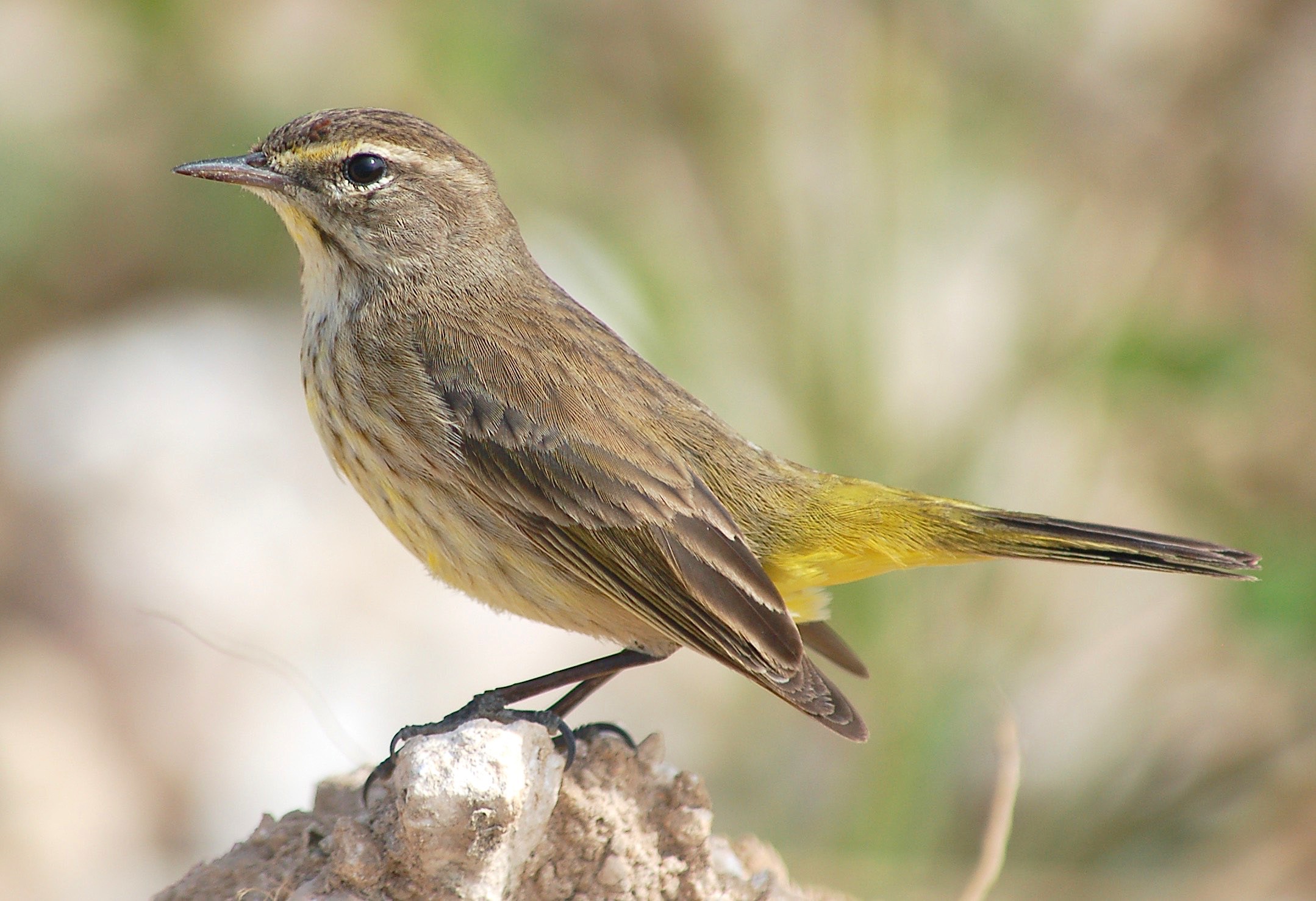
I realise that the title of this post has its unattractive aspects. This is a family blog, and we try to keep references to ‘butts’ and so forth to a minimum. But like it or not, the Palm Warbler is one of two species** that have acquired the nickname ‘butterbutt’. They weren’t even consulted; birders just went ahead with it without checking how they’d feel about it.
On the other hand, it’s easy to see how this minor linguistic outrage came about. It’s there for all to see, right under the bird’s… erm… stern. That flash of vivid yellow, together with the pale speckled front, a rusty brown cap and striking eye-stripe, is diagnostic for this Abaco winter resident species.
The ‘heads-up’ is because right now they are among you. In the gardens, on the grass, on the tracks, in the coppice, in the casuarinas. And they have an endearing habit of bobbing their… tails, let’s say, as they forage. Palm Warblers are inclined to be fairly inquisitive and tame, so if you are careful, they may stay around to let you watch them.
The PW above must, I think, have been photographed at the very end of the winter season, just before it headed north from Abaco. The strong colours suggest this guy is getting into the breeding mood. Compare him with the picture below, taken by the same photographer during the same period, of a slightly less garish stage of breeding plumage. But it’s on its way…
As often as not, a palm warbler will be fairly easy to spot. Not always, though. You may have to work a bit to locate one half-hidden in foliage. Its posterior may not even be visible.
Luckily, PWs are common enough in winter to give you a chance to shoot them in the open, as it were. Perched on a branch works just fine to capture the essential characteristics.
Keep an eye out for these pretty little warblers. They are enjoyable to watch, and relatively easy to get a photo of at close quarters. Just make sure you get the butterbutt into the picture.
** The other butterbutt bird is the descriptively-named YELLOW-RUMPED WARBLER, though its buttery bits are on the topside so there’s no risk of confusion (I photographed this one from a pool-side lounger, a distance shot at the top of a tree with a small camera – but it captures the essentials!)
Credits: Bruce Hallett (1)*; Gerlinde Taurer (2, 7); Nina Henry (3, 4, 5); Peter Mantle (6); Keith Salvesen (8, 9)
* Possibly Tom Sheley – all I have got on the filename is ‘Fruit Farm’ so I can’t be sure of the photographer’s ID – apologies
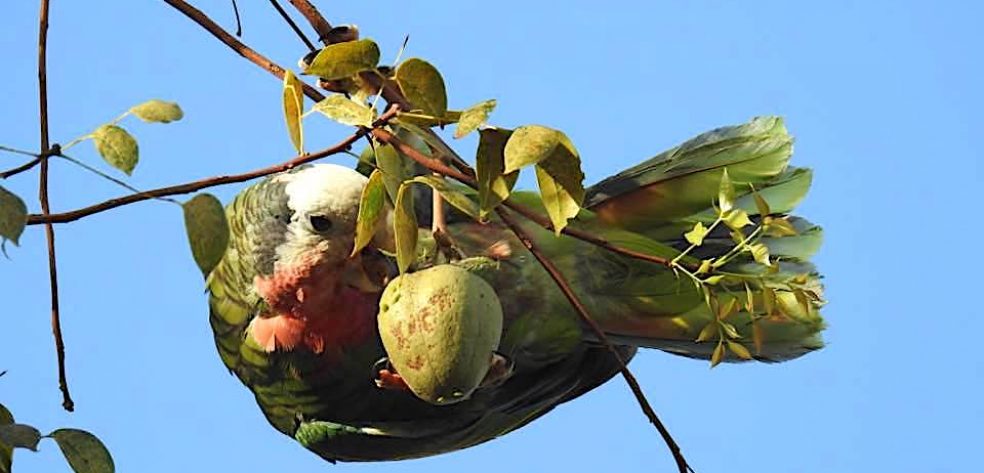
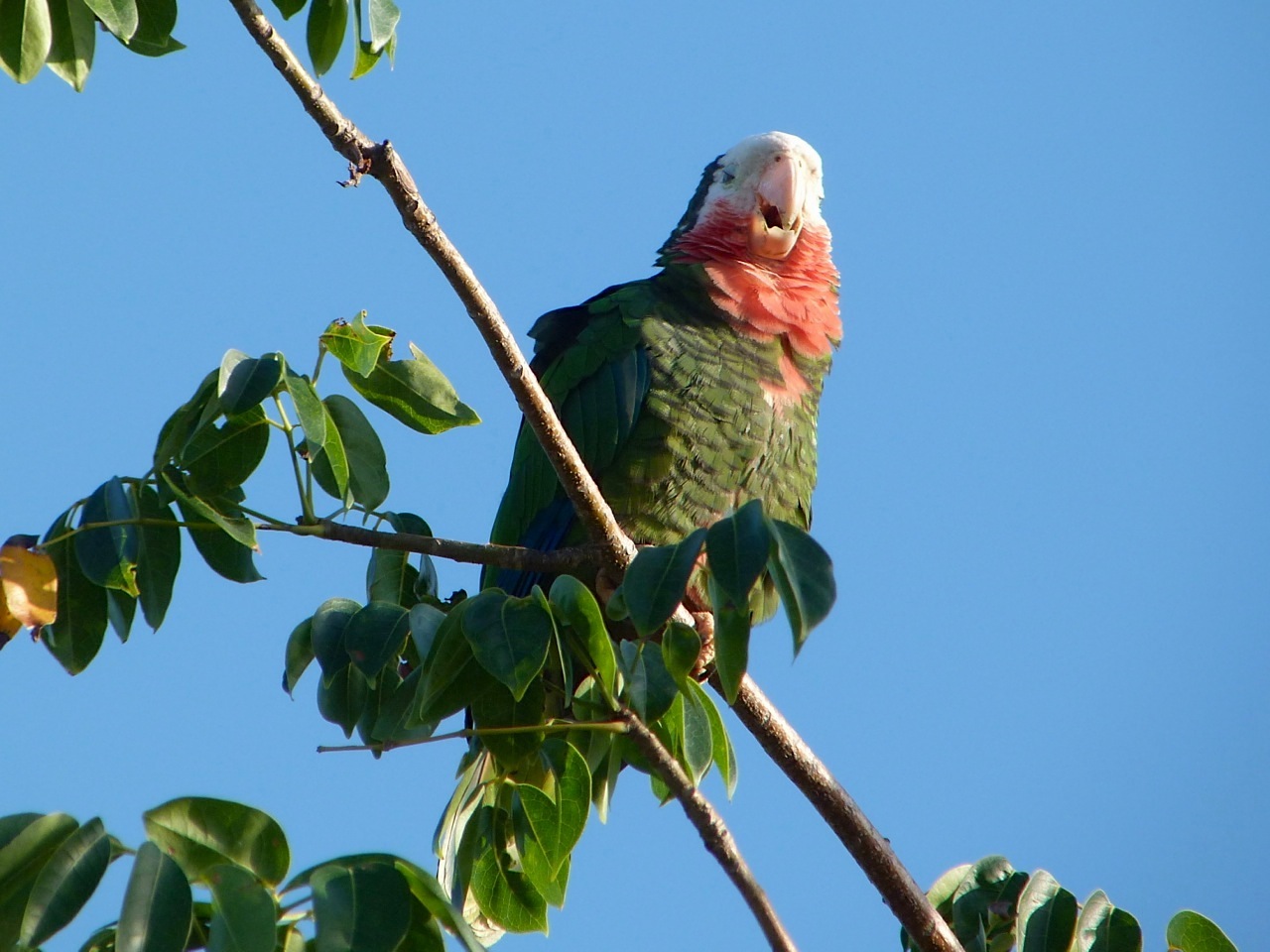
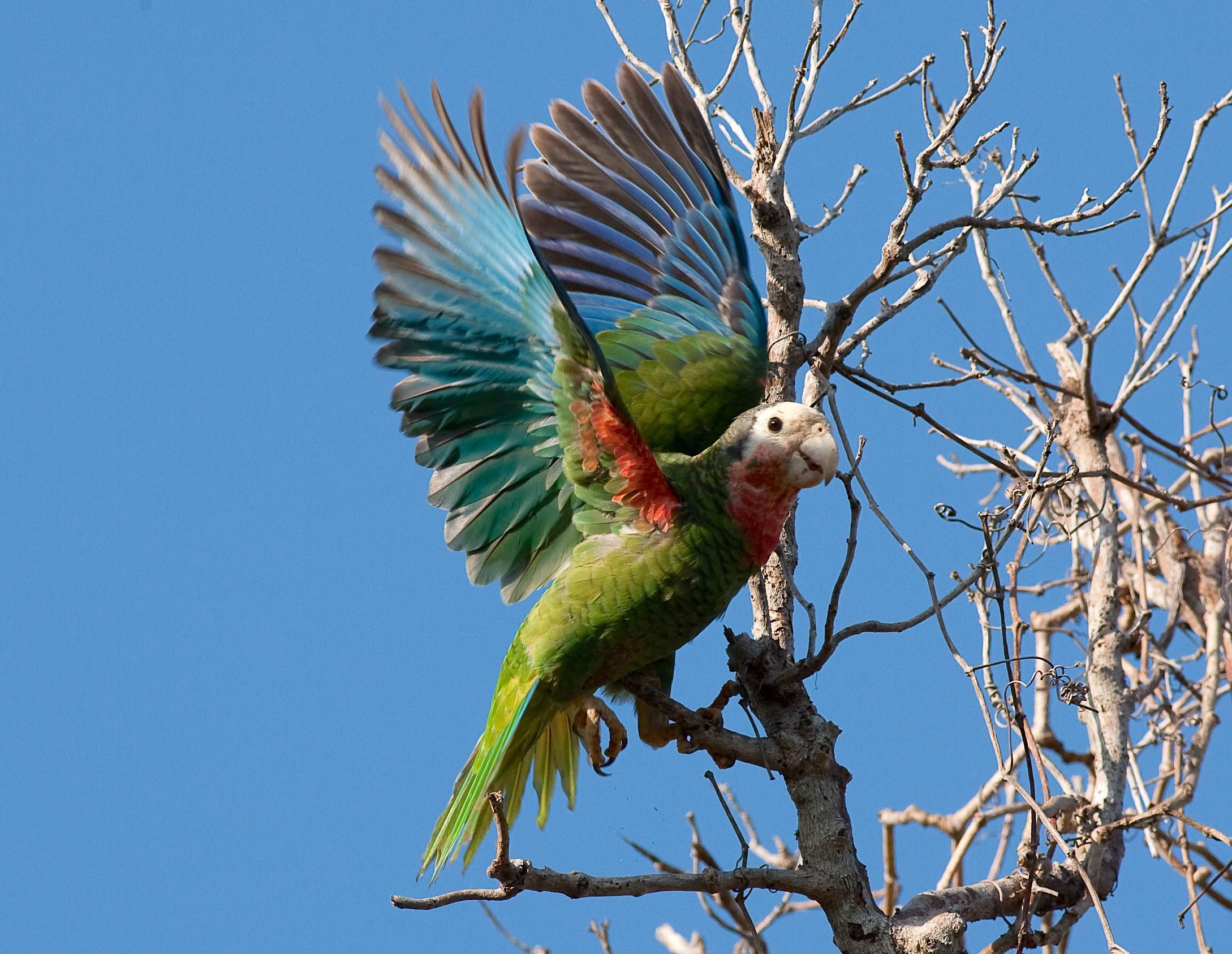
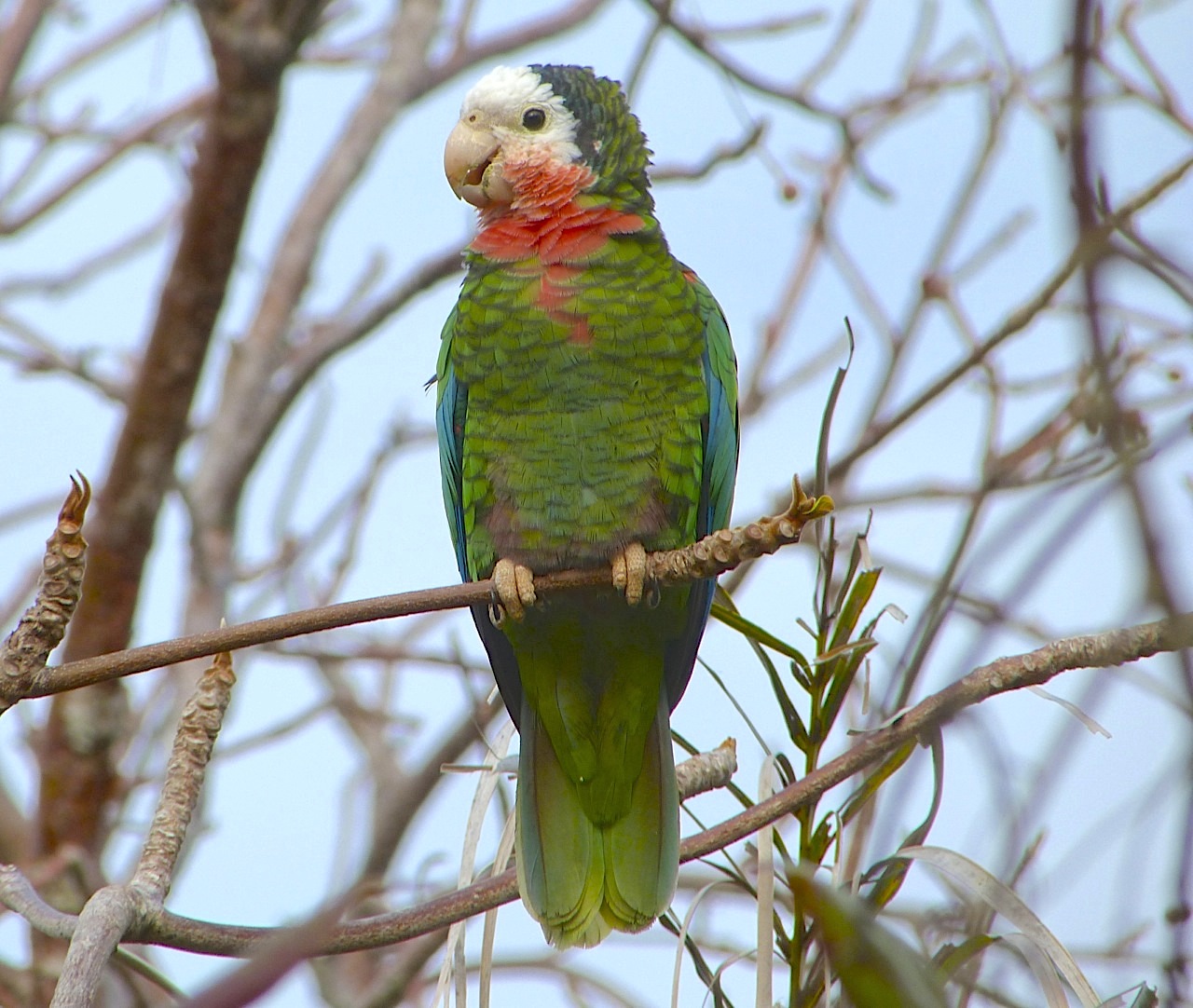
Red, green, blue, and a touch of snowy white. The colours of Christmas, sort of. We are past all that for another year, but for those on Abaco the unique, ground-nesting Abaco parrots Amazona leucocephala flash those same colours throughout the year.
These birds have cousins on Inagua that nest conventionally; and there are now a handful of NASSAU PARROTSon New Providence, of uncertain origin (click link for more on these).
The parrots are only found in South Abaco, between Marsh Harbour and the National Park where they live and breed in limestone holes in the forest floor.
You are most likely to hear these birds before you see them, as they make their way daily north in the morning and back again in the evening.
Despite the racket they make, finding the parrots in the National Park is a bit ‘needle-in-haystack’. Instead, try the Gilpin Point point area, and coppice areas to the north. They pass back and forth over Delphi, pausing to squabble noisily, almost daily. I have made several recordings of them – here’s one example.
Far and away the best location is Bahama Palm Shores, where the mix of dense coppice with their favourite gumbo limbo trees and the open gardens is much to their liking. And frankly, it’s a great place for birding anyway, even if you blank for the parrots.
Just think: a dozen years ago, these fine birds were sliding towards extinction, with an unsustainable population of fewer than 900. Conservation efforts and in particular attention to habitat protection and predator control have resulted in population increases year-on-year, and the total now stands at around 5000 adults.
I’ve posted quite a lot about these parrots over the years, so if you are already familiar with them, I hoped you felt free to skip the text, and simply to admire these wonderful creatures.
Credits: Gerlinde Taurer, Craig Nash, Tom Sheley, Caroline Stahala, Keith Salvesen, Peter Mantle, Nina Henry, Erik Gauger; audio recording Keith Salvesen
[A Christmas gift of a puntastic avian / festive double-meaning]
A small New World songbird of the cardinal subfamily
Flags and other colourful festive decorations
PAINTED BUNTING
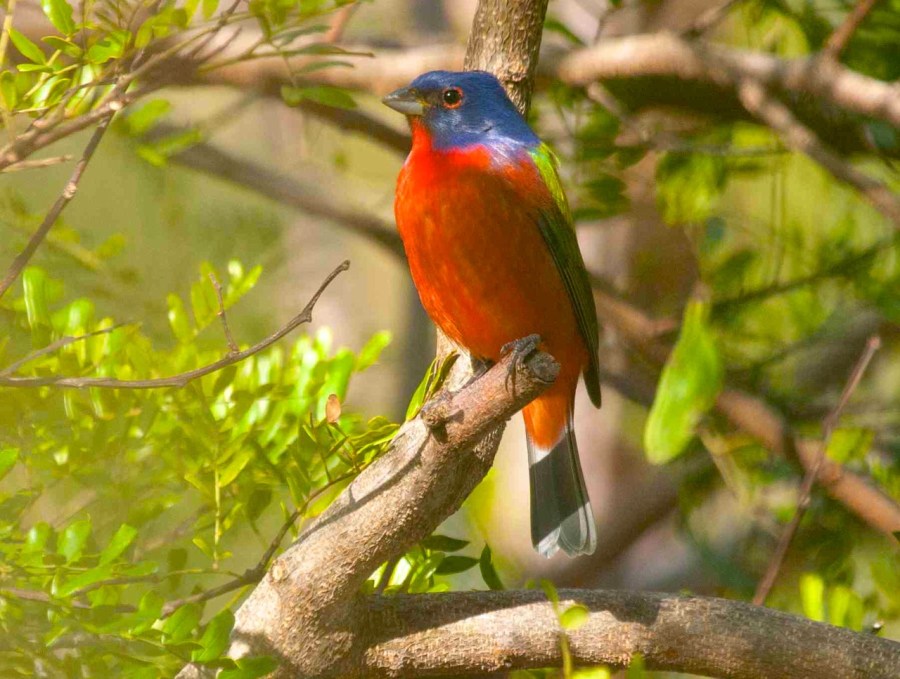
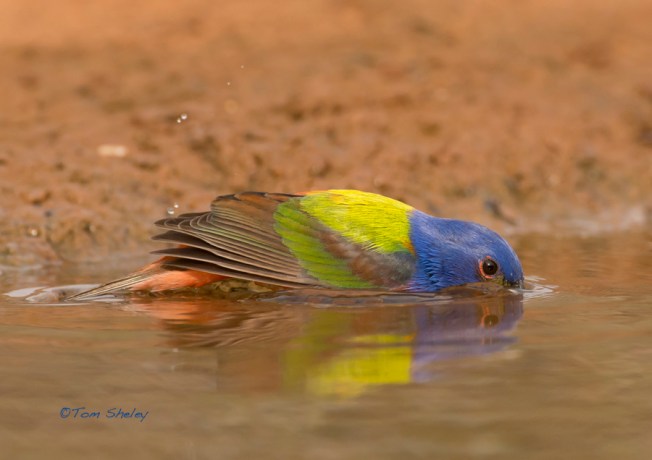
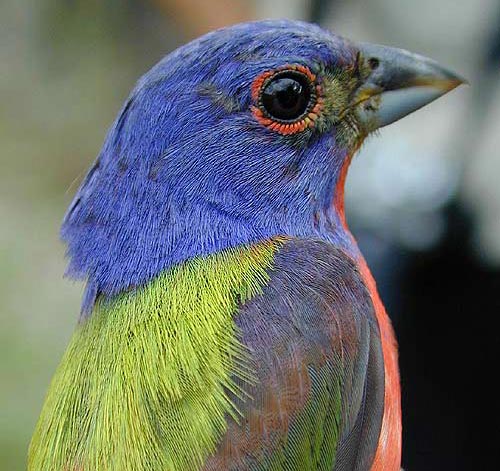
It’s hard to imagine a more Christmasy little bird than the Painted Bunting. Bright blue, red, green primary colours straight from a child’s paintbox make for a spectacular bird to grace the festive season. These are migratory winter residents, and the first reports of the bright and beautiful males on Abaco started to appear in November. Some will stay around until March.
Feeders at the Delphi Club. The first image shows a female & a male PABU feeding together. The second is a male with a pair of black-faced grassquits
The two wonderful photos below are by Tom Sheley, a major photographic contributor to THE BIRDS OF ABACO. They were taken in Texas, not on Abaco, but I include them because of Tom’s strong connection with the birdlife of Abaco; and because on any view they are fantastic shots…
This is probably my last post until after Christmas, what with one thing and another, so it’s a good opportunity to wish a very Happy Christmas or [insert preferred seasonal appellation] to everyone who visits Rolling Harbour and especially those who, having done so, return for more!
Credits: Tom Sheley (1, 7, 8), Erik Gauger (2), Tara Lavallee (3, 4), Keith Salvesen (5) Sandy Walker (6); Birdorable Cartoons
Picture the scene. You take a camera to photograph the winter ducks on a local pond on South Abaco. Suddenly you notice something strange and out of place out there. Something unfamiliar. It’s a duck for sure; but not one you’ve ever seen before in your life. Maybe it’s one you know about. Maybe you have no idea what it is at all, and have to identify it later on from a book or online. Anyway, you take some shots before it dabbles off into the overgrown margins of the pond, and leave with a modest air-punch: it’s a “lifer”.
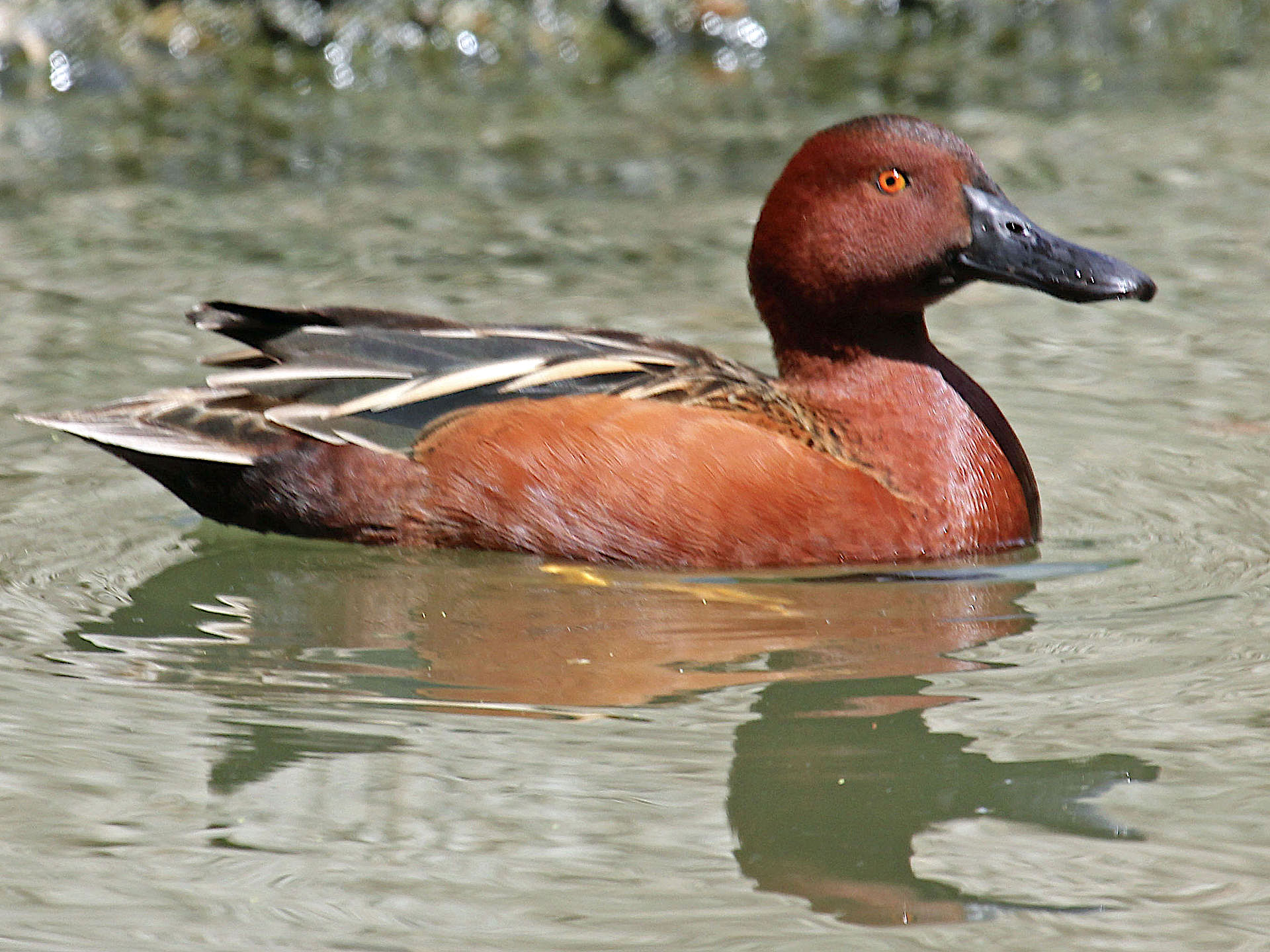
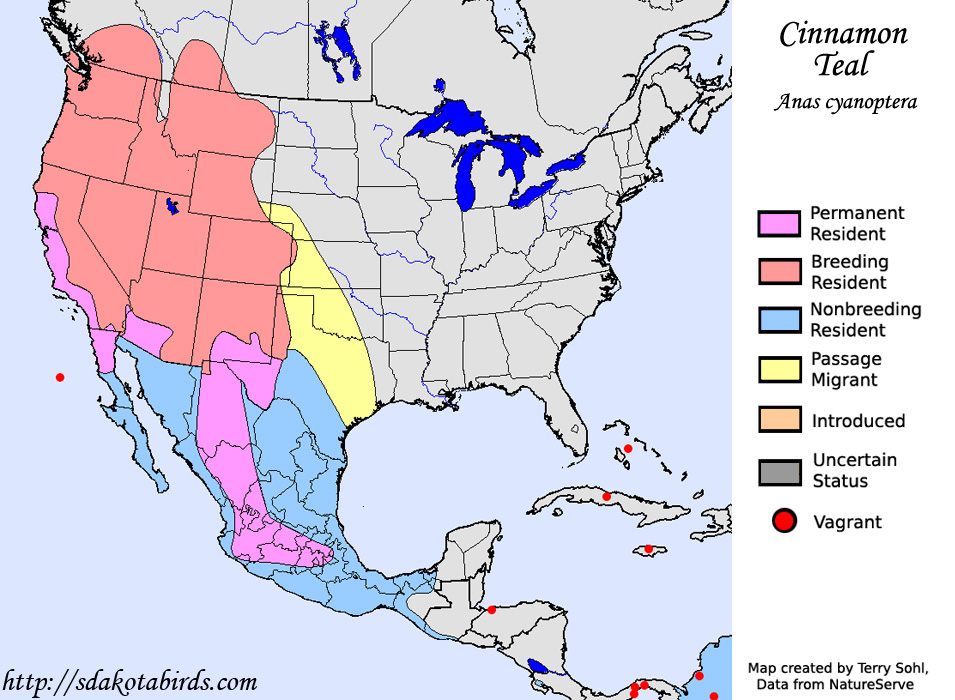
Keith Kemp, principal monitor for Abaco Piping Plover Watch, has just had this experience. There, on the local pond with the blue-winged teal, was a stranger. For him, a “lifer”. And as it turns out, for Abaco also a “lifer”. The only record of one I have found for the Bahamas is a single vagrant sighted on Andros (see range map below). Here are Keith’s unique photos of Abaco’s first Cinnamon Teal.
The cinnamon teal (Spatula cyanoptera) is a dabbling duck species found in western North America, and in South America. They live in and around marshes and ponds, feeding mostly on pond-weed and plants, along with any attached aquatic insects. On the range map below, note the single red dot in the Bahamas denoting the single vagrant sighting on Andros.
The duck is named for the overall colouring of the adult male has a cinnamon-red head and body; and it has startlingly noticeable orange-red eyes . The adult female, as is so often the way, is rather less showy – a mottled brown, with a pale brown head, brown eyes, and a grey bill. For those who like comparisons, it resembles a female blue-winged teal, a few of which are shown above (not the ones with the white stripe on the face, which are male blues).
Since the publication of BIRDS OF ABACO in 2014, with its comprehensive checklist of all recorded species since 1950, several new species have been sighted on Abaco. The latest was only last month – theSCALY-NAPED PIGEON. Now we have a new species of duck. Conveniently, there’s no other ‘regular’ duck species quite like it. So if you see a pretty cinnamon-coloured duck on a pond near you, you’ll be looking at the newest ‘Bird of Abaco’. And if you do see one, please share the news!
Credits: Michael L Baird (1); Keith Kemp (2, 3, 4, 5,); ‘andeansolitaire’ (6); Dick Daniels / carolinabirds.org (7); special thanks to Terry Sohl / sdakotabirds.com for use permission for his range map; cartoon by the inimitable Birdorable
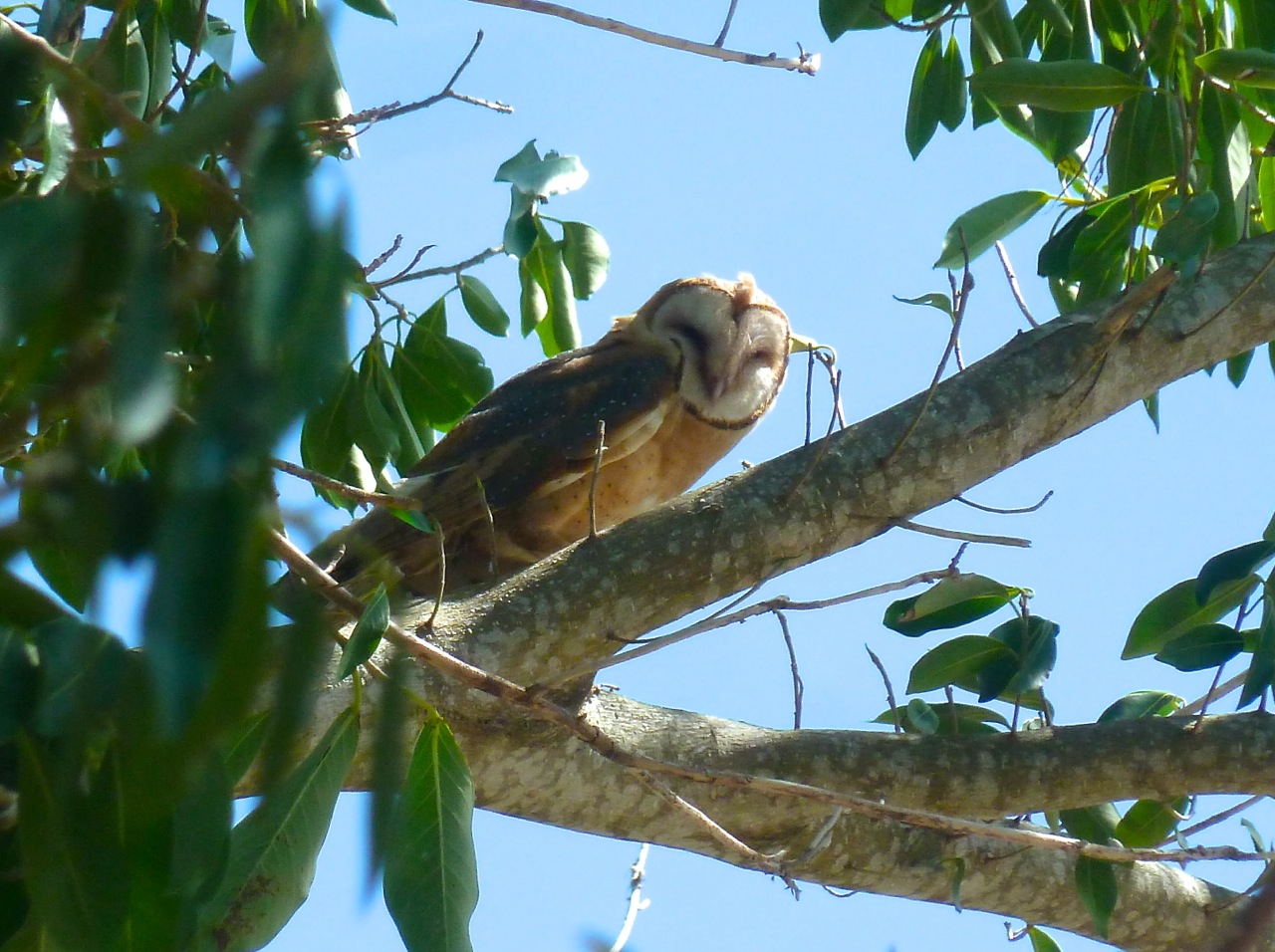
The Barn Owl (Tyto alba) is the only owl you are likely to see – and hear – on Abaco. The species is permanently resident, which is a good start in that sighting opportunities exist year-round. Although they are not at all common they can be found in particular locations, for example around Treasure Cay and Little Harbour; also on Elbow Cay, Lubbers Quarters (4 birds right now) and Man-o-War Cay (a while back). There are two other owl species recorded for Abaco: the rare Burrowing Owl (see link below for details); and the Northern Saw-whet Owl, a vanishingly rare vagrant recorded a handful of times that I don’t propose to feature unless and until it decides to visit Abaco more frequently…
I wrote about Barn Owls on Abaco many moons ago. I don’t usually rehash previous posts, but I am returning to the topic because of a recent barn owl sighting on Elbow Cay that caused interest, excitement and some speculation.
Barn Owl, Treasure Cay, Abaco Bahamas (Becky Marvil)
The shrill wheezing cry of the Barn Owl – known in some places as the ‘screech owl’ (which, strictly, is a different owl species) – is unmistakeable. Barn owls also make an intimidating hissing noise. Mainly nocturnal, they fly noiselessly like white ghosts in the night. If you are lucky enough to see one in the daytime, you’ll be struck by the beautiful heart-shaped face and (if close enough) the delicate markings.
Patrik Aberg Xeno-Canto
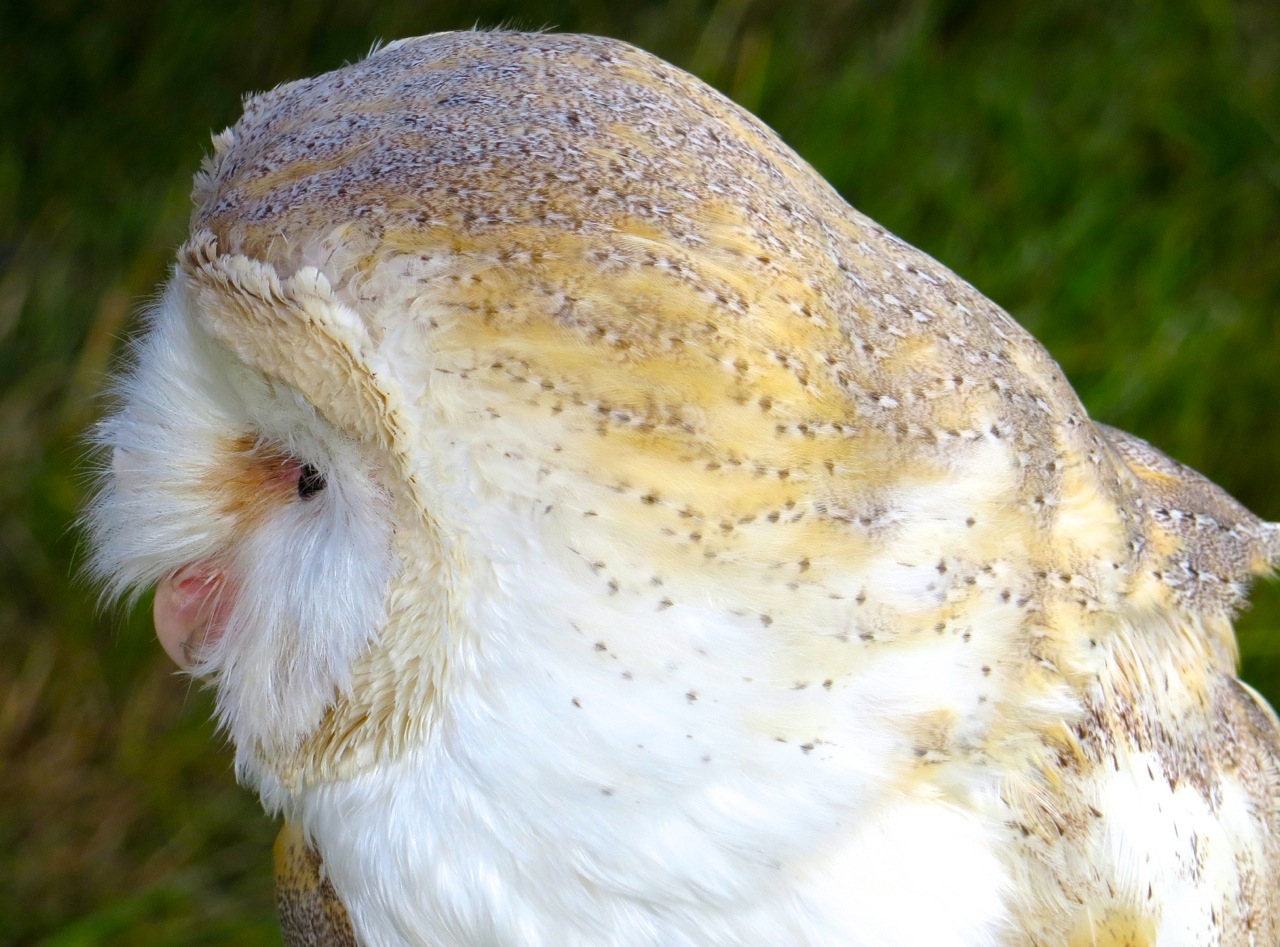
Both photos above were taken on Abaco. Woody Bracey’s header image is featured in “THE BIRDS OF ABACO“. Becky Marvil’s photo was taken near Treasure Cay. I’ve never seen a barn owl on Abaco, but I’ve been lucky enough to get close to them in the UK. For those who have never seen one, here are a few of my own images that show what wonderful birds they are. They were photographed at a raptor rescue centre, so I am not going to pretend that these shots were taken in the wild. That would never do.
This close-up of the barn owl above shows the typical speckling on its pure white front, and the beautiful wing patterns. Amazingly for such a large bird, an adult weighs a mere 350g or so. As a comparison, The Birds of Abaco book weighs 2kg!
This fluffy baby barn owl had been rescued and was being cared for in a sanctuary before being returned to the wild. Whimsy is rarely permitted in this blog, but seriously, folks – cuteness overload!


























































 ROLLING HARBOUR ABACO
You must be logged in to post a comment.