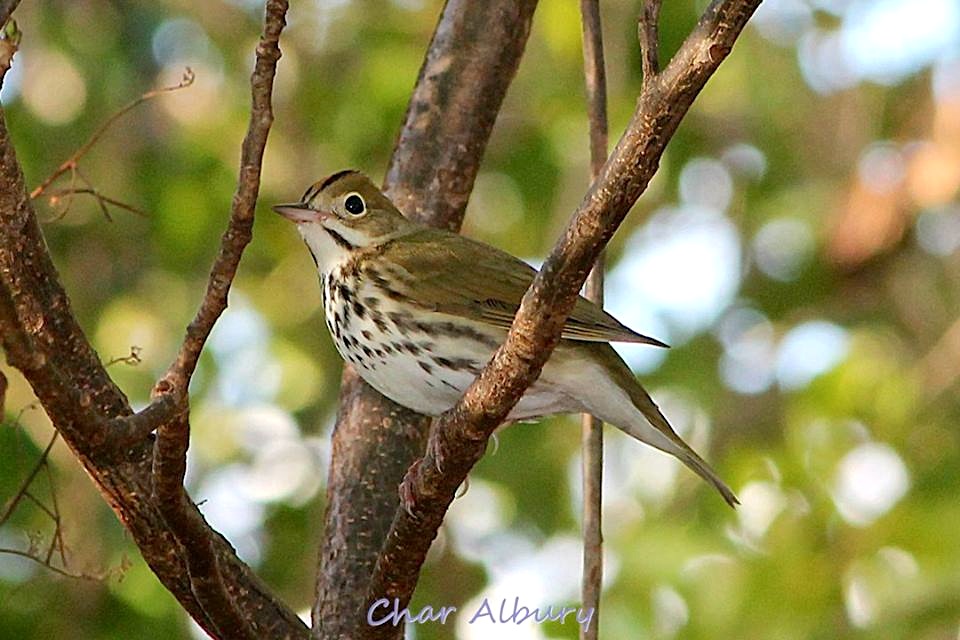
The Ovenbird Seiurus aurocapilla is a small winter-resident warbler with distinctive orange head feathers that can be raised into a crest. This accomplishment is mainly used in the breeding season as a way to impress and attract a mate, and maybe at other times if they are alarmed.
These are shy little birds and you may hardly be aware of them. They stay close to the ground and as they rootle their way through dead leaves and under shrubs, they look quite drab. See one lit up by the morning sun, however, and you’ll see how pretty and richly marked they are, with a smart orange head-stripe.
The Ovenbird – first classified by Linnaeus in 1766 – enjoys the taxonomic distinction of being the only bird of its genus in the warbler family Parulidae. It is a so-called ‘monotypic’ species. It was formerly lumped in with Waterthrushes and Parulas, but was fairly recently found to be genetically dissimilar and so the classifications were revised.
The ovenbird is so named because it builds a domed nest (‘oven’) with a side-entrance, constructed from foliage and vegetation. They tend to nest on the ground, making them vulnerable to predation. The species name for the ovenbird, Seiurus aurocapilla, has nothing to do with the nest shape, though. It derives from both Greek (Seiurus = wag-tail) and Latin aurocapilla = gold-capped). No, nothing to do with the lovely Taylor Swift either. Leave it.
Examples of the ‘chipping’ call and the song are below
Gauge the size of the bird against the pod it is standing on…
Orange crest feathers on show
Credits: Tom Sheley, Woody Bracey, Charmaine Albury, Bruce Hallett, Gerlinde Taurer, Cephas / Wiki
The great winter migration of warblers and their arrival in The Bahamas is underway. Reports are appearing – the latest being the Northern Parula. They will have made long journeys – hundreds of miles – and in the spring they will wing their way home for the summer. On Abaco, 38 warbler species are recorded for the main island and the cays, the latest being the first sighting of a Canada Warbler in 2018. Since Dorian the situation has undoubtedly been different, especially with the transients and rare species. The 5 permanent resident warbler are still resident. Sighting records of the winter visitors have been scarce. Many migrants and transients have not been recorded since Dorian, and the rarest perhaps never will be. The hope must be that at least the most common winter warblers will continue to arrive, and in increasing numbers.
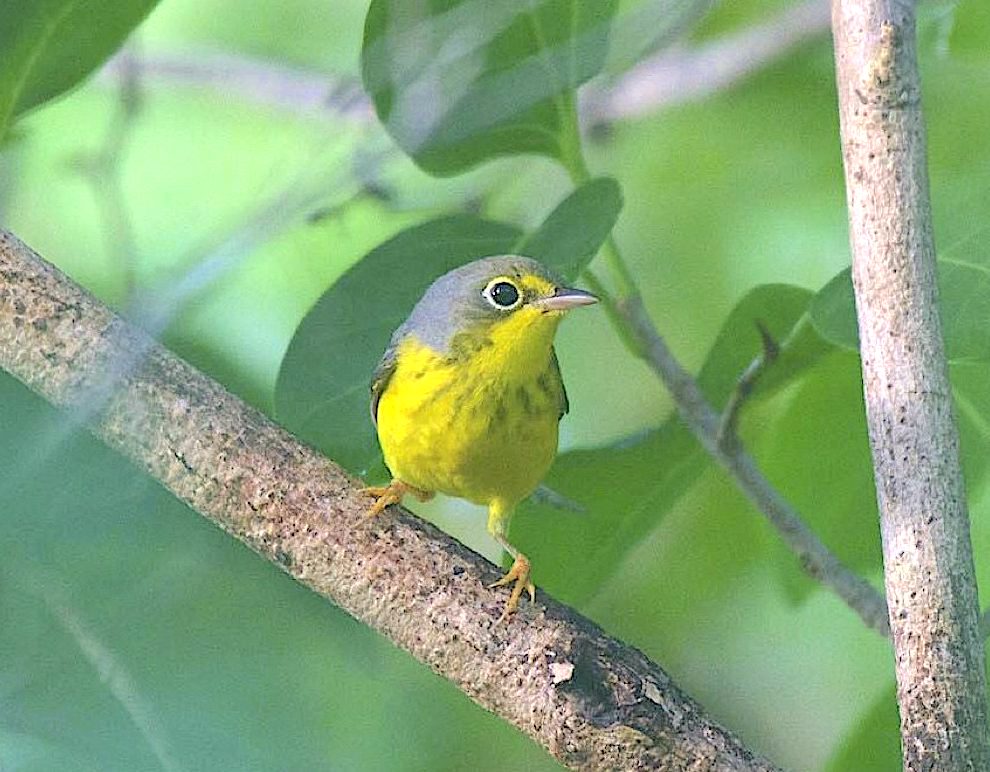
First-ever Canada Warbler for Abaco & the entire Bahamas: Aug 2018 (Chris Johnson)
This guide divides the 38 species into categories, with a code for each bird to show:
Resident status – permanent / breeding, migratory or transient
Frequency – likelihood of seeing each species in its season, rated from 1 (very likely) to 5 (extreme rarities, maybe recorded only once or twice since c1950 when recording began)
Numerically, the division breaks down into 3 categories of warbler:
5 permanent residents (PR) that breed on Abaco (B), of which two are ENDEMIC
21 winter residents (WR) ranging from ‘everyday’ species to extreme rarities like the very vulnerable Kirtland’s Warbler that needs a specific winter habitat that Abaco can provide
11 transients, most of which you will be very lucky to encounter
Palm Warbler, Abaco Bahamas (Nina Henry)
The photos that follow show an example of each warbler, where possible both (1) male and (2) taken on Abaco. Where I had no Abaco images – especially with the transients – I have used other mainstream birding resources and Wiki. All due credits at the foot of the post.
PHOTO CREDITS (1 – 37) Bruce Hallett (Header, 3, 9, 12, 14, 17, 21, 22); Tom Reed (1, 4); Cornell Lab (2); Tom Sheley (7, 10); Alex Hughes (5); Gerlinde Taurer (6, 11, 18); Becky Marvil (8, 20a); Woody Bracey (13, 24); Peter Mantle (15); Keith Salvesen (16); William H. Majoros wiki (19); talainsphotographyblog (20b, 26, 34); Charmaine Albury (23); Craig Nash (25); Ann Capling (27); Jerry Oldenettel wiki (28); Dominic Sherony wiki (29); 10000birds (30); Steve Maslowski wiki (31); MDF wiki (32, 33); Avibirds (35); Michael Woodruff wiki (36); Emily Willoughby wiki (37)
CHECKLISTbased on the complete checklist and codes for Abaco devised by Tony White with Woody Bracey for “THE DELPHI CLUB GUIDE TO THE BIRDS OF ABACO” by Keith Salvesen
IT’S STARTED The great winter migration of warblers and their imminent arrival in The Bahamas is underway. Any day now – if not already – the ‘winter’ (in fact autumn & early spring as well) warblers will be arriving on Abaco. There are 38 warbler species recorded for the main island and the cays. For years, it was just 37. Then in 2018 a CANADA WARBLER was seen and photographed by well-known Bahamas birder Chris Johnson. It was a first for Abaco – and the first-ever report for the Bahamas as well. You’ll find the story HERE.
This article is updated from an earlier one written pre-Dorian and the situation will undoubtedly be different now, especially with the transients and rare species. Consider it as a historical record of the prolific warbler species recorded for Abaco and more generally the northern Bahamas before the hurricane struck. The 5 permanent resident warbler are still resident. Many migrants and possibly all transients have sadly not been recorded since, and the rarest perhaps never will be. The hope must be that at least the most common winter warblers will continue to arrive, and in increasing numbers.
First-ever Canada Warbler for Abaco & the entire Bahamas: Aug 2018 (Chris Johnson)
Hooded Warbler, Abaco Bahamas (Chris Johnson)
The guide divides the original 37 species (excluding the Canada warbler) into categories, with a code for each bird to show:
Resident status – permanent / breeding, migratory or transient
Frequency – likelihood of seeing each species in its season, rated from 1 (very likely) to 5 (extreme rarities, maybe recorded only once or twice since c1950 when recording began)
Numerically, the division breaks down into 3 categories of warbler:
5 permanent residents (PR) that breed on Abaco (B), of which two are ENDEMIC
21 winter residents (WR) ranging from ‘everyday’ species to extreme rarities like the very vulnerable Kirtland’s Warbler that needs a specific winter habitat that Abaco can provide
11 transients, most of which you will be very lucky to encounter
Palm Warbler, Abaco Bahamas (Nina Henry)
The photos that follow show an example of each warbler, where possible both (1) male and (2) taken on Abaco. Where I had no Abaco images – especially with the transients – I have used other mainstream birding resources and Wiki. All due credits at the foot of the post.
PHOTO CREDITS (1 – 37) Bruce Hallett (Header, 3, 9, 12, 14, 17, 21, 22); Tom Reed (1, 4); Cornell Lab (2); Tom Sheley (7, 10); Alex Hughes (5); Gerlinde Taurer (6, 11, 18); Becky Marvil (8, 20a); Woody Bracey (13, 24); Peter Mantle (15); Keith Salvesen (16); William H. Majoros wiki (19); talainsphotographyblog (20b, 26, 34); Charmaine Albury (23); Craig Nash (25); Ann Capling (27); Jerry Oldenettel wiki (28); Dominic Sherony wiki (29); 10000birds (30); Steve Maslowski wiki (31); MDF wiki (32, 33); Avibirds (35); Michael Woodruff wiki (36); Emily Willoughby wiki (37)
CHECKLISTbased on the complete checklist and codes for Abaco devised by Tony White with Woody Bracey for “THE DELPHI CLUB GUIDE TO THE BIRDS OF ABACO” by Keith Salvesen
ABACO’S 38 WARBLERS: AN ILLUSTRATED ID GUIDE (Pt 1)
IT’S STARTED The great winter migration of warblers and their imminent arrival in The Bahamas is underway. Any day now – if not already – the ‘winter’ / ‘Fall’ (late summer & early spring as well) warblers will be arriving on Abaco. There are 38 warbler species recorded for the main island and the cays. For years, it was just 37. Exactly a year ago, a CANADA WARBLER was seen and photographed by well-known birder Chris Johnson. It was a first for Abaco – and the first-ever report for the Bahamas as well. You’ll find the story HERE.
First-ever Canada Warbler for Abaco & the entire Bahamas: Aug 2018 (Chris Johnson)
This post is the first of 3 warbler posts for the Fall. A while back I compiled a basic (in retrospect) guide to Abaco’s warbler species. I’ll give a link and pdf in due course once I have rechecked (improved? rewritten?) it. [Note: of no value on eBay, @m@z@n or anywhere else]. Many of the warblers are far from easy to distinguish from each other. For example, many males have yellow or yellow-and-black plumage. The females are invariably less colourful – often brownish or olive – than the males (as are juveniles), and that can lead to confusion – and not only by me, I think.
Hooded Warbler, Abaco Bahamas (Chris Johnson)
The guide divides the original 37 species into categories, with a code for each bird to show. You’ll see below the codes relating to each of the 5 resident species:
Resident status – permanent / breeding, migratory or transient
Frequency – likelihood of seeing each species in its season, rated from 1 (very likely) to 5 (extreme rarities, maybe recorded once or twice since c1950
Numerically, the division of the 38 breaks down into 3 categories:
5 permanent residents (PR) that breed on Abaco (B), of which two are ENDEMIC
21 winter residents (WR) ranging from ‘everyday’ species to rarities like the rare, vulnerable Kirtland’s Warbler (now under threat from proposed development)
12 transients, most of which you will be very lucky to encounter
Palm Warbler, Abaco Bahamas (Nina Henry)
The photos used in this series were almost all taken on Abaco / the Cays. There’ll be examples of the male of each warbler species, with some females for contrast. Where I have no Abaco / Baha images – especially with the transients – I have used other mainstream birding resources and Wiki. All due credits will be given at the foot of each post.
The warblers shown above are a mix of warbler species on Abaco: resident / endemic, winter migrants, and transient / vagrant. Time to take a look at the first category, the Bahamas-loving resident species that live and breed on Abaco
5 PERMANENT RESIDENTS
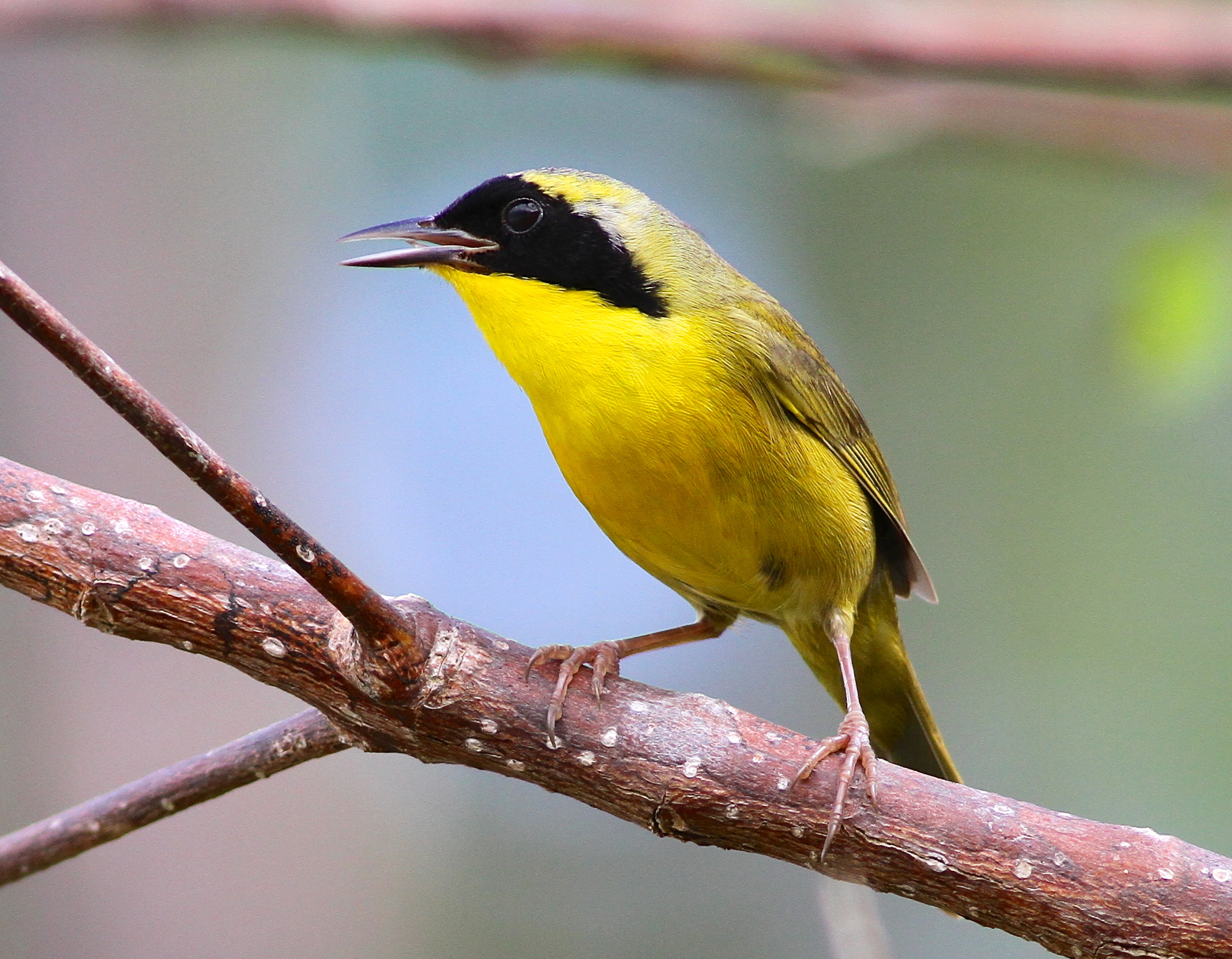
BAHAMA YELLOWTHROAT Geothlypis rostrata PR B 1 ENDEMIC
PHOTO CREDITS Tom Sheley (1, 9, 11); Chris Johnson (2, 3); Alex Hughes (4); Nina Henry (5); Gerlinde Taurer (6, 7); Bruce Hallett (8, 10); Photos mainly from the archive collected for“THE DELPHI CLUB GUIDE TO THE BIRDS OF ABACO”by Keith Salvesen
ABACO WARBLERS: THE FAMOUS 5 (PERMANENT RESIDENTS)
There are 37 warbler species recorded for Abaco. They fall into three distinct categories. Surprisingly perhaps, only 5 species are permanently resident on Abaco, ie non-migratory. Then there are warblers that commute from the breeding grounds of North America to warmer climes in the Fall, returning in the Spring to breed. Some will be familiar – PALM WARBLER, AMERICAN REDSTART, BLACK-AND -WHITE WARBLER. Others, like the HOODED WARBLER, are less common. One or two are very rare indeed, such as the KIRTLAND’S WARBLERSthat choose Abaco as a winter destination. Finally there are the so-called transients, warbler species that use the northern Bahamas as a stopover during their longer migratory flights, such as the BLACKPOLL WARBLER.
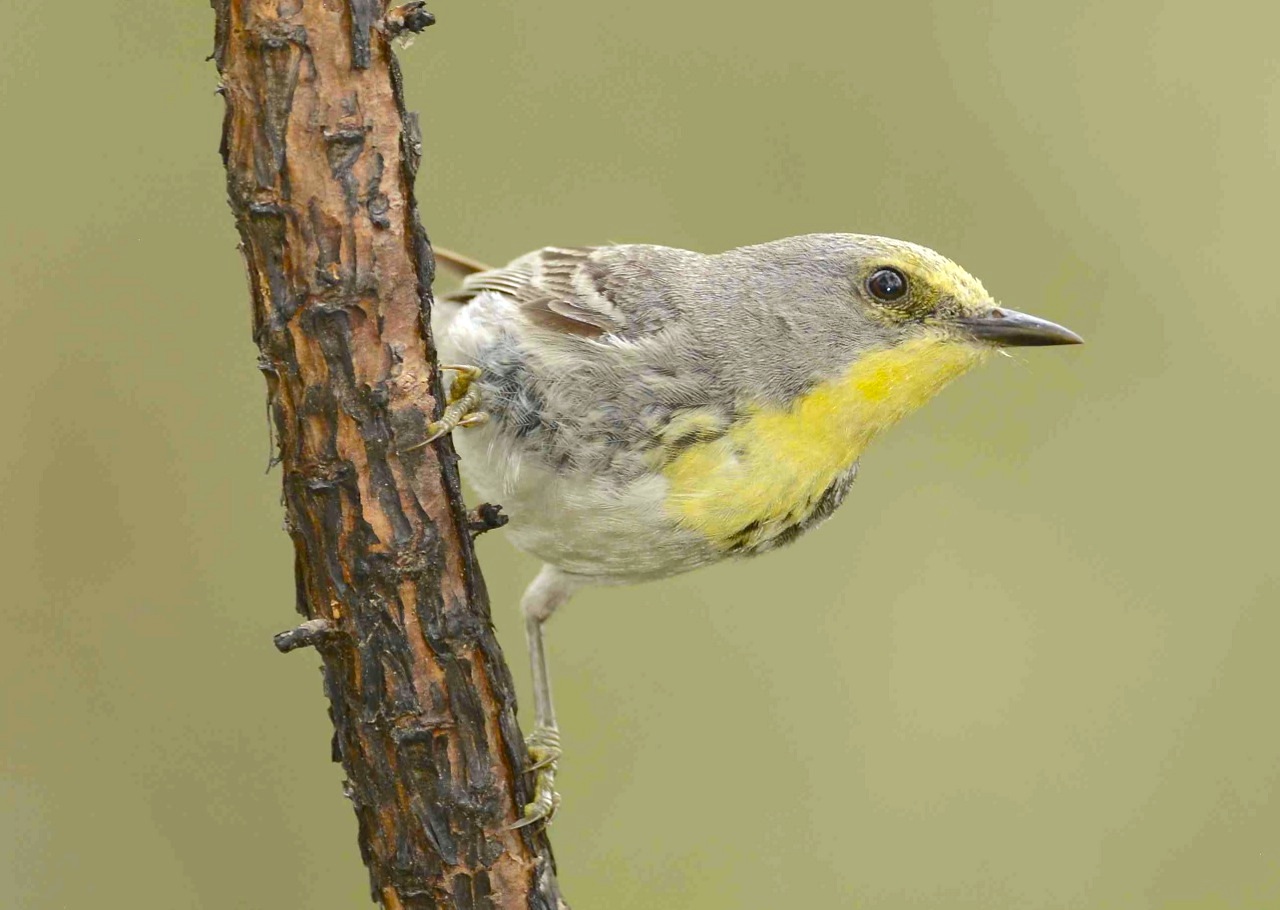
The 5 permanent residents obviously don’t migrate, so there is a chance to find them throughout the year. The pine forests would generally be the best place to start the quest. Importantly, 2 of the 5 species are endemic birds to the Bahamas and can be found nowhere else: BAHAMA YELLOWTHROAT and BAHAMA WARBLER. The latter and the OLIVE-CAPPED WARBLER, are very range-restricted, and only found on Abaco and Grand Bahama.
THE 5 PERMANENT RESIDENTS
BAHAMA YELLOWTHROAT Geothlypis rostrata PR B 1 ENDEMIC
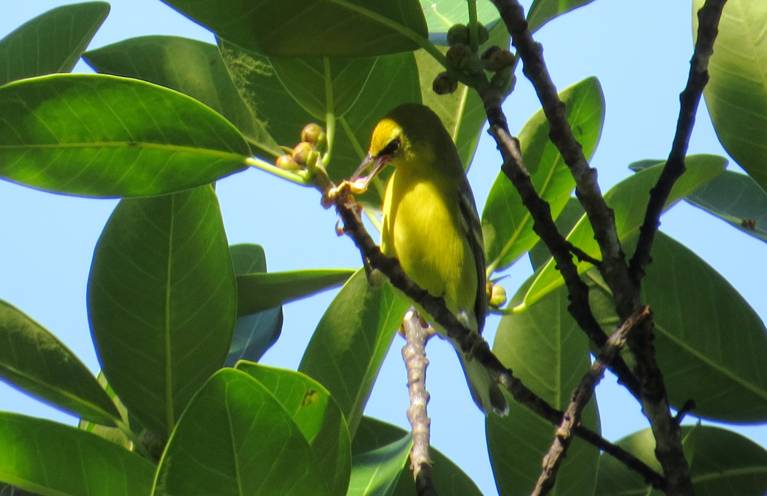
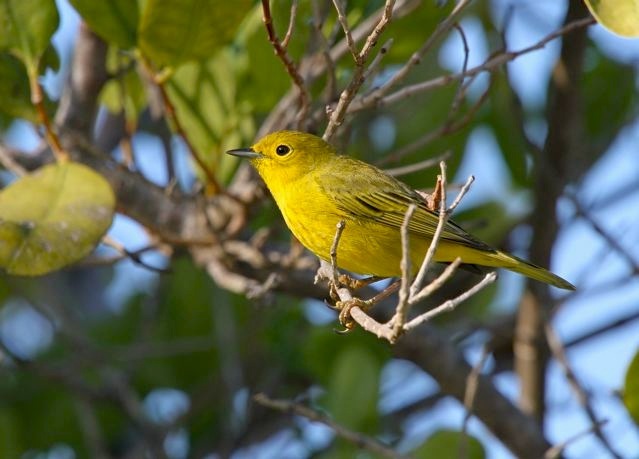
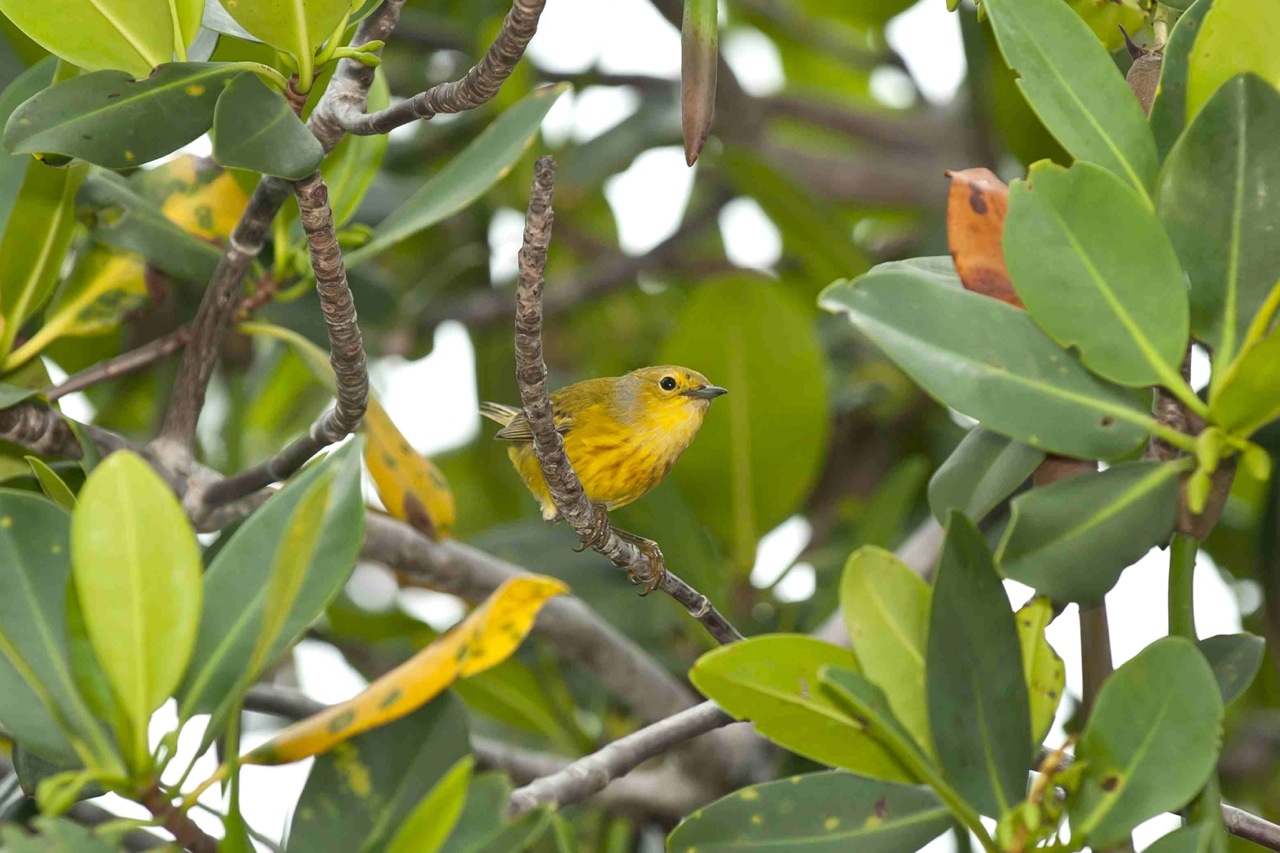
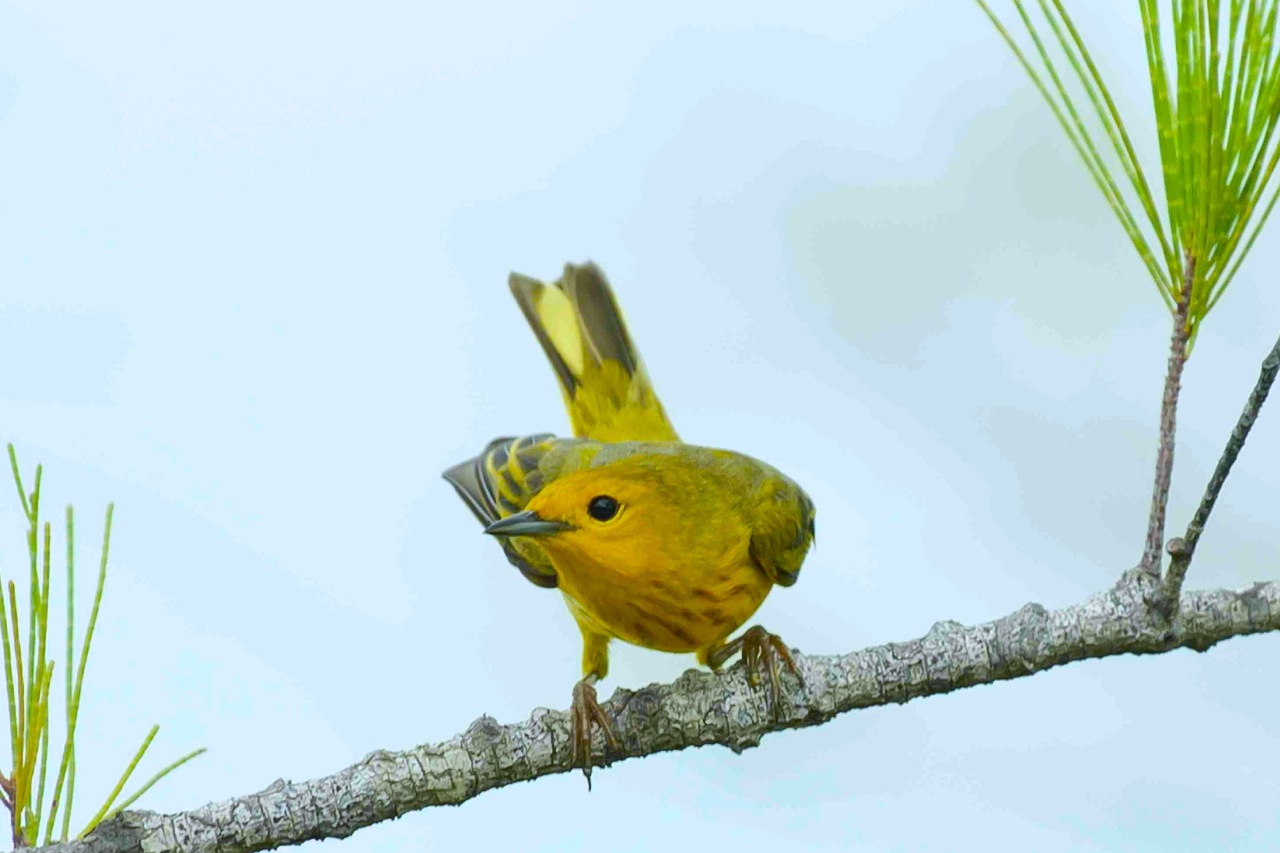
YELLOW WARBLER Setophaga petechia PR B 1
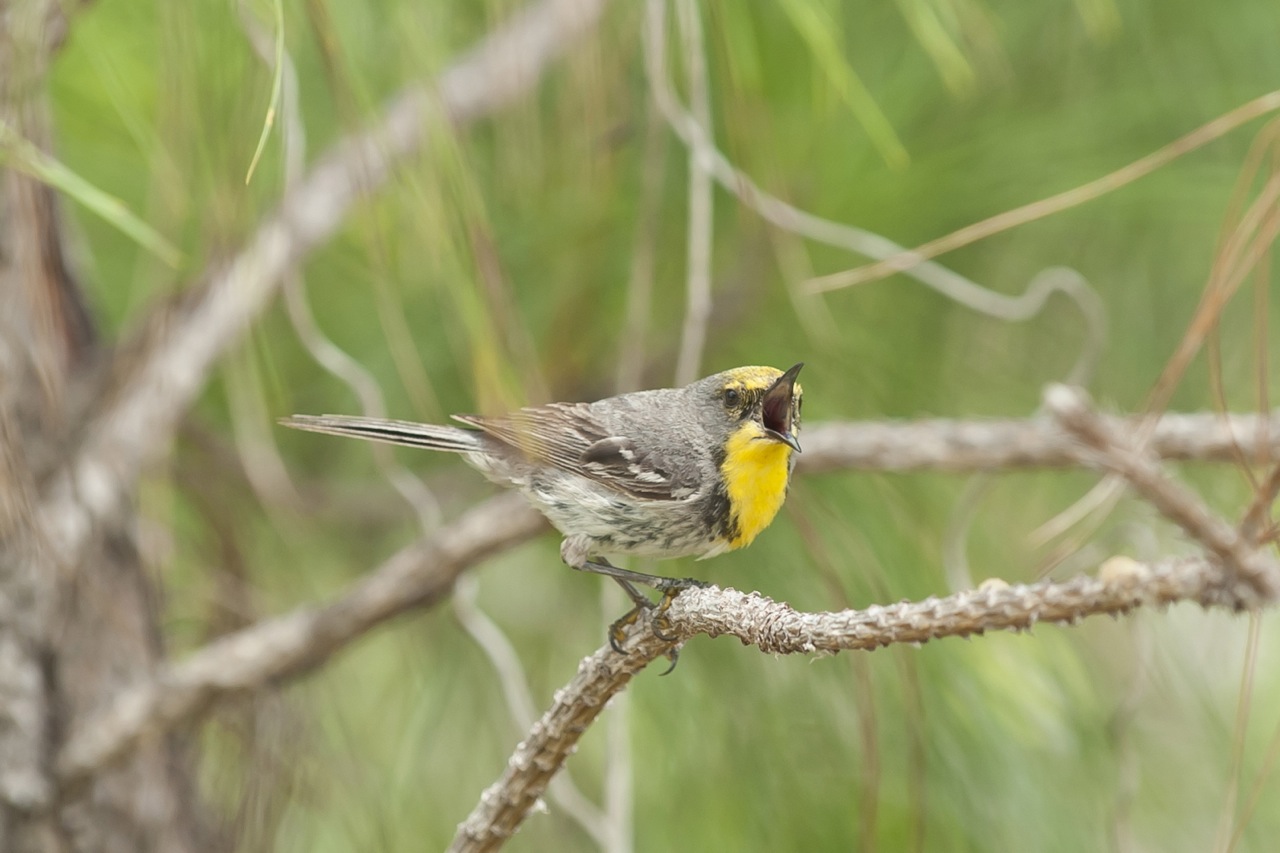
OLIVE-CAPPED WARBLER Setophaga pityophila PR B 1
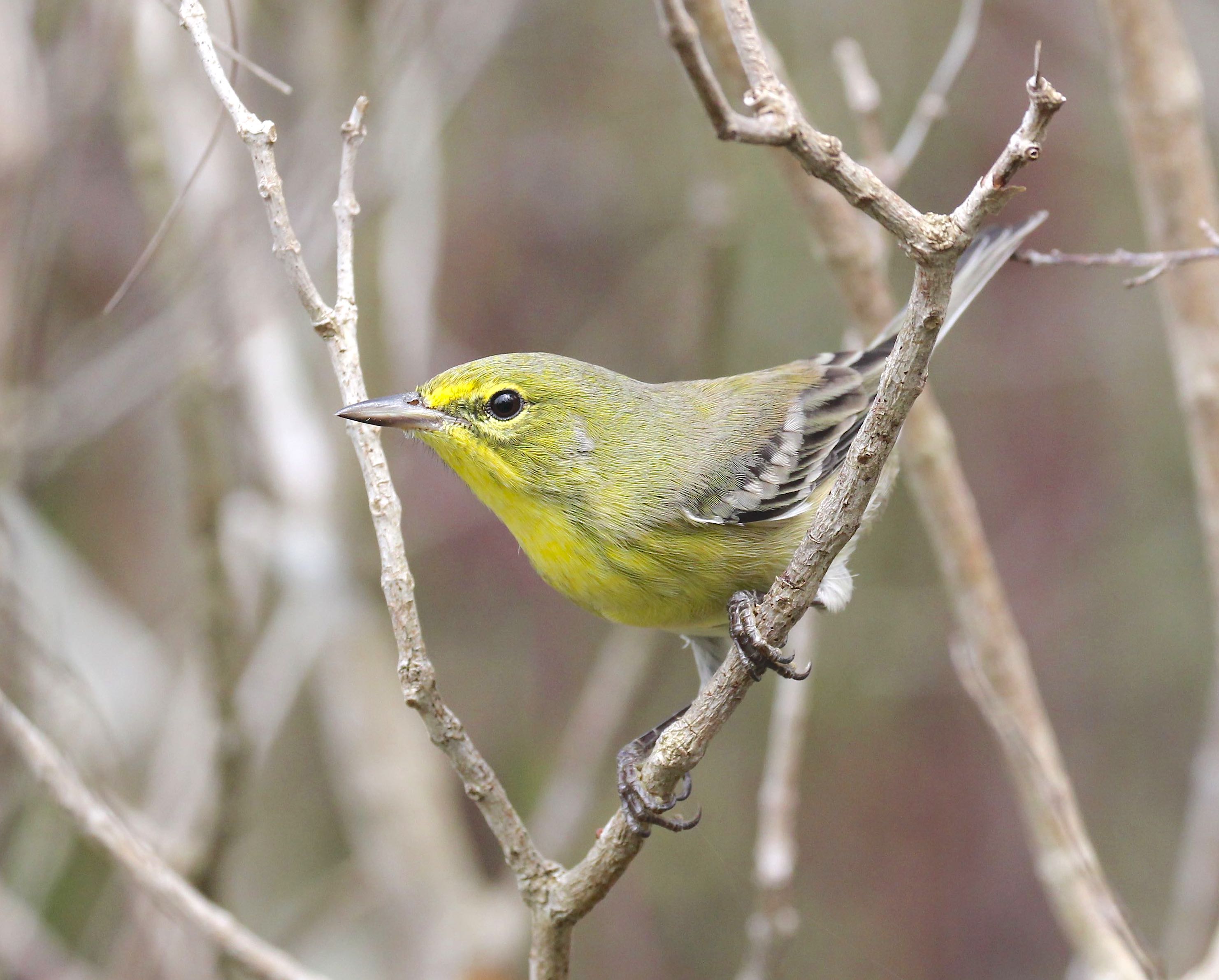
PINE WARBLER Setophaga pinus PR B 1
BAHAMA WARBLER Setophaga flavescens PR B 1 ENDEMIC
PHOTO CREDITS Bruce Hallett (1, 3, 5, 8, 11); Gerlinde Taurer (2); Tom Sheley (4, 6, 7); Tom Reed (9); Alex Hughes (10, 11)
CHECKLIST CODESbased on the complete checklist and codes for Abaco devised by Tony White with Woody Bracey for “THE DELPHI CLUB GUIDE TO THE BIRDS OF ABACO” by Keith Salvesen
Any day now – if not already – winter warblers will be arriving on Abaco. There are 37 warbler species recorded for the main island and the cays. They fall into 3 categories: 5 permanent residents (PR) that breed on Abaco (B), of which two are endemics; 21 winter residents (WR) ranging from ‘everyday’ species to rarities such as the Kirtland’s Warbler; and 11 transients, most of which you will be lucky to encounter. The codes given for each bird show the residence status and also the likelihood of seeing each species in its season, rated from 1 (very likely) to 5 (extreme rarities, maybe only recorded once or twice).
The photos that follow show an example of each warbler, where possible (1) male and (2) taken on Abaco. Where I had no Abaco images – especially with the transients – I have used other mainstream birding resources and Wiki. All due credits at the foot of the post.
This is a slightly revised version of a guide I posted a couple of years ago. Afterwards, I compressed the guide into a pdf which, in theory at least, is downloadable. You could even send it to your phone and add it to your home screen, so that you will never be without a basic guide to the warblers around you. But it’s not as enthralling as Pokemon Go!, I do quite understand…
PHOTO CREDITS (1 – 37) Bruce Hallett (Header, 3, 9, 12, 14, 17, 21, 22); Tom Reed (1, 4); Cornell Lab (2); Tom Sheley (7, 10); Alex Hughes (5); Gerlinde Taurer (6, 11, 18); Becky Marvil (8, 20a); Woody Bracey (13, 24); Peter Mantle (15); RH (16); William H. Majoros wiki (19); talainsphotographyblog (20b, 26, 34); Charmaine Albury (23); Craig Nash (25); Ann Capling (27); Jerry Oldenettel wiki (28); Dominic Sherony wiki (29); 10000birds (30); Steve Maslowski wiki (31); MDF wiki (32, 33); Avibirds (35); Michael Woodruff wiki (36); Emily Willoughby wiki (37)
CHECKLISTbased on the complete checklist and codes for Abaco devised by Tony White with Woody Bracey for “THE DELPHI CLUB GUIDE TO THE BIRDS OF ABACO” by Keith Salvesen
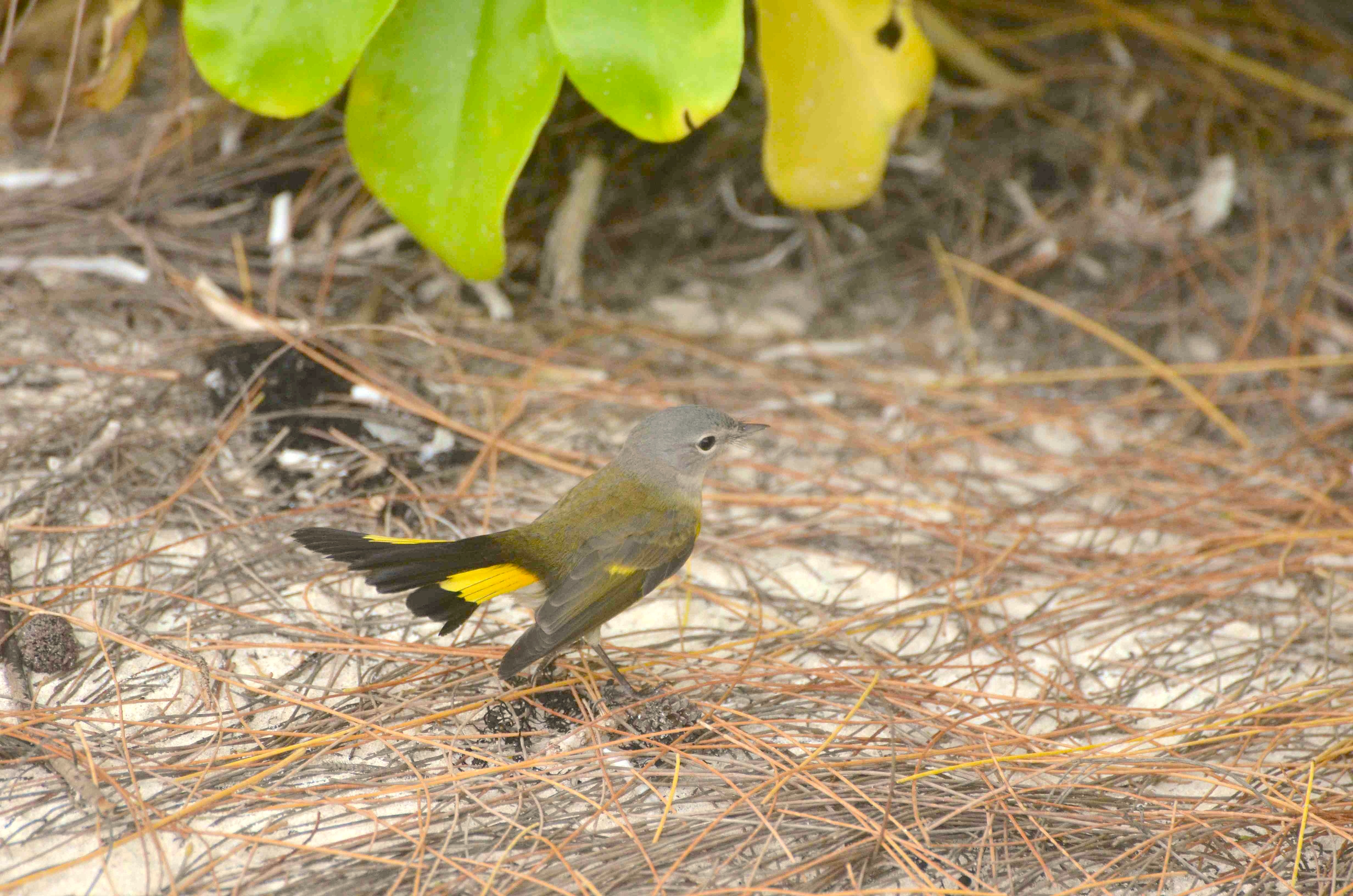
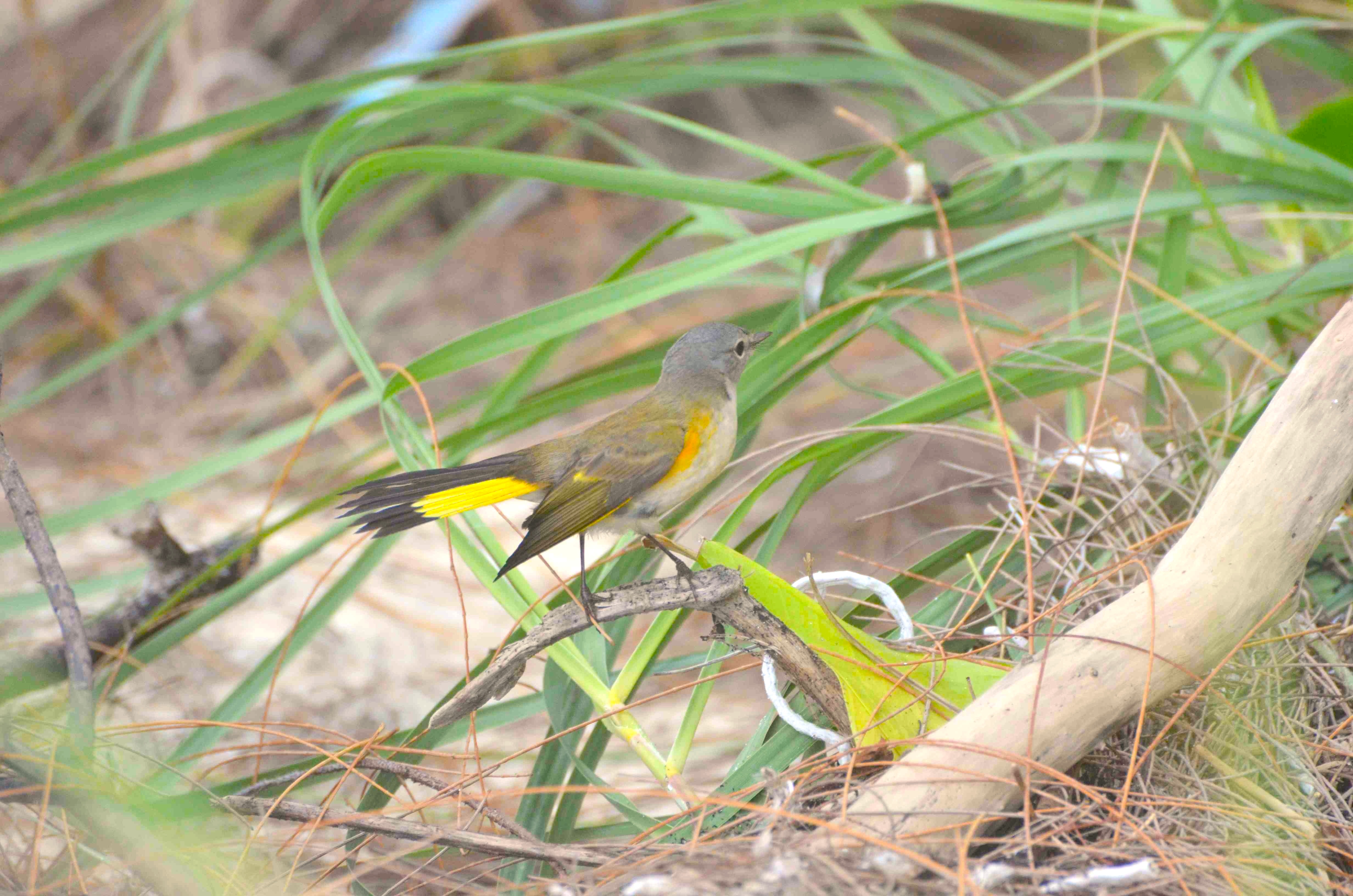
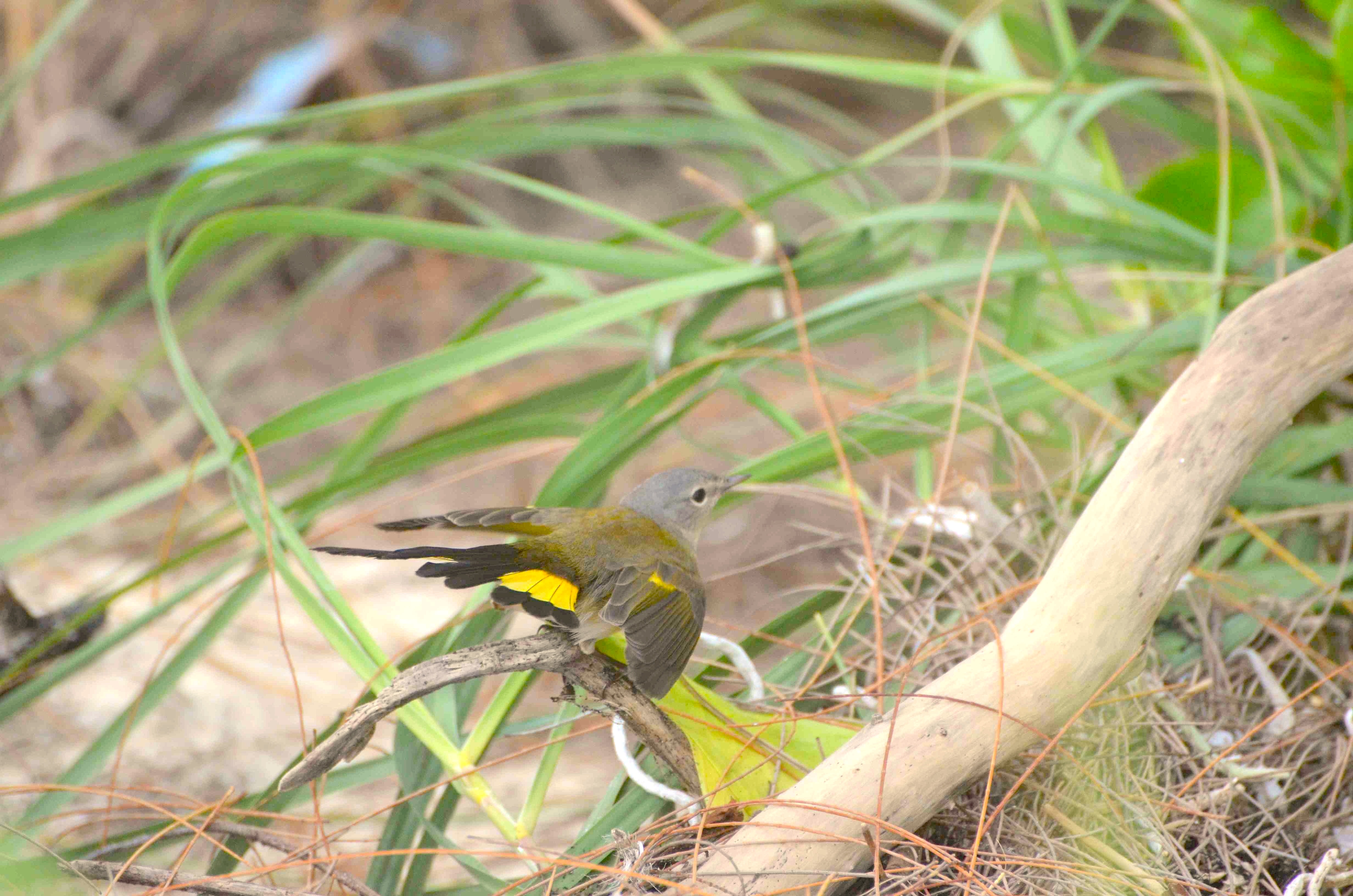
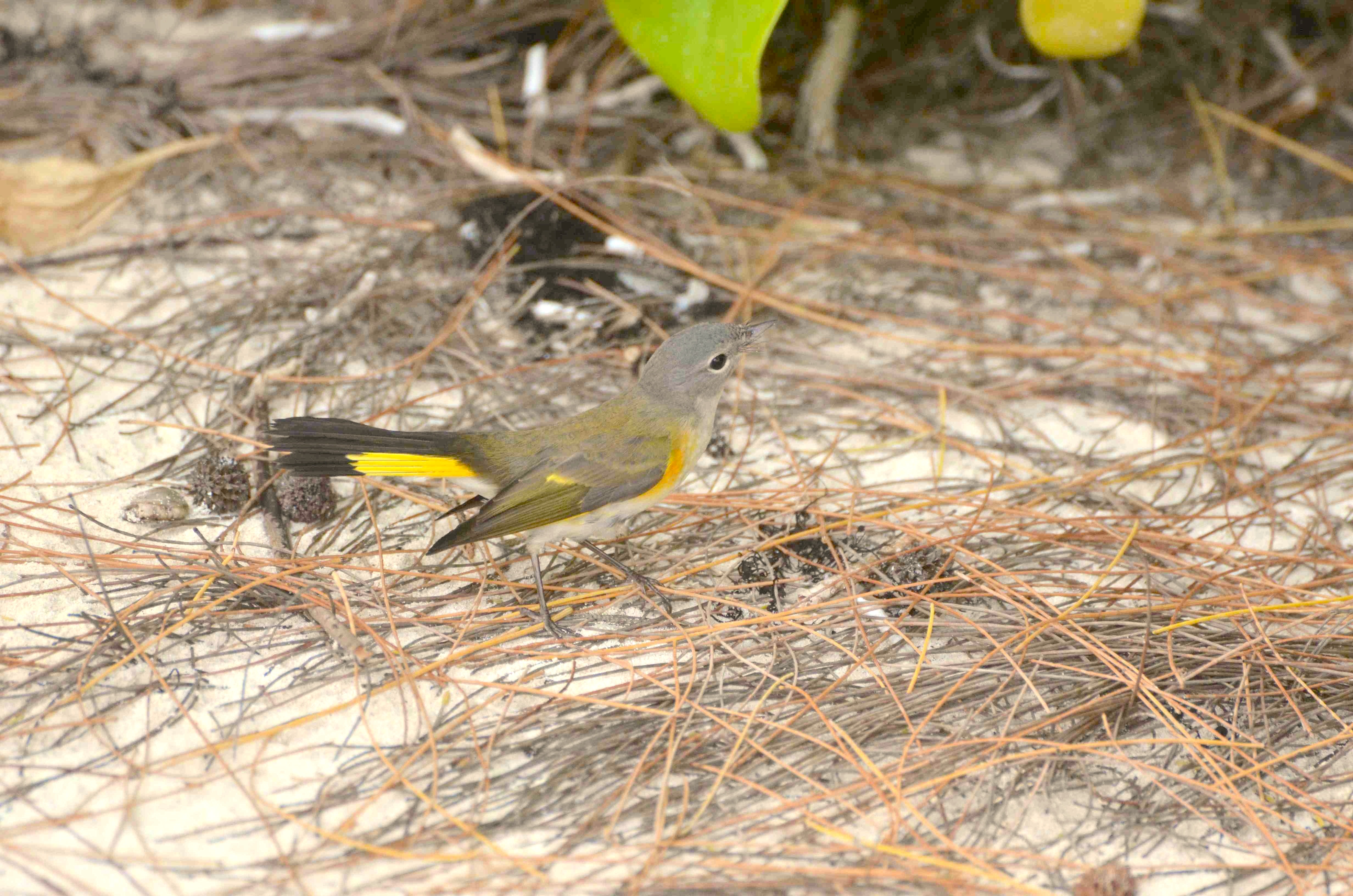
I have a feeling that people are more familiar with the male American redstart than the female. The male’s striking near-black and orange livery is memorable. The female’s equivalent brown and yellow colour scheme is a little more subtle (or ‘drab’, which is a go-to bird book description where the male of a species is flamboyant; I prefer ‘subtle’ as a politer description). Charlie Skinner managed to get some lovely shots of females in the pines and scrub at the back of the Delphi beach.
These birds are one of the 37 warbler species recorded for Abaco, where they are common winter residents. Generally they start to arrive in October, and some are usually still around in March. It is believed that the flashing tail-spreading of both sexes, shown in some of these images, acts either to attract insects; or to confuse them in some way. I can’t think how or why. I imagine the tail-fanning also forms part of the redstart courtship rituals. Incidentally (*fun fact alert*) male redstarts are known to raise two families simultaneously, the nests being a convenient distance apart so that his deceit remains his secret.
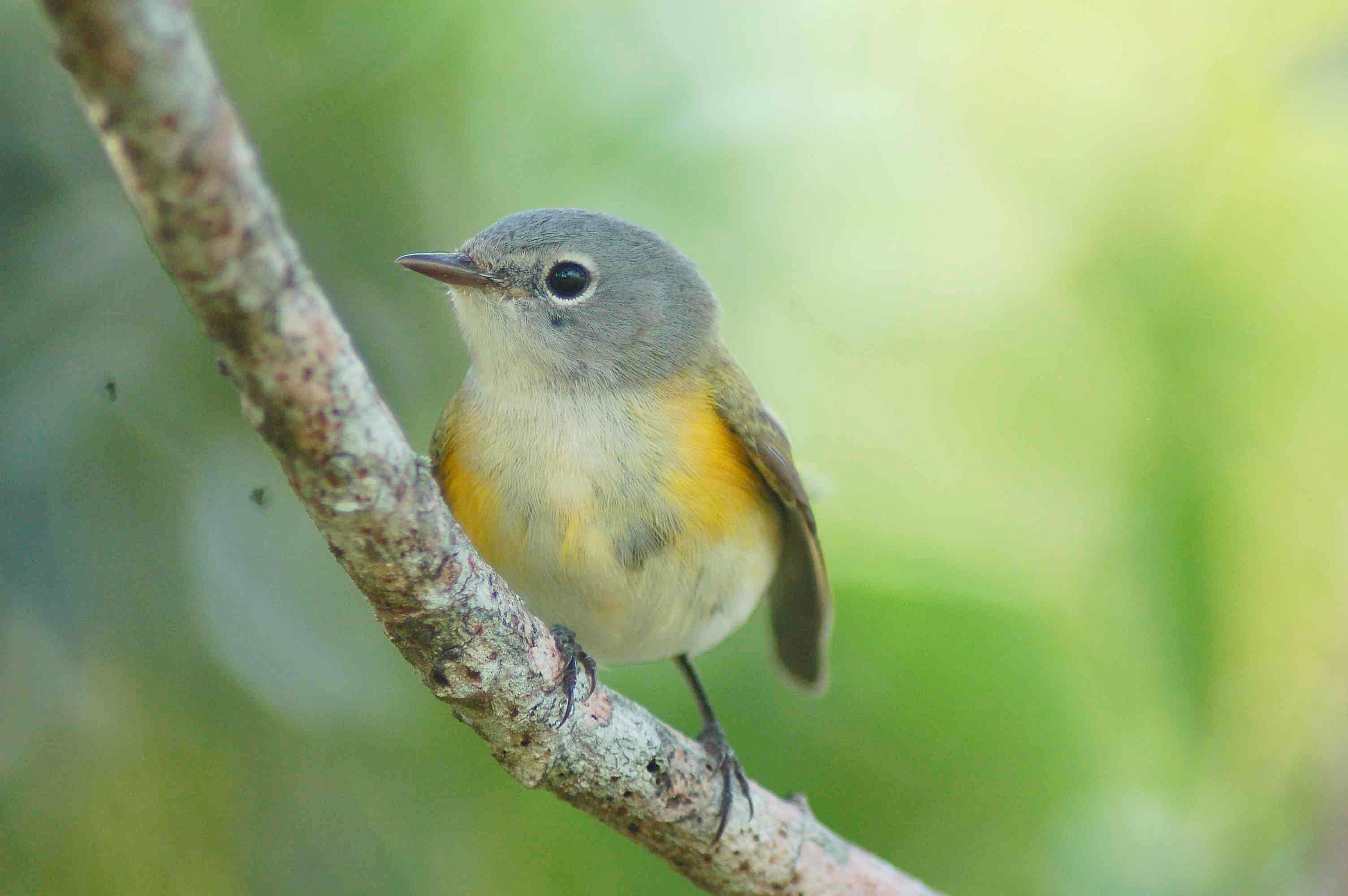
This pretty juvenile is impossible to sex at this age. Could go either way. (Photo: Becky Marvil)
For comparison, the more familiar male (and more brash – typical). (Photo: Gerlinde Taurer)
Photo credits: Charlie Skinner, Becky Marvil, Gerlinde Taurer
Of the37 WARBLER SPECIESrecorded for Abaco, 25 are mainly or partly yellow. So talk of a ‘yellow warbler’ can as easily be a general description matching any one of a number of species, as a particular description of the one and only Yellow Warbler Setophaga petechia. This small sunny bird is a common permanent resident on Abaco, one of only 5 resident warblers. The other 4 don’t help the situation much, by dint of all being yellow to a greater or lesser extent.
My general rule of thumb is that the Yellow Warbler out-yellows all the rest (though the winter-resident PROTHONOTARYgives it a run for its money), with the adult males bright and cheerful all over and the females rather less glaring but still demonstrably yellow from beak to tail tip.
Q. ARE THEY ALWAYS EASY TO SEE? A. SEE BELOW, GO FIGURE
Q. CAN YOU SHOW MORE PRETTY FEMALES? A. BY ALL MEANS
Q. SO YEWAs ARE COMMON? HAVE YOU EVER PHOTOGRAPHED ONE? A. ONLY HOPELESSLY
Q. DO THEY HAVE AN ATTITUDE PROBLEM? A. ONLY VERY RARELY
A THREAT TO THE SPECIES Shiny Cowbirds, luckily still rare on Abaco, favour yellow warbler nests for their parasitic egg-laying, with sadly predictable results. These cowbirds properly belong in South America, but they are gradually spreading north through the Caribbean, and have now reached Florida. I’m beginning to take a (purely personal) hard line on invasive species where they diminish and destroy indigenous species: eradication. The feral peacocks of Casuarina, now several generations down the line from their original introduction as exotic pets, do no harm and are undeniably decorative. But would you prefer the pretty yellow warbler and its fledglings in your garden, or the shiny cowbird that displaced them?
IT’S A WARBLER. WITH A YELLOW THROAT. ON ABACO. SIMPLE?
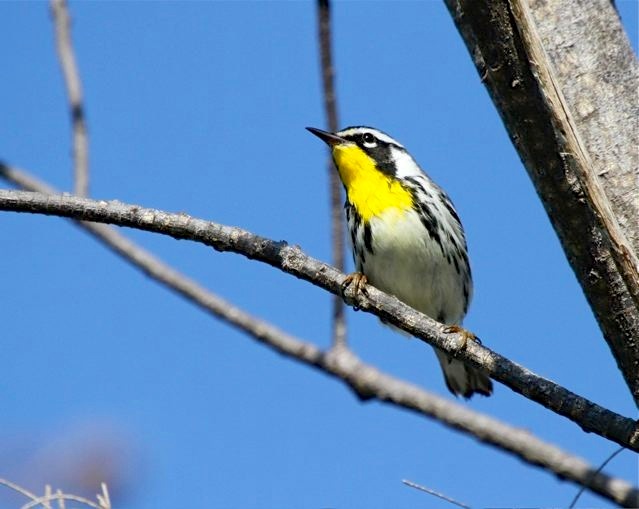
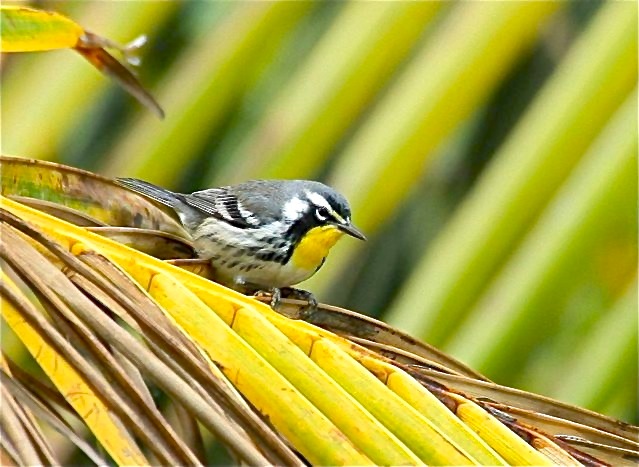
The Yellow-throated Warbler (Setophaga dominica) is a most helpful warbler, in that what you see is what you get. You needn’t go to embarrassing lengths to determine whether it has a Yellow Rump. It doesn’t make extravagant geographical claims like the Cape May, Kentucky, Tennessee, Nashville or Connecticut warblers. It doesn’t disguise its warblerdom with a confusing name like ‘American Redstart’ or ‘Ovenbird’. Nor with a weird warbler name that is completely obscure like the Prothonotary. It’s a winter resident only, so it won’t try to puzzle you in the summer. The males and females are roughly similar in appearance, unlike so many species. All-in-all, a most agreeable and obliging little bird. Here are a few to enjoy, before I spoil the magic slightly…
YTWs are quite pose-y birds, and tend to strike attitudes. One is the ‘head-in-the-air’, as below and further above. There’s the ‘butt-in-the-air’ too, immediately above (one of my favourite photos)
This shape is both characteristic and characterful. You might call it the ‘sag-in-the-middle’
This year I saw my first YTW in the Delphi Gardens, skulking around in a Gumbo Limbo tree. Having taken a number of rather poor shots – partly due to the intervention of branches, twigs, leaves, berries, shaky hands and so forth – I got some clearer shots at it, the two above and below being the best of an indifferent bunch.
I said earlier that the magic of the apparently simple ID of a warbler that lives up to its name would have to be spoiled. I’m afraid this little gallery rather undoes the certainties I’d promised… two more species common to Abaco, also named for their yellow throats (yet it’s more extensive than just the throat, anyway) .
BAHAMA YELLOWTHROAT
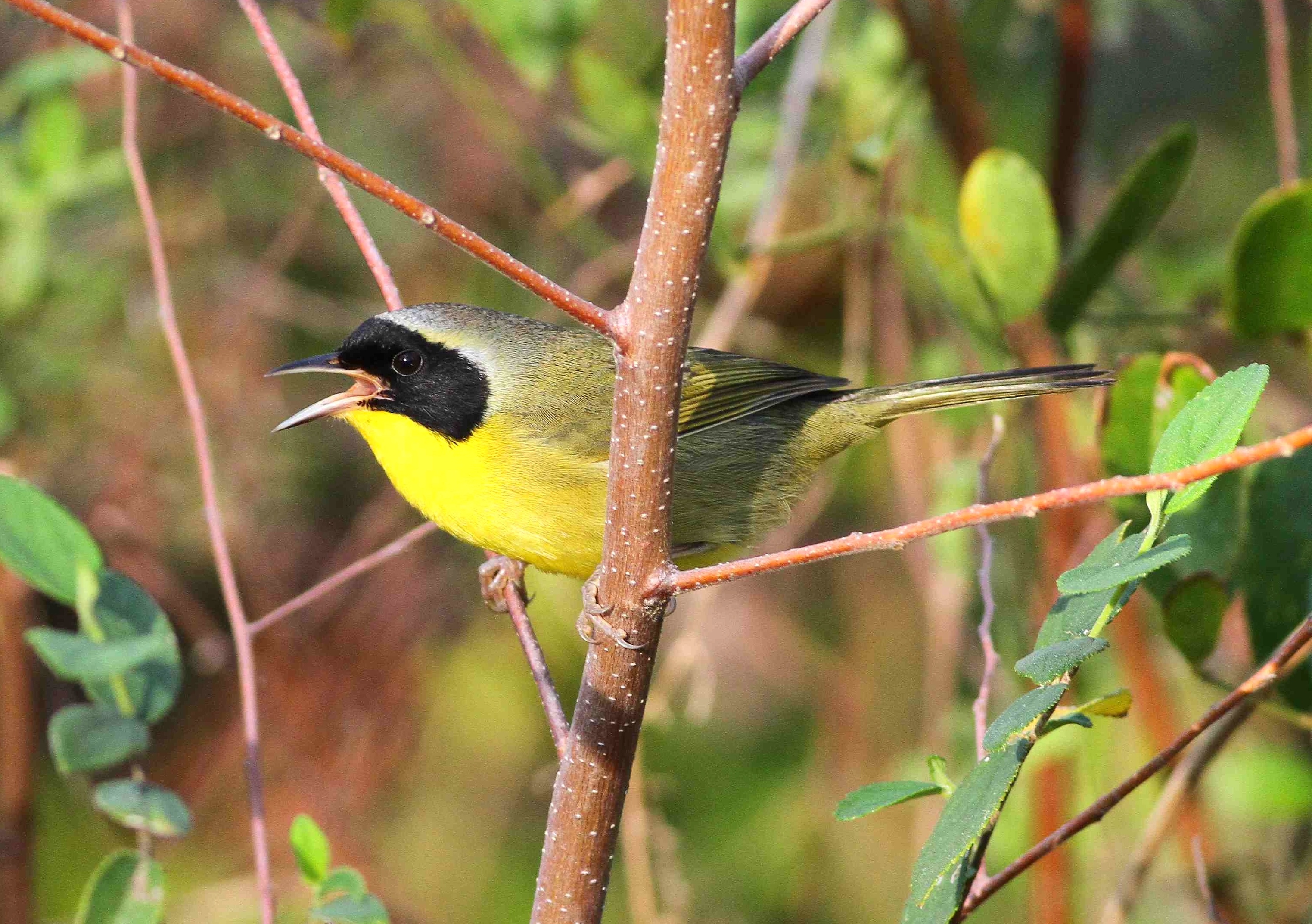
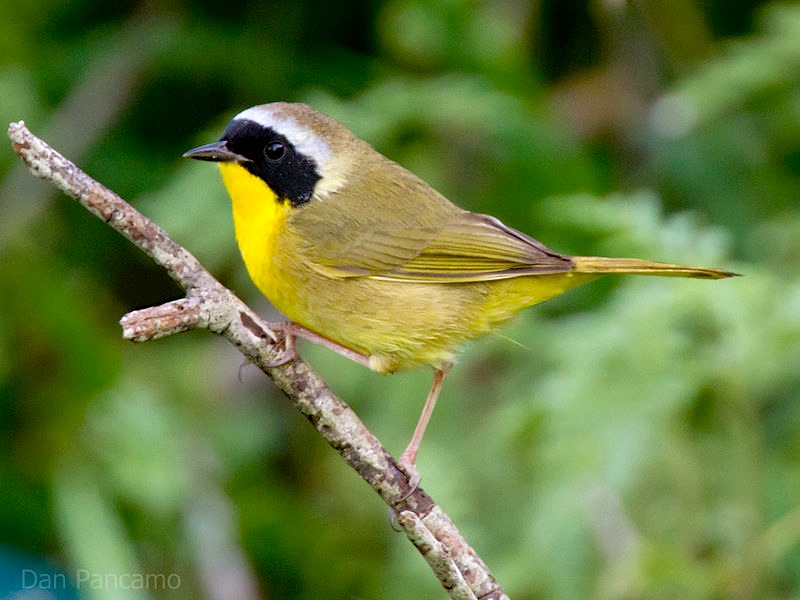
COMMON YELLOWTHROAT
You’d really think that someone at Audubon Towers or Cornell Castle might have thought of calling these two species ‘Bahama’ and ‘Common’ Masked Warblers, wouldn’t you – after all there’s a Hooded Warbler, which indeed has a hood. No other warbler has a mask like these 2. Then any confusion could be avoided. So remember: the Yellow-throated Warbler has a yellow throat AND is otherwise black and white, with streaks. Erm, just like a…
Credits: RH (1,7,8,9,10); Bruce Hallett (2, 3); Erik Gauger (4); Becky Marvil (5, 6). Thumbnails: Gerlinde Taurer, Bruce Hallett, Dan Pancamo, Tom Sheley, Wiki
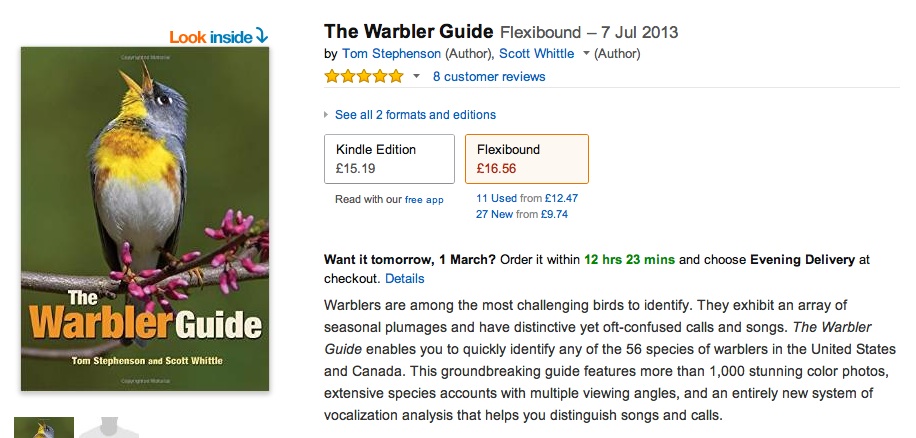
In 2013 Princeton University published a well-received – indeed award-winning – guide to North American warblers. Its relevance to the Northern Bahamas is that all 37 species of warbler recorded for Abaco are found on its pages. Plus, you can use it in North America as a bonus! Details of the book are given below.
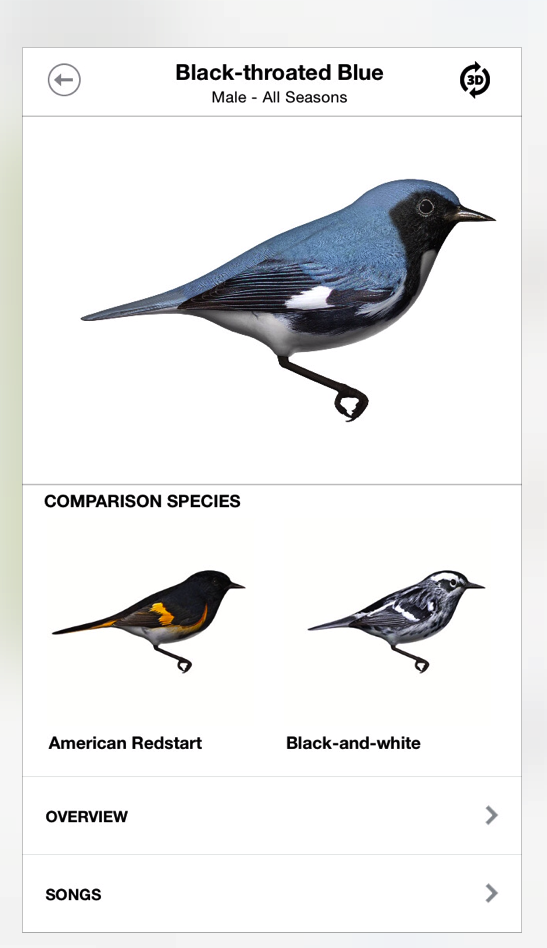
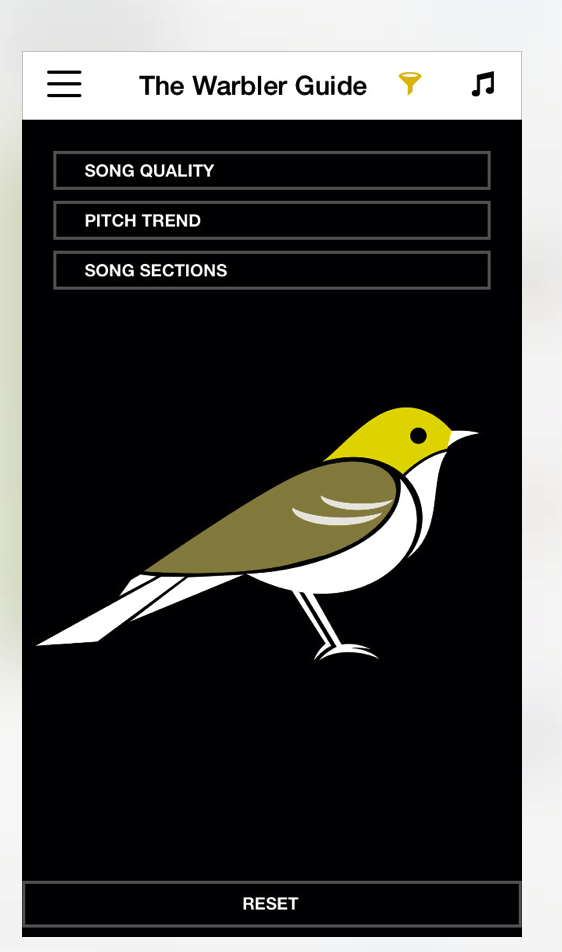
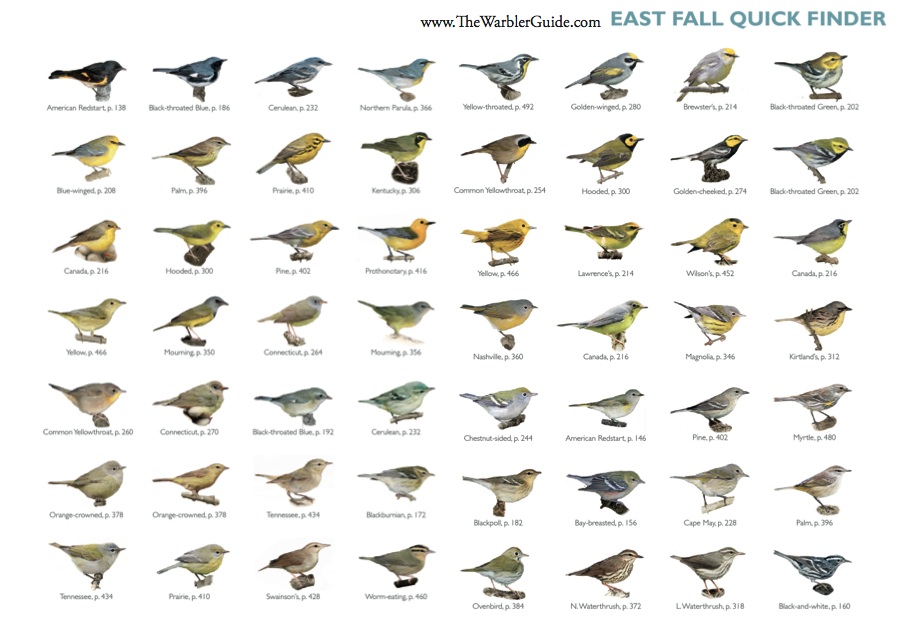
As a follow-up project, Princeton has now produced a Warbler Guide App that looks quite impressive at a glance. It’s not cheap, at £9.99 or dollar equivalent, but with bird apps you generally get what you pay for. Included are song/call IDs for a start, which takes the App a long way beyond mere visual recognition. And the illustrations are from several angles, taking account of the fact that you may not get an ideal broadside view of a bird in the field. Below are a few sample images.
The Warbler Guide revolutionizes birdwatching, making warbler identification easier than ever before. For more information, please see the author videos on the Princeton University Press website.
Covers all 56 species of warblers in the United States and Canada
Visual quick finders help you identify warblers from any angle
Song and call finders make identification easy using a few simple questions
Uses sonograms to teach a new system of song identification that makes it easier to understand and hear differences between similar species
Detailed species accounts show multiple views with diagnostic points, direct comparisons of plumage and vocalizations with similar species, and complete aging and sexing descriptions
New aids to identification include song mnemonics and icons for undertail pattern, color impression, habitat, and behavior
Includes field exercises, flight shots, general identification strategies, and quizzes
A complete, page-by-page audio companion to all of the 1,000-plus songs and calls covered by the book is available for purchase and download from the Cornell Lab of Ornithology’s Macaulay Library by using the link at http://www.TheWarblerGuide.com
Winner of a 2014 National Outdoor Book Award in Nature Guidebooks
Second Place for the 2013 BB/BTO Best Bird Book of the Year, British Birds and the British Trust for Ornithology
Honorable Mention for the 2013 PROSE Award in Single Volume Reference/Science, Association of American Publishers
OVENBIRDS FOR CHRISTMAS ON ABACO (NB NOT ROAST TURKEY)
The Ovenbird (Seiurus aurocapilla) is a small winter-resident warbler with distinctive orange head feathers that can be raised into a crest. I’m guessing this accomplishment is mainly used in the breeding season as a way to impress and attract a mate. Maybe when alarmed or excited at other times as well. Right now, with Christmas only ’12 sleeps’ away, they have become a visible presence on Abaco and the Cays despite their shyness and a general tendency to shuffle around in the undergrowth looking for insects and small snails.
You may hardly be aware of these rather unassuming little birds, and as they rootle their way through the dead leaves under shrubs they can look quite dull. See one lit up by the morning sun, however, and you’ll see how pretty and richly marked they are.
The Ovenbird enjoys the taxonomic distinction of being the only bird of its genus in the warbler family Parulidae. It is a so-called ‘monotypic’ species. It was formerly lumped in with Waterthrushes, but was found to be genetically dissimilar so its new status was granted.
The ovenbird is so named because it builds a domed nest (“oven”) with a side-entrance, constructed from foliage and vegetation. They tend to nest on the ground, making them vulnerable to predation. The species name for the ovenbird, Seiurus aurocapilla, has nothing to do with the nest shape, though. It derives from both Greek and Latin, and loosely means ‘shaking tail, golden haired’. No, nothing to do with Miley Cyrus either. Leave it.
Here are some recent shots taken by Charmaine Albury on Man-o-War Cay, showing the orange crest very clearly.
My plan to include audio of the ovenbird’s song and call has been temporarily thwarted by a glitch, but I’ll add them here when I have overcome the problem.
Gauge the size of the bird against the pod it is standing on…
In this photo, you can see that the orange crest feathers are raised
Credits: Tom Sheley, Woody Bracey, Charmaine Albury, Bruce Hallett, Gerlinde Taurer, Cephas / Wiki
COMMON YELLOWTHROATS ON ABACO: CHEERFUL WINTER WARBLERS
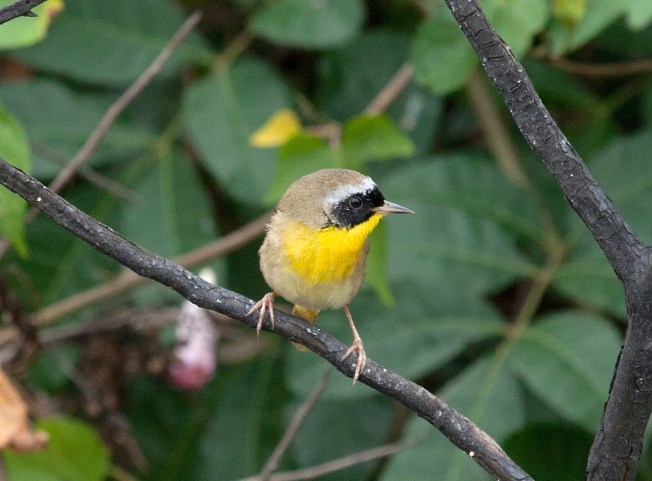
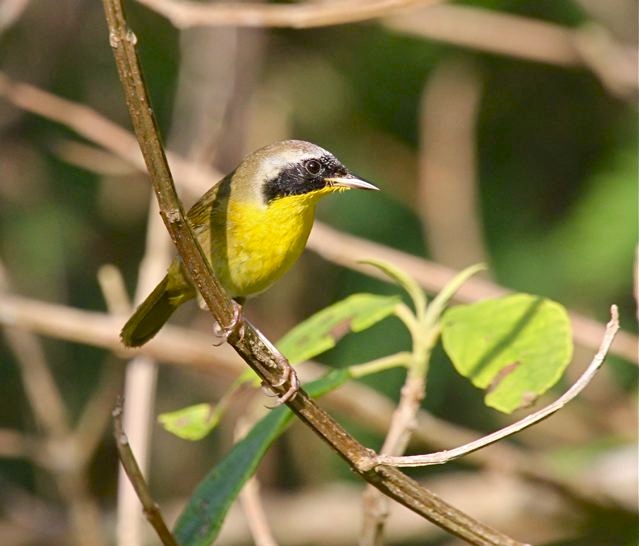
Abaco is fortunate to be home to the endemic BAHAMA YELLOWTHROAT Geothlypis rostrata, a striking bird with a dashing black mask and bright yellow body in the male. You can see it with its fellow endemics HERE. But there is similar winter resident species, the COMMON YELLOWTHROAT Geothlypis trichas, that can be seen on Abaco between October and March. Now is a very good time to look out for them. However, the two species are easy to confuse.
Common Yellowthroat (male)
Bahama Yellowthroat (male)
WHAT’S THE DIFFERENCE?
SIZE – the BW is slightly larger and sturdier than the CW
BEAK – larger in the BW, and some might say it tends to be decurved
COLOUR – the BW is more colourful, with more extensive yellow underparts and mask
FEMALES – both species lack the mask and are duller; the female BW has a greyer head
HABITAT – both are found in the same areas; the CW prefers denser vegetation near water
DEBATEABLE – it seems to me the pale stripe behind the mask is usually less prominent in the BW
Common Yellowthroat male with conspicuous pale head-stripe
Both yellowthroat species are an endearing mix of shy and inquisitive. These birds are responsive to ‘pishing’, and once lured from cover they may remain nearby on low branches or shrubs watching you with interest as you watch them. Their song – similar in both species – is fairly easily imitated (or at least approximated), which may also bring them into the open – a source of great satisfaction to the amateur birder when it works. Unless it’s just coincidence, of course… The songs of the two species recorded below sound almost indistinguishable (except that the first one is professional and the second notably amateur…).
COMMON YELLOWTHROAT
Todd Wilson / Xeno Canto
BAHAMA YELLOWTHROAT
RH own recording
Female Common Yellowthroats are unassuming and quite delicate little birds. The first of these two images shows an immature bird, with its front beginning to become yellow. The second is a mature female.
Two more male Common Yellowthroats to admire…
Photo Credits: Erik Gauger (1); Tom Sheley (2); Bruce Hallett (3, 5, 6, 7); Dan Pancamo /Wiki (4); Becky Marvil (8) Audio: Xeno Canto; RH
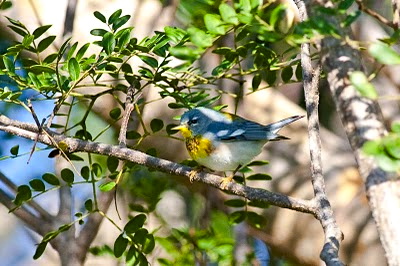
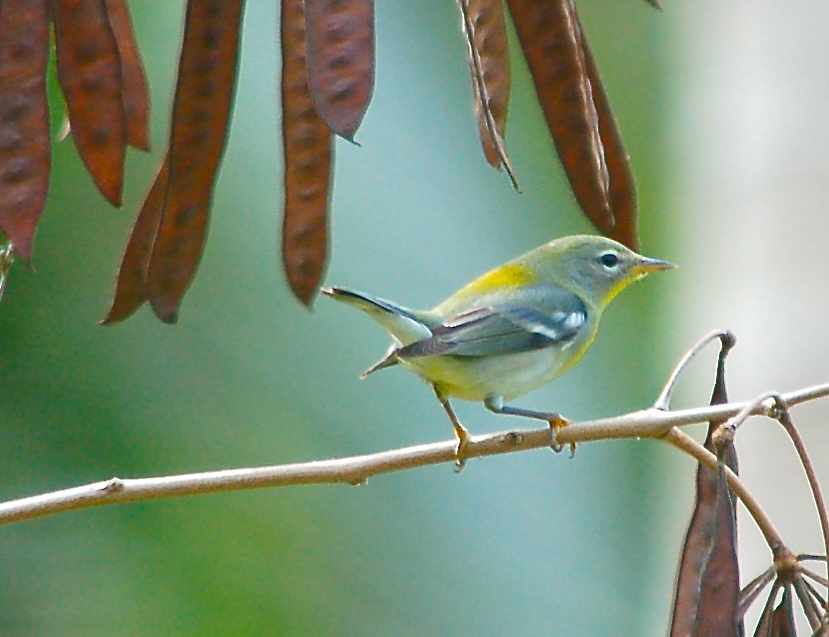
The NORTHERN PARULA Setophaga americana is a stumpy little migratory warbler with white arcs above and below the eyes, and with a slate-coloured back distinctively smudged with an olive patch in both sexes. These birds are winter residents on Abaco, and are common throughout the island and cays. They are arriving right now, including juveniles making their first trip to Abaco. Wonder what they’ll make of it?
This photo shows the distinctive colour difference between feet (orangey) and legs (grey-brown)
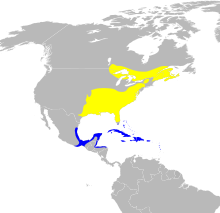
Range Map: Summer (Yellow) & Winter (Blue)
Parulas are primarily insect eaters, with a preference for caterpillars and spiders. They sometimes dart from a perch to snatch insect prey in mid-air. In winter they vary their diet with berries and fruit. You are most likely to see one foraging busily in bushes and low trees – maybe coming up for air by poking its head above the foliage…
TAXONOMY DOMINÉ
WHAT THE HECK IS A “PARULA”? Originally, Linnaeus classified this little bird at a Tit, or Parus. For some reason, “as taxonomy developed the genus name was modified first to Parulus and then the current form” (Wiki Hat-tip). But although none of the other 37 Abaco warbler species is a Parus, Parulus or Parula, they all come under the family name Parulidae. The august institutions that deal with these things have classified the Parula as a ‘Setophaga’, along with many other warblers.
This photo shows the distinctive upper chest band of the adult bird very clearly
The CORNELL LAB list of adult Parula identifiers is shown below, with adult females being similar ‘but with greener backs’. These specifics are pretty much borne out by the birds shown here (except for the last bird, an immature female just beginning to develop the Parula characteristics). The next photo by Woody Bracey, is a perfect example of what to look out for.
Small songbird.
Blue-gray hood and wings.
Yellow chest with black and reddish band across it.
White crescents above and below eyes.
Green back.
Two white wingbars.
Parulas produce different sounds to listen out for – a ‘chip’ call that could be any number of birds (IMO); a song; and a trill. Here are examples of each from the essential bird call site Xeno Canto.
CHIP CALL Paul Marvin / Xeno Canto
SONG Paul Marvin / Xeno Canto
TRILL Jelmer Poelstra / Xeno Canto
This is an immature female parula, a ‘first fall’ bird, and therefore on its first visit to Abaco
I’ll end with an excellent 2:18 mins-worth of Parula-based video from Wild Bird Video Productions
CREDITS: Photos – Craig Nash, Bruce Hallett, Becky Marvil, Gerlinde Taurer; Audio – Xeno Canto; Video -Wild Bird Video Productions; Cornell Lab; a smidge of Wiki
Yesterday I posted a complete guide to Abaco’s 37 warblers. A few people said nice things about it. Two people spotted a mistake (my bad!), now corrected. It has now occurred to me that it might be helpful to reduce the contents to a shorter PDF so as to make the guide more handy – plus you will be able to print it out. If you click the link below, you can save the 1.6 mb ‘booklet’ onto your computer desktop / iPad / tablet / etc. You can email it to your phone and save it there. For an iPhone, you have the option to have a ‘quick check’. I you want to keep it, you can ‘cloud’ it, or save it in various ways on the phone, for example to iBook or Kindle if you have the App. I expect other cellphone types are much the same. I have road-tested the system, and it works! So if one sunny day you suspect you are looking at a Bay-breasted Warbler (highly unlikely, but possible) in that small bush over there… yes look, near the top on the left… no, on the long twig lower down… you can check it out.
And here’s the thing. You have a camera in your hand to record the encounter. And if the little rascal is happily singing away, you can use you phone to record it, using a simple technique I have previously described – check out the link.
AN ILLUSTRATED GUIDE TO ABACO’S 37 WARBLER SPECIES
The winter warblers are arriving on Abaco right now, and a couple of people have already sent me ID queries. Until a couple of years ago, I lazily believed all of the warblers were near identical, differing only in their extent of yellowness. Not so. I know better now. Their arrival now has prompted me to devise a general guide to all the various warblers, so that the great diversity can be appreciated. The photos that follow show an example of each warbler, where possible (1) male (2) in breeding plumage and (3) taken on Abaco. Where I had no Abaco images – especially with the transients – I have used other mainstream birding resources and Wiki. All due credits at the foot of the post.
Abaco has 37 warbler species recorded for the main island and cays. They fall into 3 categories: 5 permanent residents (PR) that breed on Abaco (B), of which two are endemics; 21 winter residents (WR) ranging from ‘everyday’ species to rarities such as the Kirtland’s Warbler; and 11 transients, most of which you will be lucky to encounter. The codes given for each bird show the residence status and also the likelihood of seeing each species in its season, rated from 1 (very likely) to 5 (extreme rarities, maybe only recorded once or twice).
PERMANENT RESIDENTS
BAHAMA YELLOWTHROAT Geothlypis rostrata PR B 1 ENDEMIC
YELLOW WARBLER Setophaga petechia PR B 1
OLIVE-CAPPED WARBLER Setophaga pityophila PR B 1
PINE WARBLER Setophaga pinus PR B 1
BAHAMA WARBLER Setophaga flavescens PR B 1 ENDEMIC
WINTER RESIDENTS (COMMON)
OVENBIRD Seiurus aurocapilla WR 1
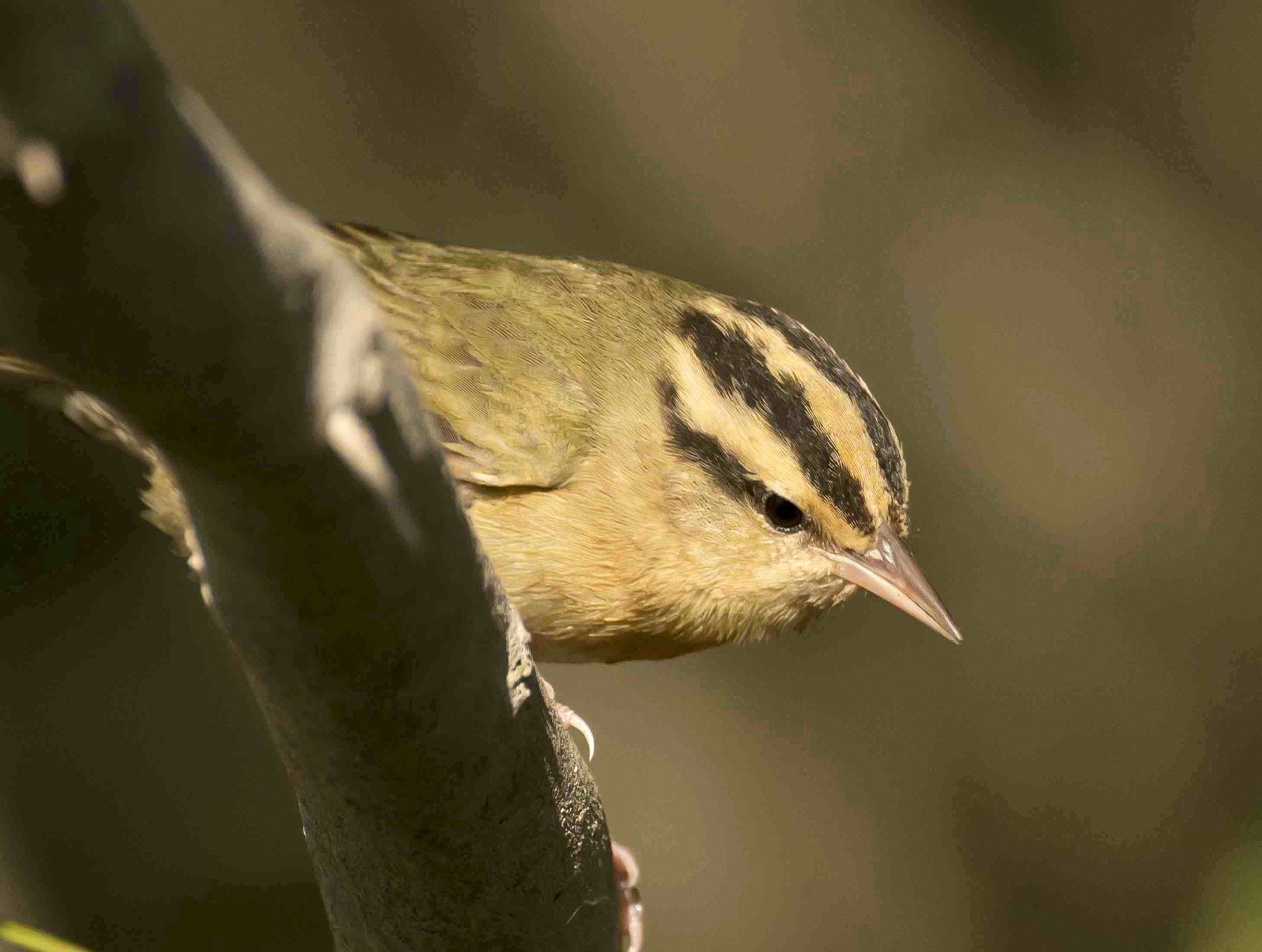
WORM-EATING WARBLER Helmitheros vermivorum WR 2
NORTHERN WATERTHRUSH Parkesia noveboracensis WR 1
BLACK-AND-WHITE WARBLER Mniotilta varia WR 2
COMMON YELLOWTHROAT Geothlypis trichas WR 1
AMERICAN REDSTART Setophaga ruticilla WR 1
CAPE MAY WARBLER Setophaga tigrina WR 1
NORTHERN PARULA Setophaga americana WR 1
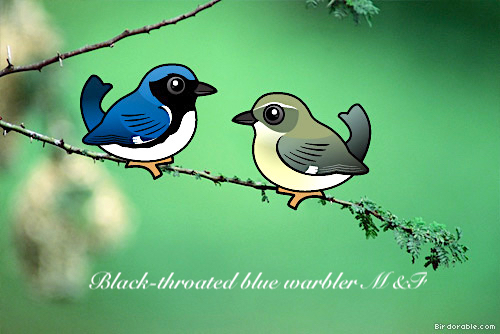
BLACK-THROATED BLUE WARBLER Setophaga caerulescens WR 2
PALM WARBLER Setophaga palmarum WR 1
YELLOW-RUMPED WARBLER Setophaga coronata WR 2
YELLOW-THROATED WARBLER Setophaga dominica WR 1
PRAIRIE WARBLER Setophaga discolor WR 1
WINTER RESIDENTS (UNCOMMON TO RARE)
LOUISIANA WATERTHRUSH Parkesia motacilla WR 3
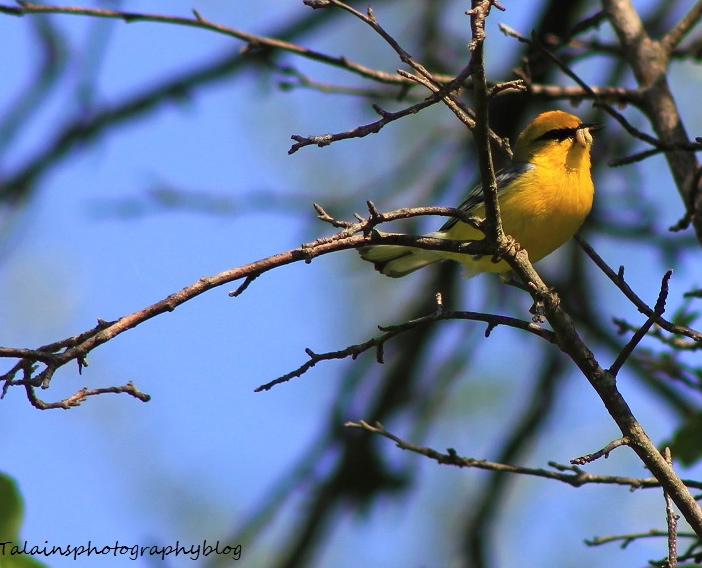
BLUE-WINGED WARBLER Vermivora cyanoptera WR 3
SWAINSON’S WARBLER Limnothlypis swainsonii WR 4
NASHVILLE WARBLER Oreothlypis ruficapilla WR 4
HOODED WARBLER Setophaga citrina WR 3
KIRTLAND’S WARBLER Setophaga kirtlandii WR 4
MAGNOLIA WARBLER Setophaga magnolia WR 3
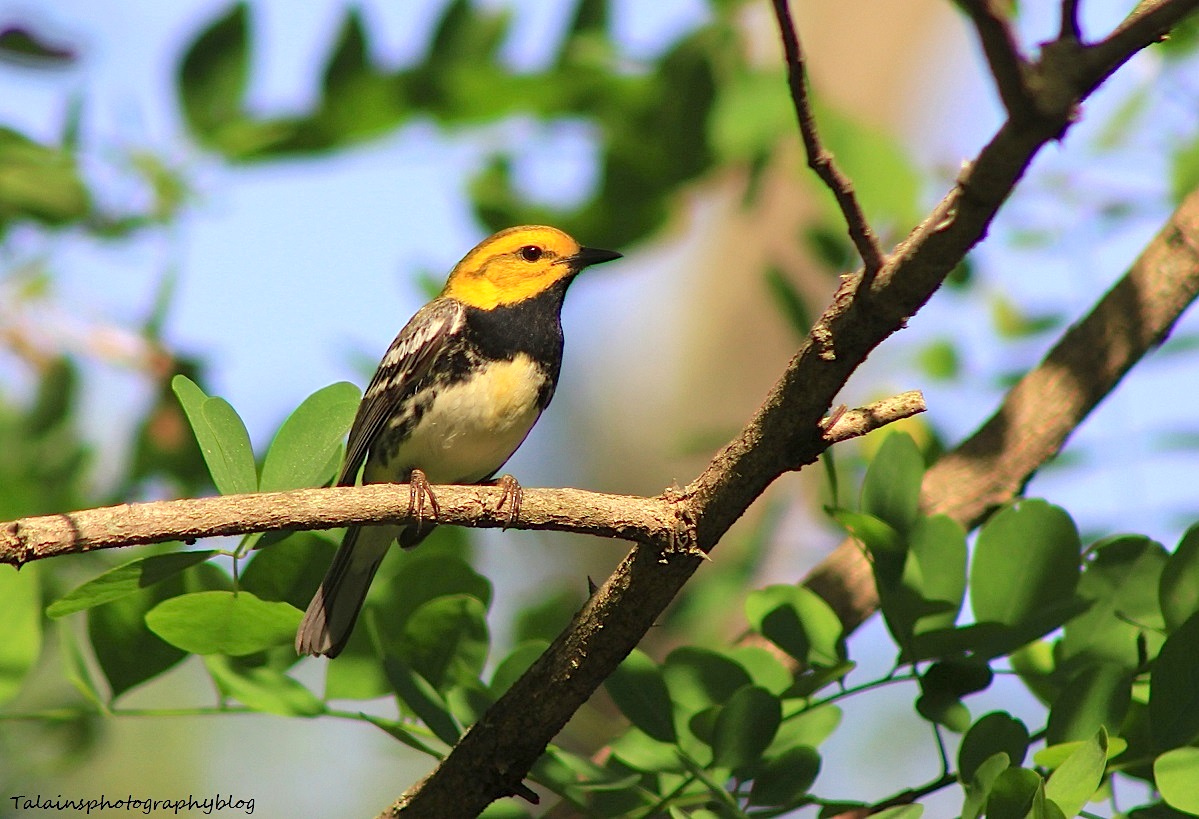
BLACK-THROATED GREEN WARBLER Setophaga virens WR 3
PHOTO CREDITS (1 – 37) Bruce Hallett (Header, 3, 9, 12, 14, 17, 21, 22); Tom Reed (1, 4); Tom Sheley (2, 7, 10); Alex Hughes (5); Gerlinde Taurer (6, 11, 18); Becky Marvil (8, 20a); Woody Bracey (13, 24); Peter Mantle (15); RH (16); William H. Majoros wiki (19); talainsphotographyblog (20b, 26, 34); Charmaine Albury (23); Craig Nash (25); Ann Capling (27); Jerry Oldenettel wiki (28); Dominic Sherony wiki (29); 10000birds (30); Steve Maslowski wiki (31); MDF wiki (32, 33); Avibirds (35); Michael Woodruff wiki (36); Emily Willoughby wiki (37)
CHECKLIST based on the complete checklist and codes for Abaco devised by Tony White with Woody Bracey for “THE DELPHI CLUB GUIDE TO THE BIRDS OF ABACO” by Keith Salvesen
PRAIRIE WARBLERS ON ABACO: CHIRPY WINTER RESIDENTS
There are 32 warbler species that migrate south and joinABACO’S 5 PERMANENT RESIDENT WARBLERSfor their winter break. Some, like the Prairie Warbler Setophaga discolor, are common; a few are quite rare; and one, the endangered Kirtland’s Warbler, is a ‘bird of a lifetime’ if you manage to see one. Or even hear one.
The Prairie Warbler prefers open areas to coppice and pine forest, though despite its name it does not inhabit prairies in the summer months. Scrubland and backcountry wood margins are a favourite haunt. This is a tail-bobbing warbler species, and is often seen low down in foliage or actually on the ground.
The wonderful photographs below were all taken on Abaco by Gerlinde Taurer, whose collection of bird species photographed on the island was used extensively in the “THE BIRDS OF ABACO“, including one of the Prairie Warblers below (awarded a full page).
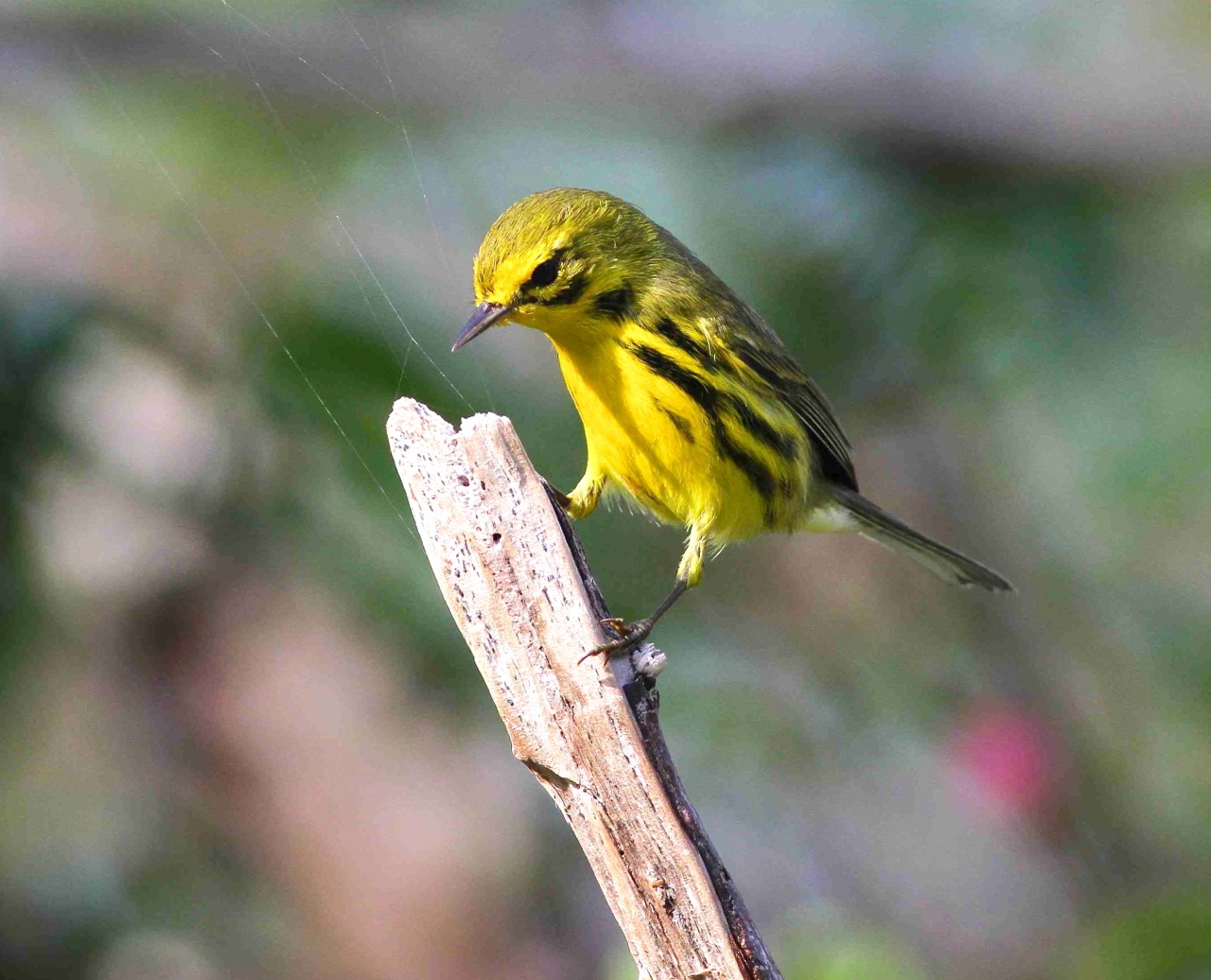
The overall impression is of a small yellow bird with darker wings and back, and conspicuous black streaking. However there are considerable variations in the colouring and patterning within the species depending on age, sex, season and so on. One indicator of the species is a dark line through the eye. Mostly, there will be a patch of yellow above and / or below the eye. However, all the birds on this page show differences from each other in their markings, and one can only generalise about their appearance.
Prairie Warblers forage for insects on tree branches or sometimes on the ground. You may also see them ‘hawking’ for insects. They have two types of songs, sung at different times – for example in the breeding season, or when territorial assertion is called for. Here is one example:
Mike Nelson Xeno-Canto
These warblers also use a simple chipping calls of the ‘tsip’ or ‘tsk’ kind.
Paul Marvin Xeno-Canto
Though currently IUCN listed as ‘Least Concern’, numbers of this species are declining. The two main threats to them are mankind (habitat loss); and nest parasitism by, in particular, theBrown-headed Cowbird, a bird which causes problems for many other species.
Credits: All photos Gerlinde Taurer except header Wolfgang Wander; Audio Clips Xeno-Canto; Range map Cornell Lab
ABACO’S 5 ‘PERMANENT RESIDENT’ WARBLERS & A NEW WARBLER ID GUIDE
There are 37 Warbler species (Parulidae) recorded for Abaco. There is considerable scope for confusion between many of them. For a start, by no means all have the helpful word ‘warbler’ in their name. Secondly a great many of the species are to a greater or lesser extent yellow, with sub-variables for gender, age and season. It’s easy to get in muddle. A good place to start ID is with the warblers that are on Abaco all year round. Only 5 species are permanent residents on Abaco and the Cays: Bahama Warbler, Bahama Yellowthroat, Olive-capped Warbler, Pine warbler and Yellow Warbler. I have used images of these to illustrate this post.
Yellow Warbler (f) Abaco
The rest are mostly winter residents, with some being transient visitors passing through on their migration routes. Some are ‘everyday’ birds; some are unusual; and a few are extremely hard to find, the Kirtland’s warbler being the rarest and therefore the most prized sighting of all. I will be returning to the Kirtland’s in more detail in due course.
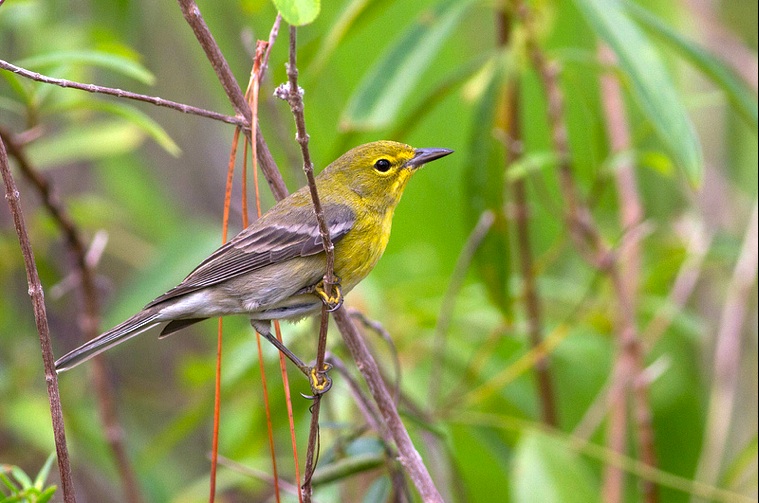
Pine Warbler, Abaco
At the bottom of this post is a complete list of the Abaco warbler species, with Bahamas bird authority Tony White’s excellent codes indicating (a) when they may be seen; and (b) the likelihood of seeing a particular species (from 1 – 5). First however, news of a great resource for aiding warbler ID, produced by The Warbler Guide. Click on the blue link below to open a pdf with illustrative views of warbler species from several angles, spread of 8 pages. These are the warblers of North America, but you’ll find that almost all the Abaco warblers are featured.
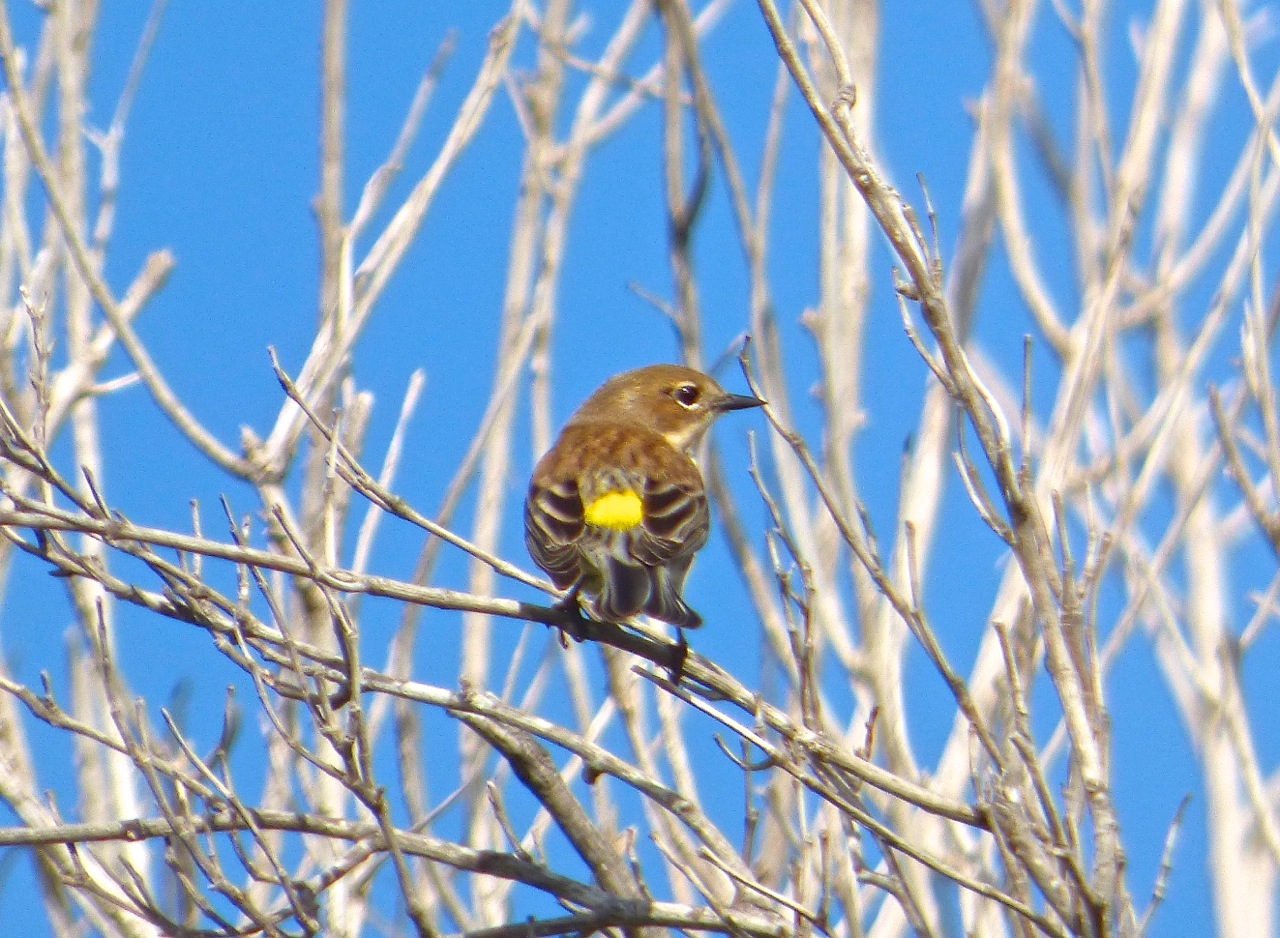
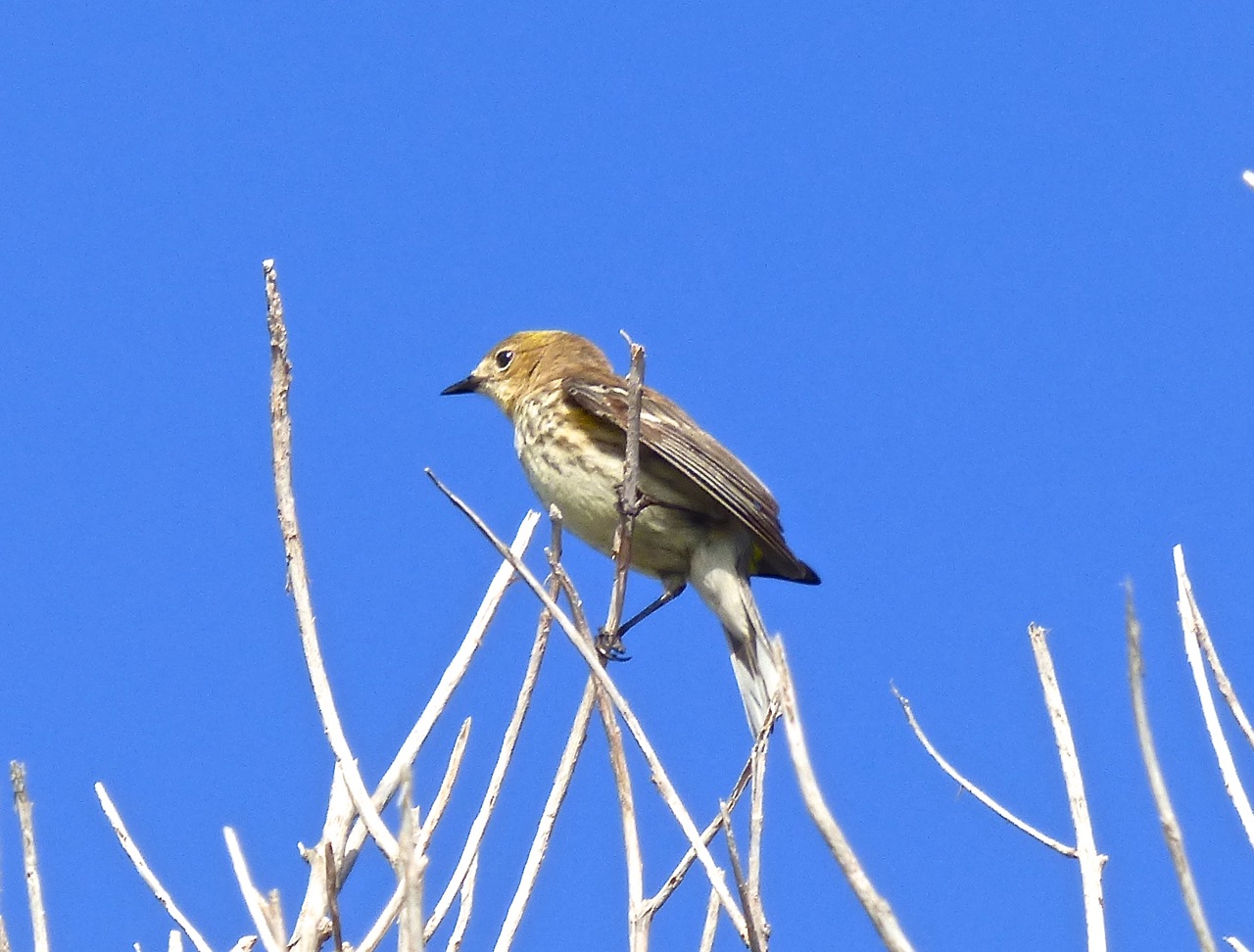
I haven’t been very lucky with yellow rumps in the past. This is not normally something one likes to talk about in a public forum… but to be honest I have been longing to get hold of a yellow rump of my own. The warbler Setophaga coronata, that is, a fairly common winter resident on Abaco. I’ve seen them of course. I’ve glimpsed a passing flash of yellow rump. But no YRW has stayed parked in tree with its backside towards me for long enough to permit me to photograph its posterior glory. Ideally I’d have liked a clear, attractive shot like the header image (Dan Pancamo, Wiki). But desperation leads to lowered expectations and plummeting standards. Frankly, this year I’d have been satisfied with any yellow rump. Abandoning my initial plan to apply a yellow highlighter pen to a compliant female grassquit, I bided my time. And suddenly there, at the very top of a tree near the swimming pool at Delphi, was my chance… A pair of YRWs were in evidence.
The tree wasn’t very close to me, and the birds stayed near the very top. My photos were never going to be great. Especially since each bird was meticulous in keeping its rear end out of sight. Then they flew away! However quite soon one was back. This time there were twigs in the way, one of the those little variables that makes camera focussing so enjoyable. But this time I managed to ‘pap’ its derrière… Feeble shots but mine own. As an avian ‘Holy Grail’, a mere yellow rump leaves quite a lot to be desired, I can quite see. It’s on no one’s ‘bucket list’ of birding musts. But now I can move on, release that poor female grassquit and chuck out the highlighter pen.
The Black-and-White Warbler Mniotilta varia is a fairly common winter resident on Abaco. They are the only birds of the genus Mniotilta (“moss-picker” gr.). Unlike most warblers these birds behave rather like nuthatches, creeping along the trunks and branches of trees grubbing insects out of the bark. Pine trees are ideal for this. I remain rather dim about the 37 species of warbler on Abaco. A lot of them are small and yellow. But as soon as I saw one of these for the first time, I was very relieved. I knew exactly what it was – the bird that has been described as ‘a flying humbug’.
SUMMERWINTER
Finally, this is a great short video of this little bird in action. Even if you only watch the first 30 seconds, you will be enchanted…
WARBLER IDENTIFICATION – A LIGHT-HEARTED CHALLENGE
SPECIES ID NOW SOLVED! CUT TO THE CHASE BENEATH THE PHOTOS FOR DETAILS. A LATE ENTRY NOW DISPUTES THE GENDER ID, SO THE SEX CHALLENGE IS REOPENED, SO TO SPEAK
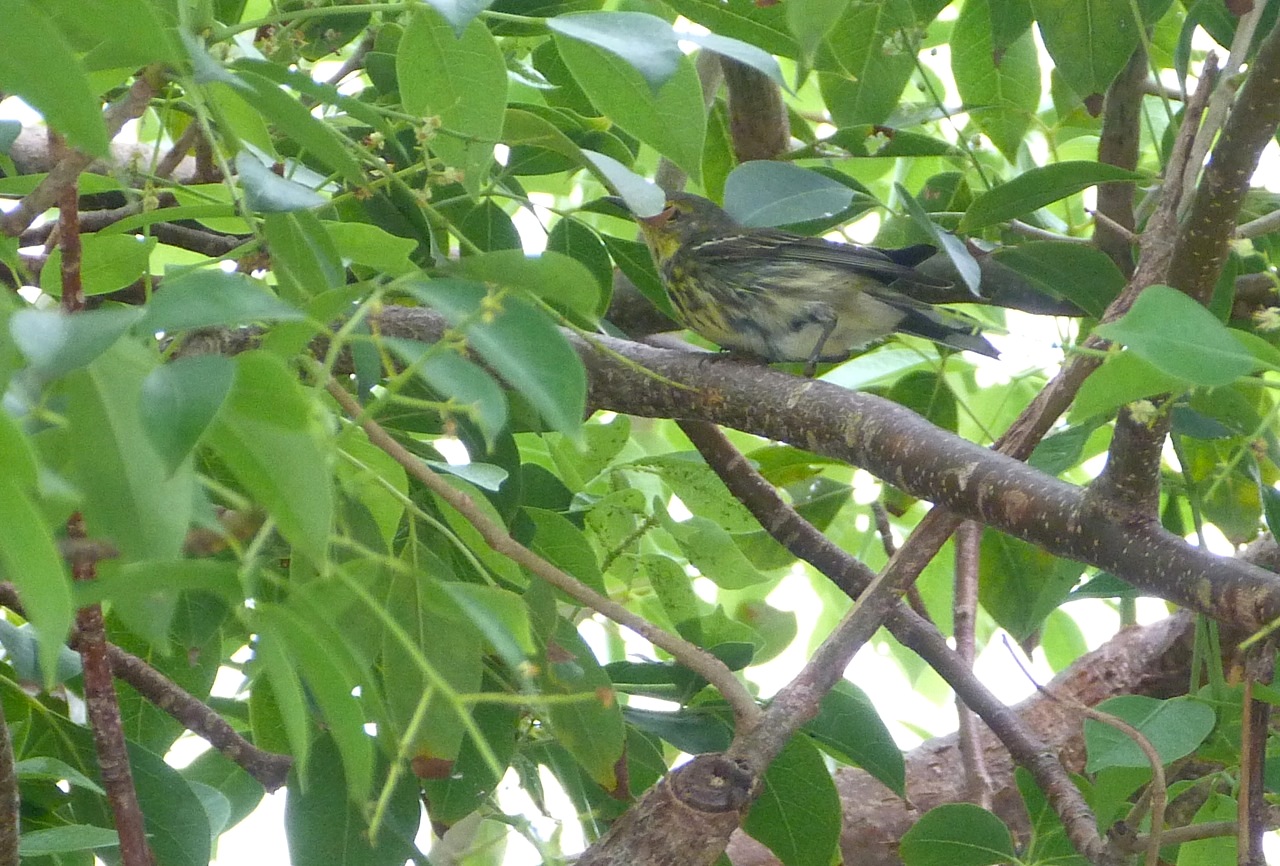
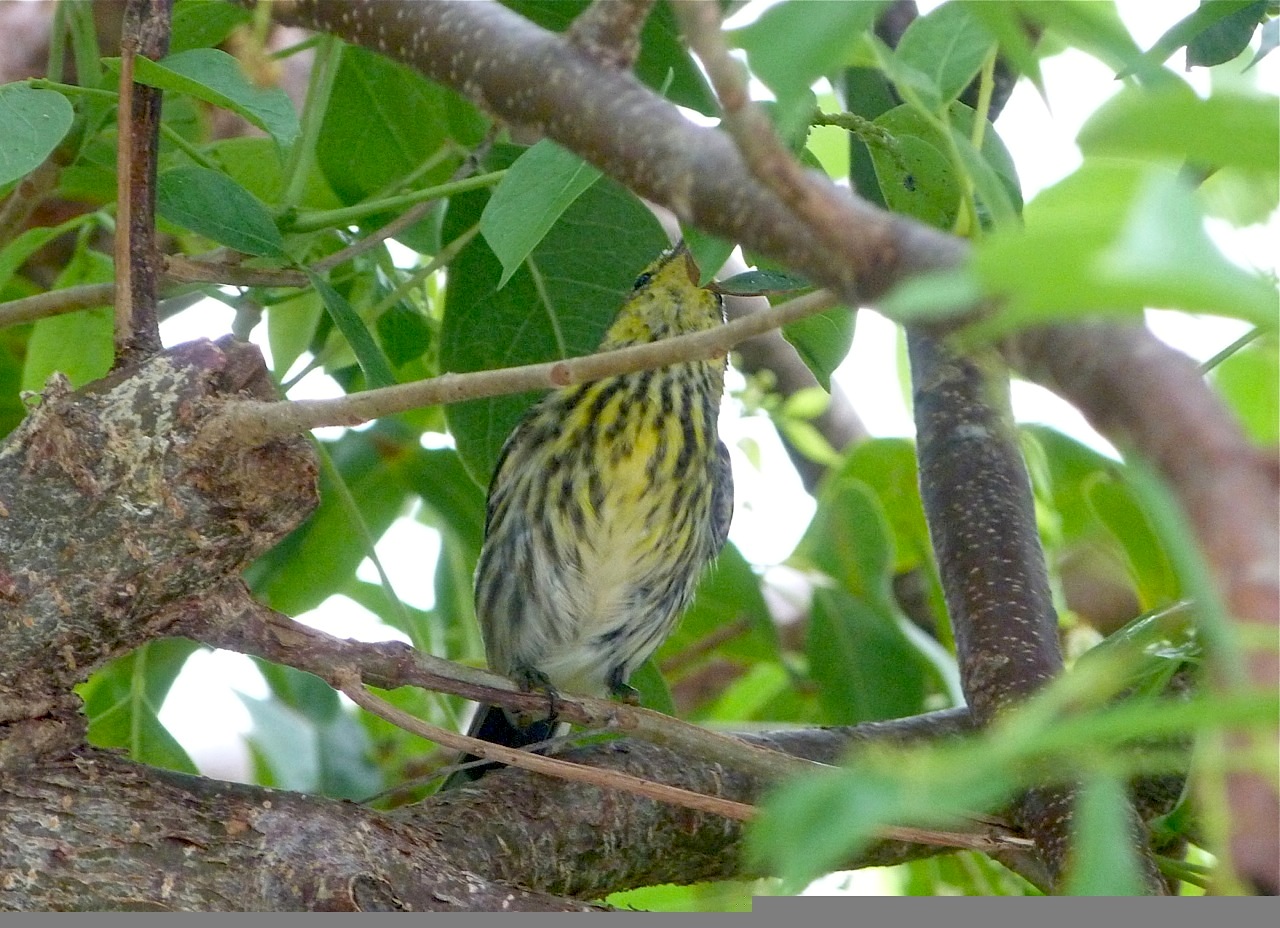
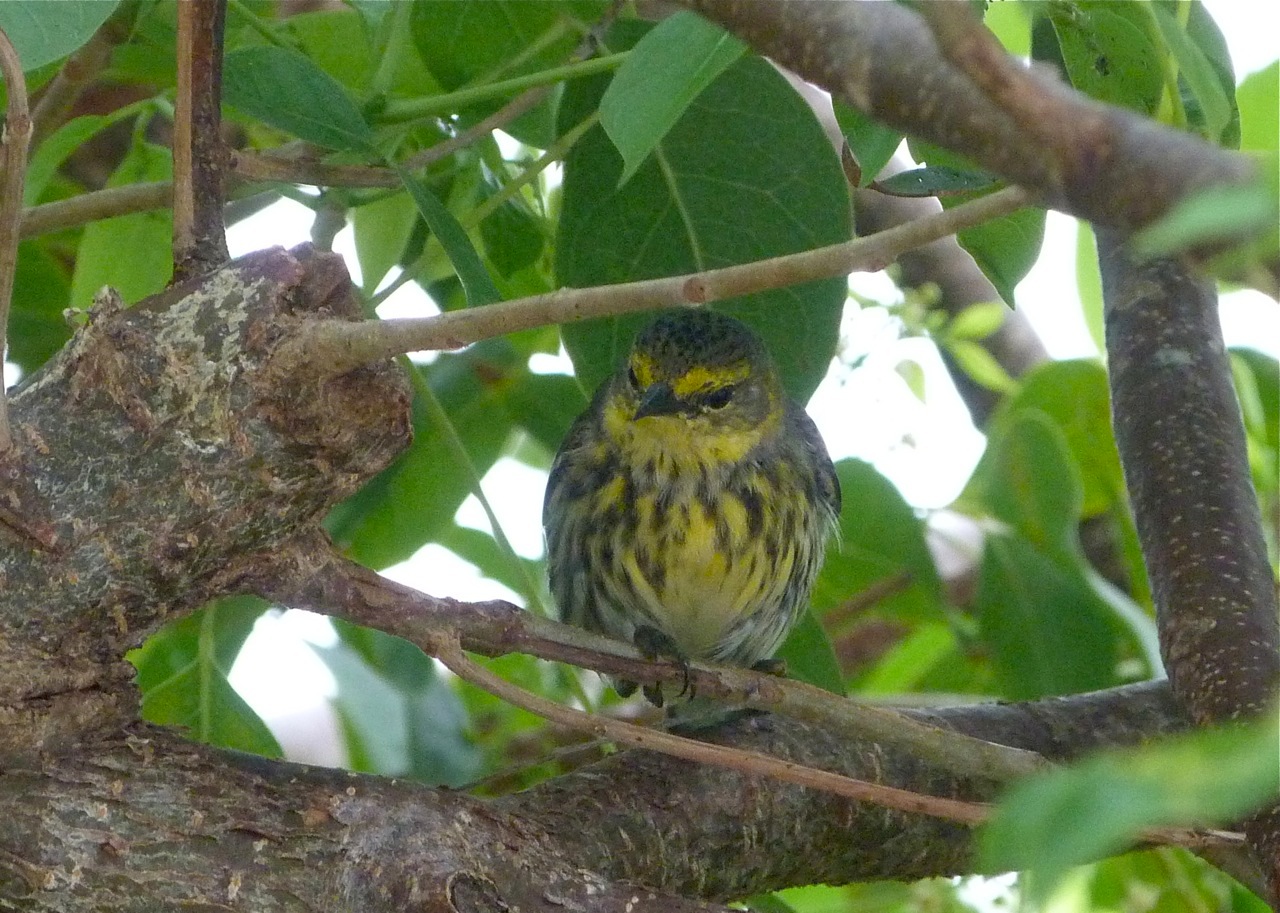
I have previously posted aids to WARBLER ID (1); WARBLER ID (2), a pitfall-fraught area that continues to baffle me despite books, online resources, futile stabs in the dark etc. For each species the male differs from the female, and both differ from juvenile / maturing birds. And this all depends to some extent on the season. Here’s a speckled warbler photographed recently at the Delphi Club, Abaco, for which there are various candidates ranging from the distinctly possible to the frankly completely-unlikely-but-astounding-if-it-turned-out-to-be-true Kirtland’s Warbler. These are seen and positively identified vanishingly rarely on Abaco – maybe one or two a year, and invariably in winter. But what if one decided to stay behind for the summer… And to those who say “Prairie, dimwit”, I reply “…but their speckles don’t cover their entire fronts”.
I’m throwing this open, because although I have a view I’d like to see what others come up with. Craig? Avian101? Avian3? Margaret H? Other birding followers? Are you out there? Leave a comment (see small-print blurb at the bottom of the post) or email me at rollingharbour.delphi@gmail.com The bird was a bit reluctant to be photographed, but I managed to get a side view, a ‘full-frontal’ and a head shot. Any ideas?
UPDATEThanks to all who came up with suggestions – it’s interesting how opinion on warbler species varies, even with quite clear close-ups to judge from. The first past the post is… Dr Elwood D Bracey (Fl), to whom many thanks. It’s a female CAPE MAY WARBLERDendroica tigrina. The runner-up is (amazingly) myself – I had it down for a Cape May juvenile, because I thought it looked a bit on the fluffy side… Also, its eye-patches (photo 3) are grey rather than brown, and I took their colouring to be a work in progress. There’ll be some more ID queries from our recent batch of Abaco photos – not just birds, but flowers & shells as well. All contributions will be welcome…
Oh no! What’s happening here? A late challenge has come in from Margaret H (see comments), who contends that the clearly shown patch on the bird’s cheek indicates that it is a male, not a female, Cape May. So the challenge was ended and the award given prematurely… The species is now definite, but the gender ID remains unresolved…
I’ve now heard from Alex Hughes, who writes “[I am] one of Caroline Stahala’s field techs on the parrot project this summer. She forwarded me the photos of the warbler taken recently on Abaco. The photos I saw are of a female Cape May Warbler, which is a great find in June! She is certainly not going to make it to her breeding grounds, unfortunately, but still fascinating to see a boreal forest bird in the Bahamas during summer.
In a follow-up, Alex adds “I’d be very surprised if this was a male bird, due to the plumage lined up with the time of year. This year’s juvenile birds are not big enough to make the flight south from breeding grounds yet, and wouldn’t anyways if they could. Therefore, it would have to be adult non-breeding plumage if it were a male, also meaning this bird already molted from alternate plumage from spring, and flew south. This seems far more unlikely to me than a female who simply didn’t make the flight, probably due to some handicap. Either way, very cool!”
So I think that wraps it up. A female Cape May, in the right place at the wrong time. How lucky to have got close to one in the off-season. It just goes to show, eager Kirtland hunters, that any of the migratory warbler species might choose to stay behind for the summer…
CORNELL LAB OF ORNITHOLOGY IMAGE & BLURB
“The Cape May Warbler breeds across the boreal forest of Canada and the northern United States, where the fortunes of its populations are largely tied to the availability of spruce budworms, its preferred food. Striking in appearance but poorly understood, the species spends its winters in the West Indies, collecting nectar with its unique curled, semitubular tongue”.
It is presumably using its ‘unique… tongue’ in Photo 2, inconveniently concealed by foliage so we will never know
(RH COMMENT My one obviously liked the Delphi Club – and its feeders – so much that it decided to stay for the summer…)
(Credit: Steve Pelikan for Xeno-Canto)
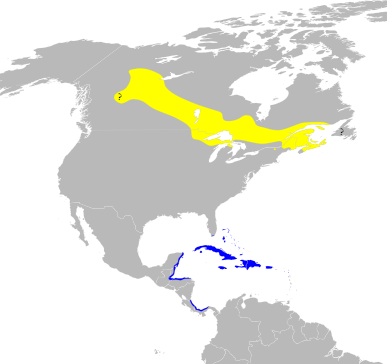
CAPE MAY WARBLER RANGE MAP (Wiki) (left)
As a warbler-muddler, I am interested to see how extremely selective this species is in its preferred summer and winter latitudes. The banding is very distinct. Are they never tempted by New York? Have they never tried Disneyland?
CORNELL LAB OF ORNITHOLOGY RANGE MAP(below)
The more sophisticated range map below shows the migration areas between the summer breeding and winter non-breeding areas. It looks as though a Cape May warbler on Abaco in June is an unexpected sighting.






















































 ROLLING HARBOUR ABACO
You must be logged in to post a comment.