Unknown's avatar

“MANATEE MANIA IN THE ABACOS” BMMRO FALL 2012 NEWSLETTER


“MANATEE MANIA IN THE ABACOS” – BMMRO FALL 2012 NEWSLETTER

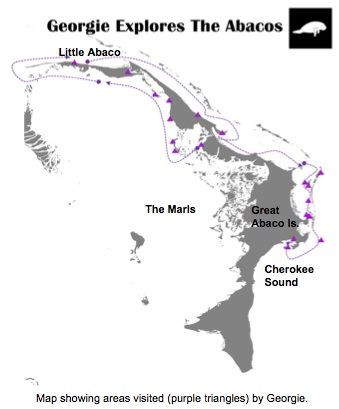
The BMMRO has just published the Fall 2012 newsletter, and it’s no surprise to find that the front page news is the arrival of young manatee Georgie on Abaco. After nosing and indeed grazing her way around Abaco and the Cays, she still appears to be contentedly moored in Cherokee after the best part of a month. Here’s the official map of her wanderings 

Besides the manatee there’s plenty more to read and look at including 

  • Charlotte Dunn’s ‘President’s Update’
  • Articles on whales, and a friendly bottlenose dolphin’s visit to Hope Town
  • Fall ‘cetacean sightings’ map
  • Students at ‘Whale Camp’
  • A quiz to make sure you have taken it all in…

To read the four-page document –  and admire the photos – CLICK BMMRO FALL 2012 NEWSLETTER

Unknown's avatar

“GEORGIE” THE MANATEE MOVIE: ON LOCATION AT CHEROKEE, ABACO


UPDATE 17 OCT I gather that Georgie is so pleased with her new home at Cherokee, she’s still there. Not sure if she is with or without her tag, but I suppose if she has decided to stay put in one area, tracking her is not a priority. Maybe the sea grass there is a particularly good kind – or perhaps she has found natural springs to her liking. Maybe it’s the folk who live there… yes, I think it must be that. I’m hoping to get some more specific news soon, and some more photos.

UPDATE 7 OCT Kendria says that Georgie has managed to lose her tag yet again. She’s still at Cherokee, but if she decides to make a move, she can now be tracked only from reported sightings. Maybe she just doesn’t like to accessorise…

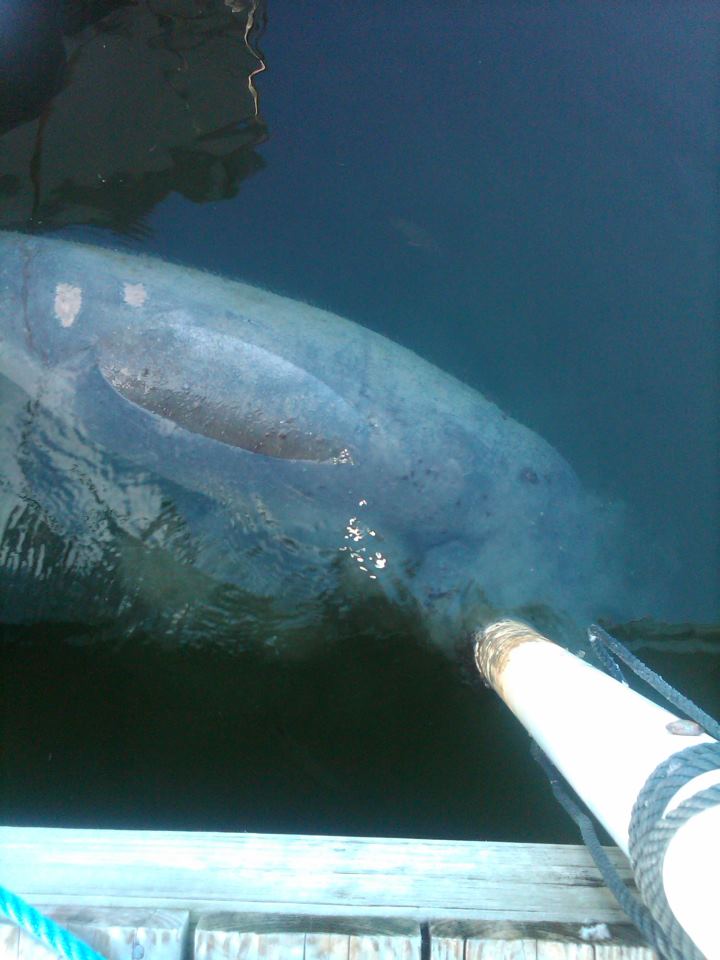
UPDATE 6 OCT Georgie has taken to life in Cherokee. She is still there – the longest she has stayed on one place during her epic journey. She’s a very popular guest, of course, and  has generated a lot of local interest and affection. Here’s a BMMRO photo taken yesterday of Georgie enjoying some quality algae browsing on the pilings in the dock

“GEORGIE” THE MANATEE MOVIE: ON LOCATION AT CHEROKEE, ABACO

The story of Georgie, the young female manatee currently undertaking a round trip of Abaco, has further raised the profile of these unusual and fascinating creatures in the northern Bahamas. Like many others who have been enthused by this important conservation and research project, I’ve been following her story since her release with her mother Rita in the Berry Is. earlier this year. In June she was weaned. In September she decided to set off to sea grass pastures new –  see GEORGIE for details

Yesterday she was still in the Cherokee area, but had lost her tag. The task was to locate her, find the tag and reattach it, and check her wellbeing. All were accomplished in the course of the day and the BMMRO posted: “Today was another day in Georgie’s ‘world according to Georgie’!!! A special BMMRO thank you and Manatee high five to Andrew Lowe, Cindy & Buddy, and the community of Cherokee! Georgie is lucky to have such caring people around! She is still parked at Cherokee and BMMRO will do their best to continue to monitor her health and habitat use in the area!”

Things have moved on a bit since then, and I am really grateful to Kendria Ferguson for finding the time to email me; and to Cindy James Pinder  for permission to use her excellent photographic material from her time spent with Georgie. Her latest news is that Georgie is moving south towards Casuarina. There are blue holes in the area where she can find fresh water. Cindy adds “She may show up in the canal in Casuarina today. If you see her please offer her fresh water from a hose.”

It’s time to showcase a short video taken by Cindy at Cherokee yesterday. In order to post it here I have had to make a derivative movie from the original. It’s like an uncontentious bootleg, i.e. made with the artist’s approval (for which many thanks!). The quality isn’t as good of course, but you will clearly see what is endearing about these inquisitive, gentle and trusting creatures – and why this makes them so vulnerable and in need of protection. Only today, a woman has been detained in Florida for riding a manatee – a strictly unlawful act that has been strongly condemned.

Here are some stills also taken by Cindy yesterday, who says “…in case you are wondering . . . a manatee feels like leather!”. They depend on having some fresh water, and these great pictures show various methods of supplying it. The top one is my favourite.

HELP NEEDED If you would like to support manatee research and conservation in The Bahamas, please email info@bahamaswhales.org or rollingharbour.delphi@gmail.com 
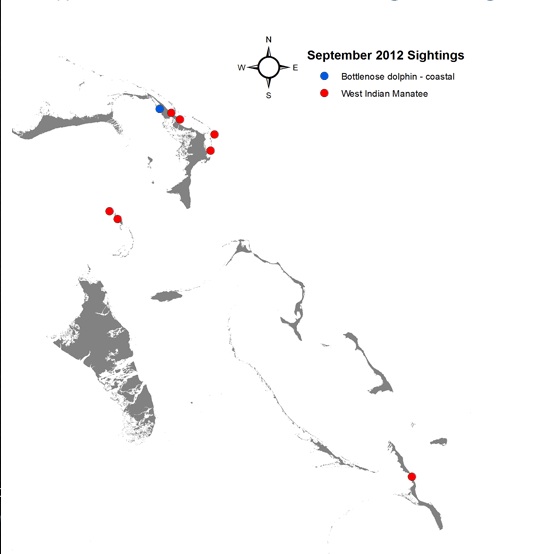
This is the perfect place and time to post the BMMRO September 2012 Whale, Dolphin and Manatee sightings map. Last month the cetacean count was very low – no whales at all, a solitary dolphin. However, manatees are starting to feature much more, and the Abaco sightings – presumably of Georgie as she progresses round the Islands  – are the first ones recorded there (I think) since manatee sightings began to be included towards the end of last year. A cause for breaking out the fresh water to celebrate.
*  *  *  *  *  *  *
MUSICAL AFTERNOTES The video music is Rizraklaru by Ralph McTell (before he arguably spoilt it all with the mawkish ‘Streets of London’) from ‘Spiral Staircase’ (credit / plug for RM). He wrote it in 1967 while living in an old caravan in deepest Cornwall. He and his mates had only mother nature’s ‘Rural Karzi’ to use, and the song title is an anagram. It’s a long story that ends, in RM’s words, “After he’d stopped laughing, Henry and I explained the title’s origin [to him] and he suggested an anagram, so we put the first letter last and spelt the whole thing backwards, and there you have it ! RIZRAKLARU !” 
Unknown's avatar

ABACO / BAHAMAS WHALE, DOLPHIN & MANATEE SIGHTINGS AUGUST 2012


ABACO / BAHAMAS WHALE, DOLPHIN & MANATEE SIGHTINGS AUGUST 2012 

ANOTHER PYGMY WHALE STRANDING ON ELEUTHERA

The BMMRO has posted the cetacean / sirenian sightings for August. The main concentration off Abaco is in the food-rich south-west coast from Rocky Point down to Hole-in-the-Wall. This is where the deep water of the Great Bahama Canyon meets the shallow underwater coast of Abaco, providing an ideal feeding ground for whales and dolphins. This canyon is the largest underwater canyon in the world.

Plenty of dolphins were reported last month, and the sperm whales (including pygmy and dwarf) were still around (but for some sad Eleuthera pygmy sperm whale news, see below). Meanwhile, the yellow spot on the Berry Is. shows that all is well with the manatees.

STRANDING NOTIFICATION: PYGMY SPERM WHALE 

Last week the BMMRO was notified about a whale that had stranded dead on an Eleutheran beach on 27 August. The species was identified from the photographs as a pygmy sperm whale – the same species that stranded on the other side of Eleuthera the previous week.

Thanks to the Stranding Network, it was possible take a tissue sample and teeth for DNA, as well as more photos.The animal was about 6 feet long and moderately decomposed – possibly dead for up to 3 days. Unfortunately due to the state of decomposition a cause of death could not be determined. However more information about the animal will be obtained from the samples taken. With samples taken, the carcass can now be buried.

Unknown's avatar

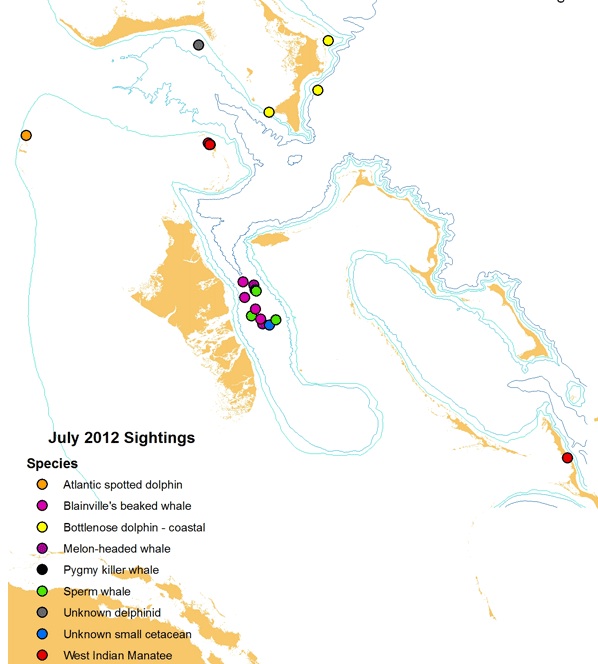
BMMRO WHALE, DOLPHIN & MANATEE SIGHTINGS ABACO / BAHAMAS JULY 2012


BMMRO WHALE & DOLPHIN SIGHTINGS ABACO JULY 2012

Last month there were bottlenose dolphins for Abaco; manatees for the Berry Is. [Hi, Rita & Georgie! – check out their progress on FACEBOOK BMMRO] with a first manatee sighting (I think) off the west coast of Long Island; and quite a few whale reports off the east coast of Andros. I wonder why the whales are all in that area at the moment? Maybe the reports are high for that area because that’s where the whale spotters congregated in July…

STOP PRESS Georgie the Manatee is now weaned – for details CLICK===>>> HERE

STOP PRESS 21 AUG As a sad coda to these sightings, the BMMRO has posted news of the stranding and death of  pygmy sperm whale on Eleuthera

Stranding Event: August 19th, 2012
A blackfish stranded in Eleuthera:

Photos confirmed the species to be a pygmy sperm whale. The animal stranded alive but later died. Many thanks to Tom Glucksman and his wife for their efforts in providing pictures and getting a skin sample, which will allow us to get even more information about this animal

For more information on how to report a stranding event, please visit  http://bahamaswhales.org/stranding

BMMRO (Website)

FACEBOOK BMMRO

Unknown's avatar

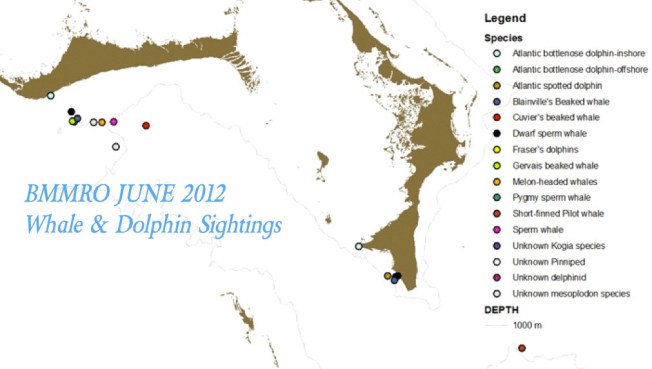
BMMRO WHALE & DOLPHIN SIGHTINGS ABACO JUNE 2012


BMMRO WHALE & DOLPHIN SIGHTINGS ABACO JUNE 2012

Actually, I say ‘Abaco’ but the most activity – and the most varied, species-wise – is off the southern coast of Grand Bahama. Abaco sightings are also confined to the south, with shows from a PIGMY SPERM WHALE and a BLAINVILLE’S BEAKED WHALE  and dolphins in the arc between Rocky Point and Hole-in-the-Wall. To see recent aerial photos of this section of coast CLICK===>>> HERE

The manatees of the Berry Is. are no longer shown on this map. Their happy story (and their fame) has spread and they now have their own entries on the BMMRO FACEBOOK PAGE, like any self-respecting stars. You can reach it anytime direct from the Sidebar if you you want to keep track of the story of Rita and her calf Georgie’s rehabilitation – and the other manatees they have encountered as they get used to their freedom. 

ADDED The latest BMMRO quarterly newsletter has just been published – highly recommended for anyone with an interest in active whale / dolphin research, or in the latest news of the manatees of Berry Is. To see it CLICK===>>> BMMRO NEWSLETTER JULY 2012

Unknown's avatar

BLAINVILLE’S BEAKED WHALES’ FEEDING GROUND ON ABACO / BMMRO MAY 2012 REPORT


BMMRO MAY 2012 REPORT / THE BEAKED WHALES’ FEEDING GROUND

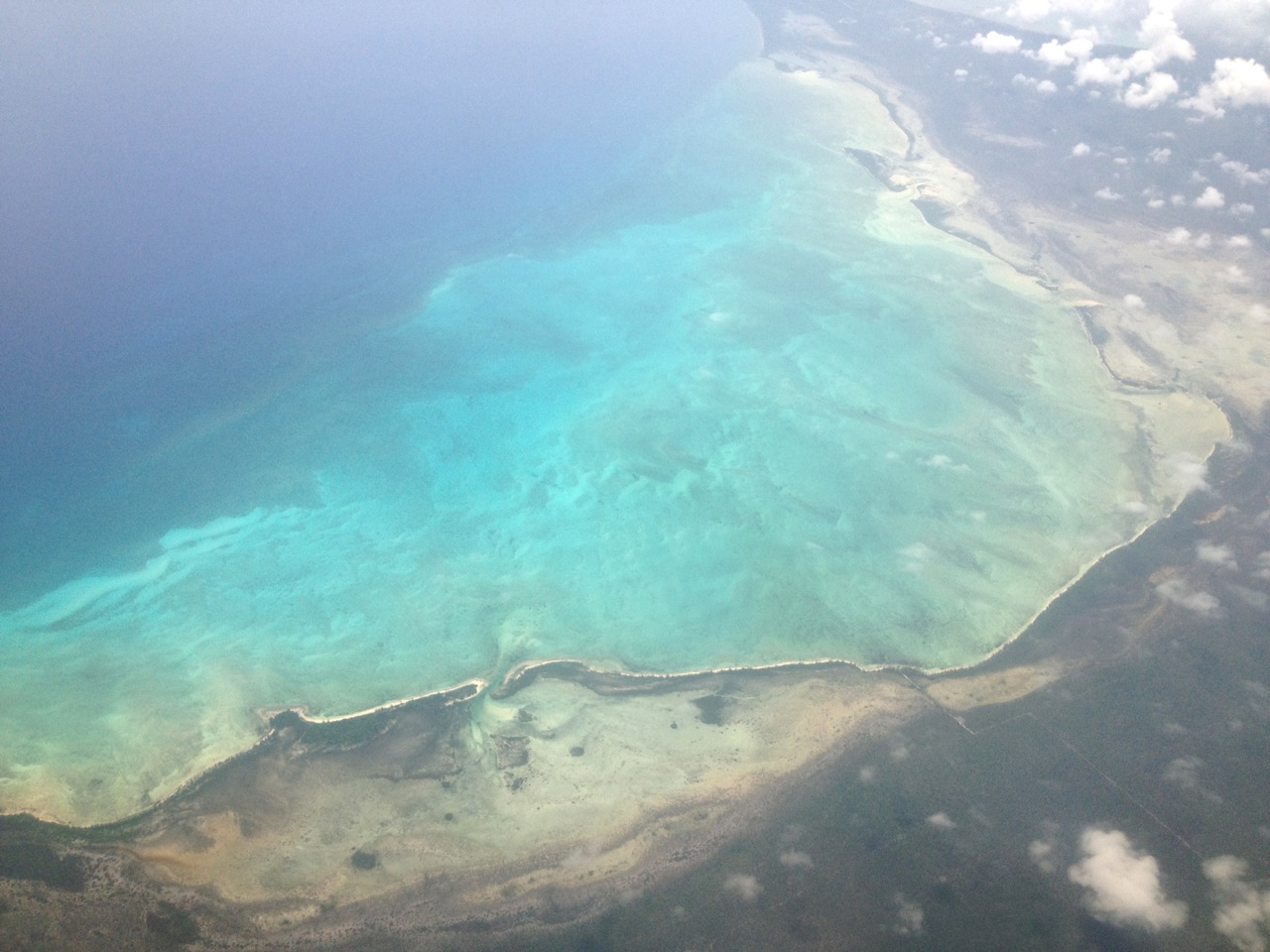
The BMMRO report for May 2012 has just been published. It’s quite short so I am posting it ‘as is’. While I am about it, Charlotte Dunn has just emailed me about an aerial shot we took on a flight from MH to Nassau of the southern stretch of Abaco coast between Hole-in-the-Wall and Rocky Point. She writes “that stretch of dark water is the North West Providence channel and where we often see our infamous beaked whales. They dive down to get their food, diving to 2000m in some cases!” In the top photo, the plane is roughly over Hole-in-the-Wall. Sandy Point Airport is just visible (top centre). The second close-up photo clearly shows how the shallow coastal water quickly gives way to the deeper water of the channel.

BMMRO Bahamas Marine Mammal Research Organisation Banner
BMMRO NEWS MAY 2012
May fieldworkProject: Monitoring beaked whale responses to sonar tests at the Atlantic Undersea Test and Evaluation Centre (AUTEC)
A collaborative effort to deploy satellite tags on odontocete cetaceans on and around the US Navy’s Atlantic Undersea Test and Evaluation Center (AUTEC) in the northern Bahamas took place for the seventh time during April – May 2012. This project aims to monitor the movements of beaked whales and other odontocetes in relation to active sonar exercises, and particularly tests around multi-ship sonar exercises, on the AUTEC weapons range. This is a collaboration between the Bahamas Marine Mammal Research Organisation, the Protected Resources Division of the NOAA Southwest Fisheries Science Center (http://swfsc.noaa.gov/prd.aspx) and the US Naval Undersea Warfare Center (NUWC, http://www.nuwc.navy.mil/), with funding provided by the Chief of Naval Operations Energy and Environmental Readiness Division – N45. Secondary objectives include obtaining photo-identification data and biopsy samples.Below a picture is showing a satellite LIMPET tag being deployed on a Blainville’s beaked whale at AUTEC. These small low-profile tags are attached using a crossbow to deploy the tag on a projectile bolt; on contact with whale this bolt falls away (as shown), leaving only the transmitter tag attached to the animal. Two of these tags were deployed in early May 2012, transmitting dive depth data and location signals for 18 and 28 days.

tag placement on Blainville's beaked whale

The field team worked in co-ordination with NUWC’s Marine Mammal Monitoring on Navy Ranges (M3R) team based at Site 1, AUTEC. M3R vectored the vessel to acoustic detections of cetaceans on the range.

Sightings were made of 3 species: Blainville’s beaked whales (Mesoplodon densirostris), sperm whales (Physeter macrocephalus), and melon-headed whales (Peponocephala electra). There were 7 satellite tag deployments, 4 on sperm whales, 1 on a melon-headed whale and 2 on beaked whales. Both of the tags deployed on the beaked whales have provided movement and depth data prior to, during and after the multi-ship sonar exercise at AUTEC.

To read more about this project, go to the NOAA website to see their report.
Project: Assessing beaked whale reproduciton and stress response relative to sonar activity at the Atlantic Undersea Test and Evaluation Centre (AUTEC)
Fieldwork took place in south Abaco with the field team based at BMMRO’s research centre in Sandy Point. The effort lasted two weeks and 22 biopsy samples were collected from 23 of the Blainville’s beaked whales sighted during the period, the 23rd animal was a calf and too small to biopsy.

These samples will be used to look at reproductive and stress hormone levels, and will be compared to samples taken from whales residing on the AUTEC range in Andros, during a project scheduled to take place in July this year. This project is funded with a research grant from the Office of Naval Research.

Unknown's avatar

BMMRO WHALE, DOLPHIN & MANATEE SIGHTINGS MARCH 2012


BMMRO WHALE, DOLPHIN & MANATEE SIGHTINGS MARCH 2012

Hard on the heels of the BMMRO’s Fisheries Report for 2011 – see previous posts – comes the map of last month’s sightings. First, let’s hear it for the manatees, featuring for the 4th consecutive month off the Berry Is. The 2 reports of an ‘unknown large cetacean’ off Elbow Cay are the puzzles of the month. There was a sperm whale in that area in January, but presumably it would have moved away in the meantime…. I wonder what the likely candidates are for ‘large’ besides sperm and humpbacks?

Unknown's avatar

BMMRO BAHAMAS FISHERIES REPORT 2011 EXTRACTS & LINK


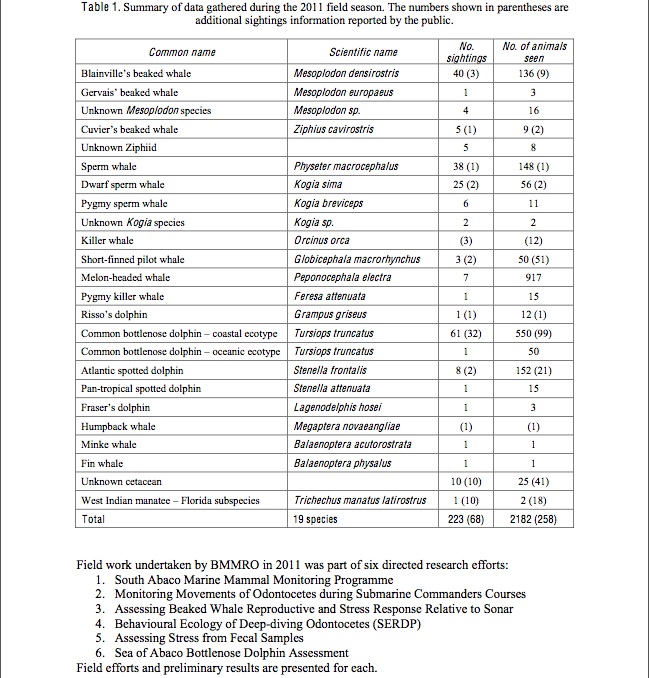
The BMMRO has recently published its Fisheries Report for 2011. The report is comprehensive and covers a far larger area than the waters around Abaco. Extracts are shown below (thanks as alway to Charlotte Dunn for use permission). The full report can be seen in pdf form at BMMRO FISHERIES REPORT

1. First, here is the table of all field data for the 2011 season, from which the incidence of the particular cetacean types can easily be seen. To a layman (me), the most significant reading on the previous year is the increase in sperm whale sightings and animal numbers, up from 14 / 69 in 2010 to 38 / 148 in 2011. I wonder why the difference?

2.  Here are results specifically relating to South Abaco, where the majority of cetacean activity is observed (see ‘green’ map). I have included a larger image of the cetacean species so that the key is easier to read

Unknown's avatar

BMMRO WHALE, DOLPHIN & MANATEE SIGHTINGS FEB 2012


BMMRO WHALE, DOLPHIN & MANATEE SIGHTINGS ABACO / BAHAMAS FEBRUARY 2012

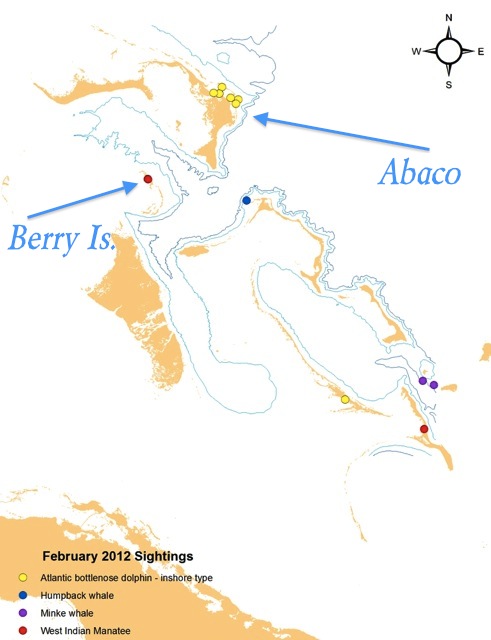
From an Abaconian point of view, the news is of Dolphin activity in the Marsh Harbour area / nearby Cays and northwards from there. No whale reports last month, though. Further afield, another manatee report from the Berry Is makes three consecutive monthly reports of sirenians. There was a humpback to the south but other reports are concentrated further away

Unknown's avatar

5 CREATURES ON ABACO THAT YOU MAY WISH TO AVOID…


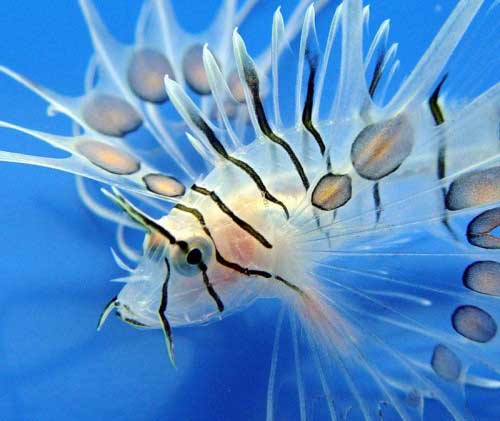
Lionfish ©Melinda Riger @ GB Scuba

 has published an article entitled “15 cute animals that will cause you horrible harm”. For some of these, the word “cute” may be overstating the case. For others, the risks to humans appear to be very remote. A few are nominated despite being the most surprising and least likely harm-bringers (“KITTENS” – don’t ask).

What is undeniable is that 5 of the 15 may be encountered on or close to Abaco… Fortunately staying on dry land is a sure way to avoid them all – they all live underwater. With due credit to BRAINZ here are the Fearsome Five with his trenchant commentary, except for the last which I have censored for present purposes owing to its graphic adult content and anti-cetacean tendencies… 

1. PUFFER FISH “Puffer fish are hilarious and adorable just on general principle. It’s hard see one inflated, and refrain from uncontrollable giggling at it’s cartoonish defense mechanism. But puffer fish don’t just rely on their inflatable belly as a way of dissuading predators, they’re also packed with the deadly neurotoxin tetrodotoxin. Of course, they’re renowned as a delicacy just for this reason. Apparently, when prepared correctly, the minute traces of the toxin give you tingly lips and light-headedness. However, if the sushi chef doesn’t prepare it properly, you’re going to have a rather nasty death. See, tetrodotoxin is a muscle paralyzer, with no known cure. So if you overdose, your muscles no longer move, including your diaphragm. You become paralyzed, and unable to breath, slowly asphyxiating under the weight of your own chest

MORE ON PUFFER FISH SHARPNOSE & CHECKERED, IMAGES & 10 FACTS

2. LIONFISH “Lionfish aren’t so much cute as stunningly beautiful. They’re covered with majestic spines, which float elegantly along with them, as they swim around the ocean, eating their prey whole. So, what’s the problem with this stunning fish, and why wouldn’t you want one in your aquarium? Well, remember the rule of thumb when dealing with any animal: if it’s brightly colored, it’s poisonous. The Lion Fish’s spines are coated with a painful venom, which it will happily spear you with if you piss it off. While this venom won’t kill you, it will cause extreme pain, vomiting and difficulty breathing. Now imagine that happening while you’re scuba diving. Sounds pleasant, doesn’t it?”

MORE ON LIONFISH FACTS, VENOM &  CRISIS CONTROL and  POPULATION EXPLOSION RESEARCH

3. CONE SHELLS “Cone Snails are small aquatic snails that litter the oceans of the world. They have intricately patterned and eye-catching shells, which are exactly the sort of thing little kids like to pick up and eyeball when on the beach, which is when they strike. They have a thing called a “radular tooth” which is like a fleshy ribbon coated with tiny teeth, which are linked to a poison gland. It launches this harpoon of pain out of its mouth at any threat, including you. Now, a small snail will give you a sting like a bee or wasp, enough to hurt but not a major problem. The bigger ones? They shoot with enough force to penetrate gloves. You might not feel the symptoms for days, but when they kick in, you get pain, swelling, numbness, tingling, muscle paralysis, changes in vision, and eventually respiratory failure leading to death. What is with sea life suffocating you? Dang!”

MORE ON CONE SHELLS CONE SHELLS

NOV 13 ADDITION Capt Rick Guest adds to this by way of comment: “Hi RH ! At least for right now there is only one species of Cone shell in the Atlantic known to be a fish-eater and therefore potentially fatal to humans; Conus ermineus. It is one of the largest Atlantic cone species. I published a paper on this species in “The Veliger”, California Malacozoological Society, vol 19, Oct 1, 1976, if you want to bother searching for it. I observed this species spearing and swallowing sizable fish whole. Also, the Cones don’t have a radula ribbon. Their radular “teeth” are shaped like Capt Ahab’s harpoon, it’s hollow and is attached to the venom gland by an almost hair-thin tube. It is then forcibly ejected from the proboscis into the fish. A larger fish’s brief struggle will usually break the connection, but the venom works extremely fast, and the prey doesn’t go far. It is quickly located,seemingly by olfactory perception, and swallowed whole. There are now videos of this out there. Definitely look ‘em up!”

4. STINGRAYS “Stingrays are generally completely fine with humans. If disturbed, they’ll generally just run for it, but sometimes are happy to hang around and play. While shy by nature, they can become accustomed to human contact, and will let you play with them. Hell, many aquariums have touch tanks with rays in them, where you’re free to stroke the fish. The only problem is what happens when you step on them. If you disturb them in almost any other way, they’ll just dash away, but if you step on one while it’s hidden in the sand, there’s a fairly good chance you’ll get a stinger jabbed through you. For most people, this hits their leg, and the stinger remains after the ray swims off, like the lower half of a bee. In addition to being impaled, the sting also injects a hefty dose of poison, which leads to horrible pain, swelling and cramps. Again, not something you want to happen while you’re underwater. And sometimes, just sometimes, it’ll be fatal. Like when Steve Irwin—the Crocodile Hunter—got stabbed through the heart by one, dying soon after.”

MORE ON STINGRAYS SOUTHERN STINGRAYS and YELLOW STINGRAYS

5. DOLPHINS Oh, dolphins, lazy stoners of the sea. They just spend all their time floating around, eating fish, doing flips, and generally living the good life. Yeah, dolphins, they’re awesome. After all, who doesn’t love Flipper? Except, it turns out Dolphins are…” [tremendously detailed allegations follow. The general tenor is that these gentle creatures are apt to be overgenerous  with their sexual attentions, to the extent that when excited… well, they are large, powerful and agile, and they may try to do that thing that dogs do to human legs, only more attentively, to a diver. That’ll do as a summary. Oh, use your imagination]

MORE ON DOLPHINS  HERE and HERE

ONE MORE ABACO SPECIES TO STEER WELL CLEAR OF SPIDER (PEPSIS) WASPS Spider or Pepsis Wasp; Tarantula Hawk

Unknown's avatar

HUMPBACK WHALES IN THE BAHAMAS: TWO SIGHTINGS & AN ENTANGLEMENT


HUMPBACK WHALES – BMMRO REPORT JANUARY 2012

The BMMRO has posted recent whale news on its site – an entanglement off Elbow Cay with a happy ending, a sighting off Long Island in January, and another in February with images    (CLICK LOGO for BMMRO website)

1. An Entanglement 30.12.11  During the winter months the Bahamas occasionally get a sighting of a humpback whale migrating northward. For some reason a few of the migrating whales take a route a little closer to our islands and allow us the wonderful experience of seeing them.

On the 30th December 2011 Joseph Strickland and his crew who had been staying on the Highlander in Hope Town harbour, came across an entangled humpback whale. Due to the courage and calm response of Joe and his team, they managed to release the 40′ humpback. The whale had been entangled in a thick rope of approximately 600′ in length attached to a fishtrap. The animal was found off  Sea Spray marina in 40 feet of water off Elbow Cay, Abaco. They managed to free the animal of the fishpot which it had been dragging… as well as freeing the animal of the majority of rope, with only 20′ of line remaining on the whale. We would sincerely like to thank Mr & Mrs Strickland and their family for their extrodinary effort to free this animal, and also to report the encounter in detail.

Unfortunately as humpbacks are one of the more coastal whales, they often end up entangled in fishing gear, and come into contact with fishing pots, as well as being susceptible to vessel strikes. However, this species have made a remarkable recovery since the whaling era and in the North Atlantic abundance estimates are now approximately 12,000 humpback whales.

2. A sighting on 14.01.12  A better start to the New Year provided us with a single humpback sighting on Saturday 14th January off of Cape Santa Maria, Long Island. 

3. A sighting on 8.02.12 Finally, on Wednesday 8th February, a mother-calf humpback pair were spotted off of Dutch Bar, Spanish Wells, providing us with these beautiful pictures! Report and Image Credits BMMRO 2012


Unknown's avatar

BOOKCOMBING: AN OCCASIONAL THEMED SERIES (2) SEA GLASS


2. SEA GLASS

Note 1 I give Amazon.uk pricing as a simple standard for new / used prices. Obviously Amazon.com is also worth comparing, as is Abe UK or US. With Abe watch out for the shipping costs. An apparently ‘bargain’ book may have a loading on the shipping, which (unlike Amazon) are not standard.

Note 2 You will see that I have included books that have had bad reviews as well as good – compare books 1 and 2 below – so that you are forewarned…
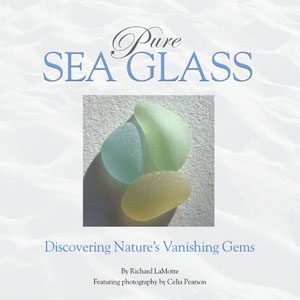
PURE SEA GLASS

RICHARD LAMOTTE

Amazon UK £22; new / used from £14

Amazon UK Reviews 1 x 5*           

Pure Beauty “I loved this book… Sea glass is fantastic and this book shows you how to recognise each colour, although in reality there are thousands of hues! I loved the photographs in this book and it made me surf the Internet for sea glass collectors, sites etc.

Amazon.com reviews: 70,  average rating 4.9 out of 5*. Here are a few nibbles

Discovering Nature’s Vanishing Gems  “This is an excellent volume, especially for beginners… A major attraction is that there are over 150 exquisite and elegant photographs… presenting some of the beat specimens ever collected, along with a vast array of classical glassware from around the world that is often its source. The book is a comprehensive guide, chock full of information on finding and identifying these gems, the bits of aged glass, enhanced by years beneath the sea or caught in the tides that wash our coasts. There are 224 pages with chapters on the history of sea glass and the history of sand, (fascinating), different types of glass, (bottles, containers, tableware, utility and flat glass, like window glass – plain and stained, marbles, insulators and bonfire glass – from ship and shore, etc) & appraising rarity, along with many other interesting topics”

Simply Exquisite  “…a must have for all the beachcombers who wander the strands of the world, bending to pick up those gorgeous fragments of glass. It offers history & facts about the globs of glass washed up by the waves, as well as page after page of exhilerating colors & shapes the glass comes in, & images of the seashore”

SEA GLASS HUNTER’S BOOK

C.S.LAMBERT

Amazon UK £8.54, new/used from £5.07

This book has divided readers. It’s worth bearing in mind that it costs a lot less than most, so it can’t be expected to be as lavish. but still… here’s a flavour. I rather enjoyed the two snidey reviews, I’m sorry to say

Amazon.com reviews: 9, average rating 3.7*

The Good Review “It’s exactly what I hoped — SGHH is a celebration of sea glass hunting. Simply put: the book is stunning. As a previous reviewer noted, this is not a “how to” book nor a map (although it does list exceptional locations around the world); rather, it is like a piece of sea glass itself: beautiful, tangible, a treasure. Chapter 1 the world of sea glass; 2, origins; 3, methods for hunting; 4, lexicon; 5, etiquette & laws; 6, destinations. It’s digest size, hard bound & first class… I strongly recommend it for anyone who truly loves sea glass or who would like to share the passion with others

The Model Sniffy Review Intended for total novices, not for a true sea glass hunter… mostly a very broad overview of the sea glass experience, basically nice small pictures in color of perfect pieces of sea glass etc. The book is very small, the type of thing you find in a hallmark gift shop in the mall, designed obviously for gifting to a hospital patient or homebound person, a little birthday type gift, would be nice to give to someone at christmas time that has no idea what seaglass is, or for a pre-teenager to early teens in reading level perhaps. I had too high expectations for this book… it’s just a little puff piece. If you seriously collect sea glass and actively pursue this with any passion, you won’t find anything in this tiny volume of importance that you don’t already know”

The Serious Panning “Ho Hum. The most remarkable thing about this book is how undistinguished it is. A book on sea glass should either be beautifully designed or loaded with useful information, or both. This one is neither. The visual appearance is not unlike what one might expect in a high school project. In particular, the extensive grab bag of colorful and unrelated fonts is amateurish to the extreme. There’s a dearth of information for something purporting to be a “handbook”. The author has thrown together a variety of snippets seemingly without the benefit of an organizing thought process or theme. You can skim this skimpy volume or better yet you can simply skip it – I wish I had. Read Pure Sea Glass by Richard LaMotte instead (see review above. rh)

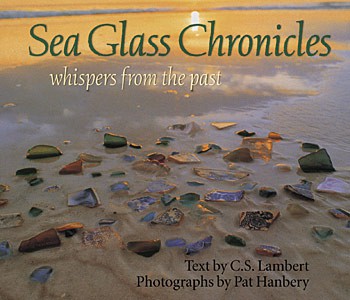
SEA GLASS CHRONICLES 

C.S.Lambert (Author) Pat Hanbery (Photographer)

Amazon UK £17.32 new / used from £12

REVIEW CLIPPINGS

1. The Overwrought (Suspected Publisher’s Puff)  “Hunting for sea glass treasures and safeguarding the hiding places where these precious images of the past wash ashore, are passions among the beach-faithful… This hunger for sea glass is a natural progression… blah…ageless hobby of beachcombing as an anthropological art…blah…this lovely book is a terrific and meaningful gift… blah..those dazzling little pieces of glistening remnants leftover after the sea has abused them as a worthwhile hobby and aesthetic pastime…blah…before being rescued by the beachcombing enthusiast. Holiday gifts, coffee table conversation table toppers or inspirational reading…blah…a book to treasure just like the mysterious particles described between the book jacket covers”

2. The Enthusiast “I love this book. It has a unique perspective – the history of objects from another time – which have washed up on our shores. It is remarkable that a history could be written about a shard of glass. The author manages to trace back through infinitesimal clues the origin and use of what to most is just colorful detrius. The text is very brief and poetic but also informative. The photographs beautifully enhance the found objects. They are insightful and clever, and the quality and sharpness is always first rate”

3. The Pragmatist “I am delighted with this book. Large clear artistic photographs illustrate the research. I have learned a lot about the origins of the beach found objects. To my suprise one of my prized found objects is featured – a Lea & Perrins glass bottle stopper, and I now know it dates from 1876 onwards. I shall be looking out for some purple glass – the rarest colour of all! The text explains why it is so rare. Not a craft book, but a book of answers and interesting facts to inspire the collector”

4. The To-the-Point “Useful purchase beautifully illustrated with creative thought provoking ideas of what can be found on the sea shore and what can be made from what is essentially waste”

And for those that have found glass and want to know what they can do with it, the later companion volume to Sea Glass Chronicles…

A PASSION FOR SEA GLASS

C. S. LAMBERT AMY WILTON

Amazon UK £19.99 new/used about £15

REVIEW CLIPPINGS

“Heaven is sea glass shaped What a wondeful book that transports the reader to a heaven of sea glass images. I thought I was the only weird person, searching the shore line like an oyster catcher, looking for elusive pieces of wave-worn glass and pottery shards. This book shows me there are other like-minded persons who have taken their search to a whole new creative level by fashioning the most beautiful and imaginative pieces of art from their finds”

“Beautiful images  A treasure for any sea glass lover. The images are beautiful and the ideas are creative and inspiring. A wonderfully readable picture book.”

“A fine guide for any art or photography collection Amy A. Wilton provides the stunning photos for A PASSION FOR SEA GLASS, a survey of major sea glass collectors and the workshops of artisans who use the glass to provide everything from sea-glass windows to mosaics, ornaments and more. It complements Lambert’s 2001 SEA GLASS CHRONICLES, which covered collection and identification of sea glass, and adds a new dimension of usage and conversion making this a fine guide for any art or photography collection”

“A worthy sequel to “Sea Glass Chronicles” Author C.S. Lambert and photographer Pat Hanbery showed us the beauty of those colorful beachside finds in “Sea Glass Chronicles: Whispers from the Past.” Now Lambert has gone one step farther by documenting what avid sea glass collectors do with all of their treasures. The people we meet on these pages make jewelry or wind chimes or mobiles. They assemble mosaics on tabletops or walls. One artist crafts panels that look much like stained glass windows, until you examine them more closely. And those are just some of the projects featured in this book. While a few of the profiles include directions for making your own artwork, the focus here is on beauty and art and imagination.”

A must for Sea Glass Lovers I received this book as a gift, and absolutely loved it. I found it interesting to see what other “seaglunkers” did with their collections to display them, where they found their pieces, and enjoyed the beautiful pictures and narrations throughout the book. It is beautifully photographed with great text from the contributing artisans. Terrific craft ideas and suggestions, much more than a tabletop book and well worth the investment”

Unknown's avatar

ABACO WHALE, DOLPHIN & MANATEE SIGHTINGS JANUARY 2012


ABACO CETACEANS AND SIRENIANS                                        BMMRO SIGHTING REPORTS JANUARY 2012

For the second month in succession MANATEES have been seen in the area: again in the Berry Is region, and additionally off Grand Bahama. With luck they will now be a fixture on the BMMRO monthly sightings map. The main reported Abaco activity, including a sperm whale, was on the ocean side of Elbow Cay. Thanks to Charlotte Dunn / BMMRO for permission to use their material

Unknown's avatar

SOUNDS UNDER THE SURFACE: NOISE EFFECTS ON WHALES


The NOAA (National Oceanic & Atmospheric Administration) has produced a short video with the conclusions from recent research into the effects of extraneous (i.e. non-natural) noise on the habits of whales. The cooperative project involved a number of organisations including the BMMRO and Florida State University and lasted two years.

The study concentrated on beaked whales, pilot whales, and melon headed whales. Using readings from tagged whales, the scientists created animations showing the whales behavior before, during, and after being exposed to low levels of a variety of sounds; including sonar. The results showed that beaked whales, known for diving to extreme depths, were much more sensitive to sonar than other species.  Even low levels of these sounds disrupted their diving, vocal, and likely feeding behaviors.

The complete report including a VIDEO and a transcript can be found by clicking LINK==> Sounds Under the Surface | Science and Technology | Ocean Today   (I haven’t been able to embed the Video, so you’ll get the whole page)

Unknown's avatar

BMMRO WHALE, DOLPHIN & MANATEE SIGHTINGS / WINTER REPORT


BMMRO WHALE, DOLPHIN & MANATEE SIGHTINGS AND WINTER REPORT DECEMBER 2011

This was an interesting month. For a start, a humpback whale was reported off Elbow Cay, and a sperm whale further out to sea to the east. There were several cetacean reports between Sandy Point and Hole-in-the-Wall. Perhaps best of all, West Indian manatees – mother and calf – were reported in the area at the end of December, just off the Berry Islands – photo below, and further details in the BMMRO Winter Newsletter via the blue link.

THE WINTER NEWSLETTER contains much of cetacean interest, as always. It features articles on the effects of climate change of the declining Sea of Abaco bottlenose dolphin population; manatees in the Bahamas; ‘Life after Death’ – the importance of whale carcasses on the deep sea eco-system; sonic body-length measurement of sperm whales; the false killer whale stranding on Guana Cay (see POST); educational news update; and much more besides

BMMRO NEWSLETTER WINTER 2011/12

Courtesy of NAHRVALUR and her excellent wildlife blog, here is a cute view of a manatee in a Florida Reserve, where a webcam has been installed 

Manatees (family Trichechidae, genus Trichechus) are large, fully aquatic, mostly herbivorous marine mammals sometimes known as sea cows. There are three accepted living species of Trichechidae, representing three of the four living species in the order Sirenia: the Amazonian manatee (Trichechus inunguis), the West Indian manatee (Trichechus manatus), and the West African manatee (Trichechus senegalensis). They measure up to 13 feet (4.0 m) long, weigh as much as 1,300 pounds (590 kg), and have paddle-like flippers. The name manatí comes from the Taíno, a pre-Columbian people of the Caribbean, meaning “breast”
I’ll write a separate post about these creatures later, and cross-refer from here. rh
NOW CLICK LINK===>>>       MANATEES: THE FACTS
Unknown's avatar

SOUTHEAST COAST & GULF OF MEXICO MARINE / COASTAL FIELD GUIDE: 5* YALE BOOK REVIEW


BOOK REVIEW

This is a superlative field guide: comprehensive, clear and approachable. The illustrations are excellent, and include helpful examples of birds in flight, different views of marine creatures (basking shark side view and head on), whale fluke comparisons and dolphin profiles. The 11 Chapters comprise marine and coastal plants and habitats; invertebrates; sharks; rays; fish; sea turtles; crocodiles and alligators; marine and coastal birds; baleen whales; toothed whales and dolphins; and finally seals and manatee

Yale University Press 386pp, £20 / $24  ISBN 978 0300 11328 0

rollingharbour rating: a rare and coveted 5*****

Obviously this isn’t the guide for land-based birds – you’ll still need Hallett  or Arlott to help with all those warblers, for example. But for all aspects of marine and coastal wildlife it is as thorough as you could ever wish for in a book that is readily portable. While slightly too large (8″ x 6″) and heavy for a pocket, it would be perfect for a day-bag. Convention dictates that the most enthusiastic reviews should include a couple of tiny niggles to prove a book has been read… so,  the shell section is very brief at 2 pages; and the coral section also, with some types (Mustard Hill, for example) omitted. But such an ambitious yet compact book couldn’t possibly be exhaustive. In practical terms, it has everything you could want from a Field Guide when exploring or researching this area.

Publisher’s Summary [added here to indicate the scope & depth of the book]

  • Entries on 619 coastal and ocean species including seabirds, cetaceans, fish, turtles, invertebrates, and plants
  • More than 1,100 color illustrations & 121 colour photographs
  • 452 up-to-date range maps
  • Overviews of key ecological communities, including mangroves, salt marshes, beaches, sand dunes, and coral reefs
  • Special attention to threatened and endangered species
  • Discussions of environmental issues, including such catastrophic events as Hurricane Katrina and the Deepwater Horizon blowout
  • Glossary
  • Excellent organizational aids for locating information quickly
To which I would add:
  • Clear text alerts for endangered / red list species
  • 12-page index (which works very well)
  • Handy front and back flaps place-markers
  • Colour-coded section divisions

To see the publisher’s UK or US webpages for the book CLICK LINK===>>>  YUP UK   or   YUP US – it can also be obtained from the other  conventional sources already mentioned in the book section of this site

Finally, a declaration of interest: Mrs rh works in the London office of YUP, so I have been consciously avoiding partiality. However this just happens to be an excellent book by any standards, so fortunately the frosty domestic fall-out from a bad crit has been easily avoided…
Unknown's avatar

ABACO: BMMRO WHALE & DOLPHIN SIGHTINGS NOV 2011 & A ‘FALSE KILLER WHALE’ STRANDING


ABACO DOLPHIN & WHALE SIGHTINGS NOVEMBER 2011              ‘VERY DIFFERENT FROM OCTOBER’

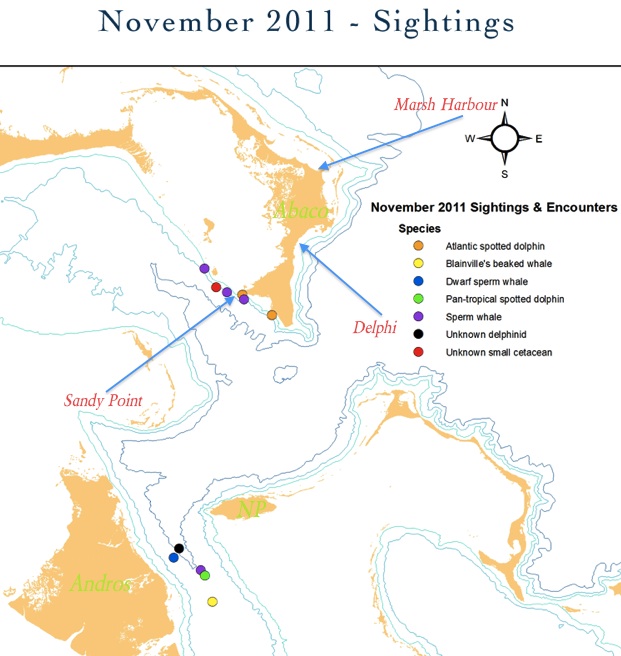
October was a good month for bottlenose dolphins, with sightings both north and south of Marsh harbour –  however, no reported whales off Abaco at all. In complete contrast, in November no bottlenose dolphins were reported, nor any other cetaceans on the east side of Abaco. Instead, the observed activity was all around Sandy Point, with sperm whales in particular returning to the area. Increased sightings off Andros were also reported

                  STRANDED FALSE KILLER WHALE

Charlotte Dunn also reports that on December 2nd 2011, BMMRO was alerted that a whale had live-stranded on Guana Cay. After attempts to re-float it, it was seen heading north past Dolphin Beach. The animal had numerous lacerations and fresh scars, and appeared “very weak with labored breathing”The whale was later found beached at No Name Cay (north of Green Turtle Cay). At that time it was reportedly “still alive but just barely”. Unsuccessful attempts were made to get the animal back in the water.  Sadly, by evening it was dead. Photo ID confirmed it to be a FALSE KILLER WHALE Pseudorca 


For the full report on the BMMRO Facebook page CLICK STRANDED WHALE 

Click logo!

Unknown's avatar

MARINE BROCHURE, ABACO, BAHAMAS: CONSERVATION


MARINE BROCHURE, ABACO, BAHAMAS                             A basic blueprint for environmental protection on Abaco

The various interested organisations have produced a simple 2-page brochure designed to promote responsible preservation of the island’s natural resources. If you click on a page below it will enlarge. If you want to go to the webpage to download the pdf for yourself (or pass it on)  CLICK==> MARINE BROCHURE 

“Take only pictures, leave only bubbles…” 

PAGE 1

PAGE 2

Unknown's avatar

ABACO DOLPHIN SIGHTINGS (OCT 2011) + GREAT IMAGES


                   ABACO DOLPHIN & WHALE SIGHTINGS OCTOBER 2011               TWO YOUNG DOLPHINS SEEN DURING RESEARCH TRIPS

The BMMRO has just published the Bahamas whale and dolphin map of reported sightings for last month, showing a significant amount of bottlenose dolphin activity in the Marsh Harbour area, extending north and south. Also new on the BMMRO website are details of recent research into the Abaco dolphin population. Here are two great dolphin images taking during the trips

A sub-adult dolphin during social interaction ©BMMRO

A young calf on Tilloo Bank ©BMMRO

To view the BMMRO site CLICK LOGO===>>> 


Unknown's avatar

ABACO WHALES AND DOLPHINS – BMMRO NEWSLETTER OCT 2011


BAHAMAS MARINE MAMMAL RESEARCH ORGANISATION NEWSLETTER OCTOBER 2011

The BMMRO’s fully illustrated Fall Newsletter has just been published. The newletter is as always an eclectic mix of cetacean-centric material, with a headline article about the summer whale poop project. I have lived my life and had a professional career of sorts without once giving the remotest thought to whale poop, yet here I am immersed in the stuff yet again… But there’s plenty more besides that. The newsletter gives you an overview of the current work of the BMMRO and articles including the following:

  • A stranded Fin whale on the Berry Islands
  • News of the Irene effect at Whale HQ in Sandy Point
  • An Orca sighted off Eleuthera
  • Education program update
  • A quarterly chart of the summer whale and dolphin sightings – 82 reports for 10 species. 

Thanks as ever to Charlotte Dunn for permission to link to BMMRO material.         To see the newsletter CLICK LINK===>>> BMMRO newsletter Oct 2011 

To visit the informative BMMRO website  CLICK LOGO===>>> Supplementary info: without going into details of the consistency of the output etc, I’ve just found the suggestion online that whales can excrete 3% of their body weight in a day. And a large whale weighs..? Mind where you swim