Here is a clip taken from the excellent websiteTHE ABACO SCIENTIST, with the kind permission of Dr Craig Layman of FIU. The brief summary of the South Abaco Bird Count 2011 by Elwood D. Bracey is of great interest, not least for the Delphi Club, from where guided Nature Tours take place and where there is a lot of enthusiasm for the birdlife of the island. 75 separate species were recorded this year, including all the known Abaconian endemics.
It is also a very fine photo of a male Bahama Woodstar courtesy ofBIRD FORUM
CORNELL LABORATORY OF ORNITHOLOGY ANNUAL REPORT 2011
The Annual Report 2011 contains a huge variety of reports, project news, images, and references. The direct link to the specific Bahamas Birding page can be found under BLOGROLL links on theSIDEBAR. The Report is far wider-ranging. I post it in pdf form because anyone with an interest in birdlife is bound to find something worth following up, and you should be able to download it (if you try & it doesn’t work, can you let me know – comment box or email – and I’ll change the format)
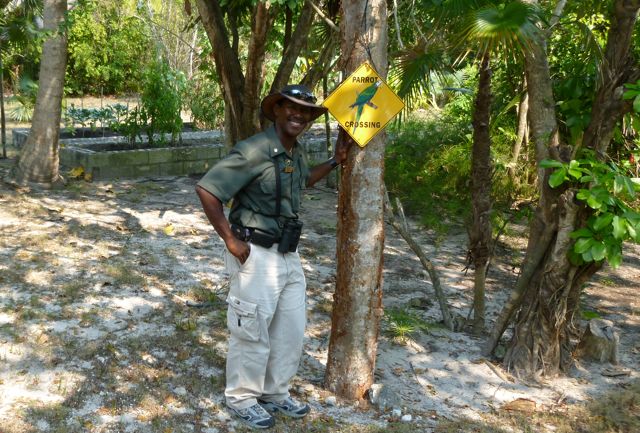
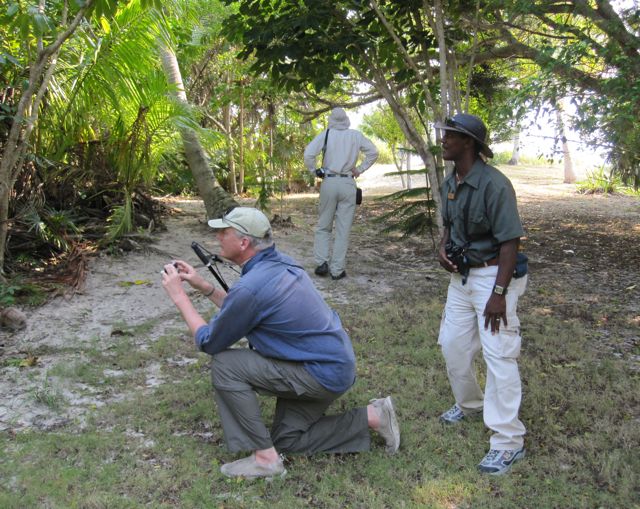
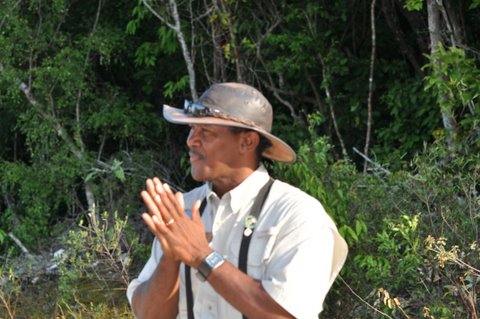
Reluctant as I am to give Ricky even more publicity that he gets already – including passim in this blog – his Nature Tours are seriously good, and his knowledge and enthusiasm for the flora, fauna, geology and history of Abaco are unrivalled. If you want to see a parrot close-up, understand a blue hole or learn which trees and shrubs are poisonous (and which are the antidotes) he is undoubtedly your man. He will even show you birds where you have completely failed to see any & believe there are none
At an early stage of this blog I set out one of its aims – to help answer the question “What the heck is that small yellow bird over there…?” Since then, images have been posted. Lists and links have been given. Bird books have been reviewed. Every little prompt with ID helps the interested amateur (e.g. rh) and not just with the little yellow birds… I have seen all these birds at or very close to Delphi except the common yellowthroat (which I may well have seen but not “seen” as in recognised); and the red-tailed hawk, which we have spotted in the National Park (seeTO THE LIGHTHOUSE , a rugged (ha!) account of the frankly unnerving trip through the National Park to Hole-in-the-Wall Lighthouse)
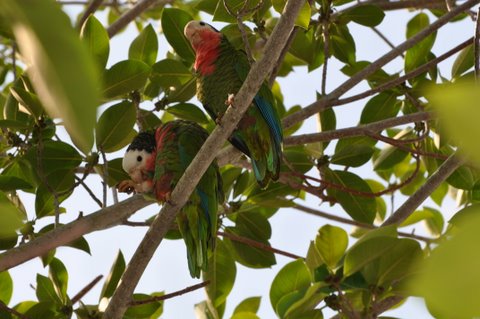
This is one of a number of sequential images posted by cfinke3856 on the website Webshots. It seems to have been taken in 2004, and shows 4 Abaco parrots in a pine tree (location unspecified – the National Park, maybe?). They look pleasingly convivial, and they provide a chance to roll out the newly created rh parrot logo
Normally I would have cleared permission for use (and slight cropping) and given a click-through link so you could see the rest of the (similar) images. However, the website is a nightmare. A pop-up offered me the chance – apparently a near-certainty – of winning $10,000, and froze my cursor when I tried to delete it. Twice. Other untempting offers were made in a rage-inducing way. So I’ll spare you all that, warn you briskly off the site, and apologise to Mr or Ms Finke for ‘borrowing’ the image, duly credited but in tiny writing…
[Note: this post replaces the preliminary, typo-ridden and imageless draft that subscribers may have received, for which I stupidly pressed the ‘publish’ button rather than ‘save draft’… Not the 1st time, either… Sorry]
Scientist Caroline Stahala has spent 10 years researching the Abaco population of the Bahama parrot. Her aim is to develop understanding of their behaviour so that conservation and management strategies for this rare sub-species can be optimised. Particular protection problems arise because Abaco parrots, uniquely, nest underground. Their main vulnerability is to predation by feral cats, racoons and rodents which kill adults, chicks and fledglings in the nest
Predator monitoring and control programs have been in place for several years, removing surprising numbers of feral cats prior to and during the breeding season. Prevention techniques have been refined as predation data has accumulated. In 2011 for the first time motion-sensitive cameras were used, positioned near the openings of vulnerable active nests (shallow or with large openings), monitored 24/7 with infra-red night-time flash. Constant technical adjustments were needed to determine optimum filming distance and memory card size, and to avoid ‘false triggers’ (eg wind)
A great deal of vital data was collected, particularly at night when predation can’t otherwise be effectively monitored. Feral cats were the most frequent visitors, followed by rodents. No racoons were recorded, so these may be less of a threat than expected. One northern mockingbird (above) was caught on film up to no good. It it seems that the camera flash itself may act as a deterrent, something that bears further study. There is also new evidence that some predators approach a nest and ‘case the joint’ for later use. All this data will make it possible to target predator control preventatively, rather than in the sad aftermath of predation – a great step forward.
Overall, during the 2011 breeding season none of 55 nests monitored was lost due to predation. In previous years, the attrition rates have been around 25%. The use of cameras avoids any disturbance of the parrots and chicks and provides round-the-clock monitoring. If the cameras / flash are in themselves deterrents, that is a simple method of predation control. The new banding project means that it is now possible to be certain whether same parrot (or pair) is using the same nest cavity each year – and of course individuals can more readily be identified
Finally, Caroline confirms that the parrots weathered Hurricane Irene well. She was still monitoring the breeding territory then, and when she returned to check active nests after the storm, she found the chicks and fledglings safe in their nest cavities
Abaco Parrot chick safe and sound - the first post-Irene image
Peter Mantle reports that a recent ferocious 4-day storm caused further havoc in the gardens, which had just about recovered from the depredations of Hurricane Irene. Even fishing was impossible. Yes, it really was that bad. However, the birds seem remarkably resilient to everything the weather gods throw at them. Parrots are plentiful around the club and are seen and / or heard almost daily. Peter also says“We had a spectacular exhibition yesterday of a peregrine repeatedly dive-bombing (for fun, we think) several turkey vultures in high wind, with another peregrine cruising nearby.”
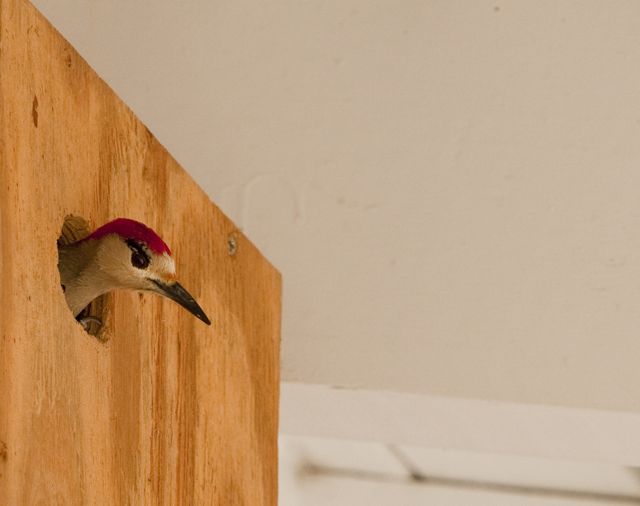
Caroline Stahala has given me a West Indian Woodpecker update. These charming if noisy birds have been a bit of a leitmotif of this blog. We met their early reluctance to use the perfectly nice nesting box provided for them; their eventual moving in; their use of the club vehicles’ wing-mirrors for vanity purposes; their attempts to raise 2 broods of chicks with varied success (that’s a deliberate euphemism); and stoutly resisting the force of Irene. The male woodpecker is still using the nesting box for roosting. The breeding season is long over, but perhaps next season his home in the eaves of the verandah will be tempting for a mate… And finally, the hummingbirds are plentiful – so as Caroline says, “now is a good time to be birdwatching…”
The past week has been rightly dominated by concerns for family and friends, for homes and property, for the swift restoration of communications, and for many other human interests. The consequences of Irene for Abaco’s wildlife has taken its appropriate place lower down in the priorities, but there are obvious concerns for the loss of habitat through destruction and defoliation, consequent problems with food supply and so on.
The Abaco parrots are a potent symbol of recovery from near-disaster, with the conservation programme annually leading to breeding success in the wild and numbers on the increase. Recently – it seems a while ago now – I posted about the progress of this year’s chicks and fledglings: seeABACO PARROT CHICKS Caroline Stahala, who heads the conservation project, has now sent the first report on how the chicks have fared through the hurricane:
“…I have been out checking on the unfledged chicks and I am finding that most of the nests that should have been active still are. This means chicks are still in the nest. I am attaching a photo of one of the chicks that I found post hurricane. It seems that the parrots did well through the hurricane now I hope they are able to find enough food until spring…”
In my earlier post today – seeABACO 31 AUG POST-IRENE – I mention at the end that I feel my unexpected transformation into a storm commentator and information provider is coming to its natural end. I can’t think of a more appropriate image for taking my leave from hurricane duties than this little parrot fledgling. It’s an emblem of Abaco, and a symbol for the future after the storm. Thanks for reading the blog, following it and for all contributions and encouragement over the past week. rollingharbour
Abaco Parrot chick safe and sound - the first post-Irene image
CAROLINE STAHALA has sent a quick update on the progress of the Abaco Parrots and chicks as the breeding season (and the associated project) nears its end. The chicks are growing up fast, and will very soon be fledging. CLICK==>>>HERE to admire their cute appearance in their earlier stages. Caroline says “they are currently, literally, climbing the walls to make their first flight with their parents”. She hopes to provide some photos – perhaps there may be video – in due course. She hasn’t mentioned problems with feral cats, racoons or other predators, so with luck nest raids and chick losses through predation have been low. And if you want to know how to build an Abaco Parrot out of Lego™ (CLICK ‘Lego™ Logo’ above) you’ll have to buy my book “A Spare Week and a Bucket of Lego™” (rh Press $15 / £10)
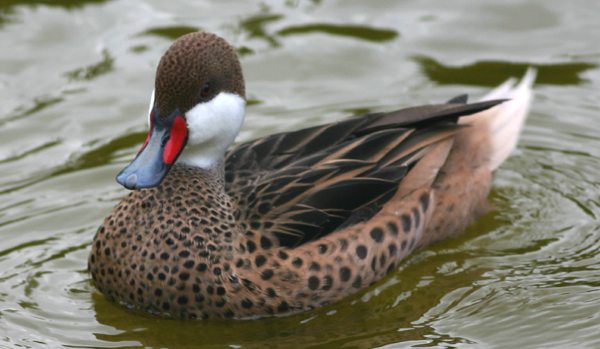
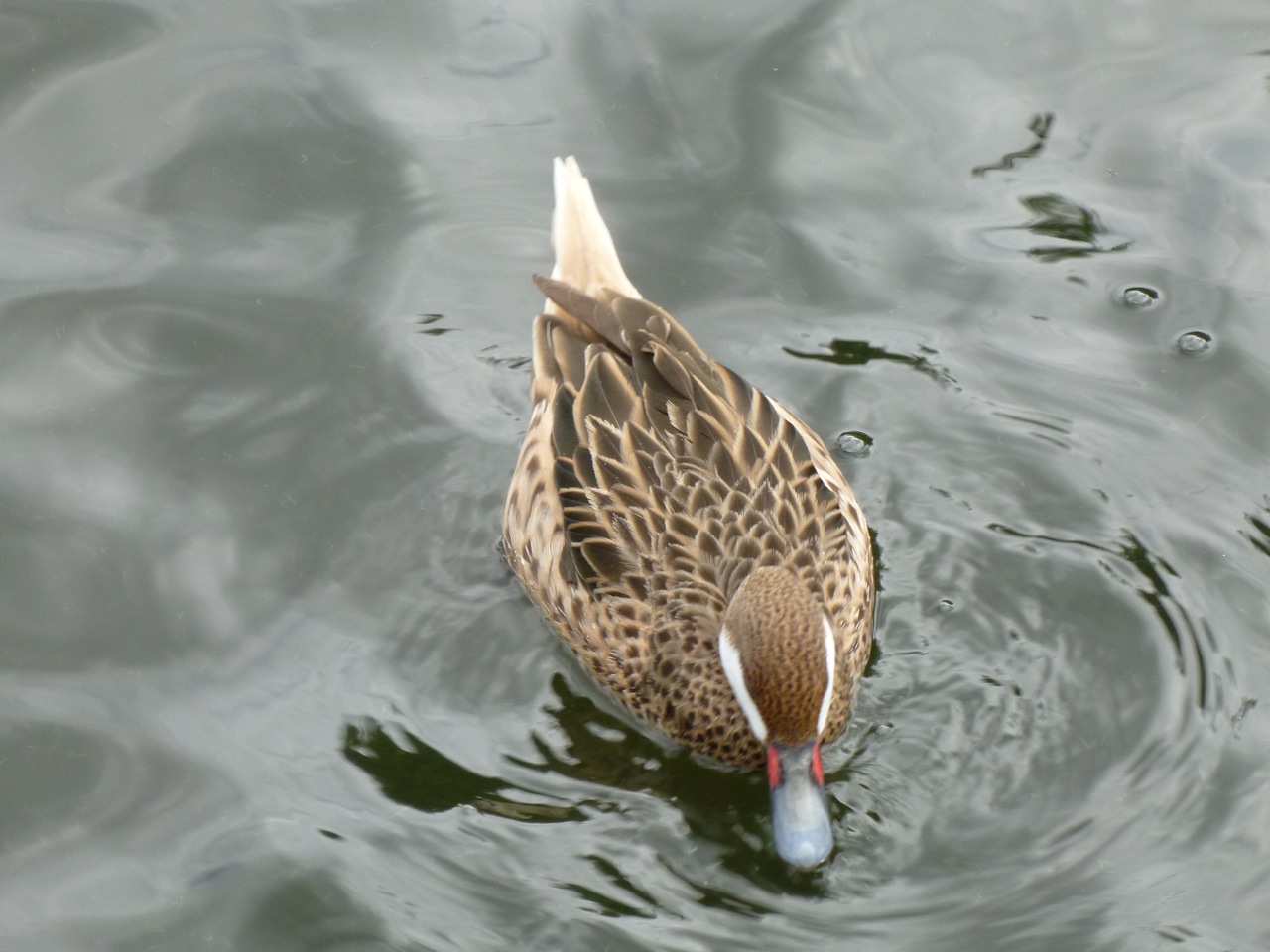
THE BAHAMA(S) PINTAIL aka WHITE-CHEEKED PINTAIL Anas Bahamensis
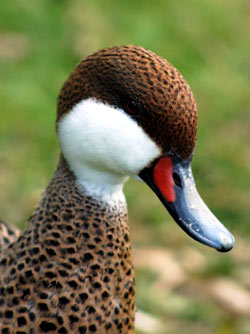
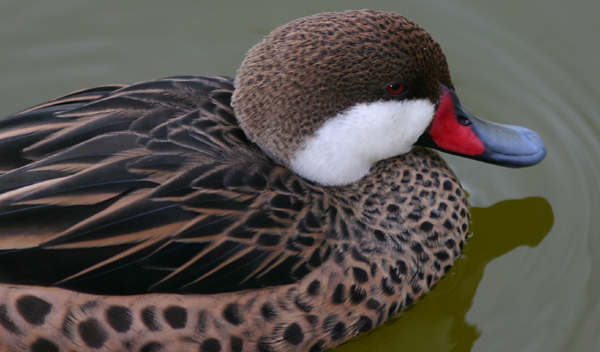
This very pretty duck species is getting a mention not because I have ever seen one on Abaco, but because I have seen them at WWT Barnes in London. [Later note: see end of post – turns out it was at Pensthorpe Nature ReserveNorfolk]. We went there last weekend to photograph one for your (plural, not single reader I hope) exclusive pleasure, but sadly they haven’t got any at the moment – they have been moved to WWT Slimbridge. I’ve decided to post about them anyway. As ever, thanks to wiki for its handy conservation and classification label, plus basic species details which always get things off to a scientific-looking start before the nose-dive into amateurism…
The White cheeked Pintail or Bahama Pintail (Anas bahamensis) is a dabbling duck first listed by LINNAEUSin his Systema naturae in 1758, under its current scientific name.
There are three subspecies: A. b. bahamensis in the Caribbean (and vagrant in south Florida); A. b. galapagensis on the Galapagos; and the slightly larger A. b. rubirostris in South America. The sexes are similar. It is mainly brown with white cheeks and a red-based grey bill (young birds lack the pink). Conveniently for amateurs, it “cannot be confused with any other duck in its range” – though I’ll believe that when I have first-hand experience of personal non-muddle.
These ducks are found on saline waters such as brackish lakes, estuaries and mangrove swamps. They feed on aquatic plants and small creatures rootled out by dabbling. The nest is on the ground under vegetation and near water.
Mike Bergin, a naturalist, has very kindly let me use 2 of his wonderful images for this post. There are others to be found at CLICK==>>http://10000birds.com/white-cheeked-pintails.htmIndeed the whole site is well worth a good rummage around
Photo Credits Mike Bergin 1000 Birds
Here’s what they sound like (credit Xeno-Canto / George Armistead)
SPECIES LISTING (Jan 2012): This duck is on the threatened species list – not actually endangered but experiencing “moderate decline or facing imminent threats which warrant specific conservation measures”. Sadly, there are 3 separate causes of decline, each of which may be difficult to combat: habitat loss; hunting; and predation by introduced species.
Finally, here are links to more material about and images of these pretty ducks:
OISEAUX-BIRDS(an excellent resource for many other birds – merci Nicole for link approval)
STOP PRESS To my complete surprise, I now discover that I have got my very own quite respectable picture of a Bahama Pintail, taken in July 2010 at the Pensthorpe Nature Reserve, Norfolk. So here it is…
STOP PRESS Feb 2012Ricky Johnson, Abaco’s renowned bird expedition leader, has posted a fine example of a Bahama Pintail on his Facebook page, taken near his home. And, with permission (thanks, Ricky) here it is
This might be entertaining. Possibly. I’ve stumbled into a way to make and embed a customisable Abaco map. The bright idea is to record sightings of hummingbirds on the main island and the Cays – both Cuban Emeralds and especiallyBahama Woodstars. See SIDEBAR, right-hand side, down at the bottom for the map, which is enlargeable and moveable.
Data entry I am the only person who can do this, because I had to make the map using my own G**gle account. So if you’ve got sightings to add, that would be excellent. The most helpful thing would be to add a comment to this page or else to email me at rollingharbour.delphi@gmail.com and I’ll do the pin-sticking.
A useful format would be‘BW (or CE) – Location (as precisely as possible, for sticking in the pin) – Date (MM/YY) – Initials – Comment (if any)’
The western spindalis (or stripe-headed tanager) is my favourite bird on Abaco. These 3 birds were all at Bahama Palm Shores. Although this species has featured in at least one earlier post, it’s time for another showing, this time with added sound (credit Xeno-canto.org)
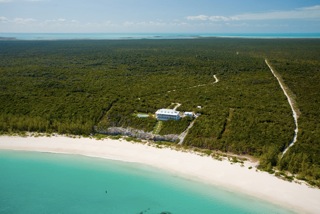
This very pleasant walk somehow seems more satisfactory taken clockwise, turning left at the front gateway and wandering along the guest drive. The straight service drive is less interesting and feels less ‘in the coppice’. The distance is about 2 miles. You can walk the circuit briskly in about half an hour. The birds will see you, but you won’t see them… So preferably take it easy. Here is a fantastic aerial view of the drives (courtesy of DCB)
The start of the route – trees as far as the eye can see
From a birding point of view, as you walk down to the gateway, keep an eye out on both sides. There are plenty of birds in the bushes and trees, though they are not always easy to see. You might see a western spindalis, bananaquits, black-faced grassquits, warblers, northern parulas, loggerhead kingbirds, vireos, cuban emerald hummingbirds or a bahama woodstar if you are lucky, amongst many others. When you get to the main drives, have a look straight ahead into the coppice – in fact anywhere along the guest drive is worth pausing to investigate.
This cuban emerald was just opposite the drive gateway (credit Xeno-canto.org)
The gumbo limbo trees are very popular with many birds, including the Abaco Parrots, so it’s good to check them out as you pass by (and if you have unfortunately touched a poison-wood tree, they provide the antidote – conveniently the two trees tend to grow next to each other). Here are a couple of Thick-billed Vireos proving the point. And their song, which you will hear a lot around the Club itself.(credit Xeno-canto.org)
Hairy Woodpeckers seem to favour dead trees for drilling practice – and perhaps for feeding on the sort of bugs attracted to dead wood. Here’s what they sound like (a call and response with 2 birds) (credit Xeno-canto.org)
There are plenty of small birds all along the way, some more vivid than others…Black-faced grassquit (not a warbler, as earlier suggested. Thanks CN)
Prairie Warbler
Antillean Bullfinch(not, as previously alleged, an American Redstart. Thanks CN)
If you look at the base of the trees in certain places, especially on the the left hand side of the guest drive (facing the highway), there are some small but deep holes in the limestone. If you drop a stone in, you can hear it splash in water – and the ferns growing inside them suggest a continuously moist environment.
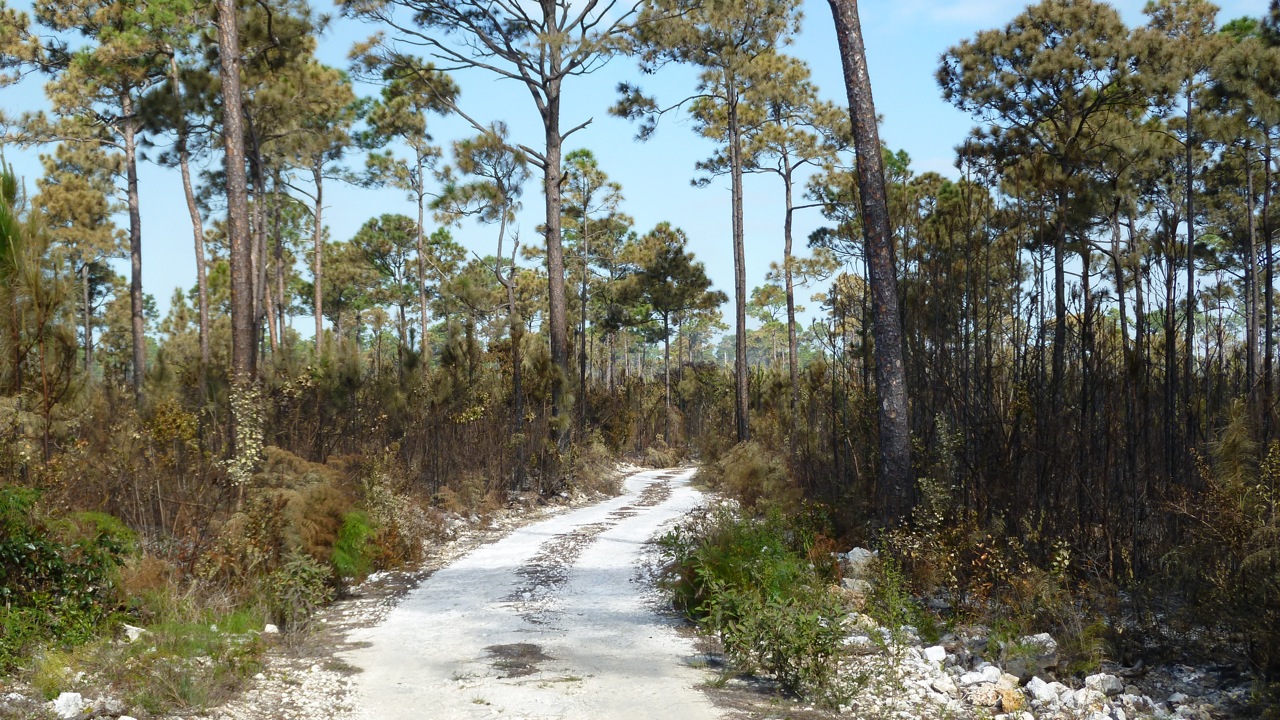
As you progress, you move from the hardwood coppice to the pine forest.This photograph was taken just as the forest fires in March were petering out. The theory was that the fires that raged through the pine forest would stop where the coppice began, and not sweep on to engulf Delphi… and so this photo shows. The thick pine forest with its flammable vegetation and undergrowth gives way here to damper and less combustible coppice-wood which has halted the progress of the flames. The pines you can see are the last few outliers of the pine forest.
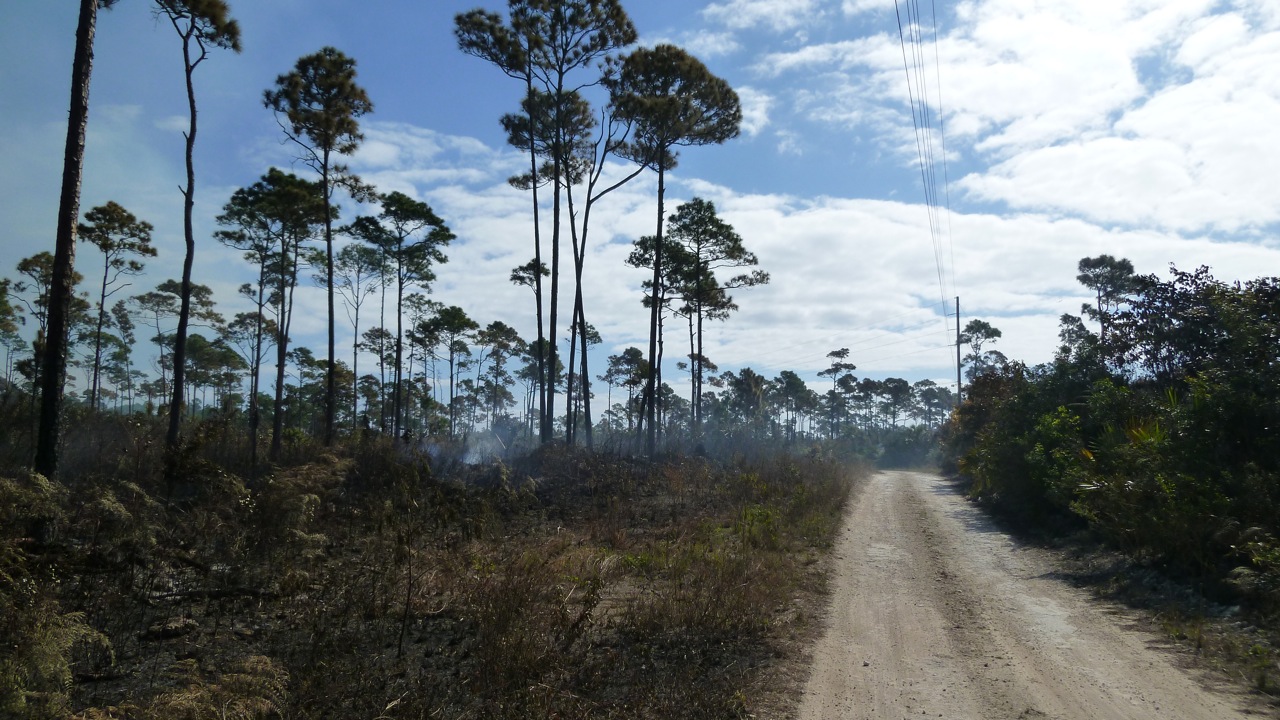
Here is an example of the drive having acted as a partial firebreak.
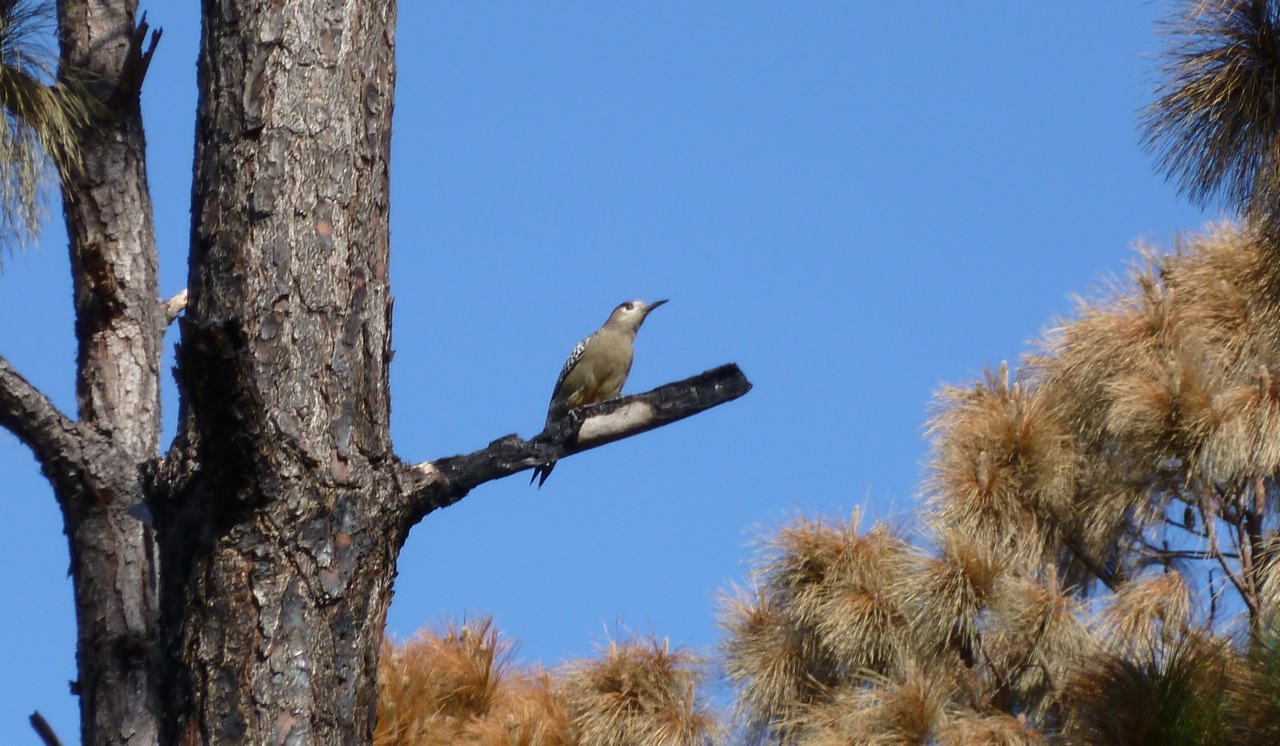
The pines, even burnt ones, are a good place to see West Indian Woodpeckers
When you reach the top of the guest drive it is worth carrying on to the highway. For a start you can admire Sandy’s gardening effort on the south side of the ‘white rock’, and maybe do some weeding. You are quite likely to see Turkey Vultures on the telegraph posts and wires, as here. You may also see Bahama Swallows on the wires, and perhaps an American Kestrel on a post.
Smooth-Billed Ani(wiki-ani)
I have seen a raucous flock of Smooth-billed Anis in this area, but it is hard to get close to them. Listen out for this unmistakable noise (credit Xeno-canto.org)
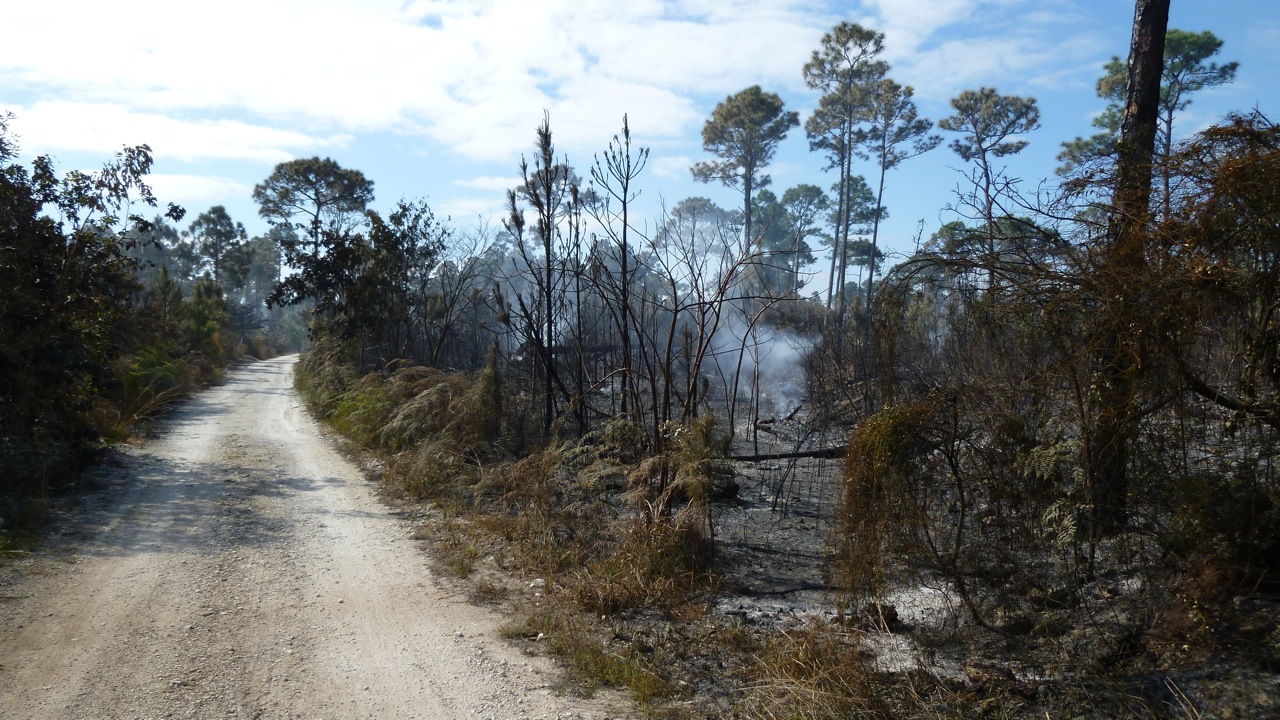
Returning from the road to the fork, to your right is the way you have come – seen here as the fires burnt out. There had been thick, indeed impenetrable, bright green undergrowth all along only 3 or 4 days earlier.
To the left is the service drive and your route home
Because this route is more open, there seem to be fewer birds. Again, you may see kestrels on the posts. Halfway along we heard the loud and very melodious singing of a Northern Mockingbird some distance away. CLICK on image (as you can with all, or most, of these photos) and you can see it singing!CLICK BUTTON to hear song of a Northern Mockingbird (credit http://www.bird-friends.com)
On either drive you will see butterflies. They seem to like the vegetation around the piles of stone and rubble. GULF FRITILLARYAgraulis vanillae
It is also worth looking out on either drive for epiphytes, or air-plants, growing on their host trees. They are so-called because unlike say, mistletoe, they are non-parasitic and do not feed off their hosts.
And so back to Delphi, a well-earned swim… and an ice-cold Kalik in the hammock…
For another angle on the circuit walk, have a look at a proper professional-looking blog by Craig Nash, already trailed in the BLOGROLL. This link will take you specifically to his fourth Delphi post, featuring this stroll. At the risk of stitching myself up here, I should say that you’ll get plenty of seriously good photos… PEREGRINE’S BLOG 4
Exceptional and rare video footage of Abaco Parrots entering their underground nest, very kindly provided by Caroline Stahala for use in this blog. I don’t imagine many people have been lucky enough to see this sort of parrot activity in the wild, so it is great to be able to see it captured on video…
If the video above doesn’t work you can reach it another way: CLICK LINK—–>>>ABACO PARROTS NESTING
[At the moment the video is reachable by the link above. I’m working on embedding it, but there’s a technical hitch to sort out. It’s all geek to me. So I’m using something I’d never heard of until this morning called Dropshot, which at least lets you see the video… though I’ve got a feeling it entails having to have ‘friends’ and to end up involuntarily ‘following’ people like Britney Spears and some crazy guy called ‘iruletheworld’]
CAROLINE STAHALA was introduced in an early parrot post on this blog – see DELPHI CLUB ABACO – PARROT RESEARCH & CONSERVATION. That post will route you to her thesis and to an article in The Abaconian about her work.She has just sent a report about her current researches (and there will be future updates):
At the moment we are in full chick mode. All the parrot nests (45 nests!) that we have been finding and monitoring since the end of May have hatched. Next week I will begin banding these chicks so that we can recognize them as individuals and learn more about their behavior. Here is a picture of a chick banding from last year:In addition to banding chicks, I am going to be attempting to catch 3 mated adult pairs and place radio transmitters on these parrots. This will give us information about what pairs do during the nonbreeding season, how frequently they interact, and whether the amount of interaction during the nonbreeding season influences how well they do during the breeding season.
This year, for the first time, I have set up cameras at nest sites to find out how frequently nests are being visited by potential predators and, also, who these predators might be. We have already detected cats, rats and mice at the nest sites using the cameras. Here is a picture of a feral cat at one of the nest sites:
Caroline has asked me to mention that the project is in desperate need of a new field vehicle – the old one is dying a slow painful death. She is working with a nonprofit organization Parrots International (www.parrotsinternational.org) to raise funds for the new truck (seeBLOGROLLfor their direct link to Caroline’s research). If anyone would like to support this cause, it would be greatly appreciated:
If you are interested in subscribing or donating to support the conservation project to save the Abaco population of the Bahama Parrot, the direct link to the subscription / donation page is http://www.parrotsinternational.org/main-join.html
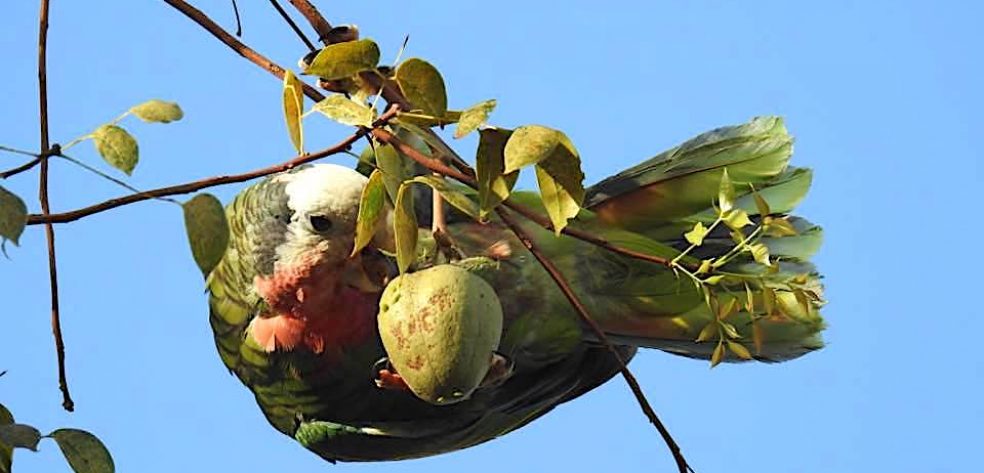
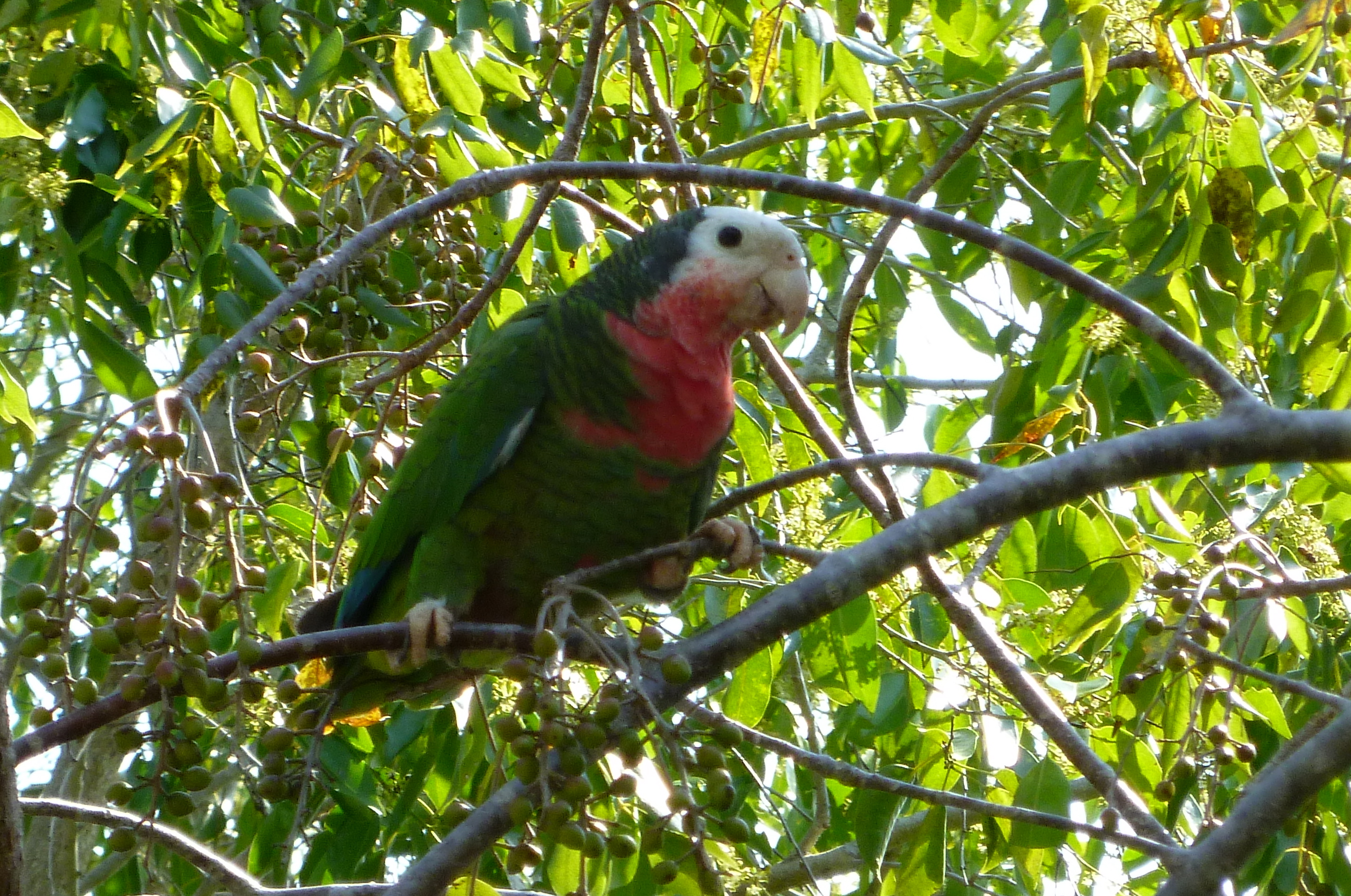
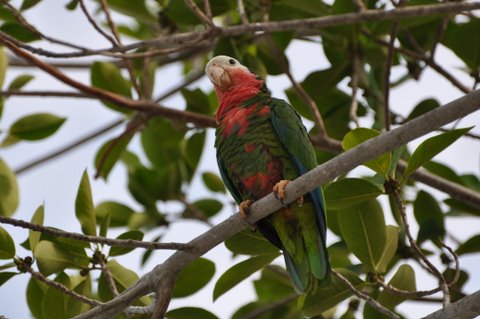
Finally, I sent Caroline an image of a particular Parrot taken by me earlier this year. Ricky Johnson said he had never seen one with so much red on its front – almost reaching its tail. And he should know…
Caroline’s reply “I have not seen a parrot with quite that much red on its belly, however it is not completely surprising. One of the features of the Abaco parrot is more red on the chest and belly than other Cuban Amazon populations. Even within a population there is quite a bit of variation of the red. Some Abaco parrots may just have the red throat with a few red feathers, but they do go to the extreme found in your picture. Usually though you have a small red patch on the belly or what looks like spotty red areas on the belly. Very neat picture!” (rh note – thanks, but in fairness I should add that the whole group of about 12 of us took pretty much the same photo of this parrot…)
SANDY & BILL VERNON have provided a number of wonderful photos from their stay at Delphi earlier this year. The images convenientlycoincide with various categories already posted, to which the headings below link (supposedly – I will sort out any problems in due course, the general rh policy being to upload pictures first then worry about details later…)
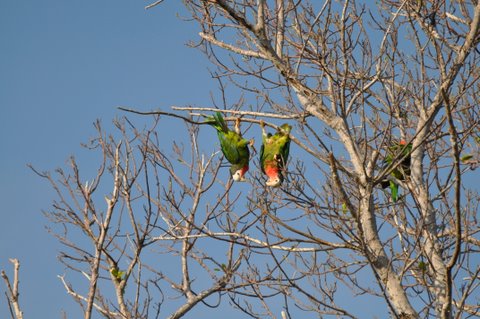
ABACO PARROTS(including some extraordinary acrobatics)
At last I have got round to the hummingbirds. It’s quite simple. There are only two species of hummingbird on Abaco. The endemic variety is the Bahama Woodstar, one of only 3 endemic bird species on Abaco (the others are the Bahama Yellowthroat and the Bahama Swallow). The settled migrant is the Cuban Emerald.
BAHAMA WOODSTAR
Calliphlox evelynae
Male and female Bahama Woodstars (Photo Credit: Phil Brown – and VG too)
These hummingbirds are found throughout the Bahamas. They do not migrate, although are occasional vagrants in SE Florida. They breed all year round, the main season being in April. The female lays 2 elliptical white eggs, which she incubates for 15-18 days. As with humans, the female is mainly responsible for childcare while males go drinking at the nectar bar and hang out with their mates.
This BW was one of a small group at Hole-in-the-Wall. They were completely unconcerned by our presence, and we could get within arm’s length of them. Woodstars, though tame in human terms, can be aggressive and territorial. They are plentiful throughout the Bahamas except on Grand Bahama, Abaco and Andros. Significantly those are the only islands where the Cuban Emerald is found in any numbers. As with the native red and import grey squirrel problem in the UK, the migrant emerald is aggressive towards the woodstar, which is consequently rare where emeralds are abundant.
Here is their call (credit Jesse Fagan Xeno-canto)
Addition April 2012Here is a seriously cute female Woodstar photographed by Ann Capling at Bahama Palm Shores, close to Ocean Drive – a really pretty little bird
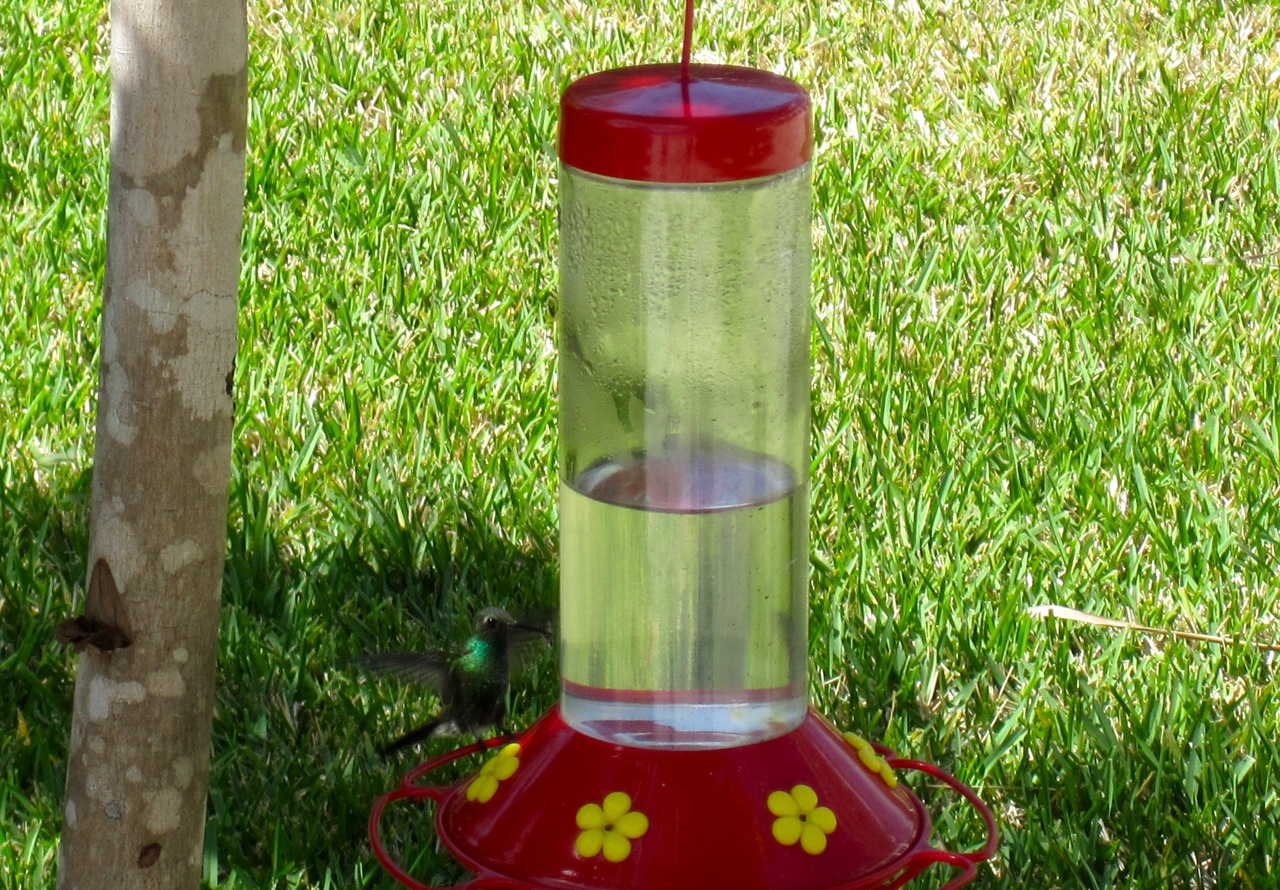
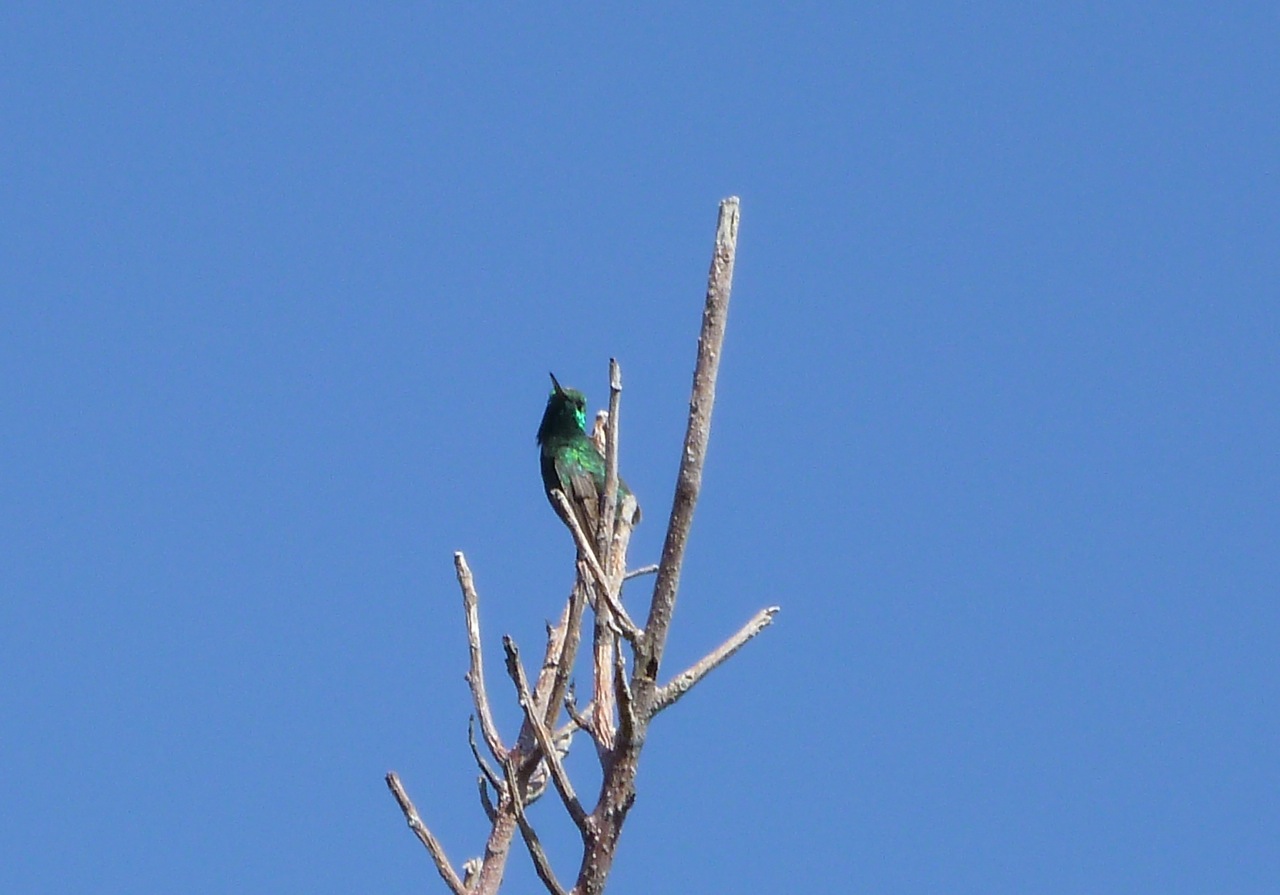
At Delphi, you’ll frequently see emeralds, especially now that feeders with sugar water have been hung up for them. The pool area is a very good place to watch them. But there are occasional woodstars to be seen as well – in the coppice on the drives for example, and even on the feeders. The vague blur to the left of the feeder below is a woodstar in the millisecond between me pointing the camera and it flying away… Don’t bother to click to enlarge it – it’s a useless photo, I know, but it is evidence even at the lowest level
CUBAN EMERALDChlorostilbon ricordii
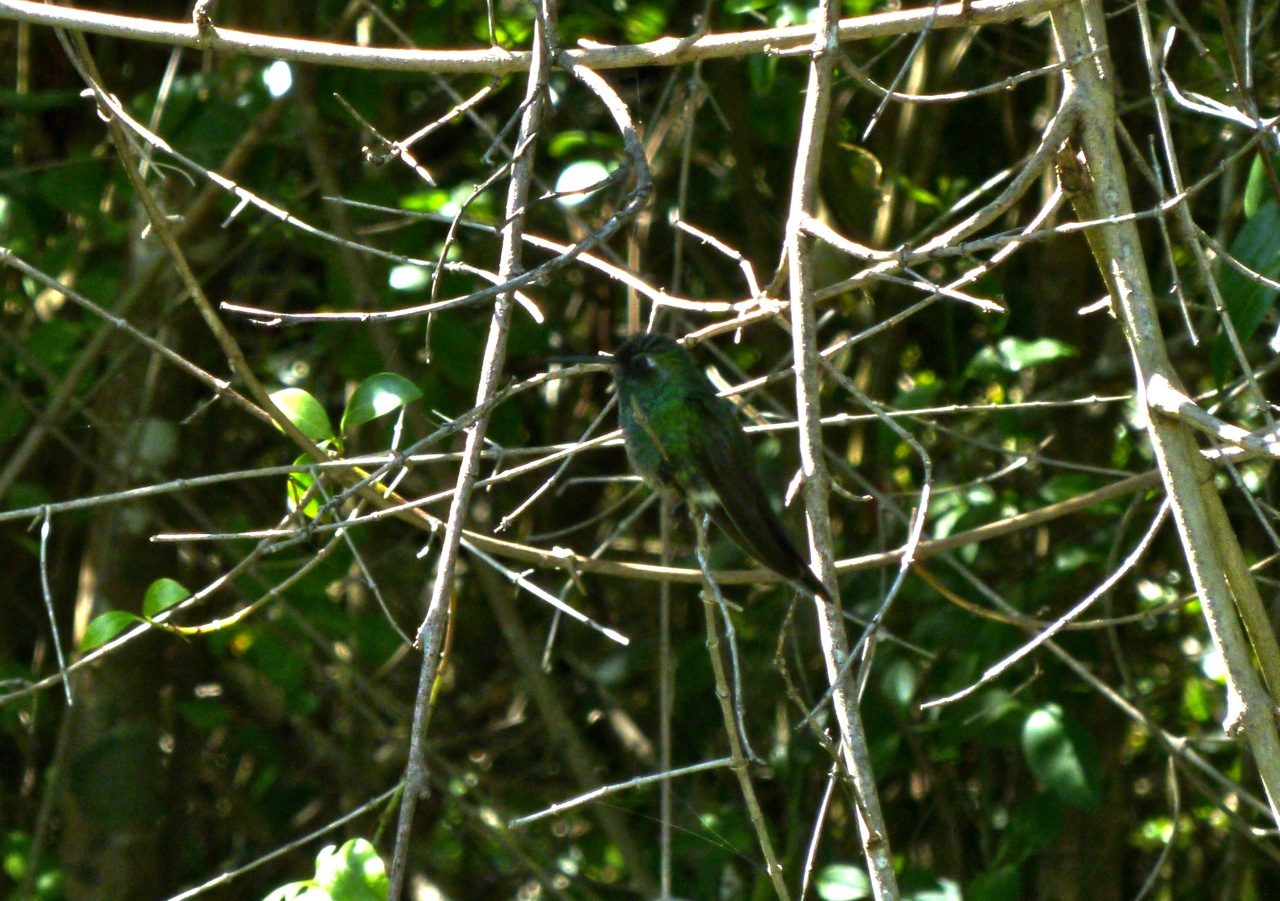
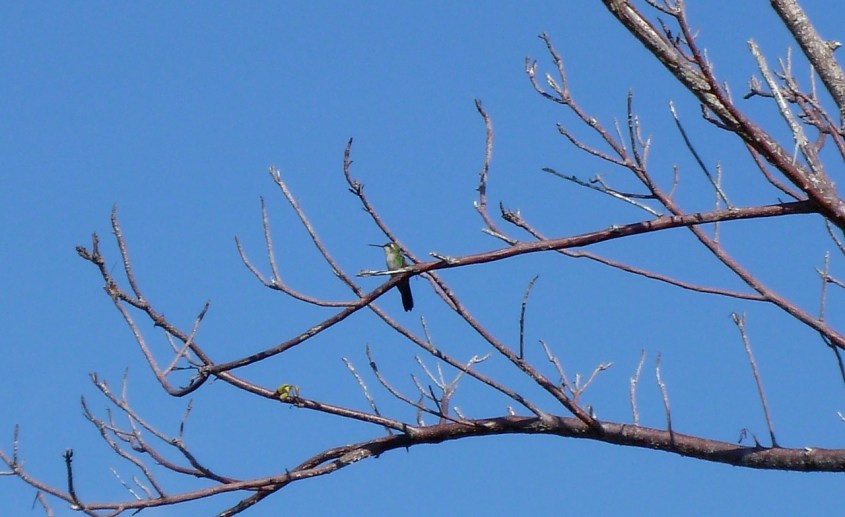
There’s probably a great deal to be written about the emeralds, but not by me. Or not now, anyway. The little you need to know from me is already covered above, and I haven’t yet discovered whether their childcare arrangements differ significantly from the woodstars. Probably not. So I’ll put in a selection of photos, and remark that it is strange how quickly they can change from sleek and slender birds to small rather cold and dispirited looking bundles of feathers. Both states are depicted below. Here’s what to listen for (credit Xeno-canto.org)
Delphi – pool feeder
Delphi – pool feeder
Delphi – pool feeder
Delphi – far side of pool
Delphi – near pool
Delphi – front drive
Delphi – front drive
All the above birds were photographed at Delphi. We saw emeralds elsewhere, of course – in the pine forest, flicking across the logging tracks; on other Cays. The best sighting was during our day trip reef-snorkelling and island-hopping with Kay Politano, when we had an excellent lunch for 14 at Cracker P’s on Lubbers Cay (see future post about this and the island-hops). There was a bird feeder by our table, to which emeralds came and went throughout the meal. Here are some photos – I wanted to get them hovering, and kind of succeeded. More or less.
By which I mean, of course, Plovers and Ruddy Turnstones on the Delphi beach, but let’s just keep an eye on the individual ‘hits’ tally for this provocatively titled post…
A single Wilson’s Plover – February 2010
Four Ruddy Turnstones at the north end of the beach, on the lethal coral – March 2011
(thanks for the ID correction Margaret – see comments below)
Two Ruddy Turnstones – March 2011
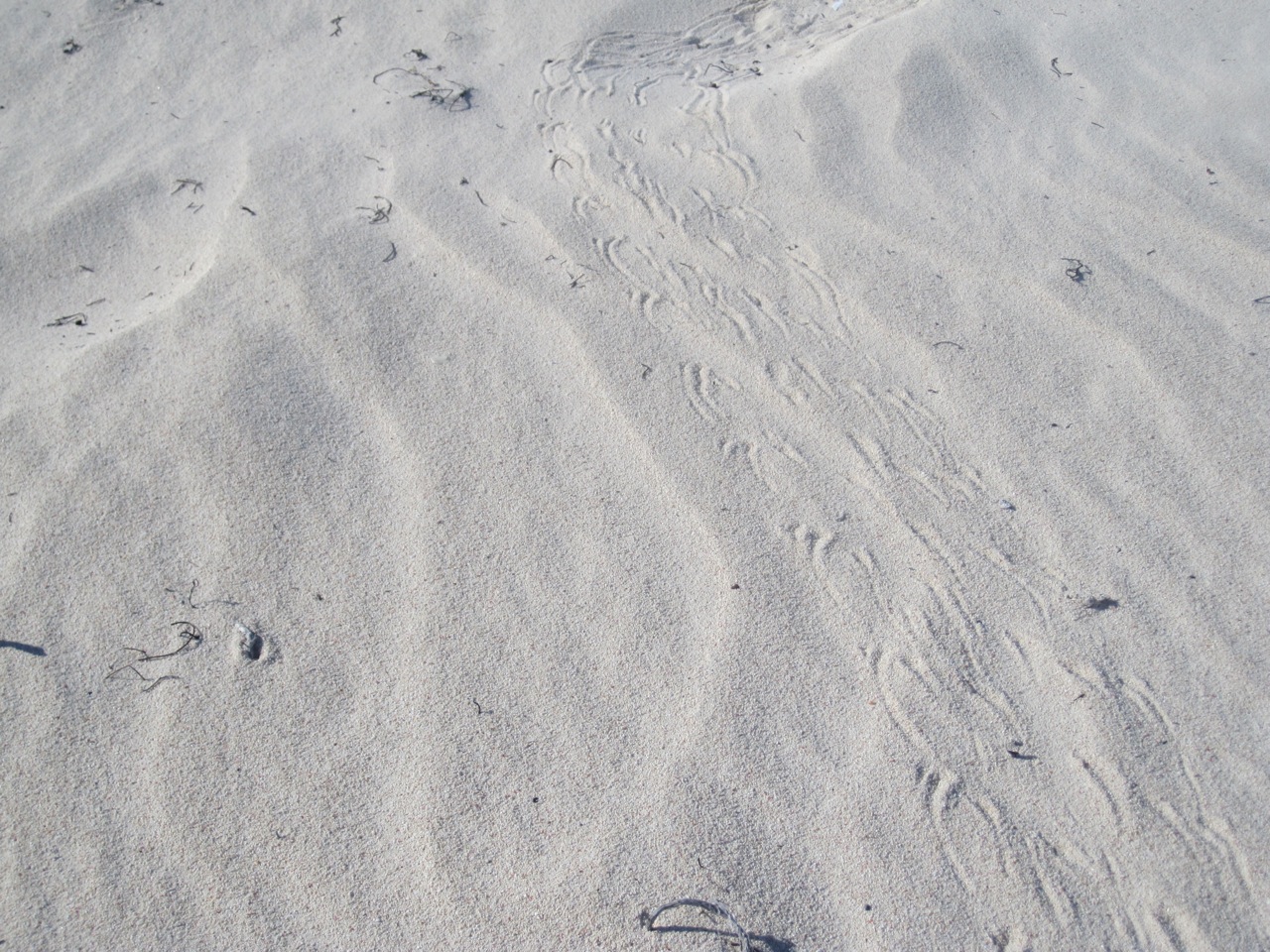
An inviting track to be followed (quite some distance, as it turned out)
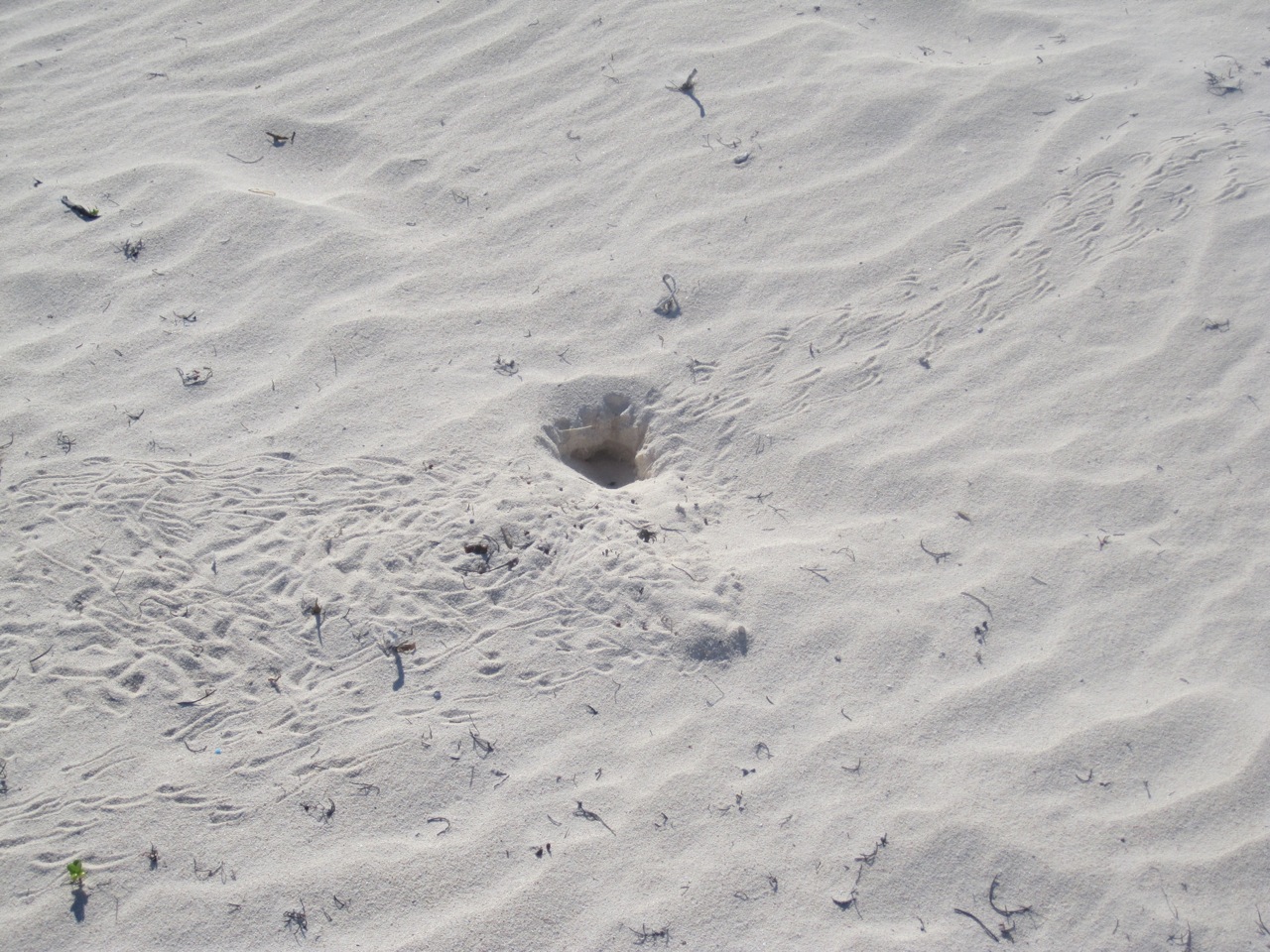
The end of the track – a crab’s home
Finally, his ‘n’ hers rods – evidence of a perfect Rolling Harbour afternoon
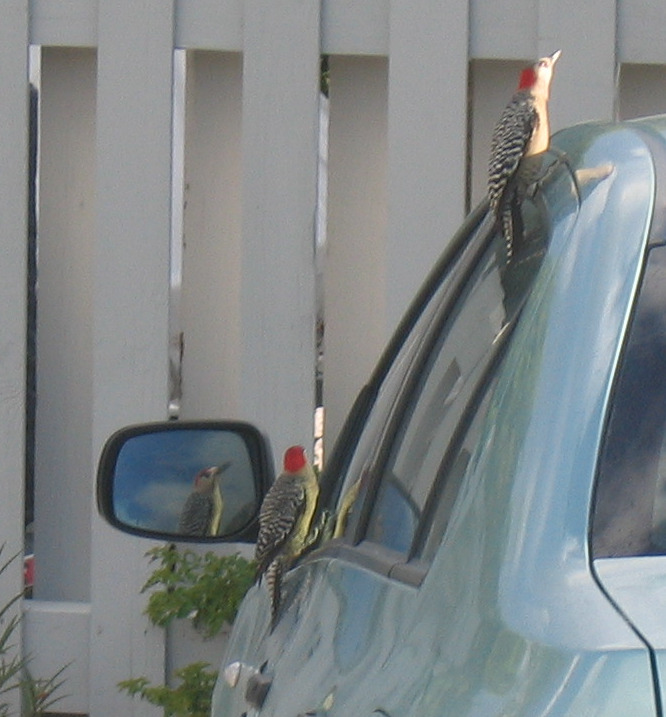
The nesting box has clearly been a big hit, now that the woodpeckers have deigned to move in. And they are getting a bit cheeky. David Rainford has sent a great photograph of them as they play with the Club car, preen in the mirror etc… More of David’s photos will be posted shortly inCONTRIBUTIONS
Ricky is a well-known, infectiously enthusiastic, and compendiously knowledgeable Abaco nature guide (this guy gets way too much free publicity in this blog…). In this video he focusses his binoculars on piping plovers, a threatened species of tiny plover which annually makes a long migration to the Bahamas, including Abaco – and then heads all the way north again.
If this video doesn’t make you smile at some stage, I suspect a SOH bypass and / or your ‘anti-cute’ setting is jammed on. You’ll also see the differences between the piping plover and the more familiar Wilson’s plover.
PS Missed an obvious tongue-twister component out of the original title – now amended to tip a hat to Mine (and Thine) Host

 Here is a clip taken from the excellent website THE ABACO SCIENTIST, with the kind permission of Dr Craig Layman of FIU. The brief summary of the South Abaco Bird Count 2011 by Elwood D. Bracey is of great interest, not least for the Delphi Club, from where guided Nature Tours take place and where there is a lot of enthusiasm for the birdlife of the island. 75 separate species were recorded this year, including all the known Abaconian endemics.












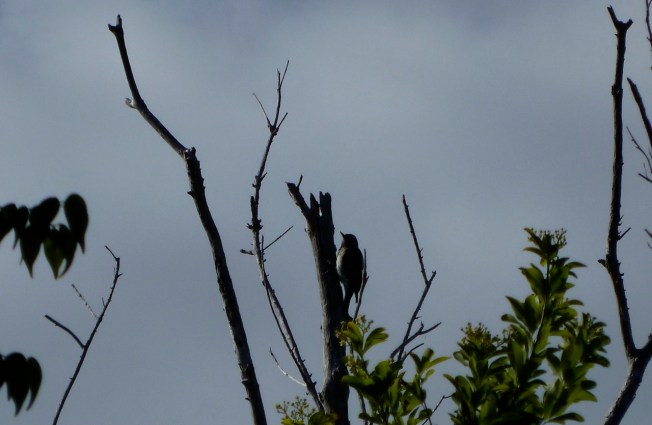




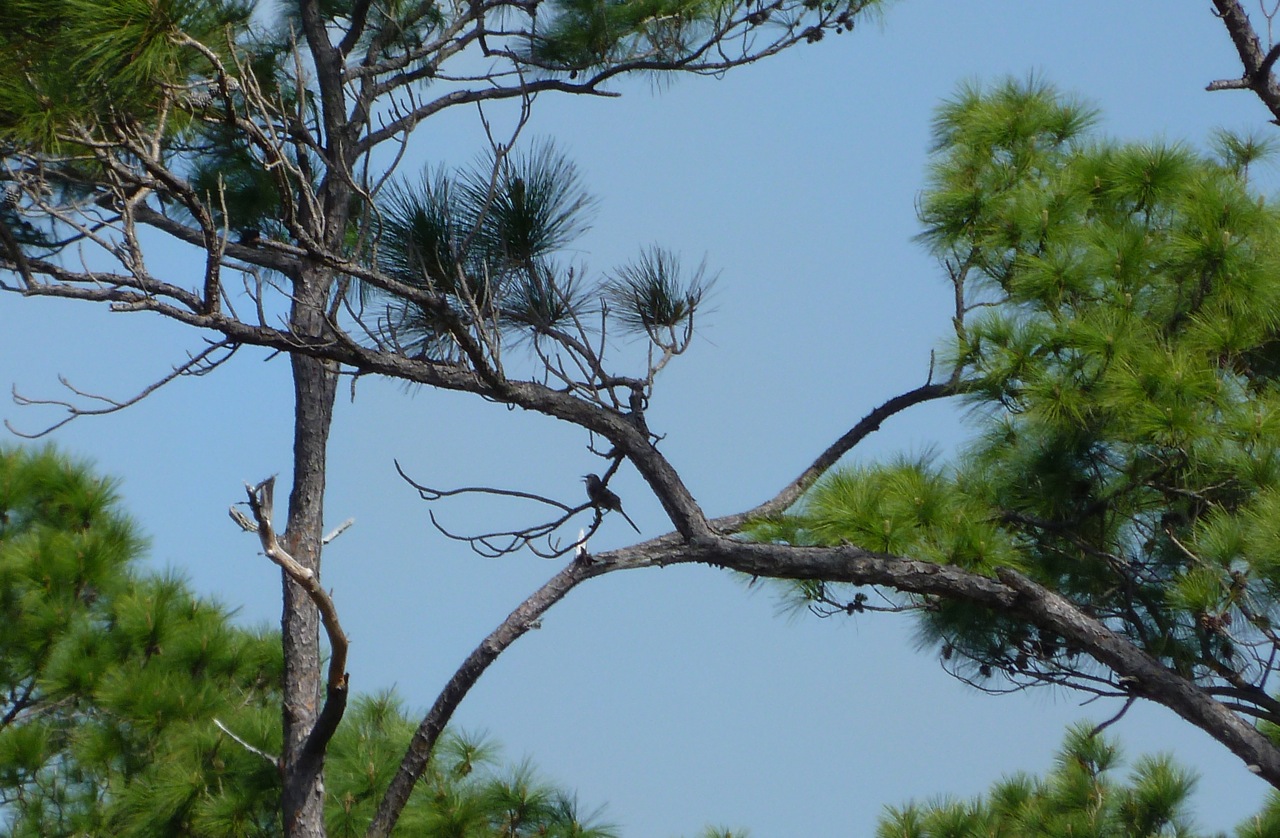









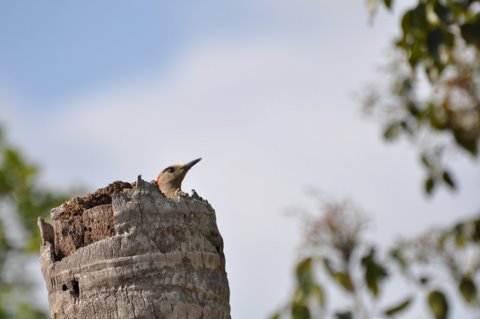






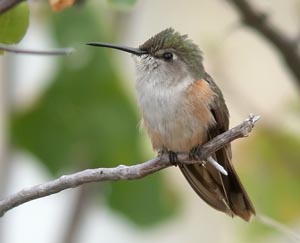
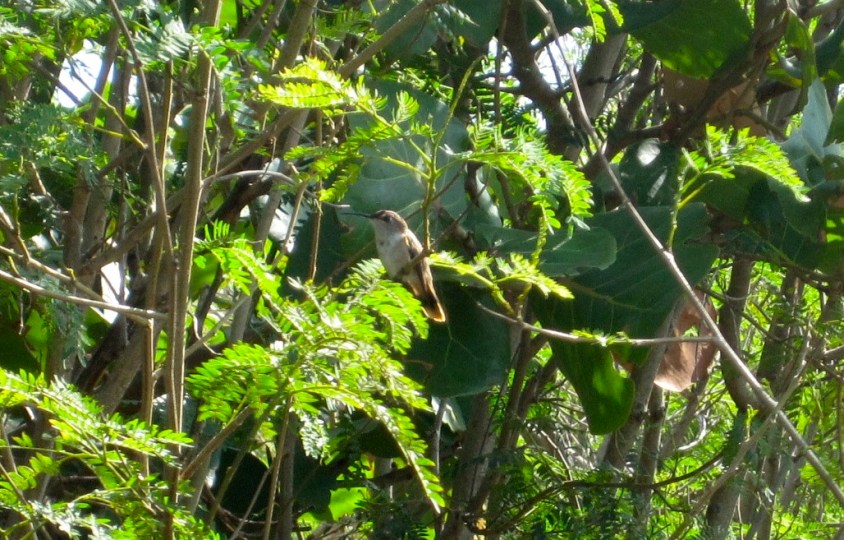
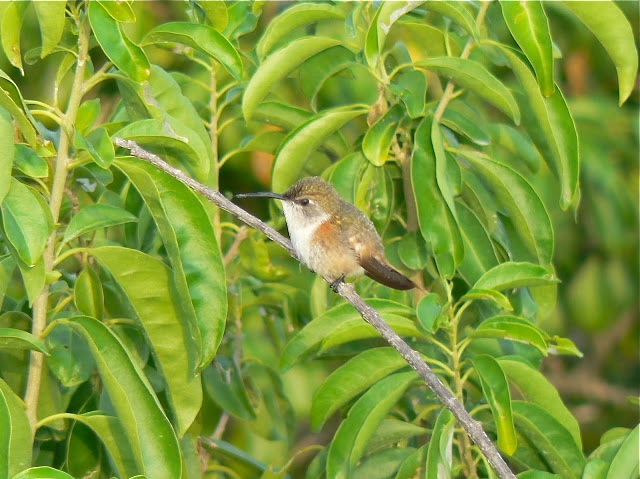

 CUBAN EMERALD








 ROLLING HARBOUR ABACO

You must be logged in to post a comment.