Unknown's avatar

COOKIECUTTER SHARKS: BEASTLY LITTLE SUCKERS


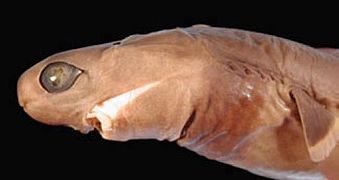
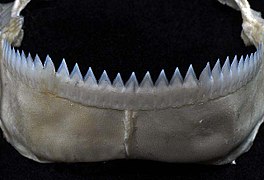
Cookiecutter Shark mouth, jaws & teeth (BMMRO Bahamas)

COOKIECUTTER SHARKS

BEASTLY LITTLE SUCKERS

The Cookiecutter shark Isistius brasiliensis (aka the less scary, more genial sounding ‘cigar shark’), might be an ideal candidate for a Room 101 nemesis.** These little beasts – a species of dogfish shark – are found in several mainly island-based areas dotted around the globe, including in Abaco waters.


HOW COME THE NAME?
These sharky little b@st@rds (*technical term*) attack marine mammals and fishes, gouging out perfect round plugs of skin and flesh, leaving what are sometimes called ‘crater wounds’. Then they eat them. Imagine getting hold of a really sharp domestic cookie cutter with circular rows of razor-sharp teeth, and grinding it hard into your thigh. There! That! 
The size of an adult shark:16″ max
The term ‘cookiecutter’ is also a pejorative slang term, meaning mass-produced, lacking in originality, or boringly samey, as in cookiecutter cars or TV genres etc. The little critters under consideration here are anything but…
                        

HORRIFYING COOKIECUTTER FACTS

  • Live in the depths, rise vertically in the day & dive back down at dusk
  • Undersides have light-emitting ‘photophores’ which emphasise…
  • …the dark collar which acts as a lure, resembling a small innocent fish
  • Bioluminescence lures prey & confuses predators (more on this below)
  • The glow is so strong it may last for some time after removal from water
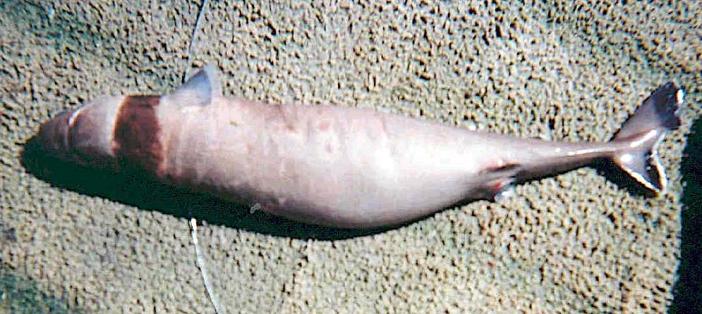
  • Their lips are ‘suctorial’ = they attach tightly to their target
  • The jaws then gouge out the victim’s flesh in a remarkably neat circle
  • Omni-vicious: any medium to large ocean creature is vulnerable to attack
  • There are even occasional reports of humans being targeted

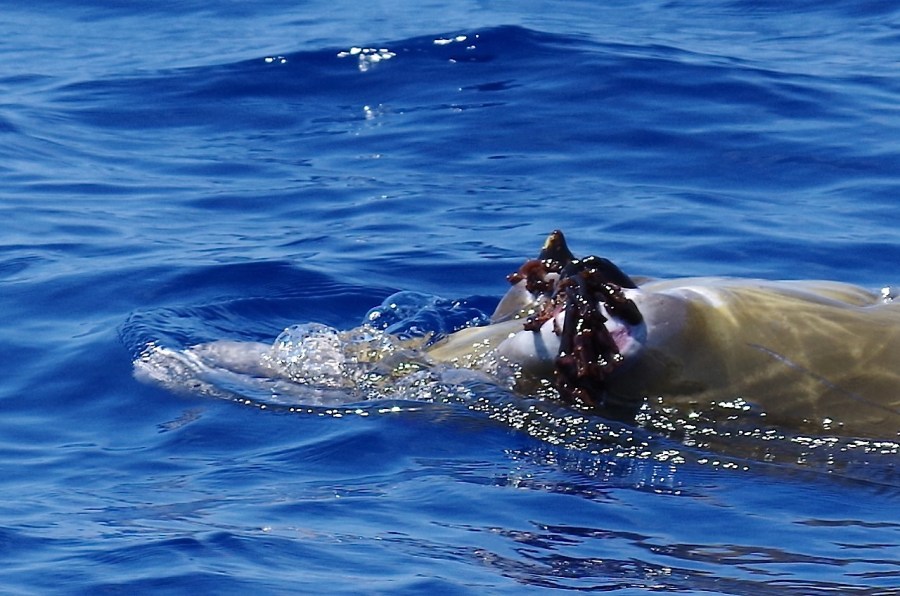
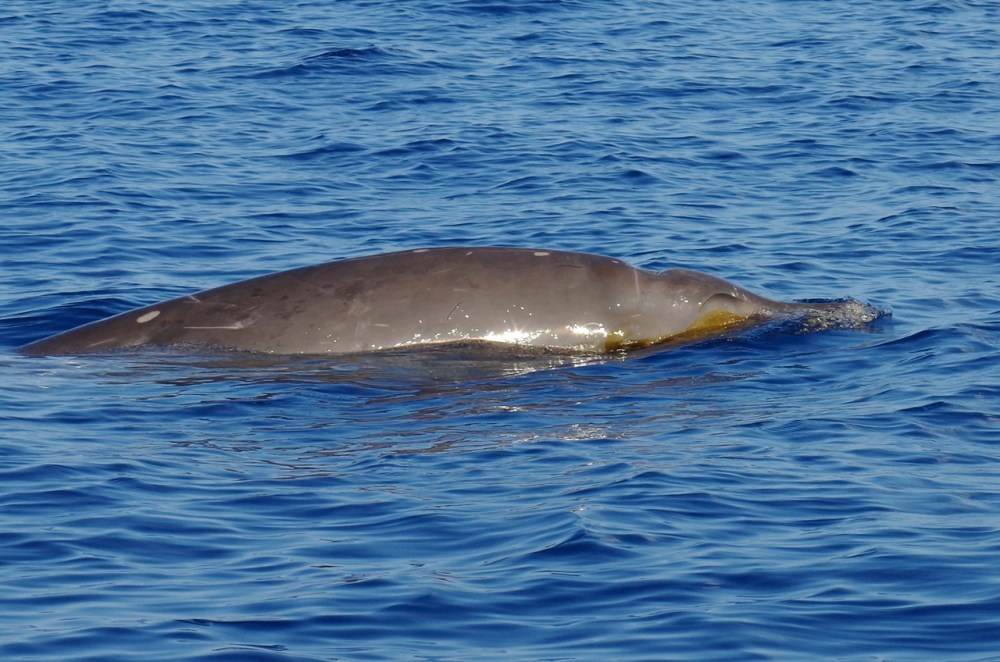
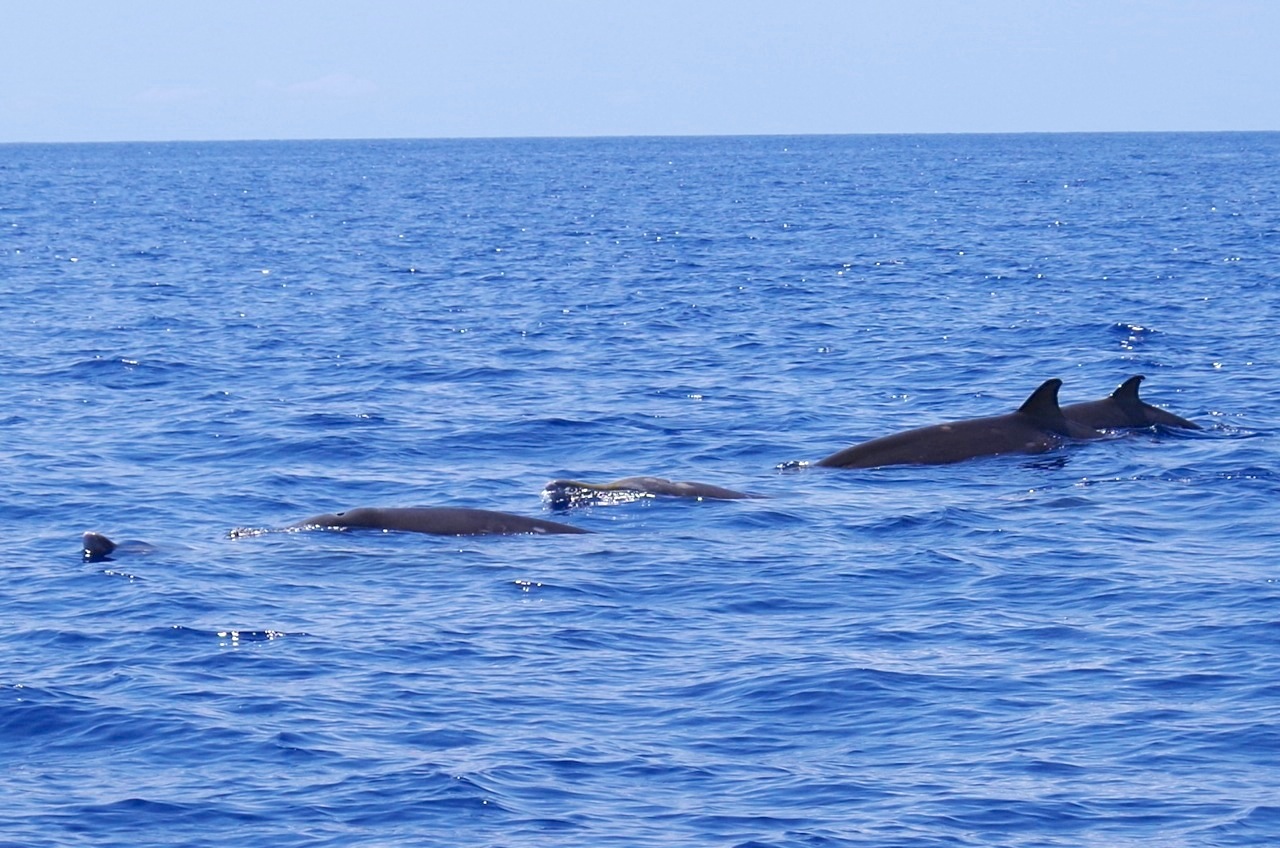
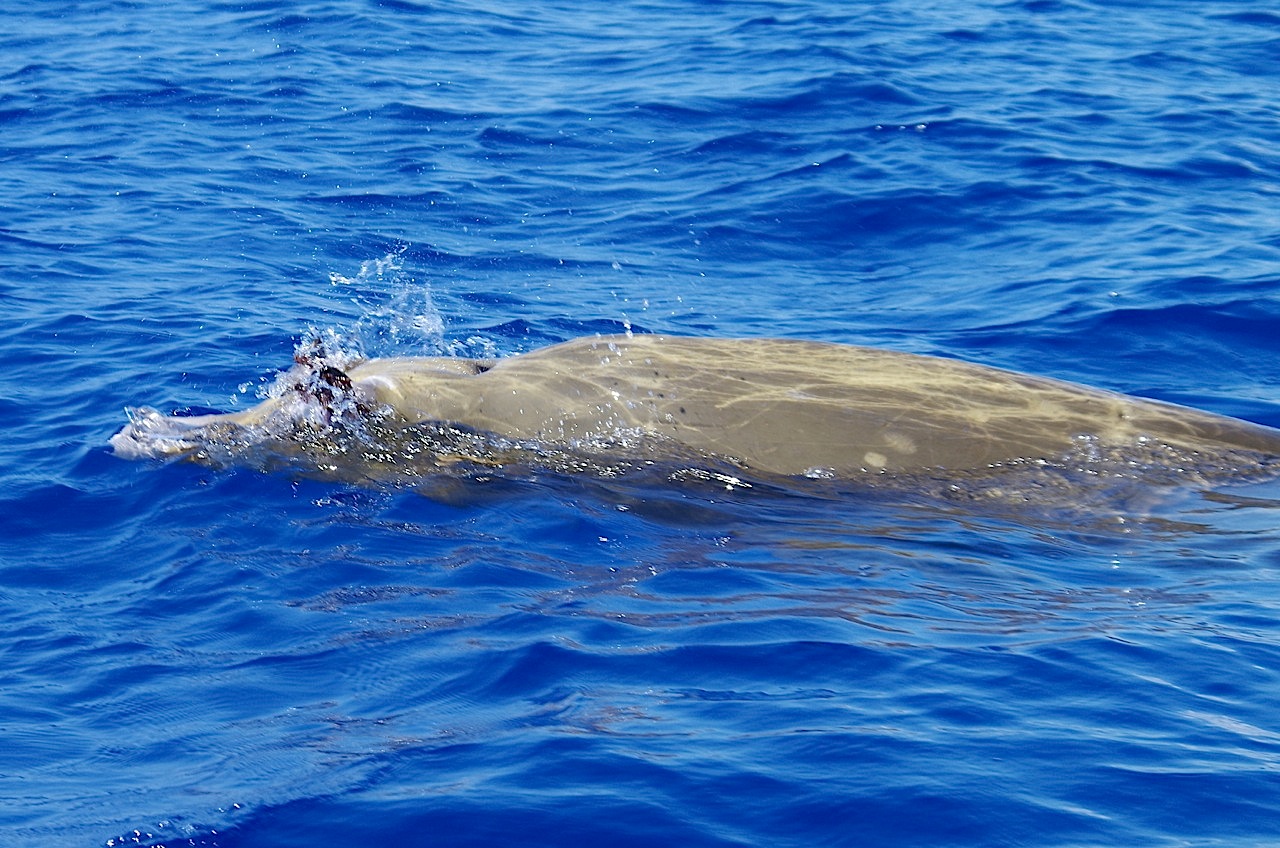
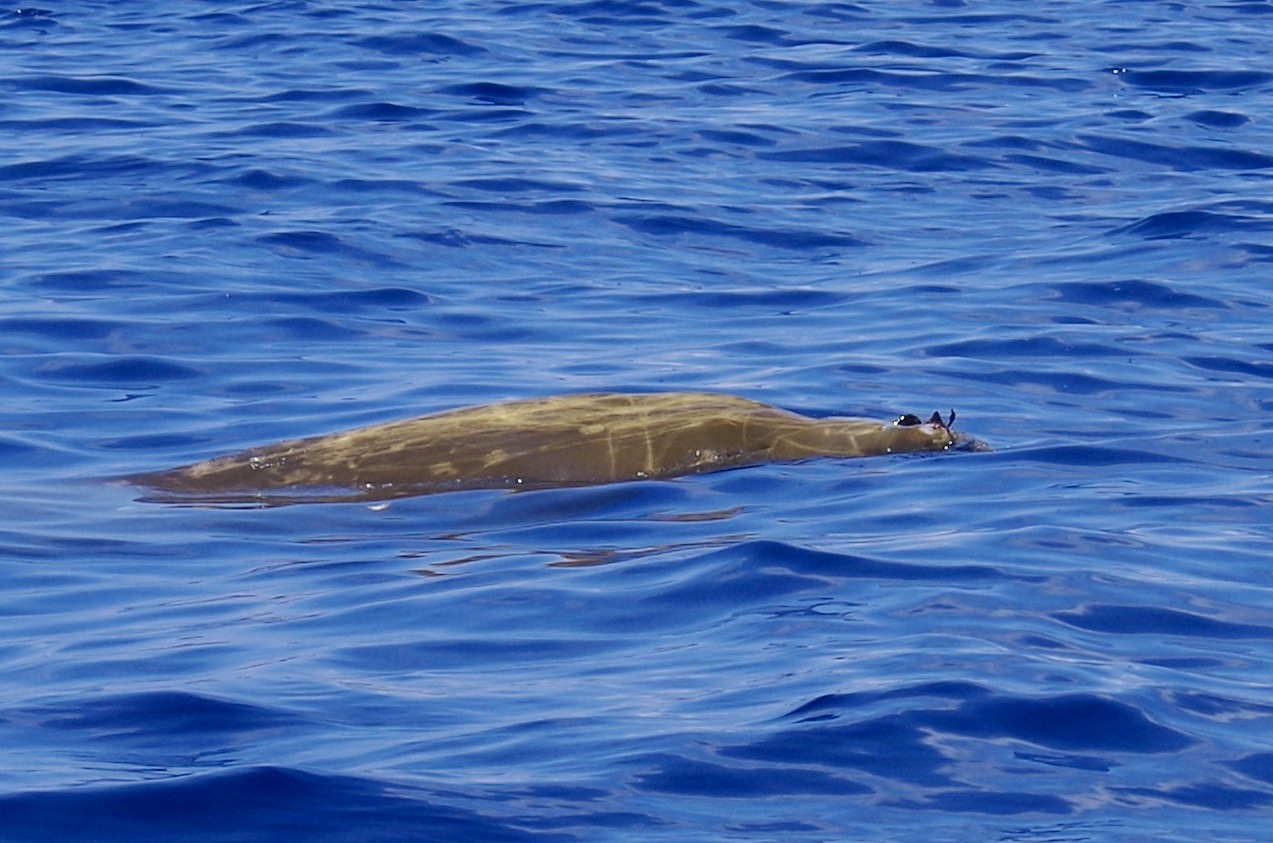
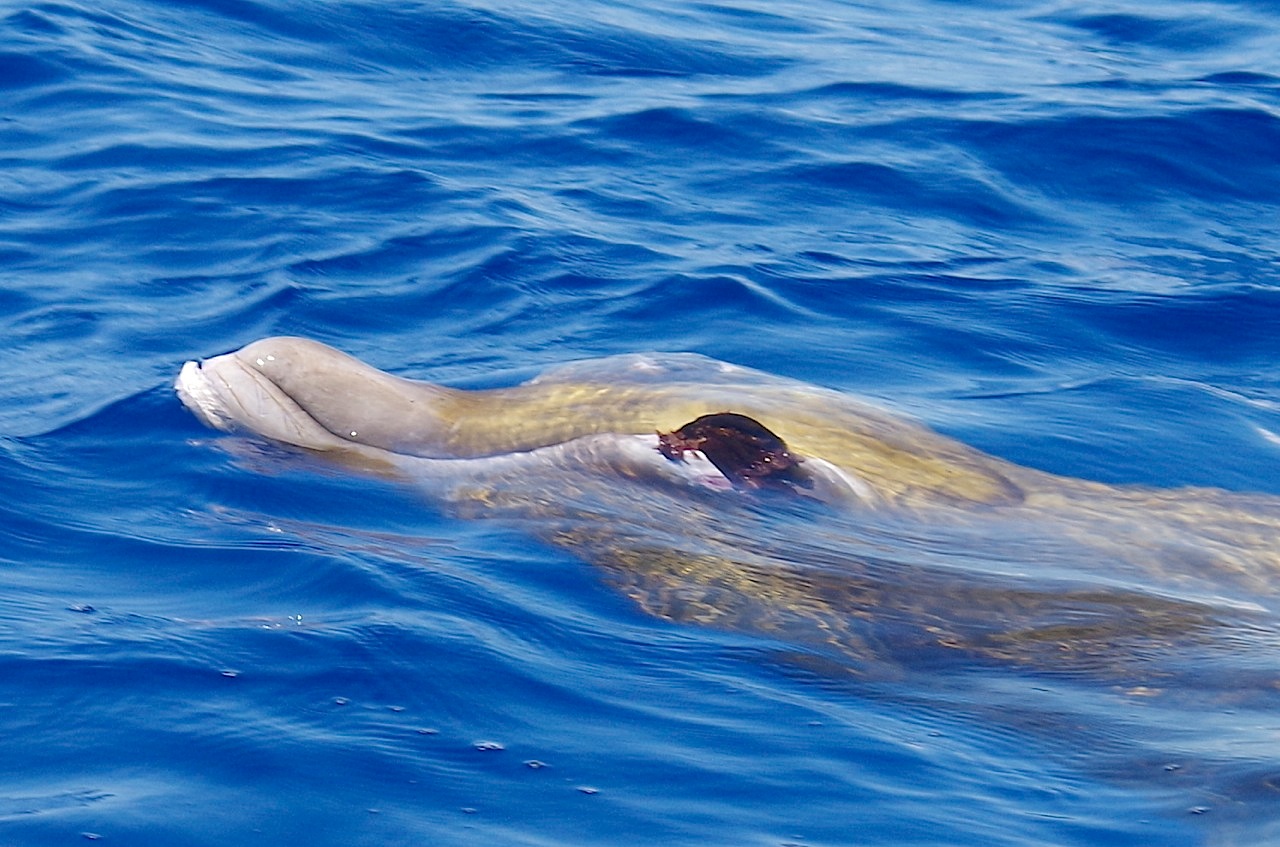
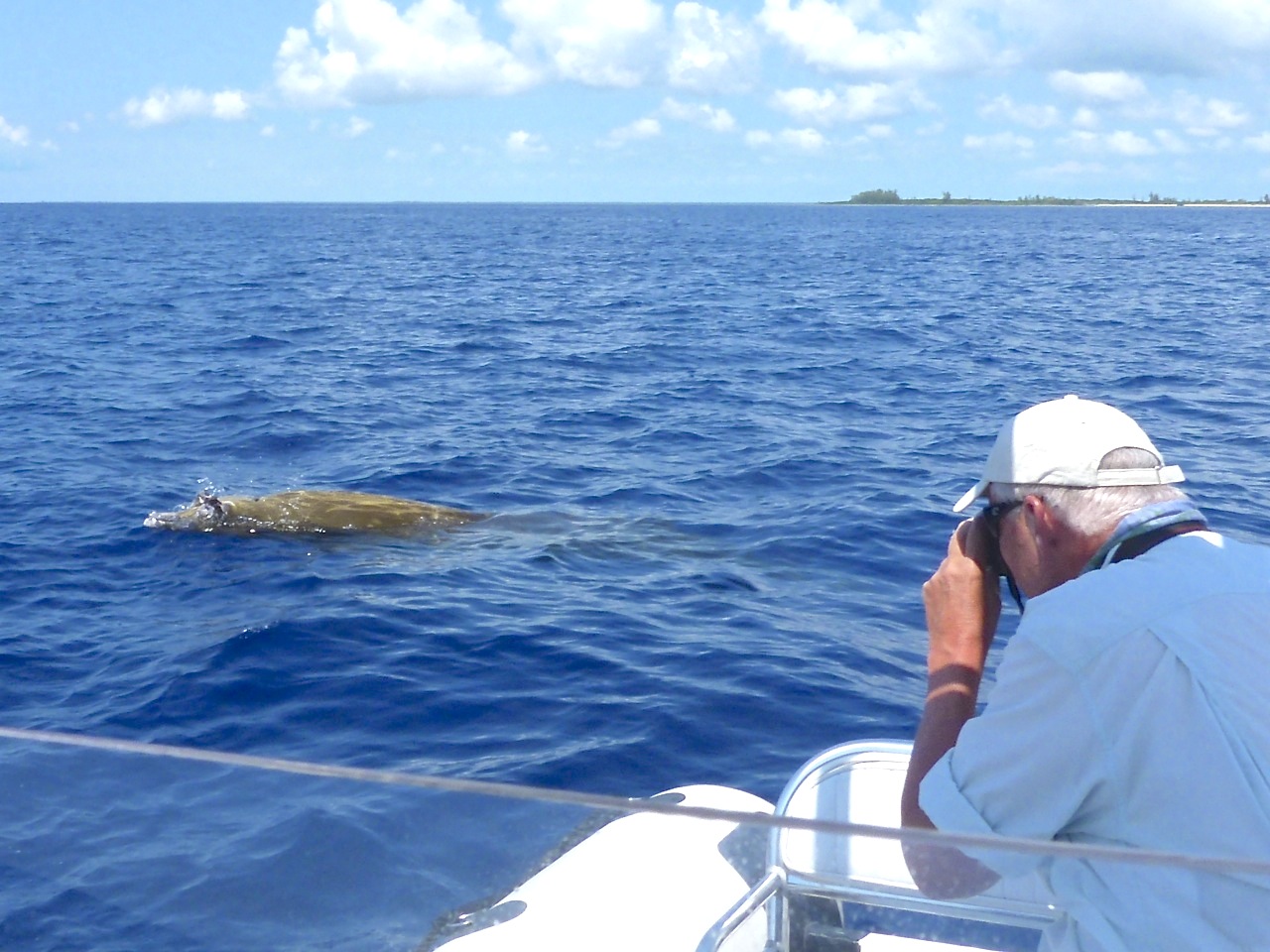
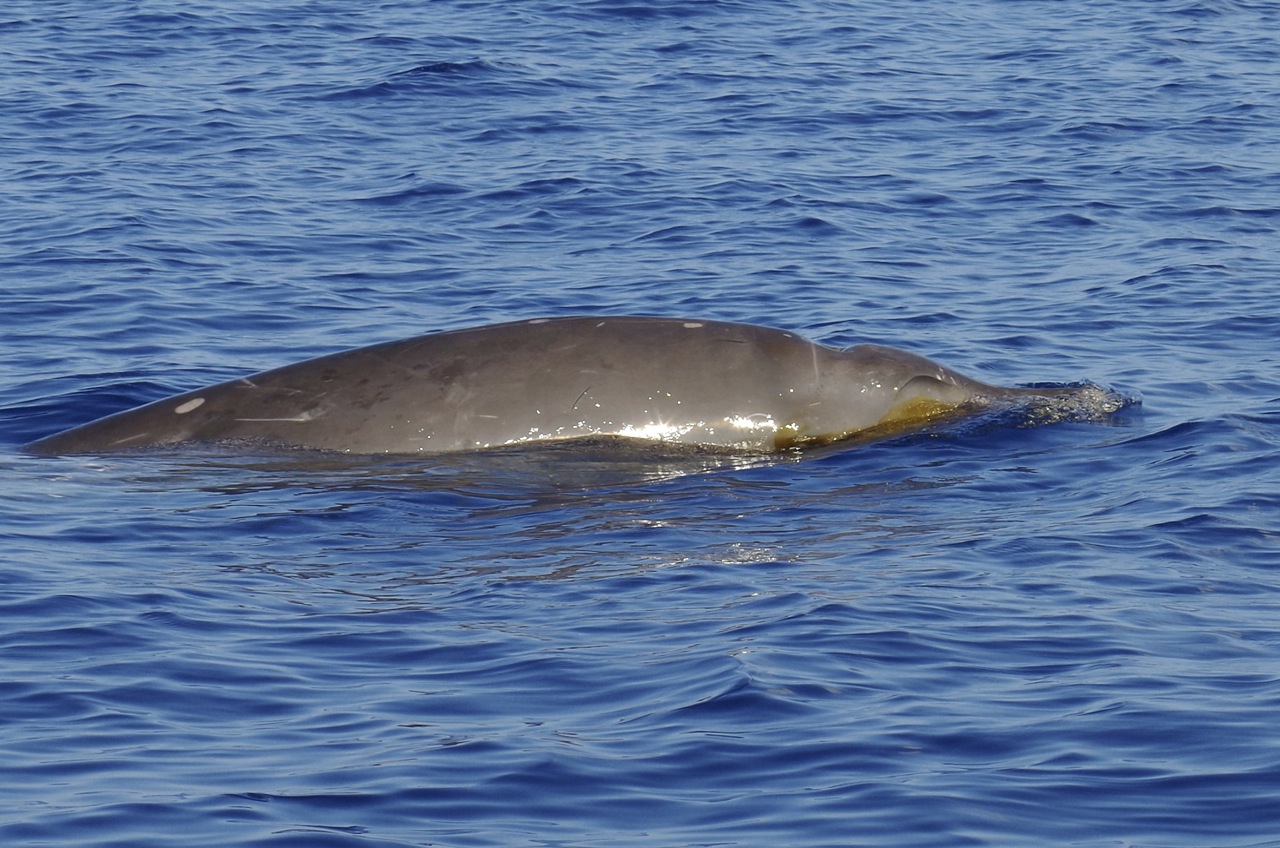
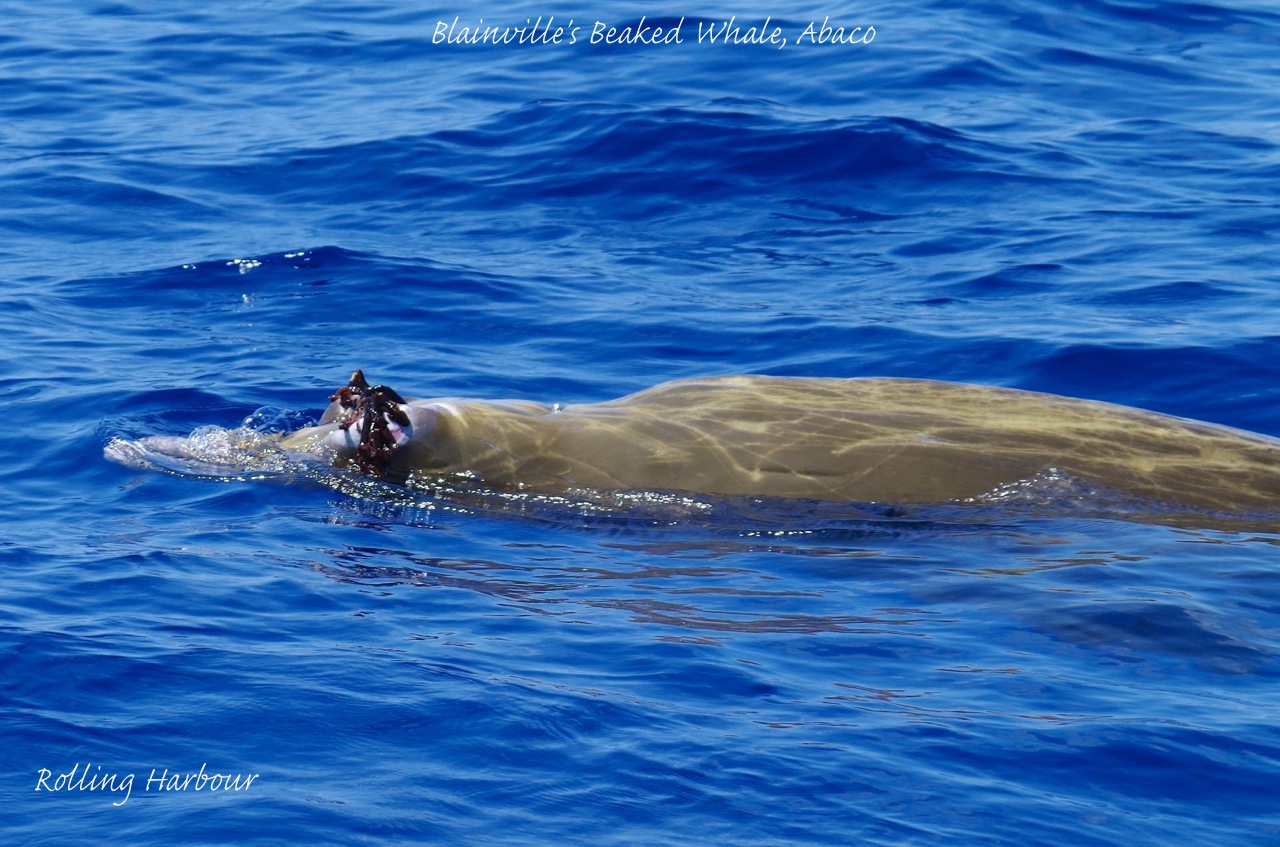
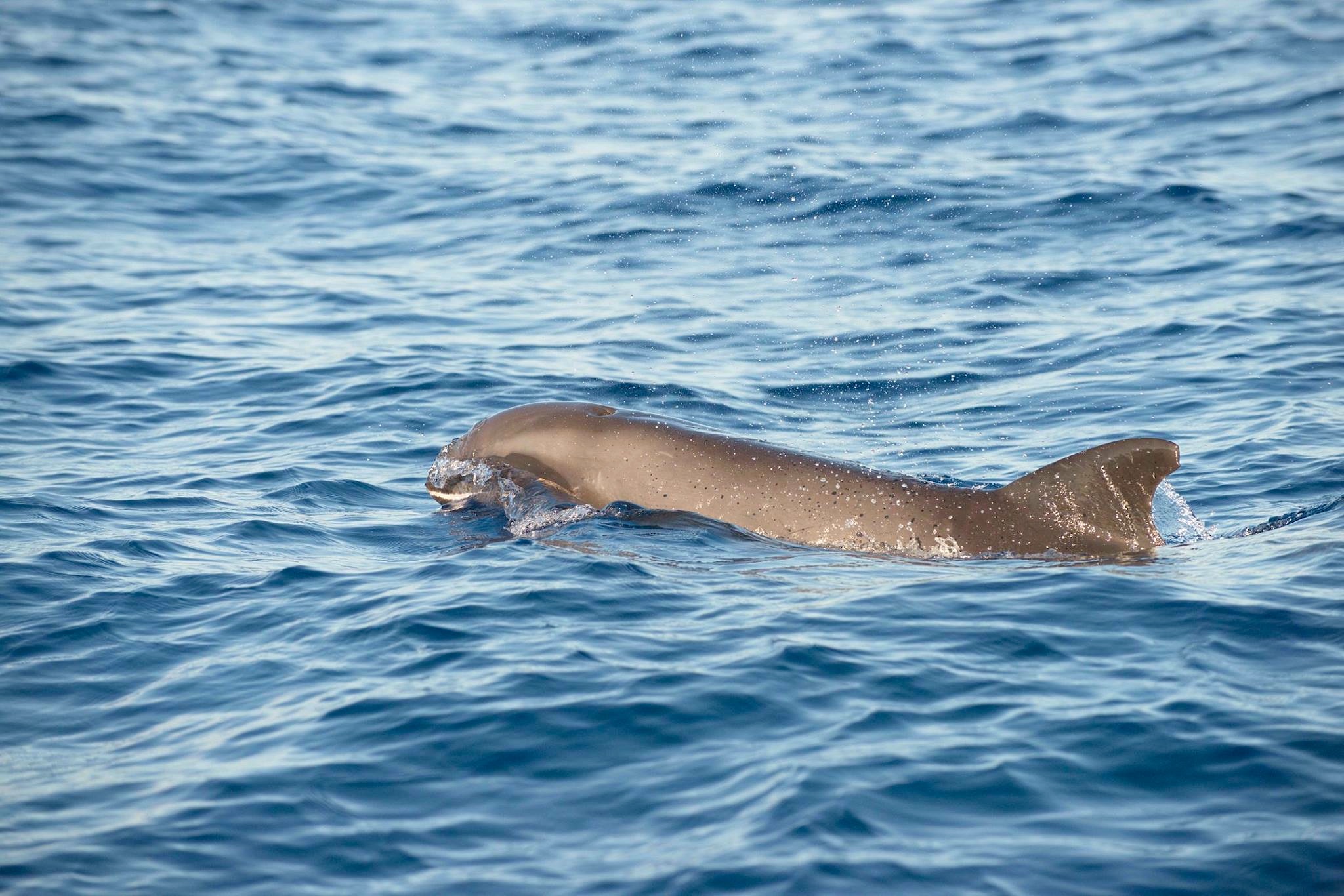
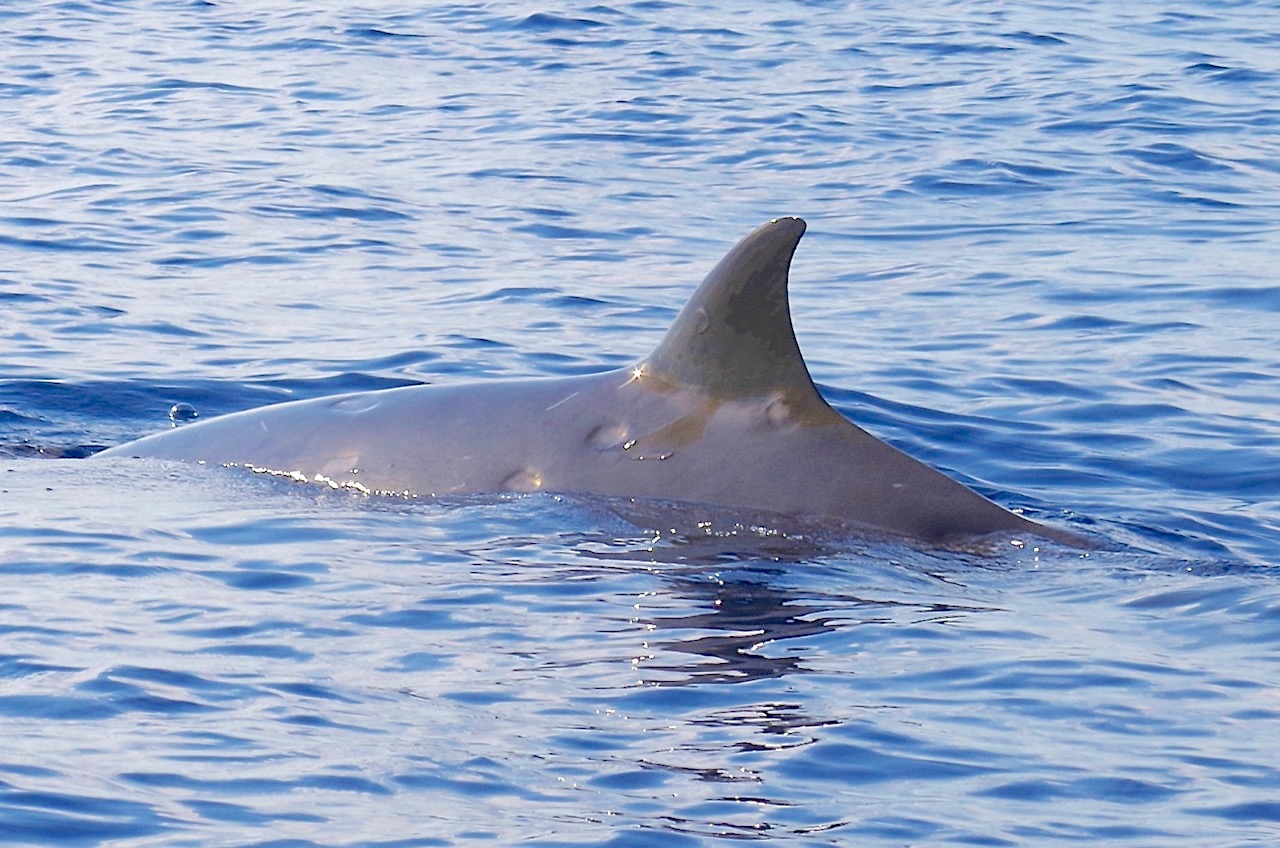
Here are two Blainville’s beaked whales that I photographed from the BMMRO research vessel. The top whale has a number of circular healed attack marks and a recent one. You can see how deep the gouged hole is. The other has well-healed scars.

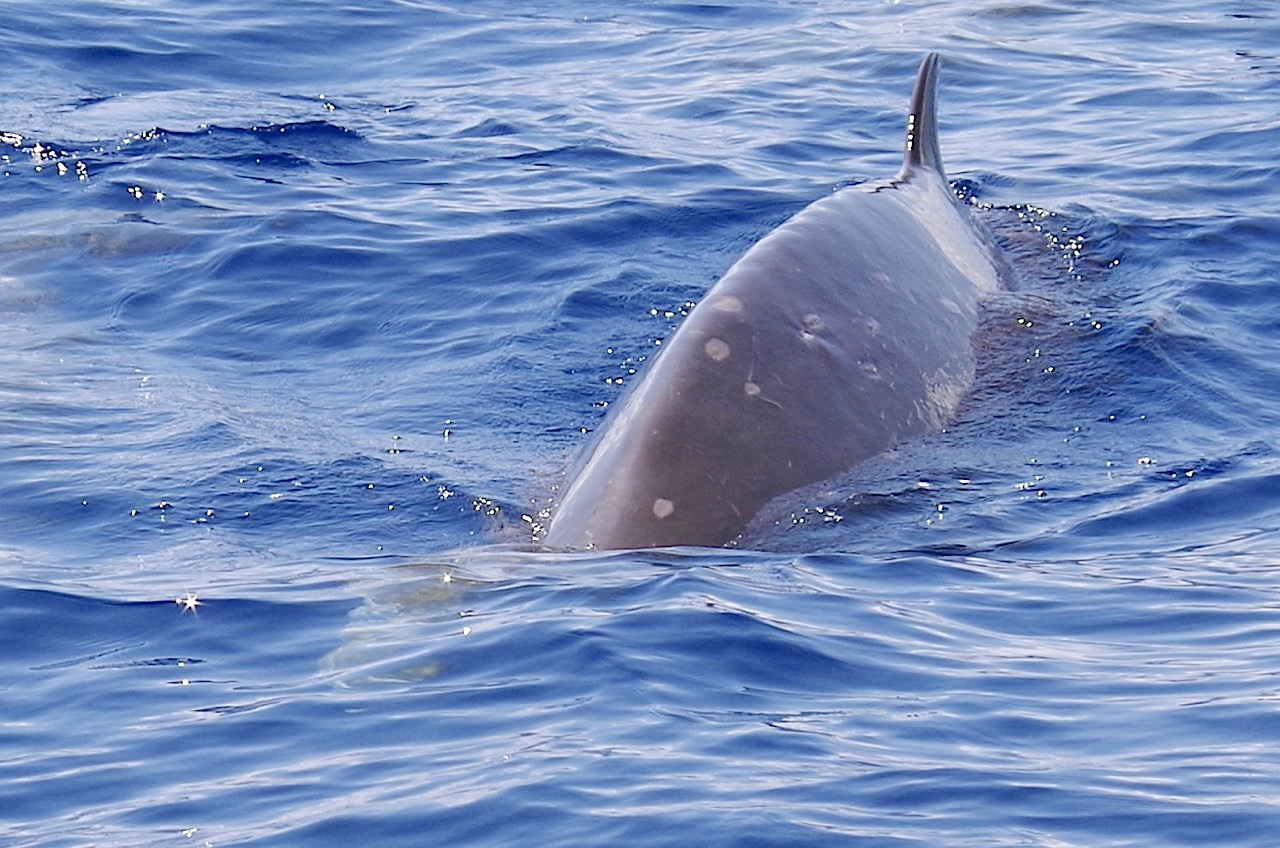
Blainville's Beaked Whale - cookiecutter shark damage (Keith Salvesen)Blainville's Beaked Whale - cookiecutter shark damage (Keith Salvesen)

  • Multi-toothed: top rows of small teeth, rows of larger teeth on the bottom
  • The lower teeth are the cutters, acting like a saw when locked on
  • See header image and below for full details
    

HOW EXACTLY DO THEY DO WHAT THEY DO?
I can explain it no better than the renowned authority Prof. W. K. P. Dear:  “the suctorial lips ensure a tight seal. It then bites, using its narrow upper teeth as anchors while its razor sharp lower teeth slices into the prey. Finally, the shark twists and rotates its body to complete a circular cut, quite possibly aided by the initial forward momentum and subsequent struggles of its prey. The action of the lower teeth may also be assisted by back-and-forth vibrations of the jaw, a mechanism akin to that of an electric carving knife”.

                 ARE THESE SHARKS ‘PARASITES’, WOULD YOU SAY?

The behaviour of these sharks is an example of a symbiotic relationship between two species that is parasitic. This means essentially that one gains and the other suffers (e.g. no-see-ums!). This is distinct from commensalistic symbiosis, where one species gains and the other is unaffected (e.g. cattle egrets with cattle); and mutualistic symbiosis, where both gain (e.g. cleaner fish & groupers). So, in a word, yes.

  • An ‘ambush predator’: they ‘hover’ in the water column waiting…
  • They are capable of rapid movement to catch up & latch onto prey
  • They will eat a passing small fish, crustacean or even squid as a snack
  • Sometimes they operate in schools; there is safety in numbers
  • The schools are thought to increase the ‘lure’ effect of the dark collar

A beached whale that’s been heavily targeted

FUN FACT TO COUNTERACT THE BAD STUFF

In the late c20, more than 30 U.S. Navy submarines were forced back to base to repair damage caused by cookiecutter shark bites, either to the neoprene footings of sonar domes or to rubber-sheathed cables. The problems were solved by using fibreglass. Oceanographic equipment and telecommunications cables are also recorded as being damaged by these sharks.

Cookiecutter Shark – the real deal
 

MONSTERS OF THE DEEP

These great cards from the weirdly spelled WIERD ‘N’ WILD CREATURES provide excellent factual info. Their CCS card is no exception. You’ll find more details here about the effect of the bioluminescence and so on, written as clearly as I might hope to. 

Cookiecutter Shark Facts (Monsters of the Deep)Cookiecutter Shark Facts (Monsters of the Deep)

** “The worst thing in the world varies from individual to individual. It may be burial alive or death by fire, or by drowning, or by impalement, or fifty other deaths. There are cases where it is some quite trivial thing, not even fatal.” (George Orwell, 1984)

Alright now…Blainville's Beaked Whale - cookiecutter shark damage (Keith Salvesen)
Credits: BMMRO – header image; beaked whale photos – Keith Salvesen / BMMRO; Te Ara NZ for the main jaw image; all small images with thanks to Wiki and respective photographers who took the time to upload them for all to enjoy & learn from; ‘wierdnwonderful creatures’ for the monster card; range map from Wiki

PS Apologies to anyone who bothered to wade through this, and stayed awake long enough to notice that formatting gremlins struck halfway through

Unknown's avatar

SPERM WHALES – BMMRO FIELD TRIP, BAHAMAS


Sperm Whales, Bahamas (BMMRO)

SPERM WHALES – BMMRO FIELD TRIP, BAHAMAS

I can never quite get my head around the fact that the waters around Abaco are home to the twin leviathans, sperm whales and humpback whales. And before anyone points it out, I realise they can’t actually be twins: sperms whales (cachelots) are TOOTHED WHALES whereas humpback whales are BALEEN WHALES

Sperm Whales, Bahamas (BMMRO)

During November, the Bahamas Marine Mammal Research Organisation (BMMRO) undertook a rather special field trip. Using sophisticated devices, the scientists first located a group of sperm whales, and then tracked them through the night using the communications between the creatures – ‘vocalisations’ – to follow them. Later analysis of the recordings will have made it possible to identify the individuals through their unique vocal patterns – and so to recognise them again. 
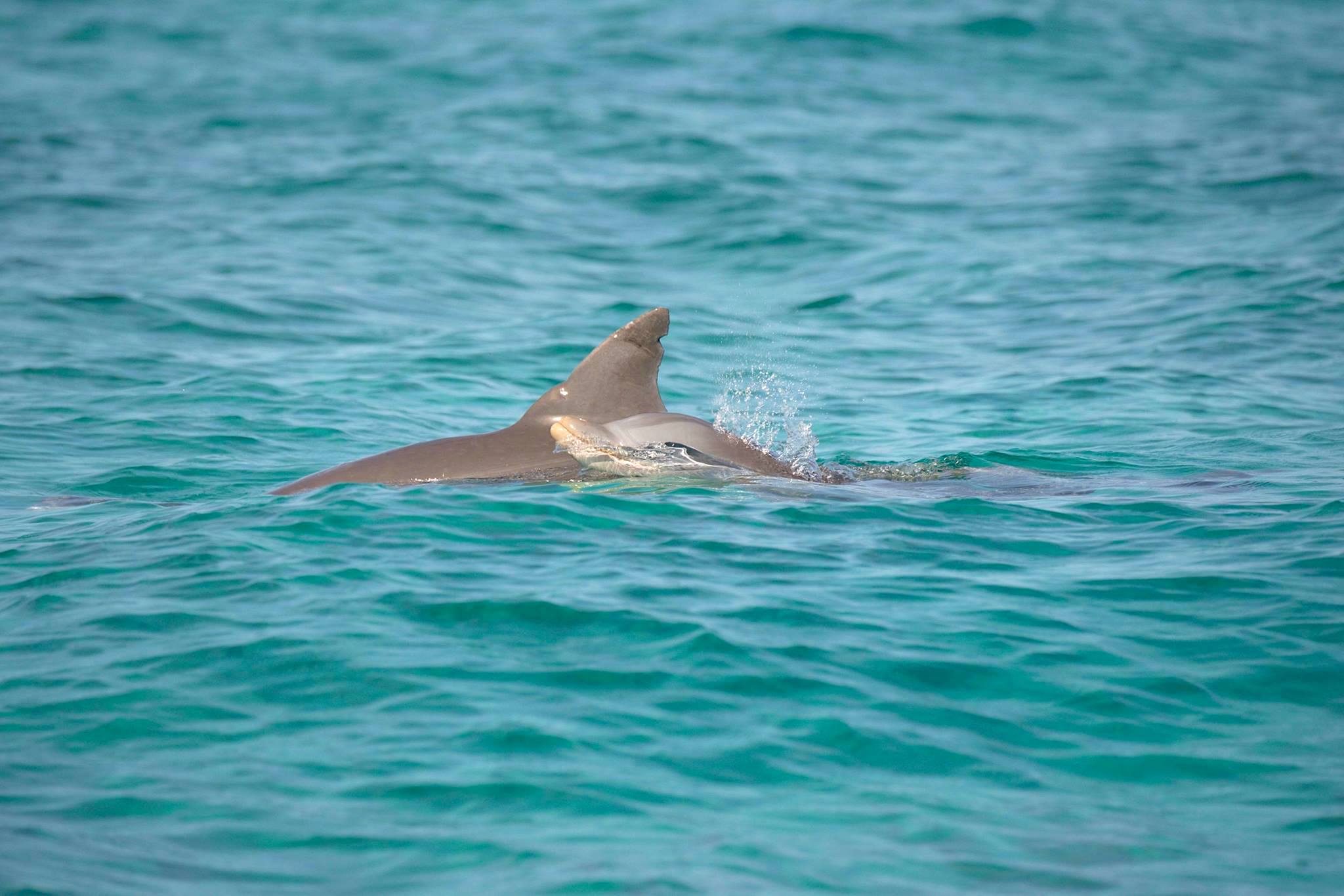
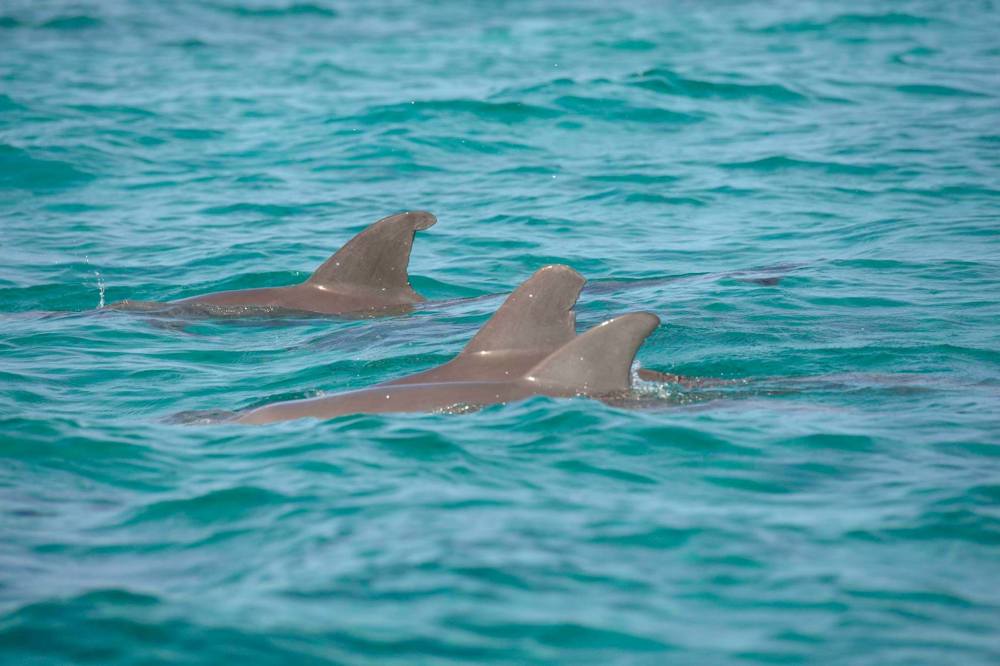
Sperm Whale, Bahamas (BMMRO)

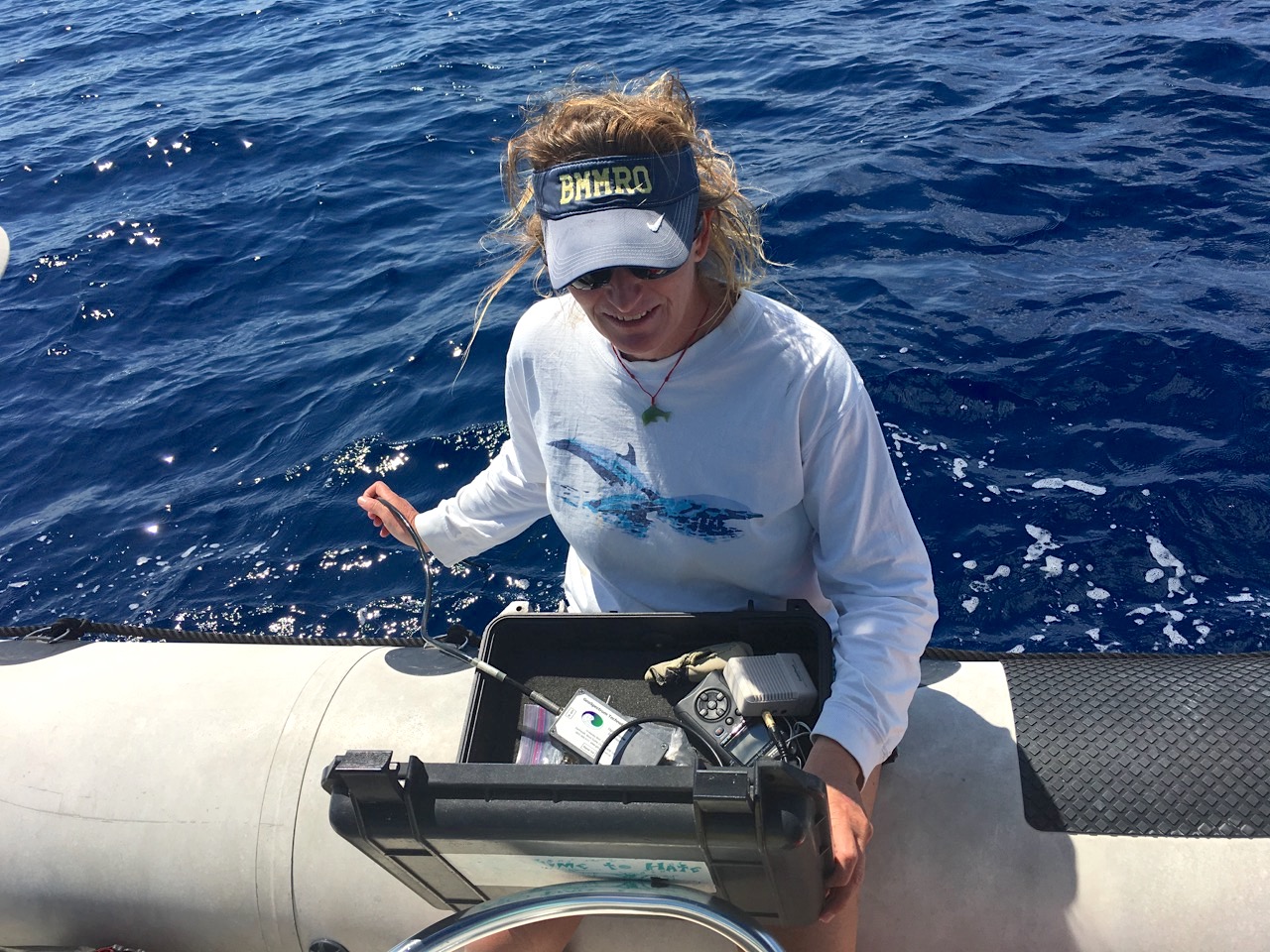
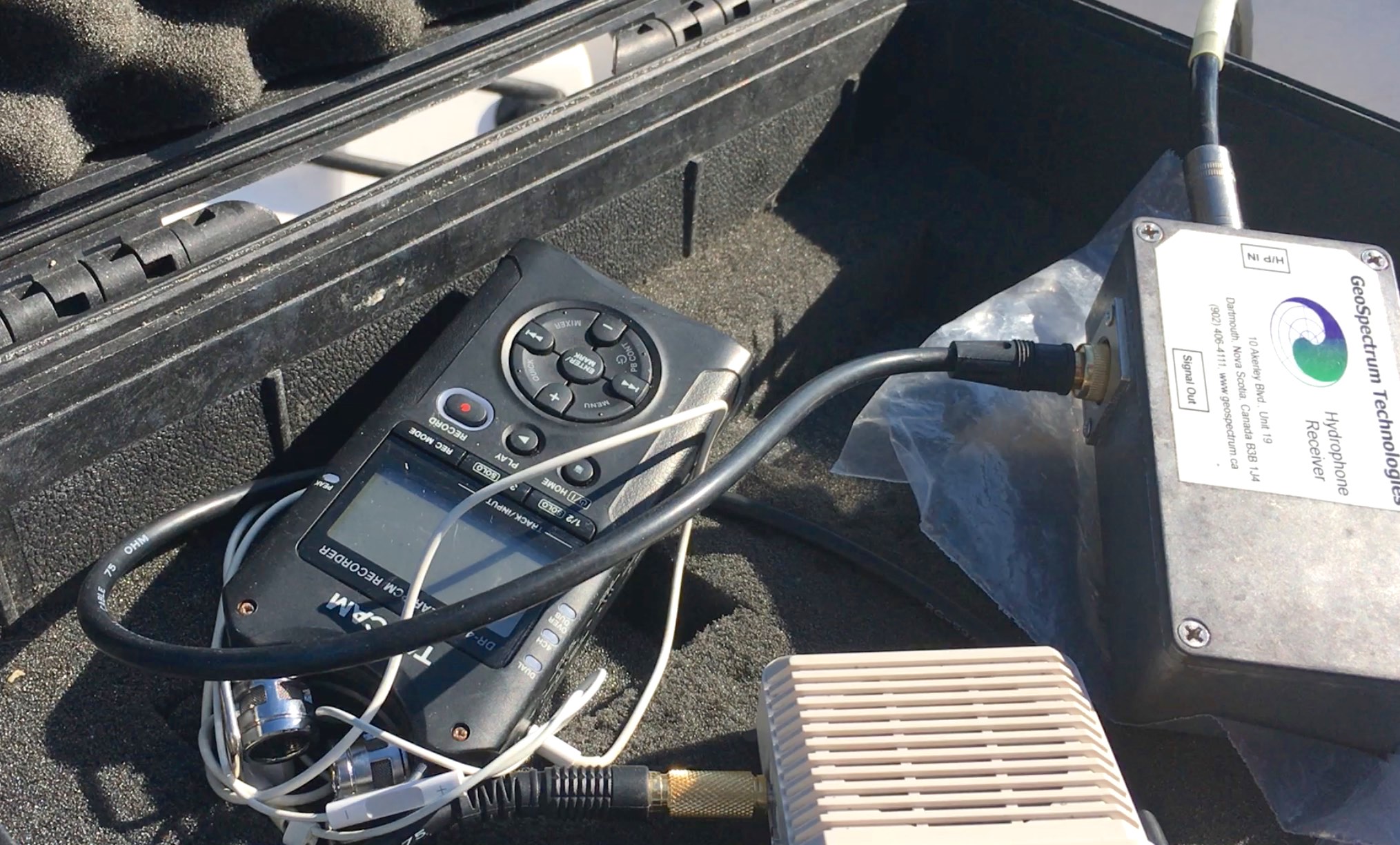
The hydrophonic equipment used is extremely sensitive, and can pick up the sounds made by whales and dolphins over a great distance. The box of tricks looks deceptively modest – I took these photos on a previous trip when we were looking for beaked whales and dolphins. Charlotte Dunn holds the microphone submerged on a cable and underwater sounds are amplified so that the slightest chirrup of a dolphin can be heard by everyone on the vessel. The sounds are recorded and locations carefully logged.

Besides the sperm whales, the BMMRO team also had sightings of spotted dolphins, bottlenose dolphins and beaked whales during the field trip. These bonus sightings will also have been logged for future reference. It all adds to the detailed research data that assists the conservation of the prolific marine mammal life in Bahamian waters.

Atlantic Spotted DolphinsAtlantic Spotted Dolphins, Bahamas (BMMRO)

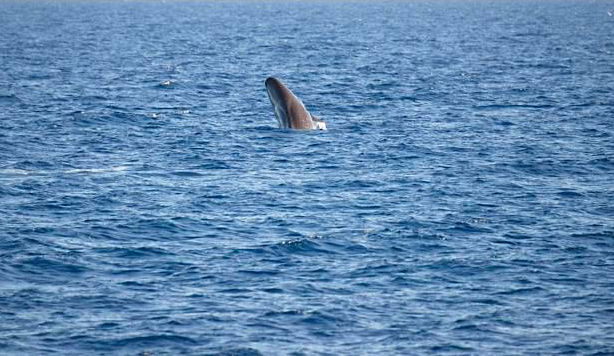
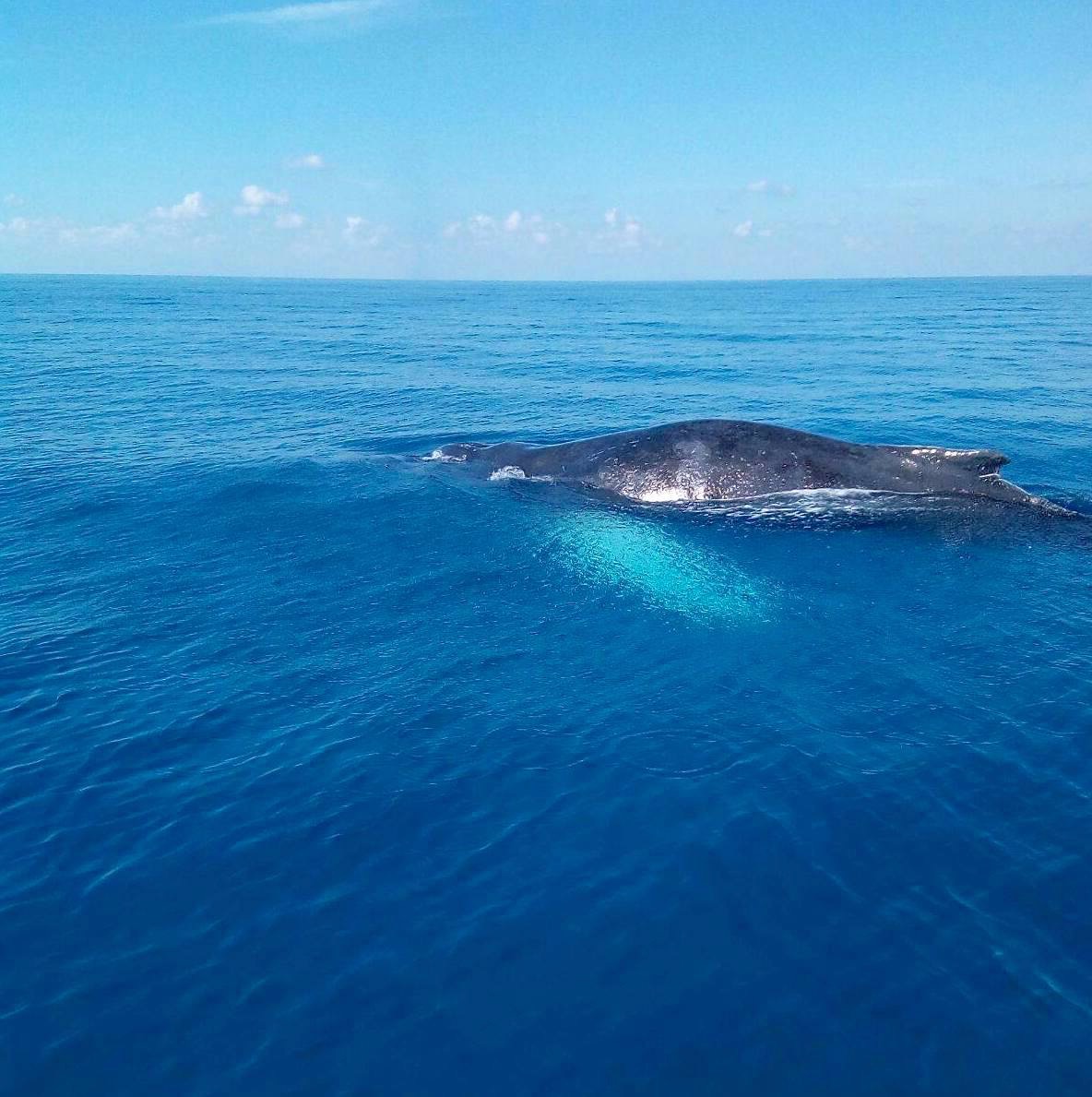
By the time one of the whales decided to breach, it was some distance away, so I’m afraid I can’t bring you a dramatic close-up from the trip. But just to see this view at all is breathtaking.

All photos BMMRO except the 2 hydrophone ones on the research boat (Keith Salvesen)

Unknown's avatar

BLAINVILLE’S BEAKED WHALES IN ABACO WATERS


Blainville's Beaked Whale, Abaco (BMMRO)

BLAINVILLE’S BEAKED WHALES IN ABACO WATERS

It’s hard to believe that the seas around Abaco and its cays are home to a number of whale species, from huge sperm and humpback whales down to so-called dwarf or pygmy species. In the middle of this range come the beaked whales, the most common being the Blainville’s Beaked Whale. I say ‘most common’, but in fact they are rare in the world, being found in only two other main locations on earth. 

Blainville's Beaked Whale, Abaco (BMMRO)

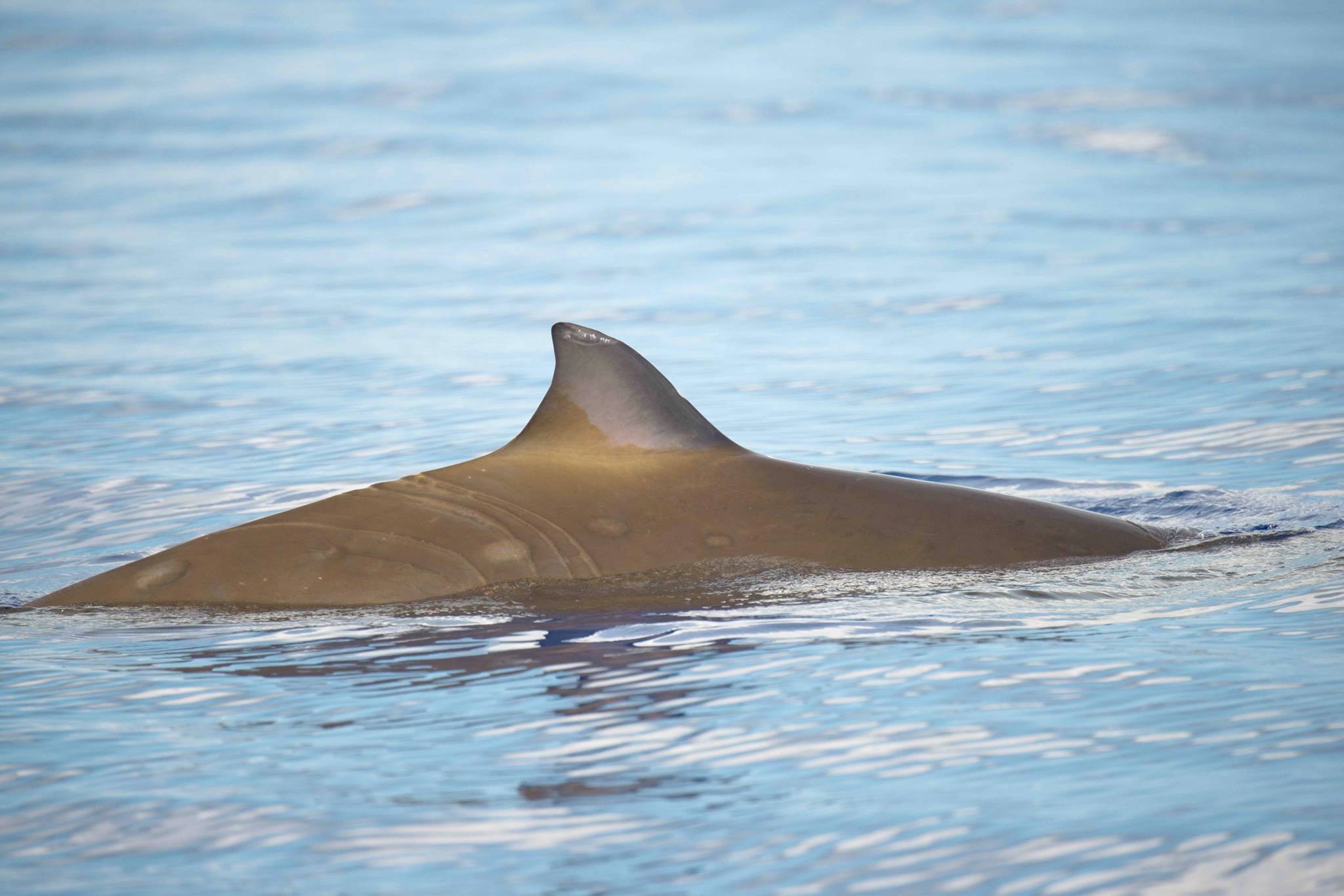
These whales are carefully monitored by the Bahamas Marine Mammal Research Organisation (BMMRO), and there is a tagging program to keep track of them. As with dolphins, individuals are identified by markings on the dorsal fin, which vary for each whale. The one above has distinctive scarring at the tip. There are also striations on the body, and conspicuous circular marks that are healed wounds caused by cookie-cutter sharks.

Blainville's Beaked Whale, Abaco (BMMRO)

To the untrained eye, there are no noticeable marks on the dorsal fin of the whale above. However, the whale’s back has a prominent pattern of scarring and healed cookie-cutter wounds. The whale below really looks as though it has been in the wars, with long deep healed wounds behind the head.

Blainville's Beaked Whale, Abaco (BMMRO)

I can’t tell without seeing the head, but I wonder if it is a male and the scars have been caused in a fight with another male – adult males have prominent tusks with which they do battle. Here is an photo that I took from the research boat on a different occasion. The tusks protrude upwards from the lower jaw, and are often covered in barnacles. They are capable of causing serious injury.

Blainville's Beaked Whale male, Abaco (Keith Salvesen)

Blainville’s beaked whales are amongst the deepest divers of all whales. But that and other whale topics will have to wait for another day… My computer malware / virus has been removed professionally with no data loss, and I have some catching up to do. Cost in terms of panic and stress: huge. Cost in real terms: $90.

Blainville's Beaked Whale, Abaco (BMMRO)

All photos BMMRO except the tusked male, Keith Salvesen

Unknown's avatar

AN ‘EXHILARATION’ OF ABACO DOLPHINS


Bottlenose Dolphins, Abaco Bahamas (BMMRO)

AN ‘EXHILARATION’ OF ABACO DOLPHINS

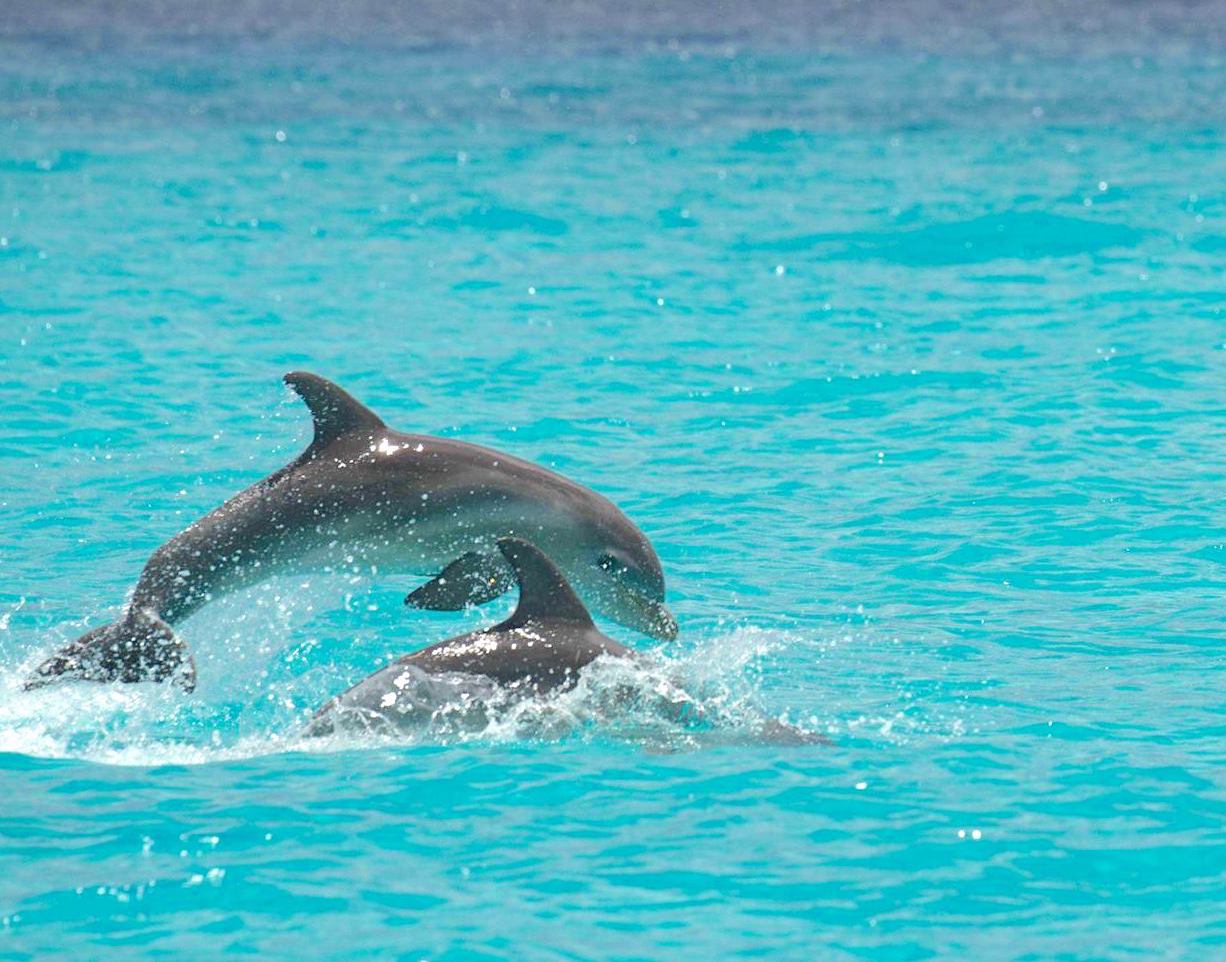
Bottlenose dolphins! Tursiops truncatus! These engagingly playful show-offs of the inshore waters round Abaco are 99.99% adorable**. It’s been a harrowing few weeks in the western Atlantic, and everyone is hoping that the 2017 hurricane season has had enough of causing death and destruction over vast swathes of vulnerable islands and on the US mainland. Some cheer is needed.

Bottlenose Dolphins, Abaco Bahamas (BMMRO)

Dolphins are good for the soul. And if you are out on a boat watching them – and especially tracking them for a whole day – every encounter reinforces the impression that all the leaping, bow-wave riding, boat under-swimming, and general sociability and interaction is often as much for sheer enjoyment as anything else. 

Bottlenose Dolphins, Abaco Bahamas (BMMRO)

Abaco is fortunate in having the HQ of the Bahamas Mammals Research Organisation (BMMRO) based at Sandy Point. That just happens to be an excellent area for bottlenose dolphin spotting in the turquoise shallows. Many sightings are made within clear sight of land. Further south, where the bright blue gives way to darker and deeper water, live the equally frolicsome Atlantic spotted dolphins. The 3 photos above were all taken on the margins of where the colour of the sea changes from light to dark.

Bottlenose Dolphins, Abaco Bahamas (BMMRO)

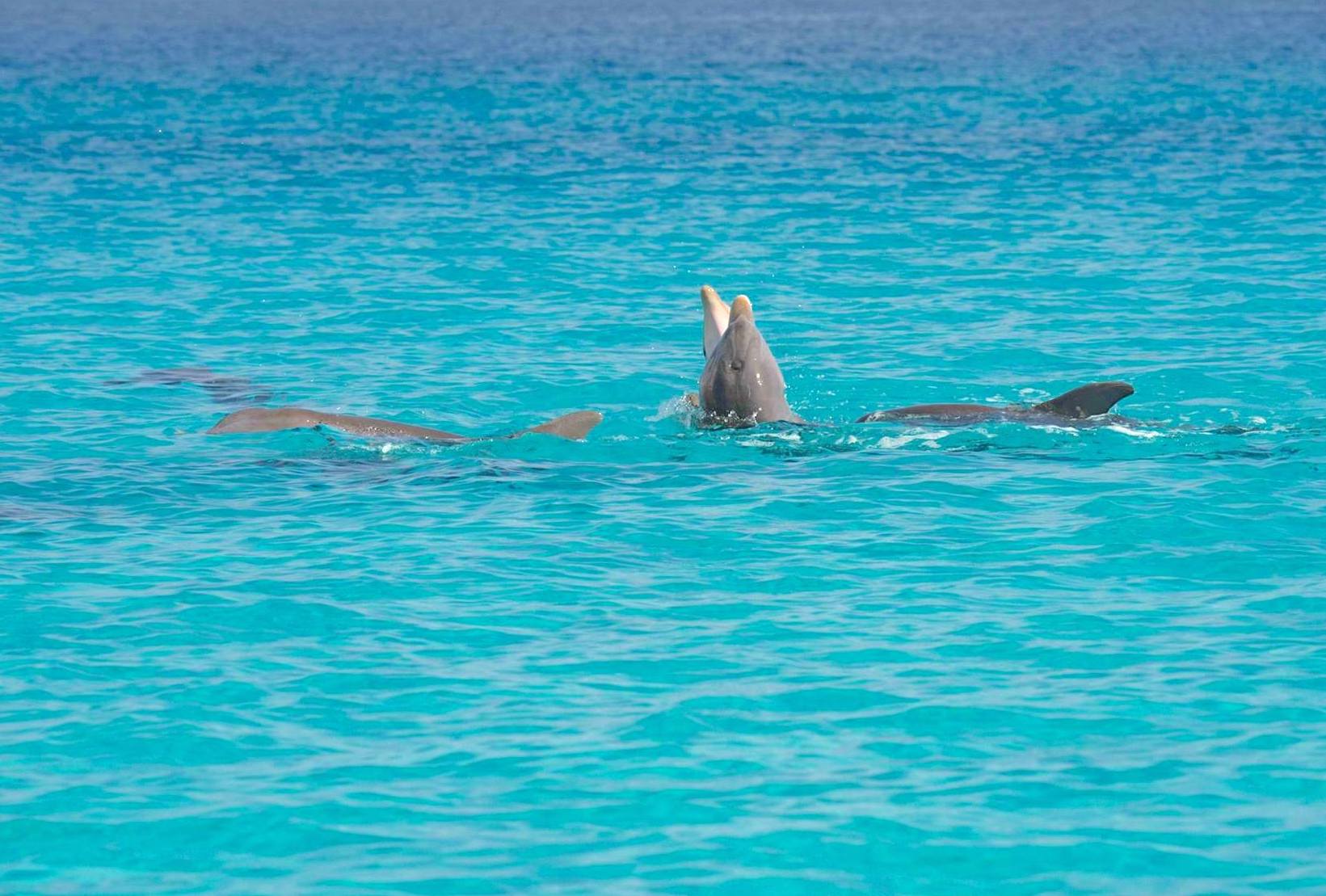
I’m a bit of a collector of collective nouns. For dolphins, apart from the matter-of-fact ‘group’ or ‘pod’, there is no exotic word to describe a number of them when they are having fun. No equivalent of ‘exaltation’ (larks), ‘charm’ (goldfinches) or ‘parliament’ (owls). So I’m nominating an ‘exhilaration’ as a candidate to fill the gap…

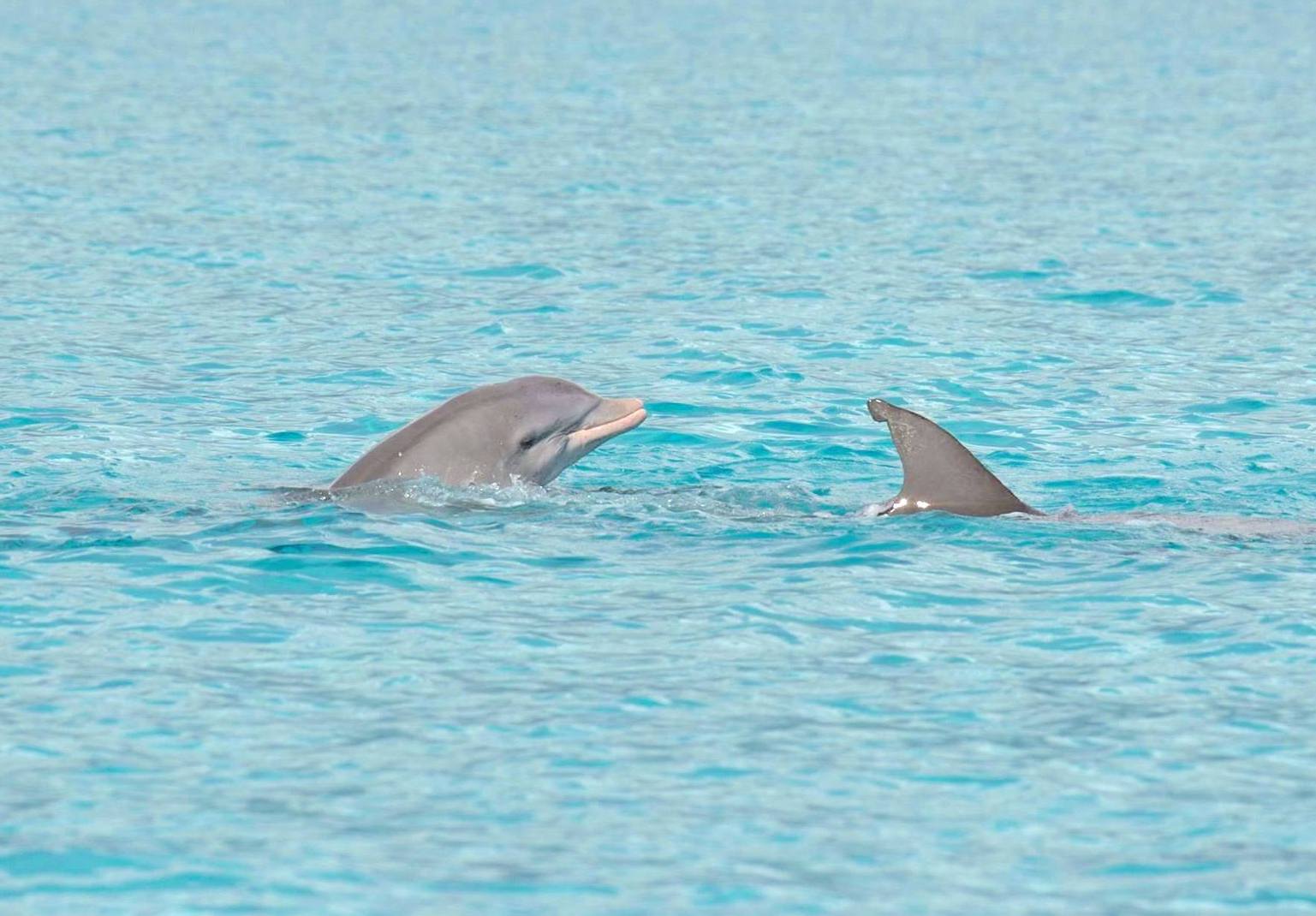
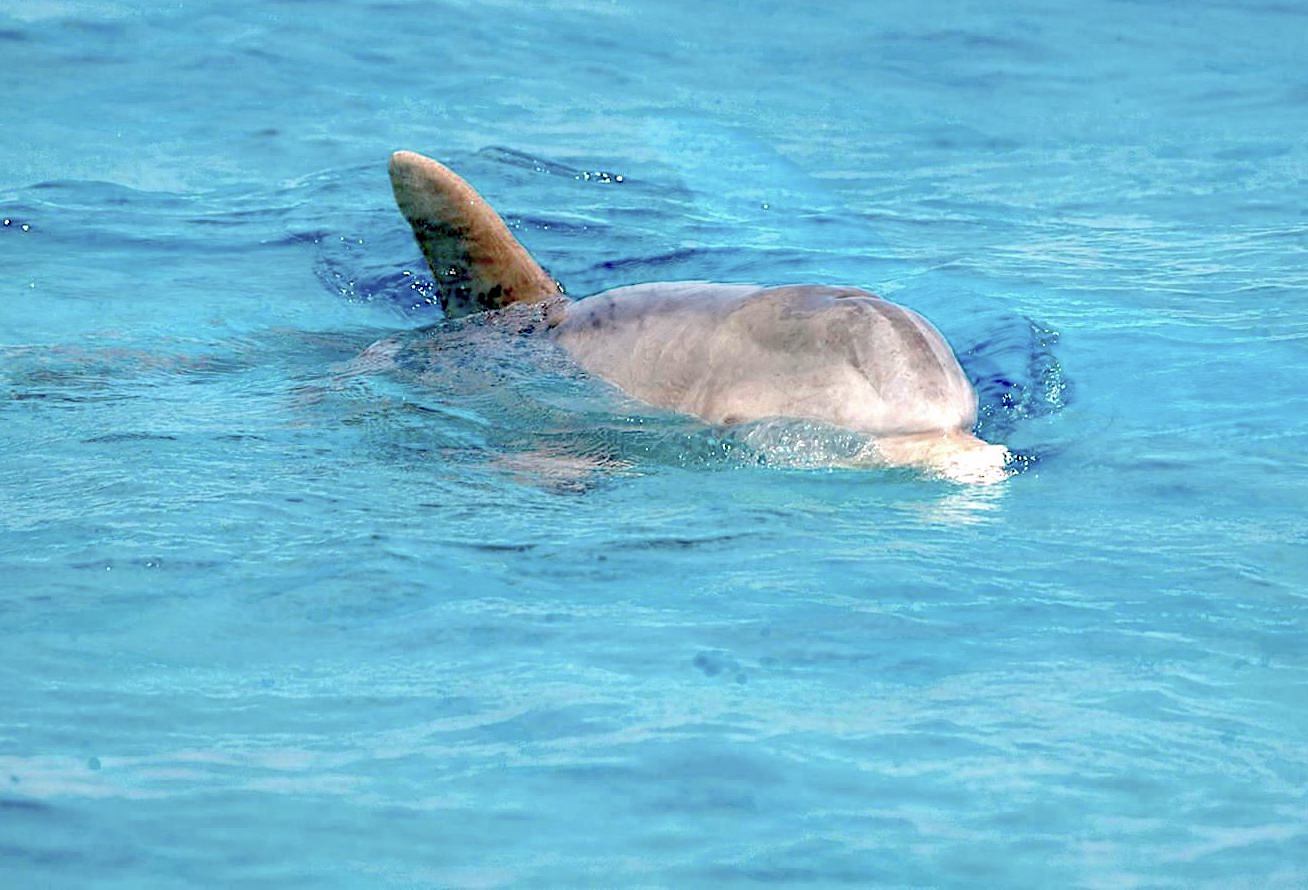
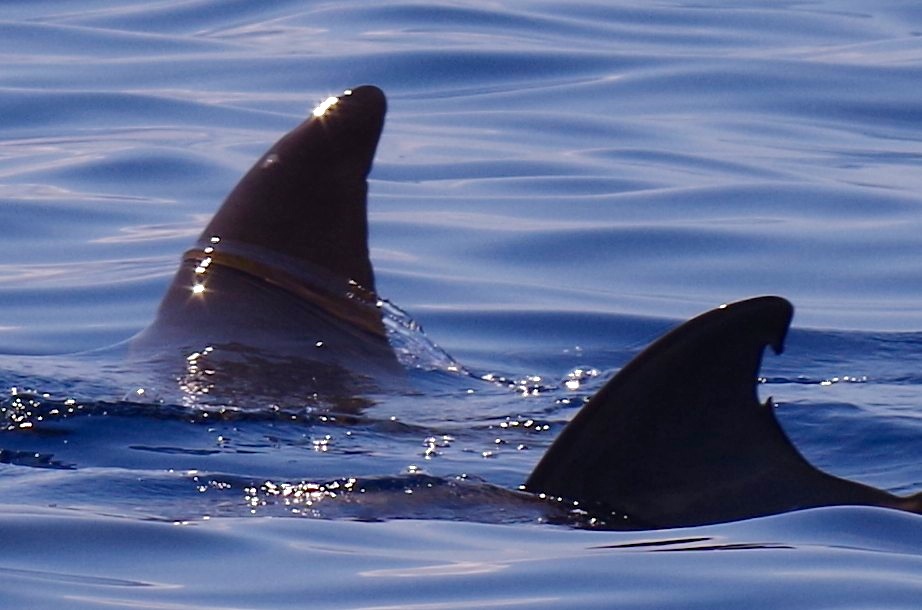
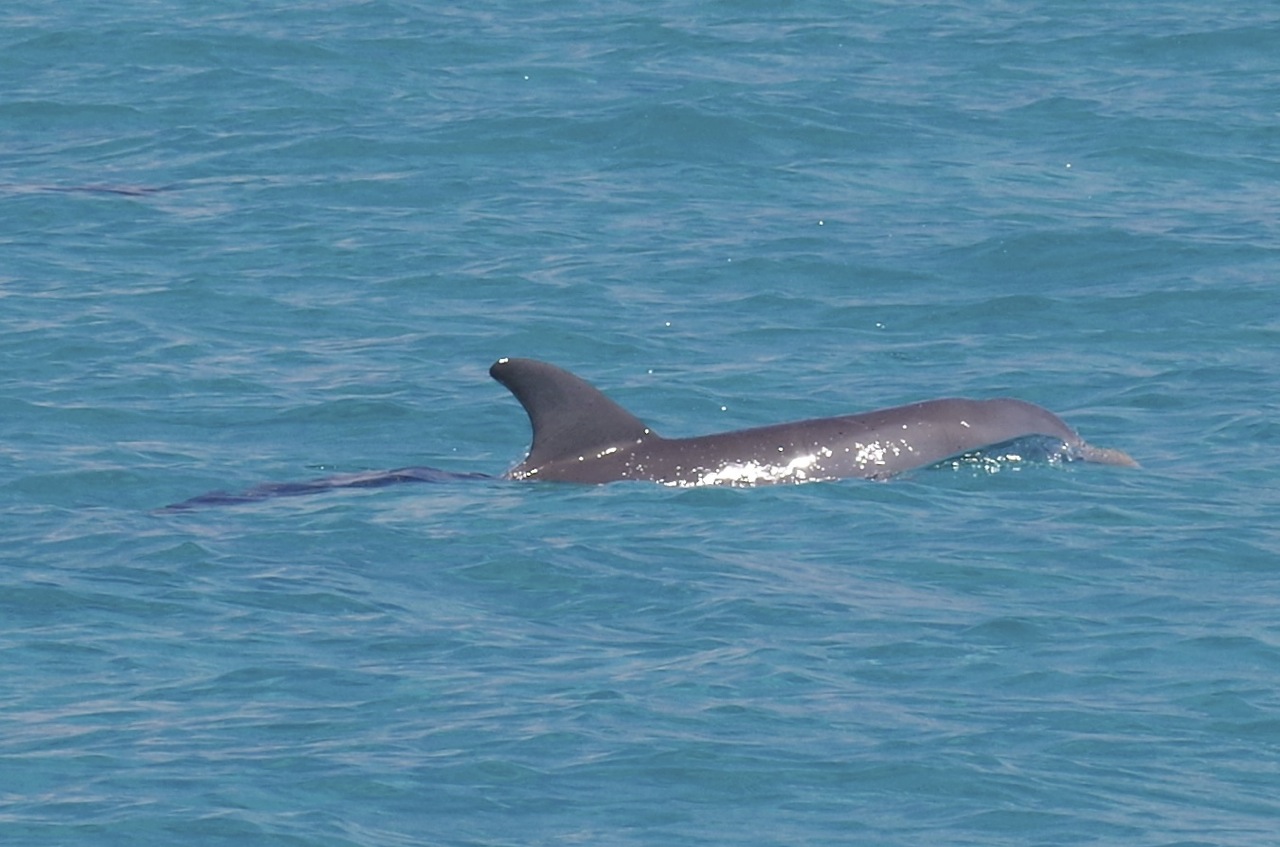
The photo above shows clearly how individual dolphins can be identified by researchers. All tend to have scars or tears to their dorsal fins that enable them to be distinguished. The closest has distinctive scars near the tip. The furthest has a W-shaped nick at the back. In fact, it could even be Rocky, a well-known dolphin on Abaco that has been sighted over many years. There are regular reports annually. I saw him myself once, in 2012, playing about in Hopetown harbour. 

STOP PRESS To demonstrate how the ID methods work, I’ve now cross-checked with the BMMRO photo ID archive. Here is Rocky’s original dorsal fin ID image (“Tt15”) from October 2010. There’s a W-shaped nick, sure, but my speculation above was wrong because overall the two fins are clearly different…

Rocky the Dolphin Tt15, from BMMRO ID photo archive

** The 0.01%? Dolphins may, rarely, be alarming for divers in circumstances I won’t repeat here (hint: to do with over-friendliness, ok? Yes, the thing that dogs do)

Credits: all photos BMMRO – and taken in the last 2 months

Unknown's avatar

DOLPHINS DISPORTING IN THE BAHAMAS


Atlantic Spotted Dolphin, Bahamas (BMMRO)

DOLPHINS DISPORTING IN THE BAHAMAS

‘Disporting’. Not a word I’ve used very often. Or possibly ever. It looks a bit like ‘unsporting’, which is emphatically what dolphins are not. Basically, it just describes what dolphins are doing when you see them on the surface: amusing themselves, frolicking around in the waves, and simply enjoying themselves.Bottlenose Dolphin, Bahamas (BMMRO)

True, they are probably keeping an eye out for food… But when you have a group sociably following alongside the boat your are in, moving in front, dropping behind, diving under, and generally playing around, it’s quite hard to believe that these are completely wild creatures. They seem to be performing just for you, simply because they want to. You don’t even have to throw fish at them to earn this free display.

Atlantic Spotted Dolphin, Bahamas (BMMRO)Atlantic Spotted Dolphin, Bahamas (BMMRO) Atlantic Spotted Dolphin, Bahamas (BMMRO)

As is well-known, the BAHAMAS MARINE MAMMAL RESEARCH ORGANISATION (BMMRO) is the custodian for the welfare of these beautiful creatures for the entire Bahamas. However, being based on Abaco and carrying out the majority of the research from the HQ at Sandy Point means that many of the great images that get taken are from Abaco waters. Indeed some are taken within swimming distance (not mine) of the shore.  Bottlenose Dolphin, Bahamas (BMMRO)Bottlenose Dolphin, Bahamas (BMMRO)Bottlenose Dolphin, Bahamas (BMMRO)Bottlenose Dolphin, Bahamas (BMMRO)

The photographs featured here were taken during the last few weeks. Some are of the familiar bottlenose dolphins. The others – with speckled undersides clearly visible in the header image & below – are of Atlantic spotted dolphins. There’s even one of my own taken from the research vessel. Atlantic Spotted Dolphin, Abaco Bahamas (Keith Salvesen)Atlantic Spotted Dolphin, Bahamas (BMMRO)

For the researchers, the most important part of an individual dolphin is its dorsal fin. Unique patterns of cuts and scars mean that each dolphin sighted can be logged and their profiles built up. Some have been found in the same area for many years. They are not usually given jocular names – ‘Davy Jones’, ‘Finny Phil’ or whatever. The first time we went out on the research vessel we were slightly surprised by the practical, scientific calls during a sighting of a dolphin group: “there’s B4 again” and “over there – D5 is back”. All said fondly however – many of the dolphins are old friends.

This dolphin has a notable notch on the dorsal fin with a nick below, & a scar line – with a prominent white scar on the lower front edge Bottlenose Dolphin, Bahamas - Dorsal Fin Damage (BMMRO)

Notice how these 3 dolphins all have quite different fin profiles.  The nearest one’s fin looks unblemished, but has a paler tip. Powerful binoculars and a serious camera can pick out small  differences at a distance that the eye could notBottlenose Dolphin, Bahamas - Dorsal Fin Damage (BMMRO)

Coming soon: Manatees & Man in the Bahamas

All photos (bar one by me) BMMRO, with thanks to Diane & Charlotte, and a tip of the hat to the current interns involved in the research projects (Hi, UK Thomas!)

Unknown's avatar

ONE GOOD INTERN DESERVES ANOTHER (Part 1)


Coral reef research, Australia (Oscar Ward)

ONE GOOD INTERN DESERVES ANOTHER (Part 1)

Four years ago a young English friend of ours, Oscar Ward, was lucky enough to be offered an internship with the Bahamas Marine Mammal Research Organisation (BMMRO). At the time, he was post-school, and waiting to start a degree course in marine biology at university. He had no practical experience at all, so he had to progress from the menial tasks (scraping barnacles off the bottom of the research boat) to the more adventurous (whale poop-scooping) to the scholarly (collection and analysis of samples and data, including audio file matching of whale calls for identification). The need for hard work, concentration and accuracy were made clear from the outset… and as you will see, Oscar’s short internship has stood him in very good stead during his university course.

Oscar weekending at Gilpin Point – self-sufficientBMMRO Internship - weekend off (Oscar Ward)

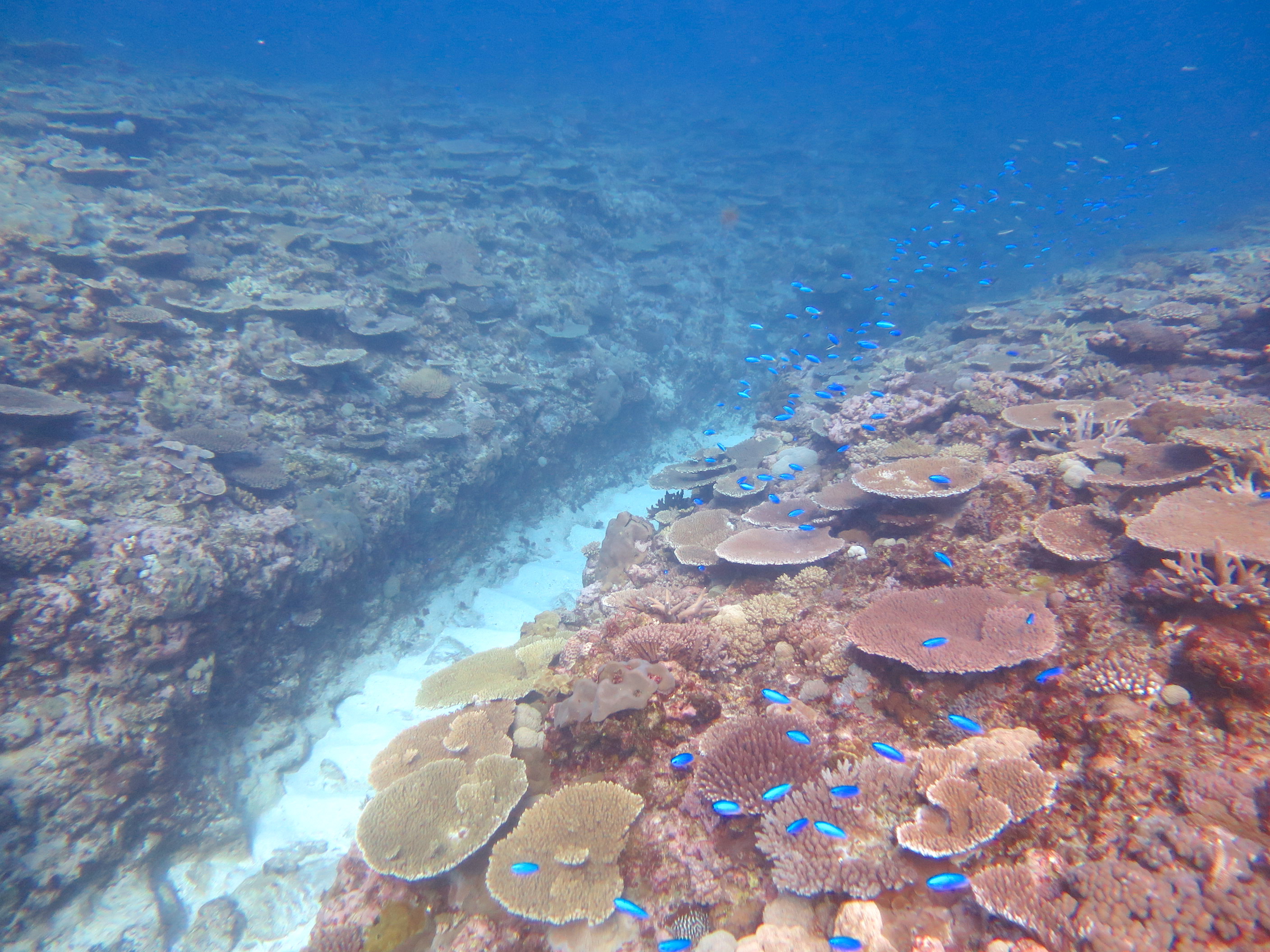
From a promising start on Abaco, and with 2 year’s study behind him, Oscar is currently spending the 3rd year of his 4-year course in Australia, working with The Australian Institute of Marine Science. He has been involved in a number of complex projects focussed on corals and reef life – as we all know, a matter of huge concern – and the projections for the future of the reef systems in a time of warming seas and raised acid levels. Oscar also assists PhD students, for example examining the damaging effects of parasitic worms on coral; and the effect of changing light conditions on corals.

Nurse Sharks, Great Barrier Reef (Oscar Ward)

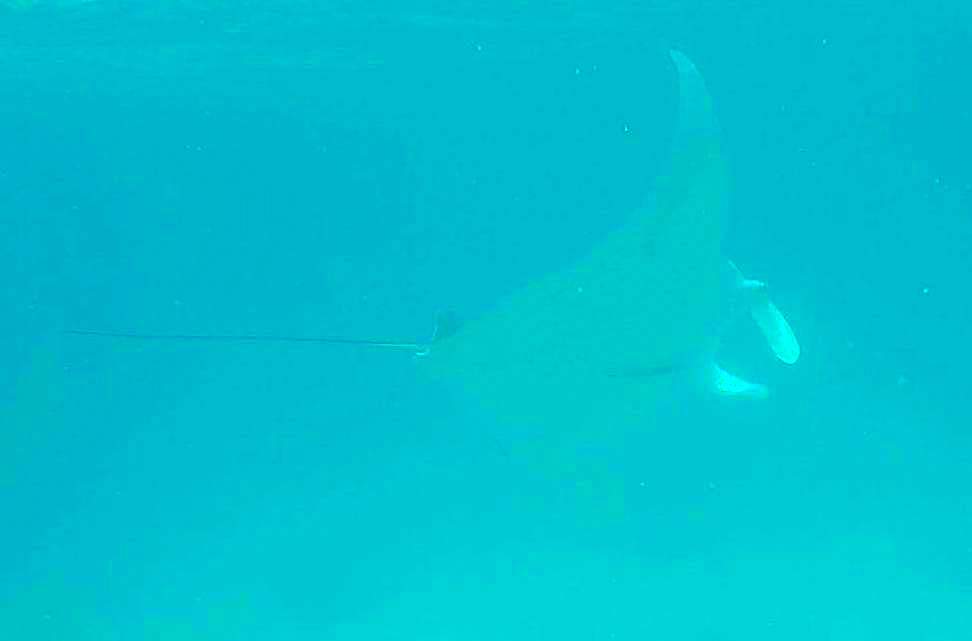
Much of Oscar’s time has been spent doing fieldwork. Often he is at sea, monitoring and collecting samples in the Southern Great Barrier Reef, diving two or three times a day. This work is often carried out in restricted or preservation zones, and with ever-present manta rays, sharks and sea turtles around him.

Manta Ray, Great Barrier Reef (Oscar Ward)

Right now Oscar is involved with the investigations into the recent bleaching events, work that is at the forefront of serious concern for the GBR and far beyond. I have recently corresponded with him – he has definitely not forgotten that his grounding for the fieldwork and studies that he is engaged in – and very likely his career – came from his time on Abaco and the lessons he learned during his time with the BMMRO at Sandy Point.  (In part 2: another good intern, currently at Sandy Point)

Coral reef research, Australia (Oscar Ward)

All photos: Oscar Ward (the header image is taken from a research vessel – no idea how, maybe a drone with fish-eye lens?)

Unknown's avatar

ATLANTIC SPOTTED DOLPHINS OFF ROCKY POINT, ABACO


Atlantic Spotted Dolphins off Rocky Point, Abaco

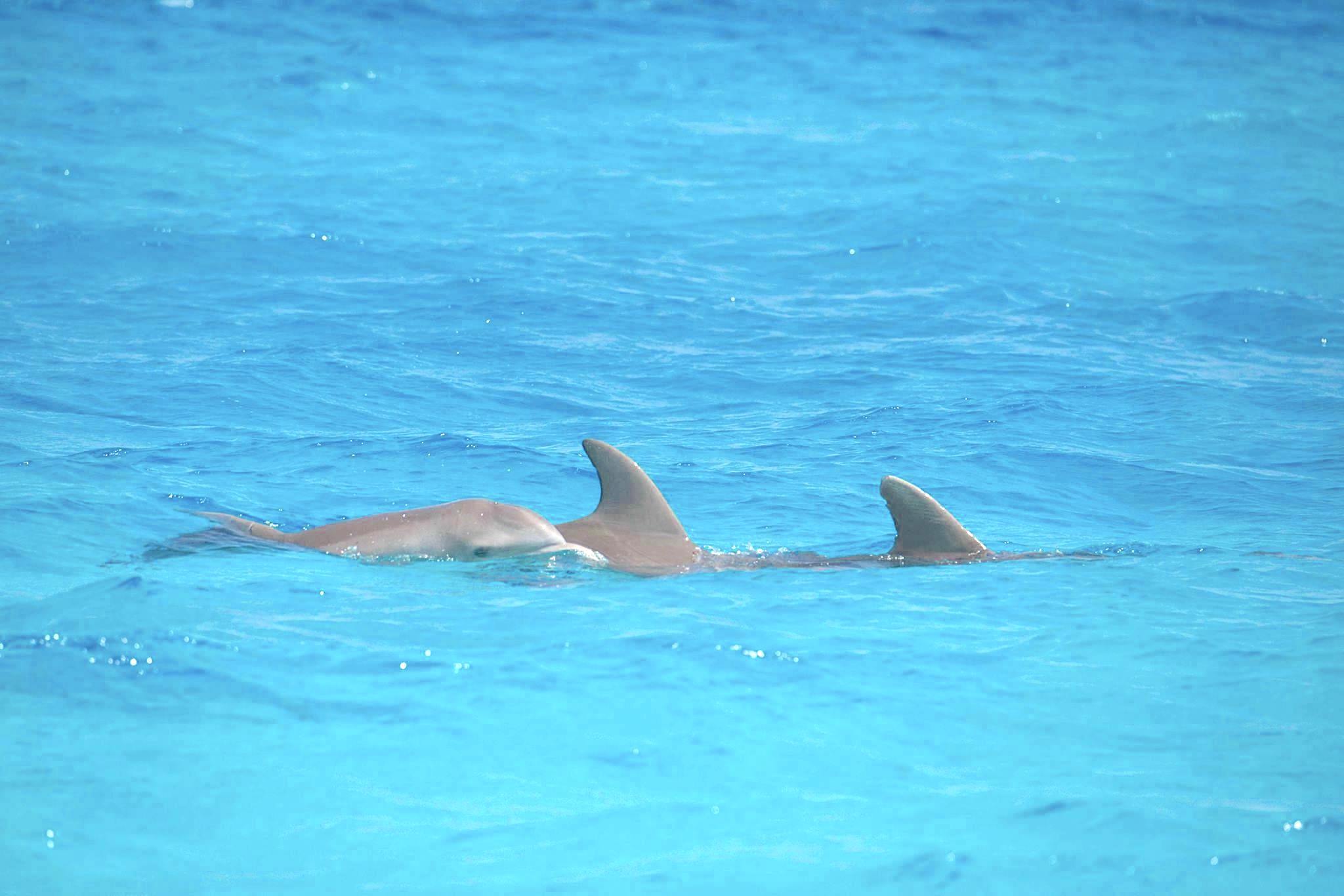
This pair was in a group of 8 Atlantic Spotted Dolphins that we encountered yesterday during a day’s expedition on the Bahamas Marine Mammal Research Organisation (BMMRO) research boat. We spent nearly an hour with them, and there will be a longer post about these magnificent creatures in due course. But right now, I’m still in single image posting mode while “on-island”…

Photo: Keith Salvesen / BMMRO

Unknown's avatar

BROWN PELICANS ON ABACO & BEYOND


Brown Pelican, Bahama Palm Shores, Abaco Bahamas (Tom Sheley)

BROWN PELICANS ON ABACO & BEYOND

Six more sleeps. That’s all. Suddenly, a trip that seemed ages away is rushing towards us. Or, to put it more plausibly science-wise, we are rushing towards it. Abaco beckons, with bonefish, rays, sharks, reef fishes, whales, dolphins, birds and butterflies to investigate. Plus Kaliks to consume. 

Brown Pelican, Abaco (Tony Hepburn)

Idly thinking along those lines and vaguely plotting the first few days, took me to Sandy Point, home of the BMMRO (Bahamas Marine Mammal Research Organisation) and of course the legendary Nancy’s, the restaurant at the end of the road. From where it is a short step to the dock on which the pelicans gather and use as a launch pad for their fishing dives.

I photographed this bird at the end of the SP dock, looking rather bedraggled after a diveBrown Pelican (m), Sandy Point, Abaco (Keith Salvesen)

Note the significant plumage differences between the male (above) & this femaleBrown Pelican (f), Sandy Point, Abaco (Keith Salvesen)

I recently read somewhere that the brown pelican is (or has become) quite uncommon in the Bahamas. On Abaco it is a permanent resident breeding species, so a drop in numbers equals fewer nests, fewer chicks and… fewer numbers. It’s a classic cycle towards serious population decline and all that is implied. Has anyone noticed an apparent reduction in numbers, I wonder? Comments welcome.

Brown Pelican, Abaco (Woody Bracey)

Brown Pelican, Sandy Point, Abaco (Keith Salvesen)

The pelicans above were all photographed on Abaco. The two below were not, but are both by exceptional photographers. One, Phil Lanoue, specialises in dramatic sequences, and his work features elsewhere in this blog. The final image was sportingly uploaded by Alan Schmierer from Flickr into the ‘public domain’.

Coming in to land…Brown Pelican coming in to land (Phil Lanoue)

While we are on Abaco, I plan to keep posting as and when, subject to connectivity (always a proviso in the Bahamas). My big hope is that the piping plovers that were on the beach last year and returned this season, will have resisted the increasingly insistent call to fly north to the breeding grounds. If they could just hang on for just a few more days… 

Brown Pelican preening (Alan Schmierer)

Credits: Tom Sheley (1); Tony Hepburn (2); Keith Salvesen (3, 4, 6); Woody Bracey (5); Phil Lanoue (7); Alan Schmierer (8); Birdorable (cartoon)

Unknown's avatar

HUMPBACK WHALE SEEN OFF SANDY POINT, ABACO


bmmro-humpbacks-2

HUMPBACK WHALE SEEN OFF SANDY POINT, ABACO

Dolphins are regularly seen around the coast and in the fishing grounds of Abaco. Sometimes, they make it easy by nosing into harbours and being generally adorable for a while, to the delight of onlookers. Hope Town can be a good place for this. Those aboard the “Donnies” –  the ferries that criss-cross the Sea of Abaco from the main island to the various Cays – may be in luck too. However, it is perhaps less well known that Abaco waters provide a home or a migratory passage for gigantic whales. Beside these mighty creatures, the several other whale species of the Bahamas seem relatively small. Yes it’s true: there are huge whales – humpbacks and sperm whales (cachalots) – to be found in Abaco waters, and not so very far from land either.

bmmro-humpbacks-5

The humpback whale Megaptera novaeangliae above, with its characteristic white pectoral fins, was seen about a week ago off Sandy Point (southwest Abaco). You’ll get an idea of its immense size from the photo. An adult of this BALEEN WHALE species can reach 50 feet in length and weigh 35 tons or more. Imagine watching one slipping silently past your boat… and then consider that even larger sperm whales are seen in the same area. 

For the link to report a Bahamas whale sighting, please see either link provided below

Humpback whale / adult male human in scuba gear comparison
humpback_whale_size-svg

bmmro-humpbacks-1

Humpbacks are found in oceans throughout the world. They migrate huge distances each year, from polar regions to the tropical and sub-tropical waters where they breed. These are the whales beloved of wildlife film producers and whale-watching trips, with their spectacular arched breaching in which half their length or more may emerge from the water before smashing back into the waves. 

A humpback breaches on the Stellwagen Bank (about 50 miles offshore of Boston)
humpback_stellwagen-whit-wells-wiki

Like other large whale species, humpbacks were unsurprisingly prime targets for the whaling industry in a melancholy era of marine history that took them to the edge of extinction until a moratorium was declared in 1966. Since then the population has recovered significantly. They remain vulnerable, however: in some locations, to killing; to entanglement in heavy-duty fishing gear; to ship collisions; and to noise pollution that affects their ability to communicate long-distances underwater, as they need to do.

Finally, the Sandy Point humpback makes a last dive and, with a wave of its fluke, disappears  bmmro-humpbacks-4    bmmro-humpbacks-3

Do you have a Bahamas whale or dolphin sighting to report? Please use this link, giving as many of the details as you can. Each report makes a valuable contribution to the BMMRO’s research. 

http://www.bahamaswhales.org/sightings.aspx

As a footnote, my first whale encounter was on the Stellwagen Bank mentioned above, when I went on a whale-watching trip from Boston. We encountered a mother humpback with her calf and spent about 1/2 hour watching them interacting. I have the memories luckily – my photos were rubbish, using a very early digital camera that these days would be less effective and well-spec’d that a luminous pink plastic child’s camera now… 
stellwagen-humpbacks-keith-salvesen-2 Version 3stellwagen-humpbacks-keith-salvesen-3

RELATED POSTS

HUMPBACK HOPE TOWN ABACO

BLAINVILLE’S BEAKED WHALES

BMMRO

SIGHTING REPORTS

Credits: Brad & his crew, and the BMMRO; Whit Wells / Wiki for the breaching whale; moi for the rotten but quite interesting archive photos from the same place; the whale for being awesome in the true sense of the word

Unknown's avatar

“THE PRINCE OF WHALES”: BLAINVILLE’S BEAKED WHALE


Blainville's Beaked Whale, Sandy Point, Abaco 14 (Keith Salvesen

“THE PRINCE OF WHALES”: BLAINVILLE’S BEAKED WHALE

This post results from a recent Technological Breakdown at Rolling Harbour Towers, and is to be viewed as post-trauma therapy. Smart New Mac ordered, to replace 5 year-old warhorse loosely held together with duct tape and prayer. After lengthy (overnight) data migration, Smart New Mac turns out to be faulty. SNM returned to store: a seething hotbed of stress and distress (the shop too). While replacement is eagerly awaited, fry motherboard of old computer with shorted charger. A week of wailing and gnashing of teeth. Smart New Newest Mac brings you this offering.

I like whales. Everyone likes whales. Even whalers, though for very different reasons. Here are some calming pics of one of Abaco’s largest yet best kept secrets – Blainville’s beaked whales. Adults grow to more than 15 feet long and weigh about 2000 pounds, yet they can behave like huge dolphins in slow motion – circling a boat, diving under it, drifting away, swimming back. They have no motherboard and require no data migration.

The amazing barnacled tusks of a male, that protrude upwards  from the lower jawBlainville's Beaked Whale, Sandy Point, Abaco 16 (Keith Salvesen

Tusks and blowhole…Blainville's Beaked Whale, Sandy Point, Abaco 15 (Keith Salvesen

Dorsal fin damage is an excellent way to ID individual whalesBlainville's Beaked Whale, Sandy Point, Abaco 18 (Keith Salvesen

The knobbly back will help with ID tooIMGP2001 - Version 2

A female beaked whale noses towards the BMMRO research vesselBlainville's Beaked Whales, Abaco (1) (Keith Salvesen)

The beak breaks the surfaceBlainville's Beaked Whales, Abaco (1) (Keith Salvesen)

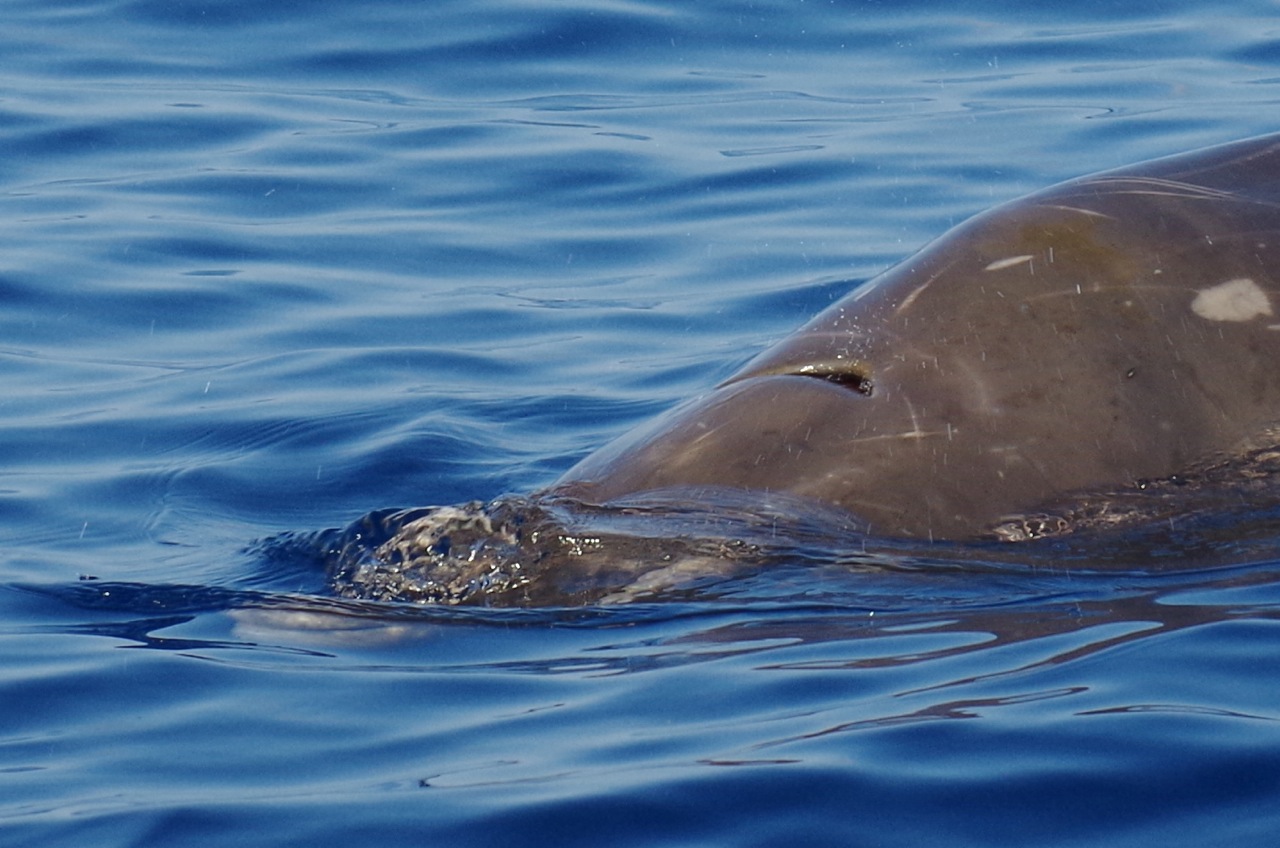
The blowhole, used for breathing, in close-upBlainville's Beaked Whales, Abaco (1) (Keith Salvesen)

Healed circular wounds caused by COOKIECUTTER SHARKSBlainville's Beaked Whales, Abaco (1) (Keith Salvesen)

‘Dolphining’ towards the RHIB (the small creature between the two on the left is a calf)Blainville's Beaked Whale, Sandy Point, Abaco 8 (Keith Salvesen

CLOSE ENCOUNTER & HEAVY BREATHING

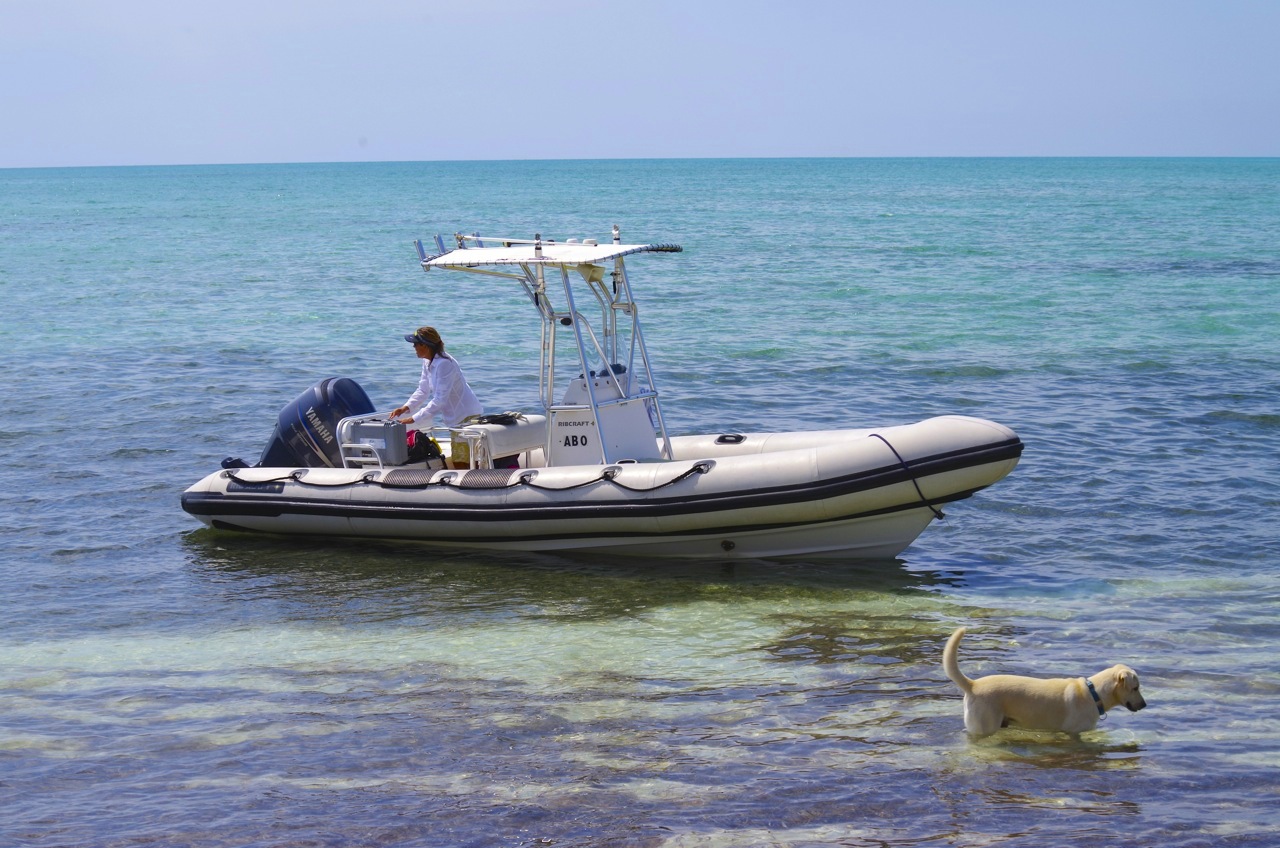
           BMMRO research RHIB                        BMMRO HQ, Sandy Point, AbacoBMMRO Research Boat, Sandy Point, Abaco (Keith Salvesen) BMMRO HQ, Sandy Point, Abaco (Keith Salvesen)

Female beaked whale being peacefulBlainville's Beaked Whales, Abaco (1) (Keith Salvesen)

Credits: all photos & video RH; Charlotte & Diane for a brilliant experience ; Mr Blainville (below) for a brilliant whale

220px-Henri_Marie_Ducrotay_de_Blainville

Unknown's avatar

MANATEE AWARENESS MONTH (& BABY TALK)


Rita the Mantee & her new baby. Bahamas (BMMRO)

MANATEE AWARENESS MONTH (& BABY TALK)

Are you aware of the Bahamas manatees? Just a few years ago your answer might well have been “Bahamas what? No, why? Where?” But suddenly they arrived. And their numbers are increasing. Alternatively, of course, they have always been there, mooching around peacefully and unnoticed in the seagrass. 

Manatee Awareness Graphic (Peppermint Narwhal)

Rita and her recently born daughter – Kamalame, AndrosRita the Mantee & her new baby. Bahamas (BMMRO)

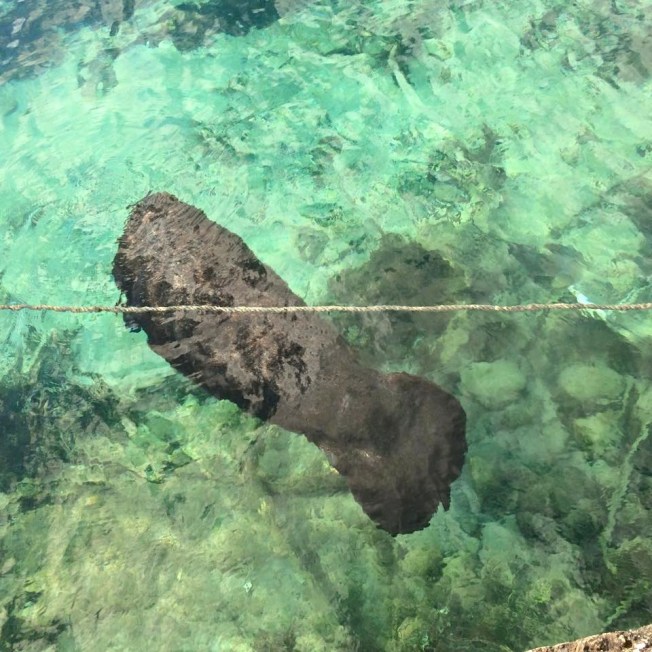
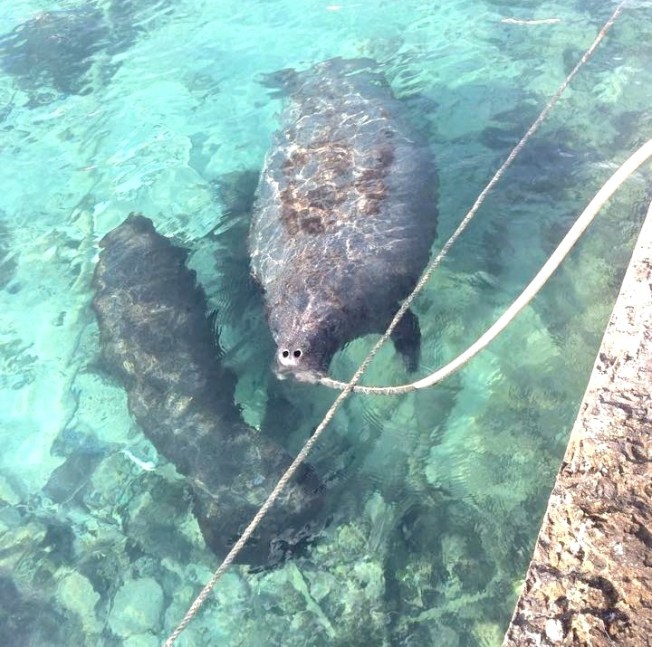
The Bahamas Marine Mammal Research Organisation BMMRO has been keeping tabs on occasional sightings of manatees in Bahamian waters for some years. But until around 2012 – when I first learned of them and wrote about them – they appeared to be few and far between. They seemed to be unrecorded for Abaco, or anyway unphotographed.** Then the sightings began. Names were given to individuals, identified primarily by distinctive marks or cuts on their ‘paddles’ (tails). Gina. Rita. Georgie. Randy. JJ. Sightings in Hope Town, Little Harbour, Cherokee and the Casuarina canal. Manatees had arrived and were being paid attention. The ease of digital photography and the rapidly increasing use of social media resulted in more reports, wider interest and – yes – greater awareness both on Abaco and elsewhere in the wider Bahamas

**so much for being factually assertive! Many thanks to Mary for her account of one on Green Turtle Cay ‘seen by everyone’; and Kelley for her 2008 one in Galleon Bay canal… of which she actually got a photo…

manatee-galleon-bay-canal-tc-abaco-feb-2007-kelley-niedoba

To give you an idea of the rapid spread of the West-Indian Manatee population, here is a great infographic made recently by Felice Leanne Knowles of the BMMRO, mapping 2016 sightings of both known and unidentified manatees in the Bahamas. An amazing 15 in all, in an area where the natural fresh water these creatures need for survival is in short supply.

Bahamas Manatee sightings infographic (BMMRO / Felice Knowles)

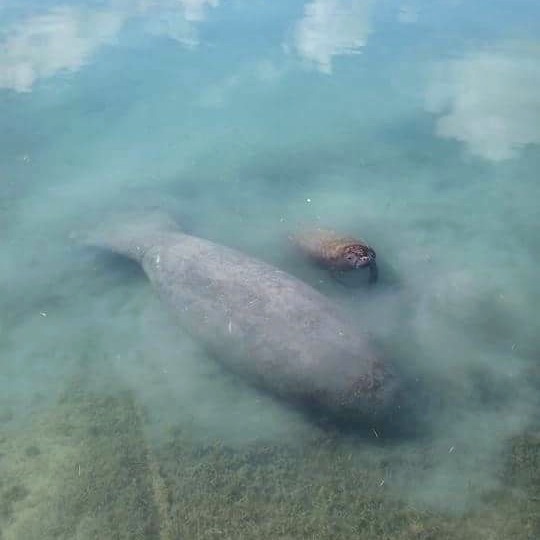
You’ll see that in July both Gina and Rita had nosed their way down to Andros. At this time, Gina was known to be heavily pregnant. She gave birth in Kamalame Cay, and the photos of her above with her new calf were taken there.

The baby manatee is known to be a female and there is currently a competition to name her. A spreadsheet-worth of names was submitted to the BMMRO, and they have been whittled down to 3 for a final poll-off between Andie (Andros), Kaman (Kam[alame] An[dros]) and Morgan (Arrrrrrrr in Piratese). 

Waiting for a name…Rita the Mantee & her new baby. Bahamas (BMMRO)

RELATED LINKS

BAHAMAS MANATEE CLUB (BMMRO)

BAHAMAS MANATEES: GINA’S GOOD NEWS

BAHAMAS MANATEES: A SHORT HISTORY 1904 – 2015

WEST INDIAN MANATEES (RH PAGE)

img_4120

Credits: BMMRO and individual photographers whom I will identify when my backup has finished churning away; Felice Leanne Knowles; ‘Kelly’ (header); @kamalamecay; Sarah Jayne Buchanan; Peppermint Narwhal for their (as usual) inspired illustrative graphics.

mantsw~1

Unknown's avatar

THE BAHAMAS: A STAMPING GROUND FOR DOLPHINS


Dolphin leaping, Abaco (BMMRO)

THE BAHAMAS: A STAMPING GROUND FOR DOLPHINS

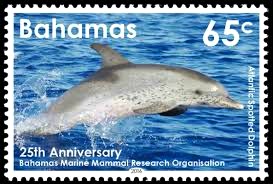
I have commented before on the excellent wildlife stamps produced by the Bahamas Philatelic Bureau, and there is a fairly comprehensive page featuring many of the special issues HERE. Recently, dolphins were treated to their own set of stamps, in conjunction with the BMMRO (Bahamas Marine Mammal Research Organisation).  Four dolphin species are showcased, with a fifth species (Risso’s Dolphin) shown on the commemorative Official First Day Cover (replete with the BMMRO logo). The release date was 31 March 2016.

Bahamas Dolphin Stamps 2016

l_bmmro 25th ann_20160304134635-1

The stamps are available as sets of 4 or of course individually. In a newsletter earlier this year, the BMMRO included some fascinating information about their valuable work – in particular with whales – and about the individual dolphin species featured in this very special philatelic issue. This was also published by the stamp producers, Pobjoy Mint Stamp Division.

BMMRO is a Bahamian non-profit organisation whose mission is to promote the conservation of marine mammals in The Bahamas through scientific research and educational outreach. Since 1991, BMMRO has been conducting small vessel surveys primarily around Abaco Island to document the occurrence, distribution and abundance of marine mammals in The Bahamas.
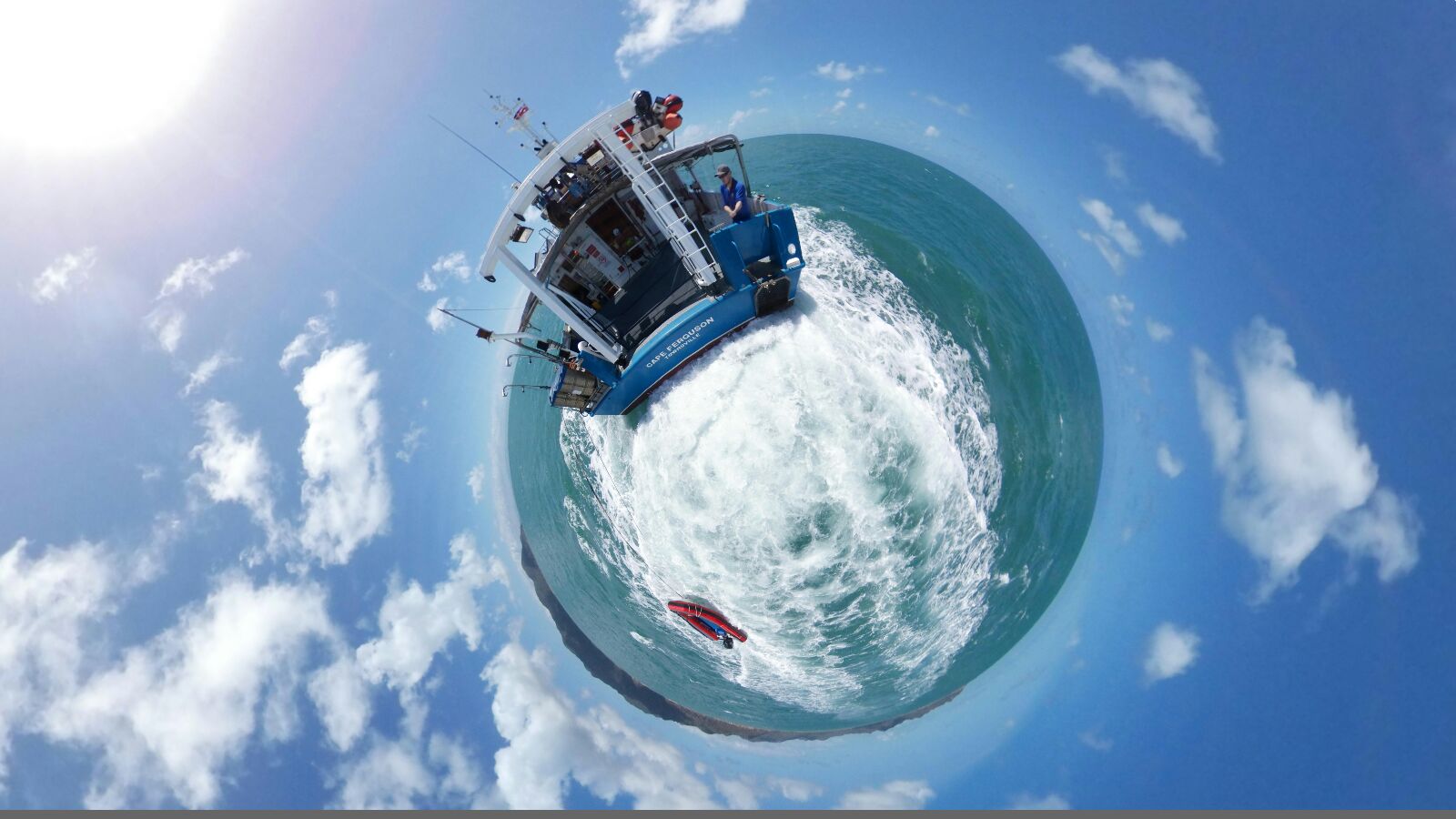
imgres-3

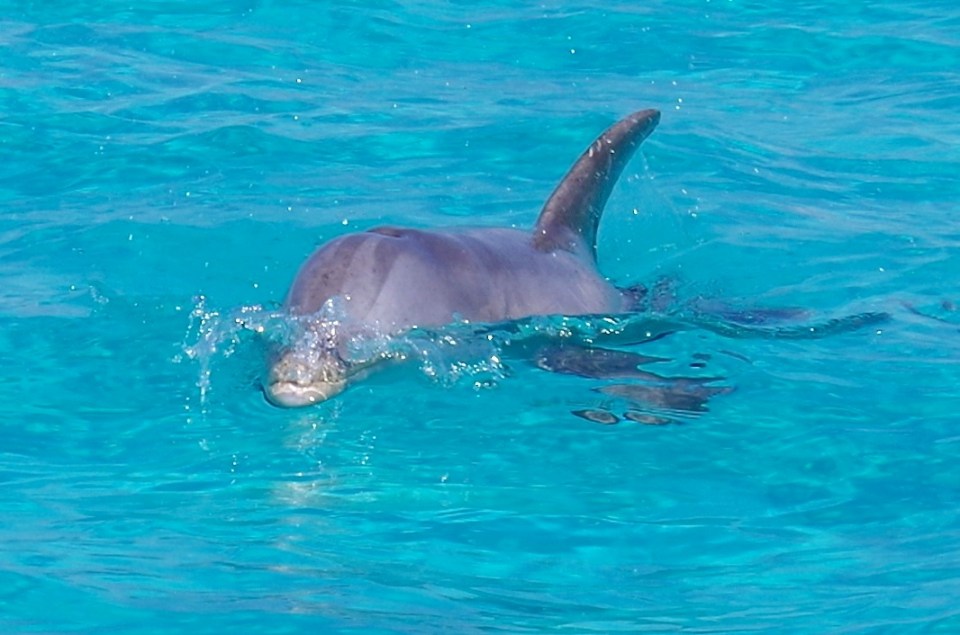
BOTTLENOSE DOLPHINS Tursiops truncatus

These are the most common marine mammals seen on the Bahama banks. It should be noted, however, that there are at least two distinct “breeding populations” or “ecotypes” of this species: coastal bottlenose dolphins that inhabit the shallow waters of the banks; and oceanic bottlenose dolphins found in pelagic waters. These populations diverged genetically several hundred thousand years ago and have since developed different physiological adaptations to their respective marine environments. The coastal ecotype is smaller in length reaching just over 8 feet and has a relatively larger dorsal fin and pectoral fins which helps them to maneuver more readily around rocks and reefs to catch fish, and to regulate their internal body temperature (the temperature of the shallow Bank waters fluctuates much more than the deeper Atlantic Ocean). The coastal dolphins do not travel much beyond the bank edge and live in small resident communities. The deeper diving oceanic ecotype can reach 10 feet or more in length, are usually seen in larger groups and appear to have a more extensive range with movements documented between Abaco, Bimini and Exuma Sound.

imgres-4

ATLANTIC SPOTTED DOLPHINS Stenella frontalis

These dolphins are not born with spots, but actually accumulate them as they mature, becoming quite mottled-looking as adults. Hence, young spotted dolphins are often confused with bottlenose dolphins, and sometimes the two species will interact, which adds to the confusion. Although they can reach almost the same length as bottlenose dolphins, they have a smaller girth and thus body weight. Atlantic spotted dolphins are a year-round resident species in The Bahamas. Individuals photo-identified 20 years ago in Abaco can still be seen in the same areas today. They are commonly seen in groups of 20-50 dolphins in the oceanic waters where they feed on flying fish and squid, and rarely venture on to the bank. However, along the western edges of Little and Great Bahama Banks this species can regularly be found on the bank during the daytime where they come to rest and socialise.

imgres-5

PANTROPICAL SPOTTED DOLPHINS Stenella attenuata

This species is more slender in body shape than Atlantic spotted dolphins, and also have a distinctive dark dorsal cape, which sweeps from their rostrum to behind their dorsal fin. Like Atlantic spotted dolphins, they accumulate their spots with age, which allows researchers to readily document age-classes within groups. This species is strictly oceanic in its distribution. Pantropical spotted dolphins are not as frequently sighted as Atlantic spotted dolphins in The Bahamas. They occur in groups of 50-100 dolphins and are often seen engaging in acrobatics, such as making high leaps out of the water, and bow-riding.

imgres-6

ROUGH-TOOTHED DOLPHINS Steno bredanensis

These dolphins are dark grey in colour with a long beak and prominent white lips. Their lower jaw and belly can sometimes be a pinkish colour. They reach just over 8 feet in length. They are an oceanic species and although appear to be rare in some parts of The Bahamas, can be regularly seen in the Tongue of the Ocean where they occur year round. Some individuals have been re-sighted in this area over the past ten years. They are typically found in groups of about 20 animals, but are sometimes in larger mixed-species aggregations of several hundred dolphins.

Risso's Dolphin - BMMRONot on a stamp but shown on the First Day Cover

RISSO’S DOLPHIN Grampus griseus

These are large light grey dolphins that can reach over 13 feet in length, and have a relatively tall, dark dorsal fin. Adults are typically covered with overlapping white scars caused by the teeth of their con-specifics making them look quite battered. They have a rounded head, lacking a beak, but have a deep vertical crease down the center of the forehead. As they mature, their forehead becomes prominently white, and as such they are one of the easiest species to recognize at sea. Risso’s dolphins are commonly seen in oceanic waters in the northern Bahamas each winter and spring, primarily on the Atlantic side of the islands. It is unknown where these groups range the rest of the year, but some individuals have been seen off Abaco repeatedly over the years.

RELATED POSTS

BAHAMAS WILDLIFE STAMPS PAGE

PHILATELY WILL GET YOU…

ABACO BIRD STAMPS

Bottlenose Dolphins, Rocky Point, Abaco (Keith Salvesen : BMMRO) 7

Credits: BMMRO for relevant text & images except last (RH), Pobjoy Mint, Bahamas Philatelic Bureau

Unknown's avatar

WHALE-WATCHING: THE APPLIANCE OF SCIENCE


Blainville's Beaked Whale, Sandy Point, Abaco 14 (Keith Salvesen

WHALE-WATCHING: THE APPLIANCE OF SCIENCE

The Bahamas Marine Mammal Research Organisation has just celebrated its 25th year of existence. It was formed in 1991. The omnivorous leviathan Amazonus giganticus emerged in 1994 and the invasive species Megacorpus googleii not until 1998. A full 10 years later the first garbled recordings of Sarahpalinus illogicus were made. And all the while, a watchful eye was being kept on the cetaceans of the Bahamas – researching, counting, measuring, identifying, recording, poop-scooping, analysing samples, tagging, comparing, protecting and conserving. 

Blainville's Beaked Whale, Sandy Point, Abaco 20 (Keith Salvesen

As the years passed, so the science and technology evolved and became more sophisticated. Researching became at the same time easier, yet more complex as the organisation’s remit expanded to accommodate the vast increase in data collection now made possible by refined techniques. Here are two very recent examples – 25th anniversary projects, in fact – with thanks to Charlotte, Diane, their team and their colleagues in linked organisations.

TAGGING BLAINVILLE’S BEAKED WHALES

Last month, a tagging project started, involving suction cups being attached to the backs of BLAINVILLE’S BEAKED WHALES. The purpose of the research is to compare the foraging efficiency of the whales in Abaco waters with those of Andros, the second part of the project. I imagine this will provide valuable insights into the whale movements and behaviours in each location as well as such issues as the comparative availability of the food supply, and other factors that may affect expected foraging patterns. 

The tag is moved towards an adult male. Note the aerial (antenna?) at the back of itTagging a Blainville's beaked whale with a suction cup 1

Planting the tag on the whale’s backTagging a Blainville's beaked whale with a suction cup 2

Successful suction!Tagging a Blainville's beaked whale with a suction cup 3

The tag in placeTagging a Blainville's beaked whale with a suction cup 4

The tag is tracked for 18 hours, after which it is retrieved and the recordings can then be analysed back at BMMRO HQ in Sandy Point. So far, an adult male, a young male and two adult females have been tagged. Each female had a calf, but these were not tagged.

Female beaked whale with her calfBlainville's beaked whale female and calf

AERIAL PHOTOGRAMMETRY USING A HEXACOPTER

Drone technology is rapidly expanding as new uses for them are devised. BMMRO in conjunction with NOAA have used a sophisticated HEXACOPTER to take the first  PHOTOGRAMMETRY images of Blainville’s beaked whales. These aerial photographs were taken from approximately 100ft altitude. But note: not just anyone with a $50 drone can do this: the project required flight clearance from the Bahamas Department of Civil Aviation and a permit for research on marine mammals granted by the Bahamas Department of Marine Resources.

 Blainville’s beaked whale photogrammetry image – adult male (note ‘erupted’ teeth) Blainville's beaked whale photogrammetry image - adult male (note 'erupted' teeth) BMMRO

 Blainville’s beaked whale photogrammetry image – female and calf Blainville's beaked whale photogrammetry image - female and calf BMMRO

STOP PRESS Two additional images from the latest batch Blainville's beaked whales photogrammetry image - BMMRO  Blainville's beaked whales photogrammetry image - BMMRO

Photogrammetry: the science of making measurements from photographs. Applications include satellite tracking of the relative positioning and alterations in all Earth environments (e.g. tectonic motions etc), research on the swimming of fish, of bird or insect flight, and other relative motion processes. The results are used to guide and match the results of computational models of the natural systems. They help to invalidate or confirm new theories, to design novel vehicles or new methods for predicting or/and controlling the consequences of earthquakes, tsunamis etc, or to understand the flow of fluids next to solid structures, and many other processes. (Wiki-précis)

Hexacopter (6 rotors)Hexacopter_Multicopter_DJI-S800_on-air_credit_Alexander_Glinz

Tag Team: BMMRO, University of St Andrews (Scotland), Woods Hole Oceanographic Institution

Hexacopter: BMMRO, NOAA

Photo Credits: top two, moi (from BMMRO research vessel); remainder except for last, BMMRO; last, Wiki

Unknown's avatar

BAHAMAS MANATEES: GINA’S CALF NEEDS A NAME!


Gina the Bahamas Manatee (pregnant) Eleuthera (BMMRO)

Gina the Manatee, Eleuthera – expectant mother (BMMRO)

BAHAMAS MANATEES: GINA’S CALF NEEDS A NAME!

Earlier this year I posted the welcome news that Bahamas manatee Gina was beyond any doubt pregnant. You can read about it HERE. Gina has been living for some time in Eleutheran waters, under regular observation by the BMMRO. At the turn of the year, she was re-tagged in Harbour Island, Eleuthera, when her pregnancy was discovered. I promised to give an update and this is a perfect moment. Gina’s calf was safely born and is growing fast. The pair have spent a lot of time in and around Spanish Wells, Eleuthera. Recently they have begun to move further afield, and there have been several sightings with some great photos shared on FB and in particular on Felice Leanne Knowles’s terrific BAHAMAS MANATEE CLUB page, some of which are included here duly credited.

Gina the Bahamas Manatee (pregnant) Eleuthera (BMMRO)

Gina’s calf is currently just called “Gina’s calf”. Its gender is unknown, and it will take a close inspection from below to ascertain from its… I don’t have to go on with this, do I? The point being that the chosen name will need to be unisex because it may take a while until there is sufficient development of the… I don’t have to go on with this either, do I? Let’s see the nameless calf at once! Details of the competition at the end of this post…

Gina with her newborn calf, July 27 (BMMRO) (note apparent prop scars on Gina)11209341_1012183408800885_310154952620912454_n

Spanish Wells, October 26 (π Junea Pinder / BMMRO) Gina the Bahamas manatee and her calf (Junea Pinder / BMMRO) Gina the Bahamas manatee and her calf (Junea Pinder / BMMRO)

Gregory Town, November 5 (Lynne Hirzel / BMMRO)12188935_10156306821645195_3509772562942760375_n 12219637_10156306821330195_1471887362053804519_n

Hatchet Bay, November 13    (π Jeffrey Louis / BMMRO)  10425501_1042928762405755_7163144254688618862_n 12108239_1042928735739091_6064773734031487371_n

November 18: Now you see it… (π Norma Roberts / BMMRO)Gina & Calf Norma Roberts 1 copy

…and now you don’t…Gina & Calf Norma Roberts 2 copy

THE COMPETITION

ATTENTION TEAM MANATEES!!! Due to a consistent influx of sighting information and photos, we would like to add Gina’s calf to our catalogue. It would be nice for it to have a NAME!! We cannot monitor these manatees without your help and it is only fitting that  YOU name the manatee. The deadline for name suggestions is November 29th, 2015 and the winning name will be revealed on November 30th, 2015. The member with the winning name suggestion will receive an official manatee club T-Shirt!!

RULES

1. The name must be submitted on the Club Page Bahamas Manatee Club as an individual post – DO NOT comment your suggestion.
2. The name must be unisex – we do not know the sex of the calf yet.
3. A meaning or description must be submitted along with the name.
4. Please do not submit any derogatory or explicit “names.”
5. If you are submitting on behalf of a child who is not on Facebook, please add their name to the post as well.

Spread the word! Tell your friends and families to join the club and help us with a name!! The name will be selected on it’s meaning or description as it relates to marine mammals OR The Bahamas. The amount of “likes” per post will also go into consideration during the selection process.

Regretful Note: I made the stupid mistake of being amongst the very first to post my suggestion, meaning that after a day or two I’d get no likes at all, as more people got involved and my offering sank slowly. But there’ve been plenty of much better ones since, so probably just as well!

Bahamas Marine Mammal Research Organization

Bahamas Manatee Club

For more information about West Indian manatees, you can visit the MANATEE PAGE. There are several links there to specific manatee stories.

Finally, here is a great manatee map that Felice has recently made, showing which of the increasing number of manatees is where at the moment. Just think, only 4 or 5 were known about four years back. Now look!

12241226_298174587019969_1571890190333376929_n

Credits: primary founts of Bahamas manatee knowledge Felice & BMMRO; Photos BMMRO, Junea Pinder, Lynne Hirzel, Jeffrey Louis, Norma Roberts

mantsw~1

Unknown's avatar

WHALE TALES FROM ABACO (2): MALE BLAINVILLE’S BEAKED WHALE


Blainville's Beaked Whale, Sandy Point, Abaco 14 (Keith Salvesen

Adult male Blainville’s Beaked Whale with barnacle-encrusted teeth protruding from its lower jaw

WHALE TALES FROM ABACO (2): MALE BLAINVILLE’S BEAKED WHALE

This second post about the Blainville’s Beaked Whales of Abaco, Bahamas, relates to a prolonged encounter with a group of mothers, calves and a male. This was our second BBW sighting on the same day in March: the first is described HERE. Click the link to find out more details about these wonderful creatures, with plenty of close-up photos.

We had been invited by Charlotte and Diane of the Bahamas Marine Mammal Research Organisation BMMRO to spend a day with them on the research boat. This was our first chance to get close to whales, a chance made far more likely by (a) being with experts and (b) their specialist equipment…

Our first sighting was a short distance south of Rocky Point, as we moved into the deeper, darker ocean waters of the Bahama canyon, with the shoreline still clearly visible. We then visited HOLE-IN-THE-WALL in the RHIB and took a close look from the sea at the damage and destruction of the famous Hole caused by HURRICANE SANDY

On the way back we paused as we got to the same area where we had seen the group earlier in the day. Within minutes, several whales came straight towards us. This photo shows 3 adults and, almost submerged, a calf.Blainville's Beaked Whale, Sandy Point, Abaco 8 (Keith Salvesen

For the next hour or so, they played around the boat like very large dolphins moving in slow motion. Usually these whales make a deep dive every 20 minutes or so and stay underwater for about the same time before resurfacing. These ones stayed with us throughout. 

3 adults with 2 calvesBlainville's Beaked Whale, Sandy Point, Abaco 7 (Keith Salvesen

Mostly they stayed quite – or very – close to the boat. Sometimes they swam across the bow or even under the boat. From time to time, they would move off some distance. Each time we thought they were moving on, and each time they soon returned.  After a while the females and calves were joined by another whale – the less common sighting of a male replete with barnacle-encrusted teeth  protruding upwards from his lower jaw.

Blainville's Beaked Whale, Sandy Point, Abaco 21 (Keith SalvesenBlainville's Beaked Whale, Sandy Point, Abaco 13 (Keith SalvesenBlainville's Beaked Whale, Sandy Point, Abaco 12 (Keith Salvesen

The male initially stayed slightly further away from the boat than the others, perhaps assessing the threat to the group. Then he too joined in, passing and repassing the boat, swimming away and returning, remaining on the surface and offering a wonderful view of his noble head (see header image and below).

Blainville's Beaked Whale, Sandy Point, Abaco 15 (Keith SalvesenBlainville's Beaked Whale, Sandy Point, Abaco 16 (Keith Salvesen

Looking at my photos later, I realised that a second male must have joined the group for a short time. The image below shows a male with far fewer barnacles – certainly not the male we had been watching.Blainville's Beaked Whale, Sandy Point, Abaco 20 (Keith Salvesen

It was remarkable to see these huge creatures behaving in much the same way as dolphins, swimming playfully around and under a boat, moving away, then returning for more. These whales are some 15 feet long and weigh about 2000 pounds. They were inquisitive, unafraid (even with calves in the group) and gentle. Maybe they sensed that they have been to subject of years of intricate research by Diane and Charlotte that will materially assist with the preservation their species. More likely, the group were simply enjoying themselves in the sun with a peaceful intruder in their territory.

You don’t have to go miles offshore to see whales in Abaco watersAdult male Blainville's Beaked Whale, Rocky Point, Abaco (Rolling Harbour)FullSizeRender

BMMRO research RHIB with Diane           BMMRO HQ, Sandy Point, AbacoBMMRO Research Boat, Sandy Point, Abaco (Keith Salvesen) BMMRO HQ, Sandy Point, Abaco (Keith Salvesen)

Credits: All photos RH except one; Charlotte & Diane for a brilliant day out; Mr Blainville for a brilliant whale; Mrs RH for snapping me snapping the whale – a photograph that was featured in a competition in the Guardian Newspaper. 

220px-Henri_Marie_Ducrotay_de_Blainville

Unknown's avatar

BAHAMAS MANATEE MAGIC ON ABACO & BEYOND


Gina the Manatee & her calf (BMMRO)

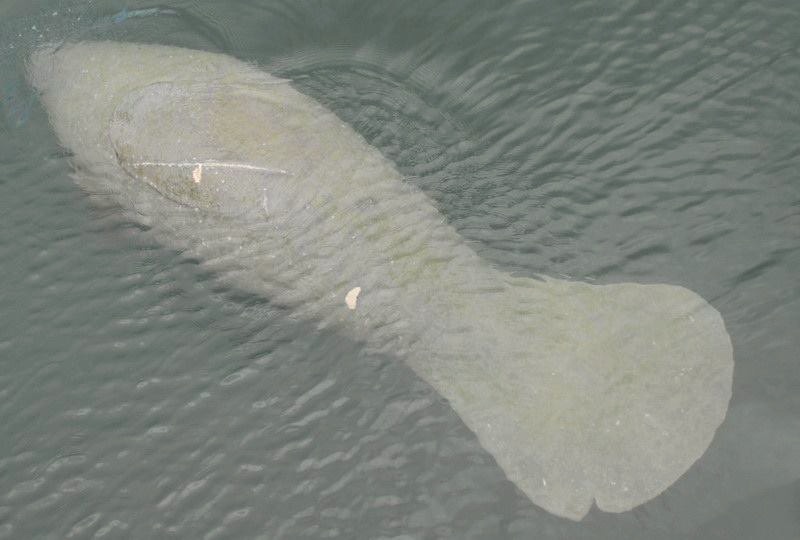
Gina (adult female) and her calf – last seen August 6th, 2015 in Spanish Wells Key feature – numerous paddle cuts; white oval scar on left side of back; linear scar on posterior right side of body

BAHAMAS MANATEE MAGIC ON ABACO & BEYOND

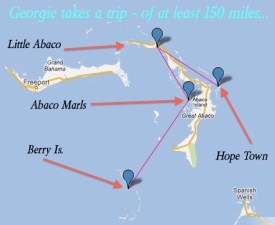
Four years ago, there were no manatees in Abaco waters. Then a couple of adventuresome sirenians made the trip over from the Berry Is. and since then, there have been at least one, sometimes two and occasionally three resident on Abaco. And for slow, gentle, animals they certainly move around, too. In the past, I wrote quite often about the manatees, charting their journeys based on satellite tracking and sightings. I reported the tantalising prospect of the young male, Randy, hooking up with young female Georgie in Cherokee Sound, only to turn back when he reached Little Harbour. You can read more about the manatees of Abaco on my manatee page HERE.

     Georgie’s epic trip (Sept 12) continued to Cherokee Sound; and Randy’s ‘pursuit’ (Sept 14)Georgie Manatee's direct route to Abaco       Randy's the Manatee's trip Berry Is. to Abaco copy

The most comprehensive source for Bahamas Manatee information is now to be found by joining the open Facebook group BAHAMA MANATEE CLUB, skilfully curated by Felice Leanne Knowles. There, you can follow the meanderings of your favourite Abaco manatee, watching as he or she moves around the island and cays. In recent months there have been sightings of single or pairs of manatees in several places, including Sandy Point, Little harbour, Marsh Harbour, Schooner Bay and Hope Town Harbour (where two are right now). Here’s an excellent example of how, just like a Beach Boy, an Abaco manatee gets around. In July, Randy moved from Sandy Point to Schooner Bay in 2 days. The big question is, did he travel round the longer top route, as he has in the past; or (more likely in the time taken) via Hole-in-the-Wall?

Randy the Abaco Manatee goes swimabout

Randy the Abaco Manatee goes swimabout

Felice has just produced a great map that shows the present locations of all the Bahamas manatees currently recorded. She has also supplied photos and information about them. Most have names and are well-known to the research team and the locals where they stay. There is one new calf – Gina’s –  this year. One or two manatees are new on the scene and have yet to be identified or named. 

Manatees Throughout The Bahamas

The map shows the last location of the named manatees. The pink dots label females, the green dots label males, and the yellow dots label unknown manatees. The number of unknown manatees has been approximated to reduce error. The photos are of the individual manatees with dates and specific locations of their most recent sighting. We do not have enough data and photos to confirm the unknowns labeled. Any help from the public would be greatly appreciated. Send sighting reports to http://www.bahamaswhales.org/sightings/index.html NB Felice points out Full body and paddle photos are very important for the identification of manatees. Facial shots do not provide enough information for a manatee to be identified”

Bahamas Manatee Location Map - Aug 2015 (Felice Leanne Knowles)

Gina the Manatee, Casuarina, Abaco (BMMRO / FLK)

Georgie (sub-adult female) Last seen in Casuarina, Abaco 9th July, 2015 Key feature – 2 pink scars on the right posterior of her body

Randy the Manatee, Hope Town, Abaco (BMMRO / FLK)

Randy (sub-adult male) Last sighted in Hope Town August 12th, 2015 Key feature – triangle cut on right side of paddle

Manatees, Hope Town, Abaco (BMMRO / FLK)

Unknown (adult, presumed female) with Randy Last seen in Hope Town August 12th, 2015 Key feature – 3 prop scars on the posterior right side of body

Gina the Manatee with her calf, Spanish Wells Bahamas (BMMRO / FLK)

Gina’s Calf Last seen August 6th, Spanish Wells Key feature – none yet, just really tiny!

Blackbeard the manatee, Lyford Cay, New Providence (BMMRO / FLK)

Blackbeard (adult male) Last seen in Lyford Cay August 13th, 2015 Key features – triangle cut on right side of paddle (similar to Randy’s); oval scar on centre of paddle; three prop scars on the back and linear scar

Kong the Bahamas Manatee, Great Harbour Cay Marina, Berry Is. (BMMRO / FLK)

Kong (adult male) Last seen in Great Harbour Cay Marina, February 25th, 2015 Key feature – triangle cut on the left side of paddle; linear scar across the back; oval scar on the back near paddle

J.J. the manatee, Great Harbour Cay Marina, Berry Islands (BMMRO / FLK)

J.J. (sub-adult female) Last seen in Great Harbour Cay Marina, Berry Islands, February 25th, 2015 Key feature – 3 small semi-circular cuts out of paddle at the very end

Rita the Manatee, Hawks Nest Marine, Cat Island (BMMRO/ FLK)

Rita (adult female) Last seen 23rd March, 2014 Hawks Nest Marine, Cat Island Key feature – Large triangle cut on right side of paddle; two small triangular cuts side by side forming a “w” on the left side of paddle

Unknown adult Manatee, West Grand Bahama (BMMRO /FLK)

Unknown adult, West Grand Bahama – Key feature: too distant!

Manatee Awareness Poster jpg

You may have noticed that several of the manatees shown carry scars attributable to prop wounds. Almost all carry injuries of some sort. Because manatees are slow, gentle, inquisitive and trusting creatures, they are especially vulnerable in harbour areas for obvious reasons. Elsewhere than the Bahamas, boat-strike is one of the main causes of manatee mortality. The BMMRO recently issued the above advisory notice because of the uncertainty about the rights and wrongs of watering manatees from docks with hoses and feeding them lettuce etc. Overall the message is that, though creatures of wonder, they are better off being admired but left to their own devices. They are adept at finding the fresh water sources they need, and their sea-grass diet is amply provided for. Dependence on humans, however well-meaning, is actually harmful.

The Travelling Mantee’s Favourite Song

RELATED LINKS

BAHAMA MANATEE CLUB

REPORT MANATEE SIGHTINGS

BMMRO

ROLLING HARBOUR MANATEES

MANATEE CONSERVATION

Credits: first and foremost, Felice Leanne Knowles; also BMMRO, Charlotte, & Diane for permission to make free with their material and photos from the get-go; any other photographers of the manatees shown and posted via BMMRO / FLK (Cha Boyce, Jessica Mullen,Otis Wilhoyte I think, maybe others…)

Manatee Logo (Savethemanatee.org)

Unknown's avatar

WHALE TALES FROM ABACO (1): BLAINVILLE’S BEAKED WHALES


Blainville's Beaked Whales, Abaco (1) (Keith Salvesen)

WHALE TALES FROM ABACO (1): BLAINVILLE’S BEAKED WHALES

Back in March we were invited by Charlotte and Diane of the Bahamas Marine Mammal Research Organisation BMMRO to spend a day out with them on the research boat, a chance we jumped at. I had been writing on and off about the organisation’s whale, dolphin and manatee research since the very early days of this blog. We’d seen bottlenose dolphins in Abaco waters, but never whales. This was the big day…

Our first sighting was a short distance south of Rocky Point, as we moved beyond the turquoise water of the low sandbanks into the deeper, darker ocean waters of the Bahama canyon beyond. Whale territory. The shoreline was plainly in view to the east; and to the north, on the horizon, was the massive bulk of the ‘fun ship’ parked at Castaway (Gorda) cay.

Beaked whale or fun ship for a day out? You decide…Blainville's Beaked Whales, Abaco (1) (Keith Salvesen)

A Blainville’s beaked whale noses towards the research vesselBlainville's Beaked Whales, Abaco (1) (Keith Salvesen)

The Blainville’s beaked whale (Mesoplodon densirostris) is also known slightly less politely as the dense-beaked whale.  It is named for the French zoologist Henri de Blainville who first described the species in 1817 based on his examinations of a piece of jaw or ‘rostrum’ — the heaviest bone he had ever come across — which resulted in the name densirostris (Latin for “dense beak”).

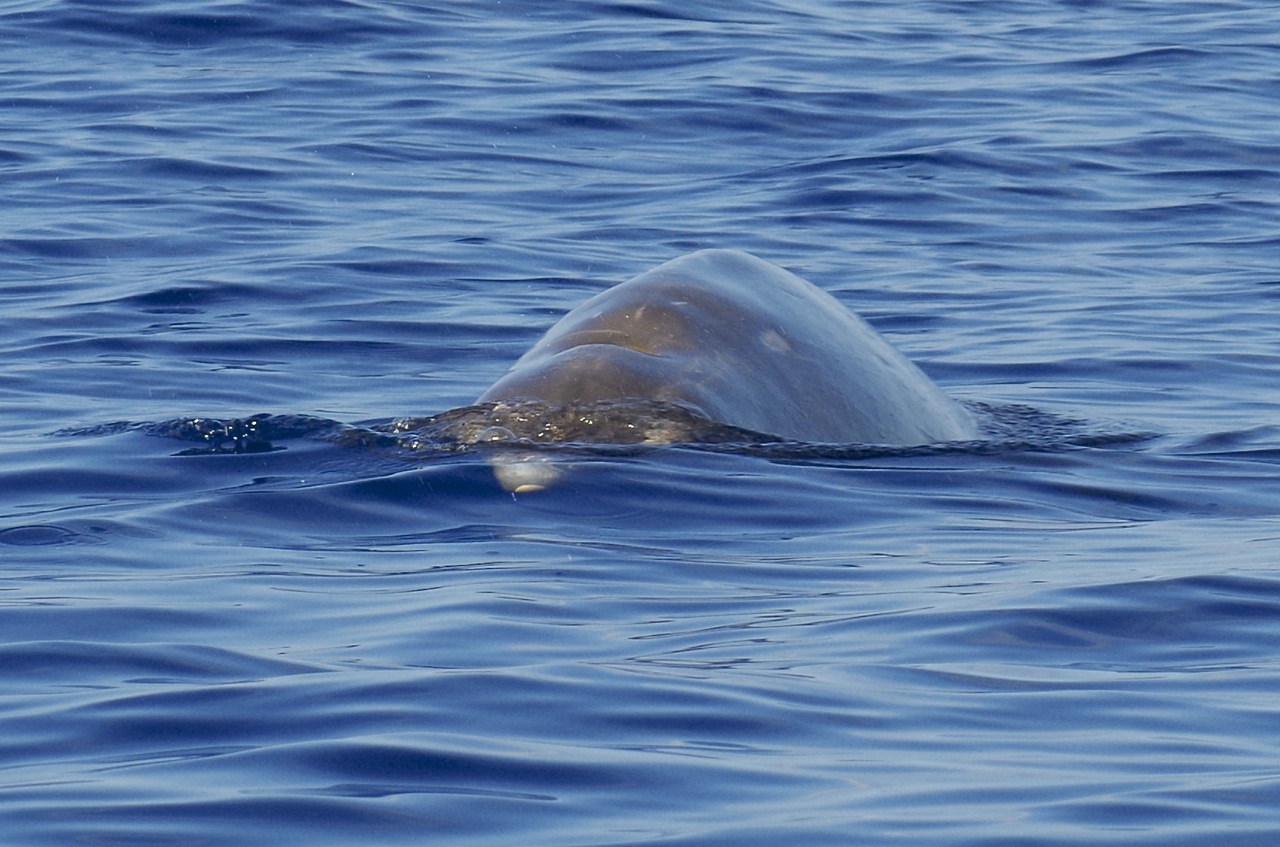
The beak breaks the surfaceBlainville's Beaked Whales, Abaco (1) (Keith Salvesen)

The BMMRO has carried out intensive research on the species for a number of years in the northern Bahamas, with detailed documentation of sightings and photo identification of individual animals. More recently, these whales have been the subject of incredibly detailed research into their species intercommunication through vocalisations – mainly clicks and click patterns. To view Charlotte’s PhD thesis for St Andrew’s University click HERE (and many congratulations, Dr Dunn…). Just reading the contents table will give a good idea of the scope and complexity of the research. 

The blowhole, used for breathing, in close-up. You can hear this in the video below.Blainville's Beaked Whales, Abaco (1) (Keith Salvesen)

Our amazing first encounter with 6 whales lasted nearly an hour. Usually, they stay near the surface for 20 minutes or so, then they do a deep dive lasting roughly 20 minutes before resurfacing. But on this occasion they behaved more like huge dolphins, swimming towards the boat, around it, under it, then drifting away again before returning.

Blainville's Beaked Whales, Abaco (1) (Keith Salvesen)

Given their length of some 15 feet and weight of about 2000 pounds, it was a extraordinary experience to see them at such close quarters.

Whale showing healed circular wounds caused by COOKIECUTTER SHARKSBlainville's Beaked Whales, Abaco (1) (Keith Salvesen)

The Blainville’s range is extensive and in general terms they may be found in tropical and sub-tropical waters worldwide. They are by no means uncommon, but apart from the data collected by the BMMRO it seems that comparatively little is known about them. Their diet is thought to consist mainly of squid found at depth. They are protected by a variety of Agreements, Memoranda of Understanding, Protocols and so forth throughout the worldwide range.

Cetacea_range_map_Blainvilles_Beaked_WhaleBlainville's Beaked Whales, Abaco (1) (Keith Salvesen)

The research boat is equipped with sonar the can pick up the click and whistles of whales and dolphins from a considerable distance. It was remarkable to watch a group of cetaceans and to be able to hear them loudly and animatedly communicating with each other..Blainville's Beaked Whales, Abaco (1) (Keith Salvesen)

Another vital aspect of the research is poop scooping. As soon as the whales had gathered round the boat, Charlotte slid into the water with her scoop net… the cloudy poop yields a mass of information about an individual creature. I wrote about this interesting job, often tasked to interns (who practice with coffee grounds) in ‘FAMILIAR FECES’.

Charlotte expertly wields the poop scoopBlainville's Beaked Whales, Abaco (1) 11 16.46.13

Then, all too soon, it was deep dive time. The whales moved off from the boat and slowly, without show or splash, disappeared. And we went to investigate HOLE-IN-THE-WALL at close quarters. The next post will feature an adult male Blainville’s beaked whale, with his massive barnacle-encrusted teeth protruding upwards from his lower jaw.

The remains of a neat and undramatic deep diveBlainville's Beaked Whales, Abaco (1) (Keith Salvesen)

In this very short video of two whales right by the boat: you can actually hear their breathing.

BMMRO research RHIB with Diane           BMMRO HQ, Sandy Point, AbacoBMMRO Research Boat, Sandy Point, Abaco (Keith Salvesen) BMMRO HQ, Sandy Point, Abaco (Keith Salvesen)

Credits: All photos RH; Charlotte & Diane for a brilliant day out; Mr Blainville for a brilliant whale

220px-Henri_Marie_Ducrotay_de_Blainville

Unknown's avatar

HOLE-IN-THE-WALL, ABACO: A UNIQUE PERSPECTIVE (2) PRESENT & FUTURE


Winslow Homer G W Original Brooklyn

HOLE-IN-THE-WALL, ABACO: A UNIQUE PERSPECTIVE (2) PRESENT & FUTURE

Following on from my post last month HOLE-IN-THE WALL: THE PAST, it’s time to take a closer look at the ‘Gap-in-the-Wall’ as it is today, viewed from the sea. I’ve called this a ‘unique perspective’, but I’m sure many people have taken photos of HITW from the sea. It just that apart from a few kayaking ones from before the collapse of the arch, I haven’t found them. So I took some, thanks to the BMMRO and their research RHIB. 

Hole-in-the-Wall Abaco (2015-2) 01 Location photo map

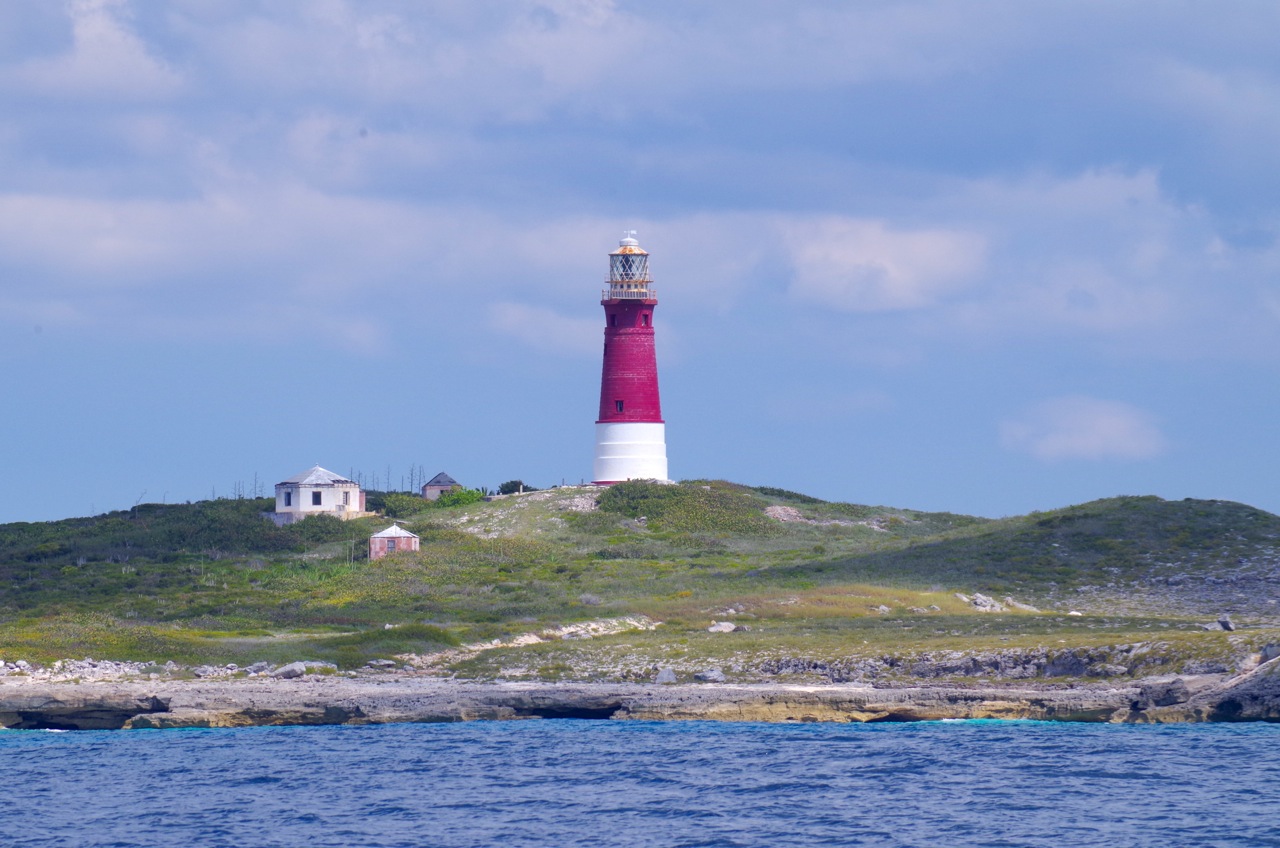
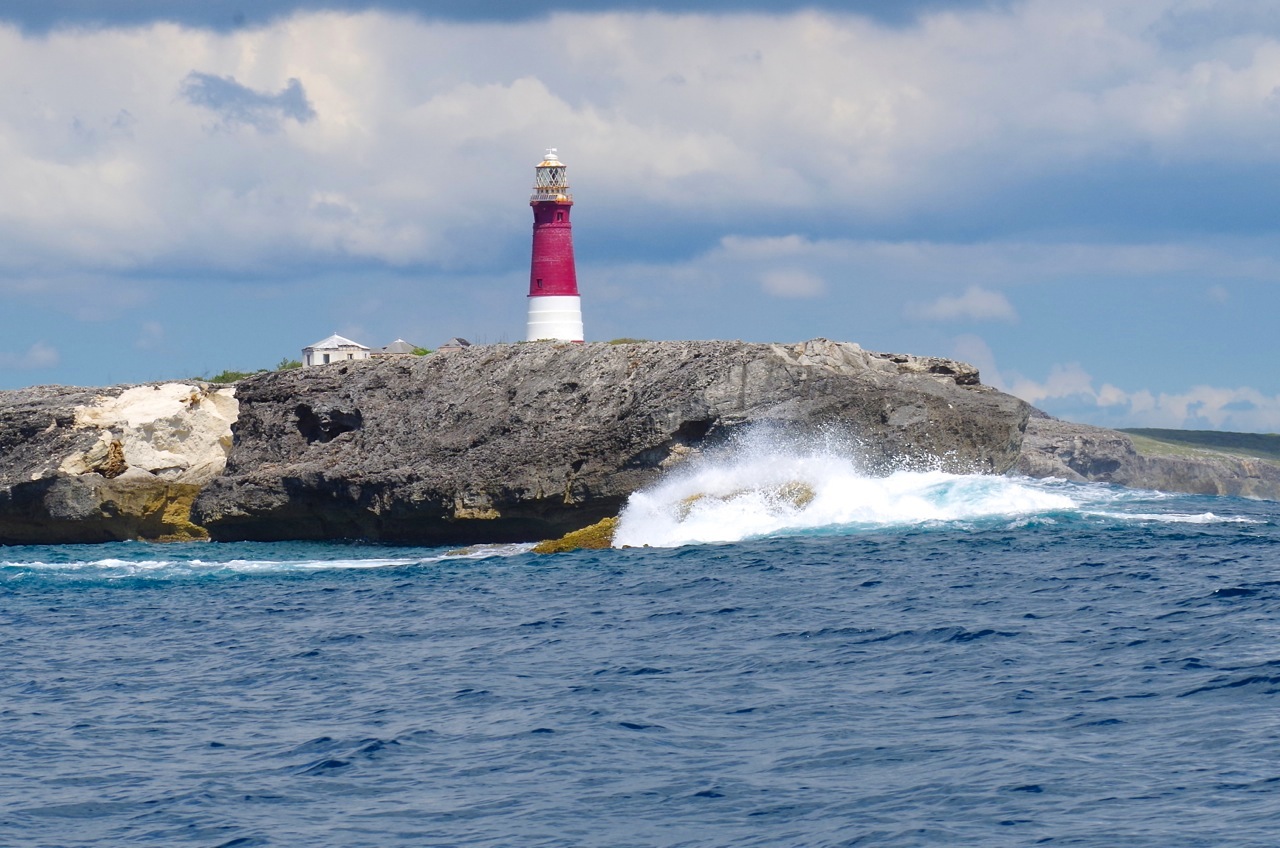
The view above is taken from some way to the west of HITW, and I have marked the main features that will be shown in this post. As one approaches the promontory, the lighthouse and its outbuildings are the only sign of human intervention to be seen in the landscape. Historically there were small settlements in this remote place, and some traces of these remain.

Hole-in-the-Wall Lighthouse Abaco (sea view)

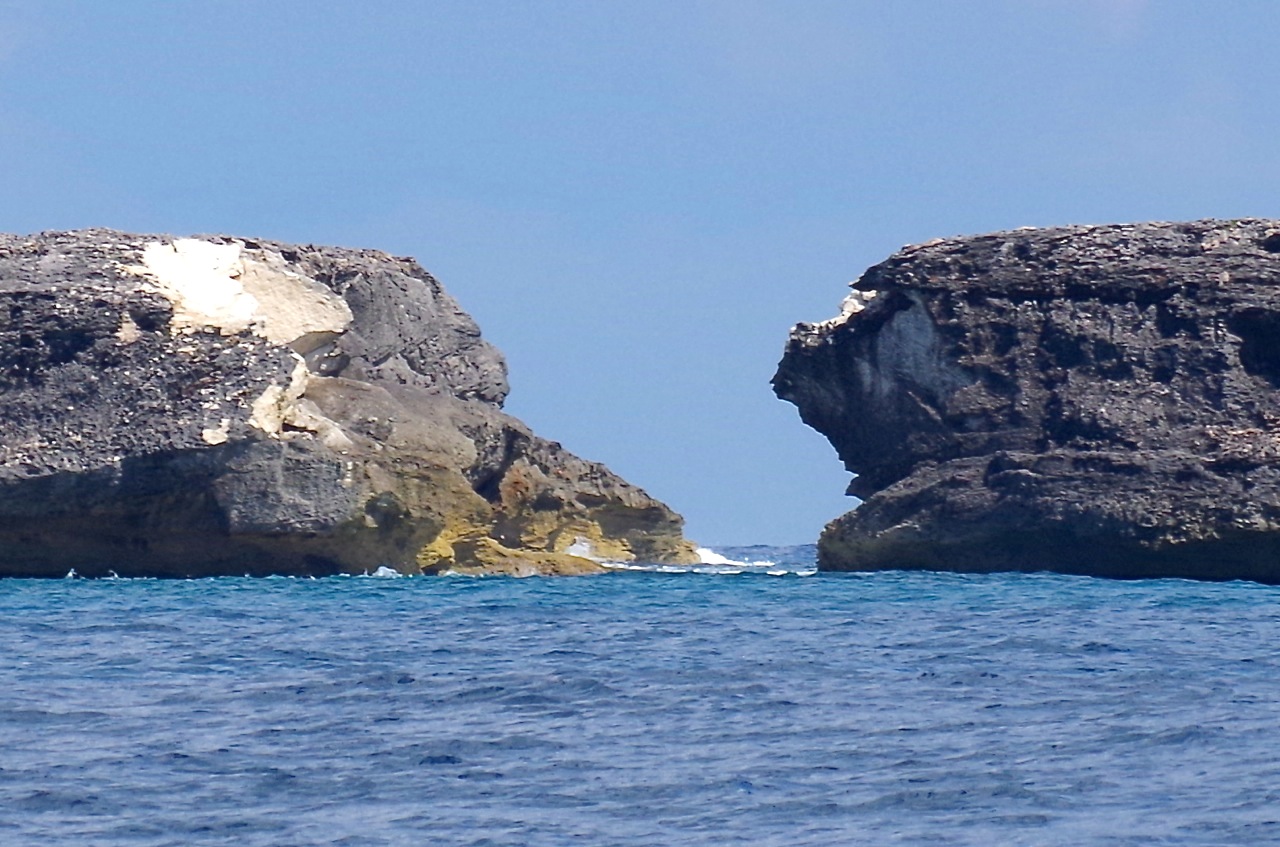
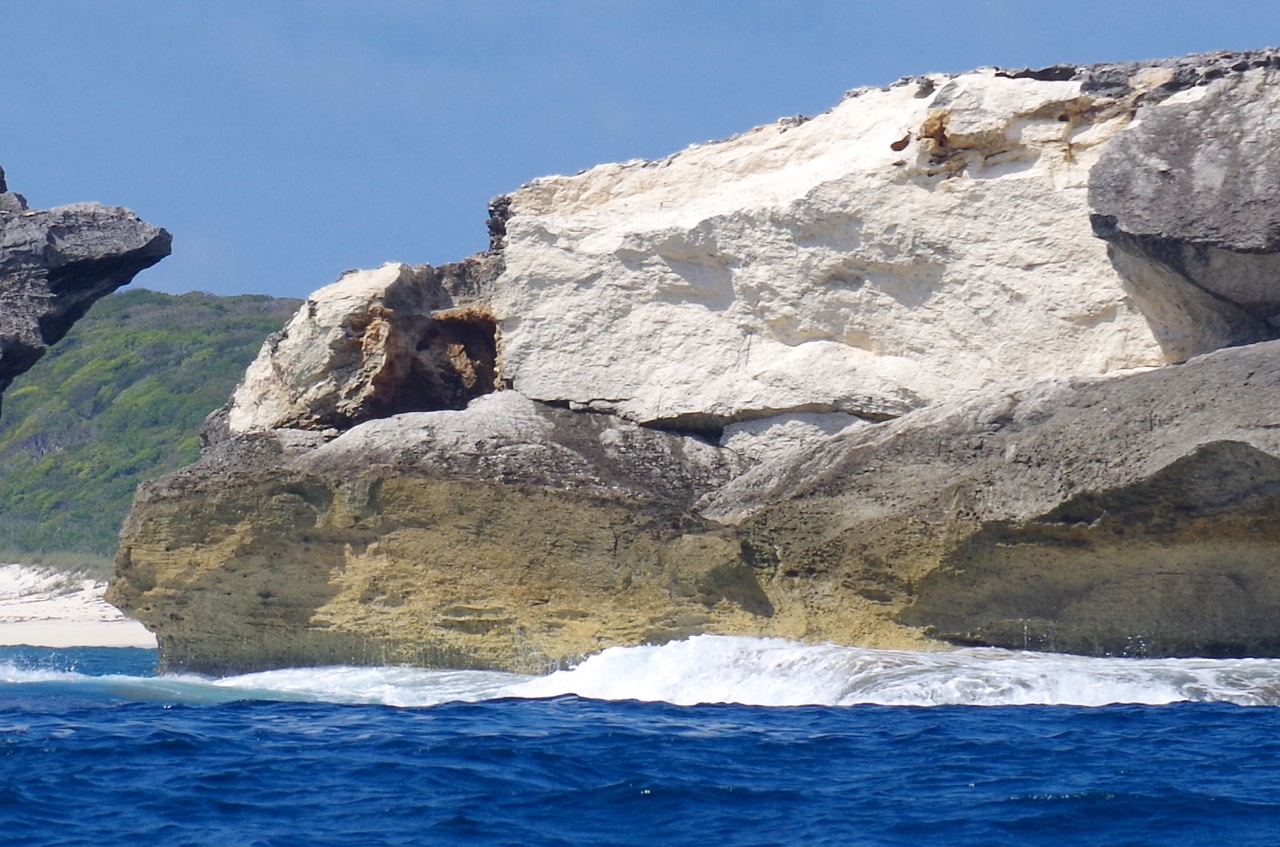
Closing in on the former ‘Hole’, fresh damage from Hurricane Sandy’s destruction of the arch is still visible. It is more conspicuous on the other side.Hole-in-the-Wall Abaco (2015-2) 03 Collapsed arch (Hurricane Sandy)

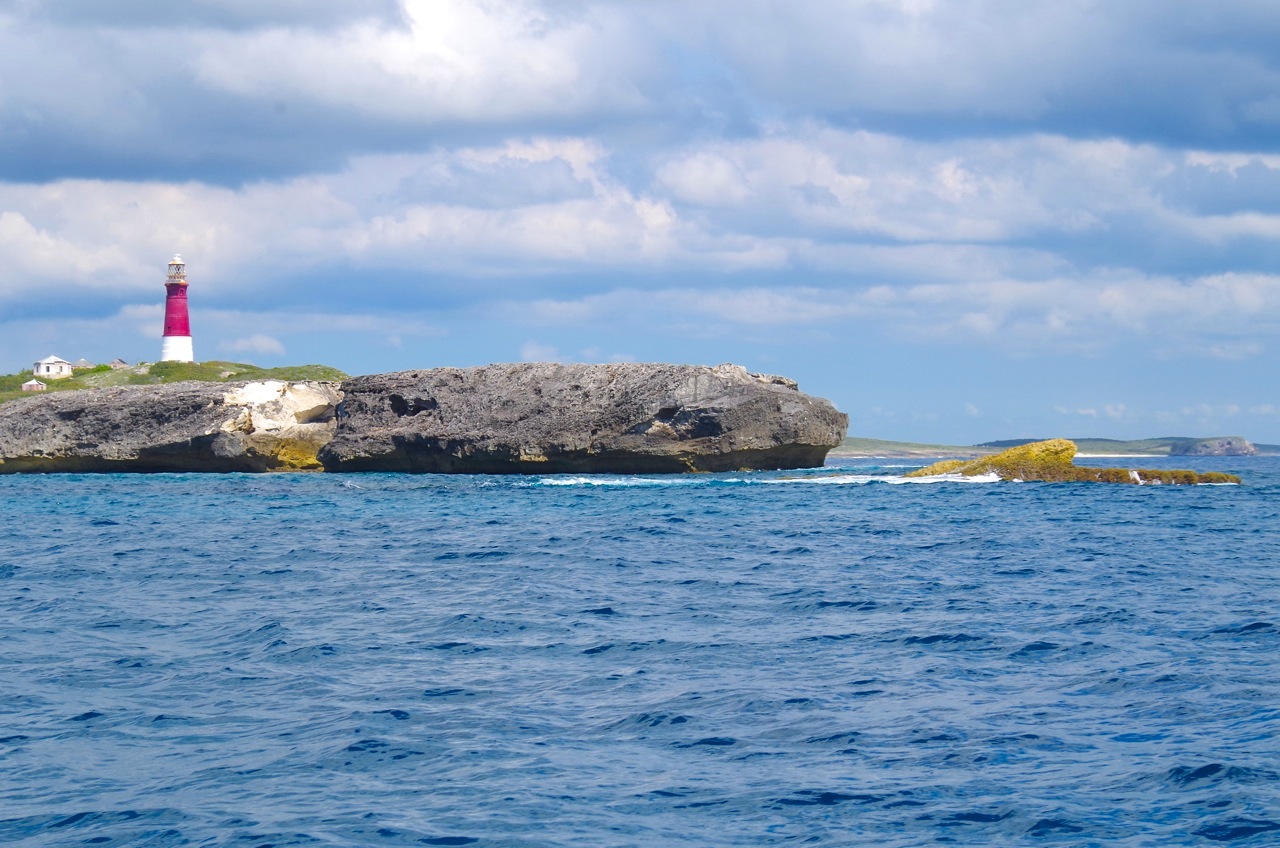
In this photo, you can follow the features from the lighthouse to the foreshortened promontory, the new gap, the small islet that now exists, and finally a small eroded outcrop of rock – the remains of an extension of the mainland, and probably evidencing the southern tip of another arch that collapsed centuries ago.Hole-in-the-Wall Abaco (2015-2) 04 Light, hole and outcrop

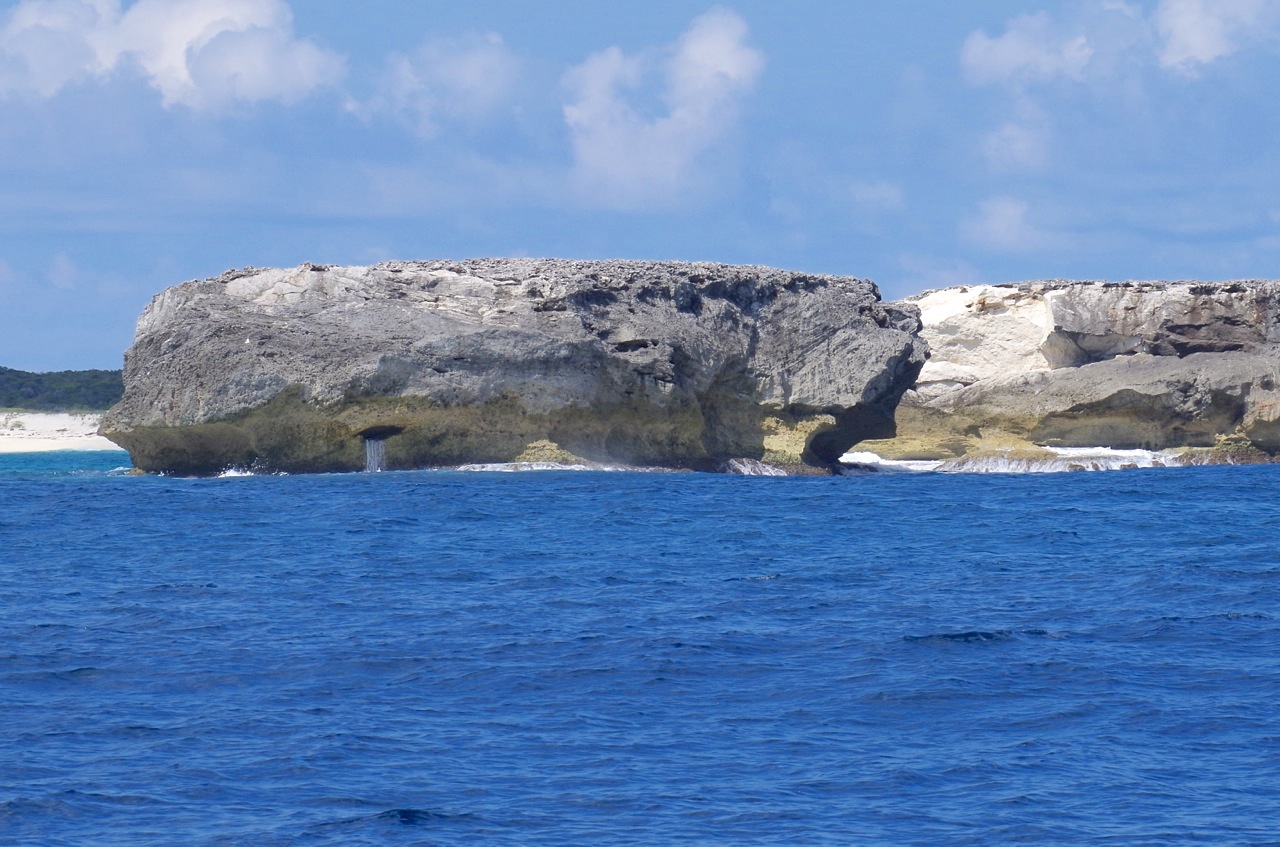
Passing the outcrop and round to the east side of the promontory, further evidence of fresh damage can be seen, with the main shear being on the north side of the arch.Hole-in-the-Wall Abaco (2015-2) 05 Hole-in-the-Wall Abaco (2015-2) 09Hole-in-the-Wall Abaco (2015-2) 07Hole-in-the-Wall Abaco (2015-2) 10

There’s a fine view of the lighthouse from the east Hole-in-the-Wall Abaco (2015-2) 11

As we started the return journey to Sandy Point via groups of whales and dolphins, we went close to the outcrop, land’s end (next stop, Nassau). Even on a calm day, it is still thrashed by waves, as the second photo shows: no wonder it has eroded so quickly…  See how it looked in the 1803 aquatint below, from which one can see how there must have once been an even larger ‘hole in the wall’ way back in history and long since collapsed even by then. Hole-in-the-Wall Abaco (2015-2) 12 Hole-in-the-Wall Abaco (2015-2) 13Hole in the Wall Print 1803

Then it was time to move on, having been fortunate enough to see the location from an entirely new angleHole-in-the-Wall Abaco (2015-2) 14Hole-in-the-Wall Abaco (2015-2) 15
THE FUTURE

The geological future of the Hole-in the-Wall landscape is presumably that erosion and rising sea levels will sink the outcrop below the waves; the islet left after the collapse of the arch will similarly erode over the centuries, as in time will the whole promontory. Maybe as it gets thinner, another hole will be worn through by the waves. The restoration of the lighthouse, long promised, may perhaps take place. The nautical importance of the area suggests that the historic need for a light as both landmark and warning will continue. And who knows: even now, plans for wholesale redevelopment of the area could be on a drawing board somewhere…
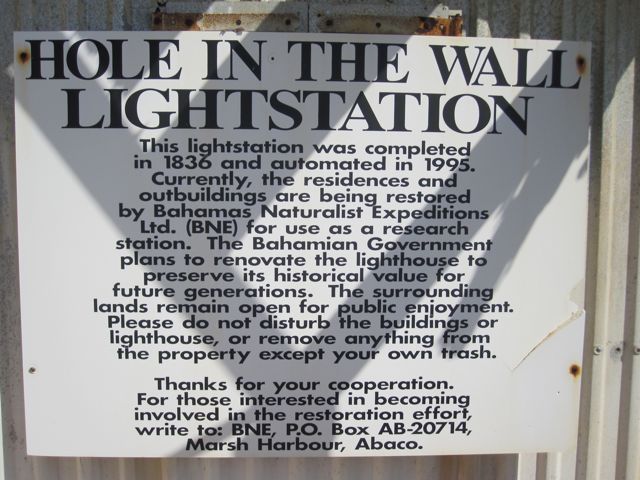
Hole-in-the-Wall Lighthouse Abaco (Notice) hitw9

WINSLOW HOMER

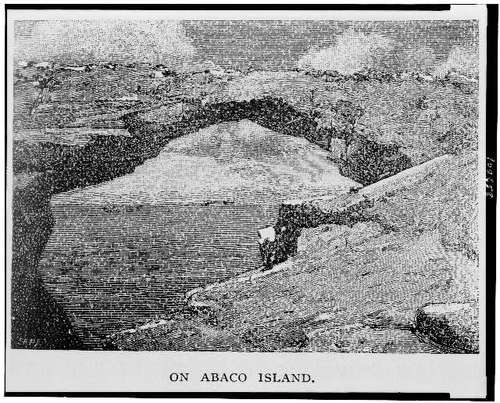
The header image is the well-known watercolour by Winslow Homer (1836 – 1910), the original of which is in the Brooklyn Museum. It was painted in 1885 and is entitled ‘Glass Windows’. This is commonly claimed to be the famous ‘Glass Window’ feature on Eleuthera. However my own theory is that it in fact depicts Hole-in-the-Wall, Abaco. There are a number of good reasons for this, but the most immediately striking is the title Homer himself gave to an engraving of the identical view, published in The Century magazine (Feb 1887). This engraving pre-dates, and was clearly the template for, the watercolour. The rock structure and even the cloud formations are identical. And the title “On Abaco Island” seems conclusive of the location.

Hole-in-the-Wall Picture

Credits: All photos, RH; Winslow Homer painting, Brooklyn Museum online archive

Unknown's avatar

BAHAMAS WHALES & DOLPHINS IN ABACO & ANDROS WATERS


Melon-headed Whale breaching - BMMRO copy

Melon-headed Whale breaching – BMMRO

BAHAMAS WHALES & DOLPHINS IN ABACO & ANDROS WATERS

The Bahamas Marine Mammal Research Organisation (BMMRO)  has its HQ at Sandy Point, Abaco. We recently went out in their research boat, a RHIB, to spend an unforgettable day with Blainville’s beaked whales and bottlenose dolphins. I posted some of the dolphins HERE; and a two-part beaked whale post is a work in progress.

Male Blainville’s beaked whale with its extraordinary barnacle-encrusted teeth that protrude upwards from its lower jaw. The prominent beak is plainly visible. Sighted off the south-west point of Abaco during our second encounter with a group of these whales – the only male we saw that dayBlainville's Beaked Whale KS 1

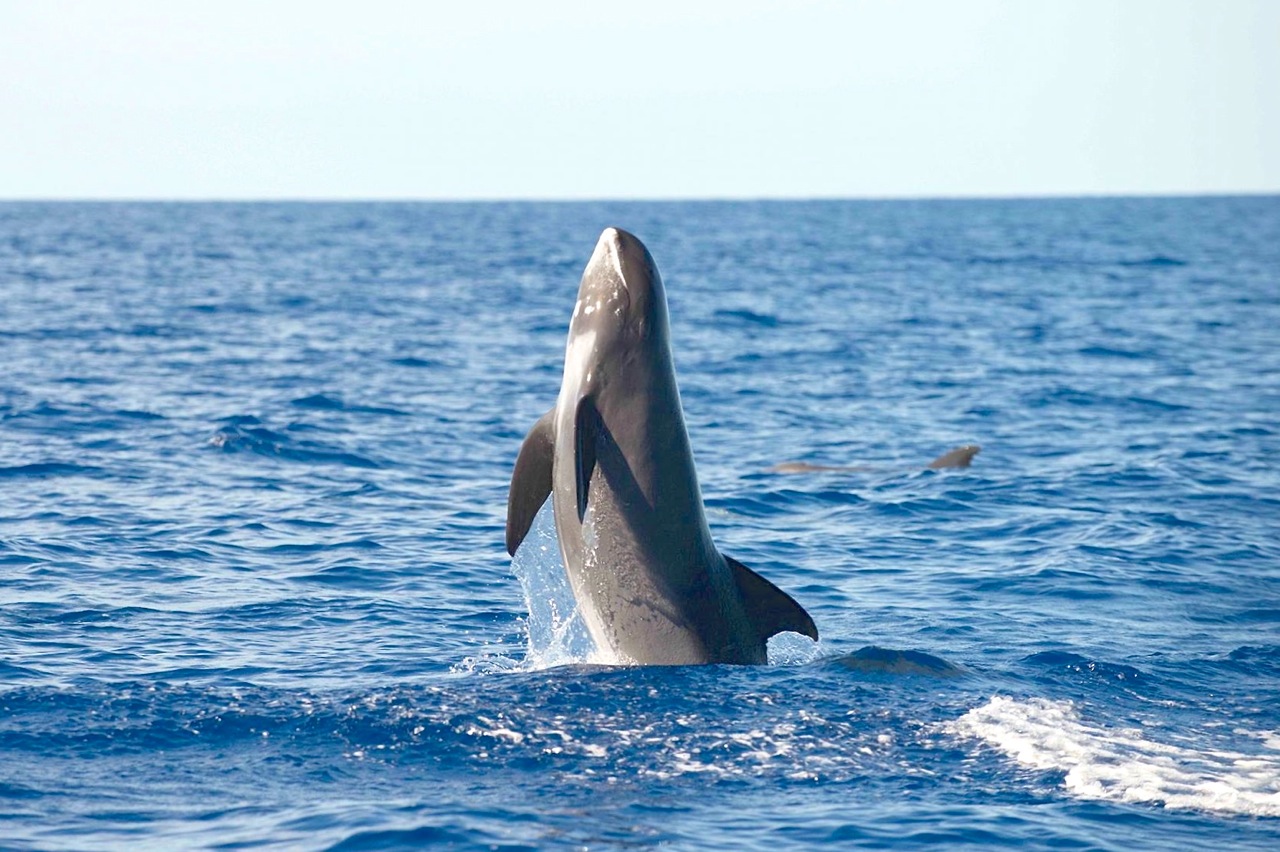
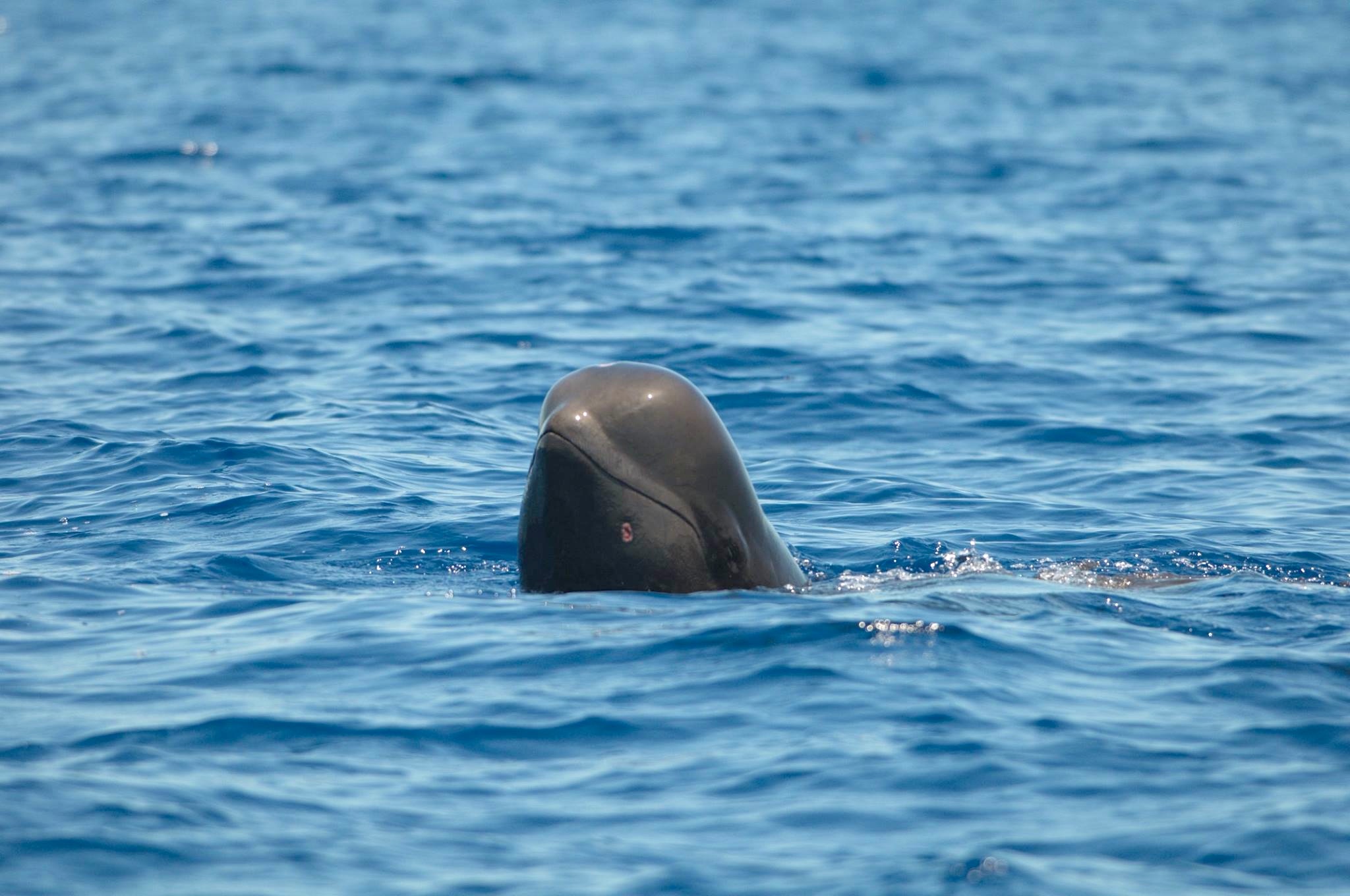
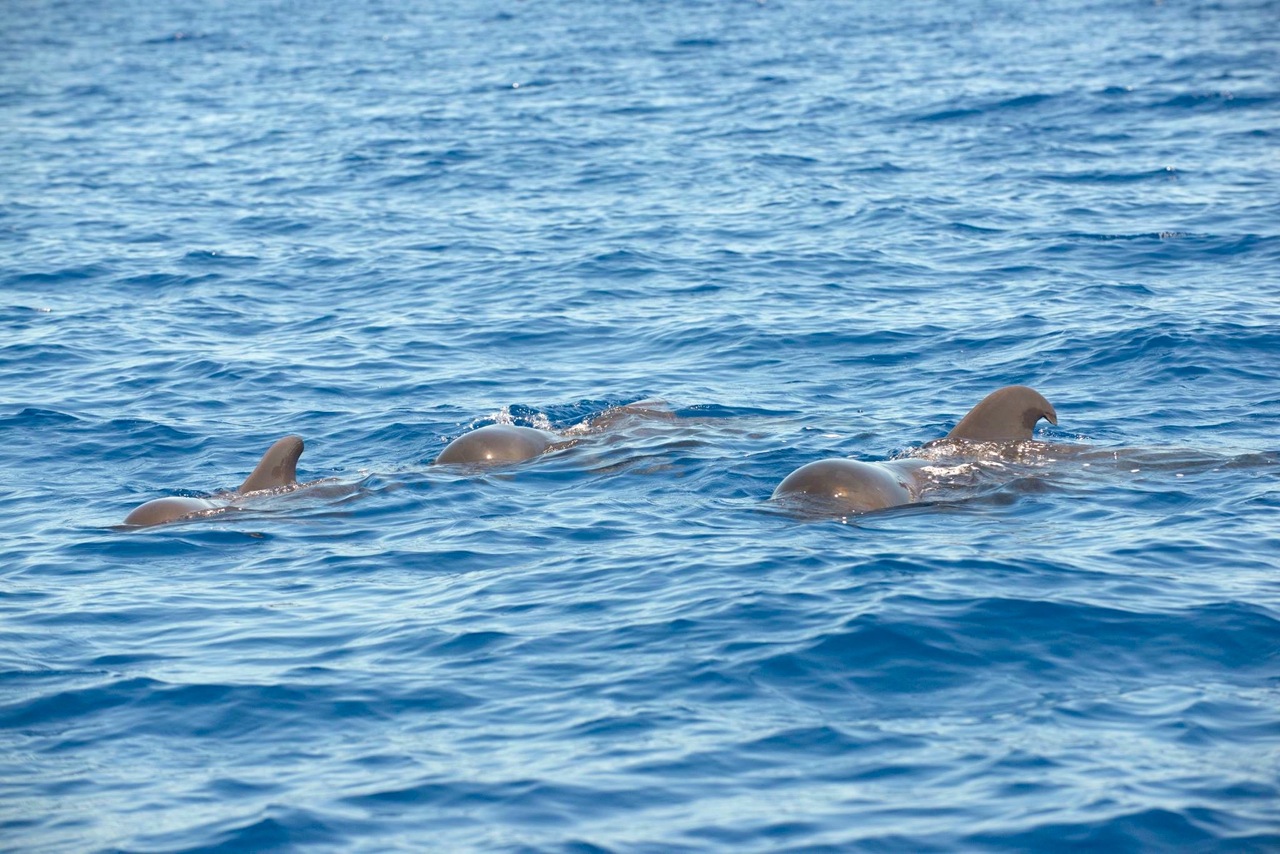
Abaco waters are ideal for marine mammals, especially off the southern shores where the walls of the Great Bahama Canyon drop vertiginously down from the shallow coastal waters to depths of up to 3 miles below. This is one of the deepest ocean canyons in the world.  The area provides a rich source of food and nutrients for the whales and dolphins and many different species are regularly sighted there, from huge sperm whales to small pilot whales (including plenty of species I had never heard of before). 

Great Bahama Canyon Map edit

As the name suggests, the BMMRO’s remit extends far beyond Abaco. The researchers often spend time exploring and recording cetaceans in other Bahamian waters. For the last few weeks the team have been off Andros and have encountered quite a few target species. I have included a selection below taken within the last month to illustrate the importance of the area for a remarkable assortment of wonderful whales and dolphins.

BLAINVILLE’S BEAKED WHALEBlainville's Beaked Whale copy

DWARF SPERM WHALESDwarf Sperm Whales - BMMRO copy

PANTROPICAL SPOTTED DOLPHINSPantropical Spotted Dolphin - BMMRO Pantropical Spotted Dolphin leap - BMMRO copy

On board the research vessel, every sighting is recorded in detail – where possible by species, numbers, ages, sexes, and individual identifying characteristics. Thus ‘SW34’ may have a damaged fluke, whereas ‘RD49’ may have a long scar on its back. 

PILOT WHALESPilot Whale - BMMROPilot Whales - BMMRO copyPilot Whales 2 - BMMRO

The research boat is equipped with sound devices which, when the microphone is immersed, are capable of picking up whale or dolphin sounds from a considerable distance. It’s astounding to be able to listen in ‘live’ to the wide assortment of clicks and whistles produced as the creatures communicate with each other. The recorded sound patterns are studied and can often be matched to enable an individual animal to be identified. 

MELON-HEADED WHALESMelon-headed Whales - BMMRO Melon-headed Whale - BMMRO

RISSO’S DOLPHINRisso's Dolphin - BMMRO copy

Other work, including photography, is done underwater. Perhaps the most intriguing aspect is the collection of poop specimens, from which a great deal can be ascertained about the diet and health of an individual animal. I wrote about this task and the methods used a while ago inFAMILIAR FECES‘.

I’ll be writing more about whales soon. Meanwhile, here’s a short BMMRO video of a large group of melon-headed males. At the start, you can clearly hear communication sounds between them.

Credits: Charlotte & Diane of the BMMRO for taking us out with them and for all the photos except the male Blainville’s beaked whale (mine, for once!)

Unknown's avatar

BOTTLENOSE DOLPHINS IN ABACO WATERS (2): MOTHER & CALF


Dolphin Mother & Calf, Sandy Point, Abaco, Bahamas 12

Sometimes things happen that completely take my breath away. Here is one of those moments, from our recent trip with Charlotte and Diane in the BMMRO research boat. As we returned from whale-watching to base in Sandy Point and moved from the deep dark ocean to the bright blue shallows, we encountered a group of bottlenose dolphins. You can see my recent post featuring some of the adults HERE. That was exciting enough, as they played around the boat. Then another participant appeared… 

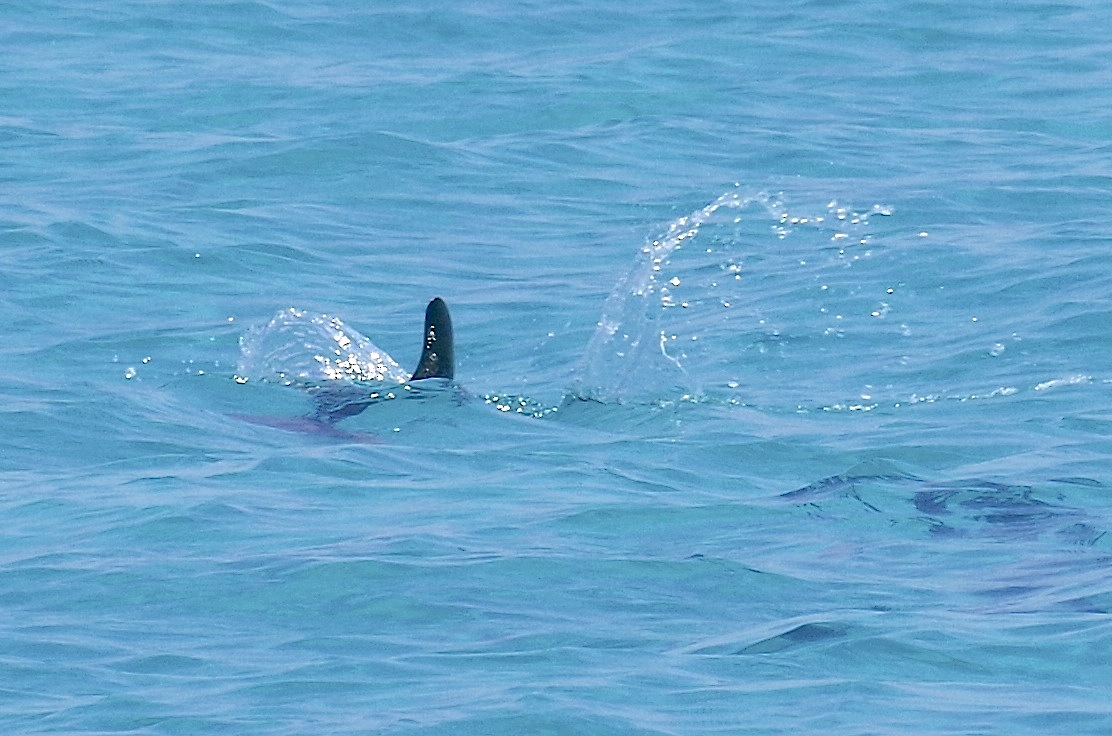
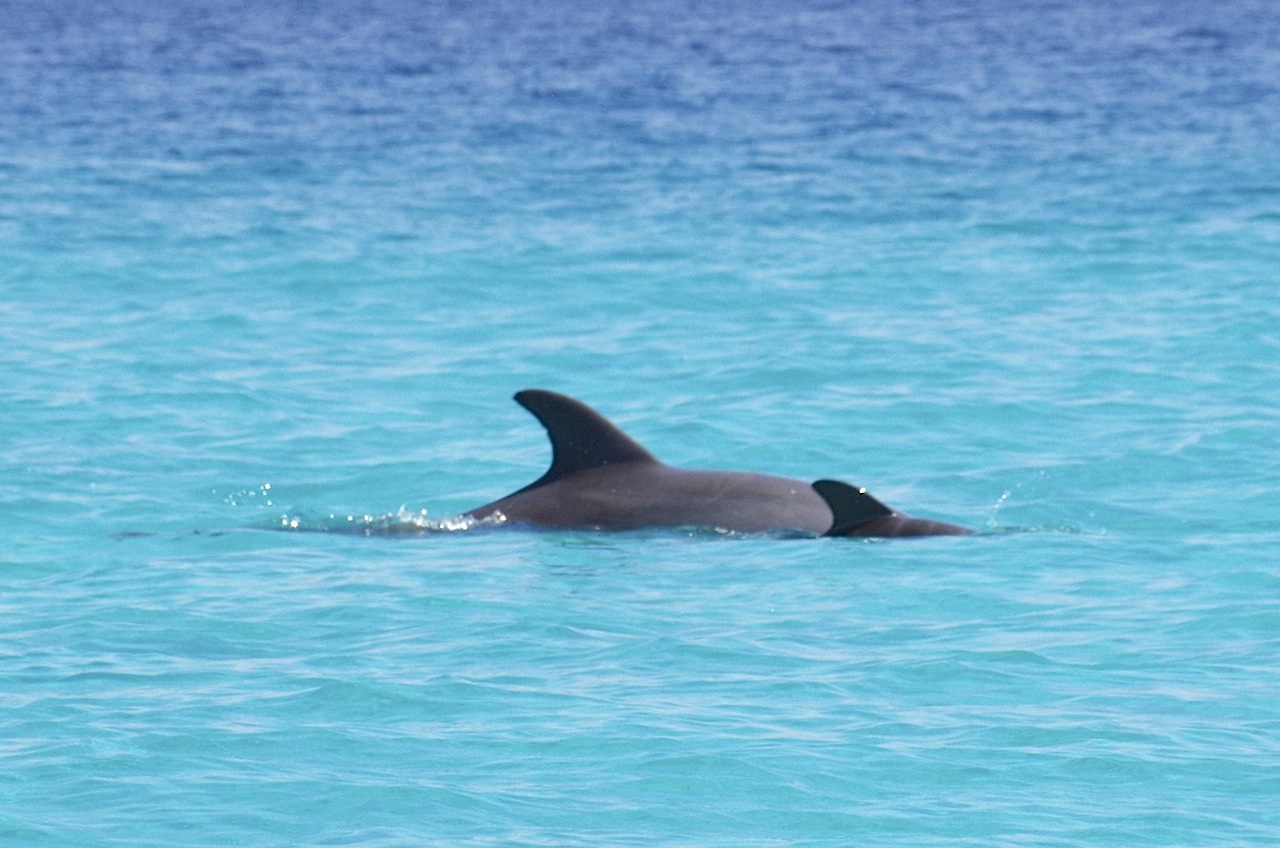
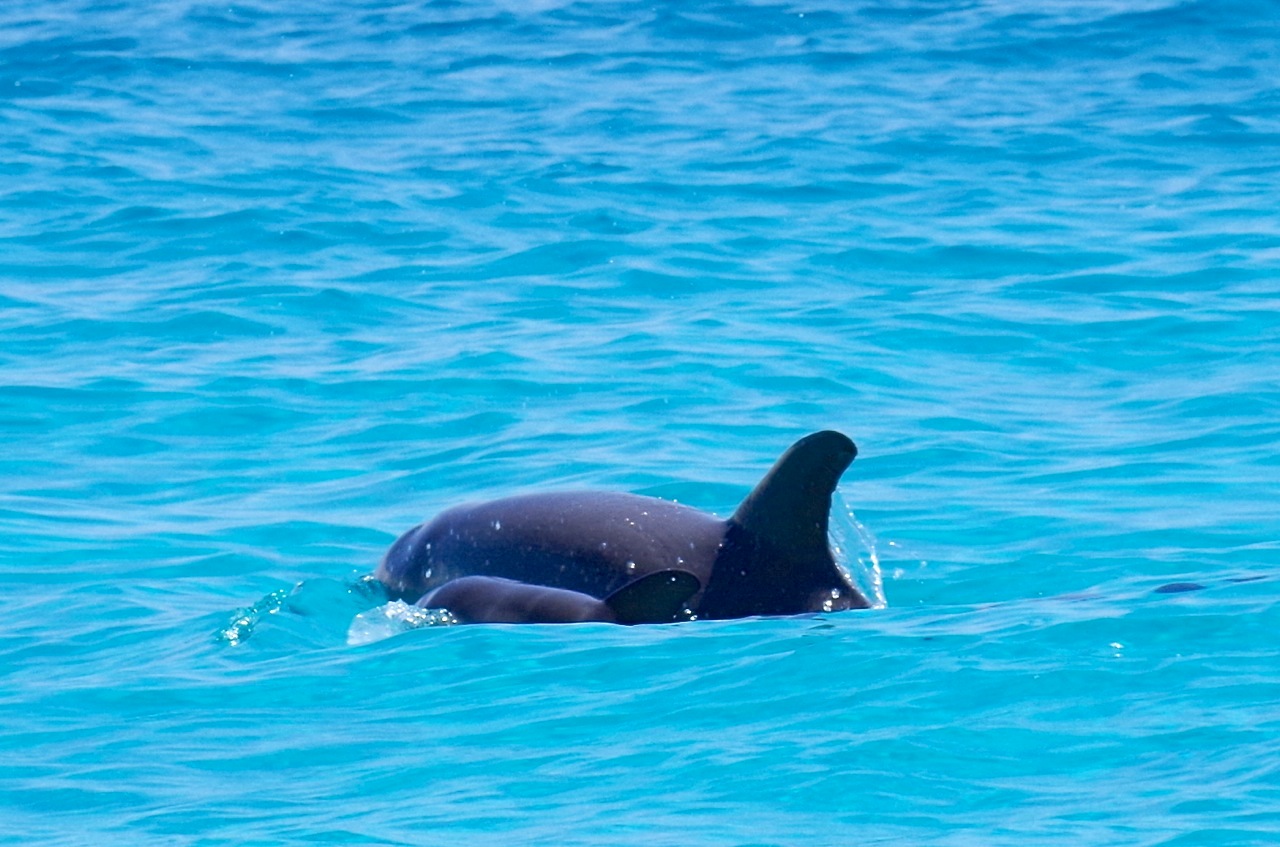
 Notice the dark area behind the adult dolphin… Dolphin Mother & Calf, Sandy Point, Abaco, Bahamas

…which soon separated into a small dark splashing creature with its own fin cutting the waves…Dolphin Mother & Calf, Sandy Point, Abaco, Bahamas

…and next seen keeping pace with its parentDolphin Mother & Calf, Sandy Point, Abaco, Bahamas

The sharp line between the light and the dark sea is where the sandy shallows abruptly give way to the deep waters of the Grand Bahama Canyon, a massive trench up to 2.5 miles deep with almost vertical cliff walls to the depths in some places

Dolphin Mother & Calf, Sandy Point, Abaco, Bahamas

Dolphin Mother & Calf, Sandy Point, Abaco, Bahamas

There were less active and splashy moments as the pair swam around togetherDolphin Mother & Calf, Sandy Point, Abaco, BahamasDolphin Mother & Calf, Sandy Point, Abaco, Bahamas

Then it was back to doing what they like best…Dolphin Mother & Calf, Sandy Point, Abaco, BahamasDolphin Mother & Calf, Sandy Point, Abaco, Bahamas

Then some more restful moments…Dolphin Mother & Calf, Sandy Point, Abaco, Bahamas Dolphin Mother & Calf, Sandy Point, Abaco, Bahamas

And finally the pair moved away. On the far horizon, the Massive Mickey Mouse Cruise ship moored at ‘Disney’s Castaway Cay’ (formerly the sober-sounding Gorda Cay), where you can be a Pirate of the Caribbean. Or anyway a very happy Tourist. The choice is yours. Would you like fries with that?Dolphin Mother & Calf, Sandy Point, Abaco, Bahamas

And looking out to sea from the cheerful place that is Castaway Cay, I wonder if a small child was wondering “Ok, love Mickey and his Friends – but I’d also really love to see a wild dolphin swimming free… 

Disney Magic docked next to the Castaway Cay Family Beach copy

All photos RH (except Castaway, Wiki). Huge thanks to Charlotte, Diane and Bahamas Marine Mammal Research Organisation BMMRO for a truly wonderful day photo 2

bmmro_logo