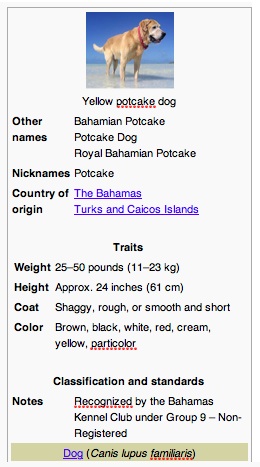
Potcakes are a mixed-breed dog of the Bahamas & TCI, named after the layer of dried rice and peas in the bottom of cooking pots, traditionally fed to stray dogs
Appearance and colouring varies considerably from island to island. Mostly commonly they are (mainly) brown, have smooth coats, cocked ears, and long faces. Adults typically weigh from 45 to 50 pounds (20 to 23 kg)
Potcakes have a wandering tendency. There are many strays on every island – often considered a nuisance. Volunteer organizations re-home strays, and offer free spaying and neutering
Potcakes are often used for hunting hogs. Some are even trained to locate fish through scent on the water and the cries of feeding sea birds
Potcakes may originate from 3 canine types: (1) dogs brought by the Arawak to the Bahamas; (2) terriers protecting supplies from rodents on ships to the Bahamas; (3) Dogs that arrived with Loyalists during the Revolutionary War
In the 1970s the potcake dog was officially recognized in The Bahamas as the “Royal Bahamian Potcake”. In February 2011, they were accepted by the Bahamas Kennel Club in the category ‘Group 9 Non-Registered’
A potcake dog named Amigo has been the mascot of the Humane Society of Grand Bahama. He ‘served as an Ambassador of Hope for homeless animals’ until his death in 2007, and appeared on TV
Potcakes have featured in a set of special-issue Bahamas stamps
Factoids above distilled from a variety of sources (mostly overlapping) – danke – in particular good old wiki. I’ve done the leg-work for you, but there is other material out there. In particular, put ‘Potcake’ into YouTube & there are plenty of videos of Potcakes. Below are 4 web-links that might interest or amuse
SOME POTCAKE-CENTRIC LINKS
POTCAKE PLACE functions to rescue, foster and assist adoption of potcakes of the Turks and Caicos Islands
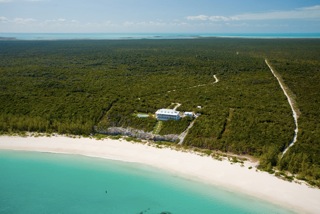
This very pleasant walk somehow seems more satisfactory taken clockwise, turning left at the front gateway and wandering along the guest drive. The straight service drive is less interesting and feels less ‘in the coppice’. The distance is about 2 miles. You can walk the circuit briskly in about half an hour. The birds will see you, but you won’t see them… So preferably take it easy. Here is a fantastic aerial view of the drives (courtesy of DCB)
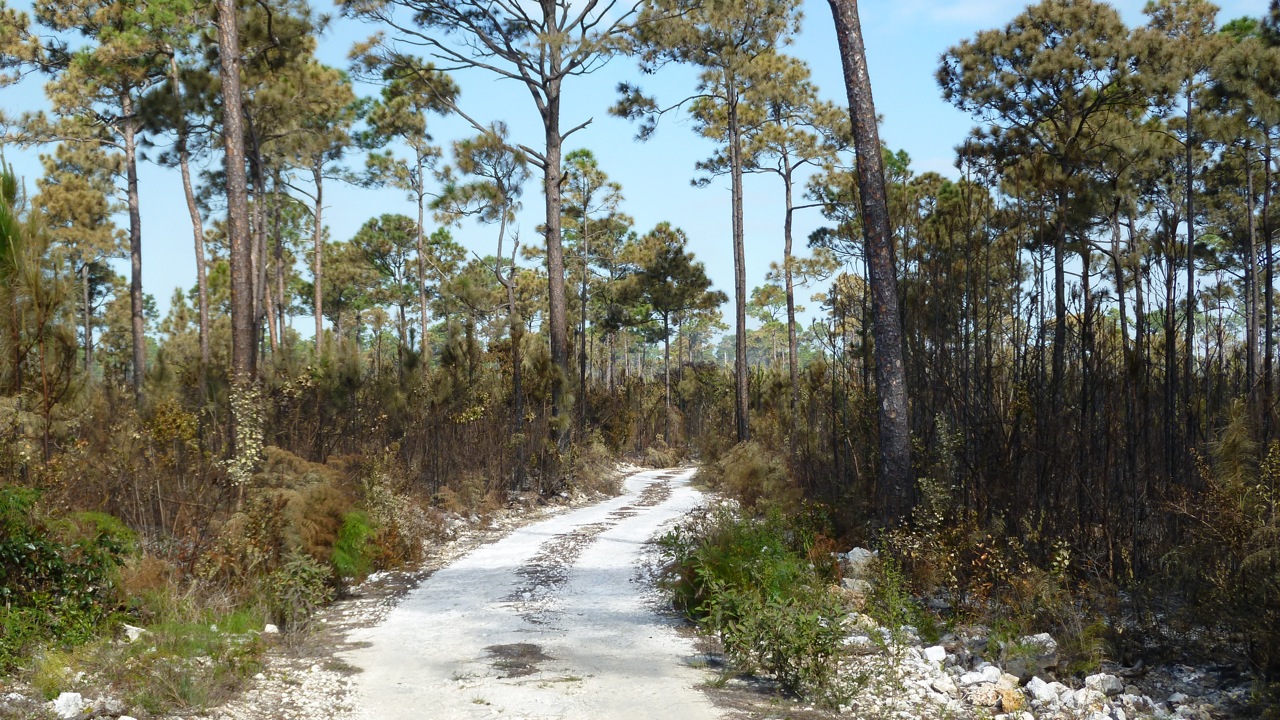
The start of the route – trees as far as the eye can see
From a birding point of view, as you walk down to the gateway, keep an eye out on both sides. There are plenty of birds in the bushes and trees, though they are not always easy to see. You might see a western spindalis, bananaquits, black-faced grassquits, warblers, northern parulas, loggerhead kingbirds, vireos, cuban emerald hummingbirds or a bahama woodstar if you are lucky, amongst many others. When you get to the main drives, have a look straight ahead into the coppice – in fact anywhere along the guest drive is worth pausing to investigate.
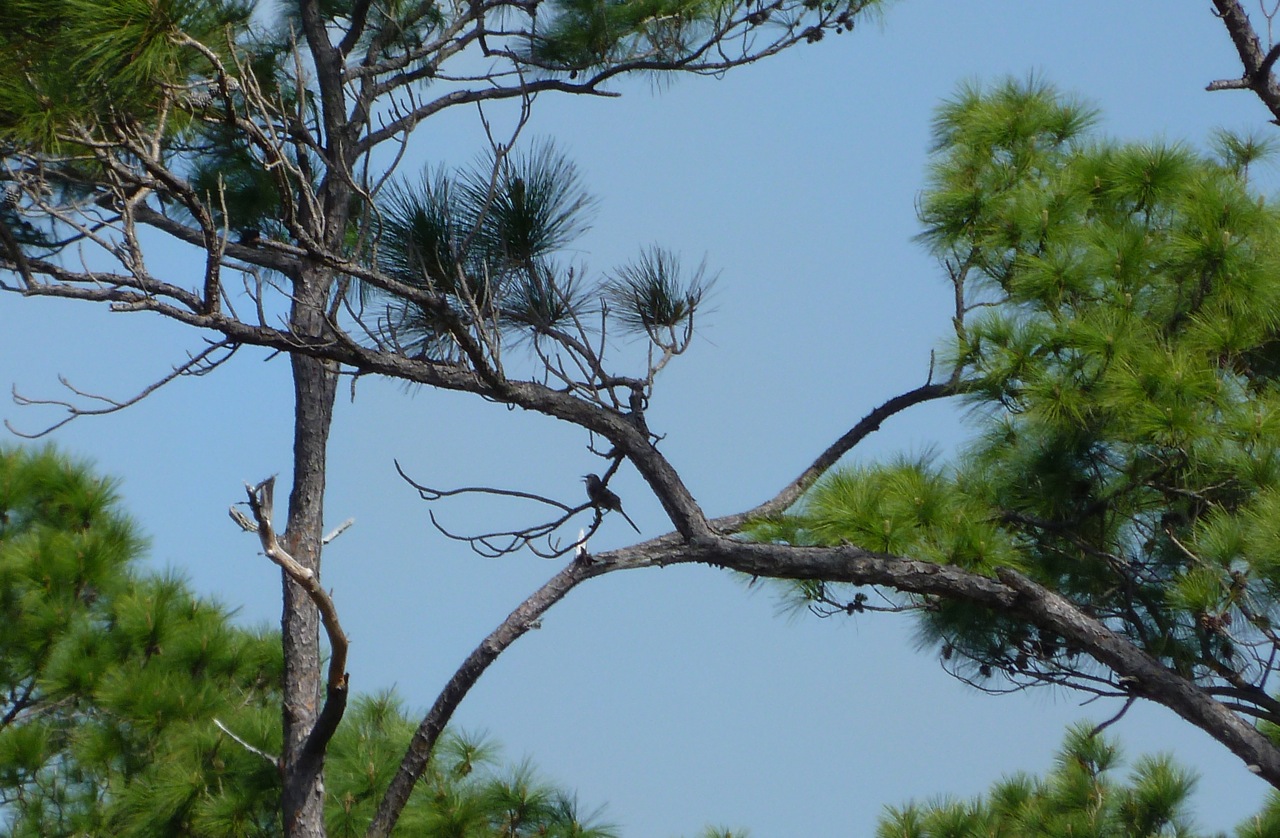
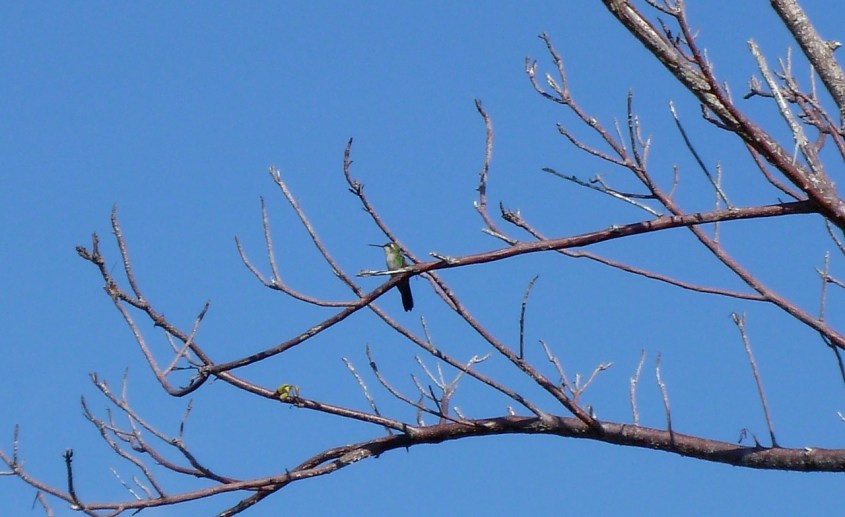
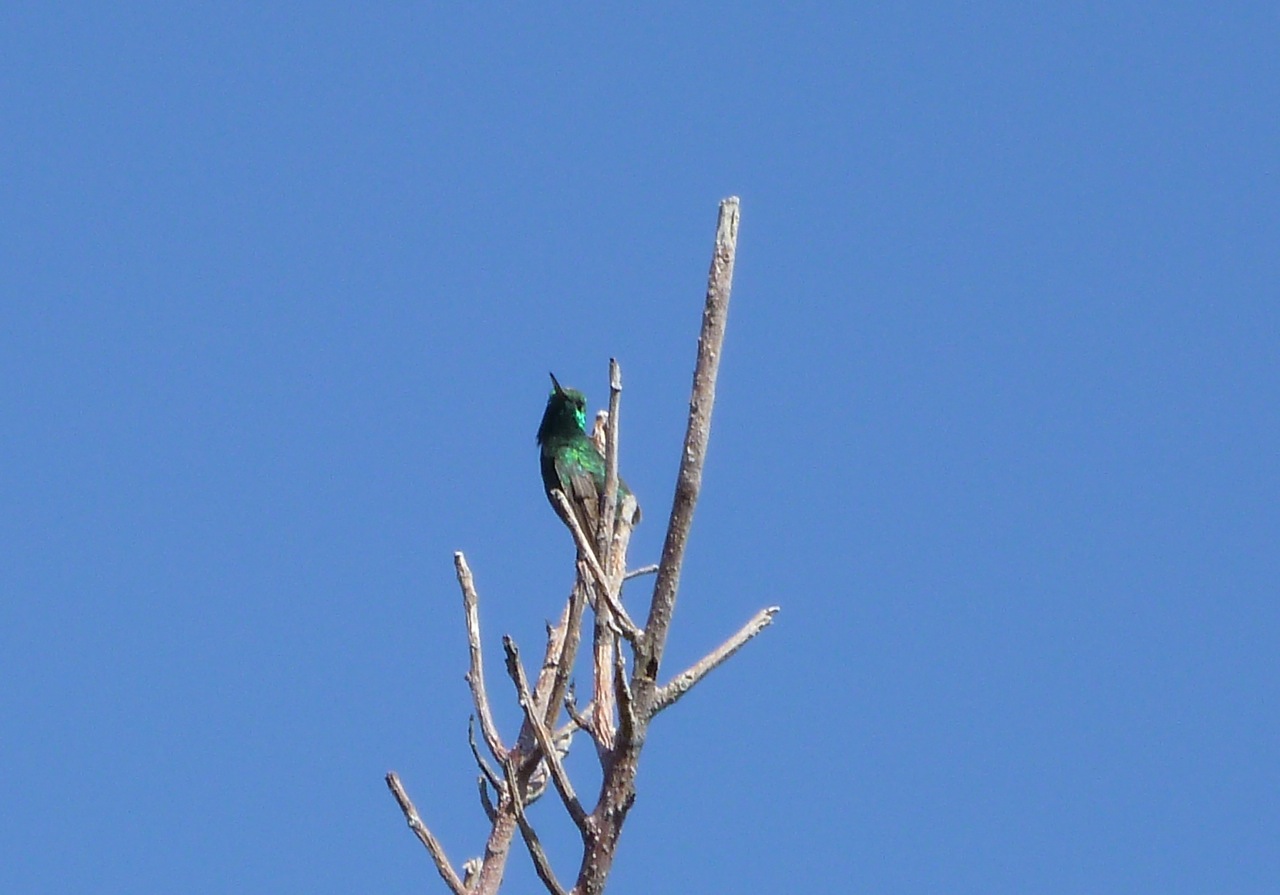
This cuban emerald was just opposite the drive gateway (credit Xeno-canto.org)
The gumbo limbo trees are very popular with many birds, including the Abaco Parrots, so it’s good to check them out as you pass by (and if you have unfortunately touched a poison-wood tree, they provide the antidote – conveniently the two trees tend to grow next to each other). Here are a couple of Thick-billed Vireos proving the point. And their song, which you will hear a lot around the Club itself.(credit Xeno-canto.org)
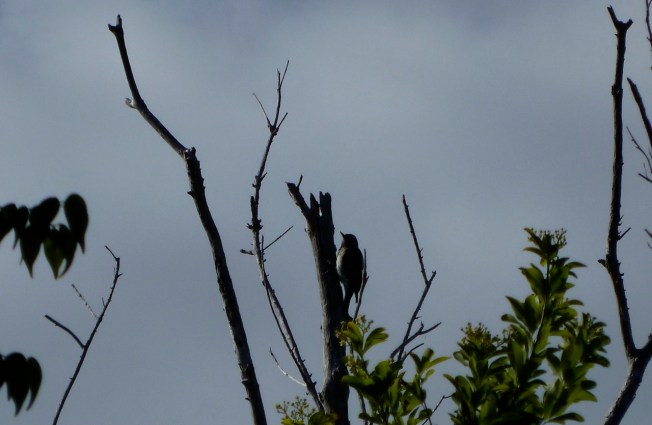
Hairy Woodpeckers seem to favour dead trees for drilling practice – and perhaps for feeding on the sort of bugs attracted to dead wood. Here’s what they sound like (a call and response with 2 birds) (credit Xeno-canto.org)
There are plenty of small birds all along the way, some more vivid than others…Black-faced grassquit (not a warbler, as earlier suggested. Thanks CN)
Prairie Warbler
Antillean Bullfinch(not, as previously alleged, an American Redstart. Thanks CN)
If you look at the base of the trees in certain places, especially on the the left hand side of the guest drive (facing the highway), there are some small but deep holes in the limestone. If you drop a stone in, you can hear it splash in water – and the ferns growing inside them suggest a continuously moist environment.
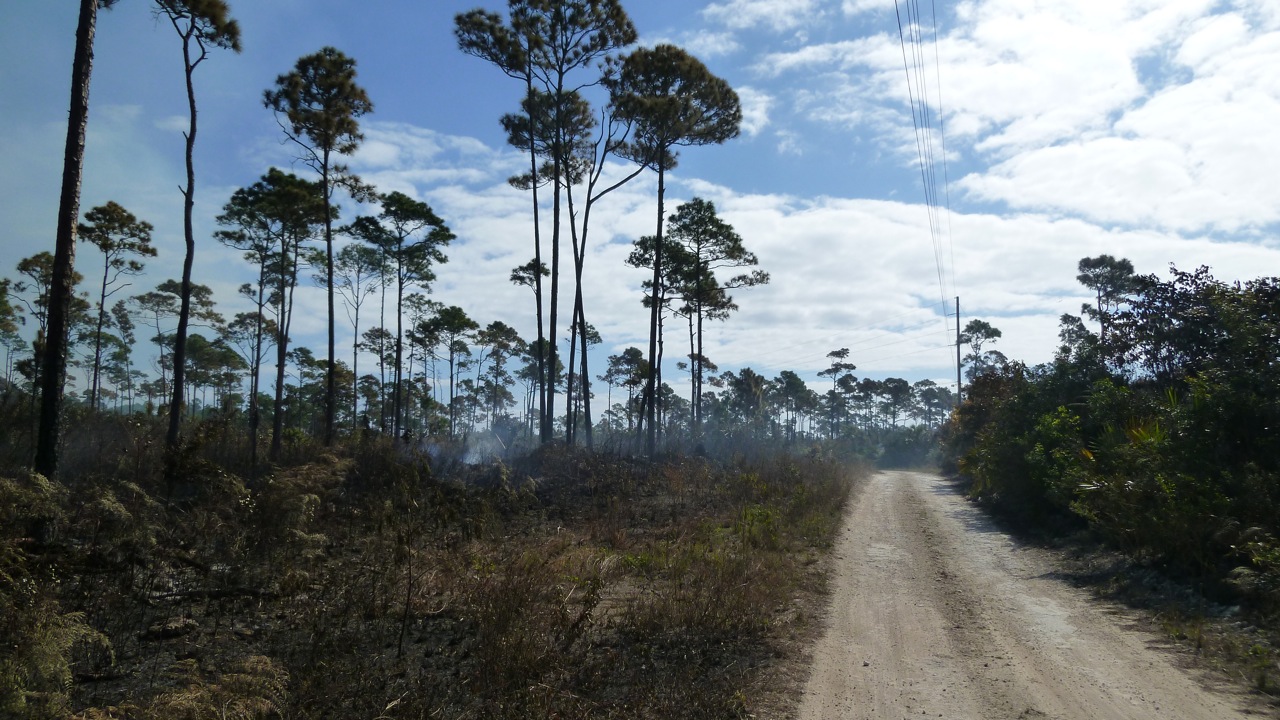
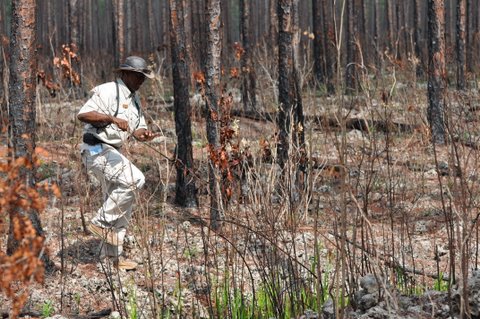
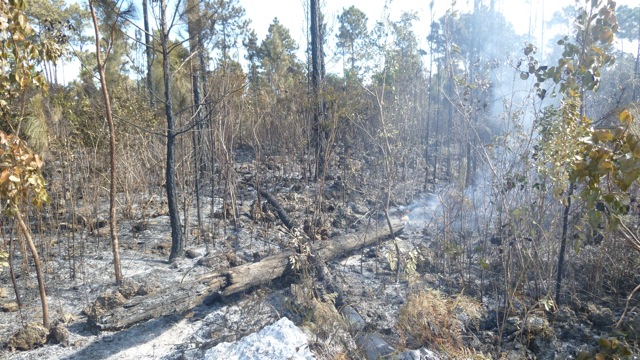
As you progress, you move from the hardwood coppice to the pine forest.This photograph was taken just as the forest fires in March were petering out. The theory was that the fires that raged through the pine forest would stop where the coppice began, and not sweep on to engulf Delphi… and so this photo shows. The thick pine forest with its flammable vegetation and undergrowth gives way here to damper and less combustible coppice-wood which has halted the progress of the flames. The pines you can see are the last few outliers of the pine forest.
Here is an example of the drive having acted as a partial firebreak.
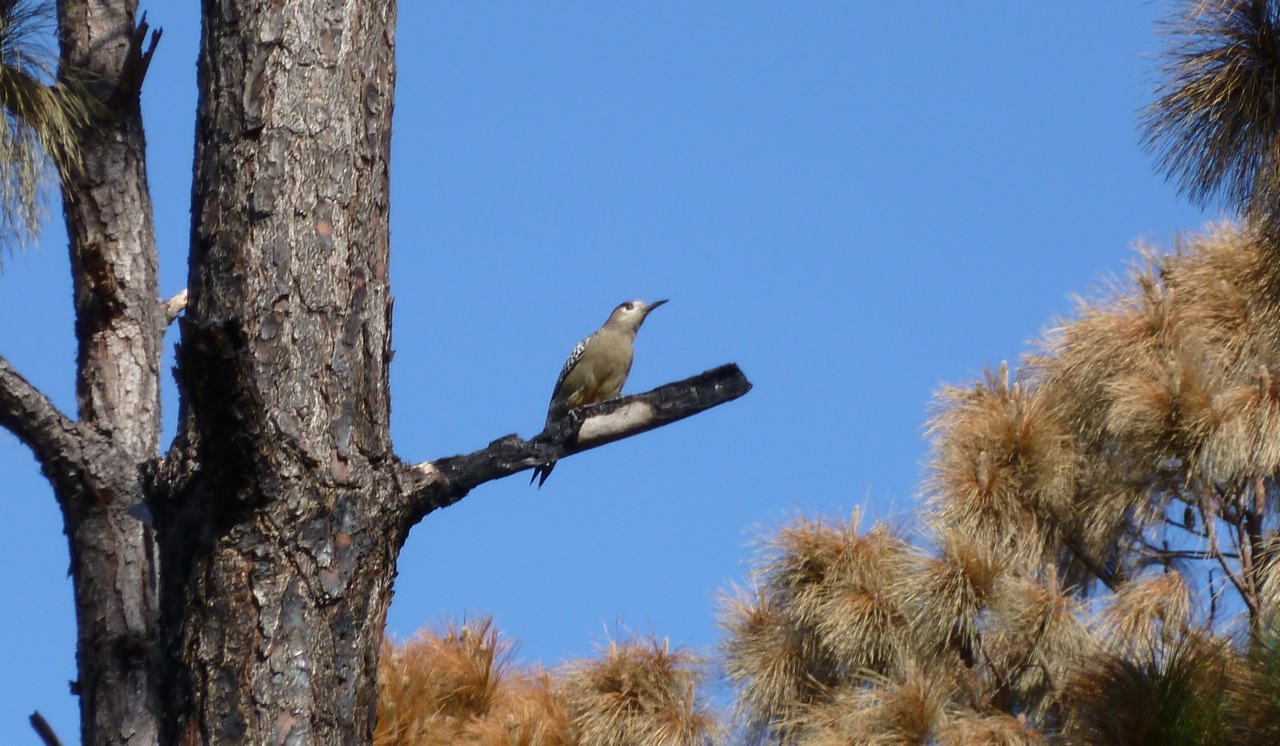
The pines, even burnt ones, are a good place to see West Indian Woodpeckers
When you reach the top of the guest drive it is worth carrying on to the highway. For a start you can admire Sandy’s gardening effort on the south side of the ‘white rock’, and maybe do some weeding. You are quite likely to see Turkey Vultures on the telegraph posts and wires, as here. You may also see Bahama Swallows on the wires, and perhaps an American Kestrel on a post.
Smooth-Billed Ani(wiki-ani)
I have seen a raucous flock of Smooth-billed Anis in this area, but it is hard to get close to them. Listen out for this unmistakable noise (credit Xeno-canto.org)
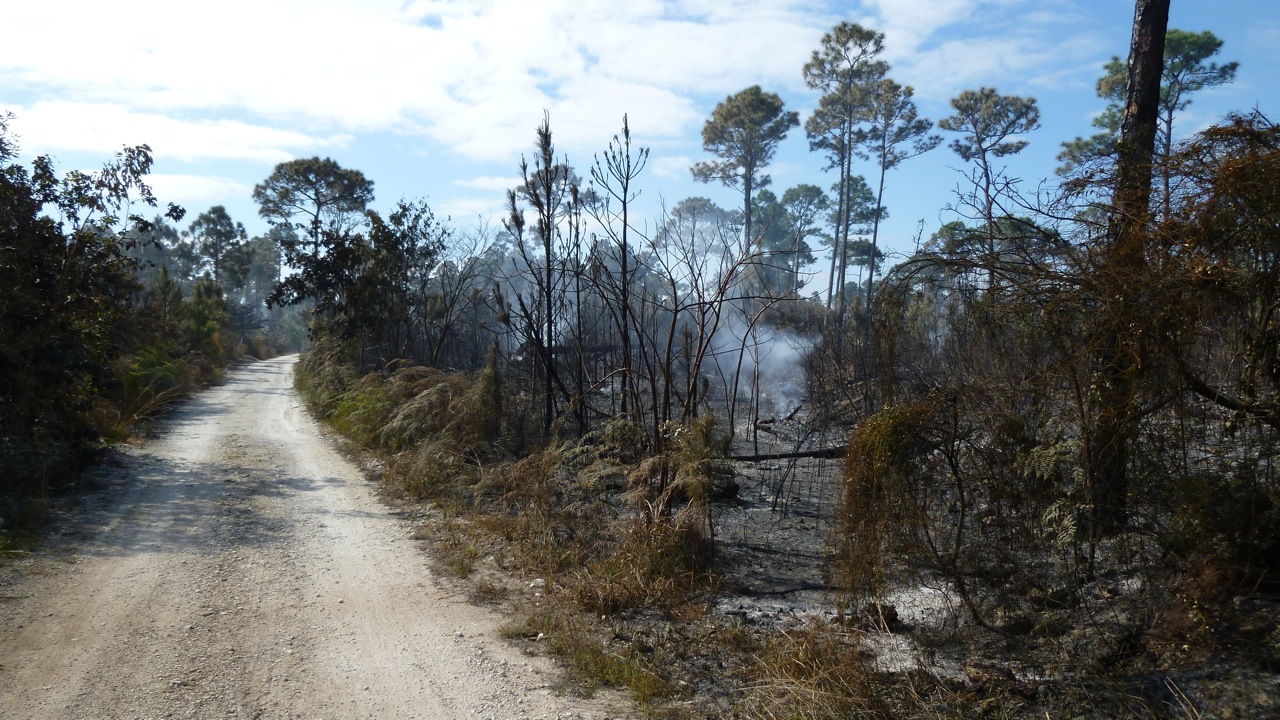
Returning from the road to the fork, to your right is the way you have come – seen here as the fires burnt out. There had been thick, indeed impenetrable, bright green undergrowth all along only 3 or 4 days earlier.
To the left is the service drive and your route home
Because this route is more open, there seem to be fewer birds. Again, you may see kestrels on the posts. Halfway along we heard the loud and very melodious singing of a Northern Mockingbird some distance away. CLICK on image (as you can with all, or most, of these photos) and you can see it singing!CLICK BUTTON to hear song of a Northern Mockingbird (credit http://www.bird-friends.com)
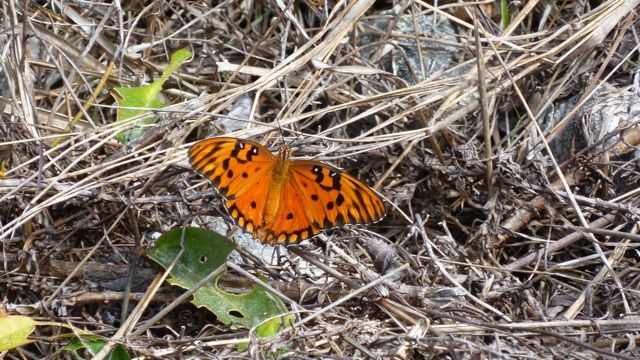
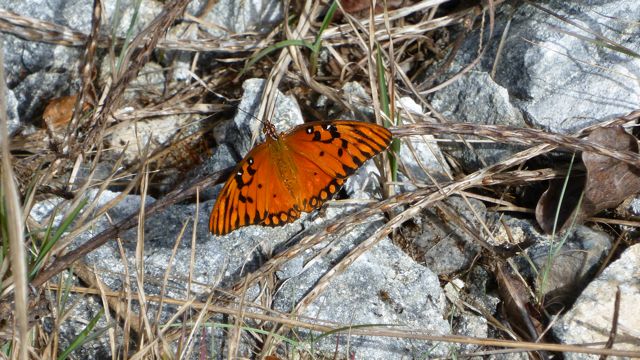
On either drive you will see butterflies. They seem to like the vegetation around the piles of stone and rubble. GULF FRITILLARYAgraulis vanillae
It is also worth looking out on either drive for epiphytes, or air-plants, growing on their host trees. They are so-called because unlike say, mistletoe, they are non-parasitic and do not feed off their hosts.
And so back to Delphi, a well-earned swim… and an ice-cold Kalik in the hammock…
For another angle on the circuit walk, have a look at a proper professional-looking blog by Craig Nash, already trailed in the BLOGROLL. This link will take you specifically to his fourth Delphi post, featuring this stroll. At the risk of stitching myself up here, I should say that you’ll get plenty of seriously good photos… PEREGRINE’S BLOG 4
CAROLINE STAHALA was introduced in an early parrot post on this blog – see DELPHI CLUB ABACO – PARROT RESEARCH & CONSERVATION. That post will route you to her thesis and to an article in The Abaconian about her work.She has just sent a report about her current researches (and there will be future updates):
At the moment we are in full chick mode. All the parrot nests (45 nests!) that we have been finding and monitoring since the end of May have hatched. Next week I will begin banding these chicks so that we can recognize them as individuals and learn more about their behavior. Here is a picture of a chick banding from last year:In addition to banding chicks, I am going to be attempting to catch 3 mated adult pairs and place radio transmitters on these parrots. This will give us information about what pairs do during the nonbreeding season, how frequently they interact, and whether the amount of interaction during the nonbreeding season influences how well they do during the breeding season.
This year, for the first time, I have set up cameras at nest sites to find out how frequently nests are being visited by potential predators and, also, who these predators might be. We have already detected cats, rats and mice at the nest sites using the cameras. Here is a picture of a feral cat at one of the nest sites:
Caroline has asked me to mention that the project is in desperate need of a new field vehicle – the old one is dying a slow painful death. She is working with a nonprofit organization Parrots International (www.parrotsinternational.org) to raise funds for the new truck (seeBLOGROLLfor their direct link to Caroline’s research). If anyone would like to support this cause, it would be greatly appreciated:
If you are interested in subscribing or donating to support the conservation project to save the Abaco population of the Bahama Parrot, the direct link to the subscription / donation page is http://www.parrotsinternational.org/main-join.html
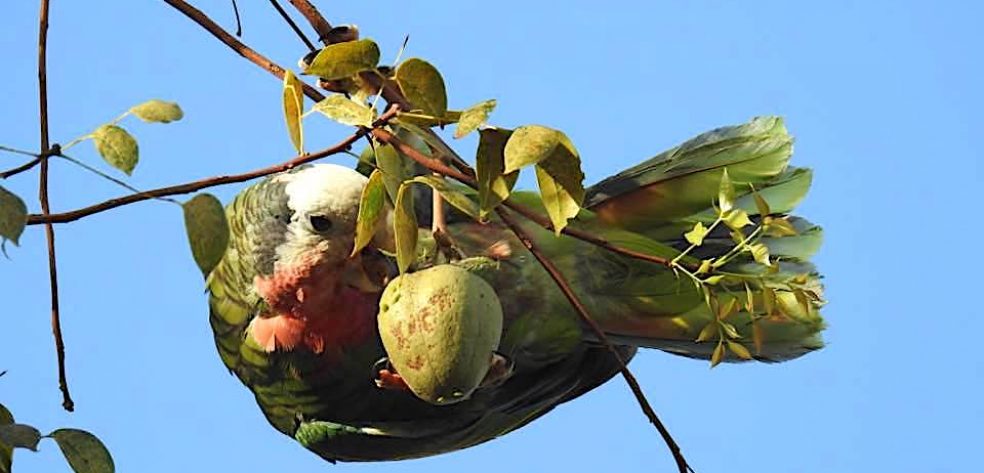
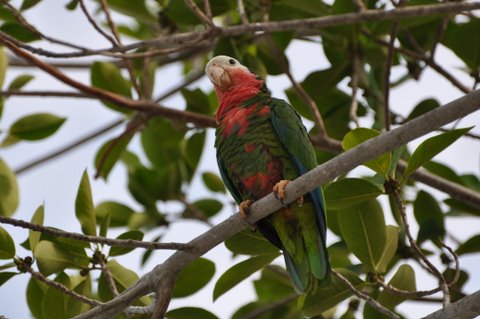
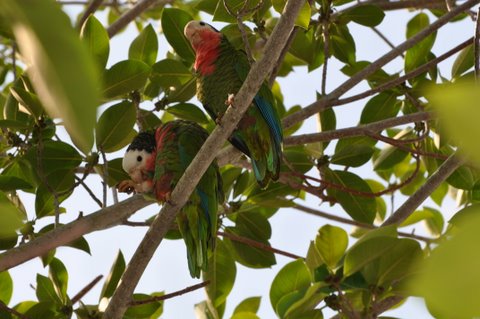
Finally, I sent Caroline an image of a particular Parrot taken by me earlier this year. Ricky Johnson said he had never seen one with so much red on its front – almost reaching its tail. And he should know…
Caroline’s reply “I have not seen a parrot with quite that much red on its belly, however it is not completely surprising. One of the features of the Abaco parrot is more red on the chest and belly than other Cuban Amazon populations. Even within a population there is quite a bit of variation of the red. Some Abaco parrots may just have the red throat with a few red feathers, but they do go to the extreme found in your picture. Usually though you have a small red patch on the belly or what looks like spotty red areas on the belly. Very neat picture!” (rh note – thanks, but in fairness I should add that the whole group of about 12 of us took pretty much the same photo of this parrot…)
SANDY & BILL VERNON have provided a number of wonderful photos from their stay at Delphi earlier this year. The images convenientlycoincide with various categories already posted, to which the headings below link (supposedly – I will sort out any problems in due course, the general rh policy being to upload pictures first then worry about details later…)
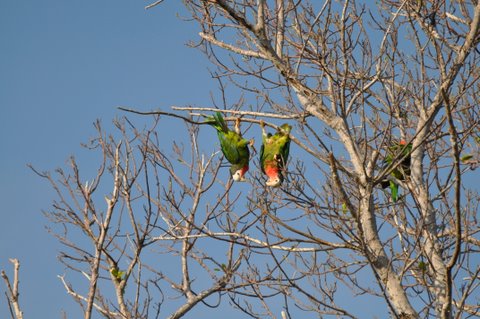
ABACO PARROTS(including some extraordinary acrobatics)
At last I have got round to the hummingbirds. It’s quite simple. There are only two species of hummingbird on Abaco. The endemic variety is the Bahama Woodstar, one of only 3 endemic bird species on Abaco (the others are the Bahama Yellowthroat and the Bahama Swallow). The settled migrant is the Cuban Emerald.
BAHAMA WOODSTAR
Calliphlox evelynae
Male and female Bahama Woodstars (Photo Credit: Phil Brown – and VG too)
These hummingbirds are found throughout the Bahamas. They do not migrate, although are occasional vagrants in SE Florida. They breed all year round, the main season being in April. The female lays 2 elliptical white eggs, which she incubates for 15-18 days. As with humans, the female is mainly responsible for childcare while males go drinking at the nectar bar and hang out with their mates.
This BW was one of a small group at Hole-in-the-Wall. They were completely unconcerned by our presence, and we could get within arm’s length of them. Woodstars, though tame in human terms, can be aggressive and territorial. They are plentiful throughout the Bahamas except on Grand Bahama, Abaco and Andros. Significantly those are the only islands where the Cuban Emerald is found in any numbers. As with the native red and import grey squirrel problem in the UK, the migrant emerald is aggressive towards the woodstar, which is consequently rare where emeralds are abundant.
Here is their call (credit Jesse Fagan Xeno-canto)
Addition April 2012Here is a seriously cute female Woodstar photographed by Ann Capling at Bahama Palm Shores, close to Ocean Drive – a really pretty little bird
At Delphi, you’ll frequently see emeralds, especially now that feeders with sugar water have been hung up for them. The pool area is a very good place to watch them. But there are occasional woodstars to be seen as well – in the coppice on the drives for example, and even on the feeders. The vague blur to the left of the feeder below is a woodstar in the millisecond between me pointing the camera and it flying away… Don’t bother to click to enlarge it – it’s a useless photo, I know, but it is evidence even at the lowest level
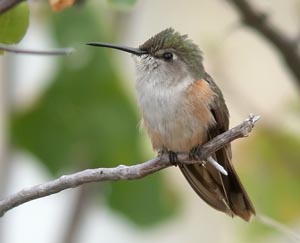
CUBAN EMERALDChlorostilbon ricordii
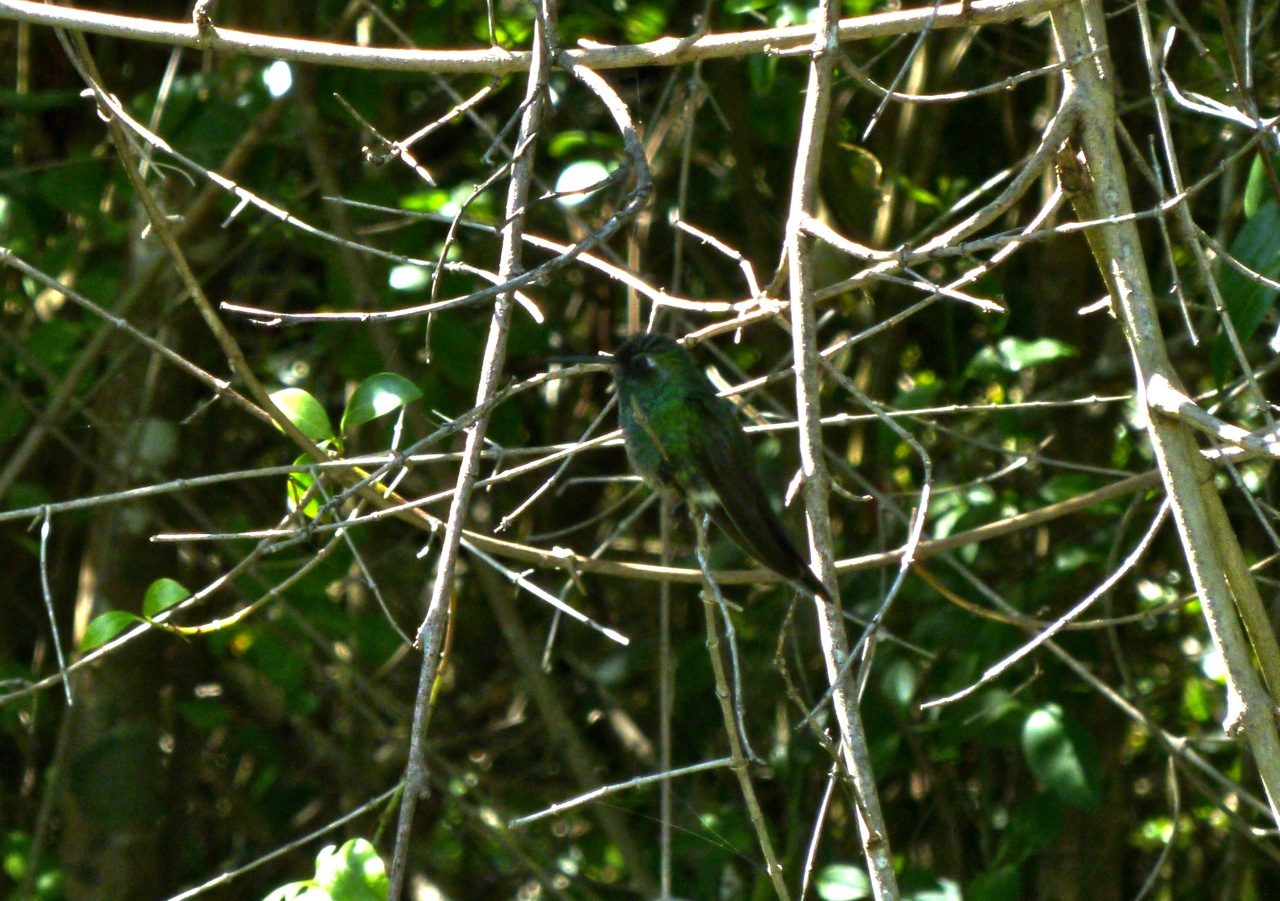
There’s probably a great deal to be written about the emeralds, but not by me. Or not now, anyway. The little you need to know from me is already covered above, and I haven’t yet discovered whether their childcare arrangements differ significantly from the woodstars. Probably not. So I’ll put in a selection of photos, and remark that it is strange how quickly they can change from sleek and slender birds to small rather cold and dispirited looking bundles of feathers. Both states are depicted below. Here’s what to listen for (credit Xeno-canto.org)
Delphi – pool feeder
Delphi – pool feeder
Delphi – pool feeder
Delphi – far side of pool
Delphi – near pool
Delphi – front drive
Delphi – front drive
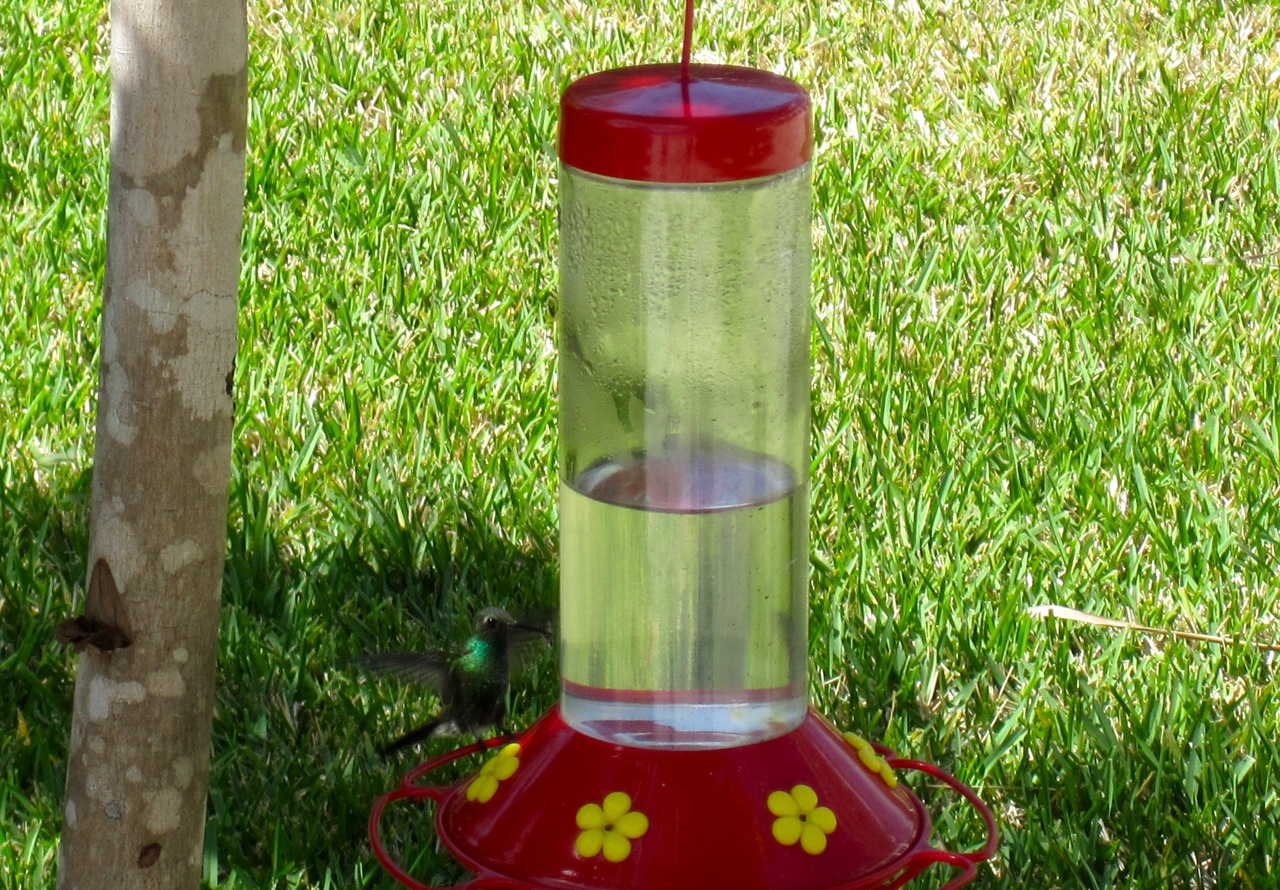
All the above birds were photographed at Delphi. We saw emeralds elsewhere, of course – in the pine forest, flicking across the logging tracks; on other Cays. The best sighting was during our day trip reef-snorkelling and island-hopping with Kay Politano, when we had an excellent lunch for 14 at Cracker P’s on Lubbers Cay (see future post about this and the island-hops). There was a bird feeder by our table, to which emeralds came and went throughout the meal. Here are some photos – I wanted to get them hovering, and kind of succeeded. More or less.
By which I mean, of course, Plovers and Ruddy Turnstones on the Delphi beach, but let’s just keep an eye on the individual ‘hits’ tally for this provocatively titled post…
A single Wilson’s Plover – February 2010
Four Ruddy Turnstones at the north end of the beach, on the lethal coral – March 2011
(thanks for the ID correction Margaret – see comments below)
Two Ruddy Turnstones – March 2011
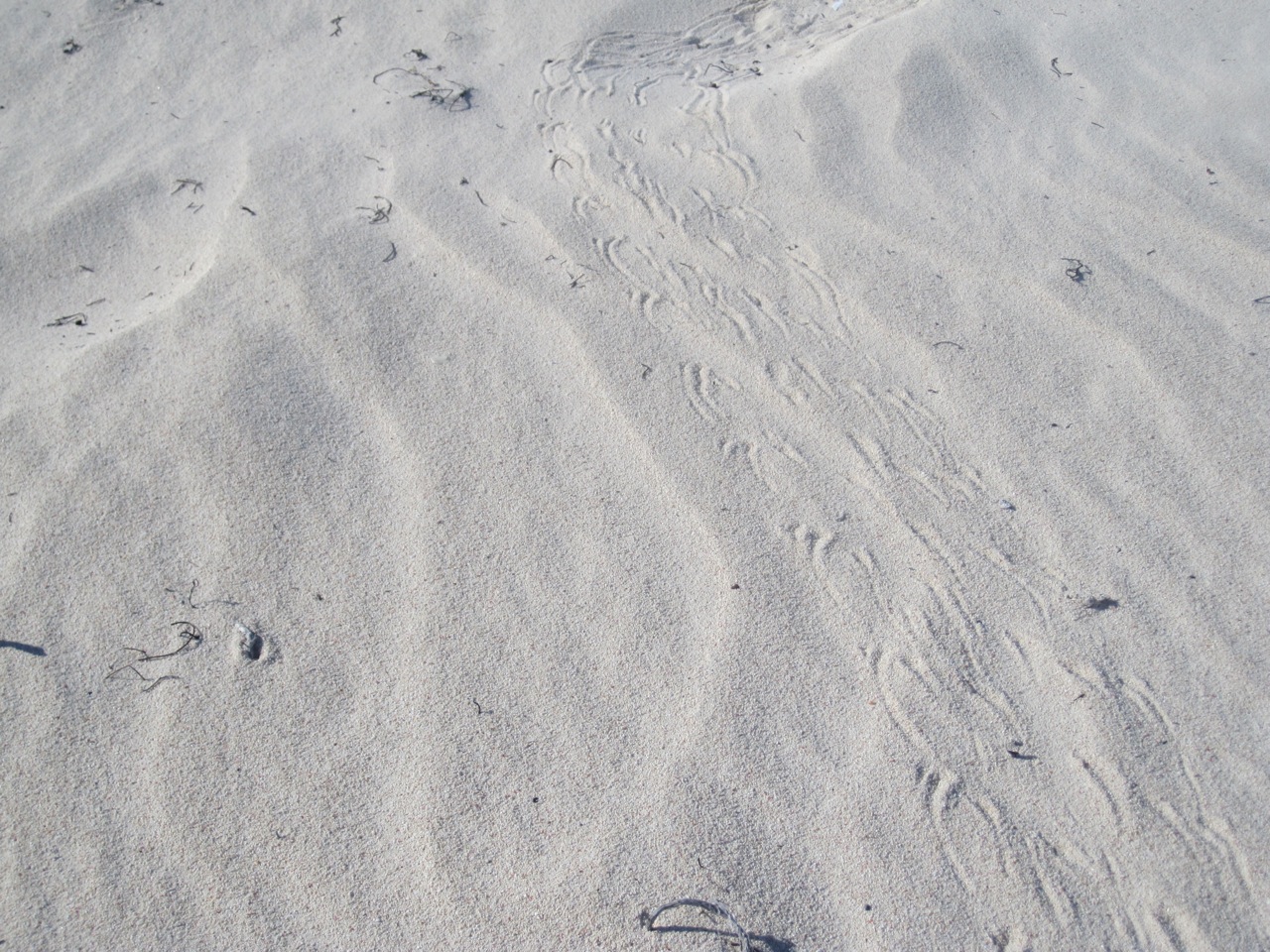
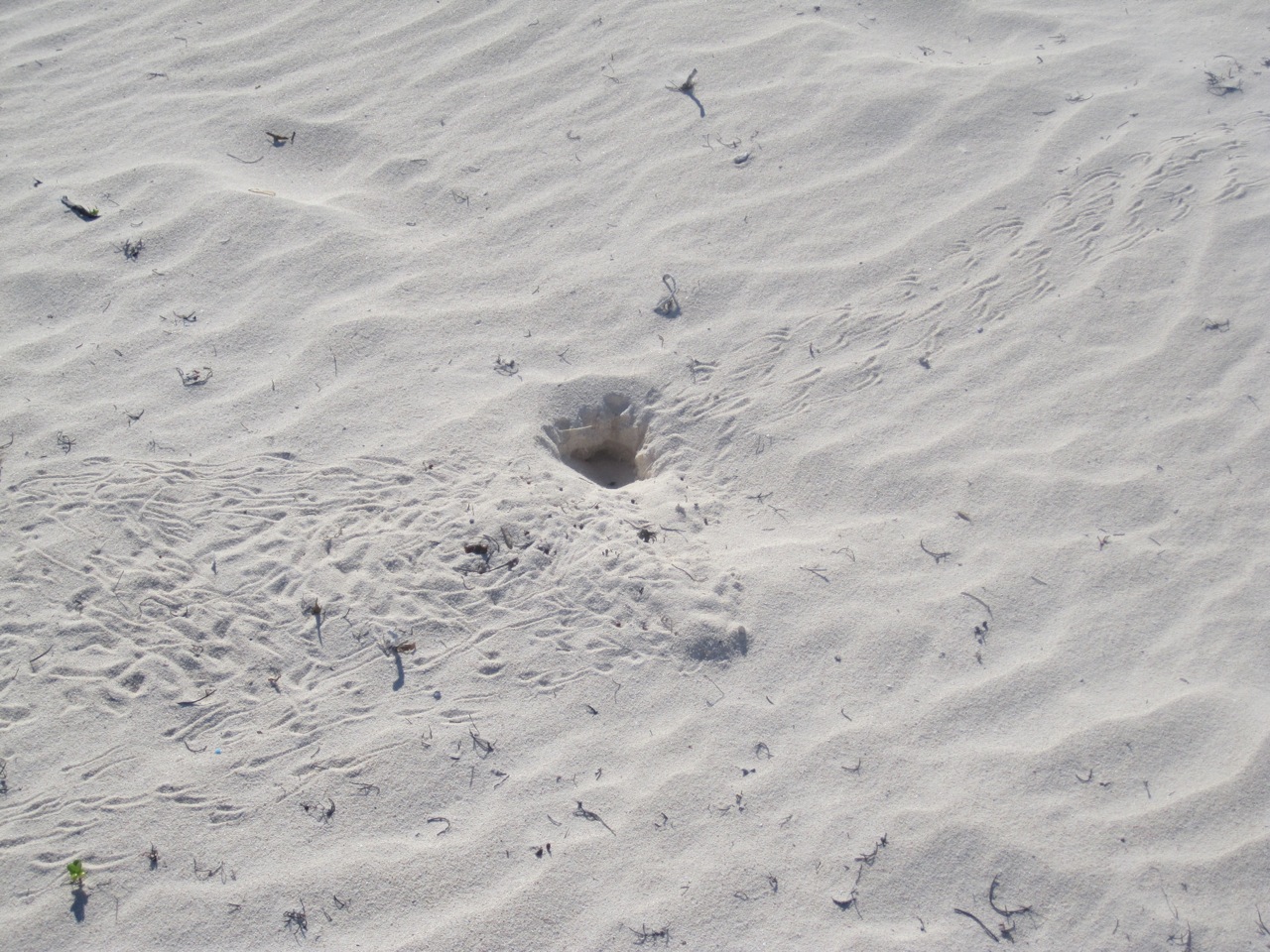
An inviting track to be followed (quite some distance, as it turned out)
The end of the track – a crab’s home
Finally, his ‘n’ hers rods – evidence of a perfect Rolling Harbour afternoon
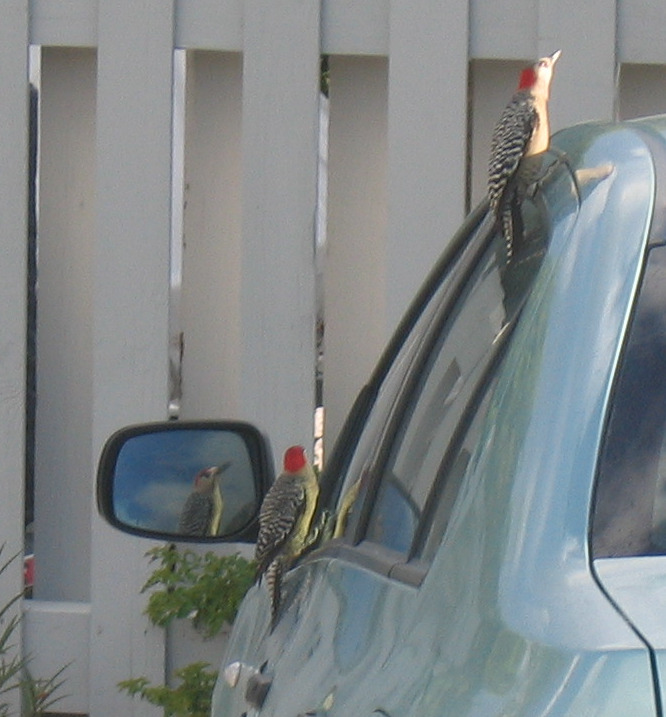
The nesting box has clearly been a big hit, now that the woodpeckers have deigned to move in. And they are getting a bit cheeky. David Rainford has sent a great photograph of them as they play with the Club car, preen in the mirror etc… More of David’s photos will be posted shortly inCONTRIBUTIONS
I have returned from “The Other Delphi” to find that Peter Wesley Brown has provided 3 excellent images, now uploaded to theCONTRIBUTIONS / PHOTOGRAPHSpage. Two are excellent pictures of a Gold Rim / Polydamas Swallowtail, dramatically… no, badly photographed by me for theBUTTERFLIESpost and later identified by PM; the third shows thatTHE RELUCTANT WOODPECKERhas finally made herself / himself at home in the nesting box…
You will need: binoculars; camera; picnic lunch OR willingness to eat ‘local’ (see below); swimming kit – and a car, of course, e.g. the club Toyota
Map extract courtesy of ‘Abaco Life’ (the best, indeed the only, road map of the Island I have come across…)
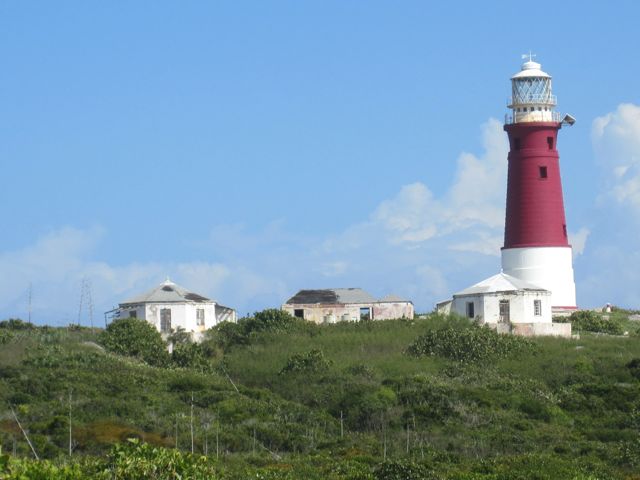
SANDY POINT is a small settlement about 30 miles / 1/2 hr drive south west of Delphi. There’s only one choice of route: turn left at the end of the drive, and keep right on to the end of the road. Having commandeered the club car from Sandy, you drive due south until you get to a long right-hand bend. There is an important junction here: if you drive straight on, you enter the National Park nature reserve proper – breeding ground for the Abaco parrots – and are on the track to Hole in the Wall and its lighthouse…
Do not be tempted to try this – it is 15 miles each way on a deteriorating track, and the club car will soon be a wreck. Rental cars are forbidden. I will post separately about this adventure, which we have done in a truck. We may not repeat the experience.
Bird Alert 1During the journey, look out for birds on the telegraph posts / wires. You may see American kestrels, turkey vultures and Bahama swallows. Small birds will flick across the road, and you may find yourself readily placing them in the ‘unidentifiable’ category. If in doubt, best settle for ‘warbler’ and there’s a fair chance you will be right. Alongside the road, look out for groups of smooth-billed Anis aka cemetery birds. These largish black birds are noisy and sociable, nest communally and look after each other’s nestlings. Continue reading →
The (badly-photographed) dark butterfly in the earlier post has been identified as a GOLD RIM SWALLOWTAIL / POLYDAMAS SWALLOWTAIL (Battus Polydamas Lucaeus) Continue reading →
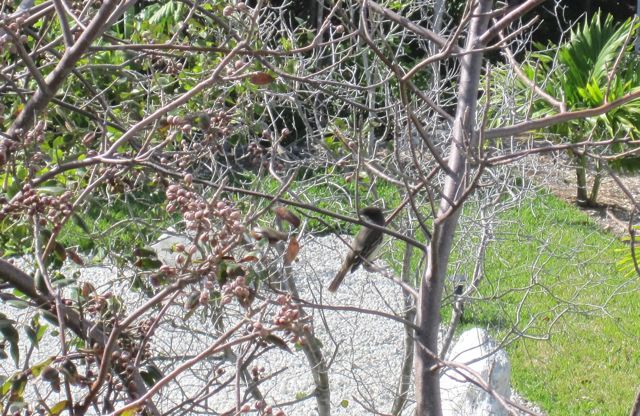
There is a wealth of birdlife on the Delphi doorstep. You don’t even have to go out of the front gateway to find it. You’ll hear a great many more birds than you ever see – many are small and very hard to spot in the bushes, even when you can hear loud chirrups. Here are a few examples of what you might see, all taken within the Club precincts
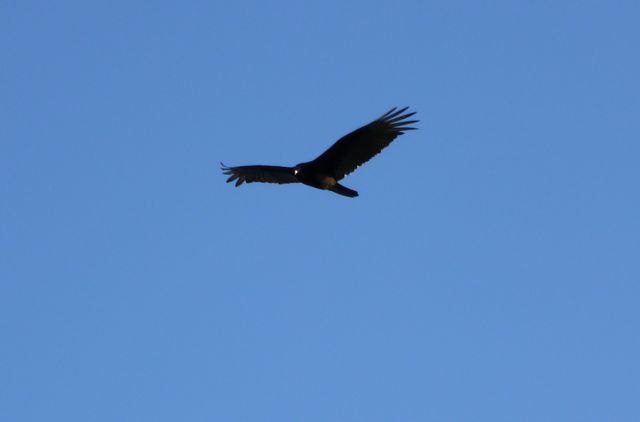
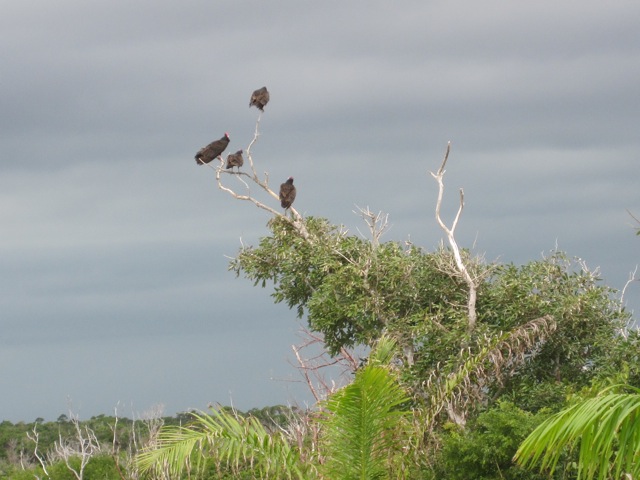
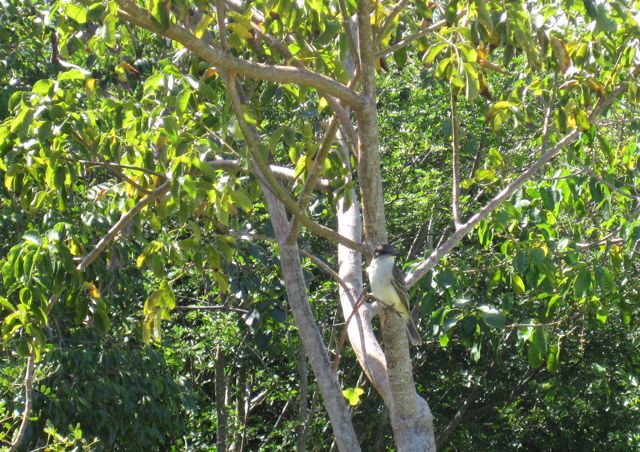
TURKEY VULTURES, ever present, wheeling above the bay, sometimes in flocks of 20 or more. Their grace in flight is slightly spoiled by the knowledge that their heads are red, wrinkled, bald and… frankly unattractive. You may also see them hunched on a dead branch along the drive (second photo)LOGGERHEAD KINGBIRDS, one of several types of ‘Tyrant Flycatcher’, so-called because of their robust attitude to defending their territory. The first one is on the far side of the pool; the second is taken from the verandah.
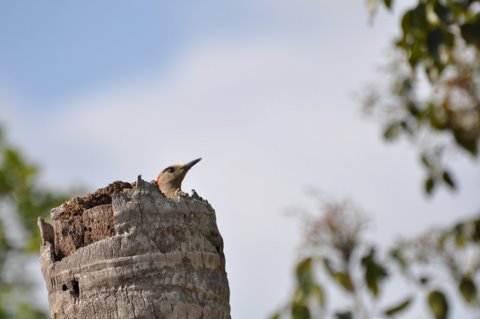
WEST INDIAN WOODPECKER, resident initially under the verandah eaves before moving to the upscale nesting box further along. Often seen during the day in the gardens, sometimes shouting raucously: the second photo is near the pool
ANTILLEAN BULLFINCH (previously wrongly ID’d as American Redstart – thanks CN) I’d never seen one of these before, nor indeed heard of them. This one was photographed in the trees along the drive while I was in fact looking for another bird altogether…
THICK-BILLED VIREO, one of several vireo species. Believe me, they are much less blurry in real life than here… They chirp a lot and seem quite tame.
BANANAQUIT My second favourite bird (after the western spindalis). Smart black and white heads, yellow underparts, and a sharply curved beak used to pierce the base of flowers for nectar. They aren’t choosy though, and eat insects and fruit too. Very chirpy, and VERY hard to see in the bushes, even when you can clearly hear exactly where you think it must be… Look for moving foliage. This one was in the shrubs by the main staircase.They sound like this (credit Xeno-canto.org)
NORTHERN MOCKING BIRD at a distance… above the skiff park. We heard it singing melodiously. ID (in close up – click on image for a marginally better view) from cocked and slightly spread tail, and (you won’t see this) white wing markings. This species is apparently beginning to displace the larger but unaggressive Bahama Mockingbird.
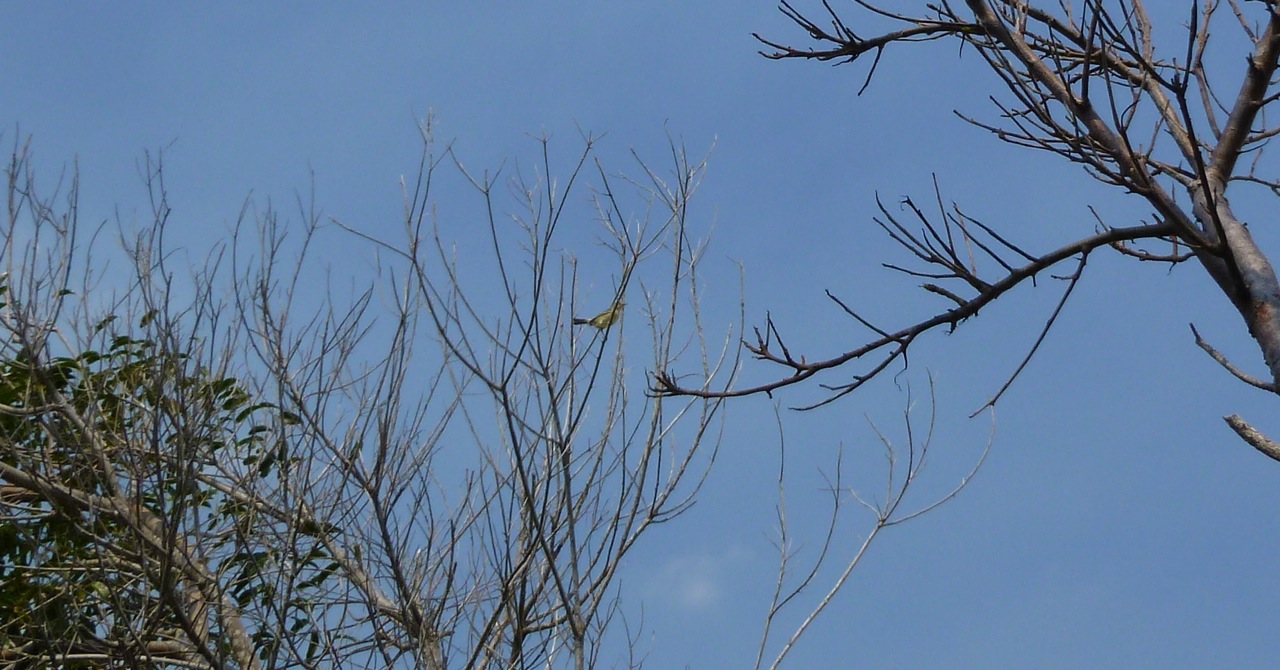
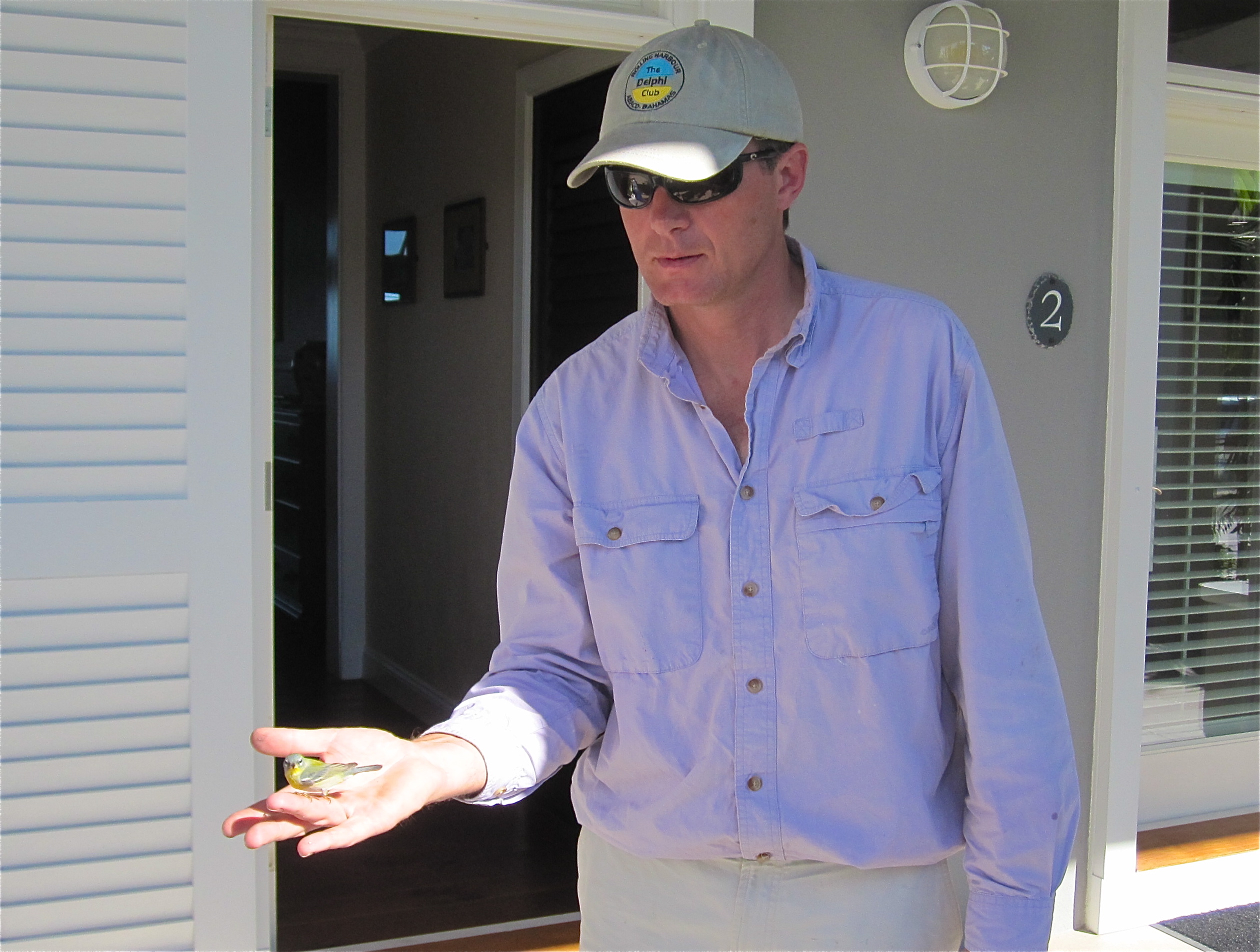
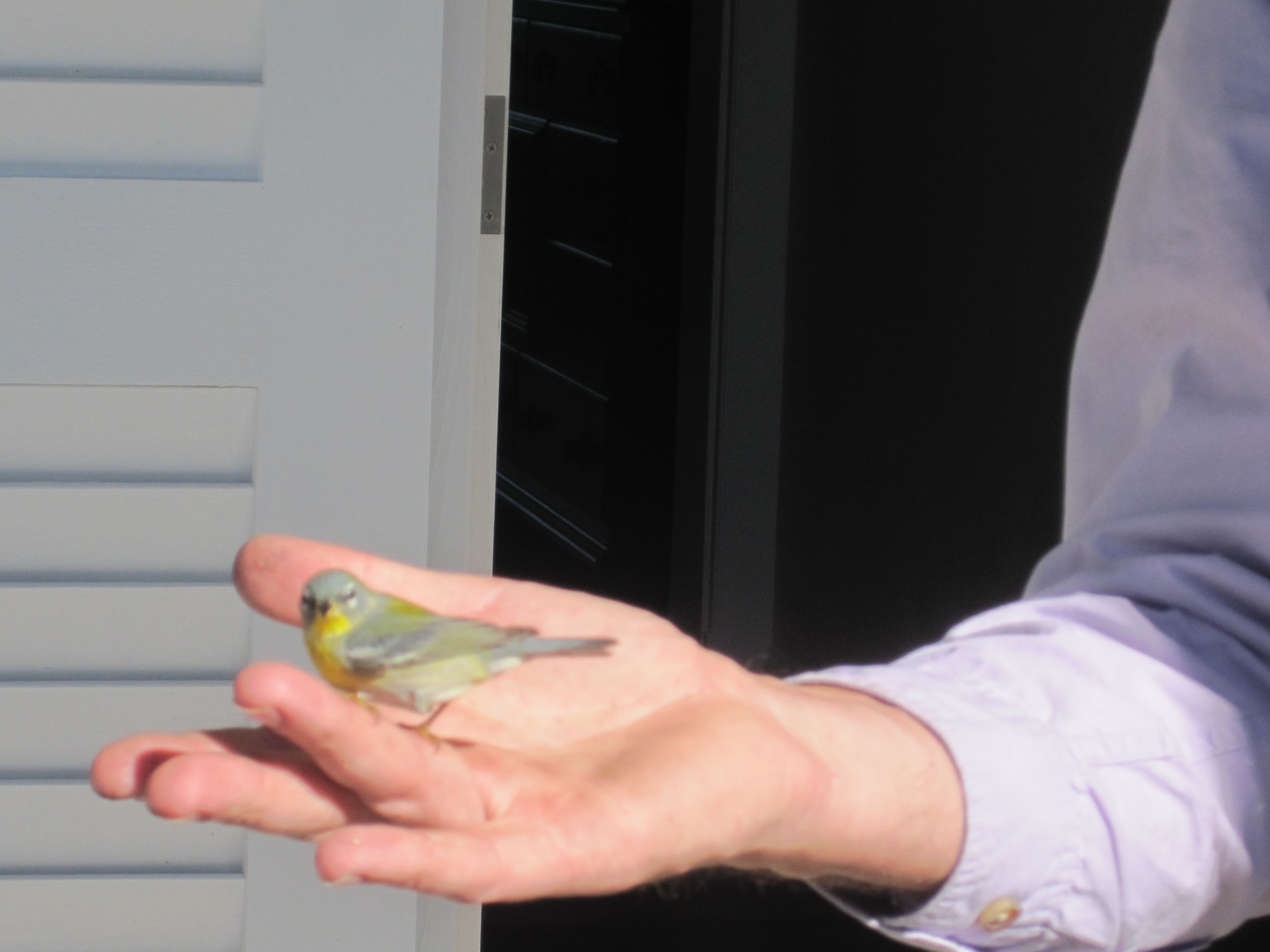
NORTHERN PARULA Small yellow warbler, of which there are many types. This is the one that unwisely tried to fly into the Great Room through the plate glass, and had to be revived by Sandy. It perked up quite quickly, and flew off none the worse for its encounter either with the glass or Sandy…
HUMMINGBIRDSare a fascinating topic in themselves, and I’ll post about them separately. There is the Cuban Emerald and the endemic Bahama Woodstar, both of which can be seen at Delphi (though the latter are rare where the former predominate). There is a 3rd type of hummer on Abaco, which I will leave you with for now:
I haven’t nailed the ID of this one yet. Any ideas appreciated. [See later post for ID as GOLD RIM SWALLOWTAIL / POLYDAMUS SWALLOWTAIL (Battus Polydamus Lucaeus) ]
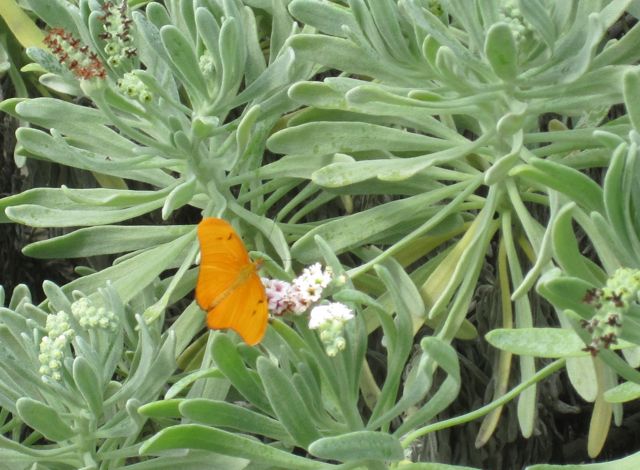
Seen all round Delphi this March. These are on the move the whole time, and are surprisingly hard to pin down (not a very sensitive way to put it for a butterfly…) The bottom photo looks like a rubbish picture, I know, but in fact the butterfly is at rest (the body / legs / feelers aren’t blurred) while the wings beat fast and constantly while it feeds
AND FINALLY… Pride of place goes to this Atala Hairstreak, photographed during a Delphi outing with Ricky Johnson to one of the Blue Holes in the pine forest. It’s the only place I have seen these small butterflies, and there were only four or five. This one stayed still for just long enough
ATALA HAIRSTREAK Eumaeus Atala
===========================================
BLOG NEWS UPDATE
23.04.11
Email Share added to the main pages
Pages Menu added to sidebar
Contributions received now posted on the appropriate page…
Note I am trying to reorganise this blog to increase accessibility of categories and sub-categories. Struggling a bit… one major accidental deletion so far… proposed pages under construction or at least under contemplation… please bear with me!
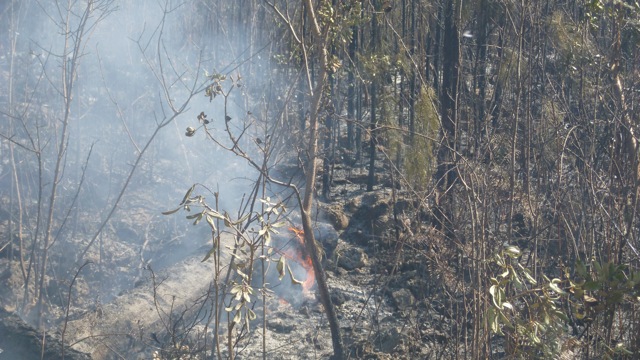
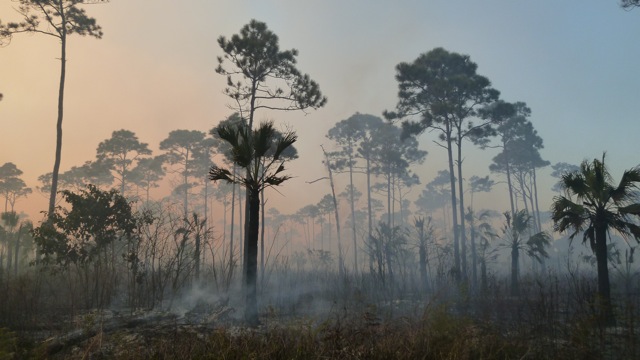
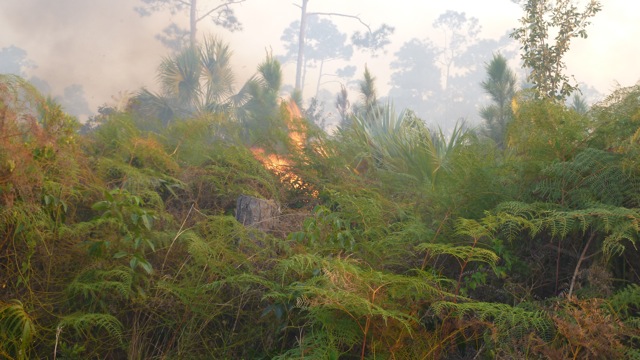
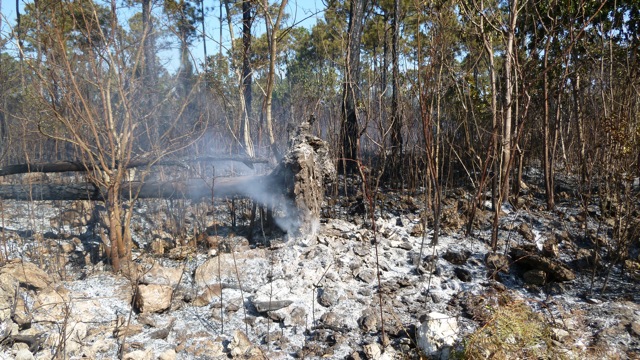
Mid-March saw the outbreak of an unnaturally large number of fires in the pine forests on (mainly) the west side of Abaco. Suspicion mostly fell on hog hunters wanting to clear the thick undergrowth. Many fires spread rapidly in the wind and some jumped the highway. For a couple of days there was increasing anxiety at Delphi, not wholly allayed by Sandy’s robust enthusiasm for driving guests intothe heart of the fires: “Look, I promise you, it’s perfectly safe ”. The big question: would the coppice stop the fire in its tracks as expected, or would the fire sweep through to the Club grounds and buildings? And (a members’ concern, this) were they adequately insured?
In the event, the Club was spared. However, much of the area between the road and the coppice in front of the Club was badly burned. The effect on the bird liferemains to be seen, though even after a few days there was evidence of greening up of foliage – an encouraging sign. Any hogs presumably managed to escape…
Here are some images, all of them taken from the Club or along the drives. Most (all but 2 now – I’ve fixed the rest) will enlarge with a click.
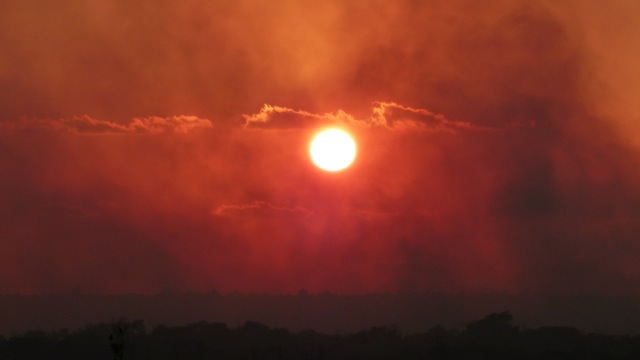
Setting sun from the Club verandah. At least 3 fire seats are visible
This tree along the guest drive kept smouldering for 3 or 4 days
A somewhat apocalyptic sky
This area along the drives was dense bright green undergrowth two days earlier
A milky morning sun filters through onto snowy ash
Click to enlarge this image: you’ll see a flame at the top of the tall dead tree, like an oil refinery flare stack
Fire spreading in the wind and taking hold of a new area between the drives
Another area that had been thickly wooded, with dense green undergrowth
Caroline Stahala, a scientist from Florida, has spent some years studying the endemic parrots of Abaco. The Club is a convenient place from which to carry out some of her research. Evidence is growing that these protected parrots may not be a variant subspecies of the Cuban parrot, as previously believed, but are actually a species in their own right deserving their own distinct classification. Such a finding would be of major ornithological importance, and would further secure the protection of these beautiful birds and their habitat. This in turn will help to prevent the decline in their already small numbers. I hope to post news of Caroline’s research into this year’s parrot breeding season which begins next month
CLICK LINK on BLOGROLL in SIDEBAR -—›››PARROTS INTERNATIONAL for Caroline’s Thesis
This Spring has seen a number of birds – possibly tempted by Gareth’s cuisine – flying hard into the windows / doors of the Great Room and falling stunned onto the verandah. Luckily, Sandy has sometimes been on hand to scoop them up and gently let them come to their senses before releasing them.
WESTERN SPINDALIS (Spindalis Zena) or Stripe-Headed Tanager
NORTHERN PARULA: one of a large number of yellowy warbler types around Delphi
The Parula ID was confirmed by Craig Nash (see side-barBLOGROLLfor his Delphi birding links) and he has supplied his own much better photo of one, photographed in one of the drives – seeCONTRIBUTIONS / PHOTOGRAPHS
This guide was compiled after our visit to Delphi in February 2010. It was originally intended purely for domestic consumption, as a light-hearted personal record and aide memoire. However, others suggested it might be useful for people wanting to make a quick identification of a bird they have seen around the Club or further afield. I was persuaded to put a copy on the desktop of the computer in the Club Library, and there’s now a hard copy around as well. I am currently revising it to include our 2011 visit. And now here it is in blog format. I.T. progress.
Some of the images are my own; others are from freely-available resources – due thanks are given to those too numerous to mention individually (never mind being completely unidentifiable) whose images are featured…























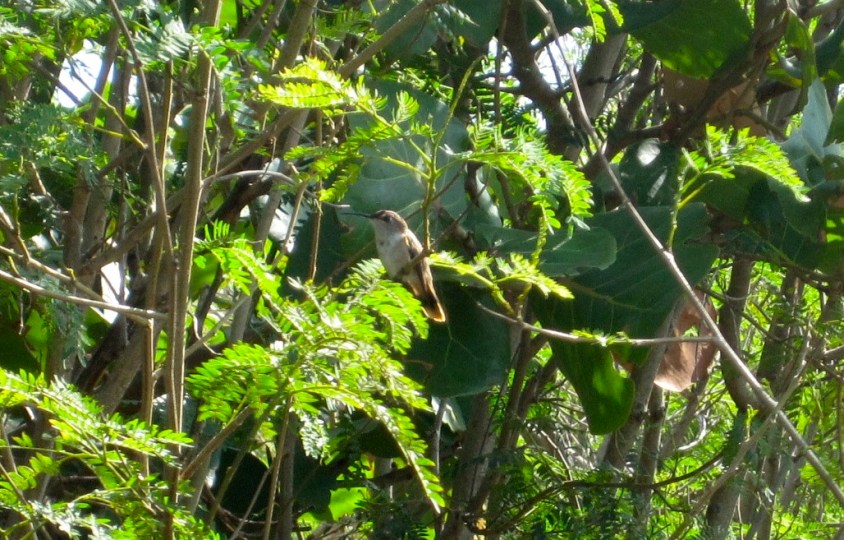
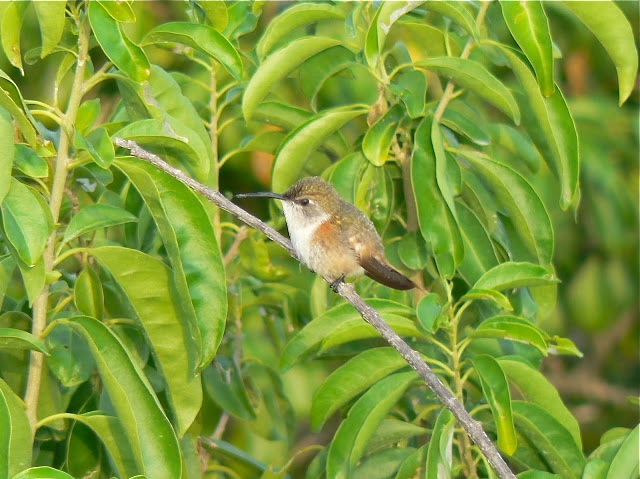

 CUBAN EMERALD






























 ROLLING HARBOUR ABACO

You must be logged in to post a comment.